PERINATAL EDUCATION



The Pikeville Medical Center mother-baby unit is designed for a closely monitored, safe delivery with little intervention. The unit is located on the 4th floor of the May Tower. This is where the labor and delivery unit, obstetrics unit, neonatal intensive care unit and newborn nursery are located. Our physicians are always present on the floor, in the hospital or within minutes of the hospital.
• Labor & Delivery
• Pain Management
• Basic Infant Care
• Breastfeeding
If you are pre-term, high risk, pregnant with multiples, have had a prior C-section or your baby is known to be breech, you should call your doctor or come to the hospital as soon as labor pains begin.
Report to the hospital if any of the following occur:
» Rupture of membranes
» Heavy vaginal bleeding
» No movement from the baby
» Severe headache not resolved by Tylenol
» Seizures
» Any fall or accident
» Contractions every four to five minutes for an hour or more. If you cannot talk through a contraction, it is considered to be strong.
Report to your doctor immediately if any of the following occur:
» Swelling of face, hands and feet
» Blurred vision
» Dizziness lasting more than a few minutes
» Sudden weight gain of more than four pounds in a week
First labors are usually a long process. While you are waiting at home you may want to walk around, shower, eat something light and drink plenty of fluids. Don’t allow yourself to become exhausted. Take rest periods and lie on your side.
You may call a labor and delivery nurse with any questions or concerns at 606-218-3524

PMC encourages expecting parents to bring the following items for convenience and comfort:
• Lip balm
• Contact lens with solution
• Eyeglasses
• Camera
• Cell phone
• Cell phone charger
• Insurance card
• Snacks
• Hair band
• Socks
• Pillow
• Change of clothing
• Personal toiletries
• Deodorant
• Lotion
• Hair brush
• Hair dryer
• Slippers
• Tight fitting bra
• Nursing pads
• Nursing bra
• Comfortable panties
• Gown
• Robe
PMC encourages parents to bring the following items for baby:
• Mittens
• Socks
• Pacificer
• Blankets
• Car Seat
• Outfit for pictures
• Outfit for home
What PMC Provides:
• Toothpaste
• Toothbrush
• Shampoo
• Soap
• Baby wipes
• Diapers
• Formula
• Mesh disposable panties
• Sanitary napkins
• Comb
• Towels and washcloths
• Baby comb and brush
• Breast pump (if needed)
• Baby cap, gown and T-shirt
Knowing what is going on with your body during pregnancy and labor helps you take better care of yourself and can also reduce pain and stress.
Induction of Labor
» Must be at least 39 weeks gestation for elective induction or medically indicated.
» There are multiple choices of medication for induction of labor.
» Method of induction depends on condition of cervix.
Education decreases fear; therefore, decreasing the pain during labor.
Holistic Interventions Based on Patient Condition:
» Massage
» Warm shower
» Distraction by reading, watching television, playing games, etc.
» Short walks
» Laying on side for rest periods
» Patterned breathing
» Hot packs
Medical Interventions Based on Patient Condition:
» IV pain medications
» Epidural anesthesia

The visitation policy change due to COVID-19 guidelines. We limit visitors in emergency situations or during specific procedures. During the pushing phase of delivery, visitors are limited to three. In the case of a c-section, only one support person is allowed to go with patient during delivery/surgery.
As a protective measure for baby and mom, an ID bracelet will be placed around the baby’s wrist and ankle after birth that matches an ID bracelet placed around mom’s wrist. In addition to the ID bracelets, we have an infant security system that is monitored via a sensor placed on the infant’s leg. This sensor is monitored at all nurses stations and in the PMC Security Office.
If at any time the sensor loses contact with the skin or gets too close to an exit, an alarm will sound. At that time, all elevators and stairway doors will lock down and no one will be able to leave the department until the situation has been investigated and cleared by hospital security.
» Never leave your baby alone in the room. If you are sleepy or feel bad and have no one to assist you, ask your nurse to take your baby to the nursery.
» Never take or allow visitors to take your baby into the hallway. Your sensors are very sensitive and nurses/security personnel may think someone is trying to exit with the baby.
» When bringing the baby into your room, the nurse will ask you to identify your baby by stating your name and reading
off the number on your bracelet to match it with the baby’s bracelet.
» As another security feature, Labor and Delivery staff will have customized identification features. That information will be provided to the patient once admitted to the unit.
» Never give your baby to anyone who does not have a PMC badge.
Your baby will be taken in and out of your room in his/her bassinet. If anyone attempts to carry your baby out of your room, let someone know immediately.
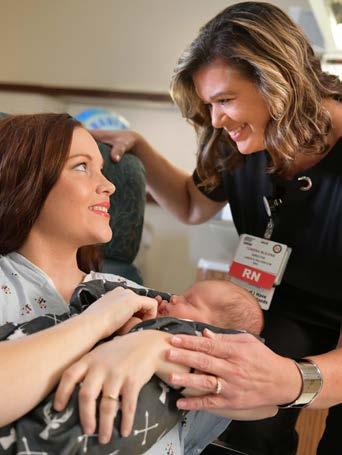
» A PMC pediatrician will see your baby while in the hospital. A follow-up appointment will be made with the patient’s chosen pediatrician before discharge.
» Ask friends and family for advice.
» Consider office hours and location.
» Remember to bring the name and telephone number of your pediatrician with you during your hospital stay.
» PMC offers several full-time pediatricians who are passionate about caring for kids. Appointments can be made by calling (606)-430-2230.

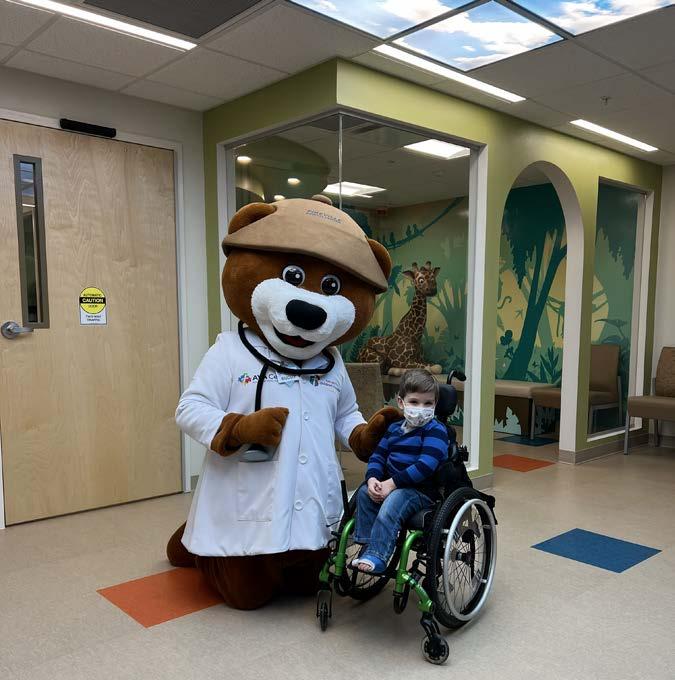
The Mettu Children’s Hospital at Pikeville Medical Center offers a kid-friendly facility where babies, toddlers, on to adolescents and teens can receive quality hospital care from doctors who specialize in the medical needs of children.
The decision to breastfeed your infant is a personal one. Every family deserves support no matter how they decided to feed their baby. Pikeville Medical Center wants to give every family the opportunity to make an informed decision.
Breastfeeding your infant is a very special experience:
» It allows an opportunity for you and your infant to bond.
» Breast milk is known to provide the best nutrients for the baby and is more easily digested than infant formula.
» Breast milk contains the perfect mix of vitamins, protein and fat to help the child grow as well as antibodies to help fight off viruses and bacteria.
» Breast milk is easy to digest and helps your baby develop a strong immune system and can decreases your baby’s risk for certain medical conditions.
» Breastfeeding can be beneficial for mothers as well as infants. It can help the mother recover faster after delivery, and may decrease her risk for postpartum depression as well as breast and ovarian cancers.
The first feeding usually sets the pace for the next several feedings. Right after the mother gives birth, infants are awake and ready to feed. This time is often referred to as the “Magical Hour.” This time allows mothers to bond with their infant in addition to establishing breastfeeding.
During the mother’s and infant’s hospitalization, they will have access to the assistance of a lactation consultant and trained support staff. Overall, breastfeeding is a special experience for mothers that can help her bond with her baby while providing the best nutrition possible.
Tips For Successful Breastfeeding
» Position baby’s head, neck and back in a straight line, chest facing you when nursing
» Keep your baby close to you
» Change positions if uncomfortable or baby is resisting the breast
» Offer both breasts during a feeding
» Limit your caffeine intake to increase milk supply

Dependent on mother and baby condition, as soon as the baby is born he or she should be placed vertically on mother’s chest allowing for full skin-to-skin contact. This is an important step in establishing successful breastfeeding. It is ideal to provide skinto-skin for a minimum of an hour after birth (mother and infant condition permitting).
Other benefits:
» Better temperature control
» Regulates infant breathing and heart rate
» Improves excretion of mucus from the respiratory track
» Stabilizes infants glucose
» Less crying and less pain for infant
» Increased bonding and attachment
» Less stressful for the infant while transitioning
• Pikeville Medical Center Lactation Consultant:
» Jodi Ison - (606) 430-4017
• Pike County Health Department Lactation Consultant:
» Jan Johnson – (606) 509-5500
• The Appalachian Breastfeeding Network (ABN) toll-free 24/7 hotline:
» 1-888-588-3423
» Trained lactation professionals available
» Services available free of charge to all callers including mothers, their families and partners, expectant parents and health care providers.
• KellyMom.com
» This website provides evidence-based information on breastfeeding and parenting.
An informational packet will be provided upon discharge from the hospital. This packet will include basic infant care information, self care information, as well as other topics.
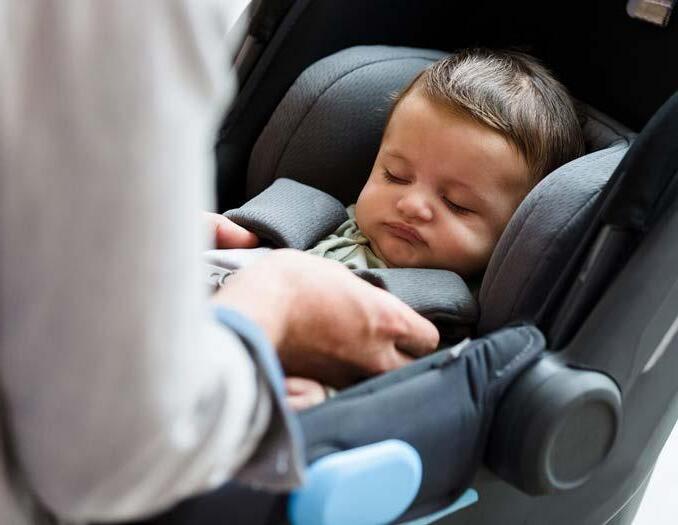
Prior to delivery, patients are encourages to reach out to the Pike County Health Department for car seat education, installation and inspection.
Appointments can be made by calling 606-509-5500 or by emailing JDehart@mypchd.com


Providing Care to Happy Eastern Kentucky Families for Generations
Visiting Hours: 9am-10pm
After 10pm, visitor passes must be obtained at the Information Desk on the 2nd Floor
OB -Limit to four (4) visitors at one time. No children under the age of 12 unless they are siblings of the newborns.
Labor & Delivery: Three (3) visitors max, no changing in or out, and no siblings allowed until after delivery.

606-430-2207 | www.pmcky.org/obstetrics-gynecology