Orthopedics - Home Health Medical Equipment and Patient Rights 2026
ORTHO 2026
Pikeville Medical Center Home Medical Equipment provides high quality, professional healthcare services. We offer the finest equipment and services, including durable medical needs, respiratory therapy, feeding supplements, equipment repair, orthotics and diabetic shoes.
Reimbursement Assistance
We bill Medicare, Medicaid and other third-party payers for payment of services. MasterCard and Visa are also accepted.
Discharge Assistance
Staff works directly with physicians and discharge planners to ensure a smooth transition from hospital to home.
Free Delivery
We will never charge you for delivery, set-up or patient instruction and training.
Patient Instruction & Training
Our staff trains each patient, along with their family and caregivers, in the operation and care of their equipment.
Medical Emergencies
We provide 24-hour/7 days per week service. If you have any questions concerning your treatment plan, please call 606-430-4750. In case of a serious medical emergency, call 911 or take the patient to the nearest hospital emergency room. Examples of medical emergencies include, but are not limited to:
• A fall resulting in a broken bone or bleeding
• Difficulty breathing
• Unable to wake patient
• Chest pain that medicine doesn’t help
• Severe or prolonged bleeding
Please call our office if the patient is admitted to the hospital or nursing home or if the patient’s condition changes.
Interruption of Services due to Natural Disasters
In the event of a disaster, such as a blizzard, flood, ice storm, tornado or earthquake, you will be notified by the best means possible (telephone, mail courier, etc.). If the disaster is of a magnitude that prevents the agency from providing visits for over seven days, and no other communication method is operational, you will be advised through your local emergency broadcasting system.
If you or your family members require emergency care during these times, you are to contact your nearest emergency rescue or ambulance service, or call 911.
Equipment Emergencies
We provide 24-hour/7 days per week on-call service to ensure you receive the necessary equipment and/or service. Please call 606-430-4750 if you have an emergency need for service on your rental equipment such as:
• Instructions on the safe, appropriate and intended use of the equipment, including cleaning, troubleshooting and any potential hazards
• Use of back-up equipment, if applicable
• Potential dangers of misuse or modification of equipment
• Process for replacement, repair and/or pickup
• The manufacturer’s cleaning, maintenance and warranty information, if the equipment is being
• Misc. Supplies
• Tens Unit & Patches
Storing Supplies
Supplies should be stored in a safe, secure and sanitary area of your home, free from excessive humidity, heat or cold. Supplies should be stored on shelving, or in boxes to avoid damage or soiling and at least four inches off the floor to avoid the risk of fire. Care must be taken to keep sterile supplies sterile and all supplies clean. Report any damaged supplies to our staff in order to obtain replacements. Rotate supplies so the oldest is used first. Keep clean and dirty supplies separated.
KEEP AWAY FROM HEAT AND FLAME
Oxygen Safety Rules
• Don’t smoke and don’t allow others to smoke near you. Post “No Smoking” and “No Open Flames” signs in and outside your home to remind people not to smoke.
• Keep sources of heat and flame at least five feet away from where your oxygen unit is being used or stored.
• Don’t use oxygen while cooking with gas.
• Don’t use any electrical appliances such as hair dryers, curling irons, heating pads and electric razors while wearing oxygen.
• If you wear oxygen while sleeping, consider using 100% cotton bedding which is less likely to cause static electricity.
• Always have a fire extinguisher nearby.
DON’T USE AEROSOLS, VAPOR RUBS OR OILS
• Don’t use aerosol sprays such as air fresheners or hairspray near the oxygen unit. Aerosols are very flammable.
• Avoid flammable creams and lotions such as vapor rubs, petroleum jelly or oil-based hand lotion. Use waterbased products instead.
• Never oil the oxygen unit, and don’t use it with oily or greasy hands.
• Don’t use alcohol-based hand sanitizers, unless you thoroughly rub them into your skin and let your hands dry completely before handling oxygen equipment.
STORE OXYGEN SAFELY
• Keep your liquid oxygen unit upright at all times, never on its side.
• Don’t store your oxygen in an enclosed space, like a closet or trunk.
• Be careful not to trip over the tubing. Never cut your tubing or use more than a 50-foot long piece.
• Never use an extension cord to plug in your concentrator or plug anything else into the same outlet.
• Turn off your oxygen when you’re not using it. Don’t set the cannula or mask on the bed or a chair if the oxygen is turned on.
• Keep oxygen concentrators several inches away from walls or curtains and never place anything over your concentrator.
Contact your HME provider and ask them to send you an email invitation to register with Patient Hub.
- Call (Add phone number and contact)
- Email (add instructions on what to email) Be sure to include your account number and full name
- Or come onsite
After receiving the email invitation go the App or Play store and download [Patient Hub by Brightree].
Open the app, at the bottom tap Register:
- Enter your email address and the verification code from the email invite
- Verify your DOB
- Confirm your information
Medical Waste Disposal
1. Dispose of needles, syringes, lancets and other sharp objects in a puncture-resistant, hard-plastic, or metal container with a screw-on, tightly fitting or taped-on lid
• A heavy, plastic, laundry soap bottle, a fabric softener bottle or a coffee can will do (with the lid reinforced with heavy duty tape)
- Do not use any container that will be recycled or returned to the store
- Do not use glass or clear containers, and keep all sharps containers out of a child’s reach
• Containers intended for this use, such as those used by your nurse, are also acceptable. When these containers are used, the nurse will dispose of them for you
2. Bandages, disposable sheets, suction catheters, bladder catheters and drainage bags, feeding tubes, IV bags and tubing, egg crate mattresses, diapers, linen savers, medical gloves and similar items that have come into contact with blood and other bodily fluid should be double bagged and placed in the trash. Grossly soiled items should be disinfected with a solution of one part bleach to 10 parts water, prior to bagging
3. Never bury sharp or dirty items
4. Handle reusable linens and clothing that have been soiled as little as possible, and wash separately twice. This includes linen clothing soiled with chemotherapy drugs, urine or stool from a patient receiving these drugs
5. Before flushing urine, stool, vomit or blood, add bleach
6. Follow the nurse’s directions for using, storing and disposing of any medications, especially any chemotherapy drugs.
HOME SAFETY
Please take special precautions to have a safe living environment. Most accidents in the home can be prevented by eliminating hazards. Speak with your home medical equipment representative if you have concerns or questions about patient safety.
Preventing Falls and Injuries
• Repair stairs that have uneven, broken or damaged steps and install non-skid treads. Keep outside steps free of ice or snow
• If the home contains only one or two steps between floors, mark the edge of each step with a color that is easily identified
• Ensure adequate head room over stairs and proper lighting in stair area
• Keep stairways free of clutter and remove any objects that are protruding from stairway walls
• Install ramps where needed
• Install handrails along the stairs and maintain them
• Maintain a clear, clutter-free pathway to outside doors and through the home
• Secure all carpet edges and use only non-skid small rugs
• Remove, repair or replace torn, worn or frayed carpet
• Keep flashlights available for entry into dark places
• Keep hazardous tools and firearms locked away
• Use only a sturdy step stool or grabber tool to reach items high on shelves
• Store heavy items flat on lower levels, to avoid them falling and causing injury
• Report any hearing loss
• Report any changes in vision
Bathroom Safety
• Install hand grips by the tub, shower and toilet. Apply non-skid strips or a mat in the shower or tub
• Be sure there is some type of seat in the bathroom and use a tub/shower chair when needed
• Do not use any electrical appliance around water
• Round off any sharp corners of cabinets or counters
• Put sharp objects (razors, scissors, etc.) in a safe place after use
• Check water temperature with the hand, before entering the tub or shower
• Keep the number for Poison Control in close proximity. 1-800-222-1222
Bed Rail Safety
Patients that are at high risk for injuries, secondary to side rail usage, are those with conditions such as confusion, restlessness, weakness or any combination of these.
*** These conditions may lead to the patient’s head, neck, arms, legs and upper body becoming trapped in the side rails of a hospital bed.
There should be no gaps wide enough for patients to get their head or body caught between the mattress and the bed. Gaps can also be made when the patient moves in the bed or the mattress is compressed. Monitor for these types of gaps often. Add stuffers in the gaps located between the rail and mattress, or between the headboard, footboard and mattress, to reduce injury.
Check with the manufacturer of the hospital bed when purchasing side rails or a mattress that did not come with the bed, to make sure they are compatible. Make sure the bed and mattress are appropriate size for the patient. There are bedside rail protective barriers, which may be used only when necessary, to close off open spaces the patient may become caught in. Follow the manufacturer’s recommendations for installing/maintaining bedside rail protective barriers, so they fit properly. If bed rails are split, remove or leave the foot-end down so the patient is not trapped. Do not use bed rails as a substitute for a physical protective restraint.
The following are areas of a hospital bed that body parts may become trapped in:
• Through the bars of the side rail
• Through the space between split side rails (all beds do not have four side rails)
• Between the side rail and the mattress
• Between the headboard and the mattress and/or the side rail
• Between the footboard and the mattress and/or the side rail
Power Outage
If you require assistance and phone lines are down during a power outage, do the following:
• If you are in a crisis or have an emergency situation, call 911 or go to the nearest hospital emergency room
• If it is not an emergency, call your closest relative or neighbor
• If you have equipment, be sure to keep backup batteries
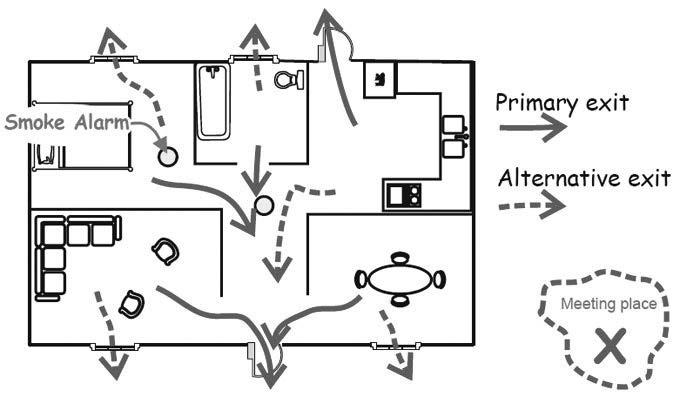
Design a fire evacuation plan for your home. Include the following information:
• Exit procedures and escape routes
• The location of doors and windows
• The location of smoke detectors and fire extinguishers
Fire/Electrical Safety
• Do not smoke in bed or when sleepy
• Do not wear loose-fitting clothing while cooking or around open flames
• Do not leave food cooking when unattended for extended periods of time. Keep pot handles turned toward the back of the stove to avoid accidental spilling
• Set thermostats for the water heater or faucets, so the water does not become too hot
• Wear clothing that is non-flammable or treated with a permanent flame-retardant finish. Fabrics of animal hair, wool or silk are less flammable
• Use several electrical outlets, rather than overloading a single outlet
• Keep all electrical cords in good condition. Use three-pronged electrical cords so the current will be grounded. Never place electrical cords under rugs
• Replace frayed cords
• Keep electrical and kerosene heaters, candles, etc., away from furniture, curtains or any item that could catch fire easily
• Keep lighters and matches out of reach of children or confused adults
• Monitor kerosene heaters, wood stoves and fireplaces closely while in use. Have chimneys inspected annually for build-up of creosote, which can produce a fire
• Avoid storing quantities of boxes, papers and rags in the home. If necessary, elevate them at least five inches off the floor to allow for air circulation
• Keep a portable fire extinguisher in the kitchen and be certain all family members know its location and how to use it
• Install smoke alarms outside each bedroom or at least one on each floor of the home. Replace battereis annually and test the smoke alarm monthly. Replace smoke alarms that are 10 or more years old.
• Use special alarms with strobe lights and bed shakers for those who are hard of hearing or deaf.
• Plan as a family what to do in the event of a house fire. Make sure everyone knows where the exits are located and the place where all the family members are to meet outside
• Keep all open fires screened. Have all heating systems and fireplaces checked regularly for problems or hazards. Be certain there is adequate ventilation, when using gas heaters
• Be certain that all cigarettes are out before discarding them in the trash
• Do not store kerosene, gasoline or other explosive fluids in or around the home
• Keep at least one phone in a place easily reached for a person who is unable to stand. Display emergency numbers near each phone
Design a fire evacuation plan for your home. Include the following information:
• Exit procedures and escape routes
• Locations of doors and windows
• Locations of smoke detectors and fire extinguishers
Every household should have a fire escape plan and a working smoke alarm to help ensure survival in a fire. Please take a few minutes with your
family to make a fire escape plan by following the instructions listed below:
1. Draw a floor plan of your home (see the example provided).
2. Include all possible emergency exits: doors, windows, stairs, etc.
Scan code for a Family Disaster Plan download from the American Red Cross
3. Include any features that could help you escape, making sure all escape routes are practical and usable. When possible, plan two escape routes. For example: The door is normally the main exit for a bedroom and a window is considered a secondary exit.
4. Determine if anyone in your family needs help during the escape (a small child, the elderly or the physically challenged) and how you will get everyone safely out of the home.
5. Choose a place outside where everyone will meet.
6. Make sure everyone is familiar with the fire escape plan.
7. Practice your fire escape plan every six months to ensure everyone knows what to do.
WHAT YOU SHOULD KNOW ABOUT HIV & AIDS
WHAT IS AIDS?
AIDS is the Acquired Immune Deficiency Syndrome – a serious illness that makes the body unable to fight infection. A person with AIDS is susceptible to certain infections and cancers. When a person with AIDS cannot fight off infections, this person becomes ill. These infections can eventually kill a person with AIDS.
WHAT CAUSES AIDS?
The human immunodeficiency virus (HIV) causes AIDS. Early diagnosis of HIV infection is important! If you have been told that you have HIV, you should get prompt medical treatment. In many cases, early treatment can enhance a person’s ability to remain healthy as long as possible. Your doctor will help you determine the best treatment for you. Free or reduced cost anonymous and confidential testing with counseling is available at most local health departments in Kentucky. After being infected with HIV, it takes between two weeks to six months before the test can detect antibodies to the virus.
HOW IS THE HIV VIRUS SPREAD?
• Sexual contact (oral, anal, or vaginal intercourse) with an infected person when blood, pre-ejaculation fluid, semen or cervical/vaginal secretions are exchanged.
• Sharing syringes, needles, cotton, cookers and other drug injecting equipment with someone who is i infected.
• Receiving contaminated blood or blood products (very unlikely now because blood used in transfusions has been tested for HIV antibodies since March 1985).
• An infected mother passing HIV to her unborn child before or during childbirth, and through breast feeding
• Receipt of transplant, tissue/organs, or artificial insemination from an infected donor.
• Needle stick or other sharps injury in a health care setting involving an infected person. Infections can sometimes be prevented by taking post-exposure prophylaxis anti-retroviral drugs. Strict adherence to universal precautions is the best way to prevent exposures.
YOU CANNOT GET HIV THROUGH CASUAL CONTACT SUCH AS:
• Sharing food, utensils, or plates
• Touching someone who is infected with HIV
• Hugging or shaking hands
• Donating blood or plasma (this has NEVER been a risk for contracting HIV)
• Using public rest rooms
• Being bitten by mosquitoes or other insects
• Using tanning beds (always clean before and after use)
HOW CAN I PREVENT HIV/AIDS?
• Do not share needles or other drug paraphernalia.
• Do not have sexual intercourse except with a monogamous partner whom you know is not infected and who I not sharing needles. If you choose to have sex with anyone else, use latex condoms (rubbers), female condoms or dental dams, and water based lubricants every time you have sex.
• Educate yourself and others about HIV infections and AIDS.
WOMEN AND HIV/AIDS
For females with HIV/AIDS in Kentucky, heterosexual exposure and injection drug use are the most common modes of transmission of HIV. HIV can be spread through body fluids (i.e., blood, semen, vaginal secretions, and breast milk).
All pregnant women should have blood tests to check for HIV infection.
• Mothers can pass HIV infection to their babies during pregnancy, labor and delivery, and by the child ingesting infected breast milk.
• Without treatment, about 25% (1 out of 4) of the babies born to HIV infected women will get HIV.
• Medical treatment for the HIV infected woman during pregnancy, labor, and delivery can reduce the chance of the baby getting HIV from its mother to less than 2% (less than 2 out of 100).
• An HIV infected mother should not breastfeed her newborn baby.
IS TREATMENT AVAILABLE IF I ALREADY HAVE HIV/AIDS?
After being infected with HIV, it takes between two weeks to six months before the test can detect the HIV virus. Early diagnosis of HIV infection is important! Free anonymous and confidential testing and counseling is available at every Health Department in Kentucky. Testing requires drawing a small tube of blood from a vein in your arm. If you have HIV, you should get prompt medical treatment. In many cases, early treatment can enhance a person’s ability to remain healthy as long as possible. Your doctor will help you determine the best treatment.
GETTING TESTED FOR HIV:
If you have never been tested for HIV, you should be tested at least once. Centers for Disease Control and Prevention (CDC) recommends being tested at least once a year if you do things that can transmit HIV. These include:
• Injecting drugs or steroids with used injection equipment
• Having sex with someone who has HIV or any sexually transmitted disease (STD)
• Having more than one sex partner since your last HIV test
• Having a sex partner who has had other sex partners since your last HIV test
• Having sex for money or drugs (prostitution – male or female)
• Having unprotected sex or sex with someone who has had unprotected sex
• Having sex with injecting drug user(s)
• Having had a blood transfusion between 1978 and 1985
• Pregnant women or women desiring to become pregnant
Remember: You can’t tell whether or not someone has HIV just by looking at them!
WHAT IS UNSAFE SEX?
• Vaginal, anal, or oral sex without using a condom or dental dam
• Sharing sex toys
• Contact with HIV infected blood, semen, or vaginal fluid
WHAT IS “SAFER” SEX?
• Abstinence (not having sex of any kind)
• Sex only with a person who does not have HIV, does not practice unsafe sex, or inject drugs
• Using either a male or female condom or dental dam (for oral sex)
How to use a latex condom:
1. Use a new latex condom every time you have sex.
2. The condom should be rolled onto the erect (hard) penis, pinching ½ inch at the tip of the condom to hold the ejaculation (semen) fluid. Air bubbles should be smoothed out.
3. Use plenty of WATER-BASED lubricants such as K-Y Jelly, including a drop or two inside the condom, before and during intercourse. DO NOT USE oil-based lubricants such as petroleum jelly, mineral oil, vegetable oil, Crisco or cold cream.
4. After ejaculating, withdraw the penis holding the condom at the base so it will not slip off.
5. Throw away the used condom into a garbage can and wash hands.
This agency provides quality services to all patients, regardless of HIV status.
IF YOU NEED MORE INFORMATION CALL:
Kentucky HIV/AIDS Program 502-564-6539
The National AIDS Hotline 1-800-342-AIDS
Your local health department’s HIV/AIDS Coordinator
Stop the spread of germs that make you and others sick!
Cover Cough your
Cover your mouth and nose with a tissue when you cough or sneeze or cough or sneeze into your upper sleeve, not your hands
Put your used tissue in the waste basket.
Clean Hands your after coughing or sneezing.
You may be asked to put on a surgical mask to protect others.
Wash with soap and water or clean with alcohol-based hand sanitizer.
INFECTION CONTROL MEASURES
Illnesses that spread from one person to another are infectious diseases. Each has its own way of spreading. Coming in contact with infected body fluids (blood, urine, feces, mucus) or with droplets that are sprayed into the air when an infected person sneezes or coughs is a way infectious disease can spread. Illness spread by having contact with items that are soiled by drainage from wounds or discharges from a body opening (nose, mouth, eyes, rectum, etc.).
Control of infectious disease means interrupting the way it travels from one person to another person. If you have a cold and cover your mouth when you sneeze, you stop the spread of infection.
• Wash your body every day
• Wash your hair at least weekly
Maintain Good Personal Hygiene
• Brush your teeth and rinse your mouth after every meal and at bedtime
• Trim your fingernails and toenails weekly
• Wear clean, laundered clothes
• Change dirty clothing and bed linens as needed
Wash
Your Hands Frequently
• Before, during and after eating and preparing food
• Before and after treating a cut or wound
• After using the toilet, changing diapers or cleaning a child who used the toilet
• After blowing your nose, coughing or sneezing
• After touching an animal, animal feed, treats or animal waste
• After touching garbage
How to Wash Your Hands:
• Wet your hands with clean, running water (warm or cold), turn off the tap and apply soap
• Lather your hands by rubbing them together with soap. Lather the backs of your hands, between your fingers and under your nails
• Scrub your hands for at least 20 seconds. Hum “Happy Birthday” from beginning to end twice
• Rinse your hands well under running water
• Dry your hands using a clean towel or air dry them
Clean Your Household
• Avoid household clutter
• Open your windows for fresh air and clean the kitchen counter with disinfectant
• Dust and vacuum weekly and mop the kitchen and bathroom floors weekly, and after spills occur
• Clean the inside of the refrigerator, as needed, to remove dirt or spills
• Add teaspoon of bleach to each quart of water used for flower vases, with live flowers
• Add teaspoon of vinegar to each quart of water or saline used for respiratory equipment, humidifiers or dehumidifiers
Clean Contaminated Household and Medical Equipment Thoroughly
• Scrub medical equipment with 70 percent alcohol solution or solution of one part bleach to 30 parts water
• Clean soap dishes, denture cups, etc., weekly
• Do not use the same sponge to clean the bathroom and kitchen
• Do not pour mop water down kitchen sink
• Disinfect mops and sponges weekly, by soaking in one part bleach to 10 parts water solution for 5 minutes
• Flush bodily waste down toilet
• Do not clean bedpans, toilet seats, urinals, etc., in kitchen sink
Decrease Your Exposure to Infectious Disease
• Cover your mouth with a tissue or cough into the bend of your arm when sneezing and coughing
• Do not share food, drinks or personal items with others
• Do not lick your fingers or taste from utensils you will be using to prepare food
• Avoid crowds whenever possible
• Avoid persons with bacterial infections, cold sores, shingles, influenza, colds, chicken pox, measles, etc.
• Wear gloves when touching another’s blood, urine, stool, vomit, wound drainage, mucous membranes and any items with secretions; wash your hands immediately after removing gloves
• Wear goggles, gowns and aprons that will stop liquid when there is a risk you will be splashed by or come in contact with another person’s blood or body fluids
Signs and Symptoms of Infection
Changes in the skin: redness or rash, heat, swelling or drainage
Green or yellow drainage in or from a wound
Fever, chills, unusual sweating or night sweats
Nausea, vomiting or unexplained diarrhea
New or increased cough
Change in the amount, color or thickness of sputum
Discuss signs or symptoms of infection with your provider or nurse
Burning or painful urination
Sore Throat
New tenderness or pain to a body part
Unexplained stiff neck or persistent headaches
Rapid heart rate or pulse
Change in mental status or confusion
Durable Medical Equipment, Prosthetics, Orthotics
and Supplies (DMEPOS) Supplier Standards for Medicare Enrollment
Below is an abbreviated summary of the standards every Medicare DMEPOS supplier must meet in order to obtain and retain their billing privileges. These standards, in their entirety, including the surety bond provisions, are listed in 42 CFR § 424.57(c) and (d) and can be found at: http://www.cms.gov/MedicareProviderSupEnroll/10_DMEPOSSupplierStandards.asp#TopOfPage
1. A supplier must be in compliance with all applicable Federal and State licensure and regulatory requirements.
2. A supplier must provide complete and accurate information on the DMEPOS supplier application. Any changes to this information must be reported to the National Supplier Clearinghouse within 30 days.
3. A supplier must have an authorized individual whose signature is binding sign the enrollment application for billing privileges.
4. A supplier must fill order from its own inventory or contract with other companies for the purchase of items necessary to fill orders. A supplier cannot contract with any entity that is currently excluded from the Medicare program, any State health care programs, or any other federal procurement or non-procurement programs.
5. A supplier must advise beneficiaries that they may rent or purchase inexpensive or routinely purchased durable medical equipment, and of the purchase option for capped rental equipment.
6. A supplier must notify beneficiaries of warranty coverage and honor all warranties under applicable State law, and repair or replace free of charge Medicare covered items that are under warranty.
7. A supplier must maintain a physical facility on an appropriate site and must maintain a visible sign with posted hours of operation. The location must be accessible to the public and staffed during posted hours of business. The location must be at least 200 square feet and contain space for storing records.
8. A supplier must permit CMS or its agents to conduct on-site inspections to ascertain the supplier’s compliance with these standards.
9. A supplier must maintain a primary business telephone listed under the name of the business in a local directory or a toll free number available through directory assistance. The exclusive use of a beeper, answering machine, answering service or cell phone during posted business house is prohibited.
10. A supplier must have comprehensive liability insurance in the amount of at least $300,000 that covers both the supplier’s place of business and all customers and employees of the supplier. If the supplier manufactures its own items this insurance must also cover product liability and completed operations.
11. A supplier is prohibited from direct solicitation to Medicare beneficiaries. For complete details on this prohibition see 42 § CFR 424.57(c)(11).
12. A supplier is responsible for delivery of and must instruct beneficiaries on the use of Medicare covered items, and maintain proof of delivery and beneficiary instruction.
13. A supplier must answer questions and respond to complaints of beneficiaries and maintain documentation of such contacts.
14. A supplier must maintain and replace at no charge or repair cost either directly or through a service contract with another company, any Medicare-covered items it has rented to beneficiaries.
15. A supplier must accept returns of substandard (less than full quality for the particular item) or unsuitable items (inappropriate for the beneficiary at the time it was fitted and rented or sold) from beneficiaries.
16. A supplier must disclose these standards to each beneficiary it supplies a Medicare-covered item.
17. A supplier must disclose any person having ownership, financial, or control interest in the supplier.
18. A supplier must not convey or reassign a supplier number, i.e., the supplier may not sell or allow another entity to use its’ Medicare billing number.
19. A supplier must have a complaint resolution protocol established to address beneficiary complaints that relate to these standards. A record of these complaints must be maintained at the physical facility.
20. Complaint records must include: the name, address, telephone number and health insurance claim number of the beneficiary, a summary of the complaint, and any action taken to resolve it.
21. A supplier must agree to furnish CMS any information required by the Medicare statute and regulations.
22. A supplier must be accredited by a CMS-approved accreditation organization in order to receive and retain a supplier billing number. The accreditation must indicate the specific products and services for which the supplier is accredited in order for the supplier to receive payment for those specific products and services (except for certain exempt pharmaceuticals).
23. A supplier must notify their accreditation organization when a new DMEPOS location is opened.
24. All supplier locations, whether owned or subcontracted, must meet the DMEPOS quality standards and be separately accredited in order to bill Medicare.
25. A supplier must disclose upon enrollment all products and services, including the addition of new product lines for which they are seeking accreditation.
26. A supplier must meet the surety bond requirements specified in 42 CFR § 424.57(d).
27. A supplier must obtain oxygen from a state-licensed oxygen supplier.
28. A supplier must maintain ordering and referring documentation consistent with provision found in 42 CFR § 424.516(f).
29. A supplier is prohibited from sharing a practice location with other Medicare providers and suppliers.
30. A supplier must remain open to the public for a minimum of 30 hours per week except physicians (as defined in section 1848(j) (3) of the Act), physical and occupational therapists or DMEPOS suppliers working with custom made orthotics and prosthetics.
NOTICE OF PRIVACY PRACTICIES
THIS NOTICE DESCRIBES HOW MEDICAL INFORMATION ABOUT YOU MAY BE USED AND DISCLOSED AND HOW YOU CAN OBTAIN ACCESS TO THIS INFORMATION. PLEASE REVIEW CAREFULLY.
Pikeville Medical Center (hereinafter PMC) and the members of its medical staff who may provide treatment to you at this facility and the corporations or other legal entities through which those physicians may render such treatment (hereinafter collectively “Physicians”) use health information about you for treatment, to obtain payment for treatment, for administrative purposes, and to evaluate the quality of care that you receive. Your health information is contained in a medical record that is the physical property of PMC.
PMC is required by law to maintain the privacy of your Protected Health Information (PHI) and to provide you with this notice explaining PMC’s privacy practices with regard to your and/or your legal dependent’s health information and the manner in which PMC may use and disclose your and/or your legal dependent’s PHI for treatment, payment, and for health care operations, as well as for other purposes that are permitted or required by law. You have certain rights regarding the privacy of your protected PHI and PMC also describes those rights in this notice. PMC is obligated to abide by the terms of this notice, and to maintain the privacy of your PHI for a period of 50 years following your death.
What is Protected Health Information?
Protected Health Information consists of individually identifiable health information, which may include demographic information PMC collects from you or creates or receives that relates to:
(1) your past, present or future physical or mental health or condition
(2) the provision of health care to you
(3) the past, present or future payment for the provision of health care to you
Effective Date
This Notice of Privacy Practices is effective November 7, 2022.
How PMC May Use or Disclose Your Protected Health Information For Treatment
PMC and the Physicians may use and disclose your health information to provide you with medical treatment or services, coordinate or manage your health care and any related services. PMC may disclose your health information to another provider who has been requested to be involved in your care. For example, information obtained by a health care provider will record information in your record that is related to your treatment. This information is necessary to determine what treatment you should receive. Health care providers will also record actions taken by them in the course of your treatment and how you respond to the actions. Additionally, PMC and the Physicians may disclose your PHI to others who may assist in your care, such as your spouse, children or parents.
For Payment
PMC and the Physicians may use and disclose PHI to others for purposes of receiving payment for treatment and services that you receive. For example, a bill may be sent to you or a third-party-payer, such as an insurance company or health plan. The information on the bill will likely contain information that identifies you, your diagnosis, and treatment or supplies used in the course of treatment.
For Health Care Operations
PMC and the Physicians may use and disclose health information about you for operational purposes. For example, your health information may be disclosed to members of the medical staff, risk or quality improvement personnel, Business Associates and others to:
• evaluate the performance of the medical staff, hospital employees, and others
• assess the quality of care and outcomes in your cases and similar cases
• learn how to improve our facilities and services
• determine how to continually improve the quality and effectiveness of the health care we provide
• perform billing, consulting, or transcription, or other services for our facility
PMC and the Physicians may disclose your PHI to other health care providers and entities to assist in their health care operations. For Example, PMC and the Physicians may disclose your PHI to your health plan for quality assessment and outcomes evaluations and to coordinate your care through disease management and other wellness programs.
For Appointment Reminders
PMC and the Physicians may use your information to provide appointment reminders or information about treatment alternatives or other health-related benefits and services that may be of interest to the individual. Please let us know if you do NOT wish to be called.
Fund Raising
Unless you instruct PMC otherwise PMC may use information to contact you to raise funds for the hospital. To Opt Out, please inform the admitting clerk, your nurse, or call the privacy officer at 606-430-3532. Additionally, any written fundraising communications from PMC must state, clearly and conspicuously, your opportunity and the manner in which you may elect not to receive further communications.
For Marketing
For the purpose of marketing, patient health information can only be disclosed with the patient’s written consent.
Required by Law
PMC and the Physicians may use and disclose health information about you as required by law. For example, PMC and the Physicians may disclose health information for the following purposes:
• for judicial and administrative proceedings pursuant to legal authority
• to report information related to victims of abuse, neglect, or domestic violence
• to assist law enforcement officials in their law enforcement duties
Public Health
Your health information may be used or disclosed for public health activities such as assisting public health authorities or other legal authorities to prevent or control disease, injury, or disability, or for other oversight activities, including but not limited to maintaining vital records, reporting reactions to drugs or problems with products or devices or notifying individuals if a product or device they may be using has been recalled.
Decedents
Health Information may be disclosed to funeral directors or coroners to enable them to carry out their lawful duties. PMC may also disclose PHI to family members of deceased individuals or others who were involved in the deceased individual’s health care or payment for health care prior to death, unless disclosing such information would be inconsistent with the deceased individuals’ prior expressed preference to PMC.
Proof of Immunization for School
PMC may disclose proof of immunization to a school when legally required for attendance. No HIPAA authorization is required, but PMC must receive either written or oral permission from the adult student, parent or guardian of a child, or other person acting on the student’s behalf.
Organ/Tissue Donation
Your health information may be used or disclosed for cadaveric organ, eye, or tissue donation purposes.
Research
PMC and the Physicians may use your health information for research purposes, when an institutional review board or privacy board that has reviewed the research proposal and established protocols to ensure the privacy of our health information has approved the research.
Health and Safety
Your health information may be disclosed to avert a serious threat to the health and safety of you or any person pursuant to applicable laws.
Government Function
Your health information may be disclosed for specialized government functions such as protection of public officials or reporting to various branches of the armed services.
Worker’s Compensation
Your health information may be used and disclosed in order to comply with the laws and regulations related to Workers’ Compensation.
Other Uses
Other uses and disclosures will be made only with your written authorization and you may revoke the authorization except to the extent PMC has taken in reliance on such. The following uses and disclosures of your PHI will be made only with your written authorization: 1) uses and disclosures of PHI for marketing purposes if PMC receives financial remuneration from a third party in exchange for making the marketing communication, 2) disclosures that constitute a sale of your PHI, 3) most uses and disclosures of psychotherapy notes, and 4) any other uses and disclosures not described in this Notice. An authorization for marketing will tell you financial remuneration is involved, and an authorization for sale of PHI will tell you the disclosure will result in financial remuneration to PMC.
If you do not object, PMC may include your name, location, and general condition in its facility Patient Directory. This is used for requests by those who ask for you by name. If you do not object, we also disclose information from the directory and your religious affiliation to clergy who request the same.
Your Health Information Rights
Although your health record is physical property of the facility that compiled it, the information belongs to you. You have the right to:
Request Restrictions
You have the right to request a restriction of the manner in which we use or disclose your medical information for treatment, payment, or health care operations. For example, you could request that we not disclose information about a prior treatment to a family member or friend who may be involved in your care or payment for care. Your request must be made in writing to the Director of Health Information Management. We are not required to agree to your request if we feel it is in your best interest to use or disclose that information, except in the limited situation in which you or someone on your behalf pays in full for an item or service, and you request that information concerning such item or service not be disclosed to a health insurer. If we do agree, we will comply with your request except for emergency treatment. You may cancel the restriction at any time. In addition, we may cancel a restriction, except as otherwise required by law, at any time as long as we notify you of the cancellation and continue to apply the restriction to information collected before the cancellation.
Obtain a Paper Copy of this Notice
You have the right to obtain a paper copy of PMC’s Notice of Privacy Practices upon request, even if you have agreed to receive the notice electronically.
Inspect and Copy
You have the right to inspect and receive a copy of the protected health information that we maintain about you in our designated record set for as long as we maintain that information. This designated record set includes your medical and billing records, as well as any other records we use for making decisions about you. Any psychotherapy notes that may have been included in records we received about you are not available for your inspection or copying, by law. Your first copy will be provided for free; however, PMC may charge you a fee for the costs of copying, mailing, or other supplies used in fulfilling additional requests.
If you wish to inspect or copy your medical information, you must submit your request in writing to our Privacy Officer. You may mail your request, or bring it to the Health Information Management office. We will have 30 days to respond to your request for information that we maintain at our facility. If the information is stored offsite, we are allowed up to 60 days to respond but must inform you of this delay.
You also have the right to access your own e-health record in an electronic format and to direct PMC to send the e-health record directly to a third party. PMC may only charge for labor costs under electronic transfers of e-health records.
Additionally, you may access your health information via your patient portal account. It is a private, secure and instant access. Please contact our Patient Portal Department for more information.
Request an Amendment
You have the right to request that we amend your medical information if you feel that it is incomplete or inaccurate. You must make this request in writing to our Privacy Officer, stating what information is incomplete or inaccurate and the reasoning that supports your request. We are permitted to deny your request if it is not in writing or does not include a reason to support the request. We may also deny your request if:
• the information was not created by us, or the person who created it is no longer available to make the amendment
• the information is not part of the record which you are permitted to inspect and copy
• the information is not part of the designated record set kept by this facility
• if it is the opinion of the health care provider that the information is accurate and complete
Confidential Communications
You have the right to receive confidential communications of PHI. You have the right to request the manner in which we communicate with you to preserve your privacy. For example, you may request that we call you only at your work number, or by mail at a special address or postal box. Your request must be made in writing and must specify how or where we are to contact you. We will accommodate all reasonable requests.
Revoke Your Authorization
Uses or disclosures of your health information not covered by this notice or the laws that apply to us may only be made with your written authorization. You may revoke such authorization in writing at any time and PMC will no longer disclose health information about you for the reasons stated in your written authorization. Disclosures made in reliance on the authorization prior to the revocation are not affected by the revocation.
An Accounting of Disclosures
You have the right to request a list of the disclosures of your health information we have made outside of the facility that were not for treatment, payment, or health care operations or that do not fall within one of the other exceptions recognized by Federal Law. Your request must be in writing and must state the time period for the requested information. You may not request information for a period of time greater than six years (our legal obligation to retain information). Your first request for a list of disclosures within a 12-month period will be free. If you request an additional list within 12-months of the first request, we may charge you a fee for the costs of providing the subsequent list. We will notify you of such costs and afford you the opportunity to withdraw your request before any costs are incurred.
Notification if a Breach of Your Medical Information Occurs
You have the right to be notified in the event of a breach of medical information. If a breach of your medical information occurs, and if that information is unsecured (not encrypted), we will notify you by first class mail within 60 days of the event with the following information: 1) a brief description of the breach, including the date of the breach and the date of discovery; 2) a description of the health information that was involved; 3) recommended steps you can take to protect yourself from potential harm resulting from the breach; 4) a brief description of the actions PMC is taking to investigate the breach, mitigate losses, and to protect against further breaches; and 5) contact procedures so you can obtain further information.
Complaints
You may complain to PMC or to the Department of Health and Human Services if you believe your privacy rights have been violated. You will not be retaliated against for filing a complaint. All complaints made to PMC must be in writing.
Joint Notice
This Notice of Privacy Practices is intended as a Joint Notice on behalf of those persons and entities described on the first page hereof. The joint nature of this notice is for compliance with certain requirements of the Health Insurance Portability and Accountability Act and Health Information Technology for Economic and Clinical Health Act only, and in no way is intended to imply that any physician is an employee of PMC or that PMC is legally responsible for the acts and omissions of the Physicians or other entities who are not their employees with respect to privacy of your health information or otherwise.
PMC reserves the right to change its information practices and to make the new provisions effective for all protected health information it maintains. PMC is obligated to promptly revise and distribute its notice whenever there is a material change to the uses or disclosures, the individual rights, PMC’s legal duties, or other privacy practices stated in this notice. Revised notices will be made available to you upon receiving a written request from you on or after the effective date of any revision. Revised notices will be posted on the PMC web site.
Compliance Hotline and Contact Information for Requests for Inspection
If you have any questions, requests for inspection or complaints, please contact:
Privacy Officer at Pikeville Medical Center, Inc.
911 Bypass Road, Pikeville, Kentucky 41501
Compliance Hotline: 606-430-3532
MEDICARE AND MEDICAID
PRIVACY ACT STATEMENT - HEALTH CARE RECORDS
THIS STATEMENT GIVES YOU ADVICE REQUIRED BY LAW (the Privacy Act of 1974).
THIS STATEMENT IS NOT A CONSENT FORM. IT WILL NOT BE USED TO RELEASE OR TO USE YOUR HEALTH CARE INFORMATION.
I. AUTHORITY FOR COLLECTION OF YOUR INFORMATION, INCLUDING YOUR SOCIAL SECURITY NUMBER, AND WHETHER OR NOT YOU ARE REQUIRED TO PROVIDE INFORMATION FOR THIS ASSESSMENTSections 1102(a), 1154, 1861(o), 1861(z), 1863, 1864, 1865, 1866, 1871, 1891(b) of the Social Security Act. Medicare and Medicaid participating home health agencies must do a complete assessment that accurately reflects your current health and includes information that can be used to demonstrate progress toward your health goals. The home health agency (HHA) must use the Outcome and Assessment Information Set (OASIS) when evaluating your health. To do this, the agency must collect information from every patient. This information is used by the Centers for Medicare & Medicaid Services (CMS, the federal Medicare & Medicaid agency) to be sure that the home health agency meets quality standards and gives appropriate health care to its patients. You have the right to refuse to provide information for the assessment to the home health agency. If your information is included in an assessment, it is protected under the Privacy Act of 1974 (5 U.S.C. 552a), as amended. You have the right to see, copy, review, and request correction of your information. Instructions on how to access information collected about you is included in the HHA OASIS system of records notice, located at https://www. hhs.gov/foia/privacy/sorns/09700522/index.html.
II. PRINCIPAL PURPOSES FOR WHICH YOUR INFORMATION IS INTENDED TO BE USED
The information collected will be entered into HHA OASIS System No. 09-70-0522. Your health care information will be used for the following purposes. To:
• study and help ensure the quality of care provided by home health agencies (HHA)
• aid in administration of the survey and certification of Medicare/Medicaid HHAs
• enable regulators to provide HHAs with data for their internal quality improvement activities
• support agencies of the state gover nment to determine, evaluate and assess overall effectiveness and quality of HHA services provided in that state
• provide for the validation, and refinements of the Medicare Prospective Payment System
• aid in the administration of Federal and state HHA programs within the state; and
• monitor the continuity of care for patients who reside temporarily outside of the state.
III. ROUTINE USES
These routine uses specify the circumstances when the Centers for Medicare & Medicaid Services may disclose your information from HHA OASIS without your consent, in accordance with 5 U.S.C.552a(b)(3). Each prospective recipient of a routine use disclosure must agree in writing to ensure the continuing confidentiality and security of your information. Disclosures of the information may be to:
• support agency contractors, consultants, or grantees, to assist in the perfor mance of a service related to this collection and who need to have access to the records.
• assist another Federal or state agency in contributing to the accuracy of CMS’s proper payment of Medicare benefits, enable such agency to administer a Federal health benefits program, fulfill a requirement of a Federal statute or regulation and/or evaluate and monitor the quality of home health care and contribute to the accuracy of health insurance operations.
• assist an individual or organization for research, evaluation or epidemiological projects related to the prevention of disease or disability, or the restoration or maintenance of health, and for payment related projects.
• support Quality Improvement Organizations (QIO) in order to assist the QIO to perform Title XI and Title XVIII functions relating to assessing and improving HHA quality of care.
• support national accrediting organizations with approval for deeming authority for Medicare requirements for home health services.
• support the Department of Justice (DOJ), court or adjudicatory body when the agency is a party to litigation
• assist a CMS contractor that assists in the administration of a CMS-administered health benefits program, or to a grantee of a CMS-administered grant program, when disclosure is deemed reasonably necessary by CMS to prevent, deter, discover, detect, investigate, examine, prosecute, sue with respect to, defend against, correct, remedy, or otherwise combat fraud, waste, or abuse in such program.
• assist another Federal agency or to an instrumentality of any governmental jurisdiction that administers, or that has the authority to investigate potential fraud, waste, or abuse in, a health benefits program funded in whole or in part by Federal funds.
IV. EFFECT ON YOU, IF YOU DO NOT PROVIDE INFORMATION
The home health agency needs the information contained in the Outcome and Assessment Information Set in order to give you quality care. It is important that the information be correct. Incorrect information could result in payment errors. Incorrect information also could make it hard to be sure that the agency is giving you quality services. If you choose not to provide information, there is no federal requirement for the home health agency to refuse you services.
NOTE: This statement may be included in the admission packet for all new home health agency admissions. Home health agencies may request you or your representative to sign this statement to document that this statement was given to you. Your signature is NOT required. If you or your representative sign the statement, the signature merely indicates that you received this statement. You or your representative must be supplied with a copy of this statement.
CONTACT INFORMATION
If you want to ask the to see, review, copy or correct your personal health information that the Federal agency maintains in its HHA OASIS System of Records:
Centers for Medicare & Medicaid Services 1-800-MEDICARE
TTY for the hearing and speech impaired: 1-877-486-2048
PATIENT RIGHTS
As a patient of the hospital, you can expect information about pain and pain relief measures. Although all pain may not be totally eliminated, every effort will be made to maximize your comfort.
• to have PMC respect, protect and promote your rights, including the right to be viewed as an individual with unique health care needs to which we will respond to in a considerate and positive manner respective of your personal values, beliefs and dignity
• to participate in the development and implementation of an individualized plan of care
• to make informed decisions regarding your care, including being informed of your health status, being involved in your care planning and treatment, and to accept or refuse treatment (to the extent allowed by law) after being informed of the expected benefits, potential discomforts, risks, alternative therapies and procedures to be followed. Refusal of treatment will not affect your access to hospital services
• to have a family member/representative of your choice and your own physician notified of your admission to the hospital
• to have PMC address your decisions about care, treatment and services received at the end of life, including the right to formulate or review and revise advance directives and to have those honored
• to receive information in an understandable way about the individual(s) responsible for, as well as those providing, your care, treatment and services
• to receive care in a safe setting, have personal privacy and confidentiality of information within the requirements of the law
• to an environment that preserves dignity and contributes to a positive self-image
• to an environment free from discrimination due to age, education, gender identity or expression, geographic location, language, physical or mental ability, race or ethnicity, religion or culture, sexual orientation or social and/or economic status
• to have access to internet, interpretative services and transportation assistance if needed to receive care
• to the confidentiality of your clinical records and to access information contained in your clinical records within a reasonable time
• to receive appropriate information about and give informed consent prior to being involved/enrolled in any research, investigations or clinical trials
• to be cared for in an environment that is free from all forms of abuse or harassment
• to be free from corporal punishment; neglect; exploitation; and verbal, mental, physical and sexual abuse
• to have complaints reviewed by PMC and to access protective and advocacy services
• to ask and be informed of:
» hospital policies and practices that relate to patient care, treatment and responsibilities
» available resources for resolving disputes, grievances and conflicts, such as the ethics committees, patient representatives or other mechanisms available
» PMC’s charges for services and available payment methods
• to receive, subject to your consent (or your support person, when appropriate) visitors whom you designate, including, but not limited to, a spouse, a domestic partner (including a same-sex domestic partner), another family member or friend and your right to deny or withdraw consent at any time
• to be informed about any restrictions or limitations on visitation due to your medical condition or environment. PMC does not restrict or limit visitation due to age, race, ethnicity, religion, culture, language, physical or mental disability, socioeconomic status, sex, sexual orientation and gender identity or expression
• to be free from restraint or seclusion of any form imposed as a means of coercion, discipline, convenience or retaliation (Restraint or seclusion, if less restrictive interventions have been determined to be ineffective, may be used to ensure immediate physical safety of yourself, PMC staff members, or others and must be discontinued at the earliest possible time.)
• to safe implementation of restraint or seclusion by trained staff
• to give or withhold informed consent to produce or use recordings, films or other images of you for purposes other than your care
• to be informed about your responsibilities related to your care, treatment and services
• to have acces to internet, interpretative services and transportation assistance if needed to receive care
ADDITIONAL PATIENT RIGHTS
You have the right:
• to have your property treated with respect.
• to voice grievances regarding treatment or care that is (or fails to be) furnished, or regarding the lack of respect for property by anyone who is furnishing services on behalf of Pikeville Medical Center and must not be subjected to discrimination or reprisal for doing so.
• to be advised, before care is initiated, of the extent to which payment for the Home Health services may be expected from Medicare or other sources, and the extent to which payment may be required from you.
• to pain management.
• to be informed that a multi-disciplinary group of health care professionals provide patient and family education programs.
• to involve a surrogate decision-maker when you are unable to make decisions about your care, treatment, or services.
• to respect of the surrogate decision-makers right to refuse care, treatment, or services on your behalf, in accordance with law and regulation.
• to involve your family in care, treatment, or services decisions to the extent permitted by you or your surrogate decision-maker, in accordance with laws and regulation.
If Pikeville Medical Center does not address your complaint to your satisfaction or you have questions about Pikeville Medical Center’s Home Health Agency Kentucky State Home Health Hotline is 1-800-635-6290. The hours of operation are 8:00 a.m. to 4:30 p.m., Monday through Friday.
• You have the right to look at your personal health information.
- We know how important it is that the information we collect about you is correct. If you think we made a mistake, ask us to correct it.
- If you are not satisfied with our response, you can ask the Centers for Medicare & Medicaid Services, the federal Medicare and Medicaid agency, to correct your information.
PATIENT RESPONSIBILITIES
As a patient of Pikeville Medical Center:
• You are responsible to participate in decision making of treatment, including providing accurate and complete information about your present complaints, past illnesses, hospitalizations, medications and other health related matters. You and your families should report any perceived risks in your care as well as any unexpected changes in your condition.
• You and your family are responsible to ask questions when you do not understand your care, treatment and service and what you are expected to do.
• You are responsible for your actions if you refuse treatment; do not follow your care, treatment and service plan; do not follow instructions; or do not abide by PMC’s rules and regulations affecting patient care and conduct.
• You are responsible for supporting mutual consideration and respect by maintaining civil language and conduct in interactions with staff and licensed independent practitioners.
• You are responsible to refrain from taking unauthorized or illegal drugs.
• You are responsible for being respectful of PMC’s and staff property. You have the responsibility of being considerate of other patients and their property and for assisting in control of smoking, visitors and noise.
• Alcohol, weapons and illegal substances are prohibited on PMC property. Pikeville Medical Center will seek to search with reasonable cause when prohibited items are suspected.
• You are responsible for assuring that financial obligations of your health care are fulfilled as promptly as possible.
• If you are a parent and/or guardian of an infant, child or adolescent patient you have the above responsibilities on behalf of the patient.
• You are responsible to notify PMC upon admission if you have a Living Will/Advance Directive.
If assistance is needed with non-English speaking patients, families or visitors, call 606-430-3300 or call 18277 from your room phone
Servicios de Interpretacion
Pikeville Medical Center (Centro Medico de Pikeville) ofrece servicios de interpretacion para pacientes, familias o visitants que no habian ingles.
Para asistencia usted puede ponerse en contact con su enfermera, un empleado de admission en la 606-430-3300.
LIVING WILL AND ADVANCE DIRECTIVES
Kentucky law gives every competent person over 18 the right to make his or her own health care decisions. If you plan to spend a lot of time in another state, you should consider signing a Living Will or Advance Directives that comply with the legal requirements of that state. Any Living Will or Advance Directive executed in another state must meet all the requirements of Kentucky law to be honored by Pikeville Medical Center.
Do I need an attorney to draw up my Living Will?
No. Kentucky law (KRS311.625) actually specifies the form you should complete. You should see an attorney if you make changes to the form.
When should I prepare a Living Will?
The best time to think about the type of care you want is when you are able to decide for yourself. It is your responsibility to inform your doctor, family members and others that you have an executed Living Will. The conversation is just as important as the document.
Give copies of your Living Will to your doctor, family members and others. Also, a copy of your Living Will should be put in your medical records. Each time you are admitted for an overnight stay in a hospital or nursing home, you will be asked whether you have a Living Will. You are responsible for telling your hospital or nursing home that you have a living will.
Where can I get forms?
The Kentucky Living Will Packet is available at: http://ag.ky.gov/civil/consumerprotection/livingwills/documents/livingwillpacket.pdf.
Scan the code to download a printable copy of the Kentucky Living Will Packet
You may also contact Pikeville Medical Center Case Management at 606-430-8201 to get a copy of the Kentucky Living Will and Designation of Health Care Surrogate Packet form. Pikeville Medical staff will not prepare a Living Will for you. If there is anything you do not understand regarding the form, you might want to discuss it with an attorney. You can also ask your doctor to explain the medical issues. When completing the form, you may complete all of the form, or only the parts you want to use. You are not required by law to use these forms. Different forms, written the way you want, may also be used. You should consult with an attorney for advice on drafting your own Living Will.
Living Will documents must be signed and dated by you in the presence of two witnesses over the age of 18 or in the presence of a Notary Public. The following people CANNOT be a witness to or serve as a Notary Public:
• Your blood relatives
• A person named as a beneficiary in your will or a person with the potential to inherit from your estate under Kentucky law
• An employee of a health care facility in which you are a patient (unless the employee serves as a notary public)
• Your doctor
• Any person with direct financial responsibility for your health care
Is a Living Will required?
You are not required to execute a Living Will to receive healthcare or for any other reason. The decision to execute a Living Will must be your own personal decision and should only be made after serious consideration. A patient who does not have a Living Will receives medical intervention. This may include any and all of the following interventions:
• Cardiopulmonary resuscitation (CPR) including chest compressions, IV medications, electrical shock
• Respiratory support which may include nasal cannula, BiPAP, intubation (tube in your throat) for ventilator support
• Blood and blood products
• Antibiotic and fungal therapies, intravenous, oral
• Nutritional support
• Hydration support
• Laboratory tests, blood, urine, tissue, body fluids
• Radiology procedures, X-rays, CT Scans, MRIs; and other therapies as directed
• A patient with an executed Living Will receives medical interventions as directed in the Living Will.
What happens if I choose to be Do Not Resuscitate (DNR) or Do Not Intubate (DNI)?
You may choose to be DNR or DNI at any time by informing your physician. DNR/DNI does not mean we stop medical treatment(s). If you choose to be DNR and your heart stops beating, attempts will not be made to restart the heart by CPR, electrical shock, or medications. If you choose to be DNI, you will not be intubated for ventilator support.
May I choose Comfort Care?
Families and patients have the option of Comfort Care, and to forgo any further aggressive medical management. All therapies will be focused on “comfort” and to allow natural death to occur. Comfort Care patients may receive medication(s) for:
• Pain control
• Anxiety and agitation control
• Dyspnea/Shortness of air
• Constipation or diarrhea
• Others as indicated to attain “comfort”
Can Living Wills and other advance directives such as DNRs, DNI and Comfort Care be changed?
Yes. You may change or revoke your Living Will, designation and advance directives at any time by a written document signed and dated by you, orally in the presence of two adults with one being a health care provider or by you or someone in your presence and with your direction physically destroying it.
If you revoke your advance Living Will or directive, you should tell all people who have a copy of it about the revocation.
Will Pikeville Medical Center honor my Living Will, designation and advance directive?
Yes, if compliant with Kentucky laws and consistent with reasonable medical practices. “Reasonable medical practice” refers to the authority of your doctor to decide if treatment is appropriate.
Will Pikeville Medical Center honor the directives of my healthcare surrogate?
Yes, with one exception. Kentucky law requires artificial hydration if you are pregnant, unless to a reasonable degree of medical certainty, as certified by your doctor and one other doctor who has examined you, that:
• The procedures will not permit the continued development and live birth of your unborn child
• The procedures will be physically harmful to you
• The procedures will prolong severe pain which cannot be alleviated by medication
A health care surrogate may make health care decisions for you which you could make if you had decisional capacity, provided all the decisions are made in accordance with your desires as indicated in the Living Will and/ or advance directives. When making any health care decision for you, your health care surrogate will consider the recommendation of the attending physician and honor the decision made by you in the Living Will and/or advance directive. Your surrogate may not make a health care decision in any situation in which your physician has determined, in good faith, that you have decisional capacity or as noted below. Your physician will proceed as if there were no designation if your health care surrogate is unavailable or refuses to make a health care decision.
Can my surrogate authorize the withholding of artificially provided nutrition and/or hydration?
• Yes, but only in the following circumstances:
• When death is eminent, meaning when death is expected by reasonable medical judgment, within a few days
• When a patient is in a permanent unconscious state if the grantor has executed a Living Will or advance directive authorizing the withholding or withdrawal of artificially provided nutrition and hydration
• When the provision of artificial nutrition cannot be physically assimilated by the person
• When the burden of the provision of artificial nutrition and hydration itself should outweigh its benefits
Even in the exceptions listed above, artificially-provided nutrition and hydration shall not be withheld or withdrawn if it is needed for relief of pain and to provide comfort. If you regain your capacity to make or to communicate health care decisions, your health care surrogate’s authority will end and your consent will be required for treatment.
Can my physician refuse to comply with my Living Will and advance directives?
Yes, however, under Kentucky law, a staff member who refuses to comply with your Living Will and advance directive or decision made by your representative (health care surrogate) must tell you or your representative. In that event, PMC and/or the physician will immediately inform you or your or representative of such refusal. If you or your representative then requests transfer to another facility, PMC and/or the physician will supply your medical records and other information or assistance medically necessary for your continued care, to the receiving physician and health care facility.
If I do not have a Living Will or have not designated a health care surrogate, who will speak for me?
If you do not have a Living Will, have not identified a health care surrogate, and you are unable to speak for yourself, your health care provider will look to the following persons in the order listed for decisions about your care:
• Your guardian, if a court has appointed one and if medical decisions are within the scope of the guardianship
• Your power of attorney, if the power of attorney document includes the authority to make health care decisions
• Your spouse
• Your adult children, or if you have more than one, a majority of your adult children who are reasonably avail able for consultation
• Your parents
• Your nearest living relative, or if you have more than one, a majority of those relatives who are reasonably available for consultation
BILLING AND FINANCIAL SERVICES
Hospital Bills
Pikeville Medical Center strives to determine preliminary financial needs upon your admission. A Financial Counselor may visit you in your room shortly after admittance to discuss payment options and financial assistance programs.
Insurance
If you have health insurance, PMC will bill your insurance company as a courtesy. You will receive a statement for any remaining balance after your insurance has paid. You may authorize your insurance company to pay the hospital directly. Once your coverage has been verified, you may be asked to pay a co-pay or deductible upon admission.
Your bill includes two types of charges:
• Basic daily rates
• Special/miscellaneous charges
Understanding Your Bills
Patients seen at Pikeville Medical Center will now receive one single patient bill for the self-pay portion of both physician and hospital services. If you received services from other non-PMC providers, you may receive a separate bill.
Paying Your Bill
We accept personal checks, bank checks, money orders, VISA, MasterCard, Discover Card, American Express or cash. The Cashiers office is located on the second floor of the May Tower. Hours are 8am to 5pm, Monday through Friday.
Self-pay patients are expected to pay in full prior to any scheduled service. If possible, we will estimate the required payment when service is scheduled. Self-pay patients may be eligible for a prompt pay discount depending on how quickly you pay your bill. If unable to pay your bill in full, financial counselors are available to discuss payment options as well as financial assistance programs available here at PMC.
Delayed Charges
A final statement may be mailed to your home a few days after your hospital stay for medicine and other treatments during the 24 hours before discharge.
Preparing For A Visit
Please bring these items with you to the hospital:
• Insurance cards
• Referrals or pre-certification numbers/information from your physician
• Valid driver’s license or state identification card
• Payment for your co-pay, deductible and for any services that are not covered by your health insurance plan
Financial Counselors
Patient Financial Counselors are available to guide patients through payment processes and to assist with other needs. Call 3111 from your hospital room phone, 606-4303303 or 606-430-3304 from a mobile phone or visit them located on the second floor of PMC’s May Tower 7am to 5pm, Monday through Friday.
Pay Your Bill online Get the App!
BILLING AND INSURANCE PROCEDURES
Pikeville Medical Center (“PMC”) continually strives to contain costs while maintaining our commitment to excellence in medical care by ensuring that appropriate efforts are made to collect money owed for services provided by the hospital and physicians employed by PMC.
Insurance
Patients are financially responsible for the services they receive. However, to assist patients in meeting their financial obligations, the Patient Accounts and Physician Billing Departments will bill their insurance carrier(s) for them as long as a valid card and/or information regarding insurance coverage is presented at the time of registration.
Not all medical costs are covered by insurance. The hospital makes reasonable efforts to see that you are billed correctly. It is up to you to provide complete and accurate information about your health insurance coverage when you are brought in to the hospital or visit an outpatient clinic or physician office. This will help make sure that your insurance company is billed on time. Some insurance companies require that bills be sent in after you receive treatment or they may not pay the bill. Your final bill will reflect the actual cost of care minus any insurance payment received and/or payment made at the time of your visit. All charges not covered by your insurance are your responsibility.
Emergency Care
PMC recognizes it is to render emergency medical care to all persons in need regardless of their ability to pay. If you are seen in the Emergency Department and belong to a managed care group, such as an HMO, PPO or MCO, you should notify your primary care doctor and insurer as soon as possible.
Uninsured Patients
PMC offers several programs for uninsured or underinsured patients. Patient Financial Counselors can assist patients, who meet specific financial criteria, in applying for government-funded programs such as Medicare, Medicaid and the DSH program which offers free hospital care for uninsured patients based on income, resources and residency criteria established by the Commonwealth of Kentucky. PMC also offers financial assistance under PMC’s sliding scale program. This program, based on federal poverty levels for each household size, provides a range of discounts up to free care, based on income and countable resources, less certain basic household expenses. PMC’s sliding scale starts at 150% of the federal poverty level and continues up to 400% of the federal poverty level to determine what level of assistance will be provided. Countable assets means checking account, savings account, credit union account, money market account, savings bonds, stocks, bonds, mutual funds, and other similar liquid assets and household expenses includes rent/mortgage payment for primary residence, certain household utilities, payments for one vehicle and
certain insurances, such as health, life, home and auto. Patients who qualify for financial assistance will not be charged more than the amounts generally billed to patients with insurance for emergency or other medically necessary care.
For information about applying for these programs and how to receive a free copy of our financial assistance application and/or financial assistance policy, please call our Financial Counseling department at 606-4303510, visit our website at www.pikevillehospital.org or visit us in Central Registration on the 2nd Floor of PMC’s May Tower at 911 Bypass Rd., Pikeville, Kentucky.
Save a Life. Report Abuse
NOTICE ABOUT PRIVACY
For Patients Who Do Not Have Medicare or Medicaid Coverage:
• As a home health patient, there are a few things that you need to know about our collection of your personal health care information.
- Federal and State governments oversee home health care to be sure that we furnish quality home health care services, and that you, in particular, get quality home health care services.
- We need to ask you questions because we are required by law to collect health information to make sure that you get quality health care services.
- We will make your information anonymous. That way, the Centers for Medicare & Medicaid Services, the federal agency that oversees this home health agency, cannot know that the information is about you.
• We keep anything we learn about you confidential.
You can ask the Centers for Medicare & Medicaid Services to see, review, copy or correct your personal health information which that Federal agency maintains in its HHA OASIS System of Records.
This is a Medicare & Medicaid Approved Notice.
WHAT TO DO IF YOU HAVE QUESTIONS OR CONCERNS
Questions and concerns regarding your individual plan of care are usually best addressed with your physician, nurse or other healthcare provider since they are most familiar with your healthcare needs. Concerns related to the overall quality of your care and treatment at our facility, chould they arise, are best addressed directly with the floor or Department Director, the House Supervisor or the Patient Safety Officer simply by asking any staff member or hospital operator to contact them for you.
Patient Safety Officer Chief Nursing Officer
606-430-3100
606-430-3530
We are committed to providing quality health care for you and will make every reasonable effort to address your concerns in a timely and appropriate manner if given the opportunity. However, you do have the right to file a complaint with the appropriate agency regardless of whether or not you utilize the hospital grievance process. Those agencies may be reached at these numbers and addresses:
Pike County Dept. of Protection & Permanency
131 Summit Dr. Suite 400
Pikeville, KY 41501
606-433-7596
Office of Inspector General, Division of Licensing & Regulation
Kentucky Cabinet for Health Services, Eastern Branch 455 Park Place, Suite 120A Lexington, KY 40511 859-246-2301
The Joint Commission
A safety concern/complaint can be filed to Joint Commission at https://www.jointcommission.org/resources/ patient-safety-topics/report-a-patient-safety-event/ or by calling 1-800-994-6610.
Concerns/Complaints can be filed either electronically or mailed to the Office of Quality and Patient Safety. Address and form available through the provided link.
In the event that your concern involves ethical decision making, there is also mechanism in place for resolution of these issues. Complicated ethical concerns may involve issues that affect the care and treatment of patients at Pikeville Medical Center and concern those persons who are responsible for their care and treatment. Typically these issues involve quality of life, terminal illness, and/or conflicts between patients and family members. Pikeville Medical Center offers a mechanism to discuss and attempt to resolve ethical issues and provides a forum through which:
a. The rights of patients, family and health care team members are described.
b. Issues are discussed, clarified and mediated.
c. If indicated, the issue can be referred to the Ethics Committee, Executive Committee and/or Board of Trustees.
I have received and understand my patient’s rights and responsibilities.
I understand what to do if I have a question or concern.
Every product sold or rented by our company carries a 1 year manufacturer’s warrant. Pikeville Medical Center, Inc. will notify all Medicare beneficiaries of the warranty coverage, and we will onor all warranties under applicable law.
Pikeville Medical Center, Inc. will repair or replace, free of charge, Medicare-covered equipment that is under warranty. In addition, an owner’s manual with warranty information will be proveded to beneficiaries for all durable medical equipment where this manual is available.
I have been instructed and understand the warranty coverage on the product I have received.
PATIENT/CAREGIVER:
Patient or Patient Representative Signature: ___________________________________________________________