YOU CAN FOLLOW EVERY MILE.
This summer, Pi Kappa Phi brothers are cycling across the country, raising awareness and money for the disability community.
From the first mile to the last, every day brings new stories, new challenges and real impact.
Stay connected. Follow their journey. See the difference they’re making.

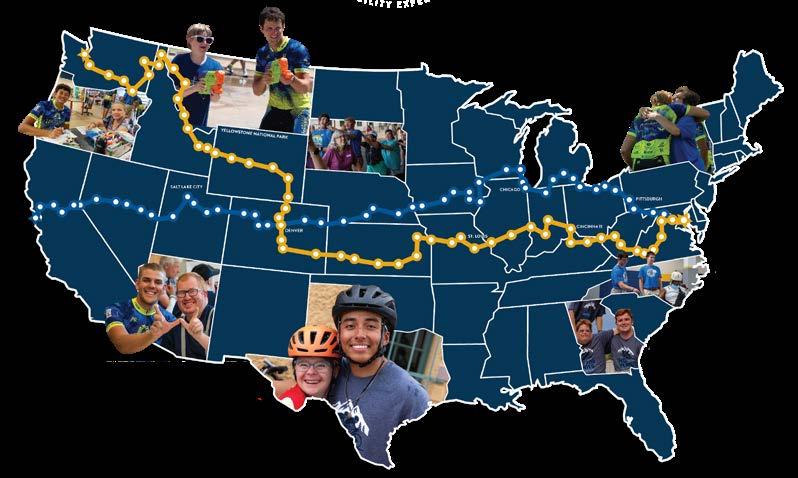
SCAN TO FOLLOW THE TEAM




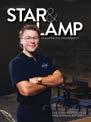
At any given moment, we can text, scroll, post, comment and keep up with what others are doing in real time. By nearly every modern measure, society is more connected than ever before.
Yet for so many people, real connection feels harder to come by.
This issue was inspired by that contrast. Within these pages, you will see where disconnection shows up in the lives of undergraduate members and alumni today, along with the ways Pi Kappa Phi continues to offer something many people are struggling to find: authentic community.
In a letter to the brotherhood, Ross Szabo, Theta Eta (American), reflects on mental health, loneliness and the kind of brotherhood we owe one another. His message reminds us that real support begins with the willingness to notice when someone is struggling.
That lesson feels especially relevant in a story about the rise of online sports betting, where addiction can hide behind a phone screen, and a brother may be struggling long before anyone recognizes the signs.
In this issue, you’ll be introduced to Beta Eta (Florida State) brothers David Orozco and Cameron Chung. Their friendship began in college and, years later, became the foundation for a business partnership. Their story is a reminder that brotherhood does not always reveal its full value right away. Sometimes, its significance becomes clearer with time.
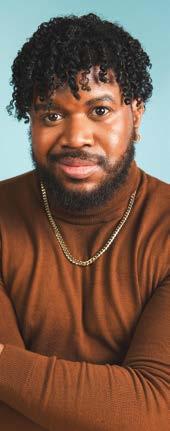
That same sense of brotherhood and belonging appears in the story of Micah Elijah Caldwell, a Kappa Chapter (UNCChapel Hill) alumnus and re-founding father, who now steals the spotlight in the first national tour of “Shucked,” the musical. Through every stage of his journey, Pi Kappa Phi has remained part of his life, not simply as a college experience, but as a brotherhood that continues to show up, sometimes even in the audience.
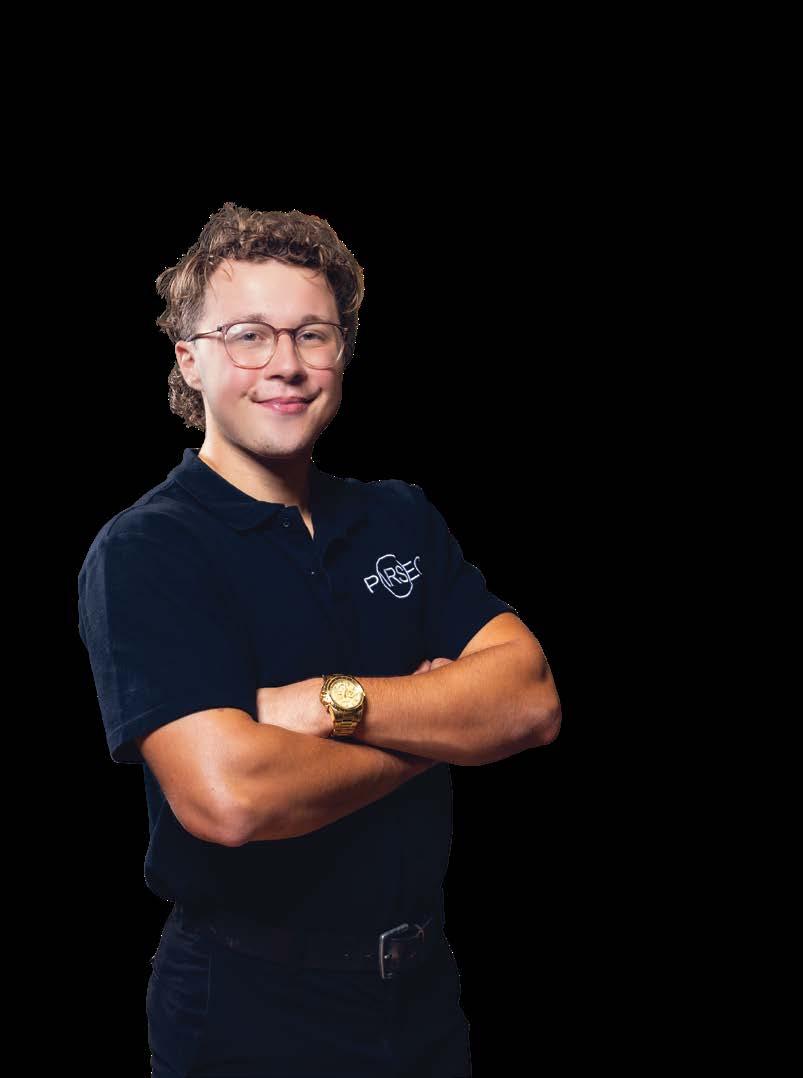
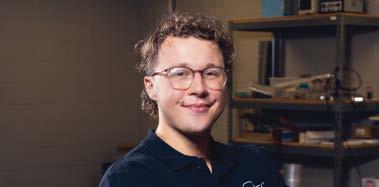
You will meet undergraduate brother Cooper Nelson, Iota Eta (Embry-Riddle), who found not only a path toward a future in aerospace, but also a community of brothers and teammates who challenge him, support him and keep him grounded. In a demanding environment where it would have been easy to retreat inward, he instead found connection in the people around him.
Yet another story of connection will take you to Holy Angels in Belmont, North Carolina, where belonging is woven into daily life. There, people with disabilities are not reduced to assumptions or limitations. They are known, valued and given opportunities to grow, contribute and participate fully in the community around them.
Even Pi Kappa Phi’s history reflects that same search for meaning and belonging.
In this issue’s “Moment at the Museum,” you will learn more than ever before about the Chrestomathic Literary Society and the environment that shaped Pi Kappa Phi’s founding.
Long before digital platforms promised connection, our Founders understood the importance of being heard, understood and part of something larger than themselves. Pi Kappa Phi was born, in part, from that pursuit.
At its best, Pi Kappa Phi offers more than contact. It offers relationships built on shared values, trust that deepens over time and a sense of belonging that endures long after graduation.
In a world where disconnection has become increasingly common, that kind of brotherhood matters more than ever.
As you read this issue, I hope you will consider the difference between being in touch and being truly connected. Who knows you beyond the surface? Where have you found real belonging? How are you helping create it for others?
Technology keeps us in contact. Brotherhood is what gives that contact meaning.
In Pi Kappa Phi,

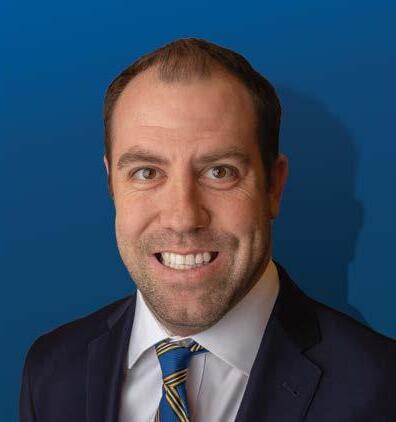
JAKE HENDERSON CHIEF EXECUTIVE OFFICER
Pursuant to Supreme Law, the Nominating Committee is pleased to nominate the following individuals for service on the National Council. This slate of officers will be presented to the 59th Supreme Chapter in Scottsdale, Arizona, from July 23-26, 2026. Each individual is listed with the position for which he has been nominated.


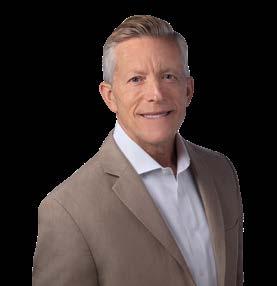
NATIONAL PRESIDENT UPSILON (ILLINOIS-URBANA-CHAMPAIGN)
WALLY WAHLFELDT was initiated into the Upsilon Chapter at the University of Illinois in 1983, where he served as archon. Upon graduation, he joined Pi Kappa Phi staff, serving as a leadership consultant, where he led recruiting efforts at Alpha Gamma (Oklahoma), Alpha Omicron (Iowa State) and Beta Epsilon (Missouri-Columbia) and then served as Pi Kappa Phi’s director of communications. As an alumnus and volunteer, he has served on the Upsilon Housing Corporation, is a Nu Phi Society member, was secretary of the Pi Kappa Phi Properties Board of Directors and is currently National Vice President/President Elect.
Wahlfeldt is a managing director at JLL, one of the world’s largest corporate real estate services organizations, leading JLL Retail Corporate Services, providing consulting, analytics and transaction services to retailers such as T-Mobile, Nike, Walgreens, Trek and Google. He resides in River Forest, Illinois, with his wife, MaryLisa.
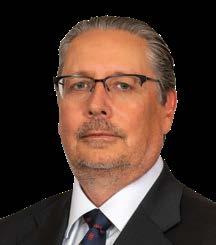
(DREXEL)
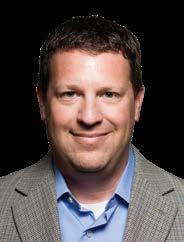
RICK BERK began his journey with Pi Kappa Phi when he was initiated into the Alpha Upsilon Chapter at Drexel University in 1982. He built a successful career in the technology and digital infrastructure space and now brings that expertise to his leadership roles within the Fraternity. Berk joined the Pi Kappa Phi Foundation Board of Trustees in 2016 and has served in several key capacities, including vice chairman, before assuming his current role as chairman. He also contributes his expertise as a member of the Fraternity’s Technology Committee, helping guide the organization’s digital innovation strategy. A proud member of the Nu Phi Society, Berk was recognized with a Certificate of Appreciation in 2022 for his continued service and leadership.

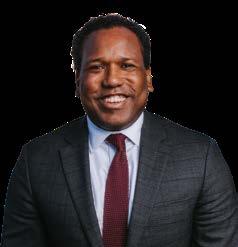
ANDRAE L. TURNER is an initiate of the Eta Rho Chapter at Texas State University, where, as a student, he served as warden, IFC vice president of Judicial Affairs and IFC president. He was also elected president of the Mid-American Greek Council Association (now known as the Association of Fraternal Leadership and Values). Turner joined Pi Kappa Phi staff as a leadership consultant working on the expansion and growth team. As a volunteer, he has served as a chapter advisor, a city events coordinator, the founding president of both the Eta Rho Alumni Chapter and Eta Rho Housing Corporation and as a prevention education program facilitator. He is a member of the Nu Phi Society, a Pi Alpha and currently serves as National Treasurer of Pi Kappa Phi.
In addition to his volunteer roles with Pi Kappa Phi, Turner is an active and involved alumnus of Texas State University, where he currently serves as a trustee of the Texas State Development Foundation. Turner previously served on the Board of Directors of the Texas State Alumni Association, including a term as president. Additionally, Turner serves on the Board of Directors of Goodwill Industries of Houston, the Houston Area Urban League and the Texas Lyceum. Turner holds a bachelor’s degree in healthcare administration from Texas State University and master’s degrees in healthcare administration and business administration from the University of Houston-Clear Lake. Living in Houston, Texas, Turner is a Fellow of the American College of Healthcare Executives and is an administrator at UT Southwestern Medical Center.
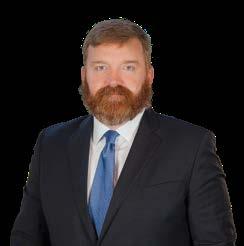
BEN BUSH was initiated into the Alpha Alpha Chapter at Mercer University, where he earned a Bachelor of Science degree in environmental science. As a student, Bush served as archon of his chapter. After graduation, he joined Pi Kappa Phi staff as a leadership consultant. Bush earned his law degree from the Florida State University College of Law. For the past 22 years, he has practiced as a real estate transactional attorney in Tallahassee, Florida, representing lenders and landowners in commercial and agricultural transactions throughout Florida and Georgia. Between serving on Pi Kappa Phi staff and attending law school, Bush rode on the 2000 Journey of Hope South team. For several years, he has volunteered in support of the Gear Up Florida arrival in Tallahassee. He has served on the Pi Kappa Phi Properties Board of Directors as the vice chair for acquisitions. Bush lives in Tallahassee, Florida, with his wife, Adriana, and two daughters, Sofia and Amelia.
DWAYNE TODD is a re-founding father of the Alpha Eta Chapter at Samford University, where he served as vice archon and archon and was named to the Council of Archons his senior year. His alumni leadership involvement in Pi Kappa Phi includes serving as the founding chapter advisor for both the Eta Chi Chapter (Texas Christian) and the Alpha Nu Chapter (Ohio State) and as the founding chair for Pi Kapp Pride. Additionally, Todd has served as a regional/area governor, a facilitator for many of the Fraternity’s educational programs and a member of numerous national committees. With a career in higher education spanning more than 30 years, he currently serves as the vice president for student engagement and success and dean of students at Ohio Wesleyan University. Todd holds a Bachelor of Music from Samford University, a Master of Divinity from Southwestern Seminary and a Ph.D. in Higher Education from The Ohio State University. He lives in Columbus, Ohio, with Steve, his partner for 26 years.

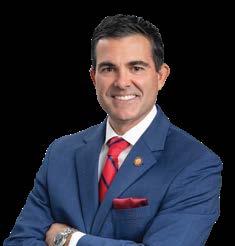
JOHN R. BRADFORD, III, is an initiate of the Zeta Alpha Chapter at Clemson University, where he served as vice archon, archon and vice president of Order of Omega. During his senior year, he represented his chapter on the Council of Archons and was honored as Clemson’s Greek Man of the Year. He earned a Bachelor of Science degree in agricultural engineering from Clemson University and an Executive MBA from the University of Memphis, where he spent two years as the university’s mascot, “Pouncer” the Tiger.
JOHN R. CHAPLAIN
ZETA ALPHA (CLEMSON)
In 2013, Bradford joined the Pi Kappa Phi Properties Board of Directors and currently serves as vice president of the Property Management Committee. He is also a member of the Nu Phi Society and a Pi Alpha. In 2024, he rode in Gear Up Florida alongside his son, Jack Bradford, Tau (NC State), becoming the Fraternity’s first father-son team to complete the ride together. Bradford has been elected to public office six times, serving two terms as Cornelius town commissioner and four terms in the North Carolina House of Representatives. During his legislative tenure, he held several key leadership roles, including senior chairman of the House Finance Committee, majority deputy whip and freshman majority whip. An entrepreneur, Bradford is the founder and CEO of Park Avenue Properties and PetScreening. After selling Park Avenue Properties in 2020, he focused on scaling PetScreening into a nationally recognized, industryleading pet policy management platform for the rental housing sector. Under his leadership, PetScreening has been named by Inc. Magazine as one of America’s 5,000 fastest-growing private companies for four consecutive years. Bradford married his high school sweetheart, Shea, and they have four children.
TODD
CHANCELLOR
ETA SIGMA (CALIFORNIA-LOS ANGELES)
TODD SARGENT was initiated as a founding father of the Eta Sigma Chapter at the University of California, Los Angeles. After graduation, Sargent served for several years as the Eta Sigma chapter advisor. He continued his Pi Kapp volunteer journey as chapter advisor for the Theta Zeta Chapter (George Washington), regional governor in the Mid-Atlantic Region, chapter advisor for the Zeta Rho Chapter (Cal State-Fullerton), regional governor in the Southern California Region, leadership instructor at Pi Kapp College for Chapter Officers and National Chaplain. In addition to his Pi Kappa Phi volunteer roles, Sargent has held multiple leadership positions within the UCLA Alumni Association, UCLA School of Public Affairs and the City of Los Angeles. He holds a bachelor’s degree in political science from UCLA and an MBA from The George Washington University. He is currently global executive director of organizational development for The Walt Disney Company. Sargent lives in Los Angeles, California, with his husband, Alexander.
by Ross Szabo, Theta Eta (American)
My first attempt at college lasted two months.
To anyone looking, I was a typical student. In reality, I was struggling with bipolar disorder and hiding it behind unhealthy habits. I grew up in a family affected by mental health challenges, addiction and trauma. My parents loved me deeply, but emotions were not something we talked about. I learned early to deal with my feelings alone.
By high school, I learned how to disconnect from my emotions. When I was diagnosed with bipolar disorder, I did not know how to process what that meant or how to talk about it. Instead, I became skilled at hiding what I was going through. Most people thought I was fine. The truth is that I was barely holding things together.
College did not magically fix that. In many ways, it exposed how much I had normalized destructive behavior. After years of dissociating and covering my emotions, I had drifted far from anything that looked like healthy coping.
It took years and hitting rock bottom at age 22 before I finally accepted that I could not keep living that way. Recovery began when I acknowledged what was happening and started learning healthier ways to respond to my emotions.
Those experiences shaped how I think about mental health today.
Throughout my career, I have encouraged people to talk openly about mental health. But talking is only the beginning. Even as awareness has increased, many people still struggle to describe what they are feeling or how to ask for help. I have seen countless fraternity men go through the same thing: carrying struggles quietly while appearing fine on the surface.
The gap for many young people is not awareness. It’s understanding. Students hear words like anxiety, depression and trauma all the time, but few are taught how to recognize those feelings in themselves or what to do when something feels wrong. Awareness alone does not teach someone how to cope, how to help a friend or even how to ask for help.
Sometimes support begins with something simple: noticing when a brother seems different and asking a genuine question.
“Hey, you seem quieter than usual. Is everything ok?”
“How have you been doing, really?.”
Questions like these can open the door to conversations that might not happen otherwise.
In my work with students today, I see another challenge shaping young men’s lives: disconnection. I meet students every week who say they have hundreds of contacts in their phone but no one they feel comfortable calling when something is wrong. Many students want meaningful relationships but lack the tools to build them.
Young men are not the only people experiencing loneliness, but they often struggle in ways that are difficult to recognize. What appears as withdrawal, frustration or emotional distance may actually be someone who has never learned to talk about what he is feeling. Some young men only know how to distract themselves, shut down emotionally or insist they are “fine.”
Disconnection does not always look dramatic.
Sometimes it looks like silence. A brother who begins showing up less often. Someone who laughs along with everyone else but never shares what is really going on.
Connection, however, can be a powerful antidote. Connection looks like a brother checking in privately, or a conversation that moves past small talk or a chapter culture where honesty is normal and vulnerability is respected. Sometimes the most important thing a person can hear is that he does not have to carry everything alone.
Fraternities can play an important role in addressing this challenge.
I did not join Pi Kappa Phi as an undergraduate. I became a member later in life, when I was initiated as an alumnus. This experience gave me a different perspective on brotherhood. It reinforced something I already learned through my work with
students: brotherhood is not defined by events, traditions or shared memories. It is defined by whether people genuinely show up for each other.
Fraternities should not act as counseling centers, but they can be places where men feel safe enough to stop pretending. A healthy fraternity environment is one where brothers notice each other, listen without judgment and encourage openness about struggles. It means creating a culture where asking for help is seen as a strength, not a weakness.
Some of the most meaningful support I received in my life has come from other men who cared about me, even when they did not know exactly what to say.
Support does not have to be complicated. It can start with paying attention when someone seems different, checking in privately and listening without immediately trying to fix the problem. One honest conversation may not solve everything, but it can remind someone that he matters and that he is not alone.
I still don’t have every answer when it comes to mental health. But I know how powerful it is when someone simply shows up and listens.
When I think about the true value of fraternities, I don’t think first about events or programs. I think about environment. Real change happens when people feel noticed, supported and connected.
In a culture where many young men are used to pretending they have everything under control, creating spaces where honesty is welcome can make a profound difference.
For Pi Kappa Phi brothers, this challenge deserves serious attention. Brotherhood should mean more than shared experiences or social events. It should mean showing up for each other during the moments that are hardest to talk about.
For alumni, that support can begin with asking different questions when reconnecting with a brother. Instead of asking only about work or what’s new in life, ask how he is really doing.
Sometimes support begins with something simple: noticing when a brother seems different and asking a genuine question.
These conversations may seem small, but they matter. Connection is not simply about being around other people. It’s about being known, being supported and being reminded that you belong. That kind of connection is what brotherhood should represent.
This week, reach out to a brother. Call, text or meet for coffee. Ask how he is really doing. Real connection often begins with one honest conversation. And sometimes that conversation can change someone’s life.
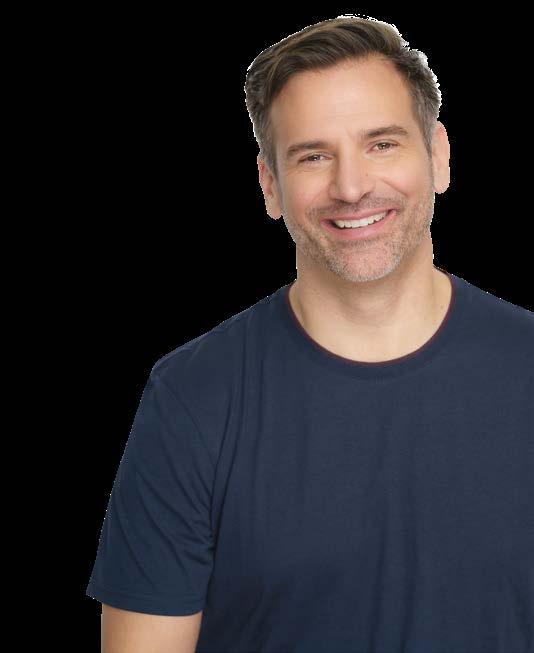
Ross Szabo, Theta Eta (American), is a nationally recognized mental health speaker, author and educator who has spent more than two decades helping students, educators and organizations better understand mental health. Diagnosed with bipolar disorder as a teenager, Szabo has dedicated his career to breaking down stigma and teaching practical skills for recognizing and responding to mental health challenges. He is a founding faculty member and wellness director of Geffen Academy at the University of California-Los Angeles where he created a program for students in grades 6-12 to learn about mental health once a week. He is the chief executive officer of the Human Power Project, a company that creates mental health curriculum. Szabo works with high schools, colleges and professional organizations across the country and is the author of Behind Happy Faces and A Kids Book About Anxiety.
by Rachel Greene
In fraternity houses nationwide, this generation of brothers has more knowledge and tools related to substance use, addiction and mental health at their fingertips than any generation of men before them. Most can spot the signs in a brother stumbling through the front door at 3 a.m. night after night. They know when someone is visibly unraveling. They know what a brother who’s “not okay” is supposed to look like.
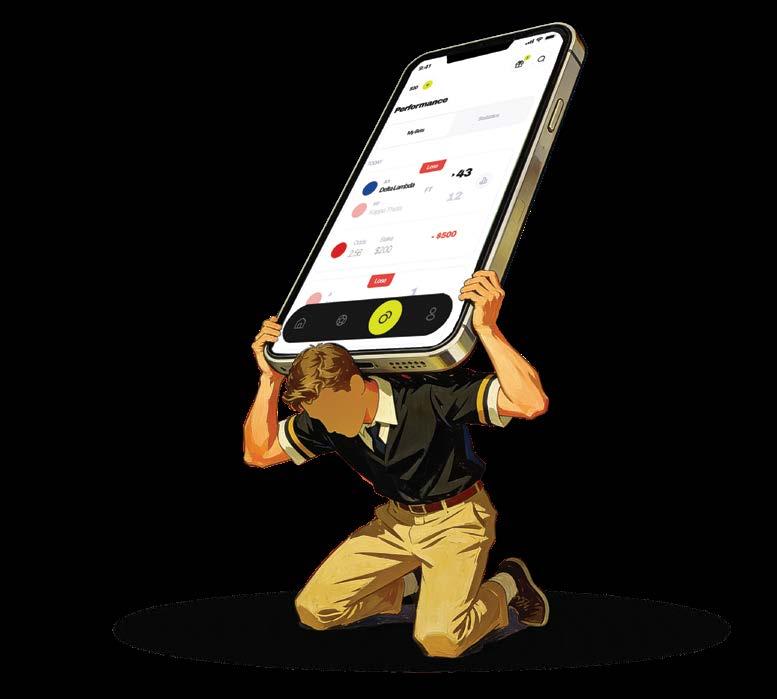
But there’s a new habit making brothers “not okay.” And this one? It doesn’t stumble through the door after last call. It scrolls.
It’s a silent habit, hiding in plain sight. It’s the man on the couch during a rivalry game, refreshing odds instead of watching the field. It looks like a quick glance at a screen during dinner that turns into another, then another. It’s the group chat lighting up with parlays, “Have you locked in your picks?” and “I won big last night.”
It lives inside their phones, the digital extension of themselves. Nobody bats an eye when a brother checks his phone all day, so it can fly under the radar. That’s what makes it so dangerous.
When it comes to the addictive phenomenon that has taken college campuses by storm, the deck is stacked against young men.
Welcome to the world of online sports betting.
The following scene is fictional, but it is inspired by common patterns described in research and reporting. It is not one identifiable Pi Kappa Phi brother. Still, it reflects a reality that brothers and chapters are navigating right now.
His habit began, as most things did in the chapter house, casually. He put 10 bucks on a game because his whole associate member class was doing it, and because the newly downloaded app gave him a great promo. It said his bet was “risk-free,” so he figured he was playing smart. It was as easy as a swipe and a payment, and suddenly he could contribute to the conversation with his brothers.
At first, that’s all it was. But soon, the bets followed him out of the group chat and out of the chapter house, too. While he should
have been focused on lectures, he was checking his phone. When he met his big brother for the first time, he placed a live bet at the dinner table. When he sat on the couch trying to enjoy a brotherhood event, he felt his stomach tighten when one missed free throw cost him every dollar he had left. He wasn’t watching the game anymore. He was only ever watching his phone. And then, he was watching his wallet empty out.
And the worst part? No one noticed. Not because his brothers didn’t care, but because everything seemed normal. He was still there, still present enough not to raise any alarms. He laughed at the right moments, showed up to chapter and did all the right things. But all the while, his mind was somewhere else, running numbers, replaying losses, thinking about the next bet and trying to win back what he already lost.
He isn’t the only one.
Now, back to the facts.
Everything changed in 2018 when the United States Supreme
country. The National Conference of State Legislatures reports that 38 states allow sports betting, with 30 allowing bets to be placed directly from a mobile phone. What once required a trip and felt visible now lives in the same device many young men already struggle to put down.
But there’s a new habit making brothers “not okay.” And this one? It doesn’t stumble through the door after last call. It scrolls.
(continued from page 11)
The danger is not simply that sports betting is legal now. It’s that it is mobile now.
And that danger is not only financial. The American Psychiatric Association classifies gambling disorder as a behavioral addiction because research shows it is similar to substance-related disorders in its physiology and treatment. In other words, this is not just a bad habit, weak self-control or harmless fun gone a little too far. It is an addiction that mental health professionals now recognize alongside alcohol use disorder and other substancerelated disorders.
Mobile betting changes everything. It removes friction and breaks down barriers, making betting fast, private and always available. When those barriers disappear, the people most at risk are often the ones most likely to act on impulse.
It also removes the witnesses. A brother will likely notice if you disappear to a casino. He probably won’t notice if you disappear into your phone. The warning signs are camouflaged as regular screen time, and the industry knows it. Push notifications, “boost” offers, “risk-free” promotions and live odds are not just harmless features. They are part of an environment designed to keep people engaged.
And for some people, that engagement turns into addiction. The American Psychiatric Association says gambling disorder is marked by repeated, ongoing betting that continues despite serious problems in a person’s life. Its warning signs include frequent thoughts about gambling, unsuccessful efforts to cut back or moderate, irritability when trying to stop, “chasing” losses, hiding the extent of involvement and losing important opportunities because of gambling.
If sportsbooks have an ace in the hole, it’s this: they don’t just have a young audience to target. They have its captive attention.
Young men are not the only people affected, but they are one of the most vulnerable groups. A 2025 study in the Journal of Gambling Studies found that men ages 18 to 25 are at disproportionately increased risk for gambling problems, and that sports gambling frequency was a strong predictor of problem gambling severity among that same demographic.
A brother will likely notice if you disappear to a casino. He probably won’t notice if you disappear into your phone. The warning signs are camouflaged as regular screen time, and the industry knows it.
A brother with a sports betting problem does not need a lecture. He needs someone to notice him...
Public opinion is shifting, too. In Pew Research Center’s 2025 survey, 47 percent of men under the age of 30 said legal sports betting is a bad thing for society, up from 22 percent in 2022. Pew also found that 22 percent of U.S. adults said they had bet on sports in the past 12 months, up from 19 percent in 2022, with the increase driven entirely by online betting. In other words, more people are placing bets, but more people, especially young men, are also recognizing that something about this feels wrong.
And the financial fallout is very real.
A 2024 National Bureau of Economic Research paper found that when online sports betting increases, financially constrained households see credit card balances rise, available credit fall and overdraft frequency increase. The researchers also found that legalization reduced savings, suggesting that easier access to betting can destabilize financial health well beyond the apps themselves.
What does that look like in Pi Kappa Phi?
It’s a brother who starts with 10 bucks, then wins $50. He bets the $50, even though he promised himself he’d be done after $10. Then he loses, but he remembers how it felt to win, and he decides he needs to end on a high. He bets another $20. Then another. It stops being “betting money” and starts feeling a lot more like “money I have to get back.” And those losses aren’t limited to college brothers. An alumnus can chase losses the same way an undergraduate student can, and he may have much more to lose.
Addiction does not always look like a brother passed out on the couch.
Sometimes, it looks like the guy who is still showing up, still laughing, still watching the game, but slowly losing himself on the sidelines. He has one eye on the screen at all times, and an everpresent knot in his stomach, but on the outside, he looks fine. And while young men are a high-risk target for this industry, sports betting can take hold at any age.
As Dr. Martin Seppala said during the opioid crisis, “Addiction is a disease of isolation.” Sports betting can isolate a brother without removing him from the room. He can be surrounded by people and still be alone in his addiction.
This is where sports betting stops being an issue of personal responsibility and becomes a Fraternity-wide issue. Not because Pi Kappa Phi can control what happens in the app store, or because brothers can solve an addiction crisis on their own, but because they can influence the kind of culture their chapters create, one where warning signs are taken seriously and seeking help is not stigmatized.
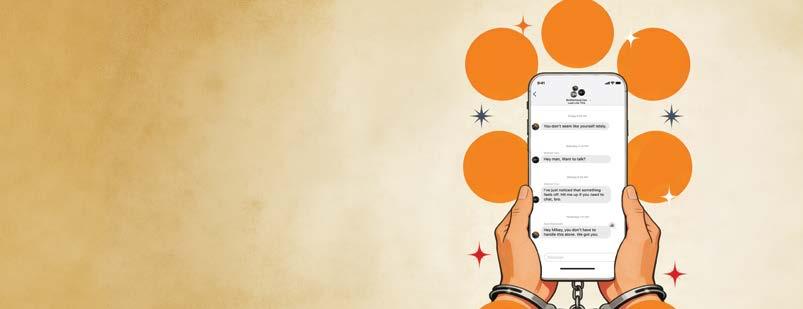
Johann Hari, an author and TED speaker known for his work on addiction, has said, “The opposite of addiction isn’t sobriety, it’s connection.” In an undergraduate chapter, connection is not abstract. It’s built in shared meals, late-night talks and a culture of looking out for each other. If that is true, then brotherhood can help protect against sports betting addiction. A brother with a sports betting problem does not need a lecture. He needs someone to notice him, someone willing to initiate an Ultimate Respect conversation and say, “You don’t seem like yourself lately. Can we talk?”
The most powerful solutions are often the simplest ones.
The question is whether Pi Kappa Phi brothers are willing to put their money where their mouth is, not by wagering more, but by looking for the signs, showing up with support and refusing to let a brother lose to addiction, even when the battle is on his phone.
The house always wins when the chapter stays silent. But that is not the way it has to be. The chapter and the greater Fraternity can be where a brother finally stops scrolling, looks up, remembers he belongs and asks for help.
If you or a brother is struggling, free, confidential help is available right now: Contact the National Problem Gambling Helpline 24 hours a day, seven days a week at 1-800-MY-RESET or utilize their online chat feature at ncpgambling.org/chat.
For help finding meetings, contact the Gamblers Anonymous National Hotline at (855) 2CALLGA, (855) 222-5542.
To find treatment referrals for mental health and substance use, call the SAMHSA National Hotline at 1-800-662-HELP (4357).
by Rachel Greene



David and Cameron’s partnership didn’t begin in a boardroom. It began with 50 McDonald’s chicken nuggets at Florida State University.
On his first night as a Pi Kappa Phi associate member, David Orozco showed up as he always did: with food. He wasn’t trying to impress anyone; for him, sharing food is second nature.
As a child of Colombian immigrants who fled the drug wars of the 1980s, Orozco watched his parents sacrifice everything to build a life in the United States. In 1998, they opened Brisas Empanadas, a restaurant in New Jersey built around recipes passed down from Orozco’s grandmother, now a staple in the community. Food, for him, was never just food. It was heritage, a token of affection and a way to connect with others, all at once.
That night, as he sat in a brother’s apartment eating nuggets between games of FIFA with Cameron Chung and other Pi Kapps, he was doing more than making friends. Without even realizing it, he was forming a friendship with the man who would eventually help him transform his family’s legacy into a national brand.
They were learning, in real time, how connection and credibility are built: through consistency, initiative and shared effort.
That same mindset followed them into the classroom.
Like many students, both arrived at Florida State with one plan for their future and left with another. Chung initially planned to become a sports agent. Orozco entered as a management major, knowing he wanted to work in business but still figuring out his path.
They were learning, in real time, how connection and credibility are built: through consistency, initiative and shared effort.
The connection was forged in the Beta Eta Chapter at Florida State. Chung joined in fall 2010, and Orozco followed in spring 2011, after a high school friend encouraged him to check out Pi Kappa Phi before any other fraternity.
Beta Eta had only recently returned to campus, and for these two brothers, that was part of the appeal.
“It was a really cool feeling, like we were able to create a new story,” said Chung.
Alongside their brothers, they helped Beta Eta build a strong reputation on campus. The chapter earned academic distinction, achieving the highest fraternity GPA on campus, and became a place men wanted to be.

Orozco eventually found his way into Florida State’s elite professional sales program. He soon convinced Chung and several other brothers to join him. Together, they learned relationshipbuilding and revenue-generation skills that would later prove essential.
It was in that program that they internalized the mantra: “Success is when preparation meets opportunity.”
Their friendship grew outside the classroom, too. They shared the highs of helping lead their chapter to the highest GPA on campus, but they also faced the lows, like when their “PUSH Play” concert series for The Ability Experience fell apart after promoters pulled funding.
“I just remember feeling like we worked so hard for a year to do this massive thing,” Orozco said. “And then it just didn’t happen.”
The failure stung, but it also brought something to life in him: a determination to prove that he could do difficult things, even after failing.
After graduation, both men landed in New York City’s corporate world. Orozco worked hard at UPS, managing major accounts and becoming a top sales rep. Chung took on the fast-paced world of financial consulting and software implementation.
As roommates in Manhattan and later Brooklyn, they kept seeing the same thing they had seen in college: how the other worked and handled pressure. Even with good pay and real opportunity, Orozco started to feel disconnected from corporate life.


Trust takes time, and meaningful connection does, too.
But those relationships? They will shape your life in ways you cannot understand yet.
(continued from page 15)
He couldn’t help thinking that the skills he learned about generating revenue could turn his family’s restaurant into something bigger.
And when he started thinking seriously about doing that, he only had one partner in mind.
“I only asked Cameron,” Orozco said. “If he said no, I already decided I would do it by myself.”
In 2017, sitting in a sandwich shop in Greenpoint, Brooklyn, Orozco asked Chung the question that would change both of their lives: “So, do you want to sell empanadas for a living?”
Chung was already considering a change. Though he had a strong resume and promising opportunities in corporate America, he was asking himself: if even the “good” job felt unfulfilling, what was he ultimately working toward?
As a first-generation American whose parents immigrated from Jamaica, Chung saw not only the business potential but also the chance to build something meaningful from the ground up and share in the results of that work. He trusted Orozco, believed in the product and knew the timing was right to take a risk.
So, he took the leap.
Chung left the corporate life and moved to New Jersey, where the two spent the early years of the venture living above Brisas Empanadas, the original family restaurant.
Their initial vision was a fast-food franchise model. They quickly realized it would be too expensive and too difficult to scale, so they pivoted toward wholesale and distribution instead.
That willingness to pivot has become a defining characteristic of their business strategy.
Their partnership works because their strengths are different. If Orozco is the engine, Chung is the guardrails. Orozco is the dreamer, quick to see possibilities and bring energy to new ideas. Chung is the strategist, bringing structure, calm and asking smart questions that keep bold ideas grounded. “I needed someone who could not just balance me out, but amplify me through that balancing,” Orozco said.
Their partnership is not built on sameness. It is built on trust, honesty and a decade-plus of shared experience that allows them to thoughtfully challenge one another without ego getting in the way.
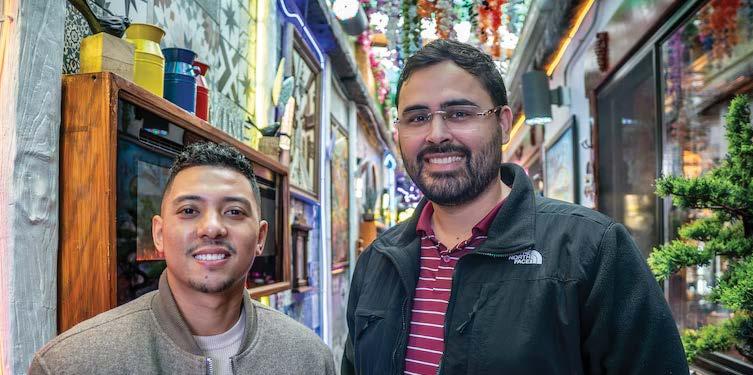
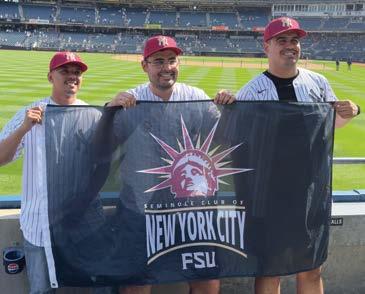

That kind of trust did not appear overnight. It was built through chapter life, campus leadership, being roommates, having hard conversations and years of seeing how the other person responded to pressure and witnessing their true character.
As undergraduates, some parts of chapter life felt overly formal. Years later, they’ve come to see them as a great model for business. Officer roles taught them about business hierarchies, accountability and delegation. Chapter meetings and Robert’s Rules of Order, which once seemed confusing, taught them the importance of structure and process. Beta Eta was not just where they met. It was where they learned how to build something from the ground up, organize and lead.
Today, that foundation has helped them carry Orozco’s grandmother’s recipes far beyond one New Jersey restaurant. Their business now reaches 80 percent of the country, from in-flight meals for airlines to specialized whole-grain empanadas developed for K-12 schools from Colorado to Virginia.
After years of behind-the-scenes in private-label manufacturing, they are now entering a new phase of their journey, focused on growing their brand through a supermarket retail line and a pilot program with a major national convenience store chain.
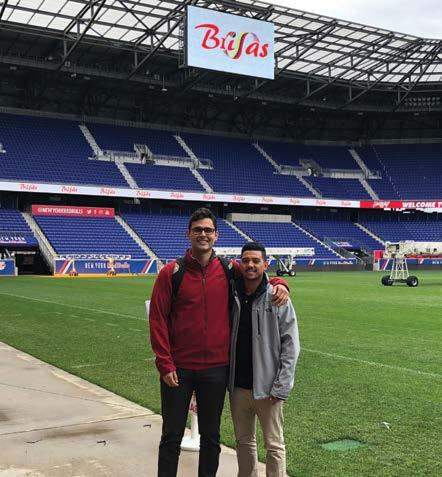
The company has been entirely self-funded, built through long hours, uncertainty, reinvention, grit and the occasional skipped paycheck.
When they reflect on their journey, both return to one word: community. “I really do believe community is the most important thing in life,” Chung said.
What began in Pi Kappa Phi as friendship and brotherhood became a lasting support system — and eventually the foundation for a business partnership that has changed both of their lives. The connections built in Pi Kappa Phi do not always reveal their significance right away. Sometimes they begin with latenight conversations, chapter meetings or even a box of chicken nuggets. Sometimes they become friendships that endure across distance and different stages of life. And sometimes, years later, they become the foundation for something much bigger.
To current undergraduate brothers, Orozco and Chung would say: do not underestimate the value of the connections you are building right now.
Stay in touch with your brothers. Be the person who checks in. Learn how to lead. Learn how to recover when things do not go as planned. Trust takes time, and meaningful connection does, too. But those relationships? They will shape your life in ways you cannot yet understand.
For Orozco and Chung, Pi Kappa Phi was never just a four-year experience. It was the beginning of lifelong connections — the kind rooted in brotherhood, strengthened by shared ambition and still shaping their lives and work today.

by Rachel Greene
Let’s set the scene:
The sky is a deep purple, but the street itself is bright as day.
To a newly 18-year-old man, it feels magical.
In the glare of countless marquees, his eyes finally land on the one that will captivate him for the next two and a half hours and influence his life for far longer: “RENT.”
Once inside, this young man finds his seat in the Nederlander Theatre, and as he settles into the velvet cushion, his armrest hums with the vibrations of the orchestra warming up beneath the stage.
Finally, the lights begin to dim, not all at once, but in a slow, calculated fade that pulls the room into a collective, expectant silence.
A single, blinding white spotlight cuts through the dark, hitting the center of the stage. The first chord rips through the silence, and a new world emerges. The street outside, where he’d stood just moments ago, has vanished. There is only music, the heat of the stage lights and the unmistakable feeling that something astonishing is unfolding.
For the third time in his young life, he sees himself represented on stage, this time on Broadway, in a way that will come full circle years later.
But for now, he is simply part of something that feels bigger than himself, united with his fellow audience members for the duration of the show.
[END SCENE]
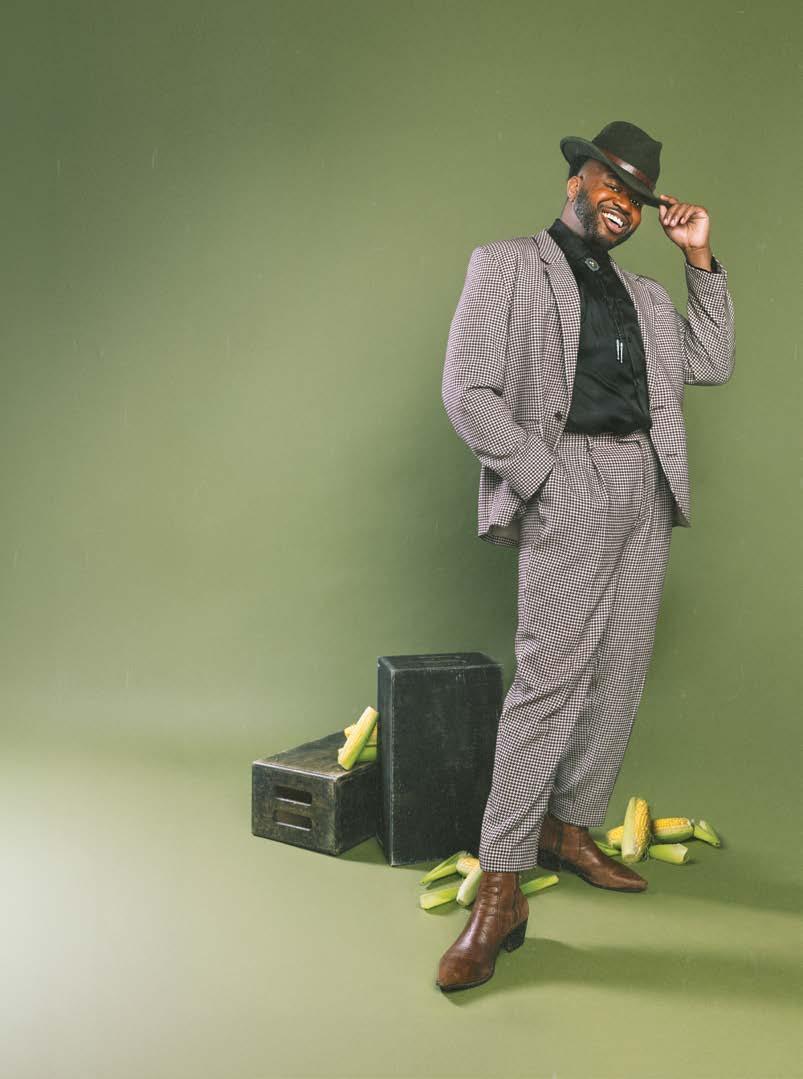
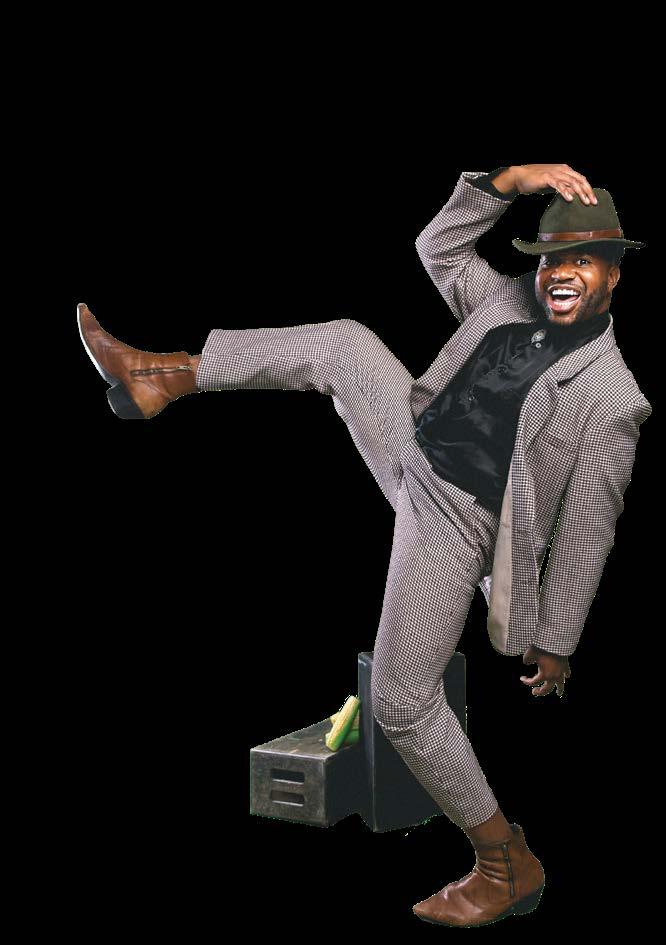
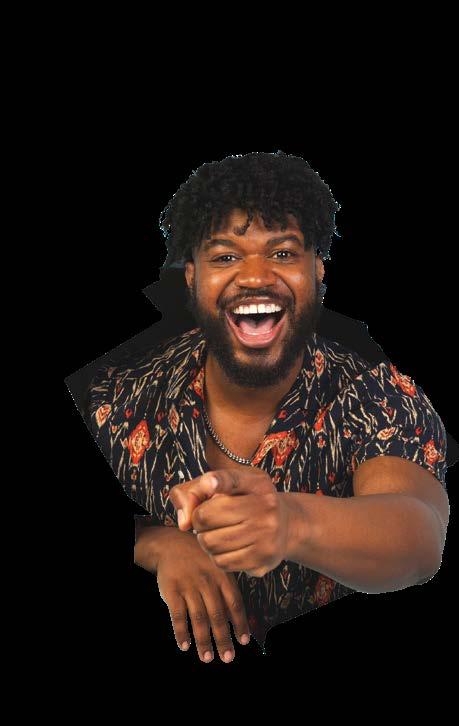
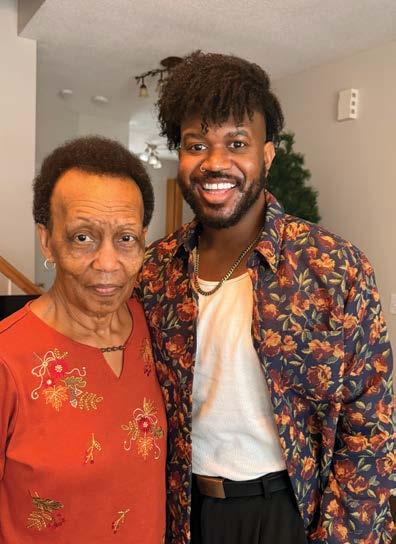
That young man was none other than Micah Elijah Caldwell, Kappa (UNC-Chapel Hill).
Today, creating the magic he once witnessed on stage is his full-time job.
But every story has a first act.


Caldwell’s story begins not on a stage, but in the foster care system, where he was adopted at six weeks old by John and Carrie Caldwell.
Growing up in Morganton, North Carolina, Caldwell was raised by older parents who instilled in him what he describes as “Southern values.” You shake hands, speak to everyone and never meet a stranger. Their home was a sanctuary of music, equipped with both an organ and a piano. His father was known in the community as “Mr. Music,” and his mother was an opera singer.
Music was Caldwell’s first language. He began formal piano lessons at age five and won his first major competition in the sixth grade. He eventually picked up the alto saxophone, which he would play for 13 years through middle school, high school and college.
Long before he ever considered professional theater, performing and storytelling were already part of his life.
Church, Caldwell says, taught him that. To him, the choir loft and the pulpit had their own kind of theatricality and the ability to make people feel something. Looking back, he sees those early years in church as some of his first lessons in performance, long before he ever stepped onto a professional stage.
His parents nurtured that part of him, taking him to productions from the time he was two years old, including musicals like “The Wiz” and operas like “Porgy and Bess.”
In his teenage years, he saw “Hairspray,” and then finally, he saw “RENT” on Broadway.
In each of those productions, he could see himself, as a Black man, represented on stage. Altogether, they gave Caldwell the feeling of recognizing something in himself onstage and, maybe for the first time, understanding that the distance between the audience and the stage was not as vast as it seemed.
Even so, after “RENT,” the dream was still just a dream. At that point, the stage was still in the distance, not yet within reach.
What came next were the years between the spark of his dream and its realization, filled with marching band rehearsals, fraternity meetings, a cappella performances, cross-country cycling and the growing conviction that a life under the lights was worth pursuing.
Long before he ever considered professional theater, performing and storytelling were already part of his life.
Instead of heading straight to a conservatory to pursue classical music after high school, Caldwell sought out the “all-American” college experience, as he calls it, and headed from Morganton, North Carolina, to Chapel Hill.
As a classically trained musician, his father hoped Caldwell would attend Juilliard. To his father, the conservatory was the logical next step.
(continued from page 19)
But Caldwell knew that the solitary life of a classical pianist, requiring six to eight hours a day alone in a practice room, would never satisfy his extroverted soul. He wanted more than that. He wanted music, yes, but also sports, school spirit, a social life and the “bigger bubble” of a campus.
At the University of North Carolina at Chapel Hill, he found all of it.
He joined the marching band and eventually worked his way up to drum major, while also joining the UNC Achordants a cappella choir. The singing group leaned into sketch comedy, character work and storytelling, giving Caldwell an early taste of the acting instincts he now shares with audiences every night.
“That’s sort of where the acting bug started,” he said. “We wrote our own sketch comedies and acted in them, and I was like, ‘Oh, I can really do this.’”
And then there was Pi Kappa Phi.
When Pi Kappa Phi leadership consultant Woody Woodcock, Gamma Kappa (Georgia Southern), asked sorority women on campus to identify the “stand-up guys” at Carolina, Caldwell’s name came up again and again. That led to a call, then a meeting with another leadership consultant, Curt Herzog, Theta Lambda (Missouri State), and, eventually, an invitation to help recharter the Kappa Chapter.
What made him say yes was the specific opportunity in front of him. More than a chance to join an organization, this was an opportunity to build one.
“I joined Pi Kappa Phi because I got to build something from the ground up with a bunch of amazing men,” Caldwell said. “We were able to create something new, something different.”
He had looked at other fraternities, but the chance to shape a chapter from the ground up was unique to Pi Kapp. It meant building the kind of brotherhood he wanted to be part of, one that valued camaraderie, authenticity and diversity.
“Curt gave me a challenge to go out and create what I wanted,” he said. “So I came back with eight people who fit my idea of what the chapter could be.”
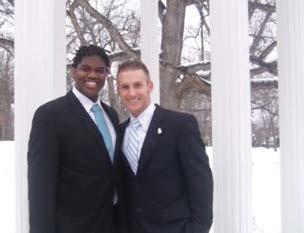
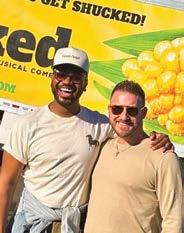
At Carolina, the different parts of Caldwell’s identity began to weave together more clearly. He was a musician, a performer, a leader and an extrovert with a gift for pulling people in. And in Pi Kappa Phi, Caldwell found the brotherhood he had always yearned for as an only child.
Carolina gave Caldwell the college experience he wanted and the space to discover who he actually was, as a performer and as a person. But his college experience was not without detours.
As a Ronald E. McNair Scholar, a program designed to prepare undergraduate students from underrepresented backgrounds for doctoral studies, he spent part of college on a path pointed toward academia. For a time, he fully intended to become a music teacher. But the closer he got to that path, the clearer it became that it was not the right one.
Student teaching, in particular, was a turning point. Standing in front of a classroom of students taking his class just to satisfy a credit requirement, he felt unfulfilled. He wanted to be around people who cared about music the way he did. More than that, he wanted to be inside the art form itself.
So, he listened to that feeling.
When he visited New York University, it just felt right.
“It was everything I wanted,” Caldwell said. “It was diverse. It was bustling. There was music. There was art. There was theater. The city’s chaos wasn’t scary to me. I was like, ‘I want to dive in headfirst.’”
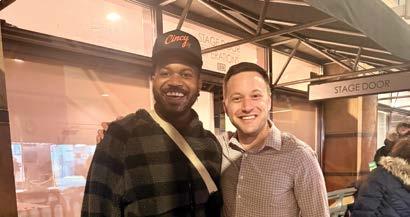
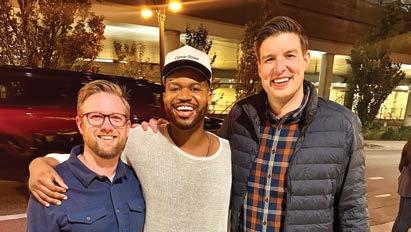
He auditioned for NYU’s Master of Fine Arts program in musical theater, walked out with what he describes as “full-body chills” and called his parents with a conviction that would prove correct.
“I said, ‘Y’all, I’m moving to New York, and I’m going to NYU.’”
By the spring of his senior year, that future was official.
But before New York came the Journey of Hope. Like many brothers, Caldwell was drawn to Pi Kappa Phi in part because of The Ability Experience’s mission of service to others. He also has a cousin with high support needs, making that mission feel even closer to home.
At the time, one of the roles on the trip involved performing puppet shows and engaging with people with disabilities through live performances. What might have looked to other brothers like just another part of the trip was, in many ways, a rehearsal space for Caldwell, where storytelling, adaptability and audience connection took center stage.
He served as crew chief for the 2011 South Route team, and the experience taught him lessons that would follow him to New York and beyond. It demanded leadership under pressure, flexibility, endurance and the ability to keep going even when plans changed.
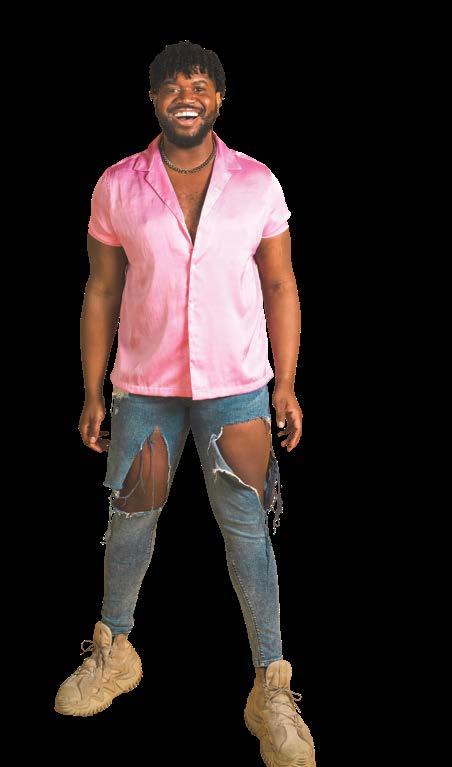
It meant building the kind of brotherhood he wanted to be a part of, one that valued camaraderie, authenticity and diversity.
(continued from page 21)
While on the road that summer, Caldwell faced an immediate hurdle. He planned to move to New York as soon as the trip ended, but had nowhere to stay. Through Pi Kapp connections, that problem was solved. A brother’s sister offered her apartment couch for his first two weeks in the city. That summer, he sang across the country, served others, led under pressure and finished the trip in Washington, D.C., serenading the crowd with his rendition of “Lean on Me.”
Five days after the cross-country journey ended, he moved to New York. The whirlwind, and Caldwell’s next chapter, had begun.
At NYU, what Caldwell had been reaching toward for years came into focus. There was rigorous training, creative challenge and the confirmation that theater was not just a passion. It was something he could do professionally.
He thrived.
The summer after his first year, he booked his first professional theater gig. More work followed, including off-Broadway performances, workshop productions and opportunities that began turning aspirations into a career.
Then, his journey unexpectedly came full circle.
Years after seeing “RENT,” Caldwell found himself understudying actor Justin Johnson, only to realize later, while flipping through a stack of old Playbills, that Johnson played Angel in the very production of “RENT” that so deeply moved him years earlier.
That chance connection opened another door. Johnson called Caldwell about an opportunity, one that helped him earn his Equity card, a major milestone in a performer’s career that signaled he had officially joined the professional union for stage actors and stage managers.
To someone else, that moment might seem too perfect to be real, but for Caldwell, it was one more reminder that even when a dream takes years, the pieces often make sense only once they finally come together.
After graduating, Caldwell built a career in New York. He performed off-Broadway, taught at Marymount Manhattan College and eventually joined the school’s admissions team. He taught, directed and coached while also carving out his career behind the scenes.
Still, the road to success was not smooth.
Like many performers, Caldwell faced his fair share of rejection, uncertainty and near misses. After earning his Equity card, he went years without booking the kind of musical theater role he had worked so hard for. There were callbacks, auditions and moments of hope. But then there was disappointment.
The industry, as he knows well, can be relentless.
“It has taken me 15 years to book my first national tour,” he said. “It’s not that I haven’t worked in those years, but on this scale of things, that’s how long it took.”
And then, after years of waiting, came “Shucked.”
Caldwell auditioned for the show in one form or another for five years, dating back to when it was originally called “Hee Haw! The Musical.” By the time he finally read for the role of Grandpa, he knew exactly what he was stepping into.
“I was like, ‘This is mine,’” he said.
And it was.
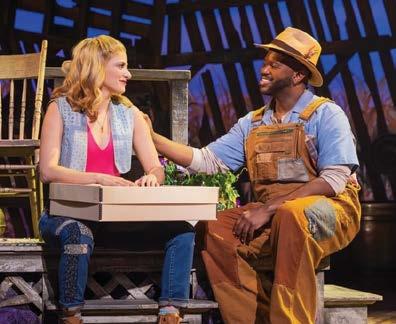
Now, as part of the first national tour of “Shucked,” Caldwell spends his nights doing exactly what the 18-year-old version of himself once watched in awe from a Broadway audience. Under the lights, he creates a world on stage and invites people into it.
Caldwell said that playing Grandpa feels like it is “in his bones,” because he is channeling his father, drawing on his humor and presence every night.
In city after city, Pi Kappa Phi brothers have been showing up in the audience. Some are Kappa Chapter brothers. Some are Journey of Hope brothers. Some are members of Pi Kapp Pride. Others simply hear that a Pi Kapp is on stage and decide they want to be there. Time and time again, what could have been just another tour stop becomes a reunion.
After the curtain falls, there are photos, hugs and conversations that seem to pick up where they left off, even years later. There is the joy of being seen not just as a performer, but as a brother — the same man many of them knew at 19, now standing in the spotlight.
Pi Kapp Pride exists to support Pi Kapps of all sexual orientations and gender identities while also helping the broader Fraternity better understand and meet the needs of those members.
For Caldwell, that mission matters. Just as seeing himself represented onstage helped him imagine a future in theater, Pi Kapp Pride affirms something equally powerful within the Fraternity. Brothers like him have always existed and deserve to feel fully at home in Pi Kappa Phi.
After his parents, the first people Caldwell came out to were his chapter brothers, because he saw them, too, as family.
It would be easy, when telling a story like Caldwell’s, to make it sound like fate.
To point to “RENT,” to NYU, to the Journey of Hope, to Pi Kappa Phi and to “Shucked,” and to tie it all into a narrative about things falling neatly into place.
On tour, Caldwell keeps a North Carolina Pi Kappa Phi pin on his backpack, a small reminder of both his home state and his Fraternity.
As Caldwell built his life in New York, he also stepped more fully into another part of his identity. After coming out as gay, he found visibility and community in Pi Kapp Pride, the Fraternity’s affinity group for members who identify as gay, bisexual, transgender, queer, questioning and allied. Founded in 2014,


But that is not quite true.
Things did not just fall into place for Caldwell. He practiced. He auditioned. He got the rejections. But he kept going.
He performed wherever and whenever he could. He leaned on his family, his Pi Kapp brothers and his faith. If there is magic in his story, it is not that things simply worked out for him. It is the perseverance that kept him chasing his dreams.
And all along the way, there were people in the wings, applauding him before the curtain ever rose.
There were John and Carrie Caldwell, who adopted him, loved him and filled his childhood with music. There were chapter brothers who helped him build something from the ground up. There were Pi Kapps who gave him a couch to sleep on when his dream was just beginning. There were mentors who opened doors. And there was a younger version of himself, sitting in a Broadway theater, daring to imagine a life beneath the lights.
And in city after city, the brotherhood that helped shape him continues to show up.
Pi Kappa Phi, Caldwell says, is part of why he is who he is. It pushed him to aim higher academically, built his confidence and, most of all, gave him a place to belong.
And through Pi Kapp Pride, that sense of belonging became even more evident. For Caldwell, that community not only reflects who he is, but gives other brothers, especially younger ones still coming into their identity, a chance to see themselves and know there is a place for them in Pi Kappa Phi.
Somewhere out there, another young person is sitting in a darkened theater right now, watching the lights come up and feeling that same spark.
Caldwell’s story is a reminder to keep going. The lights may not come up all at once. But when they do, look out into the audience. You might just find your brothers looking back.
by Rachel Greene
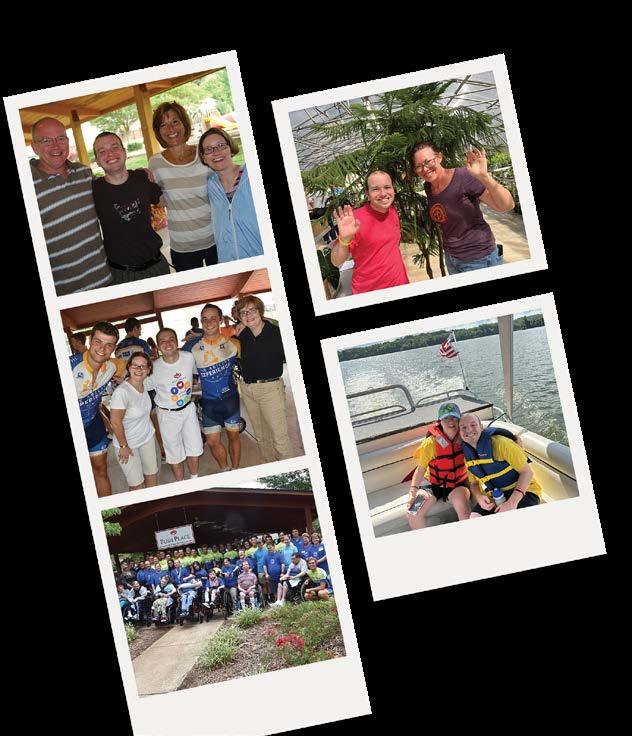
What began with one infant in need has grown into a community where residents are not only cared for, but known, celebrated and given room to live fully in Belmont, North Carolina, at Camp Hope and alongside partners like Pi Kappa Phi and The Ability Experience.
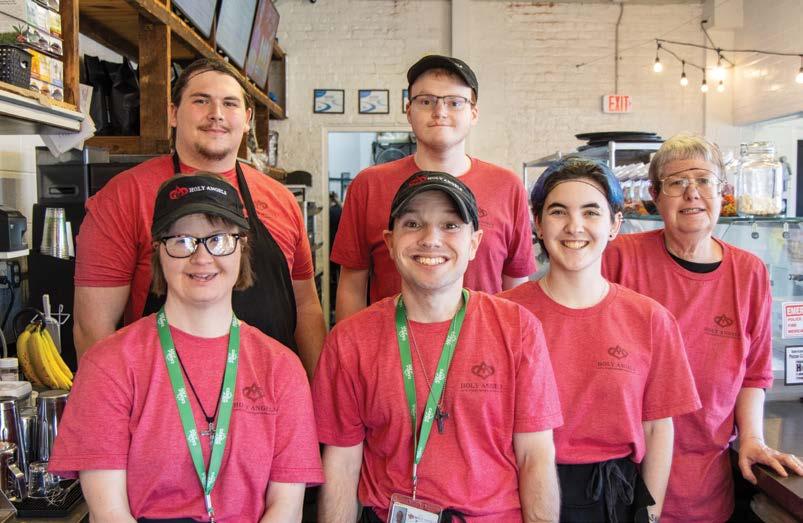
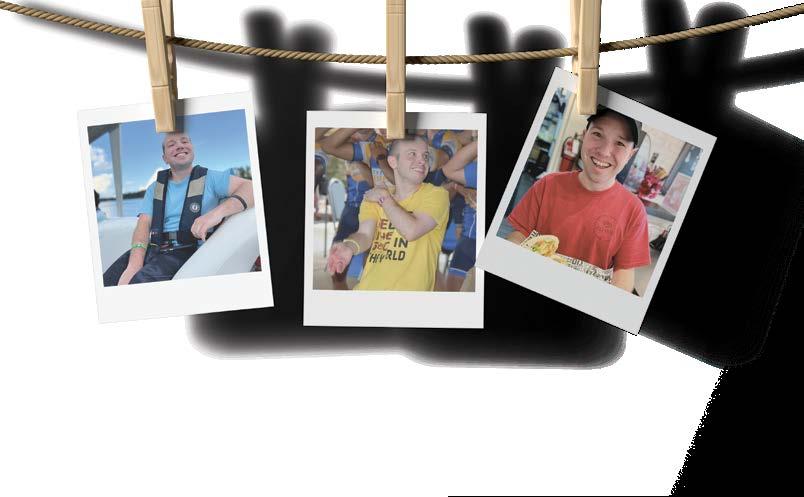
On any given Saturday morning, in the small community of Belmont, North Carolina, Chris shows up for work. He ties on his apron, takes his place behind the counter at Spruced Goose Station and gets ready to take orders. He knows the regulars, and they know him. He greets each with a smile and is happy to serve a good meal with a side of conversation.
Later in the week, he might find himself making candy bouquets to sell, building his newest Lego set or spending time on the Catawba River. His days are filled with work, hobbies, friendships and routine, and his life is as full as anyone else’s.
Chris has a disability. That is part of his story, but it is hardly the entire story.
For 70 years, that is what Holy Angels has been showing the Belmont community, and the world beyond it.
Located on the Sisters of Mercy campus, Holy Angels serves children and adults with intellectual and developmental disabilities and complex medical needs. It is a place where residents receive
around-the-clock care and support, but it is also a place where they are given opportunities to learn, work, grow and build lives filled with dignity, purpose and connection.
It began not with business plans or a mission statement, but with a young mother in crisis. She arrived at the doorstep of the Sisters of Mercy carrying her infant daughter, Maria Morrow. Maria had been born with spina bifida and hydrocephalus, and doctors had given her only months to live. Without hesitation, the sisters took her in.
Maria lived far beyond that prognosis, and the life she was given became the beginning of something much larger than any one person. What the Sisters of Mercy offered her was care in a moment of need, but it became the foundation for a community built on the belief that people with disabilities deserve dignity, opportunity and a true sense of belonging. When she passed away in 2010 at age 54, she left behind the legacy of a community that had grown around the belief that her life mattered.
Today, that legacy can be seen all across Holy Angels.
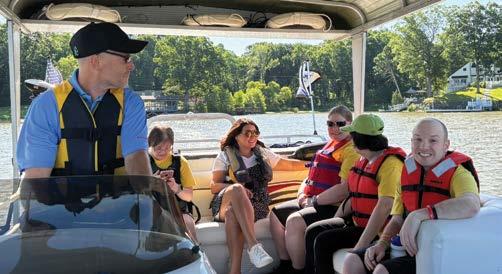
It can be seen at Camp Hope, the organization’s 15-acre recreational facility on the Catawba River, where residents enjoy the outdoors together. It can be seen in Life Choices, Holy Angels’ day program, where participants build skills, develop confidence and take part in activities that support greater independence and connection. And it can be seen in downtown Belmont and nearby McAdenville, where residents head to work, greet customers and become part of the fabric of the community.
The pontoon boat at Camp Hope is named for the woman who started it all. Decades after Maria arrived with nowhere else to turn, residents like Chris now board the Spirit of Maria, laughing with friends and enjoying a life shaped not by limitation, but by possibility.
Holy Angels is now home to 83 residents with intellectual and developmental disabilities and complex medical needs. Thirty-nine residents and community members also participate in Life Choices.
It began not with business plans or a mission statement, but with a young mother in crisis.
(continued from page 25)
Still, to describe Holy Angels only by numbers would not tell the full story.
Without stepping onto the Holy Angels campus or into one of its businesses, it would be easy to imagine Holy Angels as a medical facility or a care center. It’s so much more. It is a home, a workplace, a classroom, a gathering space and, above all, a community.
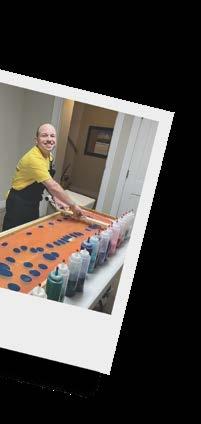
That is especially visible in the businesses where Holy Angels residents work as crew members. At Cherubs Cafe, Market on Main, the Cotton Candy Factory and Spruced Goose Station, crew members greet customers, serve food, create art and earn their own money. Rather than being
The opportunities available to Holy Angels residents begin long before a shift starts. Residents can learn horticulture, develop artistic skills and create products sold in Holy Angels’ shops, earning commission, saving up for outings and experiencing the pride that comes from paying their own way. That independence is a central part of Holy Angels’ philosophy. For Chris, those opportunities are part of his daily life. He enjoys his work at Spruced Goose Station, takes pride in making candy bouquets and looks forward to summer days at Camp Hope. He returns home to the space he shares with his roommates with the satisfaction of a hard day’s work.
In Belmont, many of those crew members have become local celebrities. Customers
Laurie Lewis, director of community outreach, has seen that happen up close. A former schoolteacher who now supports residents in their vocational roles, she has watched Holy Angels crew members challenge assumptions simply by showing up, doing their jobs and letting people get to know them. “There are so many jobs they can do, but people with disabilities are often underestimated by society,” Lewis said.
She has also seen what happens when that underestimation begins to fall away. “Members of the community love the businesses, but they really come for the employees,” Lewis said. “They know them, love them and want to see them.”
For many customers, a conversation at the counter is their first real interaction with someone who has a disability. Lewis has watched those interactions shift expectations and transform pity or discomfort into real human connection. “They come into a business expecting one thing and leave having experienced something else entirely,” she said. “People just don’t know what they’re missing until they experience it themselves.”
Lewis came to Holy Angels looking for work and instead found purpose.
“My role here is like teaching, but on a whole different level,” she said. “I fell in love with Holy Angels the moment I walked through those doors. It didn’t take long to realize this was much more than
Pi Kappa Phi brothers to do more than complete a service project. His vision was to bring student members together to build what was needed, repair what had worn down and form real relationships with the people they served. What began with that early effort at Holy Angels grew into a partnership that has endured for decades.
There is also something fitting about where that relationship grew. Holy Angels was founded in North Carolina, much like The Ability Experience, making the partnership feel all the more natural. Both grew from a belief that people with disabilities deserve dignity, opportunity and lives fully woven into the communities around them.
Over the years, that bond was strengthened by Regina Moody, Holy Angels’ longtime president and chief executive officer, who spent 40 years guiding the organization’s growth. Moody also
have shared an understanding that belonging does not just happen. It must be intentionally built and maintained. At Camp Hope, that shared commitment can be seen clearly. Along the South Fork of the Catawba River, the camp gives residents a place to enjoy the outdoors together, to gather with friends, to laugh around a campfire and to spend time on the water in a setting built with them in mind.
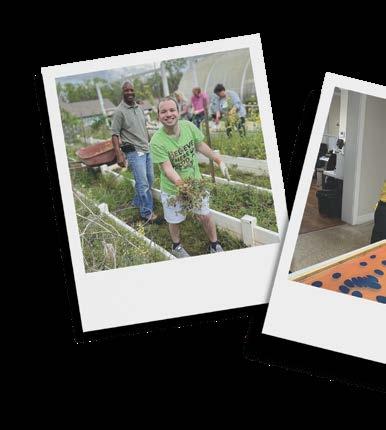
Pi Kappa Phi brothers helped build structures at Camp Hope and have returned over the years to restore and expand the space. Even the camp’s name reflects that connection, inspired by Journey of Hope and the spirit of hope and belonging that has brought the organizations together. Chris said spending time at Camp Hope is one of his favorite parts of each summer.
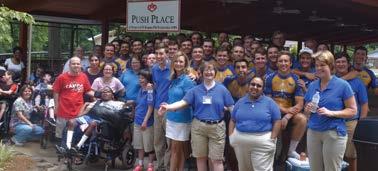
Back on the Holy Angels campus, Pi Kappa Phi brothers also built the PUSH Pavilion, which, over the years, has welcomed Journey of Hope cyclists for Friendship Visits, dance parties, a personal favorite activity for Chris, and time spent simply being together with Holy Angels residents.
That connection continues to be felt today. Residents look forward to visits from Pi Kappa Phi staff members each year.
Holy Angels. The care is real, the support is constant and the opportunities are meaningful, but underneath all of it is something even more essential: the belief that every person deserves dignity and a place to belong.
What the Sisters of Mercy offered Maria Morrow all those years ago was a place to live. What grew from that act of mercy was a place to belong.
On Saturday mornings in Belmont, that belonging looks wonderfully ordinary. It looks like Chris behind the counter at Spruced Goose Station, greeting regulars by name.
And maybe that ordinary scene is a sign of how extraordinary Holy Angels truly is. It has created a community where people with disabilities are known, needed and loved. Holy Angels has become a place for them to belong.
by Rachel Greene
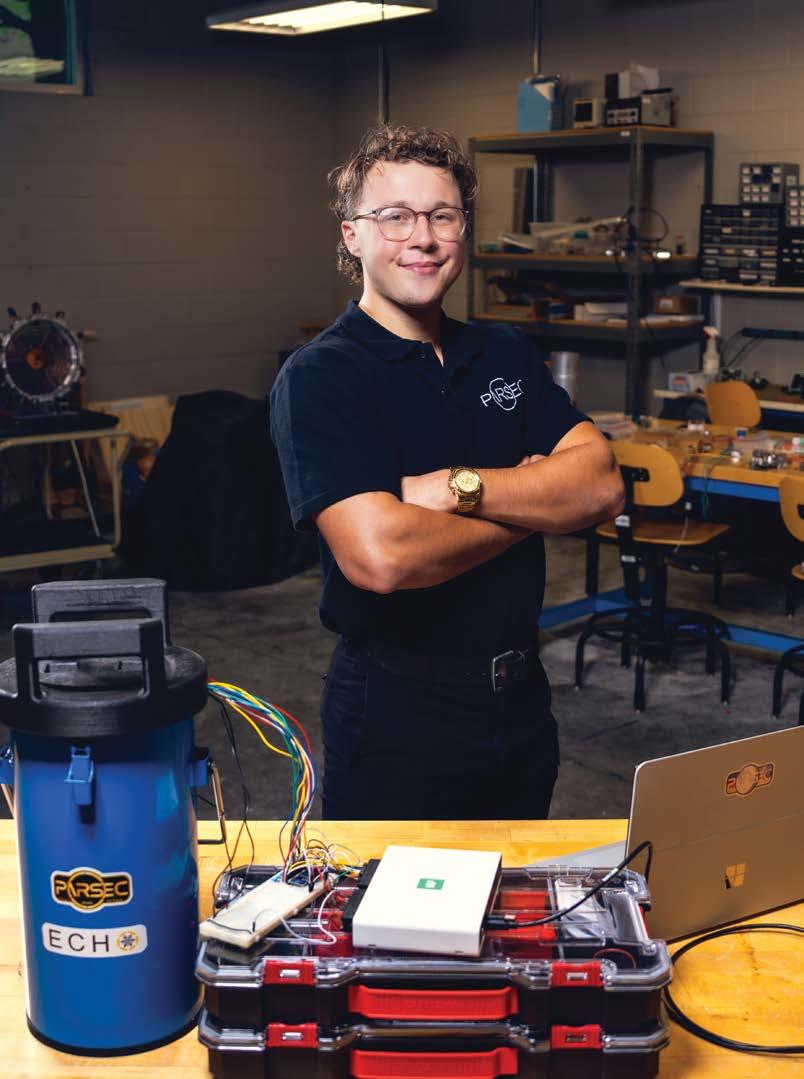
Many people outgrow their childhood fascination with space, trading it in for something more ‘down-to-Earth.’ For Cooper Nelson, an undergraduate student at Embry-Riddle Aeronautical University and a brother of the Iota Eta Chapter, that fascination only grew stronger. Now, he’s building a future around it.
“I’ve always wanted to go into the space field,” Nelson said. “Ever since I was 8 years old, I was the ‘I want to be an astronaut’ kid. I loved everything spacerelated. That’s who I’ve always been.”
As driven then as he is today, Nelson spent three summers saving up to buy his own 3D printer at just 13 years old, using it to turn the ideas in his head into something real.
What began as a childhood dream became more ambitious and specific as he grew older. He set his sights on aerospace engineering, undergraduate research opportunities and eventually NASA’s Human Lander Challenge, a competition in which teams work to solve real engineering problems tied to landing astronauts on the moon.

When it came time to apply to college, Nelson’s dream had not faded, so he went all in on making it come true. He set his sights on Embry-Riddle Aeronautical University, a school where he could pursue a highly specialized path from day one.
What ultimately confirmed his decision to attend Embry-Riddle was the Undergraduate Research Institute, or URI.
“Aerospace engineering programs are offered at schools across the United States, but the Undergraduate Research Institute is only offered at the Embry-Riddle Prescott campus,” said Nelson. “This program allows undergraduate students to apply for grant funds that we’re able to use on research projects.”
That opportunity may sound straightforward, but it sets the school apart.
“At most schools, you aren’t given an opportunity to get into research until you’re a graduate or PhD student,” he said. “With my career goals in mind, I wanted to get into research as early and as often as possible. So, I chose Embry-Riddle.”
Nelson had his heart set on space and Embry-Riddle, but he knew he wanted his college experience to be about more than academics alone.
“I came to campus knowing that I was going to join a fraternity,” he recalled. “Embry-Riddle is a different kind of environment than most schools. There are a lot of like-minded people, but that can lead some people to turn inward and become less social. I’m not like that, and I didn’t want my college experience to be like that, either.”
From the moment he met two Pi Kappa Phi brothers on campus during an
Embry-Riddle preview day the April before he enrolled, Nelson had a sense that he had found the kind of group he was looking for.
“Pi Kappa Phi was a group of guys who I knew immediately were very driven and like-minded,” he said. “They had the same kind of social energy I did, and it seemed like a great group of people to be around.”
On that same visit, Nelson also learned about PARSEC, a student research team focused on systems engineering and advanced aerospace challenges.
By the fall of his freshman year, both interests had become real opportunities. On the same afternoon, Nelson interviewed with PARSEC and Pi Kappa Phi.
He was invited to join both.

(continued from page 29)
Together, those experiences gave him exactly what he had been looking for. Through PARSEC, he found a way to push himself academically and professionally. Through Pi Kappa Phi, he found a brotherhood that gave him somewhere to belong.
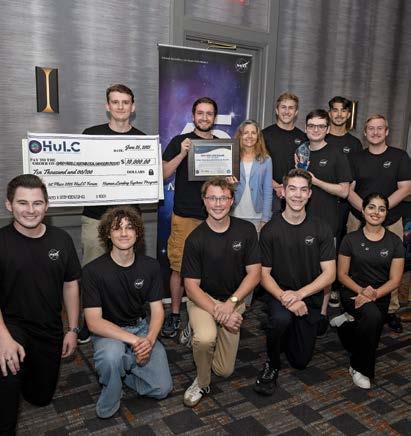
Soon, Nelson was balancing an already rigorous Embry-Riddle course load with fraternity life and the demands of PARSEC. Alongside his PARSEC teammates, he took part in the NASA Human Lander Challenge, spending months researching, designing and testing a solution to a real spaceflight problem before presenting their work to NASA judges.
For the 2025 challenge, Nelson and his teammates focused on a difficult but important problem. They needed to find a way to tell how much fuel is left in a spacecraft tank when the fuel no longer settles at the bottom, the way it does on Earth.
The work was highly technical, but Nelson said the real value of the experience went far beyond solving any single design problem.
“The experience you get from it, from the whole systems engineering life cycle, you can’t find that anywhere else,” he said.
The team spent months researching, narrowing possible approaches through trade studies, writing proposals, building testing systems and preparing to defend their work on a national stage. Like any high-level team project, it demanded trust as much as technical skill.
“You never worry about people doing their part on a project like this,” Nelson said. “Everyone knew exactly what they were working on, and everyone wanted to get it done.”
After submitting an initial proposal, 12 finalists were invited to present in the final stage of the challenge. There, competitors submitted a technical paper, delivered a 25-minute presentation, answered 20 minutes of questions from judges and participated in a poster session designed to test not just the strength of their idea, but also how well they understood the work behind it.
At that final stage of the challenge, Nelson and his teammates presented their work against teams from across the country and earned first place.
For a team of undergraduate students competing against graduate students and teams from powerhouse programs, the moment was incredibly validating and absolutely unforgettable.

While PARSEC has challenged Nelson to grow as an engineer and leader, Pi Kappa Phi has given him the support needed to sustain that growth.
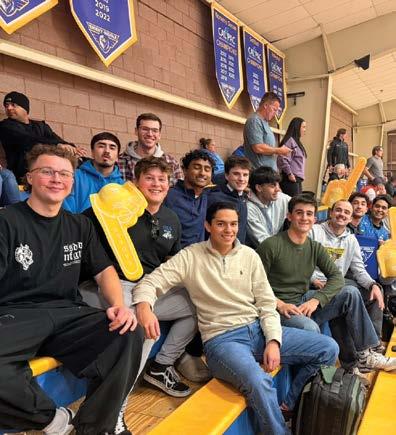
At Embry-Riddle, where heavy STEM course loads, research commitments and campus leadership roles all compete for students’ time, Pi Kappa Phi has become both a source of friendship and a source of stability in his life. For Nelson, some of that support looks simple on the surface, but makes all the difference. Brothers study together in the same library rooms every day, help each other prepare for exams and take breaks together in the middle of long days.
“When you have somewhere you know you can always go, even if it’s just for an hour or half an hour, and even if you’re going to sit and just goof off with all the guys, that matters,” Nelson said. “It’s just a fantastic experience having a constant group of people to lean on, and to be around.”
For Nelson, that support is part of what makes the chapter so special.
“Our chapter — it’s a true brotherhood,” Nelson said. “Everyone cares about each other and wants to see every single guy succeed.”
At a school where the pace is demanding and the expectations are sky high, that
brotherhood is part of what keeps Nelson grounded. It has also shaped the way he thinks about his future. “Having these connections creates not just a better day-to-day life, but relationships that I know are going to be in my life forever,” he said.
From the way he trusts his PARSEC teammates to meet NASA deadlines to the way he leans on his brothers during the most demanding academic weeks, Nelson has learned that the people in his circle affect not just his daily life, but the person he is becoming.
“If you’re going to focus your energy on anything in college, or really in life, make it building connections with people,” Nelson said.
Through PARSEC, he continues to do just that. This year, he is back for the 2026 challenge in a leadership role as testing officer, leading the testing side of the project while also guiding newer teammates through the same process he was introduced to last year.
Nelson calls connection the “cheat code” for life, and his own story so far makes a compelling case for why. The relationships he has built at Embry-Riddle through PARSEC, Pi Kappa Phi and the broader campus community have made his day-to-day life richer and have turned
a childhood dream into what is already becoming a remarkable career path.
As Nelson looks toward the future, his goals remain as ambitious as they were when he was 8 years old. Now, his ambition is matched by real experience, real responsibility and a real support system beneath it. Whether his future leads him deeper into aerospace research or somewhere he has not yet imagined, one thing is already clear. The relationships he has built at Embry-Riddle, through PARSEC and in Pi Kappa Phi, have laid a strong foundation for whatever comes next.
In the high-stakes world of aerospace engineering, Cooper Nelson is proving that while technical skill may help launch a dream, it is the strength of the people around you that helps keep it in motion.

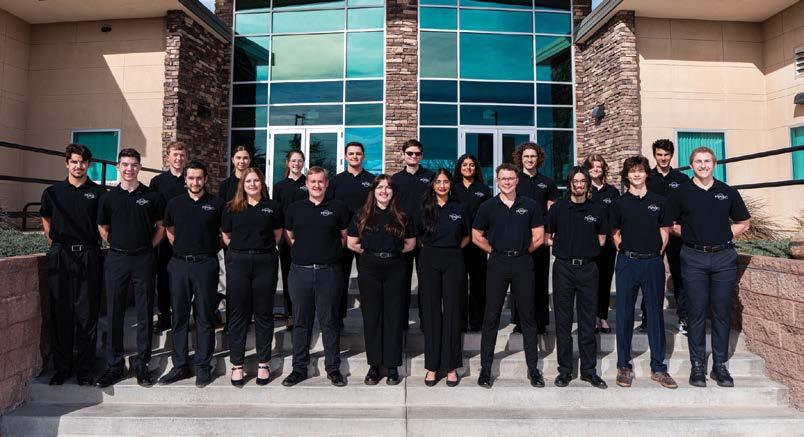
To be named a Chapter of Excellence for the 2025 calendar year, undergraduate chapters must have displayed exemplary achievement in areas such as recruitment, retention, The Ability Experience fundraising and involvement, scholarship, alumni engagement, campus involvement, governance and financial integrity. For each Chapter of Excellence, three areas in which they excelled will be shared. Chapters named Champion Master Chapters or recipients of the Founders’ Award in 2025 will be denoted with an icon shown in the key. •
•
•
•
•
•
•
•
•
•
To be named a Chapter of Achievement for the 2025 calendar year, undergraduate chapters must have demonstrated their ability to operate sustainably in the areas of finance, membership growth and scholarship.
SIGMA (South Carolina)
THETA (Cincinnati)
IOTA (Georgia Tech)
OMICRON (Alabama)
RHO (Washington & Lee)
TAU (NC State)
CHI (Stetson)
PSI (Cornell)
ALPHA ALPHA (Mercer)
ALPHA EPSILON (Florida)
ALPHA MU (Penn State)
ALPHA RHO (West Virginia)
ALPHA TAU (RPI)
ALPHA UPSILON (Drexel)
ALPHA OMEGA (Oregon)
BETA THETA (Arizona)
BETA UPSILON (Virginia)
GAMMA BETA (Old Dominion)
GAMMA GAMMA (Troy)
GAMMA KAPPA (Georgia Southern)
GAMMA UPSILON (Oklahoma State)
GAMMA PSI (Augusta)
DELTA DELTA (Truman State)
DELTA EPSILON (Jacksonville State)
DELTA ZETA (Appalachian State)
DELTA LAMBDA (UNC-Charlotte)
DELTA UPSILON (Pittsburgh)
DELTA CHI (Kansas State)
DELTA PSI (Texas-Arlington)
EPSILON BETA (Grand Valley State)
EPSILON ETA (Winthrop)
EPSILON THETA (Seton Hall)
ETA DELTA (Kennesaw State)
ETA MU (Wingate)
ETA PI (Coastal Carolina)
ETA CHI (Texas Christian)
THETA ALPHA (Southern Mississippi)
THETA GAMMA (Buffalo)
THETA IOTA (Washington State)
THETA LAMBDA (Missouri State)
THETA OMICRON (Reno)
THETA SIGMA (Cal State-Long Beach)
THETA PHI (Louisiana Tech)
IOTA BETA (Texas-San Antonio)
IOTA THETA (Tennessee Tech)
IOTA KAPPA (Greeley)
IOTA XI (Texas-Dallas)
KAPPA DELTA (Florida Atlantic)
KAPPA EPSILON (Stony Brook)
KAPPA IOTA (Idaho)
KAPPA MU (California-Merced)
KAPPA XI (DePaul)
KAPPA PI (Cal Poly-San Luis Obispo) LAMBDA IOTA (Vermont)
KAPPA SIGMA (Colorado-Colorado Springs)
KAPPA CHI (Northeastern)
KAPPA PSI (Wake Forest)
Chapters not listed as Chapters of Achievement or Excellence have been named Chapters of Opportunity for the 2025 calendar year. To be named a Chapter of Achievement or Excellence, chapters must display sustainable or outstanding operations throughout the year and complete and submit the Founders’ Report on Chapter Gateway each semester.
Pi Kappa Phi Properties supports chapters’ efforts to acquire and maintain quality, affordable, safe and competitive housing through a well-funded real estate investment platform. Pi Kappa Phi Properties has served the Fraternity as the national housing corporation since 1966. The following is a snapshot of Pi Kappa Phi Properties in 2025, delivering on its mission to help chapters acquire, construct, improve, finance or manage housing that is competitive on their respective campuses.
In 1987, at the 41st Supreme Chapter in Dallas, Texas, Pi Kappa Phi established the Infrastructure Loan Fund (ILF), a key initiative to support chapters, alumni associations and housing corporations with acquiring, renovating and furnishing chapter houses, as well as securing ritual equipment. To finance the fund, $15 was set aside from each initiation fee paid after January 1, 1988, and by the 1988-89 fiscal year, at least $50,000 would be deposited annually.
Pi Kappa Phi Properties began managing the fund and its policies after the 41st Supreme Chapter, with the goal that the fund would continuously grow, ensuring a sustainable resource for chapters in need. The fund quickly became a vital asset to chapters seeking to improve or acquire housing.
In 2012, at the 53rd Supreme Chapter, the ILF was renamed the Stephen P. DePalma Infrastructure Loan Fund to honor Past National President Stephen P. DePalma, Beta Alpha (NJIT), whose leadership and vision were integral in creating and shaping the fund.
Since its inception, the ILF has provided essential loans for shortterm, project-based resources, helping chapters across the country secure and improve housing.
$2,125,175
30,
$2,064,299
$1,994,925
$1,980,220
$1,944,177
$2,044,972
$1,997,725
$1,882,833
ALPHA GAMMA (OKLAHOMA)
ALPHA EPSILON (FLORIDA)
ALPHA ZETA (OREGON STATE)
ALPHA LAMBDA (MISSISSIPPI STATE)
ALPHA NU (OHIO STATE)
ALPHA OMICRON (IOWA STATE)
ALPHA CHI (MIAMI)
GAMMA LAMBDA (MISSOURI S&T)
GAMMA KAPPA (GEORGIA SOUTHERN)
DELTA OMEGA (TEXAS A&M)
EPSILON BETA (GRAND VALLEY STATE)
ETA TAU (KENTUCKY)
IOTA DELTA (NEW HAMPSHIRE)
IOTA TAU (RUTGERS)
KAPPA OMEGA (UTAH) RECEIVABLES $1,036,094
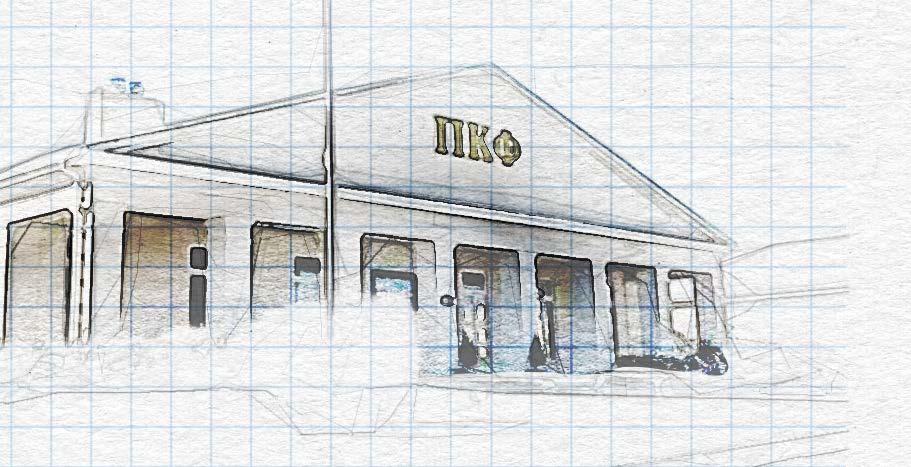
In 2012, Pi Kappa Phi took another bold step toward securing quality homes for its chapters by establishing the Housing Investment Fund at the 53rd Supreme Chapter. This fund was designed to fulfill the Fraternity’s vision of providing every chapter with a solid, local home. Financed by an annual fee from undergraduate chapters, based on membership size, the fund has proven to be transformative. To date, it has allowed Pi Kappa Phi Properties to invest more than $2 million in capital and purchase 16 properties across the country.
In 2018, the fund was renamed in honor of the late Eric J. Almquist, Alpha Omicron (Iowa State), who passed away on February 18, 2018. Almquist, who served as National Secretary and had been a vital part of Pi Kappa Phi’s leadership, was a driving force behind the Housing Investment Fund’s creation. As Past National President Dr. Thomas Sullivan reflected, “Eric embraced his role as a leader, putting service before self, and he improved the world around him with every decision.”
Before joining the National Council in 2014 as Historian, Almquist dedicated eight years of service to Pi Kappa Phi Properties, first as vice president of the Stephen P. DePalma Infrastructure Loan Fund, and later as chairman of the board. Today, his vision for providing students with quality chapter homes lives on.
$2,218,054*
The following donors have been instrumental to the success of our Fraternity through lifetime gifts totaling $100,000 or more to the Pi Kappa Phi Foundation. These donors exemplify the principles of servant leadership and a commitment to lifelong brotherhood.
* denotes Chapter Eternal Italics denotes a new $100,000+ supporter † denotes a donor who has moved to a new $100,000+ supporter category
Robert Bennett, Sr.* Alpha Alpha (Mercer)
Kelley and Joan Bergstrom
Alpha Omicron (Iowa State)
Thomas Berk
Alpha Upsilon (Drexel)
Jim Krucher
Beta Alpha (NJIT)
David Morgan, Sr.
Beta Omicron (Northwestern State)
Pete Petit
Iota (Georgia Tech)
Bruce Rogers Chi (Stetson)
Steve and Penny DePalma Beta Alpha (NJIT)
Jason Dodd Delta Omega (Texas A&M)
Ernest and Joni Johnson Alpha Iota (Auburn)
Dave Shook† Alpha Psi (Indiana)
Allen Woody, III* Xi (Roanoke)
James Alter*
Alpha Mu (Penn State)
John R. Andrews Delta Delta (Truman State)
Bob Austin Alpha Upsilon (Drexel)
Chuck Barnard Delta Delta (Truman State)
Jay Barnwell Delta Lambda (UNC-Charlotte)
Pete Barr Alpha Epsilon (Florida)
Harry Caldwell, Jr. Omicron (Alabama)
Hon. Thomas Carter
Gamma Delta (Memphis)
Jack Casper Alpha Upsilon (Drexel)
Tom Coley Beta Eta (Florida State)
Jim Daley* Alpha Eta (Samford)
Ajay Desai Alpha Omicron (Iowa State)
Ben Griffin, Jr.* Alpha Epsilon (Florida)
Anders and Joanna Hall Mu (Durham)
Eldred Harman* Alpha Omicron (Iowa State)
Frank Havard* Gamma Phi (South Alabama)
Floyd Herum* Alpha Omicron (Iowa State)
Nathan Hightower Omicron (Alabama)
Jim House Alpha Eta (Samford)
Barry Howell Gamma Upsilon (Oklahoma State)
John S. and Peggy L. Kirk Psi (Cornell)
Bob Lane
Alpha Omicron (Iowa State)
David Lane Omega (Purdue)
Tracy Maddux Zeta Theta (Texas-Austin)
Frank Parrish, III Alpha Omicron (Iowa State)
J. Gunnar Schalin Upsilon (Illinois-Urbana-Champaign)
Jim Turk* Xi (Roanoke)
Dudley Woody Xi (Roanoke)
Listed are the members and friends who contributed to the Pi Kappa Phi Foundation in 2025. Donors are listed by chapter with lifetime giving level denoted using the Foundation Donor Key.
* denotes Chapter Eternal
ALPHA (College of Charleston)
Order of the Rose
Glenn McConnell
Council Club
John Hassell
David Jaffee
Richard Pierce
Foundation Club
Gary Catterton
Terry Moore
Greg Padgett
Lamplighter’s Club
Steve Chandler
Otis Engelman
Andrew Jaffee
Andy Westbrook
Executive Director’s Club
Philip Duwel
Harry Freeman
Gus Gustafson
Charley Hamrick
Gold Star Club
Adam Cooper
Christian Jablonski
Marshall Sigmon
Chevron Club
Frank Boineau
Crossed Swords Club
Dennis Jaffee
Richard McDonald
BETA (Presbyterian)
Order of the Bell
Clint and Carolyn Massey
Council Club
Greg Elam
Cliff Goodwin
Foundation Club
Andy Forrest
Eugene Vaughan
Lamplighter’s Club
Tom Stearns
(BETA cont.)
Executive Director’s Club
Bill Cunningham
David Dixon
John Ritter
Richard Stall
Gold Star Club
Walk Jones
Crossed Swords Club
William Baxter
Martin Boyd
Tyler Jones
James Kennedy
GAMMA (California-Berkeley)
Council Club
Steve Ryder
Foundation Club
Robert Whelan
Lamplighter’s Club
Ted Mitchell
Steven Pas
Frank Winton
Executive Director’s Club
Paul Casale
Kurt Fahlman
David Halligan
Marc Wolfsheimer
Gold Star Club
Robert Zeni
Chevron Club
Christian Santiago
Crossed Swords Club
Rafael Martinez
Ryan Panos
SIGMA (South Carolina)
Order of the Rose
Jerry Brewer
Walter Pickens
Order of the Bell
Dan Reynolds
(SIGMA cont.)
Foundation Club
Hays Pickens
Lamplighter’s Club
Bob Gatti
Gold Star Club
Wright Paulk
Stephen Rhodes
EPSILON (Davidson)
Executive Director’s Club
Harold Kernodle
ZETA (Wofford)
Order of the Bell
Mark and Cindy Bundy
Lamplighter’s Club
Jack Kaplan
Executive Director’s Club
Greg Gilbert
Robert McJunkin
Thomas Palmer
William Smethie
Gold Star Club
Ken Bedenbaugh
Jesse Crimm
Clarence Riner
Chevron Club
Sean Holmes
Crossed Swords Club
James Inabinet
Alex Wood
ETA (Emory)
Council Club
John Nix
THETA (Cincinnati)
Executive Director’s Club
Pat Sponsler
IOTA (Georgia Tech)
Council Club
Alan Parrish
Foundation Club
Bob Rowe
John Wilson
Lamplighter’s Club
Bob and Sue DeFurio
Chris Doyle
Mike Jones
Executive Director’s Club
David Baker
Col. Joel David Bonewitz,
USAF
Stewart Carlin
Tom Christian
Dave Cunnold
Monte Nelson
Jason Stein
Gold Star Club
Greg Corcoran
KAPPA (UNC-Chapel Hill)
Order of the Rose
Stuart Hicks
Council Club
W. Keith Rollins
Lamplighter’s Club
George Braun
Alvin Daughtridge
Russell Hadley
Clifton Hux
Jack Redhead
Mark Winston
Executive Director’s Club
Charles Adams
Ben Ball
Peter Berg
Trey Bright
Ryan Ferraioli
Brad Hanover
Bryan Little
Ben Roberts
Jim Wilmott
(KAPPA cont.)
Gold Star Club
Harry Montgomery
LAMBDA (Georgia)
Order of the Bell
McHenry Hamilton
Phil Tappy
Council Club
Chad Powell
Lamplighter’s Club
Jayson Dukes
Mark Harp
Chris Turner
Executive Director’s Club
Phil Allison
Chris Belk
David Black
Tom Jackson
Buck Stoll
Fred Thrower
Gold Star Club
Steve Conway
Chevron Club
Ralph Geronimo
Brian Jungles
Mitchell Phillips
Tom Russell
Chris Savage
Richard Waters
Crossed Swords Club
Jake Jones
Matthew McNeill
Justin Peachey
MU (Durham)
Founders’ Circle
Anders and Joanna Hall
Order of the Bell
Frank T. Wrenn, III
Executive Director’s Club
Gene Atkinson
NU (Nebraska-Lincoln)
Foundation Club
Col. James Stanton Christol, USAF (Ret.)
Jim and Pat Guretzky
Lamplighter’s Club
Warren Hill
Bill Wesslund
Executive Director’s Club
Thomas Miller
Gold Star Club
Ed Bierl
John Stohlmann
XI (Roanoke)
Founders’ Circle
Dudley Woody
Order of the Rose
Steve Esworthy
Council Club
Don Potter
James Stump, Jr.
Foundation Club
Robert Bonney
Paul Caldwell
Joe Donohue
Paul Henkel
Tod Senne
Lamplighter’s Club
Mark Edgell
Rick Milan
Cameron Ogilvie
Randall Overby
Executive Director’s Club
Robert Barber
David Doyle
Richard Flora
Charles Freeman
Jeffrey Hilton
Paul Jenkins
Bill Martin
Fred Schneider
Kevin Sullivan
(Washington & Lee)
(RHO cont.)
Executive
CHI (Stetson)
Star & Lamp Society
Bruce Rogers
Council Club
Gabe Gehret
Lamplighter’s Club
TAU (NC State)
Lamplighter’s Club
and Kathy Evans
Leon Joyner
Executive Director’s Club
Jim Johnson
Mike Leamon
Harry Mashburn Christopher Myers
Andrew Page
Gold Star Club Rob Cates
Chevron Club Cole Flickinger Richard Leigh
Crossed Swords Club Harrison McLamb
UPSILON (Illinois-Urbana-Champaign)
Founders’ Circle J. Gunnar Schalin
Order of the Bell
Wally Wahlfeldt
Foundation Club
Jack Bakker
Lamplighter’s Club
Jim Kutill
Charles Moka
Executive Director’s Club
Gary Behrens
Bob Bogdanoff
Jay Clifton
Skip Fowler
Greg Provencher
John Shustitzky
Chevron Club
Paul Steinway
Crossed Swords Club
David Devinger
(OMEGA
Eddie Culver
Tyler Johansson
Executive Director’s Club
Tom Wrenn
PSI (Cornell)
Founders’ Circle
John S. and Peggy L. Kirk
Council Club
Greg Della Rocca
James Emig
Foundation Club
Michael Piscitelli
Dave Prescott
Alex Sherer
Lamplighter’s Club
Cory Wright
Executive Director’s Club
Gary Fisher
Lawrence Thayer
Gold Star Club
Bob Chatterton
Chevron Club
Robert Winter
OMEGA (Purdue)
Council Club
Rik Hill
Pat Kuhnle
Phil Leslie
Foundation Club
Andy Conlin
John McDonald
Lamplighter’s Club
Jim Berlien
Hugh Flanagan
Brent Grunig
Tom Harzula
Dave Mitzner
Don Porth
Halbert Smith
Robert Wingard
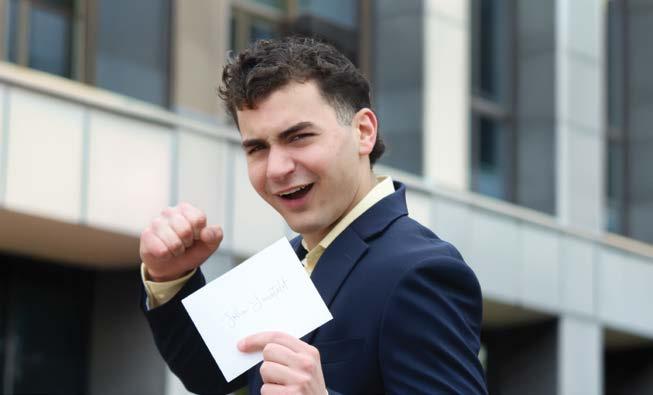
(ALPHA
Crossed
Slesnick
ALPHA ZETA (Oregon State)
Council Club Bob Elfers
Foundation Club Chuck Hartsough
Lamplighter’s Club
Munn
Chevron
ALPHA ETA (Samford)
Founders’
Order
Council
Dwayne
Lamplighter’s
Executive
Crossed
ALPHA THETA (Michigan State)
Foundation Club
Lamplighter’s Club
Brian Connelly
Eivind Kolemainen
Executive
Gold
David Hames Steven Lambouris
Crossed
ALPHA IOTA (Auburn)
Supreme Circle
Council
Foundation
Lamplighter’s
Executive
ALPHA KAPPA (Michigan)
Executive Director’s Club
Jason Robert Prickett
Gold Star Club
Douglas Wayne Mikatarian, USN
ALPHA MU (Penn State)
Lamplighter's Club Dick McKnight*
Gold Star Club Nelson Mattern
Chevron Club Bob Healy
Crossed Swords Club Kyle Heffner
ALPHA XI (St. John’s)
Foundation Club
Jack Molinelli
Executive Director’s Club
Louis Destefano
Bruce Elowsky
Rich Groller
Gerald Holst
Thomas May
Richard Ramge
Gold Star Club
George Siracuse
Chevron Club
Daniel Gross
Crossed Swords Club Frank Deturris
ALPHA OMICRON (Iowa State)
Star & Lamp Society
Kelley and Joan Bergstrom
Founders’ Circle
Bob Lane
Frank Parrish, III
Order of the Rose
Jeremy Galvin
Council Club
John Brockmann
Jeremy Katt
Em Linney
Tom Ruzicka
Brett and Geleen Toresdahl
Foundation Club
Johnny Andrews
Jeremy Dickinson
Jim Moon
Lamplighter’s Club Guy Goodenow
Ben Jones
Terry Sanderson
John Veak
Executive Director’s Club
John Ferguson
David Hancock
Gold Star Club
Mark Stacey
ALPHA RHO (West Virginia)
Council Club
Craig Winkelmann
Foundation Club Victor Folio
Lamplighter’s Club
Tom Begley
Gold Star Club
Jay Marano
Chevron Club
Andy Dunn
Crossed Swords Club
Steve Wollaston
(ALPHA SIGMA cont.)
Foundation Club
Tom Banks
Jon Rymer
Jimmy Van Frank
Executive Director’s Club
Brent Spalding
Gold Star Club
James Campbell
John Nelson
Chevron Club
Charles Ekholm
Mark Guenther
Wayne Orr
Crossed Swords Club
Paul Halkiades
BC Rechter
Andrew Ten Eyck
ALPHA TAU (RPI)
Foundation Club
Hawk Hawkins
Executive Director’s Club
Dave Dropkin
Steve Kaitz
Gold Star Club
Robert Sidelko
Crossed Swords Club
Joey Templin
ALPHA UPSILON (Drexel)
Star & Lamp Society
Thomas Berk
Founders’ Circle
Bob Austin
Jack Casper
Order of the Bell
Barry Campbell
Walt Sheppard
Council Club
Tony Noce
Foundation Club
Jack Buhsmer
Darren Tapp
Bob Thorp
Lamplighter’s Club
Sam Costa
Joseph Deluca
Executive Director’s Club
Philip Earley
Gino Fortunato
Daniel Gormley
Daniel Sonon
Gold Star Club
Walter Fawcett
Walt Hopkin
Austin Meehan
Don Schey
Chevron Club
William Carey
Leo Fitchko
Crossed Swords Club
Charles Carabello
George Mullin
ALPHA PHI (Illinois Tech)
Council Club
Christopher Blanchette
Nathanael Gombis
Martin Kotsch
Foundation Club
Brian Winkelmann
Lamplighter’s Club
Richard Hughes
Paul Wagner
Executive Director’s Club
ALPHA CHI (Miami)
Executive Director’s Club
Michael Jacobs
ALPHA PSI (Indiana)
Supreme Circle
Dave Shook
Order of the Bell
T.J. Sullivan
Council Club
Brent Anderson
Foundation Club
Max Fawley
Rodney Len Gunning
Todd Waldman
G. Scott Louderback
Fred Thursfield
Executive Director’s Club
Jim Halsey
Gold Star Club
Scott Evenbeck
Pete Schrock
Charles Seely
Daniel Walters
Chevron Club
Skip Bailey
Dale Dean
Terry Russell
ALPHA OMEGA (Oregon)
Council Club
Stanley Lynch
Foundation Club
Fred Streimer
Executive Director’s Club
Gilbert Lissy
Crossed Swords Club
Cayleb Clark
BETA ALPHA (NJIT)
Star & Lamp Society
Jim Krucher
Supreme Circle
Steve and Penny DePalma
Order of the Bell
Anthony Castillo
John Lee
Council Club
Rick Pedersen
John Pugliesi
Dave White
Foundation Club
Aivars Krumins
Richard Labinsky
Louis Miceli*
Brandon Sorensen
Don VanHouten
Lamplighter’s Club
Ted Cassera
Richard Comiso
Ed Klebaur
Executive Director’s Club
Nick Adams
John Bernet
Henry Karnas
Don Linske
Francis Wood
Gold Star Club
Christian Beckmann
Russ Chomiak
Anthony Mangone
Bob Mason
Rich Nass
Chevron Club
Jim Brogan
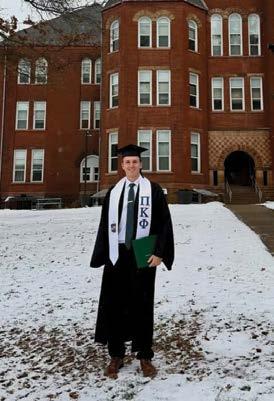
Crossed
ALPHA SIGMA (Tennessee)
Order of the Rose
William Sigmon
Council Club
Al Sewell
Rick Thompson
Gold Star Club
Gregory Kolb
Ken Slepicka
Chevron Club
Kevin Randich
Crossed Swords Club
Branden Wawrzyniak
Steven Camaiore
Bob Morgan
Steven Sawicki
Crossed Swords Club
Raj Bhardwaj
BETA BETA (Florida Southern)
Council Club
Dave Robertson
Executive Director’s Club
$500,000+
SUPREME CIRCLE
$250,000–$499,999 FOUNDERS’ CIRCLE
$100,000–$249,999 ORDER OF THE ROSE
$50,000–$99,999 ORDER OF THE BELL
$25,000–$49,999 COUNCIL CLUB
$10,000–$24,999 FOUNDATION CLUB
$5,000–$9,999
LAMPLIGHTER’S CLUB
$2,500–$4,999
Rex Smyth FOUNDATION DONOR KEY STAR & LAMP SOCIETY
EXECUTIVE DIRECTOR’S CLUB
$1,000–$2,499
GOLD STAR CLUB
$500–$999
CHEVRON CLUB
$250–$499 CROSSED SWORDS CLUB
$1–$249
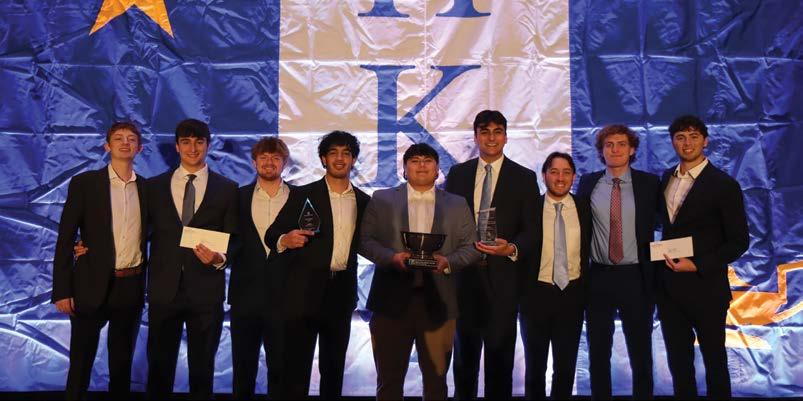
(BETA BETA cont.)
Gold Star Club
Steve Hemman
Jack Trufant
Chevron Club Mike McKinley
BETA GAMMA (Louisville)
Gold Star Club
Jim Koshewa
Chevron Club
Nicholas Battjes
BETA DELTA (Drake)
Order of the Rose
Jim Hornbrook
Lamplighter’s Club
James Rutherford
Executive Director’s Club
Kenneth Piller
Gold Star Club
Mark Crosthwaite
James Labiak
Martin Radtke
Bruce Swanson
Crossed Swords Club
Stephen French
BETA EPSILON (Missouri-Columbia)
Order of the Bell
Jay and Christine Stuckel
Council Club
Andrew McCarthy
Michael Wallace
Foundation Club
Mike Hinds
Executive Director’s Club
David Epperson
John Landwehr
Kenneth Weyand
Chevron Club
Bob Baker
Crossed Swords Club
Ed and Christy Elsea
Gene Twellman
Jack Woodbury
BETA ETA (Florida State)
Founders’ Circle
Tom Coley
(BETA ETA cont.)
Order of the Rose Jeff and Kris Wahlen
Order of the Bell
Eric Wahlen
Council Club
Tom Atwood
Gil Fernandez
Chuck Krblich
Mike Loy
Foundation Club
Buz McCall
Lee Nichols
Executive Director’s Club
Beau De Beaubien
Reg Dickey
John Eaton
Guy Hollingsworth
Steven Louchheim
Chuck MacMillin
Harry Mcintosh
Ian Shapiro
Dave Stoddard
Gold Star Club
Frank Borzen
Ryan Hay
Emilio Sanchez
Chris Willis
Chevron Club
Chuck Wilson
Crossed Swords Club
Dick Morgan
BETA THETA (Arizona)
Order of the Rose
Jake Henderson
BETA IOTA (Toledo)
Order of the Bell
Lance and Dee Talmage
Council Club
Rob Friess
Foundation Club John Eisenmann
Lamplighter’s Club
Chris Barton
Gerald Dunaway
Executive Director’s Club
Gary Johnson
Woody Wodarski
Gold Star Club
Dick Smalley
Chevron Club
Marcus Uchaker
(BETA IOTA cont.)
Crossed Swords Club
Blake Mielcarek
Matt Sutter
BETA KAPPA (Georgia State)
Foundation Club
David DeMarco
Greg Moreland
Executive Director’s Club
Jack Johnson
John Whitley
Gold Star Club
Don Clark
Ed Vaughn
Crossed Swords Club
Richard Gouge
BETA LAMBDA (Tampa)
Foundation Club
Dave Sullivan
Lamplighter’s Club
Gary Cooper
Gold Star Club
David Villari
BETA MU (McNeese State)
Council Club R. B. Smith
Lamplighter’s Club
Ed Potratz
BETA NU (Houston)
Lamplighter’s Club
Jerrod Allen
BETA XI (Central Michigan)
Council Club
Basil Lyberg
Executive Director’s Club
Larry Beale
Mike Czop
Dale DeWaard
Gold Star Club
Mike Schlusler
Chevron Club
Dexter Keller
Crossed Swords Club
Damien Ramsey
BETA OMICRON (Northwestern State)
Star & Lamp Society
David Morgan, Sr.
Council Club
Wes Breeden
Foundation Club
Michael Allain
Lamplighter’s Club
Larry Gracie
Lane Luckie
Jack McCain
Executive Director’s Club
Robert Broadwell
Gold Star Club
Thomas Marlbrough
Monte Robinson
Crossed Swords Club
Stanley Brouillette
Nathan Pearson
BETA PI (Eastern Michigan)
Chevron Club
Robert Schreer
BETA TAU (Valdosta State)
Lamplighter’s Club
Tom Brooks
Chet Mirabal
Executive Director’s Club
Bill Maxwell
Vince Settle
Chevron Club
Michael Raynor
BETA UPSILON (Virginia)
Council Club
John Clifford
Dan Kimball
Foundation Club
Chuck Nesbit
George Shipp
Don Slesnick
Lamplighter’s Club
Rusty Thompson
Executive Director’s Club
Bill Watson
Gold Star Club
Steve Applegate
James Kessack
Tom Minneman
(BETA UPSILON cont.)
Crossed Swords Club
Pearon Lang
BETA PHI (East Carolina)
Executive Director’s Club
Dennis Barbour
Gold Star Club
Charlie Wohlnick
BETA PSI (Tennessee Wesleyan)
Chevron Club
Jeff Garbow
BETA OMEGA (East Tennessee State)
Foundation Club
Bill Mayes
Lamplighter’s Club
Keith Younger
Chevron Club
Skip Campbell
GAMMA ALPHA (West Alabama)
Foundation Club
Seth Jackson
Lamplighter’s Club
Jason Jackson
Harry Shiver
Executive Director’s Club
Brian Jenrette
GAMMA BETA (Old Dominion)
Foundation Club
David Simas
Lamplighter’s Club
Paul Moses
Matthew Parker
Joe Van Cleve
Executive Director’s Club
William Jenkins
Don Midgett
Gold Star Club
Richard Howard
Crossed Swords Club
Laurence Boscaro
GAMMA DELTA (Memphis)
Founders’ Circle
Hon. Thomas Carter
(GAMMA DELTA cont.)
Foundation Club
Terry Benton
Lamplighter’s Club
Herb Blow
Executive Director’s Club
Tom Lynch
James Younger
GAMMA EPSILON (Western Carolina)
Lamplighter’s Club
Larry Callicutt
Marv Cope
Frank Willis
Executive Director’s Club
Tony Perkins
Jerry Shepardson
Crossed Swords Club
David Huskins
GAMMA ZETA (WVU Tech)
Executive Director’s Club
Chuck Hutzler
GAMMA ETA (Athens State)
Chevron Club
Edward Cichorek
GAMMA THETA (UNC-Wilmington)
Executive Director’s Club
Leonard Harris
Denny McCaughan
Dick Powell
Blake Rasnake
GAMMA IOTA (Louisiana State)
Executive Director’s Club
Geoff Beatty
Michael Porche
GAMMA KAPPA (Georgia Southern)
Order of the Bell
Glenn Aspinwall
Foundation Club
James Albers
Joe Odom
Lamplighter’s Club
Thomas Camp
Skip Griffin
Chris Wagner
(GAMMA KAPPA cont.)
Executive Director’s Club
Pat Cates
Lee Davis
Gold Star Club
David Whatley
Brad Wilson
Chevron Club
Daniel Osborne
GAMMA LAMBDA (Missouri S&T)
Foundation Club
Paul Scherrer
Gold Star Club
Bob Bentzinger
GAMMA MU (Belmont Abbey)
Gold Star Club
Bolivar Green
Crossed Swords Club Charlie Grissom
GAMMA NU (LaGrange)
Council Club
Jeff Esola
Foundation Club
Ronnie DeValinger
Mike Fay
Lamplighter’s Club
Mike Rothschild
Ralph Sims
Executive Director’s Club
Ronald Lewis Farr
Chevron Club
Jimmy Edwards
Crossed Swords Club
Timothy Ellis
Drew Williamson
GAMMA XI (Georgia Southwestern)
Lamplighter’s Club
Dave Suppes
Executive Director’s Club
Raymond Baggarly
GAMMA RHO (Lander)
Lamplighter’s Club Jim Lusk
Executive Director’s Club
Don Amick
Jeremy Inabinet
Barry Young
Chevron Club
Steve Harris
GAMMA UPSILON (Oklahoma State)
Council Club
Gilbert Sanders
Lamplighter’s Club
Brian Stanley
Executive Director’s Club
Mark Christman
Mark Neftzger
Cary Rogers
GAMMA PHI (South Alabama)
Lamplighter’s Club Tom Peterson
Executive Director’s Club
Billy Breeden A.J. LeGrone
Gold Star Club Paul Hendrix
Chevron Club
Sean Johnson
GAMMA CHI (Jacksonville)
Executive Director’s Club
John Stephenson
GAMMA OMEGA (Montevallo)
Lamplighter’s Club
Royce Lader
Crossed Swords Club
Randy Harris
Mark Nall
DELTA ALPHA (Virginia Tech)
Council Club
Steve Lewis
Chevron Club
Rett Alexander
Jerr Rosenbaum
DELTA BETA (North Georgia)
Lamplighter’s Club
Joseph Goletz
Charlie May
Don Morris
PJ Rodgers, USA (Ret.)
Executive Director’s Club
Donald DuRant
Vic Eilenfield
Vic Irvin
Gold Star Club
Stephen Fugedy
Jeffrey Teplis
DELTA GAMMA (Nebraska-Omaha)
Gold Star Club
Rick Buschelman
DELTA DELTA (Truman State)
Founders’ Circle
John R. Andrews
Chuck Barnard
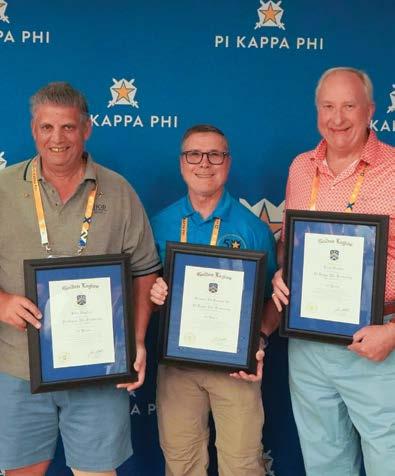
(DELTA DELTA cont.)
Order of the Rose
Jamie Horner
Foundation Club
Chuck Howard
Josh Wansing
Mike Zolezzi
Lamplighter’s Club
Dave Hennings
James Palmer
Steve Schneider
Executive Director’s Club
Darryl Beach
Whitey Holt
Mark Schell
Keith Stilwell
Gold Star Club
Brian Graham
Patrick Lucitt
Pat Miller
Jim Shumake
Chevron Club
Tim Barth
Steve Louer
Stephen Sankpill
Crossed Swords Club
Jack Fry
Giovanni Gradellini
Fred Pletz
Dave Sweeney
Eric Vehige
Chuck Zoeller
DELTA EPSILON (Jacksonville State)
Executive Director’s Club
Dean Buttram
Bob Coley
Josh Robinson
Chevron Club
Bart Chandler
DELTA ZETA (Appalachian State)
Order of the Bell
Art Quickenton
Foundation Club
Pat Danehy
Gregory Honeycutt
Lamplighter’s Club
David Huss
Executive Director’s Club
Steve Miller
Gary Sugg
David Vaughn
Gold Star Club
Marc Gmuca
Bruce Greenland
Chevron Club
Doug Keel
Crossed Swords Club
Will Dennis
Luke Snyder
DELTA ETA (Morehead State)
Lamplighter’s Club
Greg Kring
Executive Director’s Club
Paul Cantrell
Crossed Swords Club
David Clover
DELTA IOTA (Middle Tennessee State)
Council Club
John Peden
Foundation Club
Jon Campbell
Scott Davidson
Executive Director’s Club
Stephen Crass
Andrew Moss
Chevron Club
Bob Hipsher
DELTA KAPPA (UNC-Pembroke)
Lamplighter’s Club
O.L. Canaday
(DELTA KAPPA cont.)
Crossed Swords Club
James Canaday
DELTA LAMBDA (UNC-Charlotte)
Founders’ Circle
Jay Barnwell
Council Club
Bill Jackson
Bo Proctor
Executive Director’s Club
Jamie Best
Robbin Harkey
Michael Haynes
David Higgins
Charlie Marus
Ethan Norman
Gold Star Club
John Deal
Crossed Swords Club
Richard Beekman
Matt Ramsay
Scott Saffer
Drew Secker
DELTA MU (Methodist)
Gold Star Club
Jeffery Deitz
DELTA XI (North Alabama)
Chevron Club
Jeff Suggs
DELTA OMICRON (Nicholls State)
Executive Director’s Club
Jacques Frere
DELTA PI (Wright State)
Foundation Club
Bruce Rockwell
DELTA RHO (University Park)
Foundation Club
Ed Lang
Executive Director’s Club
Bob Graziano
DELTA SIGMA (Bowling Green State)
Foundation Club
John Babel
Lamplighter’s Club
Brian Swab
Executive Director’s Club
Alex Dudek
Kevin Lotosky
DELTA TAU (James Madison)
Lamplighter’s Club
Jerry Keilsohn
Thomas Brooks Lyles, Jr.
Executive Director’s Club
Ken Rand
Crossed Swords Club
Malcolm Perkins
DELTA UPSILON (Pittsburgh)
Executive Director’s Club
Jim Maochi
Kyle Miller
DELTA PHI (Radford)
Executive Director’s Club
John Spannuth
DELTA CHI (Kansas State)
Council Club
Larry Keller
Matthew Keller
Foundation Club
Tim Lindemuth
Lamplighter’s Club
Kevin Larson
(DELTA CHI cont.)
Executive Director’s Club
Dylan McKenzie
Kerry Skelton
Gold Star Club
Dale Bushyhead
Steve Hill
Chevron Club Carey Sudduth
DELTA PSI (Texas-Arlington)
Order of the Rose
Mark Jacobs
Council Club
Billy Jacobs
Foundation Club
Russ Faulkner
Executive Director’s Club
Bill Holland Kevin Kocian
Crossed Swords Club
Patrick Conway
Seth Ressl
DELTA OMEGA (Texas A&M)
Order of the Rose
Tom Sullivan
Foundation Club
Abe Bush
Lamplighter’s Club
David Guerra Doug Mosel
Executive Director’s Club John Raggio
EPSILON ALPHA (Elon)
Council Club
Christian Wiggins
Foundation Club
Trent Gilbert
Chase Rumley
Gold Star Club
Danny Hart
Chevron Club
Ben Seay
EPSILON BETA (Grand Valley State)
Chevron Club
Rodney Killips
EPSILON GAMMA (Longwood)
Lamplighter’s Club Chauncey Sisco
Executive Director’s Club
Dale Rankin
Gold Star Club
Justin Hale
EPSILON DELTA (Auburn-Montgomery)
Lamplighter’s Club
David Smith
EPSILON EPSILON (Virginia-Wise)
Lamplighter’s Club
Chad Horvat
James Trullender
EPSILON ETA (Winthrop)
Executive Director’s Club
Colin Frazier
Jeffrey Mahoney
Gold Star Club
Alex Salemme
EPSILON THETA (Seton Hall)
Lamplighter’s Club
Len DePalma
Gold Star Club
Trip Veit
$250,000–$499,999 FOUNDERS’ CIRCLE
$100,000–$249,999
$50,000–$99,999
$25,000–$49,999
$2,500–$4,999
$1,000–$2,499
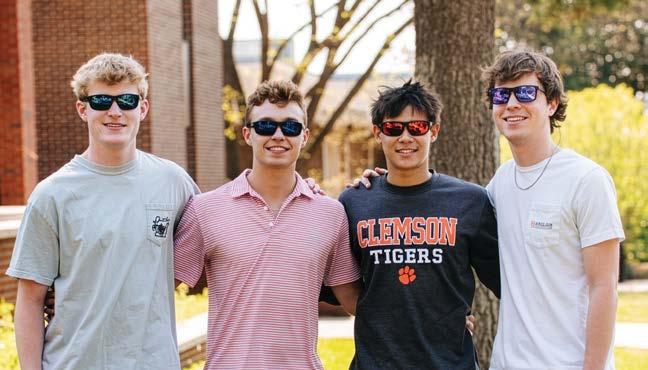
(EPSILON THETA cont.)
Crossed Swords Club Jake Koehler
EPSILON IOTA (UNC-Greensboro)
Lamplighter’s Club Jim Shaw
Crossed Swords Club
Sam Steele
EPSILON KAPPA (Southern Polytechnic State)
Council Club Mike Hubsky
Foundation Club David Nelson
Executive Director’s Club
John Diamond
Crossed Swords Club Ken Williams
EPSILON LAMBDA (South Carolina Upstate)
Gold Star Club
Taft Matney
EPSILON MU (Bradley)
Foundation Club Christopher Assise
Lamplighter’s Club
James Sapp
Executive Director’s Club
Hector Martinez
Gold Star Club
Greg Evans
EPSILON NU (Cal State-Sacramento)
Foundation Club Todd Rehfuss
EPSILON OMICRON (Villanova)
Order of the Bell
Joe Brady
Chevron Club
Jeffrey Pasquerella
EPSILON RHO (Lenoir-Rhyne)
Executive Director’s Club Christopher Felts
EPSILON SIGMA (Christian Brothers)
Chevron Club Robert Werle
EPSILON TAU (St. Joseph’s)
Executive Director’s Club Hon. Robert F. Powelson
Chevron Club Santo Donia
EPSILON PHI (Alabama-Birmingham)
Council Club Pat Austin
Crossed Swords Club
Jeff Rodgers
EPSILON PSI (Slippery Rock)
Council Club Greg Moffett
Foundation Club Jerritt Park
Lamplighter’s Club Andrew Hartwell
Gold Star Club Kenneth Goss Scott Pilotti
EPSILON OMEGA (Texas Tech)
Foundation Club Gregg Turner Bob Welsh
Lamplighter’s Club Nick Turner
Executive Director’s Club Eddy Finta
ZETA BETA (California-San Diego)
Crossed Swords Club JP Freire Trevor Ryan
ZETA GAMMA (North Dakota)
Council Club Mark Hobson
Foundation Club Chris Johnson Steward Sandstrom
(ZETA GAMMA cont.)
Executive Director’s Club Erik Granstrom
Gold Star Club David Kirkland
Crossed Swords Club Todd Chrzanowski
ZETA DELTA (Shippensburg)
Lamplighter’s Club Steven Merkel
ZETA EPSILON (George Mason)
Order of the Bell Alan and Molly Duesterhaus
Executive Director’s Club Jeff Armstrong
ZETA ZETA (North Florida)
Lamplighter’s Club Mike Carter
ZETA ETA (South Florida)
Chevron Club Yusuf Fattah
ZETA THETA (Texas-Austin)
Founders’ Circle Tracy Maddux
ZETA IOTA (Indiana-Pennsylvania)
Executive Director’s Club Mike Bender
ZETA KAPPA (Stockton)
Gold Star Club Michael Bowblis
ZETA ALPHA (Clemson)
Council Club
Scott Gasparini Frank Yarborough
Gold Star Club
Eric Peterson Matt Winter
ZETA LAMBDA (Cal State-Chico)
Order of the Rose Daniel Hitzke
Executive Director’s Club Ryan McLaughlin
ZETA NU (West Chester)
Chevron Club
John Twohig
ZETA XI (Averett)
Executive Director’s Club
Bobby Perkins David Thomas
ZETA PI (Marshall)
Lamplighter’s Club Chris Conley
Executive Director’s Club
Brian Goldstein
Chevron Club
Matthew Nguyen
ZETA RHO (Cal State-Fullerton)
Foundation Club
Vic Valencia
Executive Director’s Club
Ross McCollum
ZETA PHI (Colorado State)
Council Club
Corey Dillon
Executive Director’s Club
Mark Torrez
ZETA CHI (Albright)
Lamplighter’s Club Matthew Osorio
ZETA OMEGA (Towson)
Gold Star Club
Chris Grant
ETA ALPHA (Concord)
Foundation Club
Christopher McGown
(ETA ALPHA cont.)
Executive Director’s Club
Mike Spain
ETA BETA (Indiana State)
Executive Director’s Club
Eric Fisher
ETA GAMMA (Colorado)
Executive Director’s Club
Mark Parrish
Jason Pickel
Gold Star Club Mark Sumrall
ETA DELTA (Kennesaw State)
Foundation Club Brian Barnett
Gold Star Club Randall Coan
Crossed Swords Club Kevin Mason
ETA EPSILON (Maryland-College Park)
Lamplighter’s Club Ross Knoblauch
ETA THETA (San Francisco)
Council Club Cosmo Taormina
Gold Star Club Larry Wong
Chevron Club Bob Pahilanga
ETA IOTA (Christopher Newport)
Council Club Chris Conner
Foundation Club Tim Campbell
ETA LAMBDA (SUNY-Brockport)
Foundation Club
Scott Atkinson
Crossed Swords Club Peter Kowalski
ETA MU (Wingate)
Executive Director’s Club
Robert Erb
Gold Star Club
Dickie Christy
Crossed Swords Club
Gavin Pierce
ETA OMICRON (San Francisco State)
Foundation Club
John Lowry
Crossed Swords Club
Cedric Cheng Brent Federico
ETA PI (Coastal Carolina)
Foundation Club Matt Zellars
Lamplighter’s Club
Dave Myroup
Gold Star Club
Zach Beals
ETA RHO (Texas State)
Council Club Andrae L. Turner
Lamplighter’s Club Nathan McDaniel
Crossed Swords Club
Chris Fischer
ETA SIGMA (California-Los Angeles)
Order of the Bell
Todd Sargent
Crossed Swords Club Narbeh Mnasians
ETA UPSILON (Miami-Ohio)
Lamplighter’s Club
Mike Kudravetz
Ryan Lugabihl
Beau Samples
Crossed Swords Club Nick Ballinger
ETA PHI (Maryland-Baltimore County)
Foundation Club
Matt Garono
ETA CHI (Texas Christian)
Foundation Club Kenny Oubre
Lamplighter’s Club
Ben Johns Ben Roman
Executive Director’s Club Mark Curry
ETA OMEGA (New Mexico State)
Foundation Club Ruben Talavera
THETA ALPHA (Southern Mississippi)
Foundation Club Brandon J. Belote
Lamplighter’s Club Chris Huffman
Executive Director’s Club Bradley Charlesworth
THETA BETA (West Georgia)
Executive Director’s Club David Condon
THETA DELTA (Florida International)
Foundation Club Phillip Lloyd Hamilton
THETA EPSILON (Kansas)
Executive Director’s Club Brian Rock
THETA ZETA (George Washington)
Executive Director’s Club
Mike DiSabatino Sean Hallisey
Crossed Swords Club Curt Sonnet
THETA ETA (American)
Council Club Justin Angotti
Lamplighter’s Club Carlos Ramirez
Chevron Club
Isaiah Headen
THETA THETA (Iowa)
Order of the Bell Greg Buehner
Lamplighter’s Club Cody Gremore
THETA LAMBDA (Missouri State)
Foundation Club Curt Herzog
THETA MU (Massachusetts-Amherst)
Council Club
Joe Piedrafite
Chevron Club Nick Julian
THETA SIGMA (Cal State-Long Beach)
Foundation Club Andrew Carnes
Executive Director’s Club Garrett Nyberg
THETA TAU (High Point)
Lamplighter’s Club Sam Martorella
(THETA TAU cont.)
Executive Director’s Club Andrew Realon
Chevron Club Adam Hoffman
THETA PHI (Louisiana Tech)
Executive Director’s Club Parker Begale
THETA PSI (RIT)
Lamplighter’s Club Michael McCall
Executive Director’s Club Jeffrey Flagg
IOTA ETA (Embry-Riddle)
Crossed Swords Club Shahan Ahmed
IOTA THETA (Tennessee Tech)
Chevron Club Bryson Kelpe
Crossed Swords Club Samuel Purdon
IOTA IOTA (Cal Poly-Pomona)
Crossed Swords Club Izaiah Huerta
IOTA XI (Texas-Dallas)
Crossed Swords Club Andrew Rajan
IOTA OMICRON (Iona)
Foundation Club Cameron Woods
Lamplighter’s Club Robb Olivieri
Gold Star Club
Tommy Severin
Austin Stellato
Crossed Swords Club Matt Shearin
IOTA RHO (Western Illinois)
Crossed Swords Club
Dakotah Baker
Marc Ramirez
IOTA TAU (Rutgers)
Gold Star Club Andrew Castillo
Crossed Swords Club
Gareth Patterson
IOTA PHI (Loyola-New Orleans)
Crossed Swords Club
Jaime Jimenez
Ryan Louis Kramer
IOTA PSI (Boise State)
Gold Star Club Cavin Villarreal
KAPPA ALPHA (Case Western Reserve)
Crossed Swords Club Noah Boksansky
KAPPA NU (Sonoma State)
Crossed Swords Club Zachary Gillott
LAMBDA IOTA (Vermont)
Crossed Swords Club
Michael Tomas
KAPPA OMEGA (Utah)
Crossed Swords Club
Nolan Carpenter FRIENDS OF THE FRATERNITY
Council Club
Janet L. Esworthy
Shirley Hardee
Carol Harper
Lamplighter’s Club
Todd Shelton
Rachel Westra
Executive Director’s Club
Cason Brewer
Kevin Dodson
Mary Ebert
Judith Johnson
Claire Stuckel Levinson
Andrew and Mei Moy
Kyle Phillips, Chi Psi Fraternity
Becky Smith
Taylor Stamp
Lois Taylor
Gold Star Club
Justin Buck, Pi Kappa Alpha
Fraternity
Rudolf Hoellrich
Holmes Murphy
Lisa Janco
Robert Pailes
Dave Schopler
Michele Williams
Chevron Club
Scott Alfele
Chris Barr
James Brady
Jimmy Dockal
Delta Tau Delta Fraternity
Martha Eismont
Seth Elliott
Jessica Faria
Farmhouse Foundation
Maria Foing
Stephen Gattoni
Tiffany Hagbeg
George and Karen Harsh, III
Susanne Johnson
Jerry and Toni Kendrick
Leigh Kohrs
Francis L Wootton
Marshall and Melissa Welch
Peyton Merrill
Moon Mills
Joseph Morris
(FRIENDS OF THE FRATERNITY cont.)
Leslie Morris
Lori Orgeck
Pat Pappas
Cecile Pestano
Natalie Pickup
John Poulopoulos
Jason Powell
Karen Starkey
James Syar
Theta Chi Fraternity
Amelia Tosti
Maureen Walker
Mindy Welch
Carl and Vickie White
Jane Worley
Joe Wyatt
Crossed Swords Club
Jeff Adkins
Reagan Allen
Kasi Arner
Curtis Baird
Spencer Baker
Michele-Lee Barasso
Gina Bell
Brandy Berrymanbone
Addame Bookmiller
Matt Bouma
Bill Braman
Melissa Breaux
Chad Broce
Katherine G. Broce
Asha Brock
Chad Brooks
Rosy Brophy
John Buck
Christopher Bush
Danielle Cabrera
Heather Callaham
Lauren Carman
Jim Carson
Chris Clavey
Dave Cleveland
Wendy Cooper
Leah Craig
Joseph Czarnecki
Presley Dakoff
Matt Daues
Ilana Davis
Nicole Demetrescu
Jeremy and Sonia Deveau
Emily DiPasquale
Paul Doerger
Scott Ferris
Cheri Figueroa
Leah Finn
DaNell Fischer
Sandra Fisher
Mary Flatt
(FRIENDS OF THE
$250,000–$499,999
$50,000–$99,999
$10,000–$24,999
$5,000–$9,999 LAMPLIGHTER’S CLUB
$2,500–$4,999
$1,000–$2,499
National President’s Circle recognizes current students who have made a gift of $19.04 or more to the Pi Kappa Phi Foundation. These gifts go toward areas of greatest need and support student members through scholarships and educational programs.
SIGMA (South Carolina)
Finian Godfrey
AJ Rollo
KAPPA (UNC-Chapel Hill) Andrew Davis
ALPHA GAMMA (Oklahoma)
Michael Granato
ALPHA EPSILON (Florida)
Conor Finnegan
ALPHA RHO (West Virginia) Anson Wright
ALPHA TAU (Rensselaer Polytechnic)
Austin Porter
ALPHA UPSILON (Drexel) Michael Mastrangelo
ALPHA PHI (Illinois Tech)
Carson Floyd
ALPHA OMEGA (Oregon) Cayleb Clark
BETA ALPHA (NJIT)
Nicholas Bartletta Raj Bhardwaj
BETA GAMMA (Louisville) Blake Orr
BETA KAPPA (Georgia State) Talmage Lee
GAMMA PHI (South Alabama) Walker Bodiford
DELTA LAMBDA (UNC-Charlotte) Scott Saffer
DELTA TAU (James Madison) Jacob Wissot
DELTA PSI (Texas-Arlington)
Elijah Diaz
EPSILON IOTA (UNC-Greensboro)
Sam Steele
ZETA BETA (California-San Diego)
JP Freire
Trevor Ryan
ZETA THETA (Texas-Austin)
Dylan Cochran
Daniel Lei
ZETA CHI (Albright) Max Pacentrilli
ETA MU (Wingate)
Matt Dooley Gavin Pierce
ETA TAU (Kentucky) Henry Clan Declan Hays
ETA PSI (Central Florida) Joshua Swanson
THETA XI (Arizona State) Lukas Gunther
IOTA BETA (Texas-Austin) Ryan Zahedivash
IOTA ETA (Embry-Riddle) Shahan Ahmed
IOTA THETA (Tennessee Tech) Sam Purdon
IOTA IOTA (Cal Poly-Pomona) Jack Abeid
Izaiah Huerta Luke McGinley Josh Smay
Ian Walsh
IOTA NU (Mississippi State) Zach Weisel
IOTA XI (Texas-Dallas) Andrew Rajan
IOTA PSI (Boise State) Joe Beard
KAPPA THETA (San Diego) Parker Newlin
KAPPA LAMBDA (Wisconsin-Madison) Ryan West
KAPPA XI (DePaul) Ryan Emmick
KAPPA SIGMA (Colorado-Colorado Springs) Asher Early
KAPPA PHI (Loyola-Chicago) Steven Pappas
KAPPA OMEGA (Utah) James Syar
LAMBDA ALPHA (Belmont) Austin Johnson

GIVE ONLINE
VISIT DONATE.PIKAPP.ORG TO MAKE YOUR ONE-TIME OR RECURRING MONTHLY GIFT.
GIVE BY PHONE
CALL (980) 318-5384 TO MAKE YOUR GIFT TODAY.
IRA
IF YOU ARE AT LEAST 70½ YEARS OF AGE, YOU CAN MAKE A TAX-FREE GIFT FROM YOUR TRADITIONAL INDIVIDUAL RETIREMENT ACCOUNT THROUGH A QUALIFIED CHARITABLE DISTRIBUTION.
GIVE BY MAIL
STOCK SEND A CHECK OR MONEY ORDER MADE OUT TO THE PI KAPPA PHI FOUNDATION 3701 ARCO CORPORATE DRIVE, SUITE 500 CHARLOTTE, NC 28273
INFORM YOUR BROKER IF YOU WISH TO GIFT STOCK TO THE PI KAPPA PHI FOUNDATION.
CONTACT YOUR FINANCIAL ADVISOR IF YOU WISH TO MAKE A GIFT.
BEQUESTS, TRUSTS, LIFE INSURANCE POLICIES OR OTHER DEFERRED GIFT INSTRUMENTS.
The Foundation’s EIN is 46-0975567. If you would like more information or are interested in discussing your charitable giving plans, please contact Pi Kappa Phi Foundation President Dr. Tom Sullivan at tsullivan@pikapp.org or (980) 318-5366.
The Kroeg Society recognizes brothers and friends who invest in the success of Pi Kappa Phi through unrestricted annual gifts totaling $1,000 or more each year to the leadership fund.
ALPHA (College of Charleston)
Otis Engelman
Richard Pierce
BETA (Presbyterian)
Andy Forrest
Cliff Goodwin
Eugene Vaughan
GAMMA (California-Berkeley)
Robert Whelan
SIGMA (South Carolina)
Walter Pickens, Jr.
Dan Reynolds
ETA (Emory)
John Nix
IOTA (Georgia Tech)
Alan Parrish
John Wilson
KAPPA (UNC-Chapel Hill)
Alvin Daughtridge
Stuart Hicks
LAMBDA (Georgia)
Phil Tappy
MU (Durham)
Frank T. Wrenn, III
XI (Roanoke)
Steve Esworthy
Paul Henkel
Dudley Woody
OMICRON (Alabama)
Lonnie Strickland, III
RHO (Washington & Lee)
Jock Wallace
UPSILON (Illinois-Urbana-Champaign)
Jay Clifton
J. Gunnar Schalin
Wally Wahlfeldt
CHI (Stetson)
Gabe Gehret
Bruce Rogers
PSI (Cornell)
James Emig
John S. and Peggy L. Kirk
OMEGA (Purdue)
Andy Conlin
Rik Hill
ALPHA ALPHA (Mercer)
Ben Bush
ALPHA GAMMA (Oklahoma)
Jay Morris
Trey Tipton
ALPHA DELTA (Washington)
Bob Bux
ALPHA EPSILON (Florida)
Pete Barr
Bob Halcrow
Tim Hancock
Mark Timmes
ALPHA ZETA (Oregon State)
Bob Elfers
Fred Raw
ALPHA ETA (Samford)
Warren Hilson
Jim House
Jack McDonald
Dwayne Todd
ALPHA THETA (Michigan State)
Paul Long
ALPHA IOTA (Auburn)
Ernest and Joni Johnson
Allan Reynolds
ALPHA OMICRON (Iowa State)
John Brockmann
Jeremy Galvin
Jeremy Katt
ALPHA SIGMA (Tennessee)
Jon Rymer
ALPHA UPSILON (Drexel)
Bob Austin
Thomas Berk
Barry Campbell
Tony Noce
Bob Thorp
ALPHA PSI (Indiana)
Brent Anderson
Dave Shook
Todd Waldman
ALPHA OMEGA (Oregon)
Stanley Lynch
Fred Streimer
BETA ALPHA (NJIT)
Steve and Penny DePalma
Jim Krucher
Louis Miceli
Rick Pedersen
BETA DELTA (Drake)
Jim Hornbrook
BETA EPSILON (Missouri-Columbia)
Michael Wallace
BETA ETA (Florida State)
Gil Fernandez
Chuck Krblich
Mike Loy
Lee Nichols
Eric Wahlen
BETA THETA (Arizona)
Jake Henderson
BETA IOTA (Toledo)
John Eisenmann
BETA KAPPA (Georgia State)
Greg Moreland
BETA OMICRON (Northwestern State)
Wes Breeden
BETA UPSILON (Virginia)
John Clifford
GAMMA DELTA (Memphis) Hon. Thomas Carter
GAMMA KAPPA (Georgia Southern)
James Albers
Joe Odom
GAMMA NU (LaGrange)
Mike Fay
GAMMA PHI (South Alabama) A.J. LeGrone
DELTA ALPHA (Virginia Tech)
Steve Lewis
DELTA DELTA (Truman State)
John R. Andrews
Chuck Barnard
DELTA ZETA (Appalachian State) Gregory Honeycutt
Art Quickenton
DELTA LAMBDA (UNC-Charlotte)
Jay Barnwell
Ethan Norman
DELTA TAU (James Madison) Thomas Lyles, Jr.
DELTA CHI (Kansas State) Matthew Keller Larry Keller
DELTA PSI (Texas-Arlington) Russ Faulkner
Bill Holland
Mark Jacobs
DELTA OMEGA (Texas A&M) Tom Sullivan
EPSILON KAPPA (Southern Polytechnic State) Mike Hubsky
EPSILON OMICRON (Villanova)
Joe Brady
EPSILON RHO (Lenoir-Rhyne) Christopher Felts
ZETA EPSILON (George Mason) Jeff Armstrong
ZETA THETA (Texas-Austin) Tracy Maddux
ZETA ALPHA (Clemson) Frank Yarborough
ZETA LAMBDA (Cal State-Chico) Daniel Hitzke
Ryan McLaughlin
ZETA PHI (Colorado State) Corey Dillon
ETA GAMMA (Colorado) Mark Parrish
ETA THETA (San Francisco) Cosmo Taormina
ETA IOTA (Christopher Newport) Chris Conner
ETA RHO (Texas State) Andrae L. Turner
ETA SIGMA (California-Los Angeles) Todd Sargent
THETA ALPHA (Southern Mississippi) Chris Huffman
THETA THETA (Iowa) Greg Buehner
THETA LAMBDA (Missouri State) Curt Herzog
THETA MU (Massachusetts-Amherst) Joe Piedrafite
FRIENDS OF THE FRATERNITY Cason Brewer Kevin Dodson
Mary Ebert
Janet L. Esworthy
Carol Harper
Judith A. Johnson
Andrew and Mei Moy
Kyle Phillips, Chi Psi Fraternity
Members make an annual gift to the Pi Kappa Phi Foundation based on the number of years they have been an initiated brother. Eligibility for the Nu Phi Society is restricted to those brothers who have attended five Supreme Chapters, been inducted into the Pi Kappa Phi Hall of Fame or named Mr. Pi Kappa Phi. This list shows who fulfilled their Nu Phi obligations and remained current in 2025. * denotes Chapter Eternal
ALPHA (College of Charleston)
John Hassell
Richard Pierce
Marshall Sigmon
GAMMA (California-Berkeley)
Steve Ryder
SIGMA (South Carolina)
Jerry Brewer
Hays Pickens
Walter Pickens
ZETA (Wofford)
Mark Bundy
IOTA (Georgia Tech)
Jason Stein
KAPPA (UNC-Chapel Hill)
Stuart Hicks
MU (Durham)
Anders Hall
Frank Wrenn
NU
(Nebraska-Lincoln)
Jim Guretzky
XI (Roanoke)
Steve Esworthy
Durward Owen*
Jim Stump
Dudley Woody
OMICRON (Alabama)
David Adams
Nathan Hightower
Lonnie Strickland
UPSILON (Illinois-Urbana-Champaign)
Gunnar Schalin
Wally Wahlfeldt
CHI (Stetson)
Gabe Gehret
Tyler Johansson
Bruce Rogers
PSI (Cornell)
John Kirk
Nick Linder
OMEGA (Purdue)
Brent Grunig
Tom Harzula
Phil Leslie
Greg Linder
ALPHA ALPHA (Mercer)
Ben Bush
Phillip Jackson
Brad Montgomery
ALPHA EPSILON (Florida)
Bob Halcrow
Tim Hancock
Bert Luer
Mark Timmes
ALPHA ZETA (Oregon State)
David Vawter
ALPHA ETA (Samford)
Dave Corey
Jack McDonald
James Smith
Dwayne Todd
ALPHA THETA (Michigan State)
Matt Shaheen
ALPHA IOTA (Auburn)
Scott Finney
Ralph Foster
Tommy Hartwell
Ernest Johnson
ALPHA OMICRON (Iowa State)
Johnny Andrews
Kelley Bergstrom
Jeremy Galvin
Bob Lane
Emerson Linney
Brett Toresdahl
ALPHA RHO (West Virginia)
Tom Begley
ALPHA SIGMA (Tennessee)
William Sigmon
ALPHA UPSILON (Drexel)
Rick Berk
Tony Noce
Bob Thorp
ALPHA PHI (Illinois Tech)
Christopher Blanchette
Nat Gombis
Brian Winkelmann
ALPHA PSI (Indiana)
Max Fawley
Dave Shook
T.J. Sullivan
Todd Waldman
BETA ALPHA (NJIT)
Christian Beckmann
Tony Castillo
Steve DePalma
Jim Krucher
John Lee
John Pugliesi
Brandon Sorenson
Dave White
BETA EPSILON (Missouri-Columbia)
Mike Hinds
Andrew McCarthy
Jay Stuckel
BETA ETA (Florida State)
Tom Atwood
Tom Coley
Mike Loy
Lee Nichols
Jeff Wahlen
BETA THETA (Arizona)
Jake Henderson
BETA IOTA (Toledo)
Gary Johnson
Lance Talmage
Mark Urrutia
BETA KAPPA (Georgia State)
David DeMarco
BETA MU (McNeese State) R.B. Smith
BETA NU (Houston)
Jerrod Allen
David Dalton

BETA XI (Central Michigan)
Basil Lyberg
BETA OMICRON (Northwestern State)
Wes Breeden
David Morgan, Sr.
BETA TAU (Valdosta State)
Chet Mirabal
GAMMA ALPHA (West Alabama)
Jason Jackson
Seth Jackson
GAMMA BETA (Old Dominion)
David Simas
GAMMA DELTA (Memphis) Hon. Tom Carter
GAMMA KAPPA (Georgia Southern)
Glenn Aspinwall
GAMMA NU (LaGrange)
Jeff Esola
GAMMA RHO (Lander)
Jeremy Inabinet
DELTA DELTA (Truman State)
John Andrews
Chuck Barnard
Chuck Howard
Steve Schneider
Josh Wansing
Mike Zolezzi
DELTA ZETA (Appalachian State)
Art Quickenton
DELTA IOTA (Middle Tennessee)
Jon Campbell
Scott Davidson
John Peden
DELTA LAMBDA (UNC-Charlotte)
Bill Jackson
Bo Proctor
DELTA SIGMA (Bowling Green State)
Jim Karlovec
DELTA CHI (Kansas State)
Larry Keller
Tim Lindemuth
Kerry Skelton
DELTA PSI (Texas-Arlington)
Russ Faulkner
Mark Jacobs
Kevin Kocian
DELTA OMEGA (Texas A&M)
Tom Sullivan
EPSILON ALPHA (Elon)
Chase Rumley
Christian Wiggins
EPSILON EPSILON (Virginia-Wise)
Chad Horvat
James Trullender
EPSILON LAMBDA (South Carolina Upstate) Walker Brewer
EPSILON OMICRON (Villanova)
Joe Brady
EPSILON PSI (Slippery Rock)
Andrew Hartwell
Greg Moffett Jerritt Park
EPSILON OMEGA (Texas Tech)
Bob Welsh
ZETA EPSILON (George Mason)
Alan Duesterhaus
ZETA ZETA (North Florida)
Mike Carter
ZETA THETA (Texas-Austin)
Tracy Maddux
ZETA ALPHA (Clemson)
John Bradford
Scott Gasparini
ZETA LAMBDA (Cal State-Chico)
Daniel Hitzke
ZETA RHO (Cal State-Fullerton)
Vic Valencia
ZETA PHI (Colorado State)
Corey Dillon
Mark Torrez
ZETA OMEGA (Towson)
Chris Grant
ETA DELTA (Kennesaw State)
Brian Barnett
ETA ZETA (Queens-Charlotte)
Scott Thomas
ETA IOTA (Christopher Newport)
Chris Conner
ETA PI (Coastal Carolina)
Dave Myroup Matt Zellars
ETA RHO (Texas State) Andrae Turner
ETA SIGMA (California-Los Angeles) Todd Sargent
ETA PHI (Maryland-Baltimore County) Matt Garono
ETA CHI (Texas Christian)
Ben Johns
Kenny Oubre
Ben Roman
ETA OMEGA (New Mexico State) Ruben Talavera
THETA ALPHA (Southern Mississippi)
Brandon Belote
Bradley Charlesworth
THETA DELTA (Florida International)
Phillip Lloyd Hamilton
THETA THETA (Iowa) Greg Buehner
THETA LAMBDA (Missouri State) Curt Herzog
THETA TAU (High Point)
Sam Martorella
Andrew Realon
THETA PHI (Louisiana Tech)
Parker Begale
THETA PSI (RIT)
Jeffrey Flagg
IOTA OMICRON (Iona) Cam Woods
The Gateway Society recognizes individuals who include the Pi Kappa Phi Foundation in their estate plans.
* denotes Chapter Eternal and italics denotes new membership in the Gateway Society. While saddened by the loss of any brother, we are humbled and grateful to have been remembered by some alumni in their estate plans, unbeknownst to us. We recognize their generosity through posthumous membership in the Gateway Society by denoting them with an * and in italics.
ALPHA (College of Charleston)
Daniel and Leslie Barry
Julius Burges*
Andrew Jaffee
David Jaffee
Johnny Moye
Richard Pierce
Jason Schall
George Sheetz*
Chip Voorneveld
GAMMA (California-Berkeley)
Gary Schwartz
Robert Whelan
ZETA (Wofford)
Jesse Crimm
IOTA (Georgia Tech)
Bob Rowe
KAPPA
(UNC-Chapel Hill)
Stuart Hicks
LAMBDA (Georgia)
J. Rodney Harris*
James Lester*
Luke Lester
Phil Tappy
David Tidmore
MU (Durham)
Anders and Joanna Hall
Frank T. Wrenn, III
NU (Nebraska-Lincoln)
George Driver*
XI (Roanoke)
Ed Corson*
Steve Esworthy
Whit Gravely
Timothy Hayes
Durward Owen*
Tod Senne
Allen Woody*
Dudley Woody
OMICRON (Alabama)
George Greene
Lonnie Strickland, III
Conner Vlerebome
RHO (Washington & Lee)
Dick Anderson*
Dutch Waldbauer
UPSILON (Illinois-Urbana-Champaign)
Dick Bangert*
Gary and Tish Boltinghouse
Mike Lowery
Ladd Prucha*
Bob Saccomano*
J. Gunnar Schalin
Phil Whipple
CHI (Stetson)
Gabe Gehret
Bruce Rogers
Michael Sweeney
PSI (Cornell)
George Bullis
OMEGA (Purdue)
Jack Berlien*
Dave Johnson
John Lovell
John McDonald
ALPHA ALPHA (Mercer)
Jamey Porter
ALPHA GAMMA (Oklahoma)
Tripp Hall
Jay Morris
ALPHA DELTA (Washington)
John Cragg
Stan Gratis
Walter Jones*
George Morford*
Joshua Siegel
ALPHA EPSILON (Florida)
Mike O’Donnell
Mark Timmes
ALPHA ZETA (Oregon State)
Marck Wroble
ALPHA ETA (Samford)
Jim Daley*
Jerry Matthews
Jack McDonald
Dwayne Todd
ALPHA THETA (Michigan State)
Kim Jepson*
George Pardee*
ALPHA IOTA (Auburn)
Charles Blackledge
Ernest and Joni Johnson
ALPHA OMICRON (Iowa State)
Chuck Cummings
Jeremy Galvin
Frank Parrish
ALPHA SIGMA (Tennessee) Ira Katzman
ALPHA TAU (RPI)
James Adler
William Bruder*
ALPHA UPSILON (Drexel)
Thomas Berk
Martin Burrows*
Richard Mensch
Darren Tapp
ALPHA PHI (Illinois Tech)
Christopher Blanchette
Ken Peterson
Branden Wawrzyniak
Brian Winkelmann
ALPHA PSI (Indiana)
Brett Baltz
Jim Halsey
Dave Shook
T.J. Sullivan
ALPHA OMEGA (Oregon)
Dade Wright
BETA ALPHA (NJIT)
Steve and Penny DePalma
Tom Graham
Jim Krucher
Joseph Manfredi
Louis Miceli*
Rich and Theresa Nass
John Pugliesi
Brandon Sorensen
BETA BETA (Florida Southern)
Charles Meyer*
Ted Scharfenstein*
Jeff Wallace
Robert Weitzner
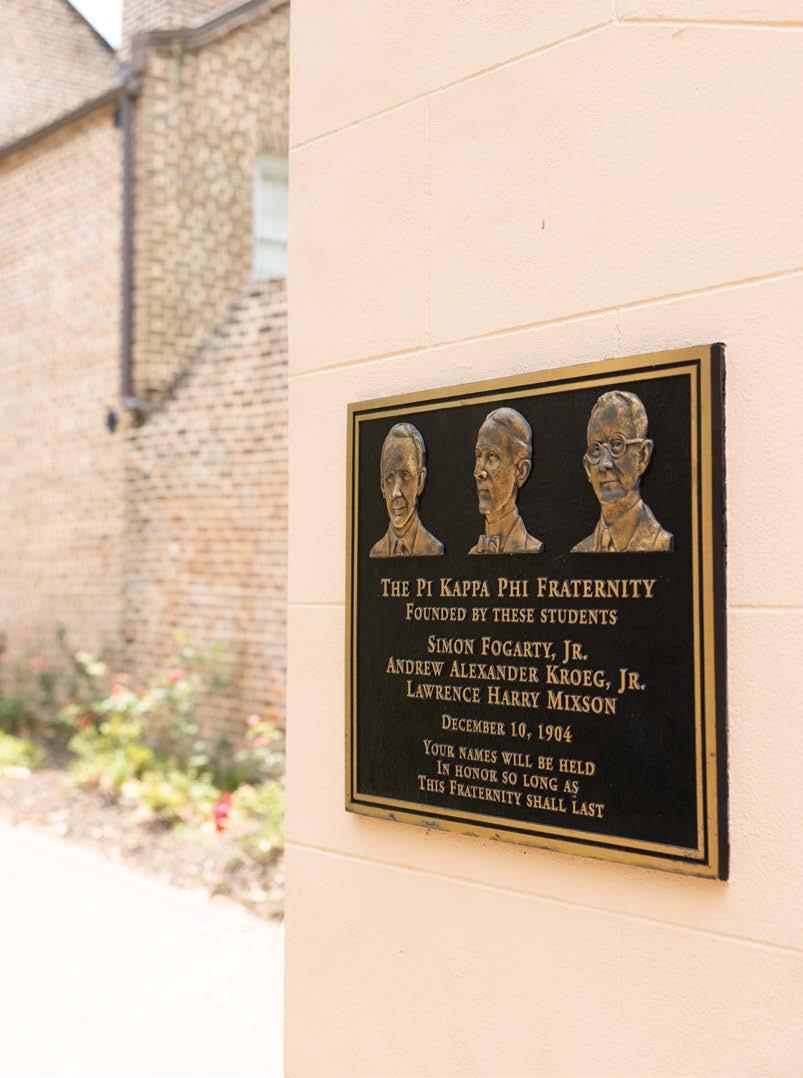
BETA GAMMA (Louisville)
Ron Krebs
BETA DELTA (Drake)
Bob Moody
BETA ETA (Florida State)
Tom Coley
Randy Lenczyk
Dick Morgan
Chris New
Jonathan Stevens
BETA IOTA (Toledo)
Gary Johnson
Lance and Dee Talmage
Marcus Uchaker
BETA KAPPA (Georgia State)
John Whitley
BETA LAMBDA (Tampa)
Eric Magendantz
Dave Sullivan
BETA XI (Central Michigan)
Jeff Brasie
BETA OMICRON (Northwestern State)
Doug Barnett
BETA PI (Eastern Michigan)
Larry Wilson
BETA SIGMA (Northern Illinois)
Adam Roach
BETA UPSILON (Virginia)
Glenn Dickson
George Shipp
BETA PHI (East Carolina)
Doug Littiken
GAMMA ALPHA (West Alabama)
Roger Reed
GAMMA BETA (Old Dominion)
Tom White
GAMMA GAMMA (Troy)
Bryan Scruggs
GAMMA EPSILON (Western Carolina)
Phillip Cates
Mark Dellinger
GAMMA KAPPA (Georgia Southern)
Glenn Aspinwall
Pat Manning
GAMMA NU (LaGrange)
Ronnie DeValinger
Jeff Esola
Twad Wadsworth
Jim Wirshing
GAMMA XI (Georgia Southwestern)
Ben Croxton
Bill Finney*
GAMMA TAU (North Texas)
Taylor Lindholm
Patrick Smith
Matthew Varnell
GAMMA PHI (South Alabama)
Alex Dumais
DELTA ALPHA (Virginia Tech)
Jon Barney
DELTA DELTA (Truman State)
John R. Andrews
Mike Heeley
Whitey Holt
Mike Zolezzi
DELTA EPSILON (Jacksonville State)
Josh Robinson
DELTA ZETA (Appalachian State)
Ronnie Bryant
Marc Gmuca
Art Quickenton
Mark Watson
DELTA IOTA (Middle Tennessee State)
Stephen Crass
Scott Davidson
Rob Hardin
DELTA LAMBDA (UNC-Charlotte)
Matthew Brown
Michael Grass
Ethan Norman
Bo Proctor
DELTA SIGMA (Bowling Green State)
Craig Anderson
John Babel
DELTA TAU (James Madison)
Earle Copp
DELTA UPSILON (Pittsburgh)
Eric Scerbo
DELTA CHI (Kansas State)
Tim Lindemuth
Kerry Skelton
DELTA PSI (Texas-Arlington)
Mark Jacobs
DELTA OMEGA (Texas A&M)
Tom Sullivan
EPSILON ALPHA (Elon)
Christian Wiggins
E.J. Young
EPSILON EPSILON (Virginia-Wise)
Mike Donathan*
Joshua McCray
Kevin Stovall
EPSILON THETA (Seton Hall)
Jake Koehler
EPSILON KAPPA (Southern Polytechnic State)
Sandy Ransom
EPSILON LAMBDA (South Carolina Upstate)
James Diamond
EPSILON RHO (Lenoir-Rhyne)
William and Denise Worley
EPSILON PSI (Slippery Rock)
Jairus Moore
Dan and Wendy Reynolds
Matthew Stuart
EPSILON OMEGA (Texas Tech)
Benjamin Shae
Bob Welsh
ZETA GAMMA (North Dakota)
Erik Granstrom
ZETA EPSILON (George Mason)
Alan and Molly Duesterhaus
James Perkins
ZETA ZETA (North Florida)
Robert Bennett
Mike Carter
ZETA THETA (Texas-Austin)
Tracy Maddux
ZETA KAPPA (Stockton)
Franco Catania
ZETA ALPHA (Clemson)
Jake Carter
ZETA LAMBDA (Cal State-Chico)
Chip Anderson
Daniel Hitzke
ZETA XI (Averett)
Pete Blum
ZETA UPSILON (Bloomsburg) Paul Hadzor
ZETA PHI (Colorado State) Corey Dillon
ZETA CHI (Albright)
Paul Meinster
ETA ALPHA (Concord) Pete Martin
ETA DELTA (Kennesaw State) Eric Jeffares
ETA ZETA (Queens-Charlotte) Davis Tapp Scott Thomas
ETA IOTA (Christopher Newport) Chris Conner
ETA LAMBDA (SUNY-Brockport) James Simonds
ETA OMICRON (San Francisco State) Eric Hammer
ETA RHO (Texas State) Brett Lee Andrae L. Turner
ETA UPSILON (Miami-Ohio) Beau Samples
ETA PHI (Maryland-Baltimore County) Marcus Garcia
THETA ALPHA (Southern Mississippi) Major John Edward Bezou, Jr. John Langley
THETA DELTA (Florida International) Noel Guillama Alain Sanchez
THETA ETA (American) Carlos Ramirez
THETA THETA (Iowa) Greg Buehner Andrew Cole
THETA XI (Arizona State) Bill Harden Wayne Unger
THETA TAU (High Point) Andrew Realon
IOTA LAMBDA (Quinnipiac) Christopher Mistretta
IOTA NU (Mississippi State) Brayden Talton
IOTA RHO (Western Illinois) Kyle Ramlow
KAPPA THETA (San Diego) Parker Glaessner
FRIENDS OF THE FRATERNITY Emily Gamauf Betty Lowell* Carl and Christine Stamp
The members and friends, listed in black, made a gift to the Pi Kappa Phi Foundation in honor of a brother, loved one or friend in 2025.
2024-25 OMICRON CHAPTER
ADVISORS, OMICRON CLUB
BOARD AND UNDERGRADUATE
EXECUTIVE COUNCIL
Kendrick Reaves
JIMMY ABERNATHY
Julie Harris
DANIEL ADKINS
Jeff Adkins
ANDREW ALFELE
Scott Alfele
WALTER ALLAN
Joseph Ross
BLAKE ALLEN
Reagan Allen
ALPHA CHAPTER
Frank Boineau
ALPHA EPSILON CHAPTER
Bob Halcrow
Grady Johnson
Donald Morrison
Diego Santangelo
ALPHA LAMBDA CHAPTER
Jessica Faria
ALPHA SIGMA CHAPTER
Mark Guenther
Michele Williams
The Williams Family
ALPHA UPSILON CHAPTER
George Fitchko
JACOB ARNER
Kasi Arner
STEFSON ARNOLD
Ryan Kramer
GUNNY BAE
Andrew Ten Eyck
ALEX BARR
Chris Barr
JOHN DAVID BELL
Gina Bell
BETA CHAPTER ALUMNI
William Baxter
William A. Baxter
Martin Boyd
William Cunningham
Andy Forrest
Stephen Hemman
Walk Jones
Richard Stall
BETA OMICRON CHAPTER
Wesley Breeden
Stanley Brouillette
Danielle Cabrera
Jacob Norris
Joshua Wiggins
GRIFFIN BOOKMILLER
Addame Bookmiller
ADAM BRADY
James Brady
JOSEPH A. BRADY, III
Andrae Turner
TEDDY BRAMAN
Bill Braman
NATE BROCE
Chad Broce
MATTEO BROCK
Asha Brock
ROBERT BROMLEY
Basil Lyberg
JAKE BROOKS
Chad Brooks
VALARIE BRYANT
Steven Veit
NATE BUCK
John Buck
GRIFFIN BUSH
Christopher Bush
SAM CAFFARELLI
Tom Russell
CAM CALLAHAM
Heather Callaham
SHANKARA CARSON
James Carson
ANTHONY CATENACCI
Katie Oen
WYATT CHOATE
Janet Griffith-Hatchett
DREW COBB
Tiffany Taylor
JEREMY TAYLOR CONANT
Zachary Weisel
SHANE CONWAY Lane Luckie
CHRISTIAN COOPER
Wendy Cooper
CASEY CORNELIUS
T.J. Sullivan
ANDREW DAVIS
Lani Davis
CLAY DAVIS
Douglas K. Mosel
DELTA CHI CHAPTER
Tim Lindemuth
DELTA DELTA CHAPTER
Tim Barth
Jamie S. Horner
DELTA GAMMA CHAPTER
Rick Buschelman
DELTA TAU CHAPTER
Jacob Wissot
DELTA ZETA CHAPTER
Marc Gmuca
WILSON DEMETRESCU
Nicole Demetrescu
JACKSON DOCKAL
Jimmy Dockal
JASON DODD Tom Atwood
ROBERT DODSON Kevin Dodson
SPENCER DOERGER
Paul Doerger
BRYAN DONALDSON
John Brockmann
JAMIE DONNHEIMER
Anna Hill
DYLAN ELLIOTT Seth Elliott
STEVE ESWORTHY
Ethan Norman
ETA RHO CHAPTER
Chris Fischer
YUSUF FATTAH
Marc Ramirez
SAGE FERRIS
Scott Ferris
AIDAN FIGUEROA
Cheri Figueroa
WYATT FISCHER
DaNell Fischer
JONATHAN FOX
Ginny Fox
SHEPARD FREEDMAN
Emilio Sanchez
WILLIAM FURGALA, JR.
William Furgala, Sr.
ZACHARY GACEK
Sandy Gacek
GAMMA EPSILON CHAPTER
David Huskins
GAMMA PHI CHAPTER
William Breeden
GAMMA RHO CHAPTER
Robert Amick
KARL GARDNER
William Holland
NICO GATTONI
Stephen Gattoni
ALAN GAYLOR
Joey Ross
DOMINIC GEWECKE
Rob and Denise Gewecke
CARL GILBERT
Gregory Gilbert
JACOB GORDON
Anne Gordon
NEAL GRABARKEWITZ
Tom Sullivan
SAM GUGENHEIM
Alison and Scott Gugenheim
RICK GUGGOLZ
Thomas Brooks Lyles, Jr.
ROWEN GUTHIKONDA
Jodi Guthikonda
MATTHEW HAGBERG
Tiffany Hagberg
THOMAS HALL
Molly Hall
ANTHONY HAREY
Andrew Harey
DAVIS T. HARLEY
Michael Harley
DAKOTA HARSH
George and Karen Harsh
ALEXAVIER HARTY
Danielle Goddard
CURT HERZOG
Steve Esworthy
Ethan Norman
Becky Smith
CHARLES HUBER
John C. Marano, Jr.
JAY HUNT
Thomas B. Peterson
MATTHIAS HUTTER
Amelia Tosti
CORBIN IFKOVITS
Kristen Ifkovits
ALEXANDER INCORVAIA
Frank Incorvaia
IOTA NU CHAPTER
Lori Walsh
IOTA OMICRON CHAPTER
Robb Olivieri
IOTA PSI CHAPTER
Joseph Beard
PHILLIP JACKSON
Becky Smith
EVAN JACOBS
Stacie Ross
BILL JOHNSON
Greg Kolb
CARL JOHNSON
Stephen Chandler
HADEN JOHNSON
Susanne Johnson Deitz
TANNER JOHNSON
Angie Johnson
JUSTIN JOHNSTON
Brenda Johnston
TYLER JUNG
Brian and Elaine Jung
KAPPA CHAPTER
Diederick Duque
Russell N. Hadley
KAPPA THETA CHAPTER
Suzanne Gogna
JACK D. KENNEDY
Erik Granstrom
WESLEY KENNEDY
Connie Kennedy
MATTHEW KERN JR.
Nysha Kern
WESTON KIRK
Elizabeth Kirk
OSCAR KOCH
Jim Guretzky
LUCAS KOHRS
Leigh Kohrs
BETH AND ALDEN KUNNEMANN
Douglas Kunnemann
KYLE KUSHLEIKA
Chris A. Clavey
LUKE AND DOMINIC
KWIATKOWSKI
Peter Kwiatkowski
SAMUEL LAGOS
Will and Katie Lagos
LAMBDA CHAPTER
Mark Harp
Moon Mills
Chad Powell
ELIJAH LARUE
Sheila LaRue
JAKE LAWLESS
Karen Tolisano
AUSTIN LEAIR
Jake Leair
JACK LEITZKE
John M. Leitzke
GAVIN LEVINSON
Melanie Levinson
BRAD LITTLE
Amy Little
JACKSON W. MACKNALLY
James Macknally
WILL MANNING
Jeff and Julie Manning
ZACHARY MARKOWSKI
ShawnMarie Haas
GRANT MASON
Jimmy Mason
LUKE MCGINLEY
Carol McGinley
RAY MCLEES, III
Jesse Crimm
CHARLIE AND BROOKS MERRILL
Peyton Merrill
GAGE MILLS
Moon Mills
WILLIAM MIMS
Robert Greene
HAYDEN MOCK
Edward E. Mock, Jr.
DAVID MOON
Jennifer Moon
ZACK MOORE
Mack Moore
RICH MORGAN
Ben Ball
JAKE MOY
Andrew and Mei Moy
ROBERT MURRAY
Christy Murray
ALVIN NEAL
Jesse Crimm
JEFF NIEDENTHAL
Tom Atwood
KRIS NICOLOSI
Geoffrey Beatty
KYLER NORD
Rebecca Nord
ETHAN NORMAN
Steve Esworthy
AARON NORWOOD
Peter Norwood
OMEGA CHAPTER
Melissa Breaux
OMICRON CHAPTER
Robert Inman
Ladson Montgomery
Wes Parker
Richard Woodson
Stan Woodson
BILL ONCEA
Robert J. Cates
TOLA ORGECK
Lori Orgeck
RICHIE PANIKIEWSKY
Ann Panikiewsky
STEVEN PAPPAS
Pat Pappas
LIAM PARKE
Courtney Parke
TREY PARKER
Chris Parker
JOE PARSONS
Sandra Fisher
JACK PATTERSON
Taylor Lamberth
SHARON PATTERSON
Wesley Patterson
SERGIO PESTANO, III
Cecile Pestano
ERNIE PIFFLE
Whitey Holt
NATHEN POLLAK
Greg Pollak
SPENCER POWELL
Jason Powell
PSI CHAPTER
Gary Fisher
MATT RAMSAY
Ethan Norman
SKEETER REES
Chuck Howard
RHO CHAPTER
Dorsey Ward
JACKSON RILEY
Heidi Riley
CHRIS RINER
Jesse Crimm
JIM AND TOPPY ROBINSON
Leslie R. Morris
TRES ROBINSON
Christopher Felts
WILLIAM J. RUSSELL
William W. Russell
MERRITT SAFFER
Scott Saffer
BRADLEY SANKER
Jason Sanker
JAXON SARADPON
James Saradpon
JAMES F. SCHMIDT
Mary Schmidt
ANTON SCHOPLER
Dave Schopler
JUSTIN SCHWARTZ
Eric Schwartz
CAMERON SCHWENTKER
Caroline Schwentker
JOSEPH SIMAS
David Simas
RALPH SIMS
Ron DeValinger
CHASE SIMON
Allyson Simon
BECKY SMITH
Steve Esworthy
Karen Starkey
SHIA SMITH
Rhonda Smith
KAREN STARKEY
Steve Esworthy
DR. LONNIE STRICKLAND
Sid Trant
JIM AND PATSY STUMP
Dudley Woody
TOM SULLIVAN
Tom Atwood
Ethan Norman
MATT SUTTER
Ethan Norman
WILLIAM SWEENEY
David Sweeney
GRAYSON SWIMS
Brandy Bone
Jenna Swims
JENSEN SYAR
James Syar
TAU CHAPTER, FALL OF 1994 CLASS
Karl Cole Flickinger
LEO TENENBAUM
Roseanne and Andrew Tenenbaum
LUKE TERRANOVA
Tom Miller
JOEY TESTA
Joe Testa
THETA DELTA CHAPTER
Darius Goh
THETA ETA CHAPTER
Isaiah Headen
THETA PHI CHAPTER
Parker Begale
THETA ZETA CHAPTER
Curt Sonnet
MARK E. TIMMES
Rachel Westra
MARK E. TIMMES AND BROTHERS INITIATED BETWEEN
1990-99
Todd Sargent
FRANKIE AND JAKE
TINNEMEYER
Frank Tinnemeyer
UNIVERSITY OF CALIFORNIA, SANTA BARBARA
ASSOCIATE CHAPTER
Lisa Janco
UPSILON CHAPTER CENTENNIAL
John Shustitzky
GIUSEPPE VITULLI
Joao Freire
CHRIS WALL
John Brockmann
MARSHALL WELCH, IV
Melissa Kearney and Marshall Welch
SEAN WELKER
Colleen Welker
AIDAN WHITE
Meredith White
CHRISTIAN WHITE
Vickie White
JONATHAN LOGAN WHITFIELD
Deborah Whitfield
MASON AND PARKER WILL
LeeAnne and Chad Will
BRETT WOODARD
Martha Woodard
BENJAMIN WORLEY-REICHMAN
Jane Worley
REECE WYATT
Joe Wyatt
MATT ZELLARS
Becky Smith
ZETA CHAPTER
Sean Holmes
The members and friends, listed in black, made a gift to the Pi Kappa Phi Foundation in memory of a brother, loved one or friend in 2025.
DONALD LEE ALEXANDER
Gary A. Catterton
WALTER ALLEN
Joseph Ross
ERIC ALMQUIST
John Brockman
JOSEPH ANCHUNDIA
Justin Hale
STEPHEN BAILEY
Barry Young
JIM BELL
William M. Ford
STEVE BOHNER
Allan Ainsworth
Robert Baker
Matt Bouma
Michael Chereskin
James Conti
Jeffrey Cubel
Jeffrey Egilsrud
Bruce Halley
Jeffrey Leaf
Daniel Leininger
Patrick Kuhnle
David Mitzner
DAVID BOND, II
Carey Sudduth
AL BROWN
Donald VanHouten
ROBERT BURNETT
Christopher Willis
BRITTANY CASASSA
Jake Koehler
JIM CASORIO
Hector Martinez
JEFF CHANG
Ryan Panos
CHAPTER ETERNAL
Russell Chomiak
KURT C. CLACK
Jeffery Deitz
CHUCK CUTAJAR
Alfred Dickey
CHARLES “RANDY” DULANEY
Patricia Whitlow
WILLIAM FURLING
Hector Martinez
GAMMA NU CHAPTER ETERNAL
Ralph Sims
STEVE GIBSON
James Thompson
RYAN GIGLIA
Scott Atkinson
JOSEPH GREER
Daniel Gross
WARREN GRYMES
John Stephenson
SPENCER HARPER, JR.
Carol Harper
CHARLES HENDERSON
Guy Hollingsworth
GRANT HENDRICKSON
Ben Bush
WAYNE HENSON
Douglas Keel
BARRY HOLLANDER
Jeffrey Suggs
HENRY HSU
Wilmarth Alexander
DANIEL F. KEHOE
Bolivar Green
HUBERT M. LATTAN
Judith Johnson
WILLIAM CHRISTOPHER
MAXWELL
William Maxwell
DAVID MCALLISTER
Alvin Daughtridge
GRIFFIN MCCARTHY
Terry Sanderson
John Brockman
LEE MCCULLAR
Walter Cardona
W. MCKENZIE
Larry Beale
T.H. MCLAUGHLIN, JR.
Thomas McLaughlin
JACK MCMANUS
Erasmus Griffin
David Whatley
LOUIS MICELI
Richard Labinsky
PAUL NICHOLS
Norman Stoddard
RICHARD NIJEM
Walker Settle
F. OLMSTEAD
Larry Beale
DURWARD OWEN
Glenn Aspinwall
Tom Atwood
Chuck Barnard
Gary Behrens
Robert Bentzinger
Peter Berg
Noah Boksansky
Joseph Brady
John Brockmann
Abe Bush
Charles Cates
Chi Psi Fraternity
John Clifford
Delta Tau Delta Fraternity
Jeremy Dickinson
Mary Ebert
Mark Edgell
Steve Esworthy
Scott Evenbeck
William M. Ford
Ray and Janet Galbreth
Clifton Goodwin
Curt Herzog
David Higgins
Whitey Holt
Nancy Holtkamp
Bill Jackson
David and Dolly Jaffee
Phil Josephson
Daniel Kimball
Eivind Kolemainen
Emerson Linney
Mike Loy
Basil Lyberg
Ethan Norman
Cameron Ogilvie
Gregory Padgett
Steven Pappas
Mark Parrish
Richard Pedersen
Pi Kappa Alpha Fraternity
Francis Bo Proctor
Michael Rothschild
Trevor Ryan
Jon Rymer
(DURWARD OWEN cont.)
Tod Senne
Dave Shook
David Smith
Frederick Streimer
Lonnie Strickland
Jay Stuckel
Gary Sugg
Michael Sullivan
Shelley Sutherland
Theta Chi Fraternity
Andrae Turner
Thomas Turner
Andy Westbrook
David White
Robert Winter
Frank T. Wrenn, III
Bonnie Wunsch
DURWARD OWEN AND THE ENDURING FRIENDSHIP HE
SHARED WITH BOB OFF Farmhouse Foundation
JAMES PADDOCK
James Koshewa
JERE PEARSALL
Asher Early
ROBERT CHARLES PEMBERTON
Alfred Sewell
DON PERRIN
Gregory Nesbitt
MATT PLASKET
Cameron Ogilvie
R. POLAND
Larry Beale
WALLACE REAMS
Tony Evans
MATTHEW RZYSKI
Garrett Nyberg
WAYNE SALVO
Gilbert Lissy
PHILLIP SANDHAGEN
Michael McKinley
MARK SCALI
Anthony Noce
TED SCHARFENSTEIN
John Trufant
R. SCHWARTZ
Larry Beale
JOHN G. SHILEY
Charles Krblich
DONALD LEE SMALL
David Villari
NATHAN STAMP
Taylor Stamp
WILLIAM LEE STEPHENS
Michael Stephens
DR. PHIL SUMMERS
Dave Shook
ERIK SWENSON
Seth Chapman
John Greaves
DEE TALMAGE
Matthew Sutter
WILLIAM C. TAYLOR
Lois Taylor
DARREN TIETZ
John Brockman
JASON TIRADO
Jeffrey Armstrong
LISA WAMBOLDT
Jeremy Dickinson
MIKE WEST
Thomas Brooks Lyles, Jr.
ROBERT C. WHITE
W. Keith Rollins
ANNE WILSON
James Wilson
DANNY WOODSON
Robert F. Broadwell
ALLEN WOODY
Robert Barber
Albert E. Lietzau, V
STEVE WRENN
Ken Bedenbaugh
JEFF VOGT
Don and Michelle Porth
WILLIAM YORK
Stewart Carlin
Donors are listed by giving level for the 2025 calendar year.
*indicates Pi Alpha
$50,000+
Leandro P Rizzuto Foundation
Bruce and Sally Rogers*
$25,000-$49,999
Ryan McCarthy*
$10,000-$24,999
Capital Group Charitable Foundation – Bryant
Pritchett
Michael Davis*
The Geo Group Foundation Inc
Tiffany Knaul
The Logan Family Donor
Advised Fund
Chris Oldham*
$5,000-$9,999
Joel Borellis*
The Building People
Michael Carter*
Ruth Cotter
Dan Dawson*
Epsilon Theta Alumni Association
Shaun Fagrell
Russ Faulkner*
Florida Powertrain & Hydraulics Inc.
Michael Garvey*
Nat Gombis
Sidney & Bobette Guller
Family Foundation
Whitey and Jan Holt*
Stephanie Karl
Jim Karlovec and Dana Longo*
Rebecca Lambert
Robert Lane
Jefferson McLane
Molly Morris
Professional Contract Services, Inc.
Robert Raesemann*
Shanahan Family Foundation
Bryan and Victoria Williamson*
$2,500-$4,999
Heather Anderson
Tanner Bacon*
Nicholas Battjes
BK Management
Shannon and Joe Bowman
Mary C. Bratton
Robert Broadwell
Compass Group
Leslie Conrad
Troy Davig
Lori and Dayrl Dunahoo
Jacob Echevarria*
Courtney Elliott
Gilbert Estrada
Stew Fisher
Phillip Lloyd Hamilton*
Jake Henderson
Rikard Hill
Larry Keller*
Matthew Keller*
Scott Kopple*
Phillip Leslie*
Michael Manross*
Shane Mulrooney*
Richard Pierce*
Kimberly Roe
Sean Ryan
J. Gunnar Schalin
SMART Wealth LLC
Matt Smith
Michael Smith
William Steffancin
Mike and Melissa Tecosky*
Andrae Turner*
Amy Varble
Daisy Vollmer
Paul Vulcan*
Joseph Wessel
Jeffrey White
Kevin Yates*
$1,000-$2,499
Jen Allen
Mark Allers*
Fred Angel*
Christian Angotti
Jonathan Apy
Kandice Apy
Rachael Arenstein
James Aschkenasy*
Adam Bacon*
Mark Bacon*
Paula Baker
Amanda Bambrick
Baptist General Convention of Texas
Charles Barnard
Michael Barnes*
Nathan Barron
James Baska
Sean Beach
Julie Benson
Kevin Berry*
Wil Beyer
Matthew Boardman
Chris Bock
Marc Boom*
Billy Boulden*
Rick Bowers
John Bradford*
Joseph Brady*
Tom Brady
Patty Brandt
Melissa Breaux
Christopher Brockmeyer*
Jason Brumley*
David Buchanan*
Rodrigo Burciaga
Christin Burek
Antonio Burgess*
Alexandria Bustos
Jair Cabral*
Anthony Carreira
Jenny Carroll
Margaret Chadwick
Michael Chadwick*
Spencer Chan*
David and Ellen Chapman
Clent Chatham*
Lisa Chittenden
Daniel Clark
Jody Clayton
Anthony Codet
Jeffrey Colburn*
Christine Coleman
J. E. Coleman
Brad Collins*
Larenz Combs
Charles Cook
Dawn Cooper
Rick Cosgrove
Cameron Cotten
Jeffrey Creighton*
Josh Cunningham
The Cushman Family
Patsy D’Angelo
Liza and Mike Daisley
John A. Day
Ajay Desai
Brian Dickman*
Cathleen Diegnan
Jason Dodd
Richard Dull
Ellen Durant
Dena Economou
Jenn Edmonds
Lloyd Etheredge
Mike Etheredge
Mark Fedechko
Maryan Fedechko
Adrian Fernandez*
Freddy Fernandez*
Christopher Ferrell*
The Feyh Family Seeding Gifts Fund
Rudy and Carol Feyh
Marilyn Finkelstein
April Fister
David Fix
Brad Flowers
The Doug Flutie, Jr Foundation for Autism
Carol Forsstrom
Heather Frauenhofer
The Fries Family
Kristen Furcini
The Julio R. Gallo Foundation
Shanti Gangadharan
Steve and Julie Gansler
Kenzie Garcia
Rudy and Emily Garza
The Wendell & Anne Gauthier
Family Foundation
Geoffrey Glass
Howard Goldsmith*






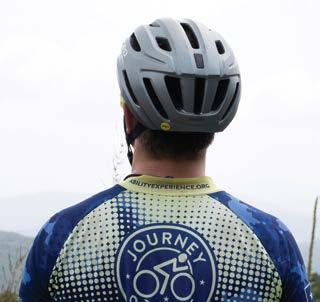
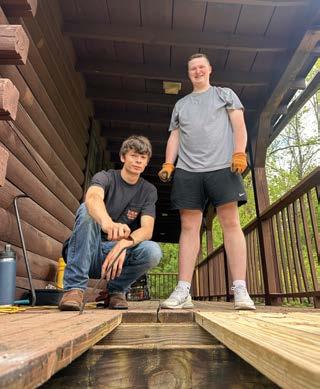


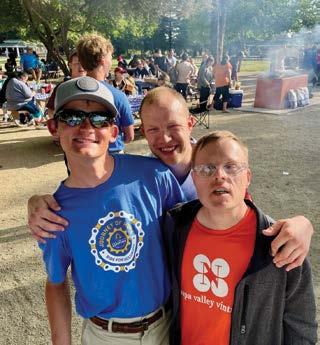
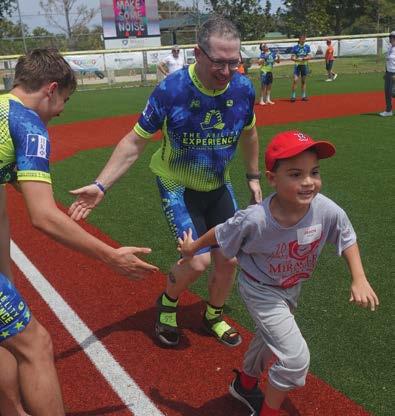
Samuel Steele
($1,000-$2,499 cont.)
Sage Gordon Richard and Mary Eli Gould
Jacob Greer
Mauro Guerrero
Linda Hall
John Harju
Cathy Harrison
Anne Havard
Andrea Hedrick
Colby Hicks
Kinzie Pepper Hill
Rudolf Hoellrich
Terri Hoellrich
Mark Howat
Debra Howe
Jim Hoy
Sean Huteson
Andrew and Kristin Jaffee*
Jasper Engine Exchange Inc.
Christine Jentsch
J. Ernest Johnson
Pete Johnson
Ashley Joyce
Matt and Allison Kaczenski*
Colin Kavanagh
Nelly Kazzaz
Kevin Kelly*
Kalen Kenney*
John Kinnaman
Kippen Frometa Grillo Trust
Patrick Kuhnle
Mary Anne Kull
Brock and Kirsten Lamarca
Chanze LaMott
Barb Larkin
John Laurie
Raymond Lederer
Rachel Lehmkuhl
Joseph Leva
Alan and Irene Lund
Giving Fund
M3S Sports LLC
Tracy Maddux
Analise Major
Scott Malcolm
Carroll Maquet Fund
Maria Marano
Peter and Cheryl Marconi
Ryan and Wendy Mayo*
John McGarry*
Payton McGrath
Kevin Measel
MedEx Ambulance Service
Pedro Medrano
Brian Mister
Daniel Moore
Dominic Moore
Pete Moore
Henry Moritz
Bradley Mudge
Kevin and Sarah Murphy
Vasudevan Nanjangud
Michael Nardozzi
National Financial Services
Todd Nelmes*
M. G. and Donna Nelson
Mark Newton
Ethan Norman*
Scott Oldakowski
The Optimist Club of Houston Texas
Marcus and Sandra Ordonez
Hannah Perdue
Robin Perdue
Phyllis Perkins Elizabeth Philpott
Pamela Pierce
Pinnacle Financial Partners
Melissa Pinter
Maia Poetsch
Kevin Pollard
Nick Prichodko* Gregory Proctor
Leah Pugh
Ellen Pulliam
Arthur Quickenton
Jack Raftery
Kyle Ramlow*
Edward Rappoport
Edward Rebula
Josh Reichard
Rae Lynn Reinecke
Kerry Roark
Nanette and Merrill Ritter Foundation
Alexander Rodriguez
Renaldo Rodriguez*
Michelle Rudell
John Rundle
Paula Ruska
Luke Salmon*
Neil Salmon
The Jack Samet Fund of the Jewish Foundation of Greensboro
Andrea San Miguel Sasse Family
John Scardina*
Dante Schembari*
Megan Schneider
Bryan Schuetz*
Michael Scott*
Eric Searls*
Linda Sears
Erin Segovia
Nicholas Sgarzi
Jeff Shapiro
Joshua Sheffler*
Alison, Matt and Devyn Sherman
Charles Shoop*
Caroline Simas
David Simas
Elizabeth Simas
Melanie Simon
Lanford Slaughter
Slocum Center
Joseph Smith*
Kami Smith
Mary Smith
Brandon Sorensen*
George Stahle* Braden Stantz
Veda Barry
Carolyn Barton
Willow Bay
Rex Beall
John and Tricia Becker
Jason Beckert
Thomas Begley
Sinikka Bell
Andrew Bembry*
Jeffrey Bennett
Denise Bennett Walls
Marcy Benson
Terry Benton
Bergstrom Foundation
Edward Bernard
Charles Berra
James Best
Dana Bieber
Charles Bishop
Lucas Blazejewski*
Kara Boccella
Bradley Bodiford*
Shawna Bold
Walter Bolin
Charles and Jan Bonini
Dana Boratenski
Stephanie Borges-Miller
Victor Boschini
Ali Bowers
Pam Bowers
Kevin Bradley
Jeff Brandt
Peter Brant
Heather Brantley
Douglas Braun
Wesley Breeden*
Amy and Tony Briney
Walter Broadhurst
Kay Brockermeyer
Deborah Brokaw
Mary Beth Broumand
Richard Bryce*
Aubrey Bubrig
Alison Buehler
Gregory Buehner*
Nathan Buoncristiani
Wayne Burger*
Rosalie Stewart
AJ and Erin Stockwell*
Stone and Holt
Weeks Foundation
James Stone
Red Stone
Jackson Stout
John Sura
Kevin Sutherland*
Jo Ann Swienton
Susan Swigor Charitable
Gift Fund Hart Syed
Linda Taft
Ruben Talavera*
Dino Taylor*
Deomari Thorpe
Clayton Tiedeman
Jocie Tiedeman
Nik Toocheck
Gregory Turner*
Nicholas Turner*
Michelle Ussery
Angelica Villanueva
John Visconi*
Jannet Vreeland
Susan Walden
Todd Waldman
The Wards
Zachery Wiles*
David Wiley
Richard Wilhelm*
Maggie Wills
Dudley Woody*
Michael Wright
Jaina Yates
Jennifer Zmud
$500-$999
2.0 Consulting 3F Revolution
AAA Drilling Foundation
Clarence Abner
William Adams*
Daniel Adan
Eric Albro
Mario Alcantar
Kiera Aldridge
Shana Aldridge
Kathleen Alicks
Graham Allen
Chris Anderson
John Andrews
Christian Anthony
Troy Antonik
Augustine Apodaca
Tabitha Argent
Andre Arman*
Jeffrey Armstrong*
Ashley Mcfarland
Aesthetics
Asimpa LLC
Wendi Aspes
Evan Austin*
William Austin
Joan Baartz
Brian Bacher
Caroline Bailey
Robert Bailey*
Chad and Tami Coltrane
Janice Colvin
Letty Concepcion
Christopher Conley
David Conn
Joseph Coote
David Corey*
Casey Cornelius
The Corner Boxing Club
Robert Cornett
McKenzie Cox
Michael Cozad*
C.R. Peterson + Assoc.
Mary Cremean
Kathryn Crossland
Ken Cruse
Andrew Culler
Saylor Cutting
Arnold D’Angelo David Dalton* Kate Dalton Sandra Dammann
Hristos Daskalakis Lincoln Davis Mark Davis
Davis*
Davis
De Leon
DeAnda Dalton Deener* Daniel Dehlin Sonya Deines Traci DePew
DeQuiroz*
Dever
and Gene Diebold
Diehl
Diehl
Dietrich
Dillom
Dolan
Donohue
Donohue
Dosher
Dowd
Ducey
Duchossois
Mark and Elsie Burgess
Randy Burgess
Kasey Burke
Alexander Burton Buzzpadd.com
Dan Byrne Matthew Cady *
Damon Cahill
Brenden Camarata
Ricardo Campos
Cindy Camus
Pete Cannon
James Cardarette
Luca Carfagno
Maura Carr
William Carr Christian Carter*
Donald Carter Kathy Carter Gabriel Caunt CE Design and Execution Timothy Chambers David Chapman Jr.
Chapman-Hoy Mitchell Chatfield Andrew Chmura Dirk Christensen
Churches
Clark Matthew Clark Jennifer Cochran
Cochrane Roy Coffey
Ted andRachel Coleman
Daniel and Jennifer Colimon
The Collegiate Lineup LLC
Isaac Collier
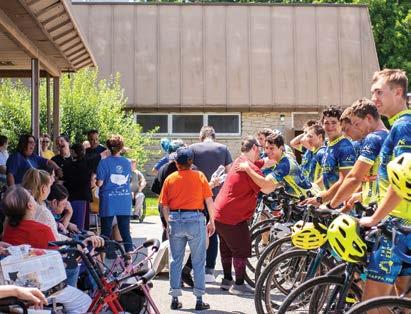
($500-999 cont.)
Brandon Kauffman
Darryl Kellough
Dean Kelly
Jason Kelly
Steve Kempton
Jenny Kernan
Rob Ketch
Christopher Kiker*
King Plumbing
Yolanda Kinsman
Jerry and Peggy Kirkegaard
David Knavel*
Nickie Knight
Mark Knowlton
Colleen Kohler
Sharyn Konick
John Kostiuk
John Kovar
Roman Kowalski
Krispy Kreme
Alec Kromm
Joe and Marilyn Kubec
Erica Kuchinski
Sean Kuni
The Alden and Margaret Laborde Foundation
Stephanie Laborde
Monica Landress
Edward Lang
Kent and Gloria Langley
Erik Larson
Adolfo Laura
John Lauth
Jeffrey Lavoncher
Barbara Lee
Jimmy Lee
John Lee
Leichtag Foundation Grantmaking Fund of the Jewish Community Foundation
Lembo - Montgomery DDS
Kate Leung Insurance Agency Inc DBA
a State Farm Agent
Terry Lewis
Jimmy John Liautaud
David Lindley
Joan and Rich Little
Charles Logan
John Logar*
Loo Colette Loots Lucila andIsmael Lopez Andrew Lorenc*
Lumsden* Basil Lyberg* Mary Anne Lyberg Terry MacCauley
Brian and Jeanne MacDonald Ian MacDonald Ashley Malcolm
Marandino
Marston
Marti Chad Martin
Martin
Martin
Anthony Martinelli
Giovanni Martinez Elsa Maskell
Gary Mast Andrew Matznick* Kristen Mayfield Nancy McCarthy Jill McCuin
Carl and Vera McCullough
Brian McDonald*
McDonald
Kevin McGee*
Meredith McGhee
Jim McGoldrick
Thomas McKeown
Kevin and Lorraine McQueen
Charitable Fund
Jimmy Merkel
Meyer
Michal
Stephen Miles
David and Judy Miller
Jamie Miller
Nicole Miller
William J Miller
Birgir Mishurda Mark Mitchell
Monte Finanacial Group LLC
Mark Montgomery
Moody
Todd Porterfield, Alpha Delta (Washington), passed away on August 7, 2000. Porterfield was cycling with the Journey of Hope South team and was struck by a car in Lexington, North Carolina. He leaves a legacy of compassion, brotherhood, dedication and selfless giving.
Jason Tirado, Zeta Epsilon (George Mason), passed away on April 30, 2000, from a fall during a hiking trip. Tirado was a 1999 Journey of Hope cyclist and was spending the 2000 spring semester as a Gear Up Florida project manager. He impacted hundreds of lives during his time with The Ability Experience.
The 2025 Porterfield-Tirado Memorial Grant Recipients are Ashley House in Enumclaw, Washington, and Always B Smiling in Pittsburgh, Pennsylvania.
Morgan Moonlight Medical
Frank Morrissey
Zach Moss Reed Moulton Vander Mudge James Mullen
Ryan Muniz Griffin Myers
Naran
Johan Niedergerke
Blake Nixon
Heidi Nohe
Kevin O’Grady*
O’Hara
Oles
Andrew Oliver
Dallas Olson
Susan Ombrellaro
Chi Omega
Blake Orr
Erik Österlund
Kim Overstreet
Daryn Oxe
Greg Pancirov Holly Papanek
Alice Parker
Kuldeep Parmar
Robert Patane
Matthew Payne*
Peattie* Diane Pendleton James Perdue Madison Perkins The Peternell Family
Foundation
Patrick Pfeil
Philoptochos Society of St. Nectarios Greek
Orthodox Church
Walter Pickens
Meera andShankar Pillai
Emile Pinera
Vincent Pirro
Plumbers & Steamfitters
Michelle Plunkett
Thomas Polcyn
Julie Ponder
Dale Powell
William Powers
Alexander Price
Christy Prisco
Helen Raesemann
JoAnne Rago
Jennifer Ranglas
Joshau Rappoport
Michael Ray
Redd Iron Inc
Joseph Regenstein*
Devyn Reilly
Travis and Jackie Reno
Michelle Replogle
Maria Reyes
Robley Rigdon
Christofer Rivera
Roadrunner Pool Service
Bradley Robins*
Gina Robins
Scott Roby
Russell Romano
Mary Rondini
Matthew Rosenberg
Robert Rosenberg
Robert Rosenblum
Michael Rothschild*
Margaret Rukstalis
Jenny Rundle
Susan Rusch
Rebecca Rutledge
RWS Enterprises LLC
Douglas Ryan
Sean Ryan
Jan Ryder
Alicia Salazar
Eileen Salmon
David Salyers
Beau Samples*
Steward Sandstrom
Robert Sangster
James Saradpon
Katy Scafe
Deborah Scales
Mindy Scher
Alyse Schmidt
Lori Schraner
Tyler Schuette
Scott Schuetz
Bryan Schutte*
Don and Karen Scott
Mary Sealey
Terri Seki
Steve Selman
Steve Sergi
Chris Serrano
Ishmael Sevilla*
Shanklin*
and Paula Sheehan
Sheorn*
Shissias
Shreve
Siby
Siefert
Skobla
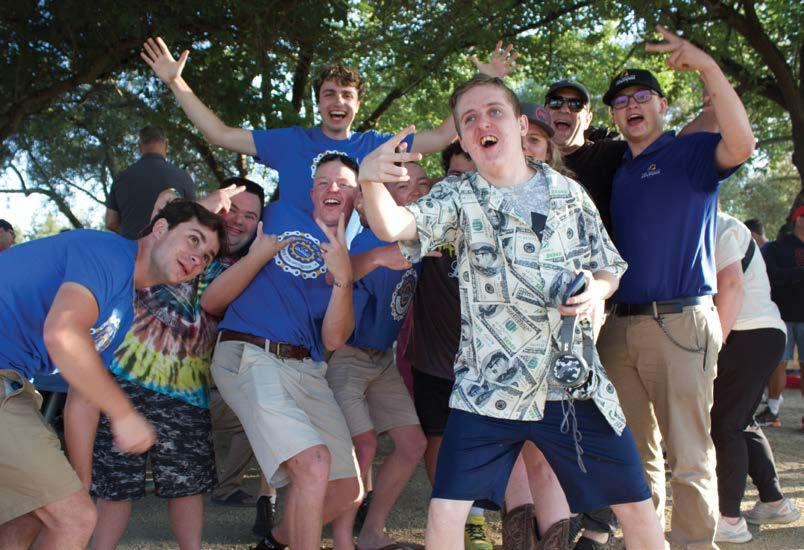
The
We express our condolences and mourn the passing of our brothers now in the Chapter Eternal. May their memories remain in our hearts and their families be surrounded by love.
This list reflects notifications received at National Headquarters between October 1, 2025, and February 28, 2026. First name, last name and date passed to Chapter Eternal are listed for each member.
To inform National Headquarters of a member who has passed to the Chapter Eternal, please email letusknow@pikapp.org.
ALPHA (College of Charleston)
Dale Woodard, 12/1/2025
SIGMA (South Carolina)
Christopher Hoffman, 11/12/2025
ZETA (Wofford)
Carl Gilbert, 11/19/2025
KAPPA (UNC-Chapel Hill)
Jeffrey Whitney, 7/9/2022
Norwood Clark, 12/20/2025
LAMBDA (Georgia)
David Seeler, 9/28/2025
Hank Rienecker, 11/13/2025
MU (Durham)
Kenneth Wertz, 10/31/2025
NU (Nebraska-Lincoln)
Dennis Tente, 1/29/2023
XI (Roanoke)
Henry Downing, 3/10/2024
OMICRON (Alabama)
Edward Kerr, 1/13/2024
RHO (Washington & Lee)
Tinkham Veale, 3/18/2014
TAU (NC State)
Aidan O’Grady, 1/24/2026
UPSILON (Illinois-Urbana-Champaign)
Nick Colegrove, 10/14/2025
CHI (Stetson)
Raymond Smith, 10/16/2021
PSI (Cornell)
Robert Hendrickson, 5/2/2021
ALPHA ALPHA (Mercer)
Jeffrey Leetun, 10/15/2025
ALPHA EPSILON (Florida)
Robert Snyder, 12/3/2025
David Stewart, 1/3/2026
ALPHA THETA (Michigan State)
George Pardee, 4/28/2023
ALPHA IOTA (Auburn)
Robert Willard, 9/5/2025
Harvey Mayes, 10/29/2025
Alfred Ramsey, 1/30/2026
ALPHA LAMBDA (Mississippi)
Dennis Bubrig, 1/8/2026
ALPHA MU (Penn State)
James Spangler, 4/25/2025
ALPHA XI (St. John’s)
Thomas Healy, 1/19/2026
ALPHA OMICRON (Iowa State)
Floyd Herum, 1/12/2026
Jason Henson, 2/1/2026
ALPHA SIGMA (Tennessee)
Robert Pemberton, 11/28/2019
Edward Conner, 1/1/2025
ALPHA UPSILON (Drexel)
George Hatchard, 1/18/2026
Lewis Bott, 1/20/2026
ALPHA PSI (Indiana)
John Hill, 10/18/2025
BETA ALPHA (NJIT)
Louis Miceli, 12/6/2025
Gregory Kiamie, 12/14/2025
BETA BETA (Florida Southern)
Phillip Sandhagen, 2/5/2023
BETA ETA (Florida State)
Austin Shepard, 6/13/2023
Douglas Willix, 11/3/2025
BETA MU (McNeese State)
Kemble Guillory, 10/11/2025
BETA XI (Central Michigan)
Louis Firenze, 6/19/2025
BETA OMICRON (Northwestern State)
Sylvanus Howell, 4/13/2025
Leo Waddell, 10/3/2025
BETA UPSILON (Virginia)
Morgan Birge, 1/6/2026
BETA PHI (East Carolina)
William Dryden, 10/22/2020
Robert O’Connor, 10/15/2025
BETA PSI (Tennessee Wesleyan)
Barry Saunders, 1/12/2025
BETA OMEGA (East Tennessee State) David Mielke, 3/29/2025
GAMMA DELTA (Memphis)
Ronald Dawson, 6/25/2008
DELTA SIGMA (Bowling Green State) Alex Meiring, 6/17/2025
DELTA PHI (Radford) Kevin Keys, 1/31/2025
EPSILON EPSILON (Virginia-Wise) David Donathan, 12/18/2025
EPSILON MU (Bradley) James Casorio, 11/27/2025
EPSILON TAU (St. Joseph’s) Gregory Campoli, 12/15/2011
EPSILON OMEGA (Texas Tech) Matthew Grigsby, 10/2/2025
ZETA NU (West Chester) Elan Kaplan, 9/28/2025 Romolo Leomporra, 10/22/2025
ZETA XI (Averett) Jay Davis, 8/2/2025
Harold Osborn, 4/5/2024
GAMMA THETA (UNC-Wilmington)
Jay Huff, 10/11/2025
GAMMA KAPPA (Georgia Southern)
Pete Hires, 1/2/2026
Emanuel Price, 2/9/2026
GAMMA NU (LaGrange)
Joseph McLean, 1/13/2026
DELTA DELTA (Truman State) Robert Madigan, 5/21/2025
DELTA EPSILON (Jacksonville State) John Lord, 10/9/2025
DELTA OMICRON (Nicholls State) Benjamin Allen, 7/1/2024
ETA LAMBDA (SUNY-Brockport) Thomas Magno, 1/21/2026
THETA DELTA (Florida International) Carlos Moreno, 6/7/2021
THETA ETA (American) Daniel Bessette, 12/6/2025
THETA PHI (Louisiana Tech) Josh Williams, 7/13/2025
AIDAN O’GRADY joined the Chapter Eternal on January 25, 2026. Born on March 26, 2005, in Stamford, Connecticut, O’Grady was an undergraduate student at North Carolina State University and a proud brother of the Tau Chapter of Pi Kappa Phi. He was known for his kindness, loyalty and ability to bring calm and clarity to any room he entered. Through his involvement with The Ability Experience and Special Olympics Connecticut, O’Grady embodied the Fraternity’s value of service before self. Whether in the classroom, playing sports, serving others or exploring new places, he approached life with determination and appreciation for the world around him. Although his life was far too short, he leaves behind a lasting mark on his brothers, family and friends. He will be dearly missed by all who knew and loved him.


by Rachel Greene
There is a story within the story of Pi Kappa Phi’s founding that is often overlooked, and that is the story of the Chrestomathic Literary Society.
Year after year, when the Fraternity’s founding is celebrated, we return to the familiar narrative that Founders Andrew Alexander Kroeg Jr., Simon Fogarty Jr. and Lawrence Harry Mixson founded a group called Nu Phi to finally create an opportunity for themselves within the Chrestomathic Literary Society. But what was that society, and why did those roles matter so much that they were willing to go to the trouble of creating a “non-fraternity” in pursuit of them?
The Chrestomathic Literary Society was one of the College of Charleston’s main spaces for student voice and influence. It gave students the opportunity to write, speak, debate and take part in the intellectual life of the College. Its officers helped guide one of the most important student organizations on campus, and in a college as small as theirs was in 1904, that kind of leadership was significant.
That culture extended into print through the College of Charleston Magazine, a student publication featuring student
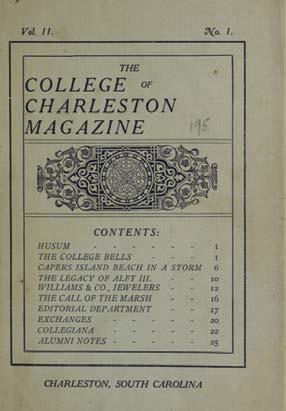
and alumni-authored pieces on books, campus happenings and college life. The magazine was published under the auspices of the Chrestomathic Literary Society, which meant the same organization that gave students a place to debate and speak also gave them a place to publish. For the Founders, then, the Society’s leadership roles represented far more than status. They offered access to one of the College’s primary spaces for student expression, both spoken and written.
That matters because it changes the context of Pi Kappa Phi’s beginning. Kroeg, Fogarty and Mixson were not simply frustrated students seeking titles, but aspiring young leaders who wanted their voices heard and their ideas shared.
There is another reason the Chrestomathic connection is significant to Pi Kappa Phi’s history. The Chrestomathic Literary Society itself had been founded in 1848 by students who broke away from the Clisophic Literary Society because they believed their rights were being infringed upon by a tyrannical majority. Long before Pi Kappa Phi existed, the Chrestomathic Literary Society already had its own story of dissatisfied students deciding that if the existing structure would not make room for them, they would build something new.
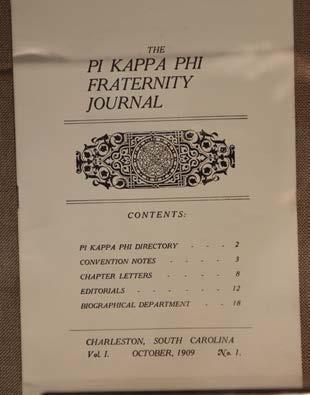
More than half a century later, Pi Kappa Phi’s Founders found themselves confronting a version of that same problem. By 1904, the leadership roles of president, vice president, secretary, treasurer, librarian, reader, quarterly orator, critic and janitor within Chrestomathic were held almost exclusively by fraternity men. Because of that, the Founders had a negative view of fraternities in general. They saw them as tools for excluding others and pushing promising leaders aside in favor of their own members. Fraternities, to them, were systems of control, not brotherhoods built on merit or shared principles.
So, they organized against that system. Forming Nu Phi, meaning "non-fraternity," 15 men vowed to one another that they would vote for the same candidates in the Chrestomathic Literary Society’s 1904 elections. They created their own slate and tried to outmaneuver the campus fraternity structure that kept leadership out of reach. Yet when the time came, eight of their members broke that vow and cast their ballots for fraternity candidates instead.
That betrayal could have destroyed the group entirely. Instead, it was the beginning of something new.
The seven loyal Nu Phis found in one another a true brotherhood. In keeping their word to each other, they discovered that the bond between them had become something stronger than a temporary political alliance. Ironically, in trying to create the antithesis of fraternity through the Nu Phi Society, they had begun to embody what fraternity, at its best, should be. That loyalty, trust and shared conviction prevailed, even when the slate did not.
With the Nu Phi name stained on campus and their understanding of the word fraternity transformed, those loyal men came together and founded Pi Kappa Phi Fraternity as we know it today.
That founding bears a striking resemblance to that of the Chrestomathic Literary Society. Both organizations were born from frustration with exclusion. Both emerged when a group of young men decided the existing organizational structure would not make room for them. Both began, in their own way, with separation from a dominant majority and the decision to build something new instead.
Ultimately, the men of Pi Kappa Phi did what they had set out to do. Bound together by an unexpected brotherhood, they succeeded in breaking through the hold the other fraternities had maintained on the Chrestomathic Literary Society’s leadership. Within the Chrestomathic Literary Society, Kroeg was elected vice president, Mixson became secretary, founding member Anthony Pelzer Wagener was elected treasurer and Henry Klugh Purdy, the first member recruited after the founding, became janitor. Those victories showed that the Founders recognized a barrier, built something strong enough to overcome it and finally claimed their rightful place in leadership.
Eventually, the legacy of the Chrestomathic Literary Society appeared in Pi Kappa Phi in another important way through the Fraternity’s magazine. Originally called The Pi Kappa Phi Fraternity Journal in 1909, the publication adopted its current name in 1911 with the first issue of the Star & Lamp.
Just as the College of Charleston Magazine gave students a way to carry their ideas beyond the walls of the College, Pi Kappa Phi’s magazine gave the Fraternity a way to share its own ideas and updates across distance. In both cases, print extended the organization’s reach beyond the rooms where its members gathered. It allowed people to see themselves as part of something that could last beyond their college years.
The Fraternity was born in a campus environment where speaking, writing and publishing were closely linked, where leadership within a literary society meant influence over both conversation and print and where young men learned that if they wanted their voices to matter, they would have to claim a position from which to speak.
So, when Pi Kappa Phi’s founding is remembered, the Chrestomathic Literary Society should not be treated as a footnote to the real story. It is part of the story itself. It was the backdrop that sharpened the Founders’ ambitions, the institution that revealed the unfairness they were up against and the model that, in some ways, Pi Kappa Phi’s founding would follow.
Both organizations were created by young men who refused to accept exclusion, believed that their voices mattered and understood that words, whether spoken in debate or printed on a page, mattered.