Pesticides removed
Rodenticides are replaced with peppermint oil
SHALEAH GREEN NATALIE MIRANDA Reporter & Editor-In-Chief @sheleahgreen21 @natalierosemir
Pierce College has initiated the use of peppermint oil and barn owl boxes to help rid the campus of rodent infestation without harming the wildlife.
Last semester, faculty members had expressed concerns about the rabbits and squirrels that became victims of animal poison, which was housed in fake rocks around campus. It is no longer in use.
Interim President Larry Buckley said the poison, known as rodenticide, provides a painful death to its hosts.
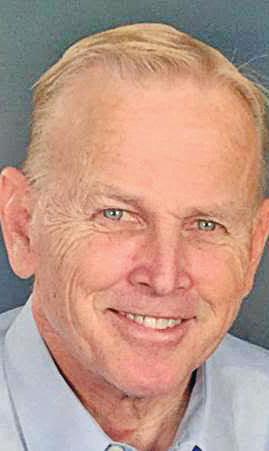
“So a rat eats the blood thinner – it’s so powerful,” Buckley said.


“The anticoagulant essentially collapses their cardiovascular system and they bleed to death internally. [It’s] cruel, but they die a pretty awful death as compared to a snap trap, which just breaks their neck–it's done.”
Shannon DeVaney, the chair of the Life Science Department, took on an active role in finding ecofriendly alternatives to resolve the pest problem.
“Some of the other faculty on the campus were closer to where the poison was put out, and noticed the decline in wildlife,” DeVaney said. “They were noticing the decline first and were really sad about it. That‘s when I came in. I was able to say this is a problem and this is how it affects things. I
was able to suggest we stop using the pesticide housing units.”
DeVaney has been working with Buckley to find eco-friendly ways to stop the rat infestation.
“I had first met with Mr. Buckley to give him my biological perspective on the rodenticide and how it is a problem,” DeVaney

said. “We spoke about what other natural solutions we can do instead. He was very receptive. He agreed that we don’t want to keep using the pesticide on campus.”



Buckley acknowledges that rats were not the only rodents being harmed by the pesticides.
“The problem with rodenticides
that are put into these kind of boxes is that other animals can get into them,” Buckley said. “So we know squirrels, rabbits, other small things such as gophers can all get in there.”
According to Cara Gillis, the professor of Environmental Ethics and chair of the Ethics Committee,


said a holistic approach is the best solution to maintain the wildlife on campus.

“Peppermint oil and anything with capsasis, can be a deterrent for many animals,” Gillis said. “So putting those around trash cans will help with rodents and even ants, too.”
At the beginning of this spring semester, natural repellents like peppermint oil were placed around the perimeter of buildings that are known hotspots for rodent infestation.
The oil will also be placed outside of trash cans to help with any insect overpopulation.

DeVaney said along with peppermint oil, barn owl boxes will be placed in the trees during the early spring to encourage barn owls to nest on campus.
“The greatest thing about barn owls is they are great with people and they dont mind being around them,” DeVaney said. “Also, a rat is the biggest prey it can take so you wont need to worry about small dogs becoming prey from neighboring communities.”
Gillis disagrees with the use of deadly poisons because she believes it in inhumane.
“There is a conflict that we have to weigh,” Gillis said. “If we can do it in a less invasive way and still satisfy everybody's interest, that will be the best way.”
Gillis encourages the students and faculty to keep looking for eco-friendly solutions to help the campus wildlife thrive.
at 81
James “Jim” Lagerstrom, known for establishing the program and leading the cultivation of the Pierce College American Sign Language Interpreter Training Program, which is still in use today, died Sunday, Mar. 3, due to complications with bone cancer. He was 81. He was a speech and debate professor at Pierce College from 1966 to 1997, and he spent time during that period traveling the world in search of better accommodations for disabled students in Special Services.
Lagerstrom attended Oakland High School and then the University of California, Berkeley, where he received a Bachelor of Arts in Speech Communication. He earned a Master of Divinity from Fuller Theological Seminary, and he taught there for two years before receiving a scholarship to attend the University of Edinburgh, Scotland, in 1961, where he earned a Master of Arts in
Philosophy.
His wife of 44 years, Patricia "Pat" Lagerstrom, said that Pierce College has a special place in the hearts of the Lagerstrom family because it is where the couple met.

Pat was a student trying to attain a teaching degree. Her first husband died in 1970, and Jim was recently divorced and had just began his career as a professor. Pat needed a speech class to fulfill her transfer requirements, which prompted a meeting between Jim and Pat where there was an instant connection between them.
“He asked me for my phone number, which I thought was very strange because he had access to my files and I’m thinking, ‘oh, there’s something here.’ On the 4th of July that year, he called. I wasn't home and my daughter took the message. I got home and she said that some Jim Lagerstrom, called while I was gone. And boy, my heart went a flutter,” Pat said.
Jim married Pat in 1974.
Pat said her husband was a selfless and generous man with a can-do attitude that inspired students.
“He felt so fulfilled meeting with the students and being able to help them and guide them on their trail to a degree,” she said.
Jim spent the majority of his teaching career at Pierce College, where he worked with Barbara Anderson, a communications professor.
“It really just inspires me to think that what he did. There is still kind of a ripple effect through the campus, and that makes me as a professor want to make sure that I’m doing whatever I can to make a difference in the lives of students and in the programs that we have on campus,” Anderson said.
After Jim retired from Pierce, he went back to school to become a lay pastor. In 2005, he began serving Solana Beach Presbyterian Church, where he worked for five years ministering people in need.
Solana Beach Care Ministries Coordinator Karen La-Haise worked closely with Jim. She said he was a strong support for people.
“He was able to speak life into their lives using the living word,” La-Haise said. “He had a wonderful sense of his identity in the Lord and,
therefore, brought confidence to those who were being ministered by him.”

La-Haise said the Lagerstroms were a “power couple” in the church and that they were inseparable.
Pat thinks this is due to Jim’s influence in the church.
“I always went with him to the different occasions that were going on over there,” she said. “We were very visible in the church. I could feel eyes on us when we walked in on Sundays. It was amazing.”
According to Pat, the pair enjoyed sailing and traveling, which included 51 adventures at sea, landing on all the continents and major cities of the world. Their journey to South Africa is noted as one of Pat’s favorites.
“It was just marvelous,” she said. “The people there were wonderful. They were just nice and smiling and the drives we took on the highways were unforgettable. It was a really wonderful adventure.”
Along with Pat, Jim is survived by sister Joanne, children Doug, Laura, Linda, Lori, Ron and Vikki, and nine grandchildren.
Services were held Saturday,
Mar. 9,
Allowing homeless students to sleep in their cars may solve one problem, but it introduces another.
Theses issues were brought up at Academic Senate on Monday when AB 302 was discussed by Interim President Larry Buckley.
If this assembly bill passes, this would allow homeless community college students to park their cars on campus to sleep overnight. These individuals would need to be enrolled in courses, have paid their enrollment fees and be in good standing with the college.
The problem this introduces is a financial one.
The captain of the Sheriff Station stated more security would cost an additional $1,000 per day, per campus, Buckley said. This means a total of $365,000 would need to go to each of the nine colleges in the Los Angeles Community College District.
Increased security would ensure only registered students would park their cars overnight.
“We don’t know exactly how many students are homeless here, so without a specific number we can only go by an estimated amount,” Buckley said.
The president said that with the added cost around this new procedure the cost could reach $1 million a year.
Buckley said he doesn’t know if this is the most effective process to help homeless students, but if the legislation does pass, the school will find a way to meet the law.
“They are hearing our voices right now about our reservations, and while I embrace the concept of doing things to address homelessness and food insecurity for our student are very, very real,” Buckley said. Regardless of the outcome, Buckley said that simply allowing homeless students to sleep in cars is not enough.
“Is it okay for us to say, ‘Okay homeless students, thank you for being here today. I’m going home tonight and you can sleep in the parking lot and I’ll see you in the morning,’ and that solves the problem. It does not,” Buckley said.
Financially though, implementing AB 302 may be difficult considering the school’s financial situation.
Senate Treasurer Angela Belden reported that budget difficulties are continuing. She said this year’s budget is more than 3 million and 6 million for the following year.
“We are falling on some hard times, and it is estimated that we will end the year with a $3.2 million. We have zero dollars in reserves locally. And wait, it gets better. Next year, we are projecting a $6 million deficit. So assume the crash positions, everybody,” Belden joked.


Woodland Hills, California Volume 130 - Issue 4 Wednesday, March 13, 2019 One copy free, each additional copy $1.00 A FIRST AMENDMENT PUBLICATION /theroundupnews @roundupnews /roundupnews @roundupnews @roundupnews RUONLINE?
at 11 a.m. at Trinity Presbyterian Church, 2304 Antonio Ave., Camarillo. Pat requested any donations go to Solana Beach Presbyterian Church. Contact 805-484-0530. Pierce mourns loss of American Sign Language Interpreter Training Program founder ckern.roundupnews@gmail.com
nmiranda.roundupnews@gmail.com. NYSHEKA HERRING Reporter @HerringNysheka Christopher
A rabbit
on a rock in
12,
CAMERON
Managing Editor @ckernroundup
Retired professor of speech and debate dies
sgreen.roundupnews@gmail.com
Torres/ Roundup
sits up
the Botanical Garden at Pierce College in Woodland Hills, Calif. on Mar.
2019.
KERN
Opinions .................2 News..........................3 Features.......................4 Campus Life...................5 Photo Essay ....................6 Sports................................7 Sports..................................8
Photo Courtesy of Patricia Lagerstrom
Assembly Bill concerns senate
nherring.roundupnews@gmail.com September 26, 1937- March 3, 2019
Weather
Wed. Mar 13 High: 70 Low: 49 Sunny Thur. Mar 14 High: 70 Low: 51 Sunny Fri. Mar 15 High: 73 Low: 50 Cloudy Sat. Mar 16 High: 75 Low: 52 Sunny Sun. Mar 17 High: 80 Low: 54 Sunny Mon. Mar 18 High: 79 Low: 54 Sunny Tues. Mar 19 High: 73 Low: 55 Cloudy Wed. Mar 20 High: 66 Low: 49 Cloudy The Pierce College Weather Station has provided meteorogical data to national agencies since 1949 Find out more at piercecollegeweather.com
The
Roundup
From the desk of the Roundup: Editorial



-Corrections-
Volume 130, Issue 3:
News 3:
Komalpreet Batth was misgendered. Batth prefers she/ they pronouns.
Komalpreet Batth was misquoted. The correct quote is: “A lot of people don't even know that's just your sun sign. They don't know that there's moon, there's a rising, there's a whole birth chart, like how the planets, the stars were aligned from the moment you were born.”
Features 4:
Nomani was not born in Iraq
See any errors we missed? Email us at: newsroom.roundupnews@ gmail.com
While the statistics for sexual assault often will vary from campus to campus, data from a recent study suggests that an average of 21 percent of women experience sexual assault in some form at some point during their college years.
This means that one in five women that pass you on this campus has dealt with some kind of sexual assault or will by the time she gets her degree.
According to A Secure Life, featured on Forbes and CNBC, although both men and women are victims of sexual assault, women are at a higher risk, and college-age (18–24) women are at even higher risk than women of other ages.
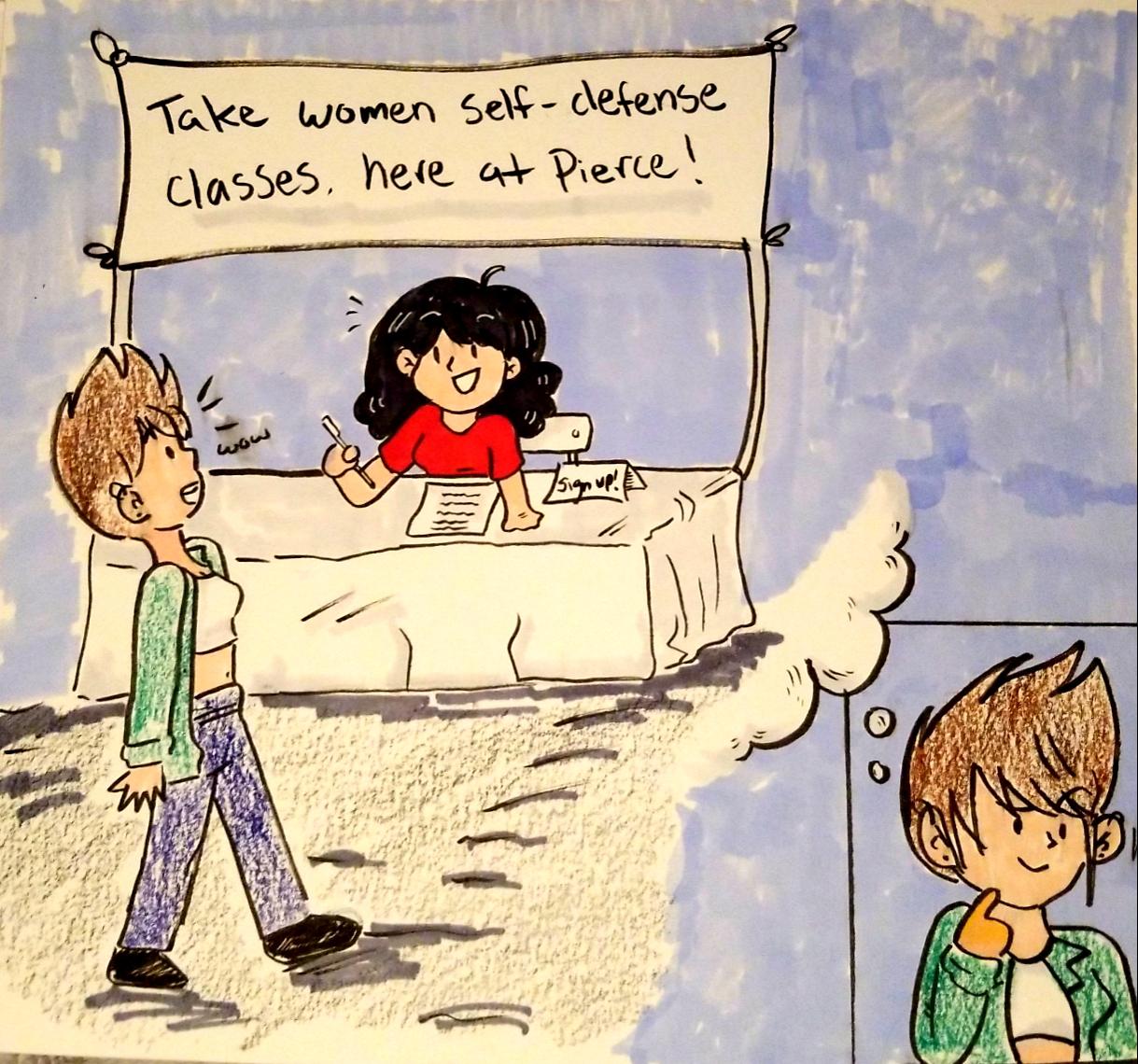
We could offer seminars on campus that teach women how to properly be aware of their surroundings, spot danger and fend off a predator if the time comes because the worst part of an attack for a victim is the feeling of total helplessness.
Not only the physical demands of self-defense but also the physiological and emotional aspects as well.
Women can prep themselves with pepper spray or a taser gun, but in a real world situation there might not be time to reach in your purse to grab your armor against these predators, so women should arm themselves with knowledge offering empowerment in place of where some might feel defenseless.
And what better place to gain knowledge than a place of education like Pierce College? The campus can share a crucial life saving skills
that they might not otherwise look into because the cadets patrolling won’t always be around.
Pierce could execute this creating seminars that ASO could fund a few times a year, where they could bring in instructors who are trained in both physical and physiological self-defense. There should also be some sort of collaboration with the sheriffs on campus to show support from those who are here to protect us.
They should be held in the gym ideally toward the beginning of the semester for all the women who will be on campus day in and day out, and toward the end to keep the information fresh in students brains as they take on winter/summer classes and winter/summer break.
These safety classes should include basic self-defense moves, for example, learning how to use one’s balance and weight leverage to take down a bigger opponent.
They also could include what areas of the body are the most effective to aim for while trying to escape a situation, along with exercises to keep your calm in a situation to conclude the best possible move.
The College of Public Health offers an accredited self-defense course only open to women. Other college campuses such as North Philadelphia Temple University have already adopted their own self-defense courses, not only for women, but for parents and teens as well.
There is no college campus in the district that promotes a course like this in the LACCD district.
Many women are left with
guilt and shame after an assault, never reaching out to seek the help the need from police, shelters or hospitals. It is estimated that only two percent of victims of rape or sexual assault report it to law enforcement or local authorities.
Pierce needs to show the women of its campus that not only is it okay
Bike lanes for e-scooters?
to talk about it, but that we should be arming our young women with the knowledge and strength to protect themselves in any situation.
According to an interview with Susan Carbon, director of the Department of Justice’s Office on Violence Against Women , “even though the nation has witnessed
a decrease in the area of violent crime in recent years, the area of crime against women has actually experienced a dramatic increase.” We need to stop the violence where it starts.
Pro: It's time to stay in your lane Con: Kicking it to the curb
but the two main objectives are to show direction and to serve protection.
Three words: Bicycle. Sharing. Programs.
Modern transportation methods are on the rise, and we are beginning to see colleges across California tend to an upand-coming transportation trend.
Students, staff and faculty from Pierce College have been deciding whether or not to allow designated bike lanes on campus for student accessibility.
Electronically powered scooters and bikes such as Birds, Limes, and Jump bikes have been appearing on and off campus during the first weeks of the semester. This advent of micromobility is the first step toward sustainable transportation.
E-scooters and bikes are a main type of transportation that can be very efficient for many students attending Pierce. More than 19,500 people bike to work on 593 miles of bikeways in Los Angeles every day, according to the Los Angeles Department of Transportation. Surely, Pierce students are included among that five-digit number.
Most students have a really busy schedule, so these modern modes of transportation can help students get to and from their classes on time.
A bike lane has many purposes,
According to the first Campus Travel Survey by UC Davis, the percentage of the population that is commuting by bike has grown exponentially. In 2007, 38 percent of the population rode a bike to school. The number began to climb 3 percent from 44 percent in 2012-13, and rose again to 47 percent when surveyed in 2014-15.
More often than not, students need to rush during the mere few minutes they have between classes to make it in time for their next one.
According to the Frequently Asked Questions on the Pierce website, there are bike racks set up at different locations of the campus for students to securely lock their bikes when they attend class.
If the classroom is located on the other side of campus, walking simply won’t make the cut.
Cycling or riding to opposite sides of Pierce provides students who already cycle to campus a very easy solution to this dilemma.
If the administration passed regulations to initiate bike lanes on campus, it would make getting on time to class easy for students who use bikes to get across campus. The bike racks are already installed, but Pierce currently has a ban on riding bikes and skateboards on the school
grounds. Due to this restriction, having bike racks placed in different areas around campus is ineffective since they are not being used to their fullest ability.
To minimize student crashes and injuries, the rule prohibiting pedaling on campus was most likely implemented. Adding a bike lane to the campus would bring us one tread closer to a safer, efficient campus.
According to Bicycle Universe, other countries with higher rates of cycling, and lower rates of cyclist injuries, have implemented bike lanes with regulations to keep pedestrians and cyclists safe. Designated walking areas are provided and a separately marked lane for riding, eliminating all the confusion and possible injury with students getting in each other’s ways.
Many students attending Pierce are aware that the “no riding” rule in place but know has minimal effect since it is not enforced regularly. Why not pedal this perishing policy into extinction?
Students should be given the option to ride their bicycles whenever they want to, with the administration’s permission, without fear of crashing into another student, faculty member, or staff. Pierce would be setting itself up for more efficiency if they were to install bike lanes on school grounds.
sgreen.roundupnews@gmail.com
Maja Losinska
Joshua Manes
Joshua Bleiweiss
Johnathon Guerino
Nayodya Dharmasiriwardena
Ivan Moises Lozani
Sonya Miller
Manuel De La Paz Jr.
Alexandra Rose
Klivans
Katya Beth Castillo
Nathan Reece
GEORGE APIKYAN Campus Life Editor @Roundupnews
The war for bike lanes has been a heated discussion between advocates and their oppositions.
Pierce College is already a giant campus, which has 18 thousand concurrent students coming in and out everyday.
Sidewalks are cluttered and parking spaces become a battlefield of honking and rage-induced weaving. Students are frantic to capture the final vacant spot only to have another car take it before them.
Adding a burning match to the fire that is bicycles and e-scooters would only set the entire school in a blaze.
The campus may be large in size, but students who have a 10 minute gap in between classes can travel from one side of the school to the other. They can easily frolic to their respective class with no issues.
Having these bike lanes introduced to Pierce would only do harm mainly because the campus is not the size to warrant that form of transportation. With the addition of new e-bike rental programs such as Lime, the end goal of smoother transportation has found itself in a bigger mess due to obstructed pathways.
Advisers:
Jill Connelly
Jeff Favre Tracie Savage
*For advertising call (818) 710-2960
Photographers:
Chung Sonia Gurrola
Foot traffic aside, adding bike lanes and e-scooters only diminishes the size of the sidewalks and pathways to many classes. These implemented lanes would make spaces even more compacted and uncomfortable for students who often have to walk from class to class.
This also opens up room for disaster for distracted students that could walk in these bike lanes with their headphones on, causing a massive cluster of angry cyclists and injured peers. The bike lanes that are under development and other lanes currently used in the city aren’t too safe to begin with.
According to pedbikeinfo. org, in 2015, 818 people lost their lives in bicycle/motor vehicle crashes, more than two people every day of the year in the U.S. This represents a 6 percent increase in bicyclist fatalities since 2006 and a 12.2 percent increase from the previous year 2014.
A college community is mainly a pedestrian environment, where bikes and scooters are typically banned and minimized to ensure the safety of students and faculty alike.
Not only are Pierce students at risk, but minors from middle school and high school often visit the campus for sports practice. These young kids are prone to jaywalking and an overall
lower awareness, which increases the risk of bicyle accidents.
More often than not, bicyclists tend to avoid bike lines in general and stick to the sidewalks. Sharing the same pedestrian space makes more room for lawsuits down the line. These lanes act like another set of roads. Anyone who has visited the Santa Monica Pier has seen how much of a nightmare it can be to get through an army of cyclists just to get to the other side.
There was a report at Uiniversity of California, Santa Barbara of a student crossing a bike lane only to be hit by a biker, breaking her arm in the process. This is because UCSB is about 1055 acres, compared to Pierce's 426 acres. That is more than double the size and they still have incidents like this. With our minuscule pathways and large enrollment numbers, it becomes difficult to recommend bikeways and other forms of transportation on school grounds.
Instead of bike lanes, there should be added bike racks to allow students to store their bikes in more convenient locations so they can ride from class to class without putting themselves and their fellow classmates in danger as well.
only in the editorials. Cartoons and photos, unless run under the editorial masthead, and columns are the opinions of the creators and not necessarily that of the Roundup. The college newspaper is published as a learning experience
under the college journalism instructional program. The editorial and advertising materials published herein, including any opinions expressed, are the responsibility of the student newspaper staff. Under appropriate state and federal court decisions, these materials are free from prior restraint by the virtue of the First Amendment to the Constitution of the United States of America. Accordingly, materials published herein, including any opinions expressed, should not be interpreted as the position of the L.A. Community College District, the college or any officer or employee thereof.
2 Opinions ROUNDUP: March 13, 2019 The right hook for women Letters to the editor 6201 Winnetka Ave. Woodland Hills, CA 91371 Room: Pierce College Village 8211 Editor's Desk: (818) 710-3397 Newsroom: (818) 710-4117 newsroom.roundupnews@gmail.com www.theroundupnews.com Editor-in-Chief .................Natalie Miranda Managing Editor ......................Cameron Kern Photo Editor ....................Christopher Torres Photo Editor .........................Angelica Lopez Opinions Editor ..................ChelseaWestman Opinions Editor .................Richard Espinoza News Editor.............................Alexis Canelo News Editor............................Arielle Zolezzi News Editor..........................Sofi Matzaganian Features Editor..................Nicholas Martinez Features Editor........................Devin Malone Features Editor...........................Susan Lopez Campus Life Editor.....................Noah Goldbloom Campus Life Editor.................... Belen Hernandez Online Editor .......................Danielle Padilla Sports Editor...........................Felipe Gamino Sports Editor..........................Blake Williams Sports Editor.....................Christopher Torres Reporters: Abdul Ali Amberly Padzik Amir Malekpour George Apikyan Gina Wong Harley Davis Jackson Hayano Jesse Bertel Ickler Justin Miranda Nysheka Herring Shaleah Green PoLicy: Letters and guest columns for or against any position are invited. Letters should be kept as brief as possible (300 words or less) and are subject to editing. Letters must be signed and include a valid mailing address and telephone number. Pseudonyms or initials will not be used, but names may be withheld upon request and approval of the Editorial Board. The Roundup publishes “Letters to the Editor” that are not obscene or libelous and do not contain racial denigration. Writers are given the opportunity to revise unacceptable letters. The Pierce College Roundup will not publish, as letters, literary endeavors, publicity releases, poetry or other such materials as the Editorial Board deems not to be a letter. The deadline is 11:59 p.m. the Sunday prior to the issue date. editoriaL PoLicy: The Pierce College Roundup position is presented
Illustration by Melissa DiTomasso / Roundup
SHALEAH GREEN Reporter @sheleahgreen21
gapikyan.roundupnews@gmail.com
Brandon SinclairVolkens Cole Toderan
newsroom.roundupnews@gmail.com
H2O on the go: water made more convenient

Six new water bottle refill stations are set to be installed around campus this spring
JUSTIN MIRANDA Reporter @RoundupNews
Searching for a water fountain to refill your reusable water bottle is about to become easier with new additions to campus.
Six water bottle filling stations will be installed this spring semester throughout the whole Pierce College campus.
Director of Facilities Paul
Nieman said the cost for the six water bottle filling stations was around $150,000, which outbid competitors.
“We bid it out and the contractor will be buying what we specify, and we will be putting it in,” said Nieman. Nieman said the water bottle filling stations will be here this semester just if the time elapsed between order and delivery on the units for the water bottle filling stations are not long.
“The task order will be issued this week so if that happens then I can get going here and start getting them scheduled to get these installed,” Nieman said.
The water bottle filling stations will be installed where several drinking fountains are currently installed. There will be two types of stations, one for inside the buildings and one for outside.
“Inside the buildings, it’s a
retrofit that goes above where the drinking fountain is,” said Nieman. “The one that goes outside we actually have to replace and redo the work a little bit to put the exterior one.” Nieman said there will be three
water bottle stations inside the Admission and Records, Business and Performing Arts buildings. The stations in the Performing Arts building will be by the elevator and the bottom level where the costume and makeup labs are.
The two drinking fountains in the courtyard area by the library and resource center will be removed and replaced by the water bottle filling station.
“We’re taking those drinking fountains out and putting in the filling stations,” said Nieman. Those will be a combination and they’ll have two drinking fountains, one regular height and one for American Disability Association accessibility and the water bottle filling station will be on it as well.”
The availability for the water bottle filling stations will be the same as the drinking fountains. If it is inside the building, it's available to use if the building is open. The stations that are outside would be available only while the campus is open.
“It’s free like getting water at a drinking fountain,” said Nieman. “We’re not providing water bottles though. No cost and anybody can use it.” Nieman said the maintenance is low.
[For the full story visit theroundupnews.com]
Inclusivity makes its way to campus through new restrooms
Bill requires single use bathrooms for all genders to be imoplimented in public places as of March
ARIELLE ZOLEZZI
News Editor
@ArielleZolezzi
Pierce College is helping with inclusivity for students with gender-inclusive bathrooms on campus.
On March 1 of 2017, California enacted AB 1732, the Equal Restroom Access Act requiring single-occupancy restrooms in places of public accommodation have signs indicating they are gender-inclusive.

A single-occupancy bathroom is
defined as a “toilet facility with no more than one water closet and one urinal with a locking mechanism controlled by the user.”
Dean of Student Engagement Juan Carlos Astorga said it is a great way to get the conversation started.
“By providing gender neutral bathrooms it acknowledges communities that for a long time have been in the shadows,” Astorga said. “It’s a subtle way of saying I see you.”
Drake Aguilar, a communications major, is happy that gender inclusive bathrooms have arrived.
“It’s little things like that that make a lot of people feel accepted and normal,” Aguilar said. “It makes me proud to be a student at
New scoreboard helps attract athletes
LED scoreboard to be installed in Shepard Stadium soon
JESSE BERTEL ICKLER Reporter @JesseBertel
Pierce College Football awaits a new scoreboard that would be more functional, raise student morale, help with recruiting and generate money as an advertising tool.
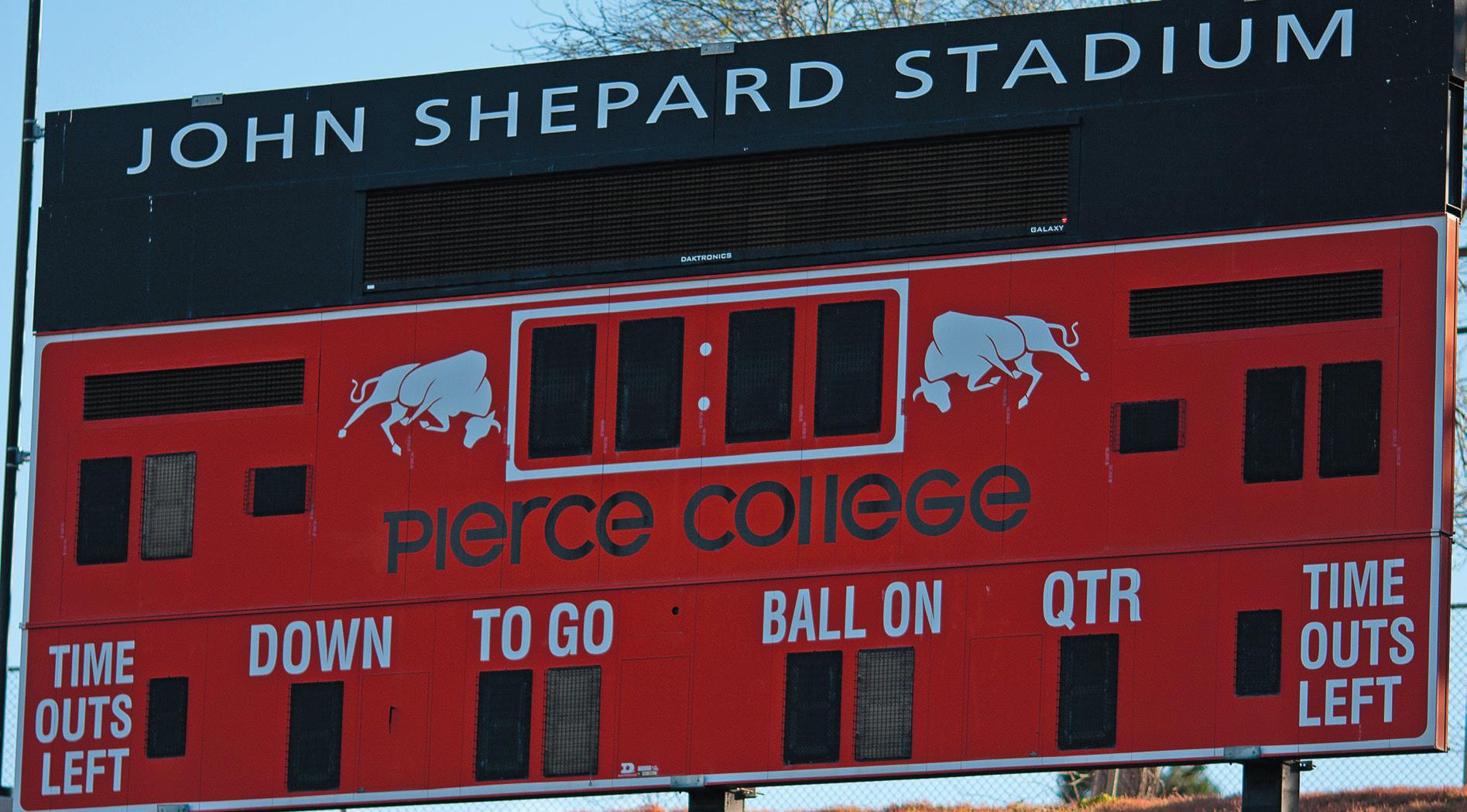
According to Pierce College Head Football Coach Carlos Woods, the scoreboard is ready and it’s just a matter of installing it.
“When I spoke with upper management, they told me that everything was pretty much in place,” Woods said. “It's just a matter of working out the logistics of getting the crane to remove the old scoreboard, and take the new scoreboard out of the warehouse and replace it.”
Head Strength and Conditioning
Coach Dylan Flannery explained how the new scoreboard will benefit the team and help Pierce college stand out.
“One of our biggest hopes with it is that we can use it as a recruiting tool,” Flannery said. “We already have a great stadium with the bowl. So, to add a scoreboard will allow us to run replays on and put highlights on, and it's very modern as opposed to many other colleges in the area who don't have that.”
Rundown Brahma Blotter
These incidents were reported between March 3-9
Reported by: Alexis Canelo
3/4 11:29 a.m.
•Student Incident
A female student in Lot 1 was upset the officers were blocking her vehicle while helping another student. She was honking and being belligerent.
3/5 7:05 p.m.
•Student Incident
A student was arguing with a cadet that was rewriting tickets.
3/6 1:00 p.m.
•Finding Lost Property
A father came to campus to locate his daughter's cell phone using Find My iPhone. The cell phone was found.
According to Flannery, the old scoreboard has become an unnecessary burden to the employees.
“On a practical level, to not have lights out, to not have the scoreboard glitching and our employees are the ones who are working the scoreboard, allowing them not to have to deal with that every game is a huge plus as well,” Flannery said.
According to Pierce College Student Jayme Vicente-Colon, who played safety for the football team last semester, the long-awaited scoreboard upgrade will signify a change coming and a return to prior glory days.
“He’s been telling us about it for like a year,” Vicente-Colon said.
“We used to be so great back in the day and we're just trying to find our way back to that. I think it will be good for the students. It would bring more spirit back to the team and more spin around the school.”
Woods explained that having a more modern scoreboard would raise student morale surrounding the football team and would also help with admissions. “Crespi and Sierra Canyon utilize our fields for Friday football games,” Woods said. “The scoreboard is a great recruiting tool because the high school teams have access to use our scoreboard during their games. We had a
very great year last year and we're excited to build off of that this upcoming season. I think having a scoreboard just elevates that a little bit more.”
According to Woods, once the new scoreboard is installed, Pierce College will be able to reap the financial benefits of the newer technology.
“We can use that as a fundraiser,” Woods said. “We can put ads
Pierce.” Professor Jennifer Rosenberg reinforced the idea of creating a secure and loving campus morale.
According to the Pierce College Campus map there are 28 restrooms total and of them there are six gender inclusive restrooms.
“I would just want all students on campus to feel like they have a place that they can do their business in peace,” Rosenberg said.
Angela Belden, Associate Professor of Psychology, is in favor of converting all single stall bathrooms into gender-inclusive ones.
“It’s not enough. Any single stall bathroom on campus should be utilized,” Belden said.
3/8 12:10 p.m.
•Campus Incident
A male reported his bicycle as missing.

on it. We can advertise student engagement, student enrollment, There are so many things that we can utilize the scoreboard for because it's going to be completely LED. So we, you know, we can run live feeds, we can run various things that.”
jbertel.roundupnews@gmail.com


ROUNDUP: March 13, 2019 3 News
Filling up up a water bottle traditionally via water fountain will soon be replaced with a much easier
PHOTO ILLUSTRATION by Joshua Bleiweiss / Roundup
Refill Station system.
PHOTO by Chris Torres / Roundup
The sign for the Gender Inclusive bathroom at the Village in Pierce College.
Pierce College
Station General Information: Emergency:
Sheriff’s
(818) 710 - 4311
PHOTO by Joshua Manes / Roundup
The current scoreboard at John Shepard Stadium in Pierce College on Mar. 7, 2019, in Woodland Hills, Calif. A new scoreboard is expected for next football season.
azolezzi.roundupnews@gmail.com
"It would bring more spirit back to the team and more spin around the school.”
-Jayme Vicente-Colon Brahma Safety
A lesson from beneath the waves
Field trips to ocean sites give students an edge in marine bio
JESSE BERTEL Reporter @JesseBertel
Traditional classroom
sort of led me into this world of becoming a researcher and producing ideas and really not being afraid of embracing my own independence in that
According to Wells, though the field trips are fun, the students who go on them must be prepared to work hard.
“I train students to work
discipline and the first thing students want to do is get down someplace and party and get drunk,” Wells said. “I say, no you don’t do that. We’ve got the
Wells explained that teaching fieldwork early prepares students for further levels of study. “I teach them how to work in
go to university they’re getting somebody who’s already field trained and ready to do research,” Wells said. “Some of them step right into graduate research
ROUNDUP: March 13, 2019 Features 4
Planting the seed to a greener community
Over 400 volunteers and Circle K club members plant 182 trees in celebration of Earth Day LA
JACKSON HAYANO Reporter
@hayonajackson
Members of Circle K got a little dirty over the weekend planting a tree in Van Nuys.
Their activity was a part of a larger event known as Earth Day LA, where volunteers showed up to the Van Nuys Recreation Center to help plant trees around the area.
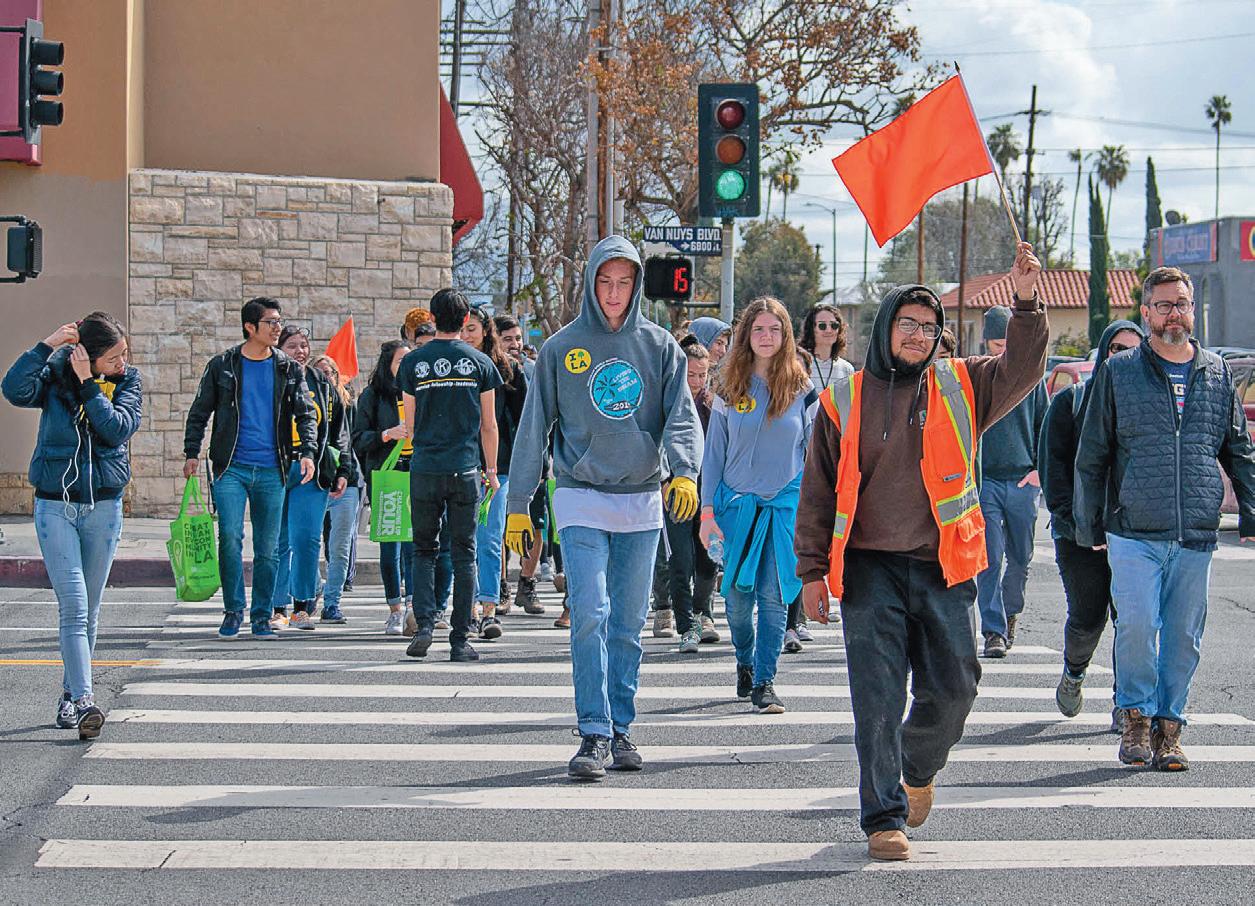
Club President James Cortes said that the event is in collaboration with the environmentalist group Tree People, and that the goal was to plant at least 165 trees.
“This is a way to give back to the community,” Cortes said. “Especially since it’s the spring, we wanted to do a nature-type event.”
The club picked a spot on Van Nuys Blvd. and Hatteras St. to plant their tree.
“I’ve never planted [a tree] before, and I’ve always wanted to,” member Sandra Godina said.
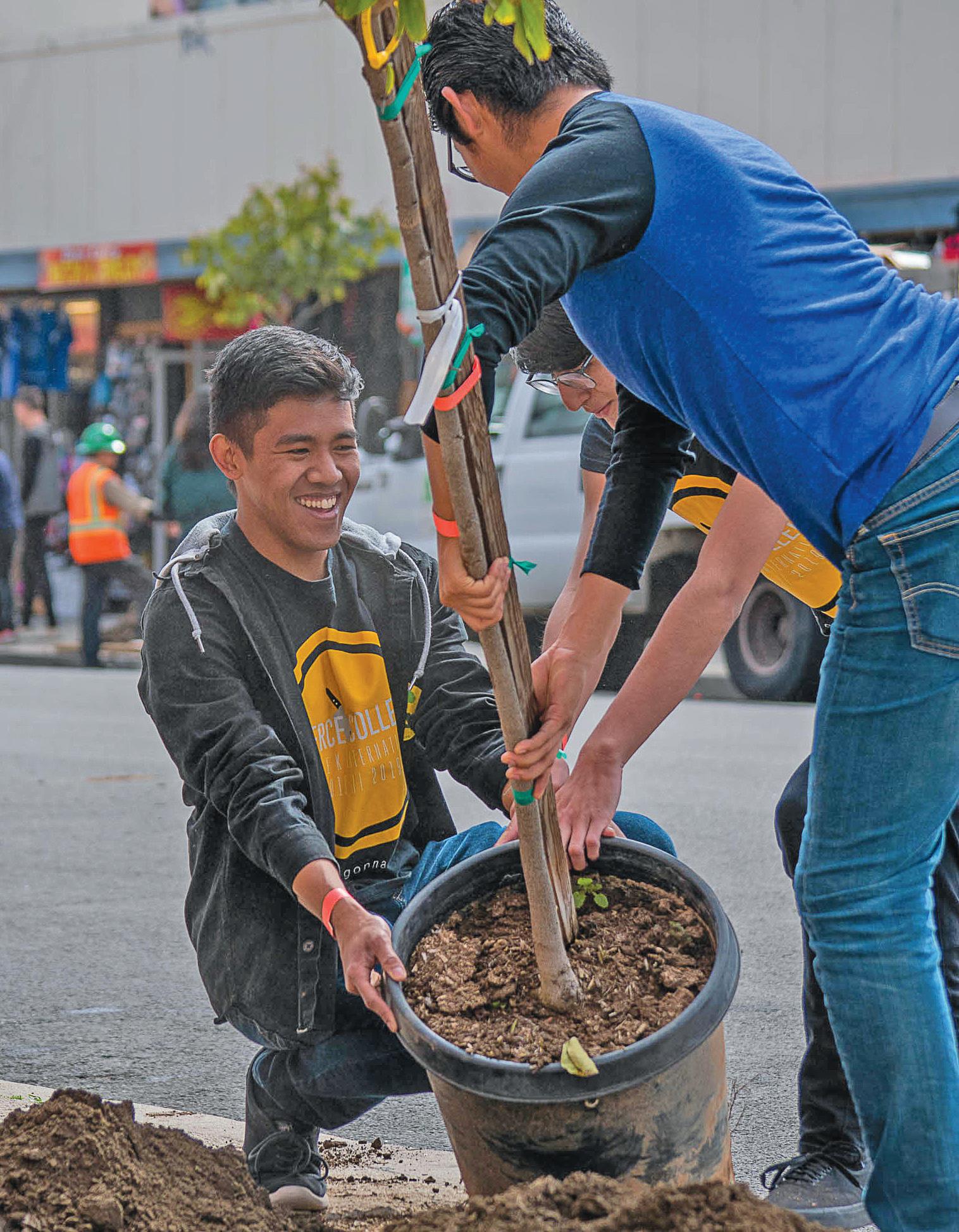
With a little effort and strength, members Manny Francisco and Heri Guzman extracted a young sapling from its bucket and it placed it in a pre-dug hole. The remaining members then took turns shoveling the dirt and filling up the hole.
JACKSON HAYANO Reporter
@hayanojackson
English can be a very daunting and stressful language to learn, especially for non-native speakers.
A weekly event known as Communication Café offers ESL students the opportunity to practice speaking English with fellow peers and tutors.
Professor of Communication
Studies Lori Travis, started the program three years ago.
She said the café provides an opportunity for ESL students to practice speaking English in conversational situations.
“We host [Communication Café] in the cafeteria because we want it to feel like a nonacademic setting. Students can eat and socialize and practice English with each other,” Travis said. “They don’t feel like they’re in a classroom [here]. We allow them to do their own thing.”
Each week, students and tutors referred to as Discussion Leaders, sit in groups and talk about a different series of
After they finished planting the tree, the club members walked around asking volunteers and city workers if they needed help planting any more trees.
One worker told them that most of the trees had already been planted, but volunteers were needed to help shovel mulch into buckets.
The club members then walked down Van Nuys Blvd. until coming across a large pile of mulch, along with a few plastic buckets and shovels. Working as a team, they shoveled the mulch into the buckets and helped load them onto a truck.
“I wasn’t expecting to [shovel mulch],” Susana Cortez said. “But honestly, I don’t mind it. I mean, we could have been more prepared by bringing gloves, but it’s not that big of a deal.”
“I thought it would just be planting trees,” member Mariel Neri said. “But now I’m learning that there’s so much more to the process, which makes me respect it more.”
After the buckets of mulch were picked up, the club decided to head back to the Van Nuys Recreation center.
“We only got to plant one tree, and we wanted to plant a lot more,” James Cortes said. “I think that they weren’t expecting this many
people [to show up], so there wasn’t a whole lot of work to do.”
According to ABC 7 news, over 400 people showed up to Saturday’s event, with 182 trees being planted.
Cortez said that even though the large turnout of volunteers meant less work for their club, she was glad that so many people from around LA showed up to plant trees.
“[This event] shows how different communities come together to help out,” Cortez said.
“Take us for example. We don’t all live here [in Van Nuys], but we’re all here to help out.”
Despite only being able to plant one tree, the club members were proud of what they had accomplished.
“It’s a small act, but a small act can make a big difference in the future,” member Manny Francisco said.
jhayano.roundupnews@gmail.com
interrelated topics and questions.
This week’s topic of discussion was exercise, but the conversations quickly diverted to other subjects.
At one table, ESL student Vahid Ganjirad was talking about the
Do you think Universities should allow students to apply with a lower GPA? Should it be higher? Why?
recent political turmoil in Iran. At another table, newcomer Svetlana Kushnir was talking about her 3 year-old child.
Over in the far-right corner of the room, regular attendee
Fatima Jafari was talking about how she has been trying to watch American TV without using subtitles. But these casual conversations are part of what makes
“IthinkahigherGPAadmissionrequirement wouldhurtthestudents,butifyouarea dedicatedstudentthana3.0GPAisnothard toshootfor.”
-JaredMangapit ComputerScience
“Ithinkitshouldstaythesame asthe2.4rangebecauseitallows studentstogetaneducationthey wouldnotnormallyreceiveataUC.”
-PhoebePhillips Sociology
Communication Café an educational and beneficial experience for those involved.
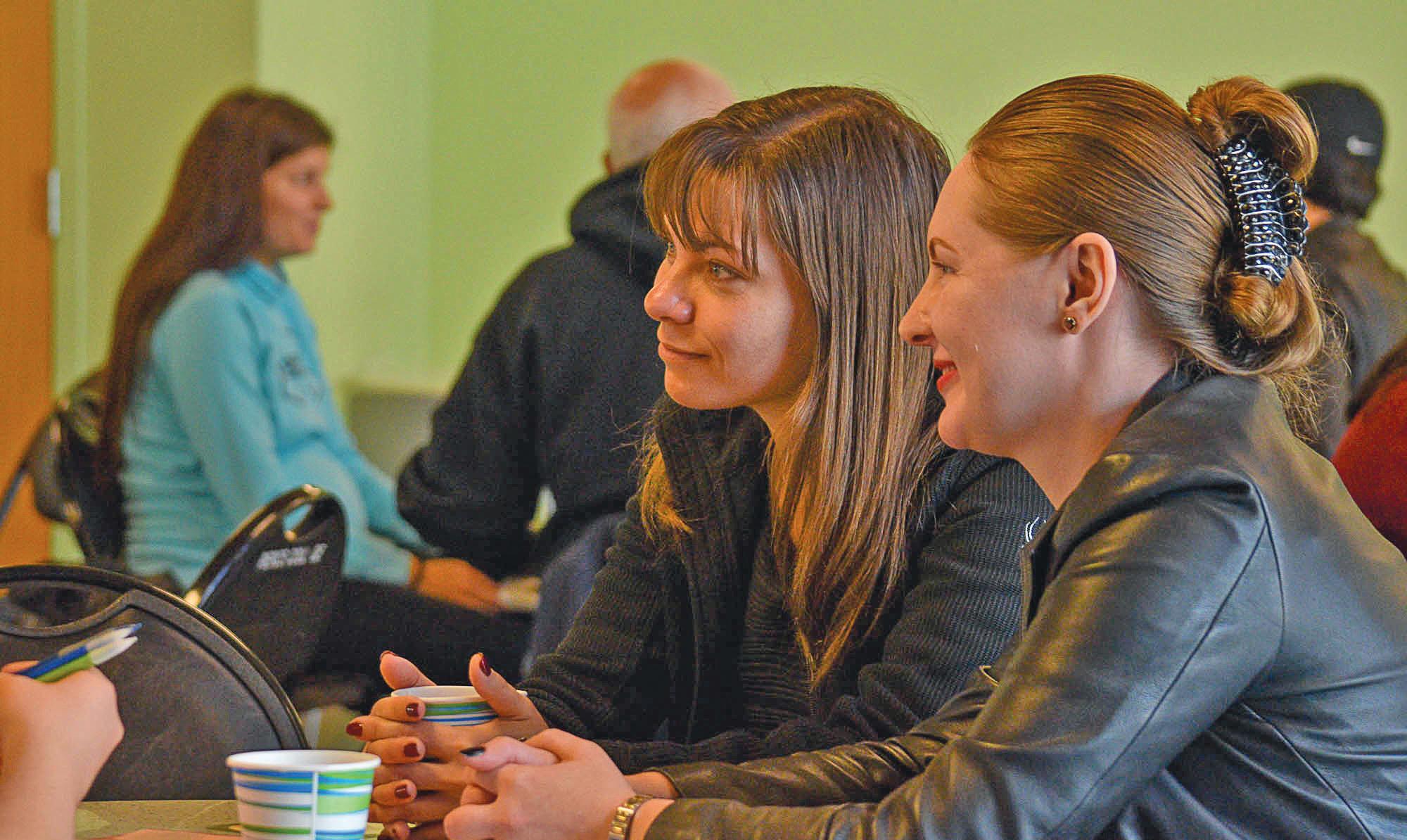
Oleksii Kuznietsov, whose mother tongue is Russian, said that he likes coming to the café because it acts as a type of workshop for him to tone his English-speaking abilities.
“I have ESL classes, but they don’t give me much practice in actually speaking English. [The classes] focus a lot on grammar,” Kuznietsov said.
Jongmin Choi, a South Korean who came to the U.S. only seven months ago, said he has greatly benefited from the program.
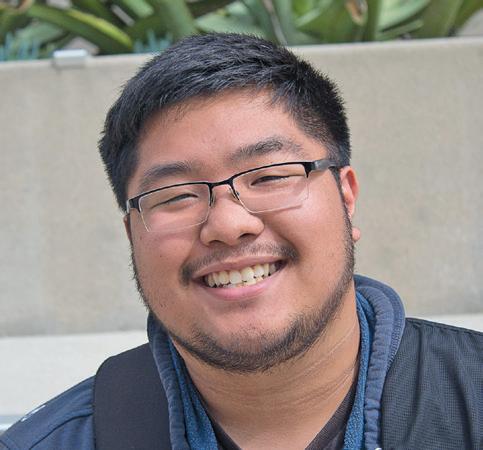
“When I started [at] Peirce, it was hard. I couldn’t understand what anybody was saying. I could only say ‘hello’,” Choi said. “But since coming here my English is getting is better. I enjoy coming here. I try to come every week.”
Besides being able to talk with tutors, students can also converse with other non-native speakers, which creates a relaxed and nonjudgmental atmosphere in the program.
“I think [this program] helps out ESL students because they

can come in here and they can talk to other people who are in the same situation as them, and kind of feel like they’re not the only ones,” said Ryan Krupa, who has been a discussion leader for the past two years.

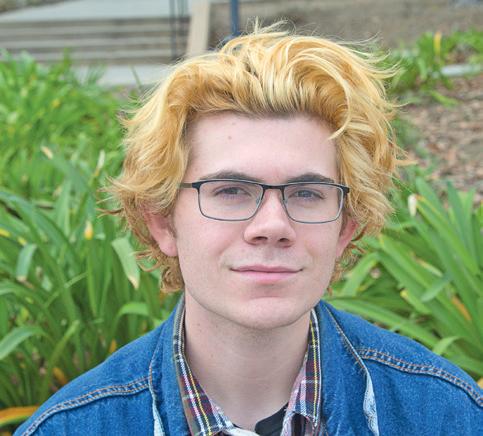
Mehdi Miri, another discussion leader, is familiar with many of the obstacles that ESL students face. Being a former ESL student himself, he understands some of the insecurities and apprehensions non-native speakers might feel.

“Many people that come here [to Communication Café] are just starting at Pierce, and they want to learn new skills,” Miri said.
Many of the attendees on this day were regulars, who have been coming to the café for two or three semesters now. On average, there are about 25 to 30 ESL students attending, with seven tutors and several other volunteers available.
Communication Café is held every Friday from noon- 2 p.m. in the Cafeteria. It is open to all ESL students who are interested.
“Allowingstudentswithalower GPAwouldbemoreacceptingand itwouldgiveeveryoneahigher chancetogetaqualityeducation.”
-NickRobley Biochemistry


“A3.0GPArequirementisfinebecauseI understand the universities don’t want students whoarenotgoingtogiveaneffortandwhenthey transfertheyarenotgoingtotryoverthereeither.”
-David Quintero Criminal Justice
ROUNDUP: March 13, 2019 Campus Life 5 Weekly Calendar Thurs. 03/14 Fri. 03/15 Sat. 03/16 Sun. 03/17 Mon. 03/18 Tues. 03/19 Wed. 03/13 Basic Composition/ MLA 8 1:30p.m.- 2:30p.m. Center for Academic Success ESL Verb Forms #2 11:30a.m.-12:30p.m. Center for Academics Success ASO Senate Meeting 1p.m.-3p.m. Great Hall Communication Cafe Noon-2p.m. Center for Academic Success Library Hours 10-3pm School is closed TAG Transfer Admission Guarenteed Programs 4p.m.-5p.m. CTC Workshop Room
BEAT
Quotes gathered by Gina Wong Photos by Angelica Lopez
Katya Beth Castillo/ Roundup
Svetlana Kushnir (left) and Oksana Pedehenko (right) share traveling stories at the Communication Cafe' hosted at the food court in Pierce College in Woodland Hills, Calif. on March 8, 2019. Each Friday afternoon, Pierce College in Woodland Hills, Calif.
Katya Beth Castillo/ Roundup
STREET
Members of the Circle K club at Pierce College in Woodland Hills, Calif. volunteer at the Van Nuys Recreation Center to plant trees in honor of Arbor Day on March 9, 2019.
Katya Beth Castillo/ Roundup James Cortes, president of the Circle K Club at Pierce College helps plant a tree in Van Nuys, Calif. on March 9, 2019.
Making a connection is the key to success ESL students get a chance to practice English at the Communication Café
jhackson.roundupnews@gmail.com
Hot Rods With Dogs

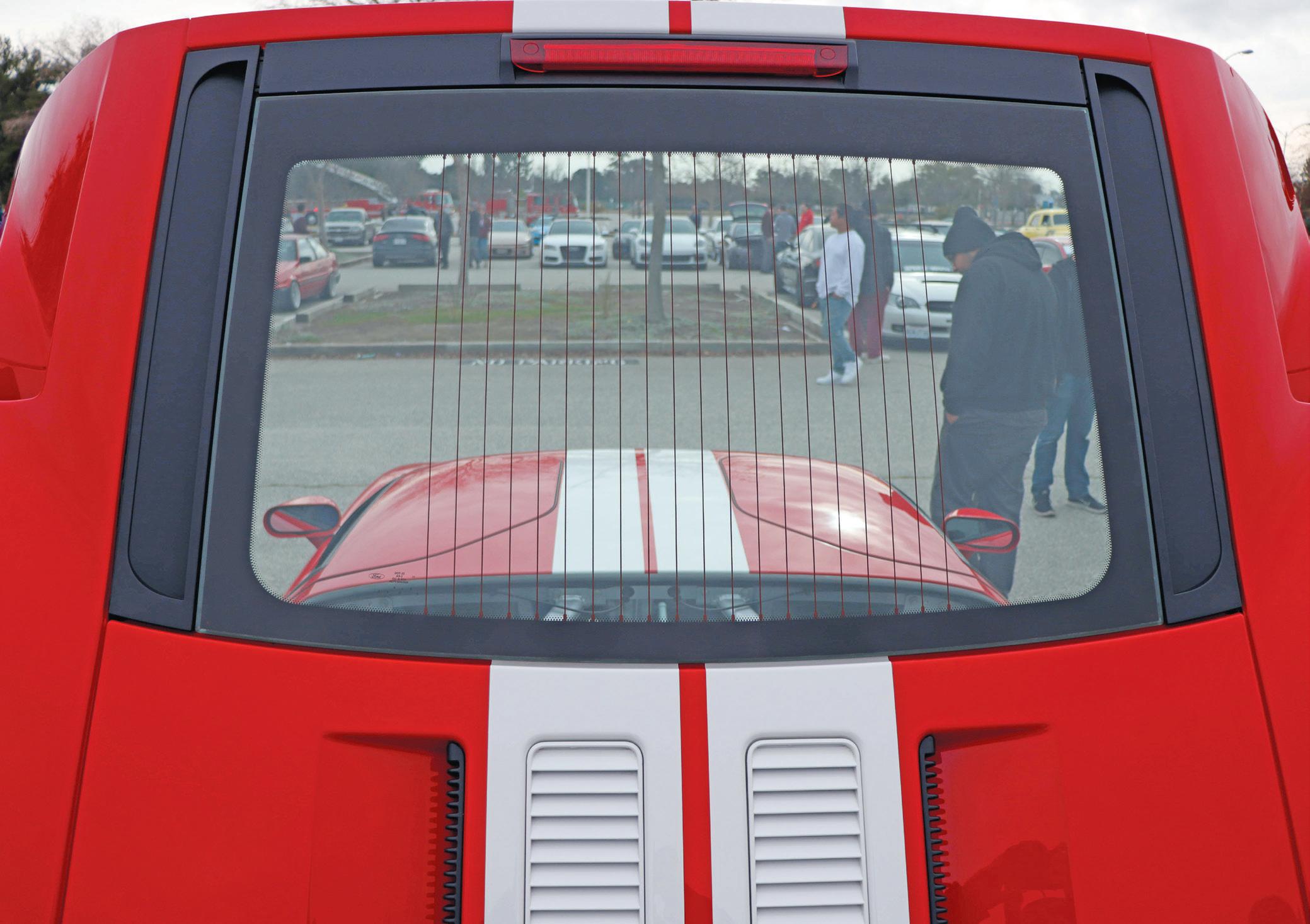
They might just be four wheels meant to get you to-and-from. However, on Sunday these cars were more than transportation. They were the main attraction, put on display for their individuality.

From bright reds, to neon greens and dark purples, colors from all parts of the rainbow were represented at the show.
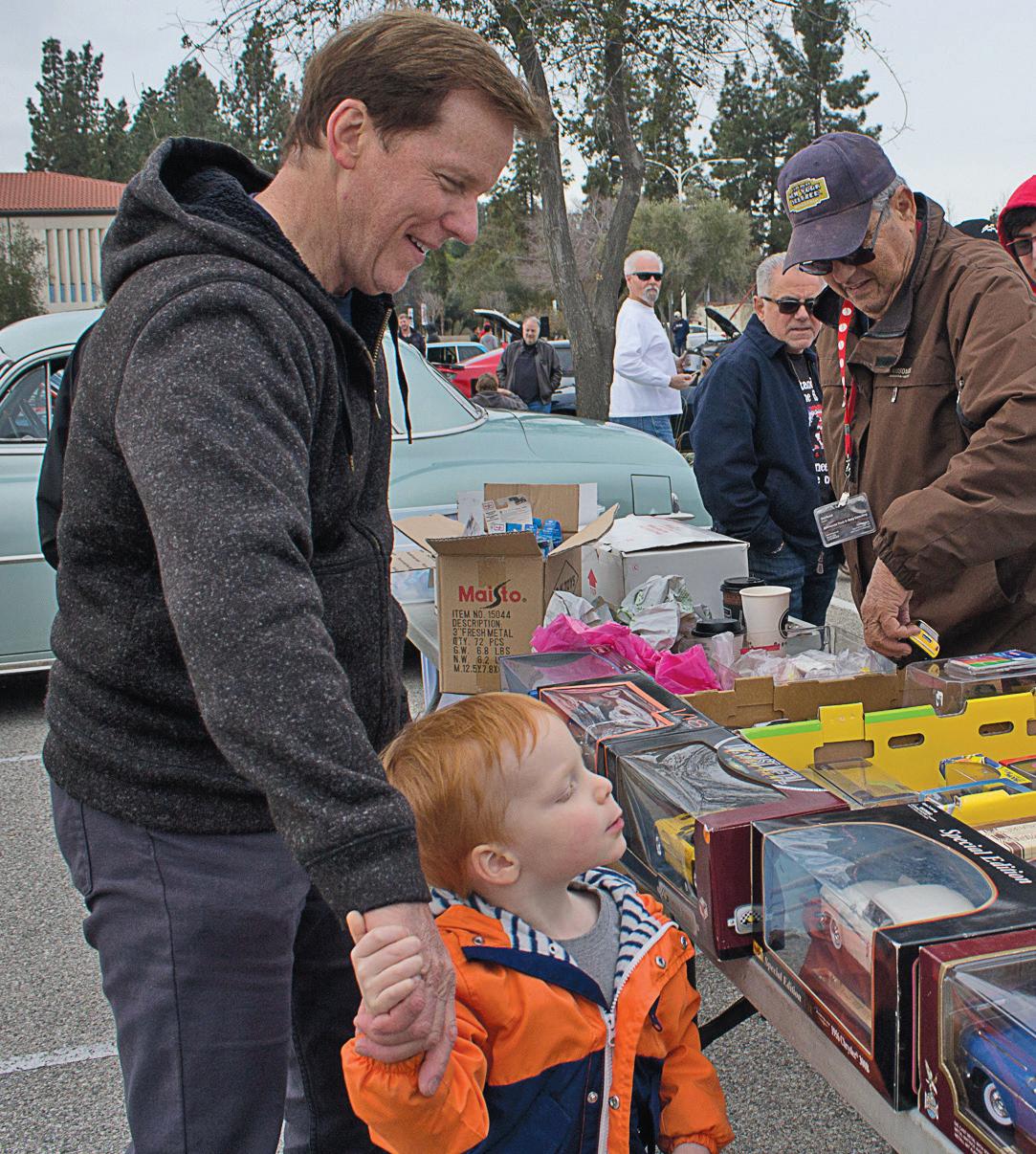
Almost every person who attended had a car to flaunt including ventriloquist comedian Jeff Dunham, who brought his vehicle for others to admire.
Pierce College’s Automotive Department holds its Supercar Sunday show in Parking Lot 7 from 7 - 10 a.m. every Sunday.
6 Photo Essay ROUNDUP: March 13, 2019
Photos by Angelica Lopez, Blake Williams and Nick Martinez
Copy by Angelica Lopez
Nick Martinez / Roundup
Top: (Left to Right) Nina Zehler, Micheal Axon, and their dog Baily reverse into a parking spot in Axon’s 1957 Lotus 11 during the Supercar Sunday show in Parking Lot 7 on March 10, 2019 at Pierce College in Woodland Hills Calif.
Middle: Jeff Dunham follows his son Jack Dunham as he looks at toy cars during Supercar Sunday.
Photo by Angelica Lopez
Bottom Right: (L-R) Ginger and Mary Ann were brought by their owner, Randy Cooper, to Supercar Sunday.
Photo by Blake Williams
Bottom Left: A view through the back of a Ford GT being shown off.
Photo by Blake Williams
SHALEAH GREEN Reporter @ShaleahGreen21
Not many female athletes can say they are part of the top two percent to receive a Division-1 scholarship to play the sport they love.
With dedication and support, defender Kerian Neal received a full ride scholarship to the University of Wisconsin, Green Bay this Spring semester.
Neal has been working on her career path in criminal justice when she received the good news.
“When I got the scholarship, it was pure joy. It’s also a big deal because I will be the first generation to go to a university.
So I have to be a big role model to my younger siblings,” Neal said.
Neal didn't always know she wanted to play soccer. This dream life in sports peaked when she let go of her six yearold piano and enrolled in her first soccer class.
“I just loved it. I loved the atmosphere and the smell of the grass. All of the little things, so it was really exciting,” Neal said. “From then on soccer just stuck with me.”
Teamwork became the power play that drove her to continue
playing for the El Camino High School soccer team.
“I just really had a passion for being on a team and everyone
having my back,” Neal said. “I’ve always had that feeling for my whole life when it comes to soccer. I think that’s why I
Brahma of the Week
Nominated by coach Lance Walker. Norkus had 17 kills in the games last week.
So how do you feel about your performance in last week's games?
“I definitely felt like not only me but as a team we improved. I mean, we had, we came off a pretty bad week and I felt like this week we really played as a team. Chemistry was definitely up.”
Do you have any pregame rituals or superstitions?
“Pretty much put my headphones on and focus for the game.”
Any plans after Pierce?

“I have a couple offers that I'm looking at right now so I am still kind of deciding to do. So I haven't made a decision yet.”
What can you improve on?
“On my blocking. Sometimes I get caught up and make the wrong read. I feel like that's definitely a part of my game I need to improve the most.”
If you weren't playing volleyball, what sport would you be playing?

“Water polo or baseball.”
Who do you look up to?
“Kobe Bryant. He has an incredible work ethic that motivates me.”
Brahmas Scoreboard


Baseball

Softball Tennis


haven’t left the sport, because the feeling of teamwork.”
When Head Coach Adolfo Perez originally scouted Neal,
he knew she was meant to go on to bigger and better things.
“The first thing that stood out was her throwing skills. She possessed a quality of throwing the ball far, which is a rare commodity in soccer,” Perez said.
From high school to college, Neal took off with a running start down the field to the goal of opportunities.
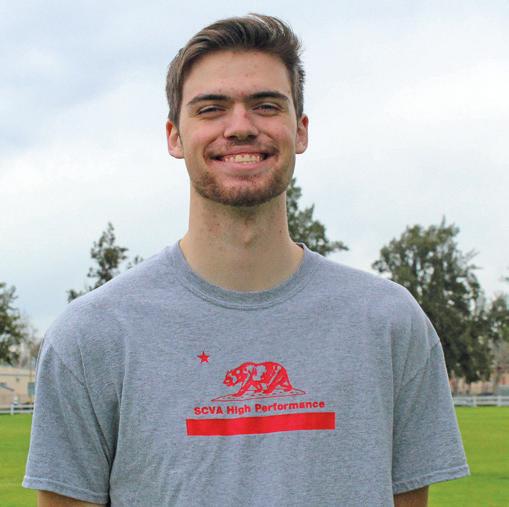
Neal easily adapted to skills of her teammates and was awarded Most Valuable Player two consecutive years.
“Her freshman year she was dubbed the Most Valuable Player, so she made a tremendous impact,” Perez said. “When I recruited her, I told her if she worked hard there will be good things that will happen to you so I am very pleased with her scholarship.”
Although success came Neal’s way, she did not have an easy start. During her freshman year of college soccer, Neal injured her ankle and was looking at a season filled with recovering instead of playing.
However, that was not going to stop her from exceeding the goals of her teammates and coach. Neal’s hard work and ability to prevail against challenges helped her exceed the expectations of her coach.
“Her freshman year, she played hurt, which was
remarkable. She had to go to the trainers before every practice and before every game,” Perez said. “To have the durability was incredible, and speaks volumes to anyone.”
Gisell Cruz, the team captain, said that Neal’s accomplishments have also left many of her teammates inspired and optimistic for what is to come.
“We are so excited for Kerian to go to Wisconsin, Green Bay. When we found out she had gotten the scholarship, we were excited for her sisters,” Cruz said. “We love Kerian and watching her play and knowing what she has done inspires us. It inspires me.”
Cruz said that playing alongside Neal has been a journey and there will be no obstacle at her new college she won’t be able to work around.
“If Kerian got upset or had a challenge, we were there for her, and she would work it out. I think she is going to do so good at her new school and for her new team,” Cruz said.
Neal is looking forward to her new college, and has no plans of quitting anytime soon.
“That is my whole plan because I’ve always wanted to play professional,” Neal said. “I love going to the stadium games, and the whole experience is what thrills me.”
ROUNDUP: March 13, 2019 Sports 7 SPORTS SCHEDULE Men's Volleyball Baseball Tennis Softball Swim Mar. 14 @ Glendale 2 p.m. Mar. 19 v. Bakersfield 2 p.m. Baseball Softball Tennis M Volleyball M Basketball Records (as of 3/12) 5 - 1 0 0 - 3 5 - 0 1 4 15 33 Swim 0 0Brett Norkus
No game since Mar. 4
MVolleyball MBasketball Swim W v GWC 3-1 L @ SBCC 3-0 Season Over Last in conference Last in conference Last in conference 5th in conference Last in conferenceL v Glendale 8-1 L @ Ventura 9-0 L @ Bkrsfld 7-2 sgreen.roundupnews@gmail.com Mar. 14 @ LA Mission 2:30 p.m. Mar. 16 v. LA Mission 12:00 p.m. Mar. 19 @ LA Mission 2:30 p.m. Mar. 13 v. Santa Monica 6 p.m. Mar. 15 v. El Camino 6 p.m. Mar. 20 @ Moorpark 6 p.m. Mar. 14 @ Bakersfield 2:30 p.m. Mar. 19 v. Allan Hancock 2:30 p.m. Mar. 16 WSC Meet #2 @ Canyons 11:30 a.m.
JOB & INTERNSHIP OPPORTUNITIES FOR THE FOLLOWING MAJORS: Architecture Graphic Design GIS Media Arts Office Clerical (CAOT) Welding CNC Machining Computer Science Engineering Auto Business GAIN EXPERIENCE IN THE FIELD YOU ARE MAJORING. FULL TIME AND PART TIME POSITIONS AVAILABLE L.A. PIERCE COLLEGE STRONG WORKFORCE CONTACT: MICHAEL WILLIAMS williama3@piercecollege.edu (818) 710-4178 Sport: Volleyball Position: OPP/MH Class: Sophomore Major: Accounting Hometown: Chatsworth L @ Ventura 15-0 L v Moorpark 21-0 No recent meets New life as a phoenix Defender commits to the University of Wisconsin-Green Bay
Joshua Manes/ Roundup
For sports updates, follow us on Twitter (@RoundupSports) and Instagram (@PierceSports).
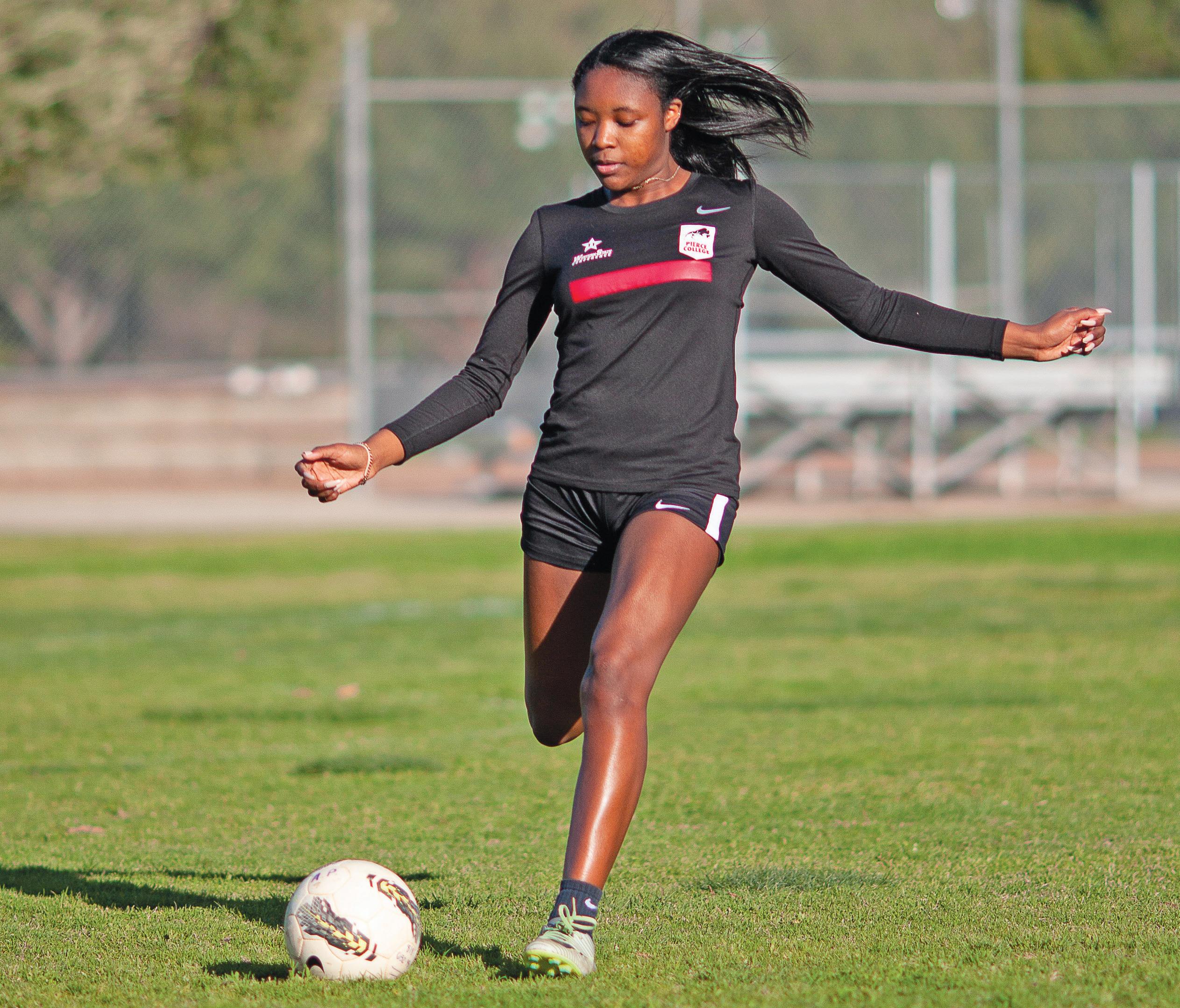
Kerian Neal kicks a ball out on the field at Pierce College on Mar.
7,
2019, in Woodland Hills, Calif. Neal received an offer from Division-1 University of Wisconsin-Green Bay.
Receiving all-state recognition
Soccer players awarded for their high GPA's
SUSAN LOPEZ Features Editor @susanlo63291265
Soccer players can be more than a physical force in the field as they compete to win. But they are also determined to become winners of their own future when they don't wear the jersey, shin guards and cleats.
Diana Salonga and Madison Holland are two athletes from the Pierce soccer team that have carved their way to be exemplars not just as athletes but as honors students by being awarded the all-state scholar award.
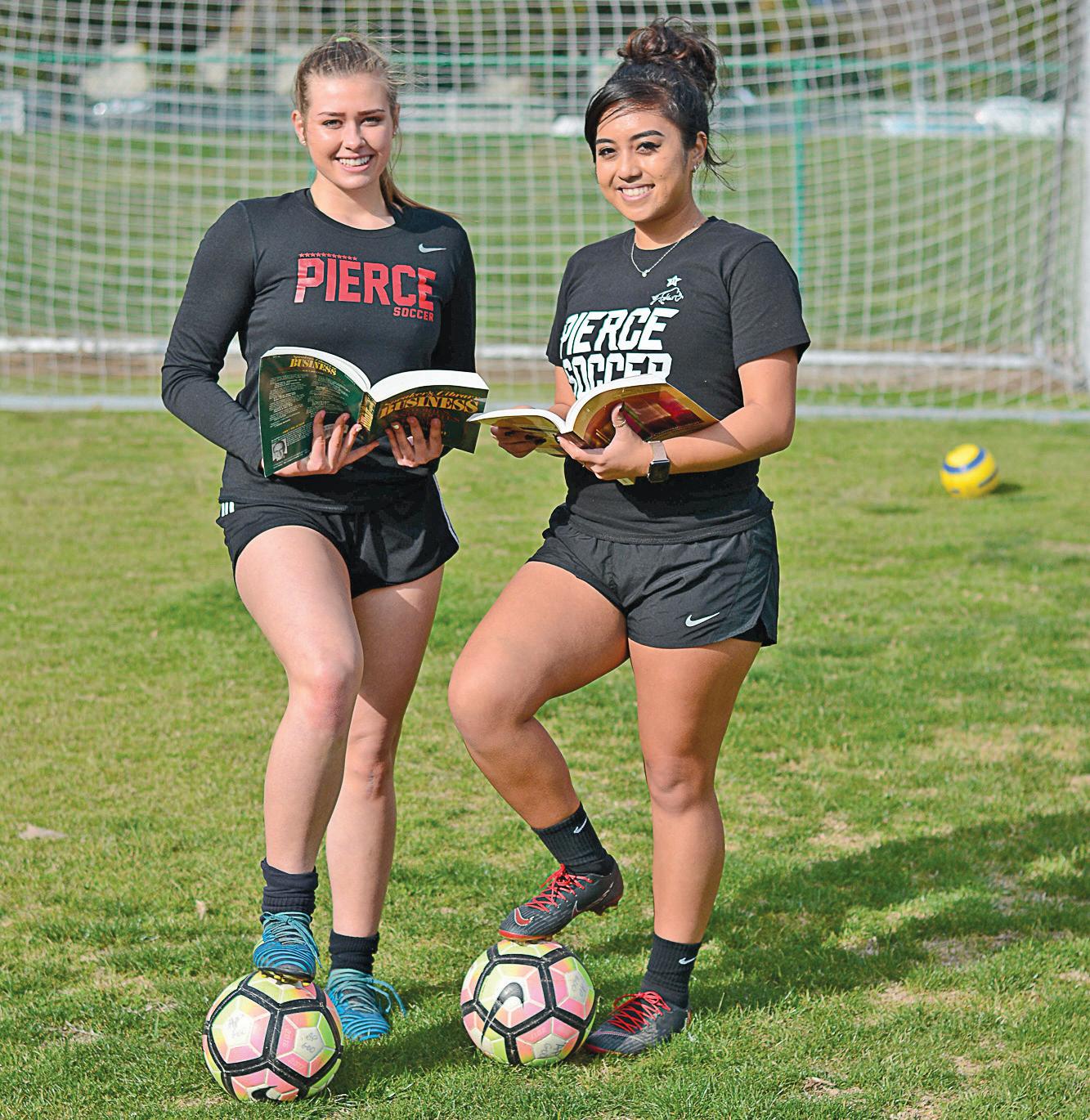
“One of the top priorities as a student is to achieve good grades and the fact that I managed to do so while driving myself crazy reassures me that all my work wasn’t for nothing,” Salonga said. “I earned this.”
This award comes after long nights of studying, several hours of training and strong determination.
“Despite juggling a busy life, I was still able to maintain quality grades that are now recognized not just by my college, but in the state of California,” Salonga said.
Salonga recognizes that to achieve great things in life, she has to work harder than others as she overcomes challenges.
“I was diagnosed with Attention Deficit Disorder (ADD) in my first year of college,” Salonga said. “After that, it made me want to work more and try harder.”
Despite the challenges regarding her learning disabilities, that didn’t stop Salonga from becoming a fulltime student-athlete with two jobs, still while getting good grades.
“The hardest part was not being able to sleep all the time,” Salonga said. "I'll have to move back to back every day from work to training and then night classes."
Salonga was team captain of the team for two years and played as a midfielder. She is hoping to transfer to San Diego State University this year and major in applied mathematics.
However, she doesn’t have plans to keep playing soccer once she transfers.
“I don’t think I will continue playing when I get to college,” Salonga said. “Maybe I’ll just play for fun but not for a team.”
As for her aspiration in the future, Salonga has goals that keep her wanting to work harder each day.
“I want to have a huge house,”
Salonga said. “I want to make a lot of money. I don’t want to rely on anyone else but me.”
Adolfo Perez, head coach, has no doubts that Salonga has a bright
future ahead in whatever path she decides to take in her career.
“The sky’s the limit for her,” Perez said. “She is a go-getter so she can become a rocket scientist or a doctor. It wouldn’t surprise me.”
Holland, who was one of the goalkeepers on the team, recognized that keeping up with your grades while playing sports is hard but not impossible to accomplish if you don't lose sight of your goals.
“You have to be able to be just as good in the classroom as you are in the field,” Holland said. “I am honored to have been awarded as an All-State Scholar. It has not come easy.”
Holland played in The University of Wisconsin-Green Bay, but was forced to move back to Los Angeles after suffering an injury in her anterior cruciate ligament (ACL),
Meeting the new faces
Coaches present football program to seniors
HARLEY DAVIS Reporter @ht_davis
High school seniors had the opportunity to get a glimpse of their future home as the football program had their first-ever Prospect Day at Pierce College on Mar. 9.
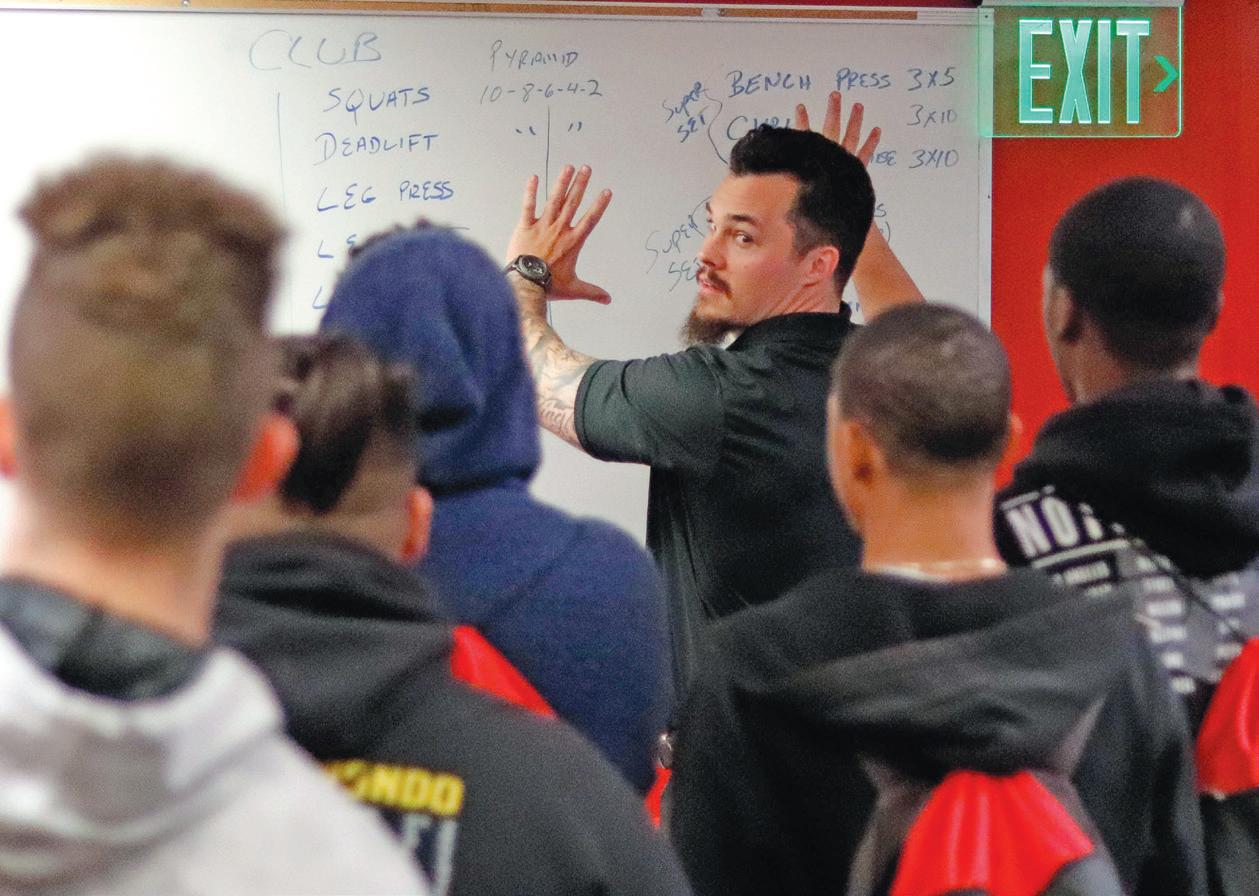
It was a time for the athletes to meet the coaches and potentially their future teammates.
The event started out in the Great Hall with a meet and greet, a light breakfast, welcome speeches, and a breakdown of the program’s different areas of focus by the coaches and staff.
Head Coach Carlos Woods went through a slideshow presentation detailing how his plan for the program would be implemented.
Recruiting Coordinator Richard Dax Sanchies said he hopes that those in attendance commit.
“We hope to maybe land at least half the guys who attend Prospect Day and we’re looking to grow our program with quality athletes and quality character,” Sanchies said.

Conditioning Coach Dylan Flannery said they didn’t get more students due to SAT testing, which fell on the same day.
“Of course, we want all the kids we reach out for to come. But you can count on two hands the kids we really wanted to try to get, and they basically all showed up,” Flannery said. Woods was focused on his goals for the day, but was also very positive for those who went.
“It was a phenomenal turnout,” Woods said. “You just never know, with today being an SAT test day, how many guys will actually show up. From the group, we’re proud of the numbers that we have.”
Senior Jordan Gouley describes an emotional connection to the
school.
“I was born in California,” Gourley said. “So I have a lot of family in the area and it’s a great environment to be around. In that aspect, that’s what really draws me to Pierce College and California itself, and that’s what I look forward to the most.”
Other players also talked about the location being an advantage. However, prospects didn’t all start out here in the state, or even in the country.
Danila Davydchenko came from Russia and played under Sanchies at Ribet Academy last season. He said he started playing soccer before transitioning to football.
“I played soccer for seven years until I came here. I played a linebacker in high school, but I might be transferring to safety in college,” Davydchenko said.
Davydchenko said that coming to a new country has been great for him.
“It feels great because I learn a lot from different people, it’s amazing. I think it’s great to know as much as I can about different cultures and different people, so it feels great for me,” Davydchenko
which it has taken some time to recover because of a second injury.
“ACL is a really strenuous, mentally disabling injury,” Holland said. "Not only do you have to learn to walk again, but put pressure on your knee.”
Holland got interested in soccer since she was five years old and played in club sports so having to quit soccer while she recovers is a difficult challenge for her.
“An injury puts separation between you and your teammates because you are not as involved with them as you would like to be,” Holland said.
Even though she is not on the field playing along with her teammates, Holland made sure her presence made a difference in her team.
“I was always there watching my teammates and cheering them on,” Holland said. “So being a motivator for my whole team, is an experience I will take with me.”
In the face of dealing with an injury such as ACL, Holland hasn’t put a stop to her goals.
“I want to be a teacher,” Holland said. “Hopefully, I’ll be getting my coaching license so I can coach in a JC.”
Perez had encouraged Holland to join his team even when she moved to Wisconsin, and he is aware of her capacities as an athlete.
“She is God-given,” Perez said. “She is one of the most talented goalkeepers who has ever played for us.” Perez acknowledges how hard it can be to maintain a high GPA and play in athletics but he could expect nothing less from Salonga and Holland.
“To be able to have two players on the All-State Scholar team is really unique,” Perez said. “It doesn’t happen really often.”
slopes.roundupnews@gmail.com
Volleyball wins in thriller
Brahmas beat Golden West, move to 3-4 overall
SUSAN LOPEZ Features Editor @susanlo63291265
After their loss against Santa Barbara City College Wednesday, the Brahmas bounced back against Golden West College in Friday’s non-conference game.
The Brahmas won the first two sets 25-23 and 25-22, but GWC won the third set 25-18.
In a tough fourth set, the champions wrapped things up in the winning by a score of 25-22.
Coach Joe Arechiga said although there were few miscommunications during some of the sets, they managed to keep a good rhythm during the game.
“This is a good team. GWC came in 5-3 in their season,” Arechiga said. “Even though is like a preseason game, it was a nice bounceback victory against a good team.”
Coach Lance Walker was satisfied with win recalling the old history between Brahmas and GWC as former state champions.
“Good volleyball was played in both sides and there is a good
rivalry between the two teams, which is great. I think it was done with class and poise,” Walker said. Walker believes this conference will be significantly tight which is great to motivate his team
“We had a small tactical plan that we tried to execute and the guys came out and took care of the business," Walker said.
Outside hitter Brett Norkus said this game was a moral push for the team.
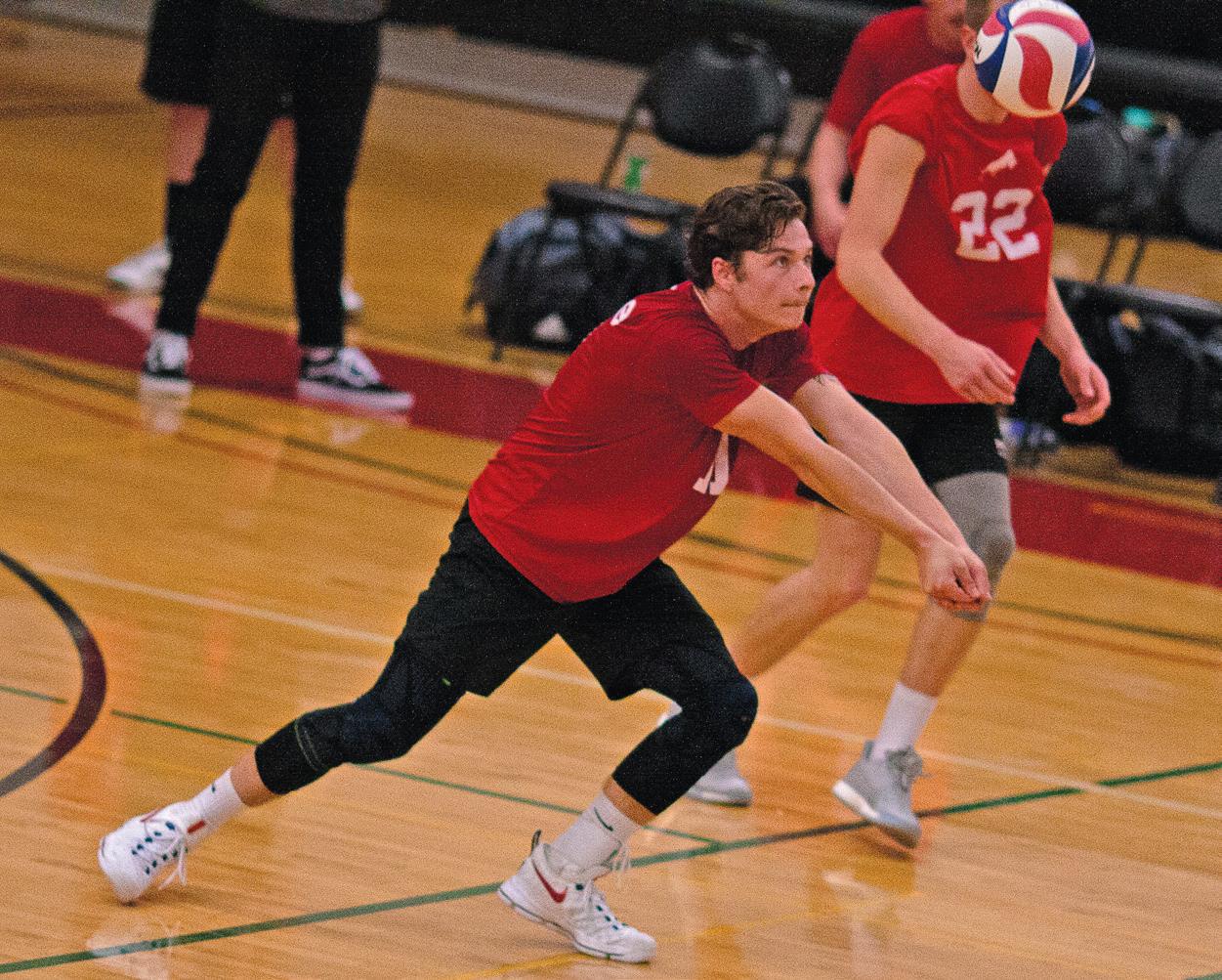
"We came out from a pretty rough game on Wednesday so having this game under our belt is really going to help us moving forward not only morally but chemistry wise with the team. It really helped us get together as a team,” Norkus said.
Norkus said his teammate Gene Kim was important to help the team win.
“He really pulled out something great. We are really proud,” Norkus said.
Pierce improves their overall record to 3-4 and will host Santa Monica College Wednesday at 6 p.m.
slopes.roundupnews@gmail.com
said.
After the opening breakfast, the coaches led a campus tour, showing the main weight room in the South Gym.
From there, they went into the pool area where Woods showed several videos of workouts from his phone and spoke about his reasons for opening the facilities to them.
“We want to leave no doubt,” Woods said, “No doubt, that you made a good decision as far as being here and experiencing everything we have to offer.”
Then it was back across the campus to the Great Hall for lunch, which consisted of pasta, caesar salad, and bread from Maggiano’s Little Italy restaurant, the same meal the team eats before each game.
During lunch, the projector was again utilized, showing footage from last season’s game against Santa Barbara City College.
Prospects sat together and conversed, while coaches went around to see if there were any questions or concerns.
ROUNDUP: March 13, 2019 Sports 8
Winnetka Bowl Take a break from your studies and have some fun at the 20122 Vanowen at Winnetka 818-340-5190 Bowling … Billiards … Arcade Lane 33 Bar & Grill … Bands & Karaoke … It’s all here for you … at the Bowl
Nick Martinez/ Roundup
Madison Holland and Diana Salonga pose near The Pit on Mar. 5, 2019, in Woodland Hills Calif. Both were recognized for their academic performance.
Blake Williams/ Roundup
Conditioning Coach Dylan Flannery talks to the prospects about football's strength and conditioning program on Prospect Day at Pierce College in Woodland Hills, Calif. on Mar. 9, 2019.
Joshua Manes/ Roundup
Grant DeGrasse receives the serve against Golden West College during the fourth set on Mar. 8 in Woodland Hills, Calif. The Brahmas won in four sets.
[For the full story visit theroundupnews.com]
