


Dancing across borders
DTLA says ‘No Kings’ Stuck between two worlds 1 11 15







Dancing across borders
DTLA says ‘No Kings’ Stuck between two worlds 1 11 15

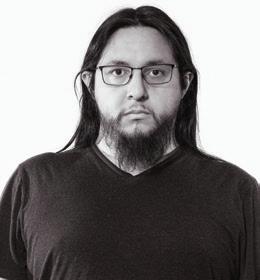
Editor-in-Chief
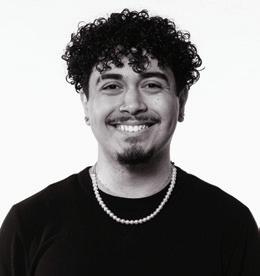

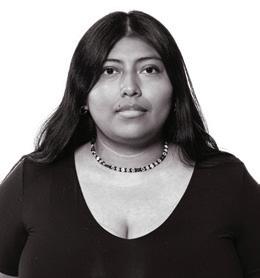
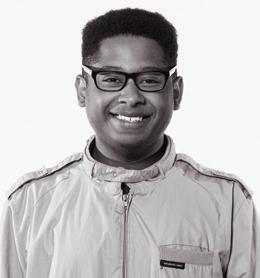
Garcia
Daniela Raymundo
Victor Montiel
Josue Aguilar
Calvin Henry Abraham Elizalde
Olivia Muñoz
Valeria Estevez
Raiden Vazquez


As a second-generation American, the immigrant experience has been part of my world — but never fully my own.
I chose immigration as the theme for this semester’s magazine at a time when these stories feel more urgent than ever. Shining a light on unheard voices, and broadening both my perspective and those of Pierce readers was incredibly important to me.
As a journalist, working on this issue challenged me to report these stories with care while gaining a deeper understanding of what the American dream has come to mean
for so many. As a person, this issue moved and changed me. I hope it does the same for all of you.
First and foremost, thank you to my advisers for wearing the many hats they do, and supporting me every step of the way. I feel incredibly fortunate to have educators who are as passionate and invested as those at Pierce.
Thank you to my staff and editorial team not only for their commitment and dedication, but for the compassion, empathy and professionalism they’ve maintained through every twist and turn this spring brought us.
Thank you to my family, friends
and everyone this issue allowed me to meet along the way.
I began my journey in journalism three years ago, and with every new chapter I remain in awe of the people I meet and the stories they trust me to tell.
To those who shared their lives, homes and experiences with us, thank you for your vulnerability and honesty.
It has been an honor to serve as your Spring 2026 editor in chief.
Always remember where you came from, but never lose sight of where you are going.
- Violet Garcia
Story by Spencer Fuller
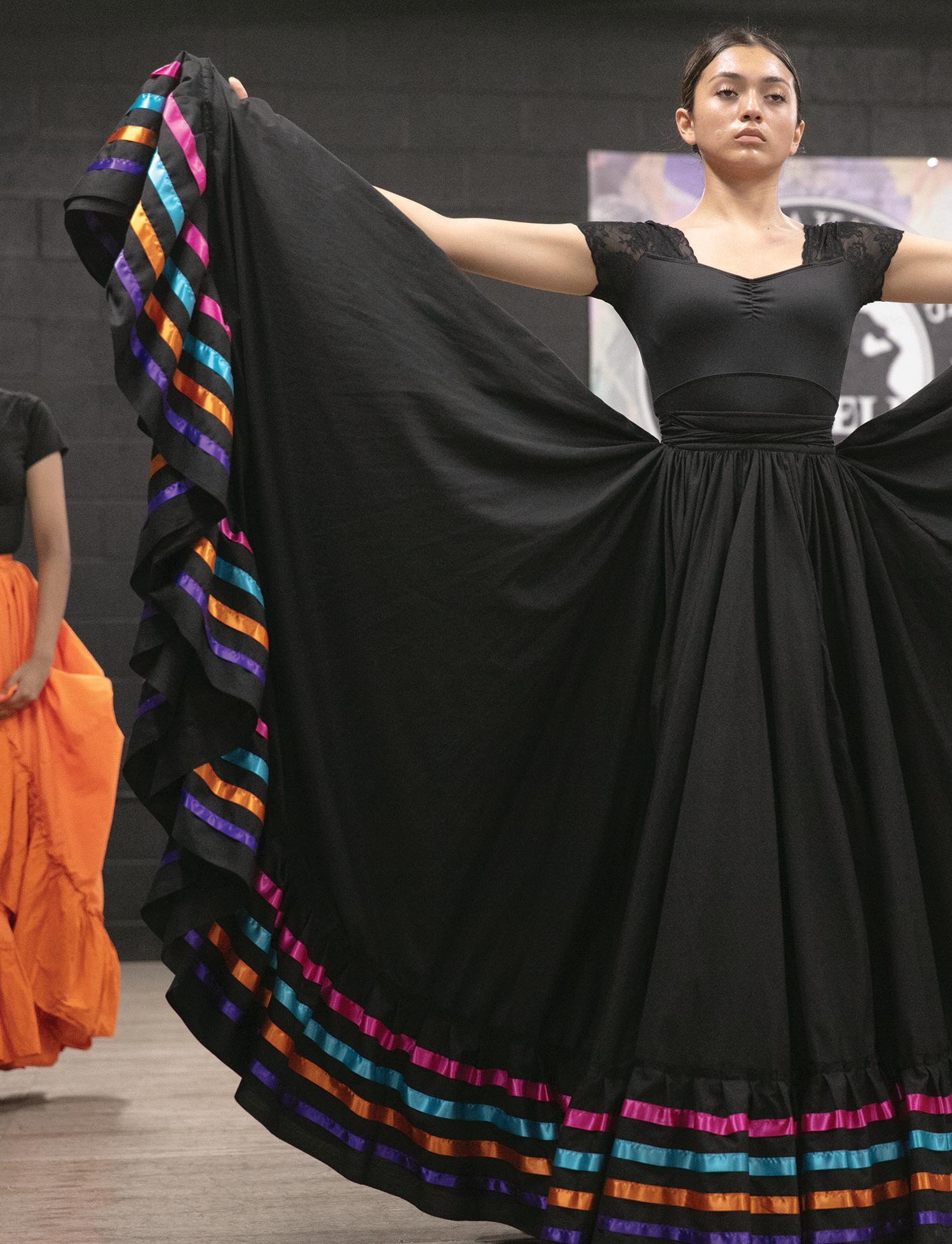

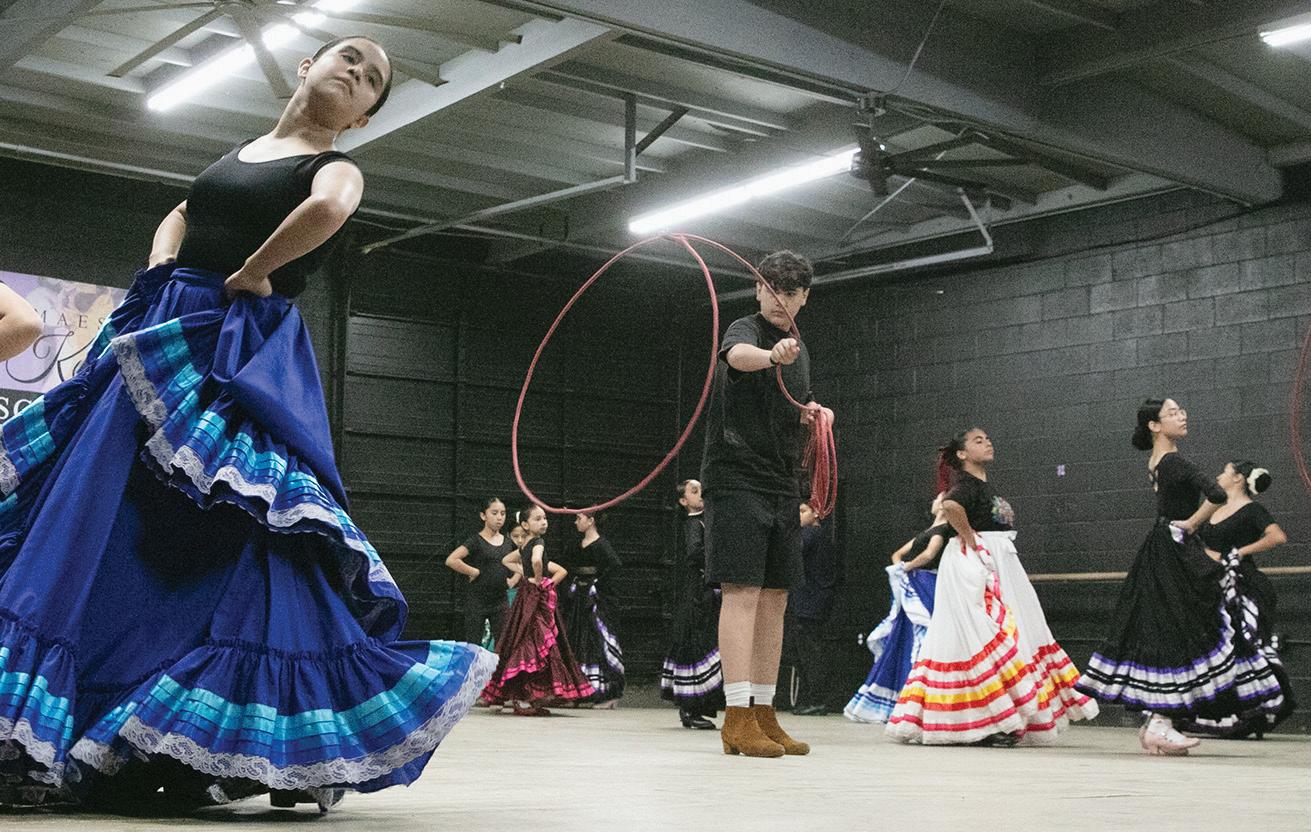
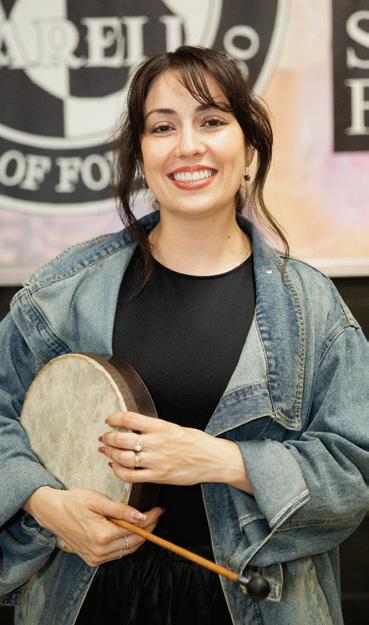
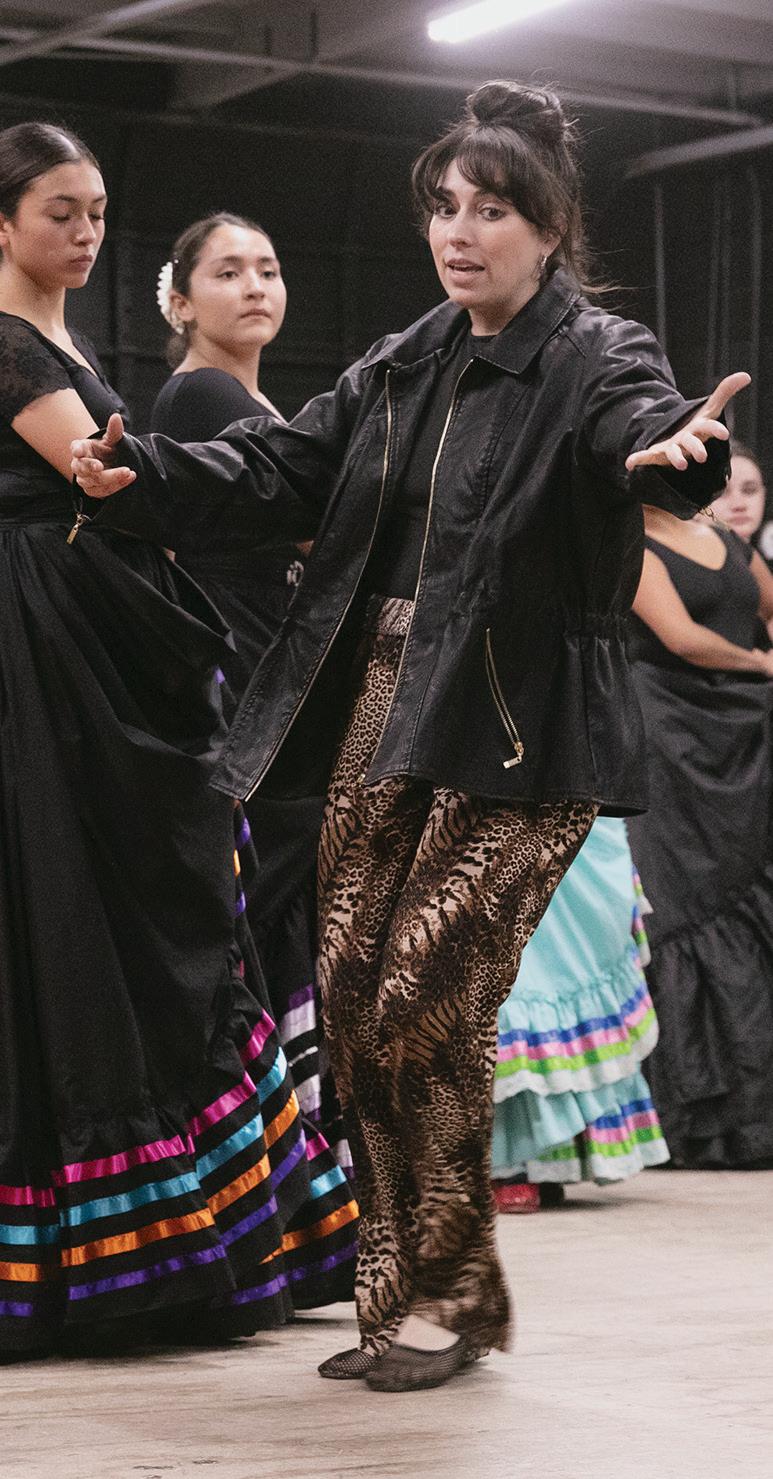
Kareli Montoya did not own a studio when she was 6 years old, but she was already a teacher. Ballet Folklorico seemed to speak to her, and after quickly learning to dance, she helped her siblings, infusing them with the same passion for the dance that connects to her cultural roots.
Those initial lessons have grown over the decades to the point where millions of people have seen what she can do.
That’s because she served as a consultant on the famed Pixar movie “Coco,” and Montoya’s company, Ballet Folklorico de Los Angeles, performed to the movie’s famed song “Remember Me” at the 2018 Oscars, followed by crafting a number for the Disney on Ice show with the show’s programming.
Montoya also owns the wellknown Kareli School of Folklorico, in Maywood. Working on “Coco” helped her studio gain a larger following, in her classes and on social media.
“I know a lot of people do Mexican folk dance as a form of identity to become closer to their roots, to their culture, and to learn more about where their parents or family is from,” Montoya said.
Born in Los Angeles, Montoya attended California State University, Los Angeles for her undergraduate studies in 2011. She then traveled to Colima, Mexico, where she studied and performed with the internationally renowned Ballet Folklórico de la Universidad de Colima, directed by the folklórico icon Rafael Zamarripa.
After returning from Colima, she began teaching a diverse group of children and young adults at La Fonda Restaurant and
founded Ballet Folklórico de Los Angeles.
“ I have a lot of multicultural students who just like the culture,” she said. “And especially after the movie ‘Coco,’ we have a lot of kids who are not Mexican or Mexican-American who just like the music and dance of Mexico.”
Montoya worked with the Grammy-winning Mariachi Los Camperos as a featured dancer and choreographer, notably becoming the youngest dancer to perform with them at La Fonda de Los Camperos as a teenager. While performing at CSUN, she met Justin Souza, who runs programming for the center. college’s Younes and Soraya Nazarian Center for the Per-
forming Arts. That led to her creation of an annual production, titled “Noche Buena,” which allowed her work to be seen by wider audiences.
She and Ballet Folklórico de Los Ángeles collaborated with the group on major shows, including a 2009 PBS special and a “Mexican Christmas” performance, which is how she has hosted a Christmas event yearly since 2014 at the Younes and Soraya Nazarian Center for the Performing Arts at California State University, Northridge.
“Just like many people go and see the ‘Nutcracker,’ we wanted to create a tradition that directly connected with Mexico’s cultural traditions, and we saw that Kareli had a talent and a genuine
ability to tell those stories,” Souza said. “She could tell the stories of those different regions and demonstrate and represent those cultural traditions across the regions of Mexico in relation to Christmas and the holiday itself.”
Montoya launched the Kareli School of Folklorico to share her passion for the dance. She teaches advanced classes and has an online school membership for her students who want to study at home.
“I know a lot of people do Mexican folk dance as a form of identity to become closer to their roots, to their culture, and to learn more about where their parents or family is from,” she said.
Chief Executive Officer for Ballet Folklorico Mexico Lindo Monique Michel said the folklorico has Mestizo influences that are up to 500 years old. Zapateado footwork, incorporates aspects of the colonial period in Mexico.
“Having grown up in Southern Arizona, just an hour from the Mexican border, I’m familiar with folklórico and its music,” Michel said. “And having been raised by a Venezuelan mother, the Spanish language was never foreign to me.”
Michel said popular culture, like the movie ‘Coco,’ can help local audiences connect with the Day of the Dead (Día de los Muertos) and Mexican traditions.
For Montoya, Ballet Folklorico is especially a dance for the youth. She wants to pass down the tradition to the next generation, because they can be leaders in the future.
Story by Raiden Vazquez
Photos by Victor Montiel
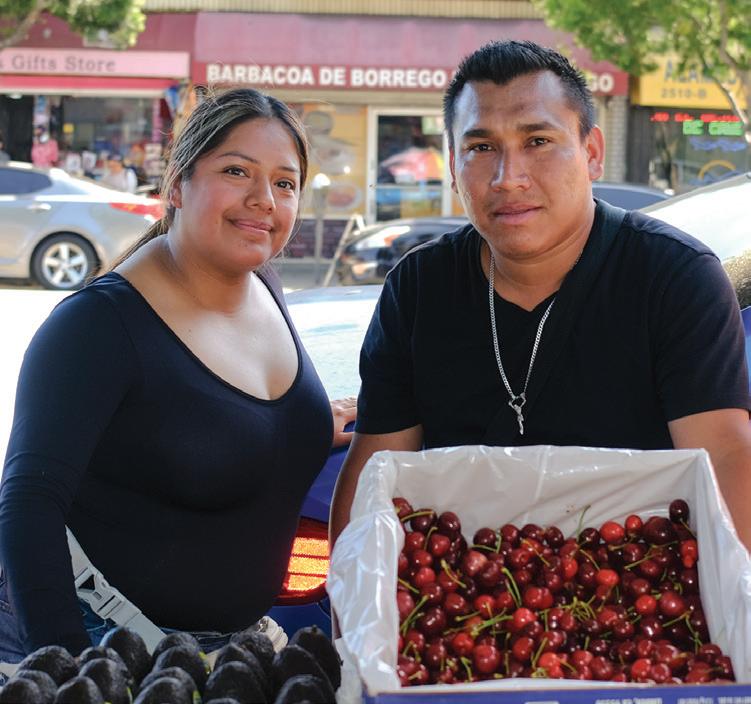
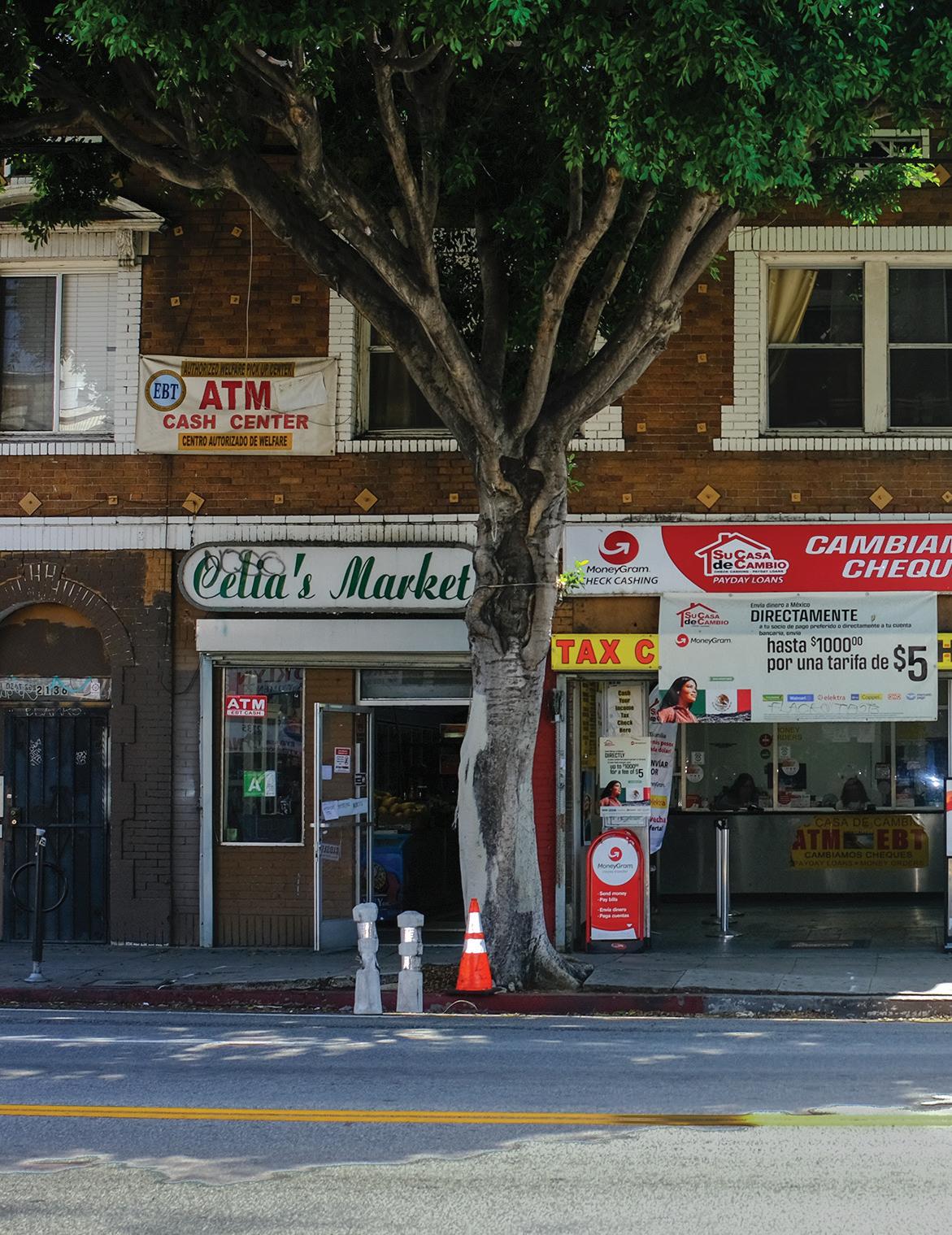
What would have been a typical morning commute to work, quickly shifted as several Immigration and Customs Enforcement vehicles swarmed the center vendor of an outdated and graffiti-plastered street.
As a mid-30s couple, Jose Esteban Castillo Alvarez and his wife Jessica, could pass for most Angeleno entrepreneurs. But, with the added daily risk of sudden arrest by immigration officials.
“We got caught right in the middle of it,” Jose Alvarez said. “I was on my way here to work, and my wife was already on-site; she had to abandon everything right where it stood and take shelter inside the building.”
After feeling the personal impacts of a rise in anti-immigrant culture in the San Fernando Valley, produce stand owner Jose Esteban Castillo Alvarez took a break from streetvending.
“We just had to leave everything behind,” said Alvarez, regarding the raid earlier this year. “We stopped selling for about two months.”
Cesar Chavez Avenue has many
immigrant street vendors who sell drinks, clothing, jewelry and produce. This makes for a sizable target for immigration enforcement officials.
There are approximately 50,000 street vendors in Los Angeles, and shutting them down for any length of time would be significant, according to Patrick Convery, a professor of economics at UCLA.
“It's on the order of billions of dollars,” Convery said.
According to the governor’s office California has a GDP of $4.1
trillion, with LA contributing about $1.5 trillion.
“If you got rid of the vendors, you are reducing the economy in LA by at least by more than 1% to 2%,” Convery said.“That sounds like a small number, but every single percentage point, either up or down in an economy, is massive.”
Álvarez immigrated to the United States from Yaracuy, Venezuela, to seek a better life and help his family.
“I traveled first, by myself,” he said. “Then, once I had established
myself here, I brought my wife over so that she wouldn't have to endure the same hardships I did during the journey.”
He said it took him about two days to get to California.
“There were moments where we walked, and moments where we hitched rides,” he added. “The beginning was a little difficult—I won't lie to you about that. However, we had family here who truly offered us their support, and that is why we stayed.“
Down the street from Álvarez’s stall there is an aguas frescas stand run by Esmeralda Guillén, a 32-year-old woman from Zacapú in Michoacán, Mexico, who now makes a living as a beverage vendor in East LA.
“I arrived when I was 11,” she said. “It was peaceful here. I’ve always lived in this area, and— thank God—I’ve never had any trouble with anyone. My mom immediately started working as a street vendor.It was difficult to find work, because to be able to work here legally you need to have a Social Security number. Consequently, the only thing we could do was work in the trade we already knew.”

The job means a lot to her, and not only because of the income.
“Thanks to this job, I’ve discovered who I am—and who I want to be,” she said. “For my family, it has provided a livelihood. In fact, I’ve been with my children since the moment they were born..”


Both of the vendors said they hold similar feelings toward the ongoing Immigration and Customs Enforcement raids conducted in Los Angeles.
“We aren't doing anything wrong.We are simply working to earn a living and provide for our households. It is honest work,” Álvarez said.
Guillén echoed that thought.
“My hope is simply that things get better,” she said. “My family depends entirely on this job. I have four children and my mother to support, and this work is what provides for all of them. We aren’t asking for government handouts or assistance of any kind—we’re simply working hard and honestly to make a living.”
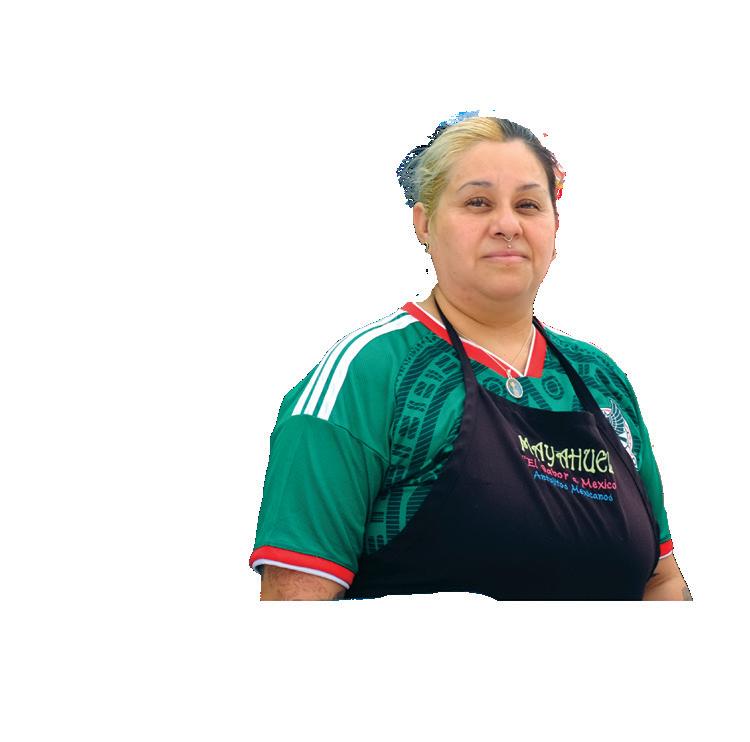
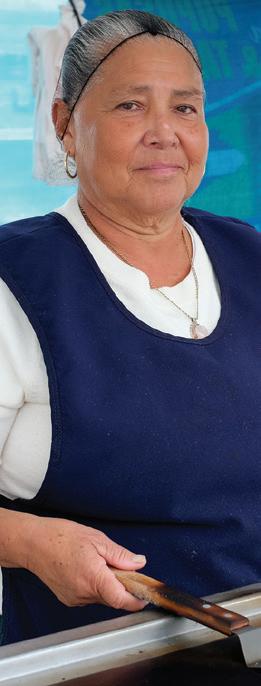
Esmeralda, 42, sells food at her stand at Boyle heights in East Los Angeles, Calif., on April 18, 2026.







Story by Olivia Muñoz
Photos by Abraham Elizalde and Calvin Henry
As a middle school teacher in South L.A., Hannah Kazim woke up almost every day with an excitement to teach. She began her education career fresh out of college and sought to make an impact on the kids who filled her classroom. This passion fueled her to form deep bonds with her students, who in turn confided in their teacher.
Kazim was devastated watching the bright minds that filled her classroom slowly be dimmed by the impacts of deportation. She said that witnessing her students’ lives being “completely upended by immigration proceedings” and their families being torn apart broke her heart.
Faced with the decision of continuing her path in education and helping her students in the aftermath of such an abrupt and terrifying event, or doing something to make a more lasting change, Kazim chose the latter.
She chose immigration law.
“I just really became convinced that there was almost no way that these kids could be successful in school while fighting these systemic issues,” Kazim said. “I decided that, just me and my personality and my skills, the impact I could make would be expanded if I went to law school.”
Kazim is one of the many people who want to make an impact on their community and help others who are unable to help themselves, and find their purpose in the legal aspect of these cases.
Only 33.3% of immigration cases, including unaccompanied children, were represented by attorneys in Immigration Court when a removal order was issued, according to a Transactional Records Access Clearinghouse (TRAC) report in February 2026. Immigration detentions are up 75% compared to January 2025, the highest level recorded to date, according to the American Immigration Council.
Since President Donald Trump took office in January 2025, his administration has focused efforts on a deportation campaign targeting those living in the United States without citizenship. Since then, the Department of Homeland Security reports that “over 3 million illegal aliens are out of the country,” with a majority of them being self-deportations.
“ There was almost no way that these kids could be successful in school while fighting these systemic issues. “
Despite promises to deport and arrest “criminal aliens” and the “worst of the worst,” TRAC reports that more 70% of current detainees have no criminal record, and Immigration and Customs Enforcement (ICE) has arrested only 6% of the undocumented immigrants convicted of homicide and sexual assault, based on findings from NBC.
The need for immigration law attorneys and representation is at its peak in America, with more than half of all cases going unrepresented in court in California. Kazim is one of the 18,000 attorneys in the country who are working to fight these statistics and provide hope for those who wish to build a future here.
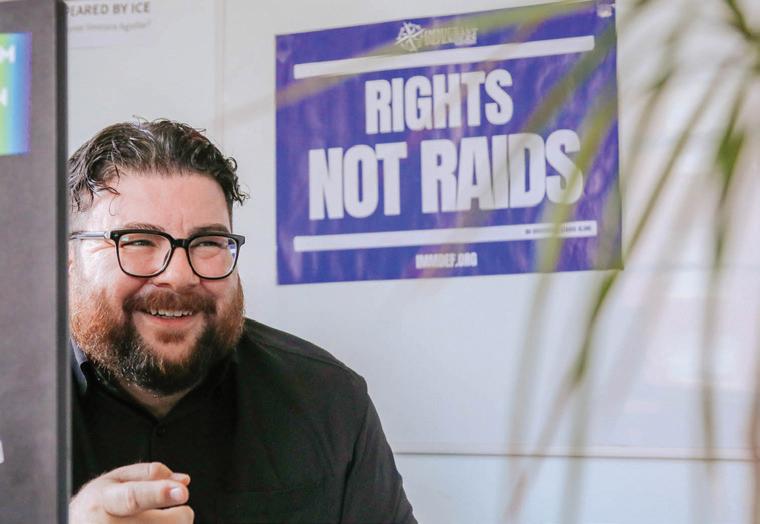
Kazim has worked at the Immigrant Defenders Law Center (ImmDef) in Downtown Los Angeles as a staff attorney on the Adult Representation team since August 2025. Previously, she was a part of the removal defense team at the Central American Resource Center in L.A.
ImmDef, a nonprofit legal service provider, focuses on representing every client in a non-discriminatory
way, regardless of their chances at success or what they can afford.
Kazim knows how crucial this type of representation is. She referred to a statement made by immigration judge Dana Leigh Marks, who said, “We’re doing death penalty cases in a traffic court setting.”
“That really resonates with me,” Kazim said. “The implications in immigration court are equal to, or even sometimes worse than, the consequences that somebody could face in a criminal setting. They could be incarcerated indefinitely, they could be sent to a country where they will be tortured or persecuted, they could be separated permanently from their family— the consequences are absolutely devastating to life and liberty.”
One roadblock ImmDef and other legal service providers face are changing policies relating to immigration and citizenship.
According to the Migration
Policy Institute, Trump has signed “38 executive orders related to immigration, accounting for nearly 17 percent of the 225 total orders signed so far during his first year,” beginning on Jan. 7.
Kazim said that many immigration law centers have been struggling to keep up with the rapidly changing policy landscape.
“It feels like there’s a new tactic or a new strategy or a new policy like every other day, every week,” Kazim said. “So much of what we have to do now is very quickly learn about these new policies, figure out their implications and prepare to deal with them on a super quick turnaround.”
Many of these changes are occurring not only in California, but also on a broader national level.
Gary Sang is the Immigrant Integration program manager at UnidosUS, a nonprofit Latino civil rights organization based in Washington, D.C. The Immigration Integration program works directly with around 55 immigration legal service pro-
viders in the United States. Sang has studied national trends in immigration policy and said that legal service providers have been doing their best to adjust to these changes.
“We’re seeing limited pathways to remain in the United States, and increased enforcement tactics on the ground. So, from a national perspective, immigration and legal services providers across the country are staying focused on the work that they’ve always done, which is helping clients navigate our complex immigration system, providing accurate information, representing clients at interviews at courts, providing presentations to their local communities, but also adapting to the constant policy changes,” Sang said.
These new policies have made it more difficult for immigrants in the process of naturalization, attempting to obtain citizenship. Kazim described how people who are detained and have not previously applied for citizenship, but try to do so while in detention, are not eligible for bond under government policy.
“If you can imagine somebody who’s lived here for 20 years who is tackled from behind in a Home Depot parking lot, they have not taken
any step to apply for admission, but the government is saying, ‘Well, they never applied for admission, they’re applying for admission now, which means they’re not eligible for bond,’” Kazim said. “People who have lived here for decades and, absolutely under the plain text of the law, are entitled to a bond hearing, are being denied it because of policies the administration is pushing and litigating that we know are illegal.”
A main talking point for many in support of these detentions and deportations is that immigrants who have lived in the country for years and did not apply for citizenship are deserving of removal and prosecution. Kazim said that this argument is fundamentally flawed due to its lack of understanding of the immigration court system.
“It is very clear that people who say that have not done any research at all. That is a talking point, and it is just completely inaccurate,” Kazim said. “The overwhelming majority of people do not have any pathway to status, so, for example, if someone does not have a high school diploma, two years of professional experience and hundreds and thousands of dollars, or a close
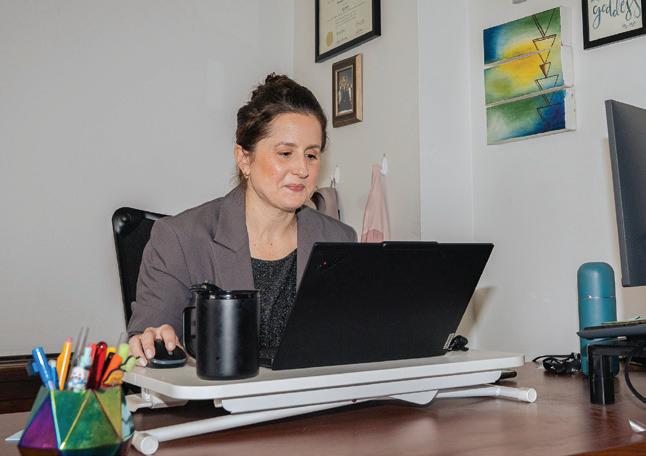
relative with status, it does not exist. There is no paperwork that they could fill out. There is no application they could go through.”
She argued that the increasingly few pathways to citizenship in the U.S. are designed this way on purpose, leaving immigrants vulnerable to exploitation.
“We have been talking for decades about the need for a pathway to citizenship because it does not exist,” Kazim said. “I think you have to think about who benefits from the fact that an entire class of working people who hold up large sectors of our economy can only come in a way that makes them inherently vulnerable to abuse and exploitation.”
Much like Kazim, ImmDef Managing Attorney Adrian Sandoval-Pachon fell into immigration law after seeing his family members affected by immigration enforcement and having relatives who were detained. Sandoval-Pachon works with attorneys such as Kazim to ensure that their clients are able to achieve the best possible outcome for their cases.
Sandoval-Pachon said that ImmDef and other organizations are struggling, especially with funding

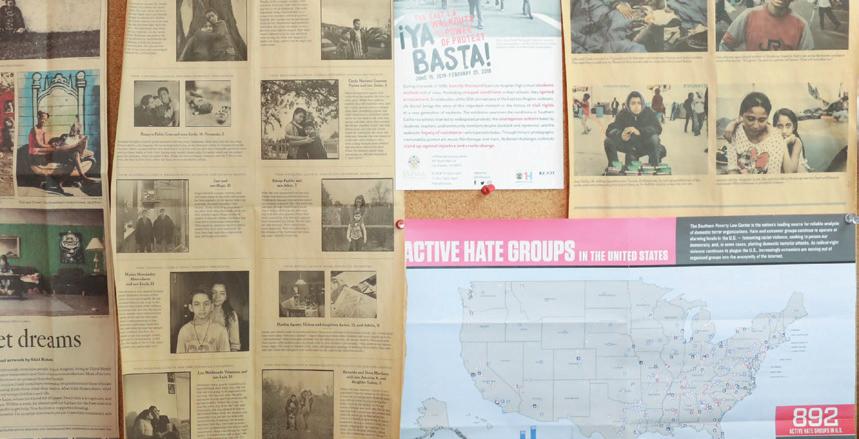
and the increase in demand.
“For us, a big feature we’ve struggled with is a cut to federal funding that we normally would have received, especially when it comes to unaccompanied minors who come to the country,” Sandoval-Pachon said. “Whether they’re detained here in Southern or Northern California, or even throughout the country, they’re calling us to see, ‘Hey, can you help me, hey can you help my brother? He’s been detained in such and such state.’”
Despite the unbalanced ratio of need and people able to meet that need, ImmDef and UnidosUS provide clients they are unable to represent with Know Your Rights information, redirection to other organizations that can support them and Rapid Response resources.
“We know that the immigration system in the United States is so complex, and people often can’t navigate it on their own,” Sang said. “That’s why this immigration ecosystem that we’re all part of is essential to help protect and defend community members. We regularly hear about people being taken advantage of when they’re desperate for help. So these trusted providers offer that safe, reliable alternative.”
Despite the challenges and backlash she receives, Kazim plans to continue her work, citing as motivation a case of a young girl seeking asylum, and helping her mother prepare to testify.
“We practiced the testimony, and every time we practiced, her mom ended up in tears recounting some of the things that she had to talk about,” Kazim said. “She continued to insist, ‘This is important to me. I want to practice as much as possible. There’s nothing more important than my daughter’s safety.’ I was a brand new attorney, and I just remember being so overwhelmed by this woman’s love for her family, by her tenacity. In the hearing, it was very clear in the judge’s decision that the mom’s testimony was the reason that this client got asylum.”
She also said that it’s important not to back down when meeting resistance, and that immigrants are not just supporting the city and its communities—they are the community.
“We are in a position where we have to feel the fear and do it anyway,” Kazim said. “Immigrants are a critical and integral part of the community in L.A., and so anything that affects them affects the city and the community as a whole.”

By Violet Garcia
Cries and rallies were heard through the streets for hours on end. The echoes of activist Angelenos bounced off of protest signs — each painted with colorful characters and colorful language. People whose paths might not usually cross, aside from the occasional niceties, took a stand on the City Hall steps to share their mutual
desire for change.
“Money for schools and education, not wars and deportation,” the crowd collectively chanted, while drummers, dancers and artists added to the conversation with chest–shaking beats and intricate footwork. The scene is reflective of the cultural melting pot that is Los Angeles, and the unity its residents maintain throughout the chaos of the current political and social climate.
The third “No Kings” demonstration was on March 28, and it drew over 8 million attendees across 3,300 locations throughout the United States, according to CBS News.

The “No Kings” protests have been a series of community actions coordinated across the country in response to controversial policies enacted by the second Trump administration.
A major driver of the now long-running contention between the current administration and the public is the surge of Immigration and Customs Enforcement and their agents’ use of force.
In Downtown Los Angeles, tens of thousands of people gathered at Gloria Molina Grand Park by City Hall and marched through the streets.

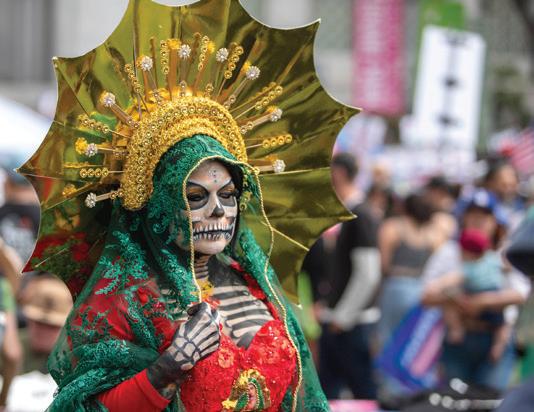


BOTTOM RIGHT:A group of protestors marches and holds a sign reading “Stop ICE” during the “No Kings” protest in Los Angeles, Calif., on March 28, 2026.



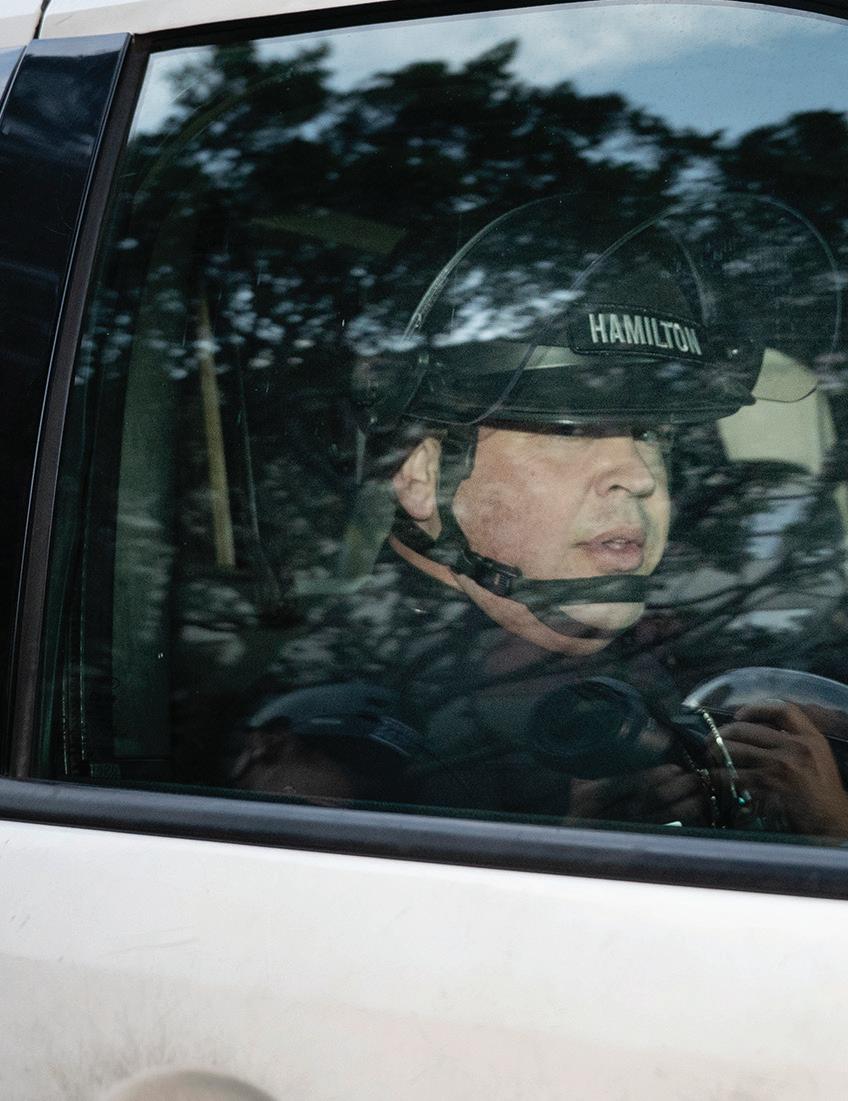
TOP: An officer from the Los Angeles Police Department arrests a protestor for after running away during the aftermath of the “No Kings” protest near downtown Los Angeles, Calif., on March 28, 2026. Photo by Abraham Elizalde
BOTTOM: Officer Velez from the Los Angeles Police Department charges at protestors and members of press to gain control of the street during the aftermath of the “No Kings” protest near downtown Los Angeles, Calif., on March 28, 2026. Photo by Abraham Elizalde

during the
March 28,

during an
MIDDLE: Two protestors argue during the aftermath of the “No Kings” protest near downtown Los Angeles, Calif., on March 28, 2026. Photo by
BOTTOM: An officer from the Los Angeles Police Department holding equipment arrest during the aftermath of the “No Kings” protest near downtown Los Angeles, Calif., on March 28, 2026. Photo by



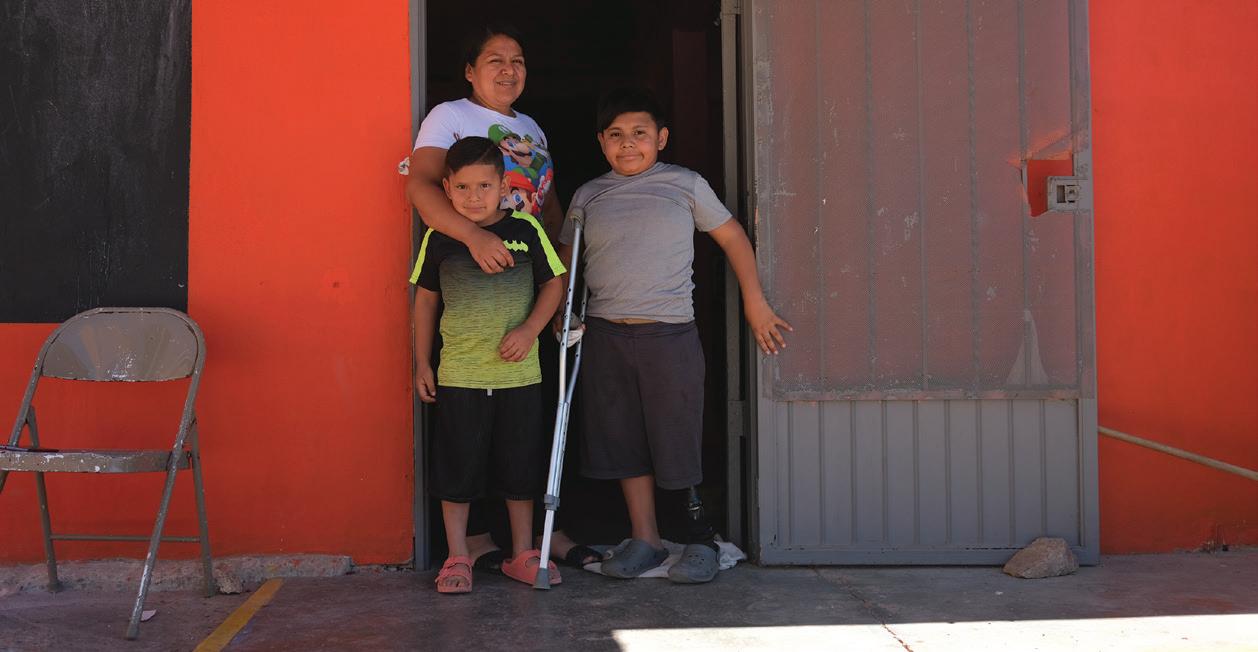
Fani and her two kids Kevin and Alan in front of their room at the shelter Casa de la Misericordia y de Todas las Naciones in Nogales, Sonora, Mexico, on March 21, 2026.
Between two countries that could not agree on what to do with them, they found a place that would not turn away migrants fleeing cartel violence, poverty and a lack of opportunity, caught between a country that sent them back and a home they cannot return to.
Policy shifts on both sides of the border have only deepened the crisis, turning temporary shelter into indefinite limbo.When the pandemic hit and the shelters along the U.S.-Mexico border ran out of room, migrants had nowhere to go.
In Nogales, Sonora, they slept in parks. They slept in cemeteries.
Angélica Mancías saw that and decided it was not acceptable.“I wanted to create a space where immigrants could stay while they worked through their migration process,” she said. “A real space. A dignified one.”
Six years later, Mancías is the
founder and director of Casa de la Misericordia y de Todas las Naciones, a shelter sitting in one of Mexico’s most active border corridors, quietly doing the work that policy has left undone. Inside its walls on any given day: a classroom full of children from multiple countries, adults cooking together in a communal kitchen, a therapist sitting with a child who has seen more than any child should.Migrants often find themselves trapped in border shelters or makeshift camps for extended periods.
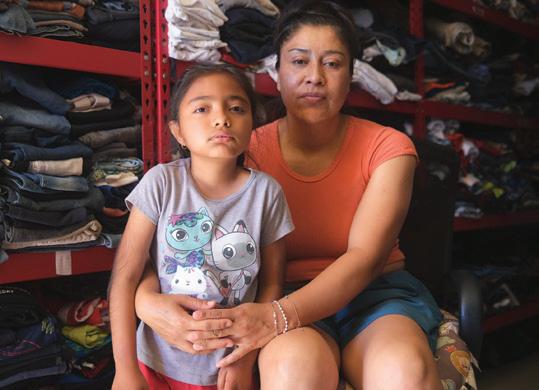
A mother’s journey from Zacatecas
Claudia Gutiérrez grew up on a small ranch in Zacatecas, Mexico. “There were very few job opportunities, and the people there are very poor,” she said. “As a mother, you
don’t want that for your children. You leave so they don’t fall into that life.”
On Oct. 8, she left everything her home, her parents, her siblings with her two youngest children by her side.
“That was the hardest part,” she said. The trip from Zacatecas to the U.S.-Mexico border takes roughly 24 hours. When she finally reached the border, she chose not to cross in secret. Instead, she crossed and waited for Border Patrol to find her, intending to request asylum legally.
“When I reached the border, I didn’t know the process,” she said. “I didn’t know if I would receive help or what would happen next. My dreams were nothing more than to be free from the threats of the cartel. I never felt safe in my town.”
At first, being in U.S. custody brought a sense of relief. “I thought I would finally be safe,” she said. That feeling did not last.“They never interviewed me,” she explained. “They didn’t ask me anything. They just denied my asylum and told me I would be deported.”The night she was deported, Gutiérrez broke down. She had no money, no plan, and nowhere to take her children. “The pain I felt was knowing I was going back to the same danger I had run from,” she said. “I didn’t know what would happen to me. Life in the shelter, we depend on others. We can’t go back to our hometown because of the danger,” she said. “We are waiting to see if our asylum process can be fixed. We don’t know what will happen. The United States is my only option.”
Along the way, they handed money to coyotes migrant smugglers and endured threats and uncertainty at every turn. Eventually, they were directed onto a freight train, a common and dangerous route for migrants moving through Mexico. They never made it to the border. Before reaching Puerto Peñasco, Sonora, strangers boarded the moving train and forced passengers
Because Kevin required a prosthetic limb following the accident, the family made their way to Nogales, where medical resources and support services were more accessible. “Coming here was good and peaceful,” Fani said. “We are accepting our situation and what happened.”Adjusting to shelter life was not easy. Shared dormitories, communal schedules, and strict rules replaced the privacy of home. “It’s hard because you have to get used to not having your own space,” she explained. “There is a new routine, new rules. But over time, you adapt.” Her younger son, Alan, soft spoken but certain, dreams of becoming a soldier. “Immigrants are what make the United States great,” Fani said. “Immigrants work so hard for long hours, more than anyone.”
Claudia Gutiérrez and her daugther Maria sit in the clothing storage at the shelter Casa de la Misericordia y de Todas las Naciones in Nogales, Sonora, Mexico, on March 21, 2026.
A train, an accident and a mother’s unbreakable hope
Fani did not leave Puebla, Mexico, with much. When she packed up and walked out the door with her two sons, Kevin and Alan, she left behind material things. “We left because of insecurities and family problems,” she said. “Everything we left behind was just things.” Her destination was Louisiana, where her mother lives. Her plan was to cross through Altar, Sonora. What she could not plan for was what would happen on the way From Puebla, the family boarded a bus and began the long journey north.
off. In the chaos, a woman grabbed Kevin. He fell.“It was a horrible experience,” Fani said, her voice breaking. “I was still on the train when it happened. I thought he was no longer going to be with me.” “As a mother, I don’t feel good about what happened. I couldn’t be there. They lied to us. They forced us onto that train.”
Kevin was rushed to a hospital in Puerto Peñasco, where Fani remained by his side for several months. He survived.“Thank God he is here with me, alive,” she said.
Inside Casa de la Misericordia on any given afternoon, the sounds of daily life fill the building, children in class, adults in conversation, the clatter of a communal kitchen. Claudia is still waiting for word on her asylum case. Fani is still caring for Kevin as he recovers, still holding on to the possibility of reaching Louisiana or finding solid ground closer to home. Angélica Mancías is still here too, still directing, still building. Six years after she opened its doors, the shelter is still open, as it has been for 15 years. In that time, it has received more than 1,000 immigrants. What began as a single room where a few deported men at a time could sleep and leave before dawn has grown into a compound of tents, roofed structures and communal spaces built,
piece by piece, from donations. At its peak, the shelter housed 250 people at a time. Today, with the effective closure of the U.S. border to asylum seekers under increasingly restrictive immigration policy, that number has fallen to around 15. The need, however, has not disappeared. People still arrive with nothing, no money, no shoes, no change of clothes having traveled thousands of miles from places like Afghanistan, Pakistan, Venezuela, Guatemala, Colombia, and Morocco, as well as Mexican states including Michoacán and Guerrero.
The migrant: A suitcase of dreams
Denise Omar never planned to leave Guatemala. At 31, while being a student who was trying to get money through different jobs to help out his family abroad, he cleaned apartments in the afternoon and worked at different restaurants. Then his brother, also a member of the LGBTQ+ community, was
murdered. Fearing for his own life, Denise Omar made a decision to leave his country.“I left not because I wanted to,” he said. “I left because my life was in danger. I left my mom, my brother and my friends. “I left everything and just left with a suitcase of dreams.” His original destination was Philadelphia, where he dreamed of studying gastronomy and building a new life. But the shifting political climate under President Trump changed his plans. He decided to stay in Mexico. And he found a community. “Here we are a small number, but we all take

care of and support each other,” he said. “I have stayed in other shelters where people make you feel small.” Omar is currently not working and has no external support network in Mexico. He wants to return to Guatemala with a larger purpose fighting for LGBTQ+ rights so that others in his community do not have to endure the same traumas.“The things that looked bad ended up helping me,” he said. “Hope should never be lost, even when you’ve had the hardest experiences in life.”
The elder: A purpose given by God
At 80, Hector has spent 15 years as the shelter’s emotional and spiritual anchor. He greets migrants who arrive. Without documentation, most residents cannot get work. Those who do find work are frequently paid at or below minimum wage.“People take advantage of the immigration situation,” he said. For Hector, it is spiritual. “Since man has existed, there has been immigration,” he said. “We are here to serve the people and understand that there are people who need help. I feel like there’s always a purpose, and God gave me a purpose to help people.”
Story by Calvin Henry
Photos by Abraham Elizalde and Calvin Henry
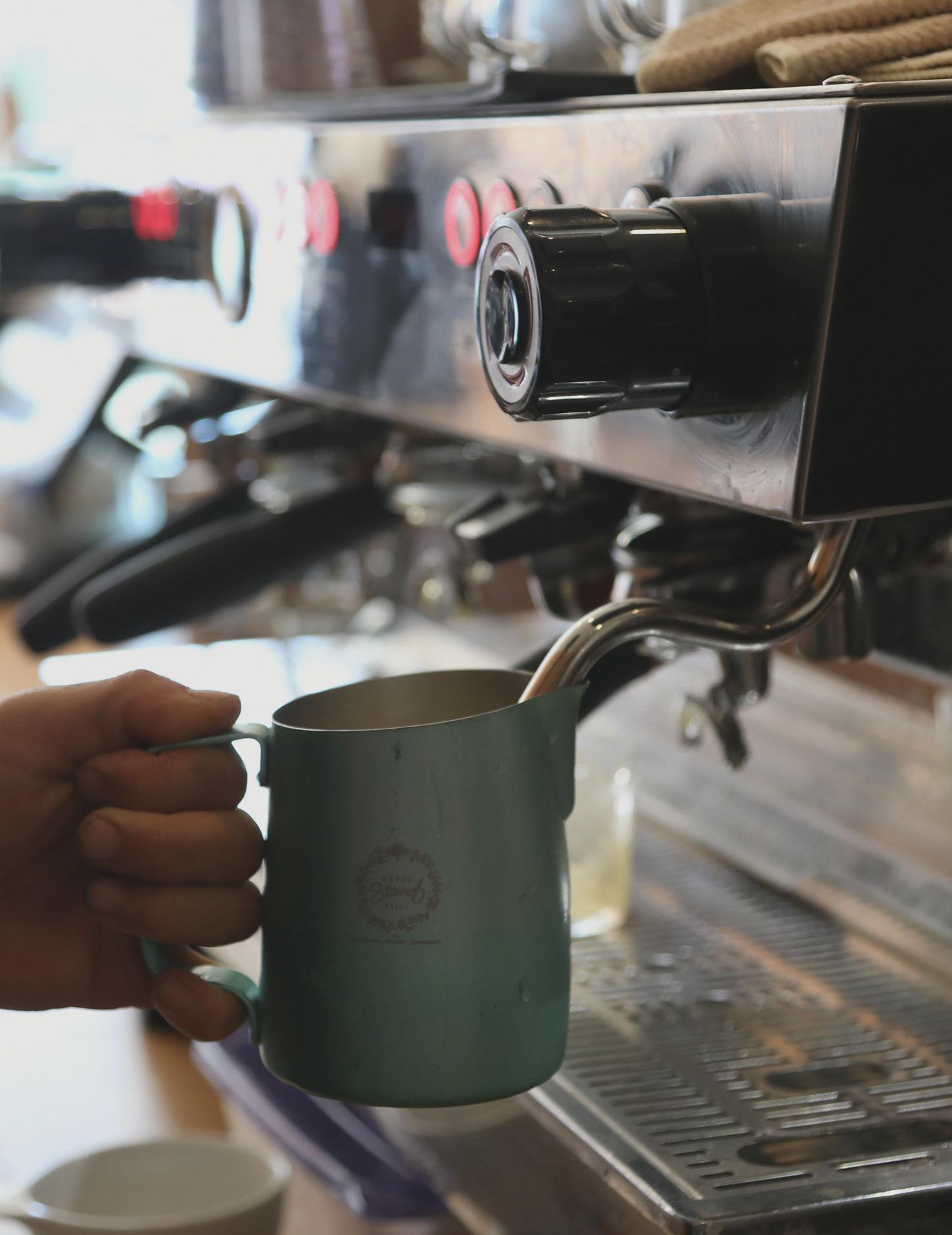
The rich aroma of freshly ground espresso permeates a small, cozy space, and is accompanied by steady music, faint chatter and clattering silverware.
Layered over the hustle and bustle of cafe culture, sounds of machinery emanated from the restroom as a man on a small ladder rotated a sanding tool with his calloused hands. The soft glow of the restroom light softened the dark tone of his grizzled hair, the soft lines on his face and his black shirt dusted in concrete powder.
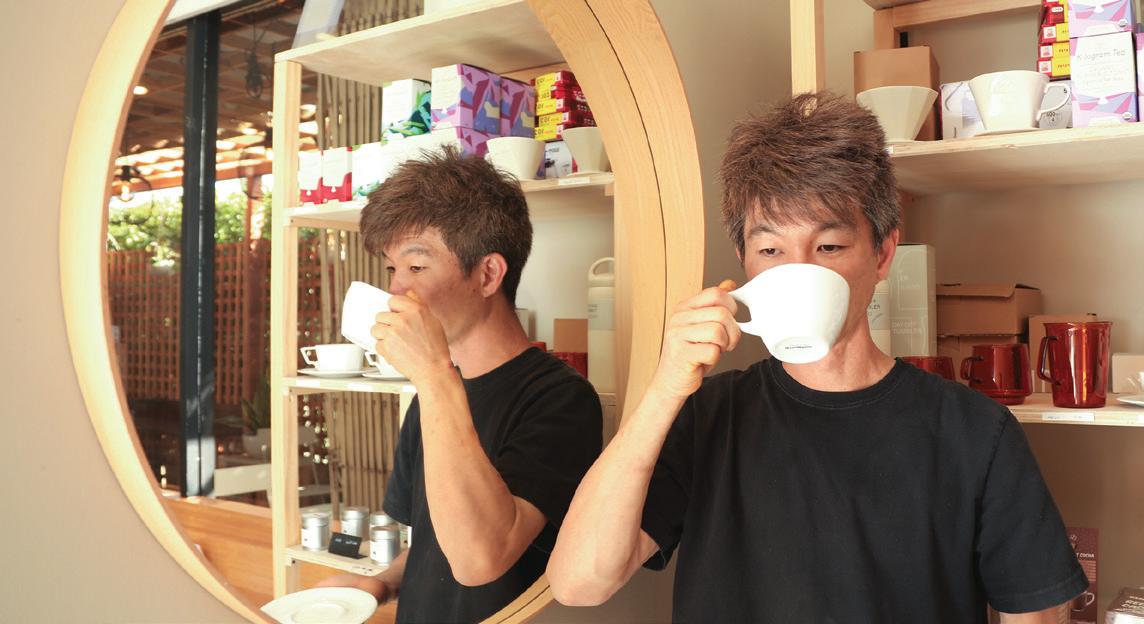
This is one of many risks and investments coffee shop-owner William Kwon has made for his cafe.
Dolce Vita is one of 2.6 million Asian American-owned businesses in the United States. After operating out of one location, Kwon built and renovated his recently-opened second location in Koreatown.
“I put in a lot of sacrifice and pain and love into the business, and I hope this could transition into our customers,” Kwon said. “I hope they feel the energy that I’m putting in.”
Kwon was born in Seoul, South Korea, and spent his early childhood in Gaepo-dong, Gangnam District.
William Kwon’s father, Taek Cha Kwon, operated a wholesale electronics business and later moved into manufacturing while they lived in South Korea. When William Kwon was 10 years old, he and his parents moved to the United States.
Forging his own path by the age of 18, he started his first apparel business.
“I didn’t really like someone telling me the answer is this or that. I always had a different perspective,” William Kwon said.
Due to his father’s diabetes, Kwon’s mother, Soon Cha Kwon, opened a snack shop inside an Oxnard train station to support the family. The business struggled for a while due to the area’s criminal activity.
“It wasn’t the most pleasant place to be,” William Kwon said. “And a lot of people in Oxnard, they used to just avoid going there.”
William Kwon decided to take over the snack shop and remodel it into a cafe, beginning with an old espresso machine a friend lent him.
Despite his mother’s initial doubt,

William Kwon persevered and worked on his coffee business for nearly a decade.“To bring specialty coffee to that kind of area, my mom thought it was a crazy idea because who was going to be able to afford to pay this kind of specialty coffee price?” William Kwon said. “The coffee she was selling was like $1.50.”
Eventually, he climbed the ranks to Yelp’s Top 100 Restaurants. But William Kwon’s success was not immediately noticed by his community.
“When I made the top 100 restaurants in the United States, no one in Koreatown knew about me, but they knew other Koreans that made it,” William Kwon said. “They were making the news and everything. So I thought, ‘Why don’t I just come out here and open [Dolce Vita Coffee], and they’ll find out about me. I want to be appreciated by Koreans, too.”
Andy Cho, the manager of the Koreatown location, has worked with William Kwon for two years and said opening the second coffee shop was a huge step.
“He is a marathoner. He never stops,” Cho said. “He used to run marathons, too. But I think he just kind of brought that attitude toward coffee, where he just has no days off.”
Steve Kang, a commissioner of the Los Angeles Board of Public Works, said the early mass migration of Koreans in the United States has been due to factors such as the Korean War, educational opportunities and stability, but the rate has changed.
“Now, I think it’s a little bit different, where if you look at the statistics, there are ebbs and flows,” Kang said. “But there was a peak in immigration in the 90s, 80s, even in the early 2000s.”
According to Kang, accomplished Korean Americans are breaking past the “bamboo ceiling,” a systemic barrier that keeps Asians from attaining professional roles in society due to racism and stereotypes.
Kang, who has also served in nonprofit roles and as a volunteer for major Korean American and Koreatown organizations, described Koreatown as the cultural hub for Korean Americans in Los Angeles.
“Koreatown, L.A., is still sort of the mecca for the Korean American identity,” Kang said. “So even if you’ve moved away, everybody sees L.A. Koreatown as the sort of gathering place for all things Korean American.”
With William Kwon’s first location fully established and a stable second location in place, he said he feels more in command of his business.
“Being in this cafe industry, now going nine years, I have more control over what I could give to customers. I feel more specialized in something that I think is unique and beautiful.”
Kwon said he plans to open a third Dolce Vita Coffee location, but stresses that the brand is still
developing.
“I’m just trying to find what my identity is,” Kwon said. “I had questions about my coffee shop identity since the beginning. So I haven’t really made one big identity yet. I keep evolving and changing as I experience with the customers, so it could be anything.”
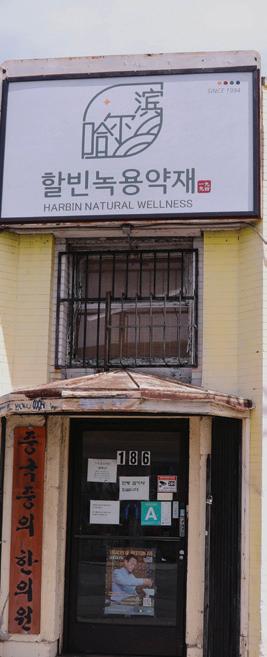
Several blocks south of Dolce Vita Coffee, at one of Koreatown’s busier intersections, is a small corner store called Harbin Deer Antlers Trading Company.
Four years ago, as Andrew Xu and his wife prepared to step through the door of his parents’ business, they said they felt a sense of urgency. Upon entering, the couple saw payrolls and documents strewn across the work desk. Lingering memories flooded Andrew Xu’s mind as he stood beside his wife.
After running the store for 35 years, Andrew Xu’s mother unexpectedly died in the hospital, leaving a gap in the family and the business. With Andrew Xu’s father unable to run the store on his own, he said he felt it was his responsibility as an only child to keep the family business alive and continue their legacy.
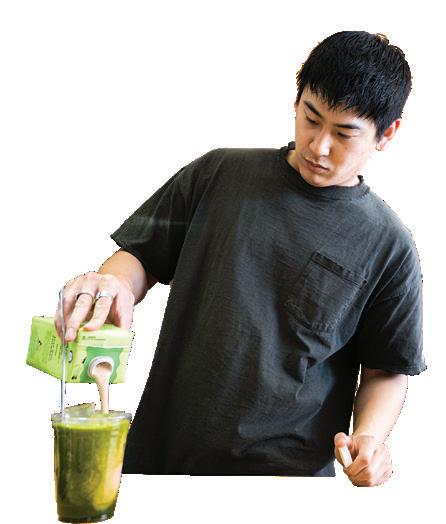
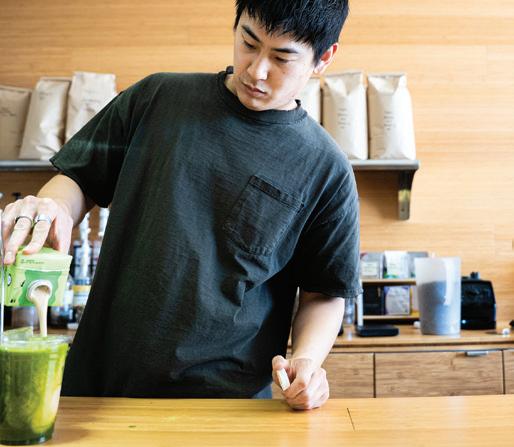
“I’m still an amateur compared to my mom and dad,” Andrew Xu said. “But there was no other choice. I have to face the reality. So I told my wife, ‘We’re still young. We could learn, and we can do it.’”
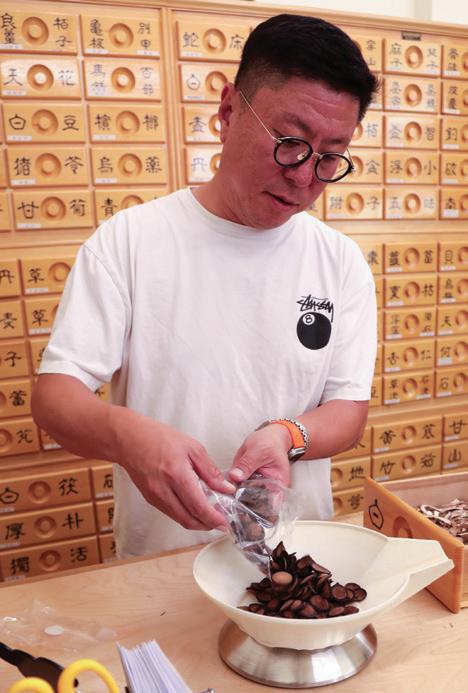
Their store is a family-owned business specializing in traditional Korean and Chinese herbal medication.
The business was founded by Andrew Xu’s immigrant parents, Sheng Le Xu and Zai Li, in 1992. Their first location was on Olympia and Norton Street before they moved their store to Western Avenue in Koreatown two years later.
Sheng Xu and Li were born in Korea and grew up in Harbin, China. According to the 2020 Chinese Census, the Korean ethnic group is a prominent minority in Harbin.
Andrew Xu said his parents immigrated to the United States seeking

civil liberties and the opportunity to support a family.
“Back in the 80s, in those countries, there’s no freedom of speech,” Andrew said. “Every time you say something, people go and judge your decision and your opinion.”
According to Andrew, language was an issue for his immigrant parents when they first arrived, but with hard work, independence and support from their community church, they were able to adapt.
The establishment is now run by husband-and-wife duo Andrew Xu and Kelly Kim. Andrew Xu was born and raised in China. He immigrated to the U.S. shortly after his parents in 1989.
Andrew Xu said one reason his dad created the business was because they had the advantage of inclusivity that being multilingual provides, which allowed them to
communicate with both Korean and Chinese communities in Los Angeles.
Li worked for a similar Korean-owned business when she first immigrated to the U.S. in 1987. There, she learned about the business structure and techniques needed to open Harbin Natural Wellness in 1992.
Sheng Xu, who spoke through a translator, said his wife worked “day and night” for their business despite the language barrier and contributed significantly.
Andrew Xu said one night, while he was sleeping, he heard his mother’s voice telling him to be strong for his family and the business.
“The next day, I was saying, ‘I need to be strong. I need to be the heart of the family to keep it together,’” Xu said.
Andrew Xu said his favorite part

““ “ The Korean community put us here and gave us the opportunity to still survive no matter what happened.
“


of running the business is keeping the kitchen clean and open to the public, so they can see how they process their raw herbs for consumers. A majority of their herbs are imported from China, but some herbs also come from Korea.
The products from Harbin Deer Antlers Trading Company have also benefited the owners. After visiting his primary doctor, Andrew Xu was told there was damage between his shoulder and arm. He was recommended to go to rehabilitation and take medication. But the medication was too strong, and he suffered
memory loss. So he sought acupuncture and herbal medicine from his father, which Andrew Xu found more effective.
Sheng Xu has used his own herbal medicine and acupuncture techniques to heal his pain.
“He still plays soccer, and he’s still running on the field,” Andrew Xu said. “Every time he feels his knee pain, he will do his acupuncture on his own. Needles, cupping, all that. He will put the herbs together, boil it, drink it.”
Andrew Xu said the business is run the same way as his fami-
ly functions. Sheng and Andrew handle customer communication but the family’s biggest accomplishment was Sheng Xu keeping them together and their business alive through economic hardships, like the 1992 Los Angeles unrest and the 1994 Northridge earthquake.
“The Korean community put us here and gave us the opportunity to still survive no matter what happened,” Andrew Xu said. “I still think herbal medication has a bigger and bright future,” Andrew Xu said. “It’s just the new generation doesn’t know yet.”
on April 3, 2026.
Calif., on April 23,


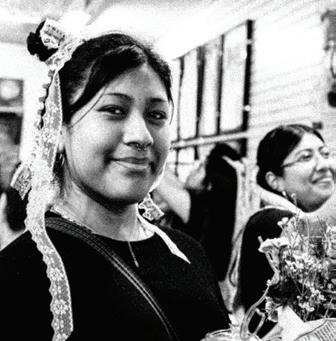
A completed traditional updo with twin braids and colorful and textured ribbons at the Trenzas de Resistencia fundraiser event hosted at Cry Baby’s Rodeo in the city of San Fernando, Calif., on Feb. 14, 2026.
Alyssa Cortez at the Trenzas de Resistencia fundraiser event hosted at Cry Baby’s Fodeo in the city of San Fernando, Calif., on Feb. 14, 2026.
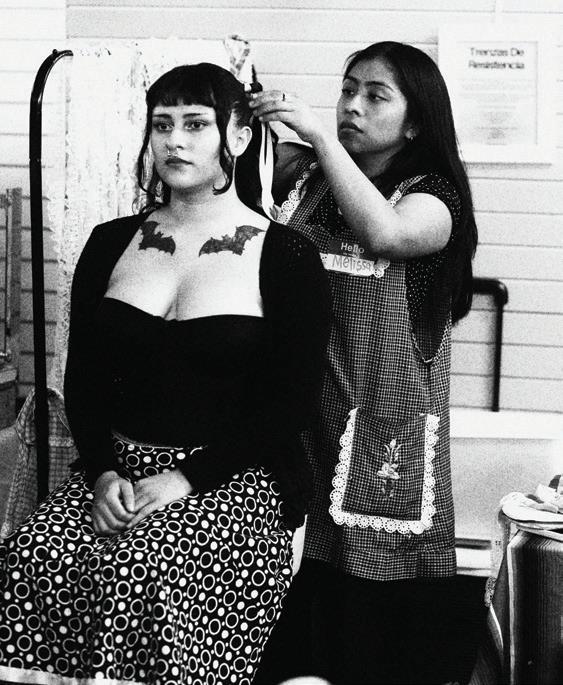

nspired by Mexican Indigenous cultures and communities, Trenzas Amigas was created. Krystal Ramirez, the founder, created a mutual aid initiative dedicated to supporting community members and families affected by ICE raids.
Seeing families being torn apart motivated Ramirez to start this pop-up initiative and to begin raising funds for
BOTTOM LEFT: Melissa Lopez volunteers at Trenzas de Resistencia fundraiser event hosted at Cry Baby’s rodeo in the city of San Fernando, Calif., on Feb. 14, 2026.
CENTER: Vendor at Trenzas de Resistencia de Resistencia fundraiser hosted at Cry Baby’s city of San Fernando, Feb, 2026.

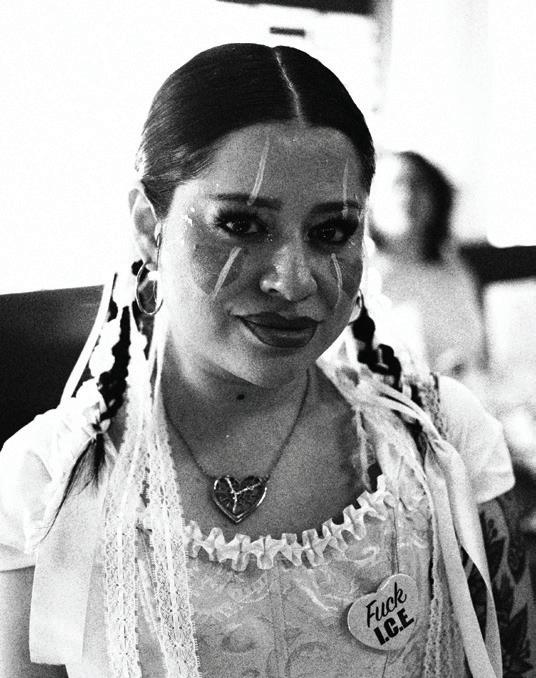
her community. Inspired by women’s resistance, such as the Adelitas, Ramirez and her co-founder use braiding as a symbol of cultural identity, resistance and community uplift.
About a year later, Trenzas Amigas has been recognized as an official non-profit and will continue to serve the community.
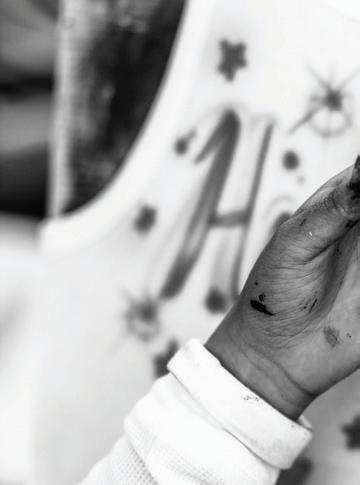
airbrushes a shirt
Resistencia Trenzas fundraiser event Baby’s Rodeo in the Fernando, Calif., on
A completed traditional updo with twin braids and colorful, textured ribbons at the Trenzas de Resistencia fundraiser event hosted at Cry Baby’s Rodeo in the city of San Fernando, Calif., on Feb. 14, 2026.
Materials used by volunteers at the Trenzas de Resistencia fundraiser event hosted at Cry Baby’s Rodeo in the city of San Fernando, Calif., on Feb. 14, 2026.
BOTTOM RIGHT: Attendee with a traditional updo with twin braids and colorful and textured ribbons at the Trenzas de Resistencia fundraiser event hosted at Cry Baby’s Rodeo in the city of San Fernando, Calif., on Feb. 14, 2026.





Donna Covarrubias often recalls an woman Afghani student she assisted 18 years ago. A college education was not an option for her, because she did not have the resources. But she overheard a conversation about an organization that helped educate Afghani women by providing scholarships that fund tuition, housing and travel expenses.
This student told her that she was reserved and shy, but she asked about the opportunities, and from there, her journey to getting a degree in the United States began.
Now, Covarrubias tries to help others get those answers as one of the advisers currently specializing in International Student Services at Pierce.
She assists international students to navigate both academics and life’s transitions during and throughout their schooling. She said that despite her experience, she is still learning and growing with the job.
“The most important lesson I’ve learned is cultural understanding and empathy,” Covarrubias said. “International students often arrive with different educational systems, communication styles and cultural experiences. I’ve learned what may seem normal in one culture can be very different in another.”
She said a key working with international students is clear communication and patience.
“Navigating a new educational system, language and culture can be overwhelming, so taking the time to listen and explain processes can make a big difference in a student’s success.”
Covarrubias helps students wth issues involving mental health, medical care, driver’s licenses and apartment lease agreements.
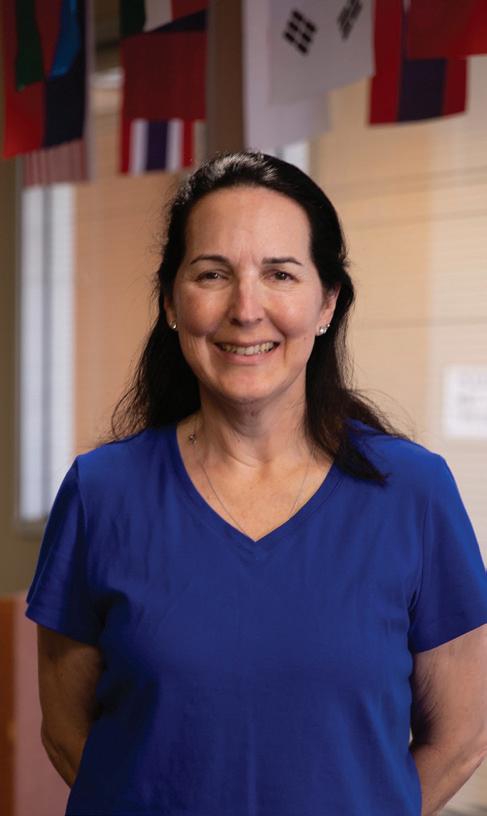
“Something I always tell our international students is to not be afraid to ask questions, and don’t be afraid to ask for help,” she said. “You never know what you might learn or gain from asking.
Miguel Hernandez, a prospective student planning to study mechanical engineering, is hopeful about the ISS program acting as a bridge between the USA and other countries.
“Although the world is breaking apart in front of our eyes, this program gives international students the chance to explore a different setting,” Hernandez said. “It can bridge the dividing gap between cultures and diplomacy.”
Bryan Lopez, another prospective student who plans to become a pharmacist, hopes ISS will expand.
Donna Covarrubias has helped international students at Pierce College for about 20 years, serving as an Admissions and F-1 adviser.
“I would love to experience a cultural exchange program,” Lopez said. “I think it would be cool to see them over here and us over there.”
But Covarrubias fsaid said the current U.S. administration is causing uncertainty.
“International students are extremely concerned about losing their status and not being able to finish their education,” she said.
“There are many visa regulations currently under review by the U.S. government and are pending possible changes that could drastically affect our international students. I face the challenge of providing certainty that everything will be OK.”






Growing up as a first-generation college student, I knew that every accomplishment in my life, as well as every failure, meant so much more to me than others. Because in my eyes, every action I take is a result of what my parents sacrificed and endured to give a chance of a better life for my sisters and me.
My parents lived in a small town just outside of Guadalajara, Mexico. At around 18 years old, my dad took the opportunity to work with his brother in the United States, and leave everything that he had known in Mexico.
He did intense labor in the U.S., and later on, he met my mom on one of his visits back to Mexico, and they soon grew a loving relationship before my dad had the idea to move back to the U.S.
Because of the less strict immigration laws when he worked in the U.S., he was able to stay and earn his citizenship, also allowing my mom to get a green card. From there on out, my parents bought a home, started a family and occasionally visited their homeland.
It took me a while, but I understand the severity of what my parents did for me. They never got their degrees, any form of higher education and they never had any goal of what they wanted to be in life.
My parents worked every day with only Sundays to rest, as early as 6 a.m to 5 p.m. They gained the extra dollar to make sure all of my sister’s and my needs were met, and to even splurge on a few luxuries like private school and gifted cars when we got our licenses.
By Abraham Elizalde
Being first-generation is something that I will always say with a proud chest. I love my parents and what they did for me, and I live for them every day so they see that their hard work and sacrifice isn’t taken for granted. I will live out the dreams they had for themselves and make them proud to call me their son.
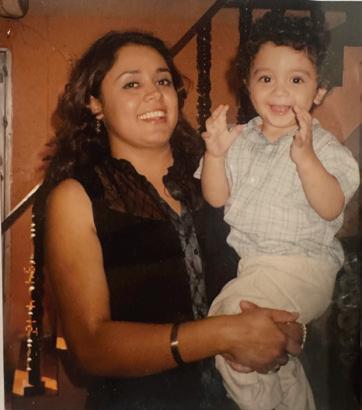

By Daniela Raymundo
After living in the same town my entire life, my mom decided it was time for us to leave El Salvador. I wasn’t excited about that decision at all. If you think about it, no 14-year-old would be happy about leaving friends that you met in kindergarten and the school you were supposed to graduate from. I had plans and dreams that I was never able to fulfill, and many missed birthdays with friends that we had been planning since we were little kids. Leaving my home was one of the hardest moments of my childhood.
When I got off that plane on a random tuesday I didn’t plan to be where I am today, don’t know if that’s good or bad yet.
Luckily, I’ve always been good at English, so it wasn’t that hard to learn, influenced by music and films. I used them as a tool to learn the language as I grew up back home. The main challenge came when it was time to speak in front of others. It was completely terrifying, but I got over that fear after the need of having friends took over my brain. This helped me to gain confidence in myself, and now I can publicly speak in both languages without panicking.
After all these years, every once in a while I still notice myself missing the smell of the cold mornings, walking to school with my sister and my old dinner table with no missing chairs.
Growing up my family, especially my aunts, always took me to different places. We went to many gardens, waterfalls, archaeological sites, beaches, museums and even other countries like Guatemala and Nicaragua. They are memories I hold onto dearly, and I would always punish myself for leaving and no longer being able to be part of their trips.
They are now in their late 70s and never stopped being active in those same activities, which I continue to do even if it’s by myself now. I am lucky enough to say I can come back home and visit them sometimes. It feels like a huge privilege for having such an easy outcome and makes me feel guilty that not everyone can.
Besides that, I will forever be grateful that I moved to a place that helped me embrace my culture and connect with so many others. I never expected to even visit here, let alone call it home. Los Angeles is the place where my creativity became my voice and gave me the opportunity
to find one of my biggest passions — photography.
Los Angeles will forever hold a place in my heart because it has expanded my beliefs in politics, culture, humanity, art and academic achievement.
Being surrouned by talented, hard-working people who face the same artistic struggles as I do and still choose to follow their dreams everyday has helped me find the strength I need to keep mine alive.
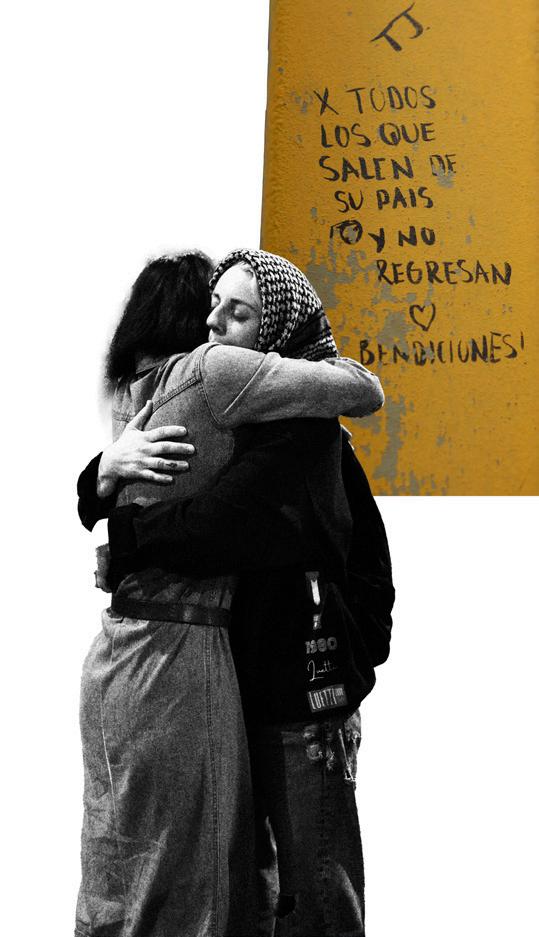
“Solidarity, not charity.”

The Coalition for Humane Rights (CHIRLA) was founded in 1986. CHIRLA advocates for human, civil, labor and immigrant rights. In 2003, CHIRLA launched the California Dream Network for equality and immigration reform by empowering college students.
Instagram: @chirla_org
Raices Con Voz: Latinos In Public Health was founded by Miguel Montes and serves communities in Los Angeles. Raices Con Voz is a Latino community-based collective that supports youth, families and young adults while advocating for social equity, access to health and education.
Instagram: @raicesconvozph

Historical
Civil rights activists David Sanchez and Carlos Montes founded the Brown Berets in 1967. The organization opened Barrio Free Clinic which was one of the first free clinics available to a poor Spanish-speaking community. The Brown Berets also set up the Benito Juarez Health Clinic in 1972 which provided free health care to Chicago residents.
Instagram: @brownberetorganization
Mutual Aid Los Angeles Network (MALAN) is a central information network of mutual aid projects across Los Angeles. Their core values are community care, anti-racism, adpatability, abolition, creativity, redistribution and sustainability.
Instagram: @mutualaidlanetwork

Originally named Los Angeles Dention Project of Catholic Legal Immigration Network, Inc. in 2008, Esperanza Immigrant Rights Project aims to serve immigrant communities in Los Angeles and advocates for social justice.
Instagram: @esperanzaccla
Historical
Political activists Huey Newton and Bobby Seale founded the Black Panther Party in 1966. Local Chapters from the Black Panther Party organized “survival programs” that provided food, clothing and transportation to children, elderly and families.
Valeria Estevez
Raiden Vazquez

Mutual Aid refers to community organizations that volunatarily support those in need. The slogans “solidarity, not charity” and “solo el pueblo, salva el pueblo” (only the people, save the people) capture the spirit of these mutual aid projects.
“Solo el pueblo, salva el pueblo”

Valley-based
Through community fundraising, Amor Al Valle focuses on delivering grocery runs. They run grocery errands and deliver groceries and other household essentials to families in the San Fernando Valley who fear going out because of ICE raids.
Instagram: @amoralvalle818

Valley-based
SFV Mutual Aid hosts distributions for unhoused neighbors and immigrant community members in the North Hollywood area. Meal distributions happen every Saturday at 1 p.m. and Wednesday at 5 p.m.
Instagram: @sfv_mutualaid

California-based
Mutual Aid for Moms is a prominent, grassroots, volunteer-run collective in San Diego, providing direct support to migrant and immigrant mothers facing economic hardship, housing instability, and immigration issues. MAFM focuses on migrant mothers, offering food, diapers, strollers, and emergency housing.
Valley-based
PAC is a collective that focuses on distributing hot meals, fresh produce, toys, clothes, beauty, health, and hygiene essentials to families in the San Fernando Valley. Every first and third Thursday of the month.
Instagram: @pacsolidarity

California-based
PEOC provides opportunities for day laborers, household workers, and other low-wage, immigrant workers to find safe work at a fair wage. PEOC offers new trades and skills that improve employability and quality of life, and improve the overall conditions for all immigrant workers.
Instagram: @peoc_pomona

California-based
Ponte Your Monos uses colorful ribbons as a form of resilience. Through braiding, Ponte Your Monos raises funds for street vendors, families, and community members. The mutual aid focuses on using braids and bows as a symbol of visibility, care, and resistance.
Instagram: @ponteyourmonos