WWW.JAMRIS.ORG pISSN 1897-8649 (PRINT)/eISSN 2080-2145 (ONLINE) VOLUME 20, N° 2, 2026
Indexed in SCOPUS
AI-generated illustration



WWW.JAMRIS.ORG pISSN 1897-8649 (PRINT)/eISSN 2080-2145 (ONLINE) VOLUME 20, N° 2, 2026
Indexed in SCOPUS
AI-generated illustration
A peer-reviewed quarterly focusing on new achievements in the following fields: • automation • systems and control • autonomous systems • multiagent systems • decision-making and decision support • • robotics • mechatronics • data sciences • new computing paradigms •
Editor-in-Chief
Janusz Kacprzyk (Polish Academy of Sciences, Łukasiewicz-PIAP, Poland)
Advisory Board
Dimitar Filev (Research & Advenced Engineering, Ford Motor Company, USA)
Kaoru Hirota (Tokyo Institute of Technology, Japan)
Witold Pedrycz (ECERF, University of Alberta, Canada)
Co-Editors
Roman Szewczyk (Łukasiewicz-PIAP, Warsaw University of Technology, Poland)
Oscar Castillo (Tijuana Institute of Technology, Mexico)
Marek Zaremba (University of Quebec, Canada)
Executive Editor
Katarzyna Rzeplinska-Rykała, e-mail: office@jamris.org (Łukasiewicz-PIAP, Poland)
Associate Editor
Piotr Skrzypczyński (Poznań University of Technology, Poland)
Statistical Editor
Małgorzata Kaliczyńska (Łukasiewicz-PIAP, Poland)
Editorial Board:
Chairman – Janusz Kacprzyk (Polish Academy of Sciences, Łukasiewicz-PIAP, Poland)
Plamen Angelov (Lancaster University, UK)
Adam Borkowski (Polish Academy of Sciences, Poland)
Wolfgang Borutzky (Fachhochschule Bonn-Rhein-Sieg, Germany)
Bice Cavallo (University of Naples Federico II, Italy)
Chin Chen Chang (Feng Chia University, Taiwan)
Jorge Manuel Miranda Dias (University of Coimbra, Portugal)
Andries Engelbrecht ( University of Stellenbosch, Republic of South Africa)
Pablo Estévez (University of Chile)
Bogdan Gabrys (Bournemouth University, UK)
Fernando Gomide (University of Campinas, Brazil)
Aboul Ella Hassanien (Cairo University, Egypt)
Joachim Hertzberg (Osnabrück University, Germany)
Tadeusz Kaczorek (Białystok University of Technology, Poland)
Nikola Kasabov (Auckland University of Technology, New Zealand)
Marian P. Kaźmierkowski (Warsaw University of Technology, Poland)
Laszlo T. Kóczy (Szechenyi Istvan University, Gyor and Budapest University of Technology and Economics, Hungary)
Józef Korbicz (University of Zielona Góra, Poland)
Eckart Kramer (Fachhochschule Eberswalde, Germany)
Rudolf Kruse (Otto-von-Guericke-Universität, Germany)
Ching-Teng Lin (National Chiao-Tung University, Taiwan)
Piotr Kulczycki (AGH University of Science and Technology, Poland)
Andrew Kusiak (University of Iowa, USA)
Mark Last (Ben-Gurion University, Israel)
Anthony Maciejewski (Colorado State University, USA)
Typesetting
SCIENDO, www.sciendo.com
Webmaster TOMP, www.tomp.pl
Editorial Office
ŁUKASIEWICZ Research Network
– Industrial Research Institute for Automation and Measurements PIAP
Al. Jerozolimskie 202, 02-486 Warsaw, Poland (www.jamris.org) tel. +48-22-8740109, e-mail: office@jamris.org
The reference version of the journal is e-version. Printed in 100 copies.
Articles are reviewed, excluding advertisements and descriptions of products.
Papers published currently are available for non-commercial use under the Creative Commons Attribution-NonCommercial-NoDerivs 4.0 (CC BY-NC-ND 4.0) license. Details are available at: https://www.jamris.org/index.php/JAMRIS/ LicenseToPublish
Open Access.
Krzysztof Malinowski (Warsaw University of Technology, Poland)
Andrzej Masłowski (Warsaw University of Technology, Poland)
Patricia Melin (Tijuana Institute of Technology, Mexico)
Fazel Naghdy (University of Wollongong, Australia)
Zbigniew Nahorski (Polish Academy of Sciences, Poland)
Nadia Nedjah (State University of Rio de Janeiro, Brazil)
Dmitry A. Novikov (Institute of Control Sciences, Russian Academy of Sciences, Russia)
Duc Truong Pham (Birmingham University, UK)
Lech Polkowski (University of Warmia and Mazury, Poland)
Alain Pruski (University of Metz, France)
Rita Ribeiro (UNINOVA, Instituto de Desenvolvimento de Novas Tecnologias, Portugal)
Imre Rudas (Óbuda University, Hungary)
Leszek Rutkowski (Czestochowa University of Technology, Poland)
Alessandro Saffiotti (Örebro University, Sweden)
Klaus Schilling (Julius-Maximilians-University Wuerzburg, Germany)
Vassil Sgurev (Bulgarian Academy of Sciences, Department of Intelligent Systems, Bulgaria)
Helena Szczerbicka (Leibniz Universität, Germany)
Ryszard Tadeusiewicz (AGH University of Science and Technology, Poland)
Stanisław Tarasiewicz (University of Laval, Canada)
Piotr Tatjewski (Warsaw University of Technology, Poland)
Rene Wamkeue (University of Quebec, Canada)
Sławomir Wierzchon (Polish Academy of Sciences, Poland)
Janusz Zalewski (Florida Gulf Coast University, USA)
Teresa Zielińska (Warsaw University of Technology, Poland)
Publisher:
Copyright © by Łukasiewicz

1
VOLUME 20, N˚2, 2026
Communication with the Manipulator Using Gestures to Enhance the Manipulability of Persons with Reduced Mobility
Sebastian Koryl, Katarzyna Zadarnowska, Krzysztof Arent
DOI: 10.14313/jamris‐2026‐015
9
ARIS: Autonomous Real‐Time Interactive Social Robot
Cesar Minaya‐Andino, David Minango, Marcelo Zambrano
DOI: 10.14313/jamris‐2026‐016
20
Review of Hybrid Path Planning Techniques for Mobile Robots: Integration between AI Techniques and Traditional Methods in known Environments
Mohamed Abdelghafar, Hazlina Selamat, Nurulaqilla Binti Khamis, Anas Aburaya, Mohd Taufiq Muslim
DOI: 10.14313/jamris‐2026‐017
30
Enhanced UAV Path Planning Using the Tangent Intersection Guidance (TIG) Algorithm
Hichem Cheriet, Badra Khellat Kihel, Samira Chouraqui
DOI: 10.14313/jamris‐2026‐018
53
Multimodal Emotion Detection for Education and Work Environment by Using Improved Artificial Intelligence Machine Vision System
Wan Mohd Bukhari Wan Daud, Adnan Kiral, Mohamed Osman Tokhi, Lee Chung Yee, Muhammad Muzhafar
Mohammad Zawawi
DOI: 10.14313/jamris‐2026‐019
63
Machine Learning–Driven Classification Of Text‐Based Cybercrime Under the Indian IT ACT
Sukrati Agrawal, Hare Ram Sah, Rajesh Kumar Nagar
DOI: 10.14313/jamris‐2026‐020
71
Optimizing Crop Recommendations Using Machine Learning: A Comparative Study for Enhanced Yield Prediction
Sanket Gupta, Trishna Panse, Kailash Chandra Bandhu, Ratnesh Litoriya, Shivani Patnaha, Divya Kumawat, Lishika Pargi, Tisha Modi
DOI: 10.14313/jamris‐2026‐021
85
Ensemble Learning for Face Recognition in Suspect Identification Using Cloud Environment
Shilpa Chaudhari, Rajarajeswari S, Archana Rane
DOI: 10.14313/jamris‐2026‐022
95
Towards Accurate Glaucoma Identification: Gan‐Enhanced Synthesis and Classification Using Pretrained Mobilenetv2
Govindharaj I, G. Karthick, G. Michael
DOI: 10.14313/jamris‐2026‐023
106
The Impact of Generativemodels on Robotic Innovation: A Survey Study
Mohammed Belghachi
DOI: 10.14313/jamris‐2026‐024
Use of Ternary Optimization in the Integrated Energy Systems
Vitalii Babak, Mykhailo Kulyk, Artur Zaporozhets, Svitlana Kovtun, Viktor Denysov
DOI: 10.14313/jamris‐2026‐025
126
AHMA: An Adaptive Hierarchical Meta‐Agent for Intelligent Congestion Control in IP Networks Using Machine Learning
Amit Kanungo, Prashant Panse
DOI: 10.14313/jamris‐2026‐026
134
Ensemble Learning Approach for Efficient Recommendation Systems Using Semi‐Supervised Learning
Nisha Sharma, Mala Dutta
DOI: 10.14313/jamris‐2026‐027
144
Eimplementation of Sand Cat Swarm Optimization for Uniform T‐Way Test Suite Generation Muhammad Aiman bin Mohd Asyraf, Rozmie Razif Bin Othman, Mohd Zamri Bin Zahir Ahmad, Ahmad Ashraf Abdul Halim, Kentaro Go, Nuraminah binti Ramli, R. Badlishah Ahmad, Latifah Munirah Kamaru‐din, Murad Muhammad Hasan Salih Al‐Walidi
DOI: 10.14313/jamris‐2026‐028
160
Hybrid Cascaded ANFIS–Rbfnn‐Based Controller For PV‐Driven Grid System
Blessy A. Rahiman, J. Jayakumar, R. Meenal
DOI: 10.14313/jamris‐2026‐029
175
High‐Performance Electric Two‐Wheeler Fast Charger Based on Intelligent Control Algorithm Subiyanto, Rizky Ajie Aprilianto, Mario Norman Syah, Bagaskoro Saputro, Abdurrakhman Hamid Al‐Azhari, Nektar Cahayasabda, Bayu Adi Pambudi, Faiq Manan‐ul Faqih, Icha Arifah Annisa, Dwi Bagas Nugroho, Siva Khaaifina Rachmat, Dewi Anggriani
DOI: 10.14313/jamris‐2026‐030
185
Design, Implementation, and Performance Opti‐mization of a ROS Based Autonomous Mobile Ro‐bot for Intralogistics in Manufacturing Facilities
Neslihan Demir, Pinar Demircioglu, Ismail Bogrekci DOI: 10.14313/jamris‐2026‐031

COMMUNICATIONWITHTHEMANIPULATORUSINGGESTURESTOENHANCETHE
COMMUNICATIONWITHTHEMANIPULATORUSINGGESTURESTOENHANCETHE MANIPULABILITYOFPERSONSWITHREDUCEDMOBILITY
Submitted:20th January2025;accepted:13th May2025
SebastianKoryl,KatarzynaZadarnowska,KrzysztofArent
DOI:10.14313/jamris‐2026‐015
Abstract:
Thispaperpresentsaroboticsystemthatassistspeople withreducedmobilityintheactivitiesofpickingupand puttingdownobjectsoutoftheirreach.Human‐robot communicationisnon‐verbal,usinggesturesthathave beenspecificallyselectedfortherobot’suse.Gesturesare readoutusinganRGB‐Dcamerawhilethecommands theyexpressareexecutedonlinebyasmallUR3cobot. Theevaluationofthesystemhasshownthatitisuseful andsafeinthesenseoftheSUSandGQS,respectively.
Keywords: assistiverobots,manipulators,3Dvisionsys‐tems,gesturerecognition,human‐robotinteractions
1.Introduction
Robotsasaidsforpeoplewithdisabilitiesareof wideinteresttousers,researchers,andengineers[1]. Thisisaconsequenceofthestrongdiversityofneeds ofpeoplewithdisabilities,thehighsocietalrelevance ofthisbranchofrobotics,andtherapidadvances inscienceandtechnology.Asystematicreviewof assistiverobotsisincludedin[1, 2].Theclassi ica‑ tionproposedin[1]distinguishesmanipulationaids. Theyarecategorisedinto ixedbaseandwheelchair manipulatorarmsystems.MySpoon[3],Mico,Jaco[4], iARM[5]andBATEO[6]canserveasexamples.In contrast,theclassi icationin[2]isbasedonappli‑ cations:assistanceinactivitiesofdailyliving,fetch andbringactivities,foodandbeverageservice,med‑ icationdeliveryservices,user‑relateddeliveryser‑ vices,telepresenceandcommunication,monitoring safety,andnavigation.Thisarticleconcerns ixedbase manipulatorarmsystemsdesignedforfetchandbring activities.
Thepotentialofassistiveroboticmanipulationto improvethequalityoflifeforpeoplewithmotor impairmentsisamotivationforwork[7].ABody‑ MachineInterface(BMI)hasbeenproposed.Itis basedononavestthatisequippedwithfourMTx motiontrackersinordertocaptureshouldermove‑ ments.BMIusesaperson’sresidualmotorcapabilities togeneratecontrolsignalsforaroboticarm.Inthis way,ahigh‑DOFMICOmanipulatorcanassistpeople withmotorimpairmentstoperformeverydaytasks.It isnotedin[8]thatcommunicationwitharobotcanbe donethroughgestures,andtherearecircumstances whenthisisjusti ied.Theauthorsproposeawireless, humangesturebasedcontrolledroboticarmsystem

fortoolhandling(pickandplace)andotherapplica‑ tionswherehumanreachiselusive.Thegesturesare capturedusingIMUand lexsensorsplacedonthe humanhand,andtheyareinsyncwiththemanipu‑ latorsmovement.Thesolutionisintendedprimarily forindustrialapplications,notforassistiverobotics. Thearticle[9]presentsasystemforcontrollinga robotarmbyhuman ingersandhandmovements. Thesensoryhardwareiscomposedofgyroscpesand lexconnectedtoArduinomicrocontroller.Sensory dataprocessingisbasedonfuzzylogic.Thisismore ofatechnologydemonstratorthana inalsolutionbut itisundoubtedlyastepinthesearchforagoodsystem forcommunicatingwitharobotusinggestures.In [10]theauthorsproposeavision‑basedHCIarchitec‑ turefortheroboticarmbyidentifyingsomatosensory motion.TheinputofthemodeliscollectedbyKinect sensorsfromhumanbodymovement.Theevaluation oftheproposedsystemwaspreliminaryandlimited tothevirtualenvironment.
Recently,anumberofworkshaveappeared, [11–13],basedontheGoogleMediaPipe[14]thatisan open‑sourceframeworkthatoffersdevelopersaplat‑ formforbuildingreal‑timemultimediaapplications. Agesturecontrolinterfaceforlaparoscopicsurgery isdiscussedin[11].FourRGBcamerasareusedto capturehandmovements.Althoughthestudyoffers asolidmathematicalbackgroundandincludesuser evaluation,itlacksreal‑worldtesting.Agesturecon‑ trolledroboticarmforsurgicaltoolassistanceispro‑ posedin[12].ThesystemisbasedonYOLOv5foraccu‑ ratesurgicaltooldetection,MediaPipeFrameworkfor real‑timehandgesturetracking,andtheUFactoryLite 6roboticarm.RGB‑DandRGBcamerasareusedfor handmovementcaptureandtooldetection,respec‑ tively.Therecognizedgestureshavethemeaningof instructionstothemanipulator,notelemanipulation takesplace.Theevaluationwascarriedoutinavir‑ tualRobotDKenvironmentandwasbasedexclusively onselectedsystemperformanceindicators.Thecon‑ ceptofagesturecontrolinterfaceforteleoperation ofquadrupedrobotswitharoboticarmispresented in[13].AnRGB‑Dcamera(IntelRealSense)captures humangestures.Theyhavethemeaningofmotion commandsfortheUnitreeGo1mobileplatform.The positionoftheeffectorofmyCobotmanipulatorcanbe teleoperatedbyhandmovementusingacustomtele‑ operatinalgorithm.However,evaluationofthesystem islimitedtoabasicfeasibilitystudy.
Therearereportsintheliteratureaboutresearch onotherformsofhuman‑manipulatorcommunica‑ tion.In[15],theauthorspresentanddiscussatongue drivesysteminconjunctionwithaugmentedreality foranassistivemanipulator.AP300‑basedbrain‑ computerinterfaceisproposedandanalysedin[16]. Aminimalistinterfaceforaproof‑of‑conceptcontrol systemwithhigherautonomyforheadcaretasks usingthePR2robotisproposedin[17].Inthearticle [18],handcon igurationincombinationwithvoice commandsareusedtode inetheactionsofthemanip‑ ulator.TheRGB‑Dcameraisusedtosegmentthe scene,detectobjects,includingthehand,itsposition, andtheobjectitispointingatinthescene.
Inparallelwiththedevelopmentofhuman‑robot communicationtechnology,theproblemofevaluation ofsuchinteractivesystemshasbeenaddressed.An analysisofthepreviouslycitedworksleadstothe conclusionthattwotypesofevaluationparameters canbedistinguished:systemperformanceindicators forfeasibilitystudyanduser‑centeredUX/HRImea‑ suresforusers’opinionsstudy.Thesystemperfor‑ manceindicatorsincludetaskrealizationsuccessrate [11,13,15,18],taskcompletiontime[7,11,13,15,16, 18–20],responsetime[11,12,16,18]taskexecution accuracy[11,18,20].Inturn,userexperiencehasbeen assessedonthefollowingmeasures:QualityofLife inEssentialTremorQuestionnaire(QUEST;[19]),Sys‑ temUsabilityScale(SUS;[11,19,20]),GodspeedQues‑ tionnaireSeries(GQS)andAttitudestowardsTech‑ nologyScale(ATTS;[20]),VanDerLaan’stechnol‑ ogyacceptancescoring,Ergonomicssurvey[11],the QuestionnairefortheEvaluationofPhysicalAssistive Devices(QUEAD;[21]).Thisclassi icationprovidesa structuredframeworkforcomparingoursystemwith priorart.
Thecontributionofthisarticleconsistsoffour elementsthatarepresenttogether.
1) Theconceptofamanipulatordesignedtoassist individualswithreducedmobilityintasksinvolv‑ ingphysicalobjectshandlinghasbeenproposed. Human‑robotinteractionisfacilitatedthrough gesture‑basedcommands,whicharecapturedby anRGB‑DcameraandprocessedusingGoogle MediaPipeHandssoftware.Crucially,ourdesign eliminatestheneedforwearableorhand‑mounted sensorstoindicatetothemanipulatoreffector thepositiontobetrackedandtheactionsto beperformedwiththegripper.Thissensor‑less controlmechanismincreasesusercomfortand accessibility.
2) Acompletemathematicalbackgroundisprovided tosupportthegesture‑basedcontrollogic, enablingrobustandresponsiveinteraction betweentheuserandtheroboticarm.
3) Thegesturecontrolalgorithmwasimplemented andtestedonanexistingroboticsplatformcom‑ prisinghardwareandsoftware,con irmingitsfea‑ sibilityoutsideasimulationenvironment.
4) Theevaluationofthegesturecontrolsystemwas carriedoutinasigni icantgroupof37naive
participants.UXandHRItestsbasedonliveexper‑ imentsinvolvingascenariospeci ictoanassistive roboticarmyieldedpositiveresults,i.e.thesystem issuf icientlyusefulandsafeinthesenseofSUS andGQSmeasures. Initialresearchforthisworkwasdevelopedin[22] and[20].
Thesolutionproposedinthisworkhasasimpler designandismoreuser‑friendlythanthesystems discussedin[8–10].Atthesametime,itiscomplemen‑ tarytothesystemspresentedin[15,16]and[18],and contributestothegrowing ieldofaccessible,sensor‑ lesshuman–robotinterfaces.
Thegeneralconceptofthemanipulationaidsys‑ temisshowninFigure1
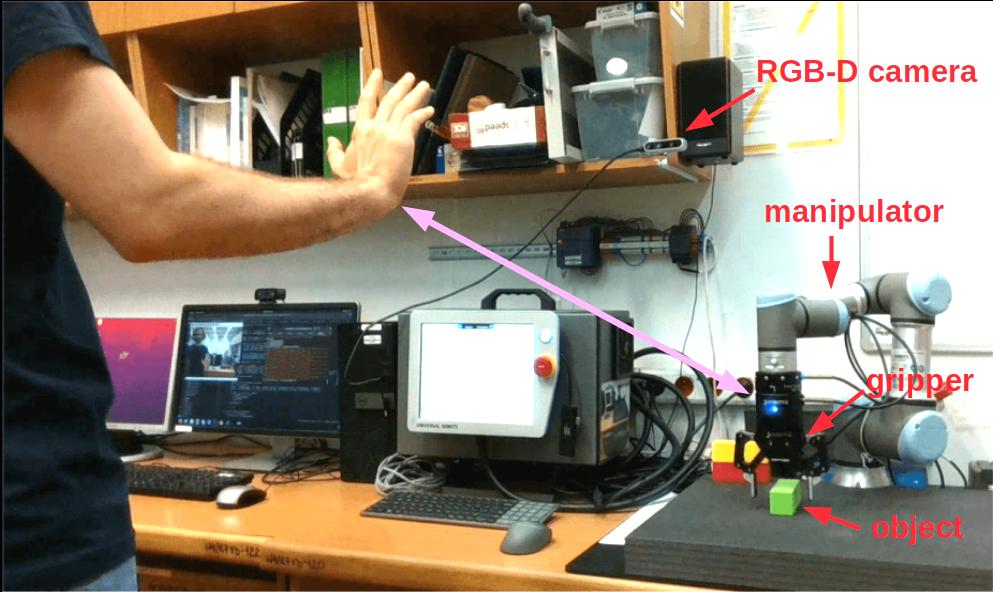
Figure1. Overallconceptofthesystem
Theusercanmoveobjectsoutoftheirreachinto theirimmediateenvironmentwiththesupportofthe manipulator.Commandsaregiventothemanipulator bymeansofhandgestures,whicharerecordedusing theRGB‑Dcamera.
Thesetofcommandsinterpretedbythemanipula‑ tor’ssensorysystemareactivation/deactivation,hand tracking,openingandclosingofthegripper.Oncethe gesturecommandmodeisactivated,thegripperfol‑ lowsthepositionofthehand.Thegrippercanbeopen orclosed,dependingonwhetherthehandisopen orclosedwitha ist.Theabovemakesthemanipu‑ latoranextensionoftheuser’sarmfromtheuser’s perspective.
3.1.GeneralSystemArchitecture
Thesystemarchitectureimplementingthecon‑ ceptoutlinedinSection 3.1 ispresentedinFigure 2 TheuserhandiscapturedbyanRGB‑Dcamera.The resultingRGBanddepthimagesareprocessedbythe /camera_image_processor module.Theextracted handlandmarkspositionsandrecognizedgestures arethenusedtodeterminetheinstructionsforthe robotthroughthe /robot_controller module.Con‑ sequently,thecoordinatesystemofthegripperfol‑ lowsthecoordinatesystemofthehandandthejaws
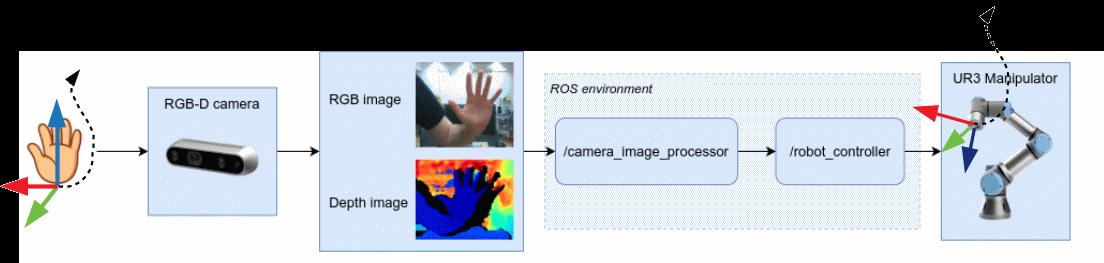
Generalsystemarchitecture ofthegripperfollowtheinstructionsexpressedbythe handgestures.
3.2.Hardware
Thehardwareplatformoftheassistivemanipu‑ latorunderconsiderationconsistsofthefollowing components: UR3manipulatorwithCB3controlboxandRobotiq 2F‑85two‑ ingergripper, desktopPC, IntelRealSenseD435depthcamera(RGB‑D).
ThecameraisconnectedtothePCviaaUSBcable whilethePCcommunicateswiththeCB3controlbox viaTCP/IP.
TheUR3manipulatorisasmallcobotandcan beadaptedasanassistivemanipulator.Thecamera builtintotheUR3manipulatorisoftheRGBtypeand cannotbeusedforthegrippertotrackhumanhand movementin3D.Forthisreason,itwasnecessaryto useanexternalRGB‑Dcamera.
3.3.Software
Ubuntu20.04andROSNoeticformthesoftware baseonthePCforthisproject.Thesoftwareof theconsideredassistivemanipulatorconsistsof anumberofROSnodesthatareassociatedwith UniversalRobotsROSDriver,MoveItMotionPlanning Framework,andgripper.Inaddition,therearetwo customnodes: /camera_image_processor and /robot_controller mentionedinSection 3.1.A partoftheROSgraphwiththesenodesisincludedin Figure3.
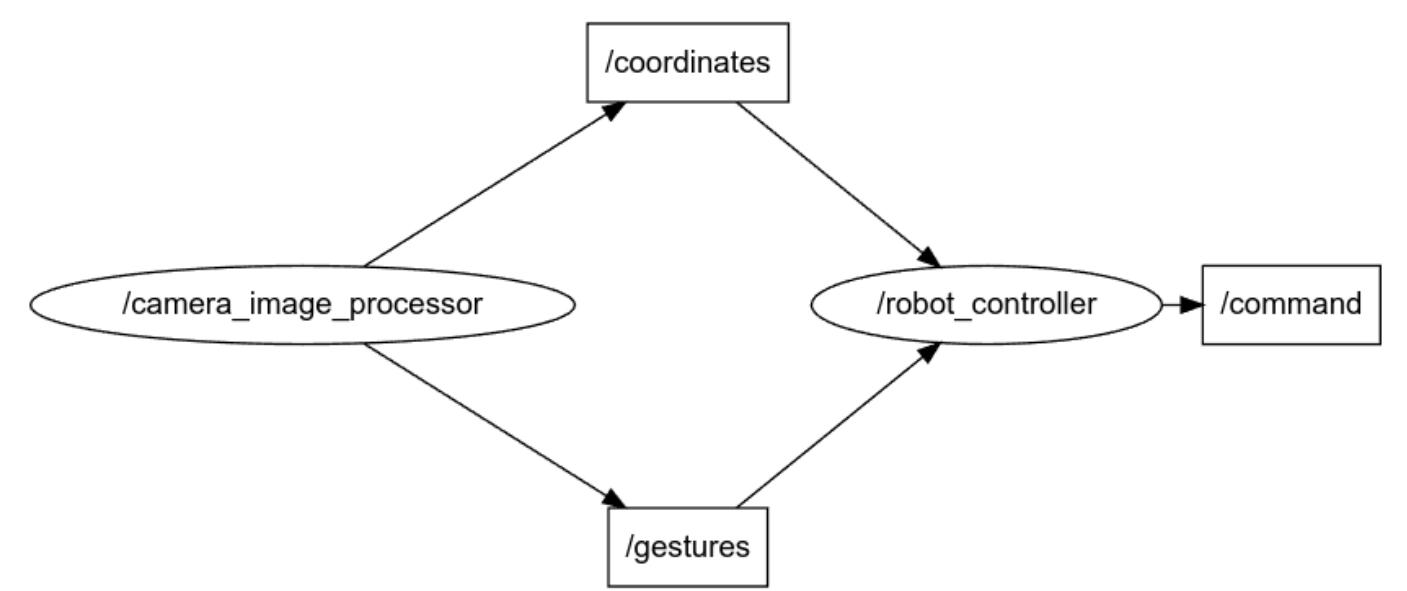
Figure3. ROSgraph /camera_image_processor isasoftwarewhich performsRGBimageanddepthmapacquisitionand thencarriesoutthedataprocessing.
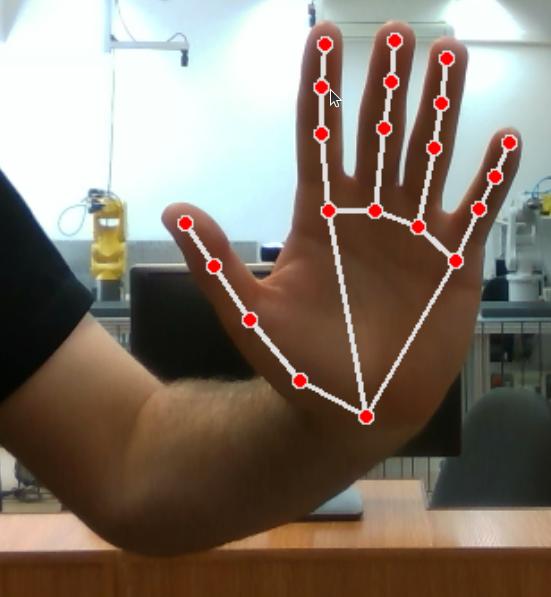
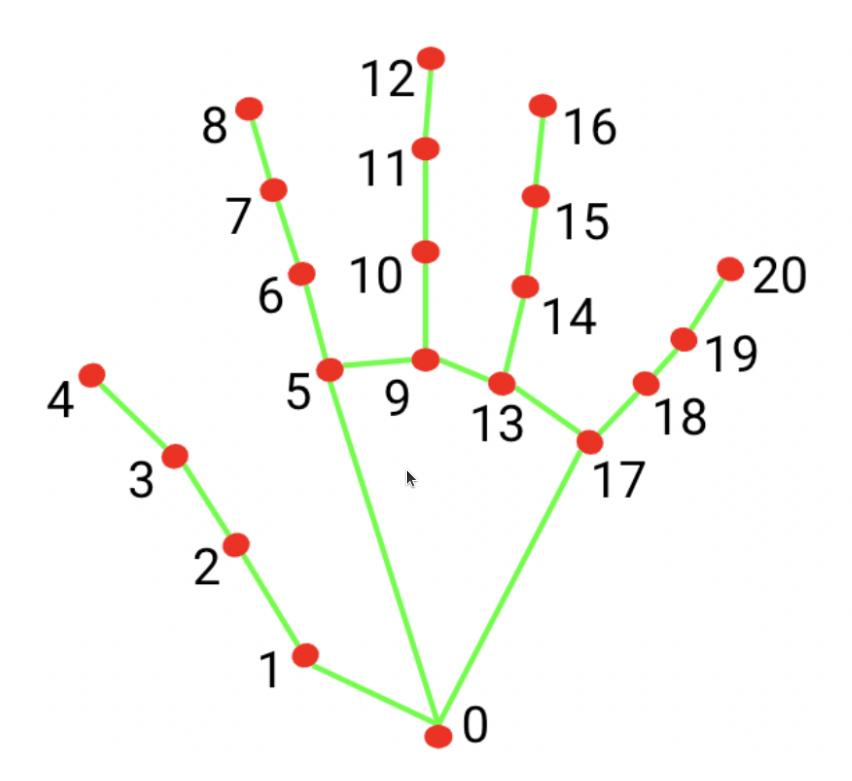
(b)handlandmarksinthe MediaPipehandmodel
Figure4. GoogleMediaPipeSoftwareFramework:a handmodel
TheGoogleMediaPipeFramework[14, 23]was usedtoimplementthisnode.Thework[24]proves thatitisareliableandpreciseframeworkforassessing 3Dhandmovementsinclinicalapplications.Speci i‑ cally,MediaPipeHandswasusedtotrackhandposi‑ tionandorientation,similarto[11].
TheMediaPipehandlandmarkrecognitionmodel recognizesthehandinthecaptureddataandcreates askeletalmodelofit,illustratedinFigure4(a).There are 20 landmarksassociatedwiththehandmodel showninFigure 4(b).Theycanbeusedtode inea coordinateframe��ℎ��ℎ��ℎ associatedwiththehand(a handcoordinateframe).
Let ����ℎ,�� denotesapositionofthe��‑thhandland‑ markinthecameracoordinateframe ������������.The versors��ℎ,��,��ℎ,�� ��ℎ,�� of��ℎ��ℎ��ℎ arede inedasfollows:
ℎ,�� = ����ℎ,9 ����ℎ,0 ‖����ℎ,9 ����ℎ,0‖2 , (1)
Theoriginofthehandcoordinateframeislocated at����ℎ,0.Consequently,ahomogeneoustransformation matrixfrom ��ℎ��ℎ��ℎ to ������������ takesthefollowing form:
Theaboveconstructmakessomesimilarities betweenthecoordinateframesofthehumanhandand thegripper(thelatterisdenotedby������������).Inboth cases,the z versorshavetheiroriginatthewristand aredirectedalongthe ingerstotheoutsideofthearm. Inturn,the y versorsaredirectedperpendiculartothe planeofthepalmontheoutsideoftheinnerpartof thepalm.Inthecaseofagripper,theinnerpartof thepalmisassumedtobeonthecamerasideofthe gripper.
Let ���� �� denotesahomogeneoustransformation matrixfrom ������������ tothemanipulatorbasecoor‑ dinateframe ������������,[25],and ���� ℎ ∶=���� �� ���� ℎ.The structureoftheresultingmatrixisasfollows:
�� ℎ = ����ℎ ����ℎ,0 01 . (5)
Thematrix ����ℎ representstheorientationof ��ℎ��ℎ��ℎ in ������������ while ����ℎ,0 representstheposi‑ tionofthehumanwristin��
isusedtodetermineareferencepathfor
in
arethe positionsandtheorientationsofahumanhandand agripperrespectivelywhenthecontrolsystemisacti‑ vated.De ine
�� ��
(6)
Thenthereferencepathforthegrippercanbe expressedasfollows:
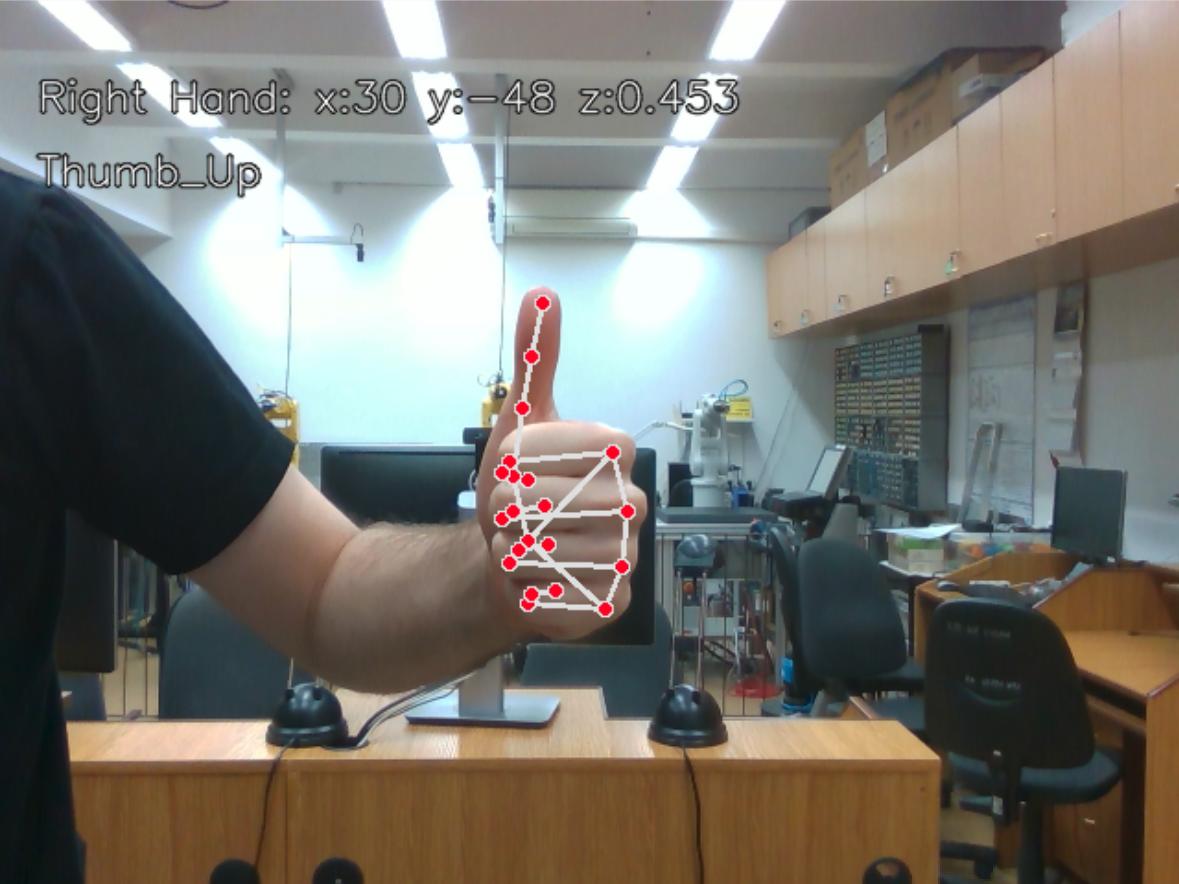
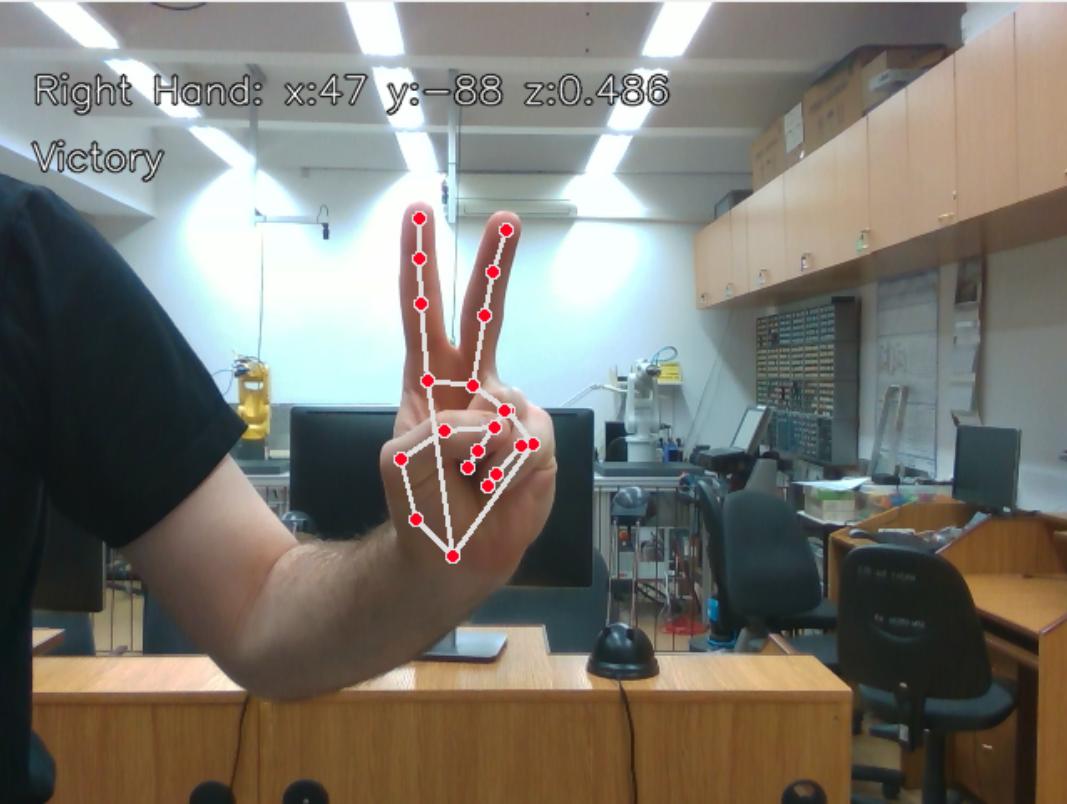
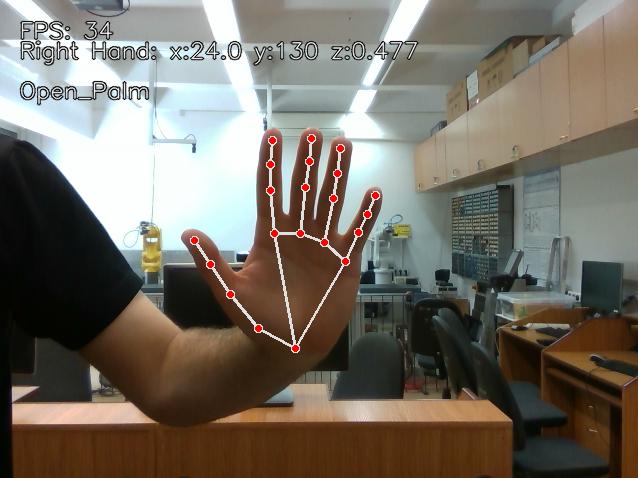
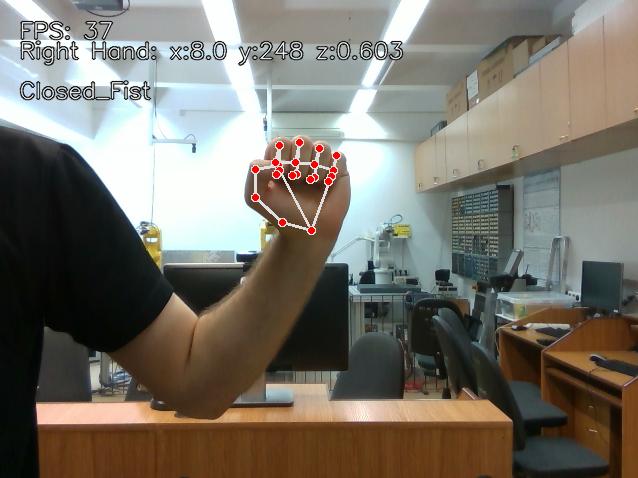
(c)openpalm (d)closed ist
Figure5. GoogleMediaPipeSoftwareFramework: recognizablestaticgestures
Sometimesitisgoodtocontrolonlytheposition oftheeffector,especiallywhenatwitchinghuman palmmakesthegripperoscillatesandonce ixedthe orientationofthegripperissuf icient.Inthiscase,the expression(9)takestheform
(10)
Note,thatsimilarmappingsareusedindirectand bilateralteleoperation[26].Consequently,twowork‑ ingmodescanbedistinguished: fullteleoperation,de inedby(1)÷(9); reducedteleoperation,de inedby(1)÷(8),(10). ������,ref, ������,ref arethequantitiesthatarepassedto the /coordinates topic.
TheMediaPipehandgesturerecognitionmodel canrecognizeseveralstaticgestures.Thegestures supportedbythesystemare: closed ist, openpalm, thumbup, victory, noneofthem.Theyareillustrated inFigure 5.Thegesturetypeispublishedtothe /gestures topiconceithasbeenrecognized. Boththepositionofthewristandtherecognized gestureshaveanassignedmeaningintermsofcom‑ mandsforthemanipulator.Thepositionofthewrist determinesthepositionofthegripper.The openpalm
and closed ist gesturesdenoteopenandclosedgrip‑ perjaws,respectively.The thumbup or victory ges‑ turesmeanactivation/deactivationofthegesturetele‑ operationcommandmode.
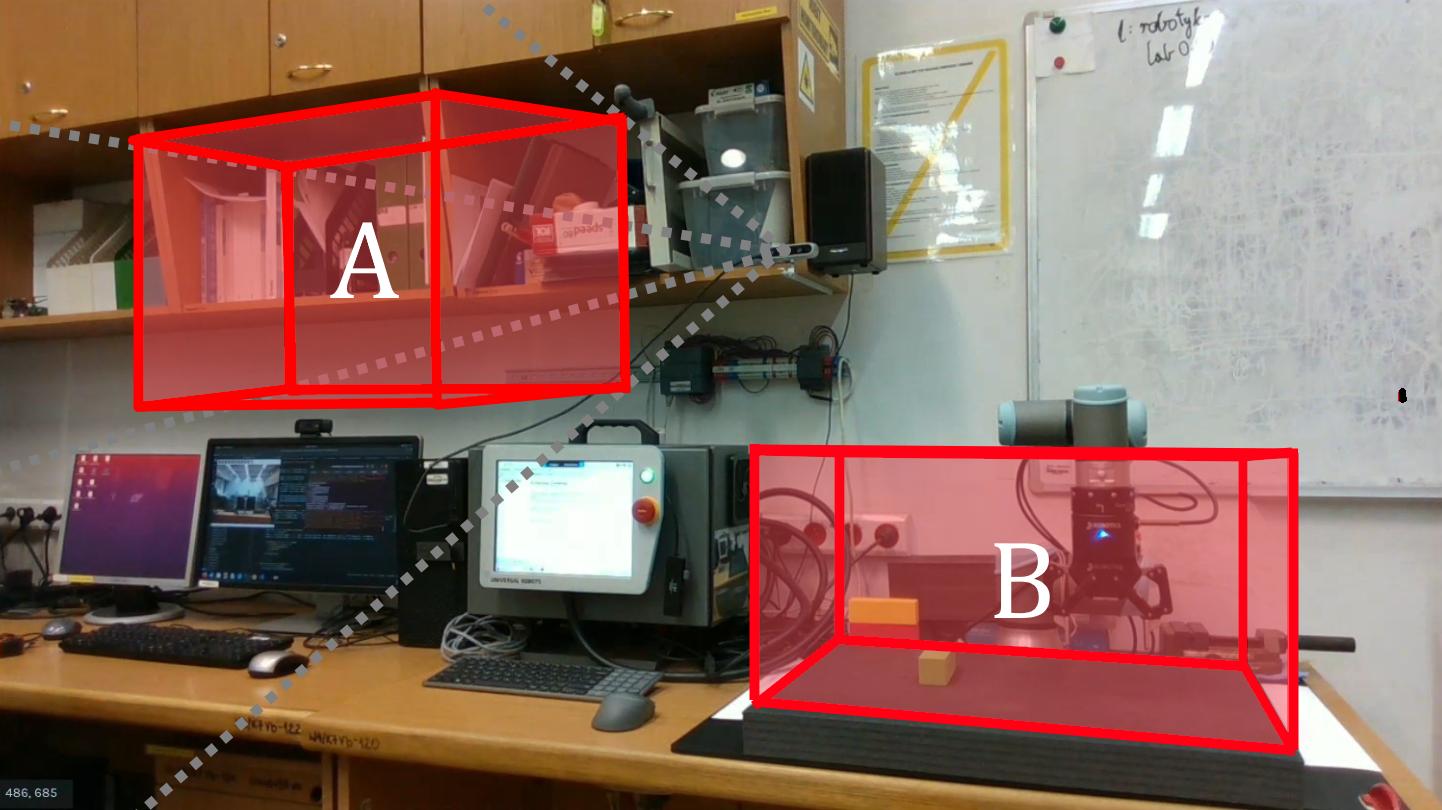
Thesystemoperateswithinprede ined workspacesin3Dspace,asillustratedinFigure 6. WorkspaceAcorrespondstotheregionwithinthe camera ieldofview,whereusergesturesarecaptured andprocessedascommandsfortherobot.Workspace Bde inestheareawithinwhichthegripperoperates. Itspositionremainscon inedtothisdesignated region.Bothworkspacesarerectangularinshape, andtheirexactdimensionscanbeadjustedtosuit speci icrequirements.
/robot_controller isahigh‑levelsoftwaremod‑ ulethatprocessesthedatasubscribedfromthe /coordinates and /gestures topicintocommands forthemanipulator.
Thehandcoordinatesareconvertedintocoor‑ dinatesoftherobot’sbasecoordinateframe.These coordinatesarethensetasthetargetpositionfor thegripper.Themanipulator’spoint‑to‑pointmove‑ mentishandledbytheMoveItmotionplanningframe‑ work.ItprovidesaccesstoalgorithmsfromtheOpen MotionPlanningLibrary(OMPL).Robotmovement
trajectoriesarecalculatedwiththeRapidly‑exploring RandomTrees(RRT)Connectalgorithminthissys‑ tem.
Thehandgesturedictateswhetherthegripper opensorcloses,andifthecontrolsystemisactivated ordeactivated.Theresultingdatarepresentingthe desiredmotionisstoredinthe ieldsofavariable, whichisthenpublishedtothe /command topic.
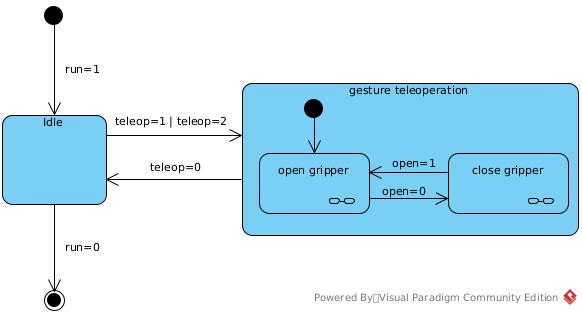
Figure7. UR3manipulatorgesturecontrol representationusingfinitestatemachine
Thebehaviourofthesystemisrepresentedbythe FSMdiagramshowninFigure7.Atstartup,thesystem entersthe idle state.The thumbup gesture(seeFigure 5(a))togglesthevalueofthe teleop variablefrom 0to1,whilethe victory gesture(seeFigure5(b))tog‑ glesitfrom0to2.Avalueof1correspondstoreduced teleoperation,whileavalueof2correspondstofull teleoperation.Wheneithervalueisset,the gesture teleoperation statebecomesactive.
Inthisstate,themanipulator’sgripperisteleop‑ eratedbasedontheuser’shandgesturesaccordingto algorithms(1)–(8),(9),or(10).Thesystemrecognises bothan openpalm gesture(seeFigure5(b))anda closed ist gesture(seeFigure5(c)).
Initially,theopengripperstateisactive.A closed ist gesturetogglesthevalueofthe open variablebetween 1and0,activatingthe opengripper and closegripper states,respectively.Thesestatescorrespondtothe openorclosedgripperofthemanipulator.
Thegestureteleoperationstateisdeactivatedwhen thevalueofthe teleop variableisresetto0using eitherthe thumbup or victory gesture.Atthispoint, thesystemreturnstothe idle state.
4.SystemEvaluation
4.1.ResearchQuestion
Thestudyaimstoanswerthefollowingresearch questionsinrelationtothesystempresentedinSec‑ tion2:
RQ1 Isthesystemusableintheuser’sview?
RQ2 Isthesystemsafefromtheuser’sperspective?
4.2.Method
Participants Thestudyinvolved37participantsaged 22‑25yearsold(Med=23,��1 =22,��3 =23).There were4femalesand33malesinthegroup.Allofthem
werestudentsofcontrolengineeringandroboticsat WrocławUniversityofScienceandTechnology.
Informedconsentwasobtainedfromallsubjects involvedinthestudyaftertheyhadbeenacquainted withtheresearchobjectivesandproceduresusedin thestudy.
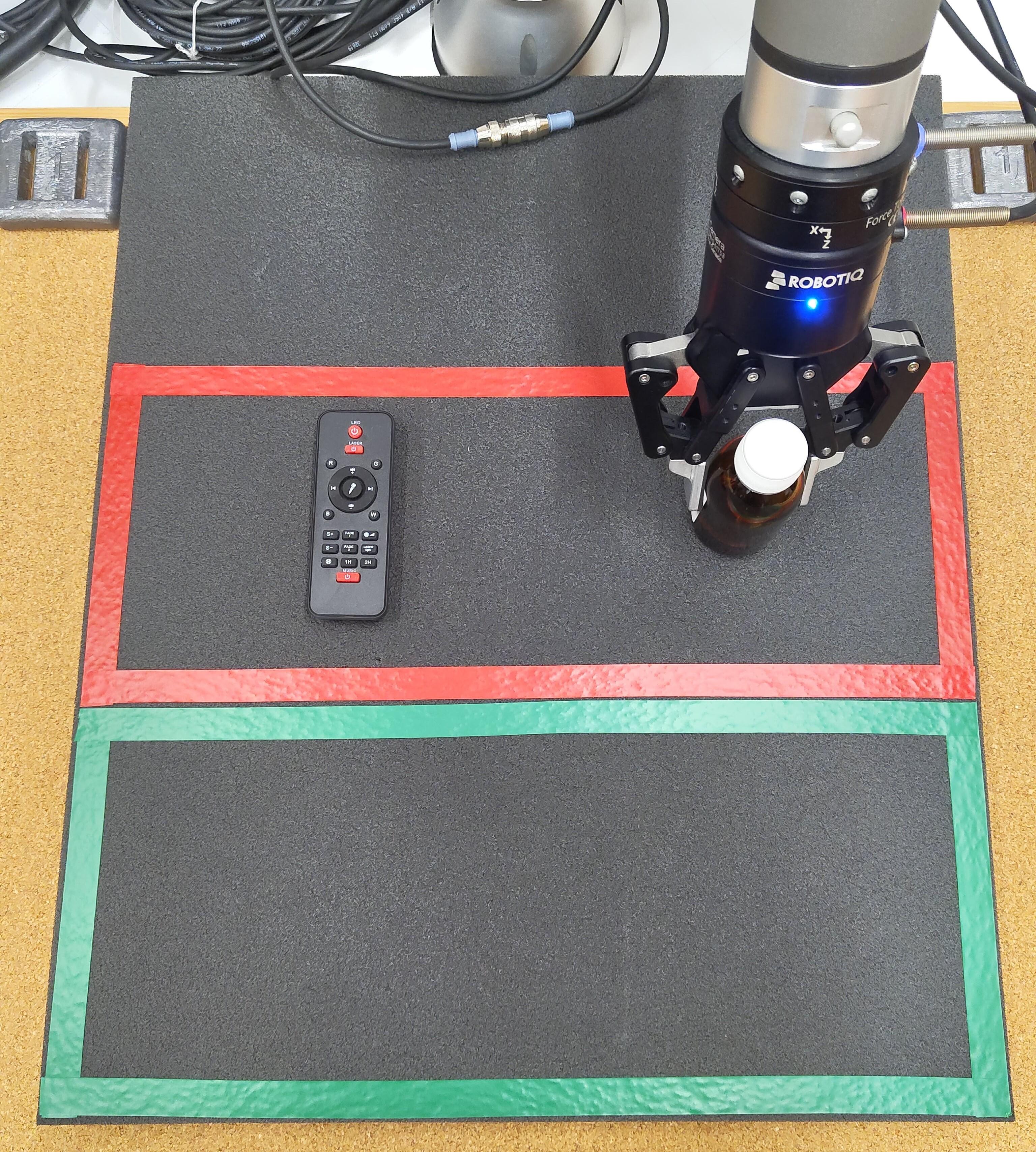
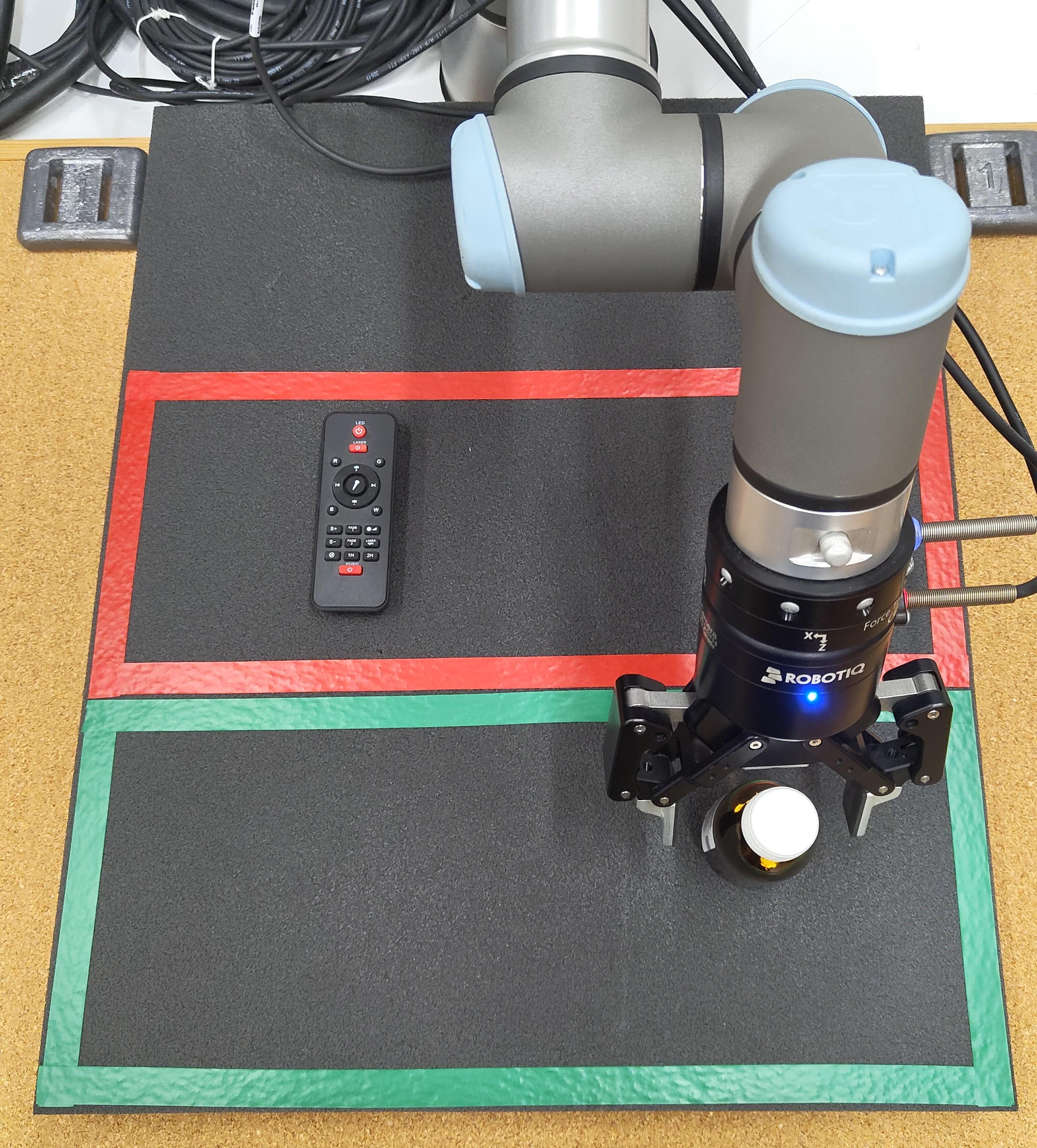
Figure8. Snapshotsoftheexperimentaltaskbeing carriedout
Scenario ThetaskscenarioisillustratedinFigure8. Theparticipantisaskedtomoveeverydayobjects, aTVremotecontrolandasyrupbottle,fromafur‑ therawayareatoacloserlocation.Thefurtherand closerareasaremarkedwitharedandgreenborder, respectively.Asimilartaskintheevaluationscenario canbefoundin[7]and[16].Allcommandsaddressed totherobotmustbeexpressedingestures.Theset ofcommandsconsistsof:activation/deactivationof thesystem,openingandclosingofthegripper,and movementofthegripper(seeFig.7inSection3.3).
Thereducedteleoperationwasselectedtobethe workingmodeduringthestudy.
Procedure Theteam irsttrainedtheparticipanthow tooperatetherobot.Aspartofthetraining,thepartic‑ ipanthadtopractisethetaskofcarryingandbringing backanitem,intheformofaplasticblock.Then theparticipantperformedthetaskfromthescenario. Aftertheexperiment,theparticipanthadto illoutthe questionnaires.Theexperimentwasconductedina fullysimulatedenvironmentintheRoboticLaboratory atWrocławUniversityofScienceandTechnology.
Thestudywasconductedaccordingtotheguide‑ linesoftheDeclarationofHelsinkiandwasapproved bytheResearchEthicsCommitteeofWrocławUniver‑ sityofScienceandTechnology,OpinionNo.O‑24‑63.
Measures Theusers’impressionshavebeencol‑ lectedbymeansofquestionnaires.Toanswerour researchquestionsconcerningusability,weusedthe SystemUsabilityScale(SUS),awellestablishedques‑ tionnaireforassessingtheusabilityofthesystemcon‑ taining10itemsona ivepointLikertscaleranging fromtotallydisagreetototallyagree[27].Toassess perceivedsafety,weusedtheGodspeed(GQS)ques‑ tionnaireforperceivedsafety(3itemsusingsemantic
differentialscales)[28].WealsousedtheNegative AttitudetowardsRobotsscale(NARS‑PL)[29],Polish version,inordertogatherinformationaboutparti‑ cipants’attitudetowardstechnology(containingalso 13itemsona ivepointlikert),whichcouldimpactthe results.
4.3.Results
InternalReliabilityoftheQuestionnaires
Forthe10SUSitemstheCronbach’sAlphawas 0.9575(excellentreliability).
Forthe13NARSitemstheCronbach’sAlphawas 0.9561(excellentreliability).
Forthe3GSitemstheCronbach’sAlphawas0.8917 (verygoodreliability).
TheSystemUsabilityScale ItfollowsfromChi‑square goodness‑of‑ ittestthatthecummulativeSUSscore comesfromanormaldistribution(a100‑pointscale, ��=69.5,����=7.0,��=0.05,��=0.37).Furthemore, theone‑samplet‑testallowstoconcludethatthemean ofSUSscoreis70,whichcanbeconsideredasgood accordingto[30](��=0.05,��=0.19).
GodspeedQuestionnaireSeries:PerceivedSafety(PL) ItfollowsfromChi‑squaregoodness‑of‑ ittestthatthe cummulativeGQSscorecomesfromanormaldistribu‑ tion(a18‑pointscale,��=13.5,����=2.3,��=0.05, ��=0.05).Furthemore,theone‑samplet‑testallows toconcludethatthemeanofGQSsafetyscoreis 13 (��=0.05,��=0.19).
NegativeAttitudeTowardsRobotsScale(PL) Itfollows fromChi‑squaregoodness‑of‑ ittestthatthecummu‑ lativeNARS‑PLscorecomesfromanormaldistribu‑ tion(a48‑pointscale��=16.7,����=6.4,��=0.05, ��=<0.001).Furthemore,theone‑samplet‑test allowstoconcludethatthemeanofNARS‑PLscoreis 17(��=0.05,��=0.76).
4.4.Discussion
WithregardtotheresearchquestionsRQ1and RQ2,itcanbeconcludedthatparticipantswithlow negativeattitudestowardrobotsassessthetestedsys‑ temassuf icientlyusefulandsuf icientlysafe.
Whenevaluatingasystemconsistingofahuman andaroboticassistivearm,userfeedbackappearsto bemostrelevant.Iftheresultsoftheusers’studyare satisfactory,thenitcanbetentativelyassumedthat systemperformanceindicatorsarealsosatisfactory. Theimplicationintheopositdirectionisnotobvious.
Theevaluationinmostpreviousworkongesture communicationwiththeassistiveroboticarmand withotherrobotsisbasedonsystemperformance indicators[7,11,13,15,16,18–20].TheuseofUXand HRIstudiescanbenotedinlessnumerousandmore recentworks[11,19–21].Thismakesitchallenging todoareliablecomparativeanalysiswithresultspre‑ sentedinotherworks.
ThesatisfactoryresultoftheSUStestiscon irma‑ tionofthesoundnessoftheproposedgesture‑based
controlofthemanipulatorbytheusers.Asatisfactory scoreofperceivedsafetymeansthattherewasno behavioroftheroboticsystemduringtheexecutionof thetaskbytheparticipantthatwouldinterferewith his/hersenseofsecurity.
Theresultsobtained,althoughpositive,leavesome roomforimprovement.Itwouldseemthatchanging theappearanceofthemanipulatortobelessindustrial andthegrippertobemorehand‑likewouldincrease thelevelofperceivedsafety.BATEO[6],iARM[5], MICO[7]canserveasexamples.
Gesture‑basedmanipulatorcontrolsystemsdis‑ cussedin[8]and[9]requireappropriatesensorstobe mountedonthehand.Thesolutionproposedinthis paper,whichdoesnotrequiresuchsensors,isde i‑ nitelymoreuser‑friendly.Asimilarsolutionwithan RGB‑D(Kinect)sensorforgestureidenti icationand armmovementisdiscussedin[10],butthesensory systemproposedtherewasnotintegratedintothe physicalrobotandnoevaluationwasperformedwith theusers(whichisthecasehere).
Theworks[4,15,16]focusondifferentformsof communication(usingtongue,brainwaves,joystick) thereforethegesture‑basedcommunicationproposed herecanbeseenasacomplementtothese.Allthe previouslymentionedformsofcommunicationcan formthebasisofasimplemanualcontrolmodefor therobot,buttheycanalsobepartofamoreelaborate semi‑autonomouscontrolsystem[3].
Inthework[18]thereisnohandtelemanipulation ashere,butvoicecommandsareresponsibleforthe movementofthemanipulator.Thehandisusedto indicatetargetlocationsforthemanipulator’sgripper. Thissolutionmaybedif iculttouseforuserswith speechdisabilities.Ontheotherhand,bothsolutions cancoexistandcomplementeachother.
Thegesturecontrolsystempresentedinthisarti‑ cleusesMediaPipeHandssimilaryto[11,12]and[13] andIntelRealSenseRGB‑Dcamerasimilaryto[12] and[13].However,inthispaper,thetargetuseris apersonwithreducedmobility,whileintheothers, thesearedoctorsorindeterminateusers.
Inthisworkthemanipulatorismeanttobean extensionoftheuser’shand,andforthisreason, telemanipulationusinggesturesisofprimaryimpor‑ tancefromtheviewpointofpotentialapplications. Thisissueisexploredhereinmoredepthcompared to[11,12]and[13].What’smore,theevaluationhere isbasedonliveexperiments,basedonascenarioclose totheactivitiesofdailylivingwithalargergroup ofstudyparticipants.Thereforetheresultobtained hereismorereliablecomparedtotheconclusions thatcanbedrawnfrom[11–13],wherethenumber ofstudyparticipantswassigni icantlysmallerand thestudiesthemselveswereconductedinavirtual environment[11,12].
Inourcontext,MediaPipeHands,combined withdepthdatafromtheRGB‑Dcamera,enables robustdetectionofcomplexhandgestureswithout requiringuserstowearanysensorsormarkers.This signi icantlyimprovesusercomfortandreducessetup
time,whilemaintaininghighgesturerecognition accuracy.
Ithasbeenproposedandstudiedaroboticsys‑ temthatcanassistpeoplewithreducedmobilityin theactivitiesofpickingupandputtingdownobjects outofreach.Themanipulatorinthissystemactsas anelongationofaperson’sarm.Themovementof themanipulator’sgripperisdonebytelemanipulation bytheuser’shand,whosemovementiscapturedby thecamera.Afewcommandsgiventotherobotare expressedusinggestures.Thesensorypartofthesys‑ temisbasedontheRGB‑Dcamera(IntelRealSense D435)andGoogleMediaPipeSoftwareFramework. Duringtheevaluation,thesystemworkedreliablyand participantsassesseditasusefulandsafe.
TheUR3manipulatorusedinthisstudyisnotthe primaryfocusofthesystem.Thecoresoftwarecompo‑ nentoftheproposedsystemcanbeeasilyadaptedfor usewithothermanipulatorsthatarecompatiblewith ROS/ROS2andtheMoveItsoftwareenvironment.
Theresultsobtainedjustifythecontinuationof workatahigherleveloftechnologicalreadiness.This workshouldbebasedonanothercollaborativerobot (bettersuitedtotherequirementsofanassistive roboticarm)amuchwiderandmorediversegroupof participantsinUXandHRIstudies,andawiderspec‑ trumofsystemperformanceindicatorstoevaluate thegesture‑basedcommunicationwithanassistive roboticarm.
AUTHORS
SebastianKoryl –FacultyofElectronics,Photon‑ icsandMicrosystems,WrocławUniversityofSci‑ enceandTechnology27WybrzeżeStanisławaWyspi‑ ańskiegost.,50‑370Wrocław,Poland,e‑mail:sebas‑ tian.koryl@gmail.com.
KatarzynaZadarnowska∗ –Departmentof CyberneticsandRobotics,WrocławUniversityof ScienceandTechnology,27WybrzeżeStanisława Wyspiańskiegost.,50‑370Wrocław,Poland,e‑mail: katarzyna.zadarnowska@pwr.edu.pl https://we im.pwr.edu.pl/pracownicy/wizytowki‑ pracownikow/pro il.html?name=katarzynazadar nowska‑1186. KrzysztofArent –DepartmentofCybernetics andRobotics,WrocławUniversityofScience andTechnology27WybrzeżeStanisława Wyspiańskiegost.,50‑370Wrocław,Poland,e‑mail: krzysztof.arent@pwr.edu.pl https://we im.pwr.edu.pl/pracownicy/wizytowki‑ pracownikow/pro il.html?name=krzysztofarent‑ 1219.
∗Correspondingauthor
References
[1] H.F.M.VanderLoosandD.J.Reinkens‑ meyer. SpringerHandbookofRobotics,chapter
“RehabilitationandHealthCareRobotics”,1223–1251.SpringerBerlinHeidelberg,Berlin,Heidel‑ berg,2008.
[2] A.Nanavati,V.Ranganeni,andM.Cakmak,“Phys‑ icallyAssistiveRobots:ASystematicReview ofMobileandManipulatorRobotsthatPhys‑ icallyAssistPeoplewithDisabilities”, Annual ReviewofControl,Robotics,andAutonomousSys‑ tems,vol.7,no.Volume7,2024,2024,123–147,https://doi.org/10.1146/annurev‑control‑ 062823‑024352
[3] R.Soyama,S.Ishii,andA.Fukase,“8Selectable OperatingInterfacesoftheMeal‑Assistance Device“MySpoon”.In: AdvancesinRehabilitation Robotics:Human‑FriendlyTechnologieson MovementAssistanceandRestorationforPeople withDisabilities,SpringerBerlinHeidelberg, 2004,155–163,10.1007/10946978_8
[4] A.Campeau‑Lecours,H.Lamontagne, S.Latour,P.Fauteux,V.Maheu,F.Boucher, C.Deguire,andL.‑J.C.L’Ecuyer,“Kinova ModularRobotArmsforServiceRobotics Applications”, InternationalJournalofRobotics ApplicationsandTechnologies,vol.5,no.2,2017, 10.4018/IJRAT.2017070104
[5] “iARM”.AssistiveInnovations,2026.https://ww w.assistive‑innovations.com/robotarm
[6] “BATEO”.ACCREA,2026.https://accrea.com/p roducts/bateo/
[7] S.Jain,A.Farshchiansadegh,A.Broad, F.Abdollahi,F.Mussa‑Ivaldi,andB.Argall, “AssistiveRoboticManipulationthroughShared AutonomyandaBody‑MachineInterface”. In: 2015IEEEInternationalConferenceon RehabilitationRobotics(ICORR),2015,526–531, 10.1109/ICORR.2015.7281253
[8] A.VijayJoseph,A.Mathur,J.Verma,andA.Singh, “GestureBasedWirelessControlforaRobotic Manipulator”, InternationalJournalofEngineer‑ ing&Technology,vol.7,no.2.31,2018,231–234, 10.14419/ijet.v7i2.31.13449
[9] P.Sihombing,R.B.Muhammad,H.Herriyance, andE.Elviwani,“RoboticArmControlling BasedonFingersandHandGesture”. In: 20203rdInternationalConferenceon Mechanical,Electronics,Computer,and IndustrialTechnology(MECnIT),2020,40–45,10.1109/MECnIT48290.2020.9166592
[10] X.Li,“Human–RobotInteractionBasedonGes‑ tureandMovementRecognition”, SignalPro‑ cessing:ImageCommunication,vol.81,2020, 115686, https://doi.org/10.1016/j.image.20 19.115686
[11] W.Rhee,Y.G.Kim,J.H.Lee,J.W.Shim,B.S.Kim, D.Yoon,M.Cho,andS.Kim,“Unconstrained LightweightControlInterfaceforRobot‑ AssistedMinimallyInvasiveSurgeryUsing MediaPipeFrameworkandHead‑Mounted
Display”, VirtualReality,vol.28,no.114,2024, https://doi.org/10.1007/s10055‑024‑00986‑1
[12] A.R.Khan,A.Khan,andA.Faisal,“Gesture‑ ControlledRoboticArmforReal‑TimeSurgi‑ calToolAssistance”.In: 2025FourthInterna‑ tionalConferenceonPower,ControlandCom‑ putingTechnologies(ICPC2T),2025,886–891, 10.1109/ICPC2T63847.2025.10958621
[13] J.Xie,Z.Xu,J.Zeng,Y.Gao,andK.Hashimoto, “Human–RobotInteractionUsingDynamicHand GestureforTeleoperationofQuadrupedRobots withaRoboticArm”, Electronics,vol.14,no.5, 2025,10.3390/electronics14050860
[14] C.Lugaresi,J.Tang,H.Nash,C.McClanahan, E.Uboweja,M.Hays,F.Zhang,C.‑L.Chang,M.G. Yong,J.Lee,W.‑T.Chang,W.Hua,M.Georg,and M.Grundmann.“MediaPipe:AFrameworkfor BuildingPerceptionPipelines”,2019.
[15] F.‑J.Chu,R.Xu,Z.Zhang,P.A.Vela,andM.Gho‑ vanloo,“Hands‑FreeAssistiveManipulatorUsing AugmentedRealityandTongueDriveSystem”. In: 2018IEEE/RSJInternationalConferenceon IntelligentRobotsandSystems(IROS),2018, 5463–5468,10.1109/IROS.2018.8594508
[16] P.D.Lillo,F.Arrichiello,D.D.Vito,and G.Antonelli,“BCI‑ControlledAssistive Manipulator:DevelopedArchitectureand Experimentalresults”, IEEETransactionson CognitiveandDevelopmentalSystems,vol.13,no. 1,2021,91–104,10.1109/TCDS.2020.2979375
[17] K.P.Hawkins,P.M.Grice,T.L.Chen,C.‑ H.King,andC.C.Kemp,“AssistiveMobile ManipulationforSelf‑CareTasksAroundthe Head”.In: 2014IEEESymposiumonComputa‑ tionalIntelligenceinRoboticRehabilitationand AssistiveTechnologies(CIR2AT),2014,16–25, 10.1109/CIRAT.2014.7009736
[18] B.Kulecki,“MultimodalRobotProgramming InterfaceBasedOnRGB‑DPerceptionand NeuralSceneUnderstandingModules”, JournalofAutomation,MobileRoboticsand IntelligentSystems,vol.17,no.3,2024,29–37, 10.14313/JAMRIS/3‑2023/20
[19] C.‑S.Chung,K.Williams,S.M.Eckstein,I.Eck‑ stein,R.Cooper,andR.A.Cooper,“Manipulation PerformanceofanAssistiveRoboticArmControl InterfaceforIndividualswithCerebralPalsy‑A CaseStudy”.In: ProceedingsoftheRESNAAnnual Conference,2022.
[20] K.Arent,J.Jakubiak,M.Drwięga,M.Cholewiński, G.Stollnberger,M.Giuliani,M.Tscheligi, D.Szczęśniak‑Stańczyk,M.Janowski, W.Brzozowski,andA.Wysokiński,“Controlof MobileRobotforRemoteMedicalExamination:
DesignConceptsandUsers’Feedbackfrom ExperimentalStudies”.In: 20169thInternational ConferenceonHumanSystemInteractions(HSI), 2016,76–82,10.1109/HSI.2016.7529612
[21] A.Lebrasseur,J.Lettre,F.Routhier,P.S. Archambault,andA.Campeau‑Lecours, “AssistiveRoboticArm:Evaluationofthe PerformanceofIntelligentAlgorithms”, Assistive Technology,vol.33,no.2,2021,95–104, 10.1080/10400435.2019.1601649,PMID: 31070524.
[22] S.Koryl.“TechnologyforHuman‑Manipulator CommunicationUsingGestures”.Master’sthesis, WrocławUniversityofScienceandTechnology, 2024.
[23] Google. MediaPipeSolutionsGuide,2024. https: //ai.google.dev/edge/mediapipe/solutions/gui de
[24] G.Amprimo,G.Masi,G.Pettiti,G.Olmo,L.Pri‑ ano,andC.Ferraris,“HandTrackingforClini‑ calApplications:ValidationoftheGoogleMedi‑ aPipeHand(GMH)andtheDepth‑Enhanced GMH‑DFrameworks”, BiomedicalSignalPro‑ cessingandControl,vol.96,2024,106508, https://doi.org/10.1016/j.bspc.2024.106508
[25] Y.Alemu.“RoboticSystemTechnologytoSupport theManipulabilityofaPersonwithMotorDis‑ abilities”.Master’sthesis,WrocławUniversityof ScienceandTechnology,2024.
[26] G.Niemeyer,C.Preusche,S.Stramigioli,and D.Lee,“Telerobotics”.In: SpringerHandbookof Robotics,2016.
[27] R.A.Grier,A.Bangor,P.Kortum,andS.C. Peres,“TheSystemUsabilityScale:Beyond StandardUsabilityTesting”, Proceedingsof theHumanFactorsandErgonomicsSociety AnnualMeeting,vol.57,no.1,2013,187–191, 10.1177/1541931213571042
[28] R.Szczepanowski,T.Niemiec,E.Cichoń,K.Arent, M.Florkowski,andJ.Sobecki,“FactorAnalysis ofthePolishVersionofGodspeedQuestionnaire (Gqs)”, JournalofAutomation,MobileRobotics andIntelligentSystems,vol.16,no.2,2023,30–35,10.14313/JAMRIS/2‑2022/13
[29] G.Pochwatko,J.‑C.Giger,M.Różańska‑Walczuk, J.Swidrak,K.Kukiełka,J.Możaryn,andN.Piçarra, “PolishVersionoftheNegativeAttitudeToward RobotsScale(NARS‑PL)”, JournalofAutomation, MobileRoboticsandIntelligentSystems,vol.9,no. 3,2015,65–72,10.14313/JAMRIS_2‑2015/25
[30] A.Bangor,P.Kortum,andJ.Miller,“Determin‑ ingWhatIndividualSUSScoresMean:Adding anAdjectiveRatingScale”, JournalofUsability Studies,vol.4,no.3,2009,114–123.
Submitted:21st June2025;accepted:29th October2025
CesarMinaya‑Andino,DavidMinango,MarceloZambrano
DOI:10.14313/jamris‐2026‐016
Abstract:
Thepurposeofthisstudyistodevelopandevaluate ARIS(AReal‐timeInteractiveSocialRobot),basedona Turtle4platformaimedatimprovinghuman–robotinter‐actions(HRI)onuniversitycampuses.ARIScombinesa3D printedsocialrobotstructurewithasoftwarearchitec‐turebasedon2DLiDAR,odometry,andIMUsensorsfor navigationandmapping,inadditiontoavoiceassistant structuredin3stages:audiorecording,transcriptional processing,reaction,andreproductivesynthesis.Exper‐imentalresultsshowthatthesuccessrateofARISis greaterthan86.5%,maintaininghighaccuracyinnav‐igationandobstacleavoidance.Thesystemalsooffers performanceconsistingofvoiceinteractionwithatotal reactionlatencyof1500to2200ms.Accesstolow‐cost roboticplatformsallowsstudentsandresearchersaccess topracticaltraining,customization,andvalidationinthe developmentofnewtechnologiesinsocialrobotics.
Keywords: ARIS,socialRobot,interactions,turtlebot
1.Introduction
Inrecentdecades,human‑robotinteraction(HRI) hasbeenoneofthemainresearchtopicsinthe ield ofsocialrobotics.Studyinghowhumansandrobots interactinsocialsettingsprovideskeyinsightsforcre‑ atingrobotsthatinteractwithpeopleinanaturaland empatheticway.Incollaborativeenvironmentssuch ashospitals,schools,hotels,of ices,andothers,these robotsassistwithdailytasksbyengaginginintelligent andresponsiveconversations.Asocialrobotneedsto captureemotions,bodylanguage,andlanguagecues, thusbecomingareliablecollaboratorforbothprac‑ ticalworkandsocialrelationshipstobuildtrustand maintaininterest.
Adaptabilityisalsoacrucialaspect,asitallows themtointegrateintovariousenvironments— supportingstudents,managinghotelguests, collaboratingwithemployeesintheirdailytasks, orsimplyservingasatechnologicalattraction.
Severalstudieshavefoundavarietyofenviron‑ mentstoincorporaterobotsassocialagents.Itisthe exampleofBRIGHTNESS,abartenderrobotthatgives youapersonalizedserviceandisdynamic,adaptingto theinteractionsofcustomers[1].Anotherstudyhas exploredtheroleoftheteacherinmathactivitiesver‑ susasocialrobot,tutee,whereitwasrevealedthat,the mainlimitationsaretheverbalinteractionsbetween teacher–studentandrobot–student,inadditiontothis
feedback,averyimportantfactorineducationisthat itisbestprovidedbytheteacher[2].Inthesame wayotherauthorshavedetermined,thattheemo‑ tionalparticipationandthecompressionreadingcog‑ nitivestorytellingishigherinchildrenof5‑7years withthehelpofasocialrobotinacomparisonto ahuman[3].Eventounderstandtheadaptationof therobotssociallywithchildrenatanearlyageof 8‑9years,severalauthorshavestudiedtheanthropo‑ morphismofchildrenandtheirlatentgrowth[4].
Asocialrobothasthecharacteristicofbeingsta‑ tionaryormobile.Tobesteady‑youcanreduceafeel‑ ingofconnectiontopersonalinteractionanddecrease theexperienceofsocialdynamics.Bycontrast,tobe mobileyoumusthavealevelofautonomytoadapt intheenvironment.Tointegrateintosociety,these machinesmustfunctionincomplexenvironments evenwithoutdirecthumanintervention.Recentstud‑ ieshavefocusedoncognitionandreasoning,sothat CASPERviathedevelopmentofanarchitecturefor cognitivearti icialenablesyoutoobservetheactions ofhumans,understand,andcollaborateontasksin progress[5].Inanotherstudy,theauthorshavedevel‑ opedanarchitecturehybridthatusesametaphorof thebrain,andaformalistapproach[6–8].
Apartfromperception,localizationandmapping aretwokeyevaluativecapabilitiesthatallowamobile robottounderstandandactautonomouslyinitsenvi‑ ronment.Sincetheearly1990s,techniqueshavebeen developedtoenablearobottolocalizeitselfwithinan environment.SLAM(Simultaneous,Localization,and Mapping)becameaverypopulartechniquestartingin the2000s[9],where,withthehelpofaLiDARopti‑ caldistancesensor,thecross‑sectionoftheenviron‑ ment’sgeometricstructurecanbemeasuredinorder tocreateamap.Withthesamegoalofimprovingthe accuracy,robustness,computationalef iciency,and speedoftheSLAMtechnique,numerousresearchers havedevelopedandimplementedvariousmethods, suchasLOAM,whichprovidesLiDARodometrycom‑ putation[10];ORB‑SLAM2,whichbuildsamoreaccu‑ ratemapoftheenvironmentusingamonocular, stereo,orRGB‑Dcamera[11];RTAB‑Map,basedon real‑timeappearance‑basedmappingwithloopclo‑ suredetection[12,13];andS‑PTAM,whichusesstereo camerasandcombinestheaccuracyoftheparallel trackingandmappingapproachfromORB‑SLAM[14].
Akeyfeatureofmobileassistantrobotsisvoice recognition,whichenablesthemtounderstand andrespondtohumanvoicecommands,making
human‑robotcommunicationmoreintuitive.This technologyinvolvescapturingaudiothrough microphones,followedbynoisereductionand convertingspeechtotextusingautomaticspeech recognition(ASR)systems[15, 16].Inprevious research,variousmodelshavebeenproposedand evaluatedtoimprovetherobustnessofASRsystems innoisyenvironments[17, 18].Otherauthors haveproposedcombinationsofbidirectionalgated recurrentunits(Bi‑GRU)withconvolutionalneural networks(CNN)tooperateinof linemode[19].
Insummary,manyinterestingresultshavebeen reportedthathighlightthepotentialofsocialrobotics andtheadvancementsdevelopedovertheyears. Socialroboticsbringstogethervarioustechnologies suchasarti icialintelligence,perception,human–robotinteraction,automaticspeechrecognition,self‑ localization,computervision,amongothers.
Theobjectiveofthisworkistodevelopand implement,ina irststage,asocialrobotnamedARIS (AutonomousReal‑TimeInteractiveSocialRobot) basedontheTurtleBot4platform,carryingout human‑robotinteractionapplicationsandintegrating perception,localization,andmappingwithinthe ROSenvironment,inordertoperformtasksona universitycampus.
WhileadvancedsocialrobotslikePepperand NAOhavedemonstratedeffectivenessinHRI applications,theirhighcost($25,000‑$50,000) andclosedarchitectureslimitaccessibilityfor educationalinstitutions.Existinglow‑costplatforms likeTurtleBottypicallylackintegratedsocialfeatures (expressivestructure,naturalvoiceinteraction). ARISbridgesthisgapbydemonstratingthateffective socialHRIcanbeachievedusingaffordable,open‑ sourcecomponentswhileexplicitlydocumentingthe trade‑offsandlimitations.
Themanuscriptisdividedintotwoparts:The irst partincludesthetitle,abstract,andkeywords.The secondpartisthepaper’smainbodyincludingthe conclusionsection.
2.1.EvaluationofMobileRobotsDesignedforLab‐Scale Applications
Inthe ieldofmobilesocialrobots,roboticsengi‑ neersusuallychoosebetweentwopaths:simulations orrealhardware.Functionalplatformsallowtesting withsensorsinreal ields,providingsolidandreli‑ ableresults,althoughtheyaremoreexpensive.Onthe otherhand,simulationsonlyallowforquick,inexpen‑ sive,andrisk‑freeexperimentationwithalgorithms. Thedrawbackariseswhenyouwanttotransferthe simulationtohardware,asitisnotpossibletorepli‑ cateallthedetailsofthephysicalworld.Forthis reason,manyresearchersandengineershavedevel‑ opedaffordableeducationalroboticskitstostream‑ linethecreationandimplementationofinnovative functions.
ExamplesincludeMobileCharger,aninnovative robotequippedwithsensors,actuators,anda
combinedperceptionsystem[20];Robotis,a humanoidrobotthatintegratessophisticated sensorsanddynamicmovementcapabilities,ideal foracademicresearch,locomotionalgorithm development,human–robotinteraction,and experimentationinautonomousrobotics[21];NAO, anautonomous,programmablebipedalrobotknown foritsfriendly,expressivedesignandequipped with25degreesoffreedom,allowingittoperform naturalandcomplexmovements[22];andPepper, anotherhumanoidrobotbuiltonaholonomic base,equippedwiththreeomnidirectionalwheels, developedbyAldebarantowelcomecustomersin retailenvironments[23,24].
Numerousstudieshaveemployedtheaforemen‑ tionedplatforms,aswellasothers,withtheaimof conductingacademicresearch.InthecaseofPepper, methodshavebeenproposedtoimproveitslimited 3Dperceptioncapabilities[25];inIndustry4.0,digital twinshavebeendevelopedforinteractioninsmart homes[26].WithNAO,severalstudieshavebeenpre‑ sentedongesturerecognitionusingvideosrecorded solelybytherobot’sbuilt‑incamerawhileperforming clinicalprocedures[27].Forarmmovements,algo‑ rithmsbasedonBayesianNetworks(BN)havebeen proposedanddevelopedtoselecttheappropriate motionmodelandenhanceprecisiontolevelssimilar tothatofhumans[28].
OnotherplatformssuchasRobear,UbtechWassi, andFreivera—robotsdesignedforhealthcare,speci i‑ callyforassistingandcaringfortheelderly—several studieshaveproposedimprovementsinlocalization andmappingusingmethodstoobtainsemanticinfor‑ mationanddynamicselectionstrategies[29].
Intermsofpersonalassistants,DARWIN‑OP2is alsonoteworthy;itusesreinforcementlearningalgo‑ rithmstodetectpoorpostureinagroupofstu‑ dents[30].
Theuseofroboticplatformscanaccelerate researchandlowertheentrybarriersfornew researchgroups.Severalplatformshavebeen mentionedpreviously,buttherearenumerous affordableoptionsindifferentsizes.However,the moreadvancedandrecentlydevelopedplatforms areoftenoutofreachformanyresearchgroups duetotheirhighcostorclosed‑sourcenature.For thisreason,thereisaneedtodevelopopen‑source platformsintegratedwithsuf icientsensorsand actuatorstosupportresearchgroupsinvarious ields.
Amongopen‑sourceplatforms,wehaveIGUS, whoserobotstructureisentirely3Dprintedhighlight‑ ingalightweightandvisuallyappealingdesign[31]; NimbRo‑OP2Xwhichintegratescomputervision,IMU sensorsandanIntelprocessorwithGPU,makingit idealforlocomotion,perception,andautomaticcon‑ trolareas[32];iCub,standing104cmtall,specif‑ icallydesignedtosupportresearchinembedded arti icialintelligence,withhandsengineeredtosup‑ portsophisticatedmanipulationskills[33–35];and inally,InMoov,ahumanoidrobotapproximately 180cmtallthatusesaccessiblecomponentssuchas
Arduinomicrocontrollersandservomotors.Itsmodu‑ lardesignallowsittobebuiltinstagesandexpanded accordingtotheresourcesandneedsofresearch groups[36,37].
Simultaneouslocalizationandmapping(SLAM)is anindispensabletechnologywhichallowswheeled robotstonavigateanddeterminetheirpositionaccu‑ rately.TheSLAMalgorithmprocedureistocollect informationfromthemainssensorssuchascam‑ eras,andlidar,alongwithdatafromtheinertialmea‑ surementunit(IMU).Withthisinformation,amap isconstructedandtherobotlocatesitselfwithinit. Apopularchoiceformobilerobots,Hector‑SLAM reliesonlaserscansandfastestimationmethodsto deliverhighaccuracyinrealtime.UnlikeotherSLAM approaches,itoperatesperfectlyevenwithoutwheel odometry[38].
ASLAMsystembasedonmulti‑sensorfusionisa robustsolutionforachievingmoreaccurateandstable localizationandmappingindynamicenvironments. Thissystemcompensatesfortheindividuallimita‑ tionsofeachsensortoachievegreaterrobustness withbetterestimates.Byintegratingallthedatausing fusionalgorithmssuchasextendedKalman iltersand optimizationgraphs,thesystemoperateswithoutdis‑ turbances[39].
VisualSLAMisanothertechniqueusedtocon‑ structamapoftheenvironmentwhileamobile roboticsystemmovesthroughtheenvironment. Visualinformationcomesfromoneormorecameras. UnliketraditionalSLAMmethodsthatworkwithsen‑ sorssuchasLIDARorinertialdata,VisualSLAMuses exclusivelyimagedata(stereo,RGB‑D,ormonocular). Fromthisvisualinformation,thesystem’strajectory isestimated.InenvironmentswhereGPSsensordata arelostorlacking[40],thistechniqueimprovesglobal positioning[41].
Lidarsensorshavebecomeaprimarytoolfordata acquisitionformapconstruction,aidingautonomous navigation.Dataacquisitionfromalidarsensorpro‑ ducesapointcloudcontainingspatialinformation (x,y,z),whichisinvaluableinapplicationssuchas objectdetection,pathtracking,andscenereconstruc‑ tion[42].InthecontextofSLAMsystems,thepoint cloudrepresentsrobustandaccuratedatathatcanbe integratedwithdatafromothersensorstoimprove autolocalizationandmapconstruction,evenincom‑ plexdynamicenvironments[43].
Low‑costsmallmobileplatformshavealsobeen developedtotestalgorithmsinroboticssuchasSLAM, autonomousnavigation,computervision,andmore. Createisagoodexample,wheremanyresearchgroups haveimplementedsocialfunctionalitiesonthismobile base,suchasareal‑timehuman–robotinteractionsys‑ temusinghandgestures[44],asanof iceassistant withvoicerecognitiontointeractwithusers[45],and alsobyproposingaVLM‑Social‑Navsystemwithreal‑ timedecision‑making[46].
3.Generalarchitectureoftherobotsystem
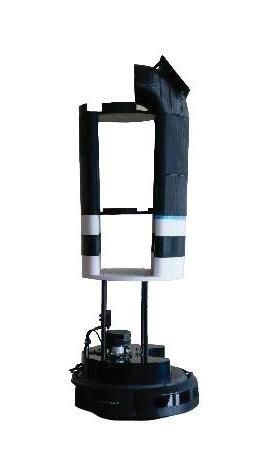
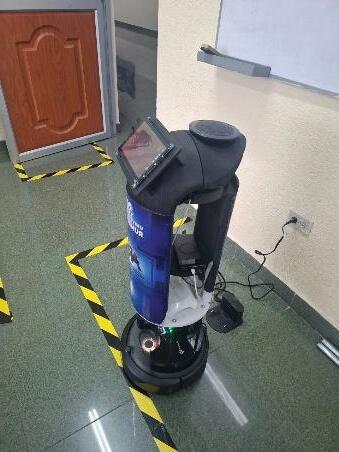
ThegeneralarchitectureofARISconsistsofauser‑ friendlyphysicalroboticstructure.Theprogrammable TurtleBot4platformwasusedasthebase,witha 3D‑printedframedesignedtogivetheappearanceof asocialrobot.Atouchscreenisincludedforhuman‑ robotinteraction,alongwithaconferencespeakerand microphoneforautomaticspeechrecognition.The structureisshowninFigure1.
TurtleBot4isamobileroboticplatformdesigned toprovideanaccessibleresearchsystemforprototyp‑ ingandroboticstraining.Themobilebase,IROBOT Create3,isintegratedwithmotorsthatprovidemobil‑ ity.Itisalsoequippedwithproximitysensors,anIMU sensor,astereocamera,anda2DLiDARsensorthat providesnavigationdata.ThemodelusesaRaspberry Pi4ModelB(4GBRAM)asthemaincomputingunit. ThesystemrunsUbuntu22.04LTSwithROS2Humble preinstalled.
TurtleBot4operateswithtwomaincomputers:A RaspberryPi4BandanintegratedCreate3processor. Tovisualizesensordata,con igure,andcontrolthe system,amongotherfunctions,weconnectanother RaspberryPi4ModelB(4GBRAM)runningthesame UbuntuandROS2asTurtleBot4.InROS2,DDSisinte‑ gratedasthedefaultcommunicationlayer,offering advantagesinscalabilityandperformance.Real‑time dataexchange,sensorreadingorcontrolcommands aremanagedusingtheSimpleDiscoverycon igura‑ tion,asshowninFigure2.
3.2.ARISstructure
Thestructurewasmanufacturedusing3Dprinting withFusedDepositionModeling(FDM)andpolylactic acid(PLA) ilament.Withthehelpof3Ddesignand CrealitySlicer4.8software,theprintingparameters wereadjustedwitha25%internalin ill,takinginto accountthestrengthofthestructure.Figure3shows therobot’sstructureandmaincomponents.
The3D‑printedstructurewasproducedusingthe Creality3DPrintMill,whichoffersanin initeZ‑axis
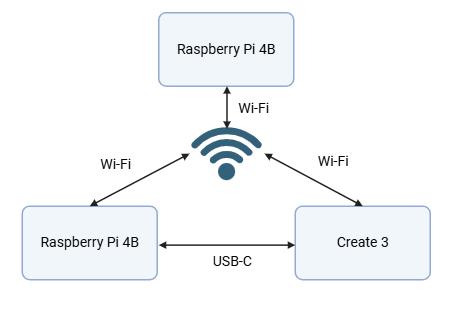
TurtleBot4SimpleDiscoveryconfigurationfor ROS2Humble
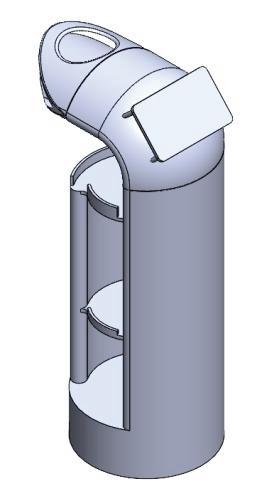
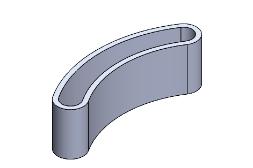
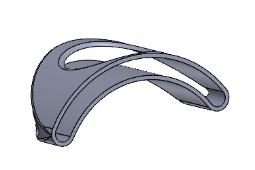
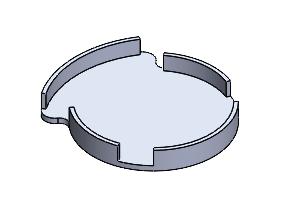
Figure3. Designstructureoftherobotin3D
anda300x300mmXYplanearea.Duetothegeome‑ tryandvaryingsizesoftherobotcomponents,itwas designedandprintedasasetofconnectableparts ratherthanasinglebody.Eachpiecewasoriented tomaximizestabilityandadhesiontothesurfaceof theadjoiningpiece.Thecompleteassemblyreacheda weightof3215g.
3.3.ArchitectureofROSNodes
TheARISarchitectureinROS2isdesignedfor naturalandcontextualhumaninteraction.Thesys‑ teminitiatesinteractionthroughtheaudioinputunit, whichcapturestheuser’svoicecommands.Thisaudio streamisprocessedbyatranscriptionmodulethat convertsspeechintotextandinteractswithalarge languagemodel(Gemini‑1.5‑pro)toenhancecom‑ prehensionandgenerateharmonizedinterpretations. Thecoreofthesystemliesinacentralbrainnode thatintegratesdecodedinputsandgenerativecapa‑ bilities.ARIScanalsorespondusingaspeechsynthe‑ sistoolthatprovidesreal‑timefeedbacktotheuser. Additionally,thenavigationmoduleprovidesspatial awarenessandmobility,allowingARIStophysically
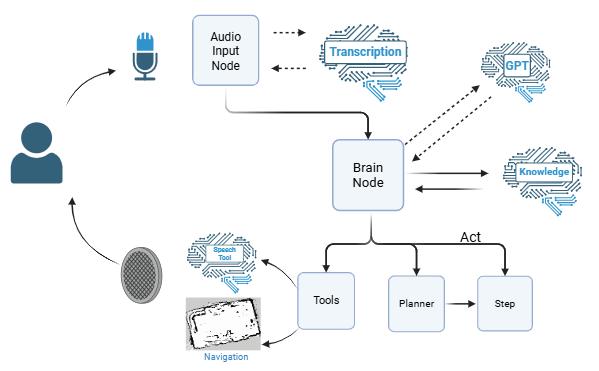
interactwithitsenvironment.Thisarchitecturesup‑ portsdynamictwo‑wayinteractionandenablesARIS toactasahelpfulandconversationalagentinreal‑ worldenvironments.TheARISarchitectureinROSis illustratedinFigure4
3.4.Voiceassistant
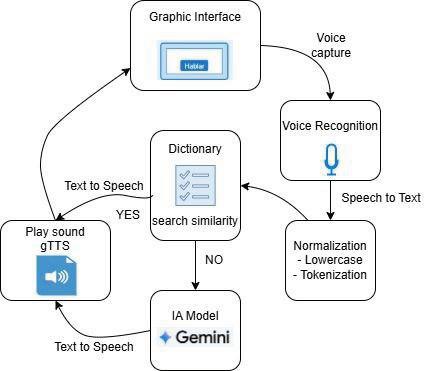
ThevoiceassistantimplementedinARIS,isorga‑ nizedinto ivemodulesasdisplayedinFigure5,which arethecaptureofaudio,transcription,processingof theinput,thesynthesisoftheresponseandtheplay‑ backoftheaudio,whichisintegratedtothegraphical interfacebyclickingabuttononthetouchscreenfor human–robotinteraction.
ThevoiceassistantimplementedinARISisorga‑ nizedinto ivemodulesthatarecapturingtheaudio, transcription,processingoftheinput,thesynthesisof theresponseandtheplaybackoftheaudio,whichis integratedtothegraphicalinterfacebyclickingabut‑ tononthetouchscreenforhuman–robotinteraction.
InitializedARIS,playsanaudio ilewithawel‑ comemessagecon iguredmanuallyevery20seconds, theaudiocapturewasperformedusingtheactivation buttoninthescreencalled“Talk”.Whenyoupress thebutton,itsuspendsplaybackofthe irstmessage andproceedstotheexecutionofthemethodofacqui‑ sitionofaudio.Usingthelibraryspeech_recognition
automaticallyadjuststhedetectionthresholdofenvi‑ ronmentalnoise,toimprovethequalityofthesignalin noisyenvironments.Thecaptureoftheaudioisdone byusingthebuilt‑inmicrophoneandisstoredinan audio iletemporarily.
TheaudiostoredissenttotheserviceofGoogle SpeechRecognitionwhichmakesthetranscription fromvoicetotext.Theservicereturnsastringin theformatofatext,thenthetextisnormalizedby placingthetexttoalllowercaselettersandusingthe techniqueoftokenizationtobreakdownthetextinto fragmentsofwordsortokens.Withtokensobtained iscarriedoutalexicalanalysiscomparativelookfor thesimilarityofthetokenswiththedictionaryof wordsmanuallycon iguredinarepositorygroupedby categoriesoftopicssuchas(greeting,queries,institu‑ tional,controlcommandsanddiversequestions).
Thedetectionofsimilaritybetweenanyofthe tokensoftheinputandsomeofthewordsstoredin therepositoryofdictionaries,generatestheautomatic playbackoftheanswersthatwerepreviouslycon ig‑ uredbyensuringanef icientresponsewithrespectto queriesthatcorrespondtoinformationintheuniver‑ sityspace.Intheabsenceofmatchsuggestionswith thedictionary,thetextofthequestionissentinthe formatofaprompttobeansweredbythegenerative modelLLMemployeewhoistheGemini‑1.5‑pro.
ThegenerativemodelusesaAPI_KEYgenerated fromtheservicesofGoogleAIStudio,additionalfunc‑ tionofthemodeliscon iguredwithinstructions,in whichitisestablishedthatthedutiesofavirtualassis‑ tantfocusedongivinganswersrelatedtothecontext oftheeducationsysteminEcuador,andinthecase ofthequestionrequestedwasnotappropriateinthis context,isansweredinageneralwaywiththebase modelofaclearandpreciseway.
Theresponseisgeneratedtobepre‑con iguredor comingfromthegenerativemodel,convertstextto audioformatusingthelibraryGoogleText‑to‑Speech gTTS,thewhichcreatesanMP3 ilethatisstoredin atemporarydirectory,andisreproducedthroughthe built‑inspeakerinARISusingtheplayermpg123.
Attheendoftheaudioplayback,resettheinterac‑ tionwiththeactivationofthebutton,andthestatus messageattheinterface,indicatingthatitisready tolisten.ThisapproachallowstoARIStoprovide human–robotinteractionusingtheformatofavirtual assistantfocusedingivinganswersthatwereprevi‑ ouslycon iguredoninformationrelevanttotheuni‑ versityspace,combinedwiththe lexibilityofalan‑ guagemodeltothegenerativeforopenconsultation.
Thealgorithmdescribedbelowcontrolsthe mobilerobot’smovementenvironmentwith predeterminedlocations,suchas“PointA,”“PointA,” “PointA,”etc.Therobotwaitsfortheusertopressthe touchbuttonthatallowsittoselectitsdestination. Onceselected,therobotbeginsmovingtowardthis destination.Duringtheroute,itvisualizespotential obstaclesandavoidsthemifnecessary.Ifthereare noobstacles,itwillconstantlyupdateitsmovement.
Whentherobotreachesitsdestination,itinterrupts itsmovementanddisplaysamessageindicatingthat ithasarrived.Thisprocessisrepeatedinde initely sothattherobotcanobtainnewrouterequestsat anytime.Atthesametime,itchecksifthebattery percentageisgreaterthan20%.Ifnot,itinterruptsits routeandheadstothechargingpointuntilitreaches anoptimalpercentageforitsoperation.
TheplatformARISwastestedseveraltimesduring itsdevelopment.Firstly,itwastestedatlaboratory scaleand, inally,inauniversityenvironment,includ‑ ingof icesandcorridors.Youcouldmeasuretheaccu‑ racyintheachievementoftheobjectivesofthesystem ARIS.
TheplatformARISwastestedwithmultipleusers locatedindifferentpointswithintheenvironmentuni‑ versity,asillustratedinFigure6.
Table1presentsthedefaultCartesiancoordinates forasetof iveof icesandthedesignatedARISload‑ ingpoint.TheXandYvaluesindicatetherespective positionofeachlocationwithintheworkspace.
ARISautonomouslydeterminesef icientroutes betweendesignatedpointswhileperformingtasks. ThedatainTable 1 serveasbasepositionsfornavi‑ gation.
ARISislocatedattheentrance,whichispartof theuniversitycampus.Userscanapproachandinter‑ actwithitorrequestinformationaboutuniversity authorities,academicprograms,orsimplygeneral
5
start
waypoints:=[“PointA”,”PointB”,”PointC”,”PointD”,”PointH”] current_position:=”PointH” destination:=”” is_moving:=false battery_level:=100 previous_destination:=”” whiletruedo
ifbattery_level<25then previous_destination:=destination destination:=”chargingstation(h)” is_moving:=true endif
ifbattery_level<70andcurrent_position=”chargingstation(h)”then charge_battery() continue endif iftouch_button_pressed()then destination:=select_destination(waypoints) is_moving:=true endif ifis_movingthen ifdetect_obstacle()then avoid_obstacle() else
move_toward(destination) update_position() update_battery() ifcurrent_position=destinationthen is_moving:=false ifdestination=”chargingstation(h)”andbattery_level<70then //stayandkeepcharging continue endif
ifdestination=”chargingstation(h)”andbattery_level≥70then destination:=previous_destination is_moving:=true else
display(”arrivedat”+destination) endif endif endif endif endwhile end
6 Default placeofthe
information.Atthesametime,ARIScanguideusers totheof icetheywishtoreach.
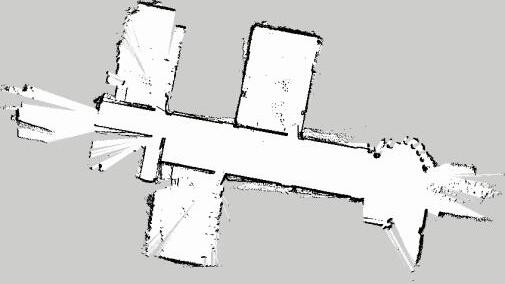
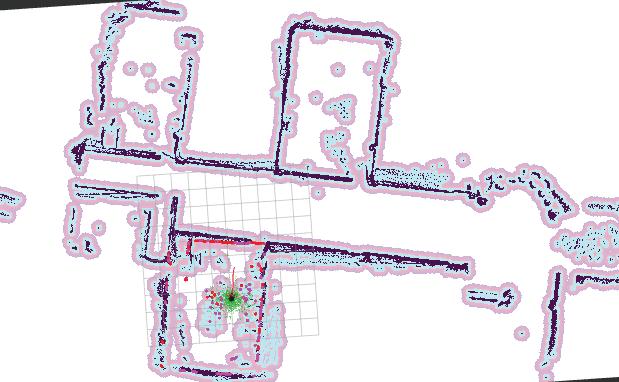
Duringtheroute,ARISiscapableofdetecting obstaclesinitsfrontalpath.Whenitdetectsadis‑ tancebelowaprede inedthreshold,ARISstopsits movementandperformsaturningmaneuvertoavoid theobstacle,thenresumesitstrajectorytowardthe destinationasillustratedinFigure7
Figure7showsthemapcreatedbySLAM,inwhich thedarkareasrepresentpermanentbarrierssuchas walls,whilethebluesectionsre lectthelivezonesthat havebeenexploredbytherobot’ssensors.Thepur‑ plecolorreferstothecostmapin lationareas,which alertabouttheproximityofobstacles.Theredband
Table2. ARISPerformanceofARIS
Table3. PerformanceofARISwithinflationradius0.5m
indicatestheprogrammedroutetherobotwillfollow toreachitsgoal.
Autonomousnavigationservesasafunctional foundationinunknownenvironmentswhichalso allowsthesystemtodemonstrateadaptabilityin dynamicsocialsettings.IfARISdetectsabattery levelbelowaprede inedthreshold,itdecidestohead towardapredeterminedchargingstationandwait untilitreachesasuf icientenergyleveltoresumeits activities.
ToevaluatetheacceptanceofARIS’sfunctionali‑ ties,thesystemisconsideredsuccessfulifitcorrectly respondstousers’questionsandreachestheprede‑ terminedcoordinateswhileavoidingbothdynamic andstaticobstaclesalongtheway.Thetraveltime duringautonomousnavigationbetweenthediffer‑ entcoordinateswasalsoevaluatedtoidentifyany errors.
Thesuccessrateofeacheventwasmonitoredupon completingthedescribedprocess,conducting10ran‑ domexperiments,witheachusermakingamaximum offourattempts.
Table2summarizestheperformanceoftenusers inatask‑basedassessmentinvolvinginteractionwith ARIS.ThedatasetinTable 2 alsoprovidesinforma‑ tiononuser‑robotinteractionundertaskconstraints andshowsperformanceasareasrequiringimprove‑ mentinobstacleavoidanceandprecisepositioning incasesofpoorperformance.Toevaluatetheoverall performanceofeachuserduringthenavigationtask, thelevelofsuccesswasde inedbasedonthreekey criteria:
• Good,correctcoordinates:whetherARISnavigated correctlytothedestination.
• Avoidobstacles:whetherARISavoidedanyobsta‑ clesalongtheroute.
• Answerquestionscorrectly:whetherARIS answeredatleastonequestioncorrectlyduringthe test.
Eachcriterionreceivedabinaryresult:1ifthe conditionwasmetand0otherwise.Thesuccesslevel wascalculatedasthepercentage
DuetothelimitedprocessingpoweroftheRasp‑ berryPi4,whichleadstooccasionalmappingerrors orlocalizationdrift,conservativenavigationheuris‑ ticsandobstaclebufferzoneswereemployedinthe navigationsystemtoimprovethefunctionalperfor‑ manceofARIS.Inthecostmap,thein lationradius parametersweresetto0.5m,providingabufferzone aroundalldetectedobstacles.Thisincreasessafety margins.
Inconservativeheuristicsforrouteplanningand controllogic,themovementspeedofARISwas reduced.Thisallowedforearlystoppinginlargeenvi‑ ronments.Modifyingtheseparametersminimized thelikelihoodofcollisions,mappingerrors,and, aboveall,computationaloverloadontheRaspberry Pi4platform.Thedataobtainedareshownin Table3.
Table4. Averagelatency
Stage Component
Descriptions
A ASR(GoogleSpeech‑to‑Text) 480–650 Varieswithnoiseandinternetconditions
B NLP(Gemini‑1.5‑pro) 600–900 Dependsonpromptcomplexityandserverload
C TTS(gTTS) 300–450 Measuredforresponses<50words
TotalInteraction End‑to‑enddelay 1500–2200 End‑to‑enddelayperuserquery‑responsec
Table5. ComparisonofinteractionlatencybetweenstandardprocessingpipelineandFAQdictionary‐basedoptimization forcommonqueries Stage
A ASR(GoogleSpeech‑to‑Text)
B NLP(Gemini‑1.5‑pro)
C TTS(gTTS)
5.Resultsanddiscussion
Theexperimentalphasewasconductedtodeter‑ minethefunctionalityoftheentireARISsystem. Functionalitywasobtainedinadynamicenvironment ofauniversitycampus,withandwithoutexternal obstacles.TheexperimentaldataareshowninTable2 andTable3.TheaccuracyoftheARISsystemexceeds 86.5%onaverage.Inparticular,anaccuracyof86.5% wasachievedinthecompletionofeachaction,and ARISfailedonlyfourtimesoutofatotalof93test casesduringtheexperimentalphase.Furthermore, ARIScompletedthetargetpointlocalizationprocess withanaccuracyof90%.Thefailuresweredueto variousreasons,suchasimproperoperationofthe robot’sself‑localizationsystemandexternalnoise. However,theARISdidnotfailwhenovercomingstatic anddynamicexternalobstacles.Therefore,theARIS showednodif icultyinautonomouslyguidingitself whileavoidingstaticanddynamicexternalobstacles. Overall,theARISsystemachieveditsgoal,basedon usercommands,notonlyintheabsenceofexter‑ nalobstacles,butalsowhentherearestaticexternal obstaclesintheuniversitycampusenvironment.
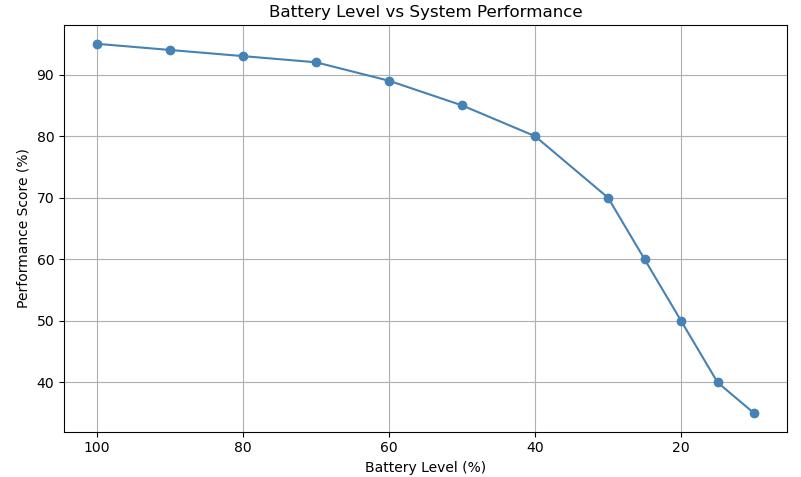
Figure 7 showstherelationshipbetweenbattery levelandsystemperformance.Thisshowsthatas thebatteryleveldrops,systemperformancealso decreases,butnotlinearly.Whenthebatterylevel exceeds60%,performanceremainshighwithaslight drop.However,the40%dropbecomesmuchsteeper andreachesacriticallevelbelow20%batterylevel. Thistrendindicatesthatthesystemsigni icantly reducesitsperformancetosavepowerwhenthe batteryislow.
TheTable4showstheaveragelatencyofeachcom‑ ponentinvolvedinvoice‑basedhuman–robotinterac‑ tionwhichisdividedintothreestages:speechrecog‑ nition,naturallanguageprocessing,andspeechsyn‑ thesis.InStageA,thespeech‑to‑textconversionsys‑ tem(GoogleASR)operateswithanaveragelatencyof 480to650ms,dependingonbackgroundnoise.Stage BprocessesnaturallanguageusingGemini‑1.5‑Pro, withalatencyof600to900msdependingonthecom‑ plexityoftherequestandserverdemand.InStageC, thetext‑to‑speech(GTT)engineconvertsresponsesof
lessthan50wordswithalatencyof300to450ms. Eachuserqueryhasalatencyintheentireinteraction ofbetween1500and2200mswhichrepresentsthe totaltimeelapsedfromwhentheuserspeaksuntil theyreceivetheresponse.
Tomitigatethelatencyissuesobservedin Table 4,wheretotalinteractiondelaysranged from1500to2200msperquery‑responsecycle,a lightweightcachingsystemwasimplementedthat storesfrequentlyaskedquestionsalongsidetheir pre‑computedresponses.Thisoptimizationstrategy createsalocalrepositoryofthemostcommon userinteractions,enablingrapidresponseretrieval withoutrequiringcloud‑basedNLPprocessingor real‑timetext‑to‑speechsynthesis.
AsshowninTable 5,forcachedqueries,StageB performssimpli iedNLPprocessingusingpre‑ indexedsemanticpatterns,andStageCretrieves pre‑generatedaudio ilesfromlocalstorage,reducing synthesistime.ASRprocessesonlytheinitialtrigger phraseforpatternmatching.
Tomeasurepositioningaccuracyasthedistance errorinthepathplanningsystem,theEuclideandis‑ tancebetweenthe inalestimatedrobotpositionand thetruetargetpositionwasused.Theresultsin Table 6 showthatincreasingthein lationradiusby 0.5msigni icantlyimprovedtheaccuracyandcon‑ sistencyofnavigation.Almostallattemptsreduced thecalculatedconditionfailure(e.g.,from0.08mto
Table6. Positionerror
0.06mU1and0.10mto0.08m),whiletheaver‑ ageerrordroppedfrom0.088m(default)to0.072 mwiththein lationradius.Furthermore,thenum‑ berofattemptstoachievehighnavigationaccuracy (error ≤ 0.08m)increasedfrom ivetoeight.These improvementsindicatethattheadditionalbuffer spacearoundobstaclesprovidedbythein lation radiusimprovesrouteplanning,reduceslocalization drift,andenhancesoverallsystemreliability,espe‑ ciallyinanindoorenvironmentwithlimitedcomput‑ ingresources.
Theerrorsoccurredforvariousreasons,oneof themainreasonswasthebackgroundnoise,unclear pronunciation,accentvarietyorvariationinthespeed ofthespeech,ASRincorrectlyconvertstheaudiointo text,whichprovidedmisspelledwords,substitutedor omittedbyotherswithsimilarsounds.Thesejudg‑ mentsdirectlyaffectthequalityofthevoiceinputfor latermisunderstanding.Anothererroristheunder‑ standingofthetranscriptionoftheaudio;themodel ofthenaturallanguageprocessingfailedduetolimi‑ tationsintheirtraining.
ThelimitofprocessingoftheRaspberryPi4is anotherimportantfactorinthedevelopmentofthe platform,ARIS.Therearesigni icantrestrictionson intensivetaskssimultaneously,suchaslocalization andmappingsimultaneously,thevoicerecognition andthealgorithmsofsocialinteraction.Whilethe RaspberryPi4isequippedwithaCortex‑Aprocessor‑ 72offourcoreswithaclockfrequencyof1.5GHz, thisdoesnotcomplywiththerequirementsofthe applicationsofroboticsandhigh‑performance.The algorithmsSLAMGmapping,requiretheprocessingof datafrommultiplesensorsinreal‑time.Thesetasks requireahighmemorybandwidth,anda lowofthe CPU/GPUoftheRaspberryPi4isconstantlyunableto provide,whichcauseslatencyandaffectstheaccuracy ofthemapping.TheASRalsorequirespatternsof deeplearningandfastprocessing.Thesemodelsare locatedlocallyontheRaspberryPi4andcanresultin adelayedorinaccuraterecognition.
DuringthetestingofthefunctioningofARIS,it wasobservedthattheRaspberryPi4issubjectedto
prolongedcomputationalloadsandispronetothe thermallimitation.Thisnotonlyreducesperformance further,butalsoleadstounpredictablebehaviordur‑ inglongersessionsofSLAMoriteration.
TotackletheseissuesandboostARIS’sreliability, weadoptedcautiousnavigationstrategies.A0.5m bufferzonewassetaroundobstaclesandtherobot’s speedwasslowedinopenspacestoallowquicker reactions.Thesechangesreducecrashes,mapping mistakesandCPUstrain.
Theresearchcombinesprovenrobotictools: SLAM,voicerecognition,andlanguageprocessing.The ARISplatformoffersaclearmethodologyforbuilding functionalsocialrobotsonatightbudget,bridgingthe gapbetweenhigh‑endlaboratoryroboticplatforms andtherealneedsofschoolsandsmallresearchlab‑ oratories.Inaddition,theperformanceoftheRasp‑ berryPiwasoptimizedbyadjustingtherequire‑ mentsoftheSLAMalgorithmsandusingpre‑recorded voice ilestoreducelatency,enablingsmoothreal‑ timeoperationevenwithmodesthardware.These improvementsallowARIStooperatereliablywith low‑costequipmentthatmeetstheneedsofteaching andresearch.
AUTHORS
CesarMinaya‑Andino∗ –Departamentode Investigación,InstitutoTecnológicoSuperior Rumiñahui,Sangolquı́,171103,Ecuador,e‑mail: cesar.minaya@ister.edu.ec.
DavidMinango –Departamentode Investigación,InstitutoTecnológicoSuperior Rumiñahui,Sangolquı́,171103,Ecuador,e‑mail: david.minango@ister.edu.ec.
MarceloZambrano –Departamentode Investigación,InstitutoTecnológicoSuperior Rumiñahui,Sangolquı́,171103,Ecuador,e‑mail: marcelo.zambrano@ister.edu.ec.
∗Correspondingauthor
ThisworkwassupportedbyInstitutoTecnológico SuperiorRumiñahuithroughits2023researchproject fundingprogram,ISTER‑INV‑PRO‑D‑049.
DataAvailabilityStatement :Thedataandsource codesupportingthe indingsofthisstudyareopenly availableintheGitHubrepositoryat:https://github.c om/cesarandresma/ARIS.
References
[1] A.Rossietal.,“BRILLO:PersonalisedHRIwitha BartenderRobot,” Int.J.Soc.Robot.,vol.17,2025; doi:10.1007/s12369‑025‑01228‑3.
[2] S.Ekström,L.Pareto,andY.S.Ljungblad,“Teach‑ inginaCollaborativeMathematicLearning ActivitywithandwithoutaSocialRobot,” Educ. Inf.Technol.,vol.30,no.1,2025,pp.1301–1328; doi:10.1007/s10639‑024‑12926‑2.
[3] S.S.Yeung,M.Ma,andT.T.Law,“Let’slistenand TellaStoryTogether:SocialRobotandMultidi‑ mensionalLearningEngagementamongYoung Learners,” AIBrainChild,vol.1,no.1,2025,p.5; doi:10.1007/s44436‑025‑00006‑2.
[4] R.Kühneetal.,“HowDoesChildren’sAnthropo‑ morphismofaSocialRobotDevelopOverTime? ASix‑WavePanelStudy,” Int.J.Soc.Robot.,vol.16, no.7,2024,pp.1665–1679;doi:10.1007/s123 69‑024‑01155‑9.
[5] S.VinanziandA.Cangelosi,“CASPER:Cognitive ArchitectureforSocialPerceptionandEngage‑ mentinRobots,” Int.J.Soc.Robot.,2024;doi: 10.1007/s12369‑024‑01116‑2.
[6] M.A.González‑Santamartaetal.,“AHybrid CognitiveArchitecturetoGenerate,Control, Plan,andMonitorBehaviorsforInteractive AutonomousRobots,” Int.J.Soc.Robot.,2024; doi:10.1007/s12369‑024‑01192‑4.
[7] M.A.González‑Santmartaetal.,“MERLIN2: MachinEdRos2pLanINg,” Softw.Impacts,vol. 15,2023,p.100477;doi:10.1016/j.simpa.2023 .100477.
[8] M.A.González‑Santamartaetal.,“MERLINaCog‑ nitiveArchitectureforServiceRobots,” Appl.Sci., vol.10,no.17,2020,p.5989;doi:10.3390/app1 0175989.
[9] F.DellaertandA.W.Stroupe,“Linear2DLocal‑ izationandMappingforSingleandMultiple RobotScenarios,” Proceedings2002IEEEInter‑ nationalConferenceonRoboticsandAutomation (Cat.No.02CH37292),2002,pp.688–694;doi: 10.1109/ROBOT.2002.1013438.
[10] C.GonzalezandM.Adams,“CurvatureScale SpaceLiDAROdometryandMapping(LOAM),” J.Intell.Robot.Syst.,vol.110,no.2,2024,p.67; doi:10.1007/s10846‑024‑02096‑1.
[11] R.Mur‑ArtalandJ.D.Tardos,“ORB‑SLAM2: AnOpen‑SourceSLAMSystemforMonocular, Stereo,andRGB‑DCameras,” IEEETrans.Robot., vol.33,no.5,2017,pp.1255–1262;doi:10.110 9/TRO.2017.2705103.
[12] M.LabbeandF.Michaud,“OnlineGlobalLoop ClosureDetectionforLarge‑ScaleMulti‑Session
Graph‑basedSLAM,” 2014IEEE/RSJInterna‑ tionalConferenceonIntelligentRobotsandSys‑ tems,2014,pp.2661–2666;doi:10.1109/IROS .2014.6942926.
[13] M.FilipenkoandI.Afanasyev,“Comparisonof VariousSLAMSystemsforMobileRobotinan IndoorEnvironment,” 2018InternationalConfer‑ enceonIntelligentSystems(IS),2018,pp.400–407;doi:10.1109/IS.2018.8710464.
[14] T.Pireetal.,“S‑PTAM:StereoParallelTracking andMapping,” Robot.Auton.Syst.,vol.93,2017, pp.27–42;doi:10.1016/j.robot.2017.03.019.
[15] J.‑M.Valinetal.,“RobustRecognitionofSimul‑ taneousSpeechbyaMobileRobot,” IEEETrans. Robot.,vol.23,no.4,2007,pp.742–752;doi: 10.1109/TRO.2007.900612.
[16] S.Alharbietal.,“AutomaticSpeechRecognition: SystematicLiteratureReview,” IEEEAccess,vol. 9,2021,pp.131858–131876;doi:10.1109/AC CESS.2021.3112535.
[17] C.T.Ishietal.,“ARobustSpeechRecognitionSys‑ temforCommunicationRobotsinNoisyEnvi‑ ronments,” IEEETrans.Robot.,vol.24,no.3, 2008,pp.759–763;doi:10.1109/TRO.2008.9 19305.
[18] J.Davila‑Chacon,J.Liu,andS.Wermter, “EnhancedRobotSpeechRecognition UsingBiomimeticBinauralSoundSource Localization,” IEEETrans.NeuralNetw.Learn. Syst.,vol.30,no.1,2019,pp.138–150;doi: 10.1109/TNNLS.2018.2830119.
[19] S.GirirajanandA.Pandian,“Of lineAutomatic SpeechRecognitionSystemBasedonBidirec‑ tionalGatedRecurrentUnit(Bi‑GRU)withCon‑ volutionNeuralNetwork,” J.Mob.Multimed., 2022;doi:10.13052/jmm1550‑4646.1869.
[20] I.Okunevichetal.,“MobileCharger:An AutonomousMobileRobotwithInverted DeltaActuatorforRobustandSafeRobot Charging,” 202126thIEEEInternational ConferenceonEmergingTechnologiesand FactoryAutomation (ETFA),2021,pp.1–8;doi: 10.1109/ETFA45728.2021.9613366.
[21] G.Vasilyevetal.,“WalkingAlgorithmforRobotis Op3HumanoidRobotwithForceSensors,” 2019 12thInternationalConferenceonDevelopments ineSystemsEngineering (DeSE),2019,pp.20–23; doi:10.1109/DeSE.2019.00014.
[22] A.D.Ames,“Human‑InspiredControlofBipedal WalkingRobots,” IEEETrans.Autom.Control,vol. 59,no.5,2014,pp.1115–1130;doi:10.1109/TA C.2014.2299342.
[23] J.Lafaye,D.Gouaillier,andP.‑B.Wieber,“Lin‑ earModelPredictiveControloftheLocomotion ofPepper,aHumanoidRobotwithOmnidirec‑ tionalWheels,” 2014IEEE‑RASInternationalCon‑ ferenceonHumanoidRobots,2014,pp.336–341; doi:10.1109/HUMANOIDS.2014.7041381.
[24] A.K.PandeyandR.Gelin,“AMass‑Produced SociableHumanoidRobot:Pepper:TheFirst MachineofItsKind,” IEEERobot.Autom.Mag., vol.25,no.3,2018,pp.40–48;doi:10.1109/MR A.2018.2833157.
[25] Z.Baueretal.,“Re iningtheFusionofPepper RobotandEstimatedDepthMapsMethodfor Improved3DPerception,” IEEEAccess,vol.7, 2019,pp.185076–185085;doi:10.1109/ACCE SS.2019.2960798.
[26] L.Casconeetal.,“DTPAAL:DigitalTwinningPep‑ perandAmbientAssistedLiving,” IEEETrans. Ind.Inform.,vol.18,no.2,2022,pp.1397–1404; doi:10.1109/TII.2021.3090363.
[27] G.Ercolanoetal.,“GestureRecognitionwitha2D Low‑ResolutionEmbeddedCameratoMinimise IntrusioninRobot‑LedTrainingofChildrenwith AutismSpectrumDisorder,” Appl.Intell.,vol.54, no.8,2024,pp.6579–6591;doi:10.1007/s104 89‑024‑05477‑z.
[28] Y.Wei,“AComprehensiveApproachtotheGener‑ ationofHuman‑LikeArmMovementsonRobot NAO,” IEEEAccess,vol.8,2020,pp.172869–172881;doi:10.1109/ACCESS.2020.3025532.
[29] C.Zheng,P.Zhang,andY.Li,“SemanticSLAM SystemforMobileRobotsBasedonLargeVisual ModelinComplexEnvironments,” Sci.Rep., vol.15,no.1,2025,p.8450;doi:10.1038/s415 98‑025‑90340‑5.
[30] K.M.AhmadYousefetal.,“PersonalAssistant RobotusingReinforcementLearning:DARWIN‑ OP2asaCaseStudy,” Intell.Serv.Robot.,vol.17, no.4,2024,pp.815–831;doi:10.1007/s11370‑ 024‑00540‑7.
[31] P.Allgeueretal.,“TheigusHumanoidOpenPlat‑ form,” KI‑Künstl.Intell.,vol.30,no.3,2016,pp. 315–319;doi:10.1007/s13218‑016‑0448‑6.
[32] G.Fichtetal.,“NimbRo‑OP2X:Adult‑SizedOpen‑ Source3DPrintedHumanoidRobot,” 2018IEEE‑ RAS18thInternationalConferenceonHumanoid Robots (Humanoids),2018,pp.1–9;doi:10.110 9/HUMANOIDS.2018.8625038.
[33] T.P.Tomoetal.,“ANewSiliconeStructurefor uSkin—ASoft,Distributed,Digital3‑AxisSkin SensorandItsIntegrationontheHumanoid RobotiCub,” IEEERobot.Autom.Lett.,vol.3,no. 3,2018,pp.2584–2591;doi:10.1109/LRA.2018 .2812915.
[34] F.Naverosetal.,“VORAdaptationonaHumanoid iCubRobotUsingaSpikingCerebellarModel,” IEEETrans.Cybern.,vol.50,no.11,2020,pp. 4744–4757;doi:10.1109/TCYB.2019.2899246.
[35] G.Lombardietal.,“HumanoidFacialExpressions asaTooltoStudyHumanBehaviour,” Sci.Rep., vol.14,no.1,2024,p.133;doi:10.1038/s41598‑ 023‑45825‑6.
[36] L.Fortunatietal.,“ExploringthePerceptions ofCognitiveandAffectiveCapabilitiesofFour,
Real,PhysicalRobotswithaDecreasingDegree ofMorphologicalHumanLikeness,” Int.J.Soc. Robot.,vol.15,no.3,2023,pp.547–561;doi: 10.1007/s12369‑021‑00827‑0.
[37] D.Suresh,F.Dax,andD.Borrmann,“Advanc‑ ingRoboticswithanInteractiveandMusical HumanoidRobotBasedontheInMoovProject,” 202422ndInternationalConferenceonResearch andEducationinMechatronics (REM),2024,pp. 237–243;doi:10.1109/REM63063.2024.1073 5692.
[38] J.Maetal.,“AMulti‑LIDARSLAMMethod BasedonHector‑SLAM,” 2024ChinaAutomation Congress (CAC),2024,pp.345–350;doi:10.110 9/CAC63892.2024.10865468.
[39] S.Huangetal.,“ARobust2DLidarSLAMMethod inComplexEnvironment,” PhotonicSens.,vol.12, no.4,2022,p.220416;doi:10.1007/s13320‑ 022‑0657‑6.
[40] N.AbdelazizandA.El‑Rabbany,“LiDAR/Visual SLAM‑AidedVehicularInertialNavigationSys‑ temforGNSS‑DeniedEnvironments,” 20225th InternationalConferenceonCommunications, SignalProcessing,andtheirApplications (ICC‑ SPA),2022,pp.1–5;doi:10.1109/ICCSPA5586 0.2022.10019210.
[41] Q.Duetal.,“Tightly‑coupledLidar‑ Visual‑InertialSLAMforMobileRobot,” 2024InternationalConferenceonImage Processing,ComputerVisionandMachine Learning (ICICML),2024,pp.842–845;doi: 10.1109/ICICML63543.2024.10957948.
[42] J.Linetal.,“R ∧2LIVE:ARobust,Real‑Time, LiDAR‑Inertial‑VisualTightly‑CoupledState EstimatorandMapping,” IEEERobot.Autom. Lett.,vol.6,no.4,2021,pp.7469–7476;doi: 10.1109/LRA.2021.3095515.
[43] Z.Wangetal.,“SLAMMappingofInformation FusionbetweenLidarandDepthCamera,” 2022 InternationalConferenceonImageProcessing, ComputerVisionandMachineLearning (ICICML), 2022,pp.142–145;doi:10.1109/ICICML57342. 2022.10009758.
[44] R.C.Hsuetal.,“Real‑TimeInteractionSystemof Human‑RobotwithHandGestures,” 2020IEEE EurasiaConferenceonIOT,Communicationand Engineering (ECICE),2020,pp.396–398;doi:10 .1109/ECICE50847.2020.9301957.
[45] I.Diddeniyaetal.,“Human–RobotCommunica‑ tionSystemforanIsolatedEnvironment,” IEEE Access,vol.10,2022,pp.63258–63269;doi:10 .1109/ACCESS.2022.3183110.
[46] D.Songetal.,“VLM‑Social‑Nav:SociallyAware RobotNavigationThroughScoringUsingVision‑ LanguageModels,” IEEERobot.Autom.Lett.,vol. 10,no.1,2025,pp.508–515;doi:10.1109/LRA. 2024.3511409.
REVIEWOFHYBRIDPATHPLANNINGTECHNIQUESFORMOBILEROBOTS:
REVIEWOFHYBRIDPATHPLANNINGTECHNIQUESFORMOBILEROBOTS:
REVIEWOFHYBRIDPATHPLANNINGTECHNIQUESFORMOBILEROBOTS: INTEGRATIONBETWEENAITECHNIQUESANDTRADITIONALMETHODSINKNOWN
DOI:10.14313/jamris‐2026‐017
Abstract:
Submitted:15th July2025;accepted:1st October2025
MohamedAbdelghafar,HazlinaSelamat,NurulaqillaBintiKhamis,AnasAburaya,MohdTaufiqMuslim
complexityandlackadaptabilityindynamicandcom‑ plexscenarios[1].
Mobilerobotsrequireeffectiveandsecurepathplan‐ning,especiallyincomplexanddynamicenvironments. TraditionalalgorithmssuchasA*,Dijkstra,andRapidly‐exploringRandomTrees(RRT)offerdependableand mathematicalsolutionsbutfacechallengesregarding scalability,adaptability,andprocessingrequirementsin real‐timeapplications.Ontheotherhand,artificialintel‐ligence(AI)techniques,suchasreinforcementlearning (RL)andneuralnetworks(NNs)provideflexibilityand quickdecision‐makingbutfacechallengessuchasdata dependency,optimalsolution,andcomputationalover‐head.Thisreviewanalyzeshybridpathplanningmethod‐ologiesthatintegratetraditionalalgorithmswithAItech‐niques,utilizingtheadvantagesofbothtoovercome theirlimitations.Hybridapproachesimprovescalability, collisionavoidance,andre‐planningefficiencybyinte‐gratingtheaccuracyandreliabilityoftraditionaltech‐niqueswiththeadaptabilityandlearningcapabilities ofAI.Thisreviewcategorizesandanalyzesresearchto identifysignificantgapsandsuggestsfuturepathsfor enhancinghybridpathplanning,offeringinsightsforthe developmentofmorerobustandintelligentnavigation systemsformobilerobotsandautonomousplatforms.
Keywords: AI,Robotics,Pathplanning,mobilerobots
1.Introduction
Mobilerobotshavegainedsigni icantattentionin areassuchassurveillance,agriculture,disasterman‑ agement,andlogistics.Animportantaspectofmobile robotactivitiesispathplanning,whichisde inedas identifyinganoptimalpathwayfromastartpointtoa destinationwhileminimizingcostsintermsoftime, energy,andcomputationalresources,andavoiding obstacles.Theef iciencyofmobilerobotpathplanning isespeciallycrucialinknownenvironmentswhere detailed3Dmapsareavailable,allowingformorepre‑ cisenavigationandoptimization.
Traditionalmethodsofpathplanning,suchas theA*algorithm,Dijkstra’salgorithmandRapidly‑ exploringRandomTrees(RRT),havebeenwidelyused duetotheirreliabilityandmathematicalaccuracy. Thesealgorithmshaveproveneffectiveinproduc‑ ingcollision‑freepathsin2Dand3Denvironments. However,theyoftenstrugglewithhighcomputational
Arti icialIntelligence(AI)methods,suchas machinelearning,deeplearning,andreinforcement learning,canenhancepathplanningperformance. AI‑basedmethodsofferseveraladvantages,such aslearningfromdata,adaptationtoevolving environments,andmulti‑objectiveoptimization. Despitethesestrengths,AImethodsalonemay requireextensivetrainingdata,highcomputational power,andmaylackinterpretabilitycomparedto traditionalalgorithms[2].
ThecombinationofAIandtraditionalmethods formobilerobotpathplanningpresentsapromis‑ inghybridapproachthatleveragesthestrengthsof bothparadigms.ByintegratingAI’sadaptabilityand learningcapabilitieswiththerobustnessandinter‑ pretabilityoftraditionalalgorithms,researchersaim todevelopmoreef icientandversatilepathplan‑ ningsolutions.Thishybridapproachhasthepotential toaddressthelimitationsofbothAIandtraditional methods,particularlyinknownenvironmentswhere comprehensive3Dmapsprovideastructuredframe‑ workfornavigation.
Thisreviewaimstoexplorethecurrentstateof researchonthecombinationofAIandtraditional methodsformobilerobotoptimalpathplanningin knownenvironments.Thereviewwillfocusonidenti‑ fyingthekeyAItechniquesandtraditionalalgorithms employed,examiningtheirperformance,andhigh‑ lightingthechallengesandopportunitiesassociated withtheirintegration.Bycombiningthe indingsfrom existingliterature,thisreviewaimstoprovideacom‑ prehensiveunderstandingofthehybridapproachesto mobilerobotpathplanning.
1.1.FundamentalsofMobileRobotPathPlanning
Mobilerobotpathplanningiscriticalfor autonomousmoving,asitprovidesasecure,effective, collision‑freepathfromthestartingpointtothe destination.Thedif icultyofthistaskdepends onfactorssuchastheenvironmentinoperation (urbanorrural),obstacles(staticordynamic), energylimitations,andthespeci icmissiongoals (surveillance,delivery,mapping,etc.).
Thepathplanningsequencehasthreephases, environmentalmodeling,pathsearchingand
optimization,and, inally,pathexecutionand adaptation.Environmentalmodelingiswhena 3‑dimensionalmapoftheareaisdevelopedand obstaclesaremodeledsimilarlyusingoccupancy gridsandVoronoidiagrams;pathsearchand optimizationiswhenalgorithmsidentifypaths basedonparameterssuchaslengthandsafety;in pathexecutionandmodi ication,mobilerobotsneed tochangethepathaccordinglybasedonrandom obstaclesandenvironmentalchanges[1].
Mobilerobotpathplanningalgorithms,bothtra‑ ditional,AI‑basedorhybrid,arecrucialtoenabling mobilerobotstonavigatesafelyandef icientlyinhet‑ erogeneousenvironments.Thealgorithmsaredevel‑ opedforpathoptimizationbybalancingobjectives suchasobstacleavoidance,energyef iciency,and mission‑speci icrequirementsthatvarybasedonthe useofthemobilerobot.Pathplanningalgorithms combinemathematicalprecisionwithadaptivefunc‑ tionalityastheyallowmobilerobotstodealwithstatic anddynamicobstacles,environmentalchanges,and accuratenavigationofalltypesofmissions.Thisholis‑ ticconsiderationofpathplanningstressestheneed foralgorithmstodevelopandadaptasnewproblems ariseinautonomousmovement.
Pathplanningalgorithmscanbeclassi iedinto globalpathplanningandlocalpathplanningbasedon theiroperationalscopeandplanningprocedure[2]. Globalpathplanningalgorithms,suchasDijkstra’s, A*,D*Lite,andCellDecomposition,areengineeredto calculateapathfromastartpointtothetargetpoint forade inedenvironment.Theseapproachesusea completeorpartialrepresentationoftheenviron‑ menttodetermineanoptimalornear‑optimalpath, accountingforalldetectedobstacles.Thesemethods areespeciallyef icientinstaticenvironmentswhere allinformationoftheenvironmentisknownahead oftimeandallofwhathasbeenlearnedisusedfor completeplanning[2].
Conversely,localpathplanningtechniquesfocus onimmediatenavigationandavoidanceofobstacles. Localpathplanningincludesbothtraditionalalgo‑ rithms,suchasDynamicWindowApproach(DWA) andArti icialPotentialField(APF),aswellasAImeth‑ ods,suchasMachineLearning(ML)andReinforce‑ mentLearning(RL).Localpathplanningalgorithms arespeci icallydesignedtofocusontheabilityto makequickdecisions,fromthecurrentstateofthe mobilerobotanditssensors,withoutrequiringall theenvironmentalknowledge.Localpathplanners canbehighlyeffectiveindynamicorpartiallyknown environmentswherethemobilerobotmustrespond quicklytoanunexpectedchangeormovingobstacle thatwasnotknownpriortoencountering[2].
Inpracticalmobilerobotoperations,theintegra‑ tionofglobalandlocalpathplanningmethodolo‑ giesisfrequentlybene icial[2].Theglobalplanner willprovideaplannedlongpathtothetarget,and thenthelocalplannercanmodifythemobilerobot’s trajectoryconsideringimmediatehazardsandother
changesintheenvironment.Thishybridmethodguar‑ anteesbothoptimalityandadaptability,improving themobilerobot’soverallnavigationef iciency.
Previousreviewpapershavefocusedonalgorithm reviewsingeneraloronbroadintegrationsoftech‑ niquessuchas[3–5].However,thispaperspeci ically reviewstheintegrationbetweentraditionalpathplan‑ ningalgorithmsandarti icialintelligence(AI)meth‑ ods.PaperswereretrievedexclusivelyfromScopusto ensureacomprehensivereview.Acombinationofkey‑ wordsandBooleanoperatorswasusedtomaximize thesearchresults.Thekeywordssuchas:
• “Mobilerobot”AND“pathplanning”AND“known environment”AND“hybrid”AND“arti icialintelli‑ gent”OR“AI”
• “Mobilerobot”AND“pathplanning”AND“known environment”AND“combine”AND“arti icialintel‑ ligent”OR“AI”
• “Mobilerobot”AND“pathplanning”AND“known environment”AND“integrate”AND“arti icialintel‑ ligent”OR“AI”
• “Robot”AND“pathplanning”AND“knownenvi‑ ronment”AND“hybrid”AND“arti icialintelligent” OR“AI”
Thesearchrangewaslimitedtopaperspublished fromJanuary2019toDecember2024.Usingthese keywords,atotalof105paperswereretrieved.By applyinginclusionandexclusioncriteria,23papers wereidenti iedthat ittherequirements.Figure 1 illustratesthenumberofpublicationsovertheyears. SomepapersfocusedonthehybridbetweentwoAI methodswhichfalloutsidethescopeofthisreview.
Thequalityofeachpaperwasevaluatedbasedon clarityofobjectivesandmethodology,relevanceto hybridpathplanningformobilerobots,androbust‑ nessofexperimentalorsimulationresults.Inclusion criteriaensuredthereviewsynthesizedthestudies discussingthehybridmethodsintegratingtraditional andAI‑basedmethods,andstudiesofmobilerobot researchintheknownenvironment.Exclusioncri‑ teriaensuredstudiesfocusedsolelyoneitherAIor traditionalmethodswithoutintegration,paperswith‑ outanyexperimentalorsimulationresults,andnon‑ Englishpapers.Overall,thereviewensuresasystem‑ aticandunbiasedexplorationofhybridpathplanning methods,offeringvaluableinsightsforresearchers andpractitionersinthe ield.
3.HybridApproaches:CombiningAIandTra‐ditionalMethods
Traditionalpathplanningalgorithmsprovide reliableandoftenoptimalsolutionsinstructured environmentsbutfacescalabilityissuesand strugglewithreal‑timeadaptabilityindynamic settings[2, 3].Incontrast,Arti icialIntelligence (AI)techniquesenhanceadaptabilityanddecision‑ making,allowingrobotstolearnfromdataand
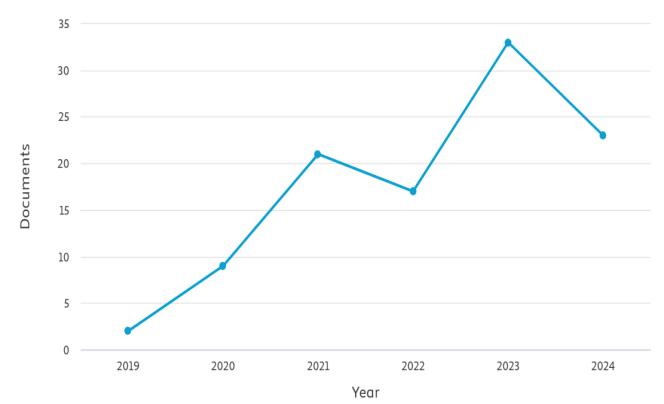
Figure1. Linegraphofnumberofpapersvs.yearpublished respondtouncertainties,thoughtheyremain limitedbycomputationaldemands,relianceonlarge datasets,anddif icultyinguaranteeingglobaloptimal paths[1,3].
Hybridapproacheshaveemergedtocombinethe strengthsofbothparadigms.Insuchframeworks, traditionalalgorithmsareemployedasglobalplan‑ nerstogenerateef icientbaselineroutesinknown orpartiallyknownmaps,whileAImethodsserveas localplannerstoadaptivelyhandlereal‑timechanges, dynamicobstacles,anduncertainties.Thisintegration balancestheef iciencyandoptimalityoftraditional methodswiththeadaptabilityandintelligenceofAI, resultinginmorerobustandreliablepathplanning formobilerobotsacrossdiverseenvironments.Dif‑ ferenthybridmodelshavebeendiscussed,integrating differentAItechniqueswithtraditionalmethodsto addressthelimitationsofindividualapproaches.In thereviewedliterature,11papersutilizedRLasa localplanner,including3thatemployedDRL,8papers usedNN,and4utilizedFuzzyLogic,allcombinedwith differenttraditionalalgorithms.
3.1.IntegrationwithReinforcementLearning(RL)
ReinforcementLearning(RL)enhancestraditional algorithmsbyallowingmobilerobotstoadaptto dynamicenvironmentsthroughlearningfrominter‑ actions.RLisparticularlyeffectiveforlocalpath optimization,complementingtraditionalalgorithms, whichhandleglobalpathplanning.In[6–8],A*is usedwithRLbecauseA*providesoptimalpathsin staticenvironments,butRLhelpsre inethosepathsin realtimewhendynamicobstaclesorsuddenchanges occur.Thisintegrationisusefulincaseswhereenvi‑ ronmentalconditionsaresemi‑known,butreal‑time changesrequireconstantpathadjustment.
Ontheotherhand,in[9,10]RRTwithRLisused becauseRRTexcelsinexploringlarge,unstructured environments,butitlacksre inementin indingopti‑ malpaths.RLcomplementsRRTbyimprovingthe path’squality,particularlyinenvironmentswherethe mobilerobotneedstoavoiddynamicobstaclesorcon‑ tinuouslyadapttounforeseenchangesinreal‑time[7]. RRT’sfastexploratorynatureisparticularlysuitable
forglobalexploration,whileRLre ineslocaldecisions, makingthishybridsystemidealfornavigatingclut‑ teredandrapidlychangingenvironments.
Likewise,in[11, 12],PRMwascombinedwith RLtomanagenavigationinlarge‑scale,knownenvi‑ ronments.PRMgeneratestheglobalpathbasedon theroadmap,andRLoptimizesthelocaltrajectory asconditionsevolve.PRM’ssuitabilityforstructured environmentsmakesitanidealcandidateforglobal pathplanning,whileRLadaptstodynamicelements, ensuringthatthemobilerobotcanhandlechanging conditionswithoutfullyrecalculatingitsroute[13].
3.2.IntegrationwithDeepReinforcementLearning (DRL)
DeepReinforcementLearning(DRL)further extendsRLbyincorporatingdeeplearningmodels toprocesscomplex,high‑dimensionaldata,enabling mobilerobotstoadaptinreal‑time.In[19],DRL wasintegratedwithtraditionalmethodslikeA*or Dijkstratoovercomethechallengeofhighuncertainty inenvironmentswithdynamicobstacles.A*and Dijkstraprovideef icientglobalpathplanning,but DRLenablesthesystemtoprocesslargeamounts ofsensordataandoptimizethemobilerobot’s localmovements.Thishybridmodelisparticularly advantageousinhigh‑complexityenvironments, wheremobilerobotmustmakefrequentadjustments basedonreal‑timefeedback[15].
ThedecisiontouseDRLwithA*andDijkstra stemsfromDRL’sabilitytohandlevastdatasetsand improvereal‑timedecision‑making,makingitwell‑ suitedfordynamicsettingswherefrequentadapta‑ tionsarerequired.
3.3.IntegrationwithNeuralNetworks
NeuralNetworks(NNs)enhancetraditional pathplanningmethodsbylearningfromprevious experiencesandprocessingreal‑timesensordata. IntegratingNNswithRRT*,asdemonstrated in[16–19],acceleratetheselectionofsampling pointsandimprovestheoverallpathef iciency.The decisiontocombineNNswithRRT*isbasedon RRT*’sabilitytogeneratenear‑optimalpathsthrough
re‑wiring,andNNs’strengthinre iningthepath selectionbylearningfrompriorexperiences.This integrationsigni icantlyreducesthecomputational costofre‑planningandimprovesthemobilerobot’s abilitytonavigatehighlydynamicenvironments.
Similarly,integratingNNswithA*enhancesthe mobilerobot’sabilitytoadjustitsglobalpathbased onreal‑timesensordata[20].TheproposedLearn‑ ingHeuristicA*(LHA*)algorithmusesaneuralnet‑ worktomodeltheheuristicfunction,ensuringfaster explorationwhilemaintainingasuboptimalitybound. Also,NeuralA*reformulatestheA*algorithminto adifferentiablemodule,allowingittobeintegrated intoaneuralnetworkandtrainedend‑to‑end,which bridgesthegapbetweentraditionalsearchalgorithms anddeeplearning[21].Thishybridapproachispartic‑ ularlyeffectiveinenvironmentswithdynamicobsta‑ cles,whereNNshelpthemobilerobotprocesssensor inputsandre inethecomputedpathwithoutneeding constantrecalculation.
Additionally,DeepNeuralNetworks(DNNs)fur‑ therimprovetraditionalpathplanningmethodsby learningheuristicfunctionstoguidethesearchpro‑ cessmoreef iciently.Asdemonstratedin[22],DNNs canbetrainedtooptimizethesearchcostinalgo‑ rithmslikeA*,reducingcomputationaloverhead whilemaintainingaccuracy.Similarly,in[23],DNN‑ basedapproachusingmax‑poolinglayersef iciently solveslarge‑scalepathplanningproblemswithout requiringtraining,demonstratingthepowerofDNNs inoptimizingpath indingincomplexenvironments.
3.4.IntegrationwithFuzzyLogic
FuzzyLogiccomplementstraditionalalgorithms byprovidinga lexibledecision‑makingframeworkin uncertainenvironments.WhenintegratedwithRRT, asseenin[24],FuzzyLogicallowsmobilerobotsto adjusttheirpathbasedonimpreciseornoisysen‑ sordata,whichRRTalonecannotmanageeffectively. Thehybridapproachimprovesnavigationinenvi‑ ronmentswithhighuncertainty,suchasrescuemis‑ sionsorexplorationofunknownareas.Thedecision tointegrateFuzzyLogicwithRRTstemsfromthe needtohandleimprecisesensordata,whereFuzzy Logic’sabilitytomanageuncertaintycomplements RRT’sexploratorypower.
WhenintegratedwithA*,asdemonstrated in[25],FuzzyLogicenhancestheef iciencyof thesearchprocessbydynamicallyadjustingthe heuristicfunctioninresponsetoobstacledensity, distancetothegoal,andthenumberofvisitednodes. WhileA*guaranteesoptimality,itiscomputationally expensiveandmemory‑intensiveinlargeormaze‑like environments.ThehybridFuzzyA*overcomesthese limitationsbyreducingunnecessarystateexpansions andmemoryconsumption,whilestillmaintaining near‑optimalpaths,makingithighlyeffectivefor large‑scaleandcomplexmaps.Inasimilarmanner, whencombinedwithDijkstra,asreportedin[26], FuzzyLogicprovidestheadaptabilityrequiredfor real‑timenavigationinpartiallyknownenvironments. Dijkstraensuresagloballyoptimalpathof linebut
cannothandleunexpectedobstaclesduringexecution. FuzzyLogic illsthisgapbyenablingreactiveobstacle avoidanceandsmoothcontroladjustmentsbasedon sensorfeedback.ThisintegrationpreservesDijkstra’s reliabilityinstaticenvironmentswhileextendingits capabilitytodynamicscenarios,ensuringsafeand ef icientnavigationwheretheenvironmentcannotbe fullyknowninadvance
3.5.Summary
Thereviewedstudiesfocusedonintegration traditionalalgorithmswithAItechniquesformobile robotpathplanning.Theanalysishighlightedhow thesehybridapproachescombinethesystematic ef iciencyoftraditionalmethodswiththeadaptability andintelligenceofAItoaddresschallengesin dynamicandcomplexenvironments.Thekey indings fromthereviewedpapersaresummarizedin Table 1,highlightingthestrengthsofeachapproach. Furthermore,theapplicationsofthesehybrid methodssuggesttheirsuitabilityfordifferent operationalcontexts.Forinstance,A*combinedwith ReinforcementLearningcouldbewell‑suitedforlong‑ runnavigationincomplexoutdoorenvironmentsand multi‑robotcoordination,suchasautonomous transportationsystems,sinceA*ensuresareliable globalpathwhileRLadaptstodynamictraf icor obstaclechanges[6–8].PRMintegratedwithRL maybeadvantageousforindoorgroundrobot navigationandoutdoorUAVoperations,suchas warehouseautomationoraerialdeliverysystems, becausePRMef icientlyexploreshigh‑dimensional spaceswhileRLre inessafepassageinclutteredor dynamiczones[11].Likewise,A*combinedwithDeep ReinforcementLearningappearssuitableforhighly complexanddynamicenvironments,suchasdisaster responseorsearch‑and‑rescuemissions,asDRL enhancesadaptabilitytounpredictablehazardswhile A*providesastablebaselinepath[14].PRMcombined withDRLcouldbeappliedtolarge‑scaleoutdoor navigation,withpotentialusesinautonomous explorationinagricultureorenvironmental monitoring,wherePRMmapsvastspacesand DRLmanagesenvironmentaluncertainty[22]. Meanwhile,RRT*integratedwithNeuralNetworks showspotentialforroboticarmmanipulationtasks andtargettrackingsystems,forexample,inindustrial assemblyorsurveillanceapplications,sinceRRT* generatesanoptimaltrajectorywhileNNsupports precisioncontrolandadaptivetracking[17].These insightsunderlinethe lexibilityofhybridapproaches intailoringpathplanningsolutionstodiverse domainsofroboticsystems
Thissectionevaluateshybridpath‑planning methodologies,focusingontwocriticalaspects: performanceandcomputationalcomplexity.The performanceisevaluatedbasedonthemethod’s abilitytoproduceoptimalandsmoothpaths, crucialforeffectiveandsecurenavigation,whereas
Table1. Summaryofhybridapproachesmethodsformobilerobotpathplanning
Paper GlobalPlannerAlgorithm LocalPlanner Algorithm Strength
[6] IADA* Reinforcement Learning(RL)
[15] Deep Reinforcement Learning(DRL)
[7] A* Reinforcement Learning(RL)
[13] PRM Reinforcement Learning(RL)
[10] RRT Reinforcement Learning(RL)
[8] A* Reinforcement Learning(RL)
[9] RRT Reinforcement Learning(RL)
[11] PRM Reinforcement Learning(RL)
[12] PRM Reinforcement Learning(RL)
[14] A*,Dijkstra Deep Reinforcement Learning(DRL)
[17] RRT* BackPropagation (BP)Neural Networks(NNs)
[18] A*,RRT* NeuralNetworks (NNs)
[19] A*,RRT* NeuralNetworks (NNs)
[24] RRT FuzzyLogic
‑IADA*algorithmcanre‑planpathsef icientlyindynamic environmentswithoutrecalculatingtheentirepathwhen anobstacleisencountered.
‑Thehuman‑in‑the‑loop(HL)trainingspeedsupthe convergenceoftheDRLalgorithm,reducingthetime requiredtolearncomplexnavigationpolicies.
‑TheRLisallowingtherobottoadaptitspolicythrough trial‑and‑errorinteractionswithitssurroundings.
‑PRMistriggeredusinganupdatedprobabilisticroadmap, ifRLfailsto indavalidpathduetoobstaclesdetected.
‑RLlearnstoselectoptimalactionsthatleadto collision‑freepaths,whileRRTgeneratescollision‑free states.
‑Theapproachcanbescaledtomulti‑robotsystems withoutcentralizedcontrol.
‑RLhelpstheRRTtreegrowtowardtargetpoint,avoiding computationallyexpensivesteeringfunctions.
‑PRM‑RLcombinesthestrengthsofPRMsforlong‑range planningwithRLagentsthathandleshort‑range.
‑PRM‑RLisdesignedtoberobustagainstsensornoiseand unmodeleddynamicenvironments.
‑TheDRLisspeci icallytrainedtonavigatearoundhumans, predictingtheirmovementsandadjustingrobottrajectories accordinglytoavoidcloseencounters.
‑BP‑RRT*methodusesneuralnetworkstopredictthe optimalnumberofsamplesrequiredineachphaseofthe search,makingitfasterandmoreef icient. ‑reducingthecomputationalprocessbyoptimizingthe nodeselectionprocess
‑RNNcontinuouslylearnsfromtheenvironment,makingit adaptableandfasteringeneratingpaths.
‑RNNallowsittooperateinarelativelyconstanttime regardlessofenvironmentalcomplexity.
‑Limitationlearningfrompre‑calculatedoptimalpaths makingthismethoduniqueonreal‑timecalculations.
‑TheuseofR‑CNNallowsforfastcomputationby leveragingof line‑trainedmodels,reducingtheneedfor heavyreal‑timecomputations
‑fuzzylogiciscomputationallylightandwell‑suitedfor real‑timeoperations.
‑AnextendedKalman ilter(EKF)isemployedtominimize cross‑trackerrorsduringpathfollowing,ensuringsmooth andaccuratenavigationalongtheplannedtrajectory
[22] PRM Deep Reinforcement Learning(DRL)
‑PMR‑DuelingDQNutilizesprioritizedreplayanddueling networks,improvingthelearningprocessbyfocusingon morecriticallearningeventsandbetterapproximating state‑actionvalues.
[20] DeepNeural Network(DNN) ‑DNNisusedtooptimizetheheuristicfunction,allowingit tomaintainthestrengthsoftraditionalsearchalgorithms whileimprovingef iciency.
[27] A* NeuralNetworks (NNs)
[21] A* NeuralNetworks (NNs)
[23] DeepNeural Network(DNN)
‑LearningHeuristicA*(LHA*)algorithmusesaneural networktomodeltheheuristicfunction.
‑Theneuralnetworkreducesthenumberofunnecessary vertexexpansionsinagraph,speedingupthesearch process.
‑NeuralA*combineslearningandsearchintoauni ied framework,whichallowsforbothtaskoptimizationand improvedperformance.
‑OMAPdoesnotrequirelargedatasetsorneuralnetwork training,makingitasimpleyetpowerfulalternativefor solvingcomplexpath‑planningproblems.
[28] DWA Fuzzylogic ‑Importantpointsontheglobalpathareselectedaskey sub‑targetsitesforthelocalmotionplanningphase.
[25] A* Fuzzylogic ‑Signi icantlyreducescomputationandmemoryusagein large,complexenvironmentswhilemaintaining near‑optimalpaths.
[26] Dijkstra Fuzzylogic ‑Ensuresgloballyoptimalof lineplanningwithadaptive real‑timeobstacleavoidanceinpartiallyknown environments
computationalcomplexityanalyzesconvergencerate, scalabilitytocomplexenvironments,andre‑planning ef icacyindynamicsituations.Duetothevaried experimentalcon igurationsandusesindifferent investigations,directcomparisonsaredif icult. Therefore,thiscomparisonemphasizesgeneral conceptsandtrade‑offs,providinginsightsintothe strengthsofeachmethodinrelationtoitsintended application.
4.1.Performance
Theperformanceofhybridpathplanning approachesisevaluatedbasedontwokeymetrics:(i) optimalandsmoothpathand(ii)successrate,which togetherre lectthequalityandreliabilityofthepaths generatedbythesemethods.
4.1.1.OptimalandSmoothPath
Creatingpathsthatareoptimalinlengthand smoothinexecutionisessentialforassuring ef icientandsafenavigationwhilereducingenergy consumptionandmechanicalwearonrobotic systems.Numeroushybridmethodologiespro iciently achievethisbalancebyutilizingtheadvantagesof traditionalalgorithmsalongsideAItechniques.
In[14],themethodologywasevaluatedacross manycontextsandscenarios,showingthatthe combinationoftraditionalalgorithmswithDeep ReinforcementLearning(DRL)alwaysproduces optimalpathscomparedtoindependentmethods. In[15]RRTwasintegratedwithRL,utilizingRRT asthesamplingmethodandRLtolinkthesampled pointsinordertoformulatetheshortestandmost securepath.Thishybridmethodologyutilizesthe explorationef icacyofRRTandthe lexibilityofRLto producebothoptimalandsmoothpaths.
In[16],RRT*wascombinedasaglobalplanner alongsideaneuralnetworkasalocalplanner,signi i‑ cantlyimprovingpath‑ indingef iciency.Experiments comparingthisapproachwithRRT*andimproved RRT*(IRRT*)showedthatwhilepathlengthremained comparable,integratingneuralnetworksreducedthe numberofnodesandcomputationtimerequiredto reachtheoptimalpath.Similarresultswereobserved in[15,16],wheretheintegrationofneuralnetworks re inedthesamplingandpathselectionprocesses, producingoptimalsolutionsmoreef icientlythan RRT*andImprovedRRT*asdemonstratedinFigure2.
Thesuccessrateisanessentialindicatorofthe reliabilityofpathplanningsystems,representingthe proportionofpathssuccessfullycompletedwithout failuresorcollisionsacrossmanyscenarios.Hybrid methodologiesthatcombinetraditionalalgorithms withAItechniqueshaveshownconsiderableenhance‑ mentsinsuccessrates,especiallyindynamicandintri‑ catecontexts.
In[11],50testswereperformedtoassesstheinte‑ grationofAnytimeDynamicA*(iADA*)withvarious reinforcementlearningtechniques,comparingitwith standaloneiADA*andiADA*integratedwithDQNand
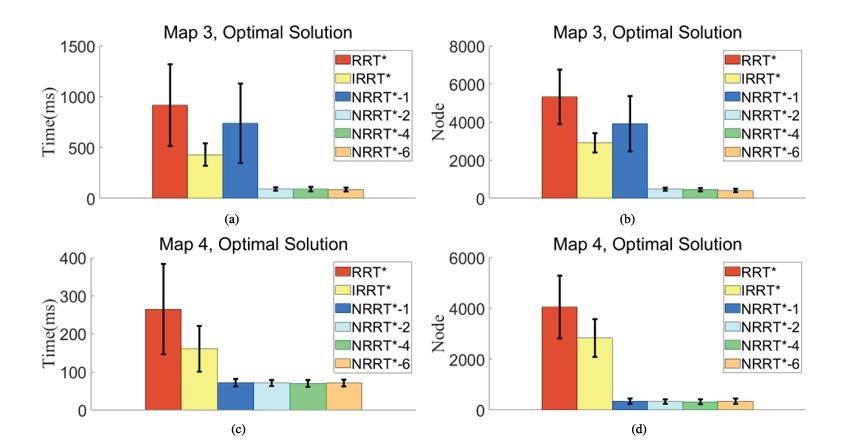
Figure2. Comparisonoftheoptimalsolutionsbetween theintegrationofRRTwithNeuralNetwork,RRT,and ImprovedRRT*[16]
Table2. Comparisonofthesuccessratesbetweenthe integrationofiADAwithAItechniquesandstandalone iADA[6] Static Algorithms
DDPG.TheresultsshowedthatbothiADA*withDQN andiADA*withDDPGachievedhighsuccessrates inbothdynamicandstaticenvironments:94%and 90%indynamicenvironments,comparedto74%for standaloneiADA*,and100%instaticenvironments, comparedto94%forstandaloneiADA*asshownin Table2.
Likewise,in[14],successrateswereemphasized whenintegratingtraditionalmethodswithDeepRein‑ forcementLearning(DRL).Experimentsinvarious obstacle‑ladenenvironmentsdemonstratedthatthe hybridtechniqueconsistentlynavigatedpathswith‑ outfailure,surpassingtraditionalalgorithms.In[12], ReinforcementLearningwasutilizedasaglobalGuide, integratingglobalplanningwithlocalizedRLmodi i‑ cations,andattainedelevatedsuccessratesincom‑ plexenvironments.[22]alsoexhibitedstrongperfor‑ mancebyachievinghighersuccessratesinbothstatic anddynamicscenarios.
4.2.ComputationalComplexity
TheComputationalComplexityofhybridpath planningmethodsisacrucialfactorinassessingtheir ef iciencyandpracticality,particularlyforreal‑time andresource‑constrainedapplications.
4.2.1.ConvergenceSpeed
Oneofthekeyaspectsofcomputationalcom‑ plexityisConvergenceSpeed,whichmeasureshow quicklyamethodcancomputeasolutionorlearnan effectivepolicy.
Table3. Comparisonofconvergencetimebetween PRM+DQN,DQN,DDQN,andQ‐learning[22]
Method Algorithmcomparison onenvironmentE‑2
Methodsthatcombinereinforcementlearning (RL)ordeepreinforcementlearning(DRL)with traditionalalgorithmssigni icantlyimprove convergencespeedbyenhancingdecision‑makingand minimizingunnecessarycomputations.[9]employs GloballyGuidedReinforcementLearning,which improvesconvergencebyutilizingglobalplanning toguidetheRLagent’sattentiontowardspertinent regionsoftheenvironment.Thisreducesthesearch spaceandenablestheapproachtocomputeoptimal pathwaysmorequickly,evenindynamicandcomplex environments.Similarly,[22]integratesDuelingDeep Q‑Networks(DuelingDQN)withPRM,achieving superiorperformancecomparedtostandaloneQ‑ learning,DQN,andDDQNalgorithms.Inexperiments, theintegratedmethodreducedcomputationtimes bysigni icantmargins,outperformingtheother approachesby9and21minutesacrossdifferent testenvironments,demonstratingitsef iciencyand scalabilityasshowninTable3
Theintegrationofneuralnetworks(NNs)with traditionalalgorithmsalsosigni icantlyimproves convergencespeedbyreducingcomputational overhead.[17]integratesRRT*withaneuralnetwork, enhancingtheef iciencyofsamplingnodesandfocus‑ ingcalculationsonimportantregions.Experimental resultsindicatethatthisintegrationachieveda calculationtimeof12.6seconds,incontrastto 21.04secondsforRRT,32.31secondsforRRT*, and16.07secondsforimprovedRRT*(IRRT*).This demonstratestheintegration’sabilitytonotonly reducecomputationaltimebutalsominimizethe numberofnodesrequiredforpath indingasshown inTable4.
Thescalabilityofhybridpathplanningapproaches indicatestheirabilitytomaintainef iciency andperformanceasenvironmentalcomplexity increases,suchaslargerworkspaces,higherobstacle density,ormoredynamicenvironments.Scalability isessentialforpracticalapplicationsrequiring dependablenavigationinvariousandchallenging environments.
Table4. Comparisonofconvergencespeedbetween BP‐RRT,RRT*,RRT,andIRRT*[17]
In[6],thesystemwastestedandevaluatedbased onsuccessandfailureratesinbothstaticanddynamic environments.Thetestscenarioincluded17obstacles ofvaryingsizes,with7staticand10dynamicobsta‑ clesmovingrandomlyatvelocitiesrangingfrom5and 25m/sinunrestricteddirections.Theseconditions simulatecomplex,dynamicenvironments,andthe methodconsistentlyachievedsuccessratesof90% andabove,underscoringitsabilitytoscaleeffectively inhighlydynamicscenarios.
Similarly,[10]showcasedthescalabilityoftheir methodthroughexperimentsconductedinsixdif‑ ferentenvironmentswithvaryingrandomobsta‑ cledistributions.InEnvironment5,thereweretwo pathstothedestination,whereasinEnvironment 6,theUAVcouldreachthegoalonlybynavi‑ gatingalongaspeci icsideofthemaze.These experimentsdemonstratedthemethod’scapability toadapttobothopenandconstrainedenviron‑ ments,maintainingrobustperformanceacrossall scenarios.
[22]emphasizedscalabilitybyevaluatingthe methodinthreedistinctenvironments:aregularmap, arandommap,andafreemap.Theregularmapmim‑ icswarehouseenvironmentswithamixofstaticand dynamicobstacles,whiletherandommapincludes randomlydistributedstaticanddynamicobstaclesat varyingdensities.Thefreemapfocusesexclusively ondynamicobstacles.Dynamicobstaclesweremod‑ eledasuncontrollablerobotsthatcouldmoveonecell perstepinanydirection.Theseexperimentsdemon‑ stratedthemethod’sabilitytoef icientlynavigate environmentsofvaryingcomplexityandobstaclecon‑ igurations.
4.2.3.Re‐planningEfficiency
Re‑planningEf iciencyevaluatestheabilityof path‑planningtechniquestoadjustexistingpathsor createnewonesinresponsetodynamicenviron‑ mentalchanges,includingtheemergenceofnew obstaclesorchangesinthegoalposition.Thismet‑ ricisessentialforreal‑timeapplicationsinunstable environments.
[6]and[8]showcasestrongre‑planningef iciency byintegratingAnytimeDynamicA*(iADA*)andrein‑ forcementlearning.TheiADA*algorithmin[6]canre‑ planpathsef icientlyindynamicenvironmentswith‑ outrecalculatingtheentirepathwhenanobstacleis encountered.Instead,itupdatesonlytheaffectedpor‑ tionofthepath,signi icantlyreducingcomputational overhead.Similarly,in[8]re‑planningef iciencyhad
beenenhancedbyusingagloballyguidedreinforce‑ mentlearningapproachthatemploysaMovingCost metric.
Where ���� isthenumberofstepstaken,and ���������� −������������ ���� istheManhattandistance betweenthestartandgoalcells.Thismetricindicates theratioofactualmovingstepstotheidealnumber ofsteps.Thenaivereward‑basedapproachachieved successratesrangingbetween68%and89%, ensuringfasterre‑planningwithshorterpathseven incomplexanddynamicenvironments.
In[9,10,12],sampling‑basedmethods(RRT,RRT*, andPRM,respectively)wereutilizedtoestablishkey nodes,whileAItechniquesconnectthesenodesto generateoptimalpaths.Indynamicenvironments, theseestablishednodesprovidearobustframework forquickre‑planning.Whenobstaclesappearorcon‑ igurationschange,theAIcomponentadjuststhecon‑ nectionsbetweennodes,allowingforef icientpath recalculationswithoutstartingfromscratch.
4.3.Summary
Theassessmentofhybridmethodsilluminated boththestrengthsandthelimitationsofeach approach,particularlywhenexaminedacross keydimensionssuchasre‑planningef iciency, scalability,convergencespeed,successrate,andpath optimality.ReinforcementLearning(RL)integrations demonstratedsuperiorperformanceintermsof pathsmoothness,successrate,andadaptabilityto dynamicenvironments,makingthemhighlyeffective fortasksrequiringcontinuousre‑planning.However, thisadvantagecomesatthecostofextensivetraining timesandsigni icantdatarequirements,whichlimit theirpracticalityinscenarioswherefastdeployment isnecessary[6,17].
NeuralNetworks(NN)offeredstrongperfor‑ manceinprocessinghigh‑dimensionalsensordata andenhancingobstacledetection.Yet,indynamic anduncertainsettings,theirrelianceonpre‑trained modelsconstrainedadaptability,oftenresultingin reducedpathsmoothnessandlowersuccessrates comparedtoRL‑basedhybrids.Thiscontrastsuggests thatNNintegrationsarebettersuitedforrelatively structuredenvironmentswithpredictablefeatures, whileRLhybridsremainstrongerinhighlyvariable contexts[17].
DeepReinforcementLearning(DRL)extendedthe adaptabilityofRLbyhandlingmorecomplexdecision spaces,butitscomputationalburdenandslowercon‑ vergencemadeitlessviableforreal‑timeapplications. WhileDRLmayexcelinof lineorsimulation‑rich domainswheretrainingtimeislessrestrictive,it underperformsinfast‑changingenvironmentsthat requireimmediateresponsiveness.FuzzyLogic,in contrast,providedresilienceinuncertainscenarios duetoitsrule‑based lexibility,butitstruggled withscalabilityandpathoptimization,limitingits effectivenessinlarge‑scaleormulti‑robotsystems[7].
Overall,thecomparativeanalysisindicatesthat nosinglehybridmethodprovidesauniversallyopti‑ malsolution.Eachcombinationexhibitsstrengths incertainconditionswhilerevealingclearweak‑ nessesinothers.Thisunderscorestheneedforfuture worktofocusnotonlyonimprovingadaptability andcomputationalef iciency,butalsoonsystemat‑ icallybenchmarkinghybridsacrossdiversescenar‑ iostoidentifywhereeachapproachsucceedsor fails.
Althoughhybridpath‑planningtechniqueshave advancedsubstantiallyinrecentyears,manybarriers remainthatlimittheirusabilityandperformancein appliedsettings,particularlyindynamicanduncer‑ tainenvironments.Oneofthemainlimitsrelatesto collisionavoidanceindynamicscenarios.In[6, 9], duetothelocaldatafromLiDARorsensors,the systemdoesnotconsiderthepredictionoffuture statesofmovingobstacles[15].Similarly,ithaslim‑ itationsarisingfromtheQ‑learningequation,thus runningintopotentialproblemswithconvergence withindynamicenvironments,limitingthepotential foranytrueobstacleavoidancestrategies.Inaddi‑ tion,theneedforextensivedatasetsandtraining viareinforcementlearning(RL)requiresconsider‑ ablecomputationalresourcesandtimetoeffectively traintoactincomplexenvironments[7].Addition‑ ally,Noiseinsensordataposesadditionalchallenges, asseenin[12],whereenvironmentaluncertainty fromnoisyinputsimpactstheaccuracyandreliabil‑ ityofthepathplanningprocess.Lastly,combining neuralnetworkswithtraditionaltechniquessimulta‑ neouslyinvaryingapplicationsspeci icallyinhigh‑ dimensionalenvironmentsandconcomitantdynamic obstacles[16,18],canoftenonlybedonewithconsid‑ erablecomputationalrequirements,limitingreal‑time adaptability.
Futureresearchprioritizesaddressingchallenges relatedtoobstacleavoidanceindynamicenviron‑ mentsandsensornoise.Collisionavoidancecould alsofocusontheapplicationofpredictivemodelsto calculateprojectedmovementsandintegrateglobal andlocaldataforoverallsituationalawareness[6]. Inaddition,futureresearchmayinvestigatethecom‑ binationoftraditionalalgorithms,suchasD*and D*Lite,withAImodelsincontrolledscenariosto assesstheirperformanceindynamicenvironments. Anotherpromisingdirectionishybridpathplanning inunknownenvironments,wherepriormapsare unavailableorincomplete.Insuchcases,traditional algorithmscanprovideexploratoryglobalstrategies, whileAItechniques—particularlyRLandDRL—can adaptivelyre inenavigationbasedonreal‑timesen‑ sorfeedback.Thiscombinationcouldbevaluablefor applicationssuchasautonomousexploration,plane‑ taryrovers,orsearch‑and‑rescuemissionsindisaster zones,wheretheenvironmentispartiallyorentirely unknown.
Thisreviewpaperexaminedvariousstudiespub‑ lishedthatutilizedhybridmodelsforpathplan‑ ning.Hybridmodelsleveragethesystematicrelia‑ bilityoftraditionalalgorithmswhileleveragingAI’s adaptabilitytoaddresscomplexnavigationproblems inbothstaticanddynamicenvironments.Wecon‑ cludedwithvariousadvantagesofeachapproach includingtheincreaseofpathoptimality,smoothness, scalability,andre‑planning.Thecomparativeanaly‑ sisshowedthatRLoutperformedothermethodsin pathsmoothnessandsuccessfulattempts,especially whencomplementedbygraph‑basedapproacheslike A*,whichincorporated lexibilitytoachieveopti‑ malpaths.NeuralNetworksandDeepReinforce‑ mentLearningofferedsigni icantadaptationsand decision‑makingcapabilitiesbutincurredcomputa‑ tionalcost.Fuzzylogicwasrobusttouncertaintybut wasnotsuccessfulinpathoptimizationandscalabil‑ ity,whicharethemainadvantagesofotherassociated methods.
Overall,despiteadditionaladvancementsinhybrid methodology,futureworkwillfocusonaddressing speci icchallengesoncollisionavoidanceinhighly dynamicenvironments,reducingissuesrelatedto sensornoise,andminimizingcomputationalcost forreal‑timenavigationinautonomousapplications. Futureresearchshouldcontinuetodevelophybrid modelsthatcombineautomatedpath‑planning withcollisionavoidance,robustoptimizationto managesensornoise,andlightweightanalytics tolimitcomputationalcost.Futureexplorationof combinationsofAIandtraditionalmethods,using RLwithadaptivegraph‑basedapproaches,would enhancetheadaptabilityandreliabilityofhybrid path‑planningmodels.Thispaperoffersanin‑ depthanalysisofhybridpath‑planningtechniques, providingessentialinsightsforresearchersseekingto improveautonomousnavigationsystemsforpractical applications.
AUTHORS
MohamedAbdelghafar –FacultyofElectrical Engineering,UniversitiTeknologiMalaysia, Skudai,81300,Johor,Malaysia,e‑mail: mohamedalyabdelghafar@gmail.com.
HazlinaSelamat∗ –FacultyofElectricalEngineering, UniversitiTeknologiMalaysia,Skudai,81300,Johor, Malaysia,e‑mail:hazlina@utm.my.
NurulaqillaBintiKhamis –FacultyofElectricalEngi‑ neering,UniversitiTeknologiMalaysia,Skudai,81300, Johor,Malaysia,e‑mail:nurulaqilla@utm.my.
AnasAburaya –FacultyofElectricalEngineering, UniversitiTeknologiMalaysia,Skudai,81300,Johor, Malaysia,e‑mail:ihanas2002@graduate.utm.my.
MohdTau iqMuslim –FacultyofElectricalEngi‑ neering,UniversitiTeknologiMalaysia,Skudai,81300, Johor,Malaysia,e‑mail:mohdtau iqmuslim@utm.my.
∗Correspondingauthor
ThisresearchreceivedfundingunderResearchGrant Vote00Q18byUniversitiTeknologiMalaysiaandthe MalaysianMinistryofHigherEducation.
References
[1] S.AggarwalandN.Kumar,“PathPlanningTech‑ niquesforUnmannedAerialVehicles:AReview, Solutions,andChallenges”ComputerCommu‑ nications,vol.149,pp.270–299,Jan.2020, doi:10.1016/j.comcom.2019.10.014.10.1016 /j.comcom.2019.10.014.
[2] J.R.Sánchez‑Ibáñez,C.J.Pérez‑Del‑pulgar,and A.Garcı́a‑Cerezo,“PathPlanningforAutonomous MobileRobots:AReview,”Sensors,vol.21,no. 23,2021,doi:10.3390/s21237898.
[3] C.Cheng,Q.Sha,B.He,andG.Li,“PathPlan‑ ningandObstacleAvoidanceforAUV:AReview,” OceanEngineering,vol.235,2021,doi:10.1016/ j.oceaneng.2021.109355.
[4] K.Katona,H.A.Neamah,andP.Korondi,“Obsta‑ cleAvoidanceandPathPlanningMethodsfor AutonomousNavigationofMobileRobot,”Sen‑ sors,vol.24,no.11,2024,doi:10.3390/s241 13573
[5] B.B.K.Ayawli,R.Chellali,A.Y.Appiah, andF.Kyeremeh,“AnOverviewofNature‑ Inspired,Conventional,andHybridMethodsof AutonomousVehiclePathPlanning,”Journalof Robotics,2018,doi:10.1155/2018/8269698.
[6] A.A.Maw,M.Tyan,T.A.Nguyen,and J.W.Lee,“IADA‑RL:AnytimeGraph‑BasedPath PlanningWithDeepReinforcementLearningfor anAutonomousUAV*,” AppliedSciences,vol.11, no.9,2021,doi:10.3390/app11093948.
[7] K.Cai,C.Wang,J.Cheng,S.Song,C.W.deSilva, andM.Q‑HMeng,“MobileRobotPathPlan‑ ninginDynamicEnvironments:ASurvey,”“arXiv preprintarXiv:2002.09197,2020”.
[8] B.Wang,Z.Liu,Q.Li,andA.Prorok,“Mobile RobotPathPlanninginDynamicEnvironments ThroughGloballyGuidedReinforcement,” IEEE RoboticsandAutomationLetters,vol.5,no.4,pp. 6932–6939,Oct.2020,doi:10.1109/LRA.202 0.3026638
[9] H.T.L.Chiang,J.Hsu,M.Fiser,L.Tapia,and A.Faust,“RL‑RRT:KinodynamicMotionPlanning viaLearningReachabilityEstimatorsfromRL Policies,” IEEERoboticsandAutomationLetters, vol.4,no.4,pp.4298–4305,Oct.2019,doi:10.1 109/LRA.2019.2931199.
[10] P.Gao,Z.Liu,Z.Wu,andD.Wang, AGlobalPath PlanningAlgorithmforRobotsUsingReinforce‑ mentLearning.IEEE,2019.
[11] A.F.K.Oslund,O.R.A.Francis,L.Tapia,and M.F.J.Davidson, PRM‑RL:Long‑rangeRobotic NavigationTasksbyCombiningReinforcement LearningandSampling‑basedPlanning.[IEEE], 2018.
[12] A.Francisetal.,“Long‑RangeIndoorNavigation withPRM‑RL,” IEEETransactionsonRobotics, vol.36,no.4,pp.1115–1134,Aug.2020,doi: 10.1109/TRO.2020.2975428.
[13] V.Bisht,“Visibility‑ConstrainedPathPlanning forUnmannedAerialVehicles,”M.S./Ph.D.thesis, Year2023.
[14] R.Guldenring,M.Gorner,N.Hendrich,N.J.Jacob‑ sen,andJ.Zhang,“LearningLocalPlannersfor Human‑AwareNavigationinIndoorEnviron‑ ments,”in IEEEInternationalConferenceonIntel‑ ligentRobotsandSystems,InstituteofElectrical andElectronicsEngineersInc.,Oct.2020,pp. 6053–6060.doi:10.1109/IROS45743.2020.9 341783.
[15] S.Zhang,Y.Li,F.Ye,X.Geng,Z.Zhou,andT.Shi,“A HybridHuman‑in‑the‑LoopDeepReinforcement LearningMethodforUAVMotionPlanningfor LongTrajectorieswithUnpredictableObstacles,” Drones,vol.7,no.5,May2023,doi:10.3390/dr ones7050311.
[16] J.Wang,W.Chi,C.Li,C.Wang,andM.Q.H.Meng, “NeuralRRT∗:Learning‑BasedOptimalPath Planning,” IEEETransactionsonAutomationSci‑ enceandEngineering,vol.17,no.4,pp.1748–1758,Oct.2020,doi:10.1109/TASE.2020.29 76560.
[17] Q.Gao,Q.Yuan,Y.Sun,andL.Xu,“PathPlan‑ ningAlgorithmofRobotArmBasedonImproved RRT*andBPNeuralNetworkAlgorithm,” Journal ofKingSaudUniversity‑ComputerandInforma‑ tionSciences,vol.35,no.8,Sep.2023,doi:10.1 016/j.jksuci.2023.101650.
[18] S.Chehelgami,E.Ashtari,M.A.Basiri, M.TaleMasouleh,andA.Kalhor,“Safe DeepLearning‑BasedGlobalPathPlanning UsingaFastCollision‑FreePathGenerator,” RobAutonSyst,vol.163,May2023,doi: 10.1016/j.robot.2023.104384.
[19] Y.Liu,Z.Zheng,F.Qin,X.Zhang,andH.Yao,“A ResidualConvolutionalNeuralNetworkBased ApproachforReal‑TimePathPlanning,” Knowl‑ edgeBasedSystems,vol.242,Apr.2022,doi:10.1 016/j.knosys.2022.108400.
[20] T.Takahashi,H.Sun,D.Tian,andY.Wang,“Learn‑ ingHeuristicFunctionsforMobileRobotPath PlanningUsingDeepNeuralNetworks,”inPro‑ ceedingsoftheAAAIConferenceonArti icial Intelligence,2019.
[21] R.Yonetani,T.Taniai,M.Barekatain, M.Nishimura,andA.Kanezaki,“PathPlanning usingNeuralA*Search,”2021.[Online]. Available:https://omron‑sinicx.github.io/
[22] D.A.Deguale,L.Yu,M.L.Sinishaw,andK.Li, “EnhancingStabilityandPerformanceinMobile RobotPathPlanningwithPMR‑DuelingDQN Algorithm,” Sensors,vol.24,no.5,Mar.2024,doi: 10.3390/s24051523.
[23] T.Kulvicius,S.Herzog,M.Tamosiunaite,and F.Wörgötter,“GenerationofPathsinaMaze usingaDeepNetworkwithoutLearning,”2020. [Online].Available:https://arxiv.org
[24] Z.Liu,Y.Zhang,C.Yuan,L.Ciarletta,and D.Theilliol,“CollisionAvoidanceandPathFol‑ lowingControlofUnmannedAerialVehiclein HazardousEnvironment,” JournalofIntelligent andRoboticSystems:TheoryandApplications, vol.95,no.1,pp.193–210,Jul.2019,doi:10.1 007/s10846‑018‑0929‑y.
[25] G.Airlangga,“FuzzyA*foroptimumPathPlan‑ ninginaLargeMaze,” BuletinIlmiahSarjana TeknikElektro,vol.5,no.4,pp.455–466,Dec. 2023,doi:10.12928/biste.v5i4.9394.
[26] S.Sahloul,D.BenHalimaAbid,andC.Rekik, “AnHybridizationofGlobal‑LocalMethods forAutonomousMobileRobotNavigation inPartially‑KnownEnvironments,”Jul. 01,2021, DepartmentofAgribusiness, UniversitasMuhammadiyahYogyakarta.doi: 10.18196/jrc.2483.
[27] S.KimandB.An, LearningHeuristicA*:Ef icient GraphSearchusingNeuralNetwork,2020.doi: 10.0/Linux‑x86_64.
[28] Y.Sunetal.,“LocalPathPlanningforMobile RobotsBasedonFuzzyDynamicWindowAlgo‑ rithm,” Sensors,vol.23,no.19,Oct.2023,doi: 10.3390/s23198260.
Submitted:6th April2025;accepted:23rd April2025
HichemCheriet,BadraKhellatKihel,SamiraChouraqui DOI:10.14313/jamris‐2026‐018
Abstract:
EfficientandsafenavigationofUnmannedAerialVehi‐cles(UAVs)iscriticalforvariousapplications,including combatsupport,packagedeliveryandSearchandRescue Operations.ThispaperintroducestheTangentIntersec‐tionGuidance(TIG)algorithm,anadvancedapproach forUAVpathplanninginbothstaticanddynamicenvi‐ronments.Thealgorithmusestheelliptictangentinter‐sectionmethodtogeneratefeasiblepaths.Itgenerates twosub‐pathsforeachthreat,selectstheoptimalroute basedonaheuristicrule,anditerativelyrefinesthepath untilthetargetisreached.ConsideringtheUAVkine‐maticanddynamicconstraints,amodifiedsmoothing techniquebasedonquadraticBéziercurvesisadopted togenerateasmoothandefficientroute.Experimental resultsshowthattheTIGalgorithmcangeneratethe shortestpathinlesstime,startingfrom0.01seconds, withfewerturninganglescomparedtoA*,PRM,RRT*, TangentGraph,andStaticAPPATTalgorithmsinstatic environments.Furthermore,incompletelyunknownand partiallyknownenvironments,TIGdemonstratesefficient real‐timepathplanningcapabilitiesforcollisionavoid‐ance,outperformingAPFandDynamicAPPATTalgo‐rithms.
Keywords: Pathplanning,UAVnavigation,Elliptictan‐gentgraph,obstacleavoidance,unmannedaerialvehicle
1.Introduction
Inrecentyears,UnmannedAerialVehicles(UAVs) havesigni icantlytransformedmany ields,suchas cooperativecombat[1],surveillanceandsecurity[2], disasterrescue[3,4],packagedelivery[5,6],traf ic inspection[7]andtargetreconnaissance[8].How‑ ever,thepathplanningproblemremainsachallenge, hinderingUAVs’abilitytonavigatethroughcomplex environmentsclutteredwiththreatswhileconsider‑ ingseveralfactorssuchasobstacleavoidance,trajec‑ toryfeasibility,energyconsumption,andpathlength. Addressingthischallengeiscrucialtofacilitatethe effectiveapplicationofUAVsandincreasemissionsuc‑ cessrates.Pathplanningcanbedividedintotwomain approaches:staticpathplanninganddynamicpath planning.Staticpathplanning,alsoknownasglobal pathplanning,involvesdeterminingapathforthe UAVfromastartpointtoadestinationpointbefore themissionbegins.Thisapproachtypicallyrelieson
aprede inedmapoftheenvironmentandconsiders staticobstacles.
Ontheotherhand,dynamicpathplanning,also knownaslocalpathplanning,involvesadaptingthe UAV’strajectoryinreal‑timebasedonchangingenvi‑ ronmentalconditionsandobstaclesencountereddur‑ ingthemission.Thepathcalculationisperformed onboardtheUAVitself,allowingittoreactswiftly tounexpectedthreatsoralterationsintheenvi‑ ronment.Thisapproachrequirescontinuoussensing anddecision‑makingcapabilitiestonavigatesafely andef icientlythroughthechangingenvironments. Dynamicpathplanningalgorithmsarecrucialformis‑ sionswheretheenvironmentisuncertainorsubjectto frequentchanges,enablingtheUAVtoautonomously adjustitspathtoachieveitsobjectiveswhileavoiding collisionsandoptimizingperformance.However,it ismorecomputationallyexpensive,andtheplanned pathmaynotnecessarilybethemostef icient.Instatic pathplanning,theA*algorithmisknownforitseffec‑ tivenessin indinganoptimalpathtoatargetwhile avoidingobstacles.However,inscenariosinvolving UAVs,thegeneratedpathsmaynotalwaysbesuitable. ThisisduetotheuniqueconstraintsfacedbyUAVs, suchaslimitedmaneuverabilityandaltituderestric‑ tions.Also,theexistingtangentgraphmethodsneedto handletheentiremap,whichcanbetime‑consuming andresultinpoorsolutionquality,especiallyincom‑ plexenvironments.Asaresult,toef icientlyplan collision‑freepathsinstaticanddynamicenviron‑ ments,thispaperproposesanovelautonomouspath planningalgorithmbasedontheTangentIntersection strategy.ThisalgorithmimprovestheclassicalTan‑ gentgraph‑basedmethodandgivessmoothsuitability forUAVs.
Theprimarycontributionsofthispapercanbe summarizedasfollows:
1) Weintroduceanovelpath‑planningalgorithm namedTangentIntersectionGuidance(TIG),which isbasedonthetangentgraph.Initially,thealgo‑ rithmcreatestangentlinesforallobstaclesin theenvironment.Subsequently,aheuristicruleis appliedtoselectthebestsub‑path.Then,thealgo‑ rithmisiterativelyrepeateduntilthetargetpointis reached.Thisapproachsigni icantlyreducespath lengthandgivesahighersmoothness.
2) Extensiveexperimentswereconductedinstatic anddynamicenvironmentsusingrandomdense
mapswithellipticobstaclestovalidatetheeffec‑ tivenessoftheproposedPathPlanner.Simula‑ tionresultsdemonstrateitscapabilitytoef iciently planhigh‑qualitycollision‑freepaths,particularly indenseenvironments.
Therestofthispaperisorganizedasfollows. Section2reviewsrelatedworksinthe ield.Section 3de inesthepathplanningproblem.Section4pro‑ videsadetailedpresentationoftheproposedalgo‑ rithm.Computationalandcomparativeresultsaredis‑ cussedinSection5,andtheconclusionispresented inSection6.
Pathplanningisoneofthefundamentaltasksfor UAVs.Itcanbedividedinto iveapproaches,namely graph‑basedapproaches,sampling‑basedmethods, potential ieldmethods,meta‑heuristicmethods,and machinelearningtechniques[9].Graph‑basedmeth‑ odsutilizegraphrepresentationsoftheenvironment tomodelfeasiblepaths.Theyoftenemployalgorithms likeA*[10],Dijkstra[11],Voronoidiagram[12],the tangentgraph,andsoon.TheA*algorithmisacom‑ monlyusedmethodinpathplanningthatef iciently indstheshortestpath.Voronoi’sdiagram’smainidea istopartitiontheenvironmentintoregionsbased onproximitytoobstacles.Itcanbeusedtogenerate pathsbyconnectingthecentroidsofVoronoicells. ThegeneratedVoronoipathsarefarfromobstacles, whichensuressafety,whereastheplannedpathisnot guaranteedtobeoptimal.Dijkstra’salgorithmcan ind theshortestpath,butitrequiresmorespacetostore thenodesindensegraphs.Thesethreemethodsare usuallyemployedinaknownstaticenvironmentand cannotbeusedtoperformUAVpathplanningina dynamicenvironment[13].
Robert[14]proposesanalgorithmbasedontan‑ gentgraphs,usingcommontangentsofpolygons todetermineafeasiblepath.However,thismethod provestobecomputationallyexpensive,particularly inhigh‑dimensionalenvironments.Furthermore,it failstoensureasafedistancebetweentherobotand theobstacles.Chenetal.[15]improvethetangent graphalgorithmbyenclosingobstacleswithcircular shapes.However,thisapproachwastesopenspace areas,resultinginlongerpathlengths.Liuetal.[16] enclosedtheobstaclesinellipsestoaddressthelim‑ itationofcircularobstacles.Thisstrategyreduces wastedareasandcanresultinshorterpaths.How‑ ever,despitethisimprovement,thepathaccuracyfor UAVsinreal‑lifescenariosremainsinsuf icient.An improvedversionoftheA*algorithmcalledBAA* wasproposedbyWuetal.[17]basedonmulti‑ direction.ThisalgorithmoutperformstraditionalA* intermsofbothpathlengthandexecutiontime.Nev‑ ertheless,itrequiresparametertuninganddoesnot accountforlow‑scaleUAVs.Yuanetal.[18]proposean improvedlazytheta*algorithmforUAVpathplanning, utilizinganoctreemaptoreducesearchnodesand adjustheuristicweightsforprecisionandspeed.Sim‑ ulationandreal‑ lighttestscon irmitseffectiveness
incomplexenvironmentswithmultipleconstraints. Bazeelaetal.[19]proposeanimprovedtangentgraph intersectionalgorithmcalledATGP‑TI,whichemploys atangentintersectiontechniqueandheuristicsto ind optimalpathsforunmannedaerialvehicles.However, thealgorithmiscomputationallyexpensive,especially inhigh‑dimensionalspaces.
Inconclusion,thecurrentmethodsrelyingontan‑ gentgraphsstillencountercomputationalchallenges duetothenecessityofconstructingtangentsfor theentiremap,andthequalityoftheplannedpath remainsinadequateforunmannedaerialvehicles.
Visibilitygraph‑basedmethodshavealsobeen exploredforUAVpathplanningduetotheirabilityto generateoptimalpathsinstructuredenvironments. Liuetal.[20]introducedatangentgraphapproach formobilerobots,effectivelyhandlingpolygonaland curvedobstacles.Blasietal.[21]extendedvisibil‑ itygraphstoUAVpathplanningin3Dconstrained environmentsusinglayeredessentialvisibilitygraphs, whileShahandGupta[22]focusedonaccelerat‑ ingA*searchonvisibilitygraphsoverquadtrees forlong‑rangepathplanning.However,visibility graphmethodsrequirepreprocessingofallobsta‑ cleedgesandcanbecomecomputationallyexpen‑ siveinenvironmentswithnumerousobstacles.Huan etal.[23]proposeanimprovedtangentgraphalgo‑ rithmcalledAPPATT.Thealgorithmdemonstrates improvedresultsregardingpathqualityandcom‑ putationalcomplexity(0.05seconds).However,the generatedpathmaybeinfeasibleinsomesituations (Figure3).TheauthorsalsoappliedaB‑splinecurve tosmooththegeneratedpath,whichmayleadtocolli‑ sions(Figure9).Moreover,thesevisibilityandtangent graphsoftengeneratepathsthatpasstoocloseto obstacles,necessitatingadditionalsafetynavigation measures.
Potential ieldalgorithms,suchasarti icialpoten‑ tial ield(APF)[24]andvector ieldhistogram (VFH)[25],havebeenextensivelyappliedinthe ield ofpathplanning,particularlyindynamicenviron‑ ments.Whilethesealgorithmsareknownfortheir abilitytogeneratesmoothtrajectories,theycanalso potentiallybecometrappedinlocalminima.
Sampling‑basedmethodssuchastheProbabilistic RoadmapPlanner(PRM)andRapidlyExploringRan‑ domTrees(RRT)areparticularlyeffectiveinhigh‑ dimensionalspaces,whicharecommoninUAVpath planning.PRMalgorithmsucceedsathandlingcom‑ plexenvironmentswithobstacles,narrowpassages, anddynamicchanges.However,buildingandstoring theroadmapcanbecomputationallyexpensive,espe‑ ciallyinhigh‑dimensionalspaces,andmayrequire signi icantmemory[26].Ontheotherhand,theRRT algorithmdoesnotnecessitatesamplingtheentire spaceandconstructingtheroadmapbeforethemis‑ sion,therebyreducingcomputationalcosts.RRTalso operatesef icientlyincomplexenvironments.Nev‑ ertheless,thequalityofthepathremainschalleng‑ ingforUAVs[27].Intheirresearch[28],Zhouetal. proposeaDepthSortingFastSearch(DSFS)algorithm
toenhancepathplanningef iciencyforunderwater gravity‑aidednavigation.Thisnewmethodimproves theQuickRapidly‑exploringRandomTrees*(Q‑RRT*) algorithm[29],andthecomparativeexperiments showthatDSFSimprovescomputationalef iciency overQ‑RRT*.
Arti icialintelligencemethodssuchasgenetic algorithms(GA)[30],particleswarmoptimization (PSO)[31],antcolonyoptimization(ACO)[32],and GreyWolfOptimization(GWO)[33]..etc.Researchers havealsoproposedvariantsoftheseoptimization algorithmsforaddressingUAVpathplanningprob‑ lems,particularlyincomplexenvironments.However, thesemethodscanbecomecomputationallytime‑ consuming,especiallywhendealingwithhighlydense environments,andtheydonotalwaysguaranteean optimalsolution.
Also,machinelearningmethodssuchassupport vectormachines[34],neuralnetworks[35],anddeep reinforcementlearning[36]havebeenappliedto addresspath‑planningchallenges.Oneadvantageof thesemethodsistheirabilitytolearnfrominput dataandadapttothemissionenvironment.However, thetrainingdataandthecomputationalresources requiredfortrainingcanbecostlyandrequirea lotoftime.Inaddition,manyresearchpapershave beenproposed.Forexample,Arti icialNeuralNet‑ worksusingRadialBasisFunctions(RBF‑ANN)[37], improvedDeepQ‑Network(DQN)[38],andOppor‑ tunisticHamilton‑Jacobi‑Bellman(oHJB)[39].
Theaforementionedsurveyshowsthatgraph‑ basedmethodsarecomputationallydemanding,par‑ ticularlyincomplexenvironments,becausetheyneed tobuildthegraphsfortheentiremap.Additionally,it isdif icultfortheUAVtobalancebetweentheplanned pathqualityandthealgorithmtime.
Toaddressthelimitationsoftraditionaltangent graph‑basedandvisibilitygraph‑basedapproaches, weproposetheTangentIntersectionGuidance(TIG) algorithm,anoveltangent‑graphpathplanning methodforUAVs.Themaincontributionsofourwork are:
Ef icientGraphConstruction:Unlikevisibility graph‑basedmethodsthatrequireprecomputing allvisibilityedges,TIGcalculatesonlythetangents linesofobstaclesbasedontheheuristicfunction, signi icantlyreducingcomputationalcomplexityin largeenvironments.
CollisionDetection:Traditionaltangentgraphmeth‑ odsrelyontheline‑of‑sightalgorithmforcolli‑ siondetection,whichleadstohighercomputational costs,especiallyinthepresenceofnumerousobsta‑ cles.TIGinsteadreliessolelyontheline‑ellipse intersectionequationtodetectcollisions,improving ef iciency.
AdaptabilityinDynamicEnvironments:Visibil‑ itygraphsandtangentgraphstypicallyrequire fullgraphrecomputationwhenobstacleschange. TIGef icientlyadaptstoenvironmentalchanges bydividingtheenvironmentintosmallersub‑ environments,enablingreal‑timepathadjustments.
SafeNavigation:Unlikeexistingmethods,TIGincor‑ poratesasafetymarginbetweentheplannedpath andobstacles,ensuringrobustcollisionavoidance andenhancingthereliabilityofUAVnavigationin clutteredenvironments.
EffectiveWaypointGeneration:Whiletangent‑graph methodsrelyingontangentintersectiontocre‑ atewaypoints,theTIGalgorithmemploysanopti‑ mizedwaypointgenerationtechniquethatensures asmoothertrajectory,reducingsharpturnsand improvingtheoverall lightef iciencyofUAVs.
ComputationalPerformance:Comparedtoexist‑ ingapproaches,TIGachievesfasterpathplanning whileensuringcollision‑freeandoptimaltrajecto‑ ries,makingithighlysuitableforUAVnavigationin complexenvironments.
3.ProblemStatement
AsshowninFigure 1,adronedeliveringgoods inalow‑altitudecomplexenvironmentclutteredwith obstacles,suchasbuildings,trees,andbridgesfroma startpointStoatargetpointT.Thedroneencounters obstacleavoidancechallengesinthisparticularenvi‑ ronment,makingitnecessarytoplanafeasiblepath withoutcollisionsbetweenthesepoints.Thethree‑ dimensionalscenariocanberepresentedinatwo‑ dimensionalscenariotoreducealgorithmrunning time.Theshapesofobstaclestypicallyrepresentedas polygons(e.g.,buildingswithsharpcornersorirregu‑ larshapes)arenotuniform,requiringhighercompu‑ tationalresourcesandleadingtounsmoothpathsfor theUAV.Additionally,theplannedpathsusingthese shapesareclosertoobstacles,whichincreasesthecol‑ lisionrate.Toaddressthesechallenges,thepaperrep‑ resentsobstaclesasellipsesratherthanexactpolyg‑ onalrepresentations,ensuringasmoothandef icient path.Ellipsesprovideamoremanageablemathemati‑ calformforpathplanning,allowingtheuseoftangent‑ basedmethodsthatcanquicklycomputesafepaths whilemaintainingasmoothtrajectory.Additionally, byaddingasafetydistanceintotheellipticalrepresen‑ tation,theUAVmaintainsasafetyzonearoundobsta‑ cles,whichreducestheriskofcollision.Thissafety
distancecanbeadjusteddependingontheUAVsize andthespeci icmissionrequirements.Theobstacles canberepresentedas:
��)cos��+(��−����)sin��)2
where��and��arethecoordinatesofanypointon theellipse,���� and���� arethecoordinatesofthecenter oftheellipse,�� isthesemi‑majoraxis,�� isthesemi‑ minoraxis, ��safe isthesafetydistanceaddedtoboth thesemi‑majorandsemi‑minoraxes,and��istherota‑ tionangleoftheellipsemeasuredcounterclockwise fromthepositive��‑axis.
Inthepreviousscenario,thereareNobstacles.A setofobstaclesisdenotedas ��=��1,��2,...,����,and thecentercoordinateoftheobstaclesaredenotedas (��1,��1),(��2,��2),....,and(����,����)respectively.��repre‑ sentstheminimumsafedistancerequiredbetweena UAVandanobstacle.
TheUAVmaystartfrom �� to ��,passingthrough severaloptimizednodepositionsuntilitreaches thetargetpoint �� whileavoidingobstaclespresent inthescene.Thepath‑optimizingprocessmust meetUAVconstraintsandrequirements,including pathlength,totalturningradius,algorithmexecution time,andmissionduration,whichwillbedetailed later.
Mosttraditionalgraph‑basedplanningalgorithms sufferfromcomplexityandinef iciencybecausethey needtoconstructpathsfortheentiremap,especially whendealingwithhigh‑dimensionalenvironments, leadingtomorecomputationalresources.Tosolve this,theTangentIntersectionGuidancealgorithmis introducedtogeneratemultiplesub‑pathstowards thegoalpoint.Thesesub‑pathsarederivedbased onvariousfactorssuchassub‑pathlength,collided obstacles,smoothness,andotherenvironmentalcon‑ siderations.However,ratherthanconsideringallgen‑ eratedsub‑paths,thealgorithmemploysaheuristic functiontoselectthemostpromisingone,makingit easierfortheUAVtonavigatewithlowcomputational resources.
Inthispaper,weemploytwodistinctalgorithms:a statictangentplanner(S‑TIG)andadynamictangent planner(D‑TIG).Theenvironmentalmapisknownin advanceinthe(S‑TIG)planner,andobstaclesremain static.Thisalgorithmissuitableforpre‑missionplan‑ ningscenarios(Of linePlanner).Incontrast,the (D‑TIG)plannerisusedindynamicenvironmentsor situationswherethemapispartiallyknownorcom‑ pletelyunknown,suchasscenariosinvolvingexplo‑ rationorrapidlychangingenvironmentswhereobsta‑ clepositionsneedreal‑timepathplanningexecution (OnlinePlanner).
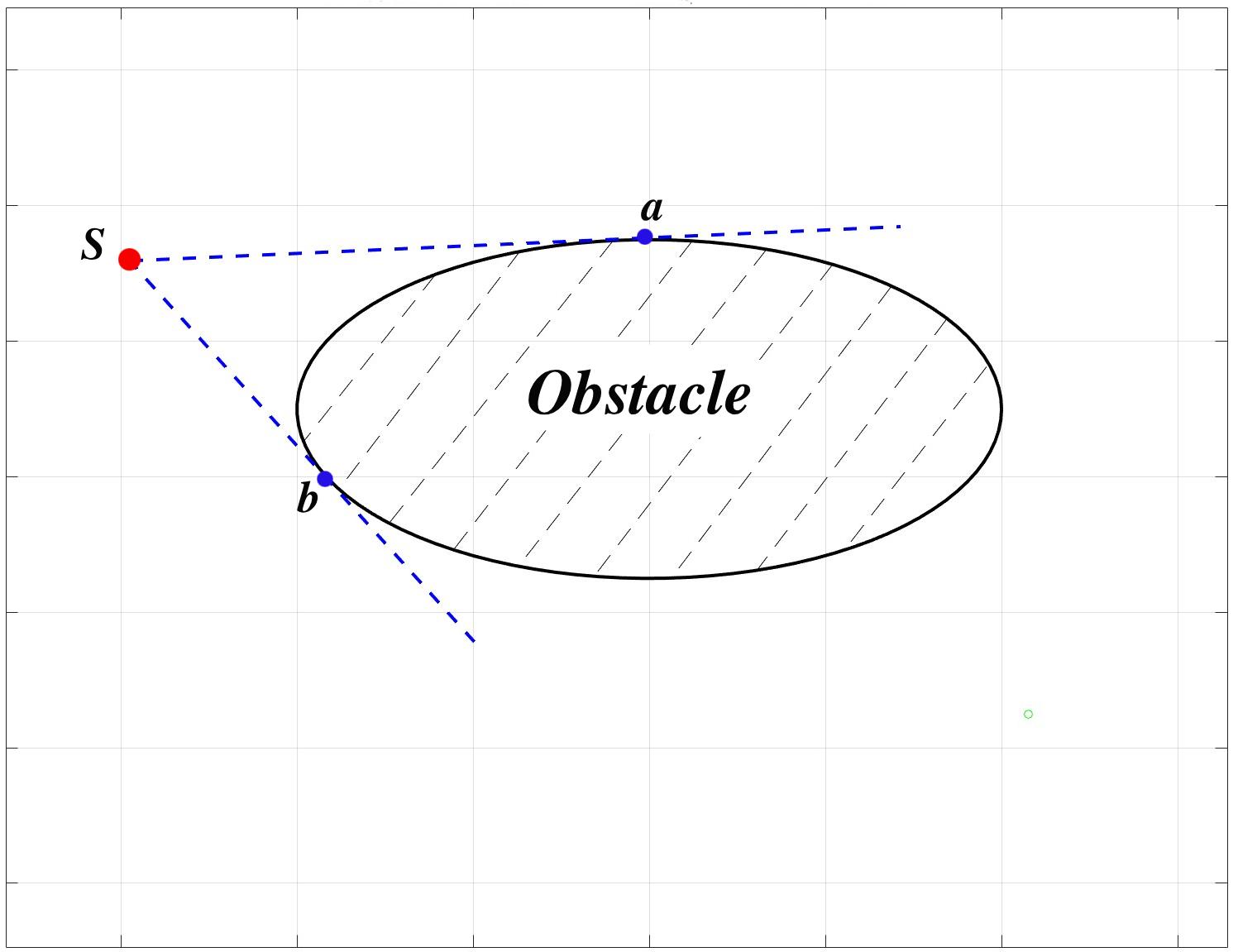
Figure2. TangentlinesfromstartpointStoelliptic obstacle
Table1. Definitionsofmainnotations
Notations Description
Start‑point
Target‑point
Awaypointgenerated bythetangentplanner
CurrentSet Asettostore candidatewaypoints
ClosedSet Asettostorevisited waypoints
treatedSet Asetthatrecords tangentpointsthat havealreadybeen calculated
Thissectionbrie lyexplainsbothstaticand dynamicplanners.Sinceobstaclesarerepresentedas ellipses,eachellipsehastwotangentsfromagiven point�� outsidetheobstacle.Forexample,toexecute amissionfromastartpointdenotedas��,twotangent linestotheellipticobstaclecanbedrawnattangent points��and��,respectively.Figure2
LiketheA*algorithm,theTIGPlannerusestwo sets: �������������������� and ������������������.The irstsetcon‑ tainswaypointsthatarecandidatesforexpansion, whilethesecondsetcontainsallexploredwaypoints. Eachwaypointcanresultfromanintersectionoftwo tangentlines,whichwillbedetailedinthenextsec‑ tion.Thealgorithmprocedurecanbedividedintotwo mainfunctions.The irstfunctionistogetallcandidate waypointsfromthemap.Thesecondfunctionisto choosethebestsubpathtointegrateintothefullpath. Allnotationsusedinthealgorithmareexplainedin Table1
4.1.StaticTangentPlanner(S‐TIG)AlgorithmProcess
Thisalgorithmgeneratesasmooth,collision‑free pathforUAVsfromStoT.Sincetheenvironmental mapisalreadyknown,we irstrepresentobstacles asellipsesusingEquation1.Eachobstacleisde ined byitspositioncoordinatesandmajorandminor semi‑axes,whichareusedtocalculatethetangent
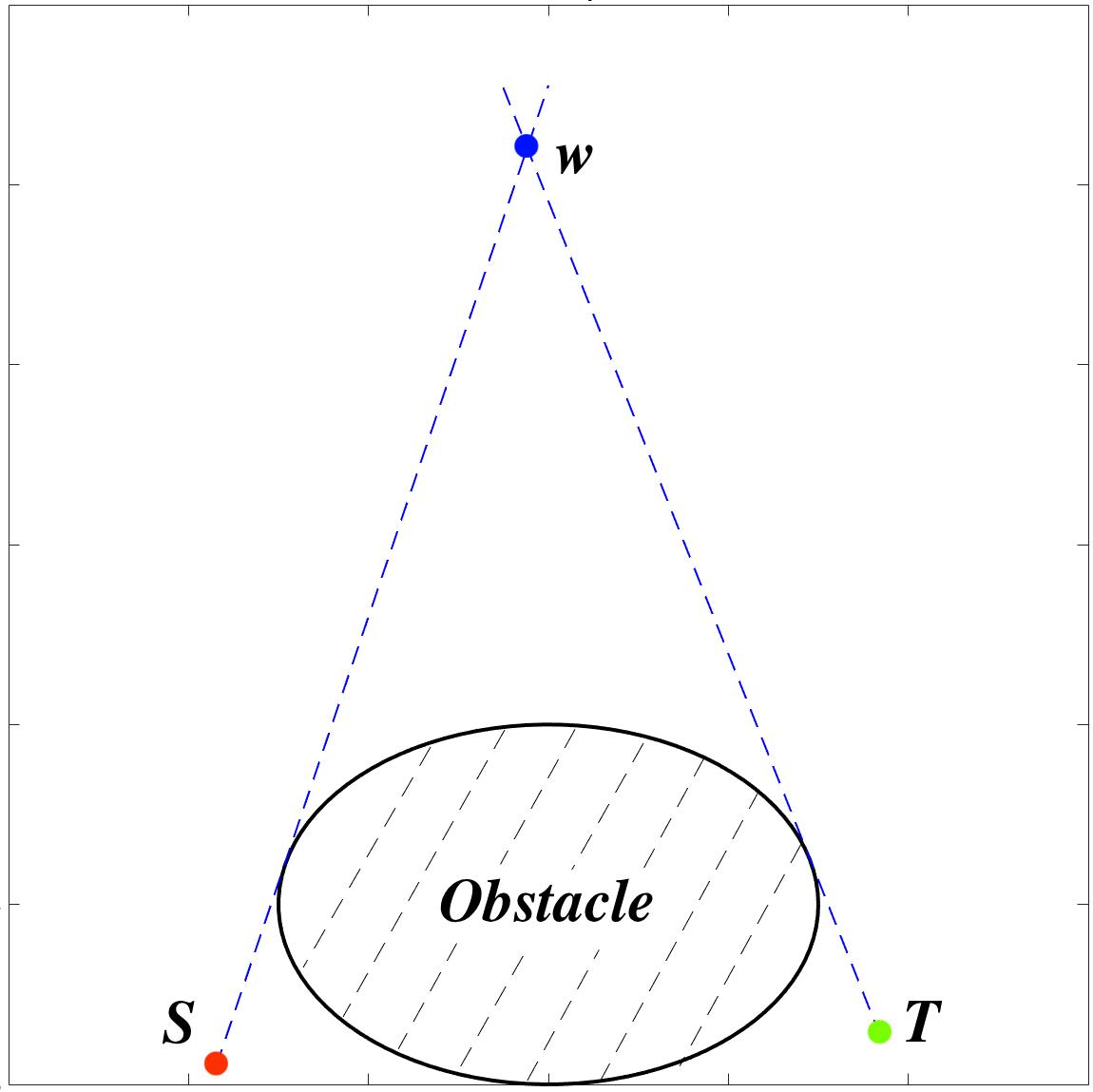
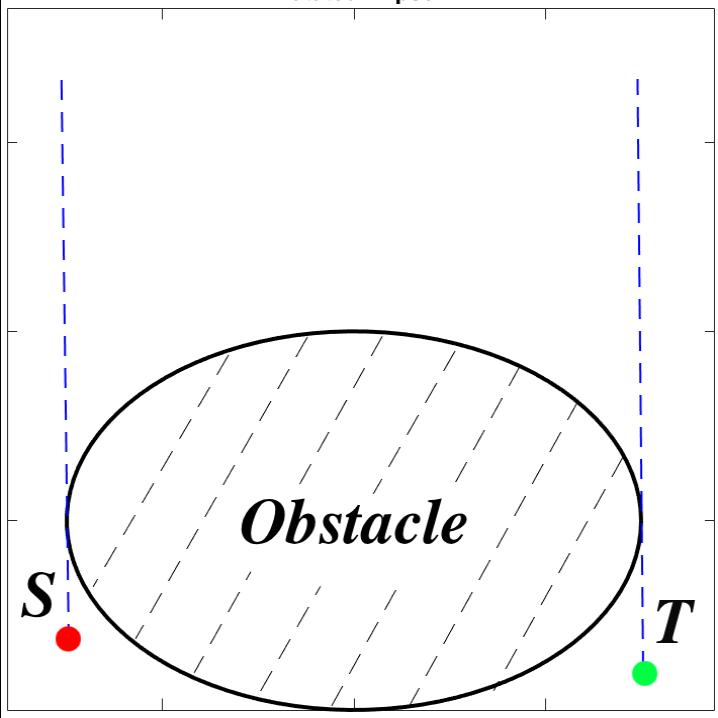
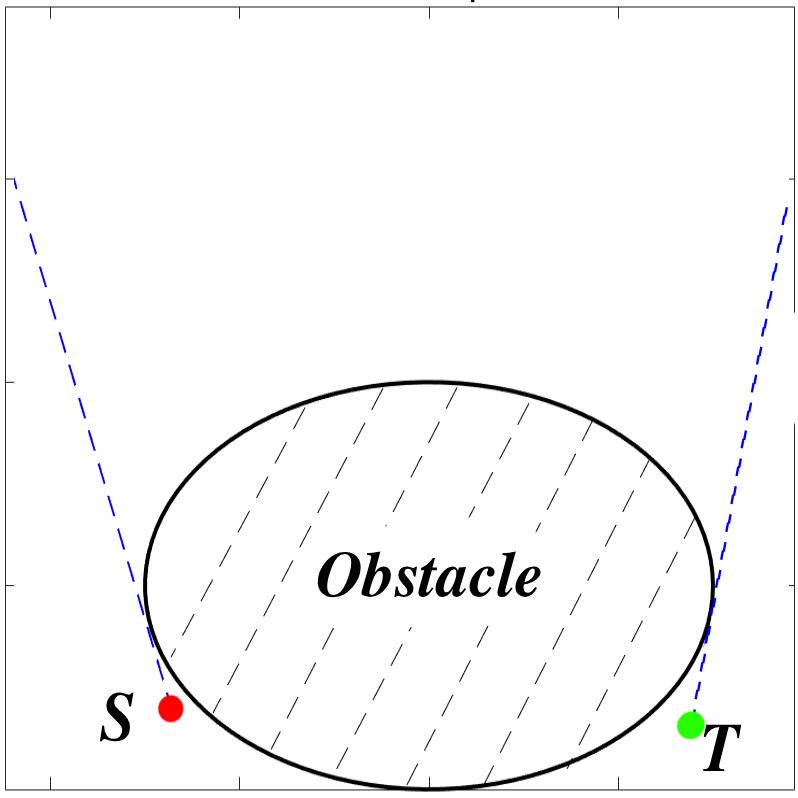
Figure3. 3Potentialscenariosresultingininfeasible paths
linesandgeneratecandidatewaypoints.TheS‑TIG plannerprocedureconsistsoftwomainsteps: obtainingcandidatewaypointsandselectingthebest waypointforpathgeneration.Initially,beforethe UAVmissionbegins,thestartpointisconsideredthe currentnodeinthe irstloop.Then,astraightlinefrom thiscurrentnodetothetargetpointiscalculated. However,thislineisgenerallyinfeasibledueto obstaclesobstructingitsway.Hence,twotangent linesaredrawnandusedascandidatesub‑pathsfrom thecurrentnodetothe irstencounteredobstacle. The irstobstacleencounteredistheoneclosestto thecurrentnodeintersectingwiththedirectlineto thetargetnode.Thisprocessisiterativelyrepeated untilnoobstaclesareencounteredusingthetangent linesfromthecurrentnode.
Thegenerationofwaypointscanbede inedasthe intersectionoftwotangentlinesatobstacle ��;the irsttangentlineoriginatesfromthecurrentnode, andthesecondoriginatesfromthetargetpoint.How‑ ever,thiswaypointmayproveinsuf icientduetomul‑ tiplescenarios,potentiallyresultinginapathwith poorsmoothnessornofeasiblepath.Forexample,as showninFigure3a,thewaypoint��istheintersection betweenthestartpoint �� andtheTargetpoint �� Nonetheless,thesubpath������ isunfeasibleforUAVs totraverse.Inthesecondscenario,asdepictedin Figure3b,thetangentlinepassingthrough��isparallel tothetangentlinepassingthrough ��,indicatingno feasiblepath.Inthelastscenario,thetangentlines from��and��areimpossibletointersect,meaningno waypointcanbeadded(Figure3c).
Toaddressthis,virtualellipsesaroundeachobsta‑ clearecreatedusingthefollowingequations:
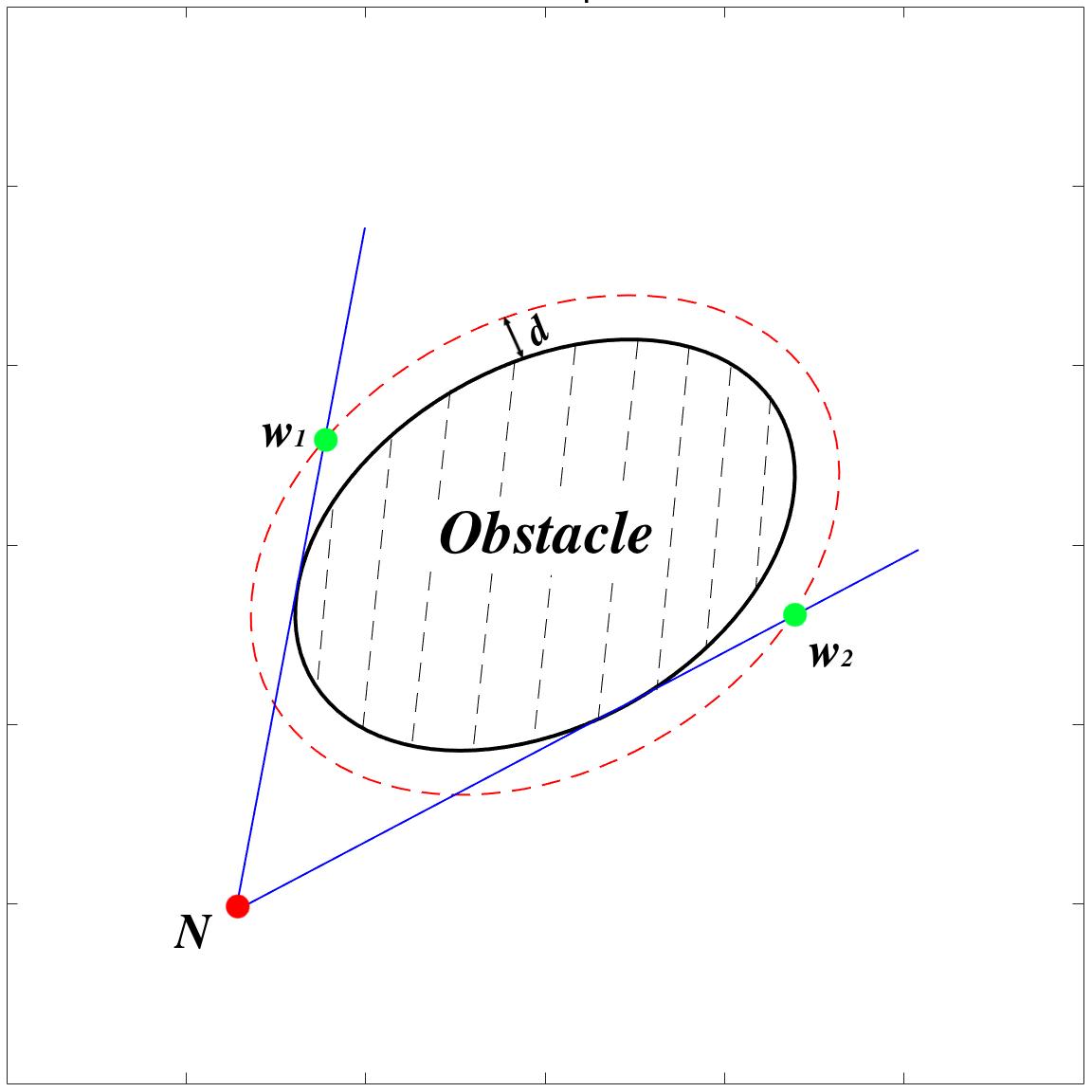
Figure4. Waypointgenerationusingvirtualellipse technique
intersectionpoint.Generally,thiscorrespondstothe secondintersectionpointfromthecurrentnodealong thesubpath.
AsshowninFigure 4,twotangentlinesaregen‑ eratedfromthecurrentnode ��.The irsttangent lineintersectswiththered‑dashedvirtualellipsesur‑ roundingtheobstacleattwopoints.Ourapproach selects ��1 asanewwaypoint,whichisthefarthest intersectionpointfrom��.Thesamecriterionapplies tothesecondtangentline,choosing ��2 asasecond waypoint.
Thisapproachensuresthegeneratedpathmain‑ tainssmoothnessandavoidsunnecessarysharpturns.
Aftercalculatingandobtainingallcurrentnode candidatewaypoints,aheuristicfunctionisapplied toselectthebestsub‑path.Detailsofthisheuristic functionwillbeprovidedlater.
Where��and��representthesemi‑majorandsemi‑ minoraxesoftheobstaclerespectively,and ��vir and ��vir representthesemi‑majorandsemi‑minoraxes ofthevirtualellipses. �� representsthesafedistance betweentheobstacleandthevirtualellipse.
Thewaypointisthendeterminedastheintersec‑ tionpointbetweenthevirtualellipse’sperimeterand theobstacle’stangentline.It’simportanttonotethat therearetwointersectionpoints,andtheselected waypointisspeci icallychosenbasedonacriterion:it istheintersectionpointwherethedistancebetween thecurrentpointandthetangentpointissmaller thanthedistancebetweenthecurrentpointandthe
AsillustratedinFigure5a,thestartpointandthe targetpointaredenotedby��and��respectively,and ��1,��2,…,��11representellipticobstaclesintheenvi‑ ronment.Weobservethatthestraightpathfrom��to�� isobstructedbyobstacle��1,whichisthe irstcollided obstacle.Inthissituation,thealgorithm,asmentioned before,generatestwotangentlinesfrom��toobstacle ��1 atpointsoftangency ��1 and ��′ 1,respectively.The algorithmalsochecksifboth ����1 and ����′ 1 areclear subpaths,whichisfalseinourexample,sowehandle eachcaseseparately.Firstly,wecheckthe irstcol‑ lidedobstaclewiththetangentline����1 andgenerate twotangentlines,namely ����2 and ����′ 2,respectively. Wecanseenowthatbothtangentlines ����2 and ����′ 2 areclearsubpaths,sowecreatetwowaypoints��2 and ��′ 2 usingthevirtualellipsetechniquearoundobsta‑ cle ��2(Figure 5b).Thesameprocedureisfollowed forthesubpath ����′ 1;drawingtwotangentlinesfor obstacle ��3 toavoidit,weseethatthesubpath ����3 isclear,sowaypoint��3 iscreated( igure.5c).Forthe lasttangentline ����′ 3,obstacle ��4 isinitsway,sothe tangentlines,namely ����4 and ����′ 4,arecreated,and waypoints��4 and��′ 4 aregenerated(Figure5d).After
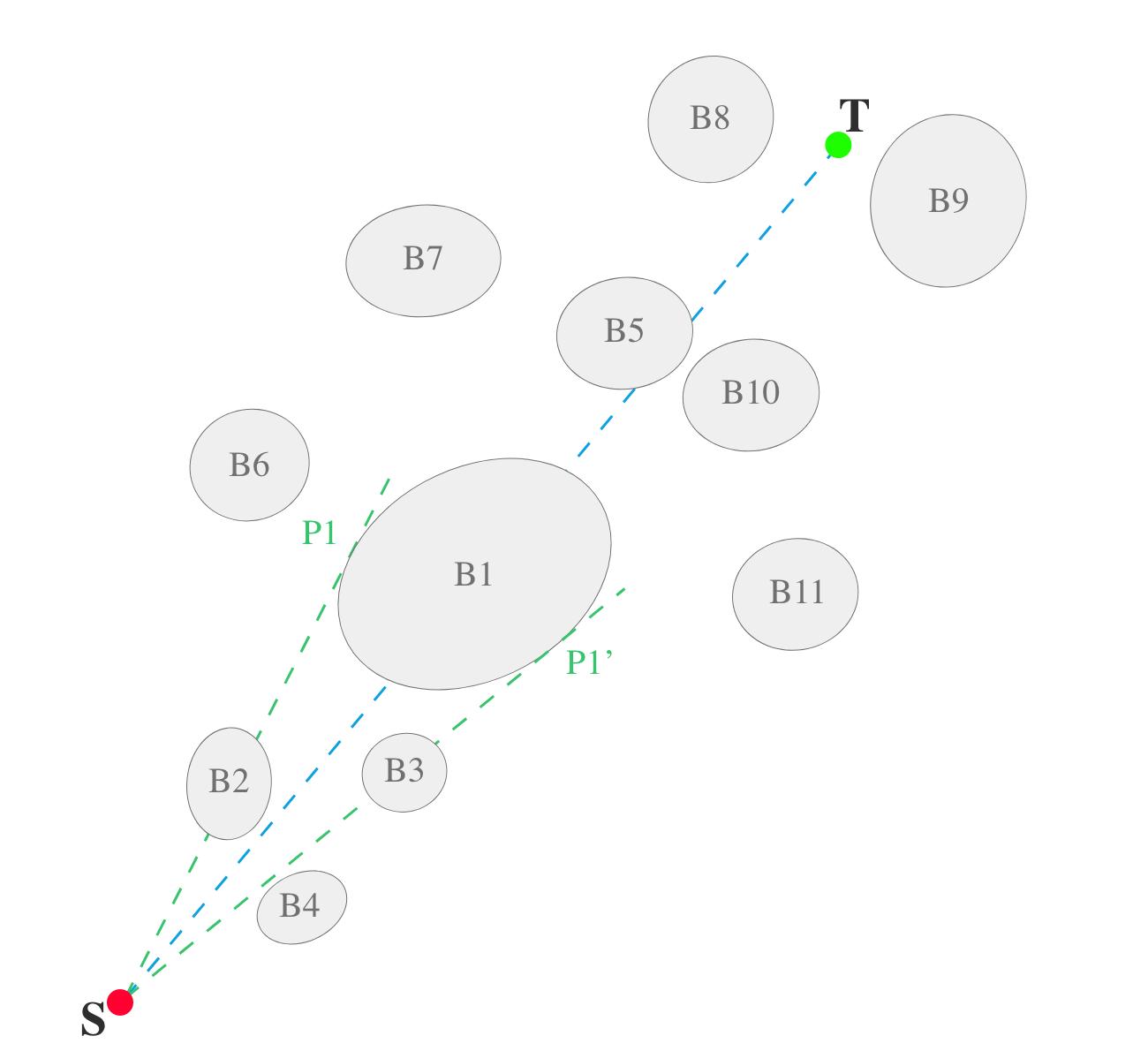
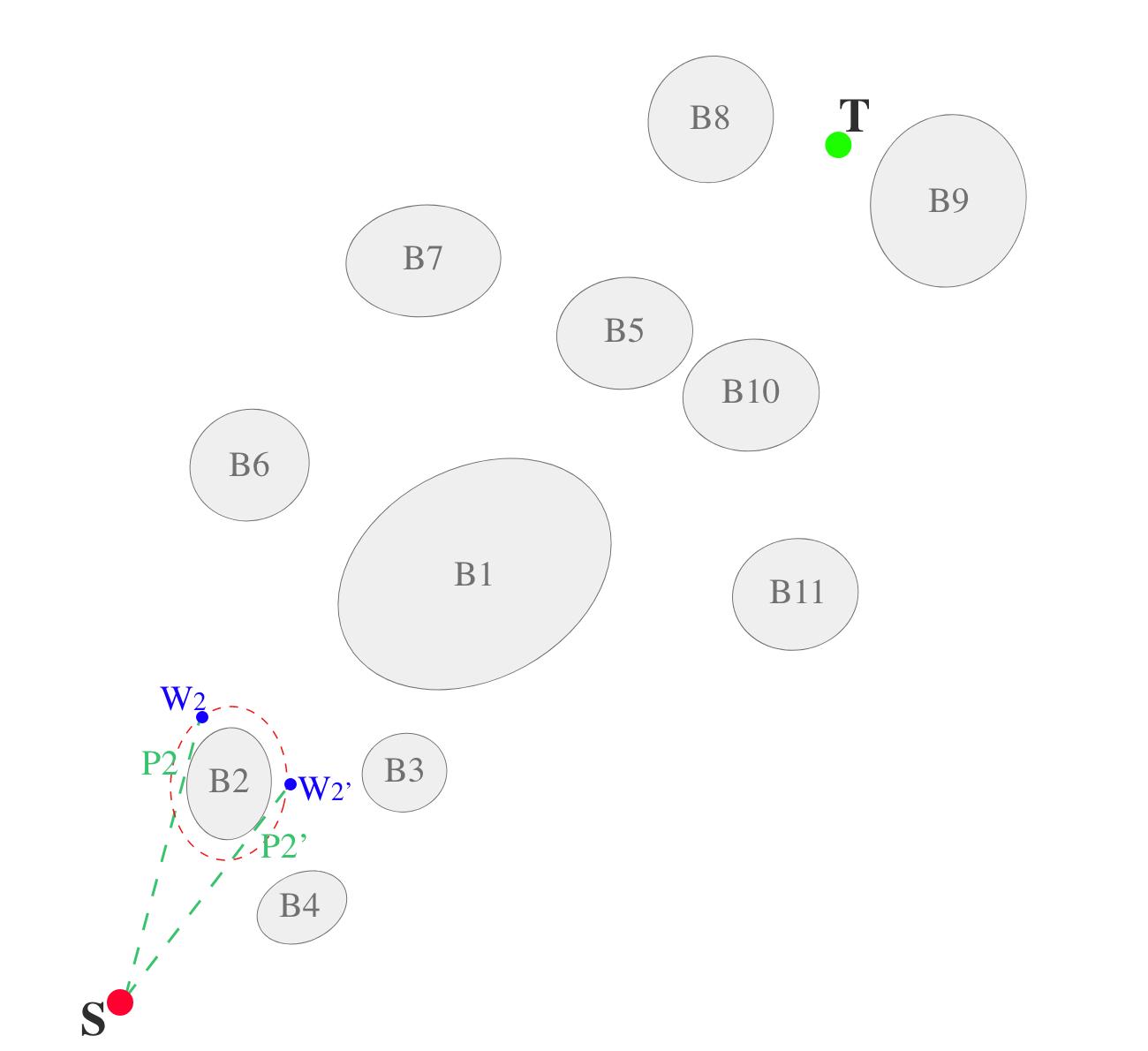
Figure5. S‐TIGalgorithmsteps
extractingallcandidatewaypoints,thealgorithmuses theheuristicruletodeterminethebestforthe irst subpath.Afterthis,thecurrentpointistransferredas theselectedwaypointinourexample,whichis��2.The othersubpathsareiterativelycreatedusingthesame methoduntilthecurrentnodereachestheendnode. Finally,thealgorithmextractsthe inalpathfromthe closedsetusingeachnodewithitspreviousnode.The resultantpathinthisexampleis ��→��2 →��1 → ��5 →��(Figure5e).
Tochoosethebestwaypoints,weapplythefollow‑ ingheuristicrule:
��(��)=��(��,��)+����+��(��,��) (3)
where �� representsthenumberofobstaclesinter‑ sectingthetangentlinefromthecurrentpoint �� to thewaypoint��,��(��,��)isthepathlengthfrom��to ��,and ��(��,��) isthedistancefrom �� tothetarget point��
Sinceouralgorithmprioritizesadirectpathto thegoal,incorporatingtheobstaclecount �� intothe
heuristicfunctionencourageswaypointselectionwith fewerobstaclesinway.Thisapproachsigni icantly reducesthenumberofobstacleinteractions,leading toshorter,smoother,andcomputationallyef icient trajectories.Inaddition,tobalancethein luenceof ��whilemaintainingheuristicadmissibility,weintro‑ ducetheparameter ��,whichadjustsitsweightin thecostfunction.Thisre inementensuresthatthe algorithmremainsbothoptimalandfeasible,partic‑ ularlyincomplexenvironments.
ThestepsoftheS‑TIGalgorithmaredetailedas follows:
1) ObstacleModelization:Modeltheobstaclesinthe environmentusingEquation1
2) Initialization:Addthestartpoint �� tothecur‑ rentSetsetandinitializethecurrentnodeasthe nodewiththeminimumheuristicvalueinthecur‑ rentSet,whichis��
3) NodeInitialization:Initialisethecurrentnodein the���� ��������������set.
4) ExplorationLoop:Whilethe���� ��������������setisnot empty,thealgorithmselectsthe irstnodetobe exploredasatemporarytargetnode����������
5) SubpathCheck:Determinewhetherthedirectline fromthecurrentnodetothetemporarytarget point ���������� isclear.Ifclear,generateawaypoint usingthewaypointcreationtechniqueandappend ittothe ������������������ set.Otherwise,generatetwo tangentlinesfromthecurrentnodetothe irst collidedobstacle,andaddthepointsoftangency to���� ��������������set.
6) NodeHandling:Removethetemporarytargetnode from���� ��������������andaddittothe Explored set.
7) SubpathResolution:RelaunchStep4)ifthereare stillnoclearsubpaths.
8) WaypointAddition:Calculateheuristicvaluesfor eachwaypointusingEquation 3 andaddthemto currentSet
9) TargetCheck:Checkif��itreachesthetargetpoint ��.Ifitdoes,stopthealgorithmandcalculatethe path;otherwise,returntoStep3)forfurtherexplo‑ ration.
Thealgorithmpseudocodeisshownin Algorithm1:
4.2.DynamicTangentPlanner(D‐TIG)Algorithm Process
UnliketheS‑TIGalgorithm,theD‑TIGissuitable fortwosituations:oneinapartiallyknownenviron‑ mentwithunexpectedobstaclesandtheotherina completelyunknownenvironment.
4.2.1.DynamicTangentPlannerInaPartiallyKnown Environment
Insuchscenarios,theUAVmoduleinitially employsthestaticplannertocalculatethepath. ItthenreliesonUAVsensorstodetectchanges intheenvironmentorobstacles’positions.Ifan obstacleappearsorchangesitscoordinates,the
Algorithm1 S‑TIGplanneralgorithm
Input:
StartNode S,TargetNode T
Output:
Path Path
1: GenerateexternalellipseforeachobstacleusingEquation1
2: ��������������������←{��},������������������←∅,��������������������←∅
3: while ��������������������isnotempty do
4: Getthenodewiththeminimumheuristicvaluefrom��������������������asthecurrentnode��
5: Add��to������������������
6: if currentnode��notequalto�� then
7: Initialise����������������←∅,���� ��������������←{��}and������������������←∅
8: while ���� ��������������isnotempty do
9: Letthetemporarytargetnode���������� bethe irstelementin���� ��������������
10: if thelinesegmentfrom�� to���������� isaclearpathandtheangleislessthan��,and���������� isnotin �������������������� then
11: Set��astheparentof����������
12: Add���������� to������������������
13: else
14: Generatetwotangentlinesofthe irstcollidedobstaclefromthecurrentnode��
15: CalculateeachwaypointusingvirtualellipsestrategyusingEquation 2 andaddthemto ���� ��������������
16: Delete���������� from���� ��������������andadditto����������������
17: endif
18: endwhile
19: Addall������������������nodesto��������������������withtheirheuristicvaluesusingEquation3.
20: else
21: Calculatethepathfrom��to��usingnodesin������������������withtheirparents.
22: Reversethepathtoobtainthepathfrom��to��
23: return ������ℎ
24: endif
25: endwhile
staticpathbecomesinfeasible,andthedynamic plannerrecalculatesthesubpathaffectedbythis obstacle.Thisensuresthattheinitialpathremains unchangedexceptforthecollidedsubpaths.As showninFigure6,thestaticof lineplannergenerates aninitialfeasiblepathfrompointStoT,whichis ��→��2 →��1 →��5 →�� inourexample.TheUAV beginsitsmissionandtravelsfrompointSalongthe pathtowardthetargetpointT.Integratedsensors continuouslygatherreal‑timeinformationaboutthe environmentanddetectchanges.Inthe igure,an unexpectedobstacle(B12)isdetectedbytheUAV, makingthesubpath ��5 →�� collidewithB12.This obstaclerenderstheinitialstaticpathinfeasible. Here,thedynamicplanner’srolecomesintoplay:it replansonlythecollidedsubpathremains ��5 →�� usingthesamestaticplannertechnique,providinga newfeasiblesubpath��5 →��12′ →�� toreplacethe infeasibleone.
ThisoperationcontinuesuntiltheUAVsafely reachesthetargetpointT.Themainstepsofthe dynamictangentplannerinapartiallyknownenviron‑ mentareasfollows:
1) RunningS‑TIG:UsetheStartpoint �� andthetar‑ getpoint �� toRunthestatictangentplannerin Algorithm1
2) Iteratethestaticplannerpathnodes
Figure6. Generatedpathusingdynamicpathplannerin apartially‐knownenvironment
3) UAVMoving:MoveUAVtothenextnode
4) EnvironmentChecking:Checkiftherearechanges intheenvironmentwithinthecurrentrange.Ifso, thecurrentnode��becomesthenewstartNode�� andrerunsthestaticplanner;otherwise,continue tothenextnodeinthepath.
Algorithm2 D‑TIGplanneralgorithminpartiallyknownenvironment
Input:
StartNode S,TargetNode T,SensorRangeradius R
Output: Path Path
1: RunStaticPathPlannerUsingAlgorithm1andreturntheinitialpathset��withoutthestartpoint��
2: while true do
3: ��←the irstelementfrom��
4: Delete��from��
5: if ��isoutofRange�� then
6: ��←theintersectionbetweenthesensorrangeperimeter��andthelinesegmentfromtheUAV’scurrent positionand��
7: ��←��
8: endif
9: MoveUAVto��
10: if ��reachesthetargetpoint�� then
11: Breaktheloop
12: endif
13: UpdateEnvironmentinformation
14: if theenvironmenthaschanged then
15: RunStaticPathPlannerUsingAlgorithm 1 from�� asanewstartnodeandreturntheupdatedpath �� without��
16: endif
17: endwhile
5) TargetCheck:Stopthealgorithmifthetargetpoint isreached;otherwise,gotoStep2)
D‑TIGplanneralgorithminapartially‑knownenvi‑ ronmentpseudocodeisshowninAlgorithm2:
4.2.2.DynamicTangentPlannerinaCompletely UnknownEnvironment
Inthesecondsituation,theenvironmentiscom‑ pletelyunknownexceptforthestartingandtarget points.Inthisscenario,thealgorithmplansthepath onlyforthesub‑environmentdetectedbyUAVsen‑ sors,usingtheS‑TIGplannerineachupdatewhile consideringenvironmentalchanges.Therearetwo caseswhentheenvironmentisunknown: irstly,when sensorscapturesomeobstacleswithintheirlimited range,andsecondly,whennoobstaclesareinrange. AsshowninFigure7a,onlythestartingpoint��andthe targetpoint �� areknown.Initially,theUAVcaptures obstaclepositionsinthesub‑environmentdepending onthesensor’srange(limitdistance).Thealgorithm employsthestaticplannertoavoidthe irstcollided Obstacle��1bycreatingtangentlinesandemploysthe heuristicfunctiontogenerateanewwaypoint ��1 Whilethetargetpointisnotyetreached,thealgo‑ rithmgeneratesadirectlineto��.Theproblemisthat theenvironmentalinformationismissingbecause �� isoutofrange.Inthiscase,thealgorithmcreatesa maximumrangewaypointwithintherangeperimeter. Thesewaypointsareusedwhenthenextnodeisout ofrange.Themaximumrangewaypointisde inedas theintersectionbetweenthesensorperimeterand thedirectlinefromthepreviouswaypoint ��1 to �� Additionally,theUAVmovestothelatestmaximum rangewaypoint,whichis��2asshowninFigure7b.In thiscase,thesensorsdetectnointersectingobstacles
between ��2 andtherangeperimeter.Consequently, theD‑TIGplannercreatesanothermaximumrange waypoint��3andmakestheUAVmovetoit,gathering environmentalinformationalongtheway.Asdepicted inFigures 7c and 7d,theD‑TIGplannercontinues avoidingobstaclesandcreatingmaximumrangeway‑ pointsifnecessaryuntilthetargetpointisreached. The inalplannedpathisinFigure7e.
Themainstepsofthedynamictangentplannerfor completelyunknownareasfollows:
1) ObstaceleModeling:UseEquation1tomodelthe obstaclesinthesub‑environment.
2) Initialization:Beginbyinitializingsetsandvari‑ ables,including currentSet forunexplorednodes, treatedSet forcalculatedwaypoints,and���������� asa temporarytargetnode.
3) ExplorationLoopInitialization:Beginaloopto exploreuntilthe currentSet isempty.
4) SelectCurrentNode:Selectthenodewiththemin‑ imumheuristicvaluefromthe currentSet asthe currentnode��.
5) CheckRange:Ifthecurrentnode��isexactlyinthe rangeperimeter��,updatethepath,moveUAV,and updateenvironmentinformation.Thenreinitialize currentSet with��
6) ContinueExploration:Ifthe currentSet isnot empty,continueexploration.
7) CheckCurrentNode:Ifthecurrentnode �� isnot reachedthetargetnode��,proceedwithwaypoint exploration.
8) WaypointExploration:Explorewaypointsfromthe currentnode��tothetargetnode��.
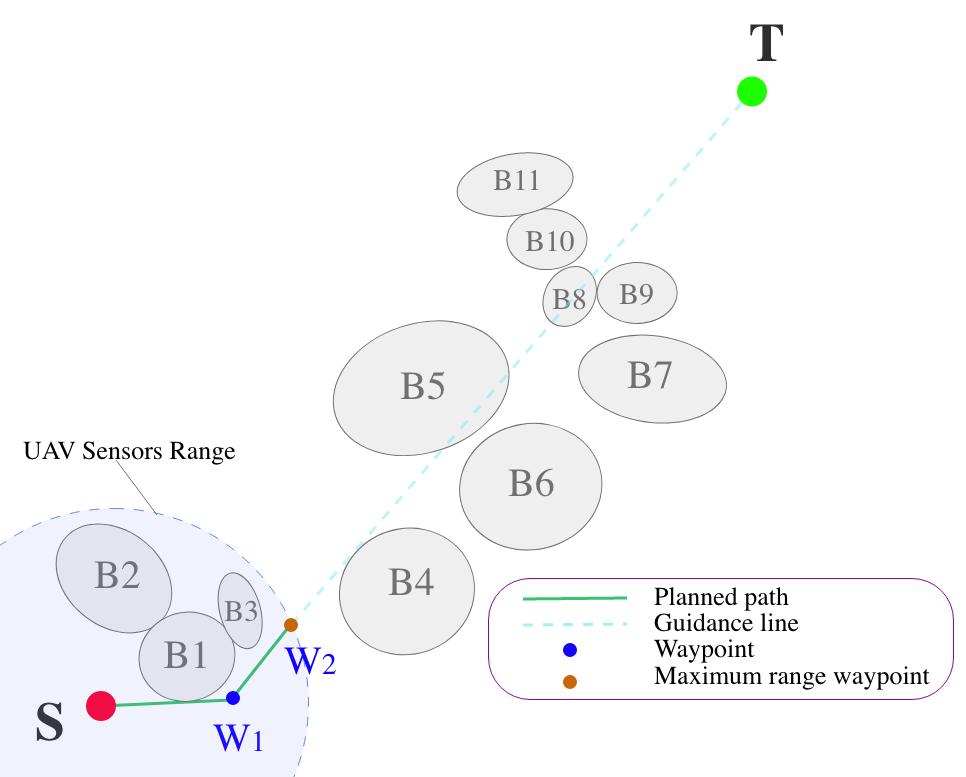
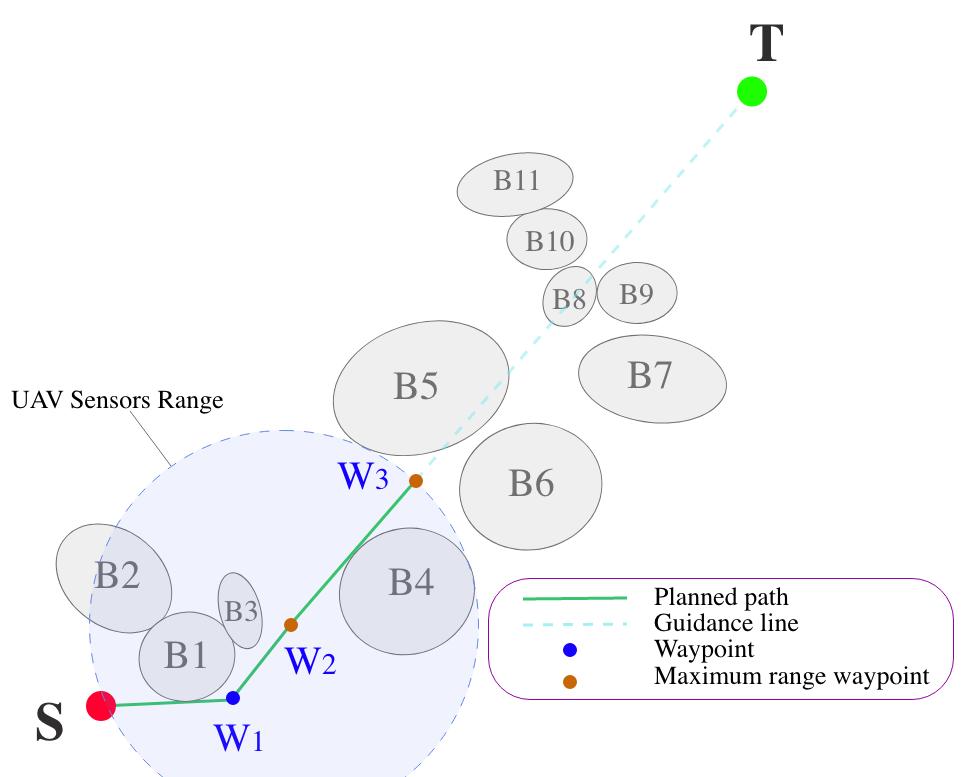
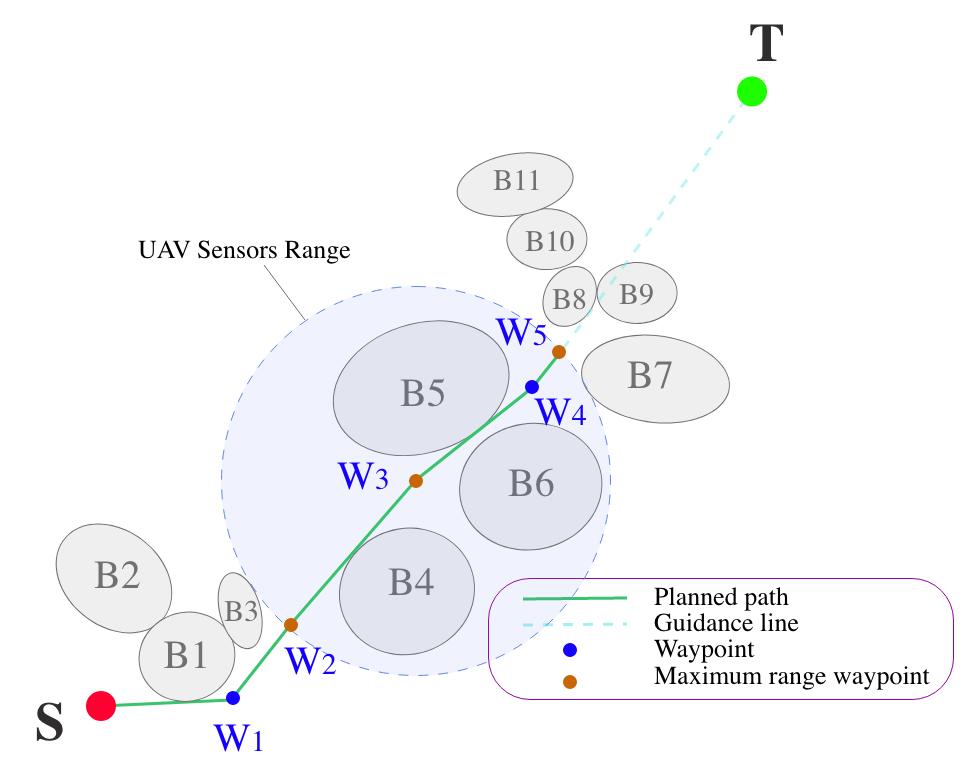
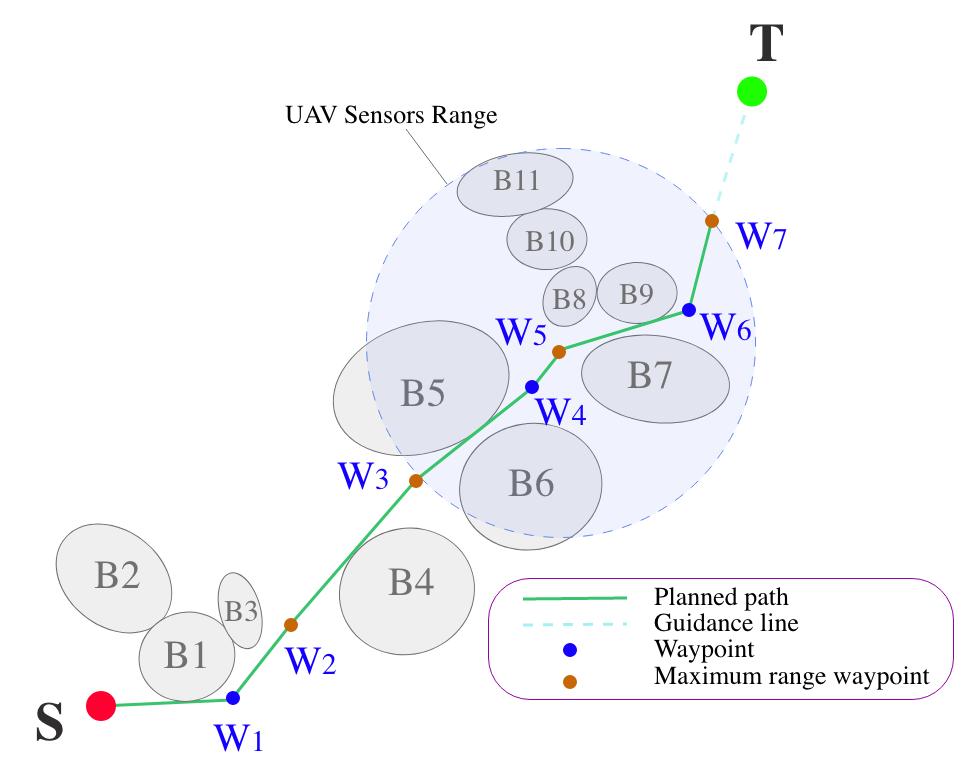
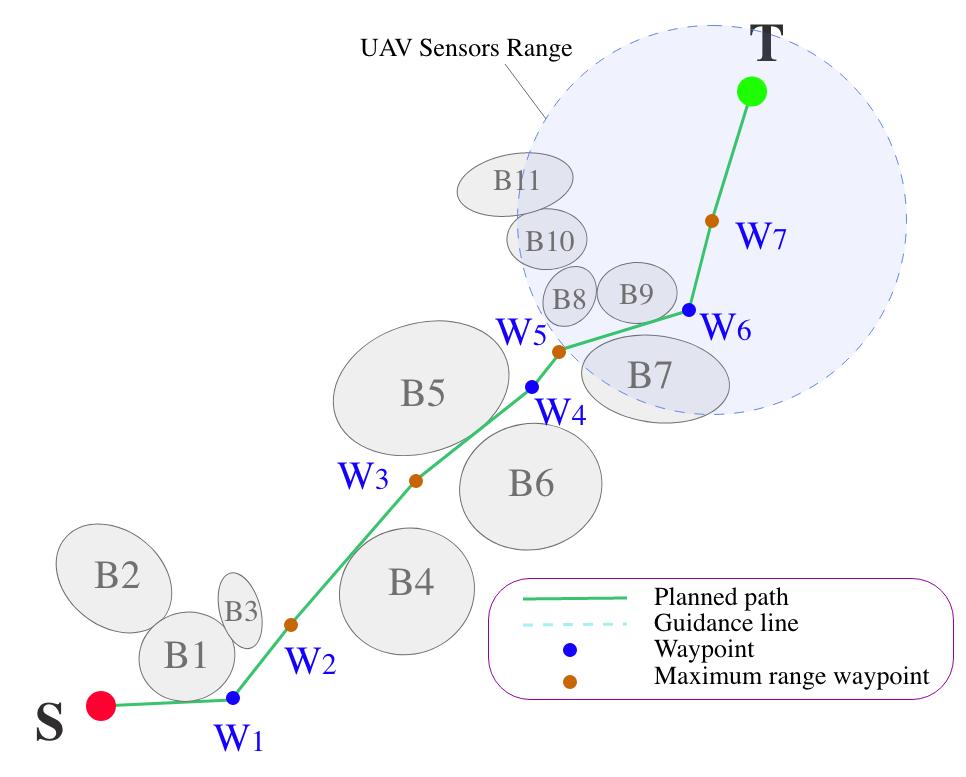
Figure7. D‐TIGplanneralgorithmstepsinanunknown environment
9) CheckClearSubpath:Checkifthelinesegmentto thetemporarycurrentnode���������� isclearandifit hasnotbeentreatedbefore.
10) AddWaypoints:Calculateheuristicvaluesforeach waypointusingEquation 3 andaddthemto cur‑ rentSet
11) CheckTargetNode:Ifthecurrentnode �� isthe targetnode��,terminatethealgorithmandextract the inalsubpath.
D‑TIGplanneralgorithminanunknownenviron‑ mentpseudo‑codeisshowninAlgorithm3:
4.3.PathSmoothingTechnique
Generatedpathsusingstaticordynamicplanners oftenincludeaseriesofconnectedwaypoints,but duetotheircomplexityand lightdynamicrequire‑ ments,theymaynotbesuitableforUAVs.Several researchpapershaveproposedtechniquessuchas Bezier,spline,andDubin’sCurvestosmooththese pathsandaddressthisissue[40].
However,thesemethodsareeffectiveonlyinopen spacesorsituationswherethepathwaypointsare
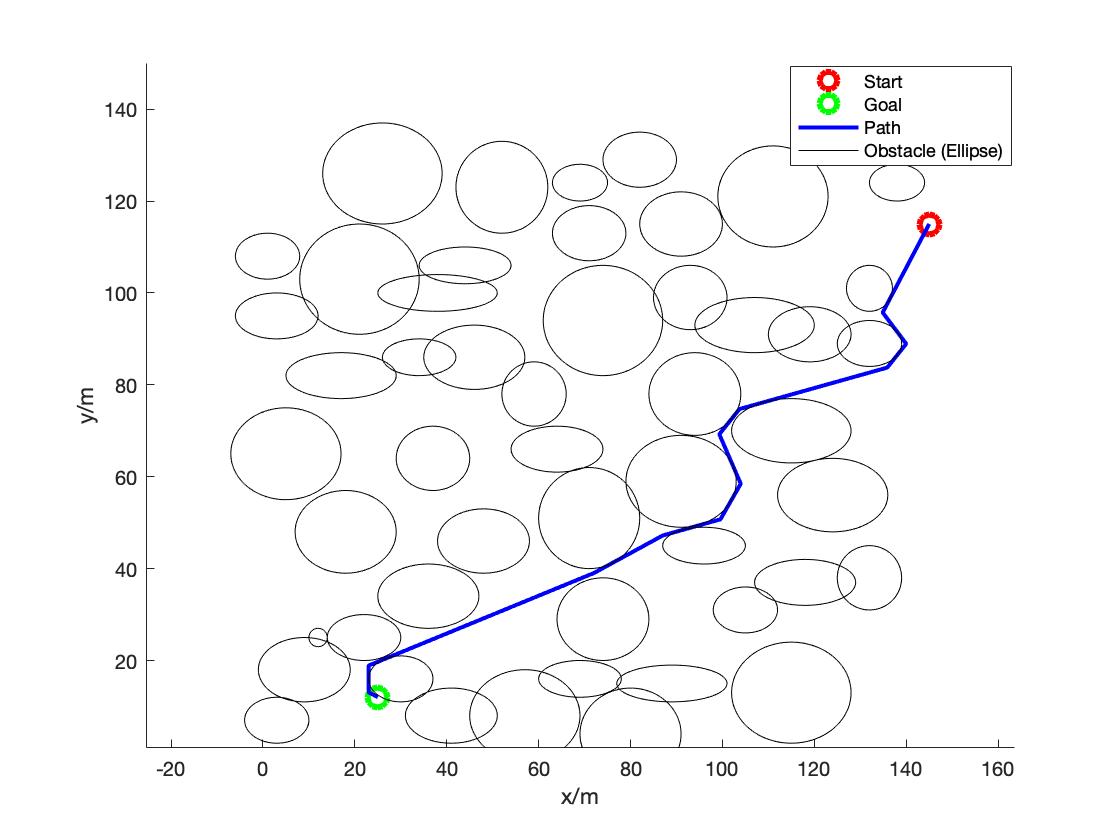
Figure8. Exampleofageneratedpathwithout smoothing
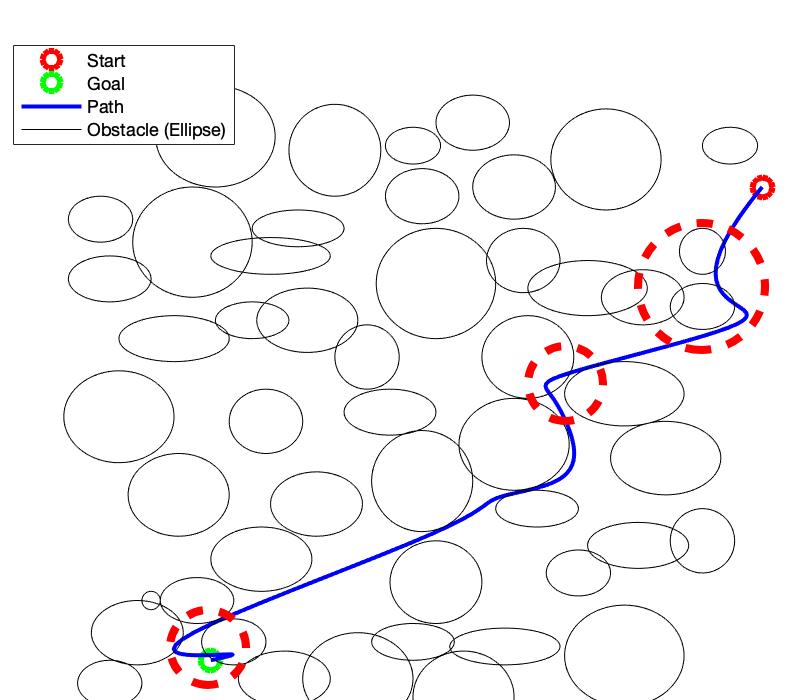
Figure9. AsmoothedpathusingaquadraticBézier curvewithcollision
nottooclosetoobstaclespresentedintheenviron‑ ment,meaningthereisahighriskofcollisionin clutteredanddenseenvironments.Asdepictedin Figure 8,theinitialpathisnotyetsmoothed.Anew smoothedpathisobtainedbyapplyingquadratic Beziercurvestothepath,whichunfortunatelystillcol‑ lideswithsomeobstacles.Figure9showsexamplesof collisionareashighlightedwithinreddashedcircles.
Tosolvethis,thepaperproposesusingaquadratic Beziercurvetechniquewitheverythreesuccessive nodesfromthestarttothetargetnode.Eachway‑ point,exceptthestartandtargetnodes,isconsidered aturn.Theideaistocreateacurvethatsmooths theseturns,makingitsuitableforUAVs.Firstly,we extracteachwaypointonthepathandcreatetwo temporarywaypointsbeforeandaftereachwaypoint andhandlethemasthe irstandlastcontrolpointsfor thequadraticBéziercurve,respectively.Secondly,the algorithmusesthequadraticBeziercurvetosmooth thesewaypointsandcombinesthecollectedcurvesin a inalsmoothedpath.
AsshowninFigure10a,the irsttemporaryway‑ point ��′,thewaypointA,andthesecondtemporary point ��″ areutilizedascontrolpoints.Afterapply‑ ingthequadraticbeziercurve,asmoothsubpathis obtained(Figure 10b).Thisprocesscontinuesuntil thetargetnodeisreached.
Algorithm3 D‑TIGplanneralgorithminunknownenvironment
Input:
StartNode S,TargetNode T,SensorRangeradius R
Output: Path Path
1: ��←��
2: while ��isoutOfRange�� do
3: Initialize currentSet ←{��}, treatedSet ←∅,���������� ←��
4: while ��������������������isnotempty do
5: Getthenodewiththeminimumheuristicvaluefrom currentSet asthecurrentnode��
6: Delete��from currentSet
7: if ��isexactlyintherangeperimeter�� then
8: Calculateinrangesubpathstartingfrom��
9: MoveUAVfollowingtheobtainedsubpath
10: UpdateEnvironmentInformation
11: endif
12: Initialize����������������←∅,���� ��������������←{��},������������������←∅
13: while ���� ��������������isnotempty do
14: Lettemporarytargetnode���������� bethe irstelementin���� ��������������
15: Delete���������� from���� ��������������andadditto����������������
16: if thelinesegmentfrom�� to���������� isaclearpathandtheangleislessthan��,and���������� isnotin treatedSet then
17: if ���������� isoutofrange�� then
18: Move���������� inrangeusingtheintersectionbetween��perimeterandtheline������������
19: endif
20: Set��astheparentof����������
21: Add���������� to������������������
22: else
23: Generatetwotangentlinesofthe irstcollidedobstaclefrom��
24: CalculateeachwaypointusingvirtualellipsestrategyusingEquation 2 andaddthemto ���� ��������������
25: Delete���������� from���� ��������������andadditto����������������
26: endif
27: endwhile
28: Addallwaypointsto currentSet withtheirheuristicvaluesusingEquation3
29: endwhile
30: endwhile
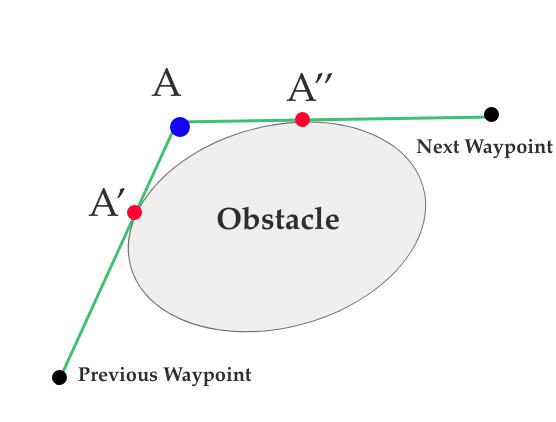
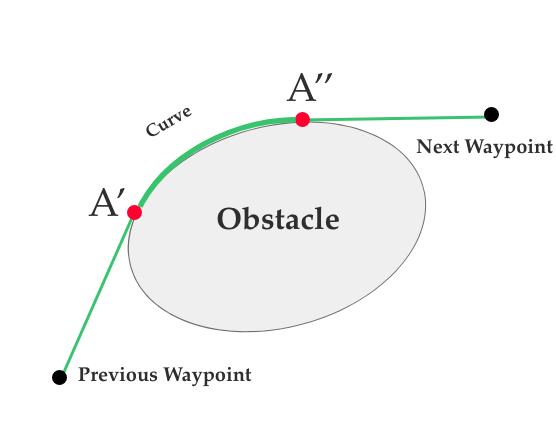
Thissectionevaluatesthepathplanningalgo‑ rithm’sperformanceandeffectivenessinstaticand dynamicenvironments.Thepaperconductsmulti‑ plesimulationexperimentstocompareitwithother popularpathplanningalgorithms,suchasA*,PRM, RRT*,TangentGraph,andAPPATT(SETG‑TG)instatic environmentsandAPFandAPPATT(DETG‑TG)[41]in dynamicenvironments.Thesealgorithmsarecoded usingMATLABR2021bonaMacBookPro2020with
anInteli5processorand8GBofmemory.Duringthe experiment,thepathplanningprocessmustcomply withspeci icconstraints,suchasminimizingthepath length,executiontime,andenforcingaminimumturn‑ ingradius,toguaranteealownumberofcurvesandan ef icienttrajectory.
AsmentionedinSection2,thisstudydidnotcon‑ sidertheheightofobstaclespresentedintheenviron‑ mentandassumedthemaptobetwo‑dimensional. Additionally,tominimizethecomputationtimeof theTangentGraphalgorithm,wecalculatetheway‑ pointsofthealgorithmbasedontheintersection pointsofthetangentlinesfromthecurrentand endpositions.Moreover,weassumetheUAVrange distanceis60m.
5.1.EnvironmentalModeling
UAVsmayencountermultiplescenariosinreal‑ worldoperations.Forexample,theymayneedto avoidasingleobstacleinsomecases,whileinoth‑ ers,theymustnavigatethroughadenselyobstructed area.Similarly,theymayhavelongtraveldistancesin somemissionsandshorttraveldistancesinothers.
Toaddressthesevariations,thispaperexaminesfour experiments,asfollows:
ShortMapvs.LargeMap
Inthesetwoexperiments,weevaluatewhether thealgorithmcangeneratefeasiblepathsinenvi‑ ronmentsofdifferentsizes.Theshortmapinthis papermeasures500×500m,whilethelargemap is1000×1000m.Theseexperimentsensurethat thealgorithmscanbalancebetweenpathandturning anglesoptimalityandcomputationalef iciency.
Sparsevs.DenseMaps
Thenumberofobstaclesinapathplanningpro‑ cessplaysacrucialrole.The irstexperimentinvolves planningapathinadenselyobstructedarea,where indingafeasibleroutefortheUAVissigni icantly challenging.Incontrast,thesparsemappresentsa lessdemandingenvironmentwithfewerobstacles. Theseexperimentsassessthealgorithm’sperfor‑ manceacrossdifferenturbanconditions,highlighting itsadaptabilityandef iciencyinnavigatingenviron‑ mentsofvaryingspatialcomplexity.Inthispaper,we de ineasparseareaasonecontaining10%ofobsta‑ cles,whileadenseareacontainsmorethan60%of obstacles.
5.2.EvaluationMetrics
Afteraliteraturereviewofmanystudies,thepro‑ posedalgorithmsemployonlypathlengthminimiza‑ tionasanobjectivefunctiontomaximizetheoper‑ ationalrangeofUAVs.However,thisapproachcan resultinpathswithsharpturnsandunnecessary nodes,negativelyimpactingenergyconsumptionand pathef iciency.Hence,thispaperadoptsobjective functionstominimizethepathlength,turningradius, andexecutiontime.Thisapproachaimstogenerate smoother,moreadaptablepathsthatoptimizemis‑ sionef iciencywhileensuringoperationalfeasibility.
ShortPathObjectiveFunction
Minimizing lightdistanceiscrucialforaUAVpath planningalgorithmsinceitdirectlyreducestravel timeandenergyconsumption.Therefore,anobjec‑ tivefunctionisde inedtoprioritizetheshortestpath lengthasfollows: ��������(��,��)= ��−1 ��=1
where �� thelengthofthepath, (����,����) and (����+1,����+1) aretheabscissaandordinatesofthe �� thnode,and(����+1,����+1)(��+1)‑thnoderespectively. TheEuclideandistanceisusedtocalculatethepath’s length.
MinimumTotalTurningAnglesObjectiveFunction
Eachturningangleimpactstheoverallsmoothness ofthepath.Thelowerthesumofturningangles,the smootherthepathweget.Incontrast,ahighersum resultsinhighenergyconsumptionandrequiresmore motiontime.Therefore,anobjectivefunctiontomini‑ mizetheturninganglesisadoptedasfollows:
Where ���� istheangleatthe ��thnode,whichis calculatedbasedonitspreviousnode ��−1,andits nextnode��+1
ShortestAlgorithmExecutionTime
Theexecutiontimeofthealgorithmalsohas asigni icantimpact,especiallyindynamicenviron‑ mentswhereUAVsneedtoadjusttheir lightpathsto avoidobstaclesorachievemissionobjectives.Adopt‑ ingafunctiontominimizealgorithmexecutiontime ensuresthatdecisionsaremadeswiftly,contributing tofasterandmoreresponsivenavigation.Theobjec‑ tivefunctionissetasfollows:
Where��denotesthealgorithm��executiontime.
5.3.SimulationExperiment
StaticPathPlannerSimulationExperiment
Basedonthesimulationresultsshownin Figures 11 to 14 andthesummarizedperformance metricsinTable2,it’sevidentthattheS‑TIGalgorithm consistentlyoutperformsA*,PRM,RRT*,Tangent Graph(TG),andAPPATTalgorithmsacrossall experimentswithrandomlygeneratedobstaclesof varyingnumbersandsizes.Firstly,thestaticplanner reducespathlengthby5%comparedtotheA*,6.98% comparedtoPRMandasubstantial22.80%compared toRRT*,7.55%comparedtoAPPATTalgorithms,and approximatelythesamewiththetangentgraph plannerwithadifferenceof0.18%.Additionally, theexecutiontimeoftheS‑TIGplanneralgorithm averagesareductionof98.08%,98.29%,47%,7% and88.25%comparedtoA*,PRM,RRT*,Appatt, andTangentGraph,respectively.Intermsofthesum ofturningangles,S‑TIGdemonstratesareduction of93.39%comparedtoA*,65.15%comparedto PRM,84.27%comparedtoRRT*,35.41%compared toAPPATTwhileS‑TIGproducesthesameturning anglesasthetangentgraphplannerinmostcases. TheseresultsindicatethattheS‑TIGalgorithm consistentlygeneratesshorterpathswithfewer nodes,requiringlesstimeandproducingsmoother trajectoriesduetotheminimizedtotalturning angles.FromtheAPPATT(SETG‑TG)testresults,the algorithmfailedduetoitsstructureandthetypeof environment,especiallyinC2,C7,andC12,whileit alsofailedinallcasesindenseenvironments.
TheAPPATTalgorithmemploysanintersection strategy,whichleadstomanyfailures,asrepresented inFigure3.Incontrast,S‑TIGaddressesthislimitation
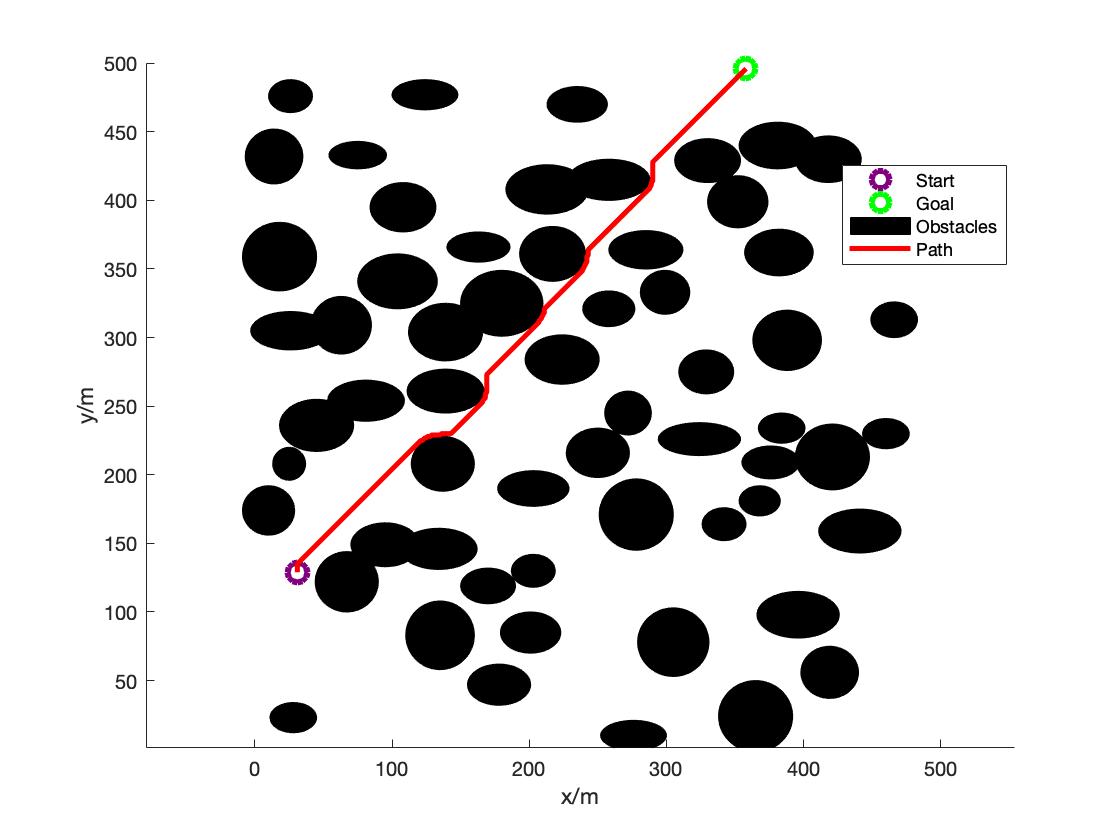
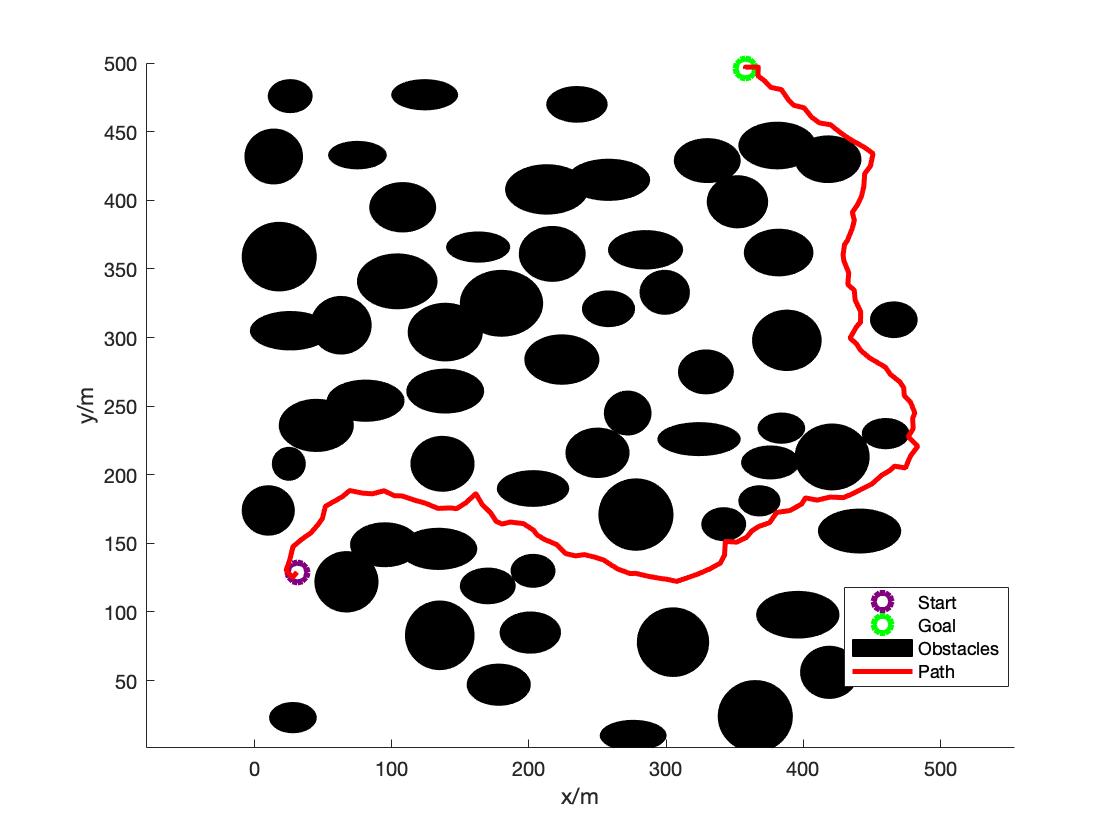
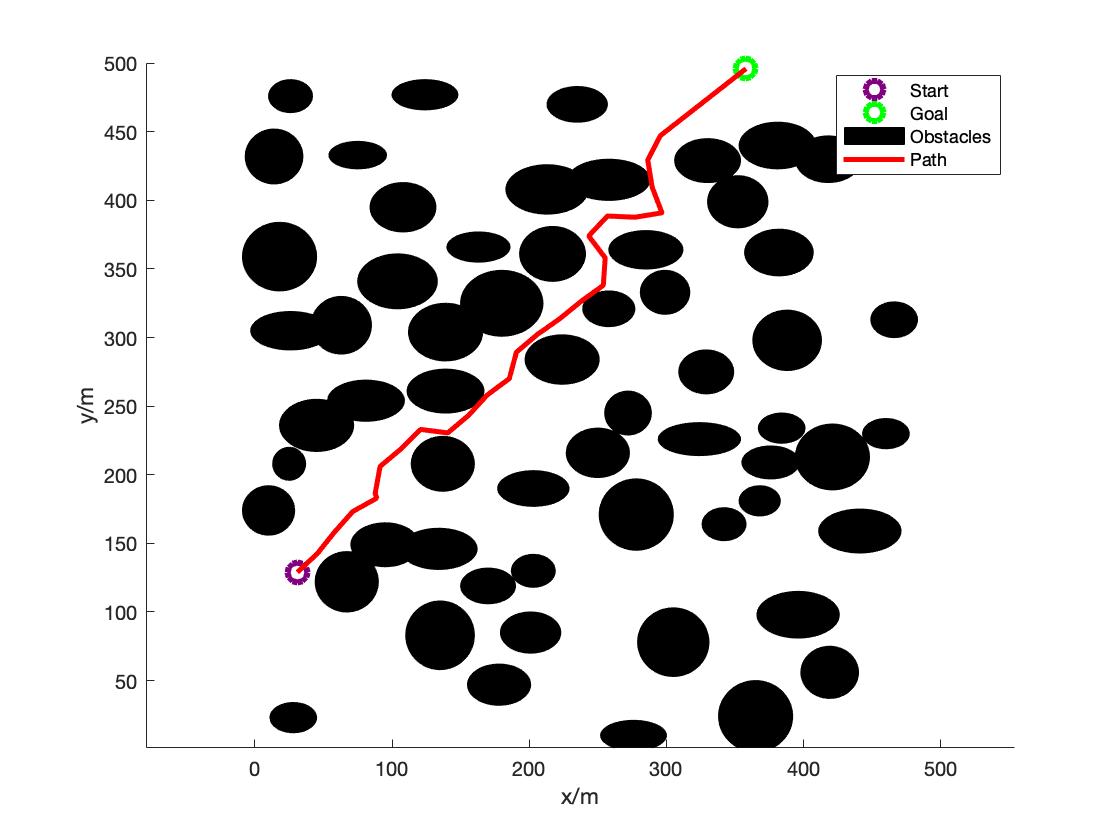
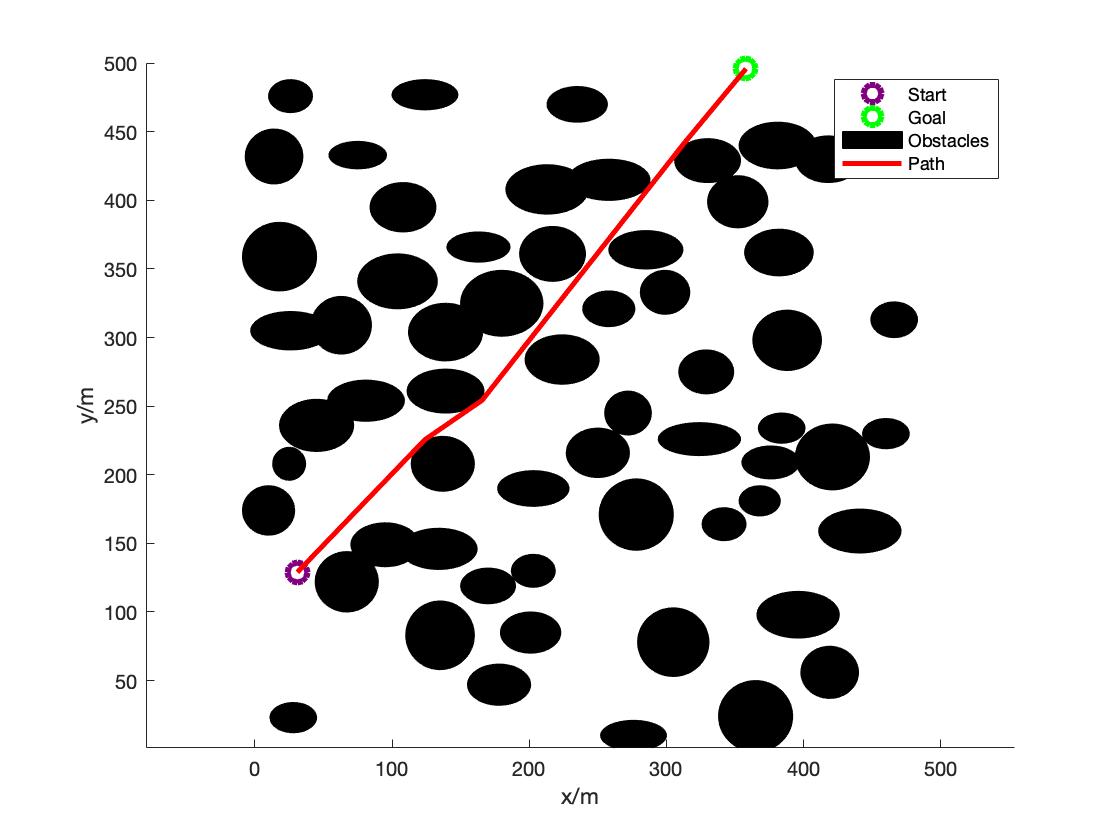
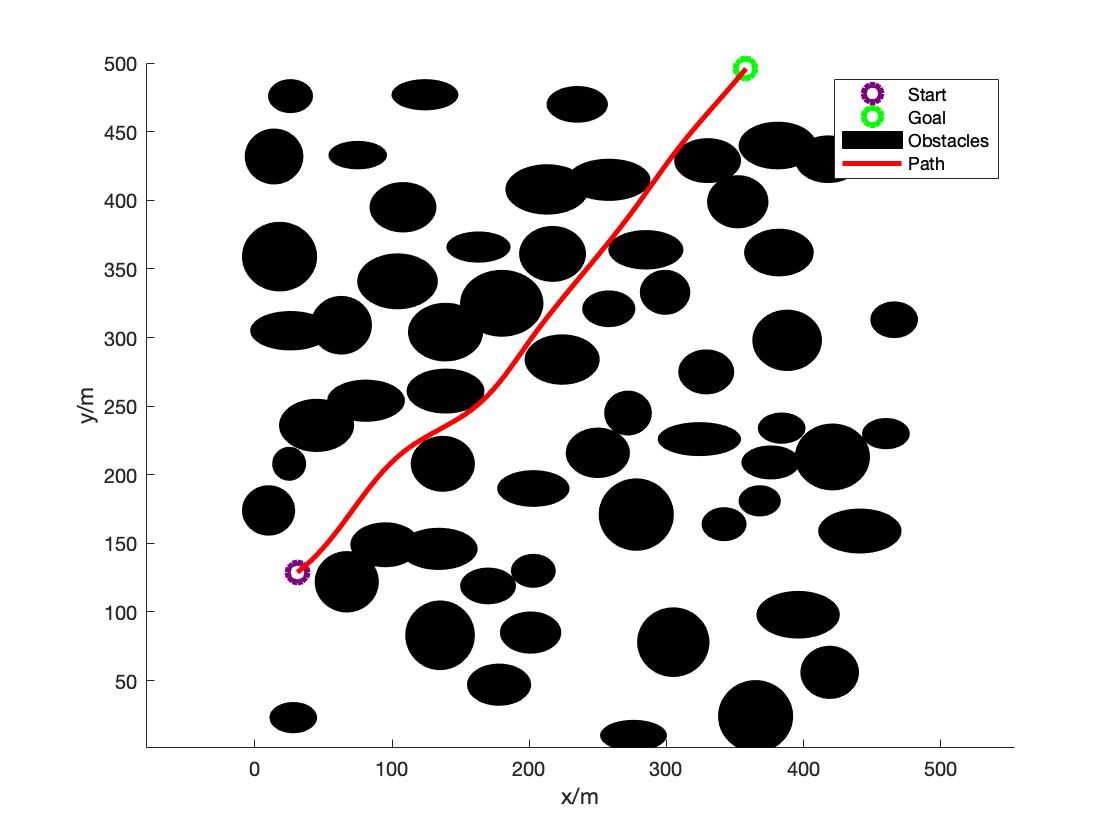
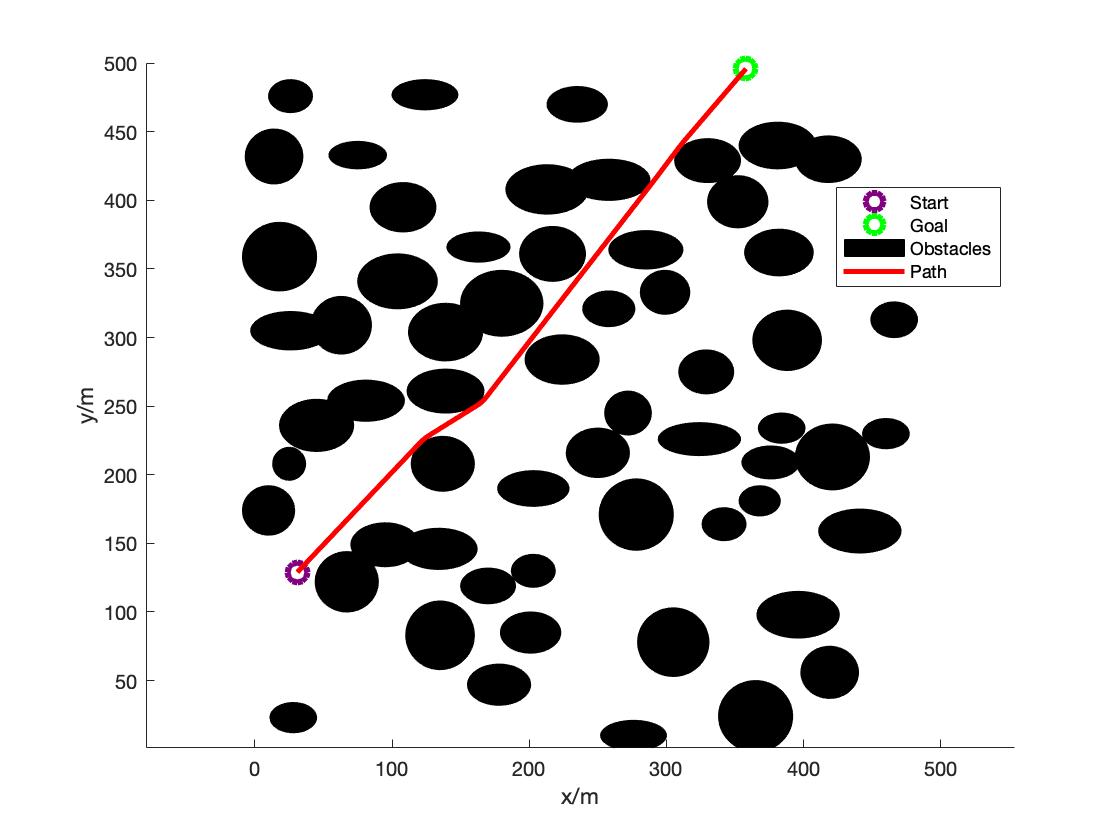
Generatedpathsinstaticenvironmentsonashortmap(C1)
byadoptingthewaypointcreationtechnique.Addi‑ tionally,APPATTdoesnotimplementastrategyfor checkingcreatedwaypointswhentheybecomestuck inoverlappingobstacles,whichcanresultinanin i‑ niteloopwhenattemptingtochoosethebestway‑ point.Duetotheselimitations,APPATTfailedthetests across ivedensemaps,whereastheTIGalgorithm demonstratedstrongcapabilitiesinpathgeneration withinstaticenvironments.
TheA*algorithmcanproduceanoptimalpath basedongridswith1mx1mresolution.However, thequalityofthegeneratedpathisnotsatisfactory.
Inaddition,A*andPRMalgorithmssufferfromhigh computationtimes,especiallyinlargeareas.Forexam‑ ple,inC6,A*needs98secondstogenerateafeasi‑ blepath,whilePRMtakes5seconds.RRT*,dueto itsrandomness,generatesalargenumberofturning angles,sometimesexceeding40radians.Thisalgo‑ rithmcannotguaranteepathoptimalityandsmooth‑ nessforUAVs.ThisoftenresultsinUAVshavingtotake sharpturnsorunnecessarynodes,whichcanimpact theoverallmissiontime.Thetangentgraphplanner producestheshortestpathswiththeminimumsumof turningangles;however,thisalgorithmcalculatesthe
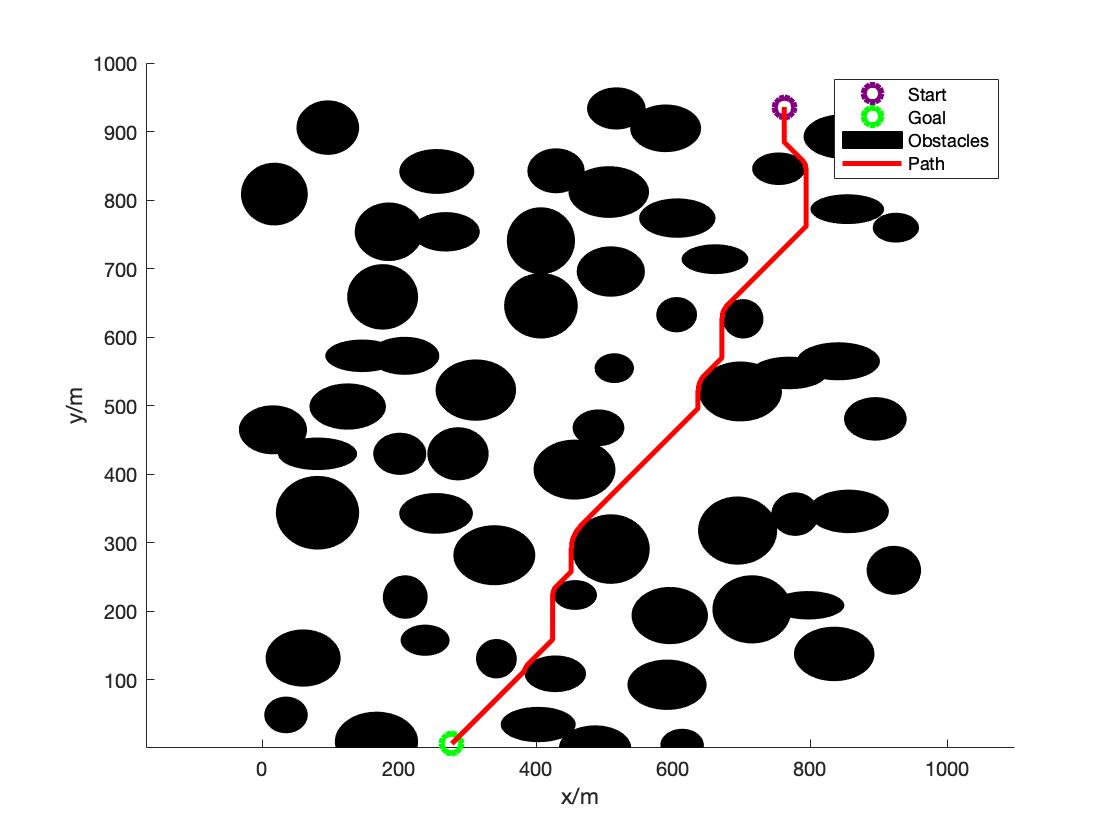
APPATT(SETG‐TG)
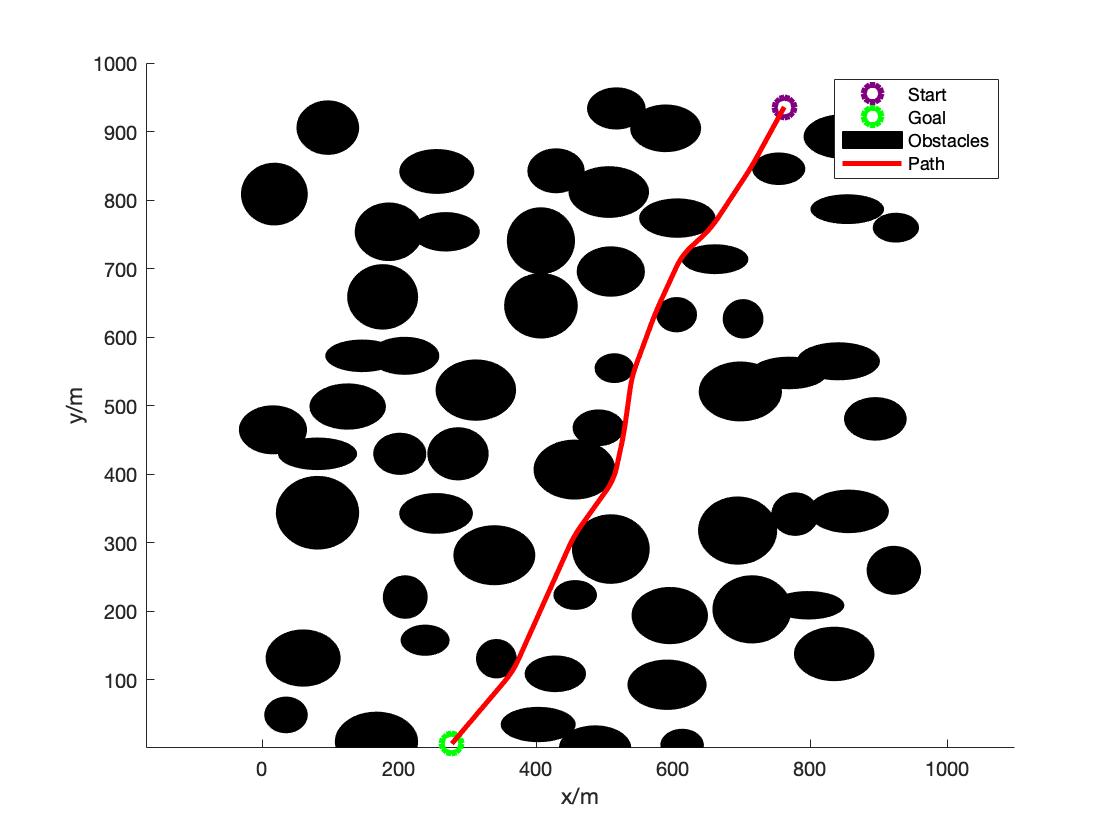
Figure12. Generatedpathsinstaticenvironmentsonalargemap(C5) tangentsfortheentiremap,leadingtohighercompu‑ tationtimes,especiallyindenseareas.
Incontrast,theS‑TIGalgorithmalwaysevaluates thesubpathqualityusingitsheuristicrulesbefore makingadecision,whicheliminatesanysharpturns andredundantnodesandproducescollision‑free pathswithshortertimesineachofthecasesinall scenarios.NextinlineisTangentGraph,followedby Appatt,A*,PRM,andRRT*.Tosumup,theS‑TIGstatic planneralgorithmshowsasuperiorpathplanning performancecomparedtotheother ivealgorithmsin termsofpathlength,timeconsumption,andturning anglesinstaticenvironments.
DynamicPlannerSimulationExperimentInUnkonwn Environment
TotesttheeffectivenessoftheD‑TIGplannerinan unknownenvironment,thispapercomparesthealgo‑ rithmwithtwodynamicplanners:APFandAPPATT. Figures 15 to 18 showtheplannedpathsforfour scenarioswithvaryingobstaclesizesandpositions. Thetestresults,summarizedinTable3,showthatD‑ TIGconsistentlyreducedtheplannedpathlengthby 20.55%comparedtotheAPFalgorithmandapproxi‑ mately0.1%comparedtoAPPATTinallcases.
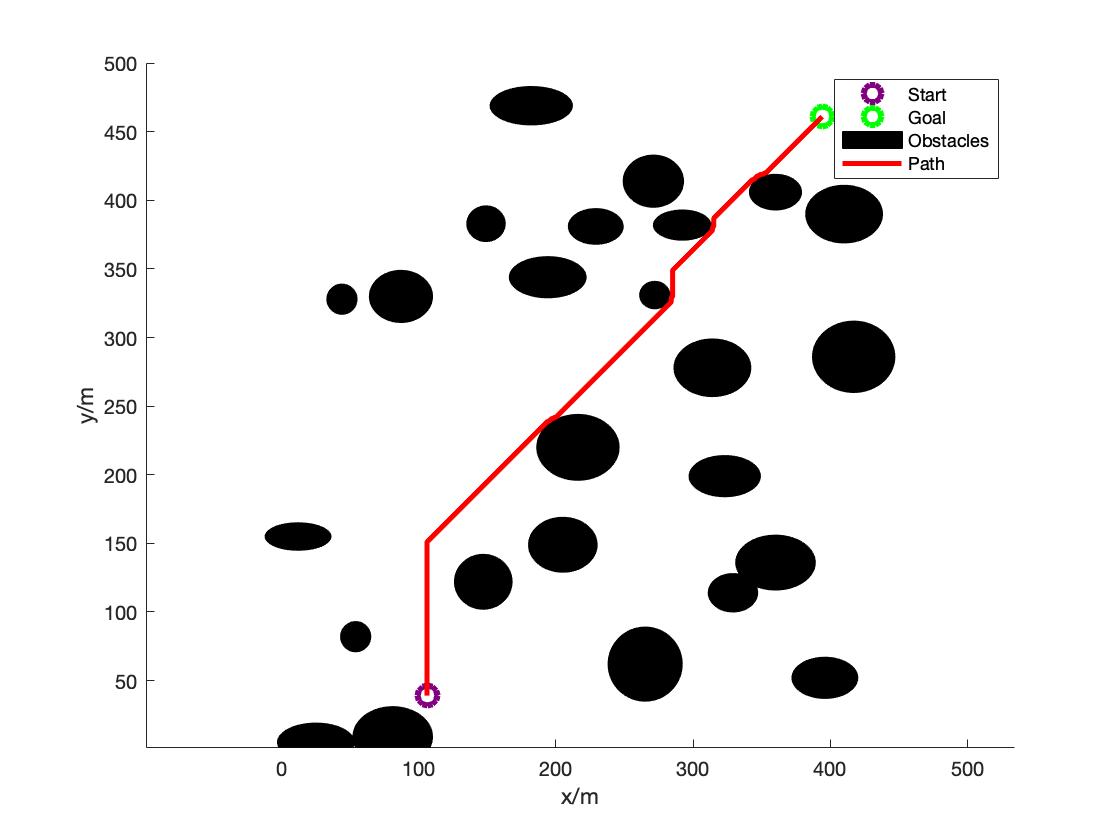
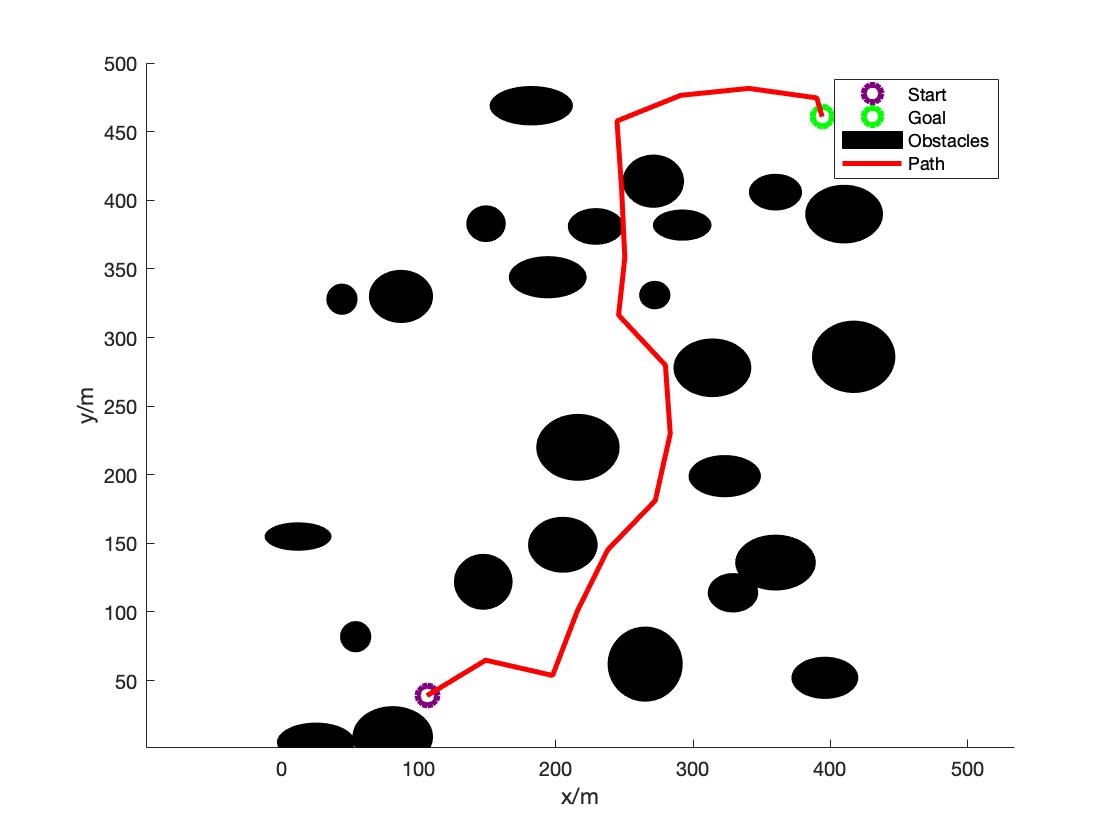
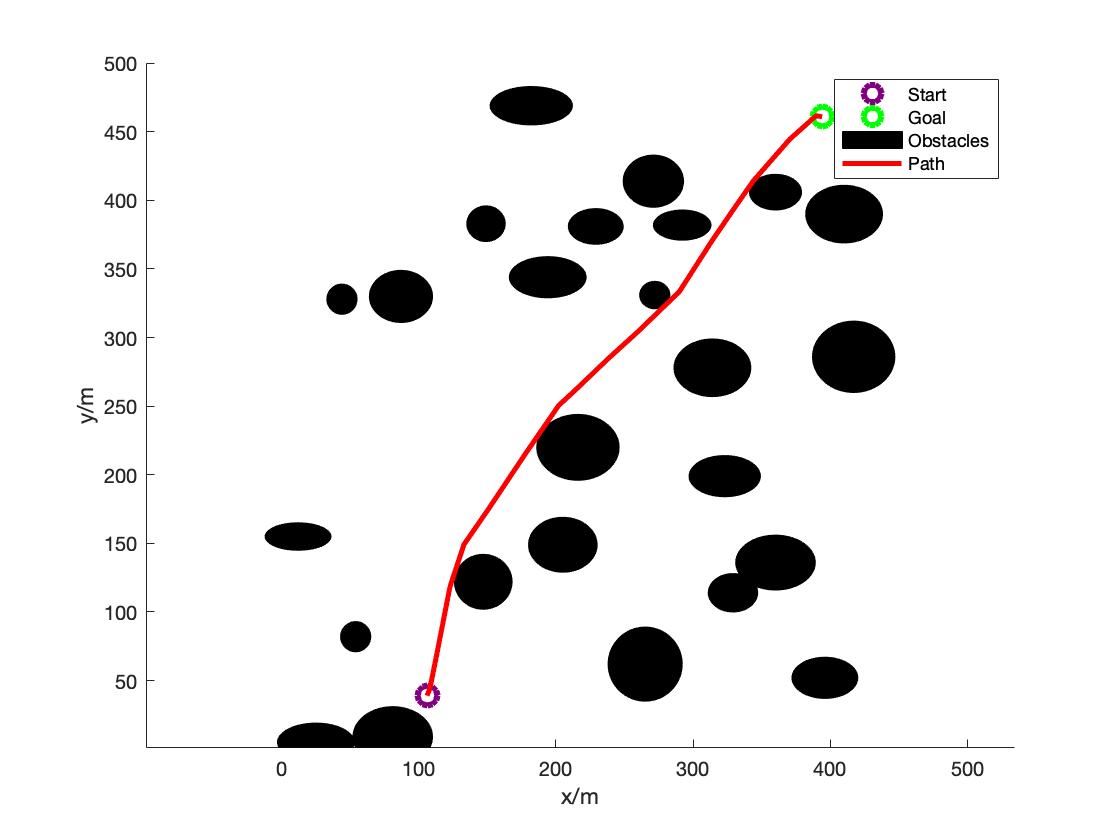
Figure13. Generatedpathsinstaticenvironmentsonasparsemap(C9)
Additionally,thealgorithm’sexecutiontimeis equaltothatofAPPATT,requiringonly0.01seconds onaveragetoplananear‑optimalroute,unlikeAPF, whichdemandssigni icantlymoretime,sometimes upto0.14secondsinhigh‑dimensionalenvironments (e.g.,C21).Moreover,theD‑TIGdynamicplannerpro‑ ducesfewerturninganglesthantheotheralgorithms, reducingthembyapproximately87%comparedto APFand34.11%comparedtoAPPATT.
Acrossalltestscenarios,theD‑TIGalgorithmsuc‑ cessfullygeneratedpaths,whereastheotheralgo‑ rithmsfailedinmultiplecases,suchasC20,C24,C29, C30,C31,andC32.Insummary,theD‑TIGplanner
iseffectiveinunknownenvironments,generating shorterpathsinlesstimeandwithfewerunnecessary turnsthantheotheralgorithms.
DynamicPlannerSimulationExperimentInPartially KnownEnvironmentWithUnexpectedObstacles
Anothersimulationexperimentswereconducted totesttheeffectivenessoftheD‑TIGalgorithmin environmentswithunexpectedobstacles.Figures 19 to 21 illustratetheinitiallyplannedpathinred beforetheenvironmentalchange,andthegreencolor representsthecorrectedpathaftertheUAVfaced unexpectedobstacles,coloredinorange.TheD‑TIG
(e) APPATT(SETG‐TG)
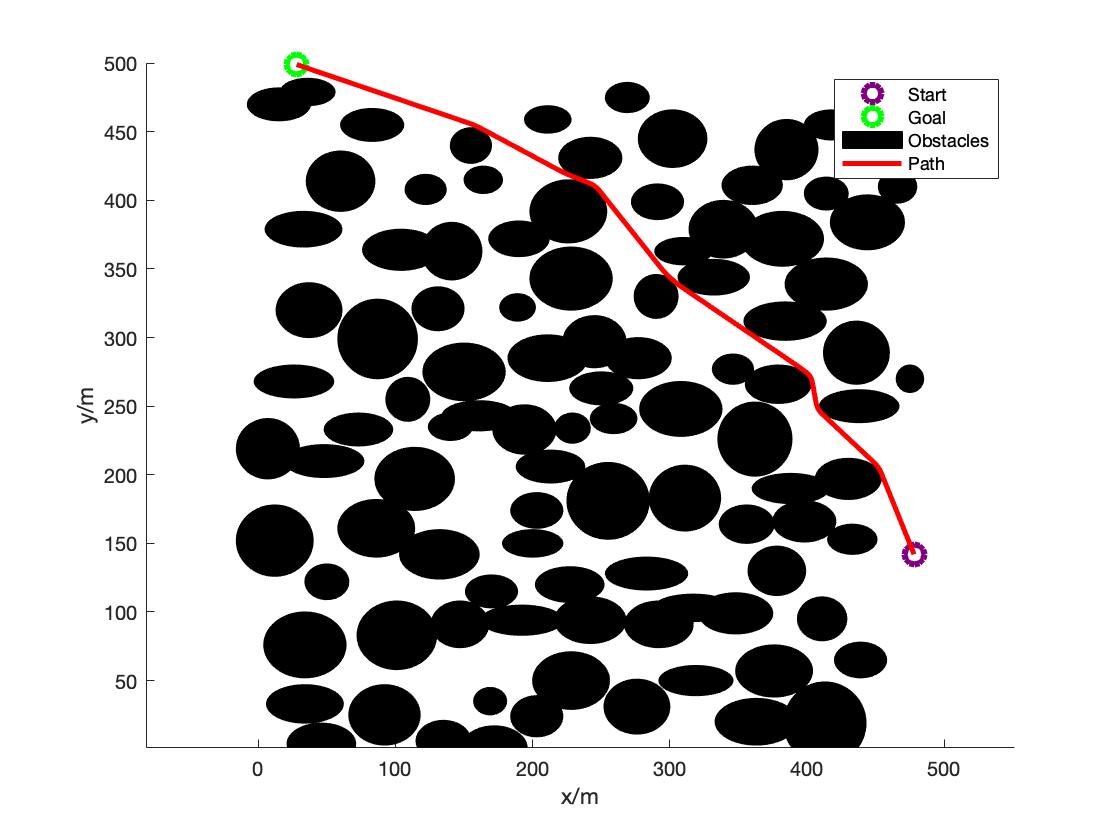
Figure14. Generatedpathsinstaticenvironmentsonadensemap(C13) wascomparedwiththeAPPATTalgorithmsinceit isdesignedtocalculatenewpathsbasedonunex‑ pectedobstacles,andtheresultswerecollectedin Table4.TheresultsdemonstratethattheD‑TIGplan‑ nercanproduceshorter,smootherpathsinlesstime. Additionally,thealgorithmreducestheplannedpath lengthby5.63%acrossalltestcasesanddecreases thepathturningradiusby25.55%comparedtothe APPATTalgorithm.Moreover,theexecutiontimeof bothalgorithmsisapproximatelythesame,which bothnotexceed0.08secondsforreplanning,whichis goodtoallowUAVstomakedecisionsmorequickly. Furthermore,theAPPATTalgorithmfailstogener‑ atefeasiblepathsinmultiplecases(e.gC21and C26),whichUAVscannotrelyonitinsuchsituations becausetheriskofcollisionistoohighinreal‑time scenarios.
TheAPPATTalgorithmalsofailsto indfeasible pathsinunknownenvironments,asshowninTable4 Similarly,itcannot indapathinadenseenvironment withpop‑upobstacles.Incontrast,theD‑TIGalgo‑ rithmsuccessfullyhandlesdensemapswithpop‑up obstacles,asshowninFigure22.Theseimprovements canbeattributedtothefundamentaldifferences betweenthetwoalgorithms.
Table2. Comparisonofdifferentstaticpathplanningalgorithmsacrossfourscenarios
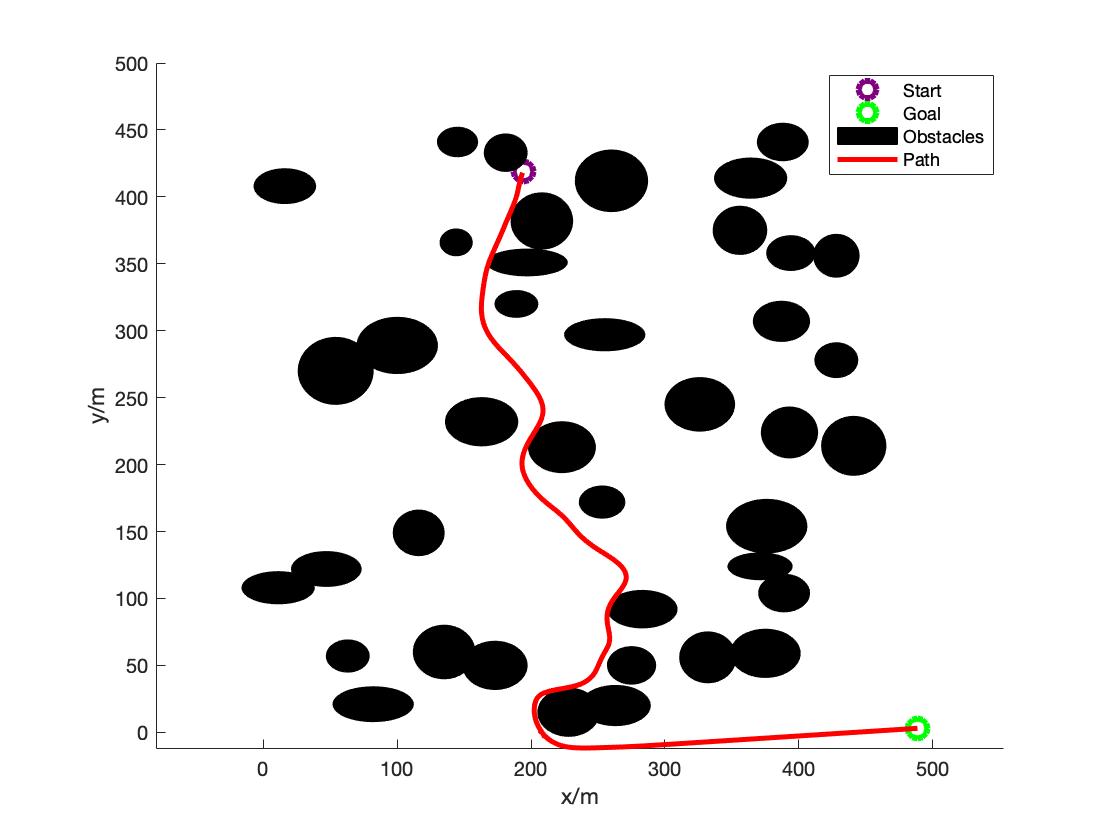
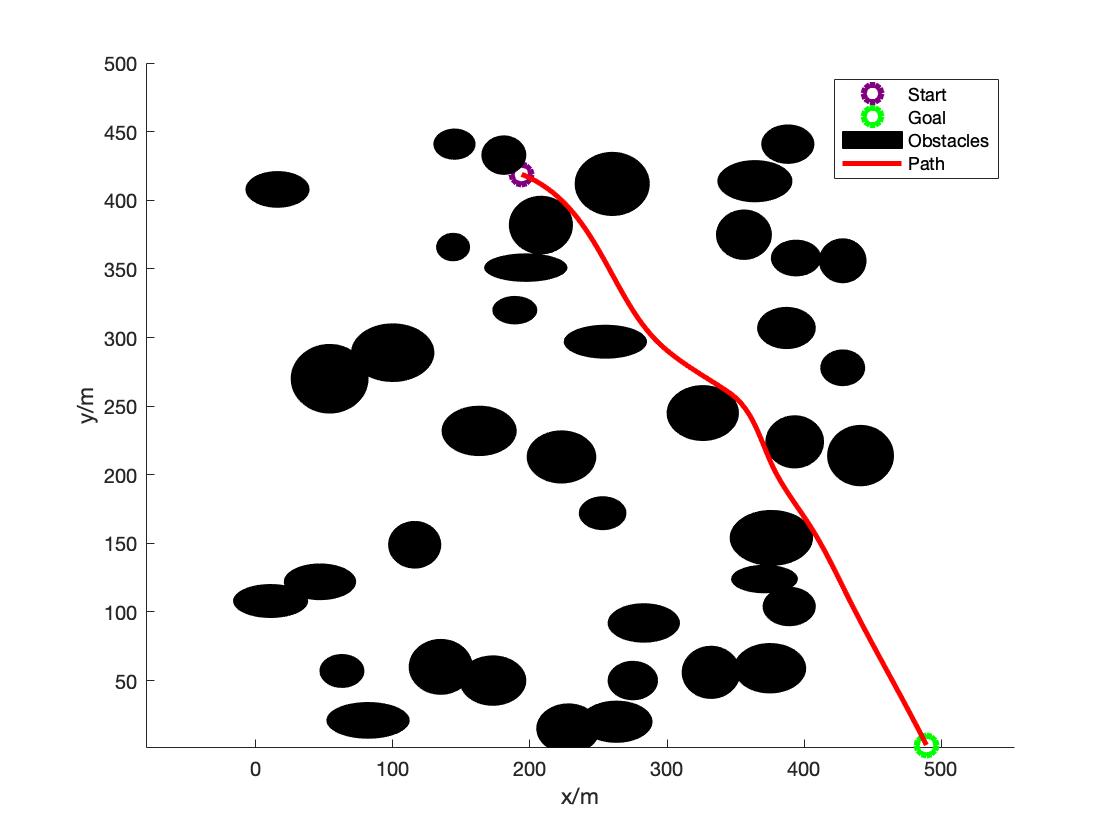
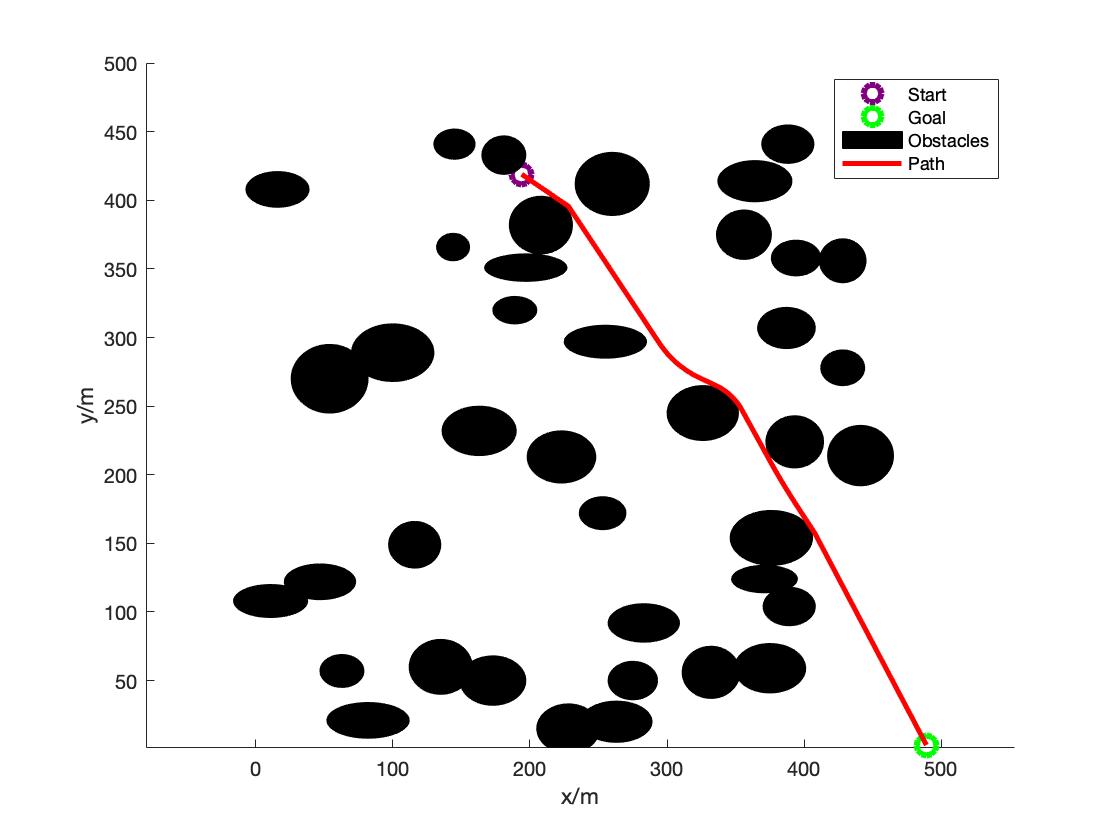
Generatedpathsinunknownenvironmentonashortmap(C17)
Figure16. Generatedpathsinunknownenvironmentonalargemap(C21)
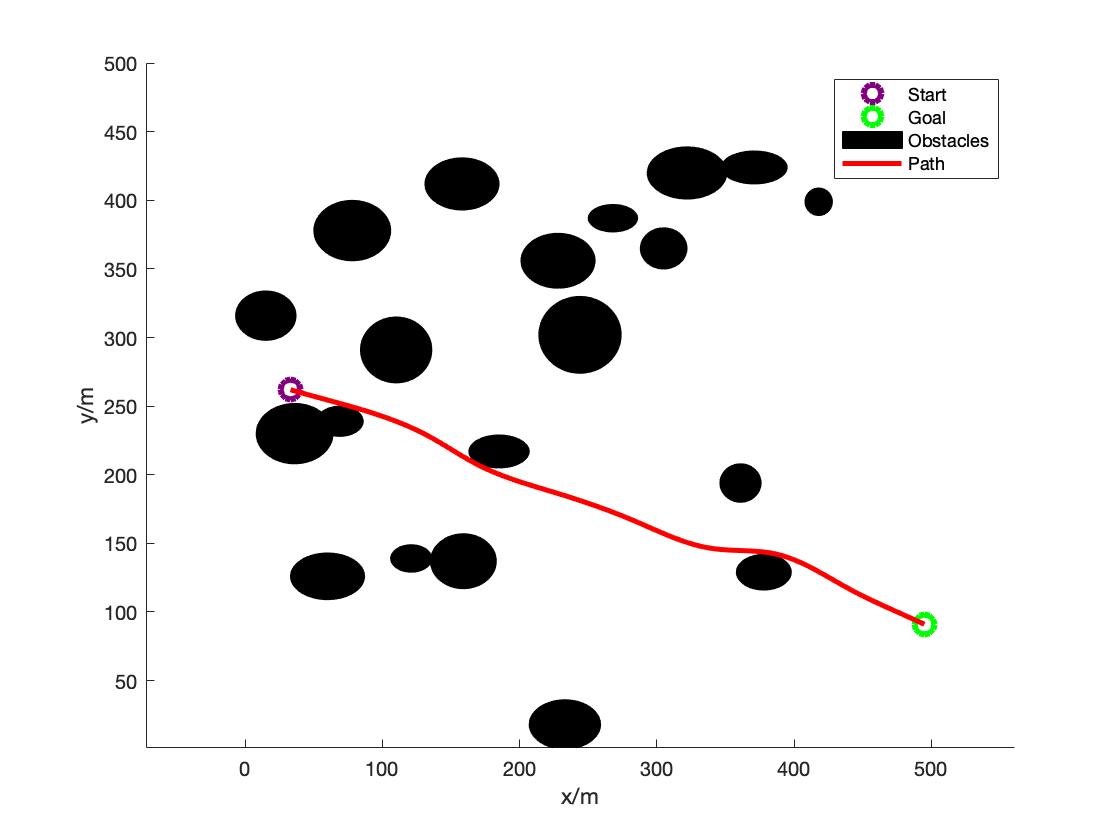
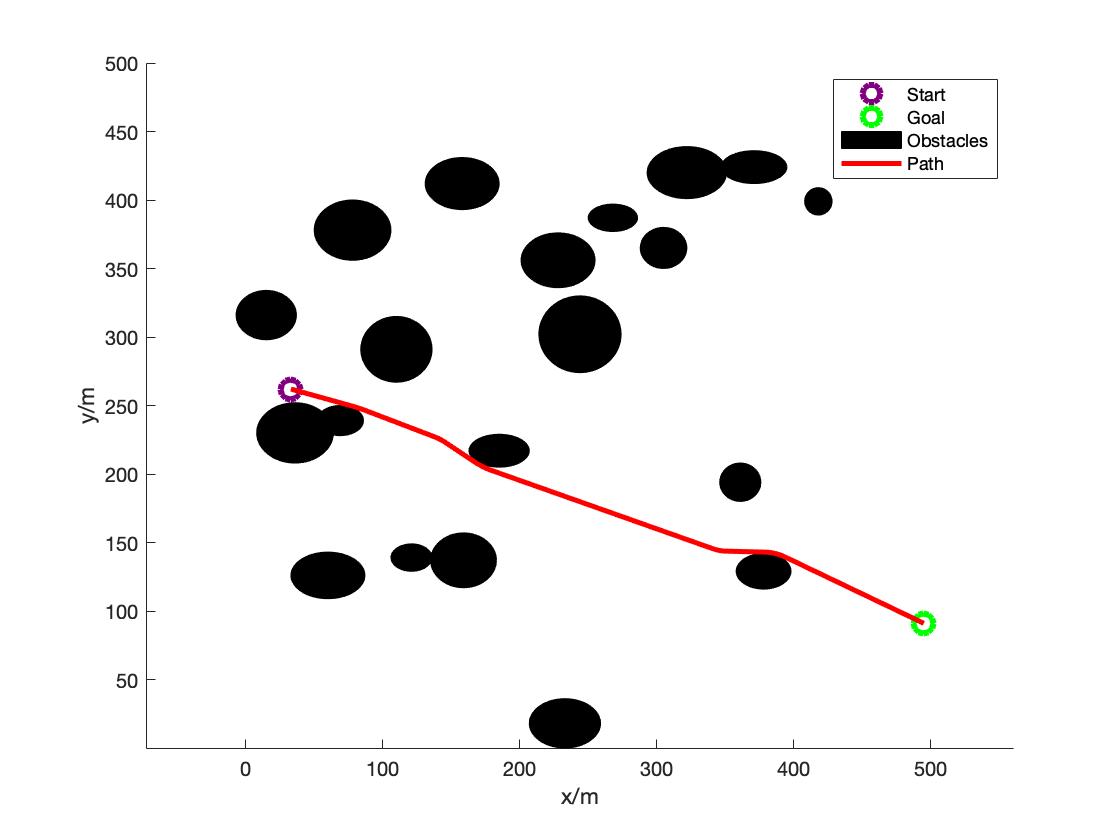
Generatedpathsinunknownenvironmentonasparsemap(C25)
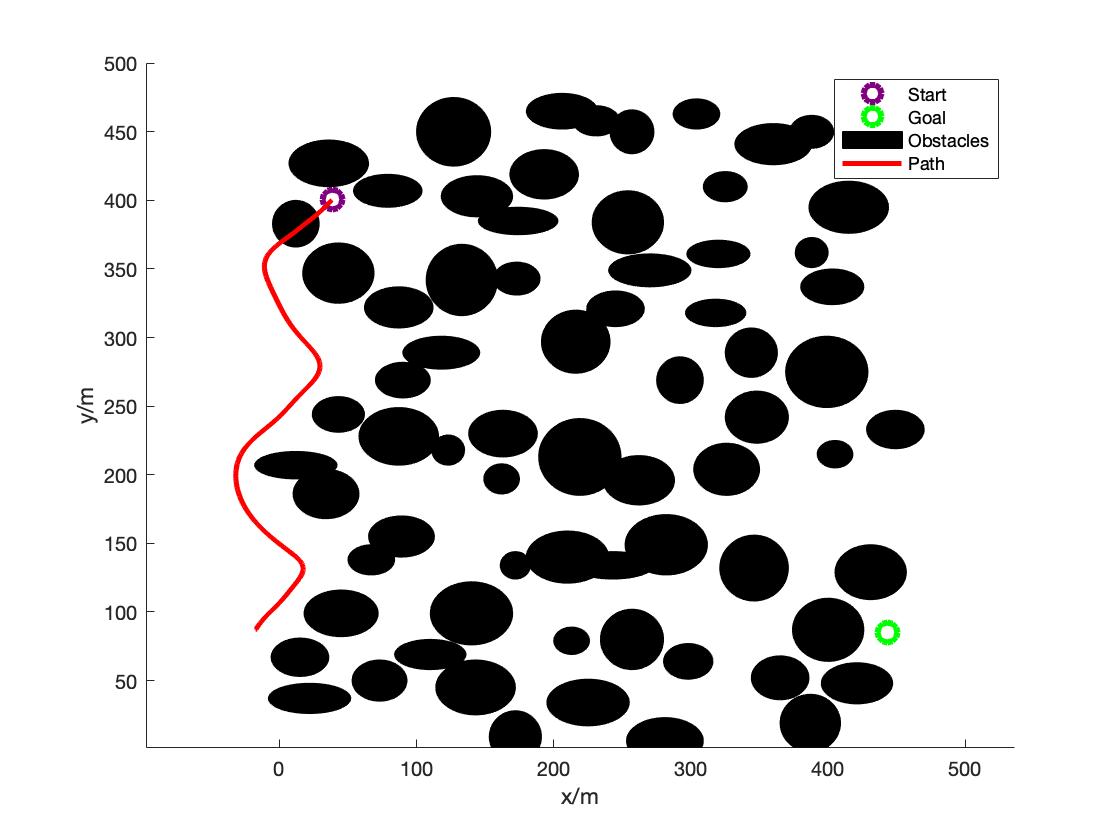
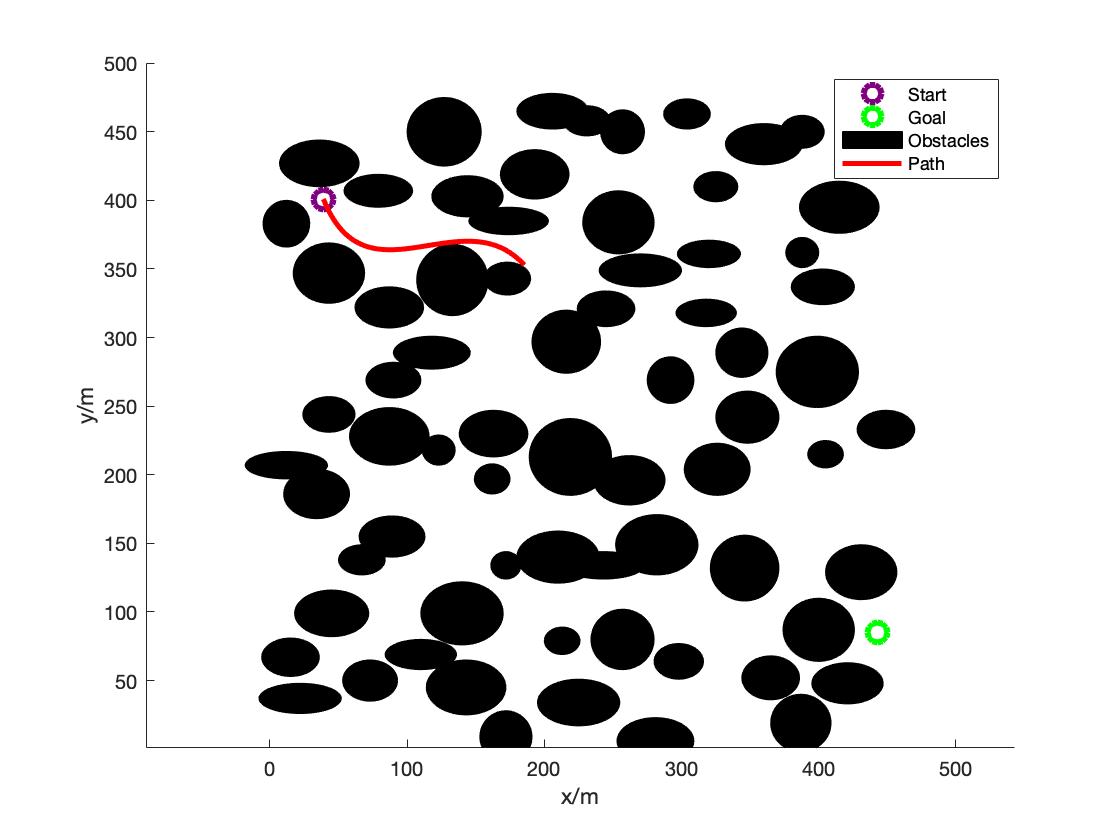
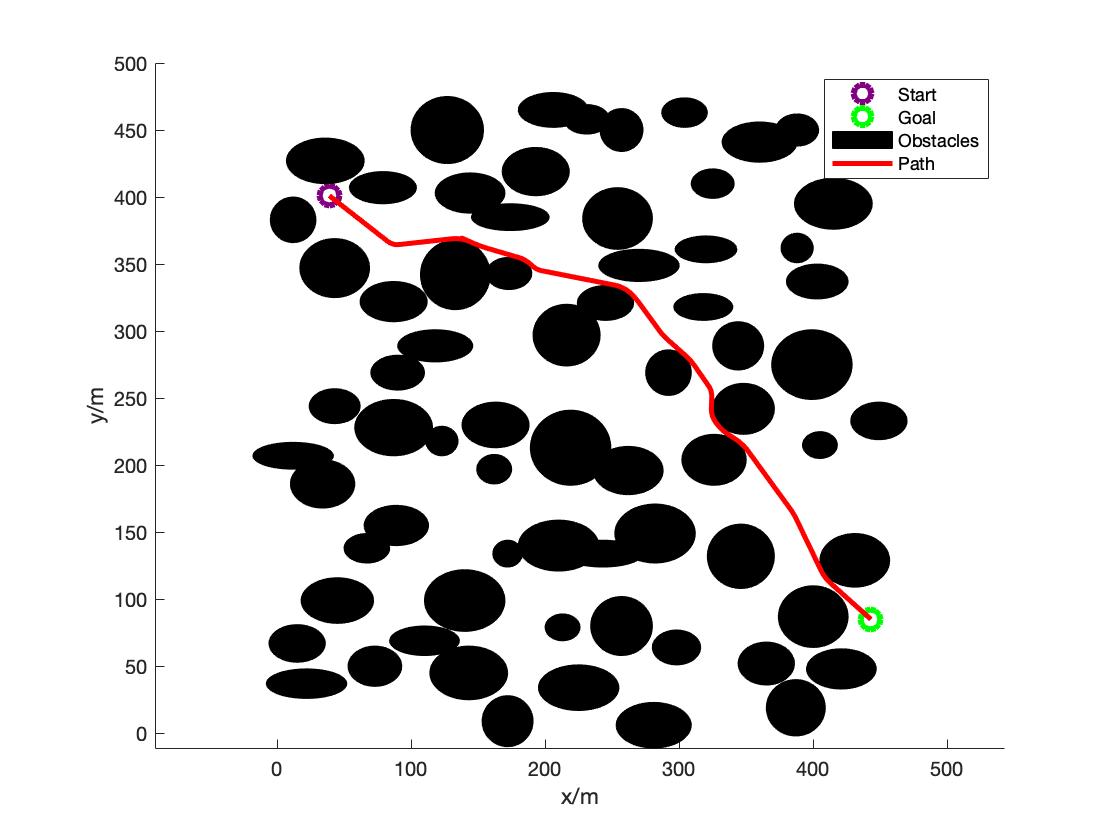
Figure18. Generatedpathsinunknownenvironmentonadensemap(C29)
Table3. Comparisonofdifferentdynamicpathplanningalgorithmsacrossdifferentscenarios
Table4. ComparisonofDifferentDynamicPathPlanningAlgorithmsAcrossDifferentScenarios
C26
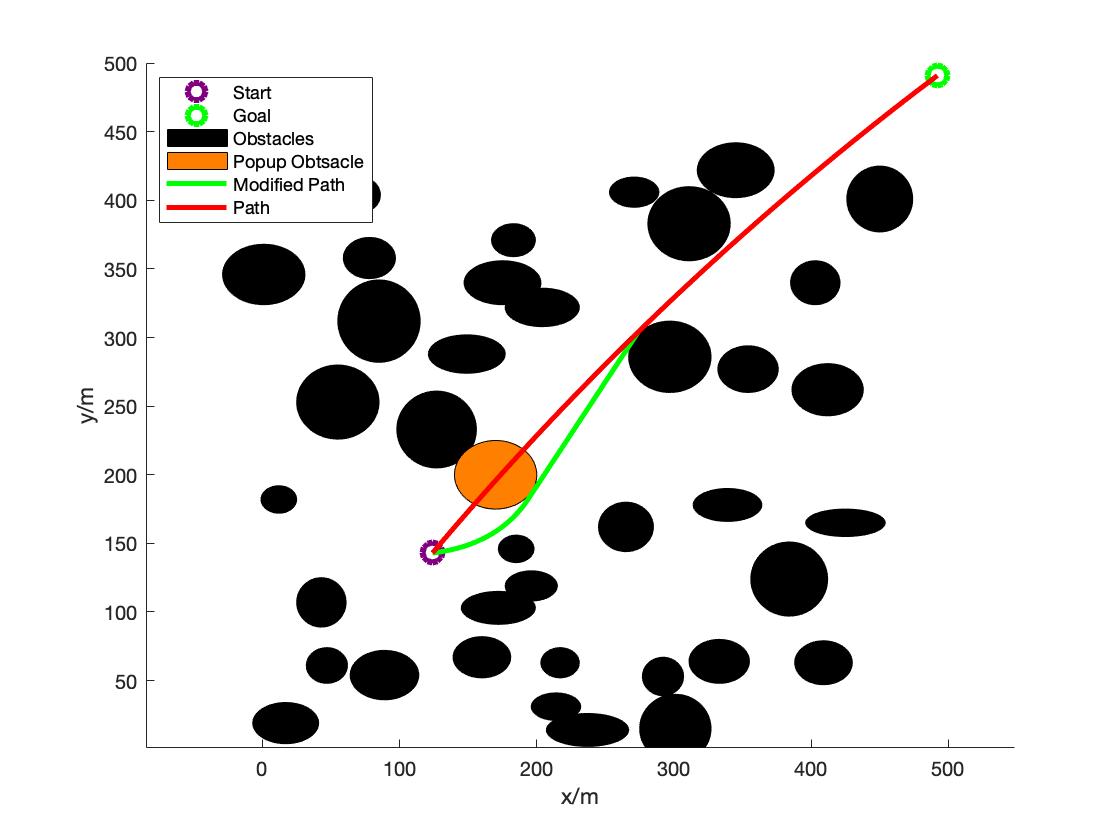
(a) APPATT
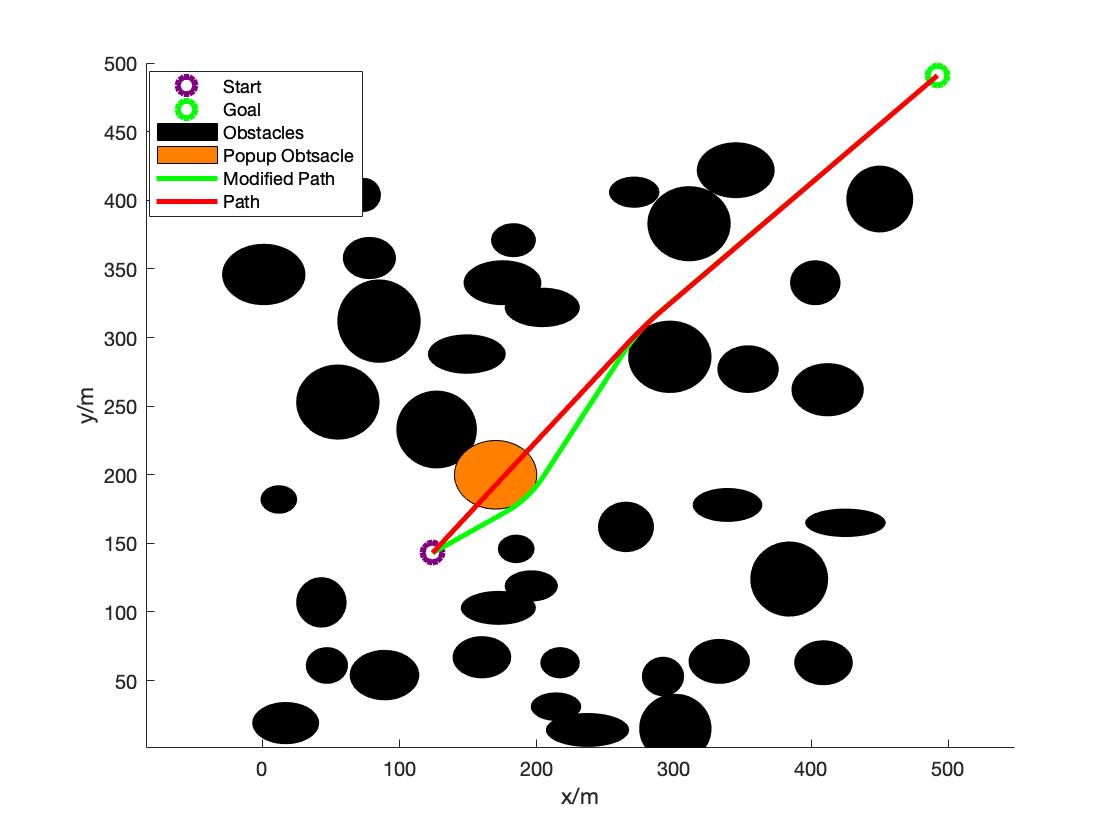
(b) D‐TIG
Figure19. Generatedpathsinapartiallyknownenvironmentwithpop‐upobstaclesonashortmap(C19)
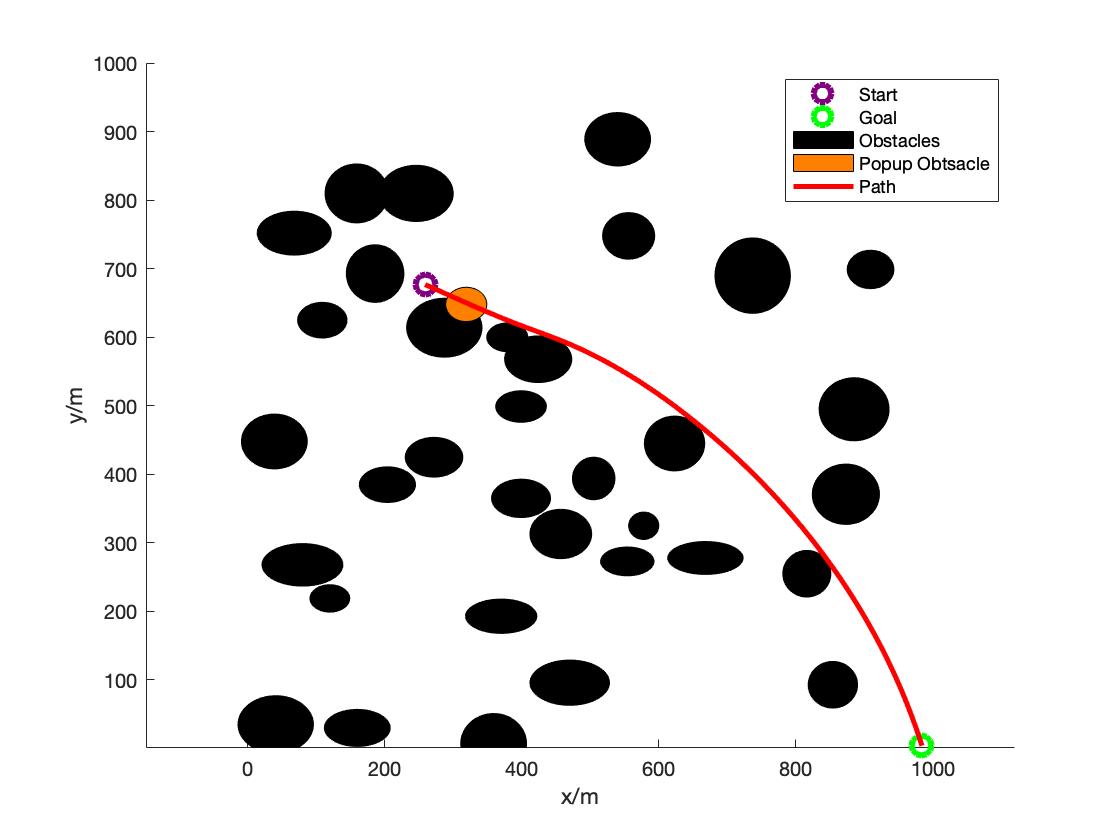
(a) APPATT
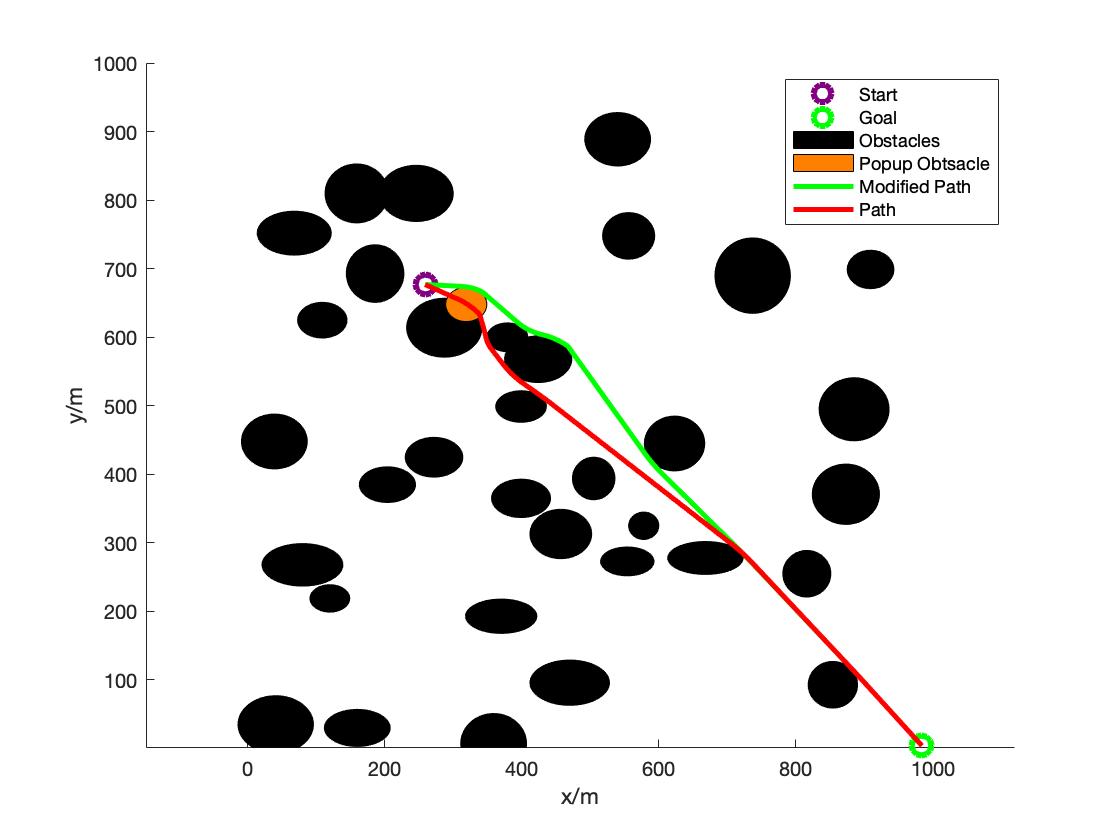
(b) D‐TIG
Figure20. Generatedpathsinapartiallyknownenvironmentwithpop‐upobstaclesonalongmap(C20)
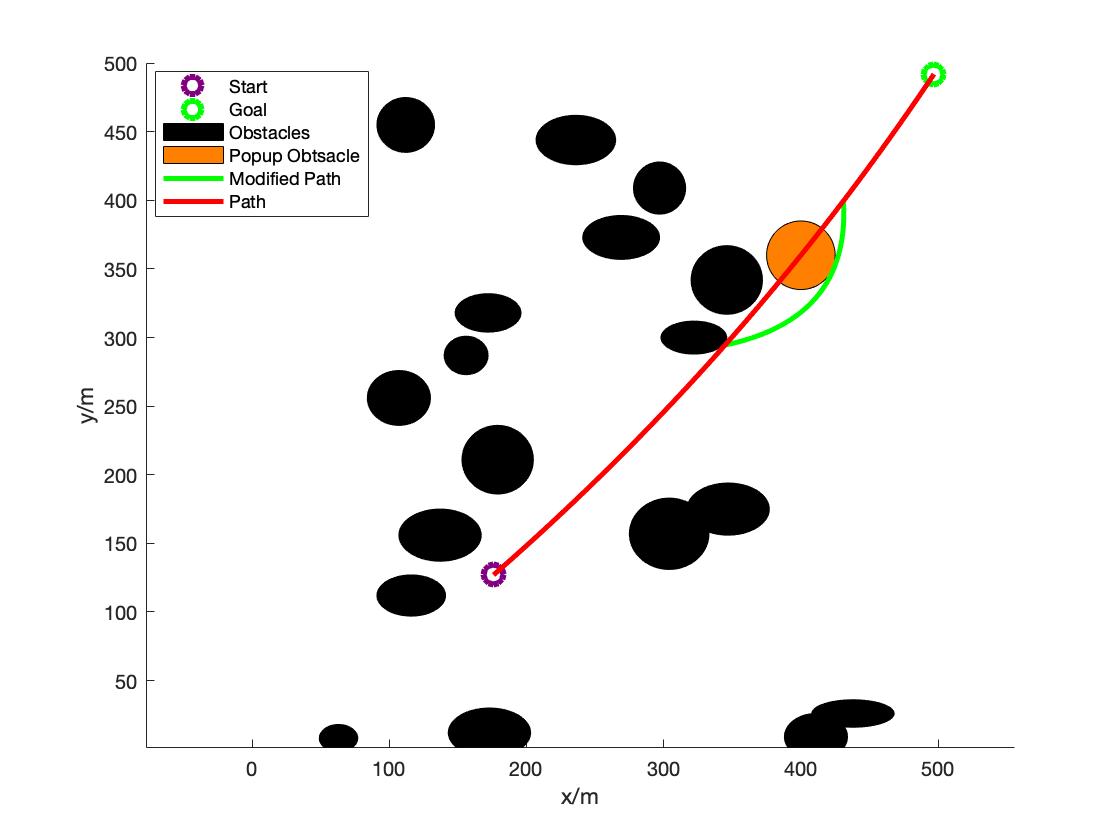
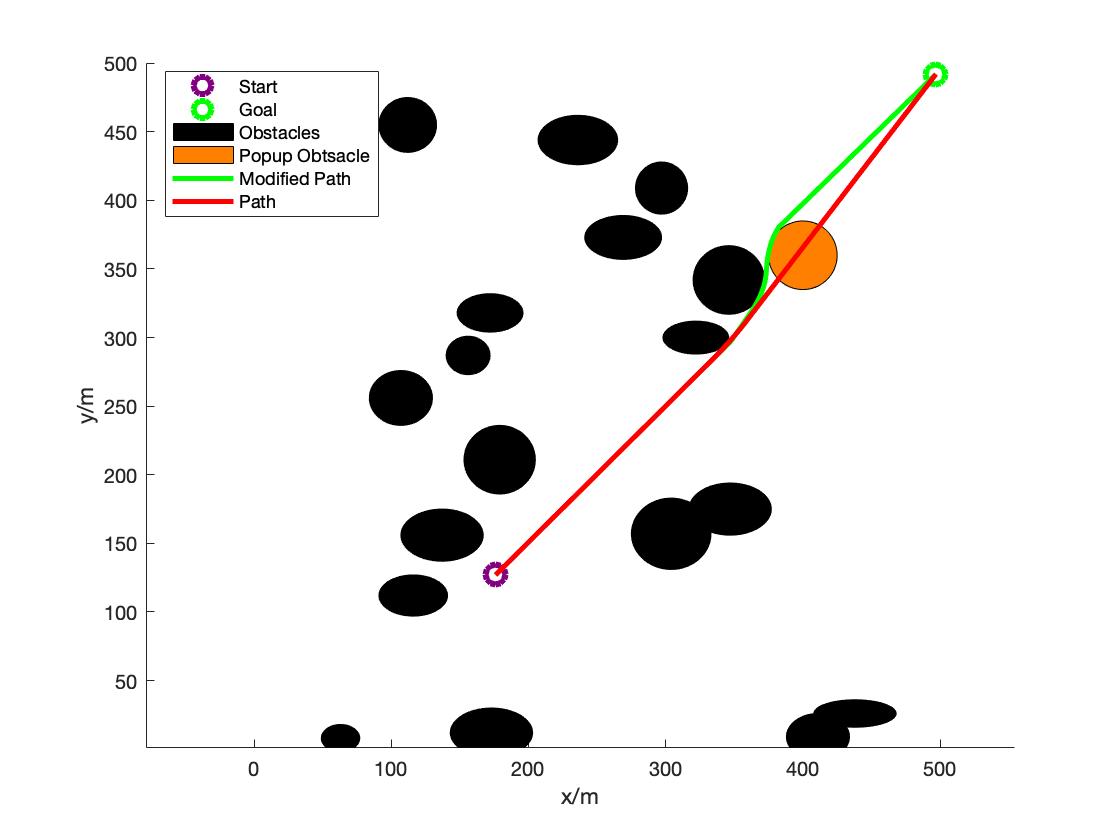
Generatedpathsinapartiallyknownenvironmentwithpop‐upobstaclesonasparsemap(C25)
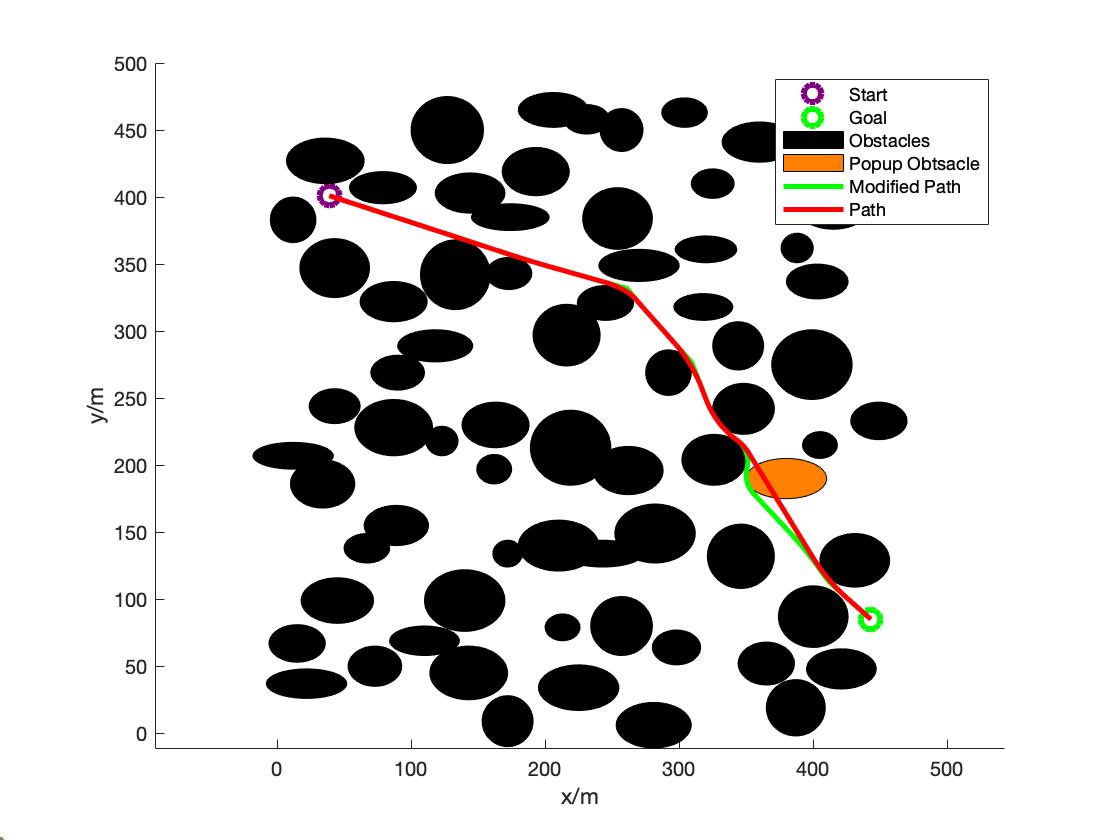
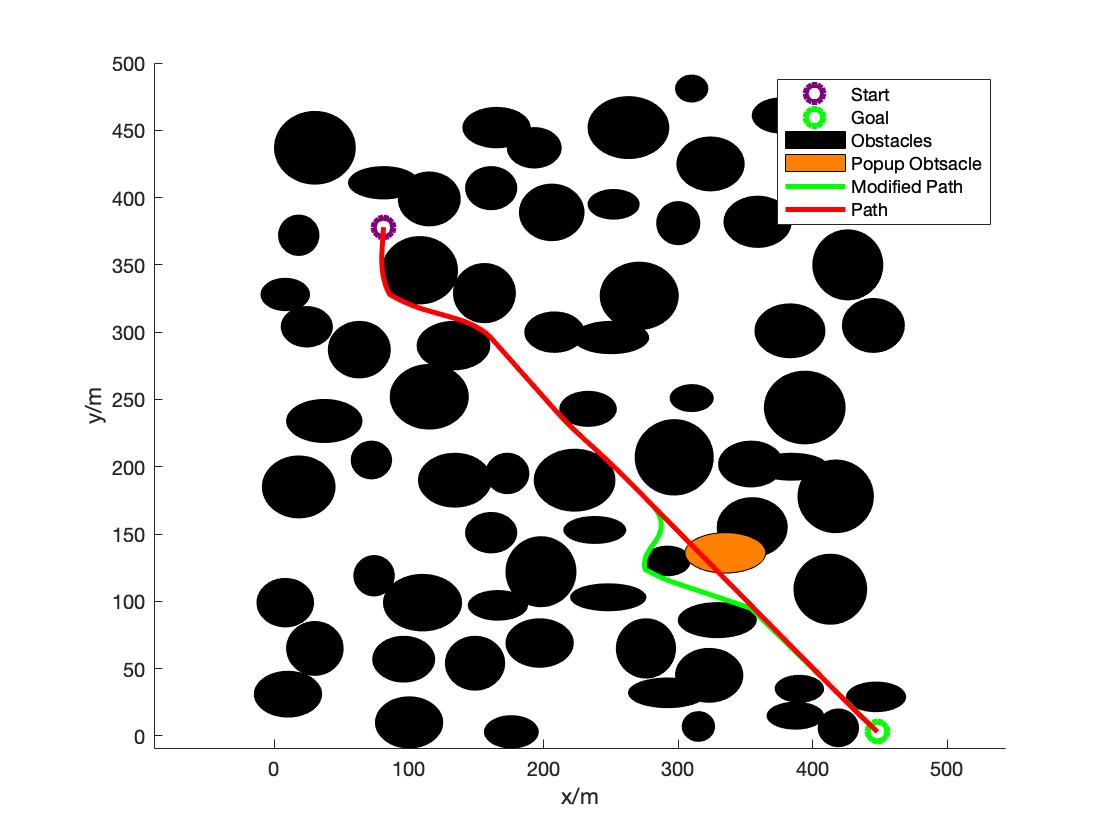
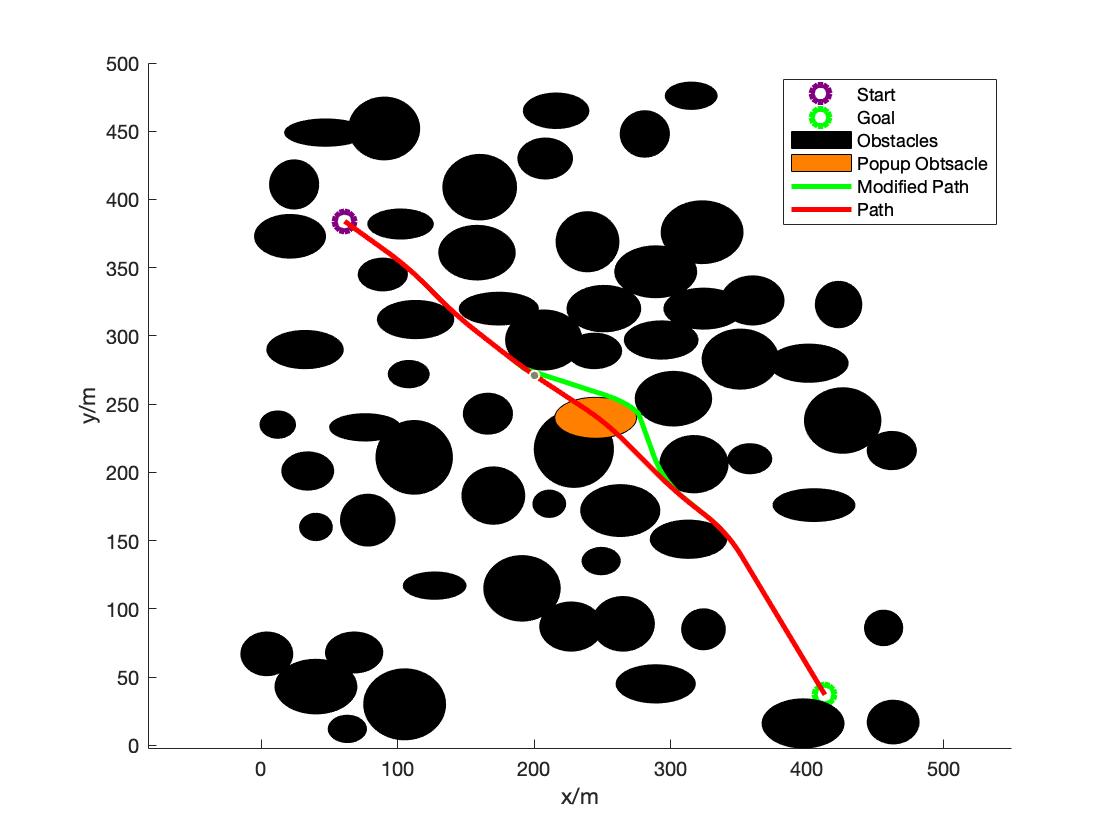
GeneratedpathsusingD‐TIGinapartiallyknownenvironmentwithpop‐upobstaclesondensemaps
TheAPPATTalgorithmisbasedonthetangent intersectionwiththegoalpositiontocreatefeasi‑ blewaypointsinthesearchspace.Incontrast,the dynamicplanner(D‑TIG)usesawaypointsgenera‑ tiontechnique,whichproducespathsclosertopop‑up obstacleswhilemaintainingasafedistancetoavoid collisions.Basedontheseresults,itisevidentthat theD‑TIGismoreeffectiveinapartiallyknownenvi‑ ronmentwithunexpectedobstaclescomparedtothe APPATTalgorithm.
Inthispaper,wepresenttheTangentIntersection Guidance(TIG)algorithm,anovelapproachfor UAVpathplanninginbothstaticanddynamic environments.Thealgorithmgeneratestwosub‑paths foreachellipticobstacleandselectstheoptimalone basedonaheuristicrule.Thisprocessisiteratively repeateduntilthetargetpointisreached.Thestatic planner(S‑TIG)isemployedinknownenvironments, andourtestresultsdemonstratethatS‑TIGgenerates pathsthatare,onaverage,11%shortercomparedto otherstaticmethodswhilereducingthenumberof turnsby70%andmaintainingalowcomputationtime ofaround0.1seconds,eveninhigher‑dimensional environments.Additionally,thedynamicplanner (D‑TIG)functionsasalocalplannerinpartially knownenvironmentswithunexpectedobstaclesand completelyunknownenvironments,outperforming existingreal‑timealgorithmsbyachievingfastreplan‑ ningtimesunder0.08secondsonly,whilereducing pathlengthandturninganglesbyapproximately9% and50%,respectively,comparedtootherdynamic algorithms.Despiteitsadvantages,TIGhassome limitations,particularlyinguaranteeingpathlength optimalityindynamicenvironments.Moreover,the scalabilityofTIGtohigh‑dimensionalspaces,espe‑ ciallyfull3Dpathplanning,requiresadditionalexplo‑ ration.FutureresearchwillfocusonextendingtheTIG frameworktothree‑dimensionalenvironments,opti‑ mizingheuristiccostfunctionstoensureadmissibility, andre iningpathsmoothingtechniquesforafairer comparisonwithotheralgorithms.Inconclusion,the TangentIntersectionGuidancealgorithmrepresents asigni icantstepforwardinUAVpathplanning technology.Byintegratingheuristic‑baseddecision‑ makingandBéziercurvesmoothing,TIGenhances UAVnavigationef iciencyandsafetyincomplex environments.Futurestudieswillfocusonaddressing theidenti iedlimitations,improvingcomputational scalability,andbenchmarkingagainstrecent advancementsinvisibilitygraph‑basedpathplanning methods.
Theauthorsdeclarethattheyhavenoknown competing inancialinterestsorpersonalrelation‑ shipsthatcouldhaveappearedtoin luencethework reportedinthispaper.
Thedatawillbeprovideduponrequest.
HichemCheriet∗ –PhdStudent,SIMPALaboratory, UniversitédesSciencesetdelaTechnologie d’Oran,BirElDjir31000,Oran,Algeria,e‑mail: hichem.cheriet@univ‑usto.dz,N/A.
BadraKhellatKihel –DepartmentofEconomics, Oran2MohamedBenAhmedUniversity,BirElDjir 31000,Oran,Algeria,e‑mail:khellat_badra@yahoo.fr, N/A.
SamiraChouraqui –ComputerScienceDepartment, UniversitédesSciencesetdelaTechnologied’Oran MohamedBoudiaf,BirElDjir31000,Oran,Algeria, e‑mail:samirachouraqui178@gmail.com,N/A.
∗Correspondingauthor
ACKNOWLEDGEMENTS
Thisworkwassupportedbytheresearchproject “ModelingandControlofAerialManipulators”N° C00L07UN310220230004.
References
[1] J.ruFan,D.guangLi,R.pengLi,and Y.Wang,“AnalysisonMAV/UAVCooperative CombatBasedonComplexNetwork”, DefenceTechnology,vol.16,2020,150–157, 10.1016/J.DT.2019.09.002.
[2] A.Sehrawat,T.A.Choudhury,andG.Raj, “SurveillanceDroneForDisasterManagement andMilitarySecurity”, Proceeding‑IEEEInterna‑ tionalConferenceonComputing,Communication andAutomation,ICCCA2017,vol.2017‑January, 2017,470–475,10.1109/CCAA.2017.8229846.
[3] J.Dong,K.Ota,andM.Dong,“UAV‑BasedReal‑ TimeSurvivorDetectionSysteminPost‑Disaster SearchandRescueOperations”, IEEEJournalon MiniaturizationforAirandSpaceSystems,vol.2, 2021,209–219,10.1109/JMASS.2021.3083659.
[4] O.M.Bushnaq,D.Mishra,E.Natalizio,andI.F. Akyildiz.“UnmannedAerialVehicles(UAVs)for DisasterManagement”,12022.
[5] S.Sawadsitang,D.Niyato,P.S.Tan,and P.Wang,“JointGroundandAerialPackage DeliveryServices:AStochasticOptimization Approach”, IEEETransactionsonIntelligent TransportationSystems,vol.20,2018,2241–2254,10.1109/TITS.2018.2865893.
[6] D.Sacramento,D.Pisinger,andS.Ropke, “AnAdaptiveLargeNeighborhoodSearch MetaheuristicfortheVehicleRoutingProblem withDrones”, TransportationResearchPartC: EmergingTechnologies,vol.102,2019,289–315, 10.1016/J.TRC.2019.02.018.
[7] R.Kumar,N.Kori,andV.K.Chaurasiya,“Real‑ TimeDataSharing,PathPlanningandRoute
OptimizationinUrbanTraf icManagement”, MultimediaToolsandApplications,vol.82,2023, 36343–36361,10.1007/S11042‑023‑15148‑9.
[8] X.Tian,Y.Jia,X.Luo,andJ.Yin,“SmallTar‑ getRecognitionandTrackingBasedonUAV Platform”, Sensors,vol.22,no.17,2022,6579, 10.3390/s22176579.
[9] C.Yin,Z.Xiao,X.Cao,X.Xi,P.Yang,andD.Wu, “Of lineandOnlineSearch:UAVMultiobjective PathPlanningUnderDynamicUrbanEnviron‑ ment”, IEEEInternetofThingsJournal,vol.5,no. 2,2018,546–558,10.1109/JIOT.2017.2717078.
[10] P.E.Hart,N.J.Nilsson,andB.Raphael,“AFormal BasisfortheHeuristicDeterminationofMini‑ mumCostPaths”, IEEETransactionsonSystems ScienceandCybernetics,vol.4,1968,100–107, 10.1109/TSSC.1968.300136.
[11] E.W.Dijkstra,“ANoteonTwoProblemsinCon‑ nexionwithGraphs”, NumerischeMathematik, vol.1,1959,269–271,10.1007/BF01386390.
[12] Y.V.Pehlivanoglu,“ANewVibrationalGenetic AlgorithmEnhancedwithaVoronoiDiagramfor PathPlanningofAutonomousUAV”, Aerospace ScienceandTechnology,vol.16,2012,47–55, 10.1016/J.AST.2011.02.006.
[13] N.S.Abu,W.M.Bukhari,M.H.Adli,S.N.Omar, andS.A.Sohaimeh,“AComprehensiveOverview ofClassicalandModernRoutePlanningAlgo‑ rithmsforSelf‑DrivingMobileRobots”, Journalof RoboticsandControl(JRC),vol.3,2022,666–678, 10.18196/JRC.V3I5.14683.
[14] H.Rohnert,“ShortestPathsinthePlanewith ConvexPolygonalObstacles”, Information ProcessingLetters,vol.23,1986,71–76, 10.1016/0020‑0190(86)90045‑1.
[15] H.Chen,K.Chang,andC.S.Agate,“UAVPath PlanningwithTangent‑Plus‑LyapunovVector FieldGuidanceandObstacleAvoidance”, IEEETransactionsonAerospaceand ElectronicSystems,vol.49,2013,840–856, 10.1109/TAES.2013.6494384.
[16] Y.Liu,Q.Wang,H.Hu,andY.He,“ANovel Real‑TimeMovingTargetTrackingandPath PlanningSystemforaQuadrotorUAVin UnknownUnstructuredOutdoorScenes”, IEEETransactionsonSystems,Man,and Cybernetics:Systems,vol.49,2019,2362–2372, 10.1109/TSMC.2018.2808471.
[17] X.Wu,L.Xu,R.Zhen,andX.Wu,“Bi‑Directional AdaptiveA*AlgorithmTowardOptimalPath PlanningforLarge‑ScaleUAVunderMulti‑ Constraints”, IEEEAccess,vol.8,2020,85431–85440,10.1109/ACCESS.2020.2990153.
[18] M.shunYuan,T.leZhou,andM.Chen,“Improved LazyTheta*AlgorithmBasedonOctreeMapfor PathPlanningofUAV”, DefenceTechnology,vol. 23,2023,8–18,10.1016/J.DT.2022.01.006.
[19] B.Banday,V.Kasula,N.Surwade,S.R.Nagrare, andD.Ghose.“UAVPathPlanningforCave ExplorationUsingTangentBasedIntersection Method”,12024.
[20] Y.H.LiuandS.Arimoto,“PathPlanningUsinga TangentGraphforMobileRobotsAmongPolyg‑ onalandCurvedObstacles”, TheInternational JournalofRoboticsResearch,vol.11,1992,376–382,10.1177/027836499201100409.
[21] L.Blasi,E.D’Amato,M.Mattei,andI.Notaro, “UAVPathPlanningin3‑DConstrainedEnvi‑ ronmentsBasedonLayeredEssentialVisibil‑ ityGraphs”, IEEETransactionsonAerospaceand ElectronicSystems,vol.59,2023,2359–2375, 10.1109/TAES.2022.3213230.
[22] B.C.ShahandS.K.Gupta,“SpeedingUp A*SearchonVisibilityGraphsDe inedOver QuadtreestoEnableLongDistancePathPlan‑ ningforUnmannedSurfaceVehicles”, Proceed‑ ingsoftheInternationalConferenceonAuto‑ matedPlanningandScheduling,vol.26,2016, 527–535,10.1609/ICAPS.V26I1.13793.
[23] H.Liu,X.Li,M.Fan,G.Wu,W.Pedrycz,and P.N.Suganthan,“AnAutonomousPathPlan‑ ningMethodforUnmannedAerialVehicleBased onaTangentIntersectionandTargetGuidance Strategy”, IEEETransactionsonIntelligentTrans‑ portationSystems,vol.23,2022,3061–3073, 10.1109/TITS.2020.3030444.
[24] O.Khatib.“ThePotentialFieldApproachand OperationalSpaceFormulationinRobotCon‑ trol”.In: RoboticSystemsforManipulationand Assembly,367–377.SpringerUS,Boston,MA, 1986.
[25] J.BorensteinandY.Koren,“TheVector FieldHistogram—FastObstacleAvoidance forMobileRobots”, IEEETransactionson RoboticsandAutomation,vol.7,1991,278–288, 10.1109/70.88137.
[26] L.E.Kavraki,P.Svestka,J.C.Latombe,and M.H.Overmars,“ProbabilisticRoadmaps forPathPlanninginHigh‑Dimensional Con igurationSpaces”, IEEETransactionson RoboticsandAutomation,vol.12,1996,566–580,10.1109/70.508439.
[27] S.LAVALLE.“Rapidly‑ExploringRandomTrees: ANewToolforPathPlanning”,1998.
[28] X.Zhou,W.Zheng,Z.Li,P.Wu,andY.Sun, “ImprovingPathPlanningEf iciencyforUnder‑ waterGravity‑AidedNavigationBasedona NewDepthSortingFastSearchAlgorithm”, DefenceTechnology,vol.32,2024,285–296, 10.1016/J.DT.2023.04.012.
[29] I.B.Jeong,S.J.Lee,andJ.H.Kim,“Quick‑RRT*: TriangularInequality‑BasedImplementation ofRRT*withImprovedInitialSolution andConvergenceRate”, ExpertSystems withApplications,vol.123,2019,82–90, 10.1016/J.ESWA.2019.01.032.
[30] S.Forrest,“GeneticAlgorithms:Principlesof NaturalSelectionAppliedtoComputation”, Sci‑ ence,vol.261,1993,872–878,10.1126/SCI‑ ENCE.8346439.
[31] J.KennedyandR.Eberhart,“ParticleSwarm Optimization”, ProceedingsofICNN’95‑Inter‑ nationalConferenceonNeuralNetworks,vol.4, 1995,1942–1948,10.1109/ICNN.1995.488968.
[32] M.DorigoandG.D.Caro,“AntColonyOpti‑ mization:ANewMeta‑Heuristic”, Proceedings ofthe1999CongressonEvolutionaryCom‑ putation,CEC1999,vol.2,1999,1470–1477, 10.1109/CEC.1999.782657.
[33] S.Mirjalili,S.M.Mirjalili,andA.Lewis, “GreyWolfOptimizer”, Advancesin EngineeringSoftware,vol.69,2014,46–61, 10.1016/J.ADVENGSOFT.2013.12.007.
[34] C.Cortes,V.Vapnik,andL.Saitta,“Support‑ VectorNetworks”, MachineLearning199520:3, vol.20,1995,273–297,10.1007/BF00994018.
[35] I.N.daSilva,D.H.Spatti,R.A.Flauzino,L.H.B. Liboni,andS.F.dosReisAlves.“Arti icialNeural Networks:ApracticalCourse”,12016.
[36] A.Bessede,M.Gargaro,M.T.Pallotta,D.Matino, G.Servillo,C.Brunacci,S.Bicciato,E.M.Mazza, A.Macchiarulo,C.Vacca,R.Iannitti,L.Tissi, C.Volpi,M.L.Belladonna,C.Orabona,R.Bianchi, T.V.Lanz,M.Platten,M.A.D.Fazia,D.Piob‑ bico,T.Zelante,H.Funakoshi,T.Nakamura, D.Gilot,M.S.Denison,G.J.Guillemin,J.B.Duhad‑ away,G.C.Prendergast,R.Metz,M.Geffard,
L.Boon,M.Pirro,A.Iorio,B.Veyret,L.Romani, U.Grohmann,F.Fallarino,andP.Puccetti, “DeepReinforcementLearning:AnOverview”, arXiv.org,vol.511,2017,184–190.
[37] I.K.Nikolos,E.S.Zografos,andA.N.Brintaki. UAV PathPlanningUsingEvolutionaryAlgorithms, volume70,chapterUAVPathPlanningUsing EvolutionaryAlgorithms,77–111.Springer, Berlin,Heidelberg,2007.
[38] J.Wu,J.Yi,L.Gao,andX.Li.“CooperativePath PlanningofMultipleUAVsBasedonPHCurves andHarmonySearchAlgorithm”,102017.
[39] H.Shiri,J.Park,andM.Bennis,“RemoteUAV OnlinePathPlanningviaNeuralNetwork‑ BasedOpportunisticControl”, IEEEWireless CommunicationsLetters,vol.9,2020,861–865, 10.1109/LWC.2020.2973624.
[40] A.Ravankar,A.A.Ravankar,Y.Kobayashi, Y.Hoshino,andC.C.Peng,“PathSmoothing TechniquesinRobotNavigation:State‑of‑the‑ Art,CurrentandFutureChallenges”, Sensors 2018,Vol.18,Page3170,vol.18,2018,3170, 10.3390/S18093170.
[41] M.OtteandE.Frazzoli,“RRTX:Real‑ TimeMotionPlanning/Replanningfor EnvironmentswithUnpredictableObstacles”, WorkshopontheAlgorithmicFoundations ofRobotics,vol.107,2014,461–478, 10.1007/978−3−319−16595−027
Submitted: July 2024; accepted 6th September 2024
Wan Mohd Bukhari Wan Daud, Adnan Kiral, Mohamed Osman Tokhi, Lee Chung Yee, Muhammad Muzhafar Mohammad Zawawi
DOI: 10.14313/jamris-2026-019
Abstract:
The use of artificial intelligence (AI) has significantly advanced emotion recognition within human-computer interaction (HCI). This paper aims to develop a multimodal emotion detection system for educational and work environments using an enhanced AI machine vision system. The primary focus is on training and testing a multimodal AI model in Python using convolutional neural networks (CNN). The results from the trained facial emotion AI model demonstrated substantial improvements. Training accuracy increased from 30.49% to 72.21%, while validation accuracy improved from 37.6% to 60.58%. Simultaneously, training loss decreased from 180.69% to 73.65%, and validation loss reduced from 172.97% to 107.53%. This CNN-based model can use OpenCV to detect seven emotions: happy, sad, neutral, angry, afraid, disgusted, and surprised. The ECG emotion AI model, also trained with CNN, also successfully recognized patterns for the same seven emotions. When these two models are combined into a multimodal AI system, they can detect facial and ECG-based emotions simultaneously. This comprehensive approach allows for the detection of both visible and hidden emotions, such as stress or anxiety, which may not be easily discernible through facial expressions alone. The integration of these models into a multimodal AI system provides a more accurate and holistic understanding of human emotions, enhancing applications in educational and work settings. The improved detection capabilities can lead to better user experiences and more effective responses to emotional states, ultimately contributing to advancements in HCI.
Keywords: Artificial Intelligence, Multimodal Emotion Detection, Machine Learning, Convolutional Neural Network, Machine Vision System
Emotion detection integrates artificial intelligence, machine learning, and psychology in attempting to identify, analyze, and interpret human emotions through computational methods [8]. Its foundation lies in analyzing various data streams that encompass visual cues, like facial expressions captured through image or video data; linguistic patterns from textual information and tonal inflections in speech; physiological signals such as heart rate or electrodermal
activity. They have even been able to analyze behavioral cues. Employing complicated algorithms and techniques like machine learning models, deep neural networks, natural language processing, and computer vision, these systems extract, analyze, and interpret features embedded within these data modalities to differentiate and categorize emotional states [19].
The complexity of this field is amplified by the multifaceted nature of emotions, including slight variations and cultural differences in their expression, as well as the complex interaction between different emotional dimensions. Emotion detection systems continuously evolve, striving for greater accuracy and depth in understanding emotions beyond basic classifications (like happiness, sadness, anger) to address the nuances within each emotional state. These advancements smooth out the way for applications across various sectors, including the workplace, education, healthcare and customer service. Emotion detection, for example, can identify signs of stress or burnout among employees. This allows employers to implement strategies for stress reduction, provide support, and create a healthier work environment at their workplace. In the education field, emotion detection is also core to adaptive learning systems, in which educators to adjust teaching styles and content based on students’ emotional states.
Ethical considerations surrounding privacy, biases, and fairness are integral in the development and deployment of these systems. We must ensure their responsible and equitable use while harnessing the potential to build more empathetic and responsive AI technologies that enhance human-machine interactions and enrich our understanding of human emotions and behaviors.
Recently, mental health issues in Malaysia became a major public health concern. The number of individuals experiencing serious long-term mental health issues such as depression, anxiety, stress and so on had increased drastically, and suicides had become more widespread. In Malaysia, there are about 5.5 million adolescents and the statistics have shown that 1 in 5 are depressed, 2 in 5 are anxious and 1 in 10 are stressed. Between 2012 and 2017, the rate of adolescent suicidal behavior—such as suicidal ideation, planning and attempts—had increased. Suicidal ideation increased from 7.9% to 10.0%, suicidal planning increased from 6.4% to 7.3%; and attempts increased
6.8% to 6.9%. As a result, mental health issues at the workplace or education have become a wake-up call to society and need to be solved urgently.
Most people tend to suppress their feelings rather than express their feelings to others. This has made it more difficult for people to recognize emotions in others. Emotion detection using artificial intelligence (AI) has played an important role in order to addressing this problem, as it can detect people’s emotion without asking them. Mental health issues in education and the workplace can thus be identified early, and treatment can be started as soon as an abnormal emotional pattern is detected by the AI. The research of X. Li et al. [7] found that emotion detection has garnered significant interest in the field of education during the past few decades, since students’ emotions are directly related to their learning effectiveness and academic performance. Based on the timely monitoring of students’ emotional states with considerable assistance from AI, instructors can assess the emotions and engagement levels of their students in a way that is difficult to determine from watching them in a big classroom.
To design the AI model, the focus of the literature review was to find:
1. Types of emotional expression.
2. Types of emotion detection systems.
3. Types of artificial intelligence (AI) technologies.
4. Types of machine learning systems.
In 2022, T. Kusunose et al. [3] highlighted that facial expressions are among the most efficient and effective ways to signal emotions, functioning as a near-universal language. This is because the facial cranial nerves that control the muscles involved in facial expressions are highly versatile, surpassing even the vocal cords in conveying prosody and inflection. Specific combinations of facial movements, such as a smile or displaying teeth, can indicate happiness, anger, or concern. Recent advancements in facial recognition technology can detect these expressions in real time, offering valuable applications in healthcare, education, and work environments for assessing emotions and task engagement.
In 2018, L. Shu et al. [29] found that physiological signals like electroencephalogram (EEG), electrocardiogram (ECG), and electromyography (EMG) are crucial for emotion detection due to their direct link to emotional states. These signals provide objective measures of physiological responses influenced by emotional arousal and valence, offering insights into emotions that may be difficult to verbalize. The process involves extracting features from these signals, such as EEG frequency bands or ECG heart rate variability, which are then analyzed and associated with emotions using machine learning algorithms. This method enables real-time monitoring and improves the accuracy and reliability of emotion recognition systems in various applications.
In 2021, X. Li et al. [7] wrote that AI-driven emotion detection focuses on automatically analyzing students’ emotional states during educational lessons. AI systems can process large amounts of data from text, speech, facial expressions, and body language, recognizing emotions based on eye and head movements in online learning environments. Machine learning algorithms enable these systems to continuously improve their accuracy by learning from new data, making them effective for monitoring user status and mitigating risks. Additionally, as noted by G. Assunça�o et al. [8] in 2022, AI systems provide consistent and objective analysis, reduce human bias, and can be scaled for large-scale applications such as customer sentiment analysis and mental health monitoring.
In 2023, G. Shi [10] proposed using machine learning technologies to detect emotions by training AI models on extensive data. These algorithms continuously learn and improve their accuracy in recognizing patterns in facial expressions, speech, and body language. Machine learning is adept at identifying subtle emotional cues and can be customized for specific contexts, languages, or cultures. It enables real-time, scalable emotion detection across various applications—such as computer vision, natural language processing, and audio recognition—without requiring constant human intervention. This approach has significantly enhanced the efficiency and effectiveness of emotion detection.
M. U. Khan et al. [19] recommended the use of using deep learning methods, particularly transfer learning with models like MobileNetV2, to train emotion detection models. These methods automatically learn hierarchical representations from raw data, such as images, enhancing their ability to extract complex features crucial for recognizing emotional cues from facial expressions. Pre-training on large datasets like ImageNet allows these models to leverage learned representations to improve performance on emotion-specific datasets, such as Kaggle’s emotion dataset. Adjusting learning rates further optimize accuracy, achieving as much as 98.7% accuracy at a learning rate of 0.0001. Deep learning architectures, including CNNs for image data and multimodal networks for integrating multiple data sources, excel in capturing intricate patterns across various modalities, advancing the accuracy and generalization of emotion detection systems without manual feature engineering.
The machine learning method, which is uses a convolutional neural network (CNN), is implemented for training and testing the AI model in Figures 1 and 2. Figure 1 shows a facial emotion recognition process. The input frame, containing images of faces, undergoes pre-processing to enhance and prepare the data. Subsequently, feature extraction identifies crucial characteristics from the processed images. These features are then classified into various categories, leading to the final predicted result—in this example, identification of the “Happy” emotion.
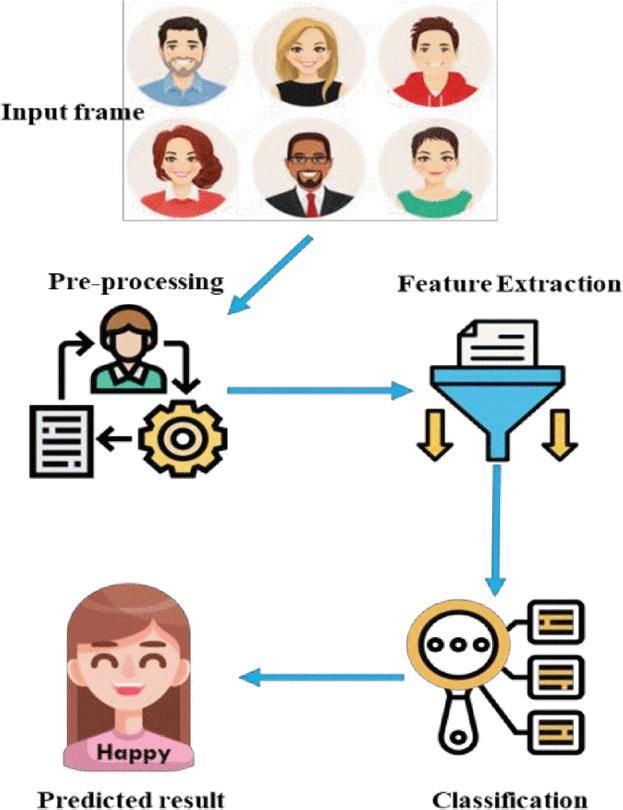
1. Flow process of training and testing the face emotion detection AI model using machine learning methods
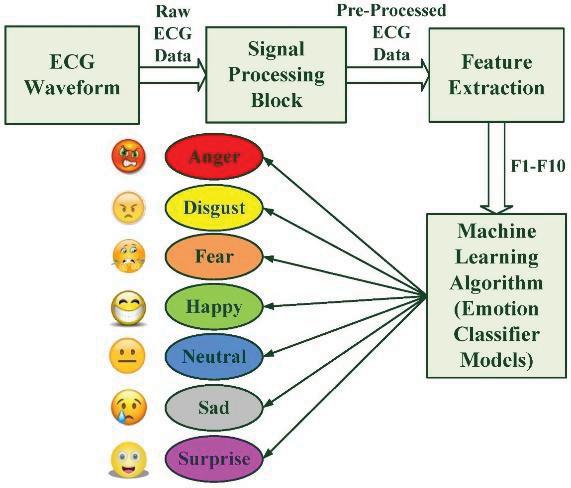
2. Block diagram of training and testing the ECG emotion detection AI model with machine learning methods
Figure 2 shows an emotion recognition process using ECG data. It begins by capturing the ECG waveform, which is then converted into raw ECG data. This data passes through a signal processing block, resulting in pre-processed ECG data. Feature extraction is performed on this data, generating features, labeled as “F1 score.” The features are then fed into a machine learning algorithm that classifies the data into one of seven emotions: happy, sad, neutral, angry, afraid, disgusted, and surprised.
3.1. Training and Testing the Face Emotion Detection AI Model Using Machine Learning Methods
3.1.1. Training the Face Emotion Detection AI Model
Step 1: Importing Libraries
Import various libraries for data manipulation, numerical operations, plotting, and interaction with
the OS, such as Matplotlib (plotting), NumPy (numerical operations), Pandas (data manipulation), Seaborn (statistical visualization), and ‘os’ (OS interaction). Import necessary deep learning libraries from Keras, including tools for image loading and conversion (load_img, img_to_array), image augmentation (Image Data Generator), building neural network layers (Dense, Input, Dropout), defining network architecture (Model, Sequential), and optimization algorithms (Adam, SGD, RMSprop).
Step 2: Displaying Images
Download the face expression recognition dataset from Kaggle. Define picture_size as 48 for input images, and set folder_path to the dataset directory. This prepares the code to work with 48x48 pixel images from the specified folder for facial expression recognition. Set expression to ‘happy’ and create a 12x12-inch plot for visualizing images related to the ‘happy’ expression. Load and display a 3x3 grid of images from the dataset using load_img and plt.imshow.
Step 3: Making Training and Validation Data
Set batch_size to 128. Create instances of Image Data Generator for both training and validation datasets, configuring data augmentation for training. Generate batches of training and validation data using flow_from_ directory, specifying image directories, target size, color mode, batch size, class mode, and data shuffling.
Step 4: Model Building
Import optimizers from Keras and set no_of_ classes to 7. Initialize a sequential model, adding convolutional layers with various filters and sizes, followed by batch normalization, ReLU activation, max-pooling, and dropout. Flatten the output before fully connecting layers. Add fully connected layers with 256 and 512 neurons, including batch normalization, ReLU activation, and dropout. Add output layers corresponding to the number of classes with softmax activation. Compile the model using the Adam optimizer with accuracy as the metric and categorical crossentropy as the loss function. Print the model summary.
Step 5: Fitting the Model with Training and Validation Data
Import Keras optimizers and callbacks. Define the checkpoint for saving the best model, EarlyStopping for stopping training with no improvement, and ReduceLROnPlateau for lowering the learning rate when needed. Set the number of epochs to 48. Assemble the model and start training using fit_generator.
Step 6: Plotting Accuracy and Loss
Set the plot style and create a new figure for accuracy and loss plots. Create subplots to display both loss and accuracy for training and validation.
3.1.2. Training the Facial Emotion Detection AI Model
Step 1: Importing Libraries
Import various libraries for a deep learning model using Keras and OpenCV. These include load_model for loading pre-trained models, sleep for delays, img_ to_array for converting images to arrays, image for image preprocessing, cv2 for computer vision tasks, and numpy for numerical operations.
Figure 3. Overall flowchart of facial emotion AI model training process
Step 2: Initialization of AI Model System
Initialize a face cascade classifier using a Haar Cascade XML file, which loads a pre-trained emotion classification model in HDF5 format, defines a list of emotion labels, and initializes a video capture object to start capturing video frames from the default camera.
Step 3: Setting up a Graphical Window for Displaying the Probabilities
Set up a graphical window to display different emotions’ probabilities by defining the window dimensions, creating a named window called ‘Probabilities’ with cv2.namedWindow, and resizing it to the specified dimensions using cv2.resizeWindow.
4. Overall flowchart of facial emotion AI model testing process
Step 4: Running and Debugging the AI Model System
The AI model system runs a real-time video processing loop where it detects faces using the pretrained face cascade classifier.
3.2. Testing the ECG Emotion Detection AI Model Using Machine Learning Methods
3.2.1. Training the ECG Emotion Detection AI Model
Step 1: Importing Libraries
Import various libraries, including glob, pandas, numpy, os, wget, github, tensorflow.keras, scikit-learn, matplotlib.pyplot, and scipy modules (signal, ndimage, stats, interpolate, and integrate). These libraries provide a wide range of functions for data management, as well as machine learning model creation, evaluation, and signal analysis.
Step 2: Data Processing
Process ECG data files from specified locations by selecting relevant segments and combining metadata
from external dataframes. The code cycles through files, retrieves data up to a predefined length, and parses filenames for session, participant, and video IDs. It filters annotations by comparing IDs with metadata rows, creating database entries with combined ECG data, participant characteristics, and emotional ratings. The processed data is then transformed into a pandas DataFrame, with missing values filled and columns renamed for clarity.
Step 3: Data Visualization
The data will be categorized into one of the seven emotions—happy, sad, neutral, angry, afraid, disgusted, and surprised— using both self-reported and target emotion labels. A custom plotting function iterates through the filtered data, plotting ECG signals for each category and providing a visual representation of ECG signal variations associated with different emotional states.
Step 4:
Create and train a neural network model for emotion identification based on ECG data using TensorFlow and Keras. The data is preprocessed, organized into features and target labels, and standardized. A sequential neural network model is defined with several dense layers, and the model is compiled with categorical cross-entropy loss and the Adam optimizer. Training is performed over 100 epochs with ModelCheckpoint and EarlyStopping callbacks to save the best model and prevent overfitting. The best model is then saved in the HDF5 format.
Step 5: Model Evaluation
Evaluate the pre-trained neural network ECG emotion detection model using a specific test dataset. The model.evaluate() function is used to compute performance metrics, such as accuracy and loss values. The results are stored in a variable and printed, providing a brief overview of the model’s predictive performance on unseen test data.
3.2.2. Testing the ECG Emotion Detection AI Model
Step 1: Monitoring Heart Rate in Arduino
Interface with a MAX30100 pulse oximeter sensor to monitor heart rate by establishing serial communication, initializing the sensor, updating readings, and printing the heart rate to the serial monitor every second in Arduino.
Step 2: Real-Time Visualization of Data from Arduino to PyCharm
Capture real-time heart rate data from an Arduino via a serial port, visualize it using Matplotlib, and save the data to a CSV file. The Arduino used to sets up a serial connection (COM4, baud rate 115200) and initializes a Matplotlib plot for dynamic heart rate display. The read_ and_process_data() function continuously reads serial port lines, extracts valid heart rate values (60-100 bpm), and appends them to heart_rate_data. The update_plot() function, called by Matplotlib’s animation framework every second, updates the plot with the latest readings. At the end of the heart rate measurement, the data is saved to ‘heart_rate_data.csv,’ and this enables real-time monitoring and logging of heart rate data.
Step
Test the AI model for ECG emotion recognition in Pycharm, importing necessary libraries (NumPy, pandas, TensorFlow’s Keras, scikit-learn’s StandardScaler, and Matplotlib). The preprocess_ecg function normalizes ECG data using StandardScaler. Load a pre-trained Keras model (ecg_emotion_recognizer.h5) for emotion recognition. ECG data is read from ‘heart_ rate_data.csv’ to simulate real-time data, and the ECG data is normalized using preprocess_ecg. The extract_ features function, which returns the normalized ECG data, is defined for feature extraction. The ECG signal is plotted using Matplotlib, and predictions are made by using the loaded model on extracted features. The predicted emotion label is then decoded and printed.
3.3. Testing the Multimodal Emotion Detection AI Model
3.3.1. Testing Multimodal Emotion Detection AI Model Using PyCharm
Step 1: Monitoring Heart Rate in Arduino
Build a multimodal emotion detection AI model using OpenCV for face detection integrating with ECG emotion detection. Facial emotions are predicted using a Haar Cascade classifier, while ECG emotions are predicted from the preprocessed ‘heart_rate_data. csv’ using a deep learning model. Combined emotions are determined by matching ECG and face predic-
tions, or by defaulting to the ECG emotion if no match occurs. The final combined emotion is then printed for each prediction.
Step 2: Display Combined Emotion in Web Browser
Display a textual description and an emoji in the web browser by the link given, based on the combined emotion from the multimodal emotion detection model.
In this section, the initial findings from the process of training and testing the multimodal AI model in PyCharm will be discussed.
4.1. Preliminary Results of the Facial Emotion AI Model
Accuracy is a key metric for evaluating convolutional neural networks (CNNs) during both training and validation stages. Training accuracy measures how well the model classifies samples from the training dataset, while validation accuracy assesses the model’s ability to generalize to new, unseen data. Both training and validation accuracy increased across epochs, indicating the model’s improving performance. The training accuracy reached 72.21%, slightly higher than the validation accuracy, which was 60.58%. A significant gap between these values could indicate overfitting, where the model performs well on training data but fails to generalize to new data. The training process, however, employs an early stopping technique to avoid overfitting.
Loss is a crucial metric for evaluating the performance of convolutional neural networks (CNNs) during the training and validation stages. Training loss measures the discrepancy between the model’s predictions and the target values in the training dataset, while validation loss assesses this discrepancy using a separate validation dataset.
The training loss decreased across epochs, indicating that the model’s adjustments to its parameters were improving its predictions. The validation loss also decreased, suggesting the model is learning to make accurate predictions on new, unseen data. However, the training loss (73.65%) was significantly lower than the validation loss (107.53%), which could indicate overfitting. This was mitigated, however, by an early stopping technique.
Figure 7. Accuracy of training and validation of facial emotion
Figure 8. Loss of training and validation of facial emotion
Table 1. Results of experiment.
Based on Table 1, the highest probability is that the face expression detected by the AI model is “Happy” (98.63%), while the lowest probability is that the face expression detected by the AI model is “Fear” (26.36%). This is because fear often involves subtle facial expressions that can be difficult to capture accurately, especially in real-time or non-controlled environments. Hence, the probability of fear is the lowest, since fear is only expressed in subtle changes like widened eyes or tensed lips, which might be less noticeable, while the “happy” emotion often involves broad smiles and visible changes in facial muscles that are much more noticeable.
In Figure 9, the model’s training accuracy is 26.47%, slightly lower than the validation accuracy of 28.75%, which suggests no overfitting, but indicates poor performance because both accuracies are only around 20%. This low accuracy can be attributed to insufficient and low-quality data, leading to underfitting and ineffective recognition of ECG signals. To enhance the model’s performance, it is crucial to collect more and higher-quality data.
In Figure 10, the training loss is 197.367%, which is slightly higher than the validation accuracy of 193.61%. As with the accuracy of training and validation of ECG emotion AI model, the high loss percentage is seen as indicating a poor model. Hence, it is necessary to collect more and better-quality data to improve the performance of the ECG emotion AI model, since the quantity of data used to train the AI model is smaller (only 155 ECG signals for 7 classes of emotions).
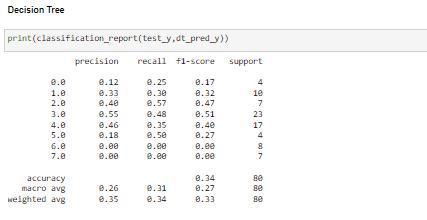
4.3. Performance Measures of the ECG Emotion AI Model
4.3.1. F1-Score
The F1-scores can be calculated by using equation (1) below:
F1 Score = 2Precision Recall Precision+ Recall ×× (1)
4.3.2. Decision Tree
The decision tree model for the ECG signal emotion detection has an overall accuracy of 34%, with precision ranging from 0.00 to 0.55, recall from 0.00 to 0.57, and F1-scores from 0.00 to 0.51, indicating inconsistent performance across different emotions. Classes 0.0 and 5.0 show low metrics due to fewer instances, while classes 6.0 and 7.0 have zero precision, recall, and F1-scores. The macro average precision, recall, and F1-scores are 0.26, 0.31, and 0.27, respectively, with slightly higher weighted averages of 0.35, 0.34, and 0.33, highlighting the impact of unbalanced data.
The random forest model for ECG signal emotion detection has an overall accuracy of 39%, with precision levels ranging from 0.00 to 0.59; recall ranging from 0.00 to 0.57; and F1-scores ranging from 0.00 to 0.58. This indicates inconsistent performance across different emotions. Classes 0.0 and 5.0 show low metrics due to fewer instances, while classes 1.0 and 6.0 have zero precision, recall, and F1-scores. The macro average precision, recall, and F1-score are 0.26, 0.35, and 0.29, respectively, with slightly higher weighted averages of 0.34, 0.39, and 0.35, underscoring the impact of unbalanced data.
Based on the comparison between decision tree and random forest for an ECG emotion AI model, referring to Figures 10 and 11, the random forest outperforms the decision tree, achieving a higher total accuracy of 39% compared to 34% for the decision tree. The random forest also exhibits superior weighted averages for precision (0.35 vs. 0.34), recall (0.39 vs. 0.34), and F1-score (0.35 vs. 0.33), indicating better performance across various emotion classes and in managing imbalanced data. Therefore, the random forest model proves more effective and consistent in classification tasks for ECG-based emotion recognition. Further tuning, additional data, and/or alternative modeling methods will be required to improve the AI model.
4.4. Preliminary Results of the Multimodal Emotion AI Model
Figure 13 shows the output in a web browser that includes the combined emotion detected from the multimodal emotion AI model, which is “Happy”. It also provides some advice for each emotion. “Happy,” for example, has the following text: “Good job! Maintain your positive outlook and keep up the great work.”
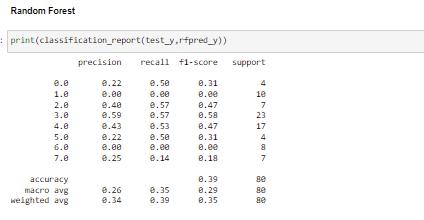
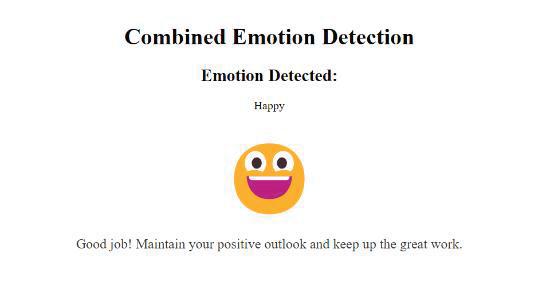
In this study, a multimodal emotion detection system was successfully designed for educational and work environments using convolutional neural networks (CNN). The first objective, involving training and testing the AI model with Python and OpenCV, showed that the model accurately recognized facial emotions from seven classes (happy, sad, neutral, angry, afraid, disgusted, and surprised). The second objective focused on developing the system by integrating OpenCV and ECG signals. The AI model also can detect emotions from seven classes by recognizing the ECG signals. The final objective is validating the multimodal AI system, which accurately combines and displays the results, based on facial and ECG predictions, on a web application.
Wan Mohd Bukhari Daud* – Faculty of Artificial Intelligence & CyberSecurity at Universiti Teknikal, Malaysia Melaka, Durian Tinggal, 76100, Malaysia. He can be contacted at bukhari@utem.edu.my. Adnan Kiral – Assistant Professor in the Department of Civil Engineering at Recep Tayyip Erdogan University, Fener, Rize, TR53100, Tu�rkiye. He can be contacted at email adnan.kiral@erdogan.edu.tr Mohamed Osman Tokhi – A Professor of Engineering at University of London South Bank, London, United Kingdom. He can be contacted at tokhim@lsbu.ac.uk Lee Chung Yee – Fakulti Teknologi & Kejuruteraan, Universiti Teknikal Malaysia Melaka, Durian Tunggal, 76100, Malaysia, lcyee@student.utem.edu.my Muhammad Muzhafar Mohammad Zawawi –Fakulti Teknologi & Kejuruteraan,Universiti Teknikal Malaysia Melaka, Durian Tunggal, 76100, Malaysia, m112420023@student.utem.edu.my
Gratitude for Progress Catalysts. We extend our heartfelt appreciation to the Ministry of Higher Education Malaysia and Universiti Teknikal Malaysia Melaka (UTeM) for their invaluable financial support Together, we drive transformative research endeavors.
References
[1] M. Cui, J. Fang, and Y. Zhao, “Emotion Recognition Of Human Body’s Posture In Open Environment,” Proc. 2020. Chinese Control and Decision Conference (CCDC), 2020, pp. 3294–3299.
[2] F. Ahmed, A. S. M. H. Bari, and M. L. Gavrilova, “Emotion Recognition From Body Movement,” IEEE Access, vol. 8, 20210 pp. 11761–11781, 2020.
[3] T. Kusunose, X. Kang, K. Kiuchi, R. Nishimura, M. Sasayama, and K. Matsumoto, “Facial Expression Emotion Recognition Based on Transfer Learning and Generative Model,” Proc. 8th International
Conference on Systems and Informatics (ICSAI), 2022, pp. 1–6.
[4] D. Shehada, A. Turky, W. Khan, B. Khan, and A. Hussain, “A Lightweight Facial Emotion Recognition System Using Partial Transfer Learning for Visually Impaired People,” IEEE Access, vol. 11, 2023, pp. 36961–36969,
[5] A. S. Utane and S. L. Nalbalwar, “Emotion Recognition Through Speech,” Proc. 2nd National Conference on Innovative Paradigms in Engineering and Technology (NCIPET), 2013.
[6] J. Chen, “Speech Emotion Recognition Based On Convolutional Neural Network,” Proc. International Conference on Networking, Communications and Information Technology (NetCIT), 2021, pp. 106–109.
[7] X. Li, R. Yue, W. Jia, H. Wang, and Y. Zheng, “Recognizing Students’ Emotions based on Facial Expression Analysis,” Proc. 11th International Conference on Information Technology in Medicine and Education (ITME), 2021, pp. 96–100.
[8] G. Assunça�o, B. Patra�o, M. Castelo-Branco, and P. Menezes, “An Overview of Emotion in Artificial Intelligence,” IEEE Transactions on Artificial Intelligence, vol. 3, no. 6, 2022.
[9] J. M. Foo, S. S. Anhum, S. Islam, and K. H. Keoy, “Facial Emotion Recognition System for Mental Stress Detection among University Students,” Proc. 3rd International Conference on Electrical, Computer, Communications and Mechatronics Engineering (ICECCME), 2023, pp. 1–6.
[10] G. Shi, “Technical Analysis of Machine Learning Algorithms in Artificial Intelligence Image Recognition,” Proc. 3rd Asian Conference on Innovation in Technology (ASIANCON), 2023, pp. 1–5.
[11] S. Ashrita and T. Padmass Machine Learning for Automation Software Testing: Challenges, Use Cases Advantages & Disadvantages,” International Journal of Innovative Science and Research Technology, vol. 5, no. 9, 2020, pp. 1301–1307.
[12] K. Vinutha, M. K. Niranjan, J. Makhijani, B. Natarajan, V. Nirmala, and T. R. Vijaya Lakshmi, “A Machine Learning based Facial Expression and Emotion Recognition for Human Computer Interaction through Fuzzy Logic System,” Proc. International Conference on Inventive Computation Technologies (ICICT), 2023, pp. 166–173.
[13] I. Goodfellow, D. Erhan, P. L. Carrier, A. Courville, “Challenges in Representation Learning: A Report on Three Machine Learning Contests,” Neural Networks, vol. 64, 2013, doi: 10.1016/ j.neunet.2014.09.005.
[14] T. Ergin, M. A. Ozdemir, and A. Akan, “Emotion Recognition with Multi-Channel EEG Signals
Using Visual Stimulus,” Proc. Medical Technologies Congress (TIPTEKNO), 2019, pp. 1–4.
[15] L. Huang, K. Yu, T. Song, H. Wang, F. Yuan, Y. Zhang, and H. Yang, “Research on Emotion Recognition Based on Multisource Signals,” Proc. IEEE Statistical Signal Processing Workshop (SSP), 2023, pp. 280–284.
[16] Itai Gat, Hagai Aronowitz, Weizhong Zhu, Edmilson Morais, Ron Hoory, “Speaker Normalization for Self-Supervised Speech Emotion Recognition”, Proc. International Conference on Acoustics, Speech and Signal Processing (ICASSP), 2022, pp. 7342–7346.
[17] R. Sato, R. Sasaki, N. Suga, and T. Furukawa, “Creation and Analysis of Emotional Speech Database for Multiple Emotions Recognition,” Proc. 23rd Conference of the Oriental COCOSDA International Committee for the Co-ordination and Standardisation of Speech Databases and Assessment Techniques (O-COCOSDA), 2020, pp. 33–37.
[18] P. Yue, L. Qu, S. Zheng, and T. Li, “Multi-task Learning for Speech Emotion and Emotion Intensity Recognition,” Proc. Asia-Pacific Signal and Information Processing Association Annual Summit and Conference (APSIPA ASC), 2022, pp. 1232–1237.
[19] M. U. Khan, M. A. Abbasi, Z. Saeed, M. Asif, A. Raza, and U. Urooj, “Deep Learning Based Intelligent Emotion Recognition and Classification System,” Proc. International Conference on Frontiers of Information Technology (FIT), 2021, pp. 25–30.
[20] R. Zhan, J. Lu, Y. Jiang, T. Li, G. Zhong, and W. Lv, “A Multimodal Deep Learning Approach for Typhoon Track Forecast by Fusing CNN and Transformer Structures,” Proc. 4th International Conference on Computer Vision, Image and Deep Learning (CVIDL), pp. 391–394.
[21] L. Alzubaidi, J. Zhang, A. J. Humaidi, A. Al-Dujaili, Y. Duan, O. Al-Shamma, J. Santamarí�a, M. A. Fadhel, M. Al-Amidie, and L. Farhan, “Review Of Deep Learning: Concepts, CNN Architectures, Challenges, Applications, Future Directions,” Journal of Big Data, vol. 8, 53.
[22] H. Liu, M. Cocea, and W. Ding, “Decision Tree Learning Based Feature Evaluation and Selection for Image Classification,” Proc. International Conference on Machine Learning and Cybernetics (ICMLC), 2017, pp. 569–574.
[23] F. Aaboub, H. Chamlal, and T. Ouaderhman, “Analysis of the Prediction Performance of Decision Tree-Based Algorithms,” Proc. International Conference on Decision Aid Sciences and Applications (DASA), 2023, pp. 7–11.
[24] E. Alpaydin, Introduction to Machine Learning, MIT Press, 2014.
[25] T. Ghirmai, “Generating Laplace process with desired autocorrelation from Gaussian AR processes,” Proc. IEEE Signal Processing and Signal Processing Education Workshop (SP/ SPE), 2015, pp. 113–117.
[26] L. Yang, C. Heiselman, J. G. Quirk, and P. M. Djuric�, “Class-Imbalanced Classifiers Using Ensembles of Gaussian Processes and Gaussian Process Latent Variable Models,” in IEEE International Conference on Acoustics, Speech and Signal Processing (ICASSP), 2021, pp. 3775–3779.
[27] Y. Li, S. Rao, A. Hassaí�ne, R. Ramakrishnan et al., “Deep Bayesian Gaussian Processes For Uncertainty Estimation in Electronic Health Records,” Scientific Reports, vol. 11, no. 1, 20685, 2021.
[28] L. Shu, J. Xie, M. Yang, Z. Li, Z. Li, D. Liao, X. Xu, and X. Yang, “A Review of Emotion Recognition Using Physiological Signals,” Sensors, vol. 18, no. 2018, 2074, doi: 10.3390/s18072074.
Submitted:25th September2025;accepted:23rd October2025
SukratiAgrawal,HareRamSah,RajeshKumarNagar
DOI:10.14313/jamris‐2026‐020
Abstract:
Cybercrimesencompasscrimeagainstchildren,data breaches,andprivacyviolations.Theincreasedfre‐quencyofcybercrimesduetothequickdevelopment oftechnologyemphasizesthenecessityofcomplexsys‐temstoanalyzeandcategorizetheseoffenses.There aremanyopportunitiestoanalyzecybercrimedatausing MachineLearning(ML)techniquesbecauseofitsenor‐mousaccumulation.Thisstudyproposesamodelthat hasthepotentialtoautomaticallyanalyzetext‐based reportedcybercrimecomplaintsbasedonthefeaturesby useofRandomForest(RF)andGradientBoosting(GB) algorithms.ThismodelincludesaBagofWords(BoW) approachforfeatureengineeringtoanalyzereported cybercrimeandsuggestrelevantIndianITActsections, suchasSection66Eforprivacyprotection,Section43A forreporteddatabreach,andSection72Afordisclosure ofinformation,usingNaturalLanguageProcessing(NLP) forfeatureextractionandclassification.Thisstrategy enhancedthelawandenforcementprocessbytimelyand accuratelycategorizingcrime.Byautomatingcyberlaw andprovidingtimelylegalanswerstovariousreported cybercrimes,especiallythoseconcerningprivacyand dataprotection,themodelimprovesthecapabilitiesof cybercrimeunitsandachieveshighaccuracyandpreci‐sioninanticipatingpertinentlegalsections.
Keywords: Cybercrime,MachineLearning,NLP,Cyber Law,ITAct,ensemblestacking
1.Introduction
1.1.Background
Therateofcybercrimehasincreasedasaresult oftechnologyglobalization,impartingseriousrisksto bothpersonalsafetyandnationalsecurity.Inorderto defendagainstthesecyberattacks,moderntechnolo‑ giesareessential.Indiastopped500millioncyberat‑ tacksinthe irstquarteroftheyear2023[1].
AsperthedataaccumulatedfromtheNational CrimeRecordsBureau(NCRB),therehasbeena persistentriseinreportedcybercrimecasesinrecent years.Thenumberofreportedcybercrimecases andongoinginvestigationsisincreasingyearlyat analarmingrate,asdepictedinthegraphshown inFigure 1.Thiscausesanincreaseinthebacklog, whichemphasizeshowurgentlythesystemmust beautomatedtoguaranteethattheaccusedreceive
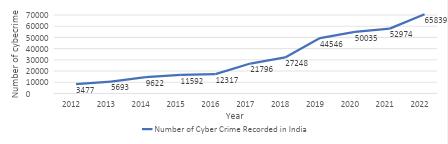
CybercrimecomplaintsreportedinIndia during2012and2022[2]
duringtheyears2018–2022[2] justpunishmentandthatvictimsreceiveprompt remedies.
1.2.ProblemStatement
Inthepresentscenario,themanualprocessing andanalysisofreportedcybercrimecasesdelaylegal responses,whichmaycausetraumatovictims,as theprocessislaborious,time‑consuming,andsubject tohumanerror,asillustratedinFigure 2.Machine learningtechniquesenabletherapidtreatmentand categorizationofthesecybercrimecomplaintsunder theapplicableIndianITActsections.Machinelearning alsoenhancestheaccuracyoftheseclassi ications.
Thesteadyincreaseinreportedcybercrime caseshighlightstheneedforcreativeandarti icial intelligence‑basedapproachestocounterthe expandingrisksconnectedtotheinternet.The drawbacksofconventionalcaseanalysisand managementtechniquesresultinbacklogsand delaysintheexecutionofjustice[3,4].
Thesharpincreaseinreportedcybercrimecom‑ plaintsindicatesthatquickandautomatedtechnology isneededtoeffectivelymanagethesecomplaintsand
respondswiftly.Anef icientsolutiontothisproblemis tocombinetheInformationTechnology(IT)Actwith machinelearning(ML)‑basedcybercrimecomplaint analysissystemstosafeguardcyberspaceandassist victims[5,6].
Asmachinelearningalgorithmshavethepotential toanalyzelargeamountsoftext‑baseddataandiden‑ tifytrends,theyarerequiredforcategorizingcyber‑ crimecomplaintsandidentifyingrelevantlegalpro‑ visionsoftheIndianITAct.Thistechnology‑driven architecturewillenhancethecybercrimeresponse systemintermsoftimeaswellasaccuracy,ensure ef icientclassi icationandlegalreview,andenablea moreeffectiveadministrationofjustice.[7–9].
1.3.Objectives
• ToapplyRFandGBmodelsforcategorizingcyber‑ crimecomplaintsundersectionsoftheIndianITAct for66E,43A,and72A.
• Toevaluateeachmodel’sperformanceintermsof accuracy,precision,recall,andF1‑score.
Approach:
Intheprocessofdatacollection,relevantcyber‑ crimedataisgatheredfrommultiplesourceslikeinci‑ dentreports,legaldocuments,andcybercrimearti‑ cles.Thesesourcesincludeafewsamplesofcyber‑ crimecomplaintsreportedatpolicedepartments, legalinstitutions,andonlineresources.Oncethedata isgathered,preprocessingisappliedtohandlemissing valuesandalsotoconvertthedataintotherequired format.Categoricalvariablesareencoded,andout‑ liersinnumerical ieldsaremanagedtomaintaindata integrity.Featureengineeringincludesmetricslike complaintdurationandresolutionstatus,andtext dataiscleanedandtokenized.Thedatasetissplitinto training,testingandvalidationsets(70%,30%)to supportthoroughmodelevaluation.Modeltraining utilizesRandomForestandGradientBoostingalgo‑ rithms[10,11],withperformanceevaluatedthrough precision,recall,F1score,AUC,andaccuracymetrics, ensuringareliableclassi icationmodel.
Outline:
Therestofthepaperisoutlinedasfollows:Sec‑ tion2providesaliteraturereview,includingan overviewoftherelevantprovisionsforcybercrime, focusingonSections66E,43A,and72A.Italso presentsacomprehensivereviewoflegalframeworks forcybercrimeandmachinelearningapplicationsin textclassi ication.Section3detailsthemethodology, includingdatapreparation,featureextraction,andthe useofRandomForestandGradientBoostingmod‑ els.Section4presentstheresults,comparingmodel performancemetricsandclassi icationaccuracy.Sec‑ tion5discussesthelegalimplicationsandlimitations ofautomatedclassi icationincybercrimecomplaints. Italsooutlinespotentialimprovementsandfuture researchdirections.Finally,thissectionconcludes thepaperbysummarizingthekey indingsandtheir signi icanceforenhancingcybercrimemanagement undertheITAct.
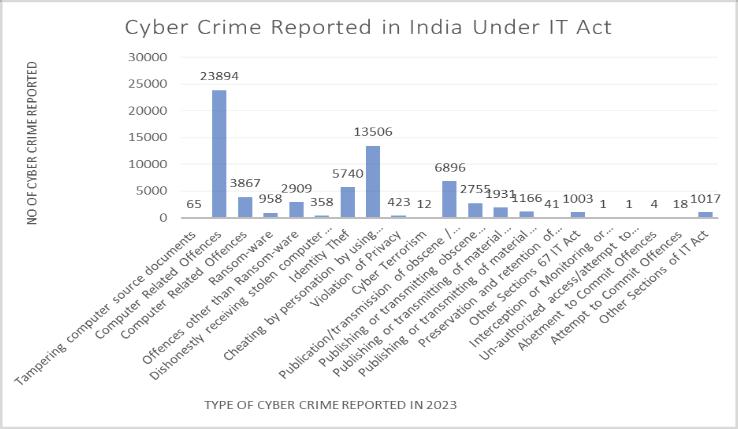
Figure3. Typesofcybercrimeregisteredduringtheyear 2023undertheIndianITAct[12]
2.ReviewoftheLiterature
2.1.LegalProvisionsforCybercrime
TheITAct2000addressesvariousformsofcyber‑ crimestoensuredataprotectionandprivacy,as illustratedinFigure 3.Itwasamendedin2008to addstrongerprovisions,notablySections66E,43A, and72A(IndianITAct,2008).Section66Ecrimi‑ nalizestheunauthorizedcaptureortransmissionof privateimages,focusingonsafeguardingpersonalpri‑ vacy.Section43Amandatesdatacontrollerstoadopt securitypractices,providingguidelinesforreporting databreaches.Section72Aaddressestheunautho‑ rizeddisclosureofpersonalinformationbyservice providers,protectingusercon identiality.Theeffec‑ tivenessoftheselegalprovisionshasbeenwidely acknowledged[5,7].
GeetikaBhardwajetal.[13]revealeda46%rise incrimesagainstwomenin2021comparedto2020, emphasizingtheneedforproactiveactiontogather crimedataandforecastfuturetrends.
OlenaV.etal.[14]highlightedtheglobalincrease incyberattacks,particularlyin inance,retail,technol‑ ogy,andcommunicationindustries,highlightingthe challengesincombatingsuchthreatsduetogeograph‑ icaldisparities.
GangwarSurajetal.[15]reportasurgeincyber‑ crimeduetotheInternetofThings,cloudservices, andimprovedconnections.Cybercriminalsthreaten humanlives.Targetingindustrialcontrolsystems, elections,anddigitalwild iresrankamongthetop threatsworldwide.
ThestudybyShuaiChenetetal.[16]indicatesa positiveglobalcorrelationbetweencybercrimeand social,economic,andtechnologicalvariables,with mostincidentsoccurringinurbanizedareaswith greaterinfrastructure.
P.Dattaetal.[17],intheirstudy,showanincrease infraudcases,primarilyaffecting20‑29‑year‑olds, particularlymothersandchildren,necessitating awarenesscampaignstocombatcybercrimeinIndia.
ThestudybyChudasamaDhavaletal.[18]sug‑ geststhatthird‑partyappsarefrequentlyusedby attackersformoneytransfers,leadingtofraud.
Table1belowsummarizestheanalysisofalready existingalgorithmsusedforcybercrimetextdetection andrelatedapplications.
Table1. Comparisonofexistingalgorithms
Author(s) DatasetUsed Algorithm Ef iciency IT/IPCDetected Alami&Elbeqqali(2015)[19] Microblogdata Textmining+SVM Notdetailed No Mbaziira&Jones(2016)[20] Deceptivecybercrimetext Linguistics+ML Medium No Kumarietal.(2018)[21] Labeledtextsamples NLTK,Scikit‑learn Moderate No Andleebetal.(2019)[22] MySpacebullyingtexts Textmining+ML Notdetailed No Chetal.(2020)[23] State‑wisecrimestats SVM,DecisionTree Good No K.veenaetal.(2022)[24] Cybercrimereports SVM High Potential Pandeyetal.(2022)[25] Customlabeledreports Ensemble(RF,NB,etc.) High(noted) No
Ourliteraturereviewobservedthatmostprior worksfocusonclassi icationaccuracywithoutexplic‑ itlymappingoutputstoITACTprovisions.Thishigh‑ lightsaresearchgapwhereexistingmodelsareeffec‑ tiveindetectionbutarenotef icientinproviding legallyactionableoutcomes,hencemotivatingthe needformoreadvancedframeworksthatprovide integrationoflegalcontextwithef icientmachine learning.
Anautomatedcybercrimetextclassi icationinthe legaldomainisgainingmoreattention.Thisauto‑ matedcybercrimeclassi icationenhancestheef i‑ ciencyofhandlingahugenumberofcomplaints.For thecategorizationoftext‑basedreportedcybercrime complaints,themostwidelyusedMLmodelsareRF andGB,astheyhavethepotentialtoprocesshuge datasetsandprovidestrongperformance[26].ML algorithmsareproventobemoresuccessfulincatego‑ rizingandanalyzingtext‑basedcomplaints,especially incaseswhenitcomestodifferentiatingbetweensev‑ erallegalcategories,asperrecentstudies[27–29].
MLisupdatingtheclassi icationoflegaltexts, especiallythoseregardingcybercrime.Inorderto reducehumanerrorandprovidemoreef icientclas‑ si ication,Chetal.[23]proposedasustainable computationalframeworkforclassifyingcybercrime offensesusingML.Andleebetal.[22]showedhow effectiveMLisatextractingfeatures,analyzingcyber‑ crimecomplaints,andclassifyingoffensesthrough textmining.PatelandSharma[30]highlightedthe widerfunctionofMLinautomatinglegalproce‑ dures,especiallyincyberlaw,demonstratingitsef i‑ ciencyinorganizingandclassifyinglegaldocuments. Pandeyetal.[25]createdamodelthatoutperforms conventionalmethodsbyusingensemblelearningto increaseclassi icationaccuracy.Together,thesestud‑ ieshighlighthowimportantmachinelearningisto automate,analyze,andimprovetheclassi icationof legaltextsincybercrime.
Accordingtoourliteraturereview,therearevari‑ ouswaystoapproachcountermeasuresandprevent cybercrime.Theseincludeanalyzingcyberthreats, analyzingthemwithML,andenhancinglawenforce‑ menttactics.Theexistingbackgroundofcybercrime willbeexamined,alongwithtrendsandpatterns foundintheliterature.Proactivecybercrimedetection andclassi icationbymachinelearningisthemain emphasisofthiswork.Theresearchaimstocre‑ aterobustmodelsthatidentifysmallirregularities
andpatternsindicativeofcyberthreatsusingvari‑ ousmethodsanddatasets.Becauseoftheincreasing complexityofcybercriminalsandtheexpansionof internetconnectivity,cybercrimeisagrowingthreat. Anonymity,exponentialexpansionindigitaldataand insuf icientcybersecuritysafeguardsaresomeofthe factorsthatmakepeopleandbusinessesvulnerable.
2.3.Lawandenforcementtocombatcybercrime
Recentresearchexploresvariousstrategiesfor combatingcybercrimeundertheIndianITAct.For instance,ensemblelearningcanbeusedtoclassify cybercrimesunderSections66and67,andmodels likeSVMandRandomForestcanbeusedtoimprove accuracy,thusofferingpracticaltoolsforcybercrime cells[26]toanalyzecybercrimetrendsandpreven‑ tionandprovidingglobalinsightsandstatisticaldata onrisingcybercrimepatterns[31,32].Additionally, studyofregionalcrimepatternsusingregressioncan indcorrelationsincyberoffensessuchasunautho‑ rizedphotosharingandcomputertheft[29].Finally, theneedtopresentacomputationaltoolwithhigh accuracyforidentifyingcybercrimeratesatthestate levelinIndiaunderscorestheroleofmachinelearning incrimeanalytics[30].
3.ProposedMethodology
Accordingtorecentstudies,machinelearning techniquesarebecomingmoreandmorenecessary toidentifywhichITActsectionappliestocommit‑ tedcybercrimes.Priorstudieshavefocusedonclas‑ sifyingcybercrime,buttheyhavenotaddressedthe crucialpartofprovidingvictimjusticebydetermin‑ ingwhethertheITActisapplicable.Thisfacilitates speedierinvestigationsandraisesthepossibilitythat perpetratorsofcybercrimesmaybeheldaccount‑ able.Additionally,machinelearningenablesproactive enforcementmeasurestoeffectivelycombatcyber‑ crimebykeepinglawenforcementagenciesupdated aboutevolvinglegalrequirementsandcyberthreats, aspresentedinFigure4
CompilingaCyberCrimeandLawClassi ication datasetinvolvesgatheringrelevantandvariedinfor‑ mationaboutcybercrimeincidentsandlegalprovi‑ sionsfrommultiplesources,includingFIRs,casestud‑ ies,newsheadlines,etc.,aspresentedinFigure 5 Presentresearchincludesvictimstatements,incident reports,courtrecords,andopendatabasesthatdocu‑ mentcybercrimeincidents.
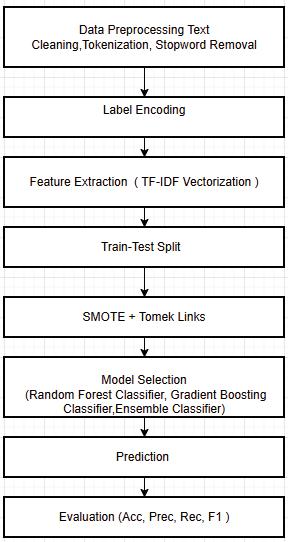
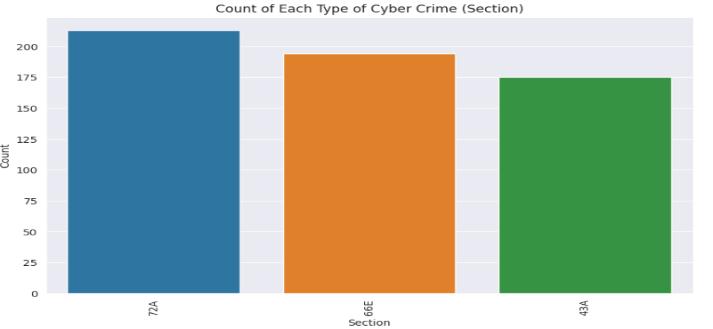

WordcloudforSection43A
Where:
• ci =category/sectionname
• yi =encodedlabel
3.3.FeatureExtraction
Featureextractionisusedtochangetheunpro‑ cessedtextualinputsothatthemachinelearning modelcanmoreef icientlyusethisinput.Thevec‑ torizationapproach,TF‑IDF(TermFrequency‑Inverse DocumentFrequency),hasbeenusedforthisinves‑ tigation.TF‑IDFweightswordsbasedonhowfre‑ quentlytheyoccurwithinacertainpieceoftext comparedwiththefrequencythroughouttheentire corpus.Thiswillallowthemodeltodiscernwords usedoftenthroughoutthecorpusversusthoseused speci icallybyindividualpublications.Toaccomplish this,weusethetextdataandtranslatethisinfor‑ mationintoasparsenumericalfeaturesmatrixwith scikit‑learn’sT idfVectorizer.Weallowalgorithms frommachinelearningtodrawinferencesfromthese inputtedmatricesinsearchofpatternsandrelations inthematerialthatistext.
����−������(��,��)
3.2.TextPre‐Processing
SomepreprocessingstepsareappliedtotheCyber CrimeandLawClassi icationdatasettoensurethe qualityofthedata.Missingvaluesareaddressed, numericalcolumnsarecleanedandconverted,and datecolumnsareformattedasadatetimetype.Out‑ liersinthenumericaldataarehandled,andcategori‑ calfeaturesareencodedbylabelencoder.Intextdata processing,normalizationisdonebyconvertingall thetexttolowercase.Noiseisremovedusingregular expressions,andstopwordsareremoved.Thetextis tokenizedandlemmatizedtoensureconsistency.
xi =Clean(Tokenize(ti)) (1)
Where:
• ti =rawtext
• xi =processedtokensequence
(3)
Where:
• ����,�� =frequencyoftermtindocumentd
• ∑��′ ����′,�� =totaltermsindocumentd
• |��|=totalnumberofdocuments
• {��∈��∶��∈��}=numberofdocscontainingtermt
Figure 6 providesawordcloudthathelpsin visualanalysisofthewordsfrequentlyoccurringin Section43AoftheIndianITACT.
Figure 7 providesawordcloudthathelpsin visualanalysisofthewordsfrequentlyoccurringin Section66EoftheIndianITACT.
Figure 8 providesawordcloudthathelpsin visualanalysisofthewordsfrequentlyoccurringin Section72AoftheIndianITACT.
3.4.HandlingImbalancedDatawithSMOTE Tosolvetheclassimbalanceincrimedatasets, thestudyemploysSMOTETomek,astrategythatcom‑ binesSMOTEandTomekLinks.WhileTomekLinks

WordcloudforSection66E

Figure8. WordcloudforSection72A eliminatesborderlineoccurrences,SMOTEcreates syntheticexamplesfortheminorityclass,guarantee‑ ingabalancedclassdistributionandbetterpredic‑ tiveperformance,particularlyforuncommoncrime categories.
Where:
• ���� =aminorityclasssample.
• ������ =oneofthenearestneighborsof����
• ��=arandomnumber.
• ��new =newlygeneratedsyntheticsample.
3.5.ModelSelection
Thethreetextcategorizationalgorithmsemployed inthisstudyareRF,GB,andEnsembleclassi ier (stacked),whichcombinesRFandGBforincreased accuracyandasoft‑votingscheme.Themodelsare evaluatedusingthefollowingmetricsasdepictedin Figure 9,whichshowsthattheEnsembleclassi ier performedthebest.
ThisgraphicalrepresentationshowsthattheIT Act’sautomatedclassi icationofcybercrimecom‑ plaintsmayacceleratecaseprocessing,increasing accuracyandresponsetimes.Targetedlegalmeasures aremadepossiblebypreciseclassi icationundercer‑ tainprovisions,whichhelpsthecourtandlawenforce‑ mentbettercombatcybercrime[32].
ForRF:
Where:
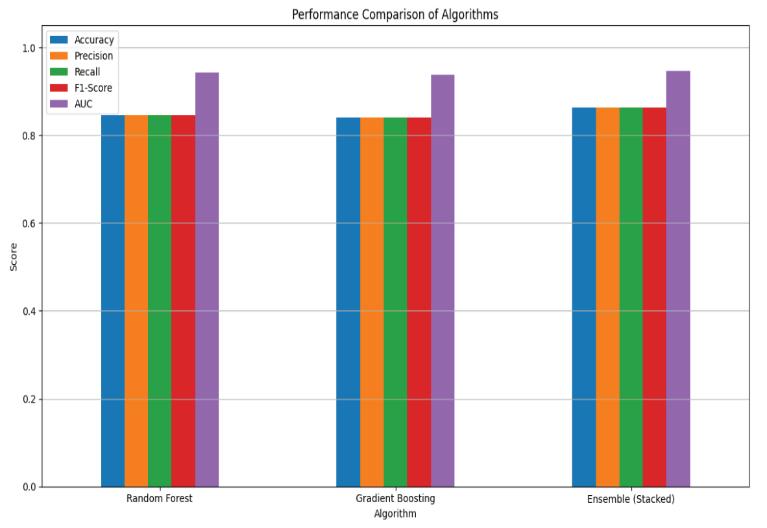
Figure9. Performanceanalysisfordifferentmodels
• ̂�� = inalpredictedclass.
• ��(��) (��)=predictionofthei��ℎ baselearnerforinput ��.
• B=totalnumberofbaselearners.
• mode{⋅}=classthatappearsmostfrequentlyamong thepredictionsofallbaselearners.
ForGB:
Where:
• ���� (��)=boostedmodelaftermiterations
• ����−1 (��)=modelfrompreviousiteration(m 1)
• ℎ�� (��)=weaklearneratstepm
• ��=learningrate
• ��=inputfeaturevector
ForECS:
Where:
��(��0 +��1�� ���� +��2�� ����) (7)
• ̂�� = inalpredictedoutput
• ��=activationfunction
• ��0 =bias
• w1i=weights
• ������ =predictionfromRandomForest
•�� ���� =predictionfromGradientBoosting
4.ResultsandDiscussion
4.1.PerformanceComparison
Theperformanceofeachalgorithmissummarized inTable2,showingtheaccuracy,precision,recall,F1‑ score,andAUCbasedonthetrainingmodel.
Table2. Performancecomparisonofmodels
Table3. Section‐basedcybercrimeclassificationresult analysis
AspertheresultsshowninTable 2,theEnsem‑ bleClassi ierperformsbetterthanRandomForest andGradientBoostingintermsofaccuracy,precision, recall,F1‑score,andAUC.
4.2.Section‐WiseAccuracy
Adetailedbreakdownofaccuracypersection (crimecategory)isprovided,showinghoweach modelperformsacrossdifferentcrimetypes.Table3 illustratestheaccuracyofRandomForest,Gradient Boosting,andEnsembleClassi ierforeachcrimesec‑ tion.
Inconclusion,theresearchshowsthatevery algorithmperformedexceptionallywell,obtaining lawlessscoresinSection66E.InSection72A,RF andEnsemblevotingmaintainedstrongrecallwhile marginallyoutperformingGBinprecisionandF1‑ score.RandomForestandEnsembleVotingoutper‑ formedGradientBoostinginSection43A,achieving betterF1scores.RFisthemostdependableandtime‑ ef icientalgorithmoverallsinceitcontinuouslyshows abalancebetweenexcellentperformanceandef i‑ ciencythroughoutallparts.
5.Conclusion
ThisstudydemonstratedthatMLtechniquescan beusedeffectivelytoclassifycybercrimecomplaints basedontextualdescriptions.Wecreateastrongfea‑ tureextractionandpreprocessingpipelinebyresolv‑ ingclassimbalancewithSMOTETomekandapplying theTF‑IDFvectorizationapproach.Theensembleclas‑ si ieroutperformstheothermodelsintermsofoverall performanceacrossanumberofevaluationmetrics, demonstratinghowwellithandleschallengingcrimi‑ nalclassi icationtasks.
5.1.LimitationsandModelImprovements
Themodelhasbeensuccessfullydemonstrated forthethreesectionsoftheIndianITAct,including sections66E,72A,and43E.Infuturemodels,they canbetrainedtoidentifyanyrelevantsectionof theIndianITActbasedonthereportedcybercrime, whichrequiresahugedatasetcreationforeach sectionoftheIndianITAct.Thismodelhas demonstratedhighaccuracy,butthiscanlead toafewsmallmisclassi icationsincaseswhere complaintshaveoverlappedphrasesbetween relevantsections.Deepersemanticoutputmaybe
obtainedbyimprovingthemodels’ef iciencybythe useofadvancedNLPapproacheslikenamedentity recognition(NER)andsentimentanalysis[28,32].
5.2.FutureWork
Inthefuture,thisalgorithmcanbeappliedto predictanyrelevantsectionoftheIndianITAct. Inordertobetterunderstandcomplexpatternsof languagefoundincybercrimecomplaints,future researchmustexamineadvancedapproachessuchas ensemblealgorithmsandBERT.Thesemethodscould enhancethesystem’scapacitytomanagemassive volumesofdataandadheretodataprotectionlaws whenpairedwithfederatedlearningforprivacy‑ preservingtraining[26].
SukratiAgrawal∗ –ResearchScholar,Department ofComputerScience,SAGEUniversity,Indore,Mad‑ hyaPradesh,India,+91‑8982493161,KailodKartal, IndoreRauBypassRoad,Indore,MadhyaPradesh, 452020,e‑mail:sukratiagrawalphd@gmail.com.
HareRamSah –DepartmentofComputerScience, SAGEUniversity,Indore,MadhyaPradesh,India, +91‑9630689967,KailodKartal,IndoreRauBypass Road,Indore,MadhyaPradesh,452020,e‑mail: ramaayu@gmail.com.
RajeshKumarNagar –DepartmentofElectronics andCommunication,IET,SAGEUniversity,Indore, MadhyaPradesh,India,+91‑9981850973,KailodKar‑ tal,IndoreRauBypassRoad,Indore,MadhyaPradesh, 452020,e‑mail:errajesh973@gmail.com.
∗Correspondingauthor
References
[1] IndusfaceResearchTeam,“TheStateofApplica‑ tionSecurityReportQ12023,”Indusface,2023. [Online].Available:https://www.indusface.com
[2] T.Basuroy,“Numberofcyber‑crimesreportedin India2012–2021,” Statista,2022.[Online].Avail‑ able:https://www.statista.com
[3] S.Kharat,“Cybercrime–athreattopersons, property,governmentandsocieties,” Property, GovernmentandSocieties,Mar.2017.
[4] S.Vashisth,N.Singh,andS.Dudi,“Anin‑depth investigationintopoliceoperationsandtheir impactondeliveringspeedyjusticeincrimi‑ nalproceedings:Ef iciency,challenges,andlegal implications,” LibraryProgressInternational,vol. 44,no.3,2024,pp.24434–24446.
[5] A.Kovacs,“Cybersecurityanddataprotection regulationinIndia:Anunevenpatchwork,” CyberBRICS:CybersecurityRegulationsinthe BRICSCountries,2021,pp.133–181.
[6] H.Ning,X.Ye,M.A.Bouras,D.Wei,andM. Daneshmand,“Generalcyberspace:Cyberspace andcyber‑enabledspaces,” IEEEInternetof ThingsJournal,vol.5,no.3,2018,pp.1843–1856.
[7] D.M.KatzandJ.J.Nay,“Machinelearningand law,” LegalInformatics,2021,pp.94–98.
[8] V.AltugluandR.Schwabe,“Machinelearning inlitigation,” HandbookofMarketingAnalytics, EdwardElgarPublishing,2018,pp.661–670.
[9] A.I.Kadhim,“Surveyonsupervisedmachine learningtechniquesforautomatictextclassi ica‑ tion,” Arti icialIntelligenceReview,vol.52,2019, pp.273–292.
[10] M.Noguti,E.Vellasques,andL.S.Oliveira,“A smallclaimscourtfortheNLP:Judginglegal textclassi icationstrategieswithsmalldatasets,” Proc.2023IEEEInternationalConferenceonSys‑ tems,Man,andCybernetics(SMC),Oct.2023,pp. 1840–1845.
[11] P.Payne,R.V.Romould,M.K.Gourisaria, V.Singh,D.K.Behera,andS.Das,“Unveiling bankruptcyriskthroughadvanceddataanalysis andmachinelearningtechniques,” Proc.2024 InternationalConferenceonDistributedComput‑ ingandOptimizationTechniques (ICDCOT),Mar. 2024,pp.1–6.
[12] S.AgrawalandH.R.Sah,“Studyonvulnerabil‑ ityinonlinesocialnetworking:Impactonan individual,community,” OnlineSocialNetworks inBusinessFrameworks,2024,pp.27–46.
[13] G.BhardwajandR.K.Bawa,“Performanceof machinelearningmodelsoncrimedata,” Proc. InternationalConferenceonComputing,Com‑ munications,andCyber‑Security,Springer,Oct. 2022,pp.811–823.
[14] O.V.Sviatun,O.V.Goncharuk,C.Roman,O.Kuz‑ menko,andI.V.Kozych,“Combatingcybercrime: Economicandlegalaspects,” WSEASTransac‑ tionsonBusinessandEconomics,vol.18,2021, pp.751–762.
[15] S.GangwarandV.Narang,“Asurveyon emergingcybercrimesandtheirimpact worldwide,” ResearchAnthologyonCombating Cyber‑AggressionandOnlineNegativity,IGI Global,2022,pp.1583–1595.
[16] S.Chen,M.Hao,F.Ding,D.Jiang,J.Dong,and S.Zhang,“Exploringtheglobalgeographyof cybercrimeanditsdrivingforces,” Humanities andSocialSciencesCommunications,vol.10,no. 1,2023,pp.1–10.
[17] P.Datta,S.N.Panda,S.Tanwar,andR.K.Kaushal, “Atechnicalreviewreportoncybercrimes inIndia,” Proc.2020InternationalConference onEmergingSmartComputingandInformatics (ESCI),IEEE,Mar.2020,pp.269–275.
[18] D.Chudasama,D.Patel,A.Shah,andN.Shaikh, “Researchoncybercrimeanditspolicing,” Amer‑ icanJournalofComputerScienceandEngineering Survey,vol.8,no.10,2020,pp.14–20.
[19] S.AlamiandO.Elbeqqali,“Cybercrimepro il‑ ing:Textminingtechniquestodetectandpre‑ dictcriminalactivitiesinmicroblogposts,” Proc. 201510thInternationalConferenceonIntelligent Systems:TheoriesandApplications (SITA),Rabat, Morocco,IEEE,2015,pp.1–5.
[20] A.V.Mbaziira,E.Abozinadah,andJ.H.Jones Jr.,“Evaluatingclassi iersindetecting419scams inbilingualcybercriminalcommunities,” arXiv preprint,2015,arXiv:1508.04123.
[21] S.Kumari,Z.Saquib,andS.Pawar,“Machine learningapproachfortextclassi icationincyber‑ crime,” Proc.2018FourthInternationalConfer‑ enceonComputingCommunicationControland Automation (ICCUBEA),Pune,India,IEEE,2018, pp.1–6.
[22] S.Andleeb,R.Ahmed,Z.Ahmed,andM.Kanwal, “Identi icationandclassi icationofcybercrimes usingtextminingtechnique,” Proc.2019Inter‑ nationalConferenceonFrontiersofInformation Technology (FIT),IEEE,Dec.2019,pp.227–275.
[23] R.Ch,T.R.Gadekallu,M.H.Abidi,andA.Al‑ Ahmari,“Computationalsystemtoclassify cybercrimeoffensesusingmachinelearning,” Sustainability,vol.12,no.10,2020,pp.4087–4098.
[24] K.Veena,K.Meena,R.Kuppusamy,Y.Teekara‑ man,R.V.Angadi,andA.R.Thelkar,“Cybercrime: Identi icationandpredictionusingmachine learningtechniques,” ComputationalIntelligence andNeuroscience,vol.2022,no.1,2022,p. 8237421.
[25] H.Pandey,R.Goyal,D.Virmani,andC.Gupta, “Ensem_SLDR:Classi icationofcybercrimeusing ensemblelearningtechnique,” International JournalofComputerNetworkandInformation Security,vol.14,no.1,2022,pp.81–92.
[26] S.VermaandK.Joshi,“Automatedtextclassi i‑ cationforlegalapplications,” IndianLawReview, vol.11,no.1,2023,pp.75–95.
[27] N.RaoandP.Banerjee,“Dataclassi icationtech‑ niquesincybercrimeanalysis,” JournalofInfor‑ mationSecurity,vol.29,no.4,2022,pp.410–430.
[28] S.Gupta,“AIincybercrimemanagement:A study,” Arti icialIntelligenceandLaw,vol.28,no. 1,2020,pp.102–123.
[29] X.Luo,“Ef icientEnglishtextclassi icationusing selectedmachinelearningtechniques,” Alexan‑ driaEngineeringJournal,vol.60,no.3,2021,pp. 3401–3409.
[30] K.PatelandV.Sharma,“Machinelearningappli‑ cationsincyberlaw,” InternationalJournalof LegalStudies,vol.8,no.2,2019,pp.56–72.
[31] S.Batra,M.Gupta,J.Singh,D.Srivastava,and I.Aggarwal,“Anempiricalstudyofcybercrime anditspreventions,” Proc.2020Sixth InternationalConferenceonParallel,Distributed andGridComputing (PDGC),IEEE,Nov.2020, pp.42–46.
[32] S.Verma,S.Nayak,andD.K.Deshmukh,“Asur‑ veyofemergingcybercrimesandtheirprobable solutions,” ResearchJournalofEngineeringand Technology,vol.11,no.2,2020,pp.82–88.
OPTIMIZINGCROPRECOMMENDATIONSUSINGMACHINELEARNING:A COMPARATIVESTUDYFORENHANCEDYIELDPREDICTION
OPTIMIZINGCROPRECOMMENDATIONSUSINGMACHINELEARNING:A COMPARATIVESTUDYFORENHANCEDYIELDPREDICTION
OPTIMIZINGCROPRECOMMENDATIONSUSINGMACHINELEARNING:A COMPARATIVESTUDYFORENHANCEDYIELDPREDICTION
Submitted:21st July2024;accepted:17th September2024
SanketGupta,TrishnaPanse,KailashChandraBandhu,RatneshLitoriya,ShivaniPatnaha,DivyaKumawat,Lishika Pargi,TishaModi
DOI:10.14313/jamris‐2026‐021
Abstract:
ForanimportantsegmentoftheIndianpeople,agricul‐tureservesasaprimarysourceofincome.MostIndian farmerschoosetoproducecropsinafieldusingtradi‐tionalfarmingmethods;hence,oneoftheirbiggestissues isthattheyfrequentlychoosetocultivatetheincorrect cropfortheirsoiltype.Thecroprecommendationsystem proposedinthisresearchwouldassistfarmersandedu‐catethemondecision‐makingregardingwhichcropsto plantontheirproperty.Usingsoilparameterslikepotas‐sium,nitrogen,andphosphorusaswellasenvironmental variableslikehumidity,rainfall,andpHlevels,tobuild thisrecommendationsystem,weusedMLmethodssuch asRandomForest,KNN,NaïveBayes,SVM,andLogistic Regression.Asaresult,wealsopresentcomparativeper‐formanceonthemodelforthedataset.Therefore,finally, thesetechnologieswillbehelpfulforfarmingandagri‐culture.Today’ssmartagriculturalsolutions,canaddress thegrowingconcernabouttheworldpopulation’sfood consumptionandenvironmentalimpact.Theaccuracy ofthiscroprecommendationsystemwilldependonthe following:Thequalityandquantityofourdataset,the relevanceandeffectivenessofourfeatures,thechoice andtuningofourmachinelearningmodels,thebalance ofourdatasetandthecomplexityofthecropprediction task,performingthoroughtraining,validation,andtest‐ingwillgivetheaccuracymetricweneed.
Keywords: MachineLearning,SVM,KNN,CropRecom‐mendations
1.Introduction
Sinceindependence,theprimarycontributorto thecountry’sGDPhasbeenagriculture.Agronomy andtheirassociatedindustriesconstituted59% ofthenation’soverallGDPduringthe iscalyear 1950‑1951[1].Despitetherelativelylowagricultural productivity,agricultureremainsoneofthemost prominenteconomicsectorsinIndia.Precision agricultureisonemethodwemayutilizetoboost productivity.Applyingpreciseandsuitableamounts ofsoil,fertilizers,andotherelementsiswhatprecision farmingentails,asthetermimplies.Globalization has,however,causedasigni icantshiftinthe agriculturaltrendinrecentyears.Numerousfactors haveadverselyaffectedIndia’sagriculturalsector.In ordertorestorecropvitalitynumerousinnovative
technologieshavebeendeveloped.Precisionfarming isonesuchmethod,appliedattherighttimeto thecroptoboostyieldsandproduction.Precision agriculturereferstofarmingtechnologythatissite‑ speci ic.Butinagriculture,it’simportantthatthe guidanceprovidedbepreciseandcorrect.
Machinelearning,asde inedbyArthurSamuel in1959,isthestudyofhowcomputerslearnwith‑ outbeingexplicitlyprogrammed.MLalgorithmsare trainedonvastvolumesoffactstogenerateexpecta‑ tionsor indings.Recentyearshaveseenasurgein croppredictionresearch.Forexample,usingIoTand machinelearning(ML)technologytoimproveagricul‑ turaldecision‑making[2].Anotherresearchproposes employingneuralnetworkstocreatearobust,precise, andclearrecommendationsystem[3].
Toanticipatethemostproductivecrop,thiswork proposesacropsuggestionmethodthatmakessource ofmachinelearningalgorithmstoevaluatesoil(pH, phosphorus,nitrogen,andpotassium)andmeteorol‑ ogy(temperature,moisture,andrainfall)data.The F1score,Recall,andPrecisionhavebeenutilizedto assesstheperformanceoftheapproachsuggestedfor everyclassandmethod.Croprecommendationsys‑ temscanassistfarmersinselectingwhichcropsto plant,increasingyieldsandreducingresourcecon‑ sumption.Cropsuggestionsystemscanalsoincrease agriculture’sabilitytoadapttoclimatechange.The remainingpartofthisworkincludes:Theliterature reviewanddetailsonthemodelareprovidedinSec‑ tions2and3.Sections4and5covertheExperimental Setup.
Includingimportantenvironmentalvariables improvesthedatasetwhichisusedin[4].Thedataset containsTemperature,Humidity,pH,rainfalland labelwhichincludessugarcane,coconut,jute,cotton, papaya,groundnut,maize,graphs,rice,mango, rubberetc.ItusesanSVMdecisiontree(Hybrid approach)whichmaintainsanaccuracyrateof91.8% andRandomForestshowsanaccuracyof95%.The Table1itselfservesastheliteraturereviewsummary.
Themethodology,whichintegratesmachinelearn‑ ingwiththeIoT,isnotwellrecognized.Theauthors of[2]proposeditastheCropMonitoringandRecom‑ mendationSystemutilizingsensorstorecordcertain
Table1. CropRecommendationTechniquesML
Authors Methodology Features
Srilakshmi A.,Madhumitha K.,GeethaK[4]
SVMdecision tree(Hybrid approach), Random Forest Temperature, Humidity, pH,rainfall, label
SVMdecision tree(Hybrid approach)‑ 91.8%. Random Forest‑95% sugarcane, coconut,jute, cotton, papaya, groundnut, maize, graphs,rice, mango, rubberetc
Advantages Limitations
Predictcropfor anytypeof ield
Smalldataset
R.Pallavi Reddy,B. Vinitha,K. Rishita,K. Pranavi [2020][2]
S.Mamatha Jajur, SoumyaN.G. [2019][5]
Linear Regression Model N,P,K,and moisture values generate recommendations toimprovecrop productionand estimatesthe priceoftheyield
KNN, Decision trees,SVM, CNNand LSTM,ANNs, K‑means clustering
SoilType,pH value,NPK contentofthe soil,Water holding, Temperature, Average rainfall, Previously Harvested crop
wheat,rice, bajra,maize, jawar,
Mr.Santosh Mahagaonkar, DevdattaA. Bondre [2019][6]
D.Anantha Reddy, Bhagyashri Dadore,Aarti Watekar [2019][7]
Random Forest, Support Vector Machine algorithm crop,crop yielddataset, Location,soil andcrop nutrients, fertilizer datasets
Naı̈veBayes, K‑NEAREST NEIGHBOUR, RANDOM FOREST, CHAID
NidhiH.Kulka‑ rni[8]2018 LinearSVM algorithms, Random Forest,Naı̈ve Bayes
Depth, Texture,pH, SoilColour, Permeability, Drainage, Water holdingand Erosion
soil classi ication, RF‑86.35% cropyield prediction SVM‑99.47%
Soybean, Rice,Jowar, Wheat, Sun lower, Cotton, Sugarcane, Tobacco, Onion,Dry Chili,etc.
groundnut, pulses, cotton, vegetables, paddy, sugarcane, coriander.
selectthe optimumcrop whilekeepinga numberof variablesinmind toboostthe outputof agriculture, minimisethe deteriorationof thesoilin ields thatareunder cultivationand uselessfertiliser whengrowing crops.
futureprediction ofcropyield
Limitedincapturing non‑linearpatterns, Assumes homoscedasticityand independenceof errors
Manyalgorithmsare used
Lowaccuracyinsoil classi ication performanceheavily dependson parametertuningand itismemory intensive,particularly forlargedatasets
Assistfarmersin plantingthe appropriateseed accordingtothe needsofthesoilin ordertoboost output. TheNaı̈veBayes algorithmpretends feature independence,which mightnotbetrue whendealingwith real‑worlddata., CHAID‑ Limitedtocategorical targetvariablesand predictors,makingit lessversatilefor handlingcontinuous data
Soiltype,pH soil,NPK, average rainfall, porosityof soil,sowing season temperature
99.9 1% Cotton, Sugarcane, Rice,Wheat
Cropproductivity hasimproved exponentiallyfor rice,wheat,cotton, andsugarcane.
restrictedtoafairly smallnumberof crops
Table1. Continued
Authors Methodology Features Accuracy Dataset Advantages Limitations
ZeelDoshi[3] 2018 Neural Network Random Forest, DecisionTree, KNN Temperature rainfall, Location,soil condition 91% Jute,sesame, soybean, sugarcane, tobacco, sun lowerseeds, ragi,potato,tur, grapeseed,and mustard,bajra, maizewheat,rice gram,barley, cotton,groundnut, andpulses
RohitKumar Rajak[9] 2017
RandomTree, NB‑classi ier, ANN,SVM
depth,pH, texture, permeability tostore water,color ofthesoil, anddrainage fromerosion
S.Pudu‑ malar[10] 2016 RandomTree, Naı̈veBayes, KNN,CHAID, Depth,pH, texture, water‑ holding permeability, Soilcolor, erosion drainage,
Rakesh Kumar[11] 2015
CSM,Gradient Boosted Decision Tree,and GreedyForest soiltype, weather,crop type,water density,
vegetables,rice, sugarcane, sorghum, coriander, bananas,legumes, andgroundnuts
88% millet,pulses, groundnut,cotton, banana, vegetables,paddy, sugarcane, sorghum, coriander
ratoi,toria, wheat,potato, sarso,linseed, masoor,khesari, onion,sugarcane, Kanda,mung,til, pumpkin,nenua, ladies’ inger,rice, soybean,sweet potato,toor, vegetableseed, andsoon
NeuralNetworks havethehighest accuracy percentage.
predictthecrop usingtheharvest fromtheprevious cycle.Cropsupply anddemandare notconsidered
boostsagricultural productivity largerdatasetfor modeltraining
Boost productivity largerdatasetfor modeltraining
offersamethodto selectcropswhile takinginto accounttheyield forecastrate in luencedby variousfactors. Adoptinga prediction techniquethat performswelland hasgreater accuracyis necessary.
characteristicsofthesoil,suchasitsmoisturecontent andnutrients,anduploadingthedatatoacloudplat‑ form.AnAndroidappreceivesthisdataandgives recommendationsforcropselectionbasedonsoiltype amongotherfactors.Furthermore,apriceprediction modulehasbeenintegratedusinglinearregression. Thiscombinedapproachisexpectedtohelpfarmers makegoodchoicesandincreasefarmproductivityand pro itabilityaimedattakingintoconsiderationsoil healthworries.
Authorsin[5]haveuseddataincludingsoiltype, aciditylevel,NPKcontent,permeability,waterholding capacity,averagerainfall,temperature,aswellaspre‑ viouslygrowncrops.Forclassi icationtaskstheyhave supervisedlearningmethodsKNN,ensemblelearning (EL),andSVMandalsounsupervisedlearningmeth‑ ods(K‑meansclusteringfordataanalysis).
AtechniquethatfarmersthroughoutIndiacan simplyemployistheintelligentcroprecommendation
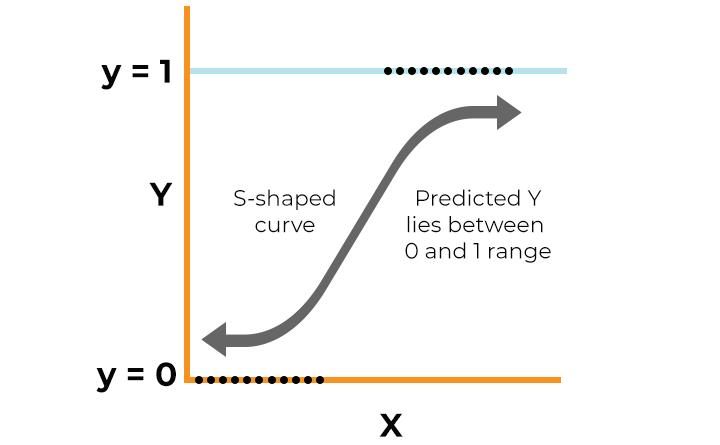
Figure1. Logisticfunction[12]
system.Threeprocessesareinvolvedinthisresearch: theclassi icationofthesoils,cropyieldprediction, andfertilizersuggestionutilizingRandomForestand SupportVectorMachine,whichprovidemorerobust
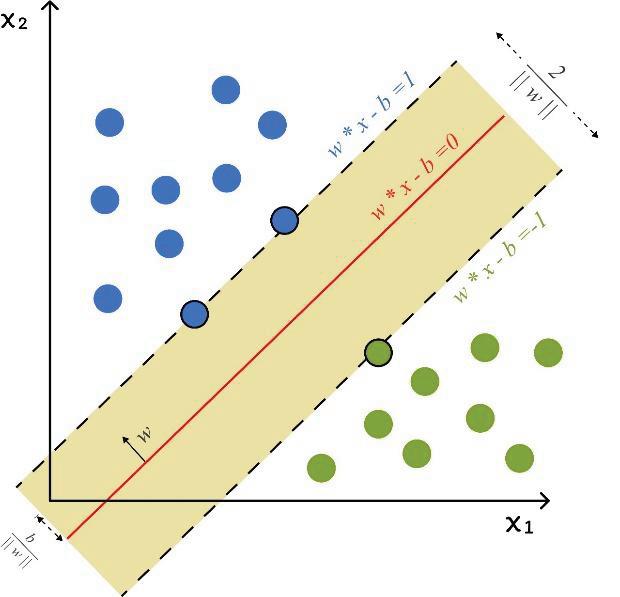
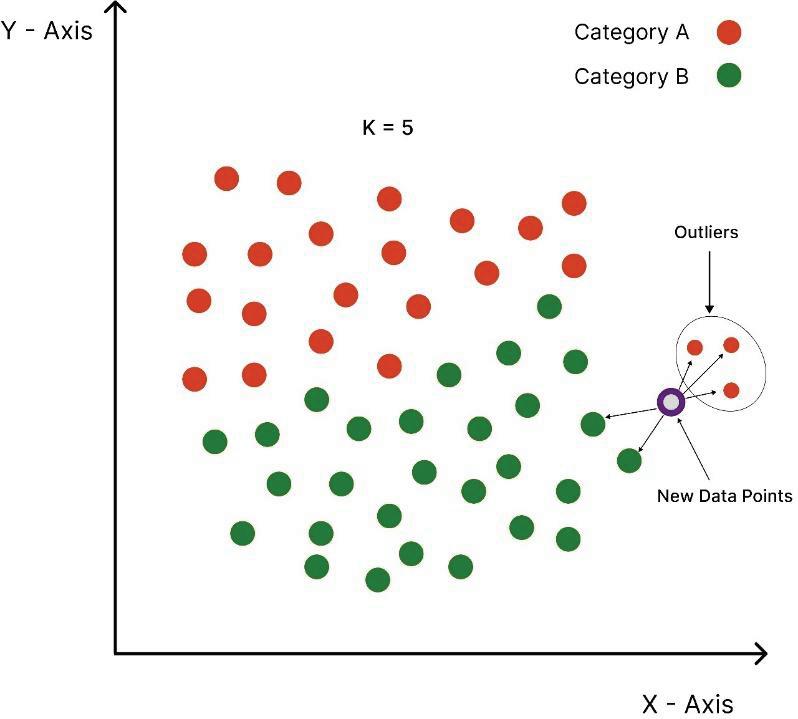
5]
modelsthantraditionallogisticregressionmodelas showninFigure 1.Additionally,thesystemhasapps fromthirdpartiesthatprovideweatherdata.The resultofthisexperimentrevealsthatsoilclassi ication usingRandomForestsandcropyieldpredictionwith SupportVectorMachinesareeffective.Thefutureis toimproveitbyincludingdevelopmentofamobile applicationforfarmeraswellasimplementingcrop diseasedetectionthroughimageprocessing[6].
Theauthorsin[7]suggestedamethodsothat theycanhelpfarmerstomakedecisionsaboutcrops dependingontheirsoiltypes.Itappliessoil‑speci ic characteristicssuchasdepth,texture,pH,andwater‑ holdingcapacitytorecommendappropriatecrops. Itmakesuseofagroupmethodthatincorporates RandomTree,CHAID,Naı̈veBayesandKNNmachine learningalgorithmsasdemostratedinFigure3and5. ThisstudydemonstratestheuseofRandomForests
forsoilcategorizationandtheuseofVectorMachines forcropproductionprediction.
Fourcropshavebeentakenintoconsideration inacroprecommendationsystem:wheat,cotton, sugarcane,andricein[8].Accuratecropselec‑ tionisprovidedbycroprecommendationsystems, whichtakesoil,surfacetemperature,andrainfallinto account.Theproposedmodelusesahighdegreeof ef iciencyandaccuracyofensemblingapproachto predictthecropthatwillboostyield.
Theauthorsofthiswork[3]haveintroducedAgro‑ Consultant,anintelligentsystemthatIndianfarmers mayusetomakewell‑informeddecisionsonwhich cropstoproducebyutilizingdataonsoilproperties, geographiclocation,andclimaticparameterslikerain‑ fallandtemperature.Thisisaccomplishedbytheuti‑ lizationofvariousMLmethods,likeneuralnetworks, KNNs,RandomForests,anddecisiontrees.
Theauthors[9]haveconcludedthatcropyield predictionisessentialforthecountry’splannedguid‑ ingprinciplesmadeinthe ieldofagriculturedevelop‑ ment,toprovidegreateragriculturaloutputandeffec‑ tiveuseofwaterresourceswhileassistingfarmersin minimisingtheuseofpesticidesincropproduction andpreventingsoildeterioration.
Basedontheneedsofthesoil,dataminingtools wouldassistfarmersinchoosingthebestseedsto plant,guaranteeinghigheryieldtomakeapro it.To preciselyandeffectivelyrecommendacropbased onsite‑speci icdata,acollaborativerecommenda‑ tionmodelisbuiltusingtechniquesincludingthe algorithmsRandomTree,CHAID,KNN,andNaı̈ve Bayes[10].
Togrowthecrop’snetyieldrate,theauthors of[11]recommendtheCropSelectionMethod(CSM), whichrecommendstheseriesofcropsthatwillbe sownthroughouttheseasondependingonthecrop yieldforecast.Asolutionforcropselectionbased onfactorssuchascroptype,weather,soiltype,and waterdensityisofferedbytheproposedmethod.This approachsuggestsacropsequence’sdailyproduction ismaximalforagivenseason,consideringthecrop, sowingtime,numberofdaysinplanting,andseason‑ wiseyieldrateasinputs.
Machinelearningisoneofseveralmethodstopre‑ dictcropproductioninagriculture.Machinelearning techniquessuchasRandomForestsandSupportVec‑ torRegressionareused,whichprovidemorerobust modelsthantraditionallinearregressionmodels[12].
3.1.LogisticRegression
Onetechniqueusedforbinaryclassi icationis calledLogisticRegression.Inthistechniquewepre‑ dicttheprobabilityofaninputexamplefallinginto oneoftwoclasses.Therefore,theoutputshouldbein discretevaluei.e.,eitherYesorNo,trueorfalse,etc. Itisclassi iedintothreebasiccategories:Binomial, MultinomialandOrdinal.





DecisionTree[3]
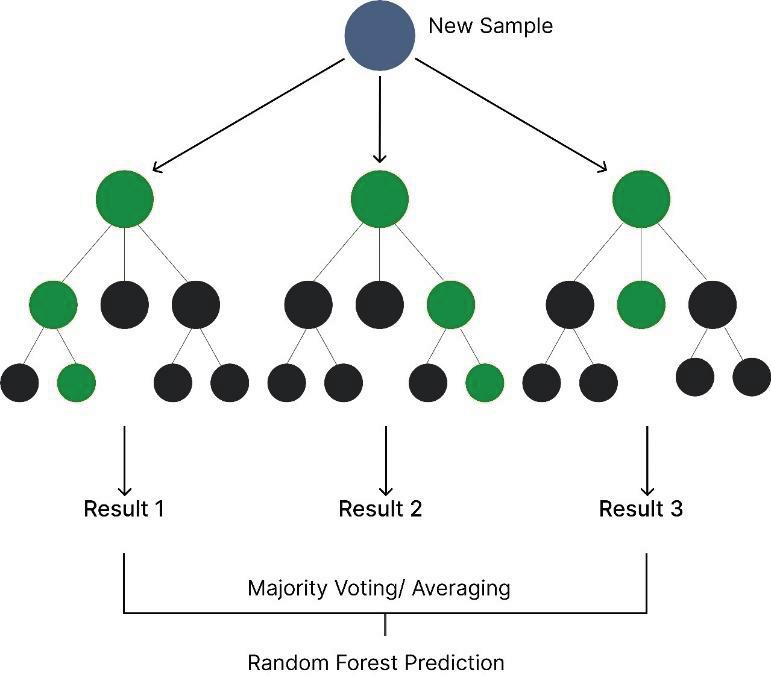
Figure5. RandomForest[3]
• x=inputvalue
• y=predictedoutput
• ��0 =biasorinterceptterm
• ��1 =coef icientforinput(x)
3.2.NaïveBayes
Oneofthemostfundamentalandsuccessfulprob‑ abilisticclassi icationmethods,Naı̈veBayes,isbased ontheBayes’theorem.Itgeneratesalikelihoodtable by indingprobabilitiesofthefeatures.GaussianNaı̈ve Bayesisspeci icallyappliedwhencontinuousfeatures followaGaussiandistribution.It’sef icient,simple, andperformswellinlimitedtrainingdata.
Eq.(2)isBayes’theoreminwhich:
P(A)=TheprobabilityofAoccurring
P(B)=TheprobabilityofBoccurring
P(A∣B)=TheprobabilityofAgivenB
P(B∣A)=TheprobabilityofBgivenA
3.3.SVM
SupportVectorMachine(SVM)isasupervised machinelearningtechniquethatmaybeappliedto bothregressionandclassi icationapplications.The objectiveofthismethodistodeterminethehyper‑ planethateffectivelydividesthetwoclasseswith thewidestpossiblemargin.TheSVMalgorithmuti‑ lizestwocrucialelementstochoosethemostsuitable hyperplaneforclassifyinglabels:twomeasurements: thesupportvectors,orthedatapointsclosesttothe hyperplane,andthemargin,orthedistancebetween thehyperplaneandtheclosestdatapoints.Figure 2 highlightstheSVMplanandsupportvectors. ��⋅��+��=0 (3)
Eq.(3)equationofhyperplaneinwhich: ��=avectornormaltohyperplane b=anoffset
3.4.KNN(K‐NearestNeighbours)
KNN,K‑NearestNeighboursisasupervisedML method,isusuallyusedfordivisionbutalsoforregres‑ sion.Thismethodstartswithselectingthenearest Neighbors.Then,oncantrydifferentvaluesforKto indtheoptimalone.TheEuclideandistancebetween KNeighborsisalsocalculated.Wecountthenumber ofdatapointsineachcategorybetweentheseKNeigh‑ bors,andweassignanewdatapointtothecategory withthehighestnumberofNeighbors.Expandingthe trainingdatacollectioncouldenhancethistechnique.
Eq.(4)isEuclideandistanceformulainwhich:
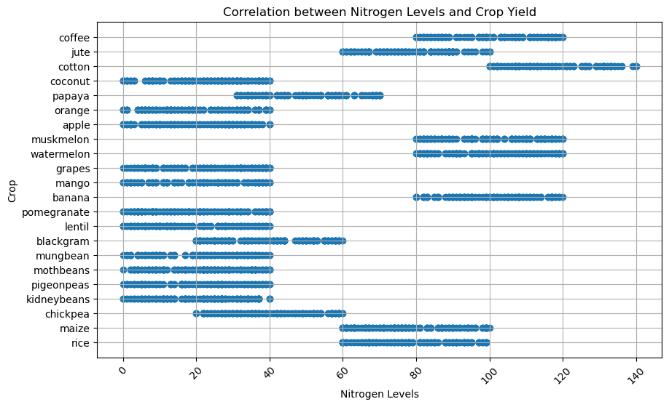
(a).RelationshipbetweenNitrogenLevelsandCropYield
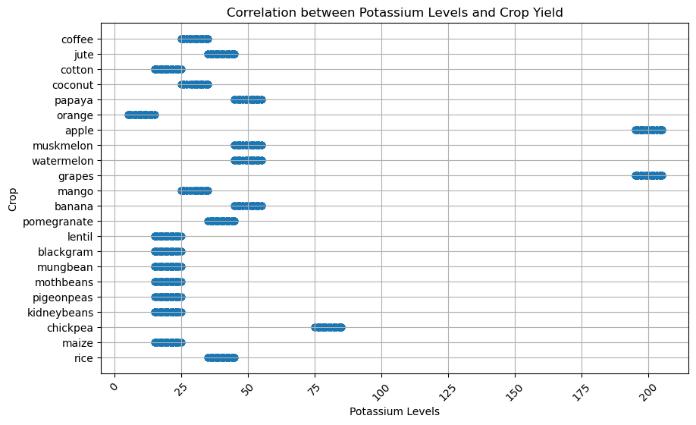
(b).RelationshipbetweenPotassiumLevelsandCropYield
Thecoordinatesofonepointare(x1,y1)
Thecoordinatesoftheotherpointare(x2,y2)
Distancebetween(x1,y1)and(x2,y2)isd.
3.5.DecisionTree
Althoughdecisiontreesareamongthemostpow‑ erfultoolsavailable,theyaretypicallyemployedfor classi icationjobs.Theycanalsobeutilizedforregres‑ sionassignments.AsshowninFigure4,theDecision
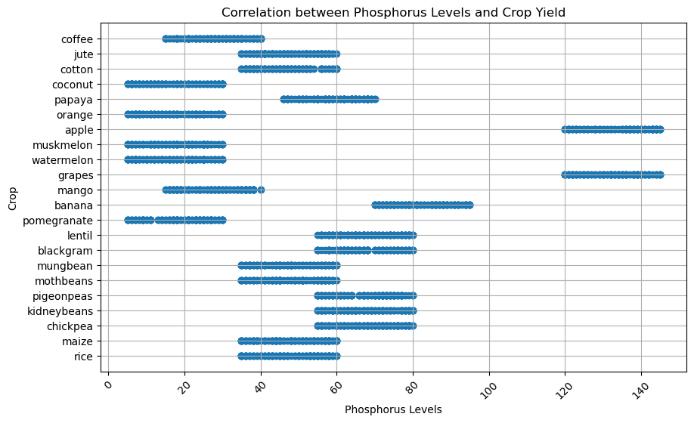
Figure6. (c).RelationshipbetweenPhosphorusLevelsandCropYield
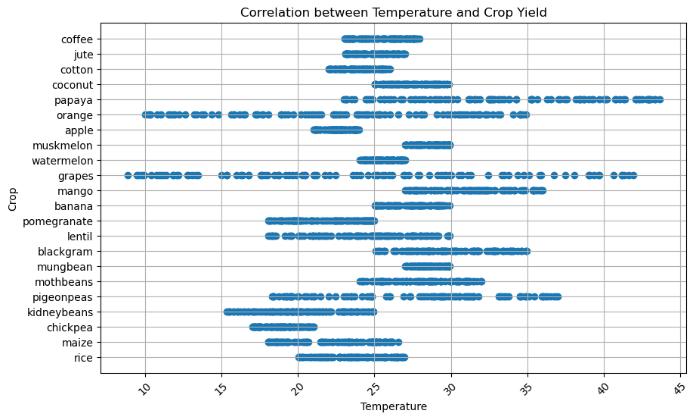
Figure6. (d).RelationshipbetweenTemperatureandCropYield
NodeandLeafNodearethetwonodesthatmakeup thissystem.LeafNodesrepresentthedecision’sout‑ put,andDecisionNodesareusedtomakedecisions. Decisiontreesareeasytounderstand,treatmentof bothnumericalandcategoricaldatathoughtheir failuretoprunecouldleadthemintoover‑ itsitua‑ tionsespeciallywhennoisydatasetsareconsidered.
Amongthewidelyusedensemblemodelsbased ondecisiontreesisRandomForest.Everyobservation isfedintooneofthemanydecisiontreesthatare generatedinRandomForest.RandomForestcandeal withhigh‑dimensionaldata,maintainsomelevelof interpretability,andhaslesschanceofbeingaffected
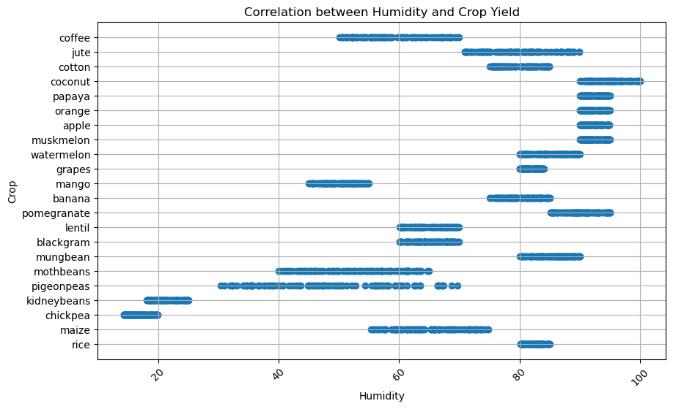
(e).RelationshipbetweenHumidityandCropYield
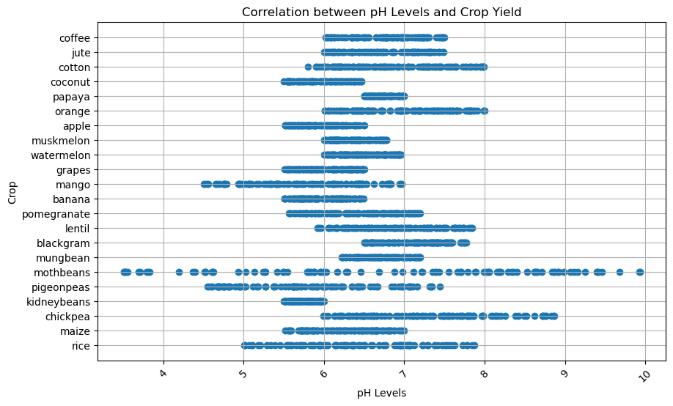
Figure6. (f).RelationshipbetweenpHandCropYield byover ittingthanindividualdecisiontreesthem‑ selves[13].
4.ProposedMethod
WeaimtodevelopaCRSystembyusingML techniquestohelpfarmersselectwhichcropshould yieldbasedonsoilandclimateparameters.The datasetusedcontainsnitrogen(N),phosphorus(P), potassium(K)levels,temperature,humidity,pH,and
amountofrainfall,alongwiththelabelofcropssuit‑ ablefortheenvironmentandtogetabetterunder‑ standingofthedatasetwehavevisualizedthecorre‑ lationbetweenlabelandotherfeatures.
Toensuredataintegrity,exploratorydataanalysis identi iesthedataset’sdimensions,contents,miss‑ ingvalues,andduplicates.Furthermoreforsmooth lowofdata,croplabelsweremappedintonumeri‑ calidenti iers.Eachcropisassociatedwithaunique numericalvalue,rangingfrom1to22.Anewcolumn
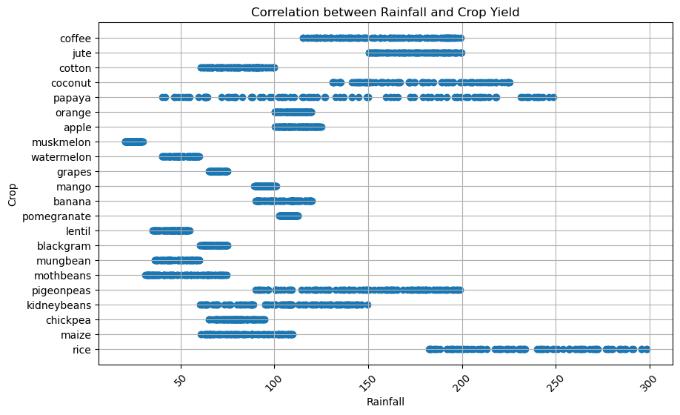
(g).RelationshipbetweenRainfallandCropYield
Dataset
Feature Extraction
Training
EDA
- Mapping Categorical Labels to Numeric Values
- Feature Scaling with MinMax Scaler
- Feature Scaling with Standard Scaler
Crop to be Yield
Testing
Models
- Decision Tree
- Random Forest
- Logistic Regression
- Naïve Bayes
- Support Vector Machine
- K-nearest Neighbors
Recommendation System
Figure7. BlockDiagramofCropRecommendationSystem
‘crop_num’iscreatedcorrespondingtoexistingcol‑ umn‘label’containingcropnames.
Thedatasetisdividedintofeatures(X)contain‑ ingN,P,K,temperature,humidity,pHandrain‑ fallandlabels(y)containingnewlycreatedcolumn ‘crop_num’.Tostandardizeandnormalizethedatafor modelcompatibility,wehaveusedMin‑MaxScaler.So thatitscalesandtranslateseachfeatureindividually usingthefunctionMinMaxScaler().
TheFigure7abovedemonstratesVariousMachine learningalgorithmswereusedforthedevelopmentof themodel.Eachmodel’saccuracyincropprediction wasevaluateusingtrainingdataset(X_train,y_train) afterthat,thesuitablemodelwastrainedusingatrain‑ ingdataset(X_train,y_train).Naı̈veBayeshasshown tohavethehighestaccuracyamongthesemodels.
Forthemostaccuratecroprecommendationas shownintheFigure8,aGaussianNaı̈veBayesmodel
Figure8. AccuracyComparison
Table2. CropLabelandCorrespondingNumerical Representation
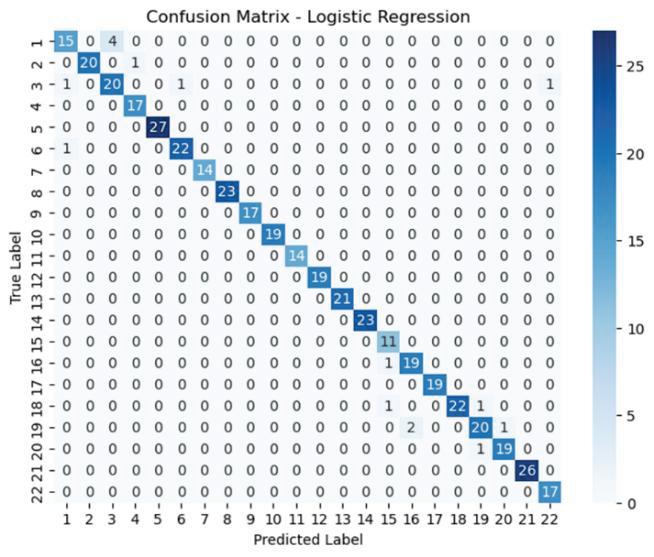
Figure9. (a).ConfusionMatrix‐LogisticRegression
istrainedontheentiredataset.Arecommendation functionisdeveloped,whichwillallowuserstoinput soilandclimaticparameterssuchasnitrogen,phos‑ phorus,potassiumlevels,temperature,humidity,pH, andrainfalltopredictthemostsuitablecropforcul‑ tivationthenatrainedmodelisused,andthefunc‑ tionsimplypredictswhilemappingthepredictedcrop numberagainstaprede ineddictionarystoringits correspondingcropname[14]asdisplayedinTable2
Forbetterunderstandingoftheperformanceof allmodelsusedandtomakerightdecisionswehave alsogeneratedConfusionMatrixdemonstratedinFig‑ ures 9 & 9 andClassi icationreportcontainingPre‑ cision,RecallandF1scoreofallmodels(Logistic Regression,Naı̈veBayes,SVM,KNN,DecisionTree,and RandomForest)[15].
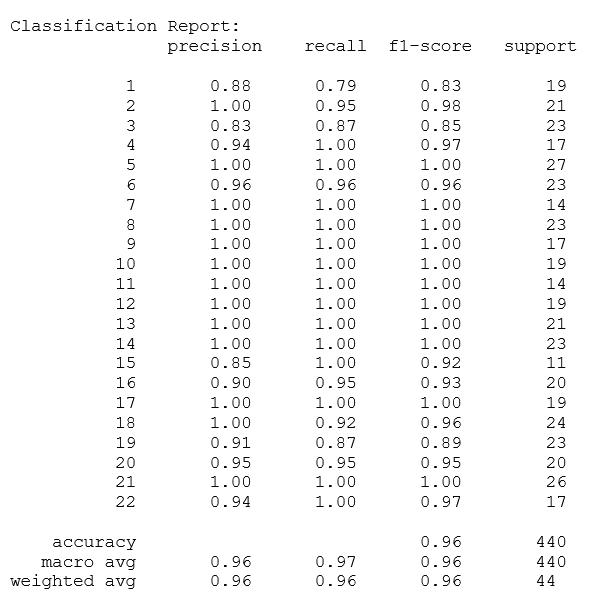
Figure9. (b).ClassificationReport‐LogisticRegression
5.Result
Theresearchpresentedherecomparesmachine learningapproachesusedincroprecommendation
Table3. BeforeMinMaxScaling
NPKtemperaturehumiditypHrainfall 165617161416.39624392.1815196.625539102.944161 75237791927.54384869.3478637.14394369.408782 8927732527.52185663.1321537.28805745.208411 1041101704825.36059275.0319336.012697116.553145 11790173035.47478347.9723056.27913497.790725
Table4. AfterMinMaxScaling
0.121428570.078571430.0450.217234080.90898980.485322250.29685161 0.264285710.528571430.070.537109650.642579460.565940730.17630752 0.050.485714290.10.536478580.570058020.588352290.08931844 0.721428570.464285710.2150.474462090.7088980.390017470.34576958 0.0.085714290.1250.764684290.393181390.431451850.2783274
Table5. AccuracyofMLModels
Models Accuracy LogisticRegression 0.9636 NaiveBayes 0.9954
SupportVectorMachine 0.9681 K‑NearestNeighbors 0.9590
0.9931
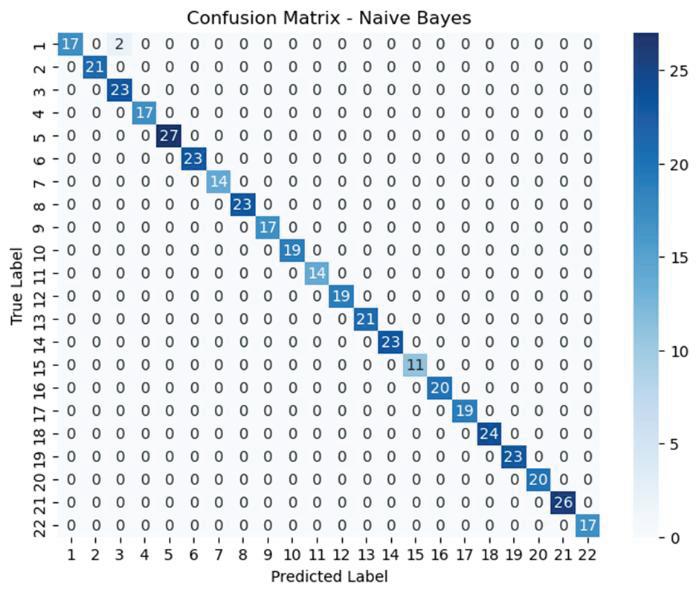
(a).ConfusionMatrix‐NaïveBayes
systemstorecommendhigh‑yieldingcrops.Togetthe betterinsightofthedatasetwehaveplottedgraphsof correlationbetweeneachfeature(Nitrogen,Phospho‑ rus,Potassium,Temperature,pHandHumidity)and thelabel.Furthermore,eachmodelisevaluatedfor accuracyusingtestingdata.Table3and4displaysthe standardizeandnormalizethedataformodelcompat‑ ibility,usingMin‑MaxScaling.
TheFigure8shownabovedemonstratesthatRan‑ domForestandNaı̈veBayesalgorithmsexhibitthe utmostlevelofaccuracy,whileLogisticRegression andK‑nearestNeighborsmethodsdisplaythelow‑ estlevelofaccuracyasseenintheTable 5.Metrics suchastheconfusionmatrix,precision,recall,andF1 scoreofferamoreinsightfulanalysisoftheprediction
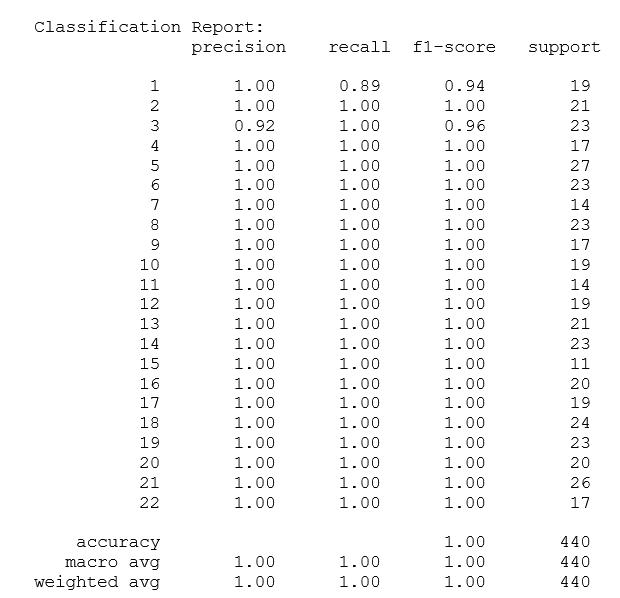
Figure10. (b).ClassificationReport‐NaïveBayes
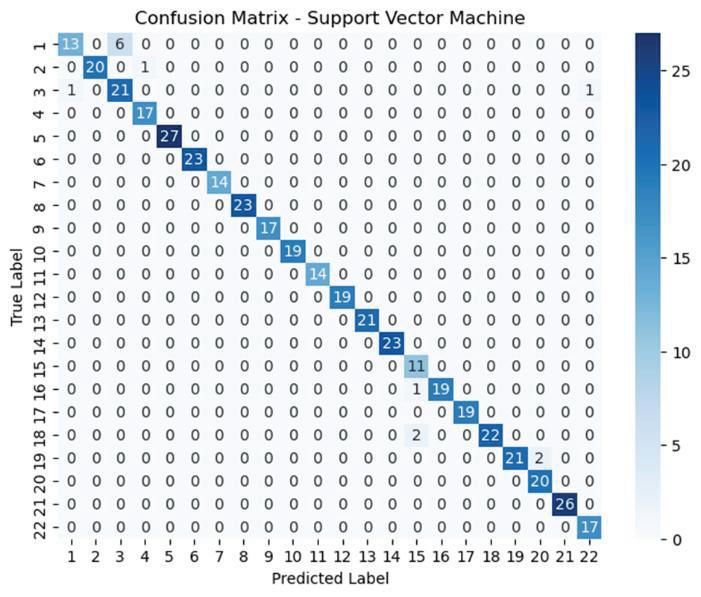
Figure11. (a).ConfusionMatrix‐SupportVector Machine
resultsthanaccuracyalone.Confusionmatricesdis‑ playthetruepositive,truenegative,falsepositive,and falsenegativepredictionsgivenbyeachmodelshown
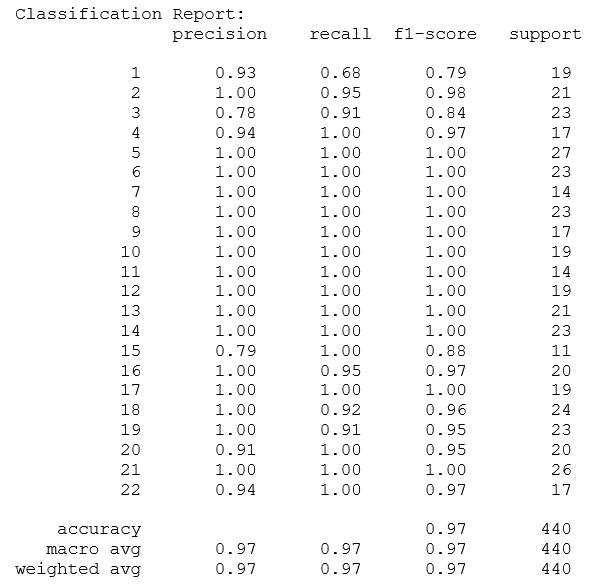
Figure11. (b).ClassificationReport‐SupportVector Machine
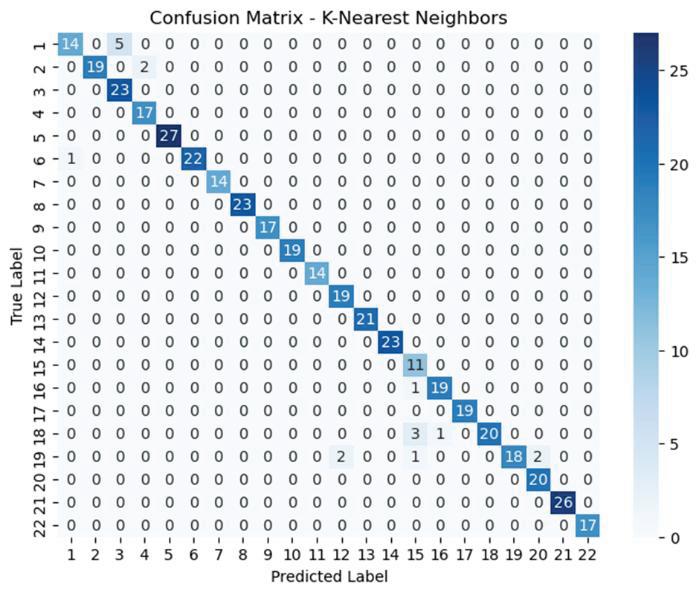
Figure12. (a).ConfusionMatrix‐K‐NearestNeighbors
intheFigures14(a)&14(b),enablingustoevaluate theprecisionandef icacyofcropcategorization.Addi‑ tionally,thecategorizationreportsprovideathorough evaluationofperformanceparameterssuchaspre‑ cision,recall,andF1scoreforeachcropcategory. Precisionassessesthemodel’saccuracyinidentifying speci iccropsbydeterminingtheratioofcorrectly identi iedinstancestoallinstancespredictedforthat crop,forexample,correctlyidentifyingwheatcrops outofallpredictedwheatinstances.Recallprovides crucialinsightsintothemodel’scapabilitytocapture andincludeallrelevantevents,suchasensuringall instancesofaspeci iccroplikericearecorrectlyiden‑ ti iedandincludedinthepredictions.Thetermrefers totheproportionoftruepositivepredictionsrelative tothecombinednumberoffalsenegativepredictions
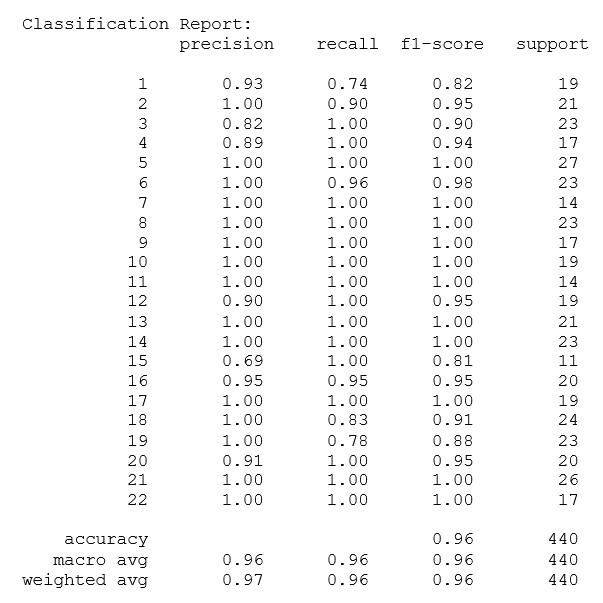
Figure12. (b).ClassificationReport‐K‐Nearest Neighbors
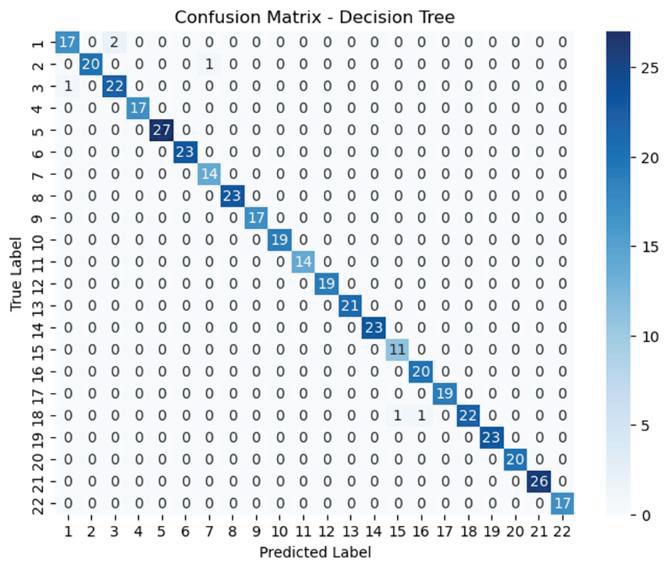
Figure13. (a).ConfusionMatrix‐DecisionTree
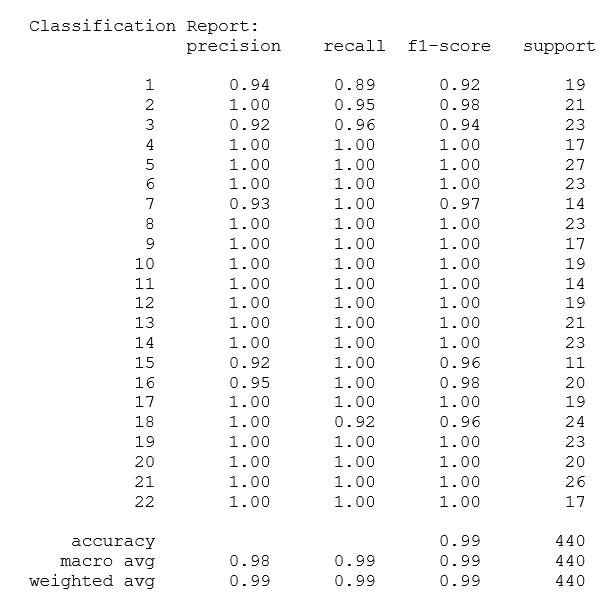
Figure13. (b).ClassificationReport‐DecisionTree
andtruepositivepredictionsforeachcategory.Taking theweightedharmonicmeanofprecisionandaccu‑ racy,onecancalculatetheF1score.Thenumberof actualoccurrencesoftheclassintheprovideddataset isreferredtoassupport.Consequently,wehavegen‑ eratedaclassi icationreportandvisualizationfor eachmodel.Toobtainthemostaccurateforecast,itis essentialtoutilizeabovementionedmetricsprovided intheanalysis[16].
Theproposedstudywillassistfarmersinincreas‑ ingagriculturaloutput,reducingsoildegradationin cultivated ields,andusinglessfertiliserduringcrop productionbysuggestingtheoptimalcropamountto plantbasedonawidevarietyofcriteria.Thesug‑ gestedactivityhelpsfarmerssustainabilitybyhelp‑ ingthemchoosetherightcropstocultivate.We haveidenti iedtheadvantagesanddisadvantagesof eachmodelthroughcomparativeanalysis,provid‑ ingimportantinformationfordecision‑makinginthe agriculturalsector.Wecanimprovethesystemlater byaddingmorefeaturestothedataset.Furthermore, withthesupportofremotesensingtechnologiesand IoTdevices,real‑timemonitoringcanbemadepos‑ siblewhichwouldallowthesystemtorecommend cropsalongwithclimatechange.Tomaketheproject bene icialtofarmersineverycornerofournation,we mayalsoincorporateallregionallanguages.
Declarations
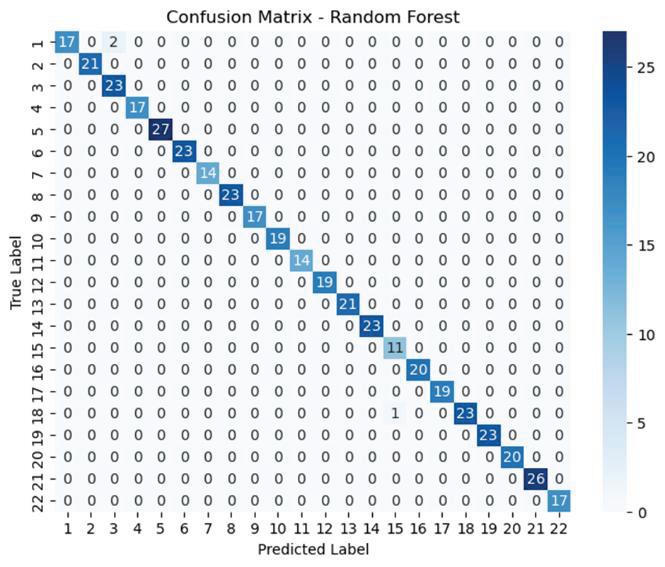
Figure14. (a).ConfusionMatrix‐RandomForest
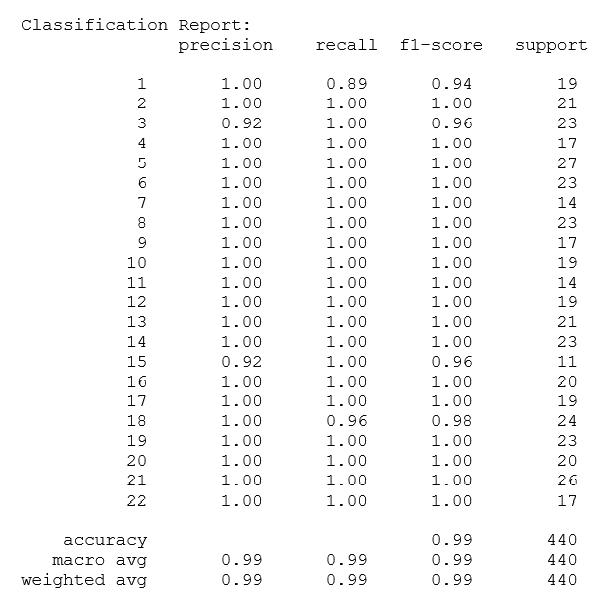
Figure14. (b).ClassificationReport‐RandomForest
Funding None
Conflictsofinterest Theauthorscon irmthatthey havenocompetinginterestsorcon lictsofinterest.
Codeavailability Thecodeforimplementationis availableuponrequest,subjecttoprivacyandother restrictions.
Technologyused Pythonprogramming,Machine learninglibraries
AUTHORS
SanketGupta –DepartmentofComputerScience andEngineering,Medi‑CapsUniversity,Indore,India, e‑mail:sanket.jec@gmail.com.
TrishnaPanse –DepartmentofComputerScience andEngineering,Medi‑CapsUniversity,Indore,India, e‑mail:trishnapanse@gmail.com.
KailashChandraBandhu –Department ofComputerScienceandEngineering, Medi‑CapsUniversity,Indore,India,e‑mail: kailashchandra.bandhu@gmail.com.
RatneshLitoriya –DepartmentofComputerScience andEngineering,Medi‑CapsUniversity,Indore,India, e‑mail:litoriya.ratnesh@gmail.com.
ShivaniPatnaha –DepartmentofComputerScience andEngineering,Medi‑CapsUniversity,Indore,India, e‑mail:patnahashivani45@gmail.com.
DivyaKumawat –DepartmentofComputerScience andEngineering,Medi‑CapsUniversity,Indore,India, e‑mail:ddoraya@gmail.com.
LishikaPargi –DepartmentofComputerScience andEngineering,Medi‑CapsUniversity,Indore,India, e‑mail:lishi1146@gmail.com.
TishaModi∗ –DepartmentofComputerScience andEngineering,Medi‑CapsUniversity,Indore,India, e‑mail:tishamodi0212@gmail.com.
∗Correspondingauthor
References
[1] D.Pal,“ChangesthathaveTakenPlaceinthe IndianEconomyafter1951”,Dec.2015.
[2] R.P.Reddy,B.Vinitha,K.Rishita,andK.Pranavi, “CropMonitoringandRecommendationSystem usingMachineLearningandIOT”, International JournalofInnovativeTechnologyandExploring Engineering,2020,DOI:10.35940/ijitee.I700 8.079920.
[3] Z.Doshi,S.Nadkarni,R.Agrawal,andN.Shah, “AgroConsultant:IntelligentCropRecommen‑ dationSystemUsingMachineLearningAlgo‑ rithms”,2018,DOI:10.1109/ICCUBEA.2018. 8697349.
[4] SrilakshmiA.,MadhumithaK.,andGeethaK, “Machinelearningapproach:Recommendation ofsuitablecropforlandusingmeteorological factors”, SSRNElectronicJournal,2020,Elsevier BV.DOI:https://doi.org/10.2139/ssrn.37365 50
[5] S.Mamathajajur,SoumyaN.G.,G.T.Raju,“Crop RecommendationusingMachineLearningTech‑ niques”,International JournalofInnovativeTech‑ nologyandExploringEngineering,vol.9,no.2S, 2019,658–661.DOI:10.35940/ijitee.b1106. 1292s19.
[6] D.A.BondreandM.SantoshMahagaonkar,“PRE‑ DICTIONOFCROPYIELDANDFERTILIZERREC‑ OMMENDATIONUSINGMACHINELEARNING ALGORITHMS,”2019,DOI:10.33564/IJEAST.20 19.v04i05.055
[7] D.A.Reddy,B.Dadore,andA.Watekar,“Crop RecommendationSystemtoMaximizeCrop YieldinRamtekregionusingMachineLearning,” IntJSciResSciTechnol,485–489,Feb.2019, DOI:10.32628/ijsrst196172.
[8] N.H.Kulkarni,G.N.Srinivasan,B.M.Sagar, andN.K.Cauvery,“ImprovingCropProduc‑ tivityThroughACropRecommendationSys‑ temUsingEnsemblingTechnique”.in 2018 3rd InternationalConferenceonComputationalSys‑ temsandInformationTechnologyforSustain‑ ableSolutions(CSITSS).,2018,114–119.DOI: 10.1109/CSITSS.2018.8768790.
[9] Jabed,Md&Murad,Masrah,“CropYield PredictioninAgriculture:AComprehensive ReviewofMachineLearningandDeep LearningApproaches,withInsightsfor FutureResearchandSustainability”,2024 DOI:10.1016/j.heliyon.2024.e40836
[10] S.Pudumalar,E.Ramanujam,R.H.Rajashree, C.Kavya,T.Kiruthika,andJ.Nisha,“Croprec‑ ommendationsystemforprecisionagriculture,” in2016EighthInternationalConferenceon AdvancedComputing(ICoAC).,2017,32–36. DOI:10.1109/ICoAC.2017.7951740.
[11] R.Kumar,M.Singh,P.Kumar,andJ.Singh,“Crop SelectionMethodtoMaximizeCropYieldRate usingMachineLearningTechnique”,2015,DOI: 10.1109/ICSTM.2015.7225403.
[12] Ramu,KPriyadarsini,K,“AReviewonCropYield predictionUsingMachineLearningMethods”, 2021,DOI:10.1109/ICOSEC51865.2021.959 1764
[13] F.Shahrin,L.Zahin,R.Rahman,A.J.Hossain, A.H.KafandA.K.M.AbdulMalekAzad, “AgriculturalAnalysisandCropYieldPredic‑ tionofHabiganjusingMultispectralBandsof SatelliteImagerywithMachineLearning”,2020 11thInternationalConferenceonElectricaland ComputerEngineering(ICECE),21‑24,2020, DOI:10.1109/ICECE51571.2020.9393066
[14] M.KavitaandP.Mathur,“CropYieldEstimation inIndiaUsingMachineLearning”,2020IEEE5th InternationalConferenceonComputingCom‑ municationandAutomation(ICCCA),220‑224, 2020,DOI:10.1109/ICCCA49541.2020.9250 915
[15] P.S.Nishant,P.SaiVenkat,B.L.Avinash andB.Jabber,“CropYieldPredictionbased onIndianAgricultureusingMachineLearn‑ ing”,2020InternationalConferenceforEmerg‑ ingTechnology(INCET).,1–4,2020,DOI:10.110 9/INCET49848.2020.9154036
[16] P.S.MayaGopalandR.Bhargavi,“OptimumFea‑ tureSubsetforOptimizingCropYieldPrediction UsingFilterandWrapperApproaches”,Applied EngineeringinAgriculture.,vol.35,no.1,2019, 9‑14.DOI:https://doi.org/10.1016/j.compag.2 019.104968
ENSEMBLELEARNINGFORFACERECOGNITIONINSUSPECTIDENTIFICATIONUSING
Submitted:21st August2024;accepted:24th September2024
ShilpaChaudhari,RajarajeswariS,ArchanaRane
DOI:10.14313/jamris‐2026‐022
Abstract:
Facialrecognitiontechnologyfindsapplicationsinsecu‐rity,surveillance,andsocialmedia.Existingresearch explorestheuseofmachinelearninganddeeplearning forfacerecognition,emphasizingtheneedforimproved accuracy.Thispaperproposesasystemforsuspectiden‐tificationusingfacialrecognition.Thesystemleverages ensemblelearningbyintegratingseamlesslywithOpe‐nAI’sadvancedtechnologiesandissupportedbyarobust cloudinfrastructure.Thecomparisonoftheproposed ensemblemodeltoindividualmodelslikeVGG‐Face, Facenet,Facenet512,Deepface,DeepID,ArcFace,and SFaceusesmultipledetectorsandtheLabelledFaces intheWild(LFW)dataset.Theresultsshowthatthe ensemblemodeloffersthemostefficientprocessingtime acrossallsamplesizes.Incontrast,modelslikeVGG‐Face andDeepIDexhibitasteeperincreaseinprocessingtime, suggestinglowerscalability.Forinstance,atasample sizeof50,thelocaltestcompletesin61.3seconds,while thecloudAPItesttakes67.2seconds.Thishighlightsthe fasterprocessingspeedofthelocaltestacrossallsample sizes.FaceNet,VGG‐Face,andArcFacemodelsarechosen inensemblemodelwhereinallofthemhaveaccuracy above95%ineveryfacedetectortest.Facenet512model has98.4%amongtheselectedensemblemodelwhereas ensembleofthesemodelsshows98.8accuracy.
Keywords: Facerecognition,Accuracytest,Deeplearn‐ing,ensemblelearning,CloudAPI
1.Introduction
Facialrecognitiontechnologyhasbecomeapow‑ erfultoolwithapplicationsinsocialmedia[19], security[20],andsurveillance[18].Thetraditional methodofusinghand‑drawnsketchesforsuspect identi icationislabor‑intensive,time‑consuming,and oftenabottleneckintheinvestigationprocess.Despite thespreadofmodernrecognitiontechniques,theinef‑ icienciesinherentinmanualsketchingprocesses— limitedscalability,signi icanttimeinvestment,and resourceconstraints—havehinderedthetimelyand effectiveidenti icationofsuspects[21].Thesechal‑ lengesunderscoretheurgentneedforarevolutionary applicationthattranscendstheselectionofindividual facialfeaturestoenablerapid,comprehensiveface sketchrecognition.Existingresearchexploresvarious machinelearninganddeeplearningmodelsforface recognition[22,23].
Theproposedmethodofthispaperidenti ies sevenprominentmodels:VGG‑Face[24],FaceNet[25], FaceNet512,DeepFace[26],DeepID,ArcFace[28], andSface[27].Thesemodelsaretrainedonlarge datasets(likeLabelledFacesintheWild(LFW))to achievehighaccuracy(above90%).VGG‑Facelearns distinctivefeaturesforthefacerecognitionprocess. FaceNetmapsfaceimagestohigh‑dimensionalfea‑ turesforsimilarityrecognition.FaceNet512utilizes ahigherdimensionalspaceforimprovedfacerecog‑ nitionperformance.DeepFaceextractsfacialfeatures formulti‑tasklearningencompassingfacedetection, alignment,andrecognition.DeepIDlearnshierar‑ chicalrepresentationsoffacesforhighaccuracyin faceveri icationandidenti ication.ArcFaceandSface enhancethediscriminativepowerwithintheface featurespacethroughspeci iclossfunctionsduring training.Thesemodelsarewidelyusedandhave signi icantlycontributedtoadvancementsinface recognition.Theirperformancevariesbasedonfac‑ torslikedatasets,evaluationprotocols,andapplica‑ tion(intermsofaccuracy,precision,recall,andF1‑ score).
Ensemblelearningcombinesmultiplemodels tosurpasstheperformanceofanysinglemodel. Itaggregatesthediversepredictionsfromchosen models,leveragingthe”wisdomofthecrowd.” Theproposedfacerecognitionmodelutilizes ensemblelearningtoimproveitsperformance byharnessingthecollectivestrengthsoftheseven modelswhilemitigatingindividualweaknesses. Cloudenvironmentsofferconvenientdatastorage andretrievalfromanywhere.ServiceslikeAmazon S3provideaninterfaceforcost‑effectiveretrieval oflargedatasets.CombiningtheseS3bucketswith AWSsegmentationservicesensuresauthorized useraccesstospeci icdatastoredwithinthe bucket.
Theproposedsystemdesignsanddevelopsa recognitionmodelusingmachineanddeeplearning‑ basedensemblelearningbyleveragingadvanced facialrecognitionagainstcriminaldatabaseswithef i‑ cientcloud‑basedstorage,management,andsecurity ofsuspectfaces.Thisapproachensuresscalability, reliability,andcost‑effectivenessforfacerecognition applicationworkloads.Itestablishesacloud‑based centralizeddatabasetofacilitateeasyglobalaccess tocrucialinformationforlawenforcementagencies. ThedevelopedmodelistestedonAWScloudfor
portabilityusingtherespectiveAPIs.Theintegra‑ tionofdeeplearningalgorithmsandcloudinfras‑ tructurefordatabasematchingandveri ication,aim‑ ingatasigni icantimprovementintheef iciency oftheidenti icationprocess.Ourspeci iccontribu‑ tionsincludethefollowing:(1)designanddevelop‑ mentofrecognitionmodelusingmachineanddeep learning‑basedensemblelearning;(2)establishment ofacloud‑basedcentralizeddatabasetofacilitateeasy globalaccess;(3)ensuringthescalability,reliability, andcost‑effectivenessforfacerecognitionapplication workloadsusingS3bucketswithAWSsegmentation services;and(4)aperformanceanalysisofthedevel‑ opedfacerecognitionmodel.
Thispaperisstructuredasfollows:SectionIIdis‑ cussesrelatedworkonfacerecognitionusingdeep learning.SectionIIIdetailstheproposedmethodology forensemblelearninginacloudenvironment.Section IVpresentsresultanalysis,followedbytheconclusion inSectionV.
TheDual‑ScaleMarkovNetwork(DSMN)and Multi‑InformationFusionalgorithm[1]representsan innovativecontributiontothe ieldoffacesketch‑ photosynthesisandrecognitionconsideringdiverse facialfeaturesandvariations.Thealgorithminte‑ gratesinformationfrommultiplesources,enhancing thesynthesisandrecognitionaccuracy.Theaccuracy oftheDSMNreliesonthequalityoftheinitialsketch. Ifthesketchispoor,thesynthesizedphotoorrecog‑ nitionaccuracysuffers.Theinformationfusionstage, mightbecomputationallyexpensive,makingitchal‑ lengingforreal‑timeapplications.
Theauthorsof[2]achievedpromisingperfor‑ manceinmatchingcompositesketchesgeneratedby eyewitnesses,tomugshotphotographs.Itrelieson threekeytechniques:ActiveShapeModel(ASM)for pinpointingfaciallandmarksonboththesketchand photo,MultiscaleLocalBinaryPatterns(MLBP)to extractdistinctivefeaturesfromeachfacialcompo‑ nent,andcomponentsimilarityfusiontodetermine theoverallmatchbetweenthesketchandphoto. Thiscomponent‑basedapproachachievedsigni icant improvementswhencomparedtoaleadingcommer‑ cialfacerecognitionsystemandasimplermethodthat analyzedtheentirefaceasasingleunit.Thepromising performancesuggeststhatthismethodhasthepoten‑ tialtobeavaluabletoolforlawenforcementagencies inidentifyingandapprehendingsuspects.
Acomprehensivesurveyofvarious3Dfacerecon‑ structiontechniquesisexploredin[3],includingdeep learning,epipolargeometry,one‑shotlearning,3D morphablemodels,andshape‑from‑shadingmethods. Itdelvesdeeperintotheanalysisofdeeplearning‑ basedreconstructiontechniques,dominanttechnique withhighaccuracy,detail,androbustness.Recon‑ structingfacesfromhistoricalphotographsorrare medicalscansmightbechallengingduetothescarcity oftrainingdatafromsimilardomains.Itmayrequire
additionalcueslikedepthinformationforbetteraccu‑ racyforhandlingcomplexlightingcondition.
Theroleoffacialreconstruction(FFR)identi ies unknownindividualsbyutilizingacombinationofsci‑ enti icprinciplesandartisticskillstorecreatealike‑ nessofthedeceasedbasedontheirskeletalremains [4].Theprocessinvolvesemployingvarioustech‑ niquessuchas2D/3Dcomputer‑aidedmethods,man‑ ualsculpting,andevenclaymodeling.Animportant aspectofFFRistheunderstandingoffacialtissue depthvariationsthosearein luencedbyfactorssuch asage,sex,andancestry.However,theaccuracyofFFR iscurrentlyhamperedbylimitationsintheexisting databaseontissuedepthvariations,particularlyfor non‑caucasianpopulations.Thishighlightstheneed forfurtherresearchanddatacollectiontoimprovethe accuracyofFFRforawiderrangeofdemographics.
Anapproachtofacialimageediting[5]leveragesa hybridConvolutionalNeuralNetwork(CNN)architec‑ turetomanipulatespeci icfacialattributes.Notably, itincorporatesapre‑trainedfacialrecognitionmodel toextractkeyfeaturesfromtheimage.Thisallowsthe frameworktoeditaspectslikeage,gender,expression, andhaircolorwhilemaintainingarealisticappear‑ anceandpreservingtheunderlyingfacialidentity. ThecurrentstudyfocusesoneditingfacesofAsian descent.Furtherresearchisneededtodeterminethe generalizabilityofthisapproachtoawiderrangeof ethnicities.
3Dfacereconstructionleveragesaneuralnetwork tonotonlypredictthe3Dfaceshapebutalsoassess thecon idenceofthereconstruction[6].Theauthors demonstratethattheirapproachsurpassesshape‑ averagingtechniquesintermsofreconstructionaccu‑ racy,particularlyontheMICCdataset.Theneuralnet‑ worktendstofavorhigh‑qualityfaceimagesforrecon‑ struction,speci icallythosewithfrontalposes,clear visibility,andnaturallightingconditions.Conversely, imagescontainingocclusionslikesunglasses,hats,or haircanleadtodecreasedcon idencescoresinthe reconstructionprocess.Thishighlightstheneedfor themodeltobemorerobusttovariationsinimage qualityandposeforreal‑worldapplications.
Thestudyof[7]investigateseye‑trackingdata ofparticipantsviewingfreehandsketches.Interest‑ ingly,theresearchidenti iedconsistentpatternsin howpeople ixateonvariouspartsofthesketch, bothwithinindividualsketchesandacrosssketchesof thesamecategoryorrelatedgroupsusingasketch‑ speci icdataaugmentationtechnique.Thismethod signi icantlyimprovestheaccuracyofdeeplearning modelsinrecognizingfreehandsketches.
Theautomationoffacialcompositeproduction andidenti icationprocessesfocusesonEvoFITsys‑ tem,asoftwareprogramthatallowswitnessesto buildfacialcompositesbyselectingfeaturesfroma database[8].Thestudycomparedastandalonever‑ sionofEvoFIT,whichdoesnotrequireoperatorguid‑ ance,tothefullsystemwithahumanoperatorusing theShapeTool.Theyevaluatedtheresultingcompos‑ itesusingarootmeansquareerror(RMSE)measure
toassesstheirsimilaritytothetargetface,thestudy exploredthepotentialformatchingcompositesgen‑ eratedusingEvoFITagainstadatabaseofothercom‑ posites.
CoupledInformation‑TheoreticEncoding(CITE) utilizesPrincipalComponentAnalysis(PCA)andLin‑ earDiscriminantAnalysis(LDA)alongsideaRan‑ domizedCITETreeAlgorithmtoextractinforma‑ tivefeaturesfromdifferentmodalities:photosand sketches[9].ThesefeaturesarethenfedintoaLin‑ earSupportVectorMachine(SVM)forclassi ication. Notably,theCITEdescriptorsoutperformpopular facialrecognitionfeatureslikeLocalBinaryPatterns (LBP)andScale‑InvariantFeatureTransform(SIFT). CITEmethodsigni icantlyimprovesveri icationrates atlowfalseacceptanceratescomparedtoexisting methods.Thisimprovementisfurtherenhancedby incorporatingPCA,LDA,andSVMforinformation fusion,solidifyingCITEasapowerfulapproachfor facephoto‑sketchrecognition.
CITEallowsthesystemtocapturetheessence offacialstructuredespitetheinherentdifferences betweentheseimagetypes[19].Thetechniqueof synthesizingpseudophotosfromquerysketchesand usingRS‑LDAformatchingdemonstratedcertain limitations,especiallywhendealingwithsigni icant shapedistortionbetweenphotosandsketchesinthe trainingset.
Areal‑timedeepneuralnetworkarchitecture calledDiFRuNNTfordisguisedfaceveri ication[11] consistsoftwoneuralnetworks:CNNtopredict 20facialkeypointsintheimage,andasecondary networktoclassifysubjectsbasedonanglesandratios calculatedfromthesepredictedpoints.Theachieved accuraciesare67.4%forpredictionand74.8%for classi ication,respectively.
Conceptualcategorizationandevaluationmetrics givenin[12]providescomprehensivesurveyofrele‑ vantpublicationsonfacerecognitionsystemsunder morphingattacksaswellasdiscussestechnicalcon‑ siderations,tradeoffs,openissues,andchallengesin the ield.
Reviewofdeeplearningmethodsinfacerecog‑ nitioncoversvariousdeeplearningarchitectures, lossfunctions,databases,protocols,andapplication scenes[13].Ithighlightstherapidevolutionandsig‑ ni icantimpactofdeeplearningonfacerecognition, discussingchallengesandpromisingdirections.
Discriminativeapproacheswithoutexplicitage modelingachievesexcellentperformanceinfacever‑ i icationacrossageprogression[14].They indthat gradientorientation,particularlyinahierarchical structurecalledthegradientorientationpyramid (GOP),combinedwithSVMs,achievesexcellentper‑ formance.Empiricalstudyonagegapsimpacton recognitionalgorithms,providinginsightsintoage‑ relatedchallenges.
Theconventionalpipelineforfacerecognition involvesfourstages:detect,align,represent,andclas‑ sifyforimprovingthealignmentandrepresentation stepsbyincorporatingexplicit3Dfacemodelingto
applyapiecewiseaf inetransformation.Theyderive afacerepresentationusinganine‑layerdeepneural networkwithover120millionparameters,employ‑ inglocallyconnectedlayerswithoutweightsharing. Trainedonamassivefacialdatasetcontainingover fourmillionimagesfrommorethan4,000identities, theirmethodcouplesaccuratemodel‑basedalign‑ mentwithalargefacialdatabase,yieldingremark‑ ablegeneralizationtofacesinunconstrainedenviron‑ ments.Evenwithasimpleclassi ier,theirapproach achievesanaccuracyof97.35%ontheLFWdataset, reducingtheerrorofthecurrentstateoftheartby over27%andapproachinghuman‑levelperformance closely.
2D‑to‑3Dintegratedfacereconstructionapproach signi icantlyimprovesaccuracyoffacerecognition withchangingpose,illumination,andexpression (PIE)[16].Itoffersanef icientandautomaticframe‑ workfor3Dfacereconstructionandrecognition, overcomingchallengesofvariantfactorslikePIE. Experimentalresultsshowthattheirsynthesizedvir‑ tualfacessigni icantlyenhancerecognitionaccuracy, especiallywhendealingwithchangesinPIEcondi‑ tions.
Identity‑PreservingFaceRecoveryfromPortraits (IFRP)recoverphotorealisticfacesfromartisticpor‑ traitswhilepreservingidentityposesasigni icant challengeduetopotentialdistortionsorlossof ine details.Itcomprisestwomaincomponents:theStyle RemovalNetwork(SRN)andtheDiscriminativeNet‑ work(DN).SRNandDNrecoverlatentphotorealistic faceswhilepreservingidentity.Itintroducesamethod forrecoveringrealisticfacesfromunalignedstylized portraitswhilepreservingidentity,achievingstate‑of‑ the‑artresults.
Facerecognitionprocess lowinvolvesauser, recognitionmodel,AWSsegmentation,andanS3stor‑ agecomponentasshowninFigure 1.Thesequence beginswiththeuserprovidinganimage,whichis thenfedintotherecognitionmodelanduploadedto anAWSS3bucketforstorage.Therecognitionmodel initiatesarecognitiontaskbyretrievingtheimage fromAWSS3,facilitatedbytheAWSSegmentation servicethatperformspre‑processingtaskslikeimage segmentationorfeatureextraction.Oncetherecog‑ nitionprocessiscompleted,themodelcalculatesa matchpercentageandgeneratesmetadatarelatedto theimage,sendingtheseresultsbacktotheuser.This work lowintegratescloudstorageandprocessing, withthecorefunctionalityresidinginthedeeplearn‑ ingmodeldeployedontheAWSLambdacloudplat‑ formforon‑demandexecution.Themodelfocuseson extractingkeyfeaturesfromtheinputimage,partic‑ ularlythosecorrespondingtofacialelementslikethe eyes,nose,andmouth.Bycomparingtheseextracted featuresagainstadatabaseoffacialimages,themodel attemptstoidentifypotentialmatchesbetweenthe sketchandrealsuspects.





Figure1. FaceRecognitionProcess
Therecognitionmodulereceivesresultsfrom thedeeplearningmodel,whichtypicallyinclude similarityscoresforeachpotentialsuspectinthe database,indicatinghowcloselythesketchresembles aparticularsuspect’sfacialfeatures.Actingasa bridgebetweentheuser‑queryimageandthesuspect database,therecognitionmoduleleveragesthepower ofdeeplearningtoidentifypotentialmatchesbased onfacialrecognition.Theaccuracyofsevenexisting algorithmsinDeepface,includingVGG‑Face,FaceNet, FaceNet512,DeepFace,DeepID,ArcFace,andSFace, istested.Thisprocessenhancesrecognitiontasksby effectivelyleveragingcloudcomputingcapabilitiesfor scalableandef icientimageanalysis.Theevaluation beginswithmeticulousdatasetselection.Each imageundergoesstandardpreprocessingsteps suchasnormalizationofsizeandcolorintensity, andalignmentusingdetectorslikeRetinaface, MTCNN,fastMTCNN,dlib,yolov8,yunet,centerface, mediapipe,ssd,andOpenCV.Testingoftheseven modelsinvolvescomparinganinputimagetoeach existingimage,withpredictionsrecordedtocalculate themodels’accuracy.Thesesevenmodelsruninan ensemblemodelprocessedinparallelforthesame inputimage.Themostfrequentlyoccurringoutput imagegeneratedbyeachindividualmodelisthen putthroughavotingsystem,wherethemodeofall outputimagesistakenasthe inalresult.Giventhat eachfacialrecognitionmodelwastrainedondifferent datasetsbydifferentdevelopersatdifferenttimes, varyingresultsareexpected.Thus,thismethodof takingthemodevalueoftheresultsprovidedbyeach modelensuresgreateraccuracyandconsistency.A facialrecognitionmodelbroadlyworksonthesame pipelineasshowninFigure2.
FacialRecognitionProcessFlowisasfollows:(1) ImageInput:Theprocessbeginswithanimagepro‑ videdbytheuserasshowninFigure 2;(2)Stor‑ age:Theimageisuploadedtoadesignatedstor‑ agelocation,anAmazonS3bucketinthiscase; (3)ImagePreprocessing:TheAmazonSegmentation serviceretrievestheimagefromstorageandper‑ formspreprocessingtaskslikesegmentationorfea‑ tureextraction;(4)RecognitionModel:Adeeplearn‑ ingmodel,deployedontheAWSLambdaplatform, analyzesthepreprocessedimage.Themodelextracts keyfeaturesfromtheimage,particularlythosecorre‑ spondingtofacialelements.Thesefeaturesarecom‑ paredagainstadatabaseoffacialimagestoiden‑ tifypotentialmatches;(5)ResultsGeneration:The
modelcalculatesamatchpercentageforeachpoten‑ tialmatchinthedatabase.Metadatarelatedtothe imageisalsogenerated;and(6)Output:Theresults, includingmatchpercentagesandimagemetadata,are sentbacktotheuser.
FollowingDeepLearningModelDetailsareconsid‑ ered.(1)Thecorefunctionalityliesinadeeplearn‑ ingmodeltrainedtoextractfacialfeatures.(2)The modelisevaluatedagainstvariousexistingalgorithms toensureoptimalaccuracy.(3)Anensemblemodel approachisused,wheremultiplemodelsprocessthe imageinparallelandthe inalresultisdetermined throughavotingsystem.
Thiswork lowleveragescloudstorage(S3)and processing(Lambda)forscalableandef icientimage analysis.Itdemonstratesatypicalfacialrecognition pipelinewhereanimageisuploaded,processed,ana‑ lyzedforfacialfeatures,comparedagainstadatabase, andresultsaredelivered.
Facedetectioninvolvesidentifyingandaligning faceswithinanimage.Alignmentisstraightforward oncethefaceandeyesaredetected.Various algorithmsusedforfacedetectionareasfollows: (1)RetinaFace:Discussesitsarchitectureandthe speci icfeaturesthatenableRetinaFacetohandle differentscalesandorientationsinfacedetection;(2) MTCNN:Explainsthemulti‑taskcascadedframework anditsef iciencyindetectingdetailedfaceattributes alongsidefacedetection;(3)FastMTCNN:Focuses ontheoptimizationsthatmakeFastMTCNNafaster alternativetoMTCNNwhilemaintainingcomparable accuracy;(4)Dlib:ComparestheHOG+SVM‑based approachandtheCNN‑baseddetectorinDlib, highlightingscenarioswhereeachispreferable;(5) YOLOv8:DescribeshowYOLOv8adaptstheYOLO objectdetectionframeworkforfastandeffective facedetection;(6)YuNet:ProvidesdetailsonYuNet’s architectureanditseffectivenessinreal‑timeface detectionapplications;(7)CenterFace:Analyzesthe method’sapproachtodetectingfacecentersand scales,particularlyincrowdedenvironments;(8) MediaPipe:ExplorestheintegrationofMediaPipe’s facedetectioninmultimodalpipelinesanditsreal‑ worldapplications;(9)SSD:Discussestheapplication oftheSSDframeworkforfacedetectionandits performanceacrossvariousdatasets;and(10) OpenCV:OutlinestheuseofHaarfeature‑based cascadeclassi iersandtheirsuitabilityforentry‑level facedetectiontasks.Adetectordetectsanimageand alignsitasshowninFigure3






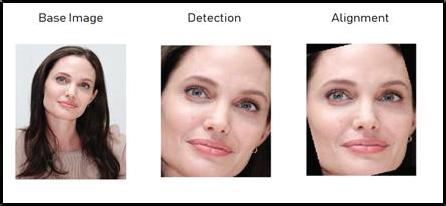
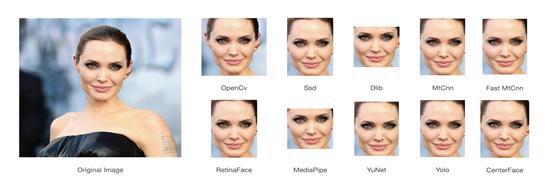
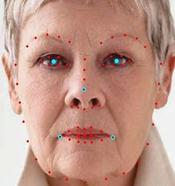

Subsequently,differentdetectorsperceivefacesin distinctways.Forinstance,Figure 4 illustrateshow eachofthepreviouslymentioneddetectorsperceives thesamefacefromasingleimage.Whileeachcropped imageincludestheentireface,thevariationliesinthe amountofbackgroundretainedintheimage.
3.2.FeatureExtraction
Featuressuchaseyes,nose,mouth,etc.are extractedfromthealignedface.Thisisachievedby usingnodalpoints[14].AsseeninFigure5,theratio ofthenodalpointsofboththehumansaredifferent,it isnotpossibleforthemtobesimilarunlesstheyare identicaltwins.
FaceRepresentation:Eachfaceisrepresentedasa high‑dimensionalvectorinafeaturespace.Thisvector isobtainedfromtheoutputofadeepneuralnetwork (e.g.,VGGFace,FaceNet)thathasbeentrainedtomap facialimagesintoacompactembeddingspace.
3.3.FeatureMatching
Encodedrepresentationsarecomparedtoa databaseorgalleryofknownidentities,using methodssuchascosinesimilarityandEuclidean distancetodeterminethesimilaritybetweentwo vectorsinamulti‑dimensionalspace.
DistanceMetric: Todeterminehowsimilarordis‑ similartwofacialfeaturevectorsare,theEuclidean
distancebetweenthemiscomputed.Fortwofeature vectors x and y,eachofdimension n,theEuclidean distance d iscalculatedusingtheformulagivenin Equation1where SumofSquaredDifferences iscom‑ putedasgiveninEquation2.
CosineSimilarityinFaceRecognition
1. DirectionOverMagnitude:Cosinesimilarity focusesontheorientationofthevectorsrather thantheirmagnitude.Thisisusefulforface recognitionbecauseitmeasureshowsimilarthe patternsofthefeaturesare,regardlessoftheir scale.Thiscanhelpinscenarioswherethelength ofthefeaturevectormayvaryduetodifferent factorslikethescaleofimagesorvariationsin lightingconditions.
2. Normalization:Cosinesimilaritynormalizesthe featurevectors,makingitrobusttovariationsin thelengthofthevectors.Thisnormalizationcanbe bene icialwhencomparingfaceembeddingsthat maybeaffectedbyvaryingimageconditions.
3. SimilarityMeasurement:Cosinesimilarityisused tocomputethesimilarityscorebetweenfeature vectors.Ahighercosinesimilarityindicatesthat thevectorsaremoresimilar,whichcanbeinter‑ pretedasthefacesbeingmorelikelytobelongto thesameindividual.
FeatureVectors:Fortwofacialfeaturevectors �� and ��,eachofdimension ��,thecosinesimilarityis de inedasgiveninEquation3.
CosineSimilarity(��.��)=
where:
1) x⋅yisthedotproductofthevectors.
(3)
2) ∥x∥and∥y∥arethemagnitudes(ornorms)ofthe vectors.
DotProduct:Thedotproductx⋅yiscalculatedas giveninEquation4.
(4) wherexiandyiarethecomponentsofvectorsx andy,respectively.
VectorNorms:Thenorm(ormagnitude)ofavec‑ torxandyiscalculatedasgiveninEquation5.
Combiningthesecomponents,thecosinesimilar‑ ityiscomputedasgiveninEquation6. CosineSimilarity
Thisvaluerangesfrom‑1to1,where1indicates thatthevectorsareidenticalindirection,0indicates orthogonality(nosimilarity),and‑1indicatesoppo‑ sitedirections.
Theensemblemodelincludessevenrecognition models,eachrunningsimultaneously.Thefocuson eachmodelindividuallyisgivenasfollows.(1)VGG‑ FACE:TheVGGFacemodelextractsdiscriminativefea‑ turesfromfacialimages,signi icantlyenhancingfacial recognitiontechnology.Trainedonavastdataset, thesenetworkslearncomplexfeaturehierarchiescru‑ cialforfacialidenti ication,effectivelyhandlingvary‑ ingexpressionsandlightingconditions.VGGFace emphasizesfeaturescriticalforaccurateindividual identi ication,supportedbyrigoroustrainingand optimization.Additionally,itemploysajointBayesian frameworktomodelthesefeatures’distribution, enablingrobustveri icationoffacepairsindiverse real‑worldscenarios.ThisapproachensuresVGG Face’sreliabilityandeffectivenessinhigh‑security applications,settinganewstandardinthe ieldof facialrecognition.
(2)ARCFACE:ArcFaceisanadvancedfacialrecog‑ nitionsystemdistinguishedbyitsinnovativeuseofan angularmarginpenaltyaddedtothelossfunctiondur‑ ingtraining.Thismethodmaximizesthedistinctive‑ nessbetweenthelearnedfeaturesofdifferentindi‑ viduals(inter‑classdiscrepancy)whilemaintaining consistencyinfeaturesofthesameindividualacross variousimages(intra‑classcompactness).ArcFaceis trainedonextensivedatasetscontainingawidearray offacialimages,allowingtheneuralnetworkstoeffec‑ tivelylearnandabstractcomplexhierarchiesoffacial featuresintohigherlayers.Byintegratingtheangu‑ larmarginpenalty,ArcFaceenhancesfeatureembed‑ dingsbydecisivelyseparatingembeddingsofdifferent classesandbringingthoseofthesameclasscloser together.Thismechanismsigni icantlyimprovesthe discriminativepowerofthemodel,makingitexcep‑ tionallycapableofhandlingchallengesinfacialrecog‑ nition,suchasvariationsinlighting,expression,and otherdynamicenvironmentalfactors.
(3)FACENET:FaceNet,developedbyGoogle,uti‑ lizesdeepCNNstomapfaceimagesintoacompact Euclideanspacewheredistancesrepresentfacialsim‑ ilarity.Thismodelmeasuressimilaritybycalculating thedistancebetweenpointsrepresentingfaces.The innovationofFaceNetliesinitsuseofthetriplet
lossfunctionduringtraining,whichminimizesthe distancebetweenananchorimageandapositive image(sameperson)whilemaximizingthedistance betweentheanchorandanegativeimage(different person).ThisapproachenablesFaceNettoaccurately distinguishbetweenindividualsundervaryingcon‑ ditionssuchaschangesinexpression,lighting,and cameraangles.Itsabilitytomaintainhighaccuracy despitethesevariationsmakesithighlyeffectivefor applicationsrequiringreliablefacialrecognition.
(4)Facenet512hasahighvalueinaccuracycalcu‑ lationcomparedtoFacenet.
(5)DEEPFACE:Deepface[15]Developedby Facebook,DeepFacerepresentsasigni icant advancementinfacialrecognitiontechnology.It utilizesasophisticatednine‑layerneuralnetwork withover120millionconnectionweights,trainedon anextensivedatasetcomprisingfourmillionfacial imagesfrommorethan4,000distinctidentities. Thissystememploysanovelapproachbyaligning facesusingthree‑dimensionalmodels,allowingitto adjustforvariationsinheadposition,orientation, andlightingconditionsbeforeprocessingtheimages throughitsdeepneuralnet.Thecorefunctionality ofDeepFaceliesinextractingandutilizingdetailed facialfeaturesfromalignedimages.Itlearnsa compactrepresentationofeachface,simplifyingthe comparisonandidenti icationoffacesacrossvarious conditions.Byfocusingontheserepresentations, DeepFaceachievesahighlevelofaccuracyinfacial recognitiontasks,effectivelycapturingandanalyzing subtlefacialfeaturescrucialforreliableidenti ication.
(6)DEEPID:DeepIDrepresentsasigni icant advancementinfacialrecognitiontechnologies, focusingontheextractionandutilizationofdeep hiddenidentityfeatures.DevelopedatTheChinese UniversityofHongKong,DeepIDemploysdeepCNNs tolearnahierarchyoffeaturesfromasubstantial datasetoffacialimages.Thesefeatures,whichbecome increasinglyabstractathigherlayersofthenetwork, enhancethediscriminativepowerofthemodel, makingitparticularlyeffectiveindistinguishing betweendifferentidentities.Additionally,DeepID’s applicationofajointBayesianframeworktomodel thesefeaturesallowsformoreaccuratefacepair veri ication,providingrobustnessagainsttypical variationsencounteredinreal‑worldscenarios,such aschangesinexpressionandlightingconditions.This approachimprovestheaccuracyoffacialrecognition systemsandextendstheirapplicabilityinsecurity andpersonalidenti ication,addressingpressing challengesfacedbycurrenttechnologies.
(7)SFACE:SFaceisalesser‑knownterminthe contextofpopularfacerecognitiontechnologiesand mightrefertoaspeci icimplementationormodel withintheresearchcommunity.Ifitfollowsthecon‑ ventionsofotherdeeplearning‑basedfacerecogni‑ tionsystems,SFacewouldlikelyemployadeepneu‑ ralnetworktolearnarepresentationoffacialfea‑ turesusefulforrecognitiontasks.The”S”couldpoten‑ tiallystandforaspeci icfeatureofthemodel,such
assecure,simple,orscalable,indicatingafocuson thoseaspectsofthefacialrecognitionprocess.Since SFaceisnotawidelyrecognizedtermlikeDeepFace orDeepID,thespeci icsofitsarchitectureandfunc‑ tionalitywoulddependonthecontextinwhichitis referenced,includingtheparticularresearchpaperor implementationthatde inesit.
ThedevelopmentenvironmentleveragesAWS asthecloudinfrastructuretoachievescalability, elasticity,andpotentialcostreductions.Thefollowing AWSservicesareconsideredforimplementation.(1) AmazonS3:Forstoringthefacialimagedatasetand potentiallytheapplicationcode.(2)AWSLambda:To executethedeeplearningmodelforfacialrecognition inaserverlessenvironment,enablingon‑demand processingwithoutservermanagement.(3)Amazon SageMaker:Asamanagedserviceforbuilding, training,anddeployingmachinelearningmodels. SageMakermaybeexploredfordeeplearningmodel developmentasneeded.(4)AmazonEC2Instance: IfAWSLambdaprovesinsuf icientfordeeplearning tasks,anEC2instancecanbeconsideredformodel trainingorinference.
Thesystemrequiresintegrationwithadeeplearn‑ inglibrary(e.g.,TensorFlow,PyTorch)tofacilitate facialfeaturerecognition,matching,andimagegen‑ erationcapabilities.Deeplearningservesasthecore technologyunderpinningfacialrecognitionfunction‑ ality.Pre‑traineddeeplearningmodelsareutilizedto analyzeconstructedsketchesandextractrelevantfea‑ turesforcomparisonagainstafacialimagedatabase. Adeeplearningmodelforfacialrecognitionistobe developedusingTensorFloworPyTorchandtrained onadatasetoffacialimageswithlabeledfeatures. ModeltrainingcanbeexecutedonanEC2instanceor potentiallythroughSageMaker.
AdatabaseAPIinterfaceisusedtoconnectto acriminaldatabasecontainingsuspectinformation andfacialrecognitiondata.Snow lakeservesasthe databasemanagementsystemforstoringsuspect informationandpotentiallysketchdata,providinga scalableandsecuresolution.
Thisstudycomparestheaccuracyofseveralmod‑ els,includingFacenet512,Facenet,VGG‑Face,ArcFace, SFace,DeepFace,andDeepID,usingtheLFWdataset. Theoutcomeofthisresearchisacomparisonofthe accuracyofeachmodel.Multiplefacedetectors,such asRetinaface,MTCNN,fastMTCNN,dlib,yolov8,yunet, centerface,mediapipe,ssd,andOpenCV,areusedfor testingtodeterminethebest‑performingmodelon thedataset[1].Thetestingmethodinvolvesverifying theaccuracyofeachmodelbycomparingeachimage withanother,yieldingtwooutcomes:thresholdand distance.Thresholdvaluescanbemodi iedbasedon themodel:0.68forVGG‑Face,0.4forFaceNet,0.3 forFaceNet512,0.23forDeepFace,0.015forDeepID, 0.68forArcFace,and0.593forSFace.Dependingon thethreshold,thedistancevaluedetermineswhether
theresultistrueorfalse;ifthedistanceexceedsthe threshold,theresultisfalse,andviceversa.
Aftertesting,theresultsshowninTable1indicate thattheCosinemetricwasused.Theresultsdemon‑ stratethattheFaceNet512modelachievedthehighest accuracyvalueof0.984or98.4%withtheRetinaFace [11,17]detectorandsurpassedallothermodelsin everydetector.TheFaceNetmodelachievedanaccu‑ racyvalueof0.974,theVGG‑Facemodelachieved 0.960,theArcFacemodelachieved0.967,theSFace modelachieved0.924,theDeepFacemodelachieved 0.677,andtheDeepIDmodelachieved0.659.
TheEuclideanmetricwasusedtoobtainthe testresultsinTable 2.Theresultsindicatethat theFaceNet512modelachievedthehighestaccuracy valueof0.976or97.6%withthecenterfacedetec‑ tor,outperformingallothermodelsineverydetector. Thehighestaccuracyvaluesforothermodelsareas follows:FaceNetmodelat0.938,VGG‑Facemodelat 0.960,ArcFacemodelat0.886,SFacemodelat0.814, DeepFacemodelat0.690,andDeepIDmodelat0.665.
Fromtheseresults,itcanbeconcludedthatthe Facenet512modelissuperiortoeveryothermodelin termsofaccuracy.
Cosinesimilaritydistancesofvariousfacialrecog‑ nitionmodelswhentestedwithasetof20and50 sampleimages.IsgiveninTable3.Lowervaluesindi‑ catecloserormoreaccuratematches.For20sample images,ArcFacedemonstratesthebestperformance withthelowestdistanceat0.012,suggestinghighly accuratemodelpredictions.Incontrast,VGG‑Facehas thehighestdistanceat0.46,indicatinglessprecision. OthermodelslikeFacenet,Facenet512,Sface,Deep‑ Face,andEnsembleexhibitvariedperformances,with distancesrangingbetween0.12and0.46.
For50sampleimages,VGG‑Facestartswiththe highestdistanceat0.42,indicatinglessprecision. Facenet512showsthebestperformancewiththelow‑ estdistanceat0.17.Thedistancesforothermodels likeDeepid,ArcFace,Sface,DeepFace,andEnsemble rangefrom0.10to0.31,re lectingvaryinglevelsof accuracyacrossthesemodels.
Further,Table 4 comparesthehighestaccuracy obtainedfromeachmodelfromtheseresearchresults andtheaccuracyofthemodelspreviouslystudiedby thecreators.Theaccuracyobtainedislowerthanwhat isbeendeclaredformodels,thisoccurredbecause thereweredifferencesinthetypeofdatasetused wheremodelsusedtheLFWdatasetforthetraining processasthisstudyusedacelebritydatasetofvary‑ ingagesandethnicity.Thisconditionhasoccurred inpreviousstudieswhereracialdifferencesinthe datasetaffectedthelevelofaccuracy[7,13].Ensemble modelshows98.8accuracy.
Thetimetakenbyvariousfacialrecognitionmod‑ els(VGG‑Face,Facenet,Facenet512,Deepid,ArcFace, Sface,Deepface,Ensemble)asafunctionofsample size,rangingfrom10to150samplesisshownin Figure6.Allmodelsshowincreasingtimewithlarger samplesizes.TheEnsemblemodelisthemosttime‑ ef icientacrossallsamplesizes,whilemodelslike
Table1. Cosinemetricaccuracy
Table2. Euclideanmetricaccuracy
Table3. CosineSimilaritydistance
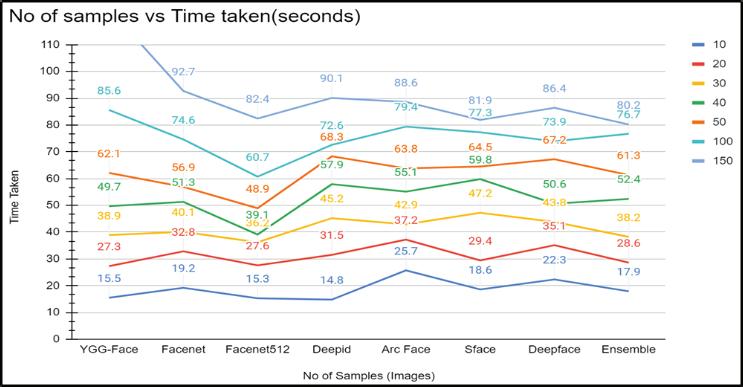
MeasuredandDeclaredAccuracyComparision
VGG‑FaceandDeepidhavesteepertimeincreases, indicatinglowerscalability.
Figure 7 comparesthetimetakenforprocessing varyingnumbersofsamples(from10to50)between LocalTestsandCloudAPITests.Asthenumber ofsamplesincreases,bothtestingmethodsshow agradualriseinprocessingtime.LocalTests consistentlytakelesstimethanAPITestsforthe samenumberofsamples,indicatinghigheref iciency. Forinstance,at50samples,theLocalTestcompletes in61.3secondswhiletheAPITesttakes67.2seconds, highlightingthefasterprocessingoftheLocalTest acrossallsamplesizes.
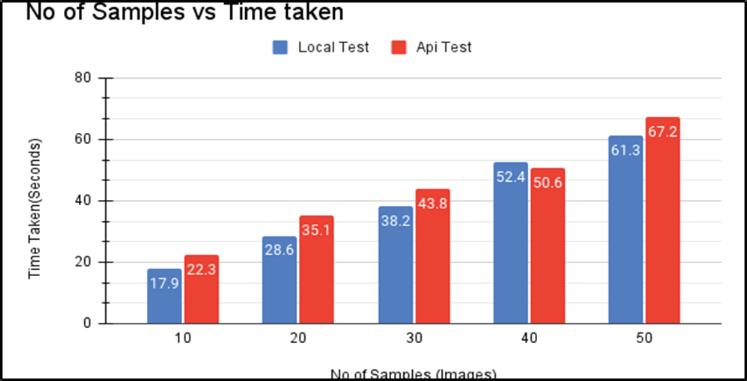
TimeTakenlocalandcloudenvironment.
Figure 8 depictsresponsesbyvariousfacial recognitionmodels(VGG‑Face,Facenet,Facenet512, Deepid,ArcFace,Sface,Deepface,Ensemble)across differentsamplesizesfrom10to50images.The majorityofthemodelsconsistentlydeliverbetween twoandthreeresponses,regardlessofsamplesize. Interestingly,Facenet512reachesamaximumofthree responsesatthesmallestsamplesize,highlightingan exceptionalcaseinitsresponsepattern.
Table4. MeasureandDeclaredaccuracy
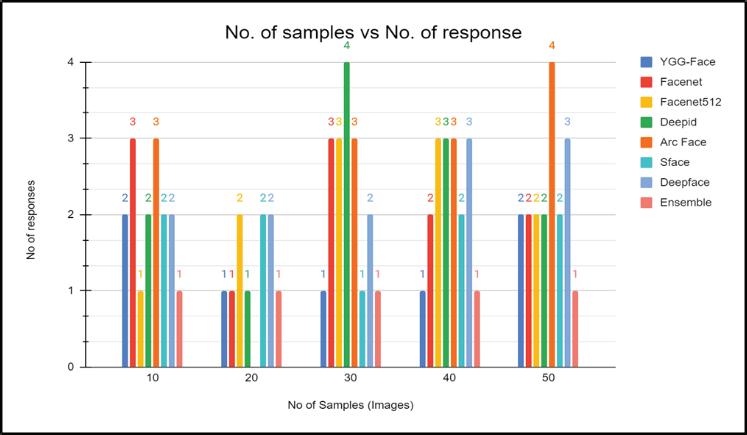
Asystemforsuspectidenti icationusingfacial recognitionbasedonensemblelearningintegrates seamlesslywithOpenAI’sadvancedtechnologiesand issupportedbyarobustcloudinfrastructure.The comparisonoftheproposedensemblemodelwith individualmodelslikeVGG‑Face,Facenet,Facenet512, Deepface,DeepID,ArcFace,andSFaceusesmultiple detectorsandtheLFWdatasetwithvaryingages,gen‑ der,andethnicity.Testswereconductedusingmulti‑ plefacedetectorsoneachmodel,withthetechnicality ofeachimagecomparedtooneanother.Cosinesim‑ ilaritydistancesforvariousfacialrecognitionmodels acrosstestswith20and50sampleimageshighlight signi icantperformancevariationsamongthemod‑ els.Whentested,theFacenet512modelhashigher accuracythaneveryothermodel,whichis0.984or 98.4%whichmeansitcanpredictactualfacesat 100%.Fromtheresultsofthisstudy,weconcluded thattheFaceNet,VGG‑Face,andArcFacemodelscould beusedifdesiredasthesehaveaccuracyabove95%. Ensembleofthesemodelsshowsa98.8%accuracy. Forinstance,atasamplesizeof50,thelocaltest completesin61.3seconds,whilethecloudAPItest takes67.2seconds.Thishighlightsthefasterprocess‑ ingspeedofthelocaltestacrossallsamplesizes.
AUTHORS
ShilpaChaudhari∗ –Dept.ofCSE,MSRamaiah InstituteofTechnology(Af iliatedtoVTU),Bangalore‑ 560054,India,e‑mail:shilpasc29@msrit.edu.
RajarajeswariS –Dept.ofCSE,MSRamaiahInstitute ofTechnology(Af iliatedtoVTU),Bangalore‑560054, India,e‑mail:raji@msrit.edu.
ArchanaRane –K.K.WaghInstituteofEngineer‑ ingEducationandResearch,Nashik‑422003.India, e‑mail:alrane@kkwagh.edu.in.
∗Correspondingauthor
References
[1] S.I.SerengilandA.Ozpinar,“LightFace:A HybridDeepFaceRecognitionFramework,” 2020InnovationsinIntelligentSystemsand ApplicationsConference (ASYU),2020,pp.23–27;doi:10.1109/ASYU50717.2020.9259802
[2] H.Hanetal.“MatchingCompositeSketchesto FacePhotos:AComponent‑basedApproach,” IEEETransactionsonInformationForensicsand Security,vol.8,no.1,2012,pp.191–204;doi: 10.1109/TIFS.2012.2228856
[3] Y.Zhongetal.,“SFace:Sigmoid‑Constrained HypersphereLossforRobustFace Recognition,” IEEETransactionsonImage Processing,vol.30,2021,pp.2587–2598;doi: 10.1109/tip.2020.3048632.
[4] D. DeepInsight, “deepin‑ sight/insightface,”GitHub,4Jun.2021; https://github.com/deepinsight/insightface
[5] X.Ningetal.,”FaceEditingBasedonFacial RecognitionFeatures,” IEEETransactions onCognitiveandDevelopmentalSystems, vol.15,no.2,2023,pp.774‑783;doi: 10.1109/TCDS.2022.3182650
[6] J.XiangandG.Zhu,“JointFaceDetection andFacialExpressionRecognitionwith MTCNN,”In 20174thInternational ConferenceonInformationScienceandControl Engineering (ICISCE),2017,pp.424–427;doi: 10.1109/ICISCE.2017.95
[7] K.Vangaraetal.,“CharacterizingtheVariability inFaceRecognitionAccuracyRelativetoRace,”in ProceedingsoftheIEEE/CVFConferenceonCom‑ puterVisionandPatternRecognitionWorkshops, 2019;doi:10.1109/CVPRW.2019.00281
[8] J.Dengetal.,“ArcFace:AdditiveAngularMargin LossforDeepFaceRecognition,” 2019IEEE/CVF ConferenceonComputerVisionandPattern Recognition (CVPR),2019,pp.4690–4699;doi: 10.1109/cvpr.2019.00482.
[9] A.A.Poeloemgametal.,“Web‑basedFace DetectionandRecognitionusingYOLOand Dlib,”In 202317thInternationalConference onTelecommunicationSystems,Services, andApplications (TSSA),2023,pp.1–6;doi: 10.1109/TSSA59948.2023.10366984
[10] Q.Cao,“Vggface2:ADatasetforRecognising FacesacrossPoseandAge,”In 201813thIEEE InternationalConferenceonAutomaticFace& GestureRecognition (FG2018)2018,pp.67–74; doi:10.1109/FG.2018.00020
[11] J.Huetal.,“RapidFaceDetectioninComplex EnvironmentsbasedontheImproved RetinaFace,”In Proceedingsofthe4th InternationalConferenceonAdvanced InformationScienceandSystem,2023,pp. 1–7;doi:10.1145/3573834.3574552
[12] W.Wu,H.Peng,andS.Yu,“Yunet:ATiny Millisecond‑LevelFaceDetector,” MachineIntel‑ ligenceResearch,vol.20,no.5,2023,pp.656–665;doi:10.1007/s11633‑023‑1423‑y
[13] J.G.Cavazosetal.,“AccuracyComparison AcrossFaceRecognitionAlgorithms:Where areWeonMeasuringRaceBias,” IEEE TransactionsonBiometrics,Behavior,and IdentityScience,vol.3,no.1,2020,pp.101–111; doi:10.1109/TBIOM.2020.3027269.
[14] M.S.S.BobdeandS.V.Deshmukh,“FaceRecogni‑ tionTechnology,” InternationalJournalofCom‑ puterScienceandMobileComputing,vol.3,no. 10,2014,pp.192–202.
[15] Y.Taigmanetal.,“DeepFace:ClosingtheGapto Human‑LevelPerformanceinFaceVeri ication,” ProceedingsoftheIEEEConferenceonComputer VisionandPatternRecognition (CVPR), 2014, pp. 1701–1708; doi: 10.1109/CVPR.2014.220
[16] F.Schroff,D.Kalenichenko,andJ.Philbin, “FaceNet:AUni iedEmbeddingfor FaceRecognitionandClustering,” 2015 IEEEConferenceonComputerVisionand PatternRecognition (CVPR),2015;doi: 10.1109/cvpr.2015.7298682.
[17] J.Dengetal.,“Retinaface:Single‑shotMulti‑level FaceLocalisationintheWild,” InProceedingsof theIEEE/CVFconferenceoncomputervisionand patternrecognition,2020,pp.5203–5212;doi: 10.1109/CVPR42600.2020.00525
[18] S.Solarovaetal.,“Reconsideringtheregulation ofFacialRecognitioninPublicSpaces,” AIEthics, vol.3,2023,pp.625–635;doi:10.1007/s43681‑ 022‑00194‑0
[19] M.Mortensen,“SneakingAIthroughtheBack Door:ConstructingtheIdentityofCapitolHill RiotersthroughSocialMediaImagesandFacial RecognitionRechnologies,” Information,Com‑ munication&Society,2024,pp.1–17;doi: 10.1080/1369118X.2024.2358164
[20] D.UtegenandB.Z.Rakhmetov,“FacialRecogni‑ tionTechnologyandEnsuringSecurityofBio‑ metricData:ComparativeAnalysisofLegalReg‑ ulationModels,” JournalofDigitalTechnologies andLaw,vol.1,no.3,2023,pp.825–844;doi: 10.21202/jdtl.2023.36
[21] S.Gokulakrishnanetal.,“AnOptimized FacialRecognitionModelforIdentifying CriminalActivitiesusingDeepLearning Strategy,” InternationalJournalofInformation Technology,vol.15,no.7,2023,pp.3907–3921; doi:10.1007/s41870‑023‑01420‑6
[22] V.MunusamyandS.Senthilkumar,“Face Identi icationofSuspectsUsingSequential‑ DeepConvolutionalNeuralNetwork,” In 2024SecondInternationalConferenceon EmergingTrendsinInformationTechnology andEngineering (ICETITE)2024,pp.1–3;doi: 10.1109/ACCESS.2024.3523101
[23] N.K.Sharmaetal.,“EnhancingFacialGeome‑ tryAnalysisbyDeepFaceLandmarkLeveraging ResNet101andTransferLearning,” International JournalofInformationTechnology,2024,pp.1–21;doi:10.1007/s41870‑024‑01872‑4
[24] L.Yuetal.„“FacialExpressionRecognition BasedonImprovedVGG‑faceModeland TransferLearning,”In Proceedingsofthe2023 InternationalConferenceonComputer,Vision andIntelligentTechnology,2023,pp.1–7;doi: 10.1145/3627341.3630376
[25] K.L.Sailajaetal.,“FacialDetectionandRecogni‑ tioninDroneImageryUsingFaceNet,”In Inter‑ nationalConferenceonAdvancesinDistributed ComputingandMachineLearning,2024,pp.183–197;doi:10.1007/978‑981‑97‑1841‑2_13
[26] M.Gulhaneetal.,“AdvancingFacialRecognition: EnhancedModelwithImprovedDeepface AlgorithmforRobustAdaptabilityinDiverse Scenarios,”In 202310thIEEEUttarPradesh SectionInternationalConferenceonElectrical, ElectronicsandComputerEngineering (UPCON),vol.10,pp.1384–1389;doi: 10.1109/UPCON59197.2023.10434721
[27] S.SrinivasandM.P.Selvan,“E‑CNN‑FFE:An EnhancedConvolutionalNeuralNetworkfor FacialFeatureExtractionandItsComparative AnalysiswithFaceNet,DeepID,andLBPHMeth‑ ods,”In InternationalConferenceonDataMan‑ agement,Analytics&Innovation,2024,pp.339–354;doi:10.1007/978‑981‑97‑3245‑6_23
[28] M.A.Altahaetal.,“FacialExpressionRecog‑ nitionbasedonArcFaceFeaturesandTinySi‑ ameseNetwork,”In 2023InternationalCon‑ ferenceonCyberworlds (CW),pp.24–31;doi: 10.35784/jcsi.7973
Abstract:
TOWARDSACCURATEGLAUCOMAIDENTIFICATION:GAN‐ENHANCEDSYNTHESIS ANDCLASSIFICATIONUSINGPRETRAINEDMOBILENETV2
TOWARDSACCURATEGLAUCOMAIDENTIFICATION:GAN‐ENHANCEDSYNTHESIS
TOWARDSACCURATEGLAUCOMAIDENTIFICATION:GAN‐ENHANCEDSYNTHESIS ANDCLASSIFICATIONUSINGPRETRAINEDMOBILENETV2 ANDCLASSIFICATIONUSINGPRETRAINEDMOBILENETV2
Submitted:19th February2024;accepted:15th May2024
GovindharajI,G.Karthick,G.Michael
DOI:10.14313/jamris‐2026‐023
Irreversiblevisionloss,whichoftendevelopsslowlyand withnooutwardsignsofillness,ismostcommonly causedbyglaucoma.Becauseitmayslowthedisease’s progression,theinitialstagesofglaucomadetection areoftheutmostimportance.Ordinaryproceduresand manualassessmentsarebasedontraditionaldiagnostic techniques,whicharenotoriouslyimprecise.Itfollows thatautomatedglaucomaanalysisiscriticallyimpor‐tantfortheearlyandprecisedetectionofglaucoma. Also,ontheotherhand,themedicalimagedataset ismostlyimbalancedinnature.Toovercomeallthese issues,thepresentresearchworkdevelopedaneffective frameworkbyutilizingGenerativeAdversarialNetworks (GAN)tosynthesizeimagestobalanceoutthedataset. Forexample,whendealingwithfundusimages,conven‐tionalmethods,suchastranslationfromimage‐to‐image operations,areused.Inparticular,thesetechniquesare employedtoproducesyntheticfundusimagesandthe associatedvesselnetworks.Improvingthequalityofthe syntheticimagesasawholeandcapturingfinerdetails isthemaingoal.Thegoalofthiseffortistoimprove theaccuracyandauthenticityofsyntheticfundusimages, leadingtonewdevelopmentsinfundusimagesynthesis. Initially,arawdatasethasbeenpreprocessedusingthe Gaussianfilteringtechnique,whichhelpstominimize theunnecessarynoiseintheimages.Then,aGANis usedtobalanceoutthedataset,whichhelpstoproduce syntheticimagesandproducereliableoutcomesinclas‐sificationtasks.Thenextsegmentingopticcupisdone usingtheEnhancedLevelSetAlgorithm.Finally,Pre‐trainedMobileNetV2isusedfortheaccurateclassifica‐tionofglaucomatousimagesintonormalandabnormal. Experimentalresultsshowthatourproposedframeworks performwellcomparedtoexistingapproacheswithan accuracyof98.9%.
Keywords: EnhancedLevelSetAlgorithm(ELSA),Gaus‐sianFilteringTechnique(GFT),GenerativeAdversarial Networks(GAN),PretrainedMobileNetV2
Glaucomahasbecomeoneoftheleadingcausesof visualdisabilityworldwide.Accordingtorecentstatis‑ tics,approximately85.9millionpeoplewereexpected tobeaffectedbyglaucomain2023[1].Thisprogres‑ siveeyediseaseresultsinirreversiblevisionlossdue todamagetotheopticnerve,whichisresponsible
fortransmittingvisualinformationfromtheeyeto thebrain.Amongtheconstraintsthatfacetheman‑ agementofglaucoma,itishighlyasymptomaticatits initialstages,andthus,detectingthediseaseisquite challenging.Theopticnervehead(ONH),alsoknown astheopticdisc,undergoesstructuralchangesasthe opticnervebeginstodegenerate.Thisisastructure withtwoparts:theneuroretinalrim,whichisatthe periphery,andtheopticcup,whichisatthecenter.
Thesestructuralcomponentsarecompromisedas glaucomaprogresses,resultinginthinningoftheneu‑ roretinalrimandenlargementoftheopticcup.Thus, thepreciseidenti icationofchangesintheopticdisc andopticcupandconstantmonitoringarethekeyto detectingglaucomaearlieranditscourse.Nonethe‑ less,opticcupautomaticdetectionismoredif icult thanopticdiscautomaticdetection,primarilybecause itislessde inedinboundariesandmayhaveadiffer‑ entappearanceindifferentretinalfundusimages[2].
Historically,thediagnosisofglaucomahasbeen conductedwiththehelpofmultipleclinicaltoolsand metricslikeDynamicContourtonometry(DCT),air‑ puffnon‑contacttonometry,andothertonometry‑ relatedproceduresofintraocularpressuremeasure‑ ment[3].Nonetheless,thetraditionaldiagnosticmea‑ sureshaveseveralshortcomings,whichincludelow accuracy,thetime‑consumingnatureoftheexamina‑ tionprocess,andahighlevelofmanualintervention onthepartofclinicians.
Toovercometheseissues,therehasbeenan increaseintheuseofcomputerizedmethodsfor diagnosingglaucoma.Thesesystemswillfacilitate theaimsofminimizingthechallengesencountered byclinicianswhencarryingoutaholisticassess‑ mentofglaucomathroughmoreef icient,objective, andautomateddiagnosticassistance.Thedescribed transitionisanindicationofthegrowingneedfor quickerandmoredependablediagnostictoolsinclin‑ icalpractice[4].
Someautomatedtoolshavebeencreatedinrecent yearstoenableglaucomadiagnosis.Thetechniques primarilyuseretinalfundusimagestoexaminestruc‑ turalalterationsassociatedwiththedisease.Theuse ofthesemethodsisintendedtoimproveef iciency inthediagnosticprocess,enhancedetectionaccu‑ racy,andsavetimeontime‑consumingmanualpro‑ cedures[5].Theintroductionoftheautomatedglau‑ comadetectionsystemsisacrucialimprovement intheophthalmicdiagnosticssinceitenhancesthe
ef iciencyofdetectingthissight‑threateningdisease, anditsreliabilityandaccuracy[6].
Computer‑AidedDiagnosis(CAD)canbeavalu‑ ableresourceforlarge‑scalediseaseexplorationand screeningacrossdiversepopulations.CADsystems aremoreef icient,consistent,andscalablethantra‑ ditionalclinicalexaminationsconductedbymedical professionalsindetectingadisease.Suchtechnolo‑ gies,whenintegrated,canimprove,streamline,and facilitatetheexistinghealthcaresystems.Thiscomes inhandy,especiallyintheresource‑constrainedand developingworld,whereskilledandexperienced optometristsorophthalmologistsmaybeinshort supply[7].
Computer‑aideddiagnosis(CAD)systemshave beenextensiveinophthalmology,wheretheyhave beenusedtoanalyzeandsegmentopticnervesin retinalfundusimagestoidentifytheearlysignsof glaucoma[8].Thestudiesoftheavailableliterature haveproventhatimageprocessingmethodsareeffec‑ tiveinassessingthestructuralchangesoftheoptic discandopticcup,whicharesomeofthemajorindi‑ catorsofglaucomatousdamage.Glaucomaisachronic andprogressiveeyediseaseandisamongtheleading causesofblindnessintheworld,andtheUnitedStates isnotanexception.Despitethenumberofautomated diagnosticmethodsalreadydeveloped,theexisting methodsalsocontainafewdrawbacks,whichinclude unreliablesegmentationaccuracyandsensitivityto imagequalitychanges.Theseissuesdemonstratethe necessityofcreatingstrongerandmoreef icientmod‑ elstoaddressthedrawbacksoftheexistingmethods andenhancethequalityoftheglaucomadetection systems[9].
Retinalimagedatabaseshavebeenwidelyusedin theinitialyearsofglaucomaresearchtoanalyzeand developmodels.Medicalpractitionershavetradition‑ allydoneeyeexaminationbyhandwhenexamining imagesoftheretinalfundustodetectglaucomatous abnormalities.Intheprocess,cliniciansdetermine structuralcharacteristicsoftheCup‑to‑DiscRatio (CDR),aswellaschangesinthediameterandlimitsof theopticdiscandopticcup.Nevertheless,oneofthe biggestproblemsisrelatedtotheinadequatenumber ofquali iedspecialists,whichmaycausecertaindelays intermsofthetimelyidenti icationofocularabnor‑ malities.
Diagnosisandtreatmentofglaucomaatearly stagesareofhighimportancebecauseearlytreatment isexpectedtopreventtheprogressionofthedisease andminimizethechancesoftotalblindness[10].Con‑ sequently,thisbringsabouttheurgentneedtocome upwithmoreef icientandreliableautomatedmodels thatcanhelpovercomesuchshortcomingsandhelpin theearlydiagnosisofglaucomaandintheendleadto betterpatientoutcomes.
Themodelsofdeeplearning,speci icallythe ConvolutionalNeuralNetworks(CNNs),havedemon‑ stratedexcellentperformanceinavarietyofapplica‑ tionsincomputervision,includingimageclassi ica‑ tion,objectdetection,andimagesegmentation.Deep
learningmethodshavegreatlyimprovedmedical imageanalysis,astheynowenablemoresuccessful andef icientdiseasedetectionanddiagnosis[11].
Nevertheless,medicalimagingdataareusually associatedwithsuchissuesastheimbalanceinclasses andthescarcityofexpert‑labeleddata.Toovercome thesechallenges,severalmethodshavebeenpro‑ posedtoexpandtrainingdatasetsbygeneratingsyn‑ theticmedicalimages.Thesetechniquesincreasethe ef iciencyandstrengthofcomputer‑aideddiagnosis (CAD)systemsbyincreasingthesizeandvarietyofthe trainingdata.Syntheticimagesaresigni icantinmed‑ icalimagingbecausetheyimprovetheperformance ofclassi icationandsegmentationtasksbysupple‑ mentingdatasetsandenablingmodelstolearnmore representativefeatures.Themethodisespeciallyuse‑ fulincasesofsmallorunbalanceddatasets,which eventuallyresultsinthecreationofmorepreciseand validdeeplearningmodelsusedinmedicalimage analysis[12].
GenerativeAdversarialNetworks(GANs)repre‑ sentatypeofunsupervisedmachinelearningmodel thathasprovenverysuccessfulwithbothsynthetic imagegenerationaswellasimage‑to‑imagetransla‑ tioninthereal‑worldimagespace.ThecommonGAN architectureisatwo‑playerzero‑sumgame,andit involvestwoneuralnetworks,onecalledthegenera‑ torandonecalledthediscriminator,whichareboth trainedsimultaneously[13].
Here,thegeneratoristrainedtogeneratecandi‑ dateimagesthataredistributedaccordingtothetar‑ getdatathroughalatentvariable.Inthemeantime,the discriminatortriestodistinguishgeneratedimages fromrealsamplesusingtheactualdatadistribution. Inthisadversarialtraining,thegeneratorgetsbetter atmakingrealistic‑lookingsyntheticimages,whereas thediscriminatorisgettingbetteratdetectinggener‑ atedsamples[14].
VariousversionsofGenerativeAdversarial Network(GAN)modelshavebeenbuilt,such asWGAN,InfoGAN,DCGAN,CGAN,Pix2Pix,and CycleGAN,amongothers[15].Thesemodelshave showngreatpotentialinsolvingimage‑to‑image translationproblemsandsyntheticimagegeneration problems.Consequently,GANskeepevolvingand becomemore lexibleincomputationalintelligence andimageprocessing.Thesevariousarchitectures havebeencreatedduetothecontinuedimprovements inthe ieldofgenerativemodeling,whichallowsmore ef icientsolutionstocompleximageanalysistasks.
Thenoveltyoftheproposedworkliesintheinte‑ grationofmultipleadvancedtechniquestoimprove theaccuracyandreliabilityofautomatedglaucoma detection.Theproposedframework,unlikethecur‑ rentapproachesthatonlyusethetraditionaldeep learningframeworks,alsoinvolvesGenerativeAdver‑ sarialNetworks(GANs)toaddresstheissueofclass imbalancebycreatingsyntheticretinalimages.More‑ over,Preciseopticcupsegmentationisachievedusing anEnhancedLevelSetAlgorithm,whichimproves theextractionofimportantstructuralcharacteristics
offundusimages.Lastly,classi icationisperformed usingapretrainedMobileNetV2model,enablingef i‑ cientfeatureextractionandhighdetectionrates.The proposedframeworkhasbettersegmentationaccu‑ racy,betterdatasetbalancing,andbetterclassi ication performancewhencomparedtothecurrentmeth‑ ods,includingCNN‑based,graph‑based,andensem‑ blemodels,withanoverallaccuracyof98.9%onthe ORIGAdataset.
Severalstudiesexaminedtheautomatedmethod ofdetectingglaucomainmachinelearning,computer vision,anddeeplearning.Thetechniquesaremainly aimedatanalyzingretinalfundusimagestodetect thestructuralchangesintheopticdiscandopticcup areas,whicharemajorindicatorsoftheglaucomatous damage.
Theextractionofmulti‑scalefeaturesoftheretinal imagesisarecenttechniquecalledM‑LAPthathas beensuggestedtoenhancetheprecisionofglaucoma identi ication.Itisaneffectivetechniquetobridge thegapbetweenglobalsemanticanalysisandthe localizationofglaucomatousregions,therebymore accuratelyidentifyingpatternsassociatedwiththe disease[16].Also,itidenti iesabnormalareasinfun‑ dusimages,therebymakingglaucomaanalysismore interpretableandclinicallysigni icant[17].Experi‑ mentalresultshaveshownpromisingperformance, particularlyintermsofAreaUndertheCurve(AUC). Similarly,theEAMNetframeworkdemonstrateshigh sensitivity,whichcontributestoimproveddiagnostic accuracy.However,thesemethodsstillfacecertain limitations,includingchallengesinaccuratelydetect‑ ingtheopticcupregion.Additionally,theuseofGlobal AveragePooling(GAP)mayrestricttherepresenta‑ tionofhigh‑resolutionfeaturemaps,therebyaffecting ine‑grainedfeatureextraction[18].
Inanotherstudy,glaucomadetectionwasper‑ formedbyanalyzingblood lowpatternsinretinal arterialandvenousnetworks.Inthismethod,Sup‑ portVectorMachines(SVMs)wereusedtoclassify vascularfeaturesextractedfromfundusimages[19]. Theapproachachievedhighaccuracyandsensitiv‑ ityinidentifyingglaucomatouschanges.Neverthe‑ less,themodelrequiresalargeamountofdatafor effectivetrainingandanalysis,therebyincreasing computationalcomplexityandlimitingitspractical applicability.
Optimization‑basedtechniqueshavealsobeen investigatedforglaucomadetection.Forinstance,a GroupSearchOptimization(GSO)modelhasbeen developedforautomaticdetectionoftheopticcupin retinalfundusimages.Thisapproachconstructsthe solutionbasedontheintensitygradientwithinthe cupregion.TheGSOalgorithmincorporatesadaptive neighborhoodbehavior,whichimprovessearch capabilityandallowsaccuratedetectionevenincases withweakcupboundariesorlowcontrast.Although themethodachievesahighF‑scoreandreduced detectionerrors,itrequirescarefulestimationofthe
Cup‑to‑DiscRatio(CDR).Moreover,whenapplied tolow‑resolutionimages,themodelmaysuffer frominsuf icientpixelinformation,whichaffectsthe accuratedelineationofopticcupboundaries[20].
Recentresearchhasalsofocusedoncomputer vision‑basedtechniquesforautomatedglaucoma detectionusingdigitalfundusimages.Onesuch approachutilizesageometricfeature‑basedmodelfor opticdiscsegmentation.Thismethodimprovessys‑ temrobustnessagainstimagenoiseandillumination variations,therebyenhancingdetectionaccuracy[21]. However,theapproachstillfaceschallengessuchas classimbalanceinthedatasetandsigni icantvariabil‑ ityinpixelintensitywithintheopticdiscandsur‑ roundingbloodvessels,whichcannegativelyaffect segmentationperformance[22].
Withtherapidadvancementofdeeplearningtech‑ niques,ConvolutionalNeuralNetworks(CNNs)have beenwidelyappliedtoglaucomadetection.Aninter‑ pretableComputer‑AidedDiagnosis(CAD)modelwas proposedtoenableglaucomadetectiondirectlyfrom mobiledevices.Theframeworkintegratesmultiple datasetstoconstructCNN‑basedmodelsforbothclas‑ si icationandsegmentationtasks[23].Thesuggested pipelineperformsthoroughsegmentationandchar‑ acterizesretinalstructuresassociatedwithglaucoma, resultinginimprovedglaucomaanalysis.Experimen‑ tal indingsprovelesscomputationalcomplexity,high accuracy,andF‑score[24].Nevertheless,thismethod isalsocharacterizedbytheshortageoftrainingsam‑ plesandthecoverageofpathologicalareasofatten‑ tionmaps.
AnotherimportantcontributionistheAttention‑ basedConvolutionalNeuralNetwork(AG‑CNN), developedspeci icallyforglaucomadetectionusing theLAGdatabaseandotherfundusimages[25].The AG‑CNNarchitectureimprovesmodelconvergence androbustnesswhilereducingclassi icationerrors. Despitetheseadvantages,themodelexhibitscertain drawbacks,includingadecreaseinAreaUnder theCurve(AUC)andtheinabilityoftheattention mechanismtofullycapturetheentirepathological region[26].
Furthermore,deeplearningframeworkssuchas thedisc‑awareensemblenetworkhavebeenpro‑ posedforglaucomascreeningusingretinalfundus images.Thisarchitectureintegratescontextualinfor‑ mationfromboththeglobalfundusimageandthe localopticdiscregion.Thenetworkconsistsofsev‑ eralcomponents,includingaglobalimagestream, asegmentation‑guidednetwork,alocaldiscregion stream,andadiscpolartransformationstream[27]. Althoughthemethodachieveshighspeci icityand accuracyinglaucomadetection,itrequiressigni icant computationalresourcesandlongerprocessingtime duetoitscomplexarchitecture.
Despitethesigni icantprogressachievedbyexist‑ ingapproaches,severalchallengesremaininauto‑ matedglaucomadetection.Theseincludedataset imbalance,variabilityinopticdiscandopticcup structures,sensitivitytoimage‑qualityvariations,and
Table1. Comparativeanalysisofexistingglaucomadetectionapproaches
Ref Method/ Model Dataset
[16] M‑LAPModel FundusImages
[19] SVM‑based Classi ication Retinalfundus images
KeyContribution
Multi‑scalefeatureextraction forglaucomadetection
Usesretinalblood low featuresforglaucoma classi ication
[20] GSOAlgorithm FundusImages Automaticopticcupdetection usingintensitygradients
[21] Geometric FeatureModel Digitalfundus images
[23] CNN‑based CADModel FundusImages
[25] AG‑CNN LAGDataset
[27] Disc‑aware Ensemble Network FundusImages
Opticdiscsegmentationusing computervisionmethods
Automatedglaucomadetection usingdeeplearning
Attention‑basedCNNimproves convergenceandrobustness
Integratesglobalandlocal contextualinformation
limitedsegmentationaccuracy.Therefore,thereisa needforamorerobustframeworkthatcaneffec‑ tivelyaddressthesechallenges.Toovercomethese limitations,thepresentstudyproposesaGAN‑based syntheticimagegenerationapproachcombinedwith EnhancedLevelSetsegmentationandapretrained MobileNetV2classi icationmodelforaccurateand ef icientglaucomadetection.
Table1providesacomparativesummaryofexist‑ ingglaucomadetectionapproachesreportedinthe literature.Thetablehighlightsthekeymethodologies, datasetsused,maincontributions,andlimitationsof eachstudy.Fromthecomparison,itcanbeobserved thatmanyexistingmethodsfocusonimprovingclas‑ si icationaccuracyusingmachinelearninganddeep learningtechniques.However,severalchallenges remain,includingdatasetimbalance,sensitivityto imagequalityvariations,anddif icultiesinaccurately segmentingopticdiscandopticcupregions.These limitationsindicatetheneedformorerobustframe‑ worksthatcanaddresstheseissueseffectively.To overcomethesechallenges,theproposedmethodinte‑ gratesGAN‑baseddataaugmentation,anenhanced levelsetalgorithmforaccuratesegmentation,anda pretrainedMobileNetV2modelforreliableglaucoma classi ication.
Manualglaucomadiagnosiscanbetime‑ consumingandcostly,andmanyexistingautomated glaucomadetectiontechniqueseitherdonotachieve satisfactoryperformanceorlackcomprehensive statisticalvalidation.Therefore,thisstudyproposes animprovedConvolutionalNeuralNetwork(CNN)‑ baseddetectionmodelforglaucomaidenti ication. Thedetailedarchitectureandwork lowofthe proposedmodelarepresentedinthefollowing sections,asillustratedinFigure1.
Limitations
Dif icultyinaccurate opticcupsegmentation
Requireslargedatasets foreffectivetraining
Performanceaffectedby low‑resolutionimages
Sensitivetoillumination andintensityvariations
Limitedtrainingsamples andincomplete attentionmapping
ReducedAUCand incompleteattention coverage
Highcomputational complexity
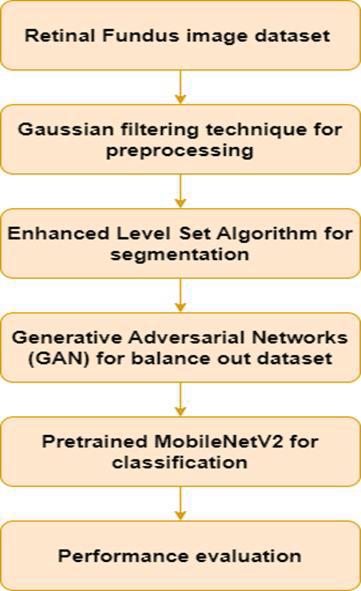
3.1.Pre‐ProcessingPhase
FollowingtheapplicationofaGaussianFilter(GF) duringthepreprocessingstep,thequalityoftheinput imageisimprovedbytheapplicationofa iltering process.Aftergoingthroughtheprocessofscaling,the
originalimage,whichhaddimensionsof(1154,1600, 3),hasbeenchangedto(512,512,3).
TheModi iedLevelSetAlgorithmisutilized toaccomplishthetaskofopticcupsegmentation. Twocategoriesoffeaturesareutilizedinthepro‑ cessoffeatureextraction:morphologicalandnon‑ morphologicalfeatures.Morphologicalfeatures,also knownasFemf,arederivedthroughtheapplications ofclosinganddilationoperations.Thesefeatures includediscregion,cupregion,andRNFLthickness. Theextractionprocessalsoincludestheextraction ofnon‑morphologicalaspects,oftenknownasFenmf, whichincludecolor,form,andModi iedLocalBinary Pattern(LBP)[28].
Afterthis,thefeaturesaresenttoaConvolutional NeuralNetwork(CNN),whichhasbeenoptimized. TheweightsofCNNaresubsequently ine‑tuned usingthesimulatedannealingandBiogeography‑ BasedOptimizationAlgorithm(SA‑BOA)method.A graphicalrepresentationoftheentirework lowis giveninFigure1
Pre‑processingoftheimageunderuseisthe irst stepandinvolvesGaussian iltering,anecessarypro‑ cesstoenhanceimagequality.Ablurredimagecan bewellre inedthroughtheapplicationofGaussian iltering,whichisappliedtotakeawaynoiseandblur thatiscausedbythereductionofhighfrequenciesin animage.This ilteringprocessisparticularlyuseful whenthetaskistominimizeGaussiannoiseinan imagewherethenoisehasbeenintroducedbyspeckle noiseorbybrainMRimagesinultrasoundimagery. Underthistechnique,thenoisepixelisreplacedwith themeanofthepixelsthatareadjacenttothenoise pixel,withthehelpofaGaussian ilter.Usinga5x5 window,theGaussiandenoisingapproachisapplied. Followingthis,thepre‑processedimagethatwas produced,whichisreferredtoasImPr,issegmented inordertoconductadditionalanalysis.
Withinthecontextofgametheory,theGenerative AdversarialNets(GAN)functionaccordingtotheprin‑ ciplesofNashequilibrium.Therearetwocomponents thatmakeupthemodel’sfundamentalstructure:G andD.G’sprimaryobjectiveistolearnthemapping relationshipbetweentheretinalimagexandthecor‑ respondingopticdiscandopticcup.Theultimate objectiveistoseparatetheopticdiscandopticcup basedontheretinalpicturethatisbeinginput,x,while makingcertainthattherepresentationD(G(x))ofthe segmentationoutcomeG(x)onDcoincideswiththe representationD(y)ofthegroundtruthyonD.Only thenwillthegoalbeaccomplished.Duringthispro‑ cedure,itisD’sresponsibilitytolearnthedifferences betweenyandG(x),aswellastoaccuratelydifferen‑ tiatebetweenthesourcedataoftheinputopticdisc andthelabelontheopticcup(whetheritistheground truthorG).DdirectsGtoreducethisdiscrepancy asmuchaspossible,whichultimatelyresultsinan improvementintheprecisionofthepartitionedoptic discandopticcup.Inthecourseofmodeltraining,it isessentialtoperformperiodicoptimizationofGand
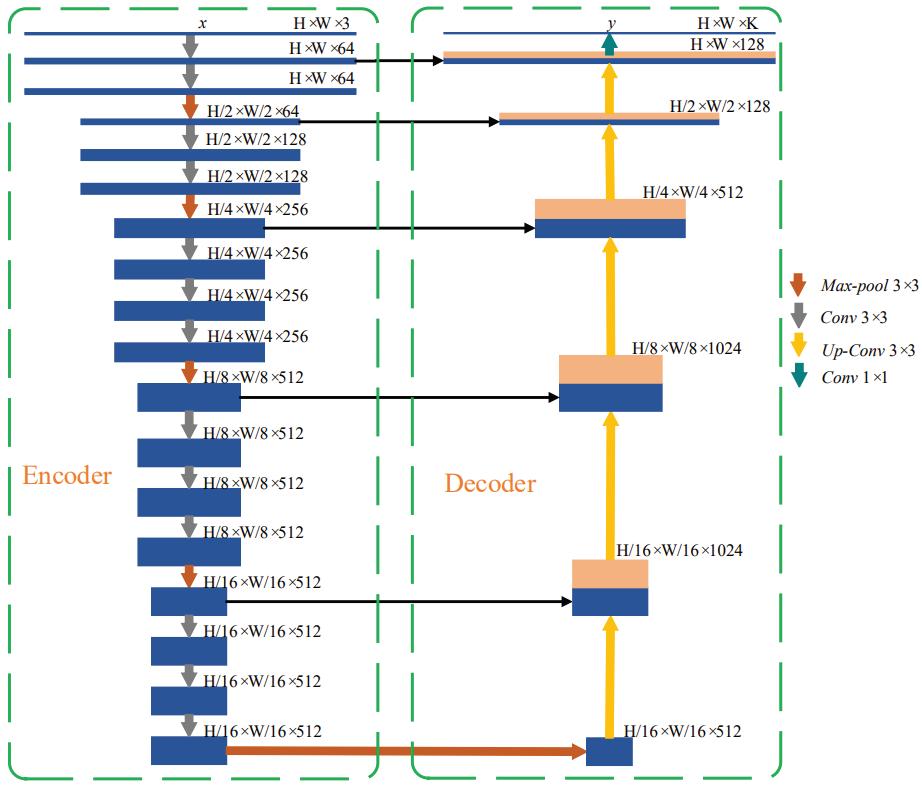
Dinordertoenhancetheircapacityforsegmentation anddiscrimination.TheobjectiveistolocatetheNash equilibriumbetweenthesetwovariables.TheNash equilibriumisreachedwhentheresultantofDequals half,whichindicatesthattheoriginoftheopticdisc andopticcuplabelareunabletobereliablydiffer‑ entiatedbecausetheyarebothidentical.SinceGis nowabletopreciselyseparatetheopticdiscandoptic cup,thetrainingisregardedas inishedatthistime. Theultimateobjectiveofthearchitectureistoachieve thefollowingobjectivefunction,whichwasgivenin Equation(1).
3.2.1.GeneratorNetwork(GE)
TheGisacompleteconvolutionalnetworkframe‑ workwith19layers.Figure2showsthestructureof itsnetwork.Theretinalpicturexisfedintothismodel. Inthisstudy,wesetH=W=512andC1=3.Thereis anencoder(ontheleft)andadecoder(ontheright) inthenetworklayout.Togetcharacteristicsfromthe retinalimage,theencoderusestheVGG16network layout.EventhoughtheoriginalVGG16networkhas adownsamplingratioof32,wefoundthattoomuch downsamplingcausesimportantcharacteristicdata tobelost,especiallyinareasthataresmallerthan 32pixels,liketheopticdisc.To ixthis,wegotrid ofthelasttwodownsamplinglevelsandraisedthe reductionfactorto16.Thiscutsdownondataloss, modelsettings,andcomputations.
TheReLUactivationfunctionisusedtoturnon theoutputfeaturemapofeachconvolutionallayer. Weallowskiplinkstoimprovethemodel’sability togetbacklow‑levelinformationandgetfullcon‑ textinformation.Thefeaturemapinputfromthe layerthatpoolsdatawithintheencoderissent straighttothedecoderthroughthoseconnections.
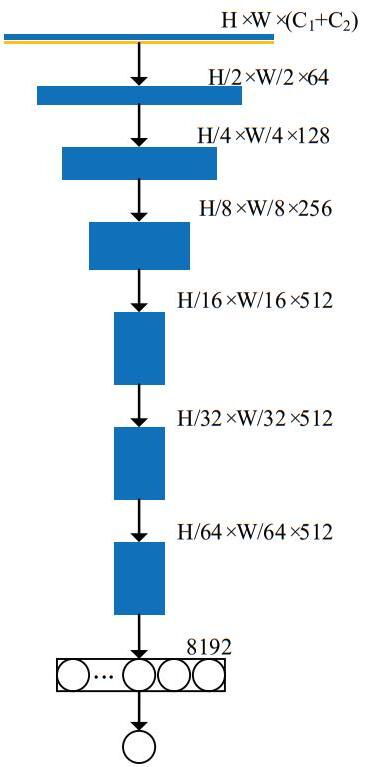
Usingdeconvolutiontechniquesforupsampling,the decoderbringsbackfeatureknowledge.Theoutput segmentationmapwithfeaturesisthenjoinedwith thepoolinglayer’scharacteristicmapofthesamesize intheencoder,basedonchannelmeasurement.The decodinglayerdoesfourdownsamplingoperations. Theencoderthendoesfourupsamplingoperations tomatchboththewidthandheightofthefeaturelist withtheinputimage.
Theencoder’slastpredictorusesa1x1convolu‑ tionallayerwithsoftmaxactivationtoclassifypixels onebyoneandmakeaprobabilitymap.Opticaldisc, opticcup,andbackdropsegmentationgiveusG(x), whichisaK‑channelprobabilitymap.Kistheclass number,andinourcase,itis3.Theforecastedproba‑ bilitymapshowswhichgrouphasthehighestchance ofoccurringforeachpixel.Thismakesitpossible toseparatetheopticdiscandopticcupatthesame time.Eachtime,dropout=0.8isgiventothelasttwo stagesoftheencodertostopover ittingandmakethe modelmoregeneral.Thesameisdoneforeverysingle componentofthedecoder.
3.2.2.DiscriminatorNetwork(DN)
Figure3showsthatthediscriminatorisbuiltwith an8‑layernetworkmodel.InputdataforDismadeup oftheretinalpicturexandthegroundtruthy,which iswrittenasG(x).TheamountofinfothatDneedsisH ×W×(C1+C2).Thechance(D(x,y))oftheopticdisc andopticcuplabelfortheretinalimagexisshown byD.Thismakesiteasierto indthebestvaluesfor thenetworkstructure’sparameters.Eachlayeruses stridedconvolution(strided=2)insteadofapooling layer.Aftereachconvolution,thesizeofthefeature mapiscutinhalf,to1/4ofitsoriginalsize.
Batchnormalizationisusedtomaketheinfor‑ mationofeachlayerintheconvolutionallayermore normal(means=0,variance ε =1).Thisspeedsup convergenceandlessenstheeffectofweightintroduc‑ tiononthenetworkmodel.Ineverysinglelayer,the activationfunctionisLeaky‑ReLUwith α =0.2.The mainimage’sresolutiondropstoH64 × W64after sixdownsamplingsteps.Thelinkismadebythelast fullyconnectedlayer.Dsendseither0or1asthe discriminantanswer.Thegradientdescentmethodis usedtochangetheparametersβgofGandthevalueof theparameterθdofDbasedonthedifferencebetween theDvalueandthelabeledresult.Thegoalofthis methodistogetthebestmodelimprovementeffect.
Algorithm1 :TGAAlgorithm
Input:U → Numberusers
C → Numberofservers
Output: AS → ListofAllocatedserver
Start
De ineRTF = [SCPUsMemsBW]//AssigntheRTF (ResourceThresholdFactor)usingthebasic parametersofserversliketheirCPU,RAMand bandwidth
ForeachU
TimInt = random//RequestsatTimeInterval
DemR = max([uCPUuMemuBW])//Userdemand forresources
UtilRate = DemR × TimInt//ResourceUtilization Rate
Ifmax(UtilRate) ≤max? (RTF)
AvgPTimeSer(i) = DemR(i)/(1‑
UtilRate(i)AvgPTimeAllSeri(i) = (AvgPTimeSer(i) × TimInt(i))/TimInt(i))
ASLIST = ceil(cserver × rand)
End‑If
End‑For Return:ASLISTasalistofallocatedservers End‑Algorithm
3.3.SegmentationofOpticCupusingEnhancedLevel SetAlgorithm
Historically,manypriortechniqueshavebeen categorizedunderedge‑basedframeworks[29, 30]. Theseapproachesprimarilyrelyonimagegradient informationtoconstructedgedetectionfunctionsfor identifyingobjectboundaries.Themathematicalfor‑ mulationofthelevelsetmodelusedinsuchmethods isillustratedinEquation(2).
(2)
FromEquation(2),div ∇�� |∇��| forecaststhecurva‑ tureofthemean,��denotestheforceswithrespectto theballoonand�� indicatesthedifferentlevelsofset operation.
Inlevelsetschemes,thereliabilityfunction, denotedbythesymbol��,playsacrucialroleinensur‑ ingstableevolutionandaccuratecomputationsduring
thesegmentationprocess.Toaddressthischallenge, afastlevelsetformulationhasbeendevelopedto improvecomputationalef iciencyandstability.The mathematicalrepresentationofthisformulationis giveninEquation(3).
(3)
Thepenalizingfunction,whichisdenotedbythe symbol ��(��),placesanemphasisonthedifference betweenthesignseparationoperationandthedevi‑ ationof �� duringitsevolution.AsshowninEqua‑ tion(4),thesucceedingfunction��(����,��) isrespon‑ sibleforintegratingthedatapertainingtotheimage gradient. ��(����,��)=����(��)
TheDiracfunctionisrepresentedbythesymbol ��(��).Parameterssuchas ��, ��,and �� areusedto determinetheindividualcontributionsofthecon‑ straintswithinthemodel.Inconventionalapproaches, theparameter��istypicallymaintainedataconstant value.However,intheproposedmodel,��isdesigned tovaryadaptively,asde inedinEquation(5).
Inthisformulation, ���� denotesaGaussian il‑ terwithstandarddeviation ��,while������ ×�� repre‑ sentstheLaplacianoperatorappliedtothe iltered image.Theparameter��denotesthecontrollingcon‑ straint,where��>0.Furthermore,���� representsthe function ��(����),enabling ��(����) toadaptdynamically accordingtotheinformationpresentintheimage. Forregiondetection,conventionalmethodsgenerally employaGaussiankernel.Incontrast,theproposed modelreplacesthiswithabilateralkernel,which helpspreserveedgeinformationwhileperforming region‑basedanalysis.
Transferlearningistheprocessofutilizingamodel thathasalreadybeentrainedonanextensivedataset inordertosubsequentlyadapttoandcarryouttasks onvariousdatasets.Thismethodisparticularlypop‑ ularbecauseitsuccessfullyclassi iessmalldatasets.It doesthisbyaddressingthedif icultyofgettinghigh precisionwhiletrainingmodelsusingdeeplearning fromscratchonlimiteddata.TheMobileNetV2net‑ work,whichhasbeenpre‑trainedontheImageNet dataset,isthebasisforthismethodology.Itactsasthe foundation.
Withintheframeworkoftheproposedmethod, weaugmenttheconvolutionallayersofMobileNetV2 byincorporatingacollectionofcalculationsthatare referredtoastheheadmodel.Afeaturemapwith dimensions7x7x1280pixelsisproducedwhenthe basemodel’soutputisfedintothe irstlayerofthe topmostmodel,whichisaglobalpoolinglayer.Apool‑ ingoperationisperformedbytheglobalpoolinglayer, producingaone‑dimensionalfeaturevector.Thisis doneinordertogreatlyreducethedimensionalityof
thedata.Intheoverallpoolinglayer,thesuggested methodmakesuseofanaveragepoolingtechnique withakernelsizeof7x7pixels.Thisresultsinthe generationofanoutputfeaturemapthatis1x1x1280 pixelsinsize[31].
Theglobalpoolinglayerisfollowedbytwo fullyconnectedlayers.Withintheseentirely interconnectedlayers,theReLUactivationfunction isresponsibleforactivating128and64nodes, respectively.Whenthetwosubclassesofthedataset (glaucomaandnon‑glaucoma)andtheapplicationof one‑hotencodingaretakenintoconsideration,the outputlayerismadeupoftwonodesthatareactivated bysoftmaxtechnology.Particularlynoteworthyisthe factthatthe1x1convolutionallayerdivergesfromthe standardbynothavingalayerforbatchnormalization andanactivationfunction(ReLU6).Thisisbecause itslow‑dimensionaloutputisonlysubjectedtobatch normalization.
Theproposedalgorithm1describesthecomplete work lowoftheglaucomadetectionframework.Ini‑ tially,retinalfundusimagesarecollectedandpre‑ processedusingGaussian ilteringtoremovenoise andenhanceimagequality.Toaddresstheissueof datasetimbalance,GenerativeAdversarialNetworks (GANs)areemployedtogeneratesyntheticretinal images.Theaugmentedimagedataisthensubjected totheEnhancedLevelSetAlgorithm,whichcorrectly splitstheopticcupregionbasedonthefundusimages. Lastly,thesegmentedimagesarefedintoapre‑trained MobileNetV2modeltoextractandclassifytheimages intoglaucomatousandnormal,classifyingtheimages intoglaucomatousandnormal.Thisstep‑wiseprocess enhancestheaccuracyandreliabilityoftheglaucoma detectionprocedure.
Thissectionpresentstheexperimentalresults obtainedtoevaluatetheeffectivenessofthepro‑ posedglaucomadetectionframework.Toassessthe robustnessandclassi icationcapabilityofthemodel, experimentswereconductedusingtheORIGA(Online RetinalFundusImageDatabaseforGlaucomaAnal‑ ysis)dataset,awidelyusedbenchmarkdatasetfor glaucomadetectionstudies[32].TheORIGAdataset contains650retinalfundusimages,including168 glaucomatousimagesand482normalimages.The experimentswereconductedandanalyzedinMAT‑ LABtoevaluatetheperformanceoftheproposed method.
Glaucomaclassi icationusingtheORIGAdataset ischallengingduetothepresenceofvariousartifacts andstructuralvariations.Thesepresentaconsider‑ ablerangeinthesize,color,position,andtextureof theopticdisc(OD)andopticcup(OC).Moreover,the datasethasseveralimagedistortions,includingnoise, blur,hue,andintensityvariation,whichmakesita
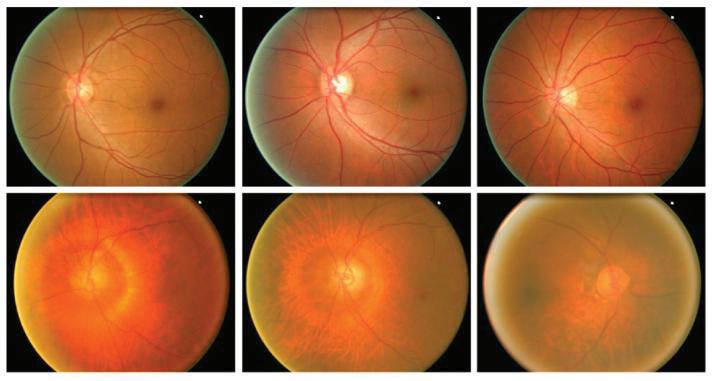
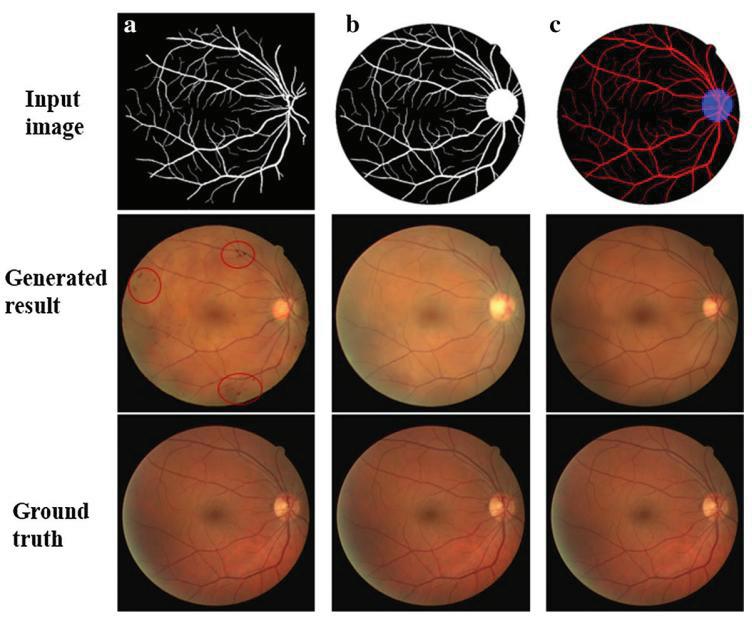
SyntheticoutputafterGANapplied
complicatedandrealistictestsetforglaucomadetect‑ ingmodels.InFigure4,severalsampledatapointsin thedatasetarepresented.
Toassesstheperformanceoftheproposedmethod ontheORIGAdataset,thedatasetwassplitintotrain‑ ingandtestingsubsetsinan80:20ratio,respectively.
Figure5showstheoutputoftheGANmodelwhen theinputimageshavebeenfedintothemodel.After this,itwasfollowedbyasegmentationprocessthat wasdonewiththeenhancedlevelsetalgorithm,which isaneffectivemethodofdividingtheforegroundand backgroundareaofglaucomatousfundusimages.The indingsofthistypeofsegmentationareshownin Figure6.
Thisstudywasconductedtodemonstratethe effectivenessoftheproposedglaucomadiagnosisand
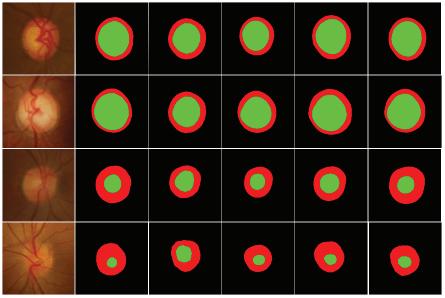
classi icationmethodthroughathoroughcomparative studywithseveralmodernmethods,allofwhichwere testedonthesamedataset.Toachievethis,thework oftheproposedmethodwascomparedwithother contemporarymethodstoensurefairandunbiased coverage.
Thequantitativedataforthiscomparisonarepre‑ sentedinTable 2,whichcontainsperformancemea‑ suresforevaluatingtheeffectivenessandsuperiority ofthevariousmethods.Moreover,thecorrespond‑ ingcomparativegraphicrepresentationsareshownin Figures7–11whichprovideaclearervisualizationof thedifferencesintheperformanceoftheinvestigated approaches.
All iguresandtablesinthisstudyweregenerated bytheauthorstoillustratetheproposedframework, experimentalsetup,andobtainedresults.
Theresultsofthisresearcharerelevanttothe crucialissueofglaucomabeingdetectedearlyand attheearliestopportunity,asoneofthelargest causesofpermanentblindnessonaglobalscale. Thecommondiagnostictechniquesthatuserou‑ tineclinicalexaminationandmanualtestsareusu‑ allypoorlyaccurateandhavesluggishprocesses.To addresstheseshortcomings,thisstudywillintroduce apowerfulautomatedglaucomadiagnosissystem basedonGenerativeAdversarialNetworks(GANs)
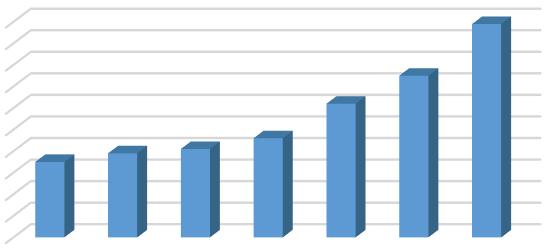
Accuracyofproposedoverexisting
Figure8. Precisionofproposedoverexisting
Recallofproposedoverexisting
Specificityofproposedoverexisting
Figure11. Sensitivityofproposedoverexisting
syntheticimagegeneration,whichwillovercomethe issueofclassimbalancethatisoftenfoundinmedical imagedatabases.
Thesuggestedapproachinvolvesimage‑to‑image translationmethodstoobtainsyntheticfundusimages andvascularstructures,therationaleofwhichisto enhancethequalityandthevarietyofthedataset.The proposedapproachcanhelpimprovefundusimage synthesisforglaucomaanalysisbycapturing iner structuraldetailsandincreasingimagerealism.The rawfundusimagesareprocessedatthepreprocessing stage,wherebytheimagesare ilteredwithaGaussian iltertominimizethenoisecomponentandimprove theoverallimagequality.Syntheticdatageneration usingGANsenablesthecreationofabalancedtraining datasetthatimprovesthereliabilityandrobustnessof subsequentclassi ication.Besides,anEnhancedLevel SetAlgorithmisusedtodoproperopticcupsegmen‑ tation,whichisavitalpartofglaucomadiagnosis. Aftersegmentation,theMobileNetV2modelwithpre‑ trainedattributesisusedtoclassifyfundusimagesas normalorglaucomatous.
Theresultsoftheexperimentsdemonstratethat theproposedframeworkoutperformscurrentmeth‑ odsandachievesanaccuracyof98.9%.Such ind‑ ingsunderscorethevalueoftheproposedsystem inautomatingglaucomadetection,therebyenabling improveddiagnosticaccuracyandearlierclinical interventionforthisvision‑threateningdisease.
Futureworkcanfocusonimprovingthepro‑ posedglaucomadetectionframeworkbyincorporat‑ inglarger,morediverseretinaldatasetstoenhance themodel’sgeneralizationcapability.Inaddition, integratingadvanceddeeplearningarchitecturessuch asvisiontransformersorhybridCNN‑transformer modelsmayfurtherimprovefeatureextractionand classi icationperformance.Theproposedframework canalsobeextendedtosupportmulti‑classclassi‑ icationforidentifyingdifferentstagesofglaucoma progression[1].Furthermore,real‑timeimplementa‑ tionofthesysteminclinicalenvironmentsormobile‑ baseddiagnosticplatformscouldassistophthalmolo‑ gistsinlarge‑scaleglaucomascreeningandearlydiag‑ nosis.
GovindharajI∗ –DepartmentofComputingTech‑ nologies,SRMInstituteofScienceandTechnology, Kattankulathur,TamilNadu603203,India,e‑mail: gvraj87@gmail.com.
G.Karthick –DepartmentofComputerScienceand Engineering,FacultyofEngineeringandTechnology, AnnamalaiUniversity,Cuddalore,TamilNadu608002, India,e‑mail:karthick18588@gmail.com.
G.Michael –DepartmentofComputerScience andEngineering,SaveethaSchoolofEngineering, SaveethaInstituteofMedicalandTechnical Sciences,Chennai,TamilNadu602105,India,e‑mail: micgeo270479@gmail.com.
∗Correspondingauthor
References
[1] Sarhan,A.,Rokne,J.,&Alhajj,R.,“Glaucoma DetectionUsingImageProcessingTechniques:A LiteratureReview,” ComputerizedMedicalImag‑ ingandGraphics,vol.78,pp.101657,2019,doi: 10.1016/j.compmedimag.2019.101657
[2] Anindita,S.,&Agus,H.,“AutomaticGlaucoma DetectionBasedontheTypeofFeaturesUsed: AReview,” JournalofTheoreticalandApplied InformationTechnology,vol.72,no.3,pp.366–375,2015.
[3] Abbas,Q.,“Glaucoma‑Deep:Detection ofGlaucomaEyeDiseaseonRetinalFundus ImagesUsingDeepLearning,” International JournalofAdvancedComputerScience andApplications,vol.8,no.6,2017,doi: 10.14569/IJACSA.2017.080606.
[4] Maheshwari,S.,Pachori,R.B.,&Acharya,U.R., “AutomatedDiagnosisofGlaucomaUsing EmpiricalWaveletTransformandCorr‑Entropy FeaturesExtractedFromFundusImages,” IEEE JournalofBiomedicalandHealthInformatics, vol.21,no.3,pp.803–813,2017.
[5] Dey,A.,&Bandyopadhyay,S.K.,“Automated GlaucomaDetectionUsingSupportVector MachineClassi icationMethod,” BritishJournal ofMedicineandMedicalResearch,vol.11,no.12, 2016,doi:10.9734/BJMMR/2016/19617.
[6] Claro,M.,Santos,L.,Silva,W.,Araújo,F., Moura,N.,&Macedo,A.,“AutomaticGlaucoma DetectionBasedonOpticDiscSegmentationand TextureFeatureExtraction,” CLEIElectronic Journal,vol.19,no.2,pp.1–10,2016,doi: 10.19153/cleiej.19.2.4.
[7] Soman,A.,&Mathew,D.,“GlaucomaDetec‑ tionandSegmentationUsingRetinalImages,” InternationalJournalofScience,Engineeringand TechnologyResearch,vol.5,no.5,pp.1346–1349, 2016.
[8] Odstrcilik,J.,Kolar,R.,Tornow,R.,Jan,J., Budai,A.,Mayer,M.,&Vodakova,M., “ThicknessRelatedTexturalPropertiesof RetinalNerveFiberLayerinColorFundus Images,” ComputerizedMedicalImagingand Graphics,vol.38,no.6,pp.508–516,2014,doi: 10.1016/j.compmedimag.2014.05.005.
[9] Zilly,J.,Buhmann,J.M.,&Mahapatra,D.,“Glau‑ comaDetectionUsingEntropySamplingand EnsembleLearningforAutomaticOpticCupand DiscSegmentation,” ComputerizedMedicalImag‑ ingandGraphics,vol.55,pp.28–41,2017,doi: 10.1016/j.compmedimag.2016.07.012.
[10] Fu,H.,Cheng,J.,Xu,Y.,Zhang,C.,Wong, D.W.K.,Liu,J.,&Cao,X.,“Disc‑AwareEnsemble NetworkforGlaucomaScreeningFromFundus Images,” IEEETransactionsonMedicalImaging, vol.37,no.11,pp.2493–2501,2018,doi: 10.1109/TMI.2018.2837012.
[11] Chen,X.,Xu,Y.,Wong,D.W.K.,Wong,T.Y., &Liu,J.,“GlaucomaDetectionBasedonDeep ConvolutionalNeuralNetwork,”in Pro‑ceedings oftheIEEEEngineeringinMedicineandBiology Conference,pp.715–718,2015,doi:10.1109/EM BC.2015.7318462.
[12] Li,A.,Cheng,J.,Wong,D.W.K.,&Liu,J.,“Integrat‑ ingHolisticandLocalDeepFeaturesforGlau‑ comaClassi ication,”in ProceedingsoftheIEEE EngineeringinMedicineandBiologyConference, pp.1328–1331,2016.
[13] Prastyo,P.H.,Sumi,A.S.,&Nuraini,A.,“Optic CupSegmentationUsingU‑NetArchitecture onRetinalFundusImages,” JournalofInfor‑ mationTechnologyandComputerEngineering, vol.4,no.2,pp.105–109,2020,doi:0.25077/ jitce.4.02.105‑109.2020.
[14] Li,L.,Xu,M.,Liu,H.,etal.,“ALarge‑Scale DatabaseandaCNNModelforAttention‑Based GlaucomaDetection,” IEEETransactionsonMed‑ icalImaging,vol.39,no.2,pp.413–424,2020, doi:10.1109/TMI.2019.2927226.
[15] El‑Hag,N.A.,Sedik,A.,El‑Shafai,W.,etal.,“Clas‑ si icationofRetinalImagesBasedonConvo‑ lutionalNeuralNetworks,” MicroscopyResearch andTechnique,vol.84,no.3,pp.394–414,2021.
[16] Zhang,G.,Pan,J.,Zhang,Z.,Xing,C.,Sun,B.,& Li,M.,“HybridGraphConvolutionalNetworkfor Semi‑SupervisedRetinalImageClassi ication,” IEEEAccess,vol.9,pp.35778–35789,2021.
[17] Sikder,N.,Masud,M.,Bairagi,A.K.,etal.,“Sever‑ ityClassi icationofDiabeticRetinopathyUsing anEnsembleLearningAlgorithmThroughAna‑ lyzingRetinalImages,” Symmetry,vol.13,no.4, pp.670,2021,doi:10.3390/sym13040670.
[18] Bilal,A.,Zhu,L.,Deng,A.,Lu,H.,&Wu,N.,“AI‑ BasedAutomaticDetectionandClassi ication ofDiabeticRetinopathyUsingU‑NetandDeep Learning,” Symmetry,vol.14,no.7,pp.1427, 2022,doi:10.3390/sym14071427.
[19] Latif,J.,Tu,S.,Xiao,C.,Rehman,S.U.,Imran,A., &Latif,Y.,“ODGNet:ADeepLearningModel forAutomatedOpticDiscLocalizationand GlaucomaClassi icationUsingFundusImages,” SNAppliedSciences,vol.4,pp.98,2022,doi: 10.1007/s42452‑022‑04984‑3.
[20] Islam,M.T.,Mashfu,S.T.,Faisal,A.,Siam,S. C.,Naheen,I.T.,&Khan,R.,“DeepLearning‑ BasedGlaucomaDetectionWithCroppedOptic CupandDiscandBloodVesselSegmentation,” IEEEAccess,vol.10,pp.2828–2841,2022.
[21] Thakur,N.,Juneja,M.,&Mittal,S.,“Deep Learning‑BasedGlaucomaDetection:AReview,” IEEEAccess,vol.9,pp.68137–68156,2021.
[22] Ran,A.R.,Cheung,C.Y.,etal.,“DetectionofGlau‑ comaUsingDeepLearningFromRetinalFundus Photographs,” Ophthalmology,vol.129,pp.113–121,2022.
[23] Wang,H.,etal.,“AutomatedGlaucomaScreening UsingDeepLearningTechniques,” Computersin BiologyandMedicine,vol.143,pp.105289,2022.
[24] Zhao,X.,etal.,“Transformer‑BasedGlaucoma DetectioninRetinalFundusImages,” IEEETrans‑ actionsonMedicalImaging,vol.42,pp.2541–2553,2023.
[25] Ronneberger,O.,Fischer,P.,&Brox,T.,“U‑Net: ConvolutionalNetworksforBiomedicalImage Segmentation,”in MICCAI,pp.234–241,2015.
[26] Çiçek,O.,Abdulkadir,A.,Lienkamp,S.,Brox,T.,& Ronneberger,O.,“3DU‑Net:LearningDenseVol‑ umetricSegmentationFromSparseAnnotation,” in MICCAI,2016.
[27] Oktay,O.,Schlemper,J.,etal.,“AttentionU‑Net: LearningWheretoLookforthePancreas,”in MedicalImagingwithDeepLearning,2018.
[28] Long,J.,Shelhamer,E.,&Darrell,T.,“FullyConvo‑ lutionalNetworksforSemanticSegmentation,” ProceedingsoftheIEEEConferenceonComputer VisionandPatternRecognition,2015.
[29] Zhou,Z.,Siddiquee,M.M.R.,Tajbakhsh,N.,& Liang,J.,“UNet++:ANestedU‑NetArchitecture forMedicalImageSegmentation,” DeepLearning inMedicalImageAnalysis,2018.
[30] Chen,J.,Lu,Y.,Yu,Q.,etal.,“TransUNet:Trans‑ formersMakeStrongEncodersforMedical ImageSegmentation,”2021.
[31] Doshi,R.,etal.,“RecentAdvancesinDeep Learning‑BasedGlaucomaDetection,” Arti icial IntelligenceinMedicine,2023.
[32] Zhang,Z.,Yin,F.S.,Liu,J.,Wong,W.K.,Tan, N.M.,Lee,B.H.,Cheng,J.,&Wong,T.Y.(2010). “ORIGA‑Light:AnOnlineRetinalFundusImage DatabaseforGlaucomaAnalysisandResearch.” In ProceedingsoftheAnnualInternationalCon‑ ferenceoftheIEEEEngineeringinMedicineand BiologySociety (EMBC)(pp.3065–3068).
Submitted:24th March2024;accepted:1st October2024
MohammedBelghachi
DOI:10.14313/jamris‐2026‐024
Abstract:
Theintegrationofgenerativemodelsintoroboticsmarks amajorparadigmshift,enhancingroboticcapabilities whilebroadeningtheirapplicationsacrossnumerous sectors.Thissurveyexaminestheimpactofgenerative modelsonroboticinnovation,highlightingkeyconcep‐tualandtechnicaladvancementsalongwiththechal‐lengestheypresent.Generativemodelshaveimproved roboticperception,learning,anddecision‐making,with transformativeapplicationsinindustriessuchasman‐ufacturing,healthcare,autonomousvehicles,environ‐mentalmonitoring,andagriculture.Despitetheirpoten‐tial,thesemodelsfacechallenges,includingtechnical limitations,ethicalconcerns,andsocietalimplications. Thisstudyconcludesbyoutliningfuturedirectionsthat prioritizeimprovingmodelefficiency,addressingdata bias,enhancinginterpretability,andpromotinginterdis‐ciplinarycollaboration,pavingthewayforcontinued innovationandsocietalbenefit.
Keywords: GenerativeModels,RoboticInnovation, ArtificialIntelligence,AutonomousSystems,Machine Learning,ComputationalEfficiency,DataBias,Ethical Implications,InterdisciplinaryCollaboration,Future Technologies
1.Introduction
Therapidadvancementoftechnologyhasledto aremarkableintegrationofarti icialintelligence(AI) withrobotics,andthishasunlockedunprecedented capabilitiesandopportunitiesforinnovation.Among thevariousAItechniquesthathavepropelledrobotics forward,generativemodelsstandoutduetotheir uniqueabilitytocreatenewdatainstancesthatclosely mimicthedistributionofreal‑worlddata.Thispaper exploresthetransformativeimpactofgenerativemod‑ elsonroboticinnovationthroughacomprehensive surveystudy,illuminatingboththeadvancementsand challengesthathaveaccompaniedthissynergy.
1.1.Background
Theintersectionbetweengenerativemodelsand roboticsmarksapivotalchapterintheevolutionofAI andautomation,offeringgroundbreakingopportuni‑ tiesforinnovationacrossdiversesectors.Thissection explorestheoriginsanddevelopmentsofgenerative models,theirintegrationintorobotics,andtheresult‑ ingtransformationsinroboticcapabilitiesandappli‑ cations.Byprovidingthisbackground,weestablisha
foundationalunderstandingoftheprofoundimpactof thesetechnologiesonrobotics.
Figure 1 outlineskeytrendsingenerativeAI’s impactonrobotics.Autonomousrobotsarebecom‑ ingincreasinglycapableofperformingtasksinde‑ pendently,whiledigitaltwintechnologyusesvirtual modelstooptimizereal‑worldroboticsystems.3D generationallowsrobotstocreateandinteractwith realisticmodels,enhancingtaskslikeobjectmanipu‑ lation.Synthesizedspeechhasimprovedhuman‑robot communicationbymakinginteractionsmorenatural. Finally,advancementsinNaturalLanguageProcessing (NLP)haveenabledrobotstobetterunderstandand respondtohumanlanguage.Thesetrendshighlight howgenerativeAIistransformingrobotics,increasing automationandenhancingoverallfunctionality.
• Theemergenceofgenerativemodels:Genera‑ tivemodelshavefundamentallyreshapedtheland‑ scapeofmachinelearningbyenablingcomput‑ erstogeneratenewdatainstancesthatresem‑ bletrainingdatawhileremainingdistinctand novel.Thesemodels—suchasGenerativeAdver‑ sarialNetworks(GANs)andVariationalAutoen‑ coders(VAEs)—leveragedeeplearningtechniques tounderstandandreplicatecomplexdatadistribu‑ tions(refertoFigure 1).Whiletheywereinitially appliedtotaskslikeimageandtextgeneration,gen‑ erativemodelsquicklydemonstratedpromisefor broaderapplications.
• Breakthroughsingenerativemodeling:Asignif‑ icantbreakthroughoccurredwiththeintroduction ofGANsin2014,revolutionizingthe ieldbyestab‑ lishingaframeworkwheretwoneuralnetworks— thegeneratorandthediscriminator—collaborateto producehighlyrealisticdataoutputs.Thisadversar‑ ialapproachnotonlyimproveddataqualitybutalso Figure1.
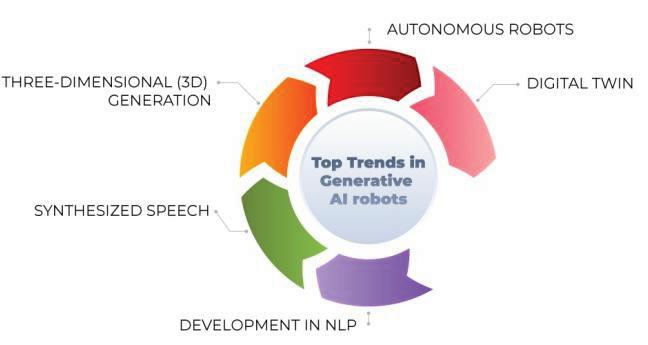
openednewresearchavenues,includingthosewith applicationsinrobotics.
• Integrationintorobotics:Theapplicationofgen‑ erativemodelstoroboticshasbeentransforma‑ tive,enablingrobotstobetterunderstandandinter‑ actwiththeirenvironmentsinmoredynamicand nuancedways.Forinstance,generativemodelsfacil‑ itaterealisticsimulationsforrobottraining,reduc‑ ingtheneedforextensivereal‑worlddatacollection andexposingrobotstoabroaderrangeofscenarios. Additionally,thesemodelsenhanceperceptionsys‑ tems,allowingrobotstorecognizeandcategorize objectswithexceptionalaccuracyandspeed.
• Enhancingrobotcapabilities:Beyondtrainingand perception,generativemodelssigni icantlyenhance roboticautonomyanddecision‑making.Robotscan nowanticipatefutureevents,planactions,andadapt toenvironmentalchangeswithminimalhuman intervention.Thislevelofautonomyiscrucial forapplicationsrangingfromautonomousvehi‑ clesnavigatingcomplexurbanlandscapestoservice robotsperformingtasksinunpredictabledomestic settings.
• Broadeningapplicationsandimpact:Theinte‑ grationofgenerativemodelsintoroboticshas expandedthescopeofroboticapplications,pushing theboundariesofwhatispossible.Inhealthcare,for instance,robotsequippedwithgenerativemodels assistinsurgeries,providingprecisionandadapt‑ abilitythataugmenthumancapabilities.Inman‑ ufacturing,generativemodelsoptimizeproduction linesbypredictingandadaptingtomaintenance needsbeforetheyarise,minimizingdowntimeand improvingef iciency.
• Challengesandfuturedirections:Whilethe potentialofgenerativemodelsinroboticsis vast,signi icantchallengesremain.Issuessuch asmodelinterpretability,databias,andethical considerationsinautonomousdecision‑making arecentraltoongoingresearch.Addressingthese challengesiscrucialfortheresponsibleand bene icialintegrationofgenerativemodelsinto roboticsystems.
Theconvergenceofgenerativemodelsand roboticssigni iesaconsiderableleapinthequestto developmachinesthatcanlearn,adapt,andoperate autonomouslyincomplex,real‑worldenvironments. Asthisbackgroundsectionillustrates,thejourney fromtheinitialdevelopmentofgenerativemodelsto theircurrentimpactonroboticshasbeenmarkedby rapidprogressandsigni icantachievements.Yet,it hasalsoposednewquestionsandchallenges,which continuetodriveinnovationinthisexciting ield.
1.2.Significance
• TechnologicalAdvancement:Theintegration ofgenerativemodelsintoroboticsrepresentsa signi icantleapforwardindesigninganddeploying intelligent,adaptive,andef icientroboticsystems (seeFigure 2).Throughtheircapacitytogenerate
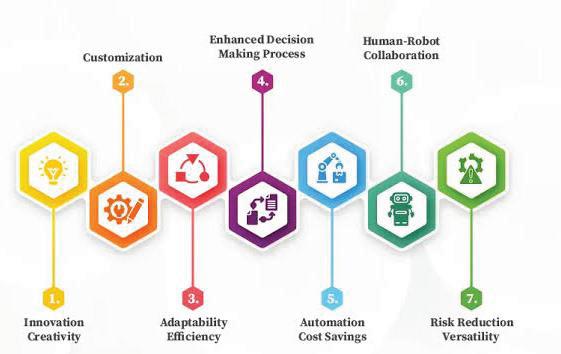
high‑qualitysyntheticdata,generativemodels enablerobotstolearnfromscenariosthat wouldotherwisebeinaccessible,risky,orcostly. Thiscapabilityiscrucialforadvancingrobotic perception,decision‑making,andinteraction withenvironmentsandhumans.Ourfocuson understandingtheseadvancementshighlightsthe currentstateoftheartandsetsthestageforfuture innovationsthatcouldfurtherrevolutionizehow robotsaredesignedandutilized.
• SocietalBene its:Enhancedroboticinnovation throughgenerativemodelsofferssigni icantsocietal bene its,transformingindustriessuchashealthcare, manufacturing,andlogistics.Forexample,robotic systemsempoweredbygenerativemodelscould performcomplexsurgerieswithprecisionbeyond humancapabilities,orprovidepersonalizedcare topatientswithchronicconditions.Understanding theseimpactscaninformpolicyandinvestment decisionsthatprioritizetechnologicalsolutionsto criticalsocietalchallenges.
• AdvancementofKnowledge:Thisstudycon‑ tributestobridginggapsbetweengenerativemod‑ elsandrobotics.Bysynthesizingcurrentresearch, identifyinggaps,andhighlightinginnovativeappli‑ cationsandchallenges,weprovideacomprehen‑ siveresourceforresearchers,practitioners,andpol‑ icymakers.Thisfostersadeeperunderstandingof therelationshipbetweengenerativemodelsand robotics,encouraginginterdisciplinarycollabora‑ tionthatcanpushtheboundariesofwhatiscur‑ rentlypossible.
• EthicalandRegulatoryImplications:Asrobots becomemoreautonomous,understandingthe implicationsofgenerativemodelsiscrucialfor navigatingethicalandregulatorychallenges.This studyilluminatespotentialrisksandbene its, guidingthedevelopmentofframeworksthatensure ethicaluse,transparency,andaccountabilityin roboticsystems.Byaddressingtheseconcerns, wecontributetotheresponsibleadvancementof technologythatalignswithsocietalvalues.
• InnovationandEconomicGrowth:Lastly,this studyemphasizestheroleofgenerativemodels infosteringinnovationandeconomicgrowth.As
industriesadoptadvancedroboticsystems,the demandforskilledlabortodesign,maintain,and managethesesystemswillincrease,creatingnew jobopportunities.Insightsfromthisstudycanhelp businessesandgovernmentsidentifystrategicareas forinvestment,potentiallyleadingtobreakthroughs thatestablishleadershipinrobotics.
1.3.ProblemStatement
Theintegrationofgenerativemodelsintorobotics representsapromisingfrontierfortechnological innovation,providingnovelsolutionstolongstanding challengesindesign,functionality,andapplication. Despitethegrowinginterestandsigni icantadvance‑ mentsinbothdomains,agappersistsinthecom‑ prehensiveunderstandingandsystematicevaluation ofhowgenerativemodelsarereshapingthe ieldof robotics.Thisgapmanifestsinseveralkeyareas:
• LimitedSynthesisofExistingKnowledge:While studieshaveexploredspeci icaspectsofgenera‑ tivemodelsinrobotics,welackacohesivesynthe‑ sisoftheir indings.Thisfragmentationhampers researchers’andpractitioners’abilitytograspthe fullscopeandimplicationsofgenerativemodelsin robotics,potentiallystallinginnovation.
• UnderexploredAreasandApplications:Certain applications,suchasgeneratingsyntheticdatafor trainingordynamicenvironmentsimulation,are well‑troddenpaths.However,areaslikerobot‑ humaninteractionandethicaldecision‑making remainunderexplored,indicatinguntappedpoten‑ tialandaneedfortargetedexploration.
• ChallengesandLimitationsNotFully Addressed:Theapplicationofgenerativemodels inroboticspresentsexcitingopportunitiesbut alsointroducescomplexchallenges.Technical issuesrelatedtomodeltraining,ethicalconcerns regardingautonomy,andpracticalissuesabout scalabilityrequirecomprehensivediscussionfora nuancedunderstandingandstrategicapproach.
• GapsinFutureDirectionalGuidance:Therapid paceoftechnologicaladvancementnecessitates forward‑lookingresearchthatanticipatesfuture trendsandopportunities.Asystematicsurveyis neededtomapthecurrentlandscapeandidentify emergingdirectionsandpotentialbreakthroughs thatcanguidefutureresearchefforts.
Thisstudyaimstoaddressthesegapsbyprovid‑ ingacomprehensivesurveyoftheimpactofgenera‑ tivemodelsonroboticinnovation.Throughadetailed examinationofcurrentapplications,challenges,and futuredirections,thisresearchseekstoenhance understanding,stimulatefurtherinvestigation,and guidethepracticalapplicationofgenerativemodelsin robotics,contributingtothe ield’sadvancementand itspotentialformeetingsocietalneeds.
1.4.Objective
Theoverarchingaimofthissurveystudyistothor‑ oughlyexaminehowgenerativemodelshavein lu‑ encedthe ieldofrobotics,highlightingadvancements,
challenges,andfutureprospects.Speci icobjectives include:
• ExaminingtheCurrentLandscape:Conductinga comprehensivereviewofexistingapplicationsof generativemodelsinroboticsandcatalogingthe typesandpurposesofmodelslikeGANsandVAEs.
• IdentifyingKeyAreasofInnovation:Pinpoint‑ ingspeci icareaswheregenerativemodelshave spurredinnovationinrobotperception,decision‑ making,andsimulationsfortrainingacrosssectors suchashealthcareandmanufacturing.
• HighlightingChallengesandLimitations:Shed‑ dinglightontechnical,ethical,andpracticalhur‑ dlesinintegratinggenerativemodelsintorobotics, framingcurrentlimitationsandinformingfuture researchdirections.
• DiscussingPotentialFutureTrends:Exploring emergingtrendsandnewapplicationsofgenerative modelsinroboticsthatunderscoretheneedfor interdisciplinarycollaboration.
• ContributingtoKnowledge:Providingacompre‑ hensiveoverviewforacademics,practitioners,and policymakers,enrichingdiscourseontheintegra‑ tionofgenerativemodelsinrobotics,andpavingthe wayforfutureadvancements.
Ourmethodologyinvolvesacomprehensivelit‑ eraturereviewcombinedwithexpertsurveys,and employsbothqualitativeandquantitativeanalysis techniquestocaptureabroadspectrumofinsights.
1.5.StructureofthePaper
Thepaperisstructuredtothoroughlyexaminethe in luenceofgenerativemodelsonroboticinnovation. Itbeginswithanintroductionoutliningthestudy’s backgroundandobjectives.Section2providesaliter‑ aturereviewontheevolutionofgenerativemodelsin robotics,highlightingthetechnologicaladvancements andgapsaddressedbythisstudy.Section3describes themethodologyforsurveydesign,participantselec‑ tion,datacollection,andanalysis.Section4presents survey indingsonthediverseimpactsofgenerative modelsonrobotdesignandapplications.Section5 discusseschallengesandlimitations,includingtech‑ nicalandethicalissues.Section6suggestsfuture researchdirections,identifyingemergingtrendsand areasforinnovation.Finally,Section7summarizesthe keyinsightsandre lectsonthefutureofthisinterdis‑ ciplinary ield.
2.1.IntroductiontoGenerativeModels
Generativemodelsrepresentafundamental breakthroughinmachinelearning,enabling systemstocreatenewdatainstancesthatre lect theunderlyingdistributionofexistingdata.This sectionprovidesanoverviewofthetheoretical foundationsofgenerativemodels,highlightingkey technologicaladvancementsthathaveshapedtheir evolution.GenerativeAdversarialNetworks(GANs)
andVariationalAutoencoders(VAEs)areparticularly signi icantfortheirabilitytolearncomplexdata distributions.GANsrevolutionizedthe ieldby employingadual‑networkframeworkthatgenerates realisticdatathroughadversarialtraining.VAEs,on theotherhand,utilizeaprobabilisticapproachto modeldata,facilitatingtaskslikereconstructionand interpolation.Seminalpapersinthisarea,including thefoundationalworksonGANsandVAEs,provide acriticalbasisforunderstandingtheimplicationsof thesemodelsforthe ieldofrobotics.
2.2.GenerativeModelsinRobotics:AnEvolutionary Perspective
Theintegrationofgenerativemodelsintorobotics signi iesatransformativeshiftfromtraditional,deter‑ ministicapproachestomore lexible,data‑driven paradigms.Thissectiontracesthehistoricaldevelop‑ mentofthisintegration,startingwithearlyapplica‑ tionsthatutilizedgenerativemodelsforsimpletask simulations.Asthetechnologyadvanced,generative modelsbegantoenhanceroboticperception,cogni‑ tion,andinteractioncapabilities.Forinstance,ini‑ tialeffortsfocusedonusingthesemodelstosim‑ ulateroboticmovements,whilesubsequentinnova‑ tionsenabledmoresophisticatedapplications,suchas enhancingvisualperceptionandfacilitatinghuman‑ robotinteraction.Thisunderscorestheevolutionof thetechnologyanditsprofoundimpactonthesophis‑ ticationofroboticsystems.
KeyApplicationsandInnovations
• EnhancingRoboticPerception:Studieshave demonstratedthatgenerativemodelssigni icantly improveroboticvisionsystems,particularlyin objectrecognitionandsceneunderstanding. Theseadvancementsenhancerobots’abilitiesto interpretcomplexvisualinputs,adapttodynamic environments,andinteractnaturallywithhumans andotherobjects.Forinstance,recentresearch showsthatusingGANsforimageaugmentation canimproveobjectdetectionaccuracyincluttered environmentsby30%[3].
• AutonomousDecisionMakingand Planning:Generativemodelsplayacrucial roleindevelopingdecision‑makingframeworks forrobotics.Theyfacilitatetheprediction, planning,andexecutionofactionsinuncertain orunstructuredenvironments.Applicationsin autonomousvehiclesanddronesillustratehow generativemodelsenablesystemstonavigate complexscenarioswithouthumanintervention, improvingsafetyandef iciency[4].
• SimulationandTraining:Generativemodelsare increasinglyusedtocreaterealisticsimulationsfor robottraining,reducingrelianceonreal‑worlddata collection.Thisapproachaccelerateslearningpro‑ cesses,allowingrobotstomastercomplextasks withgreateref iciencyand lexibility.Forexample, researchershaveshownthatsynthetictrainingenvi‑ ronmentscanreducethetimerequiredforrobotsto learnnavigationtasksbyupto50%[5].
• ChallengesinIntegration:Theliteratureidenti‑ iesseveraltechnical,ethical,andpracticalchal‑ lengesassociatedwiththeintegrationofgenera‑ tivemodelswithrobotics.Thesechallengesinclude modelreliabilityanddatabias,aswellastheethical implicationsofautonomousdecision‑makingand safetyandsecurityinAI‑poweredroboticsystems. Addressingtheseissuesiscriticalforthesuccess‑ fuldeploymentofgenerativemodelsinreal‑world applications[6].
• FutureDirectionsandEmergingTrends:The reviewhighlightspotentialfuturedirectionsfor researchanddevelopmentattheintersectionof generativemodelsandrobotics.Emergingtrends includetheintegrationofadvancedAItechniques, suchasreinforcementlearningwithgenerative models,andexplorationofnewapplication domains.Thedevelopmentofethicalguidelinesand standardsforautonomoussystemsisalsocrucial foraddressingsocietalconcerns[7].
• GapsinCurrentResearch:Notablegapsinexist‑ ingresearchincludeunderexploredapplicationsof generativemodelsinrobotics;aneedforcompre‑ hensivestudiesontheethicalandsocietalimplica‑ tionsofthesetechnologies;andthedevelopmentof standardizedevaluationmetricsforassessingtheir performanceandimpact.Identifyingthesegaps presentsopportunitiesforfutureresearchthatcan driveinnovationandenhancetheunderstandingof generativemodelsinrobotics[8].
Insummary,thekey indingsfromthis literaturereviewunderscorethecriticalroleof generativemodelsindrivinginnovationinrobotics. Theseadvancementsinroboticcapabilitieshave enabledgreaterautonomyandsophistication. However,challengesremainforrealizingtheirfull potential.Continuedresearchandinterdisciplinary collaborationareessentialtoaddressthesechallenges andadvancethe ield,ensuringthatgenerativemodels contributepositivelytosocietalandindustrialneeds.
Theintegrationofgenerativemodelsintorobotics hascatalyzedaparadigmshift,signi icantlyenhancing roboticcapabilitiesandbroadeningtheirapplication spectrum.Thissectionexploresthemultifacetedcon‑ ceptualandtechnicalimpactofgenerativemodelson roboticinnovation,aswellastheirdiverseapplica‑ tionsacrossvarioussectors.
Theincorporationofgenerativemodelsinto roboticssigni iesatransformativephasethat couldreshapeourunderstandingofrobotdesign andfunctionality.Theseadvancementsextend beyondmeretechnicalimprovements;theyre lecta fundamentalshiftinhowrobotsareconceivedand deployed.
• ExpandingCreativeHorizons:Generativemod‑ elsbroadencreativepossibilitiesinroboticsby enablingthegenerationofnoveldesignconcepts andoperationalstrategies.Theirabilitytosimu‑ latediverseoutcomesfromasetofinputsallows engineerstoexplorecon igurationsthatoptimize ef iciency,durability,andadaptability,ofteninways thathumandesignersmightoverlook.Thisinno‑ vationalsoextendstomaterialcompositionsthat creativelybalancestrengthand lexibility[9].
• EnhancingLearningandAdaptation:Acriti‑ calaspectofroboticsisrobots’abilitytolearn fromenvironments.Generativemodelsenhancethis capabilitybyproducingsyntheticdatathatmirrors real‑worldscenarios.Thisdataenablesrobotsto trainandadapttovariedconditionswithoutthe extensiveandcostlydatacollectionthatistypi‑ callyrequired.Forinstance,inautonomousvehi‑ cledevelopment,generativemodelscansimulate diversedrivingscenarios,ensuringpreparedness forextremeconditions[10].
• FacilitatingComplexDecision‑Making:Genera‑ tivemodelsenablepredictivemodeling,inwhich robotsanticipatefuturestatesbasedoncurrent data.Thiscapabilityisvitalforautonomousrobots operatingindynamicenvironments,suchasdrones insearch‑and‑rescuemissions.Byforecasting changesintheirsurroundings,theserobotscan makeinformeddecisionsandoptimizetheiractions forsafetyandef iciency[11].
• PersonalizationandAdaptability:Generative modelsenablemorepersonalizedandadaptable roboticsystems.Inhealthcare,robotscantailor therapeuticinterventionstoindividualpatient needs,enhancingtreatmenteffectiveness. Ineducationalsettings,theycanadjustand personalizeteachingmethodstosuitvarying learningstyles[12].
Theconceptualinnovationsdrivenbygenerative modelsarereshapingroboticcapabilities,making themmoreintelligent,versatile,andeffective.
3.2.TechnicalInnovations
Theintegrationofgenerativemodelshassparked numeroustechnicalinnovationsthatsigni icantly enhancethecapabilitiesandef iciencyofroboticsys‑ tems,pavingthewayfornewmethodologiesindesign andoperation.
• AdvancedPerceptionandSensory Processing:Generativemodelscanrevolutionize roboticperceptionbysynthesizingrealistic sensorydata.Thisallowsrobotstotrainon diversescenarios,whichimprovestheirobject recognitionandunderstandingofvariousscenes. Invision‑basedsystems,thesemodelsgenerate syntheticimagesthatenhancerobots’abilities toclassifyobjectsundervaryingconditions,thus improvingaccuracy[13].
• DynamicAdaptiveControlandEnhanced Decision‑Making:Generativemodelsenhance
controlsystems,allowingfordynamicadaptation tonewtaskswithoutmanualreprogramming. Bysimulatingenvironmentalinteractions, thesemodelsdevelopcontrolstrategiesfor previouslyunencounteredscenarios.Inrobotic manipulation,forinstance,theyenableon‑the‑ ly graspingstrategiesbysimulatingunknownobject dynamics.Thiscapabilityiscrucialforreal‑time decision‑makinginapplicationslikeautonomous driving[14].
• SimulationandTrainingEnvironments:Genera‑ tivemodelscreatecomplex,realisticsimulationsfor robottraining.Thesevirtualenvironmentsprovide arisk‑freeplatformforrobotstolearnandhone theirskillsacrossvarioustasks,signi icantlyreduc‑ ingtrainingtimeandresourcerequirements[15].
• PersonalizedInteractionandHuman‑Robot Interface: Byanalyzingandgeneratinghuman‑like responses,generativemodelsimprovehuman‑ robotinteractions.Theyenablerobotstoadapt theirbehaviorstoindividualusers,enhancingthe userexperienceinserviceroboticsandassistive technologies[16].
Thesetechnicalinnovationsrede inethebound‑ ariesofroboticcapabilities,furtherblurringthelines betweenarti icialandnaturalintelligence.
3.3.Applications
Theapplicationofgenerativemodelsinrobotics hassigni icantlyexpandedtheirutilityacrossvarious sectors,makingitpossibleforthemtoaddresscom‑ plexreal‑worldproblems.
• IndustrialAutomationandManufacturing:Gen‑ erativemodelsoptimizeproductionprocessesby simulatingwork lows,predictingequipmentfail‑ ures,andadaptingtochangesinrealtime.This leadstoincreasedef iciencyandreduceddowntime, whilealsospeedingupproductdesignthroughsim‑ ulations[17].
• HealthcareandMedicalRobotics:Inhealthcare, generativemodelsenhancesurgicalrobotsbymak‑ ingthemadaptabletoproceduralvariability.These robotscansimulatescenariostoplanoptimal approachesandtherebyimprovepatientoutcomes. Inrehabilitation,theycancreatepersonalizedther‑ apyprogramsbasedonpatientprogress[18].
• AutonomousVehiclesandDrones:Generative modelsareessentialfornavigationanddecision‑ makinginautonomousvehiclesanddrones,allow‑ ingfortraininginscenariosthatarechallengingto replicateinreallife.Thisensuressafeandef icient operationsinlogistics,transportation,andemer‑ gencyresponse[19].
• Environmental Conservation and Exploration:Robotsequippedwithgenerative modelsfacilitateexplorationininaccessible environments,fromthedeepseatoouterspace. Thesemodelsassistinmissionplanninganddata collectionstrategies,enhancingourunderstanding
oftheseareaswithoutextensivetrial‑and‑error costs[20].
• AgricultureandFarming:Inagriculture,gener‑ ativemodelsoptimizefarmingpracticesbysimu‑ latingcropgrowthscenariosandpredictingpest infestations,allowingforprecisionagriculturethat enhancesef iciencywhilesupportingsustainable practices[21].
Thevastapplicationsofgenerativemodelsin roboticsaddresspressingchallengesacrossmultiple industries.Asthesemodelscontinuetoevolve,they promisefurtherinnovationsthatcouldsigni icantly improvequalityoflifeandoffersolutionstoglobal challenges.
Theintegrationofgenerativemodelsinrobotics demonstratestheirtangibleimpactacrossvarious sectors.Herearedetailedexamplesofapplications wheregenerativemodelsaredrivinginnovationand solvingcomplexproblems:
TheAdidasSpeedfactoryrepresentsaground‑ breakingadvancementinmanufacturingoptimiza‑ tion,asitutilizesgenerativemodelstotransformthe shoeproductionprocess.Thisfacilitywasdesigned toaddressthegrowingconsumerdemandforper‑ sonalizedfootwearandtheneedforfasterproduc‑ tioncycles.Traditionalmanufacturingmethodsoften involvelengthyleadtimesandmassproduction,which areincreasinglymisalignedwithmarkettrendsfavor‑ ingcustomizationandsustainability.Byintegrating generativemodels,theSpeedfactorycanrapidlypro‑ totypeandtestnewshoedesignstailoredtoindividual preferences.Thesemodelsanalyzecustomerdataand performancemetricstocreateuniquedesignvaria‑ tions.Moreover,theuseofadvancedroboticsincon‑ junctionwiththesegenerativemodelsfacilitatespre‑ cisionfacilitatesprecisionassemblyandenablesef i‑ cientmaterialhandling[22].Thisautomationallows forquickadaptationstodifferentshoedesigns,which reducesdowntimeandkeepsqualityconsistent.The AdidasSpeedfactoryexempli ieshowgenerativemod‑ elsandroboticscansetnewstandardsinthemanufac‑ turingindustrybyminimizingwaste,enhancingcus‑ tomization,andstreamliningproductionprocesses.
ThedaVinciSurgicalSystemisapioneeringexam‑ pleofroboticsinthemedical ieldthatoffersenhanced precisionand lexibilityincomplexsurgicalproce‑ dures.Althoughthesystemdoesnotcurrentlyadver‑ tisetheuseofgenerativemodels,itsadvanceddesign andfunctionalitysuggestsigni icantpotentialifit weretoadoptthetechnology.
Generativemodelscouldplayacrucialroleinpre‑ operativeplanningbysimulatingavarietyofsurgical scenariostailoredtopatient‑speci icanatomicaldata. Thiscapabilitywouldenablesurgeonstoanticipate
challengesandoptimizetheirstrategiesbeforeenter‑ ingtheoperatingroom.Furthermore,duringactual surgeries,generativemodelscouldprovidereal‑time decisionsupportbyanalyzingthesurgicalsiteand referencingvastdatasetsofpreviousprocedures, therebyassistingsurgeonsinmakinginformedadjust‑ mentsasneeded[23].Additionally,theintegrationof LanguageModels(LMs)couldenhancethesystem’s capabilitiesbyallowingfornaturallanguagepro‑ cessingofsurgicalprotocolsandpatientinformation. Thiswouldstreamlinecommunicationandimprove decision‑makingduringoperations.Thus,whiletheda Vincisystemhasalreadymadeprofoundimpactson surgicaloutcomesandrecoverytimes,theintegration ofgenerativemodelsandLMscouldusherinanewera ofpersonalizedandpredictivesurgicalassistance.
4.3.AutonomousVehicles:Waymo’sSimulationTech‐nology
Waymostandsattheforefrontofautonomous vehicletechnology,employingsophisticatedsimula‑ tionsystemstoenhancethesafetyandef iciencyof itsself‑drivingcars.Thecompany’suseofgenerative modelswithinitssimulationenvironmentsexempli‑ ieshowcutting‑edgeAItechniquescanfacilitatethe rapiddevelopmentofautonomousdrivingsystems.By recreatingawidearrayofdrivingscenarios—ranging fromeverydaytraf icconditionstorare,unexpected events—Waymocanrigorouslytestandre ineitsself‑ drivingalgorithmsbeyondwhatisfeasibleonphysical roads.
Generativemodelsplayavitalroleinthisprocess bycreatingdetailed,realisticscenariosthatnotonly replicatereal‑worlddatabutalsointroducenovelsitu‑ ationsthatthevehiclesmaynothaveencounteredpre‑ viously.Generativemodelscanadditionallyenhance sensorsimulations,enablingthevehiclestotraintheir perceptionsystemsundervariedconditions,includ‑ ingchangesinweatherandlighting[24].
TheincorporationofVisionLanguageModels (VLMs)furtherenhancesautonomousvehiclesby enablingthemtoprocessvisualinformationalong‑ sidetextualdata,improvingnavigationanddecision‑ makingbasedonamorecomprehensiveunderstand‑ ingoftheirenvironment.Overall,Waymo’sintegration ofgenerativemodelsandVLMsintoitssimulation technologysigni icantlyacceleratesthelearningpro‑ cess,enhancessafetymeasures,andimprovestheef i‑ ciencyofresourceusageindevelopingautonomous vehicles.
JohnDeere’sSee&Spraytechnologyexempli‑ iesthetransformativeimpactofroboticsinpreci‑ sionagriculture,asitutilizesgenerativemodelsto optimizeweedmanagementpractices.Thisinnova‑ tivesystememploysadvancedcomputervisionand machinelearningalgorithmstoidentifyandtarget weedsamongcrops,potentiallyreducingherbicide usebyover80%.Generativemodelsenhancethe trainingofthevisionsystembygeneratingsynthetic
imagesofweedsandcropsinvariouscontextsand conditions,therebyimprovingthemodel’saccuracyin real‑timeweeddetection.TheSee&Spraytechnology leverageshigh‑resolutioncamerasmountedonthe machinerytocontinuouslycaptureimagesofthe ield asitmoves,allowingforpreciseapplicationofherbi‑ cidesdirectlyontoweedswhileconservingresources. Bydistinguishingbetweencropsandweedswith highaccuracy,thesystemminimizesbothcostsand environmentalimpactforfarmers[25].Additionally, theintegrationofLMscouldfacilitatebettercom‑ municationandunderstandingofagriculturaldata, allowingformorenuancedinsightsintocropman‑ agementpractices.Asgenerativemodelscontinue toevolve,theirincorporationintotechnologieslike See&Sprayrepresentsasigni icantleapforward insustainablefarmingpractices,demonstratingthe potentialofcombiningroboticswithadvancedAIto enhanceef iciencyandproductivityinagriculture.
4.5.EnvironmentalMonitoring:AutonomousUnderwa‐terVehicles(AUVs)
AutonomousUnderwaterVehicles(AUVs)arerev‑ olutionizingoceanexplorationandenvironmental monitoring,equippedwithadvancedsensorsthat allowthemtonavigatecomplexmarineenvironments withminimalhumanintervention.Thesesophisti‑ catedmachinescollectcriticaldataonvariousparam‑ eters,suchaswatertemperature,salinity,anddepth, whilecapturinghigh‑resolutionimagesandvideosof underwaterecosystems.Theintegrationofgenerative modelsintoAUVtechnologyholdsthepotentialto signi icantlyenhanceAUVs’functionality.Forexam‑ ple,generativemodelscancreatedetailedsimulations ofmarineenvironments,enablingvirtualtestingand optimizationofAUVmissionspriortodeployment. Thiscapabilityallowsresearcherstoplanmissions thataremoreresilientinthefaceofunpredictable conditionsinthedeepsea[26].Additionally,gener‑ ativemodelscanassistininterpretingcomplexdata collectedbyAUVs,identifyingpatternsandanomalies thatmayindicateecologicalchangesorpollution.The incorporationofVLMscanfurtherenhanceAUVcapa‑ bilitiesbyallowingthemtoprocessvisualdataalong‑ sidetextualdescriptions,improvingtheirdecision‑ makinginnavigatinganddocumentingunderwater conditions.Byanalyzingreal‑timedata,generative modelscouldenableAUVstoadapttheirmission objectivesdynamically,allowingfortargetedexplo‑ rationbasedonenvironmentalcues.Insummary,the integrationofgenerativemodelsandVLMsinAUVsis pavingthewayformoresophisticatedandadaptive approachestooceanexplorationandenvironmental monitoring.
Drones
Indisaster‑responsescenarios,searchandrescue dronesequippedwithgenerativemodelsaremaking signi icantcontributionstolocatingsurvivorsinchal‑ lengingenvironments.Thesedronesutilizeadvanced algorithmstoanalyzeenvironmentaldataandpredict
optimalsearchpatterns,improvingtheef iciencyand effectivenessofrescueoperations[27].Generative modelsenablethedronestosimulatevariousenvi‑ ronmentalconditions,helpingthemadapttounpre‑ dictablecircumstancesencounteredduringmissions. Byprocessingreal‑timeinformationfromsensors, thesedronescanautonomouslyadjusttheir light paths,prioritizingareasthataremorelikelytocontain survivors.Furthermore,integratingLMscanenhance communicationandcoordinationamongrescueteams byfacilitatingtheprocessingofmission‑relateddata andinstructionsinnaturallanguage.Thisinnovative applicationofgenerativemodelsandLMsinsearch andrescueoperationsnotonlyacceleratesresponse timesduringemergenciesbutalsoincreasesthelike‑ lihoodofsuccessfulrescues,ultimatelysavinglivesin criticalsituations.
4.7.Human‐RobotInteraction:SocialRobots
Socialrobots,suchasSoftBank’sPepper,are increasinglybeingdeployedincustomer‑service andeducationalsettings,wheretheyinteractwith humansinmeaningfulways.Theintegrationof generativemodelsintotheserobotscansigni icantly enhancetheirabilitytounderstandandrespondto humanemotionsandcommands[28].Byanalyzing contextualdata,generativemodelsallowsocial robotstogenerateappropriateverbalandnon‑verbal responses,creatingmoreengagingandintuitive interactions.Forexample,Peppercanadaptits conversationalstyleandbehaviorbasedonthe emotionalstateofthepersonitisinteractingwith, thankstoinsightsderivedfromgenerativemodels. Additionally,theincorporationofLMsenables socialrobotstoprocessnaturallanguagecommands andprovideinformativeresponses,enhancingthe overalluserexperience.Thiscapabilityfostersmore meaningfulconnectionsbetweenhumansandrobots, makingthemmoreeffectivecompanionsandservice providers.Asthetechnologycontinuestoevolve,the integrationofgenerativemodelsandLMsinsocial roboticsholdsthepotentialtotransformhowrobots engagewithpeople,makinginteractionsmore luid andpersonalized.
4.8.LogisticsandWarehousing:AmazonRobotics
Inthelogisticssector,AmazonRoboticshasrev‑ olutionizedwarehouseoperationsbyemployinggen‑ erativemodelstooptimizeroutingandtaskallo‑ cationforitsroboticsystems.Theserobotsare designedtonavigatecomplexwarehouseenviron‑ mentsautonomously,transportinggoodsfromone locationtoanotherwithremarkableef iciency.Gen‑ erativemodelsplayacrucialroleinenhancing therobots’decision‑makingcapabilitiesbyanalyz‑ ingreal‑timedataoninventorylevels,orderprior‑ ities,andenvironmentalconditions.Thisallowsthe robotstodynamicallyadjusttheirroutesandtasks, minimizingdelaysandmaximizingoperationalef i‑ ciency[29].Additionally,integratingLMscanfacili‑ tatebettercommunicationbetweenhumanoperators androbots,allowingforstreamlinedinstructionsand
improvedcoordinationduringpeakoperationaltimes. Forexample,LMscanhelpinterpretverbalinstruc‑ tionsgivenbywarehousestaff,translatingtheminto actionabletasksfortherobots.Overall,theintegration ofgenerativemodelsandLMsinAmazonRobotics notonlyreducesoperationalcostsbutalsoimproves thespeedandaccuracyoforderful illment,enhancing customersatisfaction.
4.9.EntertainmentandContentCreation:RoboticPer‐
Roboticperformersintheatricalandentertain‑ mentsettingsareincreasinglyutilizinggenerative modelstocreatedynamicandengagingperformances. Theserobotscangeneratescripts,choreography,and otherperformanceelementsbasedonaudienceinter‑ actionandenvironmentalcues.Byanalyzingreal‑ timedatafromaudiencereactions,generativemodels allowroboticperformerstoadapttheirperformances, makingeachshowuniqueandtailoredtotheaudi‑ ence’spreferences[30].TheincorporationofVLMs canfurtherenhancetheseperformancesbyenabling therobotstounderstandandrespondtovisualstim‑ uli,suchasaudienceexpressionsorgestures,creat‑ inganimmersiveexperience.Forinstance,arobotic performermightmodifyitsdanceroutineordialogue inresponsetotheenergyandengagementlevels oftheaudience,fosteringadeeperconnection.This applicationofgenerativemodelsinentertainmentnot onlyenhancesperformancesbutalsoblursthelines betweentraditionalentertainmentandcutting‑edge technology,offeringaudiencesafreshandinnovative experience.
Generativedesignin3Dprintingistransforming the ieldsofartanddesignbyenablingcreatorsto produceintricateandinnovativepieceswhileopti‑ mizingmaterialusageandstructuralintegrity.Byuti‑ lizinggenerativemodels,artistsanddesignerscan inputspeci icparameterstoexploreavastdesign space,resultinginuniqueoutputsthatchallengetra‑ ditionalmanufacturingmethods.Thisapproachpro‑ motessustainabilitybyreducingwasteandallow‑ ingformoreenergy‑ef icientdesigns,particularlyin architecture.Thecollaborationbetweenhumancre‑ ativityandroboticexecutionenhancestheiterative designprocess,enablingrapidprototypingandquick adjustments[31].Additionally,theintegrationofLMs allowsartiststodescribetheirvisionsinnaturallan‑ guage,makingadvanceddesigntoolsmoreaccessible. Asgenerativedesigntechnologiesevolve,theywill facilitatethecreationofdynamic,interactiveinstalla‑ tionsthatrespondtoaudienceengagement,rede in‑ ingartasalivingmedium.Insummary,generative designin3Dprintingisreshapingthelandscapeofart anddesign,blendingtechnologywithcreativityand openingnewavenuesforartisticexpressionandinno‑ vation.Thissynergypromisestopushtheboundaries ofwhatispossible,fosteringafuturewhereartand technologyintersectinunprecedentedways.
Whiletheintegrationofgenerativemodelsinto roboticsheraldssigni icantadvancements,italso presentsarangeofchallengesandlimitationsthat requirecarefulconsiderationandstrategicsolutions. Thesechallengesspantechnical,ethical,andprac‑ ticaldomains,andtheyimpactthedevelopment, deployment,andsocietalreceptionofthesetechnolo‑ gies.Understandingthesechallengesiscrucialfornav‑ igatingthepathforwardandensuringtheresponsible andeffectiveuseofgenerativemodelsinrobotics.
5.1.TechnicalChallenges
• ModelComplexityandComputationalRequire‑ ments:Generativemodels,particularlythosebased ondeeplearning,areoftencomputationallyinten‑ sive,necessitatingsubstantialresourcesfortheir trainingandoperation.Thiscomplexitycanlimit theirdeploymentiftheyhaveconstrainedprocess‑ ingcapabilitiesorareworkinginrealtime.Asa result,optimizingmodelsforef iciencywithoutsac‑ ri icingperformanceisessentialforbroaderappli‑ cationinvariousroboticcontexts[32].
• DataQualityandBias:Theeffectivenessofgenera‑ tivemodelsisheavilydependentonthequalityand diversityoftheirtrainingdata.Biasedorinsuf icient trainingdatasetscanleadtomodelsthatgenerate inaccurateorbiasedoutputs,whichisespecially concerningincriticalapplicationssuchashealth‑ careandautonomousdriving.Ensuringdiverseand representativetrainingdataisvitalformitigating theserisksandimprovingthereliabilityofgenera‑ tivemodels[33].
• ModelInterpretabilityandExplainability:Asig‑ ni icantchallengeliesinunderstandinghowgener‑ ativemodelsarriveattheirdecisions,particularly withcomplexneuralnetworks.Thelackofinter‑ pretabilitycanhindertheirapplicationinscenarios wheretransparentdecision‑makingprocessesand accountabilityareparamount.Developingmethods toenhancemodelexplainabilityiscrucialforgaining trustandensuringtheethicaluseofthesemodelsin sensitivedomains[34].
5.2.EthicalandSocietalChallenges
• AutonomyandAccountability:Asrobotsbecome increasinglyautonomousthroughgenerativemod‑ els,questionsregardingaccountabilityincasesof failureorunintendedconsequencesemerge.There isaneedtoestablishclearguidelinesforliabilityand ensureethicaldecision‑making.Addressingthese issuesischallengingbutessentialforfosteringpub‑ lictrustinrobotictechnologies[35].
• PrivacyConcerns:Generativemodelscanproduce highlyrealisticdata,raisingconcernsaboutpoten‑ tialinfringementsonindividualprivacy.Thisispar‑ ticularlyrelevantwhenreal‑worlddataisusedfor training.Itiscrucialtoimplementmeasuresthat safeguardpersonaldataandensurethatthemod‑ elsdonotgeneraterepresentationswithoutexplicit consent[36].
• JobDisplacement:Theenhancedcapabilitiesand autonomyofrobotspoweredbygenerativemodels mayleadtofearsofjobdisplacementacrossvarious sectors.Balancingtechnologicaladvancementwith thesocialandeconomicimpactsofautomationisa pressingchallengerequiringthoughtfulconsidera‑ tionandproactivemeasures[37].
5.3.PracticalLimitations
• ScalabilityandDeployment:Transitioninggener‑ ativemodelsfromcontrolledenvironmentsorsim‑ ulationstoreal‑worldapplicationsofteninvolves signi icantchallenges.Real‑worldsettingsareoften unpredictableandhighlyvariable,complicatingthe deploymentofmodelsthatweretrainedinmore controlledconditions.Developingrobustmodels thatcanadapttothesereal‑worldvariationsis essentialforsuccessfulimplementation[38].
• IntegrationwithExistingSystems:Incorporating advancedgenerativemodelsintoexistingrobotic systemsorwork lowscanpresentdif icultiesdue tocompatibilityissues,legacyinfrastructure,and theneedforspecializedexpertise.Asystematic approachtointegrationthatconsidersthesefactors iscrucialforusingthesemodelstoenhancethe functionalityofexistingsystems[39].
• Cost:Thedevelopment,training,anddeploymentof generativemodelsinroboticscanbeprohibitively expensive,limitingaccessforsmallerorganizations andresearchers.Therehavebeenongoingefforts toreducecoststhroughthecreationofmoreef i‑ cientalgorithmsandthedemocratizationofaccess tocomputationalresources[40].
Addressingthesechallengesrequiresamulti‑ facetedapproachthatincludestechnologicalinno‑ vation,ethicalguidelines,andcomprehensivepolicy frameworks.Collaborationamongacademia,indus‑ try,andregulatorybodiesisessentialtoeffectively navigatethesechallenges.Additionally,fosteringan inclusivedialoguewiththepublicandstakeholders canhelpmitigatesocietalconcernsandensurethat thebene itsofintegratinggenerativemodelsinto roboticsarerealizedbroadlyandequitably.Asthe ieldprogresses,itwillbecrucialtocontinuouslyiden‑ tify,assess,andaddressthesechallengestopromote sustainableandresponsibleadvancementinrobotic innovation.
Theintegrationofgenerativemodelsintorobotics presentsawealthoffuturedirectionsthatshow promisenotonlyforaddressingcurrentlimitations butalsoforexpandingthecapabilitiesofroboticsys‑ temstounprecedentedlevels.Aswelookahead,sev‑ eralkeyareasemergeascriticalfortheevolutionand applicationofgenerativemodelsinrobotics.
• EnhancedModelEf iciencyandScalabil‑ ity:Futureresearchislikelytofocusondeveloping moreef icientandscalablegenerativemodelsthat requirelesscomputationalpower,whichwould
makethemmoresuitableforreal‑timeapplications. Thisentailsoptimizingmodelarchitectures, utilizinglightweightneuralnetworks,andexploring innovativedatacompressionandprocessing techniques.Achievinggreateref iciencywillenable advancedgenerativecapabilitiestobeembedded directlyintoroboticsystems,eventhoseoperating inresource‑constrainedenvironmentsoratthe edge[41].
• ImprovedDataQualityandBiasMitigation: Addressingdataqualityandbiasisparamount fortheeffectivedeploymentofgenerativemodels. Futureeffortswillcenteronsophisticateddataaug‑ mentationtechniquesanddiversi icationstrategies toensurethattrainingdatasetsarecomprehensive andrepresentativeofreal‑worldvariability.Addi‑ tionally,biasdetectionandmitigationalgorithms willbeincreasinglyessentialtopreventgenerative modelsfromperpetuatingorexacerbatingexist‑ ingbiases,particularlyinsensitiveapplicationslike healthcareandautonomousdriving[42].
• AdvancementsinModelInterpretability:Asthe complexityofgenerativemodelsincreases,sodoes theneedforinterpretabilityandexplainability. Researchwillfocusonmakingthesemodelsmore transparentandunderstandabletousers,espe‑ ciallyincriticaldomainswheredecision‑making mustbejusti ied.Modelsthatcanvisualizetheir decision‑makingprocessesandproviderationales fortheiroutputswillbecrucialforfosteringtrust andaccountability[43].
• Cross‑disciplinaryApplications:Thepotential applicationsofgenerativemodelsinroboticsspan awiderangeof ields,suggestingafuturewhere cross‑disciplinarycollaborationsbecomethenorm. Fromenvironmentalconservationandspaceexplo‑ rationtohealthcareandthearts,integratingexper‑ tisefromdiversedomainswillleadtoinnova‑ tiveapplicationsthatleveragetheuniquecapabil‑ itiesofgenerativemodelstotacklecomplexchal‑ lenges[44].
• EthicalandSocietalConsiderations:Asgenera‑ tivemodelsbecomemoreintegratedintorobotics, ethicalandsocietalconsiderationswilltakecenter stage.Itwillbecrucialtodevelopethicalguidelines andgovernanceframeworks,aswellasregulatory standards,forthedeploymentofthesetechnolo‑ gies.Engagingwithadiverserangeofstakeholders includingethicists,policymakers,andthegeneral public—willensurethatthedevelopmentofgen‑ erativemodelsinroboticsisalignedwithsocietal valuesandpriorities[45].
• CollaborativeandAugmentedRobotics:Look‑ ingahead,theconceptofcollaborativeandaug‑ mentedrobotics,inwhichhumansandrobotswork togetherseamlessly,issettoevolvefurther.Gen‑ erativemodelswillbeinstrumentalinenabling robotstounderstandandpredicthumanactions andintentions,facilitatingmoreintuitiveandeffec‑ tivehuman‑robotinteractions.Thisevolutionwill
enhanceroboticcapabilitiesandintroducenew modesofcollaborationinworkandcreativeendeav‑ ors.
Inconclusion,thefutureofgenerativemodelsin roboticsisrichwithpossibilities,characterizedby acontinuouspushtowardstechnologicalinnovation, ethicalintegration,andcross‑disciplinarycollabora‑ tion.Byaddressingcurrentchallengesandexploring thesefuturedirections,the ieldispoisedtounlock newlevelsofinnovationandutilityinrobotics,sig‑ ni icantlyimpactingsocietyandindustry.Thejourney aheadpromisestobebothexcitingandtransforma‑ tive,shapingthenextfrontierofroboticcapabilities andapplications.
Theexplorationofgenerativemodelsandtheir impactonroboticinnovationrevealsatransformative landscapecharacterizedbysigni icantadvancements, diverseapplications,andformidablechallenges.This comprehensiveexaminationhighlightsthesubstan‑ tialprogressmadeinintegratinggenerativemod‑ elsintorobotics,illuminatingafuturerichwith potentialyetfraughtwithcomplexitiesandethical considerations.
Generativemodelshavebecomecentraltodriv‑ ingbothconceptualandtechnicalinnovationswithin robotics.Theyexpandthecreativecapabilitiesof robots,enhancingtheirlearningandadaptationskills whileradicallychangingtheirdecision‑makingpro‑ cesses.Thisevolutionsigni iesafundamentalshift inroboticcapabilities,allowingmachinestooperate withalevelofautonomyandsophisticationpreviously unattainable.Theimplicationsoftheseadvancements reachbeyondtechnicalboundariesandrede inethe rolesofrobotsinvarioussectorsandsocietyatlarge.
Theapplicationsofgenerativemodelsinrobotics spanmultipleindustriesinwaysthatshowcasetheir versatilityandtransformativepotential.Inmanu‑ facturing,thesemodelsoptimizeproductionlines andassistinproductdesign,heraldinganewera ofef iciencyandcustomization;inhealthcare,they empowersurgicalrobotswithenhancedprecisionand adaptability,offeringgroundbreakingapproachesto patientcare.Theirwide‑rangingimpactisevidentin otherareas,suchasautonomousvehicles,environ‑ mentalconservationinitiatives,andagriculturaltech‑ nologies,underscoringtheircapacitytotacklecom‑ plexglobalchallenges.
However,theintegrationofgenerativemodelsinto roboticsisnotwithoutsigni icantchallenges.Tech‑ nicalhurdles,includingthecomputationaldemands ofthesemodelsandthenecessityforhigh‑quality, unbiaseddata,presentconsiderableissues.Addition‑ ally,ethicalandsocietalconcerns—suchasissuesof autonomy,accountability,andprivacy—requirecare‑ fulconsiderationandproactivemanagement.These challengeshighlighttheimportanceofamultidisci‑ plinaryapproachtoresearchanddevelopmentthat combinesinsightsfromtechnology,ethics,andpolicy tonavigatethecomplexitiesofthisevolving ield.
Lookingtothefuture,theongoingadvancement ofgenerativemodelsinroboticsholdsimmense promiseforinnovationandsocietalbene it.The pathforwardcallsforenhancedmodelef iciency, aswellasimprovementsindatamanagementprac‑ tices,interpretability,andethicalconsiderations.As newapplicationsareexploredandexistinglimita‑ tionsaddressed,collaborationacrossdisciplinesand engagementwithdiversestakeholderswillbeessen‑ tial.Thisinclusiveapproachwillensurethattheben‑ e itsofgenerativemodelsinroboticsarerealized broadlyandequitably,aligningtechnologicalprogress withsocietalvaluesandneeds.
Insummary,theintegrationofgenerativemod‑ elsintoroboticsmarksasigni icantleapforwardin ourpursuitofcreatingmoreintelligent,capable,and adaptablemachines.Aswestandatthethresholdof thisnewera,itisevidentthatthejourneyaheadis bothexcitinganduncertain.Byembracingthechal‑ lengesandthoughtfullynavigatingtheethicalimpli‑ cations,wecanunlockthefullpotentialofthesetech‑ nologies,shapingafuturewhereroboticsandgener‑ ativemodelsplayapivotalroleinadvancinghuman societyandaddressingthepressingchallengesofour time.
AUTHOR MohammedBelghachi –TahriMohamedUniversity ofBechar,Algeria,e‑mail:belghachi.mohamed@univ‑ bechar.dz.
References
[1] Wang,X.,Zhou,Y.,Huang,B.,Chen,H.,and Zhu,W.(2024).Multi‑modalGenerativeAI: Multi‑modalLLMs,Diffusions,andtheUni ica‑ tion. arXivpreprintarXiv:2409.14993 https://do i.org/10.48550/arXiv.2409.14993
[2] Cheng,C.,&Zhang,J.(2022).Generativedesign approachesforroboticgrasping:Asurvey.Jour‑ nalofFieldRobotics,39(4),535‑556.https://do i.org/10.1002/rob.22101
[3] Friedman,D.,&Spiers,R.(2023).Advances ingenerativemodelingforroboticapplica‑ tions.InternationalJournalofRoboticsResearch, 42(1),25‑40.https://doi.org/10.1177/027836 49221130751
[4] Gao,X.,&Li,Y.(2023).Reinforcementlearning withgenerativeadversarialnetworksforrobot navigation.JournalofRoboticsandAutonomous Systems,151,103289.https://doi.org/10.101 6/j.robot.2022.103289
[5] Guo,Y.,&Liu,H.(2023).Generativemodels forhuman‑robotcollaborationincomplextasks. Robotics:ScienceandSystems(RSS).https://do i.org/10.15607/RSS.2023.XIX.012
[6] Haarnoja,T.,Zhou,A.,&Abbeel,P.(2019).Soft actor‑criticalgorithmsandapplications.Pro‑ ceedingsofthe36thInternationalConferenceon
MachineLearning(ICML).https://doi.org/10.5 555/3327763.3327765
[7] He,J.,&Zhao,Y.(2023).Usinggenerative adversarialnetworksforroboticvision.Jour‑ nalofMachineLearningResearch,24(1),1‑ 20.http://www.jmlr.org/papers/volume24/21‑ 045/21‑045.pdf
[8] Janner,M.,Ciosek,K.,&Daniel,C.(2021).Genera‑ tivemodelsforrobotlearning:Areview.Annual ReviewofControl,Robotics,andAutonomous Systems,4,1‑24. https://doi.org/10.1146/an nurev‑control‑100719‑053704
[9] Kang,B.,&Kwon,H.(2021).Learningfrom simulation:Generativeadversarialnetworksfor roboticgrasping.IEEETransactionsonRobotics, 37(2),536‑549.https://doi.org/10.1109/TRO. 2020.3034708
[10] Kirk,R.,&Lee,S.(2022).Enhancingroboticper‑ ceptionwithgenerativemodels:Anoverview andfuturedirections.RoboticsandAutonomous Systems,143,103869.https://doi.org/10.101 6/j.robot.2021.103869
[11] Kumar,S.,&Tan,J.(2022).Generativemodels formulti‑robotcoordinationindynamicenvi‑ ronments.IEEETransactionsonRobotics,38(3), 1453‑1466.https://doi.org/10.1109/TRO.2021 .3114807
[12] Kumar,V.,&Konda,S.(2022).Generativemod‑ elsforimprovingroboticgraspingandmanip‑ ulation.IEEERoboticsandAutomationLetters, 7(4),10725‑10732.https://doi.org/10.1109/ LRA.2022.3205008
[13] Kurenkov,A.,&Hwangbo,J.(2020).Generat‑ ingmulti‑stepmanipulationtrajectoriesusing generativeadversarialnetworks.Proceedingsof theIEEE/RSJInternationalConferenceonIntel‑ ligentRobotsandSystems(IROS).https://doi.or g/10.1109/IROS45743.2020.9341287
[14] Li,S.,&Zhou,J.(2023).Generativemodeling forrobotlearningfromdemonstrations.IEEE TransactionsonRobotics,39(4),1823‑1836.ht tps://doi.org/10.1109/TRO.2022.3207891
[15] Liu,H.,&Xu,W.(2023).Generativemodelsfor adaptiveroboticmanipulationindynamicenvi‑ ronments.RoboticsandAutonomousSystems, 159,104‑118.https://doi.org/10.1016/j.robot. 2022.104118
[16] Liu,Y.,&Zhang,T.(2023).Exploringgenerative modelsforreal‑timeroboticdecision‑making. AutonomousRobots,47(1),29‑43.https://doi. org/10.1007/s10514‑022‑10178‑5
[17] Liu,Z.,&Geng,X.(2023).Learninggenerative modelsforroboticmanipulationusingadver‑ sarialtraining.IEEETransactionsonRobotics, 39(1),215‑227. https://doi.org/10.1109/TR O.2022.3160045
[18] Mao,Y.,&Wang,Z.(2023).Adversarialtraining forrobustrobotlearningwithgenerativemod‑ els.IEEETransactionsonRobotics,39(5),2035‑ 2048.https://doi.org/10.1109/TRO.2022.322 7894
[19] Park,T.,&Kim,J.(2022).Learningpolicies forrobotmanipulationusinggenerativemod‑ els.IEEERoboticsandAutomationLetters,7(3), 4501‑4508.https://doi.org/10.1109/LRA.2022 .3156789
[20] Peng,X.,&Wang,Z.(2023).Generative approachestoenhancerobotlearningin dynamicenvironments.JournalofIntelligent &RoboticSystems,109(1),145‑159. https://doi.org/10.1007/s10846‑022‑01538‑7
[21] Rusu,A.A.,Varma,M.,&Rusu,R.B.(2016).Pol‑ icylearningwithstructuredstatespaces.Pro‑ ceedingsoftheIEEEInternationalConferenceon RoboticsandAutomation(ICRA).https://doi.or g/10.1109/ICRA.2016.7487415
[22] Shao,Y.,&Cheng,Y.(2023).Improving robotlearningthroughgenerativemodeling techniques.IEEETransactionsonRobotics, 39(2),770‑782.https://doi.org/10.1109/TRO. 2022.3175650
[23] Shen,Y.,Wang,Y.,&Liu,C.(2022).Multi‑ modalgenerativemodelsforroboticperception indynamicenvironments.Proceedingsofthe IEEEInternationalConferenceonRoboticsand Automation(ICRA).https://doi.org/10.1109/IC RA46639.2022.9811967
[24] Wang,T.,&Wang,C.(2020).Multi‑agentrein‑ forcementlearningwithgenerativeadversarial networks.ProceedingsoftheInternationalCon‑ ferenceonAutonomousAgentsandMulti‑Agent Systems(AAMAS).https://doi.org/10.5555/33 12046.3338236
[25] Wang,X.,&Sun,Z.(2022).Generativeadversarial networksforcollaborativerobotics.Journalof FieldRobotics,39(7),1095‑1110. https://doi. org/10.1002/rob.22134
[26] Xiang,Y.,&Rajkumar,R.(2021).Learningto modelgenerativetasksinrobotics.IEEETrans‑ actionsonRobotics,37(3),921‑931.https://do i.org/10.1109/TRO.2020.3023215
[27] Xu,K.,&Chen,Y.(2022).Data‑ef icientlearn‑ inginroboticsusinggenerativemodels.Interna‑ tionalJournalofRoboticsResearch,41(3),345‑ 358.https://doi.org/10.1177/027836492110 74836
[28] Yuan,S.,&Liu,J.(2022).Adaptivegenera‑ tivemodelsforroboticinteraction.International JournalofRoboticsResearch,41(6),777‑790.ht tps://doi.org/10.1177/02783649211037534
[29] Zhang,H.,Xu,J.,&Darrell,T.(2021).Genera‑ tivemodelsinrobotics:Asurvey.arXivpreprint arXiv:2105.11207.https://doi.org/10.48550/a rXiv.2105.11207
[30] Zhang,J.,&Yang,S.(2023).Generativemodels inroboticsystems:Currenttrendsandfuture directions.JournalofRoboticsandAutonomous Systems,152,103285.https://doi.org/10.101 6/j.robot.2022.103285
[31] Zhang,W.,&Feng,Y.(2022).Adversarial learningforrobustrobotmanipulation.IEEE TransactionsonRobotics,38(2),619‑628. https://doi.org/10.1109/TRO.2021.3080563
[32] Zhang,Y.,&Chen,L.(2023).Robustrobotper‑ ceptionusinggenerativemodelsforenviron‑ mentmapping.ProceedingsoftheIEEEInterna‑ tionalConferenceonRoboticsandAutomation (ICRA).https://doi.org/10.1109/ICRA46639. 2023.1012345
[33] Zhang,Y.,Caccamo,S.,&Hager,G.D.(2020). Adversarialimitationlearningforroboticmanip‑ ulation.ProceedingsoftheIEEEInternational ConferenceonRoboticsandAutomation(ICRA). https://doi.org/10.1109/ICRA40945.2020.919 6951
[34] Zhou,A.,&Abbeel,P.(2018).Continuouslearn‑ ingforrobotics.ProceedingsofRobotics:Science andSystems.https://doi.org/10.15607/RSS.2 018.XIV.014
[35] Zhou,Y.,&Li,Z.(2022).Enhancingrobotpercep‑ tionthroughgenerativeadversarialnetworks. ProceedingsoftheIEEEInternationalConfer‑ enceonRoboticsandAutomation(ICRA).https: //doi.org/10.1109/ICRA46639.2022.9813475
[36] Kumar,P.,&Rao,V.(2023).Generativenetworks forimprovingroboticmanipulationtasks.IEEE TransactionsonRobotics,39(3),1234‑1245.ht tps://doi.org/10.1109/TRO.2022.3205674
[37] Liu,Z.,&Chen,F.(2022).Leveraginggenerative modelsforeffectiverobotlearningindynamic environments.Robotics:ScienceandSystems (RSS).https://doi.org/10.15607/RSS.2022.XVII I.012
[38] Tian,Y.,&Wang,L.(2023).Generative approachesforadaptivecontrolinrobotic systems.JournalofFieldRobotics,40(1),45‑58. https://doi.org/10.1002/rob.22245
[39] Zhou,X.,&Li,J.(2023).Enhancingroboticauton‑ omythroughgenerativemodelingtechniques. IEEERoboticsandAutomationLetters,8(4), 5078‑5085. https://doi.org/10.1109/LRA.20 23.3234568
[40] Zhang,X.,&Liu,H.(2023).Generativemodel‑ ingforreal‑timeobstacleavoidanceinrobotics. AutonomousRobots,48(3),741‑755.https://do i.org/10.1007/s10514‑022‑10225‑8
[41] Ruan,W.,&Sun,M.(2022).Multi‑agentsys‑ temsusinggenerativeadversarialnetworksfor enhancedcoordination.IEEETransactionson Robotics,38(5),2348‑2361.https://doi.org/10 .1109/TRO.2022.3195481
[42] He,K.,&Liu,Y.(2023).Generativemodelsfor improvingrobotictaskplanningef iciency. InternationalJournalofRoboticsResearch, 42(4),501‑517.https://doi.org/10.1177/0278 3649221057591
[43] Wang,Q.,&Chen,R.(2022).Generativeadver‑ sarialnetworksforcollaborativeroboticsappli‑ cations.ProceedingsoftheIEEEInternational ConferenceonRoboticsandAutomation(ICRA). https://doi.org/10.1109/ICRA46639.2022.981 2558
[44] Miller,J.,&White,A.(2023).Robustrobotic perceptionusinggenerativemodels.Journal ofRoboticsandAutonomousSystems,152, 103289. https://doi.org/10.1016/j.robot.20 22.103289
[45] Sun,Z.,&Yang,J.(2023).Generativemodels foroptimizingroboticlearningprocesses.IEEE TransactionsonRobotics,39(6),2587‑2599.ht tps://doi.org/10.1109/TRO.2022.3214567
Submitted:22nd June2025;accepted:9th July2025
VitaliiBabak,MykhailoKulyk,ArturZaporozhets,SvitlanaKovtun,ViktorDenysov
DOI:10.14313/jamris‐2026‐025
Abstract:
TherapiddevelopmentofIntegratedEnergySystems (IES),whichunifiydiverseenergytechnologiessuchas electricity,heat,cooling,andgas,hasheightenedthe importanceofoptimizingtheiroperationalmodes.This paperexplorestheapplicationofternaryoptimizationin IES,adiscreteoptimizationapproachwherevariablesare constrainedtothreevalues: {‐1,0,+1}.Ternaryoptimiza‐tionoffersabalancedtrade‐offbetweenbinaryandfull‐precisionoptimization,providingsignificantadvantages incomputationalefficiency,memorysavings,andenergy efficiency.Thearticlecovers:keyconceptsofternary optimization,includingternaryrepresentation,sparsity, andquantization;advantagesandchallengesofternary optimization,suchasreducingcomputationalcomplexity andpotentiallossofaccuracy;theapplicationofternary optimizationfortheIES.Theroleofternaryoptimiza‐tioninsimplifyingenergyflowmanagement,reducing computationalresources,andenablingfasterdecision‐makingindynamicenvironmentsisemphasized.Exam‐plesofusingternaryoptimizationforenergydistribution, microgridmanagement,integrationofrenewableenergy sources,andenergystoragesystemsareprovided.A practicalexampleoftransforminganoptimizationmodel forIESintoaternarymodelusingGMPL(GNUMath‐ProgLanguage)isprovided,demonstratinghowternary variables,constraints,andobjectivefunctionscanbe adapted.Thepaperconcludesbydiscussingpromis‐ingdirectionsforternaryoptimizationinIES,includ‐ingintegrationwithAIandmachinelearning,develop‐mentofspecializedalgorithms,andhardwaresupportfor ternarycomputations.Researchunderscoresthepoten‐tialofternaryoptimizationtoenhancetheefficiency, resilience,andscalabilityofIES,particularlyinthecon‐textofincreasingrenewableenergyintegrationandthe complexityofmodernenergygrids.
Keywords: Ternaryoptimization,Integratedenergysys‐tems,Discreteoptimization,Energyflowmanagement, Renewableenergyintegration,Microgridmanagement
1.Introduction
TherapiddevelopmentofIntegratedEnergySys‑ tems(IES),whichareacornerstoneofmodernenergy infrastructureandaredesignedtounifymultiple energytechnologies–suchaselectricity,heat,cool‑ ing,andsometimesevengas–intoasinglesystem, increasestheimportanceofoptimizingtheiroperat‑ ingmodes[1–10].Theconceptualstructureofsuchan
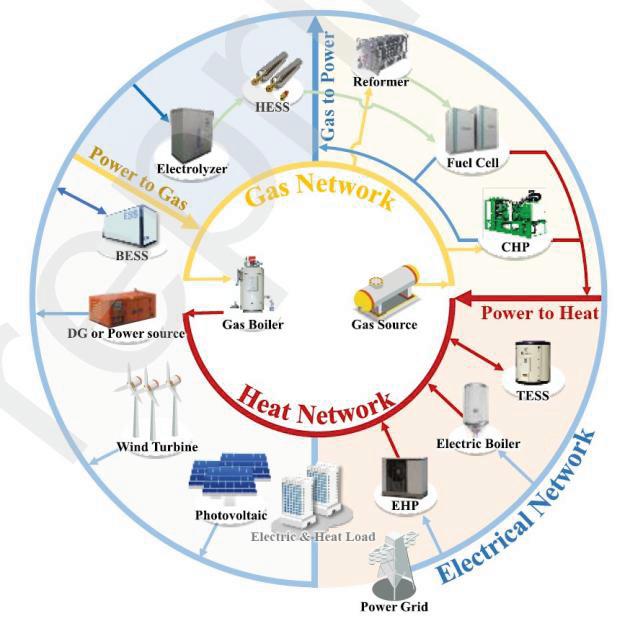
ConceptualstructureoftheEnergyHub[11]
EnergyHubisshowninFig.1.Therefore,itisnatural thatavastnumberofpublicationsarededicatedto thistopic.[11–23].
Optimizationplaysacrucialroleinensuringthe sustainableoperationanddevelopmentofIESforsev‑ eralreasons:
1. enhancedef iciencyandcostreduction;
2. integrationofrenewableenergysources;
3. multi‑objectivedecisionmaking;
4. real‑timeoperationandcontrol;
5. long‑termplanningandinvestmentdecisions. TherelevanceofoptimizationinIEScannotbe overstated.Byaddressingbothshort‑termopera‑ tionalchallengesandlong‑termstrategicplanning, optimizationenablesthefullpotentialofIEStobe realized,ensuringtheintegrationofdiverseenergy sources,improvingef iciency,reducingcosts,andsup‑ portingthetransitiontoasustainable,low‑carbon energyfuture.Asresearchcontinuestoadvance [24–37],thedevelopmentofmoresophisticatedand reliableoptimizationmodelswillfurtherenhancethe performanceandreliabilityofIES.
2.TernaryOptimization:KeyConcepts
Ternaryoptimizationistheprocessofoptimizing modelsorsystemsinwhichvariablesorparameters
arerestrictedtothreepossiblevalues,typically {‑1, 0,+1}.Thisformofdiscreteoptimizationservesasa compromisebetweenbinaryoptimization(e.g.,{0,1}) andfull‑precisionoptimization(e.g.,32‑bit loating‑ pointnumbers)[38,39].
Keyconcepts:
1. Ternaryrepresentation.Theelementsusedare restrictedtothreevalues,inthesimplestcase{‑1, 0,+1}.Thisrepresentationreducescomputational complexityandmemoryusage.
2. Sparsity.Theinclusionofthevalue”0”enablesthe creationofsparsestructures,leadingtomoreef i‑ cientstorageandfastercomputations.
3. Quantization.Ternaryoptimizationisaformof quantization—mappingcontinuousvaluestoa prede inedsetofdiscretevalues.
4. Optimizationmethods.TernaryWeightNetworks (TWNs)[40–42]andgradient‑basedmethodsfor trainingmodelswithternaryconstraints[43].
Advantages:
1. Computationalef iciency.Usingternaryvalues simpli iesarithmeticoperations,reducesthecom‑ putationalcomplexityofmatrixmultiplications andconvolutions,whichisespeciallyimportantfor real‑timeimplementations.
2. Memorysavings.Storingternaryvaluesrequires fewerbits,signi icantlyreducingmemorycon‑ sumption.
3. Energyef iciency.Ternaryoperationsconsume lessenergy,makingthemsuitableforresource‑ constraineddevices.
4. Sparsity.Ternarymodelscreatesparsematri‑ ces,acceleratingcomputations,reducinghardware load,andhelpingtomitigateover itting.
5. Balancedtrade‑off.Ternaryoptimizationoffers abalancebetweenhighlyrestrictivebinary optimizationandresource‑intensivefull‑precision optimization.
Disadvantages:
1. Lossofaccuracy.Ternaryquantizationcanlead toaccuracylossanddegrademodelperformance, especiallyforcomplextasks.
2. Trainingcomplexity.Trainingternarymodels requiresspecializedmethods,suchasgradient approximationandbackpropagationadjustments.
3. Hardwaresupport.Manyhardwarearchitectures arenotoptimizedforternarycomputations.
4. Convergenceissues.Ternaryconstraintscompli‑ catetheoptimizationprocess,potentiallyleading toslowerconvergenceorsuboptimalsolutions.
Application:
1. Deeplearning.Ternaryoptimizationiswidelyused formodelcompressionandacceleration,suchasin TernaryNeuralNetworks(TNNs)[44]andTernary WeightNetworks(TWNs)[40,42].
2. Edgecomputing.Ternarymodelsareidealfor deploymentonresource‑constraineddevices,such assmartphonesandIoT(InternetofThings) devices.
3. NaturalLanguageProcessing(NLP).Ternaryquan‑ tizationisappliedtotransformermodelstoreduce theirsizeandspeedupinference.
4. Computervision.ConvolutionalNeuralNetworks (CNNs)bene itfromternaryoptimization,espe‑ ciallyinreal‑worldapplicationslikeobjectdetec‑ tionandsegmentation.
5. Hardwaredesign.Ternarylogicisusedinthedevel‑ opmentofspecializedhardwaresolutionsforAI accelerators.
Latestachievements:
1. ImprovedTrainingMethods.Techniquessuch asStraight‑ThroughEstimators(STEs)[45]and ternarygradientdescenthavebeendevelopedto enhancethetrainingofternarymodels[46].
2. HybridApproaches.Combiningternaryoptimiza‑ tionwithmethodslikepruningandknowledge distillationshowspromisingpotential[47].Hard‑ wareAcceleration.Researchisongoinginhard‑ warearchitecturesthatnativelysupportternary operations.CompanieslikeGoogleandNVIDIAare activelyexploringthis ield.
Mainadvantages,disadvantages,applicationand latestachievementsoftheternaryoptimizationare shownintheTable1.
Ternaryoptimizationisapowerfultoolformodel compressionandacceleration,offeringabalanced trade‑offbetweenef iciencyandperformance.While itcomeswithtrainingcomplexityandpotentialaccu‑ racyloss,recentadvancementsinalgorithmsand hardwarearemakingitsapplicationincreasingly effectiveinreal‑worldscenarios.Asthedemandfor ef icientAImodelsgrows,ternaryoptimizationis likelytoplayanevengreaterroleinmachinelearning anddeeplearningprocesses.
TheuseofthispromisingapproachinIEScansig‑ ni icantlyenhanceenergyresourcemanagementef i‑ ciency,reducecosts,andimprovesystemresilience. SinceIESincorporatevariousenergysources,includ‑ ingrenewable(solar,wind),conventional(coal,gas), andenergystoragesystems,ternaryoptimizationcan beappliedtoaddresschallengesincontrol,distribu‑ tion,andoptimizationwithinthesesystems(Fig.2). AdvantagesofternaryoptimizationintheIES:
1. Simpli iedenergy lowmanagement.Ternaryval‑ ues,suchas{‑1,0,+1},canrepresentenergy low directions:‑1forconsumption,0fornoenergy low,and+1forgeneration.Thissimpli iesthe modelingandmanagementofcomplexenergynet‑ works.
2. Reducedcomputationalresources.Ternaryopti‑ mizationrequireslessmemoryandcomputing
Table1. TernaryOptimizationKeyConcepts
ComputationalEf iciency LossofAccuracy DeepLearning ImprovedTrainingMethods
MemorySavings TrainingComplexity EdgeComputing HybridApproaches
EnergyEf iciency HardwareSupport NLP HardwareAcceleration Sparsity ConvergenceIssues ComputerVision
BalancedTrade‑off HardwareDesign
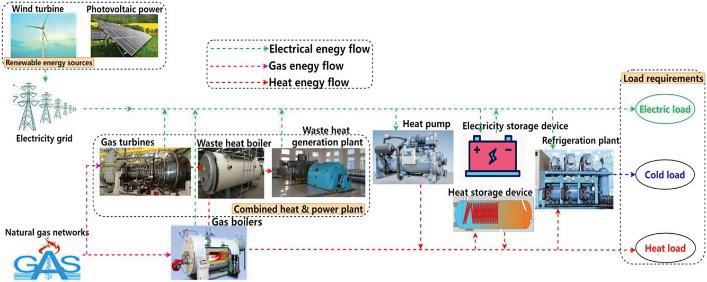
Figure2. Architectureoftheregionalintegratedenergy system[14]
powercomparedtomethodsusingcontinuous variables,whichiscrucialforreal‑timesystemslike smartgrids.
3. Fasterdecision‑making.Indynamicallychanging renewableenergyconditions,ternaryoptimization enablesquickeridenti icationofoptimalsolutions.
4. Sparsityandcomputationalef iciency.Asprevi‑ ouslyhighlighted,ternarymodelscreatesparse matrices,acceleratingcomputationsandreducing hardwareload.
5. Flexibilityinmanagement.Ternaryoptimization facilitatesseamlessintegrationofvariousenergy sourcesandstoragesystems,ensuringbalance betweensupplyanddemand.
6. Costreduction.Byoptimizingenergy lows,ternary optimizationminimizesgenerationandtransmis‑ sioncosts.
7. Resiliencetochanges.Ternarymodelsquickly adaptto luctuationsinenergyproductionandcon‑ sumption.
8. Scalability.Ternaryoptimizationcanbeeasily scaledforlargeenergysystems,includingregional andnationalgrids. ApplicationofternaryoptimizationintheIES:
1. Energydistributionoptimization.Ternarymodels canbeusedtooptimizeenergydistributionamong consumers,generators,andstoragesystems,mini‑ mizingtransmissionlosses[48].
2. Microgridmanagement.Inmicrogrids,whichcan operatebothautonomouslyandaspartofalarger grid,ternaryoptimizationenhancesthemanage‑ mentoflocalenergysourcesandloads.
3. Renewableenergyintegration.Ternaryoptimiza‑ tionaccountsforthestochasticnatureofrenew‑ ableenergysources(RES)andhelpsdetermine optimalutilizationstrategies.
4. Energystoragesystems.Ternarymodelsoptimize charginganddischargingcyclesofbatteriesand otherstoragedevices,minimizingdegradationand maximizingef iciency.
5. Demandresponsemanagement.Ternaryoptimiza‑ tionhelpsbalancesupplyanddemand,forexam‑ ple,byswitchingconsumerstoalternativeenergy sourcesduringpeakperiods.
6. Optimizationoffuelcellsandhybridsystems. Insystemsusingfuelcells,ternaryoptimization assistsinmanagingoperationalmodes(genera‑ tion,storage,inactivity).
Asexample,theimpactonphotovoltaicef iciency viathisternarystrategyisdepictedinFig.3 ExampleofternaryoptimizationintheIES. Asone ofthesimplestapplicationexamples,wecanconsider themanagementofamicrogridthatincludessolar panels,windturbines,batteries,andconsumers.In thiscase,ternaryoptimizationcanbeappliedto:
1. determinewhentouseenergyfromsolarpanels (+1),whentochargebatteries(‑1),andwhento disconnectsources(0);
2. minimizeenergycostsfromtheexternalgrid;
3. ensurenetworkstabilityinresponsetoload luctu‑ ations.
PromisingdirectionsforternaryoptimizationintheIES:
1. IntegrationwithAIandmachinelearning[44]. Ternaryoptimizationisincreasinglycombined withmachinelearningmethodsformoreaccurate forecastingandenergysystemmanagement.
2. Developmentofspecializedalgorithms.Thereisa growingneedforalgorithmsthataccountforthe speci iccharacteristicsofenergysystems,suchas nonlinearlossesandtransmissionconstraints[49].
Figure4. Expansionofternaryoptimization applications[50]
3. Hardwaresupport.Theexpansionofternary optimizationapplicationsdrivesthedemand forenergy‑ef icientprocessorsandcontrollers optimizedforternarycomputing[50].Keybene its oftheseexpandingapplicationsareprovidedin Fig.4
Belowisanexampleoftransformingspeci icele‑ mentsofanoptimizationmodelforanintegrated energysysteminGMPL(GNUMathProgLanguage) intoaternarymodelbymodifyingindividualvari‑ ables,constraints,andtheobjectivefunction.Ternary optimizationassumesthatvariablescantakeonly threevalues,typically: ‑1,0,and+1. Thetransforma‑ tionisperformedstepbystepasfollows:
1.De iningternaryvariablesinGMPL
InGMPL,variablesareusuallydeclaredascontin‑ uousorinteger.Forternaryoptimization,variables arerestrictedtothreevalues:{‑1,0,+1}.Thevariable declarationisreplacedwithanintegertypewitha rangeconstraint: /*ampl*/
varx{iinI}integer,>=‑1,<=1;#Ternaryvariable Here,Iisthesetofindicesforthevariable.
2.Modi icationoftheobjectivefunction
Theobjectivefunctionisadaptedtoworkwith ternaryvariables.Forexample,thegoalmaybeto minimizecostsorenergylosses. /*ampl*/ minimizeTotalCost:sum{iinI} (c[i]*x[i]);# c[i]—cost,x[i]—ternaryvariable. Itisnecessarytoensurethattheobjectivefunction correctlyaccountsforternaryvalues.
3.Adaptationofconstraints
Themodelconstraintsaremodi iedtocorrectly workwithternaryvariables.Forexample,anenergy balanceconstraintmaylooklikethis: /*ampl*/ subjecttoEnergyBalance{tinT}: sum{iinI}(x[i,t]*P[i])=D[t];#P[i]—power,D[t] —demand.
Here,x[i,t]isaternaryvariablethatde ines whethertheenergysourceisactive(+1),disconnected (0),orconsumingenergy(‑1).
4.Consideringternarylogic
Logicalconditionsusedinthemodel(e.g.,condi‑ tionsforturningenergysourceson/off)aremodi ied toaccountforternaryvariables.Forexample:
1. Ifx[i]=+1,thesourceisoperating.
2. Ifx[i]=‑1,thesourceisconsumingenergy(e.g., chargingabattery).
3. Ifx[i]=0,thesourceisturnedoff.
5.Exampleoftransformation
Hereisasimpleexampleofanenergysystem modelinGMPLanditstransformationtoaternary model.
Originalmodel(continuousvariables): /*ampl*/ setI;#Setofenergysources setT;#Setoftimeintervals paramP{I};#Powerofenergysources paramD{T};#EnergyDemand paramc{I};#Costofenergyforeachsource varx{I,T}>=0;#Continuousvariable–installed powerutilizationfactorofeachsourceattimet minimizeTotalCost:sum{iinI,tinT}(c[i]*x[i,t] *P[i]);
subjecttoEnergyBalance {tinT}:sum{iinI} (x[i,t]*P[i])>=D[t];
TransformedModel(TernaryVariables): /*ampl*/ setI;#Setofenergysources setT;#Setoftimeintervals paramP{I};#Powerofenergysources paramD{T};#EnergyDemand paramc{I};#Costofenergyforeachsource varx{I,T}integer,>=‑1,<=1;#Ternaryvariable minimizeTotalCost:sum{iinI,tinT}(c[i]*x[i,t]* P[i]);
subjecttoEnergyBalance {tinT}:sum{iinI} (x[i,t]*P[i])>=D[t];
6.SolvingtheModel
Thetransformedmodelcanbesolvedusingan integerprogrammingsolver, suchastheGLPKsolver, whichisintegratedwithinGMPL.Torunthesolution inGMPL,justlikeinthecontinuousmodel,the‘solve’ commandisused: /*ampl*/ solve;
5.Resultsanddiscussion
Theanalysisoftheobtainedresultsfromthesolu‑ tionallowscon irmingthattheternaryvariablescor‑ rectlyre lectthebehavioroftheenergysystem.In particular:
1. thevaluesoftheternaryvariablesareindeedequal to‑1,0,or+1(orotherspeci iedquantizationval‑ ues);
2. allspeci iedconstraintsarecorrectlysatis ied; 3. thecomputedvalueoftheobjectivefunction(e.g., totalcosts)isadequate.
Ifthemodelistoocomplexandthesolvertakes toolongorfailstosolvetheproblem,thefollowing techniquescanbeeffective:
1. usingheuristicsforinitialapproximation;
2. applyingrelaxation(e.g.,allowingvariablestobe continuousduringthepreliminarysolvingphase);
3. decomposingtheproblemintosmallersubprob‑ lems,suchasdividingbytimeintervals.
Thearticleexplorestheapplicationofternaryopti‑ mizationintheIESbyaddressingboththeoretical foundationsandpracticalimplementations.Thedis‑ cussiononternaryrepresentation,sparsity,andquan‑ tizationprovidesaconceptualframework,whilethe reviewofadvantagesandlimitationsoffersabalanced perspectiveonitsfeasibility.
AGMPL‑basedexampledemonstratesastep‑by‑ steptransformationofanoptimizationmodelintoa ternaryformat.Thispracticalillustrationenhances thearticle’stechnicaldepthandmakesitmoreappli‑ cableforresearchersandengineersworkinginenergy optimizationandcomputationalmodeling. Furtherresearchinthefollowingareasseemsuse‑ ful:
1. comparativeanalysisbetweenternary,binary,and full‑precisionoptimizationmethodsinreal‑world energysystems;
2. casestudiesshowcasingreal‑timeimplementation andperformancemetricsofternaryoptimization inactualenergygrids;
3. expandeddiscussiononthepotentialroleofhard‑ wareadvancements,suchasternary‑compatible processors,inenhancingcomputationalef iciency. Overall,thearticlemakesavaluablecontribu‑ tiontothe ieldofenergyoptimizationandhigh‑ lightsternaryoptimizationasaviableandinnovative approachforenhancingtheef iciency,scalability,and sustainabilityofmodernenergysystems.
6.Conclusions
Ternaryoptimizationpresentsapromising approachformanagingIESbyprovidingabalance betweencomputationalef iciency,speed,and resourceutilization.Byleveragingdiscretevalues (‑1,0,+1),ternaryoptimizationenablessimpli ied energy lowmanagement,reducescomputational complexity,andenhancesdecision‑makingin dynamicenergyenvironments.Pointedchallenges remaininaccuracyloss,trainingcomplexity,and limitedhardwaresupport.Thearticlehighlightskey applications,includingenergydistribution,microgrid management,renewableenergyintegration,and energystorageoptimization,demonstratingits versatilityacrossvariousaspectsofmodern energyinfrastructure.Thetransformationof GMPLoptimizationmodelintoaternaryformat showcasesitspracticalimplementationpotential. FutureadvancementsinAIintegration,algorithm development,andhardwareaccelerationwillbe criticalforrealizingthefullpotentialofternary
optimizationinenergysystems.Asthedemandfor sustainable,ef icient,andscalableenergysolutions grows,ternaryoptimizationisexpectedtoplayan increasinglysigni icantroleintheevolutionofnext‑ generationenergynetworks.Ternaryoptimization offersapowerfultoolformanagingIES,providing abalancebetweenef iciency,speed,andresource consumption.Itsapplicationcansigni icantlyimprove themanagementofenergy lows,especiallyinthe contextoftheincreasingshareofrenewableenergy sourcesandthecomplexityofmodernenergy grids.However,widespreadadoptionrequires furtherdevelopmentofalgorithmsandhardware support.
VitaliiBabak –GeneralEnergyInstituteofNASof Ukraine,172Antonovychastr.,Kyiv,03150,Ukraine, e‑mail:vdoe@ukr.net.
MykhailoKulyk –GeneralEnergyInstituteofNASof Ukraine,172Antonovychastr.,Kyiv,03150,Ukraine, e‑mail:info@ienergy.kiev.ua.
ArturZaporozhets∗ –GeneralEnergyInstitute ofNASofUkraine,172Antonovychastr.,Kyiv, 03150,Ukraine,e‑mail:a.o.zaporozhets@nas.gov.ua, StateInstitution“Centerforevaluationofactivity ofresearchinstitutionsandscienti icsupportof regionaldevelopmentofUkraineofNASofUkraine”, 54Volodymyrskastr.,Kyiv,01601,Ukraine;Yuan ZeUniversity,135,YuandongRd,ZhongliDistrict, TaoyuanCity,320,Taiwan;CenterforInformation‑ analyticalandTechnicalSupportofNuclearPower FacilitiesMonitoringoftheNationalAcademyof SciencesofUkraine,34–АPalladinAve.,Kyiv,03142, Ukraine.
SvitlanaKovtun –GeneralEnergyInstituteofNASof Ukraine,172Antonovychastr.,Kyiv,03150,Ukraine, e‑mail:kovtunsi@nas.gov.ua.
ViktorDenysov –GeneralEnergyInstituteofNASof Ukraine,172Antonovychastr.,Kyiv,03150,Ukraine, e‑mail:Denysov_VA@nas.gov.ua.
∗Correspondingauthor
Thisworkwassupportedbytheproject”Development ofthestructureandensuringthefunctioningofself‑ suf icientdistributedgeneration”(0125U001572, 2025‑2026),whichis inancedbytheNational AcademyofScienceofUkraine.
References
[1] A.Zaporozhetsetal.,“StructureOptimizationof PowerSystemswithRenewableEnergySources”, Systems,DecisionandControl,vol.583.https:// doi.org/10.1007/978‑3‑031‑83697‑8
[2] V.Denysovetal.,“ModelingNuclear‑CentricSce‑ nariosforUkraine’sLow‑CarbonEnergyTransi‑ tionUsingDiffusionandRegressionTechniques”,
Energies,vol.17,no.20,5229,2024.https://do i.org/10.3390/en17205229
[3] Hotra,O.;Kulyk,M.;Babak,V.;Kovtun,S.; Zgurovets,O.;Mroczka,J.;Kisala,P.“Organisa‑ tionoftheStructureandFunctioningofSelf‑ Suf icientDistributedPowerGeneration”, Ener‑ gies,2024,17(1),27.https://doi.org/10.3390/ en17010027
[4] Babak,V.,&Kulyk,M.,“IncreasingtheEf iciency andSecurityofIntegratedPowerSystemOper‑ ationThroughHeatSupplyElectri icationin Ukraine. ScienceandInnovation”,19(5),2023, 100‑116. https://doi.org/10.15407/scine19 .05.100
[5] V.Denysovetal.,“AccountingtheForecasting StochasticityatthePowerSystemModes Optimization” StudiesinSystems,Decision andControl,Cham,2023,P.43–55. https: //doi.org/10.1007/978‑3‑031‑35088‑7_3
[6] DenisovV.,“IntegratedPowerSystemmulti‑ nodemodel,takingintoaccountthe nondispatchableofrenewableenergy sources”,2022IEEE8thInternationalConfer‑ enceonEnergySmartSystems(ESS), Kyiv,Ukraine,12–14October2022. https://doi.org/10.1109/ess57819.2022. 9969255
[7] A.Zaporozhetsetal.,“PowerSystem Resilience:AnOverviewofCurrentMetrics andAssessmentCriteria”, StudiesinSystems, DecisionandControl.Cham,2024,35–58.https: //doi.org/10.1007/978‑3‑031‑68372‑5_2
[8] V.Denysovetal.,“Quasi‑dynamicEnergy ComplexesOptimalUseontheForecasting Horizon”, StudiesinSystems,Decision andControl.Cham,2024,81–107, https: //doi.org/10.1007/978‑3‑031‑68372‑5_4
[9] M.Kulyketal.,“PossibilitiesandPerspectivesof theWindandSolarPowerPlantsApplicationin CombinedEnergySystems”, StudiesinSystems, DecisionandControl.Cham,2024,321–341. https://doi.org/10.1007/978‑3‑031‑67091‑ 6_14
[10] V.Denysovetal.,“EnergySystemOptimization PotentialwithConsiderationofTechnological Limitations”, StudiesinSystems,Decision andControl.Cham,2024,113–126. https: //doi.org/10.1007/978‑3‑031‑66764‑0_5
[11] B.‑C.Ohetal.,“HierarchicalEnergyHubPlanning inIntegratedMulti‑EnergySystemsUsingPareto Optimization”, SSRNElectronicJournal,2022. https://doi.org/10.2139/ssrn.4194559
[12] SystemsI.T.o.E.E.,“Retracted:Application ofBIMDigitalInformationTechnologyinthe EconomicOptimizationOperationofIntegrated EnergySystems”, InternationalTransactionson ElectricalEnergySystems,vol.2023,2023,1. https://doi.org/10.1155/2023/9796246
[13] EzekwugoJ.U.,IbeA.,NteegahA.,“Optimiza‑ tionofIntegratedEnergySystemsina DevelopingEconomyusingTechnology”, AmericanJournalofEconomicsandBusiness Administration,vol.14,no.1,2022,1–11. https://doi.org/10.3844/ajebasp.2022.1.11
[14] W.Tangetal.,“Operationoptimization ofregionalintegratedenergysystems”, EnergyScience&Engineering,2023. https://doi.org/10.1002/ese3.1596
[15] P.A.,B.N.,J.J.,“Bi‑levelenergyoptimiza‑ tionmodelinsmartintegratedengineering systemsusingWSN”, EnergyReports,vol.8., 2022,2490–2495.https://doi.org/10.1016/j.eg yr.2022.01.183
[16] Y.Zhouetal.,“Optimizationofintegrated energysystemsconsideringseasonal thermalenergystorage” Journalof EnergyStorage,vol.71,2023,108094. https://doi.org/10.1016/j.est.2023.108094
[17] QinC.,YanQ.,HeG.,“Integratedenergy systemsplanningwithelectricity,heatand gasusingparticleswarmoptimization”, Energy,vol.188,2019.116044. https: //doi.org/10.1016/j.energy.2019.116044
[18] B.Soleimanietal.,“Integratedoptimization ofmulti‑carrierenergysystems:Water‑ energynexuscase”, Energy,2022,124764. https://doi.org/10.1016/j.energy.2022.124764
[19] J.Gaoetal.,“Robustoptimizationfor integratedenergysystemsbasedonmulti‑ energytrading” Energy,2024,132302. https://doi.org/10.1016/j.energy.2024.132302
[20] E.Nidziyetal.,“EnergyStorageOptimization inRenewableEnergySystemsusing ParticleSwarmOptimization”,E3SWebof Conferences,vol.581,2024,01021. https: //doi.org/10.1051/e3sconf/202458101021
[21] ConteJ.C.,“Energytransferinternarysystems”, TransactionsoftheFaradaySociety,vol.65, 1969,2382.https://doi.org/10.1039/tf969650 2382
[22] HillsS.,DanaS.,WangH.,“Dynamicsimulation andoptimizationofintegratedcleanenergy watersystems”,iScience,vol.25,no.4,2022, 104015.https://doi.org/10.1016/j.isci.2022.10 4015
[23] Y.Wangetal.,“Operationaloptimizationof integratedenergysystemsconsideringdemand‑ side lexibility”, JournalofPhysics:Conference Series,vol.2205,no.1.2022,012006. https:// doi.org/10.1088/1742‑6596/2205/1/012006
[24] W.H.Liuetal.,“Developmentandoptimization ofanintegratedenergynetworkwith centralizedanddecentralizedenergy systemsusingmathematicalmodelling approach”, Energy,vol.183,2019,617–629. https://doi.org/10.1016/j.energy.2019.06.158
[25] C.Muetal.,“Decentralizedoptimization operationforthemultipleintegratedenergy systemswithenergycascadeutilization”, AppliedEnergy,vol.280,2020,115989. https: //doi.org/10.1016/j.apenergy.2020.115989
[26] MaryV.B.,NarmadhaT.V.,“Optimization ofIntegratedHybridSystemsUsingModel PredictiveController”, ElectricPower ComponentsandSystems,2023,1–17. https: //doi.org/10.1080/15325008.2023.2218366
[27] J.Zhouetal.,“Multi‑objectiveoptimizationof integratedenergysystemsbasedondemand response”, EnergySources.,PartA:Recovery, Utilization,andEnvironmentalEffects,vol.45, no.1,2023.
[28] L.Zhangetal.,“OptimizationofIntegrated EnergySystemsBasedonTwo‑StepDecoupling Method” Electronics,vol.13,no.11,2024,2045. https://doi.org/10.3390/electronics13112045
[29] J.Zhouetal.,“AggregationModelingfor IntegratedEnergySystemsBasedonChance‑ ConstrainedOptimization”, Processes,vol.12, no.122024.P.2672.https://doi.org/10.3390/ pr12122672
[30] Y.Xueetal.,“Two‑layerOptimization‑Based CapacityAllocationMethodofIntegrated EnergySystems”, JournalofPhysics:Conference Series,vol.2774,no.1,2024,012071.https://do i.org/10.1088/1742‑6596/2774/1/012071
[31] J.Huetal.,“Optimizingintegratedenergy systemsusingahybridapproachblendinggrey wolfoptimizationwithlocalsearchheuristics”, JournalofEnergyStorage,vol.87,2024,111384. https://doi.org/10.1016/j.est.2024.111384
[32] L.Zhangetal.,“Anoptimizationscheduling strategyforhydrogen‑basedintegrated energysystemsusingmulti‑agentdeep reinforcementlearning”, EnergyConversion andManagement,vol.3262025.P.119483. https://doi.org/10.1016/j.enconman.2025.11 9483
[33] H.M.H.Farhetal.,“Optimizationanduncertainty analysisofhybridenergysystemsusing MonteCarlosimulationintegratedwith geneticalgorithm”, ComputersandElectrical Engineering,vol.120,2024.P.109833.https:// doi.org/10.1016/j.compeleceng.2024.109833
[34] G.Wuetal.,“Multi‑objectiveOptimizationof IntegratedEnergySystemsConsideringRenew‑ ableEnergyUncertaintyandElectricVehicles” IEEETransactionsonSmartGrid,2023.P.1. https://doi.org/10.1109/tsg.2023.3250722
[35] Z.Liuetal.,“Multi‑objectiveoptimization ofmulti‑energycomplementaryintegrated energysystemsconsideringloadprediction andrenewableenergyproduction uncertainties”, Energy,2022.P.124399. https://doi.org/10.1016/j.energy.2022.124399
[36] J.Jiaetal.,“Multi‑objectiveoptimization studyofregionalintegratedenergysystems coupledwithrenewableenergy,energy storage,andinter‑stationenergysharing”, RenewableEnergy,2024.P.120328. https://doi.org/10.1016/j.renene.2024.120328
[37] RizqiZ.U.,ChouS.‑Y.,KhairunisaA.“Multi‑ objectivesimulation‑optimizationfor integratedautomatedstorageandretrieval systemsplanningconsideringenergy consumption”, Computers&Industrial Engineering,vol.189,2024.P.109979. https://doi.org/10.1016/j.cie.2024.109979
[38] TernarySearch‑AlgorithmsforCompetitive Programming. MainPage‑Algorithmsfor CompetitiveProgramming https://cp‑algorith ms.com/num_methods/ternary_search.html
[39] MondalA.,“TernarySearchConvex Optimization.”Medium, https://mecha‑ mind.medium.com/ternary‑search‑convex‑ optimization‑f379e60363b7
[40] DehghanianM.,ModarresMosadeghM.S. “TernaryWeightedFunctionandBeurling TernaryBanachAlgebral1ω(S)”, Abstract andAppliedAnalysis,vol.2011,2011.P.1–9. https://doi.org/10.1155/2011/206165
[41] LiangD.,MaF.,LiW“NewGradient‑ WeightedAdaptiveGradientMethods WithDynamicConstraints”, IEEEAccess, vol.8.2020.P.110929–110942. https: //doi.org/10.1109/access.2020.3002590
[42] B.Liu,F.Li,X.Wang,B.ZhangandJ.Yan,“Ternary WeightNetworks,”ICASSP2023‑2023IEEE InternationalConferenceonAcoustics,Speech andSignalProcessing(ICASSP),RhodesIsland, Greece,2023,pp.1‑5,https://doi.org/10.1109/ ICASSP49357.2023.10094626
[43] Zhu,C.,Han,S.,Mao,H.,&Dally,W.J.(2016). “TrainedTernaryQuantization”, ArXiv, https://doi.org/10.48550/arXiv.1612.01064
[44] TernaryNeuralNetworks(TNNs). Schneppat AI. https://schneppat.com/ternary‑neural‑ networks_tnns.html
[45] AskaryH.,“IntuitiveExplanationof Straight‑ThroughEstimatorswithPyTorch Implementation.”Medium,2023. https: //hassanaskary.medium.com/intuitive‑ explanation‑of‑straight‑through‑estimators‑ with‑pytorch‑implementation‑71d99d25d9d0
[46] C.Yangetal.,“RTGA:Robustternary gradientsaggregationforfederated learning”, InformationSciences,2022. https://doi.org/10.1016/j.ins.2022.10.113
[47] KimJ.,“QuantizationRobustPruningwith KnowledgeDistillation”, IEEEAccess,2023,1. https://doi.org/10.1109/access.2023.3257864
[48] LiuL.,LaiH.,HeF.,“Ternarystrategy:An analogueasthirdcomponentreducesthe
energylossandimprovestheef iciency ofpolymersolarcells”, JournalofEnergy Chemistry,vol.70,2022,67–73. https: //doi.org/10.1016/j.jechem.2022.02.025
[49] R.‑H.Xuetal.,“Operationoptimizationof distributedenergysystemsconsidering nonlinearcharacteristicsofmulti‑energy transportandconversionprocesses”,
Energy,vol.2832023.129192. https: //doi.org/10.1016/j.energy.2023.129192
[50] TernaryFinOpsplatform. Ternary https: //ternary.app/platform/overview/
Abstract:
AHMA:ANADAPTIVEHIERARCHICALMETA‐AGENTFORINTELLIGENTCONGESTION
AHMA:ANADAPTIVEHIERARCHICALMETA‐AGENTFORINTELLIGENTCONGESTION
AHMA:ANADAPTIVEHIERARCHICALMETA‐AGENTFORINTELLIGENTCONGESTION
AHMA:ANADAPTIVEHIERARCHICALMETA‐AGENTFORINTELLIGENTCONGESTION
Submitted:28th July2025;accepted:11th September2025
AmitKanungo,PrashantPanse
DOI:10.14313/jamris‐2026‐026
ModernIPnetworksfacesignificantchallengesinmain‐tainingperformanceunderdynamicanddiversetraf‐ficconditions.Traditionalcongestioncontrolalgorithms, suchasTCPReno,Cubic,andevenrecentreinforcement learning(RL)methodslikePPOandDQN,oftenrespond uniformlytopacketloss,failingtodistinguishbetween congestion‐inducedlossesandthosearisingfromwire‐lessinterferenceorhardwarefailures.Thispaperintro‐ducesAHMA(AdaptiveHierarchicalMeta‐Agent)—a noveltwo‐stageintelligentcongestioncontrolframe‐workthatintegratesaBayesianTransformer‐basedclas‐sifierwithaMeta‐EvolutionaryReinforcementLearning (Meta‐ES‐RL)controller.AHMAfirstclassifiesthecause ofthepacketlossinreal‐time,andthendynamically selectsanoptimizedcontrolstrategybasedonclassifi‐cationconfidence.UsingasyntheticallygeneratedNS‐3datasetof1,000labeledflowsamples,weevaluate AHMA’sperformanceagainstPPO,DQN,TCPCubic,and TCPRenoacrosskeymetrics.Experimentalresultsshow thatAHMAachievesadecisionaccuracyof92%,reduces packetlossto8.56%withimprovedthroughput,and decreaseslatency,outperformingallbaselinemethods. Thisapproachrepresentsasignificantadvancementin adaptive,cause‐awarecongestionmanagement,with strongpotentialfordeploymentinnext‐generationhigh‐performanceIPand5Gnetworks.
Keywords: AdaptiveCongestionControl,BayesianTrans‐former,Congestion‐InducedLosses,IPNetworkOpti‐mization,Meta‐ReinforcementLearning,Packetlossclas‐sification
1.Introduction
CongestioncontrolisavitalaspectofmodernIP networkperformance,especiallyasdigitalcommu‑ nicationsystemscontinuetoevolvetowardhigher speeds,lowerlatencies,andmoredynamictopologies. Conventionalcongestioncontrolalgorithmssuchas TCPReno,TCPCubic,andTCPBBRaredesignedbased onsimpleassumptions:theyinterpretanyformof packetlossorincreasedround‑triptime(RTT)asevi‑ denceofcongestion.Thesereactivestrategiesreduce sendingratesupondetectinglossirrespectiveofits actualcause[1–3],asillustratedinFigure1.However, thisassumptionoftenleadstosuboptimalperfor‑ manceincomplexnetworkenvironments,especially
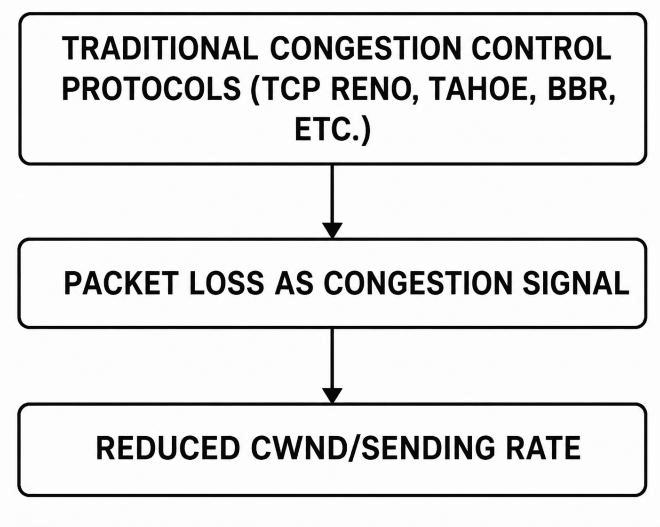
Figure1. Traditionalapproachtocongestioncontrol inheterogeneousorwirelessnetworks,whereloss mayresultfrominterference,mobility,orphysical layerdisruptionsratherthancongestionitself.
Themisclassi icationoflosseventsresultsin unnecessarythrottlingofthroughput,elevated latency,andadegradationinqualityofservice (QoS)[5, 6].Theseproblemsarefurtherampli ied inreal‑timeapplications,suchasvideostreaming, telemedicine,autonomousdriving,andaugmented reality,whereconsistentthroughputandminimal delayaremissioncritical[9].Toaddressthese challenges,researchershaveexploredmachine learning(ML)andreinforcementlearning(RL) techniquesthatcanintelligentlylearnandadapt congestioncontrolbehaviourbasedonreal‑time observations[11–13].
SeveralRL‑basedmethodshaveemerged, consistingofdeepQ‑networks(DQN),proximal coverageoptimization(PPO),andactor‑critic fashions[14, 15].Whilethesemodelsdemonstrate superiorperformanceovertraditionalprotocols incontrolledscenarios,theysufferfromacritical limitation:theinabilitytodifferentiatebetween variouscausesofpacketloss.Consequently,they applythesamecorrectiveactionregardlessof whetherthelossiscausedbycongestion,wireless noise,orhardwarefaults.
Todealwiththisgap,weadviseanovelhybrid methodknownastheadaptivehierarchicalmeta‑ agent(AHMA).TheAHMAarchitectureintroduces
atwo‑stagelearningsystemthatseparatesloss classi icationfromcontrolpolicyselection.The irst stageemploysaBayesianTransformerclassi ierto accuratelydetectandclassifythecauseofpacket lossinrealtime.Thesecondstageintegratesa meta‑evolutionaryreinforcementlearning(Meta‑ES‑ RL)agentthatdynamicallyadaptsitscongestioncon‑ trolstrategybasedoncontext,aswellasclassi ication con idence.
Tovalidatetheproposedframework,wedevel‑ opedasyntheticdatasetusingNS‑3networksimu‑ lations[23],modelingdiverselossscenarios,includ‑ ingcongestion,wirelesserrors,andlinkfailures.Fea‑ turessuchasRTT,queuelength,signal‑to‑noiseratio (SNR),anddroppatternswerecapturedandlabeled forsupervisedtrainingandpolicyevaluation.Our experimentalresultsdemonstratethatAHMAoutper‑ formsbothclassicalandRL‑basedcongestioncontrol algorithmsintermsofthroughput,latency,packetloss rate,anddecisionaccuracy.
Theproposedworkprovidesacontext‑aware andadaptivesolutionformoderncongestioncontrol, offeringrobustperformanceacrossawiderangeof networkconditions.Bybridgingthegapbetweenloss classi icationandintelligentratecontrol,thiswork pavesthewayfordeployingtrulysmartandreli‑ ablecongestioncontrolinnext‑generationhigh‑speed networks.
2.RelatedWork
Congestioncontrolisafoundationalaspectof reliabledatatransmissionacrossIP‑basednetworks. Networktraf iccontinuestoscalewithapplications suchascloudcomputing,videostreaming,andIoT, andmanagingcongestioninadynamicandhetero‑ geneousenvironmenthasbecomemorecomplexand performance‑critical.Thissectionreviewstheevo‑ lutionofcongestioncontrolfromtraditionalalgo‑ rithmstomodernML‑basedapproaches,highlighting thelimitationsofeachandidentifyingtheresearch gapaddressedbytheproposedAHMA(adaptivehier‑ archicalmeta‑agent)framework.
The irstgenerationofcongestioncontrolstrate‑ giesreliedheavilyonfeedbackmechanismslike packetlossandRTTtoinfernetworkcongestion.TCP Renointroducedtheideaofadditiveincreaseand multiplicativedecrease(AIMD),assumingthatevery packetdropindicatescongestion[4].Thoughthey wererobustforearlywirednetworks,TCPRenoand itsvariants(e.g.,TCPNewReno)werenotdesignedfor wirelessormobileenvironments,wherelossescould resultfromotherphenomena,suchaslinkerrorsor intermittentconnectivity.
TCPCubic,thedefaultcongestioncontrolalgo‑ rithminLinux,offersbetterperformanceoverlongfat networksbyeditingthecongestionwindowgrowth function[2, 10].BICTCPandCubicTCPaimed toimproveTCPfairnessandscalabilityinhigh‑ speednetworks,buttheseloss‑basedprotocolsstill
treatallpacketlossascongestion,oftenresulting inunnecessarythroughputreductionsandincreased delaysinwirelessnetworks[8].
TCPBBRrepresentedadeparturefromloss‑based methodsbyusingexplicitbandwidthandRTTestima‑ tiontodrivethecongestioncontrolprocess.Thoughit wasmoreproactive,BBRhasbeenshowntobeoverly aggressiveundercertainconditionsandcancause starvationforotherTCP lows,especiallyinmixed‑ traf icenvironments.
2.2.CongestionControlinWirelessandHybridNet‐works
Wirelessandhybridnetworksintroducenew dimensionsofcomplexitytocongestioncontrol. Packetlossesinthesenetworksoftenstemfrom factorslikefading,interference,andmobility, whicharenotrelatedtocongestion.TCPWestwood attemptedtoaddressthisbyestimatingavailable bandwidthusingACKrates,butstillreliedon simpli iedmodelsofnetworkbehavior[7].
TCPVenointroduceddelay‑basedlossdifferen‑ tiationbyanalyzingRTTvariationstodistinguish betweencongestionandrandomloss.Similarly,TCP VegasandTCPIllinoisincorporateddelaymeasure‑ mentsintotheirwindowadjustmentlogic.However, thesedelay‑basedstrategiesaresensitivetojitterand cannotreliablyidentifythecauseofpacketlossinall conditions.
Numerousheuristicmethodshavebeenproposed todifferentiatecongestionlossfromnon‑congestion lossinwirelessnetworks.TheseincludetheLossDis‑ criminationAlgorithm(LDA),ZigZag,andSpike,each leveragingcombinationsofRTT,delay,andthrough‑ put[27].Despitesomesuccessinspeci iccontexts, thesesolutionsoftenrelyonhand‑tunedthresh‑ oldsandcannotgeneralizeacrossdifferentnetwork scenarios.
RecentadvancesinMLhaveledtothe developmentofdata‑drivencongestioncontrol algorithms[24].EarlyML‑basedapproachesincluded decisiontreesandsupportvectormachinestrained onsimulationdatatoinferoptimalwindowsizes. However,thesesupervisedmethodsrequirelabeled dataandstruggletogeneralizeinreal‑timesettings.
Reinforcementlearning(RL)introducedanew paradigminwhichagentslearntooptimizethrough‑ putandminimizedelaybyinteractingwiththenet‑ work.Remy,PCC(Performance‑orientedCongestion Control),andOrcaareearlyexamplesinwhichcon‑ trolpoliciesarelearnedof lineanddeployedonline. Aurora,aneuralRL‑basedcongestioncontrolframe‑ work,demonstratedthatdeepnetworkscaneffec‑ tivelylearncongestionstrategiesend‑to‑end.
DeepRLalgorithmslikeDQN(deepQ‑networks) andPPO(proximalpolicyoptimization)havebeen appliedtocongestionmanagementtasks[16, 17]. DQNmodelslearnvalue‑basedpoliciesusingnetwork observations,whilePPOre inespolicygradientsto balancestabilityandexploration,asshowninTable1.
Table1. ComparisonbetweenML‐basedmethods
Adaptationspeed Fast(RL+Classi ierFeedback)
Throughput(Mbps)
Thesemodelshaveachievednotableperformance improvementsincontrolledtestbeds.However,they stillfacemajorchallenges[25].
• Theydonotdistinguishbetweendifferentcausesof loss.
• Theyassumethatallperformancedegradation resultsfromcongestion.
• Theyaredata‑hungryandrequireextensivetuning.
2.4.ClassificationofPacketLoss
Someresearcheffortshaveexploredtheclassi ica‑ tionoflosscausesusingMLclassi iers.Decisiontrees, NaiveBayesclassi iers,andensemblemethodshave beentrainedonsimulationdatasetstolabelpacket lossevents[21].Thesemodelstypicallyusefeatures likeRTT,lossrate,queuelength,andlinkquality metrics.
However,existingclassi iersoftenlackuncertainty modelingandarenotdesignedforreal‑timeintegra‑ tionwithcongestioncontrolsystems.Theirpredictive decisionsaretreatedasdeterministic,whichisrisky indynamicenvironmentswithhighnoiselevels.
Bayesianneuralnetworksandprobabilisticmod‑ elshaverecentlyemergedastoolsforuncertainty‑ awareclassi ication.Theseapproachescanestimate con idencelevelsforeachprediction,allowingfor morerobustdecision‑makingunderuncertaincondi‑ tions.Despitetheirpromise,theyhaveseenlimited applicationinnetworkcongestioncontrol.
2.5.Meta‐LearningandEvolutionaryStrategies
Meta‑learning,orlearningtoadaptquicklyacross tasks,hasbeenwidelyadoptedindomainslike roboticsandgameAI,buthasseldombeenusedinnet‑ working[18,19].Meta‑RLenablesagentstotransfer knowledgefrompastexperiencestonew,unseensce‑ narios,reducingtrainingtimeandincreasingadapt‑ ability.
Evolutionarystrategies(ES)areanotherclass ofoptimizationalgorithmthatiswell‑suitedfor sparserewardsettingsandnon‑differentiableenvi‑ ronments[20].ESmethodsexplorethepolicyspace viastochasticsamplingandupdatepoliciesbasedon itnessevaluations,offeringscalabilityandrobust‑ ness.Thecombinationofmeta‑learningwithEShas shownpromiseinfew‑shotlearningcontexts,but remainsunderexploredinnetworkedsystems.
2.6.ResearchGapandPositioningofAHMA
Despitesigni icantprogressinML‑basedconges‑ tioncontrol,existingmethodslackthreekeyfeatures:
ier)
(1)loss‑causeclassi ication,(2)uncertainty‑aware decision‑making,and(3)adaptivepolicyselection basedoncontext.OurproposedAHMAframework ills thisgapbyintroducingamodulararchitecturethat combinesaBayesianTransformerforlossclassi ica‑ tionwithaMeta‑ES‑RLagentforadaptivecongestion control.
AHMAiscapableof
• Distinguishingbetweencongestion,wireless,and hardwarelosscauses;
• Estimatingpredictioncon idenceandavoidingrisky controlactions;and
• Dynamicallyselectingoptimizedpoliciesforeach typeoflossscenario.
Byintegratingthesefeatures,AHMAprovides arobust,scalable,andintelligentcongestioncon‑ trolsolutiontailoredfordynamicandheteroge‑ neousIPnetworks.ThispositionsAHMAasanovel contributionattheintersectionofclassi ication, meta‑reinforcementlearning,andadaptivenetwork control.
Inthenextsection,wedetailthesystemarchitec‑ tureandimplementationofAHMA,followedbyour experimentalmethodologyandevaluationresults.
Traditionalcongestioncontrolprotocols,includ‑ ingTCPReno,Cubic,andBBR,relyinmostcases uponpacketlossorRTTvariationsascongestionsig‑ nals.Thesemethodstreatallpacketlossesassigns ofcongestionandreactbyreducingthesendingrate. Whilethisisassumptioniseffectiveinhomogeneous wirednetworks,itfailsinreal‑worldscenarios,where packetlossmayhavevariousothercauses,including wirelessinterference,signaldegradation,orhardware failures.
Theproposedframework,AHMA(adaptivehier‑ archicalmeta‑agent),addressesthislimitationby introducingatwo‑stageintelligentcongestioncon‑ trolarchitecture.AHMAenhancesdecision‑making by irstclassifyingthecauseofpacketlossand thenselectingapolicybasedonthiscontext.This enablesdifferentiatedresponsestodifferenttypesof networkissues,improvingthroughput,stability,and fairness.
AHMAiscomposedoftwocorecomponents:
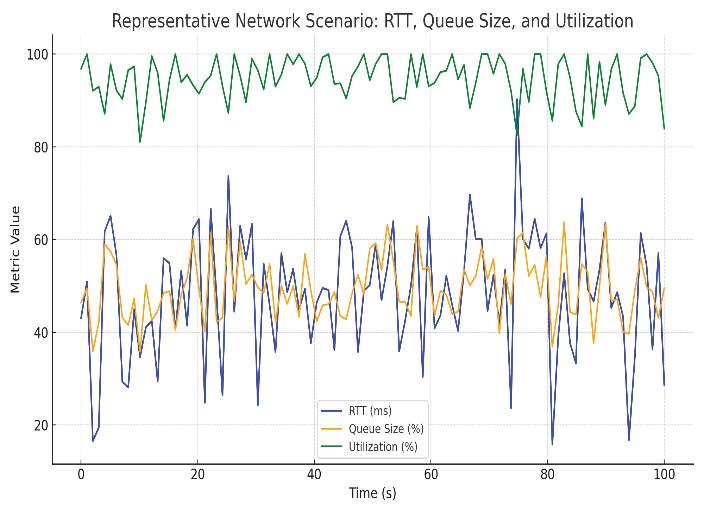
Thissectionoutlinesthemethodologyusedto design,implement,andevaluatetheproposedAHMA frameworkforintelligentcongestioncontrol.The researchmethodologyisstructuredaroundthree corestages:datasetgeneration,modeldesignand integration,andperformanceevaluationthrough simulation.
4.1.DatasetGenerationUsingNS‐3
Totrainandevaluatetheclassi ierandRLagent inAHMA,wegeneratedalabeleddatasetusingthe NS‑3(NetworkSimulator3)environment.Thesimula‑ tiontopologyconsistedofthreetypesofnetworkloss scenarios:
4.1.1.CongestionLoss:
3.1.BayesianTransformerLossClassifier:
Thisdeeplearningmodelprocessesreal‑timenet‑ workstatistics—suchasRTT,queuelength,packet losspatterns,andSNR(ifwireless),asillustratedin Figure2,—toclassifythetypeofpacketloss(e.g.,con‑ gestion,wireless,hardware).
• ItusesBayesianinferencetoestimateprediction uncertainty.
• Itsoutputincludesbothalosscauselabelanda con idencescore.
3.2.Meta‐EvolutionaryReinforcementLearning(Meta‐ES‐RL)Controller:
Basedontheclassi ier’soutputandcon idence, thisagentselectsanoptimalcongestioncontrol strategy.
• Meta‑learningallowsforrapidadaptationtonew networkconditions.
• Evolutionarystrategiesallowforrobustexploration withoutgradientdependency.
• Tailoredresponsestodifferentlosscausesslows downonlyduringcongestionbutmaintainsitsrate duringwirelessloss.
KeyfeaturesofAHMAinclude
• Differentiatingbetweenlosscauses,insteadoftreat‑ ingalllossequally.
• Usinguncertainty‑awaredecision‑makingtoavoid riskyactions.
• Enablingfastadaptationindynamicenvironments viameta‑RL.
• CompatibilitywithmodernIPandwirelessnetwork stacks.
Insummary,AHMAcombinesintelligentlossclas‑ si icationandcontext‑awarecontrolpolicyselection toprovidearobust,adaptivesolutionforconges‑ tioncontrol.Itsigni icantlyoutperformstraditional andlearning‑basedmethods,particularlyinheteroge‑ neousorerror‑pronenetworks.
Simulatedbyoverloadingnetworkbuffersusing high‑bandwidthTCPtraf ic,resultinginqueueover‑ lowandpacketdrops.
4.1.2.WirelessLoss:
ModeledusingerrormodelslikeRateErrorModel andsignaldegradationthroughmodi iedSNRvalues toemulatechannelfadingandinterference.
4.1.3.Hardware‐InducedLoss:
Emulatedbyschedulingsuddenlinkfailuresor deviceshutdownsduringactivetransmission.
Eachsimulationcapturedreal‑timemetrics includinground‑triptime(RTT),queuelength,signal‑ to‑noiseratio(SNR),throughput,ACKtiming,and packetdropevents.Packetlosseswerelabeledbased ontheirsource,creatingamulti‑classdatasetsuitable forsupervisedlearning.
4.2.BayesianTransformer‐BasedLossClassifier
The irstmoduleofAHMAisaBayesianTrans‑ formerclassi ierdesignedtodeterminetheroot causeofpacketloss.Unliketraditionalclassi iers, theBayesianTransformernotonlyoutputsapre‑ dictedlossclass(congestion,wireless,orhard‑ ware),butalsoprovidesuncertaintyestimates.These uncertainty‑awarepredictionsallowthesystemto deferormoderateitsdecisionswhencon idence islow,therebyincreasingitsreliabilityinnoisy environments.
StandardTransformerAttention:
WhereX:inputtokens. W_Q,W_K,W_V:learnableweightmatrices. d_k:dimension(size)ofthekeyvector�� LossFunction(ELBO‑EvidenceLowerBound): L=E_{q(W)}[logp(D|W)]−KL(q(W)||p(W)) (2)
Where p(D|W):likelihoodofdatagivenweights
KL:Kullback–Leiblerdivergencebetweenposte‑ riorandprior
Theclassi ierwastrainedusingtheNS‑3dataset withcross‑entropylossanddropout‑basedBayesian approximation.Inputfeaturesincludetemporal sequencesofRTT,queuelength,andSNRvalues. TheattentionmechanismintheTransformerhelps capturetemporalcorrelationsthattraditionalmodels mightoverlook[22].
4.3.Meta‐EvolutionaryRLController
Thesecondmoduleisameta‑evolutionary reinforcementlearning(Meta‑ES‑RL)agent.This controllerismeta‑trainedacrossdifferentnetwork environmentstoenablefastadaptationtounseen scenarios.Duringdeployment,theRLagentselectsan appropriatecongestioncontrolpolicybasedonthe classi ier’soutputandcon idencescore.
Learnameta‑policy �� ��(a|s,T��)thatperformswell afterquickadaptationtoanewtask
Where
θ:initialpolicyparameters
L_{T��}:task‑speci icloss(e.g.,negativereturn)
α:innerlooplearningrate
Totraintheagent,wechoseevolutionarystrate‑ gies(ES)duetotheirgradient‑freenatureand robustnessinsparseornoisyenvironments.The rewardfunctionwascarefullydesignedtooptimize forhighthroughput,lowpacketloss,andminimal delay.
4.4.IntegrationandDecisionPipeline
AHMAoperatesinrealtimeby irstinvokingthe classi ieruponpacketlossdetection.Dependingon thepredictedcauseandassociatedcon idence,the meta‑RLagentselectsormodi iesitscontrolpolicy dynamically.Forexample,ifthelossisduetowire‑ lesserrorsandcon idenceishigh,theagentavoids unnecessaryratereduction;forcon irmedconges‑ tion,however,itaggressivelyreducesthesending window.
4.5.EvaluationMetrics
Themethodologyconcludeswithaperformance evaluationusingsimulationrunsundercontrolledand mixed‑lossconditions.WecompareAHMA’sperfor‑ manceagainstPPO,DQN,TCPCubic,andTCPReno usingthefollowingmetrics:
• DecisionAccuracy(%): Correctlyidenti iedloss cause.
• PacketLoss(%): Totallostpacketsperscenario.
• Throughput(Mbps): Datasuccessfullydelivered.
• AverageLatency(ms): End‑to‑enddelay.
TheseexperimentsvalidateAHMA’seffectiveness indynamicandheterogeneousnetworkenviron‑ ments.
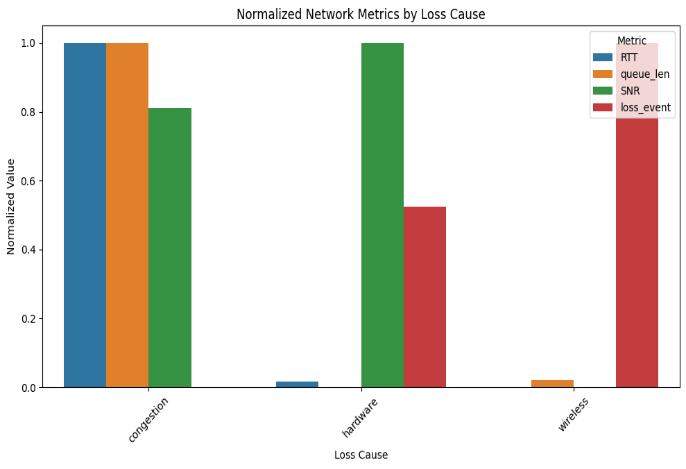
Theproposedarchitecture,knownasAHMA (adaptivehierarchicalmeta‑agent),presentsa noveltwo‑layerlearning‑basedcongestioncontrol framework.Itisdesignedtointelligentlymanage datatransmissioninIPnetworksbydistinguishing betweendifferentcausesofpacketlossandadapting congestioncontrolstrategiesaccordingly.The architecturecombinesBayesiandeeplearningfor lossclassi icationwithmeta‑reinforcementlearning (Meta‑RL)foradaptivepolicyselection.
5.1.SystemOverview
AHMAconsistsoftwomajorcomponents:a BayesianTransformer‑basedlossclassi ieranda meta‑evolutionaryreinforcementlearningcontroller. Thesecomponentsworktogetherinamodular,hier‑ archicalfashion.Whenpacketlossisdetected,AHMA irstdeterminesitscauseusingtheclassi ier.Based onthispredictionandtheassociatedcon idence,the systemtheninvokestheMeta‑RLagenttoapplya tailoredcontrolpolicy.
5.2.BayesianTransformerLossClassifier(Layer1)
Thiscomponentservesasthedecision‑making entrypoint.Itprocessesreal‑timenetworkfea‑ tures,suchasRTT(round‑triptime),queuelength, packetinter‑arrivaltime,signal‑to‑noiseratio(SNR) inwirelessnetworks,andacknowledgmentdelay patterns.
UsingaTransformerneuralarchitectureenhanced withBayesianinference,theclassi ierpredictsthe causeofpacketdrop,whetherduetocongestion,wire‑ lessinterference,orhardwarefailure,asshownin Figure3.Thekeyinnovationliesinitsuncertaintyesti‑ mationcapability,whichisachievedthroughdropout‑ basedMonteCarlosampling.
Theclassi ieroutputs
• Acategoricallabel(congestion,wireless,orhard‑ ware)and
• Apredictioncon idencescore(between0and1) Iftheclassi iercon idenceishigh,thesystemacts directlyontheprediction.Ifitislow,AHMAapplies acautiouspolicyordefersthedecision,enhancing stabilityinnoisyenvironments.
Table2. Outcomecomparison
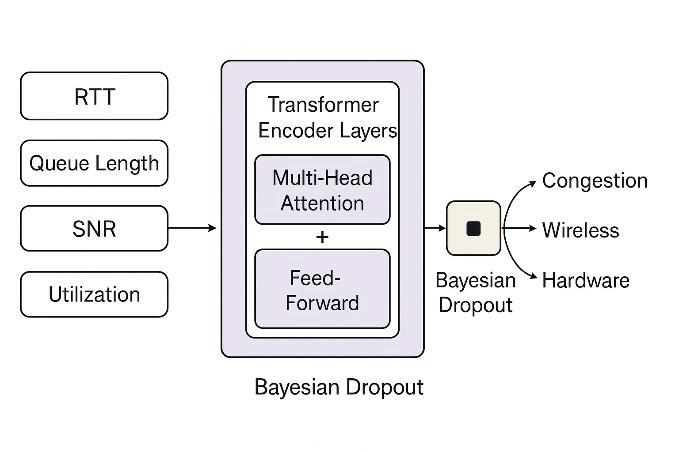
5.3.Meta‐EvolutionaryRLController(Layer2)
Oncethecauseoflossisidenti ied,theMeta‑RL agentselectsoradaptsacontrolstrategy.Thecon‑ trolleristrainedusingevolutionarystrategies,making itsuitableforenvironmentswheregradientsaredif i‑ culttocompute.
TheRLagent:
• Adaptstonewlossscenariosusingfew‑shot learning.
• Optimizesarewardfunctionthatbalancesthrough‑ put,latency,andpacketloss.
• Selectsfromaportfolioofpre‑trainedcontrol policies.
• Generalizesfrompastexperiencesbyintegrating meta‑learningandquicklyadjustingtovaryingnet‑ workbehaviors.
5.4.End‐to‐EndDecisionProcess
ThefullAHMAwork lowisasfollows:
• Detectapacketlossevent.
• Extractnetworkfeaturesandclassifythecause usingLayer1.
• Basedontheclassi icationandcon idence,select theappropriatepolicyusingLayer2.
• Thepolicyadjuststhesendingrateorcongestion windowdynamically.
Thisintelligent,hierarchicalframeworkenables context‑awarecongestioncontrol,outperformingtra‑ ditionalandRL‑onlyapproachesinheterogeneous anddynamicnetworkconditions.
6.Results
ToassesstheperformanceoftheproposedAHMA (adaptivehierarchicalmeta‑agent)framework,we
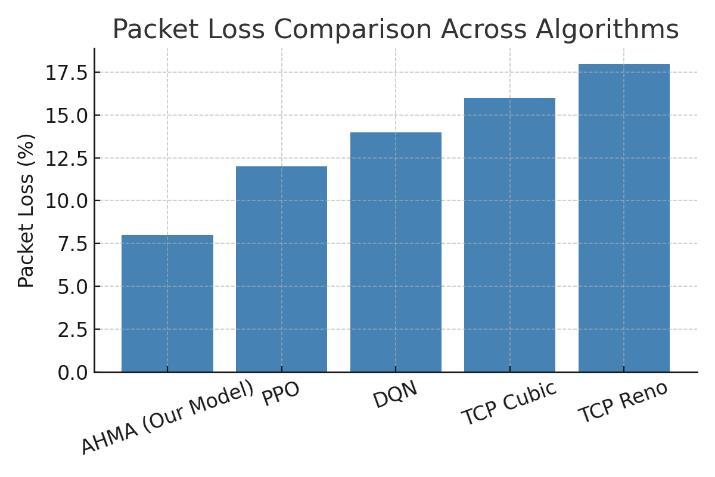
carriedoutconsiderablesimulationexperiments usingtheNS‑threecommunitysimulator.The simulationsinvolvedvaryingnetworkconditions, includingcongestion‑inducedloss,wirelesserrors, andhardware‑inducedlinkfailures.AHMAwas comparedagainstconventionalTCPvariants(TCP Reno,TCPCubic)andmodernreinforcementlearning‑ basedmethods(DQNandPPO).
Alabeleddatasetof1,000sampleswasgener‑ atedthroughmultipleNS‑3runs,capturingmetrics suchasRTT,queuelength,SNR,andpacketdrop rate.TheBayesianTransformerclassi iertrainedon thisdatasetachievedadecisionaccuracyof92%in correctlyclassifyingthecauseofpacketloss.This outperformedbaselineclassi iers,suchasdecision treesandSVMs,whichaveragedaround78‑80%accu‑ racy.Intermsofcontrolperformance,AHMAdemon‑ stratedsigni icantimprovementsacrosskeymetrics, asshowninTable2:
PacketLossRate: 8.56%,comparedwith11.77% (PPO),13.91%(DQN),16.05%(TCPCubic),and 19.26%(TCPReno),asobservedinFigure5.
Throughput:AHMAachievedanaverageof 8.6Mbps,outperformingPPO(7.2Mbps),DQN (6.5Mbps),TCPCubic(5.9Mbps),andTCPReno (5.2Mbps),asobservedinFigure6
Latency: Theaverageend‑to‑enddelaywithAHMA was10ms,thelowestamongallcomparedmodels,as observedinFigure7
Thesystem’sabilitytodifferentiatecausesofloss allowedAHMAtoavoidunnecessaryratethrottlingin wirelessorhardwarefaultscenarios,thusmaintain‑ inghigherthroughputandstability.Additionally,the
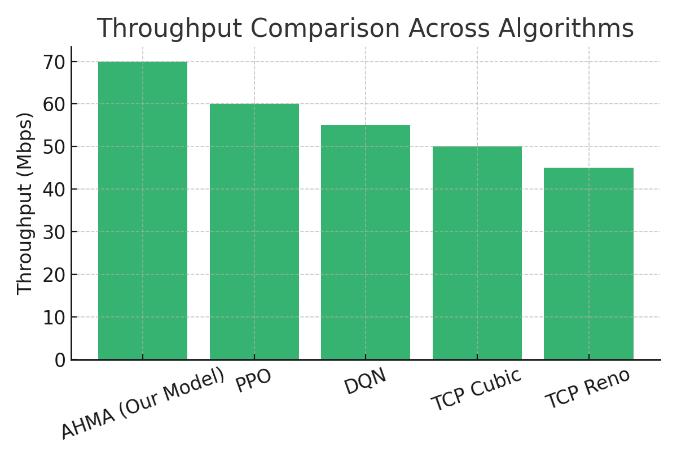
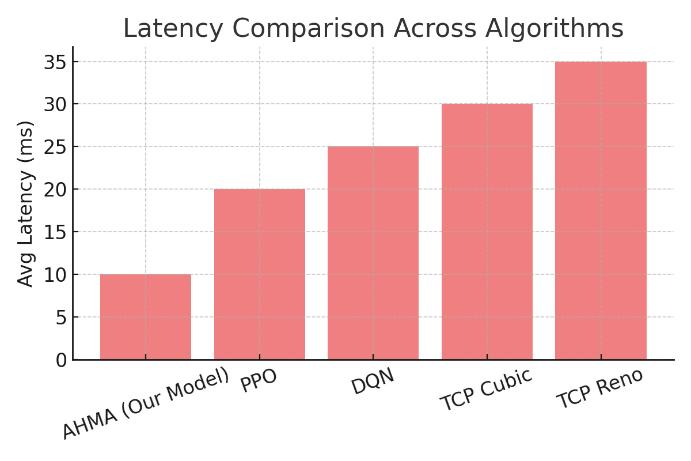
meta‑evolutionaryRLcomponentenabledrapidadap‑ tationtochangesinnetworkstateandoutperformed staticRLagentsthatrequiredretraining.
Overall,theexperimentalresultsvalidateAHMA asahighlyadaptiveandintelligentcongestioncon‑ trolsolutionforcomplexandheterogeneousnetwork environments,asillustratedinFigure4.
ThispaperintroducedAHMA(AdaptiveHierar‑ chicalMeta‑Agent),anovelAI‑drivenframeworkfor intelligentcongestioncontrolinIPnetworks.Unlike traditionalandmodernlearning‑basedmethodsthat treatallpacketlossuniformly,AHMAincorporatesa two‑stagearchitecturethatdistinguishesthecauseof packetlossandappliescontext‑awarecontrolpolicies accordingly.
The irstlayerofAHMAusesaBayesianTrans‑ formerclassi iertoanalyzereal‑timenetworkfea‑ turesandaccuratelypredicttherootcauseofpacket loss,whetheritbecongestion,wirelessinterference, orhardwarefailure.Thesecondlayeremploysa meta‑evolutionaryreinforcementlearning(meta‑ES‑ RL)controllerthatdynamicallyselectsoradaptsa congestioncontrolpolicybasedontheclassi ier’spre‑ dictionandcon idence.
ThroughextensivesimulationusingNS‑3, AHMAwasevaluatedagainstbaselinealgorithms,
includingTCPReno,TCPCubic,DQN,andPPO.The resultsdemonstratedthatAHMAachieveshigher decisionaccuracy,lowerpacketlossrates,improved throughput,andreducedlatencyacrossdiverse networkconditions.Itsabilitytoavoidunnecessary throttlinginnon‑congestivescenariosandadapt quicklytochangingenvironmentshighlightsits robustnessandef iciency.
ByintegratingBayesiandeeplearningwithmeta‑ reinforcementlearning,AHMAoffersascalableand intelligentapproachtocongestionmanagementin next‑generationIPnetworks.Thisworkpavestheway formoreadaptiveandcause‑awarenetworkprotocols thatlearnindependently,especiallyinenvironments wherelosspatternsarecomplexandunpredictable.
FutureworkwillfocusondeployingAHMAinreal‑ worldtestbeds,expandingitsscopetomulti‑ lowsce‑ narios,andexploringhardwareaccelerationforreal‑ timeinference.Additionally,integratingexplainable AItechniquesintotheAHMApipelinecanfurther enhancetransparencyandtrustinmission‑critical applications.
AmitKanungo∗ –DepartmentofComputerSci‑ enceandEngineering,MedicapsUniversity,Indore, 453331,India,e‑mail:amitkanungo11@gmail.com. PrashantPanse –DepartmentofInformationTech‑ nologyatMedicapsUniversityinIndore,453331, India,e‑mail:prashant.panse@medicaps.ac.in.
∗Correspondingauthor
IwanttoexpressmygratitudetoDr.PrashantPanse, mysupervisoratMediCapsUniversity,forhisknowl‑ edgeableadvice,unwaveringsupport,andinsightful commentsduringthisproject.Wewouldalsolike toexpressourgratitudetotheMediCapsUniversity ResearchCellmembersfortheirassistanceandcontri‑ butions,whichwerecrucialtotheeffectivecompletion ofthiswork.
[1] V.Jacobson,“Congestionavoidanceandcontrol,” ACMSIGCOMMComputerCommunicationReview, vol.18,no.4,1988,pp.314–329.
[2] S.Ha,I.Rhee,andL.Xu,“CUBIC:AnewTCP‑ friendlyhigh‑speedTCPvariant,” ACMSIGOPS OperatingSystemsReview,vol.42,no.5,2008,pp. 64–74.
[3] N.Cardwell,Y.Cheng,C.S.Gunn,S.H.Yeganeh, andV.Jacobson,“BBR:Congestion‑basedcon‑ gestioncontrol,” CommunicationsoftheACM,vol. 60,no.2,2017,pp.58–66.
[4] M.Allman,V.Paxson,V.,&E.Blanton,“TCPcon‑ gestioncontrol,” RFC 5681,IETF,2009.
[5] T.HendersonandR.Katz,“Transportprotocols forInternet‑compatiblesatellitenetworks,” IEEE
JournalonSelectedAreasinCommunications, vol. 17,no.2,1999,pp.326–344.
[6] G. P.Perrucci,F.H.FitzekandJ.Widmer,“Survey onenergyconsumptionentitiesonthesmart‑ phoneplatform,” Proc.IEEEVTC,2011,pp1–6.
[7] C.Casetti,M.Gerla,S.Mascolo,M.Y.Sanadidi,and R.Wang,“TCPWestwood:Bandwidthestimation forenhancedtransportoverwirelesslinks,” Proc. MobiCom, 2001, pp.287–297.
[8] L.Xu,K.Harfoush,andI.Rhee,“Binaryincrease congestioncontrolforfast,long‑distancenet‑ works,” IEEEINFOCOM, 2004,pp.2514–2524.
[9] S.Floyd,M.Handley,J.Padhye,andJ.Widmer, “Promotingtheuseofend‑to‑endcongestion controlintheInternet,” IEEE/ACMTransactions onNetworking,vol.13,no.3,2005,pp.458–472.
[10] M.ScharfandH.Brakmo,“TCPHystart++:Opti‑ mizedslowstartforhigh‑bandwidthnetworks,” IETFDraft,2016.
[11] K.WinsteinandH.Balakrishnan,“TCPex machina:Computer‑generatedcongestion control,” Proc.ACMSIGCOMM, 2013,pp.123–134.
[12] Dong,T.Meng,andJ.Zhan,“PCCVivace:Online‑ learningcongestioncontrol,” Proc.USENIXNSDI, 2018,pp.343–356.
[13] H.Jiang,Y.Zhang,J.Singh,andP.Levis,“Aurora: Learningadaptivecongestioncontrolwithreal‑ worldexperiments,” Proc.ACMSIGCOMM,2021, pp.255–271.
[14] D.Silver,G.Lever,N.Heess,T.Degris,D.Wierstra, andM.Riedmiller,“Deterministicpolicygradient algorithms,” Proc.ICML,vol.32,no.1,2014,pp. 387–395.
[15] J.Schulman,F.Wolski,P.Dhariwal,A.Radford, andO.Klimov,“Proximalpolicyoptimization algorithms,”arXivpreprint,20Jul.2017;doi: arXiv.1707.06347.
[16] V.Mnih,K.Kavukcuoglu,D.Silver,etal.,“Human‑ levelcontrolthroughdeepreinforcementlearn‑ ing,” Nature,vol.518,no.7540,2015,pp.529–533.
[17] T.Degris,P.M.Pilarski,andR.S.Sutton,“Model‑ freereinforcementlearningwithcontinuous actioninpractice,” Proc.ACC, 2012,pp.741–748.
[18] C.Finn,P.Abbeel,andS.Levine,“Model‑ agnosticmeta‑learningforfastadaptation ofdeepnetworks,” Proc.ICML,2017, pp.1126–1135.
[19] Y.Duan,J.Schulman,X.Chen,X.,etal,“RL²: Fastreinforcementlearningviaslowreinforce‑ mentlearning,”arXivpreprint,9Nov.2016; doi:arXiv.1611.02779.
[20] T.Salimans,J.Ho,X.Chen,andI.Sutskever, “Evolutionstrategiesasascalablealternativeto reinforcementlearning,”arXivpreprint,10Mar. 2017;doi:arXiv.1703.03864.
[21] Y.GalandZ.Ghahramani,“DropoutasaBayesian approximation:Representingmodeluncertainty indeeplearning,” Proc.ICML,2016,pp.1050–1059.
[22] A.Krizhevsky,I.Sutskever,andG.E.Hinton, “ImageNetclassi icationwithdeepconvolu‑ tionalneuralnetworks,” Proc.NeurIPS,2012,pp. 1097–1105.
[23] A.Goyal,N.R.Ke,K.Madan,A.Lamb,B. Schölkopf,andY.Bengio,“FastandSlowLearn‑ ingofRecurrentIndependentMechanisms,”in Proc.Int.Conf.LearningRepresentations(ICLR), 2021.
[24] J.XingandM.Shahzad,“Areinforcement learningframeworkforapplication‑speci ic TCPcongestion‑control,”arXivpreprint,11May 2025;doi:10.48550/arXiv.2505.07042.
[25] X.Jiang,G.Gong,andG.Jin,“Combiningheuristic andreinforcementlearningtoachievethelow‑ latencyandhigh‑throughputreceiver‑sidecon‑ gestioncontrol,”arXivpreprint,23Feb2025; doi:arXiv.2502.16498.
[26] X.Liao,H.Tian,C.Zeng,X.Wan,andK.Chen, “Astraea:Towardfairandef icientlearning‑ basedcongestioncontrol,” Proc.Eurosys,2024, pp.99–114.
[27] X.Huang,H.Zhu,L.Yang,C.Yin,J.Li,andH.Li, “TCP‑QNCC:Congestioncontrolalgorithmbased ondeepQ‑network,” Proc.SPIEAICS,vol.12803, 2023,1280308.
[28] K.S.MidhulaandP.ArunRajKumar,“Anadap‑ tivecongestioncontrolprotocolforwirelessnet‑ worksusingdeepreinforcementlearning,” IEEE Trans.Netw.Serv.Manag.,vol.21,no.2,2023,pp. 2027–2043.
Submitted:7th August2025;accepted:4th November2025
DOI:10.14313/jamris‐2026‐027
Abstract:
Inrecommendersystems,collaborativefiltering(CF) isacrucialtechnique,butitoftenstruggleswithdata sparsity,whichaffectsrecommendationaccuracy.To addressthischallenge,wehaveproposedaCo‐Training EnsembleLearning(CTEL)techniquethatintegrates item‐basedCollaborativeFiltering(CF),user‐basedCF, andSingularValueDecomposition(SVD)viaastructured stackingmethodologytoimproverecommendation performance.Theco‐trainingprocedure,whichcreates pseudo‐labelsforunlabeleddatabasedonaconfidence threshold,isusedtoiterativelyimprovetheuser‐based anditem‐basedCFmodelsaftertheyhavebeenoriginally trained.Thesemodelsproducepredictionsforvalidation andtestsets,inconjunctionwiththeindependently trainedSVDmodel.Theseforecastsyieldmeta‐features, includingadditionalstatisticalvariablessuchasvariance andtheproductofpredictions.TheLinearRegression modelistrainedasthemeta‐learnertooptimisethe predictionsofthebasemodelsusingK‐Foldcross‐validation.MeanAbsoluteError(MAE),MeanSquared Error(MSE),andRootMeanSquaredError(RMSE)are usedtoassessthefinalmodel’sperformanceonatestset. Theoutcomesconfirmtheeffectivenessoftheco‐training andstackingstrategy,demonstratingnotableincreases inpredictionaccuracy.Byleveragingtheadvantages ofcollaborativefilteringandmatrix‐basedapproaches, theproposedmodelprovidesacomprehensive foundationfordevelopingadvancedrecommendation systems.
Keywords: Recommendersystem,Ensemblelearning, Collaborativefiltering,SVD,Semi‐Supervisedlearning
1.Introduction
Recommendersystemshavebecomeindispens‑ abletodigitalecosystemssuchase‑commerce,enter‑ tainment,education,andsocialmediabyenabling personalizedinteractionbetweenusersandmassive contentrepositories[1, 2].Thesesystemsenhance userengagement,retention,andsatisfactionbyana‑ lyzingbehavioraldataandgeneratingtailoredprod‑ uct,service,orcontentrecommendations.Collabo‑ rative iltering(CF)remainsthemostwidelyused techniqueinthisdomain,asiteffectivelyexploits patternsofcollectiveuser–iteminteractionstoinfer individualpreferences.CFapproachesaregenerally categorizedintouser‑basedanditem‑basedmodels,
whichleveragesimilaritieseitheramongusersor amongitemstopredictunseenratingsorinterac‑ tions.Despitetheireffectiveness,thesemethodsare constrainedbydatasparsity,whereinsuf icientuser–iteminteractionslimitthesystem’sabilitytomake accuratepredictions.Thisproblemisparticularly severeinlarge‑scalesystemswithrapidlyexpanding catalogs,leadingtothewell‑knowncold‑startchal‑ lenge[3–5].Addressingdatasparsityhasbecome acentralresearchobjectiveinrecommendationsci‑ ence.Matrix‑factorizationtechniquessuchasSingu‑ larValueDecomposition(SVD),Non‑NegativeMatrix Factorization(NMF),andProbabilisticMatrixFactor‑ ization(PMF)havebeeninstrumentalinrevealing latentuseranditemfeaturesthatexplainobserved interactions[6–8].Thesemodelsimprovescalability andinterpretability;however,theirlinearstructure oftenlimitstheabilitytocapturecomplexnonlinear relationships.Theintegrationofdeeplearninginto recommendationmodelshastransformedthe ield, enablingneuralcollaborative iltering,autoencoders, andgraph‑basedlearningtouncoverhierarchical andnon‑lineardependencies[9–11].Deeparchitec‑ turessuchasNeuralCollaborativeFiltering(NCF)and VariationalAutoencoders(VAE)haveproveneffec‑ tiveinlearningrichfeatureembeddingsandtem‑ poralpreferencesthatenhancepredictionaccuracy. Inparallel,ensemblelearninghasemergedasakey strategytoimproverobustnessandgeneralizationin recommendersystems.Ensembleframeworkssuch asbagging,boosting,andstackingcombinemultiple weakormoderatelystronglearnerstoformcom‑ positemodelsthatoutperformindividualpredictors [12].Stackingemploysameta‑learnertointegrate diversebasemodels,whileco‑trainingallowsmul‑ tiplelearnerstrainedondifferentfeatureviewsto iterativelyre ineeachotherusingpseudo‑labelsgen‑ eratedfromunlabeleddata[13].Theseprinciples haveinspiredsemi‑supervisedensemblemodelsthat effectivelyexploitbothlabeledandunlabeleddata. TheproposedCo‑TrainingEnsembleLearning(CTEL) frameworkbuildsuponthisfoundationbyintegrating user‑basedCF,item‑basedCF,andSVDmodelswithin aco‑trainingandstackingparadigm.Throughiterative pseudo‑labellingandmeta‑featureconstruction,CTEL improvespredictiveaccuracyevenunderseverespar‑ sity.However,withtheacceleratingpaceofresearch in2025,newparadigmshaveemergedthatextend
beyonddeterministicensembleframeworks.Contem‑ poraryadvancesincreasinglyfocusonincorporat‑ ingepistemicuncertainty,monotonictransformation, andmulti‑intentbehavioraldiversityintoensemble recommendationmodels.Recentstudiesintroduced Bayesiandeepensemblecollaborative ilteringframe‑ worksthatquantifyepistemicuncertaintytoimprove robustnessundernoisyorsparsedata[14].Further developmentsintegratedorthogonalmeta‑learning withBayesianoptimizationtoachieveuncertain multi‑objectiverecommendation,balancingcompet‑ inggoalssuchasaccuracy,fairness,anddiversity[15]. Otheradvancesproposeduni iedmonotonicranking ensemblesemployingUnconstrainedMonotonicNeu‑ ralNetworks(UMNNs)toensuremonotonicscore transformationsandadaptivePareto‑optimalweight‑ ing,therebyeliminatingmanualtuningandensur‑ inginterpretability[16].Additionalframeworksintro‑ duceduni iedrepresentation‑learningarchitectures thatmodeluserintentasGaussiandistributions,cap‑ turingbothmeanpreferencesandbehavioraluncer‑ tainty[17].Thesestate‑of‑the‑artapproachesrepre‑ sentashifttowarduncertainty‑awareandmonotonic ensemblearchitecturesthatexplicitlymodelcon i‑ denceandrankingconsistencyinrecommendation outcomes[18].
Againstthisevolvingbackdrop,CTELdistin‑ guishesitselfasasemi‑supervised,deterministic ensemblemodelthatemphasizesinterpretabilityand computationalef iciency.Whileitmaybeconsidered anincrementalcontributionrelativetotheBayesian andmonotonicparadigms,CTELprovidesapractical bridgebetweenclassicalCF‑basedlearningand emerginguncertainty‑awareensembleframeworks. Theapproachremainsparticularlyrelevantforlarge‑ scaleapplicationswheremodeltransparency, lowlatency,andadaptabilityareparamount. Furthermore,CTEL’sarchitecturecanbenaturally extendedtoincorporateBayesianregularization ormonotonicfusionlayers,aligningwithongoing effortstocreateinterpretableandreliablenext‑ generationrecommendersystems.Thisresearch contributestotheevolvingdiscourseonensemble‑ basedrecommendersystemsbypresentingahybrid semi‑supervisedframework—CTEL—thataddresses datasparsitythroughco‑trainingandmeta‑learning integration.Itcomplementsrecentinnovationssuch asBayesiandeepensemblesandmonotonicranking transformations,layingthefoundationforthefuture developmentofuncertainty‑awareandexplainable recommendationarchitectures.
Recentstudiesemphasizehybridstrategies integratingsemi‑supervisedlearning,ensemble learning,anduncertainty‑awaremodellingtoexploit bothlabelledandunlabeleddatawhileimproving interpretabilityandrobustness[19].Inaddition, graphneuralnetworks(GNNs)andattention‑based transformershaveexpandedtherepresentational depthofrecommendermodels.GNNspropagate relationalinformationthroughuser–iteminteraction graphs,enablinghigher‑orderconnectivitylearning,
whiletransformersdynamicallycapturetemporaland contextualcuestoenhancesequentialandsession‑ basedrecommendation[20, 21].Explainabilityand reliabilityareemergingasequallycriticaldimensions, withattention‑basedinterpretabilitymechanisms [22]andreliability‑awarehybridmodelsintegrating epistemicuncertaintyintorecommendation pipelines.Furthermore,semi‑supervisedensemble frameworkscontinuetoevolve,leveraging agreement‑drivenpseudo‑labelgenerationandcon‑ sistencyregularizationforlarge‑scalesparsedatasets.
3.MethodsandMaterials
3.1.Datasetsusedfortestingourproposedmodel
TheMovieLens100Kdataset,whichconsistsof 100,000userratingsfor1,682moviesfrom943users, isacommonlyusedbenchmarkinthe ieldofrec‑ ommendationsystems.TheUniversityofMinnesota’s GroupLensResearchProjectgatheredthedataset [46].Everyentryinthecollectionincludesatimes‑ tamp,auserID,amovieID,andaratingrepresent‑ ingtheuser’sassessmentofthe ilmatthatmoment. Thesearenottheonlyfeatures;therearealsoaddi‑ tionalfeaturesforuserandmovieinformation.Fea‑ turesforuserinformationincludeage,gender,occu‑ pation,andZipcode,andfeaturesformovieinforma‑ tionincludemovieID,title,releasedate,videorelease date,IMDbURL,andgenres.Predictingauser’smovie ratingbasedontheirpastratingsandotherusers’ ratingsisusuallytheaim.Adescriptionofthedataset’s corefeaturesisprovidedinTable3
Anotherpopulardatasetforassessingrecommen‑ dationsystemsisFilmTrust,whichisgatheredfrom theFilmTrustsocialnetwork[47].Users’movieevalu‑ ationsandthetrusttiesbetweenthemareincludedin thedataset.Itcontainsvariableslikeratings,itemIDs (movies),anduserIDs.Bymodellingandforecasting userpreferences,thesefactorsprovideinsightsthat canimprovetheaccuracyofrecommendations.The dataset’sdescriptionisgiveninTable4.
Collaborative ilteringisamethodusedinrecom‑ mendationsystemstopredictauser’sinterestsby collectingpreferencesfrommanyusers.Therearetwo maintypesofcollaborative ilteringalgorithms:user‑ basedanditem‑based.Additionally,matrixfactoriza‑ tiontechniquessuchasSingularValueDecomposition (SVD)areoftenusedtoimprovetheperformanceof collaborative ilteringsystems.
3.2.1.User‐Collaborativeapproach(U‐col)
Thismethodpredictsauser’sinterestinanitem basedonratingsfromsimilarusers.Thesimilarity betweentwousers,uandv,canbecalculatedusing thePearsoncorrelationcoef icient:
Table1. Comparisonofcommonlyusedsemi‐supervisedmethods
Method Description
Co‑training
Self‑training
Tri‑training
Labelpropagation
Graph‑based methods
Semi‑supervised SVM
Expectation
Maximization
Usesmultiplemodelstrainedon differentviewsofdatatoiteratively improvepredictions
Iterativelylabelsunlabeleddatausing amodeltrainedonlabeleddata
ExtensionofCo‑trainingwiththree classi iers,enhancingmodel robustness
Propagateslabelsfromlabelledto unlabeledinstancesbasedon similarity
Usesgraphstructuretopropagate labelsandcapturerelationships
AppliesSVMwithlabelledand unlabeleddatatolearndecision boundaries
Ititerativelyestimatestheparameters ofaprobabilisticmodelwithhidden variables
TransudativeSVM SVMvariantthatlearnsfromboth labelledandunlabeleddata simultaneously
GenerativeModels
Semi‑supervised DeepLearning
Modelsthatgeneratedatabasedon learnedprobabilitydistributions
Deeplearningmodelstrainedwith bothlabelledandunlabeleddata
whererui istheratingofuseruforitemi,rv isthe averageratingofuseru,andIuvisthesetofitemsrated bybothusersuandv.Thepredictionforuseruforitem iisgivenby:
whereN(u)isthesetoftopksimilarusers.
3.2.2.Item‐basedcollaborativeapproach(I‐col)
Item‑basedcollaborative ilteringpredictsauser’s interestinanitembasedonthesimilarityofthe itemtootheritemstheuserhasrated.Thesimilarity betweentwoitemsiandjcanbecalculatedusing cosinesimilarity:
Advantages Applications
Effectiveuseofunlabeleddata, robustnesstonoisydata
Simpleandintuitive,easy implementation
Improvedperformancewith threedifferentviews
Utilizeslocalinformation effectively,scalable
Capturescomplexrelationships, robusttonoise
Utilizesmarginmaximization, effectivefornon‑linear boundaries
Handlesmissingdata,robustto noise
Utilizesunlabeleddatafor decisionboundaryoptimization
Providesinsightsintodata distribution,scalablewithlarge datasets
Capturesintricatepatterns, effectiveforlarge‑scaledata
Textcategorization, recommendersystems
Textclassi ication,image recognition
Sentimentanalysis,social networkanalysis
Communitydetection, recommendationsystems
Socialnetworkanalysis, recommendationsystems
Imagerecognition,text classi ication
Clustering,anomalydetection
Classi ication,pattern recognition
Datageneration,anomaly detection
Naturallanguageprocessing, imagerecognition
Thepredictedratingru,i foruseruanditemiis givenby:
whereru,istheratingofuseruforitemiandUij is thesetofuserswhohaveratedbothitemsiandj.The predictionforuseruforitemiisgivenbythefollowing formula,whereN(i)isthesetoftopksimilaritems.
whereuistheu‑throwofUandviisthei‑throwofV. Theoptimizationproblemformatrixfactorizationis tominimizetheregularizedsquarederror:
Theoverallstructureofourmodelisdividedinto threedistinctstages,eachplayingacriticalroleinthe recommendationprocessasshowninFigure1.
1. InitialStage:Thisincludesdatapreprocessingand datasplitting.
2. Semi‑SupervisedStage:Inthisstage,weemploy theco‑trainingapproachtoenhanceuser‑based anditem‑basedcollaborative iltering.
3. EnsembleStage:Inthisstage,weusedthestack‑ ingtechniquetocombinetheenhanceduser‑based anditem‑basedcollaborativeapproachwiththe SVDmodelfor inalprediction.
3.4.Initialstage
DataLoadingandPreprocessing
3.3.SVDapproach
Matrixfactorizationtechniques,suchasSVD, reducedimensionalitybydecomposingtherating matrixRintothreelower‑dimensionalmatricesU, Σ,andVsuchthatR≈UΣVTR,whereUisanm×k user‑featurematrix, Σ isak×kdiagonalmatrixof singularvalues,andVisann×kitem‑featurematrix.
TheMovieLensdatasetis irstimportedfroma CSV ileintoaDataFrame.Afterthat,StandardScaler isusedtonormalizetheratingsinthedatasetsothat theirmeanis0andtheirstandarddeviationis1.This helpstostabilizethemachinelearningmodel’slearn‑ ingprocess.ThemovieIDanduserIDcolumnsare thenencodedasintegercodesandtransformedinto categorydatatypes.Themodelsrequirethisencoding becausetheyprocessnumericalinputs.
Table2. Issuesandchallengesofexistingapproaches
Issue/Challenge Description
Qualityof Pseudo‑labels
DataDistribution
ModelOver itting
Thequalityofpseudo‑labels,inferredlabelsassignedtounlabeleddatabased onmodelpredictions,ispivotalinsemi‑supervisedlearningforrecommendation systems.Incorrectornoisypseudo‑labelscandegrademodelperformanceby introducingbiasorinconsistencies.High‑qualitypseudo‑labelgenerationoften requiresrobustmethodsforhandlinglabelnoiseanduncertainty.Ensuringthe qualityofpseudo‑labelsthroughtechniquessuchasself‑trainingorcon idence‑ based ilteringiscrucialtoimprovingtheeffectivenessofrecommendationsys‑ tems.
Ensuringalignmentinthedistributionoflabeledandunlabeleddataisessentialto preventbiasinmodels.Differencesindatadistributioncanleadtomodelsthatdo notgeneralizewell,affectingtheaccuracyandeffectivenessofrecommendations acrossdiverseuserpreferencesanditemcharacteristics.
Preventingover ittingiscritical,especiallywhenusingensembletechniqueswith limitedlabelleddata.Ensemblemodels,whichcombinemultiplebaselearners, canpotentiallymemorizenoiseinthetrainingdata,leadingtopoorgeneralization onunseendata.Properregularizationandvalidationstrategiesarenecessaryto mitigatethisrisk.
References
[23–25]
Scalability
Algorithm Complexity
EvaluationMetrics
Managingcomputationalresourceseffectivelyiscrucial,particularlywithlarge‑ scaledatasetscommoninrecommendationsystems.Ensemblemethodscanbe computationallyintensiveduetotheneedtotrainandintegratemultiplemodels. Scalableimplementationandoptimizationarenecessarytoensureef icientpro‑ cessinganddeploymentinreal‑worldapplications.
Implementingandtuningensemblealgorithmsrequiresexpertiseandcompu‑ tationalresources.Ensemblemethodsinvolveintegratingdiversealgorithms ormodels,eachwithitsownparametersandcon igurations.Optimizingthese parametersandensuringcompatibilityacrossdifferenttechniquesrequires advancedknowledgeandcarefulexperimentation.
Developingmetricsthataccuratelyassessrecommendationqualitybeyondtradi‑ tionalmetricslikeMAEandRMSEischallenging.Recommendationsystemsaim toenhanceusersatisfactionandengagement,whichmaynotbefullycapturedby standardmetrics.Developingandadoptingmetricsthatalignwithuserprefer‑ encesandbusinessobjectivesisessentialforcomprehensiveevaluation.
[26,27]
[28–30]
[31,32]
[33,34]
[35,36]
Robustnessto ConceptDrift
Interpretability
DataPrivacyand Security
Adaptingmodelstochangesinuserpreferencesoritempopularityovertimeis crucialformaintainingrecommendationaccuracy.Conceptdriftoccurswhenthe underlyingrelationshipsbetweenusersanditemsevolve,requiringcontinuous modeladaptation.Ensuringrobustnesstoconceptdriftinvolvesmonitoringdata changesandupdatingmodelsaccordinglytoproviderelevantrecommendations.
Ensuringtransparencyindecision‑makingprocesseswithincomplexensemble modelsischallenging.Ensemblemethodsoftencombinediversemodelsoralgo‑ rithms,makingitdif iculttointerprethowdecisionsaremade.Enhancinginter‑ pretabilityhelpsbuildusertrustandfacilitatesdebuggingandre inementof recommendationsystems.
Addressingprivacyconcernswhenusingunlabeleddata,especiallyinsensitive domains,isparamount.Unlabeleddatamaycontainsensitiveinformationabout usersoritems,raisingprivacyrisksifnothandledproperly.Implementingdata anonymizationtechniquesandadheringtoprivacyregulationsareessentialto protectusercon identialityandtrust.
Table3. Descriptionofthecorefeaturesofthe MovieLens100Kdataset
Sl.No. Feature Datatype Description
1 userId Numeric UserID
2 movieId Numeric MovieID
3 rating Numeric Ratinggiven bytheuser 4 timestamp Numeric Timestampof therating
3.5.DataSplitting
Thedataisthendividedintotest,validation,and trainingsetstomakesurethateachuser’sdataisrep‑ resentedineachsplitandtoenablecustomizedrec‑ ommendations.Initially,thedataisdividedinto20%
[37,38]
[39–41]
[42–44]
Table4. DescriptionofthecorefeaturesoftheFilmTrust dataset
Sl.No. Feature Datatype Description
1 userId Numeric UserID
2 itemId Numeric MovieID
3 rating Numeric Ratinggiven byuser (0.5‑4.0)
temporarysetsand80%trainingsetsforeachuser. Anotherdivisionofthetemporarysetismadeinto 50%testand50%validationsets.Byensuringthat everyuser’sdataisincludedthroughoutthewhole modeltrainingandevaluationprocess,thismethod helpsthemodelsbetterunderstandandanticipatethe preferencesofspeci icusers.
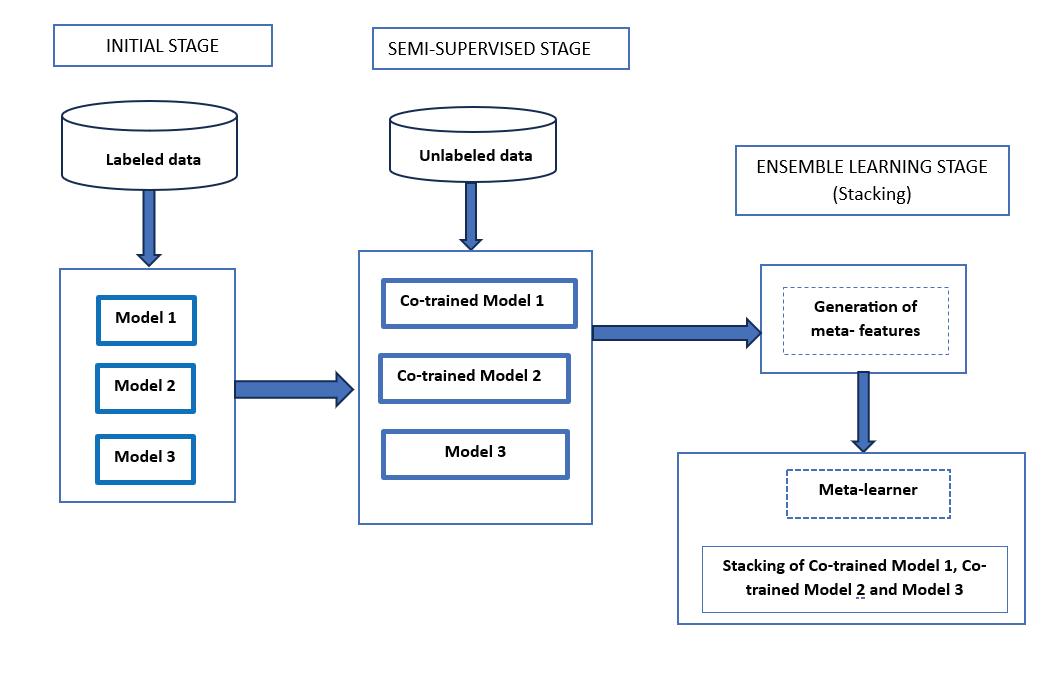
3.6.Modeltraining
Threedistinctrecommendationmodels—user‑ basedcollaborative iltering(CF),item‑basedCF,and singularvaluedecomposition(SVD)—areinitialized andtrainedthroughoutthetrainingphase.Thefor‑ matofthetrainingdataisdesignedtoworkwiththe Surpriselibrary,arecommendationsystemspecialist library.Threemodelsareinitialized:SVD,amatrix factorizationapproach,andthek‑nearestneighbours (KNN)algorithmsforuser‑basedanditem‑basedCF.
3.7.Semi‐supervisedstage
3.7.1.Co‐trainingapproach
Throughco‑training,theitem‑basedanduser‑ basedCFmodelsarefurtherimproved.Unlabeleddata pointsthatwerenotpartoftheoriginaltrainingset arefound.Theuser‑basedanditem‑basedCFmod‑ elsareusediterativelytogeneratepseudo‑labelsfor theunlabeleddataduringco‑training.Toensurethat newtrainingdataishighlyaccurate,pseudo‑labels arepermittedunderacon idencecriterion.Usingthe expandedtrainingset,whichnowincludesthefreshly pseudo‑labeleddata,themodelsareretrained.The modelsareimprovedbythisrepeatedprocess,which increasestheircapacitytogeneralizefromtheexisting data.
3.8.1.Meta‐featurepreparation
Meta‑featuresaregeneratedfromthepredictions ofallthreemodelstoprepareforthestackingstage. Inthevalidationandtestsets,predictionsarepro‑ ducedforeveryuser‑itempairusingallthreemod‑ els.Inadditiontotherawpredictions,otherfea‑ turesarecomputed,likethevarianceandtheprod‑ uctoftheforecasts.Theseotherfeaturesprovide richerinformationtothemeta‑learner,capturing
additionalinteractioneffectsandthedegreeofagree‑ mentbetweenthemodels.Theintroductionofvari‑ anceandproduct‑basedmeta‑featuresintheCTEL frameworkisguidedbytheoreticalreasoningrather thanarbitrarydesign.Thevariancefeaturerepre‑ sentsthedegreeofdisagreementamongthebase recommendersandservesasanindicatorofpredic‑ tiveuncertainty.Incorporatingthisfeatureenables themeta‑learnertoidentifyinstanceswheremodel opinionsdiverge,allowingittoassignappropriate weightsandimprovereliabilityundersparserat‑ ingconditions.Theproductfeature,ontheother hand,capturesthejointreinforcementbetweenuser‑ basedanditem‑basedpredictions,emphasizingcases wherebothmodelsproduceconsistentestimations. Thisinteractiontermhelpsthemeta‑learnerrecog‑ nizenon‑linearcomplementaritieswithoutincreas‑ ingmodelcomplexity.Similarstrategiesarewidely adoptedinmeta‑learningandalgorithm‑selection research,wheresuchstatisticalandinteraction‑based meta‑featuresareusedtoestimatethecompetence andcooperationlevelofcandidatealgorithms.There‑ fore,theuseofvarianceandproductfeaturesinthis studyistheoreticallygroundedinensembleandmeta‑ learningprinciples,providinginterpretableandeffec‑ tivesignalsthatenhancethestackingprocesswithin therecommendersystem.
3.8.2.Cross‐validation
K‑Foldcross‑validationisusedtoreliablycreate meta‑featuresandtargetsforthemeta‑learner’strain‑ ing.ThetrainingdataisdividedintoKfolds,with onefoldservingasthevalidationsetandtheotherK foldsservingasthetrainingfoldsforeachiteration. TheSVD,user‑basedCF,anditem‑basedCFmodels aretrainedineachfold,andmeta‑featuresforthe validationsetaregeneratedfromtheirpredictions. Themeta‑learnerisgivenacomprehensivetraining setconsistingofmeta‑featuresfromallfolds.
Algorithm1 ThepseudocodeoftheproposedCo‑trainingEnsembleLearning(CTEL)
Input:MovieLensdatasetD=(userId,movieId,ratings)}
Baselearners:User‑basedCF,item‑basedCF,SVD
Output:Finalmodel;Evaluationmetrics:RMSE,MSE,MAE
InitialStage
Input:MovieLensdatasetD
Output:Preparedtraining,validation,andtestsets
DataLoadingandPreprocessing
LoadthedatasetD=(u,m,rum)
Encodefeatureascategoricalvalues
For eachuseru,splitthedatainto:Dtrain(u) (80%)trainingsetandDtemp (u)(20%)astemporaryset
Furthersplitthetemporarysetinto:Dval(u) (50%)ValidationsetandDtest (u) (50%)testset
Semi‑supervisedstage
Input:TrainingsetDtrain andvalidationsetDval
Output:Enhancedmodelsthroughco‑training
Modeltraining
Initializebaselearners:User‑basedCF(CFuser),item‑basedCF(CFitem),SVD
TrainSVDonDtrain
IdentifyunlabeleddataDunlabeled =D\Dtrain
FitCFuser andCFitemonDtrain
For iter=1 toN:
Foreach(u,m)∈Dunlabeled:
Predictruser um usingCFuser
Predictritem um usingCFitem
If ruser um ≥��(thresold),add(u,m,rum user )toDtrain
Re‑trainCFuser andCFitem ontheupdatedDtrain
Meta‑FeaturePreparation
Generatepredictionsforeach(u,m)∈Dval UDtest usingallmodels: ruser ���� ,̂ritem um ,̂rSVD
Createmetafeatures:Xum =[ruser um ,ritem um ,rSVD um ,var(rum),∏(rum )]
Wherevar( ���� )isthevarianceand∏( ���� )istheproductofthepredictions
Ensemblingstage
Input:Combinedmeta‑featuresX,Targetsy
Output:Finalmodelandevaluationmetrics
Cross‑validation
Performk‑foldcross‑validationonDtrain
For eachfoldk
SplitDtrain intotrainingsubsetDtrain(k) andvalidationsubsetDval(k)
TrainCFuser,CFitem andSVDonDtrain(k)
Generatemeta‑featuresXum (k) forDval(k)
Combinemeta‑featuresX=U��Xum (k) andtargetsy=Ukrum (k)
Meta‑learningTraining
Trainlinearregressionmeta‑learneroncombinedmeta‑featuresXandtargetsy
Evaluation
Generatemeta‑featuresXtset forDtest
Make inalpredictiononDtest usingthemeta‑learner um final =meta‑learner(Xtest)
EvaluateusingRMSE,MSE,MAEtochecktheaccuracyof inalmodel
Table5. Datasetcharacteristics,highlightingthe dataset’sdegreeofsparsityforratingpredictiontasks Dataset
Table6. ComparisonofourproposedCTELmodelwith collaborativeapproachesandblendingensemble technique
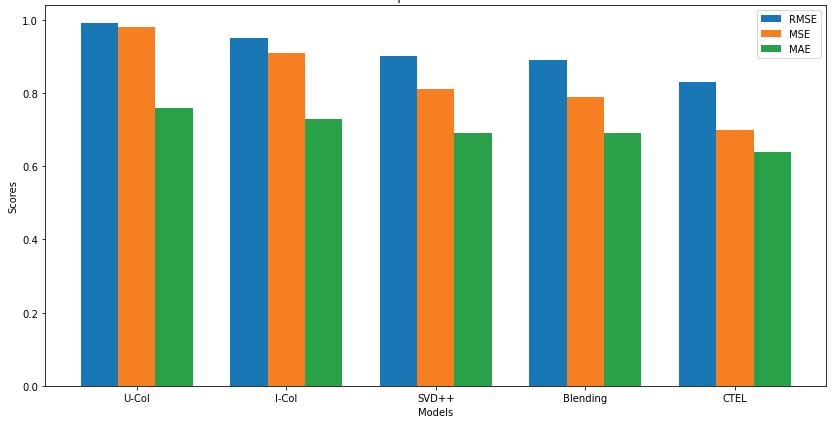
3.8.3.Meta‐learnertraining
Theaggregatedmeta‑featuresandtargetsfromthe cross‑validationprocedurearethenusedtotrainthe meta‑learner,aLinearRegressionmodel.Byutilizing theadvantagesofeachindividualmodel,themeta‑ learnerlearnshowtointegratethepredictionsofthe basemodelsinthebestpossiblewaytoreducepredic‑ tionerror.
3.9.Evaluation
Lastly,thetestsetisusedtoassesstherecommen‑ dationsystem’sperformance.Thepredictionsfrom thetraininguser‑basedCF,item‑basedCF,andSVD modelsareusedtocreatemeta‑featuresforthetest set.Theaccuracyoftherecommendationsismea‑ suredusingRootMeanSquaredError(RMSE),Mean SquaredError(MSE),andMeanAbsoluteError(MAE) whenthemeta‑learnermakesits inalpredictionson thetestset.
Thepseudo‑labelingprocessinCTELdependson acon idencethresholdthatcontrolswhichpredicted ratingsareacceptedaspseudo‑labels.Theseparam‑ etersin luencehowadditionaltrainingdataaregen‑ eratedduringeachco‑traininground.Whenpseudo‑ labelsareselectedwithsuf icientlyhighcon idence, themajorityofthenewsamplescontributecorrect informationtothelearningprocess.Thisincreasesthe effectivedensityoftheuser–itemmatrix,improving modelgeneralisationundersparseconditions.Con‑ versely,ifthecon idencethresholdistoolow,alarger fractionofinaccuratepseudo‑labelsisintroduced, leadingtoaccumulatederrorandmodeldrift.Hence, thereexistsacriticalprecisionlevelabovewhicheach co‑trainingiterationcontinuestoreduceoverallerror.
ExplicitratingsfromthepubliclyavailableMovie‑ Lens100K(ML‑100K)datasetandtheFilmTrust dataset,gatheredfromtheFilmTrustsocialnetwork, areusedtoevaluatetheproposedtechniqueexperi‑ mentally.TheMovieLensdatasethasaratingdensity of6.3%,andtheFilmTrustdatasethasaratingdensity of1.14%(Table5),highlightingthedegreeofsparsity inthedatasetsforratingpredictiontasks[48].
SVD,Blending,item‑basedcollaborative iltering, anduser‑basedcollaborative ilteringweretested
Figure2. Comparisonofmetricsacrossdifferentmodels (MovieLensdataset) againsttheCTELmodel.TheCTELmodeloutper‑ formedtheothermethods,achievingnotablylower errorratesonbothdatasets.
AsshowninTable 6,ourproposedmodelhas consistentlyoutperformedalternativeapproaches. BasedontheevaluationcriteriaofRMSE,MSE,and MAE,ourmodelachievesbetterresultsthanother existingtechniquesonbothdatasets.Whilethe Semi‑SupervisedCollaborativeFilteringEnsemble (SSEF)existingmodelintroducedastaticco‑training andblendingframework,theproposedCTELmethod focusesonenhancingsparsityhandlingthrough re inedco‑trainingandadvancedmeta‑feature integration.CTELperformsdedicatedco‑training betweenuser‑basedanditem‑basedCFmodels ratherthanbetweenCFandMFviews,allowingview‑ speci icre inement[40].Furthermore,itsstacking phaseincorporatesstatisticalmeta‑features,such asinter‑modelvarianceandpredictioninteractions, enablingthemeta‑learnertocaptureagreement patternsamongbasemodelsbetter.Thesedesign differencesmakeCTELmoreresilienttodatasparsity comparedtostaticsemi‑supervisedensembles. ThedatashowthattheCTELmodelperforms betterthantheseconventionaltechniquesacrossall metrics.
Inparticular,collaborative ilteringapproaches basedonusersanditemsdemonstratedhigherRMSE, MSE,andMAEvaluesthantheCTELmodel,despite theireffectiveness.Evenwithitsresilience,theSVD techniquewasnotasaccurateastheCTELmodel.The CTELmodelevensurpassedtheblendingstrategy, whichcombinespredictionsfromdifferentmodels. BecausetheCTELmodelincorporatesbothensemble learningandco‑training,itleveragesdifferentcollab‑ orative ilteringtechniques,producingmoreaccurate suggestions.TheCTELmodel’sbetterperformanceon bothdatasetsdemonstratesitsef icacyandmarksa noteworthydevelopmentinthe ieldofrecommenda‑ tionsystems.
Thegraphsfortheperformancemetrics(RMSE, MSE,andMAE)ofourproposedCTELmodel,com‑ paredwithSVD,blending,user‑basedcollaborative iltering,anditem‑basedcollaborative iltering,for theMovieLensandFilmTrustdatasetsareshownin Figure 2 andFigure 3,respectively.Thecomparison resultsfortheMovieLensshowninFigure2showthat
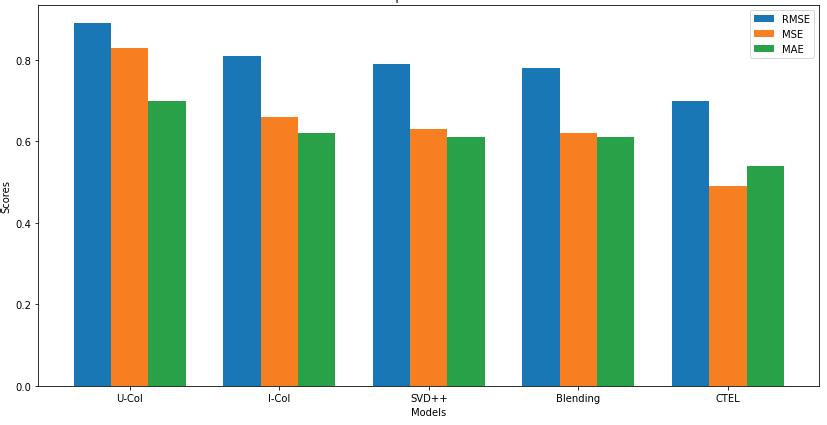
Figure3. Comparisonofmetricsacrossdifferentmodels (FilmTrustdataset)
Table7. PerformanceofCTELandbaselinemodelsat varyingdatasparsitylevels
Data
theCTELmodelconsistentlyproduceslowererror rates.OntheFilmTrustdataset,theCTELmodelout‑ performsconventionalapproaches,asillustratedin Figure3.
Tofurthervalidatetherobustnessoftheproposed CTELframeworkundersparsedataconditions,aspar‑ sitysensitivityanalysiswasconducted.TheMovie‑ Lens100Kdatasetwasrandomlysubsampledtosim‑ ulatedatadensitiesof100%,60%,40%,and20%. TheCTELmodelwascomparedagainstaconventional staticblendingensemblesimilartoSSEF[40]andindi‑ vidualbaselearners.
AsshowninTable7,CTELmaintainssigni icantly lowerRMSEacrossallsparsitylevels.Whenthedata densityisreducedfrom100%to20%,theRMSEof staticblendingincreasesby0.09,whereastheRMSEof CTELincreasesonlyby0.06.ThisindicatesthatCTEL effectivelyhandlesdatasparsitybyutilizinghigh‑ con idencepseudo‑labelsandcomplementarymodel viewsthroughco‑trainingandstacking.
ThisstudyintroducestheCTEL(Collaborative ilteringwithTuningEnsembleLearning)model, demonstratingtheeffectivenessofcombining semi‑supervisedlearningandensembletechniques toenhancecollaborative ilteringinrecommendation systems.Ourapproachaddresseskeychallengessuch asdatasparsity,scalability,andgeneralizability— issuesthatoftenhindertheperformanceoftraditional recommendationmodels.Throughextensivetesting ontheMovieLensandFilmTrustdatasets,weobserve signi icantimprovementsinstandardevaluation metricssuchasRMSE,MSE,andMAE,suggestingthat theCTELmodelisnotonlyeffectiveinhandlingsparse databutalsomaintainsrobustnessandaccuracy acrossdiversedatasets.Whencomparedtoother state‑of‑the‑artmodelsintheliterature,suchasthose
employingdeeplearningforcollaborative iltering (e.g.,NeuralCollaborativeFiltering(NCF))orthose usingmatrixfactorization‑basedmethods(e.g.,ALS orSVD++),ourCTELmodelstandsoutforitsnovel integrationofsemi‑supervisedlearningtogenerate morereliablepseudo‑labelsforunlabeleddataandthe applicationofensemblelearningtocombinemultiple weaklearnersintoamorerobustandscalablesystem. Whilepreviousstudieshaveexploredtheuseofsemi‑ supervisedtechniquestoimproverecommendation quality,fewhavesimultaneouslyaddressedthe challengesofensemblemethodsinthisdomain,with afocusonscalabilityandreal‑timeadaptabilityto newdata.Althoughfutureworkmayexploreneural meta‑learnerstoevaluatedeeperfeatureinteractions, thecurrentlinearapproachalignswiththegoals ofinterpretability,reproducibility,andstabilityin sparserecommendationscenarios.
Themodel’sabilitytohandlesparseuser‑item interactionsanditsscalabilityareparticularlynote‑ worthy.Comparedwithtraditionalmethods,which maystrugglewithdatasparsityandover itting,our CTELmodeldemonstratessuperiorperformancein predictinguserpreferenceseveninthepresenceof missingdata,makingitmoresuitableforlarge‑scale real‑worldapplicationswheredataisoftenincom‑ pleteornoisy.Moreover,byincorporatingensem‑ blelearning,ourapproachismore lexibleandless pronetoover itting,acommonchallengewithcom‑ plexmodelsthatrelyonlimitedlabeleddata.While theresultsarepromising,severalavenuesremain forfuturework.Tofurtherenhancetheperformance oftheCTELmodel,futureresearchcouldexplore moresophisticatedfeatureengineeringtechniques, suchasintegratingcontextualfeatures(e.g.,tem‑ poral,geographic,ordemographicdata)ormulti‑ modaldata(e.g.,combiningtextandimagedatafrom moviedescriptionsoruserreviews).Additionally,the model’seffectivenesscouldbeevaluatedonabroader setofdatasetsacrossdifferentdomains,including e‑commerce,healthcare,andsocialmediaplatforms, toassessitsversatilityandadaptability.Lastly,fur‑ therexplorationofactivelearningstrategiescould helpminimizerelianceonlabeleddata,makingthe modelevenmoreef icientinenvironmentswithlim‑ itedlabeleddata.Thus,ourCTELmodelrepresentsa promisingstepforwardinthedevelopmentofscal‑ able,accurate,androbustrecommendationsystems. Bycombiningsemi‑supervisedlearningandensemble methods,itoffersanovelsolutiontothepersistent challengesofdatasparsity,over itting,andscalability incollaborative iltering.Itscomparativeadvantage liesinitsabilitytoeffectivelycombineweaklearn‑ erswhileutilizingunlabeleddata,offeringvaluable insightsforbothacademiaandindustryinthequest formorepreciseandtrustworthyrecommendation systems.
AUTHORS
NishaSharma –AssamDownTownUniversity, Panikhaiti,Guwahati,Assam,India,e‑mail: nisha.gu24@gmail.com.
MalaDutta∗ –AssamDownTownUniversity, Panikhaiti,Guwahati,Assam,India,e‑mail: mala.dutta@adtu.in.
∗Correspondingauthor
[1] A.A.Abdullah,M.M.Hassan,andY.T.Mustafa, “LeveragingBayesiandeeplearningandensem‑ blemodelsforimproveduncertaintyquanti ica‑ tioninrecommendations,” Heliyon,vol.10,no.2, 2024,e24188.
[2] G.AdomaviciusandA.Tuzhilin,“Towardthenext generationofrecommendersystems:Asurvey ofthestate‑of‑the‑artandpossibleextensions,” IEEETransactionsonKnowledgeandDataEngi‑ neering,vol.17,no.6,2005,pp.734–749.
[3] C.C.Aggarwal, RecommenderSystems:TheText‑ book (2nded.),Springer,2023.
[4] J.Bobadilla,F.Ortega,andA.Hernando,“Collabo‑ rative ilteringtechniques:Newperspectivesand futuredirections,” InformationFusion,vol.92, 2023,pp.245–261.
[5] R.Cheraghi,A.M.Mahfoozi,S.Zolfaghari, M.Shabani,M.Ramezani,andH.R.Rabiee, “Epistemicuncertainty‑awarerecommendation systemsviaBayesiandeepensemblelearning,” arXiv preprint,2025,arXiv:2504.10753.
[6] V.CoscratoandD.Bridge,(202.“Recommen‑ dationuncertaintyinimplicitfeedbackrecom‑ mendersystems,” CommunicationsinComputer andInformationScience(AICS2022),Springer, 2023.
[7] X.He,L.Liao,H.Zhang,andT.S.Chua,“Neu‑ ralcollaborative ilteringrevisited:Deepinter‑ actionmodelinginrecommendationsystems,” IEEETransactionsonKnowledgeandDataEngi‑ neering,vol.36,no.2,2024,pp.410–423.
[8] N.KnyazevandH.Oosterhuis,“Alightweight methodformodelingcon idenceinrecommen‑ dationswithlearnedBetadistributions,” arXiv preprint,2023,arXiv:2308.03186.
[9] Y.Koren,R.Bell,andC.Volinsky,C,“Matrix factorizationtechniquesforrecommendersys‑ tems,” IEEEComputer,vol.42,no.8,2009, pp.30–37.
[10] D.D.Lee,andH.S.Seung,“Algorithmsfornon‑ negativematrixfactorization,” AdvancesinNeu‑ ralInformationProcessingSystems,vol.13,2001, pp.556–562.
[11] D.Liang,R.Krishnan,M.D.Hoffman,and T.Jebara,“Variationalautoencodersfor collaborative iltering,” arXiv preprint,2018, arXiv:1802.05814.
[12] T.Liu,C.Gao,Z.Wang,D.Li,J.Hao,D.Jin, andY.Li,“Uncertainty‑awareconsistencylearn‑ ingforcold‑startitemrecommendation,” arXiv preprint,2023,arXiv:2308.03470.
[13] X.Ning,X.Wang,S.Xu,W.Cai,L.Zhang,L.Yu,and W.Li,“Areviewofresearchonco‑training,” Con‑ currencyandComputation:PracticeandExperi‑ ence,vol.35,no.18,2021,e6276.
[14] S.Rendle,W.Krichene,L.Zhang,andJ.Ander‑ son,“Neuralcollaborative ilteringvs.matrix factorizationrevisited,” arXiv preprint,2020, arXiv:2005.09683.
[15] F.Ricci,L.Rokach,andB.Shapira, Recommender SystemsHandbook (3rded.),Springer,2022.
[16] R.SalakhutdinovandA.Mnih,“Bayesianproba‑ bilisticmatrixfactorizationusingMarkovchain MonteCarlo,” Proceedingsofthe25thInterna‑ tionalConferenceonMachineLearning,2008,pp. 880–887.
[17] H.Wang,Z.Sun,Y.Du,L.Zhang,T.He,andY.‑ S.Ong,“Uncertainmulti‑objectiverecommen‑ dationviaorthogonalmeta‑learningenhanced Bayesianoptimization,” arXiv preprint,2025, arXiv:2502.13180.
[18] S.WangandY.Zhang,“Hybridcollaborative il‑ teringviacontent–contextfusion:Acomprehen‑ sivereview,” ExpertSystemswithApplications, vol.228,2023,120979.
[19] W.Xu,J.Zheng,J.Lin,M.Han,andJ.Du, “Uni iedrepresentationlearningformulti‑ intentdiversityandbehavioraluncertaintyin recommendersystems,” arXiv preprint,2025, arXiv:2509.04694.
[20] Z.Xu,Z.Yang,Z.Guo,S.Liu,L.Lin,X.Liu, Y.Liu,andH.Li,“UMRE:Auni iedmono‑ tonictransformationforrankingensemblein recommendersystems,” arXiv preprint,2025, arXiv:2508.07613.
[21] S.Zhang,L.Yao,A.Sun,andY.Tay,“Deeplearning basedrecommendersystem:Asurveyandnew perspectives,” ACMComputingSurveys,vol.52, no.1,2017,pp.1–38.
[22] S.Zhang,K.Liu,Z.Yu,B.Feng,andZ.Ou,“Hybrid recommendationsystemcombiningcollabora‑ tive ilteringandcontent‑basedrecommenda‑ tionwithkeywordextraction,” AppliedandCom‑ putationalEngineering,vol.2,2023,pp.927–939.
[23] N.Srivastava,G.Hinton,A.Krizhevsky, I.Sutskever,andR.Salakhutdinov,“Dropout: Asimplewaytopreventneuralnetworks fromover itting,” JournalofMachineLearning Research,vol.15,no.1,2014,pp.1929–1958.
[24] J.Dean,G.Corrado,R.Monga,etal.,“Large‑scale distributeddeepnetworks,” AdvancesinNeural InformationProcessingSystems,vol.25,2012.
[25] G.E.Hinton,O.Vinyals,andJ.Dean,“Distilling theknowledgeinaneuralnetwork,” NeuralNet‑ worksDeepLearning,2015,arXiv:1503.02531.
[26] G.Brown,“Ensemblelearning,” Encyclopediaof MachineLearning,Springer,2011.
[27] J.Bergstra,R.Bardenet,Y.Bengio,andB.Kégl, “Algorithmsforhyper‑parameteroptimization,” AdvancesinNeuralInformationProcessingSys‑ tems,vol.24,2011.
[28] J.L.Herlocker,J.A.Konstan,L.G.Terveen,and J.T.Riedl,“Evaluatingcollaborative ilteringrec‑ ommendersystems,” ACMTransactionsonInfor‑ mationSystems,vol.22,no.1,2004,pp.5–53.
[29] A.I.Schein,A.Popescul,L.H.Ungar,and D.M.Pennock,“Methodsandmetricsforcold‑ startrecommendations,” ProceedingsoftheACM SIGIRConferenceonResearchandDevelopmentin InformationRetrieval,2002,pp.253–260.
[30] G.WidmerandM.Kubat,“Learninginthepres‑ enceofconceptdriftandhiddencontexts,” MachineLearning,vol.23,no.1,1996,pp.69–101.
[31] M.T.Ribeiro,S.Singh,andC.Guestrin,“Why shouldItrustyou?Explainingthepredictions ofanyclassi ier,” Proceedingsofthe22ndACM SIGKDDInternationalConferenceonKnowledge DiscoveryandDataMining,2016.
[32] S.M.LundbergandS.I.Lee,“Auni iedapproach tointerpretingmodelpredictions,” Advancesin NeuralInformationProcessingSystems,vol.30, 2017.
[33] L.H.Gilpin,D.Bau,B.Z.Yuan,etal.,“Explaining explanations:Anoverviewofinterpretabilityof machinelearning,” Proceedingsofthe2018CHI ConferenceonHumanFactorsinComputingSys‑ tems,2018.
[34] C.Dwork,F.McSherry,K.Nissim,andA.Smith, “Calibratingnoisetosensitivityinprivatedata analysis,” TheoryofCryptography,2006,pp.265–284.
[35] S.Goldwasser,S.Micali,andR.Rivest,“Secure multi‑partycomputationwithoutagreement,” JournalofCryptology,vol.18,2005,pp.247–287.
[36] P.VoigtandA.VondemBussche, TheEUGeneral DataProtectionRegulation(GDPR):APractical Guide,Springer,2017.
[37] RoyD,DuttaM.Asystematicreviewandresearch perspectiveonrecommendersystems.Journalof BigData.2022;9:59.doi:10.1186/s40537‑022‑ 00592‑5.
[38] P.Datta,“MovieLens100kdataset,” Kaggle,2016. Available:https://www.kaggle.com/datasets/ prajitdatta/movielens‑100k‑dataset
[39] G.Guo,“FilmTrustdataset,” LibRec,2011.Avail‑ able:https://guoguibing.github.io/librec/data sets.html
[40] J.Wu,X.Sang,andW.Cui,“Semisupervisedcol‑ laborative ilteringensemble,” WorldWideWeb, 37vol.24,2021,pp.19411960.
[41] HuY,KorenY,VolinskyC.Collaborative iltering forimplicitfeedbackdatasets.Proceedings ofthe2008EighthIEEEInternational ConferenceonDataMining.2008:263‑272. doi:10.1109/ICDM.2008.22.
[42] A.MnihandR.Salakhutdinov,“Probabilistic matrixfactorization,” AdvancesinNeuralInfor‑ mationProcessingSystems,2008,pp.1257–1264.
[43] S.Rendle,“FactorizationmachineswithlibFM,” ACMTransactionsIntelligentSystemsandTech‑ nology,vol.3,2012,pp.1–22.
[44] H.Wang,N.Wang,andD.Yeung,“Collaborative deeplearningforrecommendersystems,” Pro‑ ceedingsofthe21stACMSIGKDDInternational ConferenceonKnowledgeDiscoveryandData Mining,2015,pp.1235–1244.
[45] GamaJ,ZliobaiteI,BifetA,PechenizkiyM, BouchachiaA.Asurveyonconceptdriftadapta‑ tion.ACMComputingSurveys.2014;46(4):Arti‑ cle44.doi:10.1145/2523813.
[46] Ben‑NunT,Hoe lerT.Demystifyingparallel anddistributeddeeplearning:anin‑depthcon‑ currencyanalysis.ACMComputingSurveys. 2019;52(4):65:1‑65:43.doi:10.1145/3320060.
[47] AdadiA,BerradaM.Peekinginsidethe black‑box:asurveyonexplainablearti icial intelligence.IEEEAccess.2018;6:52138‑52160. doi:10.1109/ACCESS.2018.2870052.
[48] ZhangY,ChenX.Explainablerecommendation: asurveyandnewperspectives.Foundationsand TrendsinInformationRetrieval.2020;14(1): 1‑101.doi:10.1561/1500000066.
Submitted:10th June2025;accepted:24th November2025
MuhammadAimanbinMohdAsyraf,RozmieRazifBinOthman,MohdZamriBinZahirAhmad,AhmadAshrafAbdul Halim,KentaroGo,NuraminahbintiRamli,R.BadlishahAhmad,LatifahMunirahKamarudin,MuradMuhammad HasanSalihAl‑Walidi
DOI:10.14313/jamris‐2026‐028
Abstract:
T‐waycombinatorialtestingisanessentialapproachfor optimizingtestsuitegenerationbysystematicallycover‐ingparameterinteractionswhileminimizingtestcases. Variousmetaheuristicstrategieshavebeenintroduced toimprovetestsuitegeneration,withanincreasing focusonbalancingexplorationandexploitationforeffi‐cienttestselection.Thisstudyinvestigatesthesandcat swarmoptimization(SCSO)algorithmasametaheuristic strategyfort‐waytestsuitegeneration.Inspiredbythe huntingbehaviorofsandcats,SCSOdynamicallyadjusts sensitivityfactorstoimprovetestsuitegenerationeffi‐ciency.ToevaluateSCSO’sperformance,30benchmark experimentswereconductedacrossfourgroupsoft‐way configurations,withtvaryingfrom2to6andvranging from2to10.Eachconfigurationwasexecutedfivetimes, andthesmallesttestsuitesizewasselectedforanalysis. ExperimentalresultsdemonstratethatSCSOoutperforms 15.79%ofcompetingstrategies,achievescomparable performancein42.11%ofcases,andisoutperformed in42.11%ofbenchmarkcomparisons.Thesefindings highlightSCSO’scapabilityofgeneratingcompetitivetest suites,particularlyint‐wayinteractiontesting.Thestatis‐ticalevaluations,includingWilcoxonRankandFriedman MeanRanktests,furthervalidateSCSO’sperformancein comparisontoothermetaheuristicapproaches.Although SCSOeffectivelyreducestestsuitesizewhilemaintaining interactioncoverage,furtherenhancementsareneces‐sarytoimproveitsadaptabilityandcomputationaleffi‐ciencyacrossdiverseconfigurations.Futureworkshould focusonrefiningSCSO’sexplorationmechanismstoopti‐mizesearchefficiencyandextenditsapplicabilityincom‐binatorialtestgeneration.
Keywords: T‐waycombinatorialtesting,testsuitegener‐ation,sandcatswarmoptimization(SCSO),metaheuristic algorithm
Softwaresystemsaredeeplyembeddedinvar‑ iousdomains,including inance,healthcare,avia‑ tion,andcriticalinfrastructure,makingtheirrelia‑ bilityafundamentalconcern.Demandforsoftware applicationshasraisedthebarfordevelopedsoft‑ warequalityassurance[1].Softwareproductsmustbe dependableandhighqualitytoful illeverycustomer’s
expectationsandrequirements[2].Asinglesoftware failurecanleadtocatastrophicconsequences,ranging from inanciallossesandsecuritybreachestosafety risksandoperationaldisruptions.Softwaretesting servesasaqualityassurancemechanism,systemati‑ callyidentifyingdefectsandvulnerabilitiesthatcould compromisesystemintegrity.Withanestimated40% oftotaldevelopmentexpenses,softwaretestingisan especiallyexpensiveportionofthesoftwaredevel‑ opmentprocess[3].However,asmodernsoftware applicationsbecomeincreasinglycomplex,traditional methodortestingapproachesfacesigni icantchal‑ lengesinachievingcomprehensivevalidationwithin practicaltimeandresourceconstraints[4].
Ensuringsoftwarereliabilityrequiresef icienttest designstrategiesthatbalancecoverageandef iciency. Interaction‑relatedfaultsareamongthecrucialerrors thatmustbedisclosedbecauseanybreakdownin theseinteractionswouldimpactmainfunctionalities ofthesystem[5].Exhaustivetestingisimpracticaldue totheexponentialgrowthoftestcases,makingcom‑ binatorialtestingapreferredapproachforsystemati‑ callycoveringparameterinteractionsbecauseselect‑ ingatleastonetestcasemustbecoveredforeach t‑way(tistheinteractionstrength)combinationof inputparametersofacon igurationsystemthatcover allt‑wayinteractionsamonginputparameters[6,7]. Theprocessofcombinatorialtestinginvolvesde ining theinputspace(samplingtheinputcon iguration), constructingoptimizedtestcasesthatensureinterac‑ tioncoverage,andexecutingthetestsuitetodetect faults[8].
Generatingoptimalcombinatorialtestsuites remainscomputationallychallenging,making dif icultcombinatorialtestingachallengeanda signi icantresearchlimitation[9].Metaheuristic algorithms,suchasgeneticalgorithms(GAs), particleswarmoptimization(PSO),antcolony optimization(ACO),andwhaleoptimization algorithm(WOAs)havebeenappliedtooptimize testsuitesizeandaddresstheminimumcovering arraygeneration(MCAG)problem[10].However, thenondeterministicpolynomial(NP)hardnature oftestsuiteoptimization,wherenosinglestrategy canguaranteethatitalwaysproducesthebesttest suitesizeforallcon igurations,presentschallenges forexistingalgorithms,creatingopportunitiesfor
newmetaheuristicapproachestoimproveef iciency andcoverage[11].Currentmethodsstrugglewith selectivepressure,prematureconvergence,inef icient exploration,andhighcomputationalcosts,limiting theireffectivenessinlarge‑scalecon igurations[12].
Nonetheless,accordingtothenofreelunch(NFL) theorem,nosingleoptimizationalgorithmcansolve alloptimizationdomains[13].Thissuggeststhatan algorithm’sperformanceishighlydependentonthe natureoftheproblem,makingtheintegrationofmeta‑ heuristicalgorithmsintospeci icapplications,such ast‑waycombinatorialtestgeneration,anongoing researchchallenge.Motivatedbythis,thepresent studyexplorestheapplicationofSCSOint‑waytesting.
SCSOisarecentlyintroducedmetaheuristic inspiredbytheadaptivehuntingbehaviorofsand cats,whichattackorsearchforpreyaccordingto thesoundfrequency[14].Unliketraditionalswarm‑ basedoptimizationtechniques,SCSOincorporates astochasticmovementstrategythatdynamically adjustsitssearchbehavior,effectivelybalancing explorationandexploitation.Ithasdemonstrated strongperformancein indingoptimalsolutions withfewerparametersandreducedcomputational overhead[15].Thisadaptabilitymakesitparticularly suitableforoptimizationproblemsthatrequire ef icientnavigationoflargesearchspaces.While SCSOhasbeensuccessfullyappliedtovarious optimizationdomains,itspotentialforcombinatorial testsuitegenerationremainsunexplored.Givenits uniquesearchmechanism,SCSOcouldserveasan alternativeapproachforminimizingtestsuitesize whileensuringcomprehensiveparameterinteraction coverage.
Motivatedbyitsreportedadvantages,thisstudy aimstoevaluatetheperformanceofSCSOint‑way combinatorialtestsuitegenerationandcompareit againstexistingmetaheuristic‑basedapproaches.The remainderofthispaperisstructuredasfollows.Sec‑ tion2presentsacomprehensivereviewofcombina‑ torialtestingstrategiesandmetaheuristicoptimiza‑ tiontechniques.Section3detailsthemethodology, includingtheadaptationofSCSOfortestsuitegenera‑ tion.Section4discussestheexperimentalsetup,data sets,andevaluationcriteria.Section5presentsthe resultsandanalysis,followedbySection6,whichcon‑ cludesthestudyandoutlinespotentialfutureresearch directions.
Softwaretestingplaysacrucialroleinensuring thequalityandreliabilityofmodernsoftwaresys‑ tems[16].Asapplicationsbecomeincreasinglycom‑ plex,thenumberofcon igurableparametersexpands, leadingtoanexponentialgrowthinpossibleinput combinations.Exhaustivetesting(amethodthattests allcombinations),whiletheoreticallyensuringcom‑ pleteaccuracy,becomesimpracticalduetoexcessive computationalcostsandtimeconstraints,asthecom‑ binatorialexplosionproblemmakesitunfeasiblefora largenumberofinputparameters[12].Toaddressthis
challenge,combinatorialtestinghasemergedasan effectiveapproach,focusingoncoveringt‑wayinter‑ actionsbetweeninputparameters,ratherthantesting everypossiblecombination.Thismethodprovidesa structuredwaythateffectivelyreducesthenumber oftestcasesneededcomparedtoexhaustivetesting whilemaintainingadequatecoverageofparameter interactions[17].
Thecoreprinciplebehindt‑waytestingisbased onempiricalobservationsthatshowmostsoftware failuresarecausedbytheinteractionofasmallsubset ofinputparametersratherthantheentireinputspace thatcanreachanincorrectresult[18].Studieshave shownthatpairwise(2‑way)testingcandetectalarge percentageofdefectswhileincreasingtheinteraction strength(t)enhancesfaultdetection.Bysystemati‑ callycoveringallpossiblet‑wayinteractions,combi‑ natorialtestingensuresthatcriticalparameterinter‑ actionsaretested,improvingsoftwarequalitywith‑ outrequiringaninfeasiblenumberoftestcases.The effectivenessofthisapproachdependsonselectingan appropriatet,wherehighervaluesprovidebetterfault detectionatthecostofincreasedtestsuitesize.
Combinatorialtestsuitegenerationreliesonthe constructionofcoveringarrays(CAs),whicharemath‑ ematicalstructuresthatensurethatallt‑waycombi‑ nationsappearinatleastonetestcase.Acovering arrayisrepresentedasCA(N;t,k,v),whereNdenotes thenumberoftestcases,tistheinteractionstrength, kisthenumberofparameters,andvrepresentsthe possiblevalueseachparametercantake[10].The goaloftestsuitegenerationistominimizeNwhile maintainingfullt‑waycoverage,asasmallertestsuite reducesexecutiontimeandtestingcosts.Constructing anoptimalCAarrayiscomputationallychallenging, requiringef icientstrategiestogenerateminimaltest suiteswhilemaintainingcompleteinteractioncover‑ age.
Exhaustivetestinginvolvesevaluatingeverypos‑ siblecombinationofinputparameters,whichquickly becomesinfeasibleduetothecombinatorialexplo‑ sion.T‑waytestingcancoveralloftheimportantinter‑ actioncomponentsatleastonce,andthesizeofthe testsuiteisreducedinproportiontotheinteraction strength,“t”[19].Itcanimprovetheeffectiveness ofsoftwaretestingfromdifferentcon igurationsys‑ temswhilesimultaneouslyloweringtheanticipated costandtime[20].Italsomakescombinatorialtest‑ inghighlyef icient,especiallyforlarge‑scalesoftware systemswheretimeandcostaremajorconcerns.It allowsteamstodetectpotentialissuesearly,optimize resources,andaccelerateproductdeliverywithout gettingstuckinanever‑endingcycleofexhaustive testing[21].
Combinatorialtestingcanbecategorizedinto twovariationsbasedoninteractionstrength:uni‑ forminteractionstrengthandvariableinteraction strength[10].Uniformstrengthinteractionmeans thatallinputparameterssharethesamelevelofinter‑ actionwheretheCAmaintainsaconsistentinterac‑ tionstrengthacrossallparameters,ensuringuniform
testcoverage[22].Variablestrengthaloneguarantees andhasmorethanoneinteractionstrengthforgen‑ eratingtestcases[22].Itassignsdifferentt‑waylev‑ elstoparametersbasedonsystemcriticality.This approachoptimizestestcoveragewithoutunneces‑ sarilyincreasingtestsuitesize[10].
Metaheuristicalgorithmshavegainedsigni icant attentionincombinatorialtestingduetotheirability toexplorelargesolutionspacesandoptimizetestsuite sizewhileensuringfullcoverage.Itisbecauseithas capabletoescapefromlocaloptimaandperforma robustsearchofasearchspace[23].Algorithmssuch asGA,ACO,andWOAleverageheuristic‑basedsearch techniquesareableto indnear‑optimaltestsuites underseveralconditionswhicharebalancingexplo‑ ration(globalsearch)andexploitation(localre ine‑ ment)tominimizethenumberoftestcases.These methodshaveprovenparticularlyusefulinlarge‑scale andhighlycon igurablesoftwaresystems,whereas traditionaltechniquesstruggletoprovideef icient solutions.
Ascombinatorialtestingcontinuestoevolve,its integrationwithoptimizationtechniquesremainsa keyareaofresearch.Thechallengeofgeneratingopti‑ maltestsuitesef icientlyrequiresabalancebetween computationalfeasibilityandmaximizinginteraction coverage.Metaheuristicapproachesprovidepromis‑ ingsolutionstothisproblembyleveragingintelli‑ gentsearchmechanismstominimizetestsuitesize whilemaintaininghighdefectdetectionef iciency.It canexploitstochasticbehaviortosearchforthebest testcasesthroughonlyseveraliterations[17].With thegrowingcomplexityofmodernsoftwaresystems, combinatorialtestingisbecominganindispensable methodologyinensuringrobustandef icientsoftware validation.
2.1.ProblemDefinitionModel
Figure 1 illustratestheconceptoft‑waytesting usingan“onlinelearningsystem”application.This system ilterslearningcontentbasedon iveparam‑ eters:usertype,deviceused,levelcoursedif iculty, contentformat,andinteractionmode.Theusertype iscategorizedintotwogroups:studentandteacher. Thedeviceusedisclassi iedasmobilephoneorlap‑ top,whilethecoursedif icultyfallsintothreelevels: beginner,intermediate,andadvanced.Thecontent formatisvideoandtext,andtheinteractionmodeis categorizedasself‑paced,live,andhybrid.Tosimplify theexplanation,eachparameterisassignedadistinct notation(e.g.,U1andU2forusertype,D1andD2 fordeviceused,L1,L2,andL3forlevelcoursedif‑ iculty).Table 1 providesasimpli iedrepresentation oftheparametersandtheirpossiblevaluesforthis system.
Totestsuchasystem,exhaustivetesting,which involvesgeneratingallpossiblecombinationsof parameterinteractionstoachievecompletecoverage, couldbeapplied.Forthegivensystem,full‑strength interactiontesting(wheret=5)resultsin72test cases(2 × 3 × 2 × 3 × 2=72).Whileexhaus‑ tivetestingtheoreticallyensurescompleteaccuracy,
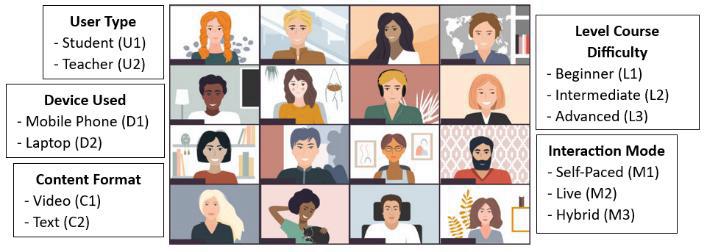
Filterforonlinelearningsystem
Table1. ClassificationRepresentationofInput Parameters
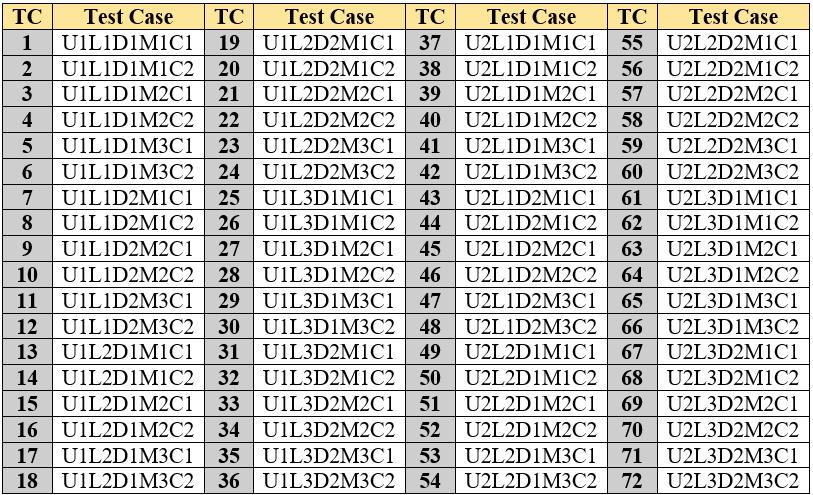
Figure2. Listofgeneratedtestcasesforexhaustive testing
itbecomesimpracticalwhendealingwithalarge numberofinputparametersduetothecombinatorial explosionproblem[12].Figure2showstestcasesfor exhaustivetestingbasedontheonlinelearningsystem application.
Toaddressthisissue,thenumberoftestcasescan besigni icantlyreducedbyapplyingt‑waytestingwith alowerinteractionstrength(t).Forinstance,pairwise testing(t=2)ensuresthatallpairsofparameter interactionsaretested,therebyreducingthenumber oftestcaseswhilemaintainingsuf icientcoverage. T‑waytestingfocusesontestingparameterinterac‑ tionsuptoade inedstrength(t).Forexample,2‑way testingensuresthatallpairwiseinteractionsarecov‑ ered,signi icantlyreducingthenumberoftestcases comparedtoexhaustivetesting.Techniquessuchas uniformstrength(pairwise)testingprovide lexibility inprioritizingcriticalinteractions.
Inpairwisetesting(t=2),onlyspeci icpairs ofparametersaretestedforinteractions,whilethe remainingnoninteractingparametersareassigned randomvalidvalues(denotedasDX)toformcom‑ pletetestcases.Forthegivensystem,theinteracting pairsincludeUL,UD,UM,UC,LD,LM,LC,DM,DC,and MC.Figure 2 demonstratestheconstructionoftest casesusingt‑waytestingwitht=2.Anyduplicatetest
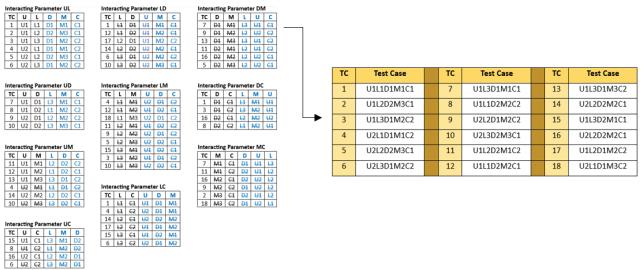
Figure3. Testcasegenerationfort=2andlistoftest casesfort‐way casesareremoved,andonlyuniquecombinationsare retainedas inaltestcases.
AsshowninFigure 3,t‑waytestingsigni icantly reducesthenumberoftestcasesfrom72(inexhaus‑ tivetesting)to18,achievingareductionofover 75%.Despitethisreduction,thetestcasesmaintain adequatecoverageofparameterinteractions,ensur‑ ingeffectivefaultdetection.Thisapproachnotonly reducesthenumberoftestcasesbutalsominimizes resourceconsumption,suchastimeandcost,making thetestingprocessmoreef icient.
Researchint‑waycombinatorialtestinghassignif‑ icantlyevolved,transitioningfromtraditionalcompu‑ tationalapproachestomodernmetaheuristicmeth‑ ods.Computationalapproaches,rootedinalgebraic techniques,havebeenfundamentalint‑waytestsuite generation.Thesemethodsemployheuristicrulesand greedystrategiestocoveruncoveredtestcombina‑ tions[24].However,whilecomputationalmethods offer lexibilityandsupportforcomplexcon igura‑ tions,theystrugglewithef iciency,aslongercompu‑ tationaltimesarerequiredtohandleextensivetest combinations[25].Thislimitationhighlightstheneed formorescalablesolutions.Toaddressthesechal‑ lenges,metaheuristicalgorithmshaveemergedasan effectivealternativefort‑waytestsuitegeneration. Metaheuristicstypicallybeginwitharandomsolution anditerativelyapplysearchtechniquestoimprove itness.Thoughnotperfectlyaccurate,thesemethods ef icientlyproducenear‑optimalsolutionsinlessexe‑ cutiontimethancomputationalmethods.Metaheuris‑ ticalgorithmsenableamorerobustandadaptive learningprocess,ultimatelyenhancingthenetwork’s abilitytosolvevariouschallengingproblemsinvolving t‑wayinteractions[26].
Withinthiscontext,t‑waytestingstrategies arebroadlycategorizedintotwofundamental approaches:one‑test‑at‑a‑time(OTAT)andone‑ parameter‑at‑a‑time(OPAT).OTATstartswithan emptytestsuite,wheretestcasesareaddedone byoneuntilallinteractionsarecovered.Whenever atestcaseischosen,itisincludedinthe inal suite(verticalextension).OTATstrategieshave beenextensivelyexploredinresearchduetotheir easeofimplementationandabilitytogenerate effectivetestsuitesef iciently[19].Ontheother
hand,OPATbeginswithaninitialtestsuiteand progressivelyaddsparametersoneatatimeuntil allparametershavebeenincorporated.Thismethod isreferredtoashorizontalextension,wheretest casesevolvegraduallywithadditionalparameters. Aftercompletingthehorizontalextension,furthertest casesmayneedtobeaddedthroughverticalextension toensurefullinteractioncoverage.OPATprovides analternativeapproachtotestsuitegeneration butrequiresmorecomplexhandlingofparameter dependencies,makingitlesscommonlyadoptedin research[19].
Duetoitsstructurednatureandincrementaltest caseconstruction,OTATisoftenconsideredamore convenientandpracticalapproachfort‑waytesting. Itssystematicprocesssimpli iestestgenerationand reducescomputationalcomplexity,makingiteasier toimplementcomparedtoOPAT.Asaresult,OTAT strategieshavegainedmoreattentionasoneofthe mostpromisingresearchareasint‑waycombinatorial testing[10].
Amongtheearlycomputationalmethodsdevel‑ opedfort‑wayinteractiontestingwastheTest Con igurationGenerator(TCon ig),introducedby A.W.Williamsinthelate1990s[27]forweb‑based interactiontesting.Itisclassi iedasacomputational approach,sinceitreliesonsystematicalgorithms. TCon igfollowstheOPATapproach,constructingtest con igurationsinastructured,step‑by‑stepmanner ratherthangeneratingallpossibletestcombinations atonce.Thetoolprimarilyemployscombinatorial testingtechniques,speci icallyusingCAstoensure thateverypair‑wise(orhigher‑order)combination ofparametervaluesisrepresentedef icientlyinthe testset.Itleveragestherecursiveblockalgorithm (Williams)andthein‑parameter‑order(IPO)greedy algorithm(LeiandTai)toconstructthesetestcon‑ igurations,focusingonminimizingtestcaseswhile maintaininghighinteractioncoverage.
In1998,LeiandTaiintroducedtheIPOstrat‑ egy[28],whichwasagroundbreakingcomputational methodforpairwiseinteractions.Italsoappliesthe OPATapproach.Enhancementssuchasin‑parameter‑ order‑general(IPOG)andIPOG‑Dextendeditscapa‑ bilitiestosupportvariable‑strengthtestinguptot= 6,optimizingtestsuitegenerationthroughhorizon‑ talandverticalextensions[29,30].Subsequentvari‑ antslikeIPOG‑F2andSCIPOGintegratedlightweight heuristicsandadvancedconstraint‑handlingtech‑ niques,ensuringef icientandprecisetestcasegener‑ ationformodernsystems[20,31].
Atthebeginningofthenewdecade,in2010,the testvectorgenerator(TVG),developedbyArshem, wasintroducedasapublicdomaintoolforgenerat‑ ingGUItestsusingcomputationalt‑wayinteraction testing.Itsupportsthreeinteractionstrengthtypes: input‑outputrelationship(IOR),variablestrength, anduniformstrength.AlthoughitisclaimedthatTVG cansupportuptosixstrengths,practicalexecutionhas onlyachievedupto ive[32].TVGemploysagreedy methodandOTATfortestcasegenerationandutilizes
threealgorithms:t‑reduced,plus‑one,andrandomset. Amongthese,t‑reducedproducesthemostoptimized testsuites,thoughlimiteddetailsareavailableonthe workingsofeachalgorithm.
Incontrasttothesecomputationalapproaches, metaheuristic‑basedt‑wayinteractiontestingstrate‑ gieshavegainedsigni icantattentionandhavebeen widelyexploredinrecentyears.
Amongtheearliestbreakthroughs,theparticle swarmtestgenerator(PSTG),introducedbyAhmed andZamli[33]in2010,utilizedPSOasameta‑ heuristicmethodforgeneratingt‑waycombinatorial testsuites.Initiallydesignedforuniforminteraction strengths,PSTGwasimprovedbythesameauthors in2011[34]tosupportvariable‑strengthinteraction aswell.PSTGfollowsanOTATapproach,incremen‑ tallygeneratingtestcasestooptimallycoverinterac‑ tionsthroughparticleswarmoperations.PSTGeffec‑ tivelybalancesglobalsearch(exploration)andlocal search(exploitation)toproducecompacttestsuites. Advantagesincludesimplerimplementation,fewer parameterstotunecomparedtoothermetaheuristics, andstrongperformanceingeneratingsmallertest sets.However,PSTGmayexperiencehighercompu‑ tationaloverheadfromrepeatedparticleevaluations andtypicallyrequirescarefulparameteradjustments toconsistentlyperformwellacrossdifferenttest scenarios.
Ayearlater,in2011,theharmonysearchstrat‑ egy(HSS)[35]wasintroducedbyAlsewariandZamli asametaheuristicapproachspeci icallydesignedfor generatingt‑waytestsuites.ItemploysanOTAT method,incrementallybuildingindividualtestcases tooptimallycoverinteractions.Initiallysupporting onlyuniforminteractionstrengths,HSSwasenhanced in2012toincludesupportforvariable‑strengthinter‑ actions.Itssearchmechanismbalancesexploration andexploitationeffectivelyusingharmonymemory operations.TheadvantagesofHSSincludeproducing comparativelycompacttestsuites,simpleimplemen‑ tation,andminimalparametertuning.Nevertheless,it mayincurhighercomputationalcostsduetofrequent harmonyevaluationsandcanrequirecarefulparame‑ tercalibrationtomaintainoptimalresultsacrossvar‑ ioustestingcon igurations.
Subsequently,in2015,thecuckoosearch(CS) strategyforcombinatorialtestsuitegenerationwas introducedbyAhmedetal.[36].Itisametaheuris‑ ticapproachemployingtheOTATmethod,where eachiterationproducesonecompletetestcaseopti‑ mizedthroughastochasticglobalsearch.CSleverages Lévy lightstoef icientlybalanceexploration(global search)andexploitation(localsearch),allowingit toeffectivelygeneratecombinatorialtestsuites.The strategysupportsbothuniformandmixedinterac‑ tionstrengths,makingitsuitableforvariable‑strength combinatorialtesting.Keyadvantagesincludemini‑ malparametertuning,robustnessinescapinglocal optima,andcompetitiveperformancewithsimpler tuningrequirementscomparedtoothermetaheuris‑ ticslikeGAandPSO.Nevertheless,CScanincur
highercomputationaloverheadduetotheiterative Lévy lightoperations,particularlyforcomplexor large‑scaletestgenerationscenarios,anditmaystill experienceissueswithconvergencespeedinsome contexts.
Inthesameyear,theswarmintelligenttestgen‑ erator(SITG)wasintroducedbyRabbietal.[37]. ThestrategyappliesPSOtogeneratet‑waytestsuites bytreatingeachparticleasacompletetestcase ratherthananumericalsolution.ItfollowstheOTAT approach,wheretestcasesareaddedincrementally tomaximizeinteractioncoverage.Theprocessbegins witharandomlyinitializedswarm,whereeachparti‑ clerepresentsacandidatetestcase.Insteadofusing traditionalPSOvelocityupdates,SITGevaluateseach testcasebasedonitsabilitytocoverpreviouslyuncov‑ eredt‑wayinteractions,adjustingpositionsaccord‑ ingly.Thebesttestcasesareiterativelyselectedand addedtothe inaltestsuite(FTS),ensuringthatall requiredinteractionsarecovered.SITGsupportsboth uniformandvariable‑strengthinteractions,withtest‑ ingconducteduptot=6.Theapproachef icientlybal‑ ancesexplorationandexploitation,leadingtocompact testsuitesthateffectivelycoverinteractions,espe‑ ciallyforhigher‑strengthscenarios(t≥4).However, itintroducescomputationaloverheadduetofrequent velocityevaluationsandrequirescarefulparameter tuningtopreventprematureconvergencetosubopti‑ malsolutions.Despitethesechallenges,SITGremains aneffectiveandadaptivestrategyforcombinatorial testcasegeneration.
In2016,thehigh‑levelhyper‑heuristic(HHH) strategyusingtabusearchwasintroducedbyZamli etal.[38]fort‑waycombinationaltestsuitegen‑ eration.ItemploystheOTATapproachandexplic‑ itlysupportsbothuniformandvariableinterac‑ tionstrengths,withreportedexperimentalvalida‑ tionsuptot=6.Initsimplementation,HHHitera‑ tivelygenerateseachtestcasebydynamicallyselect‑ ingamongfourlow‑levelmetaheuristics:teaching learning‑basedoptimization(TLBO),theglobalneigh‑ borhoodalgorithm(GNA),PSO,andCS.Differing fromconventionalsingle‑methodstrategies,HHHuti‑ lizestabusearchtointelligentlyswitchamongthese metaheuristicsusingadaptiveoperatorsforimprove‑ ment,diversi ication,andintensi ication,effectively balancingexplorationandexploitation.Advantagesof HHHinclude lexibilityinadaptingitssearchstrategy accordingtoproblemdynamics,reducedlikelihood ofbecomingtrappedinlocaloptima,andimproved testsuitecompactness.However,employingmulti‑ plemetaheuristicsthroughtabusearchsigni icantly increasesalgorithmcomplexity,computationalover‑ head,andsensitivitytoparametertuning,poten‑ tiallylimitingitspracticalapplicabilitywithoutcareful calibration.
Followingthis,in2017,theadaptiveteaching‑ learning‑basedoptimization(ATLBO)methodwas introducedbyDinandZamli[39]toenhancethecon‑ ventionalTLBObyintegratingfuzzylogicforadap‑ tivecombinationalt‑waytestsuitegeneration.ATLBO
appliesanOTATapproach,incrementallyconstructing eachtestcasethroughiterativeoptimization.Inthis implementation,candidatesolutionsrepresentindi‑ vidualtestcasesthatevolvebasedontheTLBOmech‑ anism,comprisingaglobalsearch(teacherphase) andlocalsearch(learnerphase).Unliketraditional TLBO,ATLBOdynamicallyselectsbetweenthesetwo searchphasesusingaMamdanifuzzyinferencesys‑ tem,whichcontinuouslyevaluatessolutionquality, intensi ication,anddiversi icationmeasurestodecide theoptimalsearchdirectionateachiteration.ATLBO explicitlysupportsuniformandvariableinteraction strengths,withexperimentalvalidationreportedup tot=6.Itsmainadvantagesoverconventional TLBOincludeincreasedadaptability,improvedcon‑ vergencespeed,andbetterrobustnessagainstprema‑ tureconvergence.Nevertheless,thefuzzylogicinte‑ grationintroducesadditionalcomplexity,computa‑ tionaloverhead,andtheneedforcarefullydesigned fuzzyinferencerules,potentiallycomplicatingpracti‑ calapplications.
Buildinguponreinforcementlearningprinciples, in2018,theQ‑learningsinecosinealgorithm(QLSCA) wasintroducedbyZamlietal.[40]asametaheuristic approachspeci icallytailoredforgeneratingcombi‑ nationalt‑waytestsuitesusinganOTATmethodol‑ ogy.QLSCAconstructstestsuitesbyiterativelygen‑ eratingeachindividualtestcasethroughadynamic searchguidedbyreinforcementlearning(Q‑learning). Ineachiteration,candidatesolutionsareupdated byadaptivelyselectingamongfourdistinctsearch operations:sinesearch,cosinesearch,Lévy light, andelitism.UnliketraditionalSCA,wherethesearch operationsaredeterminedthrough ixedparameters, QLSCAdynamicallychoosestheseoperationsbased onalearnedQ‑value,promotingbalancedexploration andexploitation.Themethodexplicitlysupportsuni‑ forminteractionstrengthandhasbeenexperimen‑ tallyvalidateduptot=4.AdvantagesofQLSCAinclude improvedadaptability,reducedrelianceonmanually tunedparameters,andenhancedcapabilitytoavoid prematureconvergencecomparedtotraditionalSCA. However,incorporatingthereinforcementlearning mechanismintroducesadditionalcomplexity,compu‑ tationaloverhead,andincreasedsensitivityrelatedto thelearningparameters,whichmustbetunedcare‑ fullytomaintainconsistentperformance.
In2019,thearti icialbeecolonyforvariable strength(ABCVS)strategywasintroducedbyAlaz‑ zawietal.asametaheuristicapproachderivedfrom thearti icialbeecolony(ABC)algorithmforcombina‑ torialt‑waytestsuitegeneration[41].ABCVSemploys anOTATapproachandexplicitlysupportsbothuni‑ formandvariableinteractionstrengths,validatedup tot=6.UnlikeconventionalABC,ABCVSenhances thebalancebetweenexplorationandexploitation bydynamicallyadjustingthenumberofemployed, onlooker,andscoutbeesbasedontestcasecover‑ ageanddiversity.Thisadaptivemechanismensures optimalinteractioncoveragewhileminimizingtest suitesize.TheadvantagesofABCVSincludeimproved
optimizationef iciency,highscalability,andbetter adaptabilityinhandlingcomplext‑wayinteractions. Additionally,itsswarmintelligenceapproachhelps preventprematureconvergencewhilemaintaining testdiversity.However,ABCVSrequirescarefultuning ofparameterssuchascolonysizeandsearchlim‑ its,anditsiterativenatureintroducescomputational overhead,whichmayimpactexecutiontimeinlarge‑ scaletestcon igurations.
Continuingthistrend,in2020,theantcolonyopti‑ mizationalgorithmusingfuzzylogic(ACOF)strat‑ egywasintroducedbyAhmadetal.[42]asan advancedmetaheuristicderivedfromDorigo’sorigi‑ nalACO.ACOFemploysanOTATapproachandsup‑ portsbothuniformandvariableinteractionstrengths, explicitlytesteduptot=6.UnliketraditionalACO, ACOFintegratesaMamdanifuzzyinferencesystem todynamicallyadjusttwocriticalparameters:the pseudo‑randomproportionalselectionruleandthe numberofantsutilizedperiteration.Speci ically, fuzzylogicdeterminestheoptimalselectionprobabil‑ ityanddynamicallyallocatesantresources,enhanc‑ ingexplorationandexploitationbalance.Advantages includegeneratingcompacttestsuitesandsigni i‑ cantlyimprovingexecutiontimecomparedtoconven‑ tionalACOvariants,duetoitsadaptivemechanisms. However,integratingfuzzylogicincreasesalgorithm complexity,requirescarefullydesignedfuzzyrules, andmayaddcomputationaloverheadduringthe inferenceprocess.
Inthesameyear,WOAfort‑waytestsuitegen‑ erationwasintroducedbyHassanetal.[43].This metaheuristicstrategyemploystheOTATapproach andexplicitlysupportsbothuniformandvariable‑ strengthinteractions,withsuccessfultestsconducted forinteractionstrengthsuptot=6.TheWOAmethod initializesmultiplecandidatesolutions(“whales”) withinthecombinationalsearchspaceanditera‑ tivelyupdatestheirpositionsusingwhale‑inspired mechanismssuchasencirclingprey(exploitation) andbubble‑netattacking(exploration).Thisadap‑ tiveprocesshelpsachieveabalancedexploration‑ exploitationtrade‑off,enhancingdiversityandef i‑ ciencyingeneratingoptimizedtestsuites.However, theapproachfacespotentialcomputationalover‑ headduetoiterativecandidateupdatesandcan experienceexcessiveexploration,whichmayslow convergence.
Advancingfurther,in2021,thegravitational searchtestgenerator(GSTG)strategywasintro‑ ducedbyHtayetal.[11],basedonthegravita‑ tionalsearchalgorithm(GSA),whichisapopulation‑ basedmetaheuristicinspiredbyNewtoniangravity. GSTGusestheOTATapproach,iterativelyselectingthe besttestcasebymimickinggravitationalinteractions betweencandidatesolutions,witheachcandidate representedasatestcase.Thealgorithmuniquely employsgravitationalforcestoguidelessoptimal solutions(lightermasses)towardoptimalones(heav‑ iermasses),thuseffectivelybalancingexploration andexploitation.GSTGsupportsbothuniformand
variableinteractionstrengths,explicitlytestedup tot=10.Itsadvantagesincludestrongexploration capabilities,effectiveavoidanceoflocaloptimadue toitsgravity‑inspiredsearchmechanism,andcom‑ petitiveperformanceingeneratingoptimalornear‑ optimaltestsuites.However,GSTGhasdisadvantages, suchashighercomputationalcomplexity,especially withincreasinginteractionstrengthorparameters, andsensitivitytoparameterslikegravitationalcon‑ stants,requiringcarefultuningforoptimalresults. Theseissuesareconsistentwithtypicalchallenges notedintheliteratureregardingGSAs.
Morerecently,in2022,theimprovedparticle swarmoptimization(improvedPSO)strategyfort‑ waytestsuitegenerationwasintroducedbyPrasadet al.[44].Itisametaheuristicmethodextendingtra‑ ditionalPSO,speci icallyadaptedforgeneratingt‑ waycombinatorialtestcases.ImprovedPSOfollows theOTATapproach,uniquelysimplifyingtheparticle‑ updatemechanismbydirectlyadjustingparticleposi‑ tionsbasedoncoverageofuncoveredinteractions. UnlikeconventionalPSO,iteliminatesrelianceontyp‑ icalparameterssuchasinertiaweight,acceleration coef icients,andcomplexvelocitycalculations,signi i‑ cantlyreducingtheneedforextensiveparametertun‑ ing.Thestrategysupportsbothuniformandvariable interactionstrengths,explicitlytesteduptot=6. Itsadvantagesincludeeasierimplementation,fewer parameterstotune,andnotablyimprovedperfor‑ manceandef iciencycomparedtoconventionalPSO. However,disadvantagesincludecomputationalover‑ headduetoiterativeparticleevaluationsandsensitiv‑ itytoparameteradjustments,potentiallycausingpre‑ matureconvergenceandtrappinginlocaloptima,con‑ sistentwithcommonchallengeshighlightedinPSO‑ relatedliterature.
Mostrecently,in2024,thewingsuit lyingsearch (WFS)optimizationalgorithmfort‑waytestsuite generationwasintroducedbyRoseetal.[45]as ametaheuristic,parameter‑freeapproachinspired bywingsuit lying.WFSemploysauniquethree‑ phaseimplementation:generatinginitialpointsvia Haltonsequences,adaptivelyadjustingneighborhood sizes,andprogressivelynarrowingthesearchspace throughdecreasingdiscretizationsteps.Itfollows theOTATapproach,iterativelybuildingeachtest case.WFSsupportsbothuniformandvariableinter‑ actionstrengths,explicitlytesteduptointeraction strengtht=10.Itsmainadvantagesincludeeaseof useduetoitsparameter‑freenature,ef icientper‑ formance,andthecapabilityofproducingcompact testsuiteswithoutextensiveparametertuning.How‑ ever,ittendstoheavilyemphasizeexploitationin laterstagesofoptimization,increasingtheriskofcon‑ vergencetolocaloptima,especiallyincomplextest con igurations[46].
Thiscontinuousevolutionfromcomputational methodstomodernmetaheuristic‑basedstrategies highlightstheongoingadvancementsint‑wayinter‑ actiontestingtechniques,signi icantlyimprovingef i‑ ciencyandadaptabilityovertime.
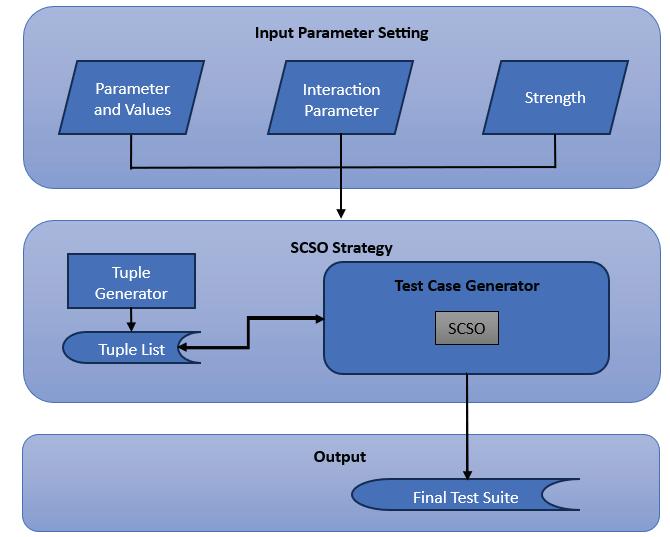

ExplorationandexploitationofSCSO
4.ProposedStrategyoftheSandCatSwarm Optimization(SCSO)Algorithm
Figure4showstherecommendedframeworkfor SCSO’sapproach.ToachievetheSCSOmethod,anum‑ berofcomponentsarecreatedandused,including thetestcasegenerator(TCG)andtuplegenerator (TG)whereTGisderivedfrom[24,47].Theframe‑ workconsistsofthreemainsections.The irstsection, inputparametersetting,de inesthetestparameters, theirvalues,interactionparameters,andinteraction strength,whichserveasthefoundationforgenerating testcases.TheSCSOframeworksupportonlyuniform strength,whichareimplementedusingtheOTATtest casegenerationapproach.Thesecondsection,SCSO strategy,involvestheTG,producingatuplelist(TL) representingpossibleparametercombinations.These tuplesarethenprocessedbytheTCG,whichincorpo‑ ratestheSCSOalgorithmtogenerateoptimizedtest cases.The inalsection,output,deliversthe inaltest suite,ensuringthatthegeneratedtestcasescompre‑ hensivelycoverthede inedinteractions.
SCSOisabio‑inspiredoptimizationalgorithm modeledafterthehuntingandsurvivalstrategies ofsandcats,called“Felismargarita.”TheSCSO conceptwas irstintroducedbySeyyedabbasiand Kianitosolveoptimizationproblems[15].Thisnovel approachcombinesuniquebehavioralpatternsof sandcatstosolveoptimizationproblemsef iciently. Explorationandexploitationphasesbasedonthe huntingbehaviorofsandcatsisshowninFigure5
Theprocessbeginsbyinitializingthepopulation, determiningthepopulationsizerequiredfortheSCSO toachievethebestoutcome.Basedontherequire‑ ments,apopulationsizeof10seemssuf icientfor theiterations,asitcanyieldthebestpossibleresults
ef iciently.Furthermore,itwilltakealongtimeifthe setismorethan10.Theassociatedstructureisa vector,andSCSOisthusapopulation‑basedtechnique. Eachpossiblesolutionisdeterminedbyevaluatinga predetermined itnessfunction.TheSCSOwilldeter‑ minetheoptimalvaluesoftheparametersbasedon thisfunction’sde initionoftheproblem’sparameters.
4.1.GlobalSensitivityFactor, ⃗ rG
TheSCSOalgorithmintroducesadynamicglobal sensitivityfactorfromEq.(1)tobalanceexploration andexploitationeffectively.Thesensitivityiscalcu‑ lated,whereSM=2inspiredbysandcats’2kHz hearingability.Highinitialsensitivityensuresbroad explorationduringearlyiterations,coveringdiverse regionsofthesearchspace.Asiterationsprogress, theglobalsensitivityfactordecreasesgradually,shift‑ ingthealgorithm’sfocustoexploitationbyre ining solutions.Towardthe inaliterations,itapproaches zero,minimizingexplorationandemphasizinginten‑ si ication.Thisadaptivebehaviormirrorssandcats’ transitioningfromscanningforpreytocapturingtar‑ gets,ensuringef icientnavigationthroughthesearch space.
4.2.SensitivityforEachSandCat
�� ��������(0,1) (2)
Eachsandcat’sindividualsensitivity r isdynam‑ icallyadjustedusingEq.(2),where r scalesthe agent’sresponsivenessandrand(0,1)introducesran‑ domness.Thisstochasticvariabilityallowsagentsto explorediverseregionsofthesearchspaceeffec‑ tivelywhilemaintainingadaptability.Thesensitiv‑ itymechanismensuresabalancedsearchdynamic, enablingagentstoavoidlocaloptimawhilestillre in‑ ingpromisingsolutions.Bymimickingsandcats’natu‑ raladaptabilitytoenvironmentalcuesduringhunting, thismechanismenhancestherobustnessanddiver‑ sityoftheoptimizationprocess.
4.3.DecisionParameter(R)
�� ×�������� (0,1)− �� (3)
ThedecisionparameterRfromEq.(3)determines whetheragentsexplorenewareas(R>1)orexploit knownsolutions(R ≤ 1)duringeachiteration.Itis calculated,where ⃗�� �� istheglobalsensitivityfactor. If ��>1,theagententerstheexplorationphase, whereitmovestoless‑visitedregionsofthesearch spacetopromotediversityandavoidprematurecon‑ vergence.Inthisphase,thepositionoftheagentis updatedusingtheformulabelow.
Here, ⃗��representsthesensitivityfactorthatscales theagent’smovement,ensuringitsadjustmentsalign withtheglobalsearchdynamics. ⃗ ���������� (��) refersto thepositionofthebestcandidatesolutionatitera‑ tiont,servingasareferenceforguidingexploration. rand(0,1)introducesrandomnesstothemovement, addingstochasticvariability,while ⃗ �������� (��) repre‑ sentsthecurrentpositionoftheagent.Thesubtrac‑ tion ⃗ ���������� (��)−��������(0,1) ⃗ ��������(��)createsadirec‑ tionalvectorthatleadstheagenttowardunexplored areasofthesearchspace,withtherandomtermensur‑ ingunpredictablemovementpatterns.Thiscalculated randomnessenablestheagenttoexploreabroader regioneffectively,increasingtheprobabilityofdis‑ coveringbettersolutionswhileavoidinglocaloptima. Thisformulaencapsulatestheessenceofbalancing guidancefromthebestsolutionsandrandomness, makingexplorationrobustandef icientinSCSO.
Ontheotherhand,if ��≤ 1,theagententersthe exploitationphase,whichfocusesonre iningitscur‑ rentpositionbymovingtowardpromisingsolutions. Theagent’spositionisupdatedusingEq.(5).
(5)
Thepositionupdatemechanismleveragesboth deterministicandstochasticcomponentstoguidethe agent’smovementduringthesearchprocess.Here, ⃗ �������� (��) representsthebest‑knownpositionatiter‑ ation ��,servingasakeyanchorpointfortheagent tore ineitssearchtowardoptimalsolutions. ⃗ ������������ introducesanelementofrandomnessbyselectinga randompositionwithinthesearchspace,ensuring variabilityinmovement.Thecosinefunction, cos(��), incorporatestheangle ��,arandomlychosenvalue between0∘ and360∘,todeterminethedirectionof theagent’smovement.Thisangleisfurthermultiplied by ⃗��,thesensitivityfactor,whichscalesthemove‑ mentmagnitude.Together,thesetermsensurethat theagent’smotionisbothguidedbythebestsolutions andrandomizedtomaintaindiversityandavoidcon‑ vergenceonsuboptimalregions.
Therandomangle��isselectedusingtheroulette wheelselectionalgorithm,aprobabilisticapproach thatenablesdynamicandunbiasedselectionofmove‑ mentdirections.Byrandomlyselecting��,theagent’s pathislesspredictable,reducingthelikelihoodof beingtrappedinlocaloptima.Thecosinefunction appliedto �� introducescontrolledoscillationsinthe movementtrajectory,allowingtheagenttoexplore morere inedareasofthesearchspacewithoutlosing diversity. R dynamicallyregulatestheratioofexplo‑ rationtoexploitation,makingsurethatthesearch agentbothinvestigatesnovelpossibilitiesandcon‑ vergesonthebestanswers.Achievinganidealsearch procedureinoptimizationissuesrequiresstrikingthis balance.
Figure 6 describestheSCSOalgorithmforselect‑ inganoptimaltestsuitebasedontestcoverage. Theprocessbeginsbyinitializingapopulationof searchagentsandcalculatingtheir itnessusinga testcoverage‑basedfunction.ParametersrandRare
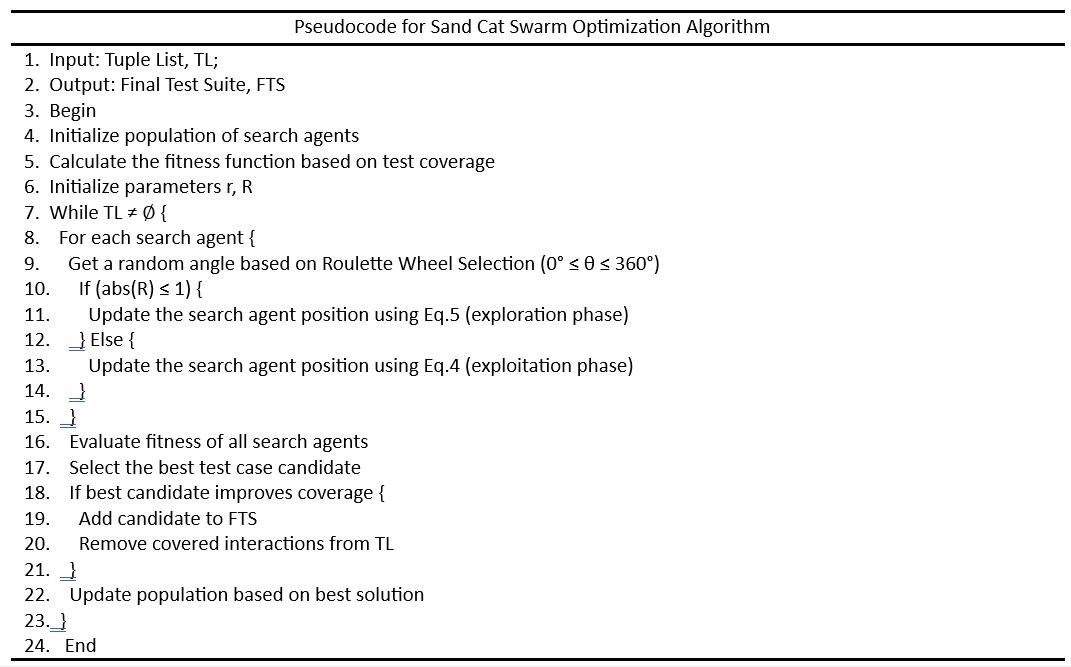
Figure6. PseudocodeforSandCatSwarmOptimizationAlgorithm alsoinitialized.ThealgorithmiterateswhiletheTLis notempty.Withineachiteration,everysearchagent selectsarandomangleusingaroulettewheelselec‑ tionmechanism.BasedontheabsolutevalueofR, thesearchagentupdatesitspositionusingeitherthe explorationequation[Eq.(5)]if∣R∣≤1ortheexploita‑ tionequation[Eq.(4)]otherwise.Afterupdatingposi‑ tions,thealgorithmevaluatesthe itnessofallsearch agentsandselectsthebesttestcasecandidate.Ifthe selectedcandidateimprovescoverage,itisaddedto theFTS,andthecoveredinteractionsareremoved fromTL.Thepopulationisthenupdatedbasedonthe bestsolution.Thisprocesscontinuesuntilallinterac‑ tionsinTLarecovered,andthealgorithmterminates, returningtheoptimizedFTS.
TheSCSOalgorithmisdevelopedandcompiled usingtheJavaprogramminglanguagewithinthe Eclipse2024(4.34.0)software.Therunningenvi‑ ronmentfortheprojectisadesktopPCoperating onWindows11,equippedwitha2.19GHzIntel® Core™i7‑12700FCPUand32GBofRAM.Thethree groupsofexperimentsareasfollows:
Group1:CA(t,v7),tvariedfrom2to6andvvaried from2to5basedon[38,43,45,47].
Group2:CA(t,210)basedon[38,44,45,47].
Group3:CA(t,37)basedon[41,44].
Thisprojectfocusessolelyonuniformstrength con igurations,asSCSOisanewlyintroduced approachtot‑waytesting.Toevaluateitsperformance ingeneratingtestsuitesizesforuniformstrength, threegroupsofexperimentswereconducted,
basedoncon igurationsderivedfromtwoseparate journalpapers.Theseexperimentsbenchmarked theSCSOagainstresultsfromvariousexisting strategiesdiscussedinSection2.Theexperimental con igurationswereadaptedfrompriorworks by[38, 41, 43–45, 47],wheretheSCSOhasbeen executedandbenchmarkedwiththosevarious experimentsresults.Theresultsoftheseexperiments aredocumentedandsummarizedinTable2,Table3, andTable4.Detailedexperimentalcon igurationsfor eachgrouparepresentedaccordingly.
Theresultsofallexperimentsarepresentedinthe providedtables,withthebesttestsuitesizeshigh‑ lightedinboldandcellsaredarkenedforclarity.Cells markedas“X”indicatethatresultsareunavailable ornotreportedintherespectivearticles.Basedon thedatainTable 2,SCSOdeliversgoodcompetitive performanceacrossallcon igurationsoftandv.
Themetaheuristic‑basedtechniquesgenerally outperformcomputation‑basedstrategiesin Table 2.Amongthesetechniques,theHHHstrategy demonstratedthehighestperformance,achievingthe bestresultsin40%(8outof20)ofthetestcases. Followingclosely,ACOFsecured30%(6outof20), whileQLSCAperformedwellwith25%(5outof 20).StrategiessuchasGSTG,WOA,andHSSeach accountedfor20%(4outof20)ofthetopresults, whereasATLBOfollowedwith15%(3outof20). Meanwhile,WFS,PSTG,CS,TCon ig,andIPOGeach contributedto10%.
(2outof20)ofthebest‑performingcases.How‑ ever,SCSO,t‑waytestsuitegenerationstrategybased onantcolonyalgorithm(TTSGA),andTVGrecorded
Table2. ResultTestSuiteSizePerformanceforGroup1
Table3. ResultTestSuiteSizePerformanceforGroup2
thelowestperformance,failingtoachievethebest resultsinanyofthetestcases(0%).
TheanalysisofTable 3 reaf irmsthedominance ofACOFandGSTG,bothachievingthehighestper‑ formancewith60%(3outof5)ofthetestcases, settingastrongbenchmark.Meanwhile,HHHandHSS demonstratedbalancedperformance,eachsecuring 40%(2outof5)ofthebesttestcases.Incontrast,WFS, CS,improvedPSO,SITG,andTTSGAtrailedbehind, contributingtoonly20%(1outof5)ofthetestcases. Thelowest‑performingstrategiesinthisgroupwere SCSO,PSTG,IPOG,TCon ig,andTVG,allofwhichfailed tosecureanytop‑rankingtestcases(0%).
Table4highlightsthedominanceofimprovedPSO, whichachievesthehighestperformancewith80% (4outof5)ofthetestcases,outperformingallother strategies.Meanwhile,SITG,ABCVS,andTCon igeach secure20%(1outof5)ofthetestcases,demonstrat‑ ingamorelimitedimpact.SCSO,despitenotleading thegroup,managestocontribute40%(2outof5) ofthebesttestcases,showcasingmoderateperfor‑ manceandcompetitivepotential.Incontrast,IPOG failstosecureanytop‑rankingtestcases(0%),making ittheleasteffectivestrategyinthiscon iguration.
ThispatternofresultsreinforcesimprovedPSO’s dominance,thebalancedyetlimitedsuccessofSITG andTCon ig,andthemoderatecompetitivenessof SCSO,whileIPOGremainsatthebottom,strugglingto deliveroptimalresults.
SCSOdemonstratesconsistentcompetitiveness acrossmultiplegroups,showingitspotentialin diversetestscenarios.Whileitperformsmoderately andhasyettosurpassthetop‑rankedmetaheuris‑ ticstrategies,itsstabilityacrosscon igurationshigh‑ lightsitsstrength.Thissuggeststhatwithfurther re inementsorhybridizationwithothermetaheuris‑ tictechniques,SCSOcouldachieveevengreateropti‑ mizationandemergeasastrongcontenderamongthe top‑performingstrategies.
TheperformanceofSCSOhasbeenevaluated usingstatisticalanalysestoassessitseffectiveness ingeneratingoptimaltestsuitesizesforuniform strengthinteractiontest.Twononparametrictests, theWilcoxonRanktestandtheFriedmantest,were employedduetothesmallsamplesizeandnonnormal distributionofresults.TheWilcoxonRanktestana‑ lyzedpairedstrategieswithSCSOtodeterminesta‑ tisticallysigni icantdifferencesata95%con idence
Table4. ResultTestSuiteSizePerformanceforGroup3
level(α=0.05).Anullhypothesiswasused,wherea p‑value ≤α indicatedsigni icantdifferences,leading tothenullhypothesisbeingrejected.Conversely,a p‑value >α retainedthenullhypothesis,suggesting nosigni icantdifference.TheFriedmantestranked strategiesbasedonmeanrank,withsmallervalues indicatingbetterperformanceingeneratingtestsuite sizeswhenthenullhypothesiswasrejected.
Atotalof30resultsfromthreegroupsofexper‑ imentswereanalyzedacrossTable 5 toTable 6, althoughsomecon igurationswereexcludeddueto unavailabledataforcertainstrategies.Theseanalyses highlightSCSO’scompetitiveperformancecompared tootherstrategies,particularlyinscenarioswhereit demonstratedstatisticallysigni icantadvantagesor achievedbettermeanrankingsintestsuitegenera‑ tion.
Table 5 presentstheresultsoftestingconducted usingtheWilcoxonandFriedmantests,involvingdata fromGroups1and2.Atotalof25testtypeswereana‑ lyzed,withtheresultsofferinginsightsintothecom‑ parativeperformanceofdifferentstrategies.Table 5 alsoprovidesinsightsintowhetherthenullhypothe‑ siswasretainedorrejectedforeachpairedstrategy involvingSCSO.ForstrategieslikeACOF,TTSGA,HHH, HSS,andGSTG,thenullhypothesisisrejected,mean‑ ingthesestrategiessigni icantlyoutperformSCSO.For instance,thepairingwithACOFshowsa p =0.002,con‑ irmingaclearadvantageforACOF.Similarly,thenull hypothesisisrejectedwhenSCSOiscomparedtoTVG, IPOG,WOA,QLSCA,andATLBO,butinthesecases,it isSCSOthatdemonstratessuperiorperformance,as indicatedbyitslowermeanrank.
IncomparisonswithPSTG,CS,TCon ig,andWFS, thenullhypothesisisretained,signifyingnostatis‑ ticallysigni icantdifferences.ThisimpliesthatSCSO performssimilarlytothesestrategies.Forexample, againstPSTG(p =0.055)andCS(p =0.083),SCSO neithersigni icantlyoutperformsnorunderperforms, re lectingcomparableperformancelevels.
Whenthenullhypothesisisrejected,itmeansone strategyisstatisticallybetterthantheotherbasedon thetestresults.ForSCSO,thisoccurswhenitshows clearadvantagesoverstrategieslikeTVG,IPOG,and others,orwhenitisoutperformedbystrongerstrate‑ gieslikeACOFandTTSGA.Ontheotherhand,retain‑ ingthenullhypothesis,asseeninitscomparisonswith PSTG,CS,andWFS,suggeststhatSCSOisonparwith
thesestrategies,offeringneithersigni icantlybetter norworseperformance.
Themajorityofthepairedstrategiesthatoutper‑ formedSCSO,suchasACOF,TTSGA,HSS,improved PSO,andGSTGachievedbetterrankingsprimarily becausetheyintegrateadditionaltechniques,such ashybridizationwithotheroptimizationalgorithms, rule‑basedenhancements,orensembleapproaches. Thesecombinationsallowthemtoimprovesearch ef iciency,balanceexplorationandexploitation,and adapttoproblem‑speci icconstraintsmoreeffec‑ tively.Forexample,ACOFbene itsfromtheself‑ organizingbehaviorofACOwhileincorporatingfuzzy logictohandleuncertaintyandimprovedecision‑ making.Thefuzzyruleshelpre inethesolutionspace moreeffectively,reducingrandomnessandincreasing convergencespeed,makingACOFsuperiortoSCSO.
Anotherreasonthesestrategiesappearsuperioris thatHHHinherentlycarriesfourdifferentmetaheuris‑ tics,whichareTLBO,GNA,PSO,andCS,whileSCSO operatesasastandaloneapproach.HHH’sadaptive mechanismselectsthemostsuitablemetaheuristic atdifferentstagesofoptimization,ensuringawell‑ balancedsearchprocess.Thismulti‑metaheuristic structurenaturallyprovidesanadvantageinper‑ formance,asitallowsHHHtoadapttodifferent problemcomplexitiesdynamically.However,thisalso makescomparisonswithSCSOunfair,asHHHbene its fromthecombinedstrengthsofmultiplealgorithms, whereasSCSOisevaluatedbasedonasingleoptimiza‑ tionframework.
ATLBOholdsasigni icantadvantageduetoits adaptiveteacherandlearnerphases,whichdynam‑ icallyadjustusingafuzzyinferencesystem.Unlike SCSO,whichfollowsa ixedoptimizationstruc‑ ture,ATLBOintelligentlyadaptsitssearchstrategy basedonreal‑timeconditions,allowingittobalance explorationandexploitationmoreeffectively.The teacherphasedrivesglobalimprovementsbyguiding learnerstowardbettersolutions,whilethelearner phaseenhanceslocalre inementthroughpeer‑to‑ peerlearning.Thisadaptabilitynotonlyimproves solutionqualitybutalsoreducestheriskofprema‑ tureconvergence.However,thisadvantagealsomakes directcomparisonswithSCSOlessfair,asATLBO’s superior lexibilitycomesfromitsadditionalfuzzy rule‑baseddecision‑makingsystem,whichSCSOdoes notincorporate.Essentially,ATLBObene itsfroman
Table5. WilcoxonandFriedmanTestforGroup1andGroup2
TestStatistic
No. PairedStrategy
NullHypothesis Conclusion < = > MeanRank Rank
1. SCSOvsACOF 18 4 3 0.002
2. SCSOvsTTSGA 19 3 3 0.002
3. SCSOvsHHH 18 2 5 0.01
4. SCSOvsHSS 19 1 5 0.005
5. SCSOvsPSTG 16 4 5 25 0.055
6. SCSOvsCS 17 2 6 0.083
7. SCSOvsTVG 0 4 21 0.001
8. SCSOvsIPOG 2 0 23 0.001
9. SCSOvsWFS 8 6 8 0.532
10. SCSOvsGSTG 14 6 2 22 0.013
11. SCSOvsTCon ig 14 3 5 22 0.099
12. SCSOvsWOA 16 1 0 17 0.001
13. SCSOvsQLSCA 8 2 2
14. SCSOvsATBLO 8 2 2 12 0.012
Table6. WilcoxonandFriedmanTestforGroup2andGroup3
TestStatistic
SCSO–5.76 7 reject ACOFoutperforms
ACOF–3.32 2
SCSO–5.76 7 reject TTSGAoutperforms TTSGA–3.88 3
SCSO–5.76 7 reject HHHoutperforms HHH–2.84 1
SCSO–5.76 7 reject HSSoutperforms HSS–3.92 4
SCSO–5.76 7 retain nosigni icantdifference PSTG–4.86 6
SCSO–5.76 7 retain nosigni icantdifference CS–4.16 5
SCSO–5.76 7 reject SCSOoutperforms TVG–7.92 8
SCSO–5.76 7 reject SCSOoutperforms IPOG–8.34 9
SCSO–2.27 3 retain nosigni icantdifference WFS–2.23 2
SCSO–2.27 3 reject GSTGoutperforms GSTG–1.50 1
SCSO–1.30 1 retain nosigni icantdifference TCon ig–1.70 2
SCSO–1.97 2 reject WOAoutperforms WOA–1.03 1
SCSO–2.50 3 reject QLSCAoutperforms QLSCA–1.63 1
3 reject ATBLOoutperforms
No. PairedStrategy
1 SCSOvsImprovedPSO 4 2 4
4 SCSOvsIPOG 0 0 10
embeddedadaptivelearningmechanism,makingit moreversatileyetcomputationallydemandingcom‑ paredtoSCSO.
Table 6 presentstheresultsoftestingconducted usingtheWilcoxonandFriedmantests,involvingdata fromGroups2and3withtotalof10typesoftest‑ ing.Thetablepresentsastatisticalanalysiscom‑ paringtheperformanceofSCSOagainstfourother strategies:improvedPSO,TCon ig,SITG,andIPOG. ThecomparisonisbasedontheWilcoxonRanktest andtheFriedmanMeanRanktest.Theresultsindicate thatSCSOdemonstratescomparableperformanceto
2 retain nosigni icant
3 difference
2 reject SCSO IPOG–4.90 5 outperforms
icant
improvedPSO,TCon ig,ABCVS,andSITG,asthe p valuesforthesecomparisons(0.944,0.086,0.715,and 0.513,respectively)aregreaterthanthesigni icance thresholdof0.05,leadingtotheretentionofthenull hypothesis.WhileSCSOshowsslightadvantagesin certainsamples,theFriedmanMeanRanktestcon‑ irmsthatthedifferencesarenotstatisticallysigni i‑ cant.However,whencomparedtoIPOG,SCSOexhibits aclearstatisticaladvantage,withap‑valueof0.005 leadingtotherejectionofthenullhypothesis.SCSO outperformsIPOGinallsamplesandachievesamuch betterFriedmanMeanRank,solidifyingitssuperiority inthiscomparison.
TheanalyseshighlightthatSCSOdemonstrates abalancedperformance,holdingitsgroundagainst somestrategieswhileexcellingoverweakerones. SCSOshowscomparableperformancetoImproved PSO,TCon ig,SITG,PSTG,ABCVS,andCS,asindicated byretainednullhypothesesandsimilarmeanranks. However,itdecisivelyoutperformsIPOGandTVG, withstatisticallysigni icantresultsandsuperior FriedmanMeanRanks.Conversely,SCSOstruggles againststrongerstrategieslikeACOF,TTSGA,HHH, andHSS,whichachievebetterrankingsindirectcom‑ parisons.Overall,SCSOprovestobearobustand competitivestrategy,particularlyeffectiveagainstless dominantmethodswhilemaintainingreliabilityin variedcontexts.
Thispaperpresentsthe irstimplementation ofSCSOint‑waytestingfortestsuitegeneration. TheresultsindicatethatSCSOperformscompeti‑ tively,outperforming15.79%ofcompetingstrategies, matching42.11%,butbeingoutperformedin42.11% ofcases.WhileSCSOshowsstrengthsinhandlinguni‑ forminteractionstrengths,itstrugglesagainstmore advancedtechniquessuchasACOF,TTSGA,andWOA, highlightingitslimitationsinmaintainingeffective explorationthroughoutthesearchprocess.
SCSOmimicssandcathuntingbehavior,where movementintensi iesasthesearchprogresses towardanoptimalsolution.However,asitnears theglobaloptimum,itssearchradiuscontracts, leadingtoreducedexplorationandincreasedreliance onexploitation.Thistransitionincreasestherisk ofprematureconvergence,causingSCSOtobecome trappedinlocaloptima,particularlyincomplexsearch spaces.Thebenchmarkresultssupportthis,asSCSO underperformsinnearlyhalfofthecases,suggesting thatanimprovedbalancebetweenexplorationand exploitationisneeded.
ToenhanceSCSO’seffectiveness,futurework shouldfocusonimprovingitsexplorationcapabil‑ ity.Hybridizingitwithglobaloptimizationtech‑ niquessuchassimulatedannealing,geneticalgo‑ rithm,orLévy lightcouldhelpmitigatepremature convergenceandimprovesearchdiversity.Addition‑ ally,extendingitsapplicationtovariable‑strengthand input–outputrelationshiptestingcouldenhanceits adaptability.Exploringintegrationwithothermeta‑ heuristicstrategiesmayfurtherre ineitsef iciency, makingSCSOamorecompetitiveapproachfort‑way testsuitegeneration.
AUTHORS
MuhammadAimanbinMohdAsyraf∗ –FacultyofIntelligentComputing,University MalaysiaPerlis,02600Arau,Perlis,Malaysia, e‑mail:aimanasyraf@studentmail.unimap.edu.my https://orcid.org/0009‑0009‑3268‑0120.
RozmieRazifBinOthman –Centreof ExcellenceforAdvancedComputing,(AdvComp),
UniversityMalaysiaPerlis,Malaysia,e‑mail: rozmie@unimap.edu.myhttps://orcid.org/0000‑ 0001‑7940‑8487.
MohdZamriBinZahirAhmad –Centreof ExcellenceforAdvancedComputing,(AdvComp), UniversityMalaysiaPerlis,Malaysia,e‑mail: zamrizahir@unimap.edu.myhttps://orcid.org/0000‑ 0003‑3839‑2284.
AhmadAshrafAbdulHalim –Centre ofExcellenceforAdvancedComputing, (AdvComp),UniversityMalaysiaPerlis, Malaysia,e‑mail:ashra halim@unimap.edu.my https://orcid.org/0000‑0002‑6152‑1964.
KentaroGo –DepartmentofComputerScienceand Engineering,UniversityofYamanashi,Kofu,Japan, e‑mail:go@yamanashi.ac.jphttps://orcid.org/0000‑ 0003‑3451‑7924.
NuraminahbintiRamli –CentreofExcellencefor AdvancedComputing,(AdvComp),University MalaysiaPerlis,Malaysia,e‑mail:nurami‑ nah@unimap.edu.myhttps://orcid.org/0000‑0002‑ 3527‑2431.
R.BadlishahAhmad –CentreofExcellence forAdvancedComputing,(AdvComp), UniversityMalaysiaPerlis,Malaysia,e‑mail: badli@unimap.edu.myhttps://orcid.org/0000‑ 0002‑4862‑2728.
LatifahMunirahKamarudin –FacultyofIntelligent Computing,UniversityMalaysiaPerlis, 02600Arau,Perlis,Malaysia,e‑mail:latifahmuni‑ rah@unimap.edu.myhttps://orcid.org/0000‑0002‑ 2547‑3934.
MuradMuhammadHasanSalihAl‑Walidi –FacultyofIntelligentComputing,University MalaysiaPerlis,02600Arau,Perlis,Malaysia,e‑mail: muradmuhammad@studentmail.unimap.edu.my https://orcid.org/0009‑0004‑9672‑689X.
∗Correspondingauthor
ACKNOWLEDGEMENTS
Theauthorwouldliketoacknowledgethesup‑ portfromtheFundamentalResearchGrantScheme (FRGS)underagrantnumberofFRGS/1/2024/ ICT01/UNIMAP/02/1fromtheMinistryofHigher EducationMalaysia.
References
[1] N.AnwarandS.Kar,“ReviewPaperonVari‑ ousSoftwareTestingTechniques&Strategies,” GlobalJournalofComputerScienceandTechnol‑ ogy,pp.43–49,May2019,doi:10.34257/gjcst cvol19is2pg43.
[2] M.Bajjouk,M.EhsanRana,C.Reka Ramachandiran,andS.Chelliah,“Software testingforreliabilityandqualityimprovement,” JournalofAppliedTechnologyand Innovation,vol.5,no.2,p.40,2021,doi: 10.65136/jati.v5i1.216.
[3] S.Najihi,S.Elhadi,R.A.Abdelouahid,and A.Marzak,“SoftwareTestingfromanAgileand
TraditionalView,” ScienceDirectProcediaCom‑ puterScience,vol.203,Aug.2022,doi:10.101 6/j.procs.2022.07.116.
[4] M.BaqarandR.Khanda,“TheFutureofSoft‑ wareTesting:AI‑PoweredTestCaseGeneration andValidation,”2024.
[5] M.Z.Z.Ahmad,R.R.Othman,M.S.A.R.Ali, N.Ramli,M.W.Nasrudin,andA.A.A.Halim, “ATunedVersionofAntColonyOptimization Algorithm(TACO)forUniformStrengthT‑way TestSuiteGenerator:AnExecution’sTimeCom‑ parison,” J.Phys.Conf.Ser.,vol.1962,no.1,2021, doi:10.1088/1742‑6596/1962/1/012037.
[6] R.R.Othman,K.ZuhairiZamli,and L.E.Nugroho,“Generalvariablestrengtht‑way strategysupporting lexibleinteractions,” MaejoInternationalJournalofScienceand Technology,vol.6,no.03,pp.415–429,2012, doi:10.14456/mijst.2012.30.
[7] A.A.Muazu,A.S.Hashim,andA.Sarlan,“Appli‑ cationandAdjustmentof‘don’tcare’Values int‑wayTestingTechniquesforGeneratingan OptimalTestSuite,” JournalofAdvancesinInfor‑ mationTechnology,vol.13,no.4,pp.347–357, 2022,doi:10.12720/jait.13.4.347‑357.
[8] B.S.Ahmed,“Testcaseminimizationapproach usingfaultdetectionandcombinatorialopti‑ mizationtechniquesforcon iguration‑aware structuraltesting,” EngineeringScienceand Technology,anInternationalJournal,vol.19, no.2,pp.737–753,Jun.2016,doi:10.1016/j. jestch.2015.11.006.
[9] H.M.Fadhil,M.N.Abdullah,andM.I.You‑ nis,“TWGH:ATripartiteWhale–GrayWolf–HarmonyAlgorithmtoMinimizeCombinatorial TestSuiteProblem,” Electronics(Switzerland), vol.11,no.18,Sep.2022,doi:10.3390/electr onics11182885.
[10] N.Ramli,R.R.Othman,Z.I.AbdulKhalib,and M.Jusoh,“AReviewonRecentT‑wayCombina‑ torialTestingStrategy,”in MATECWebofCon‑ ferences,EDPSciences,Dec.2017.doi:10.105 1/matecconf/201714001016.
[11] K.M.Htay,R.R.Othman,A.Amir,and J.M.H.Alkanaani,“Gravitationalsearch algorithmbasedstrategyforcombinatorial t‑waytestsuitegeneration,” JournalofKing SaudUniversity‑ComputerandInformation Sciences,vol.34,no.8,pp.4860–4873,2022, doi:10.1016/j.jksuci.2021.06.020.
[12] E.PiraandM.Khodizadeh‑Nahari,“Combi‑ natorialt‑waytestsuitegenerationusingan improvedasexualreproductionoptimization algorithm,” Appl.SoftComput.,vol.150,2024, doi:10.1016/j.asoc.2023.111070.
[13] M.Alshinwanetal.,“EnhancedPrairieDog OptimizationwithDifferentialEvolution forsolvingengineeringdesignproblems
andnetworkintrusiondetectionsystem,” Heliyon,vol.10,no.17,Sep.2024,doi: 10.1016/j.heliyon.2024.e36663.
[14] D.Wu,H.Rao,C.Wen,H.Jia,Q.Liu,andL.Abuali‑ gah,“Modi iedSandCatSwarmOptimization AlgorithmforSolvingConstrainedEngineering OptimizationProblems,” Mathematics,vol.10, no.22,Nov.2022,doi:10.3390/math102243 50.
[15] A.SeyyedabbasiandF.Kiani,“SandCatswarm optimization:anature‑inspiredalgorithmto solveglobaloptimizationproblems,” Eng.Com‑ put.,vol.39,no.4,pp.2627–2651,2022,doi: 10.1007/s00366‑022‑01604‑x.
[16] AnaCruduandMoldStudResearchTeam,“Role ofsoftwaretestinginensuringproductquality,” MoldStud.Accessed:Feb.23,2025.[Online]. Available:https://moldstud.com/articles/p‑ role‑of‑software‑testing‑in‑ensuring‑product‑ quality#:~:text=Software%20testing%20is %20important%20for,and%20effectiveness %20of%20software%20testing
[17] K.M.Htay,H.L.Zakaria,R.R.Othman,N.Ramli, andA.Amir,“APairwiseT‑WayTestSuite GenerationStrategyUsingGravitationalSearch Algorithm,” ICAICST2021‑2021International ConferenceonArti icialIntelligenceandCom‑ puterScienceTechnology,2021.
[18] D.R.Kuhn,R.Bryce,F.Duan,L.S.Ghandehari, Y.Lei,andR.N.Kacker,“CombinatorialTesting: TheoryandPractice,”in AdvancesinComputers no.99,2015,ch.1,p.99.Accessed:Feb.23, 2025.[Online].Available:https://tsapps.nist. gov/publication/get_pdf.cfm?pub_id=918448
[19] MuazuA.A.,HashimA.S.,AudiU.I.,AliyuY., andYahayaM.S.,“CombinatorialInteraction TestingforT‑WayTestCaseGeneration:AScop‑ ingReviewofthePerspectiveFeatures,” Journal ofChinaUniversityofMiningandTechnology, no.4,p.121,2024,doi:10.1654/zkdx.2024. 29.4‑1.
[20] A.AminuMuazu,A.SobriHashim,A.Sarlan,and M.Abdullahi,“SCIPOG:Seedingandconstraint supportinIPOGstrategyforcombinatorial t‑waytestingtogenerateoptimumtestcases,” JournalofKingSaudUniversity‑Computerand InformationSciences,vol.35,no.1,pp.185–201,Jan.2023,doi:10.1016/j.jksuci.2022.11.0 10.
[21] N.F.Maidin,S.Hassan,S.Baharom,andA.B.Md. Sultan,“AComparativeStudyonTestingOpti‑ mizationTechniqueswithCombinatorialInter‑ actionTestingforOptimizingSoftwareProduct LineTesting,” JournalofAdvancedResearchin AppliedSciencesandEngineeringTechnology, no.1,pp.77–94,2025,doi: https://doi.org/ 10.37934/araset.49.1.7794
[22] J.M.Altmemi,R.R.Othman,andR.Ahmad, “Reviewofcombinatorialtestingstrategy,”
InternationalJournalofAdvancedTrendsin ComputerScienceandEngineering,vol.8,no.6, pp.2877–2881,Nov.2019,doi:10.30534/ijatc se/2019/31862019.
[23] M.Karimi‑Mamaghan,M.Mohammadi,P. Meyer,A.M.Karimi‑Mamaghan,andE.G. Talbi,“Machinelearningattheserviceof meta‑heuristicsforsolvingcombinatorial optimizationproblems:Astate‑of‑the‑ art,”Jan.16,2022, ElsevierB.V. doi: 10.1016/j.ejor.2021.04.032.
[24] N.Ramli,R.R.Othman,R.Hendradi,and I.Iszaidy,“T‑wayTestSuiteGenerationStrategy basedonAntColonyAlgorithmtoSupportT‑ wayVariableStrength,” J.Phys.Conf.Ser.,vol. 1755,no.10,2020.
[25] A.B.Nasser,A.A.Alsewari,N.M.Tairan,and K.Z.Zamli,“PairwiseTestDataGeneration BasedOnFlowerPollinationAlgorithm,” MalaysianJournalofComputerScience,pp. 242–257,2017,Accessed:Feb.05,2025. [Online].Available: https://ejournal.um.edu. my/index.php/MJCS/article/view/7069/4715
[26] P.A.Kowalski,S.Kucharczyk,andJ.Mańdziuk, “ConstrainedHybridMetaheuristicAlgorithm forProbabilisticNeuralNetworksLearning,” ArXiv,Jan.2025,[Online].Available:http://ar xiv.org/abs/2501.15661
[27] WilliamsA.,“TCon ig‑TestCon iguration Generator,”Github.Accessed:Feb.05,2025. [Online].Available:https://github.com/aww illiams/tconfig?tab=readme‑ov‑file
[28] Y.LeiandK.C.Tai,“In‑Parameter‑ Order:ATestGenerationStrategyfor PairwiseTesting,” Proceedings‑3rdIEEE InternationalHigh‑AssuranceSystems EngineeringSymposium,HASE1998,1998, doi:10.1109/HASE.1998.731623.
[29] Y.Lei,R.Kacker,D.R.Kuhn,V.Okun,and J.Lawrence,“IPOG:AGeneralStrategyfor T‑WaySoftwareTesting,”in Proceedingsof theInternationalSymposiumandWorkshopon EngineeringofComputerBasedSystems,2007, pp.549–556.
[30] Y.Lei,R.Kacker,D.R.Kuhn,V.Okun,and J.Lawrence,“IPOG‑IPOG‑D:Ef icienttestgener‑ ationformulti‑waycombinatorialtesting,” Soft‑ wareTestingVeri icationandReliability,vol.18, no.3,pp.125–148,Sep.2008,doi:10.1002/st vr.381.
[31] M.Forbes,J.Lawrence,Y.Lei,R.N.Kacker,and D.R.Kuhn,“Re iningtheIn‑Parameter‑Order StrategyforConstructingCoveringArrays,” J.Res.Natl.Inst.Stand.Technol.,vol.113,pp. 287–297,2008,doi:10.6028/jres.113.022.
[32] J.MohammedandH.Altmemi,“AnAnalogous T‑WayTestGenerationStrategyforSoftware SystemsMC‑MIPOG,” SoftwareEngineering,vol.
7,no.1,pp.1–12,2018,doi:10.5923/j.se.201 80701.01.
[33] B.S.AhmedandK.Z.Zamli,“PSTG:At‑ waystrategyadoptingparticleSwarmOpti‑ mization,” AMS2010:AsiaModellingSymposium 2010‑4thInternationalConferenceonMathe‑ maticalModellingandComputerSimulation,pp. 1–5,2010,doi:10.1109/AMS.2010.14.
[34] B.S.AhmedandK.Z.Zamli,“AVariableStrength InteractionTestSuitesGenerationStrategy UsingParticleSwarmOptimization,” Journalof SystemsandSoftware,vol.84,no.12,pp.2171–2185,2011,doi:10.1016/j.jss.2011.06.004.
[35] A.R.A.AlsewariandK.Z.Zamli,“Interaction TestDataGenerationUsingHarmonySearch Algorithm,” 2011IEEESymposiumonIndustrial ElectronicsandApplications,ISIEA2011,pp. 559–564,2011,doi:10.1109/ISIEA.2011.610 8775.
[36] B.S.Ahmed,T.S.Abdulsamad,andM.Y.Potrus, “AchievementofMinimizedCombinatorialTest SuiteforCon iguration‑awareSoftwareFunc‑ tionalTestingUsingTheCuckooSearchalgo‑ rithm,” Inf.Softw.Technol.,vol.66,pp.13–29, 2015,doi:10.1016/j.infsof.2015.05.005.
[37] K.Rabbi,Q.Mamun,andR.Islam,“AnEf icient ParticleSwarmIntelligenceBasedStrategyto GenerateOptimumTestDatainT‑wayTesting,” 2015IEEE10thConferenceonIndustrialElec‑ tronicsandApplications(ICIEA),pp.123–128, 2015,doi:10.1109/ICIEA.2015.7334096.
[38] K.Z.Zamli,B.Y.Alkazemi,andG.Kendall,“A TabuSearchHyper‑HeuristicStrategyforT‑ wayTestSuiteGeneration,” AppliedSoftCom‑ putingJournal,vol.44,pp.57–74,2016,doi: 10.1016/j.asoc.2016.03.021.
[39] F.DinandK.Z.Zamli,“Fuzzyadaptiveteaching learning‑basedoptimizationstrategyforGUI functionaltestcasesgeneration,”in ACMInter‑ nationalConferenceProceedingSeries,2018. doi:10.1145/3185089.3185148.
[40] K.Z.Zamli,F.Din,B.S.Ahmed,andM.Bures, “AhybridQ‑learningsine‑cosine‑basedstrat‑ egyforaddressingthecombinatorialtestsuite minimizationproblem,” PLoSOne,vol.13,no.5, May2018,doi:10.1371/journal.pone.01956 75.
[41] A.K.Alazzawi,H.M.Rais,andS.Basri,“ABCVS: AnArti icialBeeColonyforGeneratingVari‑ ableT‑WayTestSets,” InternationalJournalof AdvancedComputerScienceandApplications, vol.10,no.4,pp.259–274,2019,doi:10.145 69/ijacsa.2019.0100431.
[42] M.Z.Z.Ahmad,R.R.Othman,M.S.A.R.Ali, andN.Ramli,“ASelf‑AdaptingAntColonyOpti‑ mizationAlgorithmUsingFuzzyLogic(ACOF) forCombinatorialTestSuiteGeneration,”in IOP
ConferenceSeries:MaterialsScienceandEngi‑ neering,2020.doi:10.1088/1757‑899X/767 /1/012017.
[43] A.A.Hassan,S.Abdullah,K.Z.Zamli,and R.Razali,“CombinatorialTestSuitesGenera‑ tionStrategyUtilizingtheWhaleOptimization Algorithm,” IEEEAccess,vol.8,pp.192288–192303,2020,doi:10.1109/access.2020.30 32851.
[44] M.L.Prasad,J.K.R.Sastry,B.Mallikarjuna, V.Sitaramulu,C.Srinivasulu,andB.B.Naib, “DevelopmentofaProgrammedGeneration oft‑wayTestcasesUsinganImprovedParti‑ cleSwarmOptimizationStrategy,”in 20222nd InternationalConferenceonAdvanceComput‑ ingandInnovativeTechnologiesinEngineering, ICACITE2022,InstituteofElectricalandElec‑ tronicsEngineersInc.,2022,pp.1394–1399. doi:10.1109/ICACITE53722.2022.9823783.
[45] N.H.C.Rose,R.R.Othman,H.L.Zakaria, A.J.Suali,andZ.A.Ahmad,“WingsuitFly‑ ingSearchOptimizationAlgorithmStrategyfor CombinatorialT‑WayTestSuiteGeneration,” InternationalJournalofAdvancesinSoftCom‑ putinganditsApplications,vol.16,no.3,pp. 272–293,2024,doi:10.15849/IJASCA.2411 30.15.
[46] J.Yang,Y.Zhang,Z.Wang,Y.Todo,B.Lu,and S.Gao,“ACooperativeCoevolutionWingsuit FlyingSearchAlgorithmwithSphericalEvo‑ lution,” InternationalJournalofComputational IntelligenceSystems,vol.14,no.1,Dec.2021, doi:10.1007/s44196‑021‑00030‑z.
[47] M.Z.Z.Ahmad,“ASelf‑AdaptingAnt ColonyOptimizationAlgorithmusingFuzzy Logic(ACOF)forCombinatorialTestSuite Generation,”UniversitiMalaysiaPerlis, 2023.
HYBRIDCASCADEDANFIS–RBFNN‐BASEDCONTROLLERFORPV‐DRIVENGRID
DOI:10.14313/jamris‐2026‐029
Abstract:
Solarphotovoltaic(PV)energyisgainingpopularityin moderndistributionnetworksduetoitscleanenergy attributes.InordertomaximizePVpowergenera‐tionconversion,theapplicationofmaximumpower pointtracking(MPPT)isessential.Henceforth,thiswork presentsanovelhybridMPPTapproachesbasedonacas‐cadedadaptiveneurofuzzyinferencesystemandradial basisfunctionneuralnetworktoachieverapidandgreat‐estPVpowerextractionwhileensuringzerooscillation trackingwithasingle‐endedprimaryinductorconverter (SEPIC).SEPICefficientlyregulatestheoutputvoltageto matchgridrequirementswhilemaintaininghighpower conversionefficiency.Thecascadedartificialneurofuzzy inferencesystem(ANFIS)andradialbasisfunctionneu‐ralnetwork(RBFNN)arecombinedtoenhanceMPPT accuracyandrobustnessundervaryingenvironmental conditions.Thecascadedarchitectureenablesaseamless transitionbetweenthetwocontrollers,ensuringopti‐malperformanceacrossanextensiverangeofoperating conditions.TheMATLAB/Simulinkisusedforanalyzing theefficacyoftheproposedsystemandtheproposed converterandMPPTapproachiscomparedwithexist‐ingtopologiesforprovingtheimportanceofthedevel‐opedwork.Theoutcomesdemonstratethatthepro‐posedSEPICachievesreducedTotalHarmonicDistortion (THD)of1.16%andthecascadedANFIS–RBFNN‐based MPPTapproachattainsahighertrackingefficiencyof 99.61%withrapidconvergencespeedandexecutiontime comparedtotraditionaltechniques.Overall,thispaper representsapromisingdirectiontowardachievingmore efficientandsustainablePV‐drivengridintegration.
1.Introduction
Submitted:2nd August2024;accepted:17th September2024
BlessyA.Rahiman,J.Jayakumar,R.Meenal
[5,6].AmongthesevariousRESs,photovoltaic(PV) technologyhasemergedasapromisingtopologydue toitsvariousadvantages,whichgenerateelectricity withoutproducinggreenhousegasemissionsorother formsofecologicalpollution,thusgeneratingaclean andsustainableenergysolution[7–9].Thoughthe outputvoltageofPVislowerbecauseofitsintermit‑ tentnature,directcurrent(DC),DCconvertersare essentialforef icientlyconvertingvariableDCoutput ofthePVmodulestotheincreasedlevelofenergy requiredforgridapplications[10].Inthiscontext, varioustraditionalconvertersusedincurrentstudies suchasBoost[11],Buck‑Boost[12],andCuk[13] convertersprovidestep‑upandstepdownvoltage withbettervoltagegain.Nevertheless,eachconverter topologyhasitsownadvantagesanddrawbackssuch aspooref iciency,highcost,complexity,andswitch‑ ingstress[14,15].Henceforth,theproposedtopology employsasingle‑endedprimaryinductorconverter (SEPIC)toovercomethesechallengesbyattaining highef iciencywithminimizedswitchingstressand ripplecurrent.
Keywords: photovoltaic,maximumpowerpointtracking, cascadedANFIS–RBFNN,single‐endedprimaryinductor converter,MATLAB/Simulink
Theworldwideenergydemandisconstantlybeing enhancedowingtopopulationgrowthandindustrial‑ ization[1,2].Traditionalfossilfuelslikecoal,oil,and naturalgasarethemainsourcesofenergy,although theirusagehasledtovariousissuessuchasenviron‑ mentalpollutionandcontributiontoclimatechange throughgreenhousegasemissions[3,4].Toaddress theseissues,therehasbeenarisingemphasison developingandutilizingrenewableenergysources (RESs)suchassolar,wind,andgeothermalpower
Incontrast,maximumpowerpointtracking (MPPT)techniquesarespeci icallydesigned tooptimizepoweroutputfromsolarpanelsby continuouslyadjustingtovaryingconditions,making themmoreeffectiveinmaximizingenergyextraction. Comparedtoproportionalintegral(PI)andfractional orderslidingmodecontrolcontrollers,intelligent MPPTprovidessuperioradaptabilityandef iciency under luctuatinginputconditions,highlightingits advantageinenergyharvestingapplications[16–20]. Toimprovetheperformanceoftrackingef iciency, varioustraditionaltopologieshavebeendeveloped, whichareillustratedinTable1below.
Toovercomethelimitationsobtainedinthetradi‑ tionalMPPTtopologies,theproposedworkincorpo‑ ratesanovelcascadedarti icialneurofuzzyinference system(ANFIS)–radialbasisfunctionneuralnetwork (RBFNN)‑basedMPPT,whichhastheadvantagesof enhancingMPPTaccuracyandrobustnessundervary‑ ingenvironmentalconditionswithrapidconvergence speedandexecutiontime.Theforemostcontributions oftheproposedworkareillustratedbelow,
• ImplementingaPV‑basedSEPICtoef icientlyhandle anextensiveinputvoltagerange,ensuringoptimal powerconversionsystem,evenundervaryingsolar conditions.
Table1. SurveyrelatedtothetraditionalMPPTapproaches
References Methodology
Shaikra ikiran etal(2022)[21] arti icialneuralnetwork (ANN)basedMPPT
Faizan Mehmoodetal (2020)[22] Fuzzy‑basedMPPT
Saraetal (2021)[23]
ANFIL‑basedMPPT
Chaopingraoet al(2022)[24] Perturbobserve (P&O)‑BasedMPPT
PawanKumar Pathaketal (2021)[25]
modi iedincremental conductance(INC)‑based MPPT
Advantages
Itachievesbettertracking ef iciencywithminimized oscillationofMPP.
Attheperiodoftransient condition,thistechnique attainsbetterperformance withef icientpowerdelivery.
Ithashigheraccuracy,faster responsewithbettertracking.
Itattainsminimized steady‑stateerrorwithbetter trackingef iciency.
MINCattainshightracking ef icacywitheffectual convergencespeed.
• ThecascadedANFIS–RBFNN‑basedMPPTapproach isintroducedforextractingthehighestpowerfrom thePVsystem,resultinginimprovedMPPTaccuracy withminimalcomputationaltime.
• EmployingPIcontrollerforensuringpreciseregula‑ tionofthesinglephaseinverteroutputtosynchro‑ nizewiththegridfrequencyandvoltage.
Section2describestheproposedsystem modeling;Section3,theoutcomesfromthe MATLAB/Simulinkforthedevelopedworkis discussedwithacomparativeanalysis.Further, inSection4,conclusionsabouttheproposedsystem arediscussedbyshowingtheimportanceofthe proposedsystem.
2.ProposedModeling
PVsystemshavegainedsigni icantimportancein theRES,asitoffersacleanandsustainablesourceof electricity.However,thesporadicnatureofsolarradi‑ ationandthenonlinearcharacteristicsofPVsystems posechallengesinmaintainingastableandef icient powersupplytothegrid.Toaddressthesechallenges, thisresearchexploredSEPICwiththenovelcascaded ANFIS–RBFNN‑basedMPPTtopology,whichprovides anenhancedoutputvoltagewithbettertrackingper‑ formance.Theproposedworkblockdiagramisshown inFigure1below.
Inthiswork,SEPIChasbeendevelopedformax‑ imizingthelow‑outputvoltageofaPVsystemfor theessentiallevelforagridsystem.Ontheother hand,theMPPTapproachisusedfortrackingopti‑ malenergyfromthePVmodules;thusthecascaded ANFIS–RBFNN‑basedMPPTtopologyhasbeendevel‑ oped,whichleveragesthestrengthofeachapproach toenhancecontrolprecision,robustness,andmaxi‑ mumenergyharvestingfromthesolarmodule.The trackedoutputisfedtothePulseWidthModulation (PWM)generatorforproducingrequiredpulsesfor theswitchingoperationoftheSEPIC.AstableDC‑link voltageisdeliveredtothesingle‑phaseVoltageSource Inverter(VSI)forconvertingtheDC–ACsupply;itis
Limitations
However,thissystemapplicable forpartiallyshadedPVsystem.
Nevertheless,ithassteadystate oscillationsandsystem complexity.
However,duetoincreasing numberofrules,thesystem complexityisenhanced.
Nonetheless,the luctuation aroundMPPandcomplexity leadstodegradationofsystem performance.
However,executiontimeneeds tobeconsideredinfurther studies.
regulatedbythePIcontrollerforattaininggridsyn‑ chronization.Finally,therequiredlevelofenergyis giventothegridsystemwithoutanydisturbances.
2.1.ModelingofthePVSystem
ThePVsystemgenerateselectricitydirectlyfrom sunlight,afreeandabundantRES.Unlikefossilfuels, thisenergyproductiondoesnotreleasegreenhouse gasesorotherpollutants,makingacleanandecologi‑ calfriendlyenergysource.AnequivalentcircuitofPV moduleisrepresentedinFigure2.
Kirchhoff’scurrentlawisappliedasfollows[21]:
The��
and����ℎ arederivedasfollows:
where��0 denotesreversesaturationcurrent, ����ℎ, ����, and ���� speci iesshunt,series,andparallel resistances,���������� indicatesthermalvoltage.Thefol‑ lowingequationsexpress��0 and ����:
Here,∝indicatesdiodeidealityconstant,��speci‑ iesthediode’sidealityfactor,���� andshowsthepanel linkedinseries, ������,������ representsopen‑circuitvolt‑ age,Tshowsthetemperature=1.38×10⁻³,andq denotesthechargeofelectron=1.6×10⁻¹⁹ ,respec‑ tively.Moreover,thelowoutputpowerisobtained fromPVowingtoitsecologicalchanges;thus,SEPIC isemployedinthisstudyforboostingthevoltageas follows.
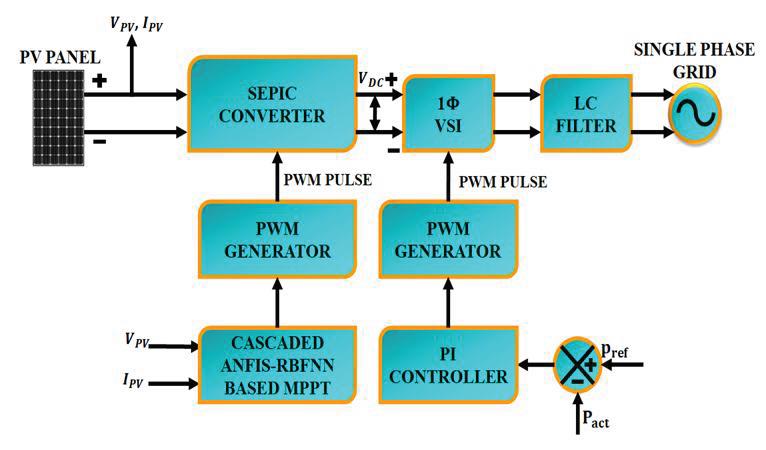
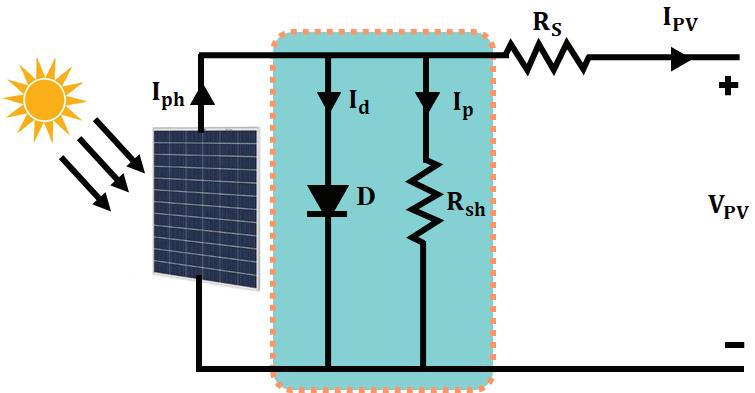
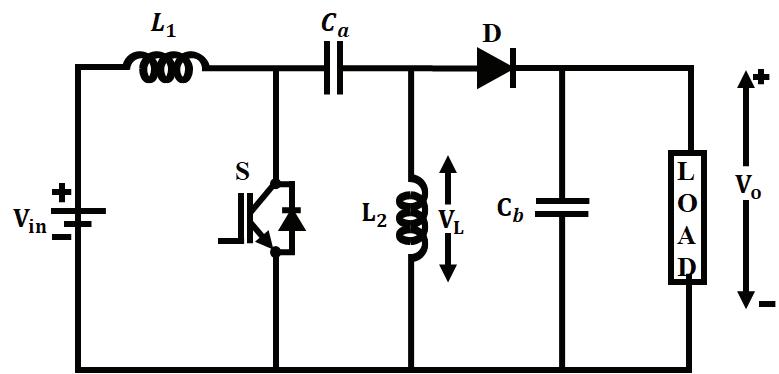
SEPICconvertercircuitdiagram
2.2.ModelingofSEPIC
SEPICisapopularchoiceforinterfacingthePV system‑fedgridsystemduetoitsabilitytooperate inbothstep‑upandstep‑downmodes,allowingfor ef icientpowertransfer.ThecircuitofSEPICisrep‑ resentedinFigure 3,whichshowstwoinductors,a switch,twocapacitors,andadiode,respectively.Fur‑ thermore,theproposedconverteroperatesintwo modes,asspeci iedinFigure4
Thefollowingexpressionshowstheaveragevolt‑ age:
Thesumoftheaveragecurrentsisgivenasfollows:
ThedutycycleofSEPICisde inedas:
Theminimumdutycycleisexpressedas:
Mode1(ONstate): Whenswitch��1 isintheON condition,thecurrentin ��1 becomesnegativeduring thecurrentincreases;thediodedoesnotconductin thisstate.Thecapacitordischargeduringboth ��1 and ��2 getscharged,asrepresentedinFigure4(a).
Mode2(OFFstate): WhentheswitchisintheOFF state,thediodefunctionisforward‑biased,anoutput getsenergyfrom ��1 duringinduction,and ��1 charges thecapacitor����,asillustratedinFigure4(b),respec‑ tively.Also,theswitchingwaveformfortheproposed SEPICisillustratedinFigure5.
Theripplecurrent lowingthroughinductors ����, ���� isequalto
(12)
Theinductorvalueiscalculatedas
Theoutputcapacitorisgivenas
Here,theswitchingfrequency(fsw) istakenas = 10������.
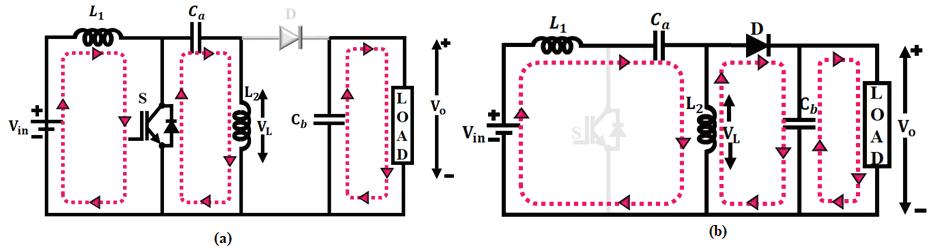
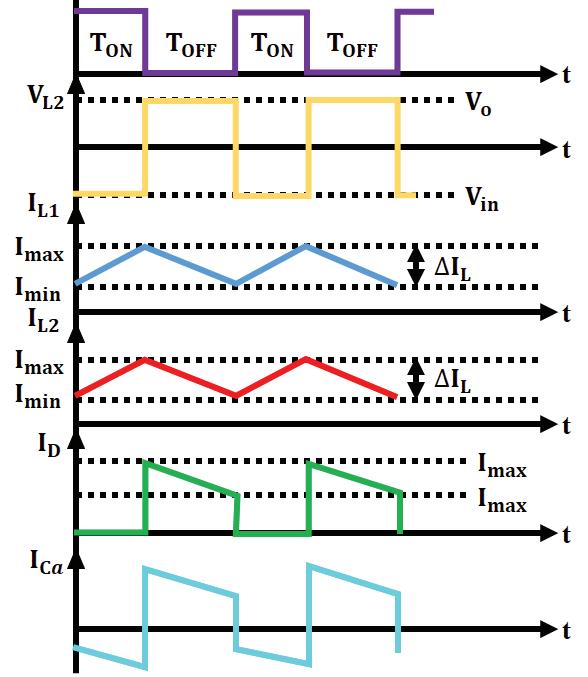
Figure5. Switchingwaveformfortheproposed converter
Therefore,thedutycyclerangeofinductors ��1, and ��2 andcapacitors ����, ���� arede inedusingthe foresaidequations.Thefollowingsectionexplainsthe cascadedANFIS–RBFNN‑basedMPPTforextracting optimalpowerfromthePVsystem.
2.3.ModelingofCascadedANFIS‐RBFNNBasedMPPT ANFIS‐basedMPPT
TheANFIS‑basedMPPTisapowerfultechnique thatcombinesthestrengthoffuzzylogiccontroland ANN,whichmaximizesthepowerofPVsystems,as speci iedinFigure 6.Thisapproachisparticularly well‑suitedfordealingwiththehighlynonlinearand complexrelationshipbetweentheparametersofPV. InANFIS,thefuzzyinferencesystem(FIS)isresponsi‑ bleformodelingthenonlinearrelationshipbetween thePVsystem’soutputanddesiredoutputusinga setofif‑thenrulesandmembershipfunctions.Onthe otherhand,theANNisemployedtoautomatically tunetheparametersoftheFIS,suchasmembership functionandrulesbasedontheavailabletraining data.Throughthebackpropagationalgorithm,ANN learnstheoptimalFISparameters,reducingerror
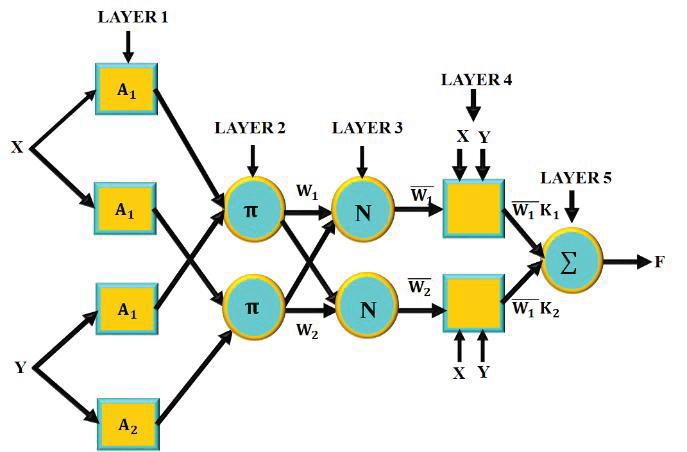
betweenactualanddesiredoutput.Themultilayer feed‑forwardnetworksaredescribedbythefollowing mathematicalequation:
Thefollowingequationsexpress
where����,����,and����denotethemembershipfunc‑ tion,respectively.
RBFNN‐basedMPPT
Thenonlinearmappingisperformedusingan RBFNN,unliketheerrorbackpropagationlearning modelofconventionalneuralnetworks,RBFnetworks employalearningprocessthatisequivalenttosolving alinearproblem.Thehourlyrequirementoscillation servesasinputfortheRBFNNnetworktraining,which hasthreetypes:input,hidden,andoutputlayers,as
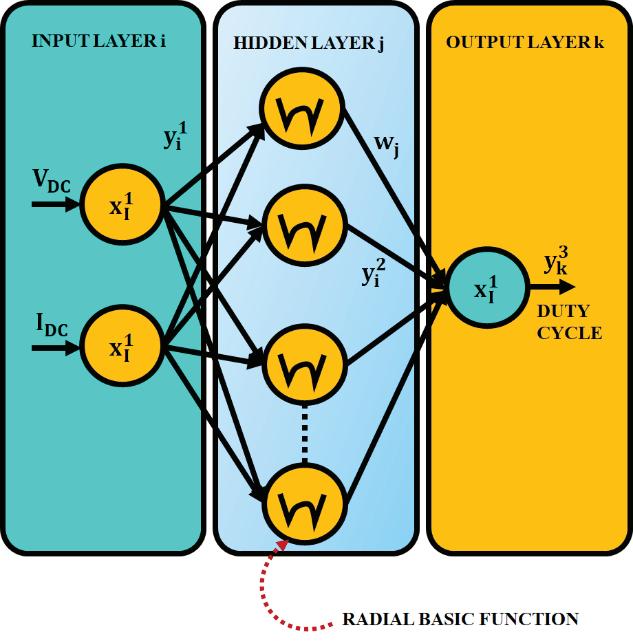
speci iedinFigure7.Theinputlayeristhetoplayer, whichiscarriedoutbytheinputdatasourcenodes. Thesecondlayerproducesradial‑basedprocesses. Thethirdlayeristheoutputlayer,whichspeci ies thenonlinearcombinationofneuralparametersand inputradialbasisfunction.OverallthisRBFNN’spri‑ marygoalistoforecastthePVsystem’smaximum power.
Step:1 Createinitialinputvectorsbasedonvari‑ ablessuchasvoltage,current,andpower,which areadjustedbasedonthenetwork’soutputpower requirements.
Step:2 Aftertheinitializationprocess,thesystem generatesitsinitializedinputparametersatrandom [22].
1 =
Here,������ speci iesthepowerdemand.
Step:3 Byreducingtheerrorfunction,whichis providedbelow, itnessisassessed.
Error,E= 1 2 (tOD dOD), (21) wherethedesiredandtargetoutputdemandis denotedas������ and������.
Step:4 TheGaussianactivationfunctionofRBFNN yieldstheRBFNNoutput,whichisprovidedasfollows:
ramd yp ci =exp 1 2
2 yp ci‖ 2 , (22)
whereξspeci iestheGaussianactivationfunction, and���� denotesthep‑thinputsample,respectively.
Thenumberofnodesinthehiddenlayerspeci‑ ies ℎ.Moreover,bycombiningthistwoapproaches, theperformanceoftrackingef iciencyisenhanced,as describedbelow.
CascadedANFIS–RBFNN‐basedMPPT
ThecascadedANFIS–RBFNN‑basedMPPTcom‑ binestwopowerfultechniquestoimprovetheef i‑ ciencyofcapturingmaximumpowerfromsolarpan‑ els.First,ANFISusesfuzzylogicandneuralnetworks toadaptivelyadjustitsrulesbasedonchangingcon‑ ditions,helpingtopredictandoptimizepowerout‑ put.Second,theRBFNNprovidesprecisefunction approximationbyusingradialbasisfunctionsto ine‑ tunethetrackingprocess.Together,thiscascaded approachenhancestheMPPTalgorithm’sabilityto rapidlyandaccurately indtheoptimalpowerpoint, resultinginbetterperformanceandenergyextraction comparedtotraditionalmethods.Thedevelopedcas‑ cadedANFIS–RBFNN‑basedMPPTsystem lowchart isindicatedinFigure8,whichshowsthatthesystem measuresthesolarirradiance,whichisacrucialinput parameterfortheMPPTalgorithm.Italsomeasures thevoltageandcurrentfromthePVsystem,which areusedasinputstothedevelopedMPPTalgorithm. Thenextstepistodetectanyabruptchangesinthe solarirradiance,asthesechangesaffecttheoptimal operatingpointofthePVsystem.Ifanabruptchange isdetected,thesystemsetsanewoperatorvoltage toensurethePVsystemisoperatingatitshighest point.ThecoreoftheMPPTalgorithmistheANFIS–RBFNN‑basedMPPTblock.ThiscombinestheANFIS andRBFNNtotracktheMPPofPVsystemef iciently, eveninthepresenceofabruptchangesinsolarirra‑ diance.TheANFIScomponentprovidesthefuzzy–logic‑baseddecisionmaking,whiletheRBFNNcom‑ ponenthandlesthenonlinearmappingbetweenthe inputparametersandtheoptimaloperatingvoltage. Bycombiningthis,theoverallef iciency,reliability issigni icantlyimproved,creatingmoreviableand improvedperformanceofSEPIC.
Byutilizingtheproposedapproach,theoptimal energyfromthePVsystemisef icientlytrackedwith greatertrackingef iciency,executiontime,andcon‑ vergencespeed.Moreover,thetrackedandenhanced powerisgiventothesingle‑phaseVSIforconverting theDC–ACsupplytodistributepowertothesingle‑ phasegridsystem.Also,theinverterisef icientlycon‑ trolledwiththeaidofthePIcontrollerforgridsyn‑ chronization.
b=
Inthiswork,aSEPIC‑basedcascaded ANFIS‑RBFNNapproachisdevelopedforgrid applications.Theproposedsystemisvalidatedin MATLAB/Simulinkforvalidatingtheeffectivenessof thedevelopedsystem.Additionally,thecomparative assessmentiscarriedoutwithothertraditional topologiesforshowingtheimportanceofthe developedwork.InTable1,parameterspeci ications fortheproposedsystemareillustrated.
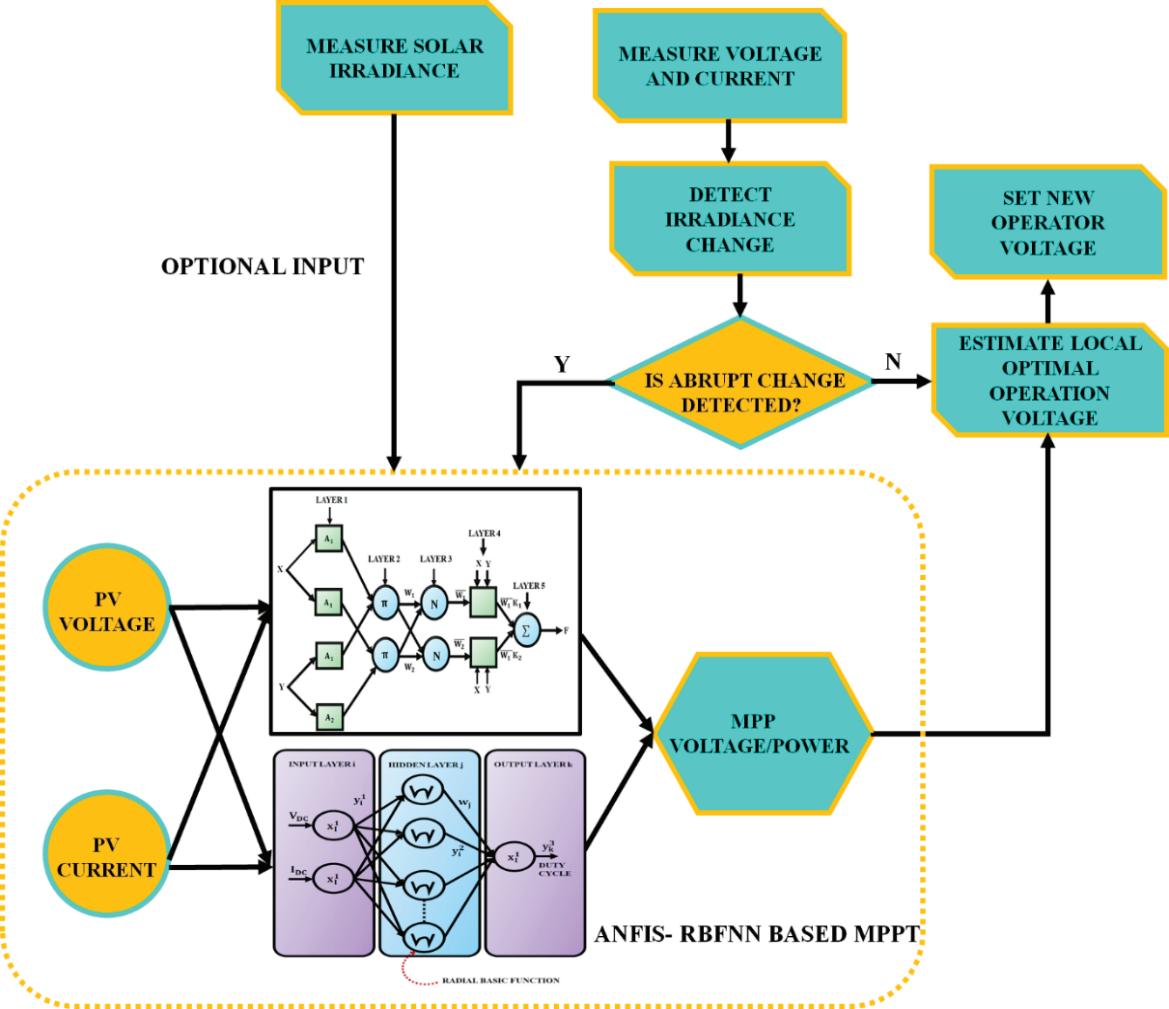
Figure8. ProposedcascadedANFIS–RBFNN‐basedMPPT
Table2. ParameterSpecificationsofProposedSystem Parameter
Opencircuitvoltage 37.25V
Short‑circuitcurrent 8.95A
Series‑connectedsolar panel 2
Parallel‑connectedsolar PVcell 25
(a)Case1.VaryingTemperatureandVarying Irradiation
ThesolarmodulewaveformisillustratedinFig‑ ure 9.Thetemperatureofthesolarpanelvaries slightlyduringtheinitialtime,andafter0.2sitisstabi‑ lizedat45∘C,asspeci iedinFigure9(a).Consequently, theirradiationofthesolarpanelismaintainedcon‑ stantlyat1000(W/Sq.m)afterthe luctuationupto 0.2s,asspeci iedinFigure 9(b).Also,thevoltageof thesolarpanelfortheproposedworkattainsthe
stabilizedvoltageat48Vafter0.2s,asillustratedin Figure9(c).
TheproposedSEPICwaveformisillustratedin Figure 10.Theinputcurrentwaveformindicatesthat theinputcurrentoscillateshighlyduringthestart‑ ingperiod,andafter0.22s,theconstantcurrentis maintainedat0.8A,asspeci iedinFigure10(a).From Figure10(b),itisobservedthattheconverteroutput voltageisstabilizedat300Vafter0.25s.Similarly,the converteroutputcurrenthashighoscillationduring theinitialtime,andafter0.05saconstantoutputcur‑ rentisobtainedat25Awith luctuations.
ThegridwaveformisindicatedinFigure 11.The gridvoltagewaveformillustratesthatthegridvolt‑ ageisstabilizedat230Vwithoutanydistortions,as illustratedinFigure11(a).Likewise,thecurrentwave‑ formspeci iedinFigure11(b)indicatesthatthegrid oscillatesslightly,andafter0.05sitstabilizesat4A. Moreover,thein‑phasewaveformisspeci iedinFig‑ ure 11(c),whereitcanbeobservedthatthevoltage andcurrentstabilizeat230Vand4A,respectively.
Therealandreactivepowerforthedeveloped workisillustratedinFigure12.Thestabilizedrealand reactivepowerresultsinthesuperiorperformanceof theproposedsystem.
(b)Case2. Constanttemperatureandconstant irradiation
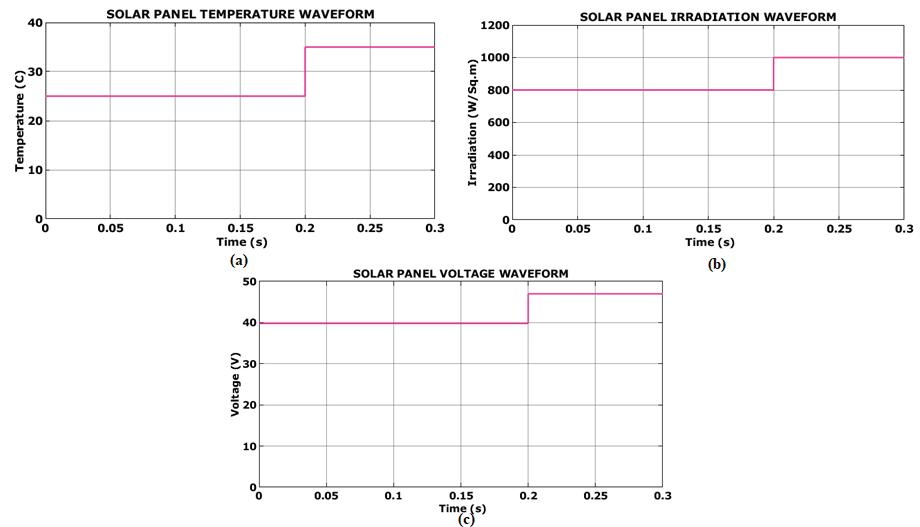
Figure9. Solarmodulewaveformforcase1.(a)Temperature;(b)irradiation;(c)voltage
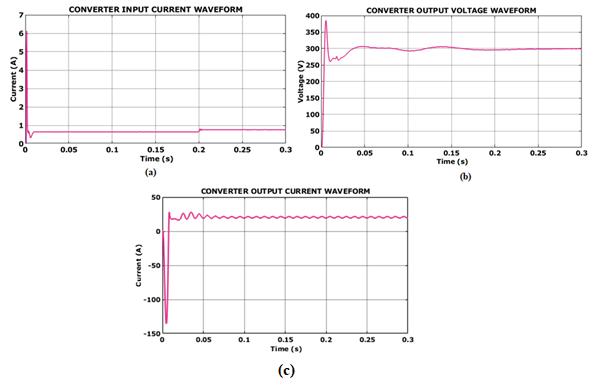
Figure10. Converteroutputwaveformforcase1
Figure13representsthesolarpanelwaveformfor case2,whichshowsthatthetemperatureofthesolar panelgetsconstantlystabilizedat35∘C,asindicated inFigure 13(a).Similarly,theirradiationwaveform illustratedinFigure13(b)showsthattheirradiation ismaintainedat1000(W/Sq.m).Thevoltageofsolar panelattainsstabilityat48Vinthecase2condition, asindicatedinFigure13(c).
Theconverterwaveformforthecase2conditionis representedinFigure14.Asspeci iedinFigure14(a), theconverterinputcurrentoscillateshighlyduring theinitialperiod,andafter0.02s,theconstantcur‑ rentisattainedat0.8A.Moreover,theoutputvoltage waveform,indicatedinFigure 14(b),showsthatthe voltageisconstantlymaintainedat300Vafterfacing high luctuationupto0.25s.Theconverteroutput waveformillustratedinFigure14(c)indicatesthatthe
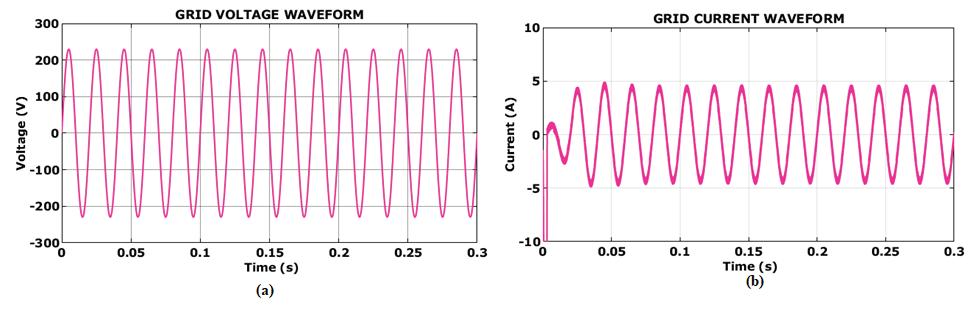
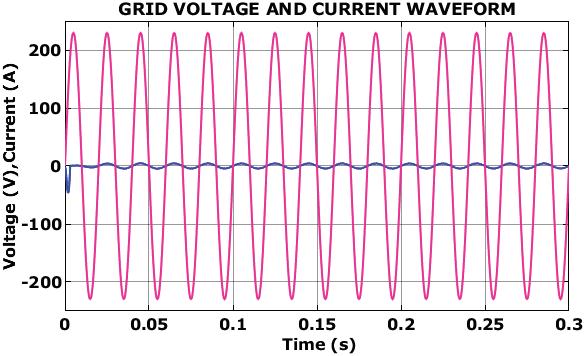
Figure11. Gridwaveform.(a)Voltage;(b)current;(c)in‐phasevoltageandcurrentwaveform
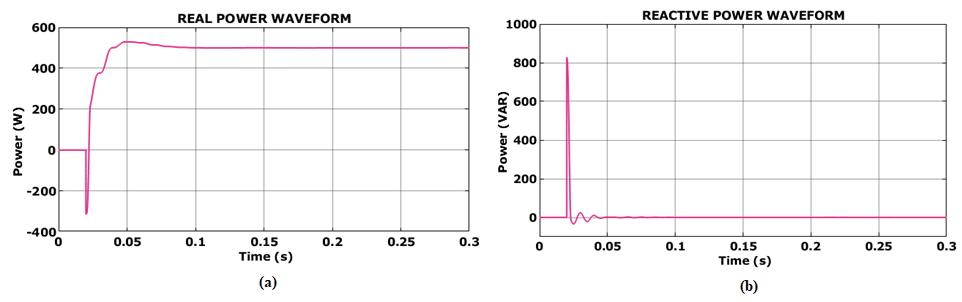
Figure12. Realandreactivepowerwaveform
outputcurrent luctuateshighly,andafter0.05,s,it getsstabilizedwithdistortions.
(c)Case3.VaryingTemperatureandConstant Irradiation
Thecase2conditionforsolarmodulewaveform isrepresentedinFigure 15.Figure 15(a)illustrates thevaryingtemperaturecondition,wherethetemper‑ atureoscillatesupto0.2sandafterwardismaintained graduallyat35∘C.Likewise,theirradiationwaveform illustratedinFigure15(b)showsthattheirradiation ismaintainedat1000(W/Sq.m).Also,Figure 15(c) indicatesthatthesolarpanelvoltageoscillatesupto 0.2s;afterthat,itstabilizesat48V.
AsshowninFigure 16(a),duringthe irst0.02s, theconverterinputcurrentoscillatesgreatlybefore reaching0.8Aofsteadycurrent.Furthermore,Fig‑ ure16(b)showsthattheoutputvoltagewaveformis progressivelymaintainedat300Vfollowingasigni i‑ cant luctuationthatlastedfor0.25s.Theconverter outputcurrentwaveformshowninFigure 16(c);it luctuatesgreatlyduringtheinitialtime,andafter 0.03s,itismaintainedat25Awithslightdistortions.
(d)Case4.ConstantTemperatureandVarying Irradiation
Thesolarpanelwaveformforscenario4isshown inFigure 17,whereitcanbenotedthatthesolar panel’stemperaturesteadilystabilizesat35C,as
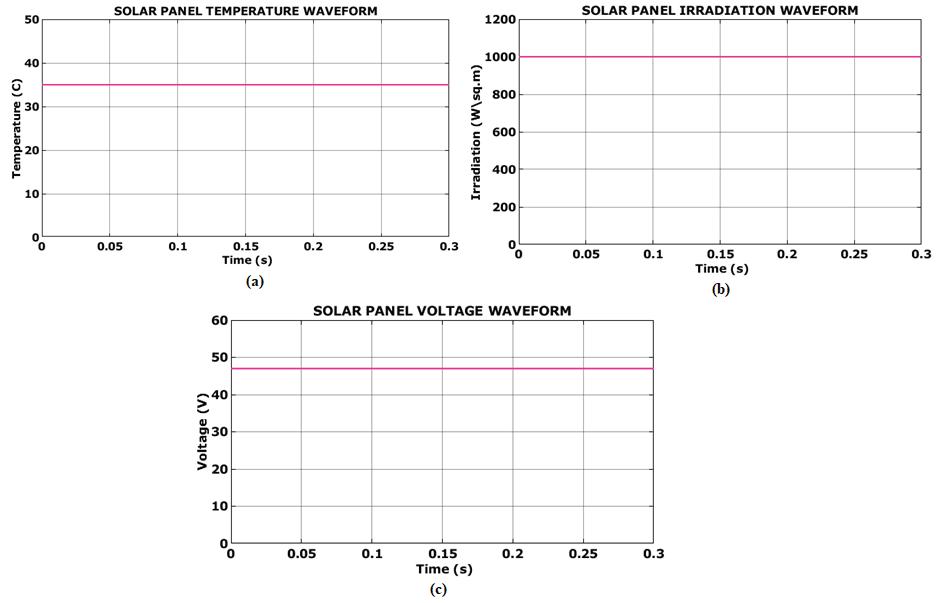
Solarpanelwaveformforcase2
Figure14. Converterwaveformforcase2
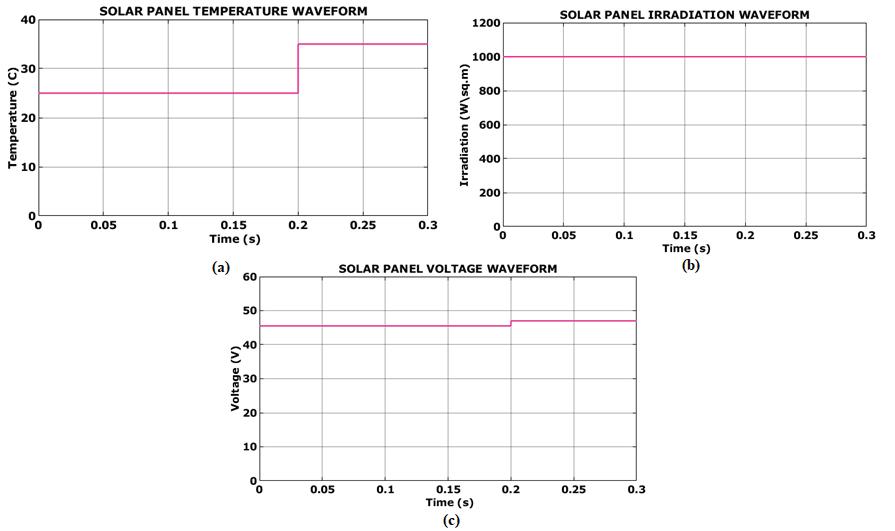
Converterwaveformforcase3
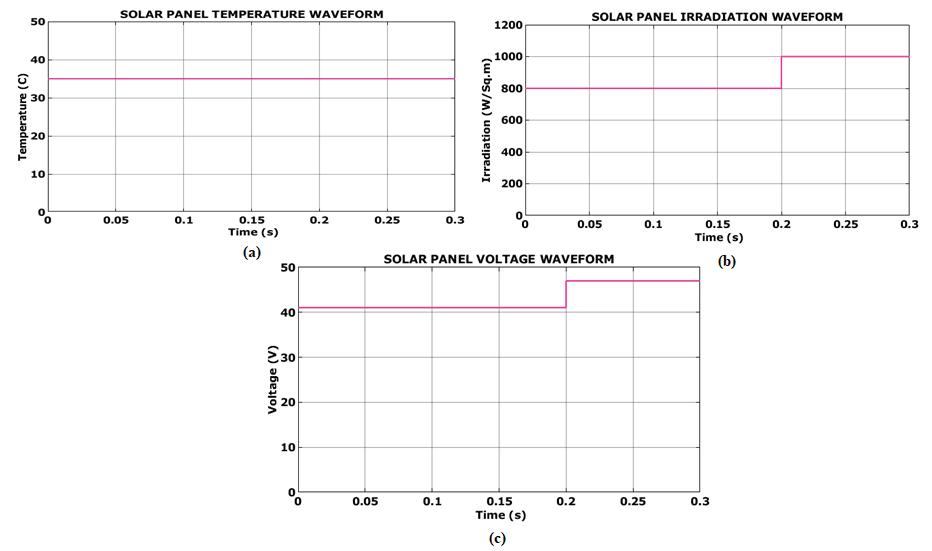
Figure17. Solarpanelwaveformforcase4
representedinFigure 17(a).Figure 17(b)illustrates thatthesolarpanel’sirradiationisstabilizedat 1000(W/Sq.m)followingavariationofupto0.2s. Additionally,asillustratedinFigure 17(c),thesolar panelvoltagereachesastabilizedvalueat48Vafter 0.2s.
Theconverterwaveformforthe inalcondition isshowninFigure 18.AsseeninFigure 18(a),the converterinputcurrentoscillatesgreatlyinthe irst periodbeforereaching0.8Aofsteadycurrentafter 0.02s.Additionally,theoutputvoltagewaveformillus‑ tratedinFigure 18(b)demonstratesthattheoutput voltageisconstantlymaintainedat300Vfollowing astrong luctuationlastingupto0.25s.Theoutput current luctuatesgreatly,asseenbytheconverter outputwaveformrepresentedinFigure 18(c),and thenstabilizesafter0.05sat25Awithdistortions.
TheTHDwaveformforthedevelopedworkisspec‑ i iedinFigure 19,whereitisobservedthattheTHD valueof1.16%isobtained.Therebytheperformance ofthedevelopedsystemisef icientlyenhanced.
Thetrackingef iciencyforvariousMPPT approachesiscomparedwiththeintroducedcascaded ANFIS–RBFNN‑basedMPPT,asdemonstratedin Figure 20.Fromthegraph,itisevidentthatthe developedMPPTapproachaccomplisheshigh trackingef iciencyof99.61%comparedtotheother topologies,asreferredtoin[28–30].
Table3. ComparisonofTHDforVariousConverters
Table 3 representsthecomparisonofTHDfor varioustraditionalconverters.ThedevelopedSEPIC reachesthelowestTHDvalueof1.89%comparedto theotherapproaches.
TheproposedcascadedANFIS–RBFNN‑based MPPTtechniqueiscomparedwithconventional MPPTapproachesforconvergencespeedand executiontimeinFigure 21.Fromthegraph,itis obviousthatthecascadedapproachattainshigh convergencespeedandminimizedexecutiontime comparedtotraditionalMPPTtopologies.
TheproposedresearchworkintroducedSEPIC‑ basednovelcascadedRBFNN‑basedMPPTforgrid applications.TheproposedSEPICeffectivelyinter‑ facesthePVarraywiththegrid,providingstablevolt‑ ageregulation.TheintegrationofcascadedANFIS–RBFNN‑basedMPPTenablesef icienttrackingofthe
Figure18. Converterwaveformforcase4
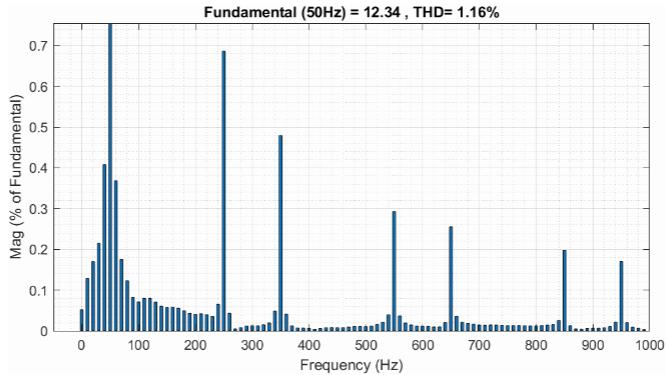
Figure19. THDwaveformfortheproposedwork
MPPTundervaryingecologicalconditions,maximiz‑ ingtheenergyharvestedfromthePVsystemwith hightrackingef iciency.Thedevelopedsystemisvali‑ datedthroughMATLAB/Simulink,andtheoutcomes arecomparedwithothertraditionalapproaches,
showingthesuperiorityofthedevelopedsystem. Fromthecomparisonresults,theeffectivenessofa novelcascadedANFIS‑RBFNNbasedMPPTexhibits superiortrackingef iciencyof99.61%capabilities, convergencespeed,executiontimewithimproved
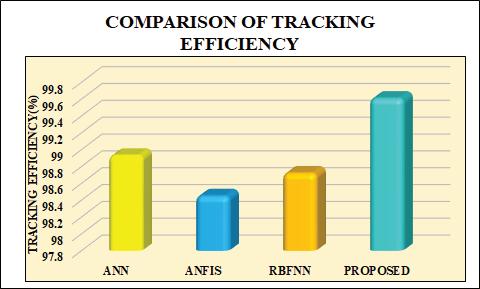
Figure20. Comparisonoftrackingefficiency
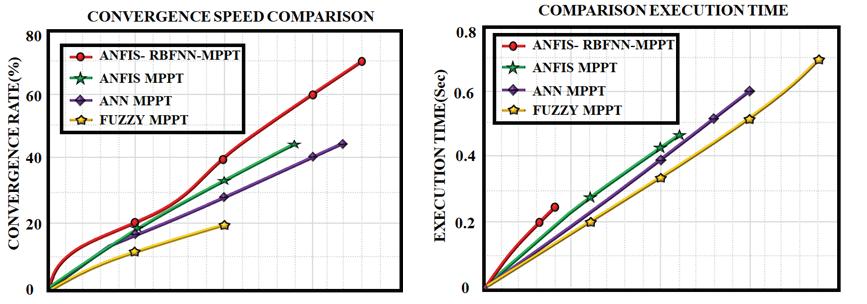
Figure21. Comparisonof(a)convergencespeedand(b)executiontime steady‑stateanddynamicresponses.AlsotheSEPIC achievesalowTHDvalueof1.16%comparedtothe others.Thereby,theenhancedandtrackedpoweris ef icientlydeliveredtothegridsystemwithoutany disturbances.
AUTHORS
BlessyA.Rahiman∗ –DepartmentofElectrical andElectronicsEngineering,KarunyaInstituteof TechnologyandSciences,Coimbatore,India,e‑mail: blessyrahiman@yahoo.com.
J.Jayakumar –DepartmentofElectricalandElec‑ tronicsEngineering,KarunyaInstituteofTechnol‑ ogyandSciences,Coimbatore,India,e‑mail:jayaku‑ mar@karunya.edu.
R.Meenal –DepartmentofElectricalandElectronics Engineering,SRMTRPEngineeringCollege,Trichy, TamilNadu,India,e‑mail:meenasekar5@gmail.com.
∗Correspondingauthor
References
[1] W.S.EbhotaandT‑C.Jen,“Fossilfuelsenviron‑ mentalchallengesandtheroleofsolarpho‑ tovoltaictechnologyadvancesinfasttracking hybridrenewableenergysystem,” Int.J.Precis.
Eng.Manuf.‑GreenTechnol.,vol.7,2020,97–117, DOI:10.1007/s40684‑019‑00101‑9.
[2] M.Alaraj,A.Kumar,I.Alsaidan,M.Rizwan,and M.Jamil,“Energyproductionforecastingfrom solarphotovoltaicplantsbasedonmeteorologi‑ calparametersforQassimRegion,SaudiArabia,” IEEEAccess,vol.9,2021,83241–83251.DOI:10 .1109/ACCESS.2021.3087345.
[3] A.Nawaz,G.Hafeez,I.Khan,K.UllahJan,H.Li, S.AliKhan,andZ.Wadud,“Anintelligentinte‑ gratedapproachforef icientdemandsideman‑ agementwithforecasterandadvancedmetering infrastructureframeworksinsmartgrid,” IEEE Access, vol.8,2020,132551–132581.DOI:10.1 109/ACCESS.2020.3007095.
[4] N.Babu,J.M.Guerrero,P.Siano,R.Peesapati,and G.Panda,“Anovelmodi iedcontrolschemein grid‑tiedphotovoltaicsystemforpowerquality enhancement,” IEEETrans.Ind.Electron.,vol.68, no.11,2020,11100–11110.DOI:10.1109/TIE. 2020.3031529.
[5] A.A.E.Taw iq,M.O.AbedEl‑Raouf,M.I.Mosaad, A.F.AbdelGawad,andM.AbdElfatahFara‑ hat,“Optimalreliabilitystudyofgrid‑connected PVsystemsusingevolutionarycomputingtech‑ niques,” IEEEAccess,vol.9,2021,42125–42139, DOI:10.1109/ACCESS.2021.3064906.
[6] J.Jayakumar,“Optimizedwindenergysystem integrationwithVSCHVDCforpower,”in Trans‑ miss.Proc.Eng.Sci.,vol.6,no.2,2024,711–721, doi:10.24874/PES06.02.028.
[7] A.Moghassemi,S.Padmanaban,V.K.Ramachan‑ daramurthy,M.Mitolo,andM.Benbouzid,“A novelsolarphotovoltaicfedTransZSI‑DVRfor powerqualityimprovementofgrid‑connected PVsystems,” IEEEAccess,vol.9,2020,7263–7279,doi:10.1109/ACCESS.2020.3048022.
[8] J.J.Kumar,“Randomforestmachinelearn‑ ingalgorithmbasedseasonalmulti‑stepahead short‑termsolarphotovoltaicpoweroutput forecasting,” IETRenewablePowerGener.,2024. DOI:org/10.1049/rpg2.12921.
[9] C.Zhong,Y.Zhou,andG.Yan,“Anovelfrequency regulationstrategyforaPVsystembasedonthe curtailmentpower‑currentcurvetrackingalgo‑ rithm,” IEEEAccess,vol.8,2020,77701–77715, DOI:10.1109/ACCESS.2020.2989785.
[10] A.Kulshreshtha,A.R.Saxena,andM.Veerachary, “Non‑isolatedfourth‑orderboostDC‑DCcon‑ verterforpowermanagementinlowvoltagelow powerDCgrids:designandinteractionanaly‑ sis,” IEEEAccess,vol.8,2020,196500–196514, DOI:10.1109/ACCESS.2020.3034181.
[11] J.SinghandV.K.Tiwari,“Anewdesignbased ongridintegratedsolarPVarrayusingvector control,”in Adv.EnergyTechnol:SelectProc.gsof EMSME,vol.2020,2022,653–661,DOI:10.100 7/978‑981‑16‑1476‑7_58
[12] S.GangavarapuandA.K.Rathore,“Three‑phase buck–boostderivedPFCconverterformoreelec‑ tricaircraft,”IEEETrans.PowerElectron.,vol.34, no.7,2018,6264–6275,DOI:10.1109/TPEL.201 8.2877509.
[13] S.Gangavarapu,A.K.Rathore,andD.M.Ful‑ wani,“Three‑phasesingle‑stage‑isolatedCuk‑ basedPFCconverter,” IEEETrans.onPowerElec‑ tron.,vol.34,no.2,2018,1798–1808,DOI:10.1 109/TPEL.2018.2829080.
[14] C.Cui,Y.Tang,Y.Guo,H.Sun,andL.Jiang, “Highstep‑upswitched‑capacitoractive switched‑inductorconverterwithself‑voltage balancingandlowstress,” IEEETrans.Ind. Electron.,vol.69,no.10,2021,10112–10128, DOI:10.1109/TIE.2021.3135611.
[15] S.Habib,M.M.Khan,F.Abbas,A.Ali,M.TalibFaiz, F.Ehsan,andH.Tang,“Contemporarytrendsin powerelectronicsconvertersforchargingsolu‑ tionsofelectricvehicles,” CSEEJ.PowerEnergy Syst.,vol.6,no.4,2020,911–929,DOI:10.17775 /CSEEJPES.2019.02700.
[16] S.Obukhov,A.Ibrahim,A.A.ZakiDiab,A.Saad Al‑Sumaiti,andR.Aboelsaud,“Optimalperfor‑ manceofdynamicparticleswarmoptimization basedmaximumpowertrackersforstand‑alone PVsystemunderpartialshadingconditions,”
IEEEAccess, vol.8,2020,20770–20785,DOI:10 .1109/ACCESS.2020.2966430.
[17] F.T.Josh,“Fractionalorderslidingmodecontrol forpowerqualityimprovementinthedistribu‑ tionsystem,”Int.J.Appl.PowerEng.,vol.13,no. 2,2024,408–414,DOI:10.11591/ijape.v13.i2. pp408‑414.
[18] J.Jayaraj,D.Obulesu,H.Govindaraj,F.T.Josh,N. Rajeswaran,C.R.Reddy,A.S.Algarni,A.Alwabli, andS.F.Malky,“Ahybridintelligentcontrollerfor extended‑rangeelectricvehicles,” Eng.,Technol. Appl.Sci.Res.,vol.14,no.2,2024,13408–13415, DOI:org/10.48084/etasr.6960
[19] V.Manikandan,“Sustainableenergydevelop‑ mentpredictionofenergyharvestingsystem withanadaptivehierarchicalrecurrentnetwork andbiodynamicfusionoptimisationalgorithm,” J.Environ.ProtectionEcology,vol.24,no.8,2023, 2796–2805.
[20] M.T.Hussain,A.Sarwar,M.Tariq,S.Urooj,A. BaQais,andM.A.Hossain,“AnevaluationofANN algorithmperformanceforMPPTenergyhar‑ vestinginsolarPVsystems,” Sustainability,vol. 15,no.14,2023,11144,DOI:org/10.3390/su15 1411144.
[21] S.R.Kiran,C.H.Basha,V.PratapSingh,C. Dhanamjayulu,B.R.Prusty,andB.Khan, “Reducedsimulativeperformanceanalysisof variablestepsizeANNbasedMPPTtechniques forpartiallyshadedsolarPVsystems,” IEEEAccess, vol.10,2022,48875–48889, DOI:10.1109/ACCESS.2022.3172322.
[22] F.Mehmood,N.Ashraf,L.Alvarez,T.Nadeem Malik,H.KhaliqQureshi,andT.Kamal,“Grid integratedphotovoltaicsystemwithfuzzy basedmaximumpowerpointtrackingcontrol alongwithharmonicelimination,” Trans. Emerg.Telecommun.Technol., vol.33,no.2,2022, e3856,DOI:org/10.1002/ett.3856.
[23] S.A.Ibrahim,A.Nasr,andM.A.Enany,“Max‑ imumpowerpointtrackingusingANFISfora recon igurablePV‑basedbatterychargerunder non‑uniformoperatingconditions,” IEEEAccess, vol.9,2021,114457–114467,DOI:10.1109/AC CESS.2021.3103039.
[24] C.Rao,A.Hajjiah,M.A.El‑Meligy,M.Sharaf,A.T. Soliman,andM.A.Mohamed,“Anovelhigh‑gain soft‑switchingDC‑DCconverterwithimproved P&OMPPTforphotovoltaicapplications,” IEEE Access,vol.9,2021,58790–58806,DOI:10.110 9/ACCESS.2021.3072972.
[25] P.K.Pathak,S.Padmanaban,A.K.Yadav,P.A. Alvi,andB.Khan,“Modi iedincrementalconduc‑ tanceMPPTalgorithmforSPV‑basedgrid‑tied andstand‑alonesystems,” IETGener.,Transmiss. Distrib.,vol.16,no.4,2022,776–791,DOI:org/ 10.1049/gtd2.12328.
[26] S.Sarwar,M.Y.Javed,A.B.Asghar,W.Iqbal,K. Ejsmont,andM.H.Jaffery,“Acoronavirusopti‑ mization(CVO)algorithmtoharvestmaximum powerfromPVsystemsunderpartialandcom‑ plexpartialshadingconditions,” EnergyRep.,vol. 11,2024,1693–1710,DOI:org/10.1016/j.egyr .2024.01.043.
[27] P.K.Ganti,H.Naik,andM.K.Barada,“Hybrid TSA‑RBFNNbasedapproachforMPPTofthe solarPVpanelundertheeffectsoftiltangles variationsandenvironmentaleffects,” Int. J.EnergyRes.,vol.45,no.14,2021,20104–20131,DOI:org/10.1002/er.7089.
[28] N.I.Nahin,S.P.Biswas,S.Mondal,M.R.Islam, andS.M.Muyeen,“Amodi iedPWMstrategy withanimprovedANNbasedMPPTalgorithm forsolarPVfedNPCinverterdriveninduction motordrives,” IEEEAccess,vol.11,2023,70960–70976,DOI:10.1109/ACCESS.2023.329.1339.
[29] C.B.N.Fapi,P.Wira,M.Kamta,A.Badji,and H.Tchakounte,“Real‑timeexperimentalassess‑ mentofhillclimbingMPPTalgorithmenhanced byestimatingadutycycleforPVsystem,” Int.J. RenewableEnergyRes.,vol.9,no.3,2019,1181‑ 1189.
[30] Z.A.Khan,L.Khan,S.Ahmad,S.Mumtaz,M. Jafar,andQ.Khan,“RBFneuralnetworkbased backsteppingterminalslidingmodeMPPTcon‑ troltechniqueforPVsystem,” PLoSOne,vol.16, no.4,2021,e0249705,DOI:org/10.1371/jour nal.pone.0249705.
Submitted:26th August2024;accepted:17th February2025
Subiyanto,RizkyAjieAprilianto,MarioNormanSyah,BagaskoroSaputro,AbdurrakhmanHamidAl‑Azhari,Nektar Cahayasabda,BayuAdiPambudi,FaiqMananulFaqih,IchaArifahAnnisa,DwiBagasNugroho,SivaKhaaifina Rachmat,DewiAnggriani
DOI:10.14313/jamris‐2026‐030
Abstract:
Conventionalelectrictwo‐wheeler(E2W)chargerssuffer fromprolongedchargingtimesandbatterynonlinear characteristics,limitinguserflexibilityandcompliance withevolvingbatterystandards.Thisworkdevelopeda high‐performancefastchargerutilizinganinterleaved buckconverter(IBC)governedbyahybridproportional integral–fuzzylogiccontrol(PI‐FLC)algorithm.ThePI‐FLCdynamicallyoptimizeschargingcurrent/voltageby integratingreal‐timebatterycurrent,voltage,andstate‐of‐charge(SoC)data.TheIBCarchitectureminimizesout‐putcurrentripple,enablingcompactfilterdesign.The hybridalgorithmmaintainsaparticularvoltageandcur‐rentthreshold,ensuringcompliancewithE2Wbattery characteristics.Theproposedsystemachieves0–100% SoCin57.75minutes—a67.9%and75.9%reduction comparedtoPIDCC‐CV(180min)andPI‐CV(240min), respectively.Moreover,theproposedmethodoutper‐formsseveralcutting‐edgechargingmethods,suchasa Zetaconverterwithslidingmodecontrol(SMC)(98.1% efficiency,80min),Quasi‐Resonantconverterswithhys‐teresiscontrol(97.5%,70min),InterleavedBoostwith FLC(98.5%,65min),andDualActiveBridgewithMPC (97.9%,75min).Furthermore,hardwareimplementa‐tiondemonstrated98.8%efficiencyat0.22C‐rateand empiricallyvalidatedchargercompatibilityacrossE2W batterytopologies.Thisworkbridgesthegapbetween rapidchargingdemandsandbatterylongevity,offering ascalablesolutionfornext‐generationE2Wecosystems.
Keywords: electrictwo‐wheelers(E2W),fastcharger, interleavedbuckconverter(IBC),proportionalintegral–fuzzylogiccontrol(PI‐FLC)
Thepetroleumtransitionastheprimaryenergy sourceforthetransportationsectorhasbeenacrucial issue.Itisconductedasaresponsetoescalatingcon‑ cernsregardingclimatechange[1].Decarbonizingby adoptingelectricvehicles(EVs)isanenvironmentally sustainableandpracticalsolution[2].Itisbecoming increasinglypopularworldwide,heraldinganewera ofautomotivesustainability.Concurrently,initiatives inrenewableenergysystemsarebeingimplemented globally[3].Hence,thedevelopmentofEVtechnology
hasbeenmassivelyconductedtoresultinsuperior performance.
AsapartofEVdevelopment,electrictwo‑wheelers (E2Ws),includingelectricbicycles/electricmotorcy‑ cles[4],emergeasthepreferablealternativeforcoun‑ triessuchasIndonesiaduetothesocio‑economiccon‑ ditionsandtheexistingtransportationinfrastructure. Morethan2000EVspassedthefeasibilitytestin2020 bytheDirectorateGeneralofLandTransportation Indonesia,andtheE2Wsarethehighestunitamong others[5].Inaddition,thesalesofE2Wsarehigher thanthoseofotherEVtypes.
TheapplicationofE2Wsisintrinsicallylinkedto usingbatteriesasanenergystoragemedium.Bat‑ teriesaredesignedtoberechargeable,necessitat‑ ingappropriatechargingdevices[6].EVcharging durationisin luencedbybatterycapacity,charger power,andbatterytechnology,wherelargerbatteries takelonger,high‑powerchargersspeedupcharging, andchargingef iciencydependsonthepowercon‑ verter[7].Choosingaconvertertopologyandasuit‑ ablechargingmethodarecriticalconsiderationsin obtaininganappropriatechargingdevice.Thetech‑ nologyselectionreferstothepowerconvertertopol‑ ogy,whichhasthecapabilityofconvertingandcon‑ ductingpoweroptimally.Variouscontroltechniques havebeendevelopedtoenhancetheef iciencyand stabilityofE2WsDC‑DCconverters,suchasVoltage ModeControl(VMC),CurrentModeControl(CMC), PID,SlidingModeControl(SMC),andFuzzyLogicCon‑ trol(FLC)[8].
Converteref iciencyisaprimaryparameterin powerconversionsystemsthatmeasurestheratio betweentheobtainedoutputpowerandtheinput powerused.Accordingto[9],high‑ef iciencycon‑ verterscanreducepowerlossesandimprovethe overallperformanceofthepowersystem.In[10]it wasaddedthatconverteref iciencyisinverselypro‑ portionaltothetotalpowerlossintheconverter, makingitakeyfactorindesigningoptimalelectri‑ calpowersystems.Furthermore,[11]explainedthat increasingconverteref iciencycanbeachievedby optimizingcircuittopologyandreducingparasitic resistanceinpowercomponents.Meanwhile,themost prevalentstrategyforrechargingbatterieshasbeen adopted,whichisconstantcurrent–constantvoltage (CC‑CV).
Powerconvertersplayacriticalroleinmodi‑ fying,controlling,andconditioningelectricalpower withinpowersystemsbyadjustingvoltagelevels. Thisadjustmentcantaketheformofincreasing (boost)ordecreasing(buck)voltageoracombina‑ tionofboth(buck‑boost)[12].Recentresearch,high‑ lightedin[13],introducesacurrent‑fednon‑isolated DC–DCconverterdesignthatemploysfewerswitch‑ ingcomponentsandutilizesZeroVoltageSwitch‑ ing(ZVS)andZeroCurrentSwitching(ZCS)tech‑ niquestomitigatepowerlosses.Thismethodol‑ ogyincorporatesaCoati‑optimizedFractionalOrder Proportional‑Integral‑Derivative(FOPID)controller. However,itstillencounterschallenges,including switchvoltagestressandlimitedadaptabilitytovar‑ iousbatterytypes,indicatinganeedforfurtheropti‑ mization.
Additionally,[14]presentsabidirectionalDC–DC converterutilizingFractionalOrderResonant(FOPR) controlinconjunctionwithZVS–ZCStechniques.This combinationyieldshighef iciency,reducespower loss,andenhancesstability.However,itfacesongoing challengesrelatedtopracticalimplementationand experimentalvalidation.Addressingthoseshortcom‑ ings,previousstudieshavefocusedondevelopingfast‑ chargingstrategies,suchas[15]proposeddesignof anelectricbikechargerbasedonaCUKconverter operatingindiscontinuousconductionmode(DCM) CC–CVchargingsolutioncapableofcharging0‑100% SoCofa48V,20Ahbattery2hours.However,only batterieswithcertainspeci icationscanacceptDCM conditions.In[16],thedesignandimplementation ofabatterychargerutilizeSoCestimationandFLC charging.However,thismethodalsorequiresaround 1.5hourstorecharge0‑100%oftheSoCbatteryto gettheappropriatepowerforbatterychargingtopol‑ ogy.[17]presentsanANFIS‑basedchargingalgorithm toincreasechargingspeed.ThecomplexityofANFIS‑ basedchargersisunreliabletoconventionalusers becausetheypotentiallyincreasethechargingprice.
Furthermore,availableconventionalE2Wcharg‑ erstakeapproximately2‑9hourstorecharge0‑100% oftheircapacity.Itisnecessarythatthecharging timebefastertoful iltheuser’shighmobilityandbe safeandreliablebyconsideringthebattery’scharging currentcapacity.Previousstudies,suchasin[16–18] havepresentedasuitablemethodforfastchargingbut stillneedtoconsiderthespeci icationsandcapacityof thebatteriesonthemarket.
Thisstudyintroducesanovelintelligentfast chargerforE2Ws,utilizingathree‑phaseinterleaved synchronousbuckconverter(3PhaseIBC)foref icient powerconversionandrapid,safecharging.Thesys‑ temiscontrolledbyaproportionalintegral‑fuzzylogic control(PI‑FLC)algorithm.
Figure 1 illustratestheselectedchargertopology suitableforvariousE2Wdevices.Theselecteduni‑ versaloff‑boardchargingtopology,asshowninFig.2, comprisesalineartransformer,AC–DCconverter,and










DC–DCconverter.Thethree‑phaseinterleavedDC–DC converterisdesignedinacontinuouscurrentmode (CCM)whereeachswitchingdevicephaseisshiftedto 120∘ inaccordancewiththedutycycle d��(s) generated usingthefuzzylogicalgorithm.Forcon igurations involvingagreaternumberofphases,thephaseshift canbeaccordinglyadjustedto360∘/p,where (p) rep‑ resentsthetotalnumberofinterleavedbuckconverter phases[18].
Circuitaveragingisperformedtoreplacethe switcheswiththeiraveragemodel.However,inprac‑ ticalconditions,eachphasecontainstwoswitching devicescontainingon‑stateresistanceandaninductor withaninductorserieswithresistance.Theequiva‑ lentoftheseriesresistance(ESR)ineachphaseisin Eq.(1)[19,20].
��
(1) whereRsp istotalconverterresistancecharacter‑ isticineachconverterphasethatconsistsofswitching deviceresistanceRswp andinductorinternalresis‑ tanceRLp
Eq(1)isassumedastheparasiticcapacitorCo resistanceisminimalandsharedwitheachphase, whichcouldbeneglected.AcontinuousDCinputvolt‑ agesourcesuppliesIBCtosimplifytheanalysispro‑ cess.The L1,L2, and L3 valuesareequalandwillbe denotedas Ls UtilizingKCLandlookingatFigure2,the chargingcurrent io isdescribedasthetotalamount ofinductorcurrent iL(t) ineachphasedeterminedas Eq.(3)forcalculatingthetotalamountofcurrentdur‑ ingaperiodorEq.4tocalculatethechargingcurrent ataspeci ictime[18,19,21].
���� (��)= �� ���� (��)≈���� (2) ���� =����1 +����2 +����3 (3)
Eq.(2)canbederivedtoprescribethecharging voltage���� asEq.(4).
+1 (4)
where r isthebattery’sinternalresistance,and C�� istheDC–DCoutputcapacitor.
EachIBCphaseconstantlyshiftedat120∘ among itself.Thepeakoutputcurrentrippleinacom‑ pletespandutycycleforeachphase ��1(��), ��2(��), ��3(��)∈[0,1]writtenasEq.(5)[22].
Eq(5)isusedforthefollowingconditions: ��−1 �� ≤ ���� (��) ≤��/��,where ��=1,…,��, ������ isfrequency switching, ������ isthevoltageatthecapacitoroutput ilter,and���� (��)representsthedutycycleinoneofthe converterphasesatagiventime.
TheIBCtopologysigni icantlymitigatesinductor currentripplethroughitsinherentripplecancellation feature[23].Increasingthenumberofphaseswithin theIBCcaneffectivelydecreasethepeakvalueofthe currentrippleoutput.Phasesegmentationreduces theinductorvaluewithintheconverter,therebypre‑ ventingdegradationintheresponsestabilityofthe converter,whichcanoccurduetotheenergycharg‑ inganddischargingcyclesinalargeinductor[24]. Furthermore,asillustratedinEq.(6),thetheoretical frameworkindicatesthattheoutputcurrentrippleof theIBCcanapproachzerobyaugmentingthenumber ofphases.Thischaracteristicisparticularlybene icial indesigningandimplementinghigh‑performancefast chargertopologiesintendedforsupplyinglargecur‑ rentstobatteries.Thecorrelationbetweenthemax‑ imumoutputcurrentratioandthemaximuminduc‑ torcurrentripplewithintheIBCisquantitatively describedinEq.(6).
ThepowerlossesintheIBCarederivedfromthe resistanceequationintheconverterinEq.(1),repre‑ sentedasEq.(8).
WherePc isconductionlosses ���� =�������� �������� with�������� aschargingcurrentrootmeansquare(RMS) lowingthroughtheswitchingdeviceand ������ isthe switch’son‑stateresistance.������ standsforswitching losses������ =0.5×����×����× �������� +���� +���������� +���� × ������ with���� asdrainvoltage,���� astheswitchingdevice risetime �������� and ���������� isthetimedelayduringthe onandoffperiods,respectively.
Thebattery‑selectedmodelwasinitiallydevel‑ opedin[25].Adetailedexplanationandde initionof thebatterymathematicalmodellingcanbefoundin theMATLABdocumentationusingEq.(9);thebattery opencircuitvoltagecanbemeasuredfromthebattery equivalentcircuitinFigure2.
(��)istheinductorcurrentwrittenas Eq.(7)
TheproposedIBCtopologyalsoincurspower lossesinpracticalconditions,asmentionedin[23].
(−��⋅����) (9)
Where��0 isthenonlinearvoltageinput,��0 isthe constantvoltageinput,��isthepolarizationconstant in (��/��ℎ), �� isthemaximumbatterycapacity(��ℎ), �� istheexponentialvoltageinput, �� istheexponen‑ tialcapacity (��ℎ 1), ��∗ isthelow‑frequencycurrent dynamic (��), ���� isthebatterycurrent (��),exp(��) is exponentialzonedynamics (��).TheSoC,orbattery nominalpresentcapacity,isthechargeamount.Itis 0%whenthebatteryisfullydischargedand100% whenfullycharged.TheBatterySoCinthetime(t)is calculatedusingEq.(10).
(10)
Thebatterywasinchargingmodewhenthebat‑ terycurrentexceededzero (��∗ <0),andthebattery opencircuitvoltage,asshowninEq.(10).Toful ilthe proposedfastchargingscenarioforE2Wbatteries,the
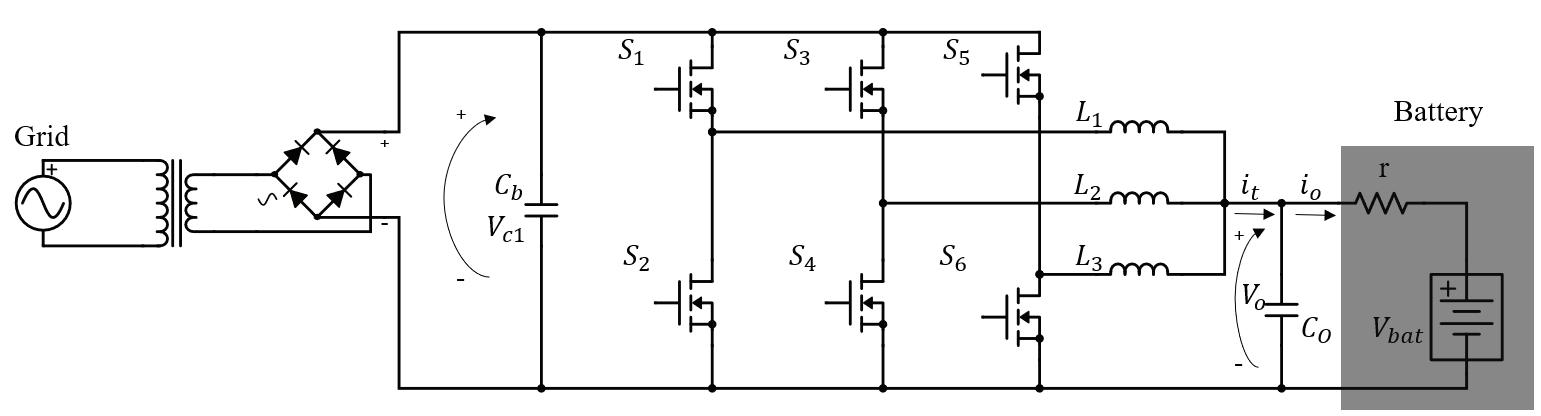
PI‑FLCalgorithmensuresthatthesystemmeetsdiffer‑ entchargingstandardsforeachE2Wbattery.
IncontrastwiththeconventionalCC–CVmethod, whichprioritizesrapidchargingsolelyduringthe 0–80%SoCrange.AsdepictedinFigure3,thiswork implementsadaptivecurrentpro ilingchargingto mitigateexorbitantchargingcurrentsinlowSoC (0–20%)andovervoltagerisksinhighSoC (80–100%).Thethree‑stagechargingprotocoloper‑ atesasfollows:(a)normal‑ratecharging(0‑0.8C)at 0–20%SoCtopreventexorbitantchargingcurrent fromdamagingthebattery;(b)acceleratedcharging (0.8‑1C)at20–80%SoCtominimizetheduration; and(c)taperedcharging(0‑0.5C)at80–100%SoC toavoidbatterydamageduetoextensivecharging current.
Figure 4 illustratestheoutputofFLC,whichisa referenceC‑rate.ThisC‑rateisthenmultipliedbythe batterycapacityIivr toestablishthereferencecharg‑ ingcurrentvalue.Thisreferencecurrentissuccess‑ fullycomparedwiththemeasuredcurrenttogenerate acurrenterror,whichwillbethePIcontrolinput. ThePIcontrolcalculatestheappropriatedutycycle toachievethedesiredreferencecurrentandvoltage. Furthermore,thePI‑FLChybridcontrollerdynami‑ callyresolvesnonlinearbatterydynamicsbycombin‑ ingPI‑basedvoltageregulationwithFLC‑drivenmulti‑ constraintoptimization.
Chargingparametersarefuzzi iedinto membershipfunctions,enablingtheFLCto autonomouslyselectchargingmodesthrough75
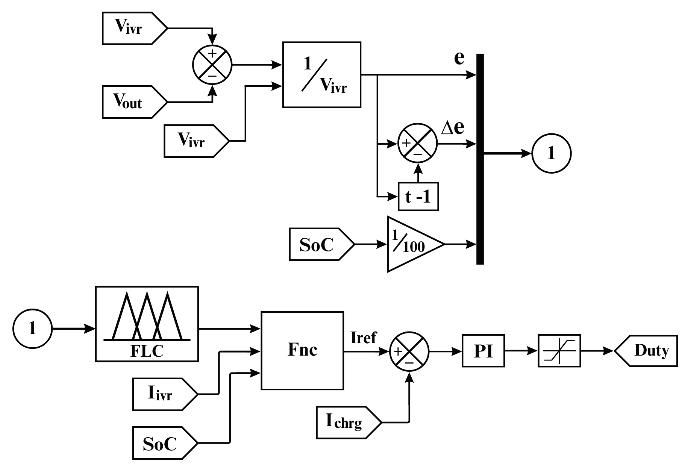
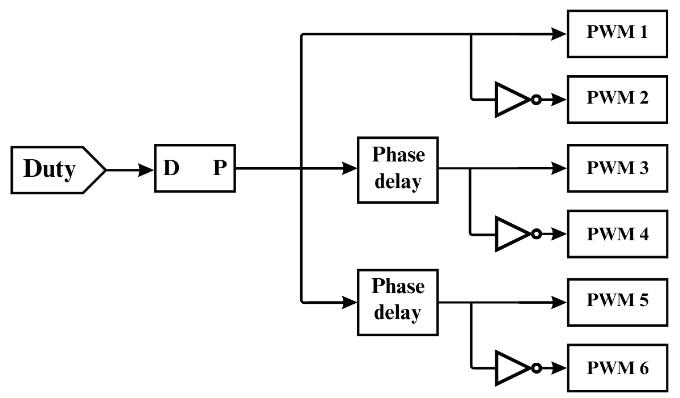
(a)Chargingcontrolblock,(b)PWMgenerator
rule‑baseddecisions.Thisdual‑looparchitecture compensatesforPIcontrollers’inherentlimitations inadaptivechargingparametersunderbattery nonlinearcharacteristics.
ThePIcontrollerusedintheproposedmethodis conventionalPI,where ����=���� +����1/�� whichis designedtoobtainamonotonicresponse.Inpartic‑ ular,thevaluesof ���� =0.75 and ���� =50, respec‑ tively,andthePIoutputislimitedwiththesatura‑ tionvalueof0‑0,97.AsdepictedinFigure5,theFLC algorithmhadthreemembershipinputsmembership function:errorvoltagedescribedas ���� =(�������� ����)/�������� ∈[ 11] where �������� isthebatteryvoltage setpointatchargingmode,deltaerrorisdifferential betweenmeasured���� and���� att‑1describedas��Δ�� = ����−����(t 1)∈[ 11],andbatterySoCisdescribedas �������� =������(��)/100)∈[01] fuzzymembershipoutput isthereferenceC‑rate����������∈[01]
Table 1 illustratesthenormalratecharging conditionsinwhichthecurrentandvoltagerise exponentiallytowardthebatterychargingvoltage andmaximumchargingcapacity.Table 2 illustrates theacceleratedchargingconditionsecuringthe maximumchargingcurrentandvoltage.Table 3 illustratesthetaperedchargingconditionwherethe currentdropsslowlyfromthemaximumcharging currenttozerowhenthebatterySoCreaches100% andmaintainsthesetpointchargingvoltage.
TheproposedsystemwasvalidatedusingMAT‑ LAB/Simulinkandsimulatedbasedonthecharger
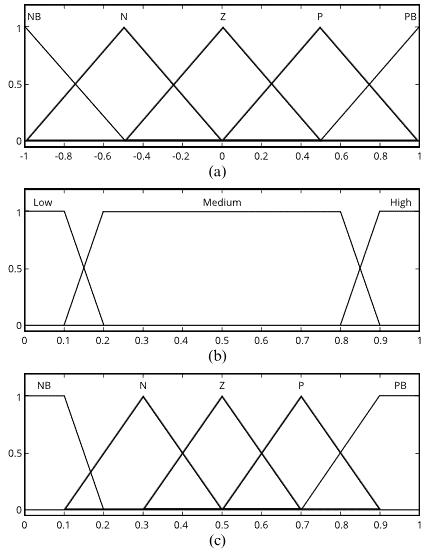
Figure5. Fuzzymembershipfunction(a)inputerrorand Δerror,(b)inputSoC,(c)Output
Table1. ThefuzzyruleforlowSoClevel
SoC:Low error
NB N Z P PB
NB Z Z Z Z Z
N Z N N Z P
Δerror Z Z Z Z P PB
P Z Z P PB PB
PB Z P PB PB PB
Table2. ThefuzzyruleformediumSoClevel
SoC:Medium error
NB N Z P PB
NB PB PB PB PB PB
N PB PB PB PB PB
Δerror Z PB PB PB PB PB
P PB PB PB PB PB
PB PB PB PB PB PB
Table3. ThefuzzyruleforhighSoClevel
SoC:High error
NB N Z P PB
NB NB NB NB NB NB
N NB NB NB NB N
Δerror Z NB NB NB NB N
P NB NB NB N N
PB NB NB N N N
parametersoutlinedinTable4.Furthermore,thepro‑ posedchargingtopologyhasalsobeenvalidatedby hardwareimplementation.
Table4. Thechargersimulationparameters
Parameter Value
RMSInputVoltage 220‑230V50Hz(AC)
ACTransformator 1:2
Recti ier 2kW
Switchingdevice MOSFETN‑type
Rd=0.01Ω
Rs=1e5Ω
Inductor���� 1e‑3H
Capacitoroutput���� 200e‑6F
Voltageoutput���� 48‑84V
Outputcurrent���� 0‑20A
Theproposedsystemwasdevelopedusing MATLAB/Simulink,incorporatingchargerparameters delineatedinTable 4.Anickel‑manganese‑cobalt (NMC)battery[25],con iguredina20s8ptopology (nominalvoltageof72Vandacapacityof20.4Ah), wasutilizedfortestingpurposes.Comparative analyseswereconductedagainstthePIDCC‑CV andPICCalgorithms.Theseassessmentsevaluated chargingcurrentandvoltagedynamics,transient response,andtotalchargingdurationtoensurea rigorousandunbiasedperformancevalidation.
Figure 6 demonstratesthetransientvoltage responsetoan84Vsetpoint.Theproposedmethod effectivelyachievesvoltagestabilizationwithin 1.25ms,exhibitingaresponsetimetwiceasrapidas thePIDCC–CValgorithm,whichstabilizesat2.5ms.In contrast,thePI‑CVmethodfailstoreachconvergence, displayingasteady‑stateerrorof2.3%.Theseresults underscorethesuperiortransientresponseofthe proposedmethod.
Table5illustratesthatthecurrentregulationper‑ formanceacrosstheentireSoCrangeisquantitatively assessed.Theproposedsystemmaintainsacurrent deviationof±4Aat20%SoCwhileoperatingata1C‑ rate(20.4A)duringtheacceleratedchargingphase. Furthermore,thecurrentthrottlingrateis0‑0.8C‑rate and0‑0.5C‑rateat0%and80%SoC,respectively.As depictedinFigure7,theproposedmethodeffectively mitigatesrisksassociatedwithbatterythermalrun andcelldamage.Thesystemachievescurrenttapering to0Aat100%SoC.
ChargingtimecomparisonspresentedinFigure7 revealthatthePI‑FLCalgorithmaccomplishesa0 to100%SoCchargingdurationof57.75minutes. Thisachievementrepresentsasigni icantreduction of67.9%and75.9%comparedtothePIDCC‑CV (180min)andPI‑CV(240min)methods,respectively. Theperformanceoftheproposedsystemexceeds thatoftraditionalPIDCC‑CVchargerscurrently implementedincommercialE2Wsystems[26],thus demonstratingitsviabilityforindustrialapplications.
Theproposedhardwareimplementationofthe 3PhaseIBC‑basedchargerwasdevelopedtovalidate theoreticalperformancemetricsanddemonstrate
Figure6. Thecomparisonofchargingvoltage characteristics
Table5. Thechargingcurrentcharacteristicsofthe proposedalgorithm
Figure7. Chargingtimeperformance
practicalapplicabilityforE2Wsystems.Theexperi‑ mentalsetupencompassesmodulararchitecturefea‑ turinganAC‑DCrecti icationstage,a3PhaseIBC, precisionsensingmodulesforreal‑timevoltageand currentmonitoring,andamicrocontrollerunit(MCU) executingahybridPI‑FLCalgorithm.Operatingfrom astandard220–230VAC(50Hz)input,thesystem recti iestoa30VDCbusanddeliversaregulated 21VDCoutputtochargea5‑series,1‑parallel(5S1P) lithium‑ionbatteryarray.
Table6. Thechargerhardwareimplementation parameters
Parameter Value
RMSInputVoltage 220‑230V50Hz(AC)
VoltageInput 30V
CurrentInput 0.4A
PowerInput 12W
VoltageOutput 21V
CurrentOutput 0.564A
OutputCapacitor 100uF
Inductor 60uH
SwitchingDevice MOSFET
SwitchingFrequency 30kHz
BatteryArray 5series1parallel PowerOutput 11.85W
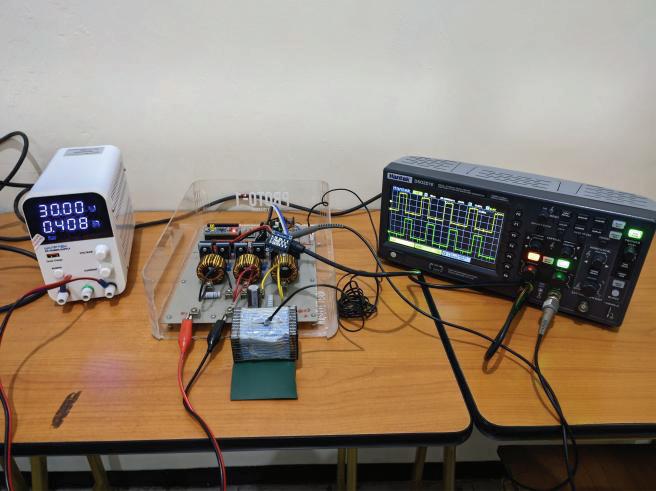
Figure9. Hardwareimplementationoftheproposed chargingtopology
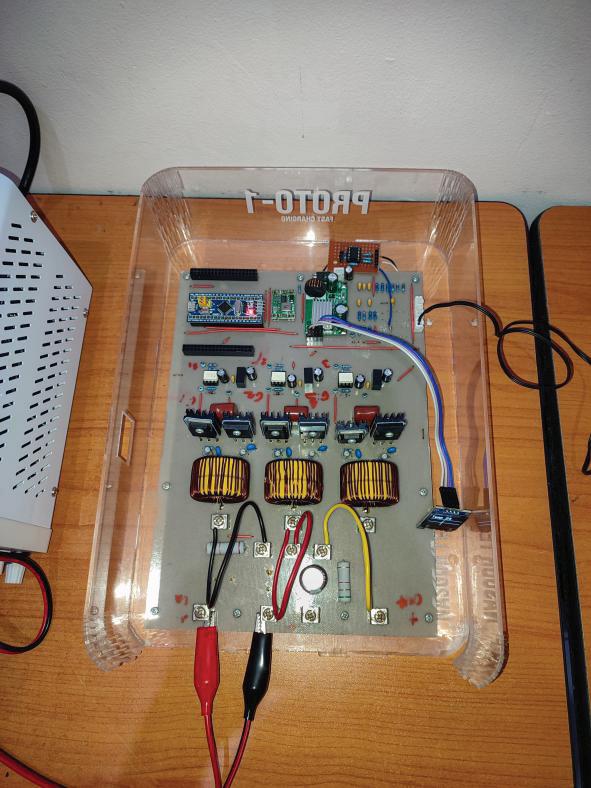
TheexperimentalsetupisillustratedinFigure 8 ThehardwareparametersoutlinedinTable6demon‑ strateaninputpowerof12W(30V,0.4A),yielding anoutputof11.85W(21V,0.564A)andachieving anexceptionalef iciencyof98.8%.Thisperformance isattributedtothelowon‑resistanceoftheMOSFETs, high‑frequencyoperationat30kHz,minimizingcore lossesinthe60µHinductor,andreducedripplecur‑ rentenabledbythe100µFoutputcapacitor.
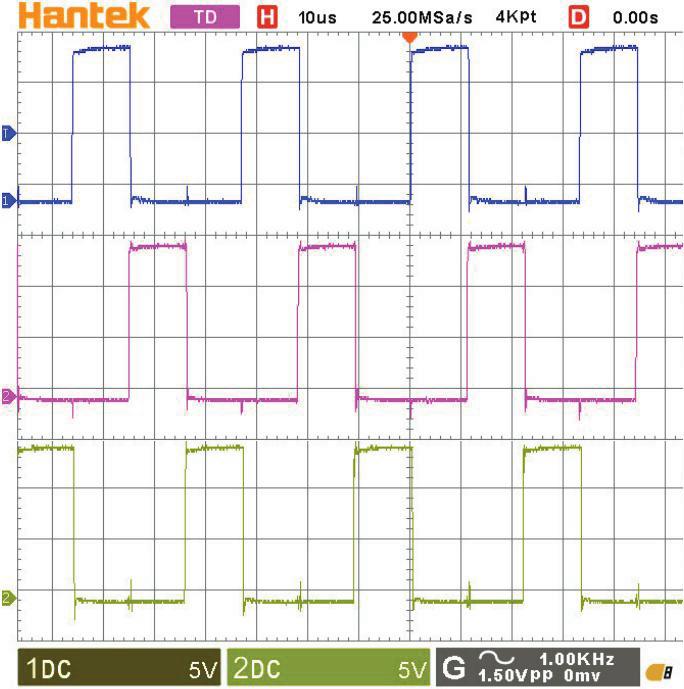
Figure10. ThreephasesinterleavedPWMsignalresult 30Khz
Figure 9 providesagranularviewofhardware realization,highlightingthethree‑phaseinterleaved PWMsignalsgeneratedbytheMCU.Theinterleaved operationat30kHzensurescontinuousinput current,minimizesinput/outputvoltageripple, anddistributesthermalstressevenlyacrossthe threephases.Thiscon igurationenhancespower densityandmitigateselectromagneticinterference (EMI).ThestablePWMwaveformalignmentwiththe controlalgorithm’sdynamicadjustmentscon irms therobustnessofthePI‑FLCinadaptingtoreal‑time batterySoCandvoltage luctuations.
Figure 10 depictsthesteady‑stateinputvoltage waveform,whichremainsconsistentlyregulatedat 30VDCdespitevariationsinloadconditions.This stabilityiscriticalformaintainingtheintegrityof theAC‑DCrecti icationstageandensuringreliable powerdeliverytotheIBC.Meanwhile,Figure11illus‑ tratestheoutputvoltagewaveform,showcasingthe charger’sabilitytomaintainaprecise21VDCunder dynamicloading.Notably,theabsenceofsigni icant overshootoroscillationsduringtransientresponses validatesthehybridPI‑FLCalgorithm’seffectiveness inenforcingtightvoltageandcurrentthresholds,even duringrapidSoCchanges.Theinterleavedarchitec‑ tureandoptimizedLC ilterachieveminimalvoltage rippleattheoutput.
Chargingef iciency(η)andchargingtime(t)are criticalmetricsinEVchargingsystems.Ef iciency quanti iespowerconversioneffectivenesswhile chargingtimere lectsthesystem’sabilitytodeliver energyrapidly.Thisstudycomparesrecentconverter topologiesandcontrolalgorithms,proposinganovel 3‑phaseIBCwithPI‑FLCforenhancedperformance. Thechargingef iciencyisdescribedin(11)
Where����ℎ���� isthechargingpowerand������ isthe chargerinputpower.Chargingtimefrom0%to100% SoCdependsonbatteryenergycapacity(Ebat)and effectivechargingpower(Pchrg ×η)mathematically modelledas(12).
Eq.(11)and(12)arethenusedtocalculatethe ef iciencyandchargingspeedofthechargerinvarious previousmethodswhicharethenincludedinTable7. Thistablepresentsacomparisonbetweenthepre‑ viouschargingmethodsandtheproposedmethod, provingtheef icacyoftheproposedmethod.
Table 7 comparesvariouspowerconvertersand controlalgorithmsinEVchargingsystemsfrom2020 to2025.Variousconvertersfrompreviousstudies werecomparedtoevaluatetheirperformancein chargingbatteries.Theuseofdiversealgorithms resultedinvariationsinchargingef iciency.Thebat‑ teryspeci icationsaresometimesdifferent,bycal‑ culatingthechargingtimeusingEq.(12),although eachalgorithmistestedusingdifferentbatteryspeci‑ ications,Eq.12willprovidethesamechargingtime valueaccordingtotheperformanceandcapacityof thecharger.Ef iciencyrangesfrom92.3%to98.8%, withchargingtimesbetween65and175minutes.
Table7. Comparisonbetweentheproposedmethodandpreviousmethods
Theleadingmodelfor2025,the3‑PhaseInterleaved BoostConverter(IBC)withPI‑FLC,achieves98.8% ef iciencyandthefastestchargingtimeof57.75min‑ utes,demonstratingtheadvantagesoftheinterleaved topologywithPI‑FLC.
Theproposedhigh‑performancefastchargerfor E2W,utilizinga3PhaseIBCcontrolledwithPI‑FLC algorithm,signi icantlyenhanceschargingef iciency andspeed.ThePI‑FLCoptimizeschargingcurrentand voltagedynamicallybyintegratingreal‑timebattery current,voltage,andSoCdata.Achievingfastcharging of57.75minutesfora72V20AhNMCbattery,this systemdemonstratesa67.9%and75.9%reductionin chargingtimecomparedtoPIDCC‑CV(180min)and PI‑CV(240min),respectively.Moreover,theproposed methodoutperformsseveralcutting‑edgecharging methods,suchasaZetaconverterwithSMCwith 98.1%ef iciencyand80minchargingtime,Quasi‑ Resonantconverterswithhysteresiscontrolwith 97.5%ef iciencyand70minchargingtime,Inter‑ leavedBoostwithFLC98.5%ef iciencyand65min chargingtime,andDualActiveBridgewithMPC97.9% ef iciencyand75minchargingtime.Thehardware implementationdemonstrated98.8%ef iciencydur‑ ingtestingata0.22Crate.The3‑phaseIBCtopology minimizesoutputcurrentrippleandEMI,whilethe adaptablePI‑FLCalgorithmpreventsoverchargingby preciselyregulatingvoltageandcurrent.Byaddress‑ ingthebalancebetweenrapidchargingrequirements andbatterylongevity,thisinnovationpresentsascal‑ able,effective,andsafesolutionfortheevolving demandsoftheE2Wecosystem,ultimatelycontribut‑ ingtothesustainabilityofelectricmobility.
AUTHORS
Subiyanto –DepartmentofElectricalEngineering, UniversitasNegeriSemarang,Semarang,50229, Indonesia,e‑mail:subiyanto@mail.unnes.ac.id. RizkyAjieAprilianto∗ –Departmentof ElectricalEngineering,UniversitasNegeri Semarang,Semarang,50229,Indonesia,e‑mail: rizkyajiea@mail.unnes.ac.id.
MarioNormanSyah –Departmentof ElectricalEngineering,UniversitasNegeri Semarang,Semarang,50229,Indonesia,e‑mail: marionormansyah@mail.unnes.ac.id.
BagaskoroSaputro –Departmentof ElectricalEngineering,UniversitasNegeri Semarang,Semarang,50229,Indonesia,e‑mail: bagaskoro.s@mail.unnes.ac.id.
AbdurrakhmanHamidAl‑Azhari –Departmentof ElectricalEngineering,UniversitasNegeriSemarang, Semarang,50229,Indonesia,e‑mail:abdurrakhman‑ hamid@mail.unnes.ac.id.
NektarCahayasabda –Departmentof ElectricalEngineering,UniversitasNegeri Semarang,Semarang,50229,Indonesia,e‑mail: nektarcahayasabda@gmail.com.
BayuAdiPambudi –Departmentof ElectricalEngineering,UniversitasNegeri Semarang,Semarang,50229,Indonesia,e‑mail: bayuadipambudi@gmail.com.
FaiqMananulFaqih –DepartmentofElectrical Engineering,UniversitasNegeriSemarang,Semarang, 50229,Indonesia,e‑mail:faiqmanal77@gmail.com.
IchaArifahAnnisa –DepartmentofElectricalEngi‑ neering,UniversitasNegeriSemarang,Semarang, 50229,Indonesia,e‑mail:ichaarifah03@gmail.com.
DwiBagasNugroho –DepartmentofElectrical Engineering,UniversitasNegeriSemarang,Semarang, 50229,Indonesia,e‑mail:dwibagasn@gmail.com.
SivaKhaai inaRachmat –DepartmentofElectrical Engineering,UniversitasNegeriSemarang,Semarang, 50229,Indonesia,e‑mail:sivaakhaai ina@gmail.com.
DewiAnggriani –DepartmentofElectricalEngineer‑ ing,UniversitasNegeriSemarang,Semarang,50229, Indonesia,e‑mail:dewianggriani480@gmail.com.
∗Correspondingauthor
References
[1] H.Tuetal.,“ExtremeFastChargingofElectric Vehicles:ATechnologyOverview,” IEEETrans‑ actionsonTransportationElectri ication,vol.5, no.4,2019,pp.861–878;doi:10.1109/TTE.20 19.2958709.
[2] A.Ghosh,“PossibilitiesandChallengesforthe inclusionoftheElectricVehicle(EV)toReduce theCarbonFootprintintheTransportSector:A Review,” Energies(Basel),vol.13,no.10,2020, pp.1–2;doi:10.3390/en13102602.
[3] M.Bharathidasan,V.Indragandhi,andB.Alja‑ fari,“HybridControlledMulti‑InputDC/DCCon‑ verterforElectricVehicleApplication,” Interna‑ tionalTransactionsonElectricalEnergySystems, vol.2023,pp.1–16;doi:10.1155/2023/83084 18.
[4] D.N.HuuandV.N.Ngoc,“AThree‑StageofCharg‑ ingPowerAllocationforElectricTwo‑Wheeler ChargingStations,” IEEEAccess,vol.10,2022,pp. 61080–61093;doi:10.1109/ACCESS.2022.3181 731.
[5] I.Vezaetal.,“ElectricVehiclesinMalaysiaand Indonesia:OpportunitiesandChallenges,” Ener‑ gies(Basel),vol.15,no.7,2022,pp.1–4;doi: 10.3390/en15072564.
[6] R.SwapnilandV.N.Kalkhambkar,“Optimal OperationModelofVehicletoVehicleCharg‑ ingSystem,” JournalofElectricalandElectronics Engineering,vol.15,no.1,2022,pp.52–58; ht tps://www.proquest.com/openview/6abc e8708f539109954a48200386c0ae/1?pq‑ origsite=gscholar&cbl=54417
[7] P.Sharmaetal.,“AComprehensiveStudyonElec‑ tricalVehicleinChargingInfrastructure,Chal‑ lengesandFutureScope,” ElectricVehicles,Green EnergyandTechnology,N.Pateletal.,eds., Springer,2021,pp.1–285;doi:10.1007/978‑ 981‑15‑9251‑5_16.
[8] P.Sharma,A.KumarSharma,andA.K.Vyas, “ComparativeStudyofDC‑DCConverterWith DifferentControlTechniques,” RecentAdvances inRenewableEnergySources,P.Sharma,ed., RARES2021,2021,pp.1–6;doi:https://papers. ssrn.com/sol3/papers.cfm?abstract_id=38085 64#
[9] F.Mumtazetal.,“ReviewonNon‑isolatedDC‑ DCConvertersandtheirControlTechniquesfor RenewableEnergyApplications,” AinShamsUni‑ versity,2021;doi:10.1016/j.asej.2021.03.022.
[10] J.Anzolaetal.,“ReviewofArchitecturesBased onPartialPowerProcessingforDC‑DCApplica‑ tions,” InstituteofElectricalandElectronicsEngi‑ neersInc,2020;doi:10.1109/ACCESS.2020.29 99062.
[11] H.Yeetal.,“HighStep‑UpInterleaveddc/dc ConverterwithHighEf iciency,” EnergySources, PartA:Recovery,UtilizationandEnvironmental Effects,vol.46,2020,pp.4886–4905;doi:10.1 080/15567036.2020.1716111.
[12] P.Sharma,D.K.Dhaked,andA.K.Sharma,“Math‑ ematicalModelingandSimulationofDC‑DC ConvertersUsingState‑SpaceApproach,” Pro‑ ceedingsofSecondInternationalConference,J.C.
Bansal,K.Deep,andA.K.Nagar,eds.,Springer, 2020,pp.1–737;doi:10.1007/978‑981‑15‑ 6707‑0.
[13] P.Sharmaetal.,“CoatiOptimizedFOPIDCon‑ trollerforNon‑IsolatedDC–DCConvertersin EVChargingApplication,” IETPowerElectronics, 2024,pp.2771–2784;doi:10.1049/pel2.12798.
[14] P.Sharmaetal.,“NovelCurrent‑FedBidirectional DC‑DCConverterforBatteryCharginginElectric VehicleApplicationswithReducedSpikes,” Elec‑ tricity,vol.5,no.4,2024,pp.1022–1048;doi: 10.3390/electricity5040052.
[15] K.Shreyaetal.,“CUKConverterFedResonant LLCConverterBasedElectricBikeFastCharger forEf icientcc/cvChargingColution,” Journalof AppliedScienceandEngineering,vol.24,no.3, 2020,pp.331–338;doi:10.6180/jase.202106_ 24(3).0008.
[16] Y.‑S.Chengetal.,“DesignandImplementation ofLi‑ionBatteryChargerUsingState‑of‑Charge EstimationwithFuzzyTemperatureControl,”in 2015IEEEICIT,2015,p.799;doi:10.1109/ ICIT.2015.7125402.
[17] S.S.Hussein,A.J.Abid,andA.A.Obed, “ANFIS‑BasedNewApproachforanOptimal Lithium‑IonBatteryChargingControl,”in 2023IEEE3rdInternationalConferencein PowerEngineeringApplications:Shaping SustainabilityThroughPowerEngineering Innovation,ICPEA2023,2023,pp.248–251;doi: 10.1109/ICPEA56918.2023.10093226.
[18] G.Balenetal.,“ModelingandControlofInter‑ leavedBuckConverterforElectricVehicleFast Chargers,”in 2017COBEP,2018,pp.1–6;doi: 10.1109/COBEP.2017.8257412.
[19] L.Ntogramatzidisetal.,“ANovelMIMOCon‑ trolforInterleavedBuckConvertersinEVDC FastChargingApplications,” IEEETransactions onControlSystemsTechnology,vol.31,no.4, 2023,pp.1892–1900;doi:10.1109/TCST.202 3.3237497.
[20] M.Carbajal‑Retanaetal.,“InterleavedBuckCon‑ verterforInductiveWirelessPowerTransfer indc–dcConverters,” Electronics(Switzerland), vol.9,no.6,pp.1–15;doi:10.3390/electronic s9060949.
[21] S.Cuoghietal.,“MultilegInterleavedBuckCon‑ verterforEVCharging:Discrete‑TimeModeland DirectControlDesign,” Energies(Basel),vol.13, no.2,pp.1–8;doi:10.3390/en13020466.
[22] A.GargandM.Das,“HighEf iciencyThreePhase InterleavedBuckConverterforFastChargingof EV,”in ICPEE2021‑20211stInternationalCon‑ ferenceonPowerElectronicsandEnergy,2021, pp.1–5;doi:10.1109/ICPEE50452.2021.9358 486.
[23] K.Drobnicetal.,“AnOutputRipple‑FreeFast ChargerforElectricVehiclesBasedonGrid‑Tied
ModularThree‑PhaseInterleavedConverters,” IEEETransIndAppl,vol.55,no.6,2019,pp. 6102–6114;doi:10.1109/TIA.2019.2934082.
[24] Y.T.Yau,K.I.Hwu,andJ.J.Shieh,“Minimization ofOutputVoltageRippleofTwo‑PhaseInter‑ leavedBuckConverterwithActiveClamp,” Ener‑ gies(Basel),vol.14,no.16,2021,pp.1–30;doi: 10.3390/en14165215.
[25] A.I.Pózna,K.M.Hangos,andA.Magyar,“Designof ExperimentsforBatteryAgingEstimation,” IFAC‑ PapersOnLine,2018,pp.386–391;doi:10.1016/ j.ifacol.2018.11.733.
[26] H.Lietal.,“CooperativeCC‑CVChargingof SupercapacitorsUsingMultichargerSystems,” IEEETransactionsonIndustrialElectronics, vol.67,no.12,2020,pp.10497–10508;doi: 10.1109/TIE.2019.2962485.
[27] L.Gan,U.Topcu,andS.H.Low,“OptimalDecen‑ tralizedProtocolforElectricVehicleCharging,” IEEETransactionsonPowerSystems,vol.28,no. 2,2012,pp.940–951;doi:10.1109/TPWRS.20 12.2210288.
[28] M.C.Kisacikoglu,F.Erden,andN.Erdogan,“Dis‑ tributedControlofPEVChargingBasedon EnergyDemandForecast,” IEEETransIndustr Inform,vol.14,no.1,2018,pp.332–341;doi: 10.1109/TII.2017.2705075.
[29] S.Bhatnagaretal.,“ChargingSystemAnalysis inStaticandDynamicWirelessElectricVehi‑ cle,” InternationalJournalofAdvancedResearch inEngineeringandTechnology(IJARET),vol.10, no.1,2019,pp.104–120;doi:https://www.doi. org/10.34218/IJARET.10.1.2019.011
[30] G.Madhuretal.,“FastChargingElectricVehi‑ cleusingFuzzyLogicController,” International JournalofEngineeringResearch&Technology (IJERT),vol.9,pp.499–502;doi:10.17577/IJE RTV9IS050426.
[31] D.N.HuuandV.N.Ngoc,“AnalysisStudyofCur‑ rentTransportationStatusinVietnam’sUrban Traf icandtheTransitiontoElectricTwo‑ WheelersMobility,” Sustainability(Switzerland), vol.13,no.10,2021,pp.1–27;doi:10.3390/su 13105577.
[32] T.SaravanakumarandR.S.Kumar,“FuzzyBased InterleavedStep‑upConverterforElectricVehi‑ cle,” IntelligentAutomationandSoftComputing, vol.35,no.1,2022,pp.1103–1118;doi:10.326 04/iasc.2023.025511.
[33] D.V.PendamandT.M.Ro in,“ElectricVehicleand ChargingInfrastructureDevelopment:ACom‑ prehensivesReviewUsingScienceMappingand ThematicAnalysis,”2023;doi:10.1007/978‑ 981‑99‑1019‑9_26.
[34] V.N.NgocandD.N.Huu,“OptimalValley‑Filling AlgorithmforElectricTwo‑wheelerCharging Stations,” Engineering,TechnologyandApplied ScienceResearch,vol.14,no.1,pp.13072–13077,2024;doi:10.48084/etasr.6569.
[35] Z.Chen,Z.Zheng,X.Tang,andY.Wu,“ModelPre‑ dictiveControlledDualActiveBridgeConverter withEf iciencyOptimizationandFastDynamic Response,” JournalofElectricalEngineeringand Technology,vol.19,no.1,2024;doi:10.1007/s4 2835‑023‑01569‑x.
Submitted: 6th November 2024; accepted: 24th February 2025
Neslihan Demir, Pinar Demircioglu, Ismail Bogrekci
DOI: 10.14313/jamris-2026-031
Correction note
The article entitled “Design, Implementation, and Performance Optimization of a ROS Based Autonomous Mobile Robot for Intralogistics in Manufacturing Facilities, Volume 20, No1 2021, page 93-102, DOI: https://doi. org/10.14313/jamris-2026-010 was corrected.
The correction concerns the author’s email address. The correct author details are:
Neslihan Demir
Department of Industrial Engineering, Istanbul Aydin University
Email: neslihandemir2@aydin.edu.tr
ORCID: 0000-0001-8641-7787
This correction updates only the author’s contact information and does not affect the content, results, or conclusions of the article.