Class Action Settlements in 2025: Staggering Sums of Money » 6
Driving in the U.S. and the PIA Western Alliance States » 13
An In-Depth look at Mergers & Acquisitions in 2026 » 27
What Activities Can an Unlicensed CSR Perform?
In general, unlicensed Customer Service Representatives (CSRs) are not able to sell, solicit, bind, or negotiate insurance, nor should they recommend, interpret, or discuss coverages with clients.
They can act as a go-between for the licensed producer and the client for certain activities –however, matters such as coverage advice or coverage changes must always be reviewed and handled by the licensed producer
Examples of acceptable unlicensed CSR activities may include*:
● Providing general information about the agency or producer, such as contact information.
● Providing clients with requested forms such as applications, declination forms, etc. These forms can also be received by the CSR, but must be provided to the producer for review and further action. They can also provide things like brochures and buyers guides, if requested.
● Requesting information from clients at the instruction of the producer.
● Providing details to clients about their active policies. For example, supplying a policy number, effective dates, or stated limits, without interpreting coverage or answering, “What if?” questions.
● Scheduling appointments for clients to meet with the producer
● Filing documents that have already been reviewed by the producer, plus general file maintenance.
● Receiving requests for changes to coverage – however, CSRs should be clear to the clients that the request must be reviewed by a producer before any changes are made.
● Accepting notice of claims and forwarding claim information to the carrier or producer, without offering opinions or advice regarding coverage or claim outcome.
Class Action Settlements in 2025: Staggering Sums of Money | 6
Insurance companies, groups and associations — the PIA among them — are worried about the proliferation of lawsuit settlements and judgements pushing millions and millions of dollars.
Searching for Insurance: Google Statistics | 7
Insurance searches on Google hit an all-time high in 2025. This according to Suren Pillai, the founder of Insurance SEO & SEM.
J.D. Power on Insurance Buying: More Purchasing Digitally | 8
J.D. Power says the number of people purchasing insurance digitally is on the rise. The The Digital Insurance Predictions 2026 survey finds 44% of insurance policy buyers are now getting their insurance via those channels.
Chubb’s Flood Risk and Resilience report offers some serious concerns for wealthy homeowners, commercial businesses and for agents and brokers.
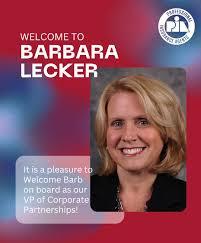
PIA National Hires VP of Corporate Partnerships | 11
PIA National has hired Barbara Lecker as vice president of corporate partnerships. It is a strategic hire that underscores the PIA’s nationwide push for continued growth, expanding industry influence and commitment to delivering greater value to members and affiliates.
Travel & Economy Class Leg Room on Airplanes | 12
Most of us travel by airplane at least once a year. Some of us practically live on them.
Driving in the U.S. and the PIA Western Alliance States | 13
In 2025 traffic congestion cost the average driver in the U.S. about $894. Spinning that traffic facts a bit more, the average person spends 49 hours a year stuck in traffic.
It’s
Tough Out There: Live in the Past? Present? Or Future? | 15
It’s always interesting — and sometimes very informative — to understand what’s going on in the heads of your clients.
An
In-Depth look at Mergers & Acquisitions in 2026 | 24
A recent report from Business Insurance offers an in-depth, and very informative, look at mergers and acquisitions.
Upcoming Events Calendar 2026 | 18
Earn Your Designation: CISR, CIC & CPIA | 26
.
PIA NE IA EVENTS
Over 130 years of shared success.
Farmers Mutual of Nebraska is now FMNE Insurance. We’ve teamed up with local independent agents to deliver dependable, affordable auto, farm, and home insurance for over 130 years. Our promise is to be “Always alongside you” with prompt, personalized service and unmatched financial strength.
Always alongside you.
PIA FOR NEBRASKA AND IOWA
PIA Association for Nebraska and Iowa is committed to focusing its resources in ways that cast the most favorable light on its constituents. We are dedicated to providing the type of programs, the level of advocacy, and the dissemination of information that best supports the perpetuation and prosperity of our members. We pledge to always conduct ourselves in a manner that enhances the public image of PIA and adds real value to our members.
SUBSCRIBE OR COMMENT
Professional Insurance Agents NE IA
Attention: Editorial Main Street Industry News 11932 Arbor Street, Ste. 100 Omaha, NE 68144
The PIA NE IA, Main Street Industry News reserves the right to edit your comments to fit space available. We respectfully ask that you keep the comments to 200-300 words.
CLASS ACTION SETTLEMENTS IN 2025 Staggering Sums of Money
Insurance companies, groups and associations — the PIA among them — are worried about the proliferation of lawsuit settlements and judgements pushing millions and millions of dollars.
The business law firm, Duane Morris did an analysis and said the 10 highest class-action settlements in 2025 topped $70 billion. Gerald Maatman co-wrote the Duane Morris Class Action Review and said this is the fourth straight year that settlements have topped $40 billion.
“To put it into perspective, that amount is larger than the annual budgets of multiple U.S. states and eclipses the GDP of more than half the world’s nations,” he said. “At the same time, the gravitational pull of these massive outcomes is attracting elite talent to the plaintiff’s bar and providing massive incentive for plaintiffs’ lawyers to increase their filings and the sophistication of the strategies they employ.”
Cathy Klasi, Executive Director (402) 392-1611
Lindsey, Ad Placement (402) 392-1611
The 750-page report said there were 1,761 decisions in 2025. Judges continue to certify class-action lawsuits by granting 68% of motions to do so. In just federal courts, plaintiffs filed over 13,000 class-action lawsuits last year in federal courts. That’s over 36 filings per day.
Source: Insurance Journal
SEARCHING FOR INSURANCE Google Statistics
Insurance searches on Google hit an all-time high in 2025. This according to Suren Pillai, the founder of Insurance SEO & SEM. His firm searched Google data banks and found hits relating to auto insurance, home insurance, business insurance, health insurance and life insurance “surged.”
"While AI tools are increasingly used for research and summarization, this data suggests they could be complementary and co-exist with SEO," Pillai said. “With the top insurance keywords hitting record search levels, organic visibility on Google directly translates to customer acquisition opportunities.”
Looking at the different categories starting with business insurance:
• Searches for business insurance had the biggest increase year-over-year
• 2025’s searches rose 89% over 2024’s
• New York had the most business insurance searches
• The peak searches were July 13 to 19, 2025 after the catastrophic floods in Texas
• The peak score of 100 is 2.8 times higher than the previous record of 36 in 2024
Homeowners insurance:
• Searches rose 45% in 2025 compared to 2024
• Florida had the most homeowners insurance searches
• Texas was second
Auto insurance:
• Auto insurance searches rose 38% in 2025 compared to 2024
• Georgia has the most searches
• Searches peaked the of July 13-19 following the devastating Texas floods
• The 2025 peak score of 100 is 2.3 times higher than the previous high of 46 in 2021
Health insurance:
• Searches rose 25% in 2025 compared to 2024
• New York had the most health insurance searches
• November was the highest search month because of open-enrollment
Insurance SEO & SEM’s report said the good news for the insurance industry is how traditional search engine optimization is generating record highs. Those searching do not tend to be doing so casually. They are seeking coverage, and sometimes urgently.
AI searches is providing conversational answers to the questions of those doing a query.
Source: PropertyCasualty360.com
J.D. POWER ON INSURANCE BUYING: MORE PURCHASING DIGITALLY
J.D. Power says the number of people purchasing insurance digitally is on the rise. The The Digital Insurance Predictions 2026 survey finds 44% of insurance policy buyers are now getting their insurance via those channels.
On the 1,000 point scale, digital customers are ranking their experience at 801 or even higher, and 92% say they will continue to use digital channels in the future.
The survey had a number of different respondents from various sides of insurance.
• 33% of responses were agencies and brokerages
• 18% were P&C carriers
• 15% were multi-line carriers
• 12% of respondents were health insurance carriers
• 7% were life insurers
The Digital Insurance Predictions 2026 survey also asked respondents about how technology
is changing their approach to insurance. Many had worries with 53% concerned about cyber security and intelligence tools and 52% expressed concern about Gen AI.
Looking at consumers, the number doing auto shopping rose to 57% in 2025. That’s up from 49% in 2024. The report says higher premium costs has consumers wanting more from insurance companies.
As a counter, 17% of auto insurers now offer usage-based insurance. That’s up from 15% in 2024 but down from 2023 when 22% of auto insurance companies had usage-based insurance as a policy option.
The report noted artificial intelligence is creeping into consumer insurance shopping.
J.D. Power’s report suggests insurance companies need to pay more attention to how they communicate with consumers and offer them personalized information on their policies and premiums.
Source: Digital Insurance
The US Bureau of Labor Statistics (BLS)
FLOOD INSURANCE
Chubb Survey Finds Dangerous Misconceptions
Chubb’s Flood Risk and Resilience report offers some serious concerns for wealthy homeowners, commercial businesses and for agents and brokers. It points to a worrisome misconception about the risk of flood and flood damage mitigation.
The good news is 84% of homeowners and 72% of commercial businesses believe the risk of flooding is greater now than it was five years ago. However, most don’t think the risk applies to them.
Citing “low risk” as the reason, 62% of homeowners say they haven’t purchased flood insurance for their primary residence. Underinsurance, higher out-of-pocket expenses and availability follow as big concerns to those same homeowners.
Chubb senior vice president fir North America flood insurance, Louis Hobson said premium
costs are the reason 36% of commercial businesses have not purchased flood insurance. Another 4% say the limited availability of information on flood policies is a big challenge.
When it comes to homeowners, 20% say they haven’t picked up flood insurance because of a belief their property is in a low-risk area. The report attributes that to bad communication about the insurance itself. The reason for 70% of homeowners and 52% of commercial businesses say government issued flood reports led them to that belief.
"Clear and direct communication is the most impactful way to counter the common misconception among policyholders and potential clients that natural catastrophe-related flood damage is covered under a standard property policy," Hobson said. "Agents and brokers should be using every channel available — email campaigns, social media platforms, policyholder portals and one-on-one consultations — to drive home this message."
Sadly, personal lines agents and brokers report that just 47% of their clients use insurance company flood risk models to assess their risk.
The good news is 48% of homeowners living within three-miles of a body of water said they are worried about possible flooding. For businesses the three-mile body of water scenario worries just 25% of them.
Over half of the people — 52% — with the right amount of coverage say the advice they received from trusted experts, like an independent insurance agent of the PIA, got them to purchase the right amount of coverage.
As you can easily guess, worries decrease significantly the farther away a homeowner or business is from water.
The report also focused on high income clients with a lot of net worth and why they are reluctant to purchase flood insurance.
• 42% don’t think flood insurance is necessary
• 39% think the premiums are too costly
• 36% believe flooding is an isolated event
• 35% have coverage misconceptions
• 24% can’t figure out the complex nature of flood insurance policies
Chubb said 80% of the high-net-worth people it surveyed said their primary residence is insured against flooding. Yet, the company could only find 5% actually having a flood insurance policy. Chubb thinks the discrepancy in the numbers is because most of the 80% believe their homeowners policy protects them against flooding.
Sources: Carrier Management and PropertyCasualty360.com
PIA NATIONAL HIRES VP OF CORPORATE PARTNERSHIPS
PIA National has hired Barbara Lecker as vice president of corporate partnerships. It is a strategic hire that underscores the PIA’s nationwide push for continued growth, expanding industry influence and commitment to delivering greater value to members and affiliates.
Lecker brings significant experience developing high-performing partnership and sponsorship programs for national associations and has a track record of accelerating revenue growth while advancing organizational mission and member impact. In her new role, she will lead PIA’s corporate partnerships and non-dues revenue strategy to connect companies, carriers, and solution providers with PIA’s highly engaged community of independent insurance agents.
“Barbara has an exceptional ability to identify where organizational goals and market opportunity intersect,” PIA National CEO Mike Skiados said. “She knows how to connect organizations that want meaningful access to PIA’s community with opportunities that drive new business, new partnerships, and measurable wins for everyone involved. Her leadership strengthens our platform at a time when we’re investing heavily in growth, innovation, and member value.”
Most recently, Lecker served as vice president of corporate partnerships at Finseca, a national nonprofit organization representing financial professionals and insurers. Prior to that, she held senior sales and sponsorship leadership roles with the Biotechnology Innovation Organization and The American Speech-
Language-Hearing Association, where she consistently expanded partnership portfolios and launched new revenue models.
Lecker will work closely with affiliates, carriers, and industry partners to design and scale collaborative models aligned with PIA’s longterm strategy to expand membership, enhance education through the Certified Professional Insurance Agent (CPIA) designation, and provide strong advocacy for insurance agents.
“PIA has a strong voice, a trusted brand, and a growing national footprint,” Lecker said. “I’m excited to help build partnerships that create meaningful opportunities for members and industry partners.”
PIA continues to invest in programs, partnerships, and infrastructure that help independent agents compete, adapt, and thrive in a rapidly changing insurance marketplace.
TRAVEL & ECONOMY CLASS LEG ROOM ON AIRPLANES
Most of us travel by airplane at least once a year. Some of us practically live on them. First class tickets are expensive so we usually wind up in cramped old economy class.
And by cramped, we mean CRAMPED. In the 1970s the average economy class width between seats was 35 inches. Today the average is 30 inches. The five inches is a lot. And many think the shrinkage is designed to push more people into upgrading to first class seating.
The aviation publication, Simple Flying took a look at which airlines offer the most leg space via information garnered from statistics issued by Business Traveller and Conde Nast Traveler.
Japan rules when it comes to giving you leg space. Except for Jet Blue, most of the top airlines based in the U.S. live in the bottom of the top-10:
1. Japan Airlines: 34 inches of leg room
2. All Nippon Airlines: 34 inches of leg room
3. Emirates: 34 inches of leg room
4. Jet Blue: 32.3 inches of leg room
5. Cathay Pacific: 32 inches of leg room
6. Singapore Airlines: 32 inches of leg room
7. Qantas: 32 inches of leg room
8. Southwest Airlines: 31 inches of leg room
9. Alaska Airlines: 31 inches of leg room
10. Delta Airlines: 31 inches of leg room
Do note the difference between number one and the bottom three or four. Three inches isn’t all that much. Not only that, Japan Airline’s 34 inches is an inch less than the 1970s average.
Source: Visual Capitalist
Driving in the U.S.
In 2025 traffic congestion cost the average driver in the U.S. about $894. Spinning that traffic facts a bit more, the average person spends 49 hours a year stuck in traffic. When considering traffic congestion issues, the United States has 10 of the 25 worst cities in the world.
Most of us complain about road conditions. In some places conditions are very good and in other places, pot holes and tire and shock
busting damage to roads is causing serious damage to our expensive to drive vehicles.
The World Economic Forum says the United States ranks 17th out of 141 countries for road conditions.
WalletHub’s Chip Lupo said his firm took a long look at the 50 states and ranked them according to driving conditions. It used 31 key indicators going from the price of gas to road quality to congestion at rush hour.
“Owning a car can really squeeze your wallet if you’re not in the right location. On
top of having pricey gas, maintenance and insurance expenses, some states can hurt you even more financially with excessive traffic congestion, which wastes both your fuel and your productivity,” Lupo said. “The best states to drive in are ones that are relatively rural, with smaller populations, a low cost of living, wellmaintained roads and safe motorists.”
These are the worst states for driving and driving conditions. The top four worst states are the states of Hawaii, Washington, Montana and California.
50. Hawaii — total score: 43.34
Rank for cost of ownership and maintenance: 49
Rank for traffic infrastructure: 39
Safety rank: 4
Rank to access to vehicles and maintenance: 46
49: Washington — total score: 44.07
Rank for cost of ownership and maintenance: 48
Rank for traffic infrastructure: 39
Safety rank: 26
Rank to access to vehicles and maintenance: 14
48. Montana — total score: 47.12
Rank for cost of ownership and maintenance: 47
Rank for traffic infrastructure: 3
Safety rank: 48
Rank to access to vehicles and maintenance: 42
47. California — total score: 47.67
Rank for cost of ownership and maintenance: 50
Rank for traffic infrastructure: 38
Safety rank: 15
Rank to access to vehicles and maintenance: 1
46. Maryland
45. Colorado
44. Missouri
43. New Hampshire
California has the worst rush hour traffic congestion in the country.
When it comes to precipitation, or the lack of, the state of California is number one followed by Arizona, New Mexico and Nevada. The most rain falls in New Hampshire followed by the states of Hawaii and Alaska.
Car thefts are more prevalent in the West than the Midwest, East or South. The state of New Mexico tops the nation in auto thefts.
The five states in the nation with the highest gas prices are the states of California at 50, Hawaii sitting at 49, Washington is 48th, Oregon 47th and Nevada rounds out the top five states with the highest gas prices.
These are the safest, and easiest to drive in, states.
1. Vermont
2. Iowa
3. Kansas
4. Nebraska
5. Indiana
6. Florida
7. Alabama
8. Tennessee
9. North Carolina
10. Minnesota
Source: WalletHub
IT’S TOUGH OUT THERE
LIVE IN THE PAST?
PRESENT? OR FUTURE?
It’s always interesting — and sometimes very informative — to understand what’s going on in the heads of your clients. A bit of research done by Pew Research late last year is one great example.
It appears a huge percentage of us wish we lived in the past and not now.
Pew based the research on the film Back to the Future which was a huge movie hit 40 years ago. Last summer Pew asked this question. If
you could travel back to the past, or forward to the future, or stay where you are, which would you choose?
• 45% said they would live sometime in the past
• 25% would go back less than 50 years
• 20% would go back more than 50 years
• 40% say they’d just stay put
• 14% like the idea of going forward into the future
• 9% want to go over 50 years into the future
The answers are intriguing. With that, Pew Research dug even deeper and produced a very interesting patchwork of answers in various age groups, sexes and races.
Which Americans would want to live in the past?
More than 50 years in the past:
All adults — 20%
Men — 21%
Women — 20%
White — 24%
Black — 11%
Hispanic — 16%
Asian — 9%
Age 18-49 — 19%
50+ — 22%
Republican or leaning Republican — 27%
Democrat or leaning Democrat — 14%
Some college or less — 23%
College grad — 14%
Less than 50 years in the past:
All adults — 25%
Men — 22%
Women — 28%
White — 26%
Black — 21%
Hispanic — 26%
Asian — 23%
Ages 18-49 — 29%
50+ — 21%
Republican or leaning Republican — 25%
Democrat or leaning Democrat — 26%
Some college or less — 26%
College grad — 24%
That led to questions about how we feel about the future. Are we happy, sad, hopeful or scared to death?
• 68% feel hopeful about the future
• 60% are feeling scared
• 54% feel happy about what’s ahead
• 50% feel sad
People regularly attending religious services are much more likely to feel happy and hopeful about the future. They are also much less likely to be frightened or sad about what the future holds.
Republicans are more hopeful than Democrats.
Women are much more likely to be scared, or sad, about the future than men.
Source: Pew Research
Events Calendar 2026
March 3, 2026
March 3, 2026
March 4, 2026
March 5, 2026
March 5, 2026
10,
March 10, 2026
March 12, 2026
March 12, 2026
March 18-19, 2026
March 24, 2026
March 24, 2026
March 25, 2026
March 25, 2026
March 26, 2026
March 26, 2026
March 31, 2026
April 1-2, 2026
April 2, 2026
April 7, 2026
7, 2026
7, 2026
April 8, 2026
April 9, 2026
April 9, 2026
April 10, 2026
April 16-17, 2026
April 21, 2026
April 22, 2026
April 23, 2026
April 28, 2026 Ethics, Diligence, Success: What Agencies Need to Know
April 28, 2026
April 28, 2026
April 29, 2026
April 30, 2026
April 30, 2026 The Contractor’s Liability Insurance Workshop
May 5, 2026
May 5, 2026
Elements of Risk Management
Eroding: The Personal Lines Implosion and What Happens Next
May 5, 2026 An Hour with Nicole: Making Sense of Homeowners Deductibles (Once and For All!)
May 6, 2026 “Where the H*ll Is My Stuff?” Addressing Supply Chain Exposures with Small Biz Insureds
May 7, 2026 Ethics in Insurance - Protecting the Client and the Agency
May 7, 2026 Insuring Manufacturers: Concerns, Claims, Coverages
May 12, 2026
May 13, 2026 Fun (and Dangerous) as H*ll: Insuring Small Vehicles and Watercraft
May 14, 2026 Dawn of New Age or End of the World? Emerging Risks That Make You Wonder
May 14, 2026
May 19, 2026 CISR: Insuring Personal Residential Property
May 19, 2026
Audits: How to Create Efficient, Profitable and Defensible Workflows
May 19, 2026 Reasons Personal Lines are Broken (and What to Do About It)
May 20, 2026
May 20, 2026 An Hour with Dave: Understanding Ordinance or Law (Because Insureds Still Don’t)
May 21, 2026 Why Are You Here?! Insurance Issues with the People and Stuff in Your House
May 27-28, 2026 CIC: Insurance Company Operations
60-Second Appetite Check!
SMART. SIMPLE. FAST.
Our new 60-Second Appetite Check is a powerful tool designed to identify available commercial lines coverages in less than one minute Our independent agents can get to yes/no (or maybe) simply and FAST, eliminating guesswork about our appetite and saving time in your day!
The enhanced digital journey is just beginning . . .
An In-Depth look at Mergers & Acquisitions in 2026
A recent report from Business Insurance offers an in-depth, and very informative, look at mergers and acquisitions. The report notes since 2008 there have been more than 10,000 M&A transactions. That’s an average of 557 per year.
The M&A activity in that time period has involved 1,300 buyers.
The peak years were 2021 and 2022. That said, 2023 through 2025 haven’t been all that bad. Total transactions dropped to 691 in 2025, down 12% from 2024.
Here’s a breakdown of who’s doing the buying. There are five groups:
• PE-hybrid (private equity–backed or externally capitalized firms)
• Publicly traded brokers
• Privately owned firms
• Bank-owned firms
• Other buyers (TPAs, life, wealth, advisory, etc.)
Over the past 12 quarters the volume of deals has remained fairly consistent and average between 155 and 224 transactions per quarter. In 2025 transactions per quarter ranged between 155 to 195.
In the last decade, over 731 buyers completed deals. That includes 97 PE-hybrids. This group has accounted for close to 70% of all transactions in the last 10 years and 73% of the deals done in 2025.
Top-10 most active M&A groups:
Broadstreet Partners —
Private equity/hybrid:
2025: 69 2022: 35
2024: 90 2021: 45
2023: 59
Hub International —
Private equity/hybrid:
2025: 49 2022: 70
2024: 61 2021: 62
2023: 66
Intone Insurance Services —
Private equity/hybrid:
2025: 45 2022: 42
2024: 48 2021: 12
2023: 46
World Insurance Associates —
Private equity/hybrid:
2025: 34 2022: 39
2024: 16 2021: 53
2023: 36
Keystone Agency Partners —
Private equity/hybrid:
2025: 32 2022: 29
2024: 29 2021: 22
2023: 29
Leavitt Group —
Private:
2025: 29 2022: 20
2024: 30 2021: 24 2021: 24
2023: 34
Highstreet Partners —
Private equity/hybrid:
2025: 26 2022: 44
2024: 22 2021: 71
2023: 24
Alkeme —
Private equity/hybrid:
2025: 23 2022: 11
2024: 21 2021: 7
2023: 12
King Risk Partners —
Private equity/hybrid:
2025: 22 2022: 14
2024: 18 2021: 4
2023: 10
Acrisure —
Private equity/hybrid:
2025: 20 2022: 107
2024: 24 2021: 122
2023: 36
Yearly totals:
2025: 691 2022: 1,032
2024: 787 2021: 1,111
2023: 835
Source: Business Insurance
Earn Your Designation Register Now:
Click
CISR
May 5, 2026
Elements of Risk Management
May 19, 2026
Insuring Personal Residential Property
June 9, 2026
Insuring Commercial Property
June 23, 2026
Insuring Personal Auto Exposures
July 14, 2026
Commercial Casualty I
July 28, 2026
Agency Operations
August 4, 2026
Other Personal Lines Solutions
September 1, 2026
Elements of Risk Management
October 6, 2026
Commercial Casualty II
October 20, 2026
Insuring Commercial Property
November 17, 2026
William T. Hold Seminar – Personal
December 8, 2026
Agency Operations
CIC
May 27-28, 2026
Ins. Company Operations Institute
West Des Moines, IA & Online
June 3-4, 2026
Commercial Multiline Institute
Online
July 22-23, 2026
Agency Management Institute
Online
August 27-28, 2026
Ruble Graduate Seminar
West Des Moines, IA & Online
September 23-24, 2026
Commercial Casualty Institute
Omaha, NE & Online
October 14-15, 2026
Personal Lines Institute
Online
November 4-5, 2026
Life & Health Institute
Online
December 2-3, 2026
Commercial Property Institute
Online
CPIA
May 20, 2026
Special Topic: An Agent’s Guide to Understanding & Mitigating Cyber Exposures
August 18, 2026
CPIA 1: Position for Success
September 17, 2026
CPIA 2: Implement for Success
October 21, 2026
CPIA 3: Sustain Success
November 19, 2026
Special Topic: Disaster & Continuity Planning for Businesses & Families
All users of ACORD Forms must be properly licensed through ACORD.
Agents accessing ACORD Forms through their agency management system or other third-party software are required to claim a license annually .