Did you know that PIA National Carrier Council has conducted nationwide research about what Gen Z is looking for in a job?
Every insurance agency wants to attract and grow the next generation of leaders. But what matters most to Gen Z? We know they place a high priority on several things that go beyond salary and benefits.
To help agency owners and principals identify ways to appeal to and motivate next generation leaders, we talked to agency employees, managers, and owners in a variety of roles across the United States to understand the ways they think about their jobs and careers. They shared stories about the unique opportunities and challenges they face in today’s market and the ways they’re looking to make an impact.
This is an industry-wide issue. According to a recent US Chamber of Commerce report, less than 25% of people in the insurance industry are under age 35, while the number of people 55 and older has increased 74% in the last 10 years.
To access the newest PIA Partnership project, Winning@Work, A Report on Gen Z in Insurance Agencies, visit us at www.pianational.org/pia-national-carriercouncil/winning@work/winning@work.
If you are not a PIA member and want to access all of the tools available through this program, contact us for a membership application or visit us online at https://www.pianational.org/Join-PIA.
Legal
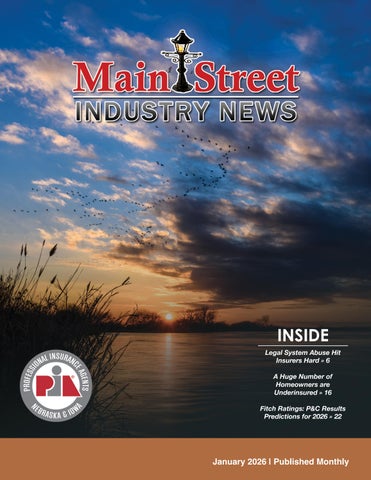
System Abuse Hit Insurers Hard | 6
The Insurance Information Institute (Triple-I) and the Casualty Actuarial Society took a look at how legal system abuse cost insurers a staggering $231.6 billion to $281.2 billion in losses in the past decade.
AI, Insurance & Consumers: Worries all the way Around | 8 Artificial intelligence is moving into all parts of our lives. Insurance is no exception.
Warren Buffett Officially Steps Down | 12
Warren Buffett gained control of Berkshire Hathaway in 1955. In the 60 years since, the value of Berkshire Hathaway stock has risen 6,100,000%.
The Hanover Report: What Your Homeowner Clients Know about Their Insurance | 13
Independent insurance agents — as you know — provide critical information on the insurance policies of their clients. It’s why we’re a better choice than the do-it-yourself-on-line version of insurance purchasing.
Third Party Lawsuits — A 2026 Focus | 15
The American Property Casualty Insurance Association (APCIA) is on a mission. The insurance group’s President and CEO David Sampson said one of the association’s 2026 priorities is battling the involvement of thirdparties in lawsuits.
A Huge Number of Homeowners are Underinsured | 16
Two-thirds of homeowners in the U.S. are underinsured. They don’t think they are but reality says they are. This conclusion comes from a survey done by Insurance.com.
A Look at Driving in 2026 | 21
Late last year the side-by-side insurance pricing website, Compare the Market did a study of bad driving. The survey found most of us having a high opinion of our driving skills. We’re so skilled at driving — in our own minds, at least — that three-quarters of those responding admit to once in awhile driving in ways, and with behaviors, that are downright dangerous.
Fitch Ratings:
P&C Results Predictions for 2026 | 22
Fitch Ratings has made predictions about underwriting results for 2026. Senior directors, Tana Marcom and Chris Grimes said we’ll see results close to what we saw at the end of 2024.
PIA NE IA EVENTS
Upcoming Events Calendar 2026 | 18
Earn Your Designation: CISR, CIC & CPIA | 24
ADVERTISEMENTS
.
We speak human, not fine print.
We believe insurance should sound like a conversation, not a contract. So, we skip the jargon and meet you where you are—with tools, insights, and people who know your customers’ industries inside and out, from manufacturers and contractors to breweries and wineries.
That’s how partnerships work. And that’s how we work. Because at EMC, we’re all about Keeping insurance human®
Let’s get to know each other at emcinsurance.com
PIA FOR NEBRASKA AND IOWA
PIA Association for Nebraska and Iowa is committed to focusing its resources in ways that cast the most favorable light on its constituents. We are dedicated to providing the type of programs, the level of advocacy, and the dissemination of information that best supports the perpetuation and prosperity of our members. We pledge to always conduct ourselves in a manner that enhances the public image of PIA and adds real value to our members.
SUBSCRIBE OR
COMMENT
Professional Insurance Agents NE IA
Attention: Editorial Main Street Industry News 11932 Arbor Street, Ste. 100 Omaha, NE 68144
The PIA NE IA, Main Street Industry News reserves the right to edit your comments to fit space available. We respectfully ask that you keep the comments to 200-300 words.
LEGAL SYSTEM ABUSE HIT INSURERS HARD
The Insurance Information Institute (Triple-I) and the Casualty Actuarial Society took a look at how legal system abuse cost insurers a staggering $231.6 billion to $281.2 billion in losses in the past decade. The final figure depends on how things are calculated but whether it’s $231.6 billion or $281.2 billion, it’s a lot.
Triple-I CEO Sean Kevelighan said the study looked at four lines of insurance: personal auto liability, commercial auto liability, other liabilityoccurrence and product liability-occurrence.
“This analysis illustrates that the severe spikes in liability insurance claims losses go well beyond normal economic inflation,” Kevelighan
said. “Legal system abuse, manifested through excessive verdicts and litigation behaviors, has fueled a structural rise in claim costs that continues to increase costs for insurers and policyholders alike.”
The Damages:
• Personal liability losses, defense and cost containment expenses were up $91.6 billion to $102.3 billion — an 8.7% to 9.7% of booked losses
• Commercial auto liability rose by $52 billion to $70.8 billion — or 22.6% to 30.8% of booked losses
• Other liability-occurrence rose by $83.4 billion to $103.3 billion — or 27.4% to 34%
• Product liability-occurrence saw an increase of $4.6 billion to $4.8 billion — or 27.1% to 28%
James Lynch is a co-author of the study. He said the number of claims fell over the decade while the average cost per claim went up. And those losses are light-years above economic inflation measured for the time period by the Consumer Price Index.
“The data clearly show that insurance loss inflation has its own unique drivers,” Lynch said. “While general economic inflation is an important factor, legal trends, ranging from litigation financing to larger jury verdicts, have amplified costs well beyond what the CPI-U would suggest.”
The bottom-line of the huge leap in losses comes at the feet of jury awards that are up higher than they ought to be. Third-party litigation financing is also part of the problem.
Source: Insurance Business America
AI, INSURANCE & CONSUMERS
WORRIES ALL THE WAY AROUND
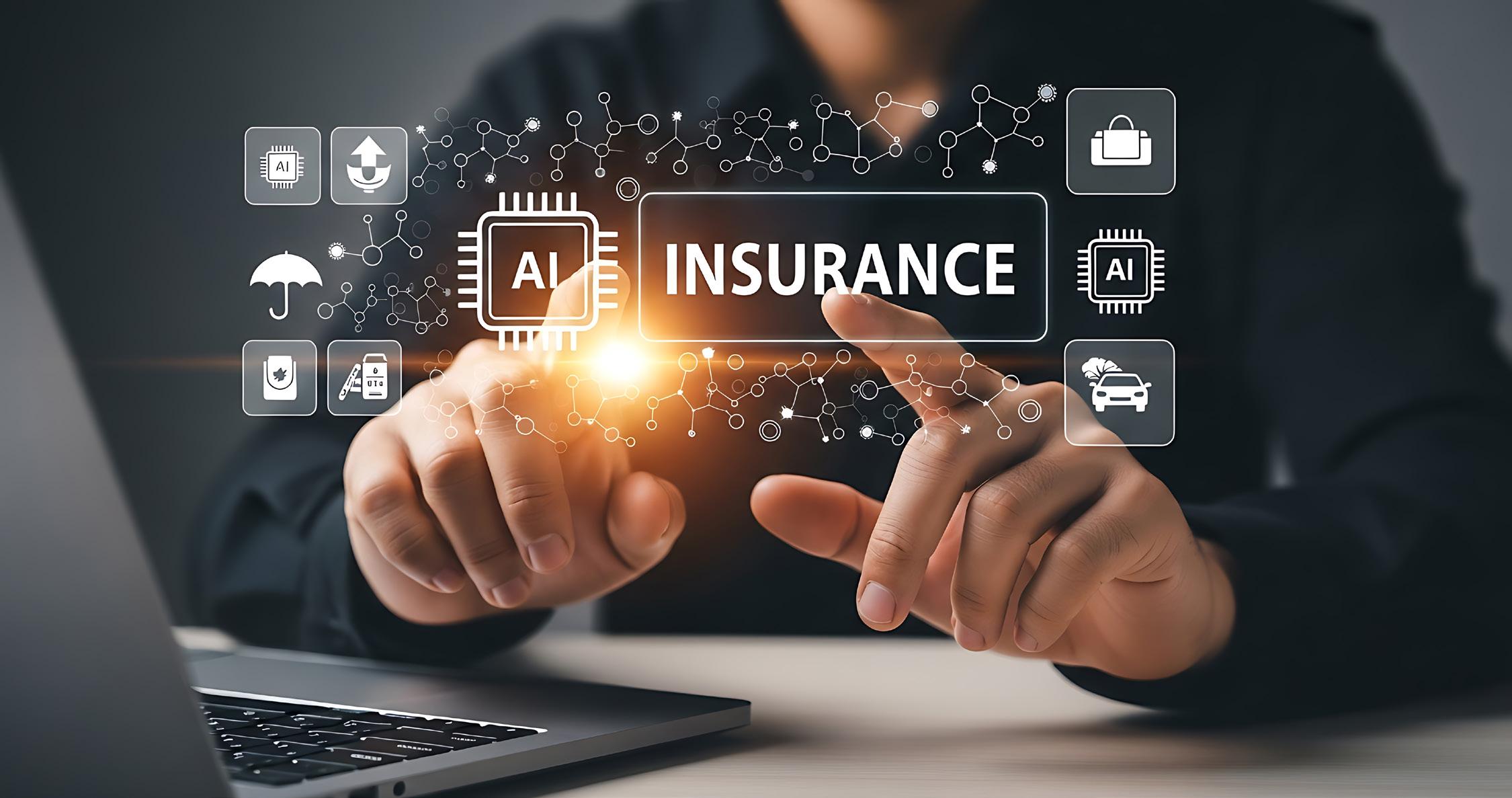
Artificial intelligence is moving into all parts of our lives. Insurance is no exception. AI is slowly but surely moving into all phases of insurance. And like other industries, it is reshaping what many insurance workers are doing.
A study published in the Harvard Business Review by Evercore ISI and Visionary Studio, looked at 160 million jobs in the U.S. to predict how AI is altering the workforce. Nearly every job is now exposed to AI in some way but it is the desk-based, highly-skilled professions that are going to be most impacted.
That leads us to insurance.
The authors say the greatest strengths of AI are data synthesis, summarizing facts and information and the recognition of patterns. And it plants those strengths squarely on the desk of the white collar worker.
For insurance, AI will be used for policy documentation, support for underwriting, risk analysis, claims triage and compliance reports.
The Evercore study concludes that close to 80% of workers in the U.S. will have at least 10% of their daily chores exposed to large language models. Over 19% will see half — or more — of their jobs being automated by AI.
JOBS MOST AT RISK BY AI:
• Data entry and processing clerks
• Claims intake and administrative support staff
• Customer service and call-center representatives
• Payroll and accounting clerks
• Paralegals and legal assistants
• Market and business analysts
• Junior underwriters and risk model analysts
• Technical writers and documentation specialists
• Basic-level programmers and testing staff
• Compliance and policy reporting coordinators
What this ultimately means is that most of the jobs people begin with in insurance are likely to be replaced — if they’re not already — by AI. The process is also being used in ways that an ordinary human cannot.
Allstate is using AI to go through thousands of photos in just a few minutes to assess the damage to a vehicle after a crash. State Farm is using AI to set up algorithms to predict potentially fraudulent claims before an adjuster can review them. MetLife is developing an AI program to create a summary of customer interactions to speed up the documentation for policies.
The goal for these processes isn’t to cut jobs but it is to speed up business and make it more consistent. Claims that used to take two days to validate could now take two hours.
While it might be a positive for insurance companies, AI working with insurance is a big concern for consumers. A survey by the home business answering service, Answering Service Care finds 36% of the people they talked with worried that AI bots will decide whether an insurance claim will be accepted.
LOGAN SHOOSTER, ANSWERING SERVICE
CARE VICE PRESIDENT, SAID...
• 80% of us want to know if we’re talking to AI or a real person
• 37% say they’d no longer trust a company that hides its AI use
• 15% say they’d forever boycott the brand
"Quietly swapping claim handlers for chatbots doesn’t just alienate customers, it de-skills licensed professionals, depresses morale and accelerates attrition by stripping judgment from the job," Shooster noted. "The path forward is transparent policies and live, licensed people on the line for claims with any automation kept behind the scenes and a onestep path to a human every time. Insurance claims are human moments.”
THERE’S MORE:
• 81% are convinced that AI is being used secretly by companies
• 60% are concerned that AI is radically changing sensitive business being done by banks and healthcare companies
• 62% of small businesses worry customers will no longer do business with them if they find out their calls are done by AI
• 43% worry about the long term trust of such a discovery
• 71% of consumers worry AI voices are being used and are not being disclosed to those accepting a call
• 62% of small businesses fear financial losses if people find calls from them are from AI
• 41% are particularly worried that banks and financial institutions are using AI and not disclosing it
• 34% think tax or government helplines are using AI
Generation Z — those born between 1997 and 2012 — are the most at-risk of being replaced by AI but don’t worry about artificial intelligence stealing their jobs. They see AI as their friend, and, as being helpful in their career goals.
• 50% don’t see AI as a threat to their jobs
• 69% see AI as helping them with their workflow
• 45% say the slow adopting of such technology is the real worry
Tanner Hackett is the CEO of insurance expert firm, Counterpart. He said so far insurance has not been negatively impacted by AI.
"AI is transforming industries across the economy, but the insurance sector has staved off technological change for decades, leaving systems and thinking far behind other industries," Hackett said. "As insurance scrambles to catch up, young professionals have a unique chance to establish themselves as indispensable leaders in an industry undergoing complete reinvention, where AI expertise has the potential to trump traditional tenure."
The Evercore study contradicts Hackett’s assumption. The junior roles that many people get to begin their insurance careers are going away. They are like apprenticeship jobs that have helped beginners for eons. Underwriters in the future might come into the business fully trained in the science of data but they’ll miss an education in areas like risk, regulation and human behavior in a claims situation.
Evercore’s report says insurers are starting to see the negatives that are sitting around the edges of all of AI’s positives. Many are introducing programs to teach employees how to use AI.
Not totally trusting companies to do the right thing, the National Association of Insurance Commissioners (NAIC) has put together a working group on the ethical use of AI and how algorithms ought to be applied to pricing and claims handling.
Sources: PropertyCasualty360.com and Insurance Business America
Over 130 years of shared success.
Farmers Mutual of Nebraska is now FMNE Insurance. We’ve teamed up with local independent agents to deliver dependable, affordable auto, farm, and home insurance for over 130 years. Our promise is to be “Always alongside you” with prompt, personalized service and unmatched financial strength.
Always alongside you.
WARREN BUFFETT
OFFICIALLY STEPS DOWN
Warren Buffett gained control of Berkshire Hathaway in 1955. In the 60 years since, the value of Berkshire Hathaway stock has risen 6,100,000%.
On Monday, January 5, 2026 the cost of one share of Berkshire Hathaway stock is $748,250. Definitely unaffordable for over 90% of us. Buffett didn’t do too badly at all and after over 60 years, the 95 year old Buffett is stepping down as Berkshire Hathaway’s CEO.
The 63 year old Greg Abel has taken over as CEO. Buffett will continue in his role as
Berkshire Hathaway’s board chairman. He will also continue going to the office five days a week to give Abel access to his financial wisdom if it is needed.
Buffett has been Abel’s long-time mentor.
Another Berkshire Hathaway change is at the insurer, GEICO. Vice-chairman of Operations Ajit Jain said the new GEICO CEO is Nancy Pierce. Until being named as CEO, Pierce served as GEICO’s chief operating officer.
“Nancy knows the business inside and out. She’s practical, decisive and focused on results. I have full confidence in her ability to move GEICO forward,” Jain said and noted she’s replacing Todd Combs who is moving to JPMorgan Chase where he has served as a board director since 2016.
Sources: CBS News and Insurance Business America
THE HANOVER REPORT
What Your Homeowner Clients Know about Their Insurance
Independent insurance agents — as you know — provide critical information on the insurance policies of their clients. It’s why we’re a better choice than the do-it-yourself-on-line version of insurance purchasing.
A Harris Poll survey commissioned by The Hartford proves that statement. The survey quizzed people 30 and up and shows a huge percentage of homeowners don’t know all that much about the insurance they’re purchasing, and — more importantly — the insurance they need.
The results are fascinating. Here’s a look at a few kinds of insurance:
Umbrella
• 83% are aware of its existence
• 23% have the insurance
Valuables
• 87% are aware of how that insurance works
• 26% have the insurance
Cyber
• 46% are aware of the need
• 7% have the insurance
Recreational vehicles
• 94% are aware of insuring them
• 20% have the insurance
The Hartford then asked a follow-up question. The insurer wanted to find out whether agents or brokers mentioned options for those types of insurance. Sadly, the agents of those surveyed didn’t do all that well.
Umbrella: 61% said no, it was not mentioned
Cyber: 87% said no, it was not mentioned
Valuables: 55% said no, it was not mentioned
Recreational vehicles: 45% said no, it was not mentioned
The gaps mentioned in this section of the survey highlight the importance of a homeowner knowing, and understanding, their risks. This is information best learned from a qualified independent insurance agent.
For example, there is a high awareness of the importance of umbrella insurance. However, just 23% actually have an umbrella policy.
Question: If there was extra insurance that could help protect your savings, income, or home in case of a serious accident, or a lawsuit, behind what your auto or home insurance covers, starting at $1 million in coverage for about $30 a month, how interested would you be in adding it?
• 24% very interested
• 42% somewhat interested
• 23% not very interested
• 11% not interested at all
That shows 66% of homeowners are probably interested in an umbrella policy, and they’re open to discussing that option.
When it comes to valuables, not-surprisingly, 87% of homeowners are aware of the need
for that kind of insurance. But just 26% have that kind of coverage and that led to the next question which looks at how those valuables are protected.
Question: if you lost a ring valued at $10,000 in a house fire, does basic homeowners insurance cover that loss?
• 13% — fully covered, no deductible
• 31% — fully covered after deductible
• 8% — partially covered, no deductible
• 19% — partially covered after deductible
• 29% — not covered at all
The results of that question shows that a lot of homeowners think they are covered more than they are covered. Just 19% of those polled fully understand their coverage and how that coverage applies to this scenario.
This is where an independent insurance agent can help educate a homeowner in what is actually covered and how.
Next up, what is important to the homeowners when working with their independent insurance agent.
• 81% — excellent customer service
• 74% — only pay for what I need
• 71% — coverage for as much as possible
• 58% — convenience of all my insurance with one company
• 58% — the lowest price
Customer service ranks at the top but only paying for what is needed and coverage set up for a specific need follow closely behind.
Source: Hanover
THIRD PARTY LAWSUITS A 2026 Focus
The American Property Casualty Insurance Association (APCIA) is on a mission. The insurance group’s President and CEO David Sampson said one of the association’s 2026 priorities is battling the involvement of thirdparties in lawsuits.
The third-parties are often making huge profits from financing lawsuits. And most of the time we don’t know who they are and who they represent. Many “investors” are from foreign countries and pay no taxes on their “profits.”
This abuse and other reasons, Sampson said, have a huge impact on American families and businesses.
“Every household is effectively paying a hidden ‘tort tax’ of more than $5,000 annually because of unchecked litigation practices,” Sampson said. “APCIA will aggressively fight for disclosure in secretive third-party litigation funding and reforms to address misleading legal advertising that fuel frivolous lawsuits and inflate claims costs.”
The American Tort Reform Association (ATRA) agrees third-party lawsuit tort reform is an action whose time has come.
ATRA released a report at the end of 2025 naming what it calls the top judicial hellholes in this country. These are places where nuclear verdicts, legal system fraud and abuse is most prevalent in the U.S. ATRA President Tiger Joyce said these jurisdictions are driving up tort costs that are becoming almost impossible for businesses and individuals to handle.
“Personal injury lawyers push abusive lawsuits in Judicial Hellholes that drain resources, unfairly punish small businesses and reduce access to justice for everyone,” Joyce said and named the 2025-2026 Judicial Hellholes.
• Los Angeles
• New York City
• St. Louis
• Philadelphia’s Court of Common Please
• Texas
• South Carolina’s asbestos litigation
• Louisiana and Louisiana’s coastal litigation
• Cook County, Illinois
• Madison County, Illinois
• St. Clair County, Illinois
• Kentucky
• Washington State Supreme Court
• King County (Seattle)
Georgia, Florida and South Carolina all now have laws on the books regulating third-party participation in lawsuits. Congress is also looking at legislation to begin to control this kind of legal abuse.
Sourcess: Insurance Journal, PropertyCasualty360. com and Insurance Journal
A HUGE NUMBER OF HOMEOWNERS ARE
UNDERINSURED
Two-thirds of homeowners in the U.S. are underinsured. They don’t think they are but reality says they are. This conclusion comes from a survey done by Insurance.com.
The survey found a lot of people expecting their coverage to pay for disaster damages. Their policies — however — contained exclusions for some reconstruction or claims involving total loss. Many think they’re covered for wildfires, earthquakes and flooding when they are not.
Data gathered by the American Property Casualty Insurance Association (APCIA) fits the Insurance.com survey’s conclusion that two out of three homeowners are likely underinsured.
The Insurance Information Institute (Triple-I) says just 30% of homeowners have increased coverage to match higher replacement costs.
The small number is surprising considering building materials costs and labor have risen 30% in the last five years.
Underinsured homeowners is an even bigger concern when you look at National Oceanic and Atmospheric Administration (NOAA) data showing 27 weather events with losses over $1 billion in 2024. The loss totals for 2024 hit $182 billion.
Since 1980 the U.S. alone has seen 341 events of $1 billion or more. The total losses equals $2.915 trillion.
The most confusion is in coverage for flood losses. A stunning 32.5% of homeowners say they have flood insurance. But they don’t. The National Flood Insurance Program (NFIP) covers just 4% of the homeowners in the U.S.
Some people — ranging from 40% to 70% — felt their policies protected them completely from wildfire damages. But when you look at only 30% increasing their coverage to count for replacement cost increases, most are not as covered as they think.
Source: Insurance Business America
Events Calendar 2026
February 11, 2026
“Where the H*ll Is My Stuff?” Addressing Supply Chain Exposures with Small Biz Insureds
February 12, 2026 Homeowners Endorsements Insureds Don't Want (But Do Need)
February 12, 2026 An Hour with Nicole: Personal Lines: Read the %^&* Form!
February 17, 2026 Agency Audits: How to Create Efficient, Profitable and Defensible Workflows
February 17, 2026 Commercial Property: Claims, Coverages, Consequences
February 18, 2026 Fun (and Dangerous) as H*ll: Insuring Small Vehicles and Watercraft
February 19, 2026 Blessings and Curses: Emerging Trends from the Perspective of a P&C Claims Pro
February 19, 2026 The Contractor’s Property Coverages Workshop
February 24, 2026
February 25, 2026 An Hour with Dave: Understanding Ordinance or Law (Because Insureds Still Don’t)
February 25-26, 2026 CIC: Commercial Multiline Institute
March 3, 2026 Eroding: The Personal Lines
March 3, 2026 An Hour with Nicole: Making Sense of Homeowners Deductibles (Once and For All!)
March 4, 2026 An Hour with Dave: E&O: Talking Exposures with an Attorney
March 5, 2026 The Eight Mistakes You Won’t Make Again: Commercial Property Edition
March 5, 2026 Bad Machines, Evil People: The Latest in Cyber
March 10, 2026 Reasons Personal Lines are Broken (and What to Do About It)
March 10, 2026 CISR: Insuring Personal Residential Property
March 12, 2026 Definition of Insanity: Common Home and Auto Exposures We Know Are There & Do Nothing About
March 12, 2026 Retirement Healthcare Solutions – Medicare and Others
March 18-19, 2026 CIC: Commercial Casualty Institute
March 24, 2026 Ethics in Insurance - Protecting the Client and the
March 24, 2026 CISR: Other
25,
March 25, 2026 CPIA 2: Implement for Success
March 26, 2026 CGL Endorsements That Will Break Your Policy
March 26, 2026 C-Suite Savior: Mastering D&O, EPL and Other Executive
March 31,
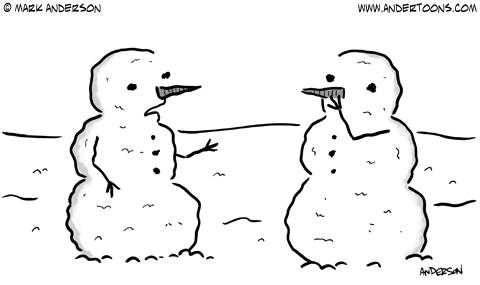
"All I'm saying is befor you spend all that money on a noses job, maybe buy a peeler."
A Look at Driving in 2026
Late last year the side-by-side insurance pricing website, Compare the Market did a study of bad driving. The survey found most of us having a high opinion of our driving skills. We’re so skilled at driving — in our own minds, at least — that three-quarters of those responding admit to once in awhile driving in ways, and with behaviors, that are downright dangerous.
Compare the Market Executive General Manager Adrian Taylor said one of the biggest dangers is using mobile phones while driving. Data from the World Health Organization shows drivers using phones while driving are four times more likely to be in an auto crash than those that don’t.
“Using your phone for hands-free navigation or phone calls is ok, but it’s imperative that drivers avoid any illegal use of the phone,” he said. “It’s distracting and dangerous, and could leave you footing the bill yourself if your insurer refuses to pay because you knowingly did the wrong thing.”
Here’s what those in the survey admit to doing that is dangerous:
• Eating and drinking while driving — yet, 58.2% admit to that
• Driving over the speed limit — but 47% admit to speeding
• Driving while tired — 41.4% say they drive while tired
• Sending or receiving text messages — 26.8% admit to doing that while driving
• Reaching for something in the back seat — 25.4% admit to doing this
• Driving without a seatbelt — 21.1% admit
to driving without a seatbelt
• Taking photos or videos while driving — 16.7% admit doing this while driving
• Running a red light — 15.7% admit to running them
• Run stop signs — 15.5% admit doing this
• Using social media — 11% admit doing this while driving
According to AAA, even though many of us are exhibiting dangerous driving habits, we seem to want tougher driving standards. This is especially true when it comes to impaired driving.
The AAA Foundation for Traffic Safety (AAAFTS) said in 2024 — that last year for fatality totals — just over 39,000 people died in traffic crashes. That’s down just a bit from 2023.
Statistics from the study:
• 67% want all new vehicles to have technology to prevent driving by alcoholimpairment tests
• 51% want the legal limit for blood alcohol content to drop to 0.05 from 0.08
While this is what the survey found, it also found people are fairly hypocritical about practicing what they preach:
• 93% say driving after drinking is very or extremely dangerous
• Yet 7% say they have done so in the last 30 days
• 70% say driving within an hour of using marijuana is very or extremely dangerous
• Yet 6% admit doing so
These are troubling statistics according to AAA President and CEO Gene Boehm.
“These findings show that the public is ready for stronger action,” Boehm said. “People overwhelmingly want policies and technologies that prevent impaired driving, and those tools already exist. Implementing policies like the HALT Drunk Driving Law, alongside fair and effective enforcement, could save thousands of lives each year.”
The survey also looked at distracted driving and aggressive driving and speeding:
• 97% say checking social media is very or extremely dangerous
• 94% say texting and email are very or extremely dangerous
• 90% say reading on a hand-held phone is very or extremely dangerous
• Yet, 28% texted while driving
• Yet, 37% read messages while driving
• Yet, 36% talked on a hand-held phone while driving
• 79% support a ban on talking on handheld phones
• Just 40% want to limit hands-free use
When it comes to aggressive driving:
• 90% view aggressive driving as extremely or very dangerous
• 80% view running red lights as extremely or very dangerous
• 58% think they should be caught driving 15mph over the speed limit
• Yet, over half have done so in the last 30 days
• Just 46% support speed cameras on residential streets
Sources: PropertyCasualty360.com and AAA
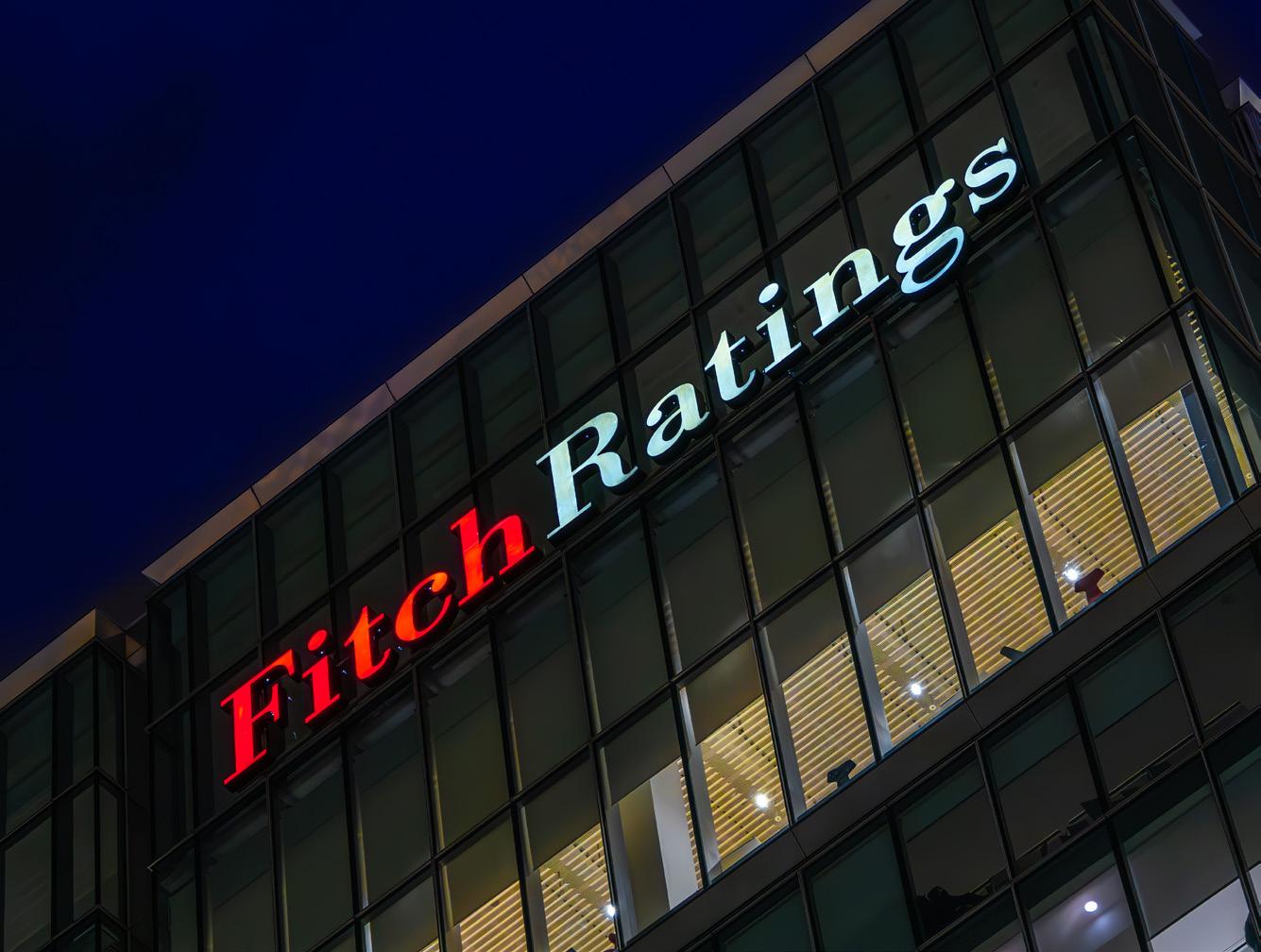
Fitch Ratings PREDICTIONS FOR 2026
Fitch Ratings has made predictions about underwriting results for 2026. Senior directors, Tana Marcom and Chris Grimes said we’ll see results close to what we saw at the end of 2024.
Marcom believes 2025’s combined ratio will end up being around 94. It’s the best result in 15 years and is 3 points lower the 2024 combined ratio. Another positive for 2025 was fewer hurricanes making landfall and $18 billion in favorable loss reserves through 2025’s third quarter.
“The sector enters 2026 on solid footing with underwriting profitability expected to persist, although profits will be slightly lower than 2025,” she said and predicted a combined ratio for 2026 being somewhere around 96 or 97.
That’s a combined radio — as noted earlier — that we saw at the end of 2024.
Both Marcom and Grimes said the combined ratios for commercial lines and personal lines will end up at 94 for 2025. Grimes said a big part of that is a fifth consecutive year of underwriting profitability for commercial lines.
“We do expect underwriting profits to narrow modestly in 2026 with a combined ratio [for commercial lines] between 96 and 97,” he said.
Marcom also addressed homeowners insurance. Hurricane losses and California wildfires added $40 billion to losses last year and convective storms put another $50 billion in losses to homeowners lines in 2025.
“Despite this, ample property/ casualty reinsurance capacity is making it a buyers’ market, and primary insurers will benefit from softening rates there in 2026,” she said.
Source: Insurance Journal
Photo: Taljat - stock.adobe.com
Our original specialty, Workers’ Comp has long served as the anchor line for our growing suite of commercial products. We distinguish our coverage by providing a host of value-added services before, during, and after a claim.
www.guard.com
Earn Your Designation Register Now:
Click
CISR
May 5, 2026
Elements of Risk Management
May 19, 2026
Insuring Personal Residential Property
June 9, 2026
Insuring Commercial Property
June 23, 2026
Insuring Personal Auto Exposures
July 14, 2026
Commercial Casualty I
July 28, 2026
Agency Operations
August 4, 2026
Other Personal Lines Solutions
September 1, 2026
Elements of Risk Management
October 6, 2026
Commercial Casualty II
October 20, 2026
Insuring Commercial Property
November 17, 2026
William T. Hold Seminar – Personal
December 8, 2026
Agency Operations
CIC
May 27-28, 2026
Ins. Company Operations Institute
West Des Moines, IA & Online
June 3-4, 2026
Commercial Multiline Institute
Online
July 22-23, 2026
Agency Management Institute
Online
August 27-28, 2026
Ruble Graduate Seminar
West Des Moines, IA & Online
September 23-24, 2026
Commercial Casualty Institute
Omaha, NE & Online
October 14-15, 2026
Personal Lines Institute
Online
November 4-5, 2026
Life & Health Institute
Online
December 2-3, 2026
Commercial Property Institute
Online
CPIA
May 20, 2026
Special Topic: An Agent’s Guide to Understanding & Mitigating Cyber Exposures
August 18, 2026
CPIA 1: Position for Success
September 17, 2026
CPIA 2: Implement for Success
October 21, 2026
CPIA 3: Sustain Success
November 19, 2026
Special Topic: Disaster & Continuity Planning for Businesses & Families
All users of ACORD Forms must be properly licensed through ACORD.
Agents accessing ACORD Forms through their agency management system or other third-party software are required to claim a license annually .