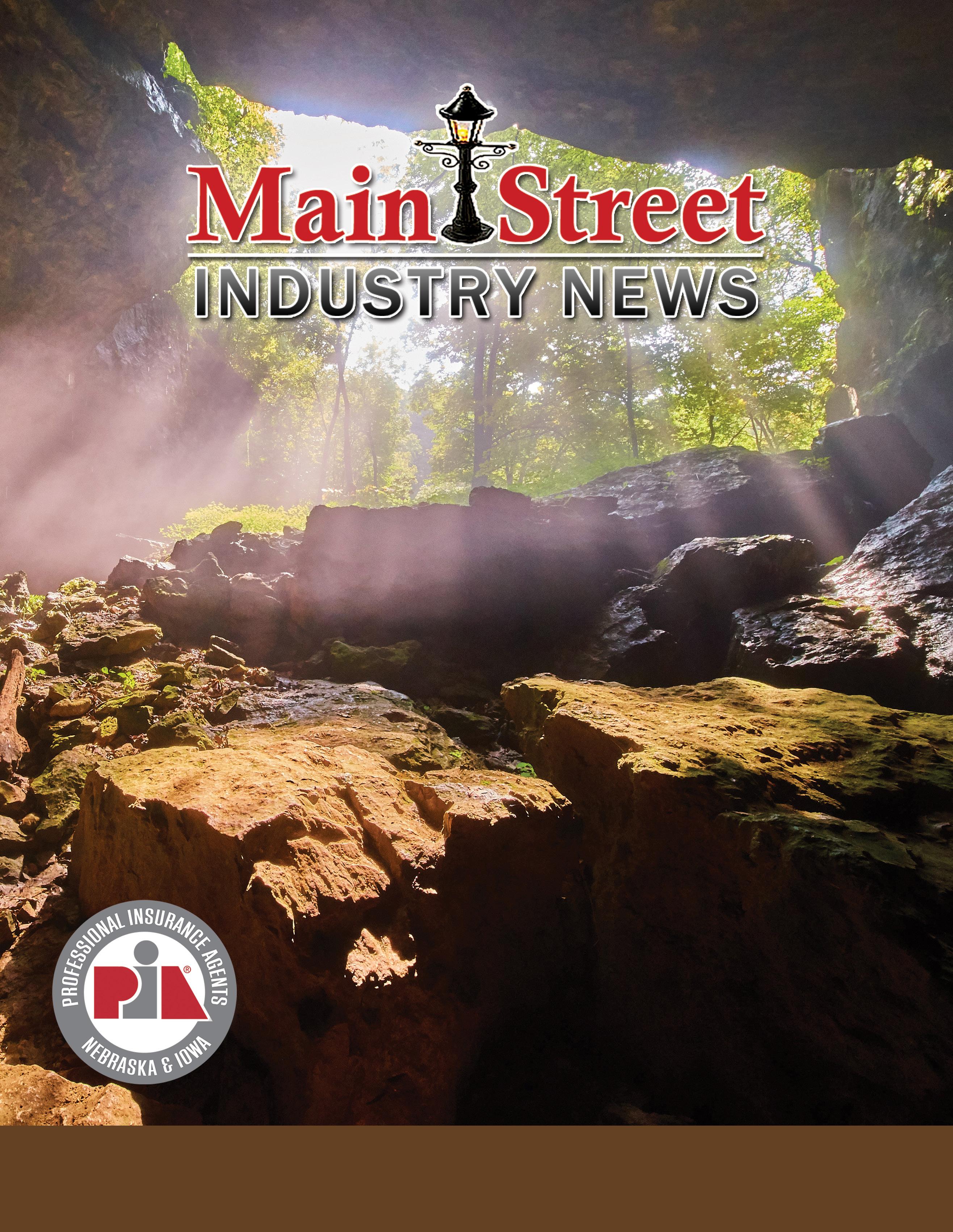
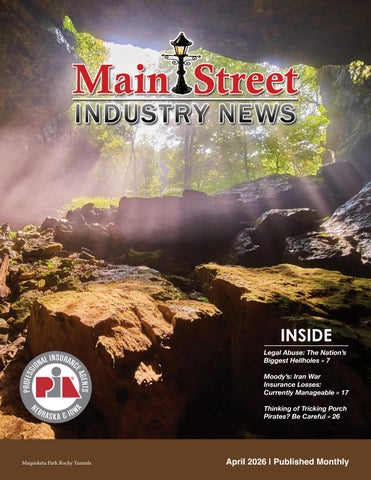
Maquoketa Park Rocky Tunnels


In general, unlicensed Customer Service Representatives (CSRs) are not able to sell, solicit, bind, or negotiate insurance, nor should they recommend, interpret, or discuss coverages with clients.
They can act as a go-between for the licensed producer and the client for certain activities –however, matters such as coverage advice or coverage changes must always be reviewed and handled by the licensed producer
Examples of acceptable unlicensed CSR activities may include*:
● Providing general information about the agency or producer, such as contact information.
● Providing clients with requested forms such as applications, declination forms, etc. These forms can also be received by the CSR, but must be provided to the producer for review and further action. They can also provide things like brochures and buyers guides, if requested.
● Requesting information from clients at the instruction of the producer.
● Providing details to clients about their active policies. For example, supplying a policy number, effective dates, or stated limits, without interpreting coverage or answering, “What if?” questions.
● Scheduling appointments for clients to meet with the producer
● Filing documents that have already been reviewed by the producer, plus general file maintenance.
● Receiving requests for changes to coverage – however, CSRs should be clear to the clients that the request must be reviewed by a producer before any changes are made.
● Accepting notice of claims and forwarding claim information to the carrier or producer, without offering opinions or advice regarding coverage or claim outcome.

Legal Abuse:
The Nation’s Biggest Hellholes | 7
The Insurance Information Institute (Triple-I) has been working overtime to educate the U.S. populace about the abuse of the nation’s legal system.
A Driver’s License: A Dying Right of Passage? | 9
The Federal Highway Administration statistics show in 1983 over half of the 16-year olds in the U.S. had a driver’s license. In 2022 that number fell by 25%.
CIAB: A Soft Commercial Market | 10
The Council of Insurance Agents & Brokers (CIAB) says the commercial insurance market is now soft.
A New, and Interesting, Development: Friends Partnering to Purchase Homes | 12
We’ve all been reading, hearing and seeing reports on how difficult it is these days for young people to buy a home.
What’s Important? Rates, Claims, Losses?
Nope. The Tooth Fairy Speaks | 14
Delta Dental does research annually on Tooth Fairy doings. The Delta Dental 2006 Original Tooth Fairy Polly says she’s gotten more generous since the last poll.
An Iran War Danger: Cyber Attack Retaliation | 15
Cyber experts are warning of potential cyber attacks from Iran. The nation can’t match our physical weaponry but it can easily attack key cyber systems in the U.S.
Another High Cost of Health Insurance | 16
The Federal Reserve Bank of New York says the low cost-of-living raise you got this year is directly caused by the growing cost of health insurance.
Moody’s: Iran War Insurance Losses: Currently Manageable | 17
Moody’s isn’t too worried about the risks for global specialty insurers operating in the Middle East.
Phones: Skipping the Latest and Greatest | 24
The Allstate Protection Plans 2025 Mobile Survey says we are holding onto our smartphones longer these days.
S&P Global: 2025’s Highs and Lows | 25
S&P Global Market Intelligence has published a report on 2025. There are highs and lows. Lest you get too excited, the report notes there are mostly lows.
Thinking of Tricking Porch Pirates? Be Careful | 26
Most of us have seen the videos. A man or a woman tiptoes up to a porch with a package on it then grab it and run.



PIA Association for Nebraska and Iowa is committed to focusing its resources in ways that cast the most favorable light on its constituents. We are dedicated to providing the type of programs, the level of advocacy, and the dissemination of information that best supports the perpetuation and prosperity of our members. We pledge to always conduct ourselves in a manner that enhances the public image of PIA and adds real value to our members.
Professional Insurance Agents NE IA
Attention: Editorial Main Street Industry News 11932 Arbor Street, Ste. 100 Omaha, NE 68144
Email: office@pianeia.com Ph: 402-392-1611 www.pianeia.com
The PIA NE IA, Main Street Industry News reserves the right to edit your comments to fit space available. We respectfully ask that you keep the comments to 200-300 words.
Cathy Klasi, Executive Director (402) 392-1611
Ad Placement (402) 392-1611


The Insurance Information Institute (Triple-I) has been working overtime to educate the U.S. populace about the abuse of the nation’s legal system. Most of that abuse comes at the hands of trial attorneys.
The Triple-I says it has a huge impact on consumers and consumer pricing.
First, a definition. The Triple-I defines legal system abuse as the exploitation of the civil justice system. That exploitation causes costs to increase and undermines legal system fairness. It expands liability way beyond the original intent of the legislation that set up that liability.
Worse, it encourages excessive legislation.
Triple-I CEO Sean Kevelighan said tort reform — or state-level laws regulating litigation — is the strategy being used now to battle legal system abuse.
"This isn't just about prices rising in the economy; it's about the cost of our legal system escalating beyond sustainable levels,” Kevelighan said. "Recognizing and addressing legal system abuse is essential to managing costs and protecting consumers.”
As part of its ongoing campaign to highlight legal system abuse, Triple-I has listed the worst places in the country for legal system abuse. The organization calls them Judicial Hellholes. They’re places with plaintiff-friendly laws and high jury awards.
They are so friendly to trial attorneys that they often shop these courts even though the suit being filed sometimes isn’t related to that area. To increase business, they also load up those areas with high-pressure television ads and billboards.
These are the top Judicial Hellholes® in the U.S. in 2026 as noted by the American Tort Reform Foundation.
1. Los Angeles, California
• Estimated annual "tort tax" on state residents: $2,458.33
• Estimate of the number of jobs lost because of the economic impact: 829,255
• Dollars trail attorney firms spend on advertising from January 2024 to June of 2025: $275.5 million
2. New York City
• Estimated annual "tort tax" on state residents: $2,534.85
• Estimate of the number of jobs lost because of the economic impact: 427,794
• Dollars trail attorney firms spend on advertising from January 2024 to June of 2025: $49.51 million
3. South Carolina
• Estimated annual "tort tax" on state residents: $886.46
• Estimate of the number of jobs lost because of the economic impact: 40,779
• Dollars trail attorney firms spend on advertising from January 2024 to June of 2025: $115.7 million
4. Louisiana
• Estimated annual "tort tax" on state residents: $1,011.24 but twice that much for people in New Orleans
• Estimate of the number of jobs lost because of the economic impact: 39,823
• Dollars trail attorney firms spend on advertising from January 2024 to June of 2025: $74.0 million
5. Philadelphia
• Estimated annual "tort tax" on state residents: $1,451.24
• Estimate of the number of jobs lost because of the economic impact: 163,115
• Dollars trail attorney firms spend on advertising from January 2024 to June of 2025: $76.6 million
6. St. Louis, Missouri
• Estimated annual "tort tax" on state residents: $1,216.48
• Estimate of the number of jobs lost because of the economic impact: 65,028
• Dollars trail attorney firms spend on advertising from January 2024 to June of 2025: $41.0 million
7. Cook, Madison and St. Clair Counties, Illinois
• Estimated annual "tort tax" on state residents: $1,119.28
• Estimate of the number of jobs lost because of the economic impact: 208,411
• Dollars trail attorney firms spend on advertising from January 2024 to June of 2025: $110.42 million
8. King County, Washington
• Estimated annual "tort tax" on state residents: $2,558.19
• Estimate of the number of jobs lost because of the economic impact: 172,624
• Dollars trail attorney firms spend on advertising from January 2024 to June of 2025: $28.96 million
Sources: PropertyCasualty360.com

The Federal Highway Administration statistics show in 1983 over half of the 16-year olds in the U.S. had a driver’s license. In 2022 that number fell by 25%. Most eventually got their driver’s license. It just took them longer.
Dara Khosrowshahi is Uber’s CEO. He notes his company benefits tremendously from what is being called the “Delayed Driver Trend.” While his company benefits, he doesn’t. Khosrowshahi says he can’t even get his 18year old son to get a license.
"It drives me crazy," Khosrowshahi said. "I don't know about you, but did you get a license the minute you could drive? It was just such a thing. It was a goal in life. It represented freedom.”
Generation Z (born between 1997 and 2012) is also falling way behind other generations in other social trend markers. They don’t have as much sex, they wait longer to connect with a long-term partner and start families.
And they don’t go out as much and they drink less alcohol.
Jeffrey Jensen Arnett — a professor of psychology at Clark University in Massachusetts — wrote a book about this titled, "Emerging Adulthood: The Winding Road from the Late Teens Through the Twenties.” He said Gen Z socializes, shops and orders meals online. So why socialize?
"If you think of why those 16-year-olds — 30 or 50 years ago — were so eager to get their license, a lot of it had to do with wanting to drink and have sex," Arnett said.
His book notes that’s still happening but at a much slower pace. A great many Gen Z kids just aren’t in that big of a hurry to get into adulthood.
Source: Business Insider

The Council of Insurance Agents & Brokers (CIAB) says the commercial insurance market is now soft. In fact, the CIAB says this is the softest commercial premiums have been since 2017.
In total, in the 4th quarter of 2025 average premiums in all account sizes were up just 0.2%. That’s down from the 1.6% in the 3rd quarter. Here is a look at the totals over the last four quarters of 2025 and the 4th quarter of 2024.
Also noted are the highest rates since 2001 and the lowest.
4th quarter 2025 average commercial premium increases:
• Small: 2.8%
• Medium: 0.0%
• Large: -2.1%
• Average: 0.2%
3rd quarter 2025 average commercial premium increases:
• Small: 1.2%
• Medium: 1.9%
• Large: 1.6%
• Average: 1.6%

2nd quarter 2025 average commercial premium increases:
• Small: 4.2%
• Medium: 4.0%
• Large: 2.9%
• Average: 3.7%
1st quarter 2025 average commercial premium increases:
• Small: 3.6%
• Medium: 3.7%
• Large: 5.3%
• Average: 4.2%
4th quarter 2024 average commercial increases:
• Small: 3.6%
• Medium: 6.4%
• Large: 6.3%
• Average: 5.4%
Highest rate hikes in the last couple of decades is in the 4th quarter 2001:
• Small: 20.8%
• Medium: 31.7%
• Large: 33%
Lowest rate hikes in the last two-plus decades:
• Small, 1st quarter 2008: -10.0%
• Medium, 3rd quarter 2007: -15%
• Large, 3rd quarter 2007: -15.9%
The CIAB says what we are seeing is “clear soft market conditions,” and “Signs of softened market conditions were equally evident across lines of business.”
Here are the nine lines most impacted:
• Cyber
• Business interruption
• Commercial property
• Construction
• Directors & officers
• Employment practices
• Surety bonds
• Terrorism
• Workers’ compensation
Of all the lines, D&O saw the biggest decreases. They’re down 3.8% for eight consecutive quarters.
Source: Insurance Journal

We’ve all been reading, hearing and seeing reports on how difficult it is these days for young people to buy a home. A lot of individuals and couples — due to income limits — are priced out of the housing market.
Rocket Mortgage says a solution for some is to partner with a friend, or friends, and those with equally challenging income issues, to buy a home. The mortgage firm checked in with 1,966 renters age 18 and over to see if they’d be willing to team up with friends and co-buy a home.
• 60% are open to the idea
• 64% say affordability is what makes them interested
• 66% are interested enough to pursue a purchase
Here’s a look at the survey’s questions and its most interesting answers.
Question: Would you be willing to co-buy a home with friends?
• Yes — 60%
• No — 40%
Question: Who’s interested in co-buying a home with friends?
• Generation X — 35%
• Millennials — 32%
• Generation Z — 19%
• Baby boomers — 15%
Question: What’s the main reason you would consider buying a home with friends?
• Affordability — 64%
• Companionship — 17%
• Shared ownership responsibilities — 13%
• Build equity — 6%
Question: What would be your biggest concern about buying a home with a friend?
• Future life changes — 29%
• Financial risk — 26%
• Lifestyle compatibility — 13%
• Friendship strain — 12%
• Different home needs — 11%
• Shared finances — 9%
Source: Rocket Mortgage











Gabriella Ferroni, the Senior Director, Strategic Communications, Delta Dental Plans Association is the Tooth Fairy’s head spokesperson. She said the Tooth Fairy is giving a lot of kids gifts rather than cash.
32% got a physical gift instead
That’s up from 19% in 2025
"After a couple of thrifty years, the Tooth Fairy decided it was time to give kids a welldeserved raise," Ferroni said. "For the past 28 years, Delta Dental has tracked Tooth Fairy giving trends to help teach children about caring for their oral health through a trusted partner — the Tooth Fairy. The beloved tradition gives kids a reason to celebrate their healthy smiles.”
Delta Dental does research annually on Tooth Fairy doings. The Delta Dental 2006 Original Tooth Fairy Polly says she’s gotten more generous since the last poll. The loss of a single tooth went up 17% in 2025 from $5.01 average to $5.84.
During the heat of the recession in 2023 and 2024 the lady’s giving declined.
By the way, the first tooth lost is worth 23% more than those lost after. On average, a first tooth brought in $6.24 in 2025. More than one in three parents — 38% — always give more for the first tooth than the others.
Oops. We mean the Tooth Fairy, not parents.
The first Delta poll was in 1998. Since then the amount of cash given out by the Tooth Fairy has risen 349% from $1.30 to $5.84 per tooth. Here are averages from different regions of the U.S.
The Northeast is the top spot with $6.45 average per tooth — up 41% from 2024
The West is holding pretty steady at $5.99 — a 5% jump over 2024
The South $5.89 — is no longer the top giver in spite of a 3% rise
The Midwest had the biggest jump at $5.27 — up 52%
By the way, the Tooth Fairy’s giving used to coincide with what’s happening in the economy. It generally follows the S&P 500 Index. For the last few years it changed radically.
In 2025, however, the value of a lost tooth is up 17% which follows a 16% jump in the S&P 500 last year.
Source: Yahoo.com
Cyber experts are warning of potential cyber attacks from Iran. The nation can’t match our physical weaponry but it can easily attack key cyber systems in the U.S.
Recorded Future is a private intelligence company. Its senior advisor for government affairs, Alexander Leslie and Jake Braun, executive director of the Cyber Policy Initiative at the University of Chicago say the U.S. needs to be on high alert because of the attacks on Iran.
"Cyber is no longer auxiliary to conflict. It is part of the battlefield,” Leslie said. “We’re tracking groups associated with the Revolutionary Guard Corps and with the Ministry of Intelligence, and those groups have gone silent. And as of this moment, there is no evidence suggesting any significant attacks on U.S. critical infrastructure linked to Iranian threat groups.”
While there have been no major cyber attack pushes, Leslie said his firm has seen evidence of low-level, low-intensity attacks from Iran hacktivist groups.
Braun — who was the overseer of national cyber security strategy at the White House for
the Biden administration — said in the past Iran has shown the ability to attack and infiltrate the nation’s infrastructure from banks and healthcare systems to water treatment facilities and oil refineries.
"The first event I did as a White House official was in Pittsburgh right after an Iranian cyber attack on their water infrastructure,” Braun said. "Iran has attacked our banking system, they've attacked oil infrastructure, they've done mis-and-disinformation during elections, they've attacked water utilities and other critical infrastructure. I think we can expect all those attacks, again, and more severe attacks.”
Leslie pointed out the lack of attacks so far could be because the nation’s internet is blacked out. That’s possibly due to key, and deliberate, air strikes on servers.
Both men warn everyone in the country — especially those in charge of key infrastructure and banking facilities — to be on the alert.
"They want to be able to show that you can't attack them with impunity, that they will respond. And they want to point out to us how fragile our systems are," Braun said.
Source: CBS News
The Federal Reserve Bank of New York says the low cost-of-living raise you got this year is directly caused by the growing cost of health insurance. New York Fed researchers surveyed businesses in New York and Northern New Jersey and found health insurance for employees rose higher than other business expenses.
Some reported an average increase of more than 13%.
“Businesses providing insurance to their workers indicated that absent these cost increases, they would have raised wages by roughly an additional percentage point, on average,” NY Fed researchers wrote in a blog post.
“There does appear to be a connection between rising health insurance costs and wage growth among many firms,” the report noted.
The average wage increase over the past year for service companies and manufacturers hit

3.8%. Health insurance costs holding steady would have let the companies stretch the raise to 4.7%.
The Kaiser Family Foundation notes employersponsored health insurance was close to $27,000 in 2025. That’s up 26% from 2020 and with employers pay 75% of the insurance cost.
So it’s expensive.
Reducing pay increases isn’t the only way these companies are dealing with rising health insurance costs. Many are hiking prices of services and products. Some are taking losses in profit margins to pay for the increases.
“A number of firms reported that they had offset at least some of the increased costs by reducing health insurance coverage to workers or by increasing employee contributions,” the New York Fed researchers concluded.
Source: The Hill
Moody’s isn’t too worried about the risks for global specialty insurers operating in the Middle East. The ratings firms says if the conflict doesn’t last very long — weeks instead of months or years — large, diversified insurers will be okay.
If the conflict stretches out, the likelihood of bigger and more complex losses will be experienced.
“While the conflict in the Middle East is increasing geopolitical and specialty insurance risks, we expect that losses are likely to be manageable for well-diversified insurers unless hostilities become more prolonged or escalate significantly,” Moody’s said in its analysis.
War exclusion clauses may protect many insurers, though legal challenges can arise when they are enforced. Moody’s says specialty insurers could still face losses from missile and drone attacks in the Strait of Hormuz, especially in marine, aviation, and political violence coverage.
Marine insurers are the most exposed.
Source: Business Insurance


April 1-2, 2026
April 2, 2026
April 7, 2026
April 7, 2026
April 7, 2026
April 8, 2026
April 9, 2026
April 9, 2026
April 10, 2026
April 16-17, 2026
April 21, 2026
April 22, 2026
April 23, 2026
April 28, 2026
April 28, 2026
April 28, 2026
April 29, 2026 Personal Lines Issues After a Huge Storm
April 30, 2026 The Contractor’s Property Coverages Workshop
April 30, 2026 The Contractor’s Liability Insurance
May 5, 2026
May 5, 2026
The Personal Lines Implosion and What Happens Next
May 5, 2026 An Hour with Nicole: Making Sense of Homeowners Deductibles (Once and For All!)
May 6, 2026 “Where the H*ll Is My Stuff?” Addressing Supply Chain Exposures with Small Biz Insureds
May 7, 2026
May 7, 2026 Insuring Manufacturers: Concerns, Claims, Coverages
May 12, 2026
May 13, 2026
May 14, 2026
May 14, 2026
May 19, 2026
May 19, 2026
H*ll:
May 19, 2026 Reasons Personal Lines are Broken (and What to Do About It)
May 20, 2026
May 20, 2026 An Hour with Dave: Understanding Ordinance or Law (Because Insureds Still Don’t)
May 21, 2026 Why Are You Here?! Insurance Issues with the People and Stuff in Your House
May 27-28, 2026 CIC: Insurance Company Operations
June 9, 2026 Claims Handling for Agencies: Advocacy, Best Practices, and Better Outcomes
June 9, 2026 Retirement Income Solutions – Social Security and Others
June 10, 2026 The Eight Mistakes You Won’t Make Again: Commercial Property Edition
June 17, 2026 An Hour with Dave: E&O: Talking Exposures with an Attorney
June 18, 2026 Homeowners Endorsements Insureds Don't Want ( But Do Need)
June
June 24, 2026 Weird Personal Lines Rental Exposures
June
June
June
June 30, 2026 Blessings and Curses: Emerging Trends from the Perspective of a P&C Claims Pro
Our new 60-Second Appetite Check is a powerful tool designed to identify available commercial lines coverages in less than one minute Our independent agents can get to yes/no (or maybe) simply and FAST, eliminating guesswork about our appetite and saving time in your day!
The enhanced digital journey is just beginning . . .

Click
May 5, 2026
Elements of Risk Management
May 19, 2026
Insuring Personal Residential Property
June 9, 2026
Insuring Commercial Property
June 23, 2026
Insuring Personal Auto Exposures
July 14, 2026
Commercial Casualty I
July 28, 2026
Agency Operations
August 4, 2026
Other Personal Lines Solutions
September 1, 2026
Elements of Risk Management
October 6, 2026
Commercial Casualty II
October 20, 2026
Insuring Commercial Property
November 17, 2026
William T. Hold Seminar – Personal
December 8, 2026
Agency Operations
May 27-28, 2026
Ins. Company Operations Institute
West Des Moines, IA & Online
June 3-4, 2026
Commercial Multiline Institute
Online
July 22-23, 2026
Agency Management Institute
Online
August 27-28, 2026
Ruble Graduate Seminar
West Des Moines, IA & Online
September 23-24, 2026
Commercial Casualty Institute
Omaha, NE & Online
October 14-15, 2026
Personal Lines Institute
Online
November 4-5, 2026
Life & Health Institute
Online
December 2-3, 2026
Commercial Property Institute
Online
May 20, 2026
Special Topic: An Agent’s Guide to Understanding & Mitigating Cyber Exposures
August 18, 2026
CPIA 1: Position for Success
September 17, 2026
CPIA 2: Implement for Success
October 21, 2026
CPIA 3: Sustain Success
November 19, 2026
Special Topic: Disaster & Continuity Planning for Businesses & Families

The Allstate Protection Plans 2025 Mobile Survey says we are holding onto our smartphones longer these days. Upgrades are mostly being put off because of rising costs.
The survey says 25% of us are now keeping our smartphones for three or four years. Another 21% say they will continue to use their phone until it stops working.
Just 3% claim to switch phones every six months. This group — the survey notes — is made up of people who just like setting them up, playing a bit with the new features and then move onto the next, best and big, thing.
When changing phones here’s what most of us look for in a phone:
• Long lasting battery life
• Durability
• Overall performance
Those three things matter more than those really cool artificial intelligence tools. New features rank way, way below the words, “can I afford it” or “will this thing last?”
“Even though consumers care deeply about the environmental impact of their tech, they are still unsure what to do with their old smartphones,” Allstate Protection Plans said.
Here’s what that means. Most of us have one or two — or maybe even more — smartphones that are not donated or recycled and end up forgotten completely stuck somewhere in a drawer.
Source: Business Insurance

S&P Global Market Intelligence has published a report on 2025. There are highs and lows. Lest you get too excited, the report notes there are mostly lows.
The highs ended up in the commercial liability lines and the lows hit personal lines hard. Report writers, Jason Woleben, Tim Zawacki and Husain Rupawala said the hardest hit was the homeowners line though it did benefit from no hurricanes making landfall in 2025.
That said, they pointed out the real story in the report isn’t commercial lines versus personal lines but it’s property versus casualty.
“We can say with conviction that the industry will not replicate these results in 2026, or, quite possibly, at any point in the foreseeable future,” they said in the report and noted the 2025 underwriting results were the strongest in 19 years.
Underwriting in the P&C lines saw a net gain of $67.9 billion compared to the inflation-adjusted $54.2 billion in 2006. The combined ratio of just a dash under 93.0 topped the 92.4 recorded 19 years ago in 2006.
• Homeowners net loss ratio was 53.7
• That’s 11 points better than 2024 and the lowest since 2015
• The net loss ratio for private passenger auto was 61.1 and 4.7 points better than 2024
• It’s the lowest loss ratio for that line since 2020
• Personal auto physical damage’s net loss ratio was 52.2 — the lowest in 30 years
• The net loss ratio for an aggregation of casualty lines rose to 66.7
• The loss ratio for liability coverage of 68.0 was the highest in 21 years
• The medical professional liability loss ratio of 57.9 is also the highest in 21 years
“In addition to the unique confluence of circumstances that led to 2025’s outsized profitability, written premium growth is significantly lagging earned premium growth at respective rates of 4.9% and 6.3% as heightened competition returns to the private auto market and the scourge of social inflation is not going away,” the authors wrote.
Source: Carrier Management

Most of us have seen the videos. A man or a woman tiptoes up to a porch with a package on it then grab it and run. Before they can get into their car — or shortly after getting in one — the package explodes with a mixture of paint and confetti.
Outside of the parents, partner or a good friend screaming obscenities toward the homeowners’ porch camera, most of us support the punishment meted out to the would-be thief.
Unfortunately, they are probably not legal. Many states and cities have laws that say any device planted in order to cause harm is not legal. While most of those getting bombed by the package aren’t injured, they can — and probably often do — claim they have been injured.
Laws value property but laws also put the safety of individuals over property. If a package with glitter inside explodes and the thief’s eyes are damaged from the glitter, the person planting the package is liable.
A homeowner is liable if the person stealing the package has an allergic reaction to glue or any substance in the package.
As insurance people, most of you know if a person is injured on your property while stealing something from your porch, you are liable. If the explosion causes the thief to have a heart attack or if they lose their hearing, liability rests on the homeowner.
Source: Rapid International