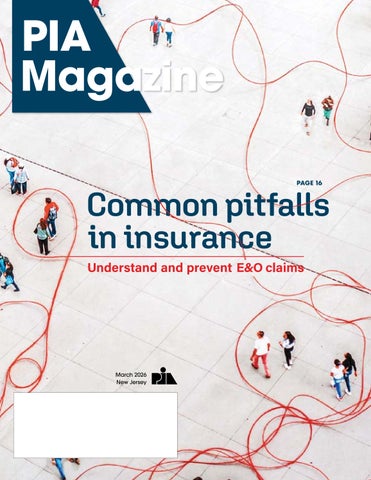

Common pitfalls in insurance






A conversation starter: Insurance claims trends in 2026
A client has an insured loss, so he or she calls your agency to file a claim. When the check arrives, is it for the amount the client expected? Does he or she understand the factors currently affecting insurance claims? Now is a good time to have those discussions—before the claim occurs.
Social inflation and nuclear verdicts®
In the past few years, liability insurance claims costs have exceeded economic growth and inflation—the reason is social inflation. According to Swiss Re, large court awards caused the cost of liability claims in the United States to increase by 57% in the past decade.
The reinsurer also noted that social inflation rose by an average of 5.4% annually (2017-22)—for comparison the average economic inflation is 3.7%— it peaked in 2023 at 7%.
According to data from Marathon Strategies, two-fifths of nuclear verdicts from 2023 involved product liability

cases—including verdicts against car manufacturers whose vehicles were involved in accidents.
Agents take action: When you talk to your insureds about their business coverage, remind them that juries are rewarding plaintiffs with large settlements, so that their current limits may not be enough to protect them if they get sued.
Aging workforce

reach and presenting new opportunities for growth. That’s a plus! However, it does increase the likelihood of workers’ compensation claims— mostly slips and falls, and strains. And as we age, the recovery time can be a little longer compared to younger workers with the same injuries.
Agents take action: Without being discriminatory, ask your clients questions about the make-up of their workforce so that you can guide them

Climate-driven weather events
Natural disasters cost $162 billion (globally) in the first half of 2025, and insurance covered most of those losses—$100 billion were insured losses, and 90% of them happened in the U.S.
Don’t forget about your agency

Clients aren’t the only ones who should be reviewing their insurance policies.
AI liability
As the use of artificial intelligence continues to grow, many insurers have begun to adjust their underwriting guidelines and strategies to account for AI-related risks. This is not a new practice, as it’s something the industry has seen any time a new exposure emerges (think, terrorism, cybersecurity and the pandemic).
Wildfires, which are growing in frequency and intensity, are driving the rising economic losses in the U.S. The Palisades fire ($275 billion in economic losses) is estimated to be the most expensive wildfire in history (to date). Wildfires are no longer contained to a region or a season.
According to an annual report prepared by LexisNexis® Risk Solutions, the severity for wind, hail, fire and lightning, weather-related water, nonweather-related water, theft, liability and other perils in 2024 was the highest it has been in seven years (21% above the seven-year average).
While the insurance industry seems to be adjusting to cover more weather-related losses, the efforts to do so require more than traditional underwriting. It also stresses the importance of data and analytics to mitigate losses in less-covered regions of the U.S.
Agents take action: The increase in climate-driven weather events presents you with new talking points when you have discussions with your clients about their insurance coverage. Remind them that “that type of weather doesn’t happen around here,” might not be true.
Inflation in repair costs
Inflation drives up repair costs for claims (e.g., auto, home) due to soaring prices for parts, materials and labor, exacerbated by supply-chain issues, complex vehicle tech (e.g., electronic vehicles), and increased demand, which forces insurers to raise premiums, restrict policies or face profitability losses.
This can create challenges for policyholders and the industry—which can manifest as rising loss ratios, higher premiums and more out-ofpocket expenses.
Agents take action: Talk to your clients about reviewing and adjusting their insurance coverages, and the possibility of adding additional policies to cover any gaps in their insurance.
However, what might make AI claims different is their ability for multiple plaintiffs to file claims (e.g., directors & officers or errors and omissions) against one common defendant because of AI-related issues. For example, what happens if a software program systematically underpays a specific type of claim for a considerable amount of time before anyone notices the glitch? Anyone who received a deflated insurance settlement now has a viable claim against the insurer.
Agents take action: Review your agency’s carrier contracts to see what your responsibilities are if a carrier you do business with experiences an AI glitch. Also, double check your agency’s own insurance policies to understand how they will react to an AI-related claim.

Distracted driving through the lens of auto insurance claims
Howard Goldberg, vice president of customer service, Plymouth Rock Assurance
Most drivers understand the dangers of distracted driving. However, the gap between what drivers know and how they actually behave is striking. To better understand what this means beyond self-reported behavior, real-world claims data puts this into perspective by illustrating how changes in driving behaviors, vehicle technology and enforcement are influencing crash risk, costs and overall road safety.
A look at real-world trends behind the wheel
Beyond self-reported driving behavior surveys using real-world claims data from insurers, a positive trend emerges: fewer claims across the industry. In 2021, after the COVID pandemic, there was a temporary spike in driving and higher speeds as people flocked back to the roads. However, traffic patterns have since calmed, and excessive speed has become less of a concern. These changes, along with the improved safety features in newer vehicles, are helping drive better outcomes overall.
Insurers are encouraging these trends through usage-based insurance programs that reward safe driving, such as lower rates and perks—like free coffee—and access to exclusive discounts. These programs not only encourage safer driving habits, but they also provide insight into the habits of all household members—especially for parents of younger drivers, particularly as surveys continue to show that many Gen Z drivers text or interact with texts while driving.
As these programs become more common and safety technology continues to improve, drivers will have greater visibility into their habits and more opportunities to make small changes that add up. There always will be new challenges on the road, but drivers now have more resources than ever to support safer habits.
How technology encourages safer habits
As cars get smarter, they help drivers avoid distractions behind the wheel. With easy-to-use features like handsfree calling, texting and voice commands, drivers can stay connected without taking their hands off the wheel or eyes off the road.
In the future, drivers won’t need to touch or look at screens at all, relying solely on voice commands. While voice technology continues to improve, some drivers still are adjusting to it. At the same time, phone integration is becoming smarter, and many systems now limit phone functions while driving automatically—reducing temptation and distractions.
Despite these clear benefits and ease of use, drivers are hesitant to adopt technologies (i.e., touch screens and voice control), claiming they encourage distracted driving and complicate vehicles. Automakers are aware and are addressing these concerns by designing newer systems that prioritize hands-free interaction—such as steering wheel controls, windshield or dashboard displays and detection cameras.
Other safety features (e.g., lane assistance and fatigue detection) are becoming more common in newer vehicles, which helps monitor real-time driving behavior and alert drivers to potential lapses in focus. Even as these technologies become more mainstream, they can only be effective when drivers choose and understand how to use them to their potential.
Claims data shapes the future of road safety
Over the past few years, insurance companies have put in a lot of effort to analyze how people’s driving habits have changed. Instead of relying on what drivers say about their behavior, they’re focusing on real claims data to make better decisions by aligning ratings with behavioral trends.
This data shows that the best way to reduce risk is to combine technology with behavior-based strategies. Programs that track usage, safety features in cars, and targeted enforcement all work together to influence driving habits. Simultaneously, advancements in these technologies are changing safety outcomes and repair costs. While systems designed to help prevent accidents are great, they also can make minor repairs pricier because of added sensors, cameras and computers. Insurers believe that, over time, this upfront cost will be outweighed by longer-term benefits as these tech improvements help cut down on serious accidents enough to balance out the higher costs.
While risky driving habits haven’t completely vanished, we’re headed in the right direction—and much of it has to do with advancements in technology. However, it’s clear that just having technology isn’t enough. Drivers need to take responsibility for their actions on the road. As we keep evolving our cars, insurance models, and how we enforce traffic rules, it looks like the future is set to be all about safer, smarter roads.
This article is adapted from “Understand the disconnect: Distracted driving through the lens of auto insurance claims,” which can be read in its entirety on PIA Northeast News & Media (www.blog.pia.org).




Stirred, not shaken: Coverage for cannabis-infused beverages
Bradford J. Lachut, Esq. Director of government & industry affairs, PIA Northeast
Cannabis-infused beverages are quickly becoming one of the hottest segments in both the cannabis and functional wellness markets. From THC-spiked sodas to CBD-infused teas, these drinks offer a popular alternative to alcohol. However, while they may be smooth to sip, they pose complex challenges for insurance producers navigating uncertain liability terrain.
In the Northeast—where cannabis legalization varies by state—insurance professionals must be especially vigilant when reviewing commercial general liability and liquor liability coverage for clients involved in the manufacturing, distribution or sale of these beverages. Even if the product is legal under state law, that doesn’t mean it’s covered under a standard policy.
Let’s explore what you need to know—and the right questions to ask—to protect both your clients and your errors-and-omissions exposure.
CGL policies: A coverage mirage?
First stop on our magical mystery tour: the ISO commercial general liability policy. At a glance, it raises some key questions—chief among them: Does the liquor liability exclusion apply to cannabis-infused beverages?
The liquor liability exclusion removes coverage for bodily injury or property damage for which an insured may be liable due to “causing or contributing to the intoxication of any person …” Let’s pause on that word: intoxication.
The term is undefined in the policy. Merriam-Webster defines intoxication as “the condition of having physical or mental control markedly diminished by the effects of alcohol or drugs.” So by that definition, intoxication could include impairment from alcohol or cannabis.
However, the story doesn’t end there. The exclusion goes on to list additional scenarios that also would be excluded from coverage:
The furnishing of alcoholic beverages to a person under the legal drinking age or under the influence of alcohol;
or any statute, ordinance or regulation relating to the sale, gift, distribution or use of alcoholic beverages.
A few things stand out. First, all this language appears under the liquor liability section. Second, aside from the first item—which does not explicitly mention “alcoholic beverages”—the rest of the exclusion clearly does. This context strongly suggests that “intoxication” within this exclusion is intended to mean alcohol-induced, not impairment from other substances like THC.
When does the liquor liability exclusion apply?
Even if there’s some ambiguity about how intoxication is defined, there’s one thing the ISO CGL policy makes clear: the liquor liability exclusion applies only to businesses involved in manufacturing, distributing, selling, serving or furnishing alcoholic beverages.
So, if your client allows patrons to bring their own drinks— whether alcoholic or cannabis-infused—but does not serve or sell them, typically this exclusion does not apply. The client is simply tolerating the presence of these drinks, not providing them.
Therefore, if your clients’ THC beverage does not contain alcohol, and they are not in the business of selling alcoholic beverages, the liquor liability exclusion likely doesn’t apply. That’s the good news.
However, a lack of exclusion does not equal coverage.
Cannabis-specific exclusions: The real obstacle
Many standard CGL policies now include cannabis-specific exclusions—sometimes multiple. ISO has published at least five of these, excluding coverage for anything containing marijuana, THC, or even hemp-derived components, depending on the form used.
What’s more, impairment-related incidents—like a customer becoming intoxicated from a THC beverage and causing injury—usually require affirmative coverage. Without it, even if the liquor liability exclusion doesn’t apply, a claim likely will be denied.
Liquor liability endorsements: Not the solution
You might assume that adding ISO’s liquor liability coverage form could plug any gaps. Unfortunately, that’s a dead end.
This form applies only to liability stemming from the furnishing of alcoholic beverages. It doesn’t cover intoxication more broadly, and it certainly doesn’t address THC or other nonalcoholic intoxicants.
Even if a consumer becomes impaired by a THC beverage, the liquor liability endorsement won’t respond unless alcohol is involved. That creates a gray area: THC-related claims may not be explicitly excluded—but they aren’t affirmatively covered either. It’s a textbook example of a coverage gap—particularly dangerous for establishments like bars, cafés or dispensaries that offer THC drinks.
Emerging exposures and the case for specialty markets
As THC beverages spread from dispensaries to golf courses and concert venues, new risks are emerging: overconsumption, impaired driving, mislabeling, accidental ingestion and more.
Most standard carriers won’t touch this exposure. Even if coverage could be interpreted to apply, claims still may be denied under cannabis exclusions, or because the underwriter wasn’t fully informed about the operations.
That’s why transparency during the application process is critical. Encourage
clients to describe their products and operations clearly and completely. In this space, ambiguity is a liability.
Better yet, seek out specialized carriers or excess and surplus lines markets that understand the cannabis ecosystem. These carriers are more likely to offer affirmative coverage for product liability, intoxication-related claims, and certain regulatory risks—provided your client meets strict underwriting standards.
Protect yourself
To protect both your clients and your own E&O, here are essential questions to ask when discussing liquor liability:
• Does the client sell THC-infused beverages?
• Do those beverages contain any alcohol?
• Is the client in the business of selling or serving alcoholic drinks?
• What cannabis or hemp exclusions are in the CGL policy?
• Is there impairment-related coverage for THC consumption?
• Has the underwriter reviewed and approved THC-related exposures in writing?
Don’t rely on assumptions—get clarity in writing.
Insurance producers to the rescue, suggestions
As with any emerging risk, insurance producers play a key role in helping cli-
ents stay ahead of potential exposures. THC beverages may be new territory for many clients, but the liability issues are real.
Encourage clients to incorporate THC beverages into their alcohol service policies—not just their insurance program. Best practices should include:
• Make sure labels and doses are accurate.
• Make sure signage about THC content is prominent.
• Make sure staff members receive service and safety training.
• Make sure there are clear policies on how to refuse service to impaired individuals.
• Make sure to document risk management procedures.
These practices not only protect consumers—they also can position your client as a more favorable risk in the eyes of underwriters.
Final sip: Don’t assume–ask
As the cannabis beverage market evolves, so does the complexity of insuring it. A standard CGL policy might seem like it offers protection, but liquor and cannabis exclusions can leave serious insurance gaps.
The best defense? Ask questions. Read carefully. Involve underwriters early. Confirm everything in writing.
In short: Sip slowly, read the fine print, and make sure your clients are covered before the party starts.


Nearly
PIA offers a searchable database of previously asked member questions answered by our highly qualified specialists.
questions answered last year alone
“I appreciate how PIA Northeast gets information out to its members that is timely and informative on what is going on and changing in the industry. I also am very pleased with the smooth process of renewing my E&O policy through PIA.”
—Michael Cavalieri
Vehicle
Insurance Brokerage Services Inc.
“You have been extremely helpful over the past several months when we have had issues with carrier contracts, cyber filings, and now a licensing concern. I say over and over that one or two calls to PIA’s Industry Resource Center to access PIA’s in-house attorneys more than pays for the membership dues.”
—Fred Holender, CLU, CPCU, ChFC, MSFS
Lawley LLC
“PIA Northeast’s membership resources page has been extremely helpful to me and my staff as we navigate the ever-changing world of insurance. The page has terrific information on crisis planning and preparation, marketing, staffing, agency development, and provides access to experts. I particularly like the technical hotline where you can submit a request online and receive an answer back from an expert on the topic. The technical hotline is worth the cost of membership alone!”
—Timothy G. Russell, CPCU
The Russell Agency Inc.
The perks of working with Design + Print this spring:
Educate your insureds about flood insurance
Inform your insureds about how you can help them maximize their coverage
Collaborate with design experts to reach—and engage—your insureds effectively Send flood postcards that are attuned to your brand—and we’ll even mail them for you

When you work with us, you get the best, from the best, and all at a competitive price.
Choose us.


Call Design + Print at (800) 424-4244, or email design.print@pia.org.
Greatest success principle: Be a part of the solution, not the problem
Dave Kahle President, Kahle Way Sales Systems
We’ve all heard the reports: Consumer confidence is down, retail sales are dismal, unemployment is up. The housing market is iffy. For many of us, the markets we serve are down as well.
We can take those statements at face value, or we can adjust our attitude to help us achieve more positive results. Because when confidence is up, sales follow. The relationship between attitude and action go together—and our actions are outward expressions of our attitudes.
For example, let’s say that you got up this morning in a great mood. You bound down the steps, give your spouse a kiss, announce to the kids that it is going to be a great day, and with effervescent energy dance out the door to the car. It doesn’t take a psychologist to see that your great mood influenced your actions.
This principle extends to every aspect of our lives, and particularly to our jobs. For example, the day before I wrote this article, I was in a pensive mood, so I chose not to answer a couple of emails. Instead, I left them for the next morning. An action as simple and mundane as responding to an email was dependent on my attitude.
Which leads us to one of the greatest principles of self-improvement: For the most part, you can choose your attitude. You can choose to be happy; you can choose to be sad; you can choose to be confident, and you can choose to be cautious. Don’t believe it? Take this test. Tomorrow, as you are eating breakfast, tell yourself these things repeatedly. “It’s going to be a rotten day. Everybody’s afraid to buy. Most people probably won’t even see me. I’ll probably be laid off soon anyway.” Now, having repeated that litany of dreariness to yourself, pay attention to what kind of attitude you exhibit throughout the day. You are probably not going to be overwhelmingly positive. Instead, you’ll probably be discouraged, and you could spread this feeling to the people around you.
On the other hand, you could change your attitude for the day if you were to get up in the morning and repeat this kind of dialogue to yourself: “It’s going to be a good day.
Your customers, prospects, colleagues; your friends and family; the people you work with and supervise; even your managers—all of them can be influenced via your attitude.
I can’t wait to see what good things are going to happen. I know there are some good things I can do for my customers. I’m going to make a difference in their businesses and their lives.” The result of that thought process is confidence and positive energy.
Look at the mechanics in these illustrations. You started out thinking a thought, then expressed that thought, and that action created an attitude, which influenced future actions. In other words, your thoughts eventually and directly influenced your actions.
The road to self-improvement
What should we do? Accept responsibility for our own actions, attitudes and thoughts, and start to change who we are, by changing what we think. We change ourselves, one thought at a time, to influence our attitudes, to shape our actions, to produce better results.
I believe we have a responsibility to do so. We are responsible, not only to ourselves and our families, but to the businesses that employ us, the industries we serve and the communities in which we live.
To be part of the solution, you can choose an attitude of confidence and optimism. By so doing, you influence those around you, and you do your best to contribute to the solution. Of course, you are not single-handedly going to change world attitudes. However, you can positively influence those around you.
You are a professional. You contact more individuals in one day than most people. Your customers, prospects, colleagues; your friends and family; the people you work with and supervise; even your managers—all of them can be influenced via your attitude. Because of your position of great potential influence, you have a greater responsibility to be proactive, and to lead others.
It’s time for you to become a positive leader for those around you. Here are some guidelines to help you:
Start with yourself. Make sure you are nurturing your own personal attitude. Hang around positive people. Make a point to read uplifting books and articles. Get some additional training, expose yourself to positive digital podcasts and other media. Create a set of strong affirmations and read them to yourself at the start of every day.
Assume that you are the leader for which people are looking. Be sensitive to opportunities that come up throughout the day to influence the attitudes of those around you. If you are a manager, do something positive for your people. Invest in them someway. Enlist their input and involvement in some new initiative.
It is time that salespeople and businesspeople step up. It is the combination of applied energy, knowledge and wisdom of businesspeople that
PIA Partner Email
an exclusive campaign opportunity
Our exclusive email campaigns reach PIA Northeast members across the association’s footprint— but only 6 campaigns are available per year.
This program is ideal for driving targeted traffic, product launches, and event promotions.
Contact Adam Wolfe
Advertising Sales Representative (800) 424-4244, ext. 338
has brought freedom of choice, dignity and financial opportunity to our own people, and has been a model for billions of people around the world. We need to step up and accept our leadership opportunities. It’s time for each of us to contribute to the solution, not to be part of the problem.
Kahle is one of the world’s leading sales authorities. He’s written 12 books, presented in 47 states and 11 countries, and he has helped enrich tens of thousands of salespeople and transform hundreds of sales organizations with his various programs, such as Menta-Morphosis® Learning System and the Kahle Way® Selling System programs. Sign up for his free weekly Ezine (www.davekahle.com/ ezine-subscribe). His book, How to Sell Anything to Anyone Anytime, has been recognized by three international entities as “one of the five best English language business books.” Check out his latest book, The Good Book on Business.

www.pia.org



TABITHA DEGIROLANO, RPLU+
E&O risk management specialist and E&O underwriting specialist
Utica National Insurance Group
Common pitfalls in insurance
Understand and prevent E&O claims
n the complex world of insurance, even the most diligent agents can find themselves facing errors-and-omissions claims. Often, these claims arise not from intentional wrongdoing, but from oversights, miscommunications or gaps in processes that can have significant financial and reputational consequences. Understanding some of the common reasons for E&O claims—and learning from real-world examples—can help insurance professionals strengthen their practices, better serve their clients and reduce the risk of costly disputes.

This article explores some typical pitfalls that lead to E&O claims, provides illustrative examples, and offers practical strategies to help agents and agencies protect themselves and their clients.
Failure to mirror coverage
What do we mean by mirroring coverage? This means offering coverage equal to a previous policy when replacing coverage. Claims arise when clients are left with a gap in coverage.
Sometimes this is due to property that was covered previously not being included in the new policy. More commonly, it is the result of an agent not recognizing the differences in coverage between carriers and not addressing them with either the carrier or client. When a loss occurs and the client discovers the coverage is missing or reduced, the agency can face substantial liability.
Example No. 1: An agency moved coverage for a client who had a packaging operation. The replacement policy contained a designated premises endorsement limiting general liability exposure to the insured’s premises while the prior coverage did not have this limitation. During an outing sponsored by the client, an employee was severely injured by another employee on a jet ski. The carrier denied coverage due to the designated premises endorsement. This matter settled for $1 million against the agent.
Example No. 2: A client made a request for new crime coverage that had equal coverage to her expiring policy. The agent obtained coverage through another market that did not include similar forgery coverage. The agent did not point out to the client that forgery coverage was not included. This claim resulted in a settlement of $30,000.
Agents should be familiar with the coverage they are selling so they can identify differences. Is the carrier able to modify the quote to match the prior coverage as closely as possible? Equal coverage may not always be available. If that is the case, point out the differences to the client. Agents also can supply the clients with specimen forms and advise them to review the forms when considering the coverage. Including a disclaimer such as the following also can offer additional protection:
In proposing the moving of coverage for [client name] to a different insurance company, we have reviewed and noted in this proposal some of the coverage differences between your expiring coverage and the possible replacement coverage. It is important to note that during the review of coverage differences, there may be other additional coverage differences that have not been noted in this proposal. We encourage you to read the policy completely and contact us with any questions.
Certificates of insurance
Claims related to certificates of insurance are among the most preventable errors in agency practice. These situations most commonly occur when an agent issues a certificate after coverage already has been canceled or has not been renewed. To help mitigate this risk, it is essential for agents to verify coverage is active before providing any certificate of insurance.
Other common mistakes involving certificates of insurance include:
• Indicating that coverage is included in a policy when, in fact, it is not.
• Adding nonstandard language to the certificate without first obtaining approval from the carrier.
• Listing incorrect addresses, policy limits or other important details.
• Including additional insureds who have not yet received formal approval from the carrier.
Careful attention to these details and adherence to verification procedures can help agents avoid unnecessary claims related to certificates of insurance.
Example No. 1: An agency requested binding of an umbrella policy. The wholesaler required additional information and the underlying policy to effect coverage. However, this was not returned. The agency did not recognize that coverage had not been bound and subsequently issued a COI indicating the umbrella coverage was in place. Litigation is in progress for this claim with a high-six-figure demand.
Example No. 2: An agency issued a certificate of insurance indicating an incorrect retro date for the policy. A claim was submitted and denied due to being prior to the correct retro date.



Agents should implement procedures to ensure the precise issuance of certificates of insurance. A two-person review process is recommended, with final approval provided by the agent responsible for writing the coverage prior to releasing the certificate to the client.
Failure to advise a client of a pending cancellation for nonpayment
Many agents choose to contact clients proactively when a policy is at risk of cancellation due to nonpayment. Often, this approach is viewed positively from a customer service standpoint because it helps clients maintain uninterrupted coverage, and it can reduce the agency’s workload if a policy is canceled and needs to be reinstated. However, consistently notifying clients in these situations can create a pattern of behavior.
By establishing this precedent, agents may unintentionally encourage clients to rely on them for reminders about overdue payments. This reliance can lead clients to expect that the agent always will alert them before coverage is canceled. If the agent does not continue this practice, and the client misses a payment resulting in cancellation, the agent may face liability. Even though the initial responsibility for payment rests with the client, the agent’s previous actions may be seen as having created a duty to notify, increasing the exposure to claims if coverage lapses due to nonpayment.
Example: An agent made a habit of calling his clients whenever a notice of pending cancellation was received to encourage them to take care of the payment right away. One client had frequent payment issues. The agent decided to stop chasing this client for payment, however, he did not notify the client that he would be discontinuing this service. The policy canceled, and a claim was submitted that would have been covered if the coverage had been active. After the claim denial, the client pursued the agent. This case went to trial and the jury ruled in favor of the plaintiff on the theory that the agent created a duty to call the client regarding pending cancellations. This claim paid more than $500,000. Agents are advised to rely on the carrier’s notification of pending cancellation as sufficient notice, and they should refrain from initiating additional contact with clients regarding this matter. If you intend to discontinue your current
… While E&O claims can never be eliminated entirely, insurance agents and agencies can reduce their exposure greatly by staying vigilant, communicating clearly and adhering to wellestablished procedures.
practice of client notification, it is necessary to inform your clients accordingly. This communication must clearly specify when this service will cease, and it should be documented in each client’s file properly.
Handling client claims notices
Agents have varying procedures when it comes to handling requests from clients to submit claims to insurance carriers. Some agents choose to accept notices of claim from their clients and then forward these notices to the carriers on the clients’ behalf. In contrast, other agents tell clients to submit claims directly to the carriers and provide them with the necessary information and instructions to do so. Regardless of the chosen approach, each method carries the risk of resulting in an E&O claim if not managed properly.
For agencies that do not accept notices of claim, it is critical to communicate this policy to clients in writing. Clearly informing clients that they are responsible for submitting claims directly to the carrier helps set expectations and creates a record of the agency’s guidance. This written documentation is essential to help defend against potential E&O claims, as it demonstrates that the agency provided the client with the required information and instructions about the claim submission process.



Why is it important to communicate this in writing?
Consider the following claim scenario:
An agent received a notice of claim from her client and advised the client that she does not accept claims. The agent provided the client with the information needed to submit the claim to the carrier. A few months later, the client again contacted the agent about submitting the claim. The agent advised the client to report it to the carrier a second time. The client failed to report the claim. Subsequently, a default judgment was made against the client, and the client pursued the agent for failing to report the claim. The agent failed to document the instruction to the client regarding the claim reporting. This resulted in a payout exceeding $100,000.
When an agent chooses to accept notices of claim from clients and forward them to the insurance carrier, there are several important factors that must be addressed to ensure proper handling and to help reduce the risk of E&O claims.
No. 1: Timely reporting. Agents must report claims to the carrier immediately upon receipt. Any delay in reporting— especially when dealing with claims-made policies—can result in the denial of coverage for the claim. Timeliness is critical to preserving the client’s coverage.
No. 2: Confirmation. After submitting the claim to the carrier, agents should confirm that the carrier has received the claim notice. If confirmation is not obtained, it is essential to follow up to ensure the claim has been received and processed properly.
No. 3: Determine additional coverage. It is important to determine if the client has excess or umbrella policies in place, as claims are sometimes only reported to the primary carrier. Additionally, the agent should consider whether the client has other applicable coverages that may respond to the claim. If in doubt, it is preferable to over-report rather than under-report the claim to all relevant carriers.
Often, clients may seek reassurance from the agent regarding the outcome of their claim. Agents must refrain from providing any opinion as to whether coverage will respond; coverage determinations are the responsibility of the carrier. If clients ask whether they should submit a claim—perhaps
because they believe it will fall under their deductible or have limited coverage—the best practice is to encourage them to report the claim and provide this advice in writing. Agents should never advise clients to delay reporting a claim. Prompt reporting is always in the best interest of the client, and it helps to avoid potential disputes over coverage.
Best practices
In summary, while E&O claims can never be eliminated entirely, insurance agents and agencies can reduce their exposure greatly by staying vigilant, communicating clearly and adhering to well-established procedures.
By learning from common pitfalls and real-world cases, professionals can implement safeguards that help protect both their clients and their own practices. Ongoing education, thorough documentation and a proactive approach to risk management each play an essential role in fostering a culture of accountability and trust.
Ultimately, prioritizing these best practices helps minimize the risk of costly disputes, strengthens client relationships, and enhances the reputation of the agency in a highly competitive industry.
DeGirolano joined Utica National in 2021, bringing an extensive background in agents’ professional liability underwriting, development, education, marketing and advertising, as well as experience in procedural audits and more. She has specialized in insurance agents errors and omissions since 2002. She holds a property/casualty insurance license, the Registered Professional Liability Underwriter professional designation and the Cyber Professional Liability Practitioner professional designation. She also has been named a Top Specialist Broker by Insurance Business America magazine.
This information and any attachments or links are provided solely as an insurance risk management tool. They are derived from information believed to be accurate. Utica Mutual Insurance Company and the other member insurance companies of the Utica National Insurance Group (“Utica National”) are not providing legal advice or any other professional services. Utica National shall have no liability to any person or entity with respect to any loss or damages alleged to have been caused, directly or indirectly, by the use of the information provided. You are encouraged to consult an attorney or other professional for advice on these issues.


Rub elbows with some of the sharpest agents in the business at the Networking Lunch, Cocktail Reception, and Nighttime Beach Party with The GoodMan Fiske Band.
Hear it straight from educators Steve Lyon, CPCU, CIC, CRM, AAI, ARM, AIS, CRIS, and John Fear, CISR, CPIA, as they discuss real-deal insights on claims, the impact of technology, and policy wording that could throw a wrench in the works.
Dig the latest insurance tools, services, and far-out ideas from vendors on the trade-show floor.

Grab your tickets and Join the Vibe! www.pia.org/njnyconf

David Brill Marketing/contents specialist, Paul Davis Restoration

What’s taking so long? A timeline of the restoration claims process
When a claims call comes into an agency, if there is a claims manager in the office, he or she may contact the insurance company and assist a client in filing a claim that may require restoration. The claims manager might refer the client to a restoration company to handle any mitigation, clean up and repairs. From that point, the agent may check in periodically to make sure things move smoothly.
In most cases, the agent refers the client to the 800-number claims line, so that the client can file the claim personally. This removes the agent from the claim going forward, although he or she may receive an occasional file update from the carrier. However, an agent can help his or her clients prepare for this process by understanding the ins and outs of what happens during one of these claims, and the expected timeline.
How things were
I’m old enough to be able to use the term back in the day. I’m going to start this with how it used to be so there is a comparison to how things flow in today’s insurance claim world on the vendor’s side.
Back in the day, vendors had relationships with agents and most of their local company adjusters. The agent or adjuster would get the claim, and he or she would call us up to handle it. If the claim was a small water loss, we’d simply head out, take moisture readings and based on Institute of Inspection Cleaning and Restoration Certification industry standards, make decisions as to whether carpet would need to be replaced; and determine if sheetrock would be cut or removed, etc. We’d deal directly with the company adjuster and simply get things done. This moved the claim along rather smoothly for the client.
If the claim was more involved—especially in the case of a fire—we’d meet the adjuster (and often the agent, too) on-site. We’d walk through the loss and create a scope of work. This would allow everyone to see the same things at the same time, and to explain things that some of us might have missed. It worked well. By the time the walk through was done, we’d have a reserve number in mind and the approval to move forward. Work would often start right then and there. Then, we would head out to grab a cup of coffee with the adjuster/agent. This part of the process was equally important because it allowed us to build relationships with each other, which would help us trust each other in processing the current claim and any future claims.
The changing times
Unfortunately, there were a few bad apples on both sides of the claim process, and insurance companies eventually felt that they needed to have more control over the situation than what one individual out in the field was giving them. Thus, about 20 years ago, third-party administrators came into play. These administrators were designed to handle a lot of the claim paperwork, to lessen the workload on the field adjusters and most importantly, to save the insurance companies money. The insurance companies touted this as a way to firm up the claim process and help the clients.
How it is now
Most restoration companies (and glass companies, towing companies, auto body shops, etc.) are members of TPA-controlled national vendor programs.1
Now, the client calls a loss into the insurance carrier, and one of the first things the carrier does is assign a TPA company to the claim. (Most insurance carriers also belong to multiple TPA companies). Then, that TPA sends an assignment out to one of the preferred vendors.2 This is all before coverage is even confirmed.
Once the claim is assigned by the TPA, the vendor has 15 minutes to contact the client. If the client is not home, or does not answer the call, the vendor still gets dinged as missing the first guideline protocol.
After the client is contacted, the vendor has two hours to get on-site, and if nothing else, inspect the loss. Based on conversations with the TPA personnel and the client, the vendor can get a general idea if emergency on-site services are needed. If that is the case, a crew is dispatched to the scene for emergency service water mitigation. Water mitigation is one of the few emergency services allowed without prior approval. Securing a structure after it has been hit by a tree
or damaged by a fire also are allowed. All other services must go through a full approval process.
The process via example
To understand the timeline of the process, consider this scenario: A frozen pipe in the attic bursts and causes water to flow through first floor and into finished basement, affecting ceilings, walls, floors and personal property.
The water mitigation crews would be allowed to arrive onsite to triage the home and to set up dehumidifiers to start stabilization. The house is built in 1960, this means that before any full mitigation can happen, asbestos testing must take place.
Aside from setting up the dehumidifiers, water extraction can take place, and possibly the removal of carpeting and the carpet pad. Removal of sheetrock and/or disturbance of anything else potentially containing asbestos (generally flooring) cannot happen. Approval must be obtained from the TPA for the asbestos testing first. Getting this approval can take more than just a phone call—it usually takes three days on average. In this time, the client’s home continues to be wet—dehumidifiers are running, however, there are no powerful air movers or removal of wet building materials to aid in the drying process.
With approval for asbestos testing—by mandate, this needs to be a separate company—samples of various building materials (e.g., sheetrock, sheetrock compound, ceiling/wall texture, certain insulation, certain types of tile, tile adhesives, paneling adhesives) are taken throughout the house.
The test results can be ordered for 24-hour turnaround, but this needs TPA approval, too. So, if the TPA doesn’t approve the expedited turnaround, it may take up to three days to receive the results. All this time, the client’s home is sitting wet. In this scenario, the test comes back negative for asbestos.
At this point—generally five days into the loss—the vendor can jump in full bore and start demolition and drying.
The work finally begins
Unfortunately, due to the asbestos regulations and need for various approvals, everyone is a week behind the eight ball, and more damage has occurred, so more demolition will be required. During all this, the TPA requires that the vendor submit a water-mitigation estimate within three days of the loss being assigned to the company. This estimate is based on the initial inspection, but due to the waiting involved, the estimate will be supplemented later to reflect actual work done.
In the initial scenario it stated that contents were involved. Often insurance companies have separate adjusters for personal property. If the contents need to be moved to perform full mitigation, general shifting and blocking (getting the furniture up off wet carpet/flooring on Styrofoam blocks) can take place without prior approval. However, if the contents need to be wrapped, packed and moved off-site or even out into a pod or container, that will need prior approval. Approval of an estimate like that can take as little as a day or up to several weeks. Unfortunately, in that time, the contents may become damaged (or more damaged) from sitting in that environment. Frequently, if a lot of the contents are totaled or deemed nonsalvageable, or if they’re high-end items, the adjuster will want to see them or bring in a third party to evaluate them. Usually, this means the contents stay on-site, which can delay further work, as insurance companies generally won’t pay to store—or move more than once—totaled contents.
At this point, a month could have passed since the initial claim was submitted. With mitigation completed, and the contents at least being handled, the repair process can begin with a full scope of work and an estimate for the work can be submitted. Often, this estimate will need to be reviewed by the TPA company first, before it is presented to the insurance company adjuster.
This process has the potential to drag on for days—or possibly weeks—before the adjuster sees the estimate. Once the estimate is with the adjuster, the estimator and adjuster can figure out a solid compromise to get the estimate approved, without having to argue over arbitrary guidelines. However—since an adjuster’s workload can be three to four times what it used to be—the settlement could take weeks.
Where does this leave the client?
If the client is lucky, repair work may begin roughly two months after the initial loss was reported. With an agreed contract in hand, generally the process will proceed like a regular renovation project. And, in the scenario mentioned earlier in this article—with multiple floors involved—this would probably extend out six months from the date the contracts are signed—eight months from the date of loss.
All this apparent negativity isn’t meant to cast shade on the insurance companies, vendors, adjusters or TPAs. Simply, this is the new reality of how restoration claims are processed. If you would like to assist your clients through this process, be involved. Sometimes, being a squeaky wheel can be effective. A direct referral to a restoration company may help
keep the claim from being transferred to a TPA. By working closely with all the involved entities, you can help to ensure that your client’s claim is not forgotten, which can help to accelerate the whole process.
Brill has been in the restoration industry for nearly 30 years. He started as a basic technician working on fire and water losses for one of Connecticut’s first full-service restoration companies. He received his Institute of Inspection Cleaning and Restoration Certification’s in fire restoration, odor removal, specialty carpet cleaning and electronic restoration. Additionally, Brill is a level 3 Xactimate estimator and a certified hoarding cleanup professional. Since 2020, he has worked for Paul Davis New Haven County and Shoreline East, where he started a contents department that grew from $300,000 in revenue to over $1 million in two years, and he works in the company’s marketing department.
1 Some of the current restoration TPA program networks include: Contractor Connection, Wardlaw, Westhill, Contractor Alliance Network, Claims Connect, Sedgewick, Lionsbridge and Code Blue.
2 For example, Paul Davis Restoration, ServiceMaster and Restoration 1.






















When carriers go dark: A cyber survival guide for agents
PIA Northeast staff
Last summer, the insurance industry got a loud knock on the door. Carriers like Erie Insurance, Philadelphia Insurance Cos., and AFLAC all reportedly grappled with the fallout from major cyberattacks—likely launched by the hacker group known as Scattered Spider. These events serve as a powerful reminder that even if your agency isn’t the one breached, it’s still in the blast radius. When systems go offline, clients don’t call the carriers—they call you. Here’s how to stay ahead of the next incident and protect your agency, your clients and your reputation.
Before the bad guys strike
Cyber security risk doesn’t just live in the cloud—it hides in your inbox, your phone lines and your team’s daily routines. It’s important to know your threats. Cyber criminal groups, like Scattered Spider, have a knack for manipulating real people. They impersonate IT help desks, spoof phone numbers and con employees into handing over login credentials. While Scattered Spider may be one of the latest groups to target the insurance sector, it’s hardly the only threat. Professional independent insurance agents need to be ready to handle both known and unknown attacks.
Think smarter
Everyday tasks like updating an account or transferring funds can seem routine—until a hacker turns them into a highstakes liability. Security isn’t just about software; it’s about systems and habits that make your agency harder to exploit. Here are some of the actions you and your agency staff can take to help protect your agency against cyberattacks: Always verify identity before making account changes. A convincing email or friendly voice isn’t enough. Use callbacks, security questions or PINs to confirm identity. Separate approval and execution for financial transactions. No one person should both authorize and complete payments. Even a simple two-person process can block a costly mistake.
Turn on multifactor authentication everywhere. This is especially vital for emails. MFA adds a critical layer of defense that stops many attacks in their tracks.
Limit system access based on job roles. Give staff members access only to the tools and data they need. Fewer privileges equals fewer vulnerabilities.
Rotate passwords regularly. Encourage strong, unique passwords and update them every 60-90 days. A password manager can make this easier to manage.
Practice makes prepared
The first time your agency runs a cyber response drill shouldn’t be during a real breach. High-stakes situations lead to rushed decisions—and that’s when mistakes happen. Prepare your team now.
Simulate a scenario in which one of your major carriers goes offline. Who handles client outreach? How do you process urgent coverage requests? What’s your plan for documentation? Running mock drills can help identify weak spots and clarify roles before a real incident occurs.
E&O alert
A carrier breach isn’t just a tech problem—it’s a moment of truth for your agency. Your actions—or inactions—can either protect you from liability or open the door to it. Here’s how to avoid common hazards:
Don’t fill in the blanks—stick to what you know. In the absence of clear information, avoid speculating. It’s okay to say, “We don’t have an update yet, but here’s what we’re doing in the meantime.”
Reassess your binding authority and backup options. Know which carriers you can bind with directly. If you’re unsure, contact your marketing representative. Be ready to pivot clients to another market if necessary—and explain why it’s a temporary solution.
Control the narrative with proactive communication. Uncertainty breeds anxiety. Don’t wait for panicked phone calls—send short, honest updates to keep clients informed and confident. Create a “down carrier” log. Keep a temporary record (even a simple spreadsheet) tracking impacted clients, pending requests and any related communication. This can supplement
your agency management system and protect your agency later if questions arise.
Be the voice of fraud prevention. After a breach, scammers often are close behind. Warn clients about phishing emails, fake portals and unusual payment requests. Encourage them to call you before acting on anything suspicious.

Expand your brand’s reach through PIA’s Webinar Sponsorship Program
The reach of your brand is essential to its longevity. When you’re a part of PIA’s Webinar Sponsorship Program, your organization will be featured in over 200+ webinars a year: that means thousands of insurance agents across the Northeast will see your organization’s name.
Annual PIA Webinar Sponsorship
Review your own insurance. Make sure your agency’s errors-and-omissions and cyber liability policies are up to date—and that they cover third-party breaches that disrupt your operations or affect your clients. Don’t assume you’re covered. Check now and ask your carrier or broker if you’re unsure.
Be ready, stay ready
These breaches are a warning shot: cyberattacks are no longer a distant risk. By taking proactive steps, strengthening your security habits and reinforcing your E&O protections, your agency can stay resilient—no matter who gets hit next.
Resources to help
PIA Northeast members can access the Privacy Compliance Central tool kit (www.pia.org/IRC/privacy), which offers information on cyberattacks, cyber security regulations and more privacy-related issues.
Upcoming deadline: Are you in compliance?
Remember: Those individuals who hold a New York state insurance license— covered entities—including nonresident licensees, have until Wednesday, April 15, 2026, to certify their compliance with the requirements of New York state’s cyber security regulation (23 NYCRR 500) for calendar-year 2025.
Don’t wait, secure your sponsorship today.
www.pia.org/EDU/webinar/sponsor.php

This filing requirement is for all licensees not covered by another covered entity’s information system. This certification, which is required annually, must be filed via the New York State Department of Financial Services’ web portal by the deadline. If you have questions, contact PIA’s Industry Resource Center at (800) 424-4244 or resourcecenter@pia.org.
advertise with Pia Northeast
Reach the insurance industry’s property/casualty segment
•Thousands of member agencies in New York, New Jersey, Connecticut, New Hampshire and Vermont.
•Options to fit any budget.
Pia Magazine
• Gives readers power to grow their business in a competitive marketplace.
• Distributed 11 times each year, each issue focuses on a topic specific to the insurance industry.
• Single‑ and multi‑state options.
• Multiple ad sizes available.
www.Pia.org
Where insurance professionals go for information, education, legislation updates and products and services to help with preservation.
• 10‑15,000 visits each month.
• Full‑ or half‑sized ads available.
Pia digital news
•Distributed as a member-exclusive benefit
• The primary source for PIA members’ industry news.
•Drive traffic to your website.




Garage doors, claims settlements, basement floods and more
PIA technical staff
Have a question? Ask PIA at resourcecenter@pia.org.
Contested claims
Q. Where does it say that if a workers’ compensation claim is contested, the state’s disability benefits will apply, subject to a lien against the workers’ compensation benefits?
A. The provision is found in Section 43:21-30 of the state’s Temporary Disability Benefits Law, covering nonduplication of benefits. This section states (in part):
Where a claimant’s claim for compensation for temporary disability, under the provisions of Subsection a. of R.S.34:15-12 (Workers’ Compensation Law), is contested, and thereby delayed, and such claimant is otherwise eligible for benefits under this chapter, said claimant shall be paid the benefits provided by this chapter (Temporary Disability Benefits Law) until and unless said claimant receives compensation under the provisions of Subsection a. of R.S.34:15-12 (Workers’ Compensation Law).
Ultimately, if benefits are awarded under the Workers’ Compensation Law, the New Jersey Compensation Rating & Inspection Bureau or private insurer will be reimbursed for temporary disability benefits paid to the claimant.
Claim denial deadline
Q. What is the statutory time frame within which a carrier must pay a first-party claim in New Jersey?
A. In general, all first-party claims under property/liability policies (except auto physical damage and personal injury protection claims) must be paid within 30 calendar days from receipt by the insurer of properly executed proofs of loss [N.J.A.C. 11:2-17.7(c)(1)]. However, the fair claims settlement regulations [N.J.A.C. 11:2-17.1, et seq.] do not apply to claims submitted by the insured under commercial property and liability policies with annual premiums in excess of $10,000.
If the insurer is unable to settle the claim within this time frame, it must send the claimant written notice by the end of the 30-day period, stating the reasons additional time
is needed, plus additional notices every 45 days thereafter, until all elements of the claim are either honored or rejected. (These notice requirements do not apply after a claimant has filed a lawsuit pursuant to the claim.) [N.J.A.C. 11:2-17.7].
Any denial of a claim, or offer to compromise a claim, must be confirmed in writing [N.J.A.C. 11:2-17.8].
Backing into a garage door
Q. While backing up, my client ran into the garage door that he had just installed. Does he submit the claim to his auto insurance carrier or his homeowners insurance carrier?
A. Since it appears that your client owns the garage, damage to the door will not be covered by his personal auto policy. The ISO form reads:
EXCLUSIONS
A. We do not provide Liability Coverage for any “insured”: 2. for “property damage” to property owned or being transported by that “insured.”
However, the client’s homeowners policy will cover this damage, although it will be subject to the policy deductible.
Negotiated claims settlement
Q. My client was involved in an automobile accident that was the complete fault of the other party. She received a letter from the adjuster of the other party’s insurer offering a compromise payment. The carrier is claiming it has not received a notice of loss, and that it could not contact the insured. Can an insurer make such an offer?
A. Yes. However, your client need not accept it. An insurer is entitled to prompt notification of a claim and the cooperation of its insured. Failure to do either could result in a denial of coverage, hence, a denial of claim. (Your client should check to see if the insurer met the state’s legal threshold in its effort to contact its insured.)
The alternative to accepting a compromise offer is to try to sue the third party. However, that will involve retaining a lawyer, who would have to locate the responsible party, drag the person through court proceedings without the benefit of insurance protection; and—after a successful decision—find a way to collect the damages.
Our best advice is to have your client evaluate the amount of the offer against the challenges of pursuing the responsible party. And, your client can try to negotiate a higher compromise.
Flood coverage for basement property, NFIP policy
Q. Under the National Flood Insurance Program flood policy, what items are covered in the basement of the dwelling?
A. This information can be found in the Federal Emergency Management Agency’s fact sheet What Does Flood Insurance Cover In A Basement? (tinyurl. com/5xmwaeyh) and the Standard Flood Insurance Policy–Dwelling Form, which is reproduced below:
The building property coverage includes the following items:
• central air conditioners;
• fuel tanks and the fuel in them;
• furnaces and water heaters;
• sump pumps, heat pumps, and well water tanks and pumps;
• electrical outlets and switches;
• elevators, dumbwaiters, and related equipment;
• drywall that is unfinished and untaped for walls and ceilings;
• electrical junction and circuit-breaker boxes;
• stairways and staircases attached to the building; and
• foundation elements and anchorage systems required to support a building.
Covered personal property items that are connected to a power source include:
• clothes washers and dryers;
• air-conditioning units, portable or window type; and
• food freezers and the food in them (excluding walk-in freezers).
Neither the building property or personal property coverages include:
• personal property (e.g., couches, computers or televisions);
• basement improvements (e.g., finished flooring, finished walls, bathroom fixtures and other built-ins);
• generators and similar items; and
• dehumidifiers that are not integral to the heating and air-conditioning system.
Lightning damage
Q. Lightning hit an electric line leading to an air-conditioning unit on the roof of a building. The unit was damaged. The insurance carrier claims Exclusion 2.a. applies, relating to “artificially generated electric current, including electric arcing, that disturbs electrical devices, appliances, or wires,” so it is denying coverage. The insured contends that lightning is not artificial, so there should be coverage. Who is right?
A. Your client is right. Lightning is a naturally generated electrical current that can cause power surges that damage equipment—as it did to your client’s air-conditioning unit. Lightning damage is covered without qualification under the lightning peril.


PIANJ 2025–2026 Board of Directors
OFFICERS
President Roger C. Butler, CIC
Barclay Group Riverton, NJ
President-elect
Aaron Levine, CIC
LG Insurance Agency
Long Branch, NJ
Vice President
Lisa Hamm, CIC Clyde Paul Agency Summit, NJ
Vice President
Michael Beckerman, CPCU Acrisure of New Jersey Iselin, NJ
Secretary/Treasurer
Christopher J. Powell Hardenbergh Insurance Group Marlton, NJ
Immediate Past President
Andrew Harris Jr., CIC, AAI, CISR Liberty Insurance Associates Inc. Millstone Township, NJ
PIA NATIONAL DIRECTOR
Paul Monacelli, CIC, CPIA Veterans Insurance Agency Inc. Randolph, NJ
DIRECTORS
Lydia Bashwiner, Esq. Otterstedt Insurance Agency Inc. Englewood Cliffs, NJ
Yossi Bolanos
Yossi United Insurance Agency LLC Clifton, NJ
Kenneth Bull, CIC, AU Ironpeak Hillsborough, NJ
Walter Conroy
Liberty Insurance Associates Inc. Millstone Township, NJ
Alyssa Delaney
KRH Consulting Hazlet, NJ
Maria N. Escalona, CPIA Jimcor Agencies Inc. Montvale, NJ
Becky Mateus, CIC, CPIA, ANFI, CFM
World Insurance Associates LLC Iselin, NJ 08830
Josh McManigal LG Insurance Agency Long Branch, NJ
William J. McMahon III, CIC, CWCA
McMahon Agency Inc. Ocean City, NJ
Shanna Muscavage Ironpeak Lancaster, PA
Logan True, CRIS The True Agency LLC Mendham, NJ
Casey Yarger, CIC, CRM Acrisure of New Jersey Fairfield, NJ
DIRECTOR/YIP LIAISON
Tim Latimer JS Braddock Agency Medford, NJ
ACTIVE PAST PRESIDENTS
Anthony F. Bavaro, CIC, CRM Liberty Insurance Associates. Inc. Millstone Township, NJ
Louis Beckerman, CIC, CPCU Acrisure of New Jersey Iselin, NJ
Bruce Blum, CPIA, TRA Blum & Walsh Group Inc. c/o TE Freuler Agency Inc. Somerset, NJ
Rip Bush, CPIA Keer & Heyer Inc. Point Pleasant Beach, NJ
Charles J. Caruso, CIC, CPIA AssuredPartners Jamison Cranford, NJ
Donna M. Cunningham, CPIA ADP Partners Insurance Agency Inc. Florham Park, NJ
Michael DeStasio Jr., TRIP AssuredPartners of NJ Cranford, NJ
Donald F. LaPenna Jr. DFL Consulting Group Naples, FL
John A. Latimer, Esq. Barclay Group Riverton, NJ
Connie Mahoney Mark Anthony Associates Mountainside, NJ
Steven C. Radespiel Insurance Center of New Jersey Hillsdale, NJ
Keith A. Savino, CPIA Broadfield Group Trucordia Warwick, NY
William R. Vowteras Fraser Brothers Group LLC Edison, NJ

Stay Certified. Stay Compliant. Stay Informed.
Upcoming webinar dates: April 10 | September 3 | November 17
► Mandatory for NYAIP certification
► Expert-led, up-to-date content
► Convenient live webinar format
Designed to keep you compliant, confident, and current with NYAIP standards.
Register Today! www.pia.org
Certificado!
En Cumplimiento!
Plan De Seguros De Automóviles De Nueva York
Próximas fechas del seminario web: 11 de marzo | 20 de mayo | 7 de octubre
► Obligatorio para la certificación NYAIP
► Contenido actualizado y dirigido por expertos
► Formato conveniente de seminario web en vivo
Diseñado para mantenerlo en cumplimiento, con confianza y al día con las reglas del NYAIP.
¡Regístrese hoy! www.pia.org
2 AFCO Direct
15 JENCAP
7 Omaha National
26 Paul Davis Restoration
29 PIA Advertising
21 PIA Annual Conference
30 PIA E&O Insurance
12 PIA Flood Postcards
11 PIA Industry Resource Center
22 PIA Members’ Choice
33 PIA NumberONE Comp
14 PIA Partner Email
28 PIA Webinar Sponsorship
BC United Risk
8 Venbrook Group
For more information about an advertiser, email ads@pia.org, or call (800) 424-4244
The green speed on tour today is twice as fast as it was 50 years ago.






Luke Donald knows the game has evolved. As a winning Ryder Cup Captain, he chooses his players carefully.
At United Risk, we unite elite capability backed by proven results. A magnet for apex underwriting professionals committed to free enterprise and success.

The Global Choice for Apex Underwriting Professionals.


Luke Donald Ryder Cup Captain, Team Europe 2023 & 2025 Former World Number One.