Forge ahead
Future-proof your agency with entrepreneurship and leadership Page 18







Future-proof your agency with entrepreneurship and leadership Page 18
Whether you lead your own independent insurance agency or work for one, it’s important to consider leadership programs for your workplace.
These programs can help the longevity of your business. Leaders can rest easy, knowing that they have an agency that encourages development, and knowing that they are laying the groundwork for a sustainable future. Employees can expand their knowledge and work toward goals that can help them establish a future in the agency.
• Massive open online courses— FREE
• University open programs— FREE
• Coursera
• LinkedIn Learning
• edX
• PIA Education, including continuing-education courses and designation programs (e.g., CIC, CISR, CPIA, CRM and CPRM)
Leadership training comes in many different forms, each offering unique benefits. Some of the most common types of training include:
Coaching and mentorship. This is usually done one-on-one with an employee and a leader in the organization. It provides a personalized touch to worker development, and it can be impactful for both parties. The methodology of coaching and mentorship programs can be used to inform how leaders in your business communicate and provide feedback to employees.
Structured education and training. These programs provide structured pathways to leadership, including degree programs, certification courses and workshops. They provide employees with a comprehensive, structured pathway to success. These courses can be provided in-house or through a third party. For example, PIA Northeast offers numerous education programs designed to help insurance agents become better professionals and better leaders. For more information, visit: www.pia.org/category/education.
Action learning. This type of program places an emphasis on group learning. For example, a facilitator leads a group through a realistic problem, and the participants workshop solutions to the proposed problem. Action learning is perfect for helping future leaders develop their creativity and critical thinking skills.
In more hands-on approaches to employee development, agents can implement these strategies into their programs.
Active listening. This technique requires mentors to engage fully with what their mentees are saying. This means paraphrasing their statements, asking clarifying questions and demonstrating that they are engaged.
Personalized development. Each mentee has unique needs. Reviewing each person’s strengths, aspirations and areas that need improvement can help you create a program that is tailored for each individual.
Be a role model. It’s common for people to learn from others’ actions. When mentors continually demonstrate practices and behaviors that are desired by the organization, mentees are provided with an example to emulate.
Build trust. Trust is hard to earn, but it is deeply rewarding. To earn trust, mentors can let mentees take the reins on certain projects and decisions, or they can be open with them about their career trajectory.
According to a report from RRA: 60% of insurance executives view talent shortages as a top threat to the insurance industry.
In the United States, the average voluntary turnover rate is 13%—excluding retirees, volunteers and contractors (2024-25).
In 2023, the U.S. Bureau of Labor Statistics predicted the industry would lose 400,000 workers through attrition by 2026.
After an agency implements a leadership program with the best practices to improve its employees, here is how these programs can create lasting change:
Transform company culture. When you empower your employees to be their own leaders, you create an environment in which everyone wants to contribute. Your current leadership model may be more hierarchical— when your employees have the confidence and knowledge to lead, it may become more team-oriented and self-driven.
Attract and retain top talent. The creation of a leadership program at your workplace can be extremely attractive for employees, veterans and novices. It demonstrates that the agency is willing to invest in the employees’ future: it means that employees are more likely to stay with the agency to advance their careers.
Create skilled employees. When employees complete leadership programs, they’ll walk away with brand new skills and confidence. They can take on more complex tasks, work more efficiently and generate innovative solutions.
Amy C. Waninger, founder & CEO, Lead at Any Level
There’s a pattern I keep noticing in my work with leaders— and once you see it, it’s hard to ignore.
When things feel uncertain or fast-moving, capable people tend to respond by taking on more. More responsibility. More problem-solving. More emotional labor.
In insurance agencies, this often shows up during periods of regulatory change, staffing shortages, mergers or rapid growth. Someone steps in to “just handle it.” Then, that person keeps handling it. Eventually, it becomes invisible labor—work that’s expected but never formally named.
From the outside, it can look like commitment. Sometimes it even looks like leadership. But underneath it, there’s usually something else happening: People quietly absorbing work and expectations that were never meant to be theirs alone.
Over time, this creates a familiar cycle I hear about again and again from agency leaders, managers and producers: The work expands, but the authority doesn’t. Decisions slow down instead of speed up. And, frustration rises—even among people who care deeply about doing a good job.
What makes this pattern especially tricky is that it’s rarely intentional.
No one sets out to overload their most reliable people. Instead, it’s the result of unclear roles, constant change, and a culture that rewards stepping up without always clarifying what to step back from.
In entrepreneurial environments—especially owner-led agencies—this dynamic can be amplified. When you’ve built something from the ground up, it’s easy to default to “I’ll just take care of it” or to unconsciously expect others to do the same. Over time, that mindset can spread, creating bottlenecks and burnout rather than agility.
One of the most helpful shifts I see leaders make is learning to pause and ask a deceptively simple question: “Is this actually mine to carry?”
This question does more than reduce overload. It forces clarity by leading to other questions: Is this a leadership responsibility—or a system problem? Does this require my expertise—or a clear decision and handoff? Am I holding this because it’s urgent—or because no one ever defined ownership?
When leaders start asking these questions out loud, something important happens. Teams gain permission to surface misalignment instead of compensating for it. Decisions get faster because authority is clearer. And, people stop confusing exhaustion with effectiveness.
This isn’t about doing less or lowering standards. It’s about doing the right work at the right level.
In my work with insurance leaders who are navigating change—whether that’s modernizing operations, developing new leaders, or responding to market pressures—the most resilient organizations aren’t the ones where everyone is stretched thin. They’re the ones where roles, expectations and decision rights are explicit enough that people don’t have to guess.
That clarity creates capacity—not just operationally, but emotionally.
When people aren’t constantly carrying what doesn’t belong to them, they have more energy for strategic thinking, client relationships and innovation. They’re better able to lead through uncertainty without defaulting to panic or over-functioning.
And perhaps most importantly, they stop internalizing the idea that struggle is a personal failure rather than a signal that something in the system needs attention.
My goal in sharing patterns like this is simple: to name what many leaders already are experiencing but don’t always have language for.
If this feels familiar, you’re not behind—and you’re not alone. You’re likely responding exactly as many capable leaders do in complex environments.
The opportunity now is to notice the pattern, name it and choose a more sustainable way forward—one grounded in clarity, shared ownership and leadership that doesn’t require carrying everything yourself.
That’s where purpose starts to replace panic.
Waninger is the founder & CEO of Lead at Any Level, where she helps organizations build inclusive, adaptable leaders at every level. She is the author of multiple books on leadership and change and works with organizations across industries to strengthen leadership capability during times of uncertainty. Learn more at www.LeadAtAnyLevel.com. This article is adapted from Waninger’s book Moving from Panic to Purpose: Surviving & Thriving During Unrelenting Change at Work. Reprinted with permission.







Carla Corrado Manager of talent development, Pennsylvania Lumbermens Mutual Insurance Co.
When someone says: Insurance is a people-driven industry, the most common first thought is client service. However, the people-aspect of insurance is a two-way street. It’s happy employees who make happy clients. But building an agency of happy and fulfilled insurance professionals requires leaders who recognize that leadership extends beyond growth metrics, policies written or deadlines met. It means investing in employees’ careers, knowing them as people and offering them opportunities that help them engage with the agency’s culture.
Employee well-being has been a key priority for businesses across industries—especially in the last five to 10 years. Leaders recognize that fulfilled employees translate to better business results. In fact, researchers from Irrational Capital found that from 2014-25, “S&P 500 companies that scored in the top 20% on several key employee-happiness measures outperformed (in stock price) those in the bottom 20% by nearly 6 percentage points.”1
When employees feel heard, are working toward a goal and value the shared experience with their peers, they are more likely to engage meaningfully with their work. In the end, everyone benefits.
While it’s clear that investing in employees is good for business, it is not always clear what that looks like. The truth is, each business and team is different, and leadership must take the time to really understand what their employees want and need, how it aligns with the business’s goals and be prepared to pivot as teams and workplaces shift. For the busy insurance agent, developing employee-driven initiatives can feel like a daunting task. But it doesn’t have to be.
Consider the following examples of ways to invest in employees, support their career growth and help them engage with the community:
Health and wellness. Simply put, when employees can be their best selves, they do the most productive work. A formal health and wellness program with resources that
employees need can be a great tool in encouraging work/life balance. These programs will vary based on an agent’s team, and they should be driven in part by employees and their input. For example, offer employee assistance to employees who are building families; provide confidential counseling and referral services for mental health support; develop a program to offer health and wellness seminars; and access to a wellness portal with additional resources, personalized coaching and more.
Philanthropic engagement. Giving back to the community is a great way to engage employees in company culture, while expanding the agency’s reach and making a difference in the areas it serves. There are several ways to do this, including offering time off for employees to participate in local charitable initiatives and holding annual fundraisers with an employee contribution match. Participating in philanthropic initiatives can help teammates bond and improve morale, and it is proven to be an important value for prospective employees. A survey of over 1,500 employees across industries, ages and roles found that “71% of surveyed employees say it is imperative or very important to work where culture is supportive of giving and volunteering.”2 Charitable giving does not need to be an expensive endeavor. Agents can consider contributions in the form of volunteer service or set up donation drives in the office to invite community members in with items for people in need and more. Continued education. Employees can be inspired and motivated by professional growth opportunities. Continued education in the form of advanced degrees, industry certifications and workshops will help expand employees’ perspectives on the work they do. While an agency might not have the resources to offer full reimbursements of graduate school costs, for example, agents should remember that every little bit helps. Whether it is offering a percentage of assistance on a particular course or educational degree, or it is covering the cost of a certification, doing so will further the employee’s education and benefit the entire agency’s credentials.
Cross-functional work opportunities. There is an abundance of different job functions in insurance. For example, someone may enter an agency to work on the marketing team, but he or she could find a growing interest in sales. Offering opportunities to explore other functions of the agency, and encouraging employees to take advantage of them, will result in a more well-rounded team that understands how the entire operation works, rather than just one specialty area. You can apply cross-functional work opportunities to your entire team. If you have longstanding employees and leaders who have worked across various departments (e.g., marketing, underwriting, IT) they can explore different parts of the business to determine where their skillsets are best applied.
Developing such initiatives does not fall solely on agency leaders, but they do need a strategy to ensure they are offering employees opportunities that appeal to them and that align with the agency’s goals and values.
This process requires leaders to go beyond traditional leadership directives and to cultivate relationships with their employees to have a consistent understanding of their needs. Consider the following points to remember when developing employee-driven initiatives.


Listen. An insurance agent’s greatest source of information is the team members who are speaking to clients every day, working alongside one another and spending a large portion of their lives at work. Agency leaders should work to cultivate an open line of communication with team members to discuss not only their work, but their career goals, how they want to grow, and even engage in casual conversation about their interests.
These conversations can be key to understanding what employees want, to realizing how your agency can support their growth, and to building stronger relationships with them. Setting up regular meetings with team members can be a great place to start for agency leaders.
Align. It is important to align initiatives for employees with an agency’s goals and values. Initiatives also should provide a shared benefit for all employees. When considering new initiatives to add, leaders should think about the benefit for both the agency and employees. For example, providing support for continued education will not only contribute to an employee’s professional development, but the expertise of the entire agency.
Evolve. Employee initiatives are not one size fits all, and as team structures change, new employees are onboarded and economic environments urge new
strategies, agency leaders must be prepared to pivot. An open line of communication with team members will help agency leaders identify when changes should be considered.
Investing in employee well-being is critical to employee retention in today’s work landscape. As agents work to grow their businesses, they will require growing teams of professionals who can help them expand their books of business and service offerings.
Agents who understand their employees and invest in their needs and careers will see how a satisfied team of employees who feel heard and supported will show up more productively and authentically in their professional roles, which will benefit the whole business.
With almost 30 years of experience, Corrado serves as the manager of talent development for Pennsylvania Lumbermens Mutual Insurance Co. She joined PLM in 2017 as its inaugural manager of talent development, where she created and launched an award-winning professional development program and an intern retention initiative. Reached her at ccorrado@ plmins.com.
1 Harvard Business Review, 2025 (tinyurl.com/ hxytkfjr)
2 America’s Charites, 2023 (tinyurl.com/2u6exh2u)




• System Integration
• Custom Branding
• Digital Return Premium
• Digital Down Payment
• Digital Signature
• Custom Reporting
• Agency User Management
Financing



Jenny Urbanski, Commercial Service Manager The Elwood Jordans Agency, Inc., Alden, NY
“In a world of customer service outsourcing, I truly appreciate the personal service from the team at Friedlander. Not only does Friedlander offer lower workers’ compensation premiums and dividend options for our insureds, but their customer service is also impeccable. Whether inquiring about prospects, quotes, or billing, the team is knowledgeable and quick to respond. The Elwood Jordans Insurance Agency is a small hometown agency, and I feel we are treated with as much importance as their larger clients.”
Financial
Building
Maria Thomas | 631-834-9829 mariat@friedlandergroup.com (LI, Manhattan, Queens, Brooklyn, Bronx, Staten Island)
Donna Nygard | 914-844-2195 donnan@friedlandergroup.com (Remainder of NY, NJ, and
Bradford J. Lachut, Esq. Director of government & industry affairs, PIA Northeast
In my current role at PIA, I have the distinct pleasure of interacting with members daily. Sometimes that happens in person—at one of PIA’s many events or during a webinar I might be teaching. Often though, the members I interact with most are people I’ve never met face-to-face. One of those members is a producer who happens to be one of my most frequent callers. We talk several times a month. Sometimes he calls with an insurance question— something technical, timely and understandably urgent. Other times, the question seems secondary to the conversation itself, which frequently revolves around our respective golf games—his being much better than mine—or the Buffalo Bills.
Usually, there is no warning about which type of call it will be. A conversation might start with a discussion on underwriting, and end with a debate about whether this is finally the year. Or, it might begin with golf and slowly drift toward an insurance question somewhere around the back nine.
On one of those calls, after a stretch of Bills analysis that included equal parts optimism and resignation (okay— mostly resignation), the conversation shifted to a decision with which he had been wrestling. Like many insurance producers, he’s a bit of a storyteller. He often delivers insight through a well-timed anecdote, and this one stuck with me.
He talked about how he wished he had learned the power of the phrase I don’t know earlier in his career. When I asked what he meant, he explained that I don’t know can be one of the hardest things for a leader to say—but when used at the right moment, it can bring greater clarity, build trust and move conversations forward.
Which can seem counterintuitive, because in leadership roles—especially in insurance—those three words can be difficult to say. Confidence is expected. Answers are assumed. Uncertainty, even when it’s honest, can feel risky. And, that’s where many leaders get tripped up. Confidence and certainty can be treated as the same thing, when in reality, they’re rather different.
Insurance producers operate in a world that values decisiveness—clients want clarity; team members want direction; and carriers want consistency. In that environment, saying I don’t know can feel like dropping the ball—especially when expectations are high and timelines are tight.
This pressure creates an unspoken rule: Leaders should always have the answer, or at least sound like they do. The result is familiar. Confident responses are offered even when information still is evolving. Assumptions are presented as conclusions. Questions get deflected rather than explored. And, everyone keeps moving—but not always in the right direction.
Ironically, this pursuit of certainty can weaken leadership rather than strengthen it.
The strongest leaders aren’t the ones who know everything. They’re the ones who know what they don’t know—and aren’t afraid to say it.
Confidence isn’t about having perfect information. It’s about being grounded enough to acknowledge uncertainty without losing credibility. When a leader says, “I don’t know yet, but here’s what I’m looking at,” that individual signals thoughtfulness, honesty and control—not weakness. Team members don’t lose trust when leaders admit uncertainty. They lose trust when leaders pretend there is none.
Leaders who make space for not knowing tend to create better conversations. Questions surface earlier. Assumptions get challenged. Input flows more freely. The discussion becomes collaborative instead of performative, and decisions improve as a result.
There’s a subtle cost to leaders who feel compelled to project certainty all the time. Curiosity suffers. When leaders act as though they already have the answers, others stop offering
insights. Over time, teams grow quieter—not because they have nothing to say, but because they’ve learned it isn’t necessary.
Clients experience this as well. A producer who confidently overpromises and then backtracks loses far more credibility than one who sets expectations thoughtfully from the start.
“Let me confirm that” builds more trust than “Absolutely,” followed by a correction.
Certainty feels efficient in the moment, however, transparency proves far more durable in the long run.
‘I don’t know’ as a leadership tool, not an endpoint
Used well, I don’t know isn’t an endpoint—it’s a starting point. It opens the door to better questions. It invites collaboration. It creates psychological safety. It also models something powerful: learning in real time.
Leaders who are comfortable admitting what they don’t know give their teams permission to do the same. That’s how blind spots get surfaced early—before they become costly. It’s also how organizations stay adaptive in a market that refuses to stand still.
This doesn’t mean leaders avoid decisions or delay action indefinitely. It means they’re honest about uncertainty while still providing direction. I don’t know yet paired with Here’s how we’ll figure it out is a leadership statement, not a retreat.
Markets change. Regulations evolve. Carrier appetites shift. Technology moves faster than training schedules. In this kind of environment, the expectation that any leader can—or should—have all the answers simply isn’t realistic.
Our new 60-Second Appetite Check is a powerful tool designed to identify available commercial lines coverages in less than one minute Our independent agents can get to yes/no (or maybe) simply and FAST, eliminating guesswork about our appetite and saving time in your day!
The enhanced digital journey is just beginning . . .
The leaders who thrive are the ones who adapt, ask better questions and stay intellectually honest. They understand that credibility isn’t built by always being right, but by being real—by knowing when to provide direction and when to admit uncertainty.
As the conversation with the PIA member wrapped up, we predictably drifted back to the Buffalo Bills. However, it was clear that the most valuable part of the discussion hadn’t been the insurance question or the football debate. It was the shared recognition that leadership doesn’t require certainty—it requires trust.
Confidence isn’t about having all the answers. It’s about trusting the process, trusting the people around you, and trusting that sometimes the smartest thing a leader can say is: I don’t know.





Group 534: Almost all construction classes eligible
Group 533: Woodworkers, lumberyard, and building material dealers
Group 501: Plumbing, heating, cooling, and steamfitting contractors
New to NYSIF prospects may qualify for an enhanced discount
50% of the service fee paid to brokers for the first three policy terms!*
Unbroken string of dividends since group’s inception!
Hamond Safety Management included service checklist
Knowing your client’s business and exposure
Assisting with payroll audits
Assisting employers with claim filing
Working with the carrier to assure proper claim handling
Hearing and testimony support including prehearing interviews with witnesses
Support with underwriting and billing issues
Assisting with OSHA issues and training
Safety audits and risk management
Development of safety programs, both corporate and site-specific



PAMELA GILCHRIST, MA, APR, CPT CHIEF STRATEGIST, GILCHRIST GROUP
Uncertainty and opportunity have never been more real for independent insurance agents. While agents may have found the last few years challenging, their ability to adapt and serve their markets have proven their staying power.
The alchemy of entrepreneurship and leadership often is what sets independent agencies apart. This fusion is what will help you future-proof your business.

True entrepreneurs want to build a business that outlasts them and they aren’t afraid to take bold steps to position their agency ahead of competitors—such as becoming an employee stock ownership plan, which helps to ensure that every employee is dedicated to the long-term success of the agency.
In addition to employee-ownership, including your team in strategic planning is key to future-proofing your brand. Consider creating SOAR goals (Strengths, Opportunities, Aspirations and Results) instead of SWOT (Strengths, Weaknesses, Opportunities and Threats) goals. Gather ideas from your service and sales teams, give them ownership—or agency—into the process. When they have buy-in there is more determination to achieve results. SOAR goals help organizations focus on positive attributes, align teams, identify assets and future possibilities.
In the era of hyper-personalization, the market is evolving quickly. Customer experience is and will be the bedrock for your business, and it demands customization.
One of the primary benefits of the independent agency model is the ability to pivot swiftly to adapt to changing customer demands. Social media and smartphones have conditioned us to demand instant gratification. This creates a dichotomy. The complex has become easy and the easy seems more complex.
Today’s customer solutions rarely exist in the land of either/ or—it is always and/yes. Many clients prefer digital first communications. They find it faster, easier and more convenient. At the same time, the value of face-to-face communication can never be under-estimated—it is the ultimate and. It’s important to have a brick-and-mortar office that still offers client portals, mobile apps and after-hours accessibility, so that you can offer your clients assistance whenever they need it.
Any great entrepreneur is always looking for a better mousetrap and those who embrace artificial intelligence tools will be best able to provide service to their clients. Instinctual curiosity will lead you—and your team—to try and adopt new tools and systems that work.
Implementing AI tools will not only save time, they can help you work smarter, make data-driven decisions to stay competitive, and allow you to focus on the personal touch that clients truly value.
The use of chatbots is becoming increasingly integrated into agency business systems. They can address common
queries instantly and respond quickly. The chatbots’ 24/7 availability is meeting client needs, and improving overall customer experience.
AI can help you create tailored solutions that can then be integrated into your customer relationship management system to help your clients feel valued with tailored insurance solutions.
Your agency also can leverage AI for content creation. Canva, Gemini, DALL-E, Photoshop and other AI tools empower agents to unleash their creativity. For example, Canva’s Magic Design and Magic Write use algorithms to quickly customize content.
Design your agency’s social media engagement intentionally. Posting without engagement can be a useless strategy. Google and META track and rank your social response scores. If you are actively posting on social media, it is imperative that you respond to comments and reviews. Online reviews and customer feedback matter more than ever as AI takes over our digital universe. This is now included in your AI score—much the way SEO used to be.
Always protect your brand reputation—this includes your digital presence. Include clear social media policies into your agency’s human resources manual to help protect your business if team members post controversial content on their personal social media pages that you may need to address.
Trusted, personal relationships—whether analog or digital—still are the key to future-proofing your agency. Always focus on how you can provide extra incremental value or service to make you stand-out from the competition. Your clients are looking to you for guidance and education about products, trends and how best to protect their investments. Be the go-to resource that they can count on for swift, accurate answers. Share your insights and knowledge across multiple communications channels.
Business builders also know that community engagement is always in style. The more involved you are in the community, the more likely you are to become a known and trusted resource. Be a thought leader in person and with your digital footprint.
Great entrepreneurs can start out as cowboys. However, to grow a great business, you need to grow your leadership skills. Leading your business means critical decision-making. Does it need to be a choice of people or profits? Is it possible to balance the tension of both?
Transparency with the business is key. Too many leaders hold their businesses too close to their vest. By opening up your business vision, results and challenges to your team, you will build their trust and collaboration on best practices. This way you can build an intentional legacy that lasts. Help your team be resilient and ready to lean into growth and challenges. You might be surprised by their contributions from incremental to pivotal that will help to future-proof your agency.
Leading by example and engagement yields more positive results from your team. You build a strong culture through enthusiasm, encouragement and engagement. It begins with a simple decision to do it differently.
Authentic leaders are more trusted and relatable. Are you a brave enough leader to be authentic? To bring your whole self to the business?
Leading yourself should come first before leading others. Know and understand yourself, commit to life-long learning and keep your priorities in focus. Give intention to the first and last 60 minutes of your day. How are you spending it? Are there areas of your life that need attention due to tension (e.g., physical, mental, spiritual, relational)?
Identify them and plan to address these aspects so that you are nourished and thriving. When your team members see you in a good place, they will want to capture that energy too. Give thought to how you are selecting and growing your leaders and create a peer-to-peer feedback process.
Patrick Lencioni, well-known for his Five Dysfunctions of a Team, has a newer, robust body of work The 6 Types of Working Genius—which offers a better way to understand how your team fits together. Lencioni admits to being a horrible boss and totally being in the wrong role for most of his tenure at his company. It took him years to figure it out—and tough love from his leadership team to stop him from spending time on the things he was horrible at—and to use his energy toward his giftedness. When he shifted, the business began to thrive. His personal—and team assessments—build team effectiveness based on natural gifts, reducing conflict and increasing productivity.
Lencioni talks about the three ideal traits of a great hire: humble, hungry and smart. Any one of these traits to excess can be toxic, but the right alchemy makes for a fabulous team member.
Ideal team players are humble. They lack excessive ego or concerns about status. Humble people are quick to point out the contributions of others and slow to seek attention
• See it
• Own it
• Solve it
• Do it
• Ignore/deny
• Finger point
• Cover their tails
• Protest: “It’s not my job”
• Exhibit confusion about what people tell them to do
• Wait and see

for their own. They share credit, emphasize team over self, and define success collectively rather than individually. Ideal team players are hungry. They are always looking for more. More things to do. More to learn. More responsibility to take on. Hungry people almost never have to be pushed by a manager to work harder, because they are self-motivated and diligent. They are thinking about the next step and the next opportunity constantly.
Ideal team players are smart. They have common sense about people. Smart people tend to know what is happening in a group situation and how to deal with others in the most effective way. They have good judgment and intuition around the subtleties of group dynamics and the impact of their words and actions.
An older body of work, but still one of the best—if you can just go along with the concept—is The Oz Principle by Roger Connors, Tom Smith and Craig Hickman. This work calls balls and strikes for what they are. It articulates what is above-the-line and below-the-line behavior. Team commitment to these concepts can keep your agency thriving. You simply stop accepting bad behavior. As a leader, you choose
to set the tone of how everyone shows up and interacts: victor or victim. The victor takes ownership, and he or she is responsible and accountable. The victim demonstrates below-the-line behaviors of blame, excuses and denial. Once you see it. You can’t unsee it. This makes it easy to improve team effectiveness.
Once you set the appropriate tone for how everyone in your agency is expected to act, and hold them accountable for
A full-time, onsite position is available in Chittenango, NY for an experienced Commercial Underwriter. This position focuses on underwriting small commercial property and casualty accounts—primarily BOP and CPP policies—with independent responsibility for risk evaluation, coverage analysis, pricing, and agent communication. The role is suited for an experienced commercial lines professional who’s comfortable owning underwriting decisions.
their actions—your agency will begin firing on all cylinders from a business effectiveness standpoint.
Once you’ve reached this point, it is important to have fun. Do you have moments where you let yourself be a big kid? How do you celebrate business wins and team achievement? How do you make kindness count?
Not everyone loves the same type of recognition, but everyone loves to be recognized. Do your employees appreciate a party, a trophy, a gift card or a luncheon? Celebrate in a way that they find meaningful. Document their success and share with your clients.
Are you making your business fun and joyful for your team—and you? Whether it is with your clients or team, connection is the key. Your intention and attention are your personal imprint that will grow your team and agency.
• 5+ years of underwriting experience (2+ in commercial lines)
• Sound underwriting judgment and strong analytical skills
• Clear written and verbal communication abilities
• Commitment to underwriting discipline and ongoing professional development
• 133 years of American integrity and enterprise
• Resilient through every era of progress
• Committed to serving neighbors first
• Old-fashioned customer service and modern insurance solutions
• Honoring the past while protecting the future through dependable financial security.
Send resume and salary requirements to: mail@mminsco.com.

1256 State Route 5 ♦ PO Box 357 Chittenango, NY 13037
www.mminsco.com
As our world and industry continues to increase in complexity, stay forward-focused with constant learning. One last recommendation for your reading list: Contextual Intelligence: How Thinking in 3D Can Help Resolve Complexity, Uncertainty and Ambiguity by Matthew Kutz. The book offers a structured approach to integrate past experience, present intuition and future possibilities to solve problems. By fusing your entrepreneurship and leadership skills you can future-proof your agency, stay ahead of competitors and serve your clients authentically.
As chief strategist at Gilchrist Group, Gilchrist works with leaders and businesses to Optimize Outcomes® to grow brand love and value. She is an international award-winning business communications expert and frequently requested professional speaker. Gilchrist also coaches and trains leaders on resilience and strategic planning. She has led agent marketing/communications for a Fortune 500 insurer (independent agency model) and has earned top honors for her work from PIA. Connect with her on LinkedIn: pamelagilchrist, Facebook: pam. gilchrist and email: pgilchrist@gilchristgroup.com.
There’s nothing but good vibes at this year’s Annual Conference. Turn on and tune in to the insurance event of the year.
Expand your mind with expert-led education sessions, and further your development as an insurance professional.
Experiment with far-out insurance innovations at the packed trade show.
And, make new friends at the Nighttime Beach Party, featuring the GoodMan Fiske Band.
Guarantee your place at PIA’s grooviest ANNUAL C ONF




Auto
Cabinet/Floor
Electrical
Grocery/Deli/Supermarkets
Landscapers
Masonry Program
Trusted
Competitive
Alaina Sims Senior manager of profile analysis and workflow, The Omnia Group
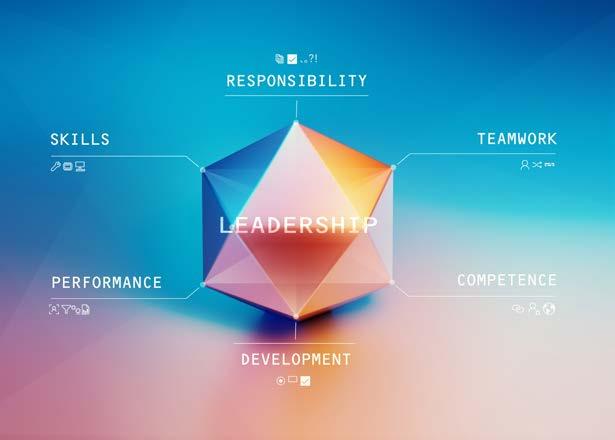
In the realm of leadership, one size does not fit all. Teams are like ecosystems, composed of individuals with varying temperaments, communication styles and work preferences. Effective agency leaders understand that adjusting their leadership style to complement the personalities of their team members can enhance team performance, collaboration and overall satisfaction significantly. This approach both acknowledges the uniqueness of every person within the agency, as well as maximizes individual strengths, and fosters a cohesive working environment. A personality assessment is a valuable first step to identify and to understand the individual personalities on your team. Armed with those insights, leaders can adjust their styles proactively to leverage strengths and mitigate challenges.
Here are four ways to adapt your leadership style based on the personalities within your agency:
No. 1: The go-getters. These are the ambitious, take-charge individuals who thrive on big ideas and growth opportunities. They often excel in imagining possibilities and taking the initiative to create and to implement new plans. When leading this personality type, adopt an inspirational leadership style. This involves articulating a compelling vision, fostering creativity through brainstorming sessions and encouraging out-of-the-box thinking. To successfully inspire this personality, offer challenging goals and provide the necessary support and resources to turn visions into realities.

Since go-getters can sometimes set their sights quite high, remind them to submit their plans to a reality check to make sure they are achievable. Satisfy go-getters’ desires to take the lead by allowing them to manage projects or oversee committees. However, make the limits of their authority within their job clear, and define when they will need to work as part of the team.
No. 2: The collaborators. Collaborators are team players who work for the good of the group. They readily pitch in to help others and are most satisfied achieving win-win results that benefit everyone involved. Individuals who thrive on collaboration and consensus-building appreciate guidance, and the chance to become proficient in their core duties before taking on new responsibilities within their roles. Collaborators can be cautious in the scope of their initiative because they do not want to do the wrong thing or overstep their boundaries, so leaders may need to set goals for them that stretch and grow their capabilities but do not feel overwhelming.
Successfully leading collaborators involves cultivating a culture of trust and mutual respect in which every team member feels heard and valued for their contributions. Because collaborators may feel hesitant to speak up with their ideas or concerns, create platforms for open communication, in which a variety of perspectives can be voiced and integrated into agency strategies. Prioritize one-on-one interactions, regular feedback sessions and personalized development plans. By actively listening to these team members’ aspirations and challenges, leaders can empower them to take ownership of their roles and responsibilities.
No. 3: The pragmatics. These employees value logical reasoning and data-driven decisions. They excel in roles that involve evaluating issues through an objective, fact-focused lens. Leaders who oversee pragmatics should adopt a facilitative leadership approach. This involves providing clear frameworks, encouraging systematic problem-solving and ensuring that decisions are based on comprehensive data and well-reasoned arguments. Often, pragmatics thrive when given the chance to enhance their job knowledge and become subject-matter experts within their roles.
Pragmatics tend to strive to be informative consultants to others, but they may come across in an overly technical way when explaining complicated concepts. Ensure they know how to lay out information in a way that people who are not as well-versed can understand it.
No. 4: The diplomats. Diplomats are socially outgoing and enjoy having opportunities to work with others. They can be adept at reading social cues, and know how to engage and to influence people through their compelling use of language. They prefer discussing ideas and solving problems collectively, so consider adopting a leadership approach that focuses on empathy and community-building. Offer opportunities for diplomats to coordinate group activities within your agency or facilitate team discussions, allowing them to harness their skills in bringing people together. Assign them tasks that involve networking, relationship-building or customer interaction, where their natural charisma and ability to connect with people can shine.
Because diplomats can become sidetracked by opportunities to converse with others, ensure they have strategies for minimizing distractions when they need to focus on a task. Also, remind them of the value of performing due diligence and reviewing facts and evidence when making decisions.
No matter the varied personalities that make up your agency, here are a few core practices that every leader can implement to foster successful, engaged teams:
No. 1: Build trust and relationships. Effective leadership begins with building trust and cultivating meaningful relationships with employees. This requires more than surface-level interactions; leaders should intentionally invest time in getting to know team members as individuals, learning about their motivations, strengths, working styles and areas where they hope to grow. When leaders show genuine curiosity and encourage open dialogue, employees feel seen and valued rather than treated as interchangeable contributors. Demonstrating consistent care, empathy and follow-through reinforces trust, creating an environment in which people feel safe to share ideas, voice concerns and take risks. With this strong relational foundation in place, collaboration becomes more natural, communication improves and overall productivity rises because employees are more engaged and committed to shared goals.
No. 2: Establish clear communication. Communication is a cornerstone of effective leadership, and its impact grows even stronger when leaders intentionally adapt their approach to fit the diverse personalities within their agency. Leaders should adjust their communication styles to resonate with different preferences, ensuring each person receives infor-

mation in a way that feels clear and accessible. For example, some team members may want to know all the details about an issue, asking for context, data and explanations, while others may prefer receiving a general overview so they can focus on the big picture. Some employees respond best to visual aids or written summaries, and other team members favor quick verbal check-ins.
By tailoring their communication approach, leaders not only ensure that information is effectively conveyed and understood by all employees, but that it also demonstrates respect for individual styles. This thoughtful flexibility reduces misunderstandings, strengthens relationships and creates an environment in which everyone feels equipped to contribute confidently.
No 3: Empower through delegation. Delegating responsibilities effectively is essential to empower team members and to cultivate a genuine sense of ownership within the agency. Strong leaders take the time to understand each individual’s strengths and interests, and developmental goals so they can assign tasks that not only align with agency needs, but that also support personal growth. This requires a thoughtful, flexible approach: some employees may benefit from clear structure, step-by-step guidance and regular opportunities to touch base as they build confidence, while others thrive when given broader autonomy and the freedom to determine their own work methods.
When leaders tailor their delegation style to these preferences, they nurture an atmosphere in which people feel trusted and valued. As a result, team members are more inclined to take initiative, experiment with new ideas and contribute meaningfully to shared outcomes—ultimately strengthening both performance and morale.
No. 4: Cultivate adaptability and resilience. Successful leaders foster adaptability both in themselves and within their teams. They should model and encourage employees to treat change as an opportunity rather than a disruption—supporting experimentation, calculated risk-taking and continuous growth. By reframing setbacks as learning opportunities, leaders can create an environment in which innovation feels accessible rather than intimidating.
Adaptability and resilience help team members stay responsive to new information, adjust course when needed, and avoid becoming overly attached to outdated strategies simply because they once worked.
No. 5: Encourage cross-functional collaboration. Facilitating interdepartmental efforts means intentionally creating spaces in which people with different expertise, perspectives and working styles can come together to solve problems in ways no single team could achieve alone. When employees partner across departments, they’re exposed to new approaches and fresh thinking, which expands their skill sets and deepens their understanding of how the agency operates as a whole.
Diverse viewpoints help create synergy, sparking innovative solutions and more efficient processes. These connections can break down silos, strengthen relationships and build a culture in which collaboration becomes a natural driver of progress.
No. 6: Recognize and celebrate achievements. Acknowledging and celebrating team achievements boosts morale and reinforces positive behaviors. Leaders should applaud individual and collective contributions publicly or privately, depending on the individual team member’s preference. Celebrating milestones—both big and small—reinforces a culture of appreciation and motivates employees to strive for excellence.
Beyond simple recognition, these moments also strengthen team cohesion by reminding everyone of the shared effort behind each success. When leaders consistently highlight progress, they signal that hard work is seen and valued, which encourages employees to stay engaged and continue pushing toward collective goals.
Adapting leadership styles to complement the personalities of team members is not merely a strategic approach, but it is a fundamental aspect of effective leadership. By understanding and appreciating the diversity of personalities within their agencies, leaders can tailor their approach to align with the unique strengths and preferences of each individual—and ultimately—inspire, empower and guide their teams toward achieving collective success.
Sims is the senior manager of profile analysis and workflow at The Omnia Group, an employee assessment firm providing the power of behavioral insight to help organizations make successful hires, develop employees to their full potential, and effectively engage staff. PIA Northeast members receive discount pricing on Omnia’s Custom Profile and Target products. For more information or to try a free assessment, visit us at www.OmniaGroup.com, email info@omniagroup.com, or call (800) 525-7117, and don’t forget to mention your PIA membership.
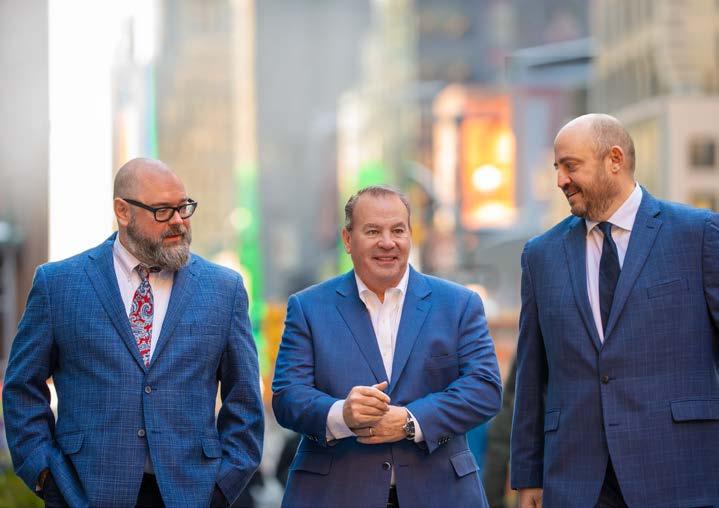




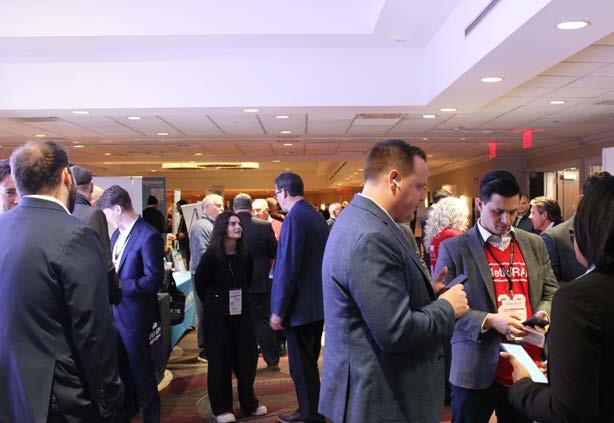
More than 400 insurance professionals braved polar cold to attend PIANY’s MetroRAP on Jan. 29, 2026, at the Sheraton New York Times Square Hotel.
During the daylong event, attendees took advantage of networking opportunities and gained valuable insights about artificial intelligence’s impact on the insurance industry. This event also provided attendees with some much-deserved time to enjoy themselves and support the insurance community they were a part of, such as honoring some of this year’s most dedicated and passionate insurance professionals. If there’s one lesson that can be taken from this year’s MetroRAP, it’s that every agent has the potential to be an MVP.
Attendees were able to explore the packed trade show, meet a diverse range of vendors and form new connections with their peers. Participants voted for their favorite booth in the Best in (Trade) Show contest: This year’s winner was eTrackCoi.
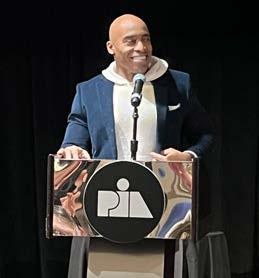
The keynote speaker was the former New York Giants Running Back Tiki Barber. Barber was one of the greatest players in the Giants franchise and the National Football League, being the only NFL player in history to achieve 10,000 rushing yards, 5,000 receiving yards and 1,000 return yards. When he retired from a legendary football career, Barber pivoted to a successful broadcasting career with NBC and is currently a co-host for the afternoon radio show Evan and Tiki
In his speech, Barber linked his career to some of the struggles that many insurance professionals face in their day-today lives, like staying motivated in the face of failure, or how to stand out and avoid being “just a guy or girl.”
The recurring theme of Barber’s speech was opportunity Barber said, “Opportunities are made: you have to create the door to walk through. I did that by listening to my coach and getting better at the game.”
He also noted opportunities have an unexpected, spontaneous quality to them. “You don’t know when ‘opportunity’ will make a chasm for you to run through.” That’s something important for insurance professionals to remember—opportunities are made in the most unexpected circumstances, and they can help you secure success.
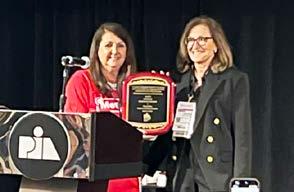
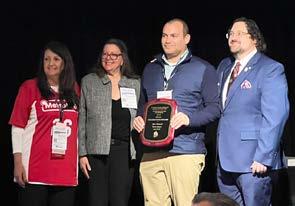
At MetroRAP, PIANY honored two insurance professionals who went above and beyond for their industry. Steven L. Diamond, the former president of the Professional Insurance Wholesalers Association and Simon Agency NY Inc., received the Distinguished Insurance Service award (posthumously). This award is presented to individuals with a history of service to the American independent agency system and to PIANY—which Diamond embodied through his distinguished career.
Meryl Golden, president and CEO of Kingstone Insurance Co., received the Executive of the Year award for demonstrating strong working relationships with agents and brokers, and has exemplified a commitment to professionalism and service.
In her acceptance speech, Golden said, “Our relationship with independent agents is the bedrock of our business. We take great pride in being a stable presence in the market through recent turbulence and are pleased to have expanded our underwriting appetite to better meet your needs.”
MetroRAP’s education sessions focused on the use of artificial intelligence in the insurance industry, including how agents
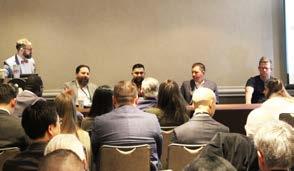
can apply it in their day-to-day operations, and how policies are shaping themselves around emerging AI threats.
The two CE-approved panel discussions, Game Changer: Using AI to Become an Insurance MVP and Beyond the Firewall: Emerging Exposures in Cyber & AI, featured numerous industry experts who had extensive experience with AI. The panelists of the former session were Scott Chirls, chief information officer of SterlingRisk; Matthew Hart, founder and CEO of Soter Analytics; Shiraz Saeed, senior vice president–product leader cyber & technology risk of ARC Excess & Surplus; and Andrew Shockey, vice president–risk management services of Philadelphia Insurance Cos.
The latter panelists included Michael Cavallaro, CEO of ARC Excess & Surplus; Daniel Toutoungi, cyber specialist of Corvus by Travelers; and Jason Curreri, general counsel and product & language expert of ElphaSecure. PIA Northeast’s Director of Government & Industry Affairs, Bradford J. Lachut, Esq., moderated both panels.
The morning Game Changer panel centered on practical applications of generative and agentic artificial intelligence in the workplace. Hart conducted live demonstrations of how AI can generate useable web interfaces, such as a QR code that links to your profile or businesses. And, there were discussions on how AI can be used to sift through vast quantities of insurance-related information and provide detailed summaries.
The afternoon panel, Beyond the Firewall, changed the pace of the conversation on AI from some of its benefits to its hazards. The panelists discussed some of the common ways that risks are being enhanced by these technologies, such as using deepfakes in social engineering. The panel also noted how the language in some cyber coverage policies feature exclusionary language with regards to AI. Overall, the panelists combined provided a balanced picture of how artificial intelligence will shape the industry in the years to come.
Between the excitement of new technologies, industry MVPs, football stars and business solutions, agents were eager to engage in one of the popular activities of MetroRAP 2026: networking and making new friends.
With nearly 200 people in attendance, the New York Young Insurance Professionals MetroRAP Welcome Reception the night before MetroRAP was packed at Connolly’s Restaurant and Pub in Times Square. It was a fun-filled evening.

During MetroRAP, the Sheraton in Times Square, also was buzzing with constant, lively and spirited conversation—from the trade-show floor to its hallways and conference rooms.
In addition, this year’s MetroRAP was notable: For the first time, PIANY collaborated with several fellow insurance associations to expand access and engagement at MetroRAP. These associations included the:
Council of Insurance Brokers of Greater New York, Federation of NY Insurance Professionals Inc., Insurance Brokers Association of New York, Insurance Professionals Association of Long Island, Korean American Insurance and Finance Association, Latin Agents & Brokers Association,
National African American Insurance Association New York Tri-State,
National Association of Insurance and Financial Advisors, and
Professional Insurance Wholesalers Association.
We’re grateful that these associations joined us in support of a stronger, more connected insurance community.
PIANY thanks everyone who was able to attend this year’s MetoRAP, as well as the generous sponsors who supported it:
AFCO Direct ALE Solutions
Amwins Access
Bridge Specialty Group
Brooks Insurance Agency
CNA
David J. Louie Inc.
Distinguished
ERGO NEXT Insurance
Eugene A. Bartow Insurance Agency
Excess Line Association of New York
Friedlander Group Inc.
FrontLine Restore LLC
FTP Inc.
GNY Insurance Cos.
Green Metro Restoration
Greene & Associates
Highview National Insurance Co.
IBANY
Innovation Growth Partners Specialty LLC
Interboro Insurance
Ironpeak
Jencap Group
Kingstone Insurance Co.
Lancer Insurance Co.
Liberty Mutual | Safeco
Philadelphia Insurance Cos.
The Premins Co.
Seneca Insurance
Simon Agency
Travelers
XS Brokers
Mark your calendars for the PIANJ | PIANY Annual Conference June 7-9, 2026, at the Hard Rock Hotel Casino, Atlantic City, N.J. For more information, or to register, see www.pia. org/pianjnyconf.
To see additional information about MetroRAP 2026, including more photos, visit the related article on PIA Northeast News & Media (www.blog.pia.org).


Utica National Insurance Group E&O Risk Management
Agency sales producers are the key for an agency to have a solid commitment toward preventing possible errors-and-omissions claims. This means having a 100% buy-in from every producer, every day.
Insurance producers are at the heart of most E&O claims— essentially, one out of every two E&O claims alleges an error or omission from the ranks of the insurance producer. Here are some vital issues for producers to be aware of:
Listen. In many—if not all—states, an insurance producer (i.e., agent or broker) has a common-law duty to obtain the coverage the client specifically requests within a reasonable time period. Thus, listening to the words of your client or prospect is extremely important. Since there may be situations where the producers can’t secure the coverage requested, they also have a further duty to inform the clients of the reason why the coverage cannot be secured.
Take notes. As producers interact with customers, taking notes of the discussions should be a practice. When clients make decisions on the coverages they want and don’t want, typically producers are requested to get the clients’ signature. While putting this information in the file or agency management system is a positive step, it is just as important that these conversations and the decisions made be memorialized back to the customer.
For example, if the client calls to advise that he or she is not interested in a proposed coverage, the best approach is to send the client a note recapping the discussion. The goal of this extra step is to ensure there is no misunderstanding between the parties. The extra time spent on documentation may very well determine the direction of the next E&O claim.
Document. While producers may possess a very good skill set, including strong technical knowledge and solid sales skills, one thing they seem to struggle with is documentation. The lack of quality documentation is a major issue in E&O claims. Documentation is the one critical piece that may determine the agency’s success in prevailing in an E&O matter.
Don’t rely on your memory. Let your documentation tell the story. It is not uncommon for the courts to take the position that, “if it’s not in the file, it didn’t happen.”
Sell what you know and know what you sell. Producers must possess strong technical knowledge for interactions with prospects and customers. Keeping up with that level of knowledge is critical due to the evolution of our industry. Current issues such as drones, cyber and others require the producer to commit to learning.
Be honest with the carriers you use. Providing the markets with a full and accurate disclosure of the risk is critical when completing applications. The relationship between your carriers and your agency is built on trust. Being totally honest is an integral part of that relationship. The downside of being less than honest is extremely significant, and it is not a place you want to be.
Watch your words. Due to the tremendous pressure to sell, producers may be inclined to position themselves and their agency in the best favorable light. While various marketing materials may enhance the ability to be successful, producers must be careful and deliberate in the words and phrases used for promotion. Avoid stating you are an expert. Also avoid phrases such as: “we make sure you are properly covered” or “this coverage is definitely better than what you have.”
This information and any attachments or links are provided solely as an insurance risk management tool. They are derived from information believed to be accurate. Utica Mutual Insurance Company and the other member insurance companies of the Utica National Insurance Group (“Utica National”) are not providing legal advice or any other professional services. Utica National shall have no liability to any person or entity with respect to any loss or damages alleged to have been caused, directly or indirectly, by the use of the information provided. You are encouraged to consult an attorney or other professional for advice on these issues.



Have a question? Ask PIA at resourcecenter@pia.org.
Q. Our client will be setting up tourist information centers in connection with a big local music festival. These booths will be staffed throughout the day by volunteers who will provide their services without remuneration. Does our client need to cover these volunteers with a workers’ compensation policy?
A. Generally, no. Under the New York Workers’ Compensation Law, volunteers are not considered employees unless they meet specific statutory criteria that bring them within mandatory coverage. Typically, the Workers’ Compensation Law requires an employment relationship involving remuneration or a clear expectation of payment. When individuals freely donate their time without compensation, they usually fall outside the scope of employees as defined by the statute. While workers’ compensation coverage is not typically required in this scenario, your client may want to be aware of related liability protections. Typically, the ISO Commercial General Liability Coverage form (CG 00 01, October 2001 edition or later) includes volunteers acting on behalf of the named insured as additional insureds for purposes of third-party liability claims. This means that if a volunteer is sued by a third party for actions within the scope of the volunteer duties, generally, they are protected under the insured’s CGL policy.—Patterson
Q. We insure a sole proprietorship. The owner’s wife works there. She is not an officer. Can she be excluded for workers’ compensation and disability, or must she be included?
A. The Workers’ Compensation Law does not exclude family members from the definition of “employee.” So, the wife must be covered for workers’ compensation.
Thanks to the efforts of PIANY, a mandatory exclusion from disability benefits no longer applies to spouses employed in family businesses. The law was changed in 1993 to state that
“a spouse who is an employee of a covered employer shall be deemed to be included in the employer’s disability benefits insurance contract” unless the employer elects exclusion. The employer can elect to voluntarily exclude the spouse from coverage by executing an election form (DB-212.5).—Lachut
Q. One of my insureds drives her own personal vehicle in volunteer work for the Red Cross. She transports people to doctors and hospitals for appointments. Is there an endorsement to cover this situation?
A. By definition, a volunteer transporting people for charity purposes is not public transportation for hire. The volunteer’s personal auto policy will cover auto liability while transporting people for the Red Cross.
To avoid insurer inconsistency in applying the public livery exclusion, the 2018 ISO PAP introduced an express exception for an insured who transports individuals as a volunteer or as an incidental part of the insured’s employment. If you want the Red Cross Business Auto Policy to respond, then the endorsement titled Social Service Agencies–Volunteers As Insureds (CA 99 34) must be added, assuming the policy covers non-owned autos (Symbols 1 or 9). However, the coverage is excess over any other collectible insurance.—Lachut
Q. My insured took a job with the U.S. Post Office. She became alarmed when she was told by her employer that her personal auto policy would not cover her while on the job. Can this be true?
A. You bet. Under these circumstances, the insurer will attach the Federal Employees Using Autos In Government Business (PP 03 01) endorsement to the policy, which only applies to coverage under Part A–Liability.
The intent is to remove the U.S. government as a potential vicarious insured, as well as to remove coverage as an insured for any person with respect to a vehicle’s operation while used within the scope of an employee of the U.S. government.
The attorney general will defend the government employee, and pay any claims that are due under the law (see 28 U.S.C. Section 2679).—Lachut
Q. Does the ISO commercial general liability policy cover new locations and operations of an insured automatically? Is coverage limited to the classifications shown in the declarations?
A. The ISO CGL policy covers all operations of the named insured. The form provides automatic coverage for new locations and new business activities of the named insured arising after policy inception, provided there was no material misrepresentation when the insured applied for a policy. Neverthe-
the policy expires and charge additional premium, if applicable. The audit process involves a survey of the insured’s actual exposures during the audit period, as compared with the exposures for which a deposit premium was determined at inception.
Naturally, if the insurer discovers an unacceptable new location or operation during the policy period, it may cancel the policy in accordance with policy provisions and subject to state law governing midterm cancellations.—Lachut
Q. When insuring a partnership entity for commercial general liability insurance, should the registered DBA (doing business as) and the partners be listed as named insureds?
business in a name that does not contain the last names of all the partners, it must register that fictitious name (DBA) with a local authority (typically, the county where located).
The named insured should be the legal name, which includes the last names of all partners. The DBA can be added, but understand that this can be interpreted to limit the policy’s coverage to partnership operations conducted solely in that DBA name (A recent Massachusetts Supreme Court decision that supports this interpretation is Masonic Temple Ass’n of Quincy v. Patel.)
The partnership may conduct business outside the named DBA or in other registered DBA names. So, why limit coverage to a particular DBA? Instead, I suggest leaving coverage open to any





OFFICERS
President
Jason E. Bartow, AAI, CPIA, TRA Bartow Insurance Agency & Jebb Brokerage Inc. Deer Park, NY
President-elect
Michael A. Loguercio Jr. Belfor Property Restoration Middle Island, NY
First Vice President
Jorge Hernandez North Franklin Brokerage Inc. Hempstead, NY
Vice President
Eric Cohen
Benefit Quest Inc./Eric Cohen Insurance New York, NY
Treasurer Ed Chadwick Jencap Specialty Insurance Services Buffalo, NY
Secretary
Justin Fries, CIC, CPCU, CPIA Garber Atlas Fries & Associates Inc. Oceanside, NY
Immediate Past President
Richard Andrews, LUTCF Andrews Agency Inc. Ithaca, NY
NATIONAL DIRECTOR
Michael J. Skeele, CIC, CPIA Skeele Agency Inc. DeRuyter, NY
DIRECTORS
Dina Bruno, CPIA Trucordia Long Beach, NY
Peter Buccinna XS Brokers Quincy, MA
Marshall Glass, CPIA Ironpeak Astoria, NY
Leslie C. Rogoff Madison Avenue Brokerage Corp. New York, NY
Richard Signorelli AZBY Brokerage Inc. Bronx, NY
NY-YIP REPRESENTATIVE
Peter Conte, CPIA, MSRE Honig Conte Porrino Insurance Agency Inc. New York, NY
ACTIVE PAST PRESIDENTS
David Dickson Fairport, NY
Jamie A. Ferris, CIC, CRM, AAI, CPIA P.W. Wood & Son Inc. Ithaca, NY
Lynne R. Frank, CPCU Williamsville, NY
Jeffrey H. Greenfield NGL Group LLC Lynbrook, NY
Fred Holender, CLU, CPCU, ChFC, MSFS Lawley LLC Buffalo, NY
John C. Parsons II, CIC, AAI, CPIA, NcSA Parsons & Associates Inc. Syracuse, NY
Gene L. Sandy, CIC Highstreet Insurance Partners Millennium Alliance Group LLC Melville, NY
Richard A. Savino, CIC, CPIA, TRA Broadfield Group LLC Trucordia Warwick, NY
Gary Slavin, CIC, CLTC, LUTCF Massapequa, NY
John Tomassi, CPCU Open Coast Surety Agency LLC New York, NY
Matthew Davoult AFCO Direct Lake Forest, IL
Jennifer P. DeCristofaro Lancer Management Co. Inc. Long Beach, NY
Jeffrey Dende, CIC, CPIA, CRM P.W. Wood & Son Inc. Ithaca, NY
Leslie Driscoll Tronilo-Driscoll Insurance Agency Ozone Park, NY
Khaleedah Francis Sedgwick Claims Mahwah, NJ
Natalie Golubski
Jencap Specialty Insurance Services Buffalo, NY
Sean Grant Jimcor Agencies Montvale, NJ
Christina Kager Piper Insurance Agency Inc. Painted Post, NY
Scott Richards Hilltop Strategies Huntington Station, NY
Frances A. Scott
F.A. Scott Insurance Agency Goshen, NY
Ian Sterling, CLCS Sterling Risk Woodbury, NY
Derek Stork, CIC
Stork Insurance Agency Penn Yan, NY
Shannon van Doorn Lawley LLC Buffalo, NY
pia@pia.org

+ Print design.print@pia.org
education@pia.org
& Industry Affairs govaffairs@pia.org Industry Resource Center resourcecenter@pia.org
Services memberservices@pia.org
publications@pia.org
Insurance Professionals yip@pia.org