
The City of Phoenix acknowledges that Phoenix is located within the homeland of the O’Odham and Piipaash peoples and their ancestors, who have inhabited this landscape from time immemorial to present day. The landscape is sacred and reflects cultural values central to the O’Odham and Piipaash way of life and their self-definition. This acknowledgment demonstrates our commitment to work in partnership with the Ancestral Indigenous Communities to foster understanding, appreciation, and respect for this heritage.
The Salt River Pima-Maricopa Indian Community (SRP-MIC) and the Gila River Indian Community (GRIC) claim aboriginal title (Original Indian Title) to lands exclusively used and occupied by the Akimel O’Odham and Piipaash, equaling 3,751,000 acres of South-Central Arizona. Ancestral O’Odham settlements are located throughout the entirety of present-day Phoenix. This land remains spiritually connected to the O’Odham of the SRP-MIC and the GRIC, both of which are confederations of two distinct cultures with their own languages, customs, traditions, religions, and histories. Both the O’Odham and the Piipaash are oral history cultures, and the song cultures of these people are tied explicitly to tangible places. These places can be natural landforms, such as the mountains that surround our valleys. Still, they also include archaeological sites because they are part of a cultural landscape associated with specific historical, cultural, and religious values. Those places are tangible reminders to the O’Odham and Piipaash about shared attitudes, goals, and practices that characterize who they are, where they belong, and how they relate to each other in the past, continuing today, and into the future. The City of Phoenix has preserved and continues to steward several Ancestral O’Odham sites and landscapes, and is committed to honoring the vital meaning and intent of this land acknowledgment.
Source: City of Phoenix Parks and Recreation Department
The Gila River Indian Community has generously funded the work presented in this plan. The City of Phoenix would like to thank them for their contributions to community building, economic development, and a consistent vision for ecological resilience. This grant marks the next stage in developing the Rio Salado District into a vibrant part of the city and region, while reconnecting the community to the river and fostering a sustainable future for both human and non-human inhabitants.
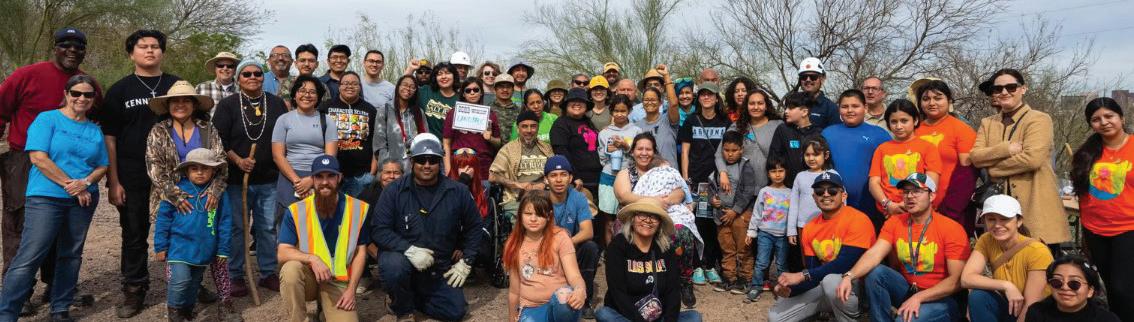
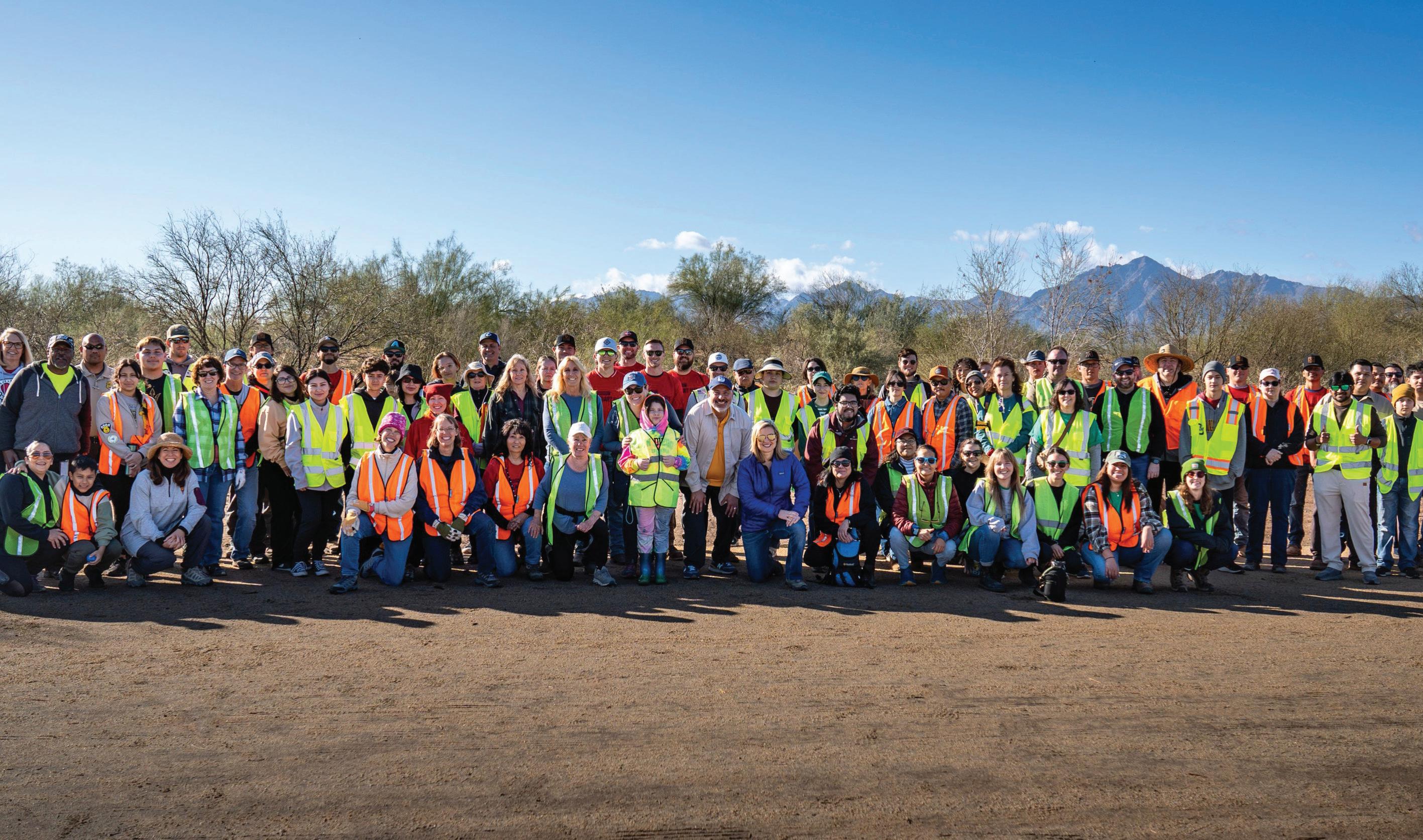
Cover page photo credits: Protectors of the Salt River (People gathering) Photo credits of all uncredited photographs: City of Phoenix
Mayor Kate Gallego
Vice Mayor Kesha Hodge Washington, District 8
Ann O’ Brien, District 1
Jim Waring, District 2
Debra Stark, District 3
Laura Pastor, District 4
Betty Guardado, District 5
Kevin Robinson, District 6
Anna Hernandez, District 7
Ed Zuercher, City Manager
Lori Bays, Assistant City Manager
Ginger Spencer, Assistant City Manager
Alan Stephenson, Deputy City Manager
David Mathews, Deputy City Manager
Cynthia Aguilar, Deputy City Manager
Frank McCune, Deputy City Managers
Gina Montes, Deputy City Manager
Amber Williamson, Deputy City Manager
Enrique Bojórquez Gaxiola, Planner III
Liza Oz-Golden, AICP Planner II
Christian Monahan, Planner II
Planning and Development Department
Joshua Bednarek, Director
Adam Miller, Assistant Director
Joél Carrasco, Special Projects Administrator
Samuel Rogers, Central City and South
Mountain Village Planner
Kevin Weight, Principal Planner
Nancy Allen, Environmental Programs Administrator
Rosanne Albright, Environmental Programs Manager
Tricia Balluff, Environmental Programs Manager
Elizabeth Zima, Environmental Programs Manager
Madeline Mercer, Program Manager
Ariel LeBarron, Program Manager
Karen Ibarra, Project Management Assistant
Community and Economic Development Department
Ryan Touhill, Director
Christine Mackay, Director (Former)
Nathan Wright, Deputy Director
Xandon Keating, Deputy Director
Thomas Sawyer, Program Manager
Housing Department
Titus Mathew, Director
Aubrey Gonzalez, Assistant Director
Samantha Keating, Deputy Director
Zona Pacheco, Deputy Director
Courtney Anderson, Housing Manager
Jessica Foreman, Community Grant Specialist
Neighborhood Services Department
Spencer Self, Director
Jesse Garcia, Housing Development Manager
Sonja Flippin, Neighborhood Specialist
Frank Ramirez, Neighborhood Specialist
Parks and Recreation Department
Martin Whitfield, Director (Interim)
Brandie Barrett, Assistant Director
Jarod Rogers, Deputy Director
Donald Domann, Deputy Director
David Olson, Park Manager
Emmett Boyd, Park Manager (Retired)
Public Works Department
Felipe Moreno, Director
Stacy Hettmansperger, Solid Waste Administrator
Amanda Jordan, Solid Waste Administrator
Street Transportation Department
Briiana Velez, Director
Markus Coleman, Assistant Director
Leticia Vargas, Deputy Director (Interim)
Brian Fellows, Principal Planner
Nick Klimek, Principal Planner
Marielle Brown, Principal Planner (Former)
Maja Brkovic, Principal Planner
Cara Nassar, Planner III
Tariq Momika, Engineering Manager
Carl Langford, Traffic Operations Engineering Supervisor
David Hondula, Director
Lora Martens, Project Manager
Mary Wright, Project Manager
Yanitza Soto, Public Health Advisor
Kelli Kostizak, Special Projects Administrator
Office of Innovation
Michael Hammet, Director
Carla De La Chapa, Chief Sustainability Officer
Carlos G. Aguiar Hernandez, Energy Manager
Brandy Kelso, Director
Jim Swanson, Assistant Director
Christine Nuñez, Environmental Programs Manager
Erin Andres, Water Resources Administration
Public Transit Department
Jesus Sapien, Director
Markus Coleman, Light Rail Administrator (Former)
Kevin Teng, Principal Planner
Sarah Brown, Program Manager
Aviation Department
Chad Makovsky, Director
Jordan D. Feld, Deputy Director
Taylor Sokolovic, Project Manager
Carrie Brown, Director (Interim)
Mitch Menchaca, Director (Former)
Nancy Thomas, Project Manager
Anel Arriola, Project Manager
Sarah León, Program Manager
Christopher Schwartz, City Archaeologist
Rio Reimagined Partnership
Arizona State University
Wellington “Duke” Reiter, Executive Director
Maggie Soffel, Senior Director
Cecilia Riviere, Director
Urban Waters Federal Partnership
Cindi Ptak, Rio Reimagined Ambassador (Former)
Maricopa Association of Governments
Amy St. Peter, Director of Community Initiatives
Kay Bork, Principal Planner
Bloomberg Associates
Andrea Partenio
Robin Reid
Izzie Deixel
Nicole Huser
Organizations
Arizona Department of Environmental Quality
City of Phoenix Neighborhood Organizations
Liberty Wildlife
Nina Mason Pulliam Rio Salado Audubon Center
Phoenix Revitalization Corporation
Protectors of the Salt River
Roosevelt Elementary School District
Sagrado Galleria
SoPho Convening
South Central Collaborative
Salt River Project
Tiger Mountain Foundation
Unlimited Potential Valley Metro Consultants
Multistudio, Inc.
Krista Shepherd, Principal (Former)
Aaron Herring, Principal (Former)
Luca Giaramidaro, Vice President
Steve Valev, Associate Principal
Adrian Castro, Associate
Nick Ryan, Project Designer
Sela Papapietro, Interior Designer
Kate Orff, Founding Principal
Nans Voron, Senior Director
Kaleen Juarez, Director
Nathalie Mitchell, Associate
Boards and Commissions
Planning Commission
Parks and Recreation Board
Central City Village Planning Committee
South Mountain Village Planning Committee

Executive
Rio Salado District Area
Existing Plans + Initiatives
Rio Salado Beyond the Banks Area Plan
RIO PHX Framework + Rio Salado Place Types
Creating a Plan Together
Meeting
Reorienting Ourselves
Design
Recently
Character
Achieving
Top
Additional

The Rio Salado District Policy Plan establishes a framework for guiding development within the neighborhoods that abut and surround the Rio Salado Habitat Restoration Area (RSHRA), through a shared vision centered around people, nature, and the built environment. Developed through extensive public engagement and data-driven technical analysis, the plan outlines goals, strategies, and actions into four big ideas to inspire public and private public and private investment decisions. Furthermore, this plan is a key implementation tool of the regional Rio Reimagined project by promoting economic development along and beyond the banks of the Rio Salado, and supporting continued riverbed restoration, in addition to water management activities.
In 2023, the City of Phoenix Planning and Development Department launched the RIO PHX initiative as a collaborative effort with a diverse group of stakeholders, including businesses, property owners, residents, and other community groups, to develop a strategy and shared vision to attract positive investment for the benefit of locals, while attracting tourists to the area. Supported by a grant from the Gila River Indian Community, the Rio Salado District Policy Plan also identifies existing community needs and opportunities towards a respectful transformation of the area.
As the Rio Salado District evolves, this plan offers a strategic roadmap that aligns growth and investment with community values and priorities. The plan also presents a vision for a more walkable and connected community to support long-term health outcomes, resiliency, and housing affordability.

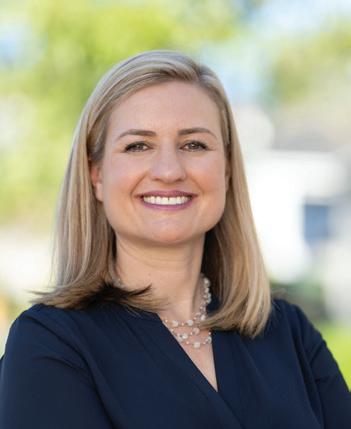

Dear Neighbors, Rio Reimagined celebrates the river that made Phoenix, and our neighboring communities, possible. From the dedication of grassroots efforts and Indigenous communities, to the halls of the United States Congress, this initiative is made up of the dedication of people from all walks of life who are committed to preserving the riparian habitat and creating opportunities for residents to enjoy this special river corridor.
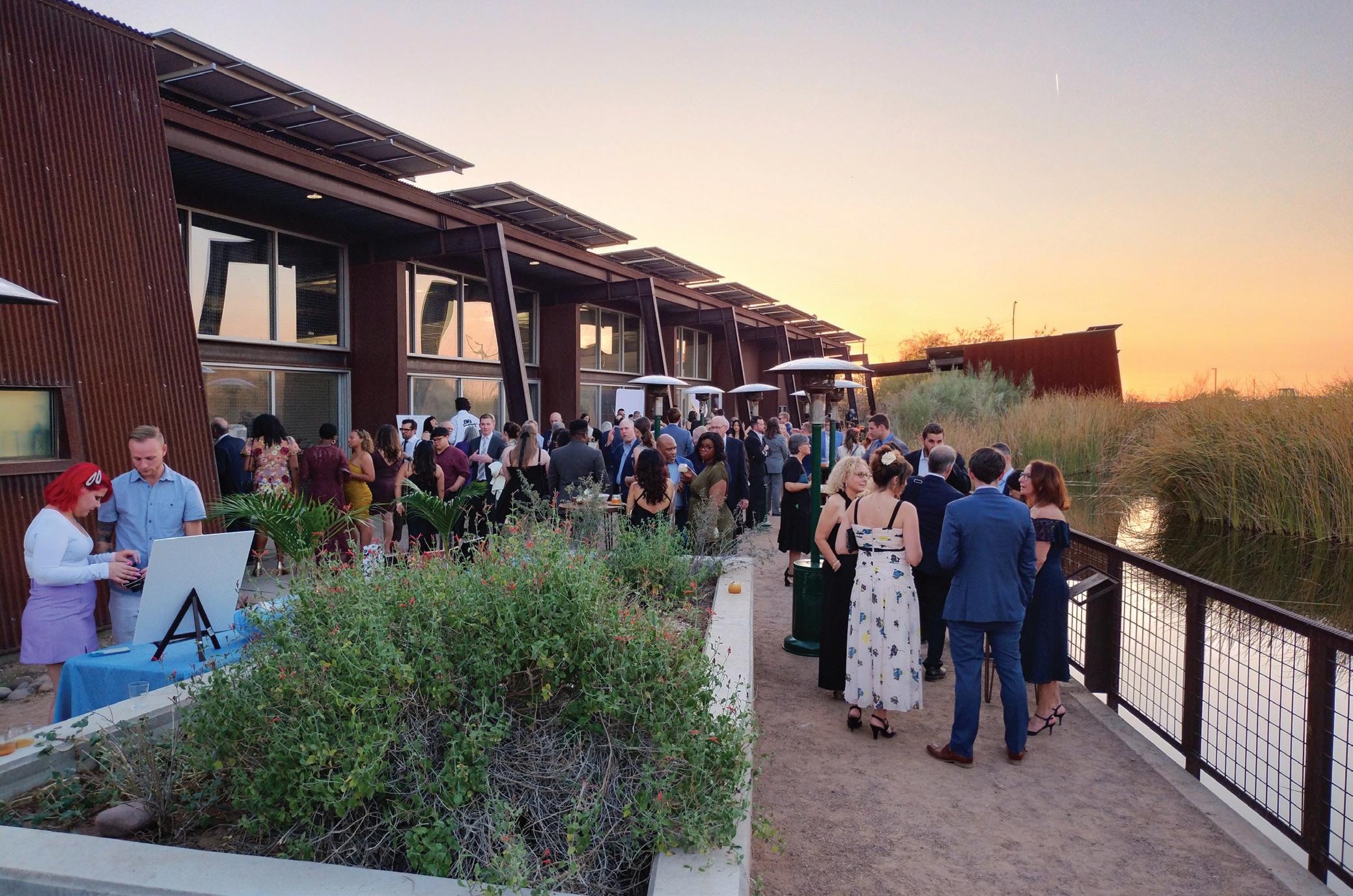
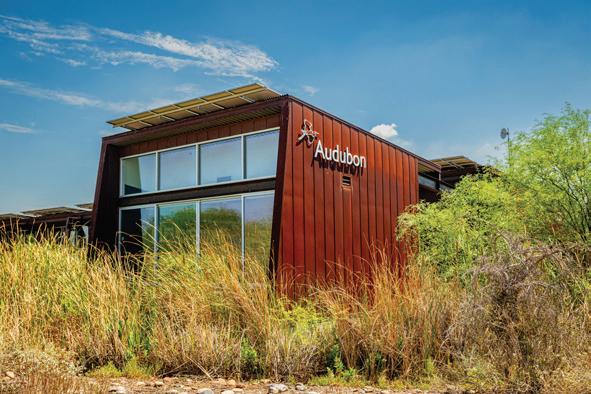
This plan builds upon investments in environmental restoration projects, public transit, active transportation pathways, and landmark buildings like the Nina Mason Pulliam Rio Salado Audubon Center to encourage appropriate design and development as parcels along the riverbanks are converted to new uses. Phoenix is proud to partner with our neighboring Tribal communities, cities and towns to bring to fruition the vision of a Rio Salado that belongs to everyone, including future generations.
Respectfully,
Kate Gallego Mayor of Phoenix
The plan assesses the existing conditions of the Rio Salado District Policy Plan project area, outlines a vision for its future, and offers a framework for achieving that vision. This is structured into four key parts as described below.
Part 1: Introduction
The introduction chapter offers a summary of the plan, detailing the study area, community engagement objectives, and planning framework and process. This chapter also orients the reader to the different zones that connect neighborhoods and the Rio Salado.

Part 2: Who We Are

This part highlights the historic context of the area, past efforts within the Rio Salado District and assesses its current condition through six planning elements: Land Use, Housing, Economic Development, Health, Mobility, and Green Systems. This chapter integrates public and other data with input from the community while identifying existing assets, opportunities, challenges, demographics, and areas that require change. By gaining a clear understanding of the current state of the Rio Salado District, we can effectively shape its future.

Part 3: What We Want

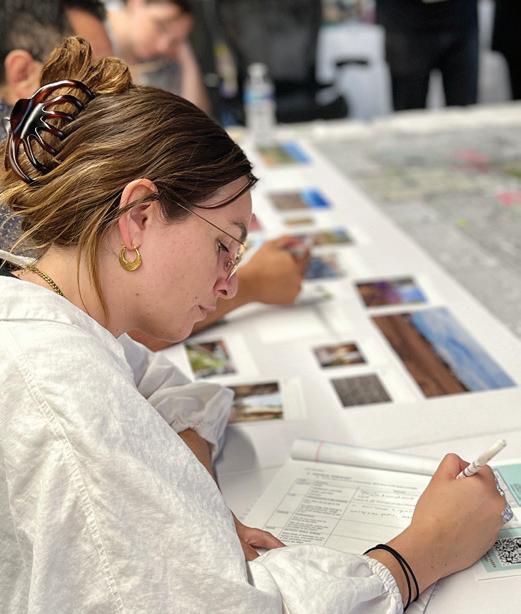
This part outlines the community’s vision for the Rio Salado District over the next 25 years. This vision was created through a community-driven process that reflects the insights of business owners, local groups, residents, visitors, workers, and recreational users. A variety of active and passive engagement methods were utilized, including community workshops, group meetings, tabling events, mailers, and surveys, to help shape this vision. The vision, big ideas, and design concepts, gathered from the community, serve as the foundation for the next chapter.




Part 4: How We Get There
This section presents the steps for realizing the Rio Salado District’s vision using a collaborative approach to transition the current conditions. A list of goals, strategies, target outcomes and actions where responsible parties are identified to achieve the community vision for the area.



The Rio Salado District Policy Plan is a guide for transforming the Rio Salado Corridor into a more walkable, healthier, and well-connected part of Phoenix. This plan can serve as a framework for future planning efforts along other segments of the Rio Salado Corridor, while supporting broader regional objectives of the Rio Reimagined or Rio Salado Project.
• Incorporates previous plans and their intent, including the Rio Salado Beyond the Banks Area Plan and South Central Transit Oriented Development Community Plan, among other area plans.
• Summarizes community input with technical analysis.
• Provides city-wide policy guidance to encourage transitioning the existing conditions to a more equitable, connected, healthier, economically resilient, and sustainable environment through multi-disciplinary collaboration with internal and external partners.
• Lays a foundation for future land use decisions, river-oriented design, and rethinking zoning tools.
• Lays a foundation to connect to the Rio Salado and infrastructure investments to prioritize people walking, biking, and using transit.
• Provides support for future grant and funding opportunities towards achieving the community vision.
• Provides guidance and support for public and private investments to ensure community and environmental benefits are prioritized in alignment with the local and regional vision for the future.
• Provides a tool for all partners to be held accountable as vision advisors through advocating and participating in a diverse array of implementation actions to achieve the community vision.
• Rezone any property, business, or residence.
• Purchase any property, business, or residence.
• Impose any regulatory standards that are not already applicable.
• Create a new river restoration plan, but it does support the continued restoration of the RSHRA.
The Rio Salado District Policy Plan provides a framework for directing development within the neighborhoods surrounding the Rio Salado Habitat Restoration Area (RSHRA). This plan is built on a shared vision that emphasizes the integration of nature, community, and the built environment.
This section of the plan describes the key policy for promoting a walkable, healthy, and well-connected Rio Salado District. It also summarizes the planning process and highlights the efforts made to actively promote public participation.
In 1999, U.S. Congress approved more than $85 million in federal Water Resources Development Act funds to transform approximately 595 acres along five miles of the Salt River (Rio Salado), from 28th Street to 19th Avenue, in Phoenix.
This transformative construction project spanned from 2002 through 2009 and consisted of a low-flow channel to mitigate flooding and habitat restoration which created a unique urban ecosystem that restored native wetland and riparian habitats of the historic Salt River. The project was known as the Rio Salado Habitat Restoration Area (RSHRA).
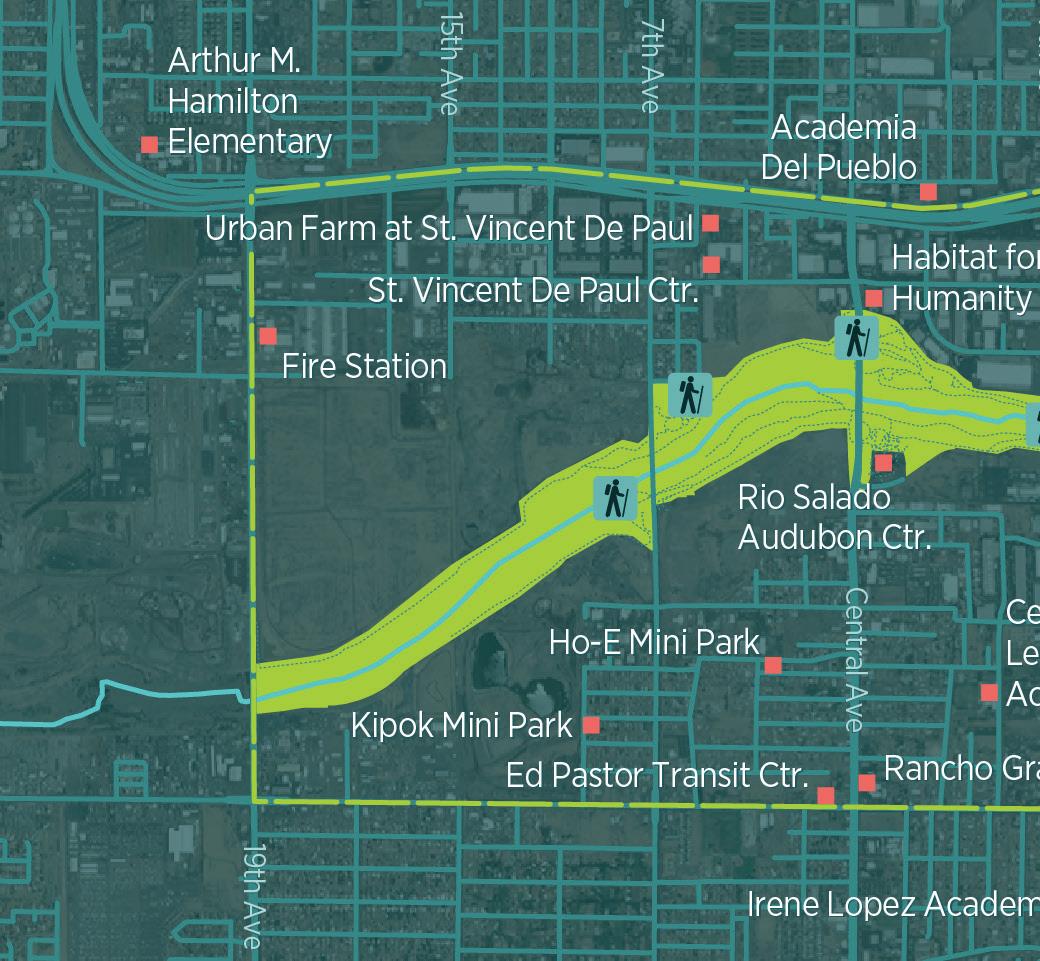
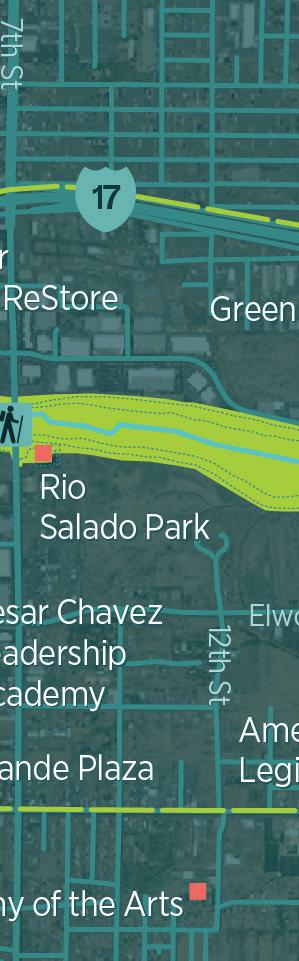
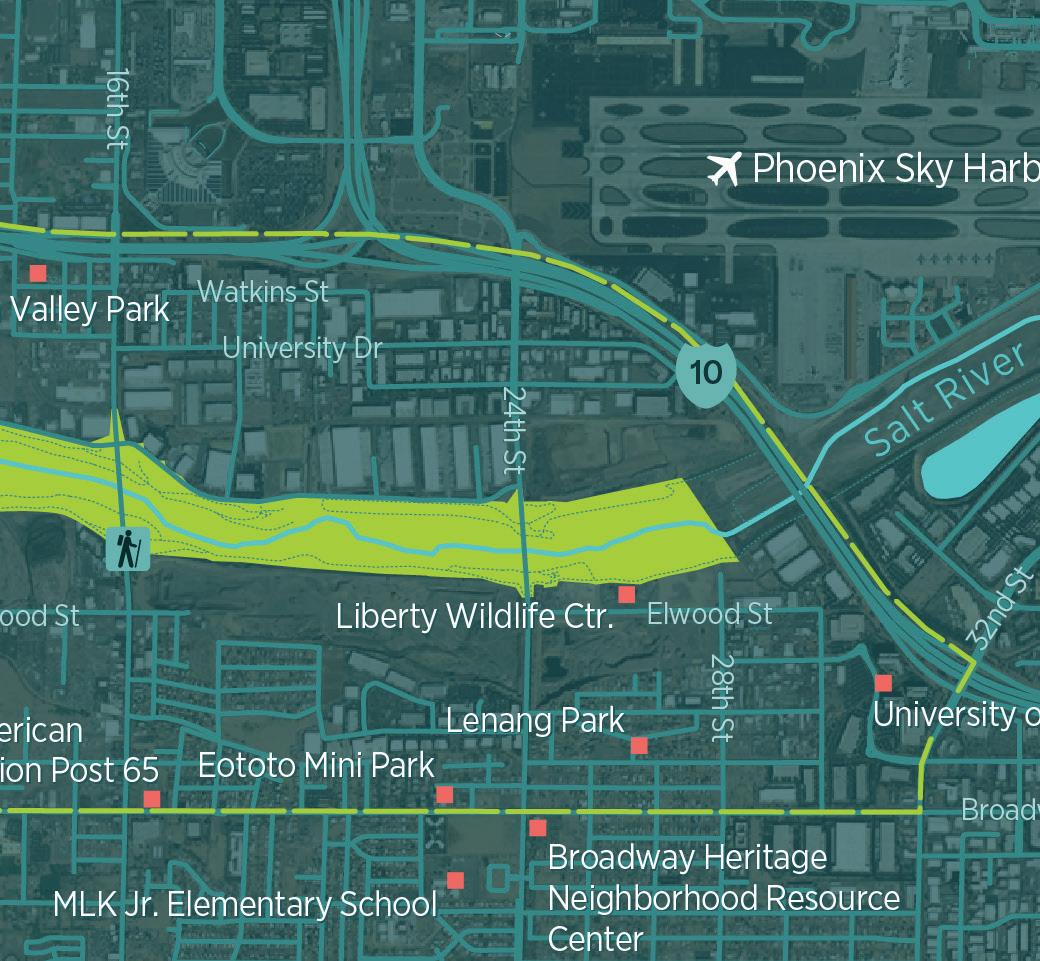
The Rio Salado District Policy Plan presents a renewed vision for transforming the area along and beyond the banks of the RSHRA, building on the foundation of prior efforts, including the Rio Salado Beyond the Banks Area Plan (2003).
The Rio Salado District Policy Plan provides a robust plan that respects the existing neighborhoods and restored ecosystem, while delivering a tailored approach that will guide development in alignment with the community vision for the study area.
Source: Bloomberg Philanthropies
The Rio Salado District Policy Plan relies and builds upon numerous planning efforts undertaken by the City. Some of the plans were adopted decades ago, while some are more recent. Below is a non-exhaustive list of these foundational plans:
As the city’s long-range policy guide, the General Plan sets overarching principles around livability, opportunity, and connectivity. Its emphasis on growing smarter, building a connected city, and strengthening neighborhoods is carried forward in the Rio Salado District Policy Plan.

• 2025 Climate Action Plan
• 2024 Shade Phoenix Plan
• Active Transportation Plan (2023)
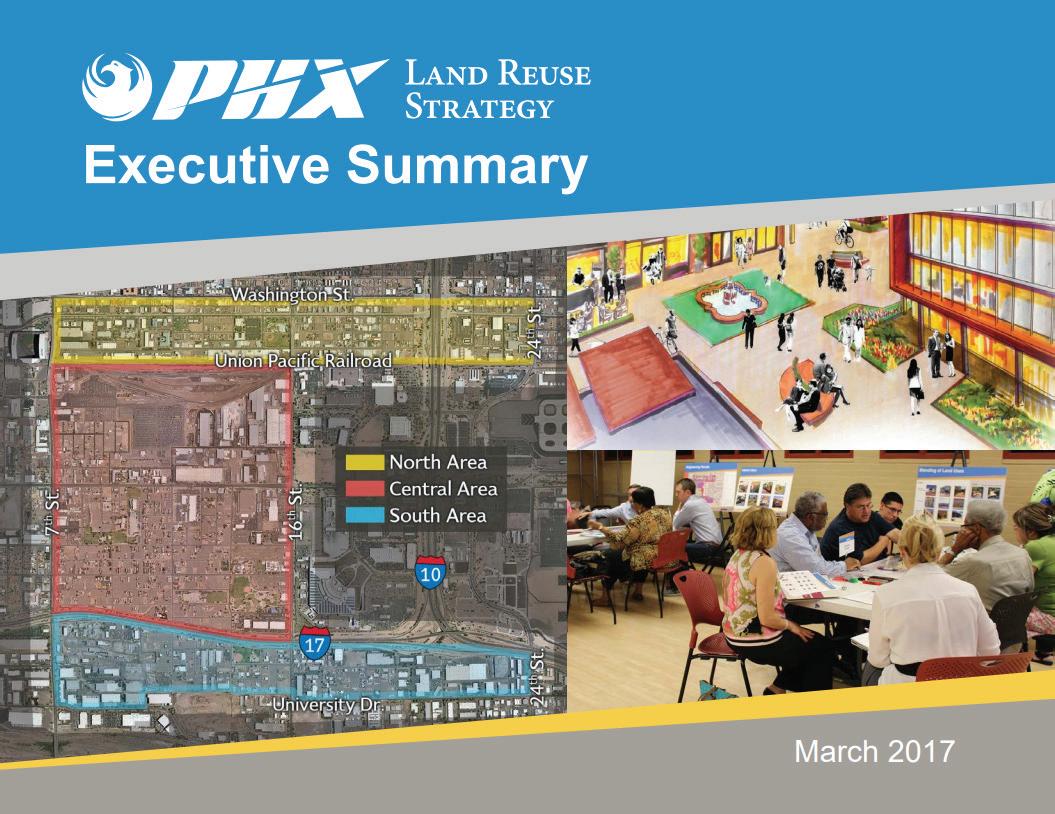
• PHX Land Reuse Strategy (2020)
• Target Area B Redevelopment Plan (1980, Rev. 2016)
• Del Rio Area Brownfields Plan (2012)
• Village Character Plans (2018 and 2021)
• Rio Montaña Area Plan (2000)
• South Phoenix Village Redevelopment Area Plan (2001)
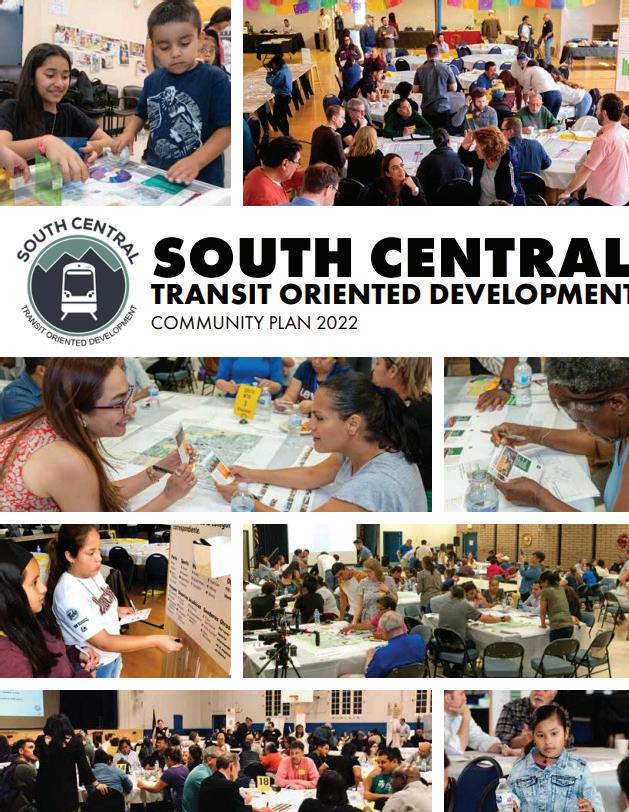
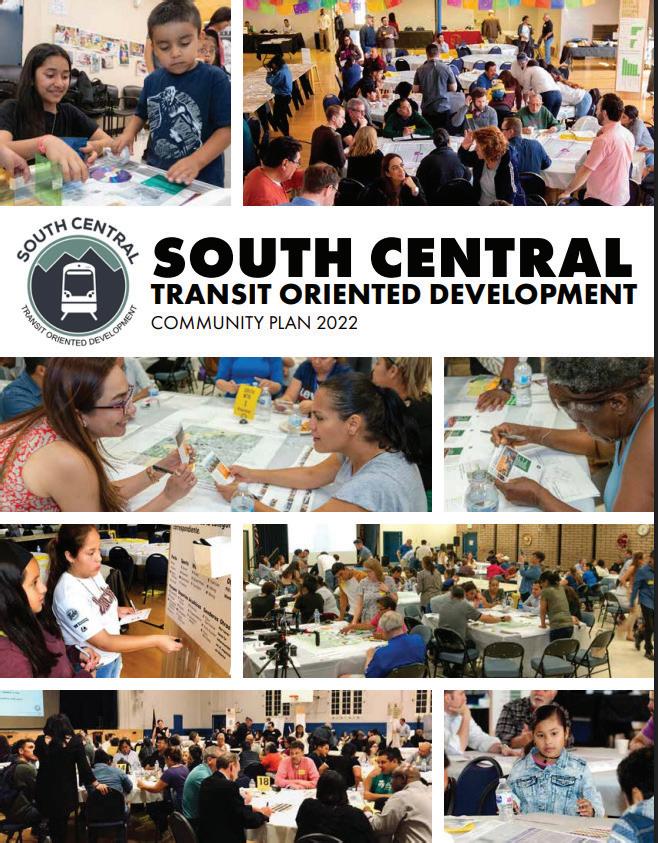
The South Central Transit Oriented Development (SCTOD) Community Plan was adopted in 2022 and provides a guide for transforming the South Central Corridor communities into walkable transit-oriented communities. The plan describes the history of the area, the multi-year public engagement process, implementation strategies and five-year action plans to achieve the vision.



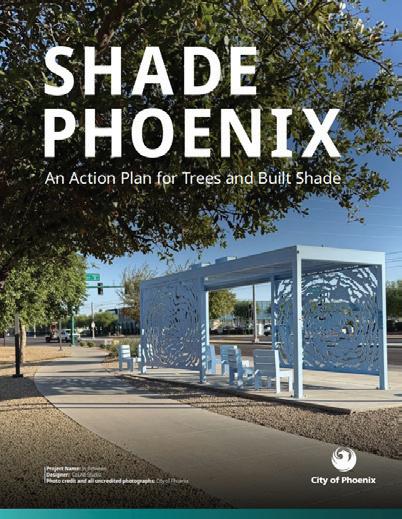

Other Relevant Plans (Continued)
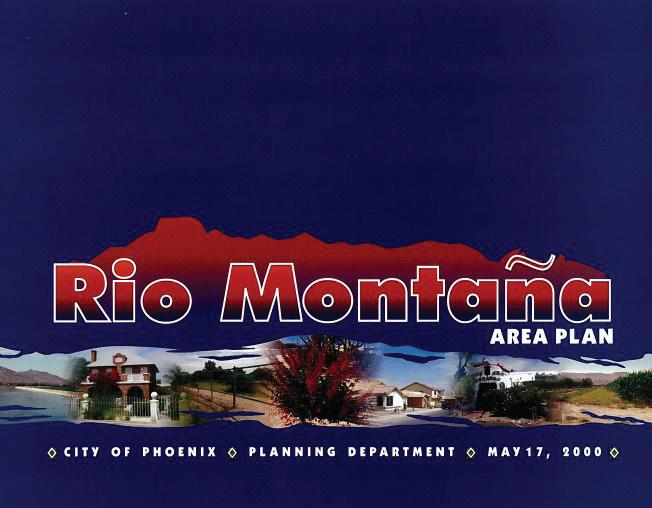

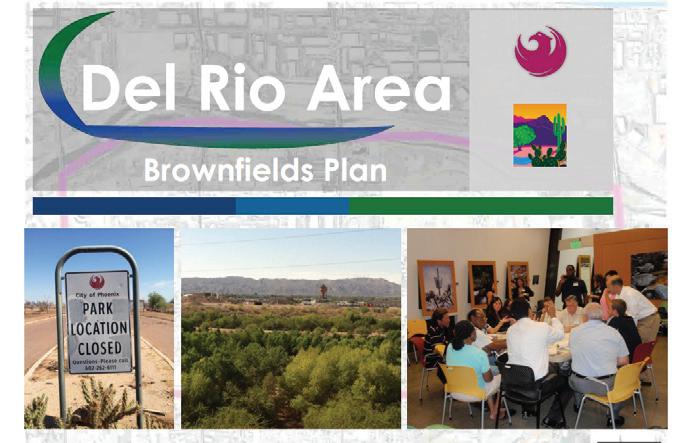

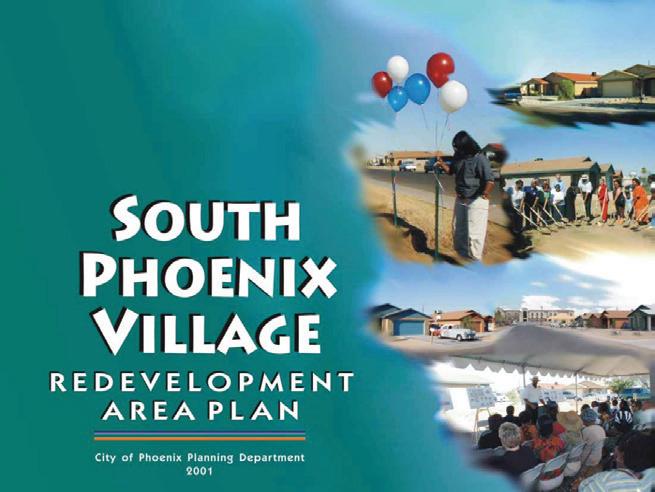

Other Department Plans and Initiatives








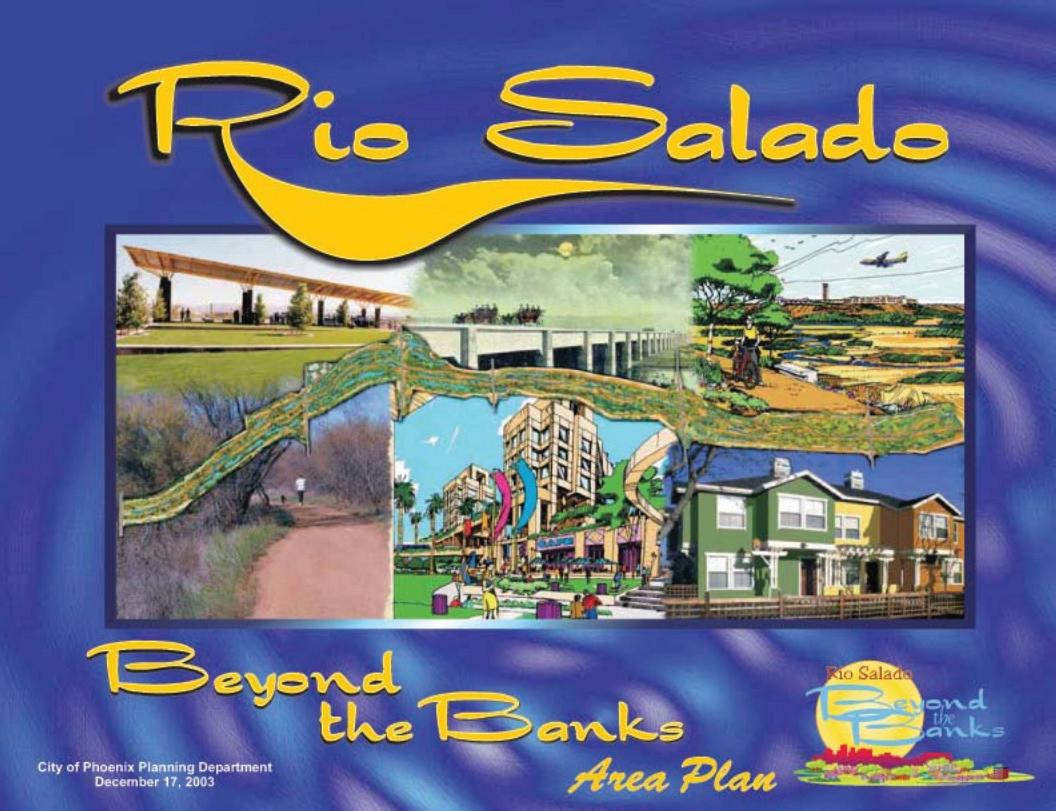
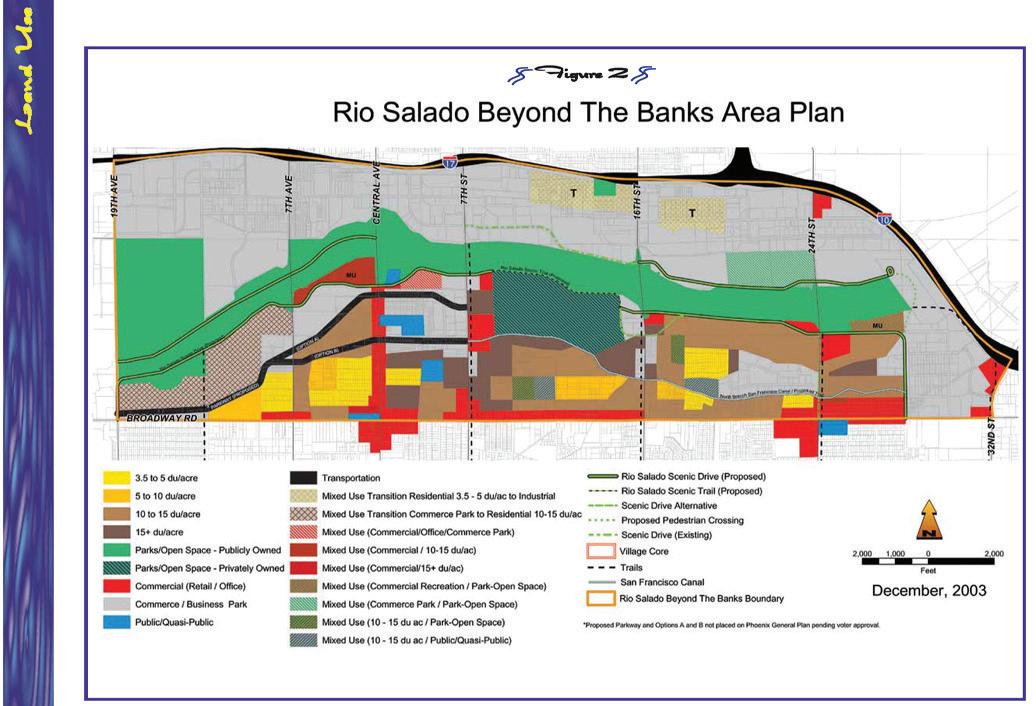
In early 2000, a 25-member Rio Salado Advisory Committee was appointed, and began with a series of six public workshops, and 37 public meetings were held to discuss land use preferences and to gain input from area residents. This led to the creation of the Rio Salado Beyond the Banks Area Plan, adopted by the Phoenix City Council in 2003. The area plan identified goals and policies to guide development decisions along and beyond the banks of the RSHRA. To date, this plan continues to be a source of information and guides land use decisions.
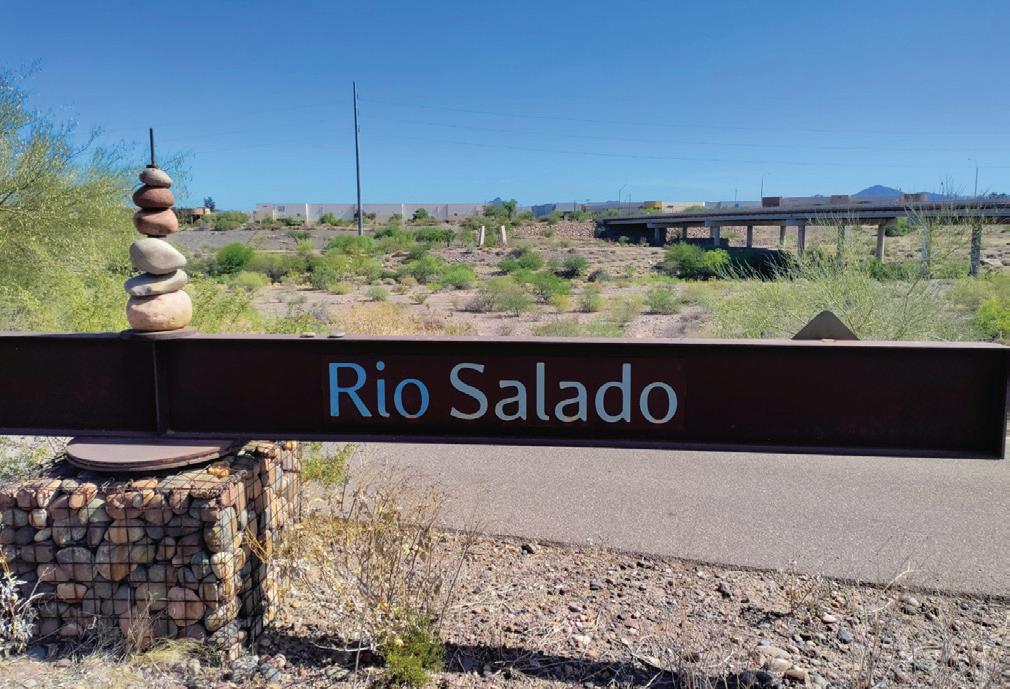
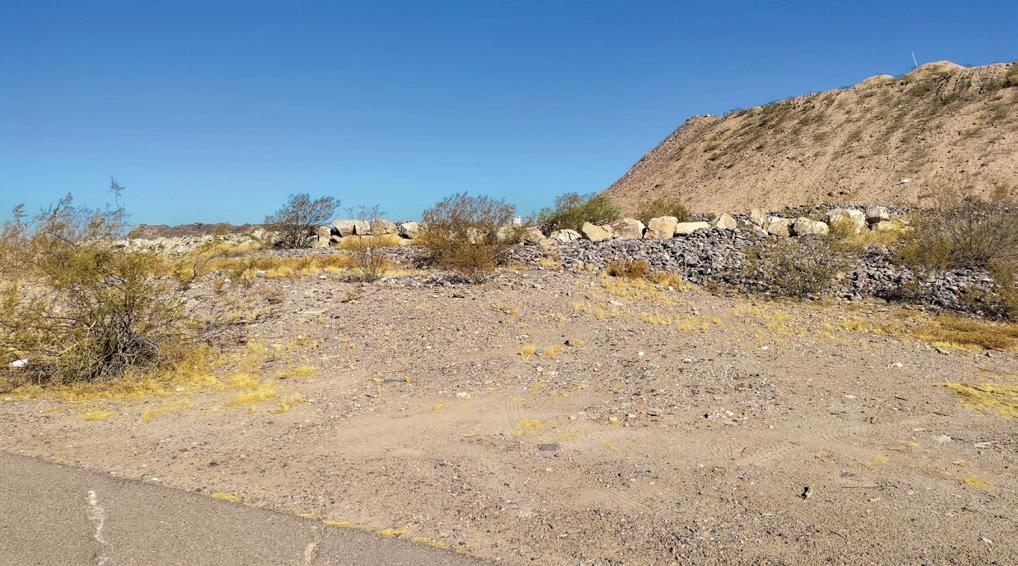
Construction of trails along Habitat Restoration Area (photo to the left) (Goal 2.A), which allow community members and beyond to access this great natural amenity.
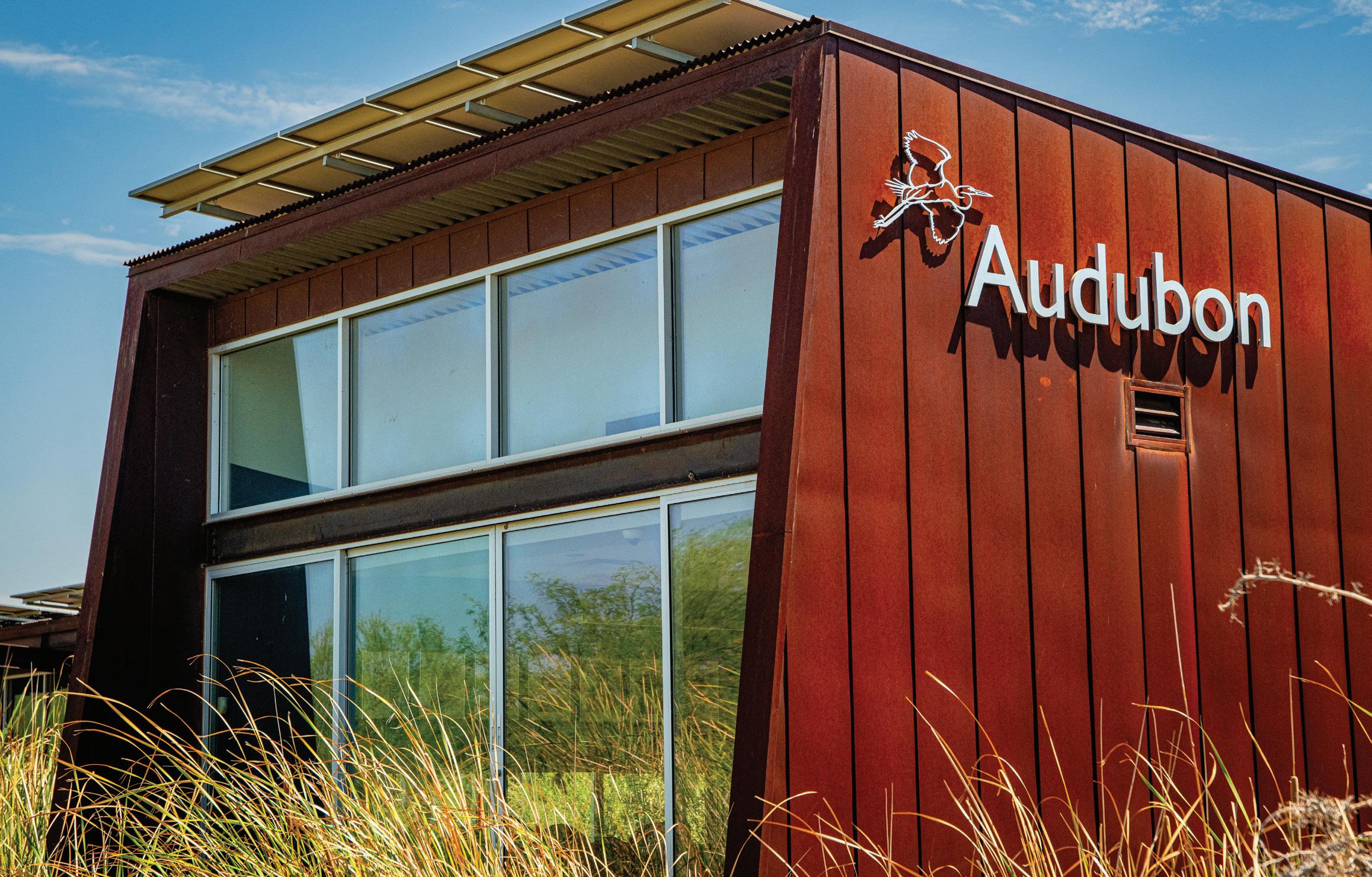
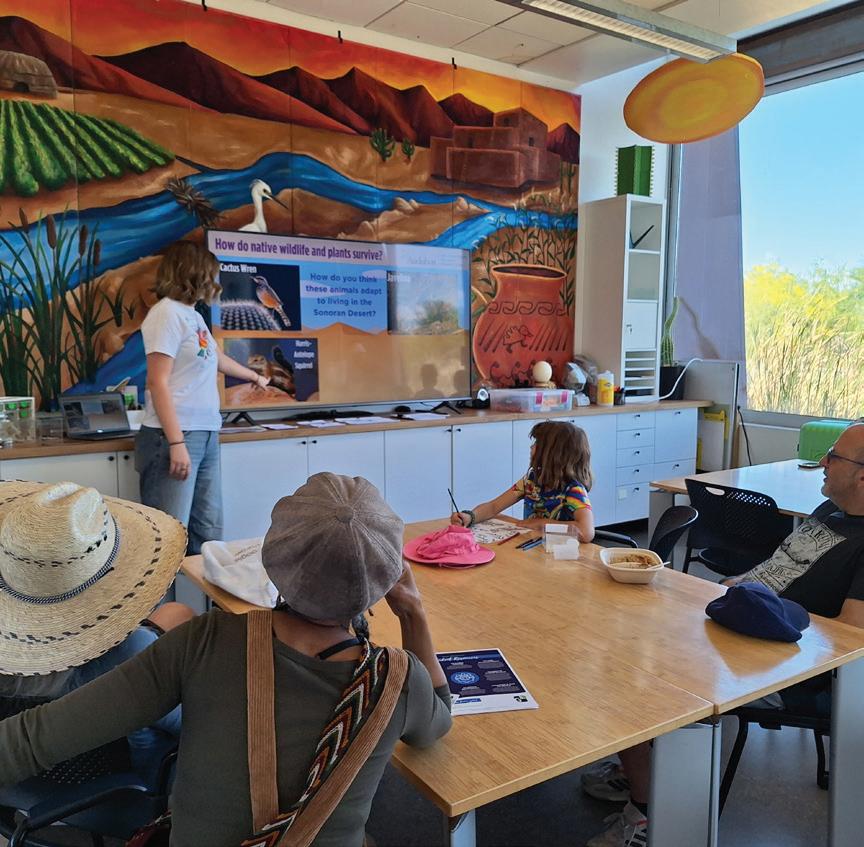
Completion of the Nina Mason Pulliam Rio Salado Audubon Center (top photo), which opened in 2009 to serve as a nature education center and event venue. This site is integrated with the light rail station and gateway along Central Avenue, public trails, and the Rio Salado Scenic Drive (Goal 2.B).
Several plan goals and priorities were achieved including:
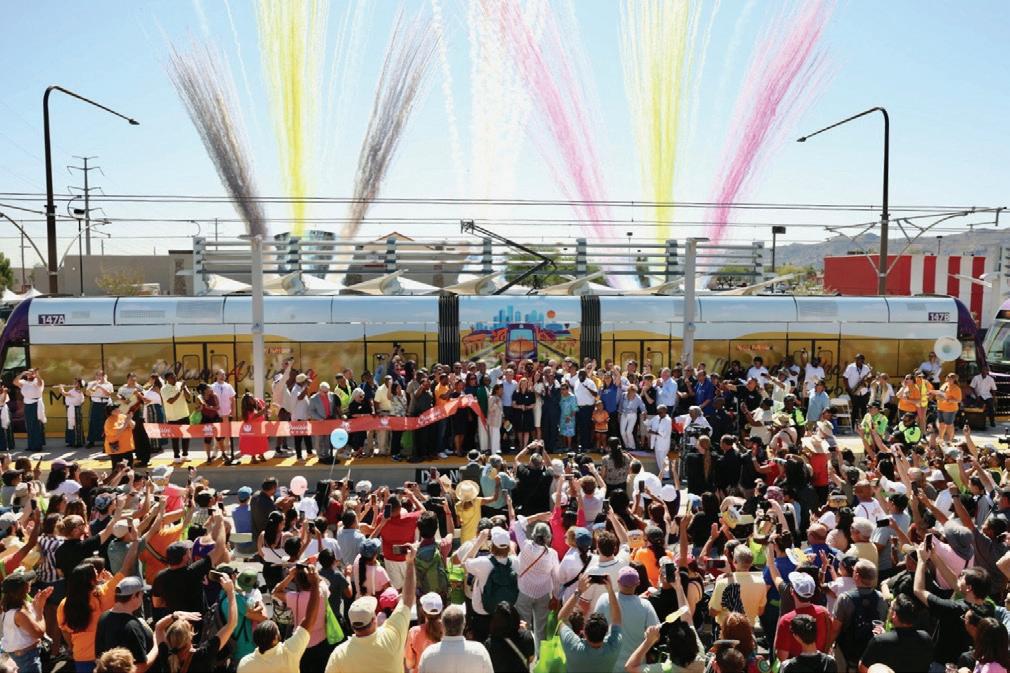
Source: Valley Metro
Adoption of Rio Salado Beyond the Banks Area Plan and amendment of the General Plan (Priority 1) which City Council approved in 2003 along with the adoption of the Rio Salado Interim Overlay District (Goal 1.G), Section 626 of the City of Phoenix Zoning Ordinance, to help guide development in the Beyond the Banks area.
Connecting the Habitat Restoration Area to other parts of the city via public transit (Goal 5.B), which in addition to traditional bus stops now includes a direct connection to the regional light rail system with the light rail station at Pioneer Street and Central Avenue.
Seeking and utilizing brownfield redevelopment funds (Goal 6.C) to clean up pollution and rehabilitate land for future development, such as the Del Rio Landfill, now the site for the proposed Arizona Fresh Agri-Food Innovation Center.
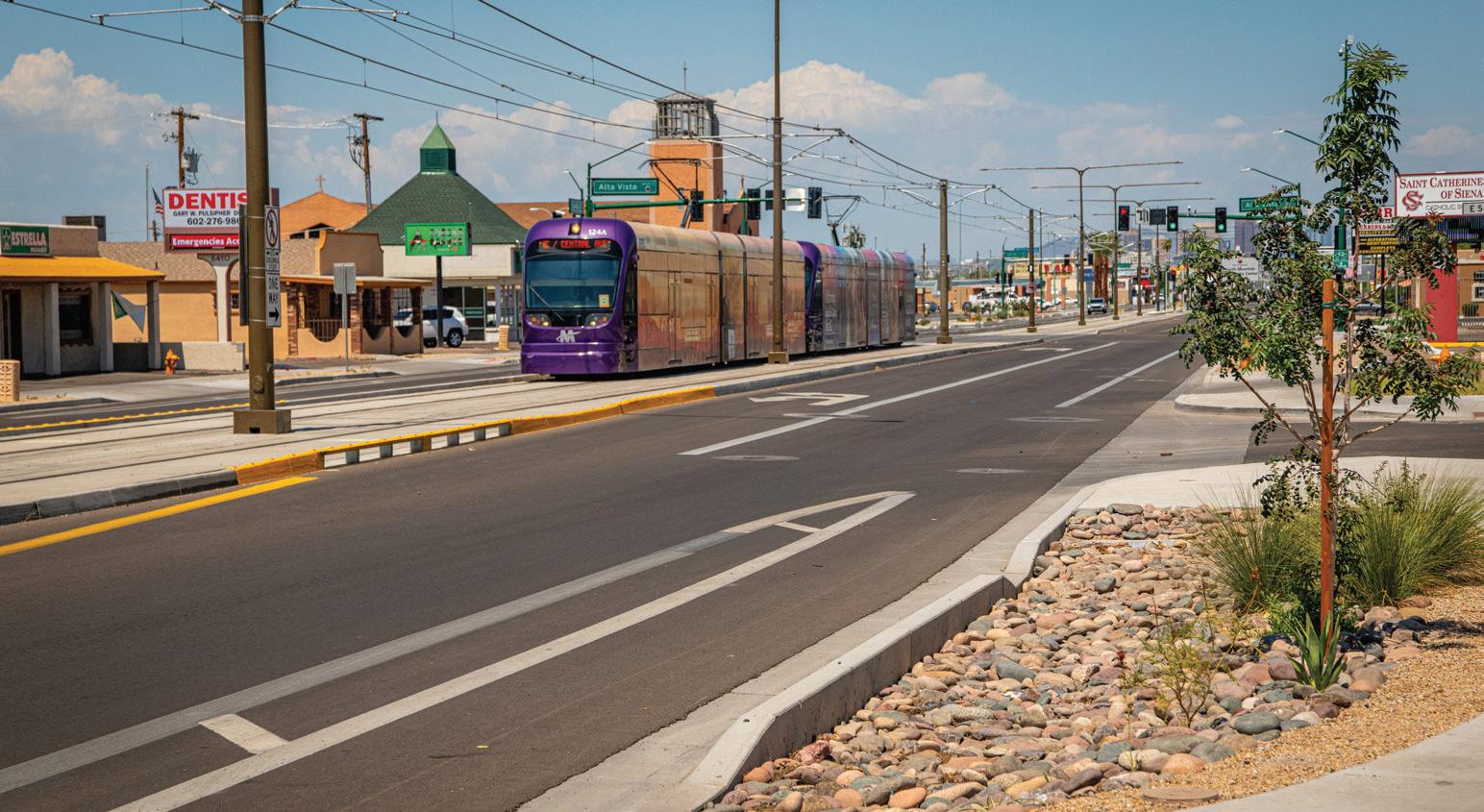
Pedestrian and streetscape improvements to South Central Avenue (Priority 15), which the South Central light rail extension did much to advance as part of the construction of this major infrastructure project connecting Downtown Phoenix to the the South Mountain Village.
The Rio Reimagined Project is a regional effort that includes six municipalities, two tribal communities, and other entities such as Maricopa County and Salt River Project (SRP), that were convened in 2018 by Arizona State Unviersity (ASU) to sign a statement of intent. The Rio Salado District Policy Plan builds upon these principles and shared vision for the Rio Salado corridor.
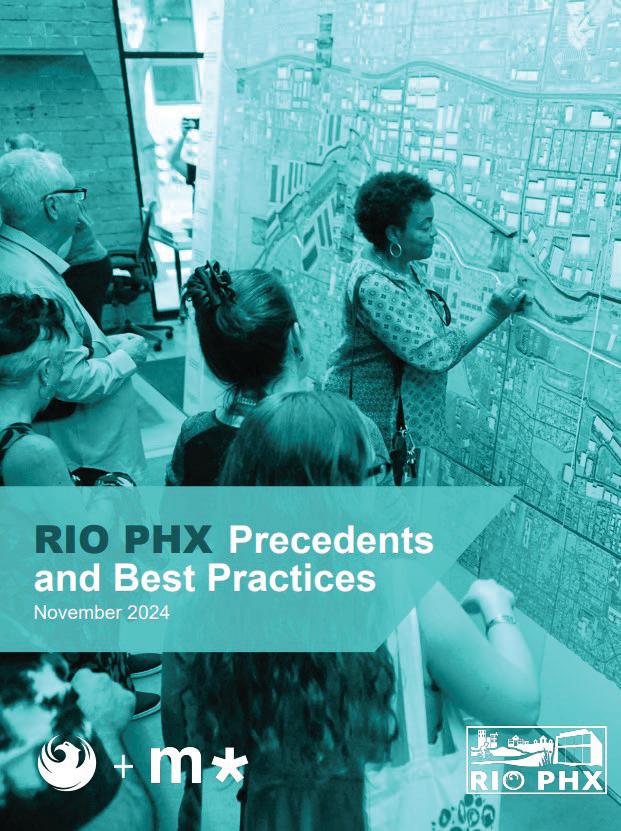
RIO PHX is a collaborative effort by the City of Phoenix and various business and community stakeholders to create a series of land use policy plans to help promote the Rio Salado corridor as a local and regional destination that attracts positive investment for the benefit of businesses, residents, and tourists. The Rio Salado District Policy Plan is the first policy plan under the RIO PHX initiative that will cover the 20-mile stretch of the river across the city, and establish a framework that is centered around people, nature, and the built environment.
Reconnecting people to the Rio Salado and improving the well-being of communities along this river corridor is critical to realizing the vision of the Rio Salado District.
Great respect must be paid to the river and its history as a life source, past and present. This district plan does not direct but builds on the success of previous and ongoing river restoration projects, promoting sustainable development to ensure ecological health of the river and prosperity of adjacent communities.
Integrating and designing the built environment to coexist with nature and neighborhoods is a key goal of this policy plan; while improving the quality of life for the area, attracting positive development, and increasing economic prosperity.
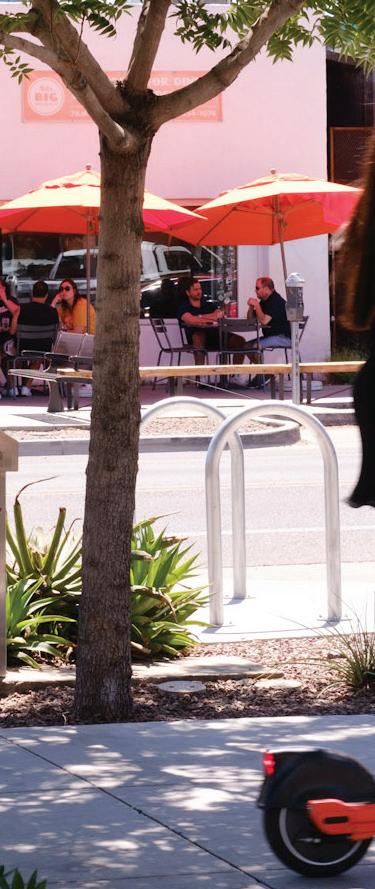

As a result of many years of research and community engagement, plus adoption of Transit Oriented Development (TOD) policy plans and the Walkable Urban Code, the Reinvent PHX TOD Strategic Policy Framework was adopted in 2012 and identifies TOD Place Types, which correlate to land use intensities, along light rail corridors. This policy document also includes implementation policies, methods, and objectives. This framework supports the six planning element multidisciplinary process used in prior TOD district planning efforts, in addition to the Rio Salado District Policy Plan.
The Audubon Place Type
Emerging from the Reinvent PHX Strategic Policy Framework, the Audubon Place Type located just south of Central Avenue and the Rio Salado (along the Pioneer Street light rail station) is an adopted place type that has modified policies and performance measures based on the Medium Urban Center place type. Two tiers identify the policies and performance measures for development to achieve 6 stories, up to 10 stories, if certain amenities such as open space, enhanced site design, and pedestrian access are provided.
As part of the adopted 2025 Phoenix General Plan, the Planning and Development Department is working with the community, including the 15 Village Planning Committees across the city, to identity areas of growth and potential new place types that will inform scale and intensity across a vibrant network of cores, centers, and corridors (including the Rio Salado). This effort will inform future land use map changes to promote opportunities to live, work, and play along these target areas.
For more information on place types, please visit the 2025 Phoenix General Plan website.
Medium Urban Center:
Medium Intensity (3-6 stories, incentive up to 10 stories)
Minor Urban Center:
Medium-Low Intensity (2-5 stories, incentive up to 7 stories)
Suburban Commuter Center:
Medium-Low Intensity (2-4 stories, incentive up to 7 stories)
Neighborhood Center: Low Intensity
(2-4 stories, incentive up to 5 stories)
Emerging place type categories and associated intensities based on Reinvent PHX Strategic Policy Framework (2012, amended 2016 and 2018) and City of Phoenix General Plan 2025.
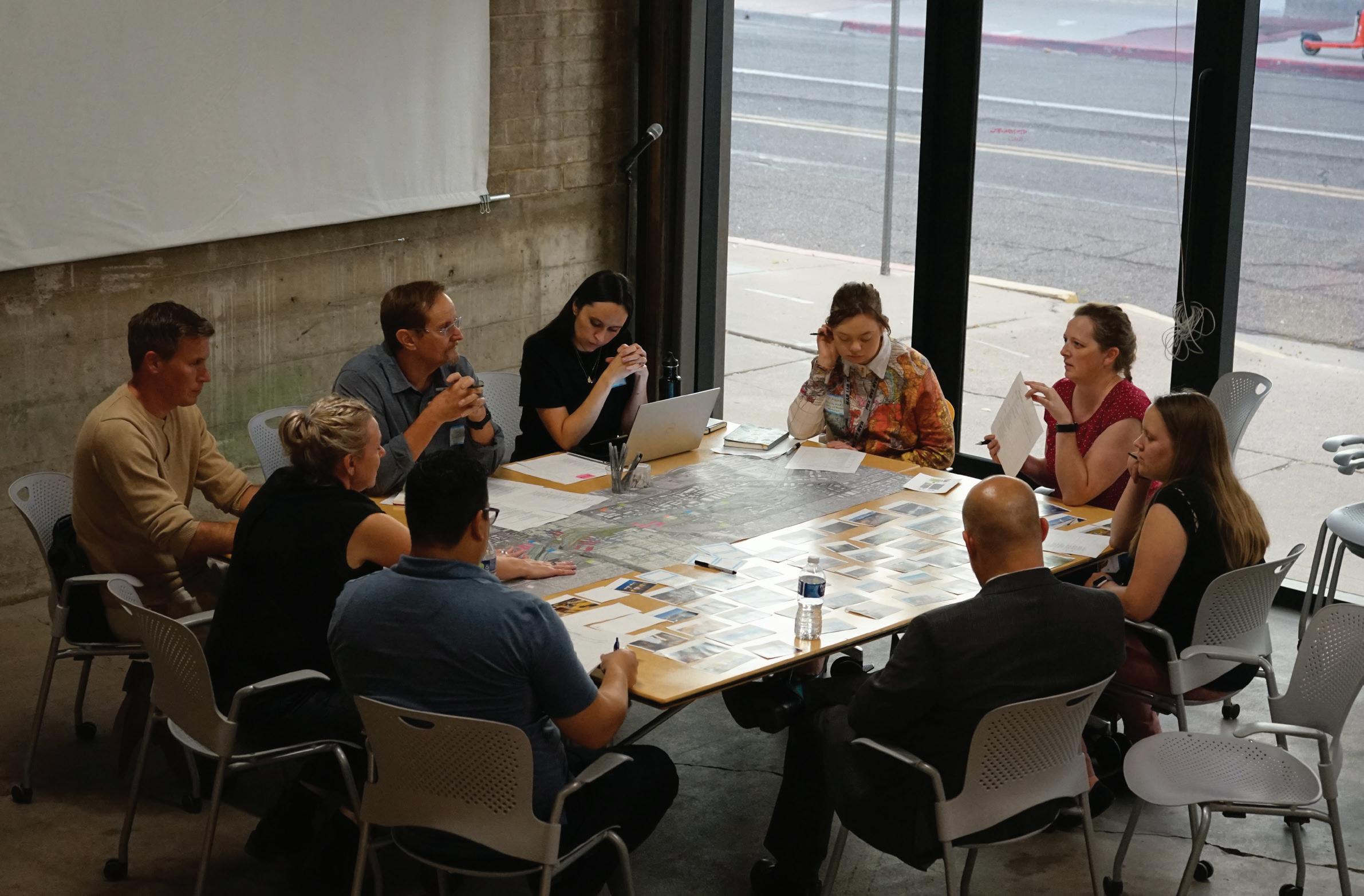
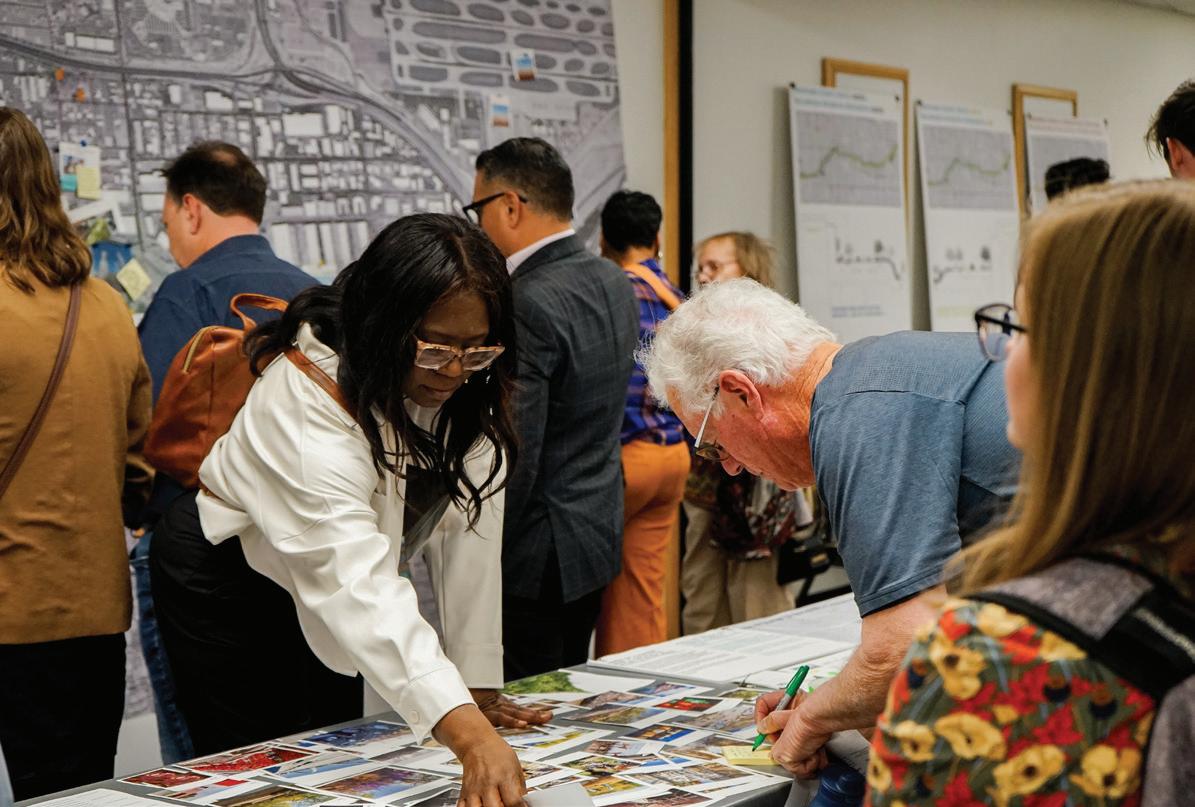
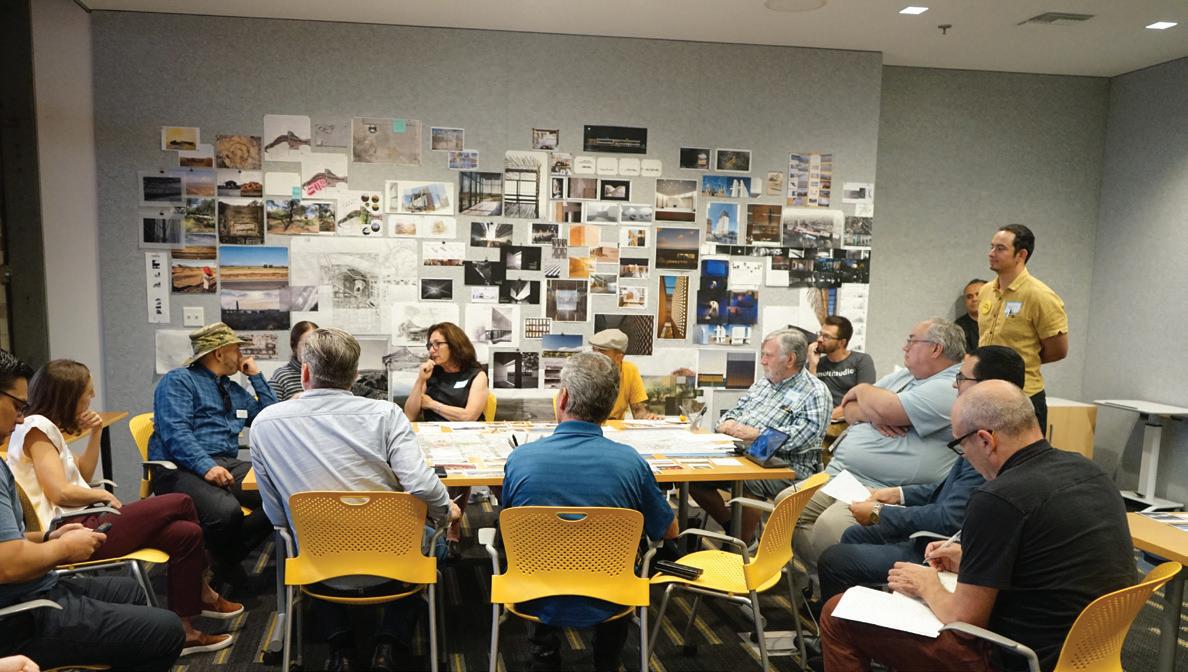
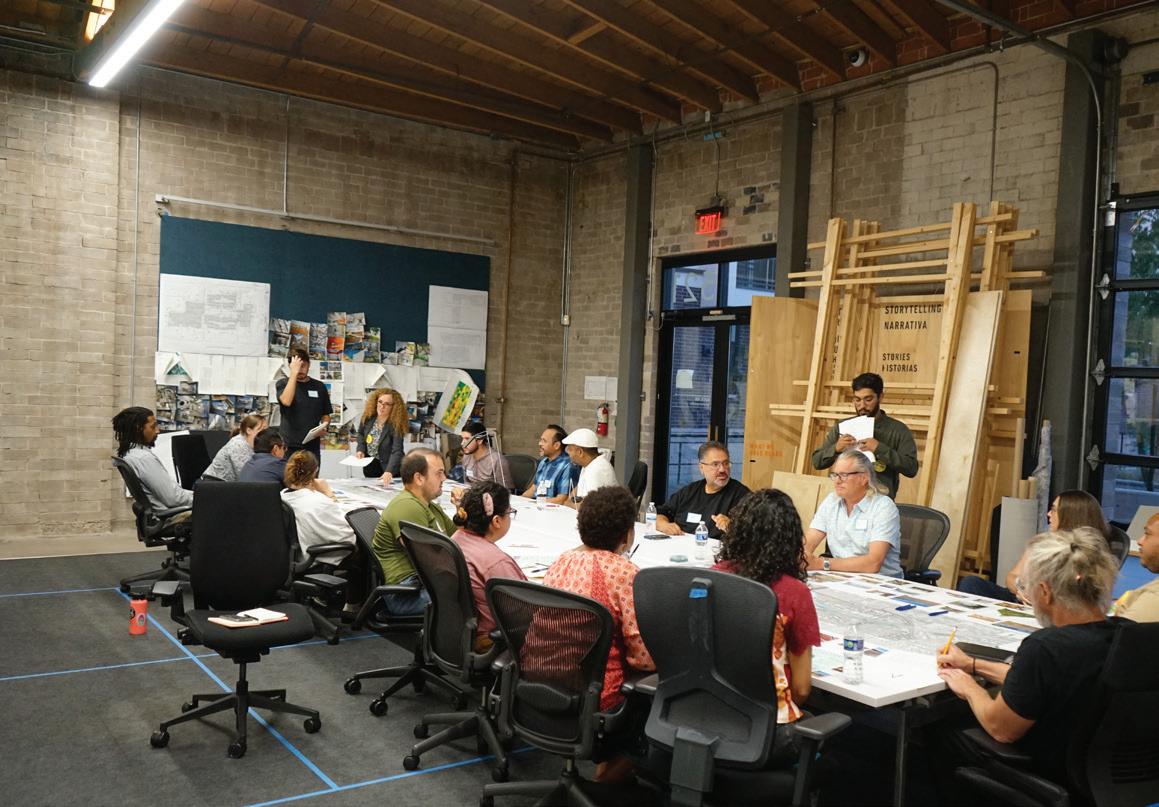
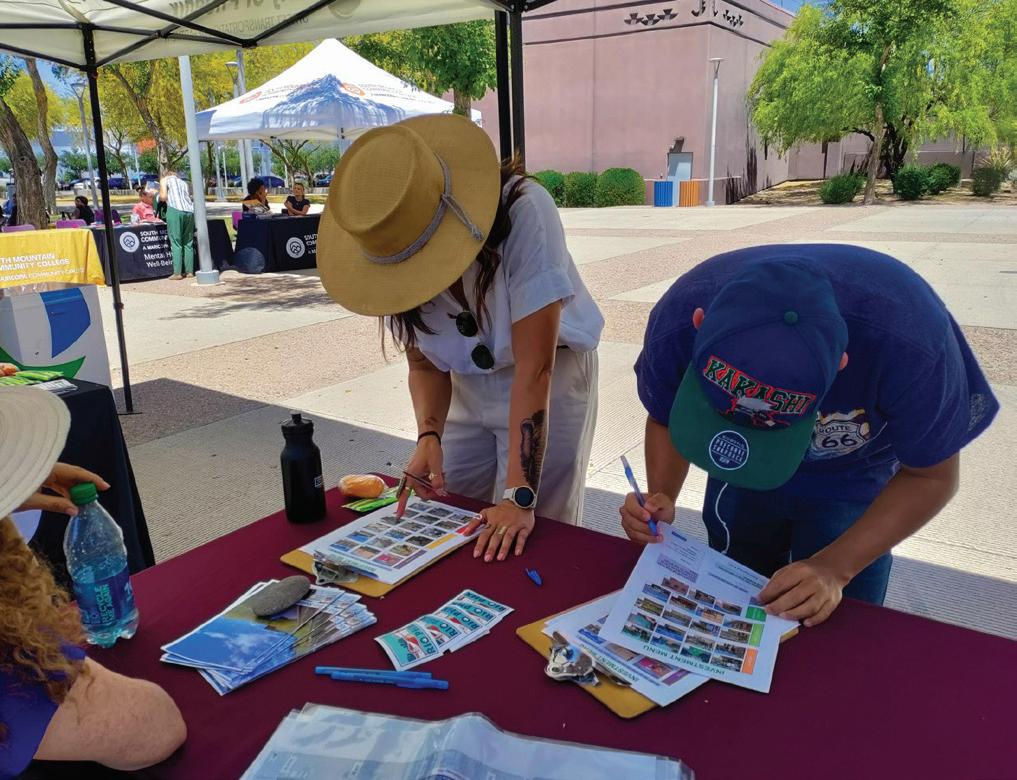
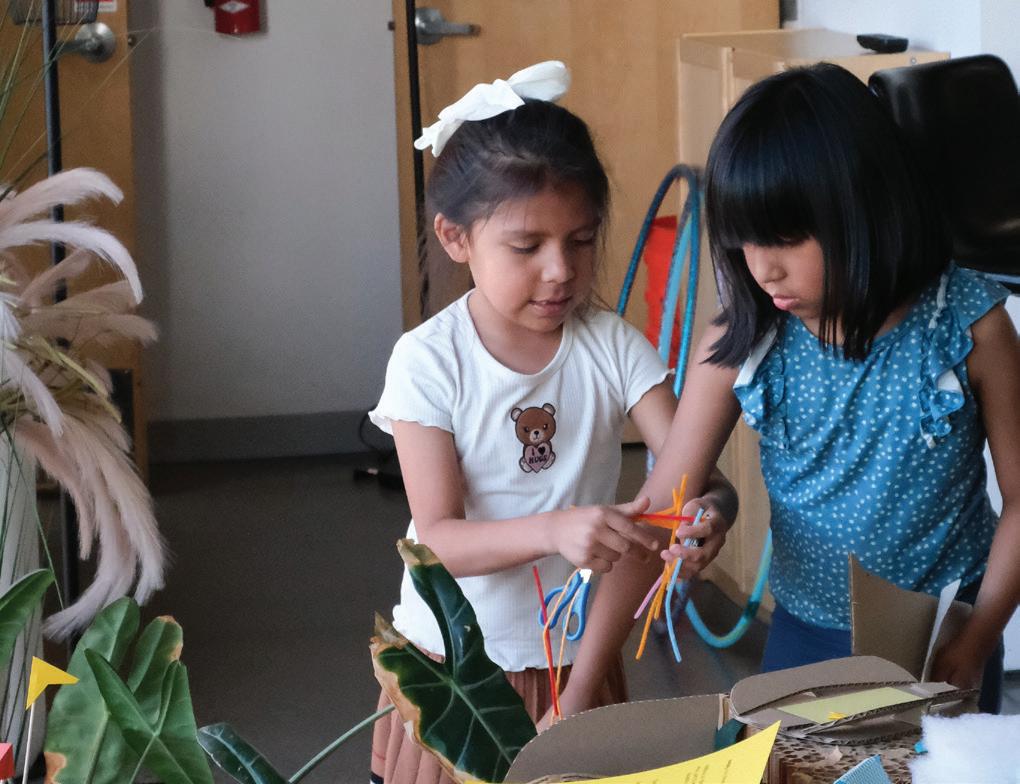
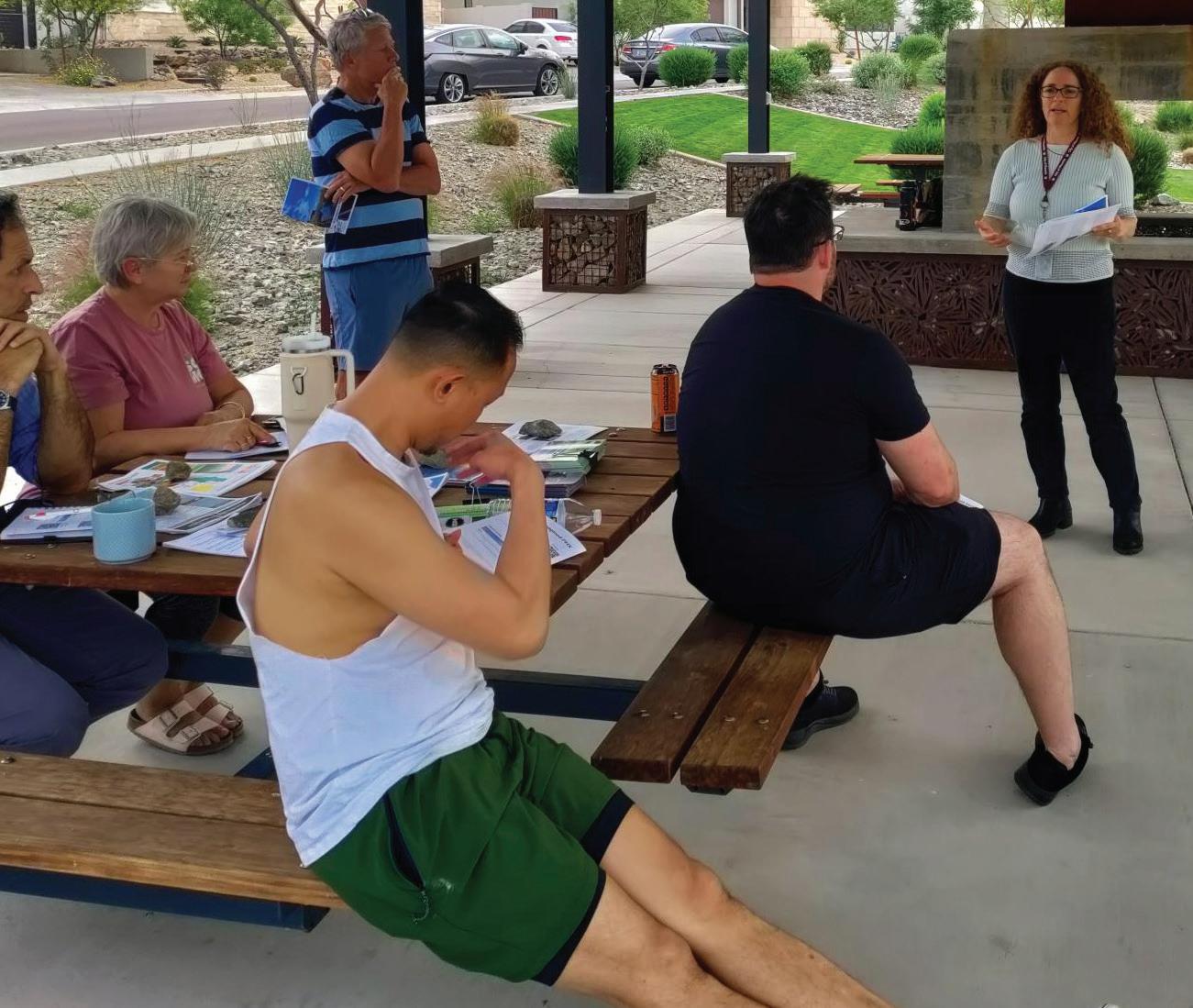
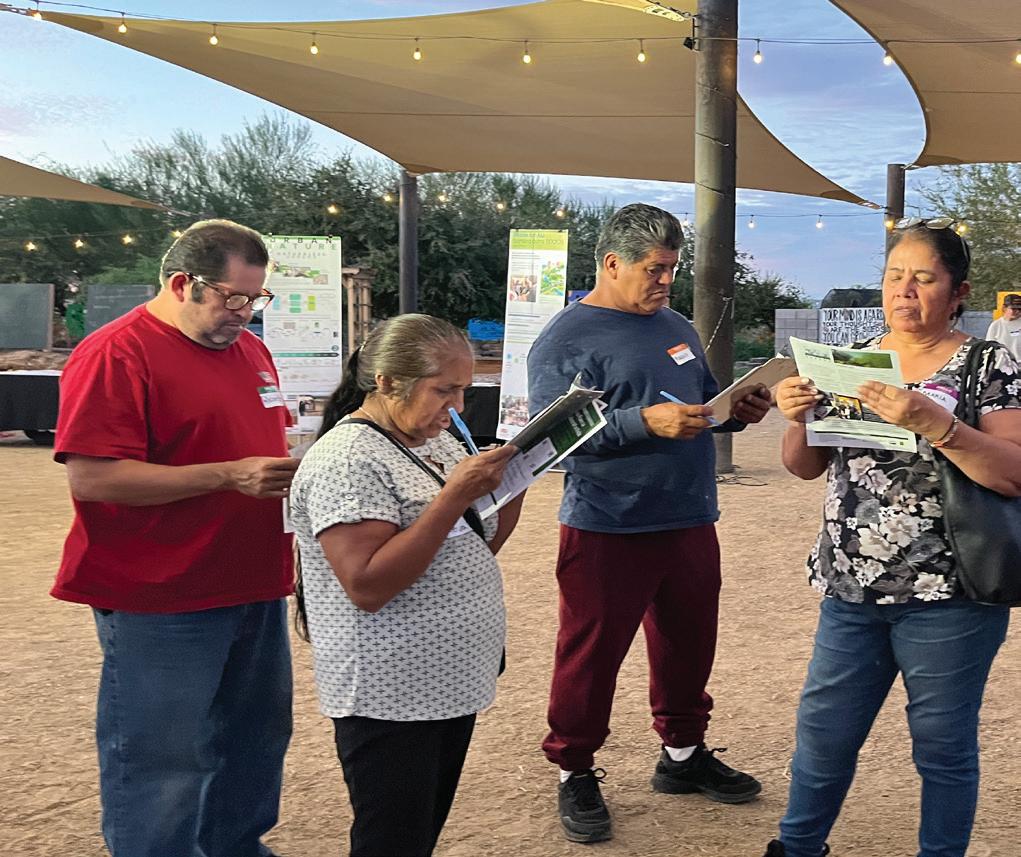
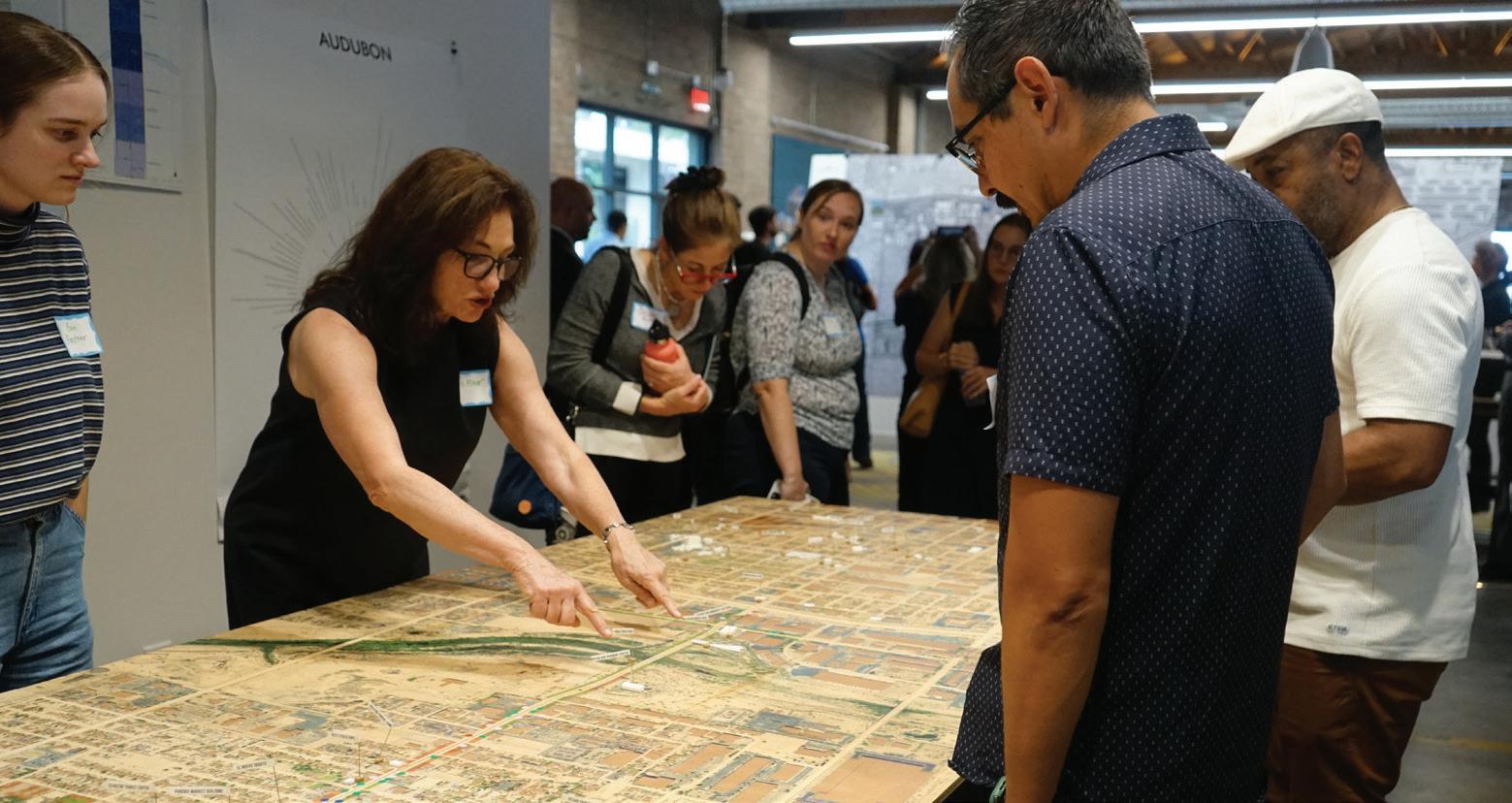
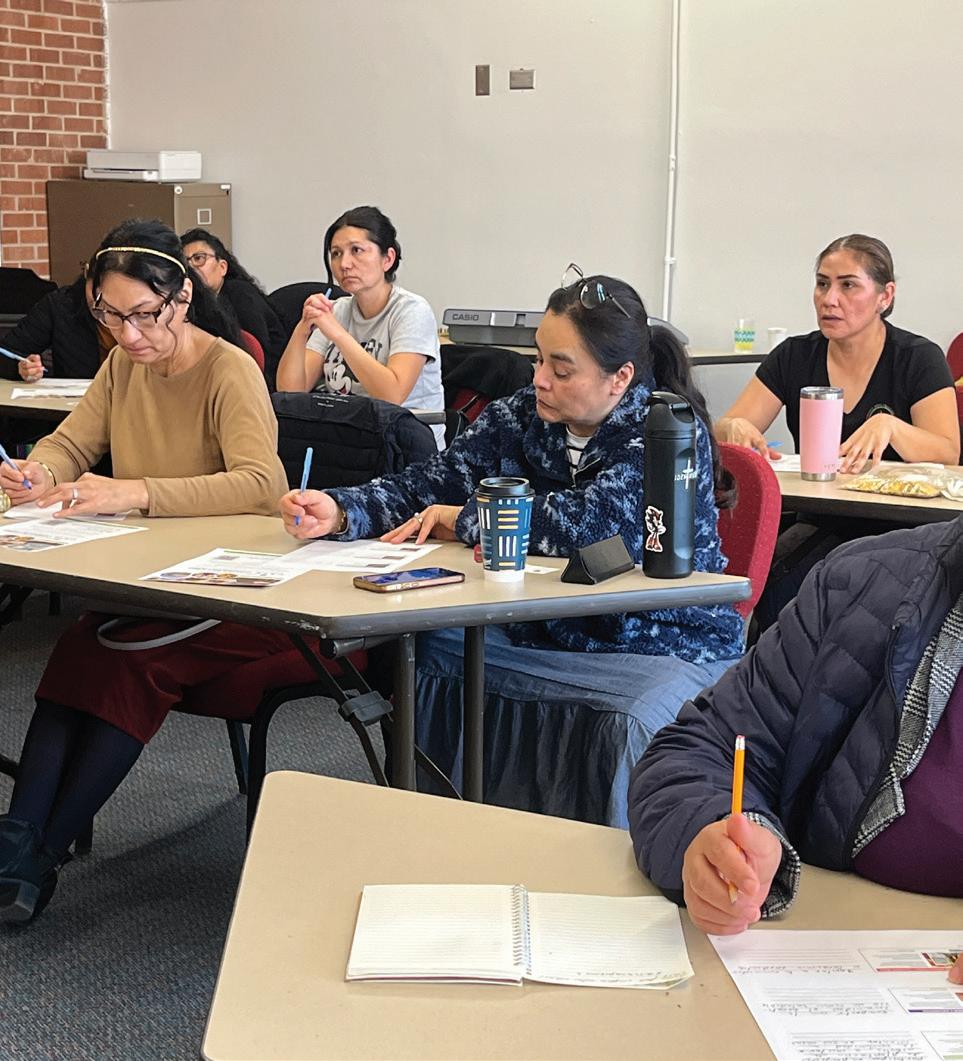
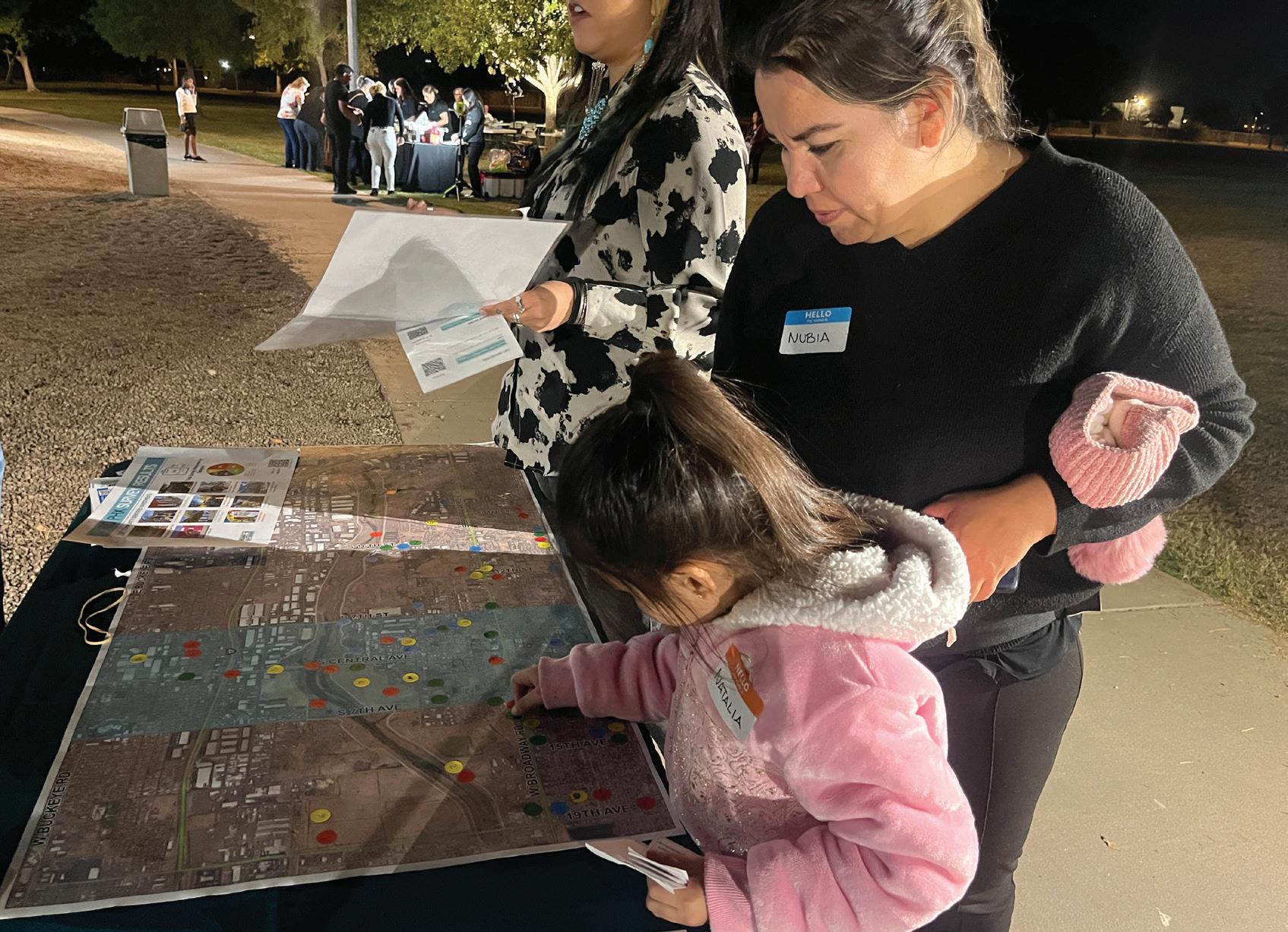
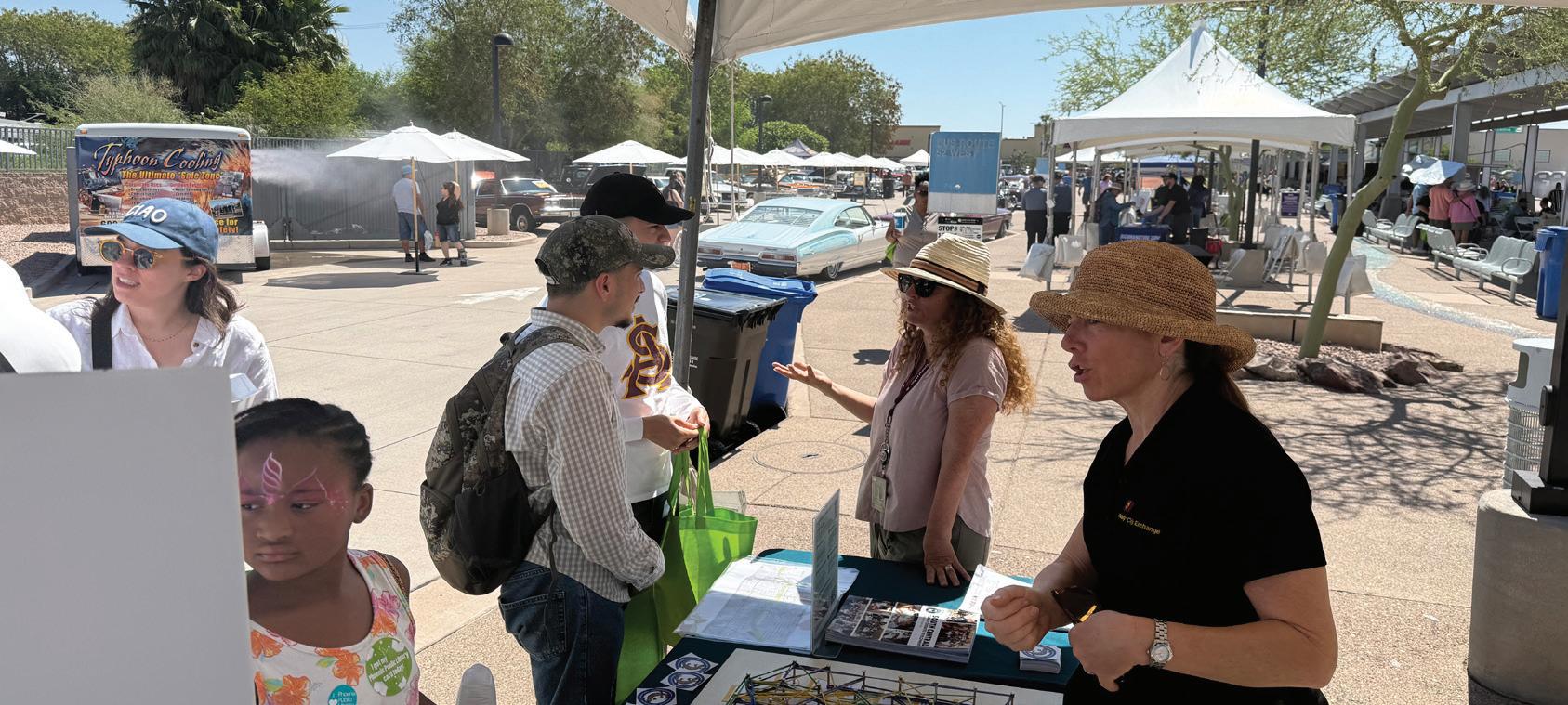
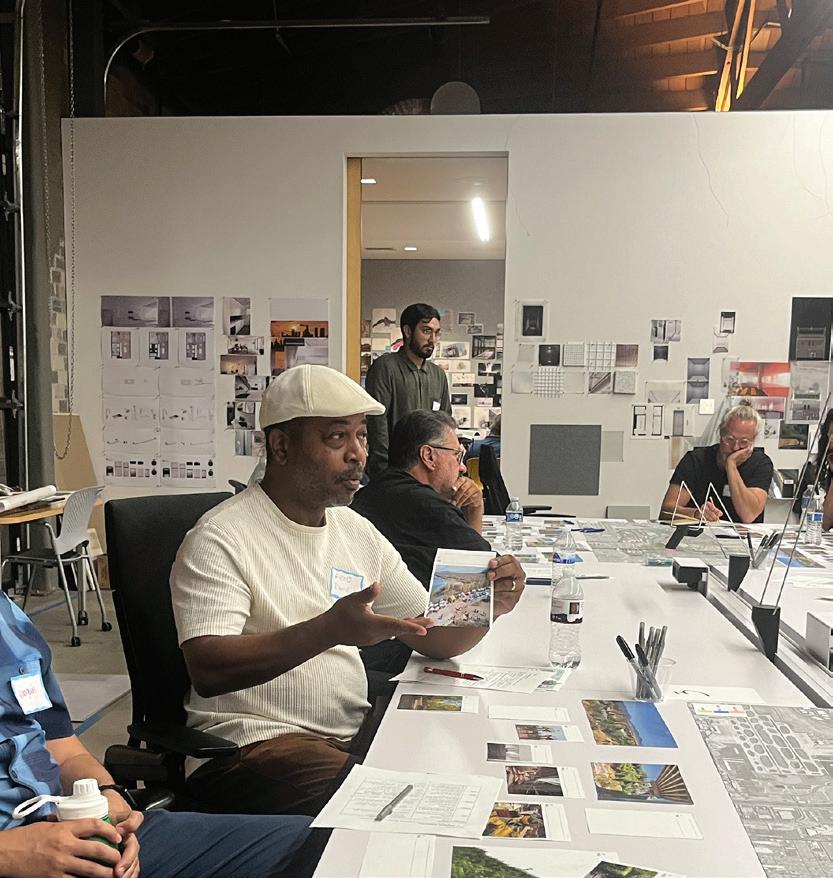
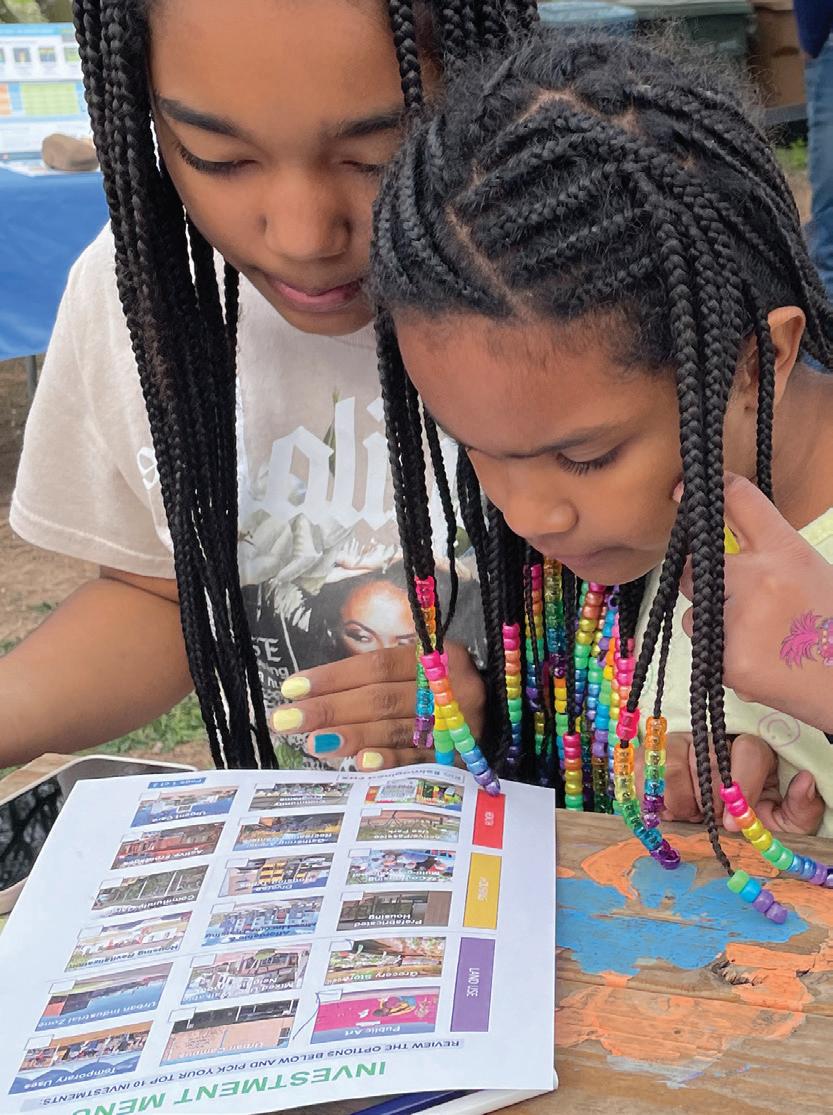
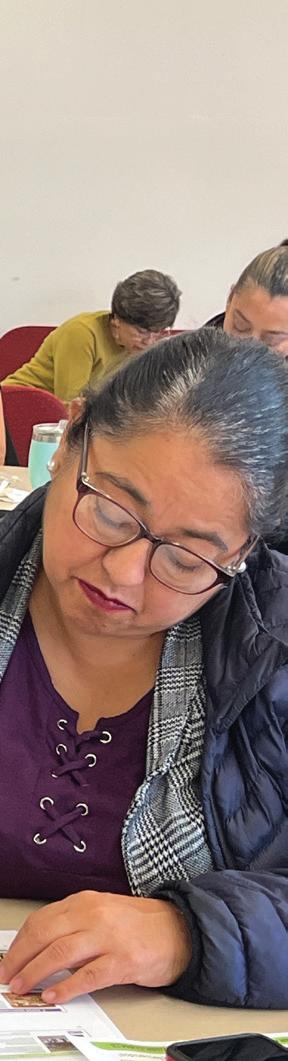
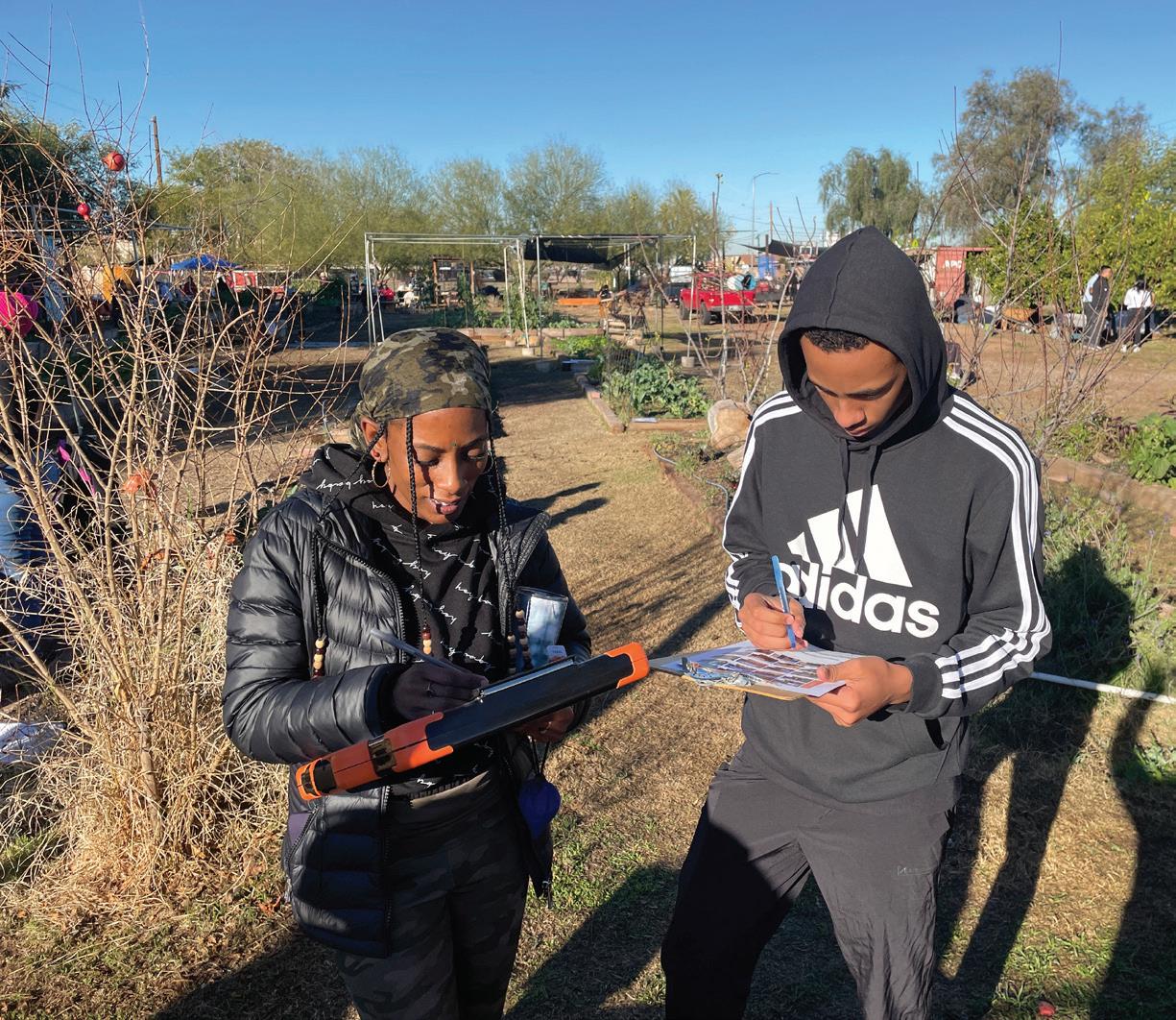
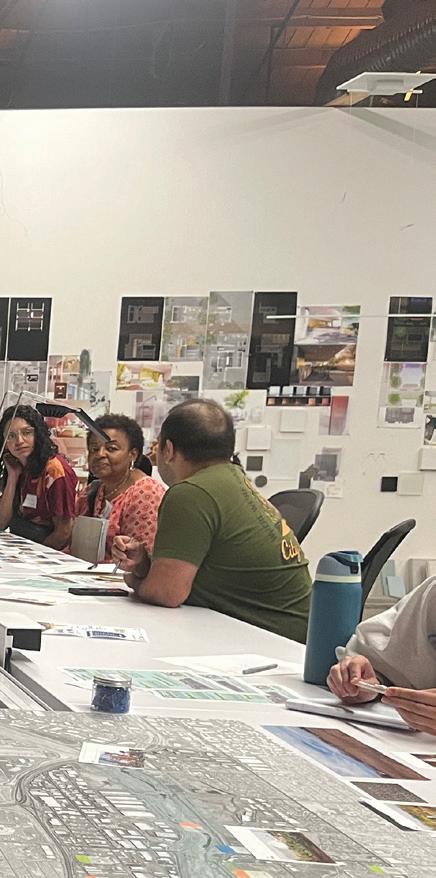
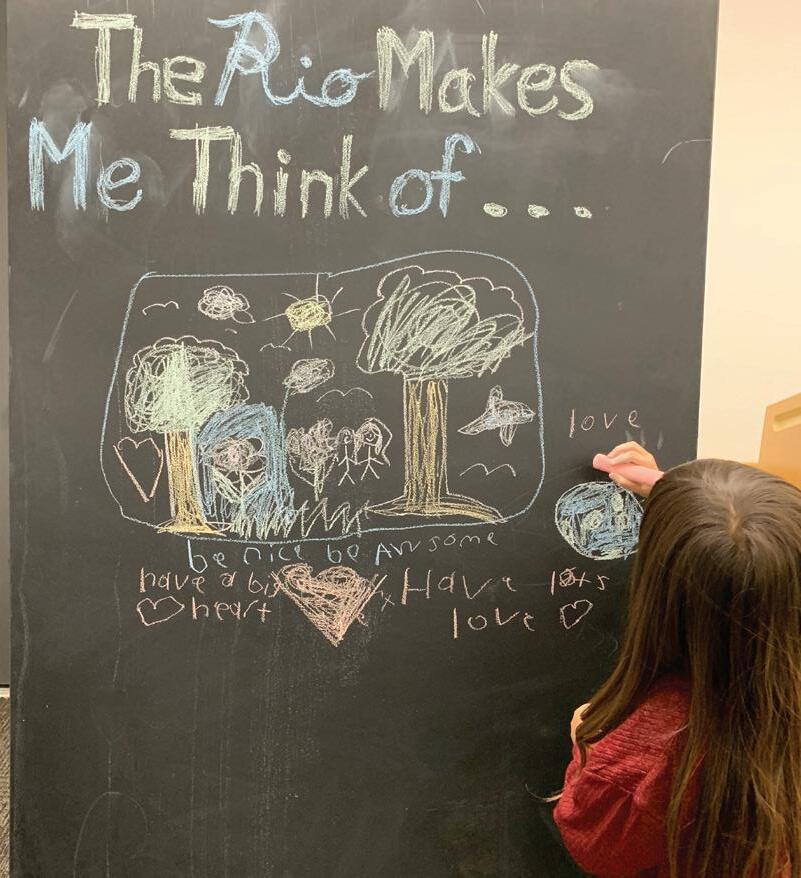
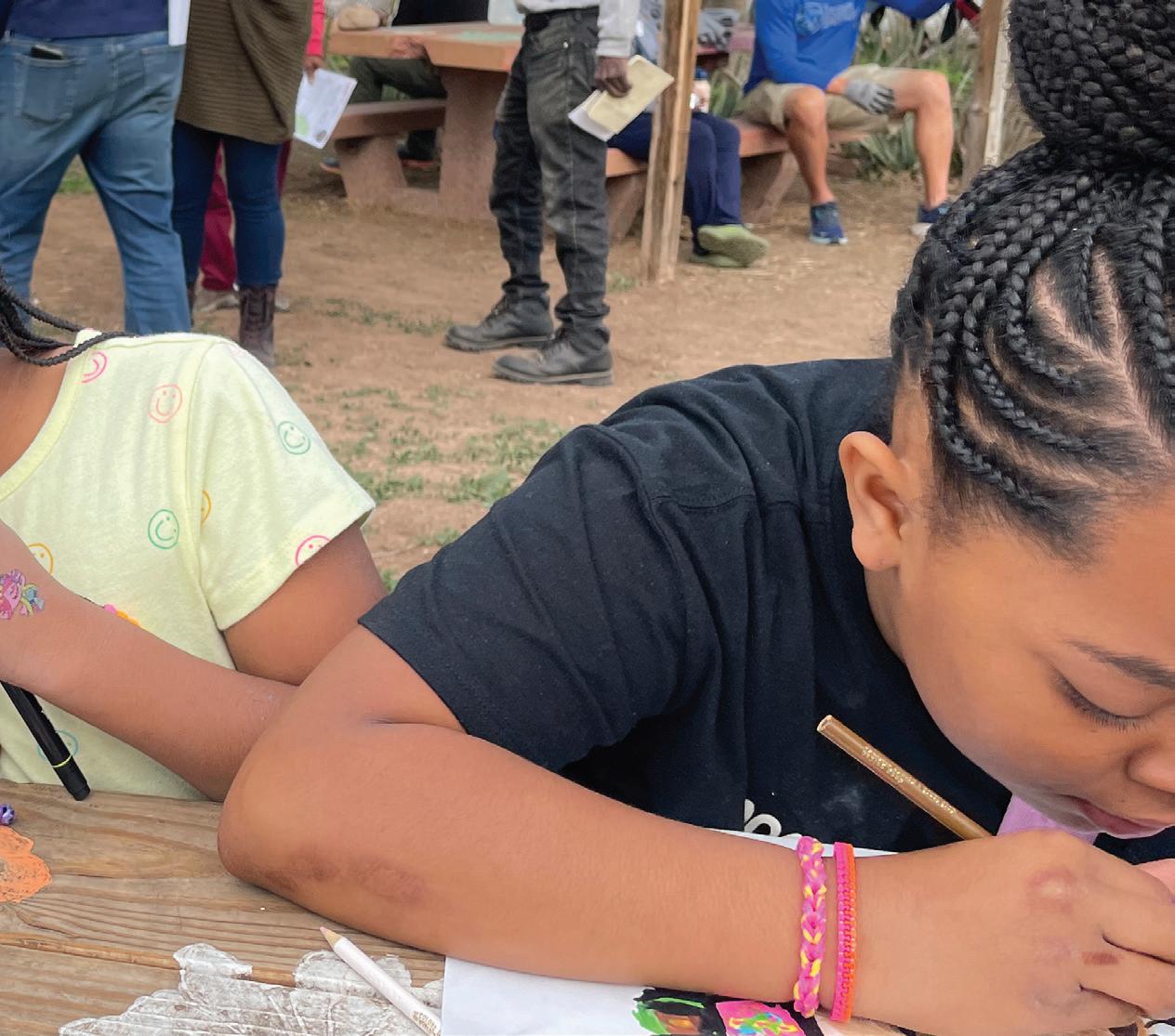
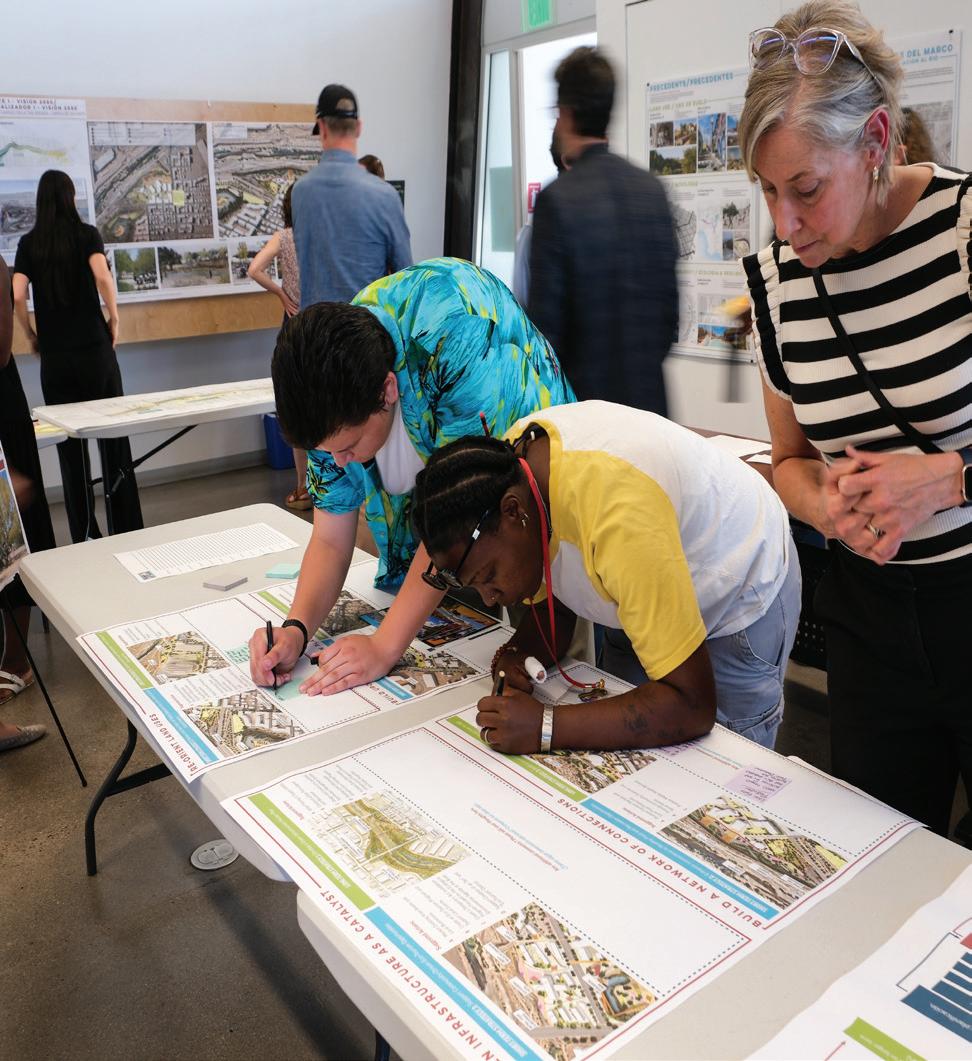
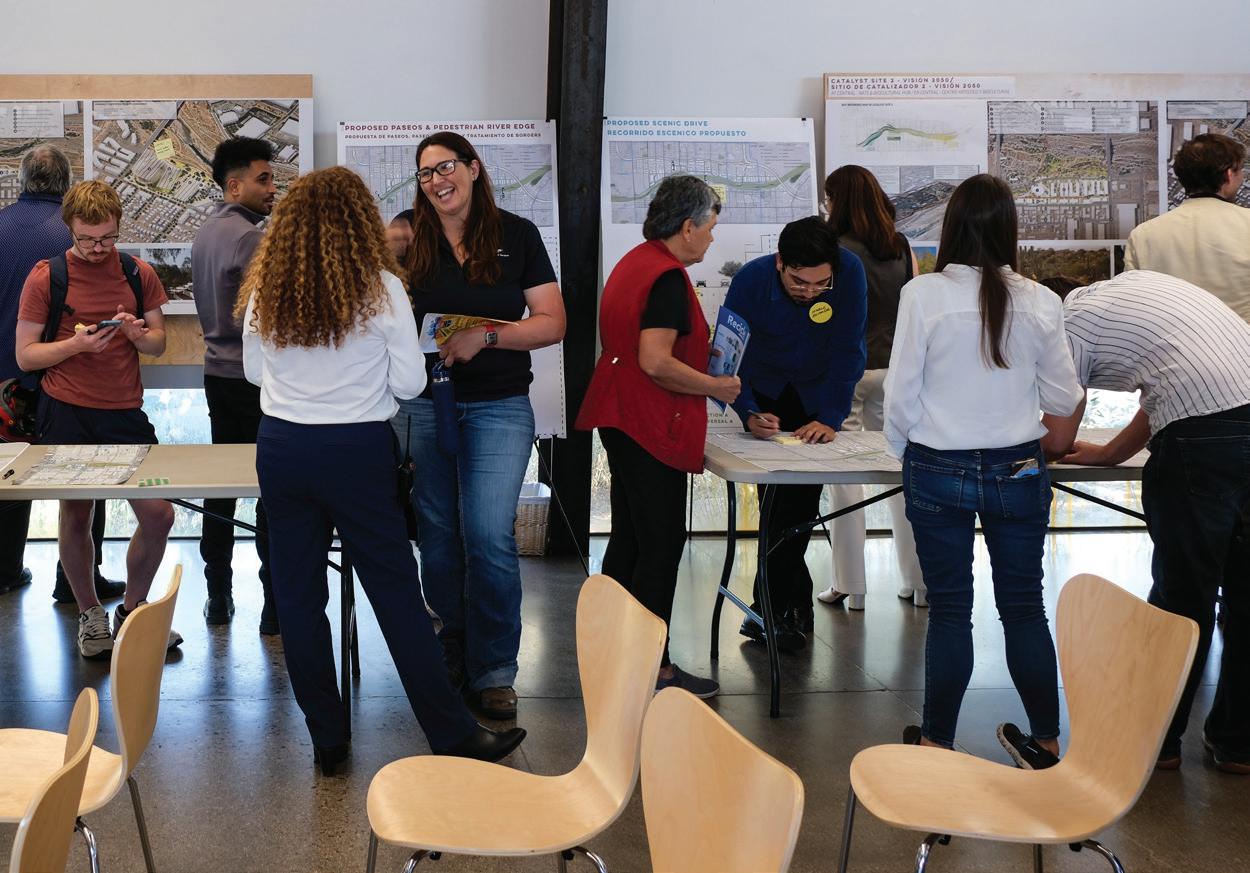
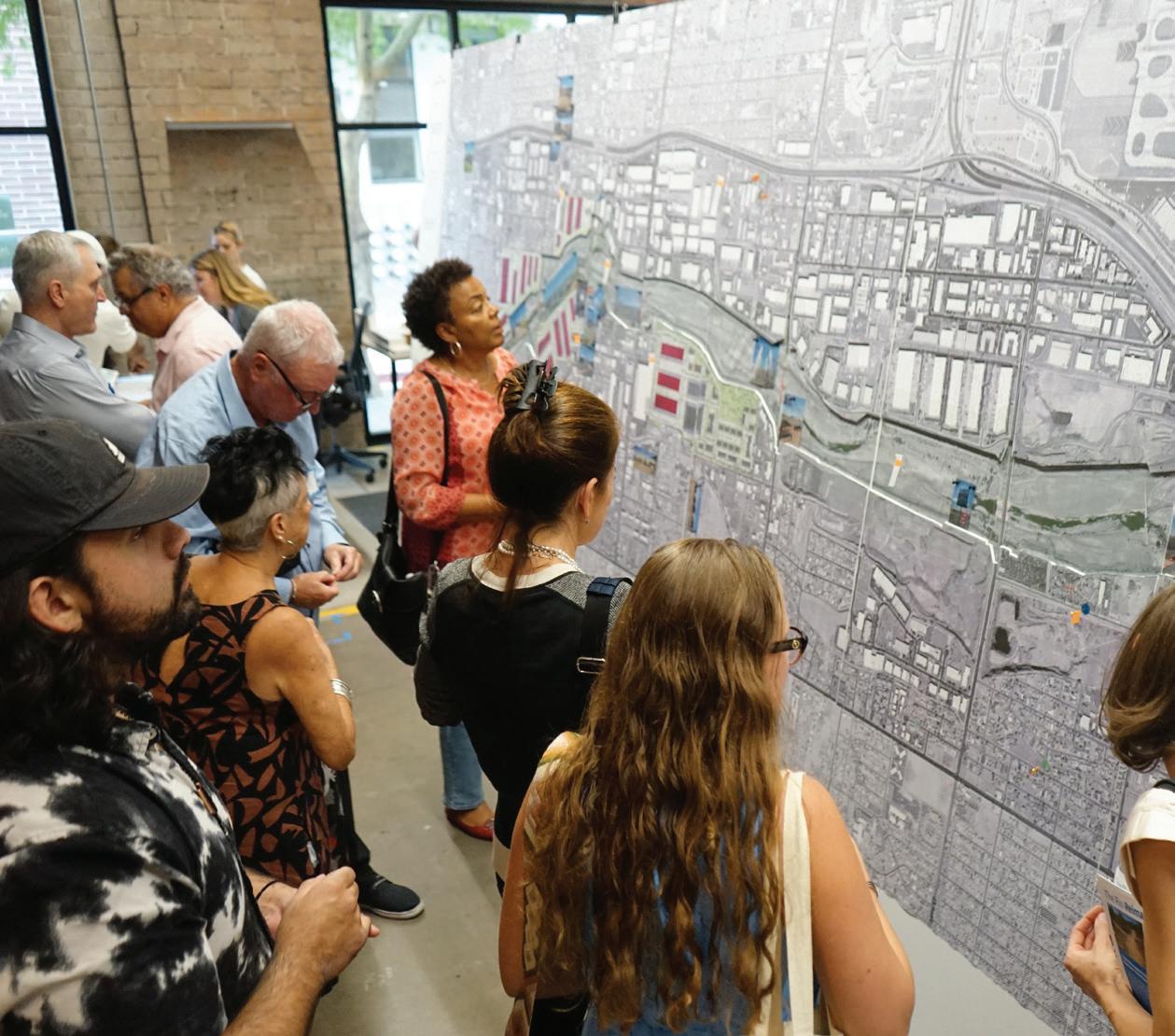
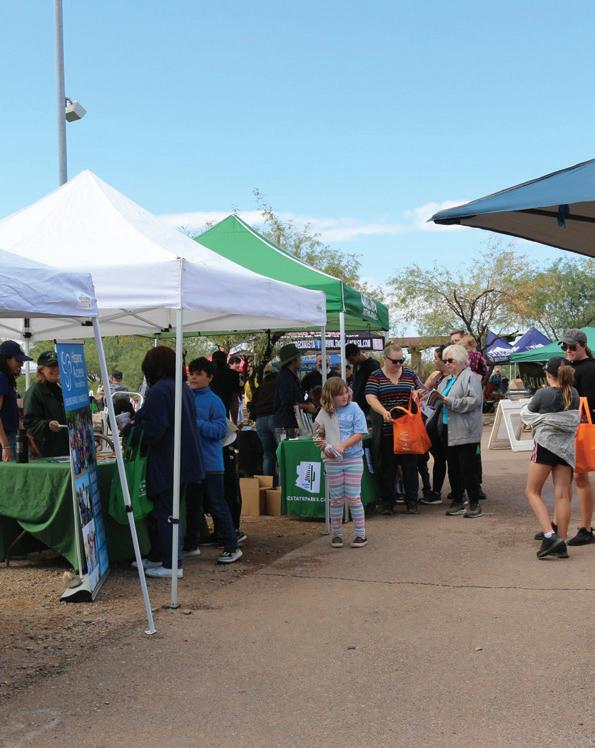
The Rio Salado District Policy Plan was founded on the core principle of authentic, timely, and comprehensive community engagement and outreach. During the planning process, the outreach and engagement strategy was responsive and adapted to successfully reach and connect with a wide range of community stakeholders.
This strategy was embedded in a three-step planning process framework that the City of Phoenix has utilized over the last decade to engage diverse communities, resulting in a comprehensive engagement and visioning process. Early and frequent community outreach and engagement were integral to the success of the project, building public trust through
ample opportunities for public input to a wide audience. A strategic combination of outreach and engagement methods resulted in diverse voices, new collaborations, trust-building, and widespread public support for the Plan throughout the planning process.
The plan thoughtfully integrates the diverse stories and feedback gathered from on-theground experiences during the planning process into its framework. This input was crucial in shaping the plan’s actions, goals, and strategies, contributing to a more comprehensive vision for a connected, equitable, and vibrant Rio Salado District.
DATA COLLECTION, RESEARCH & TECHNICAL ANALYSIS June 2023
START COMMUNITY OUTREACH & ENGAGEMENT
RIO REIMAGINED SUMMIT 2025 GENERAL PLAN UPDATE
START VILLAGE PLANNING COMMITTEE ENGAGEMENT
EXISTING CONDITIONS REPORT
COMMUNITY WORKSHOP #1 & INTERAGENCY RIO PARTNERSHIP MEETING
COMMUNITY WORKSHOP #2
COMMUNITY WORKSHOP #3 & TWO PROJECTS EXPOS
Process Framework Milestones Public Engagement Milestones
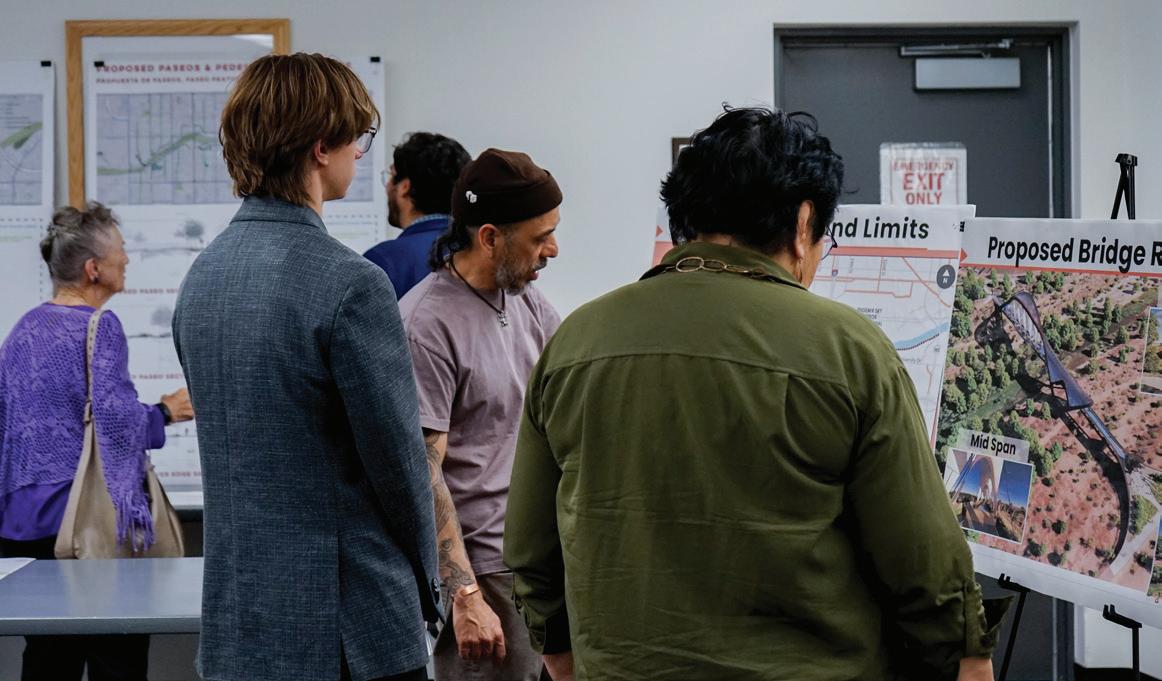
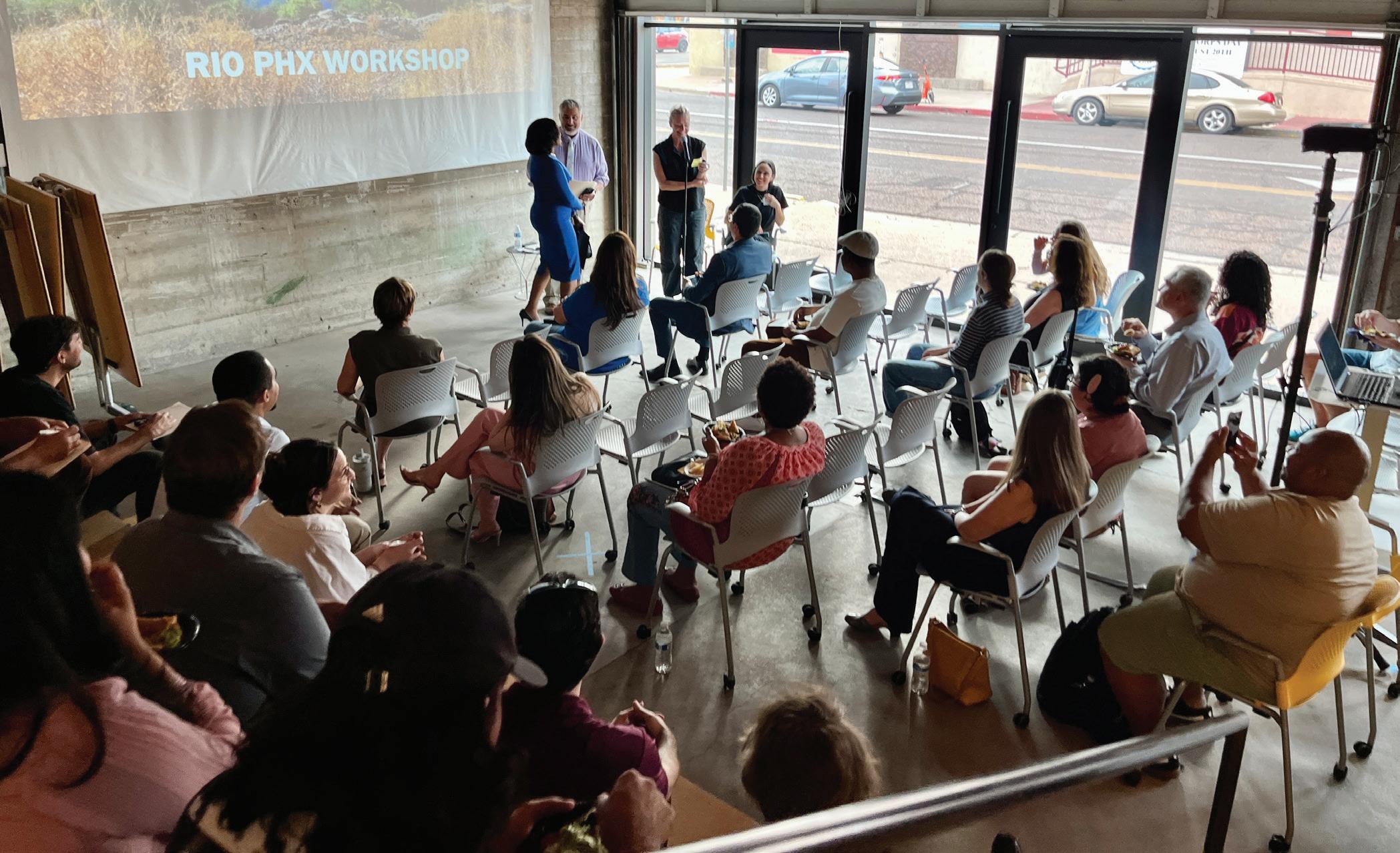
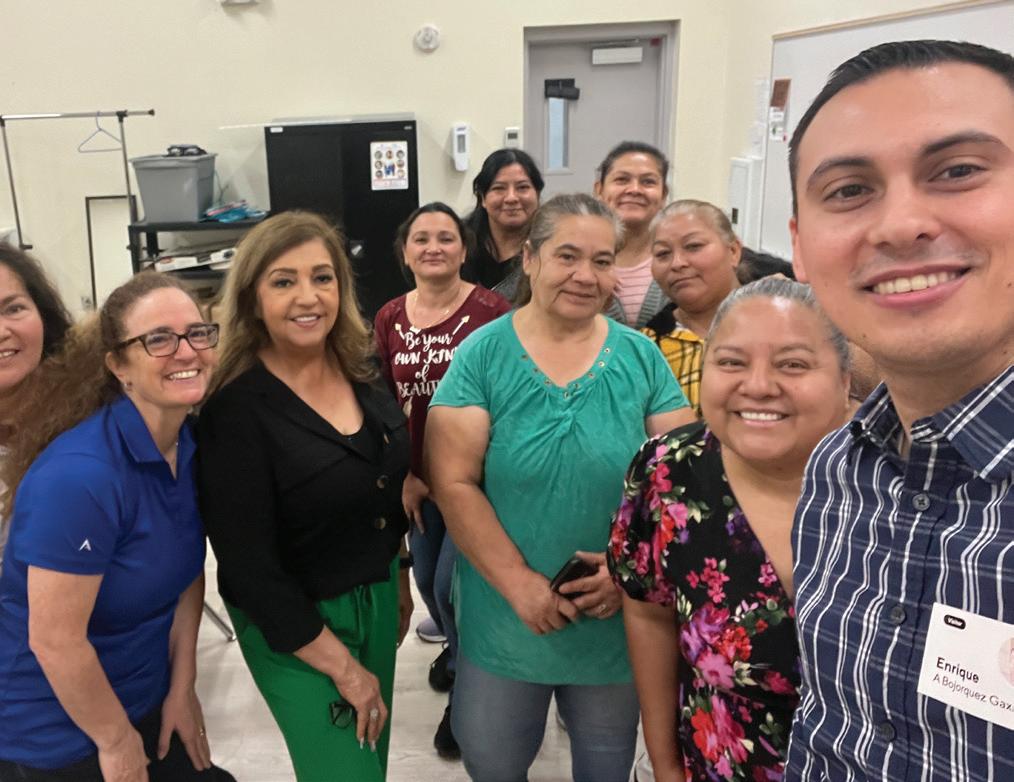
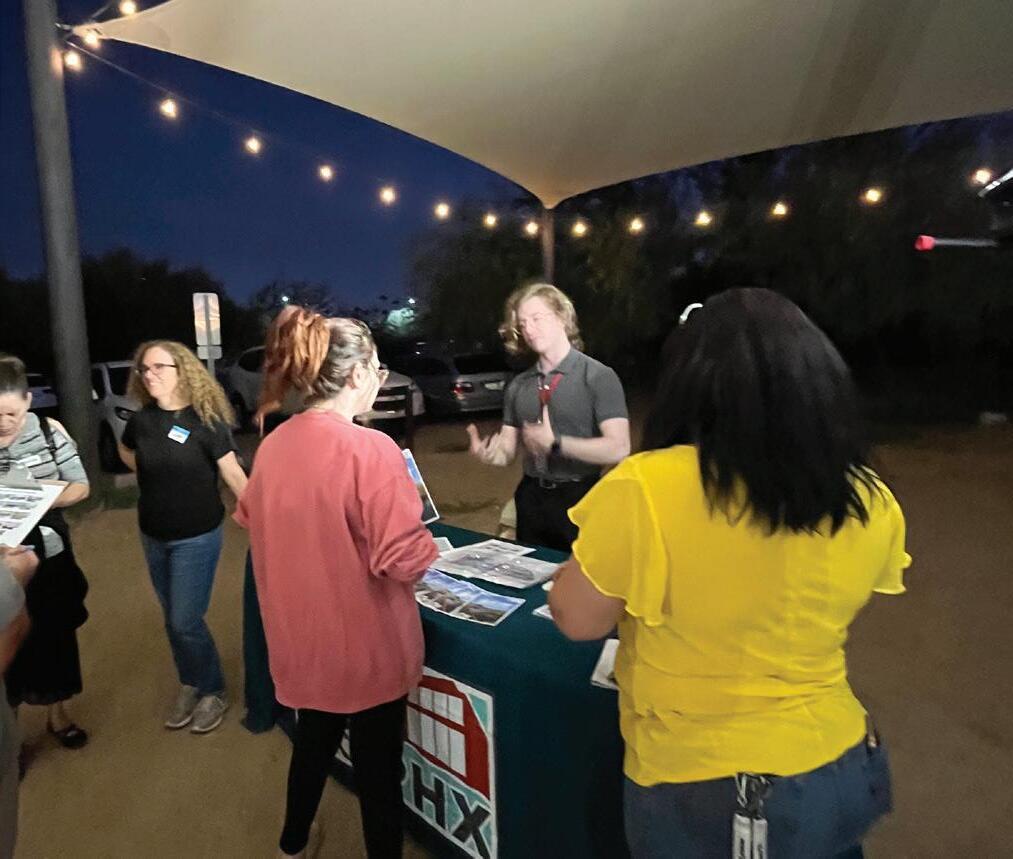
Early community engagement by the City of Phoenix project team began in Fall 2023 to identify community needs and gather input for shaping a vision for the area through 2050. A community Engagement Plan was created in 2024, incorporating best practices to ensure diverse voices were heard through active and passive activities.
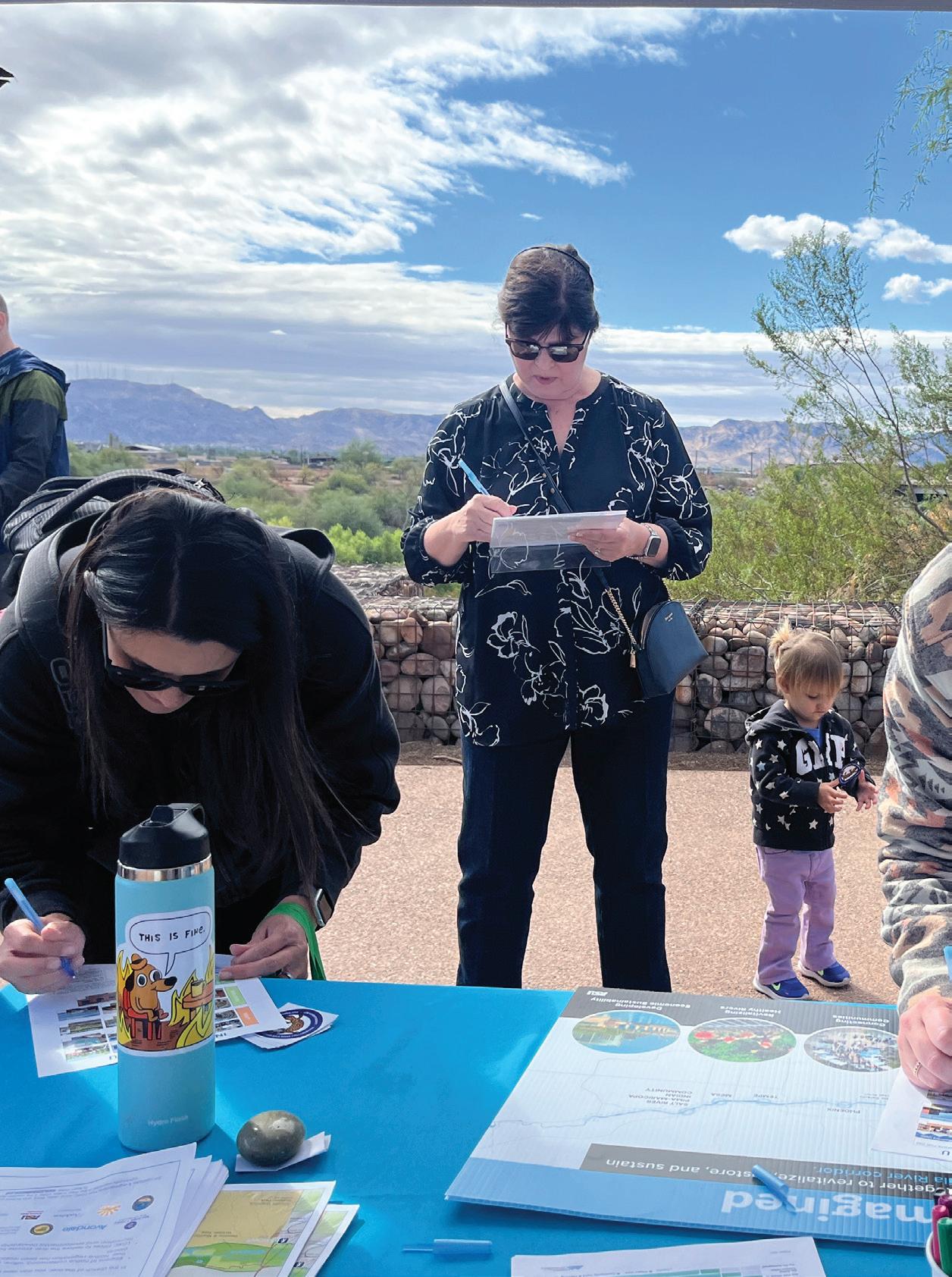
Stakeholder outreach included businesses, property owners, residents, schools, community groups, and neighborhood associations. In June 2025, a Community Engagement Report was published, detailing the outreach process, including workshops, survey results, and key takeaways.
Events/ Meetings Attended
45 Survey Responses Collected
530 Stakeholders Reached 1,000+
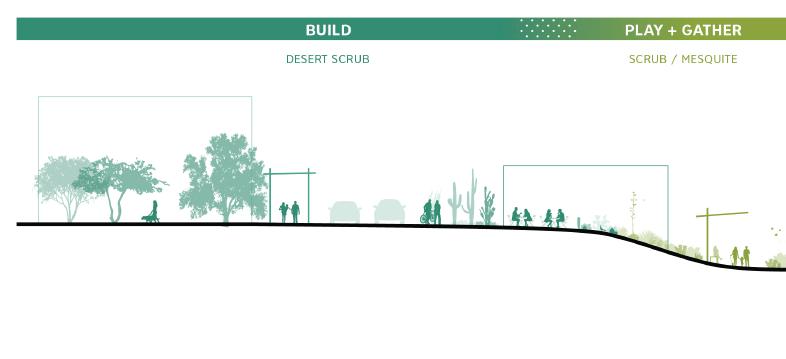
The Rio Salado District Policy Plan presents a renewed vision for transforming the area beyond the banks of the RSHRA, while supporting continued restoration work along and within the riverbanks. This plan inspires respectful development that complements the habitat restoration within the RSHRA, while emphasizing the importance of creating connections from the river to adjacent neighborhoods to expand environmental and social benefits beyond the banks.
Source: Multistudio/SCAPE

* The Rio Salado District Policy Plan provides a vision for the area beyond the banks of the RSHRA. This section is illustrative only and is not intended to specify exact terrain conditions or future improvements in the RSHRA.
Generally set above the floodplain, outside the riverbanks, this zone extends from the limits of RSHRA on the banks of the river to adjacent neighborhoods. This zone can accommodate fixed elements, such as buildings and other large structures, that overlook the river and adjacent streets; connecting the existing urban fabric to the riverbanks.
(OVERBANK + TERRACE LEVELS)



The riverbank zone offers flexible spaces for gatherings and passive recreation between the overbank and terrace levels. Movable or resilient furnishings, shade structures could allow the area to welcome groups of people, while leaving a minimal footprint on the landscape. This area occasionally is subject to flooding.
By doing so, the city re-establishes our connection with the Salt River, which is vital for sustaining life in one of the fastest-growing cities in the United States, as well as the largest city in the Sonoran Desert. Additionally, the Salt River serves as a vital link to other natural areas, tribal nations, and neighboring cities.
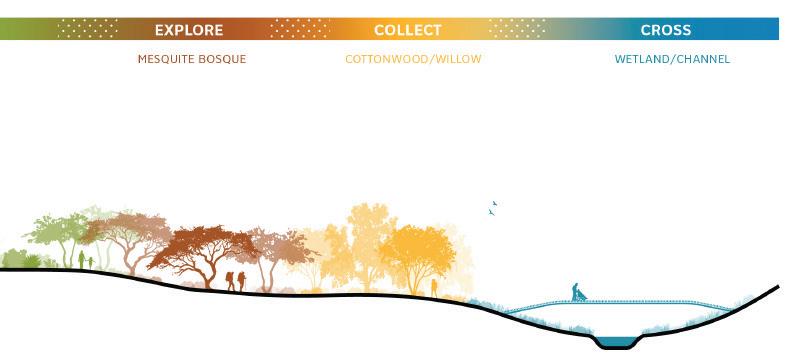
CHANNEL)

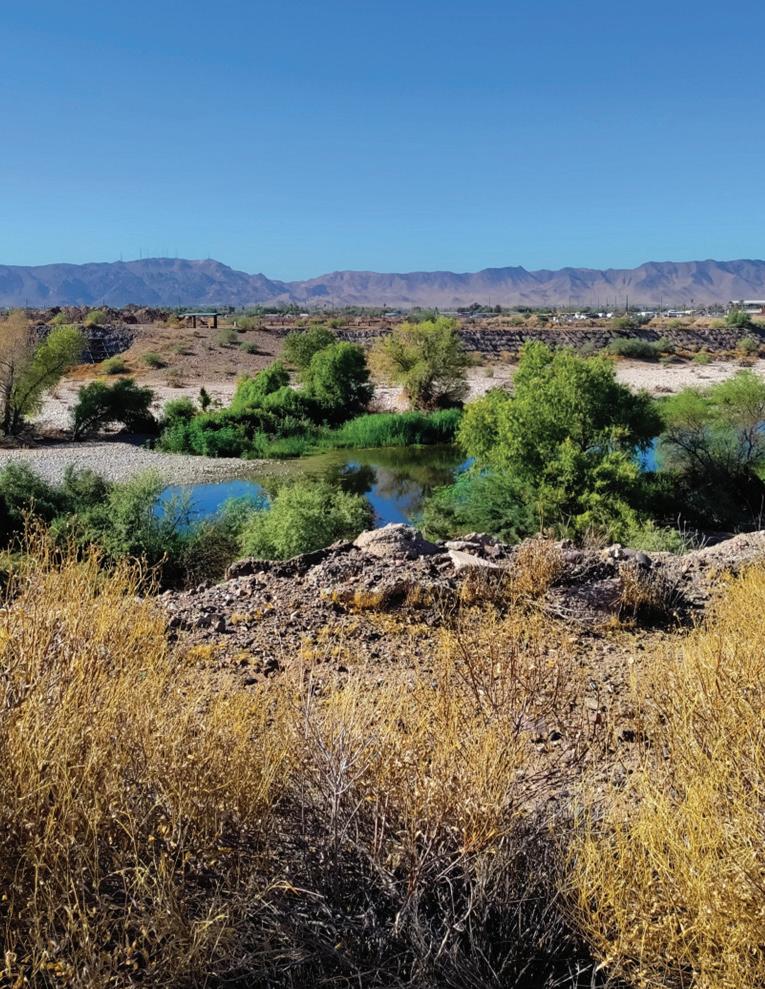
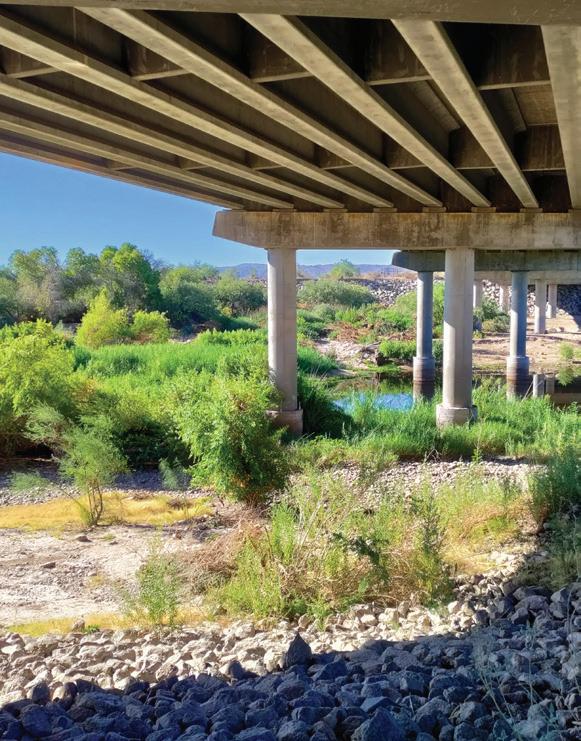
This zone allows visitors to experience and admire the natural beauty of the river up close using the existing trail system. A restored desert riparian, xeri-riparian, and wetland habitat provides a home to many of the over 150 species of birds and other wildlife that live in the area. The zone experiences seasonal flooding and contains a more consistent flow of water.
This chapter delves into the Rio Salado District through research and community engagement, examining the current conditions, demographic profile, key assets, and challenges the community experiences in the area.
By focusing on the unique characteristics of the District, it offers a comprehensive overview of its identity, utilizing a framework based on six essential planning elements.
Furthermore, this analysis highlights the ways in which community assets can be leveraged to address challenges and enhance overall well-being.
Understanding these dynamics is crucial for informed decision-making and future planning initiatives that aim to foster sustainable development in the District.
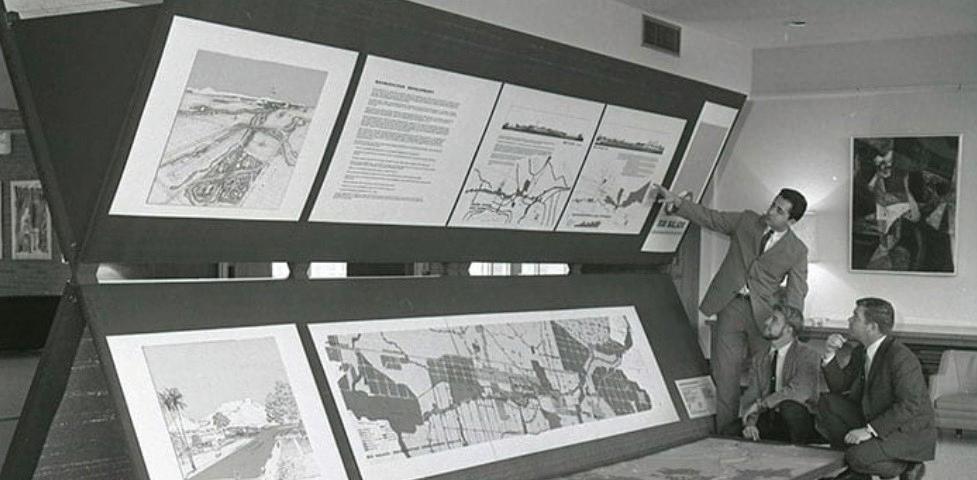
Historic Rio Reimagined Design Concept Source: AZ Big Media
The Rio Reimagined or Rio Salado Project encompasses portions of the Salt River (Rio Salado), the Gila River and confluence with the Agua Fria River along a 45-mile corridor that spans across City of Buckeye, City of Goodyear, Gila River Indian Community, City of Avondale, City of Phoenix, City of Tempe, Salt River PimaMaricopa Indian Community, City of Mesa, and Maricopa County.
1978 1966-1969
The College of Architecture at ASU studied the redevelopment and habitat restoration potential for the Salt River.
Valley Forward Association assumed responsibility for carrying forward the Rio Salado project and completed community-wide activities and consultant studies related to the Salt River.
1969-1974
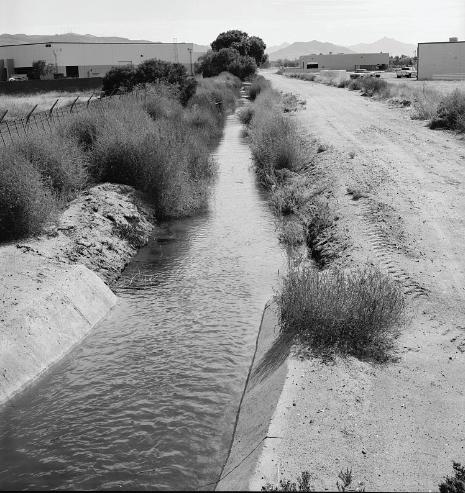
The San Francisco Canal (North Branch), an open ditch irrigation canal located north of Broadway Road, is an important relic of the area’s agricultural history dating back to the late 1800’s. Originally constructed to manage irrigation needs and facilitate the drainage of excess water, the canal played a vital role in the development of the surrounding agricultural areas.
As part of the larger network of canals designed to support the growing population and farming activities in Maricopa County, the San Francisco Canal helped to transform what was once a desert landscape into a productive agricultural
The Corps of Engineers completed a study of the Salt River from the Gila River Confluence to the Granite Reef Dam.
The Rio Salado Development District (RSDD) was the first official Rio Salado organization created by law.
1979-1980
region. Over the decades, the canal has also provided recreational opportunities for local residents and served as a habitat for various wildlife species, contributing to the region’s biodiversity.
Today, the San Francisco Canal remains a vital component of South Phoenix’s infrastructure, underscoring the community's enduring connection to water management and land use. Its historical significance highlights the engineering efforts of early settlers and planners who envisioned a sustainable future for this bustling area.
This regional project was championed by Arizona’s late Senator John McCain and late Congressman Ed Pastor, who requested designation as a Federal Urban Waters Partnership location. Through the leadership of the late Congressman Ed Pastor, the City of Phoenix has worked to revitalize the Rio Salado and the corridor surrounding it since the late 1990s.
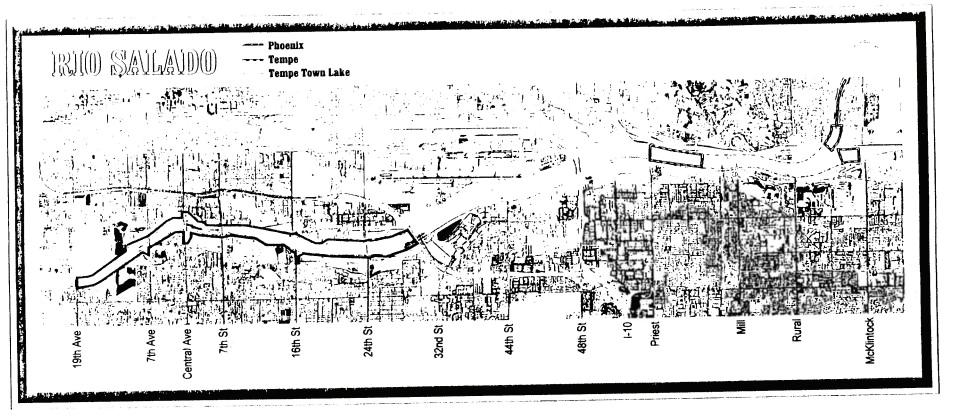
1997-1998 1987
A public vote defeated a countywide property tax to support project implementation.
The Corps of Engineers conducted a feasibility study on the Salt River in Phoenix and Tempe, recommending federal involvement in the project.
The Maricopa County Flood Control District started a six-year project to control floodwaters that recovered approximately 800 acres of developable land in the Salt River floodplain.
The canal is managed by SRP Salt River Project (SRP) and provides water irrigation to a few remaining residential customers. The activation of this linear corridor will require close partnership between SRP, City of Phoenix, and adjacent landowners along existing open ditch areas between 12th Street and 28th Street.
The accompanying image from 1980 shows a segment of the water-filled San Francisco Canal between 40th Street and Wier Avenue and 36th Street and Roeser Road.
Continue on next page

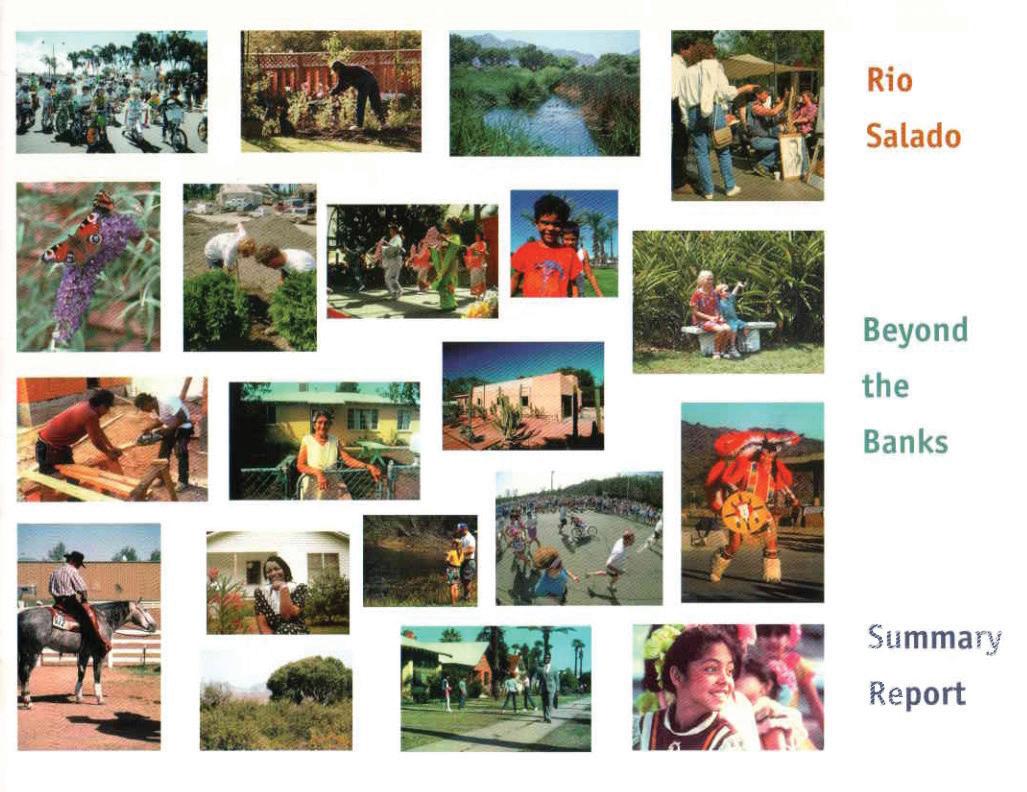
The City Manager appointed the 28-person Beyond the Banks Advisory Committee, who spent over a one-year period to develop a vision for the area beyond the banks of the Rio Salado Project.
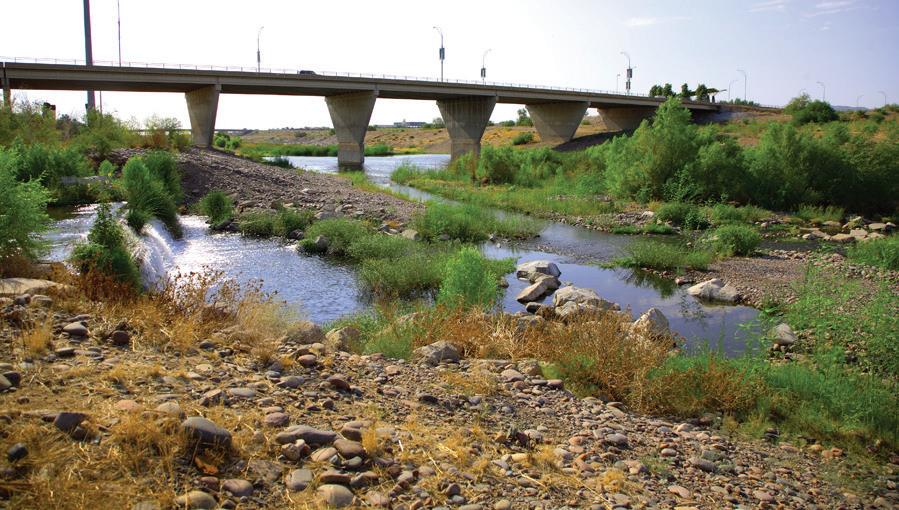
Construction of the low-flow channel started approximately 1,500 feet west of the I-10 bridge, continuing west to 19th Avenue. Phoenix City Council approved the Rio Salado Interim Overlay (RSIO) District, which became effective in January, 2002. Habitat construction is scheduled from 19th Avenue and 28th Street between 2002 and 2005.
Congress approved more than $85 million in federal Water Resources Development Act funds to transform about 595 acres along fi ve miles of the Salt River, from 28th Street to 19th Avenue, in Phoenix.
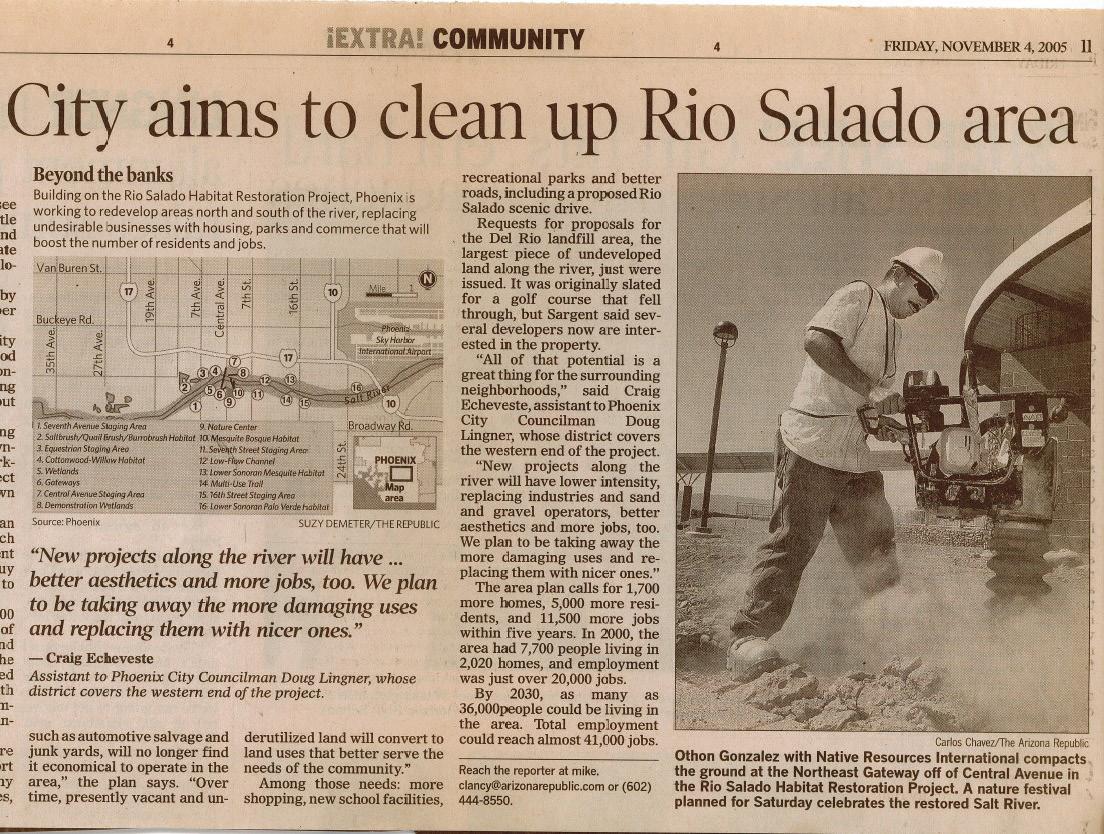
Rio Salado Beyond the Banks Area Plan is adopted by Phoenix City Council in 2003.
The Rio Salado Phoenix project opened to the public in 2005, and was completed in 2009.
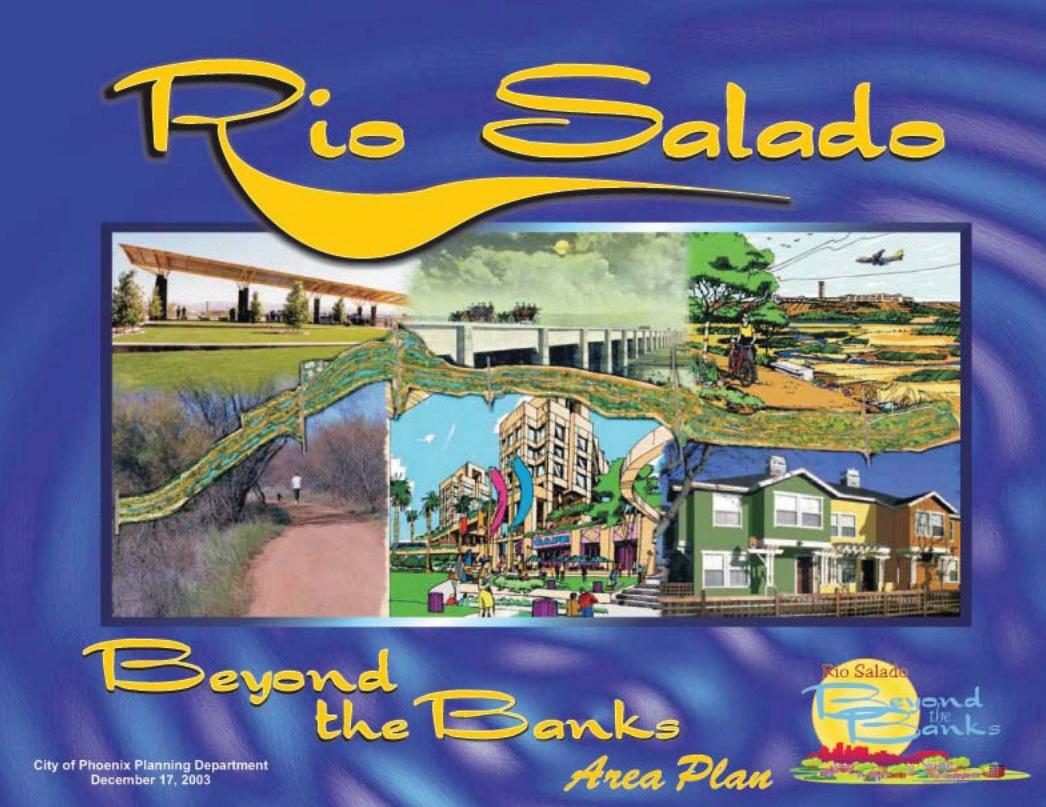
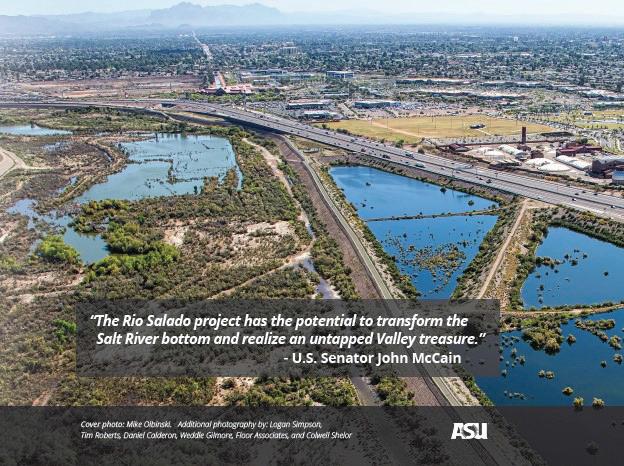
Six cities (including City of Phoenix), two tribal communities, Maricopa County, and Salt River Project signed a statement of intent for the Rio Salado Project, convened by Arizona State University.
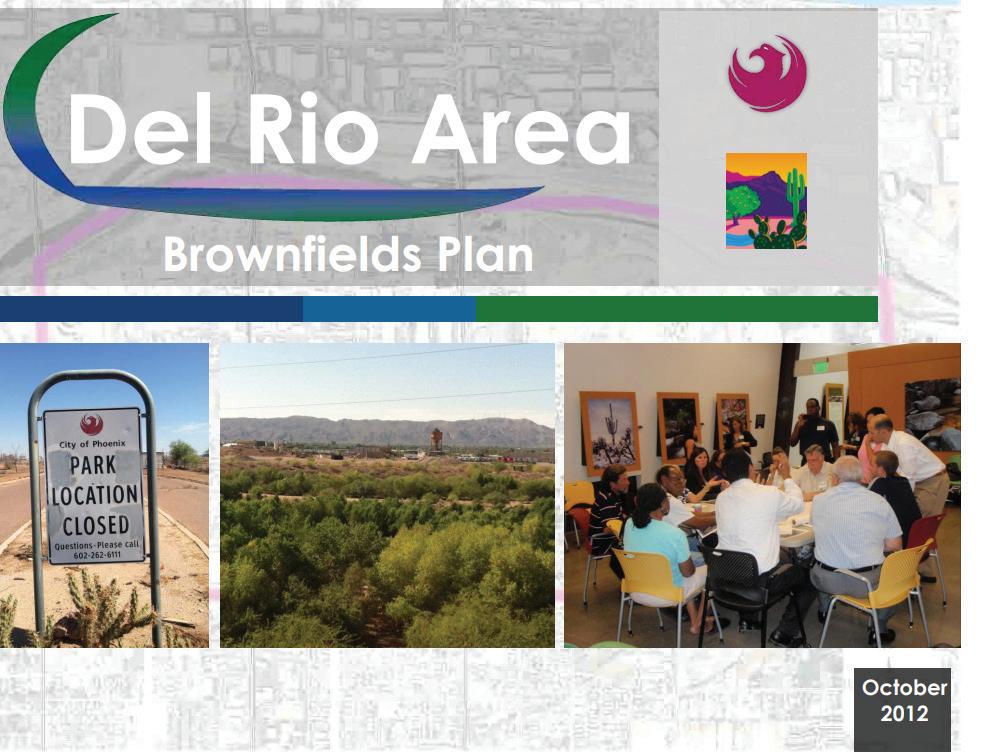
The City of Phoenix purchased 30 acres of land for redevelopment just east of Central Avenue, south of the Nina Mason Pulliam Rio Salado Audubon Center, using voter-approved GO Bond (2023) funds.
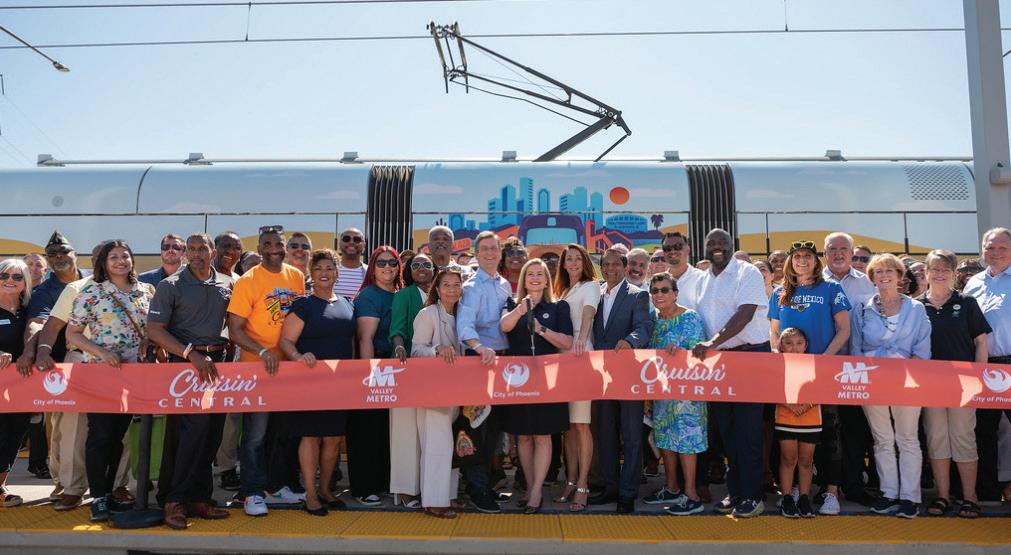
The South Central light rail line extension project opened in June 2025.
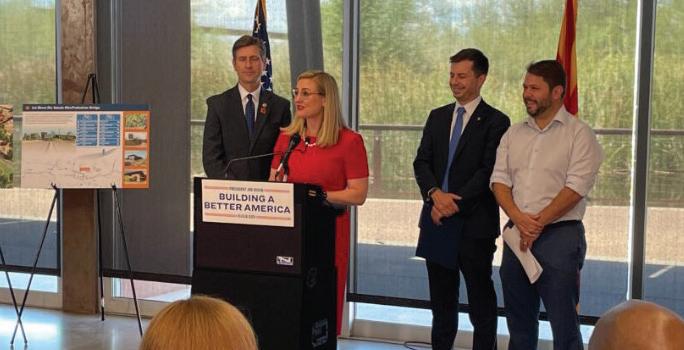
The U.S. Department of Transportation awarded a $25 million RAISE grant to the City of Phoenix for the 3rd Street Rio Salado Bike/ Pedestrian Bridge and Pathway improvements. The project is currently in the design phase and is expected to be completed by Fall 2029.
The Phoenix City Council approved the South Central TOD Community Plan in 2022.
Hohokam
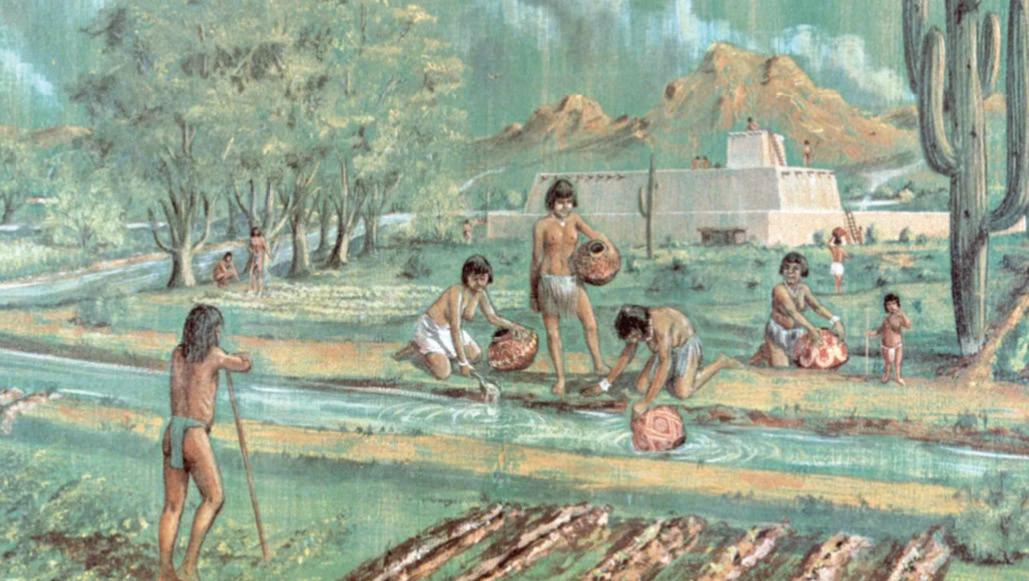
Over a thousand years ago, nomadic peoples began settling on the banks of the Salt River, what is now considered the Rio Salado. These precontact farmers, referred to as the “Hohokam” and understood to be primarily Ancestral O’Odham and Piipaash, developed an expansive network of irrigation canals and constructed large villages in this area. This agricultural society farmed throughout the valley, skillfully managing water, and creating a complex, longstanding civilization.
The Rio Salado District area was the site of at least four Hohokam canals and two nearby villages that were located on higher ground beyond the river’s floodplain. Floods and modern-day activities have removed much of the Hohokam cultural resources along the banks of the river.
In 1871, Anglo and Mexican farmers had established grain farms along their newly constructed canal, what we know as the San Francisco Canal. The coverage of this canal extends west from Tempe, along the south bank of the Salt River, with the north branch of the canal reaching beyond Central Avenue and its south branch between 28th and 16th Streets.
Although several pioneers had established homesteads in the area near the river and along the San Francisco Canal, the first of these to consolidate large parcels of land was Michael Wormser. By investing in water rights in the area, Wormser was able to use most of his land for
farming. Three years after Wormser’s passing in 1898, 6,070 out of the some 9,000 acres under Wormser’s ownership were acquired by BartlettHeard Land and Cattle Company. This company established one of the most successful and diversified farming operations that produced many grains, citrus, fruits, nuts, vegetables, cotton, and its primary crop alfalfa, known for feeding livestock, something the ranch had plenty of including cattle, horses, mules, sheep, poultry, and ostriches.
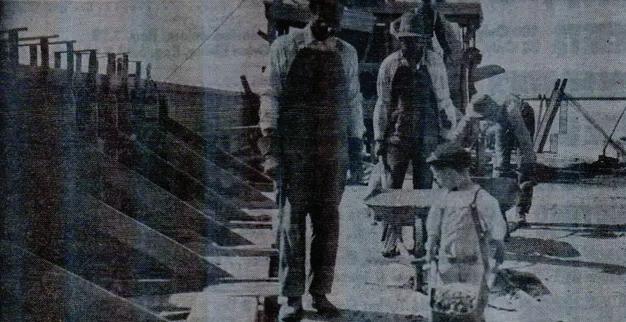
The cycle of dramatic floods from the late 1800s to 1910 prompted a fierce competition between Tempe and Phoenix for a bridge over the Rio Salado. During this period, areas south of the river were agricultural, requiring laborers in Phoenix to cross the river via a dirt track (then Center Street) on foot or in horse-drawn carriages. Tempe argued for a bridge due to its shorter span and better bedrock, while Phoenix had support from Dwight B. Heard, whose 7,000 acres lay south of the river and who had land planning experience from the Roosevelt Dam project. Following the 1909 county election, Phoenix was awarded the Center Street Bridge, now known as the Central Avenue Bridge, which was dedicated in 1911. At that time, it was recognized as the world’s longest reinforced concrete bridge.
From its completion until 1966, the bridge facilitated easier commutes for laborers and spurred development in south Phoenix, but flooding continued to impact the bridge in 1922, 1938, and 1941. In the 1922 flood, one part of the bridge lowered three inches due to unstable conditions.
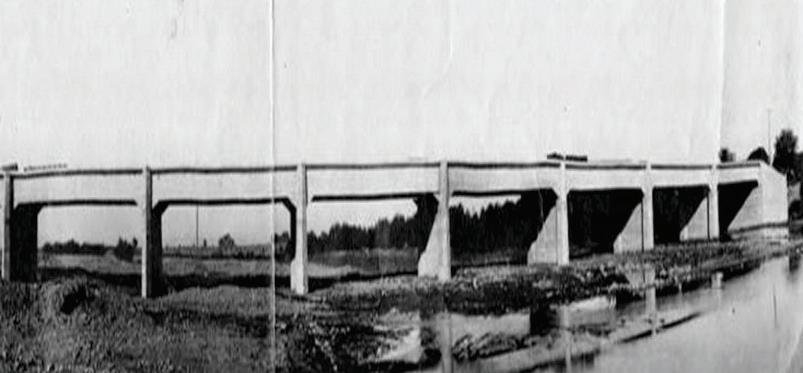
Ultimately flooding destroyed the Center Street Bridge in 1966. Traffic was redirected to a separate bridge, which became congested, leading to the demolition of both bridges for the construction of the current Central Avenue Bridge.
Additionally, regulation of water flows starting in the early 20th century adversely impacted the natural riparian habitat of the Salt River, altering its perennial flow regime and resulting in a drier river bed. The dry riverbed became a site for sand and gravel mining, landfills, and illegal dumping, prompting efforts to restore the Rio Salado.
To learn more about the area’s history, refer to the Rio Salado Beyond the Banks Area Plan.
Sources: The South Central Transit Oriented Development Community Plan (2022), “Phoenix’s Center Street Bridge connected a city divided by the Salt River” (AZ Central/The Republic), and “A Bridge to Remember” (Phoenix Magazine).
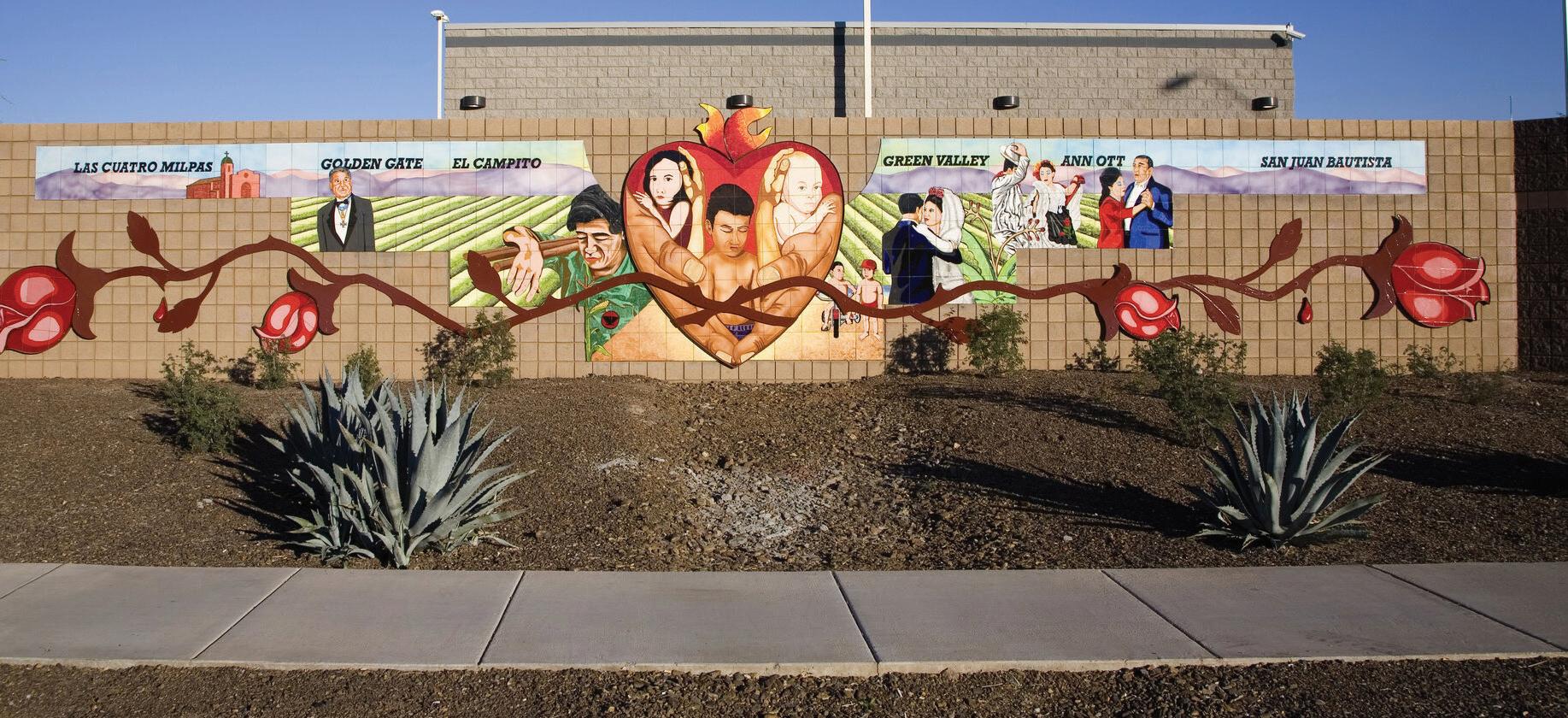
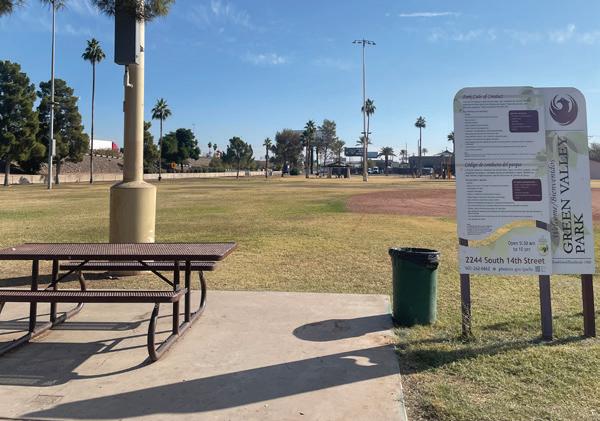
Located in south-central Phoenix, the neighborhoods collectively known as Barrios Unidos are situated between Washington Street (North), 24th Street (East), University Drive (South), and 7th Street (West). Within Barrios Unidos, several distinct barrios, or neighborhoods, each with their own identity, exist. To the west of 16th Street are Cuatro Milpas, Green Valley, and El Campito, while to the east lies a barrio formerly known as Golden Gate.
Prior to the late 1940s, housing segregation was prevalent, with deeds that barred Mexican Americans from purchasing homes in certain neighborhoods. From the 1900s until 2003, this area underwent significant change. Between the late 1970s and early 1980s, Golden Gate began to decline, and today, it has few, if any, residents remaining.
The construction of the Interstate 17 in the 1950’s and expansion of the Sky Harbor Airport in the 1970’s relocated some of the barrios or neighborhoods that existed in this area which were predominantly comprised of minority residents. Cuatro Milpas, Green Valley, and El Campito have gradually faced a similar fate as that of Golden Gate.
The struggles for social and civil rights related to housing, education, and employment in the 1950s, along with the civil rights movements of the 1960s and 1970s, impacted Phoenix and reached the barrios, bringing César Chávez and the United Farm Workers to stay at the Santa Rita Church. However, real change was difficult to achieve, as residents observed that their living conditions appeared neglected. Until 2003, some barrios lacked sidewalks, paved streets, and city services.
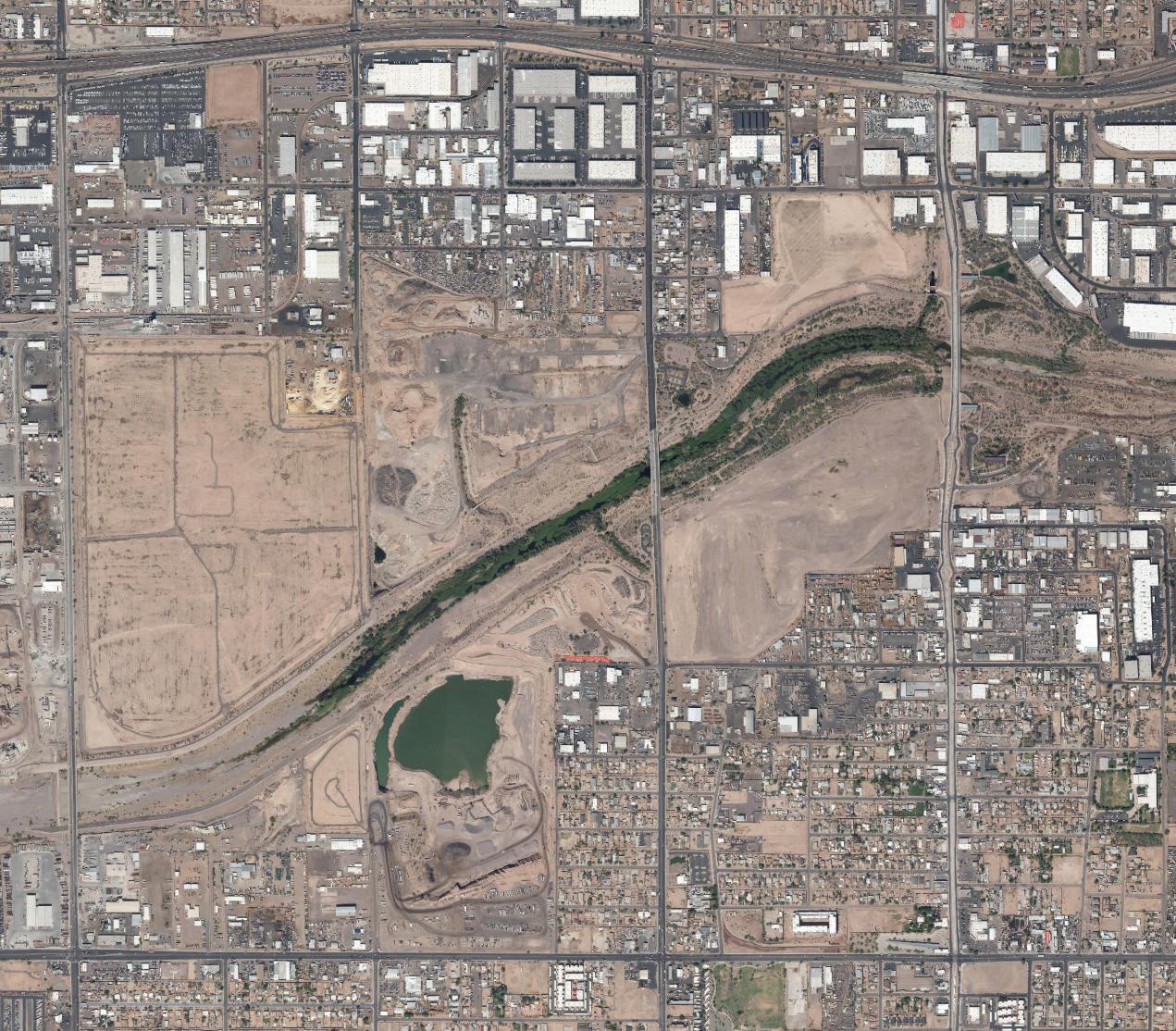
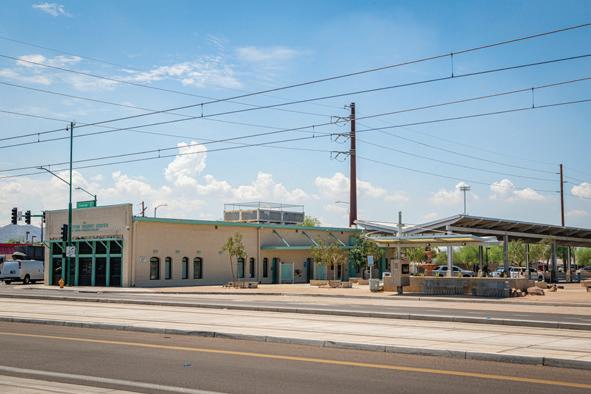
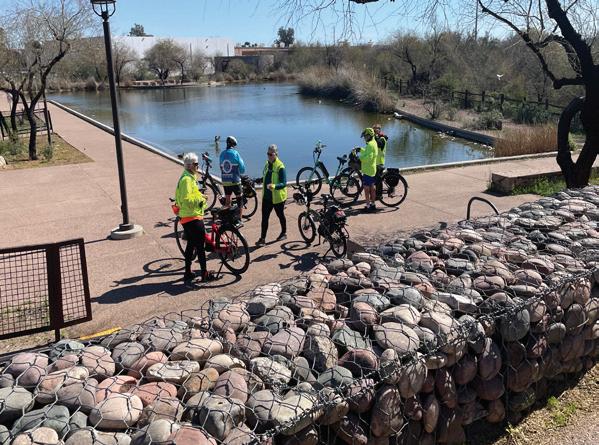
The Rio Salado District has unique destinations to the north and south of the RSHRA, that are celebrated and support existing communities within and beyond the district boundaries. Through researching existing plans and community engagement efforts, several community assets have emerged. These assets are represented on the adjacent map.
In addition to the assets represented in the adjacent map, other community assets include mini parks, long-standing businesses and organizations, health facilities, and historic buildings.
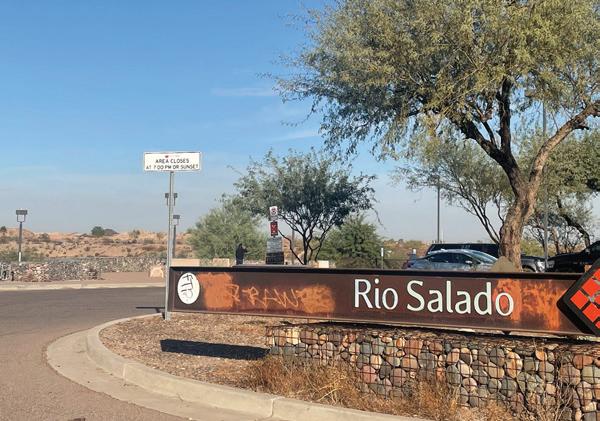
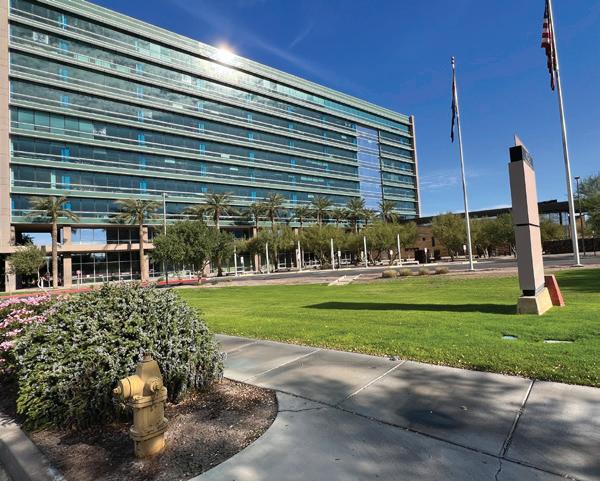
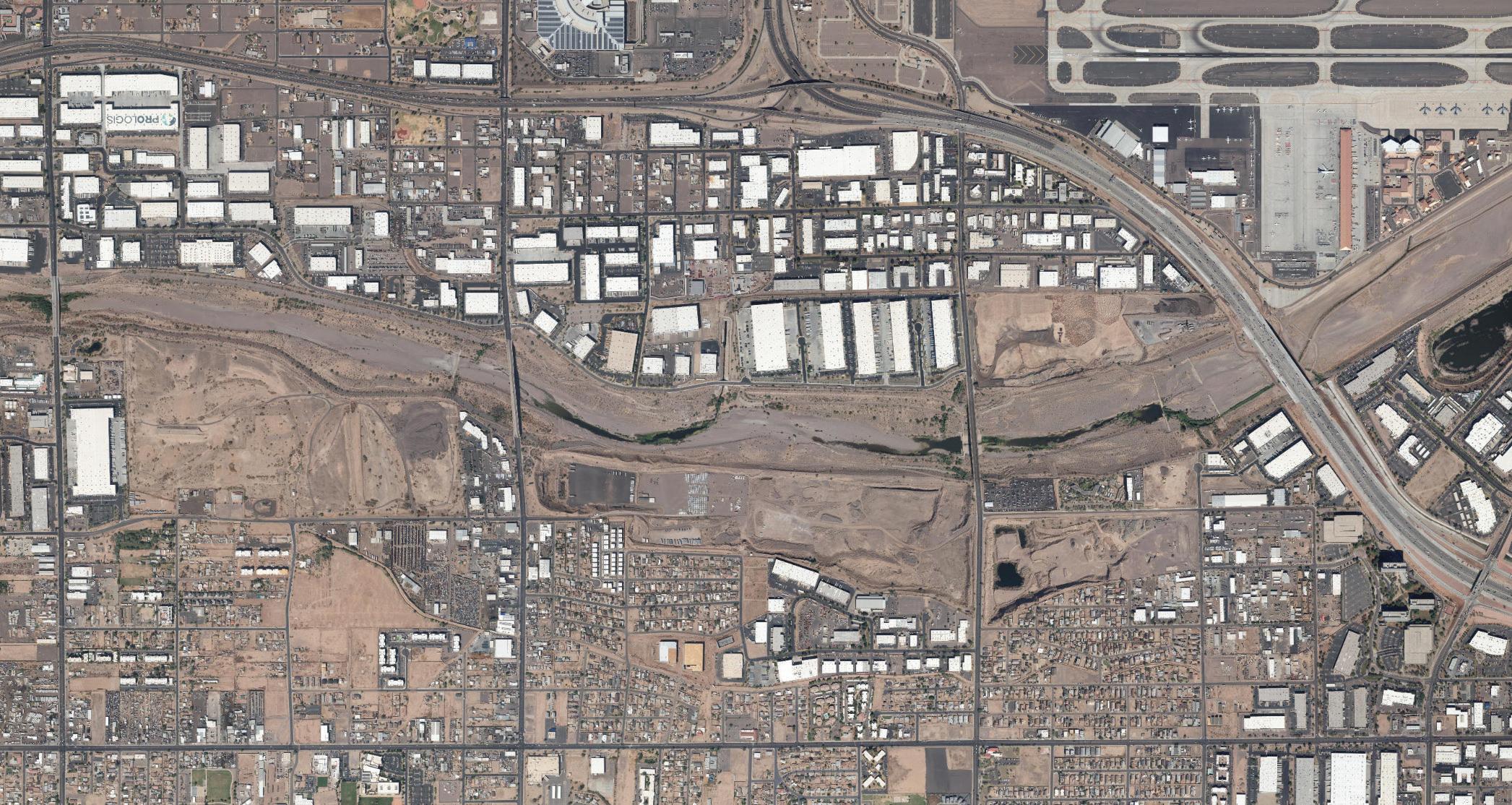
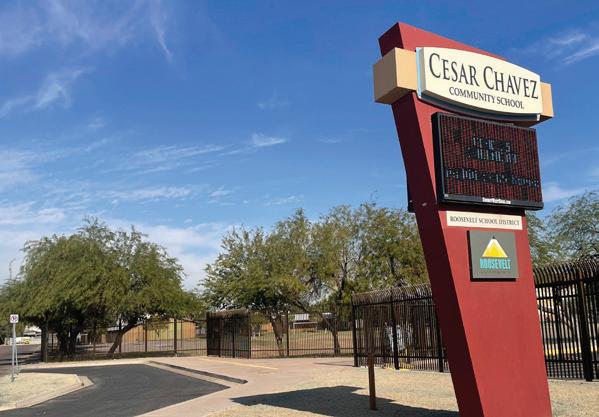
Rio Salado District City of Phoenix
Percentage of households that have an income of less than $50k
19% 15% 32%
Percentage of individuals with limited English proficiency
Percentage of households that do not have access to a vehicle
Percentage of population employed in a service occupation
20%
Rio Salado District 37%
City of Phoenix
Percentage of individuals that are employed in management, business, science and arts occupations
52% 44%
Percentage of all housing units that are renter-occupied
4%
18%
Percentage of working individuals of age that use public transit or bike to work
72%
Percentage of residents that are Hispanic
42%
Source: U.S. Census Bureau’s 2019-2023 American Community Survey 5 year Estimates (MAG, 2025)
The three-step planning process for the Rio Salado District Policy Plan utilized the six planning element framework to engage stakeholders. This framework helped inform and capture a variety of interdisciplinary topics while addressing diverse stakeholder perspectives toward establishing a shared-community vision incorporated into the Rio Salado District Policy Plan.

Land Use focuses on the spatial pattern of urban development, including intensity, design, building form, and unique place-making characteristics.

Housing focuses on the variety of types, quality, quantity, and affordability of residential units.

Economic Development focuses on the community’s access to jobs, training, education opportunities and types of employers and employment diversity.

Health focuses on key aspects of the built environment that impact public health such as access to healthy food, healthcare, recreation, and shade.

Mobility focuses on the movement of residents, including the availability of public transit, safe pedestrian routes, and other transportation considerations.

Green Systems focuses on climate mitigation through building design, adaptive infrastructure, and improving resource efficiency.
In 2023, the City of Phoenix launched the RIO PHX initiative, as a collaborative effort with various project and community stakeholders to create a series of land use policy plans across a 20-mile corridor following the Rio Salado to be a key implementation component of the regional Rio Reimagined project.
The Existing Conditions Assessment was the first step in developing a policy plan for the Rio Salado District, initially referred to as “Rio Salado Phoenix”. The assessment serves as a baseline for the City and the public to measure the impact of policy and changes in the community over time. This assessment, along with the District Plan, highlights the current conditions of the District, categorized by the six planning elements.
To review the latest Existing Conditions Report, please visit the RIO PHX website.
Land use has a significant impact on the character of a neighborhood and the quality of life for existing businesses and residents. These impacts also affect the natural ecosystem and outside visitors exploring the area. By adapting new and existing land uses through policy and action to meet community needs, a positive downstream effect will be observed on the other five planning elements.
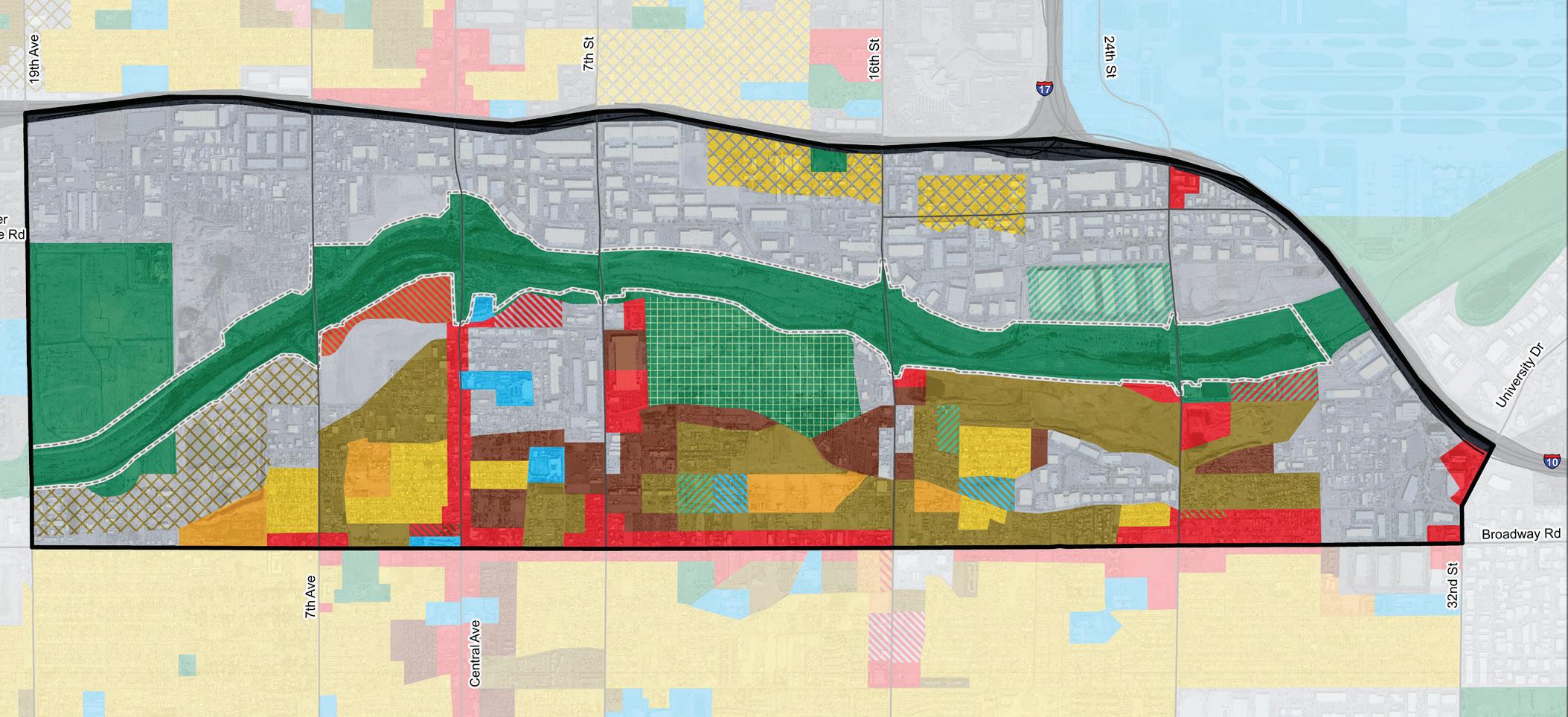
Over 75% of the Rio Salado District is zoned for industrial use, primarily north of the river banks. A mix of zoning districts, including residential and commercial, is primarily located south of the river. The area experiences encroachment of additional industrial uses, both small and large-scale developments.
• Rio Salado District Area: 7 square miles
• Land area within a half-mile of a light rail line: 1.5 square miles (21% of land)
• Land area within 500’ of the RSHRA: 3 square miles (43% of land)
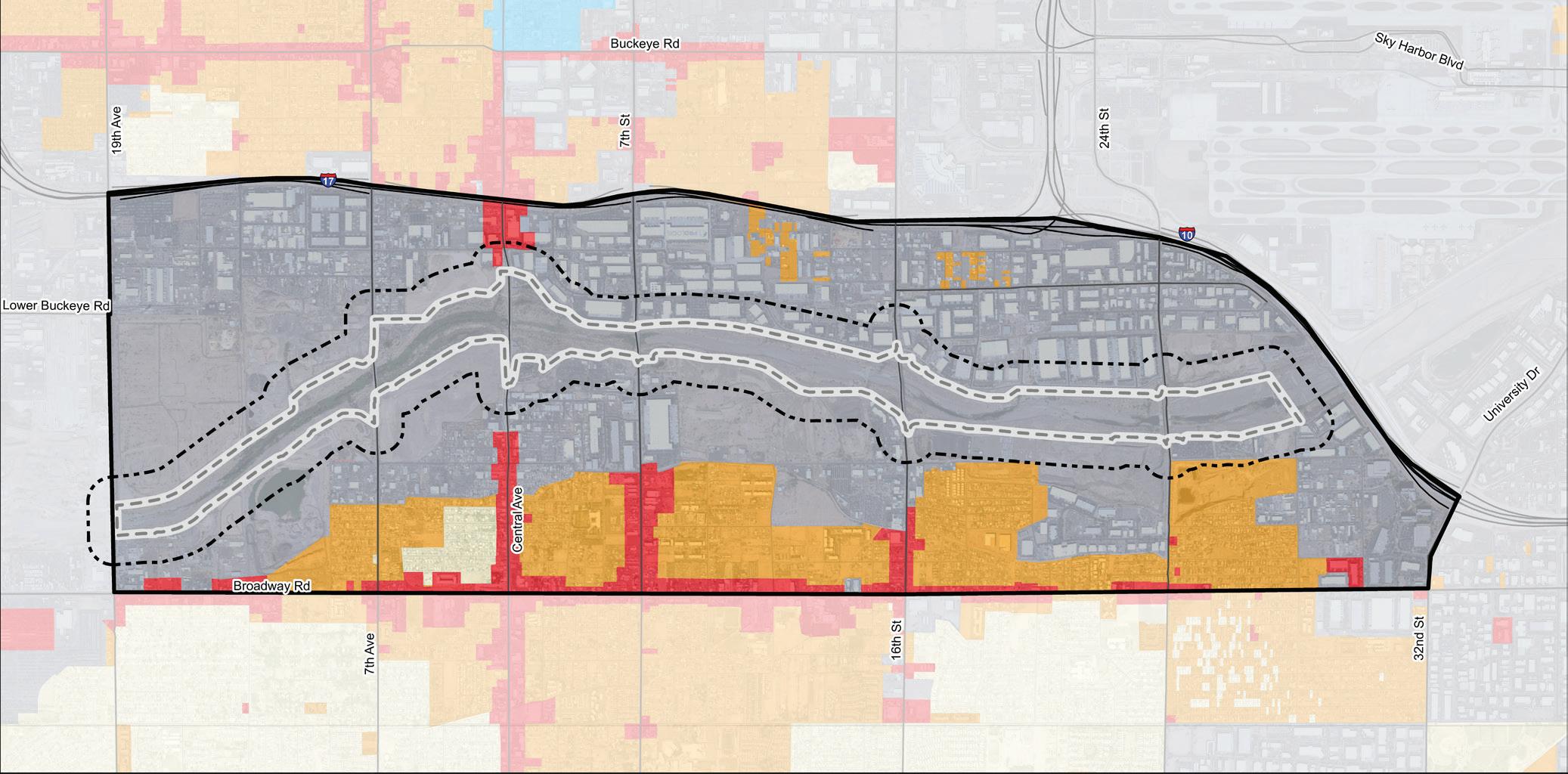
The Rio Salado Interim Overlay District (RSIOD), Section 655 of the Zoning Ordinance, is designed to protect the investment in and maximize the benefits of the Rio Salado Habitat Restoration Area (RSHRA).
The overlay district is designed to control open, outdoor land uses and other uses in order to have a positive impact on the Rio Salado Habitat Restoration Project and add to the long-term value of adjacent land. The RSIOD also established a 500-foot buffer around the RSHRA which requires certain development within the buffer to pursue a special permit or use permit, a type of land entitlement.
Other unique standards of the overlay include special permit requirement for specific land uses, and an administrative review of industrial development projects under 10 acres, while large projects are subject to Commerce Park District standards. The overlay also contains standards for new one and two dwelling unit homes and the filling and compaction of open pits. New uses such as billboards, slaughterhouses, and salvage yards are prohibited.
Existing Zoning Map (2025) and 500-Foot Buffer from the Rio Salado HRA
The FCOD overlaps the Rio Salado District boundary along the intersection of 24th Street and Broadway Road and provides guidance to new development on site design and zoning standards.
The AIOD intends to protect the health, safety, and welfare of residents from the noise of Sky Harbor Airport and promote compatible non-residential uses in noise-impacted areas.
This infill district promotes single-family attached development, whether by right or Use Permit, to encourage housing diversity and affordability.
The Village Core is located along the intersection of Central Avenue and Broadway Road, where additional height and parking reductions are allowed by right.
In 2022, the South Central Transit Oriented Development Community Plan established policy “between the 7s” along the new light rail line. This allows for properties within half a mile of the light rail to rezone to the Walkable Urban Code.


Areas where the community supports the least amount of change, such as improvements to existing single-family residential homes or the restoration of historic buildings.
Areas that may completely redevelop, including a change in the scale, intensity, and potentially the land use itself. These areas would require significant investment.














































Areas of Change - Reimagine Areas of Change: Areas of Change - Enhance Areas of Change - Protect


















Areas that would benefit from additional landscaping, adaptive reuse of existing buildings or adding new buildings on vacant properties or parking lots with an elevated scale and intensity. Source:























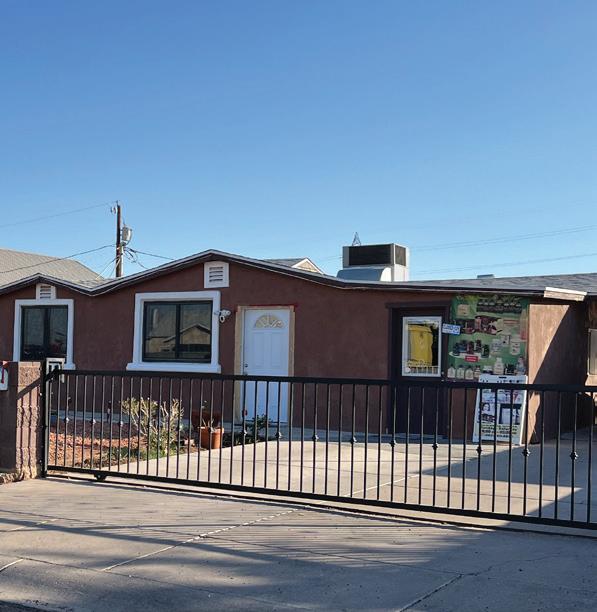
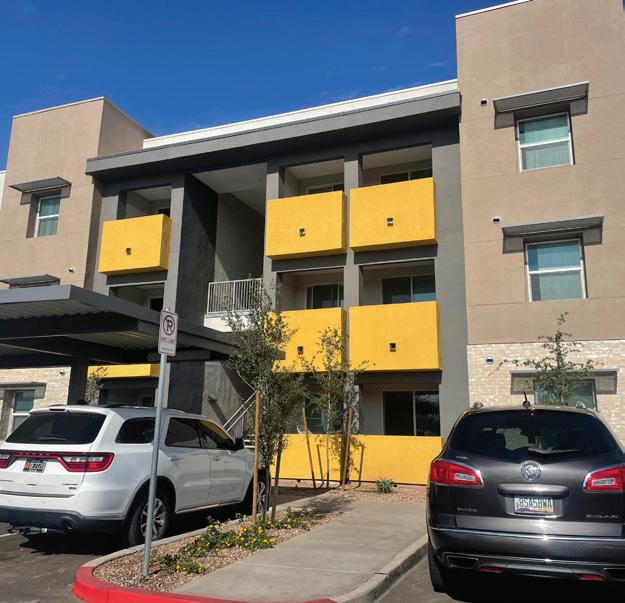
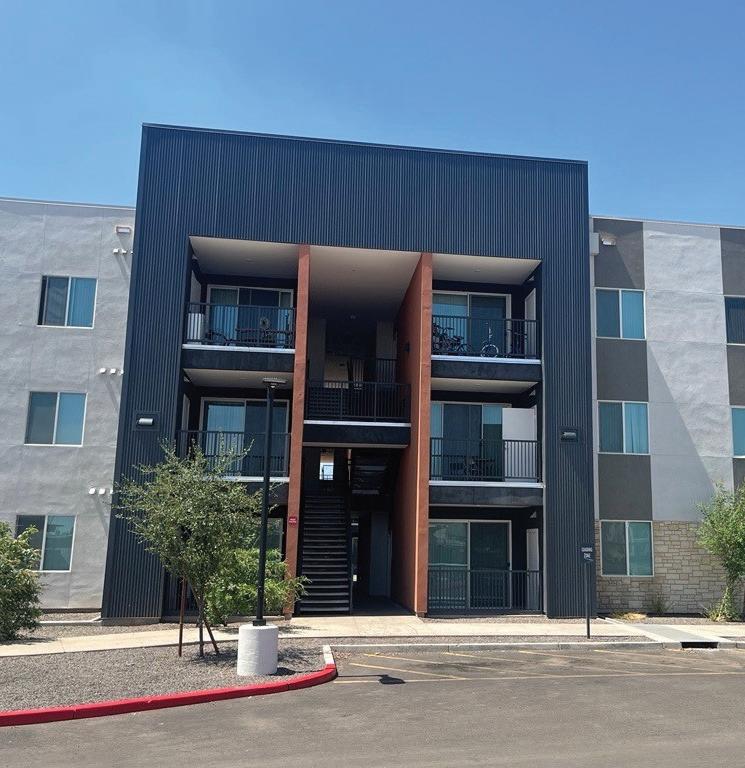
Less than a fifth of the Rio Salado District is zoned for residential use, and half of the existing housing stock is 50 years or older. Additionally, the area faces high vacancy rates of 14%, which is double the city’s average vacancy rate of seven percent. While having a higher vacancy rate could result in lower housing costs for renters in the area, it may also be indicative of other factors, such as housing quality or location. As the population in the metropolitan area is expected to grow 48% between 2020 and 2050, the need for new housing is urgent to increase affordability across the region, including the Rio Salado District.
Housing Units % of all housing units are considered overcrowded
2,362
633,863
% of housing units that are single-family type (almost exclusively south of the river)
% of housing units are multi-family (these are not concentrated in one particular area)
Source: U.S. Census Bureau's 2020 Decennial Census
Quick Facts:
• 34 registered neighborhood associations
• 58% of homewowners have an active mortgage
• 50% of housing units are 50 years or older



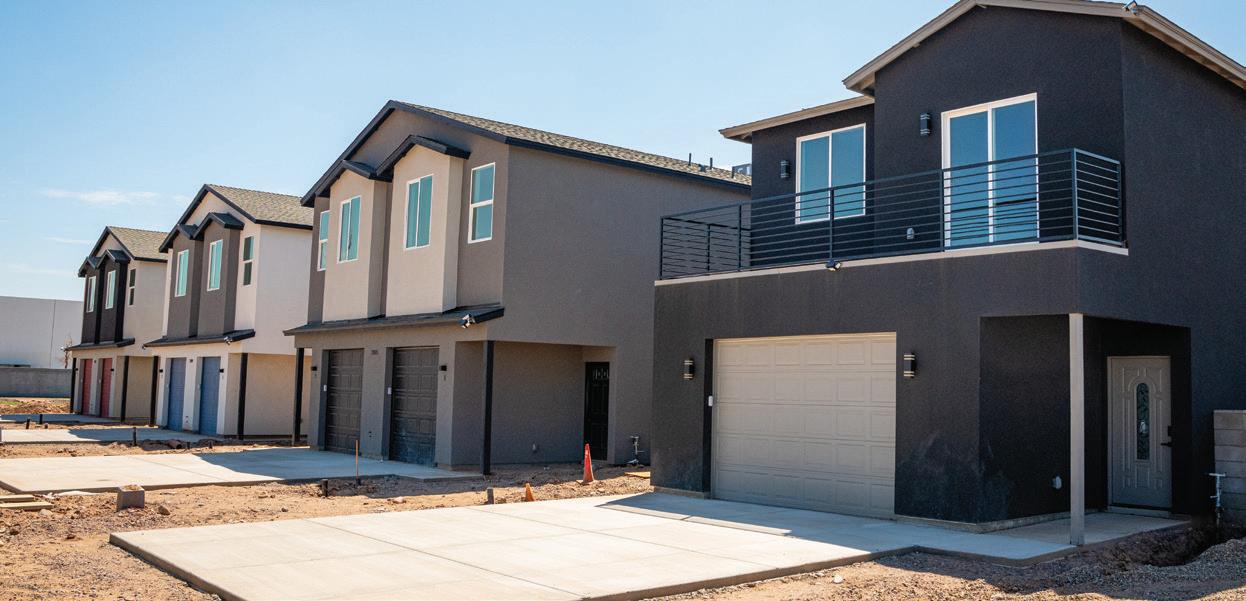
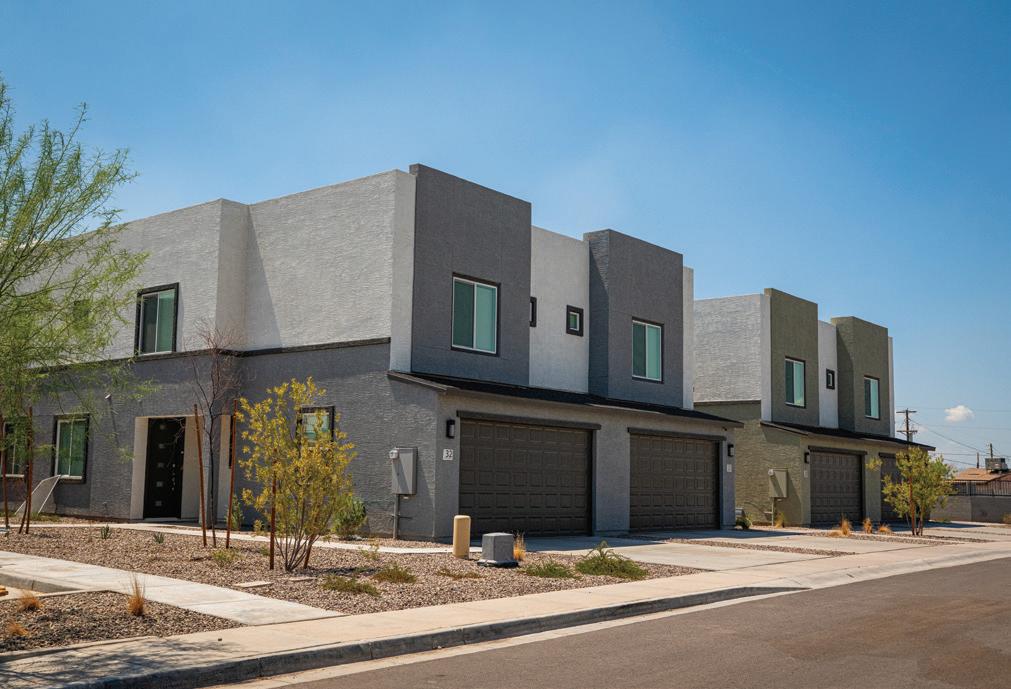
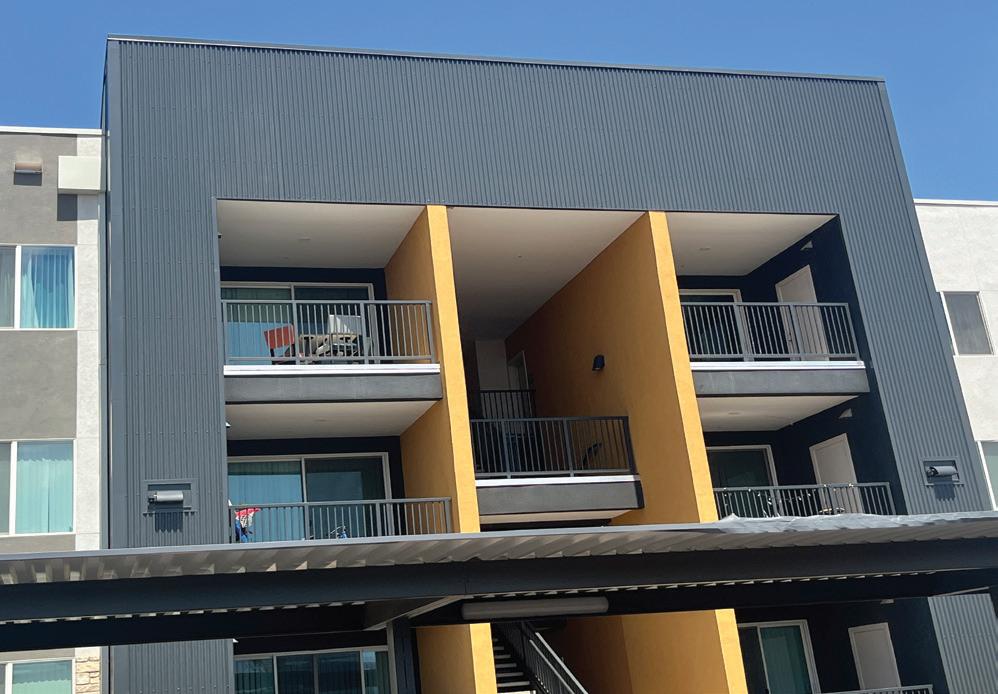
20% of Rio Salado District’s housing stock was built between 1960-1970, while 30% of the existing housing stock is over 60 years old.
In a city-led survey on future investments desired by the community within the Rio Salado District, the results showed that Mixed Use & Walkable Urban Neighborhoods tied with Affordable & Mixed Income Housing for the 10th most desired investments out of 39 investment options.





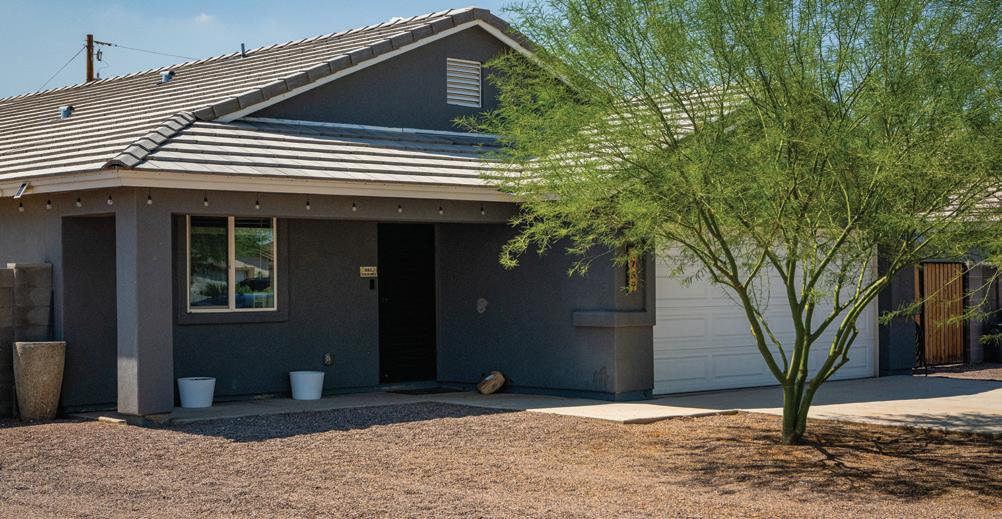
pay more than 1/3 of their household income on rent, slightly higher than the City overall (48.1%) pay over 1/2 of their household income on rent 1/2 of renters 1/3 of renters
Communities with diverse employment types and commercial activities are more resilient in the face of challenging economic times. They can provide opportunities for partnerships between businesses and the communities they operate in. The study area is a significant employment hub, with nearly 20,000 employees compared to a population of about 7,000.
Amazon - 380 Top 5 Employers (300+ Employees)
Apollo Group (University of Phoenix) - 1,800
Hamilton Sunstrand Collins Aerospace - 1,300
City of Phoenix - 620
Southwest Airlines - 530
Of the 6,800 residents in the Rio Salado District Area, 36.7%, are employed by 531 employers
Within the local labor pool (persons between 16-64 years old) 11% are unemployed (City: 3.9 %)
Of the Rio Salado District Area residents age 25+, 4% have a Bachelor degree or higher (City: 33.5%)
89.5% does NOT have a college degree (City: 31.4%), while 10.5% have an associates degree or higher (City: 30.6%)
The Rio Salado District’s top 5 employment types by number of employees are:
Quick Facts:
• 11% unemployment rate
• Local workforce has 2,513 residents
• 275 businesses specialize in MAG defined key industries
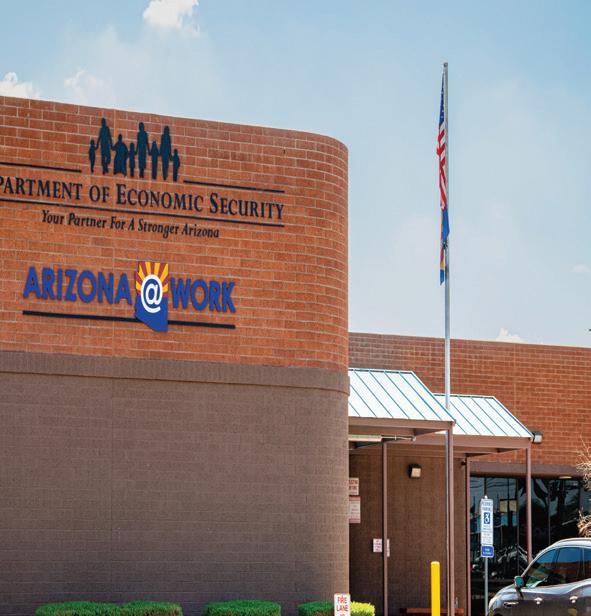
@ Work
Bloomberg Philanthropies


There are a total of 531 employers with a combined 20,000 employees. Several of these employers employ the majority of the District’s workforce.
275
Businesses specialized in key industries, as defined by Maricopa Association of Government (MAG) in the Rio Salado District
10,900
Individuals employed in key industries, as defined by MAG in the Rio Salado District
89% of employers have less than 100 employees, but account for 50% of employees in the District
79% of employers have less than 50 employees but only represent 32% of employees
32% Service Occupations
23% Sales and Office Occupations
20%
Management, Business Science, and Art Occupations
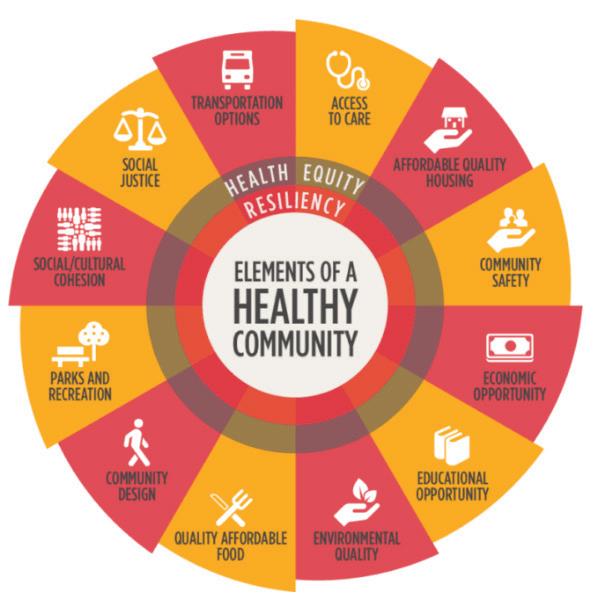
Having easy access to affordable clinics, grocery stores, and fitness centers is crucial for maintaining a healthy lifestyle. Families without nearby wellness options may put off medical care and health-promoting activities due to the time, cost, or safety concerns associated with traveling. This lack of access exacerbates health disparities, particularly in communities that have been historically underserved. Without these necessary services, people may feel more stressed and their health can suffer, making it hard for them to break this cycle of disadvantage. It’s essential to ensure that everyone has equal access to health and wellness resources to improve overall health.
Source: U.S. Census Bureau's 2020 Decennial Census
• There are no heat respite or city cooling stations in the District
• There are six urban parks in the Rio Salado District
• There is one grocery store and one mental health facility in the District
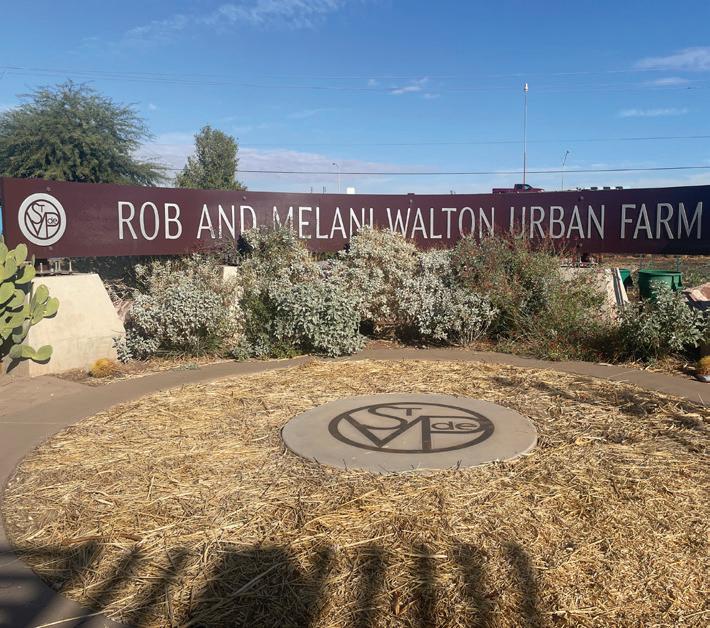
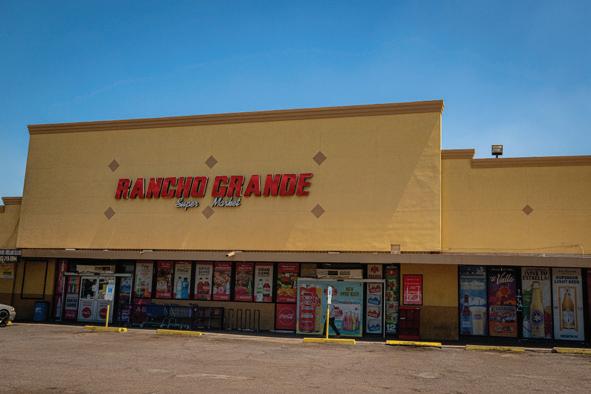
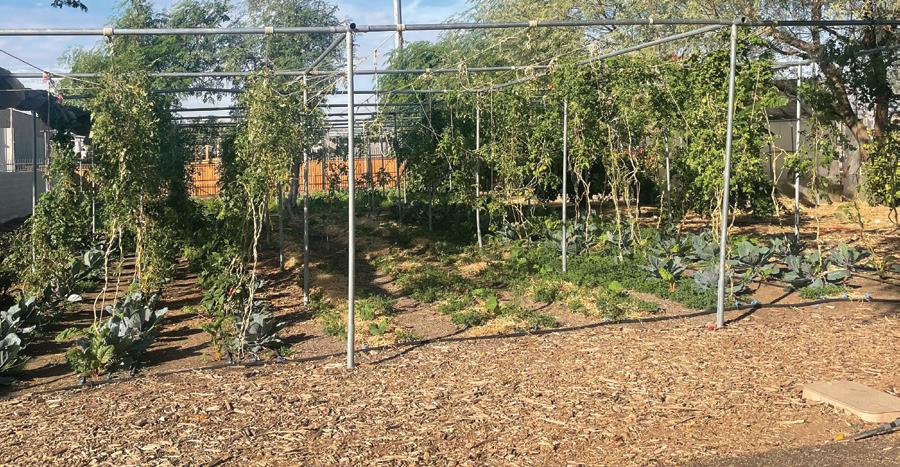
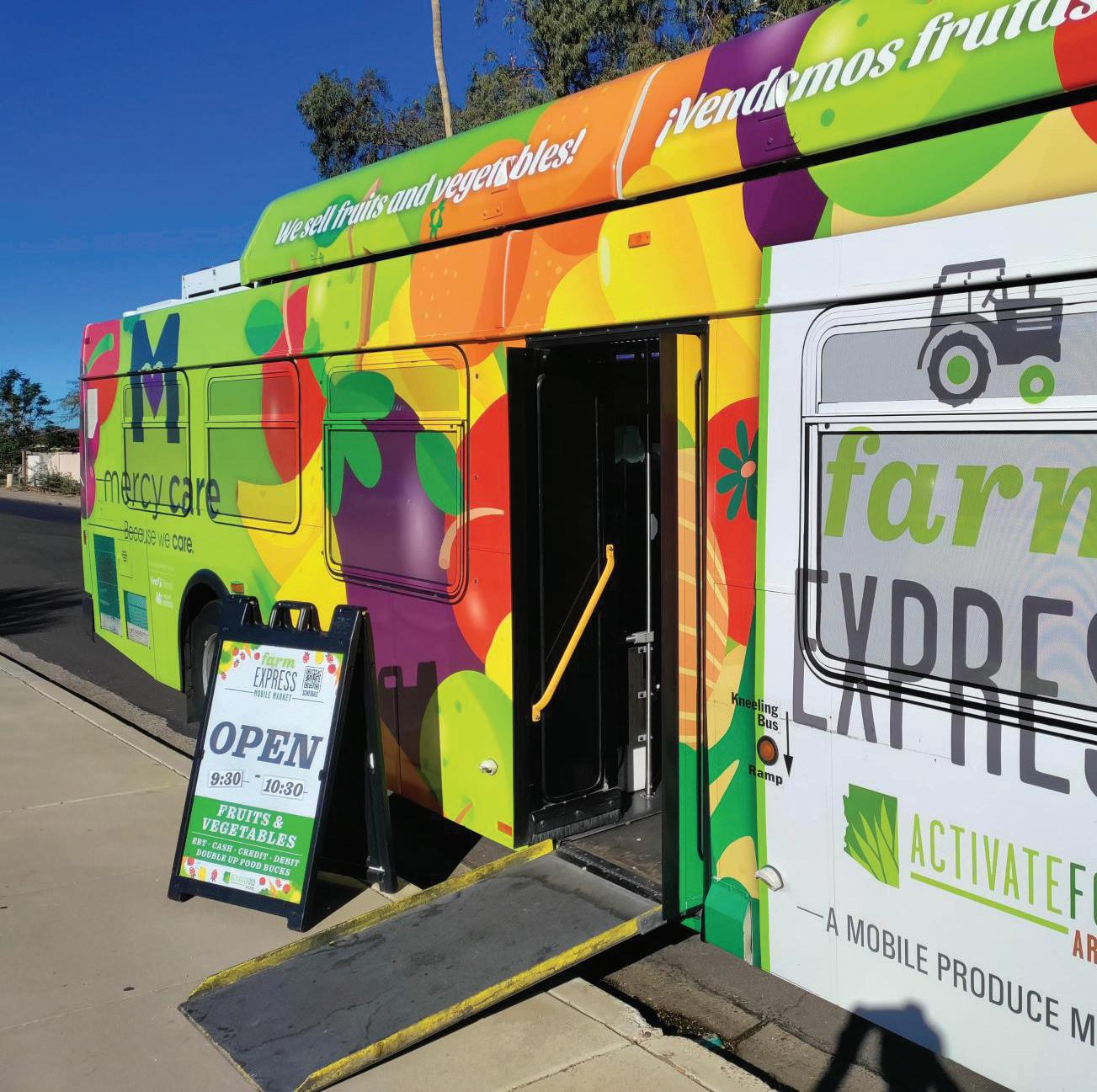
Most of the Rio Salado District is considered a food desert, as there is limited access to affordable healthy food. This lack of healthy food options can lead to serious health problems such as heart disease and type two diabetes. Rancho Grande is the only grocery store in the Rio Salado District, located at the northeast corner of Central Avenue and Broadway Road. To help with this problem, community gardens such as the St. Vincent De Paul Urban Farm and Gardens of Tomorrow, provide access to fresh food in the area.
Food Desert: low-income areas more than 1-mile from a supermarket
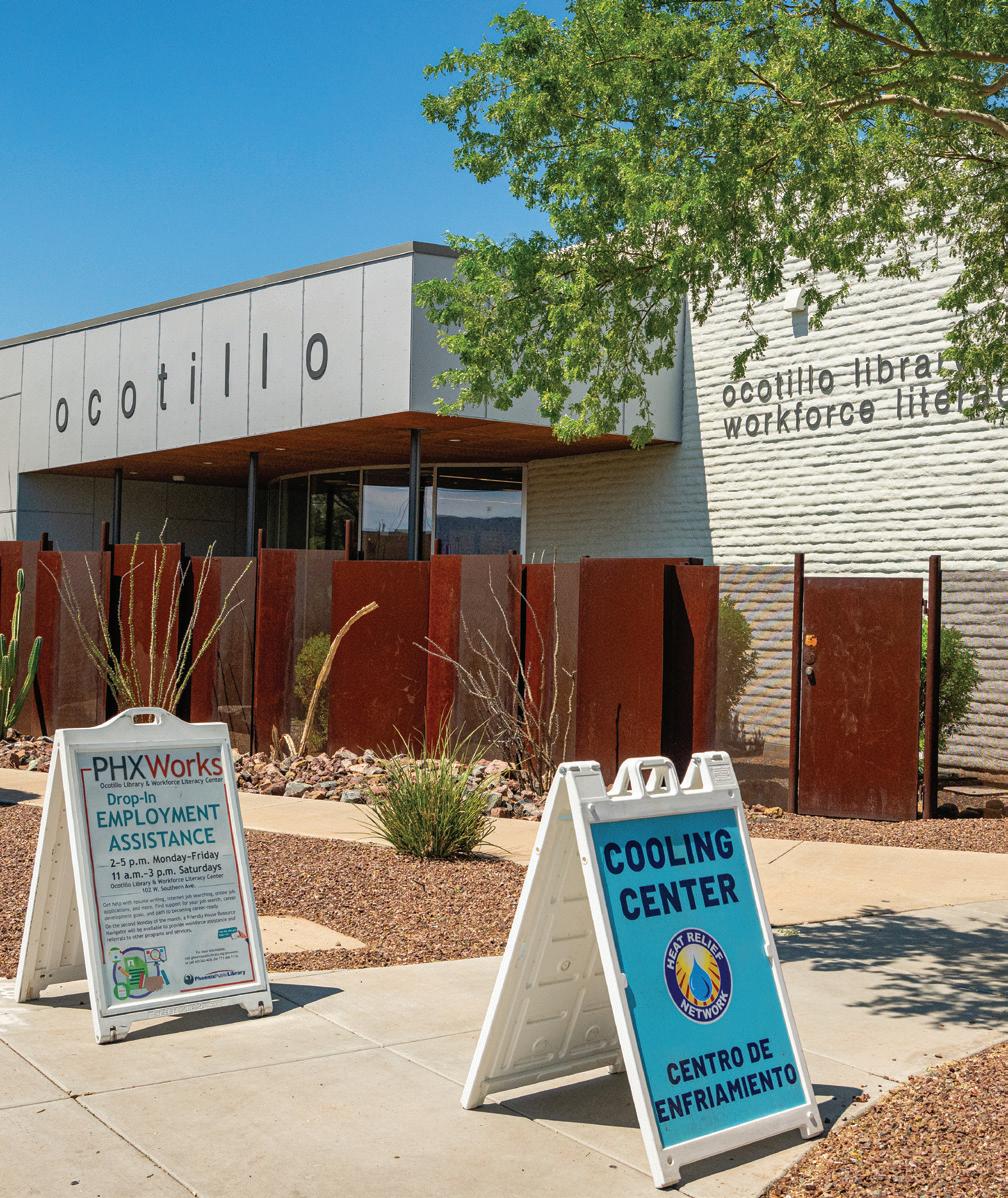
The high temperatures in Phoenix can cause heat-related illnesses and deaths. In 2023, Maricopa County (AZ) experienced its highest number of heat related deaths, 645, and 2024 saw the first decrease in over a decade, down to 608 deaths. While there are no heat respite or cooling centers in the Rio Salado District, there are two nearby public libraries (Harmon Library and Ocotillo Library) within a mile of the district boundary that serve as cooling centers.
Cooling Stations/Center: Designated, airconditioned spaces where individuals can escape extreme heat. These centers help prevent heat-related illnesses, particularly for vulnerable populations.
Hydration Stations: Provides free water and cooling resources to help vulnerable populations to stay hydrated during hot weather. They aim to prevent heatrelated illnesses in the community.
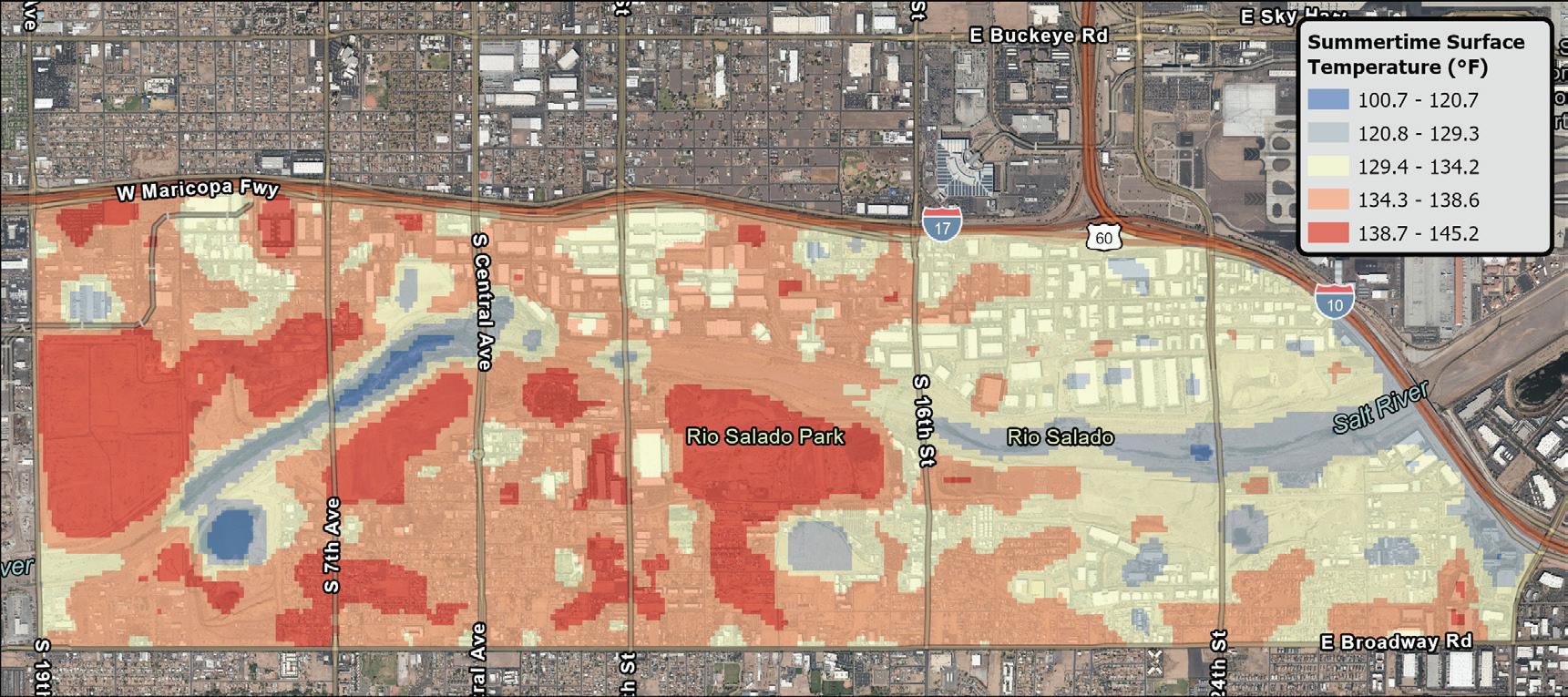
The surface temperature imagery below represents the median surface temperature for summertime (June, July, and August) in 2025. The image below illustrates large areas within the study area with surface temperatures ranging from 134.3°F to 145.2°F (some surfaces get even hotter at around noon). These areas are generally bare, lacking vegetation, and directly exposed to the sun’s radiation.

Like most of Phoenix, the street grid in the Rio Salado District was designed largely for the movement of goods and people in automobiles. While various street types including local, collector, and arterial streets, serve diverse wheeled vehicles, these also serve public transit vehicles such as buses and the newly opened light rail line along Central Avenue. Sidewalks provide mobility options for pedestrians, while bicycle lanes move people in bikes.
The Rio Salado District is uniquely characterized by having an existing or planned network of scenic drives that are parallel to the north and south banks of Rio Salado Habitat Restoration Area. The Rio Salado District Policy Plan proposes pedestrian and bicycle infrastructure enhancements along these scenic drives and other streets. Furthermore, current initiatives such as the Active Transportation Plan and programs such as the Phoenix Connected Active Neighborhoods (PhxCAN) promote improved bicycle and pedestrian infrastructure in the area for increased mobility options. The Chilled Drinking Water initiative can also promote active transportation projects, in addition to shade.
The Rio Salado District largely follows the traditional street-grid network that characterizes Phoenix, but with four significant disruptors. Interstate 10 and 17 are two major freeways that border the Rio Salado District along the north and western boundaries. Former landfills and inactive mining pits along the banks of the Rio Salado present mobility barriers for residents and employees. The Salt River itself limits the north-south access across the districts to six bridges located on arterial streets. The lack of shade along many of the streets in the District challenges pedestrians, bicyclists, and transit users who are exposed to high temperatures during the hotter months of the year. The Cool Corridors program launched by the Street Transportation Department intends to plant trees in targeted transportation corridors to promote safety and provide relief from high temperatures.
• 5% of District residents commute by public transit, biking, or walking
• There are 0.75 motor vehicles per person 18 years of age or older
• There are 3 HAWK (High Intensity Activated Crosswalk) signals in the District
Central Avenue and Broadway Road Source: Bloomberg Philanthropies
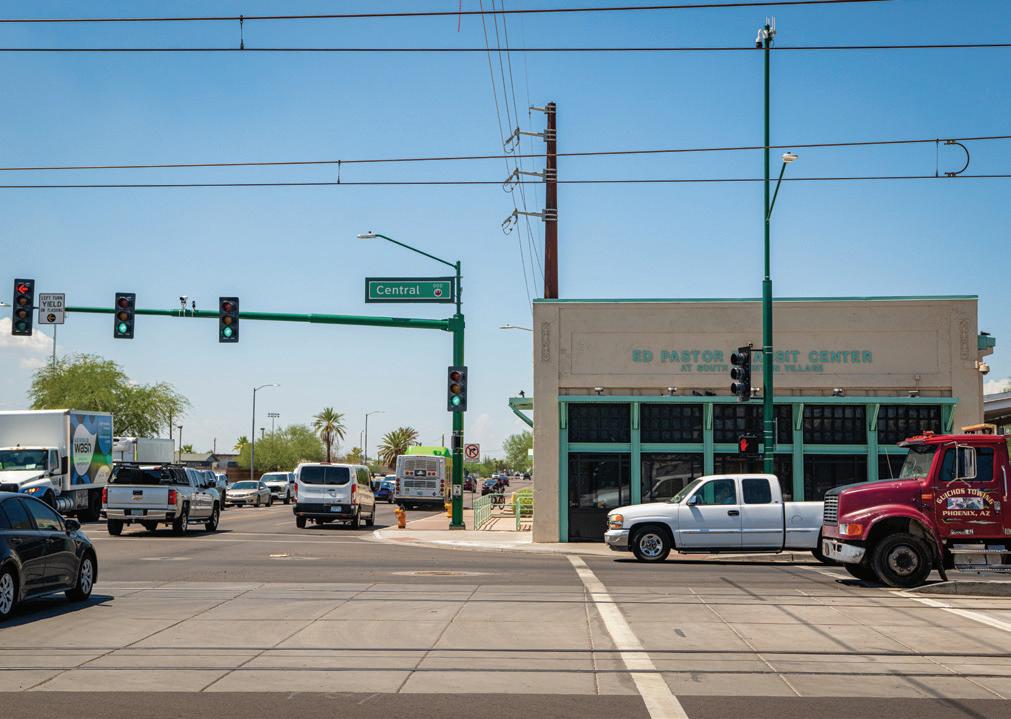
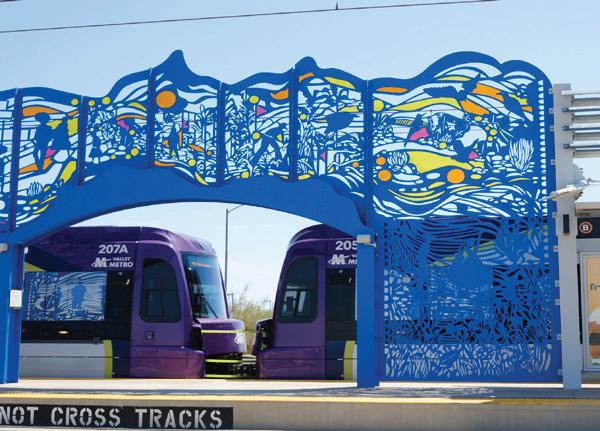
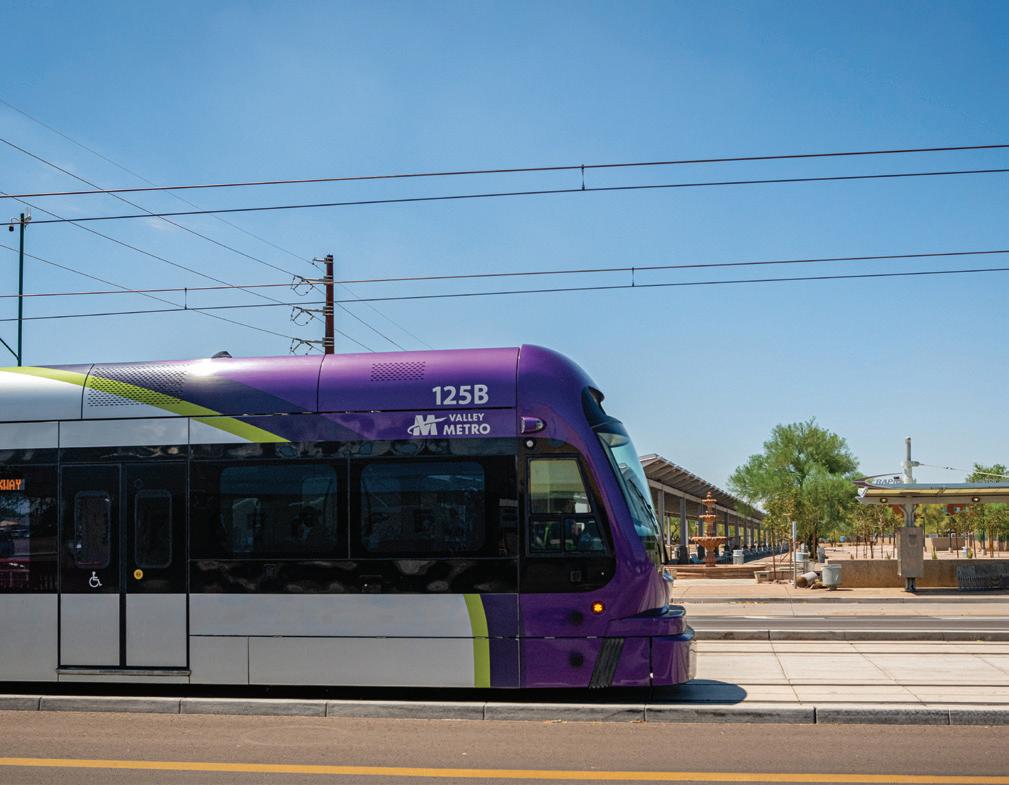
Residents of the Rio Salado District have access to one light rail station at Central Avenue and Pioneer Street, with a second station near Central Avenue and Broadway Road. The Ed Pastor Transit Center at Central Avenue and Broadway Road enhances the experience for bus riders with amenities like benches, water fountains, and public art. Connecting a commuter’s origin or destination to a transit node is key to improving urban mobility, in addition to overcoming other challenges such as incomplete sidewalks, bus stops without shelters, lack of shade and wayfinding on public streets
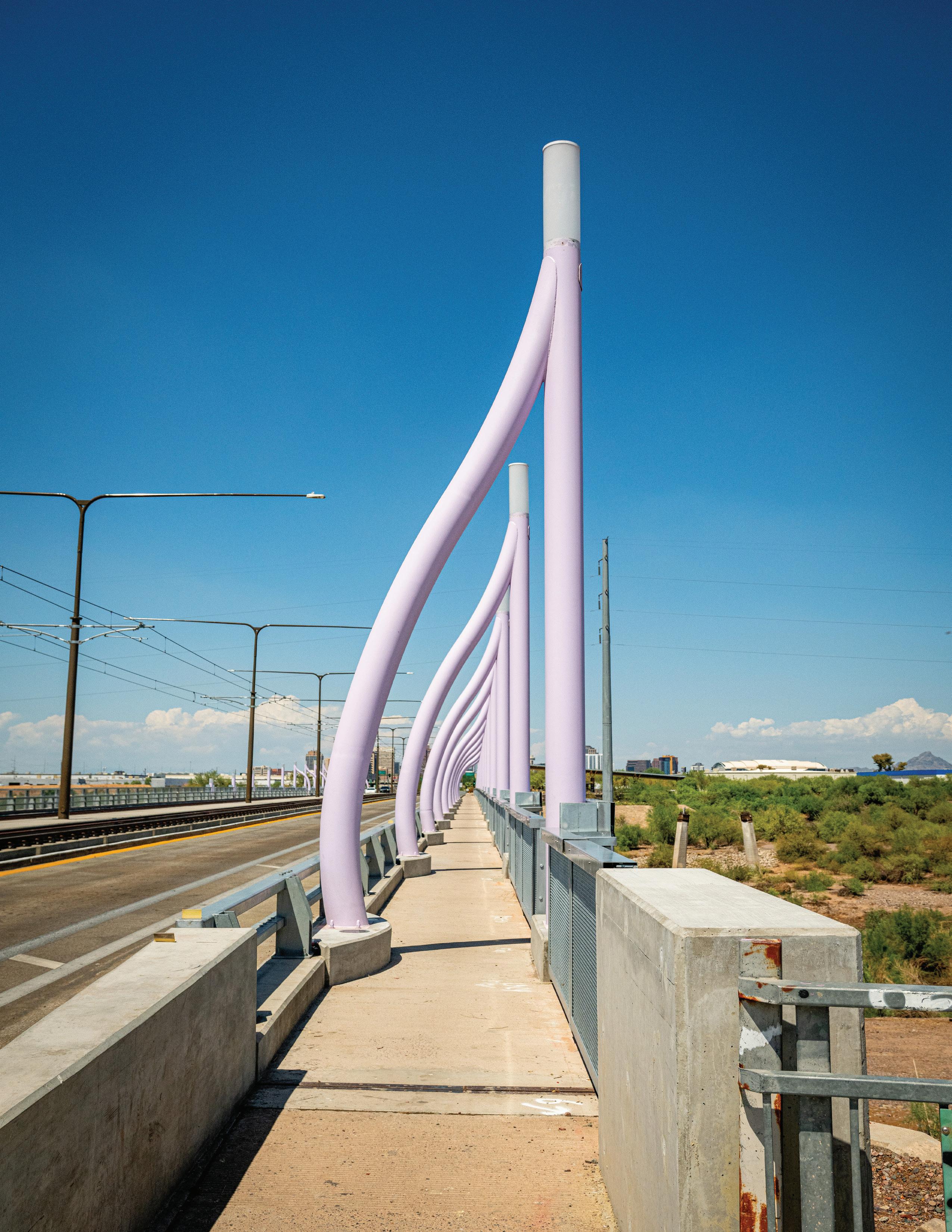
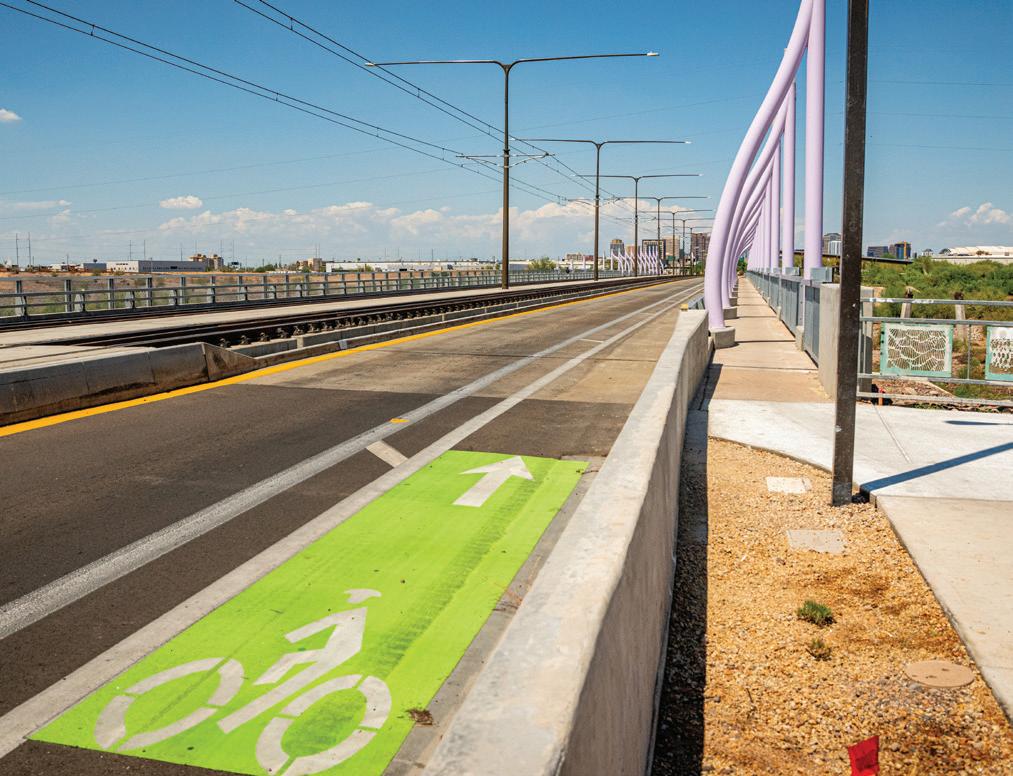
There are 8.5 miles of existing bicycle lanes, primarily located on north-south arterial roads, with plans to expand east-west through future projects that include 5.5 miles of bicycle lanes on Broadway Road. The City’s micromobility program currently serves the Rio Salado District west of 20th Street, providing shared scooters as a convenient option for the first and last mile connections. A major pedestrian and bicycle infrastructure project in the Rio Salado District is the 3rd Street Bicycle and Pedestrian Bridge that will connect the north and south bank of the Rio Salado along the 3rd Street alignment.
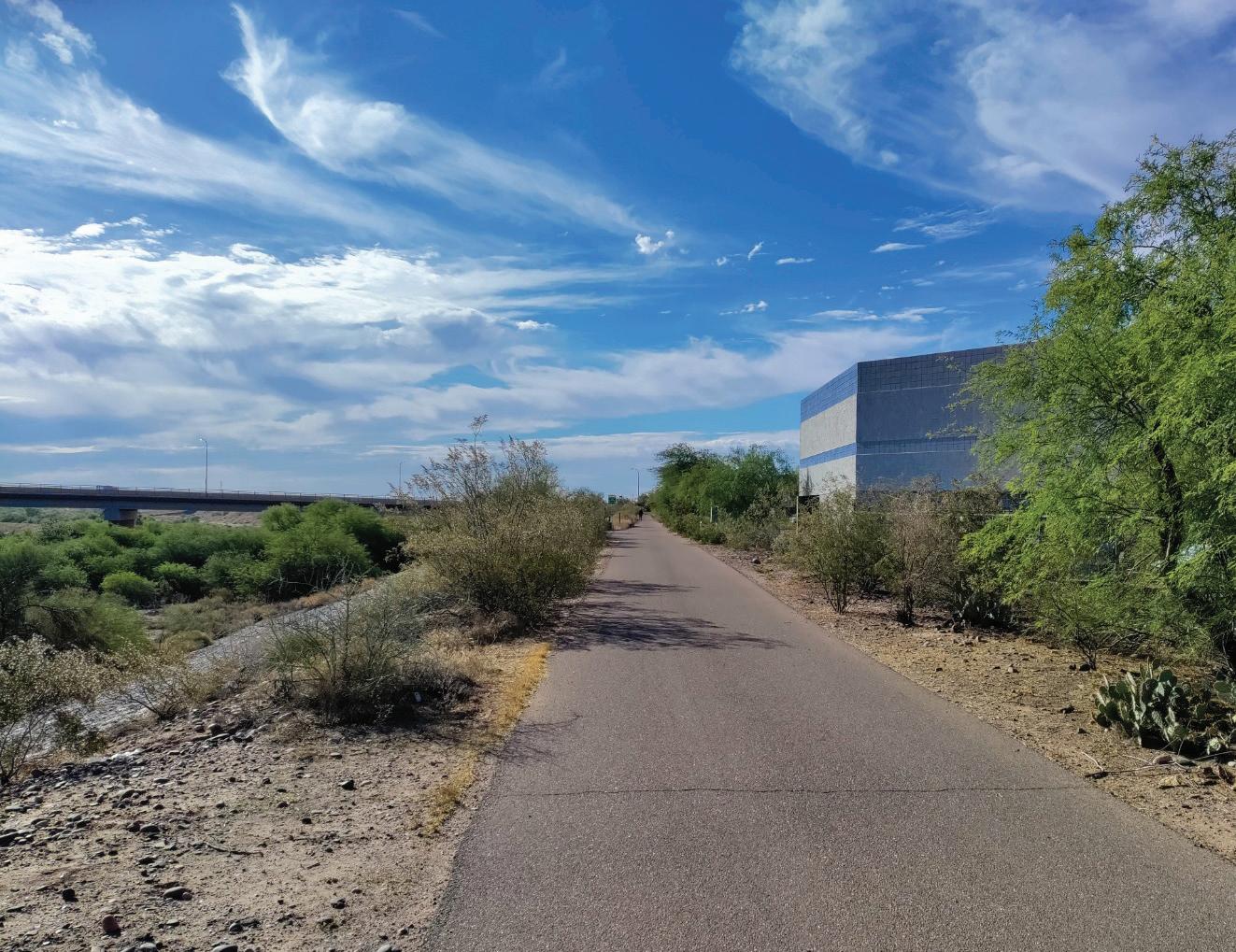
There are approximately 17 miles of public trails in the Rio Salado District, primarily along the banks of the RSHRA. The 3rd Street Bicycle and Pedestrian Bridge project envisions pedestrian improvements between Central Avenue and 40th Street, along the south bank trail. Additional trails and paseos, including those envisioned along north-south thoroughfares, can be planned and built over time to improve connectivity in the area and to the river.
Overview
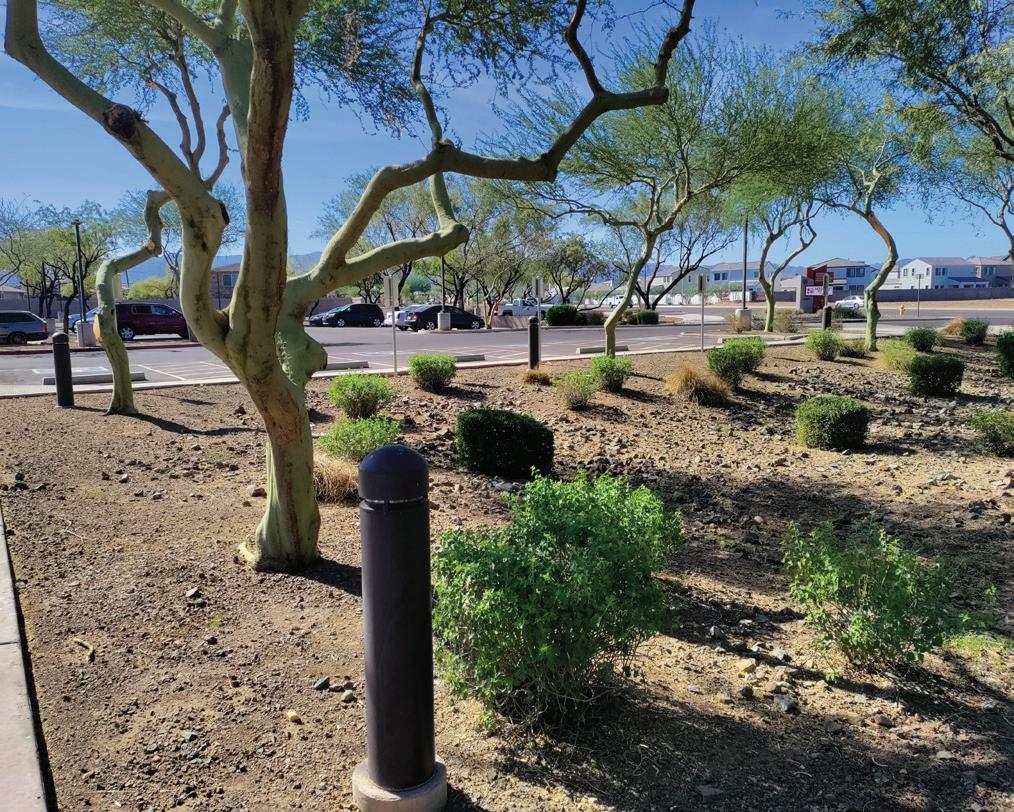
Green systems are built environment techniques designed to work in harmony with nature, creating more resilient communities. Common examples of green systems are vegetated swales or rain gardens, permeable pavement or pavers, and natural or engineered shade. Supporting “green businesses” that can develop these green systems provide an opportunity to create a circular economy and innovative sustainable solutions.
Green Stormwater Infrastructure (GSI): Measures designed to work with nature, the water cycle, and the environment to manage stormwater runoff, and achieve other co-benefits.
Benefits of GSI:
• Mitigate localized flooding
• Reduce UHI effect
• Improve localized air-quality
• Reduce supplemental landscape irrigation and support native vegetation
Quick Facts:
• Tree coverage ranges from 3-10% in the district, while the city as a whole has 11% coverage
• Surface temperatures can reach 151°F in the summer
• Single-family homes account for 51% of water use in the City of Phoenix (not including agriculture)

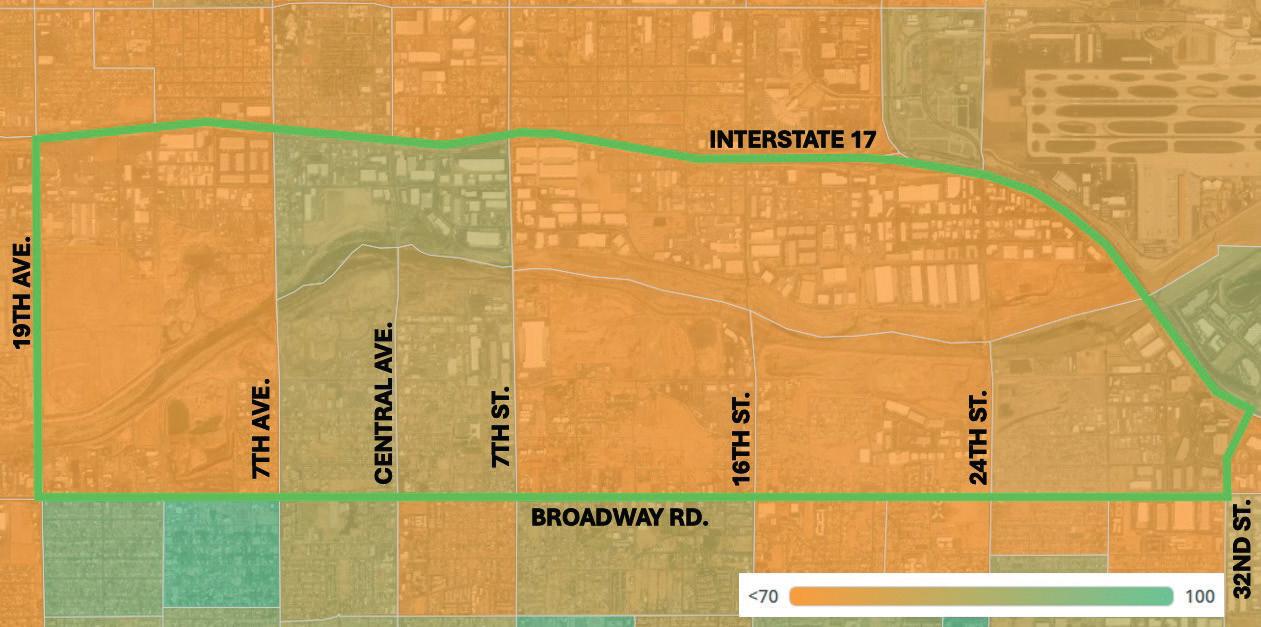
The above Tree Equity map shows tree equity in the Rio Salado District, indicating a tree equity score range from 66 to 72 (out of 100), and a tree coverage ranging between 3% and 10%. The average City of Phoenix tree equity score is 86, while tree coverage is estimated at 11%.
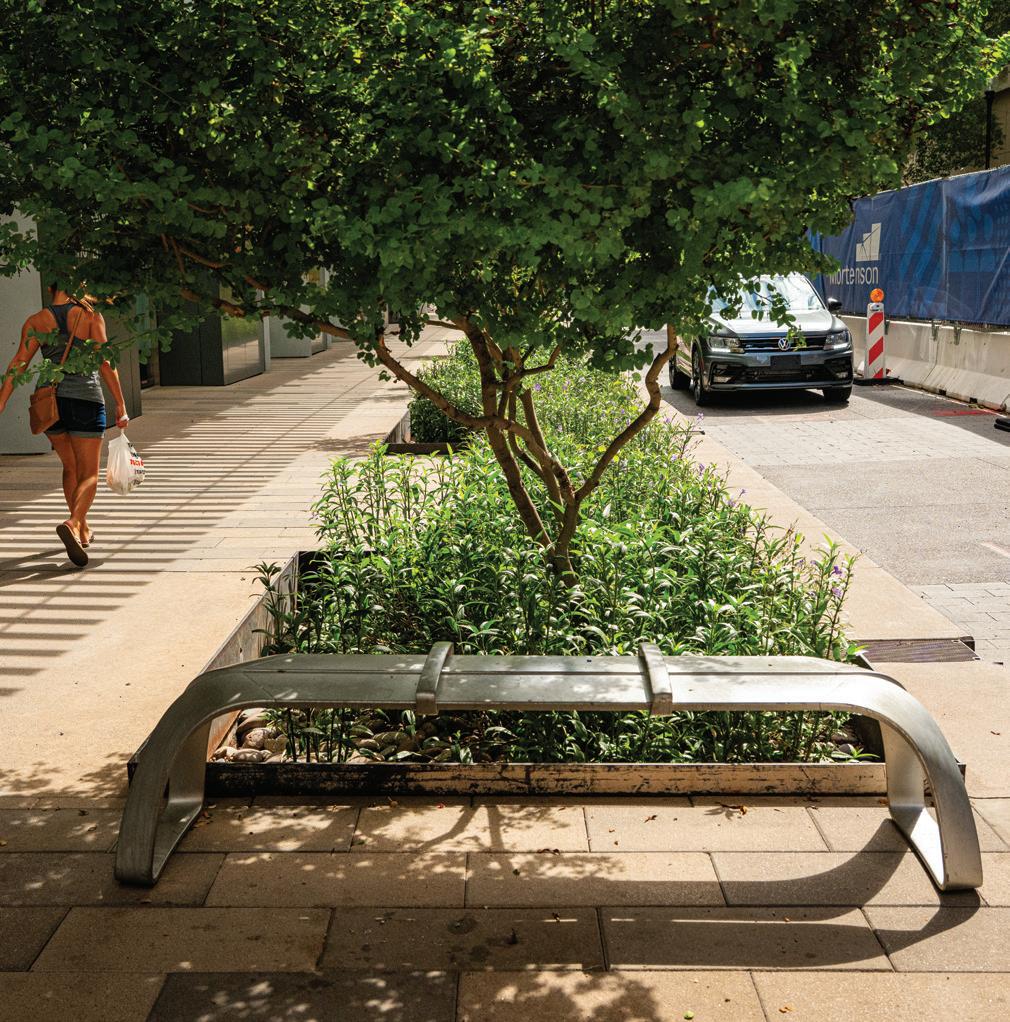
Green stormwater infrastructure (GSI) is one solution to growing the city’s tree canopy. GSI utilizes techniques that captures water where it falls for multiple co-benefits, such as air and water quality improvements, reduction in localized flooding, urban heat-island effect reduction, and use of non-potable water for landscape irrigation to support the natural environment.
Urban Heat Island (UHI): Areas paved with asphalt that can store heat, resulting in higher surface temperatures.
UHI ”Hot spots” include areas where exposed pavement and building materials absorb solar energy.

This chapter outlines the long-term aspirations for the Rio Salado District area, shaped through a comprehensive community engagement process. It highlights the desired conditions envisioned by stakeholders and the community for 2050—a 25-year horizon.
The vision incorporates the six essential planning elements: land use, housing, economic development, health, mobility, and green systems.
This vision is driven by the community desire to promote vibrant mixed-use developments, ensuring diverse and affordable housing options, enhancing mobility, advancing public health, bolstering local businesses, and increasing access to green spaces.
This chapter outlines a strategic framework for development and policymaking, ensuring alignment with the community’s goals.
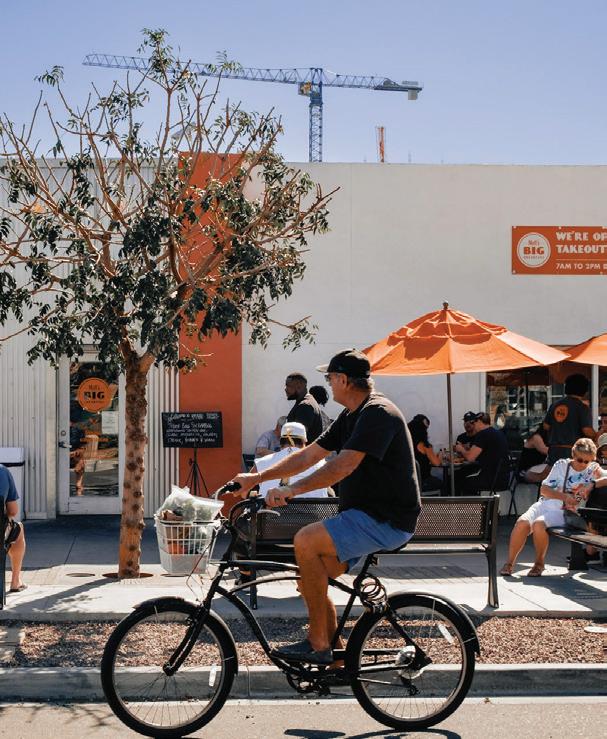
The Rio Salado District is envisioned as a vibrant community that offers diverse opportunities for active living, working, shopping, recreation, and entertainment for people of all ages and incomes. Shaded and safe streets make for walkable corridors that connect neighborhoods to local shops, schools, public green spaces, and other destinations such as the RSHRA, to support healthy lifestyles. The area offers diverse and affordable housing options within walking distance of public transit, daily services, and job opportunities.
The area is celebrated as a hub for economic growth, where small and medium-sized businesses thrive in new green industries, and where local entrepreneurs choose to start their business. An abundance of art and cultural events draw locals and visitors to the area, supporting a growing eco-tourism industry. The RSHRA is located at the heart of the Rio Salado District. It serves as a gathering place where individuals, couples, and families come to enjoy its natural beauty, public art, and cultural activities year-round.

1
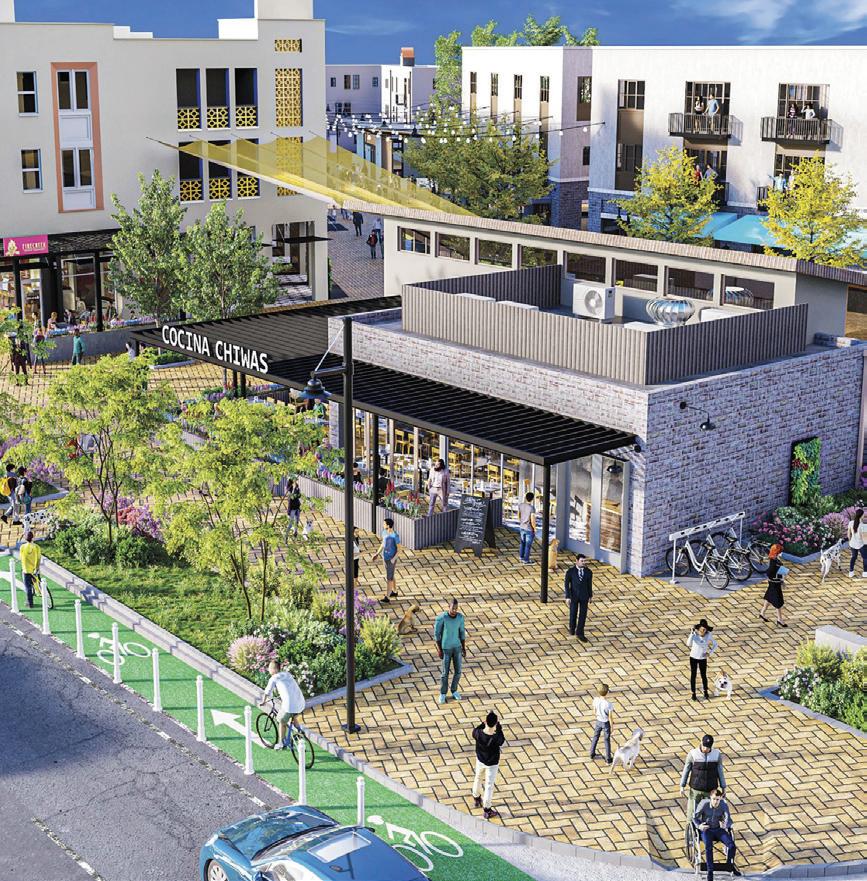
Establish a Vibrant Mix of Uses
2
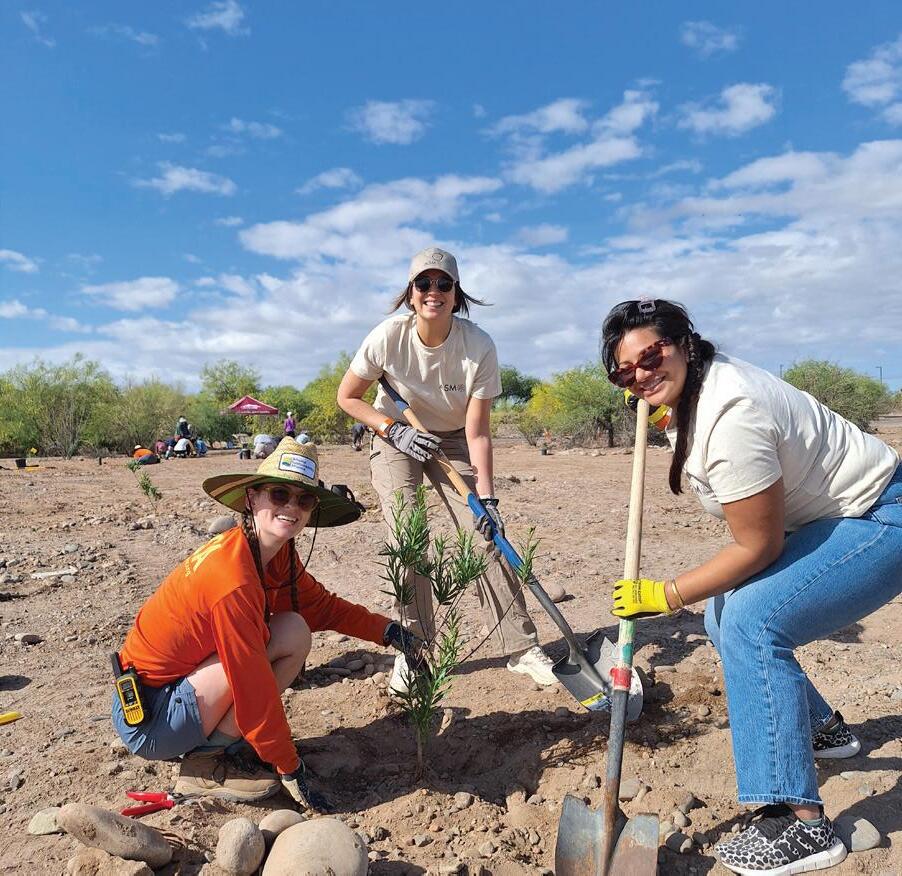
Connect Residents and Visitors to the Rio Salado
Following the planning process, four themes or “big ideas” emerged to influence the vision of the Rio Salado District for a healthier, vibrant, and well-connected area. Part Four (How We Get There) of the policy plan describes each big idea in more detail.
4
Establish a Hub for Eco-Tourism and Green Infrastructure
3
Improve Community Well-Being and Quality of Life
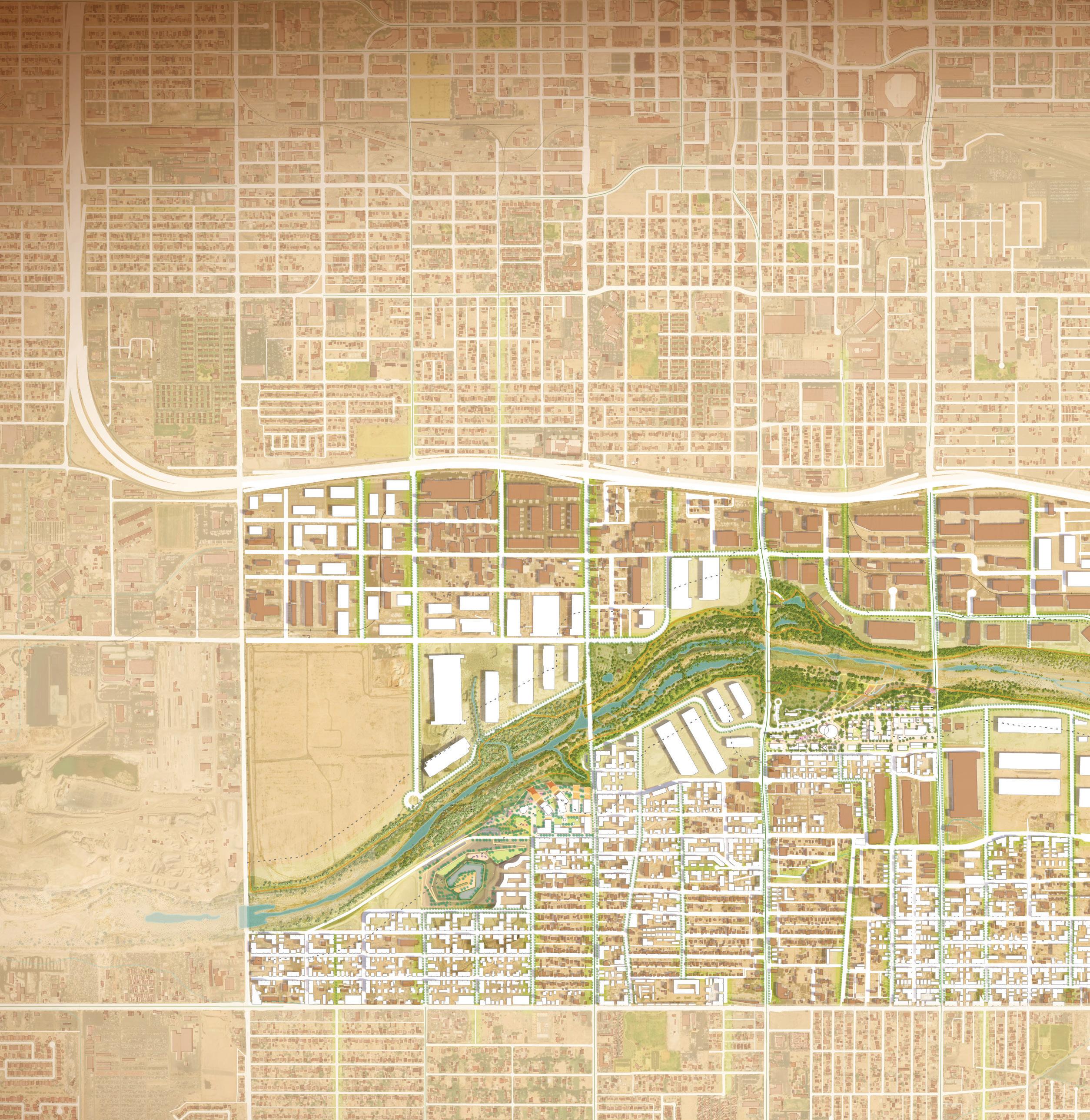
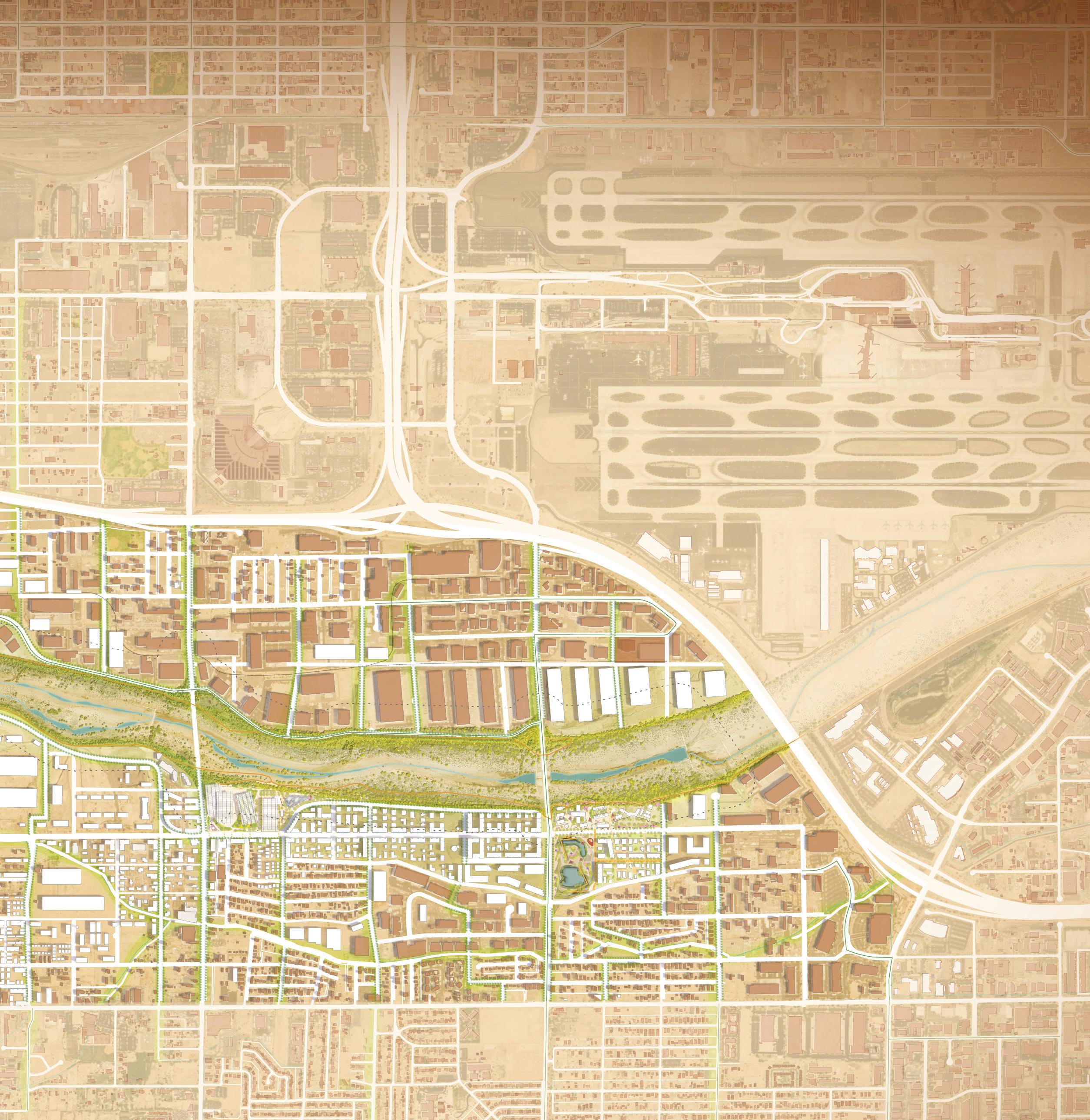
The community-led vision for the Rio Salado District is centered around the protection of existing neighborhoods, continued habitat restoration in the Rio Salado, and incremental build-out of vacant spaces with an ‘active’ mix of uses at various building scales.
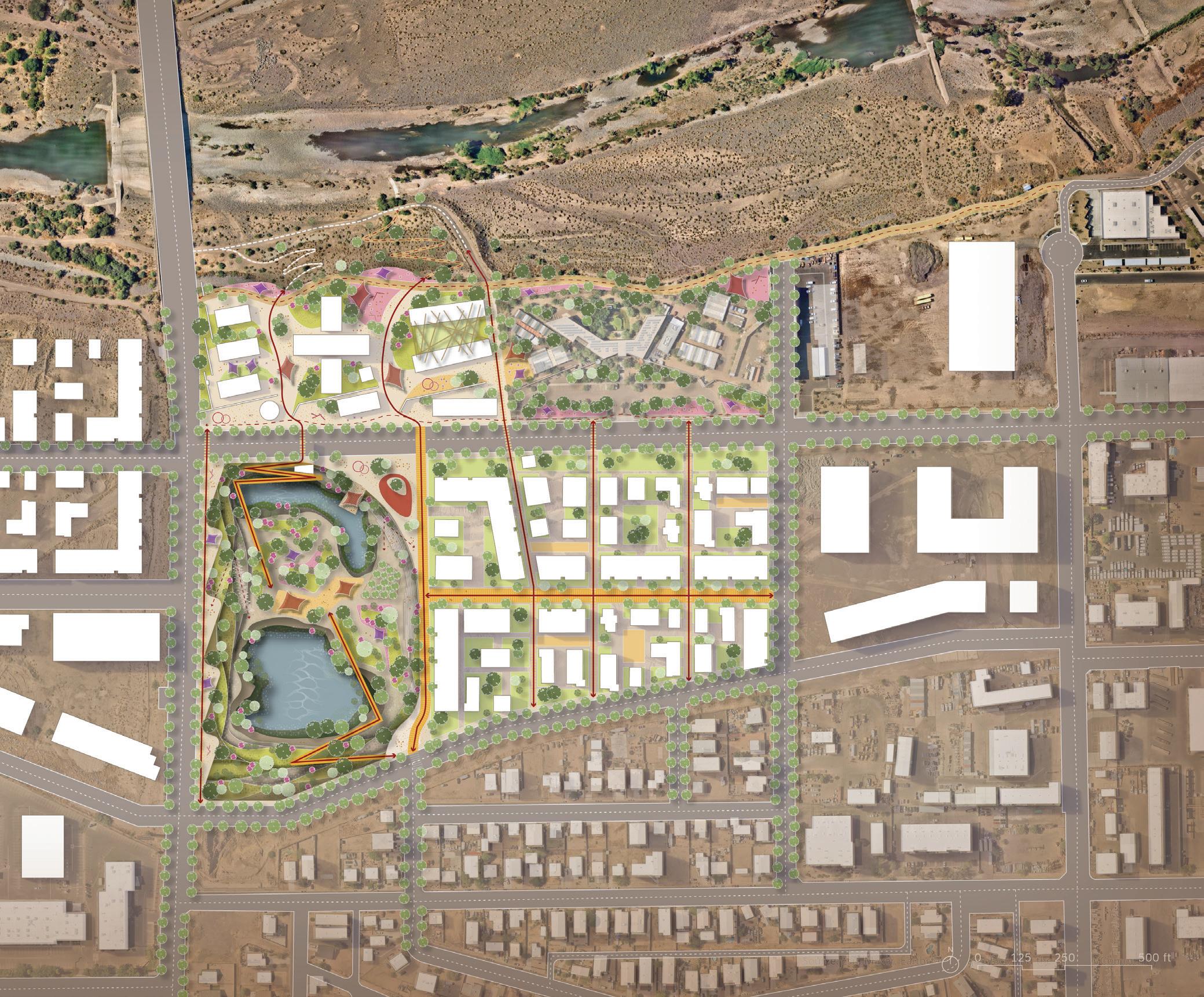
The vision illustrates both active development projects by private developers and conceptual development of key sites as inspiration for how the area can be developed gradually over time to achieve the community vision.
This vision also illustrates conceptual build-out of streets, paseos, and other corridors in the Rio Salado District, as it is important to support a walkable street grid for alternative mobility options, while reconnecting existing neighborhoods to the RSHRA.
The illustrative master plan is intended to inspire future development and projects in the area, and is not intended to depict exactly how the area will be built out over time.
Road
The Rio Salado District is envisioned as a vibrant community with a wide range of options for housing, active living, working, shopping, recreation, and entertainment for people of all ages and incomes. This area is also celebrated for its ‘green’ walkable corridors that connect vibrant destinations, including small businesses, unique landmarks, neighborhoods, and the RSHRA located at the heart of the district. This plan recognizes that the development of catalytic sites and other projects is key to achieving the plan’s vision.
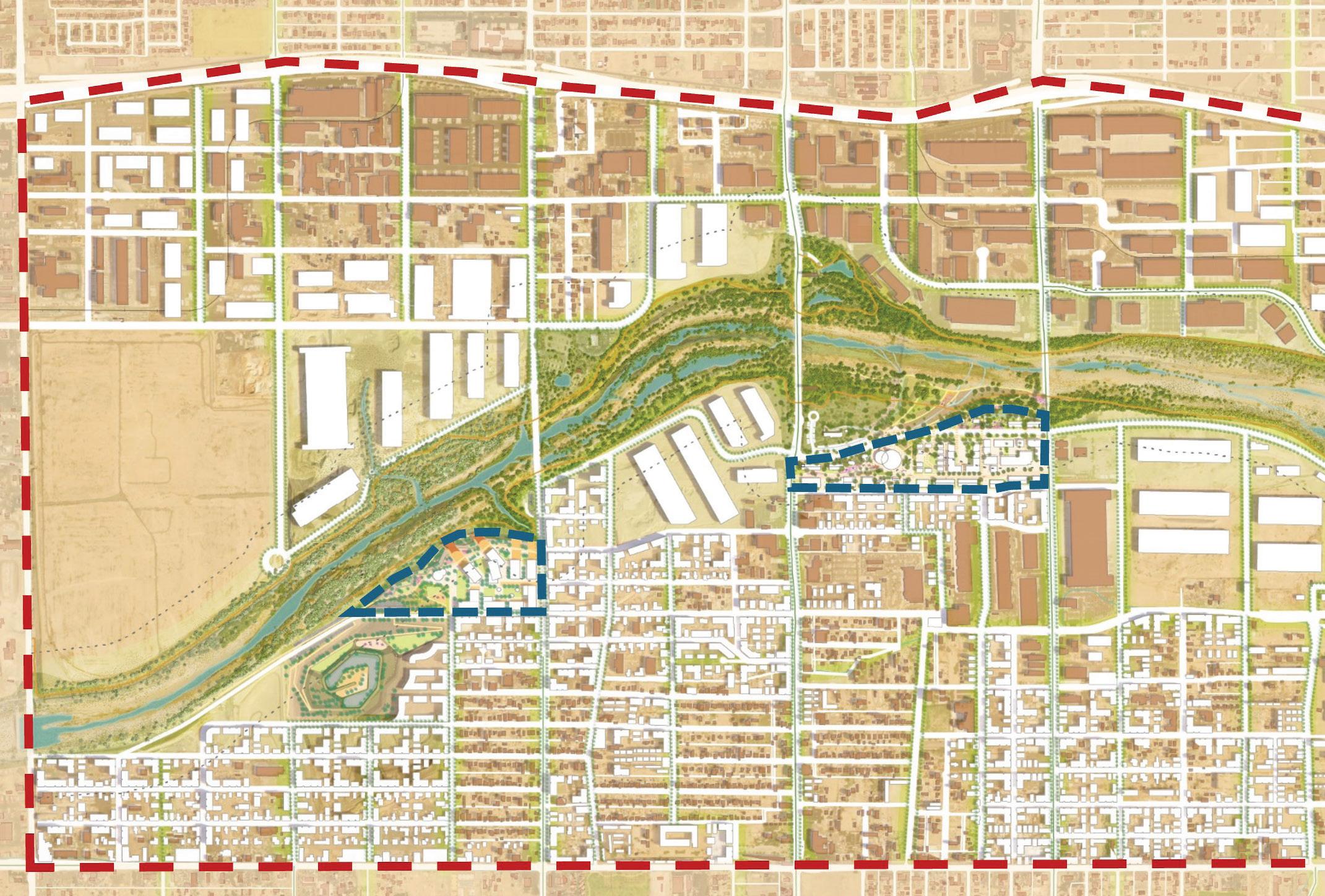
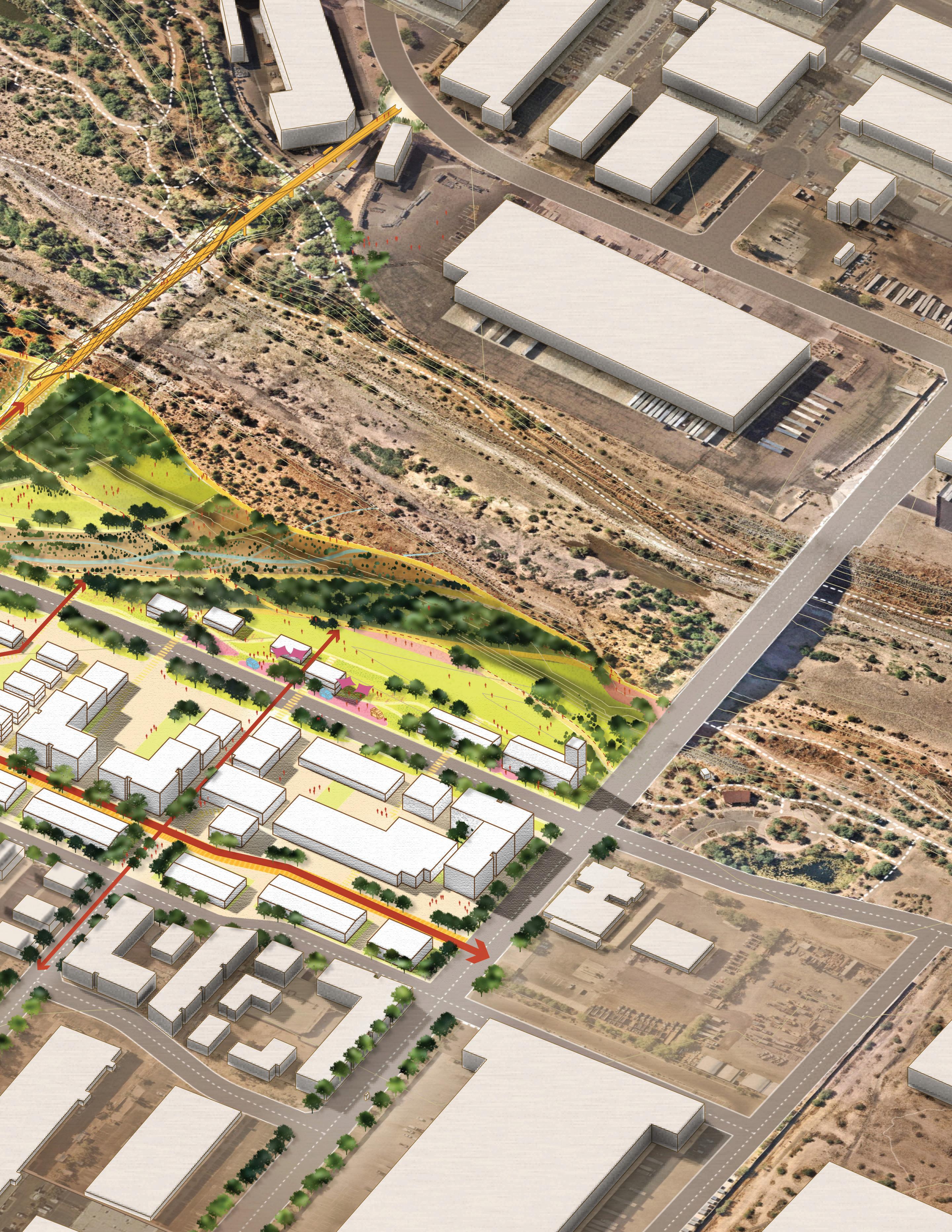
7th Avenue. Perched above the RSHRA, this site is envisioned as a thriving mixed-use campus with uses that could include biomedical laboratories, educational institutions, and other employment uses. Multi-family residential uses could complement employment uses here and provide housing units for workers or students. This site presents an opportunity to rediscover and explore the western reach of the RSHRA.
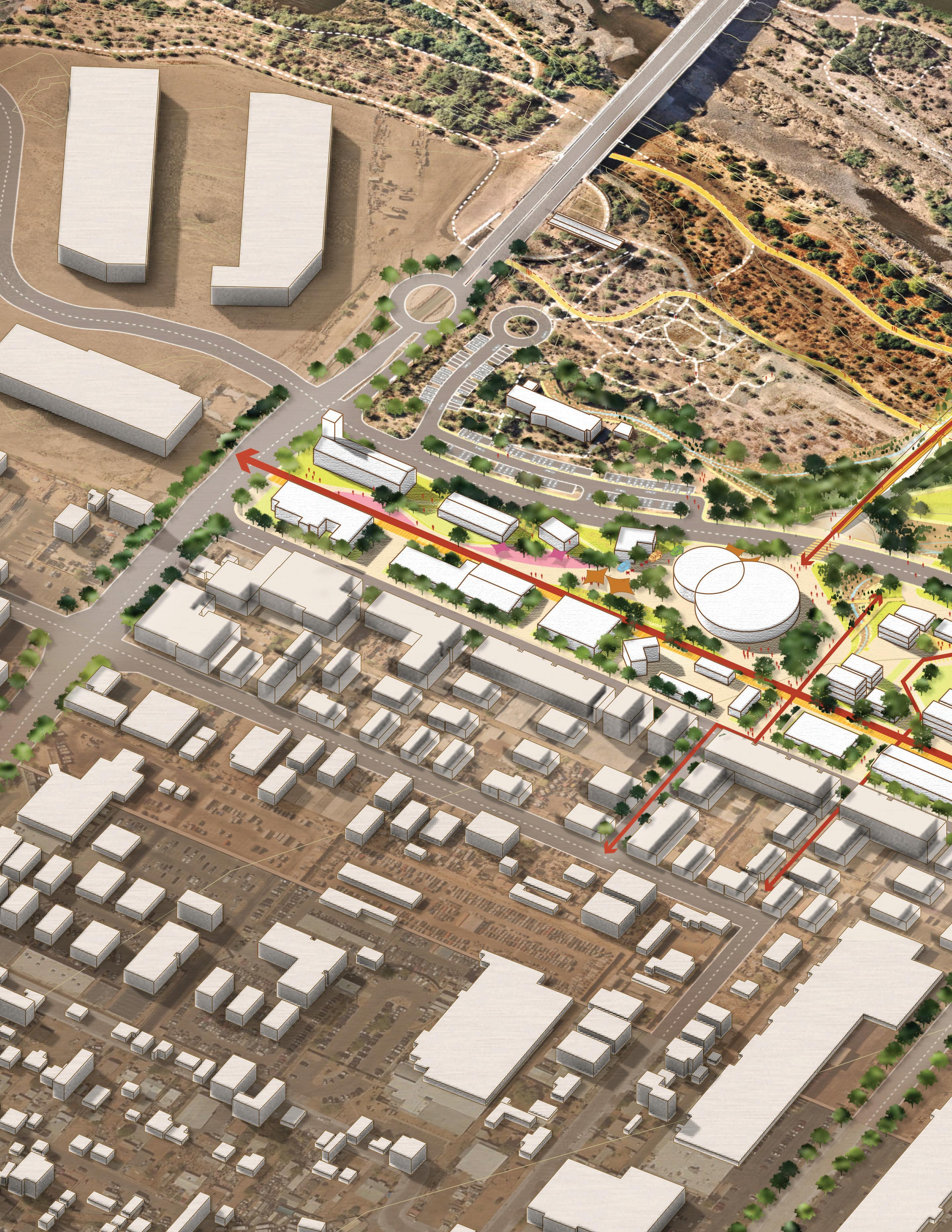
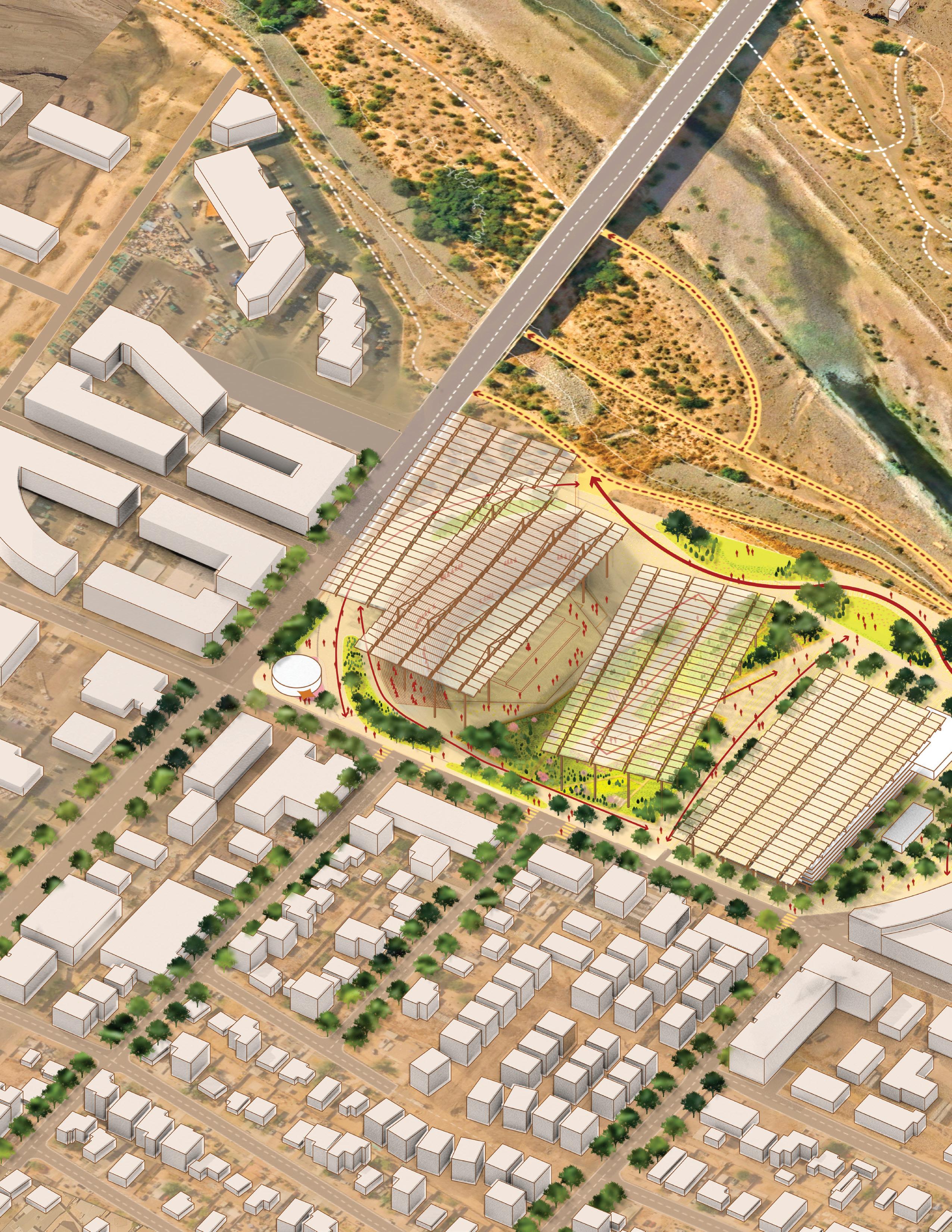
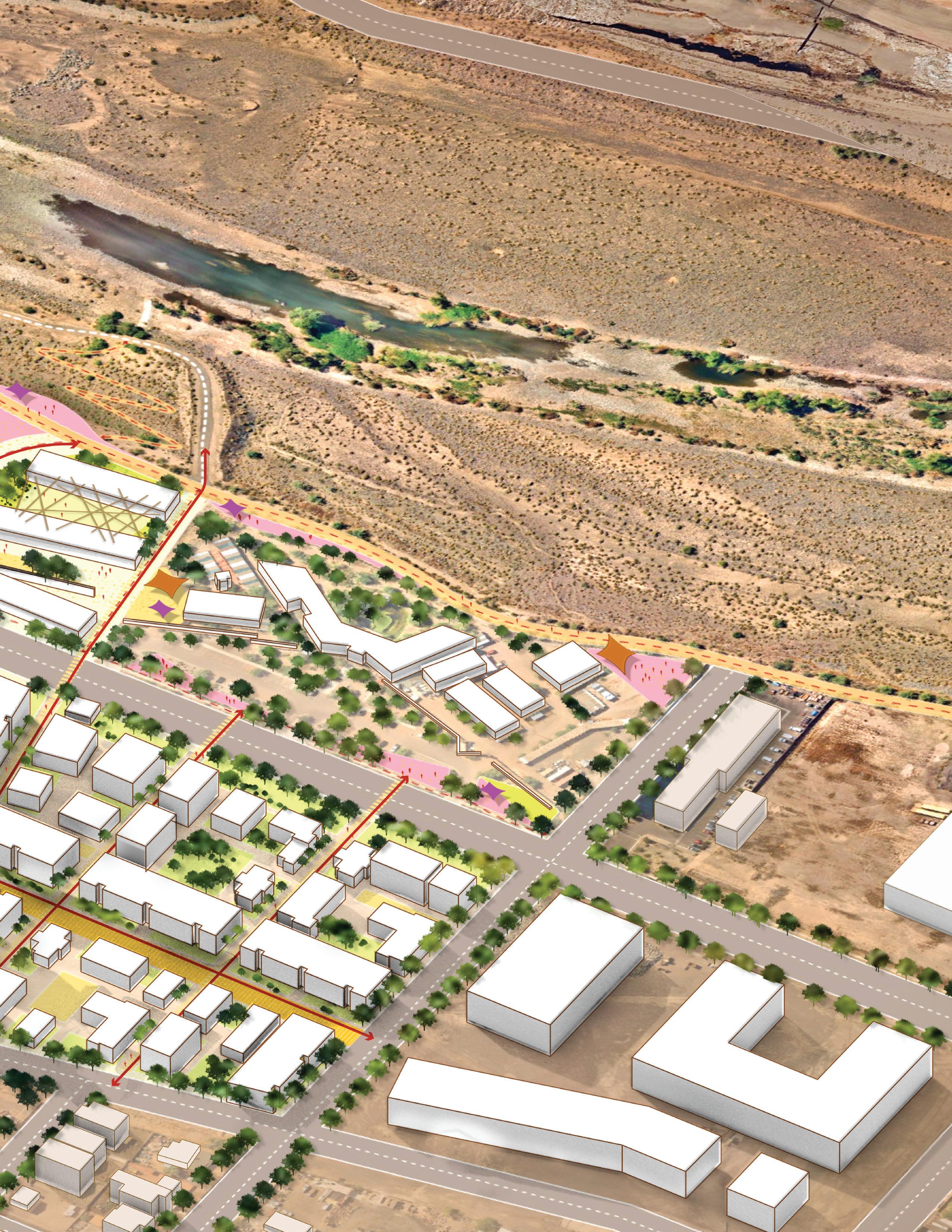
Central Avenue. Located adjacent to the most active and visited reach of the RSHRA, this site is uniquely positioned at the junction of a light rail station, RSHRA, and a future pedestrian and bicycle bridge. As a gateway for visitors and a celebrated corner of the RSHRA by residents, this site is envisioned as a vibrant mixed-use community with businesses and a multi-purpose community building and plaza. By cultivating a respectful coexistence of urban densities and life in the ecological corridor, this site presents an opportunity to foster an “arts, culture, and nature” district.
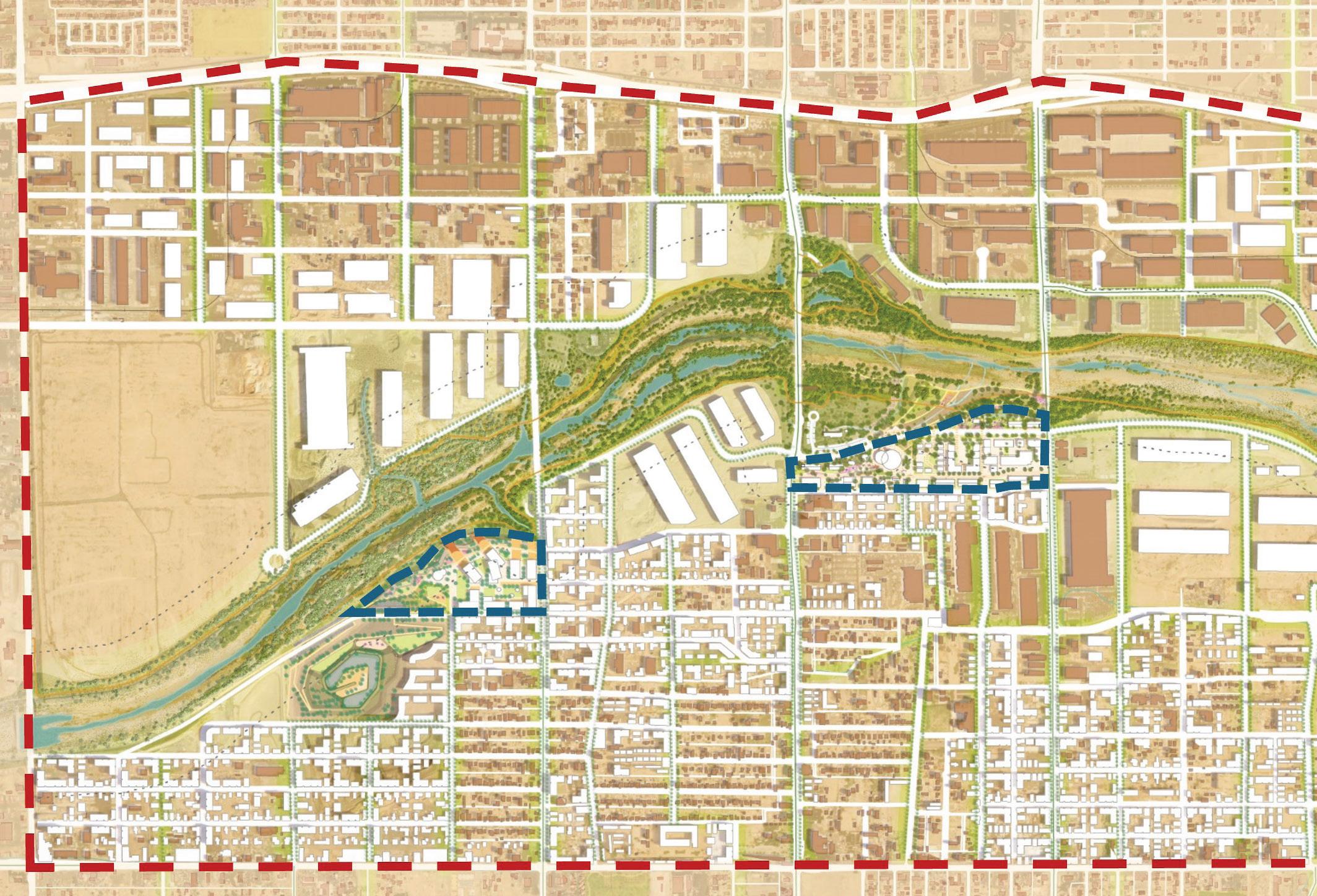
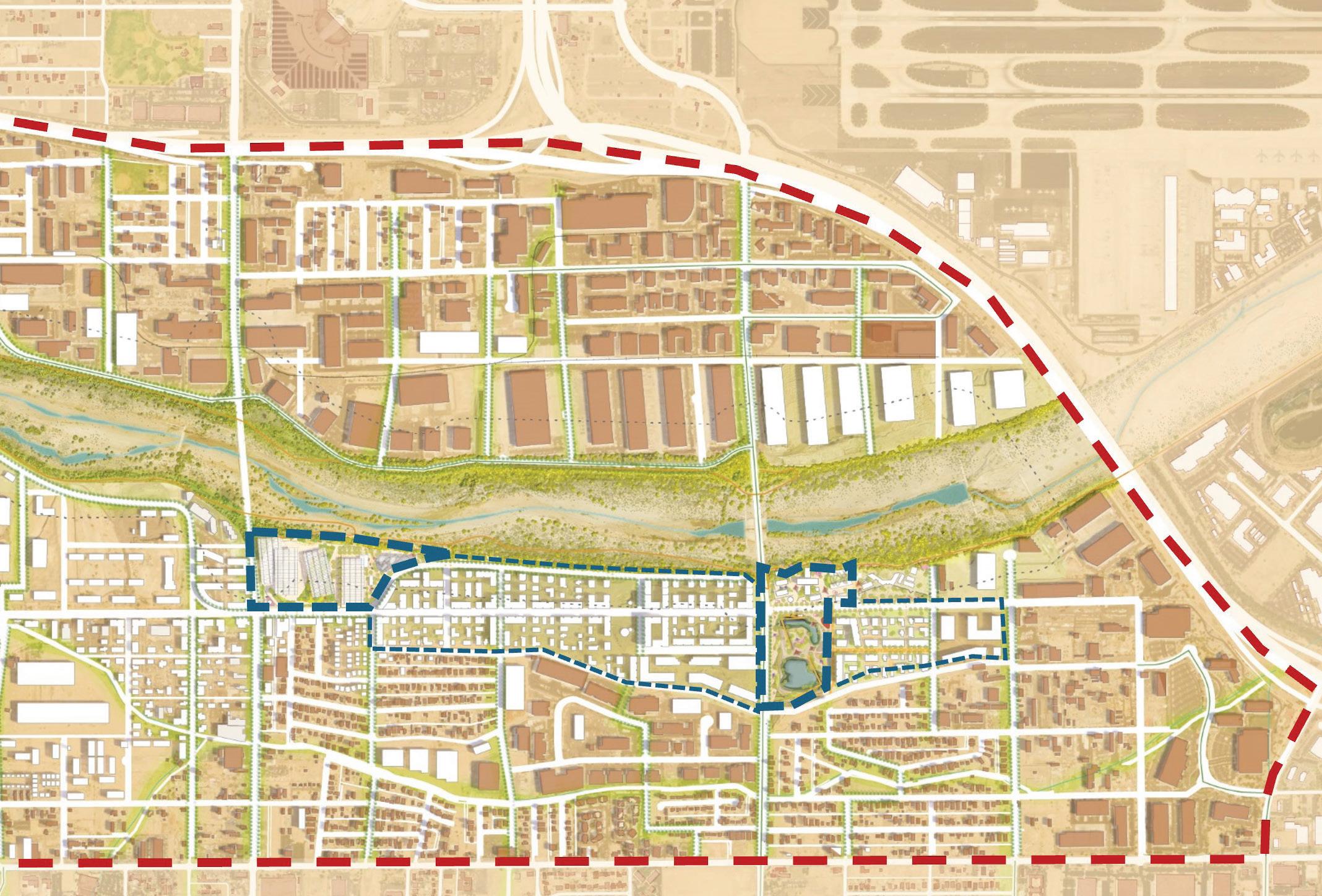
Four sites were illustrated as catalyst developments to represent various conceptual projects with a mix of uses at different scales at the edge of the RSHRA. These conceptual catalyst projects depict a vision for the Rio Salado District that includes opportunities for residents and visitors to live, work, and play, while connecting with the natural environment in a positive way.
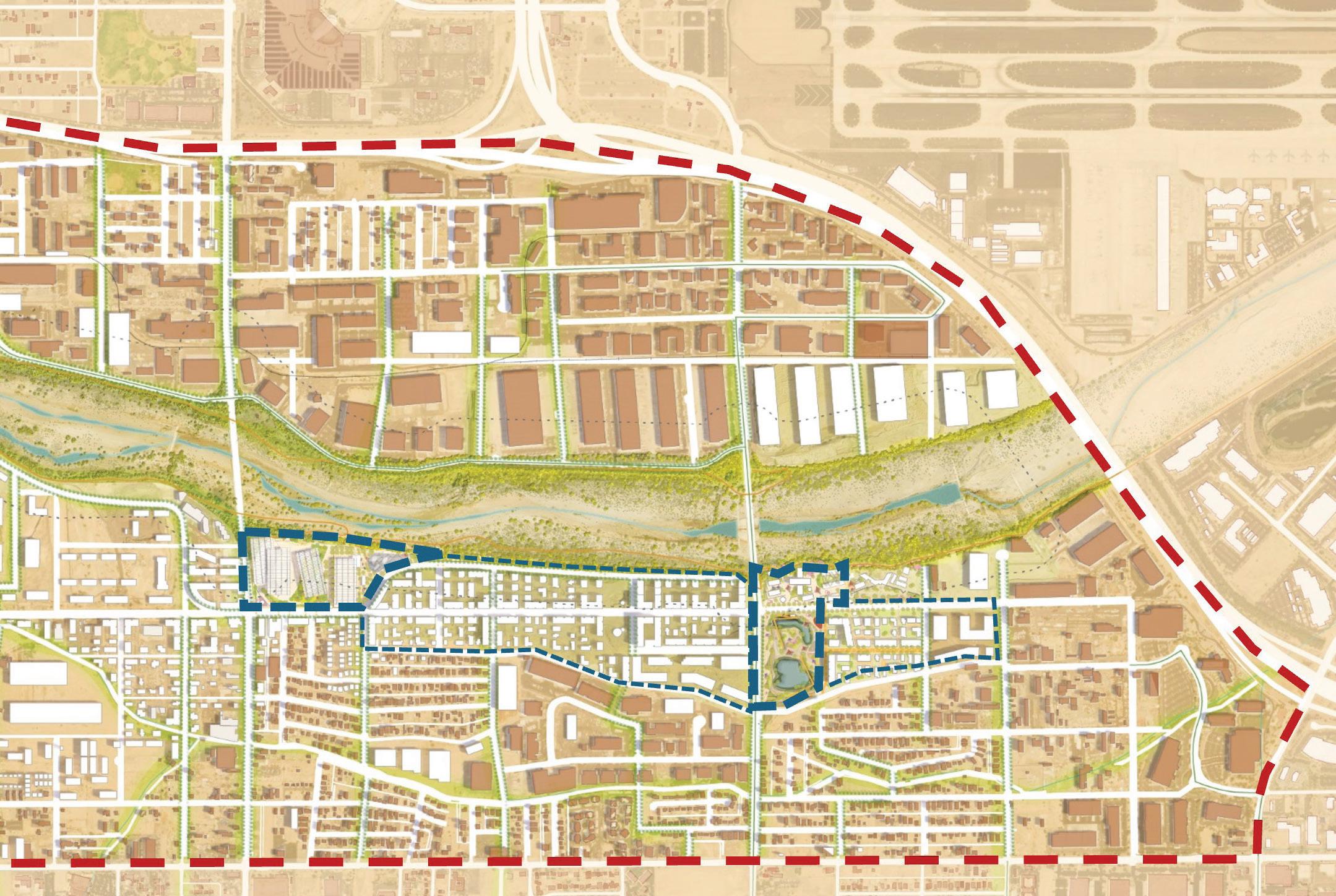
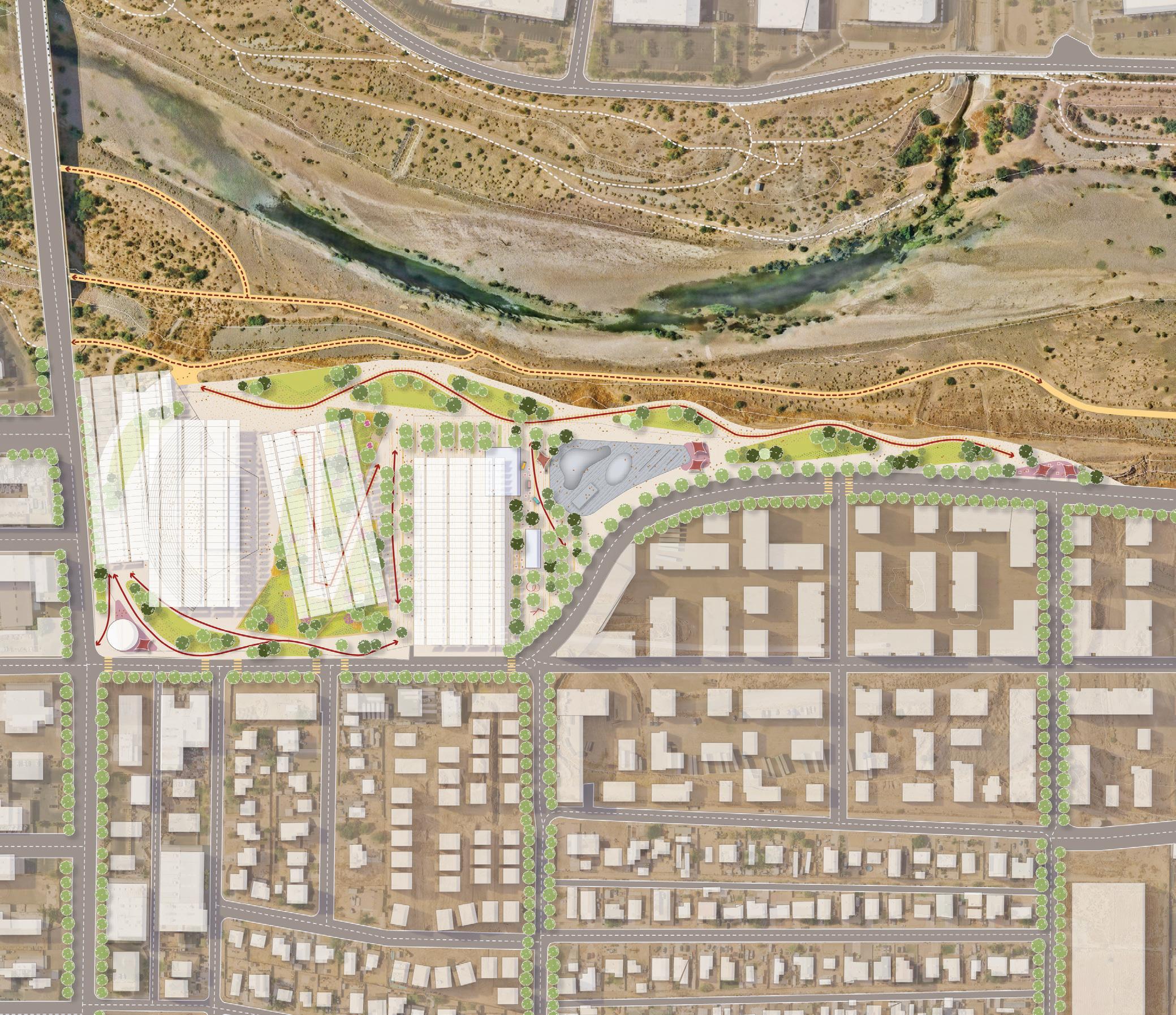
16th Street. A former sand and gravel mining pit, this site is conceptualized with interim active recreation uses that could include an amphitheater/venue, pedestrian amenities, play areas, programming, and other pedestrian-oriented activities. This site presents an opportunity to access additional recreation and entertainment opportunities, while the site redevelops.
24th Street. At the eastern reach of the RSHRA, this site is envisioned as an emerging mixed-use neighborhood with housing, employment, and educational opportunities. Uses here could include an ecological hotel, research campus with housing, businesses, multi-family housing, and a wildlife-supporting facility.
Additional sites were identified as catalysts due to their strategic location and redevelopment potential. Collaboration among all public and private entities is important to exploring the full potential of these sites and realizing the vision. Refer to the Additional Opportunities illustration for additional catalyst sites in the Rio Salado District.
The intersection of 7th Avenue and Elwood Street is a key gateway into the western reach of the RSHRA, where an existing trailhead facility welcomes visitors year-round just north of this intersection. Mid-tolarge-scale properties are located at this intersection today, largely developed. By 2050, this area is envisioned as a walkable, bikeable, and active neighborhood with an expanded street-grid that includes the construction of the Rio Salado Scenic Drive. A mix of low to mid-rise buildings are envisioned at this intersection to provide employment, neighborhood-friendly services, and mixed-income housing near the RSHRA.
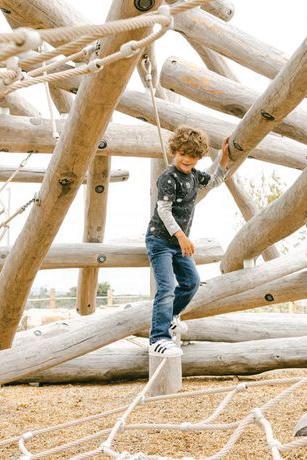
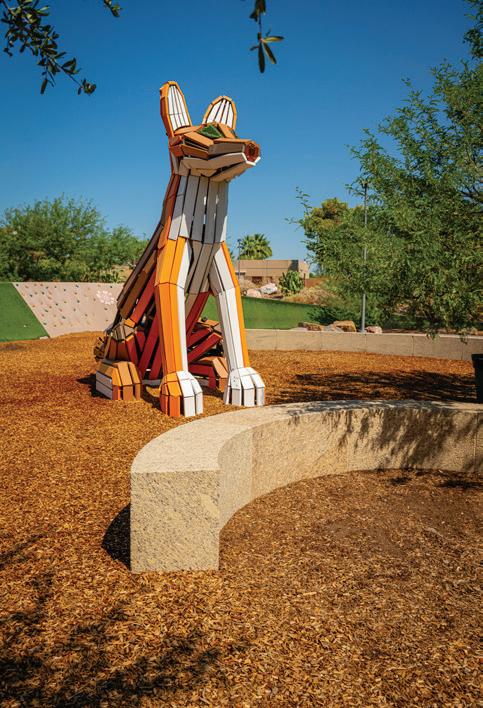
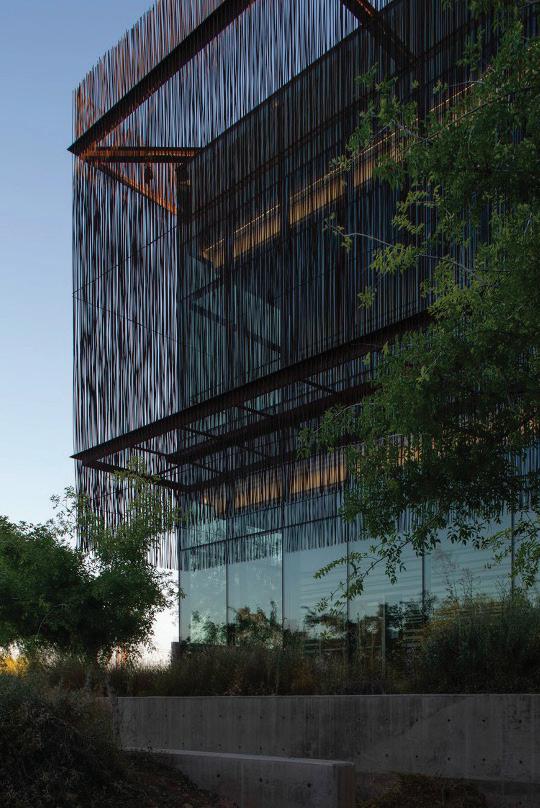
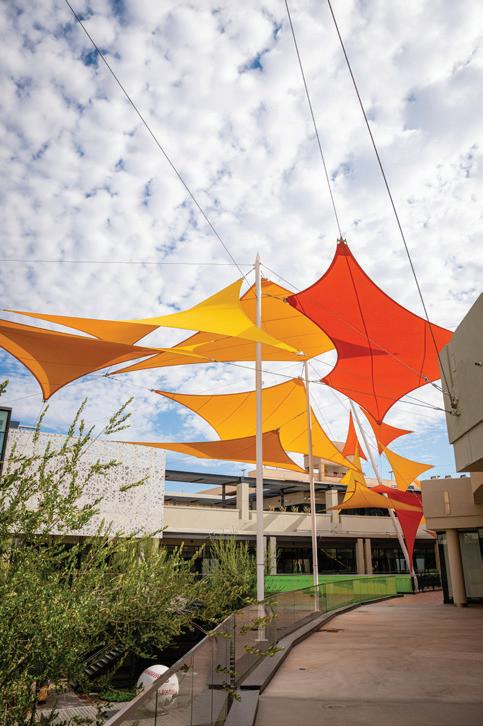
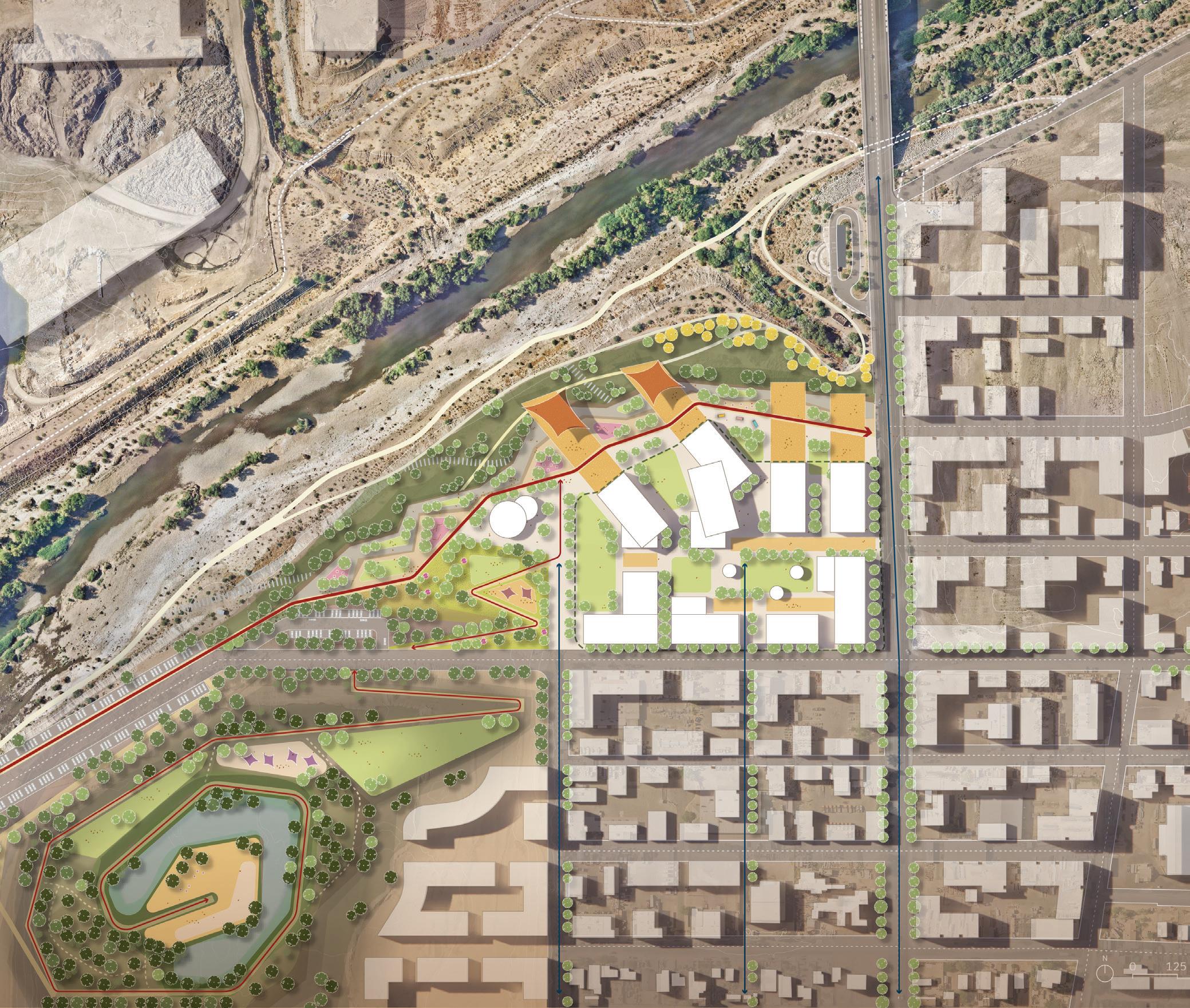


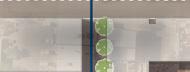
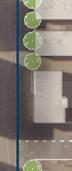

Multi-Use Path
2. River Porch – Public Art and Community Programs
3. Mixed-Use Campus Buildings 4. Site Parking
5. Flexible Open Space or Park
6. Open Space, Retention Lagoon or Wildlife Habitat (Active Amenity)
7. Active Street-Oriented Building Frontage, including Shaded Detached Sidewalks
8. Pedestrian Connections (Between Buildings and Adjacent Streets) 9. Community Pavilion 10. River Overlook – Shade Deck and Community Program 11. Existing River Trail
12. Rio Salado Scenic Drive (Enhanced Bicycle Facility) 13. Enhanced Pedestrian Crossing Intersection

Perched above the Rio Salado, this site at the northwest corner of 7th Avenue and Elwood Street, is envisioned as a thriving mixed-use campus with uses that could include biomedical laboratories, educational institutions, and other employment uses compatible with a pedestrianscale campus setting. Multi-family residential uses could complement employment uses here and provide housing units for workers or students. This site presents an opportunity to rediscover and explore the western reach of the RSHRA.



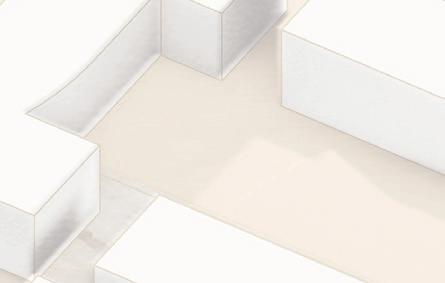


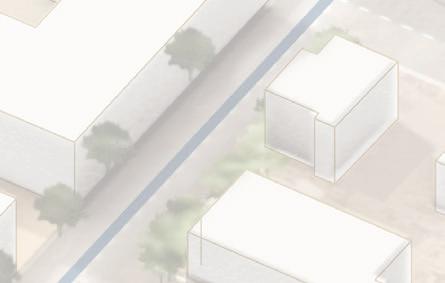


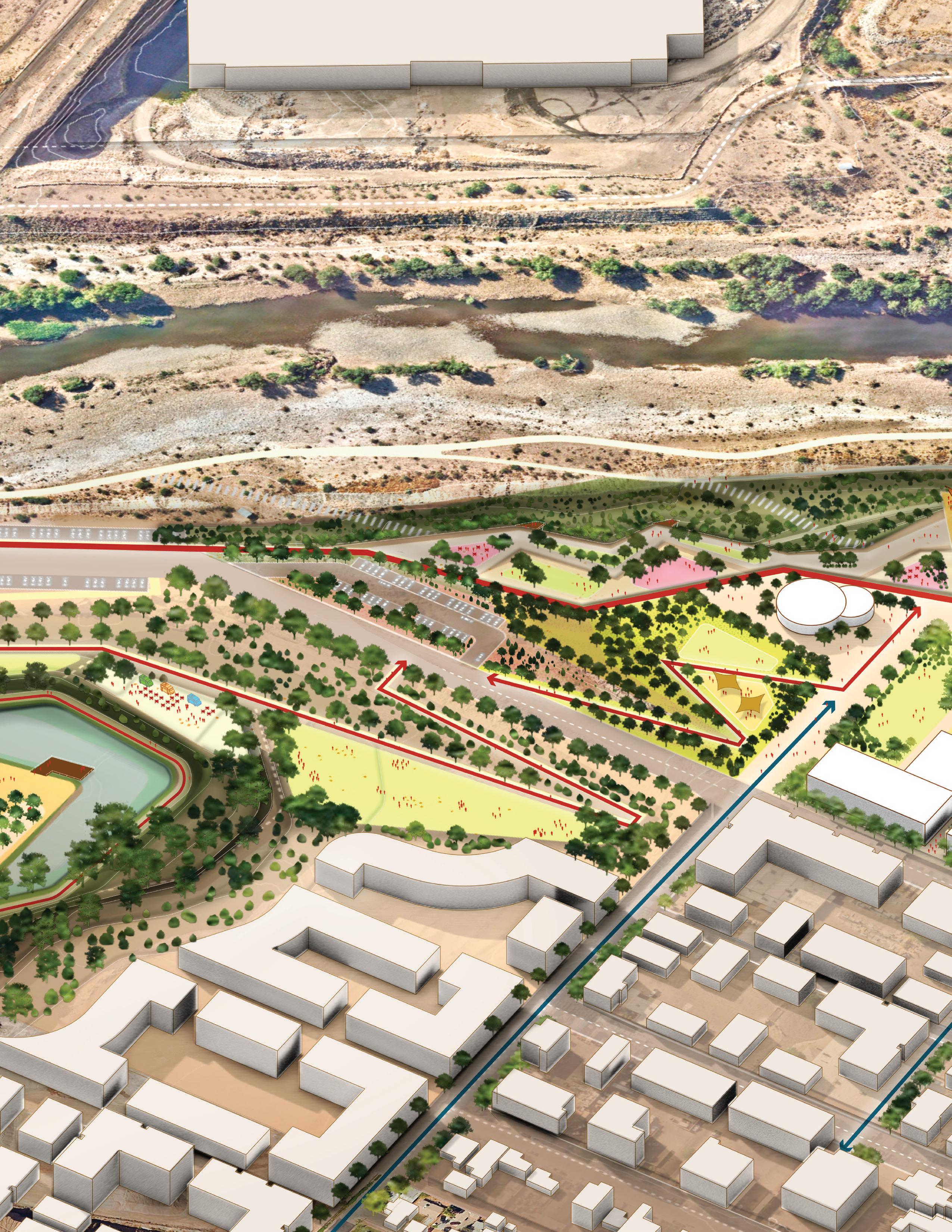



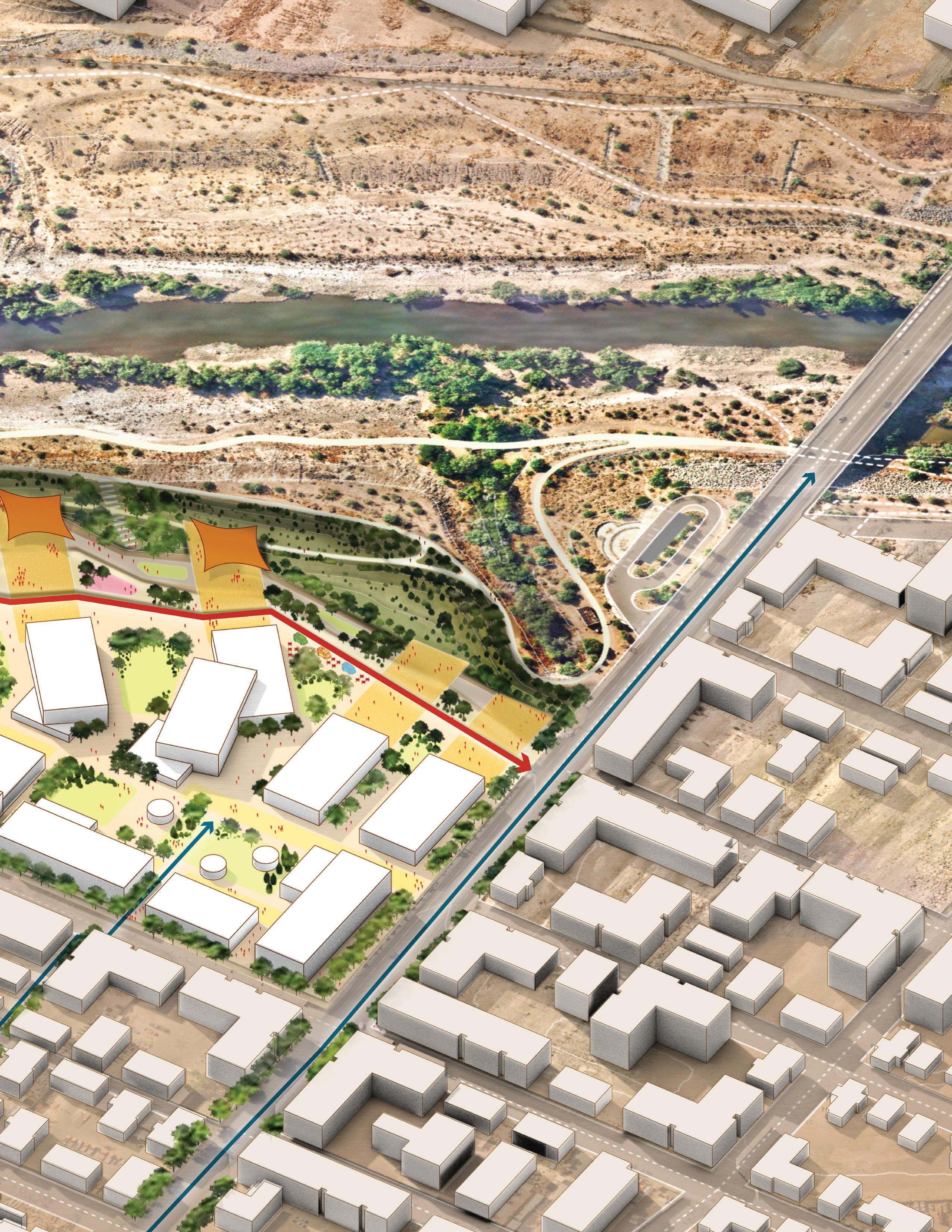

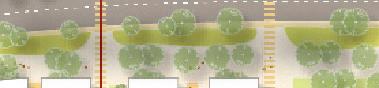
The intersection of Central Avenue and the Rio Salado is where the local community and visitors from across the region meet the natural environment and its beauty of the Rio Salado up close. The Nina Mason Pulliam Rio Salado Audubon Center welcomes visitors to the area throughout the year, just south of this intersection. Small, mid, and large-scale properties are located south of this intersection today. By 2050, this area is envisioned as the most active node along the banks of the Rio Salado with a mix of uses in a walkable, bikeable, and well-connected neighborhood through an expanded street-grid that includes the construction of the Rio Salado Scenic Drive (or a pedestrian-street alternative) between Central Avenue and 7th Street.
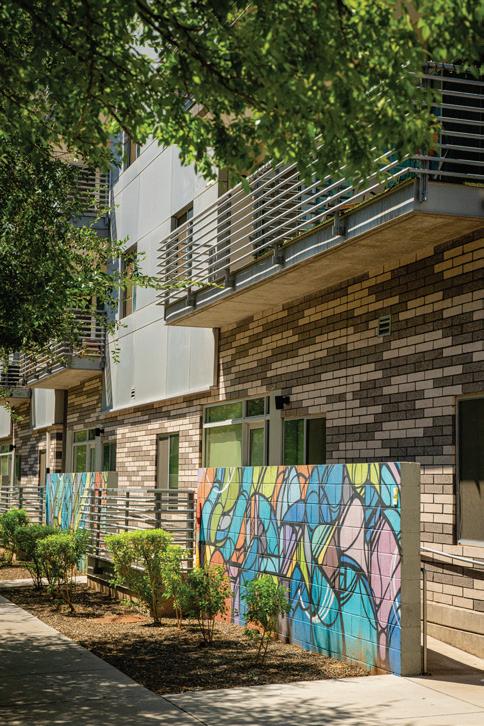
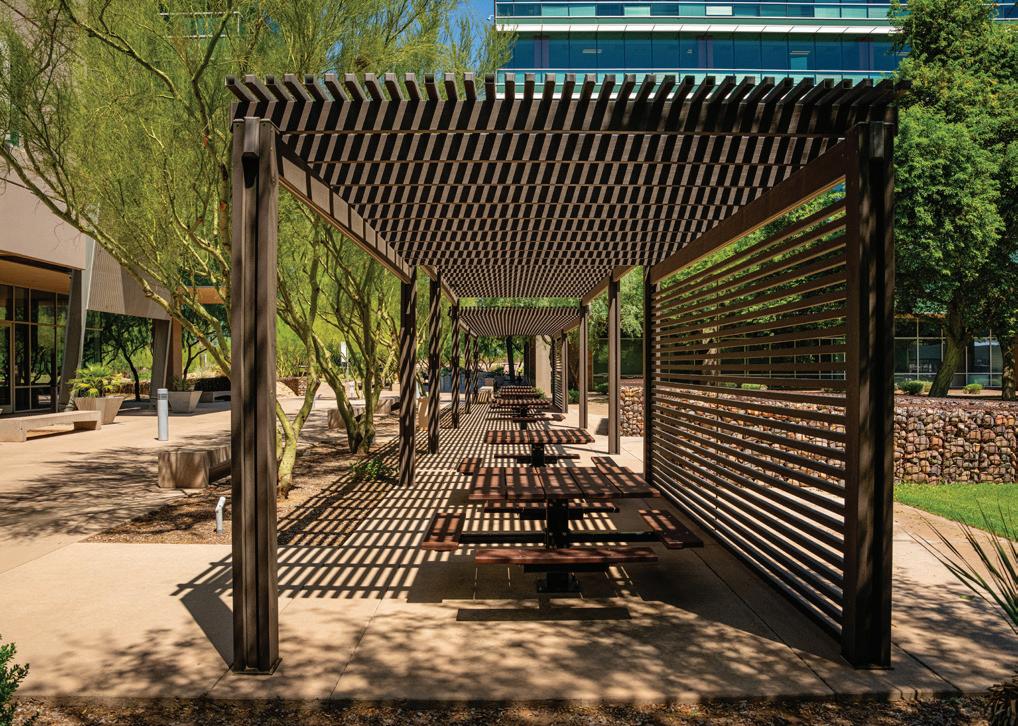
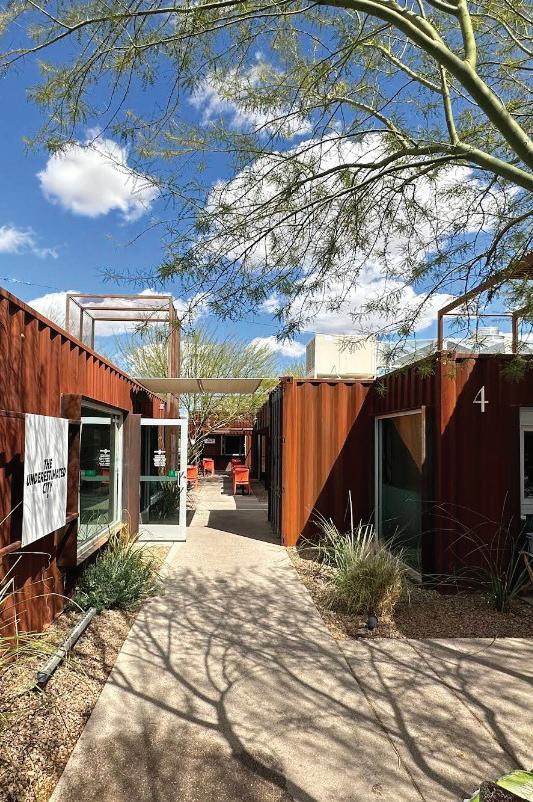
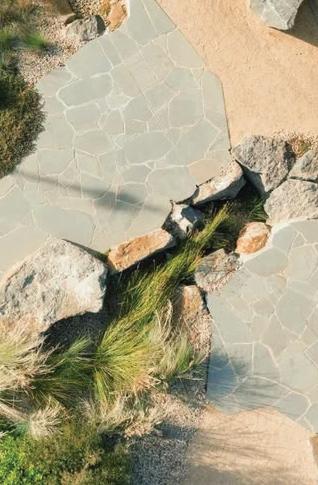
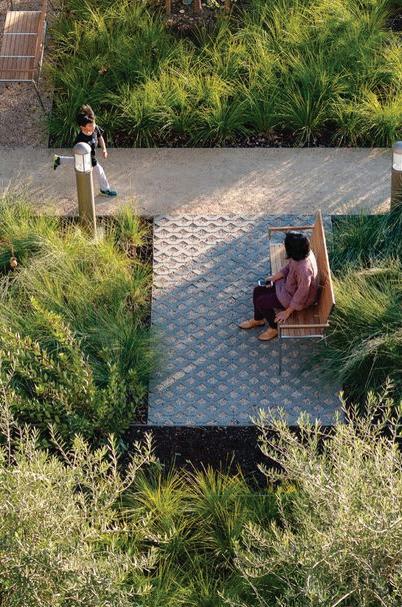
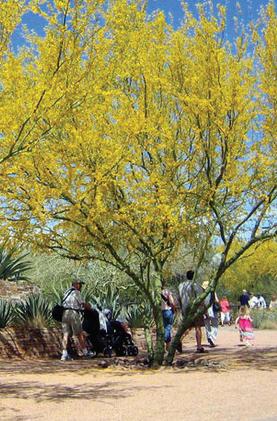
Source: Barry Shapiro Mercado
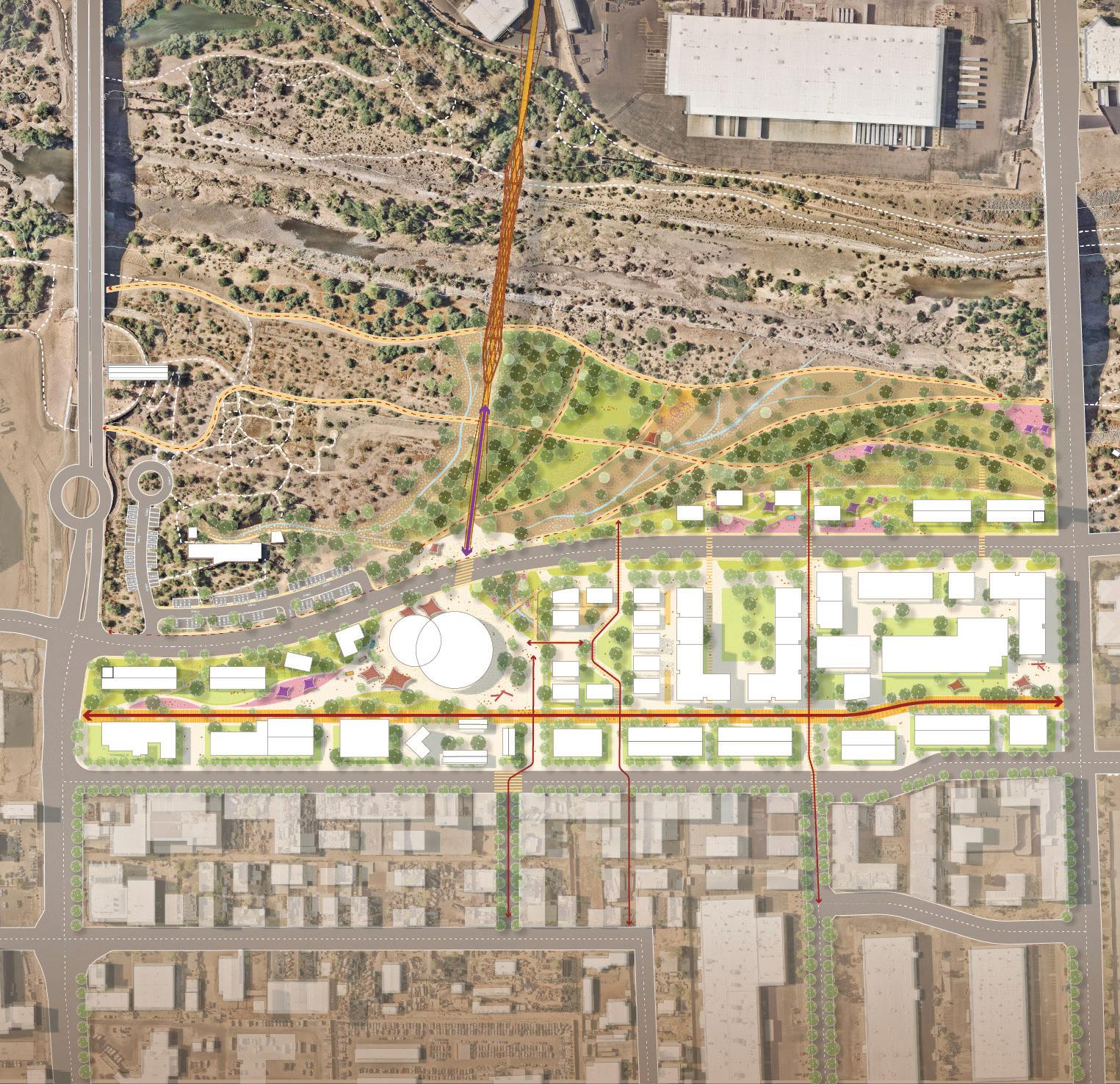
1. Existing Light Rail Station
2. Mixed-Use Development
3. Nina Mason Pulliam Rio Salado Audubon Center
4. Rio Salado Scenic Drive (Alternative Pedestrian Street)
5. Existing Pollinator Gardens
6. Active Open Space, Art Features, Programming
7. Community Building and Plaza
8. Adjacent Future Mixed-Use Development
9. Future 3rd Street Bicycle/Pedestrian Bridge
10. Existing River Trail
11. Stormwater Management/Harvesting
12. Mercado Area (Retail), Programming
13. Arts, Culture, and Small Business Corridor (Retrofit)
14. Flex Commercial
15. Retail, Active Open Space, Programming
16. Pedestrian or Vehicular Accessway
17. Flexible Open Space or Restored Habitat
18. Signalized/Enhanced Pedestrian Crossing
19. Public Paseo (North-South Corridor)

Located in the most active and visited reach of the Rio Salado, this site at the southeast corner of Central Avenue and Rio Salado Scenic Drive (Park Drive), is uniquely positioned at the junction of a light rail station, RSHRA, and a future pedestrian and bicycle bridge. As a gateway for visitors and a celebrated corner of the RSHRA by residents, this site is envisioned as a vibrant mixed-use community with businesses and a multi-purpose community building and plaza. By cultivating a respectful coexistence of urban densities and life in the ecological corridor, this site presents an opportunity to foster an “arts, culture, and nature” district. This vision complements ongoing activities at Nina Mason Pulliam Rio Salado Audubon Center and activities by local groups.
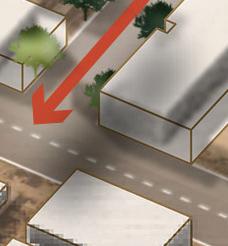
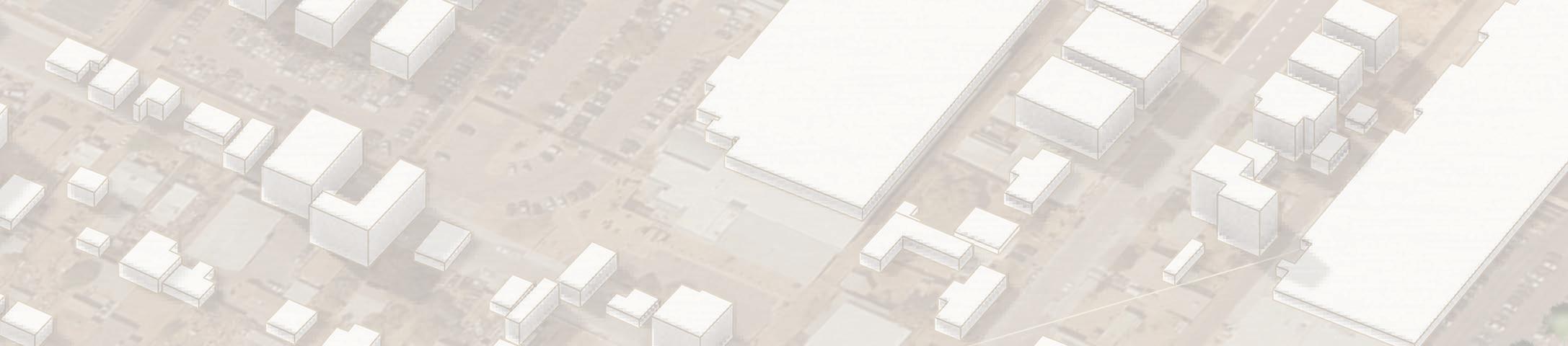
5THST

7THST
The intersection of 16th Street and Elwood Street is located halfway between the central and most eastern reach of the RSHRA, where an existing trailhead facility welcomes visitors year-round just north of this intersection. Small, mid, and large-scale properties are located at this intersection today, largely developed. By 2050, this area is envisioned as an increasingly active neighborhood with an expanded street-grid that includes the construction of the Rio Salado Scenic Drive. A mix of low to mid-rise buildings are envisioned at this intersection to provide employment, neighborhood-friendly services, and mixedincome housing near the Rio Salado.
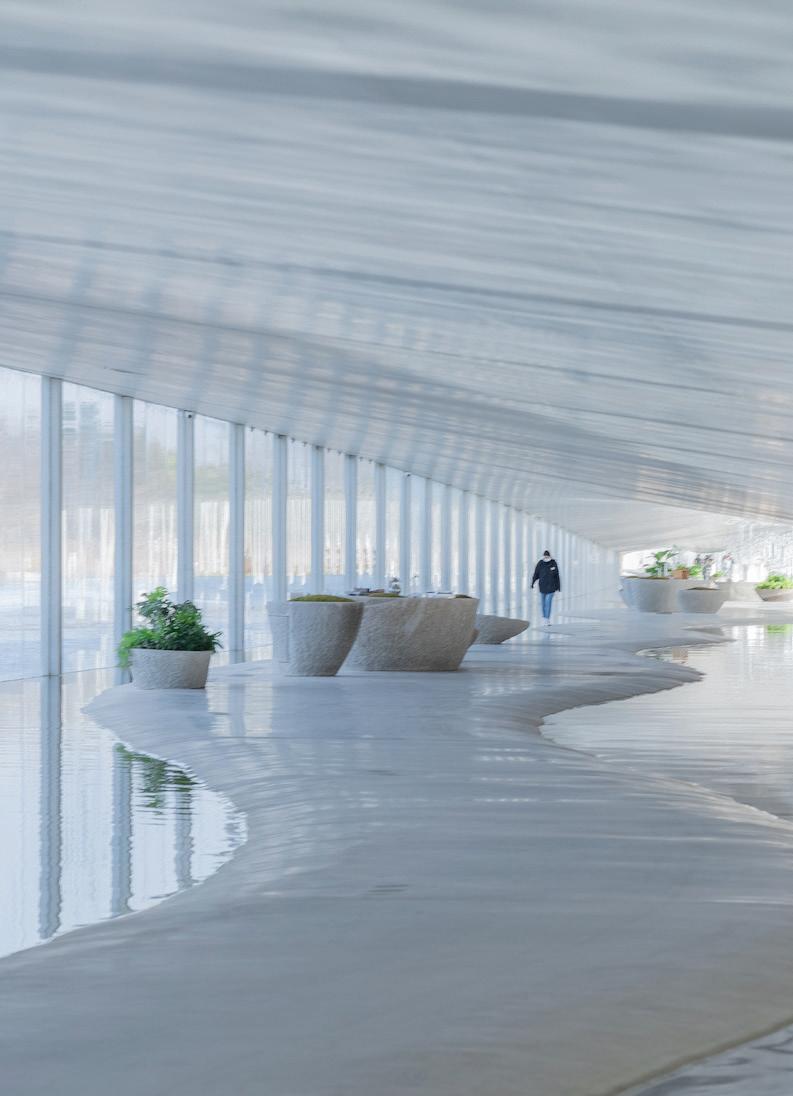
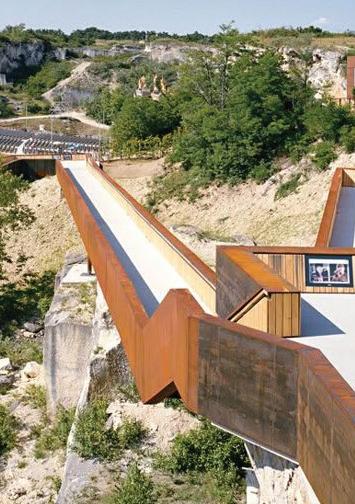
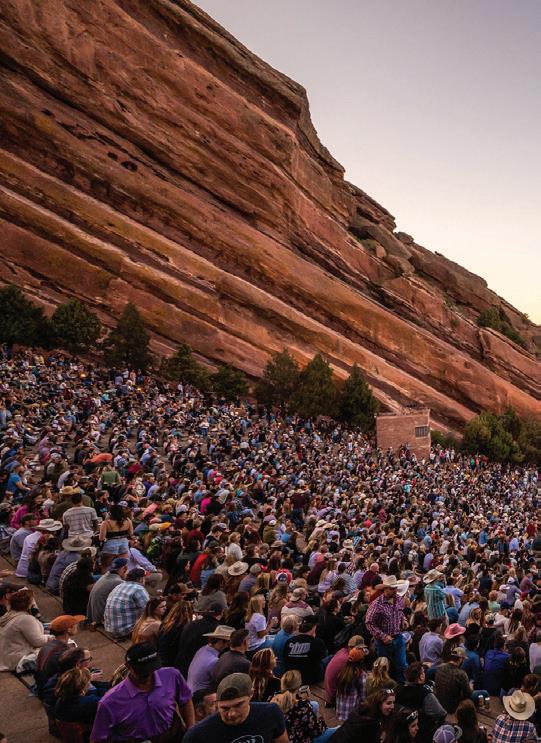

5. Art Features, Mercado, or Programming
6. Solar Array Structures
Active Open Space, Art Features or Programming
River Porch- Public Art and Community Programs
River Trail 17. Signalized/Enhanced Pedestrian Crossing 18. Enhanced Pedestrian Crossings

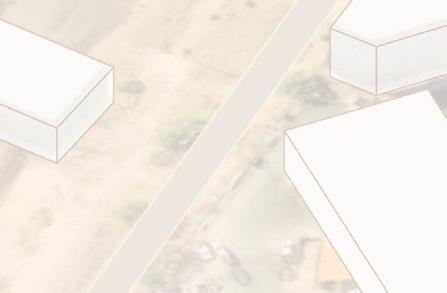
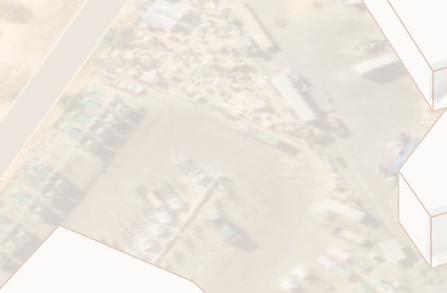

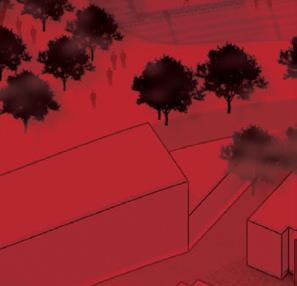
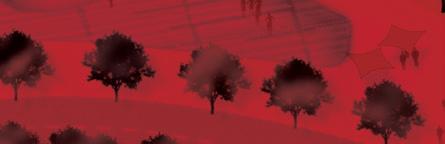
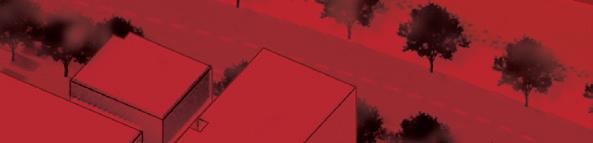
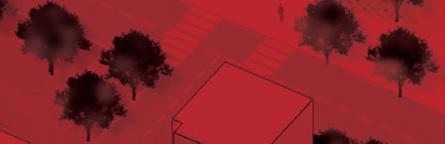
A former sand and gravel mine, this site at the northeast corner of 16th Street and Elwood Street, is conceptualized with interim active recreation uses that could include an amphitheater/ venue, pedestrian amenities, play areas, programming, and other pedestrian-oriented activities. This site presents an opportunity for the private owner or future developer to provide neighborhood retail uses at the edges plus other temporary uses that can generate revenue by bringing interim entertainment and recreation options to the site, while the pit is backfilled or redeveloped over an extended period of time. The large scale and site’s proximity to the RSHRA, residential neighborhoods, and employment areas present an opportunity to develop a mix of uses here.








18thStreet



Depending on the area and depth of the pit, full backfill and redevelopment of a former mining site could take decades as it requires the collection of inert material to fill and compact over time. The Irwindale Business Center in Irwindale, CA, is a redevelopment example of a former 130-acre gravel pit that required partial fill and installation of a drainage system to develop a commercial and light industrial business park.

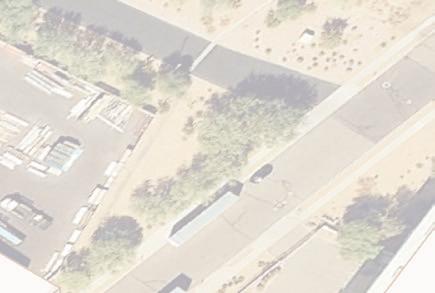
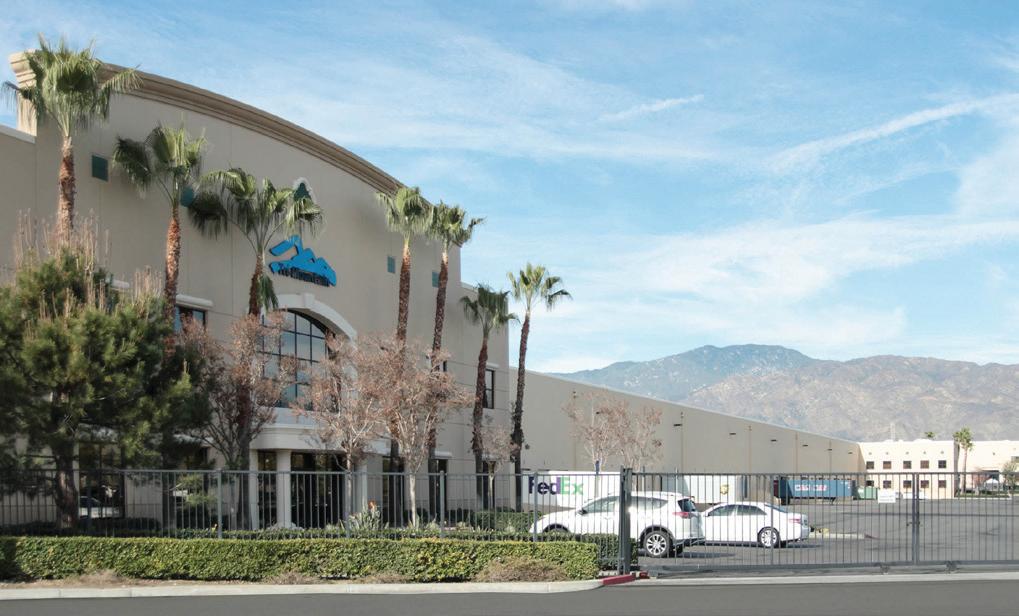
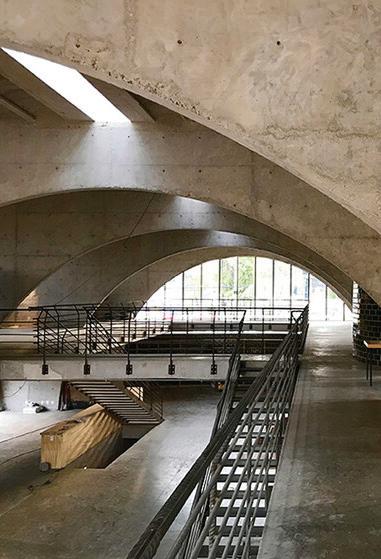
Source: AO Architects

19thStreet
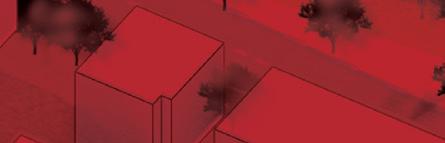
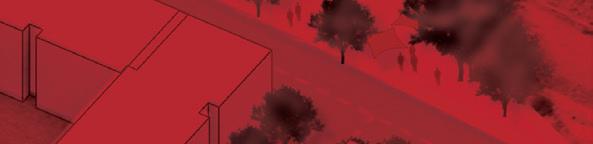
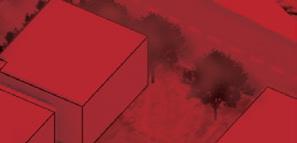

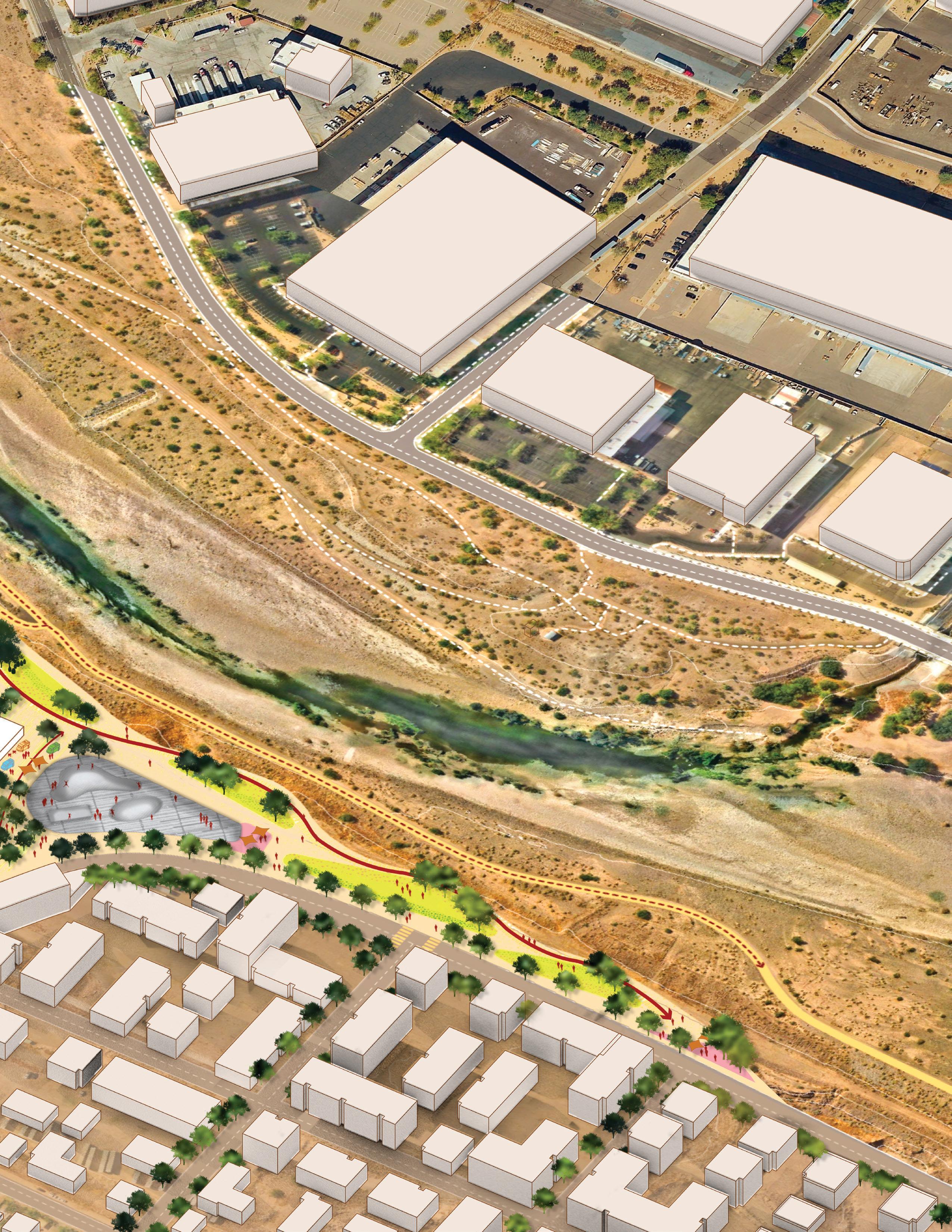
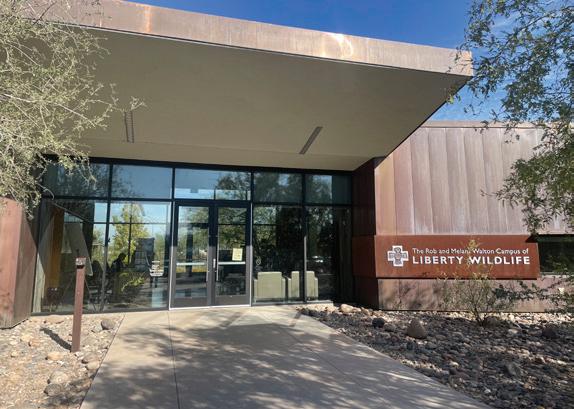
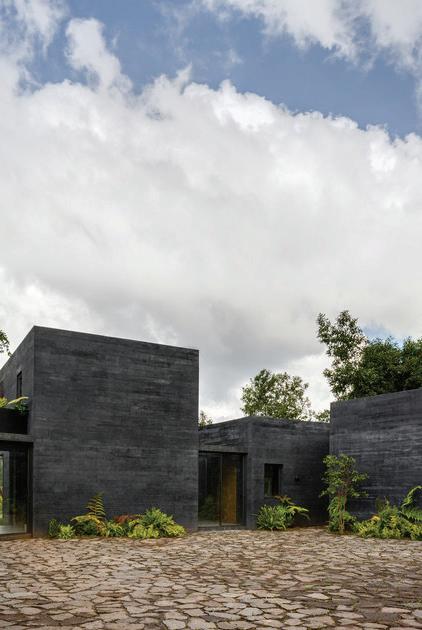
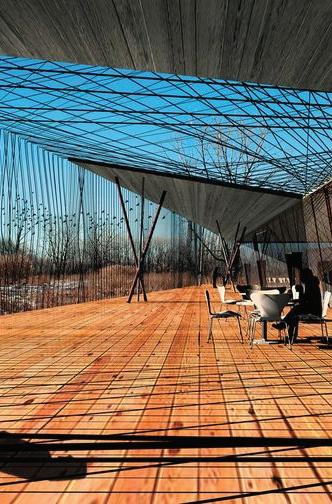
The intersection of 24th Street and Elwood Street is located at the easternmost reach of the RSHRA. East of this intersection is Liberty Wildlife Rescue Center which welcomes visitors to the area throughout the year, while providing wildlife rehabilitation. Mid and large-scale properties are located at this intersection today, largely undeveloped. By 2050, this area is envisioned as a more active node with a mix of uses at the riverbanks that expand south of Elwood Street and are connected through a growing street-grid that includes the construction of the Rio Salado Scenic Drive. A mix of low to mid-rise buildings are envisioned at this intersection to provide employment, neighborhood-friendly services, and mixed-income housing near Rio Salado.
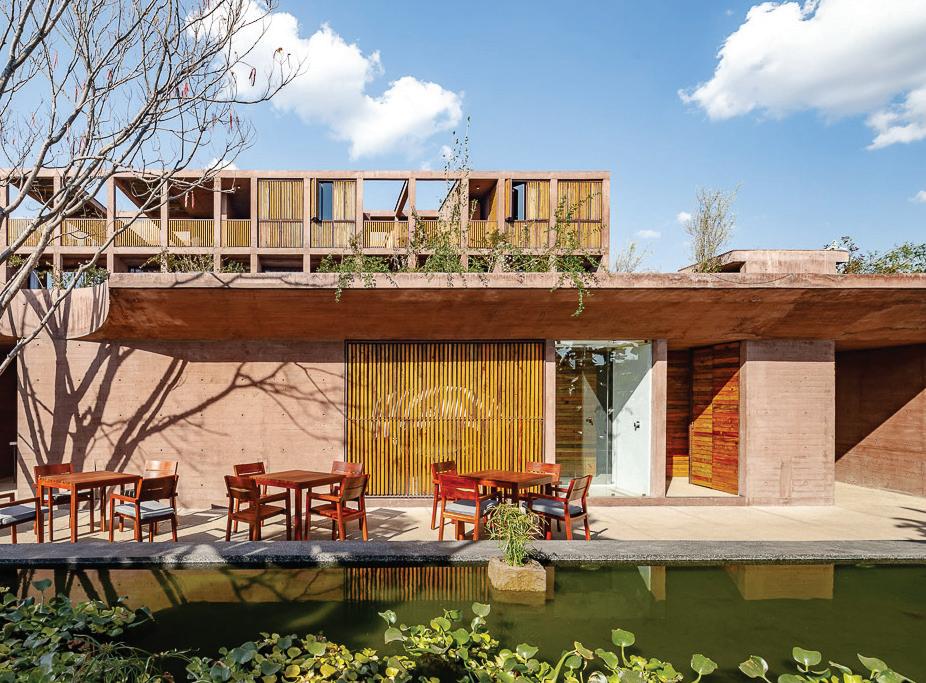
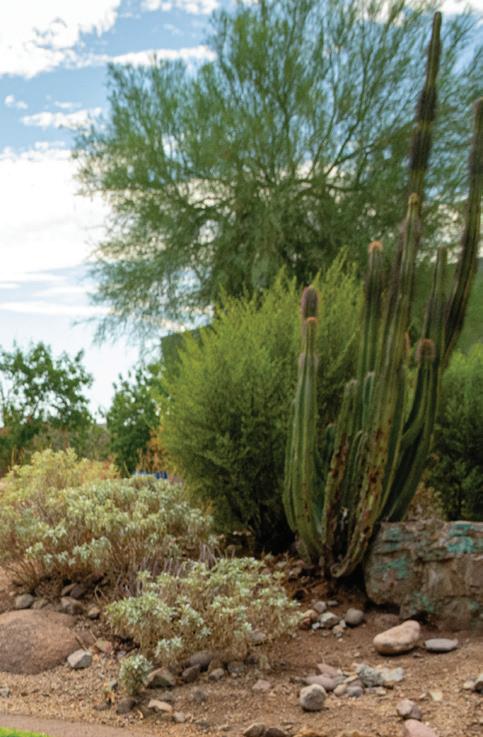
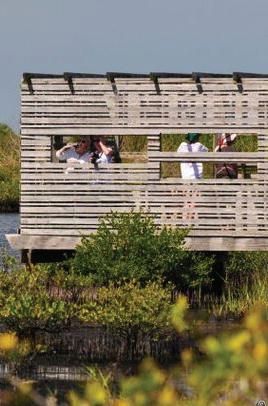
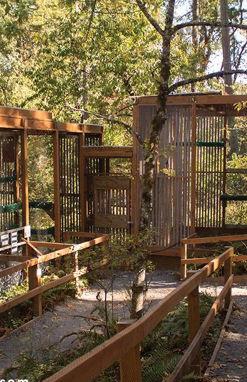
Source: Multistudio


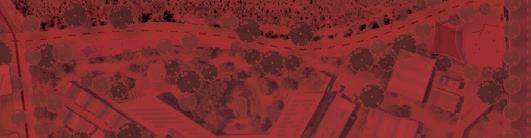
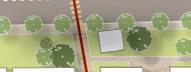
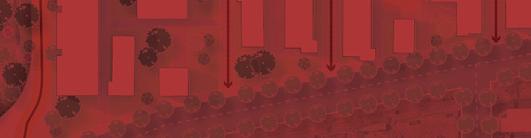
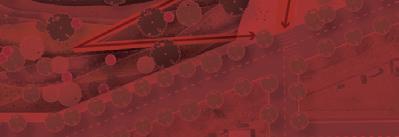

1. Wildlife Supporting Facility
2. Pedestrian Connections (Between Buildings and Adjacent Streets)
3. Businesses/Incubator Space
4. Eco-Hotel or Mixed-Use Research Campus with Housing
5. Signalized/Enhanced Pedestrian Crossing
6. Educational/Learning Center
7. Future Neighborhood Street
8. Artist Designed Bus Shelter
9. Mixed-Use Development (Multi-family Housing or Retail)
10. Pedestrian Crossing
11. Active Open Space Amenity, Art Features, Activity Area, or Programming 12. Active Open Space Amenity, Outdoor Performance Space
Art Features or Passive Open Space Amenity 14. Flexible Open Space or Park 15. Flexible Open Space or Wildlife Habitat 16. Flexible Open Space or Park
17. Retention Lagoon or Wildlife Habitat (Active Amenity)
18. Existing River Trail 19. Active Open Space Amenity, Art Features, Activity Area 20. Enhanced Pedestrian Crossings

At the eastern reach of the RSHRA, this site west of 24th Street, is envisioned as an emerging mixed-use neighborhood with housing, employment, and educational opportunities. Potential uses could include an ecological hotel, a research campus with housing, businesses, and multi-family housing, as well as a wildlife-supporting facility. This plan explores redevelopment opportunities, including the backfilling of an inactive sand and gravel mining pit, to activate this reach of the RSHRA and complement ongoing activities at Liberty Wildlife.
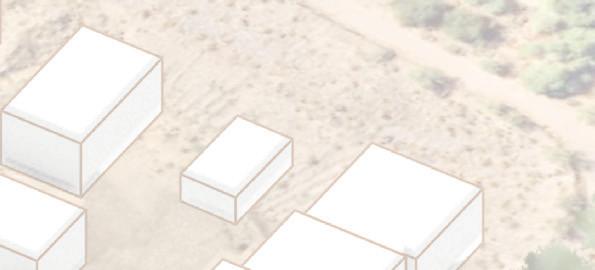

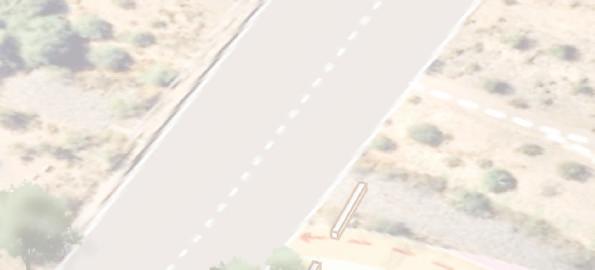


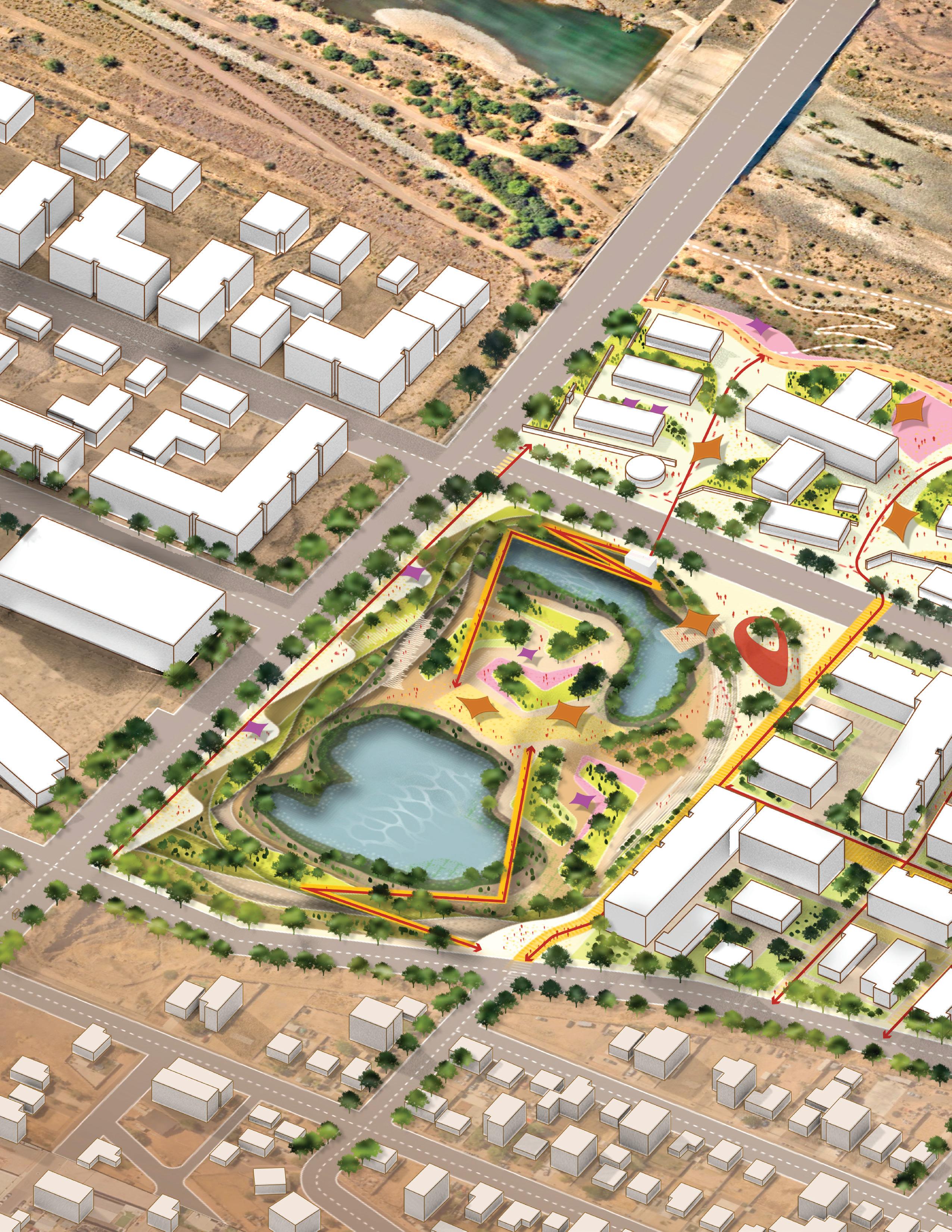




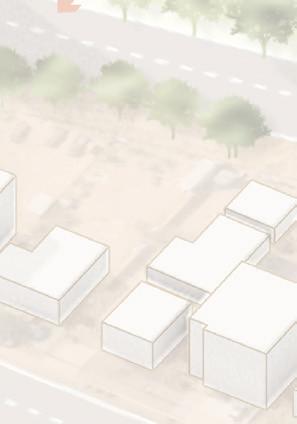








Food System Sites - Vacant space within the Rio Salado District presents opportunities for interim or permanent uses for growing, processing, and selling fresh food products, where no adverse environmental conditions are identified.
19th Avenue Landfill Site - This 190-acre city-owned closed landfill is a potential future redevelopment opportunity for non-residential development, as allowed by regulatory, environmental, engineering, and financial conditions.
Broadway Corridor - A vision for a diverse mix of commercial and residential uses. The activation of land at arterial and collector street intersections, such as 19th Avenue, 15th Avenue, 7th Avenue, Central Avenue, 7th Street, 12th Street, 16th Street, and 24th Street, is key to providing additional opportunities.
Transformation Site at Central - A one-acre parcel of land owned by the City of Phoenix presents an opportunity to activate this space with amenities and programming.
Arts, Culture, and Nature District - The establishment of an arts, culture, and nature district near the RSHRA offers a chance to attract visitors, support local businesses, and celebrate regional heritage and artistic talent.
Eco-Business District - Creating an eco-business district can attract green industries, such as advanced manufacturing, energy systems, and emerging technologies, promoting a sustainable logistics chain and circular economy.
32nd Street and University Drive Office Park - Since the early 2000’s, this office park has been a hub for employment in the area. As demand for housing increases, surface parking lots present opportunities for integrating housing units into institutional or office campuses.
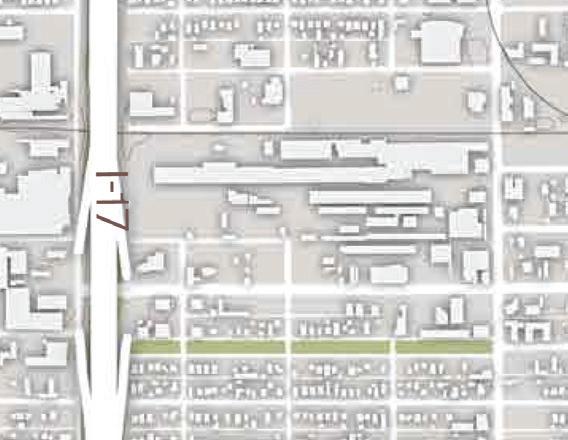
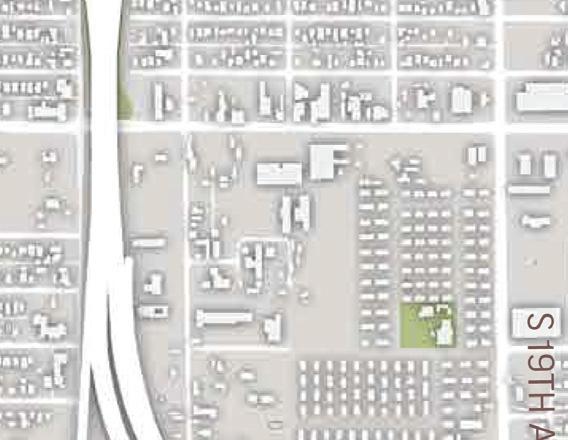
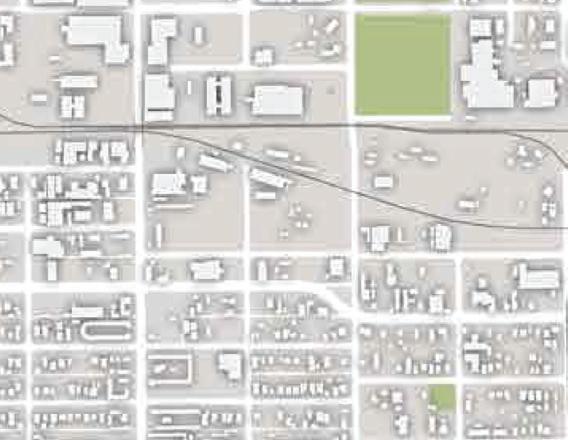
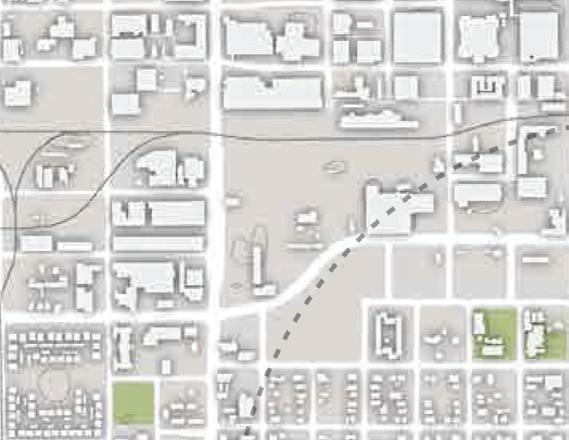
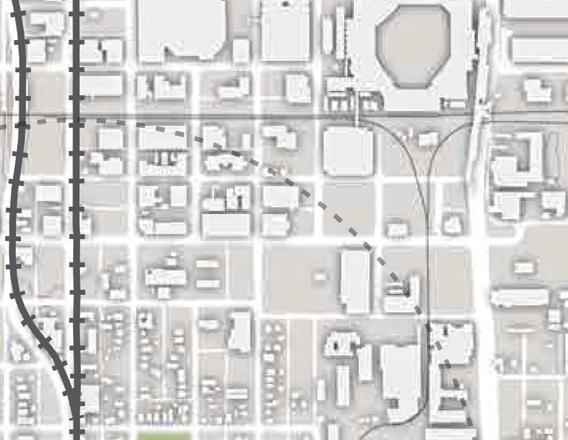
The 2050 Land Use Map is the master plan that presents the vision for the Rio Salado District which includes promoting a vibrant and ‘active’ mix of uses along and beyond the banks of the Rio Salado, while protecting existing neighborhoods and the natural habitat in the river. This vision also supports new investments that promote a wide range of housing types (primarily south of the Rio Salado and along the light rail corridor), diverse business corridors along major streets, and active recreation options along the RSHRA. This vision supports the transition from an industrial dominant past to a more balanced future that encourages a mix of uses to attract additional investment and support the Rio Reimagined and City of Phoenix goals. The Land Use Master Plan also supports several land use themes that emerged during the planning process, including adaptive reuse of existing buildings, establishing an “arts, culture, and nature” and “eco-business” districts, and brownfield revitalization.
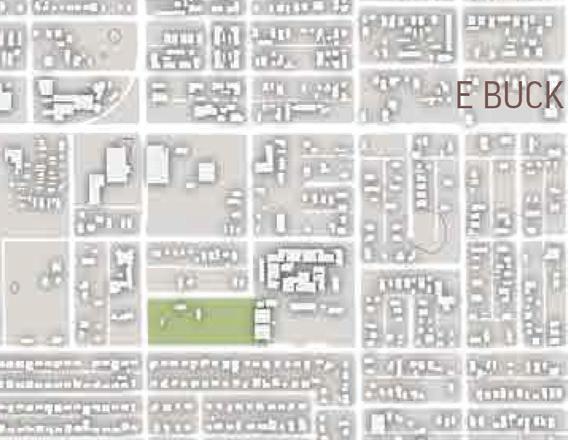
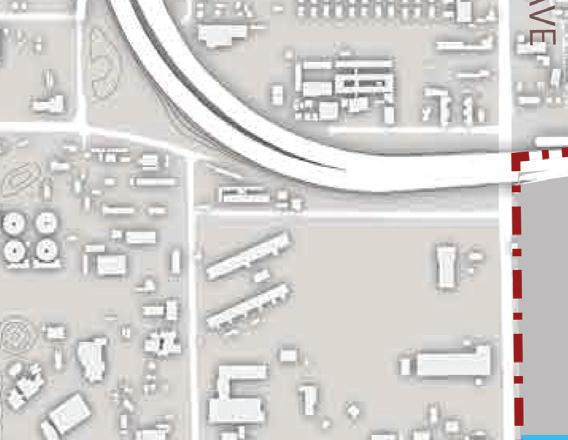
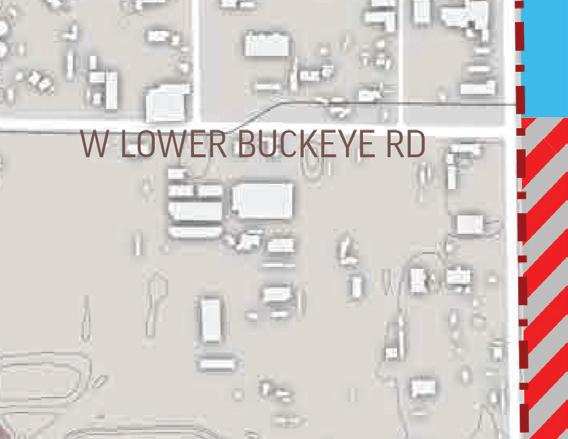
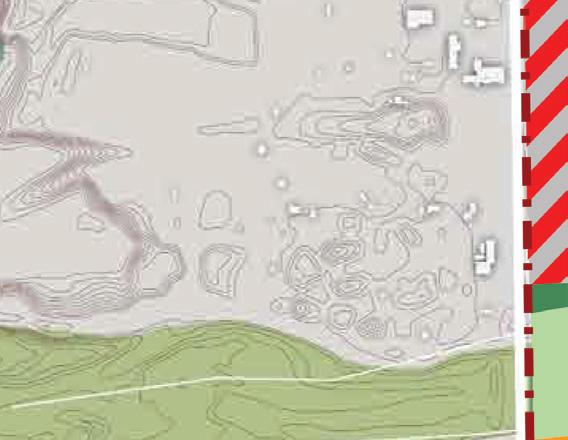
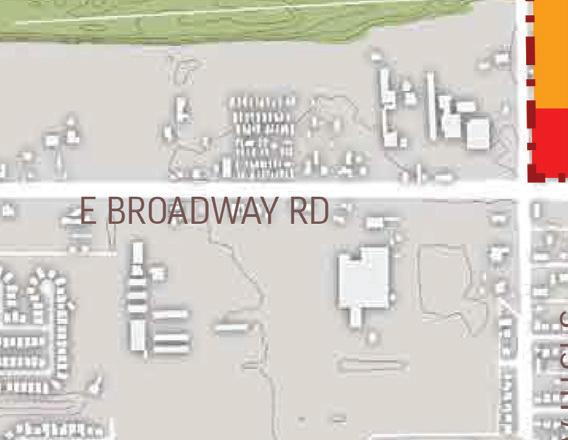
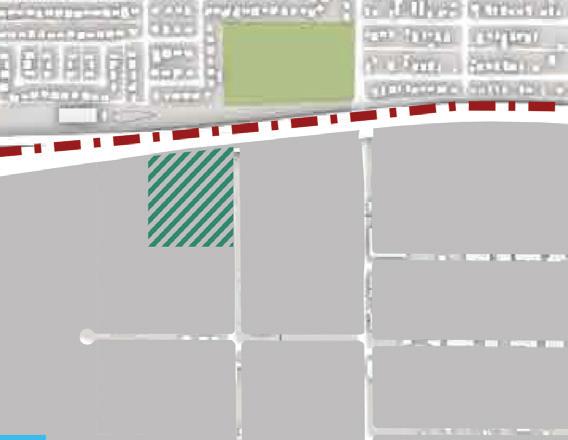


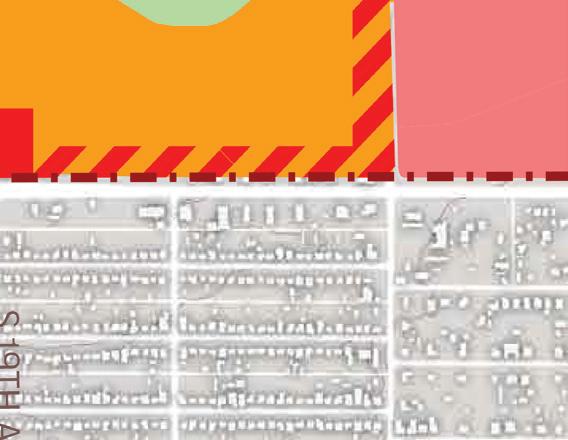
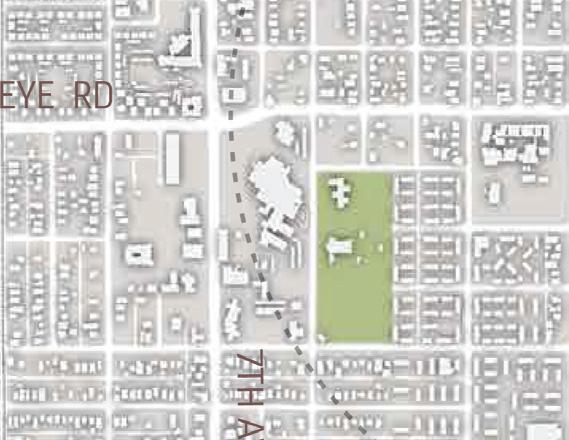
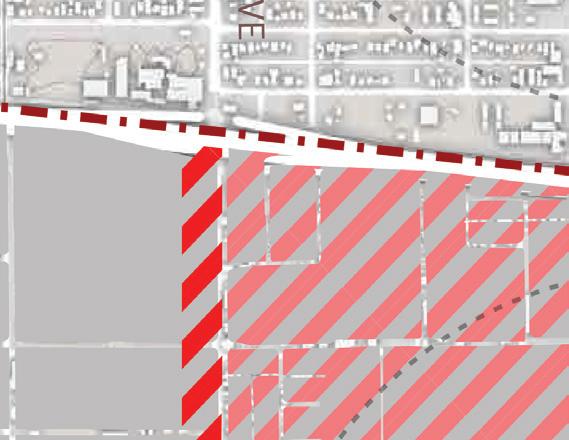
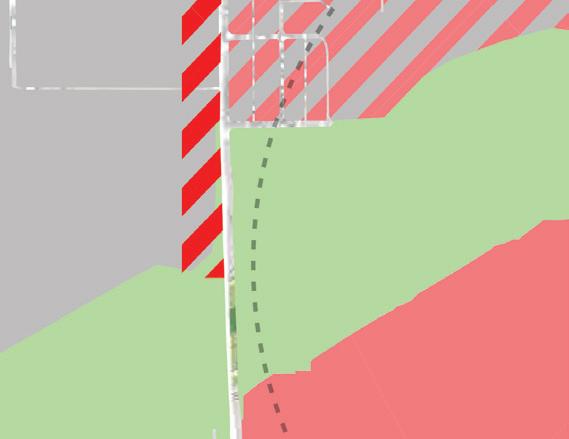
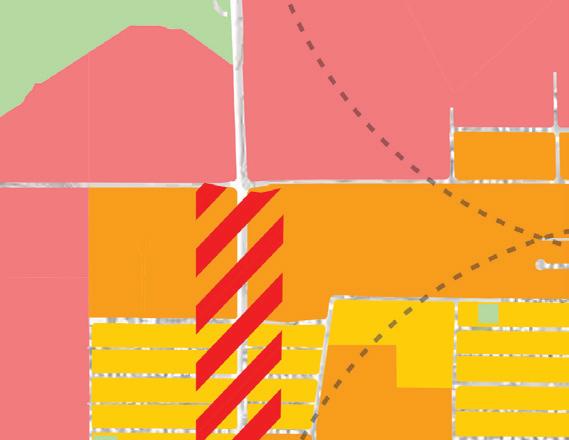
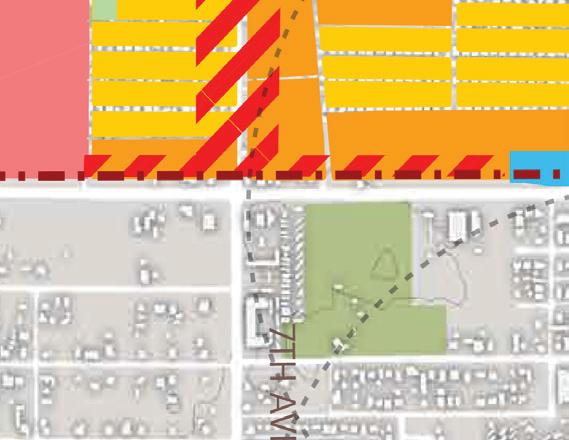
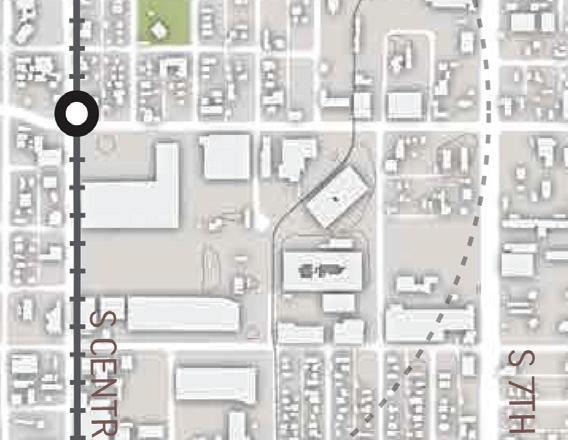
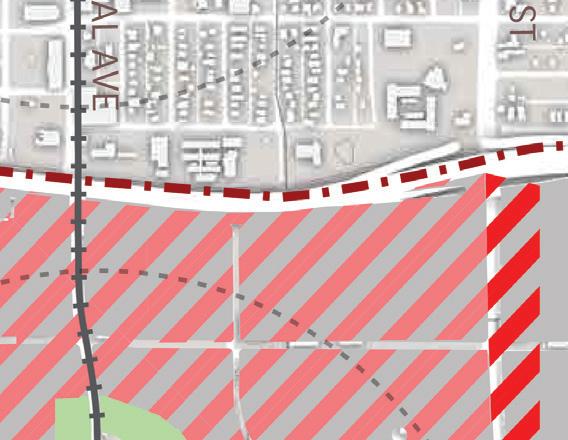
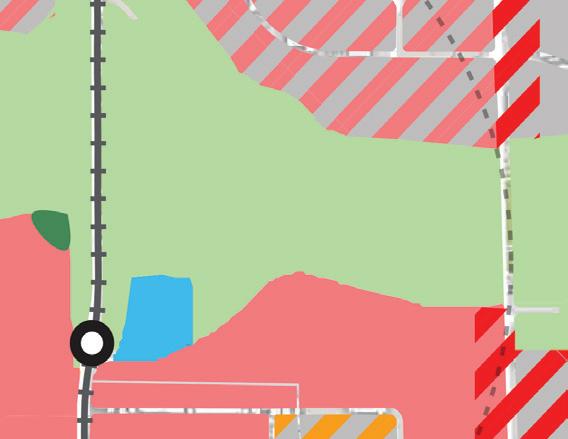
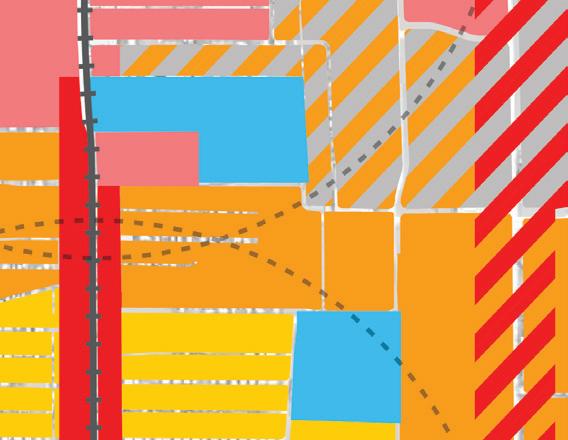
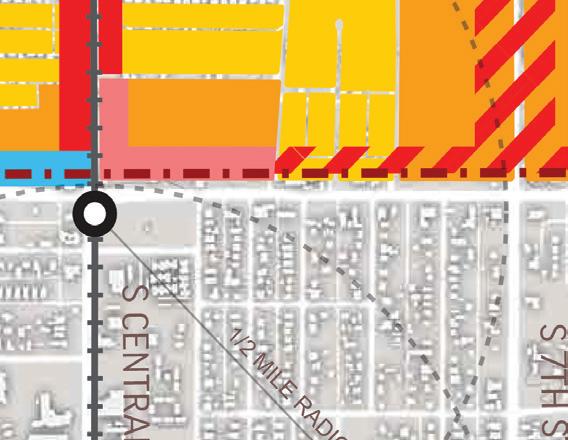
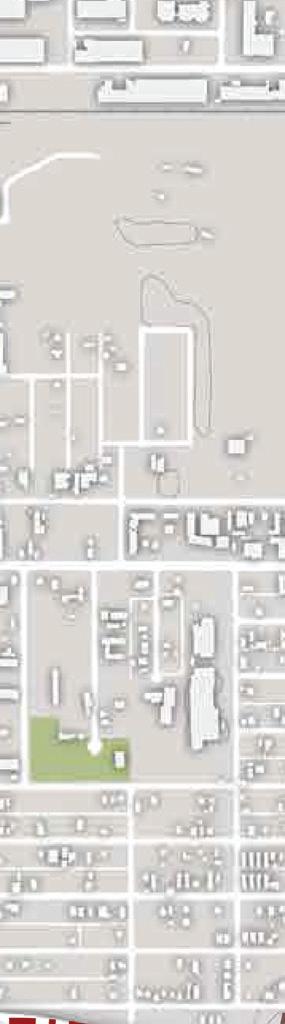
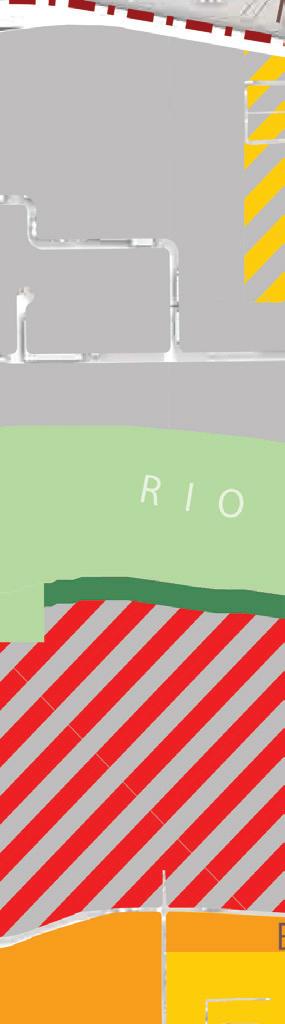
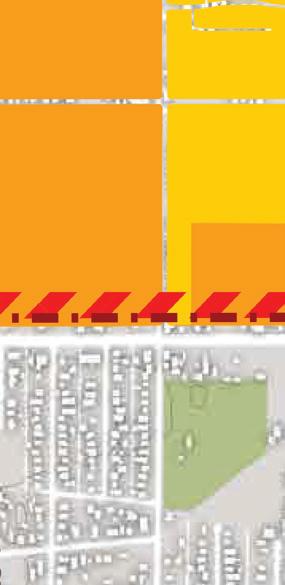
This Land Use Master Plan illustrates a conceptual vision for a land use mix across public and private properties in the Rio Salado District. This concept considers various inputs such as existing plans, environmental factors, active development projects by private developers, and community-voiced priorities to propose a vision for land use mix in the Rio Salado District. This master plan is intended to guide future land use decisions and inspire future development in the area, and not to intended to depict exactly how the area will be built out over time.
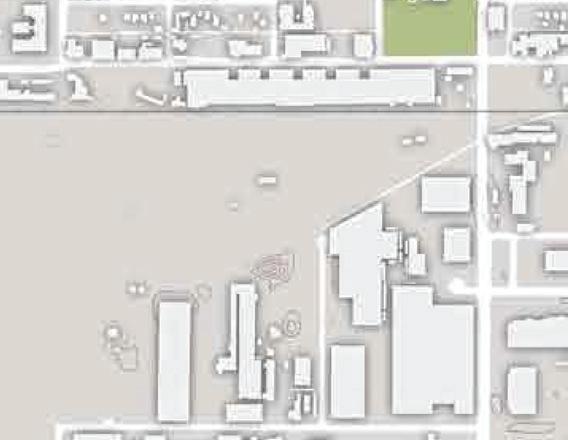
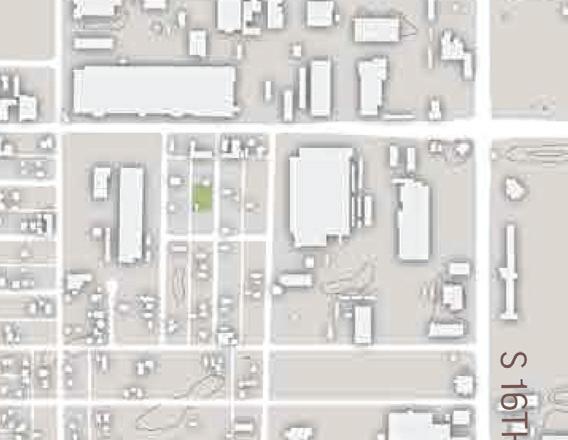
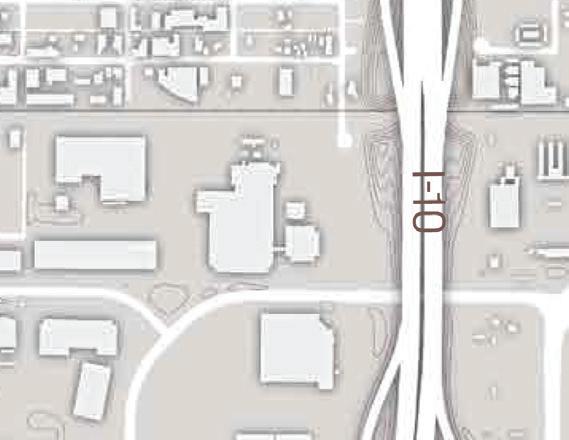
The Land Use Master Plan illustrates land uses mainly at the block-level, however, a greater vibrancy can be achieved by introducing a wider mix of uses at the site-level (as appropriate by the content) where the use enriches daily life with more frequent access to services in a walkable scale. The Land Use Types table provided in the plan, identifies primary land uses consistent with the land use categories, in addition to secondary (or alternate) land uses that may also be compatible depending on the neighborhood context and environmental conditions; while the Building Typology table contains building types/scales for each land use category.
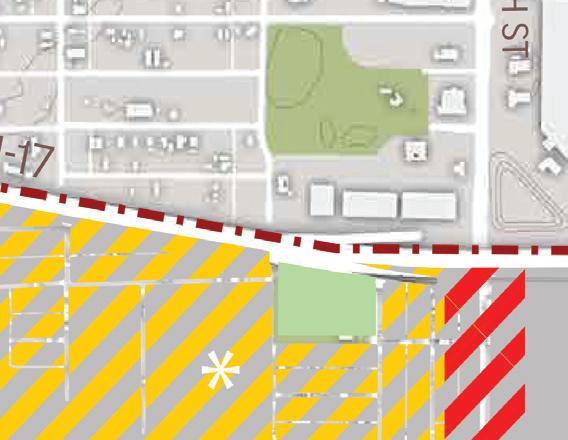
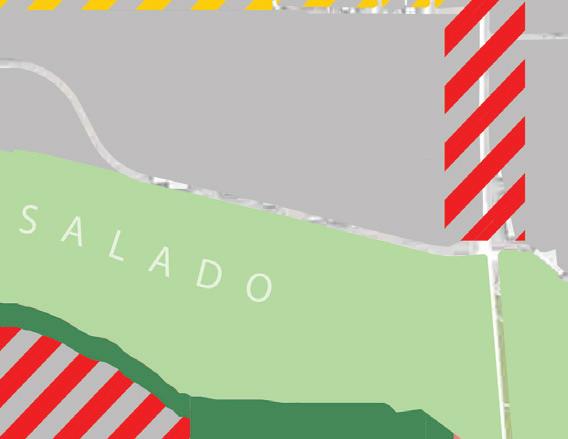
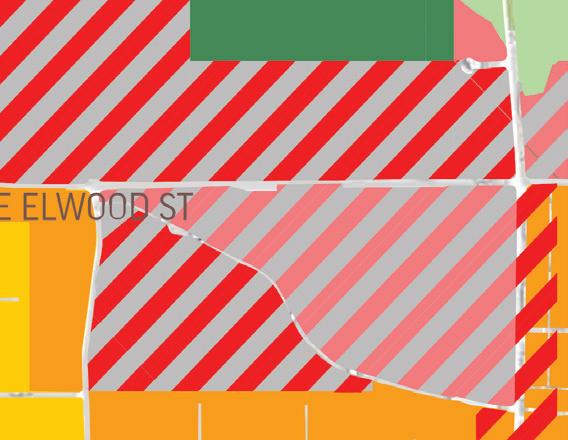
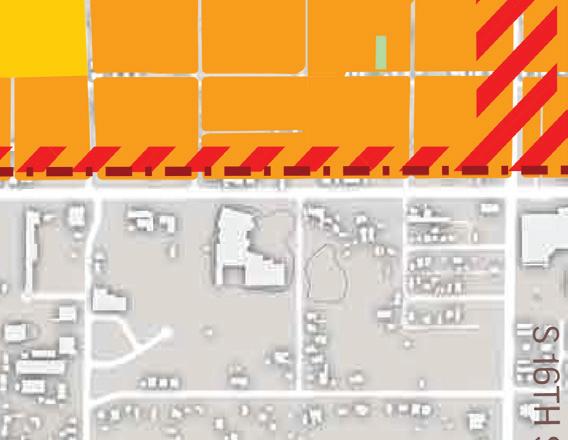
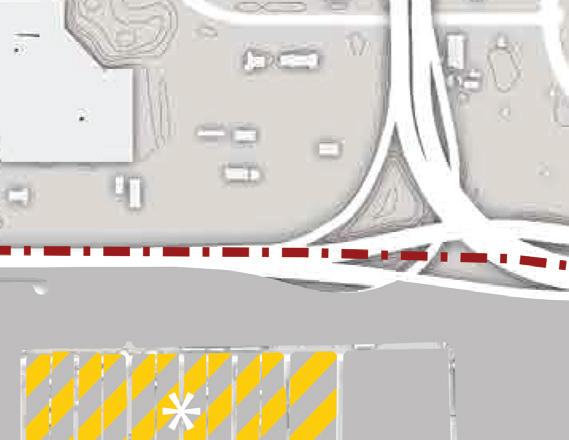
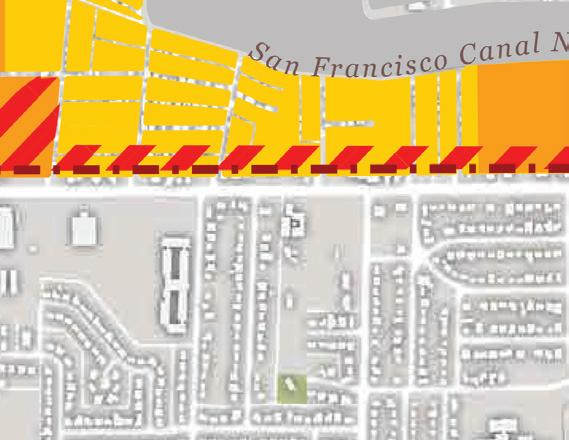
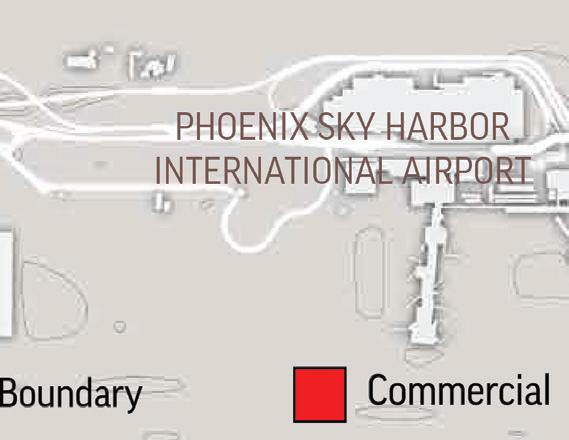
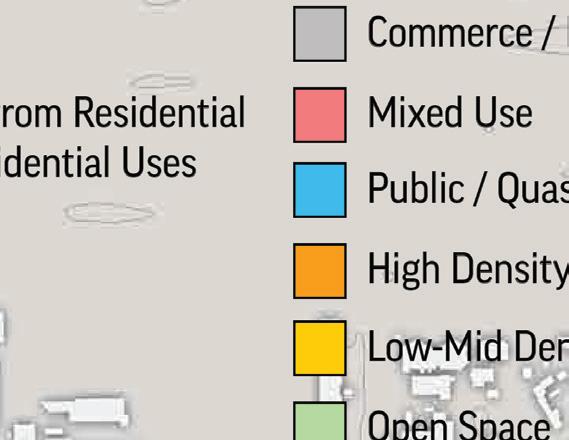
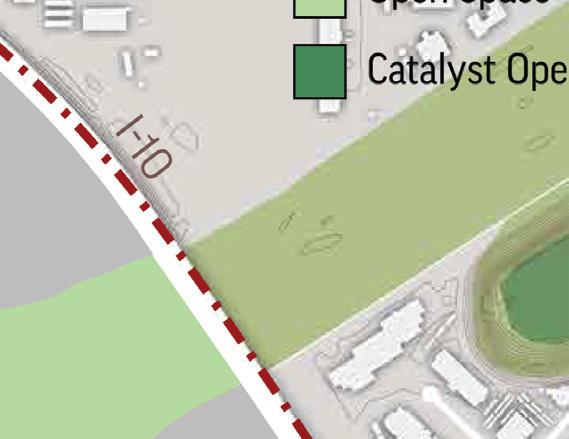
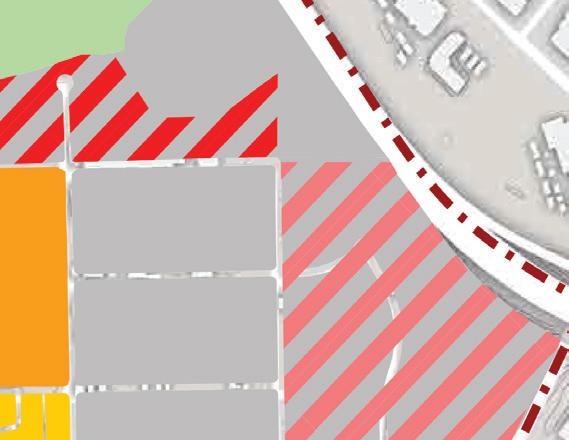
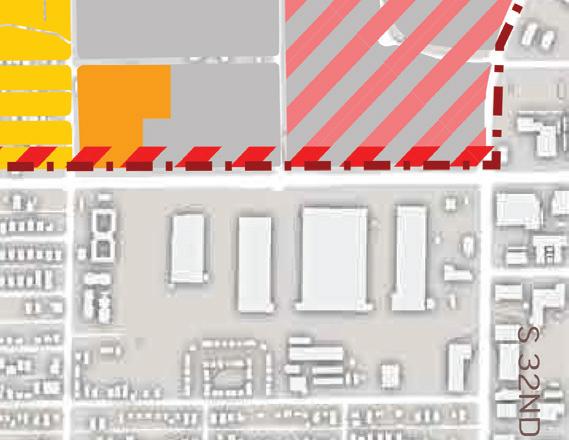
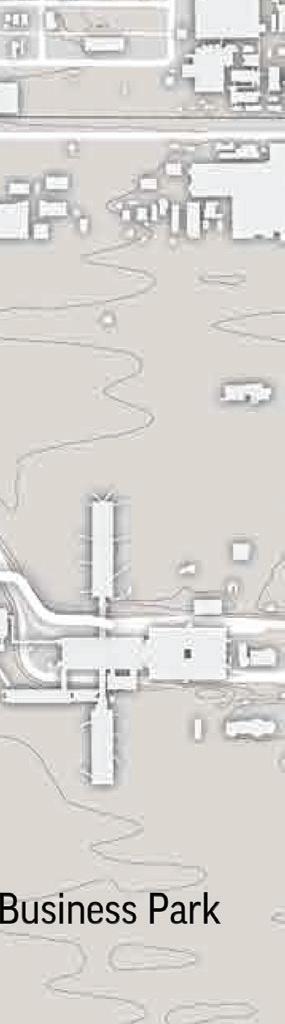
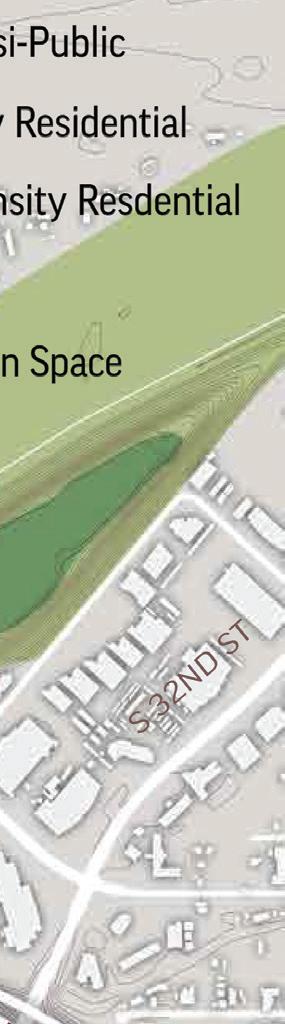
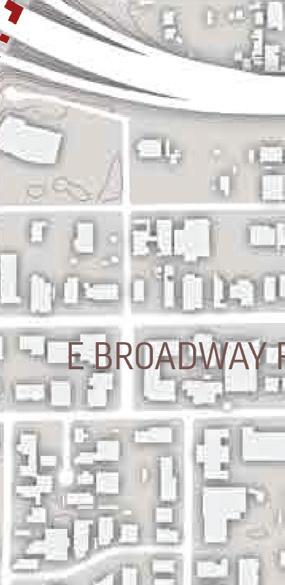
The Land Use Master Plan has eight (8) land use types defined below. These land use types guide development and the character of a given area through compatible land use types and design, which are most effective when paired with character area standards. These land use types are intended to complement the Land Use Master Plan and inform land use decisions.
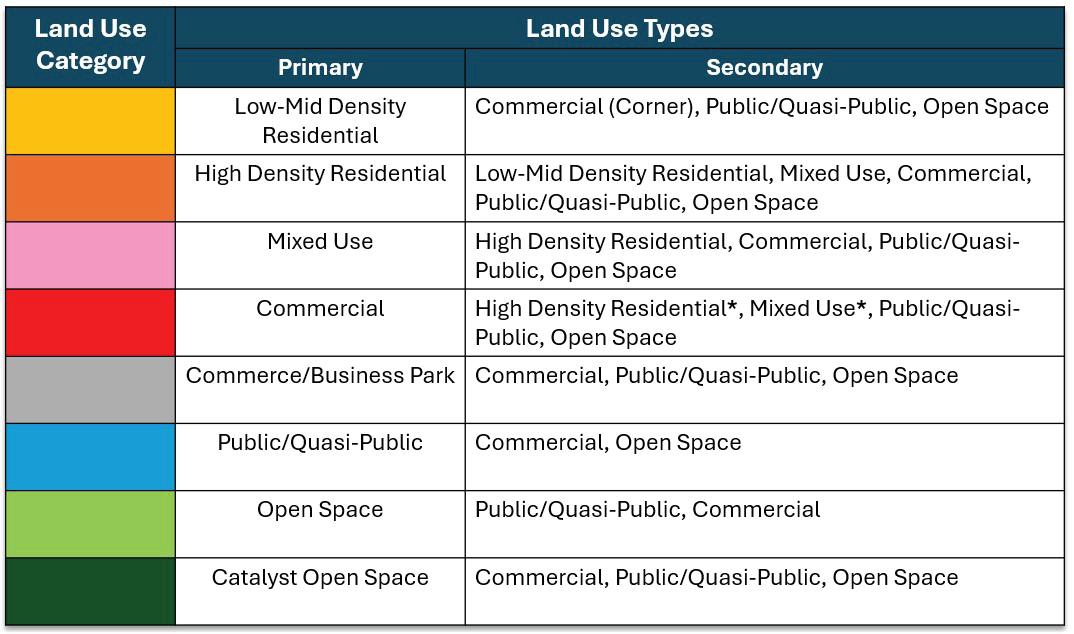
*These land use types are only appropriate where there are no environmental conditions present, including but not limited to brownfields or aviation noise.
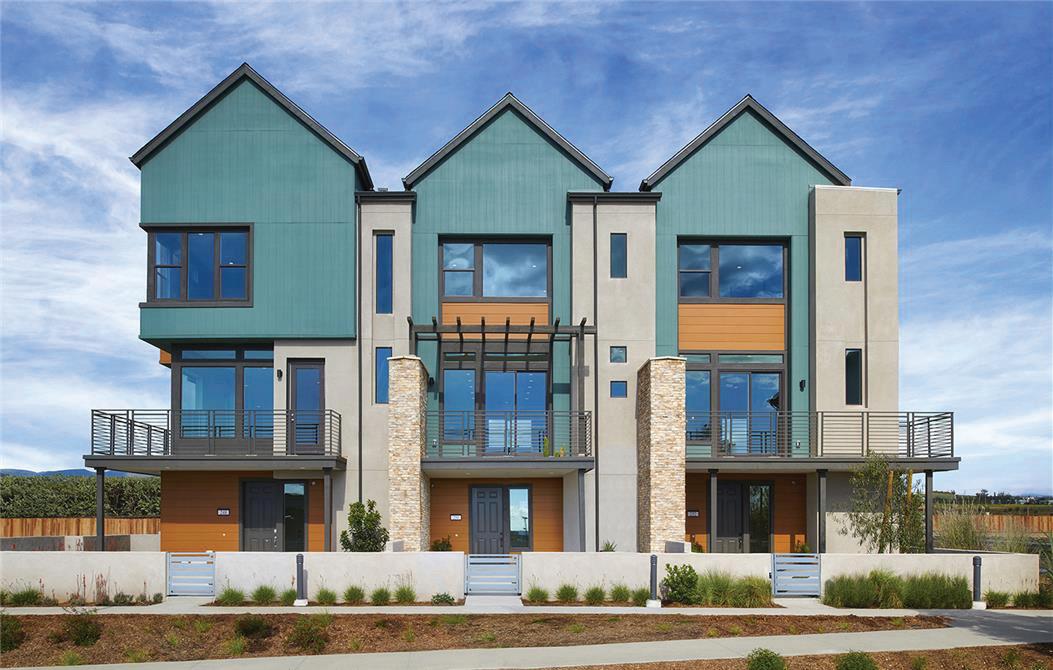
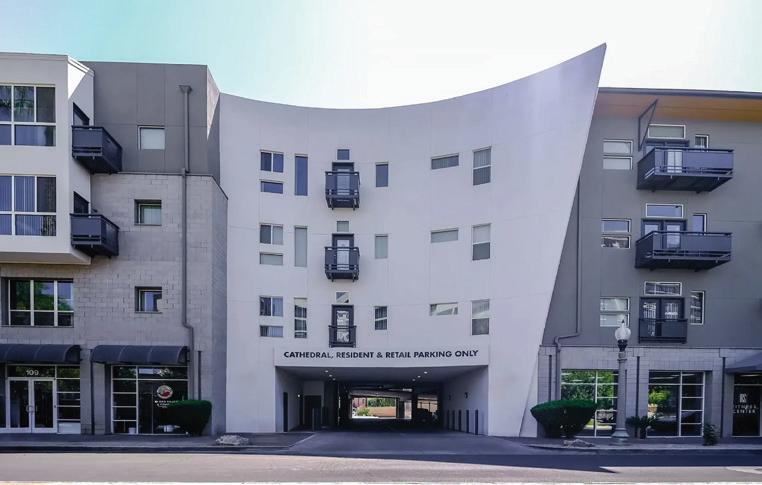
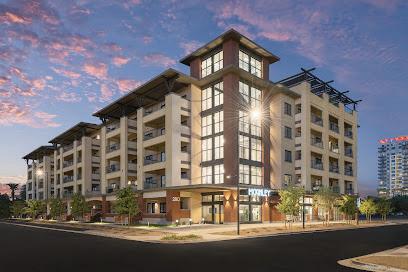
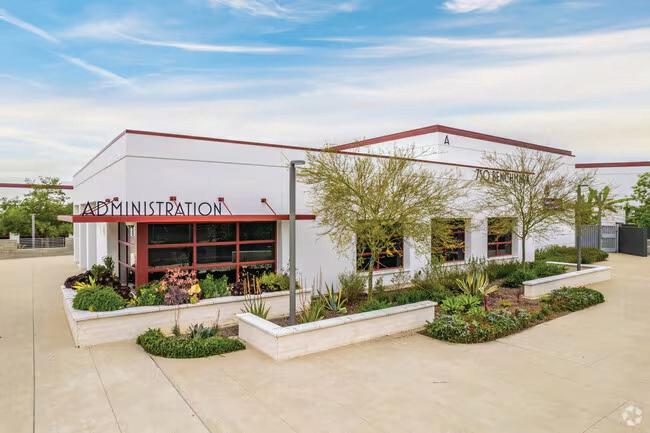
Each of the land use types has corresponding typologies that describe building types and scales that are generally compatible with the character of those areas. These typologies are intended to complement the Land Use Master Plan and inform land use decisions.
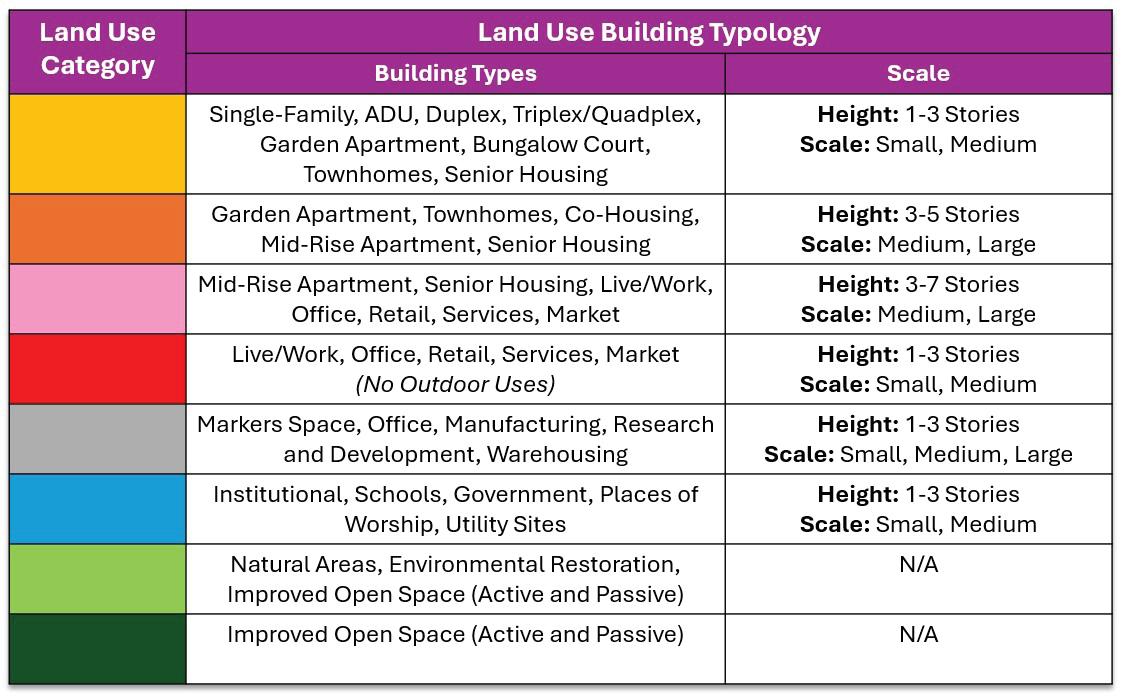
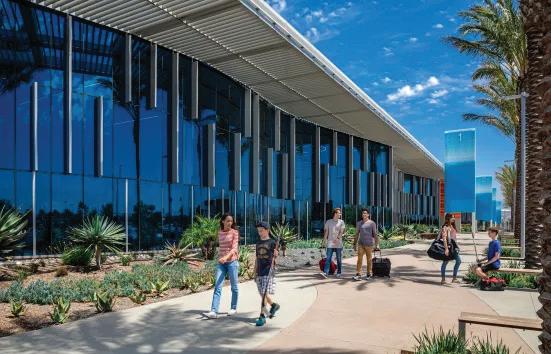
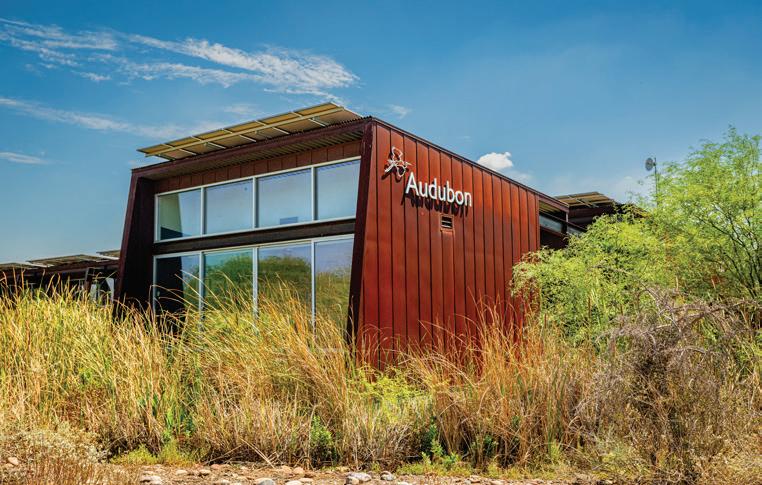
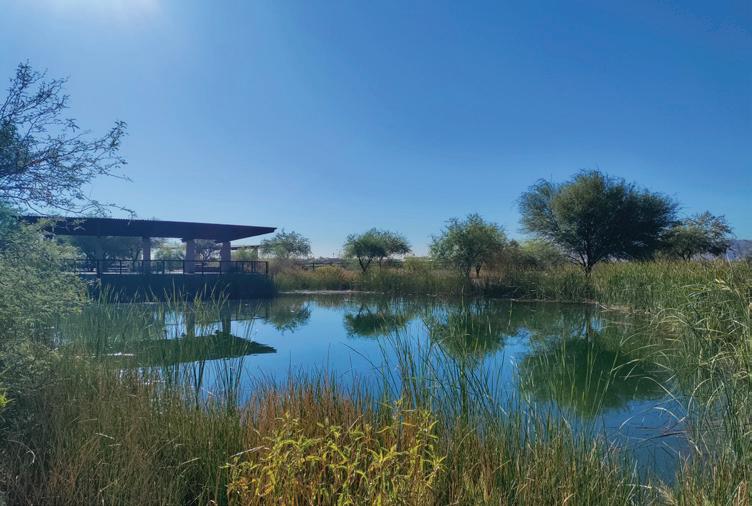
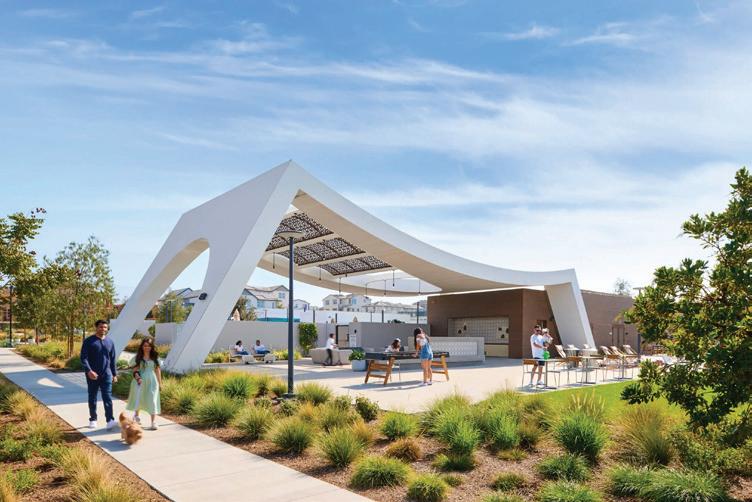
Repurposing existing buildings is a great way to reimage a space and give it a new life. With most of the Rio Salado District developed, adaptive reuse of older buildings can be an important strategy to achieve the vision for the area. This method can support both existing and emerging small businesses, contribute to the economic prosperity of the area, and preserve the history.
Land is a finite resource that should be utilized thoughtfully to advance the vision of the Rio Salado District. As most of the land within and surrounding the Rio Salado District has been developed, infill development will become increasingly common. This type of development may include “greenfield” development on undeveloped land or redevelopment of existing land, partially or fully.
These redevelopment methods can support both existing and new uses by utilizing land in a more efficient manner that adds value to existing properties and utilizes existing infrastructure to support new uses.
Other benefits include the concentration of goods, services, or housing, which may reduce travel distances. Local, regional, and national examples of successful adaptive reuse projects are commonly found throughout Phoenix.
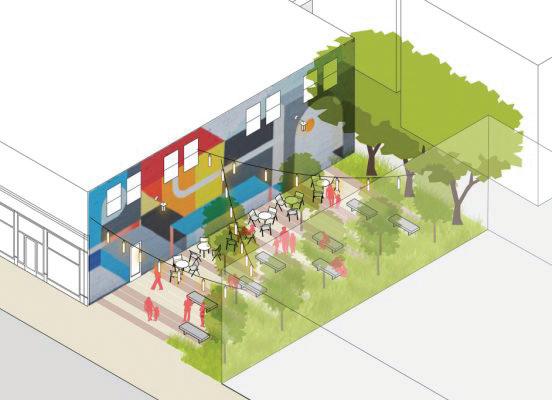
Adaptive reuse elements may include:
• Building façade enhancements and treatments
• Repurposing outdoor spaces and parking lots
• Adapting existing older buildings and adding new structures
• Enhancing existing open spaces and landscape areas
• Artistic elements on buildings, fences/walls, gates, and other structures
• Energy efficient fixtures
Infill development opportunities may include:
• New development on vacant parcels
• Underperforming commercial properties
• Underutilized surface parking lots and landscape areas
• Abandoned rights-of-way or railroad easements
• Infill housing such as accessory dwelling units or “casitas”, middle housing, and micro-homes
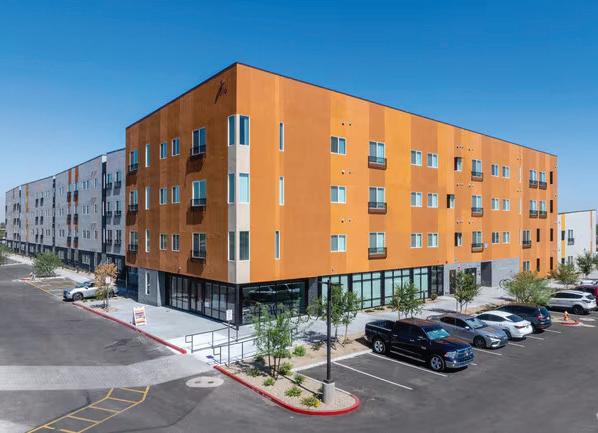
Increasing activity and vibrancy in the Rio Salado District, especially near the Habitat Restoration Area, is essential. Creating a community-led arts, culture, and nature district can attract both locals and tourists to foster a stronger appreciation and connection with the land and its historic significance. Starting with temporary installations that may evolve into permanent ones, the district should continue to feature regular programming and events to engage audiences. Improving existing mobility networks and providing new connections will be key to reconnect locals with the RSHRA.
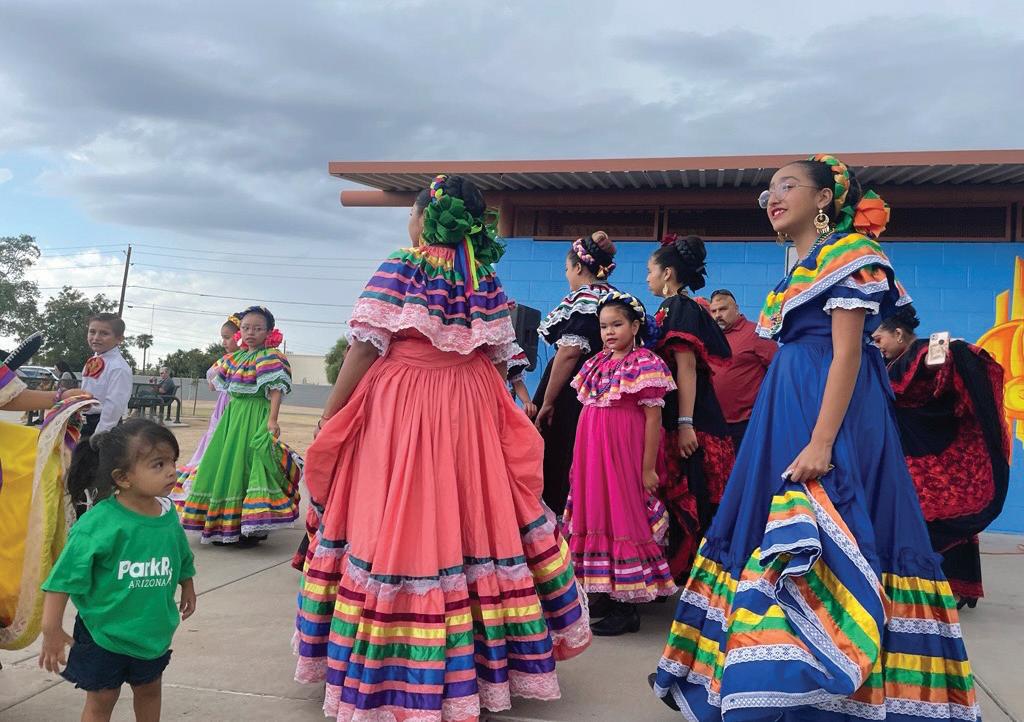
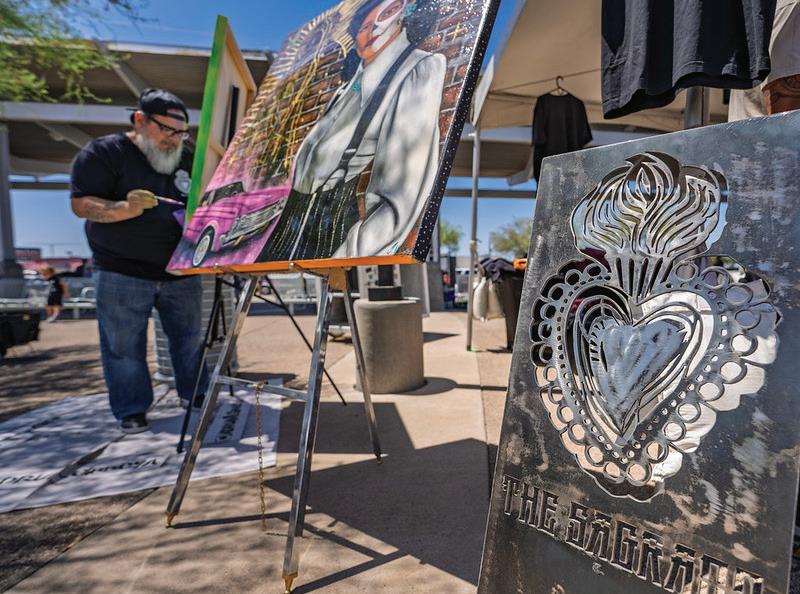
Elements of the arts, culture and nature district may include:
• Mercados, farmer’s markets/festivals
• Food trucks, semi-permanent vendor leases
• Public art displays or staffed festival events
• Cultural and nature-themed events
• Small local music events (band/singers, etc.)
• Outdoors group fitness activities and classes
• Sidewalk art, wall murals, and shade structures
• Nature focused activities, facilities, and educational programming (bird walks, volunteering, etc.)
• Other eco-tourism activities
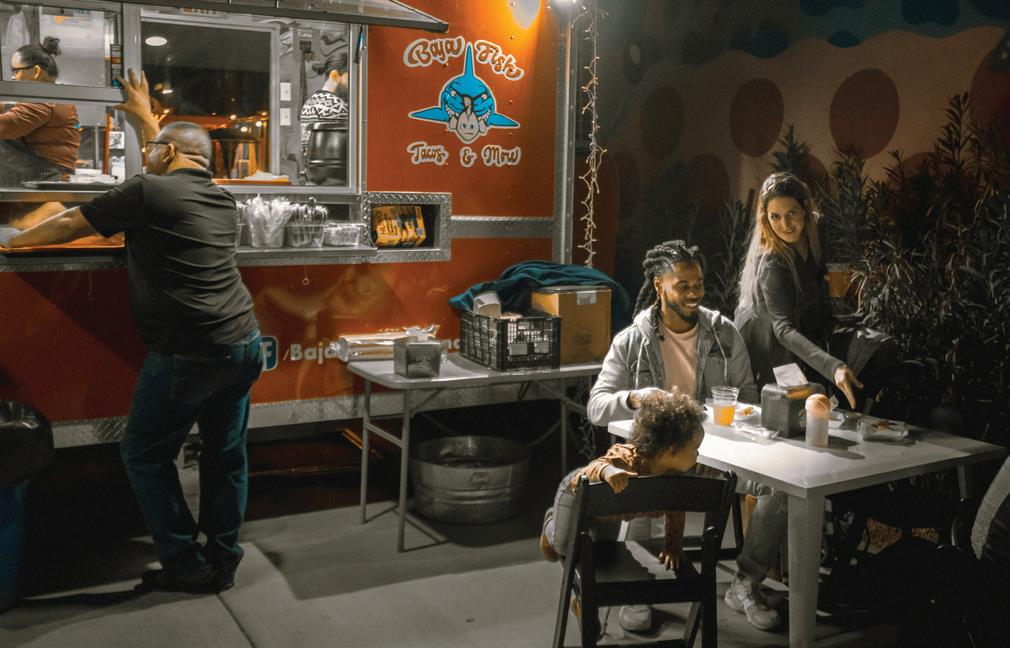
Brownfields are properties that are vacant or underutilized and are either contaminated, or have the perception of being contaminated, which creates a barrier to redevelopment.
Examples of brownfields are former mining sites or landfills and dumping sites, which are common along the Rio Salado, but also include other former site uses such as salvage yards, drycleaners, and gas stations.
The clean-up and redevelopment of brownfields sites can give new life to these contaminated sites to improve community health. This also facilitates land revitalization by returning a property to a safe and sustainable use which also creates a benefit for the community. Brownfield cleanup and former mining site redevelopment is key to achieving the Rio Salado District vision.
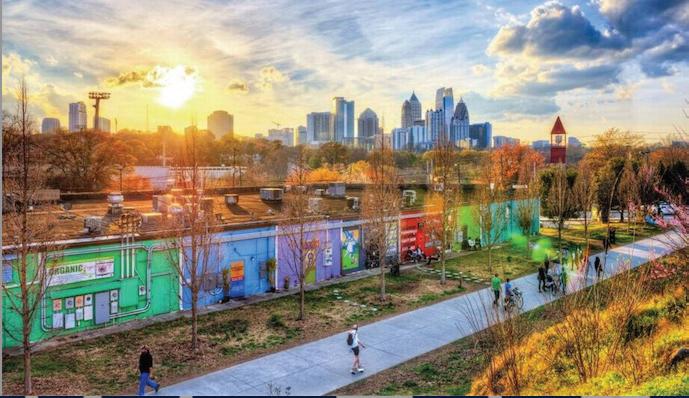
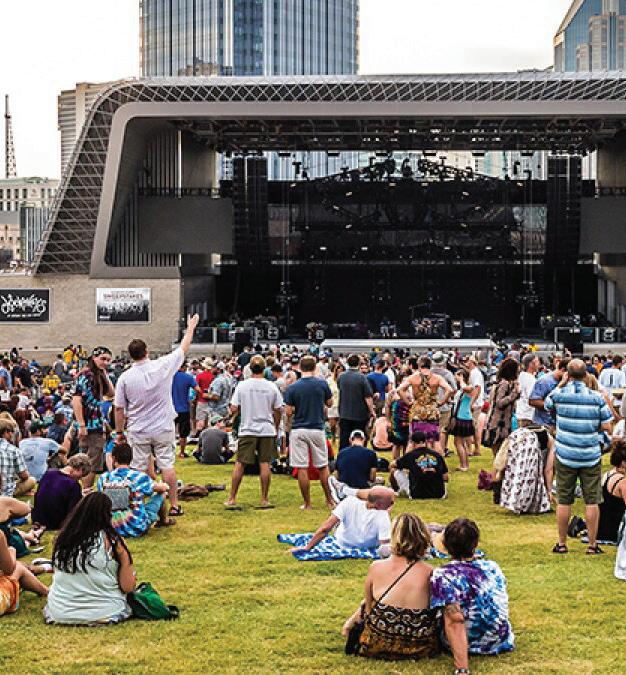
Brownfield redevelopment considerations include:
• Common remediation methods include soil excavation, capping with clean soil, and lead or asbestos abatement (removal).
• Redevelopment plans for the site may be limited by the type and amount of contamination at the site. For example, heavily contaminated sites may not be either appropriate or economically feasible to redevelop with housing.
Former mining or landfill site redevelopment considerations include:
• Ongoing land settlement, soil backfilling and compaction, preventing the penetration of the final landfill cap (exposure of landfilled waste), landfill gas management infrastructure, and accessibility for ongoing landfill gas and groundwater monitoring.
• Regulatory approvals by Federal, State and County agencies on closed landfills, and City, County and State regulations on mining sites.
• Redevelopment costs to design, engineer and construct on a closed landfill, including other site-specific costs related to the site’s history and regulatory requirements.
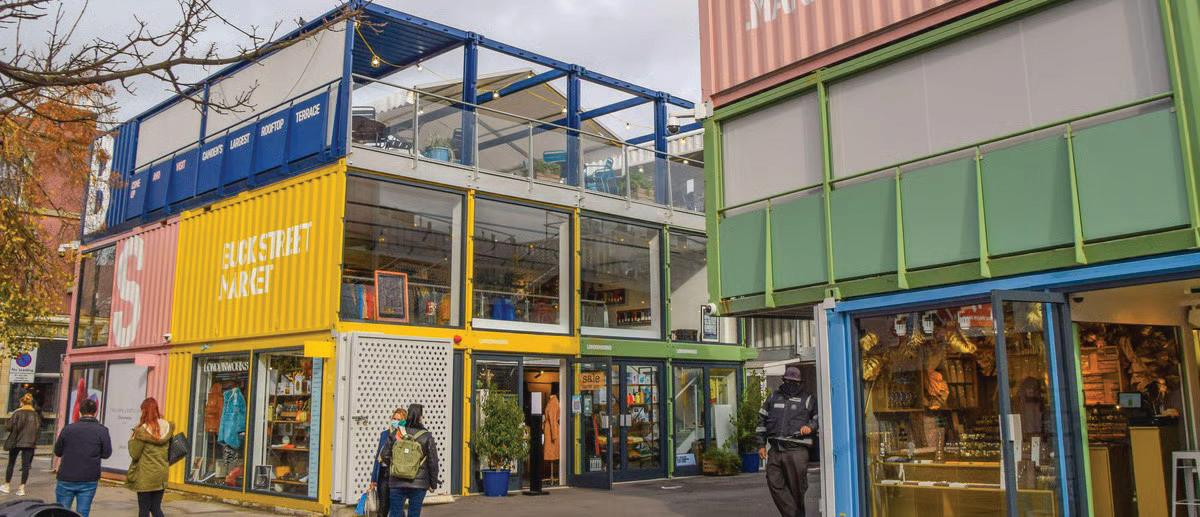
As a significant employment hub with nearly 20,000 employees and over 500 employers in diverse sectors, the Rio Salado District has the potential to become an eco-business district that pioneers a greener industrial park in areas with predominant employment uses, particularly north of the RSHRA near Interstate 17.
The renewal of existing industrial areas through adaptive reuse can support new and innovative businesses, while promoting the area as a hub for green industries, with businesses that emit minimal greenhouse gases or have an overall lower environmental footprint.
Establishing an eco-business district can attract new green industries in advanced manufacturing, energy systems, and emerging technologies, to promote a sustainable logistics chain and circular economy for a positive environmental impact.
Eco-business district considerations include:
• Mix of uses and buildings at various scales
• Adaptive reuse of existing buildings and addition of new structures
• Active building frontages and sustainable building/site design
• Ample landscaping, pedestrian connectivity, employee/pedestrian amenities, and open space
• Green energy ports (i.e. commercial electric chargers, hydrogen fuel stations)
• Renewable energy generation (i.e. on-site solar panels)
• On-street and on-site green stormwater infrastructure or treated water discharge
• Artistic and environmental elements on buildings, fences/walls, gates, and other vertical structures
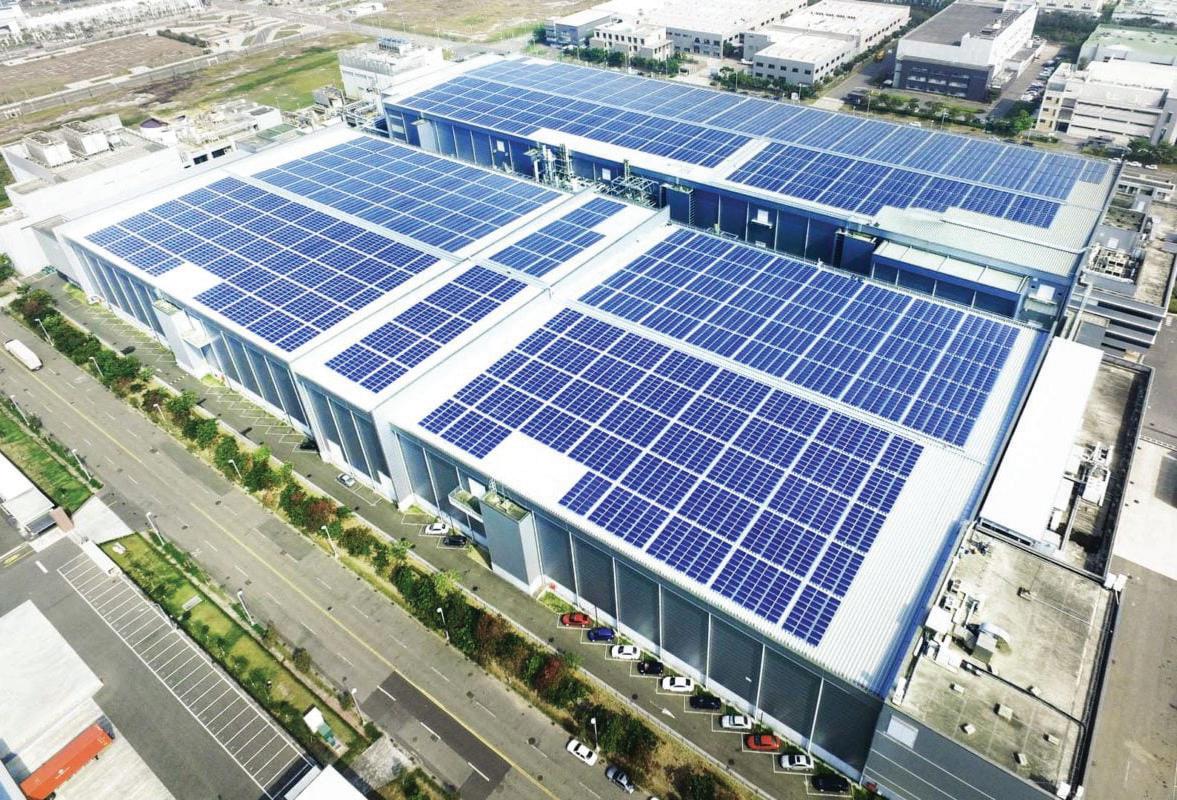

Orienting development to the Rio Salado is a key objective of the Rio Salado District Policy Plan. Integration of river-adjacent development with the RSHRA is essential to provide a seamless transition between private property and the publicly-owned RSHRA, to facilitate activity along the riverbanks to foster environmental sterwardship.
Due to the sensitive nature of the existing river ecology, development should be thoughtfully designed to mitigate adverse impacts on the local flora and fauna, while facilitating human interaction at the banks to promote a vibrant and safe river corridor. While a mix of uses and scales may be appropriate with specific design elements, a landscape transition zone should be provided as a buffer between buildings and the RSHRA.
Key edge-design elements include:
• Height (Step-backs)
• Scale
• Massing
• Wildlife-friendly lighting
• Landscaping (native species)
• Connectivity
• Public space and amenities
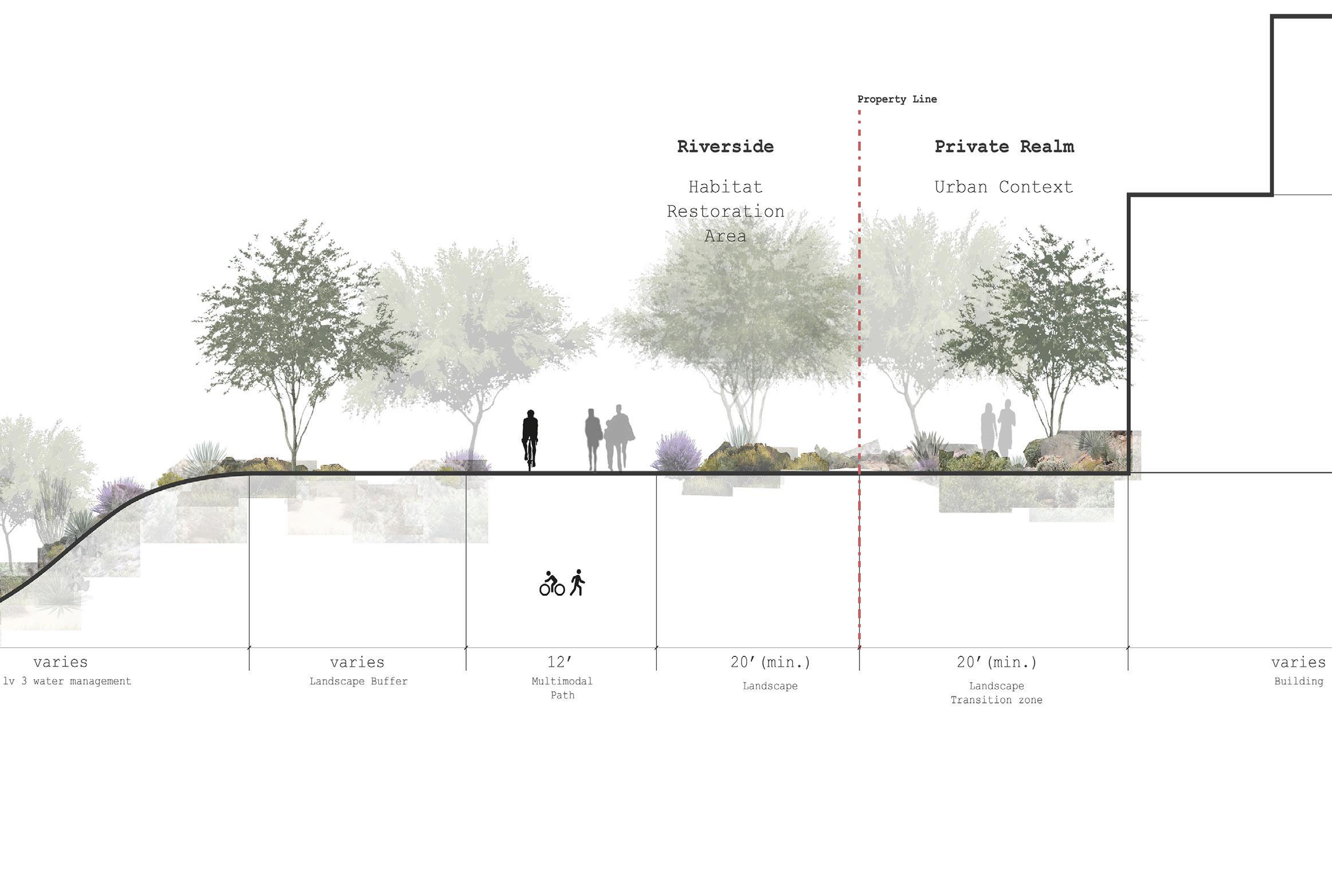
Source: SCAPE/Multistudio
To support strong and prominent river frontage along the HRA, the following frontage elements should be incorporated in river-adjacent or river-oriented development:
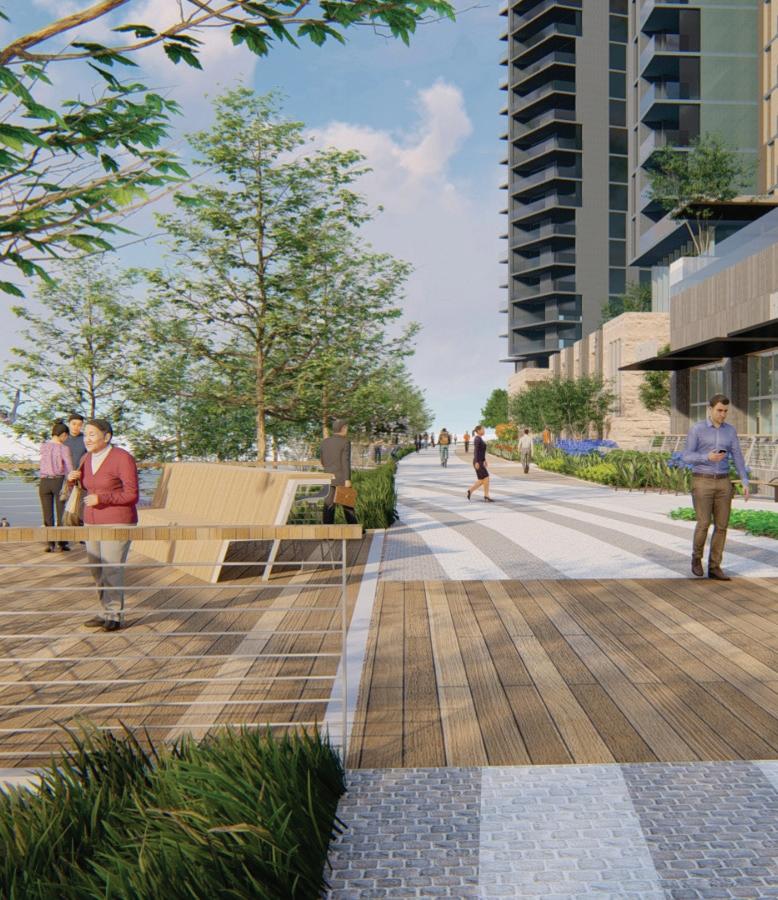
Open edge treatment
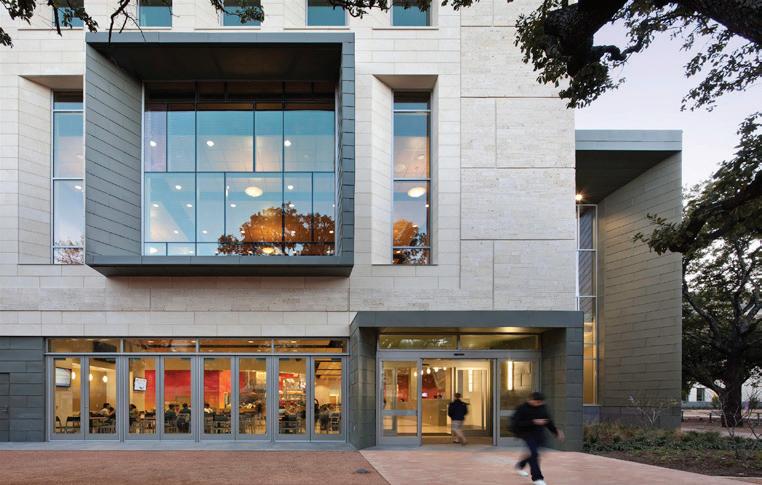
River-facing façade
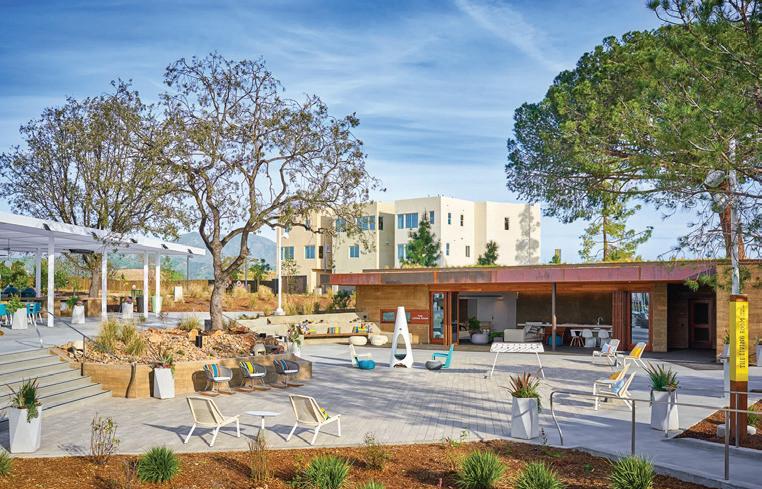
Pedestrian amenities
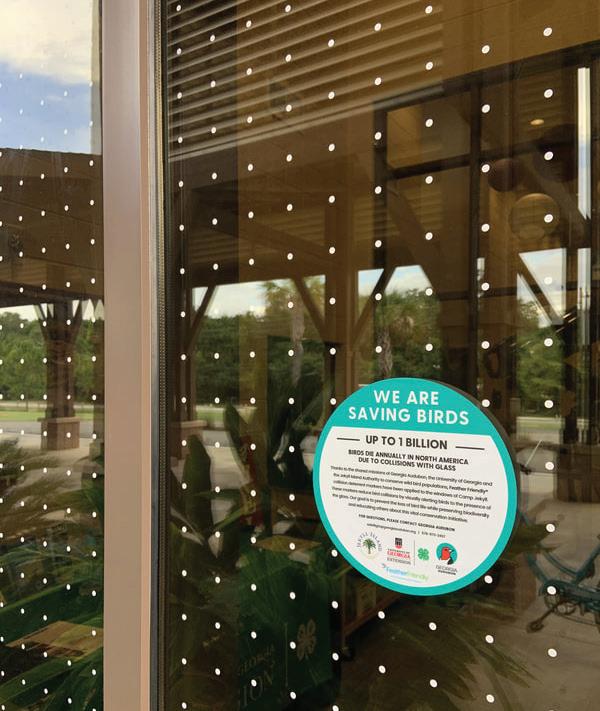
Wildlife-friendly design
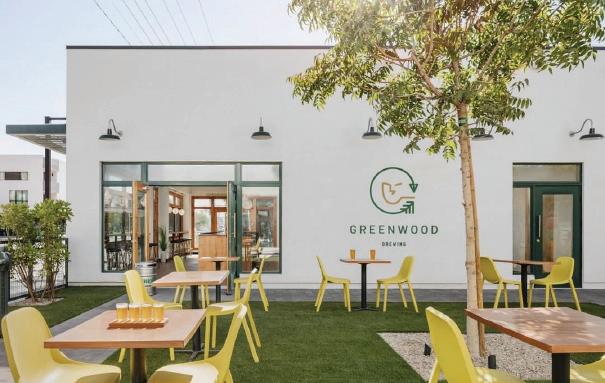
Ground-floor activation
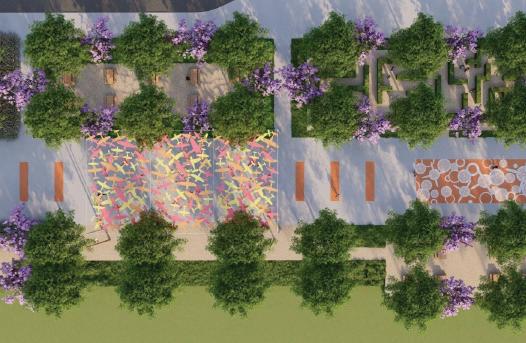
Landscaping and pathways
To review the latest RIO PHX Design Guidelines, please visit the RIO PHX website.
The relationship between urban development and the RSHRA is central to creating a vibrant, accessible, and ecologically responsive riverfront. These typologies illustrate a range of interface conditions that prioritize eyes on the river, public access, and active use of the public realm along the RSHRA.
This approach is not intended to limit or impede development, but rather to guide its thoughtful integration with the RSHRA. Development within 500 feet of the RSHRA should enhance permeability by maintaining visual and physical connections to the river, connecting to public trails in the RSHRA and adjacent multimodal paths and roadways such as the scenic drive, and transitioning the ecological character of the river into the urban fabric beyond the banks.
Development frames shared green courtyards that open toward the existing river trail, creating a rhythm of intimate open spaces embedded within the urban fabric. This typology encourages active ground-floor uses, fosters social interaction, and supports a fluid transition between the ecological scale of the RSHRA and the finer scale of neighborhood courtyards.
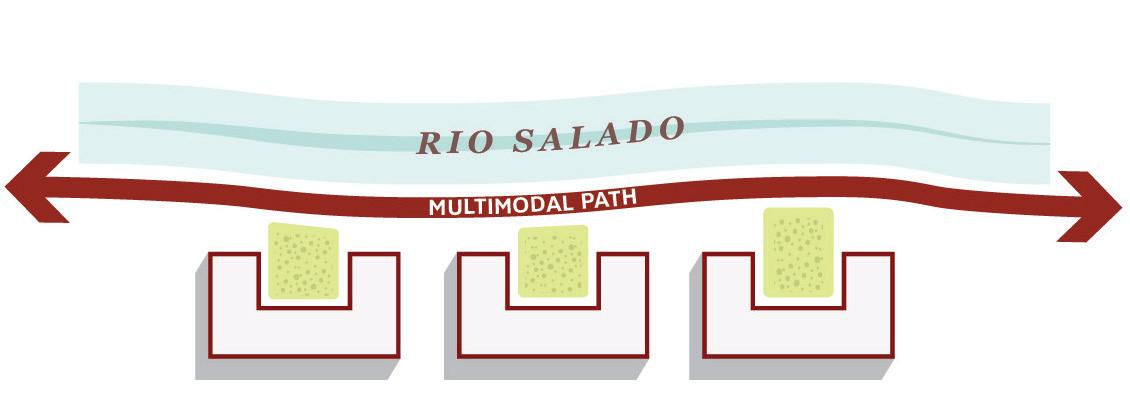
Source: SCAPE/Multistudio
A central open space is framed by urban development, with a multimodal path or paseo looping through the open space area. This typology establishes a civic anchor along the RSHRA, blending natural systems with urban life. It supports events, recreation, and cultural programming while extending the ecological and spatial continuity of the river into the heart of the community.
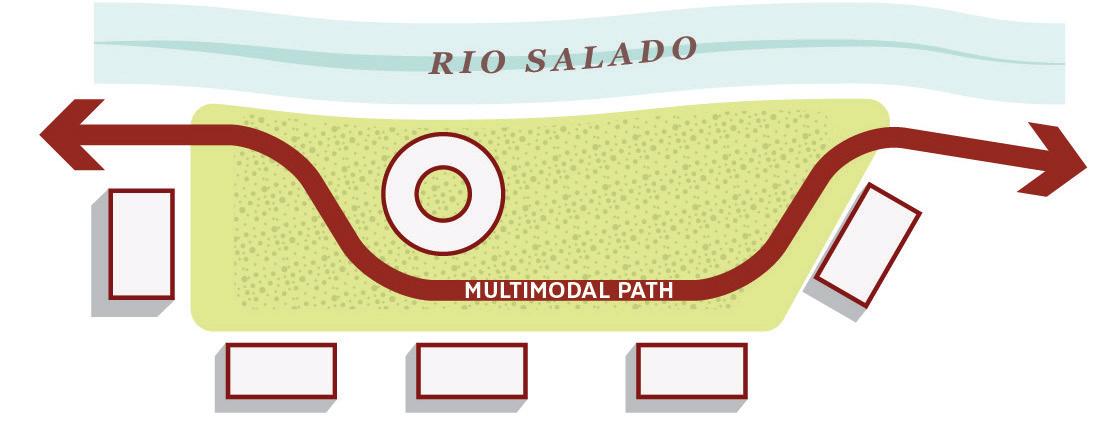
Source: SCAPE/Multistudio
These open space typologies can be utilized to inspire future developments projects along other corridors in the Rio Salado District, including the San Francisco Canal.
A multimodal path runs between the river and the development, acting as both threshold and connector. Open space “fingers” extend from the river through the urban edge, creating a rhythm of access points and framed views. Buildings are set back to support the river ecological function while maintaining strong visual and physical connections to the riverfront.
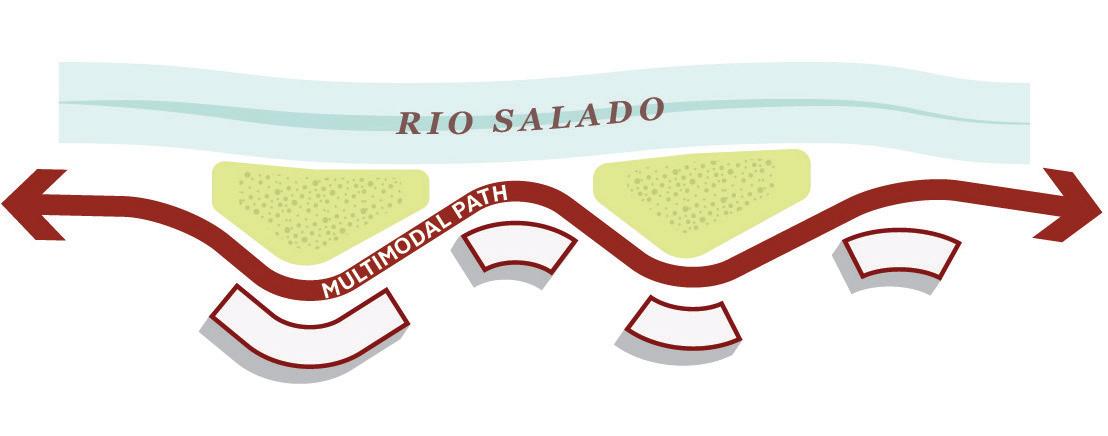
Source: SCAPE/Multistudio
Buildings appear immersed within a park-like setting, offering both access and orientation toward the RSHRA and blurring the boundary between built and natural environments. Development fronts directly onto the river, while green “fingers” extend from the riverfront into the urban fabric, bringing its ecological character deeper into the site. The multimodal path or paseo and the scenic drive extend behind the buildings, carrying the identity of the river through the development and supporting internal circulation.
Open space areas, whether private or public, can be activated with amenities and programming to act as a ‘catalysts’ in the Rio Salado District.
Examples of catalyst open space elements include:
• Art sculptures
• Seating/picnic areas
• Shade structures
• Playgrounds
• Performance areas
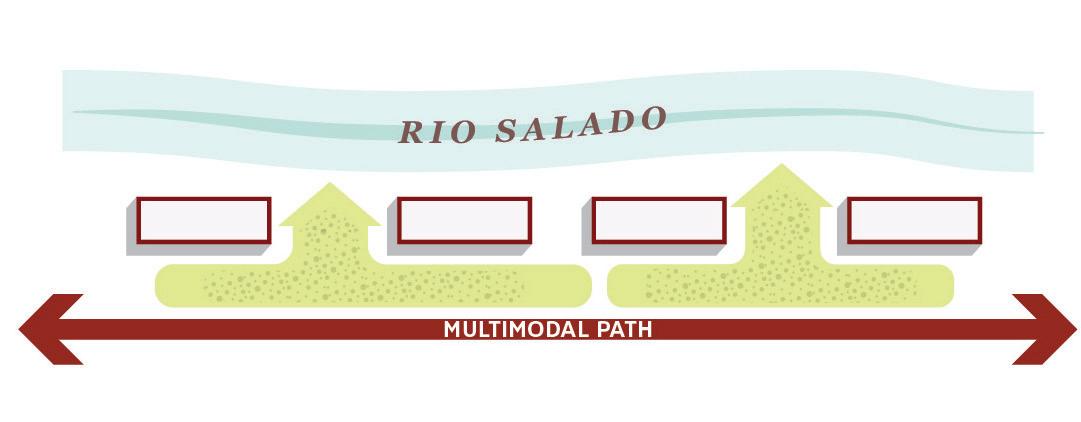
Source: SCAPE/Multistudio
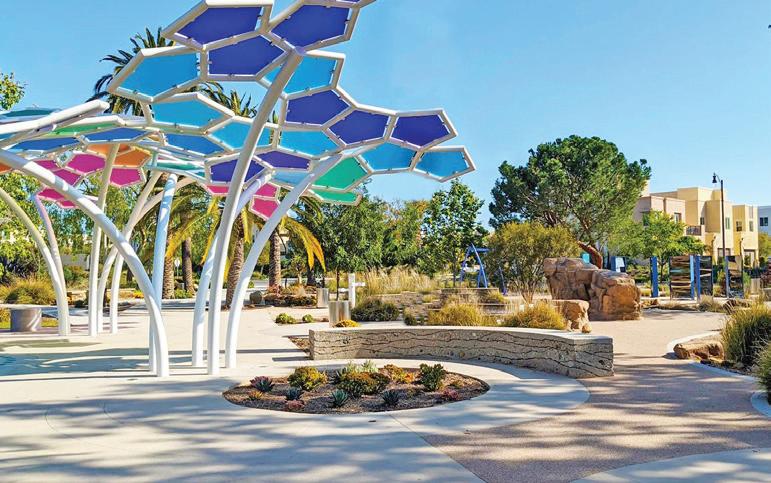
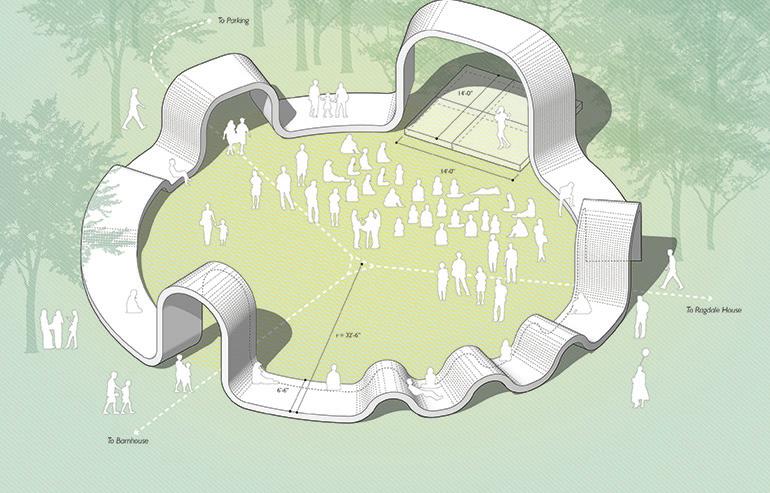
Bio-Cultural Character
The RSHRA is a rich and thriving ecological corridor with abundant flora and fauna at the heart of the Rio Salado District. This unique asset draws locals and visitors alike, in addition to migratory birds, butterflies, and other fauna. Landscape themes spawned from the landscape palette defined in the Rio Salado Habitat Restoration Plan and are intended to reach into the community to create planted themes that expand the opportunity for wildlife and people who experience living along a natural riparian area. The character of living, in this area, is recognizable by landscape typology, a feeling of open space and the amenities that come with it. When related to the river corridor, landscape restoration should be coordinated with the Aviation Department.
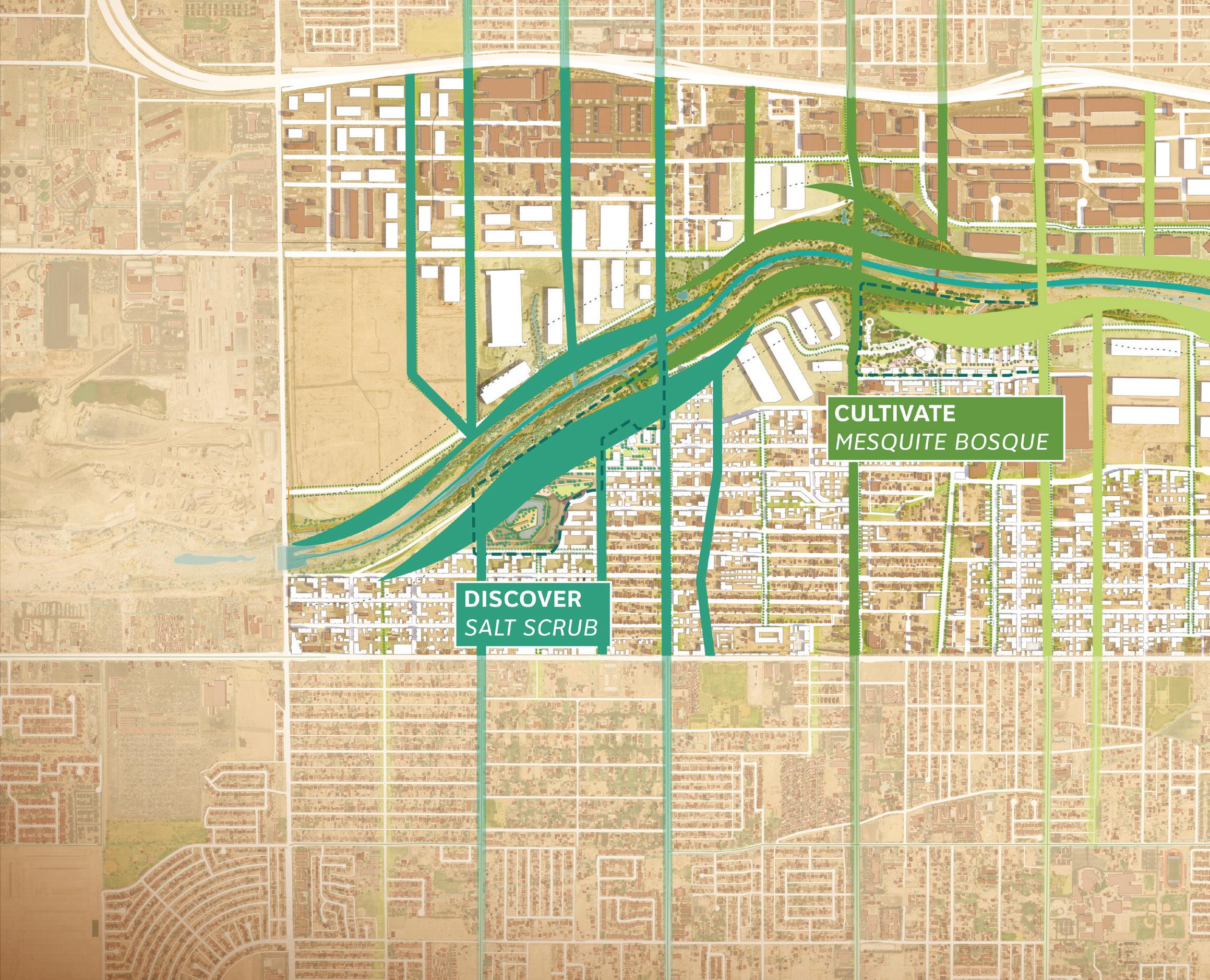
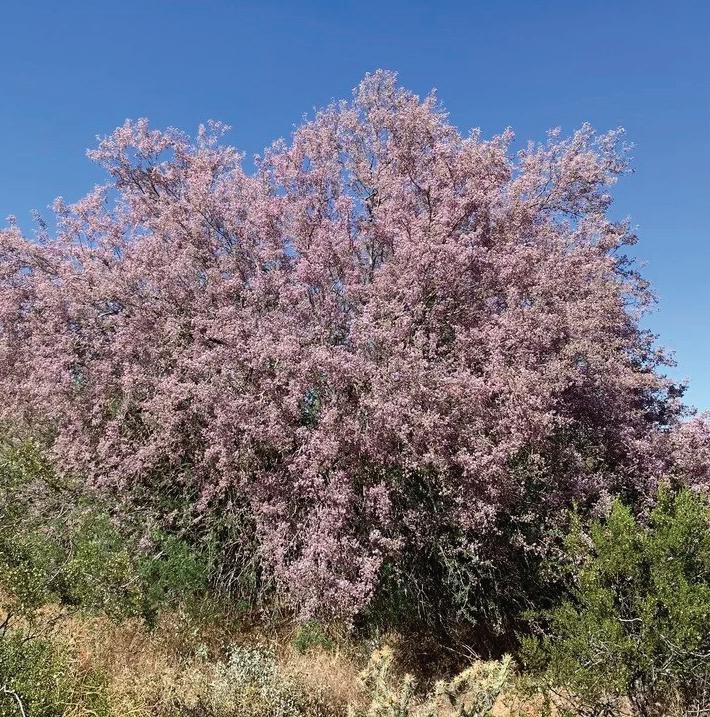
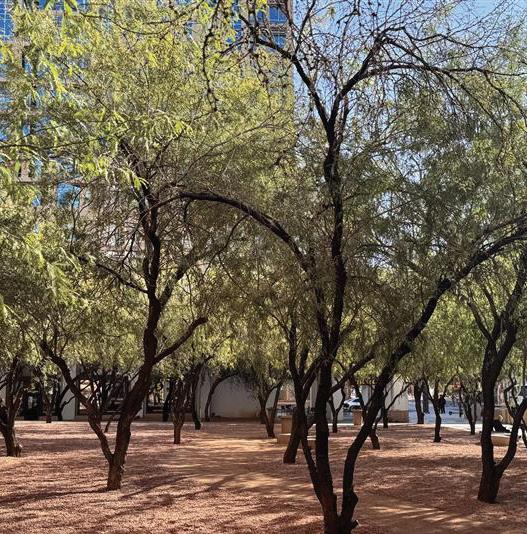
Four key ecological zones are defined as character areas on the map below considering community feedback on desired uses, technical analysis of what might be possible, and learning from past work to define the restoration character of the river itself. At the intersections of landscaped paseos with the scenic drive and river trail lies the opportunity of activity hubs that provide public amenities including potable water, shade, art, trash receptacles, directorial wayfinding, retail or other public gathering potentials. Reaching to these intersections, paseos are intended as shaded and lighted walkable paths with supporting public amenities in reasonable distances.
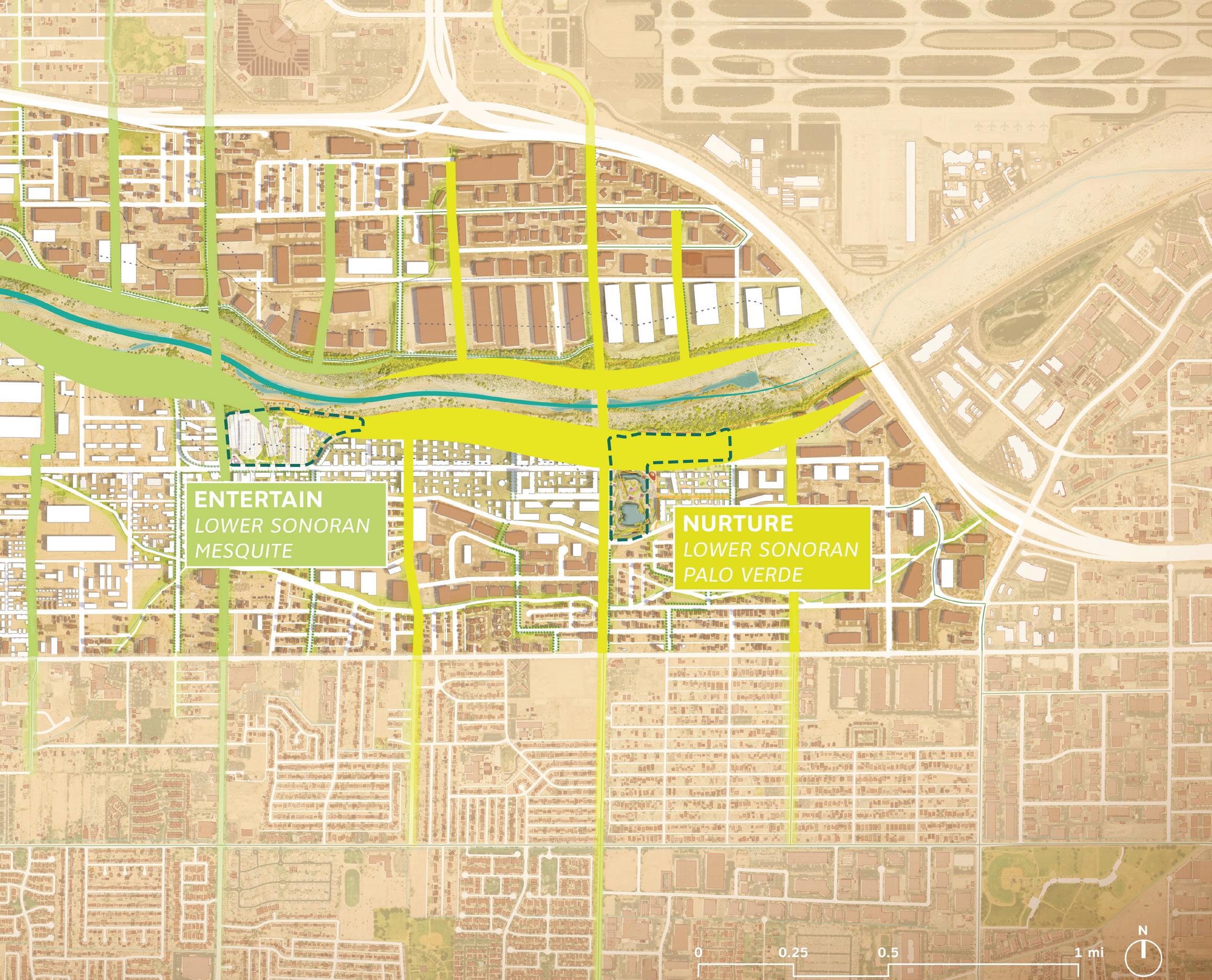
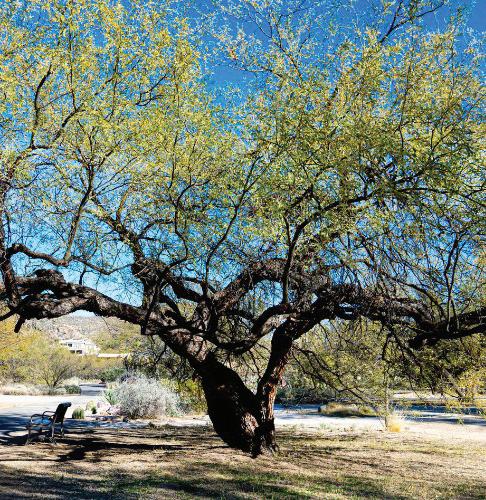




To review the latest Plant List for Development Adjacent to the Rio Salado, please visit the RIO PHX website.


The Rio Salado District is envisioned as well-connected network that links neighborhoods with vibrant education, employment, entertainment, and recreational destinations, including other parts of Phoenix such as Downtown and South Mountain Regional Park. An abundance of transportation options such as bus, light rail, and neighborhood circulators, provide frequent and convenient service stops. Shaded and safe streets with “smart cities” technology make for walkable corridors, while an extensive network of protected bicycle lanes facilitate short and medium commutes. The use of a personal automobile remains an option for residents who need to travel significantly longer distances. This vision also supports new infrastructure investments along the RSHRA and San Francisco Canal.

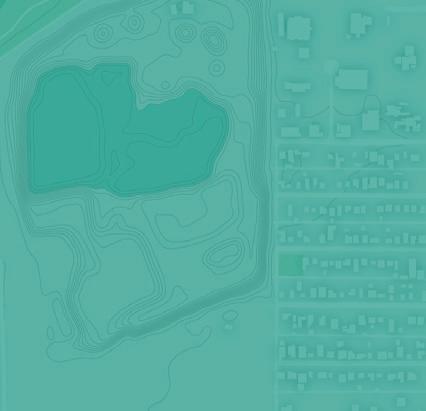

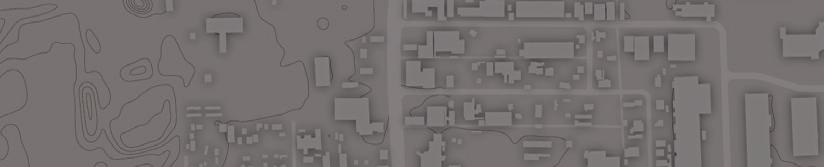





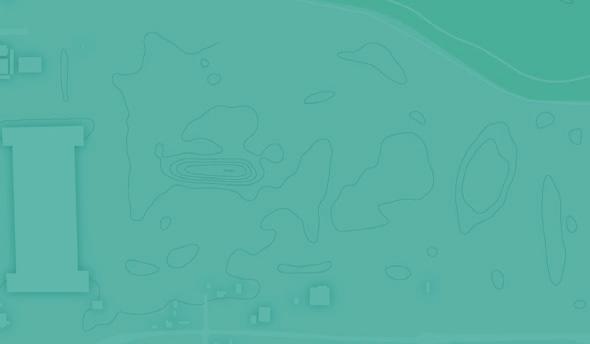
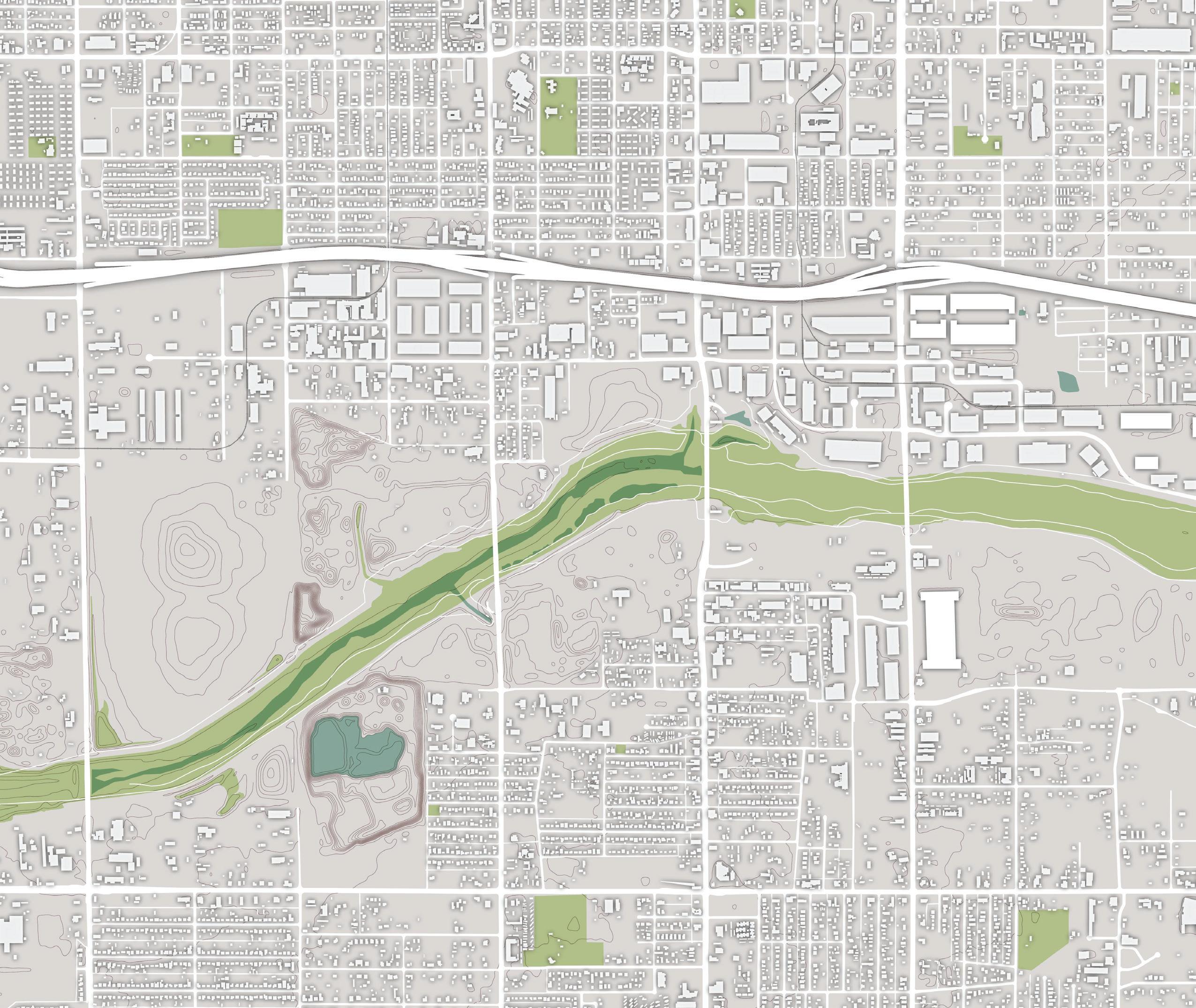

This Connectivity Master Plan illustrates a conceptual vision for streets and paths to support various modes of transportation across public and private properties in the Rio Salado District. This concept considers various inputs such as existing plans, active development projects by private developers, and community-voiced priorities to propose a vision for improved connectivity in the Rio Salado District. The illustrative master plan is intended to guide future land use decisions and inspire future infrastructure investments in the area, and not to intended to depict exactly how the area will be built out over time.
This map illustrates streets and pathways mainly at the block-level; however, more convenient and direct travel routes could be achieved by introducing additional connections at the site-level, particularly for large-scale development, to facilitate public access. Paseos represent conceptual public pathways on public or private property, while multimodal corridors represent segments of public right-of-way that should be studied for enhanced active transportation infrastructure.





LEGEND: Scenic Drive


PHOENIX SKY HARBOR INTERNATIONAL AIRPORT
Study Area Boundary
Rail
Scenic Drive Alternative Scenic Drive Gateways Intersection Safety Improvement
Frequent Local Bus
RAPID Bus
Multimodal Corridor or Paseos
Exsting Trail Network
Existing and Planned Bike Network Trailhead
Source: Multistudio


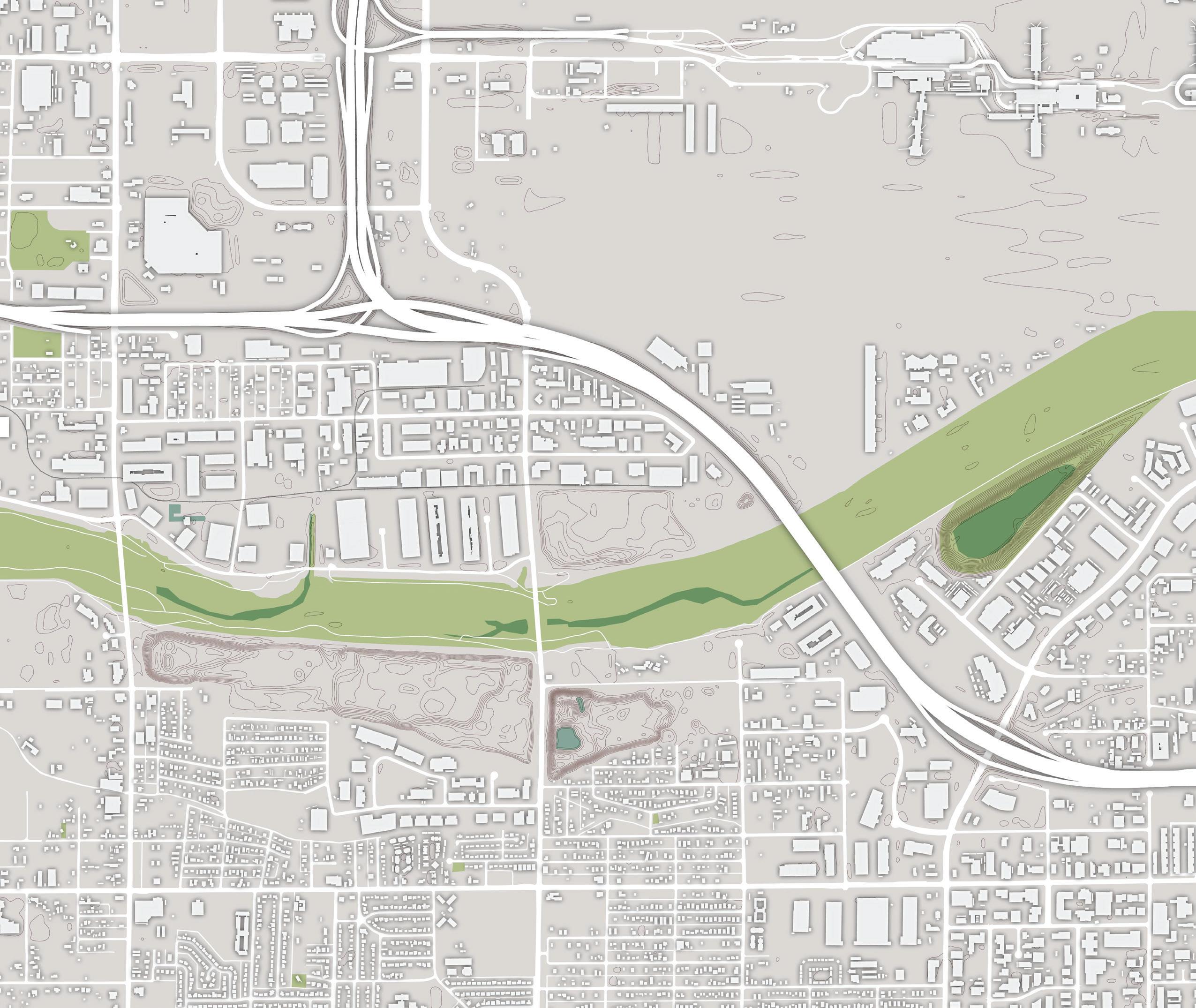


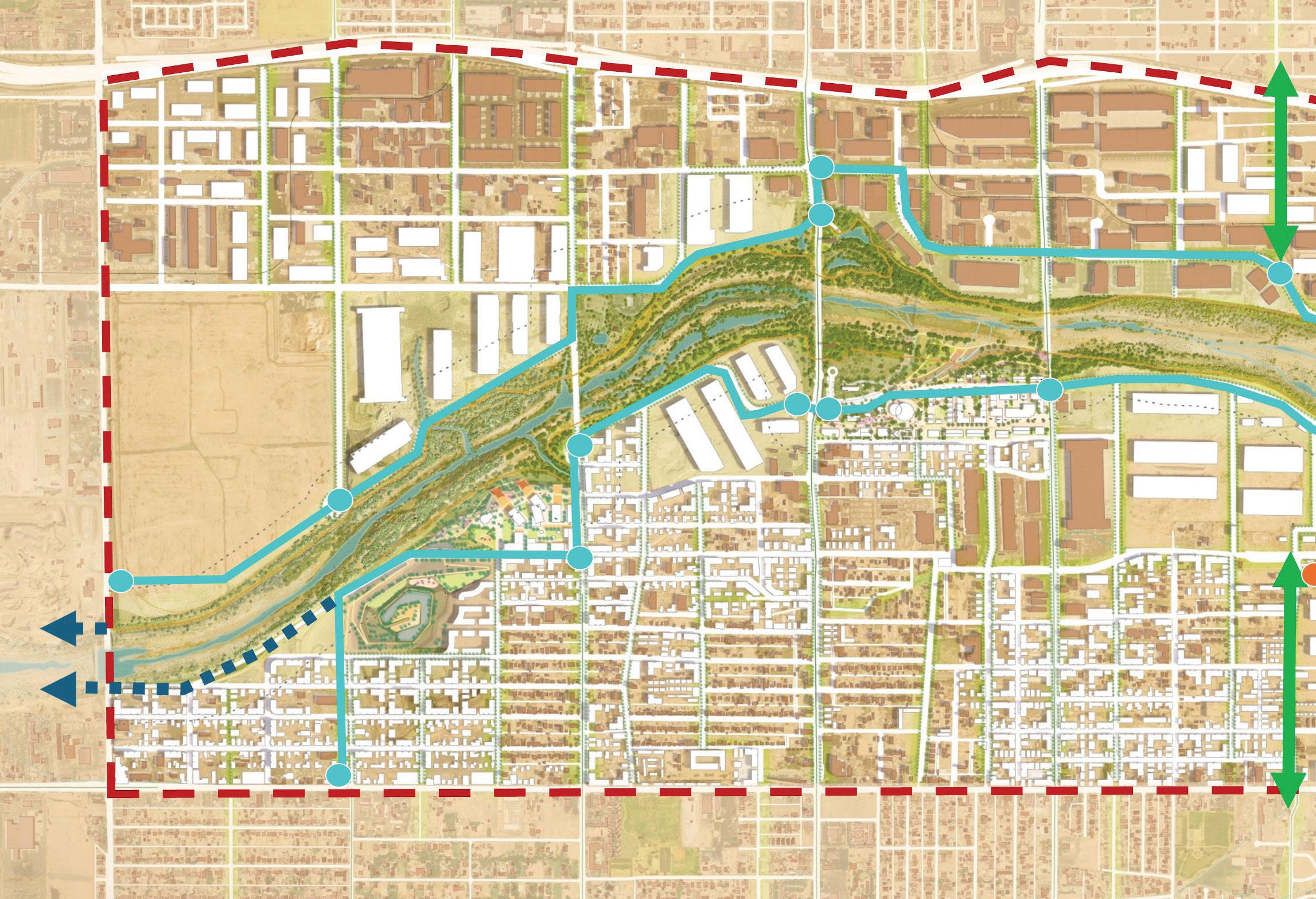
There are five key catalyst corridors to target investment and redevelopment within the Rio Salado District to achieve greater mobility and activity to accomplish the community vision over time. Having a strong interconnected bicycle and pedestrian network is a great opportunity to bridge barriers and gaps.
Having dedicated and protected bike lanes, paseos and trails can help boost local economic development by increasing retail sales, improving property values, attracting tourism, and fostering job creation. Improving bikeability creates more desirable, vibrant neighborhoods, encouraging more frequent visits to local businesses, alternative transportation options, and physical exercise.
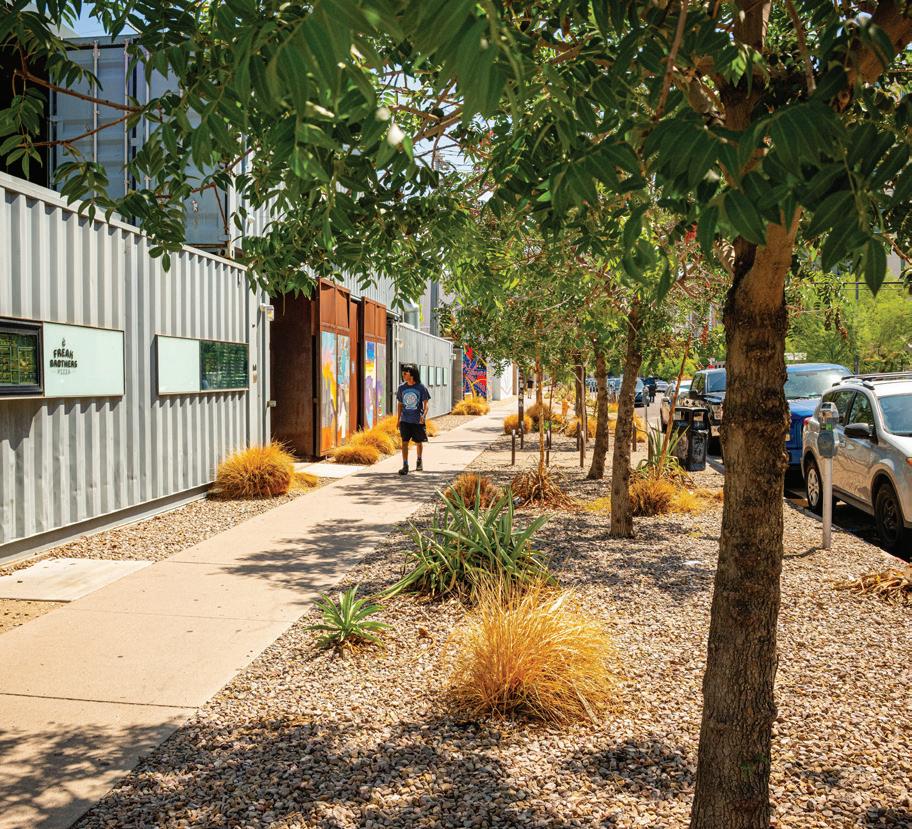
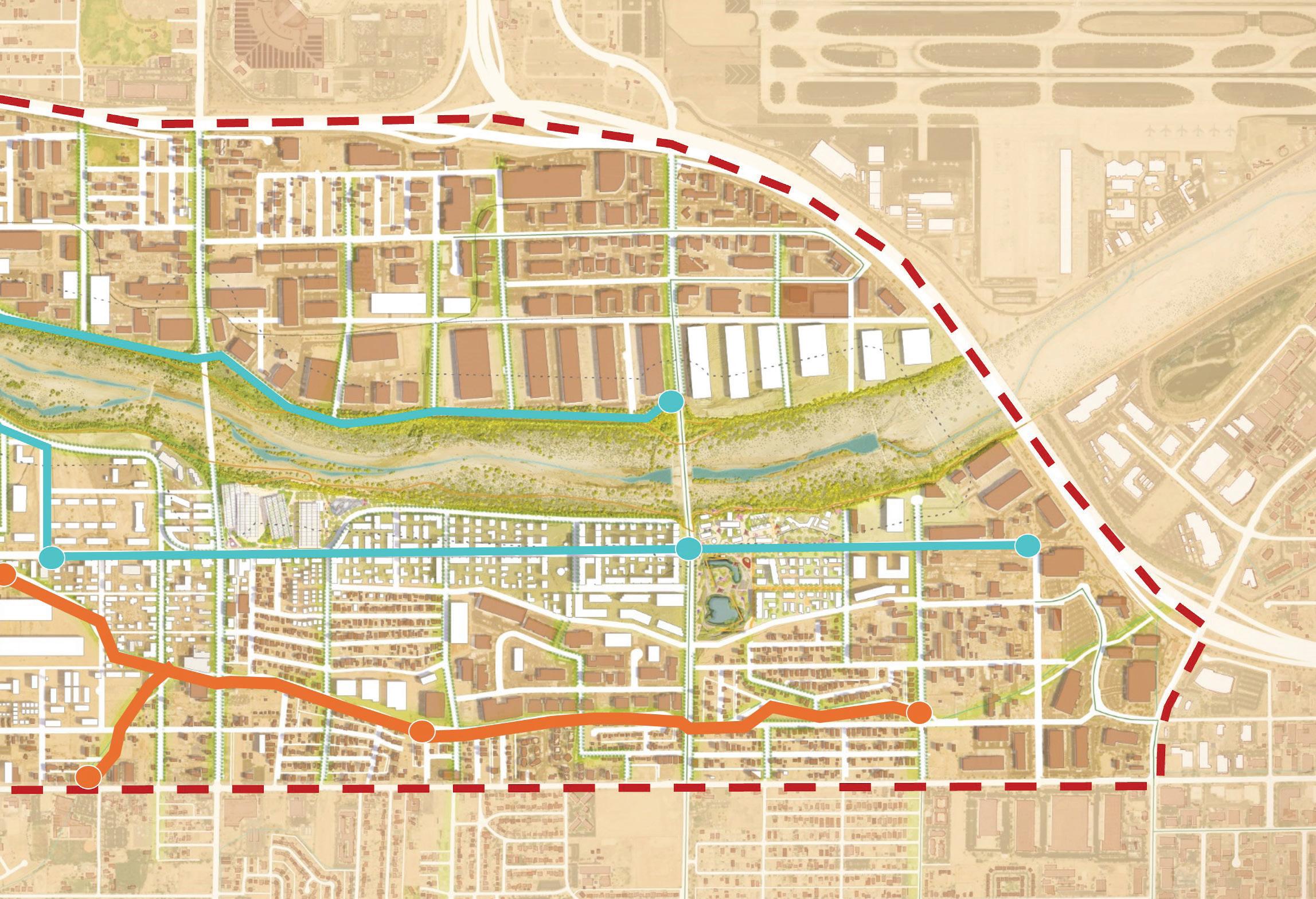
Scenic Drives and Gateways - Parallel to the RSHRA, the buildout of the scenic drives (north and south of the river) continues the vision of a multimodal street that brings residents and visitors alike to the banks of the Rio Salado. Gateway features should be located at strategic locations to create a sense of place.
12th Street Rio North Connection - Historically, river-adjacent communities have had a deep connection with the Rio Salado. Reconnecting the “Cultural Corridor” area north of Interstate 17 with the RSHRA via the existing Interstate 17 predestrian underpass is important to reestablish this connection with nature and recreational opportunities, while improving mobility in the area for residents and attracting tourists to foster economic vitality.
12th Street Rio South Connection - This north-south corridor along 12th Street presents a unique opportunity to connect neighborhoods south of Broadway Road with fresh food and recreation opportunities at the planned Del Rio Landfill redevelopment site and the RSHRA in the future.
San Francisco Canal Corridor - A unique and historic corridor, the San Francisco Canal provides an opportunity to improve this corridor for recreation, improved mobility, and to celebrate the areas farming heritage. Gateway features should be located at strategic locations to create a sense of place.
Rio Salado Trails Western Extension - Connecting the RSHRA to the future Rio Salado Oeste ecological restoration project, west of 19th Avenue, is key to ensure local and regional connectivity along the Rio Salado corridor.
The Rio Salado District, like much of Phoenix, has a grid street pattern with various scales to serve different types of vehicles and pedestrians. While some streets are narrow and have lower travel speeds, others are wide with higher speed limits. To achieve the vision for a more pedestrian-friendly and walkable future, streets should be ‘right-sized’ and designed to accommodate an increased number of users of all ages and mobilities who may opt to walk, bike, scooter, or travel in mobility assisted devices. Considerations for streets include but are not limited to wider sidewalks, shade trees with green stormwater infrastructure, and protected bicycle lanes. Other access ways for vehicles include public alleys used to serve adjacent businesses and homes.
The street realm should strive to achieve the following goals:
• Safety and accessibility for all
• Shade and comfort for pedestrians and cyclists
• Well-lit sidewalks and vehicle travel lanes
• Marked/designated crossing at appropriate locations
• Incorporate “Smart Cities” technologies
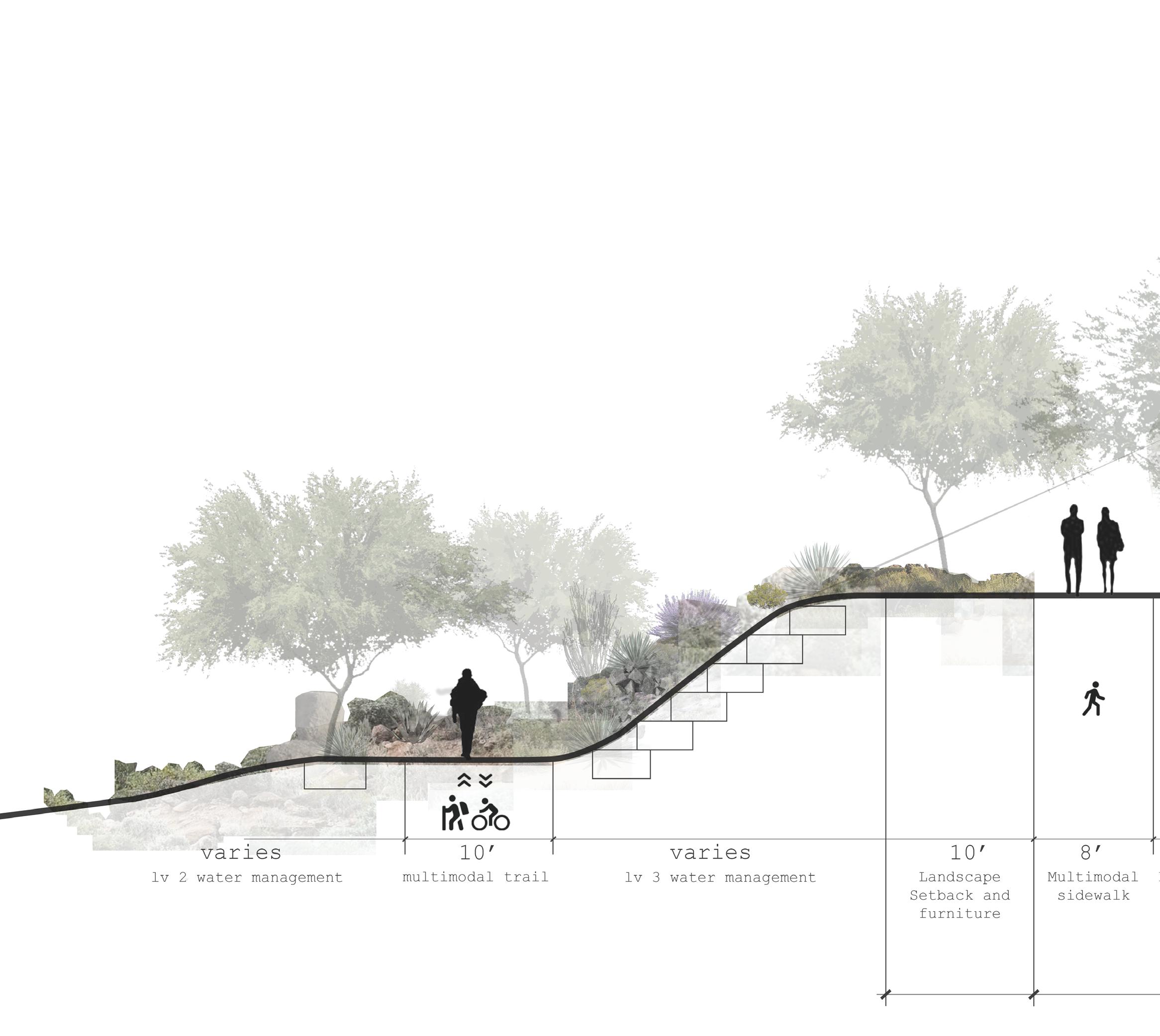
Two Scenic Drives are located parallel to the RSHRA - one to the north (Riverview Drive) and one to the south (Rio Salado Park Drive). This concept which originated in the Rio Salado Beyond the Banks Area Plan (2003) continues the vision of a multimodal street that brings residents and visitors alike to the banks of the Rio Salado. A new and enhanced design of the Scenic Drives proposes a two-way vertically protected bicycle track (on the side of the road closest to the river) adjacent to vehicular travel lanes, with shaded detached sidewalks on both sides of the street. The street realm is also separated from the RSHRA by a landscaped setback with native plantings. New developments seeking a land use entitlement such as rezoning or a use permit, must adhere to this improved street design, while major redevelopment or future street retrofits should apply these street design standards where physically feasible. Street designs are subject to review and approval by the Street Transportation Department.
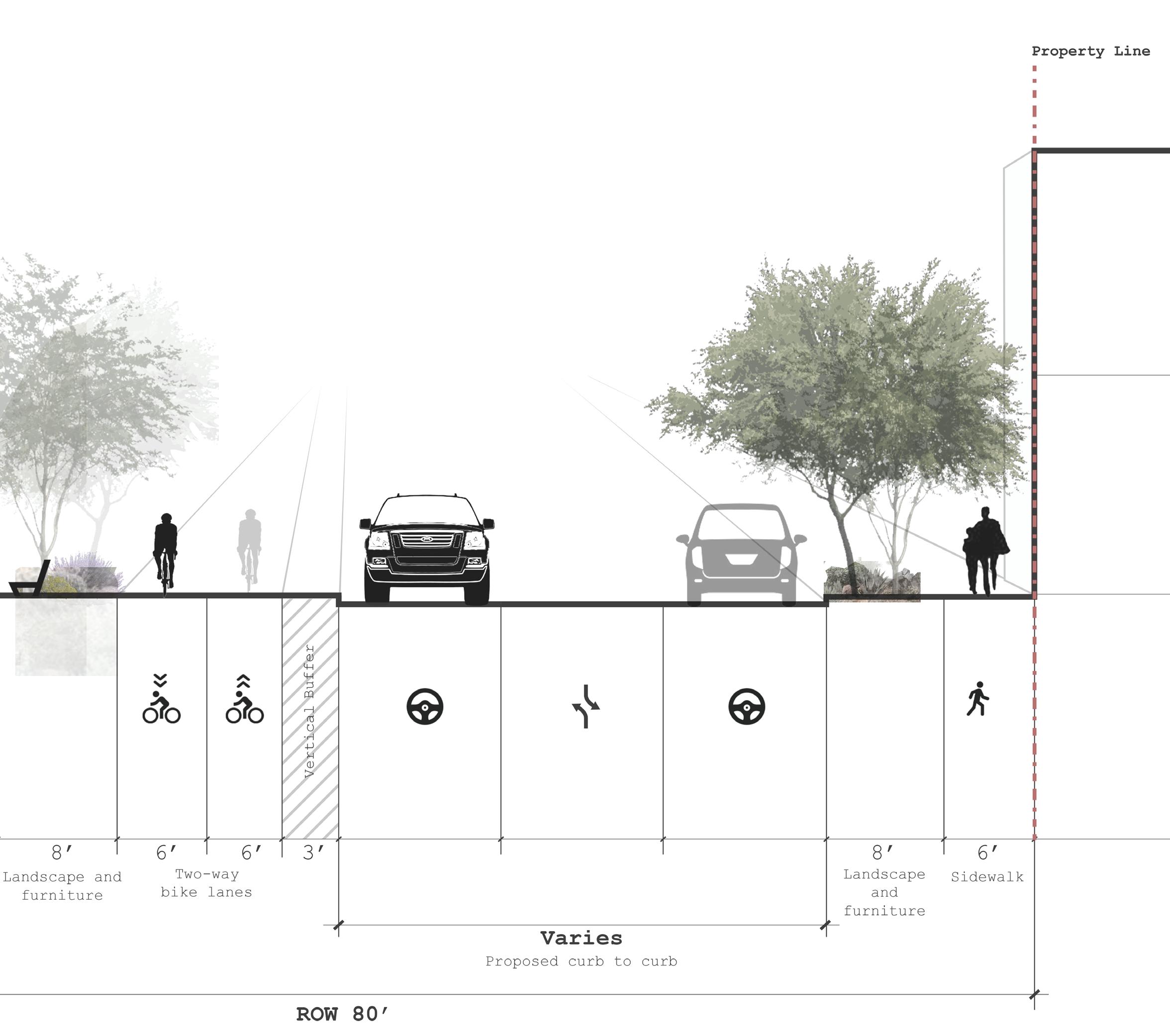
Note: The Scenic Drive design north of the Rio Salado incorporates separated two-way bicycle lanes at grade with the street, separated from vehicle travel lanes with a raised buffer.
Alternative “street” designs for segments of the Scenic Drive could provide enhanced experience for nonmotorized modes of transportation, while maintaining safe and efficient circulation in our street network. An analysis of adjacent land uses, transportation options, project-specific benefits for the community, and existing street patterns should inform alternative street design decisions. Where an alternative “street” is identified as a viable option for the benefit of general public and surrounding community, this may be provided in the form of a paseo with a public access easement for non-motorized traffic. Alternative “street” or paseo designs are inspired by local, regional, and international precedents.
Examples of pedestrian and non-motorized “streets” or paseos:
• Promenade (Car-free pedestrian plaza)
• Woonerf (Shared living street)
• Urban street (On-street parking zone)
Street designs are subject to review and approval by the Street Transportation Department.
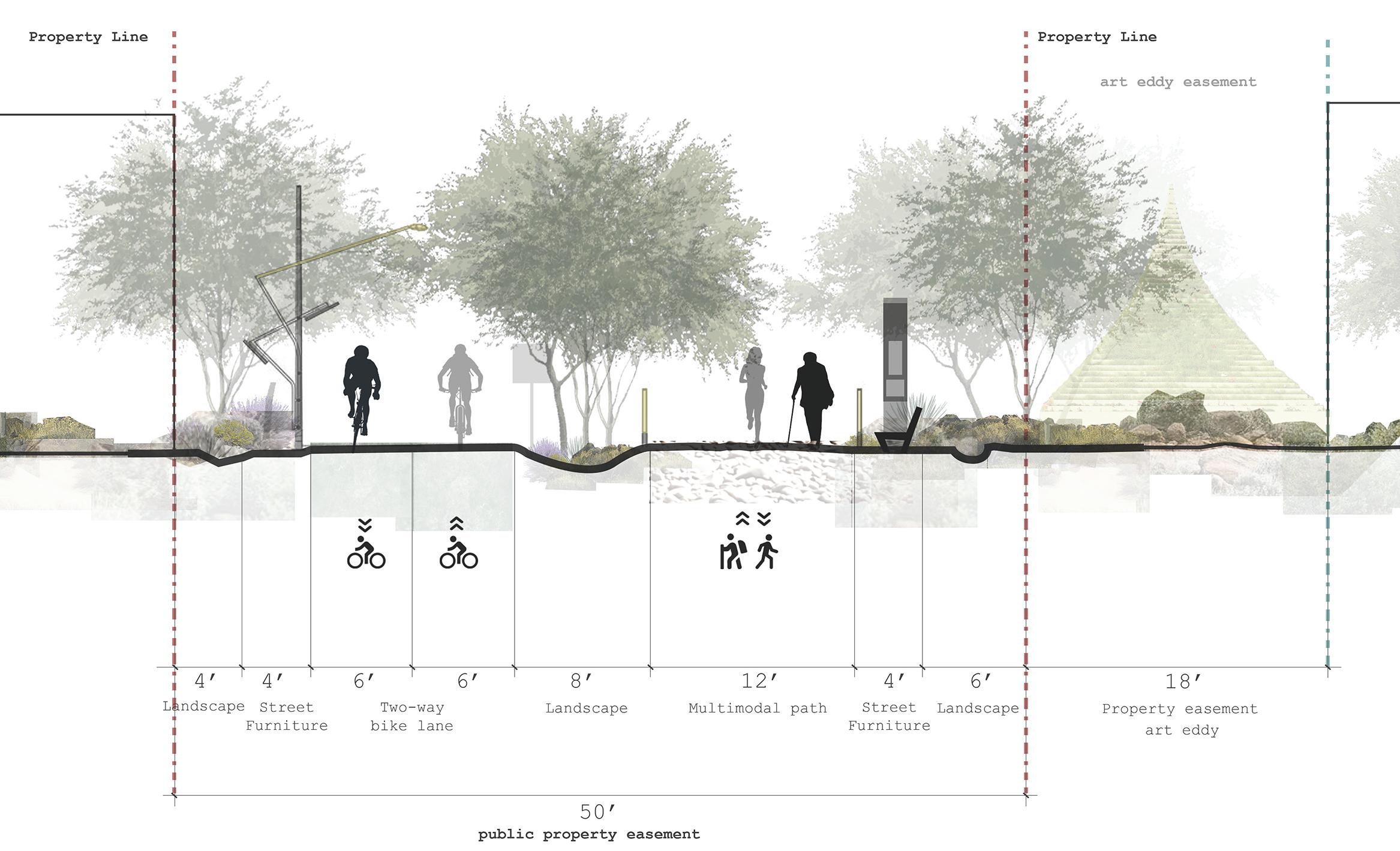

Source: SCAPE/Multistudio
To support catalyst corridors in the Rio Salado District such as the Scenic Drives and San Francisco Canal, in addition to other key intersections, gateways should be strategically utilized as markers that create a sense of place and denote boundaries. New development or redevelopment should incorporate features as gateways to support the vision of the Rio Salado District.
Examples of gateway features include:
• Signage (Including entry monuments)
• Landscape feature
• Artistic element
• Wall designs
• Seating feature
• Chilled drinking water and shade
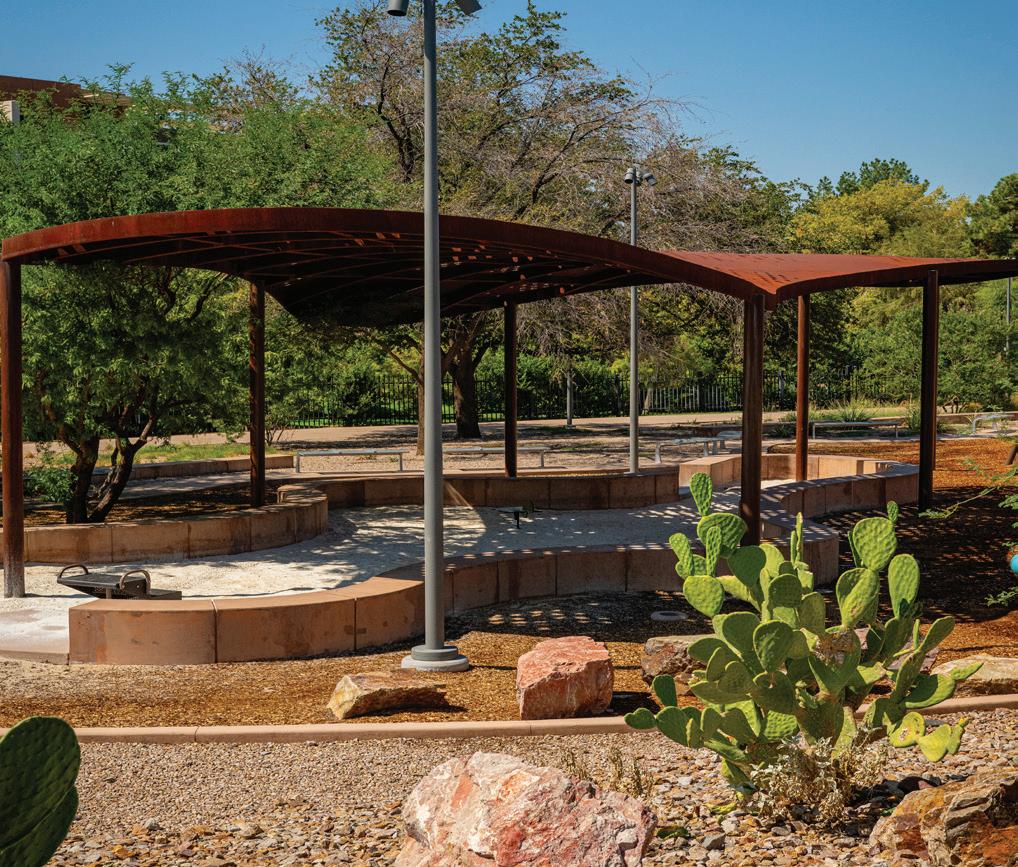
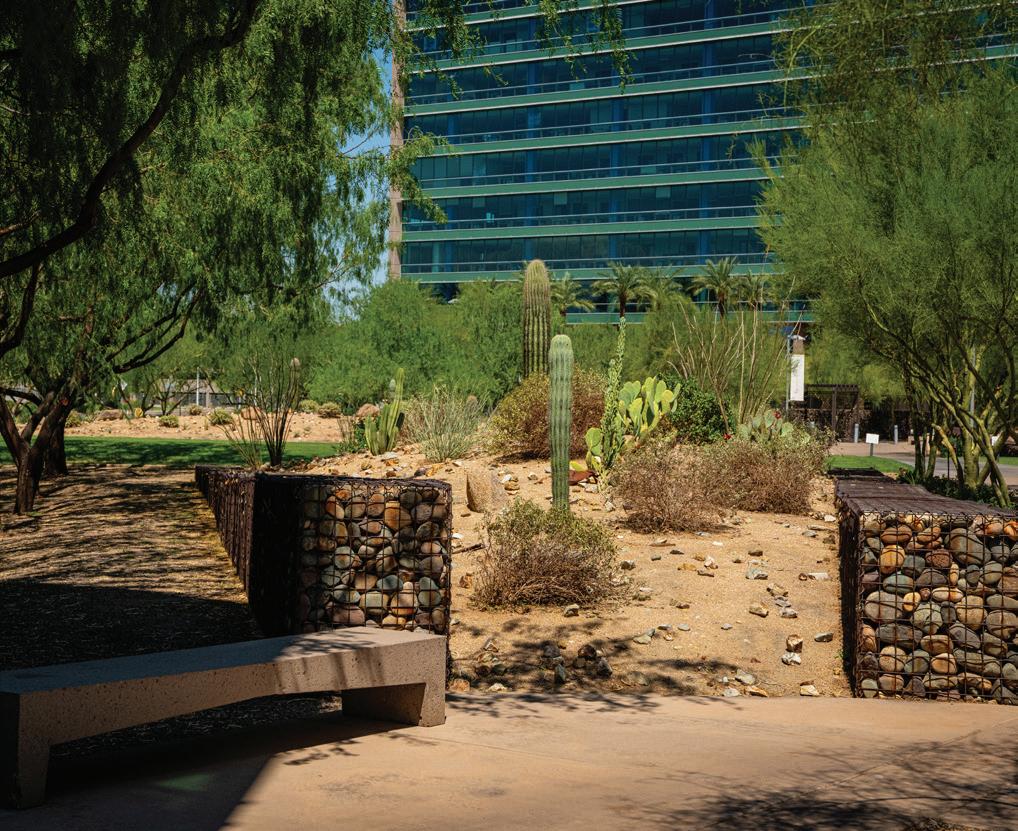
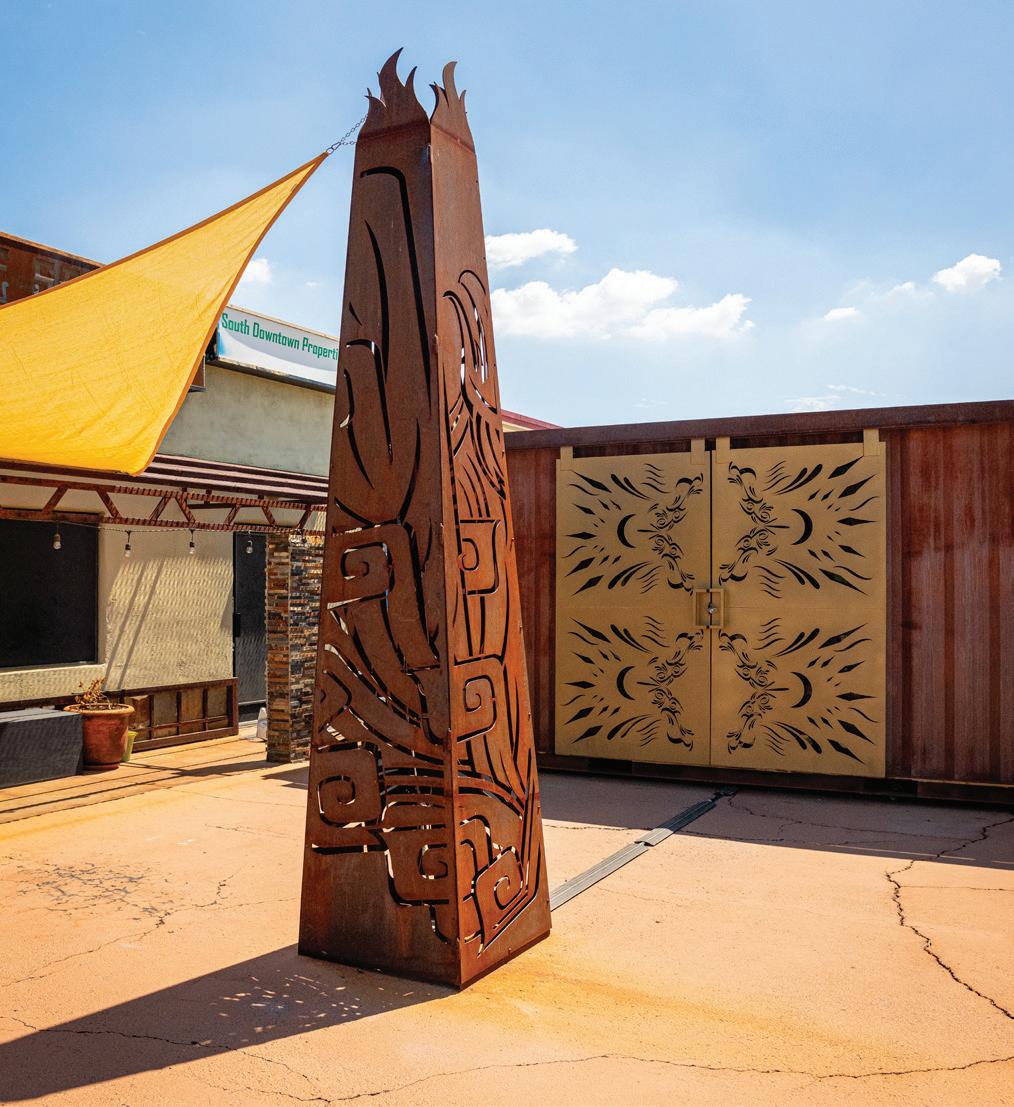
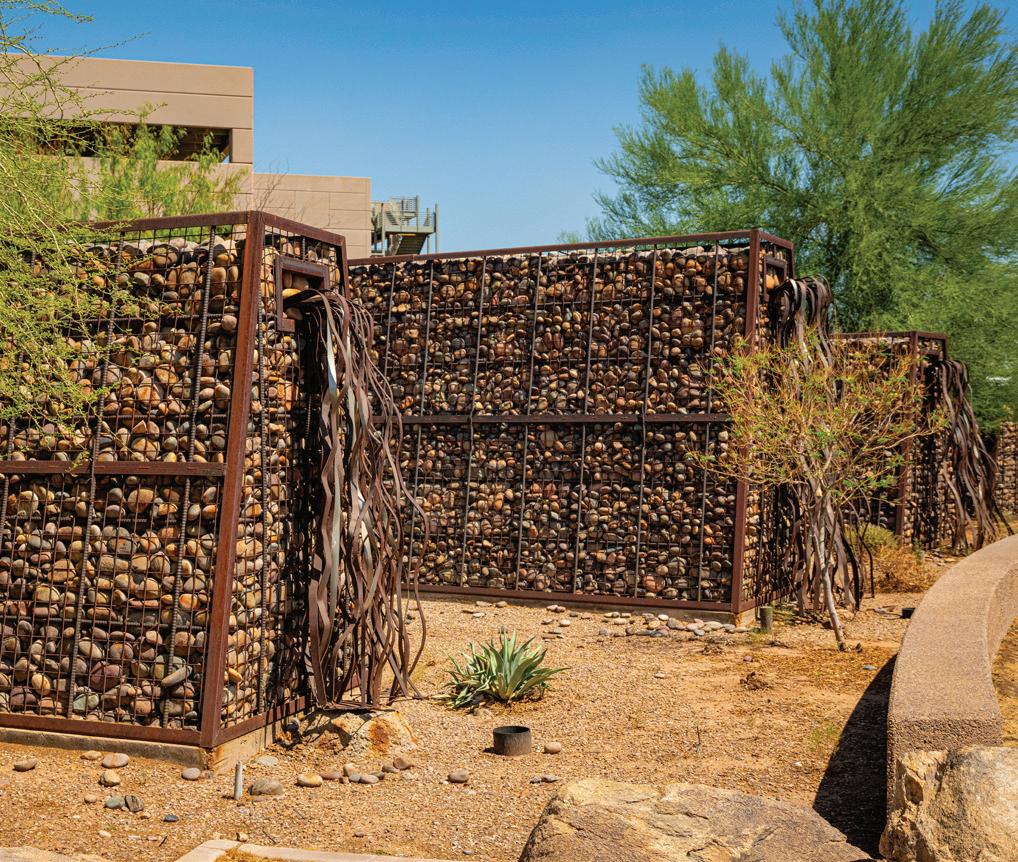
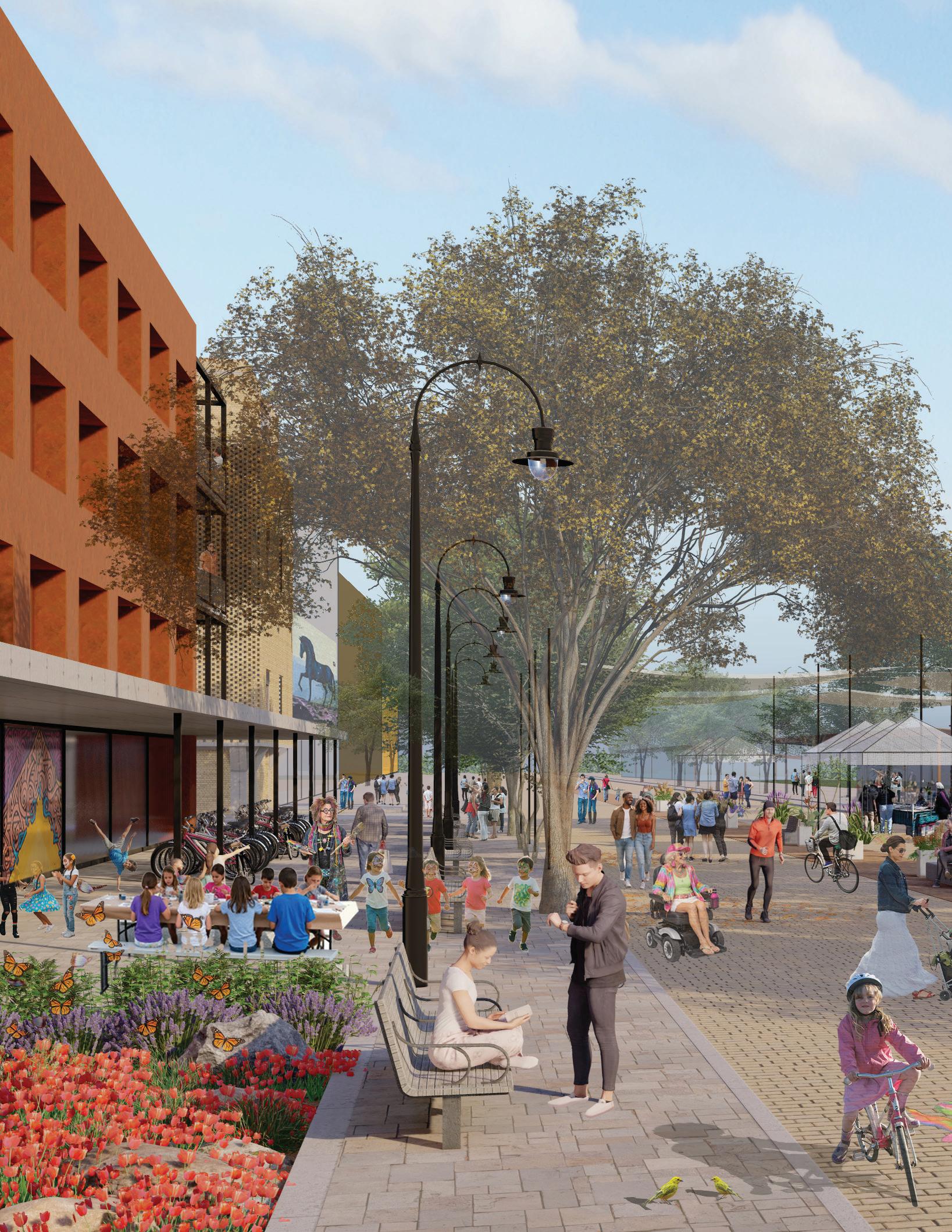
This concept illustrates an active pedestrian-focused riverwalk in the form of a multimodal promenade or “pedestrian street” that combines shade, art, and adaptable spaces for leisure and community life. This unique destination between Central Avenue and 7th Street, south of the RSHRA, makes for a cultural centerpiece, hosting events and art that draws visitors while supporting eco-tourism. This destination offers recreation, shopping, and entertainment for all, balancing urban vibrancy with nature to create an “arts, culture, and nature” district along the banks of the Rio Salado.
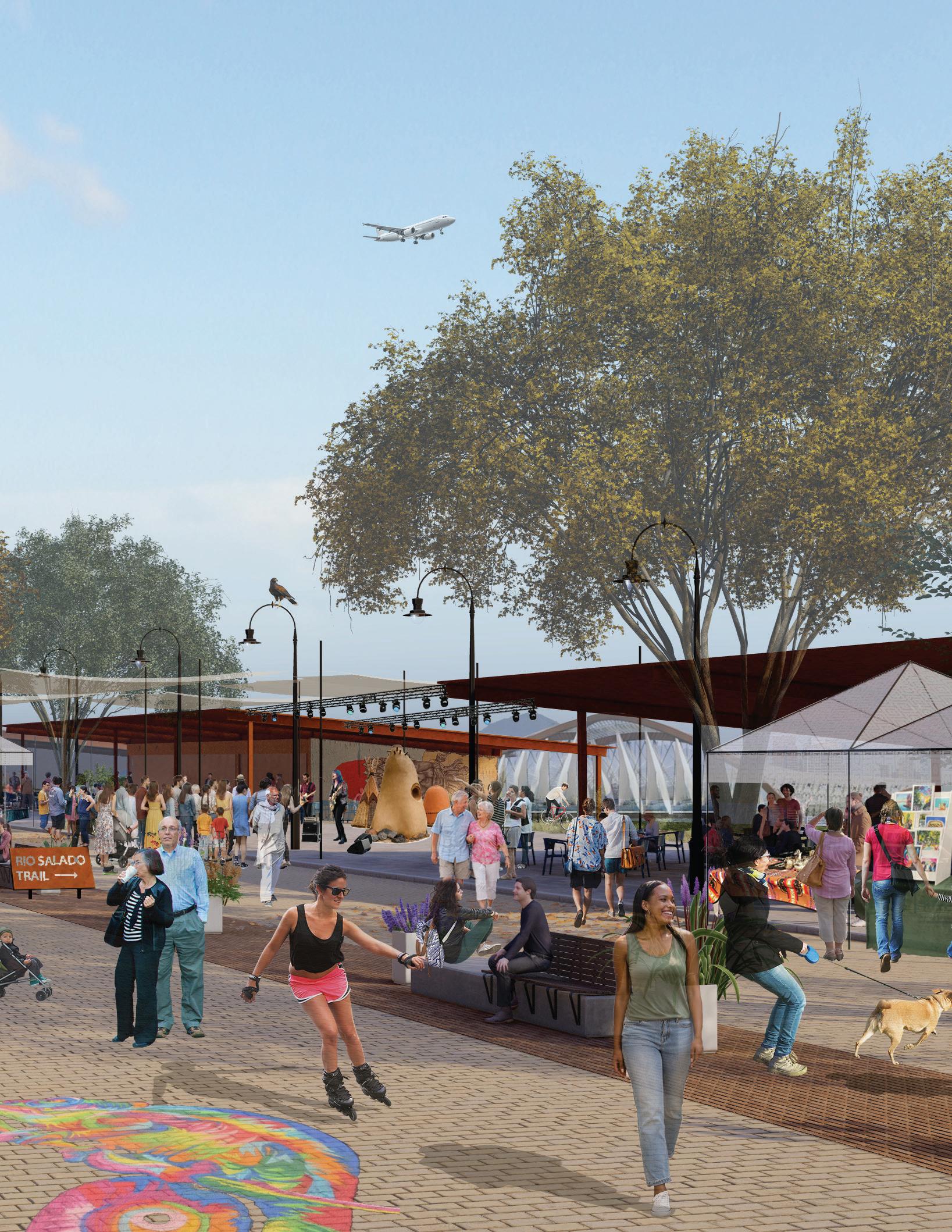
Paseos are key corridors that can reconnect neighborhoods with the RSHRA. Paseos can act as incremental but transformative insertions, creating walkable connections that bring access, shade, and cultural expression into the existing urban fabric. Each paseo features a continuous multimodal trail for non-motorized traffic supported by street furniture, lighting, trees, and wayfinding. Property on either side of the paseo create opportunities for art edges to celebrate local identity and culture through temporary and permanent public art, or curated small interventions. The paseo typology does not require right-ofway and can be provided within a public easement on private property. It relies on targeted investments in comfort, safety, and visibility at the site or block-level.
Whether implemented through private site redevelopment, community partnerships, or city-led improvements, paseos represent a low barrier, high-impact tool to extend the river’s reach into daily life and public memory.
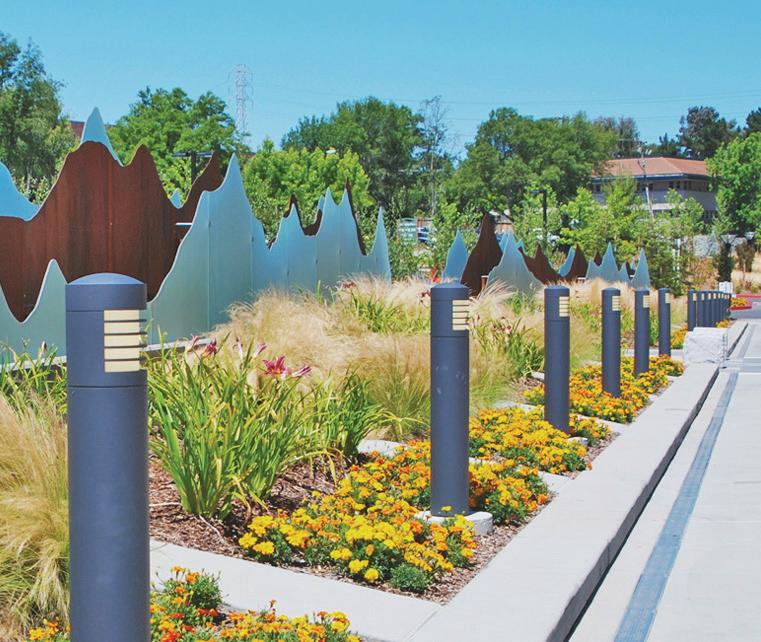
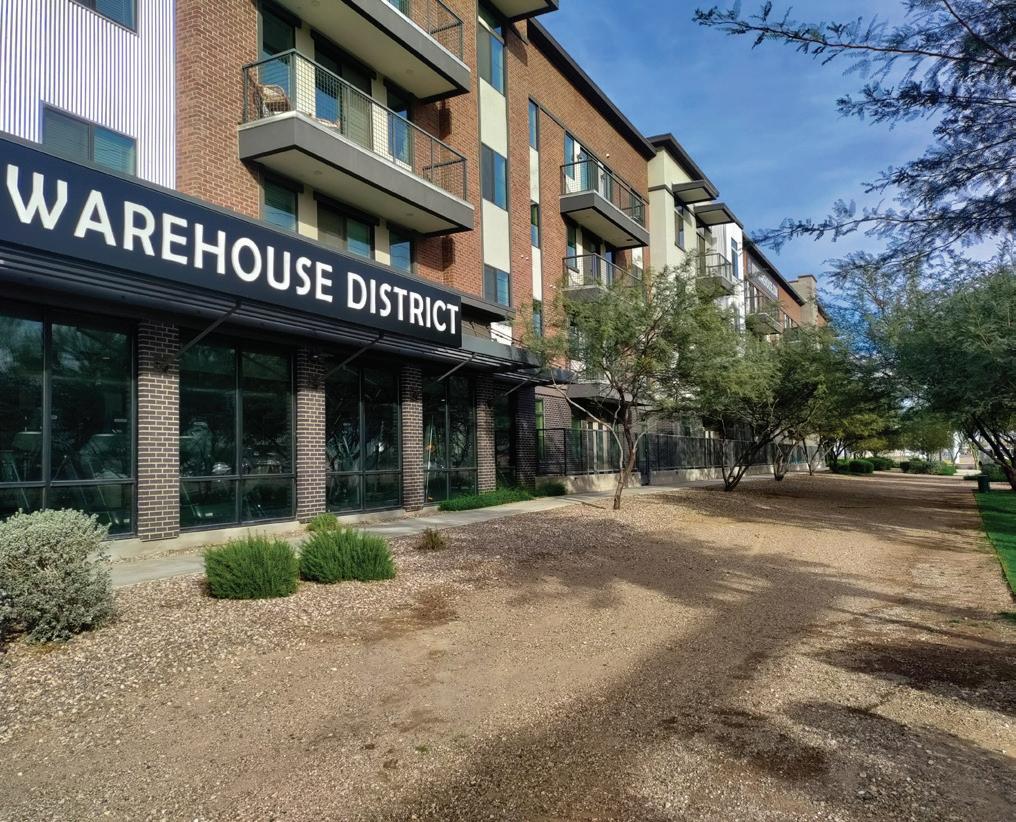
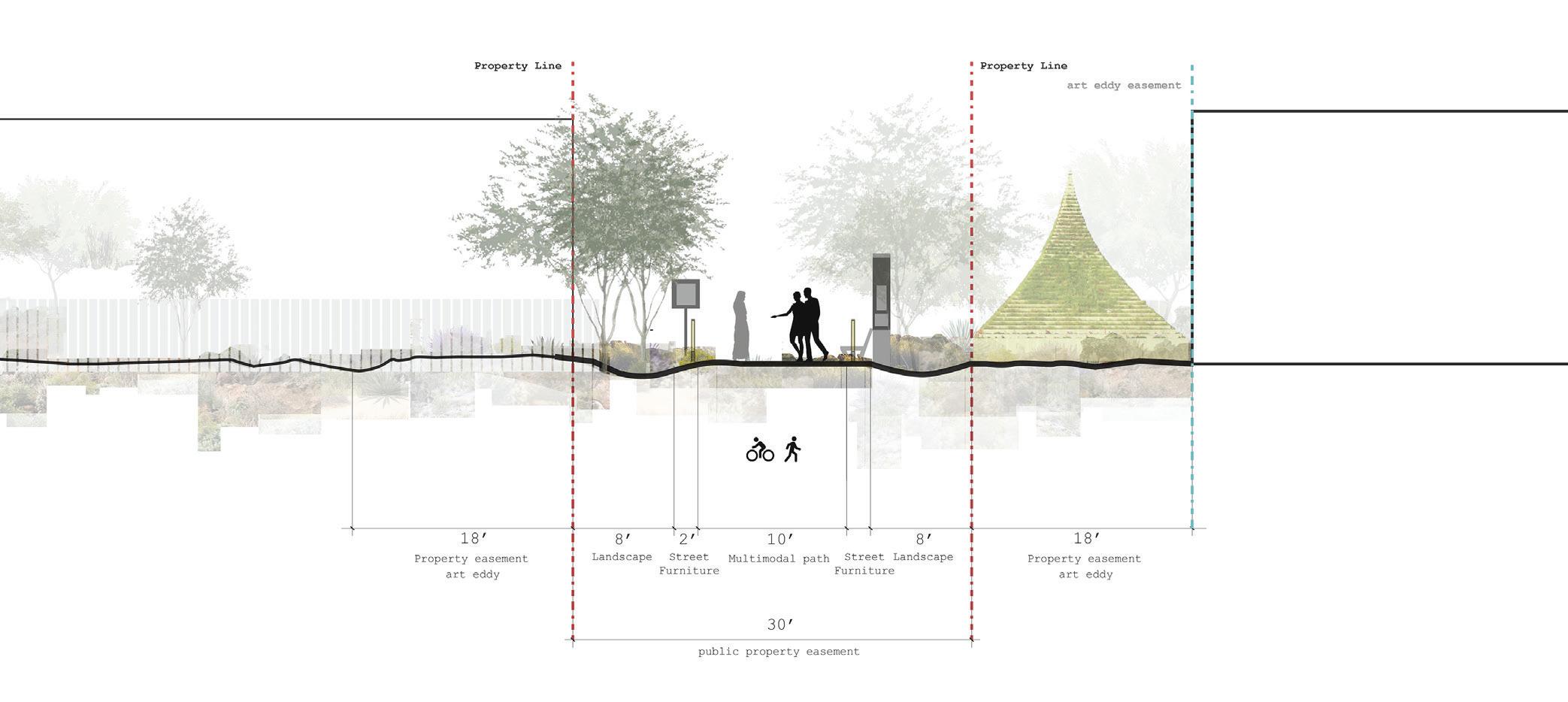

The two-mile-long stretch of the San Francisco Canal between 12th Street and 28th Street offers a unique opportunity to activate and re-orient development to create a vibrant neighborhood corridor. Not only is it a historic feature of the land, but this east to west corridor could connect residents to fresh food and recreation at the planned Del Rio Landfill redevelopment site north of 12th Street and Elwood Street. Like paseos, this canal typology brings access, shade, and cultural expression into the adjacent urban fabric. Canal features include a multimodal path supported by street furniture, lighting, trees, and wayfinding; providing an opportunity to develop a low-stress path and part of the off-street network that many residents enjoy. Property on either side of the canal should provide functional art, artistic fences, wall murals, or spaces that celebrate local identity and culture. The canal typology requires coordination with Salt River Project (SRP), who manages this area, to understand existing conditions and constraints.
Whether implemented through private site redevelopment, community partnerships, city-led or SRP-led improvements, inspiration for the transformation of the San Francisco Canal can be drawn from the paseo typology, in addition to local projects such as Grand Canalscape by the City of Phoenix.
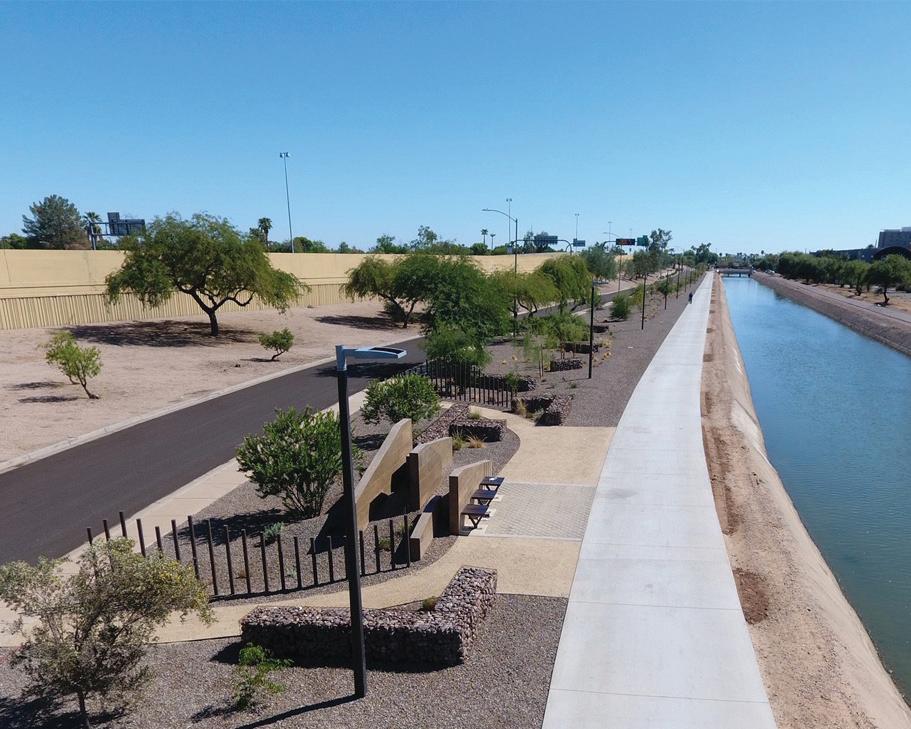
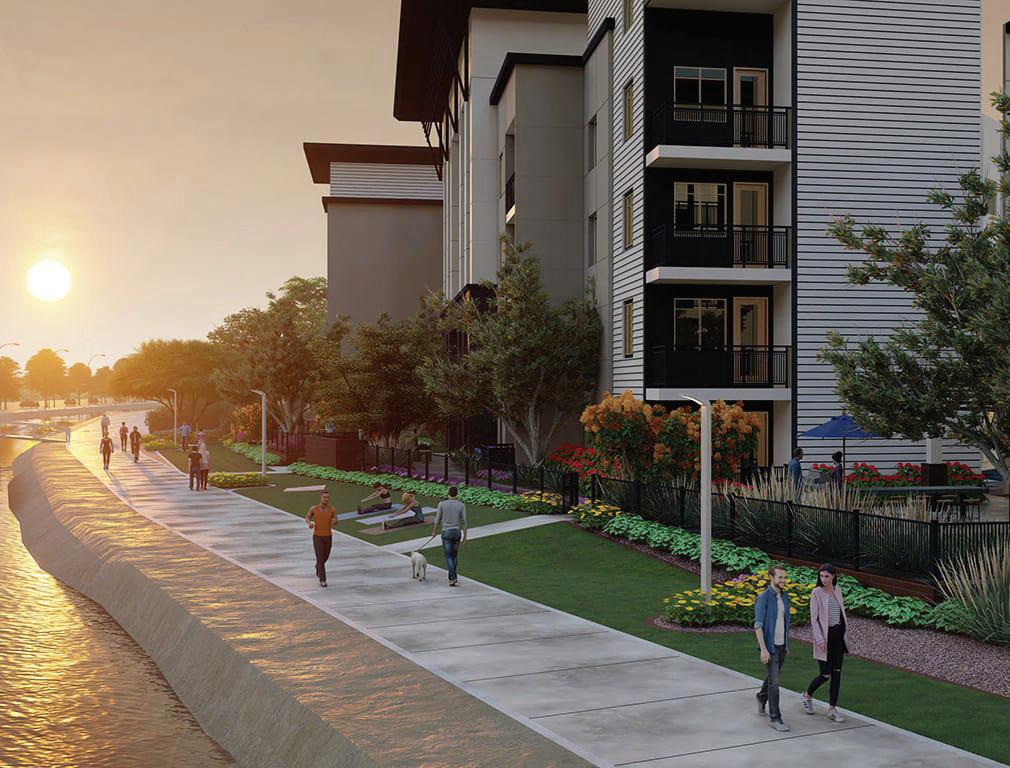
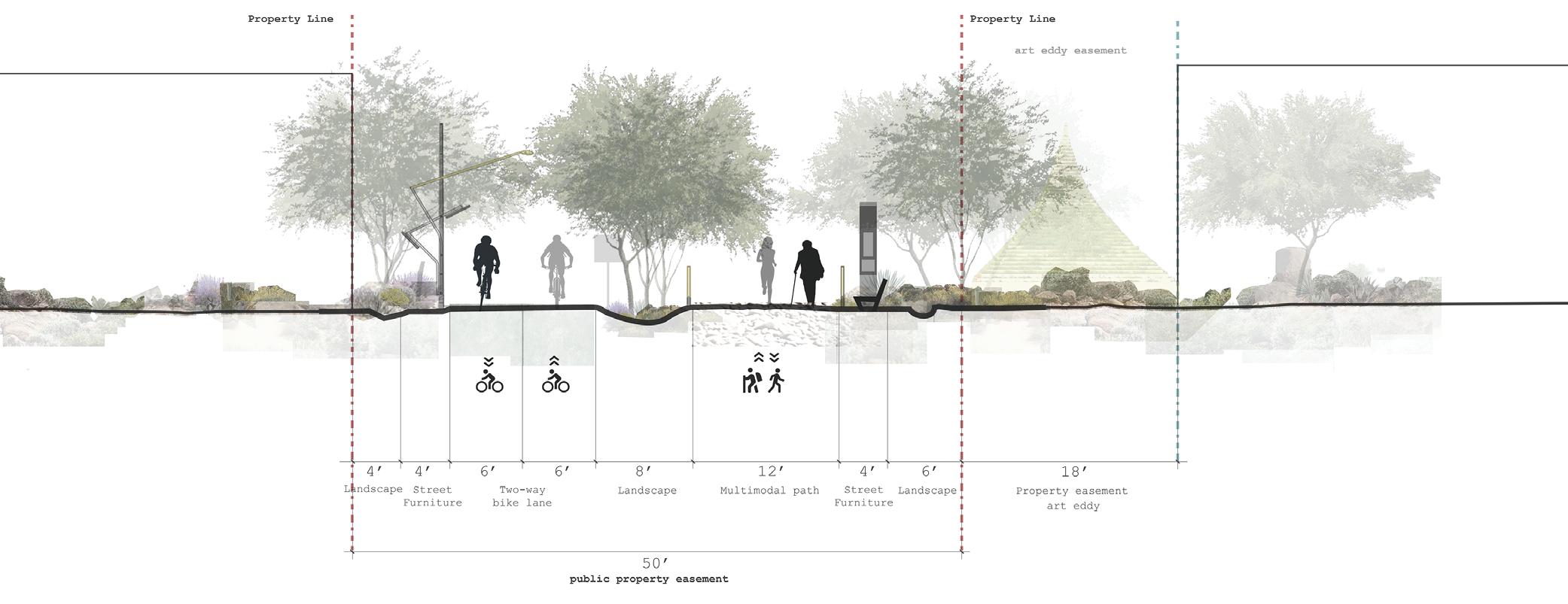
This chapter presents a comprehensive implementation plan designed to realize the vision for the Rio Salado District. It transforms the community’s aspirations into concrete strategies by outlining specific objectives, action steps, timelines, and shared responsibilities. By offering a clear and organized framework, this plan helps ensure the community’s vision is not only attainable but also actionable.
Furthermore, it aims to engage residents and stakeholders, encouraging collaboration and fostering a sense of ownership in the development process. Ultimately, this approach will contribute to a vibrant, inviting, and resilient community that thrives in the long term.
A scan of projects across the U.S. was conducted, focusing on cities with unique local characteristics similar to those of the Rio Salado District. This exploration examined various elements, including large linear open space corridors, dynamic and engaging urban spaces, and both industrial and vacant lands, especially along rivers and waterfronts. The goal was to identify strategies that could be applied in the implementation of the Rio Salado District Policy Plan.
The selected precedents offer valuable learning opportunities that align with the goals of the Rio Salado District’s vision, which focuses on enhancing biocultural diversity and fostering community-supported economic development. The best practice examples included in the RIO PHX Precedents and Best Practices (2024) report were considered during the planning process. However, it is important to note that new ideas or themes may emerge from community members and other stakeholders.
RIO PHX Best Practices:
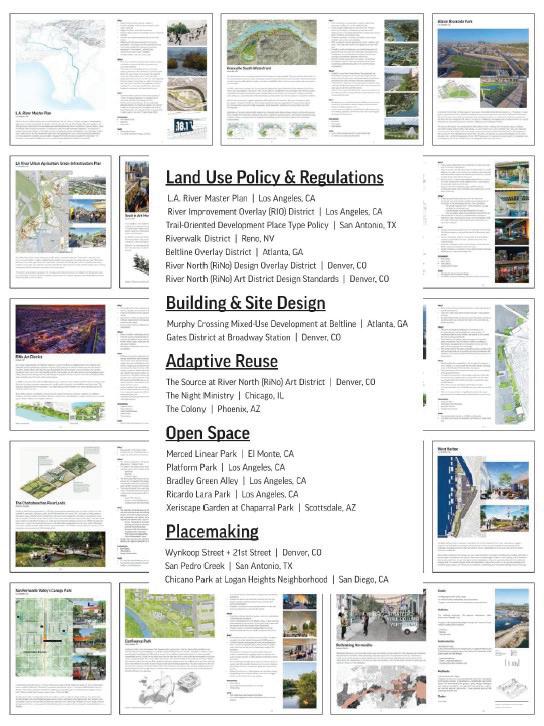
To review the RIO PHX Precedents and Best Practices (2024) report, please visit the RIO PHX website.
The best-practice examples referenced in the RIO PHX Precedents and Best Practices (2024) report inspired the vision of the Rio Salado District and informed implementation actions. Some of the best practices and inspirational projects include:
• River Improvement Overlay (RIO) District , Los Angeles, CA
• Trail-Oriented Development Place Type Policy, San Antonio, TX
• Riverwalk District, Reno, NV
• River North (RiNo) Design Standards, Denver, CO
• Bradley Green Alley, Los Angeles, CA
• Wynkoop Street/21st Street, Denver, CO
Land use policy and regulations Building a unique district
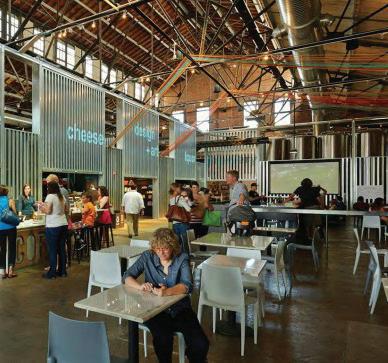
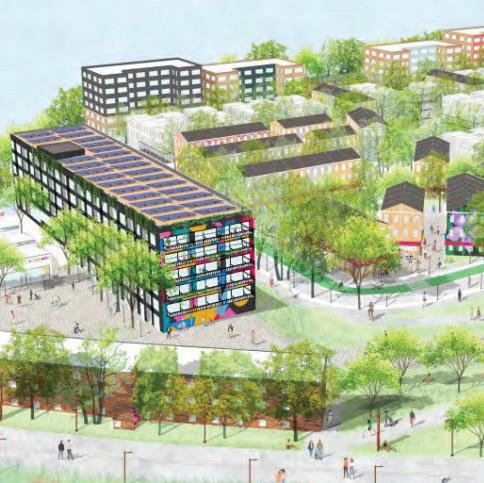
Building and site design Creating a sense of place
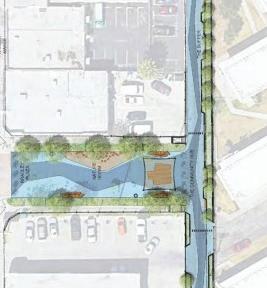
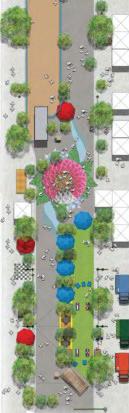
Source: RIO PHX Precedents and Best Practices (2024)
The Rio Salado District is a unique cultural, natural, and recreational asset for Phoenix. To promote the preservation of existing assets and encourage a respectful transformation of the area, design guidelines can assist in creating a unified vision, leading to a harmonious and aesthetically pleasing environment. The RIO PHX Design Guidelines, developed with public input, will shape the urban fabric and establish a district identity that celebrates the existing culture, history, and natural beauty of the area. This will aid in attracting visitors and residents, fostering community pride, promoting economic development, respect for the river and its ecosystems, and cultivating cultural preservation, while creating a sense of place.
Goals of the RIO PHX Design Guidelines:
1. Identity and Character: Shape an identity for the Rio Salado District that celebrates and protects the natural attributes of the environment and respects the existing character and heritage of its surrounding communities and neighborhoods while creating stronger social cohesion.
2. Connections and River Access: Improve physical and visual access to the river corridor for abutting communities and visitors through multimodal corridors for greater connectivity.
3. Safety and Well-being: Improve the wellbeing of residents through a cleaner natural environment and increased opportunities for recreation and public open spaces by discouraging crime through intentional design of the natural and built environment.
4. Environment, Sustainability, and Resiliency: Advance climate-responsive development by encouraging design strategies that reduce urban heat, conserve water, improve resilience, and promote long-term ecological health and sustainability.
These design guidelines are intended to be dynamic and can evolve to better reflect changing trends, environmental conditions, and community needs. As technology advances and new sustainability practices emerge, the guidelines will be updated to incorporate these innovations. By staying flexible, the plan can effectively respond to both challenges and opportunities that arise over time.
To review the latest RIO PHX Design Guidelines, please visit the RIO PHX website.
The RIO PHX Design Guidelines inspired the following design elements throughout the Rio Salado District, integrating nature, people, and the built environment:
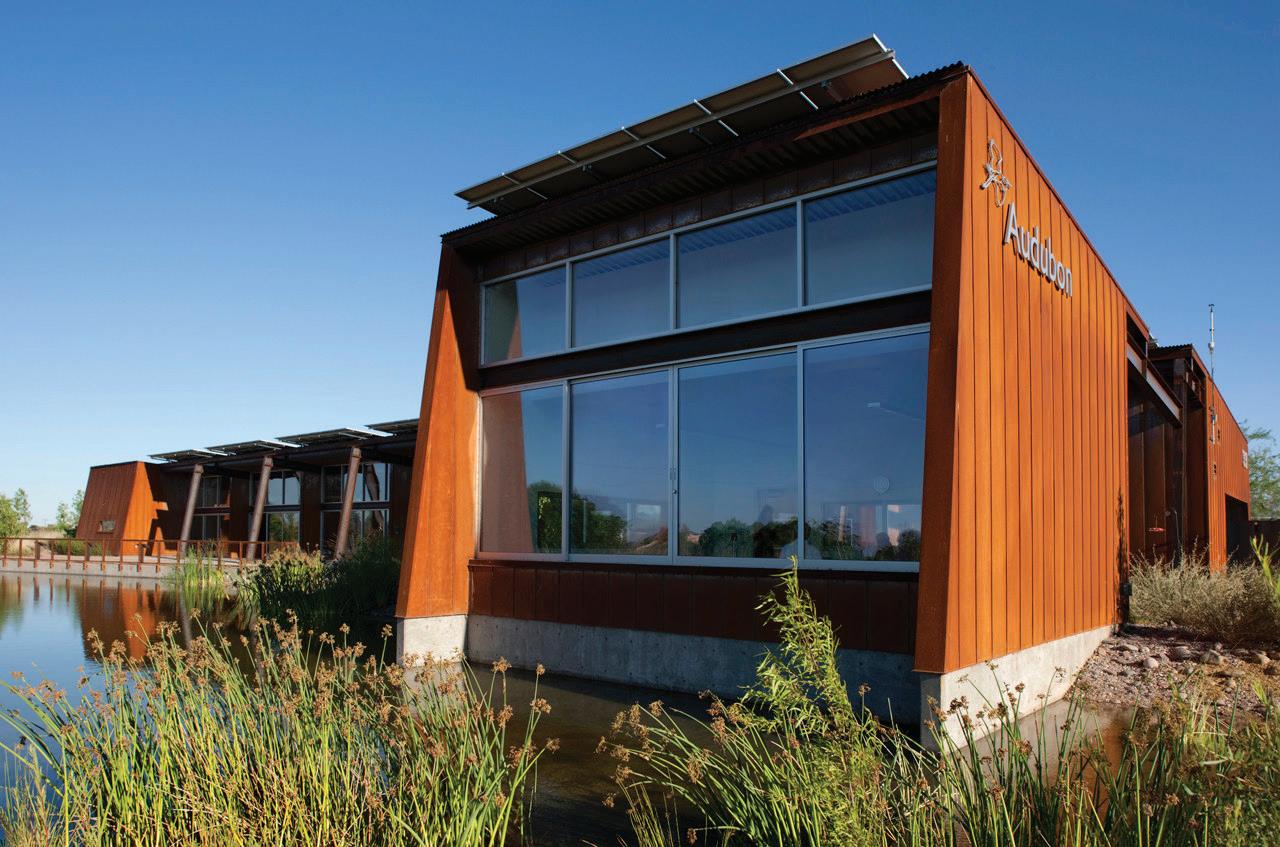
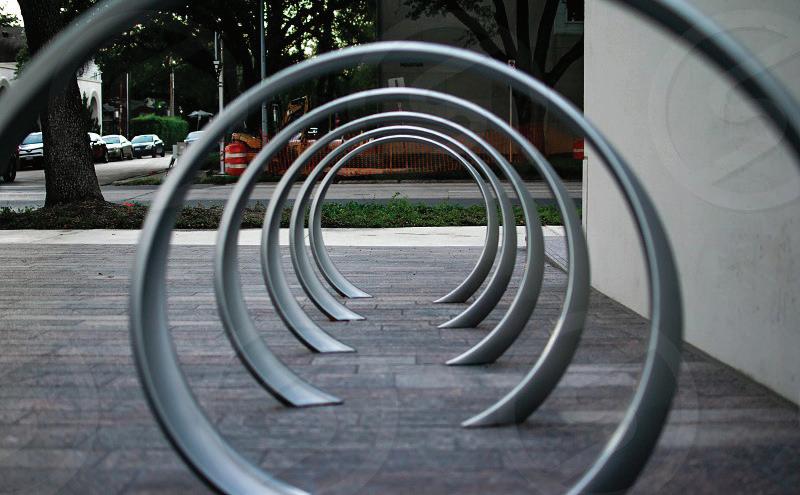
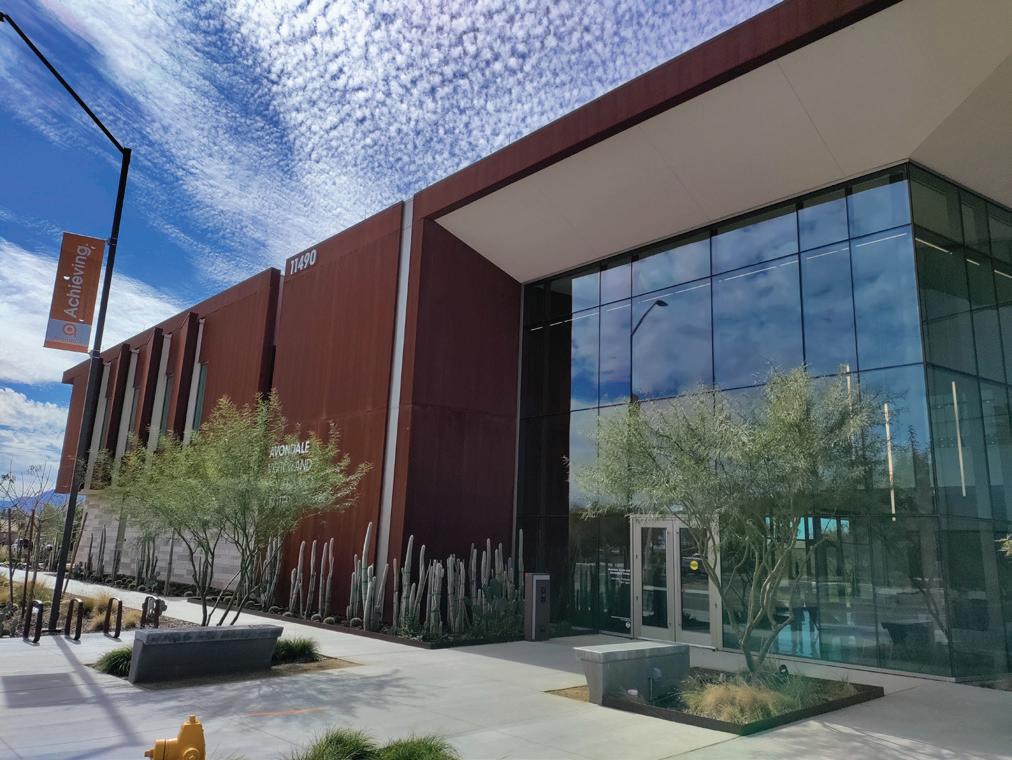
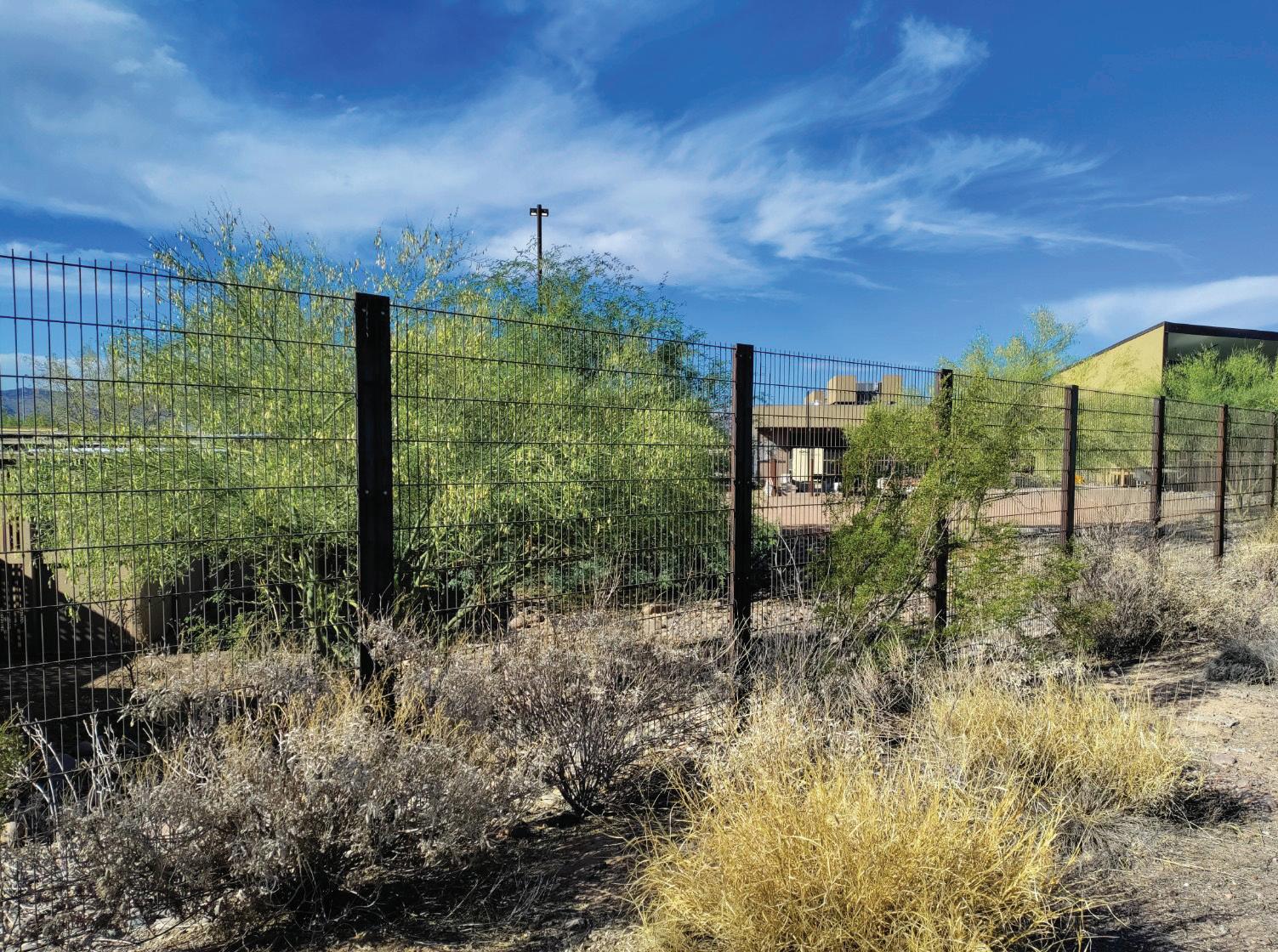
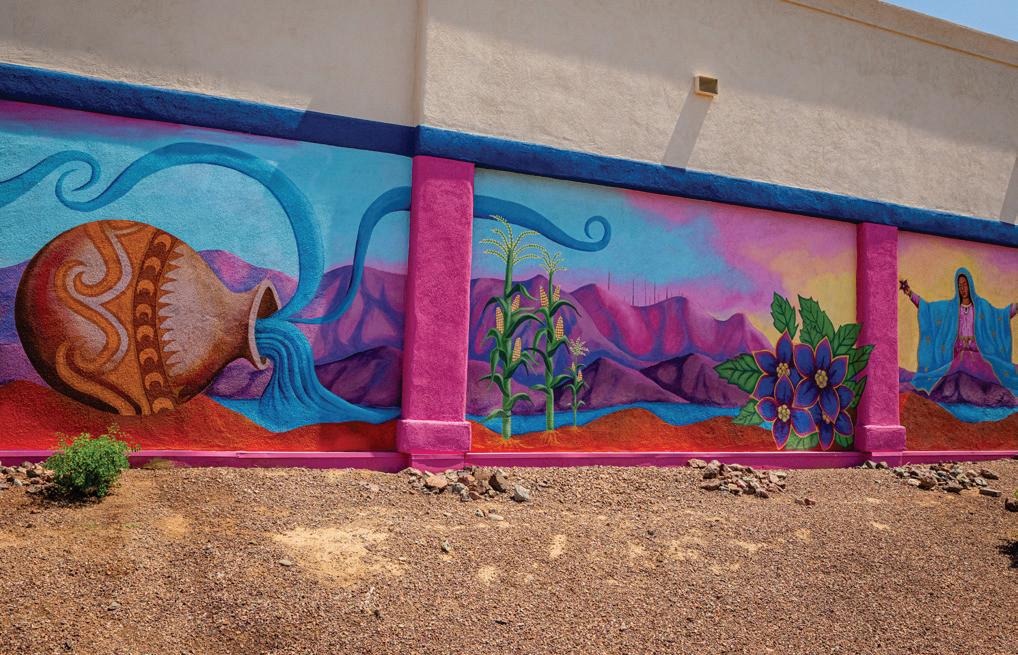
Individuals and groups regularly gather along and within the banks of the RSHRA to celebrate, explore, recreate, and restore this riparian habitat. Events and festivals hosted by the City of Phoenix and other organizations such as the National Audubon Society and Liberty Wildlife, which have facilities located along the banks of the RSHRA, attract locals and tourists to celebrate the natural beauty of the area and explore recreational activities that include walking, bicycling, bird watching, hiking, and educational field trips.
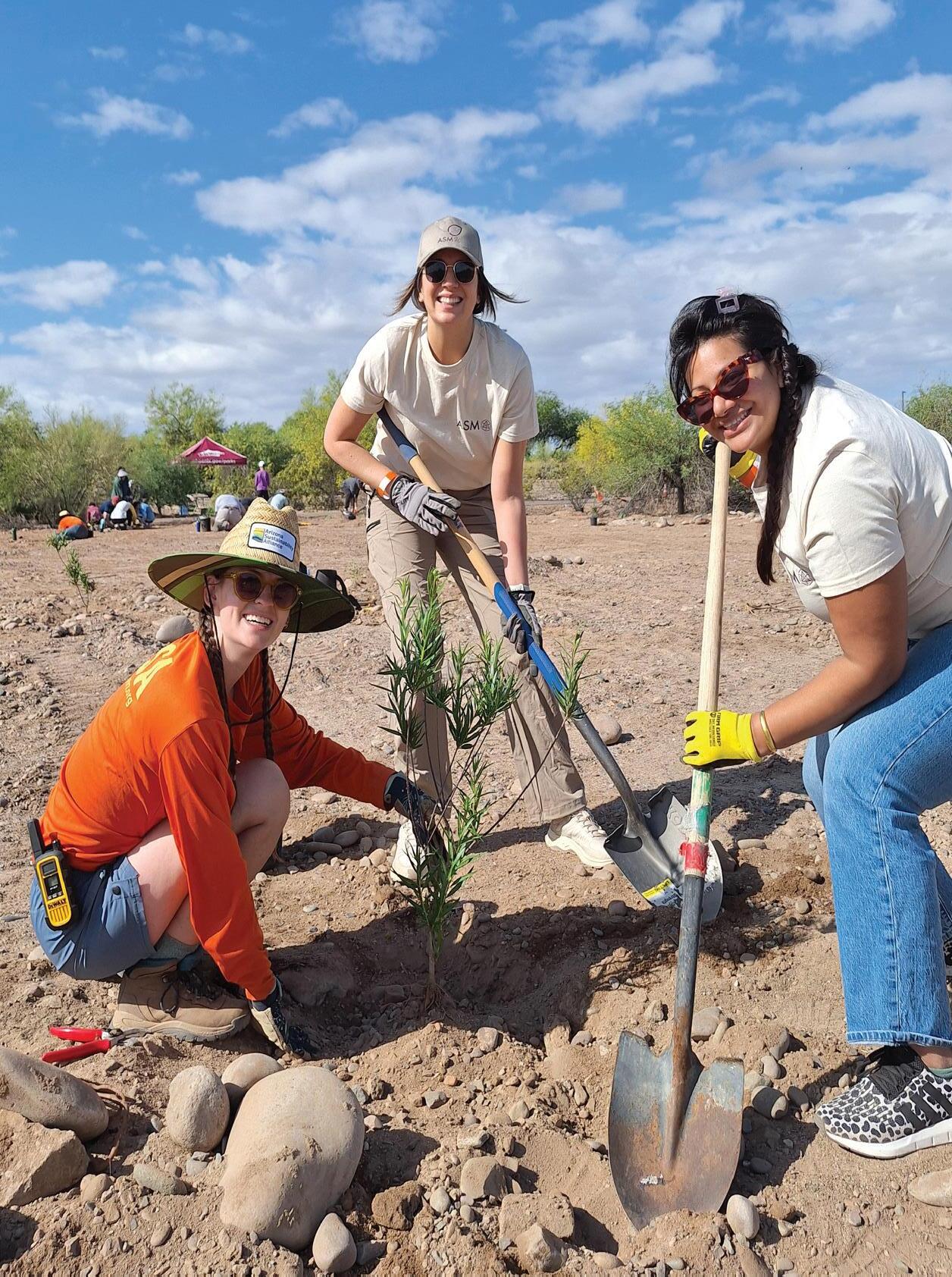
Restoration and maintenance of the delicate riparian ecosystem at the RSHRA is ongoing, led by the City of Phoenix Parks and Recreation Department, supported by volunteers from local groups including but not limited to Arizona Sustainability Alliance, Chispa Arizona, Protectors of the Salt River, Tiger Mountain Foundation, and institutions such as Arizona State University. The continued coordination among city departments and partnership by the City of Phoenix and community groups to activate and restore the area along and within the riverbanks is key to realizing the vision of the
District.
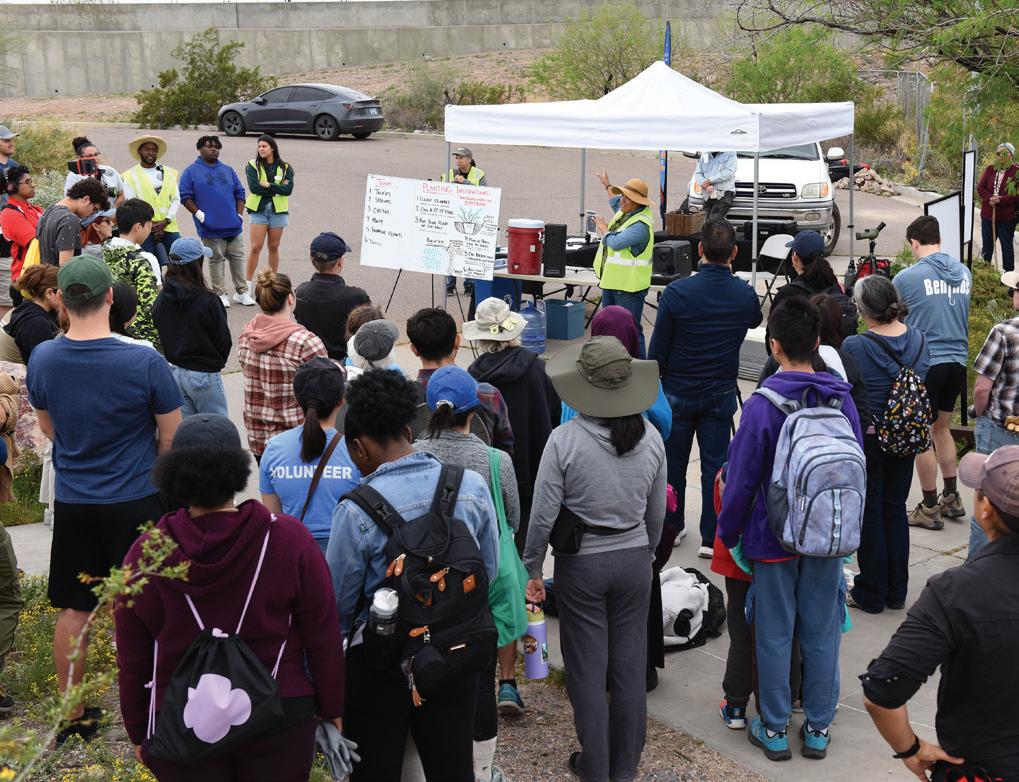
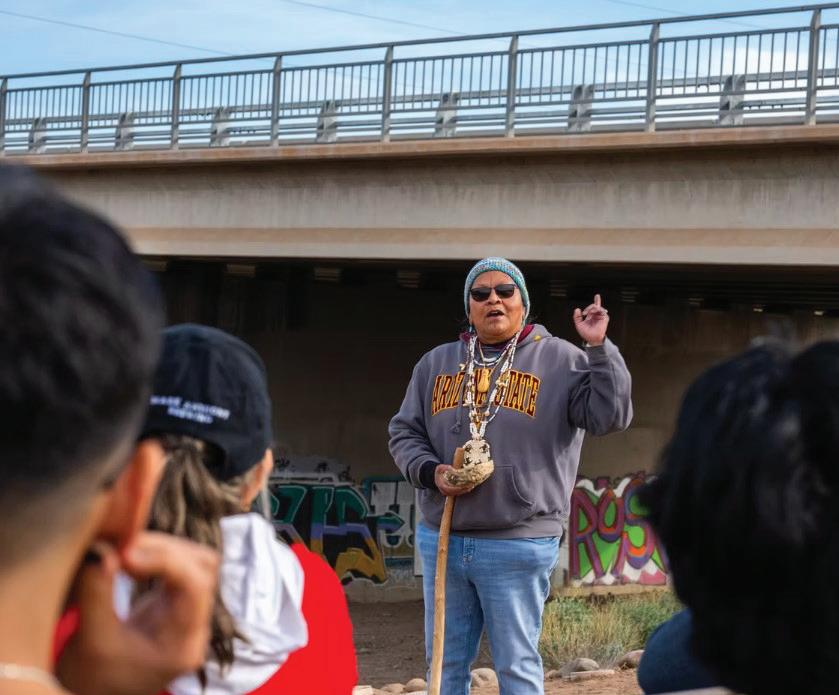
Businesses, neighborhoods, schools, places of worship, organizations, and others, comprise the community beyond the banks of the Rio Salado. The established community in the Rio Salado District is active, resilient, and plays a major role in shaping the vision of the area. Daily living is supported by many small businesses that are found throughout the area, while special events hosted in locations such as Cesar E. Chavez Community School or American Legion Post 65, bring people together in these neighborhoods.
Organizations such as South Central Collaborative bring existing groups together to discuss and take action to address topics relevant to the south central corridor between Downtown Phoenix and South Mountain Regional Park. Similarly, the organization RE:Frame supports the empowerment of the corridor’s youth. Other organizations such as Unlimited Potential support adult education, community health, and workforce development. The collective efforts from businesses, neighborhoods, schools, places of worship, organizations, and individuals, are key to achieving the Rio Salado District vision for the future.
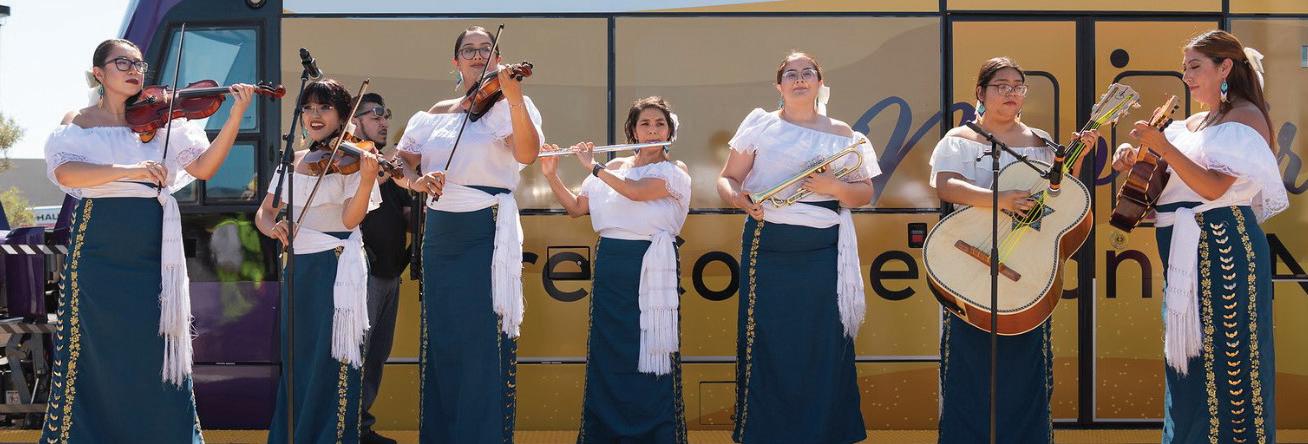
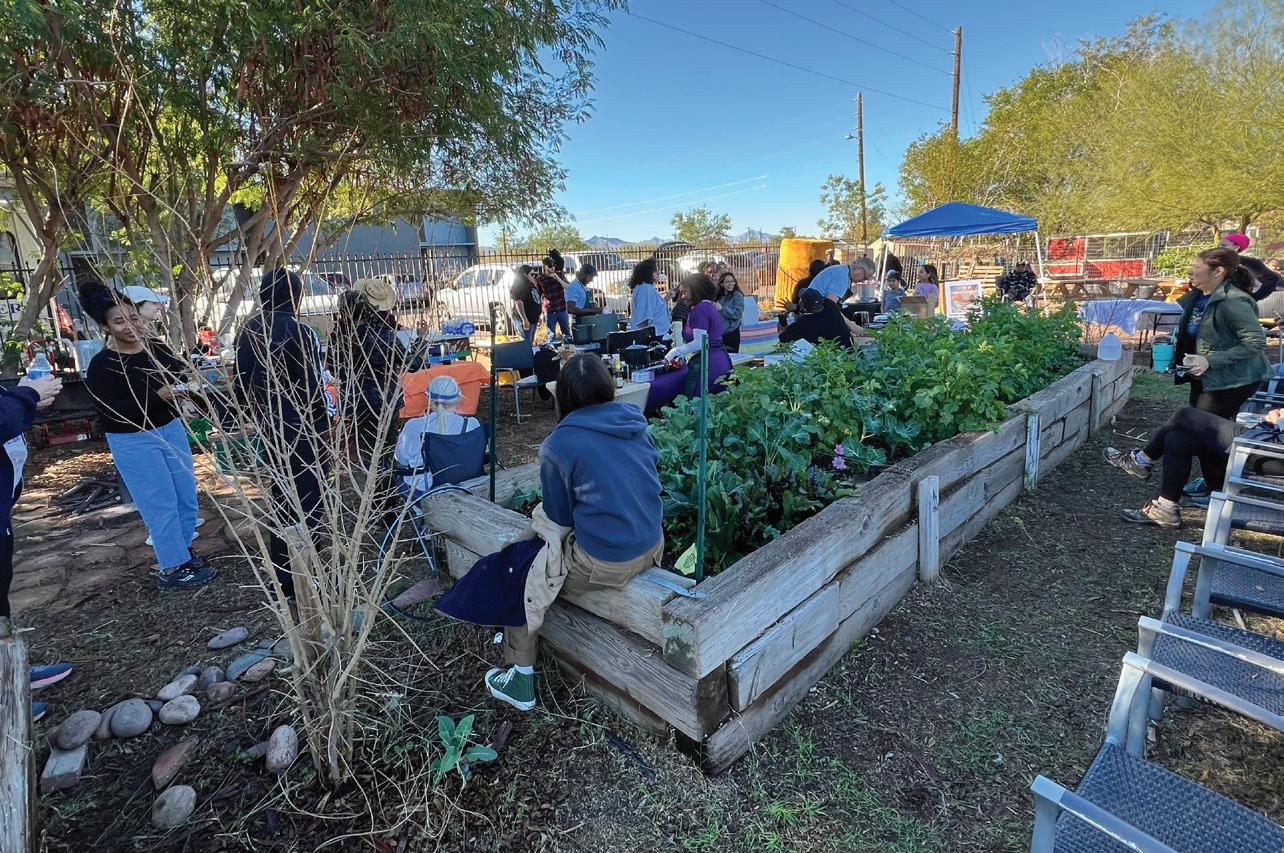
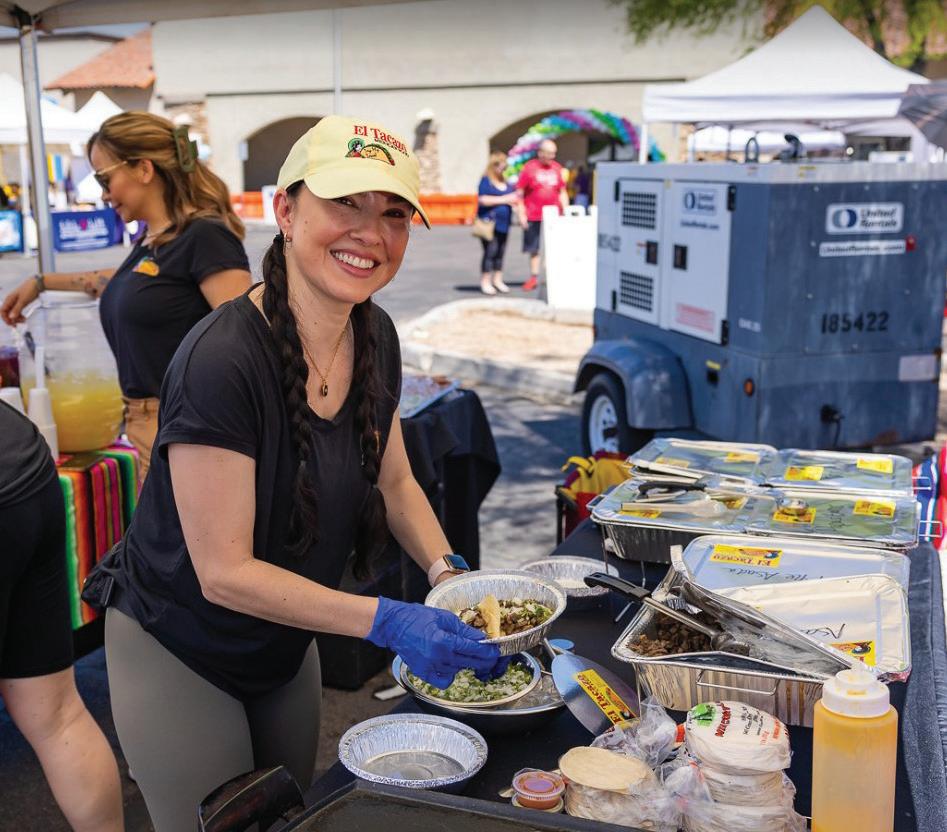
Continued private and public investment is critical to achieving the vision of the Rio Salado District Policy Plan and supporting existing communities within and beyond the district boundaries. While private development is reliant on market conditions, public investment is often driven by City Council priorities that consider existing or anticipated community needs, among other factors.
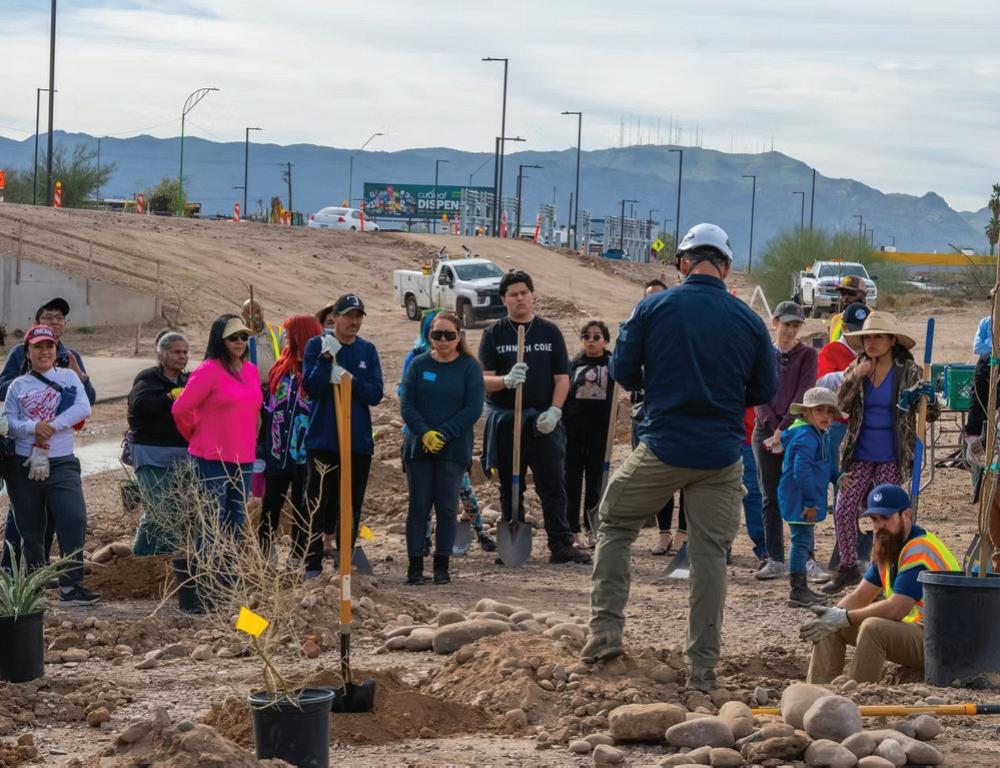
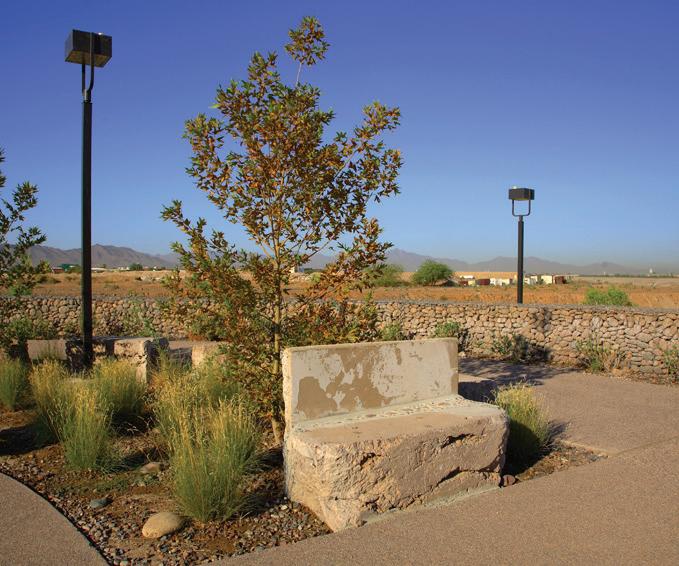
A major capital project recently completed by the City of Phoenix in the Rio Salado District is the fivemile South Central light rail extension along Central Avenue, which connects Downtown Phoenix to Baseline Road in the South Mountain Village, with a station across from the Nina Mason Pulliam Rio Salado Audubon Center. Other major capital projects approved with private development in the area include nearly 1.5 miles of protected two-way bicycle tracks generally between Central Avenue and 15th Avenue.
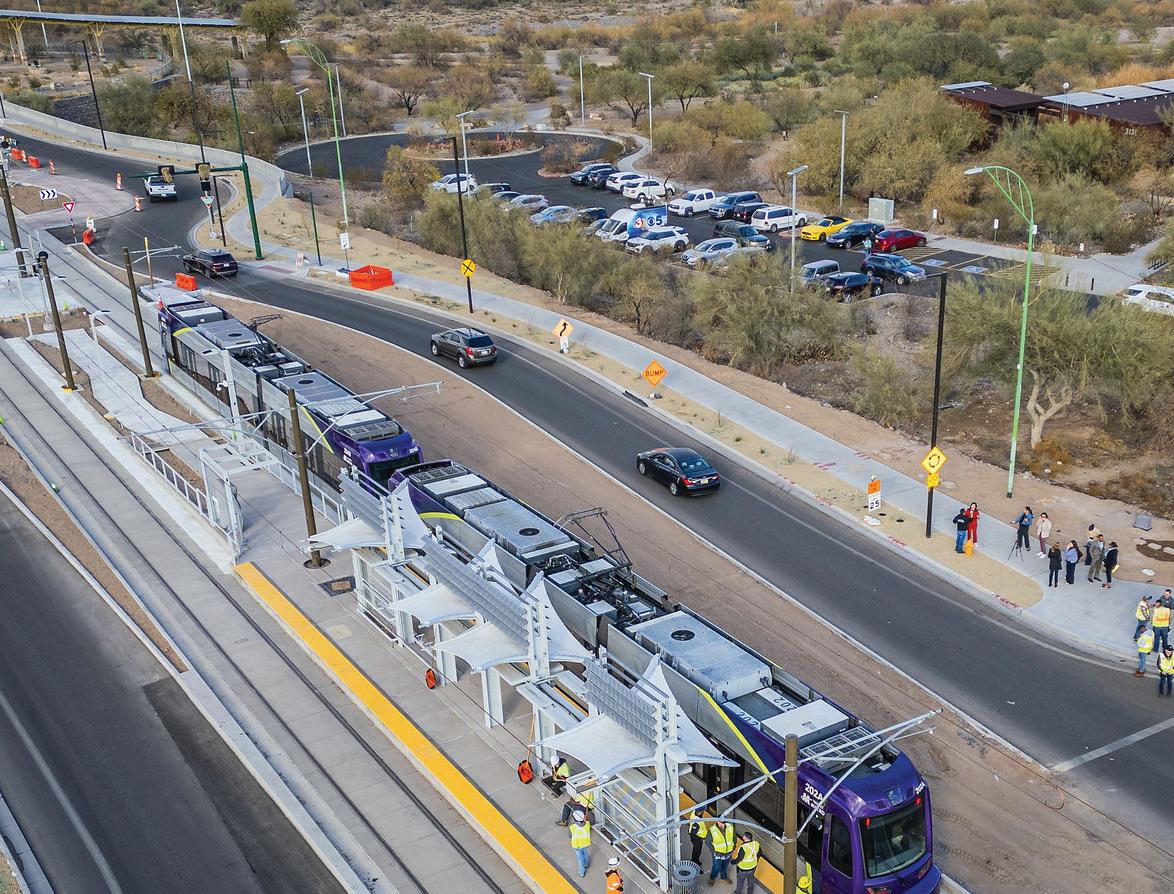
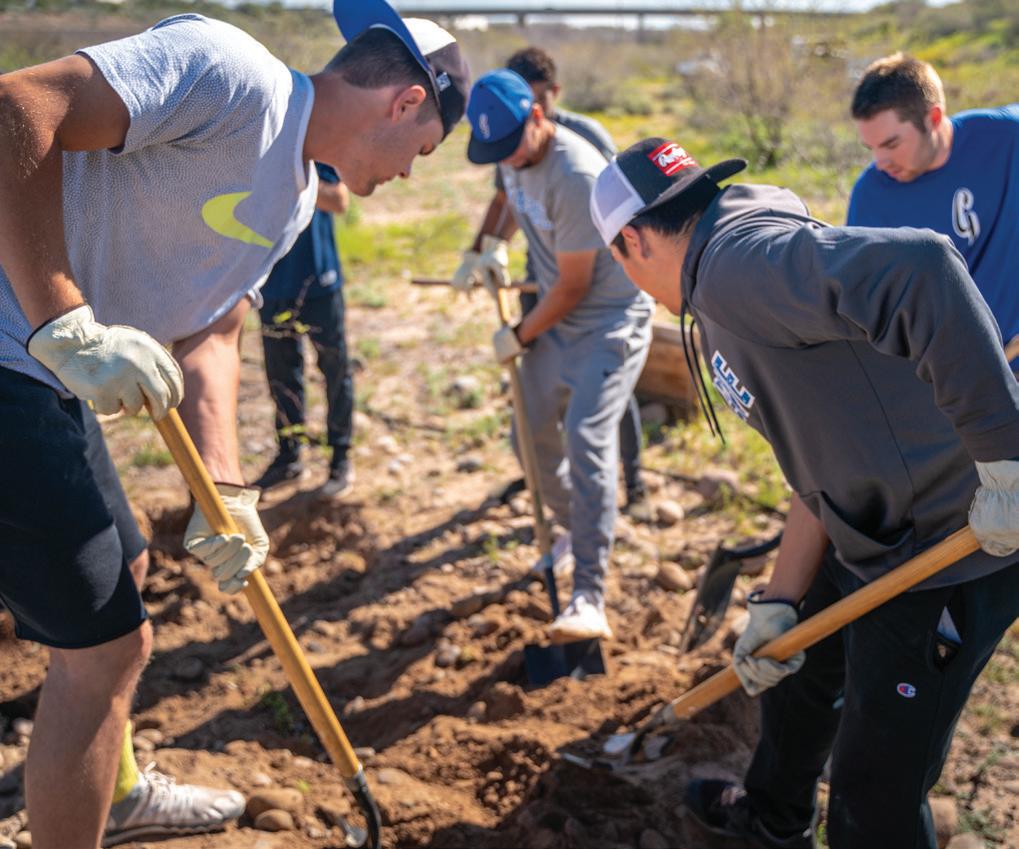
Public projects that are planned include the Third Street Rio Salado Bike/Pedestrian Bridge and trail improvements (south bank), Kipok Park renovation, redevelopment of a 30-acre cityowned property at the southeast corner of Central Avenue and Rio Salado Scenic Drive, activation of a one-acre city-owned parcel at the southwest intersection of Central Avenue and the RSHRA, artwork enhancements along the Rio Salado, and continued habitat restoration (including invasive plant removal) in the RSHRA. Other longer-term
projects include the redevelopment of the former Del Rio landfill and could also consider evaluating city-owned land for redevelopment potential, among future capital projects. The availability of funding and other factors will determine the completion of these projects. Public-private partnerships between the City of Phoenix and others could also be explored to support future redevelopment and capital projects in the Rio Salado District.
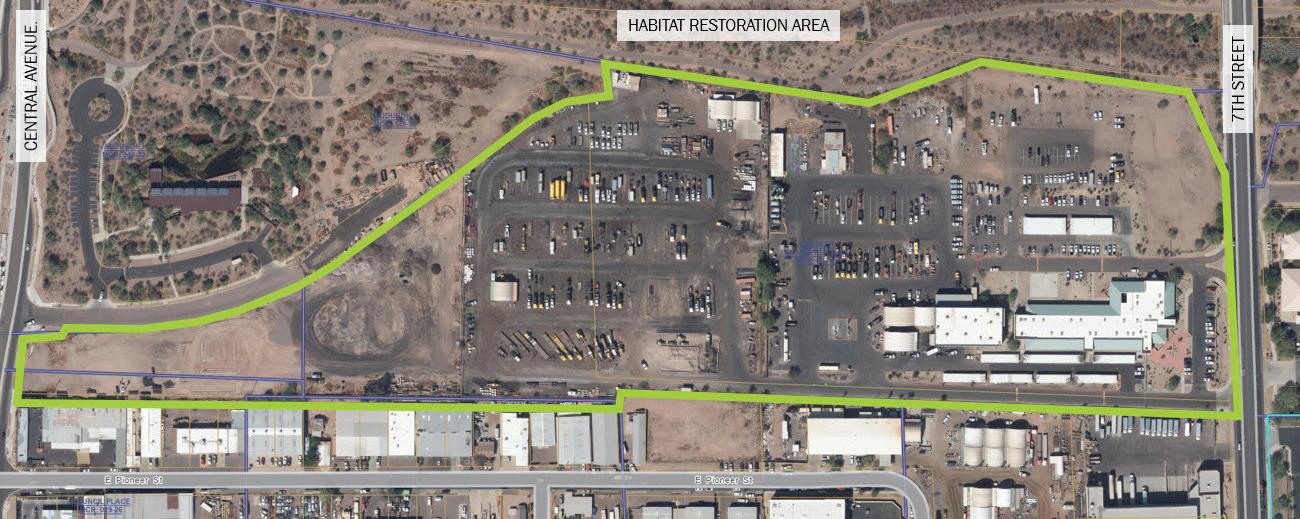
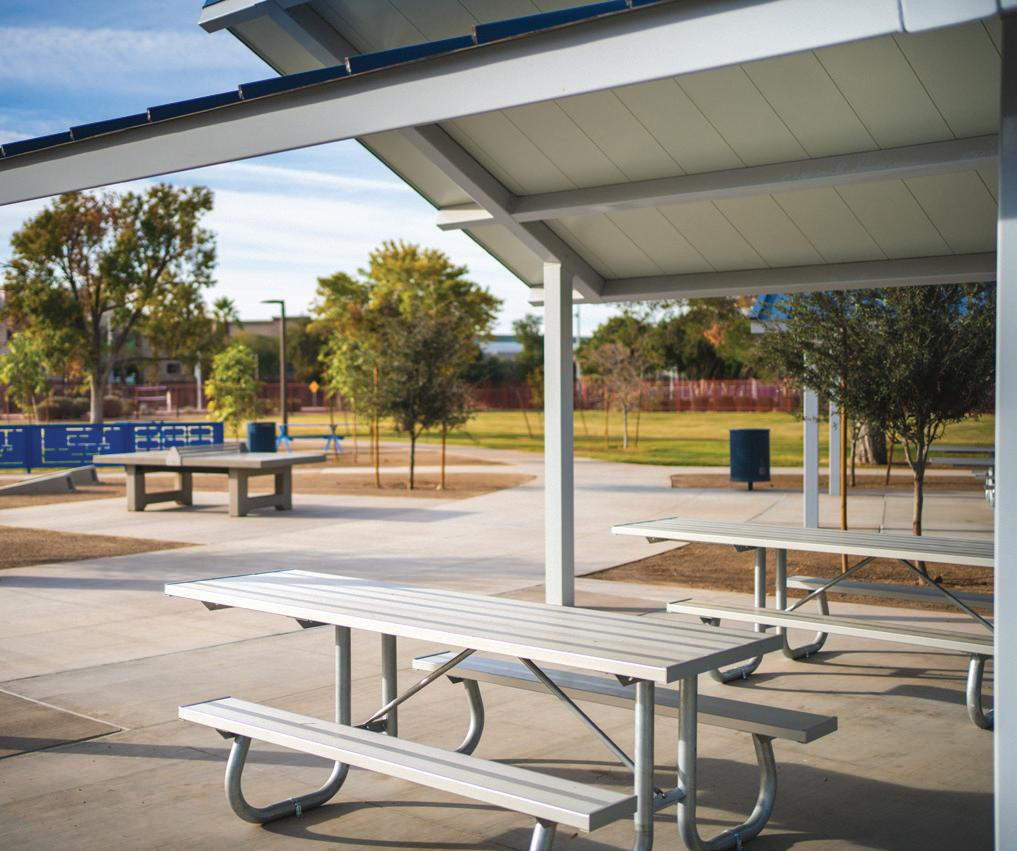
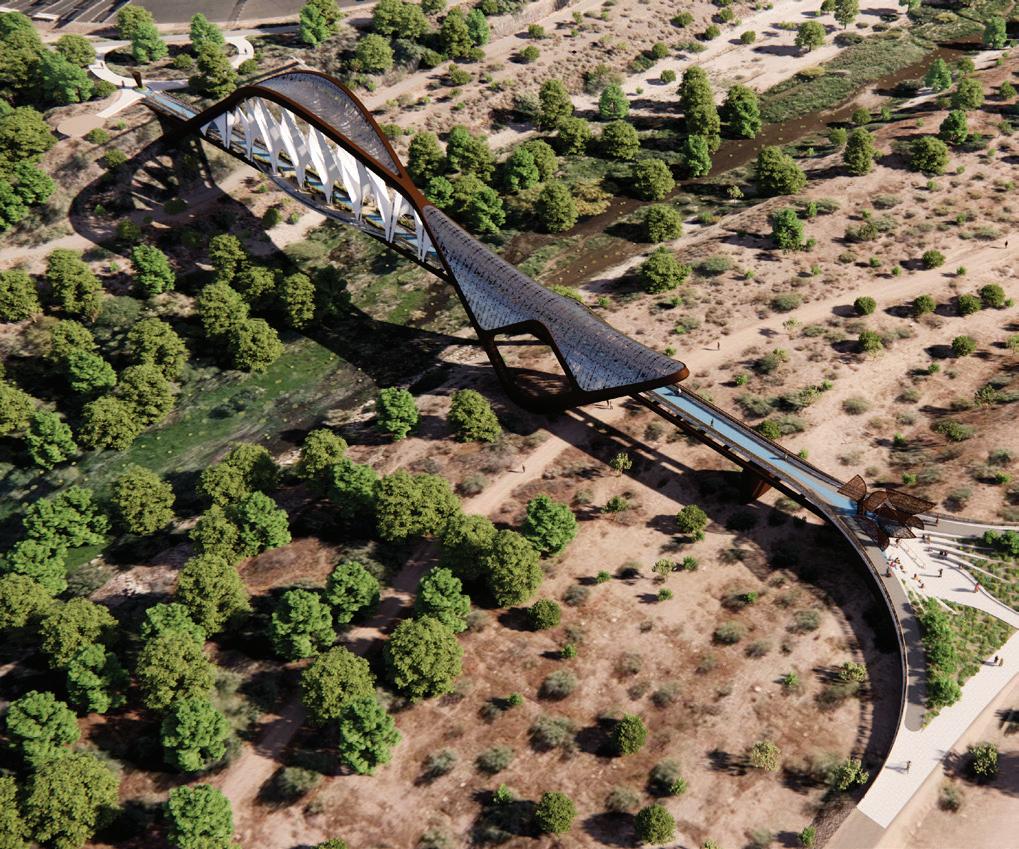
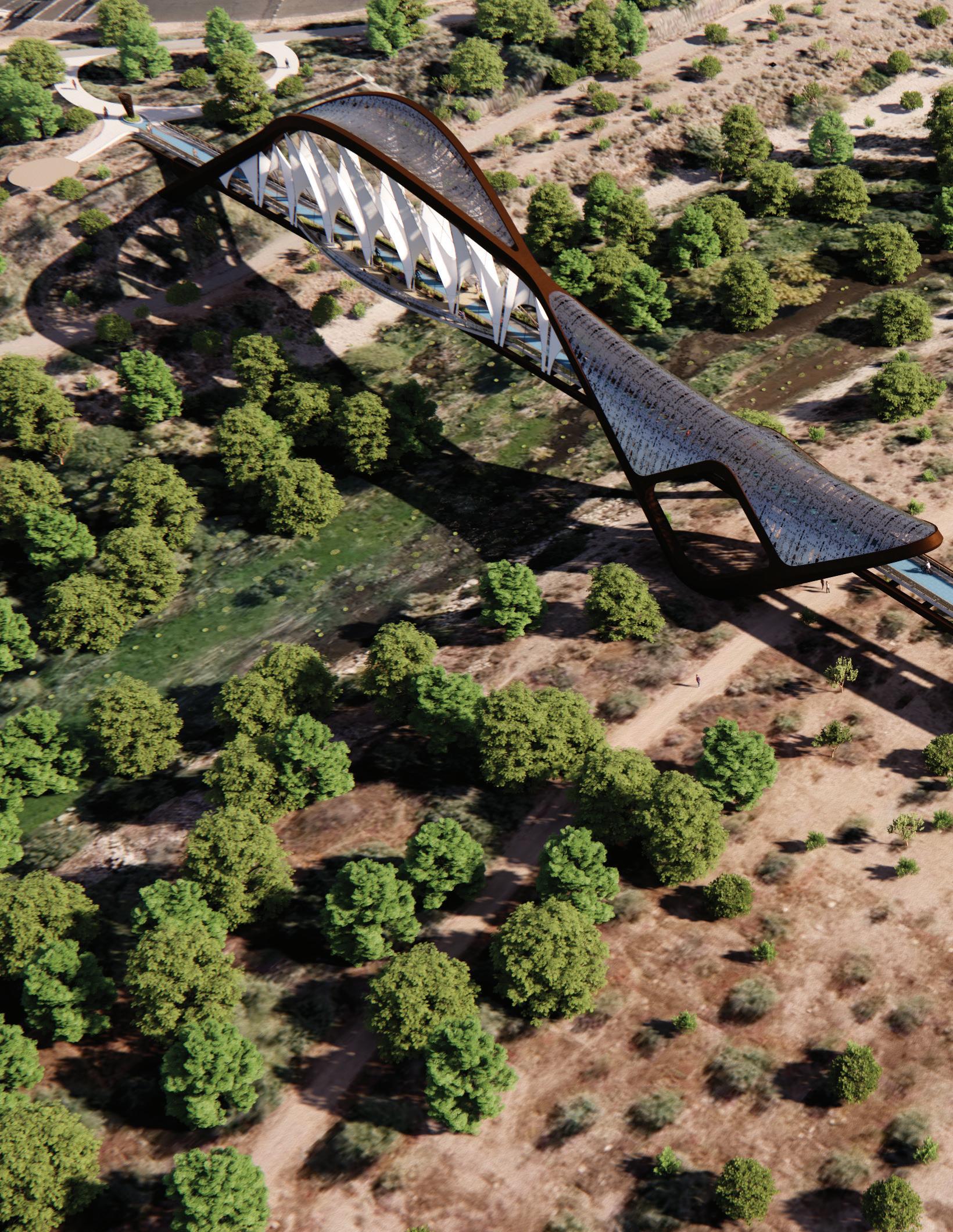
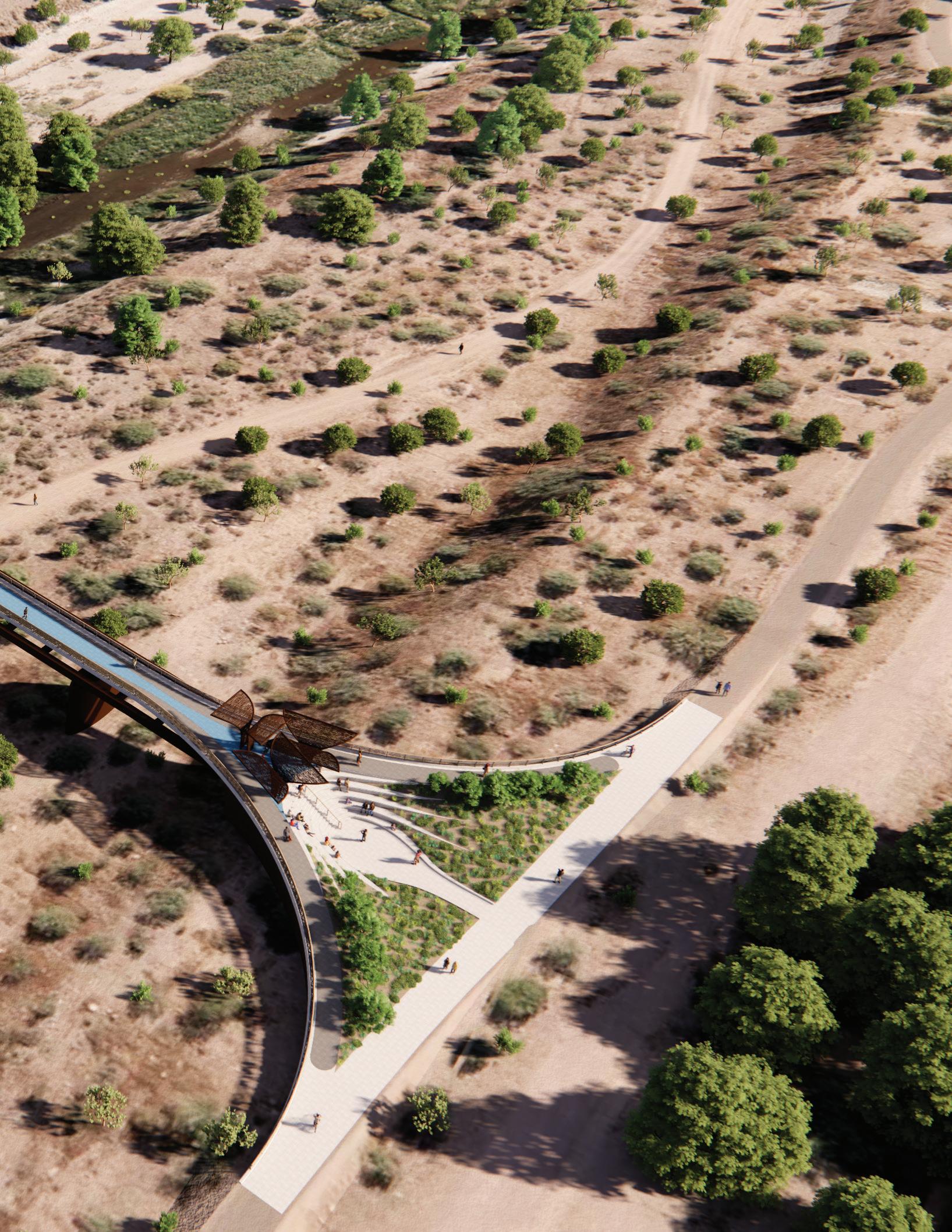
This conceptual rendering illustrates the city’s first and only bicycle and pedestrian bridge over the Rio Salado along the 3rd Street alignment, connecting the north and south banks. This new bridge will provide a seamless, safe and comfortable local connection point, in addition to establishing a regional connection from Phoenix to Tempe and Mesa for residents to walk and bike. The riverbank trails along the southern bank will also be improved through the addition of low-emitting solar pedestrian-scale lighting and pathway amenities between Central Avenue and 40th Street.
The Rio Salado District is characterized by having a wide variety of land uses ranging from single-family residential, multi-family, commercial, public/quasipublic, to industrial. These land use types are also built at various scales ranging from small to large building forms and located in parcels of various sizes.
The creation of Character Areas can promote the preservation of the existing neighborhood character, while facilitating a respectful transformation of the Rio Salado District through form-based codes, such as the Walkable Urban (WU) Code. These form-based codes can connect the complex physical environment to standards that can be adjusted for each individual context, or character area, while providing the restorative potential of time-tested pedestrian-oriented forms of urbanism.
Future studies on character areas within the Rio Salado District should consider existing land use patterns, building forms, parcel size, block pattern, parcel length, alley widths, right-of-way, among other physical conditions.
Emerging character areas and predominant character of these, include:
Traditional Residential Neighborhood (TRN)
◊ Zoning: Single-Family
◊ Building Types: Single-family, multi-generational, duplex, multi-unit housing, ADU
◊ Scale: Small
Established Residential Neighborhood (ERN)
◊ Zoning: Multi-family
◊ Building Types: Single-family, multi-generational, duplex, courtyard housing, townhouse/rowhouse, ADU
◊ Scale: Small to Medium
Transitional Multi-family Neighborhood (TMN)
◊ Zoning: Multi-family
◊ Building Types: Multi-generational, duplex, courtyard housing, townhouse/rowhouse, live/work, small multi-family
◊ Scale: Small to Medium
Transitional Commercial (TC):
◊ Zoning: Commercial
◊ Building Types: Live/work, small multifamily, multi-unit building, small commercial, townhouse/rowhouse, adaptive reuse
◊ Scale: Small
Main Street (MS)
◊ Zoning: Commercial
◊ Building Types: Live/work, small mixeduse, small commercial, medium mixed-use
◊ Scale: Small to Medium
Mixed-Use (MU)
◊ Zoning: Commercial
◊ Building Types: Live/work, small commercial, medium mixed-use, large mixed-use
◊ Scale: Small to Large
Mixed-Use Employment (MUE)
◊ Zoning: Commercial
◊ Building Types: Live/work, small to large mixed-use, small to large employment
◊ Scale: Small to Large
To review future assessments on character areas, please visit the RIO PHX website.
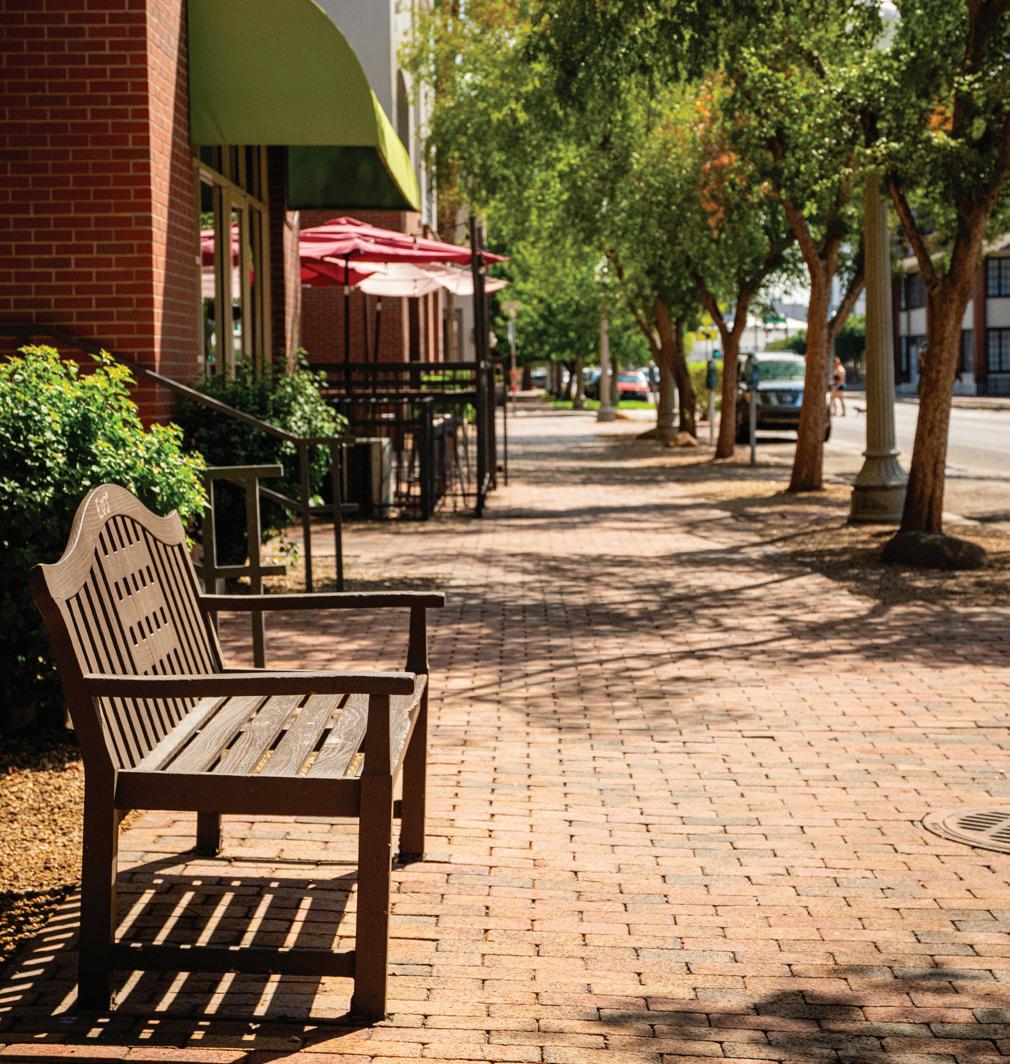
Several character area categories have emerged to provide guidance on future assessments and code updates. These have been organized below by the primary character of each area, Residential and MixedUse categories.
Residential Character Areas Examples:
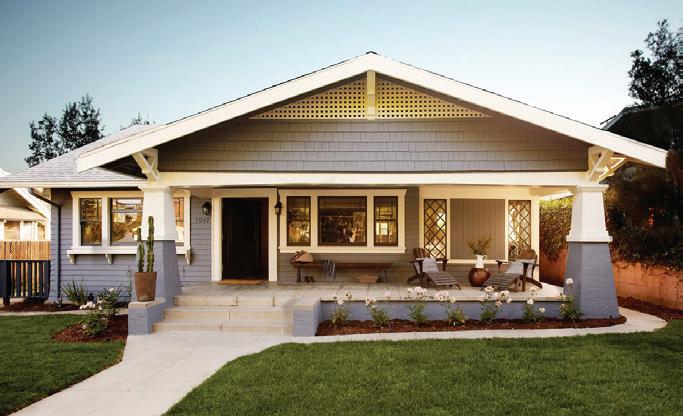
Traditional Residential Neighborhood (TRN)
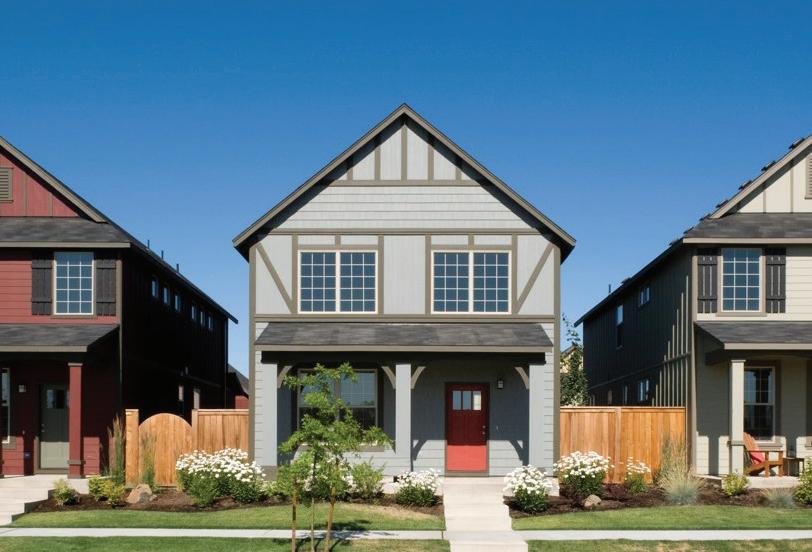
Established Residential Neighborhood (ERN)
Mixed-Use Character Areas Examples:
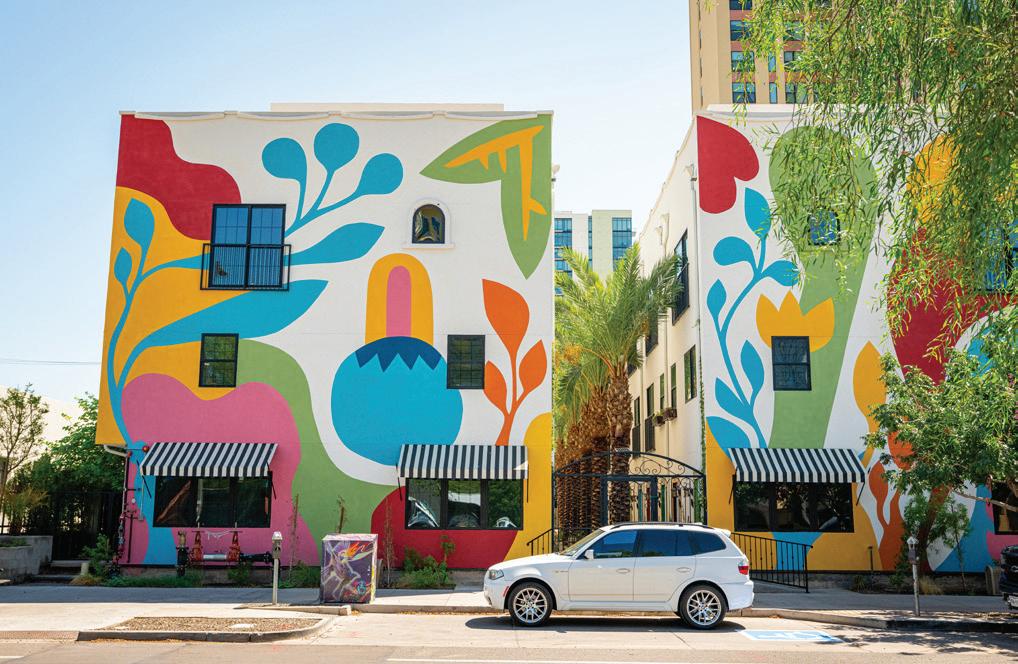
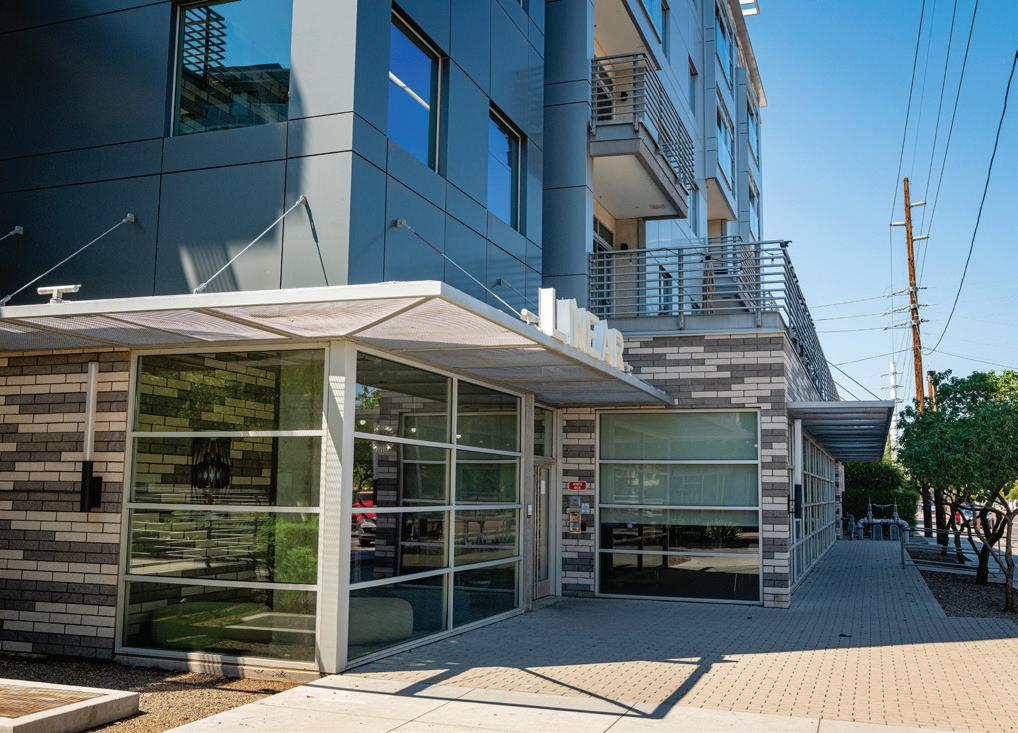
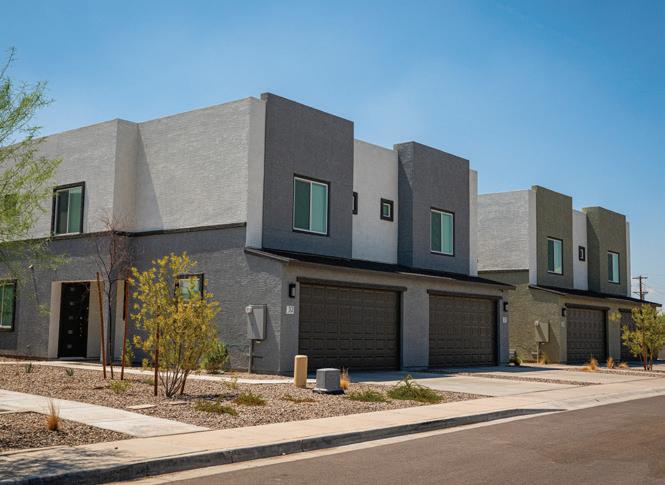
Transitional Multi-family Neighborhood (TMN)
Source: Bloomberg Philanthropies
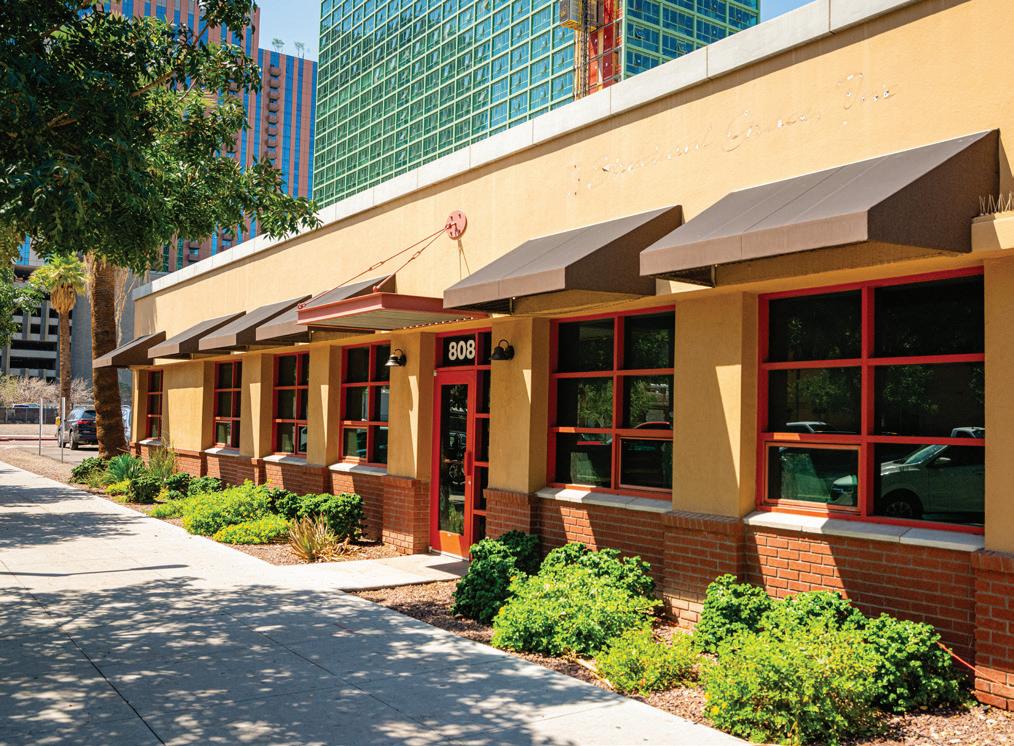
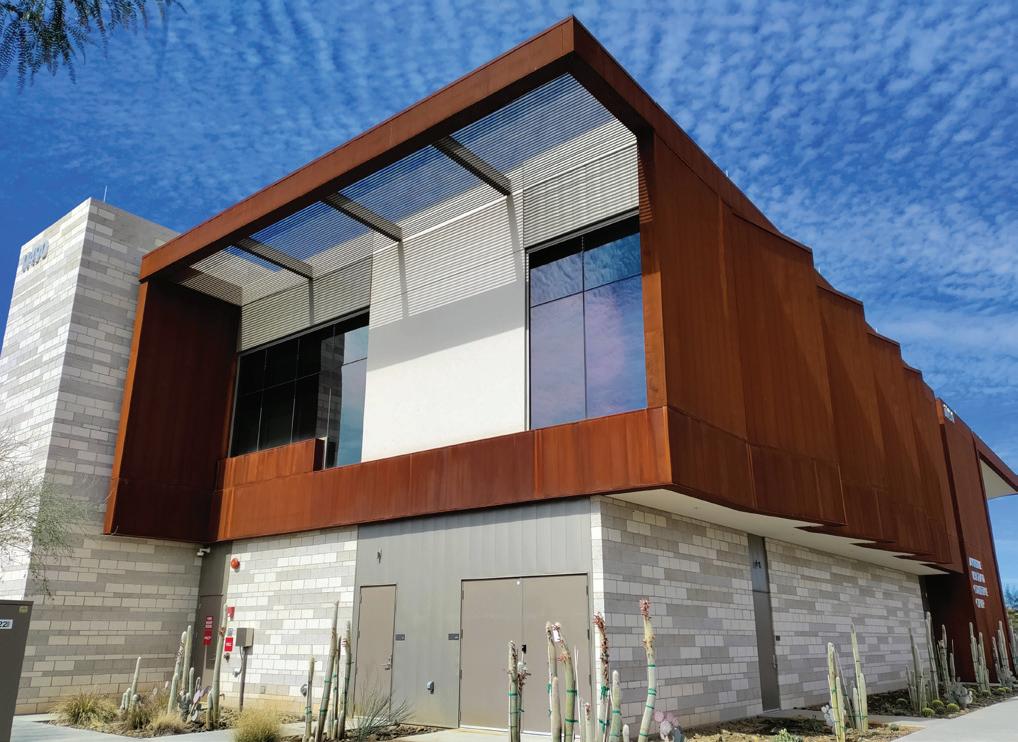
The vision for the Rio Salado District is centered on achieving four key goals or “big ideas”: establish a vibrant mix of uses, connect residents and visitors to the Rio Salado, improve community well-being and quality of life, and establish a hub for eco-tourism and green infrastructure. These goals are supported by goals, strategies, and policies, in addition to short-term and long-term actions that will implement each of the four big ideas.
The four big ideas presented in this section collectively represent the roadmap for implementing the unified vision depicted in the Master Plans presented in the “What We Want” Chapter for a healthier, vibrant, and well-connected Rio Salado District. While not all benefits can be quantified, extensive research, combined with technical analysis and community vision for the district, presents the need for Phoenix and its partners to work together in delivering the Rio Salado District vision.
1 2
Establish a Vibrant Mix of Uses
A complete neighborhood can be established by creating livable and walkable communities with housing, shopping, and employment options. Diversifying the mix of uses can create complete neighborhoods and provide new opportunities to live, work, and play for locals and tourists particularly along the banks of the Rio Salado at all hours of the day.
Connect Residents and Visitors to the Rio Salado
A safe and well-connected neighborhood delivers multiple benefits, including mobility options such as promoting walking and biking that can lead to lower transportation costs and physical exercise. Access to natural spaces, such as the RSHRA, offers additional mental and physical health benefits by recreation and socialization opportunities. Connecting residents and visitors to the RSHRA can create a sense of pride and activate this unique space.
Goal: Create a Unique Local and Regional Destination
Goal: Foster Environmental Stewardship and Improve Mobility Options
3 4
Overcoming economic, environmental, and social barriers in the Rio Salado District can lead to an improved quality of life and well-being of residents. Increasing healthy food options, improving access to chilled drinking water and access to healthcare facilities are critical to improving well-being, while a better quality of life can be supported by jobs, education, improved built environment and social cohesion.
Goal: Prioritize Community Health Outcomes
Establish A Hub for Eco-Tourism and Green Infrastructure
At the heart of the Rio Salado District is the RSHRA, a unique ecosystem restoration project with wetlands, diverse flora and fauna, and recreation opportunities. Linking this natural area to local businesses and community-led eco-tourism activities beyond the riverbanks along shaded “green” corridors supported with green stormwater infrastructure, can grow and diversity the local economy while supporting the natural environment.
Goal: Improve Economic and Environmental Prosperity
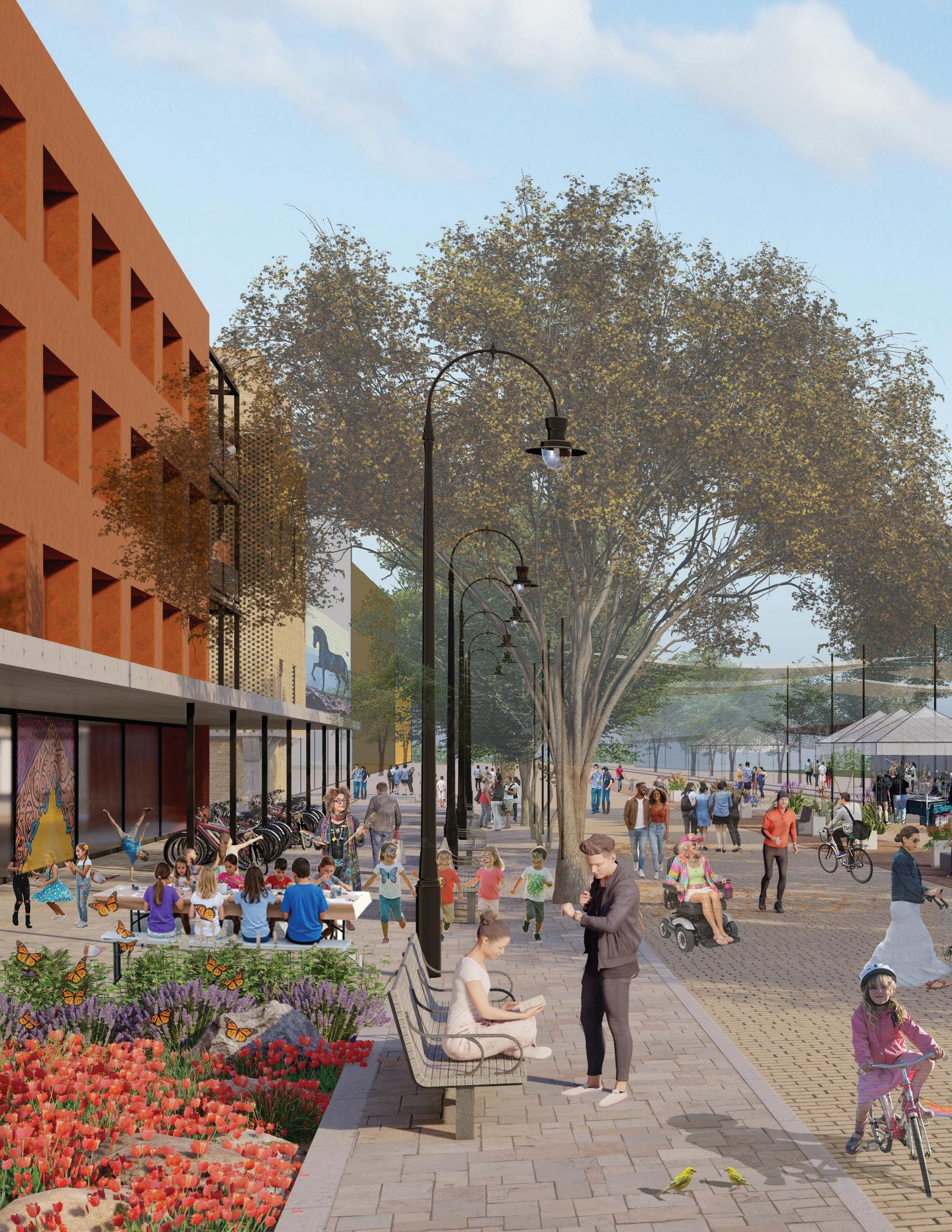
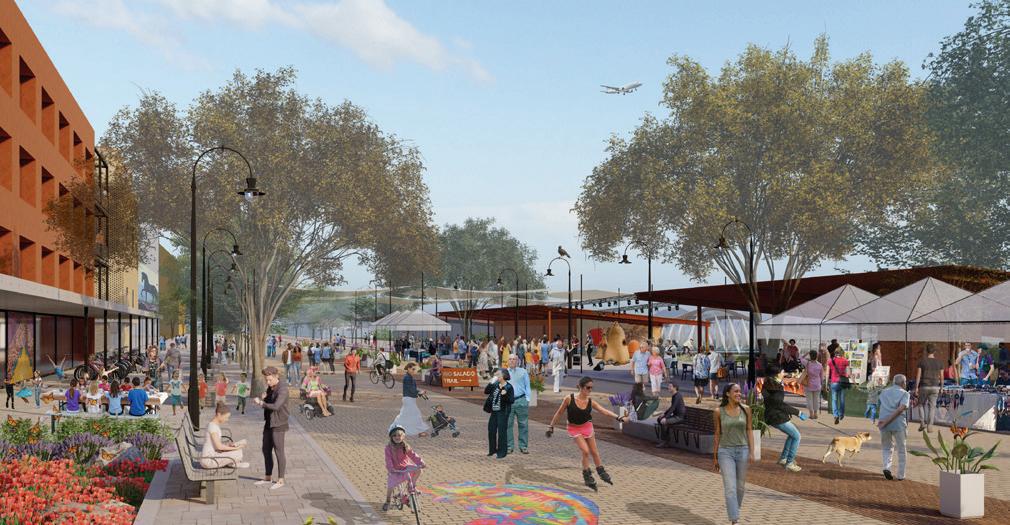
Strategy 1.A: Update land use map designations and zoning codes to encourage a mix of uses while protecting ecological health and connecting people to the river
Strategy 1.B: Collaborate towards future redevelopment of catalysts sites, including mining and brownfield sites, to promote a mix of uses
Policies:
1. Support new rezoning and other entitlement projects that propose uses in alignment with the plan’s Land Use Map.
2. Encourage the Walkable Urban (WU) Code on new projects.
3. New development and redevelopment should incorporate design guidelines referenced in this policy plan and the latest RIO PHX Design Guidelines, which include frontage treatments, public art, active open space, and bike infrastructure, among other elements.
Transition at least 50% of the land area in the Rio Salado District to form-based code or a zoning district that is primarily non-industrial.
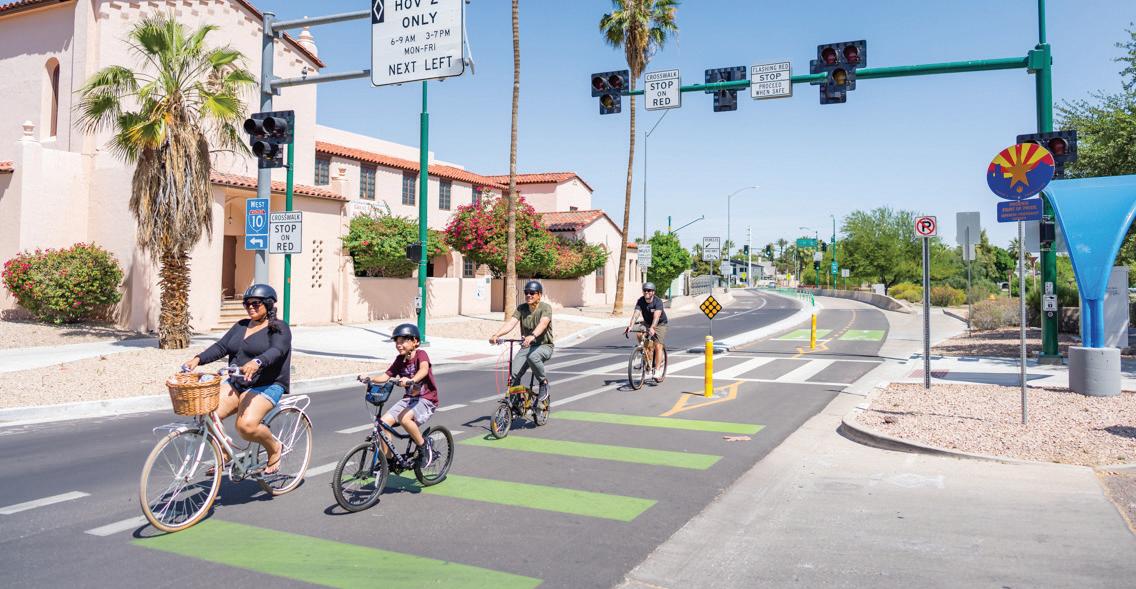
Strategy 2.A: Enhance existing connections and provide new connections to activities and destinations adjacent to and beyond the river
Policies:
1. New development and major redevelopment of sites should construct streets, paseos, and other connections in alignment with the plan’s cross-sections and Connectivity Maps.
2. Support policy and code changes that reduce barriers for activation of streets and the use of green stormwater infrastructure, where feasible.
3. Promote active transportation and supporting infrastructure in all projects to provide a wider range of transportation choices.
4. Encourage the retrofit of existing streets to incorporate plan elements and accommodate more transportation options, where feasible.
5. Evaluate the need for pedestrian crossings and other active transportation infrastructure with new development.
Facilitate direct connections to and from the RSHRA by establishing or improving a minimum of two corridors with 75% shade and active transportation infrastructure such as detached sidewalks and bike lanes.
The following Goals, Strategies and Policies support the Four “Big Ideas” towards achieving the overall vision for a healthier, walkable, and vibrant Rio Salado District. Additionally, 2050 Target Outcomes are also connected to each respective Goal for tracking implementation progress over time.
3
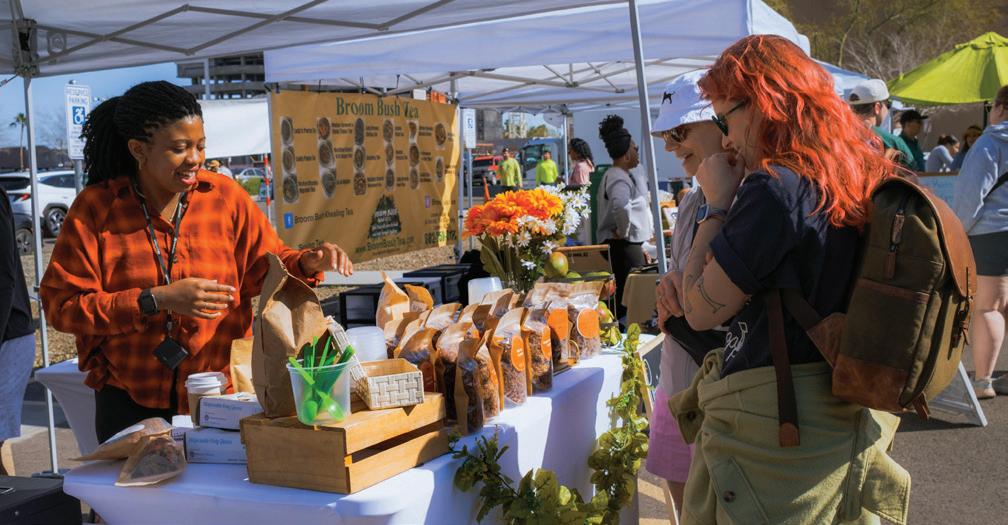
Strategy 3.A: Increase resident and public well-being through awareness and interactions with and along the river
Strategy 3.B: Improve environmental conditions and promote active lifestyles for all residents
Policies:
1. Encourage new development that aligns with the plan’s Areas of Change Map.
2. Support policy and code changes that reduce barriers for space activation, healthy food, recreation, access to chilled drinking water, and community health solutions.
3. Promote local programs that strengthen businesses, education, workforce development, and city services.
4. Create opportunities for environmental stewardship and education to promote the restoration and protection of the river and its ecosystems.
Provide community health options, such as healthy food access, recreation access, and health services, within a 15-minute walk for at least 50% of residential households in the Rio Salado District.
4
IMPROVE ECONOMIC PROSPERITY AND ENVIRONMENTAL STEWARDSHIP
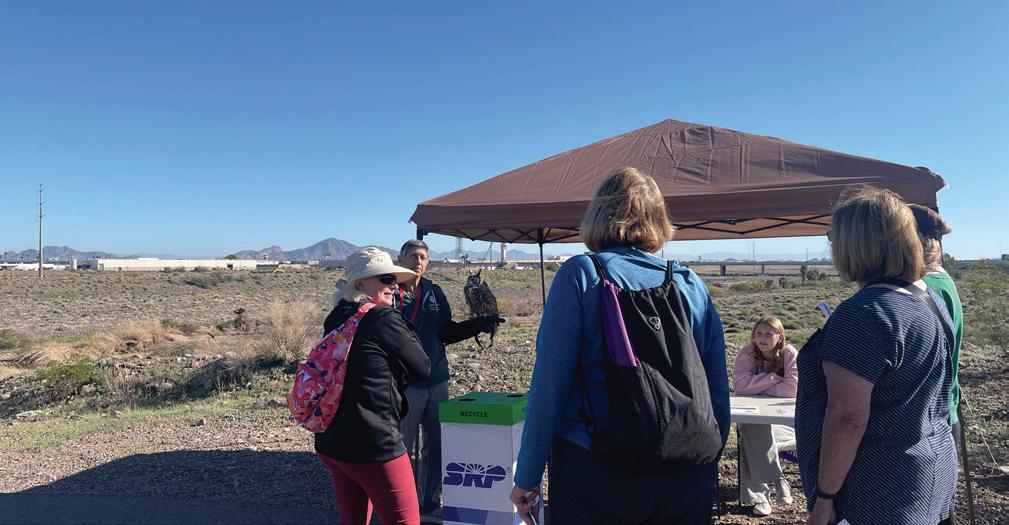
Strategy 4.A: Expedite implementation of green stormwater infrastructure
Strategy 4.B: Collaborate with community and business partners on eco-tourism opportunities
Policies:
1. Encourage green stormwater infrastructure on new development, particularly projects seeking rezoning and other land entitlements.
2. Support new community-led eco-tourism initiatives.
3. Discourage land and energy intensive uses such as data centers.
4. Promote and implement best-practices to treat stormwater discharge into the RSHRA, where feasible.
Increase the monthly number of visitors to the RSHRA through eco-tourism initiatives and encourage at least two new green stormwater infrastructure projects annually in the area.
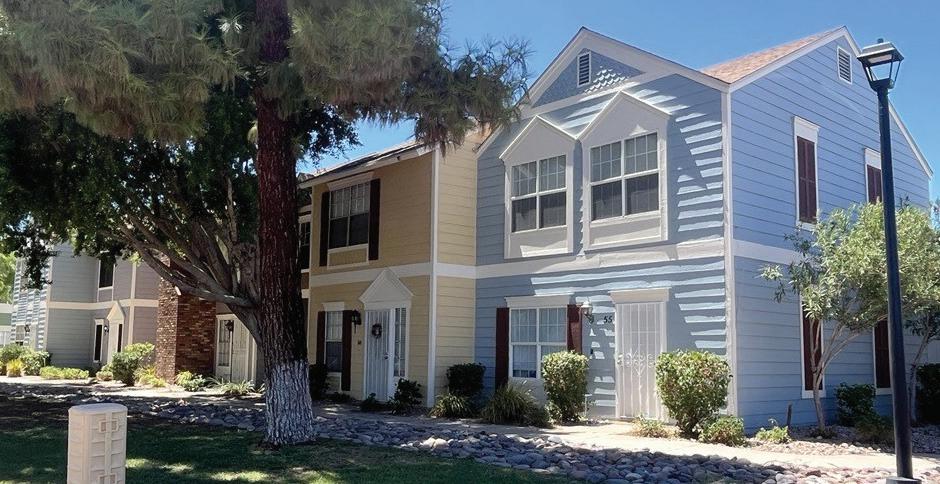
ACTION 1: Amend the Rio Salado Interim Overlay (RSIO) District to regulate development near the RSHRA, reference new design guidelines, facilitate formbased code and interim land uses, and streamline existing regulations.
ACTION 2: Amend the General Plan Land Use map designation to adopt placetypes.
City Department Lead(s): PDD
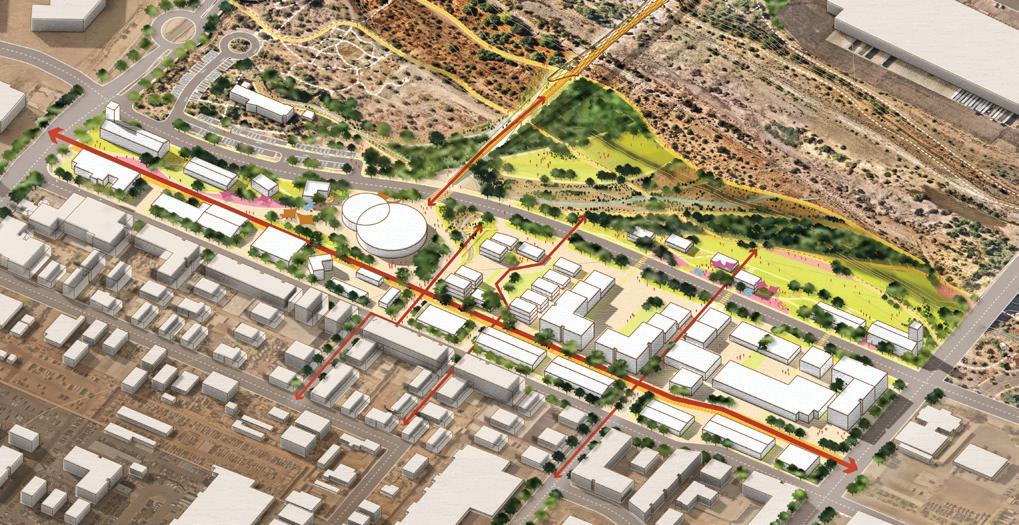
ACTION 3: Rezone catalyst and “reimagined” properties and/or deploy an opt-in zoning to incentivize new development in alignment with the community vision. GOAL 2
City Department Lead(s): PDD, CEDD
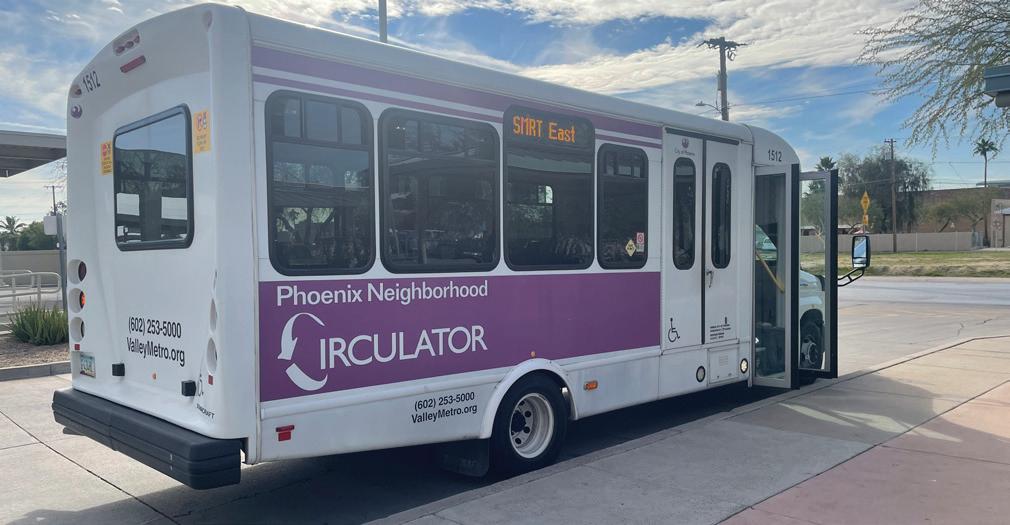
ACTION 4: Explore the feasibility and potential approaches for an urban circulator that could connect river-adjacent communities to the RSHRA, fresh food locations, and other major destinations.
City Department Lead(s): PDD, PTD
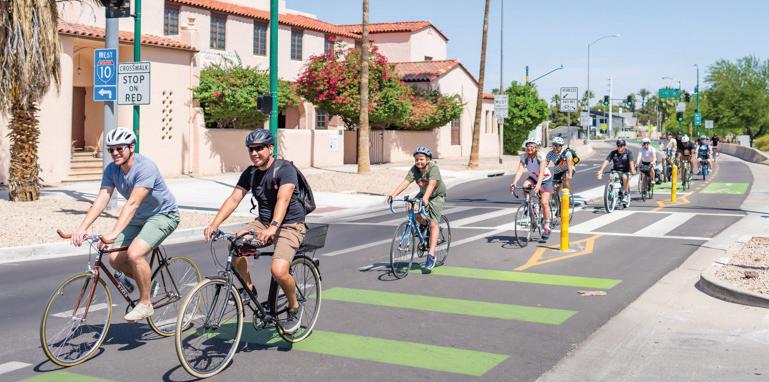
ACTION 5: Improve the Rio Salado Scenic Drive network by implementing the latest street cross-section for the Rio Salado Scenic Drives and amending the General Plan Street Classification Map.
ACTION 6: Pursue funding to develop an infrastructure needs assessment that identifies future potential infrastructure projects to promote safe mobility and improved quality of life.
City Department Lead(s): PDD, ST
Priority five-year actions that will be led by the City of Phoenix with support from RIOPHX partners to jump start implementation progress toward the community vision for the Rio Salado District. Identifying funding sources and partnerships will be key to implement these actions.
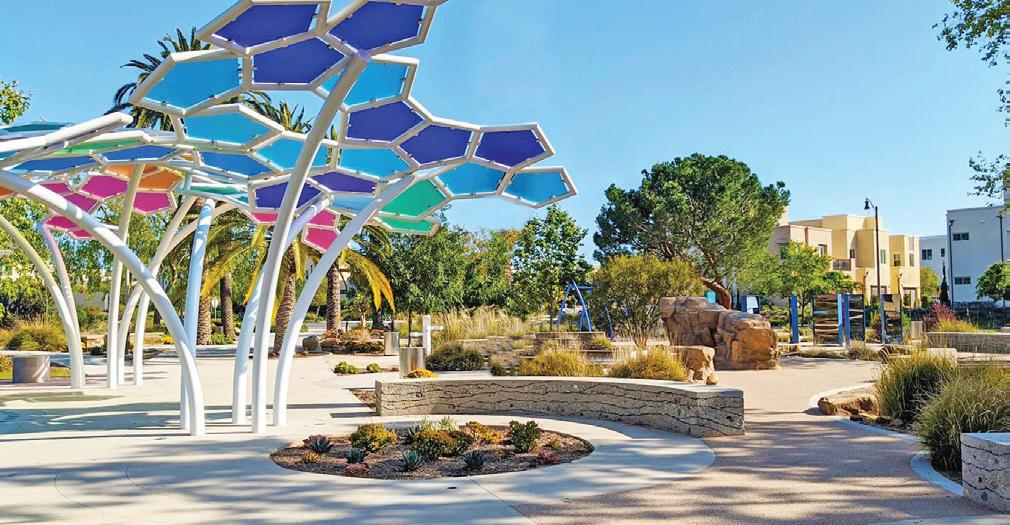
ACTION 7: Identify locations for future shade structures within the Rio Salado District.
City Department Lead(s): PDD, OHRM, OAC
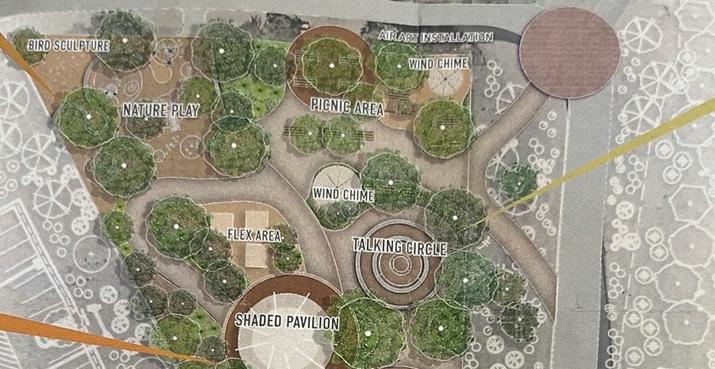
ACTION 9: Identify funding to design and construct the one-acre city-owned “Transformation Site” west of Central Avenue and south of the Rio Salado.
City Department Lead(s): PRD, PDD, OEP
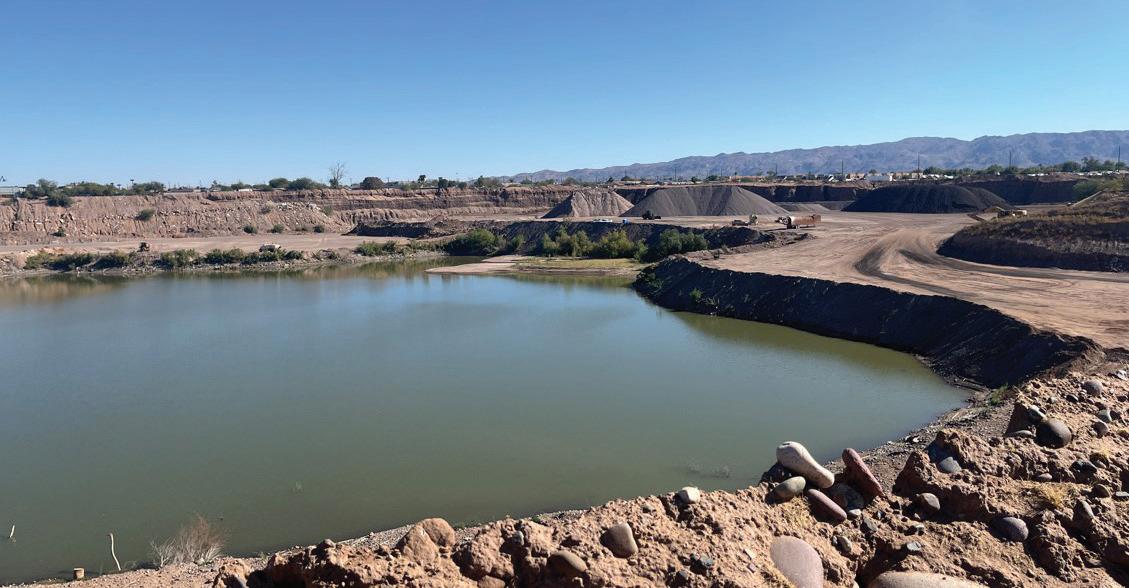
ACTION 8: Research and partner with a property owner to pilot an accelerated backfill program on inactive mining sites for redevelopment.
City Department Lead(s): PDD, OEP, CEDD
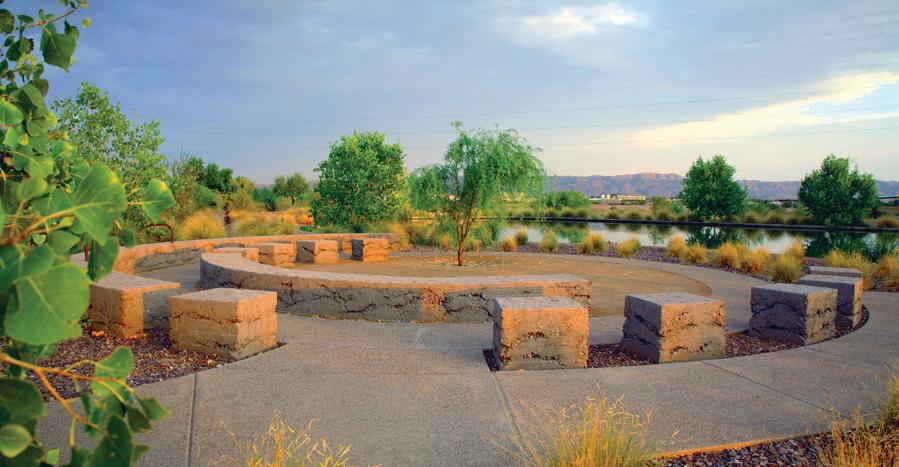
ACTION 10: Pursue funding for continued habitat restoration, facility upgrades, artistic and placemaking elements, amenities and other improvements.
City Department Lead(s): PRD, OEP, OAC, PDD, AVD
Additional government actions include other short-term (1 to 5 years) and longer-term (5+ years) actions by the City of Phoenix to implement the vision for the Rio Salado District. These actions can be conducted individually or simultaneously, and combined with other actions led by government, community, and businesses partners.
Adopt Character Areas and standards that promote a variety of housing types to meet multigenerational and income diverse needs while preserving existing housing and supporting generational stability and community identity.
Support the establishment of community-led “Arts, Nature, and Culture” and “EcoBusiness” sub-districts and pursue funding that supports ongoing activities and districtwide improvements to attract more visitors to the RSHRA.
Support organized community groups in the creation of manufactured home residentowned communities to maintain or expand affordable housing options.
Continue citywide programs that promote homeownership and business assistance to support existing residents and businesses in the Rio Salado District.
Contact historic-eligible building property owners in the Rio Salado District and encourage them to register for this designation and participate in programs.
Develop Rio Salado District brand or design guidelines and incorporate design elements in new infrastructure projects or facility upgrades, where feasible.
Expand the Phoenix Brownfields Land Recycling Program and prioritize key strategic sites in the Rio Salado District for redevelopment in alignment with community priorities and plan vision, where possible.
Pursue funding to study economic potential to redevelop key strategic sites in alignment with community priorities and plan vision.
Leverage economic tools to prioritize investment in mixed-use development and other community-identified priorities.
Collaborate with the healthcare industry to promote the development of new medical and mental health facilities acilities in the South Mountain Village, considering the Rio Salado District. This includes workforce partnerships to train and hire residents into health careers and mental health support roles.
Study the feasibility of commercial “green-energy” charging stations and pursue funding to construct these to support an advanced “green” transportation network.
22 Expand Middle Housing applicability area across the Rio Salado District.
City Department Abbreviations:
Planning and Development Department ( PDD )
Aviation Department ( AVD )
City Manager's Office ( CMO )
Community and Economic Development Department ( CEDD )
Housing Department ( HD )
Neighborhood Services Department ( NSD )
Office of Arts and Culture ( OAC )
Office of Environmental Programs ( OEP )
Office of Heat Response and Mitigation ( OHRM )
OHRM
Some of these long-term actions may be able to be conducted earlier as staffing capacity and resources become available by each department.
Explore adding properties within or near the Rio Salado District to a community land trust and/or leveraging other tools to support long-term affordable housing options.
Prioritize small to mid-scale non-residential development types on aviation noise land sites along the northern portion of the Rio Salado District.
Investigate the feasibility of a pilot business program that supports the appearance of commercial properties (including screening and buffering), while helping businesses expand.
Explore the feasibility of technical assistance, financial incentives and/or public improvements, as needed, to support new residential development that caters to a mix of incomes or home improvements on existing residences.
Collaborate with local utility providers on utility corridor planning and to encourage proactive upgrades of utility infrastructure in the Rio Salado District.
Partner with community groups to promote local food production, processing (community kitchens), and distribution (farmers markets, mobile markets, ect.) within or near the Rio Salado District.
Promote local exercise, environmental education, health and social programs, smart cities technologies, chilled drinking water access in the district, including along the RSHRA.
30
31
32
33
Strengthen active transportation connections to and within the Rio Salado District by building PhxCAN projects and supporting biking and shared micromobility as a safe, enjoyable way to access and enjoy the district. ST PRD
Pursue regional and federal funding (i.e. grants) and local funding (i.e. grants, bonds, capital improvement program) to improve connectivity to the RSHRA and other infrastructure projects.
CMO, PRD, PDD, OEP
Work with property owners to acquire easements or right-of-way and pursue funding to improve the 12th Street alignment that connect the RSHRA and Cultural Corridor (north of Interstate 17), also considering Smart Cities technologies and design. ST OEP, PRD
Develop a creative marketing display or strategy in Phoenix Sky Harbor Airport that promotes the RSHRA and other assets for visitors, to increase tourism to the area. OAC AVD, PRD
Office of Homeless Solutions ( OHS )
Office of Innovation ( OI )
Office of Public Health ( OPH )
Office of Sustainability ( OS )
Parks and Recreation Department ( PRD )
Public Transit Department ( PTD )
Public Works Department ( PWD )
Street Transportation Department ( ST )
Water Services Department ( WSD )
Promote activities that provide education and raise awareness about heatrelated illness prevention in schools, businesses and public events.
35 Study opportunities for new cooling centers in the project area.
-
Partner with neighborhood associations, businesses, and institutional organizations to sponsor regular cleanup events. PRD, NSD -
Leverage the redevelopment of the former Del Rio Landfill (i.e. Arizona Fresh Agri-Food Innovation project) to support food industry career training, youth internship programs, and jobs between local growers, distributors, and residents.
38 Conduct a “Safe Routes to Schools” study from local schools, residential neighborhoods, and other area assets, including the RSHRA. ST PDD, OHRM, OEP, OI, PRD 39
Study and identify locations to create “Cool Corridors” to promote pedestrian connectivity between public assets. OHRM, ST OAC, PDD
Develop a public-facing tool that identifies locations of existing community gardens and other food opportunities.
Develop new housing models that make it easier for individuals and families experiencing homelessness to find and rent housing.
Connect residents with energy affordability programs, including programs managed by the city, utility companies, and other organizations.
City Department Abbreviations:
Planning and Development Department ( PDD )
Aviation Department ( AVD )
City Manager's Office ( CMO )
Community and Economic Development Department ( CEDD )
Housing Department ( HD )
Neighborhood Services Department ( NSD )
Office of Arts and Culture ( OAC )
Office of Environmental Programs ( OEP )
Office of Heat Response and Mitigation ( OHRM )
-
43 Educate and train community members and organizations on green stormwater infrastructure (GSI) opportunities.
44 Study the feasibility to design and construct a localized stormwater management system that increases clean water resources in the Rio Salado for public and ecological benefit.
45 Explore Zoning Ordinance updates that will facilitate interim land uses such as pocket parks, urban farms, community gardens and food distribution sites.
46 Coordinate with various city departments to develop clean energy projects on city facilities, and where feasible, incorporate battery energy storage systems.
47 Install catch basin trash screens to diminish or prevent the accumulation of trash in the RSHRA.
Office of Homeless Solutions ( OHS )
Office of Innovation ( OI )
Office of Public Health ( OPH )
Office of Sustainability ( OS )
Parks and Recreation Department ( PRD )
Public Transit Department ( PTD )
Public Works Department ( PWD )
Street Transportation Department ( ST )
Water Services Department ( WSD )
Community-led actions are short term (1-5 year) and long-term (5+ years) actions that will implement the vision for the Rio Salado District. These actions can be conducted individually or simultaneously and combined with other actions led by government and businesses as presented in this policy plan.
2
5
Share information about the benefits of the Walkable Urban Code with neighbors and neighborhood associations, and support zoning codes that promote diverse housing types.
Share information about existing city programs with neighbors and neighborhood associations and encourage them to pursue these services to improve their homes, streets, schools, and other areas in the neighborhood.
Pursue the establishment of community land trusts, manufactured home resident-owned communities or other types of resident-owned communities (ROCs).
Partner with developers to shape local development projects and consider Community Benefit Agreements (CBA’s) when mutually beneficial.
Engage with elected officials, city management, city boards and commission members on the importance of advocating and supporting the Rio Salado District Policy Plan goals
Recognize developers who create catalyst projects and innovative housing demonstration projects, and businesses that adopt riverfriendly practices in the Rio Salado District.
Organize river walks, clean ups, mural paintings, exercise events, bicycle rides, and other activities that bring people to the RSHRA and other local parks in the area.
PRD, ST, NSD, OAC 8 Support Nature Fest PHX and other events organized by businesses, City of Phoenix, and other organizations along the RSHRA and beyond by participating and sharing event information with others. S OEP, PRD, NSD, OAC
Share educational information with youth, residents, schools, and neighborhood associations on active transportation safety on an annual basis. S ST 10
Organize walking audits alongside city staff to identify opportunities for safety, increased shade, and other investement such as chilled drinking water and activation improvements along streets and parks. S ST, NSD, PRD, OHRM, OI
Participate in gardening and tree planting events to improve food resources, shade, and tree coverage.
Support people experiencing homeless by volunteering at local shelters and sharing existing resources.
Shop at local small businesses, mobile grocery locations, and farmer’s markets.
Pursue grant funding that supports activities, programs, and projects
Share information about workforce training programs that support local green industries and healthcare programs.
Utilize the green stormwater infrastructure handbook for residents on green stormwater projects on front yard or backyard home projects and share this information with other residents.
Organize events that celebrate arts, culture, and nature to promote eco-tourism and establish the area as an “arts, culture, and nature” subdistrict.
Utilize the Sonoran Desert pollinator plant guide to identify flowers, shrubs and trees on home, school, and other planting projects to increase shade, plus support native fauna.
Participate in annual budget meetings and future bond elections to identify priority projects in the Rio Salado District and surrounding areas of the city.
Support business that participate in the city’s voluntary Green Business Leaders Program to operate in a more environmentally responsible manner through sustainability actions.
City Department Abbreviations:
Planning and Development Department ( PDD )
Aviation Department ( AVD )
City Manager's Office ( CMO )
Community and Economic Development Department ( CEDD )
Housing Department ( HD )
Neighborhood Services Department ( NSD );
Office of Arts and Culture ( OAC )
Office of Environmental Programs ( OEP )
Office of Heat Response and Mitigation ( OHRM )
Office of Homeless Solutions ( OHS )
Office of Innovation ( OI )
Office of Public Health ( OPH )
Office of Sustainability ( OS );
Parks and Recreation Department ( PRD )
Public Transit Department ( PTD )
Public Works Department ( PWD )
Street Transportation Department ( ST )
Water Services Department ( WSD )
Business-led actions are short term (1-5 year) and long-term (5+ years) actions that will implement the vision for the Rio Salado District. These actions can be conducted individually or simultaneously and combined with other actions led by government and community as presented in this policy plan.
Share information about existing city programs with other businesses and encourage them to pursue these services to improve their businesses, streets and other areas in the neighborhood.
Partner with community groups to incorporate communityidentified priorities in development projects and consider Community
Agreements (CBA’s) when mutually beneficial.
Utilize the Sonoran Desert pollinator plant guide to identify flowers, shrubs, and trees on commercial landscape projects to increase site and parking lot shade, plus support native fauna.
Support people experiencing homeless by organizing companyled volunteering at local shelters and sharing existing resources.
mobile grocery and pop-up markets on vacant or underutilized parking lots, where allowed, to support community health.
Expand recycling and composting programs to support handson environmental education while promoting neighborhood cleanliness and overall community well-being.
Target local hubs such as community colleges and training centers for apprenticeship and job opportunities.
Utilize Rio Salado District information in business marketing materials and physical business locations to increase public awareness of the area.
Utilize the green stormwater infrastructure manual to develop projects on commercial properties and share this information with other businesses.
Attend and share information with others on community events to promote eco-tourism in the area.
Organize and establish a business coalition that recognizes riverfriendly businesses and establish the area as an “eco-business” sub-district to attract green industries and encourage sustainable practices.
a more environmentally responsible manner through sustainability actions.
1. Rio Salado District Engagement Report (2025)
2. Sand & Gravel Mining Report – Preliminary Findings (2025)
3. RIO PHX Precedents and Best Practices Memo & Report (2024)
4. Existing Conditions Report – Phase I (2024)
1. RIO PHX Design Guidelines
2. Approved Plants and Top Dressing Application for Development Adjacent to the Rio Salado
APPENDIX A: FULL-SIZE MAPS
This contains the full-size maps referenced in this plan.
To review these reports, reference documents and maps, please visit the RIO PHX website at: https://www.phoenix.gov/pdd/riophx
THIS PAGE INTENTIONALLY LEFT BLANK
For more information, or to view the electronic version of the document please visit phoenix.gov/pdd/riophx. This publication can be made available in alternative format upon request. Contact the Planning and Development Department at 602-262-7131 TTY: Use 7-1-1