
COLLABORATION IN PARTNERSHIPS


Welcome
4 Articles
Getting to know our members: Kerry Griffiths
Health inequalities and the importance of collaboration
Cerys Preece, Principal Public Health Practitioner, Policy and International Health Division, WHO Collaborating Centre on Investment in Health and Wellbeing, Public Health Wales
Early Years Wales Movement Champion Campaign
Julie Powell,Head of Training, Learning and Development, Early Years Wales
Leo Holmes,Head of Policy and Advocacy, Early Years Wales
Partnerships in complexity: what helps cross-sector collaboration work in practice
Dr. Vasiliki Kolovou, Researcher in Public Health Wales
Professor Nicola Bolton, Professor of Strategic Policy and Practice, Cardiff School of Management
Professor Diane Crone, Head of Global Academy Health and Human Performance, Cardiff School of Sport & Health Sciences
Mentor Ring
Sujatha Thaladi, Chief Executive Officer / Mentor Organisation: The Mentor Ring
The Undercurrents of Collaboration: Using Ripple Effect Mapping to capture partnership working
Sioned Williams, Wellbeing Officer, Dyffryn Nantlle Wellbeing Partnership

Getting to know our members: Kerry Griffiths
We are getting to know our members and would like to help our members to get to know each other. If you would like to feature in a future edition, please complete this form.
This month we’re meeting Kerry Griffiths, Performance and Strategy Manager for Newport Live
Please tell us a bit about yourself and your current work
My name is Kerry Griffiths and I am the Performance and Strategy Manager for Newport Live the Leisure, sport, art and cultural trust in Newport. I have a varied background including education, childcare, sports development and am now working in a Governance role.
What motivated you to join this network?
I was originally a member of the Physical Activity Network before joining Public Health Network Cymru. The members of the network are from a diverse and wide ranging number of organisations. I love learning what is happening in other areas of Public Health.
What are the benefits for you in being a member of this network?
Having a network that is knowledgeable in so many areas allows for new ways of working. For many years I have seen the benefits of collaborative working, upskilling in new areas of work and information sharing.
What is one thing you would like to share with other members of the network?
I am passionate about communicating the benefits of physical activity, sport, art and culture both from a fitness and wellbeing point of view. I invite you all to share your knowledge with the Network so that we can achieve shared goals and make Wales a healthier place to live.
Are you happy for your email address to be shared on the e-bulletin?
Yes - kerry.griffiths@ newportlive.co.uk

Policy & Practice
Health inequalities and the importance of collaboration
Cerys Preece, Principal Public Health Practitioner, Policy and International Health Division, WHO Collaborating Centre on Investment in Health and Wellbeing, Public Health Wales
Too many people in our communities in Wales are experiencing poor health or living shorter lives because of avoidable and unfair harms to their health. These differences in health outcomes are known as health inequalities.
In Wales, these differences are deeply shaped by social and economic circumstances, protected characteristics, and the places where people live, work and spend their time. Patterns of poorer health are not random; they are closely linked to unequal access to the building blocks of health, such as secure income, good quality housing, education,
fair employment, supportive relationships, and accessible services. These conditions influence health from early childhood and accumulate across the life course, resulting in significant and persistent inequalities.
Health inequalities do not arise principally from individual behaviours or choices. They are produced by wider social, economic and environmental systems that distribute resources, opportunities and power unevenly. People experiencing poverty, discrimination, insecure housing or poor working conditions are more
likely to face multiple and overlapping risks to their health. These disadvantages often intersect, compounding their impact and making it harder for individuals and communities to achieve good health and well-being. Addressing health inequalities therefore requires action that goes beyond health services alone and focuses on preventing harm, improving conditions for everyday living, and reducing unfair differences in opportunity.
Collaboration is essential to making meaningful progress on health inequalities. No single organisation can
influence all the factors that shape health, nor solve complex, interconnected challenges in isolation. Effective action depends on coordinated and collaborative working across public services, including health and care, local government, education, housing, transport and the wider public sector, alongside the voluntary and community sector, academia, and private organisations. Collaboration allows partners to share expertise, align priorities, combine resources and take complementary action that is greater than the sum of its parts.
Equally important is collaboration with communities and people with lived experience of health inequalities. Involving individuals and communities as partners in shaping priorities and solutions helps ensure that actions are relevant and responsive to real needs. This approach builds trust, strengthens relationships and supports more sustainable and equitable outcomes. It also helps to challenge assumptions, addresses power imbalances and ensures that voices most affected by health inequalities are heard and valued.
Reducing health inequalities is a long-term endeavour that requires sustained commitment, preventionfocused thinking and shared responsibility, good collaboration is an essential
part to make this happen. Public Health Wales is working to reduce health inequalities by informing, advocating, and mobilising action, and by ensuring our services deliver for all. We want to create a Wales where everyone has a fair chance to live well and live longer in good health.
To support our work on health inequalities we have developed an evidence based framework and a narrative. If you would like to know more or explore how we can work together to embed health equity in your area, please get in touch Cerys Preece, Cerys.Preece@wales. nhs.uk
Early Years Wales Movement Champion Campaign
Powell, Head of Training, Learning and Development, Early Years Wales
Holmes, Head of Policy and Advocacy, Early Years Wales
The Early Years Wales Movement Champion campaign seeks to raise awareness about the importance of movement in young children. As a charity, we recognise the vital role movement plays in a child’s development. It supports physical growth by strengthening both gross and fine motor skills, boosts brain development, enhances wellbeing, and promotes language and communication. Movement isn’t just beneficial; it is fundamental to every stage of a child’s developmental journey.
The Movement Champion
campaign is free and inclusive for all adults who have a role in the developmental journey of young children.
Our Movement Champion work aims to engage any adult who has responsibility for a child in their life. Professionals and parents are able to access a whole suite of free resources which share ideas of how they can support the child in their life to move and explore the world. These resources include easy to read posters, leaflets and social media assets. Furthermore, the campaign asks those who sign up to keep track of the activities they are implementing with their
children via a self-reporting form, that, once they complete, a certificate is sent through.
The resources are aimed at showcasing simple and inclusive environments for movement and play that show how regular movement opportunities can be incorporated in everyday routines. This work responds to current trends highlighting the rise of sedentary lifestyles among children in Wales. A global study from 2021 involving researchers from 60 countries scored children in Wales an ‘F’ for fitness. The research states: Only 51% of the Welsh population who
Julie
Leo
are aged 3–17 years meet the guidelines for PA (Physical Activity). These issues have a multiplicity of causes, but movement is the easy fix.
So far, the Movement Champion campaign has seen multiple successes given its growth has been largely organic. There has been a total of 76 signups, ranging from Childcare settings to organisations and politicians. Success stories shared across our media platforms have showcased the real benefits for children, eg: improved confidence, wellbeing and developmental progress. Notably, we were able to allocate funding received from the KPMG foundation to support our movement work to organise two ‘fly a kite’ movement events for children in families last year, as well as a ‘movement day’ of online good practice sharing for early years practitioners.
The key message of our campaign and learning for others is that messaging around movement for young children and their families can be fun, free, simple and inclusive, showcasing ways in which movement opportunities can be introduced daily in children’s lives. This is of particular importance during school holidays, as the nature of advertising of family days out means that parents believe
they need to pay over the odds to support their child’s enjoyment in movement and play, whilst the same joys and benefits can be achieved through more costeffective means in one’s local community.
For further Information please contact: Leo Holmes, leoh@ earlyyears.wales

Research
Partnerships in complexity: what helps cross-sector collaboration work in practice
Dr. Vasiliki Kolovou,
Researcher in Public Health Wales
Professor Nicola Bolton,
Professor of Strategic Policy and Practice, Cardiff School of Management
Complex public health challenges such as physical inactivity and widening inequalities cannot be addressed by any single organisation working in isolation. In Wales, the Wellbeing of Future Generations (Wales) Act 2015 provides a strong legal foundation for partnership working, requiring public bodies to collaborate to improve long-term social, economic, environmental and cultural wellbeing. Despite this, turning policy ambition
into effective day-to-day collaboration remains difficult in practice, particularly when organisations have different priorities, languages, funding structures and ways of working.
The lead author’s PhD research explored how cross-sector partnerships actually function in realworld conditions, and what helps them work effectively when faced with complexity and uncertainty. Rather than assuming partnership working
Professor Diane Crone,
Head of Global Academy Health and Human Performance, Cardiff School of Sport & Health Sciences
is a fixed model, the research examined it as something that is constantly evolving in response to changing contexts, pressures and relationships.
The study brought together multiple methods to build a deeper understanding of collaboration in practice. It drew on a national case study of a cross-sector partnership called Wales Physical Activity Partnership, that involved a strategic collaboration between Natural Resources Wales, Public Health Wales
and Sport Wales. Further collaborations between sectors were identified because they focused on physical activity and wellbeing, alongside 37 in-depth interviews with participants working across strategic leadership, programme coordination and frontline delivery. This allowed insights to be gathered from different levels of the system, capturing how partnership working is experienced differently depending on role, responsibility and organisational context.
Across the data, a clear message emerged: effective collaboration is less about formal structures and more about ongoing interaction between people, organisations and systems. Partnership working was described as a continuous process of “making sense” of change together, particularly during periods of disruption such as the COVID-19 pandemic. Rather than following a predictable path, collaboration often involved adapting, renegotiating and re-aligning priorities as circumstances shifted.
A key finding was that relationships are the foundation of effective partnership working. Trust, communication and shared understanding were consistently described as more important than formal governance arrangements alone. Where relationships
were weak, collaboration tended to become fragmented or transactional. Where they were strong, partners were better able to navigate uncertainty and maintain focus on shared goals.
Another important insight was that partnership working does not happen in a single way. Instead, it shifts depending on the situation. At times, collaboration requires clear coordination and structured processes. At other times, it requires flexibility, improvisation and rapid adaptation. Recognising when to shift between these modes was found to be critical for maintaining effective joint working across sectors.
From this work, a practical framework was developed to explain how partnerships operate across different levels of complexity. The framework highlights the importance of sensemaking, adaptive capacity and relational working as core ingredients of successful collaboration. It also shows how alignment between strategic leadership and operational delivery is essential, but often difficult to maintain without active communication and reflection across the system.
The value of this research lies in translating complex system behaviour into something more usable for practice. It moves away from viewing partnership working as
something that can simply be designed or mandated, and instead shows it as something that must be continuously maintained through relationships, learning and adaptation.
The key message is that improving partnership working is not about creating perfect structures, but about strengthening how people and organisations work together in real time. This means investing in relationships, supporting ongoing dialogue between different levels of the system, and creating space for shared reflection and learning. It also means recognising that complexity is not a barrier to be removed, but a reality to be worked with.
Ultimately, the research offers a practical framework that can help organisations reflect on and strengthen how they collaborate, supporting more connected, adaptive and effective approaches to improving population health and wellbeing in Wales.
For further Information please contact: Vasiliki.Kolovou@ wales.nhs.uk
Research Mentor Ring
Sujatha Thaladi, Chief Executive Officer / Mentor Organisation: The Mentor Ring
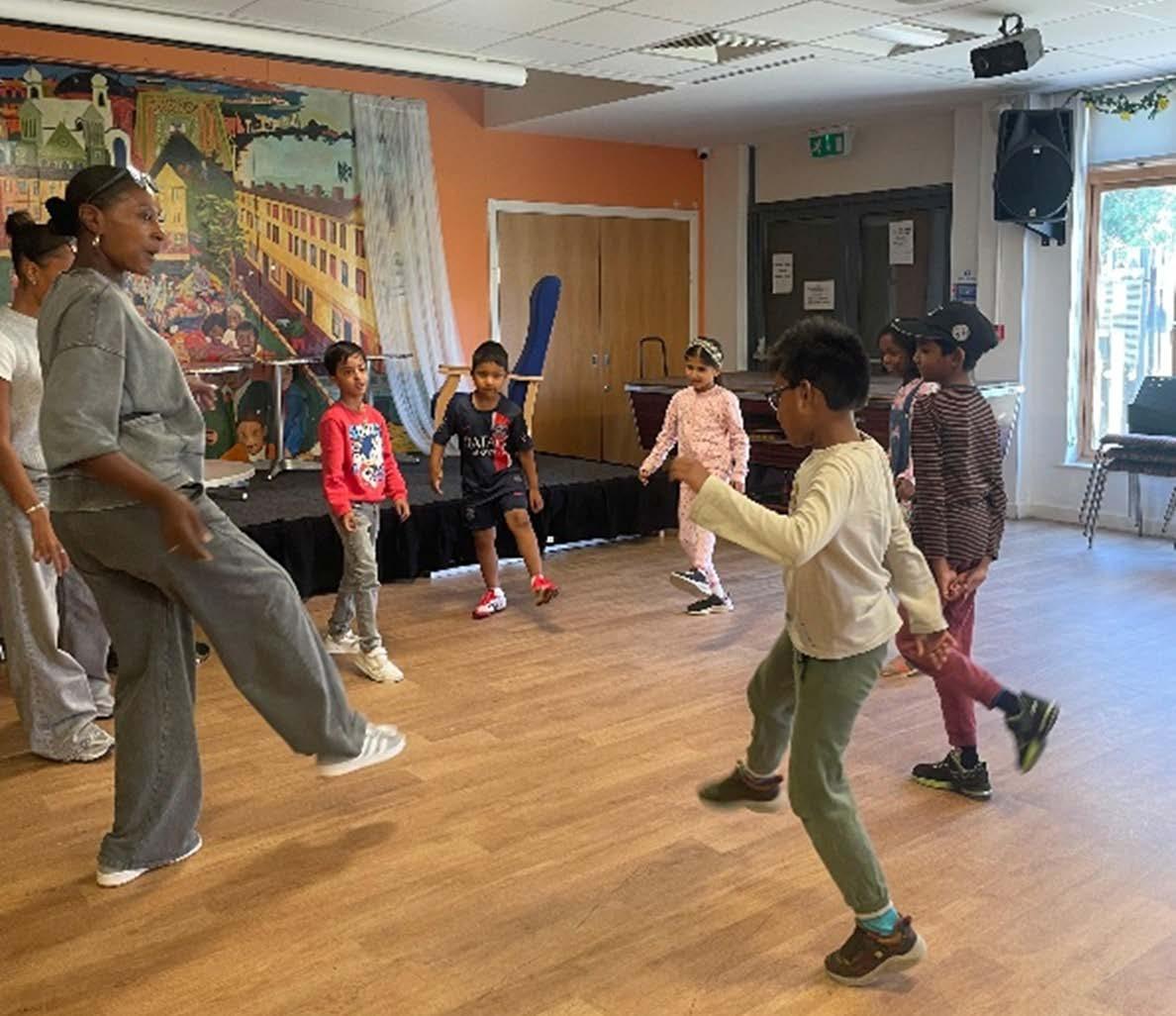
was developed through community engagement with families experiencing financial hardship. Parents highlighted challenges during school holidays, including childcare costs, isolation, and limited access to affordable activities. Delivered in partnership with local organisations, volunteers, and community groups, the programme provides a joinedup approach to supporting children and families.
(subject to funding), children participate in structured activities including storytelling, traditional games and sports, music, dance, arts, and wellbeing sessions. Cultural learning is embedded throughout. Activities include South Asian heritage workshops, South East Asian cultural games, and Black history storytelling. These experiences help children explore identity, celebrate diversity, and build mutual respect in a safe and inclusive environment.
structured holiday programmes improve children’s wellbeing, confidence, and social skills, while reducing the negative impacts of holiday gaps.
In our most recent programme: 38 children participated, with 85% attending regularly
78% showed improved confidence and social interaction
70% of families reported reduced financial pressure.
One parent shared: “This programme gave my child a joyful summer we could not afford otherwise. They felt included, happy, and proud of who they are”.
Another parent: “The programme enables signposting to wider family support services”.
What difference has the project made:
The Summer Play Scheme has improved children’s wellbeing, confidence, and sense of belonging. Children formed friendships, developed new skills, and engaged in positive, structured activities. Exposure to South Asian, South East Asian, and Black cultural heritage increased cultural awareness and respect for diversity. Families experienced reduced financial stress and felt more supported during school holidays.
The programme also strengthened community connections and created pathways for families to access additional support. By providing a safe, inclusive environment, the project has contributed to reducing inequalities and supporting better outcomes for children and families.
Summer holiday programmes play a vital role in addressing child poverty. Combining play, wellbeing, and cultural learning creates meaningful
experiences that support children’s confidence, identity, and development. Our key learning is that partnership working and communityled design are essential to delivering accessible and impactful programmes. We encourage organisations to invest in inclusive holiday provision that reflects the diversity of their communities and supports families facing financial challenges. By working together and embedding cultural understanding, we can create opportunities where every child feels valued, supported, and able to thrive. Because when every child feels seen, valued, and included, communities truly thrive.
For further Information please contact: Sujatha.thaladi@ MentorRing.org.uk

Practice
The Undercurrents of Collaboration: Using Ripple Effect
Mapping to capture partnership working
Sioned Williams,
Wellbeing Officer, Dyffryn Nantlle Wellbeing Partnership
Ripple Effect Mapping is a qualitative evaluative tool uniquely suited to evaluating complex collaborative initiatives. When applied by the Dyffryn Nantlle Wellbeing Partnership to evaluate our progress, it highlighted a critical point: in order to encourage successful collaborations, we need frameworks that recognise and value the vital, yet often-overlooked, work of relationship-building.
Ripple Effect Mapping is a
strengths-based, participatory methodology that captures a project’s wider impacts. It is particularly useful for identifying emergent effects that may not be immediately apparent, or that may unfold over an extended period. It brings stakeholders together to map out developments. Both intended and unintended consequences, or ‘ripples’, are plotted on a timeline to produce a visual representation of how impacts have evolved.
The Dyffryn Nantlle Wellbeing Partnership is a co-produced, multisector network developed in a North Wales slate valley. Comprising partners from healthcare, social care, the third sector and community organisations, the partnership addresses the growing need for more effective, integrated ways of delivering care.
Under the guidance of Lydia Orford and Dafydd Gwynne of Public Health Wales, we held a Ripple Effect Mapping workshop with partnership
stakeholders. We used sticky notes and a roll of paper to map the progress of the project over three years from its inception in 2023, categorising impact pathways into six primary categories. We subsequently digitised the map using the software Miro for easier wider distribution. It was a fun and creative process, with the act of visualising progress evidently energising those in the room.
Ripple Effect Mapping is a methodology that lends itself well to the evaluation of collaborative working. It uncovers the importance, indeed the necessity, of relationship-building and informal networks in developing successful collaborations. This was key in a rural, place-based initiative where much activity could be missed within the constraints of traditional evaluative methods.
With Ripple Effect Mapping, we could capture the significance of seemingly subtle informal interactions. We could, for example, capture how an incidental encounter between the partnership co-ordinator and health board cluster lead in a local cafe served as the preliminary ‘ripple’ that led to a community blood-pressure monitoring event. Over 100 residents attended this event, and it ultimately solidified a working partnership between the community hub and GP
surgery.
If we want to move towards more collaborative ways of working, we need to move towards systems that view the ‘behind-the-scenes’ work of relationship-building as a legitimate and valuable allocation of time and labour. Forming relationships between people is imperative to forming partnerships between organisations. Developing and utilising evaluative frameworks that recognise the often overlooked and undervalued work of relationship-building is a key part of shifting towards more collaborative care systems.
Ripple Effect Mapping sits within the wider Developing Evidence-enriched Practice (DEEP) approach promoted by Social Care Wales. Based at Swansea and Bangor universities, the DEEP approach works with people to support the use of diverse kinds of evidence in learning and development. Learn more here: https://insightcollective. socialcare.wales/developingevidence-enriched-practicedeep-2

Grapevine
Public Health Network Cymru, Behaviourally
Informed Communications Initiative (BICI)
Public Health Network Cymru have recently taken part in an initiative delivered by the Behavioural Science Team in Public Health Wales which uses a practical tool to develop behaviourally informed communications. We have been applying some of these principles to improve the way we communicate with our members.
We are sharing some of the available resources as they are useful for anyone who is influencing behaviour through communications such as letters, videos, leaflets or posters and wishes to apply behavioural science techniques.
If you want further Information, please contact us at publichealth. network@wales.nhs.uk or the Behavioural Science Team direct on PHW.BehSciUnit@ wales.nhs.uk
BICI resources:
Report: Behaviourally Informed Communications Initiative (BICI): Development and Implementation Report - World Health Organization Collaborating Centre On
Investment for Health and Well-being
Case Studies: Behaviourally Informed Communications Initiative Case StudiesWorld Health Organization Collaborating Centre On Investment for Health and Well-being
Workbook: BICI: Behaviourally Informed Communications Initiative Workbook - World Health Organization Collaborating Centre On Investment for Health and Well-being
Bitesize BeSci February 2026: Bitesize BeSci February 2026 | Issue 06 - World Health Organization Collaborating Centre On Investment for Health and Well-being
Behavioural Science Unit publications: Our Publications - Behavioural Science Unit
Videos



New Parent Health Information Resources published by Public Health Wales –Supporting Families Across Wales
This webinar highlighted how embedding these resources into your programmes and services and offering them to our families, help to create a consistent, trusted parenting offer across Wales.
Explore our video library on our website
Introducing the ‘Evidence Pie’ with Health Determinants Research Collaboration (HDRC) Rhondda Cynon Taf
Join us for this webinar with Zoe Lancelott and Rhianydd Davies from the National Institute for Health and Care Research (NIHR) Health Determinants Research Collaboration (HDRC), Rhondda Cynon Taf.
Launch of Teg I Bawb / Fair for All: A Strategic Action Plan to address health inequalities through Primary Care
This webinar launches a Fairer Primary Care – Fair for All, Teg I Bawb, action plan that has been developed by reviewing the evidence, data and iterative rounds of face to face and online workshops, and extensive engagement and collaboration with patients, health professionals, senior leaders, community groups, and experts by experience across the Primary Care system in Wales.
View all our videos

News & Resources

Healthier choices made easier as new rules take effect
02-04-2026

Additional funding for mental health and wellbeing support for every school
27-03-2026

Wrapped up but still cold at home
24-03-2026
Better Join Up, Better Outcomes for Child Poverty
Building A Healthier Wales
Loneliness, social isolation and social connection in Wales: A public health perspective
Public Health Wales
Next Issue
INTERNATIONAL HEALTH – LEARNING,
PARTNERSHIPS AND PRACTICE

Building on the themes of our recent International Health Forum webinar, we are inviting colleagues across all sectors to contribute to a forthcoming themed bulletin on international health.
The bulletin will showcase a range of experiences and perspectives from people involved in international health work, research, partnerships, and networks. It will provide an opportunity to share learning, reflect on impact, and highlight opportunities across different sectors and discciplines.
We welcome contributions that explore:
- Experiences of working, researching, or collaborating internationally
- Key learnings, challenges, and successes from international health engagement
- How global health perspectives have informed local, regional, or national practice
- Reflections on partnership working, networks, or knowledge exchange
- Ideas for future international collaboration across sectors and disciplines
Our article submission form will provide you with further information on word count, layout of your article and guidance for images.
Please send articles to publichealth.network@ wales.nhs.uk by 21 May 2026.