

THE MAGAZINE OF THE PHILLIPS ACADEMY & ABBOT ACADEMY COMMUNITY SUMMER 2023 Now Next Then Abbot & Andover at
Up First
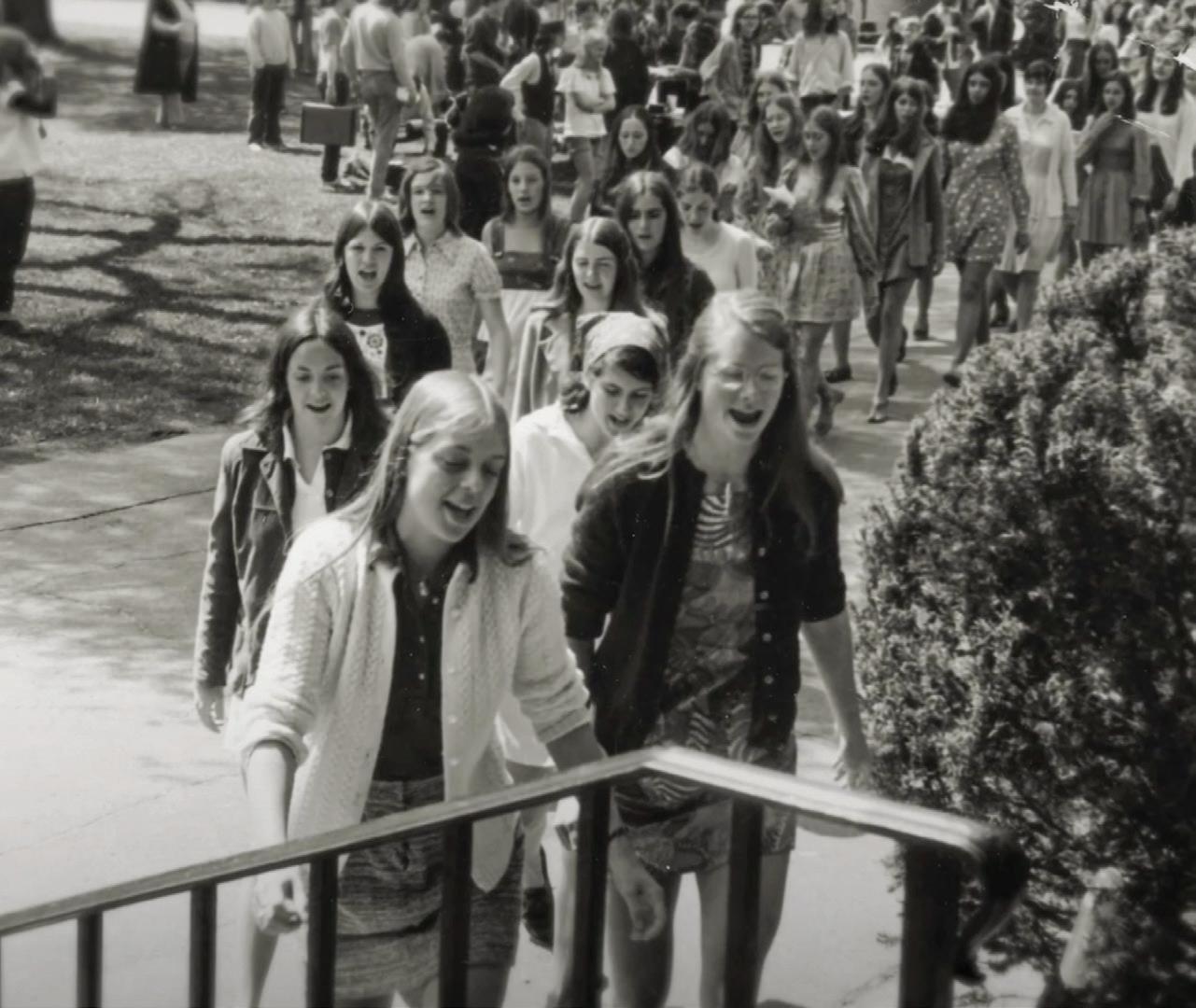
Andover’s 245th graduating class celebrates this past June as they walk along the Chandler-Wormley Vista. Read more about this recently named part of campus on page 11.
 Photo by Gil Talbot
SILENCE WAS NOT AN OPTION
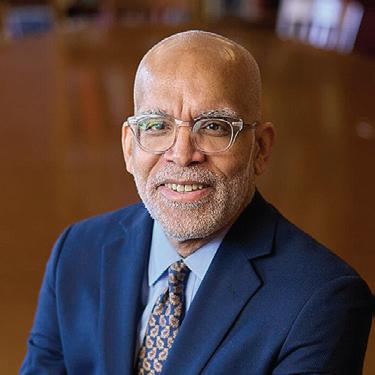
When the U.S. Supreme Court struck down race-conscious admissions programs at Harvard and the University of North Carolina this summer, Andover made a public statement against the ruling. Some wondered why we entered the conversation at all, given that the decision took aim at colleges and universities and not directly at secondary schools.
We did so because the ruling stands in stark contrast to Andover’s founding mission to serve “youth, of requisite qualifications, from every quarter.” At its core, the ruling undermines progress our country has made to create opportunities for everyone.
While the decision does not directly impact Andover’s admission practices and policies, it will have ripple effects far beyond higher education.
Our college counseling team has thought a lot about this new landscape and, as always, is prepared to support students as they navigate the application process. They will work to help students best describe their personal development and life experiences that speak to who they are in this complicated world. Students reveal in compelling ways where they come from, what they have accomplished, and what they will bring to their college campuses and the world at large. All of this—including their Andover experience in a diverse community of peers—will continue to distinguish them.
I am confident that leaders in higher education will thoughtfully respond to this ruling and continue to engage in admission practices that work to foster communities that are diverse by every
metric—not only race, but also socioeconomics, geography, religion, ideology, and all factors that enrich the intellectual life of any campus.
Looking years ahead, I am concerned that this decision could have unintended consequences. It raises fundamental questions around what it means to live in a free and equal society. History has shown that our country makes progress when it opens doors (voting rights, civil rights, access to quality health care). Affirmative action has helped to build environments that challenge students and assure educational excellence by aiming to create communities that reflect the diverse world in which we live.
The long-term impact of this decision must not take us decades back, to a time when students from many racial groups were either nonexistent on college campuses or represented only in minute numbers. I remain hopeful that institutions of higher education will find ways within these shortsighted constraints to leverage diversity’s benefits for all students and to prepare them for a society where our differences are embraced and valued.
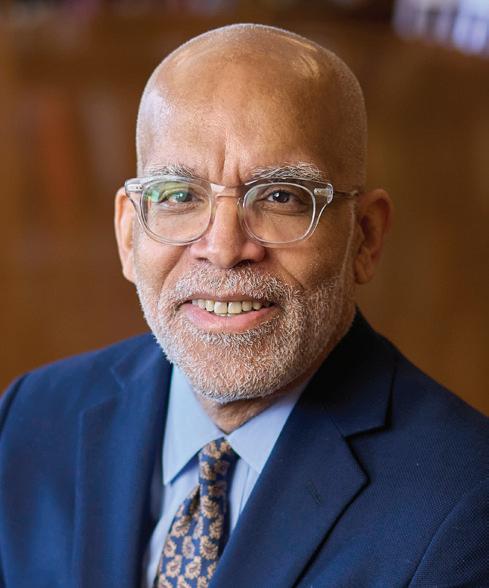
Raynard S. Kington, MD, PhD, P’24, ’27 Head of School
From the Head of School
1
Andover magazine reinforces the special connection alumni have with Phillips Academy and Abbot Academy. Through thought-provoking stories, contemporary design, and inspiring profiles of alumni, students, and faculty, we aim to highlight the school’s enduring values, recognize our unique history, and celebrate the rich diversity of our community.
CHIEF COMMUNICATIONS
OFFICER
Tracy M. Sweet
EDITOR
Allyson Irish MANAGING EDITOR
Rita Savard
ART DIRECTOR
Ken Puleo

SENIOR GRAPHIC DESIGNER
Anne Marino P’19
EDITOR’S NOTE
Prior to working at Phillips Academy, I was an editor and communications director at a women’s college for 16 years. Recently, I was reflecting on this long chapter in my career. Why did I stay so long at this one place?
CONTRIBUTORS
Kristin Bair O’Keeffe
Matthew Bellico
Jill Clerkin
Amy Dattilo
Katie Fiermonti
Nancy Hitchcock
Joseph P. Kahn ’67
Christine Yu ’94
Aside from the opportunities for career advancement, flexibility, and my genuine interest in education, what I valued most was the ability to be part of an institution focused on women’s and girls’ education, leadership, and success. I saw firsthand how transformative this experience was for so many—including myself—and I was inspired to develop messaging and communications around this mission.
Andover, the magazine of the Phillips Academy and Abbot Academy community, is published four times per year. It is produced by the Office of Communication at Phillips Academy, 180 Main Street, Andover, MA 01810.
Main PA phone: 978-749-4000
Changes of address and death notices: 978-749-4269, alumni-records@andover.edu
Phillips Academy website: www.andover.edu
Andover magazine phone: 978-749-4677
Email: magazine@andover.edu
Postmasters:
Send address changes to Phillips Academy
180 Main Street
Andover MA 01810
ISSN-0735-5718
This year the Academy will celebrate the 50th anniversary of Abbot Academy and Phillips Academy becoming a singular institution in 1973, an event that has had a lasting and transformative impact on all who have passed through this campus since.
Our cover story, “Then, Now, Next” draws on the varied experiences of alumni, faculty, and students to highlight the long-term effects of this historic event. Looking back—and looking forward—it is clear that Abbot was a catalyst for diversity and inclusive innovation in education.
This is just the beginning of a conversation with and among the Andover community. Upcoming issues of the magazine will share additional voices and reflections as will Academy events, programs, and discussions.
Visit andover.edu/thennownext to share memories and perspectives. The site will be updated regularly.
Best,
Allyson Irish Editor
PAGE 36
© 2023 Phillips Academy, Andover, MA All rights reserved. No part of this publication may be reproduced or transmitted in any form or by any means, electronic or mechanical, including photocopying, recording, or information storage or retrieval system, without permission in writing from the publisher.
“We believe artists are founders of some of the world’s most valuable assets.”
SARAH WENDELL SHERRILL ’04
magazine@andover.edu
@andovermagazine
COVER ILLUSTRATION BY LANDESBERG DESIGN COURTESY PHOTO
“It’s important for companies to find more sustainable ways to operate.”
COURTESY PHOTO 2 ANDOVER | SUMMER 2023
OLADAYO ADEWOLE ’10
PAGE 39
Through their faithful dedication, four retiring faculty members have influenced thousands of students and shaped Andover in numerous ways.


FEATURES 16 Abbot & Andover at 50
the
The arrival of Abbot Academy girls in 1973 was a catalyst for diversity and inclusive innovation in education. 28 For
Love of Teaching
34 Reunion 2023
to
memories and
ones. CLASS NOTES 44 Class Notes 92 Photo Gallery 96 Af-Lat-Am 98 In Memoriam 103 Alumni Bulletin Board ALL SCHOOL 8 Buzz 9 New Leadership 11 On Campus 13 The World Comes to Andover 15 Bookshelf DEPARTMENTS 1 Head of School 4 Voices 33 At Issue 36 Alumni Up Close 40 Philanthropy 104 End Note SUMMER 2023 Volume 116, Number 4
ILLUSTRATION BY VICTORIA JOHNSON ’72 38 16 14 IVÁN
3
Alumni return home
rekindle old
make new
RICHARD GRABER
GONZALEZ
In response to a recent “Big Question” that asked readers to share the best piece of advice they received in high school, D. Peter McIntyre ’52 sent in the following letter.
It was a summer 1950 audition in Cochran Chapel during which I played that emotional roller coaster the “Fugue in C minor” from Book II of das Wohltemperiertes Klavier by Bach on a grand piano. As a result, Arthur Howes, PA organist and music director, accepted me as a pipe organ student and as a first tenor in both the a cappella traveling Music Club (occasional concerts followed by dances at girls’ schools) and the 17-voice Chancel Choir (where we sang works by Palestrina and similar composers during every Sunday morning’s compulsory worship service).
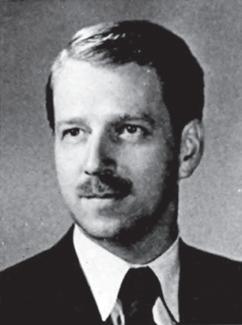
“You have a very pleasing voice” Mr. Howes told me one day, thereby beginning my lifelong love of singing.
Mr. Howes invited my parents, sister, and me to visit him, his wife, and their daughter in their North Andover home in 1951 for a delightful afternoon’s chat. In a letter to me that winter, Mr. Howes wrote, “I was particularly pleased to see that you are continuing active participation in church music. You have a most unusual voice that is well worth cultivating.”
My warbling during subsequent decades embraced regional choruses, choirs, solos, a couple of quintets (“The Clam Flats Four Plus One” and “The Wanderers”—a professional group based at Hiram College in Ohio). I sang first tenor in a barbershop quartet and in a sextet as a member of the Hiram College Permanent Crew aboard the Showboat Majestic playing three Midwestern rivers as well as playing the steam calliope before each show.
Between a couple of oldies like “Beautiful Ohio” and “Here Comes the Robert E. Lee,” I’d sneakily sandwich Bach’s “Fugue in C minor” from my Howes audition. Capt. Thomas Reynolds, the Boat’s 74-year-old builder-owner-skipper, hinted tactfully one afternoon with oblique West Virginia courtesy, that he was not a fan of Baroque music. I reluctantly took the hint and deleted Sebastian’s opus from my repertoire.
A retired nonagenarian at home today, I sing along with digitally remastered videos of acoustic and electric records by John McCormack and his pal, Enrico Caruso.
After reading about Manwei Chen ’11’s recent exploits in Antarctica, another alumnus shared his own experience of living and conducting research in the same area— 64 years ago.

I grew up in a tiny village in northern Connecticut to which my family had immigrated from Scotland in the 1840s. Although my family seldom left this village, my father—a Yale graduate—urged me to attend Andover for high school. He and my uncle were graduates of both schools and my father felt that Andover’s diverse student
“Henry
—D. PETER MCINTYRE ’52
VOICES
Arthur W. Howes Jr.
1950 POT POURRI
HENRY MOROZUMI
was a member of our 4-man research group, which studied auroras over the winter. He took this photo with my camera,” shared Mark Gordon ‘55. “I remember walking around the ‘pole marker’ a dozen times or so counterclockwise to rewind my age. Of course that doesn’t work physics-wise, but it was fun to think about at the time!”
4 ANDOVER | SUMMER 2023
“The air temperature was around minus 50 degrees that day.”
body would give me perspective on a career as well as an excellent education. I went, and it did. I also followed in my father’s footsteps and attended Yale, becoming a physics major.
As a senior, I didn’t know what to do next. One day, I asked my lab partner what he did before coming to Yale’s physics grad school. “Spent a year in Antarctica,” he said. Wow. I was immediately interested.
“How did you get to do that?” I asked. “I applied,” he said. “They look for people to do these isolated jobs and pay them well.”
So I applied for a job in Antarctica—and got it. I passed the physical exam and the nuclear submarine psychiatric exam, which both were required because each research station was inaccessible during the winter. I also received survival training from the Navy, and the researchers I worked for gave me specific instructions on how to keep their unique instruments running.
The Military Air Transport System (MATS) flew us to Christchurch, New Zealand, where we waited for a flight to the Antarctic supply base at McMurdo Sound. Then I took a Navy supply ship to Hallett Station, located on an Antarctic inlet.
I loved my work operating and repairing specialized optical and radio instruments that recorded airglow and auroras. Those one-of-a kind instruments broke, and on more than one occasion I stayed up more than 24 hours.
Returning home after my stay, I arrived at the SeaBee air base at Quonset Point, Rhode Island, just a few days before Christmas 1960. For the next four months, I worked at the Air Force Cambridge Research Center near Boston, organizing my observations and helping prepare another crew for Antarctica.
After earning a PhD in astrogeophysics, I spent four years with the MIT Lincoln Laboratory in Massachusetts and then joined the National Radio Astronomy Observatory where I’m still a member of their scientific staff.
What did I learn during my life? Unconventional ideas can produce good results. That brief conversation with a lab partner in 1959 led to a hugely educational experience in Antarctica and a satisfying career.
—MARK A. GORDON ’55
the BIG question
LETTERS POLICY
Andover magazine welcomes letters addressing topics related to the Phillips Academy and/or Abbot Academy community. Letters will be edited for clarity, space, and civility. Opinions expressed in the “Voices” section do not necessarily represent the viewpoints of the magazine editorial staff or of Phillips Academy.
TRACY SWEET
Please email your thoughts to magazine@andover.edu or airish@andover.edu
What do you consider Abbot Academy’s most important legacy at Andover—now and into the future?
“Tourist to local: How do you get to Symphony Hall? Practice man, practice. Congratulations!”
@PAUL MACINNIS
Via Facebook
5
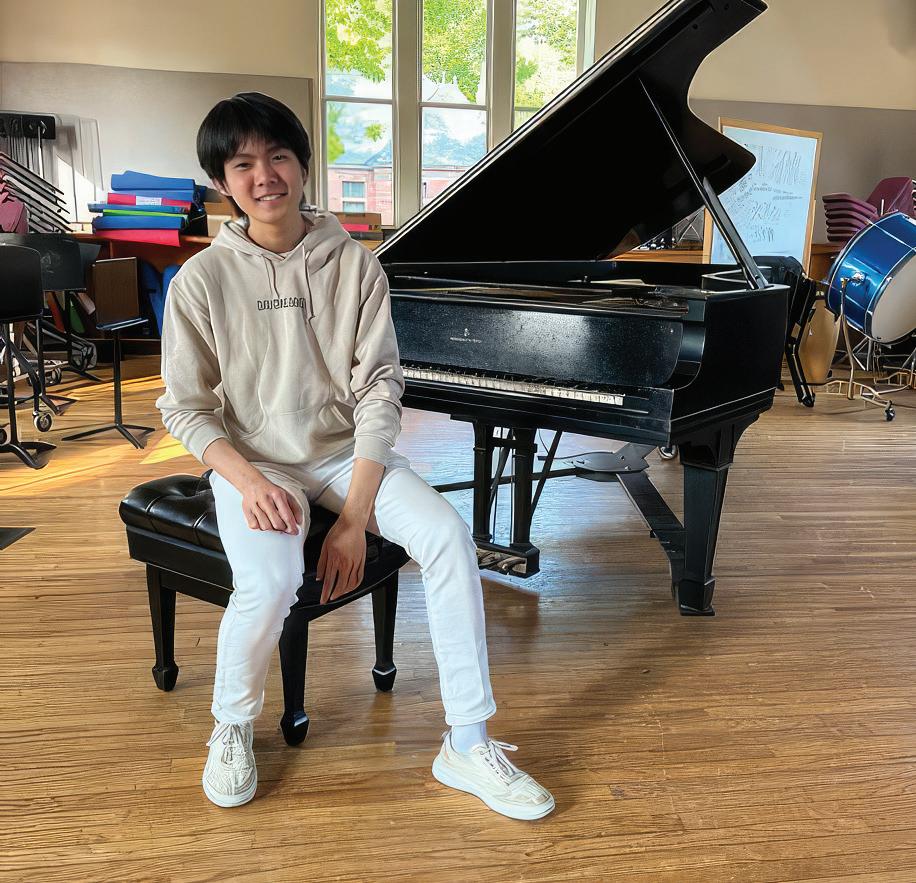
William Ge ’25 was one of five winners of the 15th annual Boston Pops Fidelity Investments Young Artists Competition this spring. The winners had the opportunity to perform with the Boston Pops and alternative rock band Guster at Symphony Hall in June.
6 ANDOVER | SUMMER 2023
HIGH FIVE
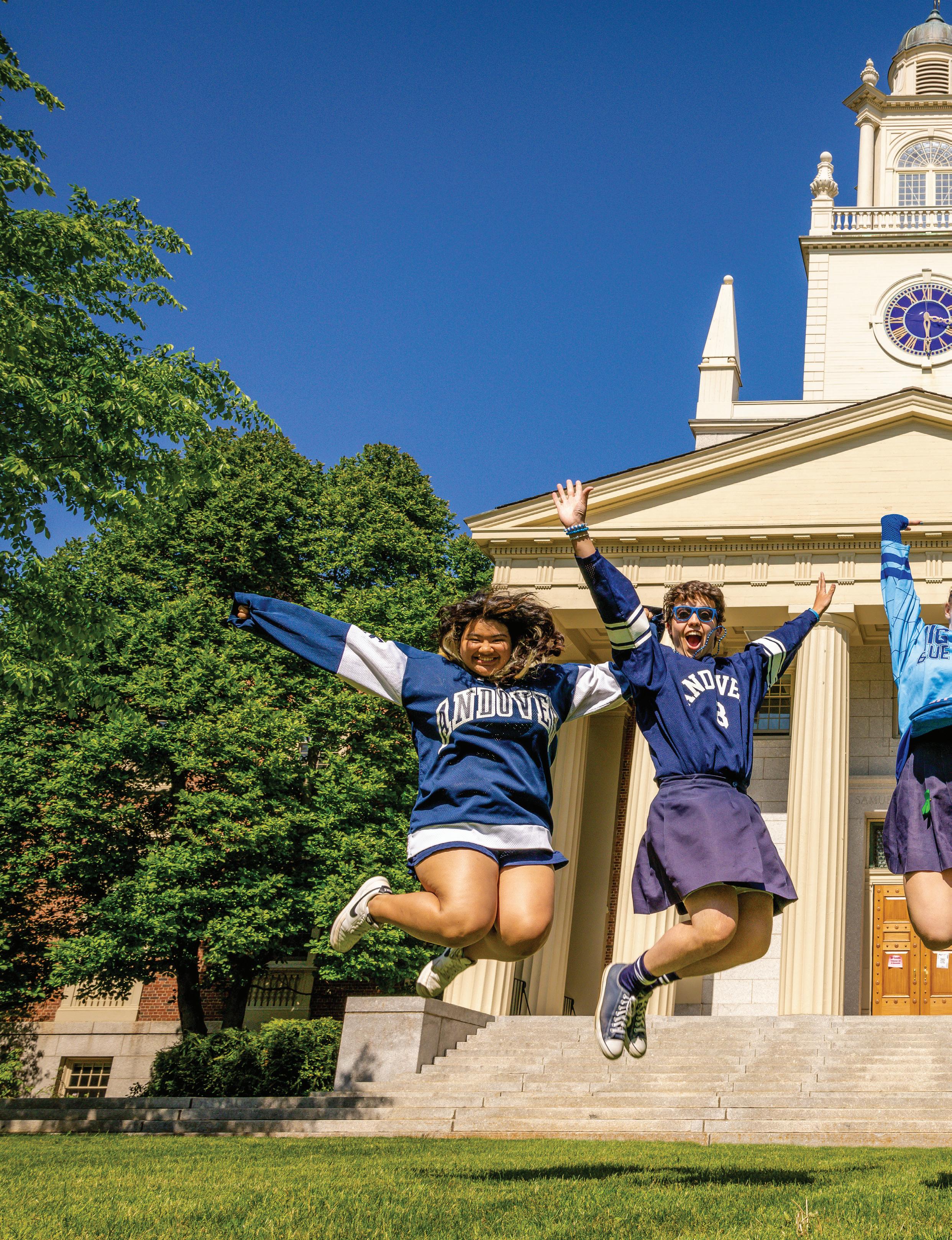
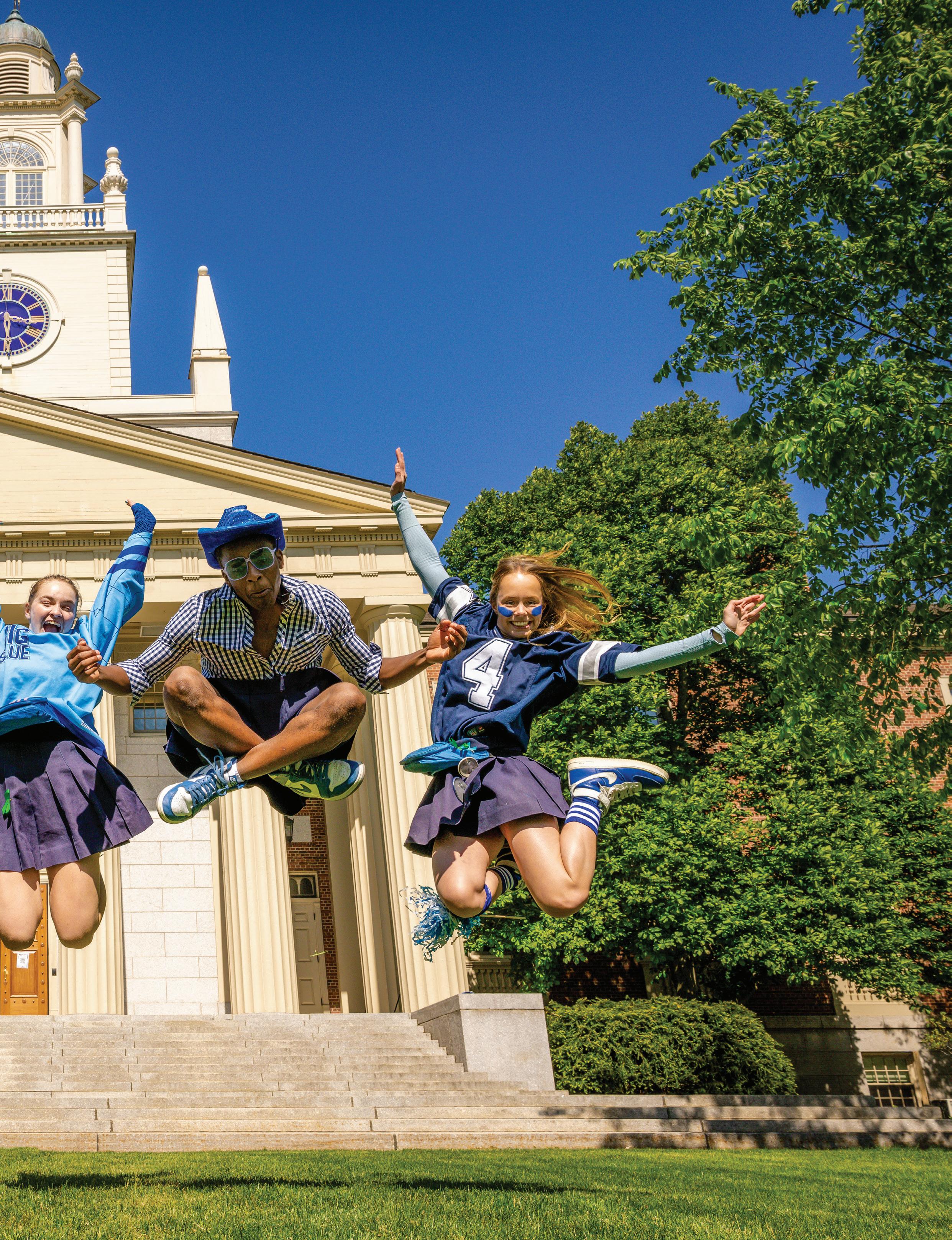 Blue Keys leap with joy on a perfect spring day. From left are Juliana Reyes, Jack Swales, Josie O’Rourke, ND Nwaneri, and Molly MacKinnon, all Class of 2024.
7
Photo by Henry Marte
All School
the BUZZ
The World Health Organization (WHO) has named Dr. Vanessa Kerry ’95 as its first director-general special envoy for Climate Change and Health. In this new role, Kerry will be responsible for amplifying WHO’s climate and health messaging and advocating for global action.
MAJOR LEAGUE
From Phelps Stadium to LoanDepot Park. Baseball standout Thomas White ’23—the 35th pick in the 2023 MLB Draft—will be making quite the transition this year to the Miami Marlins. White is the first PA student in recent history to head directly to a professional sports league after graduation.
BOX SCORE THOMAS WHITE
Position: Pitcher
Fastest Pitch: 98 mph
Height: 6′ 5″
Ranking: #4 high school player in the country, Baseball America

Hometown: Rowley, Mass.
FPO
David Lipsey ’71, a digital asset management (DAM) expert, was recently appointed to the Smithsonian Libraries and Archives Advisory Board. The network of 21 specialized libraries welcomes millions of visitors per year.
 DAVID FRICKE
8 ANDOVER | SUMMER 2023
SANJIV DESAI
STACY SCHIFF ’78 SANJIV DESAI ’89, P’24
AQUITA WINSLOW
n The CEO and president of Atlantabased Holonic Technologies, Sanjiv Desai ’89, P’24, has joined the Board of Trustees serving a two-year term as an alumni trustee. Prior to Holonic, Desai spent more than 15 years as an attorney in corporate and commercial transactions, regulatory compliance, and litigation. A loyal volunteer and donor, Desai serves as co-chair of the Annual Giving board and is a member of the Alumni Council’s Executive Committee, Abbot Academy Fund board, Andover Development board, and Andover Bread Loaf advisory board.
Desai graduated from Columbia College in New York City. After time spent in a Zen Buddhist monastery in Kyoto, Japan, he earned an MA from Yale University and a JD from the University of Texas at Austin. Desai lives in Miami Beach with his wife, Wendy Levitz, and their two children.

n Stacy Schiff ’78 also has joined the Board of Trustees and will serve a sixyear term as a charter trustee. Schiff is a renowned author and essayist with dozens of awards for her work, including a Pulitzer Prize in 2000. Among other honors, she was inducted into the American Academy of Arts and Letters in 2019. Schiff’s most recent books include The Revolutionary: Samuel Adams ; The Witches: Suspicion, Betrayal, and Hysteria in 1692 Salem; and Cleopatra: A Life. A generous benefactor and volunteer, Schiff served on a Knowledge & Goodness campaign regional committee and continues to support campaign initiatives, including academic innovation, financial aid, and athletics. She is also a member of the Thomas Cochran Society and the Samuel Phillips & Sarah Abbot Society. Schiff holds a BA and an honorary doctorate from Williams College. She lives in New York with her husband, Marc de La Bruyère.
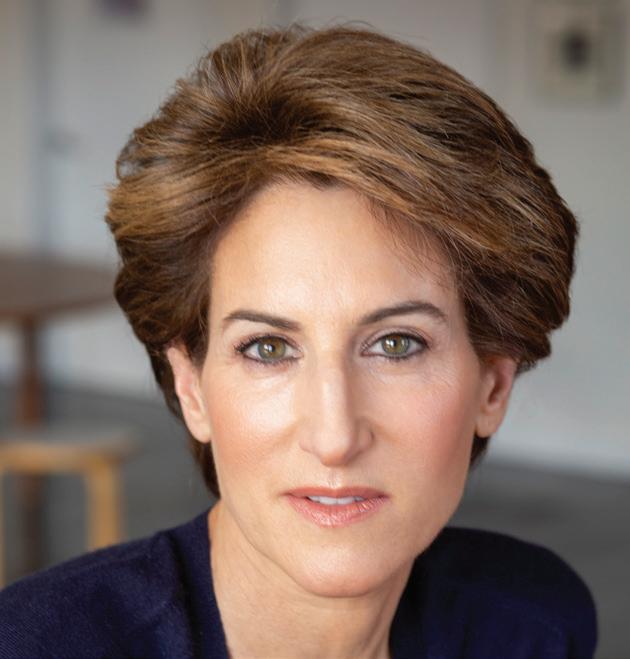
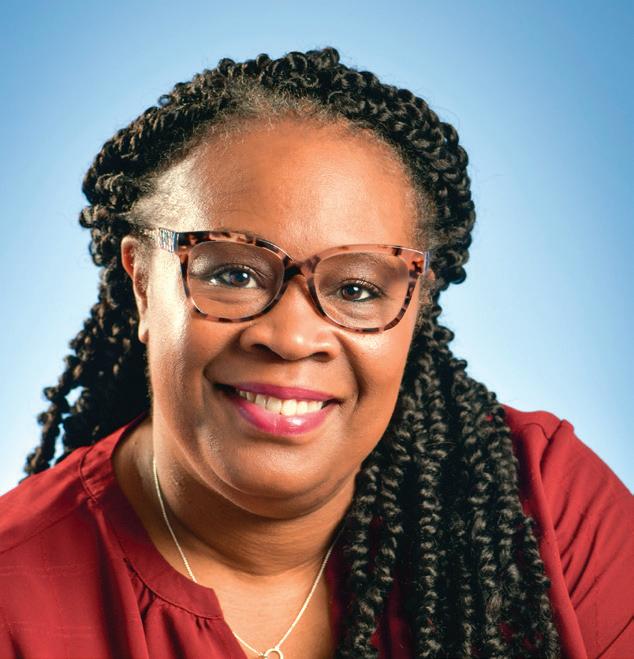
n Aquita Winslow joined the Andover community this summer as the inaugural dean of the Office of Community and Multicultural Development (CAMD). A skilled practitioner of diversity, equity, inclusion, and belonging, Winslow most recently worked at Polytechnic School in Pasadena, California, as dean of library and learning commons. She has more than 25 years of experience in student-facing roles through which she worked to create environments that inspire lifelong learning.
In addition to earning a BA from the University of California, Santa Cruz, Winslow holds an MLS from Simmons University and a JD from Loyola Law School, Los Angeles.
New Leadership
COURTESY PHOTO
ELENA SEIBERT COURTESY PHOTO
9
All School the BUZZ
What did you do in June?
So says artist Alison Elizabeth Taylor, whose work was recently on display at the Addison Gallery of American Art. Taylor’s contemporary collages fuse marquetry—the centuries-old art of wood inlay—with acrylic and shellac to make dramatic statements on such issues as the climate crisis and the COVID-19 pandemic.
Alison Elizabeth Taylor
GSENM: Slot Canyon No. 1, 2018 Marquetry hybrid: wood veneer, oil, pigment print, and shellac, 69 x 59 inches Private collection, Miami, FL

Photo credit: Courtesy Alison Elizabeth Taylor and James Cohan Gallery, NY
Kym Louie ’08 rode her bike from California to the PA campus. Yup, you read that correctly! Louie cycled more than 3,500 miles to attend her 15th Reunion. Read more at andover.edu/magazine

“I am proud to be at the helm of our organization as we continue to champion health equity and racial justice despite vocal—and powerful—opposition.”
—From Dr. Jesse Ehrenfeld ’96’s inaugural address as president of the American Medical Association. Ehrenfeld is the first openly gay person to hold this position.
“You have to figure out which approach fits best with a subject and what can add meaning.”
COURTESY PHOTO 10 ANDOVER | SUMMER 2023
On Campus
NEW EXPANSIVE VIEW
Chandler-Wormley Vista
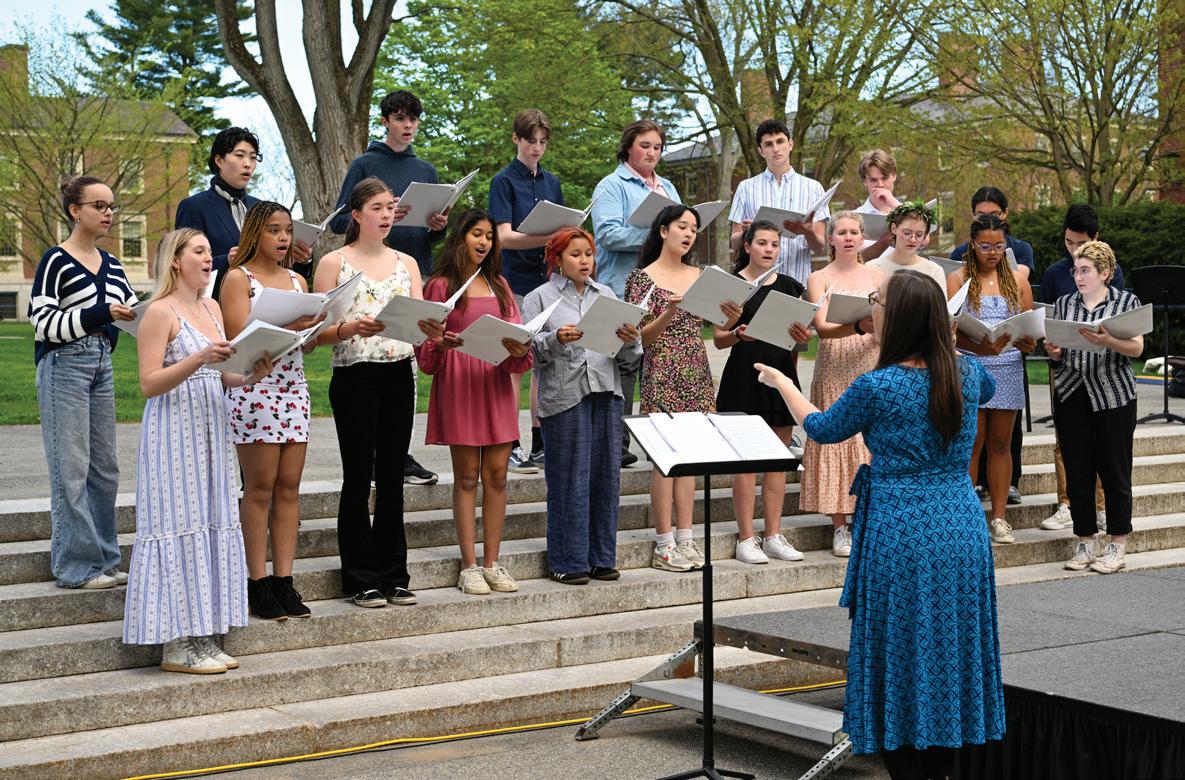
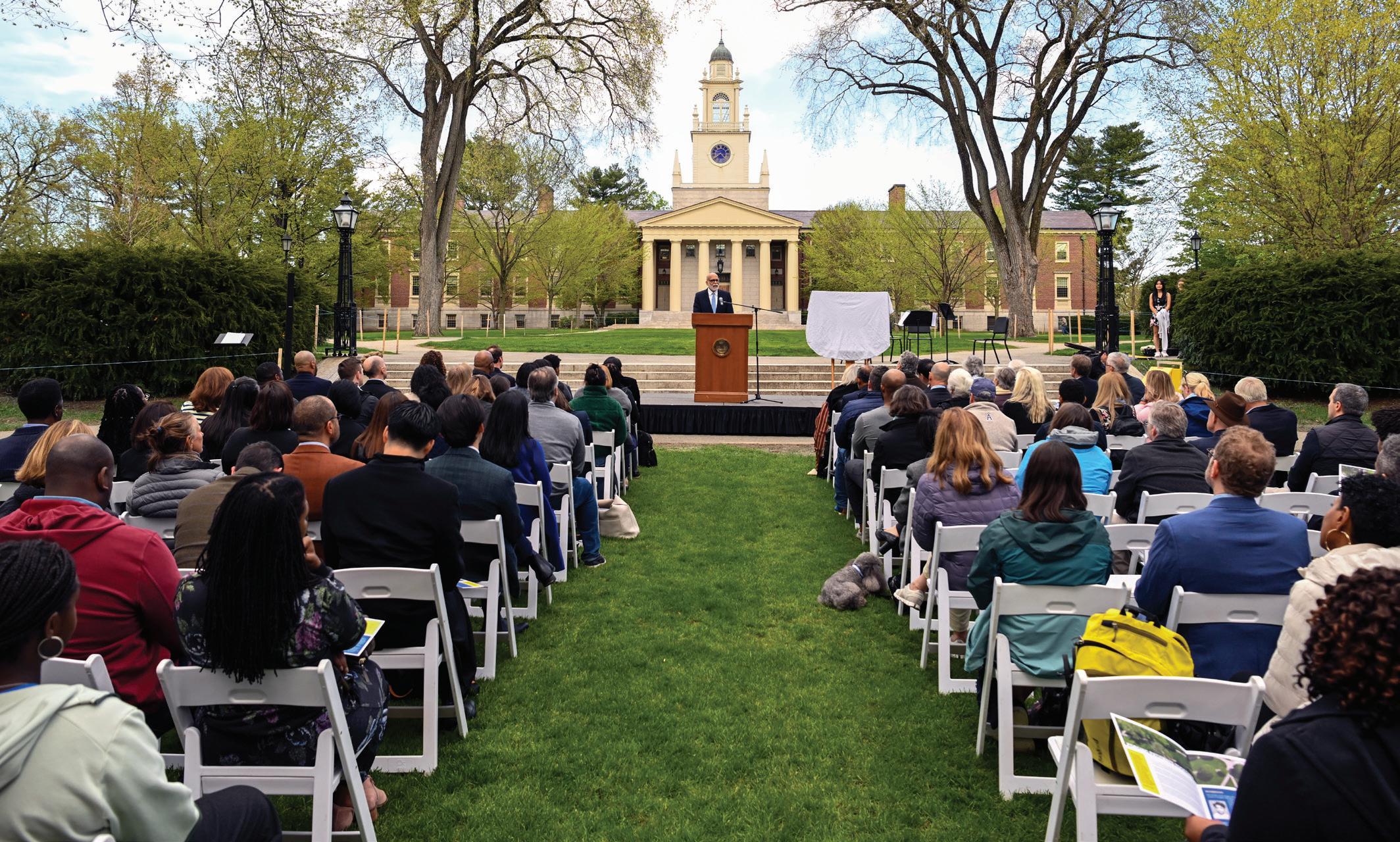
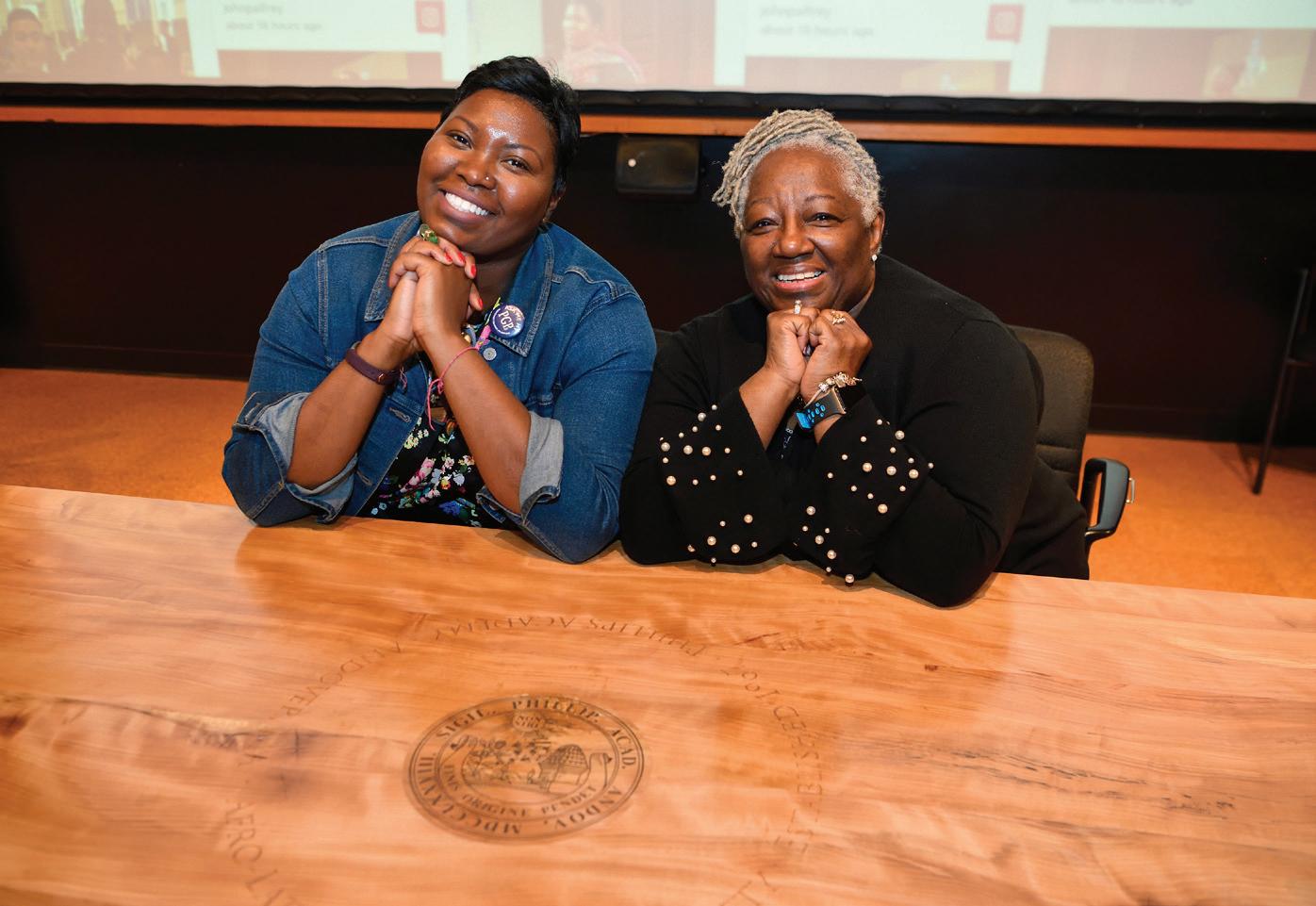
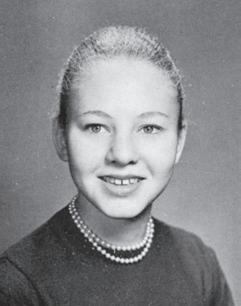
A chorus of voices honored Beth Chandler ’55 and Sheryl Wormley ’55, Abbot Academy’s first Black graduates, during the dedication of the Chandler-Wormley Vista on May 5.
Speakers included Head of School Raynard S. Kington, MD, PhD, P’24, ’27, former head of school John Palfrey P’21, Trustee Allison Picott ’88, and Suhaila Cotton ’24. Lizzie Skurnick, a Chandler family descendant, also spoke and expressed deep gratitude for Abbot and Phillips academies, and especially for the anonymous donor—the same individual who collaborated with the school in 2018 to establish the Richard T. Greener Quadrangle, honoring the trailblazing Black alumnus from the Class of 1865.
Chandler graduated from Wheaton College and earned a master’s degree from Simmons College. She built a career in social services and served for a term as chair of the Maine Human Rights Commission. Wormley graduated from Sarah Lawrence College and earned a master’s degree from Georgetown University. She was early in the information systems industry and worked for the Maxima Corporation when it was one of the largest Black-owned businesses in the United States.
The Chandler-Wormley Vista is a visual pathway that begins at Samuel Phillips Hall in the Greener Quad and extends
west, bisecting the Great Lawn and continuing into the infinite distance. Both areas feature prominently in the school’s traditions, most notably Commencement. Members of the senior class process along the Chandler-Wormley Vista to the Greener Quad and take their seats in front of Samuel Phillips Hall. An engraved bench that includes biographical information about the women, who are now deceased, will be installed later this year. You can read more about the spirit of anonymous giving on page 40.
PHOTOS BY GIL TALBOT
Top photo: A view from the Chandler-Wormley Vista looking toward Samuel Phillips Hall. Bottom photo: Student vocalists celebrate the dedication of this campus location in honor of Abbot Academy’s first Black alumnae.
11
All School
ROYAL-EDWARDS SCHOLARSHIP ESTABLISHED
This spring Andover celebrated the 55th anniversary of Af-Lat-Am (see page 96 for photos). To mark the occasion, alumni of the groundbreaking student organization established the new RoyalEdwards Scholarship.
As past deans of the Office of Community and Multicultural Development (CAMD), Cathy Royal and Bobby Edwards were crucial role models to a generation of students. Together, in the 1980s and 1990s, they created spaces where students of color could be their authentic selves. They did whatever they could to make Andover feel like a home for all, and their leadership and kindness still resonate in the lives of those they inspired, including Kent Strong ’89, who helped launch the scholarship.
“Cathy Royal and Bobby Edwards… made students of color like me feel not only protected but also challenged to do better than even we ourselves thought possible,” says Strong. “They gave us the courage to take risks and reach higher. Most importantly, their love, support, and encouragement gave us the confidence to believe that we belonged at Andover.”
Terry-Ann Burrell ’95, who also sparked scholarship fundraising along with Quincy Evans ’96, feels similarly: “When my parents left me at PA, in their minds they did not leave me in the care of the school but rather in the care of Mr. Edwards and Ms. Royal…Little did I understand then the incredible commitment and sacrifice they made to ensure Black and Latino students felt welcome, seen, and heard at PA. They were trailblazers to whom I remain indebted.”
To date, more than 90 alumni have contributed to the scholarship. Donations of all sizes are welcome at andover.edu/RoyalEdwards.
This fall marks 50 years since Abbot Academy and Phillips Academy became a singular institution. In recognition of this important milestone, Andover is celebrating with a year of reflections, events, and programming.
The new logo (above) was created to mark this special occasion. It visually connects both schools with graphic elements, including a continuum of dots to signal movement and progress and a circular shape to honor Abbot’s Sacred Circle.
Andover magazine will include special news items and stories in all three issues this academic year, beginning with this issue’s cover story. And a new editorial section will highlight Abbot traditions and history along with ways in which today’s students carry forth the school’s legacy of innovation and inclusion.
Visit andover.edu/thennownext (or use QR code here) for more details and information.
“On your marks, get set, bake!”
The world’s favorite baking show crossed the pond with The Great American Baking Show, starring PA’s own Sarah Chang ’05. The six-episode series aired in the spring and is available on the Roku Channel. You’ll have to watch to find out who wins!

the BUZZ
One of the nation’s leading theaters showcasing independent films, the New York City–based Film Forum will now be led by Sonya Chung ’90. Chung succeeds Karen Cooper, who directed the well-known art house for 50 years.
ABBOT
ANDOVER & ( at 50 THEN•NOW•NEXT
“Cathy Royal and Bobby Edwards…made students of color like me feel not only protected but also challenged to do better than even we ourselves thought possible.”
12 ANDOVER | SUMMER 2023
—KENT STRONG ’89
The World Comes to Andover
Mathematician, Social Entrepreneur
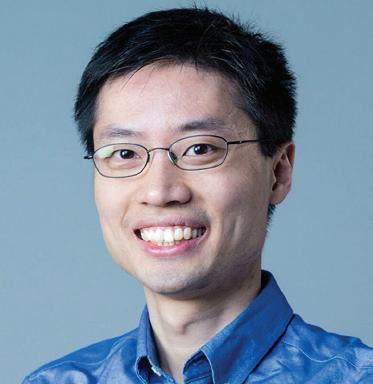
Math professor. USA International Mathematical Olympiad team coach. Social entrepreneur. Inventor. What else can Loh do? Working across multiple industries around the world, Loh has been featured on YouTube, where his videos have garnered more than 15 million views.
Empathy can save lives, says Kirsten, an Australian American writer and Holocaust educator. In her recent memoir, Irena’s Gift (Penguin Random House, 2023), Kirsten reveals how in 1942, her mother—then a baby in Nazi-occupied Poland— was smuggled to safety in a backpack due to the kindness of benevolent individuals.
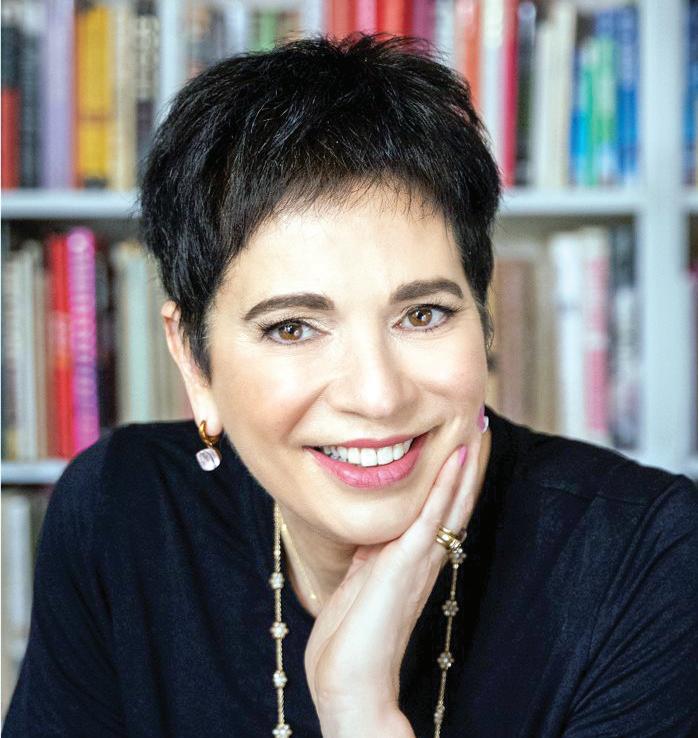
Sojitra is not just an accomplished athlete who skis challenging backcountry snow and plays professional soccer using crutches (which he calls “ninja sticks”). He is also a vocal advocate for inclusive outdoor spaces.

Morales’ spoken word poem (excerpt above) was written in honor of the completion of the Academy’s Knowledge & Goodness campaign. The Bronx-born Nuyorican poet performed his poem in its entirety in May during an end-of-campaign celebration at Phelps House.

During the pandemic, Choi helped launch Stop AAPI Hate, a coalition that addresses anti-Asian racism and xenophobia. Along with the other Stop AAPI Hate co-founders, Choi was named to the TIME100 list of Most Influential People in 2021.
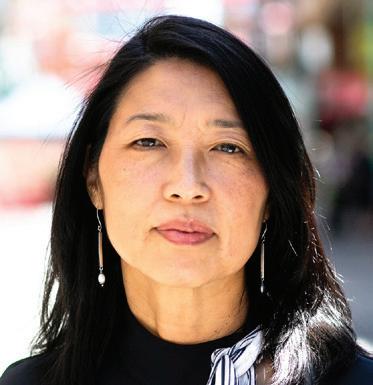 Cynthia Choi Advocate, Co-Founder of Stop AAPI Hate
GIL TALBOT JASON THOMPSON
Karen Kirsten Author, Educator
LIZ LINDER
Po-Shen Loh
Vasu Sojitra
Adaptive Athlete
Anthony Morales ’98 Poet, Educator
INC.
“A testament to the power of positive peer pressure. We all wanted each other to win. Crying, strive, hustle, and rise beyond humble beginnings. Where would I be without this non sibi foundation?”
EXPII,
13
MYLEEN HOLLERO
Top to bottom: January, 1884, June, 1970, and spring, 2023
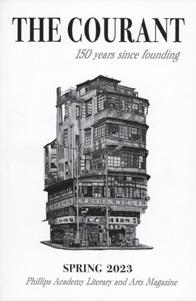
Things About The Courant
1 Abbot Academy’s literary arts publication, The Courant, celebrates its 150th birthday this year. Established in 1873 by students intent on making the authentic voices of young women heard, The Courant features student poetry, prose, and artwork.
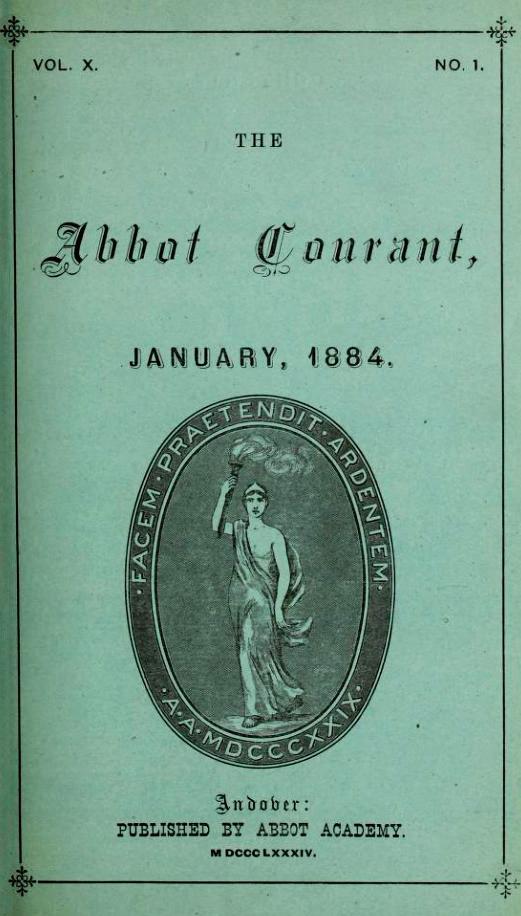

2 The Courant is Andover’s second oldest print publication; the oldest is The Phillipian student newspaper.
3 The Courant was widely recognized as Abbot’s most important student organization. “It has been said that girls can write only nonsense,” wrote the first editorial board, among them senior editor Clara Hamlin, Class of 1873. “These editors expose the nonsense around them.”
4 Notable alumnae journalists whose works appeared in The Courant include Beverly Brooks Floe ’41, the 1940 editor in chief. During the diphtheria quarantine that year, Floe and her colleagues were undaunted by the requirement that every page be baked in an oven before being sent to the printer. “The Courant has been roasted, but never before has it been baked!” joked Alice Sweeney, the publication’s faculty supervisor.
5 Editors Belle Brown ’23 and Jasmine Ma ’23 helped celebrate The Courant’s milestone birthday with a robust spring 2023 edition. Past issues can be viewed in the Academy’s digital archives and special collections at archive.org.
Congratulations Grace La ’88, who was appointed chair of the Department of Architecture at Harvard University Graduate School of

Nothing brings people together like a shared meal. This is the central theme of Breaking Bread, a new series on Bloomberg Originals hosted by Alexander Heffner ’08. The show includes mealtime conversations with politicians of all stripes focusing on topics that unite, not divide, Americans.
The Merrimack Repertory Theatre recently announced the inaugural Mayor Sokhary Chau Playwriting Fellowship. Named in honor of the Lowell, Mass., mayor—a 1992 PA grad and the first Cambodian American in this position—the fellowship will begin in 2024.

All
School
COURTESY PHOTO ABBOT ANDOVER & ( at 50 THEN•NOW•NEXT 14 ANDOVER | SUMMER 2023
A DOCTOR OFFERS HOPE, HEALING TO BOSTON’S HOMELESS COMMUNITY
BY NANCY HITCHCOCK
The word “saint” sometimes comes up in discussions about Dr. Paul Farmer and Dr. Jim O’Connell— both Harvard Medical School graduates who spent decades providing health care to highly vulnerable populations. These two doctors had much in common, including that each was the focal point of a book written by Pulitzer Prize–winning journalist Tracy Kidder ’63.
Kidder, who has written 12 books, says he chose to write about Farmer and O’Connell because he was inspired by their dedication to their causes. When selecting a topic for his books, he says, “I’ve always gotten interested in the person first. I’ve always liked the idea of trying to depict virtue in the world.”
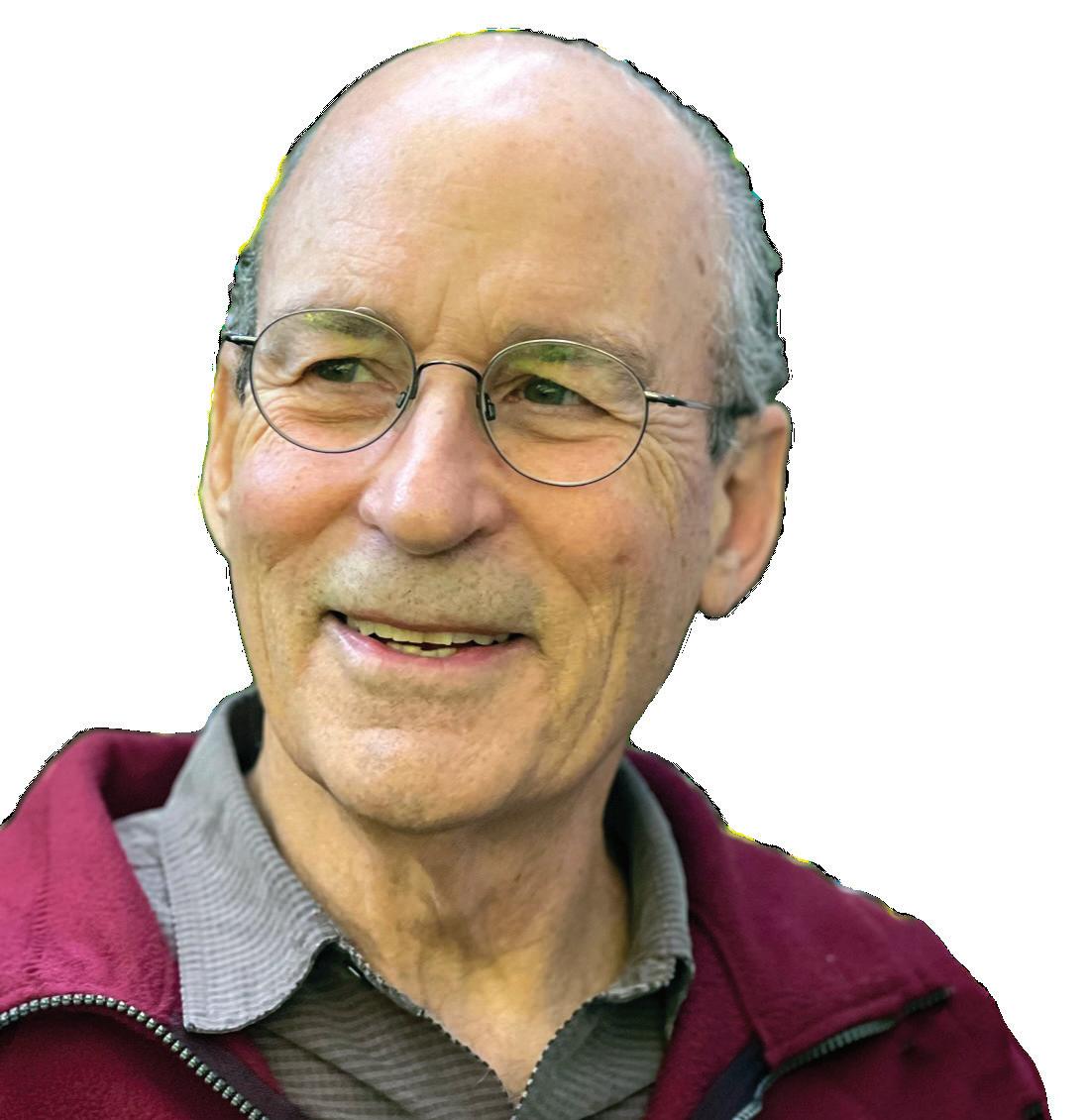
Kidder wrote Mountains Beyond Mountains (Random House) featuring Farmer (1959–2022), who founded the nonprofit Partners In Health to improve health care in poor communities around the world.
In his latest book, Rough Sleepers (Random House), Kidder shares the story of O’Connell and his mission to provide medical relief and support to Boston’s unhoused community. When O’Connell was finishing his residency at Massachusetts General Hospital, he was asked to help establish a health-care system for the homeless for one year. He agreed, and never left. In 1985 O’Connell cofounded Boston Health Care for the Homeless Program. Today, nearly 40 years later, O’Connell has provided medicine, support, friendship, food, and cups of coffee to thousands of Boston’s unhoused, many who continuously sleep on the streets and are sometimes called “rough sleepers.”
As research for his book, Kidder accompanied O’Connell and his street team as they drove through Boston at night checking on people in need. He learned a lot about their patients, their stories, and their relationship with the doctor.
“We need to recognize that these people on the streets are like you and me, except with complex issues,” says Kidder. “Jim has spent his life with people who needed his skills more than anyone else, and who were extremely grateful for having
To be considered for “Bookshelf,” please send a brief summary of your recently published book and a high-resolution image of the book cover to magazine@andover.edu
In the Orchard
BY ELIZA MINOT ’87
Penguin Random House
Maisie Moore is raising four children, including a newborn. She therefore has much on her mind— credit card debt, soccer games, grocery shopping, the mystery of motherhood. Minot tells the compassionate story of this young family over the course of a single fall day when they are picking apples together.
Everything’s Fine
BY CECILIA ESTHER RABESS ’02
Picador
In this debut novel, Rabess reveals how a liberal Black woman and a conservative white man first meet at their Ivy League college in 2016 and spar over divisive politics. They meet again as colleagues at Goldman Sachs, where their relationship turns from combative to both complicated and romantic.


Revolutionary Roads: Searching for the War That Made America Independent... and All the Places It Could Have Gone Terribly Wrong
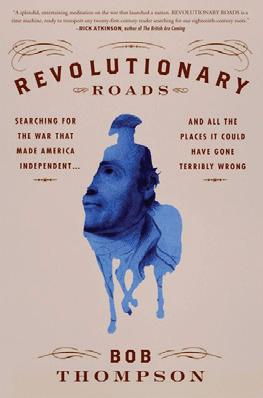 BY BOB THOMPSON ’68
Twelve Books, Hachette Book Group
To better understand the war that led to American independence, author and historian Thompson offers a new perspective in this entertaining book. Revolutionary Roads takes readers on an adventure by visiting key sites, such as battlefields, some of which are now shopping malls and auto dealerships.
America: Underwater and Sinking
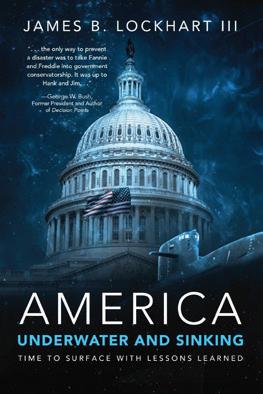 BY JAMES B. LOCKHART III ’64
Koehlerbooks
Lockhart is a former submarine officer with the U.S. Navy who played a significant role in providing solutions during the global financial crisis. An advocate for the Bipartisan Policy Center, Lockhart reports on challenges faced by government agencies and describes improvement options.
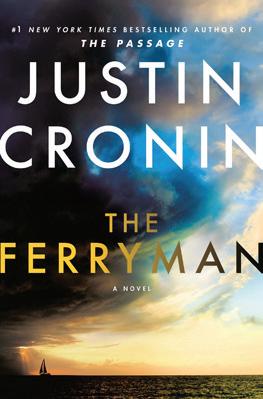
The Ferryman
BY JUSTIN CRONIN ’80
Ballantine Books, an imprint of Random House, a division of Penguin Random House
In a utopian island society, citizens live long, enriching lives—until they retire and the ferryman transports them to another island. The ferryman starts to question his world after a confrontation with his father, who is about to board the boat. Unrest builds in this mystery novel, which is full of conspiracy and twists.
Bookshelf
FRAN KIDDER 15
Then
Abbot & Andover at
by RITA SAVARD and JOSEPH P. KAHN ’67

YOUR THEN,
16 ANDOVER | SUMMER 2023
WHAT’S
NOW, NEXT? Celebrate the impact of half a century of Abbot Academy and Phillips Academy as a singular institution. Share your reflections at andover.edu/thennownext.


Now
17
Next
THE FIRST CLASS: WOMEN BLAZE A TRAIL
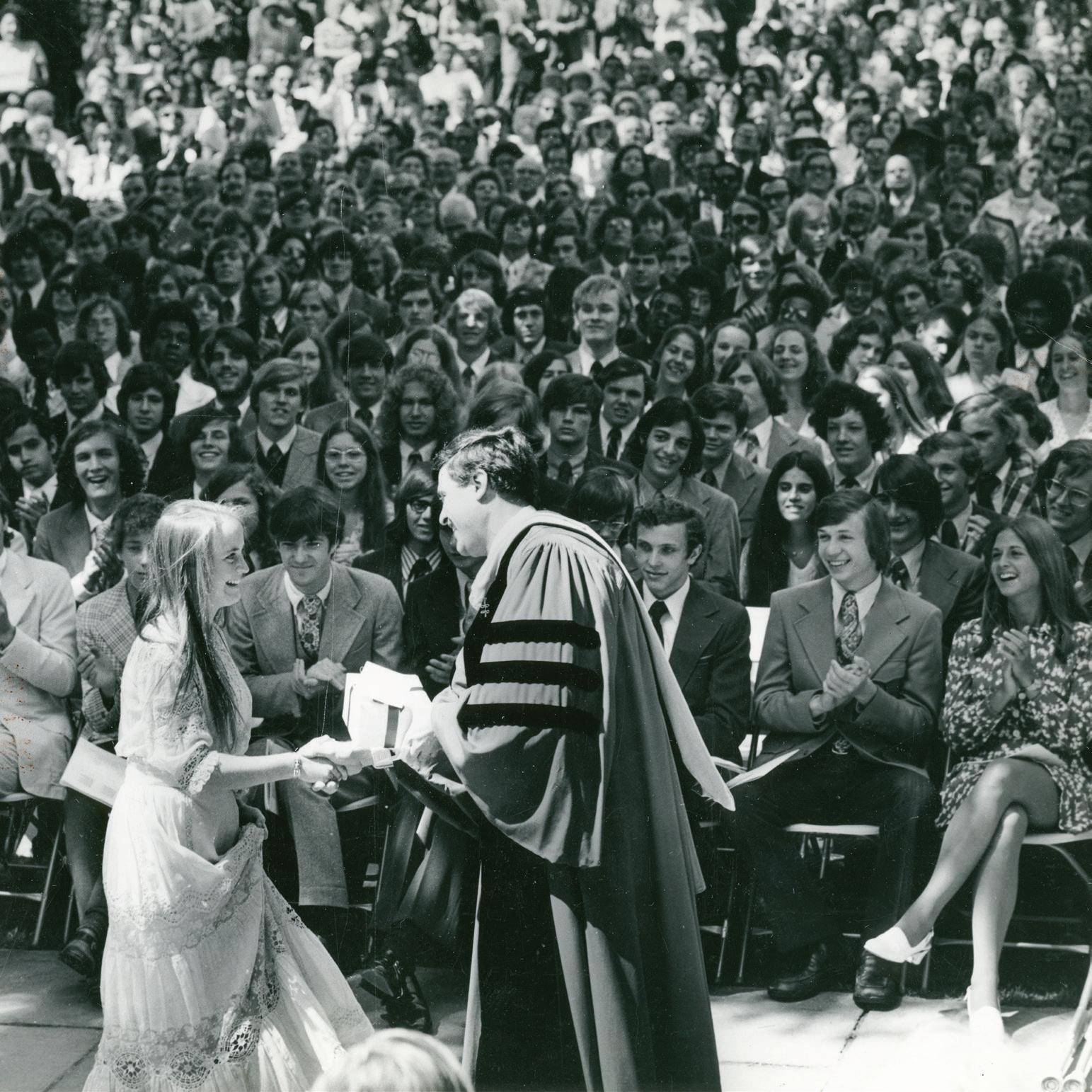
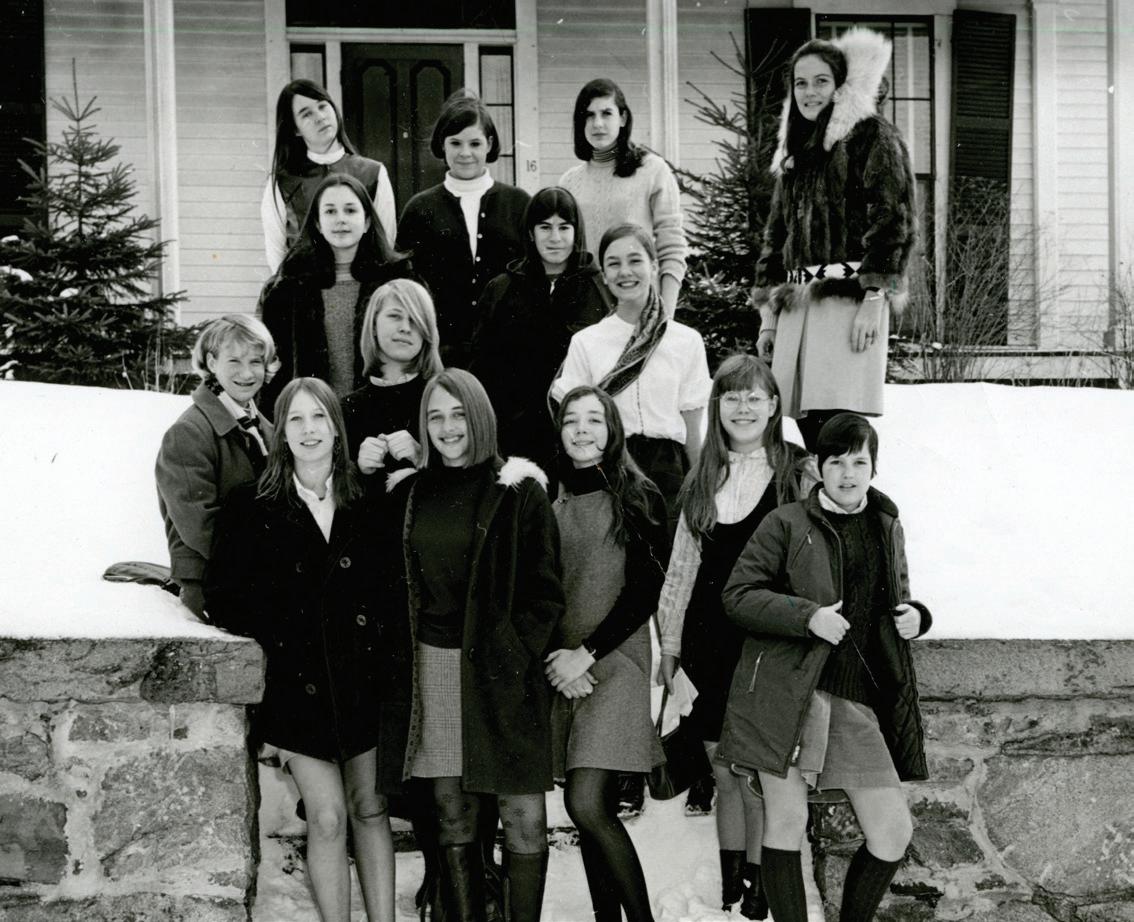
FIFTY YEARS AGO, America was divided on issues of war, race, and gender. But in the fall of 1973, it was gender that was top of mind when 300 young women—including all students from Abbot Academy as well as newly admitted girls—entered classrooms on the Hill as official Phillips Academy students for the first time.
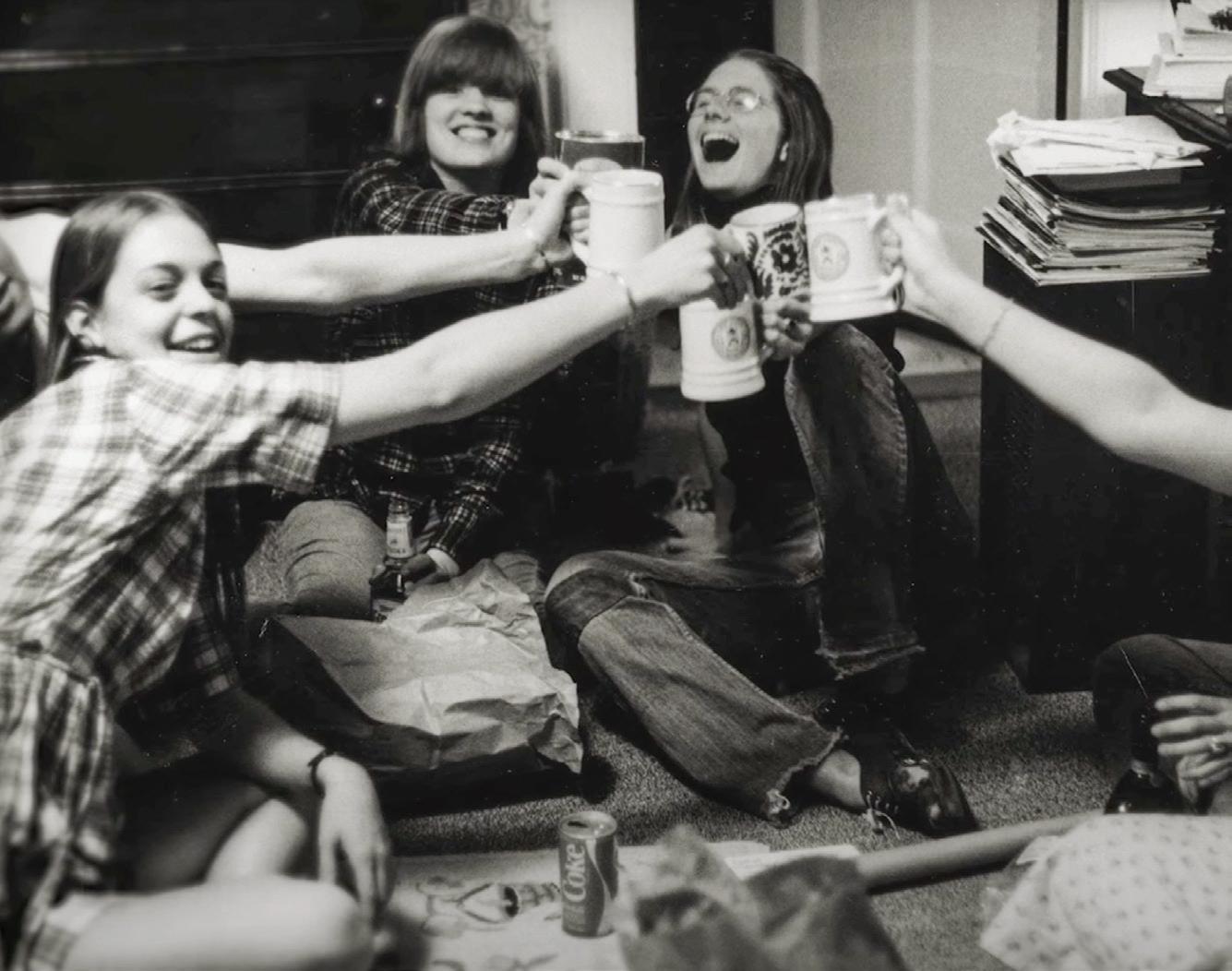
“I think I was more aware than most of my classmates who came in 10th grade that PA and Abbot were likely to merge,” says Ann Blumberg Graham ’74. “I was intrigued by the all-male schools that my father and brother had attended that had recently admitted females. I was also naïve about what the transition—from coordinating education to full-on coeducation—would entail.”
When girls arrived on campus, they were outnumbered by boys three to one. And while the case for coeducation was rooted in a growing conviction that diversity jolts youth into cognitive action in ways that homogeneity simply does not, the reality was that in 1973, the country’s oldest boys’ boarding school was ill prepared to support females.
Girls experienced glaring inadequacies in instruction and athletics, and women faculty and staff struggled to build access to the same opportunities as their male counterparts.
“It was clear that the merger, which I’d rather call an absorption, threw a lot of Abbot girls into the crucible,” says Susan Clark, an instructor in Latin and Greek from Abbot who taught at PA for 12 years following the merger. “And fortunately,
many of them absolutely performed perfectly. They changed a great deal of what was going on at PA.”
Some faculty who had been opposed to the merger were stuck in a web of irrational ideology that girls could not learn calculus or understand the works of Virgil. They believed gender distinctions defined intellect and that men were innately superior leaders, innovators, and academics.
Girls like Graham, who experienced the best and worst of PA, were tearing down antiquated barriers as they demanded their rightful place in physical and social spaces that denied them for nearly two centuries.
Graham remembers being called on to stand at the front of the classroom and recite some of the bawdiest parts of Chaucer. “I did not flinch, but it was not comfortable,” she says. “My senior year, however, I had the opportunity to take the education seminar with our head of school, Ted Sizer. I felt like a leader in that class, and felt acknowledged by Sizer, who was a larger-than-life figure for me. To this day, reading a book he assigned—The Unheavenly City by Edward Banfield—remains a defining experience in my intellectual and personal development.”
In a 1975 essay for the Andover Bulletin, waggishly titled “If I only had a wife…,” faculty spouse Helen Eccles P’70, ’72, ’75, explained that, for places like PA, which had long been institutions dominated by white men, the battle for equity only begins when you open the door and let women in for the first time.

THEN
18 ANDOVER | SUMMER 2023
“It will take more time, more full-time women teachers, and more trauma in some minds and places before this place is truly coeducational,” Eccles wrote.
In those early years, Clark—who was infamously called “saeva femina!” (savage woman) by a male colleague at a faculty gathering when she asked for bourbon instead of sherry—notes how the experience of teaching girls in the first year after the merger changed some hearts and minds.
“A girl who ended up in the top of her classics class proved to her male teacher that yes, a woman could read Virgil and outperform the rest,” Clark says. “He later apologized for thinking anything less.”
In 1983, a task force chaired by college counselor and former Abbot administrator Marion Finbury was charged with studying coeducation’s impact after 10 years. Using school records, survey research, and interviews, a comprehensive study was released, called “A Portrait of a School: Coeducation at Andover.” It was written by instructor in history and gender activist Kathleen Dalton P’00, ’05.
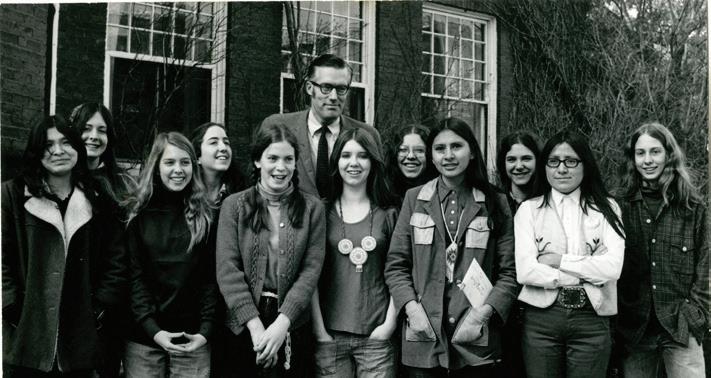
From faculty pay inequity to various gender disparities in student life, the thorough report called
1968
Abbot Academy symbolizes what is possible. It’s a small campus, but an enormously tangible sign of the lasting impact that women’s education has made on Andover.”
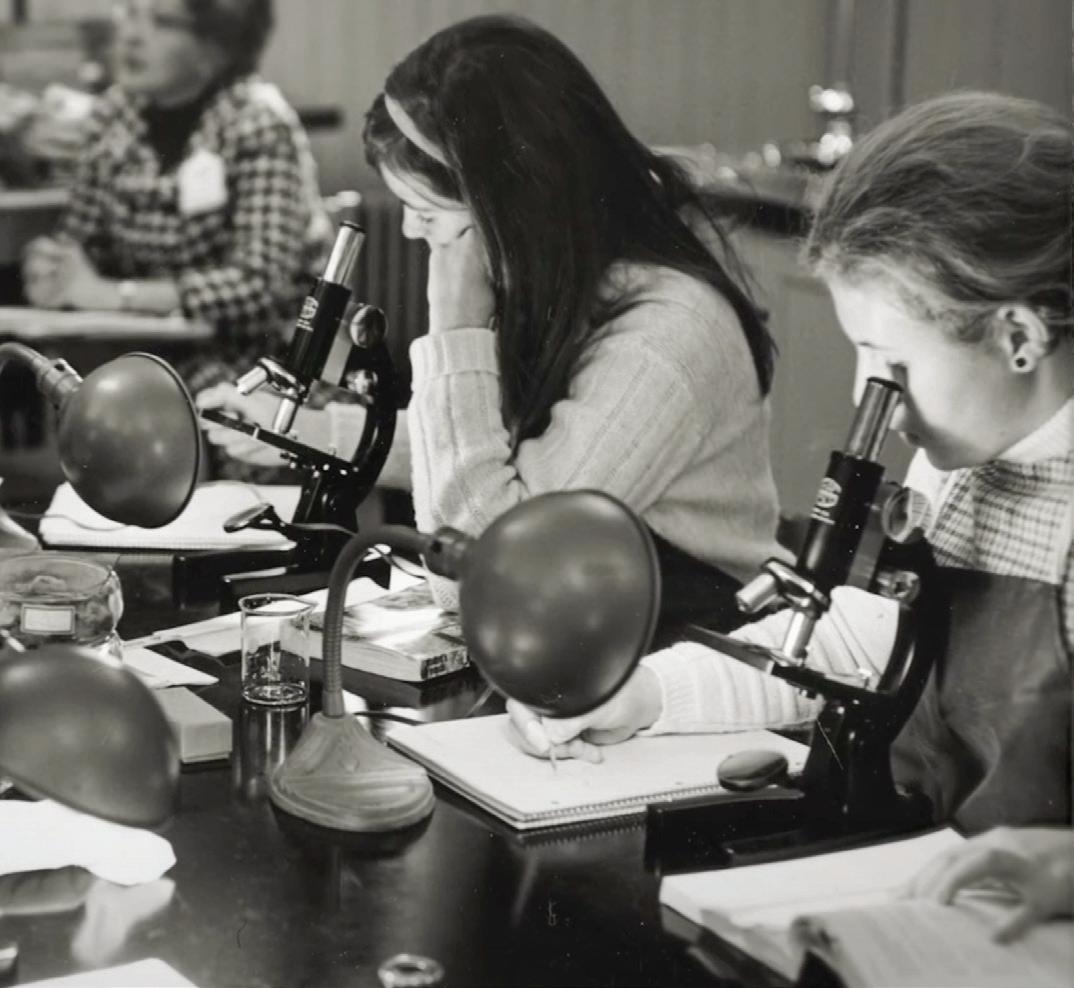
attention to the fact that there was much work to be done in reaching equity at Andover. “A Portrait of a School” also served as a model for other schools seeking ways to usher in change. Dalton’s work, along with that of other forward-thinking faculty— including her husband, Tony Rotundo P’00, ’05, also a history instructor; Cathy Royal, who facilitated the creation of CAMD in 1984 and served as its first dean; and former associate head of school Rebecca Sykes P’92, ’97, ’01—continuously pushed for ending gender discrimination on all fronts. Their efforts paved the way for new and groundbreaking initiatives like the Brace Center for Gender Studies, established and founded by Abbot alumna and philanthropist Donna Brace Ogilvie ’30. Case closed? Hardly.
1973
Donald Gordon ’52: The Abbot Academy trustees committed to some form of coeducation when they hired a PA alumnus to be the first and last male head of Abbot.
Abbot Academy Association: Thanks to the quick thinking of Abbot alumnae and PA alumni on the Abbot Board of Trustees, the AAA—now known as the Abbot Academy Fund—was created to keep Abbot alive and well as a funding agent within the new Andover. It has since awarded more than $15 million in grants toward a wide range of scholarship and community and capital projects.
BUILDING A COMMUNITY
Over the past 50 years, Abbot’s legacy has helped transform education and innovation at Andover.
BARBARA TIMKEN ’66 architectural historian, preservationist, and PA charter trustee (1988–2004)
19
COURTESY OF PHILLIPS ACADEMY ARCHIVES & SPECIAL COLLECTIONS
“We didn’t need to add gender studies to the curriculum, do a study of coeducation, found the Women’s Forum, have a symposium on gender issues, and start a gender center because the oldest boys’ boarding school in the country was gender heaven,” says Dalton, now faculty emerita. “We needed to change things. We still do.”
On the following pages, alumni, faculty, and students reflect on their distinct experiences and the extraordinary impact of half a century of Abbot at Andover. While the work to strengthen diversity, equity, and inclusion continues, the merger with Abbot Academy truly opened doors—and minds— to the virtue and rewards of educating youth from every quarter.
“Looking back, it has taken us 50 years to have these conversations as openly as we are,” Graham says. “Today’s students are going to continue moving the conversation forward. Finis origine pendet—the end depends on the beginning. For all the experiences, good and challenging, being an alum of PA is an accomplishment I feel proud of.”
50 YEARS OF CHANGING THE WORLD
THE ARRIVAL OF ABBOT ACADEMY’S students and teachers at PA not only added a new dimension to the classroom, but also helped seed a revolution in gender roles and the progressive movements of Andover in the years that followed.
NOW
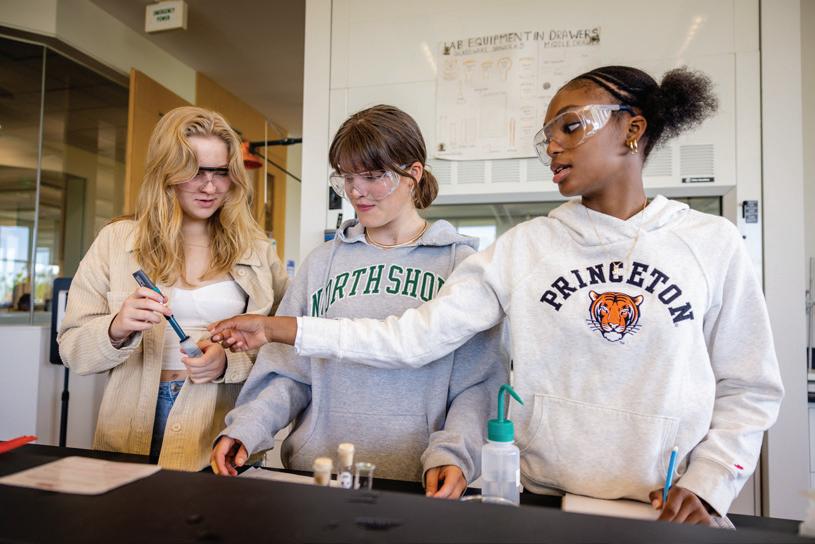
Ensuing generations have been encouraged to build relationships that foster understanding, mutual respect, varying perspectives, and equal opportunities that encompass a wider representation of inclusivity.
“Students exposed to different people, cultures, and ways of thinking are better equipped to exhibit empathy and, in turn, focus on being better global citizens,” says Tony Rotundo, emeritus instructor in history and social science. “During my time at Andover, some of the biggest and most important changes on campus—from the creation of MLK Day to the Gender and Sexuality Alliance—started with student initiative. That’s what really put PA out in front of other schools.”
Indeed, Abbot Academy’s creative and intellectual force was transformational for PA and has served as a catalyst for all who came after to better shape the kind of world they wanted to live in.
Alumni continue to apply their Andover education to break stereotypes, set precedents, and help others who have been traditionally excluded from certain spaces claim their rightful place.
1974
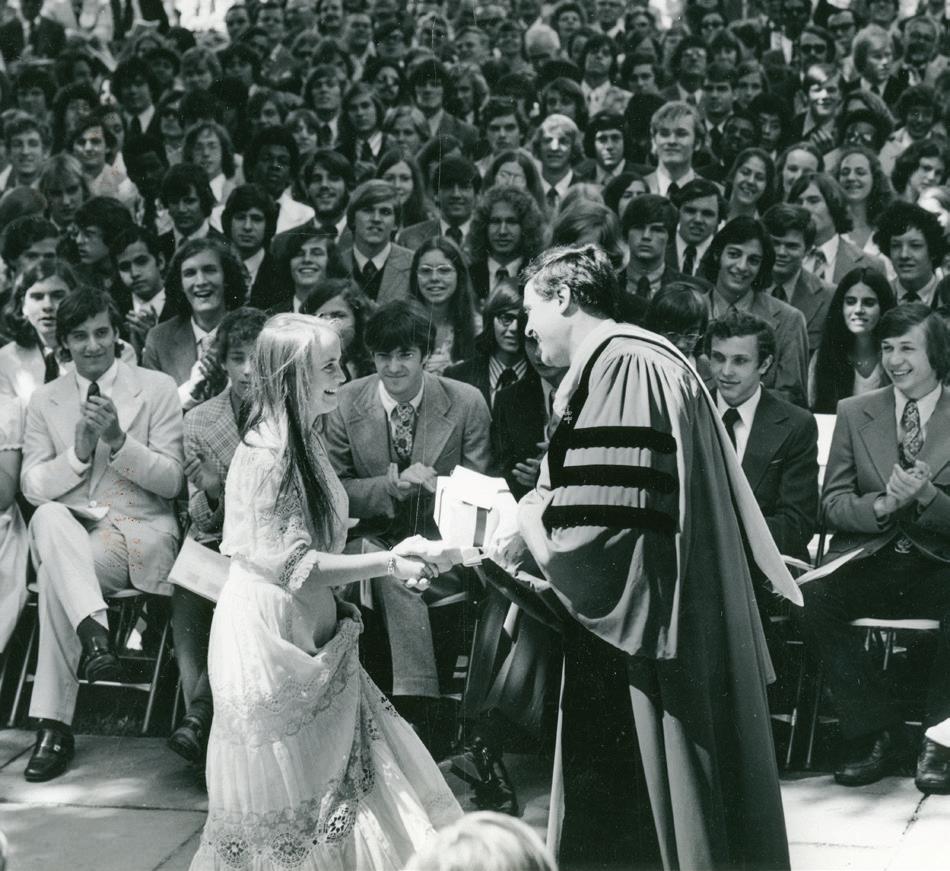
Andover graduates its first coed class. Caitlin Cofer ’74 received the Sarah Abbot Award from Head of School Ted Sizer. Sizer served from 1972 to 1981 and was vital in supporting the merger.
1981
Hadley Soutter Arnold ’82 is the first female elected school president since the position was established in 1973. It would be another 16 years before the next female is elected.
The impact of being part of a smart, interesting, and quirky community of women (like me) who not only understood but celebrated me for just being myself was huge!”
MARCIA MCCABE ’73 actress and longtime Andover volunteer
20 ANDOVER | SUMMER 2023
HENRY MARTE
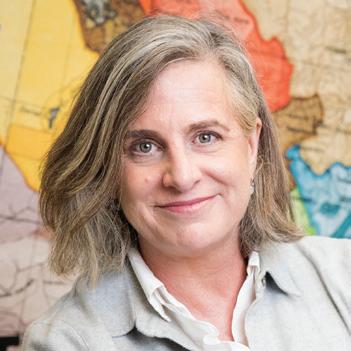
THE CAREERS OF Susan Chira ’76 and Carroll Bogert ’79 ran on parallel tracks long before they began co-directing The Marshall Project, a Pulitzer Prize–winning, nonprofit news operation covering the criminal justice system.
Both attended Harvard, dove into East Asian studies, worked for prestigious publications (the New York Times, Newsweek), excelled as foreign correspondents (Japan, China), and opened doors for other women coming along behind them.
At Andover, Chira remembers a transitional period when some older teachers had trouble dealing with girls as classroom equals with the boys. After college, she held several top editorial posts at the Times, with a special interest in gender and racial equality issues. Her book A Mother’s Place: Taking the Debate About Working Mothers Beyond Guilt and Blame explored work-life challenges facing working moms like herself.
Beyond her many accomplishments as a reporter-editor, Chira has been honored for her mentoring role with younger journalists. “That’s been intentional and matters a lot to me,” she acknowledges.
Bogert found Andover a “liberating” environment where students had permission to be both smart and ambitious—two qualities that served her well as a frontline reporter in repressive countries like China and the Soviet Union. In 1998, she joined Human Rights Watch, a nongovernmental agency defending human rights worldwide. Her switch to advocacy work was also intentional. “My through-line has been: How does information propel social change?” she reflects. “In a sense, I’ve had a foot in both camps.”
The Marshall Project’s focus on criminal justice—Bogert calls it “the biggest human rights issue” in America today—connects those dots more firmly. Its readership includes prison inmates and their families, and its award-winning journalism has led to such reforms as placing cameras in prisons and legal restraints on the use of police dogs. Nonprofit journalism, yes. But hardly non-impact.
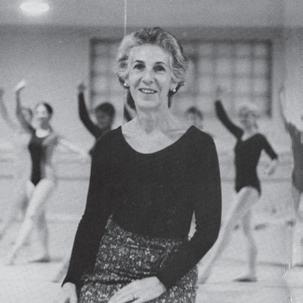
When Señora Cristina A. Rubio persuaded the athletics department to seriously consider dance upon her transition to PA from Abbot, I wonder if she knew how it would impart a sense of belonging for Black and Brown girls like me in ‘Andover-land’. I will never forget the smile that washed over the face of Temba Maqubela [former Andover dean of faculty] as our rhythmic practice in Nathan Hale transported him to his native South Africa, where he was brought up doing gumboot dance. Perhaps Ms. Rubio could sense that dance at Andover would one day ignite diasporic connections between this West Indian Brooklynite, continental Africans, and descendants of Black Americans in our small corner of New England.”
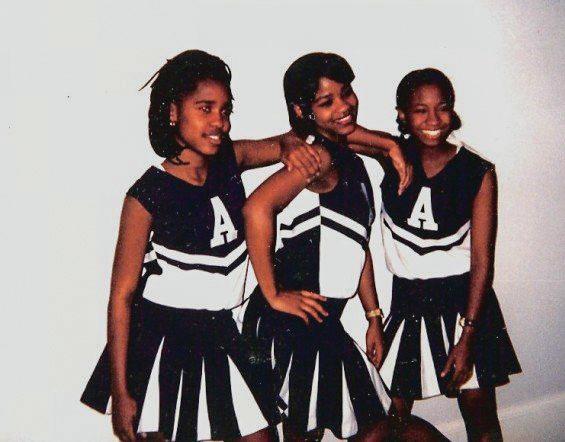
Cristina Rubio P’81, GP’12, ’17, pushes to make dance a varsity sport at Andover, raising the bar for athletics offerings at independent secondary schools.
 Dance instructor
TAMIKA GUISHARD ’98, writer and film director
Dance instructor
TAMIKA GUISHARD ’98, writer and film director
21
COURTESY PHOTO TAMIKA GUISHARD ’98, ASIA WITHERSPOON ’98, GILLIAN NOEL ’98
RUBEN ALVERO ’76 came to Andover from blue-collar roots—both parents were factory workers—where he experienced the school’s early transition to coeducation. He’s gone on to a distinguished career in clinical and academic medicine. At Stanford University Medical School, Alvero is a much-published expert in reproductive fertility medicine. He credits PA with changing his life— providing “the leg up, the vision it gave me. The understanding of the wider world.”
The many who’ve benefited from Alvero’s research and compassionate care know what a difference he has made in their own family lives. Grateful, too, have been members of the Latine community, for whom access to quality (and affordable) health care has been a top priority of his.
In addition to his clinical and advocacy work, for many years Alvero served with the U.S. Army Medical Corps, working in combat support hospitals in Iraq and other hot spots. His patients included many women soldiers serving in active war zones.
FOLLOWING GEORGE FLOYD’S murder in 2020, Torrence Boone ’87, Google’s vice president of global client partnerships, joined a group of Black senior executives evaluating the firm’s policies around racial equality. Beyond existing DEI initiatives, their discussions affected areas like product design, accessibility, and “a broader cultural program of belonging,” as he puts it.
Boone, a devout non sibi adherent, helped Google execute what he calls “a pretty heavy reset” during this period of racial reckoning. Black representation increased companywide, with other major firms closely studying Google’s response.
Boone’s profile as a gay Black man has also made him an important role model for young tech professionals who might otherwise feel marginalized. Unfortunately, he says, many still struggle to feel fully included. “As human beings, we size up others quickly, even if we’re being unfair or reductive.”
Adds Boone, an active Alumni Council member and philanthropist, “Andover opens the aperture for its graduates to think of the collective good beyond their own worldview. And that was certainly a jumping off point for me.”
1990
Students and faculty join forces to form the Gender and Sexuality Alliance (GSA), elevating Andover’s commitment to human rights.
1994
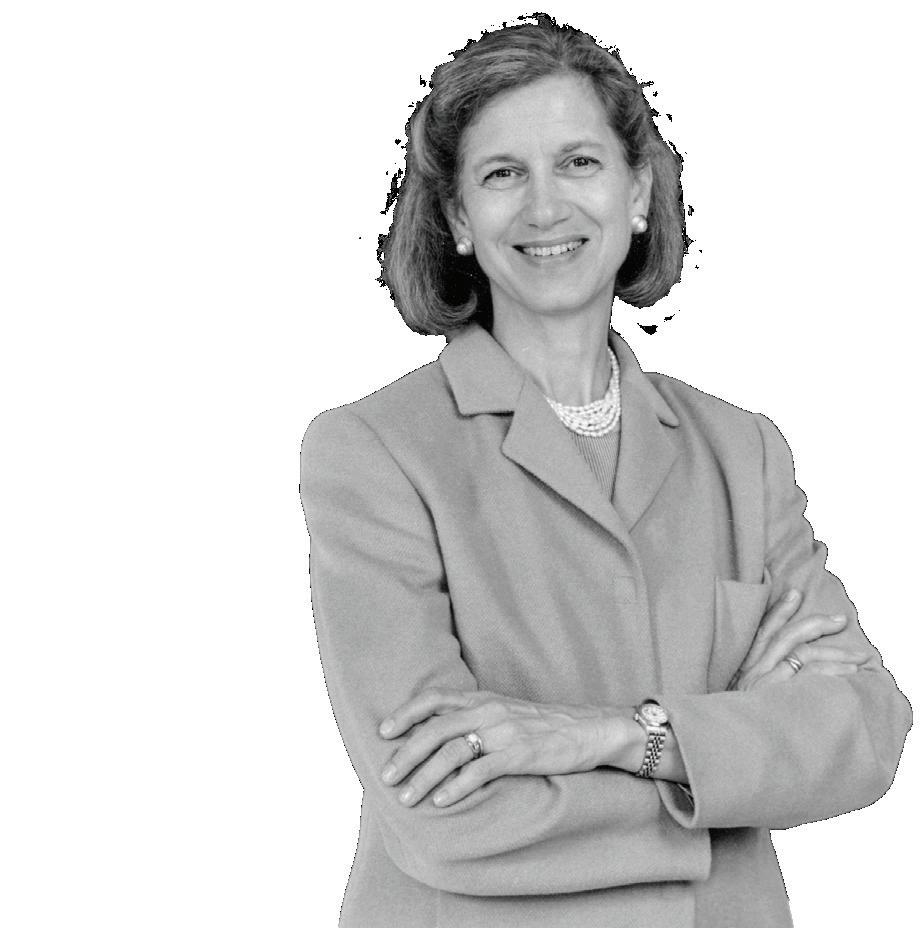
Barbara Landis Chase becomes PA’s 14th head of school and the first woman to hold the position.
1996
The Brace Center for Gender Studies opens in historic Abbot Hall as a place to study and understand gender issues within the framework of an intentionally inclusive educational institution.
 HENRY MARTE
22 ANDOVER | SUMMER 2023
HENRY MARTE
BROOKLYN NATIVE Jasmine Mitchell ’99 arrived at Andover through a program helping steer under-resourced students of color into top-tier boarding schools. A leading scholar in race and gender representation in popular culture, Mitchell published her first book, Imagining the Mulatta: Blackness in U.S. and Brazilian Media, in 2020 while teaching at SUNY—Old Westbury. This fall, she joins the faculty at Brooklyn College.
Mitchell’s PA experience—back then, “inclusion,” she says, was often tested along race, gender, and socioeconomic lines—is reflected in her mentorship of young scholars from less-than-privileged backgrounds. “A lot of my research is on mixed Blackness in the U.S. and Latin America,” she notes. “They’re issues I grappled with as a teenager and I’m still grappling with today, along with my students.”
In her classroom, she says, “I warn students they will get very uncomfortable.” The payoff? Lifelong critical thinking skills, plus a deeper grasp of power structures and power struggles. According to Mitchell, awareness of such hierarchies is crucial to envisioning, and perhaps determining, whatever future lies ahead.

KRYS FREEMAN ’03 serves as Airbnb’s senior program manager for design and is an influential strategist and activist in the tech management field, traditionally a white-male–dominated industry.
At Andover, Freeman belonged to Af-Lat-Am and the Queer Student Alliance, organizations helping many like Freeman feel more fully integrated into campus life. “Being queer but not ‘out’ as nonbinary was complicated,” says Freeman, who is now aligned with several groups that empower and educate the tech industry’s LGBTQIA+ community.
The groups include Butch Voices, advocates for “gender-bending social justice activists,” and TransTech, which supports transgender and gender-nonconforming individuals. As a strategist, says Freeman, “I try to make an impact in meaningful ways through mentoring and other skill-sharing, at the same time supporting people at the margins— notably queer and trans people of color—as a committed activist and ‘possibility model’ for younger tech workers.”
With a renewed focus on self-care and mental health in the post-pandemic era, Freeman offers this message to fellow alums: “Double click on me having access and privilege and paying it forward.”
1997
Thanks to alums like Lanie Finbury ’68, Frankie Young Tang ’57, Oscar Tang ’56, Barbara Timken ’66, and many others, a rededication ceremony is held to unveil a renovated Abbot Academy campus.
2002
Phelps Stadium is dedicate and additional lines are permanently painted on the field, letting the world know that, regardless of gender, teams at Andover are equally important.

2007
PA announces a needblind admission policy, encouraging all qualified applicants to consider Andover, even if they cannot afford the full cost of attendance.
Abbot funded research seed money for Andover Bread Loaf, which promotes literacy through the lens of social justice. None of the outreach work we do could have happened without Abbot.”
Lou Bernieri P’96, ’10 English instructor and founder of ABL
23
COURTESY PHOTO
ONCE RACHEL MURREE ’14 connected with Alumni House dormmate Annika Neklason ’13, their proximity to the old Abbot campus plus Neklason’s own family history (her mother Peggy Dolgenos ’76 graduated with one of PA’s first coed classes) got them talking about Abbot’s demise and what had happened since.
“It was a story not many on campus knew about,” recalls Murree. Their conversations led to deeper ones about gender dynamics and why student leadership positions were still mostly held by boys.
Supported by the Brace Center, Murree and Neklason collaborated on a study titled “The End of Abbot: How the 1973 Merger with Phillips Academy Became a Takeover.” Deeply researched, it captured both the positives (e.g., a more liberal arts–oriented Academy) and negatives (female students feeling estranged, persistent power imbalances) of combining the two schools 40 years past.
Graduating from Georgetown, Murree returned to Andover for a three-year stint as a teacher, coach, and dorm supervisor. She now works at the University of California, Berkeley, as a financial analyst. Compared to her student days, she says, “Andover is a different place.” From a curricular standpoint, for example, “There’s a big emphasis on inclusivity. Whose voices are being heard? And how are you grading in a way that doesn’t perpetuate stereotypes?”
Neklason graduated from Penn, where she wrote for the campus newspaper then joined The Atlantic’s digital production and audience engagement team. She is currently an assistant editor of The Hill, a D.C.-based newspaper and digital media company covering Congress, the White House, and the intersection of politics and business.
For her, Andover was “a place where everyone was interested in everything,” notwithstanding its nagging boy-girl leadership gap. Not long after their 40th anniversary study, PA students began electing school co-presidents.
2013
In a 20–3 vote, Student Council implements a co-president model to encourage diversity in gender, race, socioeconomic class, and other identities.
A THIRD-YEAR YALE LAW student, Karissa Kang ’17 has a promising legal career ahead of her. Her efforts to expand Andover’s idea of diversity and inclusion may have helped pave the way.
In 2015, Kang wrote a Brace Center paper proposing PA create its first all-gender dorms. Citing a survey finding roughly 30 students identified as transgender, gender-fluid, or nonbinary, her paper led to a task force study and eventual plan approval in 2017. Andover thereby joined a growing contingent of boarding schools offering all-gender housing.
The goal, as former head of school John Palfrey P’21 stated, was to “support all our students equitably and create an inclusive community.”
Kang, who personally lobbied then–board president Peter Currie ’74, P’03, for his support, doesn’t remember much organized pushback. “There were parents with good intentions concerned about how a dorm like that would function,” she says, but everyone adjusted, and a new housing chapter began.
Kang herself has continued advocating on behalf of “othered” individuals. She and her father, a law professor, recently shared authorship of a published paper proposing changes in how TSA agents screen transgender passengers.
2015
Linda Carter Griffith becomes one of the nation’s first associate heads of school for equity and inclusion, establishing Andover as a model for other independent schools.
2019
Amy Falls ’82, P’19, ’21, is named the first woman president of the Board of Trustees, and Raynard S. Kington, MD, PhD, P’24, ’27, is chosen as Andover’s 16th head of school, becoming PA’s first Black and openly gay leader.
I grew my wings at Abbot. This is what we hoped the Abbot Academy Fund would do for other students. Abbot’s there, and I feel it.”
24 ANDOVER | SUMMER 2023
BETSY EATON ’62, P’89 founding Abbot Academy Fund board member
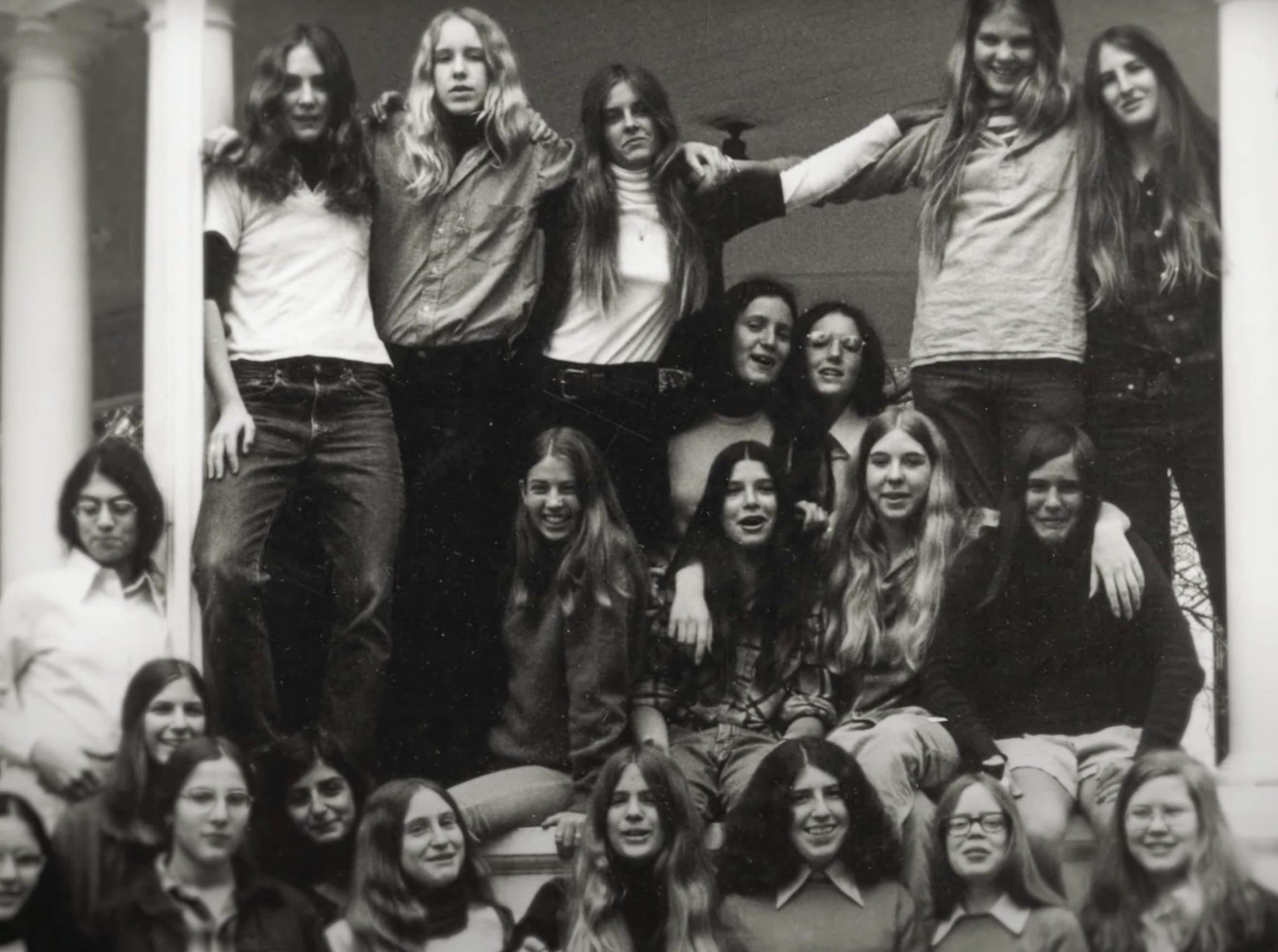
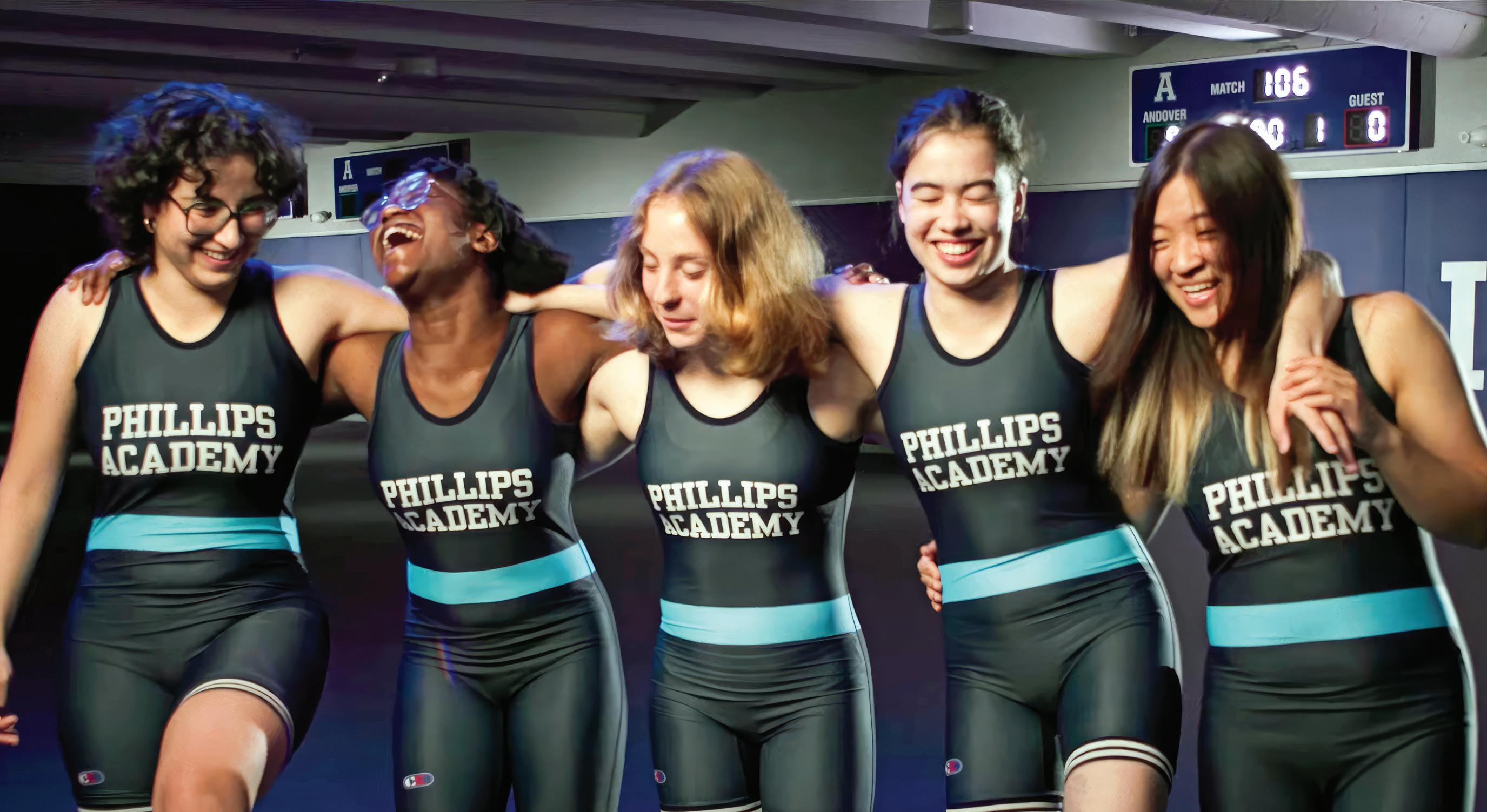
SOME THINGS NEVER CHANGE: The paths of students at Andover—although they are certainly individual—are never solitary. Best friends for life are made here. Whether it’s a theory that contradicts old ways of thinking, art that defies conventions, or political and social reforms that change our world for the better—our community empowers what is possible.
Courtesy photos: Abbot Academy friends in 1973, and PA friends on the all-gender wrestling team in 2023.
25
CHARTING A COLLECTIVE FUTURE OF BELONGING NEXT
BOLDNESS. INNOVATION. CARING. These values are the cornerstone of the Abbot Academy Fund, yet they more broadly encompass the legacy of Abbot Academy and the future aspirations of Andover.

Examples of Abbot’s impact today—and on the Academy’s future—can be found in every facet of campus, from the need-blind admission policy to the first all-gender restroom (proposed by a student) to ongoing support for the Brace Center.
“Perhaps the most meaningful and lasting impact that Abbot has had at Andover is one of accountability,” explains the Reverend
Gina M. Finocchiaro ’97. “I can still hear Jean St. Pierre, a beloved favorite English teacher of mine [who taught at Abbot and PA for 41 years], bemoaning the inequities of access for girls when Abbot first came up the Hill. The merger of the schools meant that Andover—as a whole—made a commitment to all students.”
Recognizing the need to maintain and amplify Abbot’s values into the future, a group of Abbot trustees, including Myndie Nutting ’40, Beverly Floe ’41, Mel Chapin ’36, P’59, GP’90, ’94, ’10, and Phil Allen ’29, P’52, ’53, GP’79, made a bold move in 1973 by taking $1 million out of Abbot’s endowment to form the Abbot Academy Association, now known as the Abbot Academy Fund (AAF). The idea was to have Abbot Academy alive and well as a funding agent within the new institution.
Since 1973, the AAF has awarded more than $15 million toward proposals from students, faculty, and staff. Funded projects have included Non Sibi Day, the Brace Center for Gender Studies, Andover Bread Loaf, the Abbot Academy Dance Suite, mental health awareness and support, student clubs, and—most recently—Falls Hall, a state-of-the-art
26 ANDOVER | SUMMER 2023
music facility currently under construction, for which the AAF pledged $1.25 million and Board of Trustees President Amy Falls ’82, P’19, ’21, and her family are the lead donors.
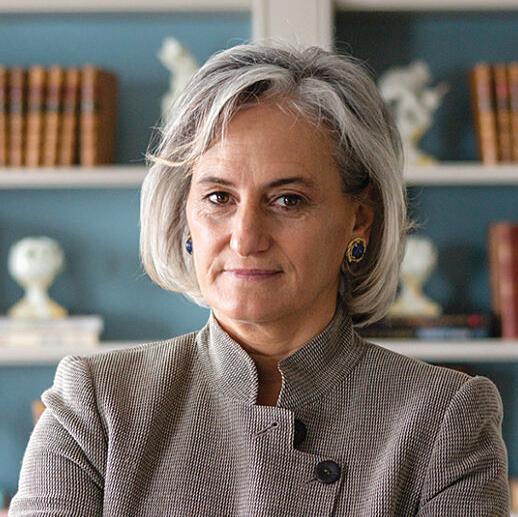
“The creators of the fund,” says founding board member Betsy Eaton ’62, “would be astounded at what it has become. I grew my wings at Abbot. This is what we hoped the Abbot Academy Fund would do for other students. Abbot’s there, and I feel it.”
Viewed for the first time during Reunion 2023, the documentary Dream It, Do It: The Abbot Academy Fund’s First 50 Years brings the legacy of Abbot and the AAF to life.
“The new beginning created by the merger of Abbot Academy and Phillips Academy produced an environment that continues to benefit many,” says filmmaker Alexandra Morrow ’12. “When I think back to my time at Phillips Academy and all the ways it transformed me, I see now that Abbot was always there too—weaving its spirit through campus in many ways, as it will be for years to come.”
What will come next? It’s exciting to imagine how Abbot programming, scholarship, and innovation will continue to enhance PA—and the countless ways its enduring reputation for fostering independent thinking will inspire the Andover community, most importantly students.
“For me, hosting events like Take Back the Night and our Brace fellow talks in Abbot Hall is a way to commemorate Abbot’s legacy and is a reminder of how far Andover has come in the realm of inclusion since becoming coeducational,” says Max Berkenblit ’24, a Brace fellow and member of the center’s student advisory board. “
Abbot remains a powerful influence for students, faculty, and alumni.”
2022

The Andover Anti-Racism Task Force, comprising trustees, alumni, faculty, and staff, releases its report of observations and recommendations to address inequities. The Committee on Challenging Histories is established to reexamine the school’s past as it relates to the legacy of the physical campus and historical connections to slavery.
2023
The Chandler-Wormley Vista is dedicated in honor of Abbot Academy’s first Black alumnae, Beth Chandler and Sheryl Wormley, both Class of 1955 (see story on page 11).
For more news and events on this milestone anniversary, visit Abbot & Andover at 50.
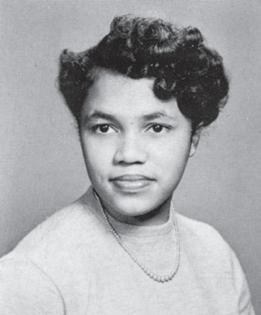
Years after coeducation, also years after women’s liberation and the assertion of women’s legitimacy in our society, students’ respect, pride, and appreciation for the Abbot legacy holds stronger than ever.”
REBECCA SYKES, P’92, ’97, ’01 former Associate Head of School
Beth Chandler
Sheryl Wormley
NEIL EVANS
Love
This year’s class of retiring faculty has taught math and English at Andover for a combined total of 124 years. In addition, they have inspired students while coaching tennis, basketball, track, and squash; supported them as house counselors and advisors; and enriched their Andover experience with travel abroad and community outreach opportunities.
Known for their kindness, patience, support, and humor, these four faculty members instilled in their students both confidence and a love of learning.
Read more at www.andover.edu/retiringfaculty.
For the of Teaching
BY NANCY HITCHCOCK • PHOTOS BY DAVE WHITE
28 ANDOVER | SUMMER 2023
Buckwalter Suzanne E.
Instructor in Mathematics, Statistics, and Computer Science
Years at PA: 22
Officiating Track: During her five years as the track clerk, Buckwalter collected data for the boys’ and girls’ indoor and outdoor track program. She appreciated seeing the evolution in technology used to manage meets and working in the stateof-the-art Snyder Center. Buckwalter says, “I’m very thankful to the Snyders for providing us with this gorgeous facility.” She also relished celebrating victories, personal bests, and new track records with the student-athletes, especially at one of the last home indoor meets.
Merging Math and Art: An avid quilter who has created more than 200 quilts, Buckwalter gifted custom comforters to about 25 graduating seniors from her dorm. With an interest in math and being creative, Buckwalter teamed with art instructor emerita Therese Zemlin to develop an interdisciplinary class.
Retirement Plans: After 30 years being away from family, Buckwalter will move to Indiana to spend more time with her parents and sisters. She intends to relax and volunteer. However, she will miss seeing students every day. “They’re funny,” she says. “They make me laugh. They keep me up to date. And they keep me mentally engaged. I will miss that.”
he best teachers do not eliminate challenges but make them approachable, and they provide students with the tools to overcome the hurdle. Ms. Buckwalter was that kind of teacher,” says Grace Rademacher ’18. And Sue Buckwalter was up for the challenge of teaching. In 1985 she was one of 141 high school seniors to receive the Presidential Scholars award from the U.S. Department of Education. Although she found math to be difficult for her, she pursued it as her college major—with an emphasis on teaching—and went on to become the first woman chair of PA’s math department.
Buckwalter taught the full range of mathematics classes, as well as math electives. She aimed to make her classes fun, comfortable, supportive learning spaces where students could acknowledge that struggling, even failing, is part of the educational process.
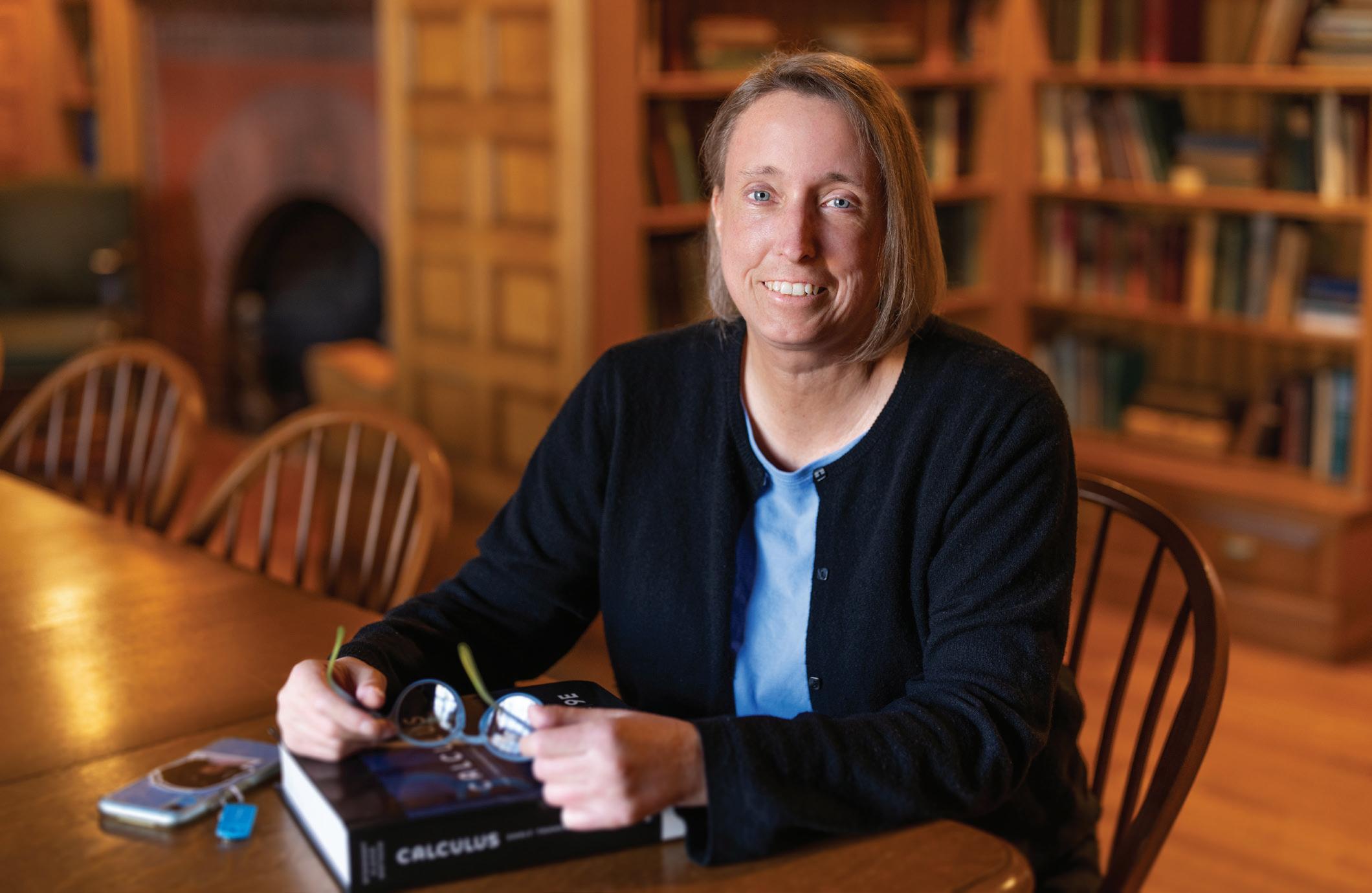
To inspire confidence in students, Buckwalter believes it’s important to model behavior. “Students look at us all the time; they’re watching everything we do,” she says. “I think it’s good to model being confident in yourself, being comfortable with making mistakes, and showing them that it’s OK to not know everything.”
Students appreciated her calm, kind, compassionate nature along with her patience and sense of humor.
“I’m grateful to Ms. Buckwalter for instilling this love of learning and creating a welcoming and challenging learning environment for her students to find their voice and grow,” says Michelle Nguyen ’07.
Alexander Cleveland ’18 agrees. “She made the 8 a.m. class something I looked forward to and genuinely enjoyed every day. It is rare to have a teacher who can be your friend, family, and instructor. Ms. Buckwalter was just that and more.”
“ T 29
O’Connor Kevin T.
Instructor in English
Years at PA: 38
Beyond the Classroom: O’Connor was a house counselor, ran the Writing Center, and coached boys’ JV basketball for more than 30 years. But one of his biggest contributions to PA was in helping to bring numerous well-known speakers to campus, including Nobel Prize winners Bishop Desmond Tutu of South Africa and poets Seamus Heaney and Louise Glück. “When I see how inspired the community can be by special guests, it always seems worth the work,” O’Connor says.
The Writing Life: O’Connor contributes regularly to Harvard Review Online; has had his poems and reviews published in Notre Dame Review, The Common, and other publications; and co-edited a book, One on a Side: An Evening with Seamus Heaney and Robert Frost
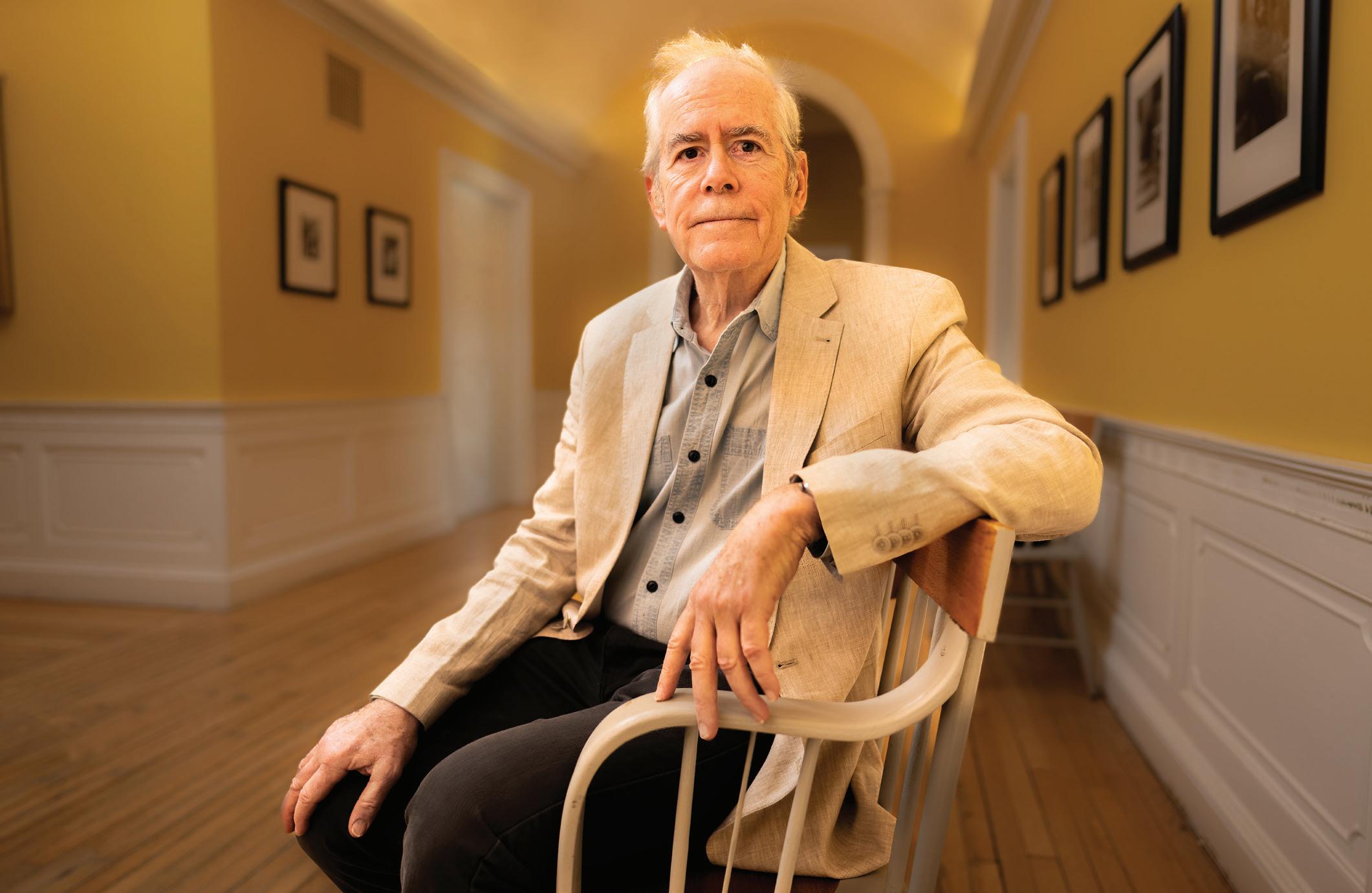
Retirement Plans: With, as O’Connor says, “teaching in my blood,” he plans to continue with new and different part-time educational opportunities. He also looks forward to more writing and scholarly work, which would include a more thorough reading of Joyce’s Finnegans Wake, a novel O’Connor calls “one of the most ambitious and richly complex books ever written.”
Nearly four decades ago, Kevin O’Connor found in Andover a special place where he could surround himself with ambitious people who shared his passion for literature. Since then, he has taught the gamut of English classes to students in all grades, helping them to develop their writing, analytical, and research skills.
“I think the reason I came to Andover and stayed as long as I did,” says O’Connor, “has been because of my interaction with students in the classroom. Literature is most meaningful when it brings people together.”
Many former students say they appreciate O’Connor for developing their self-confidence, providing guidance, challenging them to improve, and—most importantly—for introducing them to Irish poetry and literature.
“Seamus Heaney, Yeats, and Joyce remain faithful companions,” says Liam Fortin ’14, “and I have Mr. O’Connor to thank for that.”
Ava Ratcliff ’21 says O’Connor’s classes provided some of the most inspiring and challenging experiences of her time at Andover. “Mr. O’Connor’s classes on James Joyce changed my life,” she says. “His confidence in his students as readers and his willingness to consider our ideas, no matter how strange or flat-out wrong, meant a lot to me. I really appreciated how he always wanted to work with his students as scholars, not just lecture to us.”
O’Connor’s influence even inspired Jennifer Renaud Bauer ’93 to become a high school teacher and then a college professor. “I had the confidence and belief in myself because of the belief Kevin had in me, and that has been passed on to my own students,” says Bauer. “Because of him, I experienced and recognized the powerful effect a teacher can have on the trajectory of their students’ lives.”
“Literature makes life more interesting,” professes O’Connor. “You see more, you feel more... it makes us more human.”
30 ANDOVER | SUMMER 2023
Olander Deborah M. L
Instructor in Mathematics, Statistics, and Computer Science
Years at PA: 21
DEI: One of Olander’s DEI initiatives included helping to launch AWARE five years ago. Today the program welcomes about 60 employees in its yearlong group sessions and sends regular informative emails to a large network of adults. Olander hopes the lessons learned will have a ripple effect. “Some of my colleagues take what they learn in AWARE and it shapes their coaching, their teaching, how they interact with kids in the dorm,” she says.
Additional Roles: Olander worked for years as assistant dean for scheduling and in the Academic Skills Center. As a commuter herself, Olander bonded with students as a day student advisor, watching them grow from shy, uncertain juniors into confident, savvy seniors.
Retirement Plans: Olander plans to spend more time with her two children and two young grandchildren. She hopes to do more reading, cooking, skiing, hiking, and traveling, including a trip to Copenhagen and a sailing excursion to the French Polynesian islands.
eaving a positive impact. What else could a teacher hope for? As a math teacher and champion of equity and inclusion, Deb Olander has done just that. And more.
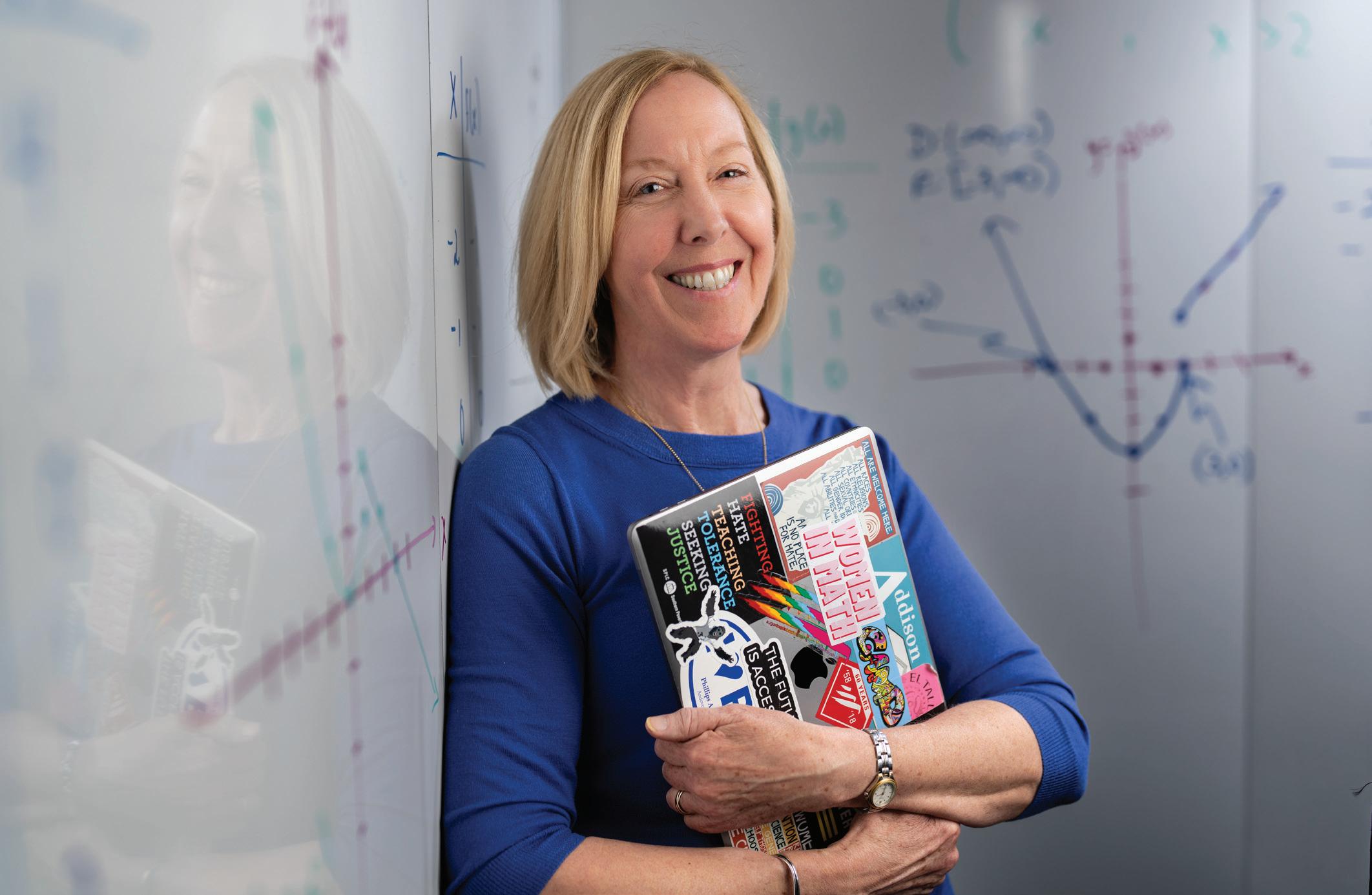
For more than two decades, Olander taught various sections of math, from entry level through AP calculus. She wanted students to understand not only the everyday use of math, but also to learn about mathematicians and their work. Olander did this by encouraging students to research different experts and by posting weekly profiles on mathematicians such as Lonnie Johnson, a Black aerospace engineer who worked at NASA’s Jet Propulsion Lab and invented the Super Soaker pressurized toy water gun.
“I love helping students see how math shows up in the world today,” says Olander. “I try to get students to see math in a broad range of fields—sustainability, sports analytics, social justice, and more.”
A key focus for Olander was to build student confidence, normalize asking for help, and present mistakes as learning opportunities. Students appreciated her caring nature and guidance. “Your unique teaching style, your care for your students, and your lightheartedness single-handedly made your class one of the most enjoyable classes I had,” says Ryan Saboia ’22. “You also helped us connect a seemingly abstract subject in calculus with real-world issues...This is, quintessentially, the Andover experience to me.”
About halfway into her Andover tenure, Olander began to delve more deeply into issues of diversity, equity, inclusion, and justice. Attending workshops and conferences, reading, and studying, Olander learned how to be a more culturally responsive teacher. “I was then better able to focus on creating a classroom community where students want to be—and for them to feel comfortable and have fun with one another while they’re learning,” she says.
Olander was instrumental in developing the Andover White Anti-Racist Education (AWARE) group, which aims to educate and mobilize Andover adults to create a community based on justice and equity. Colleagues commend Olander’s commitment to diversity, equity, and inclusion (DEI) initiatives. “I have been inspired by Deb’s wisdom, passion, and actions,” says Kate Dolan, associate dean of students and residential life. “Deb has made an indelible impact on Andover. What a positive difference she has made in so many lives.”
31
Wilkin Gregory J. W
Instructor in English
Years at PA: 43
A Love of Books: Wilkin has been a reviewer of literary fiction, memoirs, biographies, and tennis books for the New York Journal of Books and is a member of the National Book Critics Circle. In 2012, he published The Rabbit’s Suffering Changes, which is based on the true story of tennis pro Bunny Austin.
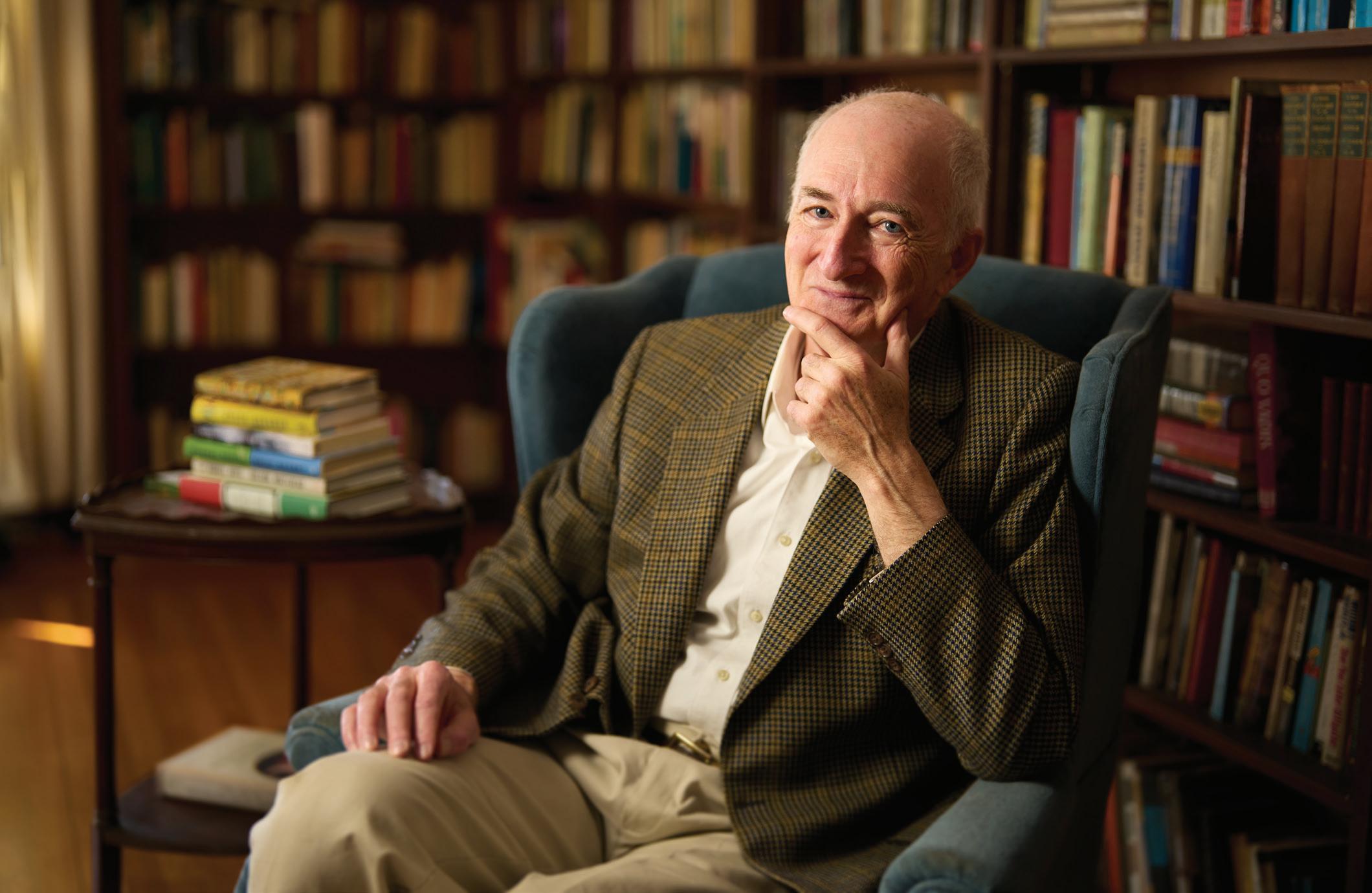
Family Ties: Wilkin raised five children on campus—Ann ’05, Joseph ’08, Henry ’09, Thomas ’20, and Helen. The kids ate thousands of meals together in Paresky Commons and then would run off to play with other faculty children. “It was a neat village to be involved in,” he says.
Retirement Plans: Now living in Lewiston, Maine, Wilkin hopes to finish writing a book he’s calling The Templar Agenda. The book is focused on the Templars and the Grail and is based on the thesis he wrote to earn a PhD in medieval studies from the University of Toronto.
hen Greg Wilkin was in college, he had two English professors who had a profound impact on his life. “They lived for good writing,” he says. “I decided I wanted to pass that on and make that my career.”
Arriving at Andover just seven years after Phillips Academy and Abbot Academy merged, Wilkin expected he would finish his PhD and then teach at a university. “But by the time I had spent a year in the company of Tom Regan, Phil Zaeder, Paul Kalkstein, and Jean St. Pierre,” he says, “I knew I wanted to be a lifer at Andover.”
Wilkin has taught every required English course as well as electives in creative writing, Chaucer’s The Canterbury Tales, and Arthurian romance. The most fun class to teach, he says, was Feasts and Fools, a course he created that has origins in Shakespeare. “I’ve taught a version of that course since 1991. It’s an eye-opener, full of surprises. Students give presentations and learn new perspectives and values from their classmates.”
His favorite moment in teaching? “Seeing the light of discovery in a student’s eyes.”
“I will always be grateful to Mr. Wilkin for making literature feel alive and relevant,” says Allen Soong ’92. “I remember being transfixed by his voice as he read the prologue to The Canterbury Tales in the original middle English and chuckling at his description of the Miller. Mr. Wilkin’s palpable enthusiasm for the material he taught, whether it was Chaucer or Chinua Achebe, was infectious and has stayed with me more than 30 years on from English 300.”
A tennis aficionado, Wilkin coached varsity tennis for nearly 40 years. During that time, the boys’ team won New England titles in 1989, 1990, 2011, and 2013.
One of Wilkin’s best experiences was working with the PALS outreach program. He assisted director Tom Cone, now faculty emeritus, for many years, then took over as PALS director from 2013 to 2017. Taking a bus to Lawrence to pick up enthusiastic middle school students and bring them to campus to work with high school volunteers was “magical,” he says. “To see the fire ignite in those youngsters was a great thrill.”
32 ANDOVER | SUMMER 2023
ARTIFICIAL INTELLIGENCE
The future is here
BY ALLYSON IRISH
In 1984’s hit action movie The Terminator, artificial intelligence (AI) is represented by Skynet, a hostile neural network that has gained self-awareness and attempts to wipe out humankind. A scary proposition for sure, and one that has been repeated as a trope in literature, art, and theater. But from digital voice assistants to banking and travel aids, AI has become a helpful part of our everyday lives. And now the latest technology advancements are focusing on intelligence that rivals or surpasses human capabilities.
This is precisely what Erik Campano ’95 has been studying for the better part of the past decade, starting with his master’s thesis on the ethics of artificial intelligence in emergency medicine.
“We’re just at the beginning of the AI revolution,” says Campano, “and already we see practical places where AI is going to make a huge difference.”
In November 2022, the company OpenAI released a demo of ChatGPT, an AI language model that is able to have human-like conversations and can assist with gathering and summarizing massive amounts of information.
Campano has taught classes on AI in society at Umeå University in Sweden and is a member of an international coalition of researchers considering the impact of AI on all aspects of humanity. He says there are many positive applications of the technology, such as enabling medical clinicians to double-check their assessments in real time.
“In emergency medicine, AI is making a big difference in situations where patients come in with unspecified chest pain,” says Campano. “It’s a tricky puzzle for clinicians to figure this out because there are so many possibilities, and they can only get so much data from the patient. AI systems can take in lots of variables and make a diagnosis much more quickly and correctly.”
On the flip side, there are also potential dangers with AI, including the possibility of data bias.
“If you’re going to train a machine based on a
whole bunch of data, that data set has to be a fair and comprehensive sample of the phenomenon that you’re trying to understand. Campano acknowledges that, “unfortunately, we have many examples of biased data sets. We have to be careful to make sure that we’re using data that can’t reproduce prejudicial outcomes.”
Data gathering and analysis are two ways in which Nicholas Zufelt, a PA instructor in mathematics, statistics, and computer science, believes AI and ChatGPT can benefit students and augment teaching. Although there are some who raise concerns about the potential increase in plagiarism and students using these tools to gain an unfair advantage, Zufelt is optimistic.
“Every teacher has their own philosophy around the skills and content knowledge that students need to have when they leave the classroom,” Zufelt says. “We should be looking at the way those skills do or do not overlap with AI and how we can help our students become better problem solvers.”
Zufelt not only accepts the introduction of AI in education, but also talks about it regularly with students and has even included AI as part of his class. Last December, just one month after ChatGPT had been introduced, Zufelt led a lesson investigating code written and annotated by AI. “And then we talked about it as a class,” Zufelt says. “What does this mean for you as students? If a machine can do this for us, then why be a student? What is the intrinsic value of learning? I think it is important to have explicit conversations with our students so they understand what is expected of them and how they may be able to use these tools effectively.”
For now, the understanding, application, and regulation of AI is still “a bit like the Wild West,” Zufelt says. Campano agrees. There are many aspects and implications of AI that we have yet to fully grasp.
“I do think,” says Campano, “that within our lifetimes we’re really going to have to start asking the question, ‘Where is the boundary between the human brain and the technology that the human brain employs all the time?’ And as the technology becomes more ubiquitous, those boundaries become even more blurred.”
AT ISSUE
ISTOCK: ILYA LUKICHEV 33
Nicholas Zufelt and Kiran Bhardwaj, instructor in philosophy and religious studies, are both Tang Institute fellows studying the relationship between ethics and computer science. Read more online.
Finis origine pendet


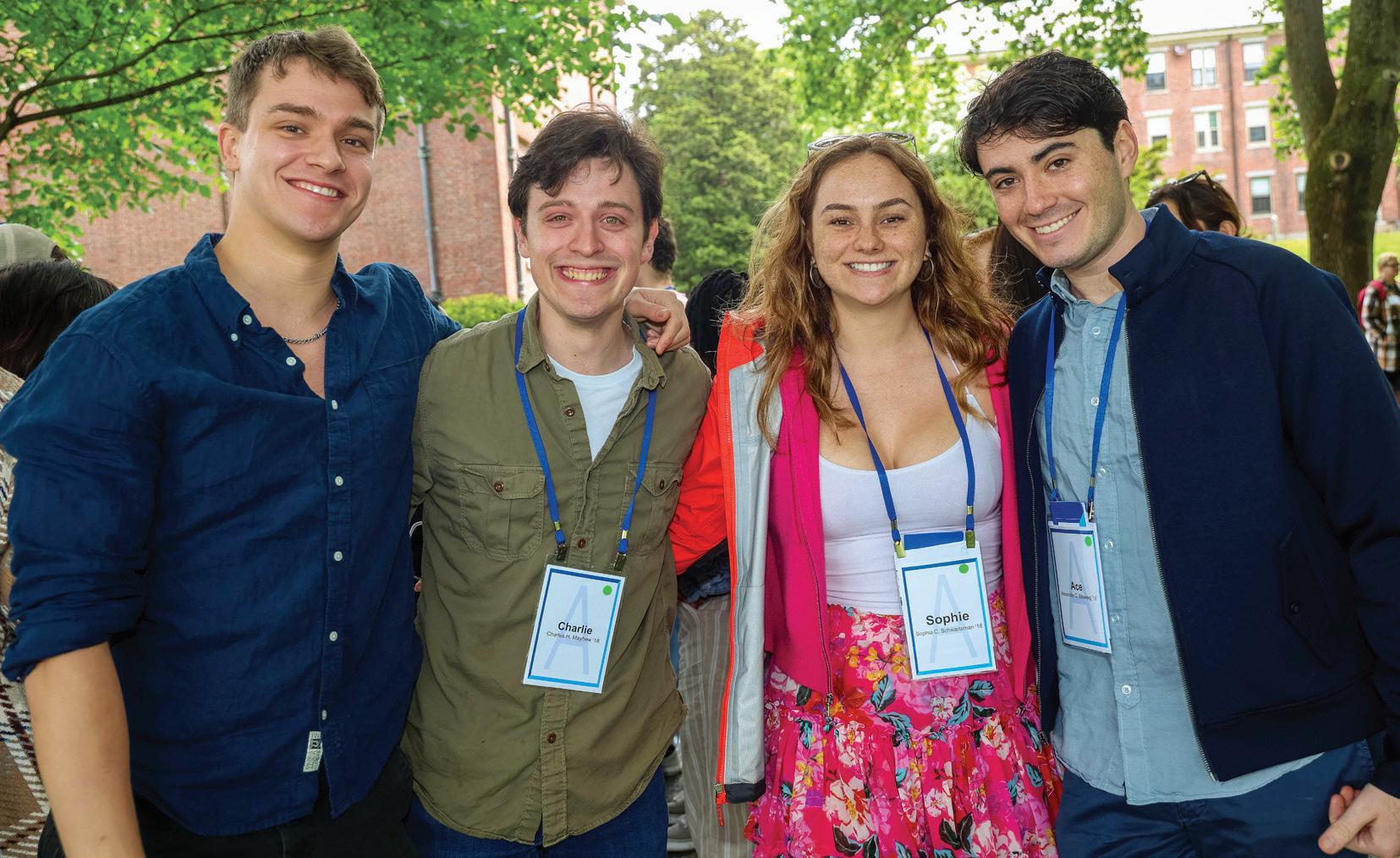
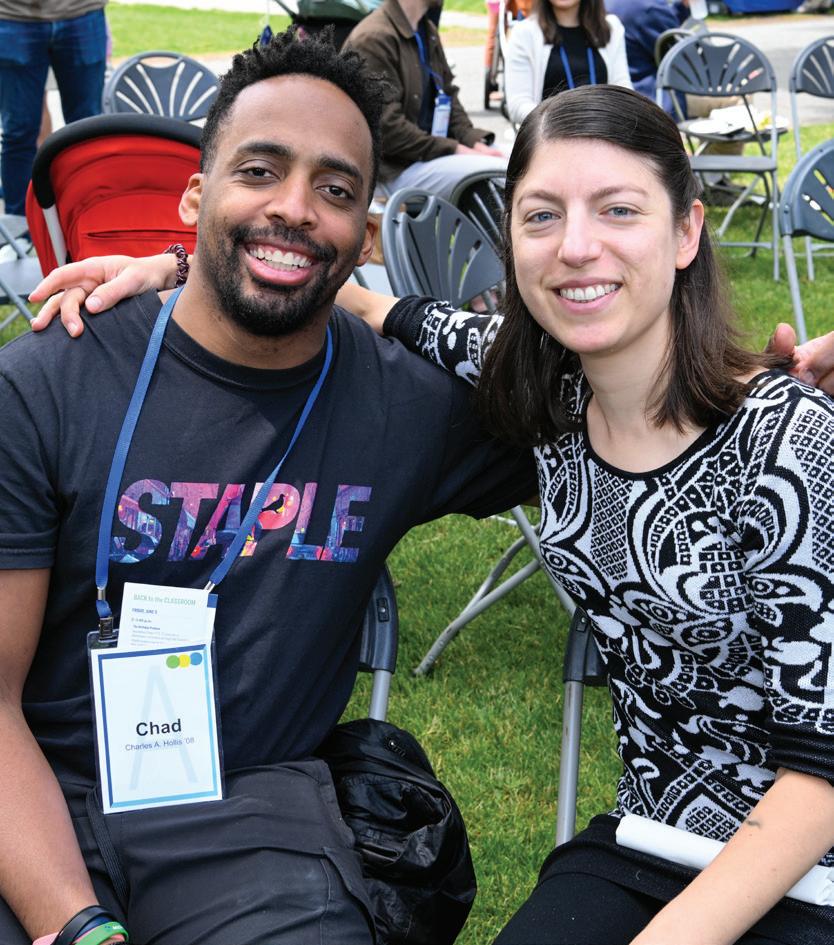
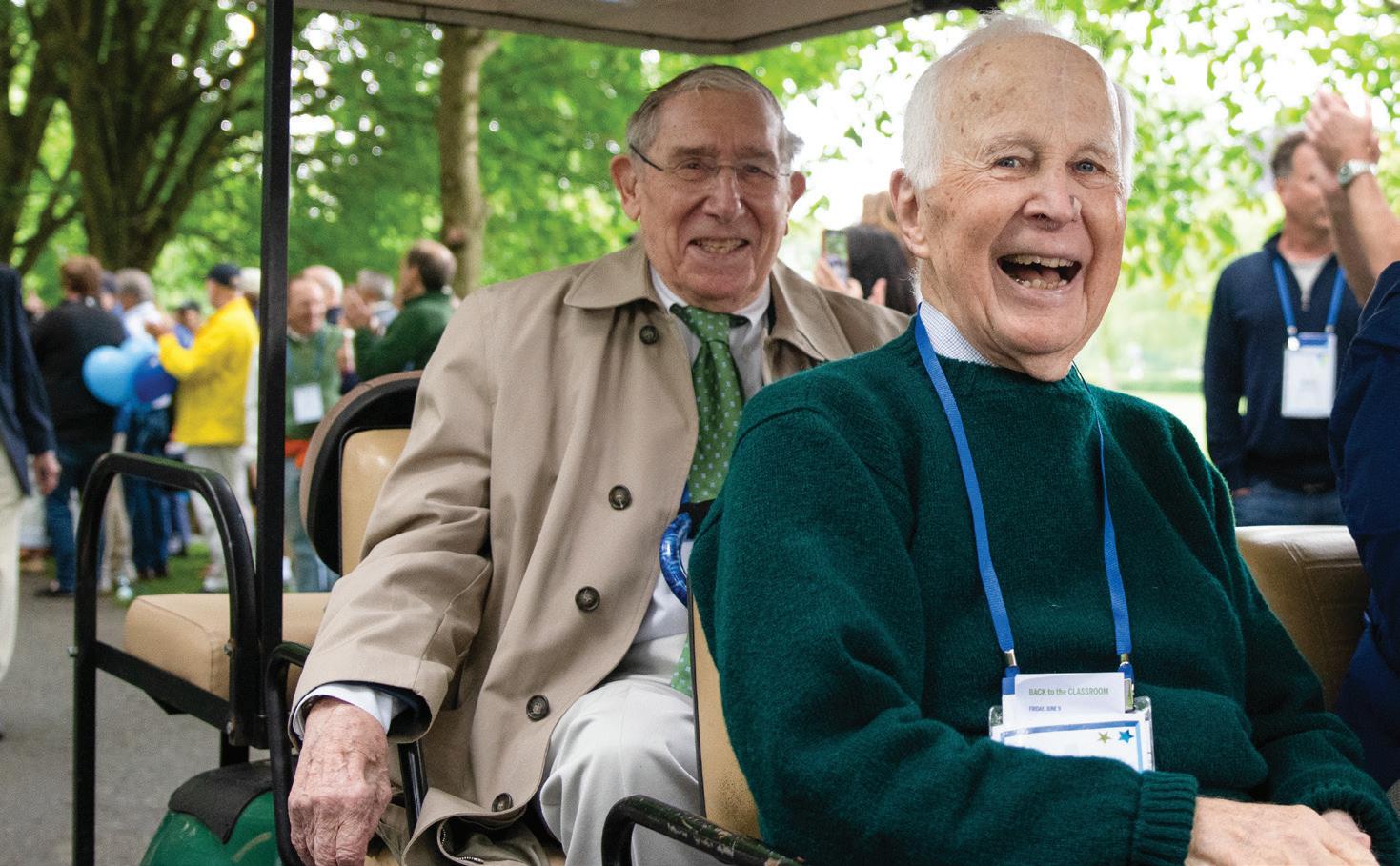
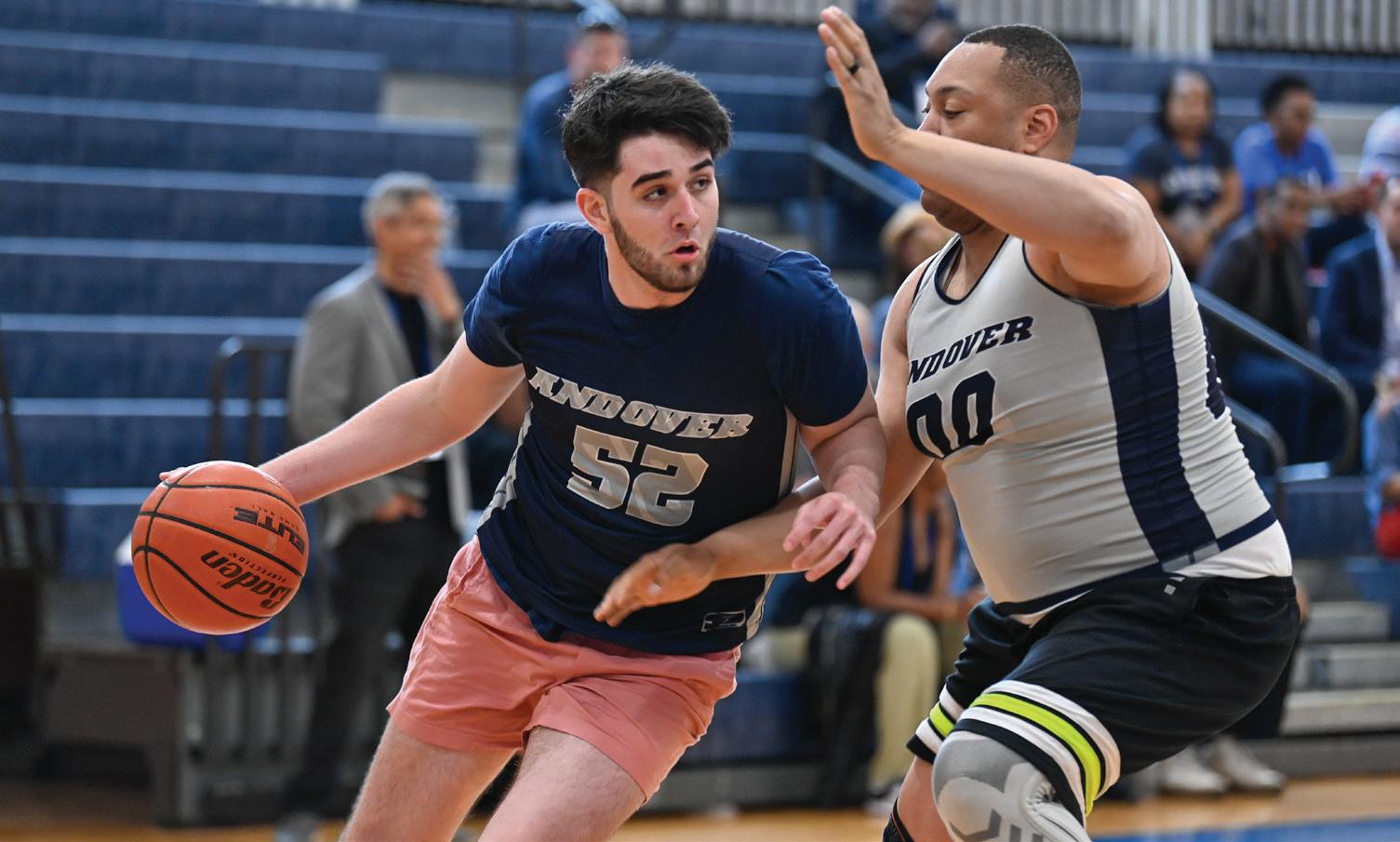
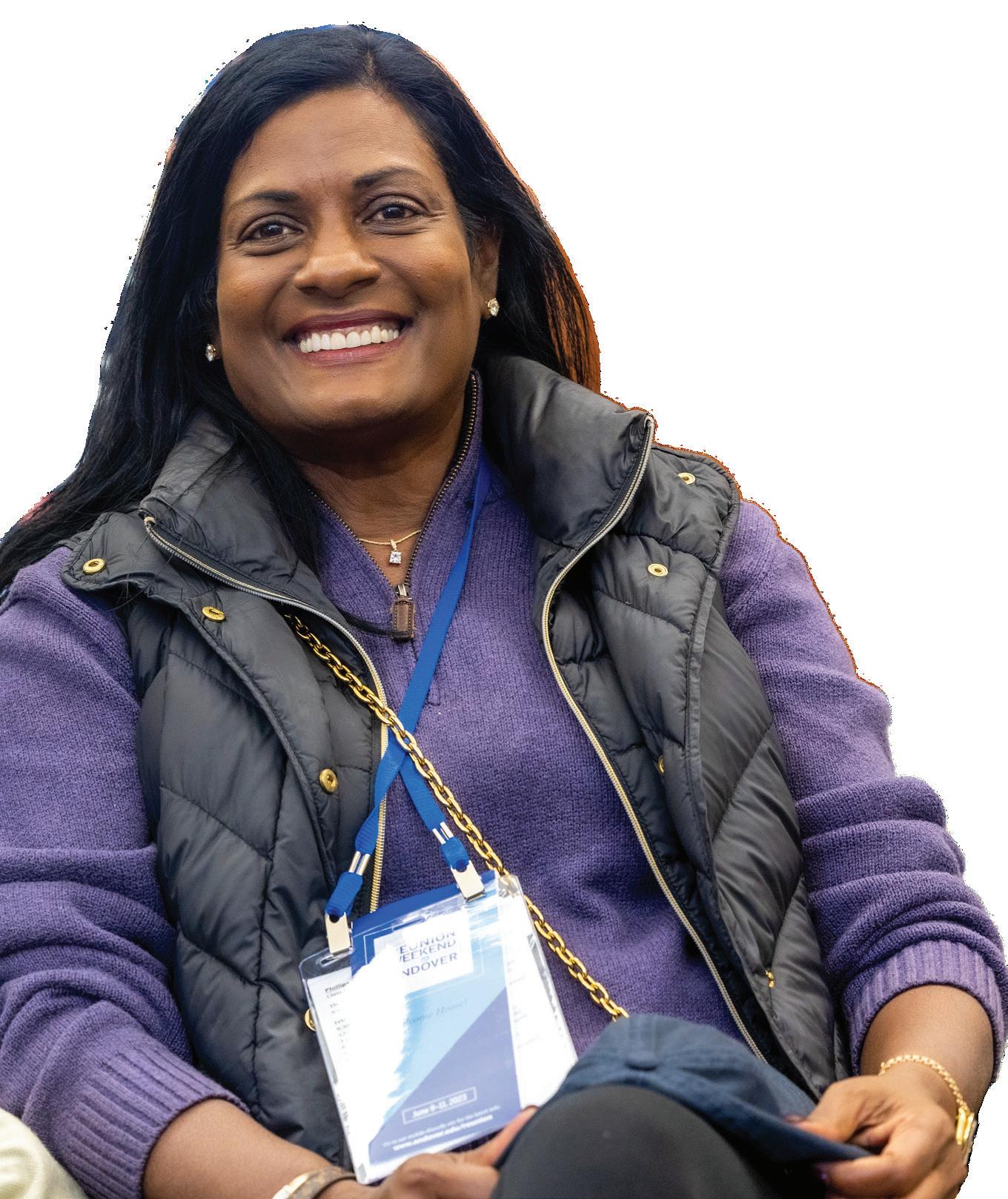
The end depends on the beginning. For thousands of alumni, the beginning was here, in the halls of Bulfinch, Sam Phil, and G.W., in Cochran Chapel, Borden Gym, and around the Abbot Circle. Wherever you’ve been, wherever you’re going next, Reunion Weekend is about coming home, reconnecting with friends, reliving your favorite memories—and making new ones. #AndoverForLife

REUNION 2023
34 ANDOVER
SUMMER 2023
PHOTOS BY GIL TALBOT, BETHANY VERSOY, AND TORY WESNOFSKE
|


35
Shaking up the art world
BY CHRISTINE YU ’94
Sarah Wendell Sherrill ’04 joined Christie’s, the famed British auction house, during the financial crisis of 2008. Not exactly great timing to enter the world of high-end art and luxury goods.
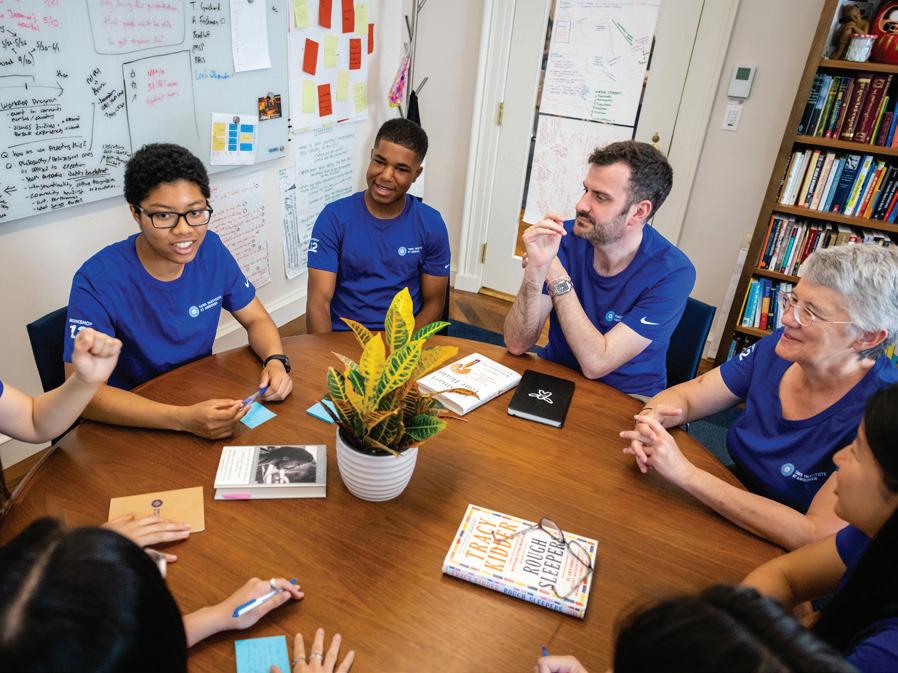
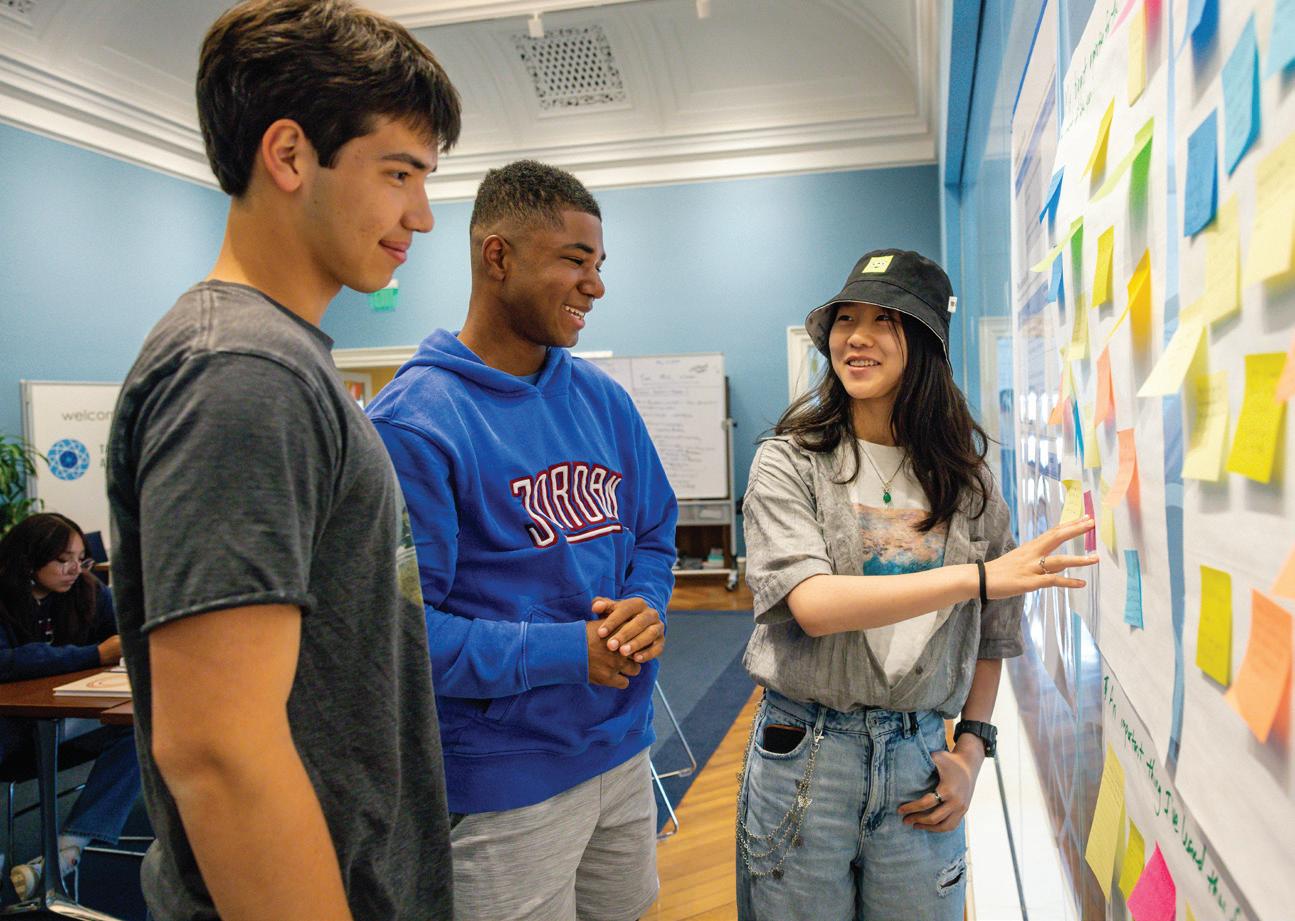
Andover encouraged Charlie Jarvis ’15 to be a multidimensional learner, drawing together her natural aptitude in math and science with her interests in comedy writing and filmmaking.
Still, Christie’s sold a Picasso for $106 million in 2010; it was the first painting to surpass $100 million.
“Despite the economy, art was becoming a major asset class, and I was lucky to have a front row seat,” says Wendell Sherrill, who rose to become one of the company’s youngest vice presidents and managed its Post-War & Contemporary Art department in New York. At the same time, she began noticing that artists and/or their estates often were not receiving a cut of the
Charlie Jarvis ’15 had a similar “aha” moment. As an undergraduate at Stanford University, she met Max Kendrick, son of sculptor Mel

Kendrick ’67. Max was trying to solve the problem of artist compensation, specifically around resale royalties. “I was shocked to realize that all of these works were going for millions of dollars and that the artist isn’t actually included from a financial perspective,” Jarvis says.
Wendell Sherrill and Jarvis both recognized that the art market was ripe for innovation. By leveraging new technology, the two alumnae have developed novel ownership models that not only pay artists equitably, but also preserve artists and creators as key stakeholders. Jarvis co-founded the art tech company Fairchain in 2019 with Max Kendrick. The company uses blockchain technology to establish and track authenticity and ownership of art and collectibles. It also gives artists the opportunity to build in the terms of commissions from future sales. It’s a relatively simple ownership infrastructure with an added layer of security and trust.
“We realized there is a way to build a solution that benefits all members of the ecosystem, while also respecting the norms of the market,” Jarvis
ALUMNI UP CLOSE
JORDAN TIBERIO
“I was shocked to realize that all of these works were going for millions of dollars and that the artist isn’t actually included from a financial perspective.”
36 ANDOVER | SUMMER 2023
—CHARLIE JARVIS ’15
says. For collectors, it protects against fraud and disputes, an increasing problem in the global art world. For galleries, it offers more economic sustainability and helps with the administrative side of their operation.
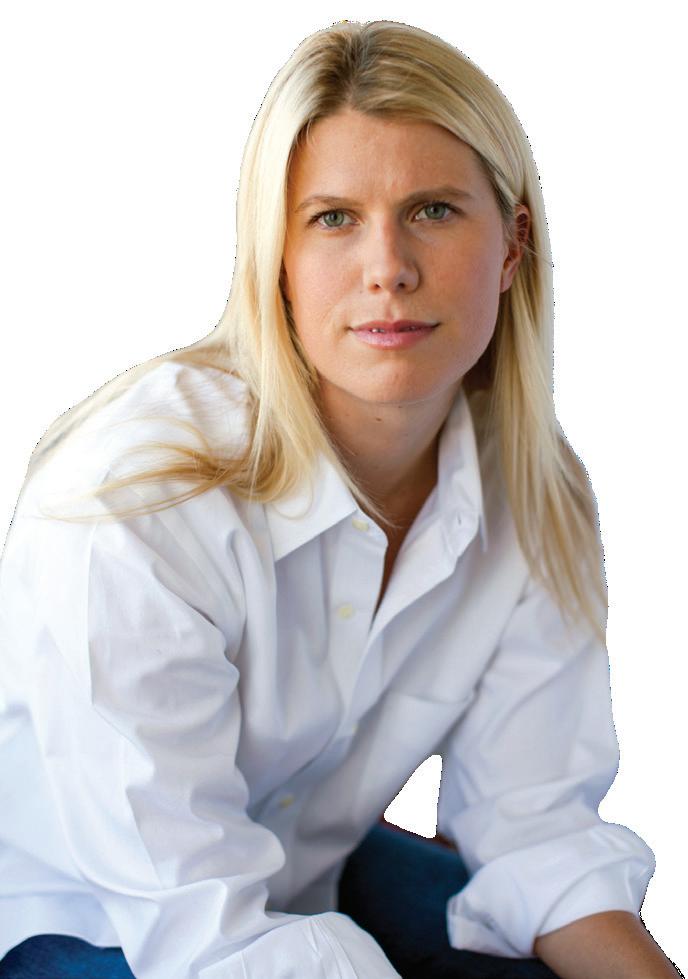
Fairchain’s technology also allows more people to participate as collectors, particularly those new to the market and those who may not have the connections that are valued in a handshake industry like art.
Likewise, Wendell Sherrill is creating pathways for artists to retain ownership of their work. Today, artists and creators are becoming brands; they are connecting directly with consumers and using their intellectual property to extend the value of their work. It’s an exciting time.
“In Silicon Valley, where I grew up, we hold the view that the artist is founder,” Wendell Sherrill says. “I start a company and capitalize it. I am not giving away 100 percent of my company.”
In 2018, Wendell Sherrill co-founded Lobus to bring cultural assets to market as a new type of alternative investment with the creator at the center. Lobus works with visual artists as well as musicians,
filmmakers, and those who develop other creative content, helping them retain ownership and capitalize at scale.
“We believe artists are founders of some of the world’s most valuable assets,” Wendell Sherrill says. “Lobus is empowering them to be the true founders of the work they produce. One day, it will be as easy to buy a share of Hamilton as it is to buy a share of Apple.”
Christine Yu ’94 is an award-winning journalist who covers sports, science, and health and is the author of Up to Speed: The Groundbreaking Science of Women Athletes Her writing has appeared in the Washington Post, Time, Outside, and other publications.
Sarah Wendell Sherrill ’04 says her appreciation of the artist as creator was born at Andover. In particular, she credits Ruth Quattlebaum’s art history class, which emphasized the artist’s intent and the social context behind the work as much as the art itself.
COURTESY PHOTO
“ We believe artists are founders of some of the world’s most valuable assets.”
37
—SARAH WENDELL SHERRILL ’04
Royal Recognition for Lucy Maguire ’08
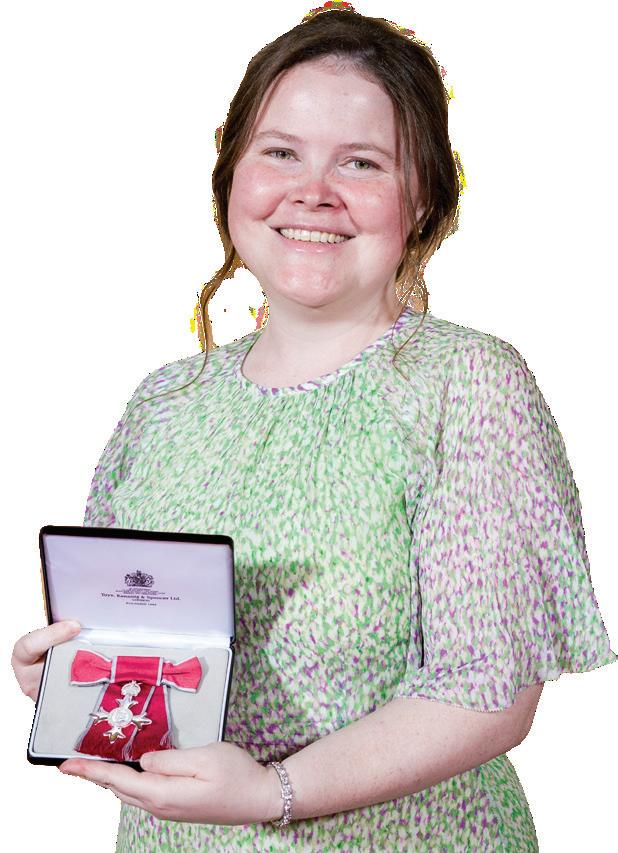
Youth music program leader honored by King Charles III
BY NANCY HITCHCOCK
From a very young age, most everything Lucy Maguire ’08 immersed herself in revolved around making and teaching music—from street performing every summer for more than 15 years starting at age 6 to playing the organ at All-School Meeting at PA to working 16 hours a day at a “music for social action” program called Nucleo.
Maguire launched Nucleo in London in 2013 to offer ensemble-based music opportunities for underrepresented children and young adults. In January, King Charles III appointed Maguire—Nucleo CEO and founder—as a “Member of the Most Excellent Order of the British Empire” (MBE) in His Majesty’s New Year’s honours list.

“The concept of Nucleo is that you can use music making as a way to create social change and transformative learning and life experiences for children,” says Maguire. “The idea, which is based on El Sistema [a music education program founded in Venezuela in 1975], is to change people’s lives and communities through music.”
Nucleo, which started with just four students, now offers intense after-school music lessons to about 400 students a year. By practicing their instruments and working hard, students improve their self-esteem, motivation, self-confidence, and social skills.
Maguire began her own musical journey at age 3 when she took violin lessons and then learned to play the piano, trumpet, and organ. To gain performance experience, she and her older brother started busking when she was only 6. “My mom couldn’t get us to practice during summer vacations, so she got us street performers permits,” she says.
When Maguire came to Andover as a ninth grader, her life continued to revolve around music. She taught faculty children the violin, volunteered with the AndoverLawrence Strings community engagement
program for four years, and during her senior year started her own orchestra with friends, called Unaccompanied Minors.
At Andover, Maguire realized that she was interested in the musical community and group music making. She also learned that she enjoyed teaching, thanks in large part to longtime music instructor William E. Thomas, who was the conductor of the Academy’s orchestra and Cantata Choir.
“Mr. Thomas was very important in influencing my future,” she says. “He put me into teaching scenarios for the first time. He was involved with Project STEP, which provides classical music training to diverse communities. I wish he could have known about what I am doing now; I think he’d like it. He really liked young musicians—and I have some great ones!”
After Andover, Maguire chose an unconventional path. She drove a rickshaw in London, spent a semester at the New England Conservatory in Boston, explored music for social action programs in Columbia and Peru, and lived in Venezuela for a year to play music and teach at El Sistema.
“Eventually, I decided to come back to London to set up Nucleo,” she says. “It’s something that my local community didn’t have. I hope to be giving students what I got from Andover, along with the network and experience of being part of an interconnected musical community.”
ALUMNI UP CLOSE IVÁN GONZALEZ COURTESY: WINDSOR CASTLE
Above: At the June 14 investiture at Windsor Castle, Princess Anne presented Lucy Maguire with the MBE award for her “services to children and young people.”
38 ANDOVER | SUMMER 2023
Below: Nucleo, Maguire’s music program, celebrated its 10th anniversary this year.
LIGHTBULB IDEA
OLADAYO ADEWOLE ’10 A
 BY CHRISTINE YU ’94
Take a nighttime walk around any college campus and you might notice that, despite it being after class hours, the lights are on in almost every building. And it’s not just college campuses. Office buildings often twinkle against the dark sky too.
Every year the United States spends approximately $30 billion on wasted electricity. While automated energysaving systems exist—such as motion sensor lights—they can be expensive to install and require that existing buildings be retrofitted. Plus, saving energy isn’t always a corporate priority.
What if there were a simpler solution?

That’s what Oladayo “Dayo” Adewole ’10 has developed at InstaHub, a company he co-founded in 2016 and for which he serves as chief technology officer. “In a world that is increasingly experiencing the effects of climate change, it’s important for companies to find more sustainable ways to operate,” he says.
InstaHub makes energy conservation technology simple, accessible, and scalable. Its flagship product is an occupancy sensor that snaps on to existing light switches and automatically turns off the lights when someone forgets to.
More recently, the company developed an easy-to-install datalogger that collects ambient environmental information, such as temperature, humidity, occupancy, and lighting. “By gathering data and reviewing it over time, you can look at the trends within your building,” Adewole says. Companies can then identify areas for improvement and evaluate the impact of energy-saving measures.
Adewole juggles his job at InstaHub with continued academic research. After Andover, he earned degrees in bioengineering and robotics from the University of Pennsylvania, culminating in a doctorate. He’s now working on developing neural interfaces—devices that communicate between the human nervous system and an external device—to improve prosthetics for sensory input. One project in the works could eventually improve cochlear implants and help restore hearing to the hearing impaired.
DICK SHINARY
Dictionary: A reference book containing words and their meanings
Former stockbroker Carey Cook and his wife developed myVocabulary.com, a website that provides free vocabulary lesson plans and games for teachers. The grandson of Chicago Tribune Pulitzer Prize–winning political cartoonist Carey Orr, Cook also dabbles in illustration and has created a series of “Vocabulary University” faculty members, including Dick Shinary (dictionary!), pictured above. To read more, visit andover.edu/magazine
“My favorite word is ‘syzygy.’ It’s an astronomical term that means the alignment of three celestial objects. It’s a fun word to use and it looks otherworldly!”
—CAREY COOK ’61
COURTESY PHOTO
39
One Quiet Donation at a Time
Anonymous giving helps to illuminate Andover’s past and shape its future
BY KRISTIN BAIR O’KEEFFE
The dedication of the Chandler-Wormley Vista this past spring brought to light the power of “quiet philanthropy.” The donor who made the naming possible chose to remain anonymous, and in doing so, focused attention on the intersection of Andover’s complicated history and its enduring ideals.
“We gather here together because of the generosity of a donor who believes, as we do, that our past matters a great deal,” said Head of School Raynard S. Kington MD, PhD, P’24, ’27. “And how we recognize that past speaks to our values and who we have become as a school today.”
This same person joined with the school in 2018 (under the leadership of former head of school John Palfrey P’21) to establish the Richard T. Greener Quadrangle, which honors the legacy of one of America’s trailblazing advocates for racial equality. A member of the Phillips Academy Class of 1865 and a deeply loyal alumnus, Greener was an active and notable voice for the rights of Black Americans.
Additionally, the donor had previously named Chase House in honor of Barbara Landis Chase’s 18-year leadership and her commitment to the “education of the whole student.” Chase was Andover’s first female head of school.
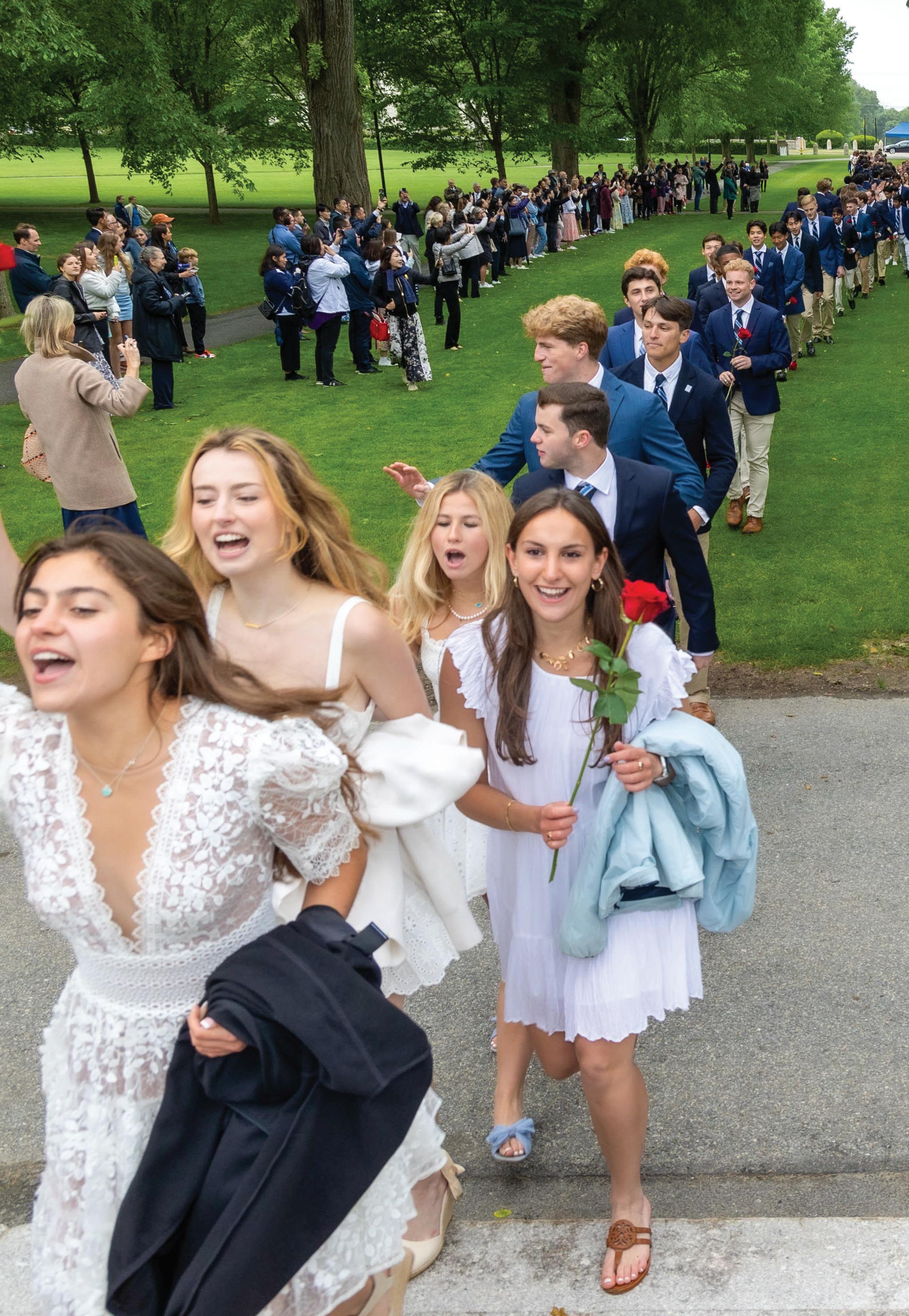
PHILANTHROPY
40 ANDOVER | SUMMER 2023
Returning to campus to speak at the Vista dedication, Palfrey admired the artistry of philanthropy. “Sometimes,” he said, “that art takes the form of using the power of one’s wealth and imagination to put a name on a front door.” He highlighted the Tang Institute, the Pan Athletic Center, and the future Falls Hall music building. “Other times, that artistry takes the form of not putting one’s name on the front door.” When a donor takes this path, he said, the honor is often passed to someone else who deserves to be known and remembered.
Other iconic buildings, including the Rebecca M. Sykes Wellness Center, were also funded by anonymous lead donors. The state-of-theart student health facility opened in 2016 and honors former associate head of school Becky Sykes P’92, ’97, ’01, who set a legendary standard for nurturing the growth and intellectual development of all students.
Follow the thread of anonymous giving and one discovers that this unassuming yet powerful approach extends to endowed scholarships, locker rooms and lobbies that laud classmates and teachers, and stretches of land that now include the Chandler-Wormley Vista.
The Vista celebrates Beth Chandler and Sheryl Wormley, the first Black alumnae of Abbot Academy and graduates of the
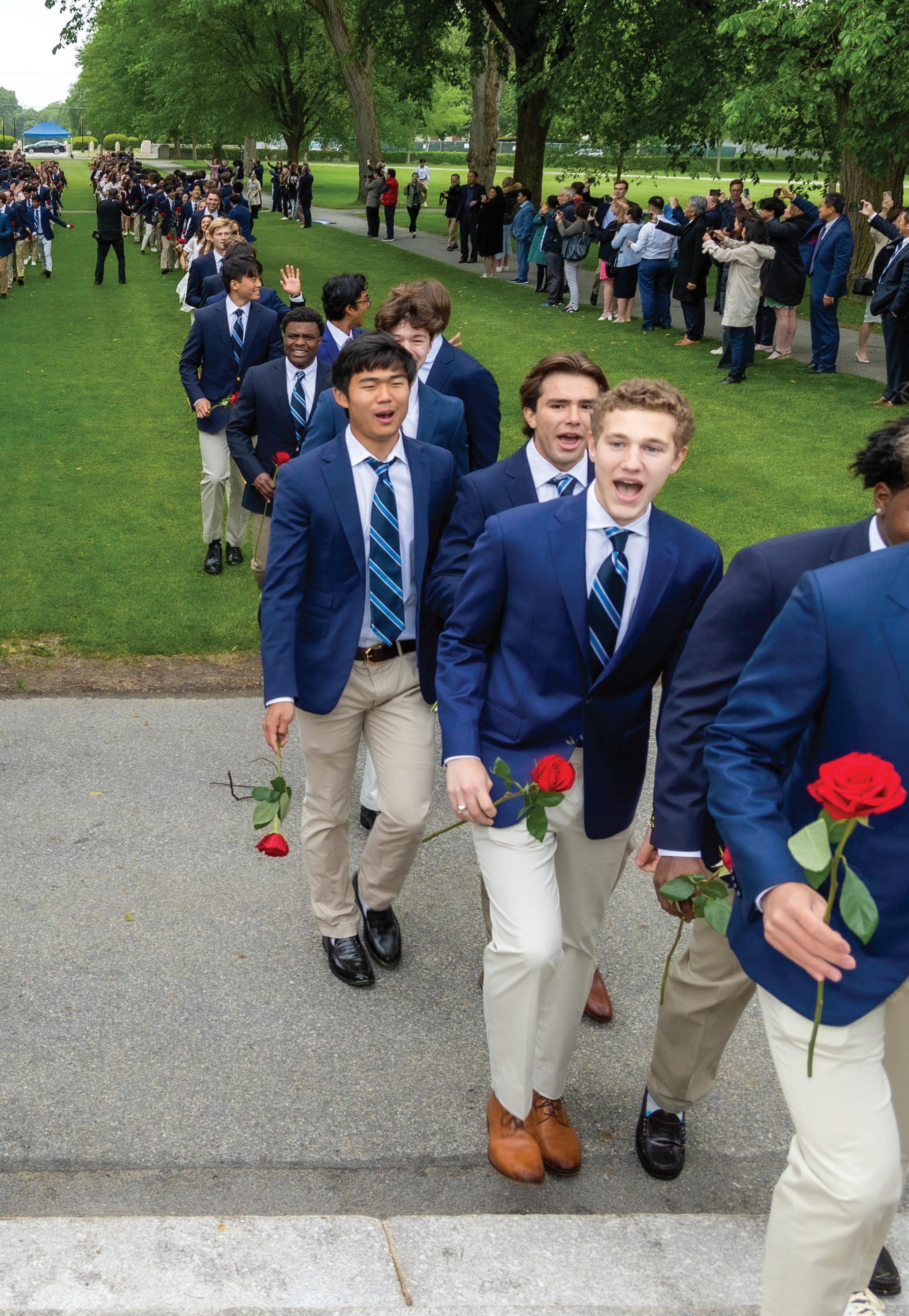
BETHANY VERSOY 41
Class of 1955. Without this gift, it is likely these two women would have remained a brief mention in Susan McIntosh Lloyd’s A Singular School: Abbot Academy, 1828–1973 . Now they will be remembered as an essential piece of the school’s history. (For more on the dedication ceremony, see page 11.)
Not surprisingly, the donor’s priorities have long been focused on equity and inclusion initiatives. “If we’re serious about creating a community of belonging,” they said, “people need to be able to see themselves in the history of Andover and Abbot.
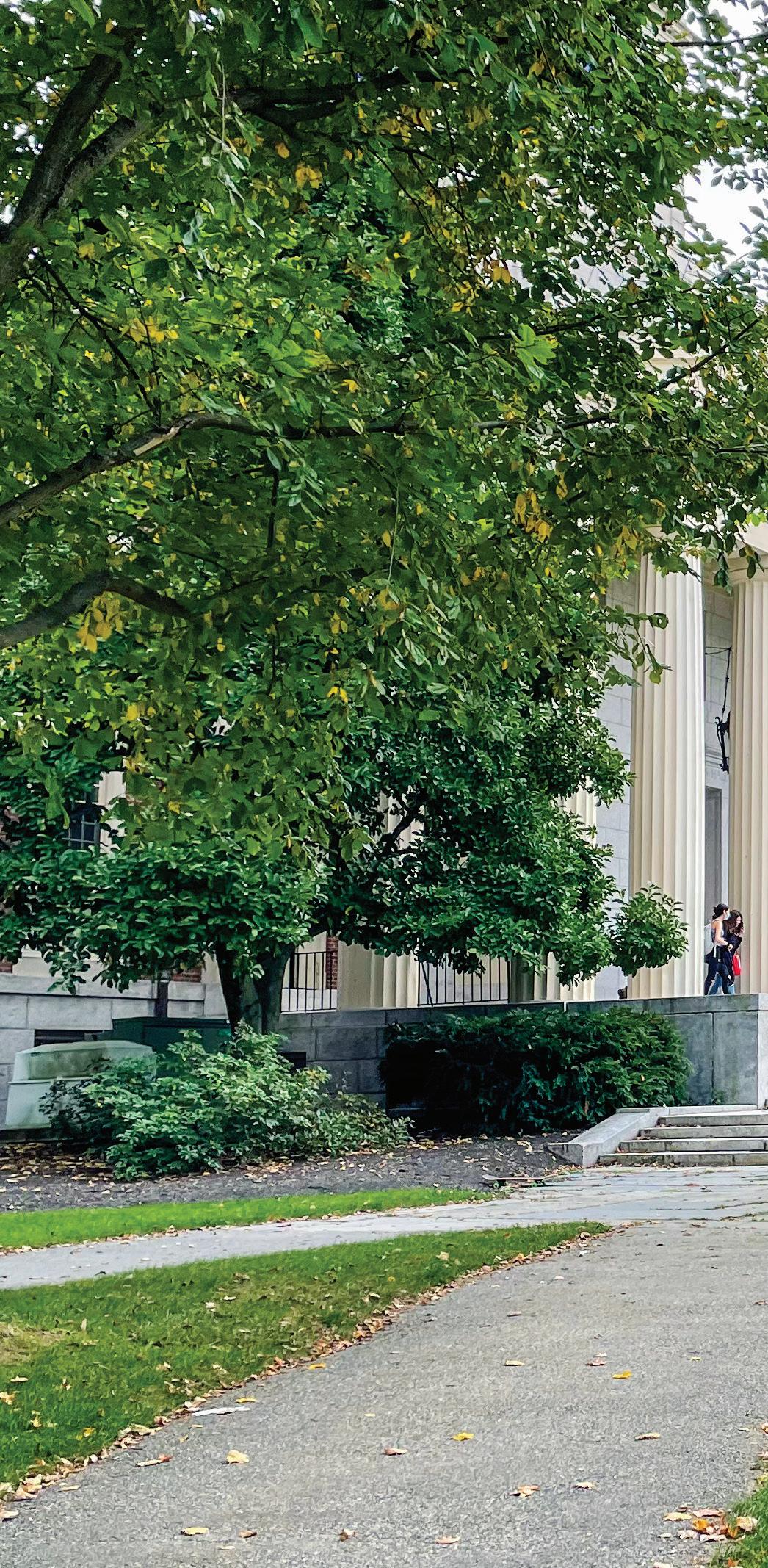
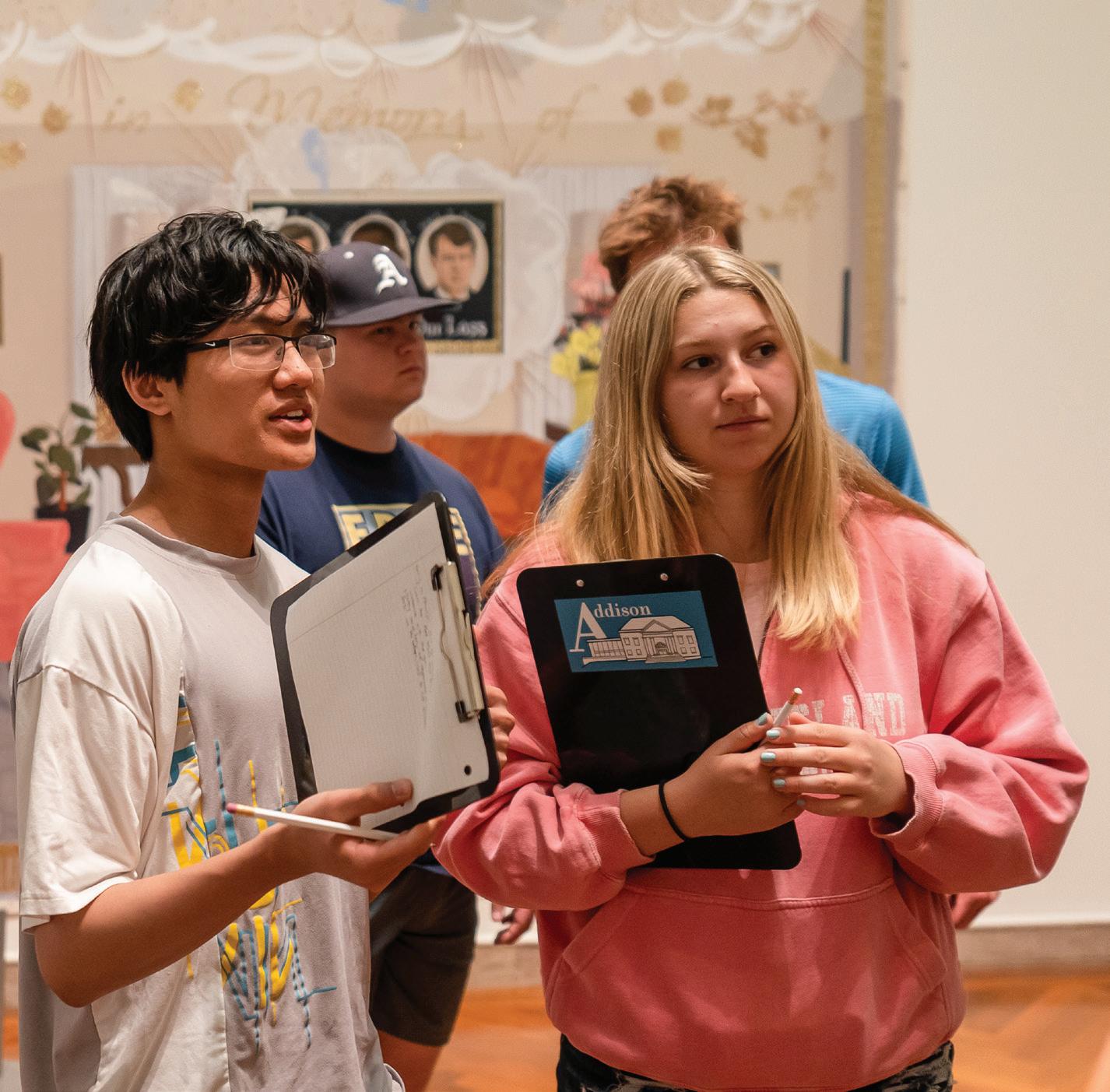
“We have always celebrated our excellence and accomplishments, and we should continue to do so. Wisely, we have also been willing to explore and reveal the parts of our past that are deeply disturbing and unappealing,” they added. “It’s a sign of Andover’s strength that we can talk openly about our failings while recognizing our institutional progress and honoring the individuals who overcame obstacles.”
Kington agreed and observed that, appropriately, both green spaces figure prominently into Andover’s traditions, most notably Commencement—when seniors process along the Chandler-Wormley Vista to the Greener Quad and take their seats in front of Samuel Phillips Hall. “It is fitting,” he said, “that our capstone ceremony to honor our newest alumni will now forever embody our expansive view of youth from every quarter.”
Of course, there are unique challenges when someone chooses to give anonymously. “The nature of this kind of gift means that it can be hard to know the intention behind it,” the donor said. “A donor doesn’t have the opportunity to tell their full story or motivation and, therefore, they risk being misunderstood.”
For this donor, the risk is worth it. They do not want to be at the center of the conversation around equity and inclusion at Andover or suggest that only this issue is worthy of recognition. Hence their decision to name other spaces for distinguished faculty and alumni who have served Andover in different ways.
FOR ONE AND ALL
Anonymous giving has a long history at Andover, and today any donation— no matter the size—can be made anonymously. In addition, any gift can be dedicated to someone who has inspired you or whom you wish to honor— a loved one, friend, faculty member, or mentor. Share your sentiment at andover.edu/ForAll.
GIL TALBOT
42 ANDOVER | SUMMER 2023
“It’s a very personal decision,” the donor said. “I totally respect that what makes sense for me may not make sense for others. All forms of giving are admirable.”
Anonymous giving continues to enhance all aspects of Academy life. Recently, another donor gave two trusts to the Addison Gallery, both for the acquisition of American art from the 20th century. The first, an endowment, will provide steady funding for years to come. And the second, designed with great flexibility, will allow the Addison director to spend the entirety if an exceptional work of art becomes available.
“The Addison has benefited from this donor’s discerning eye and generosity for decades. Building on that support, these trusts ensure the continued growth of this remarkable collection that serves the campus and greater community so well,” said Allison Kemmerer, Mary Stripp and R. Crosby Kemper Director of the Addison Gallery.
Similarly, a family whose children attended Andover has funded three fully endowed scholarships. About this benevolent gift, the donor said, “It wasn’t until we saw our son at Andover—how happy and connected he was—that we knew what made this school special. The Academy levels the playing field, and that goes well beyond socioeconomic boundaries. We want to help create an environment that is a winwin for all.”
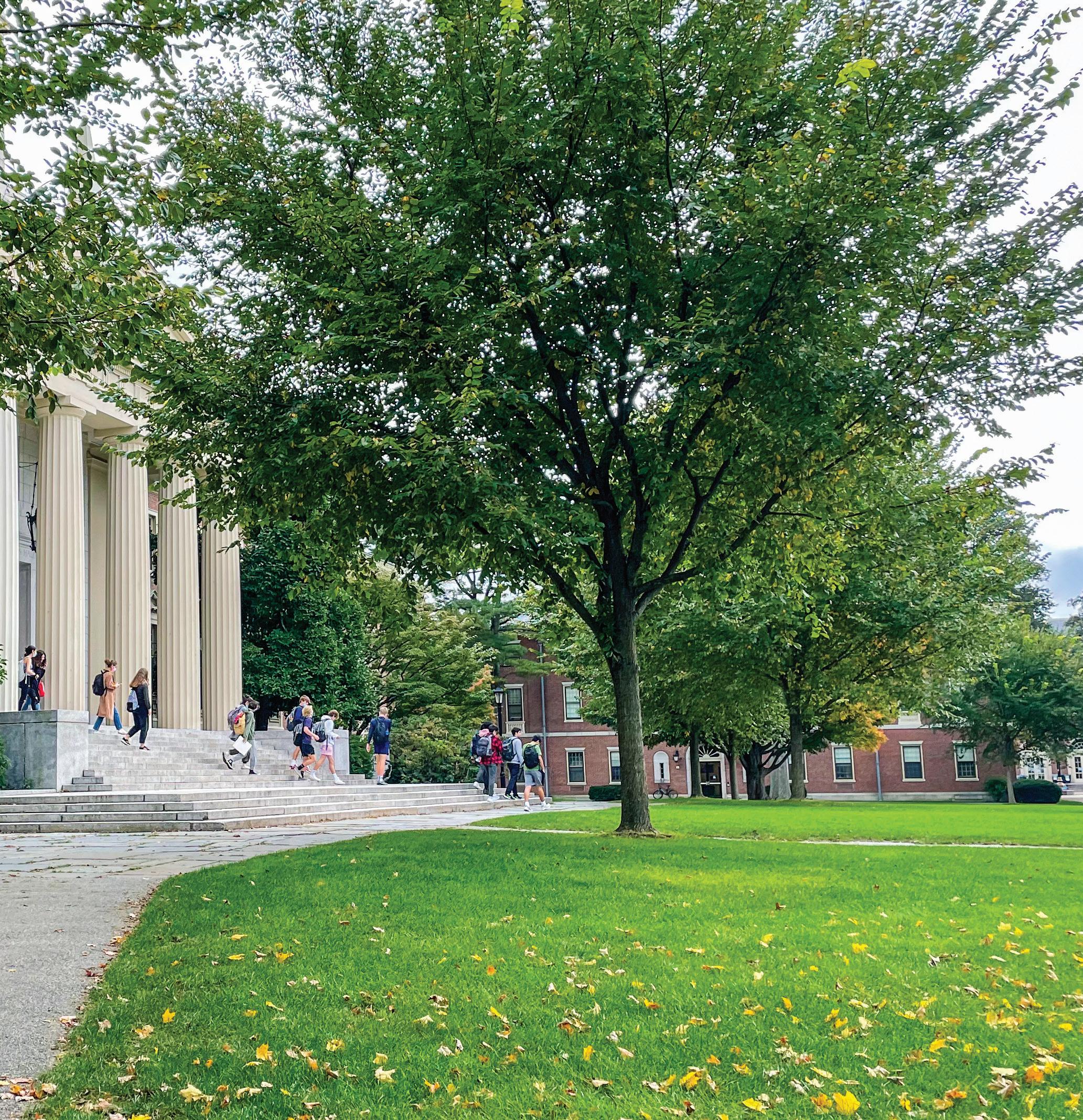

Back at the naming ceremony for the Chandler-Wormley Vista, Beth Chandler’s grandniece Lizzie Skurnick told the crowd she wasn’t surprised by the honor. “In Beth’s family, being an educational pioneer was not the exception but the norm,” she said. “The Chandler-Wormley Vista is not only a monument to Beth’s successes, but to the brilliance, kindness, and indomitable perseverance of the entire Chandler family. Andover is very lucky to have them as part of its lasting story.”
And that’s exactly what the anonymous donor—perhaps what every anonymous donor—hopes. That their gift will contribute to a story that will last.
HENRY MARTE
“If we’re serious about creating a community of belonging, people need to be able to see themselves in the history of Andover and Abbot.”
43
JESSIE WALLNER
Not for self, for others
BY ALLYSON IRISH
It’s been 72 years since Norm Allenby, Bob Doran, George Rider, and Billy Ming-Sing Lee were together on the Andover campus. The four boys enjoyed their high school years immensely, developed strong relationships, and came to appreciate the school’s values of non sibi, knowledge and goodness, and youth from every quarter.
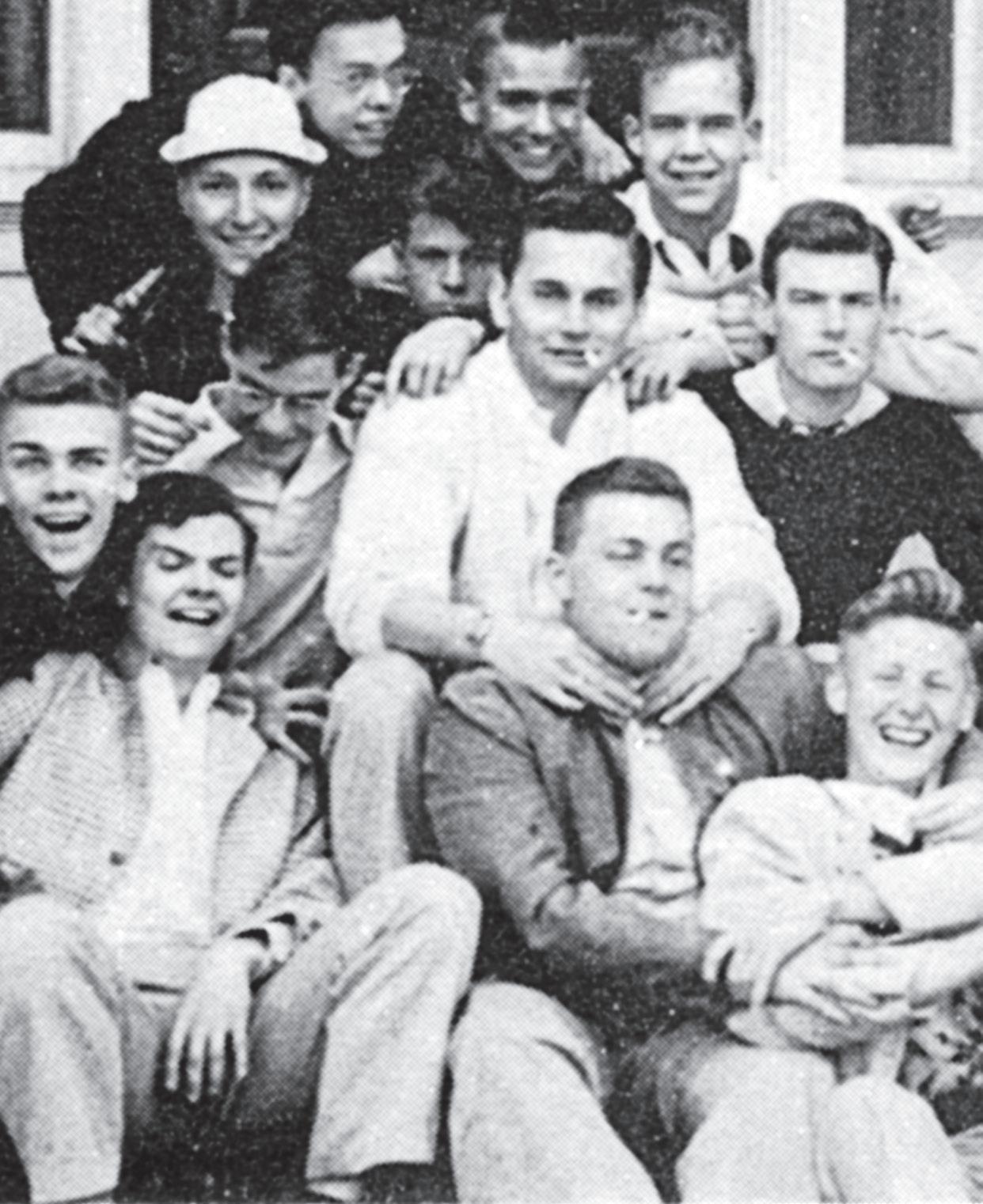
Despite time and distance, the men have continued to carry forth Andover’s values, and none more so than MingSing Lee, whose “Friendshipology” blog has grown from a fun hobby into a passion project that he hopes to share with the Andover community and beyond.
On a recent Zoom call, the men reminisced about high school. “We studied hard, and we played hard,” Allenby says. Their fondness for Andover and for one another was apparent, as was their friendship, which has grown considerably over the years.
“We all recognize that our time at Andover was formative,” says Allenby. “And we have deepened our Andover friendships as adults.”
What does friendship mean? How can we be better friends? Why is friendship important? These questions so fascinated Ming-Sing Lee that he decided to create a blog in 2019.
Friendshipology is a bilingual (English and Chinese) blog highlighting thought-provoking, timely, and topical issues written by Ming-Sing Lee and guest authors. It shares a philosophy of
life that endorses kindness, empathy, and—of course—friendship.
“I believe every one of us has a good heart,” says Ming-Sing Lee, a retired architect who lives in California. “I started this blog focusing on friendship because it seemed to me that the world was falling apart in some ways. There were too many misunderstandings and confrontations.”
Friendshipology—and the conversations it has sparked—turned out to be the antidote to this negativity.
“Billy provides words of wisdom, words to live by,” says Doran. “And this is totally consistent with my feelings for Andover.”
By sharing knowledge and goodness, Friendshipology inspires others to pay it forward by showing more empathy, compassion, and love to friends and family, even to strangers.
“My father used to say, ‘Friendship is the finest ship that sails,’” Rider quips. “My four years at Andover were the defining years of my life. Sharing the educational experience and the trials and tribulations of maturing with classmates has left an indelible imprint on me.”
END NOTE
VISIT FRIENDSHIPOLOGY.NET TO LEARN MORE
you have a story about
that has endured and
over the years? Please share it! Email magazine@andover.edu or airish@andover.edu
Do
friendship
strengthened
The Friendshipology project is a manifestation of what Billy Ming-Sing Lee ’51 and other alumni have learned at Andover and how they choose to live in the world.
104 ANDOVER | SUMMER 2023
Background image from 1951 Pot Pourri
BIG BLUE BEGINNINGS
The thrill of a new year, the promise of Andover.
The opening of school, and the journey begins again. For students, these moments of inspiration, illumination, and friendship will live forever. And they come alive thanks to donors like you. Your annual gift to the Andover Fund directly supports all the things—big and small—that make the PA experience unforgettable.
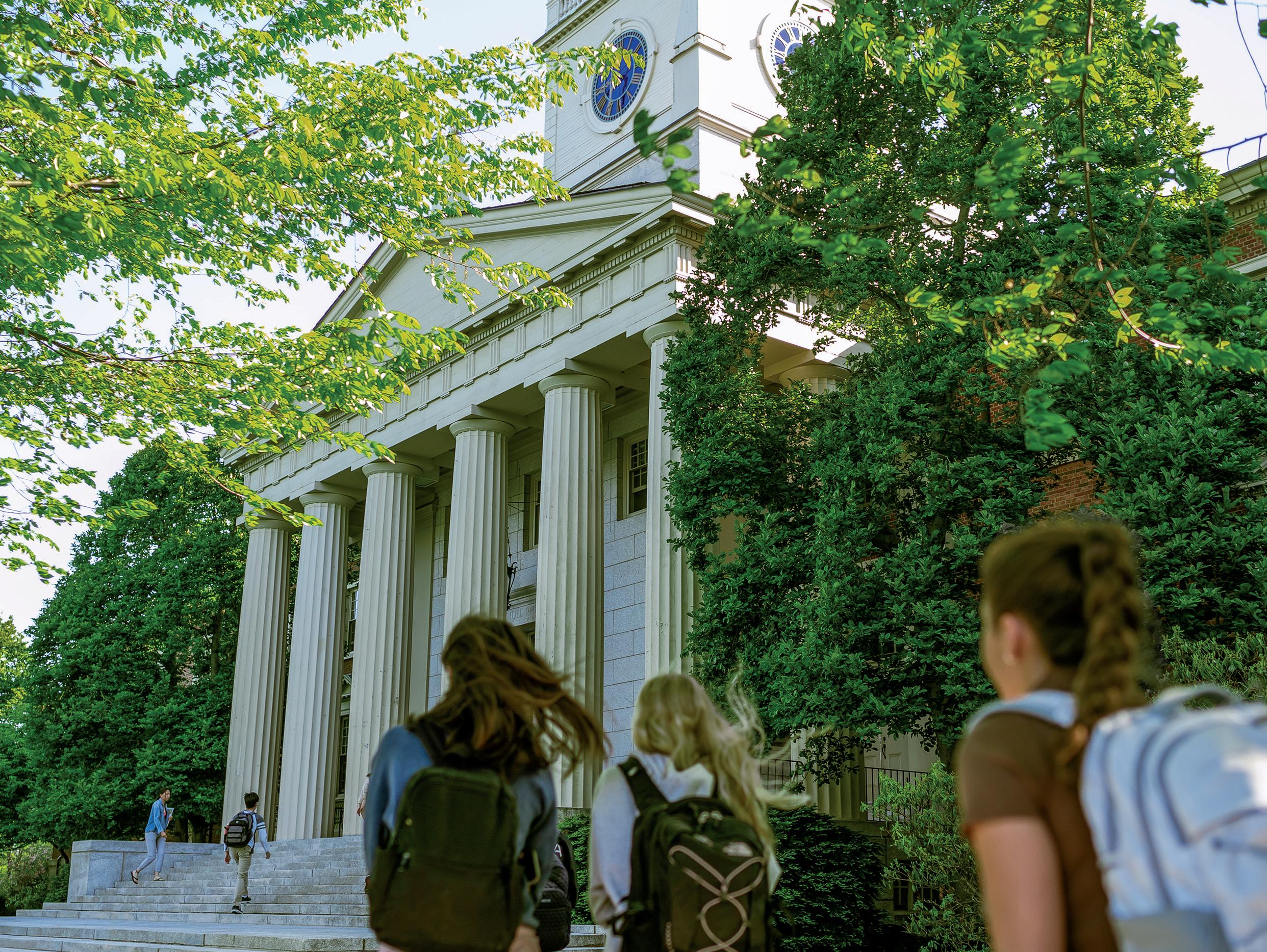
Please help our students make the most of this year by giving early.
andover.edu/EarlyImpact
Big Blue Legends
For more Reunion Weekend photos, see pages 34 and 35.
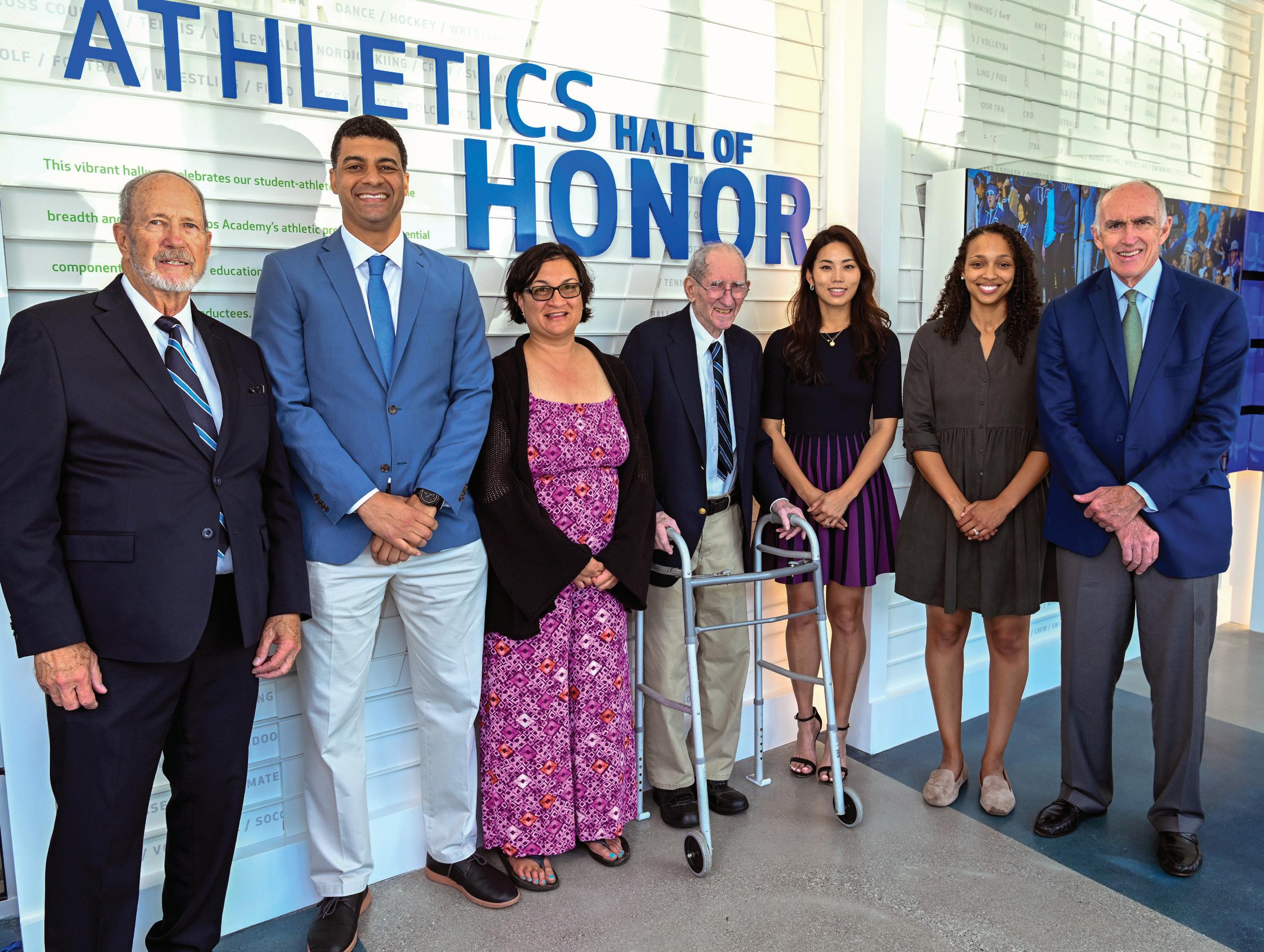
Periodicals postage PAID at Andover, MA and additional mailing offices
Andover Athletics Hall of Honor 2023 inductees, pictured here in the hall’s permanent new home in the Pan Athletic Center, were celebrated June 10 in the adjacent Modeste Lobby. From left are Edward H. Bailey Jr. ’58, Nnamdi D. Okike ’98, Lisa Mancke Montague ’90, J. Richard Lux P’69, ’73 (coach), Jeehae Lee ’02, Alexandra Bell Farr ’13, and Richard M. Cashin Jr. ’71. View a video of the ceremony and learn more at andover.edu/alumni/alumni-recognition.
GIL TALBOT
