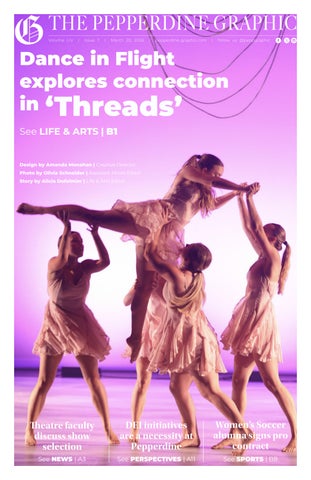
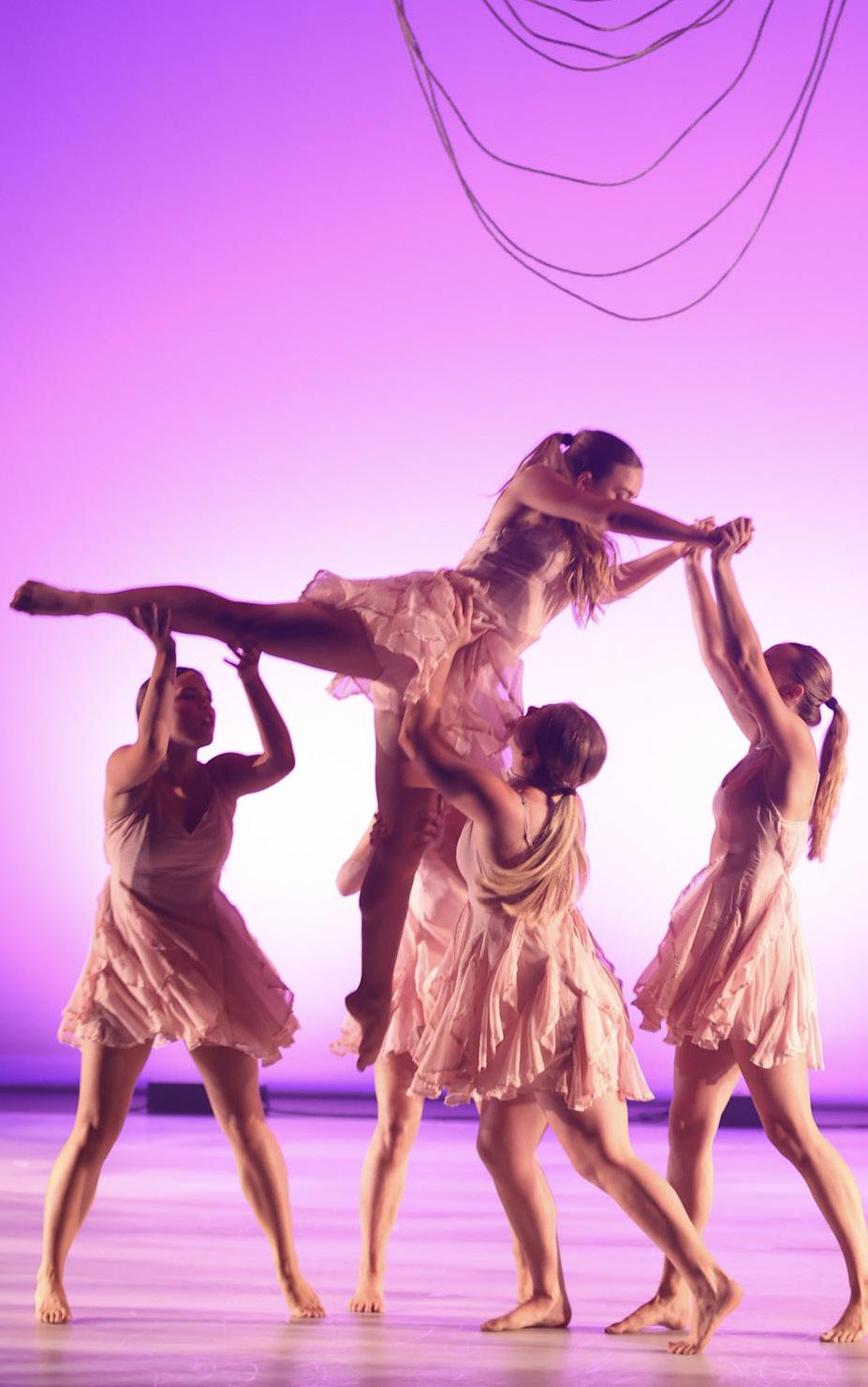
Photo by Olivia Schneider | Assistant Photo Editor
Story by Alicia Dofelmier | Life
p c o m i n g e v e n t s . . .
March 25
Women’s and Gender Studies 25th Anniverary
Seaver College is celebrating 25 years of the Women’s and Gender Studies program at the Surfboard Room from noon to 1 p.m. This event is in rememberance of their archival collection’s debut.
March 28
Waves Innovation Summit
The annual student-led conference aims to teach about the future of technology, with a focus on AI. ABC’s “Shark Tank” will host live casting calls during the event to give attendees a chance to pitch ideas. The event takes place at Elkins from 10 a.m to 4 p.m. RSVP required.
March 28
Pacific Sound Music + Arts Festival
The Student Programming Board is hosting a spring concert and art festival in collaboration with Late Night Lineup. It will take place at Alumni Park from 4 p.m. to 9 p.m.
March 31
Career Connect: Waves in Entertainment Alumni Affairs invites students and alumni to network at Finney’s in Burbank from 6 p.m. to 8 p.m. Refreshments are provided.
Good News: Life is a mosaic of love
Faith Siegel Copy Chief
In the four years since coming to Pepperdine, I’ve encountered monumental change in every aspect of my life. From moving cross-country from Michigan to a place I’d only visited twice before to traveling the world with some of my best friends, I’ve grown into myself more than I could have ever imagined.
Naturally, this profound growth hasn’t been without its di culties. Being an out-ofstate student means I left all familiarity I’d been born and raised around, including my family and close friends of almost 10 years.
However, having this blank slate also meant I had the drive to build my own community here from the ground up, something I’m quite proud of; I absolutely adore the people I’ve grown close with during my undergraduate years. At the same time, these newer relationships don’t change how much I treasure the ones I have back home.
This realization has led me to a catch-22 of sorts: wherever I go, I’m missing someone, someplace and something. I miss California when I’m home, I miss home when I’m in California and if I’m anywhere else, I’m likely missing both.
Additionally, as the postgrad world seems to approach
more swiftly than ever, I’m forced to recognize the reality of my loved ones’ imminent dispersal. Some of my friends are returning to their homes for a gap year, some are attending graduate school overseas, some are moving to New York City or Washington, D.C., and I don’t even know where I’ll be in one year’s time.
As I think about this broad spread, it’s easy to feel intimidated and disheartened. Will there ever be a time when all of the people I love are all together?
The short answer is “it’s unlikely,” but this dilemma also provides the opportunity for a uniquely positive perspective.
How beautiful is it that I always have something to miss? How wonderful is it that I love so many people, places
and things that it’s impossible to have them together all at once?
I could choose to view my life as incomplete, never having everything that’s important to me in one place. But when I zoom out, with gratefulness and intention, I discover that these scattered pieces compose a stunning mosaic.
Leaving loved ones never gets easier, but I know with one goodbye hug upon departure, another hello hug always awaits me upon arrival. Though I may never have everyone I love in the same room, I know I hold all of this love within myself, and I take it with me every day.
faith.siegel@pepperdine.edu
“Pepperdine Graphic Media (PGM) is an editorially independent student news organization that focuses on Pepperdine University and the surrounding communities. PGM consists of the digital and print Graphic, a variety of special publications, GNews, Currents Magazine, social media platforms and an Advertising Department. These platforms serve the community with news, opinion, contemporary information and a public forum for discussion. PGM strengthens students for purpose, service and leadership by developing their skills in writing, editing and publication production, by providing a vehicle to integrate and implement their liberal arts education and by developing students’ critical thinking through independent editorial judgment. PGM participates in Pepperdine’s Christian mission and a rmations, especially the pursuit of truth, excellence and freedom in a context of public service. Although PGM reports about Pepperdine University and coordinates with curricula in journalism and other disciplines, it is a student (not a University) news organization. Views expressed are diverse and, of course, do not correspond to all views of any University board, administration, faculty, sta , student or other constituency.” Email: peppgraphicmedia@gmail.com
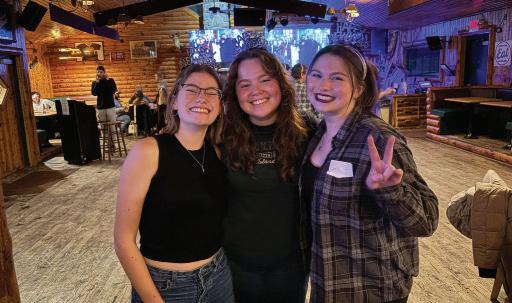
Photo by Faith Siegel | Copy Chief Left to right: Copy Chief Faith Siegel and her friends Aurora Martin and Grace Traster ring in 2026 in Mount Pleasant, Mich. Though the trio isn’t together often, they will always stay close.
eatre faculty discuss show selection
Henry Adams News Editor
Months of work go into producing Pepperdine’s Theatre productions each year. But before auditions even begin, the Theatre Program spends months trying to determine its next lineup of shows.
The process involves figures from across the University: students, sta , faculty and — in some instances — administrators come together to decide on the season. Though administrators’ involvement has historically led to preemptive censorship of productions on the bases of profanity or LGBTQ+ portrayals, the Theatre Program has still been able to produce a wide range of shows that address themes of social change throughout the years.
“We want to put forward things that excite us as a department and that we think is educationally correct for our students,” Theatre Professor Kelly Todd said.
The Selection Committee
Every year, the Theatre Department determines its upcoming slate of productions through the Season Selection Committee, made up of Theatre faculty, sta and three student representatives, Theatre Professor Hollace Starr said. The Committee typically meets at least four times a year and announces the next academic year’s shows before the spring semester ends, allowing time for auditions to begin.
Each season, there are typically four shows produced by the Theatre Department: a fall and winter play, typically performed in the smaller black box Lindhurst Theatre, and a fall musical and spring play in Smothers Theatre. The Committee also discusses the Music Department’s opera and senior directing theses, Starr said.
There are five Theatre faculty, including Starr, who are in regular rotation for directing the Department’s productions. When planning out a season, the Committee has a good idea of which season slot each professor will direct for, Starr said. Those professors are tasked with launching the Committee’s conversation around the slot they’re directing for.
When selecting its shows, the Committee considers learning outcomes for students involved in the productions and tries to ensure they’re not skipping over major categories of theater for long stretches of time, Starr said.
“We try to account for, ‘What have we done recently?’” Starr said. “‘What have we not done in quite a while? What’s happening in contemporary American theater, theater globally?’”
The Committee is also responsible for obtaining
the performance rights for each show, Starr said.
The student representatives are on the Committee mainly to bridge the gap between students and faculty, said Kysiah Tapia, junior Theatre and Screen Arts major. She became a student representative this academic year after faculty nominated her and fellow students voted for her.
“There’s sometimes things that we just bring to their attention that the students are wanting, but they [faculty and sta ] weren’t necessarily aware of,” Tapia said.
Grace Sardar, senior Theatre major with a Directing emphasis, said faculty and students sometimes have to balance their preferences during show selection.
“Sometimes it swings one way and sometimes it swings the other,” Sardar said.
Sardar directed her thesis show, “The Half-Life of Marie Curie,” at the end of February. She said she was “super happy” with the show and ultimately loved how it turned out, but her initial choice was to direct an original script she wrote while studying abroad in Buenos Aires her sophomore year.
“There’s been a need for original work in our department,” Sardar said.
Original scripts generally aren’t selected because of the time it would take for the Program to help students strengthen their work, Todd said.
“It’s hard for us to use a script that is not a strong, solid script for one of our shows,” Todd said.
Center for the Arts
The Theatre Department crosses over with the Center for the Arts (CFA) in several ways, with collaborations between the two essential to producing Theatre productions.
For instance, because both Smothers Theatre and Lindhurst Theatre are venues operated by CFA, the Department works with CFA each year to book the spaces in advance, Starr said.
There are also CFA employees — namely, Technical Director Rick Aglietti and Scene Shop Foreman Stewart O’Rourke — who work concurrently as adjunct Theatre professors.
“Some of us are through CFA and some of us are through Pepperdine [Seaver College], but we’re all collaborators,” Starr said.
CFA Managing Director Rebecca Carson, who’s responsible for booking and budgeting all outside performances at CFA, also sits on the Committee. Carson said her role is often to ask questions about what shows will work well with CFA’s audience.
CFA is under the purview of Advancement, an organizational structure that allowed
Theatre students perform “9 to 5: The Musical” for a November 2024 dress rehearsal in Smothers Theatre. The show, directed by Theatre Professor Kelly Todd, is about a group of women who rise up against sexual harassment from their boss.
Lauren Cosentino, vice president for Advancement and chief development o cer, to censor artwork and shut down an exhibition in the Frederick R. Weisman Museum of Art in October. CFA hasn’t run into any trouble with Advancement over its performing arts programming throughout the 18 years Carson has been in her role, Carson said.
“It does not feel like we seek approval from her [Carson],” Starr said.
Outside performances at CFA acknowledge “standards of conduct” in their contractual agreements with CFA, which include language disallowing “excessive profanity,” “excessive references to sex” and “language that demeans and exploits women or any racial or minority groups,” according to a portion of a guest performer contract Carson shared with the Graphic.
The Institutional Mission
In contrast, the Theatre Department is not bound to a formal set of guidelines surrounding content they can and cannot include. However, the Committee “deeply” considers Pepperdine’s Mission, Vision, and A rmation Statement when discerning what shows will work best for Pepperdine’s audience, Theatre Professor Cathy Thomas-Grant said.
“We take seriously the Christian mission, and we are not out to just rattle cages,” Thomas-Grant said.
That mission can mean different things to di erent people. Todd, who directed and choreographed “9 to 5: The Musical” in fall 2024, said Pepperdine’s values of purpose and service are important to her work.
Thomas-Grant, who has taught at Pepperdine since 1995, said one way she carries out the Christian mission is
by portraying the experiences of marginalized people on the stage. Her interpretation of the Christian mission also aligns with one of the Theatre Program’s learning outcomes: “Articulate the ways in which theatre serves as an agent of social change.”
Social change has figured prominently in the Program’s shows over the years. For example, this semester’s “no one is coming to save us” dealt with climate anxiety, spring 2023’s “Americana: A Murder Ballad” addressed gun violence in American schools and spring 2017’s “The Interference” commented on the realities of sexual assault.
“It’s important to have shows now and then that do address these things [social change and social justice], not only for humanity and an educational sense, but also to expand our understanding as artists because we are portraying the human condition,” Thomas-Grant said. “And I’m sorry, the human condition at times is not pretty.”
When it comes to prominently-featured LGBTQ+ themes, however, the Program has faced resistance from administrators.
Thomas-Grant said she was the chair of the Fine Arts Division during the season selection process that led up to the spring 2008 performance of “The Laramie Project,” a show about the 1998 murder of gay college student Matthew Shepard. She met with Seaver Dean W. David Baird and Provost Darryl Tippens to get permission to do the play.
Conversation over the play with administrators, which later included then-President Andrew K. Benton, resulted in an agreement: the Program could perform the show so long as there were disclaimers about its content, including profanity, present in advertising for
the production, Thomas-Grant said.
“What I relayed to them is, ‘We can’t change the language because we have signed a contract,’” Thomas-Grant said. “And if we are going to stick by our academic integrity statements at Pepperdine, we have to honor those contracts.”
During his time as Fine Arts Divisional Dean, Theatre Professor Bradley Gri n would meet with Seaver Dean Michael Feltner, and later Seaver Dean Lee Kats, to share the list of plays the Program planned to present for the next academic year’s season before they were announced, Gri n wrote in a March 16 email to the Graphic.
During the season selection process that determined the fall 2023 musical, which Todd directed, the 1975 show “A Chorus Line” was initially considered by the Committee, wrote Gri n. The Dean’s O ce asked the Program to reconsider the show, pointing out concerns about the show’s language and a gay character’s coming out monologue, which the Dean was concerned would not sit well with the audience. The Program produced “The Music Man” instead that year.
A similar instance occurred with the show “Stop Kiss,” where the Dean objected to the portrayal of a same-sex kiss on stage, wrote Gri n. The show would’ve been performed during the 2023-2024 season.
A University spokesperson referred the Graphic to the Seaver Dean’s O ce for comment. The Dean’s O ce did not respond.
File photo by Mary Elisabeth | Spring ‘25 Photo Editor
IP starts South Korea summer program
Christine Park Pixel Editor & Design Assistant
Editor’s Note: The details of the Seoul, South Korea summer program are not finalized and subject to change.
Launching for the first time in Pepperdine International Programs’ history, the Korea: Communication, Culture, and Corporations (C3) program will continue to expand Pepperdine’s abroad reach into East Asia this summer from June 8 to July 3. The program takes place in Seoul, where students will deepen their understanding of East Asia’s history and social dynamics while building intercultural competence, according to Pepperdine International Programs.
Two faculty members from the Communication program department are leading the program: Charles Choi and Klive Oh, both associate professors of Communication. Leading a small cohort of students, Choi and Oh will o er curated academic courses, cultural excursions and professional experiences, Choi said.
“Korea being on the other side of the Pacific Ocean and having a rich history and culture of its own I think would be extremely beneficial for students to get all sorts of facets of this,” Oh said. “Coming back, I think students will come back with not just more knowledge, but also more tolerance.”
From an Idea to Reality
The vision of the summer program started back in fall 2024, when the International Programs o ce approved the application, Oh said. However,
the idea has been in Oh’s mind since his first year at Pepperdine.
“I found out that Dr. Choi had been trying to put a program together in Korea for, also, years,” Oh said. “When I heard that, it was like, ‘Hey, the two of us together will create synergy, maybe it’ll be more appealing.’ That’s when we applied.”
For Choi, the summer program came from a personal level, as well, Choi said. The motivation drew from his time as a student in college studying abroad in Korea and his ethnic and cultural heritage.
“We’ve gotten tremendous support from International Programs,” Choi said.
“They’ve been doing this a long time — not only international programs, but facul-
To be in a foreign country and have a student engage with somebody that’s di erent with a di erent upbringing, that is impactful.
Charles Choi Associate Communication Professor
ty-led programs.”
Alongside Greg Muger, director of student experience at International Programs, Choi and Oh have been collaborating to craft the best program with their vision and exper-
tise as they see fit, Choi said. Additionally, Pepperdine has been in partnership with an agency in Korea that specializes in study abroad educational programs, which has taken up a lot of the logistics and resources.
Additionally, both professors bring their personal and professional expertise to the program in their own individual way, creating a unique set of circumstances, Choi said. Oh comes from an international background, born and raised in Korea.
“I can shed more light into what does professional life look like, especially a PR person’s life or a marketing person’s life looks like in the Korean setting,” Oh said. “Just overall knowledge and familiarity [of the area], plus the professional experience.”
This has been an impactful insight to the program as Oh was in Korea this past summer meeting with di erent organizations for potential partnership while learning a good layout of the land, Choi said.
Intercultural Competence in Education
Similarly to many abroad programs, the Korea summer program will also o er academic courses, according to Pepperdine.
Choi said he will teach the Introduction to Intercultural Communication class, which will involve studying the history and politics behind the Korean War. Students will have the opportunity to connect with an alternative government-supported school in Seoul called Daum that facilitates education to a wider variety of students, including North Korean refugees’ children.
“I’m going to have the privilege of being able to show students and walk students through [Korean War] history, as well as some of the current di culties as it pertains to refugees, North Korean refugees living in South Korea,” Choi said.
The class will put intercultural communication to practice through personal engagement, such as meeting with the students from Daum, visiting the demilitarized zone between North and South Korea, going to museums and hearing guest lectures, Choi said.
Oh said he will be teaching a Special Topics in Public Relations class, which will look di erent in a Korean setting of working in media relations. Oh wants students to learn how corporate giants in Korea influence Korean consumerism.
“For each one, you could see how things pan out di erently in the Korean context,” Oh said. “But, most importantly, I’ll have them look at Korean consumer habits.”
The course will include visits to some of the top organizations in Korea, chances to meet with Korean college students and opportunities to conduct research on how campaigning Korean products looks in a global market, Oh said.
“To be in a foreign country and have a student engage with somebody that’s di erent with a di erent upbringing, that is impactful as well — so all of that, desensitizing us to the difference [in culture] and really shaping someone’s [intercultural] competence by encouraging their motivation,” Choi said.
Soul-Searching in Seoul
Sophomore Psychology ma-
jor Liesel Grace Mendoza said she applied to the Korea program because she loved visiting Korea on her own and thought it would be a fun place to experience with people around her age.
“I just thought it was really exciting to be a part of this program for the first time and use my experience from prior IP experiences to also help out with this program,” Mendoza said.
Outside of classes, the faculty members have planned a packed experience within the four-week program in hopes of cultural immersion and providing them with the best scope of Korea, Choi said. Excursions include a train trip to Busan, food tours, cultural events, engagement with the K-pop industry and a baseball game.
“There are a couple of really famous museums that I’m going to take students to and the Korean traditional markets that we’ll go to try di erent foods,” Oh said. “Every week, there will be a group dinner and every time, we’re going to try and introduce some authentic Korean cuisine.”
Mendoza wants to come back from this experience with a newfound sense of community, not just with her cohort peers but with everyone she meets in Korea, Mendoza said.
Oh said he had a final message for the upcoming Korea summer cohort.
“It’s only a four-week program, and I don’t think four weeks is long enough to experience all of Korea, so take what you can and don’t overwork yourself,” Oh said. “Take one thing at a time and you will gradually get to understand.”
Photo courtesy of Pepperdine
Seoul, South Korea emerges as one of the most significant economic and cultural hubs in Asia, according to the International Programs website. Seoul became an ideal destination for the faculty-led program for students to learn about the intersections of communication, culture and corporations.
Gym looks to AI for more precise tness
Nick Charkhedian Currents Editor-in-Chief
The future of fitness is here.
As visitors scroll through Fred Fitness’ website, those words, “the future of fitness is here,” are prominently plastered in big letters. Artificial intelligence has dominated the evolution of technology in recent years and has seemingly reached every facet of electronic lives. Now it’s reaching our physical lives.
Entrepreneur Alfred Enzensberger previously owned a chain of gyms in Europe called Clever Fit, which spans across 500 gyms and over 1 million members. Andre Enzensberger, Alfred’s brother and CEO of Fred Fitness, said Alfred Enzensberger and a Munich-based equipment manufacturer joined forces to change fitness — in Santa Monica — with a clear goal.
“To revolutionize fitness once and for all,” Andre Enzensberger said. “It’s been the same for decades: we lift things up and we put things down. But in recent years, especially now with the emergence of AI, we just have the ability to lift things up and put things down more e ciently and with real thought behind it.”
Fred Fitness advertises itself as LA’s first AI-powered gym, but Andre Enzensberger said it’s really the world’s first fullscale AI-powered gym. Andre Enzensberger said the choice to be the self-proclaimed city’s first rather than world’s first is because “world’s kind of sounds ridiculous.”
Fred Fitness is unique in how they’ve built an entire model around AI rather than incorporating it into sections of equipment, said Miguel Alvino, general manager of Fred Fitness.
How it Works
A membership at the gym
— starting at $100 per month, according to their website — includes a workout plan customized to each member’s fitness and targeted at their fitness goals.
People who want to become members first take a 45-minute assessment that tests their metabolism, mobility, strength and cardio, which makes up their “BioAge.” Next, the gym’s AI software asks members questions about fitness goals, such as how many days a week they want to work out and whether there are specific areas they would like to focus on, Alvino said.
Once the assessment is complete, the gym’s AI software is able to generate a plan specific to each member.
Members have a wristband they can tap onto di erent machines, which allows their personal stats or needs to be presented through the machine. The machine shows members their real age and strength BioAge, which personalizes their training weights based on strength tests.
The AI software provides members with specific breakdowns of their body and instructions on how to reach their fitness goals with plans. Members can access these plans through an app on their phone that includes videos of how to perform specific exercises. Tests send electricity through the body by using machines that give members an initial idea of their strength, Andre Enzensberger said.
While the process is complicated on the back end, for users, it’s as simple as scanning in with their wristband and going right for the workout, Andre Enzensberger said.
“No intimidation, no guesswork,” Andre Enzensberger said.
The AI software accounts for exercise’s range of motion, weight and time under tension, meaning users can begin their workout by simply tapping their wristband. When
working out on a machine, members play a virtual game where they attempt to catch coins to a pace deemed optimal for their fitness goals by the software.
Every six weeks, the way members do their workouts changes in order to fight plateauing. Machines can change from adaptive training, which changes weight to ensure members do their workout until failure, to negative training, which provides additional stimulus to muscles, according to EGYM.
“You’re not just paying attention to how you look, but also how you feel inside, also how you move,” Alvino said. “You want to feel healthy.”
Dealing With AI
In September 2025, Pew Research reported 95% of U.S. adults say they have heard at least a little about artificial intelligence, a 10% increase from three years earlier. As AI continues to grow in regular use for everyday life, there’s uncertainty about it, Andre Enzensberger said.
“Not even us — the world’s first AI gym — have a clear vision of how far it’s going to evolve to change the fitness industry even more than it already has in this very beginning stage,” Andre Enzensberger said. “But what we do know is that there is no setback as of right now because it’s only been helping people gain results.”
Andre Enzensberger said the idea is to use AI to provide tools and solutions to the gym’s members in order to give them a way to train e ectively and efficiently — without eliminating the human aspect at all.
Employees at Fred Fitness are called member concierges because they’re not just front desk sta , Alvino said.
Anybody the gym hires has to understand fitness in general, and they learn everything they need to know how to do in an assessment.
Andre Enzensberger said the trainers they have at Fred Fitness complement the AI precision.
“It’s just a nice handshake between man and technology,” Andre Enzensberger said.
While there are bugs and updates that come with the products at Fred Fitness, Alvino said they’re constantly working out the bugs. Alvino pointed out that in order to maximize the AI fitness they have, the human touch and the AI need to come together.
“I know there’s this misconception that’s like ‘AI is taking over everything and we’re getting rid of humans,’” Alvino said. “Actually, we’re giving people more of a job opportunity to be able to help people interact. The AI is simply a tool.”
There’s something very beautiful about “old-school working out,” but at the same time, there’s something also very beautiful about having technology lend you the helping hand, especially when you’re not an expert in how to use traditional equipment, Andre Enzensberger said.
As for security concerns, Andre Enzensberger said members’ data is “very secure” with the equipment manufacturer.
Personal Experience
Andre Enzensberger said he has been struggling with his weight for most of his life, but now, it’s his own gym that has put him on the right path.
“It’s the first thing that’s made a di erence in anything I’ve ever tried,” Andre Enzensberger said.
With the data the gym has,
Andre Enzensberger said all of their members see an increase of 18% in their strength in their first two months as long as they go to the gym three days a week.
Fred Fitness member Frances Nin said she always liked working out at home, but started going to the gym within the past couple years. She was faced with a problem: she didn’t know exactly which machines to use or what to do.
“I love being here because the workouts are impeccable,” Nin said. “The workouts are just more e cient than I’ve ever gotten at any other gym, or even working out at home.”
Alvino spoke about his own experience working out, and how he was able to track the stats beyond the weight. After 21 days of working out and taking assessments, the scale showed the same weight, but the assessments showed that he had lost four pounds of body fat and replaced it with four pounds of muscle.
“My clothes fit di erently, I felt di erent,” Alvino said. “That’s actually the most important thing. Then you realize, weight’s not that relevant, weight’s not that important. It’s all the other things that actually matter. So that ended up being a huge eye-opener for me.”
The gym’s first location in Santa Monica’s grand opening was in February 2025, according to KTLA. About a year and a half later, the gym’s second location in Culver City is set to open in late summer 2026, according to the Fred Fitness website.
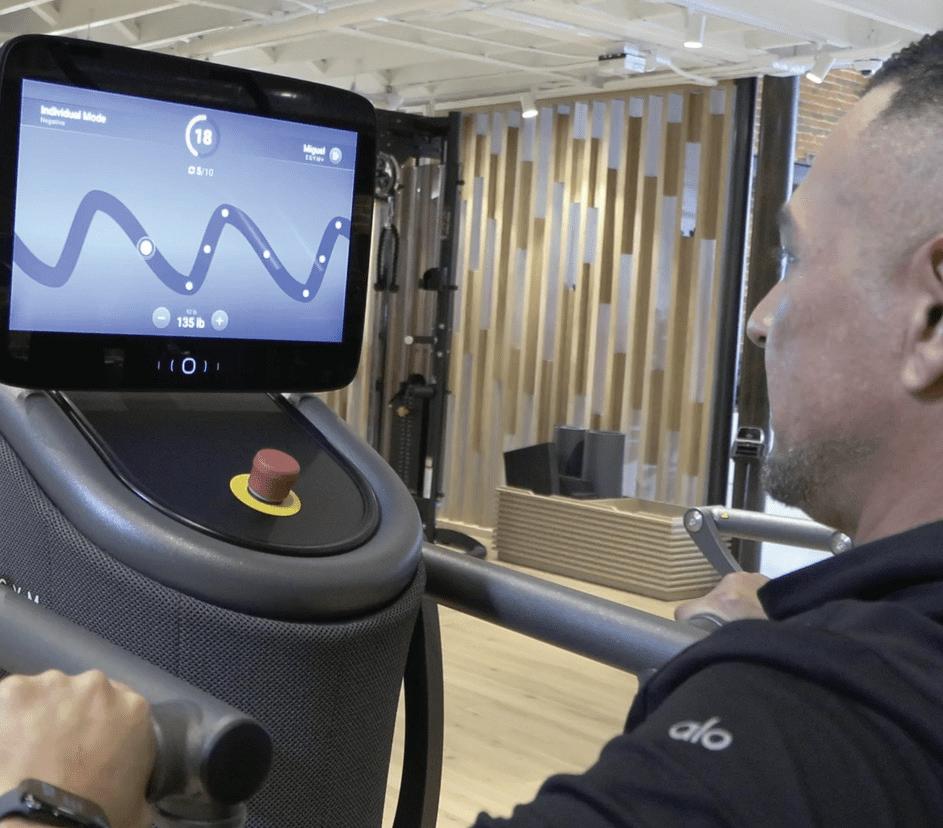
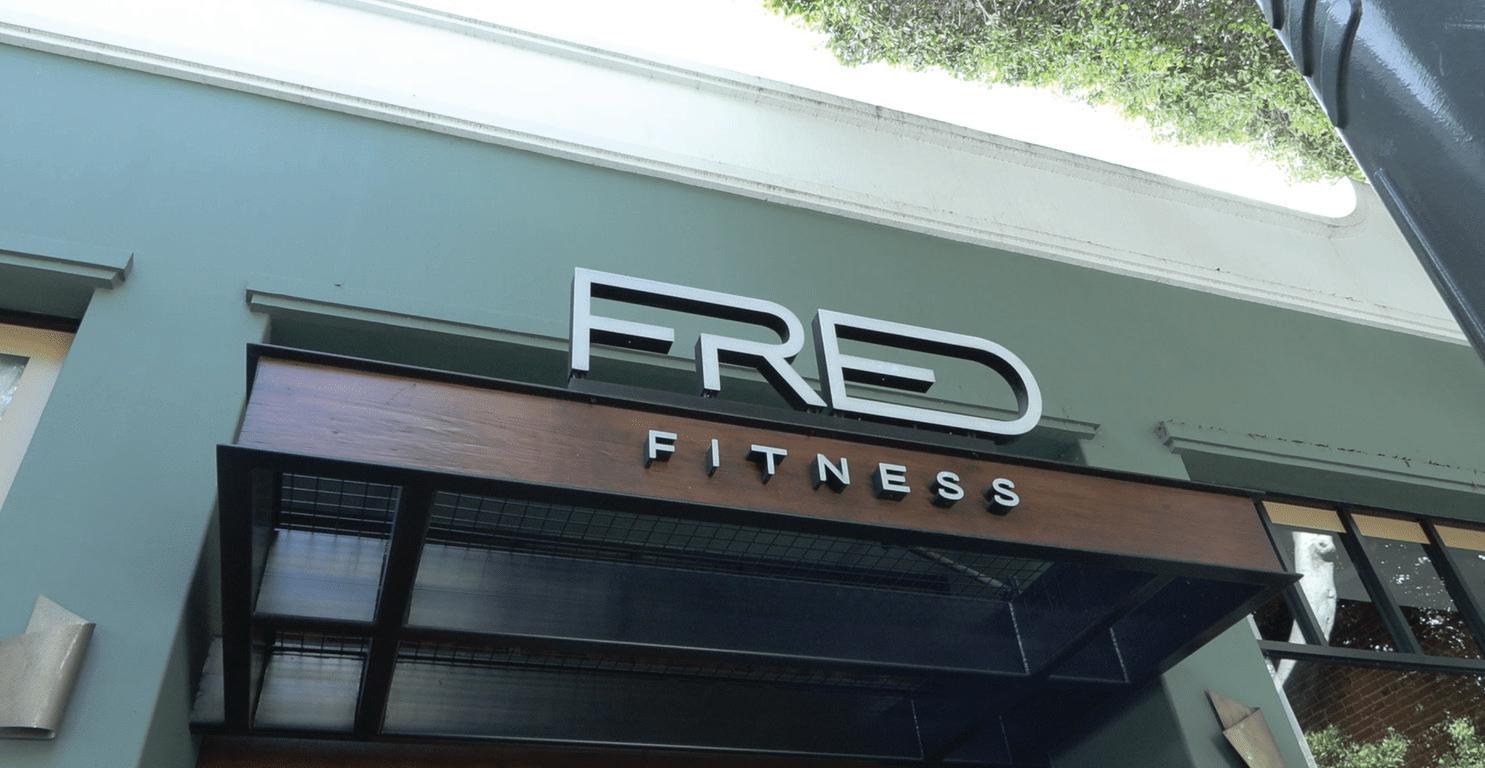
Photos by Nick Charkhedian | Currents Editor-in-Chief
Fred Fitness is open for business Nov. 7. Fred Fitness has one location in Santa Monica, and another in Culver City is expected to open in late summer 2026.
Miguel Alvino, general manager of Fred Fitness, exercises on a machine at Fred Fitness on Nov. 7. Alvino said the equipment at Fred Fitness is more advanced than anything else on the market.
Campus prepares for spring SGA elections
Sophia Markle Guest Contributor
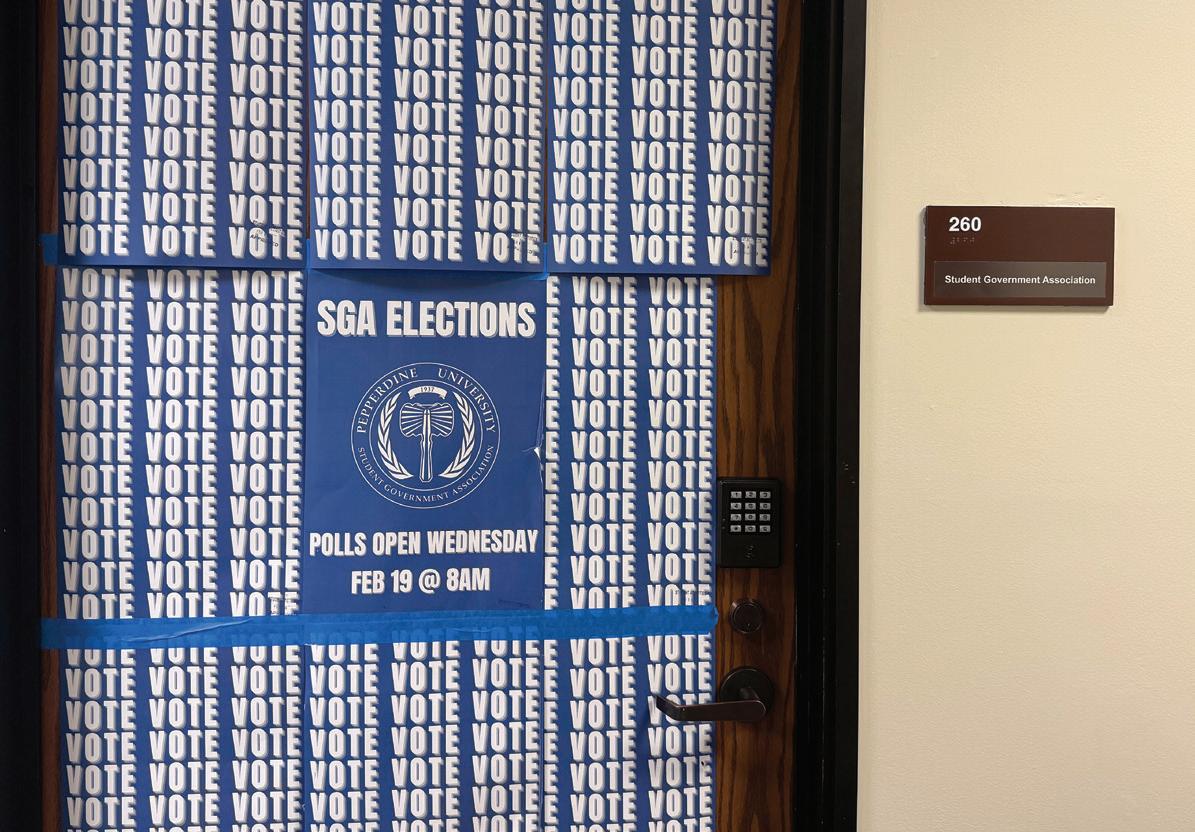
As candidates ask students for signatures, SGA is working behind the scenes to prepare for next week’s elections.
SGA elections are important for giving students a voice, said Jacqueline Justiss, SGA executive vice president. It is crucial that students vote and run for SGA this year.
“Making sure students feel involved is huge,” Justiss said. “Reaching new students who aren’t typically involved — that’s something I’d love to see continue.”
SGA elections operate on two timelines, Justiss said. First-year campaigning often begins in August and early September, and the Senate is solidified at the SGA retreat in late September.
Elections typically occur sometime between February and April for sophomores, juniors and seniors, Justiss said. This year, interest meetings begin in March, with elections scheduled for March 25.
The decision to hold this year’s elections in late March was to ensure SGA held town halls and committees prior to the elections, SGA President H.L. McCullough said.
“That way, if you were in terested in running, you could
get exposure and know what’s been happening internally with SGA,” McCullough said.
This delay will allow newly elected representatives time to shadow current o cials before formally taking their new positions, Justiss said.
Prior to campaigning, candidates must attend an interest meeting and a candidates’ meeting, McCullough said. After that, they have approximately six days to collect their required number of signatures to campaign. Senators need around 30 signatures, and the executive board needs around 180 signatures.
McCullough said the signature process is more than qualification paperwork.
“It’s really that opportunity to go around and meet people,” McCullough said. “Jacqueline [Justiss] and I did it together last year, and honestly, that was some of the most fun I’ve had.”
Justiss said collecting signatures helps candidates connect with students.
Interested students can run for a senator role, executive position or class president. The di erences between positions shape both campaign requirements and expectations.
Class senators and class presidents are elected solely by their class, Senior Class Pres-
ident Julian Moghaddasi said. Executive board members are elected by the entire Seaver student body.
“That’s why you saw H.L. [McCullough] and I going to di erent fraternities, sororities and campus groups,” Justiss said. “You have to get exposure to the whole student body.”
Class presidents and senators serve as the voice of their class in Senate meetings, while executive board members act as a bridge between the administration and students, McCullough said.
The University employs the executive board, McCullough said. Senators work for about five hours a week and executive board members work between ten and 28 hours.
Moghaddasi said students should not hesitate to run for the specific position they are seeking because of competition or visibility and not to overthink the process.
To maintain fairness, the General Judicial Council (GJC) oversees strict campaign regulations, McCullough said. The GJC is composed of senators, one executive board member and a director.
Justiss said there are several safeguards: all posters and social media posts must be approved, campaign spending may not exceed $100-$200
and no campaigning is allowed on voting day.
SGA elections are handled through Google Forms, Justiss said. Polls remain open for 24 hours, typically starting at 8 a.m., on the o cial voting day.
SGA informs the winners within hours of the polls closing, Justiss said. After representatives accept their positions, the o cial results are emailed to the student body.
Every vote matters, McCullough said.
“We are a direct pathway to seeing change,” McCullough said. “SGA is the reason we have Starbucks on campus. It’s the reason for MLK Day. It’s
the reason for a lot of things.”
SGA is rooted in servant leadership and motivation, and everyone should get involved in the SGA process, whether sitting in on meetings or running, McCullough said.
“If anyone wants to know what we do, I’ll get co ee with them,” McCullough said.
sophia.markle@pepperdine.edu
Students review Mountain parking garage
Marcos Lizarraga Assistant News Editor
With the Mountain Parking Structure just over a year old, Pepperdine community members reflected on its impact on campus parking and looked ahead to the future, including about 200 spaces returned to students once contractors finish construction of the Mountain at Mullin Park.
While many students said the parking structure helped, others said parking challenges still exist.
“I try not to take my car out during weekdays, especially at night, because when I come back there’s nothing available,” sophomore Lana Kim said. “I drove around the whole parking structure, even the Towers lot, and nothing was there.”
The parking garage opened in January 2025, adding 825 additional parking spots for students and faculty, according to previous Graphic reporting.
At the time, Myers Mentzer (‘25), former Pepperdine Student Government Association president, said the parking structure solved the lack of parking on campus, according to previous Graphic reporting.
“This structure needs to be celebrated because we are no longer su ering from lack of parking,” Mentzer said in a February 2025 interview with the Graphic.
Kim said the parking structure has largely made campus parking easier. She recalled a time during her first year where she watched a suitemate walk to the Drescher lot just to reach her car.
“That’s when I first realized how horrible the parking situation was,” Kim said.
However, several students said they still faced some parking challenges.
First-year Henry Cripps said he noticed a shortage of available spaces at the structure, especially at night.
“I feel like we need more space,” Cripps said. “I’ll come back late at night, especially if it’s a school night, and 90% of the time there’s no parking available.”
Kim said she has driven around the entire structure on several occasions without finding an open space, ultimately parking on a floor her residential parking permit did not cover. She received a parking ticket.
Cripps said he resorted to parking near the Center for Communication and Business stairs until the Department for Public Safety began issuing tickets in that area, which he learned was reserved for commuter students.
Contractors finishing up construction on the Mountain at Mullin Park occupy the structure’s two negative levels. Ben Veenendaal, vice president for Planning, Operations, and Construction, said those roughly 200 spaces will be cleaned out and returned to University use once construction is complete.
First-year Lily Forester, whose residential parking permit restricts her to the fourth floor and above, said opening the negative levels would reduce congestion beyond the structure as well.
“It’ll definitely help being able to park so much lower,” Forester said. “And I think if they open up the other floors, there would be less [people] parking on the streets and less tra c when people are trying to parallel park.”
Veenendaal said the University has more total parking spaces on campus than its combined student, faculty and sta population.
“It’s just not always in the places that people want it to be,” Veenendaal said.
Forester said the placement of EV spots on lower floors, where parking demand is highest, created problems for non-EV drivers. Cripps said the designated spots should be converted to general use.
Veenendaal said the structure launched with 42 EV charging spaces, the minimum required by LA County and California code. The University has the infrastructure in place to expand to over 200 charging spots.
The University has concepts for adding thousands of parking spaces to campus, but those plans compete with other campus priorities, including academic facilities, Veenendaal said.
A new parking structure can cost upward of $100 million for as few as 800 spaces, Veenendaal said. Although new parking isn’t a top priority, he would not rule out future parking projects.
“I’m never one to say that there isn’t always room for improvement,” Veenendaal said.
Photo by Sophia Markle | Guest Contributor Election flyers cover the door to the Student Government Association’s executive office Feb. 26. The first elections are March 25.
Photo by Marcos Lizarraga | Assistant News Editor
car passes by the Mountain Parking Structure on March 16. Contractors working on the Mountain’s construction occupy two of the structure’s seven floors.
Grad program focuses on ethics, sustainability
Nicolle Castro Guest Contributor
Can profit and purpose coexist? At Pepperdine’s Graziadio Business School, the SEER certificate is built on the belief they must.
The SEER Program is a certificate-level initiative focused on integrating Social, Environmental and Ethical Responsibility into business strategy. The program is not designed as a concentration on environmental sustainability within business, but as training for future leaders committed to creating a better world, said Robert Bikel, Graziadio Business School professor and director of SEER.
“You’re right up against that tension between human activity and a fragile environment,” Bikel said. “Managing competing objectives when they pull at each other and being comfortable with those tensions is a must-have skill for business going forward.”
SEER’s emphasis on durable, strategic responsibility extends beyond theory, requiring students to complete a service experience outside the classroom, according to the program’s website.
The Origin of SEER
The SEER certificate emerged from student demand, Bikel said. Members of Graziadio’s Net Impact chapter urged the school to move beyond its values-centered approach to business education and create a formal credential dedicated specifically to social and environmental impact.
“In response to that desire, the school enthusiastically responded by creating the SEER certificate,” Bikel said.
SEER is designed to be fully integrated within core MBA disciplines, Bikel said. Rather than positioning ethics and profitability as competing priorities, the program threads social and environmental responsibility into traditional areas such as finance, marketing and strategy.
“It’s not a choice between focusing on finance or marketing and being ethical and socially and environmentally responsible,” Bikel said. “Those priorities are meant to work together.”
‘Big S’ Sustainability & Leadership Philosophy
At the heart of the program is what Bikel said is ‘Big S’ sustainability: a framework that considers the well-being of people and the planet at every level of business decision-making, with a focus on long-term advancement rather than short-term gains.
“If you make it strategic, it
becomes much more rigorous and much more durable,” Bikel said. “It’s good for the longterm health of the business.”
The curriculum develops students’ long-term thinking by challenging them to navigate the tension between profitability and sustainability, Bikel said. They learn to balance competing priorities and operate within complexity, maintaining long-term commitments to the company and broader stakeholders.
“We’re not trying to train sustainability o cers,” Bikel said. “We’re trying to train leaders and business originators.”
Mindset Shift: Long-Term Sustainability
The program’s reputation began attracting students even before they set foot on campus. Daniel Goldstein, a second-year MBA student pursuing the SEER certificate, said the program played a decisive role in his choice to attend Pepperdine.
“I thought it would be a really cool way to integrate my personal values with a business education,” Goldstein said.
Coming in, however, he said he had doubts.
“I initially thought profit and sustainability couldn’t coexist — that there had to be a sacrifice made,” Goldstein said. “I’m not totally sure that’s the case anymore.”
Through case studies on corporate failures and
greenwashing, Goldstein said SEER reshaped his understanding of how companies respond when things go wrong. Classes challenged him to analyze real-world examples of companies that either did the right thing or had to rebuild after doing the wrong thing.
“As I move into leadership positions, it helps to think: ‘How do I either do the right thing upfront or respond constructively when something goes wrong?’” Goldstein said.
Standing Out & Creating Identity
Lauren Loo, another second-year MBA student pursuing the SEER certificate, said the appeal of the program began with her academic background in animal science and environmental stewardship. The program’s people-planet-profits framework resonated with her immediately.
“It shows you’re not just caring about one thing, like money, but that you’re thinking more broadly,” Loo said.
In today’s competitive job market, that distinction matters, as the certificate signals to employers that students are ready to approach business decisions with a wider ethical lens, Loo said.
“Especially when the job market is tough, having that certificate shows you bring a di erent perspective,” Loo said. “It makes you stand out rather than just being like everybody else.”
But SEER is more than a resume booster, Loo said. It shapes how students see themselves as future professionals.
“It’s about focusing on what ethically aligns with who you are,” Goldstein said. “If you care about people being taken care of, great. If you care about the environment, great. SEER helps you be better equipped to contribute to those environments.”
Beyond the Classroom
SEER certificate students complete targeted coursework and extend their learning beyond the classroom through active involvement in Pepperdine Graziadio’s Net Impact chapter and signature events such as the annual SEER Symposium and case competitions, according to the program’s website.
The school’s Net Impact chapter is part of a global organization that connects students and professionals committed to using business as a force for good. For many SEER students, it serves as a hands-on platform to translate values into action while building relationships with peers and industry leaders, Loo said.
Brenda Bailey, Pepperdine’s graduate Net Impact chapter president and SEER certificate student, said her involvement in the organization has deepened her appreciation for the SEER program and expanded her opportunities to grow as a leader.
“I found a home in the student chapter,” Bailey said. “I love being engaged. I love learning, mentoring and inspiring others to pursue what they truly enjoy.”
The SEER symposium emphasizes forward-looking, solution-driven conversations rather than simply revisiting global challenges, while case competitions allow students to apply classroom frameworks to real corporate scenarios, Loo said. Those experiences reinforce the idea that responsible leadership requires engagement.
“Being able to go out there and talk to more people, actually be part of the change, that’s the biggest part for me,” Loo said.
At its core, SEER students learn to build purpose and sustainability together.
“Business can’t solve everything,” Bikel said. “But it has to be part of building this new flourishing world that we desperately need.”
Members of the Graziadio Business School’s Net Impact chapter, in partnership with PG&E, host the Home Electrification Challenge at the Pepperdine Calabasas campus Feb. 20. Students developed strategies to help homeowners transition to cleaner energy and fight climate change while competing for prizes and mentorship from PG&E’s sustainability team.
Photo courtesy of Lauren Loo
PERSPECT VES
Art by Cara Tang | Art Editor
Sta Editorial: Journalism industry’s future is bright
Graphic Staff
Editor’s Note: PGM sta members decide on the topic of a Sta Ed together. The sta as a whole provides opinions and content included in this Sta Ed to provide thoughts about and shed light on solutions for happenings at Pepperdine.
Ken Gri ey Jr., MLB hall of famer, is known for many things — hitting over 600 home runs and wearing his hat backwards during the Home Run Derby, to name a couple. Gri ey Jr. is also known for his quote: “To succeed in baseball, as in life, you must make adjustments.”
Just like baseball, adjustment is necessary in journalism, and the industry has shown time after time it will make those adjustments.
While some argue journalism is “dying,” this isn’t the case. The journalism industry is bright and making the required changes to adapt and grow.
Two weeks ago, the Graphic attended the Associated Collegiate Press (ACP) National College Media Conference, a college journalism convention where nearly 1,000 college journalists came together to learn from one another.
Throughout the three-day conference, college journalists from approximately 90 schools hosted panels on topics such as managing relationships with a sports information director and reporting on a private
university. It also had roundtable discussions for students to pick each others’ brains, among other activities.
If the journalism industry was as dead as many claim it is, there wouldn’t be hundreds of young adults attending a convention like ACP’s and learning from each other so they can be the best journalists possible.
Additionally, a common reason people say “journalism is dying” is due to the prominence of artificial intelligence (AI), but AI was acknowledged at the convention and in the industry as a whole. The journalism industry isn’t running and hiding from AI — rather, we’re using it to enhance our platforms.
For example, the Associated Press uses AI for translation, transcription, headlines and research, according to Life Hacker. Additionally, the San Francisco Chronicle uses AI to help with search engine optimization and summaries for other platforms, but made clear they won’t post anything without human eyes looking over it, according to their website.
AI in journalism isn’t something scary that’s going to destroy our industry; it’s a tool that will help us. Most of us at the Graphic use Otter. ai to transcribe our interviews, avoiding the tedium of spending our time typing out each quote ourselves.
The fact the future of journalism is so bright should be exciting, especially given the rise of AI. Journalism is a
THE PEPPERDINE GRAPHIC SENIOR LEADERS
Managing Editor
Creative Director
Currents Editor-in-Chief
Special Edition Editor News Editor
& Arts Editor
Sports Editor Photo Editor
Art Editor Copy Chief
Social Media Manager
Digital Editor Pixel Editor
Advertising Director
Advertising Manager
Tony Gleason
Amanda Monahan
Nick Charkhedian
Soliel
defense against AI and the spread of misinformation.
When a social media account posts something untrue, they can simply delete or edit the post without acknowledging they had spread misinformation. No transparency is required. Not to mention, fake news often spreads more quickly than real news, according to the University of Victoria.
Meanwhile, professional journalists’ jobs and livelihoods are put on the line when misinformation is spread. At the Graphic, if we make a mistake in our reporting, we include a correction note at the top of the story explaining the error.
AI isn’t the first invention to rock the journalism world, nor is it the first time journalists have had to adapt. Inventions such as the television, the internet or social media — all things that were supposed to kill journalism — have only strengthened the industry.
Journalism now is di erent from what it was 20 years ago, just like how journalism 20 years ago was di erent from journalism 40 years ago. New inventions will change the world, but every time, journalism will change with it.
Abroad
Pisciotta
Lytle
Yared
Letter from the Editor: Share diverse opinions
Ashley Burton Perspectives Editor
Transparency Item: Letters from the Editor are based on opinion. This is the opinion and perspective of the writer, in this case Perspectives Editor Ashley Burton.
Last semester, I started writing for the Perspectives section of the Graphic. I quickly found my stride often writing about politically charged topics.
These topics varied, whether they concerned the protection of minority groups on-campus or dietary restrictions.
When I first started, it was incredibly daunting not only to write for a newspaper but to write about these kinds of topics.
Now, as the editor for the Perspectives section, I have gained confidence in myself and my writing abilities, but I use my previous experience to lead and help Perspectives writers grow.
Something I and many others have likely noticed, however, is in the past two semesters, the Perspectives section has had several articles with views typically associated with left-leaning politics. Some of these articles are “Opinion: Stop Buying Fast Fashion” and “Opinion: Lack of ICA Support
Raises Alarm Bells.”
While the Perspectives section has never been made up of exclusively left-leaning writers, this lack of political viewpoint diversity risks pushing away readers and writers, dissuading the possibility of varying perspectives.
I understand not only is it daunting to write on political topics, but it is especially daunting to write an opinion that may not be reflected often by your fellow writers.
Despite how daunting it may seem, I implore anyone at Pepperdine to use the Perspectives section as a medium to engage in thoughtful and respectful discussion. These voices are important for everyone to hear.
Challenging your own views through discourse is extremely important. Learning from others allows people to grow and adjust their beliefs with new knowledge or strengthen their beliefs if they find they hold up to scrutiny.
One of the easiest ways for these differing views to be shared at the Graphic is through a Letter to the Editor.
In a Letter to the Editor, students, alumni, organizations and more can share an opinion on articles we have written or can write about something else they feel is important.
The Graphic publishes these letters to share this voice with the community.
As a newspaper, the Graphic does
not aim to promote a specific belief or point of view. While Perspectives shares the views of some of our writers, this does not encompass all of our sta , and it does not exclusively give voice to those who work for the newspaper.
Letters to the Editor in the past not only shared diverse opinions, but also created discussion in the community.
Last semester, the Jewish Students Association of GSEP sent in a letter explaining their belief Graphic reporting had been biased and calling for more balance. In response, Joseph Heinemann (‘24), Pepperdine alum and former Graphic sta member, sent in a letter pushing back on the Jewish Students Association of GSEP’s letter.
As the semester passes the halfway point, I’d like to extend an invitation to any writer, whether in or outside the Graphic, to share their di ering
perspectives and create more dialogue in the Pepperdine community.
To submit a Letter to the Editor, those interested can send an email to peppgraphicmedia@gmail.com with their name, signature, class standing, major or professional standing, address and phone number. Letters will be edited for AP style, grammar and brevity. We do not publish letters endorsing political candidates, but we will publish articles discussing political candidates and campaign issues.
If you are not personally interested in writing a Letter to the Editor, but you know someone who may be, please recommend this opportunity to them. Our goal is to platform the community, and it is easier to achieve this goal with
ashley.burton@pepperdine.edu
Spring break should be intentional
Alyssa Hunnicutt Perspectives Staff Writer
Transparency Item: The Perspectives section of the Graphic is comprised of articles based on opinion. This is the opinion and perspective of the writer.
There are many ways one can choose to spend a week o from school.
Spring break is a popular time for college students across the country to vacation.
Spring break is also often characterized as a high-energy, travel-filled week. With packed schedules, students can take the week to enjoy many fun-filled events. Nonetheless, vibrant spring break travels can also make spring break feel less like a vacation and more fleeting and restless.
The condensed timing of Pepperdine’s spring semester, coupled with energetic vacations, presents more negatives about spring break than positives.
There is a noticeable di erence in the break schedules between the fall and spring semesters in the Pepperdine academic calendar.
In the fall 2025 semester, including breaks, the semester’s length was 17 weeks, while, in the spring 2026 semester, the total length is 16 weeks, according to Pepperdine’s Academic Calendar. This results in Pepperdine students losing a whole week in the duration of the spring semester compared to the fall one.
With this condensed timetable, it can be easy for students to feel overloaded since there are fewer breaks that can be used to catch up on school work.
Many universities also use the weeks before spring break to hold midterms. The academic and mental pressure of midterm exams is often equivalent to finals, making this a crucial week for college students.
The combined stress of the condensed semester and midterm week makes it di cult for students to
achieve any true rest while classes are in session. This makes spring break a vital time for students to relax and recharge, increasing the need for students to be intentional about their time if they wish to get the most out of their days o
While vacations on spring break can bring amusement, leisure and exploration of new places, the increased activities students have the opportunity to participate in on these trips can make it a more taxing week rather than relaxing.
As such, intentionality with spring break becomes more important than ever.
If on vacation for spring break, students can benefit from prioritizing low-key and nature-filled activities that provide relaxing environments.
Vacationers are shown to have increased happiness after travel. Specifically, those who travel and take part in mastery experiences — activities that help
them acquire new knowledge and explore curiosity — consequently have increased well-being after their trip, according to the National Library of Medicine.
As many as 11.3% of travelers say they experience some mental health issues, according to Psychology Today. To help manage this stress and maximize health benefits, travelers can be intentional and prepare for their journey by making their trip more comfortable and choosing less crowded locations, according to National Geographic.
If students were to engage in these purposeful activities on their spring break vacations, it could promote a mental and physical recharge benefiting students’ well-being.
For students who stay home during the break, it can still be possible to not fully benefit from the week o . Prioritizing a consistent sleep and meal schedule similar to one’s college schedule can promote more restfulness and renewed energy.
If students aren’t implementing time management skills while resting on the break and maintaining some of their routine while home, they could experience more challenges when coming back to the structure of school. This could be most detrimental for students who have exams and big projects occurring the week they return, as they would need to adjust quickly back to school to be prepared for them.
High-energy vacations and a condensed spring semester can pose di culties for students to experience a restful spring break.
Students should explore calming activities like spending time with nature while at home to promote relaxation. Additionally, students should maintain a consistent sleep schedule, which can rejuvenate students so they feel well-rested and ready to return to school at the end of break.
Art by Sofia Cifuentes | Staff Artist & Podcast Producer
DEI initiatives are a necessity at Pepp
Anniah Smith Perspectives Staff Writer
Transparency Item: The Perspectives section of the Graphic is comprised of articles based on opinion. This is the opinion and perspective of the writer.
In 2025, the Trump Administration attacked federal diversity, equity and inclusion (DEI) initiatives. Pepperdine University’s lack of overt support for diversity, equity and inclusion initiatives on its campus has done a disservice to the University’s Christian mission.
On Jan. 20, 2025, President Donald J. Trump was inaugurated for his second term. On that same day, he issued a series of executive orders. One such order halted diversity, equity and inclusion programs in the federal government, according to Executive Order 14151.
This order, also named “Ending Radical and Wasteful Government DEI Programs and Preferencing,” cites diversity, equity and inclusion programs as being “illegal and immoral.” The Executive Order calls for the immediate elimination of “all discriminatory programs, including illegal DEI and ‘diversity, equity, inclusion, and accessibility,’” also involving “environmental justice” positions and programs.
But that was over a year ago.
Where does this executive order leave Pepperdine in 2026? Or rather, how does Pepperdine University — a private institution that receives federal funding — perceive DEI initiatives and their outcomes?
Is DEI “in” or “out” for the 2026 year, according to Pepperdine University?
Following the Trump Administration’s executive order, another subsequent measure emerged. This measure was the “Dear Colleague Letter,” which specifically regarded race in secondary education.
On Feb. 14, 2025, the Department of Education sent out its letter to Pepperdine University and various other secondary institutions.
The letter opens condemning discrimination “based on race, color, or national origin,” specifically calling such instances “illegal and morally reprehensible.”
The letter concludes on a more threatening tone, stating, “Institutions that fail to comply with federal civil rights law may, consistent with applicable law, face potential loss of federal funding.”
The goal of the letter was to end “racist” consideration of race in higher education institutions, according to the letter.
“In recent years, American educational institutions have discriminated against students on the basis of race, including white and Asian students,” the Department of Education wrote. Moreover, the letter cited DEI as a “proponent of discriminatory practices attempted to further justify ‘false premises’ that the United States is built upon ‘systemic and structural racism.’”
On Feb. 27, 2025, Pepperdine issued its response through President Jim Gash’s “Message to the Pepperdine Community on Belonging.” The letter the Department of Education wrote specifically concerned “race-preferences in education.”
Gash’s response to the Dear Colleague letter is notable for two reasons. First, he cites Christian standards or “community belonging” as not being influenced by “ever-changing trends.”
Gash seemingly argues “biblical belonging” transcends any discrimination, valuing each individual as an “image bearer of God.” Gash appears to be engaging in a biblically based approach to inclusiveness.
Second, none of the words diversity, equity or inclusion appear in Gash’s response. As such, a certain question arises: How can one implement biblical belonging without championing diversity, equity and inclusion?
Any attempt at such implementation is impossible.
Pepperdine University’s lack of explicit support for diversity, equity and inclusion initiatives is a message in and of itself. More specifically, Gash’s response is a disservice to the communities that greatly benefit from such initiatives.
The history of DEI in the United States has deep roots in race and racial turmoil. This turmoil includes both the Civil Rights Movement and the “George Floyd Era,” which recentered race on the national stage.
Progress toward equity in the Civil Rights Era took the form of various legal implementations and expansions, according to the Center for Urban and Racial Equity (CURE).
One such expansion includes the landmark Supreme Court case Brown v. Board of Education, which eliminated segregation in schools. This case — in conjunction with the Civil Rights Act of 1964 — worked to end discrimination on the bases of race and other identity markers.
Furthermore, the 2020s correspond with the “George Floyd Era,” according to CURE. The era started when police o cer Derek Chauvin murdered George Floyd in Minneapolis on May 25, 2020. The era was marked by public outrage and large-scale protests, according to CURE.
This event caused DEI programs to be implemented in both the legal and corporate worlds, according to CURE.
With this in mind, it is undeniable DEI programs and initiatives stand as
a redeeming stripe in American history. This redemption is one Pepperdine must participate in.
Being a private university, Pepperdine has the choice to either follow the precedent established by the federal government and eliminate DEI initiatives or resist the standards and double down on its biblical approach to inclusion.
The second option comes with potential threats to their federal funding, but the importance of such Christian-based DEI initiatives at Pepperdine cannot be understated.
Cady Moore, co-president of Pepperdine’s Black Student Association, said DEI is of the utmost importance.
Her interest in DEI started around the end of high school, corresponding with George Floyd’s death. She said she believes the role of DEI initiatives is to “repair systemic harm.”
When considering Pepperdine’s attitude toward DEI and DEI initiatives, Pepperdine University’s mission should be to have “Earth as it is in heaven,” Moore said.
In other words: remain committed to diversity, equity and inclusion.
Pepperdine has an obligation to take care of its students. Championing DEI is undoubtedly one way to care for Pepperdine’s community, Moore said.
“At Pepperdine, because it has so proudly worn the badge of being a Christian college, it does owe its students, faculty and the people observing it a loudness about being good,” Moore said.
If Pepperdine aims to achieve a culture where all peoples are supported, then Pepperdine must stand proudly in support of DEI initiatives.
“We endeavor to build a vibrant community of life-long learners that enthusiastically embraces the transformative potential of Pepperdine University’s unique educational process,” Gash wrote in his message to the Pepperdine Community on Community Belonging.
DEI is a vital tool in making that “vibrant community” into a reality.
DEI represents the cornerstone of a liberal arts education: variance. Varied ideas, varied beliefs, varied heritages, varied cultures and varied identities build a robust and credible
academic experience.
With Pepperdine’s educational standards being derived from biblical standards, the promotion of DEI initiatives is not only recommended — it is needed.
DEI is a “Christian goal,” said Stanley Talbert, assistant professor of Religion.
Talbert said there will always be different perspectives or attitudes towards DEI; however, Pepperdine should be in the business of healing and following Jesus regardless of varying interpretations or approaches to DEI.
Furthermore, Talbert said DEI should not be approached as a solution, but as a vital bandage to help repair harm.
Pepperdine seemingly remains committed to DEI values on its campus.
The Seaver Undergraduate Program even has a Diversity and Belonging Council.
The council has a Statement Against Hate published on its page. The Diversity and Belonging Council shares in the sorrow of human violations against di ering groups of people based on their “heritage, race, religion, ethnicity, sexual orientation, nationality, age, ability, and the like,” according to the statement.
Pepperdine must marry its understanding of “biblical belonging” to the realization that diversity, equity and inclusion are not just a fun sequencing of words. Diversity, equity and inclusion provide an actionable framework for all people, regardless of racial, religious or economic di erences, to achieve shared belonging.
While Pepperdine’s commitment to belonging is a crucial aspect of realizing its Christian mission, this commitment is only the beginning.
There is still more to be done.
It is time for Pepperdine to re-examine its core principles and stand with DEI initiatives.
Art by Cara Tang | Art Editor
Propaganda is subtly dictating reality
Eva Shauriki Perspectives Staff Writer
Transparency Item: The Perspectives section of the Graphic is comprised of articles based on opinion. This is the opinion and perspective of the writer.
Every day we wake up and are handed a version of reality. This reality comes through notifications, headlines and algorithms tailored specifically to us.
It’s usually what we call “staying informed.” Rarely do we stop and question who built this “reality” or why it looks the way it does.
The definition of propaganda is information, especially of a biased or misleading nature, used to promote a particular cause, doctrine or point of view, according to Merriam-Webster Dictionary.
The word propaganda is often associated with World War II Nazi propaganda, Uncle Sam Army recruitment posters or dystopian novels like George Orwell’s “1984” in which the government rewrites history, promotes false war ideologies, simplifies language to prevent independent thought and constantly reminds citizens “Big Brother” is always watching.
These examples highlight propaganda, making it obvious and extreme. Because of this narrow idea, modern-day propaganda is easily overlooked.
Propaganda today is more dangerous, persuasive and detrimental than it has ever been, according to Boston University.
The way the media plays roles in controlling narratives and polarizing the world is enough to make reading a dystopian novel feel far closer to reality than it should.
Instead of outright announcing itself as “propaganda,” it embeds itself within everyday media, shaping our beliefs and deepening social division.
Decades ago, when public communication was limited to radio broadcasts, posters or billboards, propaganda appeared more direct. For example, posters of Uncle Sam saying “I Want You” were openly persuading men to join the Army, according to the National WWI Museum and Memorial.
Even then, influence was not always transparent. Government narratives were carefully curated, and information was withheld or classified.
For example, during the Cold War, the CIA ran Operation Mockingbird. It involved cultivating relationships and media outlets to influence news coverage and implant pro-American propaganda, according to SourceWatch.
Propaganda, even in earlier eras, was not just limited to slogans or posters. It also operated through selective reporting, strategic wording and careful control of information.
Propaganda has existed for a long time — the biggest di erence now is its visibility.
Today, propaganda has evolved into an intricate web of disinformation and manipulation spread through news outlets, social media platforms and precisely curated algorithms.
Misinformation refers to false or misleading information shared without the intent to deceive, while disinformation is deliberately created and distributed to manipulate public perception, according to CSI Library.
In the digital world, the two often
blend together, creating an environment where false narratives can circulate regardless of the intent, according to Britannica.
This pervasive spread of misinformation and disinformation has cultivated what is called a “post-truth” society, which is defined as “relating to or denoting circumstances in which objective facts are less influential in shaping public opinion than appeals to emotion and personal belief,” according to Oxford Languages.
Propaganda no longer relies on a singular shared message — rather, it now adapts and distorts itself based on the consumer.
The democratic “ideal” for propaganda assumes when a range of ideas are allowed to compete publicly, the ideas best fit for society will end up prevailing, according to Britannica.
This assumption depends on a society that is educated and capable of critically evaluating information without an overflow of sources, according to the University of Rhode Island.
Modern propaganda thrives under conditions that directly undermine this ideal. The overload of information people are exposed to in a matter of seconds makes it nearly impossible to critically evaluate every claim, headline and narrative of a story.
This challenges the “marketplace of ideas,” a First Amendment metaphor that suggests the best ideas rise to the top while inferior ones are rejected through free discourse, according to George Washington University.
While this idea is crucial to the amendment of free speech, this concept can be deemed obsolete in the digital world due to information overload, misinformation and the prevalence of echo chambers, according to Middle Tennessee State University.
Social media algorithms prioritize content that aligns with a person’s existing beliefs and patterns of interaction, according to the Institute for Internet and the Just Society.
As a result, propaganda no longer aims to persuade the public as a whole — it works by targeting individual people. These personalized forms of propaganda are dangerously unassuming yet still influence societal beliefs.
In the United States, media coverage reflects the political fragmentation of the country, according to National Library of Medicine.
Cable news stories are framed to provoke reactions rather than understanding, often with a drastic di erence in the narrative of the story depending on the political a liation of the source, according to Boston University.
For example, left-wing leaning outlets such as The New York Times and The Washington Post often emphasize liberal perspectives, while conservative media outlets like Fox News tailor content and stories to align with right-leaning perspectives, according to Stony Brook University Libraries.
In doing so, media organizations are constantly reinforcing existing political stances of their audience. People are being placed into information bubbles where their beliefs are continuously a rmed and rarely challenged. These bubbles are called echo chambers — invisible bubbles that are formed when a person experiences a biased media experience that eliminates opposing viewpoints and di ering voices, according to The University
of Texas College of Communication.
Harvard Law Professor Cass Sunstein wrote social media curation severely limits exposure to information that doesn’t align with already-established beliefs, making it nearly impossible to find common ground in democracy, in his book “Divided Democracy in the Age of Social Media.”
French philosopher and sociologist Jacques Ellul said this process is the true function of modern propaganda. He wrote propaganda is not simply a collection of lies, but a system designed to shape attitudes, according to his book “Propaganda: The Formation of Men’s Attitudes.”
Modern propaganda, Ellul wrote, blends selective truths, emotional appeal and constant repetition until people no longer feel persuaded but conditioned to feel, believe and act in the way they do.
Rather than informing people to make independent decisions, modern-day propaganda forms opinions in advance. These preconceived beliefs make social and political decisions feel natural and inevitable, even when they are the result of manipulation.
In this sense, propaganda in our world isn’t eliminating choice, but instead controlling the framework within which choices are made.
In his book, Ellul also wrote there are challenges with education “protecting” individuals from propaganda. He said in a society overflowing with information, people are expected to have opinions on complex global and political issues, often without the time or tools to fully understand them.
Propaganda follows this goal by offering simplified narratives that provide a sense of certainty and reassurance without the need to think deeply about a decision or idea. This explains why modern propaganda is e ective in a world so heavily saturated with media.
Because of the immersion of propaganda in this world, people are under the impression they are thinking independently, while unaware their perspectives are being shaped by systems designed to place people in bubbles rather than inform them.
Every scroll, like and click contributes to a digital profile that reinforces the bubble we exist in. It is time we begin questioning how much of our reality is actually chosen for us, rather than discovered on our own.
Propaganda no longer needs to
convince people of a single truth; it only needs to convince them their version of the truth is the only one they will ever need to see.
Breaking out of this cycle begins with intentional choices. We have to start seeking out perspectives that challenge our own and resisting the urge to engage only with what feels familiar.
In a system designed for speed and reaction, the most important step is to slow down. The responsibility to think critically can no longer be outsourced to big platforms or headlines.
These “solutions” to combating the propaganda in our world are much easier said than done, but there are still things we can do to be smarter than these complicated systems.
One of the most important steps is diversifying where your information is coming from. Reading coverage of the same story from multiple outlets can make it easier to recognize how narratives are framed rather than accepting one version of a story.
Sources such as AllSides allow people to compare how outlets across the political spectrum report the same story, which helps eliminate the susceptibility to bias and news fragmentation.
Additionally, improved skills in media literacy are also a massive step in combating propaganda. Organizations such as Media Literacy Now and Fierce Mustang Media provide guides that help viewers recognize misinformation and use critical thinking.
Finally, the recommendation we have all heard many times: put down the phone. Endless scrolling and notifications leave no room for reflection. The most e ective way to think critically about the information we consume is to disconnect from it altogether.
Using social media as our news outlet goes even deeper than the risk of propaganda; it is deteriorating mental health. Our minds are unequipped to handle the relentless overload of stress-provoking social media headlines, according to Psychology Today.
Propaganda may be more complicated than it once was, but its influence depends on how we choose to accept the information placed in front of us.
The moment we begin questioning it is the moment it begins to lose its power.
Art by Sofa Cifuentes | Staff Artist & Podcast Producer
Dance in Flight explores how everyone is connected in ‘ reads’
o then have rehearsals every Saturday from 8 a.m. until 9:30 p.m.
Dance often serves as a form of self expression. This year, for the 33 Dance in Flight (DIF) company members, it’s become a community in which the dancers are able to reflect on the people and experiences that have shaped their lives.
DIF will open their 2026 production March 19 in Smothers Theatre. The show will have 8 p.m. shows March 19-21 in addition to a 2 p.m. matinee March 21. This year’s theme, “Threads,” will present dances that reflect on the experiences, people and circumstances that tie them together.
“[Senior] Audrey [Costa] and I wanted something having to do with human connection and I had mentioned what if we did this idea of ‘Threads,’” senior Sadie Krotonsky said.
Alumni Mathew San Jose (‘17), Costa and Krotonsky are directing the show and alumna Katie Price (‘23) is producing it. It will contain 16 dances, according to the o cial DIF program. There are 33 company members, 5 committee members, 9 production team members, 14 choreographers and 1 graphic/video designer.
Krotonsky said back in July, she and Costa started generating ideas for the show and its theme.
“We both had lots of ideas flowing of what we wanted the show to look like and how we could make that happen,” Krotonsky said. “Audrey and I both really connected to this idea of ‘Threads.’ Then, we almost filled out a worksheet of sorts, what the theme means to us, to the company, to the audience and everyone coming to watch us.”
Auditions typically happen over Labor Day weekend on Friday and Saturday, Krotonsky said. After auditions, company members take one week
“The whole company rehearses for about an hour and a half in the morning,” Krontonsky said. “From there, each piece gets either 45 minutes or an hour and each [piece’s] rehearsal is run by its choreographer.”
As student directors, Krotonsky said she and Costa run both opening and closing rehearsal, as well as their individual piece rehearsals.
This year’s show will open with a full cast number that Costa and Krotonsky choreographed to “Come Together (Remastered 2009)” by The Beatles, according to the ocial DIF program.
In the opening number, each company member will wear a white tank top, di erent ties and gray work pants, senior Jaycee Cox said. The inspiration behind the costumes involved the “Abbey Road” album cover, where The Beatles display both professional and casual vibes, Cox said.
Costa said there are approximately 22 costumes throughout the show.
Her two favorite dances in the show are junior Kaitlyn Mann’s piece, titled “The garment returns to its original owner” and her own piece, titled “Twine binds together our thoughts and behaviors,” Costa said.
“My piece is very much what I’m working on in my life which is how you can’t control your thoughts but you can control how you act,” Costa said. “Your thoughts and feelings impact you, but they don’t fully define you; you have the choice to choose how you treat people in your life.”
Krotonsky said her piece, “Mesh still exposes the truth in your story,” is a musical theatre based piece because she is a theatre kid.
“The first song from the
musical ‘Catch Me If You Can’ is what my piece is to,” Krotonsky said. “The idea behind my piece is finally feeling the confidence and empowerment to tell your story and tell your piece of thread even though there’s knots and loops and damage.”
First-year London Friesan said Krontonsky’s piece is her favorite number to dance to in the show.
“My favorite dance has to be musical theatre because I’ve always been very interested in the art and it’s something new to do,” Friesan said.
The show will end with another full cast dance choreographed by Costa and Krotonsky to “Cambio” by Peter McPoland. The title of the piece is, “Tapestries unraveled reveal that all lived experiences connect us by a thread.”
Costa said this is a show that audiences will not want to miss because of how relatable the theme is.
“We all have relationships that connect,” Costa said. “I hope whether someone connects to more upbeat numbers that are fun and positive or to ones that are more about grief and self-discovery that everyone can relate and reflect on the relationships in their lives.”
alicia.dofelmier@pepperdine.edu
Dance in Flight members perform in the 2026 annual show. The student-choreographed performance explores the theme “Threads” this year.
Photos by Olivia Schneider | Assistant Photo Editor
Alicia Dofelmier Life & Arts Editor
e Well: Where music meets ministry
Jordan Baquiran Life & Arts Staff Writer
The Well is a free weekly worship service through the Hub for Spiritual Life. Services take place at the Amphitheatre every Wednesday night at 8 p.m., where students engage in over an hour of music, fellowship and a message.
A multidisciplinary team of adult sta members of the Hub as well as student volunteers make up The Well. Together, they compose the Welcome Team, the band, the Tech Team, the Response Team and the Social Media Team.
“Our hope at the Hub for Spiritual Life has always been that the students have a transformational encounter with Jesus,” Jordan Seah, associate director for Worship and Ministry said. “We are simply just doing our best to usher people into the presence of Jesus, and then we let the Lord do all the rest.”
The Worship Team
Seah said he initially became involved with the Hub for Spiritual Life in his junior year at Pepperdine, and now, he has been the Associate Worship Director for The Well for three years. He works alongside the other worship leaders and music directors, including Kolomona Ku, Lily Salanty, Jadyn Gaertner and Nathan Lee.
“It’s an absolute joy; I wake up every morning looking forward to working with my best friends and my family,” Seah said. “We get to create music together by the Pepperdine community, for the Pepperdine community and we get to pray together into what God has for this campus year after year.”
Seah said the worship team begins preparing for a Wednesday night at The Well on the preceding Friday. The leaders prepare the setlist in coordination with the planned message and pray over it in order to
ensure cohesion throughout the service.
On the following Tuesday afternoon, they rehearse as a band from 3:30 to 5 p.m. in Tyler Campus Center (TCC), Seah said. On Wednesday, they begin setting up and rehearsing at 3 p.m. for the 8 p.m. service.
“I have to commend everyone involved at The Well — come Wednesday, everything here has to be set up from scratch: sound, furnishing, instruments, sound check and rehearsal,” Seah said. “So from 3 to 10:30 p.m., we’re on the go, and that’s what it takes to run The Well.”
The band uses worship as a means to praise God and make use of the talents they’ve been given, Seah said.
“Worship is an o ering and a response, using our gifts as musicians, as vocalists and as production members to respond to the Lord and to the Creator who gave us these gifts,” Seah said.
The Tech Team
Marshall Craig, manager of Worship and Technology, leads the Tech Team. Craig said the Tech Team is responsible for running the slides, setting up the camera, changing the lighting and loading the soundboard presets for the instruments.
Student volunteers on the team also mix the sound, which includes adjusting the volume, level and tonality of the music and microphones, Craig said. One member of the team stays in the o ce in the TCC building during the service to control the system and mix the livestream for YouTube.
“We want our worship team to have all the tools to feel good up there and to feel confident in their singing so that they can be present,” Craig said.
In a perfect world of service running smoothly, the Tech Team would go unnoticed, Craig said.
“God rewards what is done
in secret; He says that in the context of prayer, but I think it’s applicable to the work we do,” Craig said. “The work we do is invisible when it’s done well — people don’t notice there aren’t problems.”
Craig said the most enjoyable part of his role is creating an environment that encourages people to worship God and sing praise.
“A worship night, in a sense, is a concert and the audience is God, and we the congregation are all singing to God together,” Craig said. “The people on stage are not performers, they’re leading the congregation in worship together.”
The Response Team
Ministry Specialist Julie Tingle is responsible for leading the Response Team. She said the heart of the team is meeting others on the basis of God’s provision for anything someone may need prayer over.
“When someone comes to you and asks for prayer, you’re not giving them anything of yourself — you’re just going to God together,” Tingle said. “We want to pray over the
smallest things and something huge and catastrophic, because nothing is too big or too small in God’s eyes.”
It is important to pray because it’s the foundation of Christian living and a relationship with God, Tingle said. To be able to pray with others and for others is special, and it isn’t a one-time-per-week experience.
“I’m praying for you [anyone who asks her for prayer] throughout the week,” Tingle said. “It’s a touch point between me and God, so it’s a blessing to me as well as to whoever I’m praying for.”
Sta members and student volunteers on the Response Team undergo training to make sure everyone feels supported in the space, Tingle said. Everyone working in the tent at The Well has experience in intercessory prayer to cultivate a comforting environment.
“If they’re coming and confessing something, God’s not shocked by our past — He knows it all, and you’re just trying to imitate Jesus in that moment, and Jesus is not ever freaked out,” Tingle said.
Tingle said the most rewarding part about this role is seeing people walk away lighter than they came.
“I hope they walk away feeling loved and cared for by The Well team,” Tingle said. “I hope they walk away feeling like God cares for them and sees them where they are and is with them in their troubles.”
Members of the Response Team are available at The Well before, during and after each Wednesday service in the Response Tent for anyone who was touched by the message, needs prayer or wants simple conversation, Tingle said.
Student Experiences
First-year Samantha Brown heard about The Well through Instagram when researching Pepperdine’s student ministries in her junior year of high
school, she said. Now, Brown and her friends attend The Well most weeks.
“The Well is intimate and personal, and you’re able to know people there,” Brown said. “It’s like a big family.” Brown said she resonates most with the messages, especially when she feels like it’s something she needed to hear.
“Being able to take a step back and realize, ‘Alright, this is who God says I am: a child of God’; just getting that reestablished in you is why spaces like The Well are so important,” Brown said.
Junior Debora Soegiarto said she has been a frequent attendee at The Well since NSO Week of her first year in August 2023.
“It’s a good break in the middle of the week to find spirituality and ground yourself, especially if you have a long week ahead of you,” Soegiarto said. “It’s a kindhearted community and culture and I just feel really close to God whenever I go.”
Soegiarto said The Well is representative of Pepperdine’s care for spiritual life, as their attendees, student volunteers and sta members are all driven for God.
“It’s nice to know that you have a support system and a community that cares about you,” Soegiarto said.
Photos by Clementine Metz | Staff Photographer
Students raise their hands while singing praise in the Amphitheatre March 11. Tim Spivey and
Holly Reed led the attendees in prayer and gave a message about God’s power and the victory believers have in Jesus.
The projector displays the lyrics of Phil Wickham’s worship song, “House of the Lord.” The entire setlist of the night consisted of eleven songs, including “Touch of Heaven” and “Defender.”
Sororities aim for academic success
Soliel Lara Aponte Special Edition Editor
Undergraduate women who are interested in joining one of Pepperdine University’s seven active sorority chapters go through a rigorous recruitment process that aims to foster community and academic excellence.
Sororities such as Kappa Kappa Gamma (KKG), Delta Delta Delta (TriDelta) and Gamma Phi Beta (GPhi) provide their members with various resources and events that support their educational pursuits.
Senior TriDelta President Niccie Jamitkowski said she made sure everyone knew they had resources in their chapter to lean on when academics got overwhelming.
“Being in a leadership role — in multiple facets — you have to understand and meet people where they are,” Jamitkowski said. “You have to know that everybody is at di erent academic levels.”
Kapp-ing up with Panhel Education
When sophomore Lyra Tiffin assumed her role as Panhellenic Vice President of Education, she said she immediately poured enthusiastic
commitment into her role.
“I’ll be responsible for helping to collect and distribute GPA data and working with the individual chapters for academic success celebrations,” Ti n said.
Ti n said she is an active member of KKG, where even small activities during regular chapter meetings are intentional e orts to ensure every sister feels appreciated and seen.
“By submitting any good grades or projects you’ve done, you are entered in a ra e,” Tiffin said. “From that ra e, your name can be drawn and win prizes.”
Ti n said as she assumes her role as Panhellenic Vice President of Education, she is determined to bring fresh ideas to the position.
“The biggest thing I want to implement is sorority alumni resources,” Ti n said. “I am working to create a catalog of alumni who are willing to be reached out to.”
Academic DDDetermination
Jamitkowski said her role as president in TriDelta helped her learn how to manage her time well, prevent procrastination and comprehend the responsibility that comes with being relied upon, all of
which improved her academic achievement.
“In an academic setting, if you don’t do something on time, the max people you’re letting down are like six,” Jamitkowski said. “In a sorority, if you don’t get something done on time, you’re letting down 100 people and messing up the operations of 100 people and that’s really scary.”
In Jamitowski’s sorority, the importance of education is never overlooked. “I’m very collaborative with our director
of academic excellence and then our entire academic committee, which is comprised of a couple of other o cers,” Jamitowski said.
Phi Me To Excellence
The Panhellenic Sororities blend creativity and education to provide members with the resources they need to meet academic expectations.
GPhi Chapter Adviser Mary Rockelman said she works closely with Adri Sahakian,
Education Vice President (EVP) of GPhi, to check in with sisters and ensure their individual academic and personal needs are met.
“She [Adri Sahakian] and I work with members if they are struggling and not just academically,” Rockelman said. “We always create a solution, a plan to get them back on track, no matter what.”
soliel.lara@pepperdine.edu
Students readjust to Malibu post-abroad
Catie Baur Life & Arts Staff Writer
After spending the fall semester immersed in new cultures and lifestyles abroad, some Pepperdine students said returning to campus has resulted in an unexpected amount of readjustment.
Pepperdine University o ers seven di erent campus-based study abroad programs along with summer faculty-led programs. Several students said returning to Malibu has been challenging .
“The biggest adjustment I had to make coming back here was learning to like Pepperdine in Malibu again, rather than continuing [studying abroad],” sophomore Liesel Grace Mendoza said. Mendoza said those lingering emotins from being abroad made returning to her normal routine di cult.
“I still wish I were there, but I feel like right now I’m just trying to readjust to my everyday schedule of taking harder classes and getting back into extracurriculars,” Mendoza said.
Lasting E ects
Some students said their study abroad experiences continue to shape them in surprising ways.
Sophomore Emily Ru said she studied abroad in Heidelberg, Germany, this past fall. Now back in Malibu, she has picked up new speaking habits from speaking German every day.
“The way I pronounce certain words changed slightly, with the harsh German language,” Ru said. “I found
that I’ve started pronouncing my T’s di erently and putting an emphasis on the end of my words.”
Despite no longer traveling every weekend, Ru said settling into Malibu has been a positive transition.
“I’m glad to be back and getting used to the stability and comfort of everything,” Ru said.
Mendoza said she studied abroad in Buenos Aires, Argentina, last semester.
Although at first intimidated by the homestay aspect, Mendoza said she embraced the uncomfortable and adjusted to the authentic Argentine culture.
“I feel like, in a way, I found a second home with my homestay family,” Mendoza said.
Mendoza said she has experienced culture shock since returning to Malibu, as life in Argentina was much more relaxed and tranquil.
“One of the things that shocked me the most is that dinner time is usually from 8 p.m. to 10 p.m.,” Mendoza said. “Families would sit around, have dinner and sobremesa where they would talk for an hour or two after dinner. I feel like it fostered such a tight-knit community because no matter how busy
people’s schedules are, all they want to do is spend time with their family.”
Life After Washington, D.C.
As students return to campus, many face the challenges of readjusting to life in Malibu while balancing academics, friendships and new routines.
Sophomore Jessie Andrews said she studied abroad in Washington, D.C. last semester.
“Washington, D.C. is really great since everyone is o doing their own thing at their internship, kind of living their own life during the day, then everyone comes back and can eat together,” Andrews said.
Andrews said she found herself busier than she expected to be back in Malibu.
“I expected to be less busy coming back than I was in D.C. because I was working every day and taking classes,” Andrews said. “Now I have more commitments with a full class schedule and other extracurricular activities.”
Andrews said she was worried about coming back and reconnecting with friends, but being in a sorority helped.
“It was di cult at first just reconnecting with all my friends who are here [at Pepperdine] and then missing all of my friends who are still in D.C.,” Andrews said. “But thankfully, I am in a sorority. I genuinely don’t know what I’d do without them.”
catie.baur@pepperdine.edu
Photo courtesy of Lyra Tiffin
Lyra Tiffin (middle) enjoys the company of her Kappa Kappa Gamma sisters. Tiffin said her sisterhood inspired her to implement academic success in her new Panhellenic position.
Photo courtesy of Liesel Grace Mendoza
Sophomore Liesel Grace Mendoza poses alongside Buenos Aires students at Calafate, Patagonia, on Oct. 28. Mendoza said the group enjoyed a four-hour hike on Estancia Cristina Fossil Canyon.
Pepp student starts Oncology S ymposium
Annslee Mitchell Assistant Life & Arts Editor
When Madison Johnson arrived on campus as a first-year student, she said she already knew she wanted to study to fight cancer. What she didn’t know was by her senior year, she would become the founder of the 2026 Pepperdine Oncology Symposium. At this cancer Symposium, doctors, researchers, students and patients united for a full day devoted to advancing progress in the study of cancer treatment.
The Symposium occurred in Smothers Theatre on Feb. 25. The Seaver College Natural Science Division hosted the event, and the Provost’s O ce supported it, according to the Pepperdine Oncology Symposium website.
“The cause is too important to let drop,” Johnson said. “My motivation is spreading word about oncology and shedding light on such an important profession.”
Dee Anna Smith (’86) is the Board of Regents chair and CEO of Sarah Cannon Research Institute, where she spent the last two decades conducting clinical trials and making advancements in the field of oncology research. She co-organized the event, but the original idea belongs to Johnson, according to the Pepperdine Oncology Symposium website.
Now a senior Biology major on the pre-med track, Johnson said the Symposium reflects both her years of academic study and her deeper calling: to walk alongside patients the way oncologists once helped her own family.
Early Passion for Cancer Research
Johnson grew up in Ridgecrest, Calif., where she said her interest in cancer research began long before college.
“[Studying biology] was always something on my radar — specifically oncology research,” Johnson said.
Johnson’s motivation became more personal when her grandmother was diagnosed with breast cancer several years ago. She said her grandmother has since recovered.
“In high school, I saw how big of an impact those oncologists had on my grandparents,” Johnson said. “They were able to walk alongside her through her cancer journey and they were such a comfort to our family.”
Gaining Experience
Jay Brewster, provost and chief academic o cer of Pepperdine University, said he met Johnson in summer 2023, when she participated in
the Symposium, knowing all the work she put into organizing the conference.
“The event was the culmination of so much of her time and e ort,” Stansberry said. “It was really cool to see her shine up on stage. It was also her birthday, so she got to have a big oncology-themed birthday party.”
Legacy
Johnson said she hopes the Symposium will continue long after she graduates.
“It’s really special to take this last year to establish something like this,” Johnson said. “We’re hoping this will be the first of many more to come.”
Brewster said students could learn from Johnson’s approach to making the most of her time as an undergraduate at Pepperdine.
Pepperdine’s Summer Undergraduate Research in Biology Program (SURB).
“She’s got a lot of energy,” Brewster said. “She’s a person of integrity, energy, positivity and earnestness. She is committed to making the most of her time at Pepperdine and moving forward to be a cancer scientist.”
She spent summer 2024 doing a research internship at a laboratory in Germany after studying abroad in Heidelberg her sophomore year, Johnson said. This environment gave her crucial experience in advancing her academic career.
“Working at the German Cancer Research Center, I got to know scientists from all over the world, and we were all working towards a common goal of fighting cancer,” Johnson said. “That was the first summer I really felt like I became a scientist.”
Johnson said she spent summer 2025 working closely with Smith at the Sarah Cannon Institute, where Johnson observed modern cancer treatment methods firsthand.
“I saw these novel therapies actually being delivered to patients, which was transformational in di erent ways,” Johnson said. “That’s where I finally got to translate my experience to the clinic.”
Brewster said what stands out to him about Johnson is the way she has pursued opportunities to gain expertise as she’s navigated her time in college.
“Madison is particularly skilled in pursuing experiences that will strengthen her ultimate array of skills she can take into the professional world,” Brewster said.
The idea for the Symposium began as a much smaller concept, Johnson said. She first envisioned inviting a
researcher from the Sarah Cannon Institute to speak at Pepperdine after spending time with them during her summer research internship.
But once she returned to campus, she said the idea began to grow.
“I started brainstorming in August,” Johnson said. “I kept thinking, how cool would it be to make a whole day out of it [this idea]?”
The project quickly expanded from a single lecture concept into a full symposium featuring a panel discussion, patient perspectives and research discussions, Johnson said.
“The idea kept snowballing from there,” Johnson said. “Because of everyone’s support, it has been able to grow into the event that it is.”
Johnson said she worked closely with Lisa McCorkle, manager of Special Events.
McCorkle said she was impressed by how Johnson had everything planned out by the time she reached out to University Events.
“There’s a number of students who have the idea to create something, but this was the first student who had it all created by the time she reached out to us in January,” McCorkle said.
Johnson had already found her chair for the event, lined up hr speakers and created the landing page before contacting University Events, McCorkle said.
“I thought it was unique, interesting and brave to be a student and to take on an event that is multifaceted — with a lot of layers and details,” McCorkle said. “I instantly wanted to support her and make her vision come to life.”
Senior Biology major Elizabeth Stansberry said she has had classes with Johnson
since starting at Pepperdine. She said a lot of their friendship is founded on both wanting to become doctors.
“She is so bubbly, and her excitement just overflowed about the symposium,” Stansberry said. “It became contagious, and people started talking about it.”
The Event
The event included discussions regarding a variety of information on the latest advancements in oncology.
Johnson said the conference involved a lecture from the keynote speaker Julie R. Gralow, executive vice president and chief medical o cer of the American Society of Clinical Oncology, a powerful patient testimony by Teri Pollastro and presentations by Pepperdine students in the Natural Science Division.
Brewster said he was pleased with the outcome of the conference.
“They [medical conferences] are very important to integrate into our identity as a Christian university that really wants to serve the world and care for others,” Brewster said. “It [the Symposium] was a particularly potent and helpful moment for the University.”
The conference represented a meaningful milestone not only for Johnson but for the pre-med community at Pepperdine, Stansberry said.
“Nothing like that [the Symposium] has ever happened before,” Stansberry said. “It was really cool to reflect on all of the initiative behind the event — that there’s people in the administration of Pepperdine who want to invest in our pre-med program.”
Stansberry said it was rewarding to observe Johnson at
“She is unafraid of taking a chance and trying something di erent,” Brewster said. “Some of the best students I’ve worked with over the years have been students that were unafraid of whether or not they belonged in a particularly different setting.”
Stansberry said Johnson’s success should inspire other students to pursue their own ambitions and bring their ideas forward.
“Students should be encouraged by the way Madison and her team were able to take the idea and bring it to reality,” Stansberry said. “We should all be encouraged to do that same thing with our big ideas.”
Brewster said Johnson’s work on the conference shows how students can turn their ideas into meaningful opportunities when they commit fully.
“Madison dreams big,” Brewster said. “I’m thrilled to death that Madison has provided an example of how students can benefit the academic culture at Pepperdine.”
As she prepares to leave Pepperdine, Johnson said she hopes the Symposium inspired other students to learn about cancer research.
“I’m proud of myself, for launching the event and starting something that I really believe in,” Johnson said. “Just having that mindset that there is a cure out there is so powerful, because as scientists, if we don’t believe that, then who’s going to and who’s going to do the work?”
Senior Madison Johnson talks to the audience in Smothers Theatre at the 2026 Pepperdine Oncology Symposium on Feb. 25. Johnson said organizing the conference required significant time and effort but ultimately proved worthwhile.
Photo courtesy of Madison Johnson
Remember the sounds of lost music
Jamiee Bowman Life & Arts Staff Writer
As students spend hours listening to the same playlists on repeat, it’s di cult to imagine what may lie beyond their typical music choice. While people are busy celebrating popular heavy-metal bands like Metallica and Black Sabbath, punk groups that were also significant contributors to the world of rock, such as L7 and the Bad Brains, remain overlooked.
Today’s most popular musicians and music genres hold a history of influences that tend to go unrecognized, according to the Musicians Institute.
“When we forget about a genre of music, we lose access to a complex and wondrous world,” first-year Fiona Dandler said. “The decline of diversity in musical genres reflects a culture that pushes popularity over creativity.”
First-year Bassam Dadabhoy said he prefers listening to mainly R&B and rap, and provided insight into some of the artists he believes to be most influential within the two genres.
“The most influential artists would be Don Toliver and Drake, mainly because of the way they’re branding
ACROSS
themselves,” Dadabhoy said.
When thinking about ‘influence,’ people often forget to consider what came before their curated Spotify playlists, according to The Scholarly Kitchen.
Dadabhoy said he isn’t a big fan of traditional blues.
“From the stu that I have listened to, it’s not my vibe,” Dadabhoy said. “It’s too slow and doesn’t have enough energy.”
Another genre that peaked and just as quickly fell is triphop.
First-year Chidubem Okigbo said some of his favorite alternative-pop musicians are Olivia Dean and Daniel Ceasar, and it’s the “beat” that entices him when indulging in this genre.
High praise can be noticed surrounding the instrumental aspect of modern alternative pop music; however, artists like Tricky, Massive Attack and Portishead did it first as pioneers of trip-hop in the 1980s, according to Stereofox.
The atmospheric bass within the neo-pop genre inspires strong emotion, Okigbo said, which is a non-negotiable for him when it comes to music.
“I either listen to music that reflects my emotions or projects what I want to feel,”
2. This artist’s album became the first all-Spanish language album to win the Grammy for Album of the Year.
3. This name of a famous music magazine is also the name of a rock band.
6. This on-campus worship group released their first album in September.
8. The best-selling album of all time.
9. Timothée Chalamet played Bob ______ in ‘A Complete Unknown.’
10. This popular record store is located on Hollywood Blvd.
DOWN
1. This Disney Channel show about a pop star recently filmed its 20-year anniversary special in Malibu.
4. This artist won Best New Artist at this year’s Grammy Awards.
5. Pepperdine’s student-run radio station.
7. This LA music label resides in a cylindrical tower.
Okigbo said.
Transitioning into the world of rock, a very specific selection of bands tends to come to mind for most people.
“The most influential artists within the genre of ‘80s and ‘90s rock are Metallica and Ozzy Osbourne,” junior Divina Contreras said.
When it comes to rock, so many people are conditioned to think of either heavy metal or classic rock; however, punk
is often overlooked.
“I love listening to my ‘80s and ‘90s rock playlist, because it’s a way to better understand myself,” Contreras said.
“Some people will understand and some people won’t.”
It’s crucial for individuals to let their minds venture beyond the facts they are fed and rediscover the meaning of music, according to Pop Appreciation.
“If you’re not listening to
music, the world is black and white,” Dandler said. “It enhances any emotion that you have. It enhances reality in every way.”
KEY
jamiee.bowman@pepperdine.edu
Photo Courtesy of Fiona Dandler
First-year Fiona Dandler takes an evening after classes to play hymns on her keyboard at her
first-year dorm in Darnell on Feb. 6. Fiona said this traditional style of music is soothing because it allows her to connect with her faith.
Crossword by Amanda Monahan | Creative Director
Women’s Soccer alumna goes pro
Nina Fife Sports Editor
Tatum Wynalda, Pepperdine Women’s Soccer alum, rode the Wave down south to San Diego, where she signed her first professional contract in the National Women’s Soccer League (NWSL), the highest level of the U.S. soccer league system.
“It’s been so surreal, such a crazy few months. It has truly been such a dream,” Wynalda said. “It was meant to be, and I just feel so blessed that I get to be in a place that feels very much like home.”
Wynalda is a Thousand Oaks, Calif., native born to U.S. soccer legend Eric Wynalda and Amy Ward, a high achieving former collegiate soccer player herself. The familial connections don’t stop there — Tatum Wynalda’s uncle is Pepperdine Women’s Soccer Head Coach Tim Ward.
“It’s in her blood. Our soccer household — my family, my brother’s family, her dad, her dad’s family — definitely influenced and drove her to play pro,” Amy Ward said. “From day one we dragged her along every weekend somewhere for soccer. Growing up in a soccer household and being exposed to the game in every aspect
definitely helps drive her and increase her love of the sport.”
The San Diego Wave
Over winter break, Wynalda joined the San Diego Wave as a trialist where she trained with the team for about a month before playing in the Coachella Valley Invitational. After her trial, the club o ered Wynalda a short-term contract, she said.
“It was meant to be,” Wynalda said. “I’m a Wave through and through.”
Although Wynalda secured a contract at the end of her trial, she said the journey to signing was not an easy one.
In the NWSL, Wynalda knew the competition would be elite across the pitch.
“It’s probably one of the hardest mental things I’ve had to go through,” Wynalda said. “I knew everyone was going to be stronger, faster, better than anyone I’ve ever played against — so just grinding, pushing, staying motivated when you don’t necessarily know where you stand amongst the team was really hard.”
Wynalda said it took her two weeks to find her footing on the professional landscape. From then, Wynalda was able to make the adjustment she needed for the rest of her trial.
“When I felt the switch was
when I finally was able to play with a sense of freedom,” Wynalda said. “I felt like I was playing my best soccer. I knew that whatever comes from this opportunity, I had given it my all, and I was giving my best every day, and that’s all I could ask for. I just wanted to leave with no regrets and fortunately, that worked out for me.”
On March 14, Wynalda’s dream finally came true. She made her professional debut with San Diego Wave FC against the Houston Dash.
From the Beginning
One of Wynalda’s traits that helped her break onto the professional scene is the competitive fire she carries with her, Tim Ward said. Growing up the youngest of three and also being on the younger side of her extended family, this spirit has been instilled in Wynalda from a young age.
“Her natural personality is that she’s a firecracker,” Tim Ward said. “She’s been taught to grind and scrap and keep up and compete and be competitive to get her just rewards.”
Wynalda’s motivation came even before she could walk, Amy Ward said.
“When she was a little girl, there was this fire in her belly, and that’s something you’re born with,” Amy Ward said.
The Pepperdine Wave
Wynalda joins former Waves to turn pro, including Lynn Williams Biyendolo and Roxanne Barker, according to Pepperdine Athletics.
“Pepperdine just breeds amazing human beings,” Wynalda said. “What I experienced at Pepperdine and the connections I made really helped me become the person and player I am today. None of this would have been possible without my team and all the lessons I’ve learned at Pepperdine.”
She’ll always be a Wave. It’s in her heart, it’s in her blood.
Amy Ward
Wynalda’s Mother
Amy Ward said she was able to watch her daughter go through the special Pepperdine development firsthand. This growth set Wynalda up perfectly for the professional scene.
“Pepperdine was the perfect transition for her to help into this pro world,” Amy Ward said. “When you look at Tatum
as a freshman to a senior, she went from a wild little child to an amazing young woman of character that is emotionally more mature, physically more responsible, spiritually more connected and overall just stronger.”
Wynalda said she graduated early in three and a half years as part of her e ort to be ready for any professional opportunities that would become available immediately following the fall 2025 season. Even though she left Malibu early to follow her dreams, Wynalda still plans to come back and pour back into the program that poured into her as a collegiate player.
“I have so much love for Pepperdine and our program,” Wynalda said. “I’m so proud to be an alum from our Women’s Soccer program, and I will no doubt be continuing to follow them. I’ll do my best to represent them the best that I can in my pro career.”
Wynalda’s goal of staying a Wave ties directly back to the journey that brought her here.
As a Southern California native, Wynalda said she feels right at home in San Diego.
“She’ll always be a Wave. It’s in her heart, it’s in her blood,” Amy Ward said.
nina.fife@pepperdine.edu
Photo courtesy of Pepperdine Athletics
Tatum Wynalda poses for a picture with her father Eric Wynalda. Eric Wynalda was a U.S. soccer legend — a very influential part of her drive to go pro, Tatum Wynalda said.
Photo courtesy of Tatum Wynalda
Tatum Wynalda, Pepperdine Women’s Soccer alumna, takes a shot against Harvard on Sept. 3, 2023 at Tari Frahm Rokus Field. Throughout her time at Pepperdine, Wynalda scored 13 goals and had 17 assists, according to Pepperdine Athletics.
Collage by Amanda Monahan | Creative Director
(Left to right) Tatum Wynalda plays for “The Galloping Unicorns,” LAFC SoCal Youth, Westlake High School, Pepperdine University and San Diego Wave FC.
Bringing brotherhood to Men’s Tennis
Addison Thomas Assistant Sports Editor
Junior Ed Winter and sophomore Hugh Winter share more than just a last name — they also share a spot on the Pepperdine Men’s Tennis team.
What began with a little brotherly competition has grown into something neither said they expected: competing side by side for one of the nation’s top collegiate programs. The brothers have learned what it means to be both brothers and teammates, pushing each other to new heights on and o the court.
“They [Ed and Hugh] both have just incredibly high character,” said Adam Schaechterle, Pepperdine’s director of tennis and head coach. “They are respectful of coaching, they are excellent teammates, really loyal friends and a lot of fun to be with on and o the court.”
A steady force at the top of the Waves’ lineup, Ed Winter has built an impressive collegiate resume. In the 2024-25 season, he climbed as high as No. 19 in the national singles rankings and No. 43 in doubles. The two-time All-WCC First Team honoree was also awarded 2024 WCC Freshman of the Year and ITA Southwest Region Rookie of the Year, according to Pepperdine Athletics.
It was Ed Winter’s sophomore year when Hugh Winter joined the team and quickly made his own mark. A former Australia representative at the 2022 Junior Davis Cup and two-time competitor in the Junior Australian Open, Hugh Winter was an e ective doubles specialist in his true freshman season, playing most frequently with his brother and adding depth to the roster, according to Pepperdine Athletics.
Unexpected Reunion
Ed Winter — the oldest brother — was the first to pick up a racket between the two. His excitement for the game quickly spread to Hugh Winter, who was eager to play with his brother. Having someone else to practice with made it easy for tennis to become a regular part of their lives, Ed Winter said.
“We played in the backyard at home quite a lot,” Ed Winter said. “We didn’t have a court, but we had a little cement patch. I started taking lessons, and Hugh after that.”
Ed Winter gave his brother a front-row seat on how to develop as a player and the steps to take to set himself up for success on the court, Hugh Winter said.
“Watching Ed play, I was
able to see what he was doing and how to get where he was going,” Hugh said. “It was a good way of seeing what I needed to do to get there myself.”
As the years passed, their backyard rallies evolved into national tournaments across Australia. Ed Winter began competing seriously around age 11, traveling around the country for junior events. Hugh Winter followed suit a couple of years later as his own game began to take shape, Ed said.
The brothers said their parents were constant supporters, making countless sacrifices to keep both boys on the court.
“We wouldn’t be here without them,” Ed Winter said. “Their support has been massive. They did so much for us, always coming out to watch us play when they could.”
The pair kept an open mind about where tennis might take them, but when they discovered the support of Pepperdine’s program, they said the choice was easy.
“For me, it was completely due to the coaches,” Ed Winter said. “Adam [Schaechterle] was the head coach at the time and still is. He is the biggest reason why I’m here. I thought the guys on the team were really genuine and hard workers, and it felt like the right place to be.”
When Hugh Winter began his own college search a few years later, he didn’t set out to follow in his brother’s footsteps. But he said the more he learned about Pepperdine, the more it started to feel like home for him as well.
“It was kind of a no-brainer decision for me,” Hugh Winter said. “I had a good connection with all the guys that I met and the coaches. I felt like this was going to be the best place for me to improve.”
The brothers said they never anticipated ending up as teammates, but looking back, it’s cool that it played out the way it did.
“I definitely didn’t imagine it,” Ed Winter said. “It honestly didn’t even cross my mind. When Hugh was looking at schools, I thought he’d end up somewhere else.”
Hugh Winter said he was equally as surprised when he ended up in Malibu.
“I didn’t expect it either,” Hugh said. “When I started looking at colleges, I was thinking I wasn’t going to go to the same school. I think it kind of just happened in a nice way.”
Ed Winter said it was an adjustment having his brother as a teammate at first, although it quickly felt natural due to the family-like culture Pepperdine’s team has built.
“Having your brother on
the team was just di erent,” Ed Winter said. “But I look at it as, we’re so close as a team and at a place where I view all my teammates as brothers, so it felt like a natural fit to have Hugh here anyway.”
While the pair have always shared something special, becoming teammates has only added an extra layer to the connection, Ed Winter said.
“We’ve been able to grow closer since Hugh joined here,” Ed said. “We lived across the world for a year, so just seeing each other on a day-to-day basis has been super nice. We even have classes together and can definitely get competitive with who’s getting the better grade. I’ll be honest, it is usually me, but he’s getting there.”
For Hugh Winter, stepping into a team his brother was already a part of made for a smoother transition into the intensity of college athletics. It also strengthened the connection between the Winters and the coaching sta , something Schaechterle said is an important part of the job for him.
“I am a very relational coach, and I enjoy developing long-term, lifelong relationships with my players,” Schaechterle said. “Coaching both boys has provided an opportunity to really get to know the Winter family. I’ve really enjoyed that, and our families have gotten close.”
Chemistry on the Court
Practicing together has always brought out their best and sometimes, their most competitive sides, the brothers said.
“Any time we match up in practice, there’s a little added tension,” Ed Winter said. “There’s pressure of not wanting to lose to your brother. We both want to win badly, but I think that intensity is great for us. The guys enjoy the sibling rivalry too. I pay Hugh out a lot and Hugh pays me out, and I think they [teammates] like
that humor.”
The Winters’ competitiveness shows up just as much in everyday life as it does during matches, Schaecterle said.
“They enjoy giving each other a hard time,” Schaecterle said. “I’ll hear them coming into the locker room and talking trash about who scored higher on an exam, and they do the same thing playing doubles.”
Schaechterle said there was a time when the competition may have gone a bit too far and an argument ensued.
“The entire team stopped training and looked at me like, ‘How are you going to handle this?’” Schaechterle said. “Knowing them, I sensed it was not as serious as everyone was making it seem, but we do a little punishment called star jumps, where you have to jump up and down and yell, ‘I’m a star.’ I had them hold hands and do star jumps up the staircase behind the courts. The entire team was laughing as they held hands, yelling ‘I’m a star’ all the way up the stairs.”
When the brothers share the same side of the net, though, that intensity transforms into something special. Last March, the duo was named WCC Doubles Team of the Week after a standout performance against Columbia University, according to Pepperdine Athletics.
Even with their success, playing doubles with his brother brings about its own challenges, Ed Winter said.
“When you win, it’s a ton of fun because we have chemistry together that’s just natural,” Ed Winter said. “But then sometimes, when it’s not clicking and one of us is down, it can bring the other down a bit more than if you were playing with someone who is not your brother.”
Beyond the Game
Both brothers said they take great pride in representing not
only Pepperdine, but also their home country.
“Any time that you get to represent your country, it’s really special and something that you value a lot,” Hugh Winter said.
Ed and Hugh Winter said they have their eyes set on ambitious goals for the upcoming season. As a team, the brothers said they’re aiming for a top-16 finish: a milestone that would allow Pepperdine to host first and second round matches of the NCAA Team Championship in Malibu and then to make a run in the tournament.
Both said they believe this team is more than capable of doing just that. Now in a leadership role, focus goes beyond just results for Ed Winter to be the best captain he can be. For Hugh Winter, his target is to demonstrate improvement and break into more singles matches.
Being teammates has not only been fun for for Ed and Hugh; Schaechterle said he has also enjoyed watching their growth.
“The real joy for me has been seeing them both develop confidence in themselves and in their own unique personalities,” Schaechterle said. “They both have, on and o the court, developed new levels of confidence as people and in completely di erent ways, and so as a coach, that’s just been a really fulfilling process.”
When asked what it means to share this journey, both paused.
“It’s quite surreal,” Ed Winter said. “We’re surrounded by good people and a great team. We’re just super fortunate. It’s not something I’d ever imagined I’d be able to do with Hugh, and yet here we are.”
While tennis is often played as an individual sport, Ed and Hugh Winter serve as a reminder that some of the most meaningful moments are shared with others.
Photo courtesy of Pepperdine Athletics
Hugh (left) and Ed (right) Winter celebrate a doubles victory against Columbia University on March 20 at Ralphs-Straus Tennis Center. This was their second nationally ranked win and earned the pair WCC Doubles Team of the Week.
Changing Tides:
Changing Tides:
Nina Fife Sports Editor
The ocean’s tide changes every day, causing rocky waves and strong currents to change the water’s course, according to the National Oceanic and Atmospheric Administration.
The Pepperdine Swim/Dive team experienced their own changing tide when former Head Coach Ellie Monobe left the program midseason.
Instead of letting this unexpected change sweep them out and leave them adrift, the Waves turned their attention and poured their trust into assistant coach Dan Marella, whom Pepperdine Athletics appointed as the interim head coach Nov. 11. After four months at the helm, Director of Athletics Tanner Gardner o cially named Marella as the program’s head coach, according to Pepperdine Athletics.
“It means a lot, this place has become home,” Marella said. “I definitely have a sense of relief now, but I will forever be a Wave, and it feels really good to be able to do that for the next few years and represent Pepperdine.”
The Waves couldn’t be happier about the head coach decision, many swimmers said. While they knew the decision would ultimately be in the hands of the Athletics Department, they were still rooting for their guy.
“I cannot speak highly enough about Dan,” junior Layla Busquets said. “He’s really demonstrated his ability to multitask, take on multiple jobs at once and do it with a lot of grace. He is perfect for
the head coaching position, because he’s already taking on more than I think any other coach could, really.”
Director of Athletics Tanner Gardner said naming Marella was a clear choice that would bring the most benefit to Pepperdine’s Swim/Dive program.
“He has the respect of the women on the team, he played a big part in recruiting many of them and so I think he has that relationship with them,” Gardner said. “In a matter of technical expertise, Dan has that, and so the combination of those things made us feel confident that he could do it.”
Busquets said one thing that truly makes Marella stand out for her entire team is his dedication to the program. Not only does Marella care for each member of his program, but his everyday life demonstrates his commitment to the success of the sport.
“He’s a very mild mannered person but also very smart and carries himself very well — he’s very motivational,” Busquets said.
From Student to Teacher
Marella’s calm and collected composure helped ease the sudden change in leadership, multiple swimmers said.
Monobe’s departure from the program came as a shock for many swimmers, but the Waves felt confident with a familiar face leading them.
“Dan already knows exactly how everything works, so it was kind of a flawless transition,” Busquets said. “I think it’s definitely been a huge weight on him just to do all of this, but he’s doing such a good job
that we didn’t even notice too much.”
Even though Monobe’s exit brought a mix of emotions to the program, many swimmers said they were grateful for the experience they gained under their former head coach.
“Ellie was and is a huge part of our team,” junior swimmer Maddie Wheeler said. “We are able to do what we love all because of her. We all still have a lot of respect for her.”
He is perfect for the head coaching position because he’s already taking on more than I think any any other coach could, really.
Layla Busquets Junior
Monobe left Pepperdine after leading the Waves to three conference championships, most recently winning the 2025 Mountain Pacific Sports Federation (MPSF) Championship, according to Pepperdine Athletics. When Saint Mary’s College launched their Men’s and Women’s Swimming program, Monobe accepted the head coach position e ective Dec. 1 so she could begin recruiting and building
for their inaugural season in 2026-27.
“She’s really elevated Pepperdine to be a truly competitive Division I program,” Busquets said. “I honestly can’t speak highly enough about the changes that she made.”
Wheeler said these program changes came from Monobe’s meticulous attention to detail and high standards. She expects perfection, which is why she has accumulated so much success throughout her career.
“Ellie is very strong and passionate about what she does,” Wheeler said. “She’s very knowledgeable. She’s been a coach for many strong programs, so it was awesome to have the opportunity to be coached by her.”
Marella joined the Waves in September 2022 and swam under Monobe during his time at UC Santa Barbara, according to Pepperdine Athletics. Marella said his time as a collegiate swimmer influences the type of coach he wants to be himself.
“The big thing for me, and I pull this from my favorite coaches and from my athletic experience, is that I want to create an environment where our girls want to be there,” Marella said. “You can’t get better if you don’t want to be there.”
With Marella spending most of his career close to Monobe, Pepperdine swimmers said the two coaches have a lot of similarities in their coaching style. Specifically, Wheeler said Marella is always pushing his team to be the best swimmers they can be: a standard of excellence Monobe also upheld.
“Dan has a lot of the similar traits as Ellie, which I
think is awesome and has made the transition easier in its process,” Wheeler said.
Even though Marella learned a lot from Monobe, he also wants to be his own coach. There are a lot of positive qualities he said he is carrying into the position, but there are also changes he wants to make.
“When I think of Ellie, I think of what she’s incredibly good at, and there’s a lot of positive things that Ellie did that I want to carry on moving forward,” Marella said. “I am going to keep enforcing the high standards she held, but I want my athletes to not be afraid to fail. You can’t grow without struggle and failure. I want to let them understand failure is a good thing, and it’s part of the process.”
Marella is going to continue searching for ways to elevate his program and the swimmers/divers that are a part of it. While he has his goals set, Marella said he could not have reached this point in his career without Monobe.
“I think a lot of that experience, and I think what our former head coach Ellie allowed me to do, was give me the space to grow,” Marella said. “I used a lot of that experience going into the last four months, and I will use that going forward.”
While Marella and Monobe’s similar styles helped ease the midseason transition, there is a special quality about Marella that makes him stand out among the program. Busquets said his ability to connect individually with each swimmer has elevated their experience both in and out of the water.
“He does a really good job of
Photo by Melissa Houston | Photo Editor
Head Coach Dan Marella stands at Raleigh Runnels Memorial Pool on March 17. Marella said despite being from the Bay Area, Pepperdine is home.
fostering relations, and he really expects a lot out of you, but he also really believes in each one of us, which is really special,” Busquets said. “With that being said, I think Ellie also formed a positive culture, but I think Dan can get to know you on another level, which is really cool. He’s just been so great.”
The support from the program and the Athletics Department was not lost on Marella — in fact, he takes it as a compliment. He said he sees advocacy as a testament to the work he’s been putting in since joining the Waves in 2022.
“All the work that I’ve done in terms of building that relationship, building the coachto-athlete trust relationship, had paid o ,” Marella said. “I don’t want to be someone that I’m not, and so I hope to keep those relationships as best as I can. My philosophy is the holistic development of the athlete, and that is the most important thing I can accomplish.”
Many swimmers said Marella’s care for each swimmer makes him a safe space, but he’s also someone with a deep drive to win. When Marella stepped into the interim head coach position, he highlighted three values for the program: legacy, presence and courage.
“All three of those things ultimately helped the team and really helped the culture,” Wheeler said. “He has huge expectations for us as a team, and he also holds us accountable for those. He supports and respects us, which I arguably think is one of the most important things. Because he respects us, we respect him. The last one is having the courage cult things and going into it knowing, ‘This race is going to hurt, but it’s worth it
admire. Wheeler said Marella knows the sport is ever-changing, and he’s always researching ways to improve his program and the swimmers within it.
Focus on the Present
The Waves had a 4-5 record this season and finished 6th in the MPSF Championships, according to Pepperdine Athletics. While their record wasn’t perfect, Wheeler said Marella’s support through this year’s culties prove his capabilities as a head
“Dan has done a really good job helping us focus on conference during the coaching change,”
Wheeler said. “He called a meeting the day after, and said, ‘I totally understand if you guys have any of these feelings — they’re all valid. But ultimately, we have to keep our eyes on conference, keep the locker room positive and just know that everything is going to be okay. It might seem di cult right now, but we can do
Aside from his supportive nature as a coach, his extensive knowledge of the sport provides him with another unique quality his swimmers
“He’s so passionate about the sport and coaching,” Wheeler said. “He really educates himself on everything in the sport. He’s awesome, and he knows what he’s doing.”
As the Athletics Department searched for a new head coach, the swimmers were asked about the impact of having a female in the role. When Busquets considered this option, she said her choice was clear: Marella has what a head coach needs.
“Any qualities that you would look for in a female role or lead is something that Dan has,” Busquets said. “We want someone who’s compassionate and willing to listen, and Dan possesses that. Honestly, I don’t think that there’s any reason to pick a female head coach over Dan.”
Marella joined the Pepperdine Swim/Dive program as a volunteer assistant swim and dive coach, according to Pepperdine Athletics. He proved he knows what it takes for his Waves to succeed when he helped lead the program to their 2023 Pacific Collegiate Swim and Dive Conference (PCSC) Championship as well as their 2025 MPSF Championship.
“In terms of the head of the program, I think there’s a lot of good things and people in our program that we want to continue going forward,” Gardner said. “This isn’t a reboot by any means, it’s how do we continue the success that we’ve had already?”
As the 2025-26 season progressed, the swimmers said the choice for who should be their next head coach was closer than some may realize — he was already on the deck with the team.
“We all love Dan,” Wheeler said. “There have been meetings to advocate for him, and we would just love to have Dan
as our head coach.”
Now that Marella has officially taken over the head coach role, he said he is already thinking about ways he can help his program. The main goal Marella keeps coming back to is connections — and not just with his swimmers, but with alumni and the local community, as well.
“I really want to tap into those support systems that we already have at Pepperdine, because I feel like we haven’t done a great job,” Marella said. “This is our program, and the rich tapestry of our alumni who are incredibly successful, is what makes this place special. There is excellency here, and it’s on this pool deck between both aquatics programs. I want out girls to go forward and represent Pepperdine with pride.”
As Marella thinks toward the future, his team said they are grateful for where they stand now. For many swimmers, the choice for the o cial head coach position was clear from the start — there was no other option besides Marella.
“Dan’s always been a part of it, and now it’s just him as the leader instead of Ellie,”
Busquets said. “In my mind, he’s always been the leader with Ellie. I honestly feel like there’s no real hiccups and we’re not falling short of the expectations we set at the beginning of the year. Dan’s continuing to carry out what we talked about.”
Photo by Olivia Schneider | Assistant Photo Editor
Pepperdine Women’s Swim/Dive competes at the Blue & Orange Intrasquad Meet on Sept. 27 at Raleigh Runnels Memorial Pool. Marella stepped into the interim head coach position Nov. 11 before officially being hired March 10.
Infographic by Amanda Monahan | Creative Director
SPORTS
Pepperdine Track and Cross Country rewrites program’s record book
Genevieve Cantu Sports Staff Writer
The Pepperdine Track team has wasted no time making an impact in the 2026 spring season. Since their opening meet Jan. 30 at the John Thomas Terrier Classic in Boston, the Waves have begun rewriting the program’s record books on both the men’s and women’s sides.
Through the first six meets of the season, the team has collectively broken at least 14 long-standing school records, signaling what could become one of the most historic seasons in program history, Head Coach Lauren Floris said.
For sophomore distance runner Elijah Gentry, he said the recent success has become almost expected.
“A lot of these records we’ve come in and just laughed at,” Gentry said. “It feels like the type of records that we should be breaking.”
The momentum of the team began building during their cross country season as the program hit multiple milestones, including breaking program records and having top finishers, Floris said. Gentry placed second at the Waves Invitational on Aug. 29 and later broke a program record in the men’s 8k at the Biola Invitational on Sept. 12 with a time of 23:59.9.
As a whole, the men’s team capped the fall season at the 2025 NCAA Division I West Regional Cross Country Championships finishing 17th out of 30 teams. This outcome only fueled the team’s determination moving into the season, Gentry said.
can find training anywhere, but to find a group of guys that’s always going to be pushing you and always going to be there for you — that’s what really pushes you to keep going and do all those hard workouts and to make it through the rough days and feel good.”
Eagan said the same sense of support has developed within the women’s team.
“I feel like this season we’re all just closer friends than we ever have been,” Eagan said. “We always want to make each other better, and the environment is just always positive and fun and supportive because you want to get better but you also want to be better for your teammates and for yourself.”
Through a growing sense of unity and commitment to one another, Pepperdine’s Track and Cross Country teams continue to build momentum as athletes reset the University’s record books. But as the sport continues to evolve with athletes and times growing faster each year, Floris said the program knows it must keep pushing forward.
“We beat some of our big rivals that we’ve never beaten before,” Gentry said. “So, the hope is that everybody’s continuing to progress, and we’ll continue to do better than ever before.”
The women’s team faced a di erent outcome at the same meet, placing 37th out of 39 teams, but the result ultimately became motivation heading into the spring season, senior middle-distance runner Ashley Eagan said.
“Coming out of fall, we honestly had a rough cross country season,” Eagan said. “We did not hit any of the goals we wanted to.”
Rather than slowing them down, the setback ignited the team’s persistence and drive to improve, Eagan said. They entered their 2026 track season in full stride alongside the men’s team.
The Program shattered their previous records in one of their most recent meets March 7 in Santa Barbara, Calif. Of these 14 records, Eagan contributed to four of those marks and Gentry to one, according to the team’s Instagram page.
Team Culture Driving Success
With the achievements gained throughout the school year and entering spring in power, both athletes said they credit the team culture for much of their individual success and the program’s growth as a whole. The team continues to strive to push one another to be the very best every single day.
“The biggest factor for my development has been the team culture,” Gentry said. “I think you
“We’re always wanting to get better and not just stay stagnant,” Floris said. “We may not have the most resources like other schools do, but we can work just as hard.”
Looking Toward the Future of the Program
With that bond and shared commitment, Gentry said the team is looking beyond this season and toward the future of Pepperdine’s Track and Cross Country programs, hoping to build a foundation that future runners can continue to grow.
“The hope is that not only will the team that’s currently here be really good and break all those records and rewrite the record books, but that Pepperdine becomes a legacy track team and that the future athletes that are coming in are going to be able to continue that drive and passion, ” Gentry said.
But for Eagan, the future of the program is about more than producing generations of record-breaking runners. The goal, she said, is to build a team of athletes who compete because they love the sport, their teammates and the Pepperdine program itself.
Now, as the Waves progress through their meet schedule, excitement and anticipation are coursing through the team.
Their hunger to compete at the highest level and represent Pepperdine is already evident in their performances this season. Now, it is not a matter of if they will shatter more program records, but when, Floris said.
“We’re not showing up just to run,” Floris said. “We’re showing up to win.”