Natural Therapies to Reduce Stress in Cats and Dogs
By Laura Gudenburr
Cats and dogs are highly sensitive to physical touch and energy flow from humans. We can help our pets by employing special massage techniques and strategies catered for their unique senses.
Complex Senses
Gifted with heightened senses of vision, hearing and smell originating from their ancestral need to survive in the wild – domesticated cats and dogs constantly survey their surroundings. Even while sleeping, many pets will quickly awaken in response to aromatic food or a curious noise. When a dog barks or a cat jumps and runs for what seems like no apparent reason, they likely hear a sound or smell an odor that we cannot sense.
Cats and dogs hear various frequencies of sound including high-pitched levels that are inaudible to people. For example, humans generally perceive low electronic hums from appliances and computers as background noise; but our furry friends hear the same high-pitched buzzing as louder and more intense. This remarkable auditory perception is largely responsible for pets’ anxiety during events including grooming, home remodeling, thunderstorms and fireworks.
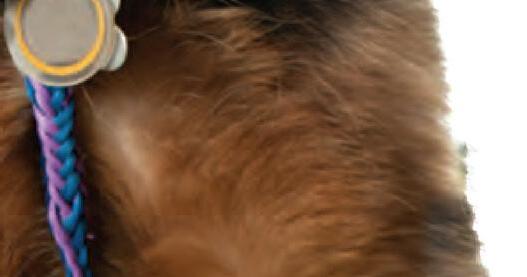
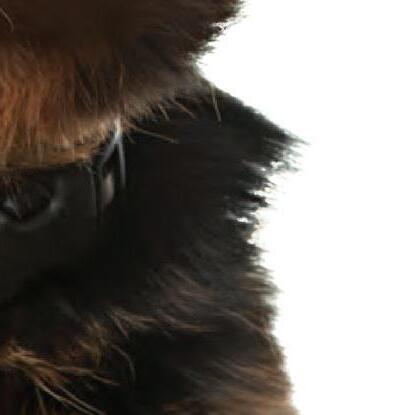
Justine Cosley, certified master feline groomer by the National Cat Groomers Institute of America and owner at Cat Around Town located in West Mifflin, Pa., also has past experience as a veterinary technician. She grooms only cats in her facility where her focus is on grooming sensitive and special needs cats without any sedation – a unique service when sedative medication cannot be tolerated due to an animal’s age or medical status. To accommodate cats’ extreme sensitivity to noise, Ms. Cosley places cotton in cats’ ears during grooming sessions. She also uses a lightweight fabric band that expands to wrap around any kitty’s head (pictured) to shield their ears from noise and air pressure during blow drying. The fabric band around their head also mimics the feeling of being held or hiding in an enclosed bed or tunnel toy, further increasing felines’ comfort.
Acupressure and Energy
Acupressure is an ancient massage technique used in Traditional Chinese Medicine to assist with various issues including anxiety, nausea and pain. Michelle Elgersma, DVM, certified in veterinary acupuncture by the International Veterinary Acupuncture Society since 2012, explains that acupressure is similar to acupuncture. The main difference is that acupressure requires less precision because we use our thumb or finger, covering a larger surface area than an acupuncture needle. Therefore, anyone can learn to how to rub and press certain points on a pet’s body to release and move meridian energy.
“Energy should always be in motion; if stuck, it can cause stagnation,” advises Dr. Elgersma.
Engaging in this natural form of healing likely will increase the bond between person and pet because you will cause the
release of endorphins which combat stress and pain. Generally, most points that are useful on humans also are effective on cats, dogs, rabbits and horses. Dr. Elgersma favorite two points to gently massage on your pet are as follows:
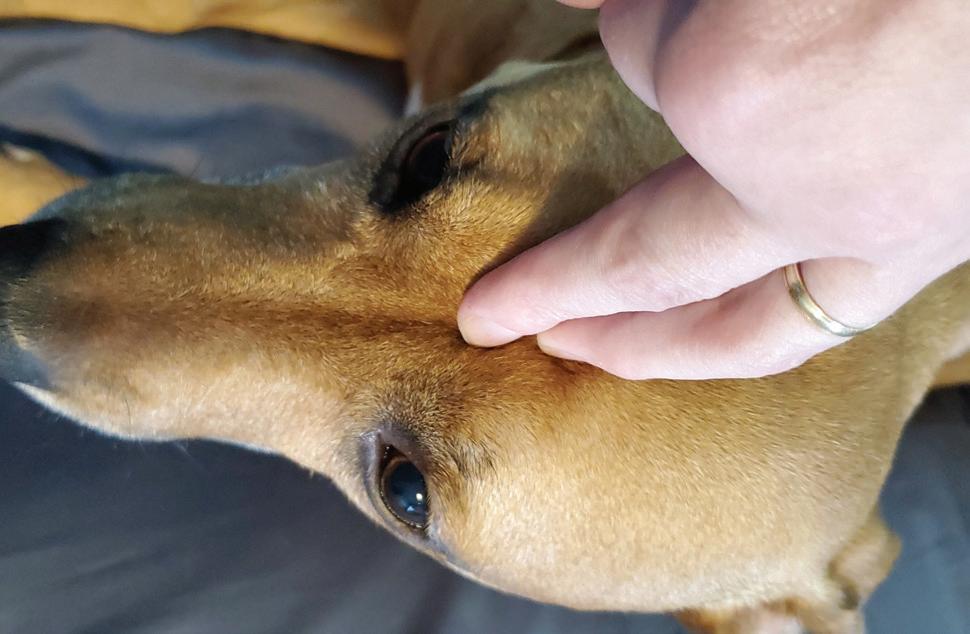
For relaxation (illustration A).: Place thumb or first two fingers at the center of pet’s nose and stroke through the middle of the eyes and ears, as if drawing a center line. Repeat as needed.
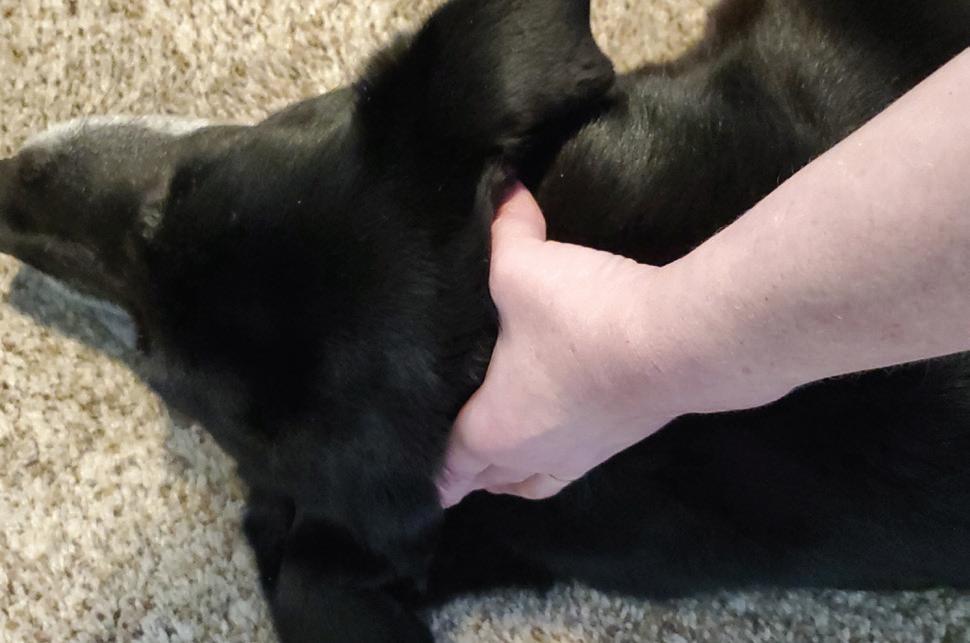
For calmness (illustration B): On the back of pet’s neck, place index and middle finger behind one ear. Spread hand to place
thumb behind pet’s other ear. Then press in toward pet’s skull and hold for several seconds. (My dog became so calm that he fell onto the floor!)
More acupressure methods and detailed charts of points on pets’ bodies are available online from various resources. Please consult with your veterinarian for concerns or questions about acupressure and your pet.
References Animal Medical New City. Accessed 24 Feb. 2021.
https://vetmed.tamu.edu/news/pet-talk/a-cats-five-senses/ The University of Adelaide, Faculty of Sciences. “How far away can dogs smell and hear?” 9 Jan. 2020. https://sciences.adelaide.edu.au/news/list/2020/06/09/how-far-away-can-dogs-smell-and-hear
In a time on planet when our world has much to learn, the Angels teach us... Our animals play a role in the work of our lives, just as we do theirs. We are in learning and they are, too.
Angels tell us that we are not little in Heaven’s view, yet we might think ourselves to be. Heaven wants us to recall our true inner direction. We are divine in the eyes of God. Angels will teach us in many ways that our animals are, as well. Please, join us. Assist in this growing awareness...
Illustration A
Illustration B
Fun Scent Work for Pet Dogs
By April Minech
Most people know about the specialized dogs that help law enforcement sniff out criminals, drugs, bombs, and search for missing persons. Their sense of smell is so great, they can do searches over water, alert people to medical issues and even sniff out produce or other items that can be smuggled. But did you know it can be a fun game for your dog, just like playing fetch? Dogs instinctively love to smell and discover things and nose work classes can help you learn how to play “sniffy” with your own pet dog.
The same philosophy and principles that are used for foundation work in professional working animals can be used to teach your dog games to play. “We teach a dog to identify a specific odor, search for it, then indicate on that odor,” explains Marcy Fenell CPDT-KA, an instructor of scent work classes at Animal Friends. ”So if you were training a dog to search for drugs, you would teach the dog what to search for and how to tell you they found it. It’s certainly more complicated than this and working scent detection dogs are selected for the work and vigorously trained to be part of the team. You know if you have a dog that could potentially save someone’s life it becomes a lot more important.” Scent work for fun uses a lot of the same techniques for teaching the dogs to search for oils, such as birch, cypress, anise, or clove.
Scent work probably has more benefits than you realize. “It’s great mental work for the dogs. And it’s one of the few things we do with them that allows the dog to lead. Dogs of all sizes and ages are able to participate. The handler cue’s the dog to search, then supports the dog while it sniffs for target odor, then the dog indicates when he’s found it” Marcy says. “It’s great for bonding with your dog and excellent for building confidence with shy or fearful dogs.” Letting the dog have freedom of choice and a loose leash can help the dog feel good about what they are doing. And for some reactive dogs, it can help keep their mind focused and let them get used to being around other dogs while they are searching. The NACSW started nose work training for that type of dog. They provide a very friendly venue to compete in for dogs who may be reactive to other dogs, since they are worked one at a time from the car in NACSW workshops, classes & trials.
the handler is following and there’s no reason to tense, just let the dog lead and have fun. Scent work is similar to solving a puzzle, the dog just figures the puzzle out with their nose. As the dogs advance in training the puzzle becomes more and more complicated. Marcy teaches that a sniffy walk or an enrichment walk is much more enjoyable for the dog, as opposed to a walk at heel where the dog is not allowed to smell the ground. There is certainly a need for a dog to know basic cues, but this sport is a great way for both ends of the leash to just relax, have fun, and build a great bond.
Scent work can be great for the handler as well, since it takes the pressure off getting your dog to perform. The dog leads this sport, there is no wrong way for a dog to go about searching. They all have different styles and odor behaves very differently depending upon many different environmental factors. The dog has to find the odor; humans do not have the sense of smell necessary. In typical training classes sometimes people are so intent on having their dog “sit” or “down” on cue that they become nervous, a bit forceful or even discouraged if the dog doesn’t respond right away. During nose work exercises, the person is walking behind their dog while it searches; the dog is leading so
Dogs enjoy doing what’s instinctive, and sniffing is a big part of that. “We take away a lot of things that come naturally to dogs by feeding them from a bowl twice a day, typically at the same time each day. So they don’t get to use many of the behaviors that are innate, “ laments Fenell. A lot of people walk their dogs because they think the dogs only need exercise or want them as a walking partner and don’t want them to stop every few feet. And that’s the dog’s favorite part: smelling the world and working their brains. Dogs get just as tired (if not more so) by mental work than physical work.
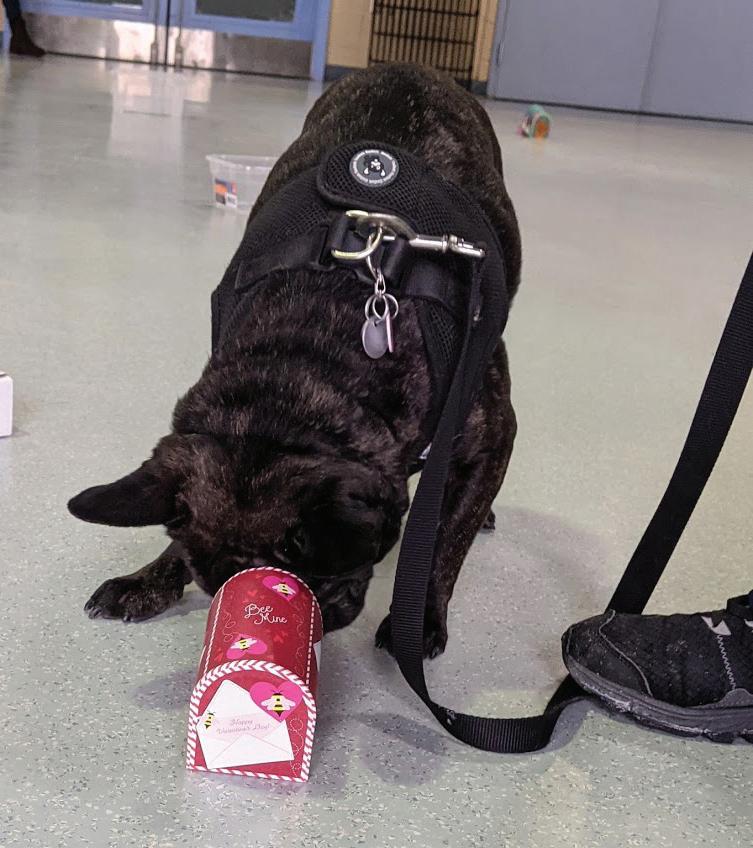
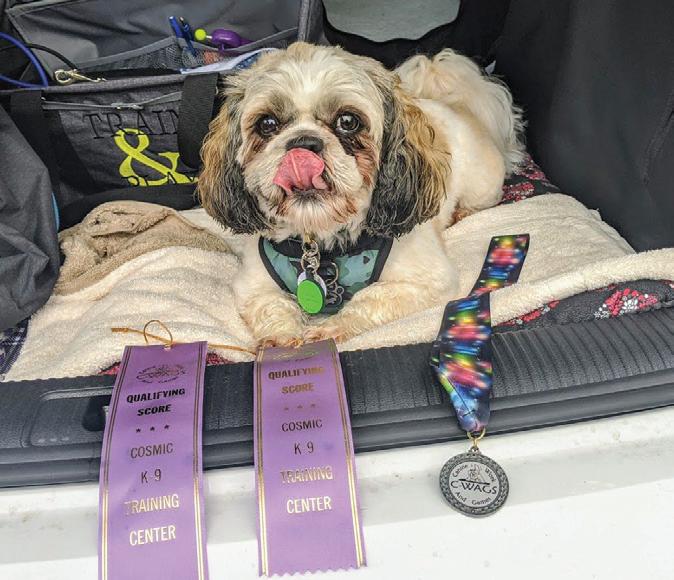
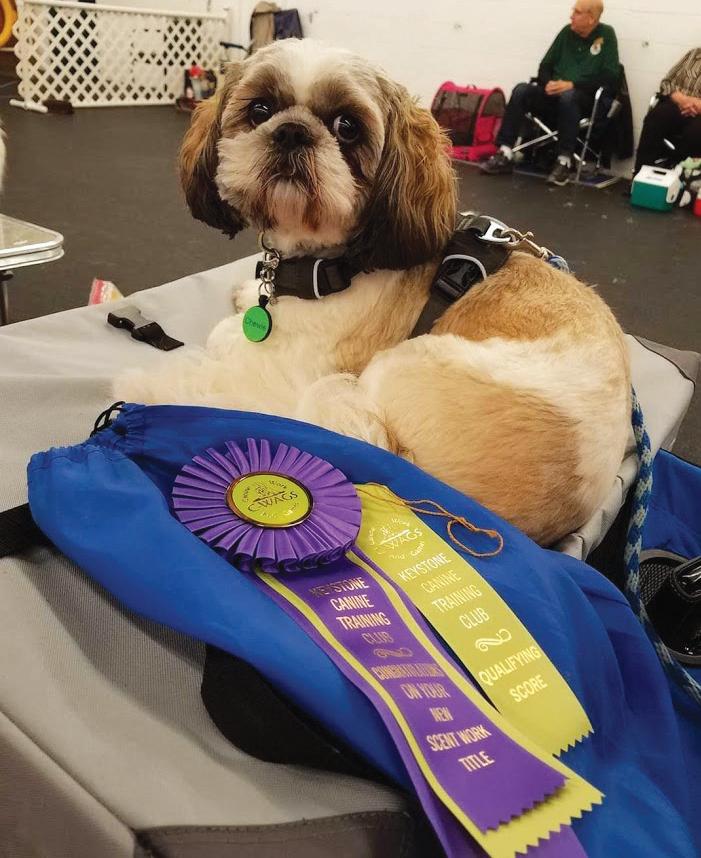
There are several levels of nose work to enjoy. For beginners, many places offer classes that help you work with your dog to search using cardboard boxes, an exercise that’s easy for you to learn and practice at home on your own time. And any dog can do it. Marcy suggests that it’s like Sudoku for dogs. “Even short-nosed and older dogs can enjoy it. A French Bulldog or a Shih-Tzu might not be hired as a police dog,” Marcy laughs, “but they can do it!” If you find you and your dog want to move on, there are competitive events you can attend and win ribbons for hard work. Most organizations usually have a minimum one-year age requirement to compete; if you are interested in competition it is best to look into the particular organization that you may want to compete with. The amount of training you need to put in before competing varies depending on many factors, but there really is no reason you just can’t take classes and have fun.
Animal Friends offers a beginning class called The Nose Knows, a more advanced class known as The Nose Knows continues, and the Nose Knows Ninja for those who are interested in competing with scent work games sanctioned by C-WAGS. Drop-in sessions are often offered that may focus on one particular skill such as containers, vehicles, working through distractions, etc.
For those interested in more resources, Marcy suggests looking into these groups: AKC, NACSW, and C-WAGS which offer different options including outdoor work, and locally for indoor training Animal Friends is very dog friendly for beginners and will be a host site for a C-WAGS sanctioned league in April.
Photos courtesy of Marcy Fenell
Returning to Normal
During the pandemic, you likely fell into one of two categories: those who tried out new hobbies and participated in all of the social media trends or those who embraced the art of doing nothing and lived in their sweatpants. Whichever category you fit into, your pets certainly enjoyed all of the extra one-on-one time! But how will they feel once you go back to the office or return to other activities, leaving them alone for much of the day?
Before you return to your normal schedule, you’ll want to be sure your dog is prepared for more alone time. Whether you have had your dog for several years or recently welcomed a new addition to your family, you may have concerns about them developing separation anxiety when you do return to your normal schedule. If you had your dog before the pandemic and they didn’t have issues with separation, they shouldn’t be affected too much. You may need to slowly ease them back into the routine, but they may welcome the alone time and returning to their own normal routine! If you have a new puppy and this stay-at-home lifestyle is all they know (or you have a dog that already had separation anxiety) don’t worry because now is a great time to work on training!
First, set up a camera and take a short trip outside the house to see how your dog reacts to being alone. Were they comfortable with your departure or were they nervous? Doing an assessment of their behavior as a baseline will determine where you may need to start.
How to Help Your Dog Adjust to More Alone Time
By Veronica Rigatti, Animal Friends’ Canine Behavior Specialist
You can begin by simply separating yourself from your dog while you are both in the house. Set them up with an activity in one room, then go into another room where they cannot have access to you but you can still hear them. This doesn’t need to be for very long … start with 10 minutes then work your way up from there. As your dog’s comfort level grows, you can move on to leaving the house, but staying nearby and occupying yourself with a short activity like yard work. Eventually, you can work your way up to short trips out of the house like a walk or drive around your neighborhood. Make these trips longer each time as long as your dog remains comfortable while you’re gone.
When you do eventually return to the office, set up a virtual call with your dog! Leave the camera on so you can keep an eye on how they are doing. If you are having trouble with training or your dog has severe anxiety, you should contact a certified positive reinforcement trainer for help. Animal Friends University offers a variety of training classes that can help you build a strong and lasting bond with your dog. Visit ThinkingOutsideTheCage.org/AFU to browse our course catalog.
You can also visit ThinkingOutsideThe Cage.org/Behavior for tips, advice and access to our Behavior Helpline if you have questions or concerns.
We wish we could spend all of our time with our pets, but it is completely normal and acceptable for them to have some alone time. With these helpful tips, you can make the return to normal stress-free for both you and your pet!
Friends
Animal
Help! My Pet Has an Emergency!
By Beth Rossi
Since March of 2020, Veterinary practices have been busier than ever! People are home spending more time with their pets and adding new pet additions to their families. In order to keep clients, pets, and staff safe, veterinarians have had to put into place new protocols and rules that take additional time to follow resulting in less ability to add new appointments to an already busy schedule. With more pets needed to be seen and less appointments available, pets with non-urgent medical issues are ending up at the ER resulting in longer wait times. Emergencies can happen at any time, here are a few things that you should know so you are prepared in case a trip to the ER is needed for your pet.
Know where to go before an emergency occurs. Check with your family veterinary to find out if they handle emergencies, what kind of emergencies they handle, and the hours of emergency coverage available. In case your family veterinary is not available or has limited hours, find out where the closest 24 hour ER Veterinary Hospitals are and have their numbers in an easy to access location. To avoid long wait times for minor emergencies (when your family veterinary is not available), have a list of facilities that offer animal urgent care or same day appointments. Be mindful that emergencies can be expensive. Most ER veterinary facilities will accept pet insurance and may offer Care Credit as a financing option.
Although all emergencies are scary, not all emergencies require the same immediate medical attention. Pets arriving at the ER are triaged, or evaluated to determine their urgency for medical treatment. Pets that are not stable and in urgent need of medical invention, such as but not limiting to difficulty breathing, sever bleeding, sever trauma (hit by car), actively seizing, or are non-responsive, need to be seen first. Pets that are currently stable but have the potential to become unstable or have a worsening condition such as but not limited to abdominal pain, open fracture, large lacerations, difficulty or unable to walk, back pain, straining or inability to urinate, are next to be treated. For pets coming to the ER for minor medical issue such as but not limited to minor ear infection, lumps/ bumps, minor laceration, mild URI, or non-life threating conditions, are seen after the urgent cases have been treated.
If you are able, call the ER facility either before or on your way to let them know what your emergency is especially if your pet is not stable. For stable pet emergencies, you can find out what the ER wait time is. Wait times can vary greatly depending on the time of day. Expect longer wait times for nights, weekends, and holidays. Depending on your pet’s condition, you may want to call around to other ER facilities for their wait times or for minor emergencies, seek treatment from animal urgent care facilities.
When you are arriving to the ER, look for signs to alert you where to go. Due to the different demands and needs of veterinary practices, the safety protocols put in place may different between veterinary hospitals. These protocols are designed to keep the clients as well as staff safe so your pet can be properly treated. Please be respectful and follow the policies and rules in place. At this time many ER facilities including BluePearl PVSEC are providing curbside service, clients are not permitted in the building.
Once you have arrived, call and alert the receptionist of your pet’s emergency, stay on the line for further instructions. At BluePearl PVSEC, a technician will come out to your car and bring your pet into the building to be triaged, the receptionist will take down your information over the phone. Alert the receptionist of any financial concerns you may have. If you are transporting the pet for a friend or family member, or for households with multiple pet parents, designate one person to be the contact person. If the doctor calls you and you are not the point person, alert the doctor in the beginning of the conversation so they can get in touch with right person in order to expedite your pet’s treatment. Although waiting is the hardest part, try to be patient. The parking may not look busy, but there is a reason for the wait time posted. The doctor will call you once they have had an opportunity to thoroughly
Keisel,
•
assess your pet’s condition, in the meantime your pet’s vitals will monitored and pain managed. To ensure you do not miss the doctor’s call or any patient updates, make sure the ER Veterinary Hospital’s number is added to your list of contacts on your phone. Be mindful of you phone’s battery and alert the receptionist if you do not have a way to charge your phone so the proper steps can be taken to ensure you are able to communicate with the hospital team.
You waited, you talked to the doctor, treatment was determined, and now your pet can go home. BluePearl PVSEC will send your family veterinarian a medical report informing them of your pet’s visit to the ER including diagnostics, diagnosis, current treatment, and any followup needed with your family veterinarian. Hopefully you will never need to take your pet to the ER, but if you do, at least you will be prepared.
• Weight: 50 lbs +
• Current with vaccinations
• Never had a blood transfusion
• Tested negative for blood-borne diseases (free testing by blood bank)
• Between 1-7 years old
• Healthy with a gentle temperament
• Must be on heartworm, flea and tick preventative
EXCITING NEW REBRAND!
New Name & New Look Reflects Continued Commitment to the Community
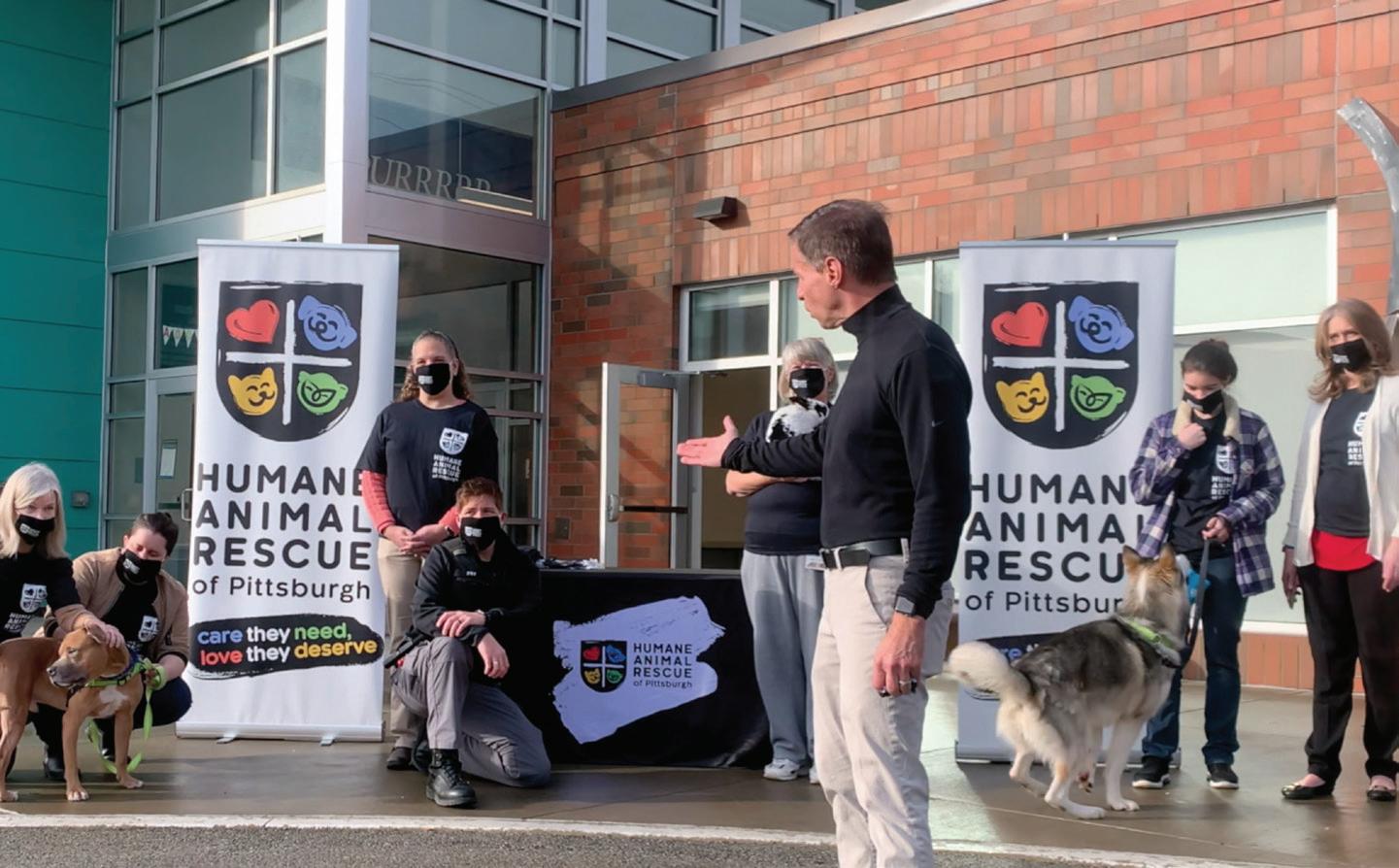
“Passion and commitment to animals are at the core of our organization. The new branding is bold and vibrant and visually reflects the energy our mission inspires,” said Dan Rossi, CEO of Humane Animal Rescue of Pittsburgh. “The new name also better highlights our services and collaborations in our region, such as our partnership with the City of Pittsburgh’s Animal Care and Control. Our look has been improved and updated, but our commitment to animals and the community remains the same.”
“For over 150 years, this organization has remained committed to the Pittsburgh community and 2020 was no different,” said Gerry Delon, Chairman of the Board. “With our rebranding efforts, we are excited to usher the organization into a new era, while remaining steadfast in our mission of caring for animals and inspiring communities. We helped more than 25,000 animals this year through our adoption programs, veterinary medical centers, Wildlife Rehabilitation Center, free pet food distribution and community engagement initiatives. Thanks to the support by the City of Pittsburgh and surrounding communities, we will continue to provide much needed care and assistance to animals in our region and beyond.”
“I’d like to congratulate the Humane Animal Rescue of Pittsburgh on their new rebranding,”
said City of Pittsburgh Mayor William Peduto. “Though the name and the branding are new, HARP’s commitment to providing safe, reliable, high quality service to the animals of Pittsburgh will continue. As we have seen throughout their long history in Pittsburgh and their response during the pandemic, HARP is an important part of our community, and the City of Pittsburgh is proud to call them our valuable partner.”
HARP will continue to operate two low-cost, high quality veterinary medical centers. In an average year, over 6,500 animals are treated and more than 7,000 spay and neuter surgeries are performed in these facilities. In addition to caring for domestic animals, the organization remains committed to indigenous species. The Wildlife Rehabilitation Center is a fully licensed wildlife facility that specializes in caring for sick, injured and orphaned wildlife. Annually more than 4,000 injured wildlife of over 100 unique species are admitted and treated by the Center. Among them are more than 2,300 mammals, 1,700 birds and over 50 reptiles.
Humane Animal Rescue of Pittsburgh will remain focused on providing care to domestic and wild animals in the region with the care they need and the love they deserve. Learn more about the organization, its services and how to get involved at www.humaneanimalrescue.org .
About Us
Humane Animal Rescue of Pittsburgh is one of the largest animal welfare organizations in Pennsylvania, providing services to tens of thousands of animals each year at our two domestic shelters and fully-licensed wildlife rehabilitation center. The organization continues the nearly 150 year legacies of its predecessors providing care and enhanced services to domestic and wild animals alike. Humane Animal Rescue of Pittsburgh’s open-door policy ensures no animal is ever refused shelter. Learn more at HumaneAnimalRescue.org
Cheyenne
Coventry
Doggone
Dog
Fuzzy
Humane
Jefferson
Larry’s
Murray
Paws
Pittsburgh
Portraits
Rockin
Woody’s
5.
REDUCTIONIST NUTRITION VS. FOOD SYNERGY
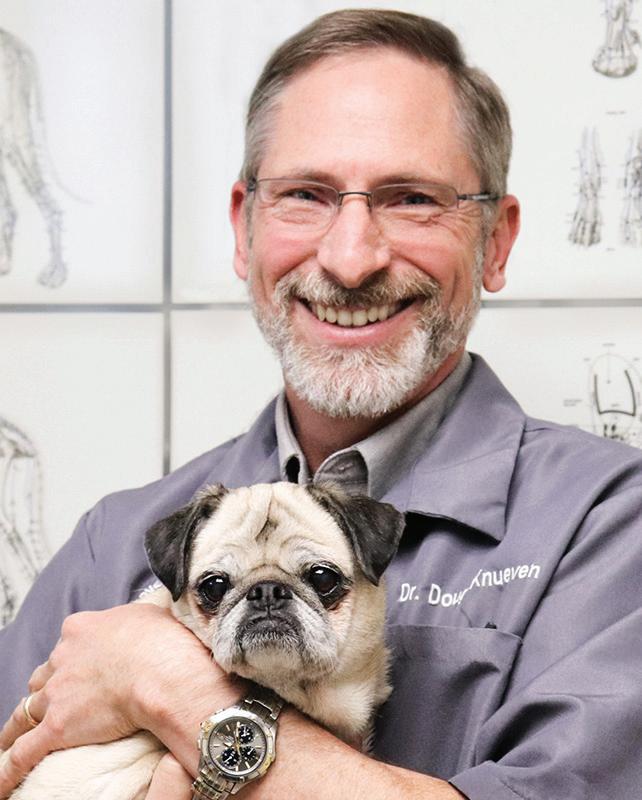
By Doug Knueven, DVM, CVA, CVC, CVCH
The impact of proper nutrition on the wellbeing of any animal cannot be overstated. Nutrients interact with and modify molecular mechanisms in the body affecting all aspects the organism’s physiological functions. From the fields of nutrigenomics and nutrigenetics we know that diet plays an important role in an animal’s phenotype and expression of health. Our pets evolved over millions of years eating whole foods, and their genetics are programed to manifest optimal health through the interaction with their natural, whole-foods diet. Natural nutritional therapies can be implemented to foster health in our dogs and cats. To better appreciate this approach to veterinary therapeutics we need to understand the two main nutrition philosophies – reductionist nutrition and food synergy.
Reductionist Nutrition
Reductionist nutrition is based on reductionism which is an attempt to understanding the nature of complex things by reducing them to an analysis of their components. In other words, a complex system is nothing but the sum of its parts. Likewise, reductionist nutrition, the nutritional philosophy that is promoted in veterinary education, is the notion that foods can be fully understood by analyzing the nutrients that comprise them. So, a carrot is basically beta-carotene and the Association of American Feed Control Officials (AAFCO) Pet Food Profiles yield complete and balanced diets that nourish dogs and cats.
Does this idea hold water? Well, let’s take a look at a simple nutrient, sodium chloride. According to reductionist nutrition we can understand table salt by looking at its constituents, sodium and chlorine. As it turns out, sodium is a soft, white/silver, highly reactive metal that explodes in water. Chlorine is a yellow/green highly reactive gas that is poisonous. Did you find that a helpful process for understanding salt? It turns out that the compounds that have come together in whole, unprocessed foods, provide nutritional value that cannot be accounted for by looking at the isolated nutrients involved.
This fact is demonstrated in research the looks at the effects of whole food on a body. You have probably heard that lycopene, a nutrient found in tomatoes, fights prostate cancer. Well, not so fast. It turns out that it was found that consuming tomatoes had a more robust health effect on the human prostate than did taking an equal amount of lycopene.1,2 In an interesting twist, the same idea holds true for peanut allergies. A study found that consuming the allergenic proteins of peanuts in isolation did not cause an allergic reaction in those allergic to peanuts.3 In fact, according to the NIH clinical trials of pharmaceutical-like vitamin/mineral products have found that many do not work as intended or even have adverse effects.4 Indeed, in the real-world application, the idea of reductionist nutrition is all wet.
Food Synergy
A more holistic view of nutrition is represented by the concept of food synergy. This is the idea that the biological effect of consuming nutrients in the form of the food matrix (the composite of naturally occurring food components) on biological systems is greater than, or different from, the actions of the individual food components.5 According to proponents of this nutritional philosophy, “A fundamental feature of food is that the constituents are coordinated… A person or animal eating a diet consisting solely of purified nutrients in their Dietary Reference Intake amounts, without benefit of the coordination inherent in food, may not thrive and probably would not have optimal health.”5
The “Dietary Reference Intake amounts” is basically the human version of AAFCO Profiles. AFFCO is responsible for setting nutritional standards for pet foods. Based on studies regarding nutritional deficiencies and toxicities, AAFCO determines the minimum and maximum levels of about 30 nutrients that should be in pet foods. According to food synergy scientists, relying solely on such a profile for pet food could lead to dogs and cats that are not manifesting optimal health.
There are thousands of phytochemicals present in whole (unprocessed) foods. These work together synergistically to promote health in the body. According to researchers, these nutrients “in some sense could equally be deemed essential for life [as vitamins and minerals] … It seems a good assumption that the vast majority of components of plant and animal-based food is functional, that it has some kind of biological activity.”6
Processed pet foods are formulated based on the reductionist nutrition philosophy and this is the concept of nutrition that veterinarians are taught. Yet, a more modern, holistic understanding of nutrition, which considers the complexities of food synergy, better accommodates the genetics of our pets, and leads to better health outcomes. All our dogs and cats can benefit from natural nutritional therapies which include species-appropriate, balanced raw diets and whole-food supplements.
Integrative Holistic Medicine
Integrative: combining the best of conventional and alternative medicine
Holistic: providing more options for therapy
• Acupuncture
Herbal Medicine
Spinal Manipulation
Supplements
References
1.Stacewicz-Sapuntzakis M, Bowen PE. Role of lycopene and tomato products in prostate health. Biochim Biophys Acta. 2005;1740:202–5.
2. Boileau TW, Liao Z, Kim S, Lemeshow S, Erdman JW Jr., Clinton SK. Prostate carcinogenesis in Nmethyl- N-nitrosourea (NMU)-testosterone-treated rats fed tomato powder, lycopene, or energy-restricted diets. Natl Cancer Inst. 2003;95:1578–86.
3.
Natural Nutrition
Vaccine Counseling
Massage Therapy
Healing Touch
Dr. Doug has been practicing integrative veterinary medicine since 1993. He is certified in acupuncture, Chinese herbal medicine, and chiropractic. With over 30 years of veterinary experience, Dr. Doug has treated thousands of challenging cases.
For complete care for your animal companion, see Dr. Doug. Call Beaver Animal Clinic today to set up a holistic exam for your pet.
Dr. Doug | The Holistic Vet
357 State Avenue | Beaver, PA 15009 | 724.774.8047 beaveranimalclinic.com
Young, vibrant Golden Retriever named Bauer is diagnosed with torn knee ligaments, after just 2 visits he is “acting as if nothing had ever happened”, read what Bauer’s dad had to say about working with Animal Healing NOW:
Dr. Savko is awesome! took my Golden Retriever to him when the vets thought he tore his ACL. He was limping and not playing a whole lot. Initially the veterinarians had me thinking that expensive surgery after expensive diagnostic testing were my ONLY options for my pal to have a normal life again. If that was the way it had to be then so be it, but I thought maybe there might be a better way so I got a second opinion. I am so glad I got another opinion from a veterinarian that referred me to Dr. Savko. Right away messaged Dr. Savko frantic about my baby and he responded immediately and was very calming. I’ve
Bring this ad to your first appointment to receive a FREE GIFT!
since been seeing him for about 8 weeks now and after just 2 visits, Bauer was acting as nothing ever happened and playing with his puppy brother. Dr. Savko saw the progress himself and could’ve easily taken advantage of me and told me to come 7 days a week, but he spread out the visits and even cut a few out because Bauer was doing so well. NO MATTER WHERE YOU LIVE, THIS DR. IS WORTH EVERY SECOND TO GET YOUR PET BETTER. THANKS DR. SAVKO!
You have not tried everything until you have tried Animal Healing NOW, besides why wouldn’t you go the non invasive route first? Unless it is a life or death emergency natural and non invasive options should always be considered first or at least in addition to anything else!
Healing, not just treating.
“a
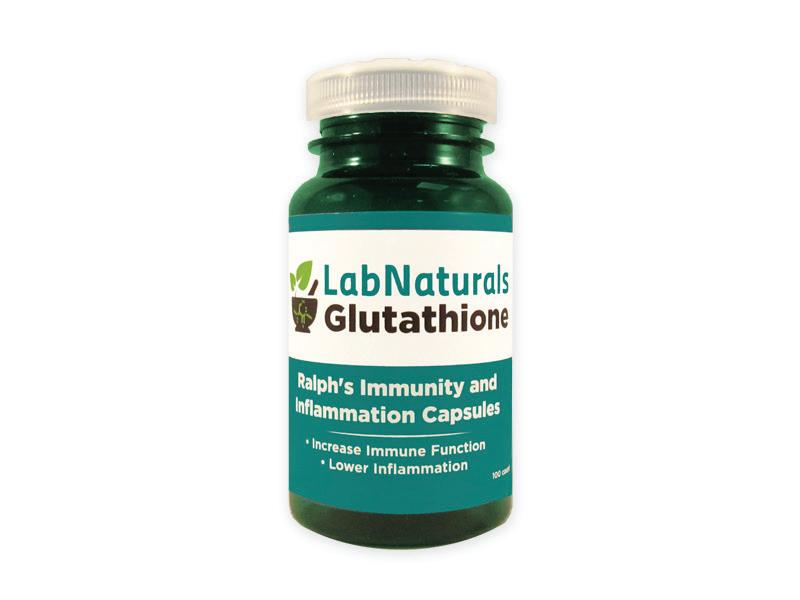
Vet Compounding and Acetyl-Glutathione for Animals
By Susan Merenstein, Pharmacist/Owner
Murray Avenue Apothecary’s state-of-the-art compounding laboratory prepares innovative, economical, easy-to-use dosage forms for animals. Susan Merenstein, RPh/Owner of Murray Avenue Apothecary and LabNaturals, Inc. has over 40 years of pharmacy practice including pet therapies. Susan and her dedicated staff help veterinarians and animal care specialists solve a variety of medication problems including hard-to-find medications, custom dosages, drug combinations, alternatives and transdermal medications.
At Murray Avenue Apothecary, we take the “bite” out of animal dosing with a little love in every compound.
About Vet Compounding
Veterinary compounding can make medicine time a treat –for pets and their owners.
Compounding, which is the art and science of preparing customized medications, is an increasingly popular solution to veterinary problems, just as it’s become more prevalent in human use. When it comes to diseases like skin rashes, eye and ear infections, heart conditions, cancer, and diabetes, animals and humans have a lot in common. But giving pets medication presents a unique set of challenges – challenges that can often be addressed through compounding.
Meeting the unique medication need of animals is indeed one of the fastest growing areas of pharmacy compounding. Working with your veterinarian practice, a licensed compounding pharmacist can meet the individual needs of your pet based on species, size and weight.
Compounding is undertaken at the direction of the licensed prescriber, taking into consideration clinical observations, testing and experience in making the determination whether a compounded medication is required for your pet.
Just like their human owners, animals are unique and have individual needs for taking medicine. Compounding pharmacists can assist you with your finickiest felines, canines that require specific dosing depending upon their breed size, as well as exotic and large animal patients that present their own unique medication requirements – many of which are not met by commercially available medications.
It’s a team effort: A caring veterinarian working closely with a compounding pharmacist can improve the health and happiness of your pet.
93% of veterinarians say that compliance monitoring has a positive impact upon their practices. Compounding is uniquely suited to improve the compliance of your pets by providing flexibility in strengths and concentrations, dosage forms such as topicals, chewable treats, liquids, as well as flavoring options.
Our compounded medications are prepared from active pharmaceutical ingredients (APIs) purchased from FDAregistered suppliers, and are not “unapproved substances.”
All of our pharmacists and certified technicians are licensed and strictly regulated by State Boards of Pharmacy, so you can feel good knowing that you and your pet are in good, certified hands.
Your pets are special. Their medication should be, too.
Pets are members of the family, and you want them to have medical treatment that’s as attentive and innovative as you expect for yourself. Today’s veterinarians understand this, and many rely on compounding as one way to deliver this advanced level of care.
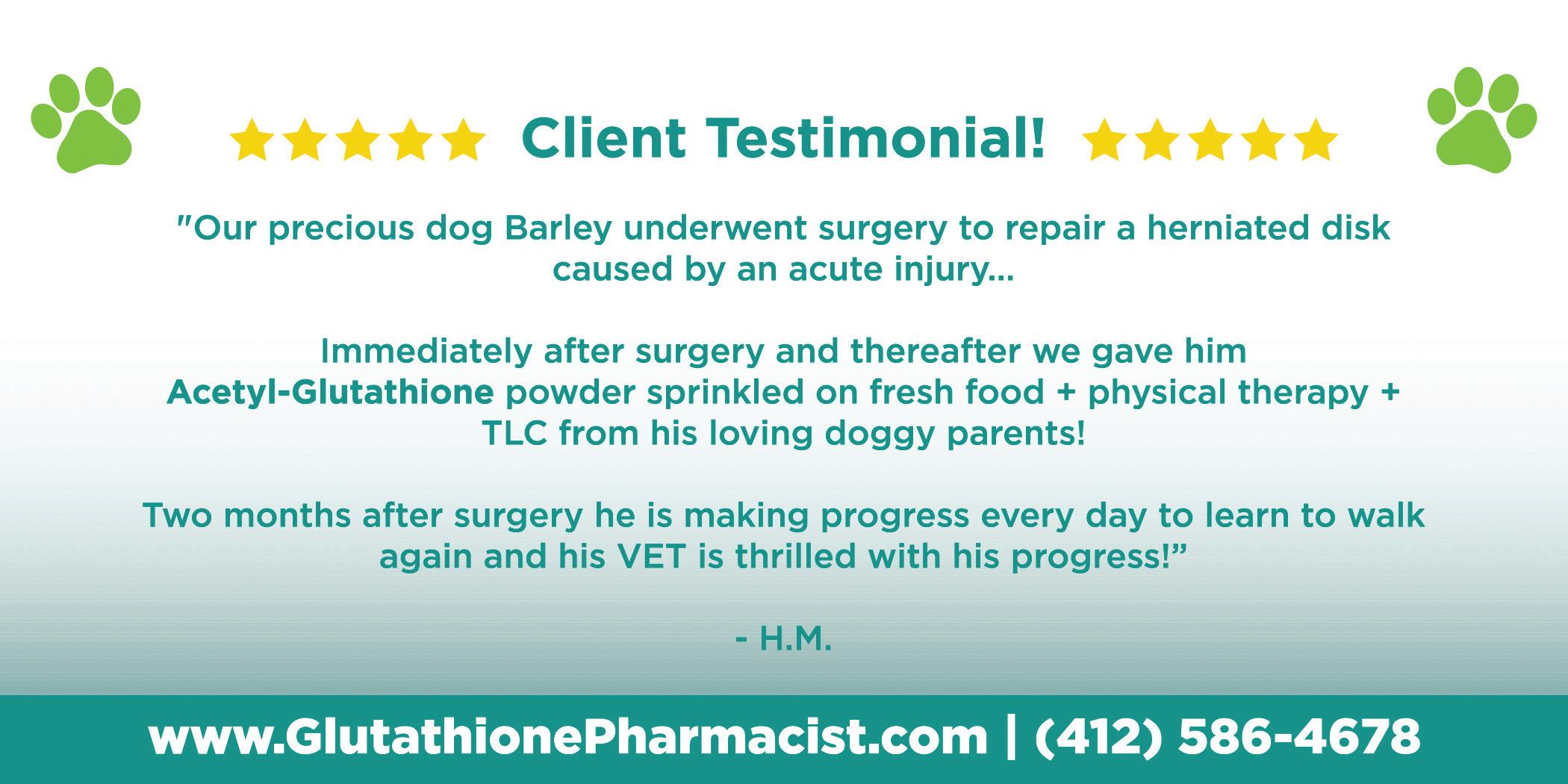
Acetyl-Glutathione for Animals
One of our most successful compounded medications is absorbable Acetyl-Glutathione. The buzz words in today’s healthcare settings for humans and animals alike are Glutathione, Telomeres, Enhanced Performance, Anti-aging, and Detoxification. Glutathione (pronounced “gloota-thigh-own”) is the body’s essential health AID-Antioxidant, Immune Booster and Detoxifier. It also helps with pain and decreases the recovery time from injuries, which is great for arthritis and joint pain.
Glutathione by itself is not bioavailable when taken orally and not appreciably absorbed in human or animal models. Most oral forms of glutathione are foul smelling, and the majority of an oral dose is oxidized before it can be absorbed and used by the cells. In order to have sufficient bioavailability in an oral product, glutathione must be modified to Acetyl-Glutathione. Acetylation is the way all proteins, amino acids and peptides are transported by the body. Acetyl-glutathione is a food substance recognized as
a Dietary Supplement and is generally regarded as safe, when used as directed. Acetylated Glutathione is stable in all of the digestive system and is well absorbed.
Acetyl-Glutathione can help your pet with the following conditions!
• Arthritis
• Joint pain
• Asthma
• Liver Disease
• Allergies
• Inflammation
• Aging
• Hepatitis
• Itchy skin
• Hot spots
• Kennel Cough
Sold through our GlutathionePharmacist website, a part of LabNaturals, Inc., Murray Avenue Apothecary is the only compounding pharmacy in the country to compound products with Acetyl-Glutathione and Topical Palmitated Glutathione. Call us at 412-586-4678 or 412-421-4996 today!
Check out our LabNaturals CBD products at LabNaturalsCBD.com and read pet owner testimonials.
Glutathione and CBD - a knockout duo for health and longevity!
Spay and Neuter Awareness
By Dr. Becky L. Morrow, DVM
Do you consider yourself a pet owner or pet parent?
Over 75% consider pets as family members. This makes it hard to believe that around 13.5 million dogs and cats were euthanized in the US in the early 1970s, nearly 20% of the entire population! Even with all those deceased animals, millions of cats and dogs were still roaming in our neighborhoods. Shelters could have an intake of over 100 dogs per day. For us pet lovers, this was a dismal time. What turned things around? Spaying and neutering played the biggest role. About 10 years after we started sterilizing, dog and cat euthanasia due to overpopulation dropped by an estimated 3.5 to 5.9 million and fewer animals were entering shelters despite the growth of communities. By the early 2000s, free-roaming dogs were no longer an issue.
Currently, 6-8 million cats and dogs still enter shelters each year. Sadly, over 2.4 million healthy animals, mostly cats, are still euthanized annually due to lack of available homes. Where do all these cats come from? The vast majority of kittens born each year, around 80%, are produced by community catsthose stray, feral, and even indoor-outdoor cats that are free roaming in our neighborhoods. Because this is the main source of cats coming in to shelters and rescues, progressive animal welfare organizations are implementing life-saving strategies and putting more resources to spay/neuter rather than housing and, eventually euthanizing, these cats. Rather than take obviously
feral cats into the shelter, a “return-to-field” or “shelter-neuterreturn” program is in place to get the cats back to their outdoor homes. Not only is this advocated for feral cats, but also for friendly stray cats that are doing well in their outdoor homes. This prevents the cats from getting sick or being euthanized in the shelter and they have a much higher chance of getting back home or being adopted.
Even with shelters and rescues working diligently to decrease the cat population, only about 2% of community cats in the U.S. are currently spayed/neutered. These data make it clear that spay/neuter awareness, especially for community cats is still crucial. It is also clear that those of us in shelters and rescues, need help. Help from private practice veterinarians, caregivers of community cats, pet parents, cities, boroughs, townships, and anyone who wants to volunteer. As I mentioned in my previous article about community cats, the scientifically valid and widely accepted method to help reduce the unnecessary euthanasia of healthy cats is through Targeted Trap-Neuter-Return (TNR). Every birth that we prevent saves a shelter cat’s life.
do these animals have a chance to get lost, but there is a good chance of an injury occurring. Many of these animals are at risk for being hit by a car and fighting with other intact males. We see dozens of scars on tomcats, as well as many broken teeth from the vicious fights that occur. Neutering dogs decreased indoor urine marking, intermale aggression, and mounting of other dogs by 50 to 70% and roaming by 90%. Based on our experience with cats, the vast majority will stop spraying after neutering and typically do not spray at all if neutered before sexual maturity.
We know that spay/neuter is critical to save lives from an overpopulation standpoint, how about from an individual animal standpoint? I cannot state strongly enough that, especially for female cats, dogs, and rabbits, surgical sterilization is extremely important for their health. I have seen too many animals die of pyometra (a life-threatening uterine infection), mammary carcinoma (a form of breast cancer), and from complications due to pregnancy and birth. Intact female dogs have a 50% chance of getting breast cancer, three times that of women. Rabbits not only get breast cancer, but over 65% get uterine cancer. What makes this worse, is that these types of tumors do not respond well to chemotherapy and can recur or spread throughout the body. The good news is that there is less than 0.5% chance of a dog getting mammary tumors if she is spayed before her first heat cycle! The data for cats states a 91% reduction in risk of breast cancer if they are spayed prior to 6 months of age. Of course, spaying pets completely prevents them from having life-threatening uterine infections or pregnancy related issues since the uterus has been removed.
So how about male cats, rabbits, and dogs? While have seen testicular tumors and torsions as well as prostate issues, I think the most compelling reason to neuter our pets is due to the impacts on their behavior. Indoor urine marking, mounting, and roaming are all much more likely to occur in unneutered males. Anyone that has smelled tomcat urine knows this is not something we want in our homes! As for the roaming, not only
I would be amiss not to mention some recent studies being discussed regarding spay/neuter. You may have heard of concerns of increased incidence of joint problems (ACL rupture, hip dysplasia), various cancers (lymphoma, hemangiosarcoma, osteosarcoma, mast cell tumors), and immune disorders in some sterilized dogs. While there may be an association with spay/neuter and these conditions, there is no current evidence of causation. The type of studies performed do not allow for a cause-and-effect relationship to be established, due to the retrospective design, the low sample size, lack of controls, and bias inherent in the population of dogs (i.e. is there a genetic predisposition in this lineage of dogs?). Even if it is found that sterilization causes these conditions, the results cannot be extrapolated from one breed of dog to another (these studies were with German Shepherds and Retrievers).
7 CONVENIENT LOCATIONS
7 CONVENIENT LOCATIONS
• East End • South Hills • Strip District
• East End • South Hills • Strip District
• Sewickly • Monroeville • Wexford
• Sewickly • Monroeville • Wexford
• THIS participating
• Upper St. Clair NEW FOR
• Upper St. Clair NEW PRESENT THIS AD FOR A FREE DAY OF
*Offer only valid for new clients at participating locations. Limit one coupon per family. Offer expires 6/30/19. www.TheDogStop.com
Two studies on life expectancy in pets, with huge sample sizes, have been recently conducted as well. Analyzed medical records from over 80,000 dogs showed a strong association with spay/neuter and an increased life expectancy of 1.5 years. Another analysis of data from 2.2 million dogs and nearly a half million cats also concluded that spayed/neutered cats and dogs live longer. While dogs had more
Grooming Day CareBoardingTraining
Grooming Day CareBoardingTraining
*Offer only valid for new clients at participating locations. Limit one coupon per family. Offer expires 6/30/19. www.TheDogStop.com Wexford Retail Strip
moderate increases in their lifespan (a 23% increase for spayed dogs and 18% increase for neutered dogs), the lifespan of spayed/neutered cats doubled! Ultimately, we may find in future studies that sterilized animals do have a proclivity towards some medical conditions, but the data clearly demonstrate that spayed and neutered pets live longer.
The last question we must consider is when is it best to spay/neuter cats and dogs? Based on his review of the current data and experience in pediatric spay/neuter of over 50,000 cats and dogs, veterinary surgical specialist Dr. Philip Bushby recommends spaying all female cats and dogs and neutering all male cats and small breed dogs prior to 5 months of age. For large breed male dogs, if potential orthopedic issues outweigh the concerns for undesirable behaviors mentioned earlier (including risk of injury from fighting or roaming) neutering should occur after growth stops at 15 to 18 months of age.
I personally would much rather spay a puppy than a large, female dog. It is much faster and is an easier to perform surgery. There is also a lower risk of complications due to smaller incision size and minimal blood loss due to the small vessel size and minimal fat surrounding the uterus and ovaries. have been doing pediatric spays/neuters in dogs, cats, and rabbits for 16 years and a good percentage of our 8,000+ procedures each year are in animals under 5 months of age. Our rule of thumb is over 1.5 pounds for a healthy kitten and over 6 weeks of age for a healthy puppy. The young animals recover much faster and are typically back to normal just hours after they wake up. They bounce back quickly! Much faster than in adults.
So, based on experience and science - spay and neuter is the way to go. It saves lives and allows our furry family members to stay with us longer.
ANIMAL EDUCATIONAL EXHIBITS
North:
The Pittsburgh Zoo & PPG Aquarium pittsburghzoo.org
Woody’s Dog Wash & Pet Boutique 412-714-4644 woodysdogbath.com
East:
Animal Elegance
412-361-1177 www.animal-elegance.com
Cat Around Town Cat Grooming 412-466-7877 (PURR) cataroundtown.com
West:
Paws Here Awhile Pet Resort
724-573-4665 pawshereawhile.com
Greater Pittsburgh Area:
Zoom N Groom (Sonya Patterson), 724-225-4827
PET FRIENDLY BUSINESSES & ORGANIZATIONS
Bactronix, 412-375-7886 | www.bactronix.com
Good Nature Organic Lawn Care 888-LAWNSAFER whygoodnature.com
Simple Sugars Scrub, Simplesugarsscrub.com
Village Shoppes Scenery Hill
Elves Lair Christmas & Gifts, Jan’s Tea Shoppe - 2nd Street Coffee Roasters, Velvet Envelope, Westerwald Pottery, Two Old Crows, www.sceneryhillpa. com
All About Pets Veterinary Hospital 724-745-5503 aapvet.com
All About Pets Veterinary Hospital – Washington location 724-503-4887 www.aapvet.com
All Life Veterinary Clinics, 724-381-3446
East:
The Big Easy Animal Hospital 412-908-9301 tbeah.com
Monroeville Pet Hospital 412-372-1100 www.monroevillepethospital.com
VETERINARY SPECIALTY & EMERGENCY SERVICES
North/South:
Pittsburgh Veterinary Specialty and Emergency Center, Inc. 412-366-3400 724-809-2000 pvs-ec.com
List your business today! pghpetconnections@gmail.com
Cooperative Care for Cats
By Bernadette Kazmarski
Until recently, cats were considered untrainable and even unintelligent because they didn’t respond to common tests and techniques in the way other animals did, notably dogs, to whom they were most often compared. You put them in a maze, which any rodent can complete, but they wander a little bit, then settle down in a corner and even have a bath.1
But cats had one up on us—they would respond and could be trained to do most anything, but were waiting for us humans to understand their underlying biology and how that tempered and molded their responses to our requests. The cat in the maze was acting on its own innate intelligence, the one that could save its life if there was a predator or some other threat, or a tasty little mouse to have for breakfast, around that next corner in the maze, and the best way to assess the situation safely was to find a protected spot, sit still, listen, smell, perceive the best way to proceed. 2
Rather than forcing cats to conform to intelligence tests that work for humans, humans decided to follow the cats to a new understanding of their needs over the past decade and more, so that we could learn to communicate with them on their level and meet their needs as we learned the best ways to study them.
Fear Free
One overall change in handling of all animals, from our domestic companions to livestock to wildlife, has come within the past decade by the name “Fear Free” which acts to enlighten us humans and modify our understanding of animals so that we can eliminate fear, anxiety and stress from their lives. 3
As animal caretakers we need to recognize that each of the animals we handle in any way is an individual with individual needs as much as we humans are. Animals come to their lives with us from different experiences and react to their situation as a reflection of their lives to that point.
Cats in particular stay very close to their original biology and early socialization in decision-making. Cats are predators, but they are also prey to other animals. Never mind that they live in a house with soft beds and cat trees and food served up to them and humans who adore them—in their experience, in every moment, they recognize that a predator could be poised to strike and kill them, so they keep a constant physical defense against this danger. They maintain a “territory” which is not turf to fight over but the “safe space” they have carefully defined and maintain both through physical premise and body language. Moving out of that territory, or participating in activities that are outside their experience, can cause them to be fearful because they perceive themselves as vulnerable.4
Many cats never see a veterinarian, receive poor or no care, are punished or abused, abandoned outdoors or surrendered to shelters, all for behavior that is perfectly natural for their circumstances but which can largely be modified or eliminated by reducing fear and stress. The goal for cats is to provide a space where their fears are recognized
References
1. “The use of a T-maze to measure cognitive–motor function in cats (Felis catus)”, https://comparativebehavioralresearch.wordpress.ncsu.edu/files/2019/12/ The-use-of-a-T-maze-to-measure-cognitive-motor-function-in-cats-Felis-catus_.pdf
4. “Your Cat’s Personal Space: Why it Matters” https://catbehaviorassociates.com/ your-cats-personal-space-why-it-matters/
5. “Cooperative Care: The How and the Why” https://winter2019.iaabcjournal.org/ cooperative-care/
6. Chirrups and Chatter website, handouts, https://www.chirrupsandchatter.com/
and we modify or remove fearful objects or activities so they feel comfortable within it, and also to condition them to places and activities that make them fearful but are necessary for their welfare, like visiting the veterinarian.
Cats and Cooperative Care
“Cooperative Care” goes one step further to actually engage a cat in its own handling and inviting it to be a participant in making decisions. It “involves training an animal to not only tolerate handling and husbandry procedures, but to be an active, willing participant in these experiences.”5
Tabitha Kucera RVT, CCBC, KPA-CTP of Chirrups and Chatter utilizes Fear Free techniques and offers a webinar and in-person instruction on Cooperative Care.6 While giving cats choice may sound farfetched, break down an activity and you can see there are many points where a cat can indicate preference and comfort that you can respond to. One basic way to give your cat some control is to understand their body language and respond to it: whether you are trimming nails or simply petting your cat and your cat starts to withdraw or react, don’t persist—stop immediately and let the cat relax. If the cat learns that you’re responding to its communication, it will build a bond of trust and thereby reduce fear and stress, and encourage the cat to go along with what you want. It gives them more confidence that they are safe so that they tolerate a situation they may have fought to get out of, and all of this reduces the risk of physical and emotional injury to the cat and the human. 6
Cooperative care is based on how cats learn, through both classical conditioning, or learning through association, and operant conditioning, or learning through trial and error. Classical conditioning can happen automatically through everyday activities, like the can opener sound association with food—but things can accidentally be conditioned with negative associations, like the dreaded cat carrier associated with a scary trip to the vet. You would use desensitization and counterconditioning to create a positive association with scary things, like treating the carrier like a play space with great food to reinforce the conditioning. Understanding and using pheromone products can enhance a cat’s comfort and also reinforce that the new things they are learning safe.
We did a disservice to cats in an effort to get cats out of shelters and into adoptive homes when we described them as “no care” pets. It’s about time we gave that up.
CAT RESOURCE GUIDE
Homeless Cat Management Clinic Schedule April through June 2021
Our clinic is located at 207 Allegheny Street, Tarentum, PA 15084. At this time, we treat only cats at our clinics. You must call to register prior to any clinic.
CLINIC REGISTRATION
BY PHONE: call 412-321-4060 and leave a message. Please include your name and phone number in your message. Someone will return your call and complete your pre-registration. HCMT is all volunteer and this may take some time. Clinics fill up quickly and it’s best to call at least two weeks in advance of the clinic you want to attend.
BY EMAIL: Email cathomeless@gmail.com with your name, number of spots you need and which date you are registering for. You will receive a confirmation email ONLY if you are registered. NOTE: dates may be added and are subject to change.
($30 PER FERAL - See website for other costs) More dates may be announced and dates are subject to change. Check www.homelesscat.org/clinic-info for the most up to date information.
Low-cost spay/neuter and animal services in and around Allegheny County
This is an ever-changing list of resources for pet owners in Pittsburgh and beyond including low-cost spay and neuter programs for pets as well as TNR for community cats, after-hours emergency care, help with veterinary bills, pet-friendly rentals in Pittsburgh and across the US and links to shelters for adoption and other services. This information is provided for reference only and subject to change without notice. Please contact the organization or agency before using their services.
Low-cost Spay and Neuter Organizations and Programs
TNR AND LOW-COST SPAY/NEUTER PITTSBURGH AREA
Homeless Cat Management Team
207 Allegheny St., PO Box 100203, Tarentum, PA 15084, 412-321-4060
http://www.homelesscat.org/ Feral Cats and Rescued Cats. Feral cats must arrive in a humane trap. Check the website for clinic dates. All appointments must be made by calling the phone number. No walk-ins. Ferals: $30.00 Fast Track, no-charge at free clinics. Rescued Cats: Females $55.00, Males $40.00 Both include rabies, earmite and flea treatments. Other services available.
City of Pittsburgh Free Spay and Neuter for City Residents City of Pittsburgh offers five free spays/neuters to all city residents http://www.pittsburghpa.gov/publicsafety/animal-control/spay-neuter.html
Low-Cost Spay/Neuter Programs at Shelters in Allegheny and surrounding counties
SHELTER PROGRAMS
Animal Friends
https://www.thinkingoutsidethecage.org/pet-care/spay-neuter/ Pet/friendly cats: $65 spay or neuter, includes pain medication – vaccines require are an additional fee.
Feral/Outdoor Package: $50, includes pain medication, rabies, FVRCP, ear tip and flea treatment. Cats must be feral and in a humane trap to receive this service.
Humane Animal Rescue
https://humaneanimalrescue.org/veterinary-care/spay-and-neuter-services/ East End: 66209 Hamilton Ave., Pittsburgh, PA 15206, 412-661-6452
North Shore: 1101 Western Ave., Pittsburgh PA 15233, 412-321-4625
Pet/friendly cats: $70 spay/neuter, rabies, FVRCP (distemper), microchip Feral/Outdoor Package: $50, includes pain medication, rabies, FVRCP, ear tip and flea treatment. Cats must be feral and in a humane trap to receive this service.
Beaver County Humane Society 3394 Brodhead Road, Center Township, PA 15001, 724-775-5801 https://beavercountyhumanesociety.org/tnr-and-owned-cat-surgery-prices Friendly cats: begin at $75. Feral cats: begin at $35 Visit website for more information.
Clarion Paws (Serves Clarion, Forest and Jefferson County)
Mailing address: P.O. Box 804, Clarion, PA 16214
Current Location: 11348 Route 322, Shippenville, PA
(Clarion River Hill, between Kronospan and Clarion Electric) http://www.clarionpaws.org/programs/spay-neuter/ Monthly clinics listed on website, submit an application. Pets or ferals: $65 spay, $45 neuter. Includes rabies vaccine, ear mite check and treatment and flea treatment. Optional services at an upcharge. Trapping and financial assistance through Spay Neuter program may be available to Clarion, Forest and Jefferson County feral/stray cat caregivers on a case by case basis.
Butler County Humane Society 1015 Evans City Road, Renfrew, PA 16053
https://butlercountyhs.org/clinic/
For current pricing and schedule information please give us a call at 724-789-1150.
Washington Area Humane Society 1527 Route 136, Eighty Four, PA 15330
http://washingtonpashelter.org/ Currently moving into new building.
Low-cost Spay/Neuter Organizations in Allegheny and surrounding counties (alphabetical)
These are organizations which are not day-to-day clinics but organize, host, sponsor or otherwise provide access to spay and neuter services.
Catnip Acres (Greene County)
155 Dark Hollow Rd, Waynesburg, PA 15370
https://catnip-acres.com/
To schedule a spay/neuter, please call 724-833-0954 and leave a message.
Fix ‘Ur Cat Spay & Neuter Clinic
Low Cost Spay Neuter Washington County, Inc., DBA Fix ‘Ur Cat 18 West Pike Street, Canonsburg, PA 1531
Call 724-405-7FIX (7349) for an appointment. Spay/neuter clinics are by appointment only. Pets: $60 for females, $50 for males Ferals: $50
Download and complete application, mail in for appointment.
https://www.fixurcat.org/spay-and-neuter/
Fluffy Jean Fund (Washington County)
Packages at $65 and $85
Call Faith for Available Dates and Appointments (724) 941-5683 press
E-Mail: faith.b2@verizon.net
http://fluffyjeanfund.weebly.com/ Fund for Feral Cats of Pittsburgh
Reimburses partial funds to help spay/neuter feral cats (funds not always available)
Po Box 55135, Pittsburgh, PA 15207-0135
Lawrence County Animal Relief Fund (LCARF)
PO Box 8514, New Castle, PA 16107, 724-510-4952
http://www.lcarf.com/
Monthly clinics: $70 Spay/Neuter for Cats and Kittens! Includes a rabies vaccine, FVRCP vaccine, (distemper) and flea and earmite treatment
Operation Spay/Neuter
Butler, PA (for Butler County residents only)
Income-based spays and neuters for dogs and cats. Call 724-287-SPAY (7729) or you can email for details
http://operationspayneuter.com/
Pet Search
P.O. Box 1653, Washington, PA 15301 Call 724-228-7335 for clinic information.
http://www.petsearchpa.org/
SNIPP: Spay and Neuter Indiana PA Pets Westmoreland/Indiana Counties, Alle-Kiski Valley (Leechburg)
Monthly low cost clinics, check website for dates and availability.
http://www.snippindianapa.org/
Low-cost Spay/Neuter and Veterinary Clinics
Fix’N Wag’N
Spay/neuter: $70. Visit the website for upcoming dates and places. https://fixnwagn.com/
THESE ARE INDEPENDENT CLINICS THAT OFFER SERVICES ON SITE DURING REGULAR BUSINESS HOURS.
Frankie’s Friends
730 5th Avenue, New Kensington, PA 15068, 724-889-7011
Spay/neuter for pet/feral cats: Neuter $40, Spay $55, includes Rabies, Ear mite treatment, Flea Treatment. Also offers low cost vaccinations and basic medical treatments.
http://www.frankies-friends.org/
Penn Hills Spay/Neuter Clinic
11644 Frankstown Rd, Pittsburgh, PA 15235, 412-244-1202
Open Monday-Friday. No longer offering walk-in services for ferals.
Pet/TNR: Spay $56, Neuter $37, visit website for details and scheduling. Also offers low cost vaccinations and basic medical treatments.
http://www.spayaz.com/Pittsburgh.html
North Hills Spay/Neuter Clinic
3967 William Flinn Hwy, Allison Park, PA 15101, 412-213-7353
Open Monday-Friday. No longer offering walk-in services for ferals. Pet/TNR: Spay $56, Neuter $37, visit website for details and scheduling. Also offers low cost vaccinations and basic medical treatments. https://spayaz.com/locations/pittsburgh-north-hills/ Find Local Low-cost Spay, Neuter and Veterinary Care on the Internet Low-cost Neuter and Spay (search by zip) http://neuterspay.org/
Love That Cat (online search) http://www.lovethatcat.com/spayneuter.html Spay USA http://www.spayusa.org/search.php Spay and Neuter Early, a Humane Alliance Campaign http://www.whentospay.org/get-your-pet-fixed Get Your Fix.org http://getyourfix.org/ ASPCA searchable map of low-cost clinics in US & Canada https://www.aspca.org/pet-care/general-pet-care/ low-cost-spayneuter-programs
EMERGENCY AND AFTER-HOURS CARE Pittsburgh Veterinary Specialty and Emergency Center (PVSEC) http://www.pvs-ec.com/ Rivers Veterinary Urgent Care Walk-in, urgent, emergency care as well as surgeries and regular wellness appointments during daytime hours.
Washington Area Humane Society, www.washingtonpashelter.org
Butler County Humane Society, www.butlercountyhs.org
Beaver County Humane Society, www.beavercountyhumanesociety.org
ANIMAL CRUELTY LAWS BY STATE (UNITED STATES) Animal Legal & Historical Center www.animallaw.info/articles/armpstatecruelty.htm
EQUINE AFFAIRS
Riding is a verb, it is an action word
A famous quote often use when teaching is “riding is dynamic, not static,” by author and clinician Charles De Kunffy. Riding is a verb; it is an action word. We ride with our joints and listen with our muscles. As a matter of fact, riding is our muscles communicating to the horse’s muscles. What call the “silent dialog.” The rider’s leg corresponds to the horse’s abdomen, the rider’s seat to the horse’s back, and the rider’s hands to the horse’s mouth. All moving parts that are listening and interacting with the moving horse.
If we are tense when we ride, it interferes with the fluid communication between horse and rider. A stiff rider has a hard time feeling the horse, and the secret to good riding is equestrian tact or knowing when to apply the timing of the aids. Riding is a dynamic communication that flows from horse to rider and rider to horse and back and forth, repeating with each stride.
There are so many analogies to use to describe this flowing communication. I tell riders that riding is like treading water. The horse is the body of water, and the rider is staying dynamic on top of the horse/water. Another analogy is that learning to ride a horse is like learning how to play a musical instrument; first, you learn the notes and then you learn how to string them together. If you are lucky after years of practice, you can play a beautiful song as in riding a horse in harmony.
Many of my own trainers have told me to allow the leg to breathe with the horse’s rib cage. Yes, our leg is on the horse’s rib cage; it has to expand and contract. Our leg is used in timing with the horse’s gait, rhythm, and breathing, but many riders are told to grip with the leg. Riding with a gripping leg makes the horse dead to the leg.
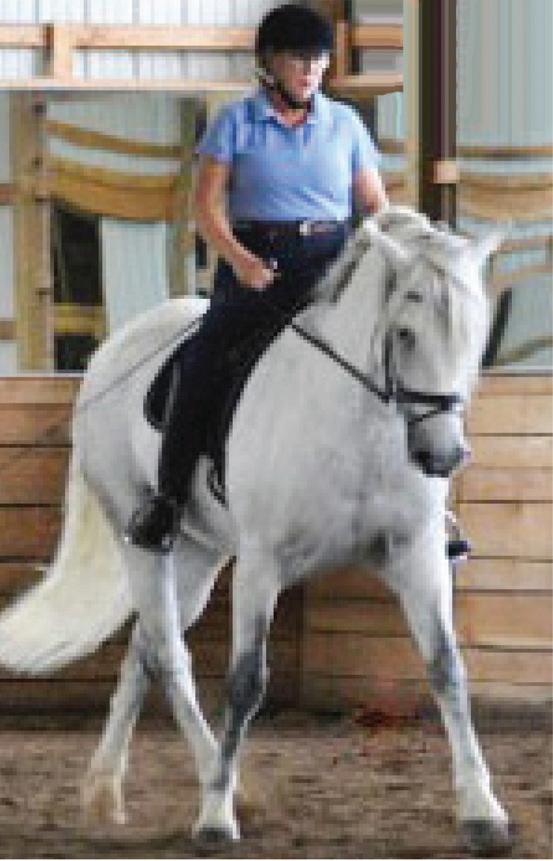
Harmony between horse and rider with a light contact elbow to bit and a following seat. Inside leg could be slightly forward. Rider is riding in a balance seat, not hunt seat.
The rider’s seat needs to envelop the horse’s back. The classical texts say that the horse’s back should come up and massage the rider’s seat. But riders are told to press and bear down when they ride, interfering with the back’s oscillation. like to think of a horse’s back as lifting and then waving the rider’s spine. Especially at the canter, riding a canter is like surfing a wave. As the horse moves forward and back the rider’s seat lifts up in a rocking motion. We need to allow our joints to go with the horse, which is difficult if we are tight, gripping, or bearing down.
Next, we have the most misunderstood piece of riding, our hands, and arms. Riders are continuously told don’t move the hands keep them still. We are bombarded with commands to don’t do this, don’t do that… It’s a miracle any of us can actually ride! But those elastic elbows that we hear about have to move, and our hands just happen to be connected! If we ride on contact with the bit or the horse’s mouth, we have to move with the horse’s longitudinal motion forward and back from the elbow at the walk and canter. i And since my hands don’t disconnect at the wrists, we do move from the elbows.
Loop in the rein. could move my fingers for the rest of my life and my horse would not know. I need to either shorten the reins or bring my elbow back to take the slack out of the rein. However, I like that he is in self carriage.
Not too many instructors talk about elbows, only hands and fingers! But it is the elbow that connects to the horse’s mouth using the extension of the rein. The hand then feels the horse’s mouth, evaluating whether the horse is softy chewing the bit giving at the poll or resisting. If a rider is holding their hands tight, they cannot feel the horse’s mouth. And if they are continually moving the fingers, the hands are too busy to listen to the horse.
Anyone who knows me knows I talk elbows, not hands or fingers. If you have a good elbow-to-bit connection with the horse “on the bit” and light at the poll, then you can finesse with your fingers. But if you don’t have that elastic elbow-to-bit connection, you can move your fingers for the rest of your life, and because there is slack in the rein, your horse won’t notice. I have never been told to ride hand to bit, only elbow to bit. Also, if the hands are pressed down the elbow can’t follow the forward and back motion of the horse because the elbow joint is straightened. But once again so many riders are told hands down. There needs to be a bend in the elbow to allow the arms to function when riding in order to move with the horse’s motion.
watched a hunt seat trainer who had a student with the prettiest non-moving hands put her hands on the base of the horse’s neck to feel the forward and back motion of the horse at the canter. Genius, thought. Whether you ride on contact in dressage or hunt seat over fences, a rider’s elbows allow the horse to jump over a jump or stretch into the bit.
Correct position of the rider’s breathing legs, absorbing seat and elastic elbows are the beginning of good riding. Riding is a verb; it’s an action word so go have fun, listen to music when you ride, move and groove to the horse’s rhythm and enjoy the rhythmic dance of your horse. Riding to music ~ https://youtu. be/4vhmXeZ8WwU
Quote & article by Kristin Hermann
Remembering Mahalo
By Amy Trotter
There is a special place in the southern suburbs of Pittsburgh that is open, cozy, and tranquil respite from the bustle of the surrounding community.
• Mausoleum Crypt spaces constructed for casketed burial that includes 5 separate buildings and 4 private mausoleums
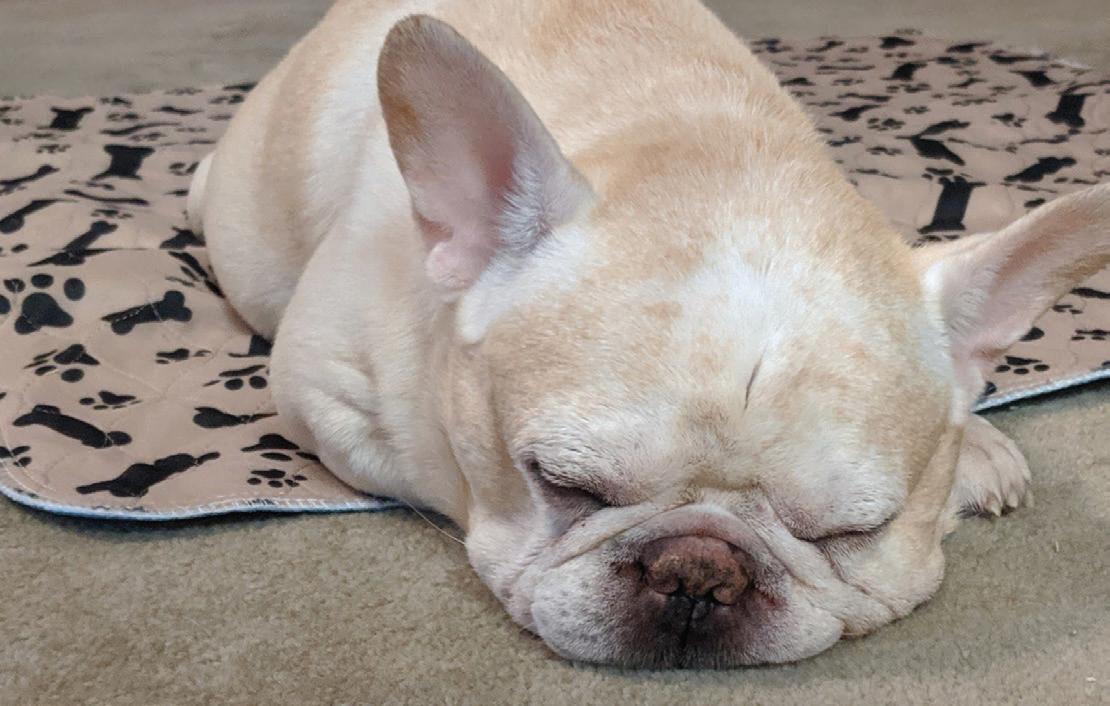
Amy Trotter Turner believes that her little french bulldog, Mahalo, has fulfilled his mission. He provided her with the love and comfort she needed since since her other frenchie, the sweet Aloha, passed in August 2019. Every morning he greeted her with love and kisses as she helped him with all his special needs, such as express his bladder, and gave him toys and love to greet each new day. He explored the neighborhood in his cart, custom made for dogs whose back legs are disabled due to injuries or health issues. She says that he “wrestled all the stuffed sea creatures that dared invade his space.” But age and pneumonia caught up with his 13 year old body, and the kind decision was made to let him run free. His name was Mahalo: “Thank you” in Hawaiian. “He saved me from despair and I thanked him every day for his love.” Mahalo received a second chance and loving support during his golden years as a foster through FBRN - the French Bulldog rescue Network. To learn more about the good work they do, or if you are interested in adopting a frenchie, visit www.frenchbulldogrescue.org for more information.
Affording beatific vistas of rolling hills and wooden glens that wrap around friendly nearby neighborhoods. Jefferson Memorial Cemetery has provided a a peaceful resting place since 1929 when it was founded by Harry C. Neel.
Jefferson Memorial Park was founded in 1929 and passed down to his only son, John D. Neel, who is credited with the growth and innovation that has made Jefferson Memorial what it is today. John’s eldest son, also Harry C. Neel, currently runs the business as President and CEO. Harry’s oldest daughter, Dagny V.N. Fitzpatrick, joined the sales department of Jefferson Memorial and is now Vice President in charge of Family Services. Harry’s second daughter, Whitney R. Neel, joined the Funeral Home team in 2013 and will become the family’s 1st Funeral Director upon completion of her mortuary degree in December 2016.
Jefferson Memorial Funeral Home Facts
• A fully handicap accessible facility
• 18,500 square feet of floor space, beautifully decorated in Williamsburg décor
• A chapel with vaulted ceiling and cushioned pews to seat up to 115 people
• 5 visitation rooms
• Hospitality room and lounge with parquet hardwood flooring
• A children’s room that offers parents and guardians the ability to express their condolences without a babysitter (adult supervision is required)
• Lighted parking lot that holds 178 cars with 6 handicap accessible parking spots
Jefferson Memorial Cemetery Facts
• Jefferson cemetery consists of 340 owned acres with 170 acres developed and 180 acres available for future development
• 1500 average annual interments
• 38 traditional ground burial gardens including 4 lawn crypt sections for double depth burials
• 14 mausoleum cremation niche units
• 14 gardens that contain cremation niches
• 24 garden statues of bronze or marble
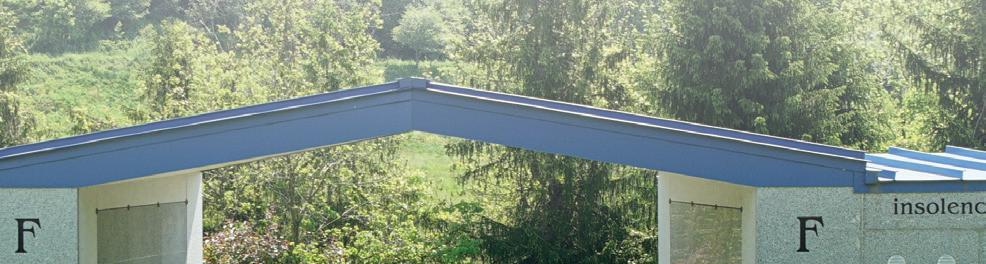
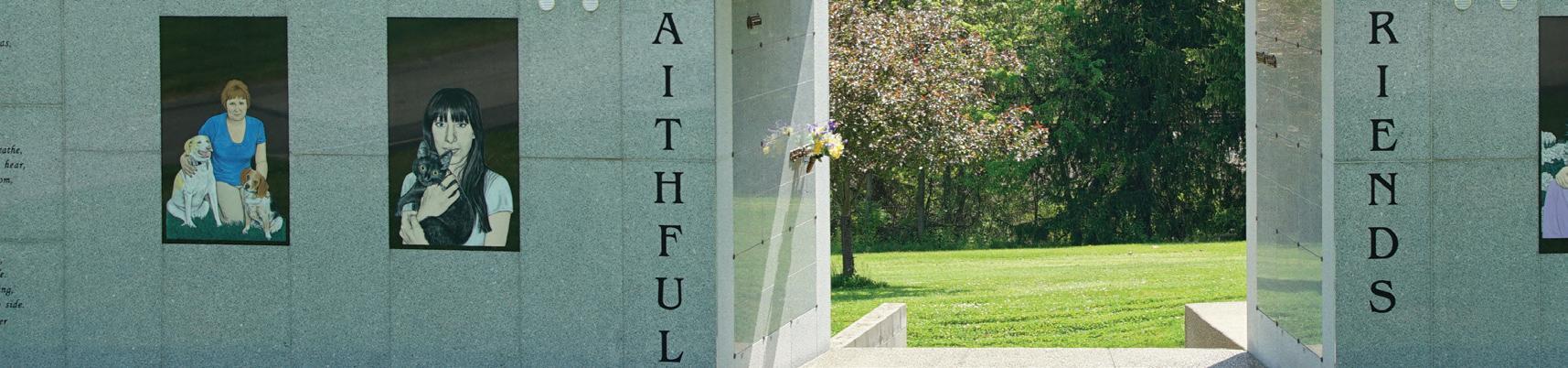
Unlike many cemeteries and funeral home’s today, Jefferson Memorial has a place dedicated to our furry friends that’s open, cozy and, tranquil – The Garden of Faithful Friends. Within the garden is the Faithful Friends Mausoleum, which houses crypt spaces for your pet, and unlike any other cemetery in the area, space for you and your pet. In that same building are niche spaces for pet and human cremated remains.
The mausoleum is an elegant visual feature that expresses meaningful sayings and showcases people with their pets. Like a full-service funeral home, Jefferson Memorial offers visitation opportunities to all pet families.
We at Jefferson believe that a pet who gave love and loyalty through life deserves the respect and dignity of having their remains placed in a lasting and final resting place, just as you would your human counterpart, for they too are a part of the family.
We have developed a distinctive pet room that consists of an arrangement room, a display room for caskets, urns and memorials, as well as a visitation room. Our before needs representatives and Family Service team aim to serve our pet families in every way we can.
We all love our pets and want to know they are in a safe and respectful place. Our Garden of Faithful Friends
807 Camp Horne Rd. Pittsburgh, PA 15237 412.366.3400