Published by All Life Media, LLC. Pittsburgh PetConnections was created in 2012. Our mission is to publish a high quality, informative publication focused on the Human-Animal Bond. We support local businesses and also assist local non-profit businesses for pets and people, to give back to our great Pittsburgh communities.
Welcome to the Summer 2026 Edition of PetConnections!
Dear Pet Lovers,
We appreciate you picking up a copy and reading our Summer 2026 issue of PetConnections! We have all the fun events for summer that you won’t want to miss! Also, we have more stories and tips to make this summer season safe, healthy and fun for you and your furry family!
HIGHLIGHTS IN THIS ISSUE:
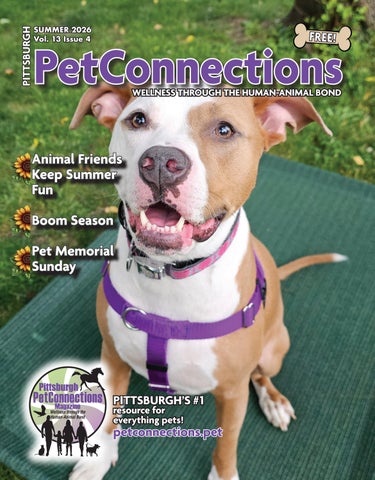
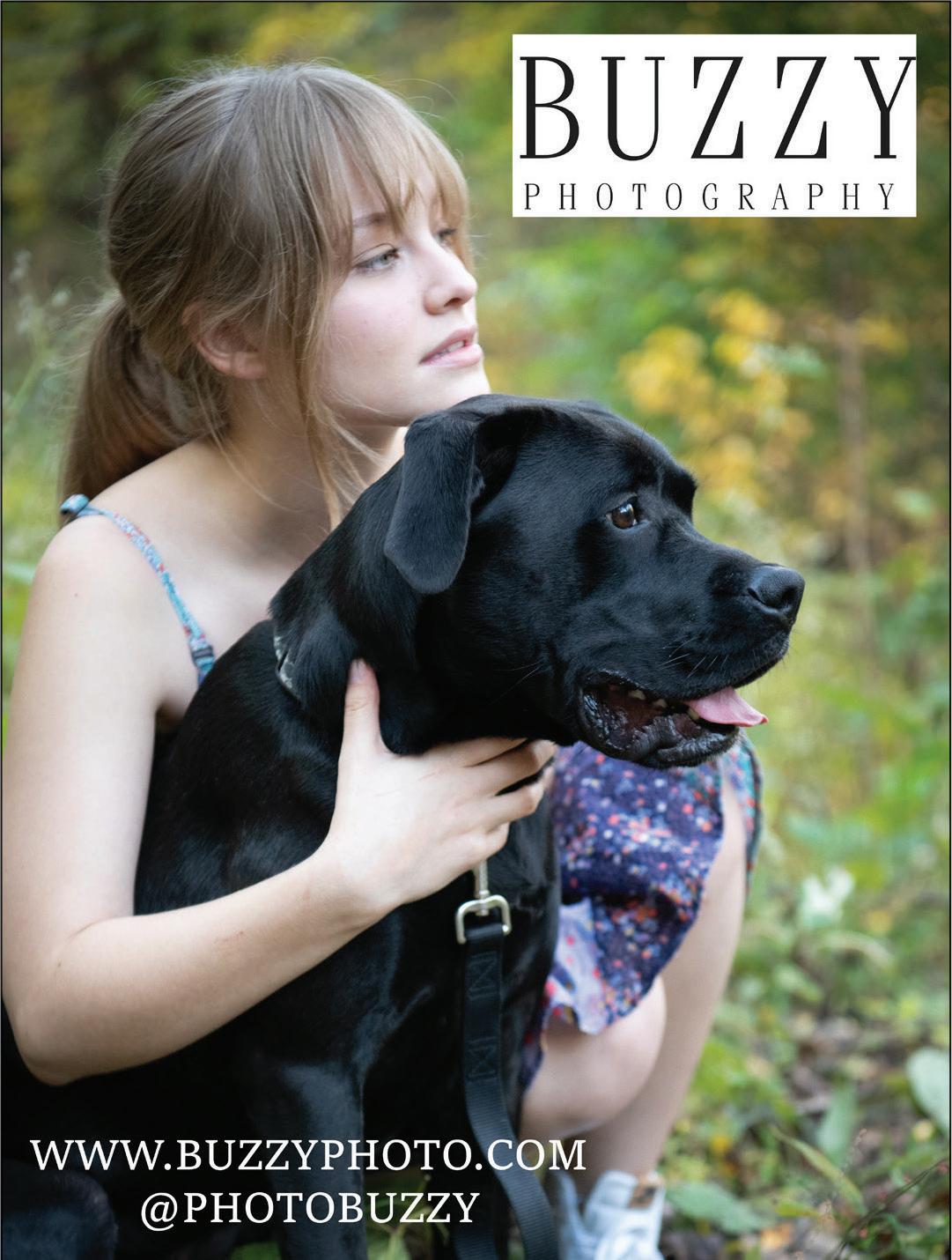
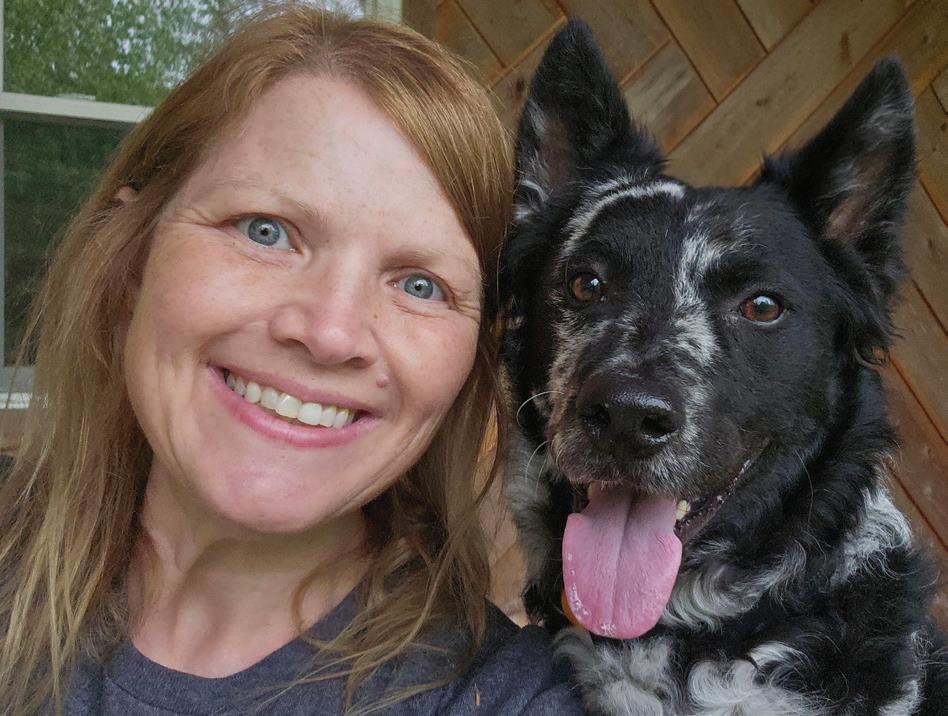
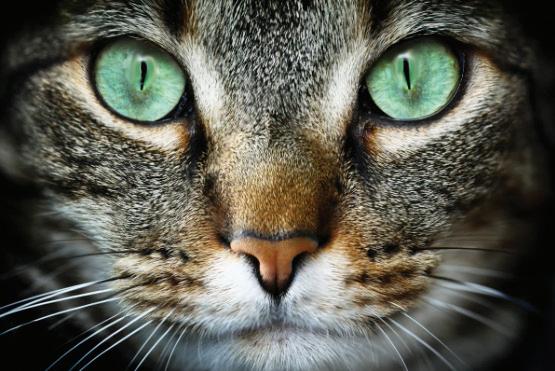
Cover: “Freya” is a student of Rachel McMichael at Upswing Canine Behavioral Services. Read Rachel’s wonderful article in our Behavior & Training section. Dr. Becky Morrow covers Feline Leukemia in our Pet Health & Wellness section.
We are happy to bring back our Holistic Pet section with Njeri Dean explaining the difference between conventional, holistic and Integrative Veterinary Medicine.
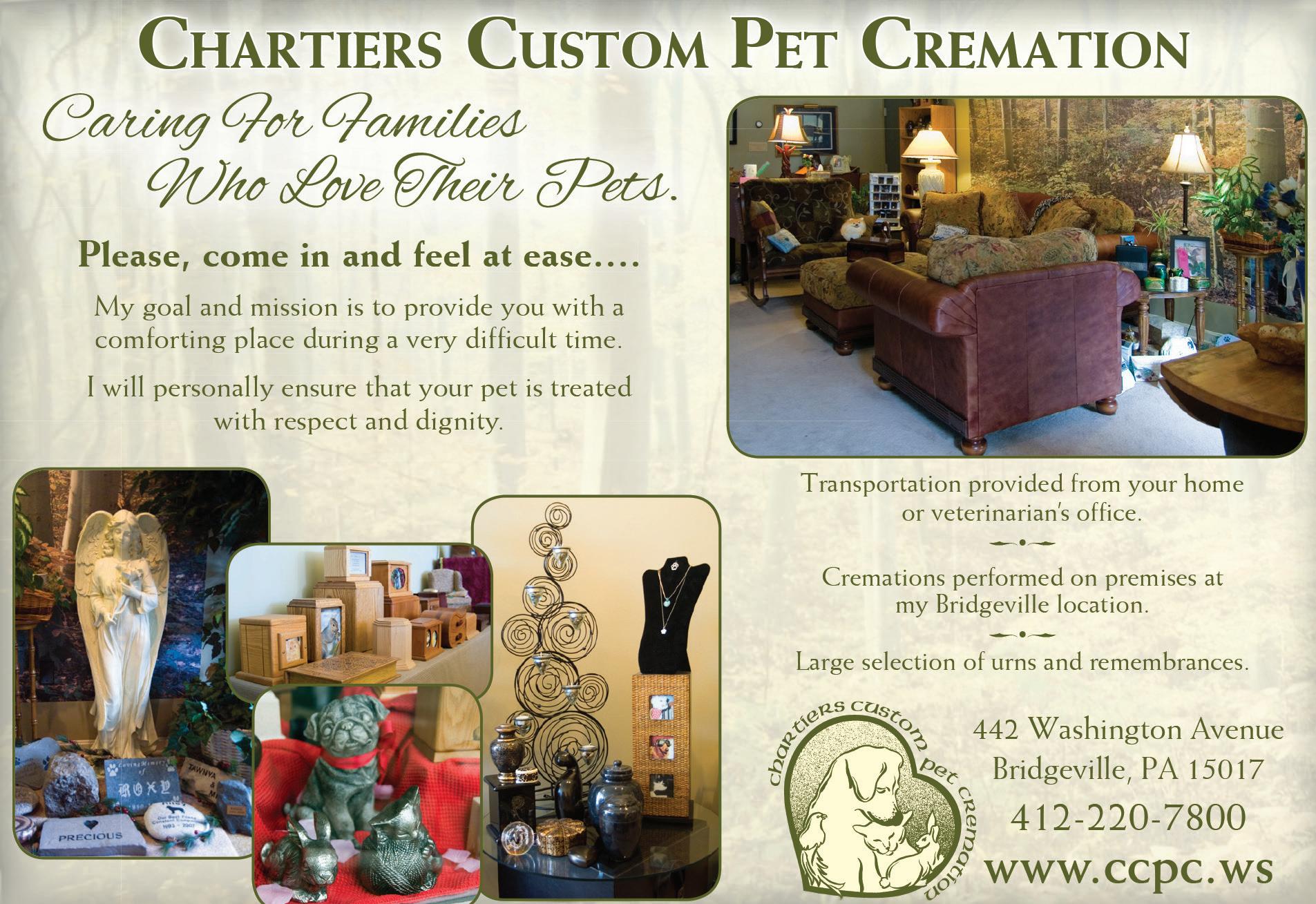
Pet Memorial Sunday is held in September and coordinated by Chartiers Custom Pet Cremation. You can find the details in our Remembrance section.
See some of our stories come to life on our You Tube channel: Pittsburgh PetConnections Magazine - YouTube . You can stay in the loop for local events, funny videos, and contests, by following us on Facebook at facebook.com/petconnectionsmagazine or visiting our revamped website at www.petconnections. pet.
Share your events, pet remembrances, or contest entries by emailing pghpetconnections@gmail.com for a chance to be featured online and in print!
GET INVOLVED
Support local shelters through volunteering, donating supplies, or attending events.
Promote your business with our affordable advertising options! Directory listings start at just $199/issue, with featured listings at $299/issue, appearing both in print and online. Contact our sales team at pghpetconnections@gmail.com for details.
About Us: PetConnections is published quarterly (March, June, September, and a special Holiday issue in December). Our print copies are restocked every six weeks at distribution sites, but our online reach is bigger than ever, with over one million impressions! Subscribe for your personal copy or explore our full-service pet media solutions to grow your business at www.petconnections.pet.
Please follow us on Instagram and Facebook (petconnectionsmagazine) for daily tips, articles, and real-time event updates.
Wishing you and your pets a fun and safe summer season!
Warmly,
Carla Mader Publisher
“Freya”- Freya Underfoot Wigglebottom Nypaver
HUMAN ANIMAL BOND
Because of My Dog
By April Minech
Anyone who has ever loved a dog knows they can make your life better. Dogs offer comfort, companionship, and even motivation— whether it’s joining you for a jog or curling up beside you when you’re down. Dogs make our days happier, and if we’re lucky, a few can even change the direction of our lives. Everyone has a story about what their dog means to them; here’s mine.
One day, a close friend asked if I wanted to help walk dogs at a local shelter where her daughter worked. She had volunteered there a few times and thought I might enjoy it—and she was right. I had always loved dogs, and just being around them made me happy. We took a couple of dogs for a walk around the block, and something in me changed.
We started going more often, and soon I began volunteering on my own. Helping the dogs by
simply giving them a walk and a break from the shelter brought me joy. Along the way, I made friends and learned about the shelter’s training classes. Thinking it might be fun, I started volunteering as a helper for the classes, which included simple tasks like setting up chairs, mopping floors, and preparing treats. In return, I learned that classes weren’t about teaching tricks but helpful training skills, like how to teach a dog to walk on a loose leash, stop jumping, and other things that would be beneficial for a dog to know. I realized I could use those skills while walking the shelter dogs and maybe it could help them get adopted.
Then one day, the Humane officers brought in a dog they weren’t sure about. He looked intimidating— a large, black bear of a dog barking and charging behind a cage marked “Do Not Walk” (that kind of label was used for dogs whose behavior hadn’t been fully assessed yet).
Naturally, I grabbed my leash and decided to take him for a walk. I asked a staff member to walk with me while I took him out in
Continued on next page
case I was mauled but it all worked out. As soon as I leashed him up, he looked into my eyes and I felt a connection, like he had been waiting for someone to just see who he was. His official name was Udhauli; like all the dogs that were brought into the shelter that December, he was named after a cultural winter celebration. I called him “Mojo” for short. That was 25 years ago, and that dog changed my life.
Mojo was the perfect dog for me to practice everything I had learned in training class. He was eager to learn and patient with my inexperience. We grew together, each doing our best, and he seemed to enjoy working with me as much as I with him. He struck me as a dog who had spent much of his life tied out and never truly taught anything. He was afraid of people and other dogs, and I later came to understand that his fear showed up as overreacting.
Over time, we both learned to be calmer and to approach challenges differently. We even attended special classes for fearful dogs, where we were sometimes separated from the general group and put in the “quiet room” (for pairs that were below par, I think now) but we kept trying. After six months of working with him, I thought he might finally be ready for adoption. In truth, he was - but then I realized he was already my dog. He came home with me and became my soul dog.
We did everything together, and he inspired me to keep learning so I could help other dogs, too. I became a regular volunteer with others that felt the same way, focusing on what each dog needed most to be adopted. Many of them were lacking in basic dog “life skills” because they had simply never been given the chance to learn. With a little patience and care, they could blossom, learn how to live in a home, and go on to stay in those homes.
My desire to learn more so I could help more led traveling, attending seminars, reading, watching videos, and doing everything I could to better understand dogs. Each time I came home from a conference or seminar, I practiced what I had learned with Mojo, and our bond grew stronger. We tried new ideas together, and then I brought those ideas and techniques to the shelter to use with the dogs there. As I learned more about how dogs think and behave, I realized many of those lessons also helped me to communicate better with them. Dogs are highly aware of space and body language; the way you approach them, the tone of your voice, and even how you stand all mean something. It struck me that many shelter dogs had been trying to communicate all along, and often the best-intentioned people weren’t sure how to understand what they were saying. Learning to work with a dog in a way that said, “I’m listening,” became a turning point for me and inspired me to keep trying. I attended seminars on fearful dogs, play groups, and socialization, as well as the science of how dogs learn and process information. I wanted to better understand how to teach them, help them meet new people, and support dogs that were anxious or afraid. Fearful dogs were some of the hardest for me to understand at first, and Mojo helped teach me how important it is to slow down, be patient, and meet each dog where they are.
My relationship and connection with Mojo shaped how I see dogs (and people). And for or that, I’m forever grateful. Over the years, I’ve been a foster, fundraiser, advocate, teacher, student, and hopefully a bridge between dogs and people—helping each understand the other and showing that trust and good relationships are possible. n
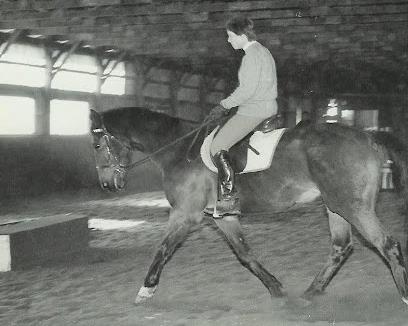
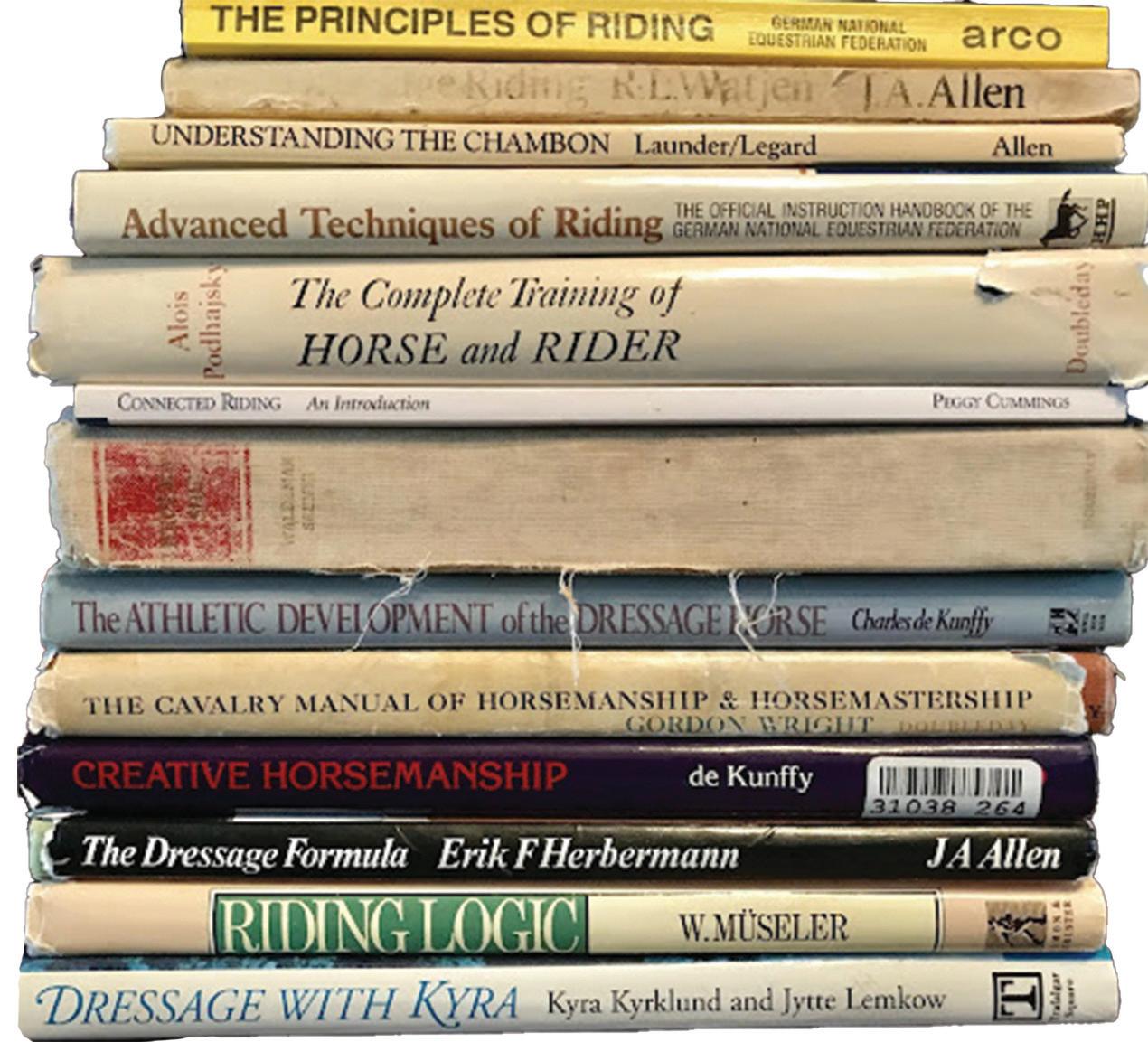
Today, I do pilates twice a week, and as an aged woman, I am still riding. However, cleaning stalls, moving bedding and hay, and lifting water buckets my whole life has wreaked havoc on my body! But I am still trying. I put my legs up on stools to stretch my hips, I have a posture aid when I sit to teach, and I adjust my back and arms when I drive! I am continually conscious that my toes point straight ahead when I walk, my shoulders lifted, and my head held high. (Right, this is tough not to look down when we walk.) Only when we have a correct posture can our arms and legs correctly signal the horse e ortlessly and allow our bodies to move in harmony with the horse. Riding teachers cannot fix the aspiring rider; we can only point things out ~
The author at the beginning of her dressage journey, all rounded in the back. I changed it and learned how to sit up when I ride!
President of Centered Riding for many years and international clinician Peggy Brown came to Coventry Equestrian Center twice for clinics on riding position and biomechanics. She is well known for riding in a bone suit. As Sally Swift says, “you ride with your bones and feel with your muscles. “ These clinics were sponsored by
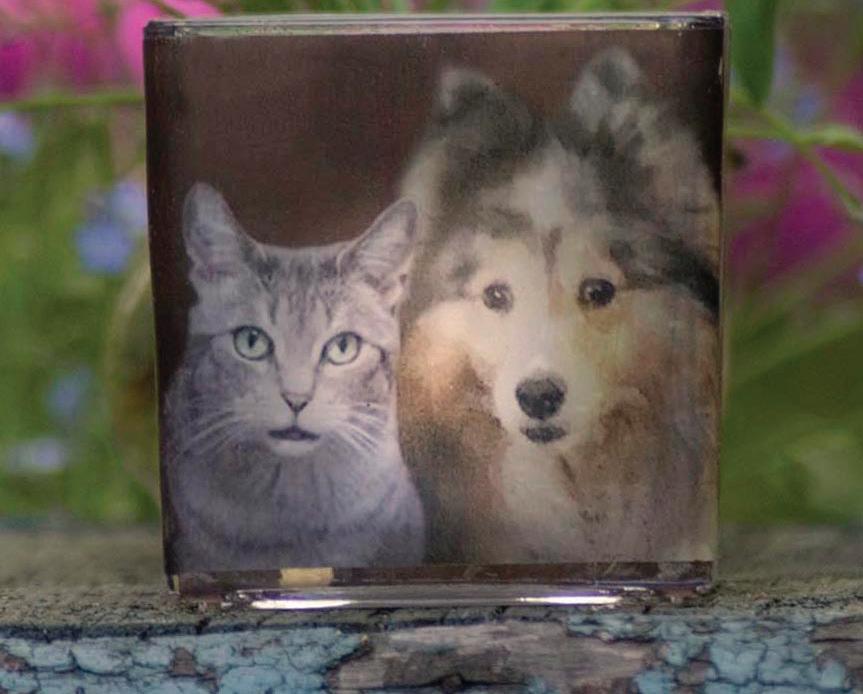
Custom Pet
emor ial votive
Using your photos I create a lasting gift for yourself or a loved one.
Learn how to ride & train with clarity. All horses & riders benefit utilizing simplified gymnastic training or ‘dressage’. Visit our Facebook page “Home School Your Horse” for training tips.
Keep Summer Fun — and Your Pets Safe at Home
Summer brings sunshine, cookouts and long days outside. For many, that’s part of what makes home ownership meaningful: having a place to share good times with your family, including pets. But the season can bring risks—from rising temperatures to holiday fireworks. Here’s how to help your four-legged family members stay safe and comfortable.
Beat the heat. Protect against heatstroke. As temperatures climb, heat is a serious danger for pets. Dogs don’t cool down the way we do and can overheat quickly. Plan walks in the early morning or evening, keep fresh water and shade available and never leave a pet in a parked car.
Fireworks can frighten animals. More pets go missing around the Fourth of July than at any other time of year. Keep them safely inside in a quiet, familiar space to reduce stress. Now’s also the time to make sure ID tags, GPS trackers and microchips are current.
Watch what’s within reach.
Summer means food and outdoor items are more accessible, but many can be harmful. Grapes, onions, chocolate and alcohol should stay out of reach, while corn cobs, bones and skewers can cause serious issues. Lawn and pool chemicals and insect repellent should always be stored safely. Many common garden plants can also be toxic, so check what’s growing in your yard.
Adventure safely this season.
Not all pets are natural swimmers; even confident dogs can tire quickly, so be watchful around water. Travel using a crate or seat harness. And stay up-to-date on flea, tick and heartworm prevention.
When in doubt, call your veterinarian. If your pet seems stressed, overheated or unwell, don’t wait. A quick call can help prevent a serious problem.
Choose a REALTOR® Who Understands Pet-Friendly Living
A home should be a safe haven for every member of your family—including your pets. Working with a REALTOR® who understands pet needs can make a meaningful difference, whether you’re finding a yard with safe fencing, navigating community guidelines or identifying a nearby veterinarian. The right partner helps ensure your home supports the life you—and your companion animals—can enjoy every day.
Animal Friends is Here to Support You Through Every Season
Love lives here all summer long with resources and services that help keep pets safe, healthy and by your side. From preventative care at our Vet Clinic to behavior guidance, humane education and adoption services, we’re committed to helping you create a home where pets thrive.
The best part of summer is sharing the sunshine and good times with the pets who make your house a home.
This message brought to you by
More Than a Shelter Giving Dogs Their Best Chance
For dogs in need, Humane Animal Rescue of Pittsburgh (HARP) is a place of safety, expert care, and compassion. But even the best shelter isn’t a home. For dogs facing longer stays, the hours spent waiting can take a toll—physically, mentally, and emotionally. That’s where the Winston Fund steps in.
Established in 2025 by board member Christi Robinette in honor of her beloved dog Winston—a HARP alumnus—the Winston Fund is dedicated to supporting behavioral care and enrichment for shelter dogs. It ensures that while dogs wait for their families, they are not just cared for, but truly supported.
Through the Winston Fund, dogs benefit from daily enrichment like playgroups, field trips, and interactive activities that reduce stress and build confidence. It also invests in advanced training for staff, facility improvements that create calmer environments, and post-adoption support that help families succeed long after they leave the shelter.
Because the goal isn’t just adoption, it’s lasting a
Training, Enrichment,
and a Path Forward
At the heart of this work is HARP’s Behavior, Training & Enrichment (BT&E) team. From the moment a dog arrives, these specialists begin evaluating behavior, identifying triggers, and building personalized plans that help each dog thrive. Whether it’s learning to trust new people, improving leash skills, or gaining confidence around other dogs, every step is intentional.
Some dogs simply need time. Others need a little extra guidance to show who they really are. The BT&E
team ensures those dogs don’t get overlooked.
Through the “Best Paw Forward” program, adopters are supported every step of the way with in-home consultations, customized training plans, and financial assistance for behavioral services. This proactive approach helps prevent challenges, strengthens the human-animal bond, and keeps pets where they belong—at home.
The Winston Fund also expands innovative tools like Fi GPS collars, helping quickly reunite lost dogs with their families and providing added peace of mind for fosters and adopters alike.
PET HEALTH AND WELLNESS
Special Delivery from the CDS: Understanding Feline Leukemia
By Becky L. Morrow, DVM MS CAWA
When you open the front door, you find one delivery that is different from the others - it meows! Tucked between the boxes, a brown tabby kitten stares up at you with wide eyes and oversized ears, as if she has been waiting for you all along. The CDS (Cat Distribution System) strikes again! Before long, the kitten has a bowl of food, a blanket, and a name. But once the wave of rescue adrenaline settles, you take her to the veterinarian, and they recommend testing for feline leukemia.
What is FeLV?
Feline leukemia virus (FeLV) is a cat-only retrovirus that can cause anemia, immune suppression, and certain cancers. It spreads mainly through saliva in cats who live together, groom each other, share food and water bowls, nurse, or spend a lot of time in close contact. Kittens and young cats are most vulnerable because their immune systems are immature. This is different from another feline retrovirus, feline immunodeficiency virus, or FIV. FIV is mostly spread through deep bite wounds, especially among fighting intact males, whereas FeLV can spread through friendly contact, particularly among young cats, queens, littermates, and socially
bonded cats.
There are three major outcomes of FeLV exposure: abortive, regressive, and progressive infection.
In an abortive infection, the cat’s immune system stops the virus early. These cats do not become persistently infected, do not shed virus, and do not develop FeLVrelated disease from that exposure. In most cases, they would test negative because the infection was controlled before virus circulated in the blood. This is like you or me being exposed to the influenza virus and not getting sick because our immune system successfully fought it off.
A regressive infection means the virus got farther. The cat may have had virus circulating in the blood for a short time, and FeLV genetic material may remain tucked
into cells in the body, especially in the bone marrow. But the immune system controls active viral replication. These cats are generally not shedding virus once the active infection is contained, and many remain healthy for years. Stress, severe illness, or immune suppression may increase the risk of viral reactivation, but these cats often live normal lives and are generally not considered infectious once active viral replication is controlled.
A progressive infection is the outcome of greatest concern. In these cats, the immune system does not control the virus. FeLV continues to circulate in the blood, infects the bone marrow and immune tissues, and is shed from the body, especially in saliva. Progressively infected cats are the cats most likely to transmit FeLV to
Continued on next page
others and most likely to develop FeLVassociated disease, including anemia, lymphoma, bone marrow suppression, and secondary infections.
So what happens if a cat tests positive?
A positive result means there is evidence of FeLV antigen in the bloodstream at that moment. One positive test cannot tell whether the cat is in the early stage of infection, will become progressively infected, or may later control the virus. Your veterinarian may recommend repeating the FeLV test around six weeks after the first positive result. If the cat remains positive over time, progressive infection becomes more likely. If the cat later tests negative, the cat may have had a regressive infection or may have cleared active viral replication.
Another option is sending a sample to a lab that performs quantitative real-time PCR to estimate how much FeLV genetic material is present in the cat’s blood. This helps determine whether the infection is more likely to be a regressive infection, in which the immune system has largely controlled
What is FeLV?
Feline leukemia virus (FeLV) is a cat-only retrovirus that can cause anemia, immune suppression, and certain cancers. It spreads mainly through saliva in cats who live together, groom each other, share food and water bowls, nurse, or spend a lot of time in close contact. Kittens and young cats are most vulnerable because their immune systems are immature.
the virus, or a progressive infection, in which the cat is at higher risk of shedding virus and developing FeLVrelated disease.
While all of this is being sorted out, the safest approach is to keep the new cat separated from other cats in the home. This is especially important if there are kittens, senior cats, or cats with health problems in the household. If follow-up testing indicates that the cat is FeLV-negative and your veterinarian is comfortable that active infection is no longer a concern, then she can begin
the normal slow-introduction process with the rest of the feline family.
Cats with regressive FeLV infections are generally not shedding FeLV, so integrating them into a household with other cats is of low risk if they are vaccinated and healthy. This is very different from a progressively infected cat, who is likely to shed virus and should generally be housed apart from FeLV-negative cats, especially kittens, senior cats, and medically fragile cats. But even then, a positive result does not mean that euthanasia is the only humane choice. Many persistently FeLV-positive cats who are healthy at diagnosis can enjoy months or years of good quality life.
FeLV is serious, but it is not simple - and it is not hopeless. The best decisions come from understanding the cat’s age, health, test results, living situation, and risk to other cats.
The Cat Distribution System may be unpredictable, but when we respond with compassion and are armed with science, one unexpected meow can become the beginning of a very good story. n
Ad Locator Map
ANIMAL FRIENDS ad on page 6-7 / map A
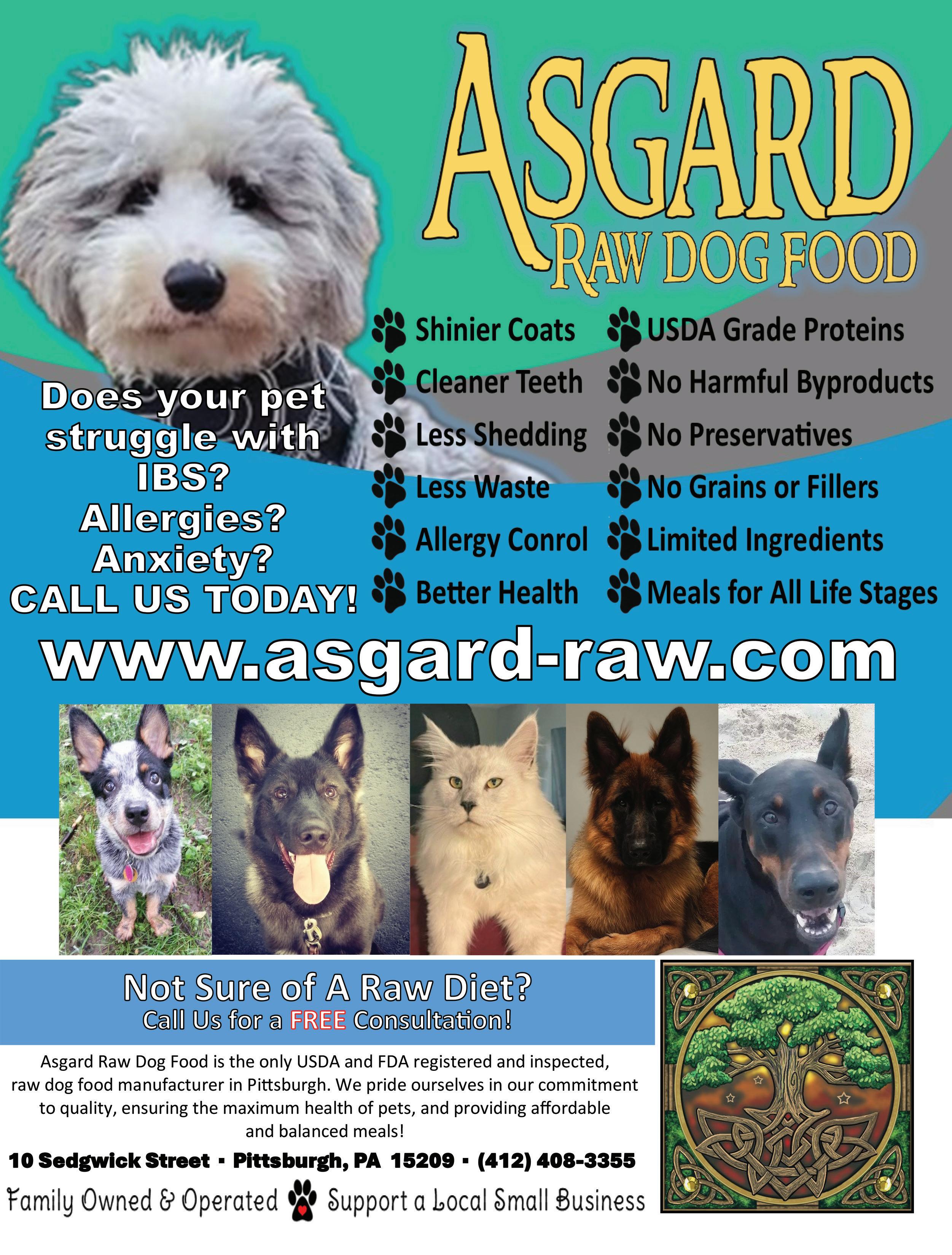
ASGARD RAW PET FOOD ad on page 3 / map B
BARTMAN PLUMBING ad on page 13 / map C
BEAVER COUNTY HUMANE SOCIETY ad on page 8-9 / map D
CHARTIERS CUSTOM PET CREMATION ad on page 29 / map E
CHEYENNE VETERINARY WELLNESS & SURGICAL CENTER ad on page 15 / map F
COVENTRY STABLES ad on page 5/ map G
DENISE MARASCO HOWARD HANNA ad on page 15 / map H
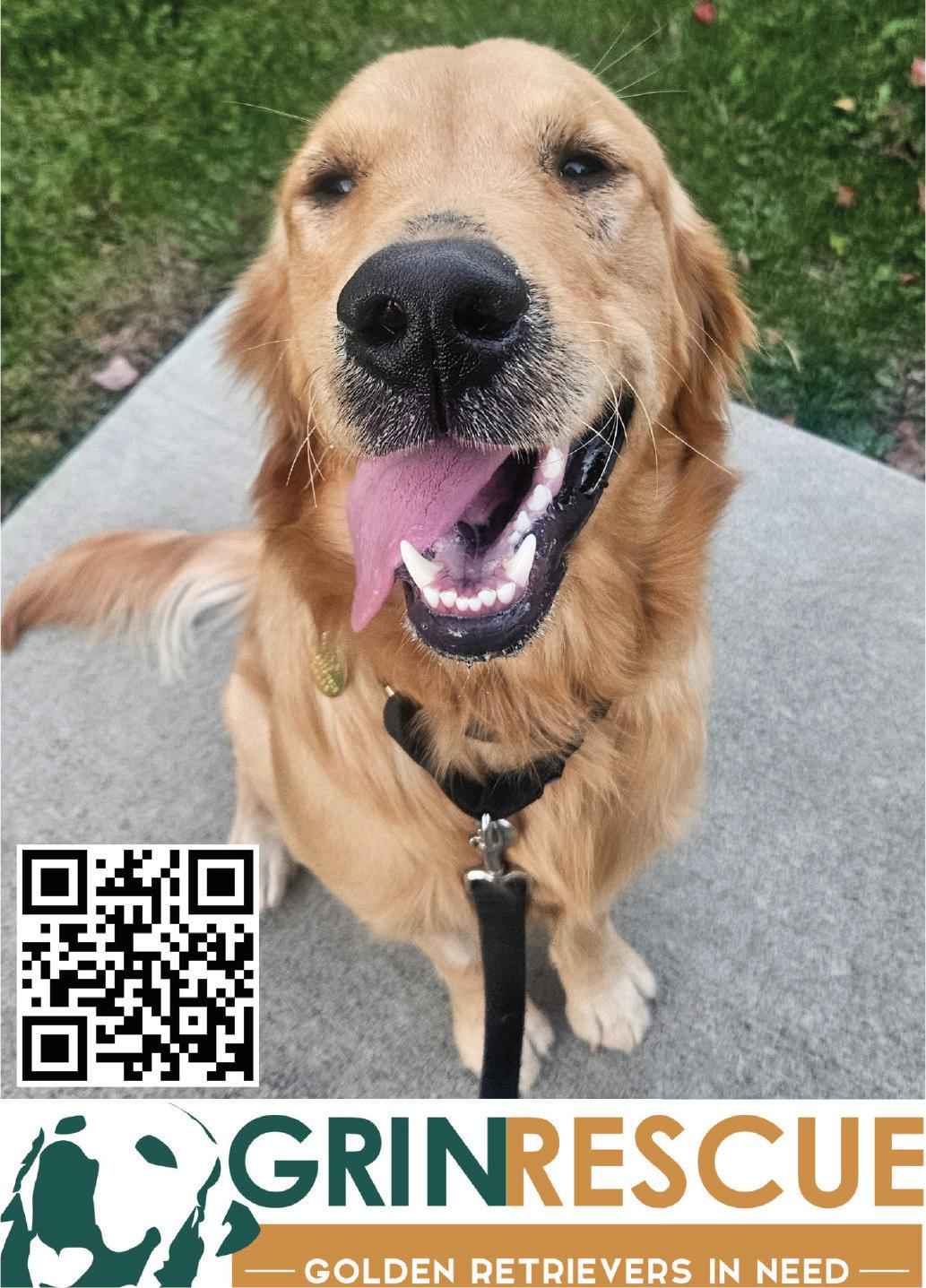
GRIN RESCUE ad on page 15
HUMANE ANIMAL RESCUE ad on page 10-11 / map J
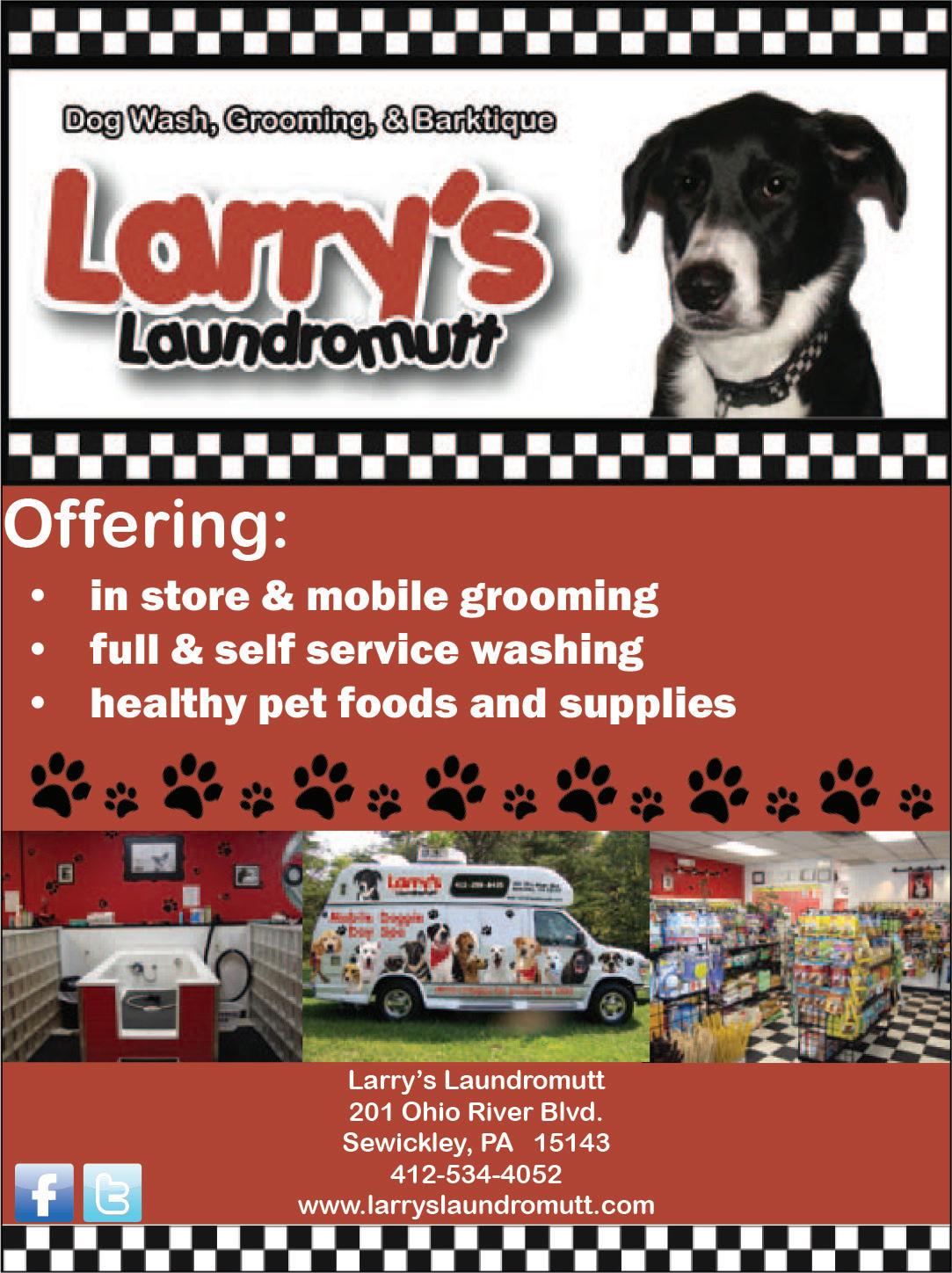
LARRY’S LAUNDROMUTT ad on page 15 / map K
PORTRAITS OF ANIMALS ad on page 24
REBOUND PET REHABILITATION ad on page 3 / map M
UPSWING CANINE BEHAVIORAL SERVICES ad on page 5
DID YOU KNOW?
PetConnections has evolved into a full-service specialized pet media company, providing services for advertising in print and digital marketing platforms to help our sponsors grow their businesses.
Contact us for information on advertising or sponsoring! PetConnections is published quarterly as follows: March, June, September, and special Holiday issue in early December!
Our print copy distribution sites will be replenished every 6 weeks.
Our online presence has always been much greater than in print with now over a million impressions!
To subscribe to your own personal copy of PetConnections, please contact us.
BOOM SEASON: Helping Dogs Through Fireworks and Summer Storms
By Rachel McMichael CDBC, CBCC-KA, FDM
Summer is not always as dog-friendly as people want it to be. We like to envision
warm evenings, cookouts, patio time, swimming, camping, playing outside, and long days in the sun. For many dogs, though, summer also means sudden explosions, rolling thunder, lawn equipment, motorcycles, parties, disrupted routines, and a whole lot of sensory stimulation they did not ask for and do not understand.
Fireworks and thunderstorms are two of the biggest seasonal problems I see for dogs, and they are also two of the most misunderstood. A dog who panics during fireworks is not being dramatic. A dog who shakes during thunder is not being stubborn.
A dog who hides in the bathroom, pants in the basement, barks at the windows, claws at doors, refuses food, or tries to climb into someone’s lap is not giving anyone a hard time; that dog is having a hard time.
Fear is not and never will be an obedience problem. Once a dog is truly frightened, we are not working with a dog who simply needs to “listen better.” We are working with a nervous system that believes something is wrong and is trying to survive the moment. That dog may not be able to eat, respond to cues, settle, think clearly, or behave the way they normally would. Panic changes behavior because panic changes the body from the inside out.
This is where people sometimes reach for the wrong tools. They try to correct the barking, punish the pacing, force the dog to stay in one place, drag the dog outside for exposure to prove everything is fine, or insist the dog needs to just “get used to it.” I honestly understand the frustration. Living with a panicked dog is stressful. It can often be loud, sad, exhausting, and inconvenient. But adding pressure to a scared dog does not make the fear go away; it just gives the dog one more thing to worry about.
A quiet dog is not automatically a calm dog. A dog can stop barking because they were corrected and still be terrified. A dog can stop moving because they shut down and still be overwhelmed. A dog can look “better” on the outside while feeling much worse on the inside. With fearbased behavior, our goal cannot be to simply suppress what we humans find annoying. The goal has to be to help the dog feel safer, recover faster, and avoid making the fear worse over time.
Dogs do not understand fireworks the way we do. We know someone down the road probably spent too much money on explosives and is now making it everyone’s problem, but Dogs do not have that context. They hear sudden, unpredictable booming with no clear source and no clear end. Thunderstorms can be even more complicated because they are not just noise. They can include pressure changes, wind, rain, flashing light, static, dark skies, and a general shift in the environment that
Continued on next page
some dogs notice long before we do.
Preparation starts before the first boom. On fireworks-heavy nights, get potty breaks done early. Get potty breaks done before the noise starts, instead of waiting until your dog is already scared and the neighborhood is in full fireworks mode. Bring dogs inside before things get loud. Secure doors, gates, fences, windows, crates, and leashes. Make sure collars fit properly, ID tags are current, and microchip information is up to date. Fear can even turn a normally reliable dog into an escape risk.
Inside the house, reduce the amount of noise and visual stimulation coming in. Close blinds and curtains. Shut windows. Use fans, white noise, music, television, or anything steady that helps soften sudden sounds. Some dogs do best in basements, interior rooms, bathrooms, closets, crates, covered kennels, or bedrooms away from windows. The safe space does not need to be fancy. It needs to feel safe to the dog.
And yes, you can comfort your scared dog. Please do! The idea that comforting a fearful dog “reinforces fear” needs to be retired. Fear is not a trick your dog is performing for attention. You are not going to accidentally train your dog to be more afraid by being kind to them. If your dog wants contact, calm petting, pressure, closeness, or reassurance, it is okay to provide that. If your dog wants space, give them space. None of this is coddling.
Food enrichment can help some dogs, but it is not a magic fix. If your dog can eat during storms or fireworks, great. Use food toys, chews, scatter feeding, lick mats, or easy sniffing games. Chewing, licking, and sniffing can help some dogs downshift. But if your dog cannot eat, that tells us something too. Refusing food during a noise event is often a sign the dog is over threshold, not a sign they are being difficult. It is also common for fearful dogs to refuse to eat.
For dogs with mild sound sensitivity, thoughtful preparation and predictable routines may be enough. But for dogs who truly panic, injure themselves, try to escape, cannot recover,
or start worrying before the storm even arrives, it is time to talk to a veterinarian. Medication is not failure. It is not giving up; it can and often should be part of humane care.
Boom season is hard for a lot of dogs. Some need a fan, a blanket, and an early potty break. Some need a basement bunker and a human nearby. Some need a full plan with veterinary support. None of that means the dog is bad, spoiled, stubborn, or poorly trained. It means the dog is scared, and scared dogs need support.
When summer gets loud, scared dogs do not need even more pressure. They need safety, support, and a plan that helps them cope. n
PET RESOURCE DIRECTORY
ANIMAL EDUCATIONAL EXHIBITS
NORTH: GREATER PITTSBURGH AQUARIUM SOCIETY www.gpasi.org
THE PITTSBURGH ZOO & PPG Aquarium pittsburghzoo.org
THE NATIONAL AVIARY nationalaviary.org
ANIMAL-RELATED WRT, PHOTOGRAPHY & RETAIL
APRIL MINECH CUSTOM PORTRAITS /PET INSPIRED ART www.ladybugdelightz.etsy.com
SOUTH: CHEYENNE VETERINARY WELLNESS & SURGICAL CENTER 412-884-3162 cheyennevets.com
FIX UR CAT (724) 416-3265 fi xurcat.org
VETERINARY SPECIALTY & EMERGENCY SERVICES NORTH/SOUTH/EAST: PITTSBURGH VETERINARY SPECIALTY AND EMERGENCY CENTER, INC. 412-366-3400 724-809-2000 pvs-ec.com
BLUE PEARL PET HOSPITAL NORTH 412-366-3400
BLUEPEARL PET HOSPITAL SOUTH 724-366-3400
BLUEPEARL PET HOSPITAL EAST 412-810-6732
GREATER PITTSBURGH AREA: PETS AFTER DARK mypetafterdark.com 855-AFTRDRK (238-7375)
By Bernadette E. Kazmarski
Why Do Cats Eat Grass? A
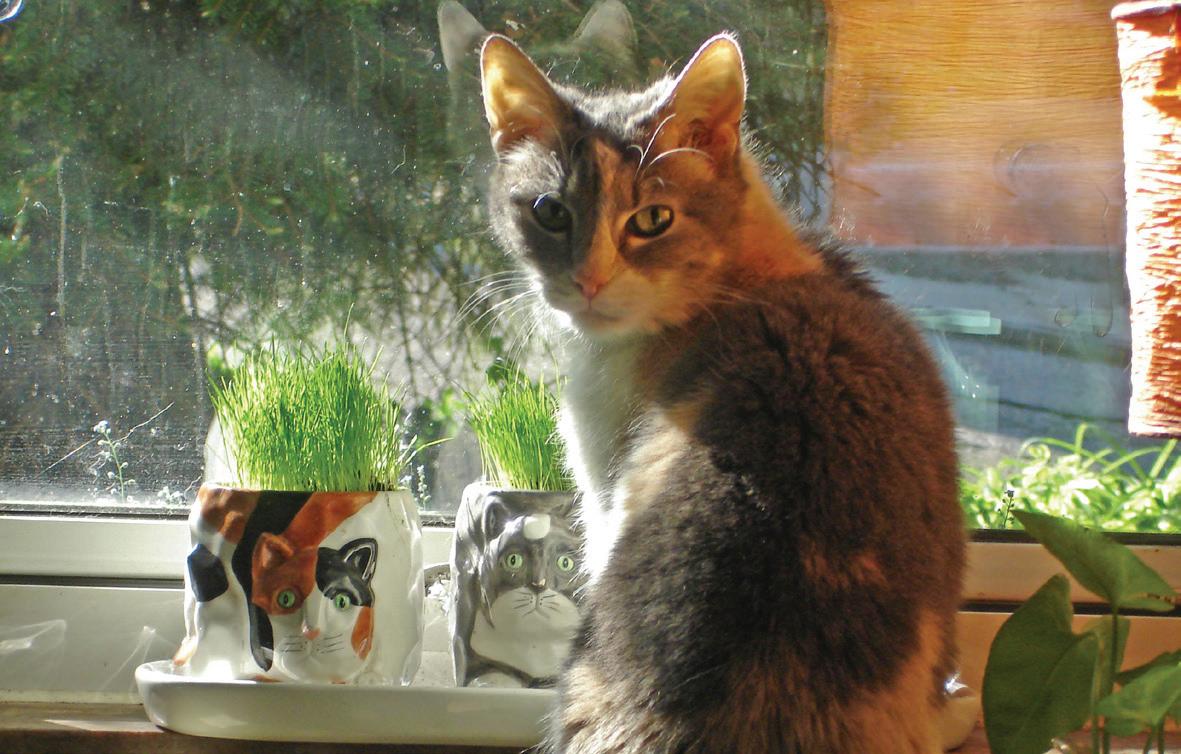
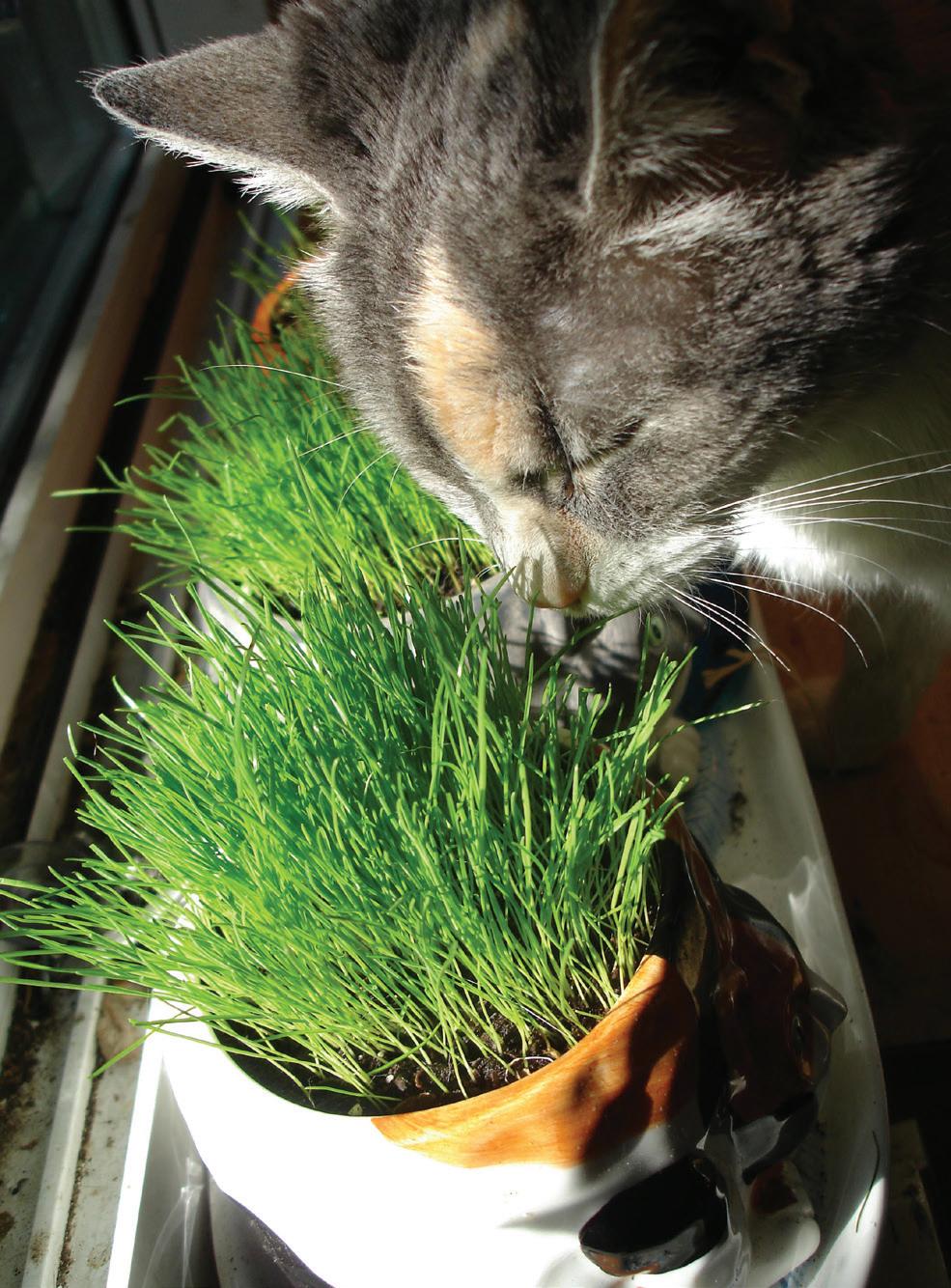
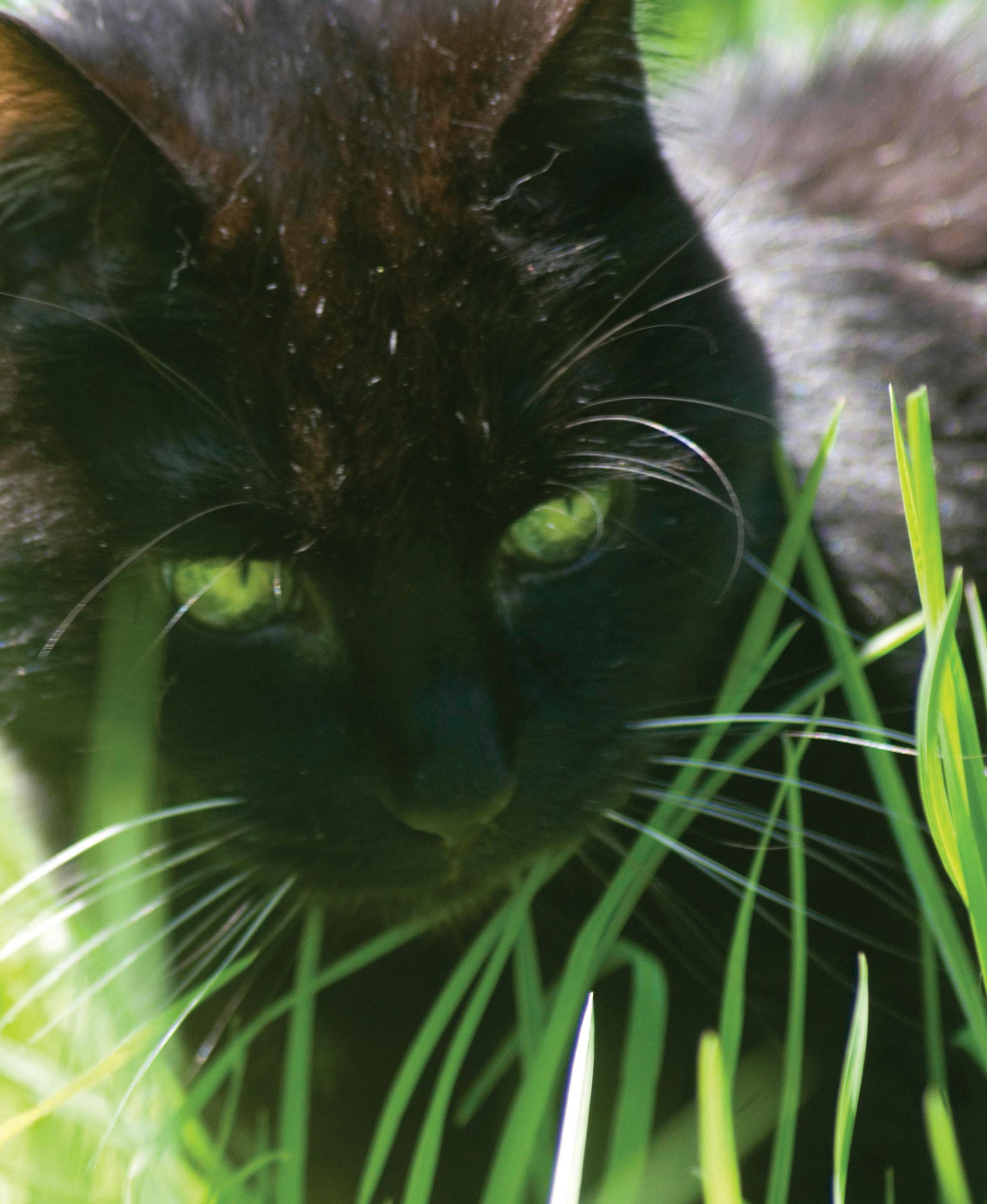
ll of my cats who’ve visited the back yard with me ate grass when outdoors, in fact it was sometimes the main event, even more than warm sunny bricks or a comfy old wicker chair while I worked in my garden.
No one is certain why cats eat grass, or houseplants, or other vegetable matter that shouldn’t be of any interest to them. In the diet of an obligate carnivore green matter seemingly plays very little role, only at the rate cats would find it in the stomach of their prey, chewed, swallowed and partially digested, and certainly not in any significant amount. And yet cats wild and domestic, large and small are known to regularly chew on grasses in their environment.
STUDIES
Most studies of domestic cats eating grass have been observational surveys of cat owners and focused on easing illness or passing hairballs, but did not prove that cats eating grass showed signs of illness prior to consuming grass, nor were the grass eaters the ones with chronic hairballs so there would also be other motivation.
Researchers also drew theories from cats’ wild relatives’ behavior, eating grass and vomiting indigestible parts of the animal they just consumed, or eating the grass for fiber to cleanse their digestive tract of parasite load, much higher than domestic cats’ would be, especially indoors.
OBSERVATIONS
Nutritionally it’s not clear, because this obligate carnivore can’t actually digest and metabolize plant matter, if cats get the package of vitamins and minerals in young grass stems though most studies and veterinary articles seem to feel cats do metabolize at least a small amount of nutrients. They would also access chlorophyll with no need to digest and metabolize the grass because it resides in the plant’s cells as a liquid accessible by only chewing; chlorophyll for humans or animals is recommended both nutritionally and medically as a detoxifier and tonic and is known to ease digestive issues.
It’s well noted that cats often vomit after eating grass, usually unchewed strands of grass. I’ve found that most cats adjust to it and stop vomiting after about a month; discussions with others who use cat grass, including veterinarians, showed the same conclusion. Environmental enrichment and fiber in the diet
One benefit nearly everyone agrees on is that having a little patch of grass to snuffle their nose into and nibble on is excellent environmental enrichment for an indoor cat that mimics their own outdoor behavior, and fiber is as good for their diet as for ours.
THREE VETERINARIANS’ VIEWS
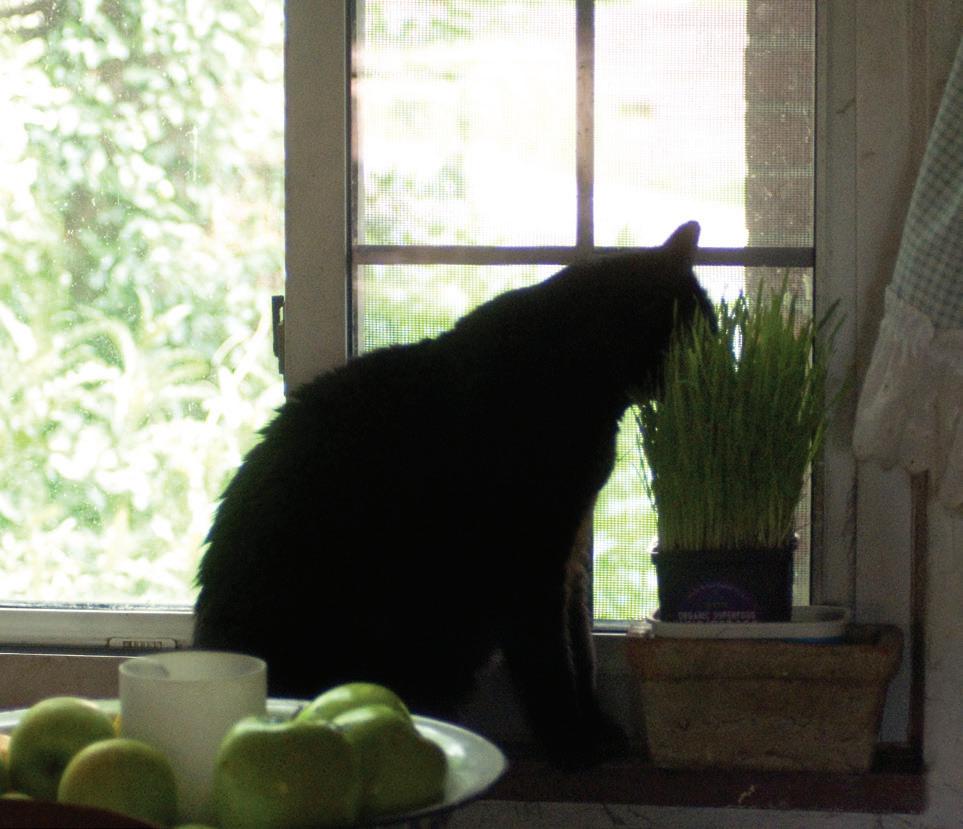
Dr. Marci Koski, CFTBS, CFTBP, founder of www. felinebehaviorsolutions.com, has been growing grass for her cats for several years and noted each cat enjoys it in their own way, some nibbled from the planter and others cut and presented “like a little salad.”
Regarding the role of grass in cats’ diets, “I don’t have any scientific studies...but I mostly view it as an incidental part of what they sometimes eat—a lot of times cats discard entrails, which can include the stomach, which would be the most likely place grass would be,” she said. “Cats chew on grass because they like the scent and texture; I’m not sure if they realize that it can help them clear their digestive system if they are feeling unwell, but it does seem to do that, doesn’t it!” she continued.
Dr. Lynn Bahr, longtime cat-only veterinarian and founder of www.deziroo.com which provides “Vetdesigned toys that engage your cat in play to burn energy and stay healthy” finds grass to be an essential part of an indoor-only cat’s environment and regularly grows it for her own cats. “Fresh air, direct sunlight and grass, those are three things we have taken away from indoor-only cats that no one has said anything about or looked into the effects of it,” she said. “Nobody
Continued on next page
“Cats chew on grass because they like the scent and texture; I’m not sure if they realize that it can help them clear their digestive system if they are feeling unwell, but it does seem to do that, doesn’t it!”
- Dr. Marci Koski, CFTBS, CFTBP
knows why cats eat grass and I have asked every professor to do a study.”
“I’m always looking at cats that chew on people’s charging cords, something about that [cord-chewing] fills a need, I personally think that things like grass will eliminate cats from chewing on cords,” she explained. Dr. Bahr believes cats can get meaningful nutrition from grass. “They’re going to get some nutrients out of it, they bite down with their molars to bite and pull. They don’t masticate like every other animal,” she continued. “I personally believe they can digest grass because I’ve never observed any grass in my cats’ feces.”
Dr. Michelle Elgersma, DVM, CVA, FAAVA combines traditional veterinary practice with holistic healing through Traditional Chinese Veterinary Medicine (TCVM) in www.kalmeren.ca. For over a decade she was part of my feline medical team and I learned about and saw the results of acupuncture, TCVM and other alternative modalities for my rescued fosters and my regular household. “While Western medicine often sees this as a simple way to move hairballs, Traditional Chinese Medicine (TCM) offers a deeper look at the ‘why’ behind the behavior,” she said.
In TCM, grass-eating is an instinctual form of self-medication used to “correct internal disharmony” by: “Extinguishing Stomach Fire,” inflammation brought on by diet; Breaking Up “Food Stagnation” when fur or undigested food blocks the flow of energy (Qi); or Draining “DampHeat,” a sluggish fluid metabolism leading to “dampness” in the gut. “Certain bitter grasses naturally help the body drain this dampness and detoxify the digestive environment,” she said. “Occasional grazing is normal. However, frequent, obsessive grazing or daily vomiting suggests the underlying Heat or Stagnation is too severe for your cat to resolve alone,” she explained.
So why do cats eat grass?
Until we have some actual studies of cats in a clinical environment we don’t really know. But even if we don’t know the “why” we do know that many cats just like it and derive both behavioral and physical benefits from having some grass to graze on, fiber in a carnivore’s diet, some nutrients and material to help the body’s energy flow. n
RESOURCES
Characteristics of Plant Eating in Domestic Cats (https://pubmed.ncbi.nlm.nih.gov/34206345/)
Why do cats and dogs eat grass? (https://www.livescience.com/animals/ domestic-cats/why-do-cats-and-dogs-eat-grass)
Why Do Cats Eat Grass (westloopvet.com/blog/why-do-cats-eat-grass/)
Researchers Think They Know Why Cats Eat Grass (https://www.smithsonianmag.com/smart-news/researchers-figure-out-whycats-eat-grass-180972885/)
Why does my cat eat grass? (https://www.betterpet.com/learn/why-catseat-grass)
CAT RESOURCE DIRECTORY
CAT RESOURCE DIRECTORY
2026 Homeless Cat Management Team Clinic Schedule Through December: FREE CLINICS (ferals only)
Our clinic is located at 207 Allegheny Street, Tarentum, PA 15084. All appointments include surgery, pain medicine, rabies vaccine and flea treatment.
CLINIC REGISTRATION BY PHONE: Call 412-321-4060 and leave a message. Please include your name and phone number in your message. Someone will return your call and complete your pre-registration.
HCMT is all volunteer and this may take some time. Clinics fill up quickly and it’s best to call at least two weeks in advance of the clinic you want to attend.
LOW-COST SPAY AND NEUTER AND OTHER VETERINARY RESOURCES
This information is provided for reference only and subject to change without notice. Please contact the organization or agency before using their services.
TNR And Low-Cost Spay/ Neuter Pittsburgh Area
Homeless Cat Management Team HAS MOVED!!
E-mail pre-registration is always required, no walk-ins.
Email cathomeless@gmail.com to register. You will receive an email confirming your registration.
JULY TO DECEMBER 2026
NOTE: dates may be added and are subject to change.
No Charge: Ferals Only
All ferals MUST arrive in a trap & will receive: Spay/neuter, rabies vaccine, distemper (FVRCP) vaccine, pain relief, treatment for fleas, ticks and ear mites, (if necessary), and mandatory ear tip.
July 18 In loving memory of Dick & Nancy Lawrence & family pets who have crossed the rainbow bridge
August 1 SNIPP of Indiana, PA
August 15 Anonymous Family Foundation
August 29 Nose 2 Tail Cat Rescue & Alley Cat Rescue, Inc.
September 26 In loving memory of Minnie, Tamara & Fuzzy
October 10 Paws Across Pittsburgh
October 24 Janice Pechan & Marilyn Chapla
November 7 In loving memory of Alberta Brown Butler
November 21 In loving memory of Richard & Dee Choldko & in loving memory of Boppo
December 19 Trash Cat Rescue
FAST TRACK: PETS & FERALS
September 12
December 5
Pricing as of January 2026:
Feral Package: $60
Male Neuter, Rabies & Flea
Treatment: $60
Female Spay, Rabies & Flea
Treatment: $75
Combo FIV/FeLV Test: $30
FVRCP Distemper Vaccine: $12
FeLV Vaccine: $14
De-worming Treatment: $12
Microchip: $30
More dates may be announced and dates are subject to change. Check www. homelesscat.org/clinic-info for the most up to date information.
City of Pittsburgh Free Spay and Neuter for City Residents Visit website for more information: https://pittsburghpa.gov/ publicsafety/spay-neuter
LOW-COST SPAY/NEUTER PROGRAMS AT SHELTERS IN ALLEGHENY AND SURROUNDING COUNTIES
Action for Animals
Humane Society
386 Route 217, Latrobe, Pennsylvania 15650
https://www.afashelter.org/ low-cost-spay-neuter/ CALL THE SHELTER AT 724539-2544 TO SCHEDULE AN APPOINTMENT.
We do not schedule appointments by email or online.
Effective 07/24/24, our prices are as follows:* Neuter Services for a Male Cat: $60
Spay Services for a Female Cat: $90 ($40 additional fee if pregnant)
Starting January 1, 2026, a 3% fee will be applied to all credit card transactions made at the shelter.
Angels For Animals
Veterinary Service & Shelter
4750 West South Range Rd., Canfield, OH 44406
https://www.angelsforanimals. org/spay-neuter
Spay & Neuter: 330-549-1111, PRESS #2
BY EMAIL: Email cathomeless@gmail.com with your name, number of spots you need and which date you are registering for. You will receive a confirmation email ONLY if you are registered.
NOTE: Dates may be added and are subject to change. Dates are set for the clinics, but at publication it’s not yet determined which clinics are Free or Fast Track. Check www.homelesscat.org/ clinic-info for the most up to date information.
Animal Friends
https://thinkingoutsidethecage. org/vet-clinic/ services/#spayneuter Cats: Female or Male $87
Includes brief exam, injectable pain medication and an e-collar – vaccines are an additional fee.
Feral/Outdoor Package: Female or Male $78
Includes brief exam, injectable pain medication, rabies, FVRCP, ear tip and flea treatment. Cats must be feral and in a humane trap to receive this service. Trap rental is available through scheduling spay/neuter.
Beaver County Humane Society
3394 Brodhead Road, Center Township, PA 15001, 724-775-5801
https:// beavercountyhumanesociety. org/tnr-and-owned-catsurgery-prices/ Owned Cat: Three packages range from $65.00 to $150.00, all include Surgery and 1yr Rabies Vaccination (must be 3 lbs. and 12 weeks of age), initial FVRCP vaccination, Nail Trim, Oral pain meds for females post-surgery, E-collar, more with higher priced packages
Feral Cat: Three packages range from $60.00 to $110.00, all include Spay/Neuter Surgery (includes injectable pain medication), Rabies Vaccine, Nail trim, Post Op Pain Meds for females
E-collar, more with higher priced packages, eartip is mandatory.
ALL FERAL CATS MUST BE IN TRAPS FOR SAFETY – A $25 FEE WILL APPLY IF NOT IN TRAP. If no feral cat surgery appointments populate in the calendar, that month is either fully booked or the schedule hasn’t been released yet. Please continue to check the feral cat scheduling page for openings. Beaver County Humane Society also offers trap rentals, $30 deposit.
Butler County Humane Society 1015 Evans City Road, Renfrew PA 16053 724-789-1150 https://butlercountyhs.org/ clinic/Free spay/neuter, *some specifications and limitations apply*, visit website for more information and application
Humane Animal Rescue https://humaneanimalrescue. org/veterinary-care/spay-andneuter-services/ North Shore and East End facilities: 412-345-7300
Feline Spay/Neuter: $147
Includes rabies, FVRCP and microchip TNR: $109
Includes rabies, FVRCP, Advantage Multi and ear-tip. Cats must be feral and in a humane trap to receive this service.
Humane Society of Westmoreland County 139 Humane Society Rd, PO Box 1552 Greensburg, PA 15601 (724) 837-3779 https:// westmorelandhumanesociety. com/vet-services/
Indiana County Humane Society 191 Airport Road, Indiana, PA 15701 (724) 465-7387 https://incohumanesociety. com/ Spay-neuter voucher program provides vouchers to help offset the total cost of the surgery for cats and dogs. Visit website for application: https://incohumanesociety. com/wpbhd/wp-content/ uploads/2023/08/ SpayNeuterVoucher2023.pdf
Washington Area Humane Society 1527 Route 136, Eighty Four, PA 15330 https://www. washingtonpashelter.org/ low-cost-spay-neuter/ Monthly spay/neuter clinics for owned pets.
Feral spay/neuter surgery dates are offered May through early October.
LOW-COST SPAY/NEUTER
AND VETERINARY CLINICS
These are independent clinics that offer services on site during regular business hours.
Alleycat Spay & Neuter Clinic 15549 State Route 170, Suite 10, East Liverpool, OH 43920 330-892-8985 https://alleycatvet.com/spayneuter-services/ Owned or feral: Spay $60.00, Neuter $50.00
Owned cats by appointment Feral drop-off without appointment
Additional services available, dog surgeries also available.
Catnip Acres
1159 Morris St, Waynesburg, Pa 15370 https://catnip-acres.com/clinic
Clarion Paws
(Serves Clarion, Forest and Jefferson County)
Current Location: 11348 Route 322, Shippenville, PA https://www.clarionpaws.org/ spay-and-neuter-clinics.html Monthly clinics listed on website, submit an application Pets: $85 surgery, rabies, flea/mite treatment, pain medication, extra services available.
TNR: email at clarionpawsinfo@ gmail.com
Feline Friends of Ellwood City (CATS ONLY)
Facebook: Feline Friends of Ellwood City
Low cost spay and neuter for cats. Check Facebook page for schedule.
5 Impactful Ways to Support Local Pet and Horse Rescue and Shelter Organizations
By Carla Mader
Local rescue groups and shelters quietly carry a tremendous responsibility: caring for abandoned, neglected, or surrendered pets and horses who need a safe place to land. These organizations often operate on tight budgets, rely heavily on volunteers, and depend on the generosity of animal lovers in the community. If you’re looking for ways to make a meaningful difference, here are five powerful ways you can support them.
1. MAKE MONETARY DONATIONS
If you don’t have the time or ability to volunteer, a direct monetary donation is one of the most impactful ways to support your favorite rescue or shelter.
Many organizations operate as registered 501(c)(3) nonprofits, which means your donation may be tax-deductible—an added bonus to helping animals in need.
Shelters face significant day-to-day expenses, including:
Staff wages
Building rent or mortgage
Utilities
Facility maintenance and repairs
Fuel and transportation
Veterinary care is often the largest ongoing expense. Routine exams, vaccinations, medications, spay and neuter and other surgeries, emergency treatment, and specialized care can cost thousands of dollars each month.
Donations ensure animals receive timely, quality medical care.
Food is another never-ending need. While feed donations are wonderful, not all animals can eat the same brands or formulas. Many rescued dogs, cats, and horses have allergies, dietary restrictions, or require specialized nutrition.
Financial contributions allow staff to purchase exactly what is needed when it’s needed. Simply put—donations keep the entire operation running.
2. SHOP AND DONATE SUPPLIES
A quick shopping trip can go a long way. Consider picking up an extra bag of dog, cat, or horse feed when you’re at the store. Before purchasing, check with the rescue about preferred brands or specific diets they rely on.
Useful items you can donate include:
• Treats, toys, and chews
• Collars, leashes, and harnesses
• Pet beds and blankets
• Cat litter and cleaning supplies
• Grooming tools
• Horse feed, hay, and supplements
Winter horse blankets, fly masks, and lead ropes
Pine shavings or straw for stall bedding
Some shelters also run small in-house shops or thrift stores. Shopping there not only gets you unique finds, but the proceeds go directly back into funding rescue operations.
3. VOLUNTEER YOUR TIME — OR OPEN YOUR HOME
Volunteers are truly the backbone of rescue organizations. Even just a few hours a week can make a significant impact.
HANDS-ON VOLUNTEERING
Rescues often need help with:
• Dog walking
• Cleaning kennels or stalls
• Feeding and watering animals
• Bathing and grooming
• Transporting animals to vet appointments
• Assisting at adoption events
Most organizations provide training, making volunteering accessible even if you’ve never done it before.
FOSTERING
If you have experience with animals and the space in your home, fostering can be life-changing—for both you and the animal. Many smaller rescues operate solely through foster networks, since they do not have physical facilities.
FOSTERING HELPS:
Animals recover from illness, injury, or trauma
Your temporary care can be the bridge that leads an animal to a permanent, loving home.
4. ATTEND AND SUPPORT EVENTS
Rescues frequently host events such as fundraisers, adoption days, open houses, tack sales, silent auctions, or community outreach programs. Simply attending—or bringing friends—helps raise awareness and funds.
Examples of EVENTS you might support:
• Charity dinners
• Bingo nights or raffles
• Holiday photo sessions with pets
• Benefit concerts
• Walk-a-thons or pony rides
• Craft or vendor fairs
Your presence helps boost morale, creates community connections, and directly supports the animals.
5. GET INVOLVED IN CREATIVE WAYS
Not all contributions require money or physical labor. Many rescues rely on specialized skills to help run their operations.
YOU CAN SUPPORT BY OFFERING:
Social media promotion – Sharing posts helps animals get seen and adopted faster. Website or graphic design – Flyers, event posters, and online branding are always needed.
Photography or videography – Quality photos drastically improve adoption chances. Marketing or public relations support –Helping rescues connect with donors and sponsors.
Grant writing – Assisting with applications that can provide thousands in funding.
Administrative help – Data entry, phone calls, or managing email lists.
Even small acts—like sharing a fundraiser link or telling a friend about an adoptable pet—can make a huge difference.
FINAL THOUGHTS
Young kittens or puppies grow in a safe environment
Overcrowded shelters free up kennel space Hard-to-place animals receive one-on-one support
Supporting local pet and horse rescue organizations is not just about helping animals— it strengthens your entire community. Whether you give time, money, supplies, or simply amplify their message, every act of kindness contributes to a better life for animals who depend on human compassion.
a horse likes to bend to the inside or the rider bends the horse, the outside shoulder will “fall out,” and the horse won’t be straight. This is the most common mistake riders make when leg yielding.
Thus, there are several ways to fix the leg yielding: one is to post on the wrong diagonal as you are leg yielding with a slight counter bend to keep that shoulder from falling out; the other would be to put both hands inside as you are leg yielding outside. (Yup, try to figure that one out, but it works, and once you do it, you feel it, so by thinking both hands inside that outside rein is keeping that shoulder from falling out.) Another way to straighten a crooked leg yield is leg yield, go straight, leg yield, go straight… until you have to turn. Eventually, by combining the two, you begin to figure out how to keep your horse straight. Allowing the horse to be crooked is not good practice and is training incorrectly. The timing of the rider’s aids needs to capture those shoulders before they fall out, but this requires equestrian tactfulness and is a skill developed over time. Eventually, the rider will feel when those shoulders start to lead or fall out, and make the correction instinctively!
The goal of training, whether it’s leg
yielding or anything else, is achieving the best ‘perfect practice’ that we can, because if we keep practicing wrong with too much bend and the shoulders falling out, that’s not a leg yield.
Below is a video of a rider demonstrating leg yielding and illustrating many of the corrections to get and keep the horse straight. First, we establish straight with rhythm and roundness, as we come down the quarter line, we then we add leg yielding to the wall. Horses naturally gravitate to the wall, so this is the easier way to introduce them to leg yielding. Once a rider can keep the three S’s when leg yielding, we then add some variations like leg yielding in from the wall or leg yielding from the centerline to the quarter line… As mentioned, leg yielding out is easier than leg yielding in from the wall. Horses do not like leaving the security of that wall. And, leg yielding in from the wall is a movement in First Level Test Three.
After leg yielding, the horse and rider learn shoulder-in, but that is another article for another time. First things first ~ master straight leg yields and you will be well on your way to accomplishing more lateral work with your horse. n
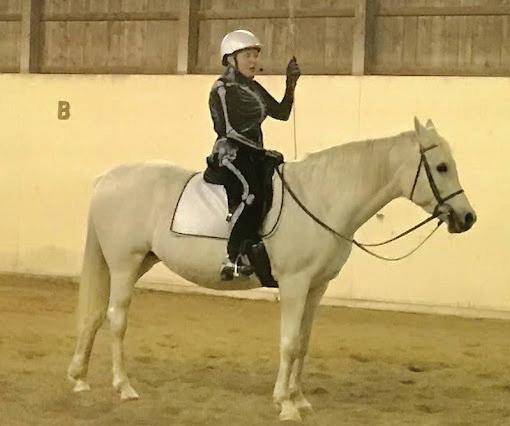
This video shows a few clips of leg yielding on Jackson, LA. He is a confirmed First Level horse as he won the USDF Half Arabian All Breed Award in 2025. You can see the rider turn down either the center line or the quarter line, keeping the horse submissive. Then she gets him straight, and then she starts to move sideways or leg yield.
As she leg yields, if the horse tries to raise his head, she lowers it; if he moves his shoulders out, she moves them in. The horse has to be straight in the leg yield, and you can see in one video where she changes her posting diagonal and created a slight counter bend to the outside to keep the horse’s shoulders in alignment with the haunches. When the leg yielding is over, she switches the diagonal back and rides the horse straight before turning.
Typically, we set up a dressage arena inside my large outdoor oval arena, but the dressage arena wasn’t set up for this video. However, this rider knows where the railing would be if it were set up. So when you hear me talk about the imaginary wall, that’s what I’m talking about. Jackson actually leg yields better toward the center line than he does out. But every horse is different in both directions, as we know; thus, for training horses, a goal is to develop symmetry. We always train the leg yield equally in both directions, and every horse and every rider has an easier direction. Training is always a continuous progression with both the horse and the rider.
If you are struggling with leg yielding send me video (twenty minutes or less) and I will do a complimentary “voice over” lesson to assist in your training.
Email to blythedale@comcast.net
A Place and Time to Gather and Remember ON PET MEMORIAL SUNDAY
REMEMBERING
“O
ver the last 20 years, I have looked forward to creating a place where families can gather, knowing their grief is honored and understood,” said Deb Chebatoris, owner of Chartiers Custom Pet Cremation who hosts this ceremony to bring people together to help ease the aching emptiness of a significant part of their life.
In addition to those families who have worked with Deb, anyone who is grieving the loss of an animal companion is invited to RSVP for this ceremony held on Sunday, September 13, 2026.
THE PET MEMORIAL SUNDAY TRADITION
Pet Memorial Sunday was established as the second Sunday of September by The International Association of Pet Cemeteries and Crematories.
The annual event hosted by Chartiers Custom Pet Cremation (CCPC) begins with video presentations on end-of-life issues from a veterinarian, on grief from a therapist, and on adopting again by a longtime animal
Continued on next page
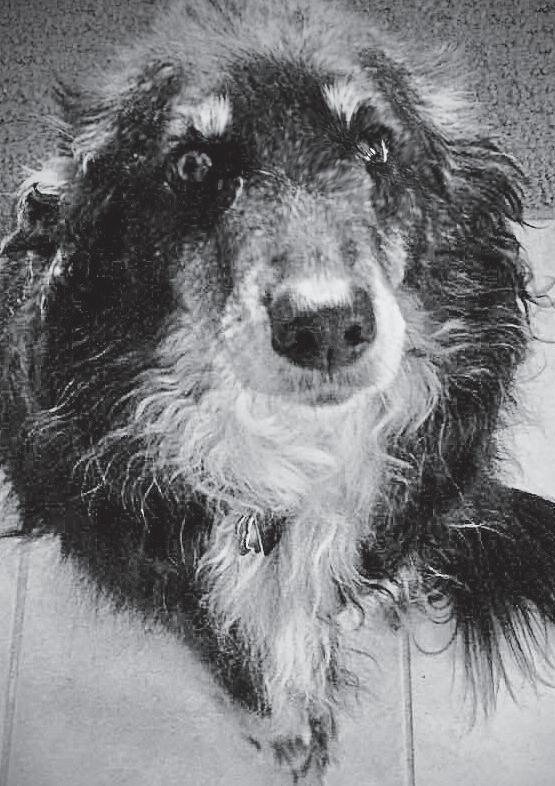
Nippy
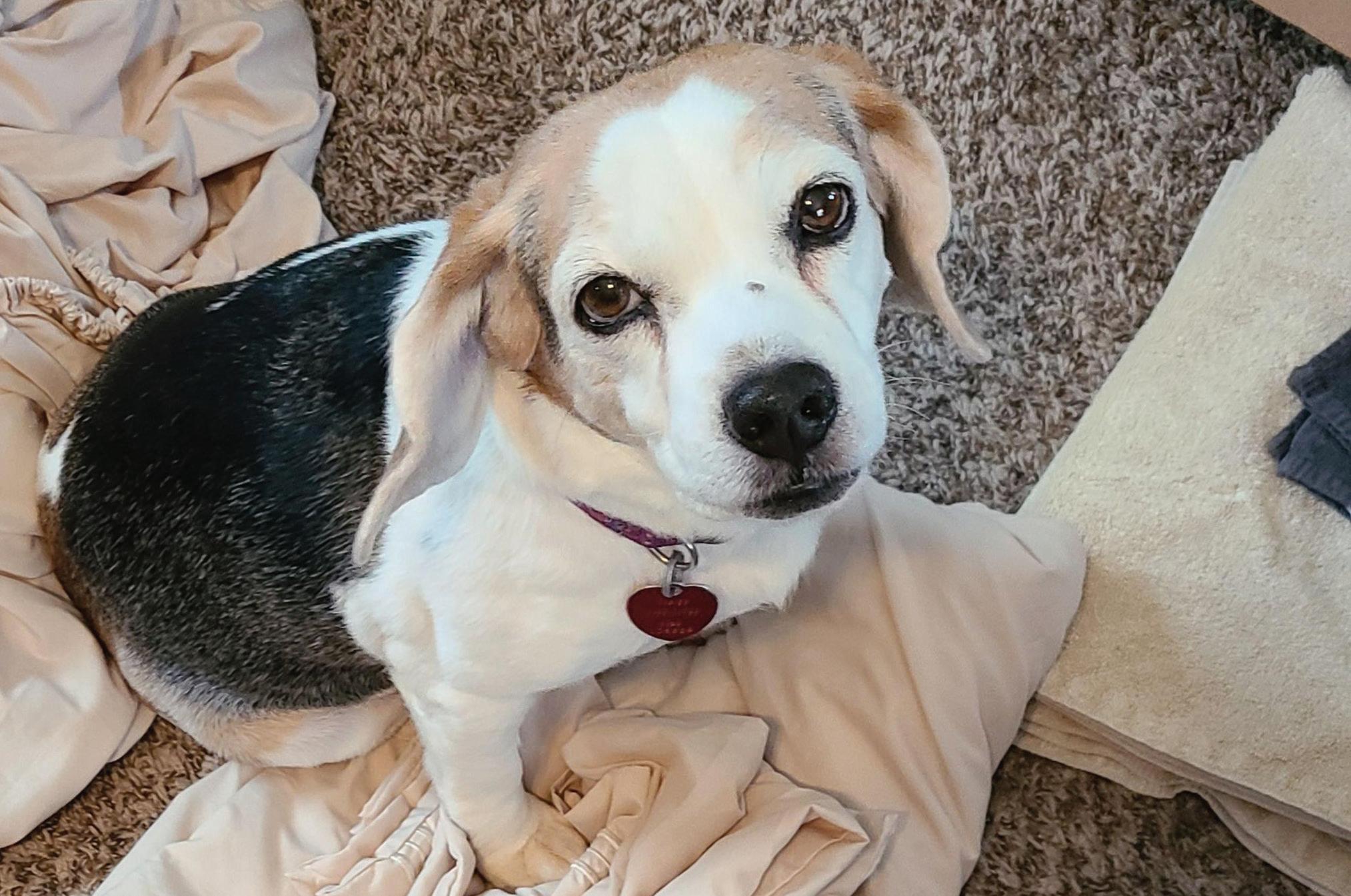
My beagle Nippy was the best dog. She would hunt with me but it was more of a walk in the woods. She would bark at rabbits and birds and scare them away but we still had fun. I even kept her in the house when people kept their hunting dogs outside in a kennel and my wife didn’t like it too much. She was always sweet and wanted to sit next to me and just be a good girl. I miss her so much.
rescuer, sent to those who RSVP in the days leading up to the event to watch on their own prior to the event.
Attendees are invited to compose a 50-word tribute to their departed pet and a reading of those tributes leads up to the most uplifting part of the event—the dove release.
“They embody the spirit of our beloved, and as we watch them fly away, we begin to understand how to let go of our grief,” Deb explained.
Following the event, the tributes, photos of the pets, and photos from the event are combined into a video presentation shared on the CCPC website for a permanent remembrance of the day.
“I receive thank you notes telling me they were ‘deeply
Pet Memorial Sunday will be held in Bridgeville on September 13, 2026.
touched by your sensitive handling of this most vulnerable time for those of us who grieve over our beloved companions’ and another said that even though the loss was fresh, the event had good information and helped them to feel better,” Deb said.
If you would like to participate, go to www.ccpc.ws to RSVP for this free event. A pop-up will provide you an email link to register beginning in July. Registration must be received by August 30.
Pet Memorial Sunday will be held in Bridgeville on September 13, 2026. You can find more information on the website at www.ccpc.ws/PetMemorialSunday. If you have questions, please call Deb at 412-220-7800. n