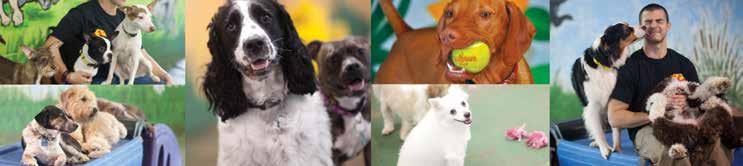


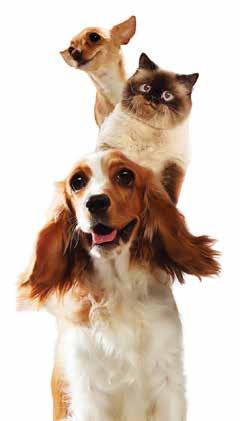

The 22nd Annual All American Columbus Pet Expo, presented by Go Cat and co-produced by PetConnections Magazine this year, returns to the Ohio Expo Center on March 11-13, 2016! DockDogs are back with Blue Buffalo sponsoring again this year! More than 200 exhibitor booths, including shelter and rescue organizations, will be onsite at this premier pet event March 11-13.
The 22nd Annual All American Columbus Pet Expo is the largest consumer pet tradeshow on the United States! It is an unbeatable, locally produced, one-stop venue for pet products and services! There are more than 200 exhibits and a Pet Product Showcase and also pet entertainment and hands-on attractions for the whole family, covering almost 2 acres of indoor space and much more…
Over the past 21 years, up to 25,000 annually have attended The All American Columbus Pet Expo event. The combination of Pet Entertainment, Pet Training, Demos, Educational Exhibits and Seminars teach the public in a fun way about responsible pet ownership. Our theme for the All American Columbus Pet Expo has always been “Think Adoption First.” We promote adoption of hundreds of homeless animals in the 6th Annual Mega Pet Adoption Event, held within our Expo. Over 40 non-profit animal rescue groups, Sanctuaries, Humane Societies and Animal Shelters
participate in the Mega Pet Adoption Event. Our rescues and breed rescue groups are participating and presenting their organizations and adoptable dogs in the Meet the Rescue Presentations, as show is breeder vendor-free. The 6th Annual Mega Adoption Event is responsible for hundreds of pet adoptions from the show over the past 5 years.
HIGHLIGHTS : Three-day extravaganza and featured entertainment:
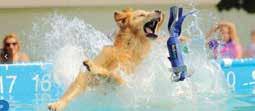
• DockDogs Dog Diving Competitions
• Classic K-9 with Ken Scarnegie Agility Show
• Johnny Peers and the Muttville Comix Show
• IJA SANCTIONED RESCUE ME, RODEO GROOMING COMPETITION—from the beginner groomer to the most advanced this competition is perfect for you
• EXHIBITORS—check out more than 200 pet-friendly exhibit booths
• MEGA PET ADOPTION—Find Your Best Friend waiting for you!
• Meet the Rescue Breeds Presentations
• Dress up Your Pet and Pet Look alike Contests!
SPECIAL OFFER if you wish to attend the show:
Visit: www.columbuspetexpo.com to save $2 off ticket your ticket! Also, to register your pet for our Dress up Your Pet & Pet Look Alike Contests and download the Pet Policy if you plan on bringing a pet.
In addition to producing The All American Columbus Pet Expo, Show Founder, Steve Cantin has promoted other highly successful consumer trade shows around the country. He is the national sales manager of Go Cat feather toys. With over 35 years in the trade show management business, his knowledge and attention to detail, make for a profitable experience for vendors and a fun time for attendees! The Expo Exhibitor, sponsorship and Show Program ad opportunities, offer your organization an excellent way to be recognized as a supporter of this effort, and receive maximum exposure from people attending – plus receive thousands of impressions from our extensive advertising campaigns. The Expo has numerous packages available that will give your company the opportunity to be involved with these great community events.
PLEASE SUBMIT ANY CORRESPONDENCE TO: info@pghpetconnections.com
ADVERTISING INQUIRIES info@pghpetconnections.com
724-503-8695
All Rights Reserved | Copyright 2015
PITTSBURGH PETCONNECTIONS BI-MONTHLY published by: Pittsburgh PetConnections, LLC. Pittsburgh PetConnections LLC. was formed in 2012. Our mission is to publish a high quality, informative publication focused on the Human-Animal Bond. We support local businesses and also assist local non-profit businesses for pets and people, to give back to our great Pittsburgh communities.
MAGAZINE PUBLICATION STAFF
Carla Mader, Managing Editor
Kara Jones Photography, Photography
Nicole Begley Photography, Photography
Jaimee D. Greenawalt, Graphic Design
Carla Mader, Sales & Distribution Manager
ADVERTISING SALES
Robin Reinfeld, Sales Pittsburgh 412-780-2254 | rrcd@aol.com
Denise Iamurri Bartman, Sales Pittsburgh & Central OH
Jaime Chesney, Digital Advertising Specialist
BENN Advertising Solutions
CONTRIBUTING WRITERS
Our contributing writers have many years of combined experience and expertise in the fields of veterinary medicine and the Human-Animal Bond.
Welcome to our Pittsburgh PetConnections bi-monthly January/February 2016, Volume 4 Issue 3
PetConnections growth has been truly astounding from issue to issue! Our reach, network and community is extending and we are excited and very pleased to announce our recent partnership to co-produce with The All American Columbus Pet Expo being held at the Ohio Expo Center, March 11-13. We also recently partnered with the Pittsburgh PostGazette and BENN Advertising Solutions. Creating awareness and raising preference for our sponsors, our print and digital editions of PetConnections magazine has become a trusted resource and our readership and subscriber base is growing. Our media partnership packages now offer a unique and powerful combination of print and digital issues with a demand side platform with BENN, which can lead to more targeted, measurable and responsive campaigns. Please see our contact info for advertising in the staff section of this page to join our family of sponsors!
We are excited to start a new year of events! See our Events page to find details on spring events such as the Love your Pet event at the Pittsburgh Public Market, Animal Rescue League’s B*tches Ball and The Western PA Humane Society’s and Camp Bow sponsored Canine & Cupids and more.
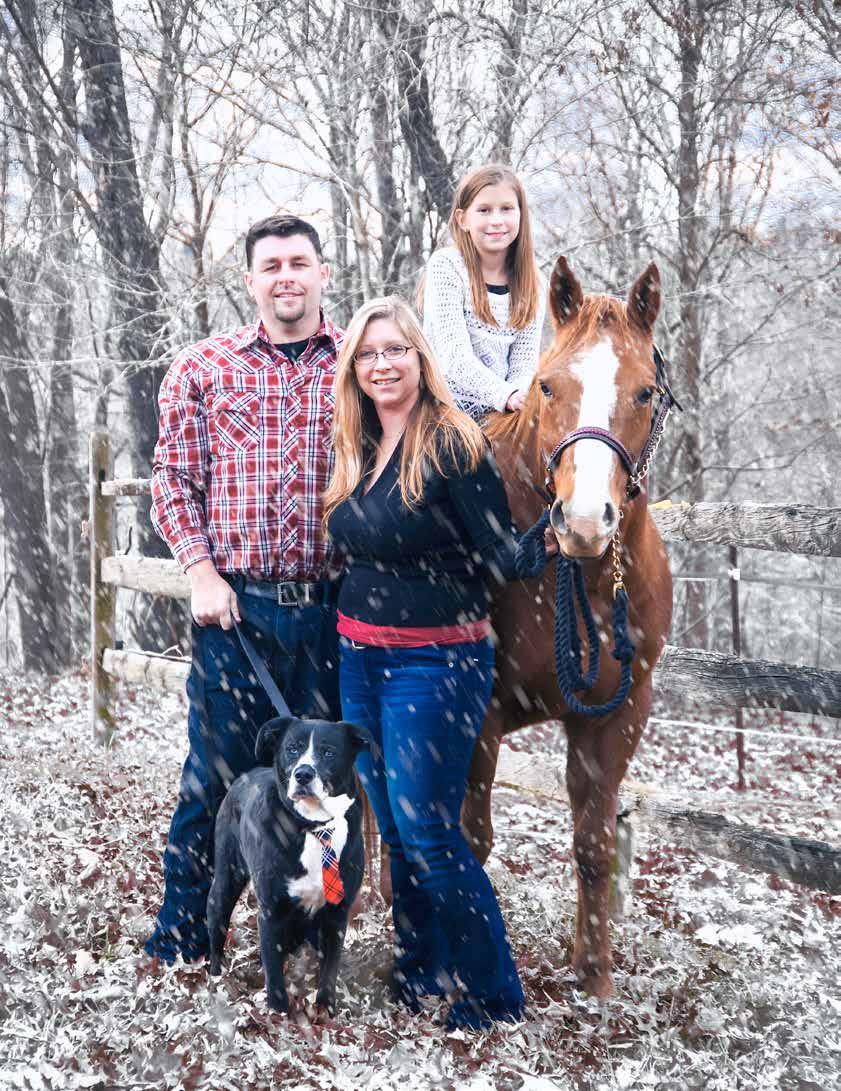
Our cover features The Crooks Family, Ken, Rachel and daughter, Abby along with Faith, AQH and Axle, Border Collie in a beautiful winter scene on the farm. Photo by Kara Jones Photography www.kjones. smugmug.com.
This issue includes an extended Pet Health and Wellness Section with a focus on pet health and National Pet Dental Health with Periodontal Disease in Dogs, Seizure in Dogs and Cats, New Year’s Revolution for Remarkable Healthy Pets.

Hill’s Pet Food is generously sponsoring the Western PA Humane Society this year! We also welcome sponsors Country Lane Pet Hotel and Manning Chiropractic! Every ad supports the donated and discounted ads for local organizations that PetConnections sponsors. Please support our advertising sponsors! See their locations on the map page. Check out our PetConnections Resource Directories for categorized listings.
We encourage you to subscribe to PetConnections Magazine, as our readership is growing!!! Even though PetConnections is free at select locations, reserve your personal copy to be mailed every issue! Visit www. pghpetconnections.com to subscribe today! Submit your photos and stories, as well as remembrances to be featured online and in future issues to: info@pghpetconnections.com.
Thank you for picking up this copy of PetConnections. Take care of yourself and your animals and be well in this New Year!
Warmly,
Carla Mader
Publisher Pittsburgh & Central Ohio PetConnections Magazine

Please submit any correspondence to: info@pghpetconnections.com Please check us out on the web & subscribe at: www.pghpetconnections.com. Follow PghPetMag on Twitter and “Like” us on Facebook! http://www.facebook.com/PghPetconnectionsMagazine Disclaimer: The views expressed in our content does not necessarily reflect that of PetConnections Magazine. PetConnections shall be indemnified against damages from content including ads and articles, false advertising libel, trademark infringement, etc.
Animal Educational Exhibits
North:
The Pittsburgh Zoo & PPG Aquarium pittsburghzoo.org
The National Aviary nationalaviary.org
Animal Behavior
Greater Pittsburgh Area:
Judith Levy, M,Ed., CEHP, RMT Feline Behavior 412-521-5133 | judithlevywellness.com
Animal Communication
Greater Pittsburgh Area: Renee Takacs, M.A. intuitguide.com
Animal Reiki
East: Janet Jackson animalangellady.com
East End:
Judith Levy, M,Ed., CEHP, RMT 412-521-5133 | judithlevywellness.com
Animal-Related Art, Photography & Retail North:
Nicole Begley Photography nicolebegleyphotography.com
Vibrant Images
724-774-1731 | www.vibrantimages.photography
South:
Kara Jones Photography kjones.smugmug.com
Paws ‘n Claws Eyewear PawsnClawsEyewear.com
Greater Pittsburgh Area: Jenny Karlsson Photography jennykarlssonphotography.com
Animal Rescue Organizations
North:
Animal Friends
412-847-7000 | thinkingoutsidethecage.org
Beaver County Humane Society 724-775-5801 www.beavercountyhumanesociety.org
Pennsylvania Great Dane Rescue 724-869-9185
Hope Haven Farm Sanctuary 412-366-1187 | hopehavenfarm.org Western Pa Humane Society 412-321-4625 | wpahumane.org
South:
Animal Care & Welfare
412-244-1372 | animalcareandwelfare.org
Droopy’s Basset Rescue 888-9 GET DROOL | www.droopysbassetrescue.com
Washington Area Humane Society 724-222-7387 | washingtonpashelter.org
Animals Against the Odds Rescue/Rehab www.aato.rescueme.org
East:
Animal Rescue League 412-345-7300 | animalrescue.org
ARL Wildlife Center 412-345-7300 | animalrescue.org
SW PA Pugs with Special Needs 724-763-2790 | swpapug.org
West:
CARMAA
412-780-4983 | carmaa-petadoption.com
Greater Pittsburgh Area: SPAAR www.seniorpetandanimalrescue.org
Dog Training
North:
AKIN Family Dog Training (Lilian Akin) 412-732-8091 | akinfdt.net
Greater Pittsburgh Area: Success Just Clicks successjustclicks.com
North Shore: Western PA Humane Society 412-321-4265 | wpahumane.org
South:
Paula’s Professional Dog Services
412-818-2482
Sit Means Sit Dog Training 412-345-1748 | www.sitmeanssit.com
Dog Training Clubs
South:
Dogworks Training Center at The Canine Club Phone: (412) 220-8100 | www.thecanineclub.com
Golden Triangle Obedience Training Club
412-653-6880 | gtotc.com
Keystone Canine Training 412-833-2211 | keystonecanine.com
Xcel Canine Training Center 412-833-2504 | xcelcaninetraining.com
Equine Boarding, Lessons & Training Facilities
North:
Rockin’ Horse Stables
724-601-4706 | rockinhorsestables.com
South: Coventry Equestrian Center 724-206-9902
Manon’s Farm 724-705-7912 | 724-621-0260
Equine Holistic Care
Greater Pittsburgh Area:
Dr. Michael Savko, DC, CCSP, CVCP 724-261-7915 | drchirovet.com
Equine Tack Stores
South:
Lowry’s Western Store
724-228-1225 | lowryswesternshop.com
Equine Veterinarians
Dr. Brian Burks, DVM - Fox Run Equine Center 724-727-3481 | foxrunequine.com
Holistic Pet Practitioners
Pet Chiropractor
North:
Dr. Doug Knueven, DVM
Beaver Animal Clinic
724-774-8047 | beaveranimalclinic.com
Greater Pittsburgh:
Dr. Michael Savko, DC, CCSP, CVCP 724-261-7915 | drchirovet.com
South:
Dr. Manning – Chiropractic 412-341-2505 | www.drastridmanning.com
Holistic Practitioners for Guardians
East End:
Judith Levy Wellness
Coaching/Energy Modalities 412-726-2659 | www.judithlevywellness.com
Renee Jennings
Hypnotherapy/Energy Psychology 216-375-7859
Holistic Veterinarians
Dr. Doug Knueven, DVM
Beaver Animal Clinic
724-774-8047 | beaveranimalclinic.com
Pet Burial, Memorial & Cremation Services
South:
Chartiers Custom Pet Cremation 412-220-7800 | ccpc.ws
Jefferson Memorial Funeral Home 412-655-4500 | jeffersonmemorial.biz
East End:
Precious Pets Memorial Center & Crematorium 412-351-PETS (7387) | preciouspetspgh.com
Greater Pittsburgh:
Pet Fencing
Greater Pittsburgh Area: Invisible Fence of Western PA 724-396-7231 | invisiblefence.com
Pet Friendly Restaurants
North:
Double Wide Grille - Mars 724-553-5212
South: Double Wide Grille - Southside 412-390-1111
Pet Grooming
North: 5th Avenue Fido 724-772-5511 | 5thavenuefido.com
All About Dogs
724-925-1577 | allaboutdogsgrooming.info
Larry’s Laundromutt 412-534-4052 | larryslaundromutt.com
Healthy Pet Grooming 724-759-7567
South:
Candelore’s Barking Beauties 412-872-5550
Creative Canine Cuts 724-223-9020
Grand Slam Grooming 412-221-5081 | grandslamgrooming.com
Petsburgh Dog & Cat Grooming 412-885-4027
Pets At Home
412-655-7297
The Pet Salon 412-279-5331 | petsalonusa.com
Woody’s Dog Wash & Pet Boutique 412-714-4644 | woodysdogbath.com
East: Animal Elegance
412-361-1177 | www.animal-elegance.com
Candelore’s Barking Beauties Pet Grooming 412-872-5550 | candeloresbarkingbeauties.com
Cat Around Town Cat Grooming 412-461-3700 | cataroundtown.com
West:
Paws Here Awhile Pet Resort
724-573-4665 | pawshereawhile.com
Greater Pittsburgh Area: Zoom N Groom (Sonya Patterson) 724-225-4827
Pet Friendly Businesses & Organizations
Bactronix
412-375-7886 | www.bactronix.com
Good Nature Organic Lawn Care
888-LAWNSAFER | whygoodnature.com Fundvelopes
412-595-8641 | fundvelopes.com
Matt Arch Foundation www.connectarian.com
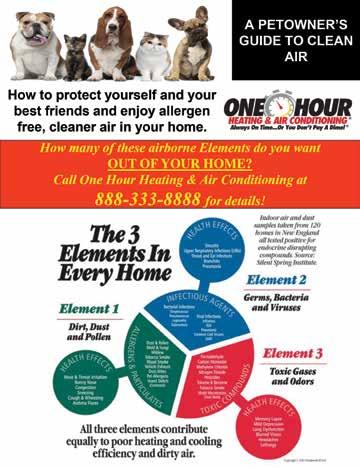
One Hour Heating & Air Conditioning 724-225-1644 | www.onehourair.com
Skinny Tim’s Tint & Detail
412-414-9194
Susan G. Komen Pittsburgh 412-342-0500 | www.komenpittsburgh.org
Pet-Friendly Real-Estate
South:
American Destiny Real Estate Services 412-983-2220 | www.adr-usa.com
Amore 877-716-6840 amoreapartments.com
Pet Grooming Schools
Golden Paws Pet Styling Academy 412-297-9383 | goldenpawspittsburghpa.com
Pet Ministries
South:
Christ United Methodist Church 412-277-1096 | christumc.net
Westminster Presbyterian Church 412-835-6630 | westminster-church.org
Pet Resorts - Boarding, Daycare, Grooming & Training
North:
5th Avenue Fido
724-772-5511 | 5thavenuefido.com
Camp Bow Wow - Ross Township campbowwowpgh.com
Dog stop - North
724-935-DOGS (3647) | www.thedogstop.net
The Dog Stop - Sewickley 412-766-DOGS(3647) | www.thedogstop.net
South:
Camp Bow Wow - Castle Shannon campbowwowpgh.com
Grandma’s Dog Daycare 412-586-7094 | grandmasdogdaycare.com
Canine Club
412-220-8100 | thecanineclub.com
Fuzzy Paws Pet Villa 724-746-3899 | fuzzy-paws.com
Nemacolin Pet Care Center
724-942-3333 McMurray 724-329-9663 Farmington
www.nemacolinwoof.com
The Dog Stop - Banksville Rd. 412-343-1171 | www.thedogstop.net
East:
Camp Bow Wow - Highland Park campbowwowpgh.com
Pittsburgh Pet Concierge 412-856-8505 | petconcierge.org
The Dog Stop - Monroeville 412-373-3355 | www.thedogstop.net
The Dog Stop - East End 412-361-0911 | www.thedogstop.net
East:
The Dog Stop - East: Strip District 412-315-7050 | www.thedogstop.net Country Lane Pet Hotel 412-824-7991 | www.countrylanepethotel.com
West:
Camp Bow Wow - Greentree campbowwowpgh.com
Paws Here Awhile Pet Resort
724-573-4665 | pawshereawhile.com
Pet Retail/Supply
North:
Healthy Pet Products
412-366-0700 | healthypetproducts.net
South:
Healthy Pet Products
412-831-3700 | healthypetproducts.net
Kobi Collars
724-991-9232
http://www.kobicollars.com
Martins Flowers & Shrubs Pet & Wildlife Feed 724-379-4684 | www.martinsflowersandshrubs.com
Oddball Pets & Aquariums 412-884-2333 | oddballpets.com
Woody’s Dog Wash & Pet Boutique 412-714-4644 | woodysdogbath.com
East:
Petagogy petagogy.com | 412-362-7387
Petland East Side Village 412-363-PETS www.petlandvillageofeastside.com
Puppy Paws Paw Shaped Jewelry 440-461-9667 | www.puppypaws.com
Wild Birds Unlimited www.pittsburgh.wbu.com
North 724-935-0051 East 412-374-0678
South 412-833-9299
Greater Pittsburgh Area:
Canine Health Supplements
614-937-8309
www.lifevantage.com/peggymills#canine Paws in the Sand 814.434.4857 | www.pawsinthesandpettreats.com
Pet Sitters
North Furry Family Pet Sitting 412-999-9524 | www.furryfamilypetsitting.com
South: Your Critter Sitters (Raylene Hoover) 724-448-7330 | yourcrittersitters.com
East: Pittsburgh Pet Concierge 412-856-8505 | petconcierge.org
Veterinary Hospice & Mobile Services
Greater Pittsburgh Area: Nancy A. Ruffing, DVM 412-801-1071 | gentlejourneyvet.com
Pittsburgh Pets at Home Mobile Veterinary Service 412-346-1177 | www.pghpetsathome.com
Veterinary Pharmacies
Greater Pittsburgh Area: The Medicine Shoppe 412-826-9500 | mscompounding.com
Murray Avenue Apothecary 412-421-4996 | MAApgh.com
Veterinary Hospitals
North:
Beaver Animal Clinic
724-774-8047 | beaveranimalclinic.com
BelaCoop Animal Hospital 724-939-7062
belacoopanimalhospital.com
Sarver Animal Hospital 724-295-9933 | www.sarveranimalhospital .com
VCA Northview Animal Hospital 412-364-5353 | vcanorthview.com
South:
All About Pets Veterinary Hospital 724-745-5503 | aapvet.com
Allegheny South Veterinary Services 412-257-0909 | alleghenysouthvetsvcs.com
Hickory Veterinary Service 724-356-1000 | hickoryvetsvcs.com
Nemacolin Pet Care Center 724-942-3333 McMurray 724-329-9663 Farmington www.nemacolinwoof.com
VCA Castle Shannon 412-885-2500
East: The Big Easy Animal Hospital 412-908-9301 | tbeah.com
West:
VCA MetVet West Animal Hospital 412-788-6400 vcahospitals.com/met-vet-west
Veterinary Specialty & Emergency Services
Greater Pittsburgh Area: Pittsburgh Veterinary Specialty and Emergency Center, Inc. 412-366-3400 | pvs-ec.com
VCA Northview Animal Hospital Specialty Referral Center 412-364-5353 | vcanorthview.com
East:
AVETS - Allegheny Veterinary Emergency Trauma & Specialty 412-373-4200 | avets.com
Veterinary Technology Schools
Greater Pittsburgh Area: Pittsburgh Career Institute 412-281-2600 | pci.edu Visit our online directory at pghpetconnections.com/Dog-Cat-Directory
List your business today! info@pghpetconnections.com



SATURDAY
FEBRUARY 13


Camp Bow Wow and the Western PA Humane Society Ninth Annual Cupids & Canines Night





WEDNESDAY FEBRUARY 17






7:30 to 11:00 p.m.
With a special VIP Cocktail Hour Sponsored by VCA Animal Hospitals beginning at 6:00 p.m.











Animal Friends’ Trap-NeuterVaccinate-Return Benefit Happy Hour at Franktuary

















SATURDAY





FEBRUARY 27








MARCH 10


5 p.m. - 7 p.m. Franktuary Thinkingoutsidethecage.org





Pittsburgh Police present: Biscuits Bingo


Doors open at 10 a.m. and Bingo starts at 12 p.m. IBEW Local Union #5 Hall pghbiscuitsbingo@yahoo.com
































THURSDAY







Animal Rescue League Shelter & Wildlife Center 5th Annual B*tches Ball HELP US CELEBRATE WORLD SPAY DAY! 6 - 10 p.m. (doors open at 5:30 p.m.). Drag Competition Crowning Miss B*tchburgh! (See our ad on page 9)




























2nd Chance Prom - “A Night in Paris”: Saturday, Feb. 13th, 6pm Southpointe Golf Club. Tickets $50 or 2 for $90.
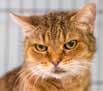
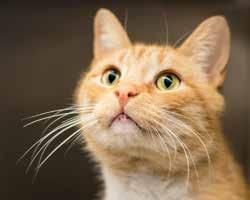
My name is Dimitri and I’m almost 12 years old. Some have called me the shelter’s “grumpy cat”, but I’m the sweetest boy! I love to be petted and rubbed and will purr and roll on my back. I don’t like to be held for long, and would probably do best as the only animal in a home.
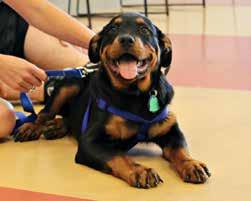
My name is Reba and I’m female American Staffordshire Terrier. I’m about 5 years old, and I still love to run around and play with my doggy and kitty friends! Although I’m friendly, I can be a little scared so I would do best in a home with no small children. I can’t wait to find my forever


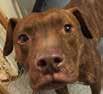
My name is Kit Kit. I’m a sweet 7 year old boy and I loved being petted or brushed, but I’m a little shy at first. I don’t like being held but it’s probably because I’m a big boy and it’s hard for me to get comfortable! I would probably do best in a home with no small children but cats and dogs would be okay!
All animals are spay or neutered, up to date on their shots and microchipped prior to adoption
The Washington Area Humane Society is a 501(c)(3) no-kill shelter funded solely by private contributions & donated supplies. 1527 Rte 136, Eighty Four, PA 15330






By Dr. Susan Wagner
Animals teach us about compassion, trust, boundaries and unconditional caring. Assistance animals have a long tradition of service in the United States, with guide dogs, hearing assistance dogs and disability dogs being well respected members of our communities. Police and military dogs have given their lives for their handlers, perhaps the ultimate test of the human animal bond.
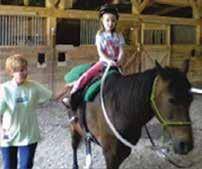
Animal assisted therapy programs have been utilized for physical disorders since the late 1800’s, and are currently gaining recognition within the medical and behavioral health arenas. Several species of animals have been used to treat a variety of physical and emotional disorders. These include dogs, cats, horses, rabbits, llamas, reptiles and even insects.
As these programs increase in popularity, so does research as to their effectiveness.
Valuable work has been published in the area of physical rehabilitation. For example, electromyography was used to measure muscle symmetry in children with cerebral palsy undergoing equine assisted therapy (hippotherapy) and children experiencing passive stretching.
Results showed that the hippotherapy group exhibited improved muscle symmetry whereas the passive stretching group did not. Interesting work has also been done using animals as adjuncts to psychotherapy. Therapists report that animals help people express themselves more freely. Children with emotional disturbances will often trust an animal long before another human being. Equine Assisted Psychotherapy adds another dimension to behavioral services. Working with a thousand pound horse builds confidence, while at the same time being
a humbling experience. The toughest troubled child can’t make a horse do something it doesn’t want to do! Horses can also be invaluable in teaching about boundaries and empowerment. While they can’t be forced to move, they can be trained to. A person’s sense of accomplishment when a huge animal does what they want is a wonderful gift.
Evidence also exists that nurturing animals can be as beneficial to the person as it is to the patient. As people assist animals in healing, they themselves can be healed. Although this at first glance doesn’t appear to be animal assisted therapy, it most certainly is!
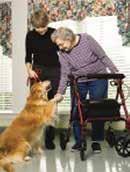
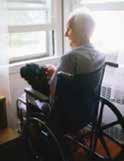
Studies have also been done to investigate the role of pets as “therapy” animals. Veterinarians have long understood the importance of pets in their guardian’s lives. Some clients have no family other than the pet, and the loss of that animal can be devastating. Nursing home residents can form a deep connection to a visiting or residence animal, which can help heal the sense of loss they feel in leaving their homes and family. Nursing home pets have even attended funerals at the request of the deceased.
mals with which they share their lives are not included.
Pets have been shown to reduce heart rate, blood pressure and anxiety.
New applications for animal assisted therapy are much needed. With the US population growing more and more unhealthy, medical costs are increasing at an alarming rate. Obesity is now an epidemic. Public health officials project that this generation will be the first to have a life expectancy less than their parents because of obesity related diseases. Stress related complaints account for 60 – 90% of physician visits, with health care costs being 147% higher in stressed or depressed workers. Violence has become a common occurrence on the news, and younger and younger children are becoming victims and purportraters. Nearly 2 million children are seriously abused every year, 2 million women are battered and almost 1 million parents are beaten or abused by their children. The tolls of our current wars in our military personnel physically and emotionally can only be imagined. At this time, the Army estimates that one in six soldiers is suffering from depression, anxiety or posttraumatic stress disorder, and the number could increase to one in three. Animal assisted therapy can be utilized in all of these settings, and more. As animals are used for different indications, further outcome studies are imperative in gauging their validity.
Science is now catching up with this anecdotal evidence on animals’ effect on our health and well being. Pets have been shown to reduce heart rate, blood pressure and anxiety. One study revealed that patients with heart disease and arrhythmias were more likely to be alive one year later if they owned a dog. Beck and Glickman wrote in 1987 “all future studies of human health should consider the presence or absence of a pet in the home…as a significant variable. No future study of human health should be considered comprehensive if the ani-
Dr. Susan Wagner is a board certified veterinary neurologist whose pioneering work acknowledges the bioenergetic interaction between people and animals. She is an advocate for change in the area of interpersonal violence and animal cruelty, and works toward a greater understanding surrounding the health implications of the human-animal bond. Dr. Wagner is a Level IV Healing Touch for Animals practitioner and co-author of Through A Dog’s Ear PC
Thursday, March 10, 2016
6 - 10 pm (doors open at 5:30 pm)
VIP Tickets – $50 (includes stage side seating and one drink ticket)
General Tickets – $35 ($45 at the door)
• Drink Specials
• Souvenir Glass*
• Light Refreshments
• Raffles and Giveaways
• Celebrity Judges
• Cat Walk
• Crowning of Miss B*tchburgh 2016 (9pm)
• Dancing (9-10pm)
Order tickets online at animalrescue.org/b-ball-tickets
* While supplies last.

By Caitlin Lasky, Interim Communications Manager, Western PA Humane Society
What exactly does “pet ownership” mean? At the Western PA Society, we believe it means making sure your furry friend doesn’t just exist, but instead lives its life to the fullest. After all, there are is a laundry list of benefits to owning a pet. Did you know pets can:
• increase general health of the pet’s owner in as little as a month
• increase activity levels
• lower blood pressure and reduce heart rate
• provide companionship and lessen feelings of loneliness and isolation
• help children with learning disabilities calm themselves and regulate stress
• increase levels of serotonin and dopamine which is responsible for calming and relaxation
We can repay our pets for all of these benefits by making sure they have microchips for identification; proper health care and vaccinations; obedience training; exercise and enrichment; nourishing food and treats; and protection against animal cruelty.
The Western PA Humane Society prides itself on being a “one-stop-shop” for pet ownership. While our shelter is an incredibly important part of our mission to ensure that homeless and surrendered companion animals have a chance at living in a happy home, we also hope to enhance the lives of pets in the community.
Understanding how your pet thinks and communicates can make for both a happy animal and owner. WPHS has a robust dog obedience training program from basics to advanced; personality specific to size specific. Our highly qualified and experienced trainers use positive reinforcement training
to make sure every dog and its owner is getting the support and instruction they need to reach their obedience training goals.
WPHS also has informational and social events for pets. Own a rabbit? We have bunny romps every Saturday from 2 p.m.-4:30 p.m. at our location in the North Side in which your rabbit can socialize and exercise. Ever want to learn how to massage your cat? In the past, we have had an informational feline massage class. Check our website for the wide range of upcoming social and informational events.
The regulation of abused animals is a top priority. WPHS has an entire investigations department dedicated to researching reports of animal cruelty. As humans, we have a responsibility to speak for those who cannot speak for themselves. This includes animals. If you suspect animal abuse, please report it so we can make sure animals do not end up in abusive situations. You can report suspected animal abuse by contacting 412-321-4625 ext. 216 or investigations@wpahumane.org.
Beyond training and helpful events, WPHS has a wellness clinic available to all pet’s, not just pets that were adopted from our shelter. You can visit wpahuman.org to view our clinic hours and book your pet’s appointment. We also just started walkin vaccine clinic hours Tuesday through Thursday, 8 a.m.-10 a.m. to make sure you can keep your pets vaccinations up to date regardless of your busy schedule. We also have low-cost vaccine clinics throughout the city. For locations, times and dates of these low-cost clinics, and to see how to hold a clinic in your community, please check wpahumane.org.
At the Western PA Humane Society, we also understand families struggle with the loss of jobs and other sources of income which can make it difficult to purchase pet food and care. Please spread the word about our Ellie’s Pet Pantry program which supplies members of our local community with free food for hungry pets. We also have low cost vaccine clinics and microchipping. Please visit wpahumane.org to see the dates and locations of these clinics.
Mary Withrow, Director of Community and Governmental Relations and Shelter Director, is working closely with Representative Dom Costa to move legislation forward (HB113, Angel’s Law) that would make stricter laws for animal cruelty. Currently in Pennsylvania, animal cruelty is considered a summary offense, similar to a traffic violation. This is unacceptable.
The proposed legislation is currently held up in the House Judiciary committee. You can help by calling your PA House Representative and saying you are their constituent and you support HB113 which will increase the penalty for animal cruelty.
These various programs at the Western PA Humane Society exist to uphold our mission to provide the most comprehensive, compassionate and humane services to enhance the lives of companion animals for families and the community and to educate and to prevent the cruelty of all animals in the region we serve. We hope we see your family and pet sometime soon at our center for pet ownership! PC



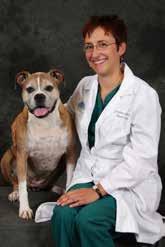
By Kendra R. Mikoloski, DVM, DACVIM (Neurology) Neurologist at PVSEC
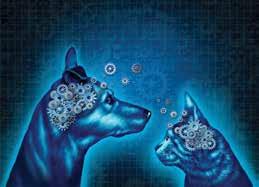
Seizures are one of the most common neurologic disorders affecting dogs and cats. Approximately 1-2% of dogs and 0.5-3.5% of cats suffer from seizures. A seizure is a clinical sign of excessive, disorganized activity in the brain. Seizures tell us that there is a problem in the brain, but not the cause. The goals of testing are to determine the underlying cause, evaluate the chance for recurrence, and establish what will be the best treatment. There are four major groups of causes for seizures:
1. Metabolic disorders and toxins
2. Idiopathic epilepsy
3. Primary brain disorders
4. Cryptogenic disorder
Metabolic disorders can be evaluated by performing blood work such as complete blood count (CBC), chemistry profile and bile acids to evaluate for metabolic disorders. Problems such as liver or kidney disorders, low blood sugar, or electrolyte imbalances can cause seizures in some dogs. Toxins are a relatively infrequent cause of seizures, and will often cause many other abnormalities besides the
seizures such as gastrointestinal upset, hyperexcitability, anxiety, muscle spasms and twitching between the seizures, dilated pupils, and other signs depending on the toxin. Treatment for a toxin depends on what is ingested. Treatment in pets with a metabolic or toxic cause of seizures includes removing the toxin or correcting the metabolic disorder as well as management of the seizures with antiseizure medications.
Seizures caused by unknown origin are diagnosed if no other underlying cause of the seizures can be identified (also called idiopathic epilepsy). In some breeds (dogs), there may be a genetic component to this disease. Idiopathic epilepsy is less common in cats than dogs, but can also occur. The common age at which we typically see the first seizure is about 1 to 5 years of age. The way to diagnose idiopathic epilepsy is to rule out all other metabolic or primary brain disorders. If the pet has a normal physical and neurologic examination, normal blood work, and is 1-5 years old, idiopathic epilepsy may be the most likely cause for seizures. Treatment is focused on management of the condition with antiseizure medications.
Seizures caused by primary brain disorders are the direct result of an abnormal brain structure (including developmental brain disorders, birth defects, infectious or inflammatory processes in the brain, tumors, stroke, etc). Magnetic resonance imaging (MRI) of the brain and in some cases a spinal tap (for the evaluation of cerebrospinal fluid) will help to detect these causes. Treatment is dependent on the underlying cause.
Cryptogenic epilepsy is diagnosed in older dogs with no underlying causes identified. Cryptogenic epilepsy means that, while there is likely no genetic component to the disease, there is also no identifiable cause. It is a diagnosis of exclusion, which requires ruling out all other causes of
seizures with blood work, MRI and spinal tap. Treatment is focused on management of the condition with anti-seizure medications.
Preictal period - Seizures are sometimes preceded by unusual behavior or a mood change that can last for minutes to days.
Aura - Lasts for several seconds or minutes immediately before the seizure; characterized by a period of visible behavior change that may include hiding, attention-seeking, restlessness, whining, or howling.
Ictus - The actual seizure is known as the ictus and can last from a few seconds to several minutes. The most common appearance includes altered consciousness or unconsciousness, falling to the ground and lying on the side of the body, rhythmic muscle contractions such as paddling or jerking of the legs and/or “chewing gum” motions with the jaws, salivation, urination, or defecation. There is often no responsiveness during the seizure.
Postictal period - Some dogs and cats continue to lie on their side for a few minutes. Most are disoriented and may wander around aimlessly and restlessly. They may appear transiently blind. Can last from minutes to hours.
Seizures can be a manageable condition in most pets; however lifelong medications will be required. Seizures are rarely life-
threatening, however the pet should be taken to a veterinarian immediately if this is the first seizure, they have 3 or more seizures in 24 hours, if the seizure is lasting longer than 5 minutes and not stopping, or if they are not recovering as “normal” from the seizure. Pets should not be allowed unsupervised access to swimming pools or stairs so that they cannot injure themselves during a seizure. Dogs cannot “swallow their tongue” during a seizure – in fact they can inadvertently hurt you because they are unaware of their actions. Do not place your fingers in their mouth during the seizure. Talking calmly and softly to your dog or cat may help ease their recovery from the seizure. Descriptions of the seizure may be helpful in diagnosing cause. It is helpful to write down in detail what you saw, or even obtain a video. Include the length of time, specific behaviors, time of day, and possible precipitating events.
Seizures are managed with antiseizure medications. Choice of medication depends on mechanism of action of the medication, efficacy, adverse effects, potential for interaction with other medications, cost, and frequency of administration. There are many antiseizure medications available (Phenobarbital, Potassium Bromide, Zonisamide, Keppra, Topomax, Gabapentin, Pregabalin, and others). An educated discussion of which medications are best for your pet is recommended. Some pets (about 2/3 of idiopathic epilep-
tic dogs) are able to be managed with just one medication, while other pets require two or more medications to control their seizures. Most dogs do not have an inciting cause for their seizures, and diet changes rarely influence seizure control.
Treatment of seizures is a lifelong commitment. Most dogs do not become completely free of seizures. Our goal for treatment is to reduce frequency of seizures to as infrequent as possible while minimizing side effects of the medications, however this can be a delicate balance and one that is not achieved in every pet. Depending on the medication, frequent monitoring of blood levels and routine blood work will be recommended to ensure that the pet is not having any complications from the medication. Most of the medications need to be given at specific times every day for the rest of the pet’s life, making management of idiopathic epilepsy a big commitment. Even one missed or late dose can precipitate seizures in some pets. PC
By Carla Mader
Carla Mader is the publisher of PetConnections magazine. She has over 25 years’ experience working in all disciplines of small animal veterinary medicine.
Periodontal disease affects both cats and dogs of all ages, though it is more common in older animals.
Periodontal disease is an inflammation of some or all of a tooth’s deep supporting structures. Today, it is one of the most common diseases in dogs.
If food particles and bacteria are allowed to accumulate along the dog’s gum line, it can form plaque, which, when combined with saliva and minerals, will transform into calculus. This causes gum irritation and leads to an inflammatory condition called gingivitis. Gingivitis, which is evidenced by a reddening of the gums directly bordering the teeth, is considered to be an early stage of periodontal disease.
After an extended period, the calculus builds up under the gum and separates it from the teeth. Spaces will form under the teeth, fostering bacterial growth. Once this happens, the dog has irreversible periodontal disease. This usually leads to bone loss, tissue destruction and pus formation in the cavities between the gum and teeth.
Periodontal disease generally begins with the inflammation of one tooth, which may progress if not treated during different stages of the condition. A dog with stage 1 periodontal disease in one or more of its teeth, for example, will exhibit gingivitis without any separation of the gum and tooth. Stage 2 is characterized by a 25 percent attachment loss, while stage 3 involves a 25 to 30 percent attachment loss. In stage 4, which is also called advanced periodontitis, there is more than a 50 percent attachment loss. In the most advanced stage of the disease, the gum tissue will usually recede and the roots of the teeth will be exposed.
• Bad breath
• Bleeding and oral pain
• Loss of appetite or dropping food while eating
• Loose teeth or teeth falling out
• Bacteria in the blood stream
• Microscopic damage in kidneys, heart muscle and liver. Studies have shown that dogs with severe periodontal disease have more damage to organs than dogs with less severe disease.
Periodontal disease can be caused by a variety of factors. In dogs, the most common causes are the Streptococcus and Actinomyces bacteria. Canine toy breeds with crowded teeth, and dogs that groom themselves, carry a higher risk of acquiring the disease. In addition, poor nutrition will also contribute to the onset of the condition.
The diagnosis of periodontal disease involves a number of procedures. If periodontal probing reveals more than two millimeters of distance between the gingivitis-affected gum and tooth, a dog is considered to have some form of periodontal abnormality.
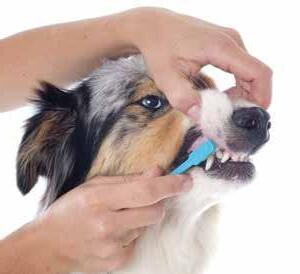
The specific treatment for periodontal disease depends on how advanced the disease is. In the early stages, treatment is focused on controlling plaque and preventing attachment loss. This is achieved by daily brushing with animal safe toothpaste, professional cleansing, polishing, and the prescribed application of fluoride.
In stage 2 or 3, the treatment involves the cleansing of the space between the gums and teeth and the application of antibiotic gel to rejuvenate periodontal tissues and decrease the size of the space.
In the more advanced stages, bone replacement procedures, periodontal splinting, and guided tissue regeneration may become necessary.
Follow-up treatment for periodontal disease consists mostly of good dental care and weekly, quarterly, or half-yearly checks. Prognosis in dogs will depend on how advanced the disease is, but the best way to minimize the adverse effects caused by the disease is to get an early diagnosis, adequate treatment and proper therapy.
The best prevention is to maintain good oral hygiene and to regularly brush and clean the dog’s mouth and gums. Please call your veterinarian for advice on how best to address your individual pet’s oral health care. PC
Doggy Daycare
Dog/Cat Boarding
Grooming
Doggy Day Care
Is your dog unhappy or lonely while you are at work or school? Give your companion the personal attention he or she deserves throughout the day by enrolling them in Big Easy Dog Daze. Located in the trendy neighborhood of Lawrenceville, PA, your pet will have fun and stay active in a safe and caring environment, plus have the opportunity to play and socialize with other dogs. We offer full and half day pricing as well as five, ten and twenty day packages.
Dog Boarding
Dog Daze offers boarding for your dogs while you are away. Once checked in, your dog receives only the finest amenities, which include CLEAN & DRY indoor accomodations, spacious clean runs with continuous contact with staff throughout the day, 4 to 6 daily outdoor break (always supervised), supervised daily play-group or staff interaction (dogs not suited for playgroups enjoy
one-on-one play with staff), and individual meal preparation using food from home.
Cat Boarding
Need to have your kitty enjoy the comforts of home while you are away? We have a “Cats Only, No Dogs Allowed!” boarding room at the Big Easy Animal Hospital section of the facility. Or Kitty Condos have a sunny window ledge with a view of our future cafe. We have a large private play area, complete with climbing trees, tunnels and a lot of play toys!!!
Dog Daze & Cafe
Get your day started with a locally sourced and brewed coffee and a selectable pastry from our cafe. Free wifi makes it a perfect place to work away from the office. Veterinarian owned, Pet Bakery of Oakmont, will be selling their goodies on site. More details about our dog friendly cafe coming soon........
Now offering Grooming!
By Carla Mader
Core vaccinations for dogs and cats are recommended by veterinarians. Rabies is a zoonotic disease (can be spread from pets to people) and vaccines for dogs are required by law in PA. This is for good reason, as our local rabies cases are on the rise and found in the suburb in neighborhood cats. You can read up on the Center for Disease and Preventions website at: http://www.cdc.gov/rabies/location/usa/ index.html.
Infectious diseases that spread from dog to dog and cat to cat are kept at bay when pets are vaccinated properly. Once your pet receives core vaccines as a puppy or kitten and after your veterinarian determines you can start titer testing, you can have blood titers drawn, to check the immunity of your pet and decide if additional vaccines are needed. Vaccines can have immunity (after core vaccines given) for several years. It varies in every animal, as in people. Many kennels and pet resorts now accept titers in addition to proof of vaccinations. Many chronic illnesses and immune diseases such can be made worse and vaccinations are contraindicated, in those cases. Your veterinarian can best advise you when your pet should have vaccines.
Many people do not understand the value of an exam prior to their pet receiving vaccinations and have the perception that it is not necessary to do so. When the reminder comes in the mail, or emailed and now, yes – texted to you. Fido is due for his vaccines. So, if he comes in every year and possibly more often for an infected ear or minor illness , why does he need an exam for vaccinations and what is the value of what you are paying for?
Many people do not realize that administering vaccines is actually a procedure. Yes, a quick injection, but really a procedure. Why? There are several types of vaccines and well, that is for another article. But, to give you a quick rundown, there are killed vaccines, which means, the actual bacteria or virus component is killed. There is modified live and live (rare these days). This means your veterinarian is injecting the vaccine to illicit an immune response, so that in the event the body is ever infected, the body will have developed antibodies against it and will have a better chance of fighting it off.
There is always the small chance your pet will have a vaccine reaction. Reactions are rare and most of the time localized to the injection site with mild swelling. More rare and severe anaphylactic reactions occur within minutes of the injection with collapse, facial swelling, respiratory problems or death. If caught immediately, intervention usually has a favorable outcome.
So, this is where the physical exam comes in. The veterinarians must establish that the pet is healthy and without a compromised immune system to receive the vaccine(s). Even an ear infection can warrant postponing the vaccines, so the pet’s health is not compromised for a routine vaccine which can wait.
Your veterinarian will get a thorough history of your pet’s home environment, diet, supplements, parasite preventives, heartworm testing, medications and activities to get the entire picture of its overall health. Then, perform a thorough physical exam. Only then can the assessment be made about which vaccines your pet requires and the vaccine can be safely administered.
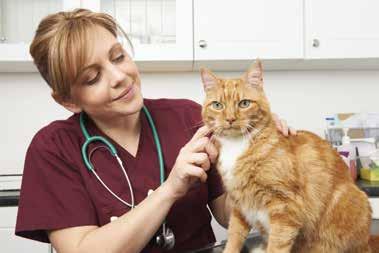
The physical exam is accomplished by examining the pet from head to tail. Starting at the head, the eyes, the ears, mouth, teeth are examined. Then the cardiac and respiratory systems are auscultated with a stethoscope. The veterinarians trained ears can pick up an abnormal cardiac rhythm, murmur or abnormal lung sounds. Next, the abdomen is palpated to make sure the gastrointestinal tract, liver, spleen, kidneys and bladder feel normal. The ribs are felt, to evaluate body condition for optimal weight. Peripheral lymph nodes are palpated. Also the musculoskeletal system is examined, checking joints for discomfort. Finally the coat and skin is checked for lumps and bumps, evidence of parasites or sores. Your pet’s neurological status is also assessed.
It is also every beneficial to have wellness exams done on your at least once a year and twice yearly for geriatric pets and cats, even if they are not due or needing vaccines. Many hidden issues and illnesses are discovered and can keep your pet healthy and can save you money over time. “Prevention is the Best Medicine”! PC
Page 7 - W Country Lane Pet Hotel
Page 17 - A All About Pets Veterinary Hospital
Page 28 - Amore Property Management
Page 6 - B Animal Elegance
Page 28 - American Destiny Real Estate
Page 9 - C Animal Rescue League
Page 24 - Bactronix
Page 23 - D Beaver Animal Clinic
Page 31 - E Candelore’s Barking Beauties Pet Grooming
Page 35 - F Chartier Custom Pet Cremation
Page 19 - Cat Around Town
Page 33 - G Coventry Stables
Inside Back Cover - Dog Stop
Page 19 - H Fuzzy Paws Pet Villa
Page 35 - Gentle Journey Veterinary Hospice
Page 19 - Grandma’s Dog Daycare
Page 7 - I Healthy Pet Products
Page 21 - Invisible Fence of Pittsburgh
Page 35 - J Jefferson Memorial
Page 29 - Judith Levy Coaching
Page 19 - Kobi Collars
Page 29 - Krystal Klear
Page 19 Manning Chiropractic and Wellness Center
Page 39 Manon’s Farms
Page 25 - K Murray Avenue Apothecary
Page 17 - Nemacolin Pet Care Center
Page 36 - Oddball Pets & Aquariums
Inside Back Cover - One Hour Heating & Air Conditioning
Page 2 - Paws Here Awhile
Page 2 - Petland East Side Village
Page 19 - M Petsburgh Grooming
Page 27 - Pittsburgh Pets At Home Vet Services
Page 6 - Pittsburgh Public Market
Back Cover - N Pittsburgh Veterinary Specialty and Emergency Center
Page 34 - Precious Pets Memorial & Cremation
Page 32 - O Rockin Horse Stables
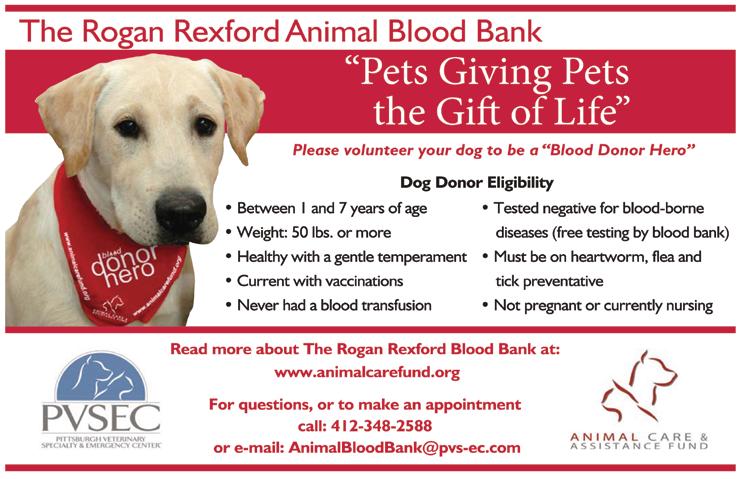
Page 13 - The Rogan Rexford Animal Blood Bank
Page 27 - P Sarver Animal Hospital
Page 25 - Dr. Michael Savko
Page 21 - Q Sit Means Sit Dog Training


Page 19 - Success Just Clicks
Page 15 - R The Big Easy Animal Hospital
Page 31 - S VCA Castle Shannon
Page 27 - T Vibrant Images
Page 7 - Washington Area Humane Society
Page - 31 - Wild birds Unlimited
Page 11 - U Western PA Humane Society
Page 19 - V Woody’s Dog Wash & Boutique






By Tena Parker, CPDT-KA Success Just Clicks Dog Training
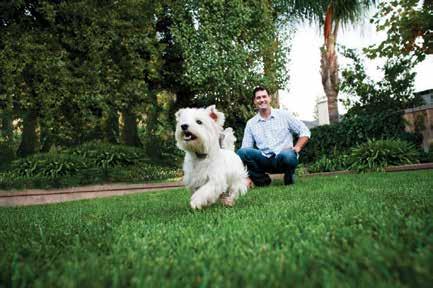
Having a well-trained dog opens up a world of possibilities for fun experiences and sets dog owners up for success with their pet. The definition of a “well trained dog” will vary from dog to dog and from situation to situation—not all well trained dogs can do the same things (or would want to do the same things) but there are plenty of things well-trained dogs can do that others can’t. Well trained dogs can walk nicely on leash in public, be invited into dog friendly stores (that aren’t pet stores), be invited into the work place, explore the environment off-leash (where legally permitted), help others through therapy dog visits, be trusted when visitors come over, behave appropriately in public situations, wait patiently, pose for photos nicely, and even help around the house (cleaning up their toys or even fetching you a drink!).
The Association of Professional Dog Trainers (APDT) has deemed January “National Train Your Dog Month”, so there is no better time than now to improve your dog’s training! Whether you have a new dog in your home that needs to learn the basics or you have an adult dog who has been annoyingly pulling on the leash for years, getting into training will ultimately make your life with your dog more enjoyable.
Now, you may be thinking, “It’s been like this for years, Fido’s behaviors can’t change” or “We’ve tried everything and nothing ever works!” Well, I’m here to tell you that things can change and change for the better! Getting into a training class with skilled and experienced positive trainer or hiring a private trainer can make all of the difference in the world to the efficiency of your training. You wouldn’t give up on fixing your car without taking it to a mechanic or two, right? There is no
need to just live with the behaviors your dog has without training with a trainer or two and certainly no reason to relinquish a dog to a shelter without hiring a professional.
Here’s where to find help…
Housetraining Problems—
If Fido is lovely except for the housetraining challenges, your best bet is to hire a private trainer who can come to your home, help you get a routine created and get a training plan in place.
Pulling On the Leash—
If your dog has a long history of pulling like a tank on leash, you may be best served by hiring a positive trainer to help coach you on that one specific problem area and teach Fido to walk nicely in your neighborhood. If your pup is a moderate puller or has some other manner issues, a group class may be appropriate for your situation.
Jumping on guests or going crazy at the doorbell
Hiring an experienced trainer to come to your home and help you create a training
plan that will work for your specific situation can be helpful for multi-dog homes but a good basic level group class will also help you learn techniques to quell the jumping.
Growling at, barking at, snapping at, or biting dogs/people—
With potentially dangerous behaviors, hiring a private trainer to address the concerning behaviors is the most prudent approach. When working with behavioral problems, it’s extremely important to hire a skilled and experienced trainer to work with. Not all trainers have catered their education or experience to working with behavioral cases, so making sure you get the right trainer is important to your success. You may be able to find a growlydog class in your area as another option for some dogs/handlers, but these classes are not right for all dogs.
Generally just wild and hyper— Group classes that focus on manners may be a solution for many of these dogs. Group classes help teach a dog focus in distracting environments and trainers can help handlers learn some new exercise ideas. There are even some group classes that focus on relaxation that may be of help. Some dogs, however, may need private training to work on a relaxation protocol with individual coaching.
Doesn’t listen well—
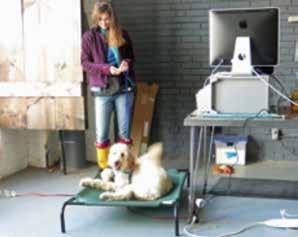
basic group classes are designed for just this problem. You have a dog who doesn’t generally listen or respond to you (maybe they are great inside your home, but outside, they don’t even know you exist). Group manners classes will teach you all the basics and teach you how to get your dog to respond to these cues in the real world. Since not all dogs are right for group classes, private trainers can also be great resources for this problem as well.
Perhaps your dog is already a mannerly pup and you are just not sure that training is worthwhile. Well, getting involved in a fun training class can deepen your bond with your dog and teach you so much about him/her—plus classes are simply fun experiences your pup can have with you! There are countless canine sport classes and fun casual classes available to you—even if you have no desire to become a dog-nerd dogsport competitor, training in a sport can be fun.
Here are just some of the classes or types of classes that can be found in the Pittsburgh area…
Rally-Obedience—fun sport based on obedience skills but with more variations
Treibball—a fun new sport mixing herding and soccer for dogs
K9 Nosework/Nosegames—a sport that teaches dogs to be scent detectives to find specific odors
Canine Enrichment Games—try fun braingames and toys for Fido
Flyball—high intensity relay race with dogs retrieving tennis balls over jumps
Tricks class—teach your dog fun party
C.L.A.S.S./C.G.C.—earn titles or degrees showing off your dog’s basic manners
Want to learn more about National Train Your Dog Month and the contests and events involved, check out www.trainyourdogmonth.com.
Not sure where to start or how to do more with your dog? Here are two online resources where you can search for local trainers to contact: www.petprofessionalguild.com and www.apdt.com PC



By Doug Knueven, DVM, CVA, CVC, CVCH
The start of a new year is a good time to stop and reflect on what we have done in the past and how we can improve. It’s a great time to kick off a new good habit. I hate to call any such effort a “resolution” because those almost always fail.
There are many possible reasons for resolution failure. Maybe in our exuberance for change, we simply bite off more than we can chew. Perhaps we don’t fully convince ourselves that the change will lead to a better life. And then there is the tendency to give up the whole thing if we blow it one time.
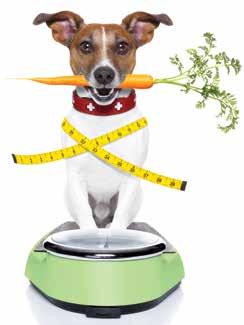
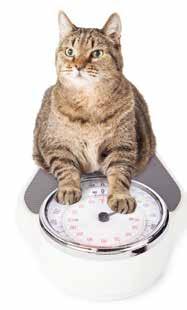
your pet is feed him the appropriate amount of food. Most pets are overweight and this predisposes them to disease and premature death.
I am going to propose five simple changes any pet caregiver can make that can revolutionize their pet’s health from the inside out. I do not mean to suggest that anyone should make all five changes all at once (although that would be great). Just making one of these changes will make a big difference in your pet’s health. Remember, every choice you make for your pet is either moving him toward greater health, or shifting him away from that goal. Having said that, don’t bite off more than you can chew.
1. Portion Control – Speaking of biting off more than you can chew, one of the most beneficial things you can do for
Yes, that pudgy pooch or fat cat may look adorable but according to research they will start with symptoms of arthritis and other chronic diseases 3 years earlier than their slim counterparts. The heavy animals will also die almost 2 years earlier. Ask your veterinarian for an honest assessment of your pet’s weight and for guidance on how much to feed.
2. Stop Dry Pet Food – Yes, you read right, no dry pet food. Dry pet food is full of starch (they can’t make dry pet food without lots of starch to form the kibble) which packs on the pounds. Cats and dogs invented the Atkins diet since their ancestors did it for millions of years which shaped the metabolism of our current pets.
Also, dry food is more concentrated in calories than canned or raw diets. This fact becomes obvious when you realize that dry food contains about 10% moisture while canned food is usually around 70% moisture. Since water does not have any calories, canned foods fill up the belly without maxing out calories. By the way, chewing on dry pet food does not clean a pet’s teeth any more than crunching on pretzels cleans a person’s teeth.
3. Add Some Veggies – Adding some vegetables to a pet’s diet can increase the belly-filling bulk in a low calorie way. Veggies also contain healthbenefitting nutrients and can lower the risk of cancer. Green leafy vegetables, like spinach, are especially healthy but carrots, squash, broccoli, cauliflower, and green beans are good too. Avoid grains and starchy veggies like potatoes. Steam the veggies for maximum nutrient absorption (raw veggies tend to go right through the GI tracts of carnivores). Start by mixing in just a small amount of finely chopped veggies. Experiment and find your pet’s favorite.
4. Skip the Snacks – Believe it or not, your dog will not die if he does not get a treat every time he goes outside (although he might carry on as if he will). Pet snack food is as unhealthy as our snack food. If you don’t believe
me, look at the ingredient list on the package. Most of it is garbage wrapped in artificial flavor enhancers. I know, I know, your pet just won’t stop pestering you unless you slip him a treat every time you pass the special cupboard. Well guess what, when you give in to the terrorists demands, you’ve just reinforced the unwanted behavior. The pet has become the master. Keep in mind that food does not equal love.
5. Diet Rotation – The tendency of most pet caregivers is to find a food that “works” for their pet and stick with it for life. This is a very unhealthy practice. For one thing, any individual pet food may have slight nutrient imbalances that escape the regulatory process but may cause problems when fed long term. Also, studies show that the best way to cause a food allergy is to feed the same thing day after day. The idea that changing a pet’s food causes diarrhea is a self-fulfilling prophecy. Eating the same thing long term and then suddenly changing to something else will almost always cause GI upset.
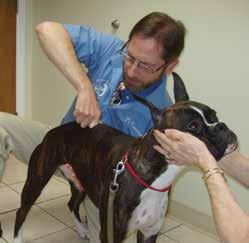
However, pets can get used to eating a variety of foods just like we do. Yes, at first changes will need to be made gradually by tapering on the novel diet, but often over time, the changes can be made more quickly.
You are likely to run into diets that just do not agree with your pet – avoid those in the future. Try foods with different main ingredients and from various manufacturers. Find a half dozen or so foods that work for your pet and rotate through them, changing foods every week or so. Variety is the spice of life for our pets too.
There you have it – five easy, healthimproving changes you can make in your pet’s eating habits. Choose one to start with and as the ad says, “Just Do It.” You just may start a revolution in your pet’s health. PC
There are increasing news reports about how our homes are becoming more susceptible to molds, mildews, viruses and other harmful bacterial and fungal contamination. This has caused public concern to find new ways to reduce and prevent the emergence of these unwanted conditions. Bactronix has responded to this concern by developing new technology to help create a healthier and safer living environment.
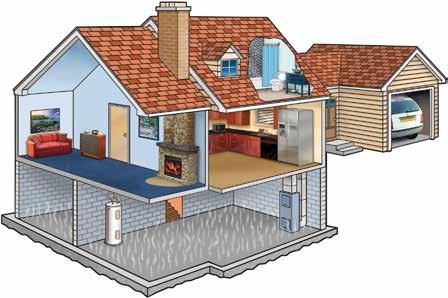
Mold and mold spores can occur in the areas where moisture and ventilation problems develop. Mold not only compromises the structural integrity of a home, it can also cause long-term health problems.

The Bactronizing Seal of Certification is a Symbol of Health and Safety
As shown in this illustration, bacteria, mold, mildew and odor problems can develop from pre-existing conditions in the home.
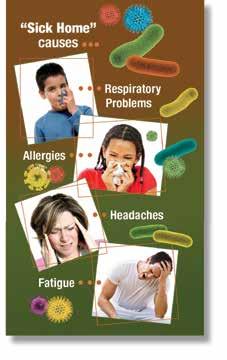
Pet odors are part of the home’s “biological footprint.” The Bactronizing™ Process eliminates pet odors and other unpleasant smells that develop over time. Our nanotechnology breaks down VOCs, providing a safer and fresher smelling home environment.

Bactronix Corp. serves many markets such as veterinary clinics, hospitals, schools, corporate, automotive, nursing homes, manufacturing and real estate. Bactronix uses an exclusive, safe, organic system to diagnose and treat interior environments for dangerous microorganisms. Utilizing science based practices, testing is performed on porous and non-porous surfaces to determine the level of bio-activity which may cause odor and illness. The Bactronizing Process uses a hospital grade, non-toxic “Green” disinfecting nanotechnology to kill mold, mildew and dangerous super-bugs such as MRSA, C.Diff, H1N1 and legionella. Bactronix also utilizes an advanced electrostatic spray system to treat 100% of all surface areas resulting in a highly effective sanitary finish.
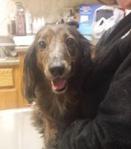
Ten year old Emma presented with loss of withdrawal reflex in hind legs. She could not feel or basically move her legs, both severe but the right was worse.
Not eating, not going to bathroom regularly, if she stood up, her legs would cross and she would fall. That was on 12/2/15. As of 1/2/16 she was “back to normal” in 4 visits with Dr. Savko.
After only one visit she had “moments of walking and was feeling better”. After only two visits she was “walking, eating, and even RAN”! If they would not have found Dr. Savko they were looking bunches of medications which all have side effects, and potentially thousands of dollars in diagnostic testing and surgery. Which when TRULY needed, are definitely recommended, BUT...naturally, non invasively, quickly, affordably we brought her back in just a few visits!
How? Gentle, precise stimulation of the nervous system to heal, not just react, and to remove static and restore communication within the body. Gentle, easy yet very comprehensive balancing of the muscle system to remove spasm and take extra pressure off the spine and nerves. Easy unblocking of meridian points (like with acupuncture, minus the needles).
Removing the blocks to health promotes healing and we did that with the nerves, the joints, the muscles, the circulation, and even the energy points in the body.
4 visits, no drugs, no surgery, just working with the body comprehensively, completely, gently, and obviously effectively.
Healing, not just TREATING!

We are use to our own home’s scent, but a buyer may have a dog, cat or not pets at all. Neutralize your home’s smell. This means cleaning not camou age!
WAYS TO CLEAN!
- Heating and Air Cleaning puri cation systems
- Air Duct Cleaning
- Sanitize
See articles on Bactronics, page 35 and One Hour Heating and Air, page 38

“ I personally have had prospective buyers not go past the foyer door due to undesirable smells. This brings down your marketability to sell at a fair value quickly.”


•
•


745-5969


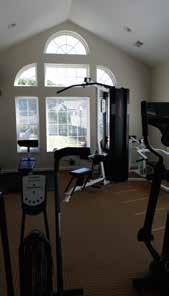
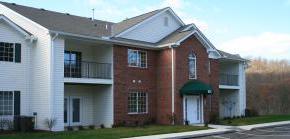

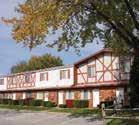
Lifestyle living allows you to come home from work and walk your dog! Free yourself of daily exterior maintenance and enjoy the Clubhouse & Fitness Center & Pool
Close to South Park a 2,000 recreational park, with fenced in dog park, sports, & fun galore.
Bedroom for $127,900


www.judithlevycoaching.com |

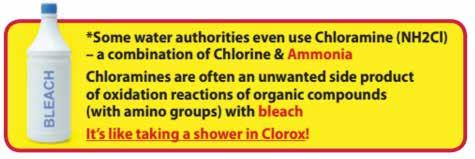
The problem is so bad that, in May of 2010, something BIG happened. Something that’s NEVER happened before. The US Government issued the President’s Cancer Panel report. They nally spilled the beans to the American public in this shocking report about the water problem - after decades of case studies, independent tests & Medical journal reports. They nally admitted the chlorine, contaminants, carcinogens and pollutants in our water supply are causing cancer. And most importantly, they are telling all Americans to install a water ltration system in their home to reduce their risk of cancer !
By Ann Yeager
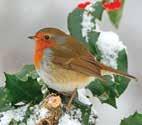
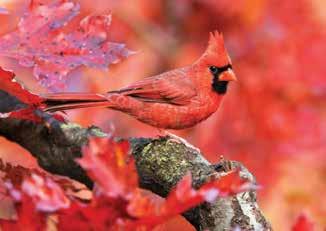
As the weather gets colder and the snow starts to stick on the ground, many of the birds commonly seen in the summer have flown south. However, many species of birds stay in town all year round, including: Sparrows, Cardinals, Blue Jays, Starlings and Crows. These birds gather in large flocks; they forage for food together by day and huddle together for warmth at night. However, if you look closely at the birds in your yard, you may notice a few surprising visitors from the summer. Among the most commonly spotted “surprising bird” is the American Robin.
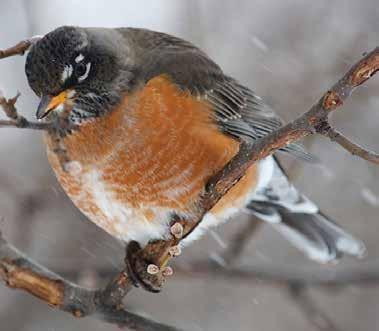
That’s right... the same bird said to herald the coming of spring often doesn’t even leave town! At the Wildlife Center, we take several calls each winter from concerned birdwatch ers that have spotted a Robin and want to know why it hasn’t flown south. While some Robins do migrate south, many individuals elect to remain in Pennsylvania, especially if the winter is mild. Because winter conditions are different from the summer, Robins change their behavior to help them survive. They will move to deeper woods and grow darker feathers to help them blend in with the

age for worms again, making them one of the first birds to “return” in spring!
If you would like to see these signs of spring all year round, Robins can be attracted to yards by planting bushes that provide berries all year such as bayberry, snowberry, mountain ash, hackberry, highbush cranberry and hawthorn. Additionally, Robins can be attracted
Robins change their behavior to help them survive. They will move to deeper woods and grow darker feathers to help them blend in with the trees.
Their feathers are great at holding in body heat, helping them to keep their skin temperature at a toasty 104°F no matter what the temperature outside. This allows them to withstand blizzards, ice storms and nights as cold as -30° F. They also change their diet from worms and insects (which are frozen beneath the ground) to berries and a few seeds. As the spring thaw begins, Robins begin to move out of the woods and for-
by setting up a good water source, such as a shallow heated bird bath or running water.
Happy Bird Watching!
Visit www.animalrescue.org for more information. PC
■
■
■
■
REGULAR HOURS: Mon-Fri: 8:00 AM - 8:00 PM Sat: 8:00 AM - 4:00 PM



By Kristen Hermann
Riders communicate to the horse using the three natural aids: the legs, seat and hands. The legs ask the horse to move forward, the seat can regulate or impede the horse’s stride and the hands guide and or direct the horse in addition to positioning the head and neck. All three of the rider’s aids are to communicate to the horse in coordination with one another and in rhythm with the horse’s three gaits.
Sounds complicated! Quality riding is no easy feat. The clearer the aids, the easier it is for the horse to understand the rider! The seat is to follow the horse’s pulsating back muscles, the leg is to breathe with the horse’s rib cage, and the hands (rider’s hands, elbows and shoulders) are to follow
the horse motion of the horse’s head and neck. No parts of the horse or rider are static when riding. With each stride, the rider is to go along with the horse and not interrupt its way of moving. Once again clear aids assist in this process of riding in harmony.
der position enables better communication with the horse. As a riding teacher (for over forty years now!), I spend half of the riding lessons trying to get students to relax areas of their body so they can communicate to the horse with clarity. Unfortunately, riders bring all the tension they harbor in their bodies to the horse. As Classical trainer, Alois Podhasky said, you must first have a rider before you could think to influence the horse! (Read Podhasky’s book ‘The Complete Training of Horse and Rider.’ )

Last month I wrote about developing a good leg position that uses all three leg joints to go with the horse at all three gaits. (The ankle, knee and hip). Being able to ride with the leg joints working as hinges enables the rider to more easily communicate with the horse plus absorb its motion. The rider’s leg position must be properly adjusted in order for the joints to open and close correctly.
The rider’s hands are also a vital aspect of communicating the horse. The rider’s leg says go forward, and the hands capture and help to direct the horse. Again, the correct hand, elbow and shoul-
The hands of the rider have to be able to follow the horse’s head and neck motion that moves forward and back at the walk and canter. At the trot, the horse’s motion is up and down not forward and back, so for the three different gaits of the horse the rider’s aids have to move differently. The hands, of course, are what connect to the rein and then the rein connects to the horse’s mouth! A sensitive area for sure! Riders are then told to keep their hands still but at the same time are also told to follow the motion of the horse’s head and neck forward and back. There are so many contradictions when it comes to riding. Thinking about and understanding these contradictions helps one become a better rider.
The rider’s hands should be quite, and the soft elbow joint has to follow that elastic motion forward and back with the horse’s motion. However, if the rider is told to put their hands down, cock in the wrist, or straighten the elbows, the rider is not able to “go with the horse”. The rein aids are jeopardized and communication between horse and human is then compromised! Hands that are too low will straighten the elbow and then create stiffness, and an inflexible hinge that does not work with the horse. Pressed down hands also not only straighten the elbow but disrupt the rider’s seat by rounding the back. Yes, the elbows are connected to the seat, and the hands are connected to the elbows and to ride in harmony all body parts have to work in iso-
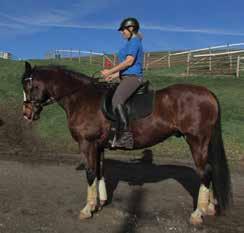
A nice riding position. Hands are above the withers, ( L shaped elbows), rider is sitting in balance ( equal on both sides) and the ankle is under the hip. The challenge is maintaining a good basic riding position while the horse is in motion, at a walk, trot and canter.
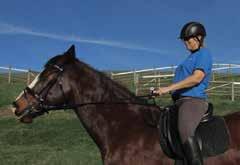
lation and unison at the same time! I mean whoever thought the elbows of the rider are connected to the seat?
Another typical riding error is to ride with “piano hands” or “puppy paws.” Riding like this locks up all the joints of the rider’s arms and it is not at all natural. A natural hand position is the rider’s elbows bending at a right ankle enabling the hand to move forward or back. As the classicists say, riding should be effortless, but more often the rider is fighting their own body in order to obtain a correct riding position whether it is because of tension in the legs, seat or hands. The tense rider whose independent body parts are not communicating to the horse then complains that the horse is not responding! Learning to ride well and communicate to the horse with clear aids is certainly a process and takes patience! If the hands are pressed down, the wrists cocked,
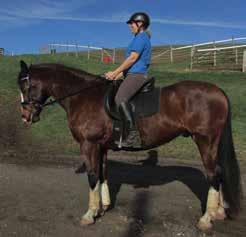
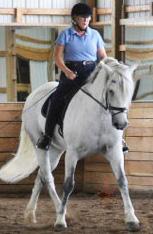
I prefer this rider’s leg position and her seat looks more relaxed in saddle. However, her hands are slightly lower compromising the “elbow to bit connection” and her hands and arms are tense! She’s squeezing her fingers really tight. Tight fingers can’t feel the corners of the horse’s mouth. “Ouch,” says the horse!
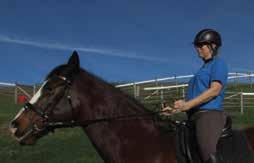
the leg joints tight, the back rounded, the neck stiff, I am sorry to say, all these rider stiffnesses will reverberate into the horse. Riding begins with the rider and acquiring the best basic riding position so the horse can understand the rider’s commands. The rider’s hands, elbows and shoulders communicate to the horse from its withers forward. The rider’s hands must be in the correct position to feel and listen to the horse and then be able to communicate to the horse. Thumbs are to be up, not facing one another, wrists are to be neutral (not “broken”) and the elbows need to
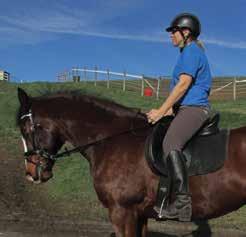
Pressing the hands down straightens the elbows, so now they cannot follow the horse’s longitudinal motion and this rounds the rider’s back taking her seat out the saddle. The rider’s hands are to be above the withers, not below, to keep the elbow to bit connection!
A few other typical hand position errors are riding with “puppy paws” which moves the elbow out and prevents their ability to follow and cocked wrists that disconnect the elbow to bit connection because they are locked and tense. How do we over come these riding errors? First find a trainer that knows the difference and two develop your own conscious awareness by studying riding and reading the classical riding books.
be elastic to follow the forward and back motion of the horse gait. The rider’s shoulders, also a part of the arm, should be broad and relaxed without hunching over. The more a rider works on perfecting riding position, the happier the horse PC
Learn how to ride & train with clarity for Dressage, Hunt Seat, Eventing, Western, Pleasure
All horses & riders benefit utilizing simplified gymnastic training (dressage) Kristin Hermann blythedale@comcast.net www.CoventryEquestrianCenter.com 724-206-9902




What are you doing with your tax refund? Buying a new HD 3D TV? Going on a nice vacation, I like those ideas. Maybe you need to pay off some bills, not fun but sometimes necessary. If you are going to invest or save it, here are a few options
• A bank savings account 1% return
• Fixed Annuities 3-4 % return
• U.S. Savings Bonds 3-4 % return
• Certificates of Deposit 2% return
• Stock market ??? return
Pretty poor results and some may even be taxable Would you be interested in earning 8% or more tax free? If you would like to earn more,read on.
Replace your old furnace and air conditioner!
Yes it’ s true, replacing an old inefficient heating and cooling system could earn you more money on your investments. Here’s how.
This is the best time of year to upgrade your system. For this month only
• purchase our premier or optimum heating and cooling system and we will make your 1ST 12 monthly payments*
• If you prefer to pay we will offer up to an $1,800 discount
• 10 year parts and labor warranty Why choose One Hour Heating and Air Conditioning?
• We only employee drug free people
• All employees have had thorough national criminal background checks.
• An A+ rating with the BBB. www.westernpennsylvaniabbb.org
• Lifetime furnace and air conditioner replacement warranties. Call for details.
• We belong to U.WIN, a guarantee of services: there is no way you can lose. www.877655uwin
• 5 year comfort guarantee
• 1 year full replacement guarantee
• We will not lower the quality of our work because we lowered our prices.
All