

Those of you with children may remember the massive recall of 23 million toys after lead was discovered in toys made in China. The public outcry was tremendous because lead is associated with neurological damage Hopefully those of you with pets began to wonder, “If there is lead in children’s toys then there has to be in our pets toys?” Well, the answer in most cases is yes! Other causes for concern are pthalates, chemical dyes, chromium, cadmium, mercury and BPA, just to mention a few, that could be found in toys, bedding and bowls.
After the 2007 recalls, Trace Laboratories tested Paws N’ Claws tennis balls and they found an astounding 27,200ppm lead levels in the ink on the balls They also tested a ceramic food dish and found lead levels at 2,890 ppm The lead levels in both these items far exceed the level set for human toys currently at 300 ppm. Pets chew long and hard on toys and lead comes off more readily after a pet’s saliva soaks the toy and begins to partially digest the surface allowing for toxic accumulation Symptoms of lead poisoning are vague and mimic other conditions such as: anemia, vomiting, diarrhea, lethargy, seizures, blindness, deafness and behavioral changes
So you ask, what’s being done about this? Since the children’s toy recall a government agency “C P d
or CPSC has tightened regulations by imposing the Consumer Product Safety Improvement Act. The act reduces the limit of total lead content in children products from 600ppm (parts per million) to 300ppm effective 8/14/09 Other regulations include pthalates not to exceed .1%, mandatory testing and certification.
Unfortunately, (as you could probably guess) no action has been taken for the pet product industry and there are no regulations governing it either Therefore, all we can continue to do is educate ourselves on what is safe for our pets and what isn’t. Here are some basic guidelines to follow:
• Use glass or stainless steel dishes.
• Use only sport tennis balls, not tennis balls made as pet toys.
• Visit websites that monitor and rate specific toys or brands for toxins. Such as, www.healthystuff.org and www.goodguide.com

the Chinese port and hides are commonly covered in mold and have to be bleached upon arrival Then they go through a chemical processing to help preserve them and that’s just the beginning. It’s imperative to buy rawhide that is made in the USA!
• Avoid plastics containing polyvinyl chloride (PVC). PVC is brittle and is often augmented with pthalates and stabilizing heavy metals.
I chose to write on this topic now because we are approaching gift giving season. Knowledge is power my friends, so it’s my hope this article will make you think twice before grabbing that cute stuffed Santa Claus made in China to put in your pets stocking. Let’s think twice. Don’t be naughty…be nice to man’s best friend!



• Purchase products Made in the USA.
• Avoid toys made of synthetic latex.
• Contact the company and ask.
Lastly let’s look at the quality of rawhide
According to Cattle Network The U S expo more than $1 billion in cattle hides to China every year, and guess what they do with them? They make them into rawhide chew for pets and ship them right back to us! Something else to think about is when hide are stripped from the animal they are perisha and should be kept cool till processing. Hides shipped to China are trucked to the west coast and loaded onto ships It can take weeks to reach



5pm
9am - 8pm
9am - 6pm
10am - 4pm




PetConnections is going to bi-monthly starting with this issue! Our next issue, January/February will be released January 30th. This will allow us to grow the editorial content, as well as produce special editions. In our third year of publishing and next year, we look forward to expanding our Rescue section with the Western PA Humane Society, as well as the Animal Rescue League providing educational articles.
Thank you to our readers and advertising sponsors for a great year and making PetConnections Pittsburgh’s #1 Resource for everything pets! I also want to extend a special thank you to the PetConnections staff and contributing writers!
The Pittsburgh Pet Expo was great fun with all the events and exhibits. John Lege, “That Guy with the Birds”, gave awesome and informative presentations with his spectacular parrots! There was an increase in attendance and vendor participation over last year. Toni Shelaske from Healthy Pet Products was the major sponsor and was personally on hand throughout the show along with representatives from the healthy pet products she carries, for questions and had some
viewpoints are welcome...”
Published By: Pittsburgh PetConnections, LLC.
Pittsburgh PetConnections, LLC. was formed in 2012. Our mission is to publish a high quality, informative and Human-Animal Bond focused publication. We support local businesses and also assist local non-profit businesses for pets and people, to give back to our great Pittsburgh communities.
great giveaways! Many of the area shelters and rescue groups present had a great response and helped to adopt out many cats and dogs after the event.
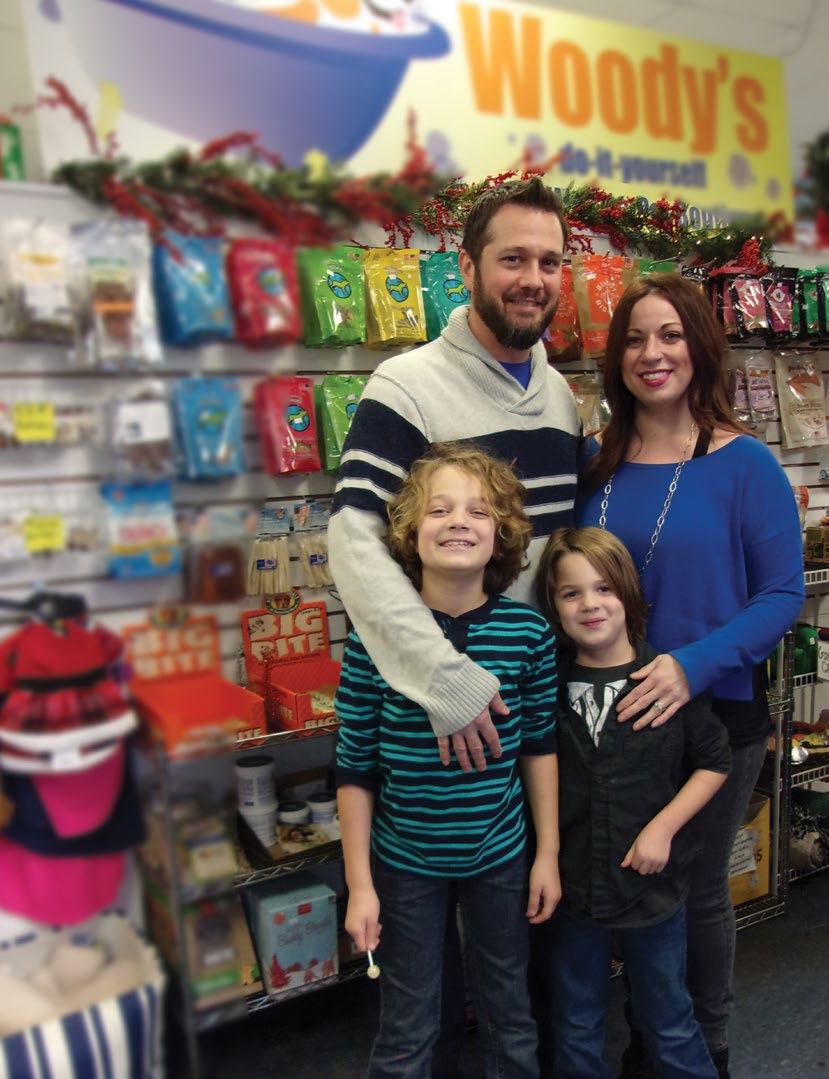
Woody’s Dog Wash and Pet Boutique is our featured cover and business this issue. Ann Cipriani welcomes new owners Chad and Nicole Sukel. See page 19 for the article. Stop by Woody’s in “South Bark” to meet them in person and bring your muddy dogs!!!
Thanks for Paws winners! See page 11 for the winners!
We welcome new advertisers to PPC, Pittsburgh Career Institute and Sandy’s Cat Grooming of the Greentree area. Please see our center Advertiser Map spread on pages 15 and 16.
Please also see our print and online directories on the home page of www.pghpetconnections.com.
Merry Christmas, Happy Hanukkah and Happy New Year!
Thank you for picking up PPC Magazine. Take care of yourself, as well as your animals and be well!
Warmly,
Carla Mader CEO & Publisher Pittsburgh PetConnections, LLC.
Managing

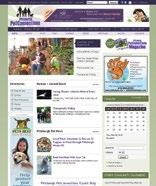
Subscribe, Submit, Upload! Submit your business or rescue organization’s info for a FREE listing on our directory.
No website for your small home-based pet or wellness business? Add a Featured Listing on the PPC online Directory for a small yearly fee and upload photos and detailed info about your business!
Contributing Writers: Our contributing writers have many years of combined experience and expertise in the fields of veterinary medicine and the Human-Animal Bond.
A Media Partnership with PPC includes: • Ad in print or online (free design)
• A Free Featured directory page on our website with your business info, photos and link to your website
• Your logo in our monthly newsletter
• PPC promotes your business at our events
Animal Educational Exhibits
North:
The Pittsburgh Zoo & PPG Aquarium pittsburghzoo.org
The National Aviary nationalaviary.org
Animal Behavior
Greater Pittsburgh Area:
Judith Levy, M,Ed., CEHP, RMT 412-521-5133 | judithlevywellness.com
Animal Communication
Greater Pittsburgh Area: Renee Takacs, M.A. intuitguide.com
Animal Reiki
East: Janet Jackson animalangellady.com
East End:
Judith Levy, M,Ed., CEHP, RMT 412-521-5133 | judithlevywellness.com
Animal-Related Art, Photography & Retail
North:
Nicole Begley Photography nicolebegleyphotography.com Vibrant Images vibrant-images.com
South:
Kara Jones Photography kjones.smugmug.com
Paws ‘n Claws Eyewear PawsnClawsEyewear.com
Greater Pittsburgh Area: Pet and Home Portraits petandhomeportraits.blogspot.com
Jenny Karlsson Photography jennykarlssonphotography.com
Animal Rescue Organizations
North: Animal Friends
412-847-7000 | thinkingoutsidethecage.org Beaver County Humane Society 724-775-5801
Pennsylvania Great Dane Rescue 724-869-9185
Hope Haven Farm Sanctuary 412-366-1187 | hopehavenfarm.org
Western Pa Humane Society 412-321-4625 | wpahumane.org
South: Animal Care & Welfare 412-244-1372 | animalcareandwelfare.org
Washington Area Humane Society 724-222-7387 | washingtonpashelter.org
East:
Animal Rescue League
412-345-7300 | animalrescue.org
ARL Wildlife Center 412-345-7300 | animalrescue.org
SW PA Pugs with Special Needs 724-763-2790 | swpapug.org
West: CARMAA
412-780-4983 | carmaa-petadoption.com
Dog Training
Greater Pittsburgh Area: Success Just Clicks successjustclicks.com
North Shore: Western PA Humane Society 412-321-4265 | wpahumane.org
South:
Paula’s Professional Dog Services 412-818-2482
Dog Training Clubs
South:
Golden Triangle Obedience Training Club 412-653-6880 | gtotc.com
Keystone Canine Training 412-833-2211 | keystonecanine.com
Xcel Canine Training Center 412-833-2504 | xcelcaninetraining.com
Equine Boarding, Lessons & Training Facilities
North: Rockin’ Horse Stables 724-601-4706 | rockinhorsestables.com
South: Coventry Equestrian Center 724-206-9902
Greater Pittsburgh Area: Dr. Michael Savko, DC, CCSP, CVCP 724-261-7915 | drchirovet.com
Equine Hoof Care
Greater Pittsburgh Area: All Natural Hoof Care Nancy Frishkorn 724-255-6465 | hooflady.org
Equine Tack Stores
South:
The English Horn 724-941-8088 | theenglishhorn.com
Lowry’s Western Store 724-228-1225 | lowryswesternshop.com
Equine Veterinarians
East:
Dr. Brian Burks, DVM Fox Run Equine Center 724-727-3481 | foxrunequine.com
Holistic Practitioners
Pet Chiropractor
North:
Dr. Doug Knueven, DVM Beaver Animal Clinic
724-774-8047 | beaveranimalclinic.com
South:
Dr. Astrid Manning, DC, CVCP 412-341-2505 | drastridmanning.com
East:
Dr. Dina Livolsi, Doctor of Chiropractic 412-824-6276 | drdinalivolsi.com
Greater Pittsburgh: Dr. Michael Savko, DC, CCSP, CVCP 724-261-7915 | drchirovet.com
Holistic Veterinarians
Dr. Doug Knueven, DVM Beaver Animal Clinic
724-774-8047 | beaveranimalclinic.com
Pet Burial, Memorial & Cremation Services
South:
Chartiers Custom Pet Cremation 412-220-7800 | ccpc.ws
Jefferson Memorial Funeral Home 412-655-4500 | jeffersonmemorial.biz
Pet Fencing
Greater Pittsburgh Area: DogWatch
724-586-6555 | DogWatchPGH.com Invisible Fence of Western PA 724-396-7231 | invisiblefence.com
J & D Home Improvements, Inc. 800-837-9379 | jdwaterproofing.com
Pet Stop Pet Fencing System of Western PA petstop.com
Pet Friendly Restaurants
North:
Double Wide Grille - Mars 724-553-5212
South:
Double Wide Grille - Southside 412-390-1111
Pet Grooming
North: 5th Avenue Fido
724-772-5511 | 5thavenuefido.com
All About Dogs
724-925-1577 | allaboutdogsgrooming.info
K-9 Kingdom
724-935-3647 | k9kingdom.com
Larry’s Laundromutt
412-534-4052 | larryslaundromutt.com
Paw Prints Pet Retreat
724-903-0063 | pawprintspetretreat.com
South:
Brush Run Styling
724-942-6352 | brushrunpetstyling.com
Canine Club
412-220-8100 | thecanineclub.com
Grand Slam Grooming
412-221-5081 | grandslamgrooming.com
Grooming With Care
412-977-5961
Petsburgh Dog & Cat Grooming
412-885-4027
Pets At Home
412-655-7297
The Pet Salon
412-279-5331 | petsalonusa.com
Sandys Cat Grooming
412-759-1806
Woody’s Dog Wash & Pet Boutique 412-714-4644 | woodysdogbath.com
Creative Canine Cuts
724-223-9020
West:
Paws Here Awhile Pet Resort 724-573-4665 | pawshereawhile.com
Greater Pittsburgh Area:
Zoom N Groom (Sonya Patterson) 724-225-4827
Pet Grooming Schools
Golden Paws Pet Styling Academy 412-297-9383 | goldenpawspittsburghpa.com
Pet Massage
Greater Pittsburgh Area: Your Critter Sitters – Raylene Hoover 724-448-7330 | yourcrittersitters.com
Pet Ministries
South:
Christ United Methodist Church
412-277-1096 | christumc.net
Westminster Presbyterian Church 412-835-6630 | westminster-church.org
Pet Resorts - Boarding, Daycare, Grooming & Training
North:
5th Avenue Fido
724-772-5511 | 5thavenuefido.com
Camp Bow Wow - Ross Township campbowwowpgh.com
K-9 Kingdom
724-935-DOGS (3647) | myk9kingdom.com
Paw Prints Pet Retreat
724-903-0063 | pawprintspetretreat.com
South:
Camp Bow Wow - Castle Shannon campbowwowpgh.com
Grandma’s Dog Daycare 412-586-7094 | grandmasdogdaycare.com Canine Club
412-220-8100 | thecanineclub.com
East:
Camp Bow Wow - Highland Park campbowwowpgh.com
Pittsburgh Pet Concierge 412-856-8505 | petconcierge.org
West:
Camp Bow Wow - Greentree campbowwowpgh.com
Paws Here Awhile Pet Resort 724-573-4665 | pawshereawhile.com
Pet Retail/Supply
North:
Healthy Pet Products
412-366-0700 | healthypetproducts.net
South:
Healthy Pet Products
412-831-3700 | healthypetproducts.net
Oddball Pets & Aquariums
412-884-2333 | oddballpets.com
Woody’s Dog Wash & Pet Boutique 412-714-4644 | woodysdogbath.com
East: Petagogy petagogy.com | 412-362-7387
Pet Sitters
North:
Little Piggies Pet Sitting littlepiggiespetsitting.com
South:
Chris’s Canine Club
724-746-3864 | chrisscanineclub.com
Your Critter Sitters– Raylene Hoover 724-448-7330 | yourcrittersitters.com
West:
Seraphina Pet Sitters
412-389-9735 | seraphinasitters.vpweb.com
Security Services
Greater Pittsburgh Area:
Vector Security 800-756-9161 | vectorsecurity.com
Veterinary Hospice
Greater Pittsburgh Area: Nancy A. Ruffing, DVM
412-801-1071 | gentlejourneyvet.com
Veterinary Hospitals
North:
Beaver Animal Clinic
724-774-8047 | beaveranimalclinic.com
BelaCoop Animal Hospital
724-939-7062 | belacoopanimalhospital.com
Seven Fields Veterinary Clinic
724-742-4433 | sevenfieldsvet.com
VCA Northview Animal Hospital 412-364-5353 | vcanorthview.com
South:
All About Pets Veterinary Hospital 724-745-5503 | aapvet.com
Allegheny South Veterinary Services 412-257-0909 | alleghenysouthvetsvcs.com
Hickory Veterinary Service 724-356-1000 | hickoryvetsvcs.com
VCA Castle Shannon 412-885-2500
East:
Pittsburgh East Animal Hospital Monroeville - 724-325-2500 Greensburg - 724-205-6960 peah.vetsuite.com
The Big Easy 412-908-9301 | tbeah.com
West:
Avalon Veterinary Hospital 412-761-9149 | avalonvh.com
VCA MetVet West Animal Hospital 412-788-6400 | vcahospitals.com/met-vet-west
Veterinary Specialty & Emergency Services
Greater Pittsburgh Area: Pittsburgh Veterinary Specialty and Emergency Center, Inc. 412-366-3400 | pvs-ec.com
VCA Northview Animal Hospital Specialty Referral Center 412-364-5353 | vcanorthview.com
East
Allegheny Veterinary Emergency Trauma & Specialty 412-373-4200 | avets.us
Veterinary Technical Schools
Greater Pittsburgh Area: Pittsburgh Career Institute 412-281-2600 | pci.edu












An entire week of presents – how great is that? To a very young Christian kid whose Jewish best friend is telling her about Hanukkah, that’s what it used to be about. I knew Santa didn’t come to her house, but boy, whoever showed up had so much to carry, he couldn’t bring it all in one night. Wow!

As an adult, I understand that Hanukkah is more than an awesome candleholder and gifts. It is a spiritual, sacred time for many around the world. It’s a time of miracles and perseverance, something all of humanity could benefit from right now. So much is pulling us away from a time when the needs of all are met, and we are free to be who we really are. When this miracle happens, all will be well with the world. Each person can then fulfill his or her highest potential. We’ll still have challenges, but we humans love challenges. When all needs are met, there will be no more suffering.
bosses, and poor health. But in reality, these distractions are occurring because you aren’t focused. The Law of Attraction states that if you think about your miracle, it will show up. I believe this, however, it’s only partially correct. How many of you have been thinking positive thoughts, yet there is no miracle in site? That’s because there’s another step that must not be ignored. You can be the world grand champion Bloodhound, but if you keep your nose down and don’t see the car coming, you know what happens next. It might be a brush with a bumper, or a complete flattening – but either way, you’re off the trail.
by Susan Wagner DVM, MS, ACVIM
Why don’t we all take this holiday season to focus on our miracles – those dreams in our hearts that we have forgotten — the answer to our own personal prayers? As each of us follows the path to our own miracle, we help all others. As each of us lights another candle, we brighten the world for all creatures.
I know it’s pretty hard to create light if we have no matches. Our higher self provides the candle and oil, but we must find our own match. How do we do that when it seems we are up against insurmountable odds? How do we find our miracle in the midst of stress and frustration?
The miracle is there — it always has been. Life is a duality, so for suffering there must be joy. We must decide that no matter what, we will find the joy. Then we must take responsibility for our current reality, which acts as a smoke screen over our joy. Our energy fields create it all, and now would be a good time for each of us to clear the smoke and find the match.
As you all know, I look to animals for guidance. If it seems as if you have been looking for a match, yet distractions keep showing up, then your energy field is acting like a Tasmanian Devil. It may appear that you can’t focus because of distractions – money, kids,
As we go searching for our match, we must have the courage to
see the obstacle in our way. Is it fear, anger, judgment, resentment or residual energy from earlier victimization? What is vibrating in your field that is throwing you off the trail? Here’s a hint – it’s the polar opposite of who you really are.
Don’t be afraid to ask for assistance in dealing with your obstacles. We are on this earth to care for each other. When we ask for help (not someone to fix us, but to provide guidance), then it will come. And we must stay clear of the drama in our lives in order for the solution to find us. We can’t be champion Bloodhounds if we are caught up in confusion.
Be a wise Bloodhound – stay calm and keep your focus! Taking on a bit of their personalities will also help clear the chaos in your life. Wag that tail, don’t be afraid to slobber all over everything, and be unconditionally loving. No drama can withstand that.
HAAWC is a 501(c)(3) organization that honors the Human Animal Bond as a source of wellness for individuals, families and communities. Guided by the belief that animals are a gateway to human healing, HAAWC intends to develop both urban programs and rural sanctuaries designed to impact community health, safety and wellness.
HAAWC is raising funds for upcoming animal-related programming. www.haawc.com






By: Ruth Maloy-Carter
My son and I adopted our 3 legged dog , Ginger, when she was 1 year old. She had been hit by a car and lost her front leg. She could not be placed with young children since she was wild and unpredictable. We are truly grateful that we were the ones to adopt her since she was in need of our patience, love, and resolve to earn her trust. She has been with us about 7 years now and is an inspiration to all that observe her loving & truly remarkable strong spirit.
By: Linda Szymoniak
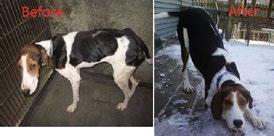
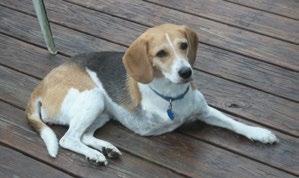
I am very involved in animal rescue, and have had dogs and cats my entire life. I adopted Kyoko from a rural kill shelter nearly three years ago. She was half the weight she should have been and full of buckshot. Despite her obvious neglect, she is the most loving and friendly girl. I am thankful for her, and my other furbabies, as they give back so much more than I could ever give to them. They love unconditionally, forgive readily, and give without expecting anything in return. Humans could learn a lesson from dogs and cats.
By: Marla Wilson
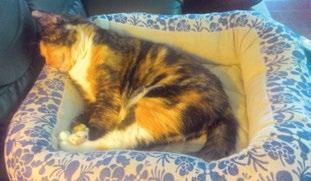
I am very grateful for my sixteen year old “fuzzy baby” because she has been there for me from the beginning. She helped me through a difficult marriage. When I was able to work she would say goodbye to me every morning, and she was at the door everyday to greet me when I got home from work. As of right now I have been through two back surgeries, and she was my caregiver through both of my long recovery times. She is my heart and soul. She will always be my “fuzzy baby”. I will always love her.patience, love, and resolve to earn her trust. She has been with us about 7 years now and is an inspiration to all that observe her loving & truly remarkable strong spirit.




By Todd M. Erfourth, DVM, DACVIM Veterinary Oncologist at PVSEC
Every dog lover knows that our furry kids often like to play rough. At one point or another, injury is bound to happen; but when should lameness raise concern for a serious underlying problem? As our pets become older, unfortunately, they are more likely to develop cancer just as we are. For patients with a bone tumor, the initial presentation is often a mild lameness that can easily be mistaken for a simple “sprain.” These animals are usually still completely normal otherwise. Early recognition can lead to a better outcome and avoid leaving your pet in uncontrolled pain.
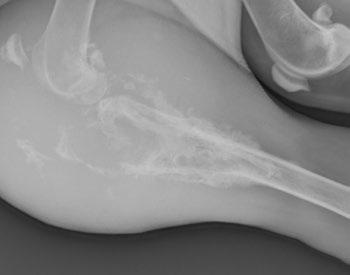
Bone cancer should be on the differential list for an older, large breed dog with a lameness or painful limb. Certain breeds such as Greyhounds are heavily predisposed. Osteosarcoma is the most common cancer type in dogs and usually affects the long bones in the region near the joint called the metaphysis. When the disease becomes advanced, a painful swelling is apparent; however, early on this can be subtle or absent. The critical step in evaluating for bone cancer is to perform radiographs (Xrays) of the affected limb. Osteosarcoma can cause both destructive and/or proliferative change to the bone that becomes more pronounced as the disease progresses. Based on the radiographic appearance alone, a strong presumptive diagnosis can be made, as the odds of other causes such as osteomyelitis (infection in the bone) is extremely rare (less than 5 %).
Ultimately a bone biopsy can be performed to confirm the diagnosis.
Once a diagnosis has been made, the next step is to consider consultation with a veterinary oncologist to discuss treatment options. Before making any major decisions, radiographs of the lungs should be performed to screen for early metastatic disease, as this is the most common site of spread. Although only about 10% of dogs will have visible lesions on radiographs, we know that more than 90% have microscopic disease present.
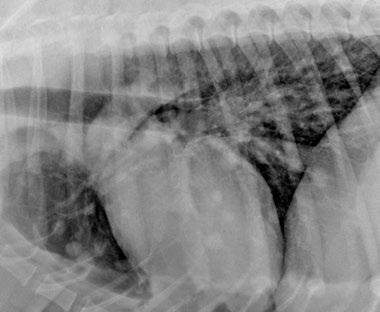
This is what makes Osteosarcoma such a devastating disease in dogs and limits our potential for curative treatment. The initial focus is to eliminate or control pain, a goal which can be accomplished through a number of methods including medications, surgery, and radiation therapy.
A secondary goal is to delay the spread of disease so that pets can enjoy a great quality of life with their families for as long as
possible. This objective is accomplished through treatment with chemotherapy.
For many years amputation has been considered the standard of care for relieving pain in pets with osteosarcoma. By removing the affected limb we also eliminate the very real risk of the patient’s fracturing the bone during the course of the disease. While the idea of losing a limb is a major mental obstacle for most families, in reality the majority of dogs can live a happy life after amputation with relatively minor changes to their normal routines. Because our pets distribute their weight over four limbs and do not have the mental distress that we would experience in having a limb amputated, they are much better able to thrive after such a procedure. Recovery from surgery is rapid over the course of a few weeks and most dogs are able to learn how to climb stairs and continue to be highly active. There are certain exceptions and pets that are extremely large, overweight, or have significant preexisting orthopedic problems should be evaluated carefully before you and your doctor decide upon surgery.
For certain dogs whose tumors are detected early enough and are in a favorable location, a limb-sparing surgery can be an alternative to amputation. This is a highly advanced procedure and several techniques that involve removal of the affected segment of bone followed by some type of grafting and stabilization have been explored. Consultation with a veterinary surgeon is important to determine whether your pet is a good candidate.
As an alternative to surgery, radiation therapy can be highly useful in alleviating bone pain. Radiation is most commonly used in a palliative setting in which the goal is to improve comfort with several treatments given on a weekly basis. Each treatment is performed under a short general anesthesia but has essentially no side effects other than temporary hair loss in the area. The main issue with this approach, however, is that the beneficial effects are only temporary and the pain typically returns. Recent technological advances have also allowed for the use of higher and more precisely delivered radiation doses (stereotactic radiotherapy) that may offer more long-term control of symptoms. Currently this type of treatment is in its infancy and availability is limited.
After making sure pain is controlled, the final step is to consider chemotherapy treatment to slow the spread of disease. In veterinary oncology the philosophy is
to fight the cancer as aggressively as we can without sacrificing the patient’s quality of life. This means that we want our patients to continue to feel well during and after chemotherapy treatment and keep any side effects to a minimum. Most commonly dogs receive an intravenous injection every several weeks over the course of several months. They do not have to stay overnight in the hospital, do not need to be anesthetized for treatment, and usually have only mild symptoms of stomach upset for a few days after treatment. By utilizing chemotherapy after surgery or radiation treatment, we can significantly extend the happy time these pets can enjoy with their families.
Osteosarcoma remains a devastating disease in our companion animals, but one for which we can offer comfort and time through treatment. Research into new ways of fighting the disease is an ongoing process to expand our options.
Todd M. Erfourth, DVM, DACVIM
Pittsburgh Veterinary Specialty and Emergency Center (PVSEC)
807 Camp Horne Rd Pittsburgh, PA 15237 (412) 366-3400

All Natural Hoof Care (see ad pg 26)
Animal Care & Welfare (see ad pg 26)
Creekside Distributing (see pg 18)
Coventry Equestrian Center (see pg 16)
Dog Stop (see pg 3)
Dog Watch (see ad pg 23)
Fifth Avenue Fido (see pg 12)
Gentle Journey (see ad pg 29)
Holistic Care for Animals (see ad pg 23)
Invisibile Fence (see pg 12)
Jenny Karlsson Photography (see ad pg 16)
Judith Levy (see ad pg 23)
J & D Home Improvements (see ad pg 1)
Larry’s Laundromutt (see pg 12)
Manning Chiropractic (see pg 10)
Mike T’s Auto (see pg 16)
Nicole Begley Photography (see ad pg 16)
Paws Here Awhile (see ad pg 3)
Petsburgh Dog & Cat Grooming (see ad pg 16)
Pittsburgh Career Institute (see ad pg 14)
The Rogan Rexford Blood Bank (see ad pg 22)
Sandy’s Cat Grooming (see ad pg 16)
Success just Clicks (see pg 16)
Washington Area Humane Society (see pg 1)

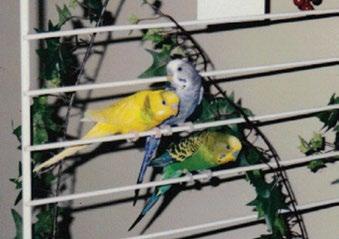
Itall began when I was visiting our neighbors’ house right across the street from us and met their threeyear-old parakeet, Indigo (named for its beautiful indigo colored feathers). I noticed that her cage did not have the right sized perch (it was way too big for Indigo’s tiny feet to perch on), there were no toys for her to play with, and her food and water dishes were on the floor of the cage (which was unsanitary since the bird would defecate on them). I found out that they had only played with the bird when it was a baby, so now it was starved for attention. I suggested they give the bird to my son and me since we had two birds that were the same age. They agreed.
cage for a couple of days and I realized she might like to meet them. Once inside their cage, I could not get her to come out again.
By: Ruth Maloy-Carter .
I believe she fell in love with Sweetie, who I thought was a female, but soon found out that Sweetie was [indeed] a male. Petey, curiously, did not seem to mind that the other two birds were so enamored of each other. Ultimately, after two years of togetherness, Wheaty became pregnant by Sweetie. Unfortunately, she was not able to pass her egg and died since she had not received the necessary calcium, vitamins, and other essentials a bird needs during the first years of its life. It was truly sad to lose her, but we believe that the two years she lived with us were much better than the sad, lonely life she was living before.
I recommend that anyone who acquires a pet, whether it be a turtle, bunny, etc., should get ahold of instructions on how to care for that particular pet. Our pets not only deserve our love and affection, but to live a happy, healthy, and well-cared-for life.
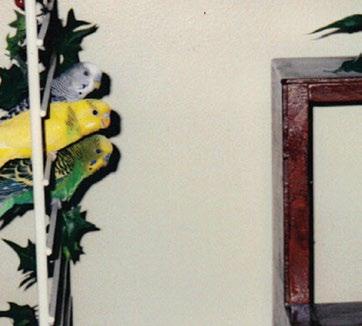
We changed Indigo’s name to Wheaty (my son’s idea) to rhyme with our birds’ names, Petey & Sweetie! At first when I tried to introduce the birds, Wheaty would not leave my shoulder, pecking merrily on my ear, hair, and earrings. I enjoyed the attention immensely, of course, but I knew this was not normal behavior for a parakeet. This activity went on for a few days until Wheaty hung out on the outside of our birds’
FYI: For those who might be curious as to the lives of Petey and Sweetie, I can tell you that Sweetie lived to be 11 and Petey (who died a few months ago) lived to be 12 years of age. He was the oldest bird out of the many parakeets I have raised for almost 30 years.

In 2007, Ann Cipriani opened Woody’s Self-Serve Dog Wash & Pet Boutique, (“Conveniently Located Near South Bark”), the first store of its kind in South Pittsburgh!
Named after her “gone but not forgotten” beagle, she created a stress free place to bathe your pet and purchase healthy specialty pet products. Now celebrating 7 years in business, Woody’s grew into South Pittsburgh’s first and finest dog wash,
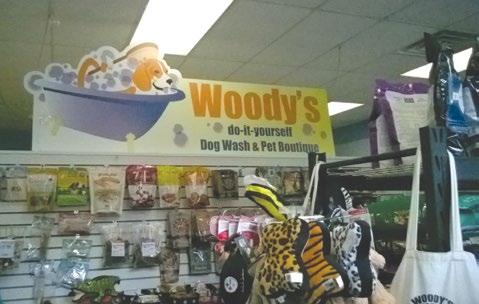
grooming and healthy pet specialty shop. Many fundraisers, adoptions and adventures later, she decided she was ready to retire. However, it was important to her to find someone with great doggy karma who would maintain the high standards and stress free environment that she valued. “This store has been my baby and I wouldn’t leave it with just anyone”. As of October Ann found those people and passed the paw to Chad & Nicole Sukel.
Nicole adds, “Convinced that we were good doggy karma people, committed to the health and welfare of the dogs, and happy and willing to keep her staff, she agreed to sell us the store. We have been blessed to take ownership of Woody’s Dog Wash & Boutique and we promise to keep the atmosphere creative and continue with all of the PAWSitive Doggy Karma! We were long time clients of Woody’s, bringing in our two dogs, Rocco & Fina on a regular
basis. Our two sons, Maddox and Trent share the bond and joy that is everything pets!”
Chad’s background includes dog training and operating a pet containment business for 5 years. Nicole is a hairstylist and also brings business management to the team. She adds, “We plan on continuing Ann’s good work with events and supporting the community.” Chad agrees, “We also plan on expanding services and products such as offering servicing for existing pet containment systems, pooper scooper services and adding an online retail store as well as expanding our raw diet selections. We also carry the Lupine collars and can replace old, worn-out pet containment collars.”
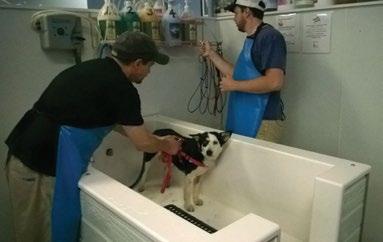
“Everyone’s favorite groomer, Chrissy, is still here and we are currently looking for additional groomers in order to accommodate those that Chrissy has not been able to squeeze into her full schedule!
In 2010, Chrissy & Woody’s won the Readers Choice Bronze Award for Best Groomer and Woody’s won the 2014 Reader’s Choice Award for Best Pet Shop in the Trib’s Daily News! Woody’s was also featured on KDKA’s Dave Crawley in March of this year!
Known as the #1 Self-Serve Dog Wash, Grooming & Specialty Boutique in South Pittsburgh, Woody’s offers the cleanest, waist high tubs, high end products and stress free services! All towels, brushes, hair dryers, products and spritzes are included and we clip nails ala carte for only $10 to $12. Bath prices are based on dog’s weight and range from $12 to $20. We have daily specials and a Canine Club Card (Buy 9 baths get one free). We have 5 Star Foods, Fromm, Nutrisource, Pure Vita, Orijen, Primal & More! Free harness fittings, food samples, treats and belly rubs!
Woody’s is still the only dog wash in the area with the Bathmaster therapeutic hose system, no timing or upgrade charges and best of all we clean and disinfect the tubs between each use! We have also continued the “Gentle Grooming Policy” which states that our groomer does not use cages, hand dries dogs and allows them to wait with her until the owner picks up. No long waits, grooming takes just as long the
appointment is and dogs are picked up right after their groom.
Stop by to welcome Chad & Nicole and say hello to familiar faces, Emily, Nikki, Kaitlin, Angela & Samantha! Check out our gifts for the holidays!
No appointment needed for self-serve baths or nail clips!
Appointments are required for our staff to bathe your dog or for grooming.
Conveniently located, Woody’s is the happening place for your pooch! Only 1/4 mile away from the South Park Dog Park, free parking, a doggy poop area and sidewalk for trying out leashes and harnesses.
5843 Brownsville Road South Park, PA 15236 Across from Nativity Church, Near Daniels Discount 412 714-4644 info@woodysdogbath.com www.woodysdogbath.com FACEBOOK/TWITTER
Dry cat food is the very worst thing anyone can feed a cat – no matter how natural it is said to be. Studies show that kitty kibble causes a mild dehydration of the pet which damages the kidneys and can predispose to urinary crystals. The starch required to make dry food is also unhealthy for cats since they are carnivores.
By: Dr. Doug Knueven, DVM, CVA, CVC, CVCH
everyone else.” Day and night I put a bowl of raw food in front of them, and each time they turned their noses up.
In my view, the best food for cats is a balanced raw diet. Unfortunately, cats tend to be very finicky about their foods. In fact, cats become imprinted on the food they are first fed. They can even become addicted to the shape of the kibble. That’s why each pet food company makes their kitty kibble in distinct shapes.
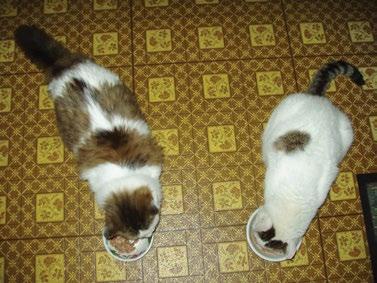
The companies also spray the surface of the kibble with “animal digest” which is similar to MSG and has a taste cats can’t resist. I liken this to Doritos. I personally do not care much for plain old corn chips. However, when those same chips are sprayed with that Doritos coating, I can’t resist. Similarly, the cat’s natural proclivity to eat a healthy diet is hijacked by the technology of flavor enhancers.
I have personal experience with switching finicky felines to raw. Several years ago I inherited my parents’ cats and these kitties were dry food junkies. When I put raw food in front of them they looked up at me and said, “We can’t eat this. Are you trying to kill us?” Well, my other cats were all eating raw food so I told the newcomers, “You’re going to have to eat this food like
By day three of their hunger strike I think I heard them say, “We’d rather die than eat that raw food.” By the way, although a healthy cat can miss a meal or two, a cat that does not eat for three days can go into liver failure and die, so I do not recommend the starvation method of food transition. Because of this learning experience, taught by a couple of pros, I have come up with the following finicky cat transition technique.
The first step is to get him on a twice-a-day feeding schedule. No matter what your cat may tell you, he does not need a bowl full of food sitting out all day. If he were in the wild, he would not have dead mice lying around to eat. In fact, he would have to get his butt off the couch and catch a mouse. And, if he missed that mouse, he would go without a meal.
So first thing in the morning, you put ½ of your cat’s daily ration in the bowl and put it down for him to eat. If your cat is like most, he is likely to eat a few pieces and walk away, confident it will be there later. But, it will not be there later. Let the bowl of food stay down for 15-20 minutes and then put it up and away.
Then, in the evening when you put a bowl with the other ½ of the daily ration down, your cat is very likely to finish it off. He will quickly (within a few days) get into the new rhythm of eating. (If you have more than
one cat, feed them separately and in different rooms if necessary).
It may be best to start the feeding schedule during the week when people are not in the house to hear the cat complain about the lack of readily available vittles. And, if you are home for the transition and your cat does complain, do not give in. Giving him food when he gets loud and obnoxious will only reinforce the unwanted behavior. You must resist the temptation to give in to your cat’s demands.
the food bowl and put the dry food of top. That way, your kitty won’t have to touch the raw food but he’ll smell it with every bite of dry food he takes. Considering the sensitivity of the feline nose, this is a big step.
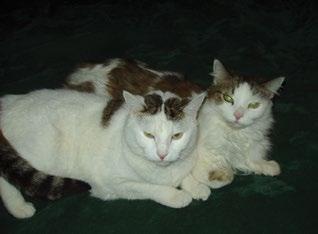
Once your cat adjusts to the new aroma, mix the raw food in with a small amount of the dry on the bottom of the bowl. That way, if he wants to get a whole belly full of food, he’ll have to eat some that is touching the raw food. Now, very gradually mix in more and more of the raw and less and less of the dry. After a month or so of this process, you should have a totally raw-fed cat. An additional step to this process that some cats benefit from is to first make the gradual switch from dry to canned cat food and then gradually switch from canned to raw.
Now that your cat is used to eating morning and night, it’s time to start adding the raw food. With each feeding, put a teaspoon of raw food on the bottom of
For many cats, the owner has to really want to see their companion eating a healthy, raw diet. It takes persistence and a slightly deaf ear, but it can be done. If I can make raw eaters out of my parents’ cats, I know you can do the same for your kitty.
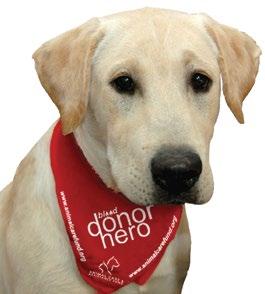
Please volunteer your dog to be a “Blood Donor Hero”
Dog Donor Eligibility
• Between 1 and 7 years of age
• Weight: 50 lbs. or more
• Healthy with a gentle temperament
• Current with vaccinations
• Never had a blood transfusion
• Tested negative for blood-borne diseases (free testing by blood bank)
• Must be on heartworm, flea and tick preventative
• Not pregnant or currently nursing

Schedule an underground dog fence installation with us before August 31, 2014 and we will give you $100 off!

“Your dog needs surgery”
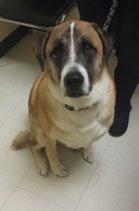
That was the strong recommendation for Sidney. He is only four and before he saw Dr. Savko he had a constant limp, he could not even put his leg down. He has a history of a broken pelvis, and a left knee replacement. Mom Debbie did not want to put this guy through more trauma. Luckily Debbie had a friend that grabbed one of Dr. Savko’s brochures from his office at Meadowlands Veterinary Hospital in Washington, Pa and SHARED it with her.
We did three visits folks. Three visits. Before visit 4, mom Debbie said “he is not limping at all now, he is really good!”
So no, Sidney did not need surgery, he is doing just fine. What did we do to help little Sidney? We worked on his muscles to balance them and reduce spasm. We worked on his joints to loosen them. Most importantly we worked on his nerves to reduce and remove static so that he could function better and heal, not only more quickly, but more efficiently.
There are other options out there besides pills, and knives, and death. Its a real shame these non invasive options are not recommended more often, don’t ya think?
Thank God that Debbie’s friend SHARED this information with her.
Dr. Savko works with the following veterinary clinics: Meadowlands Veterinary Hospital, Washington, PA Suburban Animal Clinic, Butler, PA, Delmont Veterinary Hospital, Delmont, PA, Fox Run Equine Center, Apollo, PA DC, CCSP, CVCP
This is an ever-changing list of resources for cat owners in Pittsburgh and beyond though many of the listings, like the shelters, apply to dogs and other pets as well. It includes low-cost spay and neuter programs as well as TNR for community cats, pet-friendly rentals in Pittsburgh and across the US and links to shelters for adoption and other services. In the future we will also list clinic dates with the organizations below when they are available.
TNR And Low-Cost Spay/Neuter For The Pittsburgh Area
Homeless Cat Management Team: www.homelesscat.org
City of Pittsburgh Free Spay and Neuter for City Residents
City of Pittsburgh free spay/neuter: www.pittsburghpa.gov/animalcontrol/spay_neuter.htm
City of Pittsburgh residents can apply for free spay or neuter vouchers for up to five pets, including stray/feral cats.
Low-cost Spay/Neuter and TNR Programs at Allegheny and Surrounding County Shelters
Animal Friends: www.thingkingoutsidethecage.org
Animal Rescue League: www.animalrescue.org
Beaver County Humane Society: www.beavercountyhumanesociety.org
Washington Area Humane Society: www.washingtonpashelter.org - Colony Cat Project: faith.b2@verizon.net
Western Pennsylvania Humane Society: www.wpahumane.org
Low-cost Spay/Neuter Organizations in Allegheny and surrounding counties
Frankie’s Friends Cat Rescue, Allegheny & Westmoreland Counties: www.sites.google.com/site/frankiesfriendsnatronaheights Fluffyjean Fund for Felines, Allegheny and Washington Counties: www.fluffyjeanfund.weebly.com
Fix Ur Cat, Washington County: www.fixurcat.org
Catnip Acres, Greene County: www.catnip-acres.org
Snip-it.org, Westmoreland/Indiana Counties, Alle-Kiski Valley (Leechburg): www.snip-it.org
Low-cost Spay/Neuter and Veterinary Clinic
Spay Neuter Clinic, Penn Hills, 412-244-1202: www.spayaz.com/pittsburgh-pa
Find Local Low-cost Spay, Neuter and Veterinary Care on the Internet
Low-cost Neuter and Spay (search by zip): http://neuterspay.org
Love That Cat (online search): http://neuterspay.org
Spay USA: http://neuterspay.org
Pet-friendly Rentals
In the Pittsburgh area, visit this list on the FosterCat website: www.fostercat.org/friendly.html Nationwide (United States only): www.rent.com/pet-friendly-apartments
Shelters and Shelter Services
ALLEGHENY COUNTY
Animal Friends (AFI): www.thinkingoutsidethecage.org
Animal Rescue League (ARL): www.animalrescue.org
Western Pennsylvania Humane Society (WPHS): www.wpahumane.org
SURROUNDING COUNTIES
Beaver County Humane Society: www.beavercountyhumanesociety.org
Butler County Humane Society: www.butlercountyhs.org
Humane Society of Westmoreland County: http://members.petfinder.com/~PA83/about.html
Washington Area Humane Society: www.washingtonpashelter.org
Non-shelter Feline Adoption
FosterCat: www.fostercat.org
Kopy Kat Sanctuary, Westmoreland County (Delmont): www.kopykatsanctuary.org
By: Kristin Hermann
is a verb; it is an action word and I tell my students that all the time. Unfortunately, many trainers just get their students in a basic riding position yet forget the part about how to use the aids. Yes, having a basic riding position is the most important part of riding because if your aids ---the legs, seat and hands-- are not in the correct position, they will not communicate to the horse in harmony. A rider needs to be silently proactive and not passively sitting on the horse.
Basic riding position is the same whether one rides English or Western. The rider’s body is in alignment with the ankle, hip, shoulder, and ear in vertical alignment. The rider’s legs ask the horse to move, the seat can regulate the movement of the gaits, and the hands direct the forward movement and also can regulate the speed. All three of the rider’s aids need to not only listen to what the horse’s body is saying, but they also need to talk to the horse or tell the horse what to do. Riding, “Academic Riding” in particular, is not a sprint but a marathon!
Many want-to-be riders just desire to get on and go with the horse. Yeah, that could be fun but very scary! Horses have a mind of their own, and some have more spunk than others. Having a knowledgeable trainer or equestrian is recommended before even attempting to ride a horse!
At Coventry, I say what we do is academic. We do not just teach riding; we teach riders how to train horses as well as how to know the horse’s body and physical needs. We do not just get on and go. We get on and start thinking!
A few questions we may ask once mounted are as follows:
Is my horse a bent right or bent left, does my horse have rhythm, is my horse soft in the jaw and poll and on the bit, and is my horse happy?
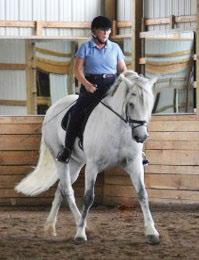
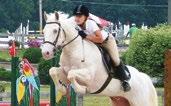
Here is the author of “Academic Riding.” This photo shows soft harmony between horse and rider, there is no tension anywhere. You can also see the focused look on the rider’s face as she thinks and feels about what she is doing to achieve such harmony with the horse! The horse also has a focused expression as well.
When we mount, we start interacting with our horse using our aids to make the horse more supple. We bend left and right, create rhythm by applying half halts, and stretch the top line so that the horse’s back stays up and supported when we sit on it. And, yes, we do all of these things all of the time and hopefully in unison with the horse’s rhythm. We are not just sitting on our horses but proactively interacting with them to enhance the horse’s way of going without interrupting its natural flow. Our two bodies, human and animal, have to mesh in such a way that we practically become one. At least that is the ultimate goal of Academic Riding and the reason it is a process that focuses on the journey and not the end result. Thus, Academic Riding is a marathon!
Kristin her horse Bracchus won the 2014 USDF All Breed Award for the Spanish Norman Horse Registry. Bracchus and Kristin also won this national award in 2012.
Academic Riding is not for everyone. It requires a certain personality type, maybe one with obsessive compulsive ‘disorder.’ However, it is certainly not a disorder, but a passion. We strive for a perfection that I doubt exists! Marathon, yes indeed. I love the saying, “Life, riding, anything .... is about the journey, not the destination!”
One of my students is getting ready for a horse show during which she has to perform compulsory movements on the horse in both directions at all three gaits. Her circles are to be round, her horse’s spine following the arc of the circle, her straight lines straight and her transitions from one gait
either upward or downward smooth and not abrupt. When we Academic Riders ride, it is supposed to look harmonious! She said to me, after practicing consistently, “I can see why you call this Academic Riding. I have been thinking the whole time of ways to make my horse go better with me on her back.”
Certainly there is something to be said for the rider who just gets on and goes or the one that enjoys trail riding. Having the best of both styles is ideal, but for those of us with a passion for training horses to be the best they can be with a person sitting in the middle of their back and having a judge comment on how well we do, just leave us to our functional disorder! See you in the show ring as we perfect our circles, make sure our horses are straight and rhythmic, and bend equally in both directions, but most important, knowing our horses enjoy their physical workout as we Academic Riders think (a whole lot) about how to harmoniously communicate with our equine friends.


The first part of the article discussed colic as a variety of symptoms coming from abdominal pain. Not all of the symptoms may be presented by an individual, but even mild symptoms should not be ignored.
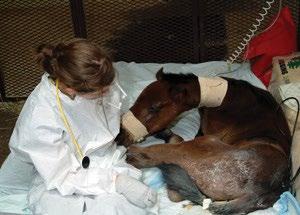
Many horses with signs of colic improve to normal on their own; however, abdominal pain can lead to a sequence of events worsening the problem. Mechanical obstruction from a twisted, displaced, or badly impacted colon can quickly result in shock and death. It is critical to understand that more severe types of colic require immediate veterinary attention in the form of intensive care or surgery. Call your veterinarian at the first sign of abdominal pain.
By Brian S. Burks, D.V.M., Dipl. ABVP, Board-Certified Equine Expert
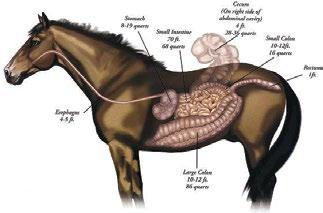
fluid or gas. Abdominocentesis (belly tap) is used to collect and evaluate fluid from around the intestinal tract and other abdominal organs. This provides information regarding the health of the intestinal tract. Blood work, ultrasound, and other diagnostics are often used to garner additional information.
Abdominal pain may be classified into the following groups:
Intestinal Dysfunction: Approximately 60% with colic signs have a ‘simple’ colic resulting from intestinal spasm, accumulation of gas, or a mild impaction. There are some cases that will need more intensive treatment.
Inflammation or Ulceration: Inflammation of the intestinal tract can cause abdominal pain. Intestinal inflammation may result from infection or parasitism. Gastric or colonic ulcers may also cause colic signs.
Intestinal accidents: This group often requires abdominal surgery or intensive care or both. Included in this group are intestinal displacements or twists, or entrapment of bowel in a tight space. This includes lipoma and epiploic foramen entrapment.
Any examination begins with signalment (age, breed, sex) and history. This is because certain disorders are more common in certain breeds or ages. The responsiveness to pain-relieving medication is assessed. Vital signs are taken, and intestinal sounds are found to be present or absent.
Nasogastric intubation can provide information regarding the stomach and small intestine and can be used to provide enteral fluids and medications. Rectal palpation will determine if the abdomen is normal or abnormal. If abnormal, is it medical or surgical? The position of the intestine is determined, along with any
Experienced veterinarians gather and assimilate this information to come up with a likely diagnosis and treatment plan. Treatment is specific to the diagnosed problem with the GIT. This may include fluids, pain medications, antibiotics, ulcer medication, and laxatives. Enemas are generally effective only in foals. Sometimes intensive care and/or emergency abdominal exploration may be necessary.
The best thing to do with a horse experiencing colic is to call the veterinarian immediately to discuss the situation, assess the patient, and make decisions early in the course of the disease. DO NOT administer any medications on your own. This may mask symptoms that need immediate treatment or the wrong
medication may be given, making the situation worse. For instance, Acepromazine is a peripheral vasodilator that will alter the blood supply to the intestinal tract, compromising it further.
Generally, all grain and hay should be removed until the situation is resolved, but water should be provided in most cases. Horses that lie quietly should be left alone. Some hand-walking will help to restore normal intestinal motility and distract the horse from the pain. It may distract you, too. Too much walking will tire the horse unnecessarily and impede healing. Close observation is paramount, even after the Veterinarian leaves.
Colic is still the number one cause of death in horses. Domestic horses evolved from wild horses. Wild horses were constantly active over 100s of acres, moving, grazing, and eating small and frequent meals of coarse grass. The intestinal tract was designed for this lifestyle. Then humans came along. Horses may be confined to a stall and fed a couple of meals per day. This works against normal intestinal function.
Management practices should attempt to imitate the wild horse state as much as is practical. Colic can occur in even the most well managed horses, but good care will help to minimize the occurrence of abdominal pain.
All horse owners should provide the following:
• Slowly change management and feeding regimens.
• Utilize a consistent feeding and management routine.
• Provide turn out or frequent exercise.
• Split meals into smaller amounts, i.e. feed 4-6 small meals per day, rather than two big meals.
• Feed high quality hay.
• Minimize the amount of grain fed, only using it for horses in active work. Pasture pets do NOT need grain.
• Implement a veterinarian-established parasite control program.
• Provide constant access to clean, fresh water.
• Monitor late gestation mares and those that have had previous episodes of colic.
By understanding the horse, and with proper management, colic may be prevented or minimized. Horses affected by abdominal pain should be treated early in the course of the disease to maximize the chances of saving your horse. Call your veterinarian.
Dr. Brian Burks, Dipl. ABVP is the owner/veterinarian at Fox Run Equine Center, a 24-hour medical-surgical center near Pittsburgh, Pennsylvania. He is board certified by the American Board of Veterinary Practitioners (Equine Practice). This certifies him as an expert in all categories of equine practice. He enjoys the diagnostic and treatment challenges of internal medicine and intestinal disorders. Find out more and contact us at: www.foxrunrequine.com

Your pet can be received from your home or veterinarian or your family may choose to bring your pet directly to my Bridgeville location.











Pittsburgh Veterinary
Specialty & Emergency Center
ANESTHESIOLOGY
Dianna Ovbey, DVM, MS, Practice Ltd. to Anesthesiology CARDIOLOGY
Eva Sikorska, DVM, DACVIM
Erin Anderson, VMD, MSc, DACVIM DENTISTRY
Krista Mendoza, DVM, DAVDC DERMATOLOGY
Sandra Sargent, DVM, DACVD
Bill Oldenhoff, DVM, Practice Limited to Dermatology EMERGENCY & CRITICAL CARE
Kenton D, Rexford, VMD
Christine Guenther, DVM, DACVECC
Christine Rutter, DVM, DACVECC
Sarah J. Deitschel, DVM, DACVECC
Amy Dickinson, DVM, DACVECC
Kara Osterbur, DVM, DACVECC
Rebecca A Miller, DVM
Joey Kallem, DVM
Elissa Allen, VMD
Robin M. Dutra, DVM
Lindsey Rademacher, DVM
Kristen Krisulevicz, DVM
Richard Skalos, DVM
Carol Park, BVSc
Tricia Tovar, DVM, Resident in EM & Critical Care
Jennifer Daly, DVM, Resident in EM & Critical Care
MRI & CT IMAGING
PetsDx Veterinary Imaging - www.petsdx.com
Gerald Frye, VMD
Sherwood Johnson, DVM, DACVIM
Tracey Peterson, DVM, DACVIM
Emily Klosterman, DVM, MS, DACVIM NEUROLOGY
Edward MacKillop, DVM, DACVIM
Kendra Mikoloski, DVM, DACVIM ONCOLOGY
Rebecca Newman, DVM, MS, DACVIM
Todd M. Erfourth, DVM, DACVIM
Bridget Urie, DVM, MS, DACVIM OPHTHALMOLOGY
Lawrence Bagley, DVM, DACVO
Rachel Keller, DVM, DACVO
Michael Finn, DVM, MS, DACVO RADIATION ONCOLOGY
Christine Anderson, DVM, MS, DACVIM, DACVR RADIOLOGY
Christopher Warrington, DVM, DACVR SURGERY
Anthony D. Pardo, MS, DVM, DACVS
John T. Payne, DVM, MS, DACVS
Julie L. Compton, DVM, MS, DACVS
Jonathon Anderson, DVM, DACVS
Michael Doornink, DVM, DACVS
Hope Chisnell, DVM, Practice Limited to Surgery
Kathryn Campbell, DVM, Resident in Surgery
Jeffrey Christ, DVM, Resident in Surgery