

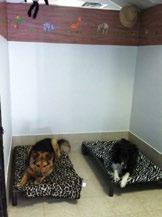
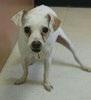
Say hi to Kira. She was surrendered because her owners felt she was too old. Kira is a 10 year old lab mix who loves people and seems to get along well with the other dogs here at the shelter. We are not sure how she feels about cats however.
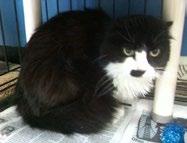
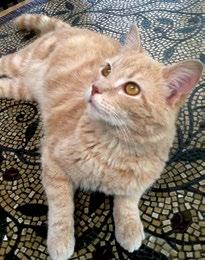
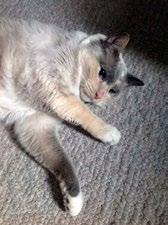
Hi, my name is Smudge. I can be a little shy at first, but I love to be petted and spending quiet time with you. I get along with other quiet kitties. Please come and get to know me!
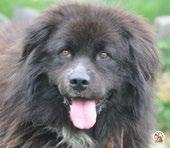
Say hi to Macy. She is a very sweet and lovable chow mix looking for a forever home. Macy is around 6 years old and loves people. She gets along well with other dogs, kids, and cats. Stop out today and take her for a walk.
All animals have been spayed or neutered, microchipped and vaccinated. The Washington Area Humane Society (WAHS) is a 501(c) (3) no-kill shelter funded solely by private contributions. Our shelter takes in thousands of animals & investigates an average of 1000 abuse complaints each year. 1527 Rte 136, Eighty Four, PA 15330 (724) 222- 7387, WashingtonPAShelter.org




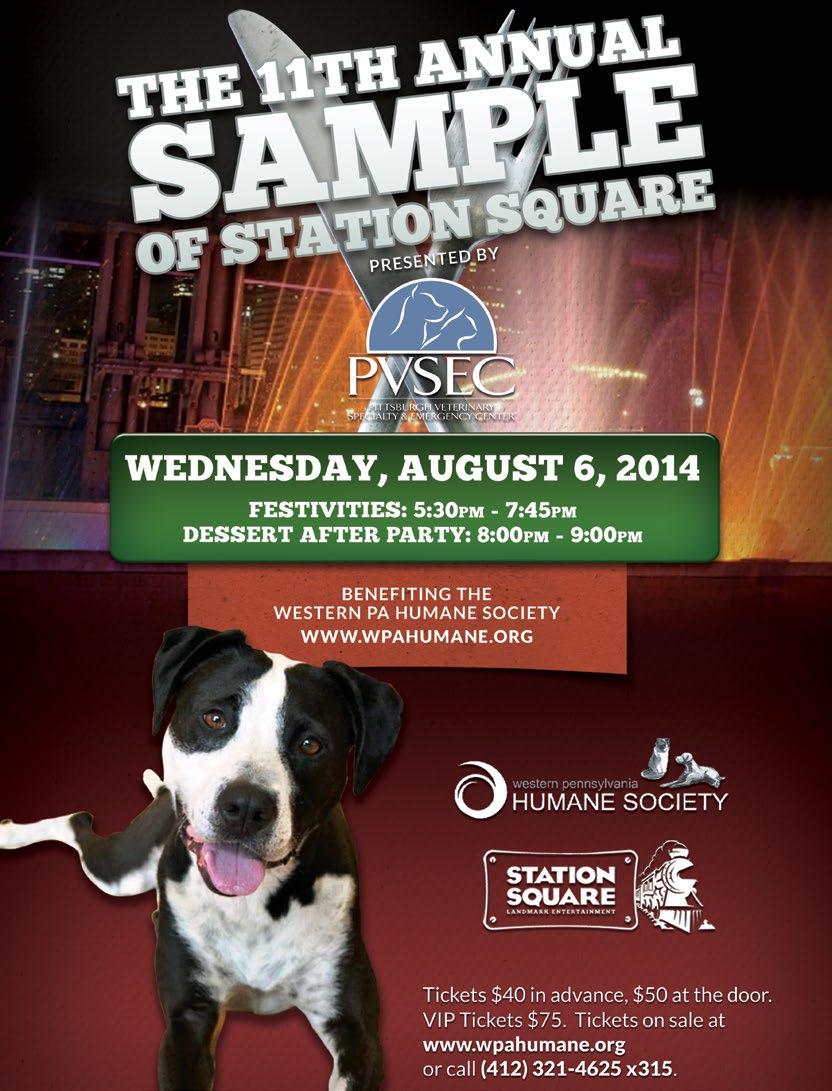
It is a month of festivities with the 4th of July holiday and vacation season in full swing! We had another great month of fabulous pet events! Some of the events included the 11th Annual Pet Adoption & Care Fair, Panera Pup Walk, Steel City Pet Expo and the Lucky’s Southside Dog Festival.
This Issue:
We welcome new advertisers this issue:
Burton’s Total Pet Stores, Manning Chiropractic and Wellness Center in Mt. Lebanon!
Please support all our advertisers who help make PetConnections the community magazine it is and let them know you saw them in!
Visit the Map Spread and Advertiser Locator map on pages 18-19 to see all.
Published By: Pittsburgh PetConnections, LLC.
Pittsburgh PetConnections, LLC. was formed in 2012. Our mission is to publish a high quality, informative and Human-Animal Bond focused publication.
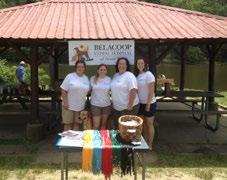
July’s PetConnections featured business is BelaCoop Animal Hospital of North Park. Dr. Katti Stoller and her exceptional staff provide a very high level of care and service to their patients and clients.
Our featured rescue is FosterCat, Inc. and our community feature is the Washington Area Humane Society’s new Colony Cat Project.
Also, additional great articles such as “Pet Food Myths” by Dr. Doug, “Mending Broken Hearts” by Dr. Erin Anderson, VMD, MSc, DACVIM (cardiology) of Pittsburgh Veterinary Specialty and Emergency Center, “Our First Aquarium” by Burton Patrick, “Chewing the Reins” by Kristin Hermann, “Heart to Heart Communication with Pets” by Susan Wagner, and more!
Our print directories continue to be a big hit! We are expanding the PetConnections Directory every month!
Please also see our more extensive online directories on the home page of www.pghpetconnections.com.
Thank you for picking up PPC Magazine. Take care of yourself, as well as your animals, and be well!
Warmly,
Carla Mader CEO & Publisher Pittsburgh PetConnections,
LLC.
(Photo courtesy of Burton Patrick)
We support local businesses and also assist local non-profit businesses for pets and people, to give back to our great Pittsburgh communities.
Managing Editor.........................................................Carla Mader
Chief Editor...........................................Bernadette E. Kazmarski
Sales....................................................................................Joe Hirsch
Distribution...............................................................Martin Mader
Graphic Designer.......................................Flatboy Productions
Photographer......................................Kara Jones Photography

Contributing Writers: Our contributing writers have many years of combined experience and expertise in the fields of veterinary medicine and the Human-Animal Bond. ADVERTISING: joe@pghpetconnections.com 412-583-1295
Contact: info@pghpetconnections.com
Submit, Upload! Submit your business or rescue organization’s info for a FREE listing on our directory.
website for your small home-based pet or wellness business? Add a Featured Listing on the PPC online Directory for a small yearly fee and upload photos and detailed info about your business!
A Media Partnership with PPC includes: • Ad in print or online (free design) • A Free Featured directory page on our website with your business info, photos and link to your website • Your logo in our monthly newsletter • PPC promotes your business at our events

Animal Educational Exhibits
North:
The Pittsburgh Zoo & PPG Aquarium pittsburghzoo.org
The National Aviary nationalaviary.org
Animal Behavior
Greater Pittsburgh Area:
Judith Levy, M,Ed., CEHP, RMT 412-521-5133 | judithlevywellness.com
Animal Communication
Greater Pittsburgh Area: Renee Takacs, M.A. intuitguide.com
Animal Reiki
East:
Janet Jackson animalangellady.com
East End:
Judith Levy, M,Ed., CEHP, RMT 412-521-5133 | judithlevywellness.com
Animal-Related Art, Photography & Retail
North:
Nicole Begley Photography nicolebegleyphotography.com
Vibrant Images vibrant-images.com
WearWoof Shop
412-956-1788 | wearwoof.org
South: Kara Jones Photography kjones.smugmug.com
Paws ‘n Claws Eyewear PawsnClawsEyewear.com
Greater Pittsburgh Area: Portraits of Animals portraitsofanimals.net
Pet and Home Portraits petandhomeportraits.blogspot.com
Jenny Karlsson Photography jennykarlssonphotography.com
Animal Rescue Organizations
North:
Animal Friends
412-847-7000 | thinkingoutsidethecage.org
Beaver County Humane Society
724-775-5801
Pennsylvania Great Dane Rescue 724-869-9185
Hope Haven Farm Sanctuary 412-366-1187 | hopehavenfarm.org
Western Pa Humane Society
412-321-4625 | wpahumane.org
South:
Animal Care & Welfare
412-244-1372 | animalcareandwelfare.org
Washington Area Humane Society 724-222-7387 | washingtonpashelter.org
East:
Animal Rescue League
412-345-7300 | animalrescue.org
ARL Wildlife Center
412-345-7300 | animalrescue.org
SW PA Pugs with Special Needs 724-763-2790 | swpapug.org
West: CARMAA 412-780-4983 | carmaa-petadoption.com
Greater Pittsburgh Area: Molly’s Canine Academy 724-914-3214 | mollyscanineacademy.com
Success Just Clicks successjustclicks.com
North Shore: Western PA Humane Society 412-321-4265 | wpahumane.org
Dog Training Clubs
South:
Golden Triangle Obedience Training Club 412-653-6880 | gtotc.com
Keystone Canine Training 412-833-2211 | keystonecanine.com Xcel Canine Training Center 412-833-2504 | xcelcaninetraining.com
Equine Boarding, Lessons & Training Facilities
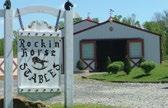
North: Rockin’ Horse Stables 724-601-4706 | rockinhorsestables.com
South: Coventry Equestrian Center 724-206-9902
Equine Holistic Care
Greater Pittsburgh Area: Dr. Michael Savko, DC, CCSP, CVCP 724-261-7915 | drchirovet.com
Equine Hoof Care
Greater Pittsburgh Area: All Natural Hoof Care Nancy Frishkorn 724-255-6465 | hooflady.org
Equine Tack Stores
South:
The English Horn
724-941-8088 | theenglishhorn.com
Lowry’s Western Store 724-228-1225 | lowryswesternshop.com
Equine Veterinarians
East:
Dr. Brian Burks, DVM Fox Run Equine Center 724-727-3481 | foxrunequine.com
Holistic Practitioners
Pet Chiropractor
North:
Dr. Doug Knueven, DVM Beaver Animal Clinic
724-774-8047 | beaveranimalclinic.com
South:
Dr. Astrid Manning, DC, CVCP 412-341-2505 | drastridmanning.com
East:
Dr. Dina Livolsi, Doctor of Chiropractic 412-824-6276 | drdinalivolsi.com
Greater Pittsburgh:
Dr. Michael Savko, DC, CCSP, CVCP 724-261-7915 | drchirovet.com
Holistic Veterinarians
Dr. Doug Knueven, DVM Beaver Animal Clinic
724-774-8047 | beaveranimalclinic.com
Pet Burial, Memorial & Cremation Services
South:
Chartiers Custom Pet Cremation 412-220-7800 | ccpc.ws
Jefferson Memorial Funeral Home 412-655-4500 | jeffersonmemorial.biz
Pet Fencing
Greater Pittsburgh Area: Contain-A-Pet of Pittsburgh 724-914-3214
DogWatch 724-586-6555 | DogWatchPGH.com
J & D Home Improvements, Inc. 800-837-9379 | jdwaterproofing.com
Pet Stop Pet Fencing System of Western PA petstop.com
Pet Friendly Restaurants
North:
Double Wide Grille - Mars 724-553-5212

South:
Double Wide Grille - Southside 412-390-1111
Pet Grooming
North:
5th Avenue Fido
724-772-5511 | 5thavenuefido.com
All About Dogs
724-925-1577 | allaboutdogsgrooming.info
K-9 Kingdom
724-935-3647 | k9kingdom.com
Larry’s Laundromutt
412-534-4052 | larryslaundromutt.com
Paw Prints Pet Retreat
724-903-0063 | pawprintspetretreat.com
South:
Brush Run Styling
724-942-6352 | brushrunpetstyling.com
Canine Club
412-220-8100 | thecanineclub.com
Grand Slam Grooming
412-221-5081 | grandslamgrooming.com
Grooming With Care
412-977-5961
Petsburgh Dog & Cat Grooming
412-885-4027
Pets At Home
412-655-7297
The Pet Salon
412-279-5331 | petsalonusa.com
Woody’s Dog Wash & Pet Boutique 412-714-4644 | woodysdogbath.com
Creative Canine Cuts
724-223-9020
West:
Paws Here Awhile Pet Resort 724-573-4665 | pawshereawhile.com
Pet Grooming Schools
Golden Paws Pet Styling Academy 412-297-9383 | goldenpawspittsburghpa.com
Pet Massage
Greater Pittsburgh Area:
Your Critter Sitters – Raylene Hoover 724-448-7330 | yourcrittersitters.com
Pet Ministries
South:
Christ United Methodist Church 412-277-1096 | christumc.net
Westminster Presbyterian Church 412-835-6630 | westminster-church.org
Pet Resorts - Boarding, Daycare, Grooming & Training
North:
5th Avenue Fido
724-772-5511 | 5thavenuefido.com
Camp Bow Wow - Ross Township campbowwowpgh.com
K-9 Kingdom
724-935-3647 | k9kingdom.com
Paw Prints Pet Retreat
724-903-0063 | pawprintspetretreat.com
South:
Camp Bow Wow - Castle Shannon campbowwowpgh.com
Grandma’s Dog Daycare
412-586-7094 | grandmasdogdaycare.com
Canine Club
412-220-8100 | thecanineclub.com
East:
Camp Bow Wow - Highland Park campbowwowpgh.com
Pittsburgh Pet Concierge
412-856-8505 | petconcierge.org
West:
Camp Bow Wow - Greentree campbowwowpgh.com
Paws Here Awhile Pet Resort
724-573-4665 | pawshereawhile.com
Pet Retail/Supply
North:
Burton’s Total Pet - Allison Park 724-444-8103 | totalpetstores.com
Burton’s Total Pet - Cranberry 724-776-4822 | totalpetstores.com
Burton’s Total Pet - North Hills 412-367-0962 | totalpetstores.com
Healthy Pet Products 412-366-0700 | healthypetproducts.net
South:
Burton’s Total Pet - Bridgeville 412-257-0756 | totalpetstores.com
Healthy Pet Products 412-831-3700 | healthypetproducts.net
Oddball Pets & Aquariums 412-884-2333 | oddballpets.com
Woody’s Dog Wash & Pet Boutique 412-714-4644 | woodysdogbath.com
East:
Burton’s Total Pet - Edgewood 412-342-0110 | totalpetstores.com
Burton’s Total Pet - Greensburg 724-838-8198 | totalpetstores.com
Burton’s Total Pet - Irwin
724-863-7800 | totalpetstores.com
Burton’s Total Pet - Monroeville 412-374-1455 | totalpetstores.com
Pet Sitters
North: Little Piggies Pet Sitting littlepiggiespetsitting.com
South:
Chris’s Canine Club
724-746-3864 | chrisscanineclub.com
Your Critter Sitters– Raylene Hoover
724-448-7330 | yourcrittersitters.com
West:
Seraphina Pet Sitters
412-389-9735 | seraphinasitters.vpweb.com
Veterinary Hospice
Greater Pittsburgh Area: Nancy A. Ruffing, DVM 412-801-1071 | gentlejourneyvet.com
Veterinary Hospitals
North:
Beaver Animal Clinic
724-774-8047 | beaveranimalclinic.com
BelaCoop Animal Hospital 724-939-7062 | belacoopanimalhospital.com
Seven Fields Veterinary Clinic
724-742-4433 | sevenfieldsvet.com
VCA Northview Animal Hospital 412-364-5353 | vcanorthview.com
South:
All About Pets Veterinary Hospital 724-745-5503 | aapvet.com
Allegheny South Veterinary Services 412-257-0909 | alleghenysouthvetsvcs.com
Hickory Veterinary Service 724-356-1000 | hickoryvetsvcs.com
VCA Castle Shannon 412-885-2500
East: Pittsburgh East Animal Hospital Monroeville - 724-325-2500
Greensburg - 724-205-6960 peah.vetsuite.com
The Big Easy 412-908-9301 | tbeah.com
West:
Avalon Veterinary Hospital 412-761-9149 | avalonvh.com
VCA MetVet West Animal Hospital 412-788-6400 | vcahospitals.com/met-vet-west
Veterinary Specialty & Emergency Services
Greater Pittsburgh Area: Pittsburgh Veterinary Specialty and Emergency Center, Inc. 412-366-3400 | pvs-ec.com
VCA Northview Animal Hospital Specialty Referral Center 412-364-5353 | vcanorthview.com
East
Allegheny Veterinary Emergency Trauma & Specialty 412-373-4200 | avets.us
by Susan Wagner
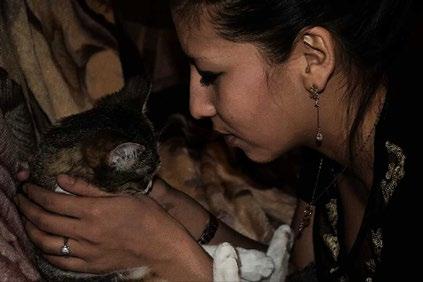
One of the most controversial topics surrounding our pets is animal communication. I remember when I first heard about the concept of talking to animals. I was a practicing neurologist, and an internist friend told me about a client whose animal communicator told her that her cat had pancreatitis. Boy, did my righteous indignation have a field day with that one! What nonsense, I thought.
Now that I comprehend the human-animal bond as an energetic force, and that we can translate that energy into a state of knowing, or even words, I understand it. Have I seen my share of communicators who are way off base? Sure. Have I witnessed what I believe is true communication? You bet.
During the entire concert, I kept worrying about Bruce, but knew that I would be checking on him after the show. After all, he was in great hands. All of a sudden, however, this intense, incredible feeling of peace came over me – a feeling that Bruce was fine and happy. At first I thought my intuition was telling me he had turned the corner for the better. Then I realized it might be something else. I looked at my watch – it was 10:15.
My first experience with animal communication came years before I even understood what was happening. I had a patient named Bruce, who was a fabulous cat. Bruce had undergone surgery to remove a benign tumor from his brain. As do most cats with this procedure, he did very well. Unfortunately, complications occurred a few days later, and Bruce found himself fighting for his life.
Bruce’s entire medical team was giving it their best. I stayed with him most of the night and the following day, but I had tickets to a Santana concert that night. In my house, there are three spiritual holidays: Christmas, Easter and Santana. I knew Bruce was in the best hands in ICU, and a dear internist friend of mine was working ER that night and would look after him as well. I knew Bruce would be fine while I got some needed R&R, so I went to the concert.
Later that night, when I walked into the hospital and saw the look on my vet friend’s face, I knew I was right. She opened her mouth to speak, and I filled in the words – Bruce had passed, right? What time, I asked? She said she wasn’t sure exactly – sometime after 10.
Now that I am an energy practitioner, and know that science has shown the energetic basis for all life, Bruce’s story doesn’t surprise me a bit. And we also know from science that matter and energy are neither created nor destroyed, they merely change forms. That means that life of all kinds is neither created nor destroyed, it always is. We and our beloved animals always are.
A dear intuitive friend of mine says that when animals pass, they go home, change clothes, and come right back. I wonder what Bruce is wearing now.
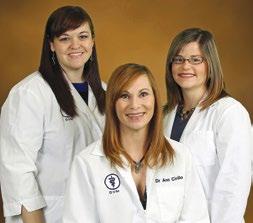

By: Faith Bjalobok Ph.D. Fellow Oxford Centre for Animal Ethics Founder Fluffyjean Fund for Felines
The project is a collaborative effort between the Fluffyjean Fund which is administering the project and the Washington Area Humane Society. It reflects the WAHS board of directors’ desire to pursue humane and just solutions to animal issues and their passionate commitment to create a better life, not only for the animals of Washington County but for those who share their lives with them.
In
order to address the issue of homeless cats in Washington County, the Washington Area Humane Society launched its Colony Cat Project on May 28, 2014. The first targeted trapping occurred in Canonsburg.
The goal of the WAHS Colony Cat Project is to provide free spay/neuter, flea treatment and vaccinations to qualified caregivers. This project is being undertaken in order to control the feline population through large scale targeted trapping and the creation of managed colonies.
WAHS, in keeping with its commitment to address animal issues in the various communities comprising the Washington County area, feels that the creation of managed feline colonies is the most humane way to address the issue of feline overpopulation.
A secondary goal of the project is to test the hypotheses that TNR works as a humane way of controlling colony cat population through controlling the birth of new kittens and that the lives of cats living in managed colonies have quality and are of value to the cats. Lastly, in the collection of demographic data concerning the colony caretakers, it is hoped that the stereotypical concept of the crazy cat lady can be dispelled with the completion and publication of the study.
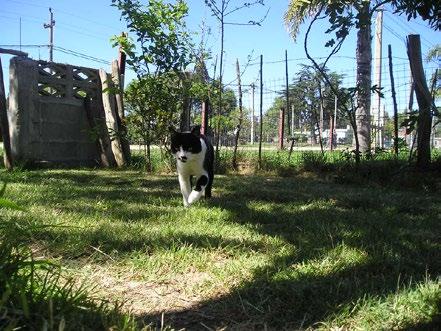
In order to achieve that goal WAHS will identify eligible colonies, provide free trapping, and will spay/neuter, vaccinate, ear tip and return the cats to their colony caregivers.
WAHS believes this project not only attests to their strong commitment to the animals of Washington County but also to those individuals who tirelessly care for the homeless feline population of the county.
To learn more about the WAHS Colony Cat Project contact Faith at faith.b2@verizon.net or call 724 941-3991. Donations to the project should be sent to WAHS.

auscult (listen to) dogs’ hearts with a stethoscope to determine the heart rate and rhythm and whether or not a heart murmur is present. A heart murmur is an abnormal sound created by turbulent bloodflow and most commonly (though not always) indicates an underlying heart defect or disease.
When heart murmurs are identified in puppies, we become concerned about the possibility of a congenital heart defect. As in human infants, abnormal development of a puppy’s heart in utero can have substantial effects on their circulation and overall health after birth.
By Erin Anderson, VMD, MSc, DACVIM (cardiology)
One common congenital heart defect encountered in dogs is patent ductus arteriosus (PDA). Before birth, the ductus arteriosus exists as a vessel that shunts blood between the pulmonary artery and the aorta (the major blood vessels leaving the heart). This is necessary to divert blood in the pulmonary artery away from the lungs, which are not yet inflated and therefore are not used to supply the blood with oxygen (the mother’s blood does that). At the time of birth or very shortly thereafter, the lungs inflate with air, and the resistance in the nearby blood vessels drops. This effectively closes the ductus arteriosus so that bloodflow can proceed from the pulmonary artery into the lungs where it receives oxygen. Oxygenated blood then travels through the left side of the heart and out the aorta to the rest of the body. Normal people, dogs, cats, and other animals have no vascular communication between the pulmonary artery and the aorta once the ductus arteriosus closes.
In some dogs, the ductus arteriosus lacks the necessary smooth muscle to contract and close and, instead, it
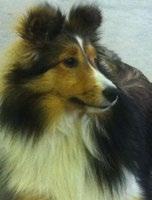
remains open (patent) after birth. Although PDA can occur in any dog and even in some cats, it is most commonly reported in Poodles, Shetland Sheepdogs, English Springer Spaniels, Pomeranians, Chihuahuas, German Shepherds, and Labrador Retrievers.
A PDA allows blood to shunt abnormally from the aorta into the pulmonary artery. In order to maintain normal blood volume for the remaining circulation, the left ventricle (the main pumping chamber of the heart) is forced to grow larger and accommodate more blood flow. When the left ventricle grows larger and pressures within the left side heart chambers rise, substantial risk exists for the development of left-sided congestive heart failure (fluid accumulation within the lungs causing respiratory distress). Other symptoms include coughing, exercise intolerance, and fainting. Approximately 60% of puppies affected with PDA will develop congestive heart failure before their first birthday. While medications can abate symptoms, survival time after the onset of congestive heart failure is measured in months. For obvious reasons, PDA can be a devastating disease.
Luckily, this is also a condition that can be fairly easily identified and even corrected. A left-to-right shunting PDA creates a characteristic heart murmur that can be ausculted by a veterinarian at routine puppy visits, even in animals who show no symptoms of heart disease. The diagnosis is definitively confirmed using echocardiography performed by a veterinary cardiologist. This allows us to visualize and measure the PDA and to determine the overall effect on heart structure and function. If medications are necessary to control symptoms of coughing, labored breathing, or exercise intolerance, they may be prescribed.
Definitive correction requires closing the PDA. Historically, this has been accomplished by surgically opening the chest and carefully dissecting then ligating (tying off) the PDA. A newer and less invasive method for correcting PDA is via cardiac catheterization and deployment of a small catheter-loaded device to “plug” the vessel “from the inside.” Rather than opening the chest, the catheter-based approach is limited to a small skin incision in the groin. From here, a catheter in the femoral artery is used to access the PDA under flouoroscopic (real-time x-ray) guidance (see Images A and B). Both open-chest and catheter-based approaches have
been shown to be effective for PDA occlusion, and both carry a respectably low risk of complications. Which procedure is pursued is determined by the size and morphology of the PDA, the overall size of the patient, availability of specialized personnel and equipment, and cost.
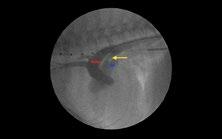
Image A (PDA pre): In this fluoroscopic image, contrast (dark enhancement agent) was injected into the aorta. The dark contrast is seen crossing through the PDA (yellow arrow) and into the pulmonary artery (PA).
Closing the PDA can drastically decrease or even eliminate a patient’s risk of congestive heart failure. Many dogs with corrected PDAs will live entirely normal life spans without symptoms.
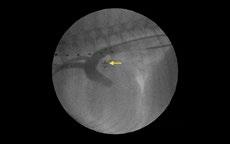
Image B (PDA post): You can still see contrast in the aorta, but now an Amplatz Canine Ductal Occluder® (yellow arrow) sits firmly within place in the PDA. This prevents blood from shunting into the pulmonary artery, which is no longer illuminated by contrast.
An uncommon variant of PDA that precludes treatment by one of the previously mentioned procedures is a reverse PDA. In these cases, unoxygenated blood flows from the pulmonary artery directly into the aorta and out into circulation. As a response to low blood oxygen, the body produces excessive red blood cells. This can create symptoms of lethargy, exercise intolerance, and sudden death.
Notably, reverse PDAs produce no audible heart murmur and can escape detection unless abnormal symptoms are observed or bloodwork reveals an elevated red blood cell count. PDA closure in this circumstance results in an acute and dramatic increase in pressure that overwhelms the right ventricle. As a result, the heart quickly fails to pump blood to the lungs, and patients are at risk for acute decompensation and death. To avoid this, reverse PDAs are not closed and are instead managed with medications to suppress excessive red blood cell
production and/or blood draws to relieve excessive blood.
PDAs represent one of the three most common congenital heart defects of dogs. Unlike other conditions, early treatment presents an opportunity to reverse the course of an otherwise life-threatening condition. It is vitally important, then, that we identify these affected puppies through careful auscultation. If you’re planning on buying a puppy from a breeder or rescuing one from a shelter or other organization, it is worthwhile to ask if the puppy has been examined— and ausculted—by a veterinarian.
Erin Anderson, VMD, MSc, DACVIM
807 Camp Horne Rd Pittsburgh, PA 15237 (412) 366-3400

• in store & mobile grooming • full & self service washing • healthy pet foods and supplies

All Natural Hoof Care (see ad pg 34)
Animal Care & Welfare (see ads pg 12, 21)
BelaCoop (see ad pg 23)
Burton’s Total Pet (see ads inside cover, pg 19)
The Canine Club (see pg 31)
Chris’s Canine Club (see pg 19)
Coventry Equestrian Center (see ad pg 33)
5th Avenue Fido (see ad pg 13)
Dog Watch (see ad pg 13)
Gentle Journey (see ad pg 36)
Holistic Care for Animals (see ad pg 25)
Jenny Karlsson Photography (see ad pg 19)
Judith Levy (see ad pg 25)
J & D Home Improvements (see ad pg 1)
Kara Jones Photography (see ad pg 34)
Larry’s Laundromutt (see ad pg 15)
Manning Chiropractic (see pg 2)
Paws Here Awhile (see ad pg 21)
Pets at Home (see ad pg 19)
Portraits of Animals (see ad pg 33)
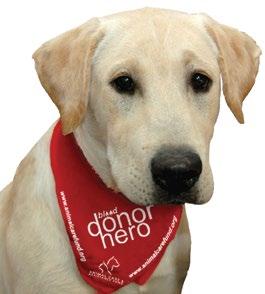
The Rogan Rexford Blood Bank (see ad pg 13)
Seraphina Sitters (see pg 19)
Success just Clicks (see pg 19)
Vibrant Images (see pg 23)
Washington Area Humane Society (see pg 1)


By: Burton Patrick, Total Pet Stores
Aquaticsis one of the most instructional and educational hobbies on the planet. It teaches us about environmental issues through a basic understanding of water chemistry. There are thousands of animals that we can keep successfully in an aquarium and they all have different behaviors to observe and understand. We learn about disease and control environmental issues that affect all cold blooded animals. We learn about trophic levels that separate the predator and the prey.
To begin the process, a parent should engage their child with an aquarium project. It can’t be about the child wanting to get a fish on a whim. The parental response all too often, “Only if you take care of it.” Teaching responsibility is great, but we need to work with our children directly so that they can learn. We certainly can’t leave the entire job to our schools. All it takes is five to ten minutes per day.
As parents we have to be involved. We must set an example to show care and responsibility toward animals. Too often we shove our children in front of a TV. We need to offer them sensitivities toward this planet’s creatures and to learn from these animals by having them as guests in our homes. It doesn’t have to be a big project. A little time is all that is necessary to understand what is going on in that little microcosm called an aquarium.
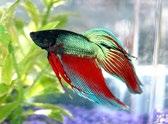
The first aquarium needs to be a simple project. Don’t buy kits – they’re a waste of money and rarely provide even the bare minimum amount of equipment to properly care for a fish. Talk to your experienced, professional pet store merchants about what makes up a first aquarium. As an example, a Betta is a great first fish, but retail stores have turned that poor fish into a disposable pet because they just want to sell stuff. These big box stores will tell you it’s okay to shove the poor fish in a little bowl and call it a day. There is a right way and a wrong way to care for a Betta. It was my first fish in 1953 when I started this hobby and to this day I still relish the success I had with that first pair of Bettas. I
watched the male build a bubble nest to ready the environment for hatching eggs and then accept the female into his 5 gallon tank (his whole world). I saw them embrace and lay eggs. What a treat it was to witness this happen right before my eyes. The male picked the eggs off the bottom and returned them into his nest. When they hatched I could just barely see the little tails sticking out of the nest. I even grew infusoria (food to feed the babies) from pond water I’d collected and put in my back yard in a plastic drum. I learned how to grow organisms for them to eat. I set up another container outside to grow mosquito larvae to feed the adults and baby Bettas as they grew. I sold the young to a local fish store owner for 10 cents. He helped both of my parents keep me on the right path to be successful. As time went on I found other older aquarists that helped me expand my knowledge. Knowledge carries forward like that. Some knowledge begets the thirst for more knowledge. The process is contagious.
The local aquarium shop was the meeting place for hobbyists both old and young. It was a neighborhood store. The older aquarists would talk shop and give me tips and some of their old equipment as well. That could never happen in a national pet store that only cares about selling stuff. A local pet store with experienced people can be a huge resource of knowledge.
What do we need to take care of a Betta properly?
1. A 2 ½ gallon aquarium
2. A 10 watt heater. They are a tropical fish.
3. Small Sponge Filter
4. Optional: a small light attached to a timer.
Putting a Betta in a small bowl with no water turnover is not very hospitable. In summary: To start an aquarium, be patient and only get one fish. Feed the fish sparingly to allow the bacteria to colonize the aquarium and process the waste products so they do not become toxic to the fish (ammonia). Change water and keep track of the chemistry. That is easy with the test strips available today.
If you have questions call me at my office (412) 3670962 or talk to one of our people with aquarium experience. You can also ask for information by emailing us at info@totalpetstores.com.
I hope this little article gives people an idea about beginning aquatics.
■
■
■





Dr. Katti Stoller and her husband, Sam Stoller, created BelaCoop Animal Hospital of North Park to be a caring, warm and welcoming environment to a wide variety of animals. Their staff is experienced in the treatment of dogs and cats, as well as exotic animals such as birds, reptiles, ferrets, rabbits, and other small mammals. BelaCoop Animal Hospital of North Park takes pride in providing the utmost
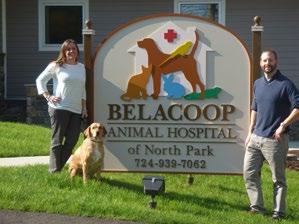
routine examinations and vaccinations, chiropractic care, laboratory diagnostics, radiology, surgery and dental care. Dr. Stoller adds, “We also offer medical baths and grooming services for high-risk patients, as well as hospitalization for sick pets, or pets that require daily medications while the families are away.”
For the client’s convenience, BelaCoop has a comprehensive on-site pharmacy as well as an online pharmacy. In addition, they currently carry a variety of prescription diets including Hill’s Science Diet, Purina and Royal Canin.
compassion and quality of care for each and every patient. “We are deeply committed to making your pet our priority,” said Dr. Stoller.
In order to deliver the highest standard of care, the hospital provides a full-service facility: offering
For a pet that requires a special diet, or medication that is not a stock item, BelaCoop strives to go the extra mile to meet the pet’s needs. Clients are encouraged to visit the online pharmacy for additional products, or to request convenient home delivery. Some over-the-counter products which BelaCoop carries include: flea and tick control, shampoos, dental care products, collars, combs and brushes, Moochie and Company toys and treats, and much more.
BelaCoop Animal Hospital of North Park enjoys a connection with the community by frequently participating in local events, as well as hosting on-site fundraisers to benefit organizations such as “Two Angels” donation fund that helps pets in need of veterinary care. For more information about upcoming events and fundraisers please visit their website at www.belacoopanimalhospital. com or BelaCoop’s Facebook page.
In addition please note our special offer:
Stop in on Wednesdays from 5:00pm to 7:00pm for “Yappy Hour” and receive 25% off all over-thecounter products (excludes flea and tick control).
BelaCoop Animal Hospital welcomes visitors to tour the facility and meet their caring staff. We hope to see you soon!
Open six days a week:
Monday – Tuesday & Thursday 8:00am-6:00pm
Wednesday 10:00am-8:00pm
Friday 8:00am to 5:30pm
Saturday 8:00am-1:00pm
Sundays and holidays the hospital is CLOSED
BelaCoop Animal Hospital of North Park 2232 West Hardies Road Gibsonia, PA 15044 Phone: 724-939-7062
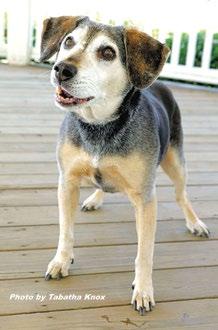
Take my picture and show me off. Let me express myself and make you smile. I am your forever friend, I am your pet. When you look at my picture, will you always remember that I love you. I am who I am because of you.


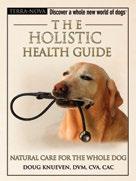
By: Dr. Doug Knueven, DVM, CVA, CVC, CVCH
Nutrition is the basis of health. To build and run a healthy body, both wholesome raw materials and appropriate fuel are needed. We have been led to believe that processed pet foods provide healthy nutrition. I would like to inject an ounce of reality into this notion. Here are six falsehoods regarding the benefits of processed pet foods.
1. Pet food is 100% complete and balanced.
Processed pet foods are heated to the point that most of the natural nutrients in the raw materials are destroyed. The pet food companies realize this and supplement the diets with synthetic vitamins.
Unfortunately, research indicates that synthetic vitamins do not provide the same health benefits as eating foods containing those same vitamins. Eating whole foods is a much better way to feed the body.
Also, pet food manufacturers can only balance the diets to their current understanding of nutrition. Since nobody knows everything, nutrition knowledge is incomplete, and therefore so are the diets.
food is cooked at high temperatures and is often laden with starch.
The term “natural” when applied to processed pet food is an oxymoron.
3. Grain-free pet food is good for pets.
Dogs and cats did not evolve to eat grain or any other form of starch. Their bodies are not built to handle it. Grain-free diets are a step in the right direction. However, every dry food contains starch. Kibble simply cannot be made without it.
In my opinion, the starch in the food is what makes it unfit for pets.
4. Crunching on dry food cleans pets’ teeth.
It seems logical that the process of chewing kibble would clean a pet’s teeth. However, studies do not bear this out. In fact, the idea that crunching pet food cleans their teeth makes no more sense than to think that chewing up pretzels cleans ours.
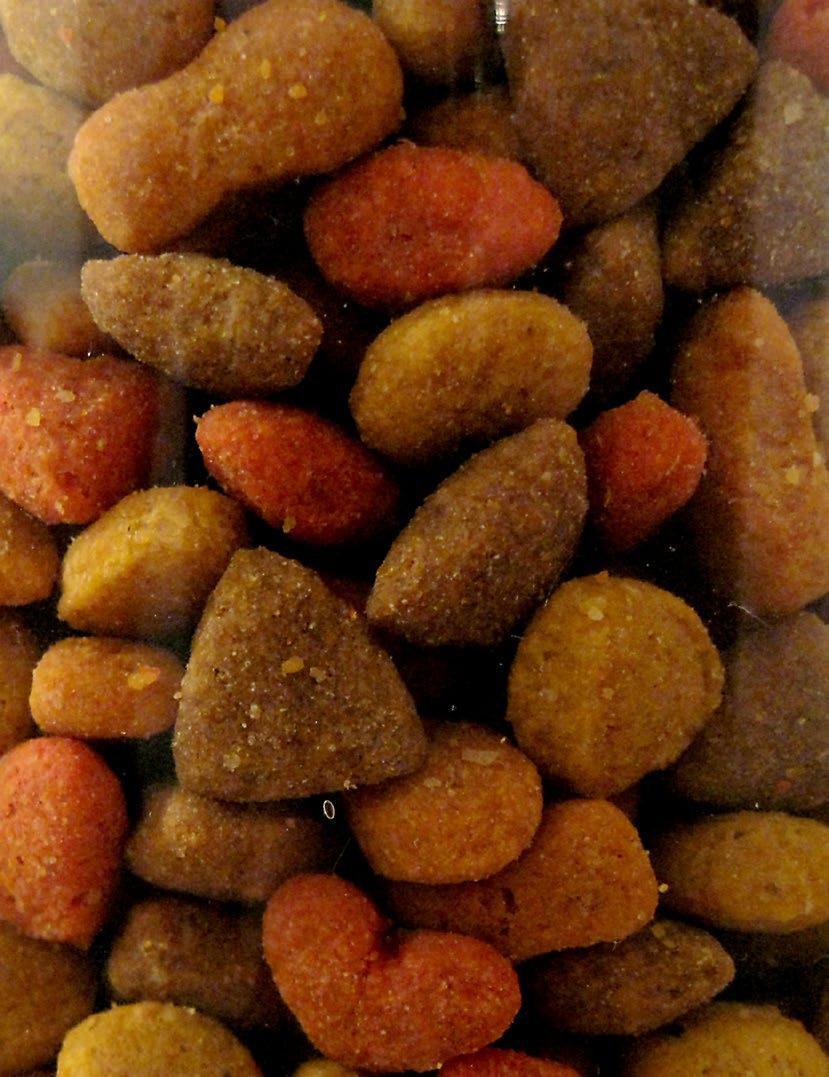
Processed pet foods are not 100% complete and balanced.
2. “Natural” processed pet food.
The word natural implies that something is closely mimicking what takes place in the wilds of nature. It is true that some pet foods start with natural ingredients. However, when those ingredients are inappropriate and then processed, the end product is no longer natural.
The wild (natural) counterparts of dogs and cats eat diets that are very different than what we provide our pets from a bag or can. Wild carnivores eat raw food that contains little to no carbohydrates. Processed pet
When the tip of the pet’s tooth contacts the kibble, the nugget shatters and does not scrape the teeth. And, when you consider that kibble has to contain lots of starch we can see that the opposite of dental health results. Starch is easily converted to sugar which feeds the bacteria that cause plaque and leads to tooth root infections.
Dry food is not good for pets’ teeth.
5. Pet foods are made with wholesome ingredients.
It is common knowledge that most pet foods are made from ingredients that are unfit for human consumption. What many people don’t realize is that studies have shown that some pet foods contain traces of Pentobarbital. This is the drug used to put animals to sleep. Euthanized animals make it into pet foods due to the use of ingredients from rendering plants. If your
pet’s food lists “meat and bone meal” as an ingredient, throw it away. It may contain dead cats and dogs.
Some pet foods are made with nasty ingredients
6. Processed pet foods promote health.
It is well known that cooking meats at high temperatures creates cancer-causing chemicals. Two recent studies found these carcinogens both in pet foods and in pets’ bodies. Both studies concluded that pet foods may promote cancer.
There are much healthier things to feed our pets rather than conventional pet foods.
Our pets rely on us for their food. Feeding is the most important thing we do for them on a daily basis. Everything we put into our pets either promotes health or promotes disease. Our current, processed pet foods provide less than optimal nutrition. In my opinion, the best diet for pets is a balanced, raw food.
Could not walk for one week...
15 year old Ariel was lame in the rear, especially on the left leg. It just hung there, dead. Ari was not going to the bathroom. She missed a jump and fell backwards screaming, and from there on was in deep trouble. X-rays were negative for fracture and hip disease; arthritic changes were minimal. This was most likely a disc problem creating nerve damage. Ariel was given muscle relaxers and a steroid shot. Mom was livin’ on a prayer, hoping for something good to happen, but nothing was...until someone was kind enough, and thought enough to refer her to DrChiroVet.
We did an emergency visit at the Suburban Animal Clinic. Immediately after one visit she “stood up and was able to go to the bathroom!”
After visit 2 she was “walking and “going” on her own!”
For an entire week post injury and after going to the doctors her leg was limp and dead, she could not even go to the bathroom. A day after seeing Dr. Savko she was able to stand, and in a few more days she was walking and going to the bathroom!
What pray tell did we do? We stimulated the nerves in her lower back to allow them to function better, because they were being choked off. We relaxed and balanced the massive amount of muscle spasm she had in her neck, lower back, pelvis, and legs.
She got better.
Seems silly not to call DrChiroVet, don’t ya think?
Dr. Savko works with the following veterinary clinics: Meadowlands Veterinary Hospital, Washington, PA Suburban Animal Clinic, Butler, PA, Delmont Veterinary Hospital, Delmont, PA, Fox Run Equine Center, Apollo, PA DC, CCSP, CVCP
No animal likes to spend time in a cage. Any shelter will tell you that an animal who has spent time prior to adoption in a foster home is much more likely to be adopted and be relaxed about the transition to a forever home.
FosterCat, Inc. is exactly what it says it is—an organization that fosters cats until they can find a forever home. There is no shelter, but a system of homes and people who are glad to open their hearts to a cat in need. Everything in the organization is done by volunteers, and all fundraising goes either into direct care for the cats in foster or to promoting the organization to find new foster homes or to place cats.
The organization was founded in 2000 by a group of individuals who volunteered at shelters and who saw adult cats spending weeks or months in cages, often becoming less adoptable all the time as they became less socialized and more stressed, and sometimes not transitioning well to a permanent home after living in a cage, returned to the shelter for behavior issues related to stress.
Fostering cats, most importantly, saves their lives because they are no longer in danger of euthanasia from overcrowding in shelters. Secondly, it keeps them in a good frame of mind while they wait for their dream home to come along, and if they have any health issues they can be more closely attended in a foster home. Fostering families can vouch for their personality in a much more realistic way.
FosterCat screens potential foster homes with an application and home visit, and is set up to support the
By: Bernadette Kazmarski
families who foster with medications, food and litter as needed plus any veterinary expenses associated with fostering the cat. How could anyone lose? The kitty gets a safe temporary home and a person who loves cats gets to love a kitty, and is supported in the cat’s care.
The volunteers of FosterCat get cats out into the public as often as possible to increase chances of adoption, participating in local “Adopt-a-thon” events and utilizing the cat adoption programs at PetSmart and Petco. To a certain extent they have worked with rescue organizations to administer adoptions by securing space at offsite adoption places and interviewing prospective adoptive families. They also maintain their own website and Facebook page of adoptable cats, encouraging potential adopters to browse for their next cat. All cats have been spayed or neutered, tested for feline leukemia and vaccinated before they go to their adoptive home.
Volunteers for the organization don’t have to foster cats in order to assist. The list of volunteer activities is long and varied, from driving cats to vet appointments to helping organize the annual spaghetti dinner fundraiser.
FosterCat needs more foster homes to save more lives. If you’re interested in becoming a foster family for FosterCat, you can visit FosterCat’s website at www.fostercat.org and visit “Become a Foster Home” under “How You Can Help”.
The website also includes alumni stories from adopters who have reported back months or even years after the adoption, and a memorial page for any kitty, not just alumni. You can also make a donation online or by mail.
The annual spaghetti dinner is the organization’s main fundraiser each year. Join the board, volunteers, foster families and friends of FosterCat on Saturday, September 13, 2014 from 4:00 p.m. to 7:00 p.m. at St. Catherine of Siena Catholic Church, 1907 Broadway Avenue, Beechview, PA 15216.
The menu includes spaghetti with a choice of either meat or meatless sauce, salad, rolls, beverage and dessert. Takeout orders will be available.
Helping to raise more funds in addition to the meal prices, Chinese auction items including restaurant and other gift certificates donated by local businesses will be on display, and you can also buy tickets for the 50/50 raffle. Cat toys and other items will be offered for sale at the event and Ebi Fountains has agreed to donate a ceramic water fountain for the auction.
If a business would like to donate a gift certificate or basket of goods to the Chinese auction table, FosterCat would welcome a donation —these items need not be feline-oriented. Restaurant gift certificates are always good, along with grooming salons, hair salons and spa certificates, and even tickets to events and performances.
Also, this venue has plenty of vendor space so if you sell merchandise that would be of interested to cats and their people, please visit the website or Facebook page or contact Dianne Gruendl at gruque@aol.com.

• 8/3
• 9/14
• 10/26 - all black ferals FREE for Halloween
• 12/7 FREE CLINICS:
• 8/24 – Sponsored by “Snip-it”
• 10/5 – Sponsored by Fund for Feral Cats
• 11/16 - Open for sponsorship
This is an ever-changing list of resources for cat owners in Pittsburgh and beyond though many of the listings, like the shelters, apply to dogs and other pets as well. It includes low-cost spay and neuter programs as well as TNR for community cats, pet-friendly rentals in Pittsburgh and across the US and links to shelters for adoption and other services. In the future we will also list clinic dates with the organizations below when they are available.
TNR And Low-Cost Spay/Neuter For The Pittsburgh Area
Homeless Cat Management Team: www.homelesscat.org
City of Pittsburgh Free Spay and Neuter for City Residents
City of Pittsburgh free spay/neuter: www.pittsburghpa.gov/animalcontrol/spay_neuter.htm
City of Pittsburgh residents can apply for free spay or neuter vouchers for up to five pets, including stray/feral cats.
Low-cost Spay/Neuter and TNR Programs at Allegheny and Surrounding County Shelters
Animal Friends: www.thingkingoutsidethecage.org
Animal Rescue League: www.animalrescue.org
Beaver County Humane Society: www.beavercountyhumanesociety.org
Washington Area Humane Society: www.washingtonpashelter.org - Colony Cat Project: faith.b2@verizon.net
Western Pennsylvania Humane Society: www.wpahumane.org
Low-cost Spay/Neuter Organizations in Allegheny and surrounding counties
Frankie’s Friends Cat Rescue, Allegheny & Westmoreland Counties: www.sites.google.com/site/frankiesfriendsnatronaheights
Fluffyjean Fund for Felines, Allegheny and Washington Counties: www.fluffyjeanfund.weebly.com
Fix Ur Cat, Washington County: www.fixurcat.org
Catnip Acres, Greene County: www.catnip-acres.org
Snip-it.org, Westmoreland/Indiana Counties, Alle-Kiski Valley (Leechburg): www.snip-it.org
Low-cost Spay/Neuter and Veterinary Clinic
Spay Neuter Clinic, Penn Hills, 412-244-1202: www.spayaz.com/pittsburgh-pa
Find Local Low-cost Spay, Neuter and Veterinary Care on the Internet
Low-cost Neuter and Spay (search by zip): http://neuterspay.org
Love That Cat (online search): http://neuterspay.org
Spay USA: http://neuterspay.org
Pet-friendly Rentals
In the Pittsburgh area, visit this list on the FosterCat website: www.fostercat.org/friendly.html Nationwide (United States only): www.rent.com/pet-friendly-apartments
Shelters and Shelter Services
ALLEGHENY COUNTY
Animal Friends (AFI): www.thinkingoutsidethecage.org
Animal Rescue League (ARL): www.animalrescue.org
Western Pennsylvania Humane Society (WPHS): www.wpahumane.org
SURROUNDING COUNTIES
Beaver County Humane Society: www.beavercountyhumanesociety.org
Butler County Humane Society: www.butlercountyhs.org
Humane Society of Westmoreland County: http://members.petfinder.com/~PA83/about.html
Washington Area Humane Society: www.washingtonpashelter.org
Non-shelter Feline Adoption
FosterCat: www.fostercat.org
Kopy Kat Sanctuary, Westmoreland County (Delmont): www.kopykatsanctuary.org

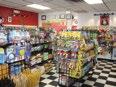
We have scrupulously chosen the brands that we carr y You don’t need to do your home work because we ’ ve already done the research to assure that e ver y food, treat and toy that we carr y is not only safe for your pet, but also the most healthful All of our foods are free of by-products, wheat, corn, soy, chemical preser vatives, food dyes or any ar tificial ingredient what-so-e ver We specialize in raw feeding and have a ver y knowledgeable staff to assist you in choosing the right food for your pet
We offer a vast array of supplements, fish oil, aromatherapy and herbal remedies Toys from West Paw Design, Planet Dog, Yeoww, along with grooming products, leashes and collars are also available We strive to find as many local and USA made eco-friendly products as possible. And of course we have lots of good, healthy treats because we know that you love to spoil your pets as much as we do!



To inquire about the products and ser vices found




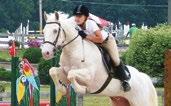
Riding is basically straddling the horse and sending the horse forward from its hind end engine and pointing its head toward the direction you want to go. The rider is to sit in balance as the legs ask the horse to move forward and sometimes turn. The rider’s hands, at the front end of the horse, then guide and direct the forward energy and steer. Because many riders steer the horse and control the speed with the bit, many horses’ mouths take a beating and develop what is called a “hard mouth.” A hard mouth is one that has become callused from riders pulling and directing the horse with the reins. Ouch!
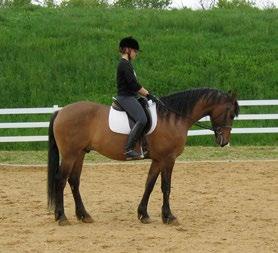
Training a horse to chew the reins out of the hands requires the rider to stand at the halt. Feel equal pressure on both sides of the bit till the horse flexes at the poll. It’s called passive resistance. Active resistance is when the rider vibrates the rein to get the horse to chew and then give at the poll.
When in motion, horses can generate a tremendous amount of power from the hind quarter. When a rider asks the horse to step forward from the hind quarter’s engine, she will certainly want to be able to control this forward motion with “brakes” in the front of the horse. This whole process of riding a horse from back to front is called “training” and not something a rider or horse does easily in the beginning stages of their education. Training a horse to go with finesse and light aids, or signals, is a time-consuming process and should be the foundation (or building blocks) for all rider/horse education.
There are many kinds of bits which help the rider facilitate rider/horse communication for different levels. There are bits for horses with hard mouths, ones to get the horse to salivate, and bits that give the horse no option, but to stop with a little bit of rein pressure from the rider.
Riding with finesse and staying off the horse’s mouth is ideal, but ideal is few and far between! A single jointed
By: Kristin Hermann
snaffle bit acts like a nutcracker and when the rider applies pressure to the reins, the bit breaks in half and pushes on the sides and roof of the horse’s mouth. A double jointed snaffle, which is even milder and, therefore better, has no nutcracker effect. It stays softly on the horse’s tongue, encouraging the horse to chew on the bit. As the horse chews and salivates, this causes softening at the poll (atlas joint at the top of the head where the skull and first vertebra meet) and better acceptance of the rider’s contact/connection through a light rein pressure. A horse that is soft at the poll, salivating, and accepting and chewing the bit is in a much better position to receive gentle communication from the rider through the reins. The goal is to get the horse to gently, “chew the reins out of the rider’s hands”.
Teaching a horse to chew the reins out of the rider’s hands is the best way to train a horse to have a soft mouth or even to improve the horse’s acceptance of the bit. This is old school classical training and is done at the halt in a snaffle with a double jointed bit. The double jointed snaffle lays on the horse’s tongue (which is merely a muscle in itself) that attaches to the muscles at the poll which connect to the muscles of the horse’s neck and top line or back and reverberate through the rider’s seat to the horse’s hindquarters. Riding the horse’s whole top line is called the ring of muscles. Connecting the horse’s top line and riders aids to work in unison is called the “ring of aids.” (See the article in Pittsburgh PetConnections November 2013).
If the horse can accept and softly chew the bit at a halt without resisting a little rein pressure to soften the poll, then it will more likely accept the bit while in motion at the walk, and trot and then canter. Of course, asking for flexing or chewing the bit while the horse is moving is a completely different feeling and requires more skill than standing at a “whoa”.
If your horse has a soft mouth, as opposed to a hard mouth, the rider can then send the energy from the hind quarter forward and direct the energy as well as contain the strides with a softer bit. There is an old saying regarding the bit, “a bit is only as severe as the rider’s hands.” What this means is a rough rider can put a double-jointed soft snaffle in the horse’s mouth and be very rough with the bit, which is not good. Or, a rider
could put a curb bit in the horse’s mouth, one with a port that works on the roof of the horse’s mouth with incredible stopping power, and be very light with the
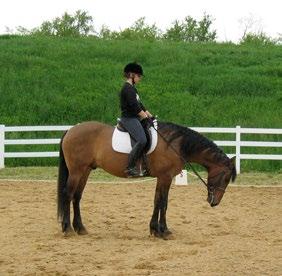
opens the fingers and allows the horse to stretch its head and neck down. Like all riding, learning this requires finesse and feel. Too often riders ask strongly and forget that the aids have to listen at the same time as they ask the horse.
The horse’s mouth is a very soft and sensitive area. Learning to teach our horse to chew the reins out of the hands is a great way to educate, or re-educate, the horse to develop a soft mouth. When a horse has a soft mouth, it can be ridden more effectively from back to front with gentle brakes in the front end. This makes for a better educated horse that does not pull or fight the bit and makes the overall riding experience much more enjoyable for both horse and rider. Training a horse to chew the reins out of the hands, requires the rider to stand at the halt. Feel equal pressure on both sides of the bit till the horse flexes at the poll. It’s called passive resistance. Active resistance is when the rider vibrates the rein to get the horse to chew and then give at the poll. When the horse yields at the poll the rider then opens the fingers and allows the horse to stretch its head and neck down. Like all riding, learning this requires finesse and feel. Too often riders ask strongly and forget that the aids have to listen at the same time as they ask the horse.
For more information on “chewing the rein out of the hands” refer to the book, The Cavalry Manual of Horsemanship and Horsemastership (Gordon Wright, Doubleday, 1962). This book is currently out of print but can be found on Amazon. John Lyons, Buck Brannaman and I teach this method of softening your horse’s mouth. Chewing the reins out of the hands could be termed differently depending on the style of training. However, whether you ride English or Western, asking your horse to give at the poll and have a soft mouth is classical training at its best! And, makes for a happier horse!
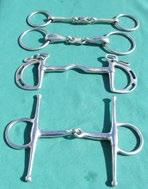
A small variety of English riding bits in all shapes and sizes. The top two are double jointed snaffles. The one with a hump in the middle is called a port and puts leverage on the roof on the horse’s mouth and is used with a chain under the chin. The bottom bit is a single jointed snaffle, used to turn an inexperienced horse as it will not slip through the mouth because of the long shanks on the side. There are many kinds of bits, but the best bit is a soft bit that is used with a light rein aid.



Tessa Unknown -October, 2013
Tessa was a precious angel from the moment I adopted her. She was scheduled to be euthanized in Ohio but got to live out the rest of her days with her best friend Caesar. Tessa loved purring as loud as possible and laying on me. She was the most gentle soul and enjoyed being lazy. She will always be missed and loved.
~ Tarra Provident
Do you have a special pet that you would like to honor? Send submissions to info@pghpetconnections.com.
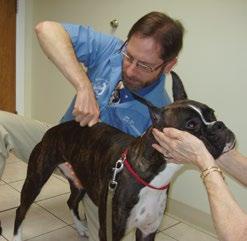
Dr. Doug Knueven practices an integrative approach to pet care. He is well versed in conventional veterinary medicine and has been licensed since 1987. He is also certifed in acupuncture, Chinese herbal medicine, and chiropractic. He is a member of the American Holistic Veterinary Medical Association and has advanced training in natural nutrition, massage therapy, homeopathy and a host of other alternative therapies.
• Full Service Animal Clinic
• Preventive Health Care
• General Surgery
• Radiology
• Dentistry
• Holistic Care
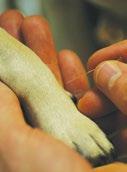
• Acupuncture
• Vaccine & Vaccine Counseling
• Nutrition Counseling & Natural Raw Diets
• Chinese Herbal Medicine
• Therapeutic Laser
• Healing Touch & Massage Therapy
We at Beaver Animal Clinic believe in the power of caring.
Caring for our clients as our friends.
Caring for each other as our family.
Pittsburgh Veterinary Specialty & Emergency Center
ANESTHESIOLOGY
Dianna Ovbey, DVM, MS, Practice Ltd. To Anesthesiology CARDIOLOGY
Eva Sikorska, DVM, DACVIM
Erin Anderson, VMD, MSc, DACVIM DENTISTRY
Krista Mendoza, DVM, DAVDC DERMATOLOGY
Sandra Sargent, DVM, DACVD EMERGENCY & CRITICAL CARE
Kenton D, Rexford, VMD
Christine Guenther, DVM, DACVECC
Christine Rutter, DVM, DACVECC
Sarah J. Deitschel, DVM, DACVECC
Amy Dickinson, DVM, DACVECC
Kara Osterbur, DVM, DACVECC
Rebecca A Miller, DVM
Joey Kallem, DVM
Jennifer Wooderson, DVM
Elissa Allen, VMD
Robin M. Dutra, DVM
Lindsey Rademacher, DVM
Kristen Krisulevicz, DVM
Richard Skalos, DVM
Tricia Tovar, DVM, Resident in EM & Critical Care
MRI & CT IMAGING
PetsDx Veterinary Imaging www.petsdx.com
Gerald Frye, VMD
INTERNAL MEDICINE
Sherwood Johnson, DVM, DACVIM
Tracey Peterson, DVM, DACVIM
Todd Carter, DVM, DACVIM
Emily Klosterman, DVM, MS, DACVIM NEUROLOGY
Edward MacKillop, DVM, DACVIM
Kendra Mikoloski, DVM, DACVIM ONCOLOGY
Rebecca Newman, DVM, MS, DACVIM
Todd M. Erfourth, DVM, DACVIM
Bridget Urie, DVM, MS, DACVIM OPHTHALMOLOGY
Lawrence Bagley, DVM, DACVO
Rachel Keller, DVM, DACVO
Michael Finn, DVM, MS, DACVO RADIATION ONCOLOGY
Christine Anderson, DVM, MS, DACVIM, DACVR RADIOLOGY
Christopher Warrington, DVM, DACVR SURGERY
Anthony D. Pardo, MS, DVM, DACVS
John T. Payne, DVM, MS, DACVS
Julie L. Compton, DVM, MS, DACVS
Jonathon Anderson, DVM, DACVS
Michael Doornink, DVM, DACVS
Jennifer Covey, DVM, DACVS
Hope Chisnell, DVM, Resident in Surgery
Kathryn Campbell, DVM, Resident in Surgery