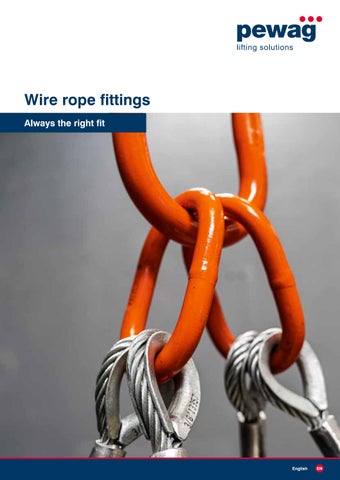
Wire rope fittings
Always the right fit
Always the right fit
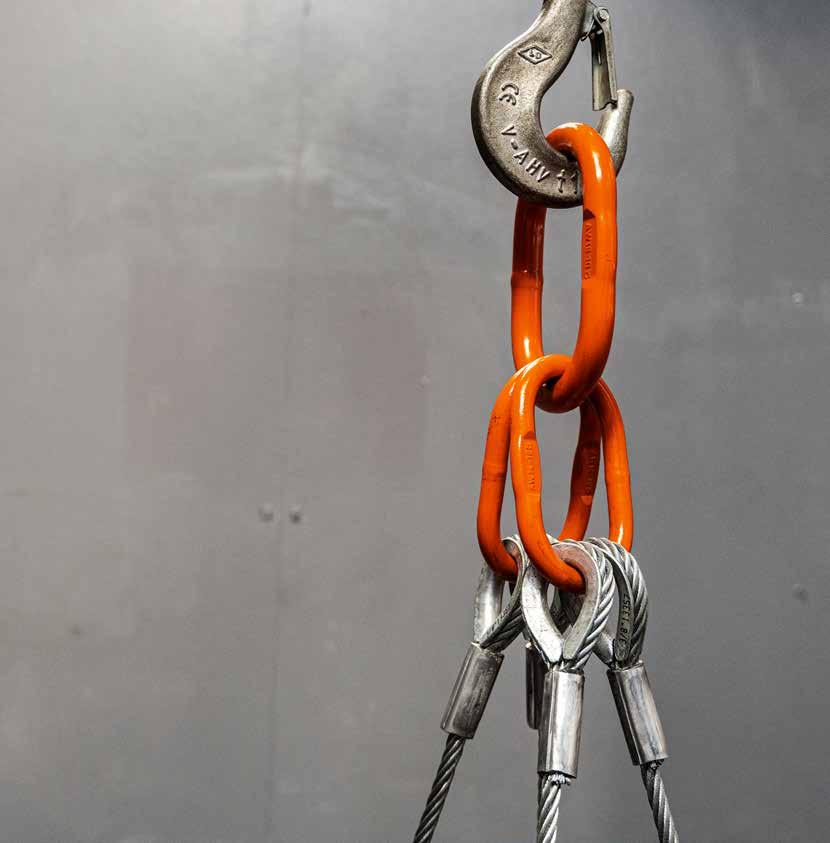
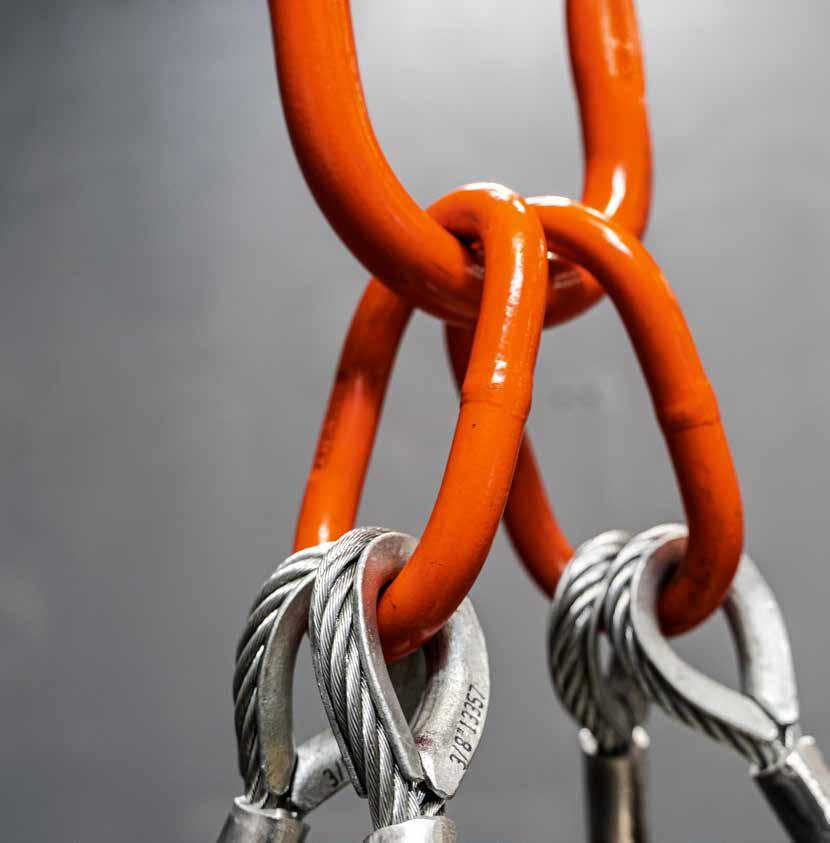
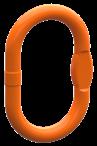
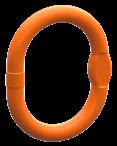
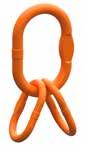
Master link and Master link assembly
pewag
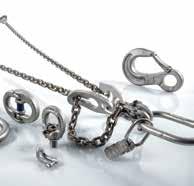
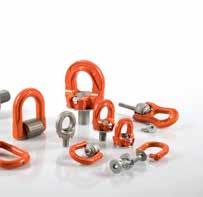
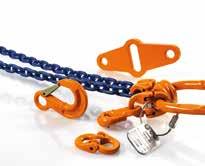
Our wire rope fittings program consists of snatch blocks, master links, master link assemblies, various hooks, shackles, wire rope clips and spare parts.
We provide you with a special transmission table in which you can easily find the required wire rope fitting for your wire rope hanger. We also provide a user manual in which general information, maintenance, testing, repair, storage and transport are described.
You will also find links to our pewag winner offshore and pewag winner inox programs, which also include products for rope slings.

coating (powder coating)
3D CAD drawing & trace parts


test certificates Upon request Upon request Upon request Upon request Upon request Individual test certificates *Applies only to SBRH and not to SBRS



of classes 6x19 and 6x36 in grade 1770 and having ferrule-secured eye terminations
The listed load capacities in the table according to EN 13414-1 are understood as the maximum values for the different slinging methods according to the standard method.
Note 1: The working load limits (WLLs) given in Table 4 are based on the assumption that soft eyes of single-leg slings are used over bearing points having diameters not less than twice the nominal diameter of the rope.
Note 2: The table shows working load limit values for ferrule-secured eye slings in various configurations.
The values are based on the equations contained in chapters 5.2.4, 5.3.4, and 5.4.4 of the EN 13414-1 standard.
For better understanding, the values given in the equation have been rounded.
The maximum load capacities stated in the table must be reduced if the ropes are exposed to difficult loads.
Loading difficulties arise from high temperatures, asymmetry, edge loads, impacts or similar. In these cases, pay attention to the load factors.
Should you still require technical information, please contact the manufacturers of wire rope slings or wire rope sling assemblies.
The company pewag only manufactures the components and does not produce wire rope slings or wire
of classes 6x19, 6x36 and 8x36 in grade 1770 and having ferrule-secured eye terminations
The listed load capacities in the table according to EN 13414-1 are understood as the maximum values for the different slinging methods according to the standard method.
Note 1: The working load limits (WLLs) given in Table 4 are based on the assumption that soft eyes of single-leg slings are used over bearing points having diameters not less than twice the nominal diameter of the rope.
Note 2: The table shows working load limit values for ferrule-secured eye slings in various configurations.
The values are based on the equations contained in chapters 5.2.4, 5.3.4 and 5.4.4 of the EN 13414-1 standard.
For better understanding, the values given in the equation have been rounded.
The maximum load capacities stated in the table must be reduced if the ropes are exposed to difficult loads.
Loading difficulties arise from high temperatures, asymmetry, edge loads, impacts or similar. In these cases, pay attention to the load factors.
Should you still require technical information, please contact the manufacturers of wire rope slings or wire rope sling assemblies.
The company pewag only manufactures the components and does not produce wire rope slings or wire rope sling assemblies.
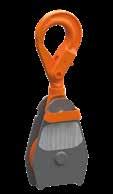
SBRH 04 13 115
SBRH 08 22 150
SBRH 12 22 150
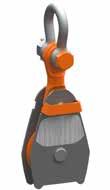
SBRS 04 13 115
SBRS 08 22 150
SBRS 12 22 150
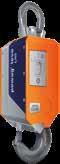
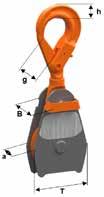
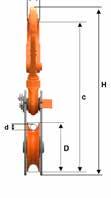
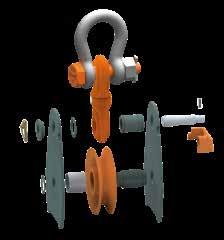
• Snatch block with removable bolts for attaching ropes
• For loads up to 4 / 8 / 12 tonnes
• Pulley for multiple rope diameters
• Maintenance free compound bushing
• SBRS equipped with pewag shackle P215
Standards Temperature
ASME B30.26 -20°C to 60°C The
4.
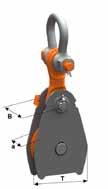
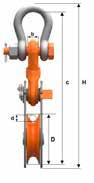
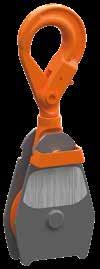
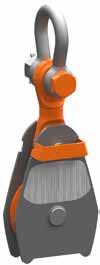
SBRS with pewag Shackle P215 – learn more about our shackles in the brochure.
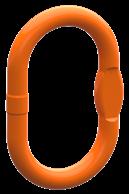
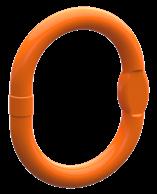
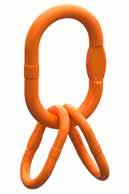
AW 18 MW 18 VAW 13
AW
• Used in the production of 1- and 2- leg rope slings
• Can also be used as end link
• Universal connection possibilities through flattened section.
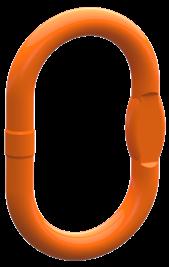
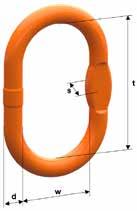
The assignment of wire rope slings includes the matching thimbles according to DIN EN 13411-1 and DIN 6899 (Form B). The assignment of components to the lifting slings is based on their respective working load limit. This ensures that all wire
are covered. For additional combination options, please contact the technical product management of pewag. For the assignment of chain slings, see the pewag winner chain system G10 catalogue.
• Larger inner width for larger crane hooks or special hooks (compared to the AW Master link)
• Can also be used as end link
• Universal connection possibilities through
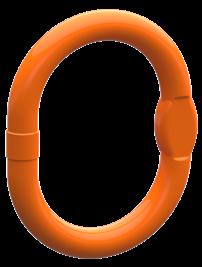
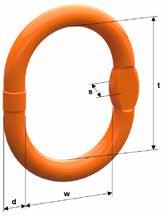
The assignment of wire rope slings includes the matching thimbles according to DIN EN 13411-1 and DIN 6899 (Form B). The assignment of components to the lifting slings is based on their respective working load limit. This ensures that all wire rope sizes according to EN 13414-1 are covered. For additional combination options, please contact the technical product management of pewag. For the assignment of chain slings, see the pewag winner chain system G10 catalogue.
• Ideal for III- and IV-leg slings thanks to AW master links as transition links
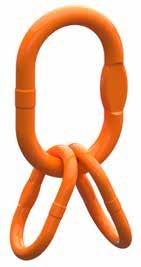
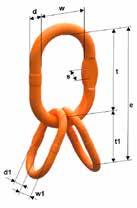
The assignment of wire rope slings includes the matching thimbles according to DIN EN 13411-1 and DIN 6899 (Form B). The assignment of components to the lifting slings is based on their respective working load limit. This ensures that all wire rope sizes according to EN 13414-1 are covered. For additional combination options, please contact the technical product management of pewag.
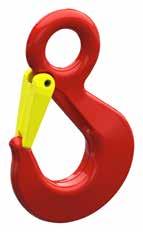
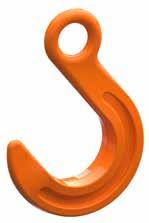
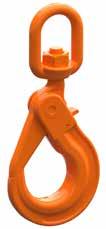
request
WSBW 7/8 HSW 5/6
WSBW 10 HSW 7/8
WSBW 13 HSW 10
HSW 13
GSCHW 7/8 UCR 1/8"
GSCHW 10 UCR 3/16"
GSCHW 13 UCR 1/4"
GSCHW 16
5/16"
HSW 16 UCR 3/8"
HSW 19/20
7/16-1/2"
HSW 22 UCR 9/16-5/8"
HSW 26 UCR 3/4"
HSW 32 UCR 7/8" UCR 1"
UCR 1 1/8"
UCR 1 1/4"
UCR 1 3/8"
UCR 1 1/2"
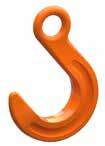
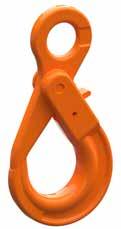
• HSR eye sling hook offers universal options for usage and is manufactured with a forged safety catch
• Increased protection through safety catch that locks into the tip of the hook
• Safety catch set SFGW is also available as a spare parts set
Standards
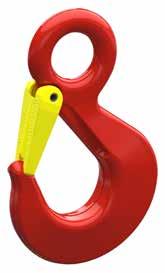
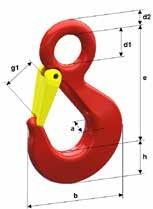
The working load limit with safety factor 5 applies when used for steel wire rope slings. This product is only for applications in steel wire rope slings.
The assignment of wire rope slings includes the matching thimbles according to DIN EN 13411-1 and DIN 6899 (Form B). The assignment of components to the lifting slings is based on their respective working load limit. This ensures that all wire rope sizes according to EN 13414-1 are covered. For additional combination options, please contact the technical product management of pewag.
• Extra-wide jaw
• Frequently used in foundries and also does an excellent job when used with connex and welded systems
Standards Temperature
EN 1677-1
-40°C to 200°C
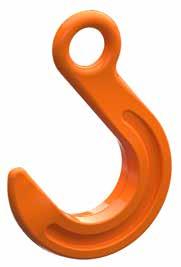
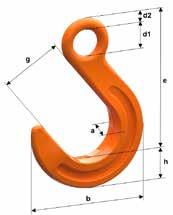
1) The working load limit with safety factor 5 applies when used for steel wire rope slings.
2) The working load limit with safety factor 4 applies when used for chain slings.
Rope sizes for FW Foundry hook
The assignment of wire rope slings includes the matching thimbles according to DIN EN 13411-1 and DIN 6899 (Form B). The assignment of components to the lifting slings is based on their respective working load limit. This ensures that all wire rope sizes according to EN 13414-1 are covered. For additional combination options, please contact the technical product management of pewag. For the assignment of chain slings see the pewag winner chain system G10 catalogue.
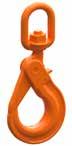
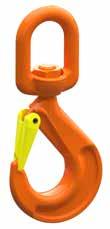
• Locks automatically and cannot be opened while under load
• Not rotatable and locked when under load
• Safety catch set VLHW - available as a spare parts set
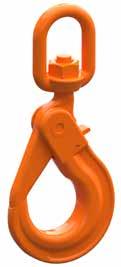
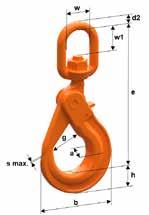
1) The working load limit with safety factor 5 applies when used for steel wire rope slings.
2) The working load limit with safety factor 4 applies when used for chain slings.
*WLHW 19/20 and 22 upon request
Rope sizes for WLHW Swivel safety hook
The assignment of wire rope slings includes the matching thimbles according to DIN EN 13411-1 and DIN 6899 (Form B). The assignment of components to the lifting slings is based on their respective working load limit. This ensures that all wire rope sizes according to EN 13414-1 are covered. For additional combination options, please contact the technical product management of pewag. For the assignment of chain slings see the pewag winner chain system G10 catalogue.
*WLHW 19/20 and 22 upon request
• Locks automatically and cannot be opened while under load
• Rotatable under load
• Wider jaw opening than HSW offers more flexibility
Standards Temperature
EN 1677-3 -40°C to 120°C
1) The working load limit with safety factor 5 applies when used for steel wire rope slings.
2) The working load limit with safety factor 4 applies when used for chain slings.
The assignment of wire rope slings includes the matching thimbles according to DIN EN 13411-1 and DIN 6899 (Form B). The assignment of components to the lifting slings is based on their respective working load limit. This ensures that all wire rope sizes according to EN 13414-1 are covered. For additional combination options, please contact the technical product management of pewag. For the assignment of chain slings see the pewag winner chain system G10 catalogue.
• Locked under load
• Wider jaw opening than HSW offers more flexibility
• Safety catch set VLHW on the back of the hook - available as a spare parts set
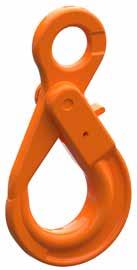
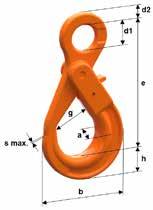
1) The working load limit with safety factor 5 applies when used for steel wire rope slings. 2) The working load limit with safety factor 4 applies when used for chain slings.
Rope sizes for LHW Safety hook
The assignment of wire rope slings includes the matching thimbles according to DIN EN 13411-1 and DIN 6899 (Form B). The assignment of components to the lifting slings is based on their respective working load limit. This ensures that all wire rope sizes according to EN 13414-1 are covered. For additional combination options, please contact the technical product management of pewag. For the assignment of chain slings see the pewag winner chain system G10 catalogue.
• WSBW Swivel Hook - comes with a die-forged safety catch that locks into the tip of the hook
• Rotatable under load
• Safety catch set SFGW - available as a spare parts set
Standards Temperature EN 1677-2
-40°C to 120°C
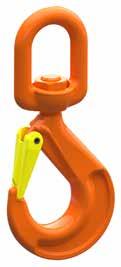
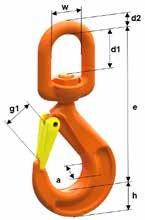
1) The working load limit with safety factor 5 applies when used for steel wire rope slings. 2) The working load limit with safety factor 4 applies when used for chain slings.
The assignment of wire rope slings includes the matching thimbles according to DIN EN 13411-1 and DIN 6899 (Form B). The assignment of components to the lifting slings is based on their respective working load limit. This ensures that all wire rope sizes according to EN 13414-1 are covered. For additional combination options, please contact the technical product management of pewag. For the assignment of chain slings see the pewag winner chain system G10 catalogue.
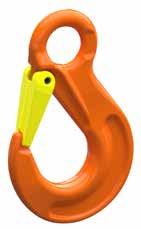
• HSW eye sling hook offers universal options for usage and is manufactured with a forged safety catch
• Increased protection through safety catch that locks into the tip of the hook
• Safety catch set SFGW is also available as a spare parts set
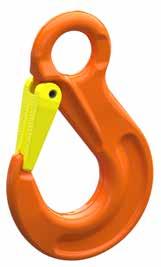
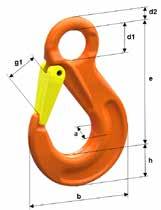
The assignment of wire rope slings includes the matching thimbles according to DIN EN 13411-1 and DIN 6899 (Form B). The assignment of components to the lifting slings is based on their respective working load limit. This ensures that all wire rope sizes according to EN 13414-1 are covered. For additional combination options, please contact the technical product management of pewag. For the assignment of chain slings see the pewag winner chain system G10 catalogue.
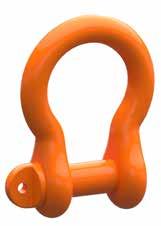
• UKCA-Marking available on request
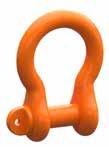
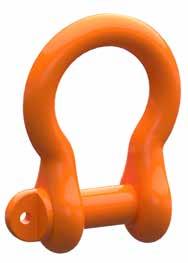
• Both sides of the smooth bolt rest in the eyes and the thread does not protrude into the opening of the shackle
Standards Temperature EN 1677-1 -40°C to 200°C
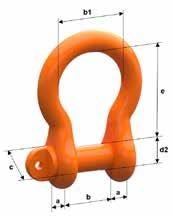
1) The working load limit with safety factor 5 applies when used for steel wire rope slings.
2) The working load limit with safety factor 4 applies when used for chain slings.
sizes for GSCHW Bow shackle
The assignment of wire rope slings includes the matching thimbles according to DIN EN 13411-1 and DIN 6899 (Form B). The assignment of components to the lifting slings is based on their respective working load limit. This ensures that all wire rope sizes according to EN 13414-1 are covered. For additional combination options, please contact the technical product management of pewag. For the assignment of chain slings see the pewag winner chain system G10 catalogue.
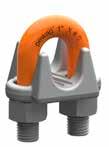
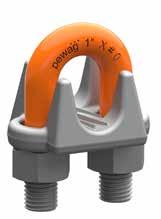
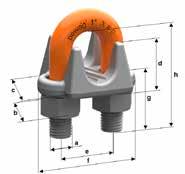
• Full traceability – Batch-marked and linked to the pewag certification tool
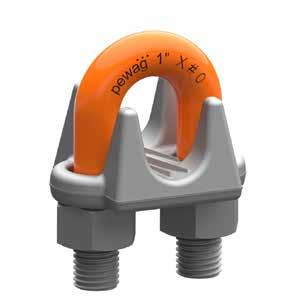
• Corrosion protection – Fully hot-dip galvanized, powder-coated U-bolt
• Easy identification – Laser marking with size and manufacturer ID*
• Robust construction – Forged identification on the saddle ensures reliability under load
• Engineered strength – Optimized for maximum durability
Temperature
ASME B30.26 Results from the rope’s operating temperature EN 13411-5 Type B
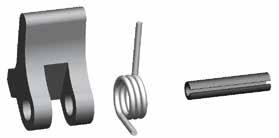
Spare parts may only be replaced by trained personnel with the necessary skills and knowledge. Only original pewag spare parts may be used and fitted.
VLHW Trigger set
SFGW Safety catch set
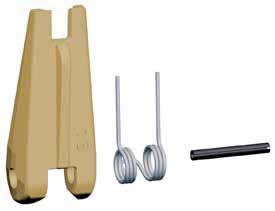
Code
VLHW 5/6
VLHW 7/8
VLHW 10
VLHW 13
VLHW 16
VLHW 19/20/22/26
For accessory part
LHW 5/6, WLH(B)W 5/6
LHW 7/8, WLH(B)W 7/8
LHW 10, WLH(B)W 10
LHW 13, WLH(B)W 13
LHW 16, WLH(B)W 16
LHW 19/20, LHW 22, LHW 26, WLH(B)W 19/20, WLH(B)W 22
VLHW 32 LHW 32
Code
SFGW 5/6
For accessory part
HSW 5/6, HSR 5/6
SFGW 7/8 HSW 7/8, HSR 7/8, WSBW 7/8
SFGW 10 HSW 10, HSR 10, WSBW 10
SFGW 13 HSW 13, HSR 13, WSBW 13
SFGW 16 HSW 16
SFGW 19/20 HSW 19/20
SFGW 22 HSW 22
SFGW 26 HSW 26, HSW 32
Restrictions of use for wire rope fittings
Shock
slight shocks
medium shocks strong shocks arises e.g. when the lifting or lowering movement is accelerated. occurs e.g. when the chain slips during adjustment to the shape of the load. arises e.g. when the load falls into the unloaded chain. Load factor 1
not permissible
Edge load not permissible
Note: The table refers exclusively to pewag lifting components. Different usage limitations apply to lifting ropes and thimbles. If any questions arise in this regard, please contact the manufacturer of steel ropes or thimbles.
Use at temperatures below -40°C and above 380°C is prohibited!
pewag components can be used for general lifting purposes for single- and multi leg wire rope slings acc. EN 13414-1 and are suitable for the lifting and transporting of loads, provided that the instructions of the operating manual and all national regulations are complied with. The comply with Machinery Directive 2006/42/ EC and may only be used in accordance with the Declaration of Incorporation.
It should only be used by trained personnel, who have read and understood the instructions for use. This is available for download at www.pewag.com.
Hooks should not bear weight on the tips. Loops, suspension links and thimbles must be able to move freely in the hook. pewag lifting accessories may only be used within the specified temperature range, taking into account the corresponding
reduction factors for wire rope slings – otherwise, they must be taken out of service.
The maximum load capacities specified in the table must be reduced if the wire rope slings are subjected to adverse loading conditions.
These include, for example, high temperatures, asymmetry, edge loads, impacts or similar. In these cases, the load factors must be taken into account.
Should you still require technical information, please contact the manufacturers of wire rope slings or wire rope sling assemblies. The company pewag only manufactures the components and does not produce wire rope slings or wire rope sling assemblies. If you require technical information about pewag lifting components, please contact our technical service.
If the pewag lifting accessories are used correctly and by competent people, they have a long lifespan and provide the highest possible safety standards. Material and personal damage can be avoided by reading this user information carefully and handling all lifting processes in a responsible, provident manner.
• Intended application:
The assembly of wire rope fittings components, master links and four leg assemblies for rope hangers for attaching, lifting and transporting of loads.
• Load:
All links and components must also be able to move freely and align in the load direction.
• Normal operating temperature:
-40 °C bis 200 °C.
Any deviations from the normal operating temperatures can be found in the table Restrictions on use.
• Shocks: Components must not be subjected to shock-loading! In case of impacts, see table Restrictions on use.
• Users: The components may only be used by properly trained personnel. Prior to each use, components must be inspected by the user for visible defects.
We urgently recommend using only the original parts that are included in the scope of delivery with pewag lifting components (bolts, safety pins, screws etc.).
Modifying the original condition of the lifting accessories by bending, grinding, removal of parts, welding, drilling, stamping etc. means exposing yourself and others to unnecessary danger.
In such a case, safety can no longer be guaranteed and usage becomes dangerous. Risk factors and conditions include heating the chains to a temperature of more than 380 °C (pewag winner 400) and removing safety parts such as safety pins, safety catches etc.
For hazardous or dangerous conditions, please refer to the table.
• Temperature effects
The table lists the load reduction values in case of extreme temperatures. These apply until the pewag lifting components have reached room temperature.
pewag lifting components must on no account be used outside the indicated temperature range. If this has been the case, the chains must be removed from service.
• Effects of acids, caustics and chemicals
Do not use pewag lifting components in acids, alkalines or chemicals or expose them to their fumes.
Do not apply any surface coatings to pewag chain slings, i.e. do not subject them to hot galvanizing or electro galvanizing.
If any surface treatments are required, please make sure to doublecheck with the pewag service department first.
Dipping or removing a coating with chemicals are potentially dangerous processes that may give rise to hazards.
We urgently recommend customers to check with the pewag technical team first.
Certain production procedures release acids and or fumes.
In especially dangerous conditions (e.g. offshore applications, lifting of persons or potentially dangerous loads i.e. molten metals, corrosive materials, nuclear substances) the working load limit must be adjusted according to the risk level by trained personnel. Hazardous conditions must always be avoided.
Spare parts may only be replaced by trained personnel with the necessary skills and knowledge. Only original pewag spare parts may be used.
Prevention is better than cure!
The safety of the pewag components can be influenced during its natural work life; it is therefore vital that to maintain it in a good state of use through periodic maintenance, evaluation and repair.
Maintenance: Components must be cleaned regularly. After use in a wet environment, components must be dried and protected against corrosion, e.g. lightly oiled.
Inspection before initial use: Before using a component for the first time, the following points should be checked:
• The components correspond to what was ordered.
• The test certification and/or the declaration of compliance and conformity are present.
• The marking and load capacity on the components correspond to the details on the certification and declarations.
• Recording individual details of the product into a card index.
• This manual is included with the pewag components and that every employee reads and fully understands what has been written.
Inspection before every use: The lifting components should be checked to make sure it is in a good state before each and every use by the operator.
He should pay attention to obvious damages or signs of wear; if in doubt, or if the lifting component fits into one of the below-mentioned “discard” categories, the lifting component should be taken out of operation immediately and given to trained personnel for evaluation.
Evaluation: Evaluation of the lifting component should take place after it has been cleaned - it must be free from oil, dirt and rust.
Painting is only admissible as far as an evaluation of the lifting component condition is possible.
Methods of cleaning that cause embrittlement of the material (pickling), overheating (burning), abrasion of material (sand blasting) are not permitted; cracks or other defects should not be hidden.
Sufficient lighting during evaluation needs to be provided; the whole of the lifting chain should be inspected; if in doubt, the component should be sent back to the manufacturer for evaluation.
Inspection after an unforeseen incident: The lifting components need to be taken out of operation immediately and given to trained personnel for evaluation in the event of an unforeseen incident - e.g. accidents, overheating, overloading, collisions, acid and chemical influences. After such cases, the pewag components must be taken out of operation immediately and checked by trained personnel.
Inspection carried out by trained personnel: Trained personnel should carry out periodic inspections based on the national legal requirements; if not otherwise specified a minimum of every twelve months. This time frame should be shortened for lifting chains in frequent use at maximum load capacity or under implementationrelated limitations, in the case of increased wear or corrosion. The inspection includes both visual and functional testing.
After long periods in storage, the components should be checked thoroughly by trained personnel before initial use especially if the date for inspection has been exceeded or the product was stored incorrectly - see below.
Load Test: A load, visual and function test needs to be carried out by trained personnel at least every two years.
This time frame should be shortened for lifting chains in frequent use at maximum load capacity or under implementation-related limitations. The load test should be carried out with 2 times the working load limit. It can also be replaced by a crack detection teste.g. by a magnetic crack test or a dye penetration method.
Note: The interval of the load test may vary due to national regulations.
If at least once of the criteria listed below manifests itself during the visual inspection, all parts must be removed from service:
• Breakage of a component
• Missing or illegible marking
• Unrecognizable identification marking of components
• Distortion of suspension components, accessories
• Cuts, notches, grooves, cracks: these defects, especially across the tensile direction can lead to sudden breaks!
• Excessive corrosion (e.g. pitting corrosion), material discolouration from heat, burning of the outer surface coating, evidence of subsequent welding
• Missing and/or defective safety measures as well as evidence of the hook being over-extended. The opening of the hook should not exceed 10 % of the nominal dimension.
• A swing-out safety catch is proof that the hook has been overloaded
Maximum permissible dimensional changes with regards to the nominal dimension
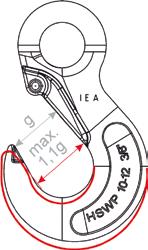
Repairs may only be performed by competent people who have the necessary skills and knowledge. Small cuts, notches and grooves may be removed by careful grinding or filing.
After the repair, the treated area must merge smoothly with the surrounding material, without abrupt changes of the cross-section.
Lifting components that are not being used should be stored on designated frames and not in a heap on the floor as that would be the fastest way to damage them.
If unloaded wire rope sling remain on the crane hook, then the end hook must be attached into the master link or, if this is the case, the end links into the crane hook in order to reduce the risk sling legs swinging freely or accidentally unhooking.
Repair works must not reduce the dimension of the area by more than 10 % - discard criteria must not apply after the repair.
Welding, heat treatments and straightening of bent components, is not permissible. Always keep records of inspections and repair works and ensure that these are stored throughout the service life of the components.
If the lifting components will not be used for long periods of time, then they should be cleaned, dried and protected against corrosion (e.g. lightly oiled) before being stored.
When the components has been stored for a long period and the regular inspections have not been made, or it has been stored incorrectly (see also inspections), an inspection must be carried out before the first use.
Detailed original operating instructions for the high-quality pewag products are available as downloads at www.pewag.com. Ongoing improvement processes ensure that our products are always up to date. For this reason always refer to the latest edition!
The pewag winner offshore and winner inox portfolio includes additional wire rope fittings with safety factor 5, which you will find in the following catalogue:
pewag winner offshore for wire rope fittings
AOS - Master link for I- und II-legs wire rope sling
AOS-FZN - galvanized master link for I- and II-leg wire rope slings
VOS - master link assembly for III- and IV-leg wire rope slings
VOS-FZN - galvanized master link assembly for III- and IV-leg wire rope slings
pewag winner inox G6 plus for wire rope fittings
AWI - Master link for I- und II-legs wire rope slings
VAWI - master link assembly for 3- and 4-leg wire rope slings
Product description and technical information see folder pewag winner offshore or catalogue pewag winner inox G6 plus, simply scan the QR code.
pewag winner inox - stainless steel chain system G6 plus
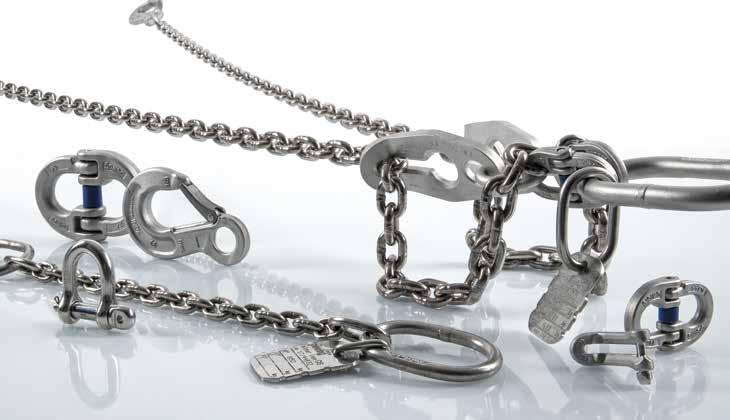
pewag winner offshore - for extreme lifting applications


pewag austria GmbH
A-8041 Graz, Gaslaternenweg 4, Phone: +43 316 6070-0, Fax: +43 316 6070-100, saleinfo@pewag.com, www.pewag.com
www.pewag.com