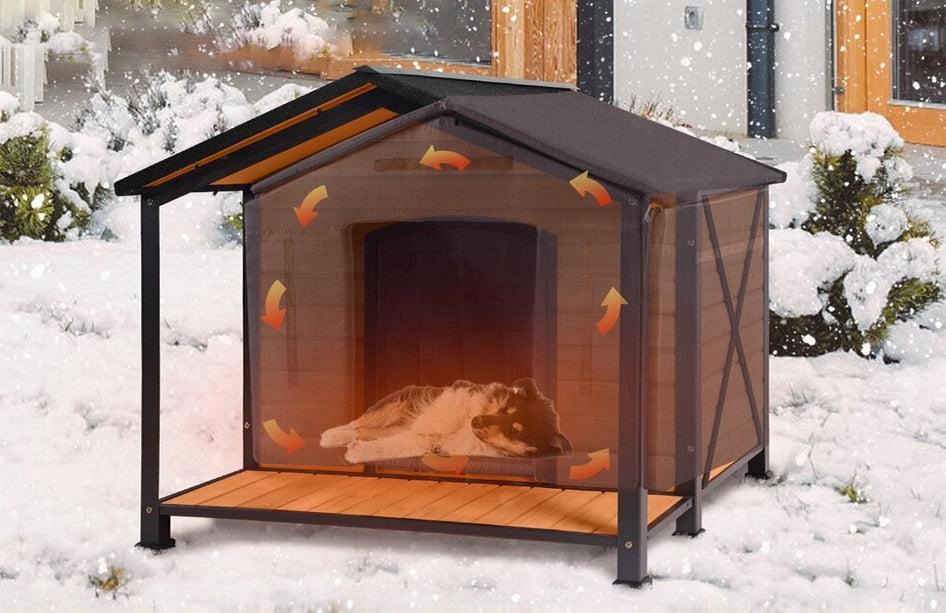
Before the cold winter arrives, building a warm and windproof doghouse for your dog is something every responsible owner should consider in advance, as many dog breeds simply cannot tolerate the harsh cold and the discomfort it brings.
In fact, improving your dog's winter environment is not complicated. One option is to add insulation to an existing doghouse, and the other is to build a new one from scratch. The latter takes at most a few days, costs very little, and yields remarkably effective results.
Here are some practical suggestions on how to provide your pet with a warm backyard doghouse for the winter, covering everything from location and materials to construction details, guiding you step by step in creating a safe and cozy shelter for your dog.
Key Steps to Building an Insulated Doghouse Yourself
Starting from scratch to build a doghouse is the best choice, as it allows you to tailor the design to your dog's size, height, and breed-specific needs. Here are the steps to building a doghouse:
If you plan to build the doghouse out of wood, be sure to treat it with a pet-safe wood preservative. Check every part of the doghouse structure for cracks and holes, and use foam sealant to fill them if necessary Also, ensure the doghouse is completely sealed. Add insulation material to the floor, then install the floor finish. If needed, waterproof the wall cladding and secure the insulation material to the walls of the doghouse. The final step is insulating the roof.
When selecting the size and structure of the doghouse, consider the following:
The internal height of the doghouse should generally match its width. Ensure your dog can stand fully upright and turn around naturally inside. After insulation, the roof height should not exceed the height of your dog’s shoulder blades to minimize heat loss.
The length or depth of the doghouse should allow your dog to lie down comfortably and stretch out its front paws.
The entrance should have a threshold, and consider adding a thick, soft windproof flap to retain warmth inside and keep snow and moisture out.
Consider the Doghouse Location
The doghouse should be placed in a sunny, sheltered spot in the yard to absorb solar energy during the day
Additionally, you can paint the doghouse a dark color to increase its absorption of sunlight. Lastly, make sure the door faces away from the prevailing wind direction.
Choosing Insulation Materials
Generally, two main factors should be considered when selecting insulation materials for a doghouse. First, the material must be non-toxic, eco-friendly, and free of irritating odors to avoid triggering allergies or aggressive behavior in dogs. Second, the material should not absorb moisture, as this can cause it to lose its insulating properties over time.
Several options are available, each with its own advantages and disadvantages:
Foam plastic is a simple insulation material for doghouses. Since foam itself has good weather resistance, waterproofing is not necessary. However, because dogs may try to scratch or damage the insulation, it still needs to be covered. It is recommended to use polystyrene foam (commonly known as "foam plastic") for insulating doghouses.
This material is entirely natural, safe, and non-toxic for pets, making it an ideal and affordable option for warming pet houses. Due to its good breathability, it prevents moisture buildup inside the doghouse, so no waterproofing is required. Using felt material also eliminates the need for covering—simply secure it with nails.
Mineral wool is one of the most commonly used insulation materials. However, if you intend to use it for insulation, there are some details to consider. Dogs may chew or tear at the insulation with their paws, causing it to lose its effectiveness. Due to the structural properties of mineral wool, if ingested by pets, it could pose health risks. Whether construction is indoors or outdoors, waterproofing both the material and the exterior walls is essential.
Other materials include polyethylene and polystyrene foam, which are commonly used due to their good insulating properties and ease of installation with a staple gun in outdoor settings. Other materials suitable for insulation include laminate, polystyrene foam sheets, and even ordinary polystyrene foam.
Therefore, you can choose any option that fits your budget, but ensure the insulation material is securely fastened and safe for your pet.
The quality of your pet's life directly depends on how well you meet its needs. As a responsible pet owner, you should provide your dog with a warm, safe space in the backyard to ensure it stays cozy during the winter months.
First, be sure to adjust the doghouse structure according to your dog’s breed, size, and needs. Second, carefully choose insulation materials to ensure they are safe for your pet. Finally, remember not to over-insulate—excessively thick insulation can
make the doghouse too cramped, affecting your dog's comfort. Proper ventilation and moisture-proofing are equally important.
Article Source:How to Build an Insulated Doghouse for Winter Comfort at https://www.pethousemall.com/blogs/all-about-pets/how-to-build-an-insulated-doghousefor-winter-comfort-p1