Tomorrow’s Medicine: Innovations
Shaping Healthcare for the Better by Peter Rentrop, MD
Healthcare is entering an exciting era, thanks to rapid advances in medical technology. New tools and systems are changing how doctors diagnose, treat, and monitor patients. For healthcare professionals, these developments promise more precise care, better outcomes, and an easier workflow.
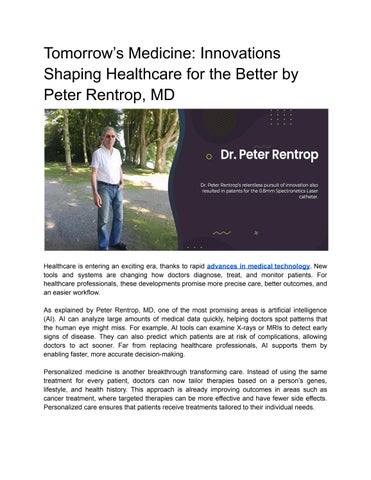
As explained by Peter Rentrop, MD, one of the most promising areas is artificial intelligence (AI). AI can analyze large amounts of medical data quickly, helping doctors spot patterns that the human eye might miss For example, AI tools can examine X-rays or MRIs to detect early signs of disease They can also predict which patients are at risk of complications, allowing doctors to act sooner. Far from replacing healthcare professionals, AI supports them by enabling faster, more accurate decision-making
Personalized medicine is another breakthrough transforming care Instead of using the same treatment for every patient, doctors can now tailor therapies based on a person’s genes, lifestyle, and health history. This approach is already improving outcomes in areas such as cancer treatment, where targeted therapies can be more effective and have fewer side effects Personalized care ensures that patients receive treatments tailored to their individual needs
Wearable devices and remote monitoring are also changing the game Devices like smartwatches and fitness trackers can monitor heart rate, blood pressure, or glucose levels in real time This allows patients to manage chronic conditions from home while giving doctors continuous data to guide treatment. Early detection of health changes can prevent emergencies and reduce hospital visits.
Robotics is advancing healthcare in surgery and rehabilitation. Robotic-assisted surgeries enable doctors to operate with greater precision, resulting in smaller incisions, less pain, and faster recovery In rehabilitation, robotic devices help patients regain strength and mobility more effectively, while also supporting healthcare staff in providing care.
Telemedicine has become a regular part of healthcare, connecting patients and doctors through virtual consultations. It increases access to care, especially for people in remote areas, and helps doctors manage their time efficiently Patients can receive advice, follow-ups, and prescriptions without traveling long distances.
These innovations are making healthcare smarter, faster, and more patient-friendly For healthcare professionals, staying up to date with these technologies is essential. The future of medicine is bright: it is not just about new tools but about using them to provide better care, improve patient lives, and create a more efficient healthcare system