
Playboy 2017 11-12

Page 1

NOVEMBER / DECEMBER 2017 HUGH M. 1926–2017HEFNER COLLECTOR’S EDITION

“In my coulddreams,wildestInothaveimaginedasweeterlife.”

1

A MAN OF HIS TIME...

Two days before we closed the issue you hold in your hands, the word came in. One minute we were hunched over mountains of page proofs. The next we were watching, dazed, as the news spread from our press office to media outlets and social feeds all over the world. Even in that first flush of grief, we knew we had to grit our teeth and get this issue to the printer. We had to continue to deliver on the vision of the man who, unbelievably, had just left us. We’d like to think that Hef might appreciate the timing—that we’re drafting this editorial in the heat of a deadline. After all, his all-nighters (fueled by Pepsi and Clark bars) were so frequent that his offices often doubled as bedrooms, and vice versa. By now, countless worthy journalists have recited the long litany of Hef’s accomplishments—and controversies—as a media titan, a civil-rights activist and a bon vivant. There’s more to his story than could fit in any biography, to say nothing of an editors’ note, but we do want to offer one more thing: When you remember Hugh M. Hefner, consider remembering him above all as a man of change. Hef thrived on predicting the future and embracing the present, drawing through all the eras of his life a thread of elegance—and always bringing that ageless smile, which both beckoned and challenged. The same man who announced, in the introduction to this magazine’s first-ever issue, that “affairs of state will be out of our province” would go on to run voluminous interviews with Martin Luther King Jr. and Ayn Rand, Jimmy Carter and Dick Cheney. The man who entered the magazine business when computers were still UNIVAC behemoths became a nimble social-media personality, as adept at bantering with fans as he was at taking down trolls. The man who revolutionized the conversation around sex at a time when married couples often slept in separate beds went on to champion LGBTQ rights— long before “LGBTQ” had entered mainstream parlance. For us, the only way to move through this sad moment is to keep fueling that evolution—to continue to shine a light wherever the rights of the individual are threatened, to celebrate enterprise and original thinking and, of course, to serve as a gathering place for all who worship feminine beauty. Fortunately, we have another Hefner fighting that fight with us every day. Cooper, Hef’s youngest son and our Chief Creative Officer, may bear an uncanny resemblance to his father around the time the latter started PLAYBOY, but the fact that they were never afraid to disagree—even if that disagreement took place on the record—shows that the ever- evolving Hefner DNA lives on. Which brings us back to now. With the exception of a modest photo spread, the November/December issue remains the same one we spent the past two months putting together. We think you’ll find that our mission to provoke, to delight and to advance the national conversation on sex only continues to grow. Soon, we will offer a special tribute edition in which you’ll hear from some of PLAYBOY’s greatest allies (none greater than our Playmates) and dig deep into Hef’s photo archive, uncovering never-beforeseen shots of this mercurial, magnificent man. We hope you will stay with us. We have so much more to celebrate—and debate—together. And Hef will still be here, at the center of the world of PLAYBOY. Smiling. The Editors

Opening spread: Taping Playboy’s Penthouse, 1960. Above: At work in the master bedroom of the first Playboy Mansion, 1965. Below: Flanked by Bunnies en route to the opening of the Baltimore Playboy Club, 1964. Hef’s birthday, 1981. At Jazz Fest, 1983. Opposite page: Speaking with local press prior to the opening of the London club, 1966.

2 H

...A MAN FOR ALL TIME

“It’s the ofcombinationperfectworkandplaythatkeepsyouyoung.”

4 1. Outside Playboy Mansion West, 1971. 2. With Justin Timberlake, 2003. 3. With Arnold Schwarzenegger and Wilt Chamberlain, 197 7. 4. With Crystal Hefner, 2013. 5. With Jerry Brown, 1978. 6. With Muhammad Ali, 1976. 7. With Will Smith, 1993. 8. With Ringo St arr, 1974. 9. With Jesse Jackson, 2011. 10. With Jennifer Aniston and Brad Pitt, 2000. HEFNER’SHOME ahouseisonlyasgrandasthepeoplewhogatherwithinWithhiscountlessunforgettableparties,Hefshowedusthat 1. 3.2. 4. 5. 6. 9.8.7. 10.

5

10.

7. George Clooney, 1998. 8. With Sylvester Stallone and Kimberly Conrad, 1988. 9. Jim Carrey and Jon Lovitz, 1998. With Paul Newman, 1982. 11. With Pamela Anderson, 2003. 12. Father and son: Hugh and Cooper Hefner, 2014.

1. Cameron Diaz, 1998. 2. Dita Von Teese and Marilyn Manson, 2002. 3. With Al Pacino (at Madeo), 2006. 4. With Warren Beatty and Jack Nicholson, 1986. 5. With Pierce Brosnan, circa 1999. 6. With Leonardo DiCaprio, 1998.

5. 8. 10.11.9. 12. 6. 7. 2.1. 3. 4.

PRRGVRIQRUZD\FRP

:HGRQtWDOZD\VZHDUSODLG EXWZKHQZHGRLWLVXVXDOO\D JRRGWLPH 0RRGVRI1RUZD\

Handlerforthismonth’sinterview.ofsophisticatedplaytocaptureChelseaadrenaline.HedrawsonthesamespiritorcruisingonamotorcycleinsearchoffoundshootinginhisArtsDistrictstudioofadventure.AdecadelaterhecanbecametoLosAngelesinhis20sinsearchgraphedPattonOswaltforPLAYBOY,German-bornMaus,wholastphoto-

Patty Farmer Who better to revisit “Bunny lib” than Farmer, whose books Playboy Swings, Playboy Laughs and the forthcoming Playboy Thinks chronicle our brand’s indelible mark on contemporary culture. In The Day the Bunnies Walked Out femininevoiceofthetimes,”shesays.asapublicitystunt,ithelpedadvancethePlayboyClubin1975.“Thoughorganizedmostbeautifulwalkout”attheChicagorecountsthestorybehindthe“world’sshe

Nishant Choksi Whether depicting a selfie-stick slumber party or Donald Trump as an infant, Choksi’s playful illustrations tell timely stories in a cutting yet accessible way. No wonder the British artist is a mainstay of PLAYBOY’S stable of cartoonists, as well as a regular contributor to The New Yorker, The Atlantic and The Wall Street Journal

Chloe Chippendale For Let’s Play, Chippendale, founder of the Stoned Immaculate fashion label, outfitted Rainsford in threads worthy of the singer’s sweet voice and beguiling lyrics. “It was very much a collaboration,” says the savvy sartorialist. “I pulled inspiration from 1990s style icons like Liv Tyler and Drew Barrymore and blended it with Rainey’s personal style.”

For Anchors Aweigh, his PLAYBOY debut, Hammond turns his lens on Danish beauty Johanne Landbo as she enjoys a maritime romp off Barcelona.

Jacob Kushner Queer Uganda Stands Up sees Kushner, a newly minted Fulbright Fellow, traveling to East Africa to speak with members of Uganda’s LGBTQ community three years after international antigay crusaders failed to make places,Ugandawilltoo.”withtherightpressureintherightsosuddenly,”Kushnersays.“PerhapscansturnedacorneronLGBTQrightsmosexualityacapitalcrime.“Ameri-ho-

PatrickMaus

Cameron Hammond The Australian photographer got his start wielding a video camera for TV; now he brings a cinematic flair to “finding the most captivating locations on earth to photograph beautiful women.”

Andy Weir

CREDITS: Photography by: cover to p. 5 courtesy Playboy Archives; p. 12 courtesy Chloe Chippendale, courtesy Nishant Choksi, courtesy Cameron Hammond, courtesy Jacob Kushner, courtesy Patrick Maus, Christina Krupka of D’Arlene Studios, Inc., Aubrie Pick, M. Sharkey; p. 30 courtesy Playboy Archives, Levon Muradian, Evan Woods; p. 35 courtesy Shepard Fairey (3); p. 40 courtesy Harper Perennial; p. 42 Marion Ettlinger/ Corbis via Getty Images; p. 67 DeAgostini/Getty Images; p. 70 Reuters/Ints Kalnins; p. 72 courtesy Filson, courtesy Fort Lonesome, courtesy Nicora; p. 74 courtesy Cut Brooklyn, courtesy Randolph, courtesy Topo Designs; p. 75 courtesy Ammo Audio, courtesy Kotai Grill; pp. 112–114 courtesy Aella, Rose and Gerard; pp. 163–176, 178, 180 cour tesy Playboy Archives. Pp. 138–143 story supported by the Pulitzer Center on Crisis Reporting; pp. 144–149 The Secret Diary of Bettie Page: Red Christmas comic produced under license and with the approval of Bettie Page LLC. P. 33 styling by Chloe Chippendale, hair and makeup by Daniele Piersons for Exclusive Artists using Glossier; pp. 47–54 styling by Bre Fleming, hair by Christine Symonds for the Wall Group, makeup by Monika Blunder for the Wall Group; pp. 56–65 model Johanne Landbo at Le Management Denmark, produced by Rachel Gill; pp. 71–75 prop styling by Robert Doran for Frank Reps; pp. 82–93 model Ines Rau at HEROES Model Management, photography by Derek Kettela, styling by Kelley Ash, hair by Dennis Gots for the Wall Group, makeup by Valery Gherman for the Wall Group, prop styling by Ali Gallagher for Jones Management, prop styling assistance by Justin Fry; pp. 96–101 styling by Michael Fisher for the Wall Group, styling assistance by Evan Simonitsch, grooming by Jason Schneidman for SoloArtists.com using the Perfect Pomade by THEMENSGROOMER and Shu Uemura AOH sheer lacquer finishing hairspray, prop styling by Nicholas Faiella; pp. 102–111 model Milena at Vision Models LA, styling by Kelley Ash, hair and makeup by Dee Daly for Opus Beauty; pp. 122–136 model Allie Leggett at Vision Models LA, styling by Kelley Ash, hair and makeup by Dominique Farina; pp. 150–162 models Taylor Bagley at Photogenics LA, Sydney Roper at Photogenics LA, Terra Jo Wallace at Vision Models LA, styling by Kelley Ash, hair by Michaeline Becker, makeup by Matisse Andrews. Alexander Chee “It’s an honor, but you fear nothing will be good enough,” says Chee of Writing for Survival, a story about his literary hero Denis Johnson and his masterwork Jesus’ Son. “In the end, I just tried to see him and what he did, which is the best gift you can give another writer.” Chee’s new essay collection is out next year.

H 12 PLAYBILL

The literary brains behind The Martian is back with an exclusive excerpt from his new intergalactic tome, Artemis. On his sophomore trip to space, Weir, a self-described proponent of science fiction rooted in science, has swapped survival on Mars for crime on the Moon. Artemis lands in earthling bookstores this month.

RED CHRISTMAS In an exclusive chapter of The Secret Diary of Bettie Page, the peerless pinup takes on Soviet Claus 144

ART Shepard Fairey offers a sneak preview of his sprawling new solo show, Damaged 34

PHILOSOPHY Put down the plastic bottle; step away from the gas-guzzler. It’s time to go green 22

LET’S PLAY Rainey Qualley, who performs as Rainsford, brings sunshine in December 33

LITERATURE Celebrating 25 years of Jesus’ Son, the late Denis Johnson’s shattering, seminal masterwork 40

DANGER IN TOMORROWLAND Estonia, Russia’s tiny, tech-savvy neighbor, is the West’s canary in the coal mine 66

SISTERS OF THE CAM What happens when three homeschooled Christian beauties discover camming? 112

Pictorials

Chelsea Handler is gradually revealing her serious side—but she still enjoys cocktails and one-night stands 47

Features INTERVIEW

ON THE COVER Hugh Hefner, photographed by Larry Gordon, 1965. Opposite: Johanne Landbo, photographed by Cameron Hammond.

PLAYBOY’S AMERICAN-MADE GIFT GUIDE From bourbon to a bike, prepare to purchase patriotically 71

FICTION Bedsheets and time are both a-twist in Under the Clock by Robert Coover 118

MILENA’S PENTHOUSE An intimate romp at the top of the Hollywood Roosevelt hotel.... Going up! 102

Departments

QUEER UGANDA STANDS UP Will LGBTQ Ugandans ever be free? We follow a young trans woman into exile and back 138

FIRE AND ICELAND December Playmate Allie Leggett puts the hot in hot springs 122 TAYLOR, SYDNEY & TERRA JO Three blondes make for an extra steamy sauna scene 150

ANCHORS AWEIGH O captain! My captain! Come sail away with Johanne Landbo 56 ENCHANTÉ, MADEMOISELLE RAU November Playmate Ines Rau brings sultry holiday cheer from Paris 82

MOVIES Guillermo del Toro reflects on his Swamp Thing romance, The Shape of Water 38

15 CONTENTS H VOL. 64, NO. 6—NOVEMBER/DECEMBER 2017

FICTION A smuggler stirs up high intrigue in the Moon’s low gravity: an exclusive excerpt from Andy Weir’s new novel, Artemis 76 20Q James Corden swerves out of the Carpool Karaoke lane to talk about life in late night and getting laid in New York 96

DRAWN DATA Naughty elves spice up a yuletide brew of fascinating facts 36

HERITAGE It was 1975, and our Bunnies only seemed hopping mad. Plus: Roberta Vasquez, Vicki McCarty and a sexy snow fight 163

20 H f HUGH M. HEFNER EDITOR-IN-CHIEF COOPER HEFNER CHIEF CREATIVE OFFICER CHRIS DEACON CREATIVE DIRECTOR JAMES RICKMAN EXECUTIVE EDITOR CAT AUER DEPUTY EDITOR GIL MACIAS MANAGING EDITORIALEDITOR SHANE MICHAEL SINGH, ELIZABETH SUMAN SENIOR EDITORS; ANNA DEL GAIZO SENIOR ASSOCIATE EDITOR WINIFRED ORMOND COPY CHIEF; SAMANTHA SAIYAVONGSA RESEARCH EDITOR AMANDA WARREN EXECUTIVE ASSISTANT TO THE EDITOR-IN-CHIEF LEILA BRILLSON EXECUTIVE EDITOR, DIGITAL ART AARON LUCAS ART MANAGER; LAUREL LEWIS ASSOCIATE ART DIRECTOR PHOTOGRAPHY ANNA WILSON PHOTO EDITOR; EVAN SMITH ASSOCIATE PHOTO EDITOR SANDRA EVANS PHOTO ASSISTANT CHRISTIE HARTMANN SENIOR MANAGER, PLAYBOY ARCHIVES JOEY COOMBE COORDINATOR, PLAYBOY ARCHIVES AMY KASTNER-DROWN SENIOR DIGITAL MEDIA SPECIALIST, PLAYBOY ARCHIVES PRODUCTION LESLEY K. RIPPON PRODUCTION DIRECTOR; HELEN YEOMAN-SHAW PRODUCTION SERVICES MANAGER PUBLIC RELATIONS TERI THOMERSON SENIOR DIRECTOR, PUBLIC RELATIONS; TAMAR APRAHAMIAN SENIOR DIRECTOR, PUBLICITY PLAYBOY ENTERPRISES INTERNATIONAL, INC. BEN KOHN CHIEF EXECUTIVE OFFICER JARED DOUGHERTY CHIEF REVENUE OFFICER JOHN VLAUTIN CORPORATE COMMUNICATIONS ADVERTISING AND MARKETING BRIAN HOAR PUBLISHER, SENIOR VICE PRESIDENT, INTEGRATED SALES; MARIE FIRNENO VICE PRESIDENT, ADVERTISING DIRECTOR CHANNING CHOR VICE PRESIDENT, BUSINESS DEVELOPMENT NEW YORK: ADAM WEBB SENIOR DIRECTOR, SPIRITS CHICAGO: TIFFANY SPARKS ABBOTT SENIOR DIRECTOR, MIDWEST LOS ANGELES: KARI JASPERSOHN DIRECTOR, MARKETING AND ACTIVATION BRYAN PRADO SENIOR CAMPAIGN MANAGER Playboy (ISSN 0032-1478), November/December 2017, volume 64, number 6. Published bi-monthly by Playboy in national and region al editions, Playboy, 9346 Civic Center Drive, Beverly Hills, California 90210. Periodicals postage paid at Beverly Hills, California and at additional mailing offices. Canada Post Canadian Publications Mail Sales Product Agreement No. 40035534. Subscriptions: in the U.S., $38.97 for a year. Postmaster: Send all UAA to CFS (see DMM 707.4.12.5); nonpostal and military facilities, send address changes to Playboy, P.O. Box 62260, Tampa, FL 33662-2260. For subscription-related questions, e-mail playboy@customersvc.com. To comment

Ah, the comfort of a sneaker and the style of … not-a-sneaker. That’s pure Hubbard. Because your feet deserve to look good and feel good. Free shipping and returns. Order online or call 844.482.4800. THE UN-SNEAKERTM

NASA and the EPA, among many other credible domestic and global scientific agencies, have confidently outlined the negative impact specific industries are having on planet Earth.

Republican legislators seem comfortable remaining quiet during a time when leadership is desperately needed. And while some government agencies share valuable research and insight, climate deniers leading all the way to the Oval Office prefer to politicize the environment.

Global news was made when President Trump announced that the United States would be departing the Paris Agreement, one of the most profound international pacts constructed to regulate and combat greenhouse gas emissions. A number of other situations that have found their way into the news cycle—like a federal court ordering Trump’s Environmental Protection Agency to enforce Obama-era pollution limits for the oil and gas industry—have shown how the executive branch and other elected officials plan to manage their relationship with climate policy in Washington.

There have been a few moments over the years when PLAYBOY has encouraged discussion around conservationist principles, but for the most part this has not been an issue upon which the Rabbit has taken a strong or permanent position. Delving into the archive to explore our history on the subject, I recently came across a 1983 Playboy Interview with famed American photographer and environmentalist Ansel Adams—one of the last interviews he participated in before he passed away. In this particular piece, Adams was asked a question about his environmental priorities. His point of view on what concerned him most at that moment was crystal clear.

Installment III:

NASA, paraphrasing the Intergovernmental Panel on Climate Change, says: “Scientific evidence for warming of the climate system is unequivocal.” Still, the agency publicizes its research while U.S.ofwithallmustroundingother,aboutthatject,pointManyappropriateplacent”planet.changeconsideringvidualspositionpartisannonpartisan—andremainingnon-seemstobethemillionsofindi-havetakenwhenhowclimatewillimpacttheActually,“com-maybeamoredescription.ofushaveaclearofviewonthesub-butresearchshowsveryfewofusdomuchit.Onewayoran-thetragictruthsur-climatechangewashintoawakenofuswhoareprivilegedfirst-worldcomforts.Thecurrentfetishismclimatedenialbytheexecutiveandlegislative branches will impact our lives, but you and I won’t be the only ones; it will make its mark on our children as well as generations following. Individuals who are not protected by first-world infrastructures and small countries continuing to develop stronger domestic economies will encounter most of the chaos. We know this because it is already happening. Regions of South Asia are seeing extreme flooding, impacting the lives of millions. The World Bank reported in 2015 that, by 2030, the effect of climate change on agriculture may drive tens of millions into poverty. Many of these people will be from countries that don’t have the financial means to combat this issue and protect their citizens. And even as we grasp that these changes won’t hit home in the same way, we’re seeing arguably intensified weather events like Harvey and Irma destroy lives in the United States as well. As scientists gather new data and continue researching the impacts of our carbon footprint, we must personally accept the responsibilities of sacrifice while demanding legislation that protects not only us but our neighbors outside the United States as well. Doing all this successfully begins with a comprehensive shift in mind-set—an acknowledgement that we are willing to live substantially different lives than the ones we live today. For us, that starts with open debate, one that we will very much begin promoting in the pages of our magazine.Thisdebate is a delicate and complicated one, as much of our country’s workforce and economy depend on oil and other carbon-rich industries, but radical change will never be seen if we do not encourage communication and, more important, objective science over toxic political gain. This is now PLAYBOY’s fight as well. It’s time we let go of some of the comforts that we are accustomed to today in order to build a better tomorrow. As Adams stated, “It is horrifying that we have to fight our own government to save our environment.” True, but one of the magnificent qualities of living in the United States is that the voice of the many matters as much as those of the officials we elect. Let us confidently state that we are all environmentalists and work together to advance this cause—whether or not the governmentisonourside. Conservation & Environmentalism HEFNERCOOPER

ILLUSTRATION BY DÁNIEL TAYLOR

BY

22 H The PLAYBOY PHILOSOPHY

PLAYBOY: What is the most critical fight now? ADAMS: To save the entire environment: wilderness protection, proper use of parks, breakdown of federal operation of the parks in favor of private interests, acquiring new park and wilderness land, unrestrained oil drilling and mining on land and off shore, etc.… Only 2.5 percent of the land in this country is protected. Not only are we being fought in trying to extend that 2.5 percent to include other important and fragile areas, but we are having to fight to protect that small 2.5 percent. It is horrifying that we have to fight our own government to save our environment. More than 30 years later progress has been made, and Adams would be pleased with it, I’m sure. For one, roughly 20 percent of American land is now protected by the federal government. But other concerns Adams and his fellow activists raised in the 1980s suggest a state of the union that’s eerily similar to the Trump administration’s stance on green policy today.

*Savings shown over aggregated single item base price. Limit 2 Family Gourmet Buffet packages. Your 4 free burgers and 4 free kielbasa will be sent to each shipping address that includes (51689). Standard S&H will be added per address. Flat rate shipping and reward cards and codes cannot be used with this offer. Not valid with other offers. Expires 1/31/18. All purchases acknowledge acceptance of Omaha Steaks, Inc. Terms of Use and Privacy Policy. Visit omahasteaks.com/ terms-of-useOSI and omahasteaks.com/info/privacy-policy or call 1-800-228-9872 for a copy. ©2017 OCG | Omaha Steaks, Inc. SRC0675 1-800-811-7832 ask for 51689CFW | www.OmahaSteaks.com/gift44 34 GOURMETITEMS! The Family Gourmet Buffet 2 (5 oz.) Filet Mignons 2 (5 oz.) Top Sirloins 2 (4 oz.) Boneless Pork Chops 4 Boneless Chicken Breasts (1 lb. pkg.) 4 (3 oz.) Kielbasa Sausages 4 (4 oz.) Omaha Steaks Burgers 4 (3 oz.) Potatoes au Gratin 4 (4 oz.) Caramel Apple OmahaSteaksSeasoningPacketTartlets (.33oz.) 51689CFW| .* separately Combo Price $49 99 ORDER NOW & SAVE 75% * Plus get 4 more Burgers & 4 more Kielbasa FREE Give a little TENDERNESS® and SAVE 75%* on Omaha Steaks®

I am happy to tell you that the current PLAYBOY is terrific. You have preserved enough of the style, content and vibe of the classic PLAYBOYs to make the magazine feel familiar, from the hidden Rabbit on the cover to the vintage models featured in the Heritage section.

It’s a shame men feel the need to hide behind feminine pseudonyms so they can once again try to dominate an industry (The Secret Brotherhood of Male Erotica Writers, September/October). Haven’t men proved time and again that they’re already superior? I’m sorry, but I don’t feel bad that male writers “are at a disadvantage” in the field of erotic fiction. I’m sick of hearing how they feel threatened by women who have gotten ahead of them. For once, can’t men just let women have their own space? Mackenzie Jameson Lawrence, Kansas FOR THE RECORD I thoroughly enjoyed your recent article about the history of Playboy Records (Going Vinyl, September/October). In 1976 I had the pleasure of being present at a country music recording session in Nashville. When drummer Larrie Londin arrived, he was wearing—if I remember correctly—a navy blue windbreaker with a big Playboy Records logo on the back. Randy Matthews,ErdmanNorth Carolina THE LEGACY CONTINUES I’m thrilled to see that Advisor, Party Jokes and nude Centerfolds have returned to your pages. Your publication changed my life, and in these wacky times, I’m happy to see the PLAYBOY legacy continue —opening minds, admiring beauty and sharing knowledge through the interviews, articles and other stories you print. Lillian Pittsburgh,WilliamsPennsylvania

September Playmate Jessica Wall doesn’t need a DeLorean to bring us back to the 1980s.

A BLAST FROM THE PAST Your recent Centerfolds have been simply amazing. The ladies of present-day PLAYBOY, such as March Playmate Elizabeth Elam and July Playmate Dana Taylor, seem to have a sophistication reminiscent of Playmates from the 1970s. I will consult my copy of the Complete Centerfolds book for further study. Thank you for continuing to present feminine beauty in such a positive way. Robert Jacksonville,Ward Florida Happy consulting! FYI, the latest edition of Playboy: The Complete Centerfolds contains 734 nude Centerfolds from 1953 to 2016. Get yours at PlayboyShop.com.

Paul Voight Pine Bush, New York TO THE WINDOW, TO THE WALL I’m in love with your recent issue featuring September Playmate Jessica Wall (TouchTone, September/October). She gets my vote for Playmate of the Year 2018. Harry Assad El Paso, Texas What kind of JVC stereo is Jessica Wall holding up next to the Ford Maverick in her Playmate pictorial? Is that model still available in stores?

The point was that as a vehicle moves here on Earth, there is drag; the language was simplified, perhaps too much, for a nonscientific audience.

DUNNGRAHAM

SECRET LIVES OF SEX WRITERS

Stephen Cheyenne,SkokowskiWyoming

It’s a JVC RC-M80 boom box. We eyed a few on eBay, but it looks as though JVC has discontinued the model. We hope you find one and channel your inner John Cusack.

24 H

DEAR PLAYBOY

DON’T BE A DRAG In High-Speed American Dreams (July/August), writer Adam Skolnick states, “Momentum creates resistance, or drag.” But in the vacuum of space, a meteor could have enormous momentum and zero drag. Maybe what Skolnick means to say is that the momentum of bad politics will cause a drag on society, since the article is really about the H-1B visa program (and a roundabout bash of President Trump). On that I can somewhat agree with Skolnick. I support the H-1B visa program, and as an engineer I am a big promoter of technology. Clint Lillian,HulseyTexas

COMING SOON

12. Tax status (for completion by nonprofit organizations authorized to mail at nonprofit rates): not applicable. 13. Publication title: Playboy. 14. Issue date for circulation data below: September/October 2017. 15. Extent and nature of circulation: Average number of copies each issue during preceding 12 months: a. Total number of copies: 491,943; b. Paid circulation: (1) Paid outside-county mailed subscriptions: 394,422; (2) Paid in-county mailed subscriptions: 0; (3) Paid distribution outside the mails including sales through dealers and carriers, street vendors, counter sales and other non-USPS paid distribution: 21,510; (4) Paid distribution by other classes mailed through the USPS: 0; c. Total paid distribution: 415,932; d. Free or nominal rate distribution: (1) Free or nominal rate outside-county: 578; (2) Free or nominal rate in-county: 0; (3) Free or nominal rate other classes mailed through the USPS: 0; (4) Free or nominal rate distribution outside the mail: 2,193; e. Total free or nominal rate distribution: 2,771; f. Total distribution: 418,703; g. Copies not distributed: 73,238; h. Total: 491,941;i. Percent paid: 99.3%. Number of copies of single issue published nearest to filing date: a. Total number of copies: 307,255; b. Paid circulation: (1) Paid outside-county mailed subscriptions: 236,560; (2) Paid in-county mailed subscriptions: 0; (3) Paid distribution outside the mails including sales through dealers and carriers, street vendors, counter sales and other non-USPS paid distribution: 17,262; (4) Paid distribution by other classes mailed through the USPS: 0; c. Total paid distribution: 253,822; d. Free or nominal rate distribution: (1) Free or nominal rate outside-county: 640; (2) Free or nominal rate in-county: 0; (3) Free or nominal rate other classes mailed through the USPS: 0; (4) Free or nominal rate distribution outside the mail: 1,750; e. Total free or nominal rate distribution: 2,390; f. Total distribution: 256,212; g. Copies not distributed: 51,043; h. Total: 307,255; i. Percent paid: 99.1%.—David G. Israel, CFO/COO, Playboy Media feeling of joy doesn’t exist for me. Maybe it will someday. Grief has at times engulfed me in darkness like a tsunami, and Oswalt perfectly puts into words the feelings I haven’t been able to. Conner Needham Los Angeles, California BOYLE IS BACK Thank you for bringing back one of my favorite PLAYBOY fiction writers, T.C. Boyle. I was just settling in to enjoy Subtract One Death (September/October) when something about the protagonist—a novelist named Riley who lives in upstate New York and has a wife named Caroline—triggered a memory and sent me scouring through my collection of past issues. After some digging, I realized that, sure enough, the same character appears in Boyle’s The Marlbane Manchester Musser Award (July/August 2013). Strangely, I find myself wanting to learn more about this admittedly EGGSY TAKES ON BREXIT I love Kingsman: The Big Exit, the graphic feature in your September/October issue. The artwork by Özgür Yildirim is truly fantastic. I was wondering: Is this an original piece made exclusively for PLAYBOY, or will it appear in extended form in one of the upcoming Kingsman comic books from Millarworld? I look forward to seeing more comic book features like this in the magazine.

COVER STORY

Dwayne Brooklyn,RipleyNewYork The Big Exit was written exclusively for PLAYBOY, but stay tuned for future Eggsy comics published by Millarworld. OSWALT OPENS UP I love Patton Oswalt’s honesty about his overwhelming grief following the unexpected death of his beloved wife, Michelle (Playboy Interview, September/October). By detailing that grief aloud—in the interview, on social media and on stage—he allows us to examine and process our own struggles. As to the question of how soon he’s “allowed” to find a new partner, I’m appalled that anyone would object to someone in Oswalt’s shoes choosing to emerge from darkness. And the way he and his new partner developed their relationship—by communicating for months exclusively via the written word online—is especially touching. To see someone in that much pain thoroughly describe and thereby survive his experience is inspiring. Given that comics are expected to be entertaining and light, the fact that Oswalt’s interview contains such vulnerability and humanity makes it all the more compelling.

Our Rabbit lives on in the vision of the man who started it all. It’s been our honor—and our pleasure—to see the world the way you see it, Hef. Patton Oswalt knows a thing or two about grief.

U.S. Postal Service Statement of Ownership, Management and Circulation. 1. Publication title: Playboy. 2. Publication number: 0032-1478. 3. Filing date: October 1, 2017 4. Issue frequency: Jan/Feb; Mar/Apr; May/Jun; Jul/Aug; Sept/Oct; Nov/Dec. 5. Number of issues published annually: 6. 6. Annual subscription price: $32.97. 7. Complete mailing address of known office of publication: Playboy Enterprises, Inc., 9346 Civic Center Drive, Beverly Hills, CA 90210. 8. Complete mailing address of headquarters or general business office of publisher: Playboy Enterprises, Inc., 9346 Civic Center Drive, Beverly Hills, CA 90210. 9. Full names and complete mailing addresses of publisher, editor and editorial director: Publisher Brian Hoar, c/o Playboy Enterprises, Inc., 9346 Civic Center Drive, Beverly Hills, CA 90210; Editor-in-Chief Hugh M. Hefner, c/o Playboy Enterprises, Inc., 9346 Civic Center Drive, Beverly Hills, CA 90210; Managing Editor James Rickman, c/o Playboy Enterprises, Inc., 9346 Civic Center Drive, Beverly Hills, CA 90210. 10. Owner: Playboy Enterprises, Inc., 9346 Civic Center Drive, Beverly Hills, CA 90210. 11. Known bondholders, mortgagees and other security holders owning or holding one percent or more of total amount of bonds, mortgages or other securities: Icon Acquisition Holdings, LLC, 9346 Civic Center Drive, Beverly Hills, CA 90210.

PROMISING PLAYMATE I’m charmed by the beauty of model Carmella Rose (L.A. Woman, September/October). In some of her photos she resembles the young Barbi Benton and Linda Ronstadt circa 1969. Carmella deserves to be a Playmate. John Simioe Los Angeles, California CODA I have been reading PLAYBOY since I was 15 years old. When I was in my teens, Hugh Hefner was a man with enough conviction to take a stand on controversial issues, especially during the 1960s when the government was trying to stifle free speech regarding drugs, sex and the Vietnam war. It’s a better world because of people like Hefner, who embraced the simple concept that all people are born with inalienable rights.

Brian PanamaMcCabeCity,Florida E-mail letters@playboy.com, or write 9346 Civic Center Drive, Beverly Hills, California 90210.

Robert Buscemi Los Angeles, California

After losing my 21-year-old brother as well as a close cousin, I have also found myself hardened by grief. I no longer feel the way I once did. In the Playboy Interview Oswalt says, “This is the flavor of joy, but I’m not digesting anything,” to which I ask, What is joy? I know tragedy, I know bittersweetness, but the not very likable fictional person and would love to see him placed in further unsettling and morally ambiguous scenarios. Could you please convince Boyle to pen a third installment in the life of Riley? Stewart Brooklyn,RamsayNewYork T.C. Boyle responds: “I have always admired John Updike’s Henry Bech stories, and so now, after having avoided writing about writers through all these many books, I’ve created my own comedic (and sour) alter ego. In answer to your question, Stewart, may I give you a firm and resounding Maybe. And add this: I hope so.”

26 H DEAR PLAYBOY MAUSPATRICK

H 30 PLAYBOY. C O M RE A D . W AT C H . EX PER IE N C E “Whatwill millennials “Iwasnotbreast-fed,justgivenadestroynext?”pureeofavocadotoast.” “El mun d osenosvaa l carajo.” “It’s2017,Gran d pa,weeatass “Fine,but(strainow.” g watchinTlearnhowtopleasurewomen.ht)menneedtoheyaren’tgoingtolearnhowbygporn.”“IblameRussia.” —comments and tweets on Why Aren’t YoungMenIntoBreasts? byBobby Box Add a comment... B O N U S MA GAZ IN E CON TE NT ● NovemberPlaymate Ines Rau starsinavideo feature. ● ChelseaHandler gets serious (among other things) inanexclusive clip fromher Playbo y Inte rv iew shoot. ● JamesCorden takeson our 20Q lightning round. ● RaineyQualley’souttake galler y ispitch-perfect ON SOCIAL ● Enter our #SundayFunnies captioncontest forashotat Insta-fame ● OnFacebook, Cooper Hefner talks g rowing up in theMansion. THE B EST O F OUR AR C HIVE S ● Getready for Justice League with a lookback at our 2014 Playboy Interview w ith BenAff leck. ● DecemdecadesoFeastyoureyesonfNovemberandberbeautiesin Playmate Playback . CU LTURE, P O LI T I CS&M O RE ● FormulaOne’srelation fshipwithlegalsexworkhaseministstakingbothsides ● A privatesit-downwith TiffanyHaddish: What’s next forWillandJada’s favoritetravelbuddy? ● TheSimpsons just kicked off season29;hasitsdepic tionof minoritiesevolved since1989? ● Ourcomprehensive g youuidetocarsexwillkeepwarmallwinterlong. 23K59 Find us on Instagram (we’re really good at Instagram, tbh) @playboy Rep lyShare Like C aptionthis!Test yourcomed y mettle onPlay boy ’s Insta g ram feed. ON LI N EEXC LUS IVE GALLER I E S ● Inddie pop art Fletc , ooddds.

Acura · Audi · BMW · Buick · Cadillac · Chevrolet · Chrysler · Dodge · Ferrari · Ford · GMC · Honda · Hummer · Hyundai · Infiniti · Isuzu · Jeep · Kia · Land Rover · Lexus · Lincoln Maserati · Mazda · Mercedes-Benz · Mercury · Mini · Mitsubishi · Nissan · Oldsmobile · Plymouth · Pontiac · Porsche · Saab · Saturn · Scion · Subaru · Suzuki · Toyota Volkswagen·Volvo Accessories Available for Order Now: 800-441-6287 Canadian Customers WeatherTech.ca American Customers WeatherTech.com European Customers WeatherTech.eu © 2017 by MacNeil IP LLC Seat Protector Cargo/Trunk Liner BumpStep®XL No-Drill FloorLinerMudFlaps™24" of Hitch Mounted Bumper Protection

PHOTOGRAPHY BY FELISHA TOLENTINO

Starting from scratch, she experimented with different music producers and writers until she had built a team that bolstered her confidence and shared her vision. Together they created a handful of “weird sexy songs” like the bright and flirty “Too Close” and the sleek, electropoppy “Rendezvous.” Showcasing her candysweet voice, the offerings tease Rainsford’s debut EP, a collection of crisp, modern pop jams that juxtapose spunsugar melodies with surprisingly complex lyrics. “I’m trying to learn not to put a lid on myself,” she says. We’re all ears.—Rebecca Haithcoat

Rainey Qualley is painfully shy—until you press PLAY. “I started dancing when I was two,” says the 27-year-old, who makes music under the name Rainsford. “I’m introverted, but when you’re dancing, you have to experience it, to be in the music rather than passively listening.” Her actions certainly speak volumes. In Mad Men’s 2015 midseason premiere, she donned a fur—and little else—for a spellbound Don Draper. With no more than a few words, she handily stole the scene and launched some furious “Who’s that girl?” googling. But around two years ago she realized that not using her voice was getting in the way of, well, her voice. “Being shy kept me from speaking my mind,” says Qualley, who grew up in Montana and North Carolina, just a state over from mother Andie MacDowell’s native South Carolina. “I didn’t want to offend people. And that’s stupid.”

H LET’S PLAY

Rainsford

yet BY PETER

DAMAGE CONTROL

Artist Shepard Fairey prepares to make his biggest statement SIMEK

FURLONGJONBYPHOTOGRAPH

Fairey worked that image into a blotchy blackand-white sticker, added the cryptic phrase

35 H

Characteristically, the nature of the solution Fairey proposes is in the eye of the beholder. His work blends a healthy amount of political symbolism with ambiguous portraiture and referential aesthetics: a woman wrapped in an American-flag hijab; a ragged collage of American World War II propaganda nearly covering another woman’s face; shrill headlines marching around yet another female subject (opposite page, left), her gaze resting just over your head. Fairey’s penchant for blending propagandistic forms— Russian constructivism, in particular—with his stripped-down, redsaturated color palette and intricately layered patterning makes for images that are both iconic and mysterious. There’s something doubly subversive about the way his work embraces printed media, protest posters, Xeroxera technology and other bygone instruments of the counterculture at a moment when the rules of political and cultural expression are being redrawn by digital media. “The fractured media landscape and the degradation it’s created trouble me,” Fairey says. “I’m emphasizing the importance of searching for quality information and also creating your own media that has content and aesthetic merit.” So is the show a damning critique of our beloved social platforms? Not exactly. “I’m not rejecting social media, but I try to use it in a way that leads people back to more meaningful and less shortsighted ways of creating and consuming,” he says. (The Damaged exhibition will also include the release of work in another medium: new music by Fairey’s band Nøise.) Despite fame and ever-mounting commissions, Fairey remains committed to the most analog of forms: street art. He still thrives on stickering, painting and wheat-pasting without permission, even after being arrested more than a dozen times. Perhaps it’s in the indefatigable character of Fairey’s output that we can locate the real takeaway. Despite the grinding challenges of the current moment, the profusion of his work suggests there is still reason to hope. “Even if I have to take a deep breath and clench my teeth now and then, I’m highly motivated by the possibility to make a difference in the world,” Fairey says. “I’ve always loved the Joe Strummer quote ‘The future is unwritten.’ If you don’t like the way the story is going, start writing it in a different direction.”

Opposite page: Fairey in his studio. Above: Peace Guard 2 and No Future, two stencil works featured in the show, and the sticker that started it all. ART

ANDRE THE GIANT HAS A POSSE and started posting it around town. The Giant’s menacing likeness looked vaguely cultish and propagandistic, an effect that was heightened when Fairey later added the word OBEY to a different version of the design. Soon it became a proto-internet viral sensation. Its proliferation contained a lesson on the power of ambiguity and the effectiveness of exploiting the gap between perception and prejudice—between what a viewer thinks something means and what it could mean. Fairey has mined that gap for the past 28 years. This November, when the Hulu documentary starts streaming, Fairey will simultaneously open his most ambitious exhibition to date. Called Damaged, a title borrowed from Black Flag’s seminal hardcore album, the Los Angeles show will include more than 150 new paintings, large-scale sculptures, installations, etchings, retired stencils, a newspaper (The Damaged Times) and what Fairey’s website calls “various do-it-yourself tools of empowerment.” It’s something of a cross between an art event and a call to action—an attempt to disrupt what Fairey sees as a rising tide of fear and hate, and a line drawn in the sand from the side of equality and freedom of expression.“Damaged is an honest diagnosis, but diagnosis is the first step to recognizing and solving problems,” Fairey says. “I think art can be part of the solution, because it can inspire people to look at an issue they might otherwise ignore or reject.”

In the new Hulu documentary Obey Giant, Shepard Fairey admits that the Andre the Giant sticker that launched his career as an artist was something of a joke. He was working at a skateboard shop, designing boards and stickers while attending the Rhode Island School of Design, when a friend pointed out an image of the pro wrestler in a local circular.

36 H

SPECIAL TRIBUTE EDITION

TO RESERVE YOUR COPY, VISIT WWW.PLAYBOY.COM/HMH

HughM.Hefner

BYREBELLOSTEPHEN H MOVIES

38 ILLUSTRATION BY JONAS BERGSTRAND

A Modern Monster Masterpiece

After 1962, Kennedy got shot, that ‘little winnable war’ Vietnam exploded and that dream of the Kennedy era, Camelot, ended with a dead king. That’s what the movie is saying: There was discrimination, arrogance, violence and misunderstanding toward racial and sexual minorities as blatant as it is today, in our era of post-truth. To me, all that rhymes very well with the capture of a dark creature from South America.”

With The Shape of Water, Guillermo del Toro delivers a darkly sensual tour de force. Here, he reveals its unlikely connections to America in the age of #MAGA Finely attuned to the motivations of both gods and monsters, with plenty of room left over for ordinary humans, Guillermo del Toro’s films are as uniquely his own as anything from David Lynch or Tim Burton. Consider Cronos, del Toro’s debut, which he made in his native Mexico while still in his 20s. The clockworkcrammed visuals match the characters’ obsession with a golden scarab that promises immortality—but only in exchange for blood. Or think back to 2006’s chilling, phantasmagorical Pan’s Labyrinth, set in fascist-dominated Spain but subtly referencing the contemporary war on terror, as its young heroine runs a gauntlet of supernatural tasks to escape the horror of real life. Then there’s the deeply weird Hellboy saga, in which he paints an oddly familiar world gone wrong and clearly identifies with a memorable group of “freaks” trying to save humanity from itself. After a few recent letdowns (Pacific Rim, Crimson Peak), del Toro’s singular vision is back in all its glory with The Shape of Water. Set in 1962, this dark fable revolves around a mute cleaning lady and a tortured amphibious merman, both confined, albeit in different ways, to a military-run research facility. The movie is financed and released by a major American studio and stars familiar faces including Sally Hawkins, Michael Shannon and Octavia Spencer, but its expressionistic set design and dreamlike underwater sequences (some created “dry for wet,” with actors strung on wires in a room full of smoke and theatrical projections to simulate water) make it as idiosyncratic as del Toro’s early works made in Spain and Mexico. Just days after he accepted the Venice Film Festival’s Golden Lion award, del Toro spoke with PLAYBOY about The Shape of Water’s surprising relevance. “I set the movie in 1962 because it’s the kind of year Americans fantasize about when they say they want to ‘make America great again’—to go back to a time that never really happened except as a celebration of the white man’s prosperity. It was a world where everyone talked about the future, the space race, jet packs.

Del Toro’s $19.5 million movie is in love with the big-screen iconography of the past. The misfit friends played by Hawkins and Richard Jenkins live above a struggling revival-house movie theater, and flickering imagery from 1930s and 1940s musicals saturates both their souls and that of the movie. Hence the fondly sentimental love story, though this one’s equipped with some of the most unusual intimacy ever filmed. “I’m not attracted to either the predominant version of Beauty and the Beast—the super cleaned-up version where they never have sex— or the perverse but not exactly bestiality thing,” explains the director. “I don’t dwell upon the act of love as perverse or titillating but as matter-offact. The creature and the girl love each other; they screw, and the next morning she tells her girlfriend how it was. The creature and Sally Hawkins’s character have a beautiful encounter.” Meanwhile, the heartless federal agent (Shannon) who lords over the facility is trapped in a marriage in which he must wash his hands before he can touch his wife, who in turn must remain completely silent during their lovemaking. “I find that horrifying,” del Toro says. The notion that the most monstrous creatures may lurk behind veneers of normalcy rings loud and clear through del Toro’s body of work. “Desire is an incredibly forgiving act,” he says, “but denying desire is incredibly perverse.”

LITERATURE ILLUSTRATION BY PETER

40 H

Some reviewers have said the characters are searching for salvation, but I’ve never understood this. The collection reminds me of the stories drunks told me in bars at night in Brooklyn, men who had met me for just a minute and who bought me a drink, hoping I would stay and listen to stories that were really confessions. Stories told without the hope of absolution but with the hope of connection. While I don’t think any of us expected the quicksilver narrator from Jesus’ Son when Johnson sat down to that first class, in person he was a good-looking, friendly white man in middle age, a little on the short side, with curling brown hair, a quick big smile and, once he knew you, a look in his eyes like maybe he knew a good joke about you. He liked to wear Hawaiian shirts. He laughed a great deal. He also sometimes wept. He told us that when writing short stories, we should treat them like parties: “Arrive late and leave early.” Start later than you think, end sooner than you think. There was no way he could have lived up to his legend, and I don’t think he felt the need to—in person, he simply replaced it. Before 1992, in a room full of Denis Johnson fans, each might hold up a different favorite book. But after, they might all hold up Jesus’ Son. By 2006, the collection would be on The New York Times Sunday Book Review’s list of the best American fiction published in the previous 25 years. And when Johnson’s obituaries were written this spring, Jesus’ Son was the first book mentioned. This little book, 160 pages long, one he had almost not published. One he never received a literary prize for, except for that of becoming a legend in one’s own lifetime. And this, like the violence, addiction and madness so bracingly rendered in the book, became just another thing for him to survive. Jesus’ Son began as stories Johnson had told for years— shocking, funny yarns from his time as an addict—but refused to write down. In a 2012 interview at the Eat, Drink & Be Literary series with New Yorker fiction editor Deborah Treisman, Johnson revealed he had a rule: “If I tell it out loud, I can’t write it down.” He didn’t question that until he was 35 and realized the rule wasn’t true—or, at least, that it didn’t matter. “I sat down and wrote four of these anecdotes out, and I was immediately taken with the voice,” he said.

BY ALEXANDERCHEE

We’ll never know if Train Dreams would have bested David Foster Wallace’s The Pale King, but if anyone could match the intensity of Wallace’s maximalism with a novella, it was Johnson. To us, his students that year, Johnson was the author of Jesus’ Son, his first collection of stories. He’d taught in the poetry program the previous year—the first writer at Iowa to teach both poetry and fiction—and the poets acted a little as though we’d taken him from them, telling us to read his poems if we wanted to really know him. We knew he had struggled with addictions to heroin and alcohol, that these struggles had influenced his writing and had been partly local—one of the settings in Jesus’ Son is Iowa City. We knew he had published his first book of poems at the age of 19 and had studied at Iowa, and that the beautiful young man around town who seemed to resemble a youthful Johnson was in fact his son Morgan. The simplest summary of Jesus’ Son fails it: interconnectedshortstories,told by a narrator identified only as “Fuckhead,” of days spent drinking, using drugs and getting into and out of trouble with women and men. Fuckhead is a young man who tells you very little about where you are or who is speaking, and if he does, you’re told as if you should know already. He’s a drunk and a junkie who spends most of his time questing for drugs. We meet him in the first story, hitchhiking through a drenching storm, and end with him, 11 stories later, sobering up, working in a nursing home and spying on a Mennonite woman’s most intimate moments.

Join us as we retrace the book’s journey from the barroom floor to the canon STRAIN

Twenty-five years ago, Jesus’ Son reaffirmed the power of fiction to shock, challenge and redeem.

In the spring of 1994, my last semester at the Iowa Writers’ Workshop, I was lucky enough to be selected for the writer Denis Johnson’s fiction workshop. Johnson, who died in May at the age of 67, was then in the middle of his career. He had published four of his eight novels and four of five collections of poetry, and his novellas and plays were ahead of him. He had written some of the best foreigncorrespondent journalism of that era and would go on to write more. His National Book Award–winning novel, Tree of Smoke, was in the distance, as was his novella, Train Dreams, nominated in 2012 for a Pulitzer—the year the committee famously refused to give the prize.

42 H Johnson started working on the stories in 1984, composing them off and on for years. When The New York Times reviewed Jesus’ Son in 1992, a short profile ran with it in which Johnson said, “Originally…I wasn’t even going to publish it. But then I added a lot of things that never happened to me, though almost everything in there actually happened to someone I know or heard about.” He would say this a number of times over the years, some variation on it, as if the biggest obstacle was a fear concerning the autobiographical nature of the stories, or the darkness, but in all his previous books of fiction, in different ways, the same themes—violence, desperate people, drug abuse, alcoholism—are there. There was something else, though. Johnson was always writing for his life, but this time wasThedifferent.voicein the stories feels closer to his poems “The Veil” and “The Incognito Lounge.” Bob Cornfield, Johnson’s agent then, to whom he dedicated the collection, believes this also. “That voice, I think, is there,” he says. “Denis’s great comic voice is rarely remarked on and is one of the great triumphs of Jesus’ Son.” Johnson often said he sold the stories because he needed money. “I didn’t believe him,” says his friend the writer Lee Montgomery, echoing many people. But Johnson’s agent Nicole Aragi recalls he could be straightforward about his financial situation. When she went to sell his second collection of stories, The Largesse of the Sea Maiden, due out early next year, he said to her, “I need to build a road.” He was speaking of his property in Idaho. “I asked him how much it cost, and as I went off to meet with publishers, I was thinking, I need to get that road money,” she says. In 1988, Johnson contracted malaria on a trip to the Philippines for Esquire. Sick and broke, unable to finish his reporting and needing the money, he sent some short stories to Cornfield, who sent them to The New Yorker, which bought four—“Two Men,” “Work,” “Dirty Wedding” and “Emergency”— for around $4,000 and ran them from 1988 through 1991. Chip McGrath, then a fiction editor at the magazine, worked on the stories with then editor Robert Gottlieb. There was a sense that Johnson had done something entirely new in the history of The New Yorker. “I remember being bowled over,” McGrath says. “I’d never seen anything quite like them—the combination of the subject matter and this startlingly pristine style. We ran the first story a couple of weeks after accepting.”

ness is totally true to the book.” “I remember it was a little book, almost like a CD,” author Chris Offutt says. Johnson had given him a copy when they met—and then asked for it back. “He didn’t have many. He wanted to know what I’d made of it, and I told him, ‘It’s not bad.’ That seemed to please him.” “It’s a book that didn’t have the immediate impact that it did over time,” Galassi says. “It sold modestly, and I think he was disappointed by that. But it became a cult book pretty fast. I think it’s amazing, the resonance that book has for people. I would say also, the myth of Denis Johnson is about Jesus’ Son, or it lives in Jesus’ Son most intensely.”

The Johnson papers in the Harry Ransom Center archives at the University of Texas at Austin contain items as varied as Johnson’s report cards, a Snoopy card he sent his mother, Vera, for Mother’s Day, cashed checks sent to pay Vera back for money she’d lent him and introductions delivered at readings. They’re almost never signed or dated, but you can tell their vintage by what they describe of his accomplishments.Hislettersgoback many years. Johnson was a principled correspondent, born into a State Department family and living for a stretch of his childhood in Japan and the Philippines. The letters are almost always typed, and the ones from his years at Iowa are often on what he describes as “stolen” stationery: the back of mimeographed workshop poems, a draft of a poem by Alan Dugan, a page of a story, perhaps his own. A very short letter to his parents announcing that his first wife was divorcing him is written on the back of a description of the MFA in writing. The letter reads almost as if it could have been written by Fuckhead, but the “almost” matters—it is by Johnson. There is fan mail from the writer Amy Hempel, who thanks him for what the collection has done for the short story, and from actress Holly Hunter, who would later appear in the 1999 film adaptation of Jesus’ Son, a note of congratulations telling him how spectacular she thought the collection was. Set photos show Johnson laughing, a knife protruding from his eye socket—he Denis Johnson in 2000.

When Johnson discovered he owed $10,000 to the IRS, Cornfield next sold the collection to Jonathan Galassi, Johnson’s editor at Farrar, Straus and Giroux, for more than that. This was Galassi and Johnson’s second book together— they’d worked on his fourth novel, Resuscitation of a Hanged Man. Galassi recalls hearing that Johnson was annoyed Galassi had asked if there were more stories. Cornfield confirms this, adding, “It caused a rupture that wasn’t repaired until Tree of Smoke.” Galassi is philosophical about it. “Denis was not someone who wanted or took a lot of editing,” he says. “But the stories didn’t need much isTheverybook’s“Cynthiahotakepttheexcitementtime,assistantPaulediting.”Elie,Galassi’satFSGattheremembersthearoundbook.“Jonathansaying,‘Thisissmallbook,butitisstuff,’”Eliesays.Krupat,thedesigner,wasinstinctualtoo.jacketart:Whatit?Yellowchalkonablackboard,oronatornpieceofpaper,oronanightsky?I’mnotsure,butitlookssoright.Cynthiaalsosetthewholetextinboldface—BodoniBold—andthebold-

If asked, Johnson would say he didn’t know why people liked the collection as much as they did. In March, Symphony Space held a reading to celebrate the book’s anniversary, with Michael Cunningham, Jenny Offill, Victor LaValle and Chuck Palahniuk. Johnson declined to appear, but he did observe the anniversary in his own way. Around the time of the reading, Galassi received this e-mail: J—I just heard about a reading in NY commemorating the 25th anniversary of publication of Jesus’ Son. It gives me a warm feeling of gratitude toward you, Mr G. I remember when we discussed possible titles for the collection. We went over a list, and then I said, “There’s one that I didn’t even put on the list, because it scares me.” And without asking what it was, you said—“That’s the title.” And it is.—DJ

I asked some emerging short story writers how they view Johnson’s influence. “I think writers pretend to be influenced by other writers all the time,” says Scott McClanahan, “but Jesus’ Son is the one book where the influence is tattooed everywhere on our present now.” “He wrote expertly about the sensation of being alone in the presence of others,” says Leopoldine Core. “It’s hard to talk about why I like his stories—it’s a little painful to deconstruct them. They really are meant to be experienced.”

Artist Rose McClaren answers Miles, 22 years later, while discussing Johnson’s realism in The White Review: “His prose retains much of the original chaos of thoughts and feelings; the tone and diction can be moody as a man.… His style can feel more like the charisma of a person than anything else—specific, individualized and unpredictably mutable.”

Johnson had a reputation among editors as a consummate writer, known for submitting near-pristine drafts. Jeanne McCulloch, former managing editor at The Paris Review, recalls the line-for-line perfection of “Car Crash While Hitchhiking,” which she read on submission. “No changes were made,” she says. “The language was so precise and the cadence so well-modulated that nothing was done.”

It’s remarkably easy to forget that these stories are fictions, but Fuckhead is a character. Johnson never felt that he controlled him and barely even felt that he’d written him. In looking for where the stories come from, we miss both the author and Fuckhead, as well as how they’re separate. The best writing advice you could draw from these papers is that you should try to write stories to pay bills. “I think Jesus’ Son just became a force in his life that opened doors and allowed him freedom and, certainly, acclaim. Deserved acclaim,” says Offutt. “I asked him once about a story I’d heard, that he’d written all these stories on giant pieces of poster board. I thought it was possible, considering Denis, but a little far-fetched. He just thought it was the funniest thing in the world. ‘Of course not,’ he said. But he really enjoyed that this kind of thing sprang up around him—this sort of legend, you know?”

Jesus’ Son has shaped at least two generations of writers, including the one into which Johnson was born. It may be we are just now grappling with what that was. I think of “Beverly Home,” the final story in Jesus’ Son, of the last time Fuckhead sees the Mennonite woman, staring at her through the window at night. He has watched her shower and brush her hair, but this time he’s watching her fight with her husband: The bedroom lamp came on. Then a hand drew the curtain aside. Just like that I was staring into her face. I thought to run, but it was such a nauseating jolt that suddenly I didn’t know how to move. But after all it didn’t matter. My face wasn’t two feet from hers, but it was dark out and she could only have been looking at her own reflection, not at me.

He told us

Will Blythe, who edited the stories placed at Esquire, says, “He told me these were reminiscences he’d managed to turn into fiction, and when you read them, they just feel so anchored in real lives. Even the combination of the romanticism, the larger-than-life sentimentality of a drunk and the deadpan comedy.”

when toshortwritingstoriestreatthemlikeparties:“Arrivelate,leaveearly.”

43 H appears in the film as a character out of the story “Emergency,” a man stabbed in the eye by his wife for peeping on another woman. And there is a folder labeled “Possible collection?” Inside is a manuscript, in Courier font, titled JESUS’ SON. Four stories, in this order, that would seem to be the four he began with: “Emergency,” “Dundun,” “Two Men” and “Out on Bail.” They are almost entirely the same as their published versions.

My favorite tale around the book’s creation comes from the artist Sam Messer, who befriended Johnson in 1981 when they were fellows at the Provincetown Fine Arts Work Center in Massachusetts. When Johnson was moving to Idaho in 1989, to one of the homes he would share for the rest of his life with his third wife, Cindy Lee, he asked Messer for his help. He had two vehicles and needed Messer to drive one of them. Johnson left first in one of the cars, anxious to be with Cindy—“They were so in love, and he just wanted to be with her as fast as possible.” Messer drove the second vehicle, a pickup truck named IDA, “for Idaho,” eyes painted on the sides of the cab. “I may have painted the eyes,” Messer says. “I’m pretty sure I did.” In the truck bed were cabinets packed with folders, including a file for each story of Jesus’ Son. Johnson drove on ahead, but before he left he said, “If you have any problems, there’s a file called ‘Answers’ in there, under A. Just open that up.” IDA did start to have problems, and Messer turned to the filing cabinet. The Answers file was there. He opened it to find a roll of cash inside.

Miles makes the case we would see so often in later years: that Johnson had done something “deeply new.” He just doesn’t quite say what it is. Yet it seems to me the better way to understand the enduring life of the collection isn’t in how it was made but in how it is read. It will not change our lives to know exactly which of the stories is autobiographical, but it just might change our lives to consider what Denis Johnson has left us.

Johnson’s violent contradictions are perhaps best parsed by Rion Amilcar Scott. “Before I discovered Jesus’ Son, I spent a lot of time listening to Biggie Smalls’s Ready to Die,” he says. “Both works strike me in a similar way. I could hardly relate to the surface details, the drugs and criminality, but to the underlying emotions— in Smalls’s work, the anger; in Johnson’s, the confusion that underscores each story, word, image.” In Jesus’ Son, “So many of the sentences have a beautiful doubling effect, speaking to the characters and directly to the reader, consolation that we’re not alone in our afraidotheronelargerenceJohnson’sconfusion.”influ-isintheendthanthis:He’softhosewriterswritersareun-tolove.

I think the stories are like this—moments so alive, I’m sure I could reach out through the dark and touch the man speaking to me. So sure he could see me too.

There is a surprising shortage of good literary criticism on Jesus’ Son. The initial critical reaction ranged from a Publishers Weekly review that dismisses it as “fragmentary and monotonous” to praise from The New York Times’ Michiko Kakutani, who calls the stories “modern-day parables that glow with a strange, radioactive light.” The review that shaped Johnson’s modern legend came in June 1993, a six-page essay by the critic Jack Miles in The Atlantic. “Denis Johnson’s path as a writer—from poetry to the novel to the short story—is as untypical as his vision, but Jesus’ Son may be read not just as a moment in his evolution but as a distinctive turn in the history of the form.”

The world could use a super watch. And, here it is. The Metropolis is our latest hybrid chronograph, and it’s ready to save the day withboth digital and analog timekeeping. It’s ready to save you money too, defeating overpriced watches both in looks and in performance. The Metropolis merges the durability of steel with the precision of a crystal movement that’s accurate to 0.2 seconds a day. The Metropolis doesn’t skimp on features either, and comes equipped with a stopwatch, calendar, and alarm, and is water resistantup to 30 meters.

So-so watches masquerading as luxury timepieces are an injustice. We don’thavethe time or patience to deal with decoys. What we do have is the experience andknowhow to make extraordinary timepieces amazingly affordable. Your satisfaction is 100% guaranteed. Wear the Metropolis for 30 days. Ifyou’re not convinced you got excellence for less, send it back for a refund of the itemprice. That’s just how confident we are this superhero won’t let you down. Going faster than a speeding bullet. Offering a top performing sports watchforunder $60 is depleting our inventory quickly. Don’t let this super deal pass you by. Calltoday!

STAUERWATCHES…CLIENTSLOVE ormore.”fortentimesthepriceisequaltomanythatcango“Thequalityoftheirwatches McKinney,TX—Jefffrom •Stopwatch•Calendar:month,day,&date•Stainlesssteelcrown,caseback&bracelet•Precisionmovement•Digital&analogtime;secondshand•LCDdisplaychronograph•Waterresistantto3ATM•Braceletfitswriststo7"–9" †Specialpriceonlyfor customersusingtheoffercodeversusthepriceonStauer.com without your offercode. †SpecialpriceonlyforcustomersusingtheoffercodeversusthepriceonStauer.comwithoutyouroffercode. Limited to the First 1200 Respondents to This Ad Only StauerMetropolisChronographWatch nonoffer code price † YourCostWithOfferCode $59 + S&P Save $240 OfferCode:MEW174­01 You must use this offer code to get our special price. Famous Volcano Has Strange Effect On Women Man and nature collaborate to create a glamorous green ring guaranteedtorockherworld!Ownittodayfor ONLY$99plus FREE studs with ring purchase! On May 18, 1980, Mount St. Helens erupted, sending a column of ash and smoke 80,000 feet into the atmosphere. From that chaos, something beautiful emerged—our spectacular Spirit Lake Helenite Ring. Created from the superheated volcanic rock dust of the historic Mount St. Helenseruption, it’s vivid color and immaculate clarity rivals mined emeralds. Today you can wearthis 4-carat stunner for only $99! Our exclusive design highlights the visually stunning stone with a concave cut setin.925 sterling silver loaded with brilliant white, lab-created DiamondAura®. Your satisfaction is 100% guaranteed. If you are not completely blown away bythe exceptional beauty of this rare American stone, simply return the ring within 30 daysfor afullrefundoftheitemprice. HeleniteFREEEXCLUSIVEStuds a $129 withpurchaseofSpiritLakeRingvalueSpiritLakeHeleniteRing TotalvaluewithFREEstuds nonoffercodeprice 7 † YourCostWithOfferCode $99 +S&P Save$379! OfferCode:SLR472­02 Youmustusethisinsideroffercodetogetourspecialprice. “Blue watches are one of the growing style trends seen in the watch world in the past few years” ––WATCHTIME® Calltoll­free 1­800­333­204514101 Southcross Drive W., Burnsville, Minnesota 55337 www.stauer.comStauer ® Rating of A+ • 4 carat Helenite center stone • Lab­created white DiamondAura® accents • .925 sterling silver setting • Whole ring sizes 5–10 Stauer…Afford the Extraordinary.™

Time For a Superhero Stronger than a suit of armor, more precision than a laser beam, able to withstand depths up to 30 meters…it’s the Stauer Metropolis at only $59!

sayingaword?ItalianwithoutHowtoSpeak thelookis“magnifico”...asistheprice.“bellisimo”.HandcraftedbyItalianartisans,Drapeyourselfinanecklaceyouwillcall T celebratesthetraditionalwovenByzantinedesign.byhandinItalyfrompolished14Kyellowgoldandessenceofthisnecklaceperfectly.Eachnecklaceismadeperformanceandthenamecapturesthelight,yetboldAriaisItalianfor“air”aswellasastrikingsolomusicaltheworld.knownformentoringsomeofthebestartisansinmetalworkingskillsatamajorworkshopinArezzobegantheirjourneyasgoldsmiths,honingtheir15yearsold,FerriniPietroandGrottiRodolfoheenduringlegacyoffamily.Inthe1960satjust Masterpiece,notmassproduced. Noquestionsasked,moneybackguarantee.aselectnumberavailable.createjustoneofthesenecklaceswhichmeanswehaveIttakesmonthsto afinato™ Iwearitwith.”whereorwhatisthetypeofquietqualitythatisinstantlynoticednomatter“IlovetheArianecklace.Itistheperfectlength,lightweightandItaly —Angie,ElCajon,CA affinato™ 18KGold­FinishedSterlingSilverAriaNecklace Stunninglyaffordable $95 withFREESHIPPING Alsoavailable afinato™ 14KYellowGoldAriaNecklace Stunninglywell­pricedat $595 withFREESHIPPING (a$1,295value) Save$700•18";lobsterclasp•Availableassterlingsilverfinishedin•MadeinArezzo,Italy18Kyellowgoldor14Krealyellowgold OfferCode:RFA148­01. Youmustusetheoffercodetogetourspecialprice. At$59,thisbladeoflegendaryDamascussteelisarealsteal SteelYourself inhalfandseparatesinglestrandsofhairintwo.Damascussteelisthestuffoflegend.Usingatechniquefirstmasteredintheancientcity,swordsmadefromDamascussteelwereknowntoslicegunbarrels Now,youcanbeapartofthelegend. The7½" AugustKnife history.ofmodernDamascussteel,inspiredbytheproductiontechniquesandlegendsoffeaturesabladeDamascussteelbladeknivescancostthousands.So,at $59,thepriceitself DamascussteeltocreatetheOncealostart,wesoughtoutaknifemakerwhohasresurrectedthecraftsmanshipofisalsolegendary. AugustKnife kindpatternofbandingandmottlingreminiscentofflowingwater.mixesdifferentsteelalloystoformasupersteel––theoutcomeisabeautifulone-of-a-.Theelusive,ancientproductiontechnique Yoursatisfactionis100%guaranteed. onceyouwrapyourfingersaroundthesenditbackwithin30daysforacompleterefundoftheitemprice.ButwebelieveIfyoudon’tfeellikewecutyouafairdeal, August’s ofitsDamascussteelblade,you’llbereadytocarveoutyourownlegend.handleandexperiencethebeauty aboutStauerknives...Whatcustomersaresaying andutilitarian.”Extremelygood-lookingknifeandsheath.“Veryhefty,well-built —R.,Lacey,Washington LimitedCollector’sEdition BONUS! sheath!genuineleatheralsoreceivethistodayandyou’llCall •7½"overalllength•GenuineDamascussteelblade•Stainlesssteelguard•LeatherhandleOfferCode:AGK172­01 Youmustusetheinsideroffercodetogetourspecialprice. AugustKnife nonoffercodeprice † YourCostWithOfferCode Only $59 +S&P Save$90 †SpecialpriceonlyforcustomersusingtheoffercodeversusthepriceonStauer.comwithoutyouroffercode. Calltoll­free 1­800­333­204514101SouthcrossDriveW.,Burnsville,Minnesota55337www.stauer.comStauer ® Rating of A+ Stauer…AffordtheExtraordinary.™

INTERVIEW:PLAYBOY

H

Handler grew up in Livingston, New Jersey, where her father, Seymour, was a used-car salesman and her mother, Rita, was a stayat-home mother of six children. As the youngest, Handler often served as her siblings’ instigator and prank initiator. When she was seven, one of her sisters dared her to enter their parents’ bedroom while they were having sex and snap a photograph. Young Chelsea obliged, only to find her mother wearing a nurse’s cap; her father, curiously, had a bandanna around his neck. At the age of 18, Handler had her first onenight stand. As described in her best-selling memoir My Horizontal Life (her books have appeared on the New York Times best-seller list five times, with four hitting the top spot), the experience left her sore. Clearly Handler has no problem discussing her sexual history. She doesn’t like anal sex; she has enjoyed receiving cunnilingus from a woman; A candid conversation with the talk-show iconoclast on making the jump to Netflix, favoring one-night stands over long-term relationships and learning to take oneself seriously

“I had a boyfriend who said to me, ‘You never want to abuse alcohol because you never want to have to give it up.’ And I was like, ‘Hey, that’s a great idea.’ ”

For Handler, moving to Netflix last year was an essential step in her shift away from gossip-fueled comedy. She filmed a four-part docu series, Chelsea Does, on which she traveled the world to investigate such weighty topics as sexual abuse, drug addiction and arranged marriage. Then came Chelsea, the streaming giant’s first talk show, on which Handler balances guests like Senator Al Franken and Representative Linda Sánchez with more lighthearted celebrity fare. The first season was marked by distinct growing pains, but early this year it came back strong with a new weekly schedule.

PHOTOGRAPHYBY PATRICKMAUS 47

HANDLERCHELSEA

“I’ve realized, ‘Okay, you need to talk more to people who have had different experiences and champion them and be responsible for that. Use your platform for something good.’ ” “Feminism encompasses much more than just females. It’s about being there for Muslims, Mexicans, refugees, the handicapped, the LGBT community, the learning disabled.”

After seven years of mocking celebrities on basic cable, Chelsea Handler has discovered that she prefers to ply her exfoliating wit on issues more pressing than Kim Kardashian’s Botox. At 42, with a freshly launched talk show on Netflix, the new Chelsea is ready to get serious. She admits it’s part of growing up: With age comes maturity—and better decisions. She still cracks jokes, but now Handler wants to use her platform to take on politics, maybe even influence policy. She regularly opens her Bel-Air estate to raise money for Democratic candidates. At this year’s Politicon (often referred to as “the Comic-Con of politics”), she faced off against conservative firebrand Tomi Lahren in a spirited debate on health care. She has even toured the country to encourage college students to vote. “I don’t like people who say ‘I’m not into politics,’ ” she says. “That’s bullshit. You need to be. I want to serve my country before I take off to Spain and live there forever.”

HANDLER: I didn’t not want to; I’d just never thought about it. I didn’t really have a great plan for things. In terms of performing, I kind of fell into stand-up comedy because of the six months of DUI classes and the reaction everyone there had. Then I got a taste of what it felt like to be on stage and to be commanding a room and how powerful that was. I loved it, but I was scared shitless. Every time I went on stage I was scared. Almost every night I did stand-up, I had the same conversation with myself, saying, “Oh my God, I can’t believe I’m doing this. How am I doing this?” There were times I would puke and hate myself afterward.

PLAYBOY: You started your career by performing stand-up around Los Angeles, and you were on Oxygen’s Girls Behaving Badly

HANDLER: I was a bully and I got bullied. There were times when it was really bad. I transferred schools twice because of it. I was probably bullied for being a loudmouth and for being pugnacious. I experienced both ends of that, so I’d be lying if I didn’t say I was rude growing up.

PLAYBOY: Why didn’t you want to do a nightly talk show?

PLAYBOY: You shoplifted underwear at Sears and sold tickets to a fake raffle, the purported prize of which was a chance to meet Carly Simon on Martha’s Vineyard. What other mischief did you get into as a child?

.

HANDLER: Oh, everything. I was really bad. I had a lot of pity for myself. I was rebellious, and I always wanted to push boundaries. That was just instinctual, and I kind of always went with it.

pleasure.nervousnevertomixbusinesswithIwouldadvocateformostpeopletodothesame.

It’s Me, Chelsea , you say that your classmates in fifth grade called you names like “dog.” Were you bullied a lot?

PLAYBOY: Why was it instinctual? HANDLER: I felt I was a good person but I was misunderstood. Some of my friends’ parents didn’t want their kids hanging out with me because my parents were kind of a mess and our house looked like a used-car dealership. There was shit all over the driveway. We were like the Sanford and Son of our neighborhood. I wanted to overcompensate for that. I became ashamed of my parents because everybody was driving around in a brand-new car and my parents didn’t have that. The place I grew up was kind of materialistic. I think after being jolted so much by my brother’s death, it took me a while to get my footing and understand what it means to be a good person, to be reliable and follow rules. I’ve never really been good at following rules because I like to make up my own.

HANDLER: I think we all believed we were the favorite child. My sister’s friend from college, who I think majored in psychology, did her thesis about our family. She interviewed us all individually, including my parents. It’s so funny, because when she asked each child who they thought was the favorite, they all said themselves. She said, “This is a really good indicator that your parents were good at parenting”— which they weren’t. Now that we look back, it’s clear I was the favorite.

48 H she advocates sex on the first date. Oh, and she’s less horny than you might imagine. Handler moved to Los Angeles when she was 19 to pursue acting but ended up waitressing and living with her relatives. A week after her 21st birthday, she was pulled over in her 1985 Yugo for drunk driving. She spent the night in jail because she had an outstanding warrant for using her sister’s ID. Sentenced to traffic school for the DUI, she found herself cast in the role of class clown— and something clicked. She was awakened to the art of stand-up. A short time later she booked one of her first gigs, at Punch Line in San Francisco. Making people laugh came easily; throughout her life, Handler had dealt with pain and hardship by telling jokes. The greatest hardship came in 1984, when Handler’s older brother Chet died while hiking in Jackson Hole, Wyoming. Handler was nine years old. In 2006, their mother passed away after fighting breast cancer for more than a decade. In both cases, heartbreak brought the family closer together. Unlike with Chet’s passing, Handler saw in her mother’s death a silver lining: This time, the family had a chance to say good-bye. These days, Handler tries to balance her more serious perspective with simple positivity. When she’s not speaking at LGBTQ or women’s rights events, she’s using dating apps to explore commitment-free relationships with men. Closer to Handler’s heart than any boy toy are her beloved pets. Along with her Instagram-famous dog Chunk, she has adopted sibling chow pups Bernice and Bert. (She’s keeping them out of the public eye while they finish obedience camp.) We sent contributing writer Danielle Bacher, who most recently profiled Tim Heidecker and Eric Wareheim for PLAYBOY, to catch up with the funnywoman turned TV mainstay turned activist. Bacher reports: “Our first interview took place in Handler’s L.A. Netflix office, where she greeted me with a brisk handshake. Sporting workout gear, no makeup and blonde locks swept into a ponytail, she talked forcefully about the presidency of Donald J. Trump and the importance of taking a stand. She was more serious than I anticipated—and more complex than I’d given her credit for. She’s strong and opinionated but also has a softer side. She’s open but can be distant, outspoken but not overbearing. “On the second day we sat down, both bagels and Belvedere were available. She turned down the vodka, grabbed a diet soda and loaded a hollowed-out everything bagel with chive cream cheese. Of all the things I learned about her in those two sessions, the one that really struck me in the moment was her extreme aversion to heat. She hates sweating. Everything, it seems, is better below 66 degrees.”

In 2005, your first book was published. How did you end up with your own television show on the E! network? HANDLER: I was on E! doing commentary about pop culture. I was just a talking head. Then the people at the network were like, “Why don’t you have your own show? You have a really strong point of view.” We did The Chelsea Handler Show, which was kind of a sketch-variety series, and it didn’t do very well. The problem was it took so long to film each episode, and they wanted me to have more regular commentary on pop culture stuff. So they were like, “Why don’t we do a nightly talk show?” and I didn’t want to do that. Then we shot four or five episodes a week of Chelsea Lately. It was very under the radar. It was like one big fraternity house—so immature and stupid. But it was great, because we were outlandish and childish and got to do whatever we wanted.

PLAYBOY: In your book Are You There, Vodka?

PLAYBOY: Do you suffer from anxiety?

PLAYBOY: Let’s start with your childhood. You were the youngest of six. Was there a competition to be the favorite child?

HANDLER: I wouldn’t call it anxiety. If I do have anxiety, there’s nothing I’ve ever done about it. I’ve definitely taken beta blockers when I’ve been nervous and had to speak in I’m

PLAYBOY: I once heard you say that she’s still around you and you feel her presence.

HANDLER: That comes with the territory. People are going to talk shit about you no matter what you do. If my relationship was based on me trying to get ahead in this business—first of all, I’m not capable of being with somebody I’m not into. It doesn’t jibe with who I am. But if I were going do that, it wouldn’t have been somebody from the fucking E! network.

HANDLER: No, I’m never nervous to mix business with pleasure. I would advocate for most people to do the same.

HANDLER: I’m always moving forward, so I don’t dwell on that. I imagine if I ever said something super insensitive that I would feel bad about it, but I really don’t think I’ve ever gone too far. There’s a line I don’t like to cross. I don’t know how to identify that, but I think if it’s truly tasteless, I don’t need to do it. I’ve never felt compelled to make an apology about something I’ve said or done.

HANDLER: I remember when my mom died, I was looking at my brothers and sisters and thinking, Thank God that’s over. She was so miserable and sick. She had breast cancer and then stomach cancer, and then it spread to her bones. She did not want to be remembered that way. I was on my first book tour in London when I got the call to come home because it was the end for her. I sat in the hospital with her for a week, and she was just like, “I need you to help me die. They’re trying to keep me alive and I’m done fighting.” I was like, “I’ve got it. No problem. I will help you die.”

PLAYBOY: Was that your idea?

PLAYBOY: You were still working with him after the breakup. Was that awkward?

PLAYBOY: Are you afraid of living alone? HANDLER: My friend Shelly, her girlfriend and my brother moved out of my place three or four years ago. Before that, I hadn’t lived alone since I left Ted, and I lived in that apartment for about six months. I did fear it, and now I don’t. Once I started living alone, I was like, “Oh, this is awesome.”

PLAYBOY: You started dating your then boss, Ted Harbert, in 2006, the year The Chelsea Handler Show premiered. Were you nervous about mixing business with pleasure?

PLAYBOY: Did E! ever ask you to tone down your treatment of people like the Kardashians?

PLAYBOY: It’s been three years since Chelsea Lately ended. What do you miss most about that show? HANDLER: I don’t miss anything about it. My contract was coming to an end. They thought it was a negotiating tactic, but I was like, “No, I’m actually done with the show.”

HANDLER: Meeting with my ex-boyfriend Peter for the Chelsea Does docuseries. I dated him when I was about 20 to 22. I was not looking forward to that at all.

PLAYBOY: Do you think you’ve ever gone too far with a joke?

HANDLER: They definitely did, but I didn’t listen to anything they told me to do. I feel it’s important that your audience can trust you and know that you’re not being manipulated. I pushed back all the time on anything the network thought was over the line. I’ve been close to major endorsement deals, major campaigns, and then they’ve asked me to tone down my Twitter or my Instagram, and I’m like, “I’m not for sale.” I don’t get those campaigns because I’m so political. The Kardashians are antithetical to everything I stand for, so I thought it was funny to do that. I thought it was needed. I can’t believe they’re still on. I think that’s a real reason we’re in the situation we are in this country.

HANDLER: I don’t really feel that anymore, but I definitely did for a while. I felt like somebody was hanging out. I’m sure that’s just hopefulness.

PLAYBOY: Are you still close with your father? Is he still groping all the nurses at his assistedliving facility?

HANDLER: He’s definitely still groping all the nurses. I’m not very close to my dad, because he lives in Pennsylvania, and even when I go back East, it’s not easy to go see him. I mean, I could if I wanted to. I just don’t put forth the effort the way my brothers and sisters who live back there do. But yeah, he’s there, and he’s still harassing women.

49 H front of a large crowd. Once you take a couple, your neurotransmitters work differently. I don’t really take them anymore. I’m into this new thing called Enneagram types. It basically gives you a number for your personality. Understanding the number you are helps you deal with other people better. I’m a number eight, which is a protector.

HANDLER: It wasn’t a great breakup. It got ugly. We’re all right now, but yeah, it wasn’t good. I think after three years I was like, “Okay, this isn’t what it was.” It was basically me just waking up one day and realizing we’d been together for four years and it wasn’t working. Which is hard, because you don’t want to break up. You don’t want to lose somebody, but you’re not in love anymore. I knew that, but I kept trying to make it work. I think all women try to do that. It’s not unhealthy to want to maintain a relationship, but when it becomes untenable, you have to let go. I’m very much an independent person. Ultimately, in terms of the relationship, I’m not the best. That’s not my best self.

PLAYBOY: What was the most difficult segment you’ve done on your shows so far?

PLAYBOY: What about your mother?

I just did it for a couple of years more than I wanted. I don’t want to be a bitch when I’m at work. I want to be in a good mood, you know? I was done. It was an experience, but I’m missing that sentimentality chip. I’m not a big misser of things, really. I miss Tammy, my dog, who recently passed away. But I don’t miss things, you know?

PLAYBOY: That must have been painful.

PLAYBOY: Okay, but were you worried people might judge you?

HANDLER: My family, especially my dad, wanted to keep her alive no matter what. The nurses said something like “Once you give her morphine every four hours, you’re saying good-bye to her.” I was like, “That’s fine. Stop forcing her to eat. She doesn’t want to eat. She has no appetite. She doesn’t like it.” She was weak and she was sick of fighting. And I got it. I was like, “You can count on me.” I love her and everything, but I don’t have the kind of personality that I sit around and can’t get out of bed for days.

PLAYBOY: If Hillary had won, do you think you would be mocking her on your talk show as much as you do Trump?

HANDLER: No, it was the director’s idea. He called me and said, “We really need to see you with an ex-boyfriend.” I was like, “None of them are speaking to me, first of all, so how am I supposed to contact them?” And then I was like, “Okay, who’s the most banal of all of them who would even consider this?” It was my very first boyfriend, who’s British. I dated him when I moved to Los Angeles, and he knew me when I was a waitress. It ended up being great and fun, but ugh, I just hated that idea. So yeah, things like that embarrass me.

PLAYBOY: I know you enjoy drinking. I heard that back in the day you would carry around bags of lemons wherever you went just in case you needed a quick drink. Is that true?

HANDLER: I stand by that. I was in shock, you know? I don’t think I was crying that night. I was just apoplectic. I didn’t cry until the next day. I saw this man walking down the street in Brentwood, going to get a coffee or something with his son, and he was crying. I was like, “Okay, the world isn’t over. This man’s crying too.” I think when men join the fight— like when a man is crying because Hillary Clinton lost the election—we’re much better off than we were a long time ago. Men joining the conversation for women’s equality is a tipping point.

PLAYBOY: I watched you drink ayahuasca on Chelsea Does. It seemed to be traumatizing for you. Do you like psychedelic drugs? HANDLER: I do. I like getting high on drugs.

PLAYBOY: Did things change on Chelsea when your show runner and executive producer Bill Wolff parted ways with the show three weeks into the first season?

PLAYBOY: Do you recall the most intoxicated you’ve ever been at your job?

PLAYBOY: When Trump won, I think you spent the entire night and the next day crying. How do you feel looking back on that?

HANDLER: You mean on air? No, I don’t do that, usually. I’ve had a drink or a shot with a guest, but I’ve never been shit-faced on my own show. I have been when I was doing standup. I remember at one show, I think it was in Kansas City, somebody had given me an edible. Halfway through I wasn’t feeling great. I was paranoid. I remember reading a review of the show on Twitter or something later, and it was like, “Oh God, Chelsea was hammered.” The next show you totally behave. And then the next show you get drunk again.

PLAYBOY: Have you ever been to Alcoholics Anonymous? HANDLER: No. I had a boyfriend who said to me, “You never want to abuse alcohol because you never want to have to give it up.” And I was like, “Hey, that’s a great idea.” But I definitely did abuse it. I mean, I love alcohol. It just takes the edge off. It makes everything a little bit more fun too.

In my entire adult life I don’t think I’ve

PLAYBOY: What are the pros and cons of being on Netflix? HANDLER: The advantage is that they can give you creative license to do whatever you want. It’s kind of the perfect place. I don’t have to worry about advertisers. That’s a huge bonus. I can make episodes 50 minutes or an hour and 10 minutes. I can have dinner parties at my house and film that. I wanted to go to Tokyo, Mexico City, Russia, India, and they let me do all of that. I’ve been able to document everything I’m doing while doing it. It’s like going to school and getting paid to get an education. The only disadvantage—and this isn’t Netflix-related—is being beholden to a studio. I prefer to be outside a studio, out of my comfort zone.

PLAYBOY: What do you think of this presidency so far?

PLAYBOY: Has anyone ever tried to convince you that you had a drinking problem? HANDLER: I’ve never been formally told that. No one has ever staged an intervention. I mean, people know that I’m a drinker and that I’ve always kind of advocated for being up front about who you are and not trying to be something you’re not, you know? There have been nights when I definitely should have gone home a lot earlier than I did, for sure. But I don’t think anybody’s ever come up to me and said, “We’ve got to talk about your drinking problem.”

HANDLER: Resign, please. Spare us the rest of your presidency. I think it’s an abomination. I think if there were a way to erase a presidency, I would. Or at least not acknowledge that this one happened. I believe he’ll be impeached. I think there’s no way he can sustain this. He’s constantly breaking laws, and he has no idea how to live in any sort of legal parameter. Everyone needs to stand up and fight right now.

PLAYBOY: After you were pulled over for driving under the influence, what was your experience in jail like? HANDLER: I got pulled over literally about a block after I’d passed my own apartment because I was shit-faced. I learned that lesson the hard way. I was in jail for about 36 hours, in the Sybil Brand Institute. It was awful. It was horrendous. It was the grossest thing I’d ever been around. I couldn’t believe it. People were trading tampons for mustard and mayonnaise. You go to the bathroom and try not to make eye contact with anybody. It was scary and depressing. I will not drink and drive ever again.

HANDLER: Well, he didn’t part ways with me. It just wasn’t a match. For a show like this to work, you need a right-hand person. And for me, that person was somebody else. It wasn’t Bill, so it just didn’t make sense to continue. The show definitely got off to a rough start in the first year. I think it had a lot to do with that dynamic. It wasn’t comfortable for me. I didn’t feel protected. So yeah, it did change. It took a while to kind of get the wheels back on.

PLAYBOY: Chelsea has taken a turn toward the political. Were you always into politics, or was Trump the reason for the change?

HANDLER: I like getting informed about politics, this election and what has transpired. I feel passionate about it. Right now, with the political landscape, there’s so much I want to do. I’ve been doing town-hall talks all over the country. I want to campaign for a lot of people in the midterm elections. I just like sticking up for the underdog. People would say, “Oh, she’s a bully. She makes fun.” No, I was calling out people who I felt were acting like assholes. When I’m calling out Lindsay Lohan and Paris Hilton, those are the people who deserve to be taken down a notch. They’re behaving badly, and they’re irresponsible. Now that this administration is behaving badly, and Trump is behaving badly, whenever I think anything’s unjust, I like to get loud about it. I want everybody to be treated the same way.

HANDLER: No, because she’s an adult. I think she would have been a great president. I get that it’s over, but I don’t think there was as much to make fun of, other than those outfits she wears. Where are those available?

HANDLER: I used to carry around a little lemon squeezer for my drinks. I have since switched to lime, but I no longer carry it around. They usually have one.

50 H

masturbated.everI’mtooembarrassed.Idon’tevengettheconcept.

HANDLER: It turned into a masturbation sleepover party. We called it “the feeling.” It was a bunch of eight-year-old girls, and we were just learning how to masturbate. We were rubbing our vaginas over our clothes. It wasn’t a vagina party at all. It was basically like playing doctor, but no one was touching each other, thankfully.

PLAYBOY: How was your trip to South Africa this year?

PLAYBOY: You said on an episode of Chelsea Does that you never wanted to get married and that it was nausea-inducing to think about. Do you think if you found the “right person” you would feel differently? HANDLER: I think that by remaining single for so long I definitely dodged a bullet. If I were to meet somebody I was that in love with now, I would be more open to the idea. I think the older you get, the fewer obvious mistakes you make. But I don’t think the older you are, the better the decisions you make when choosing somebody. If I were to date somebody now, they would have to be a spectacular human being for me to even consider marriage. I’m not saying it’s not going to happen, but I’m not somebody who is waiting and hoping.

Change doesn’t necessarily happen when you want it to, but it does happen. Conversations are important, and again, having men join that conversation is important.

HANDLER: I definitely go to extreme lengths

52 H I love mushrooms, but I don’t do them as frequently. Drinking is my favorite. I love a cocktail. I try not to drink two nights a week. It’s such a bummer. I don’t think I was traumatized by the ayahuasca. I liked it because it brought out my relationship with my sister and made me take into account how she felt about me and the way I was treating her. But it’s not my favorite kind of drug—first of all, because you have to vomit. Then I felt completely in control the whole time. You see everything that’s positive. You’re overwhelmed with love. You see this phantasmagoria, a quick fast-forward flash of your childhood and your entire life.

HANDLER: Well, it’s nothing you can get away from. When you read the statistics, it happens all the time, every single day. It’s happening to people right now. And the idea that Betsy DeVos, our secretary of education, is overturning rules in order to protect rapists is horrifying. The conversation can’t go away.

PLAYBOY: What did you learn there?

HANDLER: No, this is different. It’s not social. You need to be kind of isolated, and it’s your own experience. For me, my childhood just played out with me watching myself. It was going really fast. I saw childhood animals, like Poopsie Woopsie and Mutley, that I’d forgotten about. I also envisioned my sister and me on Martha’s Vineyard in the summers. We liked to tip each other on kayaks. We were laughing so hard we peed in our pants when we were jumping off the dock. All that laughter, just watching it from afar and seeing us as kids was incredible.

PLAYBOY: You were sexual even at a young age. In the third grade you went to a masturbation party and got yourself off every chance you could. Do you think that shaped how you express yourself sexually?

PLAYBOY: How much did sex matter to you at 21, and how much does it matter now? HANDLER: It mattered a lot more to me at 21. It was more of a conquest thing back then. Now I can take it or leave it. I don’t hang my hat on it. If I go on vacation and don’t hook up with a guy, I’m not like, “Oh, that was a failure.” When I was 21, it was like, “I’ve got to hook up, I’ve got to hook up. Who’s this guy? Who’s this guy?”

PLAYBOY: You use dating apps like Tinder and Raya. Has anything gone terribly wrong on one of those dates?

PLAYBOY: I did mushrooms and acid in college, and it was nothing like that.

PLAYBOY: Our society seems to have progressed in terms of women coming out and talking about sexual assault and rape. Do you think we’ll see more progress in the future?

HANDLER: I was on a safari for about four days with Charlize Theron, her mom, my cousin and my best friend, Mary McCormack. I went for the Charlize Theron Africa Outreach Project, or CTAOP. She gives money to different grants in different parts of South Africa for young people to get sexual education and sexual protection.

PLAYBOY: Do you masturbate? HANDLER: In my entire adult life I don’t think I’ve ever masturbated. I’m too embarrassed. If I have it’s been more than 10 years. First of all, I don’t have the fucking time. Second, it seems depressing. If I have 10 minutes, I’m sleeping; I’m not fucking jerking off. It seems depressing to jerk off in your bed, come and then what? I don’t even get the concept. And I’m not that horny, so it’s not part of my repertoire. I’m horny if I’m into somebody, but I’m not horny if I’m not. I’m not boy crazy.

PLAYBOY: Have you ever been in love? HANDLER: Yeah, absolutely. I was in love with Ted. Four years, I better have been. I was totally head over heels in love with him. I didn’t marry him, but I was young, you know? That was my first big love affair. And then I was in love with another guy I dated. People fall in and out of love all the time. It’s hard to maintain that level of adoration, especially when you put everything into it and then people grow apart.

HANDLER: That rape is rampant. South Africa has the highest HIV rate in the world. It’s frowned upon there to ask a boyfriend to use a condom because you’re thought of as a whore if you’ve had sex before. So these girls have unprotected sex because they don’t want anyone to judge them, and then they get AIDS. A lot of them have older men who are taking care of them, and they don’t have access to education like we do. CTAOP provides grants to all these communities that need an afterschool place for girls to go. It’s a safe environment to hang out, motivate and support each other. My friend Mary always says, “You don’t have to be somebody’s best friend, but treat every girl like she’s a sister.”

overseasrocketstoshowthatwehaveabigvagina.

HANDLER: No, I have no rules. I want to sleep with them as soon as possible to find out if I want to sleep with them again, or if there’s anything at all to talk about.

PLAYBOY: Do you remember how you felt when you were going through that at 16?

HANDLER: I was trying not to think of the response and trying to really be honest, not just for Planned Parenthood but for women who have been through a similar situation. I’m so grateful that I had access to an abortion. I’m not proud of it, but I think it’s important to disclose that kind of information and let people know they’re not alone. Other girls have had that experience or have had it more than once. And you’re not a slut, you’re not a whore, you’re not anything. You’re just somebody who made a mistake and you weren’t responsible.

PLAYBOY: Do you think you would have an abortion if you got pregnant now? HANDLER: Oh my God, yes. I don’t feel because of my age I’m required to have a baby. I would feel like an asshole if I accidentally got pregnant at 42, but I would still have an abortion, on the lawn of Capitol Hill.

PLAYBOY: You seem comfortable with your body, and you even post naked photos of yourself. Are you as confident as you seem?

HANDLER: I was an idiot. I was so mad at my dad. I was dating some drug dealer. I don’t know what I was thinking. I think I was hoping for twins, I was so delusional. My parents were like, “There’s no way you’re having a child. You’re getting an abortion.” Then the second time I just went and got it. I didn’t even tell them. I was on the wrong path in every way.

HANDLER: I want somebody who’s got their shit together. I don’t need someone who has more money or more success than I do, but I need you to not be trying to figure out what you’re going to do with your life. You’ve got to have a job, have ambition, drive and be passionate about things. I would love to date somebody who has nothing in common with me. But it’s not hot when somebody’s not into life.

PLAYBOY: You penned an article in PLAYBOY last year about having not one, as previously stated, but two abortions, which became a headline all over the internet. What did you think of that response?

HANDLER: I don’t know that I ended up doing that. It definitely happened to me. When it was my turn, I was like, “I’m going, good night. That’s what you have the guy there for.” That memory is foggy, so.…

PLAYBOY: Would it be an issue for you to date a man who is less famous or less successful than you?

PLAYBOY: What was it like to go down on a woman?

PLAYBOY: Are you into anal sex? HANDLER: No, I’m not. I did that once or twice, and for a week after my ass was broken. Eeek. But a lot of girls love it. I mean, regular sex sometimes hurts. So I don’t know what my butt’s doing.

PLAYBOY: You claim to feel terrible for men who have small penises. Have you ever had sex with a man who wasn’t well-endowed? Did you enjoy it? HANDLER: I have, and I did not enjoy it. It was horrifying. I was doing it to make an ex- boyfriend jealous, and it was even worse. I couldn’t believe it. He had absolutely no penis. This is when I was 19 or 20. I must have told everyone I know because I was so worried. I was wondering how many small penises are in the world. Like, what if half the men out there have small penises? But I’ve run into only two small penises in my entire life. Like really small. Ones that were unmanageable or unworkable.

PLAYBOY: Why do you think things aren’t equal? HANDLER: I just think men get away with a lot more than women do. Men run all these companies, and men are at the top of every industry. If you look at Silicon Valley or Wall Street, or if you look at Hollywood, there are just more men than women controlling things. I don’t think that’s the end of the story, but it is a fact, and to not acknowledge that fact is to be delusional. Women have been fighting for equality since the beginning of time. Women have always been thought of as less than. It’s only in very liberal, progressive circles that men can

HANDLER: I have insecurities, but I’m pretty confident. I know that insecurity is a feeling and not a reality. I know when to shut up the voice in my head, and when I’m being irrational or childlike. But overall, I have a lot of confidence in what I’ve learned; also, the way I look, the way I take care of myself and the way I push myself physically to work out and eat right. I don’t nail that, but I’m confident in my friendships and the way I treat people. When you really get a handle on yourself, you know the things you’re good at and you amplify them.

PLAYBOY: You said on your new show that everyone is talking about women’s empowerment, but it’s not about women taking over the world; it’s just about being equal. What if we did take over the world? HANDLER: I think the world would have a lot less crime. There would be a lot less guns, and there would be a lot less war. I think we have more empathy and compassion. I don’t think women want people to suffer as much as men do. Women are just saner. I don’t think we need to fire rockets overseas to show that we have a big vagina.

PLAYBOY: Do you have rules for yourself, such as not sleeping right away with somebody you really like?

53 H to get rid of some men, and it’s not necessary. I make up too many stories. I just need to be more direct. I have a hard time saying “I’m not into you.” The last time I made a big spectacle out of trying to blow somebody off, it bit me in the ass. I was in New Zealand, and I lied to a guy because I realized I wasn’t into him after he’d flown there to meet me. I told him my relative was dying and I had to fly back to California. I told him I’d taken off two hours before, and he walked right by me while I was sitting at a dock having a drink with my assistant. He walked right up to me and was like, “I thought you were going back home.” I told him the plane was delayed. At that point it was like, Keep walking. You should’ve seen the look on my assistant’s face. I’ve learned the hard way that I shouldn’t lie. The only time I lie is when I’m trying to get away from a guy. It turns into a fucking nightmare. I mean, I’ve planned weddings that haven’t happened. It’s ridiculous.

PLAYBOY: You told Barbara Walters you aren’t a lesbian. But have you ever been with a woman? HANDLER: Yeah, but I was really fucked-up. I don’t know if I would be with a woman when I was sober. It was more of, you know, being really drunk, and we were with a guy. But yes, I’ve been with a girl. More than once, when I was younger. I haven’t done that in a long time. But I get why people do it. It’s fun. It’s like when you’re really sexual and you’re experimenting and seeing if that’s what you’re into.

Women are just saner. I don’t think we need to fire

PLAYBOY: Do you think men are intimidated by you? HANDLER: I would say “turned off” is a better description. I think men are pretty turned off by me. Older men get me, but men my own age are like, “Ugh, get her away from us.” I’m just so loud, and I think they find that gross. They’re definitely not knocking down my door. It’s not like I’m bombarded with people asking me to go out. Men don’t love women like me who are out there and outspoken. It’s not necessarily the most attractive quality.

PLAYBOY: Did those ideals ever conflict with making fun of other women on television?

HANDLER: Don’t worry, because you’re going to have a lot of money. You don’t need to stress out about everything. Also, you’re going to be able to take care of all the people you want to take care of.

PLAYBOY: Are you a feminist? HANDLER: Yeah, for sure. I associate feminism with activism, you know? I like being strong for women, being a proponent of women, surrounding myself with women. I like being supportive of all minorities. You need to be supportive of everybody in this world who’s up against something. Feminism to me encompasses much more than just females. It’s about being there for Muslims, Mexicans, refugees, the handicapped, the LGBT community, the learning disabled. To me that’s what feminism is.

HANDLER: No one’s perfect. You’re going to say things that aren’t necessarily highbrow. As you get older, you definitely try to do that a little bit less, and before you open your mouth, you go, “You know what? That’s not a necessary comment to make.” Especially when Hil lary lost the election. We have a real problem with women supporting women in this country. Forget sexism; it’s women too. So I think being a feminist is about all those things.

54 H acknowledge that women belong and that we’re an addition and not a takeaway, that women can be equal. Hillary didn’t win, but she certainly got it ready for the next woman who’s going to run.

PLAYBOY: I envisioned you being wild and crazy. You seem a lot more serious than I thought you’d be. Is that intentional?

HANDLER: No. After you’re 40 you start to go, “Okay, wait a second. I’m not going to be here forever.” I definitely felt immortal for a long time, and I don’t feel that way anymore. I just hope it’s quick. But even if I died tomorrow, I really fucking feel like I’ve hit it out of the park in terms of what I wanted to do and where I came from. To be honest, I never really struggled. I’m a white, blonde-haired girl who’s halfway decent looking, so life has been pretty fucking sweet for me. Now I’m at a point in my life when I’ve realized, “Okay, you need to talk more to people who have had different experiences and champion them and be responsible for that. Use your platform for something good.” It’s just that when your whole life is about you, it’s nice to get away from yourself.

PLAYBOY: What has been your biggest failure? HANDLER: I wouldn’t regard this as a failure, but I would like to have handled myself with more aplomb when getting out of different relationships. I would like to have been more dignified instead of cutting people off without letting them know what was happening and throwing fits or looking through a guy’s phone. That behavior to me is embarrassing, but I don’t know that it qualifies as a failure so much as growing up.

PLAYBOY: Would you ever consider becoming a politician? HANDLER: I will never, ever try to run for office, but I will definitely help get people elected.

HANDLER: Yeah, maybe. I feel seriously about the subject of politics, so I’m sure I come across as more serious. I’ve seen that change in myself. I’m serious when I need to be. I’m also stupid when I need to be. But yes, when I’m at work, I like to get shit done.

PLAYBOY: Do you fear death because of what happened to your family?

PLAYBOY: What’s your favorite sexual experience? HANDLER: I think the best sex you have is when you really love someone. Fooling around is fun, and it’s great to have sex. I once hooked up with a guy in England, and we were in bed for 24 hours straight, having sex. It took my body probably four weeks to recover from that. So while I thought it was amazing at the time, it was painful afterward because it was just a marathon of sex. It was fun, because it was impromptu and I didn’t know the guy, but it wasn’t intimate. PLAYBOY: Do you have a conversation about sexually transmitted diseases and condoms before you have sex with someone? HANDLER: Yeah, I try to. I can’t say that I’ve done it every single time. I feel like everybody has an STD at this point. Everyone’s got everything, so it’s almost like mixing batter again. I try to be responsible, but I’m not always the most responsible person. I have an IUD. If you’re going to have sex without a condom, then all options are on the table. You either have to do it or not do it. I would advocate having the conversation and then using a condom.

I’d feel like an asshole if I accidentally got pregnant at 42, but I would still have an abortion, on the lawn of Capitol Hill.

PLAYBOY: Are you emotionally immature? HANDLER: Yeah, I was, and I probably still am. It’s been a while since I’ve had a serious relationship. I’m more mature now, definitely. I have a pretty good group of close friends who are in healthy relationships. That’s taught me a lot. I think if I were to find myself in a relationship again, I would take from all the close friends I’ve watched and definitely be a little more mature than I was the last time.

PLAYBOY: Did you make the decision not to have children a long time ago?

PLAYBOY: You wrote your first book more than 10 years ago. What would the Chelsea then say to the Chelsea now?

PLAYBOY: I disagree. HANDLER: Well, thank you. You are not a man, unfortunately.

HANDLER: I’ve never wanted any. I don’t get it at all. I can’t believe so many people want that. Like why? It’s such a pain in the ass. My dream was just to have a great house. I wanted a clean house because my house growing up was always such a pigsty. I wanted cleaning ladies. I wanted a staff. I wanted to be able to go home and smoke a joint on my bed and listen to Neil Young. I do that all the time now. One night it was really windy and stormy, and I went home and lit a joint and just got super stoned. I thought, Oh fuck, I’d better go lie down. So I went upstairs to my bedroom and was like, “You know what would be great? That fucking Neil Young music.” When I was growing up, my brothers and sisters always listened to Harvest Moon. I just went up there and was lying on the bed with the doors onto my balcony open, looking out on my pool. The drapes were blowing, and I was like, “This is fucking awesome.” I was just sitting there with my dogs, going, “This is exactly what I hoped adulthood would be like. Not carpooling.”

Anchors Aweigh fortheradiantJohanneLandbocoastofBarcelona—allhandsondeckADanishbeautysetssailoffthe PHOTOGRAPHY BY CAMERON HAMMOND H

H

H

H

H

DANGERIN A nation driven by technological genius, shaken by a monument scandal and vulnerable to Russian meddling. We’re talking about Estonia, of course

67 H

This is the kind of place where World War III could start. A frigid river about half a mile wide snakes between Estonia’s third-largest city, Narva, and the Russian outpost of Ivangorod, known for a massive waterfront fortress built in the 15th century to intimidate Hanseatic wouldbe aggressors. That fortress faces a less imposing but even older structure across the river: Narva Castle, erected by the Danes in the 1200s to mark their dominance of the region. The two structures are now the only tourist attractions on either side of the water in this largely obscure corner of northeastern Europe—a pair of forts where Middle Ages enthusiasts can imagine rows of archers and cannon gunners facing off. But the quiet majesty of those two opposing bluffs belies what the river between them has represented since the last decade of the 20th century: one of the most populous border crossings between Russia and its five neighboring North Atlantic Treaty Organization countries. More ethnic Russians live in Narva than in Ivangorod. Given a choice between the Putin regime and one of the most United States–friendly and technologically advanced countries in the world, they have opted to live like perpetual foreigners rather than as natives in the land of their ancestors. With a population of about 1.3 million— roughly even with New Hampshire’s—Estonia is among Putin’s greatest humiliations. Upon attaining independence in 1991, the country pivoted from abject poverty and a widespread lack of indoor plumbing and phone service to a prosperous culture of venture-capitalized start-ups where voting, banking and almost every government function is conducted via theThis,internet.ofcourse, stands in sharp contrast to the economic and geopolitical malaise and isolationism emanating from Moscow. Until 2014, when Russia invaded Ukraine and seized Crimea—on the rationale that the area was historically Russian and populated mostly by ethnic Russians yearning to be repatriated—few thought seriously about Putin’s designs on places like Narva or even Estonia as a whole. Estonia is a member of both the European Union and NATO; a military action by Russia would, in theory, be met as a declaration of war against the West. In normal times, Article 5 of the NATO charter would kick in and the collective force of the West’s most powerful militaries would be obligatedtodefendtheirfellowmember nation. These are not, however, normal times. The United States has elected a president who questions the NATO alliance’s viability and who is quicker to condemn Arnold Schwarzenegger’s TV ratings than anything Putin says or does. Russian cybertricksters, having succeeded at ginning up anti-Ukrainian sentiment among ethnic Russians living in Crimea with a steady diet of fake news, are actively pumping the same kind of noxious ephemera across the Narva River via radio, TV and social media. The short-term game is to undermine ethnic Russians’ confidence and sense of security in Estonia. As for the long term, the scenario laid out to me independently by several Eastern European experts is alarming. “Say an Estonian is supposedly heard shouting, ‘You bloody Russians, get out of our country,’ and they get into a fight and the Estonian kills a Russian,” posits political scientist Kristina Kallas, director of Narva College, a campus of Estonia’s University of Tartu. “The local Russians would definitely start protesting in the street, the Estonians would send in riot police, and then Russia would use this.” To do what? Kenneth Geers, a cybersecurity expert who helped set up NATO’s Cooperative Cyber Defence Centre of Excellence in Tallinn, Estonia’s capital, offers this outcome: “The Russians in Narva will put up a flag on the town hall, and the Russian government might send support, saying they need to protect the Russians. And what that does is challenge the integrity of NATO, the credibility and legitimacy of NATO.” The what-ifs only get uglier from there. Does NATO engage Russia on behalf of tiny Estonia? Does President Trump feel compelled to send young Americans into battle in yet another foreign land? Or does NATO condemn the intrusion, as it did Putin’s Crimea annexation, but fall short of militarily enforcing the existing boundaries out of fear of sparking an even wider conflagration? If all that sounds far-fetched, consider the fact that this spring a NATO battalion of 1,000 troops relocated to an Estonian military base about 90 miles west of Narva. Russia responded by conducting airborne military drills involving some 2,500 soldiers and 40 aircraft near its borders with Estonia and fellow Baltic state Latvia. Two weeks before I arrived in Estonia in late August, the Maryland Army National Guard had sent 10 A-10 Warthog attack planes to Estonia for joint training with Estonian and NATO troops. About a month after my visit, Russia conducted a war-games exercise known as Zapad with upward of 10,000 troops in its Baltic-bordering ally Belarus. But perhaps the most visceral sign of those tensions came the day I arrived. It was Taasiseseisvumispäev, or Day of Restoration of Independence, a public holiday commemorating Estonia’s official separation after 51 years of occupation by the Soviet Union, then Nazi Germany, then the Soviet Union again. On my flight from Munich to Tallinn, passengers had enjoyed champagne and sardine snacks with miniature Estonian flags toothpicked onto them. In Tallinn that night there were fireworks and a rock concert, where the city’s mayor touted how much the country had advanced in the past 26 years. Yet in Narva, where more than 80 percent of residents are ethnically Russian, there were no commemorations. No fireworks. No concerts. As the Russian translator I hired for my visit there told me, “That’s a holiday for Estonians. It’s just another day here. We are different here.” “Our national agenda,” an effusive, wildhaired man named Marten Kaevats tells me, “is to be the model country for testing out

A monument to Vladimir Lenin silently regards nearby Narva Castle. JEREMY ENECIO

ILLUSTRATION BY

BYFRIESSSTEVE

68 H newtech nology.Th at’swh atit’sa ll a b out.” Weareriding throu g mostAmerican-awaytecnationaldiagetriumphisfarlessexcitingthanitsounds,butitisaspeedequivalenttothatofmostgolfcarts—asix-seatelectricvehiclechubusavailableworld’sfirstfullyself-driving,street-legalhcentralTallinnontheforpublicuse.TherideitselfggingalongatanonethelessforKaevats,whoattheof32servesastheEstoniangovernment’sgitaladvisor.“It’snotaboutthehnology;it’saboutthemind-set,”hesays.“It’saboutopen-mindedness.It’sabouttryingnewthings.Thisissomethingwearegoodat.Oursocietyacceptsit.”ThisisthestoryaboutEstoniathatthepeopleofTallinn,wholive120milesandaworldfromNarva,wanttotell—andit’scertainlyagoodandtrueone.It’sthetaleofapenniless,suppressedcountrythat,uponretakingitssovereignty,decidedtogofull-oncapitalist,pro-WesternandmoderninawaynootherformerrepublicoftheSovietUniondid.Infact,TallinntodaymayjustbethefriendlyforeigncityIhaveevervisited.ThegiftshopsinitsancientOldTownsection,wherethousandsoftouristsflockfordaytripsduringScandinavianfjord-viewingcruises,sellnestingdollsandrefrigeratormagnetsadornedwithDonaldTrump’s face. (Playing geopolitics decidedly down outantivelfPutin’simageonthem.)middle,someshopssellthesameitemswiththeNootherformerSovietstatepivotedawayromMoscowquiteasquicklyanddefiniyasEstonia.Estonianvoterssweptyoneevenremotelyconnectedtothegloomypast,usheringinasitsfirstelectedprimeministerthethen32-year-oldRonaldReaganfanboyMartLaar.Hisdefenseministerwas27.“Anybodywhowasolderthanabout35wassuspectbecausetheyhadbeenembeddedintheSovietsystemandsomaybetheywereKGBagents,”saysAhtiHeinla,45,whowasachieftechnicalarchitectforSkype,thenow-ubiquitousappandEstonia’sproudestexport.“Thepeoplewhowentintogovernmentwereidealists,innovators.Ifyoudon’thaveanyideawhatyou’redoingandnobodyaroundyouhasanyideawhatyou’redoing,there’snobodytotellyouwhatyoucan’tdo.”Laar,adiscipleoftheAmericanfree-marketeconomicsiconMiltonFriedman,institutedaflatincometax,abolishedtradetariffs,privatizedstate-runindustries,balancedthefederalbudgetandestablishednewmoneywhosevaluewaspeggedtothedeutschemarkThroughoutthe1990sthecountrytookablankslateandpopulateditwithanonlinelandregistry,astate-of-the-arttelecommunicationsin-frastructureandaschoolsystemthatprovidedinternetaccesstoev-eryone.Today,virtuallyeverygovernmentfunctiontakesplaceonline,andEstoniancitizenscarrychip-enhancedIDcardsthatallowthemtoreviewhealthrecords,castvotesandconductbanking.Inthatenvironment,youngtechentrepreneursfeltemboldened.AgroupofinnovatorsthatincludedHeinladevelopedthepeer-to-peerfile-sharingappKazaa,andby2003,HeinlaandhispartnershadhelpedlaunchSkype.In2004,Estonia,LatviaandLithuaniajoinedtheEuropeanUnionandNATO—thefirstandstillonlyformerSovietrepublicstodoso.Suchanall-encompassingonlinelife,withsomuchintimatedigitalinteractionwiththegovernment,wouldprobablybeanonstarterintheUnitedStates,whereindividualprivacyrightsandantigovernmenthostilityareideologicalcornerstones.ButEstonians,outofnecessityanddespiteanotherwiseper v asivepro-Americansensi bi l ity, h aveem smallbrotherdon’thaveBigBrotherhere.Wehaveonlyaisensethataspervasiveasthegovernmentis,ftorunthatcountryandmakesurewecanafhoil;wedon’thaveanynaturalresources.WeivCalternative,”saysPriitAlamäe,founderandtbracedthetrade-offsthatallowthesystemheyhave.“Asacountry,wedidn’thaveanyEOofNortal,aTallinn-basedfirmthatproidestheEstoniangovernmentwithmuchoftstechnologyinfrastructure.“Wedon’thaveaveourbrains.Beingasmallindependentcountryisarealluxury.Theonlywayforusorditistotrusttechnology.”There’salsothet’sstillmanageable.AsKaevatsputsit,“We,andsmallbrothersareeasier,becausewhenthey’rebadyoucanjustkicktheshitoutofthem.”Tallinn’sshinyfacadesuggestsacountrybustlingwithstart-upsandalltheyouthandvigorthattypicallyrepresents.ImeetafewEstoniansatarestaurantinagentrifiedsectionofthecitythatiswidelyreferenced,withoutironyorintentionalinsult,as“thehipsterarea.”Iorderpumpkin-andchickpeafalafelwithaquinoasaladandcashewcream.Mydiningcompanionsinclude23-year-oldMarkusVillig,CEOoftheEuropeanride-sharingappTaxify,and30-year-oldSiimSaat,whosestart-upsellsaneco-friendlyadditivefortoiletpapertoreplacepipe-cloggingwetwipes.SaatgushesaboutEstonia’sregulatoryenvironment:“Ittakesyou$100andfiveminutesonlinetoregisterabusiness.Mostofmyfriendswhoareunder20alreadyhavetheirfirstcompanies.They’reofferingdesignservices;they’reprogramming.It’ssoeasy.”TheEstoniantechnologysuccessstoryissofamousbynowthatit’salmostacliché.WhenPresidentBarackObamavisitedTallinnin2014,freshoffthedisastrousObamacarerollout,hequipped,“IshouldhavecalledtheEstonianswhenweweresettingupourhealthcarewebsite.”Tallinnitescertainlyhavejustcausefortheirprideandoptimism.ButasIwouldsoonlearn,theyalsoliveinabubblethatfavorsupwardlymobilecitydwellersfedonpumpkin-and-chickpeafalafel.EvenintinyEstonia,noteveryonesharesequallyinthebounty,andnotallofthemuch-toutedtechnologyworksasadvertised.MorethanadecadeafterEstoniagainedindependence,itspublicspacesremainedadornedwithtributestoSovietglory.Mostnotablewasamonumentshowcasingasixand-a-halffoot-tallbronzestatueofagenericM arten K aevats , Estonia’s nationaldi g ital advisor.

As confident as Estonians are in their technology dependence—“We are quite sure our system is unhackable,” Kaevats tells me about the country’s electronic-voting program— there is evidence it’s not nearly as secure as proclaimed. In 2013 the government invited an international group of experts in electiontechnology security to see its setup. That attempt to show off backfired when the group issued a scathing report in 2014, in which it concluded, “Operational security is lax and inconsistent, transparency measures are insufficient to prove an honest count and the software design is highly vulnerable to attack from foreign powers.” The government shrugged off these claims, insisting the conditions under which the researchers say they could undermine the system were unrealistic. Nonetheless, Estonian scientists went to work patching up the system. They subsequently published a paper, laying out complex mathematical fixes to shore up security while also acknowledging the 2014 critique by sniffing, “Such measures can always be questioned.” And yet, just one week after my Tallinn visit, a different international group of researchers informed the Estonian government of a security risk in the chips embedded in some 750,000 ID cards issued over the past threeSomeyears.dosound the alarms. Jaan Priisalu, a former general director of the Estonian government’s Information System Authority and

"WEDON'THAVEANYNATURALRESOURCES.WEHAVEOURBRAINS."

Sven Sakkov, who stepped down in August after a two-year tenure as director of the center, says attempted cyberattacks from Russia are constant, with Estonia in many ways a convenient test target. “If you are a very backward nation, you’re not really impacted by a cyberattack, but Estonia is one of the most digitally advanced countries,” he says. “Estonia has been under hybrid attack for the past 25 years, and I think we have been doing very well. Our systems have been very resilient.”

Indeed, Estonian leaders look on the West’s alarm over Russian meddling in its elections with a knowing sense that they have been contending with these tactics for decades. Fake news has been rampant since “even before independence, so there’s a certain degree of schadenfreude,” former Estonian president Toomas Hendrik Ilves tells me from his office at Stanford University, where he now teaches. “When others say, ‘Oh my God, the Russians are lying about us’—well, the Russians have been lying about us for 25Whatyears.”is most striking is that, given the events of 2007, the Estonian public chose to double down on technology rather than rein it in. Indeed, away from the cybersecurity experts and the NATO think tanks in Tallinn, the entire discussion of an imminent Russian threat— either online or in real life—is treated with varying degrees of derision and defensiveness. At my dinner in the hipster area, I bring up the increased NATO and Russian troop activities at the border and a 2016 New York Times report about Estonia’s volunteer defense force learning to build improvised explosive devices in case it must someday mount an insurgency against Russian occupiers. My dinner companions bristle. “When you write, ‘Oh, this small nation that prepared for war,’ everybody wants to read it because of course Russia is bad,” Saat groans. Martin Ruubel, president of the Estonia branch of the security-software firm Guardtime, insisted the day before, “It’s like earthquakes in California. It’s a thing, but you don’t obsess over it every day.”

69 H Red Army soldier overlooking several Soviet military graves, all in honor of the 1944 “liberation” of the country from Nazi rule. To native Estonians, 1944 was merely the year their oppressors changed faces, and it unnerved the powers that be in Tallinn that the site had become, in the first years of the new century, a place for ethnic Russians to gather. Thus, in early 2007, the Estonian government decided to relocate the statue and the graves to an allpurpose military cemetery about a mile away. But as the United States realized this summer in Charlottesville, Virginia, moving historical monuments—even ones that represent murder and hatred to many—can be a surprisingly fraught exercise. It can also be a convenient excuse for sowing instability. On April 26, 2007, when the Estonian government cordoned off the area surrounding the statue in preparation for the move, two nights of protest ensued—some of it violent. Thousands in Tallinn and in ethnic Russian strongholds such as Narva clashed with police in what is known as Pronksiöö, or the Bronze Night riots. Amid all this chaos came something the world had never seen before: a vicious, unprecedented cyberattack that shut down Estonian banking, media and governmental operations. It remains unclear whether the Kremlin itself orchestrated or authorized any of it, but investigators say the denial-of-service attacks—in which malicious bots besiege systems with so much spam and so many automated service requests that they overload and crash—came almost exclusively from Russia-based IP addresses. Security experts unanimously agree this was the first time a country had suffered a politically motivated cyberattack. And to this day most of them blame the entire affair on Russian propaganda that first inflated the importance of the statue, then exploited its removal to assert the notion that ethnic Russians are unwelcome in Estonia. The year 2007 would unfold as a watershed for global cybersecurity jitters. Whatever the intent, the attack made Estonia in general and Tallinn in particular an international epicenter of cybersecurity. Later that same year, researchers at the Idaho National Laboratory revealed for the first time that a cyberattack on an electrical grid could cause real-world destruction. Those events shook the West out of its reverie, and it began to address cybersecurity as a matter of national defense. By the end of 2008, NATO had opened the Cooperative Cyber Defence Centre of Excellence in Tallinn. It has since grown into the world’s foremost center for cybersecurity training and applied research—a 17-nation institution housed in a heavily guarded military compound built, oddly enough, in the 1880s by the then occupying Russian Imperial Army. That all this sits in Estonia is no accident.

Visitors are, however, welcome to shoot at depictions of an American cowboy about to draw his pistol.

To the extent that Tallinn is upbeat and shiny, Narva is bleak and downtrodden. Its main train depot is desolate—no vending machines, no cab stand, a bathroom too foul to use—and most thoroughfares are bereft of people and cars on an ordinary Thursday afternoon. Even its most picturesque point, the castle that faces the fort across the Narva River, exudes the stillness of a place where consequential events once happened but don’t anymore. Narva is predominantly Russian because most of the ethnic Estonians who lived there before World War II either died at the hands of Nazis or were forced to leave in mass deportations under Soviet premier Joseph Stalin in 1949. Moscow then sent Russians to inhabit Estonia, and when it declared its independence from the USSR, Russian residents throughout the country had the choice of staying and becoming Estonian citizens or moving back to the motherland. (A third option allowed them to remain in a form of stateless limbo known as holding a “gray passport.”) In the 1990s, about 100,000 ethnic Russians reportedly did go back to Russia, but today about 330,000 live in Estonia by choice. In one two-year span earlier this decade, just 37 ethnic Russians relocated from Estonia, according to the business-oriented digital media outlet Quartz. No doubt that stings a nationalist like Putin. “A NATO country is right on your border showing that there is this alternative to how your people can live,” Priisalu says. Although I didn’t find cells of Russian separatists in Narva awaiting word from Moscow, I did find a streak of disaffection. While Tallinn booms and gleams, federal money for infrastructure, schools and new industries and jobs is slow to arrive here. Just as Midwesterners believe Americans who live on the coasts don’t understand or care about them, so too do ethnic Russians in Narva radiate a sense of grievance at being ignored, slighted and left behind. As Kallas of Narva College says when she urges me to visit the city, “I’m worried that the Estonian government is so focused on technology that they are missing the deep part of the social conflict that is still happening and they are not dealing with.”

Participants in the NATO CCDCOE training exercise known as Locked Shields.

"THERUSSIANSHAVEBEENLYINGABOUTUSFOR25YEARS."

It’s probably not a coincidence that this sense of subjugation and alienation among ethnic Russians in places like Narva is precisely the message being hurled at them by propagandists via Russian-language radio and TV programs, as well as by an army of internet trolls lurking in the comments sections of many Estonian news sites. Even Saat, the toilet-paper entrepreneur irritated by my questions about Russia, admits that he combats that sort of misinformation. “I had a business partner from Moscow who came here and asked me, ‘Can I speak Russian publicly here? I hear that if you speak Russian in Estonia, people throw stones at you.’ I said, ‘No, no, no stones!’ ”

In Tallinn, some superficial efforts are being made to lower the tensions between Estonians and ethnic Russians, in part because Tallinn benefits greatly from Russian tourists arriving on cruise ships. And a new political correctness seems to be taking hold in places you would least expect it. The Tondi Lasketiir shooting range, housed in the basement of an old Soviet munitions factory in central Tallinn, bills itself online as “the biggest indoor shooting range in the Baltics.” I went because its website advertised the opportunity to shoot Russian-made firearms at a tableau of Red Square. Much to my disappointment, the owner explained that he had removed the tableau earlier in the summer because he “didn’t want to offend Russian people who come here.”

70 H co-founder of Tallinn’s Department of the Estonian Defence League’s Cyber Unit, points to active cyberthreats emanating from Russia as a harbinger of increasing aggression by the Kremlin. “This type of conflict happens in cyberspace long before it actually breaks out into the real world,” he says.

Theories abound as to why Putin might find a place like Narva of interest. The 2007 cyberattacks on Estonia are seen as an exploration of the West’s digital vulnerabilities, and the 2014 seizure of Crimea was a clear test of whether an expansionist Russia would encounter anything more than an appalled, sanctions-imposing NATO. Likewise, an incursion into Narva would force the United States and its allies to reckon with the basic tenets of their alliance. And if NATO’s foundational commitments, already shaky in the Trump era, can be cracked, Russia may be able to exploit a vacuum and regain influence. It would also bolster the image of a globally ascendant Russia that Putin relies on to maintain public support within his own borders. “We are part of the world that they are attacking; this is clear,” Priisalu says. “The existence of Estonia weakens the story the Russian government is trying to push.”

One of the few American companies producing bike frames at home is Motor City start-up Detroit Bikes, whose three-speed model, with American chromoly steel, the perfect city commuter. A-Type, $700, detroitbikes.

made

com PHOTOGRAPHYBY CHANTALANDERSON ILLUSTRATIONSBY ADAMNICKEL H This holiday season, family consensus might be more elusive than ever—but we can all agree on the beauty of American enterprise. Here are 14 superb gifts made right here in the U.S. PLAYBOY’SAMERICAN-MADE GiftGuide

is

72

T heseink-black ,f aux-suedebootsarecruelt y f ree a ndhandmad e in L o sAn g elesb y thewoman-owned Nicora. WethinktheKin g wouldapprove. Wool f boots , $259, nicorashoes.co m

It’s hard not to love a company that keeps cranking out such wildly appealing products from the heartland, and Shinola has one-upped itself with this audiophile-grade beauty. Runwell turntable, $2,500, shinola.com

Essential foranyoneseriousaboutmakerculture, FortLonesome ’spatchesarelovin gl y craf tedin Austin , Texas,usin g old-schoolchain-stitchembroider y A ssorted patches, from $30, f tlonesome.com

T hisoutdoornecessit y combinesru ggednesswitheye c atchin g details.Weexpectnoless f rom Seattl e -bas e d Filson, whichhasb ee ninth e busin e ss formore thana centur y Lar g eso f t-sided cooler, $295, f ilson.co m

This 11-year-old sweetness is the first rye whiskey produced by Kentucky Owl, a small-batch bourbon distillery that’s old enough to have survived Prohibition. Straight rye, no. 1, kentuckyowlbourbon.com$130,

After nearly 200 years, the Ohioborn Jacob Bromwell brand has a few things figured out—among them this elegant copper flask, good for nine ounces of your favorite hooch. Gentleman’s square flask, $300, jacobbromwell.com

Every chef is only as good as his tools, and Cut Brooklyn ’s offerings—designed and crafted near the banks of the Gowanus—are as balanced, sharp and beautiful as they come. Assorted knives, from $350, cutbrooklyn.com

Each product from Best Made Company (k nown for producing the world’s most stylish axes) is built to be passed down for generations, including this elevated take on the classic dart set. Belgian dart set, $148, bestmadeco.com

Made in Colorado, this pack from Topo Designs comes in 11 color combinations and can double as a camera or laptop bag in case you need to bring your work out to play. Rover pack, $139, topodesigns.com

74

From Massachusetts mainstay Randolph, which also provides aviator shades to the Air Force, these offer a dose of military swagger without going full Top Gun. P3 sunglasses, $180, randolphusa.com

KEEP IT CLEAN Global warming is real, and fossil fuels are a major culprit; 350 does its part to slow climate change by raising awareness, educating deniers and promoting renewables. 350.org

Finally, a pipe you don’t have to hide. Stonedware mastermind Ariel Zimman handcrafts these space-age porcelain pieces in Portland, Oregon in three sizes and with a stunning pearlescent finish. Palladium GeoPipe, from $120, stonedwarecompany.com

Gifting Back Making a donation in a loved one’s name is more popular than ever. Consider these worthy causes

PUT A VET TO WORK Unemployment is a rough homecoming for too many vets and their spouses. Hire Heroes USA provides personalized career counseling; to date it has brokered almost 20,000 jobs. hireheroesusa.org

75

BUST UP THE BOYS’ CLUB Since 2011, nonpartisan group She Should Run has done democracy proud, helping women on both sides of the aisle navigate the path to elected leadership. sheshouldrun.org

H

SAVE A LITTLE LIFE The Animal Rescue Corps works to protect animals endangered by abuse and natural disasters (looking at you, hurricane season). Perfect for the pet obsessive on your list. animalrescuecorps.org USE YOUR WORDS Words matter, and PEN Center USA defends the right to use them. At the nexus of protecting free expression and promoting human rights, this org is a vital voice today. penusa.org

Individually welded in Maryland, Kotai ’s mighty 47 model can take a half-ton load at 600 degrees. It can also fit in the palm of the discerning griller’s hand. Micro hibachi grill 47, $425, kotaigrill.com In a Bluetooth war, Ammo Audio could whip Jawbone any day. Repurposed military-issue ammo canisters hold 60watt speakers, and proceeds benefit a military housing organization. Ammo Can X speaker, $349, ammoaudio.com

A nascent Moon colony, a down-and-out smuggler and a dangerous proposition—suit up for this exclusive excerpt from the new novel by the author of The Martian BY ANDY WEIR

Golly gee, Mr. Do-Right, you sure get some strange notions.” I looked around. “So where’s the package?” He waved his Gizmo over the reader, and the fireproof door slid open. “Follow me.” Rudy and I entered the industrial facility. Technicians operated equipment while engineers monitored the huge status board along oneThewall.workers ignored us as we wound between machinery and a maze of high-pressure pipes. Mr. Đoàn watched from his chair in the center of the status wall. He made eye contact with Rudy and nodded slowly. Rudy stopped just behind a man cleaning an air tank. He tapped the man on his shoulder. “Pham Binh?”

Binh turned around and grunted. His weathered face wore a permanent scowl. “Mr. Binh. Your wife, Tâm, was at Doc Roussel’s this “Yeah,”morning.”hesaid.“She’s clumsy.”

Artemis’s Life Support is unique in the history of space travel. They don’t process carbon dioxide back into oxygen. Yes, they have the equipment to do that and batteries to last months if needed. But they have a much cheaper and virtually infinite supply of oxygen from another source: the aluminum industry. Sanchez Aluminum’s smelter outside town produces oxygen from processing ore. That’s what smelting is, really. Removing oxygen to get pure metal. Most people don’t know it, but there’s a ridiculous amount of oxygen on the Moon. You just need a shitload of energy to get it. Sanchez produces so much oxygen by-product that they not only make rocket fuel on the side, they supply the city with all our breathable air and still end up venting the excess. “Hello, Bashara,” came a familiar voice fromIShit.behind.putonmy fakest smile and turned around. “Rudy! They didn’t tell me the pickup was from you. If I’d known, I wouldn’t have come!” Okay, I won’t lie. Rudy DuBois is a seriously good-looking man. He’s two meters tall and blond as a Hitler wet dream. He quit the Royal Canadian Mounted Police 10 years ago to become Artemis’s head of security, but he still wears the uniform every day. And it looks good on him. Really good. I don’t like the guy, but…you know…if I could do it with noHe’sconsequences.…whatpassesfor law in town. Okay, sure, every society needs laws and someone to enforce them. But Rudy tends to go the extra mile. “Don’t worry,” he said, pulling out his Gizmo. “I don’t have enough evidence to prove you’re smuggling.“Smuggling?Yet.”Me?

Rudy turned his Gizmo around. The screen showed a woman with bruises on her face. “According to the doc, she has a black eye, a hematoma on her cheek, two bruised ribs and a concussion.”“She’sclumsy.”Rudyhandedme the Gizmo and punched Binh squarely in the face. In my delinquent youth I’d had a few run-ins with Rudy. I can tell you he’s a strong son of a bitch. He never punched me or anything. But one time he restrained me with one hand while typing on his Gizmo with the other. I was trying really hard to get away too. His grip was like an iron vise. I still think about that sometimes late at Binhnight.crumpled to the ground. He tried to get to his hands and knees but couldn’t. Rudy knelt down and pulled Binh’s head off the ground by the hair. “Let’s see…yes, that cheek is swelling up nicely. Now for the black eye.” He rabbit-punched the barely conscious man in the eye, then let his head fall to the ground.Binh,now in a fetal position, moaned “Stop.…”

I screeched along the ramps up and up to CU12-3270—a crowd of EVA masters had already converged. A red light flashed over the thick door to the address. The sign above read QUEENSLAND GLASS FACTORY. Bob Lewis was on-scene. As the ranking guild member present, the fire was his responsibility. He gave me a quick nod. “Okay, listen up!” he said. “We’ve had a fullfledged fire inside the glass factory which has burned off all the available oxygen in the room. There are 14 people inside—all of them made it to the air shelter in time. There are no injuries, and the shelter is working properly.” He stood in front of the door. “We can’t just wait for the room to cool. They have large tanks of compressed oxygen in there. If those tanks

FIRE CU12-3270—LOCKDOWN ENACTED. ALL NEARBY VOLUNTEER PERSONNEL TO RESPOND. “Shit,” I said. I threw Trigger into reverse and backed up until I found a patch of hallway wide enough for a U-turn. Now facing the right way, I sped to the “Jazzramps.Bashara responding,” I said to my Gizmo. “Current location Conrad Up Four.”

ILLUSTRATIONS

BY MATTHEW LYONS

77 H FICTION

Artemis looks exactly like old sci-fi books said a Moon city should look: a bunch of domes. It’s made of five huge spheres called “bubbles.” Armstrong Bubble sucks. It’s a damn shame such an awesome guy got such a shitty part of town named after him. The grinding thrum of industrial equipment oozed from the walls as I guided Trigger along the old corridors. Even though the heavy manufacturing plants were 15 floors away, the sound still carried. I pulled up to the Life Support Center and parked just outside the heavy door. Life Support is one of the few places in Artemis that have genuine security protocols. You don’t want just anyone wandering in. The door had a panel you could wave your Gizmo over, but of course I wasn’t on the approved list. From there I had to wait. The pickup request was for a package approximately 100 kilograms. No problem for me. I can lift twice that without breaking a sweat. Not many Earth gals can say that. Sure, they have six times the gravity to deal with, but that’s their problem. Other than mass, the request was vague. No info on what it was or where it was going. I’d have to find that out from the customer.

Rudy stood and took his Gizmo back from me. He held it so we could both see. “Two bruised ribs, right? The fourth and fifth on the left side?” “Looks like it,” I agreed. He kicked the prone man in the side. Binh tried to cry out but had no breath to scream with. “I’ll just assume he has a concussion from one of those head punches,” Rudy said. “Wouldn’t want to take things too far.” The other techs had stopped to watch the spectacle. Several of them were smiling. Đoàn, still in his chair, had the slightest hint of approval on his face. “This is how it’s going to go, Binh,” Rudy said. “Whatever happens to her happens to you from now on. Got that?” Binh wheezed on the floor. “Got that?” Rudy asked, louder this time. Binh nodded fervently. “Good,” he smiled. He turned to me. “There’s your package, Jazz. Approximately 100 kilograms to be delivered to Doc Roussel. Charge it to the Security Services account.” “Got it,” I said. That’s how justice works around here. We don’t have jails or fines. If you commit a serious crime, we exile you to Earth. For everything else, there’s Rudy. I was just moving on to the next pickup when my Gizmo went off. Not the ring of a phone call, not the bleep of a message, but the scream of an alarm. I fumbled it out of my pocket.

78 H burst, the room will contain the explosion, but the people inside will have no chance. And if we let fresh oxygen in, the whole thing will blow.” He shooed us away from the doorway to make an empty area. “We need a tent right here, sealed to the wall around the doorway. We need an inflatable accordion tunnel inside the tent. And we need four rescue workers.”

The four of us stepped forward. The others put air tanks on our backs, breather masks on our faces and goggles over our eyes. One by one we tested our gear and gave a thumbs-up. We crowded into the tent. It was a tight fit. Bob stood a metal cylinder just inside. “The air shelter is along the west wall. A total of 14 people“Copy.inside.”Fourteen,” said Sarah. A fully licensed EVA master with the most tenure out of the four of us, she was the insertion team’s leader. The other fire brigade volunteers taped the tent flap closed, except for one corner, which they left slightlySarahopen.cranked the valve on the cylinder and it sprayed a fog of carbon dioxide into the tent. It’s a sloppy process, displacing oxygen, but we didn’t need to expel every last atom. We just needed to get the percentage as low as possible. After a minute, she cranked the valve shut again, and the people outside sealed that last corner of the tent. She felt the door. “Hot,” she said. We were about to open a door into a room just waiting to blow up. It was unnerving. At Sarah’s command, the door clicked open and heat from inside filled our tent. I immediately broke into a sweat. “Jesus,” said Arun. The factory was thick with smoke. Along the far wall, I could just make out the shape of the industrial air shelter. Sarah wasted no time. “Jazz, you’re with me up front. Arun and Marcy, stay here and hold the back of the inflatable.” I joined Sarah. She grabbed one side of the tunnel’s front opening and I grabbed the other. Arun and Marcy did the same with the backSarahhalf.walked forward and I kept pace. The accordion-style tunnel expanded along behind us with Arun and Marcy holding the rear steady. The primary reaction chamber stood just ahead of us. We’d have to get the tunnel around it to reach the trapped workers. “Probably a hot spot,” I Sarahsaid.nodded and led us around in a wide arc. We didn’t want to melt a hole in our rescueWetunnel.reached the shelter hatch and I knocked on the small, round window. A face appeared— a man with watering eyes and ash-covered skin. Most likely the foreman, who would have entered the shelter last. He gave me a thumbs-up and I returned the gesture. Sarah and I stepped into the tunnel, then clamped the hoop around the shelter’s hatch. That was easy, at least. It’s exactly what the tunnel was designed for. Still at the tent, Arun and Marcy pressed their end of the tunnel against the plastic and taped it in place. We’d created an escape route for the workers, but it was full of unbreathable air from the room. “Ready to blow it out?” Sarah yelled. “Sealed and ready!” Arun called back. The folks outside cut a slit in the plastic. Smoke from the tunnel leaked into the hallway, but the brigade already had fans and filters ready to minimize its spread. “Tent’s open! Blow it out!” Arun yelled. Sarah and I exchanged a glance to confirm we were both ready. Together, we took a deep breath and popped the vent releases on our air tanks. The escaping gas pushed the smoke along with it, down the tunnel and out into the hallway. Soon, the tunnel had breathable air inside. Conrad Up 12 would have a sooty smell for days. We both coughed when we tried the air, but it wasn’t too bad. It didn’t have to be pleasant. It just had to be nontoxic. Satisfied that it wouldn’t kill the workers, Sarah cranked the handle to the air shelter hatch. To their credit, the workers filed out in a fast, controlled line. My respect for Queensland Glass went up a notch. They kept their employees well trained for emergencies. We followed the coughing, choking workers down the tunnel to safety. “Good work,” said Bob. Other volunteers were already fitting oxygen masks on the singed employees. “Jazz, we have three moderately wounded—second-degree burns. Give them a ride to Doc Roussel. The rest of you, shove that tent and tunnel into the room and reseal the fire door.”

For the second time that day, Trigger and I served as an ambulance. That evening, I hit my favorite watering hole: Hartnell’s pub. I sat in my usual seat—second from the end of the bar. Hartnell’s was a hole in the wall. No music. No dance floor. Just a bar and a few uneven tables. The only concession to ambience was noise-absorption foam on the walls. Billy knew what his customers valued: alcohol and silence. The vibe was completely asexual. No one hit on people at Hartnell’s. If you were looking to score, you went to a nightclub in Aldrin. Hartnell’s was for drinking. And you could get any drink you wanted, so long as it was beer. I loved the place. Partially because Billy was a pleasant bartender, but mainly because it was the closest bar to my coffin. “Evenin’, luv,” said Billy. “Heard there was a fire today. Heard you went in.” “Queensland Glass,” I said. “The factory’s totaled, but we got everyone out all right.” “Right, well the first one’s on me, then.” He poured a glass of my favorite reconstituted German beer. Tourists say it tastes like shit, but it’s the only beer I’ve ever known and it works for me. Someday I’ll buy an intact German beer to “We can’t just wait for the room to cool. If we let fresh oxygen in, the whole thing will blow.”

The fire brigade, well trained, got on it immediately. They built a cube skeleton out of hollow pipes. Then they taped plastic to the wall around the fireproof door, draped it over the skeleton and taped the edges together. They left the rear flap open. They hoisted an accordion tunnel into the tent. This was no small task—unlike the makeshift tent, inflatable tunnels can hold pressure. They’re thick and heavy, designed to rescue people from air shelters when there’s a complete vacuum outside. The tent wasn’t very large, and the tunnel occupied most of the space inside. So Bob pointed to the four smallest responders. “Sarah, Jazz, Arun and Marcy. Get in.”

I’m paraphrasing here. God only knows how she convinced 50 corporations from 34 countries to dump billions of dollars into creating Kenya Space Corporation, but she did it. And wouldn’t you know it, when KSC had to pick someone to run Artemis for them, they picked…Fidelis Ngugi. She had run Artemis for over 20 years. “Bwuh,” I said eloquently. “Shaa.…”

79 H see what I’m missing. He set it in front of me. “Thanks for your service, luv.” “Hey, I won’t say no.” I grabbed the free beer and took a swig. Nice and cold. “Thanks!” Billy nodded and went to the other end of the bar to serve another customer. I had this bad habit of checking my bank account every day, as if compulsively looking at it would make it grow. But the banking software wasn’t interested in my dreams. It gave me the dismal news: ACCOUNT BALANCE: 11,916ǧ. My entire net worth was about 2.5 percent of my goal of 416,922 slugs. That’s what I wanted. That’s what I needed. Nothing was more important.IfIcould just get into the damned EVA Guild, I’d pull down serious income. Tours are big money. Eight customers per tour at 1,500 slugs each. I’d also try to get a job as a probe wrangler. They’re the EVA masters who bring the probes to the Freight Airlock and unload them. I could sneak contraband in right then or set it aside for later recovery with a midnight EVA. Whatever worked best. I’d keep living like a pauper until I’d saved up the money I needed. Accounting for living expenses, I could probably get it done in six months. Maybe five. As it was, on my porter’s salary with smuggling on the side, it would take approximately forever. Goddamn I wish I’d passed that fucking EVAOncetest.I’d taken care of the 416,922ǧ, I’d still be making a bunch of money. I could afford a nice place. My shit-hole coffin only cost 8,000 a month, but I couldn’t even stand up in it. And I wanted my own bathroom. I realized that around the hundredth time I had to walk down a public hallway in my nightie to take a midnight piss. I shook my head. Someday, maybe. I guess my pained expression was visible even from the far end of the bar. Billy walked over. “Oi, Jazz. Why so glum?” “Money,” I said. “Never enough money.” “I hear ya, luv.” He leaned in. “So…remember when I contracted your services for some pure“Sure,”ethanol?”Isaid.

“You were very young. Such an adorable little child, hanging on her father’s every word. How is Ammar these days?” I blinked a couple of times. “Uh, Dad’s fine. Thanks. I don’t see him much. He’s got his shop and I’ve got my work.” “He is a good man, your father,” she said. “An honest businessman and a hard worker. One of the best welders in town, as well. It’s too bad you had a “Wait,falling-out.”howdidyou know we——” “Lene, it’s been lovely to see you again. You’re so grown-up now!” “Thanks, Administrator!” Lene beamed.

“We have met before. I hired your father to install an emergency air shelter in my home. He brought you along. That was back when the Administrator’s quarters were in Armstrong Bubble.” “Wow…. I don’t remember that at all.”

Trond gestured me in. “Jazz! Come in, come in. Have you met the Administrator?” I walked in and—holy shit—Administrator Ngugi was there. She was just…there! Hanging out at the table.

“And Trond, thank you for a delicious meal,” she“Anysaid.time, Administrator.” Trond stood up. I couldn’t believe he was in his bathrobe. He had dinner with the most important person on the Moon and he wore his bathrobe! Then he shook Ngugi’s hand like they were equals or something.

Fidelis Ngugi is, simply put, the reason Artemis exists. When she was Kenya’s minister of finance, she created the country’s entire space industry from scratch. Kenya had one— and only one—natural resource to offer space companies: the equator. Spacecraft launched from the equator could take full advantage of Earth’s rotation to save fuel. But Ngugi realized they could offer something more: policy. Western nations drowned commercial space companies in red tape. Ngugi said, “Fuck that. How about we don’t?”

“I know, right!?” said Lene. Ngugi’s traditional dhuku head scarf counterpointed her modern Western-style dress. She stood politely, walked toward me and said, “Hello, dear.” Her Swahili-accented English rolled so smoothly off her tongue I wanted to adopt her as my grandma right then and there. “J-Jasmine,” I stammered. “I’m Jasmine Bashara.”“Iknow,” she said. SheWhat?smiled.

In a concession to basic human nature, Artemis allows liquor even though it’s flammable. But they draw the line at pure ethanol, which is incredibly flammable. I smuggled it in the usual way and only charged Billy a 20 percent markup. That’s my friends and family rate. He looked left and right. A couple of regulars minded their own business. Other than that we were alone. “I want to show you somefin.…” He reached under the bar and pulled up a bottle of brown liquid. He poured some into a shot glass. “Here. ’Ave a sip.” I could smell the alcohol from a meter away. “What is “Bowmoreit?” single-malt scotch. Aged 15 years. Give it a try, on the house.” I’m never one to turn down a free drink. I took a sip. I spat it out in disgust. It tasted like Satan’s flaming“Huh,”asshole.hesaid. “No good?” I coughed and wiped my mouth. “That is notHescotch.”looked at the bottle with a frown. “Huh. I had a bloke on Earth boil the liquids off then send me the extract. I reconstituted it with water and ethanol. Should be exactly the same.” “Well, it’s not,” I rasped. “Scotch is an acquired taste.” “Billy, I’ve swallowed better-tasting stuff that came out of “Bugger.”people.”Heput the bottle away. “I’ll keep working on it.” I gulped beer to wash the taste away. My Gizmo beeped. A message from Trond: “Free tonight? Can you drop by my place?” Meh. I was just starting my evening beers. “It’s late. Can it wait?” “Best if handled tonight.” “I’m just sitting down to dinner.” “You can drink dinner later. This is worth your time, I IrinaSmartass.promise.”openedthedoorand frowned at me like I’d just pissed in her borscht. As usual, she wouldn’t let me pass without stating my business. “Hi, I’m Jazz Bashara,” I said. “We’ve met over a hundred times. I’m here to see Trond at hisSheinvitation.”ledmethrough to the dining hall entrance. The smell of rich food hung in the air. Something meaty, I thought. Roast beef? A rare delicacy when the nearest cow is 400,000 kilometers away. I peeked in to see Trond sip liquor from a tumbler. He wore his usual bathrobe and chatted with someone across the table. I couldn’t see who. His daughter Lene sat next to him. She watched her father talk with rapt fascination. Most 16-year-olds hate their parents. I was a huge pain in the ass to my dad at that age. (Nowadays I’m just a general disappointment.) But Lene looked up to Trond like he put the Earth in the sky. She spotted me, then waved. “Jazz! Hi!”

I emptied my glass. “Thanks for the scotch. Why am I here?” He cocked his head and looked at me. Was he carefully choosing his words? Trond never did“Ithat.hear you failed your EVA exam.” I groaned. “Does everyone in town know about that? Do you all meet up and talk about me when I’m not around or something?” “It’s a small town, Jazz. I keep my ear to the ground.”Islidmy glass over to him. “If we’re going to talk about my failures, I’ll want another scotch.” He passed me his full glass. “I want to hire you. And I want to pay you a lot.” I perked up. “Well, okay then. Why didn’t you open with that? What do you need smuggled in? Something big?” He leaned forward. “It’s not smuggling. It’s an entirely different enterprise. I don’t know if it’s even in your comfort zone. You’ve always been honest—at least with me. Do I have your word that this will stay between us? Even if you turn down the job?” “Of course.” One thing I picked up from Dad: Always keep your bargains. He worked within the law and I didn’t, but the principle was the

“They don’t have to pay an electric bill? Ever?” “As long as they keep making oxygen for the city, that’s right. And power is the most expensive part of smelting. There’s just no way I can compete. It’s not fair.” “Oh, poor billionaire,” I said. “Maybe you should have some moors installed so you can pine on “Yeah,them.”yeah, rich people are evil, blah, blah, blah.”

80 H “Thanks for coming by!” Irina showed up and led Ngugi away. Was there a hint of admiration on the grumpy old Russian’s face? I guess even Irina had her limits. You can’t hate everyone. “Holy shit, dude,” I said to Trond.“Pretty cool, huh?” Trond turned to his daughter. “All right, Pumpkin, time for you to skedaddle. Jazz and I have business to discuss.” She groaned the way only teenage girls can. “You always send me away when things get interesting.”“Don’tbein such a hurry. You’ll be a cutthroat business asshole soon enough.” “Just like my dad.” She smiled. “Bye, Jazz!” she said on her way out. “Bye, Trondkiddo.”swirled his drink. “Have a seat.” The dining table was huge, so I picked a chair a couple of spaces away from Trond. “What’s in the“Scotch.glass?” Want some?” “Maybe a taste,” I said. He slid the glass across to me. I took a sip. “Oh, yeahhh,” I said. “That’s better.” “Didn’t know you were a scotch gal,” he said. “Not normally. But I had an awful approximation of it earlier today, so I needed a reminder of what it’s supposed to be like.” I offered the tumbler back. “Keep it.” He went to the liquor credenza, poured a second glass and returned to his seat. “So why was the Administrator here?” I asked.Heput his feet up on the table and leaned back in his chair. “I’m hoping to buy Sanchez Aluminum and I wanted her blessing. She’s fine with it.” “Why would you want an aluminum company?”“Because I like building businesses.” He preened theatrically. “It’s my thing.” “But aluminum? I mean…isn’t that sort of blah? I get the impression it’s struggling as an“Itindustry.”is,”said Trond. “Not like the old days, when aluminum was king—each bubble required 40,000 tons of aluminum to build. But now the population has plateaued and we’re not making new bubbles anymore. Frankly, they would have gone out of business long ago if it weren’t for their aluminum monopropellant fuel production. And even that barely turns a profit.” “Seems like you missed the gravy train. Why get in now?” “I think I can make it hugely profitable again.” “None“How?”of your business.” I held up my hands. “Sheesh. Touchy. Fine, you want to make aluminum. Why not start your own company?” He snorted. “If only it were that easy. It’s impossible to compete with Sanchez. Literally impossible. What do you know about aluminum“Prettyproduction?”muchnothing,” I said. I settled back in my chair. Trond seemed chatty tonight. Best to let him get it out of his system. And, hey, as long as he talked, I got good booze. “First, they collect anorthite ore. That’s easy. All they have to do is pick up the right rocks. They have automated harvesters running day and night. Then they smelt the ore with a chemical and electrolysis process that takes a shitload of electricity. And I do mean a shitload. Sanchez Aluminum uses 80 percent of the city reactors’“Eightyoutput.”percent?”

I’d never thought about it before, but two 27-megawatt nuclear reactors was a bit much for a city of 2,000 people. “Yeah, but the interesting part is how they pay for it.” He pulled a rock from his pocket. Wasn’t much to look at—just a gray, jagged lump like all the other lunar rocks I’d ever seen. He tossed it toward me. “Here. Have some anorthite.” “Yay, a rock,” I plucked it out of the air as it approached. “Thanks.”

“It’s made of aluminum, oxygen, silicon and calcium. Smelting separates it into those base elements. They sell the aluminum—that’s the whole point. And they sell the silicon to glassmakers and the calcium to electricians for next to nothing—mainly to get rid of it. But there is one by-product that’s incredibly useful: oxygen.” “Yeah, and that’s what we breathe. I know.” “Did you know Sanchez gets free power in exchange for that oxygen?” He had me there. “Really?” “Yup. It’s a contract that goes back to the early days of Artemis. Sanchez makes our air, so Artemis gives Sanchez as much power as they want— completely free of charge.”

People trust a reliable criminal more than a shady businessman.

“Jazz, I’m a businessman,” he said. “My whole job is exploiting underutilized resources. And you are a massively underutilized resource.” He stood and walked to the credenza for another pour. “You could have been anything. Didn’t want to be a welder? No problem. You could have been a scientist. An engineer. A politician. A business leader. Anything. But you’re a porter.”Iscowled.“I’mnotjudging,” he said. “Just analyzing. You’re really smart and you want money. I need someone who’s really smart, and I have money. Are you interested?”

“Hmm.” I took a moment to think. Was it even possible? I’d need access to an airlock. There are only four airlocks in the whole city, and you have to be a licensed EVA Guild member to use them— their control panels check your Gizmo. Then there was the three-kilometer trip to the Moltke Foothills. How would I do that? Walk? And once I was there, what would I do? The harvesters would have cameras and film everything in a 360-degree arc for navigational purposes. How would I sabotage them without getting spotted? Also, I smelled bullshit in the air. Trond had been squirrelly and evasive about his reasons for getting into aluminum. But it was my ass on the line if something went wrong, not his. And if I got caught, I’d get exiled to Earth. I probably couldn’t stand up on Earth, let alone live there. I’d been in lunar gravity since I was six. No. I was a smuggler, not a saboteur. And something smelled off about the whole thing. “I’m sorry, but this isn’t my thing,” I said. “You’ll have to find someone else.” “I’ll give you a million slugs.” “Deal.”

81 H they’llletmebuythemoutright.”tomakealuminumwithoutfreepower,andsmelter.Sanchezwillseethefutilityoftryingthathappens,Iwon’tevenhavetobuildmyownfastresolution,andI’llgetthecontract.Onceselectedabottleofrum.“Thecitywillwantawalkedtotheliquorcredenza.ThistimehewantmetostopSanchez’soxygenproduction.”cometothecity.”ratedbyaphysicalvalveoutside.NoharmcantoLifeSupport’ssystems,butthey’resepa-justleakintothevacuum.They’reconnectedtourists,andifanythinggoeswrong,they’llArmstrongBubble.Totallysafefromidiotcitytoletyoustoresomuch?”thedefinitionofflammable.How’dyougetthesonoonewouldknowI’mhoarding.”slowly,overtime,fromvariousshellbusinessessellitcheaptoanyonewhowantsit.Iboughtitentirecitydoesn’tbreatheitfastenough.TheytakeovertheoxygencontractfromSanchez?”forregulardeliveries.”square.IhavestandingcontractswithSanchezI’mnotanidiot.Iboughttheoxygenfairandairandkeepit.That’smonumentallyillegal.”entirecity’sneedsforoverayear.”andstoringitaway.Ihaveenoughtosupplythethelastfourmonths,I’vebeencollectingoxygensolongasitcomes.”Hesteepledhisfingers.“Fordoesn’tgiveashitwheretheoxygencomesfrom,“Youdon’thaveasmelter.”genforfreepower.”inandoffertotakeitover.Samedeal:freeoxy-they’llbeinbreachofcontract.ThenI’llstepindustry.IfSanchezstopssupplyingoxygen,thingstandingbetweenmeandthealuminumreadilythanashadybusinessman.same.Peoplewilltrustareliablecriminalmore“Thatpower-for-oxygendealistheonly“Wherewouldyougettheoxygen?”Iasked.“Norulesaysithastobesmelted.ThecityIraisedaneyebrow.“Youcan’tjusttakecityHewavedhishanddismissively.“Please.“You’rebuyingoxygenfromSanchezsoyoucanHesmirked.“TheymakesomuchoxygentheIpinchedmychin.“Oxygenisprettymuch“Ididn’t.Ibuilthugeholdingtanksoutside“Huh.”Ispunmyglassonthetable.“You“Yes,Ido.”HestoodfromhischairandHepouredhimselfafreshdrinkandreturned oftheirjobs.”ployees,right?Idon’twanttoputpeopleoutforme,Trond.Sanchezhaslikeahundredem-duction.NooxygenproductionmeansIwin.”anorthite.Noanorthitemeansnooxygenpro-fromEarth.Duringthattimethey’llgetnonewleastamonthtogetreplacementsshippedheresuretheycan’tberepaired.It’lltakeSanchezatharvesters.Takethemalloutatonce.Andmakethey’recompletelyunguarded.”pany’soperations,they’reallinoneplace,andtodonext.They’reanessentialpartofthecom-tionsiftheygetstuckorcan’tfigureoutwhattonomous.Theyonlycallhomeforinstruc-highlightedaregionsouthofthecity.Foothillsthreekilometerssouthofhere.”chez’sanorthiteharvestersoperateintheMoltkenatedbysunlight.wasatinyblobofcirclesbrilliantlyillumi-localareainMareTranquillitatis.Artemisturedtothescreen.“Imean,comeon.”screencametolifeonthefarwall.abunchofcontrols.tothetable.There,heopenedapaneltorevealTheroomlightsfadedandaprojection“Areyouasupervillainorsomething?”Iges-“Likeit?Ijusthaditinstalled.”Thescreenshowedasatellitepictureofour“We’reinthelowlands,”Trondsaid.“San-HeturnedonhisGizmo’slaserpointerand“Theharvestersarealmostcompletelyau-“Okay,”Isaid.“Iseewherethisisgoing.”“Yeah,”hesaid.“IwantyoutosabotagethoseIfoldedmyarms.“Idon’tknowifthisworks“Iwantto buy suchathing?I’mbaffled.”erygirl?Ibarelyknowher.Whywouldshedoyou’llcomeupwithsomething.”curityfeaturesatall.You’reclever.I’msureI’mnotanengineer.”myproblemtofindaweaknessinthesethings?screen.Man,thatharvesterwasabeast.“Soit’shead.“Yeah.I’vebeenworkingonthisforawhile.”Trondsaid.“Everyonewillkeeptheirjobs.”thecompany,notruinit,”HemusthaveseenthegearsturninginmyIgotoutofmychairandwalkeduptothe“They’reautomatedvehicleswithoutanyse-“Okay,butwhathappensifIgetcaught?”“Jazzwho?”hesaidtheatrically.“Thedeliv-“Iseehowitis.” “I’m just being honest. Part of the deal is your word that you won’t drag me down if you get“Whycaught.”me? What makes you think I can even pull this off?”

Excerpted from Artemis by Andy Weir, available November 14 from Crown Publishing Group, a division of Penguin Random House.

It’s a salvation to speak the truth about yourself, whether it’s your gender, sexuality, whatever. The people who reject you aren’t worth it. It’s not about being loved by others; it’s about loving yourself.”

To the astute PLAYBOY reader, and to anyone who keeps tabs on the fashion world, Ines Rau may look familiar. In addition to commanding couture runways, appearing in Vogue Italia and starring in a Balmain campaign, Ines has graced these pages before: Our May 2014 issue came with PLAYBOY A–Z, a special edition that had an extra special significance for the Frenchborn model. Photographed fully nude by Ryan McGinley, Ines dominates a spread titled Evolution; the accompanying copy surveys humanity’s halting shift toward acceptance of gender identities beyond the male-female binary. For Ines, the story was a turning point. “It’s how I celebrated my coming out, actually,” she says, revisiting the Rabbit three years later. “I took that chance, and then I signed with anTheseagency.”days Ines is a globe-trotting model with an irrepressible passion for self-love and honesty. “I lived a long time without saying I was transgender,” she says. “I dated a lot and almost forgot. I was scared of never finding a boyfriend and being seen as weird. Then I was like, You know, you should just be who you are.

PHOTOGRAPHY BY DEREK KETTELA

82 ENCHANTÉ, MADEMOISELLE H PLAYMATE

In the flesh, Ines has a presence you can feel before you lay eyes on her. “Being a woman doesn’t mean being extremely feminine all the time,” she declares, her voice a seductive Parisian rasp. “Being a woman is just being a woman.” She’s more petite than her sculpted bone structure and dagger-sharp cheekbones might suggest, but she has the poise of one who has seen the worst and the best life has to offer. “I always knew from within, when I was a little kid in my room in the ghetto, that a beautiful destiny was waiting for me,” she says. “I don’t know how to explain it. A little voice was telling me, ‘You’ll see. Patience.’ ” Her instincts were right. At 18, she started dancing for mega DJs in Ibiza. (David Guetta remains a close friend.) Now in her mid-20s, Ines is setting her sights past the fashion world. “I just signed a book deal, and I just shot a film. I really want to be an action star!” Considering Our November Playmate comes all the way from Paris to kick off our holiday festivities and teach us a thing or two about love BY ANNAGAIZODEL

“IT’S YOURSELF.”ABOUTOTHERS;LOVEDABOUTNOTBEINGBYIT’SLOVING

85 that she’s a martial arts enthusiast (“boxing, kickboxing, Thai boxing, full contact, all of it”), it’s easy to picture her as a cold-blooded assassin or Lycra-clad superhero. “It’s telling stories,” she explains. “It goes beyond beauty. You can be ugly in a movie. You just have to give emotion.”

Ines hopes to settle down more this year as she expands her career. “I’ve been back and forth from Paris the past three years,” she says. “I don’t know where home really is. I actually wish to call Los Angeles home soon. I’m obsessed with the Hills.”

For now, Ines can pause to appreciate the circularity of life. “When I was doing this shoot, I was thinking of all those hard days in my childhood,” she says. “And now everything happening gives me so much joy and happiness. I thought, Am I really going to be a Playmate—me? It’s the most beautiful compliment I’ve ever received. It’s like getting a giant bouquet of roses.”

H

Fashion chops aside, Ines is a hippie, a tomboy and a party girl—but no matter her mood, feeling sexy is a permanent state of mind. “I love to be sexy, but sexy is an attitude. I don’t know if I’m allowed to say it, but I really feel sexy all the time!” Just as important, she’s a tenacious advocate with no shortage of causes. “I will always fight for LGBTQ rights and women’s rights,” she says, “but above everything else, my cause is the environment. Nothing touches me more than fighting against global warming. I was made to fight for the planet—the forest, the animals, the air. If I get famous, that’s my first battle.”

“BEING A WOMAN DOESN’T MEAN BEING EXTREMELY FEMININE ALL THE TIME. H

BEING A WOMAN IS JUST BEING A WOMAN.”

“I’VE FEELFAMENEEDEDNEVERTOHOT.”

NOVEMBER 2017 PLAYMATE

@supa_ines H AGE: 26 BIRTHPLACE: Paris, France CURRENT CITIES: New York and Paris DATA SHEET

BARE NECESSITY Nudity shouldn’t be taboo. Nudity means a lot to me, since I went through a transition to get where I want to be. Nudity is a celebrationof the human being without all the excess. It’s not about sexuality but the beauty of the human body, whether male or female. You can’t lie. IN THE SPOTLIGHT Being famous can get you a lot of love, and I need a lot of love, so I’m not going to say I don’t care about fame. I’m seeking to help people, and you can do a lot of good if you’re famous. That’s the way I see it. It’s not an ego thing. I’ve never needed fame to feel hot.

DON’T STOP THE MUSIC I’m obsessed with deep house. I love American hip-hop. But I also love classical music and opera. It’s good for the soul. MIND IS WHAT MATTERS Models are insecure, the same as everyone. We have bad days. We have good days too, of course, but we have help with hair, makeup, retouching and everything. The advice I have for girls is to chill. Don’t pressure yourself. Embrace yourself and be proud of who you are with your imperfections. It’s all in the mind, you know?

A NATURAL WOMAN People have said that being transgender goes against the laws of nature, but they’re the same people who aren’t doing anything to help nature. If I want to get a sex change, it’s between myself and my body. I could hide it, but I don’t, because I respect people.

LOVE CONNECTION Energy is everything. I like original guys who are more sensitive, or guys who are very secure but not domineering— straightaway confident but in a sophisticated way. I like well-mannered gentlemen. And I’m very susceptible to American charm. PARTY TIPS I’m a party girl and always will be. For me, it’s not just about being drunk and doing crazy shit. It’s a celebration of life—a social thing. You want to interact, you want to meet new people. Plus, at a party everythingpeoplearetipsy,andthatmakesgomoresmoothly.

H BE WHO YOU ARE I’m an advocate for anyone who is scared to be who they really are because they fear being judged or rejected. They should be empowered by their differences and not be who society tells them to be.

T he 12 Days of Christmas” is a song about getting terrible gifts for 11 of the 12 days of Christmas.

N ine out of 10 doctors agree: Getting paid to endorse things is awesome. I ncreased government surveillance of citizens has yielded one important piece of information: A lot of people are going to be about 10 minutes late to meet their friends.

H IM: The candy in your Advent calendar is HER:awful.Those are my birth control pills. S ome women say they start Tinder accounts because they want to make friends. Right—and guys watch porn to see if the plumber fixes the sink. Yes, but tomorrow is the next day of the rest of your life. —The Procrastinator’s Creed M oist people aren’t offended by the occasional typo.

C ook tofurkey if you want a Thanksgiving dinner without meat. Also cook tofurkey if you want a Thanksgiving dinner without friends.

J ust keep in mind that hooking up at an office holiday party can lead to shame, regret, loss of employment—and also things that aren’t totally worth it.

A guy posted on Facebook, “If anyone knows of any jobs of any kind—let me know.” Several hours passed and no one had replied. Finally, a sympathetic friend chimed in: “I dunno…some people are dentists.”

S orry, Santa Claus cannot deliver adult toys. A roly-poly man wearing red velvet and riding on a sleigh with a sack of kids’ trinkets is the quintessence of holiday joy, but a beardy old guy on a sled with a bag of Fleshlights is an all-points bulletin. What do you call a group of eight men lined up with one slightly taller man in the middle? A men-orah. A ccording to a survey of office workers, 39 percent say they have hooked up at company holiday parties. Sociologists say this is due to a workplace phenomenon known as “alcohol.”

G h to angrily rattle chains in your ex’s basement in the dead of the night. C elebrity hall pass” is a fun synonym for “person who will never have sex with me.”

O ver the years, Chevrolet has feminized a number of its model names. There was the Chevelle, the Chevette…and of course the Chegina.

H ey girl, are you a new high-efficiency dishwasher? Because you’re so quiet it’s hard to tell if you’re turned on. Christmas caroling is a beloved tradition. And Christmas Carol is your affectionate nickname for the co-worker you have sex with at the office party every year.

HUSBAND: So—what’s your New Year’s WIFE:resolution?Well, I guess it’s to stop fucking the gardener. H ave you heard of the hot new all-dad band? They’re called Panic at the Costco.

WIFE: That’s nice, dear.

No thanks, Santa. We’d rather be naughty all year long and buy our own presents. b

H PLAYBOY’S PARTY JOKES

H USBAND: Honey, my New Year’s resolution is to stop neglecting you and start satisfying all your needs.

97

Q3: In early 2015, when you took over The Late Late Show, most Americans didn’t know who you were. How does American fame differ from U.K. fame? CORDEN: I’d say most Americans don’t know who I am now. But fame is probably the same everywhere. I think I’m better equipped to deal with this first flush of fame in the U.S. than I was when I got famous in Britain. There’s a great quote, I think from Bill Murray, that goes something like “When someone gets famous, you’ve got to give them 18 months of good grace.” Because they’re going to be an asshole for a bit. Their whole fucking world has changed, and so many people are telling them they’re amazing. If after those 18 months In a few short years, the British triple threat has become one of late-night TV’s most vital voices. Here, he recounts his journey from High Wycombe dreamer to household name

Q2: That playfulness is very much in evidence on The Late Late Show. Have the recent changes in the American political landscape made you rethink the show’s tone? CORDEN: Of course. You don’t even have to sit down and have that conversation; you just feel it organically. If you’re going to do a TV show every day, you’ve got to change with the plate lines as they shift. I don’t think our audience wants us to constantly press the same button, so when we feel impassioned or enraged about a certain moment, we ask, “What is the way our show will tackle this?” When Trump tweeted about banning transgender people in the military, we came up with this idea of doing a song to Nat King Cole’s “L-O-V-E” and calling it “L-G-B-T.” That happened at 11 A.M., and we shot it at 5:30 P.M. We’ve got to write it, record it, build a set, choreograph it, find a tux somewhere, book a Steadicam and do it. We always want our show to take those swings when things happen.

H 20Q

BY ALEX SCORDELIS PHOTOGRAPHY BY GAVIN BOND

Q1: How old were you when you realized you wanted to be a performer? CORDEN: I remember it clear as day. It was my little sister Ruth’s christening, and I was three and a half. We were up on a platform, at the altar, in the front of the hall. I couldn’t really see what was going on, so a Salvation Army officer grabbed a chair and said, “Here, stand on this.” And then I remember so vividly looking out into the auditorium. There were probably 16 people in attendance, but it felt like a thousand. I just started making faces and turning around and putting my head between my legs. But what I really remember is when the christening was finished and we went back and joined the congregation, and I was sitting between my parents, staring at someone’s back. I had a very definite feeling of This is boring in comparison to that. Up there onstage? Fun. Down here? Boring. I realized I wanted to be up there as much as possible.

JAMESCORDEN

20Q

Q11: You’re a stylish guy. What’s your fashion philosophy? CORDEN: There’s a dress code among big guys: Look like you’re on your way to a barbecue or like you just left a barbecue. And I want to say, it doesn’t have to be like this, guys! You don’t have to wear just Hawaiian shirts. You can try to bring some glamour to your style. It’s not how big you are, it’s how you’re big.

Q7: What advice do you wish someone had given you about hosting a late-night talk show? CORDEN: The overwhelming advice I got was “You just need to be yourself, and the show needs to be a reflection of who you are.” And I think ours is. Lots of people talk about how tired you’ll get, which I don’t buy into. I have no time for moaning about being tired when I get to host a TV show. It’s a privilege to be tired. If I wasn’t doing this, if it hadn’t panned out and I was back in High Wycombe doing amateur dramatics and working in a bakery, I would swap everything for the opportunity to be tired doing this.

Q12: In 2014 you starred in Into the Woods, which was a box-office success. But then you immediately started The Late Late Show. Was there something about being in a blockbuster film that wasn’t to your liking?

Q8: In a segment with Kendall Jenner on The Late Late Show last year, you chose to eat cod sperm rather than say whether you love your mom or your dad more. I have an easier question: From which parent did you get your sense of humor?

THE FIRST THING YOU’VE GOT TO DO IS NOT MAKE IT ALL ABOUT YOU.

Q4: You came to the U.S. to star in the Broadway show The History Boys. How did that job affect your sex life?

Q9: You’ve hosted a lot of award shows and are returning as host of the Grammys next year. What’s the most stressful moment you’ve faced as a host? CORDEN: The Grammys is an odd show to host because you’re really onstage for only 23 minutes, and it’s a three-hour broadcast. It’s not as stressful as hosting the Oscars—which is not to say that it’s easy. It’s a much harder room. You’re in a 20,000-seat arena, trying to be the eyes and ears of an audience. The best thing about hosting the Grammys is the week leading up to the ceremony, when you get to watch the performers rehearse in an empty arena. It feels like an auction prize.

CORDEN: I will forever be grateful that, one day in our office, we said, “Is there something about L.A. and traffic?” We’d been talking about a bit I’d done with George Michael where we were singing in a car, and it just sort of fell out: carpool karaoke. We looked around the room and said, “Is that an idea? That feels like an idea.” And you know, fuck, two days ago we put out this six-minute Carpool Karaoke clip of me and Will Smith. Across Facebook and YouTube it had been watched 23 million times in just 19 hours— which is fucking ridiculous. I can’t get my head around that. I’m just thrilled that people like it, I guess. And it serves as a gateway drug to our show: When people watch Carpool Karaoke online, the views on the rest of our clips increase as well.

CORDEN: The first thing you’ve got to do is not make it all about you. You’ve got to understand that this event could absolutely happen without you if it wasn’t televised. It’s similar to a dinner party: All these people could meet up without you; it just so happens that it’s at your house on that day. So what you can’t do is say, “Guys, aren’t I amazing?” You’ve got to make it about the food. And when it’s over, you’ve got to let everybody go quickly. You can’t have another drink and think everyone wants to hear that story about how you met such-and-such. Because no one ever left a dinner party saying, “I wish that went longer.”

CORDEN: My dad, for sure. My whole family are performers. People meet my sisters and they say to me, “Oh, you’re the quiet one.” But it all comes from my dad.

H 98 they’re still a prick, then they’re probably a prick. Or they’ll recalibrate and say, “Whoa, I’m losing my way here.” That’s what happened to me at home. Not that I became a prick—I’m sure some people would disagree— but fame’s a really intoxicating thing.

CORDEN: I can only speak for myself and say that when you land in New York, there’s no better city in the world to be if you start your working day at seven P.M., finish at 10:30 P.M. and have no responsibilities. So myself and Dominic Cooper, who’s now on Preacher, I feel like we just went out for five months. It was a phenomenal time in our lives, because you’re dropped into this little world—Hell’s Kitchen, the theater district—which is the best 12 blocks in the world. There’s a high density of (a) dancers and (b) gay men. So if you’re young, straight, English and in the hottest play in New York City, you’re gonna get laid. That’s it! I’d basically pick up the women Dominic didn’t want, but I was more than happy with that.

Q10: What kind of skills does award-show hosting require?

CORDEN: I had already taken The Late Late Show before the movie came out. But look: All I’ve really wanted was to be creative every day. If you’re acting in films, I don’t know if that’s your life every day. In fact, I know it isn’t. There will be days in your life that are spent getting a shot where you’re stepping out of a car and walking eight steps, stopping, doing it again, stopping, doing it again but slower, stopping, but this time can you look this way? Sure, okay. Cut! Slight problem with the light. We’ve got to do it again. That’s a really weird way to spend your day. Think about it! I love acting so much, but right now, to go home to my family means more to me than anything. At this age in my children’s lives—

Q6: Is there another Late Late Show segment that you wish got the same attention as Carpool Karaoke? CORDEN: We do this fucking crazy bit called “Dogs in Sunglasses.” We basically just show a picture of a dog in sunglasses, and then we say, “We all look at pictures of dogs in sunglasses. But so often we’re thinking, Who is that dog, and what’s going on in its mind? We’re going to unlock that right now.” It’s just stupid, and I enjoy it so much.

Q5: Carpool Karaoke went from a one-off bit to a flagship show for Apple Music. What has that journey been like?

H 99

100 H IF JUSTRATINGS,CHASINGYOU’REGOONAMERICANNINJAWARRIOR.

CORDEN: Fuckin’ hell. To be clear, I’ve tried to do everything and anything in my life to never face this question. But I think I’d go with being a stage actor. At its best, a good theatrical experience beats everything else. Now, most theatrical experiences aren’t that. If you see 10 plays, three of them you’re going to be underwhelmed—dare I say, disappointed—by. Four of them you’re going to be indifferent to, in the same way you’re indifferent to lacrosse. Two of them you’ll love, and one of them will stay with you for the rest of your life. I think watching a truly great play beats any film I’ve ever seen, and any TV show I’ve seen.

Q16: How many late-show hosts are in your phone contacts? CORDEN: All of them. Stephen Colbert has been an unbelievable person to go through this with. Seth Meyers, you’ll never find anyone who says they don’t like him. I have lots of contact with Jimmy Fallon. I love Jimmy Kimmel, and Conan O’Brien too. He lives on my road, or rather, I should say I live on his road.

Q17: Do you see yourself hosting a late-night talk show for decades like Carson, Leno and Letterman? CORDEN: No. Do I see myself doing this in 25 years, when I’m in my 60s? No, I don’t think I could. I don’t ever want the show to become predictable. That’s not to say I won’t do it for longer than my current contract; I just have no idea.

Q14: What has been your most memorable guest lineup on The Late Late Show?

Q18: Do you have any rituals you perform before you go onstage?

CORDEN: Yeah, but I have to be careful, because when I was in One Man, Two Guvnors on the West End and Broadway, it got out of fucking control. I had about 14 things I had to do, which involved making sure socks were in a certain order, getting dressed at a certain time, being in costume by a certain time. The only ritual I have now is, before the show I talk to the audience, then I do a walk around the back of the stage and I have to do a highfive with everyone in the corridor. Then I talk to Ben Winston, my executive producer and best friend, in my ear. He says, “You good?” I say, “Yeah.” In the early shows he’d say, “You’ve got this.” Now it’s like, “You going out to dinner after the show?”

Q19: You recently did some voice work in The Emoji Movie, one of the most critically maligned films of the year. Do you take bad reviews to heart? CORDEN: I don’t know if The Emoji Movie is worse than most animation. I watch a lot of animated films because I have two young children, and I’d go so far as to say it’s better than some of them. I just think that if you’re a film critic, a film’s got to be fucking amazing for you to say it’s just okay. I understand that. Also, doing The Emoji Movie took eight hours of my life, so I’m not sitting here going, “Oh, man, devastating.” I don’t think anyone involved is. It’s playing to the audience it was made for, which I don’t think is a film critic at The Guardian.

Q20: Adele, whose Carpool Karaoke clip has more than 166 million YouTube views, has an Oscar and a Grammy. You have a Tony and an Emmy. Which of you is going to get the EGOT—winning an Emmy, a Grammy, an Oscar and a Tony—first? CORDEN: It’s going to be a tight race. She could get an Emmy in a heartbeat, but to get a Tony, you’ve got to commit to a Broadway run, and that’s a lot. If I’m Adele, I don’t know if I’m saying, “Get me a nine-month run on Broadway.” At the same time, the odds of me winning an Academy Award are the longest ever. So I have to say, I back Adele over me every day of the week.

CORDEN: We had a really good show once with Bill Hader, Zac Efron and Sir Ben Kingsley. It had just been announced that Zac Efron was going to shoot the Baywatch movie, and Ben Kingsley goes, “I’d play the drowning man.” I say, “What would that look like if Zac is saving Sir Ben?” So Zac Efron’s got his arm around Sir Ben Kingsley’s shoulder, and he’s doing a swimming motion. Bill Hader gets on all fours, puts a hand on his head and pretends to be a shark. I just sit back and go, “This is ludicrous.” If I’d pitched their publicists and said, “What I’d love to happen is Zac will rescue Ben Kingsley and Bill will be a shark,” that’s never getting through. But if it happens as an organic moment, it’s lovely.

Q15: With the perennial talk about “the war for late night,” do you feel competitive with other hosts?

20Q

Q13: Imagine your agent came to you and said, “James, for the rest of your career you can only be either a stage actor, a film actor or a talk-show host.” After telling him he’s a terrible agent, what would you answer?

101 H my son is six, my daughter is two about to be three, and there’s another child growing inside my wife as we speak—all I want is to be around them. It’s all I care about, really. I don’t know if I’m going to be lying on my deathbed going, “I wish I’d made one more indie film.”

CORDEN: I don’t understand it. If you’re chasing ratings, just go on American Ninja Warrior. You’ll get the most eyeballs in the world. I think relevance is key. To be relevant, and to be saying or doing something new— that’s all I’m interested in doing.

PH O T OG RA PHYBY CHRISTOPHER VON STEINBACH The L.A. stunner leads a roaming striptease through the Hollywood Roosevelt, from the vertiginous rooftop to a boozy bubble bath

E NA’S PENTHOUSE

How a Middle American family was nearly torn asunder between fundamentalism and the internet’s wild frontier—and how its three daughters found both cam-girl glory and a measure of grace ROSE

She places a black Clockwork Orange–type hat on her head, flicks on the camera and positions her index finger above the laptop’s return key. “Okay,” she says, “here we go!”

Themiddlechild.globe-trotting

BY JESSICA P. OGILVIE

Three days later, in a sparsely decorated bedroom in Nampa, Idaho, 18-year-old Gerard sits cross-legged on her bed. Unlike Aella, her oldest sister, she isn’t dressed for maximum sex appeal. Despite being five-foot-seven and having the physique of a runway model, she wears a full-size banana costume that conceals her entire torso and her long platinum hair, so that only her face is visible. Her eyelids are coated in red and blue shadow; false lashes swish with every blink, and cerulean polka dots adorn her temples. At 6:15 P.M. Mountain Time, she closes the blinds and adjusts her laptop screen. “I’m excited for tonight!” she says, opening a browser. “It’s gonna be good.”Onanother night, several time zones away, 22-year-old Rose is on a beach in Kobe, Japan. The sky is a stunning black-blue as the sun fades behind the water, and Rose—who has recently shaved one side of her head so her waistlength black hair falls mostly to the left—is dressed in a string bikini. Her mother, a conservative Christian homemaker, is visiting to help her middle daughter with the unexpectedly difficult move to a new country. The two of them can’t help but notice the lovely setting. “The lighting is so pretty,” Rose’s mom says. “Let’s take some pictures of you.” These are the Jones sisters, ranging up to seven years apart in age and, at various times, more than 5,000 miles away from one another. (The family’s last name has been changed for this story.) As children, though, they were together constantly, homeschooled by their mother as their father preached the word of God. They were forbidden from talking to nonbelievers, were made to dress modestly and were rarely exposed to pop culture. For most of their childhood they stayed in line. But as they got older, they began to push boundaries. Even as their parents tried to rein them in, the sisters traveled away from home, dressed how they wanted and explored ideas outside of Christianity. And then they did perhaps the last thing their parents expected, and perhaps the primary thing they were

PHOTOGRAPHY BY SCOTTIE CAMERON

OFSISTERSTHECAM

Behind a half-closed door inside a basement apartment in Cambridge, Massachusetts, 25-year-old Aella pads across a fading white carpet. She’s dressed in a black thong leotard and matching thigh-high stockings, with unblemished ivory skin and wavy brown hair hanging down to her ribs. As she sets up a chair in the middle of the room, a black cat slinks across the windowsill. She moves to stand in front of her laptop, which has a Logitech Brio camera clipped to the top. Two lopsided circles of string lights hang on the wall behind the screen, bathing her in a soft white glow. It’s 8:47 P.M. Eastern Standard Time, and Aella tugs up her stockings, then hops from one foot to another, shakes out her hands, rolls her neck and tosses her hair. “Outcome independence,” she says to herself. “It doesn’t matter what the outcome is.”

H 112

GERARD Theyoungest mostconflicted.and AELLA Thebigtrailblazingsister.

Still trying to be the best Christian she could, Aella nevertheless found herself unable to tolerate the isolation—so she logged back on to connect with her web friends. “I was completely racked with guilt all the time,” she says. “I hated myself for talking to them, but the desire was so strong to have connections with other people.”

“What was done to us was really brutal,” she says. “They would hit pretty hard. They had a rule that if you screamed loud enough for the neighbors to hear, you got another one.”

In the winter of 2009, things came to a head. One afternoon the family was driving through town, and Aella and her father began to argue. He declines to get into specifics when I ask him about the fight, but Aella, Rose and Gerard agree that things got ugly fast. Jones got out of the car and began shouting, and Aella, then 17, stood up to him. They got back in the car, but at that moment something in her snapped. After a lifetime of trying to be what her parents wanted, she couldn’t force it any longer. As her father raged and her mother and sisters looked on, she flung 114

All three of his daughters were devout— especially Aella. “I have a tendency to take things to an extreme,” she says, “so I was really Christian. I wanted to love God. I was down.” Try as she might to do right, though, she sometimes made mistakes. Perhaps unsurprisingly, this is where accounts of what happened inside the family home begin to differ. Jones and his wife believed in corporal punishment. Their two younger daughters speak of it in hushed tones, but Aella says she remembers it clearly. If orders were shirked, rules broken or lies detected, she says, the three sisters were hit with a rod nicknamed the “wisdom whacker.”

Clockwise from top: Aella, Gerard (“Just being my banana self lol”) and Rose at work.

H trying to prevent: One by one, they registered for accounts on MyFreeCams.com, an adultsonly webcam site through which thousands of people across the world broadcast amateur content from their homes. (In a late-breaking twist, Aella quit camming just before press time, after five years and hundreds of thousands of dollars earned. She’s now focused on two start-ups: a vendor of remote-controlled bondage devices, and a pay-to-play dating site.)

Each sister struggled with the contradictions between camming and Christianity, but the more they pursued the former, the more they learned about themselves and the world outside the church. The path they’ve carved is twisting and bumpy and sometimes hazardous. Had Aella, the oldest, not borne the brunt of her parents’ religiosity, the sisters might never have traveled that path at all. But bear it she did, until it became intolerable, and that’s when the Joneses’ values were exposed to the lawless wilds of the internet. Not one family member would come out of it unchanged. Nampa is 20 miles west of Boise, a straight shot down Interstate 84. It’s the kind of place where you will almost definitely run into someone you know at one of the dive bars or mom-and-pop restaurants in the quaint downtown, an area surrounded for miles by middleclass housing developments, sprawling farms, plenty of wildlife—and churches. So many churches. Then again, Nampa is the kind of place that makes you want to believe. The sky and its preposterous peaches and pinks and starlight blues; the unfathomable expanses of flatland; the streaks of sunlight that shoot straight through the clouds all the way down to the ground in a way that you, a nonbeliever, almost wish they wouldn’t because they look so damn much like messages from heaven. It was here in Nampa that the Jones girls were raised, in a two-story house on a cul-desac in the northeast area of town. Their father is a well-known and highly respected Christian apologist, radio host and public debater. The family religion isn’t a particular denomination; rather, they’re part of a fundamentalist Christian community that believes the Bible is the literal word of God. “What I do,” Jones tells me over the phone, “is establish and defend the Christian faith against everything else. I’ve been doing this for 37 years. I could sit with you and prove to you that God exists, and you would agree.”

Jones disputes that account. While acknowledging that he used corporal punishment, he says it was “controlled, and I would not say excessive. Generically speaking, [it occurred] only after actions that were counter to what we said, where they knew what the issues were.”

When Aella reached puberty, things got more complicated. Like most kids in the 1990s and 2000s, the girls grew up playing online games. (Neopets, released in 1999, was a favorite.) Those games often involved chatting with other players, and Aella’s in-game bantering soon segued into instant messaging. In time, her online contacts became some of her closest friends. But when her parents found out, Aella says, they restricted her computer privileges, afraid she would learn bad behaviors. When she defied them and logged back on, they forbade her from talking online. Her father says the punishment wasn’t that harsh. “We didn’t want her to talk to anybody willy-nilly,” he says. “Any parent would be cautious about that. She was allowed, but withEitherrestrictions.”way,saysRose, “if you fuck with your own kid’s only source of friends, that is gonna kind of mess with their life.”

For Aella, a love of talking to people online was already well in place. And so, on a September evening in 2012, she decided to go for it. After slathering her face with makeup, she donned panties and a push-up bra. She lay on her roommate’s bed, logged on to her freshly opened account and saw a message pop up: “You’re ready to broadcast.” “I was like, shit,” she says. “I felt horrified. So I just got super drunk.” From there, things get foggy. Aella remembers asking the men in her cam room what she was supposed to do, and they proceeded to coach her through her first night. (The prices they set for themselves were “very low, in hindsight,” she says.) It ended with a masturbation show, and when she woke up the next morning, $60 had been deposited to her bank account. For a 20-year-old living in Idaho, it was an exhilarating amount of money—especially after just two hours of work. “It seems modest, but I was like, That is incredible! I could totally live on $60 a day,” she says. Just as she had once immersed herself in Christianity, Aella flung herself into camming. Working five to seven days a week for the first year, she hosted shows that became manic whirlwinds of nakedness, toys, liquor and props. She tried miming, playing the accordion and belly dancing. She invented something called the “dinosaur moonwalk.”

Throughout that year she built a following she describes as “very nerdy.” She also began networking with other cam girls, and in September 2013 she posted a self-staged photo set to Reddit’s Gonewild community in which she stripped naked and pretended to be under attack by plastic garden gnomes. It became the most widely viewed set of the year; to date it has been seen nearly 4 million times. As Aella’s popularity grew, a cam girl named Kate (she goes by AwesomeKate on MyFreeCams) stumbled into her room. “The first time I clicked on her room, she was playing the keyboard with her boobs,” says Kate. “I was like, This is a cool person.”

As Aella was finding herself, her sisters were growing up. Gerard was flourishing in school, and Rose, then 18, was becoming a Japanophile, dreaming of visiting the country and possibly moving there one day. But working for peanuts as a waitress and still living with her parents, Rose was also staring into an opportunity void. Aella suggested she start camming, but at first Rose couldn’t see it happening. Eventually she started looking around on MyFreeCams and noticed that some of the girls didn’t take off all their clothes. Maybe that was something she could do—if she could make a living at it. The more Rose thought about it, the more appealing it seemed. Already planning a trip to visit Aella in June 2014, she decided she would give camming a try then.

The year after she left home, Aella moved to a small city in northern Idaho for college but ran out of money after one semester. She then moved to Boise and worked a succession of menial jobs. It was in 2012, after quitting a job at a factory where she worked 50-hour weeks and often started her day at three or four A.M., that she vowed never to work for someone else again. Aella’s transition from assembly-line worker to webcam model is, on its surface, straightforward: She had no financial safety net and was running out of money. A boyfriend tipped her off to cam sites, providing few details beyond “People watch you, live.” After letting the idea marinate for a few months, she decided she had nothing to lose. For the uninitiated, cam shows work like this: A woman (it’s usually a woman) in a room somewhere logs on to her cam account. It could be on MyFreeCams, LiveJasmin, Flirt4Free or any one of the dozens of other cam sites out there. Visitors to the site can click on the woman’s avatar to go to her “room.” The model then appears in a video chat box; viewers see and hear her. She, on the other hand, sees only viewers’ screen names and a running log of their text chat. The chat is public, and viewers can communicate with one another, as well as with the model. She sets prices for various “topics”—tasks ranging from doing a shot of liquor to performing a full-on dildo show—and customers pay using “tokens,” which are dollar amounts charged to their credit cards. Each cam room has its own feel, its own personality. The performers are all ages, sizes and colors and in all styles of dress.

The house that Aella ran to after the fight belonged to a friend, and for seven months she slept on the couch. Her newfound freedom was overwhelming; she would go to Walmart at three A.M. just because she could. Sometimes she would stand in a room in the home, looking around, pondering the fact that she could do anything, say anything, go anywhere. “It was like I’d been contained in a box, and suddenly the box was gone and I wasn’t afraid to move anymore,” she says, tearing up as she talks about it eight years later. “It just made me so happy.”

That change wasn’t instantaneous, says Rose. But as the weeks and months went by, he became more lenient, less aggressive. The following year, Rose stopped homeschooling and attended a charter school for her sophomore year. When she was a senior, she transferred to a public school. That same year, Gerard entered public high school as a freshman; she stayed for all four years. For a while neither Rose nor Gerard knew much about what Aella was doing. And just as things were changing on the home front, so too were they changing elsewhere.

“I LOVED THE RESPONSE I GOT. I FELL IN LOVE WITH CAMMING RIGHT AWAY.”

H 115 open the car door, sprinted down the street to a friend’s house and never went home again.

Kate and Aella became fast friends, and in 2014 they moved into a house in a lush, woodsy part of Seattle with two other cam girls. Things were turning around. Aella had found a way out of Nampa, out of isolation. And she wanted to share the good news.

“All of a sudden,” says Gerard, “my older sister was gone.”

The next few years in the Jones household were strange. For weeks after the car incident, no one talked about what had happened. But slowly the girls began to notice a shift in their father. When I tell him that over the phone, he goes quiet.

“As any father would, I reassessed a lot of things,” he finally says. “I reached out to Aella and tried to make changes—you know, asking myself what I did wrong. In my own life I worked hard on my issues and tried to improve.”

H istrywasgreat.”withstuffedanimals,”saysRose.“Ourchem-partyfantasies.helpbutberemindedofcampy1980sslumber-stuff,”anduponhearingthedetails,onecan’tscribestheirshowsasinvolvingalotof“dumbCora,whonowcamsasCora_Reefer.Rosede-noless.Shealsorecruitedafriendtojoinher—stripdowntoasportsbraandshorts,nomore,linedtoherfather.Herfirstsoloshowssawheruses—sheadheredtotheguidelinesshe’dout-underthenameRosieThorn—whichshestillwesaidokay.”herbeheresowecouldkeepaneyeonher,soit.Ithoughtshepresenteditwell,andI’dratherthingimmoral,’andshewasverymatureaboutsays.“Shesaid,‘Look,Iwon’tbedoingany-eventuallyhad.“Shewasveryrespectful,”heherboundaries.wouldblockanyvisitorswhodidn’trespectShewouldbeanon-nudeperformer,andsheAella’scareer,butRose’splansweredifferent.withhermotherfirst.Herparentsknewaboutso,assheoftendid,Rosebroachedthesubjectworkingforapornsiteseemedastretch.Andhome,askinghimtosignoffonhisdaughtercounts,easedupconsiderablysinceAellaleftparents.Andthoughherfatherhad,byallac-wasjustoneobstacle:Shestilllivedwithherterminedtostartcammingonherown.Thereinlovewithcammingrightaway.”thinghadchanged.shesays—butbythetimeitwasover,every-themostpromiscuousthingIhadeverdone!”thatmoment,Rosewasagitated—“Thatwastothebigmoment:KateandRosekissing.Inshower.Itwasafour-hourshow,allleadingupcostumes.RoseevenshavedKate’slegsinthetwerked,spankedeachotheranddressedupinage450to500viewersonmostdays.)Thetwotext,MyFreeCam’smostpopularroomsaver-ontoKate’scamroom.(Toputthatincon-time,andthenextday3,000peopleloggedperformingwithAella’ssisterforherfirstlettingherfollowersknowthatshewouldbewithKatethatweekend.KatesentoutatweetRosearrivedonaFriday,planningtocam“IlovedtheresponseIgot,”shesays.“IfellRosereturnedtoIdahoafterfourdays,de-JonesrecallstheconversationheandRoseWhenRosefinallysetupheraccountin2015,“We’dwrestleeachotherandhiteachotherTheirshowshelpedeachofthembecome viewersfeeldrawnin,special,likeacobra.Rose’spersonality,whichmakesbikini),andwhenshebellydances,shemovesherpinupcurves(stillcoveredbylingerieoravolveaburlesque-stylestripteasethatrevealsaremasterclassesinsensuality.Theyoftenin-thannot.Now,twoyearslater,Rose’sshowstheywerecammingseparatelymoreoftenmorecomfortableintheirownskin,andsoon welcomed, didherfirstyear,butlikeRose,shedoesn’tofcamming.SheputsoncostumesjustasAellaAtthesametime,sheenjoystheplayfulaspectsChristian,andporngoesagainstthosebeliefs.mostconflicted.Shestillconsidersherselfexistingcustomers.built-infansintheformofRose’sandAella’smorethanafewspankings.first.GerardstayedfullyclothedanddidlittleGerard.TheshowwaseventamerthanRose’shadjoinedRoseforherfirsttime,Rosejoineddonnedherbananacostume,andjustasKateshewouldlaterdowhenIobservedher,sheontoMyFreeCamsforthefirsttime.Justasandonenightinearlyspring,Gerardloggedfirstnightcamming.Thebuildupwashuge,agedtheirTwitterfollowerstotuneinforherinMarch,andbothAellaandRoseencour-hersistershavebuilt.Her18thbirthdaywasNowGerardstandstoinherittheempirethattheygetbannedrightaway.”room,”shesays,“andifanyone’sbeingadick,parents:“IdodemandalotofrespectinmyBuddhistteachings,Taoism,allofit.”shesays,“butthere’salsoalotofvalueinlotofbeautifulvalueinChristianteachings,”religiousbeliefsmorphedaswell.“There’samesexually.”Butthateased,andasitdid,herfirst—“kindofdirtyaboutpeoplelookingatworldviewhaschanged.Shefeltguiltyatisofaveilbeingpulledback.roomsintosecludedencounters.Theillusionandmonthaftermonth,turningtheircamtheytalktothesamecustomersdayafterdayTheycultivatein-groupsandsecretjokesashomes,theirbedrooms,theirprivatespaces.tionbutintimacy,invitingviewersintotheirmoney.Thebestpromisenotsexualsatisfac-vealswhynon-nudemodelscanmakesomuchre-Overthepasttwoyears,saysRose,herRosehasalsokeptonekeypromisetoherBut,shesays,“itwasfabulous.”AndshehadOfthethreesisters,Gerardremainsthe andswitchesoffthecamera.song,”shesays.“Bye!Iloveyouguyssomuch!”gonnatellalieandhurtyou.”youcry,nevergonnasaygood-bye/Neverandsweetandbirdlike:“Nevergonnamakebythebedandstartsplaying.Hervoiceishighgonerosy.Shereachesforaukuleleshekeepsisclumpedtoherfaceandhercheekshavedone,hermakeupishalfsweatedoff,herhairplodingitbackoutintotheworld.Whenshe’sanythingthatnolongerservesherandex-shatteringorgasms,asifshe’sshakingoffandagain.Shecomesthreetimes—earth-ingin,withviewersaskinghertodoitagaintomasturbateonlyonce.Buttipskeptrush-show.It’sbeentwohours,andshe’dplannedBackinCambridge,Aellaisfinishingherservehimratherthantheirownflesh.”grace,andtheywouldcometotheirsensesandpentancethathegrantedtomeinhissovereignpraythatGodwouldgrantthemthesamere-prayeverynightformydaughters,”hesays.“Iofwork,heturnstothemanupstairs.“Ijustquentinteractions.usesimilarlanguagetodescribetheirinfre-speakingtermswithherfathernow,andtheylivinginCambridgeforaperiod.She’sonSeptember—thistime,noroommates—afteronherstart-ups.ShemovedbacktoSeattleinoutofit,andIknowbetter.”oneofthewaysI’mmostproudtosayI’vecomeoldenoughtorecognizethat,”shesays.“That’sashamedofsexuality,andluckilyIhadsistersAellaandRoseforguidance.know,though,isthatshe’sproudtolooktoback-and-forthwithmyself.”Whatshedoeshasplentytoexplore.taughttoshoulderbiblicaldosesofshame,shesohaslesstorunfrom.Buthavingalsobeenmanifestationsofherparents’disciplineandsense,consideringshewassparedtheharshestnothingremotelypornographic.Itmakesastrangegrayarea—onapornsitebutdoingperformnude.ThosetwofactsplaceherinCamming,shesays,“isaveryconfusing“MyparentsputthisfeelinginusofbeingThesedaysAellaspendshertimefocusing“It’sverypolite,”saysAella.“It’sstrained,”saysJones.WhenIaskhimabouthisdaughters’line“Youknowwhatthatmeans.Thatisthelog-offAndwiththat,sheblowsakiss,standsup 116 “I JUST PRAY EVERY NIGHT FOR MY DAUGHTERS.”

UNDER THE CLOCK

They meet by chance in the train station under the clock. “Is the noon train late?” he asks the smartly dressed woman standing there. “My wife is on it.” “It must be. I’ve been waiting here for my husband for nearly an hour.” Unlacing her knee-length boots in the Railway Hotel, she says, “My husband will come to the clock and wonder where I am.” In the hallway, people come and go, feet ticky-tocking on the wooden floor. It’s a quick-stop hotel. “One can’t wait forever,” he says, thinking about what he’ll tell his wife. The room, with its tattered pull-down window shades and chenille bedspread (it actually has cigarette burns!), has a romantic outdated dinginess that reminds her of old black-and-white movies, and she wonders if she has been drawn into this brief encounter because of them. His cute little mustache would fit right in! She removes her close-fitting chocolate suede jacket and peels down her tight velvet pants in the bathroom, while he hangs up his shirt and business suit and stretches out on the bed, remarking on time’s benevolent capriciousness. Time, she thinks, while touching up her eye shadow in the mirror, is just another wrinkle. And then another one. And so on.… As she emerges from the bathroom, lowering her silky briefs (inspired choice), he feels himself slipping helplessly, gratefully, into another false forever. The artworks on the gray walls are mostly cheap reproductions of clichéd landscapes, but one of them, a dark woods with mysterious depths, seems to speak to his thoughts. He’d hardly noticed it at first, blinded as he was by raw desire, but now it strikes him as a poignant image of time’s shadowy infinitude. “Isn’t everything an image of time?” she asks, kicking off her slip-ons. She has switched from tight pants to skirts with snaps at the waist, and has given up her bra along with her boots, time being of the essence. Sticks with the silky briefs, though. They have been meeting weekly under the station clock and, as if they were strangers, walking at a distance from each other to the hotel, looking askance. Then, the door closing behind them, they throw themselves at each other with wild abandon, ripping off their clothing, biting and grabbing, seized by a force outside themselves.

BY

ILLUSTRATION BY TULA

ROBERT COOVER LOTAY

119 H FICTION

They are strangers, but they’ve discovered such perfect harmony, they feel they must have known each other long before they met under the station clock, which could be said to have engendered their sudden, yet timeless romance. Over coffee, she tells him that she always believed that there were crystalline moments in each life when that life changed utterly, irrevocably. His intrusion in hers was one of them. “I know,” he says, his eyes damp with sincerity. “It was our destiny.” They are sitting in the small café near the Railway Hotel, arranging their next rendezvous. A baroque adagio is playing on the café sound system. “In a movie I saw,” she says, sipping her cappuccino, “the lovers believed they were reenacting former lives, compelled by a kind of genetic memory.” “Interesting,” he says, though he’s not really listening. Her restless hand is on his thigh, fingering the cello part in the adagio, and he’s wondering if there’s time to dash back to the hotel. In the elevator, there’s another couple, false smiles on their flushed faces, evidently into a crystalline moment of their own. They trade empty opinions on the weather, which neither he nor she has even noticed. Perhaps it’s a rainy day: That would suit the occasion. But for all they know, the sun is shining. “The weather’s so changeable,” she says. “When it’s not just more of the same,” he says. The other couple, nodding in agreement (“That’s so true!”), leave the elevator on the floor below their own, allowing them just enough time to lurch into a kiss and mad frantic squeeze of body parts. So, that much over when they reach their room, they can get right on with flinging off their clothes and setting the bedsprings to squeaking. “We forgot to close the door,” she gasps, clasping him tightly with her arms and legs. “What?” He is thinking about the driving power of love which obliterates all else. Then he hears the amused chatter in the hallway. He nods grimly at the people gathering outside the door and shuts it. “You can see the train station from here,” the woman says, standing at the window. Gazing down at the rails coming and going, drawing apart, then joining up again, she finds herself thinking about the thread of life, with its curious little knots along the way. Of course those are two different things, rails and thread, but she knows what she means, even if knotted rails do make a disconcerting image. She is quite lovely, poised there at the window, a meditative frown on her pretty face, her bottom glowing in the half-light. He is in love with that bottom, and says so. “It’s what there is of magic in the world.” “Doesn’t your wife have one?” “Probably. Definitely doesn’t glow, though,” he says, The second hand never stops sweeping at the Railway Hotel

Hoping to excite themselves, they leave their clothes behind and wear only the fluffy white bathrobes hanging on pegs in the bathroom, the paper slippers by the bed. There’s a sign outside their door that points at a path: TO THE PARK. This is somehow amusing and lightens their spirits. They walk hand-in-hand down the path, feeling a bit giddy in the airy bathrobes, until they reach the edge of a dark woods. “It’s like that painting in the Railway Hotel,” he says, somewhat apprehensively. “Don’t be silly,” she says, reaching into his bathrobe with an electric fingertip. “No one else is here. Let’s find a place to dance!” In the middle of the woods, they discover a grassy sunlit meadow, which may be the motel’s namesake park, and, shedding their bathrobes and slippers, they surrender once again to the disciplined freedom of dance. They swoop lightly around the meadow, feeling one with nature and with each other, their dreamlike movements fluid and delightful. “Oh joy!” she says. Then, as though under the spell of the dance itself, they find themselves wheeling down the darkening path into the trees. “Whoa!” he exclaims, trying to slow down. She is giggling, but she’s also frightened. They stagger to a stop, skinning their knees as they tumble. They creep back up the path to the meadow, gripped by the fear that the meadow might not be there. It’s there, but their robes and slippers aren’t. “Oh no! The room key was in my bathrobe pocket!” They pause at the edge of the woods to see who might be watching, then dash to the locked cabin door. They bang their hips and shoulders against it, but it won’t give. He breaks a window to unlock it, raises it as high as it will go. Not high enough for him, but, with her robe off, she’s able to slither through (this whole misadventure is almost funny, he thinks, watching her wriggling backside slowly disappear) and open the door from the inside. “There’s nothing funny about this,” she says when she sees his face. Comedy always ruins everything, one of them is thinking. Distantly, they hear applause. Hopefully, it’s coming from the game show on the TV, the sound now on. “I hate it here,” she says, snapping the TV off and her skirt on. “I want to go back to the Railway Hotel.” He’s already into his jeans and loafers. But the Railway Hotel is booked solid until at least 7:30. She glances at her watch. “I almost don’t remember my husband,” she says. “I remember my wife,” he says. “She’s going to be very angry. What time is it?” “I think it’s Wednesday.” They kiss cheeks and, booking the hotel, make a date to meet again under the station clock. She arrives the day and time agreed on, but he’s not there. She’s hurt, but also vaguely relieved. She glances up at the clock: Ah, she’s too early. Well, she should probably wait. She thinks about his soapy hands and recovers a trace of nostalgia and desire. From across the arrival hall, her husband waves at her, smiling. Was she supposed to meet him here? She waves back. Luckily, she’s dressed in her customary suede jacket and boots. He, meanwhile, is at a meeting, an appointment he couldn’t miss. He ends it as quickly as he can and dashes off to the train station, still in his business suit, loosening his tie as he trots along. He’s late, and when he reaches the clock, she’s not there. Has she been here and gone? He’s disappointed. After that little jog, he could use a shower, so maybe he should keep the hotel booking. He could bounce on and off the bed again. How did they do that? On his own, he’d only break a leg. He strokes his mustache tuft, glances up at the clock, smiles wistfully. He was right. Roman numerals.

120 H “to the best of my recollection.” She joins him in the cramped shower stall, bringing her magical bottom with her, and he soaps it up. He tries to guess her age by its bounciness. Does she want to know this man any better than she already does? No, but to have his soapy hands on her is very nice. Her husband never does this. She closes her eyes and lets his hands do whatever they want to do. “Beautiful!” she whispers, as he slips his fingers into hidden places, but he is already feeling time’s implacable pressure. “How much longer do you think we have?” he asks, as the shower cascades around them. With her thumb and index finger, she measures the length of his penis. “This long,” she says, and pirouettes away, humming a children’s counting song. “Oh! I feel like I’m in a dream!” she gasps. She takes his hand to pull him out of the shower, and they begin to dance, bouncing onto the bed and off again, whirling around the room to her humming. He didn’t know he could do this. She brings out the best in him. At the head of the stairs, he lifts her and springs down a step, then she lifts him, and they swing fluidly down the stairs like that, past the front desk, and out the lobby door into the street. Probably they should have put their clothes on, but they can’t stop now, they’re too caught up in their wondrous affinity. Traffic stops for them. An audience gathers, applauding. They leap and swirl down the street as if the dance were leading them, creating itself with their hopelessly enchanted bodies. They are completely lost to the moment, which they both hope will go on forever, but it doesn’t. Isn’t that his wife’s car up ahead, stalled in traffic? “I think we should go back,” he whispers. The dance is over. As soon as it ends, they become aware of their nakedness, and stumble awkwardly back down the crowded street and into the hotel lobby. It’s full of laughing people, as is the elevator, which stops at every floor, the doors opening to new audiences each time like parting curtains. In their room, they hurriedly dress and pack. “Omigod! We can’t come here again!” “No, but where? I just couldn’t bear.…!” Checking in at the Park Motel on the highway, she says, “Look at that clock on the wall! It’s like the one in the train station! I feel spooked!” “I think the train clock has old-fashioned Roman numerals,” he says, “where this one has only dots.” “Are you sure?” The motel cabin is ultramodern with no closets or drawers, but it does have a condom dispenser and a minibar. The small TV on the wall is running with the sound off. Vehicles are chasing each other on it. There are crashes, explosions, collapsing buildings, flying bodies, the usual. She stands at the window, looking out upon the peaceful country scene. It’s lovely, but she misses the cluttered alley, the tangle of railroad tracks beyond. The king-size bed vibrates silently when a button is pushed, so they tear off their clothes and throw themselves on it, grabbing and biting with wild abandon, etc., but he doesn’t feel up to it. “Probably I’m only hungry,” he says, shutting down the restless bed. It might help, she thinks, if the springs squeaked. He calls room service and the receptionist tells him the kitchen is closed. “Closed? It’s still lunchtime! Is it ever open?” “Is there anything else I can do for you, sir?” He slams the phone down. “We could take a bath,” she suggests. The whirlpool tub is big enough for four people, which provokes a thought neither of them expresses. They turn on all the nozzles and squat in front of the surging sprays of water. Maybe time just is, he thinks, and we flow. He sighs. This isn’t working either. “I know, let’s go for a walk in the park,” she proposes, turning off the water. “If in fact there is one.”

Fire and Iceland From the heartland to the West Coast to the fjords, December Playmate Allie Leggett is a force of nature PHOTOGRAPHY BY ALI MITTON H PLAYMATE

Maybe it’s not surprising that, Southern roots aside, Allie exudes the California-girl persona. Sun-streaked blonde hair? Check. Easygoing attitude? Check. Intense love of the ocean? Double check. A tattoo of a wave graces the wrist of her right hand—a clean, sharply curving line symbolizing her bond with the sea. “I’m definitely a beach girl,” she says. The youngest of five kids, Allie never thought she would be a model, but she thrives on the spontaneity of a job that requires travel at a moment’s notice. “The best thing about modeling is you never know what’s going to happen next. I just woke up one day and had a message: ‘Hey, do you want to go to Iceland to do this shoot?’ Absolutely incredible, and I never would have had the opportunity if I hadn’t stuck with it and thrown myself out there. Sometimes the best plans are no plans.”

As to what makes Allie feel sexy, her adoptive home once again looms large. “I feel sexy when I’m tan, strong and active—when it’s warm and sunny outside and I can jump in the ocean. There’s something about salt water on your skin and salty hair.” Spoken like a true California girl.

“It’s been like a Cinderella story,” says Allie Leggett. Indeed, her trajectory is the stuff of childhood fairy tales—and Playmate tradition. Born and raised in a small town in the middle of the Bible belt, Allie soon found herself scraping by as a student at Western Kentucky University. At 19, she competed for the title of Miss Kentucky in the hope of earning some scholarship money. We defy any of you to feign surprise when we tell you that she won. Allie, though, was surprised: “I wasn’t your stereotypical pageant girl.” Perhaps it was her cosmopolitan leanings that distinguished her. In no time, she was scouted by a modeling agency. “I moved out to L.A. two months later, and I’ve been here ever since.”

The move seems natural now, but at the time it was far from a given. “Nobody really leaves a small town,” she says. “All my high school friends have babies and are married. That’s what you do in a small town. I kind of broke the mold. I always had the mind-set that I wanted to leave. Luckily, I had an out, so I took it and ran with it.”

DECEMBER 2017 PLAYMATE

THE BEST MEDICINE There’s a lot of power in making a girl laugh. There’s a saying: If you can make a girl laugh, you can make her do anything. I don’t know about anything…but I stand by that.

YOU BETTER WORK If you work on yourself, success will come to you. All you can do is focus on self-growth and figure out as much as you can on your own. Good jobs and other good things will follow. EAT YOUR HEART OUT I will splurge on things like food, fun and travel. I love going out to dinner, and to events and festivals. It’s all about the experience— trying new things and exploring different flavors. I used to be really picky with food; now I’ll try just about anything.

@alliemaebb H AGE: 23 BIRTHPLACE: McCreary County, Kentucky CURRENT CITY: Los Angeles, California DATA SHEET

MISS INDEPENDENT You have to put yourself out there. Take a chance. Go out to a bar, even if you go by yourself. Taketherisk.It’susually worth it, and even if it’s not, you can still be proud of yourself for doing it. Sometimes you have to go to the party alone. EASY COME, EASY GO The funny thing about this world is that people come in and out of your life. I’ve learned to see the positives in that and not look at it as a bad thing. You learn something from everybody. Even about ex-boyfriends I hate, I think, Well, he taught me to love somebody better. You know what I mean? MY KIND OF MAN I’m more of an introvert. I like being with someone who has the kind of confidence that can’t be mistaken for entitlement. I like a smart guy who’s handsome, obviously, and tall. That’s not to say short guys don’t have a chance. They definitely do.

THRILL OF THE HUNT I’m a huge vintage shopper. If, one day, I could have a shop with all the little things I’ve collected along the way, I’d be happy. I’m not a mainstream-designer type thatIofgirl;I’mnotabigmaterialgirl.liketofindsomethingandknowIactuallydugforit.

SOUTHERN CHARM I have definitely worked on my Kentucky accent, which isn’t always grammatically correct. After I moved out of Kentucky, I still felt like a little country bumpkin and that people didn’t take me seriously. They’d hear a Southern accent and automatically look down on me. Then again, some people live up to that stereotype.

QUEER UGANDA STANDS UP PHOTOGRAPHY BY NAUGHTONJAKE

Homosexuality wasn’t always illegal in Uganda. At the turn of the 20th century, British missionaries spread Christianity across a colonized East Africa, preaching against the sins of sex between man and man; in this century, the torch was picked up by American religious figures, the most famous of whom is named Scott Lively. An evangelical pastor and longtime antiLGBTQ activist, Lively traveled to Uganda twice in 2002 and once in 2009 to speak against homosexuality. Local evangelical pastor Samson Turinawe heard Lively speak at a seminar back in 2009. “The American culture warriors,” says Turinawe of Lively and his associates, “say gay people have this agenda and that it is destroying the world.” After the conference, Lively addressed Uganda’s parliament, rallying it to take action to stop the acceptance of homosexuality. “That’s when they started the process of drafting the bill,” says Turinawe. Written and championed by Ugandan legislator David Bahati, the Anti-Homosexuality Act, nicknamed the “Kill the Gays” bill, passed in December 2013, with Bahati’s deathpenalty provision replaced by life imprisonment. (Bahati did not respond to an interview request.) The bill was signed into law in February 2014 by longtime Ugandan president Yoweri Museveni, then struck down by a court in August 2014 on a technicality. But the fervor surrounding its creation had already left its mark. In 2012, the Ugandan LGBTQ rights network Sexual Minorities Uganda sued Lively in BY KUSHNERJACOB

Three years after courts struck down a “Kill the Gays” law, LGBTQ Ugandans weigh the cost of participating in a society that hasn’t always accepted their right to live

H 139

Javan is just 20 years old—young enough to think of Fat Joe as old school. She belongs to a generation of queer Ugandans barely old enough to remember when the antigay fever first erupted here, in 2009. Earlier in the week when I’d suggested we go to Arrival Lounge, a popular gay bar in town, she rolled her eyes. “Arrival? It’s fake. The vibes aren’t good.” She told me to meet her at Cayenne instead. Cayenne isn’t a gay bar. On Sundays the pool fills with teens and 20-somethings, gay and straight. On this night, a lesbian couple sitting near the bar whisper into each other’s ears; one toys with the other’s thick braids, a gentle hand on her partner’s upper back. To be queer in Uganda today is to experience a jarring dissonance. By night you may feel safe dancing in a bar with your friends, but by day you may be attacked by a mob, as Javan was last year. It was shortly after that attack, in February 2016, that she joined hundreds of other LGBTQ Ugandans fleeing across the border to Kenya to escape their neighbors, their families and the police. But just six months after arriving in Kenya, Javan made an unlikely decision: She chose to come back. No matter that her father had all but disowned her, ceasing to pay her university fees and refusing to see her. Javan returned to prove herself as a woman to her fellow Ugandans, her family and above all her father. Javan’s return is emblematic of this strange moment for LGBTQ Ugandans. After passage of the Anti-Homosexuality Act, international attention on the state of gay rights in the country skyrocketed, generating opportunities and visibility for LGBTQ Ugandans that would have been unthinkable previously. Today, partnerships between the gay community and foreign embassies are common, LGBTQ organizations host events with drag performances and queer activists travel the world untouched. The same way U.S. Christians have joined with Ugandan antigay churches, global LGBTQ allies are now entering the fray, creating safe spaces for queer Ugandans and helping sensitize straight Ugandans. But visibility is a double-edged sword. Threats to the LGBTQ community no longer come from politicians, who can be held accountable to the constitution, or newspapers, which can be sued for libel, but from everyday people. “Our fear is society now—not the government,” says Sandra Ntebi, a local lesbian-rights advocate. “Anyone can do anything.”

Which makes it all the more daring that Javan chose to return to Uganda in spite of the transphobia and violence that awaited her there. Her homecoming was a declaration that nobody—from Uganda’s homophobic leaders to the more traditional LGBTQ community, with its rules and etiquette and gay bars—could dictate where she could go. Here at Cayenne, Javan would drink among straight couples and sing along to the male rappers of her old-school hip-hop. Her experience would put queer Ugandans’ future to the test: Would LGBTQ Africans ever be free? On my ride home from Cayenne, I thumb through news that on the other side of the world President Trump has reinstated the ban on transgender people serving in the U.S. military. I ask my Uber driver what he thinks. “America likes to tell us Africans we have bad leadership,” he says. “Karma is a bitch.”

The Kampala poolside nightclub is dotted with patrons sharply dressed in tight skirts and slim shirts. The evening air is warm but fresh, the pop and hip-hop loud enough that you have to lean in to be heard. Groups of men and women crowd around small high-top tables, taking selfies and then marveling at them. Others sip bottles of Club Pilsener, their eyes fixed on the soccer highlights on TV. Some are young and some are old, some single and some married. Some are straight and, surprisingly, some are not. Just a few years ago, Uganda, a calm East African nation of 41 million people, became known as the most antigay country in the world. Homophobic American evangelicals teamed up with Ugandan politicians and religious figures to warn against the impending global gay agenda. To keep the gays at bay, they claimed, Uganda needed stricter punishments. Fourteen years in prison—the maximum penalty for acts of homosexuality—was not enough. Under the 2014 Anti-Homosexuality Act, the original draft of which proposed the death penalty for “aggravated homosexuality,” sodomizers and anyone caught harboring them could be locked up for life. Although the legislation was overturned after only six months, the anti-LGBTQ sentiments that arose alongside it linger on. Living in Kampala, the nation’s capital and home to 1.5 million people, turned into a nightmare for gay, lesbian and transgender Ugandans, some of whom were beaten and stripped in the streets, chased by angry mobs or jailed. But you wouldn’t guess that from the relaxed atmosphere at Cayenne on Kampala’s north side. Few people seem to notice the transgender woman dancing by the pool, and if they do, they don’t seem to care. Dressed in knee-length shorts and a loose light blue polo, Javan is tall and has a face that’s hard to read, punctuated by a small stud on the left side of her nose. She moves her elbows and shoulders like most men but her hips like most women. When the DJ plays “What’s Luv,” I start singing the Ashanti part of the chorus, and Javan sings the Fat Joe part. When I ask her how she knows the lyrics, she replies, “My dad loves old school.”

In the months after the bill passed, LGBTQ Ugandans went into exile by the hundreds. Though Javan didn’t know it at the time, she would soon be among them.

But because few of Lively’s interactions with Ugandan lawmakers and other power brokers had taken place on U.S. soil, Ponsor ruled that the court didn’t have jurisdiction over the case, and the lawsuit was dismissed. Despite this win, Lively appealed the decision, arguing that the court’s language was “prejudicial” against him. “I thank God for His deliverance from this outrageous and malicious litigation, designed solely to silence my voice for Biblical truth on LGBTQ issues and to cause me pain and suffering for daring to speak against the ‘gay’ agenda,” Lively wrote on his blog after the decision. Today he says that he publicly opposed the Anti-Homosexuality Act “as written.”

Butasthe LGBTQ-rights movement gained momentum, religious leaders increasingly pushed back, denouncing homosexuals in church and on TV. “It’s a disease,” Ntebi recalls them saying—a disease spread by foreigners seeking to “recruit” Ugandans to their gayWhenlifestyle.newspapers began outing gay Ugandans on the front page, “we started losing jobs,” Ntebi explains. “We were expelled from schools. Some people were excommunicated [from their families].” In Ugandan culture it’s highly unusual for parents to disown a child, but to queer youth, “it happens all the time.”

Members and allies of the Ugandan queer community gather for a service led by gayAmerican pastor Joseph Tolton, who makes annual visits to East Africa to mentor faith leaders in LGBTQ acceptance.

“I believe in balancing individual civil liberties with the goal of preserving the primacy of traditional marriage [and] the natural family,” says Lively in an e-mail. Back in Uganda, Javan knew nothing of the case. She was only 13 the day that Lively addressed Uganda’s parliament. It wasn’t until years later that she saw footage of a man dressed as a woman being harassed on a Kampala“Theystreet.undressed her on TV. They caught her and took her to police, asking her, ‘Are you man or are you woman?’ They beat her up badly.”

140 H a Massachusetts federal court for his impact on the bill. They claimed he had violated the Alien Tort Statute, which allows victims of human rights abuses abroad to sue in U.S. courts. This June, U.S. District Court Judge Michael Ponsor concurred that Lively had “aided and abetted a vicious and frightening campaign of repression against LGBTI [lesbian, gay, bisexual, transgender and intersex] persons,” working with counterparts in Uganda to “deprive them of the protection of the law, and render their very existenceillegal”—a clear violation of their human rights. “His crackpot bigotry could be brushed aside as pathetic, except for the terrible harm it can cause.”

Ntebi and her friends started out not as activists but as socializers, holding parties for Kampala’s LGBTQ youth. In fact, Ntebi says, “the first person who went political—we expelled her. That was Kasha Jacqueline.” In 2003, Kasha Jacqueline Nabagesera appeared on TV, speaking about LGBTQ rights. “We said, ‘Now, Kasha, what are you doing? Why did you have to go on TV to expose us like that? ’ ” But once exposed, Ntebi began to embrace the visibility. “The more this person went public, the more members we got.” Suddenly young gays and lesbians were coming out of the closet right and left. Along with Nabagesera, Ntebi co-founded the group Freedom & Roam Uganda to advocate for lesbians in particular.

When President Museveni signed the AntiHomosexuality Act into law, Ntebi says, everyday Ugandans took it as a sign that they could attack their queer fellow citizens with impunity. “Society thought it gave them permission to kill. They thought they could just harm you anywhere. Some of us were undressed on the streets, thrown out of our houses,” Ntebi says. “That is the time most of us activists decided to leave the country.”

The third of six siblings, Javan was born to a Christian mother and a strict Muslim father. When she was growing up, most of her friends were girls. She would put on makeup, wear

Visibility is a dou

Javanhadneverheardtheterms trans or transgender, but she recognized a bit of herself in the person on TV. The next day, a newspaper published the trans woman’s name and mentioned the police station she’d been taken to. Javan decided to go meet her. They ended up talking for hours. “She told me to be myself— but that I have to be careful,” Javan recalls. “She was listing the places I could go—places which are trans-friendly. I told her, ‘I’m just happy to meet you, because I’m happy there’s trans women like me too.’ ” Before Lively and his Ugandan counterparts brought homosexuality into the limelight, many queer Ugandans didn’t know others existed. The LGBTQ community was small and invisible, explains Ntebi, a smiling 34-year-old lesbian with thick braids and glasses. “That movie whereby they say Uganda is the worst place to be gay? I’m against it,” she says, referring to a 2011 BBC documentary as she sips an early-morning beer at Kabaka landing on the shores of Lake Victoria. “Look at Sudan! God, mention you’re LGBTQ there, they’ll just kill you. Burundi? Go and stand there on TV and say you’re gay. You will leave the TV station, but you will not reach home.”

ble-edged

141 H dresses, remark to her girlfriends on the cute boys in class. “They would ask, ‘Why don’t you talk about girls that way?’ I would say I just love it, talking about cute boys.” Almost without exception, Javan’s friends supported her. But home was where the heartache was. “In a family, to have a homosexual is a curse,” Javan tells me, using air quotes around the word homosexual, the catchall term for LGBTQ people, who are also referred to as kuchu. The deepest disdain came from her father. “He would spend the whole day telling me, ‘Why don’t you change? Be a man!’ ” His rhetoric trickled down to other members of the family. “My uncle used to say, ‘When you’re grown up you’ll be gay,’ ” Javan recalls. “I was young. I knew nothing. But inside me I would feel like, I’m not gay. I’m a girl.” Javan’s only relief came from the women in her family. Her mother would tell her, “Don’t hate your dad—he doesn’t like what you do, but love him more.” But Javan couldn’t fathom that. “I’ve never seen a father who hates his kid,” she says. One day Javan was called away from school to attend a meeting in the western Uganda village where her father’s relatives lived. They didn’t tell her why—she figured it was either a wedding or a funeral. It turned out to be an intervention.“Onehundred fifty of them surrounded me. I’m in the middle. Everyone is throwing words on me. They asked, ‘Are you doing this to my kid? Are you teaching them how to do the other sex?’ My granddad is like, ‘Can’t you change, my grandson?’ ” One uncle wished she would disappear. Another suggested killing her. “That was the worst moment I ever had. Everyone bullying me was my family—not strangers from outside. My family.” Her relatives’ reaction seemed to fortify her father’s attitude toward Javan. Months after she’d begun studying business administration at Makerere University in Kampala, her father cut off her tuition. “He told me, ‘I can’t let you go back to school, because you’re shaming my family. It’s better you stay home.’ ” One day in January 2016, Javan left her mother’s house. That’s when the attack occurred. Men beat her and kicked her, then ripped off her clothes. “They wanted to see if I’m a boy,” Javan recalls. “I was totally naked, on the street.” After parading her up and down the road, throwing rocks and berating her, the men resumed the beating. Javan lost consciousness. She woke up in the hospital with a bloody nose and wounds on her face and head. Her left ear had been badly damaged, and to this day she has trouble hearing out of it. When Javan returned home from the hospital, her mother pleaded with her to stop ‘acting’ like a girl, fearing she’d be attacked again, even killed. “She said, ‘Why can’t you do this for me, change your ways?’ I told her I was born like this. ‘You’re my mother—you should know.’ ” A lesbian friend who’d fled to Kenya and was resettled in Canada told Javan about the United Nations High Commissioner for Refugees, a relocation agency. If Javan could get to its office in Nairobi, she could apply for asylum and perhaps even resettlement somewhere safe—like the United States, a place she’d always dreamed about. “In the U.S. I could transition,” Javan says, referring to gender-affirming surgery. “Then I could come back to my country and they could see the girl that I am.” To Javan, it seems that the only way to persuade her family she’s a woman is to look the part. In reality, fleeing Uganda came with the possibility that even if she did return someday, there was no guarantee of acceptance, or even survival. One afternoon shortly after the attack, Javan and her mother went to downtown Kampala to book Javan a oneway bus ticket to Nairobi, 400 miles east. “Just make sure you’re safe, and don’t let people attack you like they did here,” her mother told her. Four days after arriving in Nairobi, Javan went to the UNHCR office, only to discover other LGBTQ refugees sleeping outside, homeless as they waited to see if they’d be resettled. They told her stories of being attacked by Kenyans and blackmailed by police. “I went to Nairobi to seek protection,” Javan says. “But there is no place that is safe.” Javan was able to stay with a relative. By day she would hole up inside the house, afraid to go out and be seen. Only at night would she risk the five-minute walk to a popular bar called Gipsy, where queer Kenyans and foreigners often went to flirt and dance. But something nagged at her to come home. She was moved when she learned that, back in Kampala, her mother would sometimes confront the men who sat on their motorcycles at the intersection where Javan had been attacked. “She would tell people, ‘You made my son go away for good. Are you happy now?’ ”

A new sense of purpose arose in Javan. “I wanted these people to feel guilty,” she says. What’s more, she started to question the example she was setting for other LGBTQ Ugandans by running away. “I want to be like, ‘Javan is still in Uganda, so you also can stay in Uganda. It’s your country,’ ” she says. “If you won’t get freedom in Uganda, where will you get freedom from?” sword.

Sunday service at Watoto, a Pentecostal megachurch in Kampala that hosted Scott Lively in 2009. Activists say Watoto, led by American pastor Gary Skinner, has been instrumental in spreading homophobia in Uganda.

The man forced her to have sex. Only afterward did he allow Javan to go. “After leaving the hotel, I went to a clinic for medication. I was worried. We never had a condom. What if he has HIV?” she says. From the clinic she went straight to a nearby police station and told the officers what had happened. To her horror, she says, the police not only blamed Javan for going to the hotel room in the first place, they charged her with sodomy. “They said it’s me who seduced the man.”

Left: Javan and a friend let loose at Ram, a Kampala bar that hosts Sunday kuchu nights and has become one of the city’s de facto gay bars.

Eventually Javan managed to speak with a more senior officer, who redesignated the case as “domestic violence.” He told her to come by the next morning so they could confront the man. Javan said she waited in the hotel lobby while police brought him down from his room. But instead of arresting him, an officer told her, “I think he should just apologize to you maybe.” With that, the man said,“I’m sorry,” and walked away free, according to Javan. She assumes he paid off the cops. “The case just died there,” she says. “I was so hurt—reporting that case, and you make me a fool? I went home, took my medication and Despiteforgot.”stories like this, Javan remains convinced Ugandan police are coming around. She tells me about a time three weeks earlier when a man accosted her on the street, saying, “Look at this gay person—we should kill you!” Javan

Sex work is illegal in Uganda, which makes it all the more dangerous—a sex worker can’t go to the police if a client refuses to pay or is abusive. One week earlier, a 24-year-old trans woman nicknamed Sweet Love went to meet a client and upon her return was beaten in the street just a short walk from the safe house. An uppercut to her jaw caused her to bite her tongue hard, severing the tip. A week later, she is still unable to talk. The meager protection that the safe house offers Sweet Love and her companions may soon disappear. A few weeks before my visit, two of the men were seen kissing just outside the door. Word reached the landlord, who gave the group three months to get out. Since returning to Uganda, Javan has received constant reminders of the way transphobia permeates the lives of trans people here. On several occasions police have targeted her for her appearance, then arrested, jailed and forced her to bribe her way out. Once when she was sitting in a cell, she says, fellow inmates made her undress “to see if I was a boy.” She adds, “It’s jail—you can’t negotiate. They came and took those clothes off me.” Late last year on Facebook, Javan met a Pakistani man who was visiting from Dubai. He asked her to take him out one night to help him meet girls. But the girlfriend Javan introduced him to wasn’t interested. Later that evening, the man asked Javan to pick up some cash from his hotel room in Kampala’s upscale Kololo district. Once she was inside, the man came up behind her. “This guy got drunk and started touching me, but I was not interested in him,” Javan says. When she refused his advances, he pulled out a gun. “He said, ‘Your friend said she doesn’t like me—so now you have to give me.’ ” If she refused, he would call the police and tell them Javan was a prostitute and had tried to steal his money—a story they’d likely believe. “I was scared. I didn’t want to be called a thief,” Javan recalls. But also, “I didn’t want to be shot.”

142

In August 2016, Javan made up her mind. “I came back. I can’t keep on running.” But to return to Uganda was to return to the heart of intolerance, where homosexuality is still criminalized. In one Kampala neighborhood, a dozen men squeeze into a tiny two-room safe house. Many have been fired from their jobs because they’re gay. Others are fleeing the wrath of their families, neighbors or police. The leader of the house is a soft-faced middle-aged man who goes by the name Henry Love. After the antigay bill passed, he heard that many gay Ugandans had fled to Kenya, only to be persecuted there too. “It’s because the situation is worse in Kenya that I started this shelter,” Henry Love says. The walls of the house are covered with portraits—younger versions of the men at high school graduations and confirmations. It’s a family-photo wall for a different kind of family, most of whose members have been disowned by their biological ones. One man was a lecturer at a local university but lost his job when someone found out he was gay and blackmailed him. Another man fled here after his boss spotted him at an LGBTQ-rights press conference. “He gave me two options: either take me to the police or lose my job. At that time, they were hunting gay people.…” The young man trails off, then begins crying and retreats to the other room. Because they can’t hold down formal jobs, they “do sex” to pay the rent, according to Henry Love. Often their clients refuse to use protection. “It’s only by God’s prayers that we don’t get infected,” he says. “There are many here who have struggled with HIV.”

On one of my last afternoons in Uganda, I find Javan in a particularly good mood. She tells me that earlier that day, after nearly a year without communicating, her father called her out of the blue. “I don’t know if you’re my daughter or my son,” he told her. “But that does not stop me from being your dad. I want you to go back to school.”

But for many queer Ugandans, hope can seem fleeting. The day after dancing at Cayenne, I meet Javan for lunch at a café near her home. She tells me a young transgender friend of hers was attacked by several men that very night. Her younger queer friends aren’t accustomed to such attacks. “To them it’s not normal,” Javan says. “They’ll get used to it.”

H 143 dialed the number of a police deputy who’d been sympathetic after one of her previous attacks. She told him about the death threat and described the man. “The deputy took the guy. He said, ‘I have the guy here. I am going to charge him.’ ” As Javan explains, there are a few upstanding cops, but most still arbitrarily decide when and if the law is enforced. Still, some point to such incidents as progress—evidence that international condemnation has worked and that Ugandan police, pastors and politicians are beginning to respond to pressure from LGBTQ activists. After Judge Ponsor etched Scott Lively’s human rights violations into the public record this June, homophobic U.S. activists seem to have been making fewer appearances in the country. Take Pastor Martin Ssempa, a Ugandan American ally of Lively’s who once had an enormous following. “Martin Ssempa was the face of spiritual aggression and animosity toward the LGBTQ community,” says Joseph Tolton, a black American pastor who has traveled across Africa to meet with LGBTQ Christians. “Now we literally can’t find him. He has not appeared publicly. He has ceded his mantle as the architect of the antigay movement in Uganda. That is not just a moral victory, it’s an incredible victory for the community.” (Ssempa did not respond to an interview request.)

REPORTINGCRISISONCENTERPULITZERTHEBYSUPPORTEDWASSTORYTHIS

It’s an attitude familiar to many gay Americans. “LGBTQ people, at least of my generation, are overachievers,” says Amy Valenzuela, a lesbian living in Long Beach, California who has helped more than a dozen LGBTQ Ugandan refugees integrate into the U.S. after being resettled there. In America, “entire generations of gay people made themselves indispensable to family members,” she says, “like the stereotypical mother-son bond or the adult child who provides financially for the drug-addict sibling. For many of us there is an ever-present need to prove oneself, to make up for the deficiency of being queer and of causing parents or family pain and disappointment.”

Since returning to Uganda, Javan has embraced this visibility, dancing with other LGBTQ Ugandans in music videos that espouse acceptance and meeting with activists such as Ntebi to figure out how to serve as a role model for younger trans Ugandans. “Transgender women are noticed first; they are neglected first. They are tortured by their families. I want those people to love their kids, because they can be something one day,” Javan tells me. “Let me be an example to young transgender people who don’t know who they are.” Two years in a row Javan has participated in Uganda’s Pride festivities. Last year she was voted “best trans woman” at the event. To Javan, as well as Ntebi and many others, visibility is key to changing society’s negative perception of LGBTQ people in Uganda. But sometimes being visible isn’t easy. In August the Ugandan government canceled this year’s Pride festivities after officials threatened would-be participants with violence and arrest. “Things don’t come from nowhere,” Javan says with a sigh. “Ugandans will change with time.”

Although the exodus of queer Ugandans fleeing to Kenya has slowed, activists including Ntebi lament the void left in the LGBTQ community back home. “Why do we have to leave? If all of us leave our country, there will be no more gays in Uganda.”

“It’s not the law that is going to beat you up. We must negotiate with society.”

By “community” Tolton doesn’t mean just LGBTQ Ugandans but the global gay rights movement itself. “This fight is not just their fight; it is ours as well,” he says. Many black Americans still struggle to overcome the same narrative, that “beyond being un- Christian, homosexuality is unAfrican,” he says. If the Scott Livelys of the world fought a proxy culture war, inciting Ugandan society to pick up the American battle against queer identity, now, Tolton says, Americans have a duty to defend the foreign victims of that war. In the U.S., fights over gay marriage and transgender rights play out in courthouses. “For them it is more law, the legal part,” says Ntebi. “Here in Uganda the legality comes last. Laws don’t work. It’s not the law that is going to beat you up. We must negotiate with society.” Few things in Ugandan society are more revered than family. “Some of us are protected by our parents. We are lucky. But if they all turn their backs on you, you’re left helpless,” says Ntebi. This is precisely what makes Javan’s predicament so complex. Her mother has supported her throughout. Javan will never forget the day she called to ask, “How are you, my daughter?” “I laughed for two minutes without talking, jumping around the house so excited,” Javan recalls of the first time her mother acknowledged her as a woman. I ask Javan what it would take for her to at last feel free. “When my dad does that,” she replies. Javan has tried to be seen as respectable in her father’s eyes. In the neighborhood where her mother lives (her father rarely visits), she volunteers for community work, picking up trash, cleaning the police station. Like other LGBTQ Ugandans, Javan feels a constant need to show she can be a productive member of society.

Javan looks up at the sky with an enormous smile and lets out a soft shriek of delight as she recounts the story. It wasn’t quite the recognition she’d been waiting for—the expression of true acceptance. “I want it to be direct, not ‘My son or, whatever, daughter.’ I want it to be, ‘Hi, how are you, my daughter?’ ” Just like her mother had said it. “At least I have hope now.”

When Javan was forced to decide between her gender identity and her home, she chose both—opting to be here, to be visible and to deal with the repercussions. “There is still hate in the world,” she tells me. “But if someone attacks me today, maybe tomorrow, someday, he will support me.”

PHOTOGRAPHY BY JENNIFER STENGLEIN This pictorial will forever change the way you think of spa days. Dive in with Taylor Bagley, Sydney Roper and Terra Jo Wallace—the water is fine Taylor, Sydney & Terra Jo

H CLASSIC PLAYMATES ROBERTA VASQUEZ AND VICKI MCCARTY • VINTAGE CARTOONS • BUNNY SNOW FIGHT THE DAY THE BUNNIES WALKED OUT We reveal the true story behind the first and only Bunny protest BY PATTY FARMER WITH WILL FRIEDWALD

Before the club even opened its doors, it seemed the mayor, Catholic Church officials and other moral watchdogs were waiting for Playboy to make one wrong move. Hef and Victor Lownes, Playboy’s promotional director who had been instrumental in developing the club idea, worried that if a single customer went home with a Bunny, the club would be raided for prostitution and the whole joint padlocked. Thus were strict employee regulations set.

“You’d be fired if you ever dated a customer,” remembers Gwin. “Even if you met someone outside who happened to be a keyholder, you had to let them know. They would make a note of it so they wouldn’t think you were dating someone on the sly.”

164 H HERITAGE

Bunny Lisa Aromi, who worked at the New York club in the 1960s and 1970s, remembers only a single Bunny getting snared in management’s trap. “We could always spot the detectives,” she says. “For one thing, they

Hefner put his brother, Keith, in charge of recruiting and training the Bunnies. To demonstrate that they were serious, Lownes and Keith Hefner let it be known internally that undercover investigators would visit the clubs to test the Bunnies’ integrity. “Playboy hired its own private detectives to come into the club and try to seduce and proposition the Bunnies,” Lownes told me when I interviewed him for my book Playboy Swings. “We wanted to spot a problem and correct it if we had to, before anyone else did.”

Previous page: Laura Lyons and Sharon Gwin lead their co-workers in a Michigan Avenue protest on June 18, 1975. Above: Bunnies, surrounded by spectators and media, respond to reporters’ questions. Opposite page: Inside the club lobby, strikers strike a pose. Following page, clockwise from left: Days after picketing, Bunnies celebrate the new club regulations by toasting a photo of Hef; Playboy Executive Vice President Robert Preuss poses with a Bunny; Lyons and a fellow Bunny embrace Victor Lownes.

On a sunny Wednesday in June 1975, Chicagoans were treated to a rare sight: 10 Playboy Bunnies parading along Michigan Avenue in front of the Playboy Club, carrying picket signs. PLAYBOY POLICY IS UNFAIR TO BUNNIES and FREE THE BUNNIES were among the slogans. No one had ever seen anything like it: For one thing, Bunnies were forbidden from wearing their uniforms outside the club. The protest attracted instantaneous attention, stopping traffic and clogging the sidewalk. The gawking spectators were joined by reporters, photographers and TV news cameramen, with police officers rather halfheartedly trying to contain the Bunnies. The Bunny strikers, led by Sharon Gwin and 20-year-old Laura Lyons—a future Playmate who had recently been named Bunny of the Year at the Chicago “hutch”—were asking for big changes to the strict rules that had long governed their employment. They wanted to be allowed to use their full names on the job and to date club members, and they wanted to be free to be club keyholders—PLAYBOY KEYS FOR PLAYBOY BUNNIES, as one picket sign read. It was 1975, and the women’s lib movement seemed to have landed at the doorstep of Hugh Hefner’s clubs. But the “world’s most beautiful walkout,” as Playboy later dubbed the event, wasn’t exactly what it appeared to be.

The rules the Bunnies were chafing against had been put in place before the opening of the first club in 1960, in Chicago. Hefner felt Playboy was on the enemies list of the Catholic Church, a powerful institution in Chicago; in 1959, the Church had successfully pressured the city into dropping Playboy’s three-day jazz festival from the schedule of city-owned Soldier Field, just days before it was set to begin. (Luckily a backup location was found.) “In those days things were different— especially in Chicago,” says Pete Couvall, who managed the Chicago club throughout the 1970s. “Mayor [Richard J.] Daley never appreciated having the Playboy Club in Chicago, to be honest.”

The Bunnies were to be friendly but were not to fraternize with the customers. They were banned from giving out their phone numbers and from using their last names—and the amount of time they spent with individual patrons was closely monitored.

“Those were the days when women’s liberation was really hitting its peak,” says Couvall. “A lot of the Bunnies were complaining. They wanted to be able to go into the clubs during their off-hours and enjoy themselves.” “They were protecting us, but we were all adults,” says Lyons.

Lownes recognized the problem and came up with a solution—one that would bring the club regulations into the 1970s while grabbing a lot of attention for the company. “Playboy always liked to get involved in social issues,” says Couvall. “So I get a call one day from Vic Lownes to come into the office, and he says, ‘What if we staged a strike or a walkout?’ We would get good publicity from it, and it would tie into the women’s lib movement as well.”

Hefner, who was at the time working out of Los Angeles, waited a few days before he “The Bunnies wanted to be able to go into the clubs and themselves.”enjoy

For protesters airing their grievances, the Bunnies were an unusually happy lot. Lyons told the Los Angeles Times, “We’re not down on Playboy; we’re not down on Hefner. We’re all for Playboy.” As the Bunnies gamely played along, the press seemed too charmed by the story to question it. As part of the plan, the Bunny strikers sent a public letter to Hefner. “We love being Playboy Bunnies and most of the time we love you, but there are times when we think you are a Male Chauvinist Rabbit,” it began. “While you are, admittedly, the leader of sexual liberation, you have set the cause of Bunny Lib back 10 years. Our private lives should be our own…. We intend to let the outside world know that we are unhappy. We have nothing to lose but our tails and ears.”

H HERITAGE 165 were extremely good-looking, which we all thought wasn’t very fair.” The strict rules were a success: The clubs stayed open without interference from either the real police or the morality police. But by 1975 the culture had changed. Disco was approaching its apex; Studio 54 would open in New York just two years later. Women were taking to the dance floor wearing outfits far more revealing than a Bunny suit. More important, second-wave feminism was gaining strength. The clubs’ rules were increasingly seen as old-fashioned.

The concept had come from management, but Lyons says she and her co-workers were eager for change. And they knew a media event would lead to improvements at the clubs. The Bunnies notified the press about their planned picket line, and, as Couvall says, “the rest is history.”

And the newly equitable work environment was to have a profound effect on at least one Bunny. For Laura Lyons, the freedom to date members was life changing: She met someone at the club and left to get married. The Bunnies, it seems, were more than ready to hop into the future.

“We have nothing to lose but our tails and ears.”

Headline writers had a field day—HUGH LOSES BATTLE IN HIS BRIAR PATCH; BUNNIES HOPPING MAD AT HEF’S RULES; THEIR COTTON TAILS ARE RUFFLED—and Hef’s delayed response was a tactic that generated a second wave of press coverage.

released aresponse,statingthathewas“distressed because many of the ideas that you proposed are ideas that I have discussed and then allowed to be tabled.… For a long time I have been thinking that some of the rules and regulations we instituted in the early 1960s make no sense in 1975.” He continued, “But I agree that you have proved to the world that Bunnies are mature, responsible young ladies fully capable of leading their own private lives.” And with that, Hef conceded to all the Bunnies’ demands. “We are making Bunny Lib a reality rather than a slogan.”

166 H HERITAGE

television.awaynewspapersstrike,”newsmyinterest.Couvallwasshockedbytheextentofmedia“Inevergotsomanyphonecallsinentirelife,fromallovertheworld,fromorganizationsforinterviewsaboutthehesays.ThestorywaspickedupinacrossthecountryandasfarasJapanandwasalsowidelycoveredonEventhestaid

New York Times ran a paragraph on the strike, as did Time magazine, accompanied by a large photo of picketingOfBunnies.course,one essential fact was lost in the deluge of press coverage. “It was all a promotion to help make the club more contemporary,” Hef wrote in his June 1975 scrapbook. Eventually, one journalist caught on that the Bunny walkout was in fact a well- executed publicity stunt. Nearly three weeks afterward, under the headline HARE-RAISING PROTEST AFAKE, ChicagoDailyNews columnist Mike Royko quoted an unnamed off-duty Bunny who revealed, “The whole thing was staged.” True, the “protest” was not the organic display of displeasure the Bunnies and their bosses would have had their audience believe, but the need for change was authentic. The new rules remained in place until the last of the original clubs closed in 1991. (Today, the clubs are experiencing something of a resurgence, with one in London and another opening soon in New York City.)

“I never heard of such a thing! Music lessons charged to your Playboy Club key!” 1960 Our leavesFemlintheParty Jokes page for the first time to grace the August cover story “all about the Playboy key club.” 1963 Life Playboynotes,magazine“Thecircuit is one of the nation’s most performsSammytalentimportantincubators.”DavisJr.often. 1964 The first issue of VIP, the Playboy Club magazine— for “very important playboys,” Hef says in February.isintroduction—anpublishedin

WELCOME

1966

American nightlife changed for good when the first Playboy Club opened its doors to keyholders in February 1960. The wildly successful Chicago club led to additional locations across the country and the globe—“Disneyland for adults,” as Newsweek put it. By 1970, the clubs had welcomed 22.5 million keyholders and served 52.2 million cocktails, using 16.5 million Rabbit Head stirrers; a total of 4,000 Bunny employees required 14,000 Bunny suits and went through 195,000 pairs of pantyhose. Almost half a century later, a new Playboy Club is finishing construction in New York City. While we await its opening, here are some of our favorite memories from the clubs’ first decade.—Cat Auer TO THE CLUB

1965 moreareonoffer.crocodilehuntsandmusic,limbocontests,tionallocation;calypsouary.It’sthefirstinterna-opensinJamaicainJan-aPlayboyclub-hoteladiseintheCaribbean,”Toutedas“anislandpar1970 JackNicklausopenscoursedesignedbyAn18-holegolfinMayatPlayboy’sLakeGenevaresort—theproperty’ssecondcourse. 1970

1968 delicpatterns.includepsyche-BunnysuittoandattoPlayboybeginsadddiscosseveralclubsupdatesthe 1962

comedianhadbeenhistorythataNegrothefirsttimeininJanuary.“ItwasattheChicagoclubGregoryperformsComedianDickbookedinawhitenightclub,”Gregoryremembered.

167 H HERITAGE

1961 fromownerswhoHughHefnerbuysbacktheNewOrleans(left)andMiamifranchisesrefusetoservepeo-pleofcolor,reopen-ingtheclubstoall. beautyBunnyhelpsJohnnyFunnymanCarsonjudgetheoftheYearpageant.

1966 cartoon.EldonDediniture,asinthispopularcul-topervadecontinueBunniesPlayboy Playmate.fromBunnytotomakethehopthefirstwomanRobertsbecomesofPLAYBOY,JanIntheAugustissue Junewithsev-casino,opensinapenthousecompletewithPlayboyClub,TheLondoneralstateside-trainedBunnies.

1961

November 1984 Playmate ROBERTA VASQUEZ

A black belt in karate and an avowed gym rat, Roberta Vasquez epitomizes strength—and not just physically. Having grown up in a strict Christian household where rules were plentiful but money was scarce, she was determined to control her destiny, leaving home at 18 and making her way on her own. After working in security, she became a state patrolwoman—once having to draw her service weapon in the line of duty. As a police officer, “I discovered I have to adopt a different personality toward the public because I’m a woman,” she said. “I can’t smile.” Unflinching exterior aside, she has softer inclinations at heart: “I like affection, and I like to feel special.” Roberta went on to act in a number of films in the 1980s and 1990s, as well as the video for Cheech and Chong’s “Born in East L.A.”— appropriate, given that East Los Angeles was indeed her birthplace.

169 H HERITAGE

170 H HERITAGE

“I like to work out, to have a strong body,” Roberta said. Her fitness made her feel more confident as a police officer—and was useful as a black belt in karate too.

H HERITAGE

September 1979 Playmate

“I am well educated, I am a feminist and I don’t act or sing, so what am I doing posing nude for PLAYBOY?” asked Vicki McCarty—journalism grad and lawyer to be—in the article she wrote to accompany her pictorial. The Los Angeles native decided to become a Centerfold in part because “it began to seem that my first experience with sexual stereotyping would be self-inflicted if I succumbed to the notion that being a liberated woman meant that I could not pose nude.” A “dedicated overachiever,” Vicki felt strongly that she “could be cheesecake” if she wanted. Women, she argued, should be seen as sexual beings, not sexual objects. She went on to become a lawyer, marry (and divorce) music mogul Jimmy Iovine and pen the Girlfriends’ Guide series of nonfiction books, which inspired the television show Girlfriends’ Guide to Divorce.

Vicki McCarty

Vicki graduated summa cum laude from Berkeley and then earned two law degrees, the first from Hastings College of the Law and the second from the University of Cambridge.

175 H HERITAGE

H HERITAGE “You know, I believe you’re right! Those aren’tflesh-colored stretch pants!” Classic cartoons This season we give the gift of laughter with our fa-la-la-hah-hah holiday comics

5 CIGARS + Accessories $999* only *Plus $299 s/h. PA residents add 6% tax — taxes on orders shipped outside of PA are the responsibility of the purchaser. Offer available to first-time purchasers. One per customer. Cigars International does not sell products to anyone under the age of 21. For more information see www.CigarsInternational.com/ageverify. Offer expires 1-15-18. We’ve gathered a stunning array of Cigars International’s finest blends, a powerful single jet torch lighter, and even a cutter… and then proceeded to lay waste to MSRP. You’ll find a hearty assortment of premium cigars at a discount you can’t get anywhere else. Grab the Greatest Hits, and enter pure cigar bliss. GreatestCi’sHits $66 value! www.CigarsIntl.com/SA7167 You must enter the complete web address for special offer 1-888-244-2790 Mention code SA7167 Item #: CA73-SP

“Hey, man, there’s a hair in my eggnog!”

“Martha! Why didn’t you tell me you just painted the toilet seat for Christmas?”

178 H HERITAGE

“Every day is Christmas–if you’re with the right person.”

“The first bag is a gift. When they want more, they call our 800 number.”

H HERITAGE CHICAGO, 1968 Santa Bunnies frolic during a photo shoot.

Over,please Mrs.Mr.Ms. Name(PleasePrintClearly) Address City State Zip E-Mail(Optional) PRIORITYRESERVATION SENDNOMONEYNOW 9345MilwaukeeAvenueNiles,IL60714-1393 CustomDesigns AvailableOnly fromthebradford exchange www.bradfordexchange.NFLpride ❑ 01-25103-001 ArizonaCardinals ❑ 01-25107-001 AtlantaFalcons ❑ 01-20978-001 BaltimoreRavens ❑ 01-25113-001 BuffaloBills ❑ 01-24190-001 CarolinaPanthers ❑ 01-23340-001 ChicagoBears ❑ 01-25120-001 CincinnatiBengals ❑ 01-25123-001 ClevelandBrowns ❑ 01-22199-001 DallasCowboys ❑ 01-22659-001 DenverBroncos ❑ 01-25129-001 DetroitLions ❑ 01-22407-001 GreenBayPackers ❑ 01-20974-001 HoustonTexans ❑ 01-20995-001 IndianapolisColts ❑ 01-25130-001 JacksonvilleJaguars ❑ 01-25133-001 KansasCityChiefs ❑ 01-21019-001 LosAngelesChargers ❑ 01-27170-001 LosAngelesRams ❑ 01-25134-001 MiamiDolphins ❑ 01-25136-001 MinnesotaVikings ❑ 01-20981-001 NewEnglandPatriots ❑ 01-19305-002 NewOrleansSaints ❑ 01-25138-001 NewYorkGiants ❑ 01-25139-001 NewYorkJets ❑ 01-25140-001 OaklandRaiders ❑ 01-22692-001 PhiladelphiaEagles ❑ 01-18936-002 PittsburghSteelers ❑ 01-25142-001 SanFrancisco49ers ❑ 01-20370-001 SeattleSeahawks ❑ 01-25143-001 TampaBayBuccaneers ❑ 01-25144-001 TennesseeTitans ❑ 01-23350-001 WashingtonRedskins YES. Pleasereserve the FortheLoveofthe GamePendant thisannouncementformeasdescribedinteam(s)indicatedatrightinthe LIMITED-TIMEOFFER *Plusatotalof$9.98forshippingand serviceforeach(seebradfordexchange. com).Allow4-6weeksfordeliveryof yourjewelryafterwereceiveyourinitial deposit.Subjecttoproductavailability andorderacceptance.Productssubject tochange. TeamPendants Shimmeringwithover 30 genuineSwarovskicrystals Featuringofficialteamlogoandteamcolors Hand-craftedandlavished with18K-goldplating ALL NFL AVAILABLE!TEAMS STEELERSPittsburgh DallasCOWBOYS GreenBayPACKERSDenverBRONCOS NewEnglandPATRIOTS BaltimoreRAVENS FALCONSAtlanta TEXANSHouston Seemoreteamsonthereversesideandonlineatwww.bradfordexchange.com/NFLpride SEAHAWKSSeattle San 49ERSFrancisco NewSAINTSOrleans KansasCHIEFSCity ©2017 The Bradford Exchange Printed in U.S.A. 01-18936-002-JISMPO Officially Licensed by NFL Properties LLC.

THEBRADFORDEXCHANGE 9345NMILWAUKEEAVE NILESIL60714-9891 crystalsand18Kgold-platedtoyourfavoriteteam,shimmeringwithgenuineSwarovskiNFLPropertiesLLC,Showyourloyaltyfortheteamyoulove.Officiallylicensedbytheourstylishpendantpaysstunningtributeaccents.Thegracefuloval-shapedpendantissurroundedwithaglitteringpavéofover30clearSwarovskicrystals.Withintheovalistheofficiallogoofyourteaminteam-colorenamelingandtwohearts,eachsparklingwith3team-colorSwarovskicrystals.Theinsideoftheoval,thehearts,andtheteamlogoareaccentedwith18K-goldplating.Thependantisengravedonthereversesidewithastatementofprideandisfinishedwithan18"chain. SeeSHOWYOURTEAMPRIDEWITHYOURCHOICEOFALL32NFLTEAMS!yourfavoriteteamonlineatwww.bradfordexchange.com/NFLpride A Remarkable Value... Available for a Limited Time Each pendant arrives ready to wear in a jewelry pouch with gift box. And this pendant is remarkably priced at $99* each, payable in 4 easy monthly payments of $24.75. To reserve yours, complete with a Certificate of Authenticity and backed by our 120-day unconditional guarantee, send no money now; just mail the Priority Reservation, indicating the team(s) you want. But hurry this is a limited-time offer! ©2017 The Bradford Exchange Printed in U.S.A. 01-18936-002-JISMPO Officially Licensed by NFL Properties LLC. ChicagoBEARS BENGALSCincinnati BuffaloBILLS ClevelandBROWNS BUCCANEERSTampaBay CARDINALSArizona CHARGERSLosAngeles IndianapolisCOLTS DOLPHINSMiami PhiladelphiaEAGLES New GIANTSYork JacksonvilleJAGUARS NewYorkJETS DetroitLIONS PANTHERSCarolina RAIDERSOakland LosRAMSAngeles WashingtonREDSKINS TennesseeTITANS MinnesotaVIKINGS *For information on sales tax you may owe to your state, go to bradfordexchange.com/use-tax

Mrs.Mr.Ms. Clearly)Print(PleaseName AddressCityZipStateE-mail(Optional) 60714-1393ILNiles,·AvenueMilwaukee9345 YES. thereservePlease NFL DecanterCrystalLegacy Set announcement.thisindescribedasmefororderperOneLimit: PromptlyRespondPleaseiringf95torestrictedpresentationLimited-editionbradfordexchange.com.seeset;perserviceandshipping$19.99oftotala*Plusacceptance.orderandavailabilityproducttosubjectSalesshipment.forpaymentinitialafterweeks4-8allowPleasedays. NOWMONEYNOSENDAPPLICATIONRESERVATION TEAMNUMBER PleasewritethenameoftheNFLteamofyourchoiceatright(seereversesideformorenumbers) TEAMNAME YOURRESERVETOSETDECANTERCRYSTAL glassesCrystaldecanterandwithrimmedaregleamingforgold12Kandbeautyuseofyears ONMOREBACK!

✁ CUTALONGDOTTEDLINE THEBRADFORDEXCHANGE 9345NMILWAUKEEAVE NILESIL60714-9891betterwaytoThere’snothinglikecelebratingyourfavoritefootballteamwithfriendsongameday.Andwhat youare!asthatthanwithanexclusive,officiallylicensedcrystalbarwaresetasdedicatedtoyourteamdo differentteamafeaturingglasses—eachoz.10four,includessetbarware5-piecedesigned,speciallyEach afullysportsdecantercrystalmatchingArim.thearoundgleaminggold12Kandcolors,team’stheicon, 25ouncesofholdsstylishlydecanterTheembellishments.gold12Kshiningmoreandstopperhelmetsculpted yourfavoritespirit. ©2017TheBradfordExchange01-25268-001-SIssyowetoyourstate,gotobradfordexchange.com/use-taxintogetherarrivedecanterandtumblersfourThe forperfectIt’sbox.giftcushioneddistinctive,a out!misscouldyouordelay,don’tButtoo.storing, tolimitedstrictlyisSetDecanterLegacyteamEach expected.isdemandselloutanddays,firing95just Legacyteam’sownyouracquiretonowActDecanter totaling$39.99,justofinstallmentseasyfourinSet $159.99*.Thesetisbackedbyour365-daymoney-back andcompleteJustnow.moneynoSendguarantee. today!ApplicationReservationthereturn form.orderforsideotherSee teamtheandnameteamyourinWrite coupon.theonhere)shown(asnumber Broncos002 Bears011 Browns020 Jets029 OFFICIAL &LOGOS GOLD12K RIMS! 003Seahawks Patriots012 Lions021 Raiders030 Steelers004 Rams013 031Chargers Texans022 Buccaneers032 Titans033 Colts023 019Bengals Jaguars024Chiefs026Dolphins027 Giants028 018Panthers Bills017 016Falcons Vikings014Packers005 00649ers Saints007 Redskins008Eagles009 Ravens010 Cardinals015 Cowboys001

Th e Ca tm an Sp p m an a moe n Th e St ar ch h i il d VinylRevolutionwallARTCollectiondadescreentsntecDrwihisrehn-aaofanolocaturtodoltethekrelgoodtci1-LPrihwnttherooesyspddaMetilandreadtohangithbuilt-inganghindeviceyaOfficilllicensedKISS®collectibleyfAuthenoacertifCiteticit 12-INCHSIZE!LPofMadeVINYL!REAL Exclusive!ExchangeBradfordbradfordexchange.com/904779 YES. yleaseacceptmPorderforthe ySSKI®VinlRevolutionWallArt Collection formeasdescribedinthisannouncement.Ineedsendnooneynow.mIwillbebilledwithshipment.9.99shippingandservicepervinyl;$totalofaPlus*ordexchange.com.Limited-editionpresentationrestrictedto295toolingdays.Pleaseallowseebradfandorderacceptance.availabilityproducttosubjectales4-8weeksforshipment.S NOWMONEYNOSENDPROMPTLYRESPONDPLEASErs.Mr.Ms.M Clearly)Print(PleaseName sddresAyCitypZipState(p)Email(optional) 60714-1393ILAvles,Milwaukee9345

rc i ©2017Thbradfordexchange.com/904779 12-INCHLPSIZE!MadeofREALVINYL! hllhht inchesizactualse12 earatel. r S e l ltDeman dE x e cted . D o n ’ t st ro ye INELD THEBRADFRDEXHAN 9345I NILESI714-1efthefatewerrwhtheirsolrcasweo ie fihrtoowVRevolutiotClleatu Orwaouryy.wegiing ofbldi“9*pervinetion,payaeintwoias24.99,bac dcancelY3eacguaranteemaatnotiingus.S RturnteoneyreeservationAppicationtoayssingout adfnformairoumaourstate,gbrordexchane.

ProudlyDisplayingService SymbolsofHonor,and BurnishedMetalStars VersatileMessengerstyleBagCraftedof DurableCanvas Removable, Adjustable ShoulderStrap FREE Personalization ontheFlapPocket FREE PERSONALIZATION for*Plusatotalof$12.99shippingandserviceeach(seebradfordexchange.com).Pleaseallow2-4weeksafterinitialpaymentshipment.Salessubjecttoproductavailabilityandorderacceptance. YES. Pleasereservethefollowingitem(s)forme,withthepersonalizationindicated (max.12characters) Mrs.Mr.Ms. Name(PleasePrintClearly) EmailCityStateZipAddress9345MilwaukeeAvenue·Niles,IL60714-1393Over, please PRIORITYRESERVATION SENDNOMONEYNOW U.S.Marines 01-24927-001,personalizedwith U.S.AirForce 01-24929-001,personalizedwith U.S.A.Pride 01-28170-001,personalizedwith U.S.Navy 01-24928-001,personalizedwith U.S.CoastGuard 01-27015-001,personalizedwith U.S.Army® 01-24930-001,personalizedwith

LargeEnough toHoldaLaptop ™DepartmentoftheAirForce.OfficiallyLicensedProductoftheAirForce (www.airforce.com). ™OfficiallyLicensedProductoftheUnitedStatesMarineCorps OfficialLicensedProductoftheU.S.ArmyByfederallaw,licensingfees paidtotheU.S.ArmyforuseofitstrademarksprovidesupporttotheArmy TrademarkLicensingProgram,andnetlicensingrevenueisdevotedtoU.S. ArmyMorale,Welfare,andRecreationprograms.U.S.Armyname,trademarks andlogosareprotectedunderfederallawandusedunderlicensebyThe BradfordExchange. NeithertheU.S.NavynoranyothercomponentoftheDepartmentofDefense hasapproved,endorsed,orauthorizedthisproduct. THEBRADFORDEXCHANGE 9345NMILWAUKEEAVE NILESIL60714-9891 ✁CUT ALONG DOTTED LINE bradfordexchange.com/messengerbags©2017 The Bradford Exchange 01-24927-001-SIMPO *For information on sales tax you may owe to your state, go to bradfordexchange.com/use-tax WithSatisfactionGuaranteedARemarkableValue— Here’s a do-everything, go-anywhere custombagwithyour name on it! With our Armed Forces PersonalizedMessenger Bag, you can carry all your essentials inorganized,compact, sharp-looking style... while also carryingamessageofU.S. service branch pride. And we’ll personalizeit...FREE! Eachofouralwaysreadytoserve...yessir,itis!insidezippocket,andaninsidelaptoppocket.Talkaboutexteriorslippocketontheback,twoinsideslippockets,anversatilitytoo,featuringtwoexteriorflappocketsandanThestylishbagisreadytodeliverwithamazingArmedForcesPersonalizedMessengerBagsisaremarkablevalueat$99.95*,andyoucanpayin3easyinstallmentsof$33.32each.ToorderyourswithFREEpersonalization,backedbyourunconditional,money-back,30-dayguarantee,sendnomoneynow;justfilloutandsendinyourPriorityReservation.Youwon’tfindthisbaginstores,andit’sonlyavailableforalimitedtime,soordertoday!

Exceptional craftsmanship is at theforefrontofthis classically styled messenger bag craftedofdurablecanvas in khaki, with contrasting faux leathertrim,andwebbing strap handles and an adjustable, removablepaddedshoulder strap. Front and center on the bag, you’llfindtheservice branch emblem patch. On the front pocketistheservice branch name and the year it was establishedalongwith antiqued metal stars and, at no additionalcosttheother pocket is personalized with your name,nicknameorinitials (up to 12 characters). Imported.

NEW#882017AxaltaHomesteadChevySS AUTOGRAPHED byDaleJr®! Windshield IsPersonally Hand-Signed! BIG1:18-ScaleLimitedEdition! Shownsmallerthan actualsizeof11"long (Sponsorlogossubjecttochange.) HolographicSticker CertifiesSignature asAuthentic! LIKEUSON Over,please YES! PleasereservetheNEW Autographed2017AxaltaHomesteadChevySS”“DaleEarnhardtJr. Sculpted RaceCarformeasdescribedinthisannouncement. Name________________________________________________ Address_______________________________________________ City__________________________State_______Zip__________ Email (Optional) Signature______________________________________________ (Pleaseprintclearly.) LIMITED-TIME OFFER! Jr.reservethe“DaleEarnhardtonafirst-come,first-servedOrderswillbeacceptedbasis.PleaserespondassoonaspossibletoAutographed2017AxaltaHomesteadChevySS”inyourname. 09-07919-001-JIS SENDNOMONEYNOW! SENDMONEYNONOW! *Add a total of $21.00 for shipping and service, see HamiltonCollection.com. Deliveries to FL and IL will be billed appropriate sales tax. For information on sales tax you may owe to your state, go to HamiltonCollection.com/use-tax. All orders are subject to product availability and credit approval. Allow 8 to 10 weeks after initial payment for shipment. Fastest way to order: HamiltonCollection.com/88Axalta MAIL TO: 9204 Center For The Arts Drive, Niles, Illinois 60714-1300

Thispersonallysigned tributealsomakesagreat holidaygiftfora fellowDaleJr.fan! otorsporttons ExclusivePremiere! Impressive POSTAGEWILLBEPAIDBYADDRESSEE THEHAMILTONCOLLECTION 9204CENTERFORTHEARTSDRIVE NILESIL60714-9789 BUSINESSREPLYMAIL FIRST-CLASSMAILPERMITNO.93008CHICAGOIL NOPOSTAGE NECESSARY IFMAILED INTHE UNITEDSTATES 09-07919-001-JIS HonortheCareerofDaleJr.inHisLASTFull-timeSeason! Expertlys ACTNOW!Demandwillbestrongasfans competetoownthislimited-editiontribute! Guarantee the©2017HC.AllRightsReserved.©2017JRMLicensing,LLC.Thename,likenessandsignatureofDaleEarnhardtJr.andthelikenessof#88AxaltaCoatingSystemsChevroletSSareusedunderlicensegrantedbyJRMLicensing,LLC.NASCAR®isaregisteredtrademarkofTheNationalAssociationforStockCarAutoRacing,Inc. Celebrate one of the greatest starsinracingashis career comes full circle with the a 1:18-scalesculpted replica of the very car Dale Jr. willdriveinhisfinal race as a full-time driver! Boasting memorable graphics inspiredbythecar Dale Jr. drove in his inaugural 1999season,thisrare replica is meticulouslycrafted,from the hood pins and rear spoiler to the#88graphicsand Homestead paint scheme. Dale EarnhardtJr. has personally signed the windshield,plus a holographic sticker and a Certificate of Authenticity verify his signature as authentic. payableinfivepaymentsof$39.99*;withonlythefirstWeexpectstrongdemandfromloyalDaleJr.fansforthisexclusivesignedtribute,sopleasedonotdelayandriskdisappointment!Theissuepriceof$199.95ispaymentbilledpriortoshipment.Ourassuresyoursatisfaction.Replytoday! “DaleEarnhardt Jr. Autographed 2017 Axalta HomesteadChevy SS,” Sendnomoneynow. PERSONALLY HAND-SIGNED AUTOGRAPHED Hurry!Theeditionisexpectedtosellout!

“GoForTheLegs” Shown actual size of approx. 4.5" H. Fine collectible. Not intended for children under 14. StarWars™ EpicMoments MasterpieceCollection Handcrafted,hand-paintedsculpturalscenesfromthemostintenseandunforgettablemomentsintheStarWarssaga!OfficiallylicensedbyLucasfilmLtd. *Plusatotalof$7.99shippingandservice-seebradfordexchange.com.Allsalessubjecttoacceptanceandproductavailability.Allow4to6weeksafterinitialpaymentforshipment. YES! Pleaseentermyorder forthe StarWars™ EpicMoments Masterpiece Collection describedinthisannouncement.as SENDNOMONEYNOW AddressName(PLEASEPRINTCLEARLY)Mrs.Mr.Ms.Signature Apt.No. City State Zip E-mail 9210N.MARYLANDST., NILES,IL60714-1322 Limited-time Offer—Please Respond Promptly Certificate of Authenticity and 365-Day,GuaranteeUnconditional www.bradfordexchange.com Premiere Issue

CUTALONGDOTTEDLINE NOPOSTAGE NECESSARY IFMAILED INTHE UNITEDSTATES THEBRADFORDEXCHANGE HAWTHORNEVILLAGEDIVISION 9210NMARYLANDST NILESIL60714-9828 MAILPER.90CHICAGOIL ESPMAIL POSTAGEWILLBEPAIDBYADDRESSEE LIMITETIOFFER! Mailthistodaytoreserveyourincrediblecollectible! “Rogue group, use your harpoonsandtow cables! Go for the legs,itmightbeour only chance of stoppingthem.” Thatwas Luke Skywalker in “ Star Wars :EpisodeV The Empire Strikes Back.”Hewasleadinga flight of Snowspeeders tryingtobringdown a deadly imperial AT-ATWalkerontheice planet Hoth. Now—with HawthorneVillage’s newest one-of-a-kind sculpturalcollection— you can relive this and moreofthemost memorable moments fromtheblockbuster Star Wars ™ saga with thrillingminiaturescale sculptures that will dazzleyouwiththeir wealth of amazing details.Eachsculpture is presented on a handsomeblackbase with gleaming golden trimandaplaque bearing a memorable linepertainingtothat epic moment. Start your collection with Shipment One, “Go For The Legs” for the attractive price of $39.98, payable in two convenient installments of $19.99 each*, the first due before shipment. Subsequent sculptures will arrive about every other month and will each be billed separately at thesame attractive price. You may cancel at any time and your satisfaction is assured with our best-in-the-business 365-day guarantee.Your second issue will be “Get Us Out Of Here” with the Millennium Falcon escaping from the Mos Eisley Docking Bay 94. Toacquire your unprecedented collection, send no money now. Simplylogonor complete and mail theReservationApplicationtoday! © & TM Lucasfilm Ltd. LFL approval pending. Product subject to change. © Hawthorne Village 14-01782-001-S COMING SOON! Issue Two “Get Us Out Of Here” Featuring the Millenium Falcon escaping from the Mos Eisley Docking Bay 94 in “StarWars:EpisodeIVANewHope.” Time-intensive handcraftingandhandpaintingproduces amazingtechnical detailingandrealism thatcaptureyour favoritemoviescenes! www.bradfordexchange.com *For information on sales tax you may owe to your state, go to bradfordexchange.com/use-tax

A ICE.SOMEWITHNAUGHTYBITLITTLEOF

Turn static files into dynamic content formats.
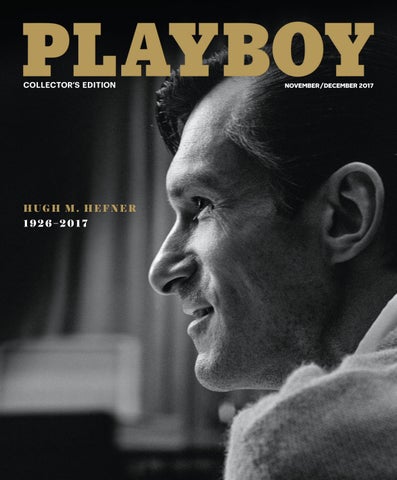
Create a flipbook