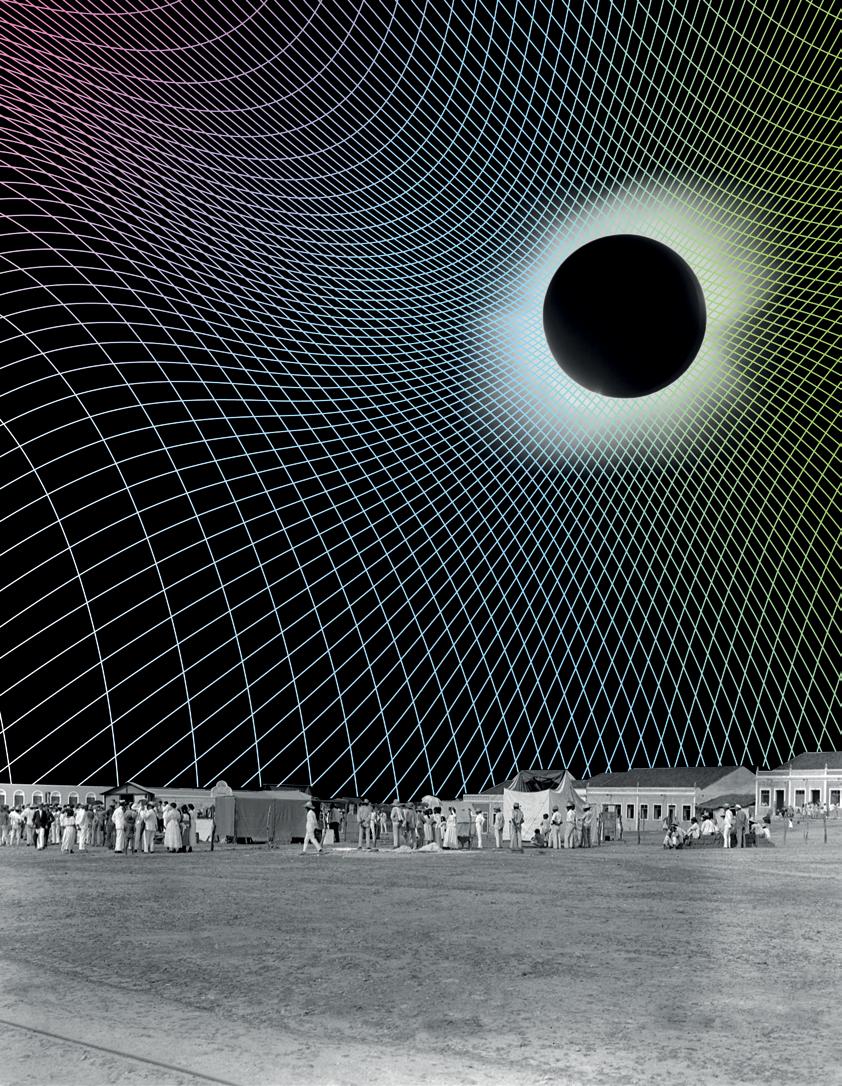
One hundred years ago, changes in the path of starlight recorded in Brazil and Africa during a total eclipse of the sun proved Einstein’s famous theory for the first time
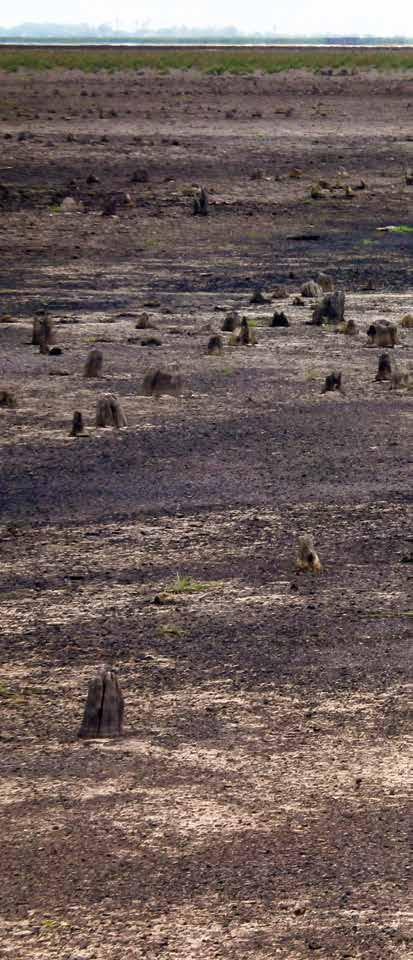
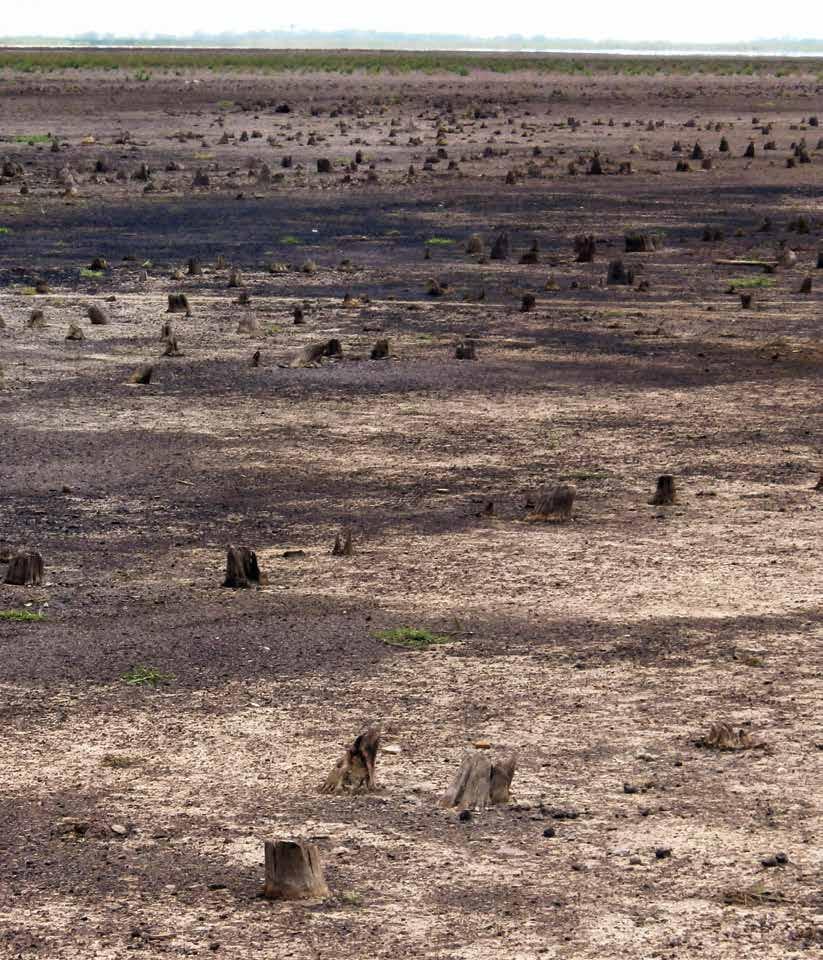
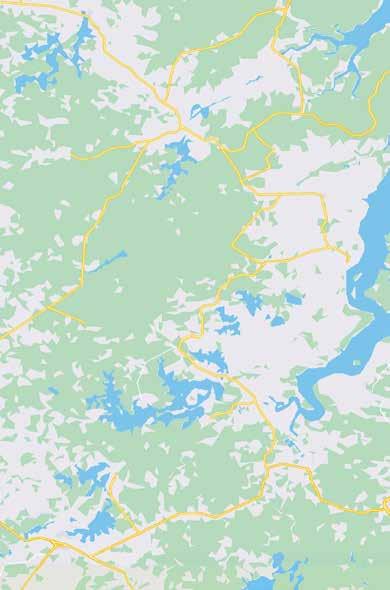
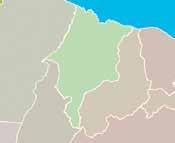
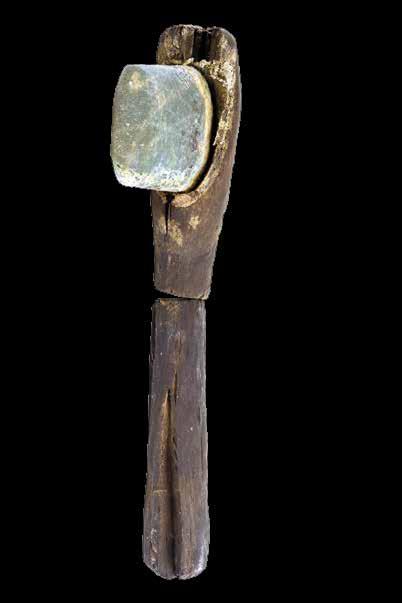
Archaeological sites in Maranhão show evidence of ancient stilt-house villages
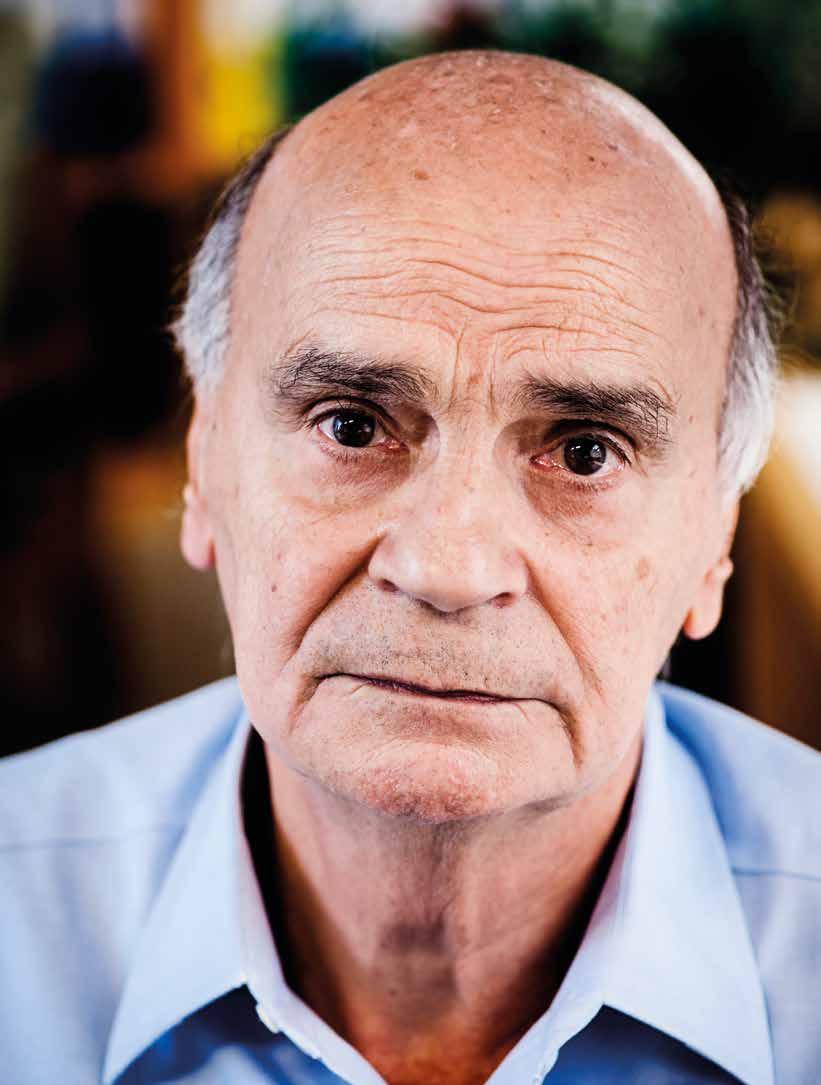
Drauzio Varella defends the Brazilian health system and discusses his media work
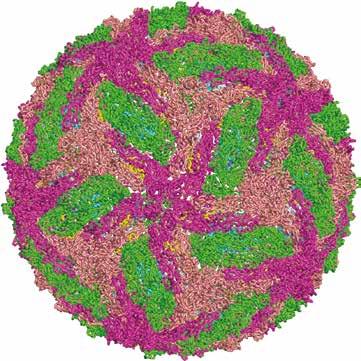
The Butantan dengue vaccine leads to an international partnership
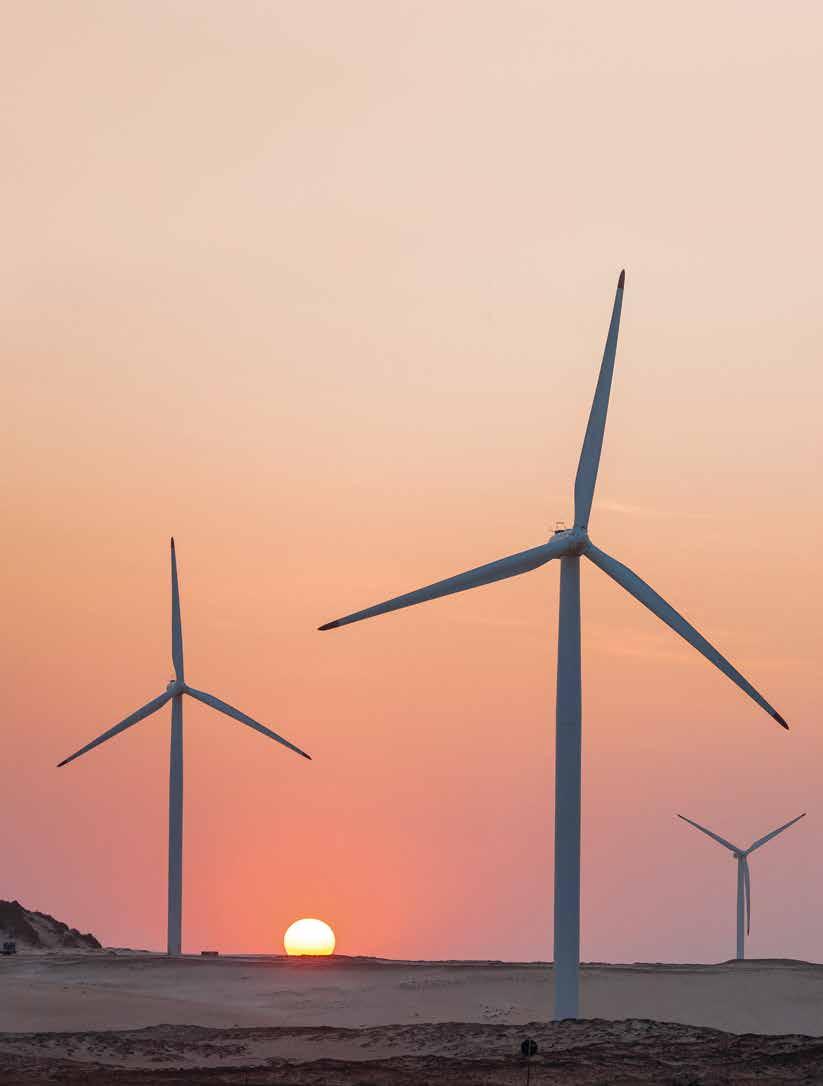
Wind power in Brazil could potentially supply triple the current energy demand
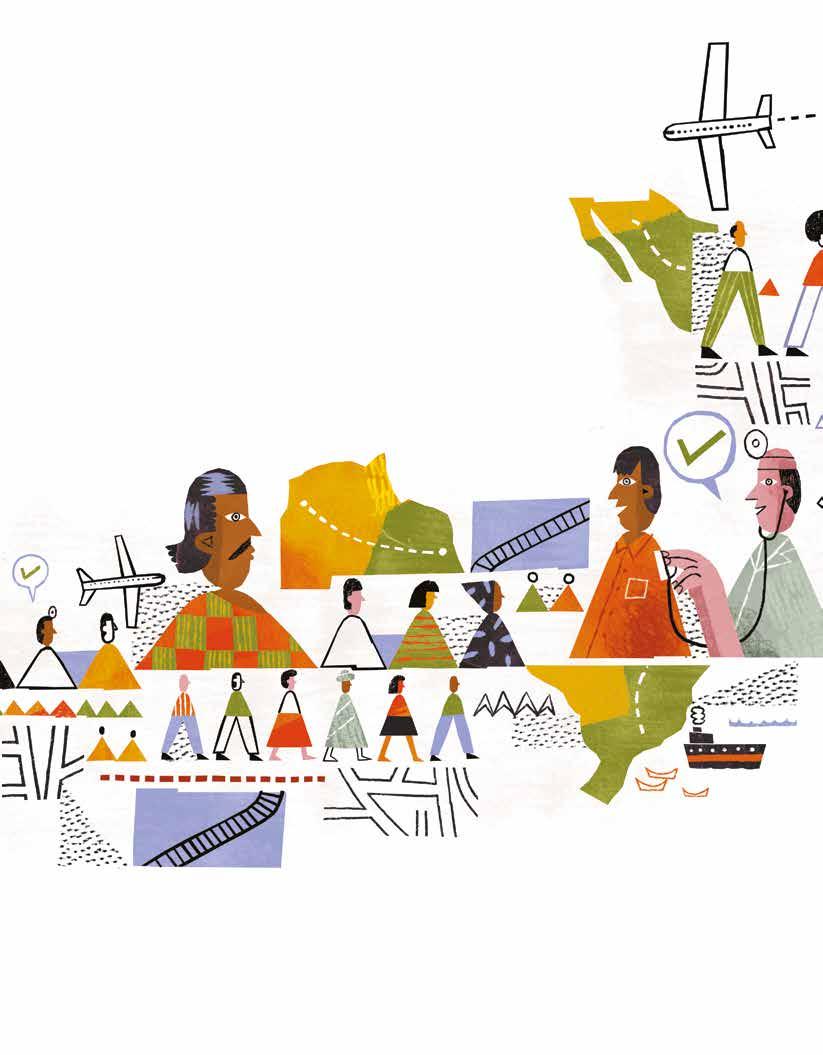
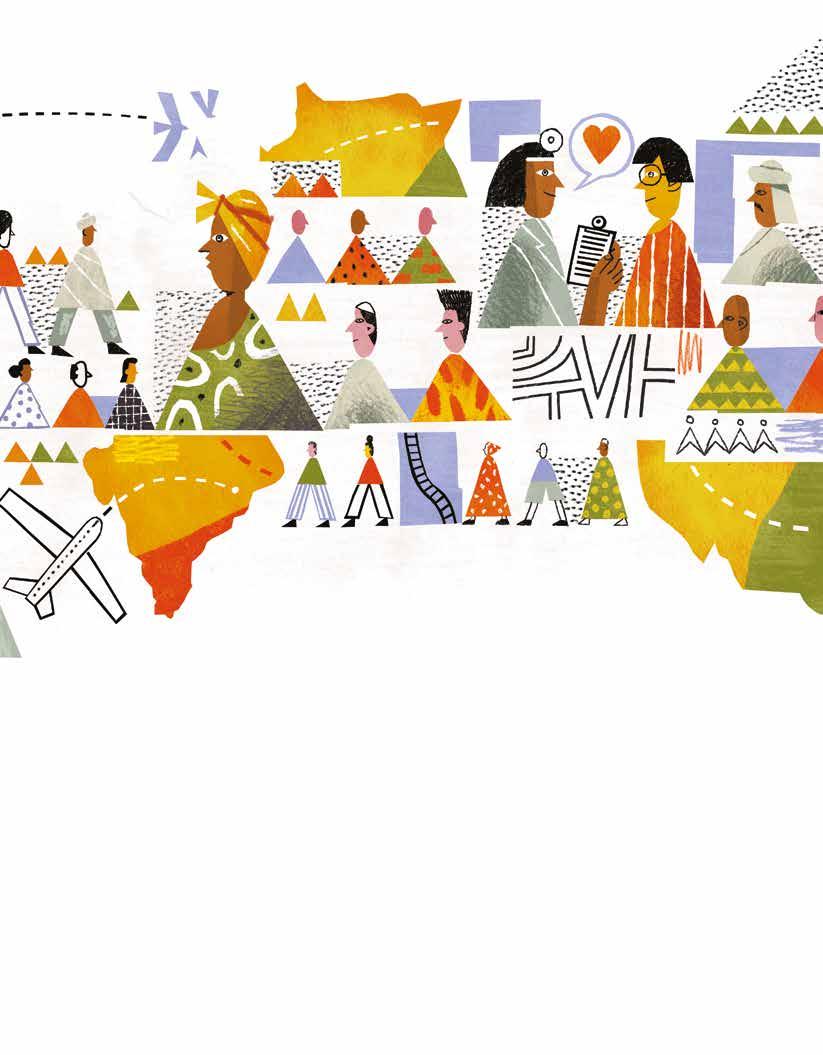
Researchers challenge stereotypes regarding health and migration
DECEMBER 2019
3 Letter from the editor COVER
4 The 1919 phenomenon was also observed by expeditions from Brazil and the USA
10 Astrophysicist Daniel Kennefick discusses the importance of the event, as seen from Sobral in the state of Ceará
INTERVIEW
14 Oncologist Drauzio Varella uses every means available to answer health questions
S&T POLICY
22 Initiatives encourage knowledge exchange programs among Brazilian scientists in the USA
26 Study looks at why Brazil is less innovative and creates fewer patents than other countries
30 USP and UNICAMP use the internet to share research infrastructure
34 New efforts to highlight women’s contributions to science
SCIENCE
38 Pharmaceutical giant MSD strikes a deal worth up to US$ 100 million with Butantan Institute for its dengue fever vacine
43 São Paulo-based institute manufactures 100 million doses of nine vaccines each year
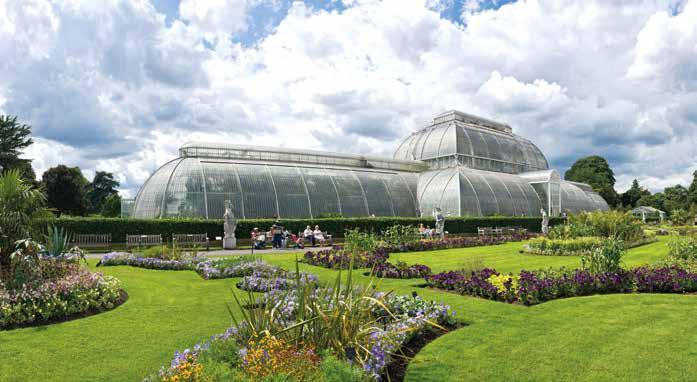
44 Brazilian biologist Alexandre Antonelli named Director of Science at Kew Gardens, UK
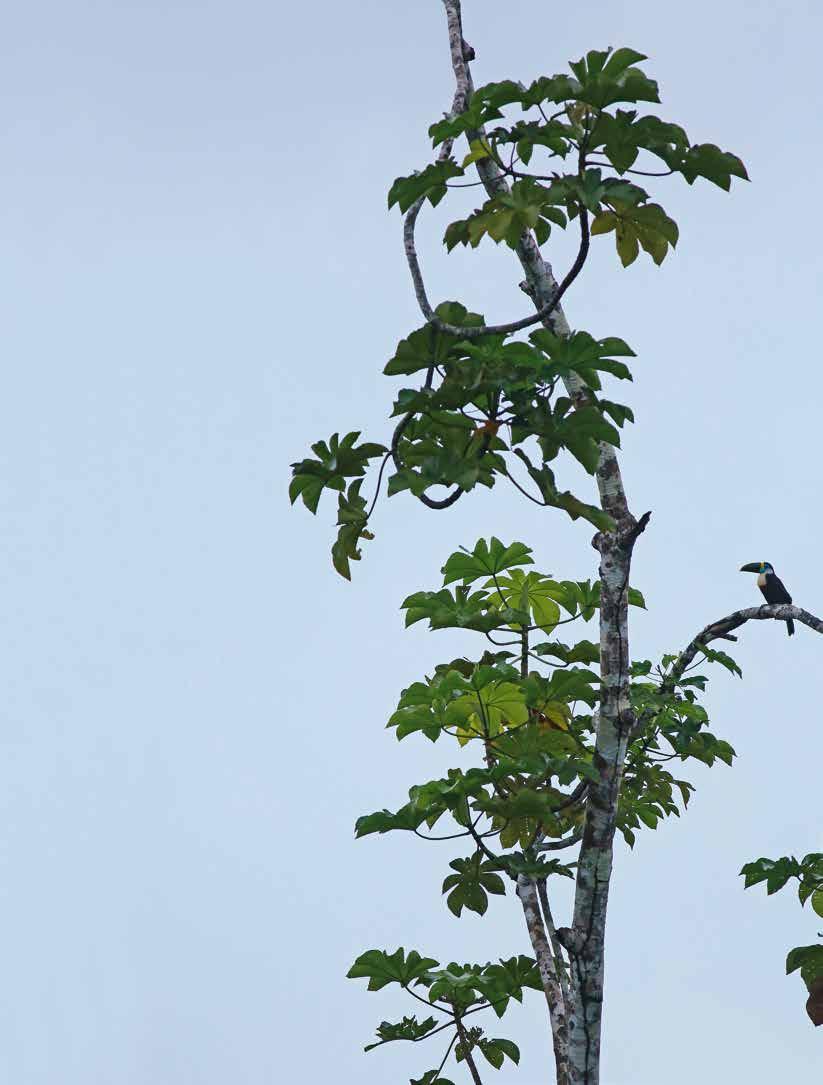
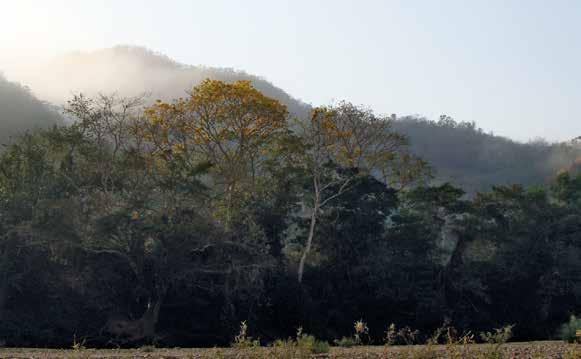
48 Dry and wet forests naturally regenerate in different ways
51 Study supports theory on how dense matter interacts with strong gravitational fields
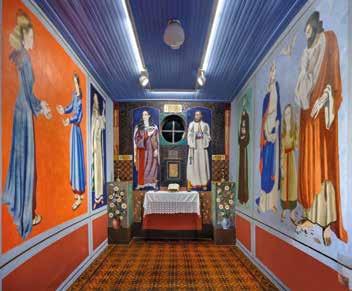
52 Analyses show how Portinari created and modified his paintings
56 Gold nanoparticles coated with platinum could improve fuel-cell efficiency
TECHNOLOGY
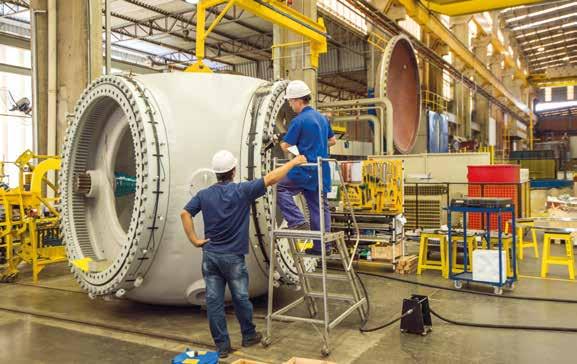
58 Brazilian wind power could provide three times as much energy as the current national demand
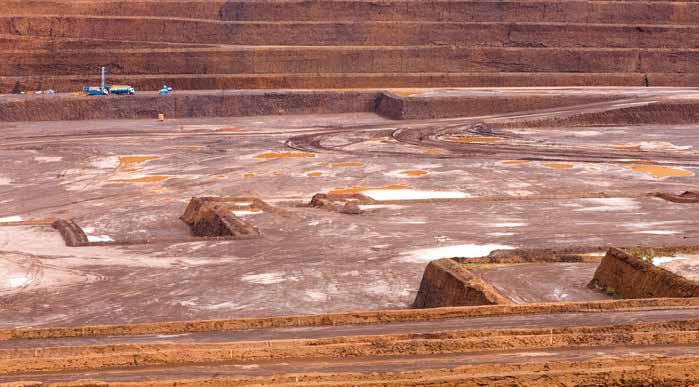
64 The myths and misunderstandings surrounding niobium metal
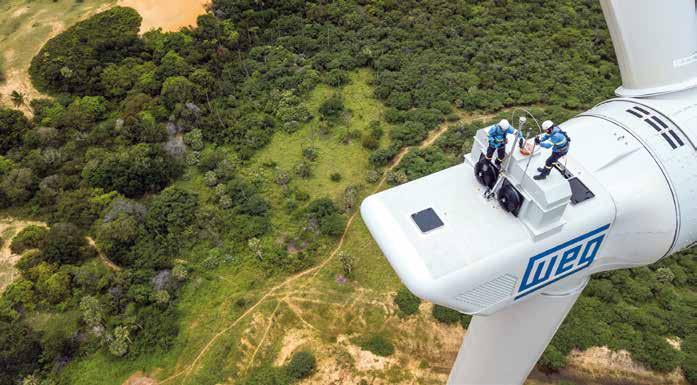
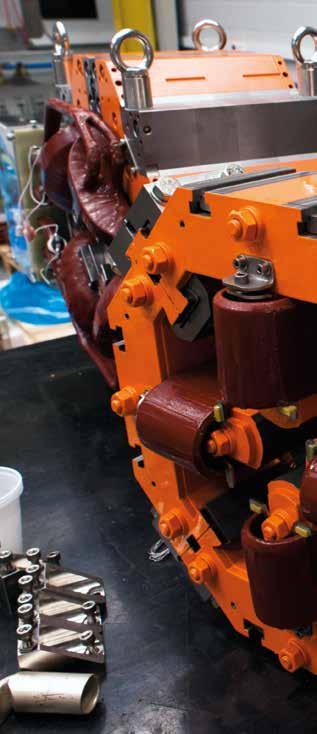
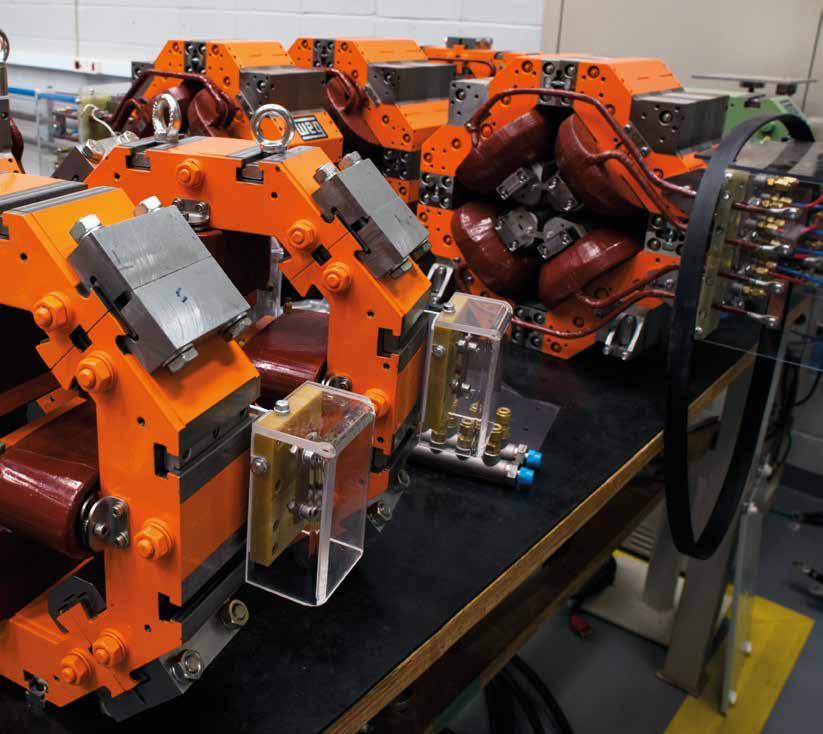
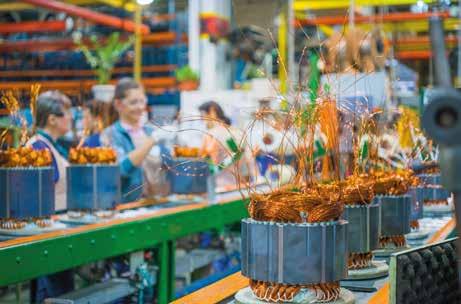
70 Motor and generator company WEG manufactured electromagnets for the Sirius Project HUMANITIES
74 One thousand years ago, an ancient tribe lived in stilt houses in the lowlands of present-day Maranhão
80 Criminal investigations and lawsuits help fight corruption
84 Multidisciplinary teams challenge stereotypes surrounding health and migration
COVER
A solar eclipse seen from Brazil and Africa 100 years ago helped prove the theory of relativityZ
Eclipse record of 1919
SÃO PAULO RESEARCH FOUNDATION
PRESIDENT Marco Antonio Zago
VICE-PRESIDENT
Ronaldo Aloise Pilli
BOARD OF TRUSTEES
Carmino Antonio de Souza, Ignácio Maria Poveda Velasco, João Fernando Gomes de Oliveira, Liedi Legi Bariani Bernucci, Marilza Vieira Cunha Rudge, Mayana Zatz, Mozart Neves Ramos, Pedro Luiz Barreiros Passos, Pedro Wongtschowski, Vanderlan da Silva Bolzani
EXECUTIVE BOARD
PRESIDENT DIRECTOR
Carlos Américo Pacheco
SCIENTIFIC DIRECTOR
Carlos Henrique de Brito Cruz
ADMINISTRATIVE DIRECTOR Fernando Menezes de Almeida
ISSN 1519-8774
EDITORIAL BOARD
Carlos Henrique de Brito Cruz (President), Caio Túlio Costa, Eugênio Bucci, Fernando Reinach, José Eduardo Krieger, Luiz Davidovich, Marcelo Knobel, Maria Hermínia Tavares de Almeida, Marisa Lajolo, Maurício Tuffani and Mônica Teixeira
SCIENTIFIC COMMITTEE
Luiz Henrique Lopes dos Santos (President), Américo Martins Craveiro, Anamaria Aranha Camargo, Ana Maria Fonseca Almeida, Carlos Américo Pacheco, Carlos Eduardo Negrão, Douglas Eduardo Zampieri, Euclides de Mesquita Neto, Fabio Kon, Francisco Antônio Bezerra Coutinho, Francisco Rafael Martins Laurindo, Hernan Chaimovich, José Roberto de França Arruda, José Roberto Postali Parra, Lucio Angnes, Luiz Nunes de Oliveira, Marco Antonio Zago, Marie-Anne Van Sluys, Maria Julia Manso Alves, Paula Montero, Roberto Marcondes Cesar Júnior, Sérgio Robles Reis Queiroz, Wagner Caradori do Amaral and Walter Colli
SCIENTIFIC COORDINATOR
Luiz Henrique Lopes dos Santos
EDITOR IN CHIEF
Alexandra Ozorio de Almeida
MANAGING EDITOR
Neldson Marcolin
EDITORS Fabrício Marques (S&TPolicy), Glenda Mezarobba (Humanities), Marcos Pivetta (Science) Carlos Fioravanti and Ricardo Zorzetto (Special editors) Maria Guimarães (Website) Yuri Vasconcelos (Assistant editor)
REPORTERS Christina Queiroz, Rodrigo de Oliveira Andrade
COPYWRITERS Jayne Oliveira (Website), Renata Oliveira do Prado (Social media)
ART Claudia Warrak (Editor) Alexandre Affonso (Infographics editor) Felipe Braz (Digital designe), Júlia Cherem Rodrigues and Maria Cecilia Felli (Assistants)
PHOTOGRAPHER Léo Ramos Chaves
IMAGE DATABASE Valter Rodrigues
TRANSLATORS Tom Jamieson, Peter David Hunrichs, Kim Jacob, Tiago Van Rheenen
COORDINATION AND REVIEW Ricardo Cunha Lay
CONTRIBUTORS Ana Paula Campos, Augusto Zambonato, Carla Aranha, Domingos Zaparolli, Eduardo Cesar, Fabio Otubo, Luísa Destri, Mayumi Okuyama, Rafael Garcia, Rômolo, Zé Vicente
PRINTER Eskenazi
THE REPRINTING OF TEXTS, PHOTOS, ILLUSTRATIONS AND INFOGRAPHICS IN WHOLE OR IN PART, IS PROHIBITED WITHOUT PRIOR AUTHORIZATION
ADMINISTRATIVE MANAGEMENT FUSP – FUNDAÇÃO DE APOIO À UNIVERSIDADE DE SÃO PAULO
PESQUISA FAPESP Rua Joaquim Antunes, no 727, 10o andar, CEP 05415-012, Pinheiros, São Paulo-SP
FAPESP Rua Pio XI, no 1.500, CEP 05468-901, Alto da Lapa, São Paulo-SP
DEPARTMENT FOR ECONOMIC DEVELOPMENT, SCIENCE AND TECHNOLOGY
SÃO PAULO STATE GOVERNMENT
LETTER FROM THE EDITOR
Fortune and chance
Alexandra Ozorio de Almeida EDITOR IN CHIEF
Science evolves in a nonlinear manner. Subject to mishaps and chance, its path is much more lively and interesting than one might presume. Frequently, there is a good story behind important discoveries. One of these stories happened one hundred years ago and had Brazil as its stage (page 4).
In 1919, Albert Einstein was not yet the renowned physicist that he would become. In 1905 and 1915, he published his special and general theories of relativity, respectively. Up until then, physics treated the tridimensionality of space as independent of time, as unidimensional. Einstein brought all four dimensions together, creating the nondivisible spacetime model. Gravity, according to Einstein’s proposal, is a geometrical property of spacetime. In addition, the presence of a body with great mass, such as the Sun, bends the fabric of spacetime. That effect causes light to change its path when passing by the Sun.
A total eclipse was a perfect opportunity to prove the bending of light by gravity proposed by the theory of relativity. After a few unsuccessful attempts, which involved an astronomer being arrested as a suspected spy, among other difficulties, in May 1919, a team of astronomers in Sobral, Northeastern Brazil, measured the position of stars during a five-minute long total eclipse. Another team, sent to the African island of Principe, experienced a cloudy sky. The validation of Einstein’s theory opened up a vast area of research and revealed a dynamic universe where spacetime expands, collapses in black holes and creates waves—the existence of gravitational waves, predicted by the physicist, was verified in 2016.
The oncologist Drauzio Varella is, without a doubt, the best-known doctor in Brazil. Starting in radio in the 1980s, Varella went on to television, where millions of viewers all over the country watch his reports on Sunday evenings. Varella also developed a passion for writing. The doctor has a weekly column in the press and is the author of many novels, including a bestseller on his work in Carandiru, an infamous prison in São Paulo city, which was demolished in 2002.
Using various media channels, Varella talks mainly about health-related issues, without shying away from controversial topics. The thread that links all his work is the respect for scientific knowledge. Varella’s arguments are based on data from scientific research, complemented by his ample experience as a doctor. Varella, 76 years old, runs a private clinic, works in a hospital and has been a volunteer worker in the state penitentiary system for the last 25 years. This issue brings an extensive interview with Varella on many topics, including his pioneering work in Brazil on the first cases of HIV (page 14).
The current issue of Pesquisa FAPESP covers articles published from January until May 2019 in the Portuguese edition of the magazine. Highlights include features on wind farming in Brazil and niobium, an interview with Alex Antonelli, the Brazilian who is the new scientific director of Kew Gardens, and a feature on the success rate of the judiciary in combatting corruption. All articles published by Pesquisa FAPESP are available in English on our website: www.revistapesquisa.fapesp.br/en.
No solar eclipse has been as momentous in the history of science as the one that occurred on May 29, 1919. That year, two separate expeditions of British astronomers were sent to photograph the eclipse and take measurements: one expedition voyaged to Sobral, an inland town in northeastern Brazil, and the other travelled to the island of Príncipe, then a Portuguese possession, off the coast of West Africa. Their mission was to determine whether starlight is bent as it traverses a region with a strong gravitational field, in this case the limb of the Sun, and to measure the angle of any detected deflection. Apart
from possible surprises, the expeditions assumed that one of three possible results would occur: the path of light would be uninfluenced by gravitation, it would be deflected as predicted by calculations based on Isaac Newton’s (1643–1727) law of universal gravitation, or it would bend according to Albert Einstein’s (1879–1955) general theory of relativity by approximately double the amount calculated with Newtonian mechanics. Six months later, photos and calculations published by the British astronomers proved Einstein right.
The expeditions provided the first experimental evidence for the general theory of relativity that Einstein
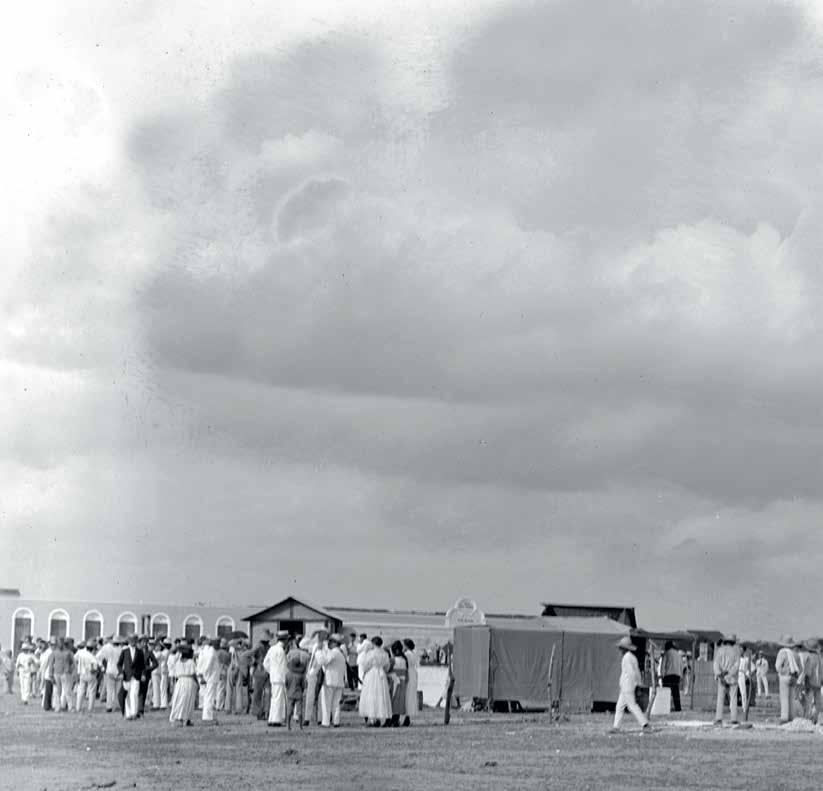
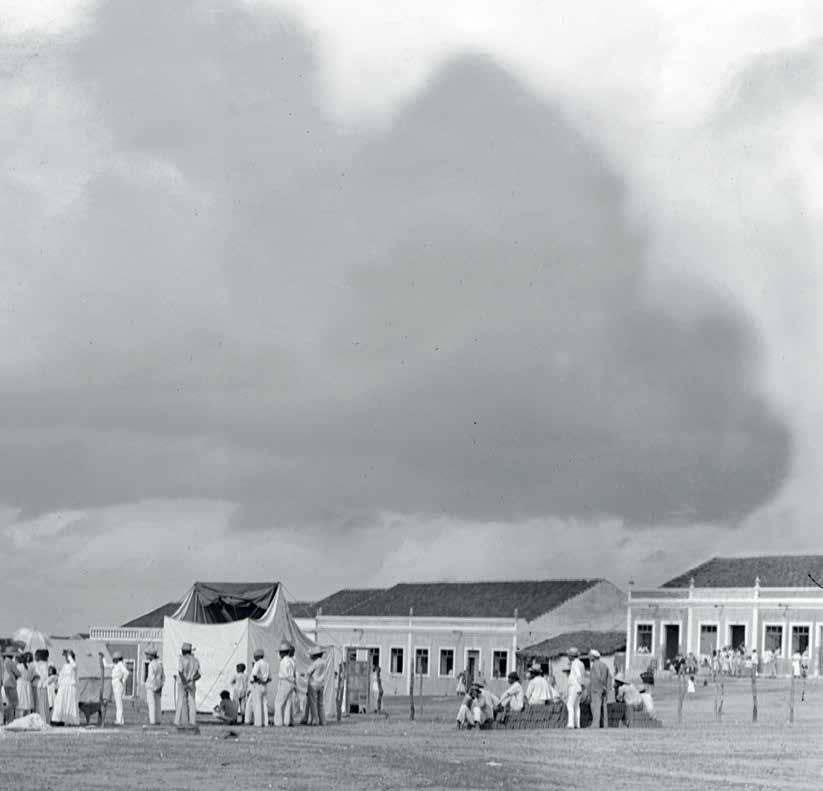
Townsfolk gathered at the Patrocínio plaza in Sobral, northeastern Brazil, ahead of the eclipse
When light BENT
Observations of the 1919 solar eclipse from Brazil and Africa provided the first experimental proof of Albert Einstein’s theory of relativity
Marcos Pivetta and Rodrigo de Oliveira Andrade
PUBLISHED IN APRIL 2019
had published four years prior, which suggested that matter and energy cause warps in the spacetime fabric and that they could also deflect the path of light traveling through it. In lending support to Einstein’s ideas, the results from the eclipse expeditions gave humanity a new understanding of the universe. They also helped make the German physicist one of the most respected and celebrated scientists of the twentieth century. Today, one hundred years after the 1919 eclipse, there is a consensus in the scientific community that general relativity more accurately predicts the trajectory (deflection) of starlight than the calculations based
on Newton’s theory of gravity. For decades, however, astrophysicists, physicists, and historians of science debated whether the data from the 1919 observations were sufficiently robust to endorse Einstein’s ideas, as indeed they eventually proved to be. Some critics argued that the measurements had not been accurate enough to decide which of the two theories was right; others contended that British astronomer Arthur Stanley Eddington (1882–1944), the then director of the University of Cambridge Observatory who headed up the Príncipe expedition, had deliberately discarded the data from the Sobral observations that appeared to support Newton’s
Chasing stars
The first decades of the twentieth century saw several attempts by astronomers to capture the deflection of starlight, largely without success
1911 1912
Observatory in the US
Researchers from the Argentine Observatory led by Charles Perrine planned to record a solar eclipse from the vantage point of the Serra da Mantiqueira highlands in Minas Gerais, southeastern Brazil. Bad weather prevented them from taking any photographs
theory. “Eddington was not only an enthusiast of Einstein’s ideas, but was keen to experimentally verify his theory as a gesture toward a reconciliation between the United Kingdom (UK) and Germany after World War I [1914–1918],” says physicist Luiz Nunes de Oliveira of the São Carlos Institute of Physics at the University of São Paulo (IFSC-USP). “But there is no evidence that the data was fudged.”
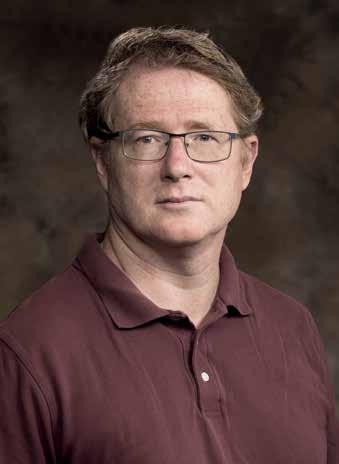
Irish astrophysicist and historian of science
1914
The outbreak of World War I thwarted Finlay-Freundlich’s second attempt to record an eclipse, this time in Crimea, Russia
Daniel Kennefick, of the University of Arkansas, also dismisses claims that Eddington skewed the data in Einstein’s favour. “Not only was Eddington not in Sobral and therefore not personally involved in taking the measurements, but he also had no hand in analysing the data from that end of the expedition. Those analyses were done by Frank Dyson [1868–1939] and his assistants at the Greenwich Observatory in London,” argues Kennefick, who is launching a book on
1916
The Argentine Observatory managed to record a solar eclipse in Tucacas, Venezuela, but no photograph was usable for proving Einstein’s ideas
Starlight travels in a straight line across the universe until reaching the Earth, so a star photographed at night will be seen at its true position
During an eclipse, starlight is deflected as it passes near the Sun. According to Einstein’s general theory of relativity, the Sun’s sheer mass causes the spacetime fabric to curve around it, and a light ray crossing this region will shift its course
Einstein predicted that light would bend at an angle of 1.75 arcseconds, roughly twice the amount that other physicists had predicted using Newton’s law of gravity
German astronomer Erwin Finlay-Freundlich attempted to measure the deflection with photographic plates of a solar eclipse taken at the Lick
1918 1919 1922
The Lick Observatory team was unable to photograph a solar eclipse in the US because its equipment had been held up in Russia since 1914
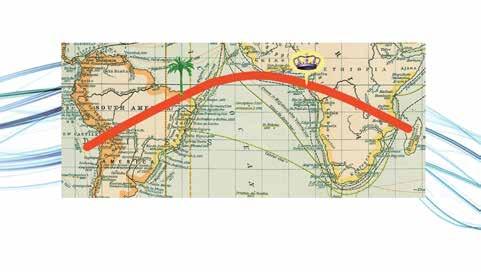
The path of the eclipse that confirmed Einstein’s predictions crossed over the equator. The eclipse was observed from Sobral and the island of Príncipe, off the West coast of Africa
SOURCE EARMAN, J. & GLYMOUR, C. RELATIVITY AND ECLIPSES: THE BRITISH ECLIPSE EXPEDITIONS OF 1919 AND THEIR PREDECESSOR
the 100th anniversary of the eclipse (see interview on page 10).
Star fields—the name astronomers give to discrete areas of the sky populated by stars—are continually shifting in space. However, the relative position between individual stars is always the same on a small time scale of, say, a few months. “If we take a photo today and another in three months’ time, the stars in a given field line up perfectly,” explains astronomer Augusto Damineli of USP. “But around a solar eclipse, the stars will appear to be slightly offset in relation to a photo of the same star field taken at night. The closer a star is to the Sun, the more its light rays are bent during an eclipse.” This was the predicted but not yet experimentally observed effect that the British expeditions were able to confirm.
In his book Opticks , first published in 1704, Newton also suggests that light is bent by gravity, but provides no calculations for the angle of deflection. According to Newton, gravity is a force acting between point masses that is proportional to their mass and inversely proportional to the square of their separation distance. In Newton’s time, the nature of light was unknown. There were then two competing hypotheses: that light consisted of corpuscles (particles) or that it was a type of a wave. Assuming light to be corpuscular, British astronomer John Michell (1724–1793) and French scientist Pierre-Simon Laplace (1749–1827) independently calculated the effects of gravity on light near the end of the eighteenth
century. However, during the course of the nineteenth century, it was established that light was a form of an electromagnetic wave. “When light came to be understood as a type of wave, rather than matter, it became completely uncertain whether it would be affected by gravity,” says Daniel Vanzella of the São Carlos Institute of Physics at USP (IFSC-USP). “That remained an open question for more than 100 years.”
Einstein began to make a name for himself in the scientific community when he introduced a new conception of space and time in 1905. “With the publication of his special theory of relativity, space and time ceased to be understood as absolute,” explains astronomer Reinaldo Ramos de Carvalho of the Brazilian National Institute for Space Research (INPE) in São José dos Campos. Einstein posited that space could deform, shrink, and even collapse, forming black holes, and that time could expand. However, the initial and incomplete version of his theory still yielded the same value for light deflection as Newtonian gravitation: 0.87 arcseconds. It was only after publishing his theory of general relativity in 1915 that Einstein took his ideas a step further.
He proposed that gravity was not a force exerted between masses, as Newton described it, but rather the effect of a property of energy: that of deforming spacetime and everything that moves across it, even waves, such as light. “Space as described by Newton was flat. But in Einstein’s general relativity, spacetime is curved near bodies possessing significant energy or mass,” explains physicist George Matsas of the Institute for Theoretical Physics at São Paulo State University (IFT-UNESP). After factoring in the assumption of spacetime curvature, Einstein’s figure for light deflection virtually doubled to 1.75 arcseconds.
THE WORLD’S EYES ON SOBRAL
When general relativity was unveiled, astronomers from around the world were eager to test the theory through observation of solar eclipses, which would provide the opportunity to photograph stars near the Sun’s corona and determine whether their light would be deflected due to proximity to the Sun. However, because of bad weather or difficulties stemming from World War I, none succeeded in obtaining data that could substantiate Einstein’s ideas until the eclipse of 1919 (see the timeline on page above).
In mid-1918, researchers at the Brazilian National Observatory in Rio de Janeiro, who were anticipating an eclipse the following year, determined that Sobral, a small town approximately 200 kilometres from Fortaleza, would provide optimal geographical conditions for observation. Astronomer Henrique Charles Morize (1860–1930), the then director of the institution, pre-
Photographs of a solar eclipse made on Christmas Island corroborated the data obtained years earlier at Sobral
SOBRAL PRÍNCIPE
pared a detailed report on the region and sent it to scientific institutions around the world, including the Royal Astronomical Society in London.
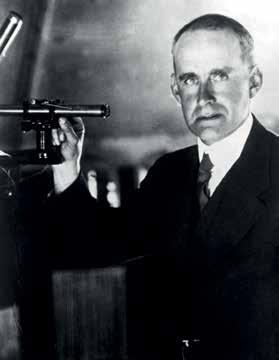
Frank Dyson, president of the society, had been exposed to Einstein’s theories through Arthur Eddington, the institution’s secretary. Eddington was then a rising star in the European astronomical community, says historian Matthew Stanley, a professor in the Department of History of Science at Harvard. “His work in statistical cosmology had established his reputation as a creative and talented scientist, and his later work in stellar structure was a crucial element in the development of theoretical astrophysics as a field,” Stanley wrote in an article in the journal Isis in 2003. “Both Eddington and Dyson knew that the May 1919 eclipse would be special,” says Oliveira. “The Sun would pass across a large cluster of stars in the constellation of Taurus, so there would be plenty of bright lights to observe.” The eclipse would provide a window of only a few minutes to photograph stars near the Sun’s edge, 150 light-years away from Earth (a lightyear equals 9.5 trillion kilometres).
EYES ON THE SKY
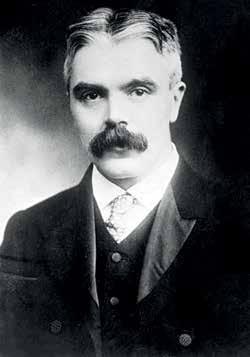
To determine which theory—Newton’s or Einstein’s—was correct, the Royal Astronomical Society organized expeditions to regions providing ideal observation conditions. Eddington led an expedition to the island of Príncipe, 300 kilometres off the coast of Africa. The other team, consisting of two members of the Greenwich Observatory—Charles Davidson and Andrew Crommelin—went to Sobral, with Dyson coordinating the expedition from overseas.
The Greenwich team arrived in Brazil on March 23, 1919. They disembarked at the port
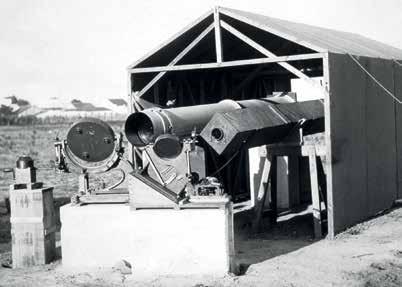
of Belém, Pará, where they waited a few weeks as Henrique Morize from the Brazilian National Observatory made arrangements for their arrival in Sobral. By courtesy of the Brazilian government, their gear was waved through customs without inspection, as reported by the British researchers in an article later published in the Philosophical Transactions of the Royal Society Davidson and Crommelin brought two astrographic telescopes coupled to mirror systems known as coelostats, which are mounted such that they can track the Sun’s movement across the sky and reflect the Sun’s image back to the telescope. The main telescope brought from the Royal Greenwich Observatory offered a very wide field of vision, in theory allowing them to photograph a large number of stars around the Sun during the eclipse. The telescope had a 13-inch aperture and was mounted to a 16-inch coelostat.
A smaller telescope was borrowed from the British Jesuit astronomer Aloysius Cortie (1859–1925) as a kind of backup, with a 4-inch aperture and 8-inch coelostat.
Although a source of controversy, Eddington’s and Dyson’s conclusions were proven correct in later decades
The scientists arrived in Sobral on April 30, 1919, and were welcomed by the then mayor, Jácome de Oliveira. “They then met Colonel Vicente Saboya, who offered the foreign visitors one of his houses,” says physicist Emerson Ferreira de Almeida of Vale do Acaraú State University, in Sobral. “The observations would be made at the town’s Jockey Club.” Two other expeditions with more modest equipment, one Brazilian and the other American, joined the English astronomers a few days later in Sobral, although their measurements were neither intended nor later used to verify the validity of Einstein’s theory of relativity (see article on page12).
Across the Atlantic, Eddington and his team had arrived at the port of Santo António in Príncipe on April 23, 1919. In their baggage, they carried a telescope borrowed from the Cambridge Observatory, similar to the larger one sent to Sobral. The day of the eclipse was marked by poor weather, and the overcast sky compromised the quality of the images. On some plates, the stars appeared clearer, while on other plates they disappeared in the cloudy sky. “That day also dawned cloudy in Sobral,” says astronomer Carlos Veiga of the Center for Astronomy and Astrophysics at the Brazilian National Observatory. “But the clouds gradually began to thin, and the sky cleared.” Shortly before 9:00 a.m., the moon’s disk began to slide over the Sun’s, completely
The 13-inch telescope used by the Sobral expedition to document the eclipse
obscuring it within minutes. The eclipse lasted exactly 5 minutes and 13 seconds.
The Greenwich team would remain in Sobral until July to photograph the same star field at night without the influence of the Sun’s gravitational pull. Eddington returned from Príncipe to England ahead of the Sobral team and produced images of the same star field in the Oxford sky, although the comparison plates would have best been taken at the site where the eclipse plates had been captured.
DIFFERING RESULTS
The astronomers produced three sets of photographic plates to measure the deflection of starlight near the Sun’s limb. At Sobral, the main telescope recorded 12 stars and the backup telescope recorded 7. The telescope used at Príncipe captured five stars. The plates from all three revealed some degree of deflection during the eclipse, confirming both Newton’s and Einstein’s ideas. However, each of the three instruments captured different deflection figures, with different error margins. Two agreed with Einstein’s calculations, but one instrument was closer to the Newtonian prediction.
The most reliable calculations were derived from the clearest images of the eclipse—ironically, these were obtained with the smaller telescope at Sobral. Back in the UK, the team analysed the plates and calculated the deflection to be 1.98 arcseconds (with 0.12 arcseconds of error), more than Einstein’s figure. All images produced by the larger telescope at Sobral were blurred or out of focus. “This may have been caused by the effect of the Sun’s heat on the mirror array,” suggests USP physicist Ramachrisna Teixeira. The Sobral team was still able to analyse these poorer-quality plates and arrived at a deflection of 0.86, consistent with predictions based on Newton’s law of gravity. However, the poor quality of the images led the British astronomers to discount the larger telescope’s deflection values from their final analysis.
At Príncipe, due to bad weather, the images of many stars were either lost in the diffuse halo created by the Sun’s light, or they were covered by the moon’s disk. Atmospheric turbulence further compromised the quality of the photographic plates. Despite their suboptimal conditions, Eddington was able to analyse the eclipse plates and compare them with check plates he took of the same star field in Oxford. The result was a deflection of 1.61 arcseconds, with a margin of error of 0.30 arcseconds, slightly lower than Einstein’s prediction. “The greatest weight must be attached to those obtained with the 4-inch lens at Sobral. From the superiority of the images and the larger scale of the photographs, it was recognized that these [results] would prove to be the most trustworthy,” Dyson, Eddington, and Davidson announced in a written statement during a meeting of the Royal Astronomical Society in London, on November 6, 1919, declaring that Einstein’s prediction had been confirmed. While their findings became a source of controversy, Dyson’s and Eddington’s conclusions were ultimately proven correct. Several other eclipses were observed over the following decades, and the resulting measurements consistently pointed to a deflection close to Einstein’s. Confirmation of his theory helped open new and wide avenues of research in fields such as physics, astronomy, and cosmology. “The German physicist’s ideas found especially fertile ground in Soviet physicist Alexander Friedmann [1888–1925], who, building on Einstein’s theory, proposed that galaxies were moving away from us because spacetime, that is, the universe, was expanding,” says Carvalho. General relativity also provided the groundwork for important concepts in astrophysics, including black holes (extremely compact regions in spacetime where gravity is so strong that not even light can escape it) and gravitational waves— disturbances in the curvature of spacetime that propagate as waves. Gravitational waves would only be confirmed in early 2016. n
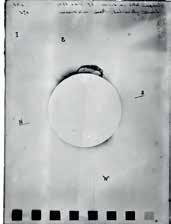
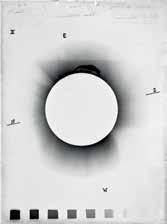
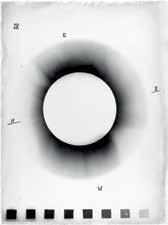
Photographic plates produced by the Brazilian team for spectroscopic observations of the Sun’s corona
In the British expedition’s shadow
The Sobral eclipse was also observed by scientific expeditions from Brazil and the US
Two lesser-known expeditions joined the British team in recording the solar eclipse at Sobral on May 29, 1919. One team was formed by Brazilians, among them Lélio Gama, Domingos Fernandes da Costa, Allyrio Hugueney de Mattos, and Teófilo Lee. The team, led by astronomer Henrique Charles Morize, then director of the Brazilian National Observatory in Rio de Janeiro, arrived in Sobral on May 9 that year. The expedition’s objective was to conduct spectroscopic observations of the Sun’s corona by producing photographic plates similar to those taken by the expedition from Greenwich. “Morize also saw an occasion to demonstrate the competence of Brazilian scientists and of the institution of which he was director,” explains astronomer Carlos Veiga of the Center
for Astronomy and Astrophysics at the Brazilian National Observatory.
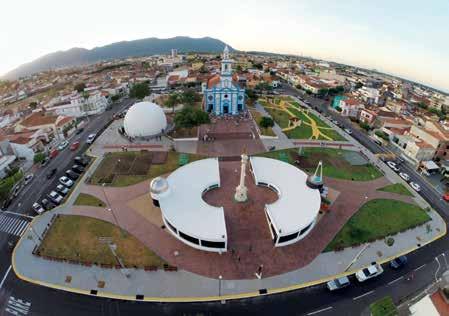
The Brazilian astronomers set up their equipment at a plaza in front of the church of Patrocínio, a distance from the spot reserved for the British team. The square is now home to an Eclipse Museum that opened on May 29, 1999, amid celebrations of the 80th anniversary of the eclipse observations in Sobral. The facility has been closed since 2014 for repairs but was due to reopen in early May, in time to celebrate the 100th anniversary of the eclipse. The museum features replicas of planets and natural satellites in our solar system, as well as photos of the 1919 eclipse and videos with content on science and astronomy.
The Brazilian team took several photographic plates in succession using cameras attached to telescopes, captur-
astronomers Davidson and Crommelin
ing the Sun and the positions of stars near its edge. Some of the plates were recovered and restored by researchers at the Brazilian National Observatory in 2015. The plates, measuring 24 by 18 and 9 by 12 centimeters (cm), were coated with an emulsion consisting of lightsensitive silver salts. They were found in boxes in storage at the Brazilian National Observatory. After being restored, they were digitized and placed on the internet (bit.ly/2D2hxlW).
“Unfortunately, no meaningful conclusions could be drawn from the images produced by the Brazilian team,” says Veiga. Astronomy was then incipient as a field in Brazil. “The Brazilian team was unable to derive any relevant information from the plates they produced, and in the end, their contribution was limited to providing logistical support to the English team and making climate observations,” said the researcher.
The other expedition to observe the eclipse at Sobral was formed by the scientists Daniel Maynard Wise and Andrew Thomson of the Department of Terrestrial Magnetism at Carnegie Institution, Washington. They studied the effects of the eclipse on the Earth’s magnetic field and atmospheric electricity. n R.O.A.
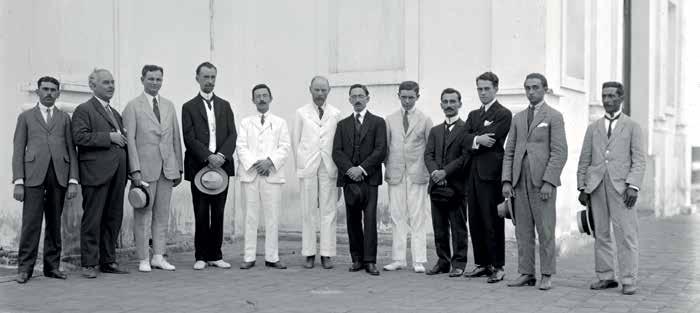
Members of the eclipse expeditions to Ceará (from the 3rd left): the American Wise, the Brazilian Morize, and the British
The importance of Sobral
An astrophysicist and science historian reports that without the observation of the eclipse in the city of Ceará, the experimental results of 1919 would probably have been inconclusive
In the early 2000s, Irish astrophysicist and science historian Daniel Kennefick, now at the University of Arkansas, joined the team at the Einstein Papers Project, an extensive endeavor that began in 1986 and that is still underway today. Coordinated by researchers at the California Institute of Technology (Caltech), the Project concerns the publication, with commentary, of thousands of scientific and nonscientific writings, such as letters and other documents, written by Albert Einstein (1879–1955). Kennefick joined the project during the editing of the volume for 1919, the year of the total solar eclipse that provided the first experimental proof that the general theory of relativity was correct. Upon seeing the documents from the era, he noticed that from time to time an author would make a claim that Kennefick had heard before but had not paid much attention to: namely, that British astronomer Arthur Eddington (1882–1944), who coordinated one of the two British expeditions that observed the 1919 eclipse (on the African
island of Príncipe), had been a great supporter of Einstein’s ideas and would have therefore deliberately favored the interpretation that the light of stars curves according to the calculations predicted by the theory of relativity and not as Newton’s theory of gravity predicted.
Kennefick became interested in this question and, along with his work as a theoretical physicist in the area of gravitational waves, decided to investigate it in depth. In recent years, he has visited British archives to consult the writings and letters of the time. The result of this work is the book No Shadow of a Doubt: The 1919 Eclipse That Confirmed Einstein’s Theory of Relativity, which will be released in English by Princeton University Press at the end of April. In this interview, the astrophysicist relates the details of the two expeditions, refutes the thesis that Eddington was biased towards Einstein, and points out that without the Sobral data, the 1919 eclipse would not have been useful in confirming the predictions of general relativity.
Princeton University Press, 416 pages US$20.00
The researcher is launching a book on the eclipse
No shadow of a doubt
Daniel Kennefick
Why does Eddington’s work analyzing the 1919 eclipse data still generate some controversy, especially in academic circles?
Eddington was a supporter of the theory of relativity in the United Kingdom and eventually became the most famous scientist associated with the 1919 eclipse observations. Some astrophysicists and historians imply that he would have deliberately favored Einstein’s ideas when analyzing the eclipse data. Fortunately, this kind of allegation didn’t gain much traction among nonspecialist audiences. However, one can read comments on the Amazon website from lay readers regarding various works that reiterate this type of criticism of Eddington. Moreover, the role of Frank Dyson [1868–1939], who was the Royal Astronomer of the United Kingdom and the main organizer of the expeditions, has been unfairly neglected. Eddington wasn’t involved in any way with the Sobral data. In addition to not having been in Brazil and therefore not having participated in the production of these records, he didn’t analyze the data from this expedition. This was handled by people from the Greenwich Observatory, basically Dyson, who was the director, and his subordinates.
Is it correct to say that the two British expeditions, one to Sobral and the other to Príncipe, acted independently, although they were coordinated?
Subsequent expeditions were unable to improve on the 1919 measurements in any significant way
Yes. Dyson and Eddington got along well and had a friendly relationship. For a time, before 1919, Dyson was Eddington’s boss when he worked at the Greenwich Observatory. Both knew the importance of the 1919 eclipse. They organized the studies, but the expeditions acted separately. In 1919, each of them was the director of an English observatory: Dyson was at Greenwich, and Eddington directed the observatory at the Univer-
sity of Cambridge. They were in positions that allowed them to mount their own expeditions. Dyson didn’t travel with his expedition to Sobral; he sent two assistants. Eddington took part in the expedition to Príncipe. Because his assistants had died in World War I, he also took a watchmaker who had worked on the instruments in the lab.
Why didn’t Dyson take part in any of the expeditions?
He never said why he didn’t participate, but there are two likely explanations. The most likely reason is that there was a very important meeting in the summer of 1919 that founded the International Astronomical Union, which to this day is the leading international organization of astronomers. He attended the meeting and became one of the principal leaders in the field. Dyson wanted to be at this meeting. In addition, there were few people at the Greenwich Observatory from 1914 to 1918 because of the war, and he didn’t think that he could go away. It was probably a combination of both.
Are the reasons given for discarding the data from the larger telescope used in Sobral reasonable?
I think so. It’s not true that they only discarded the data from that telescope after having obtained a result for the deflection of the light that didn’t match up with Einstein’s theory. I consulted Davidson’s notes, who was Dyson’s assistant in Sobral. They were written a day or two after the eclipse. Davidson said that they had examined the plates from the larger telescope and that they looked horrible, that they couldn’t extract much data from them. Right away, they knew something had gone wrong with the observations with that instrument. They were disappointed, and this problem served as the basis for their later decision to discard these measurements.
And the data obtained on Príncipe?
How much weight did they have in the final verdict?
Those data were used but weren’t considered good. In this case, the problem wasn’t due to a malfunctioning telescope but due to the presence of clouds at the time of the eclipse. They wouldn’t have been able to make any confirmations with a serious impact if they had needed
An aerial view of the Eclipse Museum in Sobral, inaugurated in May 1999 and closed since 2014
to rely solely on the Príncipe data. Without Sobral, they wouldn’t have been able to reach a conclusion.
Can the fact that Eddington went to Príncipe, rather than Sobral, be interpreted as an indication that the African expedition was seen as more important than the expedition to Sobral?
The British were afraid of bad weather. Therefore, they planned on going to two places to minimize that risk. That way they would increase the project’s chances of success. I think that’s basically what led them to choose two locations. They probably would have come to Brazil anyway. They had trouble finding a place to observe the eclipse in Africa. The greater part of the continent where the eclipse would be visible was in the jungles of the Congo and inaccessible to them. In 1912, Eddington observed an eclipse in Brazil. Sobral was one of the few places in the eclipse’s path that had a relatively dry climate, which increased the chances of experiencing good weather there.
Why did the data from the 1919 eclipse take years to be fully accepted by scientists?
I wouldn’t say that other scientists— especially astronomers—didn’t believe
the data; I believe they thought that the measurements needed to be confirmed by other studies. This is typical behavior in science, which mustn’t simply accept someone’s word about something. Under normal circumstances, scientists immediately try to replicate a result that is so important. However, in the case of Einstein’s theory, we had to wait for the occurrence of another eclipse to try to do that. This particularity made that situation special. It was necessary to wait for years to try to make new measurements. This added a certain drama to the situation. Although they confirmed the data from Dyson and Eddington, subsequent expeditions failed to significantly improve the accuracy of the measurements.
Einstein really didn’t interfere in Dyson and Eddington’s final conclusions? He didn’t communicate with any of the English astronomers, not even Eddington, whom he later came to know reasonably well. Through the media, Einstein knew that the British scientists had gone on an expedition to try to prove his theory. Einstein wasn’t an astronomer and was never involved in this kind of a measurement. However, he encouraged people to take on this kind of an enterprise and even helped raise money for a German expedition before 1919.
Eddington and Dyson, the British coordinators of the expeditions to Príncipe and Sobral
What did you see as interesting in the archives from the British expeditions? I’ve read the letters that Eddington sent to his mother’s house and notes from the committee meetings that organized the expeditions. However, what was most important was obtaining access to the data analysis produced by the Dyson team. They kept records of the data and of their calculations. Thus, I was able to see how they did the analyses and came to their important conclusion of rejecting the data from the larger telescope used in Sobral.
Was this kind of data unavailable from Eddington’s expedition to Príncipe?
Unfortunately, for some reason I’m unaware of, no data from this expedition has survived. The photographic plates were lost. I’ve talked to many archivists and no one knows what happened. The loss must have occurred more than 50 years ago. The plates from Sobral survived and were used in a reanalysis of the eclipse data, which was done by other researchers in 1979. However, I’ve never seen them. I talked to some astronomers about this. They say that after 1979, the Sobral plates were moved and no one could tell me exactly where they are. They must be mixed in among other plates. n
Antônio Drauzio Varella
The doctor’s MESSAGE
The oncologist who treated the first AIDS cases in Brazil uses every media platform to clarify the issues he considers important regarding public health
Alexandra Ozorio de Almeida and Neldson Marcolin
PORTRAIT Léo Ramos Chaves | PUBLISHED IN MAY 2019
In 1983, during an internship at Sloan Kettering Memorial Hospital in New York, Drauzio Varella realized that AIDS would hit hard in Brazil. Although he already had more than ten years of experience in oncology and was accustomed to seeing seriously ill patients, the HIV-positive patients Varella saw in the United States made an impression on him. These patients were all young people, many of them artists and intellectuals. “I was very touched by the experience,” Varella recalls. “I had the unmistakable feeling that a tragedy was about to happen.” Varella began to study the subject. When he returned to Brazil, he was the only oncologist with experience in disseminated Kaposi’s sarcoma, a rare type of cancer common in AIDS patients. Because infectious disease specialists had little experience with the new illness, Varella began to treat AIDS cases himself at the Hospital do Câncer, in São Paulo. The patients came from around the country.
Two years later, during a medical conference in Stockholm, Sweden, upon leaving a major discussion about the AIDS epidemic, the oncologist found himself thinking about another aspect of the disease, prejudice, and how to deal with it. “At
AGE 76
SPECIALTY Oncology
INSTITUTION
Member of the clinical staff of the Sírio-Libanês Hospital, São Paulo
EDUCATION
Medical degree from the University of São Paulo (1967)
PRODUCTION
16 scientific articles and 16 books, including Estação Carandiru
that time, the ignorance was brutal. This is happening in Brazil and nobody’s going to say a thing?” Thus, Varella began a journey that would make him the bestknown doctor in the country, first over the radio, followed by television, print journalism, books, and the internet.
While Varella describes it as an educational project effected through the vehicles of mass communication, his communication work covers a multitude of themes and subjects, which sometimes extend beyond healthcare. Varella does not shy from controversy. At age 76, conscious that life is finite, he gives himself permission to say what he thinks. In his writing and public appearances, Varella speaks out on abortion rights, decriminalizing drugs, and the ineffectiveness of mass incarceration as a policy for combating violence.
Married to actress Regina Braga since 1981, the father of two daughters from his first marriage, and a grandfather of two, the São Paulo oncologist divides his time among patients, communication, and writing, which is a source of happiness for him. In this interview, Varella tells us about his research activities, complains about the lack of importance Brazilians attribute to the Unified Health System (SUS), and talks about his communication work and his strong relationship with the prison world, where he learned to appreciate cachaça [Brazilian rum].
Among all your activities, your work related to scientific research is certainly the least well-known. How did your work with plants from the Amazon come about?
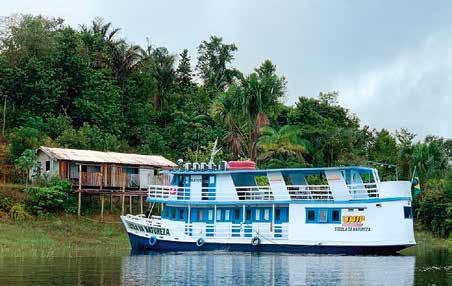
On the weekend of the Carandiru massacre in October 1992, we organized a course on biotechnology in AIDS and cancer at a hotel in São Paulo. Biotechnology was just beginning; it was the hottest area in biology. Brazil had very little biotechnology development, and we wanted to bring the top people here to draw attention to the field. I talked to a friend at the Cleveland Clinic, Ron Bukowski, about organizing a course. He told me: “Brazil is off the beaten track, internationally. If you want to bring people there, you need to offer a tour, a weekend at the beach...” Since UNIP [Paulista University] had a boat on the Amazon, the Escola da Natureza (Nature School), a typical Amazon riverboat, I thought,
In the research conducted with Amazonian plants, we found five extracts with intense antineoplastic activity, which are under study
“What if I took these people there?” And Bukowski replied, “With that you could get whoever you want, even Robert Gallo.” Gallo, at that time, was deservedly at the top of AIDS research. We conducted the course with more than 20 guests— including Gallo, and it was broadcast to 20 auditoriums in a variety of cities by EMBRATEL and sponsored by UNIP, with which I had an informal connection.
And from that trip a project was born? From the boat you cannot see a single plant that is like any other on the shore. Observing this biodiversity, Gallo asked, “From the biological point of view, do you have any screening studies being done here?” He wanted to know if plant extracts were systematically analyzed and tested for treating diseases. This question remained in the back of my mind. As we had the necessary infrastructure, we could start up a project. I went to talk to [João Carlos] Di Genio, owner of the
Objetivo private schools and UNIP. I had only occasional contact with him, but Di Genio has one characteristic, he perceives when things are interesting, and you do not need to do much explaining. “How do you want to do it?” he asked. First we need to learn, I explained. I contacted Gordon Cragg, head of the natural products sector at the National Cancer Institute [NCI], which has the world’s largest cancer screening project. I went there, and Cragg said that they had lost interest in Brazil because of the biopiracy charges. However, he did offer technical support; we could send people to NCI for training. We would have to learn to do the extractions, and then it would take rigorous taxonomy work because if there is any error in plant classification, everything is lost. The most respected researcher in the field of Amazonian plant taxonomy, Douglas Daly, worked at the New York Botanical Garden. I left the NCI and went to New York to meet him. I found an American speaking Portuguese with the accent of a backwoods Amazonian: “Rapaaaaiz...” [Duuude..] Daly was passionate about Brazil and had an ongoing project with the Federal University of Acre. We set up an herbarium and sent a young woman who had recently graduated from the University of São Paulo [USP], Ivana Sufredini, who learned all the technical aspects of extraction. Sufredini came back here and set up the lab and then returned to NCI to test the extracts on medical tumor lines that NCI gave us.
What was that experience like?
It was epic. To collect the plants, we needed a permit from the Brazilian Institute of Environment and Renewable Natural Resources (IBAMA). At that time, it was a tragedy. We would deliver the project paperwork, which fell into a black hole. It went on like that for years. We collected everything we could. UNIP today has the largest extract collection from the Amazon forest, 2,200 extracts. We found five extracts that demonstrate more intense antineoplastic activity, which are being studied. It is a very interesting research project, which also depends on FAPESP funding. We have produced and published a lot.
How did you choose oncology?
I graduated from USP in 1967. I started a residency in public health, but I got
discouraged; it was very theoretical. I wanted to get my hands dirty, to work in a health clinic. I studied parasitology with Luis Rey, one of the greatest Brazilian authorities in malaria. Rey was kicked out of the university in 1964 along with Erney Plessmann de Camargo and Luiz Hildebrando Pereira da Silva. I had much admiration for the three of them. I created a movement, and we chose Luiz Hildebrando as our commencement speaker. As the college’s board had declined to attend the graduation, it was unofficial. Rey returned to Brazil in 1969 and was hired by the Faculty of Public Health, but he needed to get a public health degree, so he was my colleague. I thought, “A world-renowned guy is sitting here taking this course. I don’t want this to be my future.” The Secretary of Health had created the position of public health official, but the salary was the same as my rent—and I was already married. It was the era of the dictatorship; I would teach in a college prep school at night and go out and meet with the staff of Jornal da Tarde [an important daily newspaper at the time] and stay up talking into the wee hours. One day, I met Vicente Amato Neto, an infectologist my class thought very highly of. I told him I was lost, and Amato suggested that I study MI [infectious diseases] because I had a connection with public health. He invited me to do an internship at the Public Employee’s Hospital. At Amato’s suggestion, I began to take more interest in the immunological aspects of infectious diseases.
Modern immunology was making great strides in the early 1970s. Alois Bianchi, the greatest pediatrician we have ever had, invited me to give an immunology class at the Hospital do Câncer. I went, and I ended up staying.
What did you start working on there? At that time, I began an experiment with the use of BCG [the tuberculosis vaccine] for the treatment of malignant melanoma. When I gave that class, the medical staff came to ask for help. It was a new thing; nobody knew anything about cancer immunology. As I had already been reading up on it, I said that when there was a melanoma case, I would like to see it. I started going one morning a week and received some cases of melanoma. One of these cases was a man who had melanoma on his arm and was beginning to have nodules in various places. I proposed to try to treat him with oral BCG and see what happened. The lesions began to redden. I photographed and removed one of them. After a while, the lesions began to turn very red and regress. A few months later, the lesions completely disappeared and left a white halo in their place, which is characteristic of melanoma rejection. I was fascinated. After we had seen other cases, we published a paper in the journal Cancer in 1981, which was the first Brazilian research in the magazine. I presented these results twice at the Memorial Sloan Kettering Cancer Center in New York, which was the mecca of the world of oncology. It was one of the first scien-
tific demonstrations of well-studied case, including images—that demonstrated that it was possible to stimulate the immune system and provoke tumor rejection at a distance. That is how I became an oncologist.
How did the shift from oncology to AIDS come about?
At the end of 1981, Joe Burchenal, the head of oncology at Memorial, was in Brazil. At lunch one day, he commented that there were cases of Pneumocystis carinii pneumonia that had appeared in New York in apparently nonimmunocompromised young men. At the same time, in San Francisco, cases of Kaposi’s sarcoma were appearing in young men who were, coincidentally, homosexuals, as those patients in New York were. I read the case descriptions in the Morbidity and Mortality Report from the CDC [Centers for Disease Control and Prevention, in the United States] and became very interested. Here, we had a disease caused by an infectious agent, probably a virus, which caused immune deficiency, opportunistic infectious diseases, and cancer—disseminated Kaposi’s sarcoma—in young homosexuals. I went to Memorial in 1983 and stayed for three months. There was a researcher there, Susan Krown, who was working with interferon in Kaposi. I was shocked because the patients were all young, mostly intellectuals, writers, journalists, and painters. I started studying like crazy. When I returned to Brazil, I was the only oncologist who had experience with disseminated Kaposi. I began to treat the first cases. Infectious disease specialists had little experience with it. I treated people from all over Brazil at the Hospital do Câncer. I was consumed by the AIDS epidemic.
Was that when you started your health communication work?
At that time, the ignorance was brutal. People called it a gay plague, which implied that women, heterosexuals, and people using intravenous drugs were not at risk. In New York, I realized that a tragedy was about to happen in Brazil.
What did you do?
I was good friends with Fernando Vieira de Mello [1929–2001], director of Jovem Pan radio, who was an excellent journalist. He said, “You have to give an inter-
UNIP’s boat Escola da Natureza, which was used to collect plants in the Amazon
view on the radio, it is no use just talking to me.” I resisted quite a bit. At that time, a doctor who spoke on mass media was viewed negatively. I gave the interview; it was long, and he broke it up into segments that were inserted into the program schedule. I complained, “You can’t do things like that, I’m going to have problems with my colleagues; I’m supposedly a serious doctor.” Mello replied, “Do you want to be on good terms with your colleagues or get this information out to the people?” That question swayed me. I returned to the station after a few days and asked what I needed to do. Mello explained that the messages transmitted on the radio must be short and should not exceed two minutes. You have to introduce yourself and direct your message to the group you are trying to reach; it is no use talking to everyone. “I am Dr. Drauzio Varella talking to those of you who are young and homosexual; to you who take intravenous drugs.” For each group, different language is necessary.
And your colleagues?
No one ever said anything to me. I was sure that this kind of communication was important. I would see people talking about it on the street, talking to me, ordinary people. I thought, “That’s what I want to do.” If anyone thinks I just like the attention, it is their problem, not mine. To this day, I hear people saying that I was born for this job—it is not true. It is training. I gave classes at prep school for 20 years, beginning in my first year of
college. My father had four children and two jobs; I couldn’t go to college without working. Objetivo [a network of private schools], which I helped to found and which I named, eventually had 25 classes of 400 students. We gave the same class 25 times a week. Teenagers do not quiet down, even at the movies; you have to keep their attention. It was a long process. It is not talent; it is training.
From working with AIDS, how did you wind up at Carandiru [an infamous prison in São Paulo, now demolished] ? Because of the radio broadcasts, I was asked to make a video about AIDS. We did it with a professional producer who shot it on Indianópolis Avenue, in São Paulo, a transvestite hangout in the redlight district, and in the prison. In Brazil, we have conjugal visitation, and no precaution was taken to help those women, to inform them. We filmed at the state penitentiary, and I spent the day there. In the infirmary, there were people dying from cachexia [a wasting condition]; it was a tragedy. The experience made a deep impression on me. Ever since I was a kid, I have liked prison movies. There are people who are attracted to this environment, I have met other people like that. I spent the next few days thinking about the prison; my wife said she had never seen me so quiet. After a few weeks, I went to the head of the medical department of the São Paulo penitentiary system, Manoel Schechtman, and offered to do volunteer work. Schechtman said that
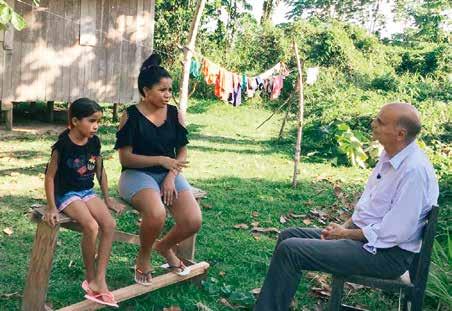
Varella interviews residents of Acre State about malaria for the national weekly television program Fantástico, in 2018
the biggest problem was at the São Paulo Detention Center, Carandiru, which had more than 7,000 people, and nobody wanted to work there. I went to talk with the director, Ismael Pedrosa [1935–2005]. My thinking was as follows: “First, we need to demonstrate what’s happening here, how many people in here are infected.” Based on that number, we can define what should be done.
How did you begin?
I proposed to conduct a survey with the people who received conjugal visits. It was a significant sample; there were 1,500 people enrolled in the program. I got a donation of test kits, and the collection work could be done by the users in the prison, the “mainliners,” who know how to find a vein better than anyone. I spoke with the director, and he brought me five prisoners. I asked, and they had experience. “We can get a vein with a crooked needle, with this equipment of yours it’s child’s play,” one of them replied. We collected blood from 1,492 people. We tested it, and 17.3% of them were infected. Of the transgender people imprisoned there for more than six years, 100% were infected. I started using these data to talk to the authorities. At a minimum, we needed to distribute condoms for the conjugal visits and alert the women and send them to health clinics. No one wanted to hear about it.
However, you insisted...
Jail is the right place to spread this kind of information. Where do 7,000 criminals get together? They spend time in jail, they go back on the streets, they spread throughout the entire city, and then they go back to jail. The information transmitted inside can be disseminated throughout the city to a group that is unreachable outside the prisons. I proposed to the director that I give lectures on AIDS. UNIP donated the big screen and the microphone. I did two or three and realized it was not going to work. I wanted to do a systematic job, to reach the whole prison. Then, Valdemar Gonçalves, a prison guard, appeared and organized it so that each session would be seen by one floor
of each cellblock. At 8 a.m., the prison would open these cells first, and then, the prisoners would come down and see the lecture. This occurred before opening the other floors; otherwise, the others would have mingled in. We held a meeting with the prisoners who were the chief custodians of each cellblock. At the time, there was no PCC [First Command of the Capital, a large organized crime gang throughout the state prisons], and the chief custodians were in charge of the prison. The custodians were watching people die; the epidemic was not theoretical for them. We explained that we wanted to pass along information, but there could be no incidents. If someone died, it would end our work. The custodians said, “You can rest easy, nothing will happen.” Another problem was getting the prisoners out of bed at 7:50. Delinquents do not wake up early for anything. Then, Valdemar had the idea of showing a pornographic film. After the lecture, we would leave the room, “so as not to lose their respect,” and they showed the film. It was a package deal: you come in, the door closes, and you stay until the end. It worked beautifully. I did those lectures for approximately ten years.
Then, you went from giving those lectures to being an attending physician?
When I finished a lecture, people would stop me in the corridors. “Uh, doctor, look at this...” They would line up; it looked like a cour des miracles. I began attending one day a week. This state of affairs lasted until 2002, when the prison was shut down.
Is your relationship with the prison still strong?
Carandiru was an unforgettable prison. It is not just me: the guards, who I still meet with even today, agree. I took a particular liking to walking around in it alone, going into the cells, and being respected in that environment due to the exercise of my profession. This was not respect for my own personal value. The social interaction was lasting, direct. The prison guards stood by, went up, and entered the cells. There were always factions, and the guards’ function was to keep them from uniting. A guard once told me, “Their business is to grab power in jail; ours is to throw a monkey wrench in the works.” If the prisoners started getting together, the
The Unified Health System, SUS, was the greatest revolution in Brazilian healthcare history. There is nothing comparable
transgender people, etc. There is repression embedded in the discussion, a failure to speak clearly, and a fear of offending families. Eleven thousand people die every year in Brazil as a result of AIDS, and we are worried about prejudice?
It is similar to abortion. It is the same thing. I once attended a meeting with the teacher Mario Sérgio Cortella and a young rabbi from Rio, Nilton Bonder. When it was the rabbi’s turn, he was asked: “How do you see the abortion question?” Bonder said, “In Judaism life begins when the child is born.” Period. Some people think that life begins when the sperm enters the egg. One can also think that human life is characterized by the functioning of the central nervous system. What you cannot do is impose your way of thinking on others. Women lose their lives having unsafe abortions.
guards would take one out and transfer another in, and they were able manage things like that. Cellblock 8 had 1,200 repeat offenders, and five or six employees watched over them. The guards have a very impressive knowledge of human nature. After the massacre, in 1992 [when over one hundred inmates were killed by the police], the relationship changed. When something such as that happens, it is pretty clear that it would not happen again. No one was going to send in the Military Police again, a week later. The prisoners began to thrive, to take over. The state was forced to retreat, to let up, and the power vacuum did not remain. Immediately, the factions began to take control. It was the beginning of the PCC.
Back to the topic of AIDS, what is the role of the media today?
The media have to specifically target atrisk populations. There cannot be, at this point in time, bias against homosexuals,
What is the most difficult issue to resolve in Brazilian public healthcare? Organization. We have the basic healthcare units [UBS] and a public health program that is cited as one of the ten best in the world, which is the Family Health Strategy. There are community health agents who live in the districts, earn a salary, and are responsible for the families under their jurisdiction. There is also a nurse’s aide, a nurse, and a doctor. Today, this program covers just over 60% of the Brazilian population, but it should cover 100%. When a local resident has a problem, this team usually resolves it. It is a bit like my experience in the prisons. There are no laboratories or X-ray machines there. Even so, I resolve approximately 90% of the cases myself.
That many?
Yes, if a basic drug kit available. Usually, the problems are simple. How often do we become seriously ill? Once or twice in our lives, for relatively normal people. Most of the time, things get resolved in primary care. We know today that a hospital with less than 100 beds is technically and economically infeasible. However, hospitals with 50 beds comprise the majority of hospitals in Brazil. Building these hospitals is easy. Then, you have to equip them and hire the doctors. The size of the hospital is very expensive for such a low patient-care capacity. This approach is not feasible.
What is the solution?
Transform the small hospitals into outpatient centers. If there are 12 cities relatively close to each other, the biggest one is the one that should have a hospital with 100 beds or more, which all the municipalities and the state should collaborate on. Those who truly need the hospital would go there. In general, we have a health structure that is ready to go in Brazil. What does it need? In addition to organization, it needs more money because the total invested is small compared to what is necessary.
How should healthcare be organized?
Brazil has no public health policy. In the last ten years, we have had twelve health ministers because the position is used as political currency among the political parties. In state and municipal governments, we find the same problem. How do you organize and establish health policy under these conditions? In the ministry and in the state and municipal secretariats, there are very competent people. When the Minister of Health goes down in Germany, he or she takes seven or eight assistants with him; they rise and fall with him. The minister’s role is to establish policies to direct the public health system. In Brazil, the minister brings a multitude of people into positions of trust and swaps all the local government and hospital directors. Here, we cannot even show society the importance and relevance of SUS.
What is the relevance?
There is not another country in the world with more than 100 million inhabitants that has dared to offer free public healthcare to all. Not one. We are the only one. People do not know this. In regard to SUS, it is often said that “It’s shameful; there are gurneys in the hallway, and children being attended to in chairs in the reception area.” This is because SUS is not working at the primary care level. Just look at the lines at emergency rooms. If a doctor examines all these people, 80% to 90% will be released. The people go there because they cannot get care at their UBS. At the emergency ward of the hospital, the patient knows that they will be taken care of, one way or another.
Most of these people are cared for by SUS.
I love doing these projects on the internet, with texts and videos, because they reach an audience that is inaccessible otherwise
tilizes people. Taking care of one’s health is a duty of the citizen, primarily. This responsibility must be attributed correctly. When citizens fall ill and cannot treat themselves, patients can be treated by the state. In Brazil, everyone has this right. The system is a hybrid since we also have paid supplementary healthcare. This system serves approximately 47 million people. The rest, approximately 160 million people, depend on SUS. The investment of private and public systems is similar. The difference is that one serves 47 million and the other 160 million. Even if I have a private health plan, I can still be taken care of by the public system. In Chile, for example, you opt for one or the other. SUS is the largest income distribution program in the history of Brazil. The bolsa família (the federal Family Allowance) program is a timid project compared to SUS. A citizen may be living under a bridge, and if he or she needs a liver transplant, they can get it at Hospital das Clínicas for free. How much would they spend in a private hospital? It is a system that reduces social inequality. No one sees this other aspect of SUS.
How does your work as a writer happen? How do you prepare?
SUS was the greatest revolution in Brazilian healthcare history. There is nothing comparable to it. I was a resident at the Hospital das Clínicas of the USP Medical School. At that time, there was the INPS [the National Institute of Social Welfare]. Only workers with formal, registered employment were entitled to INPS benefits. Those who did not have this right were classified as indigent. It was not a theoretical supposition; that status would be written on their medical record. The self-employed and all the field workers were dependent on society’s charity, such as the Santa Casa de Misericórdia [Holy House of Mercy, a centuries-old healthcare charity]. In 1988, the new Constitution included the idea that “Health is a right of all and a duty of the State.” Although, I do not like this slogan very much.
Why not?
First, the slogan does not include where the money comes from. Second, it infan-
I read all the time. It is much easier today; we take in information from every direction. I became increasingly involved with writing. I wrote Estação Carandiru, which was published in 1999. When it came out, that book was number one on the bestseller list for four years and has sold more than 500,000 copies to date. I think the book had the merit of bringing the reality of a highly representative prison such as Carandiru out of the jailhouse for the first time by a person who was not involved in that world. That is when I discovered a passion for writing. Journalism is also a very interesting exercise. You have to write within the allotted space, under deadline; you cannot be too fussy, and you must have a beginning, middle, and end. Unlike writing a book, where one wanders and often loses oneself in the writing, journalism gives you a goal, and I started to enjoy it.
Does writing have a therapeutic effect for you?
Think about this: I sit facing a wall, with a computer, and I write. I have an idea,
and I sit there putting down words, and suddenly—sometimes this happens—I find a connection that works well in the text, and I feel happy. I achieved this happiness alone while staring at a white wall. Such happiness does not exist in the world around us. With a small laptop in hand, one can arrive at that point. Once you have experienced that degree of happiness, you never stop writing.
So, writing is not a long-suffering process?
For me it never was. On Saturday morning, I go to the hospital, visit the sick, run back to the house, and write. It is a huge pleasure. Before lunch, I drink a cachaça to “improve” the work... I learned about cachaça from the folks at Carandiru. Before cachaça, I drank beer. Then, a guard said, “Doctor, you have to drink cachaça because if you get drunk, they’ll say you’re a drinker. If you spend money drinking champagne, they’re going to say you’re a drinker. Beer, when it’s hot out, you drink one bottle after another, and by the time you feel it, you’ve already drank too much. With cachaça, you know who you’re dealing with.” It is true; it is easier to control.
With cachaça or without it, you became a writer...
I did follow that career path. I have my two columns, in the Folha de São Paulo newspaper and in CartaCapital magazine. For the internet, I take the text I write for Folha and summarize it in two minutes on YouTube, where I have a channel. Sometimes, it takes even in less time to transform the piece. So far, 350,000 people have already watched. I have one video with almost 2 million views. It is another world.
The videos receive many comments... There are all sorts of comments. There are taboo subjects, such as talking about abortion. It is a matter of public health and not a religious question. When I talk about abortion, the reactions are terrible. I am 76 years old; I am starting to see things with a closer horizon in mind. I cannot be worried about people cursing me out. We have to put forward ideas that have social relevance. Every time the ignorant take power, during dictatorships, for example, what do they do? The subtext is always “lower the culture.” At these times, the important thing is to maintain an open dialogue, a multiplicity of ideas. Self-censorship cannot take root.
Does this also apply to taboo subjects?
I am an atheist. The religious think and act as if they have a monopoly on human generosity. We know that there is generosity in chimpanzees and gorillas—who do not pray. What is the basic principle of all religions? Belief, you have to believe. What is the basic principle of science? You cannot believe in anything that is not associated with experiments and results that can be reproduced. Only from the basis of experimentation can we draw conclusions. Science is not the only way to see the world. There are other ways. However, I do not see how we can reconcile these other worldviews because they are antagonistic.
Do you have a team that writes for the site and records videos?
There is a group that started making recordings with me and set up their own agency, Uzumaki, which now provides services for the site. These languages change very quickly; we have to try to keep up. I love doing these projects on
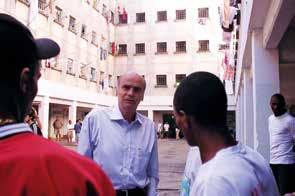
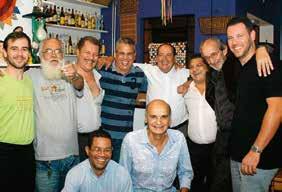
In Carandiru, in 2001, with the rap group Comunidade Carcerária [Prison Community] (left), and during a meeting with prison guard friends in 2018
the internet because they reach an audience that is inaccessible otherwise. The other day, I was in a movie theater with my wife, and there were some kids there. Suddenly, a girl placed her phone in front of my face with a photo and said, “Are you this guy here?” “I am,” I said. “Can we take a picture with you?” These are kids, 12 and 13 years old, who I can talk to using the internet but not on television.
Are you working on a new book? I am, but it is still very early on. The book is basically about my memories, but the format is not well defined. I resisted the project for a long time. We go about doing things in life, and some work out, and some do not. Many of the outcomes depended on me, on my work, on some good decisions I made. Other outcomes depended on opportunities.
You worry about turning chance events into personal merits...
Exactly. In addition, when you appear on television, you become famous. Television is full of foolish people because they think that all that recognition is based on their personal merit. These people do not realize that if it were someone else, the same thing would happen. It is very mediocre to reach a mature age and still be looking at yourself in the mirror. There are other things that are more interesting.
Is there something you would like to do and have not done yet?
When I got yellow fever, I was 61 years old. There was a moment, technically, when I saw the exams, and I thought I was going to die. I thought, “What do you have left to do?” Well, there were many things to do. Now, at this point in my life, I have done everything I needed and wanted to do, but of course, I can do more. n
(right)
Long distance connections
Initiatives that promote networking and knowledge exchange among Brazilian researchers in the United States are on the rise
Brazilian researchers and students who live or spend time in the United States have found a way to keep in touch and encourage collaboration: they participate in networks that promote regular meetings to exchange professional, scientific, and entrepreneurial experiences. The first such initiative was launched in 2010. The initiative is called PUB Boston, an acronym for Brazilian Researchers and University Students in Boston, and is a network created to engage scientists and scholars from Brazil residing in the New England region. More than 50 institutions for research and higher education are located in the area, such as the
Fabrício Marques
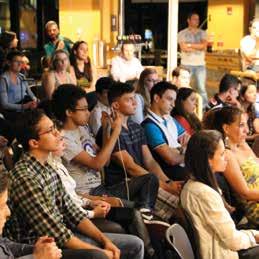
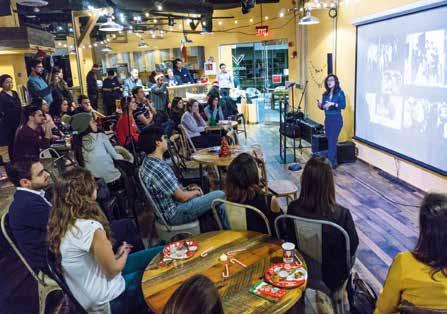
Members of PUB Boston participate at a meeting which brought together more than 80 Brazilian researchers and students on December 2018
Massachusetts Institute of Technology (MIT) and Harvard in Boston as well as Yale, Dartmouth, and Brown. PUB Boston stays active by promoting monthly interdisciplinary meetings, and at least ten relationship networks with a similar format have emerged in other US cities such as San Francisco, New York, Houston, Seattle, and New Haven—as well as in Montreal, Canada.
The meetings, mostly held in Portuguese, usually take place in auditoriums, where the participants in the networks attend lectures by Brazilian researchers from a variety of fields and hear reports from professionals based in the United States who work in companies or
who are creating startups. There is also space for presenting socially oriented or science communication-focused initiatives. One particularly rewarding part of the meetings is the “happy hour,” where the audience can converse and interact. These happy hours are stocked with Brazilian savory snacks and sweets, which are provided by sponsors or thanks to the organizers' small collection box.
The audience consists of students, postdoctoral interns, visiting professors, young professionals, and scientists established in the United States. "The highlight of the meetings is the possibility of learning what Brazilian colleagues from different areas are producing here and of opening doors for professional and personal contacts. But, of course, we can't underestimate the interest that the coxinhas [deep-fried chicken croquettes] and brigadeiros [truffles] arouse in Brazilians who have been away from home for a while," says nutritionist Rachel Freire, a postdoctoral fellow at Harvard Medical School and the current leader of PUB Boston.
In the case of the New England group, monthly meetings are always held on Fridays. The attendance ranges from 60 to 80 people—and it was even higher until three years ago, when the Science Without Borders program was sending
thousands of students abroad. At the last meeting, on December 14, there was a special event with presentations from five master's and doctoral students from various areas of study at US universities, which was attended by the Brazilian consulate general in Boston, Glivânia de Oliveira.
Through a Facebook group, the network can mobilize 3,700 Brazilians who have spent time in Boston. "It's not uncommon that out of these presentations—and the debates that take place before and after them—there emerge scientific and professional collaborations," says computer scientist Vitor Pamplona, coordinator of the SciBr Foundation, an NGO created in 2014 that, among other tasks, coordinates and helps disseminate these networks. "Among various examples, I remember a biologist and an engineer who met at PUB Boston and began to work together on creating a new research device," says Pamplona, who traded Porto Alegre for Boston in 2009, where he did a part of his doctorate at MIT. Seven years ago, he created an optical equipment company, EyeNetra, in the city of Cambridge.
The PUB Boston meetings inspired some of the group’s members to recreate a program in Brazil that was developed in Mexico by Mexican researchers from
Harvard. The researchers call this program "science clubs," which are weeklong workshops for high school students and beginning undergraduates, delivered by scientists and instructors educated in the United States. The initiative has already been carried out twice in Brazil, with both sessions held on the campus of the Federal University of Minas Gerais (UFMG). The selection process was rigorous, with more than 1,000 entries for 80 vacancies at each conference. "The idea is to motivate young people to pursue a scientific career. They get some hands-on experience and focus on frontier issues like gene editing and stem cells. On the last day, they present what they've produced to the public and their families," says biomedical researcher Bruna Paulsen, currently a postdoctoral fellow at Harvard University's Department of Stem Cell and Regenerative Medicine and one of the program's organizers, along with biologists David Soeiro and Rafael Polidoro, and administrator Marcos Bento. In addition to Brazil and Mexico, the project is also being implemented in Colombia, Bolivia, Peru, Paraguay, and most recently, in Spain. The networks have also developed strategies for welcoming newcomers, such as the dissemination of manuals
available on the Internet. Written by various members, the manuals include tips on how to find housing, obtain documents, or use public transport. A guide written by members of PUB Philadelphia, for example, provides the addresses of good supermarkets and warns of the dangers of turning off the central heating in homes and apartments during winter—the pipes cannot be simply thawed out once they freeze.
A very productive network emerged four years ago in San Francisco on the outskirts of the local University of California campus (UCSF). "There had been demands from Brazilian researchers in
Mapping the diaspora
By 2020, the networks of Brazilian researchers in the United States will be mapped through a project commissioned by the Center for Public Policy Studies at the University of Campinas (NEPPUNICAMP) and by the Embassy of Brazil in Washington. "We're going to do a survey of who these Brazilians are, where they are, and what they're doing," says sociologist Ana Carneiro da Silva, a researcher at NEPP-UNICAMP. She coordinates the project with partners such as Flavia Consoni, from the Department of Science and Technology Policy at UNICAMP, and Elizabeth Balbachevsky, from the Center for Public Policy Research at the University of São Paulo (NUPPS-USP). "The objective is to do an analysis and propose policies to understand how the
Brazil’s science can benefit from the temporary and permanent residence of highly qualified Brazilians in the United States," she states. The group will also conduct interviews with researchers based in the United States to understand the dynamics of the so-called "diaspora networks" and raise initiatives that the researchers deem important for increasing connections with Brazilian science.
The project started being developed at the end of 2017 during a workshop on the Brazilian diaspora held in Washington, in which the NEPP group participated. Recently, the Brazilian Embassy in London approached UNICAMP with a similar request. As a result, Ana Carneiro and Flavia Consoni are helping to organize a workshop on
the region and also from the Brazilian consulate in San Francisco to create a network," says Tatiana Hochgreb, leader of the initiative. "We held the first meeting at the consulate itself in 2014, which attracted more than 100 people to sign up." The network has evolved, and today, PUB-Tech-SF has a schedule of four meetings each year, hosted in Stanford, San Francisco, Berkeley, and Silicon Valley. "There's a mix of regional scientists and business professionals among the speakers—we've had talks by professionals from LinkedIn and Canon, for example." The meetings feature short presentations about social impact proj-
the Brazilian diaspora in the United Kingdom. The meeting will take place on February 14 during a FAPESP Week London seminar and will bring together international talent experts to discuss how Brazil can leverage the benefits of having researchers working at institutions in Britain. "It's known that in many places diaspora networks don't cause brain drain but do create advantageous connections for Brazil's scientific community, since science increasingly works through international networks," says engineer Euclides de Mesquita Neto, a professor at UNICAMP and adjunct coordinator of special programs and research collaborations at FAPESP.
ects, such as an initiative that was looking for volunteers to organize science workshops with the Projeto Histórias e Cantigas (Stories and songs project), which holds library events aimed at Brazilian children. "One Brazilian scientist from Stanford spent an afternoon with the children conducting experiments and talking about density," recalls Tatiana Hochgreb.
Educated in molecular science at USP [University of São Paulo], Hochgreb went to the United States in 2005 to do a postdoctoral fellowship at UCSF, later moving to the California Institute of Technology (Caltech) in Pasadena to work in the field of developmental biology. She ended up staying in the United States for family reasons, and in 2015, she decided to change careers. She now works at the Lemann Center at Stanford University on an education project whose ambition is to redesign curricula to improve science education in Brazilian schools. In her view, the goal of PUBTech-SF is to discuss high-level topics and "put a variety of people together" to get to know each other. "The idea is to spread knowledge in an accessible way, demystify science, and raise the level of the dialogue. People are glad to participate in interesting conversations. Many students and, indeed, many people from
Students participate in Science Club in Belo Horizonte, a project organized by Brazilian scientists at Harvard
searcher at the Center for Public Policy Studies at the University of Campinas (NEPP-UNICAMP). At the request of the Brazilian Embassy in Washington, the center will be mapping the "diaspora networks" of Brazilians in the United States (see inset) and their role in promoting research collaboration.
BRIDGES FOR COLLABORATION
The community of Brazilian researchers in the United States is a well-connected network, says sociologist
Ana Carneiro
outside academia who are interested in science go to the meetings, which are open and free." Approximately 70,000 Brazilians with higher education live in the United States, according to data from the 2010 US Census. Part of this contingent, which includes researchers and highly qualified professionals, works at universities and technology companies. "There's a large number of Brazilian researchers in the United States and it's a community that's well-connected," says sociologist Ana Carneiro da Silva, a re-
A survey released by the Brazilian Embassy in Washington showed that while PUB networks are based on the exchange of knowledge, other initiatives are dedicated to establishing bridges for collaboration with Brazil. Three such cases are BayBrazil, which promotes exchange between Brazilian companies and Silicon Valley; the Brazilian Expert Network, formed by Brazilian researchers based in the United States and interested in partnerships with Brazil; and Brascon, a contact platform between the Brazilian scientific community in the United States and companies, universities, public agencies, and research institutes in Brazil.
The SciBr Foundation, which links the PUB networks, seeks to increase the connections between Brazilian researchers in the United States. "Our initial proposal was to mobilize scholarship students from the Science Without Borders program and assess whether additional scholarships for researchers with high potential could create greater scientific impact, but this has lost momentum with the dismantling of the program," explains Vitor Pamplona, director of SciBr. The organization works to connect Brazilian researchers with companies in the United States. "We receive companies from Brazil that want to set up offices or branches in the United States and present them with researchers who could work for them," he says.
Pamplona observes that most participants in the networks maintain their interest in returning to Brazil after a period of study or work. "They almost always return, due to family issues or an interest in establishing a career in Brazil. It's not trivial to pursue a career at a company in the United States, where there's strong competition with professionals from all over the world." Pamplona estimates that in recent years, SciBr has been able to refer approximately 40 Brazilians to vacancies at US companies. n
Mapping out the roadblocks
A study looks at why Brazilian industry is not very innovative and suggests that academic publishing and patent counts are two sides of the same coin
Apaper released in December by a group of economists paints a troubling picture of the innovation and intellectual property landscape in Brazil and the impact it has had on development. The study, commissioned by the Brazilian Intellectual Property Association (ABPI), shows an entrenched pattern in which Brazilian companies generally innovate little, while foreign companies have filed growing numbers of patent and trademark applications in Brazil, indicating both the importance of intellectual property protection and its still limited use by local industry. It also underlines the challenges faced in correcting long-standing distortions. Public universities and individual inventors continue to claim the lion’s share of patent counts in Brazil, whereas
in developed countries, that share is typically held by industry. Patent applications also take an unreasonably long amount of time to be processed—10 years on average—and are growing at a slower rate than those in other emerging countries. Between 2000 and 2016, the number of invention patent applications worldwide more than doubled, from 1.4 million to 3.1 million. In Brazil, applications rose from 17,258 in 2000 to 25,658 in 2017.
“We’re increasingly lagging behind countries competing directly with our industries in the global marketplace,” says Antonio Marcio Buainain, a professor at the University of Campinas (UNICAMP) Institute of Economics. He coauthored the paper—titled “Propriedade intelectual, inovação e desenvolvimento: Desafios para
INTELLECTUAL PROPERTY STATISTICS
Patent applications worldwide and in Brazil
Patent applications worldwide
o Brasil” (Intellectual property, innovation, and development: Challenges facing Brazil)—with Roney Fraga Souza, a professor in the School of Economics at the Federal University of Mato Grosso (UFMT). “We’re gradually regressing into a commodity-based economy, while we clearly have the socioeconomic and demographic conditions to do otherwise,” says Buainain. The situation is even more dramatic when comparing Brazil’s performance to other emerging economies: in the late 1970s, Brazil was filing three times as many US patent applications as South Korea; by 2013, the Asian country was filing 43.5 times as many as Brazil.
But the findings from a survey that Buainain and Fraga Souza conducted on 4 million academic résumés on the Lattes platform are more optimistic. There were 15,607 researchers who reported intellectual property protection activity: they filed a total of 27,837 patent applications, of which 10,552 were approved and issued as patents. The survey found that 84.5% of these researchers were academically prolific, with an average of 27 published articles. According to the study, these researchers represent evidence against the stereotypical view that puts scientists into two groups: the academic types versus the pragmatists who work closely with industry
Invention patent applications in Brazil
and focus on practical innovation and patents. “In fact, our results show that more academic researchers are precisely the ones filing the most patent applications and that there is no tradeoff between publishing and patenting. This should come as no surprise as, after all, researchers’ patents draw precisely on the knowledge and experience they have gained from their research,” says Buainain. “Our findings dispel an argument often made by backward forces opposed to closer links between universities and industry: that researchers will end up focusing their efforts on personal gain rather than knowledge for the common good,” he says. Voices against universityindustry collaboration will often be heard, notes the economist, among professors’ associations and some researchers in discussions about the new science, technology, and innovation framework introduced last year.
The survey also estimated the impact of papers authored by researchers with patents to their name and found that they generate five times more citations than papers by researchers with no patents. Only a handful of these talents, however, are in industry. Less than 10% of researchers work in an R&D capacity at companies, 73% work at universities, and 15% work at public or private research institutes. “Researchers at universities
SOURCE BRAZILIAN
and higher learning institutions in Brazil account for approximately two-thirds of the country’s patents, even though many of these universities lack institutional support for the patenting process,” says Roney Fraga Souza.
But Marcelo Pinho, of the Center for Exact Sciences and Technology at the Federal University of São Carlos (UFSCar), observes that previous research done in 2013 by researchers from the Ribeirão Preto School of Economics, Management, and Accounting (FEA-RP) at the University of São Paulo (USP) had already looked for—but did not find—a cause-and-effect relationship between publishing and patenting among a group of 316 researchers in the fields of exact and earth sciences. “Although researchers who interact more with companies are clearly more prolific publishers, this does not necessarily mean that scientific productivity is itself a result of interaction with industry,” he explains. “It is more likely that the most competent researchers perform better both in scientific research and in collaborations with industry.”
Alook at the origin of Brazilian patents reveals a strong linkage to traditional industries, such as construction and machinery for the oil and gas, electric power, and agribusiness sectors, but not to frontier areas. “Brazil appears to be on the sidelines of the new economy and is yet to claim a significant position in any of the key areas of industry 4.0, in which manufacturing is heavily automated and linked to the internet,” says Buainain. Marcelo Pinho of UFSCar says that patent patterns in Brazil reflect the country’s industrial fabric and its foreign trade. He notes that Brazil’s high-tech industry is not only dwarfed by other countries but also typically focused on the domestic market and less technology-intensive nodes in the value chain. “And the companies with dominant positions in these sectors are multinationals producing most of their R&D outside Brazil. So it is hardly surprising that Brazil lacks a strong patent position in the new economy,” he says.
The study found a notable increase in intellectual property protection within universities thanks to the growing number of innovation centers (Núcleos de Inovação Tecnológica, or NITs) created to identify research findings with potential commercial applications and license those technologies to companies. Universities have been especially active in certain states following the creation of innovation centers in Santa Catarina, Paraíba, Pernambuco, Bahia, and Ceará, although 70% of patent applications in 2017 were in São Paulo, Rio de Janeiro, Minas Gerais, Paraná, and Rio Grande do Sul. Buainain sees these efforts as somewhat exaggerated: “The
A SNAPSHOT OF INNOVATION IN BRAZIL
Percentage growth in the number of innovative companies and the type of innovation effort, according to the Innovation Survey (PINTEC)
n Innovation rate (total)
n Product innovation rate
role of the university is to generate and facilitate the dissemination of knowledge and technology. Practical innovation is the role not of universities but of industry.”
Biologist Antonio Carlos Marques, coordinator of the USP Agency for Innovation, believes it is unfair to say that NITs alone can account for the exaggerated focus on patent applications. “Patents are a highly weighted metric throughout the system—whether one is applying for a productivity-based grant from CNPq [the Brazilian National Council for Scientific and Technological Development] or looking to improve a graduate program’s rank—and they get lots of media attention,” he says. “Our focus should be on the effectiveness of the innovation process. Out of the total number of patent applications, how many are successful and benefit society through licensing agreements? To what extent does each patent effectively provide a socioeconomic or environmental benefit for Brazil? By way of analogy, a patent application is comparable to a manuscript submitted to a scientific journal, and an issued but unlicensed patent is comparable to a paper published in an indexed journal that has never been cited.”
Antonio Marcio Buainain notes that universities and companies in Brazil engage in innovation on separate, parallel paths that rarely converge. “Universities generate patents at their intellectual property offices and offer them to compa-
SOURCE PINTEC/IBGE
n Industrial design and other engineering
n Introduction of technological innovations in the local market
n Training
n Acquisition of machinery and equipment
n Software
n Cross-border knowledge transfers
n External R&D
n Domestic R&D
FOREIGN-TRADE PERFORMANCE
Share of Brazilian exports in global exports (%)
SOURCE MDIC
nies, occasionally attracting their interest in some form of arrangement, but not collaboration,” he explains. At universities and public research institutes, according to the paper, there has been progress in recent years largely thanks to the education system’s expansion since the 1990s and its growing number of active researchers. The private sector, however, has its own peculiar ways. As Buainain explains, “Brazilian companies generally innovate by buying technology. They typically incorporate innovations already in use in local and global markets—new only to the companies adopting them. This is certainly
Brazil is not prepared to exploit open innovation, the study shows
not the kind of innovation that will put Brazilian industry in any position of leadership or autonomy in the international marketplace.”
The UNICAMP economist explains that aversion to risk is a rational strategy that makes sense for the business environment in which Brazilian companies operate. “The Real Plan [a set of measures taken to stabilize the Brazilian economy in 1994] provided only limited economic stability,” he says, alluding to the exchange-rate fluctuation and changes in the regulatory frameworks for the oil and gas and power sectors over the last 20 years. “Even inflation has been five times higher than the average for more developed countries,” he explains. “Brazilian entrepreneurs are skilled at coping with crises and surviving in an environment of uncertainty and instability, but averse to the inherent risk of innovation.”
But intellectual property protection has been rendered less important now than in the past by the advent of open knowledge networks, in which knowledge and technology are developed in an open and collaborative environment, and the speed at which innovations are developed and then superseded by others makes patenting effort dispensable. “The value of digital-age businesses like Uber or Airbnb lies not in their patent portfolios but in their accumulated knowledge and in their ability to create applications that competitors are unable to easily reproduce,” he explains. Brazil is not currently prepared to exploit open innovation, the paper shows. “Open innovation relies on an environment of high-density knowledge flows between academia and industry—an environment which in Brazil remains underdeveloped—and substantial investment in venture capital.”
The study is optimistic about the new science, technology, and innovation framework and the legal certainty it provides for collaboration between universities and businesses (see Pesquisa FAPESP issue no. 265). In addition to better operating conditions at the National Institute of Industrial Property (INPI), which has long struggled to process patent applications efficiently, the authors suggest that a greater focus is needed on trademarks and their underutilization by companies in Brazil and on geographical indications—intellectual property instruments used in many countries to link attributes such as the origin or the history or culture of a region to a product. Last year, the INPI received only 49 applications for geographical indications for products such as coffee, cheese,
and
to equipment FASTER ACCESS
USP and UNICAMP create portals to expand the shared use of core research facilities
Internet portals recently created by the University of São Paulo (USP) and the University of Campinas (UNICAMP) to catalog the research equipment available to university and nonuniversity users, including companies, are helping to facilitate shared access to high-cost instruments—from electron microscopes to mass spectrometers and sequencers. The new portals are also helping to raise awareness of a fundamental part of the mission of public research laboratories and facilities: to serve as many researchers as possible to maximize the impact and quality of scientific research in Brazil. Most of this infrastructure has been funded by development agencies based on a commitment to dedicate a portion of facility time to other interested researchers. However, because the available equipment is poorly and not centrally cataloged, it can often be difficult for users to find what they need. “It’s not that there have been complaints about barriers to access, but it’s clear that our facilities would be used more if more people knew about them,” says Watson Loh, a professor at the Institute of Chemistry (IQ) at UNICAMP and head of the Core Equipment Program (EMU) at FAPESP.
The UNICAMP Core Equipment and Services Portal (www.prp.unicamp.br/ pt-br/ces/site/) gives users access to the medium-sized and large instruments available across university campuses, which they can locate using a keyword search. Users are not required to know the model or the specific type of machine they require; they can simply indicate what task the equipment is needed for. If any equipment fitting the description is available, the user is referred to the relevant laboratory. A total of 140 pieces of equipment are currently cataloged. “We hope to see this figure rise substantially in the future,” says Munir Skaf, a professor at IQ and associate dean for research at UNICAMP. New functionality has also been created for facilities managers, such as a web kit that allows each education and research institution to build a dedicated website to advertise its equipment and a system for scheduling equipment time.
A Magneton 7T MRI scanner at USP's School of Medicine
The UNICAMP portal began operating in March and has already seen a surge in equipment requests. At the Gleb Wataghin Institute of Physics (IFGW), user searches have grown between 30% and 50%, depending on the instrument. For example, a particle size distribution analyzer at an IFGW laboratory was recently booked by researchers from another UNICAMP unit. “This was our first request for this piece of equipment in quite a while,” says physicist Pascoal Pagliuso, who heads the institute. Three requests were received concurrently for the decharacterization and disposal of X-ray machine heads—another service offered by IFGW on the portal—compared with the previous average of only one request per year. “The machines and services were already available on our website, but the new portal appears to have increased their visibility on the web,” says Pagliuso. In addition to the 12 instruments available at IFGW's Core Laboratory (LAMULT)—including microscopes, spectrometers, and diffractometers—the institute offers access to approximately 50 instruments at other research laboratories and departments.
Created last year, the USP Core Facilities Center (uspmulti.prp.usp.br/)
currently offers access to two laboratories at the Polytechnic School and 17 pieces of equipment at different units. The number of core facilities and available instruments is expected to grow over the coming months, with 25 core facilities and laboratories currently being cataloged and at least another 100 with the potential to be placed in the network. The platform offers equipment management tools that are centralized within the Support Foundation of the University of São Paulo (FUSP). “These tools are designed to streamline laboratory routines and spare laboratory managers the need to handle bureaucratic tasks,” says Sylvio Canuto, a professor at the Institute of Physics and associate dean for research at USP. Facilities can be booked online, and users receive clearance after payment involving barcoded pay slips that are automatically generated by the system. In general, laboratories charge lower fees for researchers from host universities and higher fees for users from other institutions and companies. USP is seeking to organize its shared facilities to better manage expenses related to maintenance and hiring technicians, for which there is significant demand from researchers and departments. The
university plans to issue a request for proposals for preventive maintenance but will wait a few months until additional units are placed on the platform. “This will allow time to determine which facilities are used most and to prioritize them in our maintenance investment,” says Canuto. “This will also inform new vacancies for technicians at facilities that are high in demand.”
Having technicians available for support is important for expanding the use of available instruments. “Access to equipment is often limited to certain days of the week or to hours of the day in which technicians are available,” says Watson Loh. There is another case to be made for shared facilities: the revenue from these services can be used for maintenance. “Often, a R$1-million piece of equipment will remain out of service for long periods of time until funding is available to buy parts costing, say, R$10,000,” says Munir Skaf. The integration of researchers in different fields around shared, or core, laboratories can also create new opportunities for research. “Organizing research teams to work at shared facilities enables interaction among people who approach
A genetic sequencing center at the São Paulo State Cancer Institute
The Core Laboratory for High-Performance Technologies (LaCTAD) at UNICAMP
research from different angles, supporting the development of multidisciplinary solutions to research problems,” says Roger Chammas, head of the USP School of Medicine’s Premium Network, a core facilities program that in 2005 launched a one-stop website for equipment available at different university laboratories.
In recent years, USP and UNICAMP have each independently set up robust shared core facilities where available equipment has been or will soon be integrated together. Examples include USP’s Premium Network and its Core Research Facilities Center (CEFAP) at the Institute of Biomedical Sciences, which since 2014 has provided users across the state with sequencing, live-cell imaging, mass spectrometry, and other service offerings—FAPESP provided US$4 million in funding to purchase equipment. The initiatives at UNICAMP include the Core Laboratory for High-Performance Technologies (LaCTAD), a facility opened in 2013 to support research in genomics, bioinformatics, proteomics, and cell biology.
FAPESP, which provides funding for research infrastructure through regular loan facilities and as part of the EMU program, requires medium-sized and large instruments that are of interest to
A confocal microscope available from the Core Research Facilities Center at the Institute of Biomedical Sciences
other researchers to be made available for shared use. The websites operated by laboratories and research institutes in the state of São Paulo where Foundation-funded equipment is available are listed at www.fapesp.br/emu/. The list is sorted by type of instrument, institution or city. “This listing shows only equipment purchased with funding from FAPESP; other agencies, such as FINEP, also fund core facilities and have their own listings. That is why it is important to have central portals cataloging all facilities available at a given institution,” says Munir Skaf of UNICAMP.
The need to provide greater visibility around available core equipment has long been on the agenda at the Council of Deans of State Universities in São Paulo
(CRUESP). “We’ve been discussing ways to catalog available facilities across the state to increase utilization,” says physicist Carlos Graeff, associate dean for research at São Paulo State University (UNESP) and a professor at the School of Sciences of Bauru. With campuses in 24 municipalities in São Paulo, UNESP plans to launch a platform this year offering 200 pieces of equipment, expanding its core facilities at the Institute of Chemistry in Araraquara.
Débora Chad, a professor at USP’s Institute of Biosciences and assistant to the associate dean for research at USP, believes that individual university core facilities could be a steppingstone toward a platform aggregating all available research equipment in the state of São Paulo. As a case in point, she cites the UK, where equipment located at universities across the country has been cataloged on a single portal (equipment. data.ac.uk) operated by the Engineering and Physical Sciences Research Council (EPSRC). “This is something worth replicating in São Paulo. USP researchers resident in noncapital cities could find the equipment they need closer by, instead of having to go to São Paulo City,” says Chadi. n Fabrício Marques
Visible women
Initiatives that aim to increase recognition of female researchers and their contributions to science
PUBLISHED IN FEBRUARY 2019
In October 2018, Canadian scientist Donna Strickland from the University of Waterloo, Canada, became the first woman in 55 years to win the Nobel Prize in Physics for her work on generating high-intensity, ultrashort laser pulses. She shared the prize with two other physicists. Interestingly, it was easier for Strickland to earn recognition from the Nobel judges than from Wikipedia, which had no profile on the physicist among its 5.8 million pages in English until after the awards. In March 2018, seven months before the prize winners were announced, a draft profile page for the researcher that had been written by an unidentified Internet user was deleted by the Wikipedia editors because the references given did not justify her having a page—her biography on the Optical Society website was deemed insufficient. A page was quickly created after Strickland was awarded the
British physicist Jessica Wade has a network of colleagues who suggest the names of notable female researches
prize and even included references to a paper that she wrote in 1988.
Strickland's case is typical of a longstanding issue highlighted by many female researchers: underrepresented in many scientific fields, women are stereotyped as less capable than men and often need to work harder than men to receive public recognition for their work. Concrete evidence supporting this assertion has resulted in a number of
initiatives aimed at combating gender bias: one of these initiatives is led by the British physicist Jessica Wade, 30, and specifically targets Wikipedia. A postdoctoral researcher at Imperial College London who specializes in polymers, Wade began writing Wikipedia biographies for female researchers in 2017, after discovering that 90% of the encyclopedia's editors are men and that only 17% of profiles relate to women. "That
Carla Aranha
Female scientists who now have profiles on Wikipedia
Some of the researchers of various nationalities who have Wikipedia profiles thanks to the efforts of the British physicist Jessica Wade
AZITA EMAMI-NEYESTANAK
Iranian engineer based in the United States who created microdevices to monitor healthe
Thai architect known for designing parks and gardens in Bangkok that are capable of absorbing large volumes of water and mitigating the effects of floods
is an overall percentage. In terms of biographies of scientists, the proportion is even smaller," she says.
So far, she has published more than 400 biographies, raising awareness of contributions made by women, such as those of the American climatologist Kim Cobb, 45, who leads a group that studies the effects of climate change on the Pacific Ocean, and the Spanish biochemist Gertrudis de la Fuente from the Complutense University of Madrid, who specialized in enzymology and toxicology and who was well known in Spain. Her profile was approved five months after her death at 95 years of age.
Wade uses a set of criteria to choose which scientists to profile—they must have earned recognition in academia and have a level of notability among their peers. Wade also participates in groups
that promote inclusion and diversity in science, such as 500 Women Scientists, which is composed of more than 2,000 female researchers from over 100 countries. She is one of a number of scientists working as a “Wikipedian in Residence”—people who facilitate the publication of Wikipedia entries related to their institutions or fields. She maintains frequent contact with these networks, whose members propose new profiles, debate the importance of those recommended, and suggest references. "The final texts are reviewed by the Wikipedia
Spanish biochemist who specialized in enzymology and who helped combat a syndrome caused by poisoning in Spain in the 1980s
editors, who do a great job," says Wade. She consults researchers in advance to see whether they are interested in having a page on the online encyclopedia.
SOLITARY QUEST
Jessica Wade's mission was instigated by personal experience. When she began her PhD thesis at Imperial College on macromolecules involved in the emission of LED light, she was the only woman in her research group. "I was surrounded by testosterone and started to feel very lonely," she says. "I realized that we need
ALICE BUNN
British doctor of metallurgy, international director at the UK Space Agency, and Vice Chair of the Council of the European Space Agency
KOTCHAKORN VORAAKHOM
GERTRUDIS DE LA FUENTE
FATOUMATA KÉBÉ
French astrophysicist who specializes in space debris and who created a program to offer astronomy classes for people with low income
to encourage more women to participate in science." In addition to creating Wikipedia profiles for female researchers, she also gives talks at schools and universities to stimulate interest in science among girls and young women.
Wade has not yet profiled any Brazilian scientists, but her efforts have been recognized in the country. "Science is still an area of power that is dominated by men. Initiatives like Jessica Wade's, which highlight the work of female scientists, are essential to making girls aware that science is a career possibility for them," says economist Hildete Pereira de Melo, a researcher at Fluminense Federal University and author of the book Pioneiras da ciência no Brasil (Pioneers of science in Brazil), released in 2006. Conceived in partnership with Ligia Rodrigues from the Brazilian Center for Physics Research (CBPF), the book, which is being updated and relaunched this year, contains profiles of scientists who have conducted essential research in fields such as physics, chemistry, agronomy, and botany. Some of the scientists are known by the general public, such as agronomist Johanna Döbereiner (1924–2000), psychiatrist Nise da Silveira (1905–1999), and biol-
TAMSIN MATHER
Researcher at the University of Oxford, UK, who studies the environmental effects of gases emitted during volcanic eruptions
KIM COBB
Oceanographer at the Georgia Institute of Technology and leader of a research group that investigates the effects of climate change on the Pacific Ocean
ogist Ruth Nussenzweig (1918–2018). Other scientists are rarely mentioned, such as botanist Graziela Maciel Barroso (1912–2003), who was a professor at the Federal University of Rio de Janeiro (UFRJ), the Federal University of Brasília (UNB), and the University of Campinas (UNICAMP). She was one of the most prolific plant taxonomists in Brazil—a number of Brazilian plant species have been named after her, including Dorstenia grazielae, Diatenopteryx grazielae, and Bauhinia grazielae. "She was internationally renowned in the scientific world, but few people among the general public know about her," says Hildete Pereira de Melo. "We need to publicize the work of these researchers and show girls that a career in science is not a male privilege," she adds.
YOUNG RESEARCHERS
In Brazil, various initiatives are striving to highlight female scientists and the importance of their work. Twenty-
one years ago, the cosmetics company L'Oréal launched the For Women in Science award, which offers a scholarship of US$100,000 to five internationally recognized female researchers. In 2006, the company also began awarding a specific Brazilian prize in partnership with UNESCO and the Brazilian Academy of Sciences, through which seven young female researchers each year win R$50,000. More than 80 scientists have already been awarded the prize, together receiving a total of approximately R$3.5 million in research incentives. "Our goal is to stimulate scientific research by women, who are often less acknowledged than their peers and who need to work twice as hard to earn recognition," says Danielle Nunes, head of L'Oréal's For Women in Science program in Brazil. Applications for consideration this year, which are open until the end of April, can be submitted at https://www. paramulheresnaciencia.com.br/.
One of the 2018 winners was the biomedicine and pharmacology researcher Sabrina Lisboa, 36, from the Ribeirão Preto School of Pharmaceutical Sciences at the University of São Paulo (USP). She studies the mechanisms involved in posttraumatic stress processes in ro-
A researcher who specializes in scorpions and who is Assistant Curator of Arachnology at the California Academy of Sciences
Nigerian pharmacist who founded a company in the UK that uses nanotechnology to produce drug delivery solutions
dents. One of her key objectives is to understand the changes that occur in the human brain in response to past trauma, such as kidnappings, childhood abuse, and armed conflict and to discover what influence drugs and chemicals may have on this process. "The aim is to improve treatment options, which today are not fully effective and often have side effects," she explains. "It is estimated that about 8% of the world's population suffers from some kind of posttraumatic stress, which can be caused by a number of factors and events, so it is an important issue that needs more research."
She says the award was a significant incentive to continue her research. "The
prize represents a seal of approval for your work, which helps to open doors," she says. She plans to use the money to fund further studies this year. As another beneficial consequence, Lisboa was invited to give a series of lectures at Brazilian universities. "These events help put scientists in the spotlight and increase awareness of their research. They can also help inspire girls and women attending the lectures to pursue a career in science," she says. She highlights another positive point. Interacting with L'Oréal executives and other winners of the award has helped her develop a network of female scientists in Brazil who exchange ideas and discuss their work. n
Female presence in science
In 2016, the Brazilian Society for the Advancement of Science (SBPC) launched the website Science and Women (www.cienciaemulher.org.br), which publishes articles and reports on scientific discoveries, studies, and collaborations involving female researchers. "Today, the website is one of the largest sources of news regarding women in Brazilian science," says Helena Nader, honorary president of the SBPC and founder of the website. "Women are still a minority in high-ranking academic positions at research institutions, despite being a majority among students. About 60% of Brazilians with PhDs are women. The topic is always discussed at our meetings and lectures," says Helena Nader. The SBPC held a new event for the first time this year that addressed the quest for equality in science and the challenges faced by female scientists. The seminar "SBPC and girls and women in science" took place on February 11 at the organization's headquarters in São Paulo. The highlights included projects that encourage girls to pursue careers in science and initiatives designed to increase gender equality. Last year, the Brazilian National Council for Scientific and Technological Development (CNPq) issued a call for proposals to encourage girls in public high schools to follow scientific careers. The initiative, which was started as part of the Women and Science program created by the agency 13 years ago, received 78 proposals, including for projects designed to increase the number of girls studying technology and computing and participating in mathematics competitions. A total of R$6 million was awarded. "The goal is to continuously increase the number of women in science," says sociologist Maria Lucia Braga, one of the program coordinators.
LAUREN ESPOSITO
JACQUELINE DE ROJAS Former UK software executive who now leads a digital skills development program
IJEOMA UCHEGBU
Partnership for a
DENGUE VACCINE
Butantan produces 100 million doses of nine different types each year
Rafael Garcia
PUBLISHED IN JANUARY 2019
On December 12, the Butantan Institute signed a collaboration agreement regarding an innovative model that promises to speed up the development of its US-patented dengue vaccine, which is now in final Phase 3 trials in volunteers in Brazil. In a country that is accustomed to buying foreign scientific technology and services, the new agreement with US pharmaceutical company MSD (Merck Sharp & Dohme) will be a game changer, promoting foreign investment while providing a platform
to share data and experiences so that the products developed by the two partners—one public and one private—can be rapidly delivered to the people.
Under the agreement, Butantan will receive a US$26 million upfront payment from MSD— whose own dengue vaccine candidate is in an early stage of development—in exchange for access to the São Paulo Institute’s dengue vaccine trial and development processes. MSD has also agreed to pay an additional US$75 million over the next 24 months. Butantan could also
receive royalties if the company meets vaccine marketing targets outside of Brazil. To date, the Butantan vaccine program has received R$224 million in investments from the Brazilian Development Bank (BNDES), FAPESP, the Butantan Foundation, and the Brazilian Ministry of Health.
As a rule, Butantan and MSD will not compete with each other in any market. The Brazilian institute has exclusive rights to produce the vaccine in Brazil and MSD has exclusive rights in the US, Japan, China, and Europe. “Butantan
has achieved world-class excellence in developing vaccines for which there is global demand. This is the first technology transfer of this kind between a Brazilian institute and a global pharmaceutical company,” says physician Dimas Tadeu Covas, a director at Butantan. “We’re thrilled to see a program building on 10 years of FAPESPfunded research develop into a product that could reach global markets within the next few years,” says Marco Antonio Zago, the current FAPESP president and previous São Paulo state Secretary of Health.
Vaccines being packaged at the Butantan plant
The partnership was made possible by the fact that Butantan and MSD both based their vaccines on a set of genetically modified dengue virus strains developed by a team led by Stephen Whitehead of the National Institute of Allergy and Infectious Diseases (NIAID), US National Institutes of Health (NIH). When international collaborations to develop the vaccine were initiated, the NIH established geographical domains for each partner in advance.
The vaccine developed by Butantan, designated as Butantan-DV, is made of live attenuated viruses, as is MSD’s. It has the advantage of being tetravalent, meaning it provides protection against all four dengue virus types. Butantan’s clinical trials have been designed to evaluate product adequacy for a broad age bracket, from 2 to 59 years. The vaccine has thus far been shown to be safe, causing only a few adverse reactions similar to those caused by other vaccines. No other dengue vaccine developed from NIHlicensed material is at such an advanced clinical trial stage. In late 2015, Sanofi Pasteur launched Dengvaxia, the only commercially available vaccine against dengue, which was developed with a different technology from the NIH. However, the French company’s product has several drawbacks: it has a relatively low efficacy rate (60%), can cause adverse reactions, and is contraindicated for people who have never had dengue.
The collaboration between Butantan and MSD began to take shape shortly after the Brazilian-
The dengue vaccine is being tested on 17,000 Brazilian volunteers aged 2 to 59 years
developed vaccine passed Phase 2 clinical trials, demonstrating that it was safe and effectively stimulated the immune system to produce antibodies against the four dengue fever viruses. Although the trials have already been completed, the results have yet to be published. “The paper on this study has been recently submitted for publication and we are awaiting a response,” explains Alexander Precioso, director of Butantan’s Clinical Trials Division. “Publishing the Phase 2 trials is not a condition for moving to Phase 3. A clinical trial is approved at the health-surveillance and ethics level.” After being successfully tested for safety and toxicity in Phase 1, a vaccine (or drug) candidate must undergo Phase 2 testing, which covers additional safety aspects, and a therapeutic study involving a small but increasing number of participants to determine whether the product fulfills its intended purpose. Phase 3 consists of a trial, usually multicenter in nature, with a large number of volunteers across varying age profiles to determine efficacy and confirm the vaccine or drug’s safety profile.
While still pending publication in a scientific journal, the results of the Phase 2 Butantan vaccine trials, which included 300 volunteers recruited by the University of São Paulo School of Medicine (FM-USP), have been reported to the MSD and other companies and institutions at scientific meetings, conferences, and events. “The Phase 2 studies were extremely promising and caught our attention,” says Guilherme Les-
A representation of the dengue virus, which has four serotypes
er, director of government affairs and access at MSD Brazil. “We promptly initiated discussions with Butantan about the possibility of a collaboration, as Brazil had the highest prevalence of dengue cases globally at that time. The country was experiencing outbreaks of the disease in the southeast and northeast, and the large number of cases allowed Butantan to get a head start on Phase 3 clinical studies, the last stage, to evaluate the vaccine’s efficacy.” In 2015, and 2016, Brazil recorded approximately 1.5 million cases of dengue. In 2017 and 2018, the number dropped to approximately 240,000.
The Phase 3 Butantan vaccine trial, which has a goal of covering 17,000 people over a five-year follow-up period, is well underway and near completion. The trial divided volunteers into three age brackets: 2 to 7, 8 to 17, and 18 to 59 years. Only the youngest age group, the hardest to recruit for clinical trials, has yet to reach the target number of participants. The difficulty in recruiting this group of volunteers is explained by both the surprisingly small number of dengue cases in the last two years and the need for parental permission for children to participate in the study. “There is some evidence that the 2019 epidemic will be larger than the 2018 epidemic,” says Esper Kallás, a professor at FM-USP and coordinator of one of the 16 trial centers. “At the end of 2018, dengue cases in São Paulo already exceeded the estimates for the period. Because epidemics reach a maximum peak
in February, we’ll likely be seeing a very large number of cases next season.”
The 16 trial centers in Brazil are working to recruit the required number of volunteers. “To demonstrate that the vaccine is effective, we need to document 100 cases of the disease among volunteers, but we have yet to reach that number,” explains Kallás. One-third of the volunteers are in the control group, which is given an innocuous preparation, and two-thirds receive the actual vaccine. When one hundred patient targets were reached, the researchers opened the files of the participants who were infected and identified which group they were in. If almost all the patients with active cases received the placebo, this will be a very strong indication that the vaccine is effective. However, the clinical trial will not be complete if and when this occurs. It will also need to evaluate the protection offered by the vaccine against each serotype of the virus— in Brazil, most cases of dengue are types 2 and 3 across the different profiles of patients who have or have not been infected.
“MSD is now starting Phase 2 studies on its vaccine. We have not yet established which countries and populations we want to include in the Phase 3 trials,” says Leser of Merck. “We hope to recruit significant numbers of people who have been exposed to different dengue serotypes, such as type 4, which occurred infrequently in Butantan’s studies.”
The collaboration agreement is mutually beneficial. The advanced stage at which the Brazil-
A step in the production of the dengue vaccine at Butantan
ian partner’s vaccine program finds itself means the resulting data and experience in producing the vaccine can help to accelerate Merck’s program. Conversely, the US company’s experience in developing, producing, and trialing new vaccines can expedite the final manufacturing phase and clinical trials at Butantan. Although based on the same virus preparation engineered at the NIH, the two vaccines will need separate regulatory approvals.
The Butantan and MSD vaccines have different formulations. The Brazilian institute developed a multidose vaccine initially designed for vaccination campaigns such as those periodically organized by the Brazilian Ministry of Health. MSD is looking to serve a more fragmented global market, with demand substantially coming from people traveling to tropical areas. The company would therefore focus on the production of single-dose vials. The World Health Organization (WHO) estimates that 390 million dengue virus infections occur per year. Should either of the partners in the collaboration decide to shift course, they have agreed to continue to share their experience in production techniques without charging additional royalties.
According to Covas, the funds provided by MSD can be used toward developing the dengue vaccine and accelerating some stages of the process. “The process of demonstrating the efficacy of the vaccine obviously cannot go any faster, but the process of building and expand-
ing the needed infrastructure can,” says Precioso. Finding the best way to apply the funds will be at Butantan’s discretion. “They will also be used toward development and innovation in general,” he says. The agreement with MSD accommodates potential collaborations involving other vaccines currently produced at Butantan, such as vaccines against hepatitis A and HPV (see page 43). Through its partnership with MSD, the institute hopes to tap into global markets, especially in low-income and developing countries.
There are still many questions to be explored in the field of dengue research. Alongside the yetto-be-published Phase 2 clinical trials and the ongoing Phase 3 trial, there is other research that is currently other research on Butantan dengue vaccines being conducted. Kallás’s laboratory at USP, for example, is investigating the extent to which the product activates a cellular immune response without involving the production of antibodies. “I hope my research provides an understanding of which immune markers indicate whether a person is protected against dengue, an aspect that currently remains unclear,” explains Kallás. n
Sanofi’s Dengvaxia vaccine has limited efficacy and can only be received by people who have already been infected with the dengue virus
Project
Dengue: Production of experimental batches of a tetravalent candidate vaccine against dengue (nº 08/50029-7); Grant Mechanism Regular Research Grant; Program PPSUS; Principal Investigator Isaias Raw (Butantan Institute); Investment R$1,926,149.72 (FAPESP/ CNPq-PPSUS).
Life-saving vaccines
Butantan produces 100 million doses of nine vaccines each year
PUBLISHED IN JANUARY 2019
If successful, the Butantan Institute’s dengue vaccine will add to a growing list of vaccines manufactured by the Brazilian institution. Butantan currently has a portfolio of 13 antivenoms and 9 vaccines, producing a total of 100 million doses each year that are supplied to the Ministry of Health for distribution in Brazil. Most vaccines are manufactured entirely at the São Paulo institution; some products pending the completion of technology transfer processes are only partially produced at Butantan under agreements with private pharmaceutical companies. The vaccines produced in the largest volume in 2018 were seasonal influenza vaccines (60 million doses), followed by vaccines against hepatitis B (16 million), human papillomavirus (HPV, 7.6 million), diphtheria, tetanus, whooping cough (4.3 million), and hepatitis A (3.7 million).
The unit producing the influenza vaccine— which is reformulated each year depending on the types of influenza virus circulating around the world—is housed in Butantan’s most advanced facility, a 10,000 square-meter building with a biosafety level 2 rating. As part of a technology transfer program with Sanofi, the French company that created the vaccine, Butantan, developed the capabilities to produce a formulation identical to the product manufactured by the multinational corporation.
Although building on privately developed technology, the Brazilian institute had to engineer an innovative, proprietary system to inoculate embryonic eggs with influenza viruses
to produce antigens for the vaccine. The system can process 520,000 eggs per day, with each resulting in one vaccine dose on average. “Our influenza vaccine factory is the only facility of its kind in Latin America. We have applied for certification by the World Health Organization [WHO] to be able to export the product,” says Ricardo das Neves Oliveira, who manages the production unit.
After five years of producing the original vaccine formulation, Butantan is considering upgrading the flu vaccine facility to produce more sophisticated products. The institute currently produces a trivalent vaccine, meaning that each annual formulation reacts to three different types of inactivated virus. The virus strains used each year are determined by the WHO based on global epidemic data. The Butantan vaccine provides protection against two subtypes of influenza A and one subtype of influenza B. “We’re running tests to add another subtype of influenza B to the formulation and produce a quadrivalent vaccine, which is already available on the market,” says Oliveira.
The institute also plans to begin the development of a high-dose flu vaccine with higher viral protein content for the elderly population, improving the immune response. Another improvement will be an increase in the number of vaccine doses produced from each egg. A collaboration has been established with two certified poultry farms to test eggs from different lineages of chickens. n Rafael Garcia
Eggs used in the production of influenza vaccines
At the forefront of science in royal gardens
In February, a Brazilian biologist will assume the role of scientific director of Kew Gardens in the United Kingdom
IPUBLISHED IN JANUARY 2019
n 1996, at 17 years of age, Alexandre Antonelli, born in Campinas, began to study biology at the University of Campinas (UNICAMP). The call for adventure was too strong to deny, and six months later, he put his studies on hold to spend a year and a half backpacking across Europe. He later moved to Central America and met his future wife, who is Swedish, when they were working for a diving school in Honduras. He went with her to Gothenburg, Sweden, where they settled. He returned to study biology in Sweden and dove into biogeography to see how plants in neotropical regions, such as the Amazon, evolved and conquered their surroundings. During his doctorate, he collected samples in the Amazon for the first time in 2003.
In 2010, after completing a postdoctorate in Switzerland, he returned to Gothenburg to work as the curator of the city’s botanical garden, the largest
in Scandinavia, with 16,000 species of plants. Five years later, he returned to work as a professor of biodiversity at the University of Gothenburg. In 2017, he established the Gothenburg Center for Global Biodiversity, which currently has close to 10 million specimens of plants and animals.
At 40 years of age, he holds three citizenships—Brazilian, Swedish, and Italian—and is married to Anna, who manages a psychiatric clinic. The couple has three children: Gabriel, aged 14, and the 12-year-old twins Clara and Maria. At the end of June 2018, Antonelli was at Harvard University as a visiting professor when he was invited to apply for the position of scientific director for the Royal Botanical Gardens in Kew, or Kew Gardens, in London, one of the largest botanical research institutions in the world. The institution brings together 22 million plant species in the garden and 7
million in the herbariums, as well as 1.2 million fungus samples and a bank of 2 billion seeds of close to 40,000 species.
In October, upon publicly announcing his appointment, Kew director Richard Deverell said, “Alex’s experience and scientific specializations complement and broaden Kew’s strong points. We are enthusiastic about his ability to apply his experience and ambition to further increase the quality and global impact of our science. I am confident that he
Carlos Fioravanti
Antonelli: ready to bring researchers closer to each other and to the gardeners, as he did in Gothenburg
will not only inspire the scientists and students at Kew but also a new generation through engagement and promotion of science.”
Antonelli will start February 4th with the tasks of increasing integration among the 320 researchers and strengthening Kew’s brand, visibility, and scientific production. One of his intentions is to increase collaboration among Brazilian researchers—not only botanical—as he shares in the following interview.
What do you plan to do as scientific director of Kew?
I have not yet finalized my plans. In the first months, beginning in February, I want to spend time getting to know the areas of work, needs, and plans for each
group in the botanical garden. There are eight departments and close to 25 research groups. One of the priorities is to broaden and strengthen the master’s and doctorate programs in botany and ecology, capitalizing on Kew’s human resources, with more than 320 researchers, and its immense collections. Along with my predecessor, Kathy Willis, Kew developed a strategic plan for scientific research from 2015 to 2020. Now, one of the tasks is to draft and lead a strategic plan for the five following years, through 2025, and to work with the document released a few months ago on the strategy for the maintenance and expansion of the collections through 2030. We need to consolidate these plans before incorporating my ideas and the challenges, such
as climate change. We need to think not only about threats to biodiversity but also about work opportunities around the study of botanical collections.
How do you intend to integrate the living collection of cultivated plants in the botanical garden with the Kew herbarium?
One of the things I plan to initiate soon after I begin is a digitalization project of the living collections and the herbarium. My dream is that any visitor can open their smartphone camera and, with an arrow, understand more about any plant species, fungus, and microorganism being viewed. This will require close to 100 to 150 images per species in different levels of development, before flowering,
with flowers, and with fruits. We are also discussing a new building to update the herbarium, which will be a very large building, as well as integrating Kew’s two research buildings. The laboratory is still separate from the herbarium. We want to merge them in order to increase collaboration among researchers. Another objective is to strengthen the connection between the gardeners, who take care of the living plant collections, and the researchers, who work primarily with the herbarium. As the scientific curator of the tropical collections of the Gothenburg Botanical Garden, I took part in a collection trip in South Africa. Half of the team was composed of researchers and the other half of gardeners. It was fantastic. There was a very rich exchange of knowledge between those who cultivate plants and those who study them in their natural habitat. The botanist tends to focus on the plant that represents the standard for a given species, while the gardener observes other characteristics that the botanist often overlooks, such as variation in size and color between plants of the same species. There are also other differences. The university researcher begins work late, sometimes at 10:00 am, while the gardener must start at 6:30 am.
What did you learn in Gothenburg that could be useful for you now?
Something I really like about Scandinavia is the lack of hierarchy in organizations. Both in universities and at the botanical garden, there is a significant openness to differences in opinion and decisionmaking processes. My impression is that in England there is a much higher level of formality, and each person has a very well-defined position in the organogram. I will work to increase collaboration between research groups and departments. It is important that researchers do not feel suppressed, mentally or in practice, by the organizational structure.
What was the selection process like for the position of scientific director?
At the end of June, I was contacted by Tomas Borsa, who works with Perrett Laver of London and was contracted to manage the selection of candidates for the role. I was not even aware of the position. I was working as a visiting professor at Harvard, invited by the David
I will do whatever I can for Brazilian researchers to be able to use the Kew collections with the least amount of bureaucracy
Rockefeller Center for Latin American Studies. According to Tomas, they thought that I could be a candidate, and he asked if I would be interested. There were others, but I felt very honored because this work is a dream for any biologist. I sent my CV and a letter explaining why I would like to work there. I am very happy with what I did at the University of Gothenburg. I have an excellent research group that I trained over the last eight years after I returned from my postdoctorate in Switzerland. This is a unique opportunity to influence studies on biodiversity in a way that is very rare for a university position. In December, I went to Kew’s Christmas party, and then on the 11th, I presented a workshop for their 320 researchers. As there was not enough space for everyone in the auditorium, they had to rent a church. I presented my objectives, and I was very well received with only positive comments.
How is Kew today?
It is much better today than a few years ago. There was a restructuring—a rather dramatic one—four years ago, and many people lost their jobs. Kew has never undertaken so many research projects or had so many researchers as they do today. There are more than 1,000 employees in the botanical garden, and 800 volunteers
also work there. It is the largest botanical research institution in the world.
Could Brexit—the exit of the United Kingdom from the European Union— cause problems with the work and funding of research?
There are still many unanswered questions, such as access to European research-funding programs that were always of strong interest to the United Kingdom. There is considerable concern among researchers regarding what will happen as of March. It is quite chaotic. When I begin, it will be a turbulent time. Another challenge is to convince the general population and the government that Kew is very important for the country to maintain the sustainable development goals put forward by the United Nations. Of the 17 goals, at least four are directly linked to biodiversity. We work with research, conservation, and preservation, but food safety is also very much related to botanical research. Making people understand the importance of research and scientific production is a continuous focus that requires additional effort. In 2019, we will organize two science festivals to encourage students and teachers to meet researchers and visit the collections. They will be simple events but extremely important to maintain the direct connection with the public.
The Kew-Brazil collaboration has shrunk somewhat after the completion of the Reflora Project at Kew. How do you intend to work on this?
Kew collaborates with 110 countries, and in my opinion, it is essential to broaden these partnerships to benefit everyone, but of course not without an internal discussion. I need to understand which collaborations and areas would be more strategic to strengthen. As a Brazilian and a tropical biologist, I am very interested in strengthening collaborations with Brazil. I will do what I can for Brazilian researchers to be able to use the collections and establish both individual and institutional connections with Kew with the least amount of bureaucracy.
With whom do you collaborate here in Brazil?
I have many associates, and I receive many Brazilian doctoral students, postdoc-
Have you worked with researchers in other areas?
toral researchers, and visiting professors. I am working with Rosane Collevatti, professor at the Federal University of Goiás, who is here in Gothenburg for one month. I work with André Olmos Simões and Maria Fernanda Calió of UNICAMP, Lucia Lohmann and José Rubens Pirani of USP [University of São Paulo], and Fernanda Werneck of INPA [National Institute of Amazonian Research]. At the beginning of October, I was at the Federal University of Rio Grande do Norte to teach a doctoral course with Professor Fernanda Antunes Carvalho. I tend to go to Brazil and Latin America three or four times a year for fieldwork and conferences. The greatest part of my research was done in the Amazon and in the Andes.
In an article published in PeerJ in October, in collaboration with other authors, you proposed transdisciplinary biogeography, an area that could bring together not only biologists but also geologists, climatologists, and paleontologists to better understand evolution and the formation of landscapes.
Yes, and it has been wonderful to work with geologists, mathematicians, and other professionals who see the same problem from a different angle. But it is a long process. An article about the influence of climate and geology on the biodiversity of mountains, which came out in October in Nature Geoscience, brought together climatologists, geologists, botanists, and ecologists—a little of everything—and took three years to be completed because the discussions were very complex. I have always been interested in comparing plants with other groups of living beings. I have done many studies on the analysis of the biodiversity of serpents with Thaís Barreto Guedes and Cristiano de Campos Nogueira, both from USP. A doctoral student who is here in Gothenburg, Josué Anderson, is also working with serpents. In terms of methodology, the work with plants and animals is very similar because we carry out molecular analyses and we compare evolution and the history of groups to find patterns in biodiversity. If we find similar patterns in the diversity of plants and animals, this suggests that there are environmental factors involved. In general, the greater the heterogeneity of an environment, the greater the number of species are in the same area. But there is
considerable variation among the metrics for measuring biodiversity. As Josué has seen, morphological methods and molecular methods can lead to different answers. Quantifying biodiversity is a very difficult task. The doctoral student Camila Duarte Ritter, who finished her research two months ago, studied insects and microorganisms in the soil of the Amazon. When we speak about great biodiversity, people often think about mammals and birds, but the greatest players are microorganisms, fungi, and insects. We are seeing much greater biodiversity and finding very different patterns from those of plants and birds.
What was your work in Sweden?
I was very lucky to receive so much funding in Sweden, as I did in Europe, which allowed me to build a strong research group and the center for biodiversity in Gothenburg, bringing together 13 Swedish institutions. The center has two focuses: to advance scientific research and to increase contact between scientists and the public. We have organized many public events to create new links between the general population, companies, and researchers. Two months ago, we brought [British naturalist and TV host for BBC] David Attenborough, and we have hosted seminars and film presentations that have attracted many people. n
View of the garden and palm nursery at Kew Gardens, one of the largest botanical research institutions in the world
How forests are reborn
In dry areas, hardwood trees are the first to naturally regenerate, while the reverse scenario occurs in wet forests
PUBLISHED IN JUNE 2019
An international collaboration of 85 researchers from 16 countries is attempting to better understand the mechanisms behind the regeneration of cleared tropical forests in Latin America. The most recent study by the group, named 2ndFOR, found that the composition of tree species that occurs during the regrowing process—known as forest succession— depends on the wetness of the deforested area.
In an article published in the scientific journal Nature Ecology & Evolution on April 22, the scientists showed that in wetter tropical forests, the first species to regrow in deforested areas are the lighter and softer woods, which grow faster and are less commercially valuable. The denser, harder wooded trees, which take longer to develop and receive a higher price on the market, regrow later. This behavior is expected and is in line with traditional theories on the natural reforestation of degraded areas. However, in drier forests, the opposite scenario occurs: hardwood trees regrow first, followed later by softwood trees.
"We were surprised to see completely different succession pathways for forests in rainy and dry areas," said Lourens Poorter, an ecologist from Wageningen University in the Netherlands and lead
Cecropia tree in the Brazilian Amazon, one of the first species to regrow in wet forests
author of the study. The researchers also looked at forests in intermediate climates that were midway between wet and dry. In these cases, they observed that the initial regeneration process included both hard and soft trees. Over the long term, after a few decades of regrowth, both dry and wet forests tend to converge, with numerous tree species of both hard and soft types.
CARBON SEQUESTRATION
The conclusions of the 2ndFOR study are based on a robust data set that allowed for comparisons between forests as different as the São Paulo Atlantic Forest, where the climate is relatively humid, and the Petén Basin in Mexico, which is an arid region. The group used data from more than 1,400 forest fragments analyzed at 50 of its 58 research sites. The chosen sampling locations featured naturally regenerated secondary forests of varying ages, ranging from forest fragments in the Brazilian state of Pará that were deforested 10 years ago to sites in Panama that were destroyed and abandoned 100 years ago.
Emphasis on reserving areas of forest for regeneration has grown in recent decades, mainly as a result of discussions on climate change. As carbon dioxide (CO2) emissions rates continue to rise, secondary forests have become increasingly important in the fight against global warming because growing trees absorb more carbon.
Policymakers can therefore benefit from a better understanding of the reforestation process. New information can help them decide which areas should be prioritized and which strategies are most effective. "Based on this knowledge, for example, we can choose to plant hardwood tree species when restoring areas with soil degradation, anticipating the lack of water available to the plants there," says agronomist Pedro Brancalion, from the Luís de Queiroz School of Agriculture at the University of São Paulo (ESALQ-USP), coauthor of the 2ndFOR study.
How wet or dry a forest is can drastically alter the way a deforested area begins its regeneration process. Some plant species need the forest canopy to protect them from the sun so that they do not dry out. In dry forests, therefore, in comparison to softwood species,
Reforestation map
1,400 forest fragments were studied at 50 locations in Latin America
n Dry forests n Wet forests Study sites
Hardwood species Slow growth
Tolerate adverse conditions such as lack of water and/or sunlight
Softwood species
Wood is usually darker Fast growth
Do not survive in areas where water and light are scarce
Wood is usually light
DRY FORESTS
Hardwood trees are the first to regenerate. They are resistant to a lack of water
When the environment later becomes less challenging, softwood trees reemerge
WET FORESTS
area
Over time, species of both types coexist
Deforested
Softwood species regrow first due to the abundance of water and sunlight
Hardwood species regenerate later trees reemerge
Similar to dry forests, both types eventually recover in the wet environment
Cleared field
dense hardwood trees, which are more tolerant of low water levels, grow better at the beginning of the reforestation process. Once they are established, the softer wood species, which die more easily when faced with a lack of water, follow. In wet forest areas, because there are no severe droughts, less dense trees regrow faster from the start, as they are more efficient at absorbing nutrients. This scenario explains why cecropia trees, which are light and hollow, are abundant in secondary forests in rainier climates such as the Amazon, while those in drier climates feature denser hardwood species.
LIFESTYLE
The dynamics of reforestation depend on differences in metabolism that influence the "lifestyle" of trees. Species with conservative strategies do better in environments with fewer natural resources, such as in environments with poor soil, low light, and scarce water. They are thus predominant in forests with drier climates. Those with acquisitive strategies are more common in environments with greater access to resources, such as more fertile soil and rainy and sunny locations. For example, they are the first to reappear in rainforests.
Climate change is the driving force behind many of the public policies adop-
ted to regenerate deforested areas. A group of 30 countries has already committed to restoring 91 million hectares of forests—an area the size of Venezuela— by 2020. To meet the Paris Agreement's CO2 reduction targets, 350 million hectares of deforested areas need to be recovered by 2030. How this will be achieved, no one knows.
According to studies by 2ndFOR, direct forest restoration strategies that involve planting seedlings do not always work. Soil degradation, fires, and competition with invasive plants can all compromise the results of this approach. "If possible, reforestation should rely on natural regeneration, known as passive restoration. It is cheaper and leads to more diverse and resilient vegetation," says ecologist Ima Vieira, from the Emílio Goeldi Museum of Pará, an institution affiliated with 2ndFOR. "In degraded areas where natural regeneration is difficult, however, planting trees is a good alternative."
Carbon sequestration should not be the only motivation for restoring forests, the researchers say. Forests are also associated with improved soil and water quality, and the biodiversity they sustain could provide new substances and biomaterials—not to mention the important role they play in the livelihoods of local communities. Even when considering
biodiversity alone, analysis by 2ndFOR suggests that there are different ways of measuring the success of forest regeneration.
A paper published by the group in the journal Science Advances in March 2019 indicates that, on average, secondary tropical forests need 20 years to recover 80% of the species richness found in a mature preserved forest. The time needed to reach a species richness level equal to that of a mature forest is even longer. "Although most species recover quickly in a regrowing forest, it can take centuries before it has the same species richness as the original forest," says Brancalion. "In fact, we don't know if it's possible to ever reach that point because we usually have no idea of the diversity that existed in the deforested area in the past." n Rafael Garcia
Project
Chronosequence and effect of the landscape on the succession of secondary tropical forests (No. 14/14503-7); Grant Mechanism PhD Fellowship; Principal Investigator Pedro Brancalion (USP); Beneficiary Ricardo Gomes César; Investment R$168,055.58.
Scientific articles
POORTER, L. et al. Wet and dry tropical forests show opposite successional pathways in wood density but converge over time. Nature Ecology & Evolution. Apr, 22, 2019. ROZENDAAL, D. M. A. et al. Biodiversity recovery of Neotropical secondary forests. Science Advances. Mar, 6, 2019.
Dry forest in the Chanela region of Mexico
Fluidity in curved space-time
Study supports theory on how dense matter interacts with strong gravitational fields
PUBLISHED IN JUNE 2019
In an article to be published in the journal Physical Review Letters, three Brazilian physicists have proven two of the mathematical theorems that support the Israel-Stewart theory, which was conceived in the 1970s to explain the behavior of viscous fluids—liquids, gases, or plasmas resistant to flow—moving at close to the speed of light and interacting with extremely strong gravitational fields. The researchers' calculations demonstrate the compatibility of the Israel-Stewart theory with Albert Einstein's (1879–1955) theory of general relativity, including for situations in which space-time is curved and ultradense matter is formed. An example of one such scenario is the collision and merging of two neutron stars, which are extremely compact and high- energy celestial bodies.
"Viscosity is a universal characteristic of all fluids that describes their resistance to flow, like when honey runs down the walls of a container. Similar phenomena also occur when neutron stars merge," explains Jorge Noronha, from the Institute of Physics at the University of São Paulo (IF-USP), one of the authors of the paper. "Although there was a general belief among the scientific community that the
Israel-Stewart equations could be used to study this phenomenon, no one knew for sure before the publication of our paper if they were actually applicable to these cases," says study coauthor Marcelo M. Disconzi, from Vanderbilt University in Nashville, USA. The third author is Fábio S. Bemfica, from the Federal University of Rio Grande do Norte (UFRN).
Since the 1940s, many scientists have attempted to formulate a theory of viscous fluids compatible with Einstein's ideas. Their attempts, however, always encountered one problem: they violated the principle of causality, which is fundamental to the theory of relativity. Then, almost half a century ago, physicists Werner Israel, from Canada, and John Stewart (1943–2016), from England, appeared to have at least partially solved the problem with a theory that worked
with relativity in certain situations. The solutions they proposed, however, appeared too simplistic to consistently predict the behavior of viscous fluids, considering that space-time can bend and form singularities at which matter and energy are compressed into a single point. "Our mathematical proof shows that the Israel-Stewart theory is robust enough to describe the movement of matter in this extreme scenario," says Noronha. n
Project
Hadronic physics in high-energy nuclear collisions (No. 17/05685-2.) Grant Mechanism Thematic Project; Principal Investigator Jun Takahashi (UNICAMP); Investment R$1,644,757.82.
Scientific article
BEMFICA, F. S. et al. Causality of the Einstein-Israel-Stewart Theory with bulk viscosity. Physical Review Letters. In press.
Illustration of two neutron stars merging, a scenario in which the Israel-Stewart theory explains the movement of viscous fluids
Marcos Pivetta
The hidden strokes of
The hidden strokes of Portinari
Tests show how the artist produced his artwork and may be useful in confirming the author of a piece found in the painter’s former home
The taking of images at different wavelengths, such as infrared, ultraviolet, and X-ray, has brought to light the nuances of the creative process of Candido Portinari (1903–1962). In collaboration with restorers and museologists, the team of the nuclear physicist Márcia Rizzutto, of the University of São Paulo (USP), used different physico-chemical analysis techniques to study the painter’s works and, in some cases, succeeded in pointing out the hidden strokes that had been sketched and later covered up by layers of paint by the artist himself. These findings are the result of studies of paintings from two collections of Portinari’s works located in São Paulo: the murals in the Casa de Portinari Museum in Brodowski, the painter’s native city, and the sacred canvas collection in the Senhor Bom Jesus da Cana Verde Sanctuary, the main church of Batatais. The studies also refined our scientific knowledge of the chemical composition of the painter’s preferred colors called the pigment palette.
The most interesting discoveries came from analyses of murals in a small room called the Chapel of Nonna, located in the former home of the Portinari family, which today is a museum and belongs to the Department of Culture of the State of São Paulo. The chapel exhibits sacred images and images of
Hidden details in a mural
Images of different wavelengths reveal cracks and how the painter created the figure of Saint Elizabeth
With inspiration for the face from the painter’s wife, Maria Martinelli, the saint had various retouches before taking its final form. Its waist was wider, as indicated by the arrow in the infrared image (above and to the right), which reveals Portinari’s initial draft
In Brodowski, Portinari painted the Chapel of Nonna in the 1940s so that his ill grandmother could pray at home. The features of the saints are based on those of family members and friends
VISIBLE LIGHT
The eye-catching colors of the saint’s face hide a good part of the retouches made to the painting from the naked eye
ULTRAVIOLET
Fixed cracks on the wall of the mural appear with clarity in this type of image
INFRARED
The base sketches of the painting, made in pencil, can be seen in photographs that use this type of light
TANGENTIAL LIGHT
The visible image of the painting illuminated with low-angle light reveals unevenness in the painting’s surface as well as brush strokes
saints with physiognomies inspired by members of the artist’s family and his friends. The chapel was built at the beginning of the 1940s so that Portinari’s grandmother Pelegrina, who was sick at the time, could pray without having to go to church. To the left of the entrance, there is an eye-catching mural that measures 1.8 meters (m) by 1.6 m and that portrays the visit of Our Lady to Saint Elizabeth, whose faces were designed, respectively, based on the features of Portinari’s sister, Olga, and his wife, Maria Martinelli (1912–2006).
Rizzutto produced infrared images of Saint Elizabeth’s figure and claimed that through the addition of pencil strokes, the painter corrected the drawing in three places: the contour of the eyebrow, the shape of her waist (which was reduced in comparison to the initial draft), and her fingers. “Referred to as ‘pentimento,’ the pencil marks show the artist’s dissatisfaction, who changed his mind during the creation of the artwork and altered the figures in the painting,” comments the researcher and manager of the Center for Applied Physics Research on the Study of Artistic Heritage and History (NAP-FAEPAH) at USP. Infrared images are commonly used to investigate the creative process of painters, as the images can detect pencil sketches covered by paint.
These details of the way that Portinari worked are invisible when the mural is observed or photographed in conventio-
In 2018, a study discovered that Pablo Picasso hid a newspaper article in one of his paintings
in relation to the artwork’s position. In this way, this type of photography can accentuate the possible disparities in the surface and outline the quantity and markings of the strokes.
Anal ways using visible light. The images rendered using infrared and ultraviolet light also show that below the layers of color that give shape to the saint’s face, there are two large cracks in the wall that are imperceptible to the naked eye that may have arisen due to instabilities in the structure and that were later corrected. Photos using visible light wavelengths can also be useful for highlighting unsuspected nuances of paintings when taken with a low-angle flash. In such cases, the light illuminating a painting should be placed at a very slight angle, called low-angle or tangential,
s knowledge was gained of the painter’s palette and the hidden markings that his working method tended to make, Rizzutto built a database of the chemical elements present in the paint of Portinari’s works. Using the X-ray fluorescence technique, where each chemical element emits a particular pattern of this type of radiation, she mapped the pigments that give color to the artist’s paintings. According to the physicist, the green used by Portinari was created by using chromium or a mixture of cobalt and cadmium. In the white pigment, zinc was predominant. The composition of the reds varied according to the tone: in general, there was iron, manganese with iron, cadmium with selenium and even mercury. The yellows were a blend of cadmium and, in some cases, even lead. “Portinari was a modern artist who already used a lot of paint bought in tubes. However, he worked with many color gradations through blending and had a preference for some combinations,” says Rizzutto.
Given this knowledge, the physicist took on an even more challenging task in another room at the Casa de Portinari Museum: to determine whether the painter was the creator of a mural that was partially covered with plaster and rediscovered a few years ago. The painting is a fragment of Our Lady with a Child, which originally adorned the wall on the porch of the house. During one of the many changes that Portinari made to the house, the mural was covered up by plaster. “He extended the porch to become the house’s main living room and, in the renovation process, this painting was covered up,” says Angélica Fabbri, director of the museum. “Some years ago, our restorer Julio Moraes found a blue dot and began peeling away the wall until the painting appeared.”
A canvas with 25 superimposed colors used to study the effects of the superimposition of paints
As there is no formal registration of the work, and as it is known that Portinari sometimes invited friends to paint in his home, it has not yet been possible to attribute the painting to the artist from the city of Brodowski. “The painting has some elements that resemble one
of Portinari’s works,” confirms Rizzutto. Among them is the use of a type of contour in the figures that is similar to that of the other murals in the museum. For now, however, the authorship of the painting has yet to be confirmed.
The chemical analysis of pigments and multispectral images of works of art are common procedures in the grand museums of Europe and the United States. At the Pinacoteca of the State of São Paulo, for example, various works undergo this type of a procedure carried out by the team from the Institute of Physics under the supervision of art experts. The studies frequently reveal that the greatest painters did not hesitate to reuse canvases previously used for less important works or sketches to give life to a new painting.
Last year, John Delaney, image scientist for the National Gallery of Art in Washington, United States, showed that the paint on the canvas Mulher com criança perto do mar (Woman with a child by the sea), painted in 1902 by Pablo Picasso (1881–1973) and today the property of a museum in Japan, hid two secrets: one relatively common, the existence
of a former drawing by new pigments; and an unusual one, a fragment of a text from the Parisian newspaper Le Journal (January 18, 1902 edition). “In order to verify if our focus was right, I first pointed the camera at the face of the woman and, to my surprise, I immediately saw the newspaper text in her face,” Delaney said in a media release, having used X-ray images and infrared images in his analysis.
In Brazil, the works made in the Brodowski home were not the first that challenged Rizzutto to study the production of Portinari. In 2014, the physicist’s team, which had already analyzed the works of Alfredo Volpi (1896–1988), Di Cavalcanti (1897–1976), and Anita Malfatti (1889–1964), was sought out to examine the painter’s works that are in the main church of Batatais. The researcher was invited, not only for her experience with this type of study, but also for another reason: she has a mobile laboratory and can transport her analysis equipment to the places where the works of art are situated. The main church has 27 sacred paintings made by Portinari. “When he donated the works, Portinari placed a condition that they could not leave the
church under any circumstances,” recalls restorer Florence White de Vera, who had worked on the conservation project of the sanctuary’s collection.
One of the physicist’s key objectives was to understand why the blue used by Portinari was deteriorating in a strange way. “When we applied material to do a superficial cleaning, the painting became opaque,” explains White de Vera. The blue used by Portinari is comprised of cobalt or cobalt with tin, mixed with a binder, a substance that holds the pigment particles together. Rizzutto collected a blue-pigmented shaving that had fallen off of a canvas and took it for analysis, some of which was carried out at the Brazilian Synchrotron Light Laboratory in Campinas. “In November of last year, we finally concluded that the whitening is caused by the breakdown of the binder, and not of the pigment itself,” says Rizzutto.
Studying pigments superimposed on a canvas is one of the greatest challenges faced by researchers. Some X-ray and infrared imaging techniques have the capacity to identify superimposed works, but the analysis of colors is problematic. It is not always possible to distinguish in the study results if the color is on top of or below the overlay. In order to lessen this limitation, researchers of NAP-FAEPAH decided to produce paints with superimposed pigments to serve as a benchmark.
Geologist and restorer Eva Kaiser Mori, who did her master’s thesis under Rizzutto’s guidance, painted a standard canvas where a set of 25 pigments were superimposed, resulting in 625 different combinations. “This type of analysis can be used to determine the thickness of a layer of superimposed paint on a canvas and thus discover whether it was modified or falsified,” explains Mori. The characteristics of the pigments on the reference painting were described in an article published on November 20, 2018, in the magazine X-Ray Spectrometry, primarily authored by the physicist Daniela Balbino from the Federal University of Sergipe (UFS). n Rafael Garcia
Scientific article
BALBINO, D. P. et al. Characterization of pigments used on a reference canvas by multiple techniques. X-Ray Spectrometry. November 20, 2018.
A mural discovered in the Casa de Portinari Museum in Brodowski is being studied to determine the author
NEW ENERGY APPLICATIONS FOR
GOLD AND PLATINUM
Platinum-coated gold nanoparticles could enhance the efficiency of fuel-cell catalysts
PUBLISHED IN MAY 2019
Aresearch team at the Center for Advanced Research on Graphene, Nanomaterials and Nanotechnology (MackGraphe) at Mackenzie Presbyterian University, in São Paulo, has developed a prototype bimetallic catalyst that could improve the efficiency of hydrogen fuel cells—devices that convert hydrogen into electricity in a silent and pollutant-free process. Fuel-cell catalysts—which are generally made of platinum, a rare and expensive element—are used to break down water molecules (H2O) into their component atoms to produce oxygen and hydrogen. The hydrogen gas is fed to fuel cells that, like electric batteries, can be used to power vehicles. The catalyst is embedded in the fuel-cell electrodes, which apply an electric discharge in the water during electrolysis. This process causes hydrogen nuclei to bind to each other rather than forming new water molecules as would occur normally.
The material developed by the São Paulo-based researchers consists of a
graphene oxide membrane with added gold nanoparticles coated with an atom-thick layer of platinum. The superior performance of the material is credited to its special nanostructure, formed by joining particles of the two metals together. The secret to the catalyst lies in the monoatomic layer of platinum on a gold core, which enhances the electronic properties of the nanomaterial and its ability to act as a catalyst. “The nanoparticles are arranged to form a gold core approximately 1.2 nanometers in diameter with a platinum shell,” explains theoretical physicist Leandro Seixas of MackGraphe, one of the authors of a study describing the development of the material, published January 29 in ACS Applied Materials & Interfaces. With the platinum shell and gold core, the nanoparticles are a maximum of 1.8 nanometers in diameter.
The new catalyst not only has been shown in tests to be more efficient but could also be less expensive to produce, as it would require smaller amounts of
platinum than that needed for current materials, according to the researchers. "Platinum is extremely expensive, and producing fuel with this kind of catalyst is still a very inefficient process,” says Seixas. These limitations led the MackGraphe team to leverage their expertise in graphene and nanostructures to develop a modified platinum material to improve the hydrogen production process.
In their experiments and simulations, the platinum-coated gold nanoparticles functioned better as catalysts than did structures made of macroscopic platinum particles, gold-platinum alloys, and even pure platinum nanoparticles. “Platinum on top of gold is more active than pure platinum,” says chemist Camila Maroneze of MackGraphe, a coauthor of the study. “This was an interesting property that was predicted theoretically and then proven experimentally.” For the theoretical part of their research, the team used a supercomputer at the Center for Advanced 2D Materials at
the National University of Singapore to run simulations with the new material. In the experimental stage, electron transmission microscopes at the Brazilian Center for Research in Energy and Materials (CNPEM), in Campinas, were used to view nanostructures produced at the laboratory.
ENERGY STORAGE
Seixas and Maroneze’s work, which is still in a basic research phase, has not yet generated patents. The manipulation of gold on a graphene oxide substrate has been previously described in a paper published last year in Nanoscale. Producing these nanoparticles is, however, only the first stage in a broad and exciting new research front. Hydrogen is used today not only in early fuel-cell powered vehicles but also in energy storage applications. “Demand for this second type of application should increase in tandem with solar and wind power deployment,” says physicist Ennio Peres of the University of Campinas (UNI -
CAMP). “Power from solar and wind farms is intermittent and needs to be stored for use in peak periods. If we use surplus electricity to produce hydrogen fuel, we can store it for later use in fuel cells to generate electricity.”
Before retiring, Peres served for ten years as head of UNICAMP’s Hydrogen Laboratory (LH2), which founded Hytron, a Brazilian spinoff firm operating in the hydrogen-based energy storage market. In real-world applications, the cost of catalysts is a crucial constraint, explains Peres. In fuel cells, which function as “engines” for vehicles and generators, an effective substitute for platinum has yet to be developed, and a technological race is currently underway to lower the cost of these devices.
The MackGraphe research group, like others at many universities and research centers around the world, is working on two fronts. The first is improving the effectiveness of platinum, as in the current study. The second is developing alter-
natives to platinum. “One metal we’re currently evaluating, molybdenum, is far cheaper than platinum,” says Seixas. “When combined with sulfur, molybdenum becomes lamellar, or two-dimensional, like graphene.” Molybdenum disulfide, as it is called, can then be tuned at the nanometric scale to create different electronic properties, explains Seixas. This compound has been frequently described in recent scientific literature in the field and should be the subject of the group’s next research papers. n Rafael Garcia
Project
Graphene: photonics and opto-electronics. UPM-NUS collaboration (No. 12/50259-8); Grant Mechanism Research Grant; Program Spec; Principal Investigator Antonio Helio de Castro Neto (Mackenzie Presbyterian University); Investment R$13,561,689.05 (for entire project).
Scientific article
GERMANO, L. D. et al. Ultrasmall (<2 nm) Au@Pt Nanostructures: Tuning the surface electronic states for electrocatalysis. ACS Applied Materials & Interfaces Jan, 29, 2019.
The illustration shows platinum-coated gold nanoparticles on graphene oxide membranes
GRAPHENE OXIDE
GOLD AND PLATINUM NANOPARTICLES
Winds of change
Brazilian wind power could provide three times more energy than all other electricity sources put together; it currently supplies 22 million homes
PUBLISHED IN JANUARY 2019
Domingos Zaparolli
The Bons Ventos Wind Farm in Aracati, Ceará state
Power grid
Brazil has 7,166 electricity generation facilities in operation, with a total installed capacity of 162.5 GW
T*Includes natural gas, oil, and coal
**Plants between 5 and 30 MW
***Nuclear, solar, and hydroelectric stations that generate between 0 and 5 MW
Upward curve
he Brazilian Association of Wind Energy (ABEEólica) estimates that Brazil has the potential to generate 500 gigawatts (GW) of wind power, enough to supply three times the country’s current energy demand, which is currently met by a range of sources including wind, hydroelectric, biomass, natural gas, oil, coal, and nuclear. In December 2018, the national energy capacity totaled 162.5 GW according to the Brazilian Electricity Regulatory Agency (ANEEL). Of this total, wind power accounted for 14.2 GW, equivalent to the capacity of the 14-GW Itaipu dam and enough to supply 22 million homes. Wind is the fourth-largest energy source in Brazil (see infographic, left).
ABEEólica CEO Elbia Gannoum explains that the potential estimate of 500 GW is based only on onshore generation by 150-m wind turbines with a current standard capacity of 2 to 3 megawatts (MW) each. The energy industry, however, has been making efforts to increase the capacity of wind turbines to approximately 5 MW. Such turbines would be capable of generating twice the amount of energy in the same physical space while reducing operating costs. “Technological advances could greatly increase Brazil’s wind power potential,” says Gannoum.
American multinational General Electric (GE) began selling a 4.8 MW turbine worldwide in 2017. The model has three blades, each 77 m long, resulting in a total diameter of 158 m. The maximum height of the turbine—including the tower and one of the blades pointing upward— is 240 m, which is more than the length of two football fields.
The combination of a larger rotor and a taller tower, explains Vitor Matsuo, analytics leader at GE Renewable Energy in South America, allows the turbine to take advantage of stronger winds and generate more power: approximately 90% more than the 2.5 MW of the previous GE model sold in Brazil. A 4.8 MW turbine could meet the energy demand of 7,500 homes.
The new turbine will be produced by the GE plant at the Camaçari Industrial Complex in Bahia, with the blades being built by its subsidiary, LM Wind Power, at a plant in Ipojuca, Pernambuco. The blades will be made of carbon fiber, which is stronger and
than traditional fiberglass.
technology was developed in the USA, but Brazil participated by providing data on wind characteristics, logistical limitations, and availability of machinery, such as cranes, to enable assembly and operation of the turbines in Brazil.
In October 2018, Danish manufacturer Vestas announced plans to produce its 4.2 MW wind turbines in Ceará. The company is studying whether to revitalize its plant in Aquiraz, where it currently produces 2 MW turbines, or move elsewhere in the state. It plans to invest roughly €23 million (approximately R$100 million) and create 200 jobs.
The only Brazilian wind turbine manufacturer is WEG, which plans to launch its 4 MW turbines on the market in the second half of this year. The company began as a parts supplier in the wind power sector in 1996 and started manufacturing its own turbines in 2010. In 2012, it formed a partnership with Northern Power Systems, based in Vermont, USA, and in 2016, it acquired the American company’s wind turbine division. Engineers from Northern designed WEG’s current line of 2.1 MW and 2.2 MW wind turbines, of which 308 units have been sold. The new 4 MW turbine was designed by a joint team of 15 American and 20 Brazilian engineers.
WEG, the only Brazilian wind turbine manufacturer, plans to launch a new 4 MW turbine this year
one rotation every 10 seconds. Each blade will weigh 23 tons and will be 74 m long and 3 m wide at its widest point. Material fatigue, logistics, and economic viability are other issues that need to be considered. One example of the potential difficulties, according to Gualberto da Silva, is assembly. The towers of the 2.2 MW turbines are 120 m long, but they need to be reinforced to support the 4 MW machines. The cranes used to assemble the towers cannot operate with structures any larger than this. “We are calculating how to reinforce the steel and concrete so that the current towers are able to support the required force of the new turbines.”
João Paulo Gualberto da Silva, director of new energy resources at WEG, says one of the main challenges of developing the 4 MW turbines was the load calculations. “It was only possible with the aid of simulations performed by supercomputers,” he says. The manufacturers had to determine the mechanical force required to maintain a structure with a 147 m rotor turning 14 times per minute, with three blades completing
Unlike GE, which makes its blades out of carbon fiber, WEG intends to continue using fiberglass and epoxy resin, which are both cheaper materials. The new blades are being designed with the help of European and Chinese mold designers and manufacturers.
NOISE AND BIRDS
A number of research groups are investigating wind energy in Brazil, including at the federal universities of Ceará (UFC), Santa Catarina (UFSC), and Rio Grande do Sul (UFRGS), as well as at the University of São Paulo (USP). The
Technicians perform maintenance work on a WEG turbine at the Cutia Wind Farm in São Bento do Norte, Rio Grande do Norte state
Wind Turbines
The main components of a wind turbine, and how they convert wind energy into electricity
HOW IT WORKS
1 The blades, moved by the force of the wind, activate the rotor, generating a mechanical force
2 The gearbox allows the rotor to turn the generator shaft
3 The power converter and the generator transform the mechanical energy into electricity
Poli Wind group was formed by four researchers at the USP Polytechnic School in 2016, among them postdoctoral researcher Joseph Youssif Saab Jr., head of the mechanical engineering course at the Mauá Institute of Technology. Saab has applied for a patent for a quieter turbine blade design, which represents a genuine Brazilian contribution to the development of wind turbine technology. “Noise is a real problem for those who live near wind farms. It’s like having an airplane flying over your house 24 hours a day, and the noise will only get worse as wind turbines get bigger,” says the researcher. The group is looking for manufacturers willing to test the new airfoil design.
Saab has also created a tool that can predict the amount of noise emitted by a blade, allowing the team to make adjustments during the design process. The tool is freely available online and has been downloaded more than 36,000 times worldwide. The new design involves three wind turbines with diameters of 100, 180, and 220 m.
Wind
ROTOR
The hub attached to the blades that transfers the rotational movement to the generator system
BLADES
Up to 70 m long, the blades capture wind energy and convert it at the center of the rotor. They are designed like aircraft wings
NACELLE
Houses components such as the generator, the yaw system (which aligns the turbine with the wind), the gearbox (which adapts the rotation to the generator speed), and the hydraulic and electronic control systems
TOWER
Made of steel or concrete, the tower supports the rotor and the nacelle. The largest are as tall as 150 m
The Poli Wind group is also tackling another problem created by large wind turbines: the risk to birds and bats. National and international guidelines recommend building wind farms away from migration routes, but according to Saab, this is not always observed in Brazil. One possible solution suggested by the group is to create a narrow airfoil section that generates a high-pitched whistle in the 1–3 kilohertz (kHz) range, which would warn off birds without significantly affecting the noise levels heard by humans.
Another innovative approach that could potentially reduce operational costs is being developed by Eolic Future Tecnologia, based in São José dos Campos. The project, funded by the FAPESP Technological Innovation in Small Businesses (PIPE) program, is designing a wind turbine with a horizontal rotor axis, as is normally used in wind farms, but with a difference: the nacelle—the part that holds the generator—is located at the base of the tower, instead of its usual position at the top.
According to William Menezes, from Fatec São José dos Campos university and lead researcher at Eolic Future, analytical calculations have proven the system technically feasible for 80-m towers, and the next step is to build a prototype. An advantage of installing the nacelle at the base of the tower is a potential 15% annual reduction in maintenance costs. The total cost of a wind turbine usually includes maintenance costs— somewhere in the region of R$2.5 million per year after the fifth year of operation. There is also a greater risk of accidents when maintaining equipment installed high above the ground. Eolic Future plans to market the technology with the help of investors and wind turbine manufacturers.
The positive atmosphere in the Brazilian wind power industry was heralded by aeronautical engineer Bento Koike, founder of São Paulo–based company Tecsis. The company was started in 1995 to manufacture wind turbine blades based on its own unique technology and designs. The blades were
Among global leaders
Brazil was the eighth-largest producer of wind power in 2017
GEOGRAPHIC DISTRIBUTION
Most of the country’s wind farms are concentrated in the northeastern states
initially exported to Germany and later to other countries. By 2016, it had sold more than 50,000 blades of 23 different models, serving both the domestic and international markets. Since 2017, GE, Tecsis’s largest customer, has reduced orders, having acquired one of its competitors, LM Wind Power. This and the economic crisis Brazil has been suffering since 2014 have led to financial difficulties for the company. In September 2018, it agreed to an extrajudicial financial recovery plan.
CHEAPER ENERGY
Analysts note that the increasing use of wind power worldwide is driven by its low environmental impact and falling investment costs. A report by the International Renewable Energy Agency (IRENA) states that the levelized cost of electricity (LCOE) of wind energy fell by 22% between 2010 and 2017—today it is US$0.06 per kWh. The LCOE is calculated by dividing all the costs expected over the lifetime of a power plant by its output in kWh for the same period of time. The price of turbines, which accounts for 70% of the investment on average, fell by 40% over this period.
The Global Wind Energy Council, an international forum representing the sector, reported that in 2017, global wind power capacity grew by 52 GW to a total of 539 GW. The projected global capacity for 2022 is 840 GW. Brazil is the
eighth-largest wind power generator in the world and accounts for 2% of global production. The country has 568 wind farms that comprise more than 7,000 wind turbines according to 2017 data from ABEEólica. Based on new contracts that have already been agreed upon, national capacity will reach 17.6 GW in 2022.
Elbia Gannoum estimates that wind power will be the most sold energy source at energy auctions promoted by ANEEL over the coming years. This is helped by the fact that wind power has become competitively priced in Brazil, at a cost of R$90 per MWh. At the last auction in April 2018, hydroelectric power was priced at R$198 per MWh.
Offshore wind farms could provide further options for Brazil. Based on a 2011 study, the Brazilian National Institute for Space Research (INPE) estimates that Brazil could harness up to
606 GW of wind power from its territorial waters, 57 GW of which would be from within 10 kilometers of the coast, where infrastructure is easier to build. However, ABEEólica does not foresee wind farms expanding offshore in the near future due to the expense, with costs as much as five times higher than on land. Petrobras announced in 2017, however, that it was drawing up plans to build Brazil’s first offshore wind farm off the coast of Guamaré in the state of Rio Grande do Norte. The aim is for the farm to begin operating in 2022. n
Project
Development of a horizontal axis wind turbine with vertical transmission system aimed at reducing downtime and maintenance costs (no. 16/21569-0); Grant Mechanism Technological Innovation in Small Businesses (PIPE) program; Principal Investigator William Marcos Muniz Menezes (Eolic Future Tecnologia); Investment R$130,879.48.
A brief history
The wind sector gained momentum in Brazil in 2009 with the first exclusive wind energy auction
Brazil began paying greater attention to the potential of wind energy in 2001, when the country was suffering a major energy crisis that became known as “the blackout.” It needed to diversify its range of energy sources, and wind power was an option that could be quickly implemented. Later that year, the Proeólica Emergency Wind Energy Program was created, the goal of which was to sign wind power contracts worth 1,050 megawatts (MW) by the end of 2003. However, the initiative was not successful.
In 2002, the government instituted the Proinfa Alternative Energy Sources Incentive Program to encourage the emergence of a national industry; however, local production was incipient and expensive, and wind power was not competitive at energy auctions—the new procurement system established by the Brazilian Electricity Regulatory Agency (ANEEL) in 2004.
It was only from 2009 onward, when the first exclusive wind power auction was held, that the sector began to gain momentum, according to Elbia Gannoum, president of the
Brazilian Association of Wind Energy (ABEEólica). At that time, contracts were agreed upon for 1.8 gigawatts (GW). The following year, wind power began to compete at renewable energy auctions, and in 2011, at general energy auctions.
According to Jorge Boeira, head of renewable energies at the Brazilian Industrial Development Agency (ABDI), the growth of the sector has also been aided by the Brazilian Development Bank (BNDES), which in 2012 started supporting the industry via the FINAME Machinery and Equipment Funding program.
According to ABDI data, there are currently six wind turbine manufacturers in Brazil with a joint production capacity of 1,500 units per year—enough to generate 3.5 GW. Blade production capacity is 7,000 per year. In total, the sector’s production chain comprises more than 70 companies with a nationalization rate of 80%. “It is a complete production chain capable of competing for any project in Latin America,” says Boeira.
Wind farm in the municipality of Galinhos, Rio Grande do Norte state
Specimen of ferroniobium, an alloy used to increase the strength of steel
The niobium controversy
The production of niobium, for which Brazil is by far the global leader, is surrounded by myths and misconceptions
Yuri
Vasconcelos and Léo Ramos Chaves (photos), reporting from Araxá, Minas Gerais state
Niobium, a ductile, shiny, and versatile metal, was little-known to most Brazilians until it recently attracted media attention and became a subject of debate during the presidential elections in Brazil. Social media posts warned that the niobium reserves in Brazil—the largest in the world—were being lost to contraband or being sold for less than their value on the international market. The federal deputy at that time and current president Jair Bolsonaro, an enthusiast of the metal for its multifunctionality, was among those engaged in the debate. In a 20-minute video, he lauded the virtues of niobium, such as its use as an alloying element in steels and in high-tech applications, such as electric car batteries, optical lenses, particle accelerators, orthopedic implants, and jet engines.
He recorded the video in 2016 at the site of the largest niobium mine in the world near the city of Araxá, which is 360 kilometers from Belo Horizonte, Minas Gerais, in southeastern Brazil. The facility, built in 1955, is operated by Companhia Brasileira de Metalurgia e Mineração (CBMM), a company owned by the Moreira Salles family, the coowners of the banking giant Itaú Unibanco. In 2011, CBMM sold a 15% stake to a group of Chinese steelmakers and an additional 15% to a Japanese-South Korean joint venture, all of whom are also in the steelmaking industry.
Brazil has approximately 98% of the known reserves in the world, followed by Canada and Australia. A survey by the National Mining Department (DNPM), which was superseded in 2018 by the National Mining Agency (ANM), placed the proven reserves in Brazil at 842.4 million metric tons. Of the total reserves in the country, 75% are in Araxá, 21% are in noncommercial deposits in the Amazon, and 4% are in Catalão, Goiás. The deposit in Goiás is operated by CMOC International Brasil, a subsidiary of China Molybdenum. The two mines combined account for 82% of global niobium production or approximately 120,000 metric tons (t) per year, with CBMM producing 90,000 t and CMOC producing approximately 9,000 t.
“Our reserves make Brazil a strategic supplier of this commodity to the global market,” says geologist Marcelo Ribeiro Tunes, who heads the Brazilian Mining Institute (IBRAM), an advocacy organization representing the Brazilian mining industry. “The criticism that we undersell our wealth is misplaced. The price at which
Pyrometallurgical conversion, the final stage in the production of ferroniobium
niobium is sold, between US$40 and US$50 a kilogram, fluctuates with market conditions. If prices are hiked in an irrational and speculative manner, customers will simply look elsewhere for options.” For comparison, a ton of iron ore is worth US$90 (or US$0.09 per kilogram) and 1 ounce (31.1 grams) of gold is traded at US$1,300; 1 kilogram of the precious metal costs US$41,800, about a thousand times the price of niobium.
Marcos Stuart, head of technology at CBMM, says many of the rumors about niobium are just
From mine to market
How niobium is processed and its main applications
that. “The ore is indeed abundant in Brazil but not uncommon elsewhere in the world. There are approximately 85 known deposits, most of which are not commercially exploited,” he notes. He also denies that niobium is being smuggled out of Brazil. “CBMM created a market for niobium after its discovery of the mine in Araxá. Previously, little was known about this element and its applications.”
Stuart explains that CBMM does not sell the raw ore but products made from it—its flagship product being ferroniobium (FeNb), a metallic alloy composed of 65% niobium and 35% iron, used in the steel industry. “The biggest competitor to niobium is steel made without niobium,” says Stuart. Other metals, such as molybdenum and vanadium, are also used as additives to steel, although not with the same results.
STRONG STEEL
Adding minimal amounts of ferroniobium, approximately 0.05%, increases the mechanical strength of steel without reducing its ductility or ability to deform plastically without breaking. These steels, known as microalloyed steels, are used to make oil and gas pipelines, cars, ships, and bridges. Only 8% of steel products contain niobium, suggesting there is substantial room to grow this market.
“Because of its added strength, steel plates made with ferroniobium can be made thinner than conventional counterparts. In the auto -
1 2 3 4
MINING
The primary sources of niobium are deposits of pyrochlore and tantalite-columbite.
Pyrochlore deposits in Araxá, Minas Gerais, contain 2.3% niobium
CONCENTRATION
Mined pyrochlore undergoes a concentration process to increase the niobium content to 50%. This is achieved through magnetic separation and flotation processes that remove unwanted elements
REFINING
Pyrochlore concentrate, called niobium pentoxide (Nb2O5), is refined in two stages. Sulfur, chlorine, and water are removed first. Then, phosphorus and lead are removed. The residual material is used to produce a range of niobium products
CONVERSION
Most of the niobium produced is converted into ferroniobium. First, aluminum is added to remove oxygen from the refined pyrochlore concentrate. Iron is added next
motive industry, for example, car bodies can be lighter at no loss of strength. Weight reduction improves the efficiency of internal combustion and electric vehicles alike,” says Stuart. In pipelines, one of the established applications, niobium prevents cracking while also allowing for thinner pipe walls. “Wall thickness can be reduced to 20 millimeters (mm), which cis half the thickness of pipes made without ferroniobium,” he explains. Approximately 90% of niobium ore is processed into ferroniobium, and the remainder
Steelmakers use this alloy to produce high-strength microalloyed steels
Niobium oxides are produced in the form of a white powder and are used in special, high-tech applications
These alloys are used primarily in the production of nickel-based superalloys (Inconel), which can withstand high temperatures
is processed into products for special applications. Niobium oxides are used in the manufacture of camera lenses, electric vehicle batteries, and telescope lenses. High purity, vacuum grade niobium alloys are particularly resistant to heat, making them ideally suited for jet engines, rocket engines, and gas turbines used for power generation. Metallic niobium is used in the production of superconducting wires for computerized tomography scanners, magnetic resonance imaging equipment, and particle accelerators. Produced in the form of ingots—solid cylinders with a purity of 99%—metallic niobium has superconducting properties and high corrosion resistance.
CBMM is the only company in the world supplying the full range of niobium products. “From its inception, CBMM has invested heavily in processes to produce ferroniobium and other niobium products,” says metallurgical engineer Fernando Gomes Landgraf, a professor in the Polytechnic School (POLI) at the University of São Paulo (USP). The Araxá facility uses a 15-stage beneficiation and processing operation. The process begins with the extraction of ore from the ground. The primary sources of niobium are deposits of an ore called pyrochlore. Ore extracted from the CBMM mine contains only 2.3% niobium, which may seem low but is more than that in most reserves. The remaining fraction consists of different forms of iron ore, barium oxide, and phosphate, as well as elements such as sulfur and silicon.
Car bodies
Shipbuilding
Bridge building
Overpasses
Pipelines
Telescope and camera lenses
Electric car batteries
Catalytic converters
Rocket and jet engines
Gas turbines for power generation
Metallic niobium ingots with a niobium content of 99% have superconducting properties and high corrosion resistance
The Araxá mine is an excavated open-pit operation that does not require tunneling or the use of explosives. Mined ore goes to a beneficiation unit where it undergoes a concentration process to increase the niobium content to 50%; this is achieved by removing undesired chemical elements present in the pyrochlore. The pyrochlore concentrate, or niobium pentoxide (Nb 2O₅), is further refined and purified to produce a compound from which a variety of niobium products are then produced (see infographic on the left).
The tailings generated in the beneficiation step are stored in tailings ponds lined with highstrength plastic, mitigating the risk of soil contamination. The tailings dams were constructed using the downstream raising method, where a dam embankment is raised in the direction of the water flow. This is a safer method than that of upstream raising, in which each increase in the embankment is placed on top of the existing tailings impoundment. The failed dams owned by Vale in Brumadinho and Samarco in Mariana (both in Minas Gerais State) both used the upstream raising method, which is now banned in Brazil. At current levels of consumption, the Araxá mine has the capacity to meet global demand for 200 years. The virtual monopoly over niobium by Brazil has obvious advantages because the ore is an
Metallic niobium ingots from the Lorena School of Engineering (EEL) at USP
Niobium facts and figures
120,000 metric tons of niobium are
Cerqueira Leite also points to the limited market for the metal as an obstacle to increasing consumption. “Niobium has many applications, but unfortunately for all of them demand is very limited,” says the researcher, who coauthored the book Nióbio, uma conquista nacional (Niobium, a national treasure; Duas Cidades, 1988). “Essentially, a wealth of something means nothing without a market for it. Niobium is perhaps a classic case in point. Gold costs what it does because of demand.”
OPEN INNOVATION
842.4 MILLION
important source of wealth and the third largest export for the country, but there are also drawbacks. Physicist Rogério Cezar Cerqueira Leite, a professor emeritus at the University of Campinas (UNICAMP), says the dominant position in the market by Brazil is also an obstacle to larger-scale use of the metal. “No country or company wants overreliance on a single supplier. In addition, for every application for niobium, there is also a substitute, including niobium from operations in other countries which, while producing more recalcitrant ores that are more expensive to process than those in Brazil, are already operational,” he notes.
Another constraint on international demand for niobium stems from the naturally limited interest in investing in research by other countries to find new applications for a material produced virtually only in Brazil. To address these constraints, CBMM has established an aggressive research and development (R&D) program based on open innovation. The company invests R$150 million per year in R&D, the equivalent of 3% of its revenue of R$4.8 billion in 2017.
The CBMM Technology Center in Araxá, with a staff of 122 technicians and researchers, works to improve production processes and develop new products that use niobium. It also works with external partners on research focused on new applications. “CBMM has invested across the Brazilian scientific community, funding research programs in dozens of universities and research centers. Concurrently, it supports groups in other countries with subject-matter expertise related to niobium,” says Landgraf of Poli-USP.
The Araxá mine, Minas Gerais state: the largest niobium operation in the world
metric tons: the size of the niobium reserves in Brazil
Internationally, the company has partnered with the University of Tokyo and the University of Okayama, which are both in Japan; Cambridge University and the University of Sheffield, which are both in England; and the Colorado School of Mines, which is in in the US, among other institutions. In Brazil, CBMM has funded research at USP, the Federal University of Minas Gerais (UFMG), the Federal University of São Carlos (UFSCar), the Federal University of Viçosa (UFV), the Federal University of Ouro Preto (UFOP), the Institute for Technological Research (IPT), and the National Service for Industrial Training’s Innovation and Technology Center (CIT-SENAI) in Belo Horizonte.
CBMM has also created collaborations with end users. One of its most recent collaborations was formed this year with Japanese conglomerate Toshiba to develop demand for niobium in the manufacturing of batteries for electric cars CBMM will invest US$7.2 million in the construction of a pilot battery manufacturing facility in Kashiwazaki, Japan, adjacent to a Toshiba factory. “The facility will develop a new generation of batteries containing titanium niobium oxide composite anodes. Incorporating niobium improves battery life, safety, and charging speeds,” Stuart explains.
In Brazil, previously funded projects include the development of special steels for onshore pipelines in a collaboration with Brazilian oil major Petrobras and a project with USP to develop special steels for oil and gas pipelines operating in corrosive environments. A currently ongoing project is developing improved dump trucks for the operation in Araxá. In collaboration with a local manufacturer, the dump bodies of the trucks have been redesigned using niobium-microalloyed steel. This reduces the dump body weight by 1.5 metric tons, increasing ore haulage capacity.
Another collaboration with IPT and the Association for Children with Disabilities (AACD) in São Paulo is researching orthopedic implants made with niobium-titanium and titanium-niobium-zirconium alloys using additive manufacturing (3D printing) methods. These biocompatible alloys exhibit high mechanical strength and high elasticity. Orthopedic implants that are too rigid can lead to bone loss around the implant. The use of niobium-titanium alloys can help to reduce this problem. The project was initiated in 2016 and has an expected duration of 42 months. Funding of R$8.2 million for the project has been provided by the São Paulo State Government, CBMM, the Brazilian Agency for Industrial Research and Innovation (EMBRAPII), and FAPESP, within the Partnership for Technological Innovation Program (PITE).
PROJECT NIOBIUM
A long-standing CBMM partner is with the Lorena School of Engineering (EEL) at USP, where Project Niobium, a multi-institutional initiative created in 1978, was developed to create a technological route to produce high-purity metallic niobium. The project also involved research on the various processing stages and applications for niobium and niobium alloys, with a particular focus on metallic superconductivity.
“We were the first research center to produce high-purity niobium at a pilot scale in Brazil,” recalls chemical engineer Hugo Ricardo Zschommler Sandim, a professor at EEL-USP. “CBMM supplied niobium pentoxide, and we delivered high-purity ingots. Project Niobium added value to the product and allowed the commercial partner in the project to set up a vertically integrated operation.” This collaboration lasted approximately 10 years until CBMM was satisfied that the technology had reached the required level of maturity and decided to develop a facility to produce metallic niobium in Araxá.
The researchers in Lorena have continued to conduct basic and applied research on niobium. “Our focus has been on developing high niobium materials, such as nickel-based superalloys and alloys for high-temperature applications. We have provided metallic niobium samples to more than 200 research institutions in Brazil and other countries,” says metallurgical engineer Carlos Angelo Nunes, a professor at EEL-USP. “Niobium does have exceptional properties, but much of what you see in the media is hyperbole.” n
Project
Nb-Ti and Ti-Nb-Zr orthopedic prosthesis obtained through selective laser melting (No. 16/50199-6); Grant Mechanism Partnership for Technological Innovation (PITE); CBMM Collaboration; Principal Investigator Fernando José Gomes Landgraf (IPT); Investment R$1,666,137.08.
Quality control technicians at the CBMM Technology Center
More than just motors
With an extensive and diversified product portfolio, Brazilian-based WEG supplied electromagnets for the Sirius synchrotron light project in Brazil
PUBLISHED IN MAY 2019
WEG, a Brazilian multinational conglomerate headquartered in Jaraguá do Sul, Santa Catarina, can take credit for an important contribution to the Sirius synchrotron light source project, one of the most ambitious scientific programs ever undertaken in Brazil. The company, which specializes in industrial motors, generators, automation equipment and other products, supplied the electromagnets used to build the facility, which was designed and is now operated by the Brazilian Synchrotron Light Laboratory (LNLS), in Campinas, São Paulo State. Electromagnets are used to steer the beam of electrons to generate synchrotron light; they are not only a vital component of the system but one that is particularly difficult to produce. Synchrotron radiation can be used to generate high-resolution images of the structure of materials, proteins, viruses, rocks, plants, and metal alloys, supporting scientific and technological research in a variety of fields (see Pesquisa FAPESP issue no. 269).
The electromagnets during magnetic characterization testing on the Sirius synchrotron light source
WEG
R&D Center
Jaraguá do Sul (SC)
No. of researchers
2,500 professionals
Main products
Industrial motors, generators, electromagnets, and automation hardware
Few electromagnet manufacturers have the capabilities that the project required. Indeed, WEG had never produced electromagnets before it was selected for the program, but it did have expertise in die-cutting operations involving ironsilicon sheet metal, the material used to make the electromagnet cores and also to manufacture the company’s power transformers. The quality of the electromagnets is determined by how precisely their complex geometry specifications are met, says electrical engineer James Citadini, head of LNLS’s Magnet Group. Each sheet needs to have a dimensional
precision within 5 to 8 micrometers (μm) so that the final sheet assembly is within a tolerance of 30 μm.
The LNLS and WEG teams worked together to develop very high precision electromagnets built using a novel method in which the parts produced through die-cutting—a process that consists of cold-cutting parts out of sheet metal using dies—require no additional finishing operations. Normally, die-cut parts need to be machined to achieve the desired finish. This step lengthens the production process threefold, and the heat applied to the material reduces
the magnetic quality of the electromagnets. “We came up with an innovative solution that generated significant savings for the project,” says Citadini, “and having a local supplier means they can promptly give us support when needed.” WEG produced and delivered precisely 1,036 electromagnets for LNLS.
While its participation in the project was a success, the company has no plans to launch into the electromagnet market at this time, although it would consider invitations to produce electromagnets to order for particle accelerator programs in other countries. “What interested us
in the partnership with LNLS was the challenge of participating in a high-profile project that gave us an opportunity to further develop our capabilities in precision die-cutting,” says Engineering Director Milton Oscar Castella.
One of Brazil’s leading multinational companies, as ranked by business school Fundação Dom Cabral, WEG was founded in 1961 by Werner Ricardo Voigt, an electrician; Eggon João da Silva, a business administrator; and Geraldo Werninghaus, a mechanic. The three partners—now deceased—teamed up to establish a shop to produce electric motors, which are still a flagship product today. With 14 factories in Brazil and another 28 in 11 countries in the Americas, Europe, Africa, and Asia, the company posted net operating revenue of R$11.9 billion last year. WEG employs 21,500 people in Brazil and 9,700 in other markets. In 2017, 53% of revenues derived from the sale of products launched within the previous five years. WEG was recognized as Brazil’s sixth most innovative company in Valor Inovação Brasil 2018, an annual list compiled and published by Strategy&, the strategy consulting arm of global audit firm PwC.
The company’s research, development, and innovation (RD&I) team is
RESEARCH TEAM
2,500-strong and includes 1,300 engineers, of whom 167 have a master’s degree or PhD. In Brazil, the company has nine motor laboratories, nine automation laboratories, three energy laboratories, six coatings laboratories, and two transmission and distribution laboratories. WEG’s subsidiaries outside Brazil each operate their own product development and testing laboratories. The company’s RD&I investment in 2018 totaled R$307 million, or 2.6% of net operating revenue. As of December last year, the company had 62 patents issued and 112 patents pending worldwide.
WEG’s innovation pipeline is structured as part of a technological planning process within each of its divisions. In
Below, see the names of some of WEG’s R&D staff and their almae matres
Milton Oscar Castella, electrical engineer, engineering director
Sebastião Lauro Nau, electrical engineer, research and development manager
Carlos Ogawa, electrical engineer, research and development manager
Francisco Pinto Rebordão, electrical engineer, product engineering manager
Adalberto José Rossa, electrical engineer, drive development manager
School of Engineering of Joinville: undergraduate degree
Federal University of Santa Catarina (UFSC): undergraduate, master’s, and doctoral degrees
Federal School of Engineering of Itajubá (EFEI): undergraduate degree
UFSC: master’s degree
Fundação Educacional Brusquense: bachelor of philosophy
Regional University of Blumenau: undergraduate and master’s degree in electrical engineering
Federal University of Rio Grande do Sul: graduate degree
addition to market and competition research, the planning process is also informed by inputs from a Science & Technology Committee established in 1998; this committee holds annual meetings that are attended by professors and researchers from partner universities in Brazil and abroad. These include the Federal University of Santa Catarina (UFSC), the Federal University of Rio Grande do Sul (UFRGS), the Federal University of Minas Gerais (UFMG), the Federal Technology University of Paraná (UTFPR), and the University of Campinas (UNICAMP), as well as foreign universities such as Germany’s University of Wuppertal, Scotland’s University of Glasgow, and Switzerland’s University of Bern.
CONNECTED MOTORS
One of the most recent solutions developed at the company’s laboratories is WEG Motor Scan, an industrial motormonitoring system based on the internet of things (IoT). The first version of the system, launched in 2018, uses a noninvasive sensor mounted on the motor to monitor temperature, vibration, and running time. Data are stored in the sensor until they are collected via Bluetooth using a mobile device, such as a mobile phone, and transferred to the cloud for analysis using the WEG IoT platform. “Collected information can be used to predict equipment failure and inform actions to reduce unscheduled downtime,” says electrical
The motor production line at the factory in Jaraguá do Sul, Santa Catarina state
engineer Sebastião Lauro Nau, an RD&I manager at WEG.
An enhanced version of the WEG Motor Scan solution is currently being developed and should be available by the end of the year, says Nau. In the new version, sensor-collected data will be transmitted to gateways (devices that connect networks using different communication protocols) throughout the factory floor and uploaded to the cloud in real time.
The company will also launch a new 4-megawatt (MW) wind turbine within the coming months—wind turbines are devices used to convert kinetic energy from the wind into electricity. WEG currently manufactures two wind turbine models with outputs of 2.1 MW and 2.2 MW. Models producing a higher power output are a recent trend in the industry, as they allow more electricity to be produced within the same footprint as a regular-sized wind turbine says João Paulo Gualberto da Silva, head of WEG’s new energy division. WEG is the only local wind turbine manufacturer in Brazil (see Pesquisa FAPESP issue no. 275).
The 4 MW model was developed collaboratively by a team of Brazilian and American engineers. In 2016, WEG acquired the wind turbine division of Northern Power Systems (NPS), based in Vermont. Following the acquisition, WEG now offers wind turbines featuring NPS’s direct drive technology, in which the rotor and generator run at the same speed, without a gearbox. The technol-
WEG has 14 factories in Brazil and another 28 in 11 countries in the Americas, Europe, Asia, and Africa
ogy reduces the need for maintenance of the turbines, which sit on towers more than 120 meters high.
WEG’s renewable energy portfolio also includes hydro and photovoltaic generation equipment. In 2018, after receiving clearance from Brazil’s antitrust authority (CADE), the company acquired TGM, a steam turbine manufacturer based in São Paulo, in a deal that they began structuring in 2016. “The acquisition will allow us to develop solutions for power generation using different types of biomass,” says engineering director Milton Castella.
Acquisitions of established businesses are one component of WEG’s diversification strategy. In February of this year, the
Assembling of wind turbines: the company is the only Brazilian manufacturer
company acquired Geremia Redutores, a manufacturer of speed reducers and other mechanical drive components in Rio Grande do Sul, southern Brazil. That same month, WEG bought another division of NPS that designs and produces energy storage systems, such as lithium batteries.
The electric vehicle segment is another target for expansion in the coming years. WEG has recently developed a new powertrain system—an assembly of components used to propel a vehicle forward—comprising an electric motor, a frequency inverter and imported batteries. In 2017, WEG partnered with truck manufacturer MAN Latin America to develop e-Delivery, the first 100% electric light truck made in Brazil. The vehicle, which features the company’s new powertrain, will be equipped with an 80 kW (109 hp) motor. The vehicle is currently undergoing testing, with the start of production planned for 2020.
The first hybrid (electric combined with diesel, ethanol, or gas) minibus designed in Brazil—the e-Flex Volksbus—is also expected to launch next year. The vehicle was developed by Volkswagen Caminhões e Ônibus, which selected WEG to supply powertrain systems delivering up to 350 hp. “We plan to develop electric drivetrain solutions also for tractors, ships, boats, forklifts, medium and large trucks, and aircraft,” says Castella. The passenger car segment, however, is currently not a part of the company’s plans. n Domingos Zaparolli
Global health in motion
A multidisciplinary team reviews the scientific evidence and challenges stereotypes regarding health and migration
Luisa Destri
258 MILLION INTERNATIONAL MIGRANTS IN 2017
80 MILLION IN ASIA, 78 MILLION IN EUROPE, AND 58 MILLION IN NORTH AMERICA
PUBLISHED IN FEBRUARY 2019
Migration is a global phenomenon involving one in seven people around the world, which can rarely be restrained by laws or walls. Ensuring the rights of migrants—especially access to healthcare—is necessary so that everyone, including the society receiving them, can benefit from this population flow. Such is the main conclusion of a report on migration and health that has just been released by the British scientific journal The Lancet, in partnership with University College London (UCL) in England. Based on evidence from an extensive review of studies on the subject, the Lancet paper challenges stereotypes and demonstrates the gap that exists between the health services available to migrants and their actual needs.
The UCL-Lancet Commission, which brings together not only health experts but also specialists from sociology, politics, law, and anthropology, works from the perspective of examining the separation between what nations currently practice and the international standards designed to ensure minimum standards of human dignity. “It’s one of the greatest efforts made so far in the field of human migration and health,” says doctor and epidemiologist Mauricio Barreto, a retired professor at the Federal University of Bahia and coordinator of the Center for
THE FERTILITY RATE AMONG WOMEN IS 2.1 AND TRENDING
DOWNWARD
MIGRANTS WHO STUDY OR WORK CONTRIBUTE POSITIVELY TO THE ECONOMY OF THEIR DESTINATION COUNTRIES
Integration of Data and Health
Knowledge of the Oswaldo Cruz Foundation (CIDACS-FIOCRUZ) in Salvador. The only Brazilian among the more than 20 specialists who make up the commission, Barreto says that their objective was to systematize the knowledge produced in an area whose subject still has little scientific visibility: “It’s a very fluid population, which there is little interest in researching.”
In 2018, one billion people were in transit to or had settled in locations other than their place of origin, whether in their own countries or abroad. The United Nations (UN) estimated that the world population in 2017 was 7.6 billion. International migrants, contrary to common conception, account for the smallest share of this contingent: in 2017, they numbered 258 million, distributed mainly in Asia (80 million), Europe (78 million) and North America (58 million), according to UN data. Despite the predominance of domestic traffic, there is much more information available about international migration since domestic flows do not involve migration controls. For this reason, most of the studies referred to in the report concern people living as foreigners.
“The health of those who migrate generally reflects the circumstances of the migration,” the authors write in the report. While migrants with professional skills or higher incomes tend to have better health conditions than the inhabitants in the host society, those with fewer skills and lower incomes tend to be more susceptible to occupational hazards and receive inadequate medical care. Studies cited by the research show, for example, that in the United States, Latino
construction workers are twice as likely to die as a result of work-related accidents than other workers in the industry.
Working conditions are not the only factor that influences this equation. The issues indicated by the UCL-Lancet Commission also include ethnic, cultural, and identity factors. The report understands discrimination as “a combination of prejudice against the other and a fear of losing something,” which has direct consequences for health. An article published in 2017 in the International Journal of Epidemiology found a correlation between the persecution suffered by Hispanic workers in the state of Iowa in the United States in 2008 and an increased risk of low-birth-weight babies in this community. A study carried out in Sydney, Australia, with temporary and permanent refugees discussed the negative psychological consequences of living in uncertain conditions.
MIGRANTS AS A BURDEN
The UCL-Lancet research is devoted to examining some of the principal myths associated with migration—erroneous stereotypes that, according to the authors, were “used for political gains” and ended up becoming publicly accepted. Based on studies from various fields, the report challenges five presuppositions concerning migrants that, while currently considered common knowledge, have not been substantiated by evidence. Namely, that migrants would overburden developed nations, be a heavy burden on health services, would transmit diseases, would have high fertility rates, and would harm the economies of the receiving countries.
In response to the first question, the commission—which began in 2016, i.e., one year after the
MIGRANTS SENT US$613 BILLION TO THEIR COUNTRIES OF ORIGIN IN 2017
start of what has come to be called the “European migrant crisis”—shows that the greatest variation in the refugee population actually occurred in middle- to lower-income countries, those with per capita GDP under US$12,235 per year, according to the World Bank. The data are corroborated by the United Nations High Commissioner for Refugees (UNHCR). According to this institution, 85% of refugees are in developing countries; as of 2017, Turkey was the country with the most refugees in the world, with 3.5 million, equivalent to almost 14% of the total. “The countries most burdened today by international migration are developing nations. But the developed world carries on a discourse in which it figures as the biggest victim of the migrant flow,” says legal expert Deisy Ventura, a professor at the School of Public Health at the University of São Paulo (FSP-USP).
In general, according to UCL-Lancet researchers, the percentage of international immigrants worldwide varied little between 1990 and 2017, rising from 2.9% to 3.4%. Thus, although migration to high-income countries did increase from 7.6% to 13.4% during the same period, the majority of migrants live in middle- or low-income countries. In addition, those who move to rich countries include workers who contribute
positively to the economy and students who pay for their own educations and, after completing them, return to their countries of origin. People in these categories total 155.1 million, or 60% of international migrants.
Contrary to the idea that migrants would overburden the health system of their destination countries, it is often shown that the opposite is true and that foreigners actually strengthen the system. More than one-third of physicians working in the UK, for example, received their educations abroad, and 26% of those currently working in the British public health system are foreigners. Based on its systematic review of studies on global mortality patterns, the commission also concluded that migrants who chose to cross borders—those not forced to migrate—who ended up living in high-income countries tend to live longer than those in the receiving country. For example, according to parameters involving most of the internationally classified diseases, such is the case for those who move to study, find better jobs, or reunite with their families.
In advanced economies, each 1% increase in the adult migrant population represents a 2% increase in per capita GDP
Taking into account more than 15 million people from 92 countries, the study shows that among these international migrants, cancer mortality rates and cardiovascular and respiratory diseases are lower than those in the host population. Regarding migrants’ health, the report disputes the notion that they transmit more diseases—historically one of the most persistent stereotypes, according to studies in this field. The risk of transmission between migrants and their host society is generally low, as shown, for example, by tuberculosis research cited in the report. In addition, the largest international flows are not made up of people intending to settle in another country. According to the World Tourism Organization (UNWTO), 1.4 billion tourists crossed borders in 2018, representing approximately five times the migrant population.
“If we consider the circulation of people to be a health hazard, where would the real risk be?” Ventura asks, noting that there are international measures in place for controlling disease. She recalls the Ebola outbreak that resulted in approximately 30,000 cases in West Africa between 2014 and 2016, according to the World Health Organization (WHO). More than 40 countries banned entry to people from the region, although there were measures to ensure that they were not contaminated. For the UCL-Lancet commission,
AMONG MIGRANTS, THE PREDOMINANT AGE GROUP IS 30 TO 34, AND 48% ARE WOMEN
screening for disease during migration control—which could be an important tool for seeing that migrants arriving in those countries receive necessary care—often gives rise to xenophobia.
Another myth is that migrants have higher fertility rates than native populations, which would lead their communities to grow faster than that of the receiving society. Studies performed in six countries—France, Germany, Spain, Sweden, Switzerland, and the United Kingdom—show that the reverse is true. With the exception of Turkish migrants, the average fertility rates among
“Us” without “them”?
More than 3 million foreigners landed in Brazil between 1872 and 1920, especially after the abolition of slavery in 1888, an abundant job market. There is no doubt regarding the contributions these immigrants made to the nation’s development—to date, however, there has been no attempt to quantify it.
In their study, “Brasil sem imigrantes” (Brazil without immigrants), Leonardo Monasterio and Daniel Lopes, researchers at the Institute of Applied Economic Research (IPEA), used algorithms to calculate what the Brazilian per capita income would be if there had never been any non-Portuguese or non-Spanish migration. Two methodologies were adopted, both beginning with Italian, Japanese, German, and East European surnames. In the first method, researchers used municipal data to
migrants are less than 2.1 and show a downward trend, indicating that they barely exceed the level of population replacement.
Based on data consolidated in previous research, the report also shows that migrations do not harm the economy. In contrast, the authors describe an “absolute consensus” among researchers regarding their economic benefits, although it is scarcely acknowledged publicly. In advanced economies, each 1% increase in the adult migrant population represents a 2% increase in per capita GDP. In addition, data from the Organization for Economic Cooperation and Development (OECD) indicate that the contributions made by the migrant population through the collection of taxes are greater than the benefits they receive and that migratory flows are responsible for balancing market fluctuations and providing labor when needed. According to World Bank data, low-income countries received approximately US$450 billion sent by migrants to their home nations, which represented three-quarters of such transfers to all countries in 2017. Regarding Brazil, a study recently published by the Institute of Applied Economic Research (IPEA) corroborates the economic benefits of population mobility. Without the contribution of the non-Portuguese and non-Spanish migrants who landed here between the end of the nine -
simulate the per capita income if the descendants of immigrants were not part of the world as portrayed by the Brazilian Ministry of Labor’s (MTE) Social Information Annual Report (RAIS), the Single Registry (social assistance enrollment) of the Ministry of Citizenship, and the taxpayer rolls of the Federal Revenue Service. Second, they focused exclusively on the RAIS data. They concluded that the decrease in income would be 12.6% and 17%, respectively.
The hypothesis of the study is that, upon disembarking, foreigners possessed greater human capital than Brazilians, as measured by numeracy, i.e., the ability to deal with numbers. In the study, this was evaluated through historical documents that recorded the age declared by foreigners when landing in Brazilian ports.
“The literature indicates that populations that round off numbers less frequently have increased capacities for dealing with numbers,” says Monasterio. Thus, the greater the frequency of rounded numbers, the lower the numeracy—a relationship based on the premise that the accuracy with which numbers are treated is proportional to the complexity of the situations in which they are used, such as commercial transactions. This fact is echoed in data from the 1920s, when, according to the census, only 23% of Brazilians were literate, compared to 52% of foreigners. In a rapidly urbanizing country, the newcomers’ greater human capital allowed them to focus on more highly skilled economic activities than Brazilians.
IN JUNE 2015, 35 COUNTRIES IMPOSED SOME TYPE OF RESTRICTION ON HIV CARRIERS, ACCORDING TO UNAIDS
teenth century and the beginning of the twentieth, per capita income would be as much as 17% lower than currently recorded (see sidebar).
LOCAL TAKE
Due to the scarcity of studies carried out in the area of health and migration, Brazil contributed little to the review carried out by the commission. “Brazil is not the major focus of studies on migration and health, so it was not the most relevant,” says Barreto. Although several low-income countries appear to provide the context or population data surveyed in the studies, the discussions in the report often assume the viewpoint of high-income countries rather than the poorer countries. Nevertheless, particularities of the Brazilian context allow one to presume that the publication may contribute to the debates about migration in Brazil.
According to the Ipsos Institute’s 2018 “Perils of Perception” survey, Brazil is one of the countries that most overestimates the number of its migrants: survey respondents believed that migrants represented 30% of the population when the actual figure is 0.4%. Several factors explain the heightened perception of a phenomenon that, in terms of percentage, is small, according to sociologist Rosana Baeninger, from the Institute of Philosophy and Human Sciences of the University of Campinas (IFCH-UNICAMP), and a researcher at the Population Studies Center (NEPO). In addition to widespread coverage by the media and the global dimension of the population transfer, the most recent movement of foreigners into Brazil does not correspond to the country’s historical roots. “Between the nineteenth and twentieth centuries, migration was based on a state policy and brought in a white European population regarded as civilized—it
was a successful policy that remained fixed in the Brazilian imagination regarding immigration,” says Baeninger. In recent years, however, the country has been a part of the so-called South-South migration. Approximately 370,000 people, or more than 40% of the international immigrants registered in Brazil between 2000 and 2015, were Latin American or Caribbean, according to data tabulated by the NEPO Migration Observatory project. “These migrants come into a society that’s hostile to a non-white presence, and what’s more, they raise the issue of migration. Two prejudices overlap—one related to race and the other to their status as migrants from non-European countries,” says the sociologist.
5 COMPLETELY BLOCKED THE ENTRY OF HIV-POSITIVE INDIVIDUALS
4 REQUIRED HIV-NEGATIVE TESTS EVEN FOR SHORT PERIODS OF TRAVEL
17 DEPORTED HIV-POSITIVE FOREIGNERS
For Barreto, the fact that the report addresses migration-related prejudices makes it possible to carry out one of the most elementary tasks of science: providing evidence. “Carried out by a team with solid academic backgrounds and without preconceived views on the subject, the report shows that the evidence generally contradicts commonly held views or doesn’t support certain rhetorical constructions—such as those of some groups that take the opposing side of the migrant issue,” he says. Ventura underscores the study’s contribution to more general discussions: “The issue of healthcare changes the terms of the debate regarding international migration, since it recognizes the migrant as someone whose health must be taken into account. This immediately pushes the discussion into the field of ethics and shows the necessity of receiving these people,” he observes. As one of the world’s most prestigious scientific publications in the health field, The Lancet proposes to intervene in contemporary problems through its commissions. In addition to groups that focus on topics such as obesity and Alzheimer’s, there are committees such as one set up in 2017 to study the health conditions of the local population confronted by ongoing conflicts in Syria. The importance of focusing on migrants and refugees is also highlighted by the World Health Organization, which in January released its own report, also based on a literature review of the subject. The initiatives are in line with the objectives of the Global Compact for Safe, Orderly, and Regular Migration, an agreement promoted by the UN and through which, since December, more than 160 countries have signaled their intention to follow best practices related to migration. The pact is seen by researchers at the UCL-Lancet Commission as an “unprecedented opportunity” to take actions aimed at improving migrants’ access to healthcare. n The
Justice is delayed but (apparently) is not failing
A study of the fight against corruption from the perspective of police investigations and criminal prosecutions
PUBLISHED IN JUNE 2019
Impunity in identified cases of corruption in Brazil may occur in as few as 5% of such cases. This is the percentage of cases that, between 2010 and 2016, in court districts in the states of Alagoas, São Paulo, Rio de Janeiro, and the Federal District, were dismissed simply due to the slowness of the justice system. “The statute of limitations is commonly viewed and portrayed in the media as a mechanism by which those accused of crimes are able to avoid being tried, benefiting offenders who run out the deadlines,” observes political scientist José Álvaro Moisés, a professor in the Department of Political Science of the University of São Paulo (USP) and coordinator of a study developed by the Center for Public Policy (NUPPs) at USP in partnership with the Brazilian Association of Jurimetrics (ABJ). “We start from this point of view in order to verify if impunity is actually happening and to what extent,” Moisés explains.
The study “Criminal justice, impunity, and the statute of limitations” brought together six researchers, four interns, and the research coordinator with the aim of seeking evidence of impunity in what is called the Brazilian Integrity System. The SI, as it has become known, is composed of judicial and law enforcement institutions targeting legal compliance in cases of corruption and money laundering. “The term is related, in political science, to the study of the quality of democracy and to the vision of preserving the integrity of public administration,” says Moisés, who points to the system as being responsible for unleashing Operation Lava Jato (“Car Wash”) in 2008. To understand how Brazilian institutions have been confronting impunity since that time, researchers’ efforts have been divided along two main axes: mapping the flow and duration of police investigations and criminal proceedings involving crimes of this type
THE WORLD OF RESEARCH
INTEGRITY SYSTEM (SI)
Comprised of judicial and police institutions targeting compliance with the law in cases of corruption and money laundering
CRIMES & COURT CASES
• Active and passive corruption
• Influence peddling
• Money laundering
PROCEDURES & OUTCOMES
Active, when the case is in progress
Charges dismissed
Conviction
Dismissed without a resolution of the merits
Mixed results (conviction and acquittal)
Statute of limitations expired
and identifying the profile of the actors operating within the SI.
With the aid of information technology, data were collected from more than 4,000 district court cases involving crimes such as active and passive corruption, influence peddling, and money laundering. All these cases were classified according to one of six possible outcomes: active (when the case is still in progress), charges dismissed, conviction, case dismissed without a decision on the merits, mixed results (conviction and acquittal), and statute of limitations expired. In the judicial courts of São Paulo and Rio de Janeiro, from which the largest number of cases in the sample came—1,625 and 1,010, respectively—3% of the cases had exceeded the statute of limitations. The highest proportion of these cases, 10%, occurred in the Judicial Courts of the Federal District. In 3 out of 31 cases, the state lost the opportunity to prosecute those being investigated for the aforementioned types of crimes due to the long duration of the cases.
“The study is a milestone in the debate over impunity in Brazil,” says political scientist Rogério Arantes, also from the USP Department of Political Science and a researcher at the Institute of Advanced Studies (IEA-USP). “Surely, in the opinion of the Brazilian public, which believes justice isn’t working because criminal proceedings run out the statute of limitations, a much higher percentage would be expected than that found by the study,” Arantes says. Sociologist Ludmila Ribeiro, a professor in the Department of Sociology and a researcher at the Center for the Study of Crime and Public Security (CRISP) at the Federal University of Minas Gerais (UFMG), believes that although the index is below what might be expected, it is not good news. “Exceeding the statute of limitations is something that shouldn’t happen. It’s the state demonstrating all its inefficiency: the agents open a case but lose the opportunity to punish the person responsible for a certain crime because they take too long,” Ribeiro observes.
Analyzing the proportion of time taken by each stage of the proceedings in one court case—which takes 6.5 years, on average, to complete—the study concluded that the greatest amount of time is dedicated to the judicial fact-finding phase of the process, i.e., the evidentiary hearing
by the judge. According to Ribeiro, who, like Arantes is not part of the study’s research team, the data show that cases expiring due to statutes of limitation are not caused by the introduction of legal remedies by the defense in order to intentionally produce delays in the process but by the inefficiency of the judiciary itself.
Considered high, the case dismissal rate caught the researchers’ attention. In the domain that was analyzed, one in every five cases was closed without a judicial decision. “Strictly speaking, it cannot be said that dismissal means impunity because the state did, in fact, act in that case: after the police investigation, a member of the Public Prosecutor’s Office or a judge decided to dismiss the case. The rate is quite high, but it may be related to merely technical issues not associated with impunity,” notes Fernando Corrêa, a data scientist and the ABJ’s technical director. In Arantes’s view, the question of why cases are dismissed should be answered by future investigations.
The survey also analyzed more than 3,000 judicial decisions in the superior courts in the same states of Alagoas, Rio de Janeiro, São Paulo, and in the Federal District. The objective was to understand whether cases with jurisdictional privilege—which allow cases involving public authorities to be tried directly in the appellate courts—lead to bottlenecks. The study’s conclusion was that approximately 45% of the requests for jurisdictional privilege are denied, which, according to the researchers, would be an indication of the system’s inefficiency. This conclusion is reached because the reasons for the denial of a request are already stipulated in the legislation—for example, when the defendant is removed from office and the case returns to the lower court or when it is a case that is under the Electoral Court’s jurisdiction. “If the rules were different, maybe the system would be more efficient. That is, there would be fewer interruptions in processing cases, which in turn could lead to faster investigations,” says Corrêa. Statistics regarding the Federal Police also caught the attention of the researchers. Over an average investigation period of 936 days, approximately 2.5 years, 95% of the 3,885 investigations that were opened and closed between 2003 and 2018 were resolved. Guilty parties were identified in 38% of these cases, while,
Cases should not run out the statute of limitations. Such a situation demonstrates the state’s inefficiency, says Ludmila Ribeiro
for 57%, it was concluded that despite the charges filed, no crime had been committed or the individual accused was not in fact responsible. Although the overall data suggest high efficiency, the numbers are viewed with some reservations. For UFMG sociologist Ribeiro, it would be necessary to investigate what actually happened in these cases. “Since these police investigations are classified—and not public like most judicial
proceedings—we can’t know why there are so many allegations that don’t result in criminal charges or indications of guilty parties,” says Ribeiro.
ACTORS IN THE DEBATE
The second axis of the study, aimed at identifying the profiles of actors who fight against corruption, was developed with the application of the Q methodology, which the research coordinator defines as a “tool for capturing subjectivity.” The methodology consists of an electronic form with statements about the area of activity researched, in this case the criminal justice system and corruption. When filling out the forms, each respondent rated the information in two ways: by organizing each statement according to the relevance they assigned to it and by indicating the degree to which they identified with it on a scale ranging from -5 (completely disagree) to +5 (completely agree).
Some statements were of a general nature, such as “the minimum wage in Brazil is fair,” “the law is equal for all,” and “poverty and inequality are at the root of corruption.” Other statements specifically aimed at legal mechanisms, e.g., “prison detention during appeals combats corruption,” “pretrial detention is unfair,” “’coercive conduction’ [forcibly bringing a subject of interest to formal police questioning] violates individual rights.” The objective was twofold: to understand the respondents’ views
regarding their activities and the way those activities were introduced into society. According to political scientist José Veríssimo, a researcher at NUPPs, “by inviting participants to assemble a fairly complex map of the circumstances and opinions held regarding their work, the Q method highlights the way they understand their daily activity.” The set of statements was prepared collectively by the research team, which proposed two hypothetical types of actors: garantistascontratualistas [those who believe in contractual guarantees regarding the constitution] and garantistas-igualitaristas [believers in egalitarian constitutional guarantees]. These two types are defined, respectively, as those who prioritize individual rights before the law and those who “recognize that structural inequalities challenge Justice in the sense that the law should be ‘equal for all’.”
Although it was sent to 1,842 recipients, including judges, local and state prosecutors, and Federal Police investigators, the questionnaire was answered by only 40 people. The data then went through two phases of analysis. First, the two ideal types, designed while drafting the questionnaire, were adjusted, allowing the team to establish some correlations: among the 27 who fit the “contractual guarantees” profile, it is believed that “prison detention during court appeals combats corruption, that procedural slowness leads to impunity, and that multiple appeals cause the statute of limita-
FEDERAL POLICE
Average investigation time 936 days
A total of 95% of the 3,885 investigations that were opened and closed between 2003 and 2018 were resolved
posed to 8%) and convicted fewer people (40% vs. 46%). The group under study was small, and the method itself was a nonrepresentative, inductive tool that related beliefs and behaviors. For these reasons, the researchers warn that the conclusions cannot be extended to the entire Brazilian justice system. “The Q method indicates that the way the group expresses issues encountered in professional practice is a trend within the community being analyzed,” explains Moisés.
Of these cases, 38% resulted in the identification of the guilty party
tions to expire,” according to the research report. The 13 who fit the “egalitarian guarantees” profile do not believe that faster methods and procedures will bring about effectiveness and guarantee justice; these people “prove to be contrary, for example, to coercive conduction, are less critical of politics as a factor in controlling the judiciary, and highly favor a structural evaluation of the circumstances surrounding criminal contexts.”
In the second phase, the data obtained from the questionnaires were combined with the first part of the research; that is, the researchers observed the progress of court cases under the responsibility of the judges who had responded to the questionnaire. Among the “egalitarian” judges, 8% of cases were closed due to the expiration of the statute of limitations, while this rate was 3% among the “contractual” judges; however, the latter group dismissed more cases (19% as op-
For Veríssimo, the results reflect current legal debates, such as detention after criminal conviction in the appellate court [some types of cases in Brazil allow those who are convicted to remain free until all appeals are exhausted], which is now under discussion in the Federal Supreme Court (STF). “The question that summarizes the content of the questionnaire could be: what kind of guar antees to the individual, at what costs to individuals, can be applied to the judicial process? This is the debate the judiciary is having today,” explains the NUPPs political scientist. For Arantes, too, the two profiles found coincide with the principal debates around how to combat corruption: “One group of actors believes that justice should function according to procedural rules and guarantee to all involved the full right to act that these rules confer. For the other group, the justice system must embark on something new, going beyond the rules in search of an ultimate objective.”
Developed over approximately one year, beginning in 2018, the study is innovative in the way it conducted an unprecedented survey to gather procedural information with the aid of computational tools. These tools are described in detail in the report available on the CNJ website as part of the Justice Research series. “Among the research developed by the Brazilian Association of Jurimetrics, this is an atypical study. There are several layers of interpretation and a lot of material for discussion here,” Corrêa concludes. In addition to the final report, the survey data can also be found on the ABJ website (https://abj.org.br/). n Luisa Destri
Study MOISÉS, J. A. (coord.) Criminal Justice, impunity and the statute of limitations. National Council of Justice. Online. 2019.
The water people
For 1,000 years, indigenous people in South America lived in stilt-house villages in the lowlands of present-day Maranhão
PUBLISHED IN FEBRUARY 2019
For almost 1,000 years, the gently undulating landscape of western Maranhão was home to a group of native South Americans who lived on the water. This indigenous group, still of unknown identity, built stilt-houses on rivers and lakes, where they were protected from enemies and lived on a diet of turtles, fish, and babassu fruit. Well-preserved remains of these settlements have been found across 40,000 square kilometers (almost the size of the entire state of Rio de Janeiro) in areas where the Pindaré, Pericumã, and Turiaçu Rivers widen and overflow into neighboring floodplains during the rainy season, which lasts from January to June (see map on page 86). Archaeological remains of this native group, which disappeared before Europeans arrived in the Americas, suggest that they were skilled ceramists who
Ricardo Zorzetto
What remains of the stilts at the Coqueiro Lake site in the municipality of Olinda Nova do Maranhão, which appeared during the drought of 2012
Stilt-house villages
Archaeological sites containing stakes and pottery up to 2,000 years old have been found over an area of 40,000 square kilometers in western Maranhão state
Stilt-house village City
the Federal University of Maranhão (LARQ-UFMA), the largest estearias may have been home to thousands of people who followed the command of one leader. Other researchers, such as Deusdédit Carneiro Leite Filho, director of the Maranhão Natural History and Archaeology Research Center (CPHNAMA), which is associated with the State Department for Culture and Tourism, say that there is not enough data to know whether entire estearias were occupied all at one time or whether the inhabitants formed smaller communities that periodically moved to neighboring areas.
A detailed map of four of the nearly 20 estearias in Baixada Maranhense, a wetland region in the east of the Legal Amazon, was published in the journal Antiquity in December 2018. In the article, Navarro describes the spatial structure and probable dates of occupation of these villages in Boca do Rio, Cabeludo, Caboclo, and Armíndio, which are all located on a stretch of the Turiaçu River near the municipality of Santa Helena, 200 kilometers (km) west of the state capital, São Luís.
Between 2013 and 2017, Navarro visited the four villages in the dry season, when it is possible to walk on the riverbed and dried-up lakes. Using GPS and a total station (a device that measures angles and distances), Navarro recorded the distribution of the stilts on which the houses were once erected. Navarro also marked the exact locations from which he collected some 8,500 ceramic fragments as well as wooden and stone objects.
Many people in Africa, Asia, and some parts of the Americas still live in stilt-houses today, but in prehistoric times, it was rare outside Europe. “Baixada Maranhense is the only place in Brazil where archaeological remains of this type of construction have been found,” says Navarro. “Although the estearias have been known about for a long time, little is known about the culture of the people who lived there,” says Leite Filho.
CHIEFDOMS OR SIMPLE VILLAGES?
probably traded goods and knowledge with other groups in the Amazon and Caribbean. Known as estearias, the stilt-house villages of Maranhão were first discovered almost 150 years ago but have only recently been properly studied.
Archaeologists working in the region have differing opinions on the size and social structure of the groups that lived in these settlements. According to Alexandre Guida Navarro, the manager of the Archaeology Laboratory at
In the area surrounding the Turiaçu River, the two largest and most complex structures have roused the most interest—Cabeludo and Boca do Rio. In Cabeludo, Navarro identified 1,150 stakes over an area of 7,400 square meters (m2)—slightly smaller than an average city block—on the bed of the Paruá River, a tributary of the Turiaçu. Many of the stilts are grouped in a large, rectangular complex, 15 meters (m) wide by 55 m long, which may have been connected to seven smaller clusters by bridges. The Boca do Rio site is located 10 km to the south. It has 1,071 stakes across 6,000 m2 of the Turiaçu River channel, where again a large central grouping is surrounded by four
SOURCES NAVARRO, A. G. ANTIQUITY. 2018. / LEITE FILHO, D. C. UFMG MHNJB ARCHIVES. 2016
MARANHÃO
Piauí
Tocantins
Pará
Ceará Bahia
Presidente Sarney
Santa Helena
Vitória do Mearim
Monção Penalva
Pedro do Rosário
Pericumã River
Paruá River
Mearim River
Pindaré River
Coqueiro Lake
Abordo Lake
Açu Lake
Viana Lake
Cajari Lake
São João Batista
Pinheiro
Turiaçu River
tween 140 and 160), the Armíndio and Caboclo sites are organized more simply, with no obvious center. These two estearias are more similar to the stilt-house villages that have been built by the Warao people in Guyana, Suriname, and Venezuela since before the Age of Discovery. These estearias comprise a more modest group of smaller and simpler houses. “Before European colonization, what is now Brazil was occupied by a diverse array of ethnicities, and the Maranhão estearias are another example of how different forms of land occupation coexisted,” says archaeologist Pedro Paulo Funari, a professor at the University of Campinas (UNICAMP).
Navarro believes the large hubs at the center of the Boca do Rio and Cabeludo sites functioned as village squares; collective spaces where residents held ceremonies and celebrations. Away from these squares, the smaller and simpler constructions would have been huts in which one or more families lived.
The locations of ceramic objects found in the larger settlements reinforce this opinion. The most elaborate items—statuettes and objects with appliqués and incisions, sometimes painted in red, black, and white—are most commonly found in the central squares. Researchers have also found ceramic figures shaped as animals (owls, monkeys, turtles, and toads) and female figurines, some with apparent genitals and breasts. Many of the human figures have had their heads removed, which, according to Navarro, indicates termination rituals. “By breaking the head off the statuettes, a common form of this ritual, the life of the object is ended as well as the ceremony in which it was involved,” explains the archaeologist, whose work is funded by the Brazilian National Council for Scientific and Technological Development (CNPq) and the Maranhão Scientific and Technological Research and Development Foundation (FAPEMA). In the smaller villages, the objects were simpler and were possibly used to store and prepare food.
“These lake cultures show both similarities and differences with other Amazonian cultures,” said American archaeologist Anna Roosevelt, an anthropology professor at the University of Illinois, USA, in an email to Pesquisa FAPESP. “Some of these groups appear to have developed
regional cultures consistent with evidence of complexity.” In anthropology, the complexity of a society increases as its population grows and more hierarchical power structures arise.
Anna Roosevelt, the great-granddaughter of former American president Theodore Roosevelt (1858–1919), conducted several expeditions to the Brazilian Amazon in the 1980s and 1990s and identified one of the region’s oldest settlements: the Pedra Pintada cave in the state of Pará, home to indigenous American peoples approximately 11,000 years ago. Having studied refined polychrome pottery (painted in red, black, and white) from Marajó Island, Roosevelt theorized that Amazonia may have been home to large human settlements of intermediate complexity called chiefdoms, where thousands of people lived under the influence of an indigenous chief. Her proposal ran contrary to the prevailing theory of the time, suggested by another American archaeologist, Betty Meggers (1921–2012), who believed the Amazon was a huge demographic and cultural void (see Pesquisa FAPESP issue n. 136).
The dates presented in the Antiquity article suggest that the Turiaçu River estearias were occupied between AD 770 and 1,100, around the peak of the Marajoara culture, which arose around AD 400. Navarro, however, reports that more recent and as yet unpublished dating of the stilts, ceramics, and coals suggests that these settlements originated in the first century AD.
Pottery from the estearias features distinct decorative patterns and painting techniques
“The beautiful pottery of the Turiaçu basin shows clear similarities with that found in Marajó,” says Anna Roosevelt, who visited the estearias of the Turiaçu River with Navarro in January and December of 2018. “As we know very little about the early stages of the Marajó polychrome culture, it is possible that this type of painting first emerged in Maranhão before arriving in Pará,” suggests the archaeologist. In addition to producing a variety of elaborate ceramics—74 different types of vases were identified at the Turiaçu River sites—the people of the Maranhão estearias may have been part of a trading network that interacted with other distant cultures. One piece of evidence of such interactions is a jade muiraquitã found in the central square of the Boca do Rio site in 2014. Discovered between pottery fragments and stone objects such as axe blades, the green
2
frog-shaped amulet was sculpted in nephrite, a type of jade found in Costa Rica, according to an article published by Navarro and others in the Emílio Goeldi Museum of Pará Bulletin in 2017. A symbol of power or magical healing, the Boca do Rio muiraquitã has human-like eyes and a kind of split crown or antennae on its head. These features, according to Navarro, are uncommon in the Amazon but are often observed in amulets from the Nicoya culture, Costa Rica, and other Caribbean peoples.
The muiraquitã from Boca do Rio is not the first to be found in the stilt-house villages of Maranhão. Almost a century earlier, local geographer Raimundo Lopes (1894–1941) discovered three other examples at archaeological sites near the municipality of Penalva, approximately 110 km south of the Santa Helena villages. Born in Viana, a town near Penalva, Lopes knew about the estearias since he was a teenager. In 1872, engineer Antônio Bernardino Pereira do Lago, who was drawing a topographic map of Maranhão, identified signs of one of the estearias near Viana in a dry area of Cajari Lake. Lopes became convinced of the importance of these villages when a drought in 1919 once again exposed the stakes in Cajari Lake. In the same year, Lopes measured the layout of the Cacaria settlement in Penalva and began collecting archaeological material, which was later stored at the National Museum in Rio de Janeiro and may have been lost in
the fire of 2018. After finding the muiraquitãs in Penalva, Lopes proposed that the people who lived in the stilt-houses had connections with the Marajoara culture and Caribbean peoples.
DIFFERING VIEWS
In the 1970s, archaeologists from the Emílio Goeldi Museum of Pará, led by Mário Simões (1914–1985), visited the Cajari estearias to resolve “the controversies regarding the origin and antiquity of cultural artifacts discovered by Raimundo Lopes in 1919,” as Simões wrote in the scientific journal Acta Amazonica in 1981. The Goeldi Museum team collected ceramic fragments, stone artifacts, and pieces of coal. A single analysis dated the material as being from around the year 570 AD. Simões and his team concluded that although the Cajari culture existed at the same time as other peoples on Marajó Island, there was no connection between them, contrary to current theories proposed by Navarro and Roosevelt.
Another scholar who sees few similarities between Marajoara pottery and the objects found among the stilt-house villages is archaeologist Deusdédit Leite Filho. Born in Baixada Maranhense, Leite Filho has been studying the estearias in the Pindaré, Pericumã, and Turiaçu Rivers for almost 20 years. Based on his own observations, Leite Filho agrees with Simões that the ceramics in these locations have their own unique features. André Prous, a professor at
Ceramic ornament shaped like a bat’s head (left) and a vase decorated like a turtle shell.
the Federal University of Minas Gerais (UFMG) and a leading expert on prehistoric Brazil, also believes the pottery features original decorative patterns and painting techniques, although some pieces appear to have been influenced by the Tupi-Guarani culture.
“There is a wide variety of types, shapes, colors, and designs. Some have a part shaped like the head of a fish, and the liquid comes out of the mouth,” says Leite Filho. “The potters of the estearias were skilled artisans, but they were not as aesthetically adept as those from Santarém,” he observes.
In addition to disagreeing with Navarro about the ceramic artifacts, Leite Filho also has his own opinion about how the sites were organized and occupied. During an intense drought that hit the region in 2012 and 2013, Leite Filho mapped the Casca de Coco site in Coqueiro Lake, located between the municipalities of Olinda Nova do Maranhão and São João Batista. There were almost 8,000 exposed stakes, which were distributed differently than those of the villages found in the Turiaçu River to the north. At the Casca de Coco site, the stakes were arranged in gently winding parallel lines. In an article published in the journal Arquivos do Museu de História Natural e Jardim Botânico da UFMG in 2016, Leite Filho states that the layout of the supports suggests that the houses were 50 m long by 8 m wide and possibly designed for collective use, as is still the case in other regions of the Amazon.
According to Leite Filho, it is still impossible to know how the people of these stilt-house villages lived. “Very little material has been dated and the objects collected from lake and riverbeds may have been displaced by the movement of buffalo in the region,” he says. Leite Filho also says that the fact that the sites are spread over a vast area does not necessarily mean that the entire region was occupied at the same time or that chiefdoms were formed. Navarro disagrees. “The chiefdoms are not characterized by concurrent occupation of the sites,” he explains, “but by a form of government in which a leader held some form of political control over numerous villages in a wider area.” n
SCIENTIFIC ARTICLES
NAVARRO, A. G. New evidence for late first-millennium AD stilt-house settlements in Eastern Amazonia. Antiquity. Vol. 92, no. 366, pp. 1586–603. Dec. 11, 2018.
LEITE FILHO, D.C. The archaeology of lacustrine environments: Material culture, sociocultural dynamics, and construction systems in the Baixada Maranhense estearias Arquivos do Museu de História Natural e Jardim Botânico da UFMG. Vol. 25, no. 1, pp. 54–99. 2016. NAVARRO, A. G. et al. The muiraquitã of the estearia in Boca do Rio, Santa Helena, Maranhão: Archaeological, mineralogical, and symbolic study. Boletim do Museu Paraense Emílio Goeldi – Ciências Humanas Vol. 12, no. 3, pp. 869–94. Sept.–Dec. 2017.
The aerial image shows near-parallel lines of stakes at the Casca de Coco site in Coqueiro Lake
CHECK OUT PESQUISA FAPESP’S WEBSITE
revistapesquisa.fapesp.br/en
Articles from the Portuguese print version translated into English
All the latest news on an engaging home page
Access to international issues in English, French, and Spanish