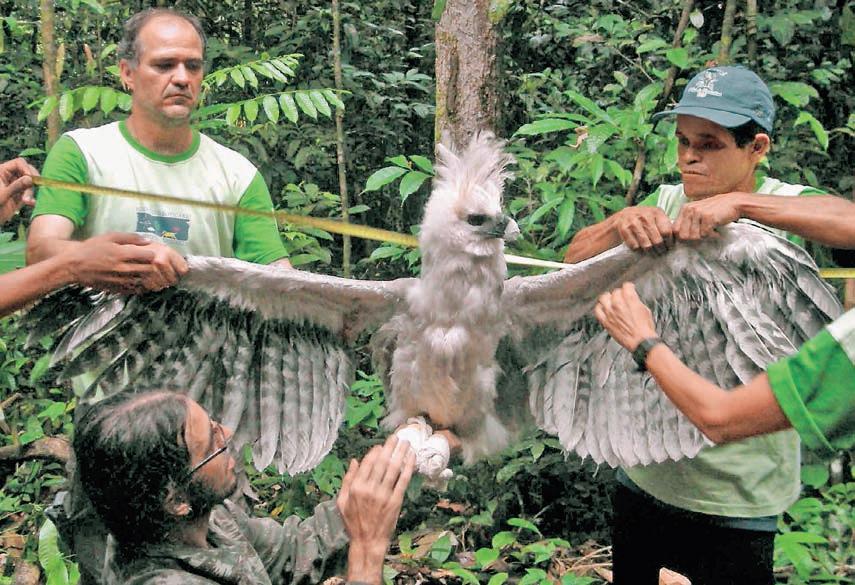
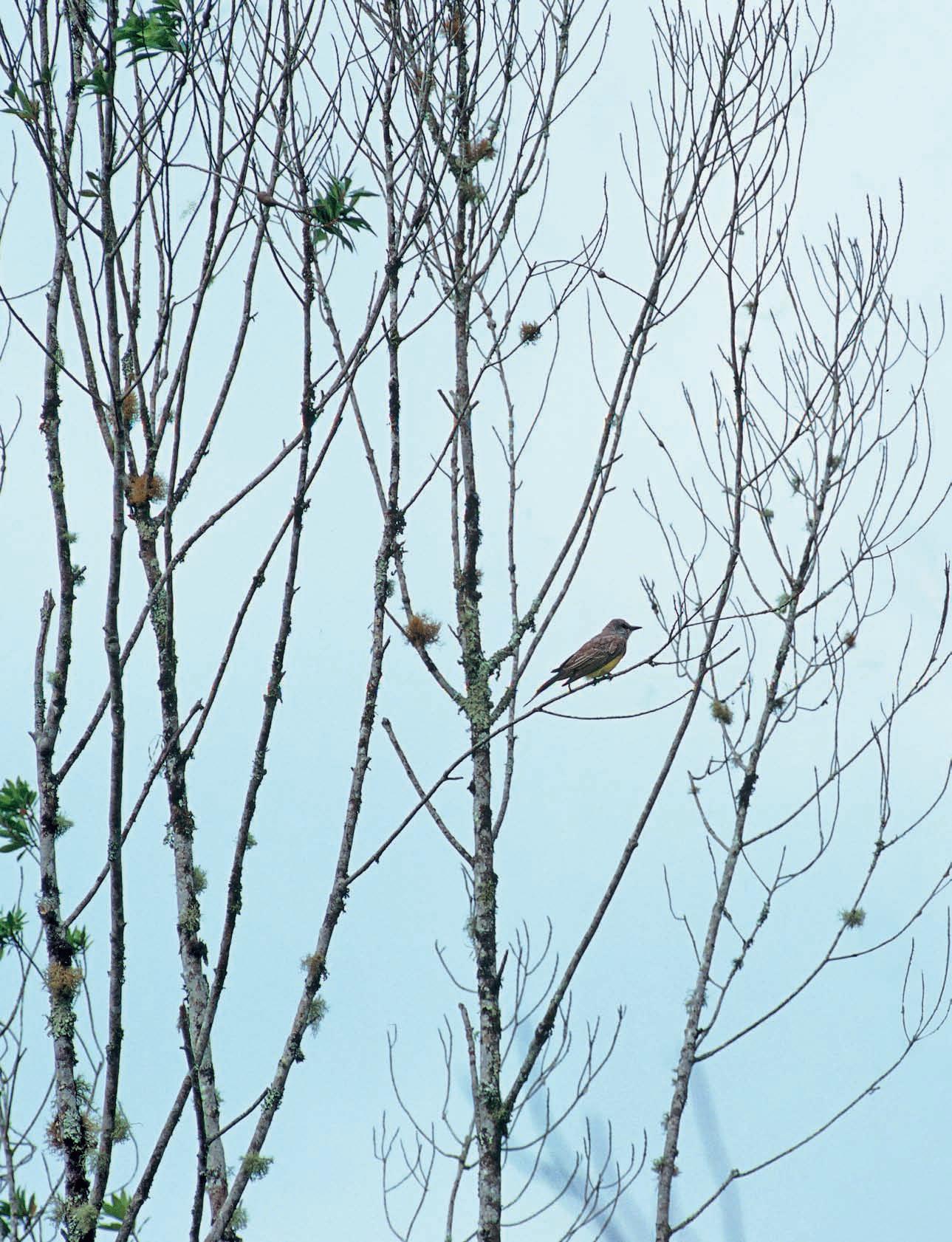
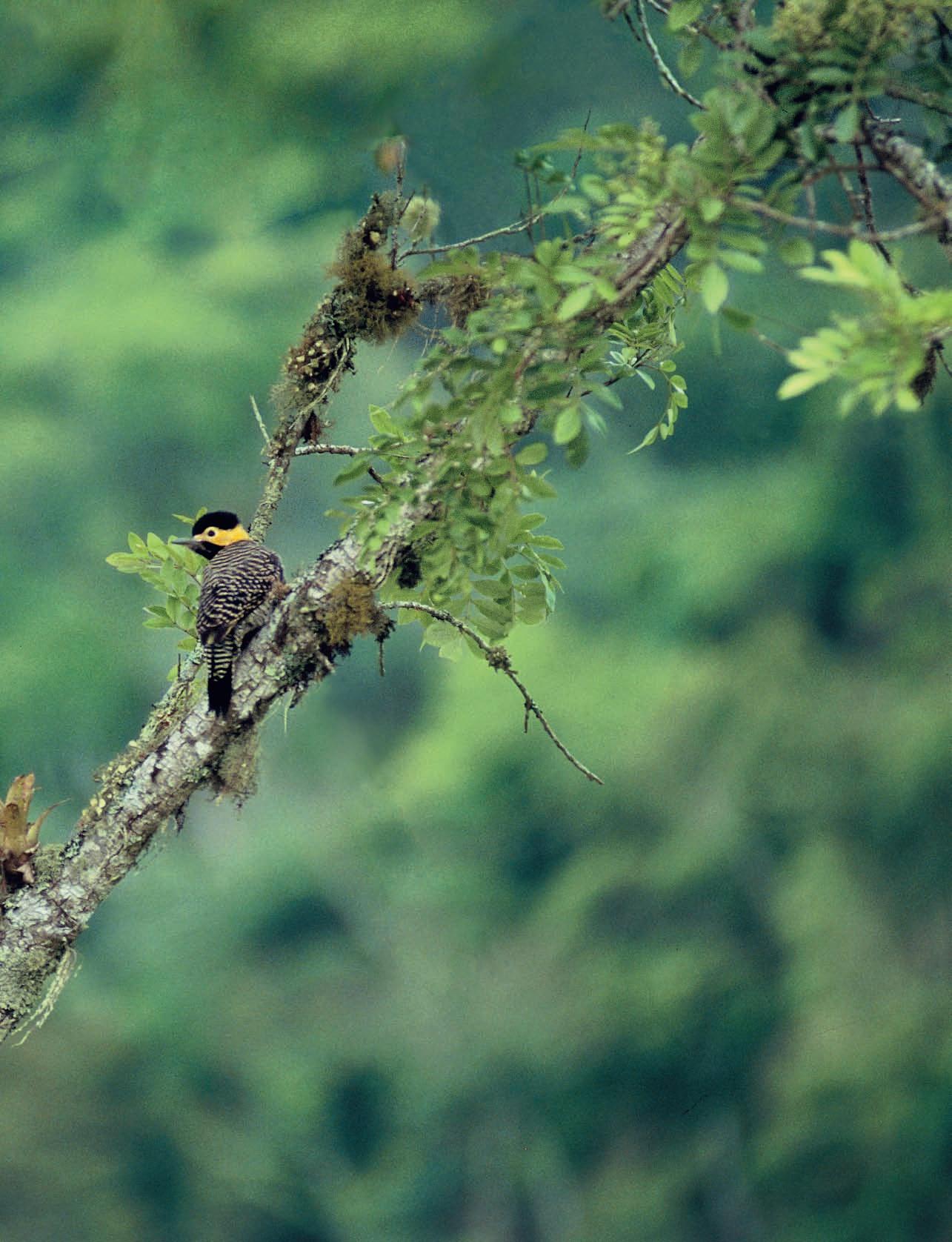
The harpy eagle in the photo is a female chick, aged 4 months weighing 4.4 kilos and with a 1.83-meter wingspan, that still lives in its nest 32 metres up in a chestnut tree in in Parintins, in the Amazon region. In the forthcoming months, when it ventures out on its maiden flight, it will become the first of its species to be monitored in Brazil by means of satellites. It was implanted by a radiotransmitter equipped with a global positioning system that will track its moves for the next three years. The technology was developed by three institutions: the National Institute of Spatial Research (Inpe), the National Institute of Research of the Amazon Region (Inpa) and the Brazilian Institute of the Environment and of Renewable Natural Resources (Ibama). Also known as the Royal Eagle, the harpy eagle is one of the world’s largest birds of prey. It lives for approximately 40 years and inhabits the tropical forests of Central and South America.
Published in September 2007
> INTERVIEW
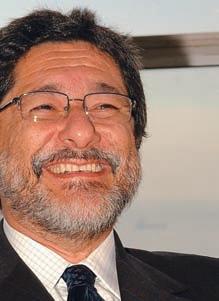
10 José Sérgio Gabrielli, president of Petrobras, predicts a privileged situation for Brazil in the area of biofuels, but warns it is senseless to downgrade oil
> SCIENTIFIC AND TECHNOLOGICAL POLICY
16 ASSESSMENT
Studies point out 11 areas of knowledge where Brazilian research stands out worldwide
20 SCIENTIFIC ARTICLES
The country’s academic production reaches a record, but its impact has room for growth
> SCIENCE
22 NEUROSCIENCE
Cutting edge research into the brain travels from Duke University to the city of Natal in Brazil, along with the desire for science to help transform needy communities
32 PSYCHIATRY
Experimental technique shown to be efficient in treating severe psychiatric disturbances
38 MEDICINE
Combined chemotherapy and stem-cell treatment rids 14 patients of insulin shots
44 MALARIA
Genetic variability enables the Plasmodium to circumvent the human body’s defenses
48 PHARMACOLOGY
Rattlesnake venom penetrates multiplying cells and shows its potential as a drug and anti-tumoral carrier
52 CLIMATE CHANGE
Increase in production can be combined with carbon credits to avoid economic stagnation
56 PHYSICS
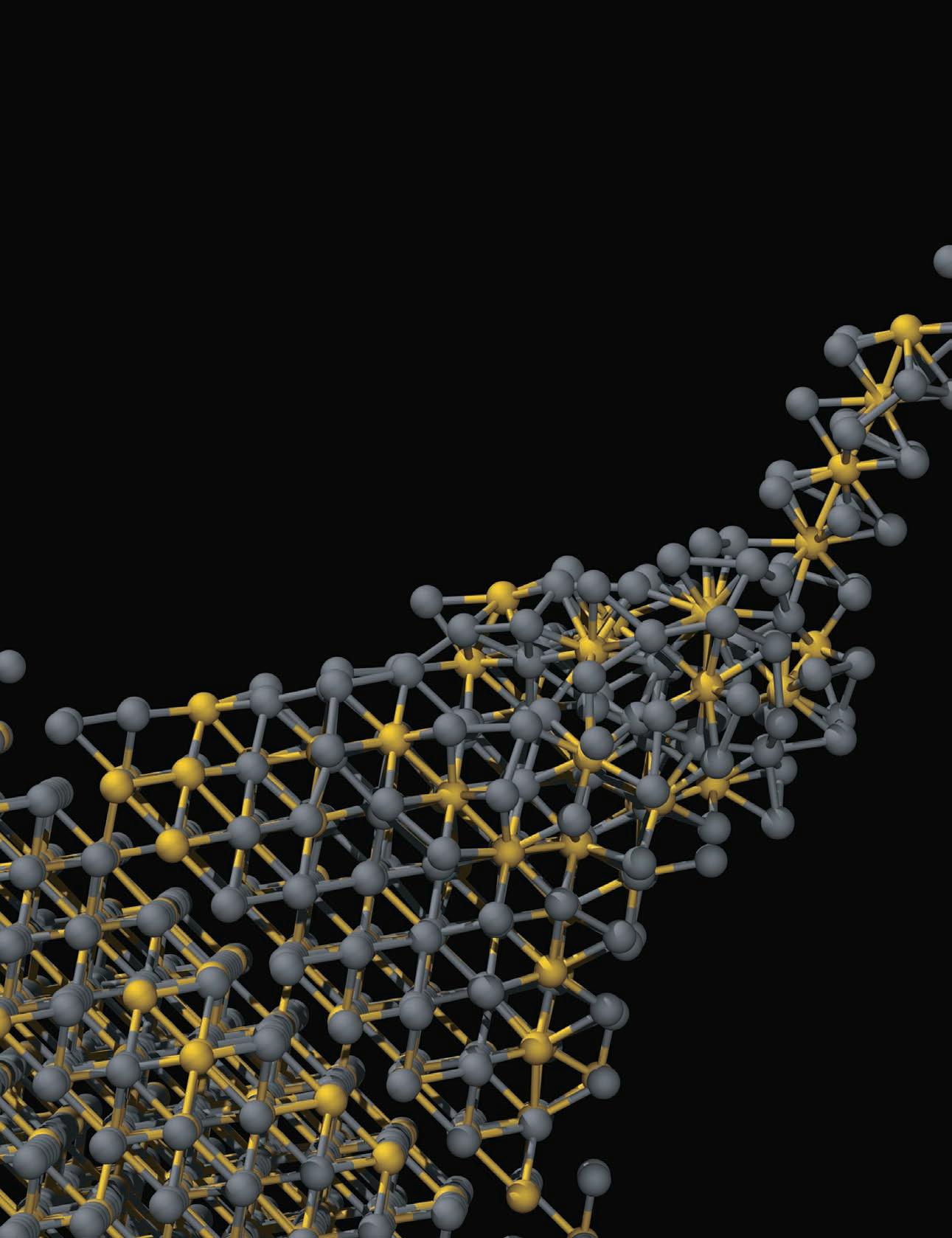
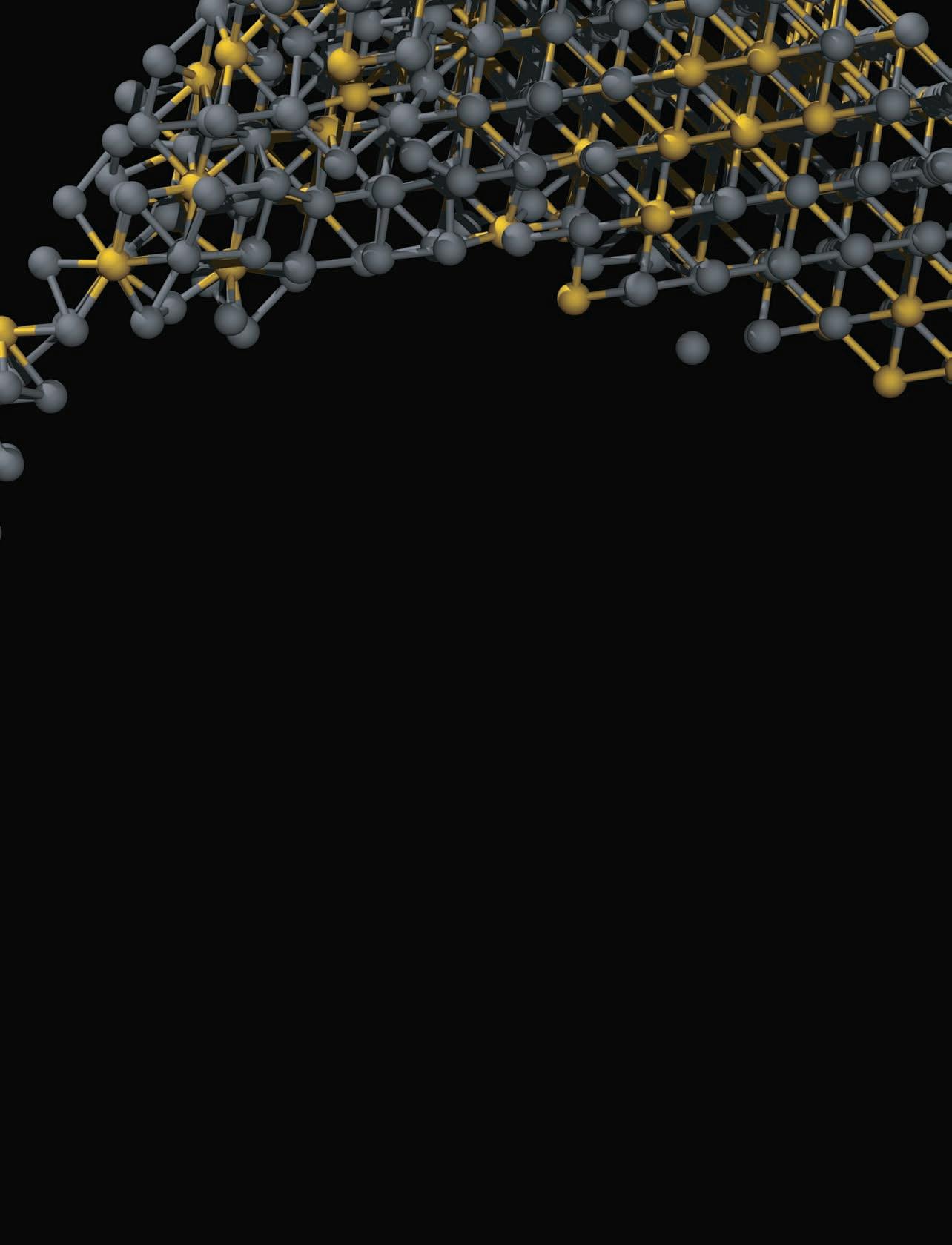
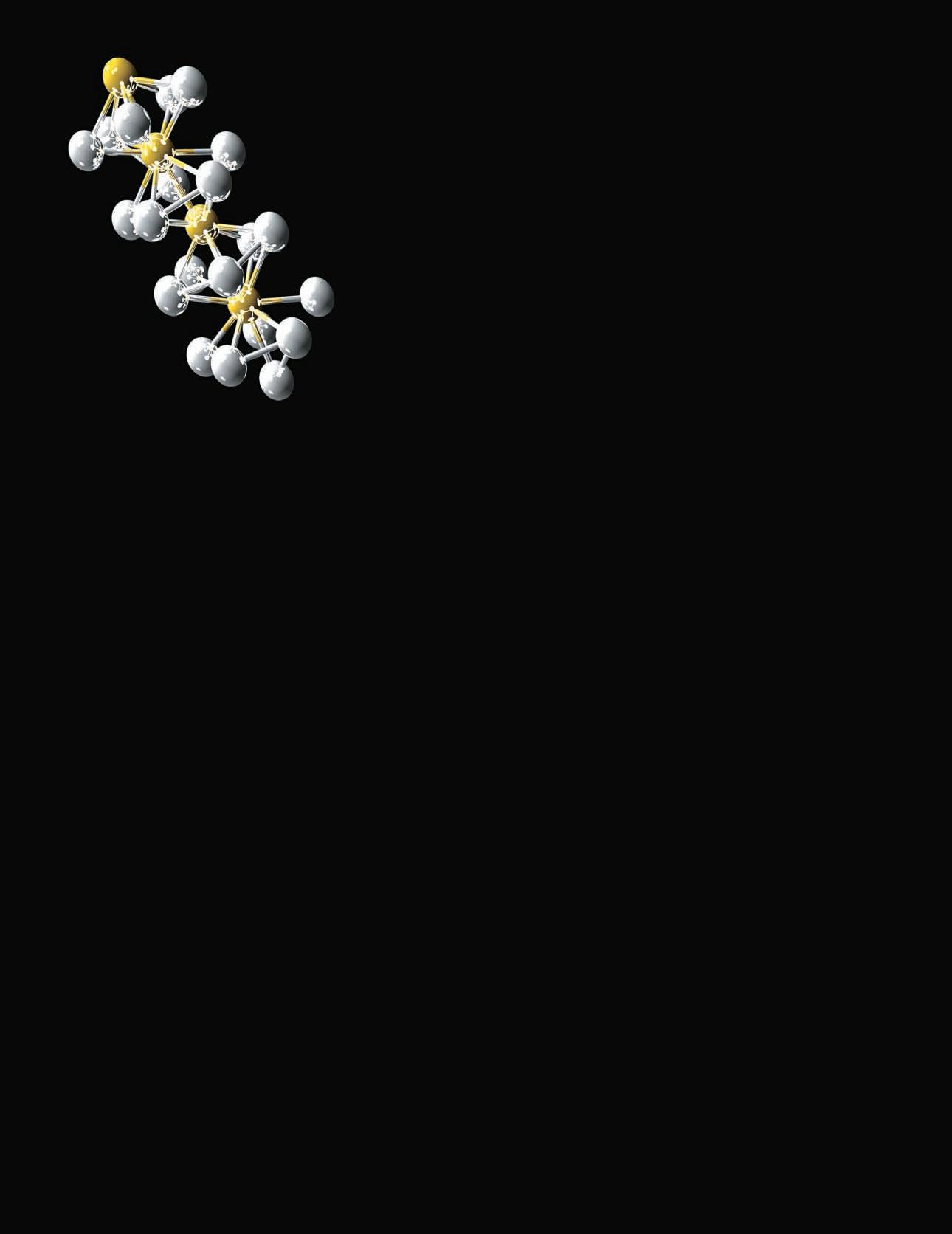
Observed for the first time ever on the smallest possible scale, gold and silver alloys reveal unexpected atom behavior
> TECHNOLOGY
60 OPTICS
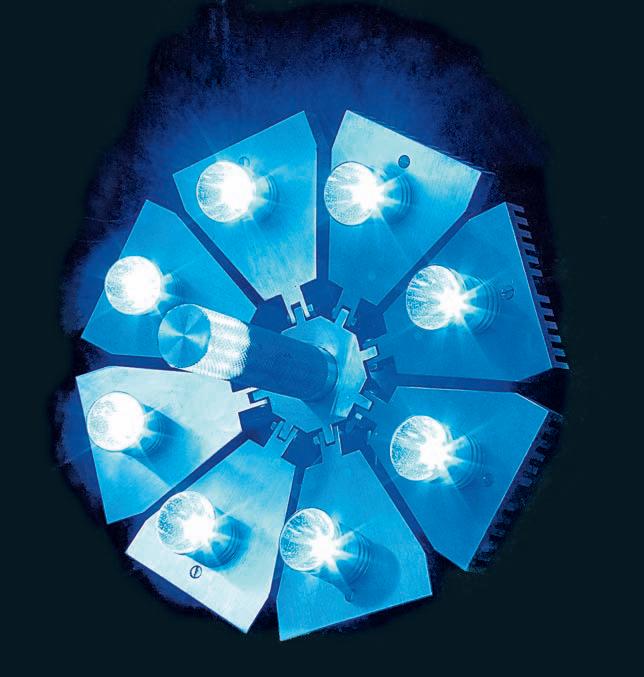
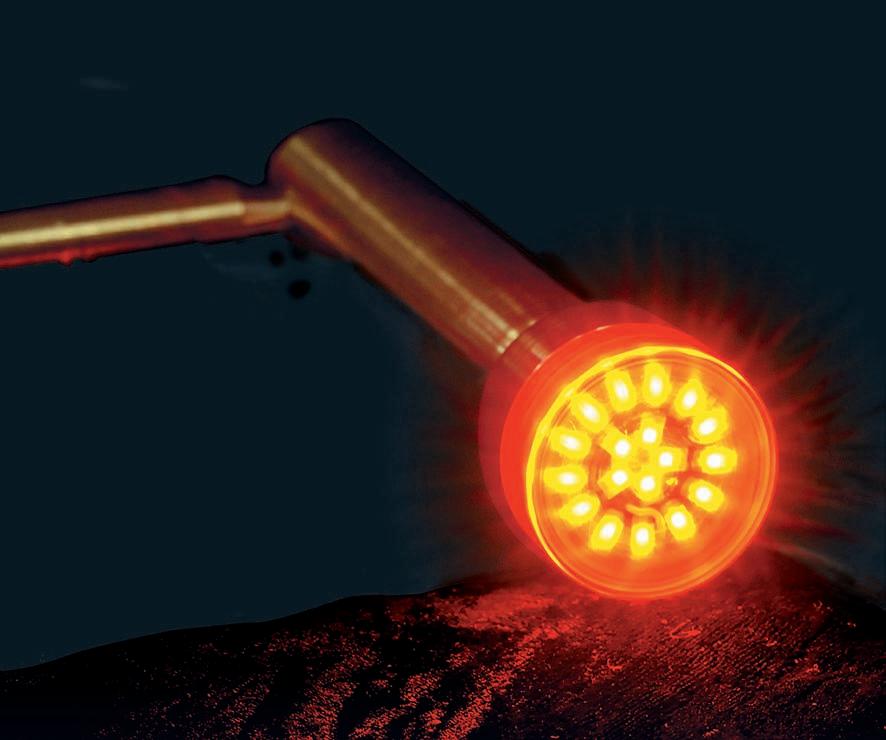
Researchers develop equipment with light emitting diodes - LEDs
66 ELECTRONIC ENGINEERING
Ballot boxes with digital identifier to be used for the first time in 2008 municipal elections
72 ENERGY
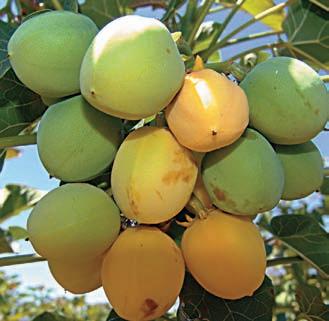
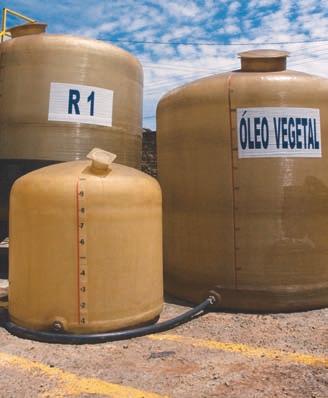
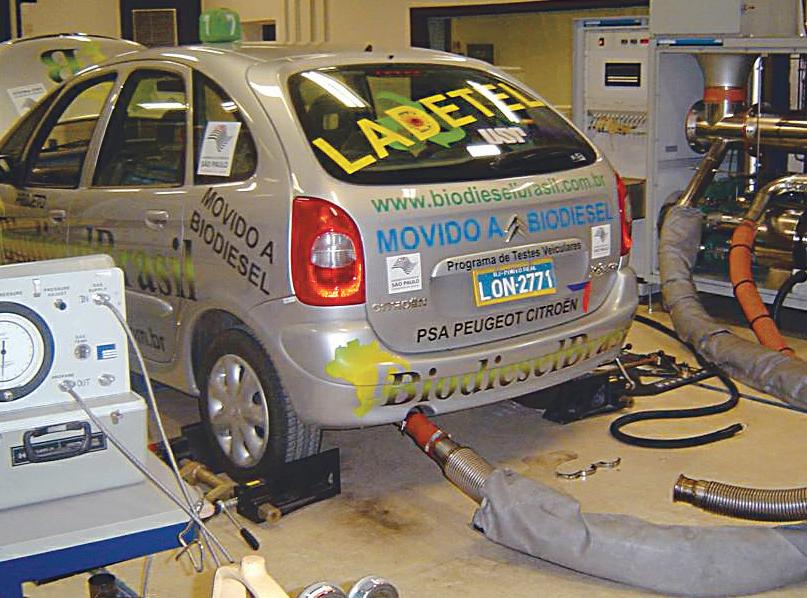
What still needs to be done to establish biodiesel as a national biofuel?
78 NANOTECHNOLOGY
Nanostructured resins work as bactericides and fungicides in washing machines and mattresses
> HUMANITIES
82 SOCIOLOGY
Intellectuals advocate changes to save Carnival, Bahia’s most traditional popular festival
88 ICONOGRAPHY
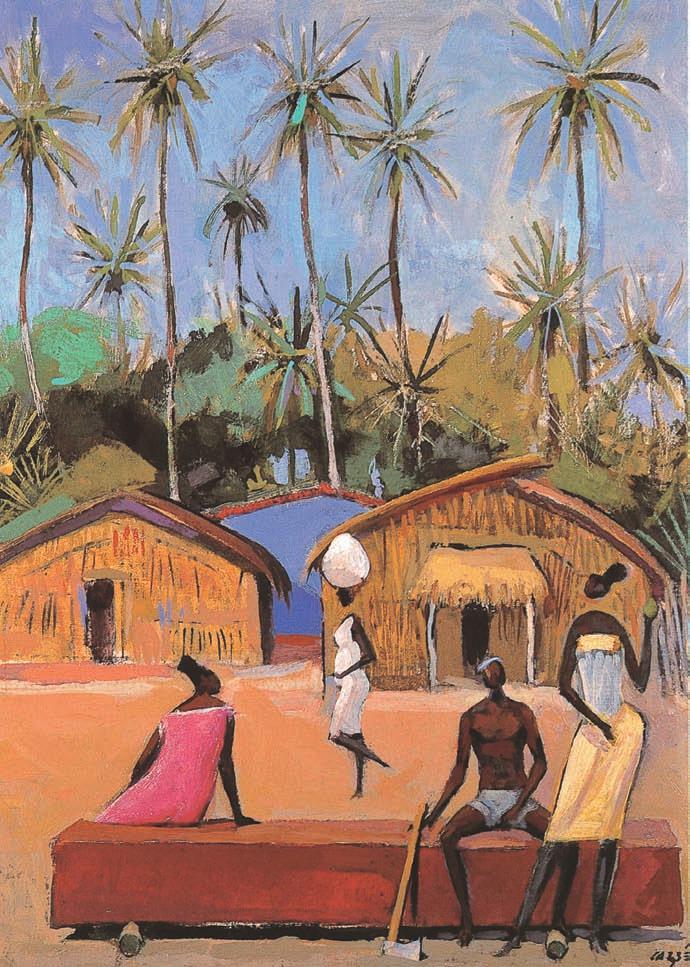
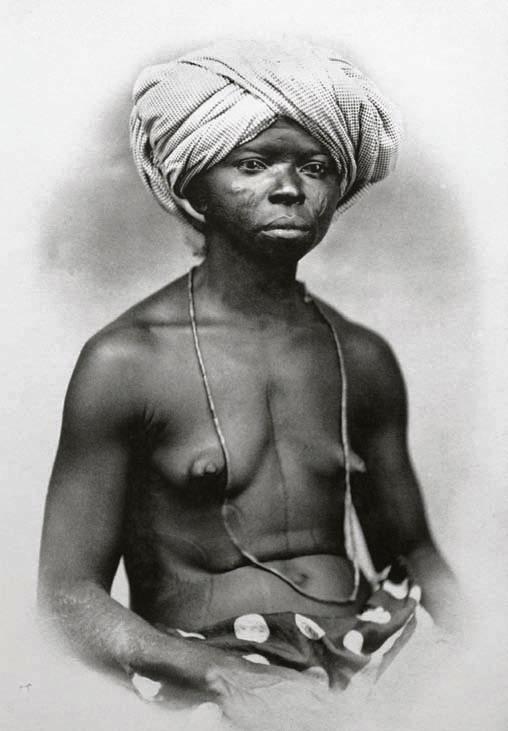
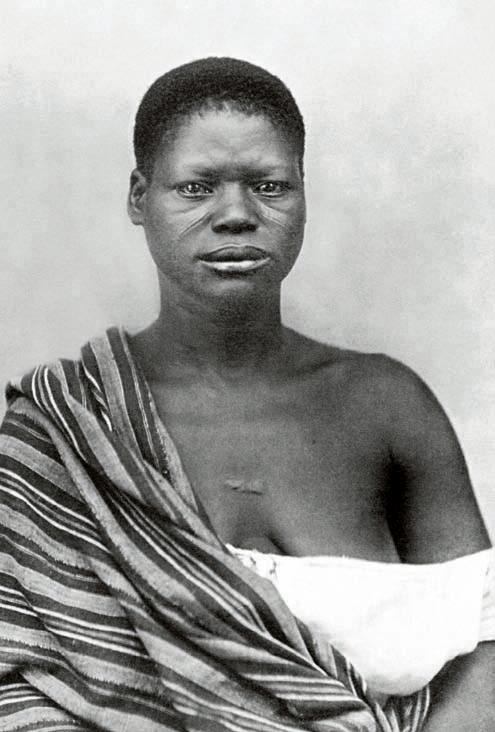
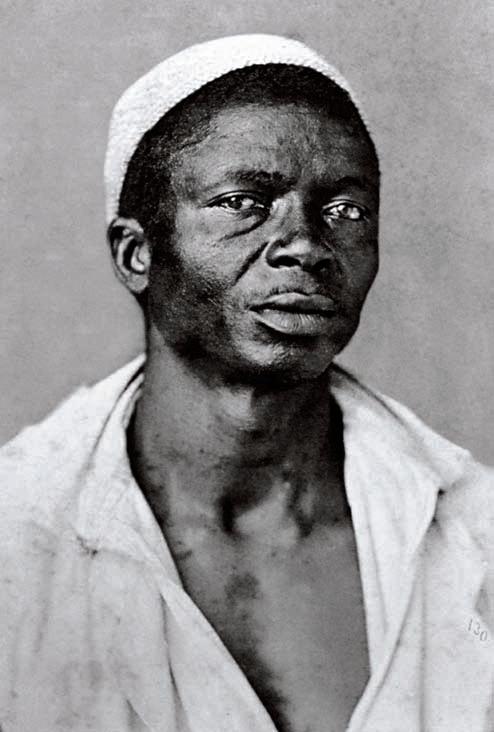
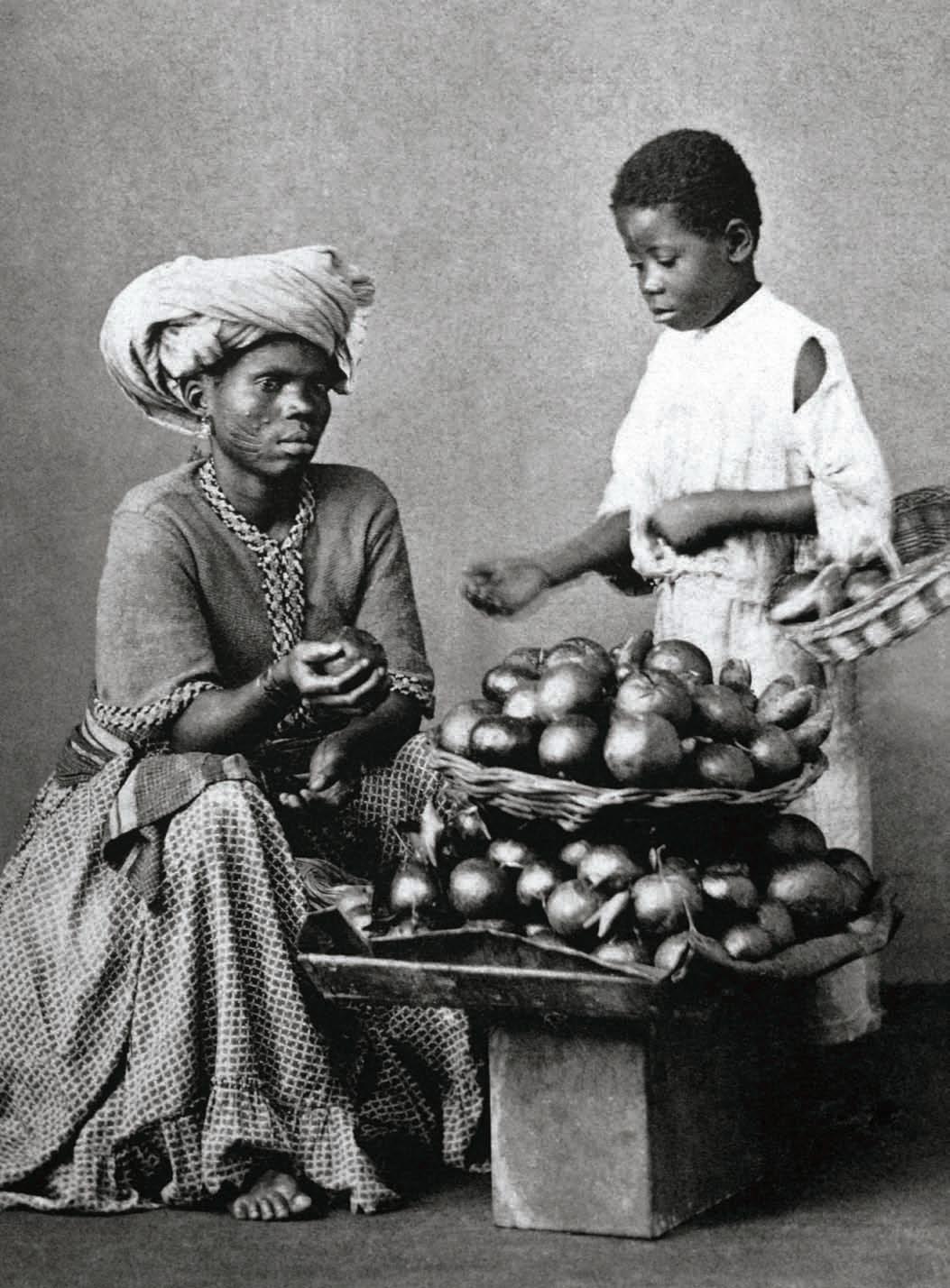
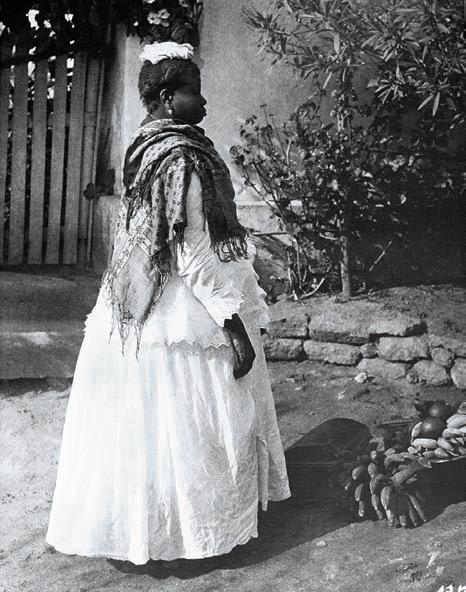
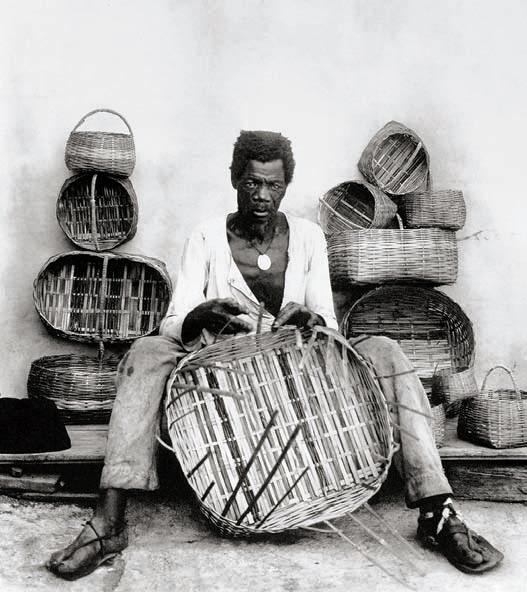
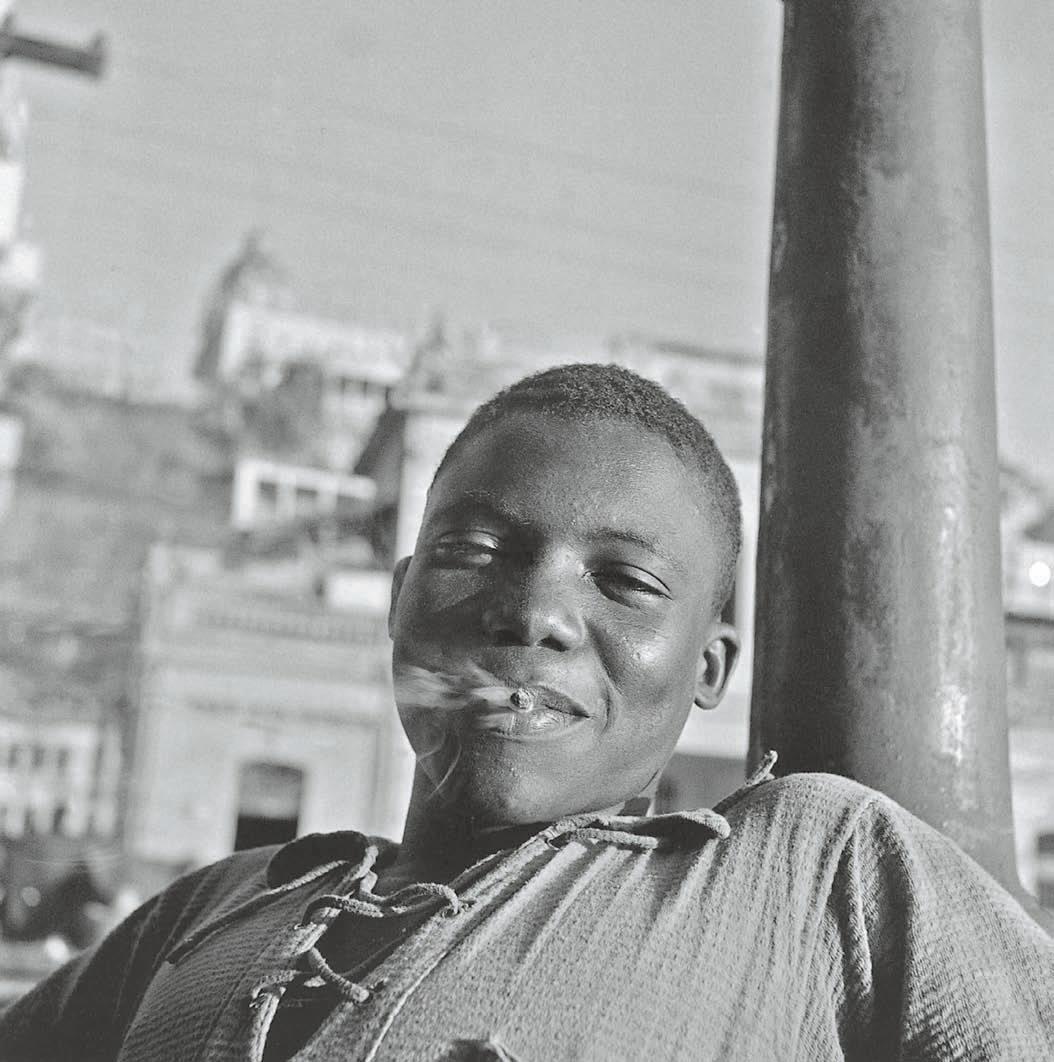
The arrival of photography in 19th century forges images of the blacks in Brazil
94 HISTORY
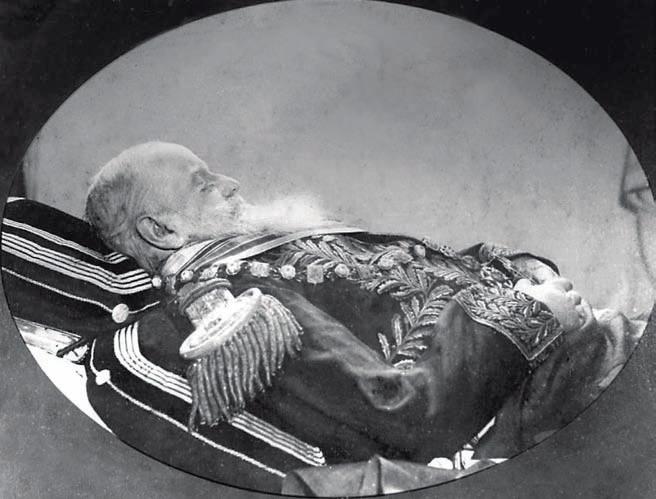
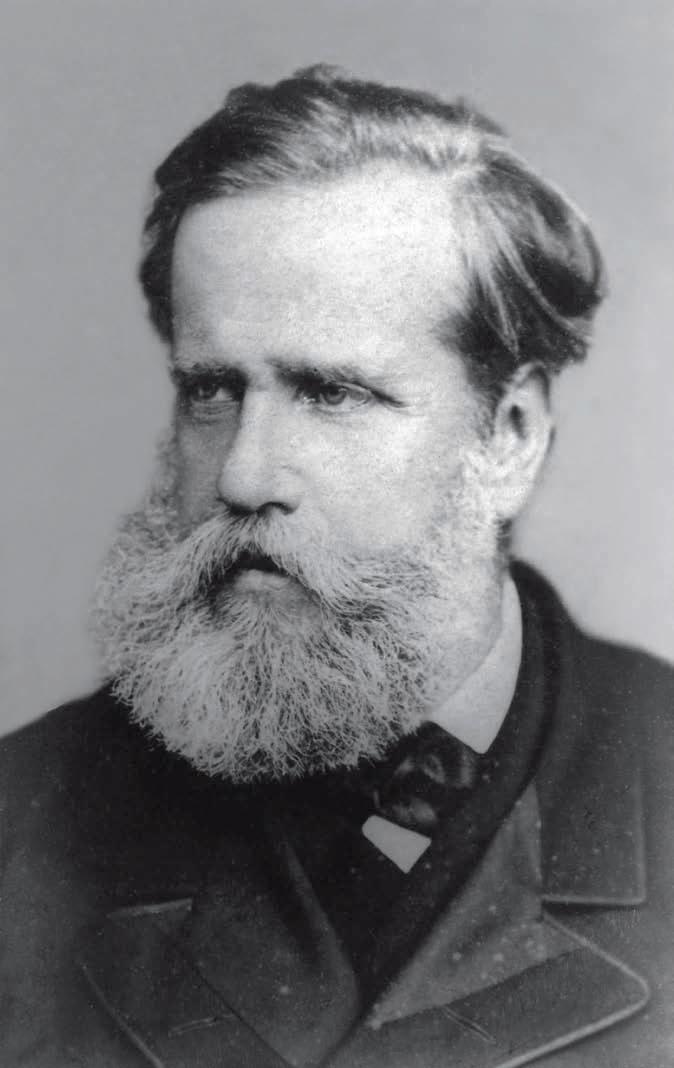
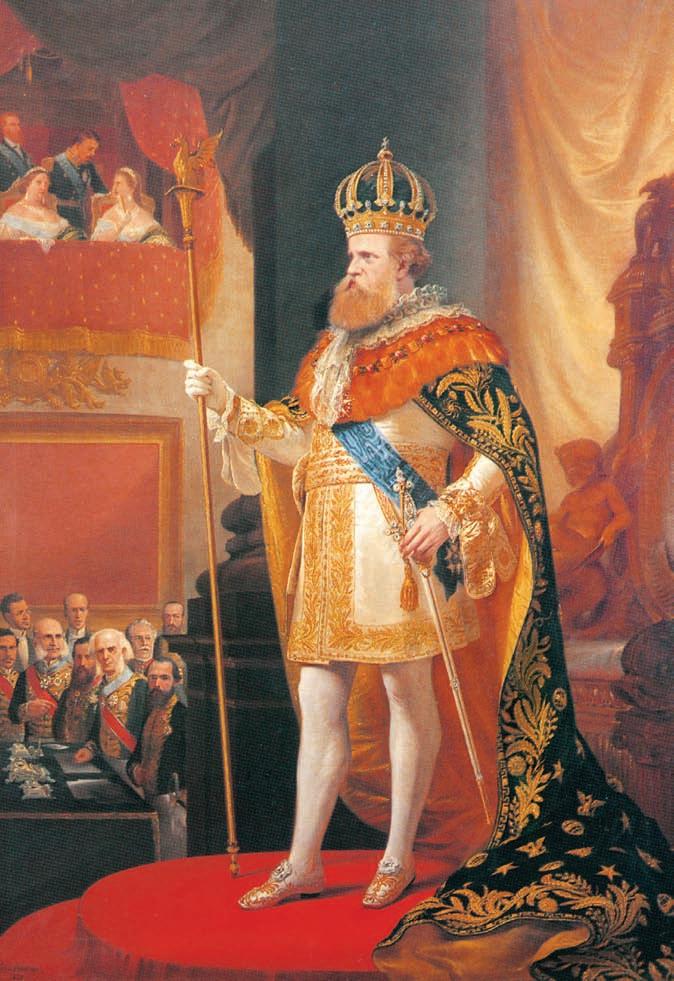
Profiles show Pedro II was more interested in the essence of power than in its appearance
CELSO LAFER
PRESIDENT
JOSÉ ARANA VARELA
VICE-PRESIDENT
BOARD OF TRUSTEES
CELSO LAFER, EDUARDO MOACYR KRIEGER,
HORÁCIO LAFER PIVA, JOSÉ ARANA VARELA,
JOSÉ DE SOUZA MARTINS, JOSÉ TADEU JORGE, LUIZ GONZAGA BELLUZZO, MARCOS MACARI, SEDI HIRANO, SUELY VILELA SAMPAIO, VAHAN AGOPYAN, YOSHIAKI NAKANO
EXECUTIVE BOARD
RICARDO RENZO BRENTANI
PRESIDENT DIRECTOR
CARLOS HENRIQUE DE BRITO CRUZ
SCIENTIFIC DIRECTOR
JOAQUIM J. DE CAMARGO ENGLER
ADMINISTRATIVE DIRECTOR
EDITORIAL COUNCIL
LUIZ HENRIQUE LOPES DOS SANTOS (SCIENTIFIC COORDINATOR),
CARLOS HENRIQUE DE BRITO CRUZ, FRANCISCO ANTONIO BEZERRA COUTINHO, JOAQUIM J. DE CAMARGO ENGLER, MÁRIO JOSÉ ABDALLA SAAD, PAULA MONTERO, RICARDO RENZO BRENTANI, WAGNER DO AMARAL, WALTER COLLI
EDITOR IN CHIEF
MARILUCE MOURA
MANAGING EDITOR
NELDSON MARCOLIN
EDITORS
CARLOS FIORAVANTI, CARLOS HAAG (HUMANITIES), CLAUDIA IZIQUE (POLICY), FABRÍCIO MARQUES, MARCOS DE OLIVEIRA (TECHNOLOGY), MARCOS PIVETTA (ON-LINE), MARIA DA GRAÇA
MASCARENHAS, RICARDO ZORZETTO (SCIENCE)
ASSISTANT EDITORS
DINORAH ERENO, MARIA GUIMARÃES
ART EDITOR
MAYUMI OKUYAMA
DESIGN
ARTUR VOLTOLINI, MARIA CECILIA FELLI
PHOTOGRAPHERS
EDUARDO CESAR, MIGUEL BOYAYAN
SECRETARY
ANDRESSA MATIAS TEL: (11) 3838-4201
COLABORATORS
ALEXANDRE KERKIS, ANDRÉ SERRADAS (DATA BASE), BRAZ, BUENO, CLAUDIUS CECCON, FERNANDO SATO, GEISON MUNHOZ, GIOVANNI SERGIO, GONÇALO JÚNIOR, IRINA KERKIS, JULIA CHEREM, LÉO RAMOS, MARCELO URBANO FERREIRA, NATAL SANTOS DA SILVA, NEGREIROS, RITA SINIGAGLIACOIMBRA AND YURI VASCONCELOS.
ENGLISH VERSION
TRANSLATION
DEBORAH NEALE, R.P. DINHAM, ROGER SKIPP (DIED, APRIL 2007) REVISION ALISON MARY EMILY ASKEW
THE SIGNED ARTICLES DO NOT NECESSARILY REFLECT FAPESP’S OPINION THE TOTAL OR PARTIAL REPRODUCTION OF TEXTS OR PHOTOGRAPHS WHITHOUT PREVIOUS PERMISSION IS STRICTLY PROHIBITED
OPERATION MANAGEMENT
PAULA ILIADIS TEL: (11) 3838-4008
e-mail: publicidade@fapesp.br
CIRCULATION MANAGEMENT
RUTE ROLLO ARAUJO TEL. (11) 3838-4304
e-mail: rute@fapesp.br
PRINTING
PROL EDITORA GRÁFICA
ADMINISTRATION MANAGEMENT
INSTITUTO UNIEMP FAPESP
RUA PIO XI, Nº 1.500, CEP 05468-901
ALTO DA LAPA – SÃO PAULO – SP
From the brain, to biofuel and Carnival
MARILUCE MOURA – EDITORIN CHIEF
Pesquisa FAPESP magazine presents yet another English language edition.This is the fourth time we have gathered the 18 most significant articles about some ofthe best scientific and technological research in Brazil in a magazine for those who do not read Portuguese.This time,the articles span the period from November 2006 to September 2007.
We have tr ied to provide articles from a wide ranging area,following the same pattern as Pes quisa FAPESP in Portuguese.Besides science and technology research,we carry articles on the country’s scientific and technolog ical policy in all editions,and also address studies on the humanities.At
least halfthe texts are about research projects financed by the main nonfe deral science development agency in the country:the São Paulo State Research Support Foundation (FAPESPFundação de Amparo à Pesquisa do Es tado de São Paulo ).The other half deals with projects from elsewhere in the country.This ratio reflects the fact that São Paulo is the country’s wealthiest and most industrially developed state.Home to some ofBrazil’s best universities,it accounts for more than 50% ofthe country’s scientific production.
FAPESP publishes Pesquisa FAPESP in Portuguese every month – and seasonally in English,Spanish and French
November, 2006
May, 2007
December, 2006
April, 2007
– as a means ofpublicizing some ofthe research projects financed by the Foundation and to render accounts ofits activities.Part ofits mission is also to disclose science,and not only to São Paulo readers.That is why the magazine is always found in the newsstands of Brazilian cities with strong centers of higher education.
This edition discusses Brazilian themes,naturally,which are also current for readers from around the world. Cutting edge experiments involving the brain,conducted at both Duke University,in the United States,and the Edmond and Lily Safra International Institute ofNeuroscience in Natal,the capital ofthe state ofRio Grande do Norte,draw attention to the main centers specializing in this field.They account for ten pages in this issue ofthe magazine,covering details ofthis research project.A novel treatment that combines chemotherapy with stem cells to
treat type 1 diabetes,conducted by a group from the University ofSão Paulo in Ribeirão Preto,in the inner-state region,is a radical bet for fighting the disease and one that may become very useful in the future;thus,it merits becoming better known.
In São Carlos,another inner-state city in São Paulo,researchers are working on equipment with light emitting diodes or LEDs.To date,they have created a new traffic light,medical-dental materials,a photobiology studies table and a new optical microscope.We talk about all these products that are an offshoot ofscientific research and about how most ofthem are ready for commercial production.
Technological innovation concerning biofuels is also an issue that has gained priority status.Biofuels have been studied in Brazil for many years and excellent results have been attained.We do not refer merely to ethanol,
the best known biofuel,but also to bi odiesel,the production and distribution ofwhich is beginning to gain ground in this country.
Where the humanities are concerned,it is interesting to highlight the article on Carnival,Brazil’s most popular festival.In this specific case,we are talking about Carnival in the state of Bahia.Intellectuals demand that the event undergoes certain changes and criticize what one ofthem calls ‘the dictatorship ofjoy’.The expression is connected with the fact that for almost 20 years the tourism,music and Carnival industries have heavily exploited the notion ofpeople and things in Bahia, while television imposes the idea ofa place where people party round the clock and where one is permanently happy.
We hope that this edition pleases those who are interested in science and culture.Enjoy your reading.
June, 2007
January, 2007
February, 2007
March, 2007
July, 2007
September, 2007
Star gazing
The request for funds to observe Venus gave rise to discussions about such support for research 125 years ago
N ELDSON M ARCOLIN
Published in August 2007
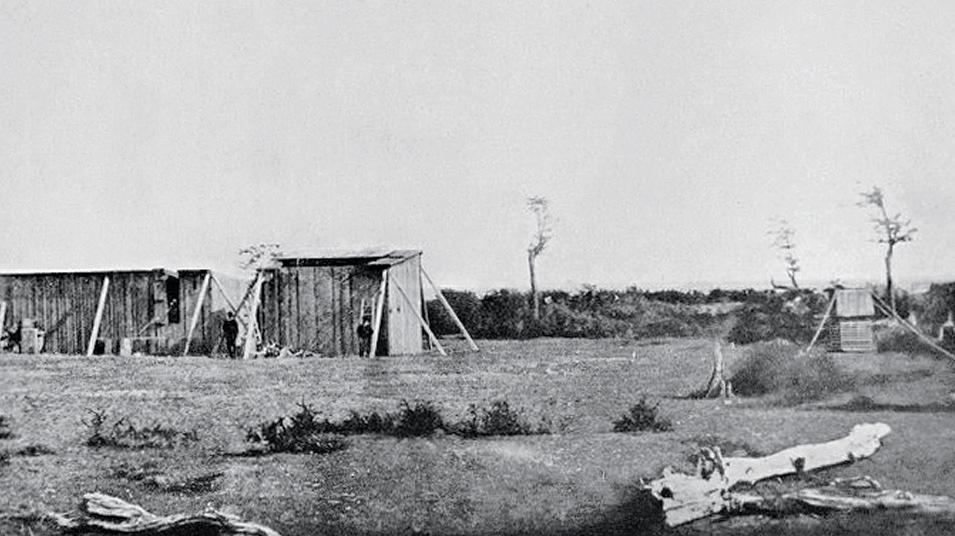
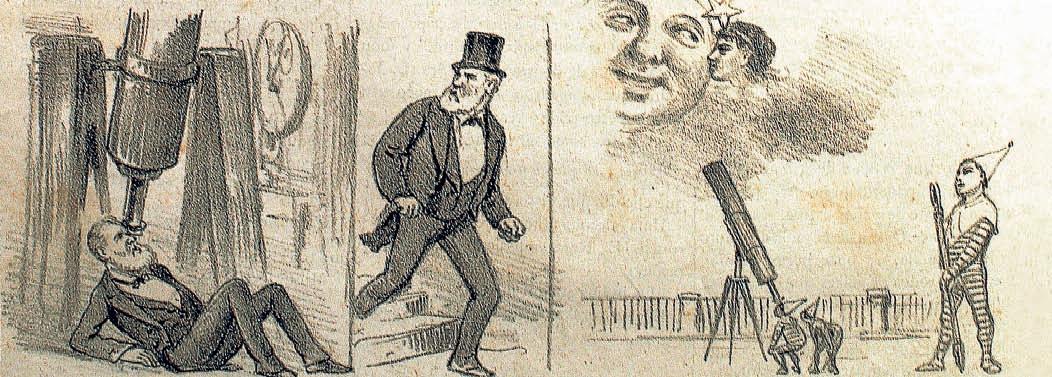
An episode that took place 125 years ago gave rise to the first debates regarding investment in science in Brazil. In common agreement with the emperor Dom Pedro II, the minister ofthe Navy,Bento de Paula Souza,asked Parliament for funds amounting to 30 contos to finance three scientific expeditions which would observe the passage ofVenus over the solar disc.The observations, on December 6,1882,would help to determine the distance between the Earth and the Sun.
One ofthe expeditions was to Olinda,Pernambuco.However, the main ones were concentrated on the Island ofSaint Thomas in the Caribbean and in Punta Arenas,in southern Chile.“These two sites formed the base ofa giant triangle with one ofits vertexes touching the planet Venus”,explains Marcomede Rangel,physicist at the National Observatory,the institution that coordinated the expeditions on that occasion in the name ofImperial Observatory ofRio de Janeiro.“Because ofthe triangular similarity one arrived at the distance ofthe Earth to Venus and ofVenus to the Sun.” Several other countries dispatched teams to conduct observations
Observatory set up in Punta Arenas, Chile: method developed by Edmund Halley
at several points around the globe.
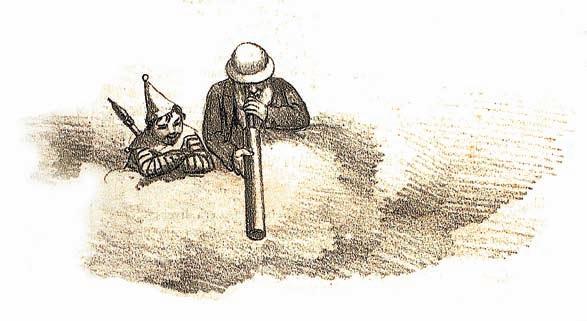
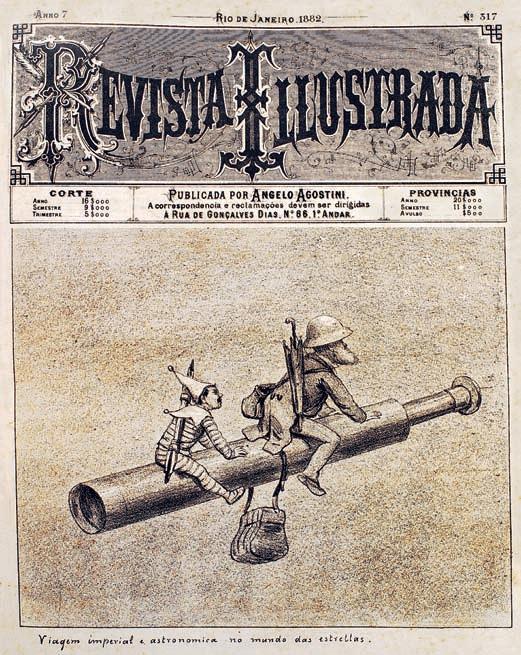
The request ofthe emperor and ofhis minister gave rise to protests in the Chamber and in the Senate and to cartoons in the press, especially in the Rev ista Ilustrada (Illustrated Magazine),designed and edited by Angelo Agostini. “It became one ofthe liveliest debates on the use ofelementary science”, states Ronaldo Rogério de Freitas Mourão,researcher at the Museum of Astronomy and Correlated Sciences (Mast) and a scholar on the subject. In the Senate,Silveira da Mota,contrary to the concession ofthe funds, complained:“The population wants other things,it is not interested in astronomical observations (...) the population wants r ailways,plenty of coffee,tobacco,a lot of individual liberty, very thrifty and moral governments (...) the people want all this,and they are not eager to know what goes on in the stars … that is a luxury”.In the Chamber,representative Ferreira Viana seconded
the senator.The politicians did not understand the benefits that the expeditions might bring to the population.
Result:Parliament did not grant the 30 contos.Nevertheless, to comply with the Emperor,counselor Leão Velloso managed to obtain the funds from
two rich farmers and the expeditions were carried out.
The controversy w ith regard to Venus represented an isolated fact for the times,according to Lilia Moritz Schwarcz an anthropologist at the University ofSão Paulo and author ofthe book “As barbas do imperador”
(Under the nose ofthe Emperor) (Companhia das Letras,1998).In 1882, scientific activity was still in its early stages and the one most interested in practicing it,even as an amateur,was precisely Dom Pedro II.
Dom Pedro was a patron ofthe arts, literature and science. Apart from wanting to give independence to the local cultural elite, the emperor also wanted to distinguish himself from other sovereigns, including those from the past.“In those times,to be considered illustrious, kings and queens had to be scientists”,states Lilia. Another aspect that helped to avoid scientific controversy at that time was the fact that Dom Pedro practiced science privately – he was an amateur astronomer and owned an observatory at the São Cristóvão Palace. There was also the Emperor’s Museum,which housed the mummies given to him by Egypt, ethnographic material and Leopoldina’s gem collection.“Access there was granted only to scientists he invited.”
Illustration by Angelo Agostini in his Revista Ilustrada: poking fun at Dom Pedro II and at astronomic research
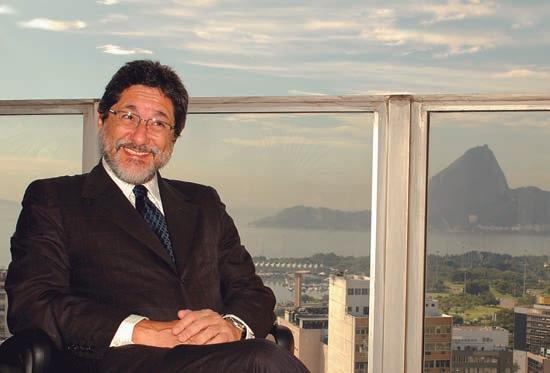
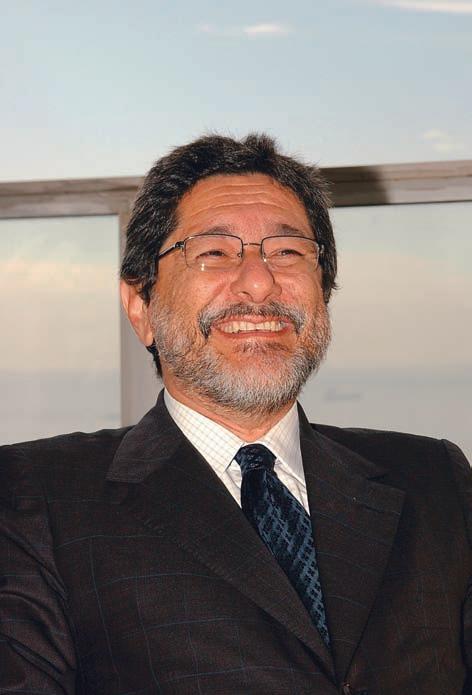
José Sérgio Gabrielli de Azevedo
Let’s not downgrade petroleum now
M ARILUCE M OURA
in March 2007
When an economist from Bahia, José Sérgio Gabrielli de Azevedo,57 years old,appeared on the national political scene at the beginning ofPresident Lula`s first term,because ofhis appointment to be Petrobras’s director offinance and investor relations, some inquired,with a certain irony,not to say sarcasm,where had he been hidden for so long as,inspite ofhaving such a good curriculum,he was completely unknown.Four years later,the last two – after the departure ofJosé Eduardo Dutra – as President ofPetrobras,it would be hard for anyone to question his competence at the helm ofthe company that in 2006 recorded a profit ofR$ 25.9 billion and reached a market value ofR$ 230 billion,a 33% appreciation compared to the previous year.And it is to be noted that,throughout this year,the largest Brazilian company and one ofthe biggest oil companies in the world,it faced some disagreeable political turbulence,in particular with Bolivia.Petrobras’s President faced up to it gallantly.
Apparently,until arriving at Petrobras, Gabrielli had always been an academic.When 25,26 years old,even before doing his doctorate at Boston University,which he started in 1976,he had already become a professor at the Faculty ofEconomics at the Federal University ofBahia (UFBA) while concluding his master’s degree there.After his stay in the United States,when with sophisticated methods of econometrics,he pored over the financing of the Brazilian state-owned companies,he went back to his old school.After passing through all the stages ofhis teaching career at the institution,he became Director from 1996 –2000.His path at UFBA was to be completed with the position ofPro-rector for Research and Postgraduate Studies,in 2002,soon after a spell in London for postdoctoral studies.
In fact,in parallel to his successful academic life,Gabrielli had always exercised his political side,having a liking for it,up to a point,but he was certainly imbued as well with a notion ofpolitics as a mission,which left a strong mark on a good – perhaps the best –number ofthe 1968 generation.As a militant in that vibrant student movement at the end ofthe 60s,achieving prominence in legal positions,like that ofpresident ofthe Central Directory ofStudents (DCE) in Bahia,and also with underground connections,given his link with Popular Action (AP in the Portuguese acronym),a clandestine party then in transit between the Catholic left – its place oforigin – and the Marxist domains,Gabrielli ended up facing a period in prison in 1970. Then at the end ofthe decade,he found himselfnaturally amongst the founders ofthe Workers’Party (PT) and,a few years later,in 1990,as a disciplined member ofthe party,he accepted the candidacy for Governor ofthe State ofBahia,an extremely arduous and wearying task,all the more so when his strongest adversary was the all-powerful Senator Antonio Carlos Magalhães – predictably the winner in that campaign.
There are even less known facts about the past ofPetrobras’s president.For example,in 1970,he spent a short time working in journalism,as international editor ofthe newly founded newspaper Tribuna da Bahia [Tribune ofBahia] which under the editorial command ofQuintino Carvalho,from Rio de Janeiro,intended to bring some fresh air to the Bahian press.And there is one story from this time,amongst so many others,that delighted the colleagues ofthe temporary journalist:one night,the fearsome Colonel Luís Artur de Carvalho,for many years the superintendent ofthe Federal Police in Bahia,for some reason had gone to the Tribuna’s newsroom.And,sighting
Gabrielli at the back ofthe large place of work, shouted:“Mr.Gabrielli,how is the AP going?”And he,without losing his cool: “Sending lots ofnews,colonel”.Ofcourse, an international news editor would then be dealing all the time with telegrams from AP, the Associated Press.
But it is the future that José Sérgio Gabrielli talks ofin this interview for Pesquisa FAPESP.He addresses the challenges that the problem ofthe global climate changes brings to an oil-producing company like Petrobras, foresees the chance ofa privileged situation for the country in the area ofbiofuels,thinks that it makes no sense to downgrade petroleum,which is integrated so very deeply w ith contemporary life such as it is,and makes an extremely singular comparison between Petrobras’s Research Center and the 16th century School ofSagres,at the same time as he talks,full ofenthusiasm,about Petrobras’s research network with the Brazilian universities and its great potential for generating knowledge.
■ Isn’t it nonsense for a President ofa fossil fuel products company to speak about pro-protection ofthe environment,as was seen,for example,when you went to the Davos Economic Forum,in January?
— At the forum,I took part in an event called Energy Summit,which brings together the main oil companies and the main electricity companies in the world.There are 30 people at the most.And,in this forum,discussions about climate change,prospects for growth in the demand for oil,and energy conservation are absolutely fundamental.What is the position ofthe oil industry today? First, the understanding that the oil age will not be replaced by another fuel because ofits depletion,but because economically viable alternative fuels are going to appear.
■ Which?
— Several.At this moment,biofuels are appearing,along with a whole perspective of greater efficiency in automobiles and greater conservation ofenergy.This involves an urban policy that minimizes the use ofthe individual vehicle and is also effective from the point ofview ofthe main problem in the world with regard to emissions:the loss ofenergy in buildings,the use offuel for generating electricity,the basis for heating and cooling ofdwellings and other buildings.And there we have coal,natural gas,fuel oil...The most recent report from the UN puts vehicles in second place in terms ofemissions.And afterwards,significantly,comes deforestation and forest fires.The sources are various,and their identification makes it possible to adopt the policies required for each one ofthem, and,accordingly,to visualize possibilities of the effects and the successes in fighting the more real warming,instead ofstaying with one culprit,downgrading that culprit...
■ Or nurturing the fantasy that they will manage to take all the fossil fuel out ofthe world’s vehicle circulation system...
— Yes,that is a bit ofa fantasy.Today,rather, it is important to call attention to the fact that clean water and clean air are fundamental for life.Modern human life would not exist without oil.
■ And,in a way,that today constitutes a paradox.How to face up to it?
— There is simply not one way how.We have to minimize the impact ofoil production on the environment and make more efficient use ofoil by increasing the use ofcleaner sources to generate energy.
■ In your claim that modern life does not exist without oil,the reference is to what? — I am talking about transport,generation ofenergy and petrochemicals.Look around you,in modern life,we are going to find oil in practically everything we can think of.
■ And that will remain so,in your view,for many decades or centuries,perhaps. — Centuries,I think not.I think decades.Today,the demand for oil in the world is more or less balanced – 82 to 84 million barrels ofoil a day is the supply and also the demand,The forecast growth for demand is around 1.6%,1.8% a year,and that is also the grow th in supply.So there is no reason for saying that there is going to be a big problem in this area.The reserves known today indicate 70,80 years ofproduction.On the other hand,there is a growing use ofnew technologies to recover mature fields and to produce oil in situations that were impossible
a short time ago.We are producing at a depth ofover 1,800 meters,and we are drilling at a depth ofover 6 thousand meters.We have a well in the GulfofMexico with a depth of 11 kilometers in shallow water.And we have every expectation here in Brazil ofexploration in the pre-salt,that means,below the layer ofsalt that has 6 thousand meters of rock,which is 2 kilometers ofsalt...
■ But does it not seem to you,in view ofthe equation that is being put together in environmental terms,this ultra-sophisticated technology for exploration tends to be a bit useless?
— It becomes viable because the price ofoil is high.But given this same factor,alternatives are going to appear:there is growing viability ofenergy from biofuels,from wind power,solar power,energy from the waves of the sea,and nuclear energy.Ifthe price ofoil falls,many ofthese nascent technologies cease to be viable.
■ When one thinks ofBrazil’s energy grid for 2030,it is said that hydroelectric energy should continue to account for 50% ofthe total.
— Hydroelectric energy today accounts for 85% ofthe electricity grid and some 47% in the energy matrix as a whole.But Brazil is an exceptional case,because it is perhaps one of the biggest countries in the world,and the only one with so much renewable fuel in the energy matrix,thanks to hydroelectric energy and to alcohol.It is enough to think that 40% ofBrazilian gasoline,or its equivalent in terms ofenergy,is alcohol.
■ Even so,w hen one measures the future Brazilian energy matrix,a good deal ofthe use of oil is raffled off,isn’t?
— Yes.And that creates two great challenges in the matter offuel replacement.One is connected with biofuel,both ethanol and biodiesel.They are going to replace gasoline and diesel,which are going to be left over, or,in the case ofdiesel,we are going to stop importing.Accordingly,Petrobras has to deal with this.
■ Does that mean that Petrobras will have to reduce its production in some way?
— No,not to reduce.Petrobras has to find a destination for its production,because,unlike others,the oil industry is not a Ford-type industry that is adjusted by the speed ofthe transmission belt.It is an industry in which investments are made to work at 100%.So,it is a question offinding new destinations.For example,here in Rio de Janeiro we are making a petrochemical complex that is going to use heavy oil directly to produce petrochemicals,with technology that is new in the world. Nobody does that,everybody uses natural gas
or naphtha,but we are going to do it.This way, we may decrease the production offuel oil and also stop having a problem with gasoline and diesel,gasoline and naphtha.The forecast is to begin production in 2012.The other alternative is to find ways for using this kind ofoil and gasoline and diesel in other markets.The world is going to continue to demand this for transport.We produce 2 million barrels,the world consumes 85 million.Our target for 2011 is to produce 2.3 million barrels ofoil.
■ And how does Petrobras today forecast the destination ofthis production?
— By 2011,we are going to construct this petrochemical complex and a new refinery in the Northeast,in particular to optimize the production ofdiesel.Then we are going to have 350 million additional barrels ofprocessing capacity.We are going to increase the capacity ofthe present-day refineries by over 200 thousand barrels,and,in an integrated manner,we are going to increase the production of biodiesel and alcohol.We have bought 800 million cubic meters ofbiodiesel,or 800 billion liters a year.And,from 2008 onwards,we are going to produce 150 million cubic meters.
■ With regard to transport,do Petrobras’s forecasts establish what is the proportion ofuse of each one ofthese fuels?
— It is difficult to talk precisely.Today,in the market for gasoline,roughly 40% is alcohol, as I said,because it is 25% ofanhydrous alcohol,plus the hydrated alcohol.In diesel,we will be between 2% and 5%.We have a growing compressed natural gas fleet.The problem with this gas that it has an unbalanced re lative price,meaning,it makes no sense to have that fuel which Brazil has least of, with the price sky high.
■ And there are political questions in relation to the gas that do not seem very simple — The growth in the demand for compressed natural gas is probably going to see a reduction.Its share in the energy matrix as a whole went up from 4%,5% to 8%,in three years. The prospect is for gas in this matrix to reach perhaps 10% ofthe total Brazilian energy matrix.And I think that we will have a far larger portion ofbiofuel here in Brazil than in the rest ofthe world,where it is going to come to about 10% ofthe market in 2015.The other alternative forms,wind power,solar energy etc.,really account for a very small share.
■ But then nuclear power comes on stage.Minister Sérgio Rezende is once again talking emphatically about the Brazilian nuclear program. — Without a shadow ofdoubt,nuclear power is the cleanest we have,although it is also the most dangerous,because it does not heat
up slowly and gradually,but brutally and explosively ,both from the point ofview ofaccidents and from the point ofview ofits nonpacific use.The regulation and the follow up ofany program are key elements for its balance.Furthermore,nuclear power has another serious problem,which is the waste,its reuse,which still has to be resolved.
■ In the meantime,in the oil industry... — In the oil industry,considering the proven reserves in the world today,those that have a 90% probability ofbeing developed commercially,we have 60,70 years ofproduction there.Ifwe also look at the possible reserves, those with a 50% probability ofdevelopment with present-day technology and commercial conditions,that will be more than 150 years.Ifwe also put the probable ones,there is an enormous production horizon.
■ And ifthe possibility ofmature fields is added... — Yes,taking into account technological development for recovering mature fields that is going to be induced by the high prices ofoil – the so-called secondary recovery in which CO2 is injected into the well to produce more oil –,considering the heat technology to step up the recovery ofoil,in short,more sophisticated and expensive technologies,and ifwe include in the panorama ofthe future production the bituminous sands ofCanada and the extra-heavy oil ofVenezuela,we arrive at a time horizon of200 years ofoil production... No technological challenge is very great in the long term,and everything is going to depend, in great measure,on the behavior ofoil prices. Let’s remember that our alcohol became viable 30 years ago based on price,and afterwards there was a crisis because ofthe question ofprice.When the price ofoil rose,we established the Proálcool policy.And,from the production ofsugarcane,we established a policy in the automobile industry.When the price ofoil fell and,simultaneously,the price ofsugar went up,Proálcool became unviable.
■ By unveiling this broad horizon,is your intention to allude to a possibility ofburning oil less aggressive to the environment? — No,what I am saying essentially is that oil is not going to leave the stage because it is going to finish,rather it may become economically unviable because in the future there will be other cleaner and more economically viable sources.
■ But which cleaner sources and processes effectively have the volume to replace the importance that oil has in the world energy matrix — Pulp,for example – the production ofpulp from an enzymatic process using vegetable waste.This technology is very embryonic at
the moment,both in the capacity for producing enzymes,in the capacity for capturing this waste,in the actual processing ofthe pulp, or in the process oftransporting its results. But it can be developed.Another example:hydrogen,which involves a technological revolution,not only with the fuel.The main limitation that I see in this technology is that it requires another engine,it requires a transformation in the fleet ofautomobiles,with a new conception.For me,then,it is further off than biofuel.As to the advances in energy conservation,we have today technologies already available,but still expensive,for building intelligent buildings,windowpanes adapted with nanotechnology etc.,that reflect,that repel the heat and sometimes reduce by up to 60% the use ofenergy in a building.
■ Does the problem concern heating more, or cooling
— Both,because buildings have to be heated in the winter and cooled in the summer. There is today a whole urban dynamic in the big metropolises,aiming at minimization in using energy for transport,a whole policy for expanding the mass transportation network, in parallel to the development ofmore efficient engines for domestic use in refrigerators,more efficient stoves,light bulbs etc. There is therefore a conservation movement that is going to diminish the impact offossil fuels,together with a movement to expand production from cleaner sources.
■ Nevertheless,I insist: how does Petrobras,the company that at the beginning ofthe 1950s began to construct the Brazilian dream ofself-sufficiency in oil in the country,now attained,and that has,besides immense economic weight,an extraordinary sociocultural importance in our nation,adjust its strategic plan to the current theme ofrisk from the climate change?
— In our strategic plan prior to the IPCC panel,since 2004,2005,we were already putting Petrobras’s vision,as of2011,as world leader in the biofuel area.We have as a strategic target positioned ourselves in this market,for pro-active reasons and for defensive reasons. In the first case,we think that this market is going to grow.And the defensive reasons relate to the following:as there are going to be shifts,it is better for us to do the shifting than being shifted by the others.It is,incidentally, absolutely incredible,when we go to a meeting like the one in Davos,to see the image that Petrobras has at that level.It is seen as a company that has been taking care ofthis field for a long time.We have a patent in alcohol transport,an alcoholduct,we have technology for treating acidity in the refinery and in the tanks, we have in the automobile industry a lot ofexperience in producing automobiles using al-
In our strategic plan prior to the IPCC panel, since 2004, 2005, we have already been putting Petrobras’s vision, for 2011, as world leader in the biofuel area. It is a target to be positioned like that in this market ‘
The logic of Cenpes is the School of Sagres, which combined the skill of the sailor with the knowledge of the wise and with the dreams of the cartographers.
That is a key element: combining perspectives of dreams with the interest of the industry and scientific knowledge
cohol,more than any other country in the world,we have logistics set up for the distribution ofalcohol,and all this puts Petrobras in a position ofgreat prominence.So,from the point ofview ofPetrobras,this is a sector that is not going to be the main one for investment,but it will be very important also in relative terms ofcapital.In the case of biodiesel,there is another dimension to the program to which I would like to draw attention here,which is the social dimension.Carbon emission is predominantly from the Northern Hemisphere,even though its growth is larger in the Southern Hemisphere.And look:if,amongst the various ways ofreducing this emission,it will be necessary to expand biofuels,unless in this search a technological revolution is produced in the Northern Hemisphere,which may happen,on the basis ofpresent-day technology the greatest probability of increasing the production ofbiofuel sources lies within the Southern Hemisphere.And based on various plants,like the castor plant, oleaginous plants,the physic nut,the sunflower etc.etc.That is going to make the balance of fuel geopolitics change a bit.
■ Do you firmly believe that?
— I do believe it ,and,as I said,biofuel is going to represent something like 10% ofthe world fuel market.So we are talking of8 million barrels a day,and that is equivalent to four times Petrobras’s current production ofoil.So that is going to cause a change in the role of South America in the geopolitics ofthe sector.
■ Even with disturbances on the continent?
— That’s part oflife,there’s no way.But there aren’t any more disturbances than in Iran, Ir aq,the Middle East.But there is another component to which I’d like to call attention here:the agricultural production ofa fuel commodity isn’t the same thing as that ofa food or industrial commodity.First,stability in supply has to be clear ,it has to be more than for a food commodity,because there are fewer replacements.
■ That means that whoever is in such production has a total guarantee ofsale.
— Precisely,since there has to be an ongoing flow ofsupply.Second:there has to be a long-term contract structure,which isn’t common in this market.So we will have special logistical,distribution channels.We are going to have a series oftransformations in NorthSouth relations,and we are going have to overcome the protection mechanisms ofthe European Community and ofthe United States for their farmers,who are less efficient than those in the South.That makes this production inefficient from the point ofview ofoverall production.We are going to have to speed
up the Doha Round etc.,and here we are not going to work with protection,but with efficiency ofthe productivity.But there lies another problem:given the scale offuel,that has a great impact on the planted area.And biofuels are going to compete with foods in some places,as has already happened.That is the case ofthe Mexican tortilla:the price ofcorn goes up,the price oftortilla goes up.Accordingly,in the expansion ofthe planted area,care has to be taken not to make food production unviable.The second problem:deforestation. Obv iously,this ought to be done in the areas that have already been deforested.
■ But ifwe talk here about soybeans,sugarcane etc.,we have a frontier that is already very extensive.
— In Brazil,yes,but there’s the rest ofthe world.In short,we will have to be more efficient in the use ofthe land already deforested to produce more.And there’s a third problem:water.Agriculture is a large user of water,and ifit increases,we may reach strangulation in the supply ofwater.So there has to be a global view ofthis problem,because there’s no partial solution.A State policy –and I am taking about the State nationally and in international relations – with market mechanisms.Policies that are clearly State policies,for planning,for repression,for regulation,with a policy on prices,on penalties.
■ Isn’t this a case ofa difficult equation to resolve? — Very difficult.On the international plane, we have the United States,on the one hand refusing to admit that they are causers ofthe problem,and,on the other hand,the potential producers ofbiofuels with a shortterm view,just breaking down the trade barriers,without...
■ The potential producers are Brazil... — Brazil,India and China.There is a growth in the demand for unclean energy in these countries.Particularly in China,there is a prospect ofthousands ofthermal power stations using coal.These are problems that need to be put onto the discussion table internationally and in each nation.Besides this, the carbon credit mechanism is interesting, but completely insufficient for facing up to the problem.Briefly,it means buying the right to emit CO2.You can’t count on that in the long term.More restrictive measures, ofcontention,are necessary.And technology has an absolutely key role in this question, both for conservation and for biofuels and even for carbon sequestering in the production offossil fuels.There’s the reinjection ofCO2 and various technologies under development that sequester carbon in oil production.At an initial stage.
■ I would like to address Petrobras’s research networks program,which uses the so-called special participations,1% ofthe company’s revenue from production,to invest R$ 1 billion for research at universities in the next few years. — There is R$ 1.4 billion in funds for the next three years.The program covers 26 thematic areas relating to oil,gas and biofuel –not just referring to their production – and six regional areas,aimed at the kind ofproblem that we have in the different regions of the country.This involves 72 research institutions.There is very diverse research,into bacteria,for example,basic chemical reactions,materials,nanotechnology.
■ Ne vertheless,isn’t it very tied to the traditional fuels?
— No,we have research on biofuels.And if we go back to Cenpes,we are doing research into pulp,with sulfur-absorbing anaerobic bacteria etc.
■ What is the view ofthe president ofPetrobras about Cenpes?
— Petrobras has today,without any doubt, the largest technological research and development center in the country and in South America.We have 3 thousand people working there.What is the logic ofCenpes? It’s the logic ofthe School ofSagres...
■ That’s an absolutely startling idea! Why a reference to the 16th century?
— The School ofSagres combined the operational expertise ofthe sailor with the knowledge oflearned academics and with the dreams ofthe cartographers.And that is a key element:combining perspectives of dreams with the interests ofthe industry in getting results and being focused,and with academic research and with scientific knowledge in general – that is Cenpes.And it is successful because it combines basic knowledge w ith application.It is not a university research center,but applied,but it has a scientific basis.It’s a company research center, and it works well.That means that it has a very great possibility to develop knowledge. But it never has been isolated – and that is another important detail.Neither in relation to other company research centers,nor in relation to academic centers in Brazil.It has created a very intense research network with all the important universities in Brazil.And so this applied research ofPetrobras has spread over Brazilian and international universities.But to our mind,it has become insufficient,because it wasn’t institutional,it was group to group,researcher to researcher. The idea ofsetting up the institutional network that we began in 2005 aims at increasing the capacity for generating research and
knowledge in this system in the entire countr y.And it is a network,because each piece has at least four institutions.There is generally a key institution,because it is the leader,and others that it is going to pull in,from Amazonas to Rio Grande do Sul.
■ Taking advantage ofyour associations,if Cenpes brings the School ofSagres,what is the model for the institutional network?
— The Internet.What characterizes the Internet is the network structure in which the rupture ofone node does not break the other.
■ Our own country has for some time already been experiencing the research network structure to produce leaps forward in the generation of knowledge.These things happened following FAPESP’s Genome Program,launched in 1997,almost ten years ago,therefore.
— Precisely,that was the basis for genomics...
■ So,via Cenpes,we arrive at a marriage between the classical benchmark ofthe School of Sagres and the more contemporary benchmark of the virtual network.Ifit doesn’t work,at least it is an idea full ofhumor.
— Yes...The School ofSagres is concentrated on a hub,and the network is diversified, fragmented and decentralized.And our challenge is precisely to link one model to the other in a productive manner.There is no doubt that we are going to carry on with applied research at Cenpes,and we are going to complement this advance by pulling in the whole ofthis network.And in some way we hope to irrigate the Brazilian business system with the idea ofinnovation.
■ Was the research network thought offollowing the long experience ofPetrobras’s current management at university?
— In part.It was a combination ofthat with the experience ofCenpes and the experience ofPetrobras’s areas.In the discussion at director level,university experience was important – not only mine,but also the experience ofdirector Ildo Sauer,who is from USP.The interactive process existed and,as happens in Petrobras,things were the result ofa collective definition process.And the network is nothing new or original,internationally.There are various similar experiments from the major oil companies.
■ Should the network remain concentrated on Brazil?
— At this moment we are concentrated on Brazil,but we are not closed,because this network has and must have contacts and relations w ith the whole world,otherwise it fails to work.I insist that one great difference between models from the past and this network now
is that the latter is based on institutional relations.There are contracts signed with the institutions in which a specific management structure for these contracts is provided .
■ And can Petrobras demand results?
— Yes,ofcourse it can,by not paying in the next period.Petrobras works on the basis ofmeasurement bulletins,and the money is 100% Petrobras’s.
■ Petrobras is accused,even though in an ironic and playful way,ofbeing stronger in the country’s cultural policy than the Ministry ofCulture. It would thus have the know-how for doing something similar in science and technology...
— Petrobras’s cultural programs are aligned with the policies ofthe Ministry ofCulture. In the case ofthe CNPq,ofCapes etc.,the picture is different,because we are making an investment in a subset ofthe areas in which these institutions act.
■ To close,doesn’t the discussion about global changes put Petrobras before a fundamental dilemma on growth?
— No,I don’t see it like that.The oil industry in the world,in the last 150 years,has been responsible for the shape ofmodern life.Without it,the world would not be what it is today. There wouldn’t be the planes we have,the cars, the means oftransport would be different,the kinds ofenergy other,the means ofgenerating electricity,everything...So,you can’t downgrade it,OK? Without oil,we wouldn’t have the petrochemical industry.It’s a good thing to dot the i’s.In the case ofBrazil,Petrobras has had,ever since its first moments,a very intense connection with the development ofthe country.In its essence,it has a relationship with Brazilian industry,with facing up to the problems ofinequality,with nationality,national affirmation,independence. All these are fundamental values in Petrobras’s strategy and life.It resisted and it supported,it had a love / hate relationship with Proálcool – without Petrobras too,Proálcool would probably not have been developed. Now,w ith biodiesel and the expansion in alcohol exports,Petrobras positions itselfbefore them as the important segments that they are.It is important to accommodate them in Petrobras,because it is a question ofa national energy efficiency problem.Petrobras is today making a carbon credit evaluation of its emissions.And it channels 40% ofits investments into refining,which are US$ 23 billion in four or five years,to improve the quality ofdiesel and gasoline.Petrobras’s total investment is US$ 87 billion by 2011.And all that is perfectly integrated with Petrobras’s history,and I see no “to be or not to be…oh!” ahead.No profound existential crisis. ■
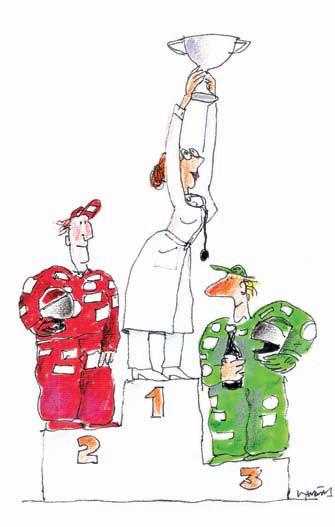
Two studies published in the journal Annals ofthe Brazilian Academy ofSciences have sketched an unprecedented portrait ofwhat Br azil has been producing of most relevance in the international scientific scene.Researchers Rogerio Meneghini and Abel Pa cker,from the Latin American and Caribbean Center on Health Sciences Information (Bireme),pored over the cream ofthe national academic production between 1994 and 2003:the set of248 scientific articles cited over a hundred times in other publications connected to the Thomson-ISI (Institute for Scientific Information) database.This sample represents 0.23% ofthe 109,916 articles by Brazilians published in magazines indexed in the ISI in that period.The significance ofa paper is usually measured by the number ofmentions that it gets in other articles.
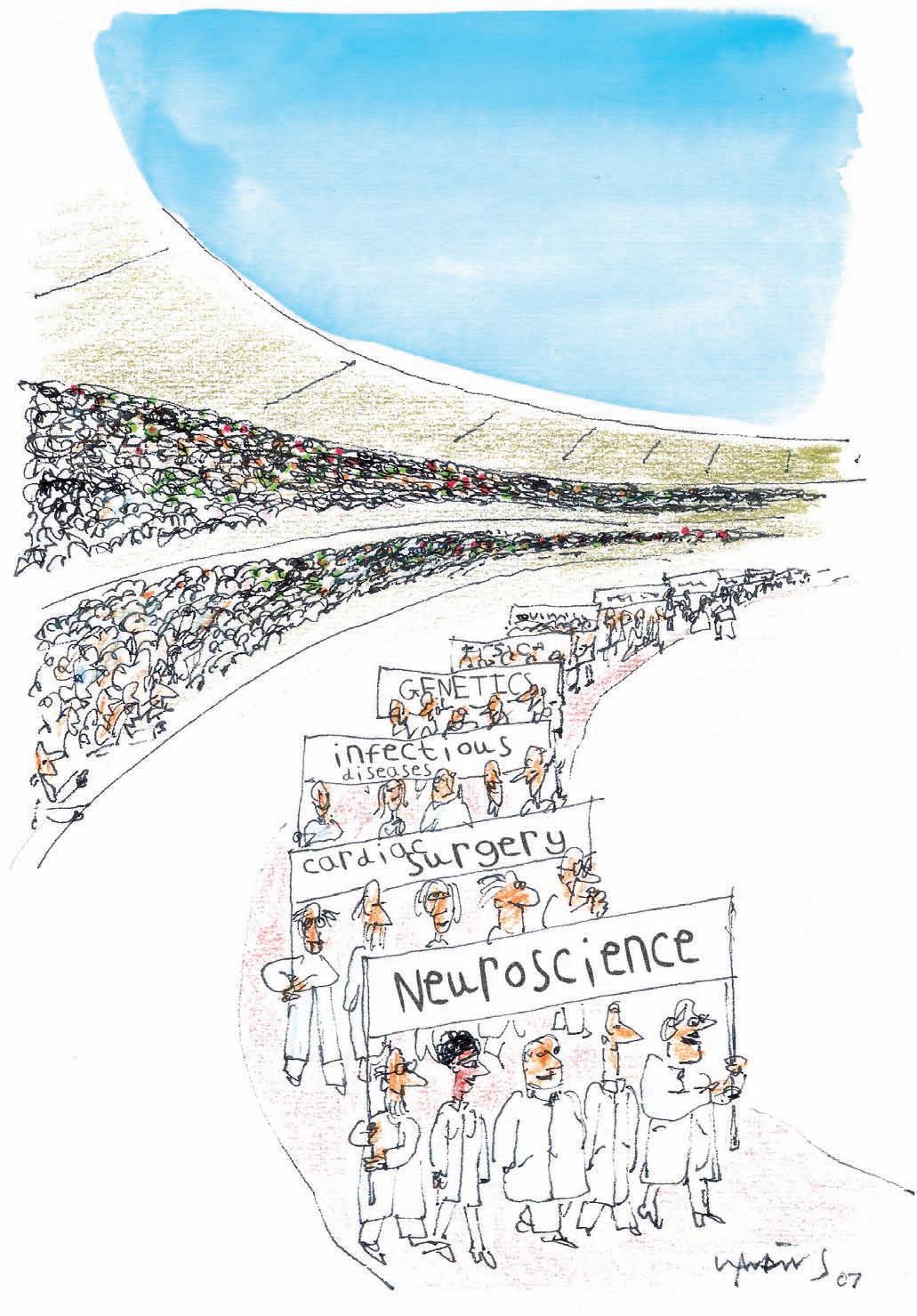
The next step was to try to group the 248 articles into areas ofknowledge.It was possible to find common denominators in 114 ofthem,leading the authors to conclude that 25 Brazilian centers ofexcellence achieved special prominence in 11 different fields:
■ Amongst the 12 articles on the Amazon Forest,the majority about the consequences ofthe exploitation ofthe forest,eight were connected to the National Institute ofAmazon Research (INPA), based in Manaus.“It is a positive fact, because it shows the viability ofproducing high level research outside the big centers”,Meneghini says.Its close-
ness to the object ofstudy does not explain the impact.“Many institutions from other countries also sponsor research in the Amazon”,he says.
■ Cardiovascular surgeries are the theme of18 ofthe most cited articles. The majority ofthem are linked to large international research networks,and many have to do with the same subject: the effectiveness oftechniques like angioplasty and the implantation ofstents to unblock arteries,carried out at institutions in São Paulo like the Heart Institute (InCor) and the Dante Pazzanese Cardiology Institute.An innovative technique for reducing dilated left ventr icles invented by surgeon Randas Batista,from Pará,was also significant.
■ Twenty Brazilian groups that are studying the oxidative mechanism ofcells produced ten articles that received over a hundred citations.Amongst the highlights were the five articles by the team of Aníbal Vercesi,a professor from the School ofMedical Sciences ofthe State University ofCampinas (Unicamp). Their papers helped to understand the relationship between the activities ofthe mitochondria and cell death.Another three papers are from the group ofOhara Augusto,at the Chemistry Institute,the University ofSão Paulo (USP),in partnership with Rafael Radi,a Uruguayan. The articles resulted from a research that reported the formation ofa carbonate radical,a compound hitherto unknown in living organisms.
■ Seven articles about chemical catalysis evidence the success ofthe research co ordinated by Jairton Dupont and
Roberto F.de Souza,professors from the Federal University ofRio Grande do Sul (UFRGS).In 1992,they developed new molten salts,liquid at room temperature and highly stable,which have found a wide application in the chemical industry. The group managed to produce various ionic liquids,ensuring applications in various fields ofscience.The work was done in partnership with Petrobras.
■ Genetic sequencing was responsible for three Brazilian articles ofgreat significance.The main one was the sequencing ofthe Xylella fastidiosa phytopathogen,which merited the cover of the Nature journal on July 13,2000. Xylella is responsible for the agricultural “yellowing”scourge.The sequencing was fostered by a program coordinated by FAPESP,which organized the network connecting institutions in São Paulo.“It’s too early to conclude whether that is the best way to attain excellence in molecular biology”,says Meneghini. “But there was a fundamental gain in our capacity to organize research networks at a national level.”
F
ABRÍCIO M ARQUES | ILLUSTRATIONS C LAUDIUS C ECCON
■ Br azilian research in neurosciences produced 16 high impact articles.One ofthe groups that stood out,in the field ofexperimental pharmacology,is led by Frederico Graeff,from the School ofPhilosophy,Sciences and Literature ofUSP in Ribeirão Preto,and it seeks to understand the effect ofdrugs that relieve or produce anxiety in rats.The team with the most articles is led by Iván Izquierdo,then ofthe Federal University ofRio Gr ande do Sul,which investigates the mechanisms ofthe memory.Pharmacologist Xavier Albuquerque,from the Feder al University ofRio de Janeiro (UFRJ) and the University ofMaryland, in the United States,is researching the biophysical aspects ofsynaptic transmission in neurons.One ofthe articles in neurosciences has a Brazilian author, Luiz Antônio Baccalá,from USP,but the work was conducted in a laboratory at Du ke University,in the United States, commanded by Brazilian Miguel Nicolelis,known for his work with sensomotor connections.Meneghini and Packer observe that both Xavier Albuquerque and Miguel Nicolelis were students ofCésar Timo-Iaria,a researcher
from USP and a pioneer in neurosciences in Brazil,who died in 2005.
■ Particle physics was responsible for 13 articles,thanks,in good measure,to collections ofdata carried out by two research networks,one linked to USP’s Physics Institute,and another connected to the Brazilian Center for Research in Physics.The laurels are diluted:each one ofthe articles has an average of154 authors from a dozen different countries.
■ Quantum physics is the theme ofseven articles,divided into two categories. One ofthem,more inclined to the theoretical field,is captained by Constantino Tsallis,ofthe Brazilian Center for Research in Physics – responsible for concepts that took his name, such as the Tsallis entropy.The other,in
ex per imental physics,is led by Luiz Davidovich,from UFRJ.
■ Fourteen articles deal with human genetics,the highlights being the studies by Mayana Zatz and Maria Rita Passos Bu eno,from USP,who identified the genes involved in human muscular dystrophy.The Genetic Endocrinology Unit ofUSP’s School ofMedicine also contributed with two articles about a genetic disease,a type ofpseudohermaphroditism.
■ Research into infectious diseases,such as toxoplasmosis,Aids and Chagas’s disease,accounted for 14 articles highlighting three institutions:the Federal University ofMinas Gerais,the Oswaldo Cruz Foundation,and USP’s School ofMedicine in Ribeirão Preto.
■ Finally,three articles on the use oforal contraceptives and their effects on vascular ailments revealed the participation ofthe Federal University ofSão Paulo (Unifesp) in studies with major international research networks.
The survey is useful for showing the international face ofBrazilian research, but the authors warn that the data has to be contextualized.The predominance ofarticles in the area ofmedicine and biomedicine (108 ofthe 248 articles) is not explained just by the performance ofthe scientists,but also by the fact that, all over the world,this field is particularly productive.Meneghini and Packer did another study,not yet published, in which they looked at articles that had received at least 50 citations.In this universe,there emerged groups ofexcellence in areas like mathematics,computing sciences,anthropology,engineering,veterinary medicine and biophysics.In some ofthese areas,the world academic production is lower,which explains the lower number ofcitations. Brazilian research in humanities is less significant due to the fact that they deal w ith regional subjects,which do not arouse international interest.
The survey brings various findings that inspire reflection.One ofthem is the considerable prevalence ofstudies done by large international networks,in the areas ofmedicine,particle physics and astronomy.They are articles about the incidence ofdiseases or the effectiveness ofdrugs,or that depend on the collection ofdata by means ofaccelerators or telescopes.Amongst the 37 articles most cited,each ofwhich received as many as 250 citations,18 are ofthis kind.On average,each one ofthese articles has 21 authors from 9.4 different countries, against an average of3.8 countries per article from the set ofpapers studied. “They are important researches,but some have an almost bureaucratic scope, in which the participation ofthe researchers is limited to supplying large quantities ofdata”,Meneghini says.
What also called attention was the fact that only four ofthe 37 articles are the exclusive responsibility ofBrazilian authors,a demonstration ofthe importance ofinternational cooperation, which inspired the researchers to write a second article,specific to the theme.
Could it be a symptom ofdependence or ofweakness? The president ofthe Brazilian Academy ofSciences (ABC), Eduardo Krieger,does not see this as a problem.“Ofthe research published by Brazilians,between 30% and 35% have international cooperation,which is a healthy number”,says Krieger.“This distortion occurs in the ranking ofthe most quoted articles because there is a tendency ofAmerican authors to cite their fellow countrymen more”,he claims.
Planning the future – The idea ofdoing a survey arose in 2004,when Britain’s David King,scientific advisor to the government ofthe United Kingdom,did a study about the 1% most quoted articles in the world between 1993 and 2001 and published an article in Nature magazine,showing the ranking ofthe 31 countries that produce the most significant research on the planet.In it,Brazil appears in an honorable 23rd place.The study showed that the country published 27,874 articles in the Thomson ISI database,between 1993 and 1997 (0.84% ofthe total),and 43,971 articles from 1997 to 2001 (1.21% ofthe total).But what Brazilian studies were these? The ranking did not set out to answer this,the reason Meneghini and Packer decided to investigate the data.
Kn ow ing the weak points and the strong points is essential for planning the future and stepping up the performance ofresearch.In the opinion of Eduardo Krieger,the 11 areas ofgreatest impact can help the government to target investments,but it would be a mistake to bet exaggeratedly on areas with practical applications,leaving aside basic research.“The areas ofexcellence have to be expanded,but it cannot be forgotten that each one ofthem was constructed on a solid base ofuncommitted science”,he says.
Science,let it be said,is not produced by spontaneous generation.Jairton Dupont,a professor from UFRGS and the leader ofthe group that became prominent in chemical catalysis,reminds us that the advances in their field of knowledge result from investments made from 1980 onwards,by force ofthe first Scientific and Technological Development Support Program (PADCT),ofthe federal government.“Chemistry was a sort ofpoor cousin ofthe science and technology system,but it has managed to make a lot ofheadway in the last 20 years”,Dupont says.For him,his group was successful because it was always ready for the unexpected – the innovative process ofchemical catalysis was driven by the difficulty ofimporting reagents.
Aníbal Vercesi,who is responsible for prominence in the area ofoxidative stress, notes that the recognition ofhis field of research comes from the great popularity that it won abroad in the last few years. “There are no secrets.Everything depends on a lot ofwork and on having the backing ofgood students and good collaborators,besides seeking interaction with other researchers.I visit various foreign laboratories and I always leave the doors open for those who want to get to know our work”,says Vercesi,although foreigners only contributed to one ofhis five articles ,with over a hundred citations.
For Eduardo Krieger,the challenge is to set aside resources capable ofguaranteeing an annual growth of8% in the articles published,as has been happening in the last 20 years,although the economy is advancing at a far slower pace. “Our research system is young and has evolved a lot.We have to help the country to develop and root for the growth of the economy to allow Brazilian science to take further leaps forward.” ■
Who produces most in health and biology
The University of São Paulo (USP) is the leader in the production of articles on health and biology. Between 2001 and 2003, it published 5,696 articles indexed in the database of the ISI (Institute for Scientific Information) and 6,368 on the Medline database. This leadership is recorded in a study published in the Brazilian Journal of Medical and Biological Research, which presented a ranking of the 20 most productive Brazilian universities in this field, responsible for 78.7% of the some 25 thousand papers published between 2001 and 2003. The main author of the study is journalist Ricardo Zorzetto, the science editor of Pesquisa FAPESP and a researcher in Jair Mari´s group, a professor from the Psychiatry Department of the Federal University of São Paulo (Unifesp). Production is concentrated in institutions from the Southeast of the country. The second place went to the Federal University of Rio de Janeiro, with 2,476 articles in the ISI and 2,318 in Medline, followed by Unifesp, USP in Ribeirão Preto and the State University of Campinas (Unicamp). Also featuring in the ranking are the Oswaldo Cruz Foundation, the Federal Universities of Minas Gerais, Rio Grande do Sul, Paraná, Pernambuco, Santa Catarina, Bahia, Ceará and Pará, three units of the São Paulo State University (Unesp), the Rio de Janeiro State University, the campus of Unicamp in Piracicaba, and the University of Brasilia (UnB).
Increased vitality
Academic production hits new highs in the country, although its impact is not yet very expressive
Published in August 2007
Academic production in Brazil marked a new record in 2006. The country was responsible for 1.92% ofthe articles published in periodicals registered in the database ofISI (Institute ofScientific Information),a collection assembling the most noteworthy publications on the planet.In absolute number,Brazilian researchers published 16,872 articles,approximately a thousand more than in 2005.As a result ofsuch a performance,the country rose from position 17 to position 15 in the ranking ofthe 25 most productive nations,leaving behind,even ifby a small margin,developed countries,such as Sweden and Sw itzerland.The data was disclosed by the Coordination Center for the Perfection ofHigher-Learning Personnel (Capes),a department ofthe Ministry of Education that evaluates post-graduation programs.“In 2002,we were ranked number 20;in 2005 we rose to number 17.The current threshold was expected only in 2009”,stated Jorge Almeida Guimarães,president ofCapes.What is most impressive is the speed at which Brazilian production has advanced.Between 2004 and 2006,the increase represented 33%.“Growth is exponential and results,among other factors,from the strategy ofCapes to strictly demand the publication ofarticles”,claims Rogério Meneghini,scientific coordinator ofthe electronic library ofSciELO Brazil.
The areas displaying the highest increase in academic production between 2005 and 2006 were those ofimmunology (23%),medicine (17%),animal e vegetable production (13%),economics (12%),ecology and environment (12%) and engineering.(11%).As expected,the United States leads the ranking with 32.3% ofglobal scientific production.
However, there were changes in position w ithin the highest-ranked contingent compared to 2005.Germany outstripped Japan and became the runner-up with 8.1% ofall articles.China emerged as fourth with 7.9% ofall articles,for the first time ahead ofEngland with 7.27%.
Capes also disclosed a second ranking,which takes into account the citations ofBrazilian articles in the texts ofother researchers between 2002 and 2006 (a well known indicator ofthe significance ofthe research) and the quality ofthe publications in which they were disclosed. In the so-called “impact ranking”,the country’s position falls to the 20th place, being outstripped by Switzerland,whose articles merited 551,537 citations (visà-vis Brazil’s 206,231) and even by countries that published a significantly lower number ofarticles,such as Sweden, Poland,Belgium,Israel,Scotland ,Denmark and Austria.The Brazilian position was only not lower because,in terms of impact,it managed to outstrip countries like Russia,India and even China,which published more articles.As regards the Chinese,the number ofarticles published is four times as many as those published by Brazilians.“The significance ofour articles is superior to that ofthe group of developing countries with whom we compete”,states Jorge Guimarães of Capes.“In a number ofarticles,Brazil is at a disadvantage when it comes to technological areas,but in some cases,this difference disappears in the impact index.”
The difference between the two rankings has given rise to the interpretation by means ofwhich the Brazilian research seems to display more vitality regarding the quantity rather than the quality requisite.However,according to specialists,the truth might well be situated between the two surveys.“In the-
ory,ifan article does not receive citations, it is because it did not add anything to knowledge.But there could be some distortion when one analyzes the impact index individually,given that countries w ith a limited production may benefit from the extraordinary signficance ofa smaller number ofarticles”,observes the physicist José Fernando Perez,former scientific director ofFAPESP.
Tradition - Rogério Meneghini observes that Scandinavian countries outstrip Brazil due to their tradition in certain areas.“Sweden is strong in several areas. Denmark,for example,was home to the physicist Niels Bohr,who helped develop generations ofresearchers”,he claims, re ferring to the scientist,who died in 1962,and whose works contributed decisively to the comprehension ofthe atom’s structure and to that ofquantum physics.“They are countries that inherited science at the highest level,by means ofwhich they maintain their influence and dictate directions in certain fields”, explains Meneghini.
But the principal distortion in the impact ofsuch indices coud be from another origin.Various studies in the field ofscientific method,a subject that generates information to stimulate the enormous challenges ofscience,have raised a "psychosocial effect" in the logic ofsuch citations:“North Americans tend to cite other North American,Germans cite the Germans,and so forth.The strictness which scientific magazines impose on their authors is the same,independent oftheir origin.But the citations ofarticles from countries such as Brazil,India and China are invariably less than those from developed countries”,says Meneghini. ■
F ABRÍCIO M ARQUES
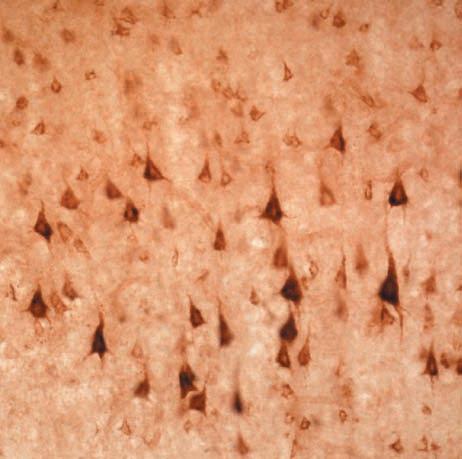
Multiple unit: group of interconnected nerve cells make up functional base of the central nerve system
NEUROSCIENCE
Connection without frontiers
Cutting edge experiments with the brain travel from Duke University to Natal, along with the will to help science transform needy communities
Published in February 2007
Yes,it is a dream.Or rather,a transposition to the real world.And nothing seems to be more in tune with the spirit ofsomeone who has tried insistently,for two decades,to capture and to decode in the brain the almost invisible signals ofthe connections between thought and movement,intention and action,desire and realization.The name ofthis dream that is beginning to materialize with bricks,cement and high-level professionals in the Brazilian Northeast is the International Institute for Neuroscience ofNatal (IINN).Its dreamer-in-chiefis Miguel Nicolelis,45 years old,a respected neurobiologist from Duke University,born in São Paulo,who in 1984 graduated as a physician from the University ofSão Paulo (USP),and is known above all,despite the important contributions he has made to basic neuroscience,for his advanced experiments with neural microelectrodes implanted in monkeys that,amongst other results,may lead to the development ofprostheses for human beings,such as artificial arms and legs, that is,robotic limbs with movements commanded directly by the brain. Which is to say,by thought.Or by will.To prevent injustice,however,let
M ARILUCE M OURA , FROM D URHAMAND N ATAL
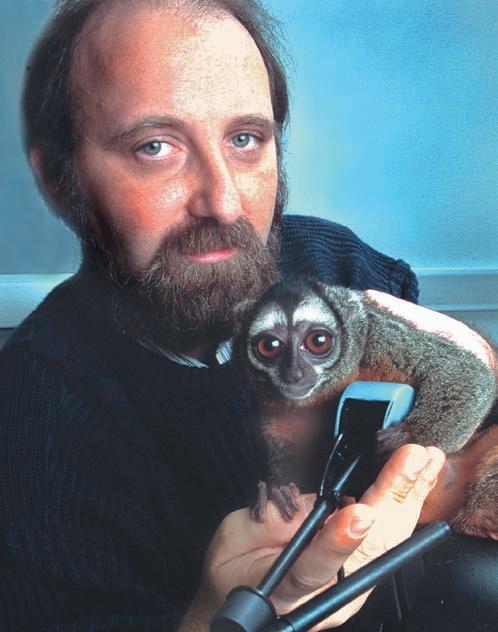
Action at a distance: Nicolelis trained night monkeys to move a mechanical arm using the power of the brain
could be inaugurated during the 2 nd Symposium ofthe International Institute for Neurosciences ofNatal,from February 23 to 25.
Brazilian team at Duke thinks up cutting edge research linked to social action
us include right away in the category of co-dreamers from the institute,two of Nicolelis´s colleagues:Sidarta Ribeiro and Cláudio Mello.
Imagined from a distance since 2002,inside a laboratory that had expanded vigorously to its current 1,200 square meters at Duke,in Durham, North Carolina,this institute began to operate in the middle oflast year.At this moment,it occupies a rented building of1,500 square meters in a simple street in the capital ofRio Grande do Norte, very close to the Viasul shantytown, while the more ambitious and solid forms ofits own premises are going up on the campus ofthe Jundiaí Agricultural School,which belongs to the Federal University ofRio Grande do Norte (UFRN),in Macaíba,a small city some 20 kilometers from Natal.Note that Ma caíba has no more than some 60 thousand inhabitants,while Natal is around the 800 thousand mark.Last January,in the midst ofthe bustle of the workmen in three different buildings in the institute under construction on the campus,the expectations were high that part ofthese installations
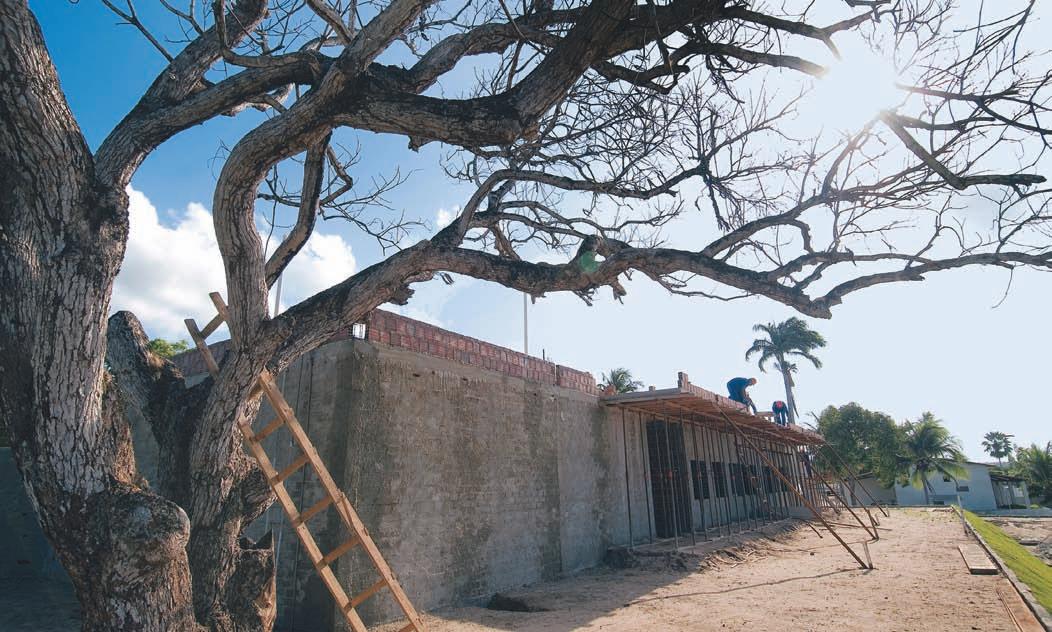
There are three buildings,let it be explained,because one is intended to be the project’s Mother and Child Health Center, another to be the research center itself,and the third,a community education center.From that,you can already perceive that Nicolelis and his closest companions are thinking ofcutting edge research linked to social action,and they make no secret ofthat.So much so,that in the waiting room ofthe IINN's present building,which also houses the Alberto Santos Dumont Association for Supporting Research (AASDAP in the Portuguese acronym),a notice on the wall advises visitors that this Civil Society Organization ofPublic Interest (Oscip in the Portuguese acronym),created on April 17,2004 precisely to make the institute viable,“has as its objective the management ofits own and third party funds for the implantation ofsocial and scientific research projects”.It goes on:“It is based on the concept that cutting edge science can,in developing countries like Brazil,act as a powerful agent for the social and economic transformation of communities located in needy regions of the national territory”.
The first ofthe institute’s buildings that the visitor coming from the state capital sees in Macaíba,on the campus’s access road,on the right,is the health center. Some 500 meters further on,practically at the entrance to the campus,the research center appears.And further on, the future installations ofthe community education center appear.A profusion ofnoticeboards in front ofthe works adv ises the visitor ofthe political and financial support for the enterprise:the federal government is represented by the Ministry ofHealth and the Ministry of Education,through the Council for Advanced Professional Training (CAPES). Duke and UFRN appear on the noticeboards,as does the municipal government ofMacaíba.What does not appear are the individual donors,like Lily Safra, the widow ofbanker Edmond Safra,who at the end of2006 gave the project a sum that,at her request,has not been revealed ,but that,according to Nicolelis,is the largest private contribution ever intended for a research venture in Brazil.
JIM WALLACE/DUKE UNIVERSITY
In Durham, the group wanted to test whether monkeys could learn to decode – to read, shall we say — the message sent to them in the form of electrical microstimulation and associate it with a movement
Let us temporarily leave Macaíba to return to the beautiful campus ofDuke,which occupies fifth place in the ranking ofthe most respected research universities in the United States.It was a rather cold late fall afternoon,on November 17,2006.In one ofthe buildings in the biomedical area ofthe campus,in its large,reasonably organized room,divided into two areas,Nicolelis looked happy with the presentation made a few hours ago by the doctoral student under his supervision,Nathan Fitzsimmons,to qualify for his thesis.
“In our specialization,everybody has to date managed to read signals that come from the motor areas ofthe brain.Except that when you move a robotic arm, you have to get signals back to understand where it is touching.And what we have managed,what he found,was basically the formula,an algorithm for sending back signals to the brain,in a sensorial feedback! It was a very good presentation”,he comments.
Attention:it is very recent developments in the research with cortical implants ofelectrodes in mice and monkeys that he is commenting on.In this case,the work was with owl monkeys,or night monkeys – two little female monkeys,to be precise,Thumper and Pocie, as Nicolelis tells with wit in his blog on Globo Online.They are one ofthe models closest to man,and the results could be ofutmost importance,in terms ofapplication,precisely for the dreamt-offuture prostheses commanded by the brain.Furthermore,in terms ofbasic science,they could add further information about how learning effectively produces microanatomic transformations in the brain.“In short,the same electrodes used to record electrical signals from the motor areas have allowed us to pass a digital message directly into the somesthetic cortex,the superficial region ofthe brain that identifies stimuli applied to the surface ofthe body,to see whether the brain learns to understand what is coming”,the researcher explains.In other words,Nicolelis and his group wanted to test whether monkeys would learn to decode – to read,shall we say – messages sent to them in the form ofelectr ical microstimulation,and associate them with a movement.“We went from something very simple,with a fixed pat-
tern,to another more complex,mobile, with a space-time dimension.”
In a first experiment,the animals should learn to associate arbitrarily the electrical stimulus in the cortex to a movement to the left or to the right that makes it possible for them to find food kept in compartments on one side or on the other.For example,ifthe electrical stimulus appears,it ought to go to the left, and,ifnot,to the right.They took 40 days to learn.Inthe following experiment,with a more complex pattern,with time variations,surprisingly,they took only ten days.“Probably because they generalized the information,and that gave them more facility for learning”,Nicolelis observes. Afterwards,when the researchers reverted the pattern learnt,each monkey learnt the new pattern even more quickly:first, in four days,the simplest pattern,and in three,the most complex.The experiments continue,and,last November,the researchers were starting to use 16 electrodes in the experiment,instead ofthe four used up until then.
In the neuroscientific literature,according to Nicolelis,the commands regarding movement are normally attributed to introspection,when to stop or to move is determined inside the brain itself,and,in a pattern that the researcher calls second degree,to the external environment.So it is something cultural, learnt.One example is the immediate impulse ofall motorists to stop the car when the traffic light turns to yellow,announcing that the red light will be next.“In Brazil,though,something very peculiar happens,which is accelerating the car to go through on the yellow light”,the researcher jokes.Amongst primates,and perhaps other mammals,stopping or going may also be determined by a verbal command “From that,I called it ‘a close encounter ofthe third kind’a message comes from an artificial system,a digital command directly in the brain,which is arbitrary and comes to have a meaning”, he says.This abstract message connected with a motor command “produces a microanatomic transformation”,he adds.
And why is Nicolelis sure about that? “We saw,with different algorithms sent offat the same time,that over the period oflearning,the process ofthe arbitrary message would transform itself into a clear motor command.For the first time,we were successful,at the same time that we were stimulating the somesthetic cortex,in reading the signals produced in another area ofthe brain,the motor area,and in decoding with precision the animals' intentions, the movement that they were going to make,before performing it”,he details. This with a time difference of100 to 200 milliseconds.
In this field,incidentally,Nicolelis’s team has,at this point,begun even more exciting experiments with owl monkeys, something that now appears to belong frankly to the realms ofscience fiction and that he calls a “close encounter of the fourth kind”.There are some impressive results,but he prefers to remain cautious and not to reveal anything before more certain confirmations.
GIOVANNI
SÉRGIO
In the IINN in Rio Grande do Norte, at this moment there are 12 researchers working under the command of35-year old Sidarta,the institute’s scientific coordinator,as well as a floating population ofvisiting researchers.On the afternoon ofJanuary 11 last,for example,there was to be found amongst them Eduardo Schenberg,a pupil ofKoichi Sameshima, a neurologist from the Syrian-Lebanese Hospital,in São Paulo,an institution with which the IINN maintains a collaboration agreement that is now showing interesting results,particularly in studies of Parkinson’s disease.The installations in the institute’s rented premises,despite the intention to move a good part ofthe laboratories to the new premises in Macaíba in the short term,are well prepared for an important part ofthe research with electrodes – the rodents’vivarium and the surgical center,for example,seem to be first class.And the building also has adequate rooms for experiments on human beings that are part ofSidarta’s line ofresearch on sleep and memory.Also taking into consideration employees from the administrative area,there are 20
persons distributed between the institute’s main building and a second building aimed at community healthofthe local population,nearby.
Sidarta graduated from the University ofBrasilia (UnB) in 1993,took a master’s degree in biophysics at the Federal University ofRio de Janeiro (UFRJ) and a doctorate in cognitive molecular neurobiology from Rockefeller University (1995-2000),and was finally brought into Nicolelis’s laboratory at Duke in 2000,first as a postdoctoral student and next as an associate researcher,and he looks quite naturally upon his work as IINN coordinator.
On this point,let it be said that one ofthe criticisms ofthe IINN enterprise from part ofthe Brazilian neuroscientific community is precisely the way he conducts the coordination,which some see as a sign ofthe closing up ofNicolelis’s group,instead ofthe expected opening out and interaction with various other neurology groups in the country.“Sidarta is a brilliant researcher,extremely promising,but the choice ofhim as scientific director was frustrating,because it does not appear to have been the result
Concrete dream: workmen erect research (above) and community education centers
GIOVANNI SÉRGIO
This dream began in Juqueri in the 1920s or 1930s.
The Juqueri, in Franco da Rocha, São Paulo, tried to be at the outset a cutting edge research center
ofa selection process with clear bases. The institute is now beginning to select researchers,postdoctoral students,but it all sounded very restricted at the outset, and that was one ofthe criticisms raised at the 1st Symposium ofthe IINN,in 2005.”The comment is by Luiz Eugênio Mello,pro-rector for postgraduate studies at the Federal University ofSão Paulo (Unifesp) and a specialist in neurophysiology,with respected contributions in the area ofepilepsy.Mello,until recently a scientific advisor to FAPESP,makes clear his admiration for the work of Nicolelis,whom he classifies as “a brilliant scientist,at the forefront ofmodern science that advances towards the area of application”.And he admits that now the quest for interaction ofthe team with other Brazilian scientists is expanding.So much so that he himselfis taking part in a project ofcooperation with the IINN coordinated by Iván Izquierdo,ofthe Pontifical Catholic University ofRio Grande do Sul (PUC-RS),which also involves the group ofMarco Antonio Máximo Prado,from the Federal University ofMinas Gerais (UFMG).
“I think that what stirred up the community a lot at the first symposium was the fact that the group presented it-
selfas the pioneer and founder ofneuroscience in Brazil.So each one ofus wondered whether what we had done in the last 30 or 40 years was not worth anything”,Mello comments.Incidentally,for him,it was possible for the IINN enterprise to happen in Natal also because, some 30 years ago,a neuroscience group was set up at UFRN,led by Elisaldo Carlini,from Unifesp.Without that,it could have been,as he understands it,any other city.Actually,behind the disputes and jealousies that are understandable in the university community,there seems to be a certain fear relating to the scarcity of funds for research in Brazil.“As resources are finite,Nicolelis’s group is well connected politically and very competent scientifically,there really is a certain fear in the air when an enterprise vaunted as collective proves to be centralized in the process ofdefining who goes there.”
What perhaps few may know is that Sidarta considers himself,not without reason,as co-responsible for the idea of the institute.And Nicolelis leaves room for him to assume this condition.Accordingly,to the question posed in his room in Natal about whether the institute is a dream ofMiguel Nicolelis with which he has contaminated many people,Sidarta replies that,in actual fact,it is not quite like that.“This dream begins in Juqueri in the 1920s or 1930s.Juqueri,in Franco da Rocha,São Paulo,tried at the start to be a cutting edge research center,and to this end brought together neuroscientists,doctors with a psychoanalytic influence...As an undergraduate,I was given this story by my neuroanatomy professor,Marcos Marcondes de Moura, who went so far as to be the director at Juqueri.He used to talk a lot about this, about the Juqueri’s research program for understanding mental illness,the brain bank etc.Both theoretically and experimentally,they had great ambitions”,says Sidarta.And his conclusion is that he was contaminated by Marcondes with the idea ofdoing cutting edge science in Brazil in this neurological area.
“When I went to the United States, I had this idea in my head.And I went about passing it on.I passed it on to Cláudio Mello,who was also from Brasilia and was my supervisor at the Rockefeller.Then we started to create a group ofpeople inside the Rockefeller who were thinking about this idea.And that
reached Torsten Wiesel,the President of the university,who was thrilled”,he details.When he got to know Nicolelis,in 1998,and became enthusiastic about his work and his methods,Sidarta talked to him about the idea ofthe institute.
“Miguel was also enchanted,but at the beginning he was very well established at Duke.He was certainly the Brazilian neuroscientist with the greatest impact worldwide,a full professor with an excellent laboratory,two in fact, with plenty offinance.”So his reaction, according to Sidarta,was positive,he thought that the idea was very good.And because ofhis political commitment (his biography includes his struggles as a militant for the re-democratization ofthe country in his youth and his presence amongst the founders ofthe Workers’ Party, the PT),he offered to help.At that moment,they were thinking about creating a cutting edge institute,in a beautiful place that would attract people from all over the world,where they would do
research directed by the problems,and not by the techniques.
“It was a very romantic idea,even with access to the forest to study animals in the wild “,says Sidarta.Accordingly,at the beginning,Nicolelis’s help for the project was to lend his prestige to make it viable.“However,he himselfwent on getting more and more enchanted with the idea,and at a certain moment really brought something new to the project: giving it a social mission”,he says.So the idea,until then merely a scientific one, “with Miguel incorporated this other dimension.That was at the end of2002,beginning of2003,in the small hours,soon after Lula’s victory for the presidency”. And with this,Sidarta goes on,“it comes together with a wish to bring the ludic, ethical,meritocratic and even disciplinary values ofscience to society,within the view that knowledge really is a liberator”. But,Sidarta adds,“without the force of Nicolelis’s enterprising spirit,none ofthis would have gone ahead”.
Creator and creature: conceiver of the institute in Natal, Sidarta analyzes action of neurons during rodents’ sleep
In front ofthe computer in the area that he occupies on the left ofhis ro om,Nicolelis explains that the implants used in the animals in the experiments,made oftungsten and resin,are 4 or 5 millimeters in length,two millimeters ofwhich remain in the brain.He will soon show us the neuroengineering room ofthe laboratory where the electrodes are built. Actually,it is always problematic when something foreign is put into the body, with one part inside and the other outside,because this facilitates infections. But one ofthe laboratory’s monkeys has now had the electrode in his brain for six years without any problem.Nevertheless,as you have to think ofthe future,engineers connected to several research groups are working on the development ofwireless implants,in more effective neuroprostheses,“and one of Japan’s main robotics laboratories,the ATR,has decided to participate in an inter national effort to search for better robotic arms and a vest capable ofworking like an exoskeleton”.
The conversation turns to the important experiments connected to Par kinson’s disease,which have given Nicolelis good evidence that a principle that he has been postulating for years is right,that is,that populations ofneurons,and not a single neuron,constitute the functional units ofthe brain.On account ofthese experiments,neurosurgeons from Duke recently met neurosurgeons from the Syrian-Lebanese Hospital,at a workshop in São Paulo,to tr ain them in a technique with electrodes that gives more precise indications,in a much shorter time,about the areas that have to be removed to prevent the disagreeable symptoms ofthe disease.As all this is done with the patient completely awake,it is also possible to observe the patient’s responses that lead to completely unexpected results.
“For example,we now know that, with only 300 cells,it is possible to produce a complex motor behavior”,says Nicolelis.Ofcourse,he says,“a given number ofneurons are needed to sustain any behavior,but instead ofthousands,it is possible for hundreds to acquit themselves ofthe task”.In actual fact, in a simplified way,what Nicolelis has proposed is,first,that the functional unit ofthe brain is not the neuron,but a pop-
ulation ofthem.In second place,that this population does not always have the same elements,but their constitution changes every moment,that is,certain neurons are summoned at one moment for the task ofmoving an arm,and,later on,others,not the same ones,may be called on to repeat the task.That is why you can have traces ofmotor behavior in areas ofthe brain that,in principle, have nothing to do with movement.“In other words,the system is distributed, flexible,and not rigid”,he sums up.Nevertheless,he emphasizes,“the concept of distributed code does not eliminate the concept ofspecialization.One does exclude the other”.
One proposal that all this raises is that the human brain perhaps has millions ofneurons like a sort ofpotential reservoir to meet,at any moment,the need for these cells to carry out each behavior.Moreover,in the absence ofspecialized cells,others may handle the task.
This notion ofpopulations ofneurons as a functional unit ofthe brain sounds “very sensible and very intelligent”to neurologist Iván Izquierdo, who,just like Nicolelis,is among the most quoted Brazilians in scientific literature.“It is obvious that,in some aspects,the cell is a unit,but not from this functional point ofview”,he says.Much respected for his studies ofthe memory and mechanism for its consolidation, Izquierdo is at this moment concluding an analysis ofhis collaboration with the group from the IINN,for studies in neurophysiology,neurochemistry and neuropharmacology in the aged.“We are awaiting funds from the National Council for Scientific and Technological Development (CNPq) and we are going to work with an animal model:transgenic mice.”He says that he is rooting for the institute in Natal to do well and to be able to transform itselfinto an important center to attract scientists from the south and center ofthe country.
Luiz Eugênio Mello also finds the idea ofneuronal populations interesting. “It seems to make sense,but it is difficult to have conclusive demonstrations of this,not least for the very question of floating populations.”He imagines a model where floating neurons exist,but at the same time are related to a restricted,specialized and always active nucleus.As to the real application ofrobotic
A principle that Nicolelis has been postulating for years is that groups of neurons, and not each neuron, constitute the functional units of the brain
Floating
populations: distinct groups of nerve cells may control one and the same action at different moments
arms and other prostheses,he says that he sees a lot offuture “ifwe succeed in overcoming some obstacles”.For example,ifthe implant is put totally inside the head,to prevent infections.Ifit can be activated without a wire,“with radio waves, for example,as we are trying to do”.
Miguel Nicolelis shows an optimistic video about the institute,very close to the River Potengi,a tributary ofthe Jundiaí.When asked why in Natal,he replies “because ifwe manage to do it there,it becomes clear that institutes like this can be installed anywhere in Brazil”.On the walls near his computer,there are many magazine covers,from The Journal of Neuroscience to IstoÉ (a weekly news magazine in Brazil),from the most specialized,scientific ones,to the most general.On the walk across the campus to reach the other laboratory,in the midst ofthe now intense cold at the end ofthe afternoon,he talks about the book,more for laymen,about the history ofhis experiments,that he needs to finish for publication at the beginning of2008,and ofanother two,more scientific.“What I want is to present a more comprehensive theory about the interaction ofthe brain with the technology that our culture is creating.That may perhaps help to explain a series ofphenomena that are not restricted to one brain,but relate to multiple brains interacting.And I advocate that perhaps some social behavior may be defined in the likeness and similarity ofhow brains naturally work.”
It is a daring idea.About investments in Duke,Nicolelis says that about US$ 40 million is invested in his two laboratories.And in Natal? Certainly,the figure ofthe originally estimated US$ 25 million has now passed.And,running one ofthe 20 international groups in cutting edge neuroscience,he dreams of a virtual institute ofthe brain,integrated by many units scattered all over the world,a horizontal
Science produced in collaboration, independent ofgeography,based on the interaction oftalents.A sort ofarchipelago ofknowledge,combating the poverty around it – the neolithic misery,as S idarta says.He dreams ofother research institutes in the Northeast.Really dreaming,according to Sidarta’s research hypothesis,may perhaps be to simulate possible futures based on a remembered past. ■
PSYCHIATRY
Magnetism against depression
An experimental technique shows itself to be efficient in the treatment of severe psychiatric disorders
R ICARDO Z ORZETTO
Published in January 2007
Ana Paula can hardly remember the last time she saw her mother smile. Since she suffered her first crisis ofdepression some 20 years ago,Maria spends sad days,lying on the sofa re-running thoughts that spring from a world that is forever grey.She has already tried all the types ofknown anti-depressants,but not one was capable ofputting an end to her apathy that still accompanies her today and made her abandon her work in the family’s business in the metropolitan region ofSão Paulo.Useful in the majority ofcases,medicines,in the case ofMaria, at best put offher next relapse.In a last chance attempt,some six months ago,the doctors had to resort to the application of electrical shocks to the patient´s brain under a general anesthetic,electro-convulsion therapy,more commonly known as electroshock – a treatment considered to be one ofthe most efficient for the most serious cases,still stigmatized for
having been applied in a cruel manner and even as a torture technique against prisoners.This treatment can help to reestablish the normal working ofthe nerve cells,even though it generally causes a passing loss ofmemory,which can last from a few days to months.
No t even the electrical shocks worked,and in November Maria began therapy at the Psychiatry Institute ofthe Un iversity ofSao Paulo (IPq/USP) against depression that over the last few years has been awakening the interest of psychiatrists and neurologists throughout the world:repetitive Transcranial Ma gn etic Stimulation (rTMS),a sequence ofintense magnetic pulses capable ofstimulating or inhibiting the activity ofnerve tissue.Until only a short time ago restricted exclusively to scientific experiments,the rTMS appears to produce the same effects as the electroconvulsive therapy in the treatment of depression:readjusts the working ofdetermined regions ofthe central nervous system,but with less undesirable effects. USP’s Psychiatry Institute released the use ofrTMS for the treatment ofdepression in October of2006,after the team led by the psychiatrist Marco Antonio Marcolin tested the method for almost six years against depression and as well as the treatment ofchronic pain,
Cyclists, 1989, oil on canvas by Iberê Camargo: autonomy and movement
Studies of Cyclists series, 1990, Iberê Camargo
some forms ofhallucination common in schizophrenia and in the recovery of patients who had suffered a stroke.
Currently the institute is analyzing how to ask for the inclusion ofrTMS on the list ofprocedures paid for by the Public Health System for the treatment ofdepression,with the object ofoffering it freely to a greater number ofpatients.Approved for this purpose only in Canada,Australia,New Zealand,Israel and some European countries,this therapy is still expensive:it costs R$ 300 for each ofthe 20 applications necessary for the treatment ofacute depression, a problem that one in every ten people can experience during their lifetime.
In general,one session per day is carried out for a month.Fifteen days after the start oftreatment,Ana Paula had already noted the first signs ofrecovery of her mother.The dose ofthe anti-depressant,which Maria still took, dropped to a quarter ofits initial value and .Marcolin’s team began to remove the sedative that she used for sleeping. The application is truly peaceful.On the morning ofthe 6 th ofDecember,in a small room on the Institute’s first floor, the psychiatrist Maria do Carmo Sartorelli brought a bobbin in the form of a figure ofeight,about the size ofan open hand,to the left side ofthe head of Mar ia who was seated in a reclining chair.Next she heard a series ofrapid clicks for ten seconds.This was followed by 20 seconds ofsilence and then a new
sequence ofpulses was shot off,the cycle being repeated a further 23 times. “My mother came out ofthe application speaking,and not quiet as before”, recalls her daughter Ana Paula.“I was surprised by the change in her mood.”
During each click,an electrical current ofsome milliseconds and ofhigh intensity (up to 5,000 amperes) passes through the bobbin.The rapid sequence ofon-offproduces fluctuations in a magnetic field that crosses the cranium and generates a low intensity electric current in a specific area ofthe cortex, the brain’s most external layer.In spite ofbeing low,this electric current is sufficient to set offthe transmission ofa nerve pulse from one cell to another,explains the physicist Oswaldo Baffa Filho,from USP,Ribeirão Preto campus, who is carrying out research in this area.
Reprogramming neurons - Both the rTMS and the electroshock techniques function based on the same physical principle – the passage ofelectrical current through the encephalon,the grouping ofstructures ofthe central nervous system that includes the brain. But there are also important differences between these two resources.The main differences are the intensity and the coverage ofthe electric current applied to the central nervous system.Whilst the rTMS generates currents ofa few millimeters in a restricted area ofthe brain, the electro-convulsive therapy produces currents around one thousand times higher,ofup to 2 amperes,that traverse all ofthe encephalon and originate convulsions similar to those observed in epilepsy – patients do not feel the convulsions nor remember them because they spend all oftheir time anesthetized. Independent ofthe technique used,it is believed that this passage ofelectric current reprograms some nerve cell genes, making them take on their appropriate function,in the same way as the antidepressant medicines.
In the treatment ofdepression,the rTMS’s target is a region ofthe brain located on the left side ofthe head,at the side ofthe forehead and above the eyes.Here one can find the so-called dorsal lateral prefrontal cortex,a region the size ofa coin associated to short term memory,logical thinking and the evaluation ofthe goals that are desired
to be attained.In general this region is found to be less active in patients with depression than with other normal people,independent ofthe origin ofthe problem – whether it is depression coming from genetic,hormonal or environmental factors.
In the opinion ofMarcolin,the patient who goes through the rTMS sessions,in general,feels nothing,although they can suffer from a slight headache or contractions on the scalp,which generally end as soon as the device is switched off.It was this almost total absence ofside effects that caught Marcolin’s attention almost ten years ago and gave him the motivation to change direction in his line ofresearch.On seeing the results ofhis first experiments, he abandoned his specialization,namely the interactions between psychiatric drugs and other medicines,in order to investigate whether the rTMS technique would really be efficient in combating depression and other maladies that usually take away people´s control ofreason and control oftheir very own lives.
Besides the international experiments,two experiments carried out at USP have attested to these benefits and have helped to give a base to the Psychiatry Institute’s decision to liberate the rTMS technique for the treatment of depression – especially for cases in which neither medicines nor psychological therapies any longer produce the desired effect.The most recent ofthese stud-
ies,published in December in the International Journal ofNeuropsychopharmacology , shows that the rTMS technique is just as efficient as the electroconvulsive therapy for minimizing the signs ofdepression which do not yield, the so-called refractory depression.The psychiatrist Moacyr Rosa,a member of Marcolin’s team,selected 42 patients between the ages of18 and 65 years,all suffering from refractory depression,to receive one ofthe two possible treatments: rTMS or electroconvulsive therapy.
Randomly,Rosa treated halfofthis group with weekly sessions ofrTMS for a month,whilst the other halfwent through 12 applications ofelectroconvulsive therapy for the same period. Throughout the study,researcher Rosa measured the degree ofdepression on three occasions by way ofa scale that runs from 0 to 40 points – a point score below 7 indicates the absence ofdepression and above 22 confirms severe depression,the stage generally during which brutal changes ofbehavior occur: loss ofsleep or contrary to this frequently oversleeping;exaggerated eating or almost total loss ofappetite;disappearance ofsexual desire and a common desire to commit suicide.
Other benefits - After the second week oftreatment,the average point score of the participants ofthe two groups had gone down from 32 to almost 25.Fifteen days later the average severity was even lower,close to 15,a depression level considered moderate to slight.In a general manner,40% ofthe patients who received electro-convulsive therapy and 50% ofthose who had undergone magnetic stimulation sessions responded we ll to therapy – for the doctors this means that they had reduced,by at least half,the signs ofdepression that they had shown at the start ofthe study.At the end ofthe research,20% ofthe people in the former group and 10% in the latter group were no longer considered depressed.“The proportion ofparticipants who improved is considered small, but one needs to remember that the cases that arrive at USP’s Psychiatry Institute are always extremely serious”,says Ma rcolin.The most important thing that this study demonstrated is that the rTMS produces improvement similar to that ofthe electro-convulsive therapy, which demands the application ofa general anesthetic during each ofthe three sessions that take place weekly.This was a relevant effect but not the only one.
Two years previously Marcolin’s team had discovered another rTMS benefit: the stimulation ofdetermined regions of the brain by means ofmagnetic and intense pulses accelerates the action ofanti-depressant medicines.The psychiatrist Demetrio Ortega Rumi,from USP,prescribed to 46 patients with severe depression five weeks oftherapy based on amitriptyline,one ofthe most efficient anti-depressants to reestablish the equilibrium ofthe messenger chemicals of the central nervous system,which,it is believed,are found at less than desirable levels in cases ofdepression.At the start ofthe second week,Rumi separated the study’s patients into two groups:halfreceived 20 sessions ofrTMS and the remainder went on to have an equal number ofinactive stimulant sessions,in w hich the bobbin positioned around their head made the same clicks,but did not generate any magnetic field – during the experiment none ofthe group members knew which treatment they were receiving.
The effect ofthe true stimulant was evident.Rumi had observed already during the first week that the intensity ofthe depression had decreased:going from 32 to around 20 points,on average,among those treated with an active bobbin, while in the other group the scale still marked profound depression – around 30 points.By the end ofthe fourth week almost all ofthe group members who had received the true stimulant had im-
proved considerably:halfwere no longer depressed and the remainder had only slight depression.Only 12% ofthe patients who underwent the simulated stimulation were free ofthe problem of using medicine,according to the results published in 2005 in the magazine Biological Psychiatry.
Before anti-depressants - At the University ofVita-Salute,in Milan,Italy,the team led by Dr.Raffaella Zanardi observed similar effects using the rTMS technique in patients treated with three other more modern anti-depressants:escitalopram and sertraline,which inhibit the recapture ofthe neurotransmitter serotonin,and venlafaxine,which prevents the recapture ofserotonin and noradrenalin.In this study,detailed in a paper in the Journal ofClinical Psychiatry ofDecember 2005,the participants who received applications ofthe true magnetic pulses improved more quicklythan those treated with the inactive stimulant, although at the end ofthe study all of them no longer presented depression. “This data suggests that the magnetic stimulant anticipates the action ofthe anti-depressant,which in general takes between two to four weeks to produce the desired effect”,says Marcolin.
Not everyone agrees with Marcolin. The more cautious believe that it is still too soon to release rTMS for the treatment ofdepression.Those who prefer to wait longer remember that,up until now,
the studies include a relatively small number ofparticipants,from 40 to 60 patients,and the studies lasted only a few weeks.But this situation is beginning to change with the conclusion ofstudies with a greater number ofpatients.
At the beginning ofDecember the psychiatrist Sarah Lisanby,from Columbia University and the New York State Psychiatric Institute,presented at the annual meeting ofthe American College ofNeuropsychopharmacology the conclusion ofa study of301 patients with depression that she had followed at 24 centers in the United States,Canada and Australia.In this test,funded by Neuronetics,one ofthe companies that manufactures the rTMS equipment,the participants did not receive anti-depressants for four weeks and halfwere treated with trans-cranium magnetic stimulation,whilst the other halfreceived false stimulation.The rates ofimprovement were more marked in the former group.
In Sarah’s opinion,this data collaborates the effects ofthe anti-depressants ofrTMS ,comparable to those obtained w ith anti-depressant medicines in the treatment ofpatients with moderate depression and a certain resistance to medicines.“But this efficiency is still less than that obtained using electro-convulsive therapy”,explains the psychiatrist,the head ofthe Brain Stimulation and Therapeutic Modulation Division ofColumbia University,in Nova York. The result ofthis study served as the basis for a request for a re-evaluation of rTMS sent to the Food and Drug Administration (FDA),the American agency that regulates foods and medicines. At the end ofJanuary,specialists from the FDA should meet to evaluate the most recent evidence ofsafety and efficiency ofrTMS,before deciding whether or not to approve its wide use in the United States,where it is still being used in an experimental fashion.
There is still a lot to investigate about the rTMS technique.The first experiments indicating its anti-depressive action were published by the neurologist Alvaro Pascual-Leone,from Harvard University,in the United States,only in 1996,a century after the French medical doctor and physicist Jacques-Arsène D’Arsonval had attempted for the first time to use magnetism to change the state ofmood ofa person.For now,it is
MIGUEL BOYAYAN
Application: the bobbin sets off an electric current of high intensity for milliseconds
not known for certain ifthe dorsal lateral pre-frontal cortex is the region best indicated for the applications ofrTMS or ifother areas in the brain would produce better results.Also the intensity and frequency ofthe most suitable pulses is under discussion.
In the beginning the application of this technique causes some epileptic crises in people with depression who were healthy and had participated in the experiments.Adriana Conforto,from USP’s Neurology Department,investigated,when at the University ofBern, Switzerland,the effect ofdifferent techniques to define the individual´s sensitivity to this type oftreatment,with a proposal to determine the specific,efficient and safe dosage for each person. The frequency and the intensity ofthe stimulation are another two parameters that define the safe use ofthis therapy. “The association ofthe techniques of neuronavigation and functional neuroimagery have great potential in the therapeutic use oftrans-cranium magnetic stimulation in a safer and more efficient manner”,comments Adriana.
In Ribeirão Preto,the physicists Oswaldo Baffa,Dráulio Araújo and André Cunha Perez are working with the neurologist João Leite to solve another problem:how to find the most suitable place on the head to position the rTMS bobbin.They are attempting to create a computer program that reads nuclear magnetic resonance images ofthe brain and helps in the positioning ofthe bobbin in a precise manner in areas such as the pre-frontal cortex.
“It’s crucial that things be well carried out”,commented researcher PascualLeone,from Harvard.“We’re taking a lot ofcare ofquality control,safety and the indication for its use”The team from the IPq in Sao Paulo is working on the development ofdirectives that guide the applications ofrTMS in order to maintain treatment,after the depression has been overcome.There is a long way to go,but it is promising,recalls the team led by the Spanish neurologist Jaime Kulisevsky,in a paper published in 2003 evaluating the use ofrTMS for depression:“Many clinical treatments used today in psychiatry were developed slowly,by way ofa process ofinitial enthusiastic approval and then almost disappearing,and,again,its broad and sensible clinical use”. ■
The controversial electroshock
When the first electroshock was applied in 1938, well before the manufacture of medicines for psychiatry, the Italian doctors Ugo Cerletti and Lucio Bini believed that the inducing of cerebral convulsions similar to those observed in epilepsy would cure mental disorders because a person with epilepsy could not also suffer from schizophrenia. Later they discovered that this idea was false, but they had proven that electroshock, used under adequate conditions, could treat severe depression and other disorders such as schizophrenia.
Almost 70 years after having been applied for the first time, electroshock continues to be of the most controversial medical therapies of all time. But to compare the electroshock applied today in hospitals to that which was carried out at the start of the 1980s is the same thing as comparing current surgery techniques to those in which the good surgeons were those that
made their incisions as quickly as possible so that the patient did not feel pain.
Today the electroshock sessions are a long way from scenes in films such as One Flew Over the Cuckoo’s Nest, in which the characters come out completely incapacitated after having been subjected to shocks much more intense than those of today — and without any anesthesia. Currently the doctors administer a general anesthesia and muscle relaxants before beginning treatment: a sequence of very short electrical shocks, lasting 1 to 2 milliseconds , which bring about a convulsion registered by means of an electroencephalograph. The anesthesia stops the patient from feeling pain and the relaxant avoids the contraction of the muscles during the convulsion, thus avoiding possible injuries. As well as these concerns, the patient who undergoes an electroshock receives oxygen and remains under cardiac monitoring.
diabetes
A risky bet against
Experimental treatment with chemo-therapy and stem cells frees 14 patients from insulin injections
On the 13th of May of last year, dentist Jaider Furlan Abbud, who lives in the São Paulo state town of Pontal, 30 km away from Ribeirão Preto,celebrated his 31st birthday.It was a Saturday and,as is usually the case at these parties,the ‘birthday boy’ overdid things in terms offood,especially sweets.On Sunday,when he went into the bathroom,he had a surprise:the toilet was surrounded by ants,a classic sign that someone there,probably him,had too much urine sugar.On Monday he went to the doctor and his suspicions were confirmed:he suffered from type 1 diabetes,also called juvenile or insulin-dependent diabetes.Still suspicious ofthe diagnosis,he consulted one more specialist,whose response was the same as that ofthe first doctor.In order to control the disease,he would have to take,for his entire life,daily injections ofinsulin,the hormone responsible for getting glucose out ofthe blood,which his pancreas had stopped producing due to inflammation that is typical of this type ofdiabetes.The unpleasant injections routine had to be immediately incorporated into his day-to-day life.“I could hardly believe it”,recalls the dentist.
M ARCOS P IVETTA
Published in May 2007
On the 29th ofJuly oflast year,less than two months after he had been diagnosed,Jaider left the Clinicas Hospital ofthe Ribeirão Preto Medical School,the University ofSão Paulo (USP) 13 kg thinner. He was,however,extremely happy:he no longer needed two daily shots ofinsulin in order to control his disease.He had been submitted to an aggressive and expensive experimental treatment against type 1 diabetes,combining painful chemotherapy sessions with drugs that depress the immune system and an auto-transplant ofthe bone marrow,and his pancreas had started producing insulin again.Marri ed and childless,the dentist has now been free ofthe injections for more than nine months and is one ofthe 15 Brazilians aged 14 to 31 who,from November 2003 to July 2006,tested this therapy,which was entirely developed by a team from the university’s Cellular Therapy Center (CTC).All the patients,save one,the first person submitted to the treatment started producing insulin again.“We can’t talk about a cure for diabetes.We must still monitor the patients for a long time to see whether the effects are lasting,and also conduct trials on more people”,states immunologist Júlio Cesar Voltarelli,the main proponent ofthis line ofresearch.“But our work will have a great deal ofimpact on this area.”It was this apparent success ofthe unprecedented therapeutic approach – the adjective apparent applies because it is not yet known whether the benefits will be temporary or lasting – that led a team ofresearchers from CTC,one ofthe Centers of Research,Innovation and Dissemination ( CEPIDs - Centros de Pesquisa,Inovação e Difusão) financed by FAPESP,to publish a nine page scientific paper in the April 11 edition ofthe Journal ofthe American Medical Association (JAMA),one ofthe world’s most prestigious medical journals.The periodical recognizes the pioneering nature ofthe work and makes the following comments in its editorial: “Voltarelli’s study is the first ofmany cell therapy attempts that will probably be tested to stop the progress oftype 1 diabetes”,states Jay S.Skyler,from the University ofMiami Diabetes Research Institute,
Insulin crystals: blood sugar regulating hormone is not produced by type 1 diabetics
in this JAMA editorial.What was also noteworthy was that the experiment was essentially conducted by Brazilians.“It’s a national contribution to research into diabetes”,comments Marco Antonio Zago,CTC coordinator.Ofthe 13 authors ofthe paper publishied in the JAMA,11 are from USP in Ribeirão Preto and only two come from abroad.
There are a lot ofunanswered question regarding the experimental treatment tested by USP in Ribeirão Preto, and the researchers themselves do not deny these uncertainties.What causes the combined therapy to apparently work? Did the patients recover insulin production because ofchemotherapy or the auto-transplant oftheir bone marrow? Or was it the synergism between the two procedures? None ofthis is known yet. And it is precisely because ofthis that the Br azilians want to continue pursuing their research.“This first study is ofan exploratory nature”,states Voltarelli.In other words,the treatment is still shrouded in mystery,as is the very origin oftype 1 diabetes.Despite the existence ofgenetic factors favoring its appearance,the disease manifests itselfin the organism due to contact with some external element that causes the dysfunction ofthe immune system.The problem is that nobody,to date,has managed to discover what causes the human body’s defense cells to attack the pancreas region,where insulin is produced.
And the worst thing is that there may be more than just a single external element triggering the entire process.There is also speculation,which still lacks proof,that the inflammation may be caused by a virus,free radicals,or cow’s milk,among other agents.
The search for a treatment for type 1 diabetes capable ofdoing away with the uncomfortable daily insulin injections is understandable.Though they account for 10% ofthe total population ofdiabetics,estimated at 200 million individuals worldwide and some 10 million in Brazil,insulin dependent patients are the most severe cases.Among people suffering from type 2 diabetes and pregnancy diabetes,which temporarily affects certain women,the disease can generally be kept under control just with dieting and physical exercise.For juvenile diabetes,on the other hand,which usually appears during childhood or at
the beginning ofadult life,these measures are not enough.Fighting the pathology necessarily demands external insulin doses.Otherwise,the sick person might die soon.Insulin is essential for life,because it removes glucose from the blood and pushes it into the cells, where it is transformed into energy.The symptoms ofthe three types ofdiabetes are the same,though normally they are more acute in type 1 patients:thirst,a constant need to urinate,weight loss even ifthe person is not dieting,blurred vision,tiredness and pains in the legs.
Three years with no insulin
- The figures that prove the Brazilian experiment’s success are impressive.One ofthe patients treated has had no insulin for 37 months,or more than three years.Another four have done without their needles for at least 23 months and seven have been free ofinjections for eight months.In two cases,the experimental treatment did not produce immediate results.However,one year after being submitted to the therapy,these diabetics also ceased to be dependent on external doses ofthe hormone.Ofthe 14 patients who responded to the therapy,one suffered a relapse,caught a virus and had to go back to taking insulin.The side effects ofthe new therapeutic approach, even though the latter is aggressive,have shown themselves to be mild so far:one patient had pneumonia and two had endocrinal dysfunctions.However,for the chemotherapy/auto-transplant ofstem cells to be able to work,the researchers believe that it is necessary to take great care selecting the patients who will be submitted to the experiment.All the people who in some way benefited from the therapeutic scheme had been formally diagnosed with type 1 diabetes at most six weeks before starting treatment.They were people who had only just become diabetic.
This type ofselection has a scientific justification.The researchers believe that in the early stages ofthe disease, there is still a small number ofbeta cells in the insulin-producing islets of Langerhans in the pancreas.As the disease progresses,these remaining cells wi ll have the same end as the others: they will be destroyed by the immunological dysfunction that causes type 1 diabetes.The people who took part in the
MIGUEL BOYAYAN
Ribeirão Preto experiment,for instance, still had between 20% and 40% ofthe beta cells normally found in a healthy body.With this clinical assumption as a starting point,namely,that at the onset ofthe disease there are still pancreas cells that can be saved from the inflammation attack that is typical ofdiabetes, the CTC researchers decided to test the treatment in newly-diagnosed diabetic patients only.Thus,they say,the therapy would have a better chance ofworking.The rationale is simple.Ifthe nondestroyed beta cells are preserved,the body,once it has been freed ofthe immunological dysfunction that attacks the pancreas,will be able to multiply them and thus resume normal insulin production.This is what may have happened with the patients who responded well to the treatment.
Unprecedented worldwide,the therapeutic approach used on the 15 patients relies on high doses ofchemotherapic and immunotherapic drugs (cyclophosphamide and antithymocyte
globulin),followed by a transplant of hematopoietic stem cells,capable ofdifferentiating themselves and generating other types ofcells,such as red blood cells,platelets and the white blood cells ofthe body’s defense system,which had previously been removed from the bone marrow ofthe same patient and conserved in liquid nitrogen.This second procedure is know as an autologous bone marrow transplant (or auto-transplant) and is free ofrejection risks. Therefore,the experimental treatment attacked diabetes on two fronts,using a scheme that is similar to what is used to fight certain types ofcancer,such as certain kinds ofleukemia.First,the chemotherapy practically destroys the patient’s entire immune system,which is the source ofthe inflammatory problem that attacks and kills the pancreas’s beta cells.Then,an intravenous injection ofthe hematopoietic stem cells is meant to speed up the reconstruction of the patient’s immune system.Or rather, ofa new immune system that,for rea-
sons as yet unknown,seems to be free of the inflammatory dysfunction that attacks beta cells.“It’s as ifwe brought the body’s defenses down to zero and the patient went back to having a child’s immune system”,states Voltarelli,who also tests stem cell therapies on other autoimmune diseases,such as lupus and systemic sclerosis.Therefore,those who submitted to this treatment,besides losing their hair,vomiting and undergoing other forms ofdiscomfort,must also take vaccines all over again.After all,the immune system’s memory has apparently been erased or made dormant. These encouraging results ofthe experimental treatment oftype 1 diabetes, though still preliminary,became hot news all over the world.For better or for worse.Feature articles and more feature articles about the study were produced both in Brazil and abroad.Some ofthem resorted to a tone that bordered on sensationalism,as ifthe USP researchers had announced a cure for the disease, which they had not done.Just to men-
Detail of Langerhans islets in the pancreas: beta cells (in green and orange) produce insulin
tion some ofthe international media examples,French newspapers such as Le Monde, the British Financial Times and the North American The Wall Street Journal reported the study.In these articles,certain questions arose regarding the results achieved by the Ribeirão Preto team.Perhaps the most critical article was published in the April 21 edition ofthe New Scientist,a highly respected British science magazine .Using a heading a full octave higher than what the CTC team had described,and using the expression “cure for diabetes using stem cells”,the publication’s text voiced the doubts offoreign researchers regarding technical and even ethical aspects ofthe Brazilian experiment.
Honeymoon effect - In general terms, the article,which also allowed room for Voltarelli to defend the work,questions whether the experimental treatment really did benefit the patients.It also insinuates that it is easier to test new,highrisk stem cell therapies in Asia and Latin America,where there are allegedly fewer legal controls than in Europe and the USA.Kevan Harold,from Yale University (USA),one the researchers interviewed by the English magazine ,states that type 1 diabetes patients can go through a so-called honeymoon stage in which they temporarily resume insulin production.According to this line ofthought,the Brazilian team might be ascribing the recovery ofhormone production in the pancreas to the effects ofthe treatment,while everything might be no more than a passing and natural bodily reaction.The CTC research team disagree with this type ofargument. “There is no honeymoon period capable ofexplaining the fact that 14 ofour 15 patients have gone back to producing insulin,some ofthem for years”, counter-argues endocrinologist Carlos Eduardo Couri,another author ofthe paper in the JAMA .“It would be too much ofa coincidence.”
One ofthe opinions against the Brazilian experiment was collected by the New Scientist from Lainie Ross Friedman, a medical ethics expert from the University ofChicago,who also talked to Pesquisa FAPESP. Lainie’s sharpest observation is about including children in the study.“Brazil is one ofthe signatories ofthe Helsinki Declaration (a chart of
trunk cells (in yellow): precursors of the immune system
ethical principles in scientific research sponsored by the World Medical Association) and the initial trials ofthis therapy should not have included children,only adults”,states Lainie.
“Furthermore,there should have been a control group (patients who underwent conventional treatment for type 1 diabetes and whose clinical evolution would form the basis for comparing the effectiveness ofthe alternative therapy).”
Eight ofthe fifteen people treated were under 18 at the time when the therapeutic scheme was adopted.These children,to her mind,should only have taken part in the experiment later,once it had been clearly demonstrated among adults that the alternative therapy is better than the conventional one.Lainie also feels that the experiment is very dangerous for its participants and alludes to the increased risk ofcancer,infertility and even death as a result ofusing such an aggressive treatment for diabetes.In Brazil too there are researchers who objected to the CTC experiment,although more affably and without detracting from the study’s merit.“I have great admiration for doctor Julio’s bold and courageous work”,ponders Mari Cleide Sogayar,from the USP Chemical Institute,another scholar who focuses on diabetes.“However,the proposed treatment is a heterodox step and one must evaluate its cost/benefit effect well.”
The CTC team is the first to admit the risks and limitations ofthe therapeutic scheme under study.It even refers to this in the very text ofthe JAMA article.Still,the scientists do not exempt themselves from responding to the criticism and advocating the ethical correctness ofthe experiment.According to Voltarelli,the clinical study fulfilled all the moral and legal requirements in force in the country and took more than one year to gain approval from the National Commission ofResearch Ethics (CONEP – Comissão Nacional de Ética em Pesquisa),a body ofthe Ministry of Health that authorizes this type ofwork. “The Commission is more demanding than the US Food and Drug Administration (which is in charge ofthe quality offood and drugs,besides regulating clinical studies)”,argues the CTC immunologist,giving one to understand that part ofthe criticism offoreign researchers is driven by the fact that the
study was conducted by a group that was not from one ofthe major centers of world science.He considers using minors in the study justified because the disease manifests itselfin different ways among children and adults.Voltarelli also tells us that he tried to set up a control group,but was unable to find a sufficient number ofinterested parties.“But we will have to form a control group for the next studies”,he admits.Regarding the health problems that the experimental treatment could cause the patients,the CTC team also embraces a policy oftotal transparence.“We talked about everything during the process of selecting candidates for the experiment, even the possibility ofdeath”,says Couri. “It is minimal,but it does exist.So much so that most interviewed patients chose not to go through with the treatment.”
One ofthe CTC team’s chiefconcerns is not to give false recovery hopes to type 1 diabetics.Since the positive results were published by the media, Voltarelli has been receiving 200 e-mails a day from patients interested in undergoing this therapeutic scheme.“From the USA alone there are ten a day”,the immunologist tells us.The researchers are well aware that the experimental treatment is not a definitive solution for the disease.Besides the doubts that haunt the therapy’s action mechanism and the issue ofhow long its benefits will last, Voltarelli points out that the treatment is too expensive and risky to be proposed as a standard procedure for the world’s millions oftype 1 diabetics.At present,each patient treated at USP in Riberão Preto costs some R$ 20 to 30 thousand and must remain within an isolation unit for at least 20 days under intensive care in the bone marrow tr ansplant center.In other words,the procedures that are necessary to perform the treatment that CTC is testing can only be carried out at highly specialized hospitals.The researcher’s dream is to achieve an effective but less aggressive and cheaper treatment for diabetes.One ofthe CTC team’s hopes center on mesenchymal stem cells,another primitive type ofcell also found in the bone marrow. These cells seem to be able to depress the immune system.“Perhaps with them we will manage to do without chemotherapy,the treatment’s most aggressive stage”,says Voltarelli. ■
MIGUEL BOYAYAN
Genetic variability makes it possible for the Plasmodium to by pass the defenses of the human organism
IC ARLOS F IORAVANTI
Published in November 2006
in
t is as ifit had a thousand garments and masks.Every two days,when it is reproduced inside the red blood ce lls ,the protozoon that causes malaria manages to generate new combinations ofits genetic mater ial and so produce extremely diversified proteins that allow it to escape from the defenses ofthe human organism.This capacity for genetic recombination,shown by a research group from the University ofSão Paulo (USP), has serious implications for the development ofvaccines against this disease, because it makes them an even bigger challenge.It also makes the symptoms vary from person to person,albeit subtly,but enough to make this ailment, typical ofpoor countries,pass on without being detected from the first moment.The field surveys that complement the research done in the laboratory indicate that people may become resistant to some ofthese variations,but sensitive to others,subjecting themselves to new malarias with the same intensity as the first time.
Master
In one ofthe laboratories ofUSP’s Biomedical Sciences Institute (ICB),biologist Erika Hoffmann studied the genetic variability ofMSP-2,a protein abundant on the surface membrane of Plasmodium falciparum,a parasite that causes the more serious forms ofmalaria,with convulsions and loss ofconscience,besides intense fever.Her study, published in July in the Gene journal, was based on the blood samples taken from eight inhabitants ofAriquemes,a municipality in Rondônia where this disease was very common.As she saw, these men were infected with at least 44 different variants or strains of Plasmodium falciparum,which brought nine different versions ofthe MSP-2 protein. One ofthem carried nine strains,different enough to the point ofbehaving
like different parasites.It was an indication that both this individual as the others,to a lesser intensity,had been infected with Plasmodium falciparum genetically very different amongst themselves,even though found in an area with very low transmission levels.MSP1,another protein common on the surface ofthe P lasmodium that is one of the main candidates to be a vaccine against malaria,is also much modified and thus fails to be recognized by the organism.It is as ifthe maze,in itself perturbing,were to spread out more and more,without Ariadne’s thread to point to a way out.
Some strains ofthe parasite can be more aggressive than others,producing a disease ofvariable seriousness,or with different symptoms.Just a headache,diarrhea and dizziness may appear,instead ofthe shivers and intense fever that reappears every 48 hours.“At least a part of the response ofthe organism depends on the specific type ofthe strain ofthe parasite”,comments physician Marcelo Urbano Ferreira,the coordinator ofthis group from the ICB.Ifa person had never had any contact with a strain,particularly the rarer ones,the disease tends to be more serious;ifa variation that is already familiar to the organism appears, the malaria may develop – the parasites reproducing themselves initially in the liver and afterwards in the red blood cells ,but without any symptoms.
“The possibility ofinfections emerging without symptoms,or with only some symptoms,not necessarily the most typical ones,may make the diagnosis and treatment ofthe malaria very difficult”,Ferreira says.Another reason for which the ailment may spread more easily in silence is that normally people themselves turn to the medical services when the symptoms appear;without symptoms,they will not go to the health
MALARIA
disguise
After the elusive protozoon: research assistant Adamílson Luís de Souza collects blood from Mercedes Andreatto da Silva, a teacher from a small rural community of Acrelândia
In contact with malaria
Doctors without frontiers: researchers visit inhabitants of rural communities and collect blood samples wherever they...
centers and therefore will not be given treatment,but they will remain infected.For this reason,they may infect the mosquitoes that can transmit malaria should they sting them in search of blood,and afterwards sting someone else.In a review published in May,José Rodrigues Coura and his team from the Oswaldo Cruz Institute ofRio de Janeiro estimated that one in four cases of malaria in Amazonia is asymptomatic and,for this reason,it makes the control ofthis ailment difficult.
It is estimated that 40% ofthe world population,equivalent to 2.4 billion persons,is exposed to infection, particularly in the tropical and subtropical regions ofthe planet.Every year,from 300 million to 500 million new cases ofmalaria arise,the most disseminated ofthe diseases caused by a parasite,which causes at least 1.5 million deaths,particularly ofchildren less
than 5 years old in Africa,the most affected continent.In Brazil,the total of new cases went up from 50 thousand a year three decades ago to the level of 600 thousand cases a year,which is still the current figure.This leap is due to the opening up ofroads,the construction ofhydroelectric power plants,internal migration,the formation ofrural settlements,and the growth ofcities, which are an indication ofefforts to populate the national territory.It is for this reason that malaria today is rare in the major urban centers and is conce ntrated in the Amazon area,where over 90% ofthe cases recorded in South America are found.
Va ried responses - One more complication emerged from the researches ofthis team from the ICB:the human organism can activate different defense mechanisms in response to one strain
THE PROJECTS
Genome and post-genome approximation to the study of human malarias by Plasmodium vivax and P. falciparum in Brazilian Amazonia
MODALITY
Thematic Project
COORDINATOR
HERNANDODEL PORTILLO — ICB/USP
INVESTMENT
R$ 3.087.101,23 (FAPESP)
Acquisition of immunity against P. vivax: longitudinal study in a rural community of Amazonia
MODALITY
Regular Line of Research Grants
COORDINATOR
MARCELO URBANO FERREIRA — ICB/USP
INVESTMENT
R$ 124.145,18 (FAPESP) and R$ 20.000,00 (CNPq)
or another.Physician Mônica da Silva Nunes,from Ferreira’s group,evaluated how one kind ofdefense cells,the T lymphocytes,extracted from blood samples ofinhabitants from the rural zone ofAcrelândia,a municipality in Ac re ,recog nized six MSP-1 variants from the P.vivax, the species that currently accounts for the majority ofthe cases ofmalaria registered in Brazil and in the south and southeast ofAsia.In parallel,Melissa da Silva Bastos,under the orientation ofSandra Moraes-Ávila,from the Tropical Medicine Institute ofSão Paulo,was investigating whether the variants ofthe MSP-1 induced the production ofantibodies,which represent another form ofdefense against microorganisms.Comparing the results, they concluded that the most variable regions ofthe MSP-1 are those that activate the most intense responses ofthe organism,producing more defense cells or more antibodies.The more stable regions ofthis protein were those that mobilized the T lymphocytes least.
In turn,the studies under way with the MSP-2 of Plasmodium falciparum, carried out jointly with Kézia Scopel and Erika Braga,from the Federal University ofMinas Gerais,suggest that the fact that the organism has produced antibodies against one strain ofthis protein does not necessarily mean that it will manage to protect itselfagainst this strain when it appears.Another finding is that the defense system recognizes some variants,but pays almost no attention to others.“Often,a person simply fails to recognize the variant ofthe parasite that is infecting it”,says Ferreira.
...have to, even in the forest. They only stop the journey, often made by motorbike, when fires break out
“Accordingly,only a part ofthe vast repertoire ofMSP-2 variants is recognized by the immune system ofpeople exposed to malaria in Brazil.”
And so,producing more defense cells or more antibodies,the organism will react with greater or lesser speed,in the attempt to contain the parasite,which reaches the liver 30 minutes after the sting ofthe transmitting mosquito. There,in the human body’s largest internal organ,after ten days,each cell generates 40 thousand others that invade the red cells that circulate through the veins and arteries.During the asexual reproduction ofthe parasite,which takes place inside these cells ofthe blood,the DNA molecule,which carries the genes,creates another copy ofitself.However,the molecule that is being formed,and that ought to be identical to the original, rebels and forms a loop,which will mean that other DNA stretches are added or lost.Accordingly,the DNA copies turn out larger or smaller than the original version.And so an even greater genetic diversity is formed in the laboratory than can arise during sexual reproduction, which happens in the mosquito.Every two days,each cell ofthe P lasmodium forms from eight to 32 cells,which burst the membranes ofthe red cells – which is when a high fever takes place.
One ofthe peculiarities ofthis work is the close connection between the laboratory activity and the field.Mônica accompanied the reactions ofthe cells and antibodies to the MSP-1,working in a laboratory built in the Health Center of Acrelândia,a municipality formed from rur al settlements.She moved there in
February 2004,and up until June 2005 she studied the malaria brought or acquired by the 467 inhabitants in a rural area 50 kilometers from the town.During her stay in this and in other regions ofAmazonia,63% ofthe inhabitants now had malaria caused by Plasmodium vivax and 45.8% by P. falciparum
Every day,Mônica would visit the health centers after recent cases offever, which also could be a sign ofother diseases,like dengue.Soon after the rainy season,when the river is low and ponds are formed that act as a breeding ground for the transmitting mosquitoes,she would collect blood from 10 to 15 persons a day – each infection,as was to be seen shortly afterwards,caused by parasite genetically different from each other.Marcelo Ferreira,who coordinated the group and lived in Rondônia for two years,does everything possible for his pupils to get to know malaria close up.
“We can go far further in the scientific work ifwe don’t take malaria merely as an object for study,but as something that causes human suffering”,he says.For him,the field work could also make more original advances possible and a greater competitiveness for the Br azilian research groups,since P lasmodium falciparum,more common in Afr ica,is now adapting to the laboratory life,while Plasmodium vivax,predominant in Brazil,still cannot be cultivated in vitro. Since 2005,it is Natal Santos da Silva,an Acrean doctor and infectologist trained in São Paulo,who has been representing USP’s team in Acrelândia.By motorcycle,he covers from 150 to 200
kilometers a day,the major part on earth roads,to find the inhabitants in the rur al zone ofAcrelândia who have contr acted malaria.As soon as he finds them,he does examinations and collects blood samples for a month,to evaluate the effectiveness ofchloroquine and primaquine,the two medicines most used against Plasmodium vivax, and to understand why the disease reappears after treatment,sometimes in the same month.Ofthe 78 inhabitants from whom he had already brought together material to study,14 had had up to four relapses in one year:one 2 year old child,who was not included in the study but whom he attended ,had already had malaria four times.
“Ifwe manage to show a pattern of resistance ofthe Plasmodium vivax,we can propose changes in the form of treatment,or even in the medicines”, comments the doctor,who works with the support ofa malaria control team of the Acre State Secretariat for Health.“It may be that the remedies are not working adequately any more,particularly in the high risk transmission areas.”
In Br azil,he reminds us,the standard dose ofprimaquine – used to combat the initial forms ofPlasmodium, still in the liver,jointly with chloroquine,which eliminates the parasite from the blood cells – is halfthat recommended by the World Health Organization (WHO).Silva arrived to stay for one year,but he should remain much longer and help to create a permanent research base,forging bonds w ith the inhabitants and the medical services in this municipality. ■
Direct to the nucleus: cell division in the lungs of mice turns green on producing the fluorescent protein whose gene crotalin transported it.
The cellular postman
Protein from the rattlesnake’s poison penetrates cells in the process of dividing and shows potential as a conveyor of medication and as an anti-tumoral agent
Published in September 2007
Skilled in finding talented people who he allows to work as they please,chemist Tetsuo Yamane formed a research team in Brazil, with ramifications in other countries that in just a couple ofyears has led to the identification ofvery rare properties in the protein ofa snake typical ofthe Brazilian Cerrado and Caatinga, the rattlesnake.Crotalin as this protein is called,traverses the cellular membrane and transports genes and other molecules to the interior and even into the nucleus ofthe cells – not just any cell,but those that are multiplying.For this reason, this protein may be used in the diagnostics ofdiseases,in conveying medication and,as the latest experiments seem to indicate,in destroying tumors.
Yamane,currently 76,as head ofthe biotechnological laboratory at the Institute ofEnergy and Nuclear Research Institute (Ipen) at the Biotechnology Center in the Amazon Region (CBA),began to create new sources for the study ofcrotalin some time in 1993,when he was considering the idea of re turning to Brazil,after 40 years in the United States.Isolated in the 1950s by the biochemist José Moura Gonçalves,crotalin had already been thoroughly studied,due to its capacity ofparalyzing the muscles ofrodents.Forty years later,it did not seem to p ose major enigmas – except for a chemist,of Japanese origin,whose boldness had been fed on day-to-day basis by his association with scientists at the level ofRichard Feyman and Linus Pauling, during his graduation and post-graduation years at California’s Institute ofTechnology (Caltech). His propensity to ask new questions perfected itself even more during his ten years working with physicists at the Bell Laboratories,where the transistor, the laser,the integrated circuit and communications by satellite were invented.On becoming acquainted with crotalin,Yamane became intrigued about the mechanisms,at that time still undeciphered,by which the protein acts on the system and by the possible interactions ofthis molecule whose structure reminds one ofa woollen dragon.
Could crotalin interfere with the division ofcells? It was this question by Ymane,active since 1994 in the Butantan Institute and at that time working only with the biochemists Gandhi Rádis-Baptista and Álvaro Prieto da Silva,that drew the attention ofthe cellular biologist Alexander Kerkis and his wife, biologist.Both are Russian.They had been active in one ofthe most important Russian research centers in Siberia,before perestroika fragmented the scientific knowledge structure there.After spending some t ime at the State University ofNorthern Rio de Janeiro,the Kerkis came to São Paulo in 1999.They to ok up the study ofmice stem cells at the Insti-
tute ofBiomedical Sciences (ICB) at the University ofSão Paulo USP.It was then that they met Yamane and,jointly,discovered new properties in a toxin that seemed not to have anything further to yield.In very small doses,they verified, that crotalin very quickly reached – in only five minutes – the nucleus not only the embryonic stem-cells ofmice,but also other types ofcells.
For the first time it was demonstrated that a protein until then considered only as a toxin also acted as a cellular postman:it traversed the membrane ofcells in the splitting up process and reached the nucleus,where the chromosomes are situated.Once there, this little protein adheres to the centromeres,the agent whereby the chromosomes are duplicated and remain united during the cellular division. Thereupon,the chromosomes separate themselves into independent cells;the crotalin leaves the cells remaining in the intercellular space,as ifwaiting for another moment to become active once more.The results,published by the FASEB journal in July 2004,opened new prospects for research and for the use of this protein.“We began to regard the toxin from a new perspective”,states pharmacologist Mirian Hayashi,who worked with Yamane at the Butantan Institute for three years on this research project,subsequent to another three in the development ofpharmaceutical products in Japan.
Against pain and parasites - It was also at Butantan that another team found a substance in the rattlesnake with an analgesic power 600 times that ofmorphine and,apparently,without relevant side effects..In an experiment carried out at USP,the poison ofthe Crotalus durissus terrificus ,w hich inhabits the south and west ofBrazil,was the one to show itselfthe most effective against the parasite causing da leishmaniasis,in comparison with two other subspecies, one typical ofthe Caatinga and the other ofthe south western and central western regions.The fractions most active in tests within cells and mice were gyrotoxin and crotalin
Crotalin,the major component ofa rattlesnake’s poison,is a small protein. It contains 42 amino acids,almost as many as insulin,the hormone of51
The structure of crotalin, the major component of the rattlesnakes poison
amino acids that controls the sugar level in the blood.However,it is minuscule wh en compared,for example,with hemoglobin,the portentous molecule offour chains of140 amino acids each, which conveys oxygen to all ofthe body’s cells.Given that it is so small,it becomes understandable that it would easily traverse the membranes ofthe cells.But how?
Here is the answer:by coupling itselfto the molecules ofthe cellular surface known as proteoglycans ofheparin-sulfates that circulate within the cell’s interior.This coupling is not fortuitous.“The moment in which the cells most produce heparin-sulfates is during their reproductive cycle”,states biochemist Ivarne Tersariol,professor of
THE PROJECT
Study of the transportation system mediated by cationic peptides
MODALITY
Regular Line of Support to Research
COORDINATOR
TETSUO YAMANE - IPEN
INVESTMENT R$ 65.649,56 (FAPESP)
the Federal University ofthe State of São Paulo (Unifesp) and ofthe University ofMogi das Cruzes (UMC).As this group demonstrated in a paper by the Jo urnal ofBiological Chemistry , the affinity between crotalin and proteoglycan ofheparin-sulfate molecules is due,essentially,to electrostatic forces: crotalin is a molecule with a positive electrical charge,whereas the proteoglycan ofheparin-sulfate molecules are negatively charged.
It so happens that crotalin is not entirely positive:one side is electrically neutral.This peculiarity serves the purpose ofconnecting other molecules both to the positive and neutral sides.However,this was still only theory,as was the hypothesis ofcrotalin,given its positive electrical charge,connecting itselfto the negative DNA.There were indications that this might be possible;however, crotalin might couple itself,not directly to,but to some other protein associated with the DNA.
To clear up the doubt,Mirian spoke with Vitor Oliveira.A chemist at the Federal University ofSão Carlos (UFSCar), he was working on projects relative to the analysis ofprotein structures in a private university.It was he who operated equipment at Unifesp that analyses how molecules absorb components ofa special type oflight.The answer became available within five minutes,by means ofa graph:yes,crotalin coupled itselfdirectly to the DNA.Soon after,an experiment by the group showed that crotalin might in fact convey a form ofcircular DNA known as plasmid to the nucleus of liver,lung and bone marrow cells,which find themselves under continuous multiplication.The alien DNA functioned normally,as ifnatural,within one ofeach four cells:a noteworthy result.
There is also growing evidence that crotalin might be connected to the system’s defense – and not just because it is part ofa poison.Its three-dimensional structure is similar to that of beta-defensine,a protein found in the saliva and in the mucous (ofthe nose,for example) ofhuman beings and ofother animals.“Molecules,such as these,are part ofthe first defense line oforganisms”, states Irina.In a manner similar to the beta-defensines,crotalin might integrate the innate immune system,which functions intensely during pregnancy and
the first months after birth when the organism does not yet produce antibodies against microorganisms.Therefore, snakes also use something ofthemselves, albeit in a larger volume,to defend themselves:the poison gland is a modified salivary gland,states Mirian.However,not all Crotalus durissus terrificus produce crotalin.Gandhi Rádis-Baptista verified that all carry the gene responsible for the production ofcrotalin;some ofthe representatives ofthis species –measuring up to 1.5 meters in length and easily identified by their tail rattles – produce a protein with a similar structure,called crotasin,the effect ofwhich is not yet known.
Rádis-Baptista is now with the Federal University ofPernambuco,complying with what seems to be the fate ofthe participants ofthis story;not to put down roots or,at least,to go after even more challenging projects.Mirian left Butantan a year ago,soon after Yamane, and is now at Unifesp as a professor of pharmacology;Vitor Oliveira left the private university and returned to Unifesp as a professor ofbiophysics.Irina Kerkis left USP and is now at Butantan, whereas Alexander Kerkis now works in the lab ofa medical clinic.Fábio Nascimento,the biochemist who carried out the heparin-sulfate experiments,is currently working in a biotechnological company in Switzerland.
Uncertainties ahead - Even if at a distance,apparently they did not lose enthusiasm to work together on problems they might not solve alone.Extracted and purified with dexterity by Eduardo Oliveira at USP in Ribeirão Preto, crotalin forms aggregates oftwo or three units that reduce its capacity to convey molecules.To avoid the formation ofthese aggregates is,perhaps, more difficult than to produce a synthetic version ofcrotalin,which would avoid dependence on the purification ofsnake poison.
Although they have a lot ofwork ahead ofthem,the researchers are already negotiating with companies interested in employing crotalin sections as gene conveyers.In 2004,they requested the patent for the potential uses ofthis molecule,given that they do not wish to repeat the story ofother molecules discovered by Brazilians,which,because
they had not been patented nor relied on corporate support,ended up being taken over by other research groups.They are aware that being the owner ofa patent is only one ofthe requisites in the long road to the development ofa pharmaceutical product.
Further ahead,should the next laboratory tests confirm the crotalin’s potential,the group will be faced with another challenge:to produce the molecule in greater quantities – on a trial scale and, thereafter,on an industrial scale – so as to facilitate negotiations with companies or institutions interested in carrying out the final tests,prior to the molecule be-
coming a medication or a marker in cancer diagnoses.“Those with good ideas are welcome”,states Yamane.“We are an open group.”Little by little,Yamane has already attracted other groups – from Germany,Poland,the United States and Japan – to work with crotalin.“Each one may contribute;only in this manner does science advance”,he adds,without giving up the daring that has marked his scientific career:“Linus Pauling always reminded one that,on beginning a project, one should think ofhow to contribute in an original manner”. ■
Crotalus: hope also against parasites and leishmaniasis
Green winds
Stimulating production can be coupled with carbon credits, in order to avoid economic stagnation
Published in September 2007
Marabá,Parauapebas,Curionópolis,Tucumã, Pau D’Arco,Rio Maria,Xinguara and other municipalities in southwestern Pará form an economically dynamic region.During the 1960s and 1970s ,this region became the stage for major cattle-breeding projects encouraged by the federal government. Family-run farms took a back seat,but later on began to expand once more,in parallel both with big mining concerns and thousands ofanonymous prospectors.Cities expanded non-stop.Due to the rapid transformation ofthe Amazon Forest into crop/livestock lands,the net balance ofcarbonic gas (emission less capture) in 2004 is estimated at almost 300 million tons,the equivalent of35% ofall the Northern Region’s emissions during that year.
Carbonic gas released into the atmosphere helps to heat up the planet and increases the pace ofclimate change.At first sight,there is no reason to become disturbed,given that this emission may be reduced.One ofthe mechanisms envisaged to avoid deforestation and forest fires that release carbonic gas is to compensate farmers,by means ofcarbon-credits,in order to preserve the forest.The landowners would be compensated by taking care ofthe trees instead ofplanting crops or breeding cattle.However,this alternative might prove to be disastrous for the region’s economy,given that it would lead to a dramatic cutback in activities,the collection oftaxes and jobs,according to a study by the economist Francisco de Assis Costa,a visiting professor at the Center for Brazilian Studies (CEB) at Oxford University in England.
“This strategy ofcutting back on carbon emission is not going to benefit the development ofthe Amazon Region,nor help to incorporate the region into the national economy,ifit is going to be used only as a form ofcompensation directed solely at one economic agent,namely the rural producers”,warns Costa,a researcher at the Nucleus for Higher Amazon Studies (NAEA) at the Federal University ofPará, in Belém.“To be successful,the money has to enter the economy as a productive force,not simply as income.”According to his viewpoint,to transform farmers into pensioners,would be akin to having the
owner ofa small furniture factory,for example,close his doors and live only from the rent ofhis property : the suppliers oftimber and other raw materials for furniture would have fewer buyers and would be obliged to produce less or to sell at lower prices.Such a wondrous proposition,ofearning without doing anything,would be far from representing development on a productive basis,given that the links in the chain that make the economy work,generating and distributing wealth,would have been severed.
The conclusions that he drew emerge from mathematical simulations which reproduced the real functioning ofthe economy in the state ofPará’s southwest during 2005,to which he added a new component,air.Based on the classical methodology of product inputs and outputs proposed by the Russian economist Wassily Leontiefin the seventies,Costa analyzed the circulation of101 items arising out of rural production identified in Pará’s Crop/Livestock Census 2004 among 18 sectors ofeconomic activity and their affiliates – from crop/livestock farming and mining to final consumption by the families –within 31 municipalities ofPará’s southwest,an area 20% larger than the state ofSão Paulo.
The results are not encouraging at all.In the first case,the mechanism ofcompensation for the cutback in emissions – even ifby means ofa fair agreement with the farmers at levels equivalent to what they were making out offaming and cattle breeding – compensates for only part ofthe income lost by giving up production.Ifthe farmers were to cut production by half,receiving 50% ofthe annual profit generated by the soil in order to maintain the forest and to also to cutback on the emission ofcarbonic gas by half,the local economy would receive an extr a R$ 435 million,by means ofcarbon credits.It does not really come to that much,given that the gross value ofthe region’s economic output,equivalent to the total circulation ofgoods,is almost 60 times larger.Within this scenario,production drops by 50% and the emission ofcarbonic gas only by a little more than half(56.7%),but at a cost to the local economy’s contraction (9.3%) and to the salary mass (11.3%).Also on the shrinking side are prof-
its (10.5%) and,very slightly,taxes (0.1%).The number ofjob openings suffers the most,declining by at least 41.9%.
Another scenario that Costa analyzed involves a strategy that would preserve the native forest,while,at the same time,avoiding such losses by means ofa profitability incentive in the areas that would remain untouched by the carbon-credit generating mechanisms (the production ofother farmers replaces those who adhere to the carbon-emission cutback program).In this case,the local economy would grow by 5.4%,salaries by 9.8%,employment by 9.9%,profits by 4.7% and taxes by 3.8%.The state’s economy would gain R$ 90 million and the country’s R$ 340 million.The problem would be that carbon emissions would also increase (by 6.7%).“The nonsuccess ofthe carbon emission cutback policy would correspond to a notable economic success”, concludes Costa.
His calculations indicate that the overall income in the region’s economy would lose R$ 1.8 for each R$ 1.0 withdrawn from production;on the other hand,the income from all production and consumption networks gain R$ 1.8 for each R$ 1.0 linked to the economy. By means ofthis study,he brought together two areas ofinterest:the regional development ofthe Amazon region,about which he has published 12 books,(one ofthem in German,as a result ofhis doctorate thesis conducted at the Freie Universitat,in Berlin),and climate change.As a visiting professor ofCEB,he took part intensely in the debates on climate change conducted from January to July ofthe current year in Oxford,the city in which the world’s scientific output with regard to this issue is concentrated.
Costa’s study also shows that the isolated implantation ofthis mechanism opens the door to an effect contrary to the one desired:increased deforesting and atmospheric pollution,given that not all the farmers would gain from not planting nor developing pastures.“A farmer would give up deforesting and gain carbon credits,but his son would keep on deforesting”,exemplifies the researcher.The emission ofcarbon dioxide would actually only decrease in a Utop ian scenario:namely,ifall the thousands offarmers left the forest un-
touched,even ifan agreement was made with only some ofthem.
Costa believes that the policies for holding back deforestation (and for cutting back on carbon emission) should be coupled with production policies which would reconcile local development strategies,endogenous and environmentally sustainable,without depleting the region’s natural resources.“We have to create our own innovations”,he adds. “ The experiences ofother countries do not always serve our purposes.”
One ofthe possibilities would be to employ halfofthe estimated R$ 435 million per year that the farmers would receive for cutting back on carbon dioxide emissions in a program consistent w ith scientific research which would pave the way to more modern agriculture,with no emission balance;with the other halfdestined to change current agricultural production methods,thus maintaining the region’s economic development dynamics.
Incentive to production - If,for example,the R$ 435 million were applied to a carbon dioxide cutback program that would invert the productive base – from the most emitting systems to the least emitting ones – by means ofscientific and technological research and subsidies making this conversion possible.According to Costa,the local economy would grow by 5.6%,the salary mass by 2.7% and the profit mass by 6.9%,whereas,carbon dioxide emission would drop by 32.3%.According to the researcher reciprocal gains would result:emissions decrease while the economy expands.
In another simulation,where other sectors ofthe economy grow at rates higher than agriculture and also by maintaining the goal ofcutting back emissions by 50% in five years,employment would grow by 155.3% and the salary mass by 112.3%.However, this economic impulse independent from agriculture,would lead to an increase in carbon dioxide emissions in the order of60% compared to the previous year:the local economy expands and diversifies,but the strategy to contain emissions fails.
Maintaining the forest is not the only way for developing countries to obtain – and to negotiate – carbon credits. There are others,defined as Clean De-
velopment Mechanisms (CDM),implying less polluting alternatives for the production ofindustrial goods,such as paper or cement.However,the majority ofthe CDM projects developed in South Africa,Brazil,China and India, the countries with most ofthe world’s CDM projects,also imply income concentration,frequent unemployment and,paradoxically,damage to the environment,given that the impact ofthese projects is not always duly explained,according to a survey carried out by the biologist Eduardo Ferreira,at the Environmental Change Institute (ECI) at the University ofOxford.
During May,Ferreira visited eight CDM projects under way in Brazil and noticed that not all ofthem manage to retain as much carbon as expected, whereas those on a small scale,precisely those with a higher social impact,encounter much difficulty to obtain financing.On the other hand,companies, which have already developed CDM projects,complain about governmental delay and red tape connected to project approval.In a paper published last February by Nature,Michael Wara,from Stanford University,reinforces the argument that,at least for the present,the global carbon market has not performed according to expectations:neither is it helping to create a market for clean,low-carbon-consuming technologies,nor is it allowing that developing countries become active partners in the struggle against the impact ofglobal warming,inasmuch as it functions as an indirect and insufficient subsidy for peripheral economies.
One is not dealing with problem that is simple even in other countries. During an interview with The Guardian, Ngaire Woods,director ofthe Global Economic Governance Programme at the University ofOxford,referred to the debates on the prospects a cutback in carbon emissions in the United Kingdom,and stated that government officials were looking solely at parts ofthe problem:some were trying to deal with prices,others with the impact ofthe climate changes,while still others with povert y throughout the world. Nowhere,according to her,was there a coherent strategic plan. ■
C ARLOS F IORAVANTI , FROM O XFORD
Scenarios
Production with less pollution
Transformation in the economy of the southwestern state of Para brought about by a program cutting the CO2 emission by half in five years (compared to the amounts in 2004, in % terms)
Owners receive the equivalent of half the production to maintain the forest
Other farmers replace the production of those entering the program for carbon emission cutback of the previous scenario
Production
to less carbon emitting form
SOURCE: FRANCISCO DE ASSIS COSTA/UEPA/CEB
How metals dance
Observed for the first time on the smallest scale possible, an alloy of gold and silver reveals unexpected behavior in atoms
M ARIA G UIMARÃES
IMAGES F ERNANDO S ATO
Published in January 2007
Science and art: simulations show how bonds between atoms are formed and are broken
An extremely fine layer ofgold and silver pulled and stretched at the ends,becomes very fine in the middle until it can get no thinner and breaks.Observed in an electron microscope,this image in movement,which recalls melted cheese as it stretches from the bite to the ham and cheese sandwich,has nothing banal about it.It reveals what happens with such a layer at the level ofthe atoms,the units that make up matter.As the layer is stretched out,the bonds between the atoms burst and others form,in a snake-like dance,until a thread only one atom thick remains.These atoms lined up one by one look like a pearl necklace – a tiny ephemeral necklace,made up ofthree atoms,which lasts only three seconds.
Daniel Ugarte,an experimental physicist from the State University ofCampinas (Unicamp) and from the National Synchrotron Light Laboratory (LNLS),in Campinas,is one ofthe few who have had the privilege ofobserving such a rare and fleeting phenomenon.His collaboration with the group of theoretical physicists led by Douglas Galvão,also from Unicamp,is responsible for great advances in the study ofhow metals behave on the nanometric scale,ofa millionth ofa millimeter.It is only after the workings ofmaterials on this scale are under-
stood that it will be possible to use them for technological purposes.
Ugarte and Galvão already knew that gold and silver in their pure state behave in a different way just before breaking.Both can form a wire with the thickness ofone atom – or suspended atomic chains –when pulled in different directions specific for each metal.Recently,Galvão and his doctoral student Fernando Sato,in collaboration with Pablo Coura and Sócrates Dantas,from the Federal University ofJuiz de Fora,explored new frontiers by simulating the behavior ofthe gold and silver alloys on a computer, with varied proportions ofthe two metals.When he saw the results,Ugarte noticed something intriguing: in a good number ofthe cases,the alloy would behave like pure gold.The theoretical team then went back to analyze their animations and saw that the atoms of gold migrate to the region that keeps getting thinner in the stretched metal,instead ofremaining spread out homogeneously over the metal leaf.The suspended atomic chain thus almost contains only gold. “It is only when it constitutes at least 80% ofthe alloy that silver begins to express its properties”,says Ugarte,who with his colleagues reported these unexpected results in the December issue ofthe Nature Nanotechnology journal.
Theory and practice - The collaboration between Ugarte and Galvão began in 2001 and involves the rare union between theoretical and experimental minds,besides tools that make a complete investigation possible,such as computer simulations,microscopy,crystallography and measurement ofthe transport ofelectric current.Each one ofthese techniques makes it possible to investigate a different aspect ofthese structures that are so small:the image in the microscope shows the moving atoms , but does not distinguish with certainty the gold atoms from the silver atoms; crystallography describes the special conformation ofthe atoms,but gives no information about the material’s electr ical transport properties.It is the agreement between the results obtained by the different areas and instruments that gives strength to the team’s discoveries and discloses what an isolated look could not manage to distinguish.
As metallic alloys do not behave like pure metals,studying mixtures brings new developments that may in future help to make electronics a reality on the molecular scale .The greatest challenge to the production ofalloys is imposed by the atomic properties ofthe materials,which,ifthey are very different,prevent a harmonious fit among the atoms.Sato explains that
a good relationship between metals depends on the distance between two atoms in the pure metal, which is specific for each element.As the atoms of gold and silver organize themselves at similar distances,the alloy that unites these two metals is stable and easier to create,and in some proportions – such as three atoms ofgold to one ofsilver – can even exist spontaneously in nature.
Another unexpected observation in the simulations ofGalvão and Sato was the structure that appears in the images on these pages.Ifthe alloy contains less than 10% ofgold,atoms ofsilver organize themselves into pentagons around the gold atoms,forming a gold thread covered by silver that may work like a common electrical cable,on a scale millions oftimes smaller.By being a better conductor of electricity than the copper in common wire,gold is used in wire when high quality electrical transport is necessary.
For offering greater resistance to the transport ofelectrons,silver works as an insulator in the structure discovered by the theoretical physicists.For the time being,this structure is merely theoretical,since it arose in computer simulations and has not yet been observed in reality,but Galvão is optimistic.“As up until now the experimental results have confirmed the theoretical suppositions, the chance ofthe structure in pentagons existing is in fact 95%.”Ifthe discovery is confirmed,it may be an important finding for molecular electronics.
Previous experiments had already investigated the behavior ofthe atomic components ofmetallic alloys,but Jefferson Bettini,from the LNLS,was one ofthe first to observe it under the microscope in real time.Another advance is that the experiments were done at room temperature,which has only become possible in the last ten years,when Varlei Rodrigues,studying for a master’s degree,developed a device that,with ultra-high vacuum,creates ultra-clean conditions in the environment where breaks in the extremely thin metal plates are
produced.The vacuum is important because the environment has to be perfectly clean,since any intruding atom can alter the composition ofthe metal being studied.In general,this degree ofcleanliness is attained when carrying out experiments at temperatures between minus 260 and minus 270º Celsius,which, according to Ugarte,do not lead to satisfactory results,because the temperature also affects the properties ofthe metal.“At such low temperatures,all materials look the same”,he explains.Videos that record the breaking up ofmetal at room temperature and in liquid nitrogen show that the cold metal does not redo its bonds in such a dynamic way as when at room temperature.In these conditions,the process is slower,less fluid, and less representative ofthe day-to-day. “Ifa cell phone is made with nanowires, it will have to work at room temperature”,he argues.
The case ofthe metal nanowires is a good example ofhow nanoscience is still at an exploratory stage,since the migration ofthe atoms ofgold to the spot ofthe break and the structures in a pentagon that protect the gold wire were completely unexpected reactions.Furthermore,Ugarte explains,“on the atomic scale,objects are tacky”.A nanowire suffers a spontaneous attraction for the substrate on which it is supported,like an exacerbated force ofgravity,which makes manipulation difficult.But doctoral student Denise Nakabayashi has developed an apparatus that makes it possible to manipulate wires of1 micron (one thousandth ofa millimeter).
Most ofthe applications ofnanotechnology are yet to come.According to Galvão,80% ofwhat is done in this area is still at the stage of understanding how metals work on the nanometric scale,practical applications to be considered next.He believes that nanotechnology is still between ten and 15 years away from being part ofthe day-to-day.Galvão presumes that even ifthe suspended atomic chains normally do not last more than a few seconds,constructing stable nanowires will not be a problem:you just have to use another material as a support.The difficulty lies in constructing wires with a known composition,in an effective and controlled manner.One option is
Molecules in detail: computer reveals what escapes the microscope
to use synthetic molecules like the Lander,constructed in 2002 by Danish and French researchers,and is so called as it looks like a lunar exploration module.
It is made up ofatoms ofcarbon and hydrogen – a long axis with lateral projections that work like paws. Galvão and Sato explained,with simulations published in 2004 in the Nature Ma terials journal,how the Lander molecule goes for a walk amongst loose atoms and leaves behind it small lengths ofcopper nanowires.To construct other nanomaterials,made to measure molecules may be very useful. But Galvão stresses that many ofthese kinds ofdiscoveries happen by chance. “Luck favors them,but the eyes have to be ready to see.”
But when – and if– the technical obstacles and the obstacles in knowledge are overcome,nanocircuits may change electronics a lot.Not only for their size, which would make it possible to manufacture much smaller apparatuses,but also for their properties.On the nanometric scale,the conducting ofelectricity does not follow the same rules of the macroscopic world.In nanowires, the energy comes in packets,instead ofbeing continuous as in the sockets of a house.But the transmission is efficient,despite being inconstant.And energy is not dissipated,according to Ug arte,which would mean electrical circuits that do not heat up.
In spite ofrelatively little still being known about the atomic behavior of material,the knowledge that exists,coupled with human imagination,has already made it possible to create a large quantity ofproducts that may brighten
up the Christmas oftechnology fans. The page on the Internet ofProject on Emerging Nanotechnologies (www.nanotechproject.org) brings a list ofover 300 ofthem,which include everything from carbon nanotubes for flat monitor screens to silver nanoparticles that fight bacteria and mold in food packaging.
The high technology necessary for studying atoms is costly,and for this reason Ugarte’s projects have astronomical budgets – an electron microscope can cost from R$ 3 million to R$ 7 million.This work requires special installations that make a new building necessary – the construction ofwhich the physicist is coordinating at the LNLS. But,for him,what limits the advance of experimental nanoscience is not the financial resources,but human resources. It is common for his pupils to have to do a master’s degree course to construct or learn how to use a piece ofequipment, and finally to be able to apply it to research in doctorate studies ,as Varlei Rodrigues and Denise Nakabayashi did.
“You can’t get people who like DIY: you have to understand,to think,to have patience,to get the measurements wrong.The students are used to finding immediate answers on the Internet”,observes Ugarte,who is doing his bit to change this picture.The same principles that guide him in the academic education ofhis pupils,Ugarte adopts at home.His children Pedro and Maia,6 and 4 years old,make homemade macaroni,go down hills in a soapbox car made at home,and they have now constructed a telescope in partnership with their father. ■
THE PROJECTS
Multiscale theoretical study of pure and hybrid nanostructures
MODALITY
Thematic Project
COORDINATOR
MARÍLIA J. CALDAS – USP
INVESTMENT
US$ 85.268,00 and R$ 181.110,54 (FAPESP)
Analytical transmission electron microscope for spectroscopic nanocharacterization of materials
MODALITY
Research Grant – Regular
COORDINATOR
DANIEL UGARTE – Lnls
IINVESTMENT
US$ 2.500.000 (FAPESP)
Innovative traffic light: a special lens distributes and emits the luminous effect from the LEDs
The LED revolution
Researchers from São Carlos develop equipment with light emitting diodes
Published in September 2007
A new concept in traffic lights, with an innovative design, which is lighter and more compact and which, in place of traditional incandescent bulbs, use high-brightness lightemitting diodes as their source of light, the so-called LEDs, has been created by researchers at the São Carlos Research Center in Optics and Photonics (Cepof) of the University of São Paulo (USP). The new equipment is flat, is less than 2 centimeters thick and is easily installed. Other advantages lie in its low power consumption (15% less than traditional traffic lights) and in the fact that it keeps working even if there is a power cut in the region. This happens because it is attached to a set of compact batteries that keep it functioning for up to one and a half hours if there is a blackout.
Y URI VASCONCELOS | PHOTOS E DUARDO C ESAR
“ The technology is cheaper than co nventional technology,it is economical in terms ofenergy consumption and has low maintenance costs”, says the professor from USP’s Physics Institute in São Carlos,Vanderlei Salvador Bagnato,Cepof’s coordinator. The traffic light uses four LEDs and has a design that takes advantage ofall the light refraction.“We have already registered a patent for the full equipment and as far as we know,no other group in Brazil or abroad is manufacturing traffic lights like ours.”
Named ‘blackout’,in reference to the fact that it does not go out when there is a power cut,the device uses four high-brightness LEDs,(light-emitting diodes) in each light (red,yellow and green).A plastic lens with a special optical design distributes the light and emits the desired luminous effect.According to Bagnato,one ofthe biggest advantages ofthe new technology is the safety factor it will bring to road systems in cities.“It’s going to reduce the probability ofaccidents and traffic chaos caused by small blackouts a lot, particularly in large cities,like São Paulo,where traffic flow is intense”,he says.The product is in its finishing stage and the group from USP is already contacting companies that oper-
ate in the traffic signal sector to negotiate passing on the technology.
The ‘blackout’traffic light is just one ofthe applications produced by the team led by Bagnato that is based on LED technology.The group,comprising 70 fulltime researchers and another 50 collaborators or associates,has, over the last few years,been researching and developing a series ofother pieces ofequipment that employ this light source,which was discovered in the 1960s (see the box on page 73).“The process for producing light in LEDs is
THE
COORDINATOR VANDERLEI SALVADOR BAGNATO – USP
very much more efficient that in common lamps,with up to 80% ofthe electricity used being converted into luminous energy.This represents an inversion in the efficiency oflight production,because the rate ofconversion of incandescent lamps is only 20%”,explains Bagnato.“LEDs stopped being simply those small,normally red or green indicator lights on the panels of sound systems and other electronic equipment a long time ago to become an effective lighting source.”
An advantageous substitution – Another application in the road signaling sector that was developed at Cepofin São Carlos,one of11 Innovation and Diffusion Research Centers (Cepid) financed by FAPESP,is a system called ‘retrofit’,which uses six or seven LEDs and was created to substitute just the incandescent lamps used in traditional traffic lights.Unlike the ‘blackout’traffic light,in which the LEDs are an integr al part ofthe reflective lenses,the ‘retrofit’has a shape that is similar to that an ordinary lamp and a screw socket,which allows it to easily substitute conventional lights.The technology was passed on to ‘Meng Engenharia’,in São Paulo and has been on sale since November 2005.“We’ve already sold nearly 15,000 lamps,which have been installed in traffic lights in São Paulo and Guarulhos”,says Alberto Monteiro, the owner ofMeng,a company that specializes in the manufacture ofdevices for the highway,urban and industrial signaling sector.
“The use ofthe LED-based lamp in tr affic lights brings with it a series of advantages,because it’s more economical,safer and more efficacious,in addition to lighting better.All this without mentioning the fact that the ‘retrofit’has a long working life,thereby reducing the maintenance costs of the traffic light by up to 80% and the frequency with which the lamps are changed.In conventional lights the green and red lamps,which stay alight longer,are changed around four times a year and the yellow lamps,twice.Their cost varies from R$ 4 to R$ 8,totaling nearly R$ 60 annually,quite apart from the costs incurred with maintenance and exchanging the lamps.With the ‘retrofit’one inspection visit a year is Technological innovation program of the São Carlos Optics and Photonics Research Center (Cepof)
enough,because each lamp lasts from between three to five years”,Monteiro emphasizes.Each ‘retrofit’lamp costs nearly R$ 500,which is a total ofR$ 1,500.00,when divided by four years (on average),is R$ 375 per year.“With the reduction in visits to the traffic light and the maintenance costs,the installation ofLEDs gives a return in around one and a halfyears”,says Monteiro.
The lighting efficiency and durability (more than 50,000 hours,50 times longer than conventional lamps) are two important differences that LEDs have.They also have another comparative advantage:the low environmental impact ofthe production process. Fluorescent lamps,always remembered as offering an alternative that is more economic than incandescent lamps,use mercury,which is a highly toxic substance.“These factors have led to the explosive growth in research over the last five years and various companies are launching more and more high-brightness LEDs and products based on them, in a great variety ofcombinations”, points out physicist,Henrique de Carvalho,a member ofthe Cepofteam.
Residential and urban lighting are two areas that have benefited greatly from the development ofLED technology.Street lighting using light-emitting diodes and planned by Cepofis already being tested in São Paulo.In New York, there is an example in the huge screen on the NASDAQ MarketSite Tower,in Times Square,in the center ofthe city, which uses 18.6 million LEDs to decorate the front ofthe building and to give
the quotations ofshares traded on the Nor th American technology stock exchange.According to the researchers from USP in São Carlos,in the residential area it is possible to substitute all lighting with LEDs,both internally and externally,without losing intensity, improving illumination quality and reducing energy consumption.
Emergency lights (those that are activated when there is a power cut) are also a promising application for LEDs. In a partnership with Cepof,Direct Light from São Carlos,which was set up
Odontological reflector developed with Gnatus
by former researchers from the center, has developed two auxiliary emergency lighting models using LED technology.“The first batch of25 units was bought by Cepofitself,which installed them in their laboratories.The second batch of100 lamps should go on sale in September”,says electrical engineer, Alexandre Oliveira,one ofthe seven partners ofDirect Light,which was founded just one year ago.
The lamp uses just one 3 watt LED and works for one hour with 70% lighting intensity.“In addition to being more compact,our lamps use a nickel-metal hydride rechargeable battery that lasts at least twice as long as the sealed lead acid batteries used in the emergency lights found in the marke t”, explains Oliveira.The product costs nearly R$ 90,a similar price to that ofa quality emergency light made by competitors.The price is still high but the tendency is for it to fall as production increases.
The dentist’s surgery – LED technology has also been used in developing various products used in the medical odontological area,such as,for example,mouth lights for dental surgeries,a segment that is also being focused on by Cepof.According to Bagnato,the de-
Auxiliary LEDs for lighting operating theaters
LEDs that change color light up a table for studying micro-organisms
vice,created by his team in a partnership with Gnatus,a manufacturer of medical odontological equipment,with its headquarters in São Carlos,allows dentists to se the colors ofthe teeth and gums more clearly and with greater definition.This is because the halogen lights normally used in dental lights have a yellowish tone,which makes perfect visualization difficult.
Mechanical engineer,Carlos Banhos,Engineering Manager for Gnatus, points out other differences in the apparatus,which is being launched in Brazil in September.“As the light emitted by the LED is cold,it emits no heat and avoids causing discomfort to the patient.Furthermore,the new light reflector allows for a reduction in power consumption ofup to 90% when co mpared to traditional devices”,he says.Gnatus is banking heavily on the equipment,which will be presented during the second halfofthe year at various international dental congresses in countries like Mexico,the United States,Italy and Russia.“We expect to sell the product,called the Gnatus LED Reflector,to customers abroad. Our products are already exported to
140 countries”,Banhos says.The apparatus is between 10% and 20% more expensive than conventional devices that use halogen lamps.
Another piece ofequipment that was created in Cepof’s laboratories and that has already found a market is the PDT LED,an apparatus that uses lightemitting diode technology for photodynamic therapy techniques,PDT,in patients that have skin cancer,recurrent cutaneous breast cancer and other surface lesions.
Manufactured by MM Optics,another Cepofspin-offcompany,the PDT LED is an alternative to devices that use lasers for the same type oftreatment. “With the difference that it is a quarter the price.While a laser apparatus costs nearly US$ 40k ours is R$ 20k”, says mechanical engineer,Fernando Ribeiro,one ofthe company’s partners. Since it was put on sale in the first half oflast year MM Optics has already sold 20 photodynamic therapy apparatuses.
The equipment has a set of21 LEDs with total voltage of3 watts,at a wavelength of630 nanometers.The light emitted reacts with the sensitizing drugs,which are applied to the patient
and which concentrate in the tumor cells.The reaction kills the tumor.“The robustness ofthe apparatus is a result ofthe low maintenance that is needed,which gives our product yet another point ofdifference.And all this without mentioning that the LED,because it emits a less concentrated light,manages to treat a greater area ofthe patient’s skin,while the laser is more pinpointed”,explains Ribeiro.“This is the first and only device using LED technology made in Brazil for photodynamic therapy.”
The equipment’s success has meant that Bagnato and his team have developed a new version ofthe device.This is a kit with three devices for treating not only patients that have skin cancer, but also psoriasis,a disease that causes the skin to peel,human genital or anal papillomaviruses (HPV),which are v isible or microscopic warts,and cancer ofthe mouth.This project is being carried out in partnership with,among other entities,USP’s Faculty ofMedicine in Ribeirão Preto,the Heart Institute (InCor),in São Paulo,the Amaral Carvalho Hospital in Jaú and the ESMSigma-Pharma pharmaceutical laboratory in Hortolândia.
“What’s new about this project is that it offers a kit that treats various illnesses at the same time.We’re getting close to the final,commercially viable design ofthe devices.”Cepof’s researchers are so excited about the kit that they have already asked for financing from the National Economic and Social Development Bank (BNDES) in order to conclude the project for creating 100 treatment centers throughout Brazil that will use the equipment”,says Bagnato.According to the researcher three companies,including MM Optics and Direct Light, are already studying the possibility of producing the kit.
Colored microscopy – For the scienti fic area the researchers from Cepof have created two innovative,LEDbased pieces ofequipment.One of them is an illuminated table for photobiology studies,called the biotable. It works in a simple way:the scientist places micro-organisms on a transparent plastic slide positioned on top of the table and checks how they react to
the application ofdifferent colored lights installed inside the table.The apparatus,still a prototype,is being tested by various teaching institutions, like the Odontology schools ofthe Paulista State University (Unesp),at its Araraquara campus,at USP in Ribeirão Preto and Bauru,and on USP’s Biochemistry course in São Carlos.
The other apparatus is an optical microscope lit by LEDs.“It’s our own technology,which uses three LEDs: blue,red and green.By combining light intensity,the researcher manages to highlight some ofthe morphological structures ofthe micro-organisms that are being studied.This would be impossible to do with a traditional optical microscope”,explains the Cepofcoordinator.The technology,known as chromatic contrast microscopy,is still in the test phase,but already has a registered patent.
“All the development done by our group reveals the enormous potential for the application oflight-emitting diodes. Ofthe nearly 40 patents that originated within Cepof,at least 15 have already been transformed into end products and ofthese,halfare LED-based devices”,Bagnato says.“After the invention ofthe electric light and the laser we believe that the LED represents the third revolution in the optical field.” ■
A illuminating story
The first light-emitting diode (LED) was created by North American scientist, Nick Holonyak Jr., in 1962, when he was working in a General Electric laboratory in Syracuse, in New York State. Interest in using these new devices for lighting purposes, however, only arose in the 1990s, when a group of researchers from Hewlett Packard, also in the United States, developed the first high-brightness LED. "Right after, researchers from the Japanese company, Nichia discovered the first high-brightness blue LED, which opened up the path to whitelight LEDs", says physicist, Henrique de Carvalho, from Cepof in São Carlos. "Today, LEDs cover the whole electro-magnetic spectrum, from ultraviolet to infrared."
The LED is a light emitter, the principle of which is different from that of incandescent or fluorescent lamps. "It’s a semiconductor device that emits visible
light when an electric current is passed through it, in a process known as electroluminescence, with nearly 80% of the voltage applied in it, depending on the wavelength of the emitter", says Carvalho. One of the differences with the LED is that, unlike ordinary lamps, it can produce light that changes color, intensity and distribution.
In addition to LEDs, researchers in research institutes and companies are improving light-emitting diodes using organic-based substances, like compound polymers with carbon molecules instead of inorganic semiconductors made from silicon and gallium arsenide. Called organic light-emitting diodes (OLEDs), they can be produced from malleable and transparent materials. They are already being used in cell phones and MP3 players and the first prototypes for TV screens are being tested.
Apparatus substitutes the laser in photodynamic therapy for treating skin cancer
ELECTRONIC ENGINEERING
Constant innovation
Electronic voting machines with a digital identifier start being used in the 2008 municipal elections
D INORAH E RENO
In the second round ofthis year’s presidential elections,exactly two and a halfhours after the conclusion ofvoting,the electors were officially advised by the Supreme Electoral Court (TSE) that candidate Luiz Inácio Lula da Silva had been reelected.The speed in the tallying ofthe votes where almost 102 million electors took part is due to the electronic voting machines,which,after ten years ofuse,have become part ofthe Brazilian electoral culture.“Even in indigenous villages that do not even have a telephone,the voters know how to vote on an electronic voting machine”,says Giuseppe Janino,the TSE’s Secretary for Information Technology.Now the voting has ended,another innovation is already under way that should improve the next elections.They are machines containing a biometric reading device that makes the automatic recognition ofthe elector possible by means ofhis or her fingerprint. The biometric readers have now been put into 25,538 machines purchased for the 2006 elections and forwarded to the states ofMato Grosso do Sul,Rondônia and Santa Catarina.This time,they were used as traditional electronic voting machines.The expectation is that in the 2008 municipal elections the voters in these three states,instead ofsigning to confirm their presence,will put their fingers into an identification reader.For this to happen,a register ofthe voters’fingerprints has to be
made beforehand in the TSE’s computers,as well as adjustments to the database software.“The digital recognition technology has the objective of guaranteeing more security in the identification ofthe voters”,says Janino.
The tendency is for all the voting machines,in the near future,to have biometric readers.The innovation will be incorporated in stages,as with the electronic voting machines,which in 1996,when the computerized voting system started,covered only municipalities with over 200 thousand voters. In the second stage,in 1998,it was the turn ofcities with 40,500 voters to adopt the new technology,which reached the whole electorate in 2000.
Knowledge transferred – The success ofthe Brazilian electoral process has resulted in various collaboration agreements with a few countries,mainly from South and Central America.Brazil has now made knowledge and technology transfer agreements with Argentina,Ecuador,Costa Rica,Dominican Republic and Mexico”,Janino says.In the municipal elections held in Paraguay in Nove mber this year,the technology used was entirely Brazilian.The TSE lent 17 thousand voting machines that were out ofuse,and gave all support for the development ofthe software,allowing 3 million Paraguayan voters to choose their new mayors by means of electronic voting machines.In the 2003 presidential elections,the neighboring country had already used the Brazilian technology,carrying out a 50% computerized ballot.
But not only the neighboring countries are interested in the Brazilian electoral process.The Electoral Court has now received the visit ofrepresentatives from about 30 countries,who came to get to know the technology developed here,including Germany,Japan,Italy,France, South Korea and the United States.
The process ofcomputerizing the vote in Brazil began in 1983,when the Electoral Justice authorities organized the computer infrastructure that interlinked all the Regional Electoral Courts (TREs) and the electoral registry offices in the country.The system was used in the electronic re-registration ofthe Brazilian electorate in 1986,in the tallying ofthe results ofthe presidential
election in 1989, in the national plebiscite on the form ofgovernment in 1993,and in the 1994 general elections.The first public bidding process for the acquisition ofelectronic voting machines started at the end of1995.Three companies took part,and the winner was Unisys, which delivered to the TSE the first 77 thousand electronic voting machines manufactured in Brazil.
An electronic voting system is a set ofhardware and software made up of two modules:the voter’s terminal,or electronic voting machine,which includes all the information processing and storage capacity,and the microterminal used by the election judges.The connection between the two modules is made by a cable connected directly to the internal boards.The electronic voting machine,which weighs a little more than 8 kilos,has a numerical keyboard and a small liquid crystal monitor.Its architecture is similar to that ofa personal computer,but the project provides for highly differentiated hardware, which includes,for example,sensors for ch ecking the internal battery and the printer,and a microcontroller used to control the sensors and the keyboard of the voter’s terminal.
The product contains a series of principles that ensure security for the process,such as passwords,encrypted information and security methods used in banking automation that reduces to a minimum the possibility ofelectronic fraud.In 2002,a team ofspecialists from the State University ofCampinas (Unicamp) did an evaluation on the security ofthe electronic voting machines at the request ofthe TSE.At the study’s conclusion,some recommendations were made to improve the security,but no item was pointed out that might put into question the reliability ofthe system.
Public tender – Since 1995,six public tenders have been held for supplying the electronic voting machines,two won by Unisys and four by Procomp.“We basically have one model ofvoting machine for each election”,Janino says.This occurs because the voting machines are constantly updated and perfected.In the 2000 model,for example,the voting machines were given an audio device by means ofwhich,using headphones,the visually impaired can hear a confirma-
tion ofthe numbers keyed in on the keyboard,which also has identification in Braille.And they also gained autonomy for working for over 12 hours without external power.The Brazilian electoral court administration currently has over a hundred large sized computers installed in the TSE and in the 27 TREs, about 18 thousand desktops at the 3,009 electoral zones and 407,089 electronic voting machines.
The tranquility ofthe electronic voting that re-elected Lula in October 2006 contrasted with various incidents recorded one week after the elections in the United States.In the ballot held at the beginning ofNovember to renew the legislative positions and to choose 36 governors,voters in the states ofIndiana and Ohio and some ofthose in Florida had to vote with paper ballots instead ofusing the electronic voting machine.
Specialists point out that the population lacked experience,since one in three voters was using the machine for the first time.Furthermore,in some counties the election judges were not prepared to use the equipment.There, each county is responsible for the election under its jurisdiction,while in Brazil it is centralized and unified for the whole national territory.
They are two distinct realities.Here, there is the organizational structure of the Electoral Courts authorities,with the TSE as the highest authority and welldefined duties.As soon as the elections end,an evaluation ofthe process is made, based on the records ofdifficulties encountered.And the planning for the next elections is starting immediately.“We work in a process ofongoing improvement,not only with regard to the equipment,but in particular as to the procedures”,Janino explains.“The great success ofour computerized process,which is today a world benchmark,is not simply focused on the electronic voting machine tool,but rather on a well drawn up and concatenated process that aims at guaranteeing the security and the transparency ofthe process”,he says.The interesting thing is that the first Brazilian Electoral Code,in 1930,already provided for a voting machine as a resource for cleaning up the electoral vices and guaranteeing fraud-free ballots,an intention that,awaiting technological advance,took a few decades to become reality. ■
Digital recognition
System developed by Griaule is amongst the best in the world
Controlling the entry and exit ofemployees in a company,accessing bank ATMs and protecting domestic or professional computers against prying are some ofthe applications for fingerprint recognition software developed by Griaule,a company in Campinas, which has already won customers in the United States,Mexico,Chile,Venezuela and Israel. Recently,the company’s technology for issuing passports was bought by Costa Rica,by means ofthe French company Oberthur,which produces this kind ofdocument for 80 countries.This year,Griaule’s technology was incorporated into the 25 thousand electronic voting machines with fingerprint readers delivered to the Supreme Electoral Court (TSE) by Procomp,one ofthe partner companies,planned to be used in the next elections.
The program was considered the eighth best in the world in a large-scale test – 1 billion comparisons offingerprints – carried out in 2003 by the Nation-
al Institute ofStandards and Technology (NIST),in the United States.An enviable position for a small company that competed with giants ofthe sector like Motorola and NEC.Some big ones,like Raytheon,came behind Griaule,the only company from the Southern Hemisphere to take part in the test.The participants selected had 21 days to complete the test.The ranking was done on the basis ofthe quality ofthe fingerprint recognition.This October,Griaule took part in a similar test carried out by the University ofBologna,in Italy.According to the company’s researchers,the program should come out in third place.
In Br azil,the digital identification system is being used by the Secretari-
ats for Public Security ofTocantins, Rondônia and Goiás to issue identity cards,and by the State Traffic Department (Detran) ofPernambuco to prevent fraud in the issue ofdriver’s licenses.The State ofTocantins was the first customer to adopt the company’s software,when the Secretariat for Public Security decided to replace the imported technology used in civil and criminal identification,on account of the high cost ofexpanding and maintaining the database.
The system currently used captures electronically the fingerprints ofthe ten fingers,the photograph and the signature ofeach person,or permits the digitalization ofthis information kept
Digital reader replaces passwords and name tags
on paper.After the comparison in Griaule’s system,the identity card is issued, a process that takes only ten minutes. There are already today about 1 million fingerprints registered in the database ofthe state secretariat.The State University ofCampinas (Unicamp) has also adopted the company’s digital recognition system to check the identity of the candidates in the entrance examinations,held by the institution twice a year and with about 50 thousand entrants in each.
The conquest ofso many market niches is impressive,for the short time that the company,created in 2002,has been in existence.It was one ofthe first to be housed in the Technology-Based
EDUARDO CÉSAR
Company Incubator at Unicamp (Incamp).Before that,in 1999,Griaule’s two partners,electrical engineer Iron Calil Daher and computer engineer Alberto Fernandes Canedo,in those days students at the Federal University of Goiás,began to work together on the development ofsoftware components for digital recognition,one ofthe methods most used worldwide in biometric systems,which replace the traditional passwords with the analysis ofparts ofthe body,such as the iris,face,hands,voice and even signature.
Access granted – Biometr ic authentication involves two stages.The first records the fingerprint,the image ofthe iris or ofthe face,a voice recording and other personal peculiarities.The key characteristics are then converted by using algorithms (sets ofmathematical solutions and operations to resolve a problem) into a unique pattern,stored as encrypted numerical data.In practice,this means that the system does not record the photograph ofthe face or fingerprint,but the value that represents the biometric identity ofthe user.In the second stage,in order to be able to have his/her access granted,the user has to show to the system his or her biometric characteristics,which wi ll be compared with the pattern recorded in the database.
To improve the algorithms and to perfect the processing ofthe information in the computers,Griaule obtained funding from FAPESP in the Small Business Innovation Research Program (PIPE) modality.The company also received financial support from the Ministry ofScience and Technology’s Financier ofStudies and Projects (Finep), an amount ofR$ 250 thousand,for a project approved under the auspices of CT-Info,the Information Technology Sectorial Fund.
Annual sales,which were R$ 100 thousand in 2003,are today in the region ofR$ 3 million.Exports correspond to 80% ofthis total,with the United States as the main market,which led the company,in February,to open a branch in San José,in the state ofCalifornia,in Silicon Valley,under the direct command ofDaher.Griaule has six certifications from the Federal Bureau of Investigation (FBI),the American fed-
eral police,which enables it to take part in tenders held in the United States.
“Our software is not a final product”,explains André Nascimento de Paula,the company’s Institutional Cooperation manager.Griaule develops software components for companies that integrate the components into a product.Called integrators,these companies take care ofthe final formatting ofthe product,according to the needs oftheir customers,which include small establishments,large corporations and governments.
Last year,Griaule left the incubator and went to a rented house near Unicamp.At the entrance,a digital reader installed in the wall alongside the door identifies the 20 employees,halfof whom have a master’s or doctor’s degree. Identification works in two stages and takes no longer than two seconds.The first stage,called capture,starts when the finger is put into the identification equipment and takes one second.The second stage,the search,evaluates 30 thousand digital records in one second.
Free version – Griaule’s commercial focus is wide,covering corporate and governmental customers.For the corporate customers and end consumers,the company has developed the Desktop Login, which replaces the password by the fingerprint to access the computer,the Desktop Identity,for points ofsales and timekeeping control,and the Rex 2006, an access control with a digital identification reader that works in a network and permits easy integration with electr ic locks and turnstiles.The Desktop Identity,which has a version for free dis-
THE PROJECT
tribution by the Internet,can be installed in any institution to perfect the control and traffic ofpersonnel.The full version also brings a development kit intended for computer engineers interested in creating new applications around the company’s digital recognition technology.
The government customers can count on a program called AFIS (Automated Fingerprint Identification System),which makes a digital recognition on a large scale and makes possible civil and criminal identification and the control offrontiers and prisons,besides the issue ofdocuments like identity cards,driver’s licenses,passports,voter ID cards and others.Even in gigantic databases,with hundreds ofmillions offingerprints,recognition can be done in a few seconds.As any Brazilian state has millions offingerprints,the company has developed Speed Cluster,a tec hnology in which dozens ofcomputers work in parallel to process the database,speeding up the response to the search carried out.Last year,the company was given the Finep Technological Innovation Award in the small business category,given by the Financier ofStudies and Projects.
At the moment,Griaule is working on another biometry project,for digital detection and recognition ofthe human face.“By 2008,we want to make a multibiometry product,that includes signature and voice recognition”,says Daher.A study carried out by the International Biometric Group (IBG),a consultancy company from the sector in the United States,indicates that the global sales ofbiometry equipment are going to leap from US$ 2.1 billion in 2006 to US$ 5.7 billion in 2010.Fingerprint recognition,the most widespread and the cheapest ofthe biometric syste ms,should account for 44% ofthe sector’s global market this year,while the authentication ofthe face appears in second place,with 19%.
COORDINATOR IRON CALIL DAHER – Griaule
The market for biometric systems is growing continuously,but it has still not re ached a peak,nor does it have one leading company,which places Griaule in a privileged situation.“We have been in the market for some time,we have a well-developed algorithm,customers,a well-defined distribution chain,and an organized research and development structure”,Daher says. ■
Improvement of the quality of recognition and availability (Speed Cluster) of Griaule Afis
The major production of biodiesel is carried out using methanol, made from natural gas, but it could be produced using ethanol
ENERGY
Biodiesel on the way up
What remains for this oil to be established as a national biofuel
M ARCOSDE O LIVEIRA
Published in April 2007
Ethanol’s companion in the area ofrenewable fuels, biodiesel,is beginning to become established in Brazil in relation to production and distribution gas stations. By the end ofthe year the total production should reach 750 million liters,almost the 840 million that the countr y should produce as of2008,in order to reach the 2% incorporation quota ofthis biofuel to diesel derived from petroleum,according to the 2004 Federal Law that established the National Program ofBiodiesel Production and Use. Over the last few years,almost three hundred plants have already been constructed or are about to be inaugurated and new production technologies have sprung up.But there is still a lot to do.Almost all ofthis biofuel produced today in Brazil is not truly renewable because it is made with methanol,an essential raw material for the process oftrans-sterification,the chemical reaction that transforms vegetable oil into biodiesel.
Methanol is an alcohol made from natural gas or extracted from petroleum,and therefore non-renewable.The alternative is ethanol,which can be used in this type ofreaction.The problem is that to make biodiesel more ethanol than methanol is used. In order to produce 1,000 liters ofbiodiesel,the plants currently use up to 300 liters ofmethanol in the production process. In production using ethanol,this number rises to the level of500 liters ofthe alcohol made in Brazil from sugarcane.In the two processes,however,residue is around 50% for both types ofalcohol,and in a process called excess recovery the residue is led back to the start ofthe production process.With prices the same, depending on the region where the biodiesel is being produced, producers prefer methanol because ofthe lower costs.
One ofthe possibilities that could help with renewable alcohol being incorporated into biodiesel production is a system developed by professor Miguel Dabdoub,from the Clean Technology Development Laboratory (Ladetel) at the University of São Paulo (USP) in the town ofRibeirão Preto.“In Brazil we have the opportunity to use ethanol,but most companies don´t have
the technology for this”,says Dabdoub. “We developed a process using ethanol with an energy efficient concept in which less alcohol is used,with a large amount ofthe alcohol recovered at the end ofthe process and able to be reused.”The development ofcatalysts,substances that accelerate a chemical reaction,in this case based on copper and vanadium,helped with this.“We’re drafting out a patent for the catalysts and the new process.”As well as the use ofethanol,Dabdoub is proposing a complete set ofeffluent and residue treatment studies.“Ifwe imagine that the process ofproducing 2 billion liters ofbio diesel in Brazil,would require more than 1 billion liters ofwater,we must remember that in some way,this water has to be recovered and returned to the process.”
But there are those who are against the use ofethanol.“Ethanol’s almost a commodity,it’s an end product and to use it is contrary to the industrial point ofview”,suggested the entrepreneur Expedito Parente,a retired professor from the Federal University ofCeará,and author ofthe first Brazilian biodiesel patent registered in 1977.Currently he is a partner in Tecbio,a company in the
state ofCeará that provides plants for the production ofbiodiesel.For him, ethanol is a top product that should not be used as a raw material.“Principally in the northeast region methanol is cheaper,inspite ofbeing used around 50% less than ethanol”,stated professor Pa rente.“Methanol is basically made from a gas that could be extracted from biomass via the gasification ofagricultural residues,even sugarcane bagasse –this is biomethanol.”
Invisible flame – For Dabdoub,it is important not to oppose the methanol route because currently it is,from the economic point ofview,the most feasible,although it would be equally important to think about a 100% renewable fuel.“In the development process at Ladetel we’ve also made biodiesel using methanol and the costs are lower, but one needs to say that methanol,as we ll as not being renewable,causes problems in the production system as there is a greater possibility ofcontamination and it is highly dangerous:on burning,its flame is invisible,unlike that ofethanol.”
Plant set up by the company Tecbio in Floriano, in Piaui state: Soya and castor bean oils
“The trans-sterification technique is old,having been developed more than a century ago.It mainly uses methanol because it’s a technology developed in the northern hemisphere,where ethanol, until a short time ago,didn’t exist in large quantities.This is the moment to `tropicalize` this technology.Methanol is expensive and more toxic,as well as causing many accidents”,says the agronomy engineer Décio Luiz Gazzoni,a researcher with Embrapa Soya,a unit,situated in the city ofLondrina,in the state ofParaná,belonging to the Brazilian Agr icultural Research Corporation.“I believe,through the information I have, that within two years,with public and private investments,we will be able to go ahead in the process ofobtaining biodiesel with ethanol.Various groups, – such as those at USP,the Federal University ofParaná,the Federal University ofRio de Janeiro and the Technology Research Institute ofSao Paulo (IPT) – are studying the use ofethanol,a technology more adaptable to the country”,he says.“It’s a question ofdetails.”
Gazzoni,a member ofthe technical team that drew up the National AgroEnergy Plan,launched by the Ministry ofAgriculture in 2003,and also a member ofthe International Science Panel on Renewable Energies,which makes up part,among other entities,ofthe International Council for Science (ICSU), believes that the development of biodiesel in Brazil is still in its embryonic phase.“On a world scale as well. The current stage ofbiodiesel is comparable to that ofalcohol in the 1980s. There’s still a lot ofwater to pass under the bridge from the technological point ofview,and Brazil,yet again,has advantages when compared to other countries.”For him,among those advantages in relation to this biofuel is mainly the strong liaison among sources ofscientific knowledge.“We need to make the difference now because we were going down the wrong path,contrary to ethanol.We weren’t capable of understanding the importance of biodiesel in the past.`
TECBIO
Gazzoni’s argument is made mainly regarding the preparation ofgrowing crops in order to produce vegetable oil.“We need to make more productive grow ing areas with,for example,the dendê (palm),castor bean,canola,sunflower and even the soya bean,but this takes longer.The main point is to look for greater energetic density in crops before being destined either for human food or animal feed.”Gazzoni believes that,at the current stage ofthese crops, only the dendê oil production ofmore than 3,000 liters per hectare (l/ha),which could even reach 4,000,will be sustainable in 20 years’time.Nothing comparable,as yet,with good old sugarcane, a gramineous plant,today capable of producing,at least ,some 8,000 l/ha.
During a lecture at USP’s Advanced Studies Institute in March,Gazzoni pointed out that the world produced 6.2 million tons ofbiodiesel in 2006 and would need in 2011 a production of33.5 million and in 2020 some 133.8 million. The increased production comes mainly from Europe where the percentage of
biodiesel added to normal diesel will be 5.75% by 2010.Production on the continent reached 3.84 million tons in 2006, previously 6.06 million in 2005,with Germany in the lead for those two years. There,the main oil used comes from canola,previously a European export product,now confined to the continent as a fuel additive for buses,trucks and cars,which also,to a large extent,are driven on diesel.In Europe,biodiesel has been produced industrially since 1992 and its use is relevant at this moment above all because ofthe need to decrease pollutant gases such as carbon dioxide (CO2).Various studies indicate that the use of1 kilo ofbiodiesel reduces by around 3 kilos the quantity ofCO2 in the atmosphere.The pollution emissions from biodiesel are between 66% to 90% in relation to conventional diesel. The reality ofbiodiesel produced today in Brazil basically comes from the soya bean,where the supply and price attract producers,as well as the residue after production ofthe oil,the so-called soya cake,which has a good market in
The Pinhão Manso is not so tame
Sung in prose and verse as the plant of hope for the abundant production of biodiesel , the pinhão-manso (Jatropha Cursas), a common shrub type plant, shows that it is not so tame (manso in Portuguese means exactly that: tame). It is still wild – at least within the agricultural perspective. Its large scale cultivation is non-existent and has never been studied in depth. Its domestication is beginning, but it is still too soon to believe in the wonderful tales spread throughout the country, including the sale of seeds via the internet.
The alert was given in the form of a manifesto, in February, by a group of researchers from Embrapa and the Agricultural Research Corporation of Minas Gerais. “We believe in the future potential of the plant, but our technical knowledge is limited because we are not familiar with various planting parameters, such as the spacing between plants, the production of offshoots, and principally pests and illnesses”, says the researcher Liv Soares Severino, from
Embrapa Cotton, located in the city of Campina Grande, in the state of Paraíba.
“One of our concerns is that many farmers have been investing in the plant and after two or three years will come to us so that we can resolve problems with the crop. And as yet we don’t know it from the agricultural point of view.”
Severino, by means of a project financed by Petrobras, went with other Brazilian researchers to India, where it was said
animal feed as a source ofprotein.It so happens that soya has physical properties that are not very appropriate or productive for biodiesel.Its seeds yield only 18% ofoil,resulting in a production of700 l/ha.The castor bean,with 47% oil reaches 1,200 l/ha,and the sunflower,with 40%,800 l/ha.According to Ricardo Dornelles,director ofthe Renewable Fuel Department ofthe Ministry of Mines and Energy,soya is the raw mater ial for 55% ofthe national biodiesel produced up until now.“The castor bean represents 20% and the remainder is divided among other oleaginous crops such as the dendê and forage turnip.”For him there is still a long way to go in research,both in the process for the use of ethanol,which requires improving in order to contribute to the industrial costs, and in the development ofcrops that show greater oil productivity and pest control.“The soya crop has an advantage because the oil production process is well developed and totally dominated by the agro-industry”,says Dornelles.“We think that it’s also necessary to program and to
that the cultivation of the Jatrpoha Cursas had already been developed. “We discovered that they know as little about it as we do.” One of the problems indicated is harvesting. The plant has the advantage of being long lasting, or that is, it doesn’t need to be planted every year, but the fruit don’t mature at the same time. One needs to harvest manually various times and with this the cost of the crop increases.
In relation to the quantity of oil, it was estimated at more than 1,000 liters per hectare, but Severino says that it does not go beyond 400 l/ha, although there is potential to increase this quantity considerably. Before biodiesel, the pinhão-manso was relegated to a backyard plant or for a mere curiosity or personal appreciation. But it has previously lived through more memorable times, when in the 19th century its oil, like that of other sources, such as the whale, for example, was used to illuminate the streets of Rio de Janeiro.
EMBRAPA
carry out the zoning ofcrops in such a way that they become more productive in determined regions.”
The castor bean,for example,occupies second place principally because ofincentives to producers in the Northeast region.The social seal established by the National Biodiesel Program is given to production that comes from initiatives considered family agriculture, and eliminates taxes for the producers ofthis plant in the North,Northeast, and semi-arid regions.Petrobrás,aiming to perform in this sense by buying castor bean and sunflower seeds from small farmers,has established a biodiesel production unit at Guamaré Polo,in the state ofRio Grande do Norte .
General extraction – Plant alternatives for producing vegetable oils are not lacking throughout the world,principally in the planet’s tropical belt.But even in cold areas such as the Patagonia region,in Argentina,there are already initiatives to produce biodiesel from the oil ofseaweed.In March,the website ofthe Science and Development Network,SciDe-
vNet,announced an Argentine company headed by Oil Fox,had made an agreement with the local government to cultivate seaweed in huge ponds in the province ofChubut.With German investment ofUS$ 20 million,the company announced that it hopes to produce 240,000 tons ofmarine biodiesel annually on only 300 hectares compared to the 600,000 hectares that would be needed for the production ofSoya.
In Brazil many alternatives still exist such as babassu,peanuts,cotton seed,souari nut and the pinhão-manso [Jatropha Cursas] (see box),for example,not counting other Amazonian plants not yet well established.Many things have already been tried.“Between 1977 and 1980,when we tested various raw materials,a passion fruit juice producer from the state ofCeará named Agrolusa,asked us to try producing diesel using the seeds ofthis fruit”,recalls Expedito Parente,from Tecbio.“It went well,and his company’s Kombi vans ran for six months on this diesel.But after they verified that the price paid by the cosmetic industry
for the oil from the passionfruit seeds was worth much more .”
Another curious experience by Parente in the first days ofbiodiesel in Brazil was the production ofbiofuel from sardine oil.“I received from a Belgian firm 200 liters offish oil that proved to be good for producing biodiesel.”Animal fat or tallow,both from bovine and chickens and pigs,are also currently on the producers’route using the same tr ans-sterification process.“In Brazil there is the annual availability of700,000 tons ofbovine tallow for the production ofbiodiesel,a product that stopped being a residue and transformed itselfinto a byproduct”,says Carlos Freitas,a consultant and partner with the firm Conatus Bionergia,which is preparing to install a biodiesel plant in the north ofthe state ofParaná,with a production capacity of200 tons per day,starting off with soya and sunflower seeds.“Animal fat is important,but,because ofthe quantity offered,it will always remain on the margin ofvegetal oils.”
Although so new,the biodiesel industry in Brazil is already exporting technology.Dabdoub,from USP,has already provided consultancy for two biodiesel plants that were built in the United States.One ofthem in the town of Gilman,in Illinois,belongs to the Brazilian entrepreneur Renato Ribeiro who produces soya oil on American soil.It has a capacity of110 million liters per year and uses ethanol extracted from corn.In this enterprise,US$ 2 million in equipment was exported from Brazil to the United States.At another plant in Durant,in Oklahoma,Dabdoub only transferred knowledge in the form ofconsultancy.The plant is under construction and will only use Brazilian equipment, possibly during a second stage.
During the elaboration ofthis job, Dabdoub received an offer ofan agreement to study biodiesel between the Oklahoma State University and Texas State University,in partnership with the Br azilian Chemistry Society and its American counterpart.The interaction is going to benefit students by way of
Petrobras’ experimental production unit at Guamaré, in the state of Rio Grande do Norte
PETROBRAS
traineeships between the two countries. Fo r the researcher,this is a two-way path.“Knowledge is not delivered,it is exchanged”,suggests Dabdoub,who is also the president ofthe Biofuels Chamber ofthe government ofthe State ofSao Paulo.
Pilot plant – The partnership and interaction with the academic world is also in sight ofthe company Marchiori, which has developed equipment,such as tubing,tanks and reactors for biodiesel plants made offiberglass instead ofthe traditional steel,which cost,according to the production engineer,Antonio Martinho Marchiori,a company partner,from 30 to 40% less than those currently used.“We have a patent for the equipment and one for the biodiesel production process using fiberglass equipment”,says Marchiori,who donated a pilot plant,which produces 200 liters per day,to the Biofuels National Polo that functions at USP’s Luiz de Queiroz Upper School ofAgriculture.“We’re doing the same thing with the São Paulo State University (Unesp),in the town ofIlha Solteira.In both cases,we intend,with the studies that are being carried out, to obtain improvements in our plants in areas that the university can collaborate with,such as automation and information technology use.”
Another mega-partnership recently finalized,whose results were presented to the Ministry ofScience and Technology in March,was the approval oftests for mixing 5% biodiesel with diesel.The National Association ofVehicle Manufacturers (Anfavea),car parts companies, as well as the Technology Development Institute (Lactec) ofCuritiba,in the state ofParaná,the Technology Research Institute (IPT) and Unesp at Jaboticabal all took part.With this,the government and the vehicle manufacturers can adopt the 5% programmed for 2010.“There were 140 trucks,as well as tractors,which ran thousands ofkilometers and,when we opened up the motors,we verified excellent durability,better lubrication”,says Dabdoub,who coordinated the studies.“The manufacturer ofthe Valtra tractors is already thinking about giving a guarantee ofup to 20% ofbiodiesel.”
Similar tests were finalized in August of2006 for the French group PSA Peugeot Citroën,which were carried out by
Dabdoub’team in conjunction with Lactec.A Peugeot 206 and a Xsara Picasso,with diesel motors,common in Europe,ran for more than 110,000 kilometers,as well as doing some laboratory tests with 30% biodiesel,and showed excellent results.“We used oil from the dendê oil,soya and castor bean, in different proportions,and ethanol in the oil’s production.”
For Dabdoub there is still an extensive area ofresearch linked to biodiesel.
One ofthem is called enzymatic catalysis – which is happening in the same way as the Brazilian research studies,and those outside the country,using sugarcane bagasse or residues for the extraction ofethanol.
In the biodiesel case,the objective is to remove more oil from the residues ofsoya and castor bean oil production and from the other plants used in the production ofvegetal diesel oils.“We’ve already managed this,but the method is not yet competitive”,says Dabdoub. He also says that glycerin – a product re sulting from the trans-sterification process that is sold to the chemical, pharmaceutical and cosmetic industr ies – could be used as a new energy resource within the biodiesel plant.It generates electrical energy by producing steam to run turbines,as is done with sugarcane bagasse in the sugar/alcohol distilleries.“But it would only be v iable when it falls to 70% ofthe curre nt value ofdiesel derived from petroleum used for burning in boilers or for heating in cold ccountries,compensating,in this way,the lower calorific value ofglycerin with a lower price also.In the current scenario,as the price ofglycerin has reached some US$ 700 per ton,using it in boilers to generate energy is still not viable.” ■
The firm Marchiori is betting on fiberglass to bring costs down
At Lactec, in Curitiba, inside the laboratory testing a car running on 30% biodiesel
EDUARDO CESAR
Multiple uses
Nano-structured resins function as bactericides and fungicides in washing machines and mattresses
Published in June 2007
To invest in nanotechnology has been one ofSuzano Petroquímica’s strategies in recent years,with the objective ofembarking into new markets and expanding its businesses.The company is Latin America’s leader in the production ofpolypropylene resins and Brazil’s second ranked producer ofthermoplastic resins,two versatile raw-materials employed in the manufacture ofplastic packaging,co ntainers for cosmetic and hygiene products,household appliances,automotive spare parts and textile products.Last May, on the occasion of Brasilplast 2007,the 11th International Exhibition ofthe Plastic Industry staged in São Paulo,the company displayed two products derived from nanotechnology research:a special nano-structured polypropylene with silver particles employed in the manufacture ofhousehold appliances in the whiteware line,such as washing machines and a new resin with nanoparticles for the manufacture ofthreads and fibers in the production ofmattresses.
The main feature ofthe two innovations,according to materials engineer Cláudio Marcondes,the manager for development ofnew products at the company,is their bactericide and fungicide property. The petrochemical company expects that, within three years,approximately 10% of its income will derive from research in nanotechnology.“By using this new area of knowledge,we are adding value to our products”,states Marcondes.
The new washing machine is being produced in partnership with Suggar,a domestic household appliance manufacturer with headquarters in Belo Horizonte. The appliance is among the first to be produced in Brazil using nanotechnology in the raw material.Nanotechnology – which is the construction ofstructures and mater ials on a nano-metric scale,with sizes equivalent to 1 millimeter divided a million times – permits the manufacture ofproducts with differentiated characteristics,given that it modifies the properties ofmaterials at the atomic level.Suzano’s polypropy-
Fabric for mattresses containing thread with silver nanoparticles
Pipes at the bottom of the sea
During Brasilplast 2007, in addition to plastic resins with silver nanoparticles, Suzano displayed other products for the polypropylene market. One of them was a polypropylene specialty for the oil-drillingat-sea sector. The new resin is used as a protection covering for offshore tubes deployed at great depths. “These pipes operate under extreme conditions and need to resist high temperatures, high pressure and the aggressiveness of the environment”, emphasizes Cláudio Marcondes, the company’s manager for the development of new products. They are made of special steel and sheeted with a protective, anticorrosive and thermally insulating layer of polypropylene. The thickness of this protective layer measures between 20 and 50 millimeters, guaranteeing the necessary temperature for the oil to flow.
The pipes are destined for wells situated at a depth of up to 2 thousand meters; however, Suzano is already studying the development of specializations comprising pipes geared towards even greater depths. The new polypropylene is sold to manufacturers of Socorril and Termotite pipes, which, in turn sell them to Petrobras. Suzano already meets the demands of the domestic market and its products have been employed in drilling sites in Roncador, Marlim and Albacora, off the coast of the state of Rio de Janeiro and has also exported the product to Angola. The company estimates that the polypropylene consumption potential for this sector will reach 5 thousand tons in 2007.
lene nano-structured resin with silver particles is employed in the manufacture ofwashing machine tubs,the part where the clothing is placed,thus conferring a microbicidal property to the component.The resin’s disinfectant effect takes place by means ofpositive charges (ions) ofthe silver – a material whose bactericide property has been known for centuries on end – which attracts negative charges from the bacteria causing their cellular membrane to erupt,due to the difference in potential between the internal and external part ofthe microorganism,causing its death.
According to the industrial director ofSuggar,Marcelo Emrich Soares, the new technology permits the elimination of99.9% ofthe bacteria that develop in the tubs ofwashing machines, thereby conveying increased hygiene and quality to the clothes washing process.“The environment within the machine becomes exempt ofcontamination and ready to be used again.The new resin also confers increased resistance and durability to the product”, claims Soares.For the time being,the polypropylene accrued from silver nanoparticles is being applied only in the line ofsemi-automatics washing machines,a segment in which Suggar accounts for a large market share,representing approximately 30% ofits sales. But there is already an understanding between the two companies for the application ofnanotechnology in other ty pes ofappliances.Until now,Suzano has supplied 100 tons ofnano-structured polypropylene in the production
ofwashing machines.Given that each tub weighs approximately 6 kilos,the raw material is sufficient for the production ofsome 17 thousand machines.
Hygienic mattresses – The special resin employed in the manufacture ofthreads and fibers for mattresses is another result ofthe petrochemical company’s research into new silver-nanostructured materials.According to Suzano,the development ofthe product demanded one year ofresearch and its application is significantly diversified being used in hospitals, residential and hotel mattresses.Another advantage is that the product’s bactericide property does not have a date of validity.Given that rendering a mattress hygienic is not an everyday process,the property ofthe resin contributes to the maintenance ofa healthy environment, preventing the dissemination ofinfections.The resin is supplied to the Santa Catarina manufacturer ofDöhler textile products,which already produces thread and fibers and supplies them to Castor,the company responsible for the manufacture ofmattresses with nanostructured frames.“We believe that the product will be introduced into the market within two months”,states Cláudio Marcondes from Suzano.
Suzano’s nanotechnology projects are coordinated by the chemist Adair Rangel,who started the study and development ofnew nanostructured materials just three years ago,when he was completing his doctorate studies at the Chemistry Institute ofthe State University ofCampinas (Unicamp).Dur-
Washing machine tub produced with polypropylene and silver: bactericide properties
ing that period R$ 20 million was invested in nanotechnological research at the company’s Technology Center.The unit employs some 40 researchers and technicians.Overall,the petrochemical company directs 1.5% ofits billings ofapproximately R$ 2.37 billion,to research and development ofnew products.To make the manufacture ofhitech products feasible,the company has already started the construction ofa specific production line,christened the Autonomous Extrusion Unit,situated in Suzano’s factory at Mauá,in greater São Paulo.It will begin its commercial operation at the end ofthe forthcoming year with capacity to produce 24 thousand tons ofspecial resins per year.The company’s major challenge,according to Ma rcondes,is to develop not only new polypropylene resins with nanoparticles,but also to make them processable using the machinery already installed in the domestic manufacturing complex that purchases Suzano’s resins.
During the past year,Suzano registered its first patent in nanotechnology, directed to obtaining nanocomposites with polypropylene and clay,resorting to a new method to render these two materials compatible.The resulting material displayed considerable progress in its mechanical properties,such as rigidity and resistance to impact,as well as a permeability-related barrier “We have not yet introduced any product based on its
use.Our objective,at the moment,is to show the potential ofnanostructured polypropylene resins”,states Marcondes.
Meat chopping board – One ofthe company’s first nanotechnological products was revealed to the public at the end of2006 during the 2 nd Inter national Congress ofNanotechnology (Nanotec) that took place in São Paulo.It was a polypropylene resin with silver nanoparticles – a pioneering version ofthe material employed in the manufacture of washing machines and mattresses.The primary application for this resin is the household appliance market.For this, Suzano developed prototypes ofa meat chopping board and ofa plastic pot to store foodstuffs.“The pot significantly increases the time the food may be kept “, claims Marcondes.The meat chopping board,on the other hand,is free ofcontamination by bacteria lodging themselves in the grooves produced by the knife.“We are encouraging Reflet,one ofour partners,to produce household appliances with nanostructured resin, which is approximately 10% more expensive than the conventional one”, states the executive.
Suzano is also working on the development offilms nanostructured with silver ions,which will be used in the production ofpackaging for fruits,foodstuffs and other products.Within a short time, the company expects to file for two new
patents related to other nanoparticles in areas ofapplication with polypropylene, which for the time being cannot be explained in detail.According to Marcondes,the production volume ofnanostructured resins is still quite small,but tends to grow as the population becomes aware ofthe value added to new products manufactured with them.“Nanotechnology is providing us with an unlimited potential.We are just at the tip of the iceberg”,he points out.
With a capacity for producing 685 thousand tons ofpolypropylene resins per year,Suzano sells products in the domestic market to more than 500 clients and exports them to approximately 40 countries.Petrochemistry relies on three installations situated in Mauá,in Duque de Caxias on the Baixada Fluminense, and in the petrochemical complex ofCamaçari in Bahia.Together,they account for more than 60 products.The company made up by domestic capital is controlled by Suzano Holding,which is also the major equity holder ofSuzano Papel e Celulose.Investments currently carried out in the Mauá and Duque de Caxias plants are expected to increase the capacity ofthe petrochemical production by more than 190 thousand tons per year by 2008,thereby guaranteeing the company’s leadership in the polypropylene business in Latin America.
Foodstuff conservation pot with silver nanoparticles: extended conservation period
SOCIOLOGY
THE JOY FUL
DIC TA TOR SHIP
Intellectuals defend changes to save Bahia’s most traditional celebration: Carnival
As soon as shops close their doors in its central region,the Salvador of2007 seems more like a city under curfew.Important thoroughfares like avenida Sete de Setembro and rua Carlos Gomes are quickly vacated,whereas bottlenecks form close to the areas where shopping centers are concentrated at the region of avenida Paralela giv ing rise to traffic as chaotic as the traffic jams in São Paulo.Everyone seems in a hurry to get home.While the city’s subway development works have,at last,started once more,the city’s inhabitants convey the impression of being uneasy,cornered and distressed.
Apparently,the leading motive is the day-to-day violence that confines dwellers ofall ages and classes to their homes limiting their leisure to the shopping malls, which have sprung up like slot machines throughout the city.On the last Saturday ofMay,for example,while the city’s beachfront was almost deserted at around 09:00 p.m.,at Shopping Iguatemi,the city’s biggest mall,it was almost impossible to obtain a ticket to watch a movie or to make it to an empty table at one ofits countless snack bars or fast-food restaurants. There are those claiming that violence has become a public-calamity problem in the city,although the number ofhold-ups cannot yet be considered on par with São Paulo and Rio de Janeiro.It was not by chance,that a survey on a local TV station included the question ofhow many times each interviewee had been held up.
According to Professor Antonio Albino Rubim,from the Federal University ofBahia,the end of carlismo ,brought on by the election ofgovernor Jacques Wagner,has given rise to the expectation,at least,ofthe beginning ofa break with what he call “the dictatorship ofjoy”.The expression embodies several meanings.It is related,for example,to the supposedly innate flair typical ofthe Bahian citizen which has been intensely exploited by the tourism industry,by music and by Carnival for nearly 20 years.Or somewhere where television has the strength to impose the idea ofa place ofnon-stop festivities and where it is possible to be happy forever .A condition symbolized by the lyrics ofanthroposophical songs like “We are Carnival,we are reveling,we are the world ofCarnival,we are Bahia”.
It should be said that the idea ofSalvador as the “Land ofHappiness”– modernized to the “Land ofJoy”– is not new. Back in the nineteen thirties,Ary Barroso availed himselfofan expression to compose the classical Na Baixa do Sapateiro, whose lyrics glorified the beauties ofthe Bahian woman and that ofthe “Boa Terra”(“The Good Land”) ofSenhor do Bonfim (Our Lord ofBonfim).But what one is experiencing in 2007 is anchored on a more updated concept of“Bahianism”, which the anthropologist Goli Guerreiro – author ofthe book A trama dos tambores – A música afro-pop de Salvador (The Plot ofthe Drums – Salvador’s AfroPop Music) (Editora 34) – claims one may depict links between politicians,artists, members ofreligious orders,intellectuals,advertising executives and tourism managers which meets with acceptance among several social classes.
The dictatorship offrolicking,continues Rubim,might also be attributed to the close ties,which the carnivalesque and musical markets enjoy with the state and municipal powers by means of Bahiatursa and Emtursa,companies that promote tourism. A complicity,he claims,that would end up being connected with the figure ofAntonio Carlos Magalhães,who,on reassuming the governorship ofthe state 1990,knew how to capitalize on the phenomenon ofthe Bahian music that was emerging at the time – and that would be pejoratively labeled as axé-music – in order to transform it into a product for tourists.
Carnivalesque Blocks – According to the researcher,at the same time that it provided artists,producers and block leaders with infrastructure and sponsorship the ACM (Antonio Carlos Magalhães) group gave them all ample freedom for managing the Carnival.As a result,he completes the concern ofseveral groups with regard to the Workers’Party (PT) ascension to power. Wagner (the current governor) might kill two birds with one stone:weaken the grip ofthe carlista group on the city’s cultural life and bring to an end the omission of public powers,which have permitted Carnival to be manipulated detrimentally to the tradition ofthe festivity.
Bahia,observes the anthropologist Antonio Risério,sells many myths that are not true.Author of Uma história da cidade
Although one claims that Bahians are friendly, the fact is that the fear of violence has scared both tourists and inhabitants away from the festivities
da Bahia (A history ofthe city ofBahia) (Versal),he cites several:one states that it is a sunny city,when in fact it rains torrentially throughout the year.“Caymmi fostered the idea that one does not work, however,the Bahian is very hardworking”, he observes.The vision ofthe joyous city, reckons Risério,contrasts with the names ofancient sites,such as Largo dos Aflitos (Park of the Distressed),Praça da Piedade (Park ofMercy) and Ladeira do Desterro ( Slope ofthe Banished ),among others. “One implanted a bizarre image,where nobody has the right to be sad,but you only have to talk to people,in order to encounter a lot ofloneliness.”
The sociologist Paulo Miguez could not agree more.“In Salvador one is not allowed to be sad and ifthis never happens, the individual becomes deeply distressed, because sadness is a dimension ofhuman life that should not be disregarded”,he observes.In his doctorate thesis “A organização da cultura na cidade da Bahia”(The organization ofculture in the city ofBahia), Miguez presents revealing conclusions about Salvador’s musical and carnivalesque industry.“Depression,low spirits,all this,from time to time,enriches us. A population that is permanently happy becomes boring,given that it is not possible to construe happiness on a daily basis within a city ofserious social inequalities.”According to his viewpoint,a “fan-
tasy island has been created,although,at times,such a circus comes to end,as on the occasion ofthe police-officer strike [in July 2001],when the population became hostage to the city’s criminals.”
To understand the complexities ofSalvador and to defend a broad and urgent discussion with regard to the city’s way forward,has been an almost exclusive concern in Bahian academic circles in the past few years.Primarily at the Center of Multidisciplinary Studies in Culture/Cult, the Post Graduation Multidisciplinary Program in Culture and Post-Culture Society,at the UFBA.The seminar took place between the 23 rd and 25 th May at the 3 rd Meeting ofMultidisciplinary Studies in Culture (Enecult),which brought together almost two hundred researchers from Brazil,Latin America and Europe.
Carnival – The researchers claimed that any planning for sustainable growth in Salvador must include the elaboration ofa project for the re-evaluation ofthe role of the state and the municipality at Carnival, to save Bahia’s most important popular festivity.This implies,taking it out ofthe hands ofsmall group ofentrepreneurs, who for more than two decades have dictated the rules and granted privileges on behalfofwhat they call the “professionalization”ofthe “world’s most democratic” Carnival.In practice,however,this apparatus has privatized public spaces and strangled the traditional popular events or those associated with the afro culture.
Although one claims that Bahians are friendly,the fact is that the fear ofviolence has scared both tourists and inhabitants away from the festivities.Carnival 2007 reflected,according to Rubim,the crisis in the Carnival model and served as one more warning:the hotels were below maximum occupancy and it was possible to purchase fancy dresses (abadás) without difficulty and during the festivities.“One has to create ways forward,a market logic that is not submissive,predatory,in search ofimmediate gains,in order to give margin to innovation”,he recommends.
A respected communications theorist, Muniz Sodré,one ofthe lecturers at Enecult,point out that both the Bahian carnival and music must be rethought.“Popular culture has been carried out by Salvador’s media,primarily due to the strength ofTV.However,it continues to have,on the part ofthe population,various appro-
CAR YBÉ, CANDOMBLÉ 1983
priations and in different places.”For this reason,he believes that the concept ofplace is imperative to define diversity,“because it is not the place ofthe media,but that ofsmall communities,from the hinterland, with their own form ofexpression”.
Bahia,observes Sodré,has already been the place where,all ofa sudden,these differentiated symbolic expressions made it to the top,but soon became commercial. If,on the one hand,the music market gave rise to a certain identity that previously had been repressed,on the other hand it was immediately taken over by the entertainment industry and by the state as a tourism attraction.“I believe that,at the outset,this had a very important political role and the problem is to verify whether this radiation has already ended.Personally,I believe that this influence is on the wane,given that it has not concerned itselfwith continuity to a great extent.”
If it gave rise to the emergence ofsome groups,Carnival,he states,has great economic limitation and does not touch upon the issue ofinequality.“The carnivalesque blocks,which had a sense offree-
dom,are today cordoned off.”In this manner,the concept one witnesses on the streets during the festivities,favors the idea ofa Dionysian,free Carnival.The old ideology ofpatrimony predominates among entrepreneurs,artists,the state and the municipality in his opinion.“It is the ideology ofillicitness,offavoritism.The country continues to be like this,and irrespective ofhow leftist the culture might be,one cannot infringe this logic,which establishes territories.It is stronger than any leftist or rightist ideology.”
Injustice – For the journalist and reveler Bob Fernandes,Carnival is just one more ofthe grave phenomena that has marked Bahia’s `evident`social injustice over five centuries ofhistory.“A street carnival goer”,as he defines himself,he claims that it is not demagogy that proposes to discuss the festivity,but those that defend its continuity from the comfort provided by the boxes and official grandstands.“I hang out in the middle ofthe people and am aware that to meddle in the scheme is not going to solve Bahia’s apartheid problem,but
it may signal the opinion ofthe public authority in this regard.Ifnot,at least expand the number of`` owners` ofthis business.``
The first step,he suggests,is to do away with the cordons.“The cordon is the bludgeon,it is the sale ofpublic space and the imposition ofprejudice and segregation.”Fernandes believes that the future ofthe festival is going to depend on the capacity ofthe new administration to impose,to discuss and to carry out some kind ofa project for the city.“Salvador is the jewel in the crown and it is not possible to refrain from an in-depth debate before the forthcoming year’s Carnival. Given its nature as a great popular festivity,a more enduring and fair policy should be established.”
The most serious issue in his opinion, resides in the power that the blocks have established over the organization ofthe festivity.“It is a Carnival ofpersecution, w ith an objective limited strictly to half a dozen men,boys and girls.Persons that do well in a scheme invented as a gigantic lie created to sell the event:that ofSalvador welcoming a million tourists in five
CAR YBÉ, THE BALLERINAS, 1981
days.”How can this be possible,he asks,if the city has only 27 thousand hotel beds? “There are no houses or apartments for rent to accommodate such an amount of people.”According to his estimates,if30 blocks should parade at the same time with approximately 90 thousand dancers, the number ofpeople on the street could not be more than 500 thousand.
Bob Fernandes identifies serious problems ofa cultural and political nature that might turn the Bahian capital into a place unfit for living,in the medium term.The symptoms are already present in the chaotic traffic in the city’s main thoroughfares, as a result ofthe concessions granted to shopping malls and deluxe-condominium construction companies.“Currently and at any cost,they are intent on increasing the beachfront buildings to turn it into a modern-day Copacabana,damaging the environment and the quality-of-life which will affect the whole city.”In addition,he emphasizes his concern with regard to a certain “moral cowardice”on the part of the population that witnesses the taking over ofpublic property without reacting.
“The Bahian adores to enter the fray on his own,but has shown himselfincapable of reacting collectively against the actions of these small groups that do as they please in the city”,he provokes.
Challenges – The secretary ofculture Márcio Meirelles,five months in office,is aware ofthe challenges and ofthe reforms he must carry out.One ofthe renovators ofthe Bahian theater during the past two decades,he speaks out cautiously with regard to the challenges facing him.Among his priorities is the decentralization ofculture towards the hinterland,in order to preserve or revive rich traditions threatened by the steamroller which the city’s music and carnival have become.
Me irelles laughs prior to speaking about the hornet’s nest,into which he intends to put his hand:the exchange offavors among Bahiatursa and Carnival entrepreneurs and artists.“When there is no longer a relationship with a political leader or colonel,things have to change.”According to him,“there are many people stamping their feet because they are los-
ing their privileges.It is that old story:he, who feels threatened,reacts.And this is what we are beginning to witness:the attack ofthe privileged”.
Another aspect ofthe Bahian culture that has awakened interest in the academy is the importance ofAfro-Brazilian music,which left the ghetto to become successful on radio and on TV and to animate carnival during the eighties.Furthermore, it brought on deep transformations,such as the break up ofthe barriers ofprejudice and re-locating the blacks to their own space in a city where 70% ofthe population is ofAfrican origin.This is the positive side ofa predatory industry,punctuated by equivocacy,as Rubim explains.
Miguez emphasizes that the cutthroat competition for Carnival-goers had a positive aspect:it led to the noncompliance with racial and beauty parameters.“Currently,I am convinced,the screening of carnival-goers gives priority to the economic issue.”Even the plan for setting up an agenda for off-season carnivals throughout the year – the micaretas –, which fill up the timetables ofcarniva-
CAR YBÉ, CHARREL FISHING 1976
lesque blocks and artists,seems vulnerable in its lack ofinnovation.
Rubim points to the university proper as responsible,to a certain extent,for the onset ofthe afro culture valuation,such as the creation ofthe Center for Afro-Oriental Studies (Ceao) in the 1960 decade.Another relevant aspect,he emphasizes was the industrialization ofthe Recôncavo with the creation ofthe Camaçari petrochemical complex and the Aratu Industrial Complex in the seventies,which led to the appearance ofblack groups more conscious oftheir rights and ofthe importance oftheir culture,with new needs and in tune with the American Black Power movement and with black music,primarily reggae. This awakening brought forth the Ilê Aiê afro block,conscientiously recalling the value ofthe black in Bahia.
Caetano Veloso – The third element was the engagement ofa group ofcomposers coming from the middle class in the 1970 decade and led by Antonio Risério,Caetano Veloso and Gilberto Gil.The latter only discovered the strength ofblack culture after his experience as an exile and with his engagement in the Sons ofGandhi block.They would sow the seed ofwhat was to become axé-music.
Risério agrees with Rubim and takes over his role in the story.He recounts that there was a clear political investment for what happened in Bahia to “a great black turnaround,with the population being treated respectfully,“given that what was interesting in the local culture was ofblack origin”.This effort became apparent,for example,in the recording of Beleza Pura,by Caetano;and in the afoxé beat,that Moraes Moreira managed to extract from his guitar.“We played a few notes and helped transform black culture into a hegemonic ideology.”The anthropologist recalled that with Caetano he would attend various events linked to black music promoted by blocks,such as Badauê,Ilê Aiê e Zamzimbá,among others.
To curious observers,the expectation remains ofhow the ritual ofpraising the politicians by a number ofimportant singers will take place. ■
The images illustrating this article are reproductions ofthe book O capeta Carybé, published by Berlendis & Vertecchia Editores Ltda.
ICONOGRAPHY
Portrait in black and white
Image of the Brazilian Negro was forged with the arrival of photography in the 19th century
C ARLOS H AAG
Published in February 2007
If,referring to slavery,Castro Alves asks God,in O Navio Negreiro [The Slave Ship],“whether so much horror in the eyes ofthe heavens is true”,it is no surprise that sociologist Muniz Sodré,in the article A Genealogy of the Images ofRacism,uses a horror figure to illustrate his view ofthe Negro point ofview ofour society: “Dracula is not reflected in the mirror,hence,he is imageless.He is the opposite ofthe identity normalized by the petit-bourgeois culture.In the society ofthe image (a nearanagram ofmagic),ofthe devices ofsight,the subject only exists ifit appears in the “mirror”,that is,ifit has the sociocultural conditions to have a publicly recognizable image”.It is worth recalling that the Count,as well as photography,are “children”ofthe 19th century.
“The perception ofthose days about photography is that it is not merely a form of‘representing’the world,but of “making the world visible’”,analyzes Maurício Lissovsky, a photography historian from the Federal University ofRio de Janeiro.In the mid-1860s,in Brazil,the photographic portrait had become an object ofdesire for whites and blacks.“In the case ofthese latter,whether born free or freedmen,by having themselves portrayed like the whites,in the European fashion and with codes and behaviors borrowed from the other,it was an attempt to tread a path within a demanding racist society”,observes Sandra Koutsoukos,the author ofthe doctoral thesis “In the Photographer’s Studio: representation and self-representation offree,emancipated and enslaved blacks in Brazil in the second halfofthe 19th century”,defended in October,at Unicamp,under the orientation ofIara Lis Schiavinatto.
The research “unveils the invisible”present in images of blacks with top hats and their wives with parasols,wet nurses and their white “children”,as well as the controversial “t ypes ofblacks”,as in the images by the photographer Christiano Júnior,who advertised himselfin the Lammert Almanac as the owner of“a varied collection ofcostumes and types ofblacks,something very appropriate for those leaving for Europe”.Exhibiting half-naked black men and women (adored by the racist ethnologists),cataloged by their African origin,or in scenes produced in the studio oftheir work on the streets and on the farms,the images called the attention ofSandra,who saw that it was “necessary to look at what was being framed in the photos,as well as to discover what remained outside”.But “Dracula”does not appear in the mirror.So,what is there to see?
After all,as anthropologist Manuela Carneiro da Cunha observes,in ‘Slave Look’,being looked at,“in a portrait, one can be seen and one can offer oneselfto be seen,alternatives connected to the relationship between the portrayed and the portrayer:ifthe portrait ofthe master is a form ofa visiting card,the portrait ofthe slave is a postcard, where the slave is seen,but is not offering himselfto be seen”. In one,we have the preservation ofthe image ofa singular worthy person,someone who,by ordering a photograph, allows himselfto be known,and is splashed over the paper as he would like to be seen,as he sees himselfin the mirror; in the other,a generic picturesque character,the professor goes on.“In my studio,I discovered that,in spite of
REPRODUCTION/ALBERTO HENSCHEL, PORTRAIT, C 1870
being taken to the photographer’s studio and posing,whether at work or as a backdrop for his master,the slave and the freedman “offered themselves to be seen” and “showed”themselves,and that they were,perhaps as much as the whites who posed for their photos in private studios, the subjects ofthose portraits”,is Sandra’s analysis.For the researcher,in almost all the images,there are the eyes staring at the lens,directly at the photographer,giving the image a voice.“Many were not intimidated before the weird machine and would give their personal contribution by means oftheir expression,the suffering look that looks at us and seems to tell stories.The luxury or the staging did not disguise their condition ofbeing a slave or a freedman.Ifthe slave’s body was a property,his personality was not.”
“Photography is a marvelous art,an art that excites the most astute minds. And an art that can be practiced by any imbecile”,complained the great French portraitist Nadar.Posterity’s good fortune.Ifit took a long time to be discovered (only in 1839),it reached Brazil quickly,the following year,brought by Abbot Compte,a pupil ofLouis Daguerre,the inventor ofphotography.Before Rio,the Frenchman was said to have been to Bahia,the pioneering spirit of
which is well presented in the recentlylaunched Photography in Bahia,organized by Aristides Alves,and which brings 215 images taken,from the mid19th century to 2006,by 107 professionals from Bahia and abroad.(Another excellent source is O negro na fotografia brasileira do século XIX [The Black in Brazilian Photography ofthe 19th Century],by G.Ermakoff,from Casa Editorial,306 pages,R$ 130.) Incidentally, until the arrival ofphotography,the eye ofthe 1800’s was a foreign eye,linked to the tradition ofFranz Post,and,later on, ofFrenchmen,Germans and Swiss who painted the everyday life ofthe tropical court,always preferring the exotic side ofIndians or Blacks in a constant state ofhappiness and strolling through the streets ofRio,as we see in Debret and Rugendas.The Daguerreotype was expensive and required lengthy poses of up to 60 minutes.
Illiterates – In 1854,André Disdéri,of France,created a process for small-sized portraits (9.5 cm by 6 cm),prepared on albuminated paper,which,being cheap and quick to shoot,were a revolution in a country ofilliterates with few possessions who would like to see themselves immortalized like the noble owners of
the portraits.The cost ofa dozen cartes de visite, as they were called,was the same as that ofa single daguerreotype and could be offered as a souvenir to friends and relatives to produce family albums. “It was the democratization ofthe selfimage for less favored social groups.With the carte de visite,photography was to become a technique available to all,an object ofdesire and status,a merchandise for exchange”,Sandra notes.The newspapers were full ofadvertisements for studios that sought clientele according to their prices and their ability to “g ive nobility”to the photographed, whether by their technique or by the tr appings that they had in the salon which would adorn the surroundings of the person photographed.“Photography gives the poor black the opportunity to distance himselffrom reality,to project himselfaccording to an idealized image, to represent himself.The need to record social climbing requires the assimilation ofthe current codes.Hence the repetition and the uniformity ofthe poses and accessories in the portraits.”
The studio,says the professor,acts as a dressing room and a stage,where the photographer is the director and the client,even though participating in the construction ofhis scene,the character.
A photo,even at the cost ofgoing without items important for survival,was visual prooffor them,for friends and relatives that the fight was worthwhile. “The moment required that,besides being free,the person born free or emancipated should appear free to the others, using symbols to indicate their condition.”Details like wearing shoes were indicative ofthe new status offreedom. Gilberto Freyre,in Sobrados e Mucambos [The Mansions and the Shanties], tells how blacks,“dressed in the European fashion”,were attacked and ridiculed in the streets for their “daring”. Likewise,many slaves were taken to the studio to play as extras in their masters’ portraits and,their humiliation (“but not their attitude”,the researcher stresses),ensured that the master’s power was recorded.The staged photos,with blacks reproducing their labor in the studio, were souvenirs (whose sterile scenic organization,Sandra notes,was trying to pass offthe idea of“civilized slavery”) and ethnographic objects,made in order to sustain racist theories.
In these,“evidence”was sought of the inferiority ofthe Blacks and likewise they acted as a basis to countersign the ideal of“civilized slavery”,the researcher
notes.“In spite ofthe sterility and the order portrayed,the condition ofbeing a slave was not hidden;rather,its essence was exposed.”There was also a market for photos ofwet nurses,bringing to their bosom the white child that they were breastfeeding.“In this kind ofphoto, they tried to pass on an idea ofharmony and affection,in a period in which the use ofwet nurses was being condemned by medicine”,Sandra observes.
Moods – In an advertisement in the Jornal do Commercio [Trade Journal],of 1875,a defense was made ofNestlé Cream ofWheat,“the true wet nurse”, which,the ad claimed,` would free the child from contagion by ailments inoculated from the alien milk,corrupted by the bad mood ofany wet nurse”.Modernity called for changes,but mothers were reluctant to give up the privilege of“using”the Negress to feed their children. The photos were an attempt to “hold back”the clock ofthe new times.In these photos,the researcher reckons,the force ofexpression in the look ofthe photographed, obliged to dress herselfwith enforced luxury,is even more striking.
“They are reminders that,for there to be a black wet nurse,there has been a
black baby that was often separated from its mother to enable her to bring up the master’s child.”The invisible becomes visible.“The social use ofthe slavery of the African peoples created in Brazil an asthetic for the useful exterior ofthe Black’s body.The slave masters,as professionals in the business,knew the details oftheir servants teeth better than that oftheir daughters’,as happens with present-day breeders ofthoroughbred horses.Even today we are not free ofcertain averted looks”,analyzed the anthropologist from Unicamp,Carlos Rodrigues Brandão,in his article The Black Look.“In newspapers and magazines,the blacks are more body than face,more type,and even more performance than person.In a country where there are millions of‘pure’blacks ,it is the white face,whatever it is,that is seen.The blacks and mixed races are almost all the country’s criminals,for almost all the photographs ofcriminals are ofmixed race and blacks.”In Brazil,the image of the Black as a physical machine is strong, something complex in a country that has learnt to despise manual labor. Blacks are the ones who work,the ones who are sensual (even when revealed as sportsmen),the ones that love parties, observes Paulo Bernardo Vaz,a professor from the Social Communication Department ofthe Federal University of Minas Gerais and the author ofa study about the image ofthe Black.
“T he visual flow that shows the Black suffering,taking a beating,robbing,or exhibiting his sensual body reupdates socio-historically constructed meanings that suggest crystallizations that typify the Black in a form that does not favor positive self-esteem.It is the external look that shapes the Black into a pejorative representation that can affect his identity construction.After all, who wants to be identified with a subject that lives in suffering?”For Vaz,the communication media offers the Black the contradictory opportunity to be someone else and not himself.“The ‘other’represents the ghostlike threat ofdividing the space from which we talk and think,it is the fear oflosing one’s own space.Primitive fear,comparable to children’s nightmares.The ‘other’ends up becoming Dracula,without a legitimate image”,analyses Muniz Sodré.Transylvania,like Haiti,may also be here. ■
REPRODUÇÃO/BAUER SÁ, CADEIRA 2 2004
The citizen who smelled like a king
Profiles show that Pedro II was more interested in the essence than the appearance of power
Published in May 2007
When a major figure from the Republic stated that his party wanted to stay in power for 20 years (a phrase,in fact,repeated by another important figure who is in power today), Brazil shuddered.Twodecades in office really is too long.Brazil,however,has already had a leader who was the head ofState for 49 years,3 months and 22 days.“Because ofthe length ofgovernment and the transformations that occurred,no other head ofState has ever had a deeper impact on the country’s history”, says historian José Murilo de Carvalho,who has just launched a profile of Dom Pedro II (1825-1891).His capacity to remain in office is,unfortunately, proportional to the academic and popular ignorance about his reign.A few years ago,when both appeared on banknotes, it was common (and still is),because of the son’s white beard,for people to see Pedro II as the father ofPedro I.
“In Brazil in the 21st century,Pedro II is everywhere and nowhere at all.For the majority he was a real being,a governor
whose actions,for good or evil,forged the modern Brazilian nation.What he did and his limitations have been totally forgotten”, observes Brazilian expert,Roderick Barman,from Columbia University,the author ofanother profile ofthe king, Citizen emperor (to be translated in 2008 by Unesp),and who has just completed ‘Brazil: the Burdens ofNationhood,1852-1910’,a study about the weight ofthe Second Reign in national consolidation.“The monarchy guaranteed the country’s unity,which was in danger during the Regency,when rebel governments declared the independence ofthree provinces.It was a school ofcivilized political practices,especially ifwe compare it with neighboring republics.But it was slow to introduce social policies,such as the abolition ofslavery and popular education for the people and it was bogged down in political reforms,such as political decentralization and extending the vote”,explains Carvalho.Who was its creator?
Neither “Pedro Banana”,an epithet created by republicans,nor the enlightened monarch,the good old man,an im-
age cultivated by the monarchists ofboth yesterday and today.Despite this he had a profound effect.“The successes ofPedro II,the creation ofa political culture and ofan ideal ofcitizenship,not only survived his fall in 1889,but continued as the norms and directives ofpublic life in subsequent regimes (the Old Republic,the Vargas Era and the Liberal Republic).Even the military regime of1964 was profoundly influenced by Pedro’s vision of Brazil as a Nation-state.Only in the 1980s was this set aside”,says Barman.Pedro II reigned,governed,administered and gave orders for five decades.“As a consequence, without the elite understanding/appreciating what he did,day to day and by example he molded the expectations ofthe elite and ofthe people as to the conduct ofa Head ofState,the style ofthe Brazilian political process.These expectations endured even after the advent oftelevision.Anyone who doubts this should compare the appearance and the election propaganda ofcandidate Lula in 1992 and the new Lula of2002 and 2006.The young radical transformed himselfinto a facsimile ofthe second emperor.”
Foreigner - With Pedro II and other republican “monarchs”Barman notes an uncomfortable Brazilian insistence on pointing out that “he doesn’t look Brazilian,he looks like a foreigner”,or,as Carvalho notes,in the case ofthe emperor,“a Hapsburg lost in the tropics,blond and blue eyed,in a country with a minority white elite,surrounded by a sea ofblacks and half-castes”.“It’s almost like not wanting/being able to accept that one can be a good head ofgovernment and at the same time a typical Brazilian.”Hence the somewhat ‘hick’admiration for the culture ofthe monarch who seemed to know everything.“I already know,I already know! The wise man, parexcellence , knows everything.He knows more than science and more than the law.The Eternal Father,envious ofsuch vast knowledge,said to him,excusingly:‘Dom Pedro,succeed me! I deliver the universe to you!’But the wise man firmly and scornfully replied:‘I already know.I already know!”,went a poem ofthe time about how Pedro II reacted when they tried to tell him something.
Those who see in the emperor a man w ith almost no pomp and who wore a co at,someone who was not concerned
A Hapsburg lost in the tropics.
“It is almost like not wanting/being able to accept that one can be a good head of government and at the same time a typical Brazilian”
“What he wanted was the essence and not the trappings of power. Above all he wanted to have control”
with power,are mistaken.“What he wanted was the essence and not the trappings ofpower.Above all he wanted to have control.The trauma ofhis troubled youth (his mother died when he was 1,his father when he was 9 and he was emperor at 14) left him terrified ofbeing protected”,notes Barman.“For him,losing control meant being manipulated.The intensity ofPedro II’s desire to control everything and everybody was masked by his distancing himselffrom the spotlight and by his selfdiscipline.So it was easy to underestimate the man and the extent ofhis authority. He always likened the regime and the country to his own person.”Carvalho notes,however,that Dom Pedro had no appetite for politics as a power game.“He did not measure the political cost and benefit ofhis actions and neither did he plan the future ofhis reign.I do not praise him as a governor but as a man ofgreat public spirit.He did not hate power;he exercised it jealously,but fulfilled an obligation ofhis position as emperor.”
Citizen – According to Barman,his absolute control over affairs ofState was used “to conserve and perfect society”,not to remake it.Pedro II had a notable capacity for allowing problems to solve themselves,as far as the Moderating Power helped him.“He was concerned less w ith promoting actions that he coveted than preventing others from being able to implement policies he did not want.”Even though the emperor boasted ofhis condition as a citizen he never ceased being emperor.“Pedro II never asked himself ifBrazilians wanted him to be the ‘first citizen’,nor ifthey wanted a type ofprogress and civilization, a la francaise,which he wanted for HIS nation”,notes the American.In the words ofone ofhis contemporaries,“despite being likeable,there is in him the odor ofking,ofsomeone who believes he is superior to others”.So his “advisers”were not people,but books,especially French dissertations.“He was respected by almost everyone,but was loved by almost no one”,notes Carvalho.
He missed a great opportunity to free slaves before 1888,because ofhis daughter, at the time regarded by the elite and the people as the “blessed one”,the one married to “that Frenchman”,but someone unfit to succeed him.Since the 1850s the slave market had declined and the Brazilian elite had realized that the days ofslavery were
Rare photo of the King in formal attire.
numbered.“Pedro II shared this view and, like a good civilized person,disapproved ofslavery.But it was one thing for the emperor to express his views on the future of slavery to his cabinet and quite another to pressure the politicians into taking a stance against it.He liked to imagine that he was incapable ofinitiating change”,says Barman.With the end ofthe American War ofSuccession,Brazil was the only country in the Western hemisphere with slaves.This did not fit in with his success as an enlightened king vis-à-vis his European contemporaries.“But anyone who studies the struggle surrounding the Free Womb Law [of9/29/1871,freeing children born to slave women] cannot say that his posture was merely intellectual. He paid a high price for it.By the time he restrained his abolitionist impulse the damage to the dynasty had already been done”,says José Murilo.
The conduct during the Paraguayan War, another controversial issue,also bears the hallmark ofthe monarch “who thought he was Brazil”.“In the war,Brazil fought against the wrong enemy and this was undoubtedly thanks to the megalomania ofLopez.The emperor’s justification for continuing the fight until Lopez was expelled were always the Triple Alliance Treaty and defense ofBrazil’s honor,but these do not seem to me to be sufficient.His insistence on not negotiating is still an enigma”,observes Murilo.“He took the aggression against Brazil as a personal insult.‘They speak ofpeace on the Prata River but I will not make peace with López’,wrote Pedro II to his mistress,the Countess ofBarral.The emperor’s insistence on destroying López was excessive”, agrees Barman.Finally,the Republic.
Republicanism sprang up around this time,in the 1830s,and was regarded with contempt by the elite and with benevolent indifference by the emperor and, notes the Brazilian expert,as the movement was unable to establish itselfafter 1870,this attitude was not completely wrong.It was the new generation that was its downfall:given the union ofBrazil and its consolidated status as a Nation-state they no longer feared the collapse ofpolitical order.Nevertheless,until the final years ofthe regime the phrase,“I love my august Emperor”was normally used by Br azilians.“In Pedro II the elite found someone who suppressed the fanaticism ofthe masses,a skilful monarch who
brought together liberty and order,inter nal peace and development ofthe country (provided it was under his strict supervision and with no excesses).He became,therefore,a natural part ofthe lives ofBrazilians.”This “house in order”gave republicans the calm they needed to grow. “G iven the lack ofa credible successor (Pedro II did not see Isabel as such),and because ofthe monarch`s illness,everything seemed to guarantee transition to a Republic.Brazil could,therefore,have removed from its history the period of terrible militarism that started in 1889”, notes Barman.“But his initial achievements and his refusal to cede a little to the politicians and to open up the system, as well as his disregard for the interests of the army led to his being removed from the throne in a pathetic way.”The image ofthe group ofnobles led hurriedly into exile caught the national imagination more than the power he had exercised for halfa century.
Pedro II,who intellectually tended towards a Republic,was however self-centered and confident that the world revolved around him.Although he saw the direction that Brazil was moving in he insisted on maintaining the status quo, the
eternal mistake ofmonarchs since the Eng lish cut offtheir king’s head in the 17th century.The weak point ofthe Empire was precisely this confidence in exaggerated centralization,the desire to control everything personally.“The life ofthe Empire was prolonged by the abolitionist campaign that drew attention to the paradoxical fragility ofsuch a consolidated regime.” With the end ofthe monarchy Brazil suffered for years under a military dictatorship,including Canudos,the actions of“a regime without strong roots and almost w ithout legitimacy”,notes Barman,for whom the origins ofthe Brazil oftoday do not extend back to 1889,but to the first decade ofthe 20th century.It was Vargas, who was responsible for overthrowing the regime that had overthrown the emperor, who brought Pedro II back into fashion in Brazil along with his mortal remains.“The majority ofBrazilians believe that their forefathers were innately Republican and the monarchy was an external imposition”, a strange alienation ofthe importance,for better or for worse,ofsomeone who, whether as king or as a “citizen”,had ruled the country for 50 years. ■