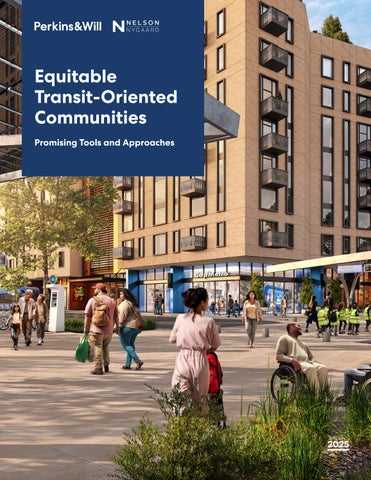
Equitable Transit-Oriented Communities Promising Tools and Approaches
2025
Acknowledgments
Nelson\Nygaard Research Team
Principal Advisory Committee
Agency Interviewees
Clayton Lane, Project Manager
Cassie Branum, Firmwide Urban Design Leader and
BART: Tim Chan, Group Manager, Station Planning Group
Brynn Leopold, Review of Literature Task Lead
Principal, Perkins&Will
Berkeley-Charleston-Dorchester Council of Governments (BCDCOG): Kathryn Basha, Planning Director and
Sarah Hyden, Scan of Practice Task Lead
Geeti Silwal, Principal, Perkins&Will
Megan Clark, Assistant Planning Director
Ambar Johnson, Agency Interviews Task Lead
Chris Forinash, Senior Principal, Nelson\Nygaard
CapMetro: Anna Lan, TOD Manager
Ashley Pryce, Mpact Conference Task Lead
Stephen Coulston, Principal, Perkins&Will
City of Chicago Department of Planning and Development: Dawveed Scully, Managing Deputy Commissioner
Jolene Holland, Zoning Advisor
Gautam Sundaram, Principal, Perkins&Will
City of Huntsville, AL: Dennis Madsen, Long Range Planner and James Vandiver, Transportation Planner
Tom Brown, Principal, Nelson\Nygaard
Denver RTD: Chessy Brady, TOD Manager
Gabi Brazzil, Principal, Nelson\Nygaard
Greater Cleveland RTA: Maribeth Feke, Director of Planning, Samantha Metcalf, Senior Planner, and Nicholas
Jonathan Mosteiro, Principal, Nelson\Nygaard
Miller, Planner III
Meghan Skornia, Associate Principal, Nelson\Nygaard
IndyGo: Brooke Thomas, Chief Development Officer
Perkins&Will Research Team Sarah McColley, Deputy Project Manager Paul Ward, Validation Task Lead Yash Gogri, Analysis Task Lead
LA Metro: Nick Saponara, Executive Officer, Transit-oriented Communities
Perkins&Will Research Council
MARTA: Greg Floyd, former Senior Project Manager in Real Estate and TOD
Leigh Christy
MDOT: David Zaidan, Chief of Real Estate and TOD
Yanel de Angel Salas
New Jersey Transit: Sean Massey, Senior Director of TOD, Kristen Mitchell, Director of TOD, and Michael Swan,
Thomas Kearns
Assistant Director of Transit Friendly Planning
Devin Kleiner
SEPTA: Jennifer Dougherty, Manager of Long Range Planning
Yehia Madkour
Sound Transit: Thatcher Imboden, former Director of Community Development
Cassandra Rice
TriMet: Guy Benn, TOD Program Manager
Kimberly Seigel
Utah Transit Authority: Paul Drake, Director of Real Estate and Transit-Oriented Communities
Leigh Stringer
WMATA: Nia Rubin, Director of Real Estate, Seth Garland, Director of Station Planning, Matthew Fromley, Office
Phaedra Svec
of Real Estate, Aaron Zimmerman, TOD Planning Program Manager
MBTA: Jennifer Mecca, Deputy Chief of TOD and Richard Henderson, Chief of Real Estate
Eric Svensson Elif Tinaztepe
2
Equitable Transit Oriented Communities
Equitable Transit Oriented Communities
3
Project Purpose What are the most promising stateof-practice tools and approaches to ensure equitable outcomes in Transit-Oriented Communities (TOC) in the United States? As transit agencies, planning entities, and the real
The purpose of this guide is to identify the most
estate sector increasingly acknowledge the value
promising tools and approaches to shape equitable
of fostering inclusive communities, terminology to
outcomes in TOCs across the United States. This
describe investment around transit is shifting from
guide aims to address the questions we have heard
‘Transit-Oriented Development (TOD)’ to ‘Equitable
from public agencies in a succinct format for busy
Transit-Oriented Communities (ETOC),’ reflecting a
practitioners.
broader focus on human-centered outcomes and long-term community resilience. As urban planners, we view supporting economic opportunity, healthy neighborhoods, vibrant local businesses, and sustainable mobility as basic tenets of supporting the people and communities we serve.
This guide is organized into five parts: 1. 1
Methodology: overview of literature review, industry scan, agency interviews, and practitioner workshop.
2. TOC Goals: the goals that many 2 agencies have identified to define equitable outcomes.
One of the biggest opportunities for U.S. cities right now is to leverage major transit investments and existing infrastructure to support equitable outcomes in TOCs. The U.S. is currently making major investments in rapid transit and related TOD
3. Common Challenges: motivations 3 and barriers to ETOC that we heard agencies express.
plans. In 2025, about 448 miles of new rail, streetcar,
We take inspiration from the many advocates and
or bus rapid transit (BRT) guideways are currently
practitioners working daily to innovate and tackle
being planned or constructed in U.S. cities. Local
challenges to advance equitable transit-oriented
agencies are planning TOD along nearly all this new
communities (ETOCs). While speaking with many
guideway, plus at key stations along thousands of
planners working on transit-oriented development
miles of legacy rail systems. How well cities serve the
(TOD) programs, we heard a strong desire to learn
needs of local communities 10, 20, or 30 years from
what is working, and what is not, from other cities
now depends largely on the effectiveness of these
and agencies. How are they setting their goals? How
investments and planning efforts. While agencies
are they tackling the challenges of working across
have developed approaches to advance equity, the
municipalities? What processes and regulatory,
success of these efforts will ultimately be measured by
design, or economic instruments are they using to
the people living and working in the community.
4. Promising Approaches: six key 4 steps from establishing a coalition to implementation. 5. Promising Tools: the regulatory, 5 economic and design instruments that many agencies are using.
positive effect?
4
Equitable Transit Oriented Communities
Equitable Transit Oriented Communities
5
1
Methodology
This section summarizes the research process, results of each step, and themes that emerged from all four steps.
Research Process Prior to diving deeper into the research, our team began by reviewing different agencies’ definitions for equity and equitable TOD. Then, using this as a backbone, we held an internal workshop to map topics that should be included in a definition of equity. Through this process we determined that the definition needed to be divided into major outcomes to simplify and direct the research. To reach the conclusions outlined in this document, we conducted three major phases of research: review of literature, scan of practice, and agency interviews. The review of literature involved reading research and publications from thought leaders and organizations in planning and transit. Through this exploration we learned that no national compilation of ETOC processes and tools exists, but that agencies use some common strategies.
The scan of practice involved reviewing plans and published materials from transit agencies across the country of different sizes, economic climates, and political and regulatory environments. We learned that agencies that aim for ETOC typically define equitable outcomes, develop a set of principles, and plan for TOD at different scales. We then interviewed representatives from 17 transit agencies, city and regional governments to learn more. Interviewees provided insights about real-world challenges and motivations, their key initiatives, and innovative tools and approaches. Finally, we validated initial results at the 2024 MPact Conference through an interactive workshop entitled “ETOC Promising Tools and Approaches” with several agencies and other practitioners.
Transit Agency Spectrum Legacy Communities
Early Pioneers
Leading Innovators
Emerging Programs
Places with extensive transit system started in the early 20th century, like Boston, Chicago, New Jersey, New York City, and Philadelphia.
Places with transit systems started in the late 1950s through the 1970s, like Atlanta, Cleveland, Portland, San Francisco, and Washington, D.C.
Places that are leading the way with transit and TOD expansion, like Austin, Los Angeles, and Seattle.
Places with smaller systems that are growing, like Denver, Huntsville, Indianapolis, Maryland, Raleigh, and Utah.
6
Equitable Transit Oriented Communities
1. Review of Literature
3. Agency Interviews
Read research and publications from thought leaders nationally including:
Hosted one-hour interviews with 17 agencies from all parts of the ETOC spectrum:
•
Universities and research groups
•
Legacy communities
•
Federal agencies
•
Early pioneers
•
NGOs focused on land use and transit
•
Leading innovators
•
Advocacy groups
•
Emerging programs
Finding:
Finding:
No national compilation of effective ETOC processes and tools exists, but common approaches and strategies are used.
Interviewees revealed intent, motivations, and challenges to ETOC, summarized their initiatives, and identified innovative tools and approaches.
2. Scan of Practice
4. Agency Validation
Reviewed plans and published materials from agencies across the country.
Presented at the 2024 MPact Conference to validate our findings:
Identified agencies of varying sizes, economic climates, and political and regulatory environments.
•
Convened agencies that self-selected to attend the conference session
•
Shared research results and ETOC definition
•
Interactive discussions that confirmed the findings from research and interviews
Finding: We identified popular ETOC goals, common processes, and an interesting set of policy, economic, and regulatory tools
Finding: Participants in the session expressed many of the same concerns as the agencies interviewed. They shared similar approaches to address challenges to implementing ETOC in their communities.
Equitable Transit Oriented Communities
7
2
Defining ETOC Goals
Image: Downtown Chicago CTA lines, Adobe Stock, Rosana
ETOCs need to be context-sensitive and locally-defined. Agencies nationally are defining ETOC goals to resonate with local needs, though their goals tend to address similar themes. In our validation workshop and interviews, most participating agencies reported that the following ETOC definition and goals resonated with their own. Equitable Transit-Oriented Communities (ETOC) aim to create neighborhoods that promote an inclusive, aspirational future for everyone. Beyond the physical focus of classic TOD on transit-supportive design and development, ETOCs additionally emphasize positive social, health, and economic outcomes for existing residents and businesses in the communities. ETOCs prioritize protecting and producing an inclusive mix of affordable housing, attainable local business opportunities, sustainable mobility options, and culturally resonant neighborhood amenities. ETOCs also prioritize community involvement to prevent displacement, help redress historic injustices, and integrate the aspirations of diverse stakeholders.
Cultural Heritage
Affordable and Attainable Housing
Community ownership
High-density buildings
Local Businesses Access to diverse job opportunities
When executed thoughtfully and effectively, ETOCs: Enable all residents to benefit from safe and accessible transportation.
Promote diverse cultural heritage and preserve the community through antidisplacement strategies.
Build healthy neighborhoods.
Support local businesses and inclusive access to diverse job opportunities that help close racial wealth gaps.
Healthy Neighborhoods Vibrant and walkable streets
Accessible Transportation High-capacity transit
Ensure affordable housing.
Note: To learn more about how these goals can be achieved, see the Tools Matrix starting on page 26. 8
Equitable Transit Oriented Communities
Equitable Transit Oriented Communities
9
3
Common Challenges
Coordination Across Public Agencies
During the interviews, we learned that agencies advance ETOC for similar reasons, but also face many of the same challenges to implementing ETOCs and transit in their communities.
While this research found many examples of successful public agency collaboration and promising partnerships, the common challenge of coordinating
Why ETOC?
Challenges
Most agencies expressed concerns about affordable housing needs, gentrification, and displacement. A third of the agencies noted that there had been a recent change in state or local policy and / or that the public sector has a significant role to play in addressing systemic issues. A quarter of the agencies noted that they wanted to increase ridership or improve service.
Four common challenges are described in detail on the following pages, including coordination across public agencies, community support and education, limited land ownership, and differing contexts. In addition to those challenges, agencies and municipalities also noted others:
60%
Coordination with other public agencies
42% Community support and education
•
Restrictive state laws that prohibit inclusionary zoning
•
Difficult real estate markets for affordable housing
•
Preserving legacy businesses and communities during and after redevelopment
•
Complex development processes that add cost and time to implementation
35% Limited Land Ownership
Creating ETOCs inherently requires coordination of multiple public agencies, and in many instances, private investment. Transit agencies are largely limited to the service they operate and the land they own and must rely, in part, on their city and other agency partners to create the conditions under which ETOCs can emerge. These conditions can include the creation of a host of land use regulations, development incentives, and tax districts; coordinated investment in infrastructure, public realm improvements, housing, or other facilities; and, supportive programs for businesses, workforce development, healthcare, childcare, or other community services.
across agencies was notable. The governance and leadership for ETOC planning varies widely across metro areas. In some locales, the transit agency has led ETOC initiatives (e.g. Utah Transit Authority). In others, the central city and transit agency have partnered very closely in a joint program (e.g. City of Austin and CapMetro) or community advocacy groups have co-championed the ETOC process with public agencies (e.g. Chicago). To complicate matters, transit agencies often operate across multiple jurisdictions, each with their own land use authority, public investment priorities, and capacity to support programs that benefit ETOCs. Some interviewees working across several jurisdictions noted a lack of support among some constituent communities, at least initially, for the introduction of density or affordability around transit investment (see Community Support and Education).
20%
Differing contexts across the transit systems Image: Interagency discussions with CapMetro and the City of Austin during their ETOD planning process.
10
Equitable Transit Oriented Communities
Equitable Transit Oriented Communities
11
Image: Public transit in Salt Lake City Adobe Stock, Erich Sacco
Community Support and Education
A unique case: Utah Transit Authority
Transit agencies and municipalities also encounter challenges with community support and a general understanding of ETOC. This challenge can also extend to elected officials. Some agencies, like Berkeley-Charleston-Dorchester Council of Government (BCDCOG) in Charleston, South Carolina, have created tools to illustrate the economic benefits of TOD and measure the impact of developments in the future. The City of Huntsville is hosting ETOC education sessions as part of their current TOD planning efforts because ETOC is a new concept to many residents and the city is growing rapidly. As previously noted, neighborhood contexts can affect the community’s level of trust, support, and understanding for ETOC; accordingly, agencies stressed the importance of involving the community throughout the planning and implementation processes.
State Law for Station Area Planning During the 2022 Legislative session, HB462 (Housing Affordability Amendments) was passed, which requires cities to develop station area plans for all fixed guideway (rail or BRT) stations and update its general plan and zoning by 2025. The plans must demonstrate that they meet many objectives, like availability of affordable housing, access to opportunity, environmental sustainability, and transportation choices. The Wasatch Front Regional Council, in partnership with the Governor’s Office of Economic Opportunity, UTA, and the Mountainlands Association of Governments provide technical assistance to cities and ensure agency coordination for all levels of jurisdiction. UTA partners with many stakeholders, agencies, and the public from planning to implementation for catalytic projects around transit stations.
Learn More Here: •
rideuta.com/Doing-Business/Transit-Oriented-Communities
•
wfrc.org/programs/station-area-planning
Limited Land Ownership Limited land ownership was cited by public agencies as a common challenge to attracting and shaping future development to promote their ETOC goals. Where agencies owned land, joint development agreements enabled them to exercise a high degree of control. Several agencies were crafting policy to make better use of their land, getting creative with partnerships and financing, and executing projects that aim to move the needle on ETOC goals while catalyzing adjacent development. WMATA’s 10-Year Strategic Plan for Joint Development, for example, set a goal of 20 new joint development agreements by 2032. It also calculated the fiscal and economic impact of joint development projects, identified strategies, and prioritized station areas. Limited land ownership, on the other hand, is prompting agencies to work with partners on a broad set of softer regulatory, design, and economic incentives to shape development. Even agencies with large land assets generally pursue strategies in tandem to shape broader development (e.g. MBTA) —to build affordable housing units, commercial space, or mobility and public-space elements to support their ETOC goals.
12
Equitable Transit Oriented Communities
Public agencies are creating many innovative approaches and policy tools to influence land beyond their direct control. This guide outlines many of them in the following sections, including the “Tools Matrix” that highlights three dozen innovative regulatory, design, and economic instruments.
approach. A number of practitioners mentioned community input as important in determining the needs of individual station areas, crafting tailored station area plans that focus on workforce initiatives or industrial preservation / revitalization, instead of more common or straightforward approaches to density and affordability.
Different Contexts
In the case of Chicago, practitioners mentioned wide ranging contexts across the system, with long-term disinvestment and wide disparities in opportunities in some station area neighborhoods. In these neighborhoods, where development opportunities may have been less appealing to traditional developers, the City leveraged its own property, focused on heavily engaging local community in development process, and even involved community members in the ranking and selection of developer teams based on how proposals responded to neighborhood needs. The City has made local economic development an explicit focus within its ETOD program, encouraging local hiring practices, local tenanting in commercial spaces, and creating
When crafting ETOC policy or directing public investment, there is no one-size-fits-all solution. In the same way a transit agency operates across many jurisdictions, its geographic reach will likely touch neighborhoods that may be quite different across a variety of factors. These can include, but are not limited to, land use mix, neighborhood demographics, existing community infrastructure and services, level of investment / disinvestment, market conditions, and more. A wide service area will inevitably encounter different levels of density, types of neighborhoods, employment centers, or industrial areas that will not be well-served by a singular policy
opportunities for minority developers, designers, and contractors in the execution of the projects. From a policy perspective, agency partners have explored a number of tools to address the issue of context. A number of cities have endeavored to create “typologies” to assess the station area context to better inform the policy solutions that may be most appropriate to a particular place. While a traditional approach may classify areas primarily based on market factors such as prevailing rents, land value, or development starts, to indicate transit-oriented development “readiness,” the ETOC lens seeks to layer in other factors, such as displacement risk, demographic and employment mix, and neighborhood fabric in the evaluation. As an example, the City of Austin and CapMetro have created a set of eight station typologies that assess these metrics (Include, Extend, Encourage, Initiate, Enhance, Support, Align, Secure) that create a holistic framework through which policy solutions can be applied beyond market factors.
Equitable Transit Oriented Communities
13
4
Promising Processes
Engage the Community
A few common, progressive initiatives are emerging from city governments, transit agencies, and regional organizations that have studied, adopted, or initiated the implementation of ETOC tools and strategies.
Many agencies use their ETOC guiding documents to outline implementation processes while also setting priorities and principles. These processes often include collaboration with local communities and other jurisdictions throughout the development process to refine and carry out the plans. For example, King County Metro in Seattle and LA Metro in Los Angeles emphasize community engagement as a key initiative, while other agencies merely incorporate community input into their programs. Agencies like MBTA in Boston, the City of Chicago, and Cleveland RTA are investing heavily in building trust with their communities, involving them in the process, hosting education sessions, and raising awareness as they develop their corridor and station area planning and ETOC frameworks.
1. Establish Shared Goals and Build a Coalition
1. Establish Shared Goals and Build a Coalition 2. Develop a Strategy 3. Develop Policy Tools 4. Develop Station Area Plans 5. Finance and Implement
14
Equitable Transit Oriented Communities
Community Outreach and Engagement should occur throughout all steps
Agencies that build a strong foundation early on – by building a coalition, establishing goals, and developing policy tools – give themselves the greatest opportunity to shape equitable outcomes. Many agencies develop their priorities and principles and use their ETOC guiding documents to outline processes for implementation. These processes involve collaboration with the community and / or other jurisdictions to refine and execute plans. These plans lay the foundation and the roadmap for ensuring equitable outcomes with the promise of well-connected transit As an example, the city of Chicago’s 2020 ETOD Policy Plan aims to promote equity on the city’s south and west sides through community engagement via focused public meetings, conversations, and community evaluators. The plan recommends a robust land banking system to encourage private developers to contribute to affordable housing and outlines financial incentives, reduced parking requirements, and updates to the Department
of Housing’s qualified allocation plan to expand housing credits for diverse populations. Currently, an ETOD working group of over 40 community members and stakeholders meets quarterly to advise the City’s progress toward implementing its ETOD goals. Comparable initiatives were led by TriMet in Oregon through its TOD Strategic Plan (2023) and the Austin Transit Partnership. The Austin Transit Partnership was established in 2020 to oversee the implementation of Project Connect by the City of Austin and CapMetro in Austin, Texas.
2. Develop a Strategy A common approach among many transit agencies is the development of station typologies, which classify stations based on location, characteristics, or data trends. This method enables tailored implementation strategies that address the specific needs of each station area without being overly rigid. Agencies like CapMetro / City of Austin, GO Raleigh, Denver RTD, MARTA, WMATA, and BART incorporate station typologies into their development strategies. For example, MARTA and Denver RTD focus on proximity to urban cores or suburban centers, while CapMetro / City of Austin uses data-driven criteria such as population trends and displacement risk. This framework helps agencies identify impactful and context-specific policies for ETOCs within a region. Developing regional and local-scale strategic plans for station area development has proven to be an effective initial step for transit agencies and cities in promoting awareness of ETOC goals and establishing clear objectives. For instance, WMATA created a strategic plan focusing on 20 stations over a 10year period, outlining ETOC goals, setting priorities, and providing a comprehensive roadmap for each station. Moreover, WMATA actively champions joint development initiatives with private developers on transit agency-owned land. Similarly, LA Metro and MARTA have emerged as key players in advancing joint development efforts on their land holdings.
Equitable Transit Oriented Communities
15
3. Develop Policy Tools Several proposed tools around design, zoning, and economic incentives developed by agencies are making ETOCs a reality across the country. Efforts include amending zoning codes to codify TOD or ETOD requirements with height and density bonuses, as seen in CapMetro in Austin, Raleigh, MARTA in Atlanta, Seattle, and Chicago. Cities like Seattle, Boston, and Atlanta also mandate affordable housing in certain developer-led projects, through dedicated units or fee-in-lieu contributions, though such policies remain illegal in Texas. Additionally, tools like Community Land Trusts and land banking are proving effective in transforming vacant or underutilized land into developable projects. Efforts to support economic growth in ETOCs include targeted recruitment of small businesses for retail spaces, as seen with CapMetro / City of Austin and Denver RTD. Assistance funds, such as those in Austin and Raleigh, provide grants to businesses affected
by implementation. Additionally, high-quality job creation is prioritized through commercial, office, and retail developments in ETOCs, with initiatives led by CapMetro / City of Austin, City of Chicago, WMATA, BART, MARTA, LA Metro, and MinneapolisSt. Paul. Addressing parking requirements in order to achieve housing affordability is an important policy approach in ETOCs. Strategies to optimize parking include reducing or eliminating parking minimums through zoning adjustments have been implemented in cities like Austin, Atlanta, and Denver. The establishment of shared parking agreements between transit agencies and businesses, and unbundling parking from housing to provide flexibility and cost savings for car-free residents have been implemented by LA Metro, Denver RTD, CapMetro in Austin, and BART in the San Francisco Bay area. Additionally, short-term street parking mandates can promote sales for ground-floor businesses while vehicles act as a buffer between pedestrians and traffic, enhancing safety.
4. Develop Station Area Plans
5. Finance and Implement
Once regional-level ETOC goals are set for different station areas, it is important to create plans that focus on each specific neighborhood or station, prioritizing the ETOC objectives locally. NJ Transit has developed a Transit-Friendly Planning Guide to help municipalities implement urban design and land use policies that support these goals, which the agency expressed has been quite effective. CapMetro in Austin created an ETOD priority digital tool that prioritizes station areas for future ETOD initiatives and investments, to not only minimize displacement risk, but also support opportunities to achieve equitable outcomes. The City of Chicago and MARTA also noted that equity informs their decision-making about station area planning.
Understanding the right financial tools to leverage is pivotal for implementing most ETOC measures. Tax Increment Financing (TIF) and Tax Increment Reinvestment Zones (TIRZs) fund improvements through future tax revenue, as seen with CapMetro and City of Austin in Austin and DART in Dallas. Referred to as Tax Allocation Districts (TADs) in Georgia, they allocate revenue for district improvements, as exemplified by the Atlanta Beltline Tax Allocation District. ETOC grants and funding are an alternative source of financing for ETOC developments. Agencies like Denver RTD, Minneapolis-St. Paul, the City of Chicago, and LA Metro have utilized these resources to achieve their ETOC objectives in some of their projects. More financing and implementation tools are summarized in the Promising Tools section.
Typologies and Developer Strategies A common approach among many transit agencies is the development of station typologies, which classify stations based on location, characteristics, or data trends. Each item listed below links to the agencies’ documents: •
MARTA TOD Guidelines
•
WMATA Joint Development Strategy
•
NJ Transit Transit-Friendly Neighborhoods Guide
•
CapMetro’s TOD Typologies
Washington Metropolitan Area Transit Authority
10-Year Strategic Plan for Joint Development
Image: Engaging residents in San Juan, Puerto Rico about extending Tren Urbano. Transit planning project by Perkins&Will’s Atlanta studio and Nelson\Nygaard. OF F I CE OF R EAL ESTATE AND PAR KI NG
16
Equitable Transit Oriented Communities
2022
Equitable Transit Oriented Communities
17
5
Promising Tools
Collaborating with the Community to Determine Priorities ETOC should be locally-defined based on each place’s distinct challenges, opportunities, and tools available for action to best serve existing communities. Each of the ETOC goals defined in this guide may have a different level of importance for your community; asking the right questions and engaging the community will help determine priorities and which tools to explore. Steps 1 and 2 in the process below may occur concurrently and should inform each other.
C. What has happened in your community to necessitate ETOC, and how do the goals address those issues? Some examples include:
The priority level for each goal varies by place Safe and Accessible Transportation
Healthy Neighborhoods
Affordable Housing
Diverse Cultural Heritage
Close Racial Wealth Gaps
Concerns like displacement and the need for harm repair could be addressed by a focus on affordable housing, diverse cultural heritage, and closing racial wealth gaps. Uncomfortable or indirect connections to transit stops could be addressed by safe transportation and healthy neighborhoods. If the city or neighborhood is experiencing recent development pressure and population growth, all of the goals could be of equal importance and input from the community could help determine priorities.
D. What is the appropriate scale for ETOC? The appropriate scale for ETOC implementation can range from transit properties and surrounding areas to broader geographies defined by city, transit agency, or MPO TOD plans, with examples like, the City of Austin’s people-based TOD Process for identifying typologies and prioritizing and creating station area plans. Another resource is the Planning for TOD at the Regional Scale guidebook created by the Center for Transit-Oriented Development.
E. What existing processes, policies, and tools are not designed to advance equity? What processes and tools do we have in place already and which ones address the selected goals and community priorities? Are there tools that could be easily adopted? Do others require legislation? See page 12 for promising processes and page 26 for a list of tools and which goals they address.
2. Identify the Goals
Safe and Accessible Transportation
Healthy Neighborhoods
Affordable Housing
Diverse Cultural Heritage
Close Racial Wealth Gaps
1. Ask Important Questions A. What is most important to people in this neighborhood and community? To understand what matters most to the community, engage residents and stakeholders throughout the planning process, review previous public input, and update priorities with ETOC goals as needed.
B. What are the challenges agencies and local governments in this community face with ETOC implementation? Agencies and local governments face challenges such as state law restrictions, community unfamiliarity or hesitation about ETOC, and limited land ownership, which can be addressed through alternative tools, education sessions, and partnerships with like-minded organizations respectively.
18
Equitable Transit Oriented Communities
Refer to previous or ongoing public feedback to identify and weigh the priority of each goal that may be uncovered through answering the questions in Step 1 - Ask Important Questions. For example, if the community has indicated that the issues to the right have occurred in your community, determine which goals are most applicable. The goals can be the starting point for identifying the appropriate tools. Determine which processes are in place already (pages 14 to 18) and which ones do the best job of addressing the priorities, or if any processes in place hinder equitable outcomes. Then, determine the best tools to implement, using the tools matrix at the end of this document.
Displacement and the need for harm repair Few good connections to transit Recent Development pressure and population growth Recent population decline or job loss
3. Refer to Tools Matrix The tools matrix lists various tools and agencies that have used them, organized by the five ETOC goals in this guide.
Equitable Transit Oriented Communities
19
Safe and Accessible Transportation
Healthy Neighborhoods
Providing easily accessible, high-quality, reliable transportation that meets the travel needs of existing and new riders of all abilities. This includes evaluating current transit networks and ridership to determine service gaps and expand the transit service network. It also includes ensuring the walking and biking network within the ETOC and to transit stations and stops is connected, safe, and comfortable.
A healthy neighborhood is a community that supports the physical, mental, and social well-being of its residents by providing safe, clean environments, access to nutritious food, healthcare, social services, amenities, green spaces, and options for public and active transportation.
Tools to Tackle Common Challenges
Case Study: Fruitvale BART Station in Oakland, California
Tools to Tackle Common Challenges
Case Study: Mariposa District in Denver, Colorado
As ETOCs branch from transit investment, getting people easily to, from, and around station area neighborhoods allows access the many benefits that come from equitable development.
BART led planning efforts with local partners to significantly improve walk, cycle, transit, and parking access to Fruitvale Station in Oakland as part of broader Transit Village revitalization efforts. BART’s 2002 Station Access Plan launched long-term multimodal improvements to shift mode share toward walking, biking, and transit, especially for local, lower-income, and minority communities underrepresented among riders at Fruitvale. To support active mobility, it included streetscape improvements, public plazas, safer pedestrian crossings, enhanced bike parking and storage, new bike lanes, better ped-bike connections to the Bay Trail and across nearby railways and parking lots, plus improved landscaping and wayfinding. Transit access was improved with two feeder bus routes, Tempo BRT, real-time information, upgraded bus loading areas, a shuttle study, and discounted fares for local residents. Finally, the plan proposed a new three-level parking garage to replace displaced spaces, prioritizing carpool and paratransit. While broader inequities persist, the plan has catalyzed equitable access and supported development of mixed-income housing, retail, and community services including a clinic, health center, library, senior center, and farmers market.
Many transit agencies and cities across the U.S. are recognizing the link between transportation and health. However, challenges persist: neighborhoods near transit often lack safe, walkable infrastructure and access to fresh food, parks, and healthcare. Historic disinvestment has led to poor air quality, and displacement. Potential tools to address these challenges include:
The Mariposa District redevelopment, led by the Denver Housing Authority, is expected to cover 14 acres and add 581 multi-family, mixed-income units. A mix of housing choices were included to ensure that people living in the existing affordable housing were not displaced. Great effort was made to promote healthy, active lifestyles by providing access to community gardens and kitchens, encouraging walking, and offering generous access to nature. Residents describe a sense of belonging, a safe and nurturing environment, and a strong focus on youth and families. The project’s eight phases added many LIHTC (Low-Income Housing Tax Credit) units and some commercial spaces that were occupied by culinary schools, a day care, and non-profit organizations. The development includes a geothermal energy system, a greywater recycling system, a rooftop solar photovoltaic array, many LEED-certified buildings, community gardens, a greenhouse, and playgrounds. Extensive resident involvement engaged the community in all phases of the master plan. Post-occupancy surveys show a 30% drop in crime rate and improved social connection.
•
Station access improvements: Create safe, accessible, and well-lit routes and public spaces that prioritize movement of people of all ages and abilities.
•
First / last mile service to transit stations: Provide bike share, micromobility, shuttle, or other ondemand service to connect users to transit.
•
Community car share: Make it easier for community members who primarily use transit to access a car when needed and lessen the cost burden of car ownership.
•
Mobility benefits programs: Subsidize transit passes to reduce household transportation costs in targeted communities.
•
Parking requirement reductions / shared parking requirements: Use zoning to reduce parking requirements and use shared parking agreements with developers to reduce the cost development costs and encourage transit use. Coupling these with parking and transportation demand management (TDM) programs reduce drive-alone trips and support use of transit.
Learn more here.
20 | Equitable Transit-Oriented Communities
•
Healthy community grants: Establish “healthy community” grants can support communitydriven initiatives that promote access to nutritious food (e.g. grocery store, community kitchen), and improve the public realm for active mobility.
•
Welcoming and safe public realm design: Encourage connected, high-quality, well maintained streets, parks, plazas, and civic spaces for the benefit of residents, employees, visitors, and pedestrians.
•
Developer incentives: Agencies can incentivize developers to build a diversity of uses to improve walkability and access to daily needs and services.
Learn more here.
Affordable Housing
Diverse Cultural Heritage
Facilitating access to affordable housing entails offering residential options that are financially attainable for low- and moderate-income households, strategically placed near transit hubs to ensure convenient connections to jobs, education, and essential services. Such developments focus on empowering historically underserved or economically disadvantaged communities by providing reliable public transportation and fostering inclusive community advantages.
Promoting and preserving diverse cultural heritage involves anti-displacement strategies for residents and local businesses; balancing the use of tools to keep people in place and attract new residents; redressing harm caused by historic, inequitable infrastructure projects and policies; and, designing the public realm to incorporate neighborhood or community pride.
Tools to Tackle Common Challenges
Case Study: Cedar Crossing in Seattle, Washington
Tools to Tackle Common Challenges
Many cities are experiencing rapid population growth, displacement risk, and a mismatch in the types of housing built and residents served. Affordable housing is expensive to build, creating cost constraints for developments. Some cities and transit agencies are experiencing challenges at the state level that prohibit inclusionary zoning provisions, or a lack of community support for affordable housing. Some tools that could address these challenges include:
Cedar Crossing is an affordable housing project in Seattle’s Roosevelt neighborhood. It provides 254 housing units, including 91 two-and threebedroom units for families on 1.2 acres of land directly adjacent to the north station building at Roosevelt Station. In partnership with Children’s Hospital, Mary’s Place, and the Ronald McDonald House, 20 homes are set aside for families simultaneously experiencing homelessness and caring for children with complex medical issues.
Combatting displacement, redressing harm, and incorporating neighborhood pride in redevelopment are inherently challenging. Development pressure and costs of construction make affordable housing and commercial space difficult to build, residents may be forced to relocate because they can no longer afford their homes, and redevelopment projects may erase what made the neighborhood special. Some tools to address these challenges include:
•
Joint development agreements: Multi-faceted agreements with developers to develop agencyowned land with some affordable housing.
•
•
Density bonuses: Agencies can allow increased development density in exchange for affordable housing or other defined public benefits.
Sound Transit and the Seattle Office of Housing partnered to create affordable housing at the station by offering the property at a discounted land price, as well as $15 million in pre-committed affordable housing financing from the City of Seattle. The project was made possible in part by a Joint Development Agreement with the Federal Transit Administration. Bellwether Housing and Mercy Housing Northwest developed the project, which opened in June 2022.
Prioritize anti-displacement of residents and businesses in new development through measures such as inclusionary zoning and sustained support for legacy businesses.
•
Tenants rights protections: Create awareness of tenant ights, provide eviction protection, connect them to legal counsel, and implement policies like “first right of refusal” for tenants and tenants groups if rental units are transitioning to ownership.
Learn more here.
•
Activate public spaces with design, events, and public art that reflect and embrace cultural heritage can encourage a sense of ownership. The community should be involved in all stages of the process from planning to implementation.
•
Anti-displacement funds can offset increases in property taxes for homeowners through public funds or philanthropic partnerships.
•
Down payment assistance: Financial programs can help buy down the cost of a mortgage for lower-income residents.
•
Community land trusts: Land owned by a public or nonprofit entity can be leased to home buyers, making the cost of the home more affordable in perpetuity.
•
Housing finance fund and tax abatements: These tools can reduce the financing and operating cost of affordable housing.
Case Study: Destination Crenshaw in Los Angeles, California Crenshaw Boulevard is the most iconic Black business corridor in Los Angeles, and the heart of the largest Black community on the west coast. A planned light rail transit route connecting to the airport along the boulevard spurred a planning initiative that generated the largest public/private Black art program in the country, job creation, and designs for four acres of public space. The goals are to boost the community through economic development, environmental healing, and elevating Black art and culture. Partnerships with council members, the general contractor, construction firms, and others ensure local residents are hired for construction (the construction contract requires 70% of workers to be from the neighborhood). In addition, DC THRIVE helps local businesses with social media marketing, finding and applying for grants, and funds micro-grants for operations. The project has received $15 million from the Metro Board of Directors to help fund the construction of Sankofa Park, $10 million from the State of California, and $5-6 million from City of LA for implementation.
Learn more here.
Real Estate and Financing Tools
Closing Racial Wealth Gaps Urban development in the United States has been shaped by generations of racially discriminatory policies that have systematically disinvested in infrastructure in communities of color, under-resourced neighborhoods, and restricted access to capital to build generational wealth through commercial and residential lending. This goal seeks to increase access to opportunities for upward mobility and prosperity for these historically disenfranchised communities.
Community land trusts / land banks Land is owned by a public or nonprofit entity rather than being part of the for-profit real estate market. The land is leased to those who buy homes on that land, making the cost of the home more affordable. Often income-restricted to those with low to moderate incomes. Places where land trust and land banks have been used:
Tools to Tackle Common Challenges Despite growing public investment in transit infrastructure, many communities of color continue to face exclusion from the economic benefits of development. Contemporary zoning laws, land speculation near transit corridors, and marketdriven displacement impact residents in historically redlined or disinvested areas. The ETOC tools that can help reverse these challenges include: •
•
•
•
•
Supportive workforce programs: Work with employers and educational institutions to create workforce programs and employment pipeline for local residents. Securing affordable housing options: Affordable housing is a key component to build wealth across generations. See the tools on page 22 and in the tools matrix on page 26. Access to employment opportunities: Create access to jobs compatible with the skills and education level for local residents. Incentivize community-serving and commercial uses: Businesses or non-profits that provide healthcare, food/grocery options, childcare or other community-focused services. Small business support: Agencies can offer grants, subsidies, or other support to small businesses and entrepreneurs of color.
Case Study: City of Chicago The City of Chicago has worked to leverage investment in ETOC development to create opportunity and wealth for local communities. As projects emerge within ETODs, the City has prioritized including BIPOC developers, designers, contractors, and other trades to participate in the development process and build their businesses. There has also been a concerted effort to promote local community tenanting and hiring practices within commercial spaces at ETOD developments. The City has created a competitive ETOD grant program that provides up to $250,000 and technical assistance to support community-led equitable development near transit. Projects must help implement the City’s ETOD Policy Plan and Connected Communities ordinance, and catalytic projects that contribute to the local community are prioritized. One example grantee is a worker-owned grocery cooperative called Bridget’s Bodega near the 95th Street Red Line Station. By seeding this project, the fund aims to support local workers and entrepreneurs while improving access to nutritious food in Washington Heights.
City of Atlanta (Atlanta Land Trust around the Atlanta BeltLine), CapMetro/City of Austin, LA Metro, City of Chicago, City of Trenton, IndyGo in Indianapolis, RTD in Denver
Tax Increment Financing (TIF), Tax Increment Reinvestment Zones (TIRZs), Tax Allocation District (TAD) Zones are created to help attract development to an ETOC where improvements are funded by future tax revenue Places where TIF / TIRZ / TAD have been used: Atlanta with the Atlanta BeltLine, City of Chicago, Denver with the RTD, Los Angeles with LA Metro, Minneapolis-St Paul
Equitable Housing Fund (sponsored by a corporation or philanthropic donation) Developer agreements The public owns land, and agreements with developers promote public goals – for example: include affordable housing, create high-quality jobs, implement a Transportation Demand Management program, develop small flexible space for small businesses, or build equitable mobility amenities like walkways, bus shelters, or a bike sharing station.
Low-cost financing for affordable housing, funded by regional corporate partner in partnership with transit agency. Places where equitable housing funds have been used: MARTA, WMATA
Agencies who have used developer agreements: CapMetro/City of Austin, BART, City of Chicago, MARTA, LA Metro, Minneapolis-St. Paul, WMATA
ETOC Development Fund State and local fund to support ETOC infrastructure investments.
Reinvesting joint development revenue
Places where an ETOC development fund have been used: Los Angeles with LA Metro
Revenue generated through joint development is earmarked for reinvestment for affordable housing and other amenities. Places where revenue has been reinvested: Los Angeles with the LA Metro
24
Equitable Transit Oriented Communities
Equitable Transit Oriented Communities
25
Tools and Strategies Matrix Zoning and joint developments are comprehensive tools that many agencies are using to help deliver equitable outcomes. These tools, because they directly shape land uses and infrastructure, can support a variety of equity goals— from promoting affordable housing, to ensuring sustainable mobility, to preserving the incumbent community. But they are just the beginning. Our Agency Interviews and Scan of Practice identified dozens of innovative policy measures, economic incentives, regulations and design approaches that agencies are using. The table below highlights several of those innovative measures reported by agency interviewees or discovered in the Scan of Practice. While the table is not comprehensive, it identifies promising tools that agencies may find useful.
Safe and Accessible Transportation Unbundled parking
Allows for parking to be leased separately from housing, providing flexibility and savings for residents who don’t own a car while reducing the total amount of parking needed.
BART, CapMetro, LA Metro, MARTA
Transportation Demand Management (TDM) Program
Incentives or requirements for developers to provide end-of-trip commute facilities, secure bike parking, bus shelters, transit passes, reduced parking construction, and other amenities. TDM programs can take a variety of forms, from a general mandate to specific points-based system.
BART, CapMetro, City of Houston, Cleveland RTA, Denver RTD, LA Metro, MARTA, Sound Transit,
Provide FAR bonuses for transit-friendly infrastructure in ETOC overlay zones.
City of Austin, City of Philadelphia
Eliminate or reduce parking minimums and introduce parking maximums to enable transitsupportive land use and curtail sprawl.
CapMetro, Denver RTD, City of Houston, Cleveland RTA
Prioritize the pedestrian experience by prohibiting uses like drive through restaurants, car washes, and car dealerships in ETOC zones.
BART, CapMetro, City of Houston
Require developments to design smaller blocks to promote pedestrian access and permeability
MARTA, Minneapolis-St Paul, Raleigh, WMATA,
Require that parking facilities do not create barriers for pedestrians to improve the public realm experience.
BART, City of Houston, MARTA, WMATA
Encourage pedestrian-oriented uses on the ground floor, accompanied by window and entrance requirements to activate the street.
BART, CapMetro, City of Chicago, City of Houston, Raleigh
Curb regulations to maximize use and turnover
Dynamic pricing, loading zones, shared mobility zones, limitations on residential parking permits, and other strategies to maximize equitable use of the curb by all people and modes.
CapMetro, City of Houston, MARTA, WMATA
Bike and walk facility improvement and connectivity
Infrastructure improvements to enhance the walk or ride experience directly to and from transit stations, and for recreation. This can include safe, connected sidewalks and crosswalks, bike lanes, City of Chicago, CapMetro, Cleveland RTA, MARTA, Minneapolis-St Paul, shared use paths, shared micromobility, and bike parking, among other features, like shade and WMATA protection from weather.
Transit speed and reliability
Frequent, fast, reliable transit to support regional accessibility and enable local residents to reduce their car use or ownership.
CapMetro, King County Metro, MTA, Tri-Met, SEPTA, VTA
Sidewalk connectivity, width, and/or furniture requirements
Goals or requirements for developers and city departments to fill gaps in the sidewalk network, ensure accessible infrastructure such as curb ramps, and minimum sidewalk widths in ETOC areas
City of Chicago, Raleigh, City of Houston
Wayfinding
Maps and signage located throughout the neighborhood to provide information and direction at the pedestrian scale.
City of Chicago, CapMetro, MARTA, WMATA
Zoning overlay and developer agreements
Close Racial Wealth Gaps
Affordable Housing
Diverse Cultural Heritage
Example Agencies (not comprehensive)
Healthy Neighborhoods
Description
Safe and Accessible Transportation
Tool
Broader Relevance
Example Agencies (not comprehensive)
Grant programs and funds
Competitive grants and investment programs to support public health outcomes. Examples of supported uses include local food halls, farmers’ markets, grocery stores, active mobility infrastructure, gyms, and playgrounds.
City of Chicago, Denver RTD, LA Metro, MARTA, Minneapolis-St Paul
Green infrastructure
Design for trees, bioswales, community gardens, and other natural features to promote environmental sustainability, strengthen resiliency to climate change, and promote social determinants of health.
Cleveland RTA, MBTA, SEPTA
Zoning incentives and developer agreements
Incentivizing developers with density bonuses or other concessions in return for building healthy infrastructure.
Affordable Housing
Close Racial Wealth Gaps
Description
Diverse Cultural Heritage
Tool
Safe and Accessible Transportation
Tools and Strategies Matrix
Healthy Neighborhoods
Broader Relevance
Healthy Neighborhoods
Shade or tree planting programs Encourage or require tree planting to enhance shade, especially along sidewalks. encouraged Parks and open space
Incorporate public park space into ETOCs for the benefit of residents, employees, visitors, and pedestrians.
BART, CapMetro, City of Houston, City of Raleigh, Denver RTD BART, City of Chicago, Denver RTD, MARTA
Affordable Housing Amendments to local zoning codes to codify TOD or ETOD requirements and incentives – such as height, density, and mixed-use requirements, affordable housing and “missing middle” housing incentives, and physical design characteristics of buildings and the surrounding infrastructure. Zoning overlay In combination, YIMBY (“Yes, in my backyard”) zoning considerations can unravel barriers to producing affordable housing by reducing restrictions, simplifying codes and speeding up the development process.
28
CapMetro/City of Austin, City of Chicago, City of Philadelphia, City of Seattle, Cleveland RTA, IndyGo, MARTA, Raleigh
Joint Development Agreements / Public-Private Partnerships
Multi-faceted agreements with developers to develop agency-owned land and deliver a programs that address several public goals, most notably below-market-rate housing. The public land is often provided as an in-kind investment or at a discounted cost. A ground lease allows the transit agency to earn revenue to fund transit operations.
BCDCOG (Charleston), Denver RTD,City of Chicago, Cleveland RTA, MARTA, MBTA, NJ Transit, Utah TA, WMATA
Mandated affordable housing law
Mandated affordable housing in certain projects, either in the form of affordable units or developer fee-in-lieu payments. This mechanism is not legal in some states, such as Indiana, North Carolina, and Texas.
City of Seattle, MARTA, NJ Transit, Utah TA
Community land trusts/land banks
Land owned by a public or nonprofit entity and leased to home buyers, making the cost of the home more affordable. Trusts often restrict owners to those with low to moderate incomes. This tool also can be used to address restrictions to inclusionary zoning or direct development of affordable housing.
CapMetro/City of Austin, City of Atlanta (Atlanta Land Trust around the Atlanta BeltLine), City of Chicago, City of Trenton, Denver RTD, LA Metro, IndyGo
Affordable housing investment and tax abatements
Financial incentives and support to encourage affordable housing construction. Methods include tax abatements, corporate or public housing fund subsidized loans, and grants. These incentives also can support all other goals.
IndyGo (City/state), LA Metro (or state/local government), MARTA (DeKalb, Fulton counties), WMATA (Montgomery County, D.C., Maryland)
Affordable housing allocations
Shift state or citywide allocations of affordable housing goals to prioritize TOD locations.
City of Chicago
Mortgage assistance
Financial program to help buy down the cost of a mortgage for lower-income residents. This tool can be especially helpful where the opportunity for supply-side incentives is limited.
CapMetro
Equitable Transit Oriented Communities
Equitable Transit Oriented Communities
29
Example Agencies (not comprehensive)
Small business assistance fund
Grants available to businesses impacted by ETOC construction.
CapMetro, Raleigh
Tenants’ rights protections
Body of regulations securing tenants’ rights to support stable housing. Examples include rights to legal counsel, due process, advanced notice, and right of first refusal to rent the property.
CapMetro
New housing prioritizes local/ displaced residents
Prioritize current and displaced residents for access to new housing constructed in the ETOC – through developer agreements or design of economic incentives.
CapMetro
Rent stabilization
Body of regulations that limits or prohibits rent increases for certain residents or businesses – whether blanket regulations covering all properties, or targeting those with lower rents or lowerincome households.
Cities of Los Angeles, New York, Oakland, Portland, St. Paul, and Washington DC.
Anti-displacement funds
These funds can cover increases in property taxes for homeowners through public funds or philanthropic partnerships.
City of Atlanta
Affordable Housing
Close Racial Wealth Gaps
Description
Diverse Cultural Heritage
Tool
Healthy Neighborhoods
Tools and Strategies Matrix
Safe and Accessible Transportation
Broader Relevance
Diverse Cultural Heritage
Activating public spaces with design, events, and public art that reflect and embrace cultural Public space design that involves heritage. Public spaces include parks, plazas, and streets. The community should be involved in all the community stages of the process from planning to implementation. For example, commission local artists to design the art to further enhance community ownership and resonance.
CapMetro, BART, City of Chicago, City of LA / LA Metro, Cleveland RTA, Denver RTD, MARTA, WMATA,
Close Racial Wealth Gaps Zoning overlay or developer agreements
Local zoning codes or developer agreements that require or incentivize small flexible commercial spaces where local businesses can start up and grow.
Small storefronts
Program the development to activate small, ground-level storefront façades.
Cleveland RTA
ETOC grant programs and funds
Creation of investment funds or grant programs with financial partners and/or grant award funding for affordable housing developments or other amenities in ETOCs.
City of Chicago, Denver RTD, LA Metro, MARTA, Minneapolis-St Paul
Small business tax credits, improvement funds
Financial support for existing small businesses to improve physical space or reduce overall net costs.
CapMetro, City of Chicago
Equitable procurement
Procurement methods that support opportunities for minority-owned or disadvantaged developers, designers, planners, and contractors.
City of Chicago notably ties this approach to ETOD goals; LA Metro / City of LA
30
Equitable Transit Oriented Communities
Equitable Transit Oriented Communities
31
Sources Review of Literature 1.
2.
Barkley, B. (2017). The role of equitable transit-oriented development in promoting economic opportunity. Federal Reserve Bank of Cleveland. https://www.philadelphiafed. org/community-development/the-role-of-equitable-transitoriented-development-in-promoting-economic-opportunity
12.
Valley Transit Authority. (n.d.). Guiding principles for land use and equitable transit-oriented communities. https://www.vta. org/cdt/guiding-principles-land-use-home-page/supportequitable-transit-oriented-communities#accordion-policy--implementation
Center for Transit-Oriented Development. (2009). Fostering equitable and sustainable transit-oriented development. Harvard Kennedy School. https://iri.hks.harvard.edu/files/iri/ files/fostering-equitable-and-sustainable-transit-orienteddevelopment.pdf
13.
Zuk, M., Carlton, I., & Metcalf, S. (2015). Equitable transitoriented development: Examining the progress and continued challenges of developing affordable housing in opportunity and transit-rich neighborhoods. Civil Rights Research. https:// www.prrac.org/pdf/EquitableTOD.pdf
3.
Coes, C., & Osborne, B. (2019). AARP Equitable TOD Webinar. https://www.aarp.org/livable-communities/livable-in-action/ info-2019/transit-solutions-webinar.html
4.
Ewing, R., Iroz-Elardo, N., & Adkins, A. (2021). NITC research project 1328. National Institute for Transportation and Communities. http://nitc.trec.pdx.edu/research/project/1328
5.
6.
7.
8.
9.
10.
11.
Ewing, R., Sabouri, S., Kaniewska, J., Ameli, H., Yang, W., Kiani, F., Kim, J., & Chibamba, D. (2022). Is transit-oriented development affordable for low and moderate income households? National Institute for Transportation and Communities. https://pdxscholar.library.pdx.edu/trec_ reports/230/ Kline, R., Tian, Guang. (n.d.).Gentrification, Displacement, and GHG Emissions at Transit-Oriented Communities. University of New Orleans, Center for Equitable Transit-Oriented Communities. https://rip.trb.org/View/2292742 Kline, R., Tian, Guang. (n.d.). Is Transit-Oriented Development Affordable for Low- and Moderate-income Households (in Terms of Housing and Transportation)? University of New Orleans, Center for Equitable Transit-Oriented Communities. https://rip.trb.org/View/2292743
Scan of Practice 1.
2.
3.
4.
5.
MZ Strategies. (2016, October 10). Advancing Equitable TransitOriented Development through Community Partnerships and Public Sector Leadership. https://static1.squarespace.com/ static/5021cc16e4b0c203353d08c5/t/57fbc838e4fcb58bdf33c 9ad/1476118586893/Community+Explainer_10-10-16.pdf
6.
SPARCC Hub. (2019, March). Implementing ETOD factsheet. Enterprise Community Partners, Federal Reserve Bank of SF, Low Income Investment Fund, NRDC. https://www.sparcchub. org/wp-content/uploads/2019/03/Implementing-ETODFactsheet_11_7FINAL.pdf
7.
Smart Growth America. (2023, March). Equity is not an afterthought: How to advance equity within the community. https://smartgrowthamerica.org/wp-content/ uploads/2023/03/Equity-Forum-ETOD-DGs_Combined.pdf Soursourian, M. (2010). Equipping communities to achieve equitable transit-oriented development. Community Investments. https://www.frbsf.org/wp-content/uploads/M_ Soursourian.pdf
City of Austin. (n.d.). Transit-oriented development (TODs). https://www.austintexas.gov/page/transit-orienteddevelopment-tods City of Austin. (n.d.). Austin’s TOD process. https://www. austintexas.gov/sites/default/files/files/Planning/Urban_ Design/Austin_s_TOD_Process1.pdf City of Houston. (2020, October 1). Users’ Guide for Walkable Places and Transit-Oriented Development. https://www. houstontx.gov/planning/docs_pdfs/User’s%20Guide%20 for%20WP%20and%20TOD%20report_2020-10-01.pdf City of Minneapolis. (n.d.). Transit-oriented development. https://www2.minneapolismn.gov/government/departments/ cped/transit-oriented-development/ City of Raleigh. (n.d.). Neighborhood and Built Context Study Final Report. https://cityofraleigh0drupal.blob.core. usgovcloudapi.net/drupal-prod/COR22/NBCSFinalReport.pdf
11.
Los Angeles County. (2020, November 16). Transit-Oriented Development Toolkit: A Case Study involving the Atlantic/ Whittier Station. https://ladpw.org/pdd/proj/tod-toolkit/doc/ TOD_Toolkit_Draft_111620.pdf
25. Sound Transit. (n.d.). Transit-oriented development: supporting vibrant communities around transit. https://www.soundtransit. org/system-expansion/creating-vibrant-stations/transitoriented-development
12.
LA Metro. (2020, October). Transit-oriented communities Implementation Plan. https://libraryarchives.metro.net/ DB_Attachments/BP-Links/policy-2020-10-14-transit-orientedcommunities-implementation-plan.pdf
26. Sound Transit. (n.d.). Projects: Transit-oriented development. https://www.soundtransit.org/system-expansion/creatingvibrant-stations/transit-oriented-development/projects
13.
LA Metro. (n.d.). Metro joint development program. https:// www.metro.net/about/joint_dev_pgm/
14.
LA Metro. (n.d.). Transit-oriented communities. https://www. metro.net/about/transit-oriented-communities/
15.
LA Metro. (n.d.). StoryMap: We’re building more housing near transit. https://storymaps.arcgis.com/stories/ ca751abd323c4382a39175d0ae1e6385
16.
MARTA. (2010 November). Transit-Oriented Development Guidelines. https://www.itsmarta.com/uploadedFiles/More/ Transit_Oriented_Development/TOD%20Guidelines%20201011.pdf
27.
Washington State Department of Transportation. (n.d.). Transit Development Plan: 2021-2026 King County Metro. https:// wsdot.wa.gov/publications/manuals/fulltext/M3079/tdps/ king.pdf
Interviews 1.
Benn, G. (2024, September 17) TOD Program Manager, TriMet. Interview conducted by A. Johnson, J. McGrath.
2.
Brady, C. (2024, September 16). TOD Manager, Denver RTD. Interview conducted by P. Ward.
3.
Chan, T. (2024, October 1). Group Manager, Station Planning Group, Bay Area Rapid Transit (BART). Interview conducted by A. Johnson.
17.
Metropolitan Council. (n.d.). Livable Communities Grants: TOD Programs. https://metrocouncil.org/Communities/Services/ Livable-Communities-Grants/LCA-Programs/Transit-OrientedDevelopment.aspx
18.
Metropolitan Council. (2013). TOD Policy. https://www. metrotransit.org/Data/Sites/1/media/tod/tod-policy.pdf
4.
Dougherty, J. (2024, September 18). Manager of Long Range Planning, SEPTA. Interview conducted by C. Lane & B. Leopold.
19.
Metropolitan Council. (2013 June). Transit-oriented development: Strategic Action Plan. https://metrocouncil.org/ METC/files/05/050f7635-d434-4deb-b1fa-24210b64a0e9.pdf
5.
Clark, M., & Basha, K. (2024, September 18). Assistant Planning Director and Planning Director, BCDCOG. Interview conducted by S. McColley & M. Heard.
6.
Drake,P. (2024, October 11). Director of Real Estate and TransitOriented Communities, Utah Transit Authority. Interview conducted by P. Ward.
7.
Feke, M., Metcalf, S., & Miller, N. (2024, August 30). Senior Planner, Planner III, Greater Cleveland RTA. Interview conducted by S. McColley & M. Ranaldson.
8.
Floyd, G. (2024, August 23). Senior Project Manager in Real Estate and TOD, MARTA. Interview conducted by S. McColley & C. Branum.
9.
Imboden, T. (2024, September). Director of Community Development, Sound Transit. Interview conducted by L. Bell.
10.
Lan, Anna. (2024, September). TOD Manager, CapMetro. Interviewed by P. Ward.
11.
Madsen, D., & Vandiver, J. (2024, September 3). Long-range Planner and Transportation Planner, City of Huntsville. Interview conducted by S. McColley & M. McMullen
12.
Massey, S., Mitchell, K., Swan, M. (2024, October 1). Senior Director of TOD, Director of TOD, Assistant Director of Transit Friendly Planning, New Jersey Transit. Interview conducted by C. Lane, T. Brown, J., & B. Leopold.
20. Metro Transit. (n.d.). Transit-Oriented Development. https:// www.metrotransit.org/transit-oriented-development
City of Raleigh. (2024, January 4). What is a transit overlay district? https://raleighnc.gov/planning/services/ text-changes/what-transit-overlay-district#:~:text=A%20 transit%20overlay%20district%20is,plazas%2C%20 streets%2C%20and%20sidewalks.
21.
City of Raleigh. (2020 July). Equitable Transit-Oriented Development Guidebook. https://cityofraleigh0drupal.blob. core.usgovcloudapi.net/drupal-prod/COR22/EDATGuidebook. pdf
22. Morales, Brina. (2023, February 20). Metrorail’s new vision for transit-oriented development. Greater Houston Partnership. https://www.houston.org/news/metros-new-vision-transitoriented-development
8.
City of Seattle. (n.d.). Equitable Transit-Oriented Development. https://www.seattle.gov/opcd/ongoing-initiatives/equitabletransit-oriented-development#frequentlyaskedquestions
9.
King County Metro. (n.d.). Transit-Oriented Communities Program. https://kingcounty.gov/en/dept/metro/programsand-projects/transit-oriented-communities
10.
Los Angeles County. (n.d.). Transit-Oriented Development Plans. https://case.planning.lacounty.gov/tod/plans
23. CapMetro. (2023). Equitable Transit-Oriented Development (ETOD) final report. https://www.capmetro.org/docs/ librariesprovider2/etod/20230928-etod-final-report(combined).pdf?sfvrsn=945dd167_1 CapMetro. (2023). Equitable Transit-Oriented Development (ETOD) final report. https://www.capmetro.org/docs/librariesprovider2/ etod/20230928-etod-final-report-(combined). pdf?sfvrsn=945dd167_1
Federal Transit Administration. (n.d.). Joint development: Partnering for transit-oriented communities. U.S. Department of Transportation. https://www.transit.dot.gov/sites/fta.dot. gov/files/docs/funding/funding-finance-resources/jointdevelopment/64731/joint-development-brochure.pdf
24. Puget Sound Regional Council. (n.d.). Equitable TransitOriented Development. https://www.psrc.org/our-work/ transit-oriented-development
Sources 13.
Mecca, J., & Henderson, R. (2024, September 9). Deputy Chief of TOD & Chief of Real Estate, MBTA. Interview conducted by C. Lane & G. Sundaram.
14.
Rubin, N., Garland, S., Fromley, M., & Zimmerman, A. (2024, September 19). Director of Real Estate, Director of Station Planning, TOD Planning Program Manager, WMATA. Interview conducted by C. Lane & C. Forinash.
15.
Saponara, N. (October 2024). Executive Officer, TOC, LA Metro. Interview conducted by A. Johnson and N. Harvey.
16.
Scully, D. (2024, October 2). Managing Deputy Commissioner, City of Chicago Department of Planning and Development. Interview conducted by P. Ward.
17.
Thomas, B. (2024, August 28). Chief Development Officer, IndyGo. Interview conducted by S. McColley & A. Pryce.
18.
Zaidan, D. (2024, September 19). Chief of Real Estate and Transit-Oriented Development, MDOT. Interview conducted by C. Lane & C. Forinash.
Image: An LA Metro train station. Adobe Stock, Vered Ateer
Case Studies 1.
Center for Neighborhood Technology. (n.d.). Equitable TransitOriented Development (ETOD). https://cnt.org/
2.
Chicago Department of Planning and Development. (2020). ETOD policy plan. https://www.chicago.gov/content/dam/city/ sites/etod/Pdfs/ETOD-Policy-Plan_Full_9-14-20.pdf
3.
City of Atlanta. (n.d.). Senior citizen anti-displacement fund. https://www.atlantaga.gov/government/departments/ planning/senior-citizen-anti-displacement-fund
4.
Denver Housing Authority. (n.d.). Mariposa Healthy Living Initiative. https://www.denverhousing.org/mariposa/
5.
Destination Crenshaw. (n.d.). Destination Crenshaw Project. https://destinationcrenshaw.la/
6.
Mithun. (n.d.). Mariposa South Lincoln Redevelopment Master Plan. https://mithun.com/project/mariposa-south-lincolnredevelopment-master-plan/
7.
Sound Transit. (n.d.). Cedar Crossing TOD. https://www. soundtransit.org/system-expansion/creating-vibrant-stations/ transit-oriented-development/projects/cedar-crossing-tod
8.
Studiocompletiva. (n.d.). Mariposa Phase IV. https://www. studiocompletiva.com/mariposa-phase-iv
9.
Westside Future Fund. (n.d.). Westside Future Fund Initiative. https://www.westsidefuturefund.org/
34
Equitable Transit Oriented Communities
Equitable Transit Oriented Communities
35