Designing Workplaces That Help People Succeed
It’s January, and many of us are thinking about resolutions, better habits, and how to actually stick to them. You’ve probably heard the idea that willpower is like a muscle: use it enough and it gets stronger, but push it too far and it wears out.
The reality is more complicated. Willpower is fragile, limited, and highly sensitive to context. Our attention and self-control draw on a finite pool of mental energy, and when it runs low, focus slips, and we default to procrastination or shortcuts.
Fortunately, willpower is just one lever. Thoughtful design can shape our environment to make the right choices easier—with less conscious effort. Psychologist Angela Duckworth calls this situational agency: designing environments to help people act in line with their goals.
The right environment can do some of the willpower work for us.
For workplace designers, this is familiar territory. We know that good design makes a real difference in how people perform. A well-crafted office makes it easier to focus, collaborate, or shift gears effortlessly—doing some of the willpower work for us.

Three Behaviors Worth Designing For
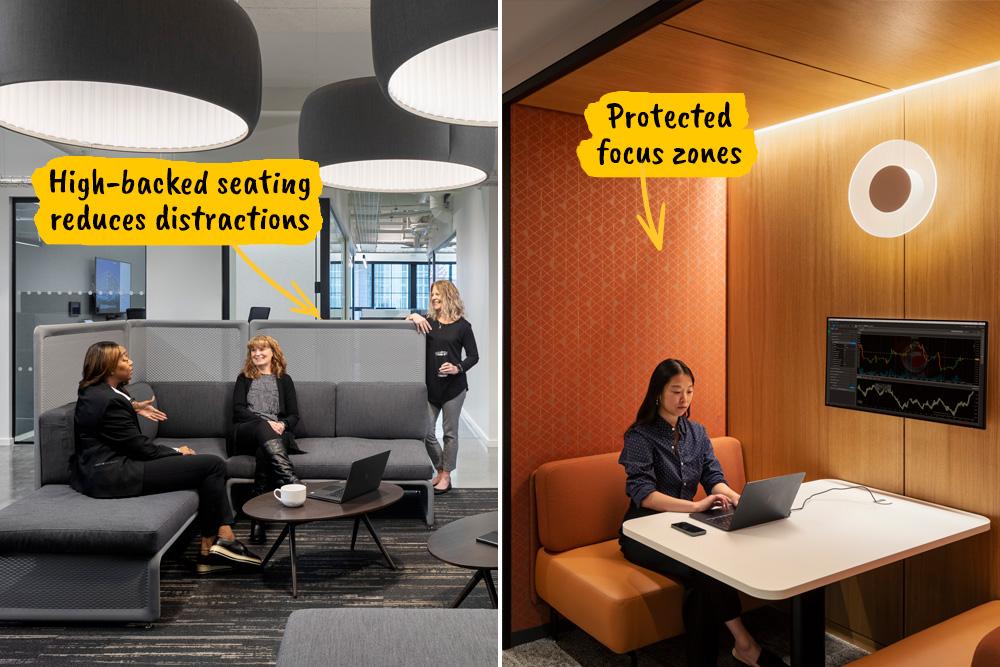
Focus & attention
Collaboration gets a lot of attention, but protected focus time matters just as much — and furnishings can safeguard it. At NFP’s corporate relocation, two-person booths enclosed on three sides reduce distractions and support concentrated work. Edison Properties approached the challenge differently when relocating to Ironside Newark: sofa backs rise just above seated head height, defining and shielding a breakout area from visual distractions as people move through the space.
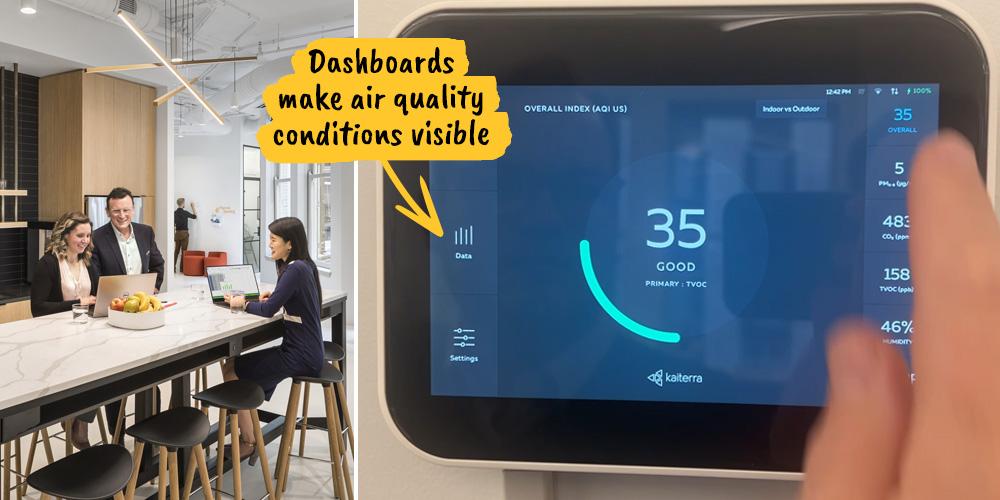
Everyday wellness
Self-control draws on energy, and that energy must be replenished. Breaks, movement, daylight, hydration, and ergonomics aren’t perks—they’re prerequisites for sustained performance. In Perkins Eastman’s Chicago office, wellness is built into the environment: air quality dashboards make conditions visible, subtle cues encourage posture changes and hydration, and healthy food options support better defaults.
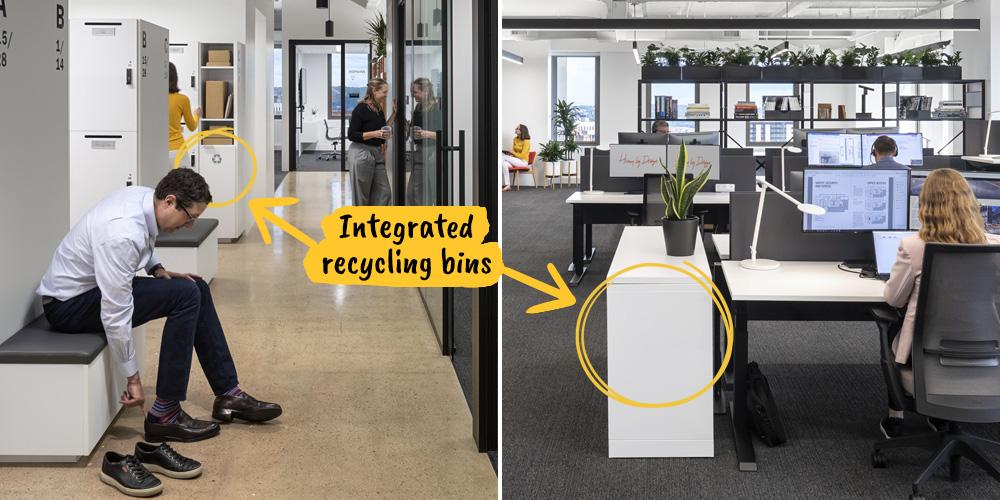
Sustainable choices
Even when employees want to do the right thing, convenience often wins. A plastic bottle goes in the trash if no recycling bin is nearby. Perkins Eastman’s Pittsburgh office is designed for effortless sustainability: recycling and landfill bins sit side by side; paper recycling is next to trash in workspaces; the kitchen has separate bins for trash, glass/metal/plastic, paper/cardboard, and compost near the coffee machine. By removing small points of friction, employees make sustainable choices without thinking—saving energy for the work that matters most.
Designing for Human Limits
Situational agency can help in everyday life—placing a book on the nightstand to actually read it, tethering a phone to reduce screen time, or keeping a water bottle handy to stay hydrated. In the workplace, the same idea scales: thoughtful design supports positive behaviors. Every choice—from partitions to furniture to lighting— can either drain willpower or make work easier. The best workplaces make the environment an ally, helping people do their best work without relying solely on effortful self-control.