diving freediving passion knowledge
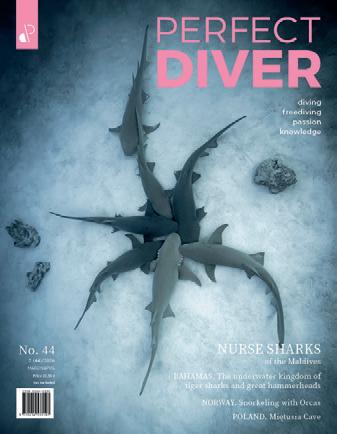
NURSE SHARKS
BAHAMAS. The underwater kingdom of tiger sharks and great hammerheads of the Maldives NORWAY. Snorkeling with Orcas POLAND. Miętusia Cave



diving freediving passion knowledge
BAHAMAS. The underwater kingdom of tiger sharks and great hammerheads of the Maldives NORWAY. Snorkeling with Orcas POLAND. Miętusia Cave
Editor-in-Chief
It was a pleasure to read and look through the materials in this issue.
Inside, you’ll find topics that spark emotions and invite discussion. We present different aspects of diving and different approaches to interacting with nature –not to divide, but to broaden perspectives and leave space for each of us to make conscious choices. Perfect Diver has its own set of values, but on our pages we show both sides.
After all, there are divers who believe we should never interfere with the natural environment, and those who are eager to dive in shark cages or take part in baited dives. The first article by Sylwia focuses on nurse sharks in the Maldives. And congratulations to Adrian on the cover! The second piece is a joint work by Łukasz, Małgosia, and Przemek.
We aim to spark a discussion that can truly benefit nature. Is it worth visiting dolphinariums and supporting that industry? How does captivity look for dolphins and orcas? You’ll find more on this in the article by Jakub and Edwin.
And for a real-life encounter with orcas in their natural environment, far in the north, Magda takes us there in a powerful and honest piece. Before you start reading about snorkeling with orcas, grab a cup of hot chocolate. This is a story without embellishment – about mental strength and the limits of endurance.
To balance things out, we also take you to warmer waters – to Anilao in the Philippines. There, through Adam’s eye and words, we look at the smallest and most unusual creatures of the underwater world. Tomek, in turn, shows that before heading to a dream dive spot, it’s worth truly getting to know it. His article on the Blue Hole in Belize gives plenty to think about.
And Europe? Bogdan checks whether Santorini is just a postcard view – or also a worthwhile diving destination.
That’s not all, of course – we also have several fascinating freshwater stories.
Piotr writes about what it took to dive in the Miętusia Cave in the Tatra Mountains, Łukasz finally explores Molnar, and Basia almost accidentally finds herself in a quarry in England.
From the Underwater Photography series: “There are no clear rules on how well you need to dive before you start taking underwater photos.” That’s how Piotr’s article begins. And the result of great images is a story by Marcin, inspired by Darek, about a certain “Venus de Milo.”
To finish, another gem – a practical article by Wojtek, in his signature style, about exhalation. When changing your mask underwater, is it better to take a breath – or maybe not? You’ll find practical and very useful insights, as always, at the end of the issue.
To see what’s new on the market, check out the ads and gear spreads.
With every issue, I rediscover diving all over again – and you?
Because it’s not about the fact that we exist… it’s about the fact that it’s worth stopping by. Tell your friends about us :)
Did you like this issue? Give us a viral coffee buycoffee.to/perfectdiver Visit our website www.perfectdiver.com, check out Facebook www.facebook.com/PerfectDiverMagazine and Instagram www.instagram.com/perfectdiver/


Nurse Sharks of the MALDIVES
14 Winter BAHAMAS. The underwater kingdom of tiger sharks and great hammerheads
Extremely Icy Snorkeling with Orcas Strength of spirit and hypothermia… NORWAY
It all began in Anilao... PHILIPPINES
BELIZE. The Great Blue Hole
SANTORINI. The volcanic pearl of the Aegean Sea above and below the water
Capernwray Quarry. A diver’s underwater playground in ENGLAND
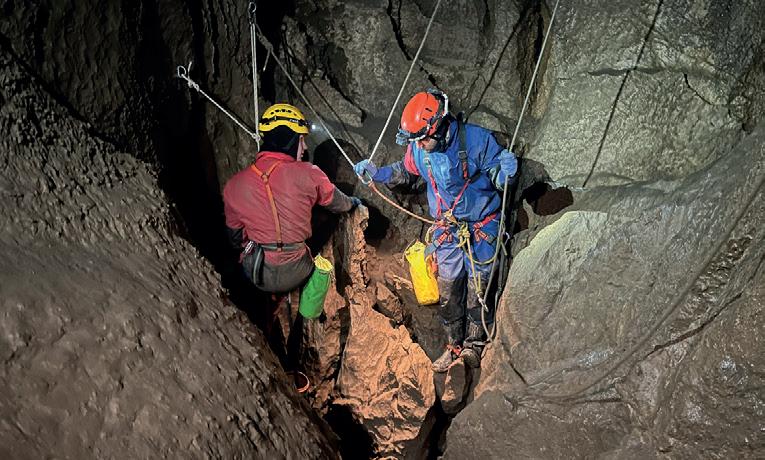
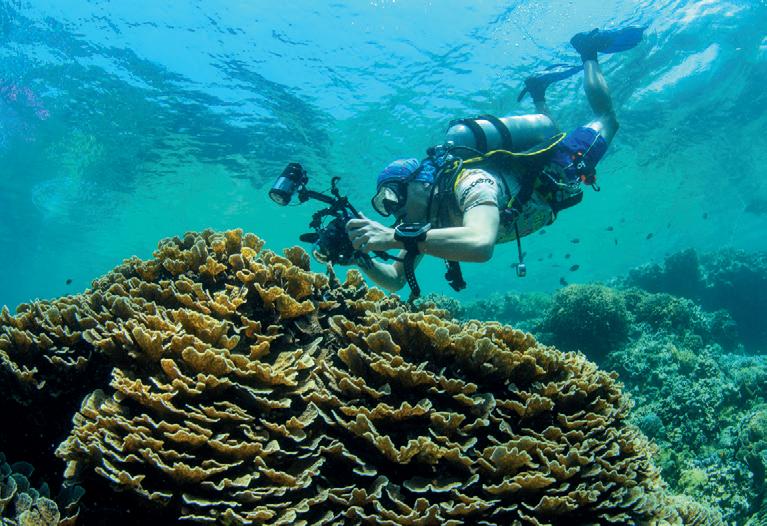
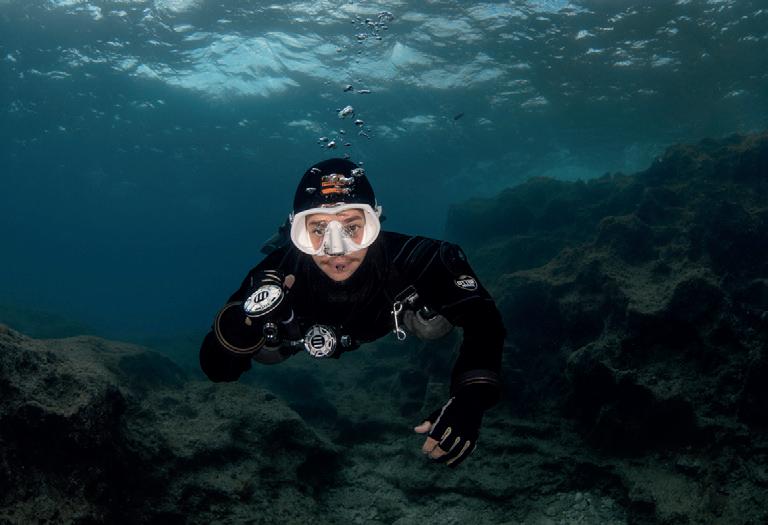
Publisher PERFECT DIVER Sp. z o.o. ul. Folwarczna 37, 62-081 Przeźmierowo redakcja@perfectdiver.com ISSN 2545-3319
Editor-in-Chief
Technical Diver
World Geography & Travels
Reportage
Image Consulting English Language Translators
Legal Care
Graphic Designer
Advertisement Wojciech ZGOŁA
Tomek KULCZYŃSKI Anna METRYCKA
Dominika ABRAHAMCZYK
Waldemar RYDZAK Agnieszka GUMIELA-PAJĄKOWSKA, Arleta KAŹMIERCZAK, Piotr WITEK, Tomek KULCZYŃSKI
Lawyer Joanna WAJSNIS Brygida JACKOWIAK reklama@perfectdiver.com
THE MAGAZINE IS FOLDED WITH TYPEFACES
Montserrat (Julieta Ulanovsky), Acumin Pro (Robert Slimbach, Adobe), Source Serif 4 (Frank Grießhammer, Adobe)
PRINTING
Wieland Drukarnia Cyfrowa, Poznań, www.wieland.com.pl
www.perfectdiver.pl
online store sklep.perfectdiver.pl redakcja@perfectdiver.com
Wojciech ZGOŁA
A man who travels by diving. Connected with water since childhood – from learning to swim, through sailing, to discovering the secrets of underwater lakes, seas, and oceans. Later came a passion for photography and writing, which allow him to share the beauty of the underwater world and the unique stories of each place. He has completed over 900 dives in Poland as well as in remote, exotic warm and cold locations. Each dive is treated as an encounter with nature and history. A lover of Nature in its purest form, he believes that diving is not only a sport, but also a way of building awareness – of the environment, other people, and oneself.
Dominika ABRAHAMCZYK
Infected with a passion for diving by Perfect Diver. She continues to expand her diving skills. Although she definitely prefers warm waters, she dons a dry suit and explores colder bodies of water as well. Her favorite dives are those with plenty of marine life! Recently, she’s been taking her phone underwater in a protective case, trying her hand at amateur photography. She’s also curious about diving medicine. Professionally, she’s a Master’s degree nurse and a surgical scrub nurse.
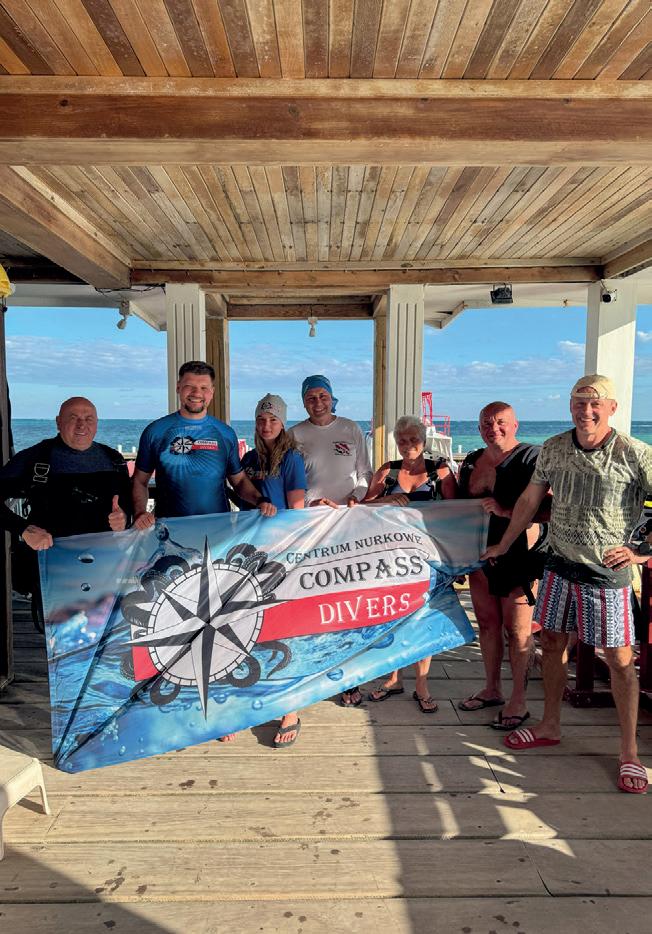
For Tomek, diving has always been his greatest passion. He started his adventure at the age of 14, developing into a recreational and technical diving instructor, a first aid instructor and a diving industry technician. Currently, he runs the 5* COMPASS DIVERS Pobiedziska Diving Center near Poznań, where he passes his knowledge and skills to beginners and advanced divers, which gives him great joy and satisfaction from being part of their underwater adventure...
Waldemar RYDZAK
“Human! Dive underwater. If the beauty you see down there doesn’t shake you to your core – nothing interesting awaits you in life.”
A diving enthusiast, connected with the water since childhood. She completed her first scuba course at the age of 14 and has never parted with diving since. She wrote her master’s thesis on dive tourism during her geography studies at the University of Warsaw. Starting in 2013, she contributed to the magazine nuras.info and took part in underwater photo shoots. Since 2018, she has been writing articles for Perfect Diver magazine (previously as Ania Sołoducha) and has been part of the editorial team for several years. She pours her knowledge and experience onto the page, sharing and promoting what she loves most – diving. For 13 years, she organized diving expeditions around the world, because working with people and creating new projects is where she truly thrives. She takes part in diving fairs and events, as well as lake clean-ups. She has often had the pleasure of speaking as a presenter at diving expos and conferences and has a number of diving webinars to her name. She has already dived in many places around the globe – and her dream list keeps growing.
For the past few months, she has been the owner of her own company organizing diving and active travel – Umiko Expeditions – with a head full of ideas for the next adventures.
An optimist with a constant smile and an individual approach to every client. Her best life chapter is just beginning! www.umikoexpeditions.pl anna@umiko.pro
+48 516 621 211
He comes from a mining region, where water was more of an exception than an everyday presence. He learned to swim and dive to overcome his fear of water – and, over time, to turn it into curiosity about the world beneath the surface. He has been connected with diving since 2000 (Divemaster, CMAS). He doesn’t chase depth or records; he prefers calm exploration, mindfulness, and the details that are easy to miss when you’re in a hurry. In his day-to-day work, he is a researcher and communication practitioner (Dr hab., Prof. UEP), involved in research and teaching in the areas of creative markets and digital and crisis communication. Within the Perfect Diver editorial team, he supports the crew where content meets technology – on video productions, data analysis, and building the brand strategy.
He has been diving for 35 years. He has spent more than 16,000 hours underwater, most of them diving technically. He has been an instructor and mentor instructor for many organizations including CMAS, GUE, IANTD, PADI. He co-created the training programs for some of them. He is a professional with vast knowledge and practical experience. He has participated in many diving projects as a leader, explorer, initiator or speaker. He was the first Pole to dive the HMHS Britannic wreck (117m). He was the first to explore the deep part of the Glavas Cave (118m). He made a series of dives documenting the wreck of ORP GROM (110m). He has documented deep (100-120m) parts of flooded mines. He is the creator and designer of many equipment solutions to improve diving safety.
Technical Director at Tecline, where, among other things, he manages the Tecline Academy a research and training facility. Author of several hundred articles on diving and books on diagnosis and repair of diving equipment. He dives in rivers, lakes, caves, seas and oceans all over the world.
Laura KAZIMIERSKA
Laura is a journalist, instructor trainer, CCR and cave diver. She has been developing her diving career for over a decade, gaining knowledge and experience in various fields. Her specialty is professional diving training, but her passion for the underwater environment and its protection drives her to explore various places around the world. From the depths of the Lombok Strait, caves in Mexico and wrecks in Malta to the Maldives, where she runs a diving center awarded by the Ministry of Tourism as the best diving center in the Maldives. Laura actively contributes to promoting the protection of the marine environment, takes part in scientific projects, campaigns against ocean littering and cooperates with non-governmental organizations. You can find her at: @laura_kazi_diving www.divemastergilis.com
Zoopsychologist, researcher and expert in dolphin behavior, committed to the idea of protecting dolphins and fighting against keeping them in dolphinariums. Passionate about Red Sea and underwater encounters with large pelagic predators. Member of the Dolphinaria-Free Europe Coalition, volunteer of the Tethys Research Institute and Cetacean Research & Rescue Unit, collaborator of Marine Connection. For over 15 years, he has been participating in research on wild dolphin populations, auditing dolphinariums, and monitoring the quality of whale watching cruises. As the head of the "Free & Safe" project (formerly "NO! for a dolphinarium"), he prevents keeping dolphins in captivity, promotes ethical whale & dolphin watching, trains divers in responsible swimming with wild dolphins, and popularizes knowledge about dolphin therapy that is passed over in silence or hidden by profit-making centers. on this form of animal therapy.
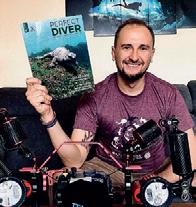
A long, long time ago in a galaxy far, far away there was chaos... …that is, the multitude of thoughts and delights after my first immersion under water in 2005 in the form of INTRO while on vacation in Egypt. By then I had completely immersed myself in the underwater world and wanted it to have an increasing impact on my life. 2 years later, I took an OWD course, which I received as a gift for my 18th birthday, and over time, further courses and skills improvement appeared. "Photography" appeared not much later, but initially in the form of a disposable underwater "Kodak" from which the photos came out stunningly blue I am not a fan of one type of diving, although my greatest weakness at the moment is for large pelagic animals. The Galapagos Islands were my best opportunity to photograph so many species of marine fauna so far. I share my passion for diving and photography with my buddy, who is my wife IG: luke.divewalker www.lukedivewalker.com
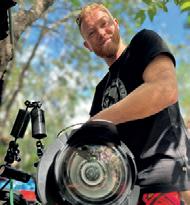
I photograph because I love it, I film because it excites me, I write because I enjoy sharing, I teach because I support growth, I travel because I love discovering new things. www.facebook.com/przemyslaw.zyber www.instagram.com/przemyslaw_zyber/ www.deep-art.pl
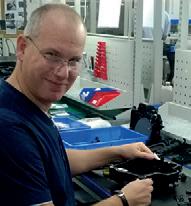
A graduate of the University of Warsaw. An underwater photographer and filmmaker, has been diving since 1995. A co-operator at the Department of Underwater Archeology at the University of Warsaw. He publishes in diving magazines in Poland and abroad. The owner of the FotoPodwodna company which is the Polish representative of Ikelite, Nauticam, Inon, ScubaLamp companies. www.fotopodwodna.pl m.trzcinski@fotopodwodna.pl
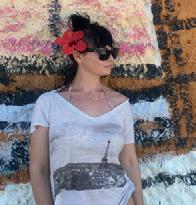
Sylwia KOSMALSKA-JURIEWICZ
A traveller and a photographer of wild nature. A graduate of journalism and a lover of good literature. She lives in harmony with nature, promotes a healthy lifestyle: she is a yogini and a vegetarian. Also engaged in ecological projects. Sharks and their protection are especially close to her heart. She writes about the subject in numerous articles and on her blog www.blog.dive-away.pl She began her adventure with diving fifteen years ago by total coincidence. Today she is a diving instructor, she visited over 60 countries and dived on 5 continents. She invites us for a joint journey with the travel agency www.dive-away. pl, of which she is a co-founder.
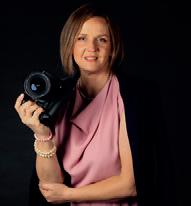
I am a traveler and a technical diver, exploring the world both on land and underwater. I have been diving for 16 years. Since I am a professional photographer, a camera has accompanied me from my very first dive. I started with recreational diving, but over time, I obtained full trimix and full cave certifications, allowing me to explore caves, wrecks, and great depths. Underwater, I find a peace that is hard to experience on the surface. Every dive is not just an adventure for me but also an opportunity to capture the extraordinary underwater world through photography. barbaraglenc.foto@gmail.com
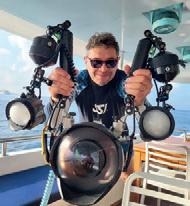
Photographer, biologist, storyteller, SSI Instructor Trainer. He considers it his duty to teach diving at every level. Since the dawn of time, he has been associated with Nautica with an inseparable umbilical cord of co-ownership. He nests on the Croatian island of Vis, on safari boats in Egypt and where under water it is beautiful as the world long and wide. He works at Nautica Safari. nautica.pl, piotr.stos@nautica.pl
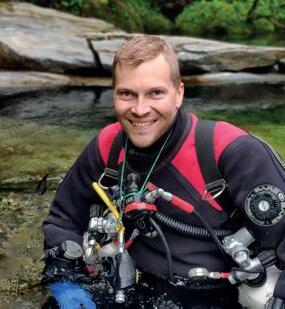
Cave diver and caver, he has dived in 30 countries, including 15 overhead environments. Since 2012, he has been fascinated by cave diving, which eventually led him to become a cave mountaineer. He values adventure and unusual dive sites the most. He has taken part in exploration expeditions in countries such as Serbia, Kosovo, Mexico, and Spain. His favorite dives are those in sumps within dry caves.
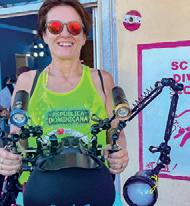
She has been diving since 1998 and feels like she has already been everywhere – yet she continues to discover new underwater locations that fill her with awe. She has never been without a camera since her early youth; the first one she took underwater, back in the last century, was an analog camera. She once dreamed of becoming an ichthyologist or Tony Halik, but out of love for Themis, she became a lawyer instead. She is a graduate of a two-year program at the Academy of Photography in Warsaw and holds a degree in philosophy. She is fascinated by large animals, vibrant schools of fish, and any place where she can uncover the secrets of the ocean. Through her texts and photographs published in diving and lifestyle magazines, she seeks to inspire readers with empathy for animals and admiration for nature – whose beauty deserves care and protection. And, as she sees it, naturally in this context, she has not eaten animals for at least three decades, out of respect for the natural world.

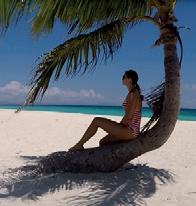
An artistic soul, despite being a graduate of the Poznań University of Economics – Marketing and Management – as well as Manchester Metropolitan University in International Business Management. Connected to music since childhood, she has performed and danced on stage and in music videos. She has worked as a manager for well-known singers and bands and choreographed dance routines for performances and videos. Today, she focuses on marketing in the music industry and conducts trainings on internet marketing, artificial intelligence, and virtual reality.
“I love diving – especially with sharks – as well as windsurfing, painting (my works have been exhibited in Poland and Spain), creating art installations, photography, baking cakes and cookies, exploring new places, learning, reading scientific books, playing computer and VR games, watching sci-fi and fantasy movies, decorating interiors, dancing, singing, and observing and experiencing the world and people.”
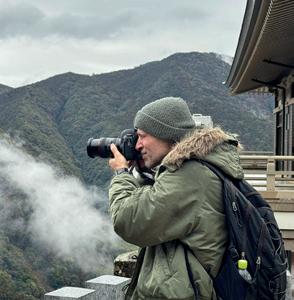
Activist, founder of the Polish chapter of the Captain Paul Watson Foundation. Committed to ocean and animal protection, he is active both in the public sphere and through media. A vegan. Photographer and visual storyteller, author of personal reportages documenting places where conflicts between humans and nature occur – among them Taiji in Japan. He combines documentary work with emotional narrative, confronting the audience with a reality many prefer to ignore.
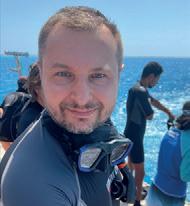
He was supposedly born with a camera in hand… Some say he uses lenses instead of glasses and develops photos before they’re even taken! Thanks to his unique powers, he combines travel, photography, and diving into one passion. A man of contradictions: he loves the mountains but feels drawn to the sea, lives for adventure yet works in boring IT, adores warmth but resides in a country where it’s dark and cold for half the year. His spirit animal is the manatee: he freezes below 23 degrees Celsius, and although he looks hefty, he has only a thin layer of fat. A technology enthusiast, especially when it comes to anything related to capturing images. In his free time, he browses and compares flight deals to diving destinations, which keeps his bank account permanently in the red.

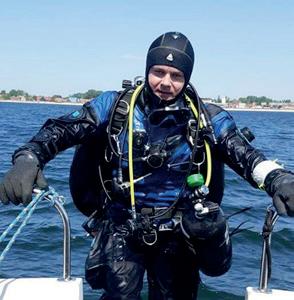
Bogdan ZAJĄC
I live in Świnoujście, I have been diving since 2009. The current dive rank is advanced nitrox in IDF and AOWD in SSI. Photography course with Irena Strangierska. Number of dives 450.
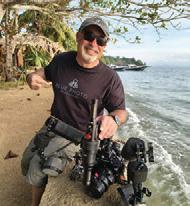
Diver, diving instructor, underwater photographer.
I have been diving for 28 years and working in underwater photography for 18. I have completed thousands of dives in Poland, across Europe, Africa, and Asia. Diving, training new divers, and creating underwater images are not only my profession, but above all my passion. I am particularly fascinated by macro photography, which is why underwater I most enjoy photographing small, very small, and even microscopic creatures. I always gladly return to the Philippines, Indonesia, and Malaysia, where underwater life amazes with its richness. My photographs have been published, among others, in National Geographic.
Text SYLWIA KOSMALSKA-JURIEWICZ Photos ADRIAN JURIEWICZ
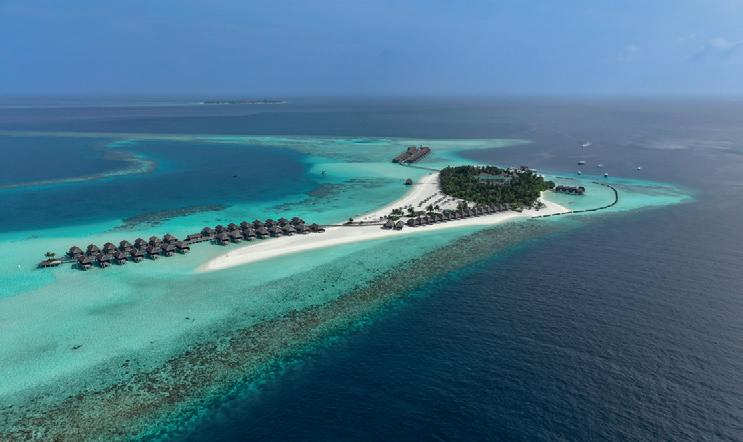
Travel adds more life to our days. It pulls us out of routine, awakens curiosity, and gives us a sense of purpose. New places, experiences, the taste of morning coffee, landscapes, and scents force us to stay present, adapt, and act.
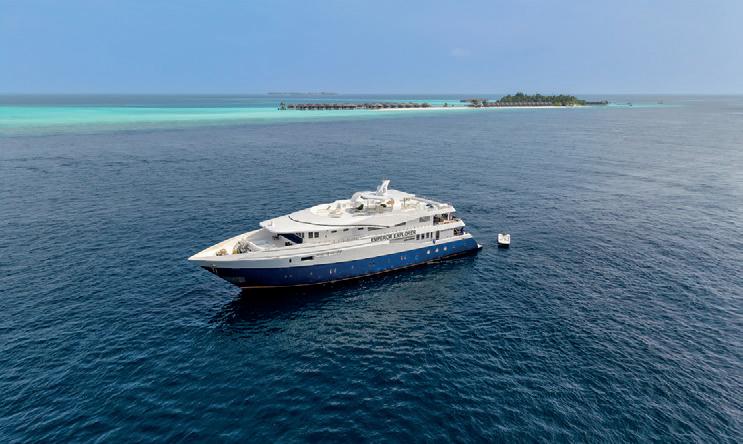
That is when new neural connections are formed in our brains; we feel more, we see more. Perhaps that is why memories from our journeys remain so vivid and stay with us for so long.
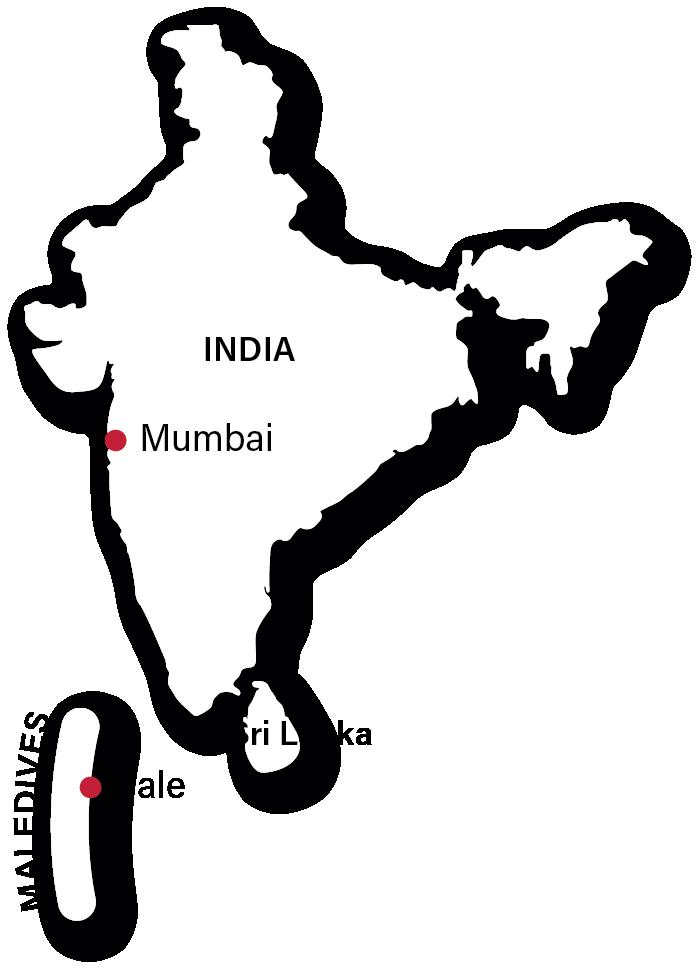
A wonderful surprise was waiting for us right after landing at Velana Airport in Malé. A year ago, after nine long years of work, the new passenger terminal officially opened. It marked the beginning of a new era in passenger service in the Maldives, bringing to an end the years of long lines in which travelers stood packed together in the heat outside the terminal entrance.
„
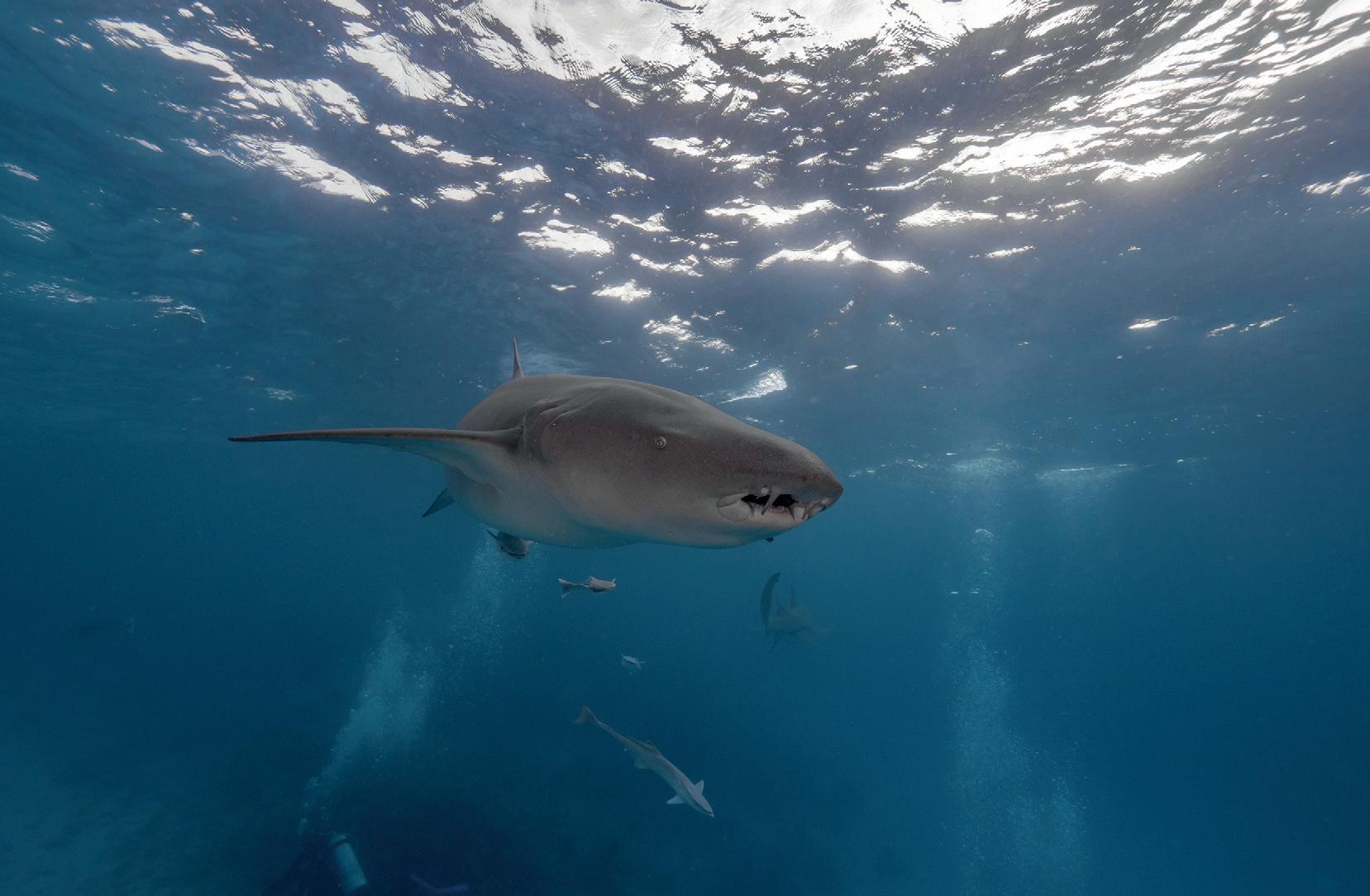
They cruise in shallow water around the reef, which – despite the anemones, moray eels, and rays living here – remains overshadowed by these beautiful, gentle predators.
Nature does not hurry, yet everything is
The new terminal is a sign of progress, development, and the changes that are inevitable in the modern world. And yet, all it takes is leaving the airport, stepping onto a boat, and heading out into open water for that modern world to give way to something far more beautiful – and far older.
A dozen or so minutes later, we were already on our way toward the open ocean, which hides true mysteries and natural wonders beneath its surface.
We descend unhurriedly into the crystal-clear waters of the Indian Ocean, at a site known as Dhiggiri Thila. It is one of several locations in the Maldives where we can dive with reef sharks, mainly nurse sharks, in their natural environment.
accomplished.
”
Lao Tzu
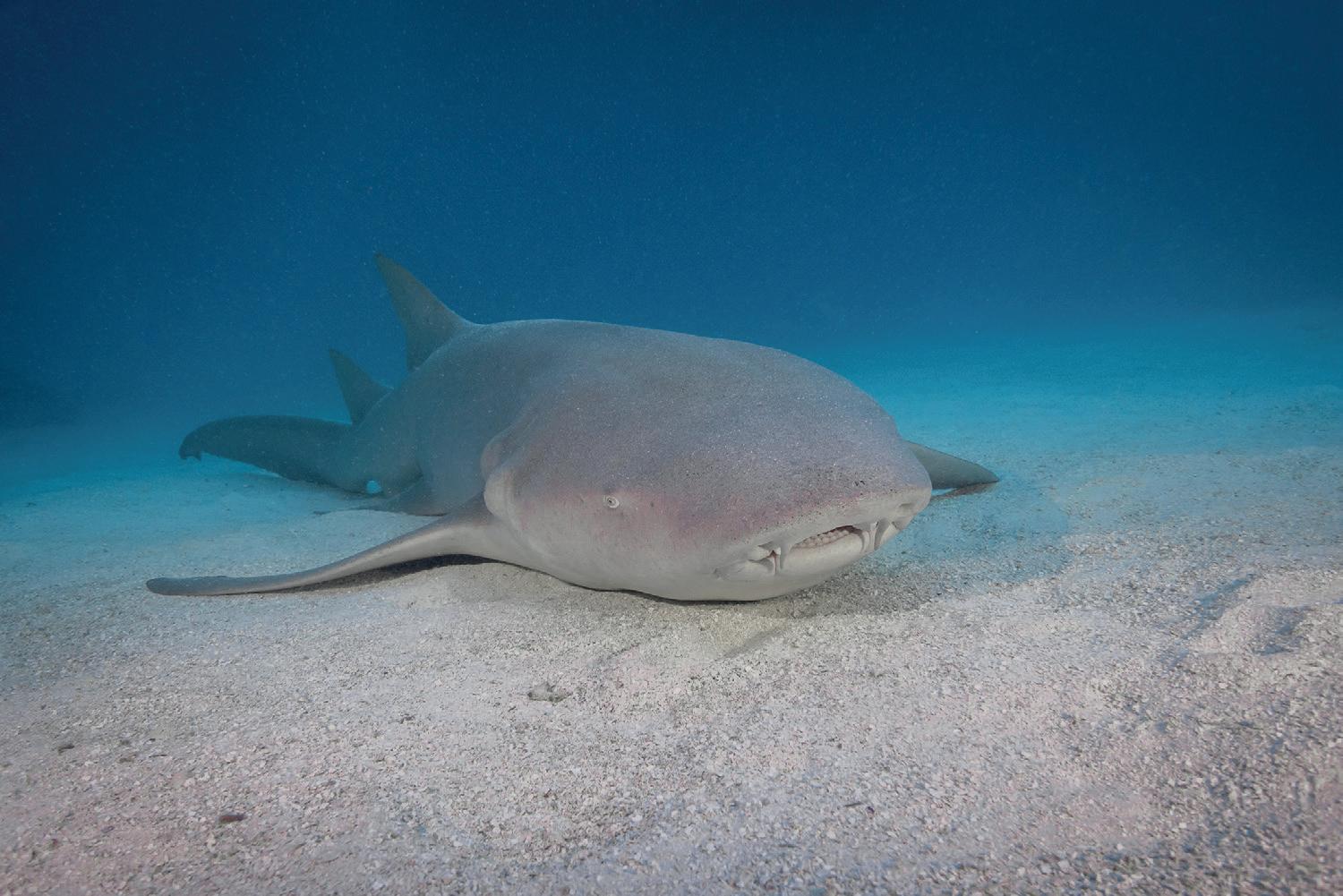
We descend slowly, carefully controlling our buoyancy. We stop at seven meters, just above the sandy bottom, and wait for the sharks to arrive. The sun is slowly moving toward the horizon, but it is still high enough for the boat’s shadow to be visible on the bottom. The sharks appear out of nowhere. They emerge from beneath the boat and begin circling above us in a large group. There are so many of them that it is hard to count.
Two large individuals catch my eye. They are swimming close together, their bodies forming two opposing arcs, like the ancient Chinese symbol of yin and yang. They turn in a peculiar dance, descending lower and lower until they touch the bottom. For a brief moment, they remain facing one another, motionless in the vastness of the ocean. A moment later, they swim off in the same direction, leaving behind only silence and awe.
Although nurse sharks have few natural predators, such as tiger sharks, they gather and rest on the sand in large groups for safety. Research shows that what brings them together is not emotional bonding, but a shared place to feed and rest. They do not form lifelong pair bonds. Males usually
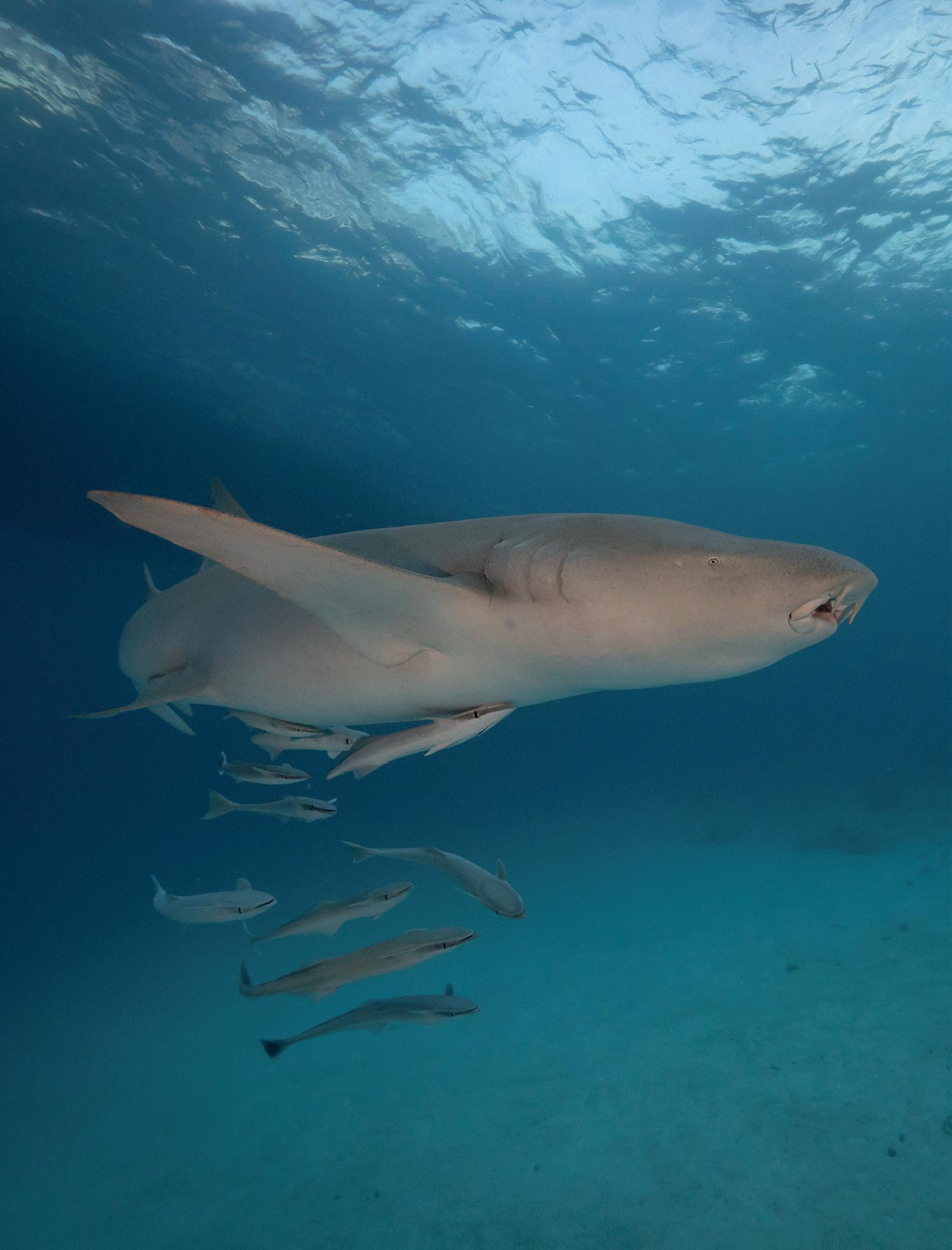
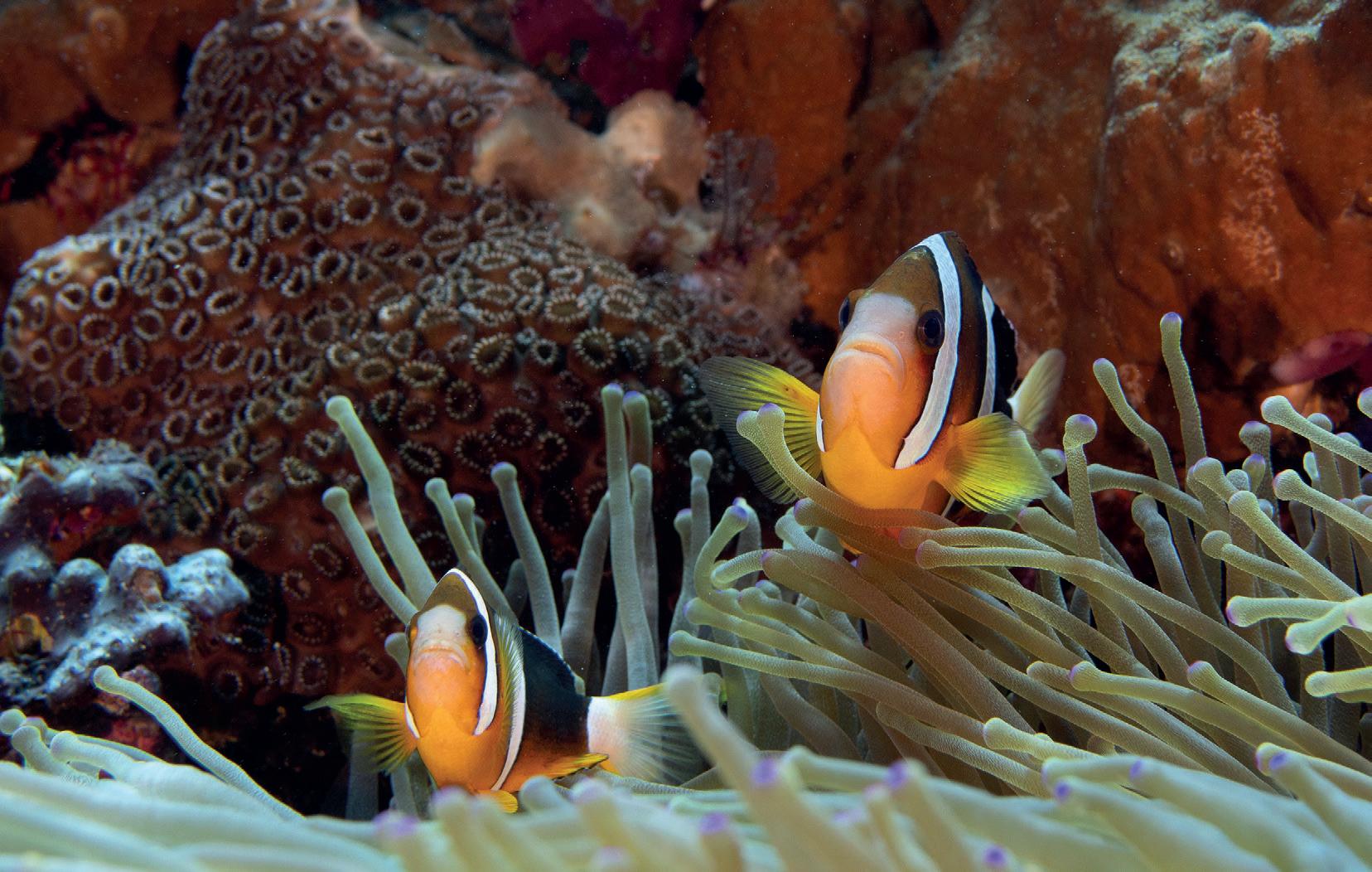
mate with multiple females and then return to their solitary way of life.
The sharks come very close. Although they belong to the medium-sized predators, adult individuals can reach up to three meters in length, with a body mass of around 110 kg. They are strongly built, and their bodies consist mostly of powerful muscle supported by a cartilaginous skeleton. They swim slowly, conserving energy. They are never in a hurry and make no sudden movements.
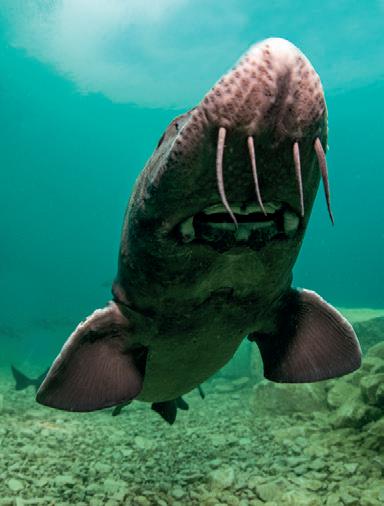
Their powerful bodies are covered with placoid scales, rough to the touch, with a texture resembling coarse fabric that resists the fingers. Looking at nurse sharks – some of the ocean’s most understated, yet charming creatures – I notice their heavy, powerful silhouette and their relatively small mouth. Inside are about three hundred small teeth arranged in several rows. These are not used to tear prey apart, as in other sharks, but to grasp and crush hard-bodied prey such as crustaceans, crabs, and sea urchins, which make up the foundation of their diet.
On both sides of the mouth are two appendages resembling whiskers. They are not decorative – they are an important sensory tool that helps the sharks locate food. Nurse sharks hunt after dark, close to the bottom, where vision may fail them. That is when their other senses take over – the “whiskers,” which allow them to detect potential prey: small fish, mollusks, or octopuses hidden within the reef.
We move very slowly, watching sharks arrive from every direction. They come so close that we can look into their eyes,
which are surprisingly small in proportion to the rest of the body. Several individuals settle onto the bottom, resting on the sand. They use the daytime to recover, and hunt after sunset.
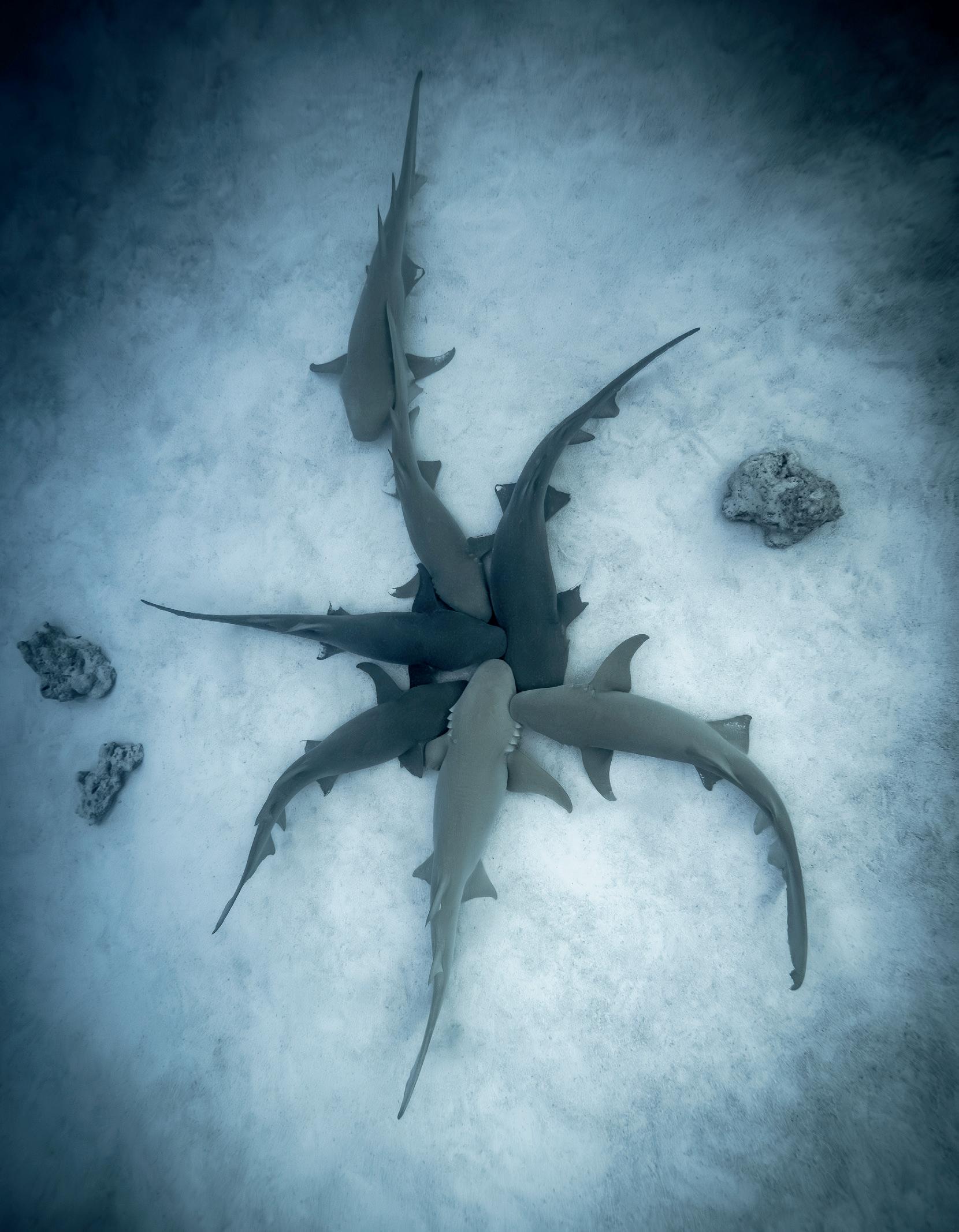
Their bodies form a remarkable pattern, one that resembles a mandala. Their heads are turned toward one another, while their tails radiate outward like the pointed arms of a star. We stop right beside them to take in this calm image of trust and coexistence. In the human imagination, sharks usually evoke anxiety and fear, yet here we are able to see another side of them – gentle, peaceful, and composed.
A mandala is a symbol of unity, infinity, and the balance between the inner and outer worlds. In its circular form, it represents wholeness, a path, a journey, the cycle of life, balance, and the search for harmony. Very often we do not realize it, but the mandala is present in our everyday lives, in art, in psychology, and in nature itself – which is its most perfect expression.
We notice that repetition and variety when we look at a honeycomb, flowers, corals, or the patterns that cover eagle rays and whale sharks. These small elements remind us that everything is part of a greater whole, full of meaning and perfectly ordered. These truths become easier to understand the moment we descend into the ocean.
Our time beneath the surface is slowly coming to an end. We ascend unhurriedly, leaving the sharks in their natural world, a world filled with silence, calm, and harmony.
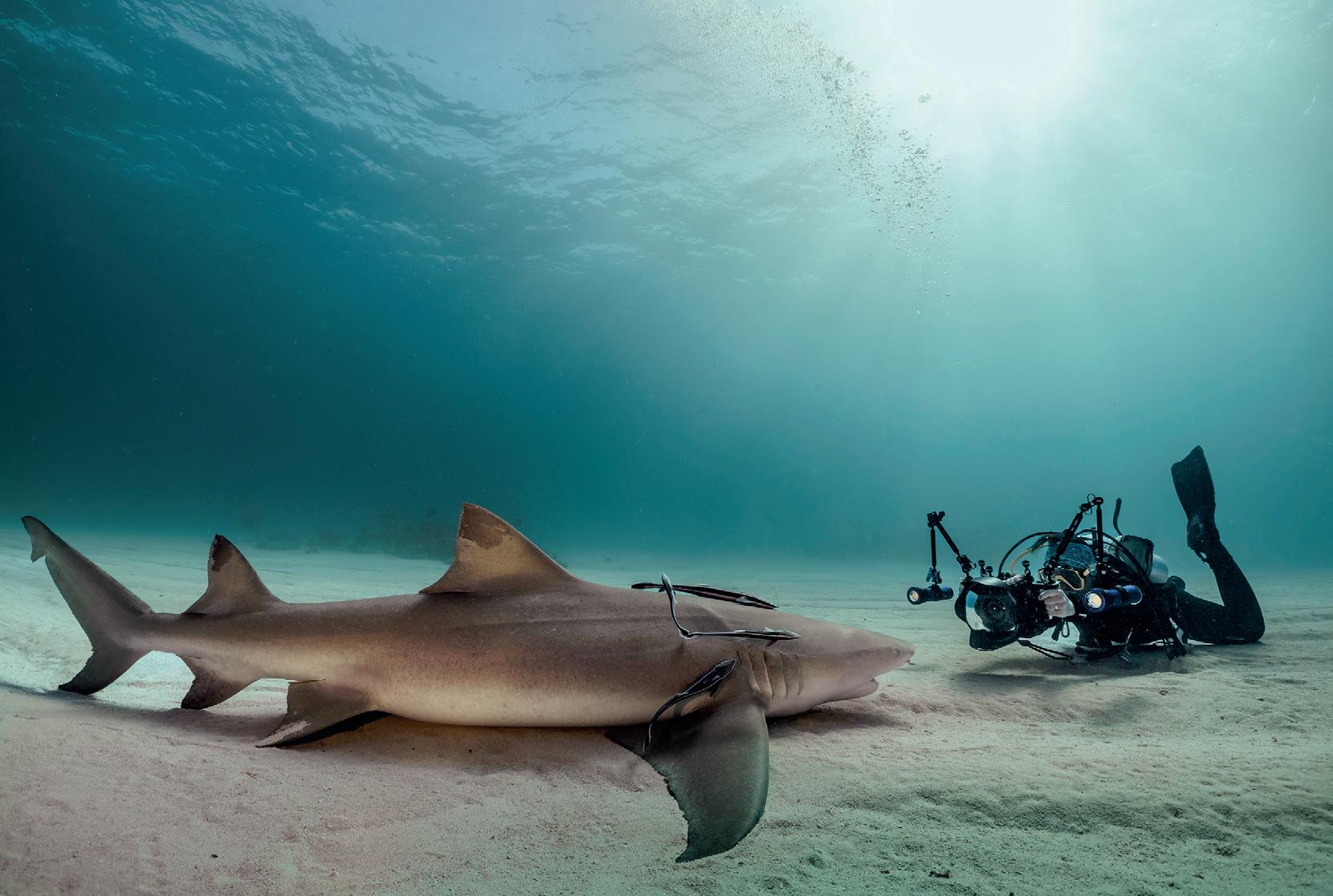
Text ŁUKASZ GINALSKI, MAŁGORZATA SOBOŃSKA-SZYLIŃSKA
Photos PRZEMYSŁAW ZYBER, ŁUKASZ GINALSKI, MAŁGORZATA SOBOŃSKA-SZYLIŃSKA
Planning and pulling off a proper dive safari in the Bahamas is not easy. This is not the kind of trip where you just “click, pay, and go.”
The simplest proof is the fact that for part of our team this was the second attempt.
The first time, something fell apart: logistics, conditions, schedules, boat availability. In the Bahamas, everything works a bit like an underwater current: it seems stable, but one small change is enough for the whole plan to drift toward chaos.
The difficulties come in several forms. First, there are very few operators who truly specialize in dive trips focused on shark encounters. Second, the season when you can see both tiger sharks and great hammerheads falls between December and April – and that is exactly when the weather can switch in an instant from “picture-perfect” to “we’re not leaving the dock.” And third, this is an expensive expedition, because the small boats operating in this region cannot take large groups, so the cost of the trip is divided among only a small number of participants. In practice, long before you ever get there – and with a great deal of advance planning – you are left with what for
many people sounds like an extreme sport in itself: organizing everything on your own.
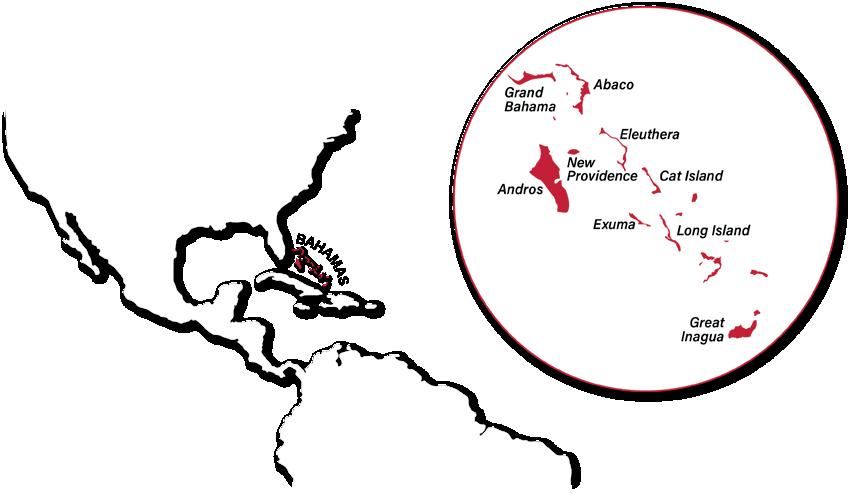
That is why our journey actually began… a year earlier. In January 2025, we booked a catamaran with one of the very few operators who do this well and consistently. The Bahamas? People go there primarily for one reason: to meet sharks – not “somewhere, sometime, maybe,” but for real. And we were lucky – we got the last available slot for 2026. We put the group together in no time; it took only a few days for all the spots to go like hot cakes.
In the Bahamas, sharks are protected by some of the strictest regulations in the world. The shark sanctuary established specifically for them covers the country’s entire territorial waters. In the Bahamas, sharks are considered part of the national heritage, which is why the archipelago has become
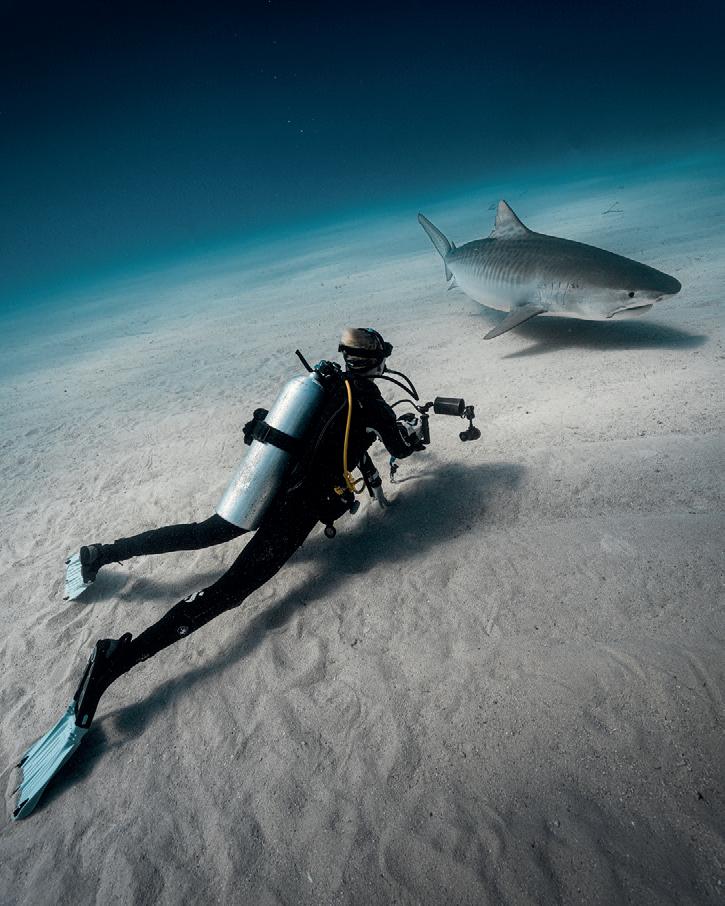
a safe refuge for them. More than 40 species of these predators occur in these waters. It is no surprise that scientists, filmmakers, and photographers come here from all over the world. This is one of the few places where you can – without rushing and with a high probability of success – encounter sharks in their natural environment.
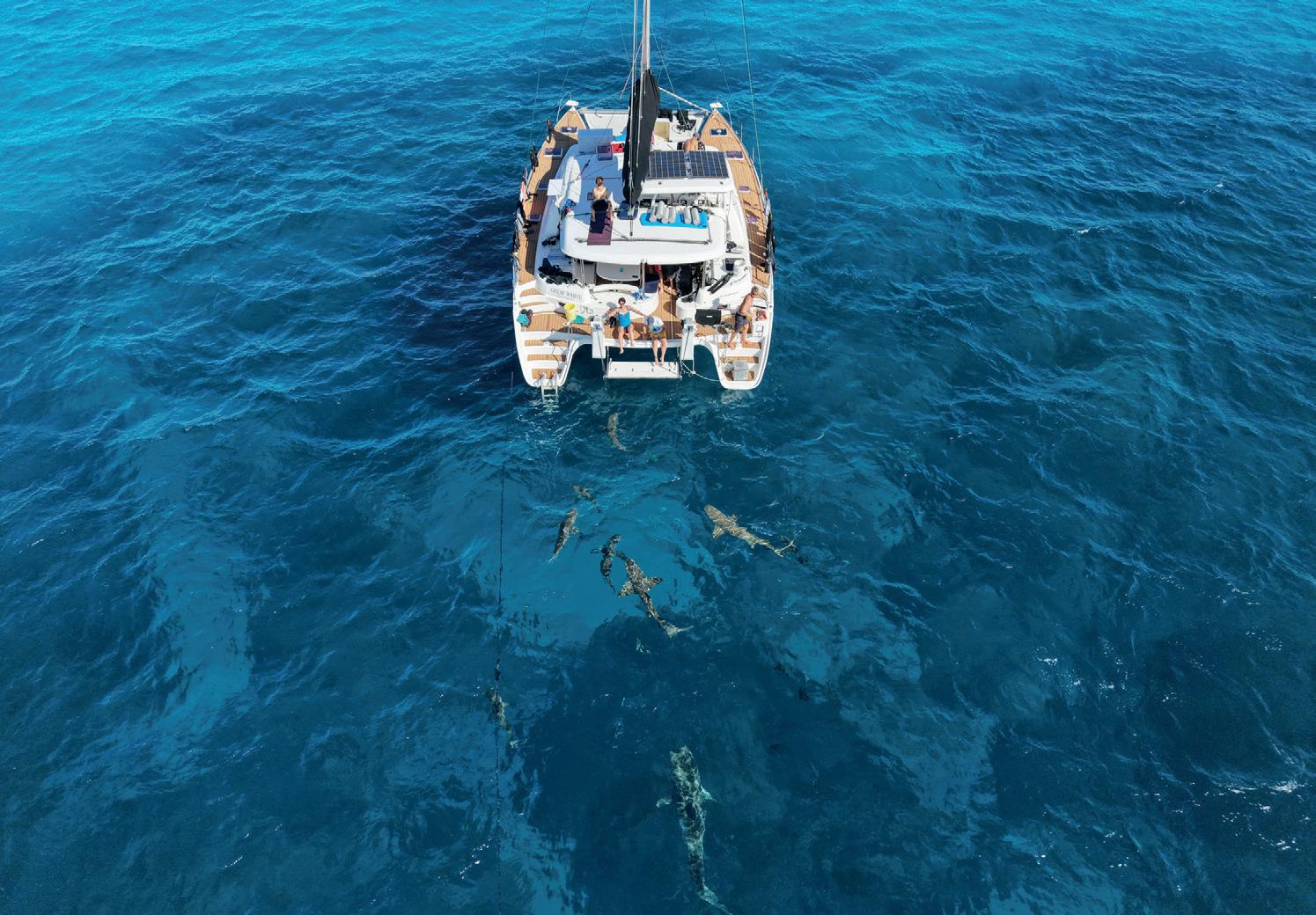
Our targets were the two icons of the winter Bahamas: the tiger shark and the great hammerhead. The best conditions for tiger shark encounters come in winter, when two currents –the Caribbean and the Antilles – meet off the eastern side of Grand Bahama and the water comes alive with more intensity. There is more plankton in the current, so large pelagic fish and rays start to appear. And that is already the kind of stage on which they can show up – one of the main reasons for our trip. It is in this context that the name Tiger Beach came about. There is no “beach” there in the postcard sense of the word –instead, there is a theater of geology: on one side, the Atlantic cliff marking the boundary of the archipelago; on the other, the shallow edge of the Bahama Bank. A place where you can clearly see that the ocean plays by rules known only to itself.
Before the first descent, we get such a detailed briefing that it could pass for a spaceflight manual. Meanwhile, our divemaster prepares the bait crate, lowers it into the water on a line, and starts chumming – creating a scent trail. In practice, this
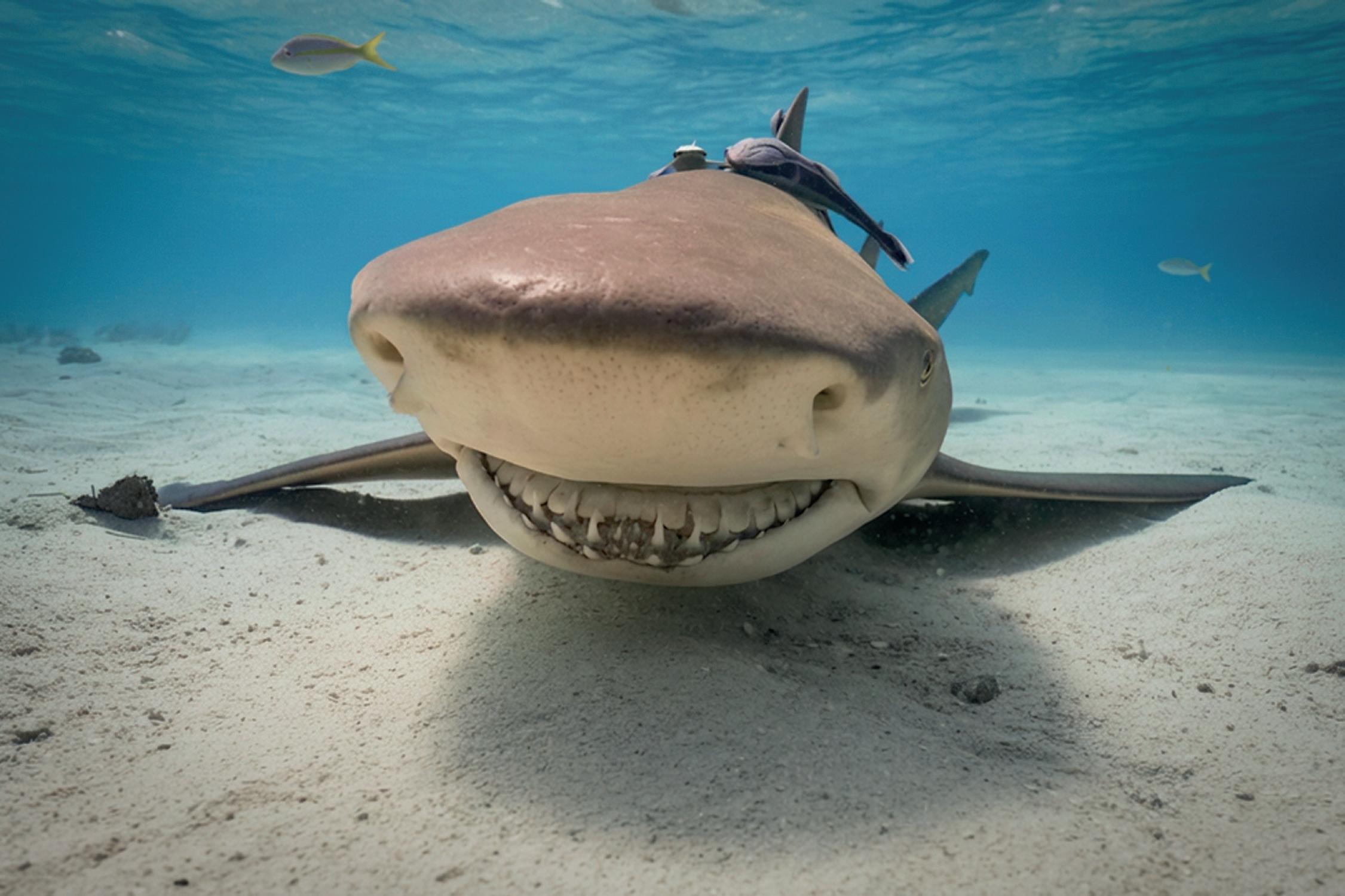
means repeatedly flushing the contents of the crate with water so the ocean can carry the signal farther. That is the moment when we enter the water. We descend to the bottom and line up behind the divemaster, who kneels beside the crate.
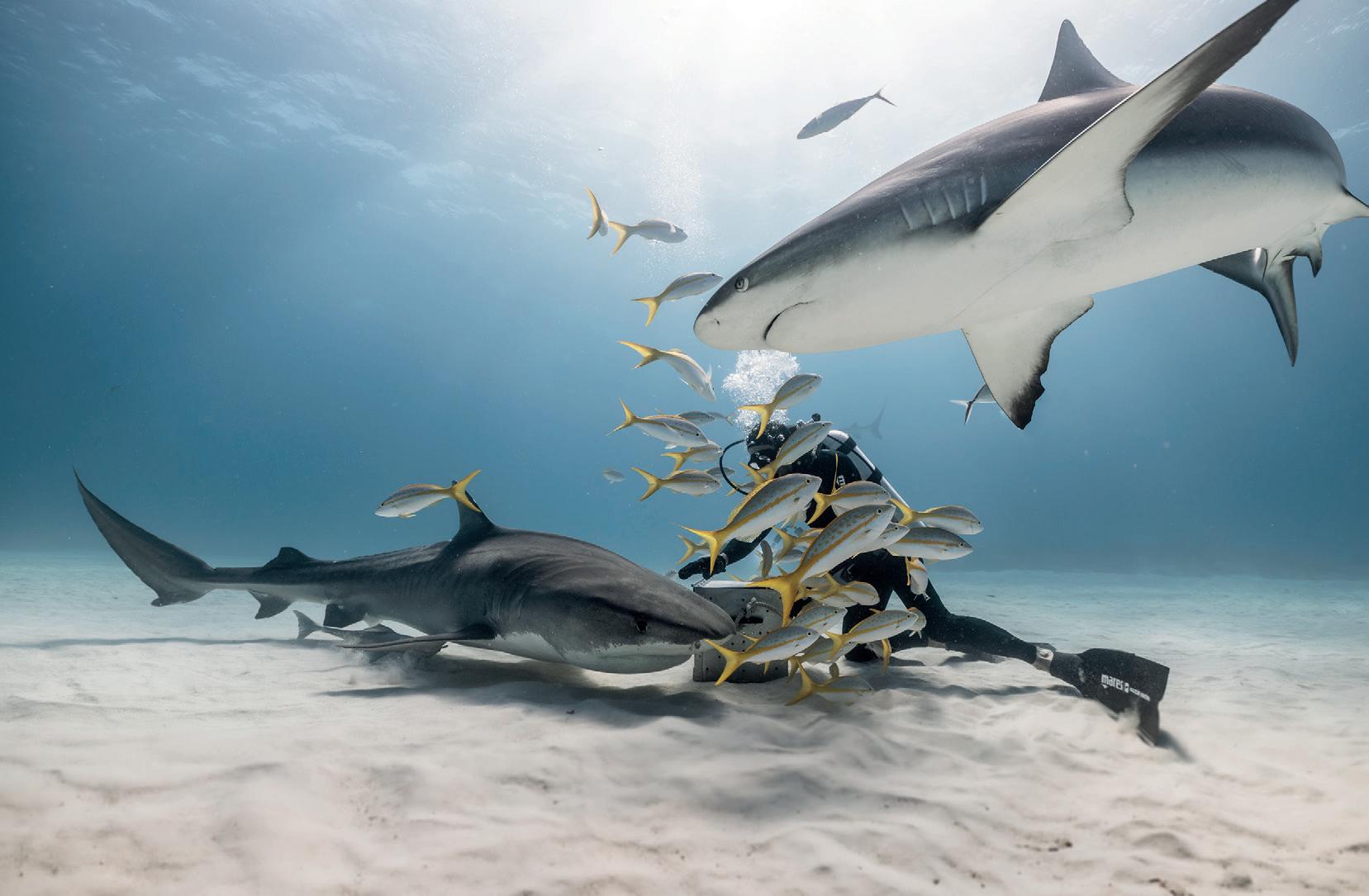
The dives take place on the shallower part of the sandy bank – usually at no more than 10-12 meters. The central point is the crate and our divemaster, who has just one job: to keep the sharks interested and in place so that everything remains predictable and safe. A second divemaster circles nearby as additional backup.
We, meanwhile, form a horseshoe. We become almost motionless in the slight current, so the scent is carried upward and the sharks can swim in, assess the situation, and move away again without having to push through a crowd of divers packed too tightly together. They have their own virtual red carpet to glide down like a runway. That is the key to success. When a shark has space, it behaves naturally and fluidly. And then we get to watch it in all its glory, without tension and without everyone bumping into one another.
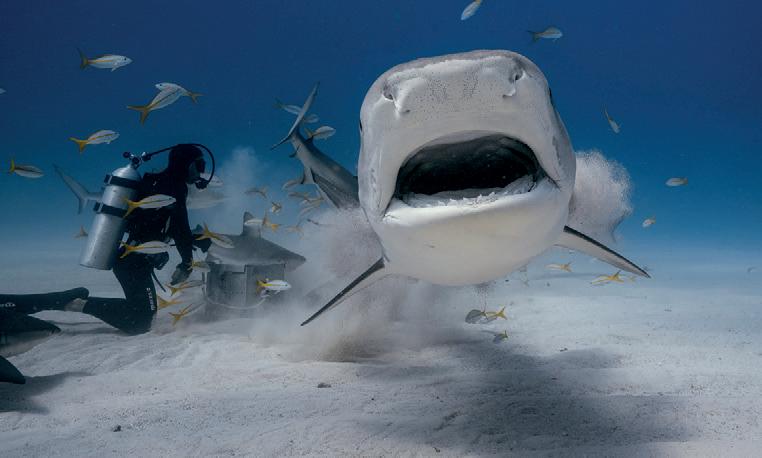
Soon, the first act of the show begins. Reef sharks appear, lemon sharks, sometimes nurse sharks… They circle and check who is paying them a visit today. And then – when the ocean decides the warm-up is over – the first female tiger shark appears on the underwater “runway.” And suddenly it feels as if the water itself has become denser with presence, because moments later
another one arrives, and another… You do not even know when it happened, but suddenly four, no, five, maybe more huge tiger females, each several meters long, are all around us.
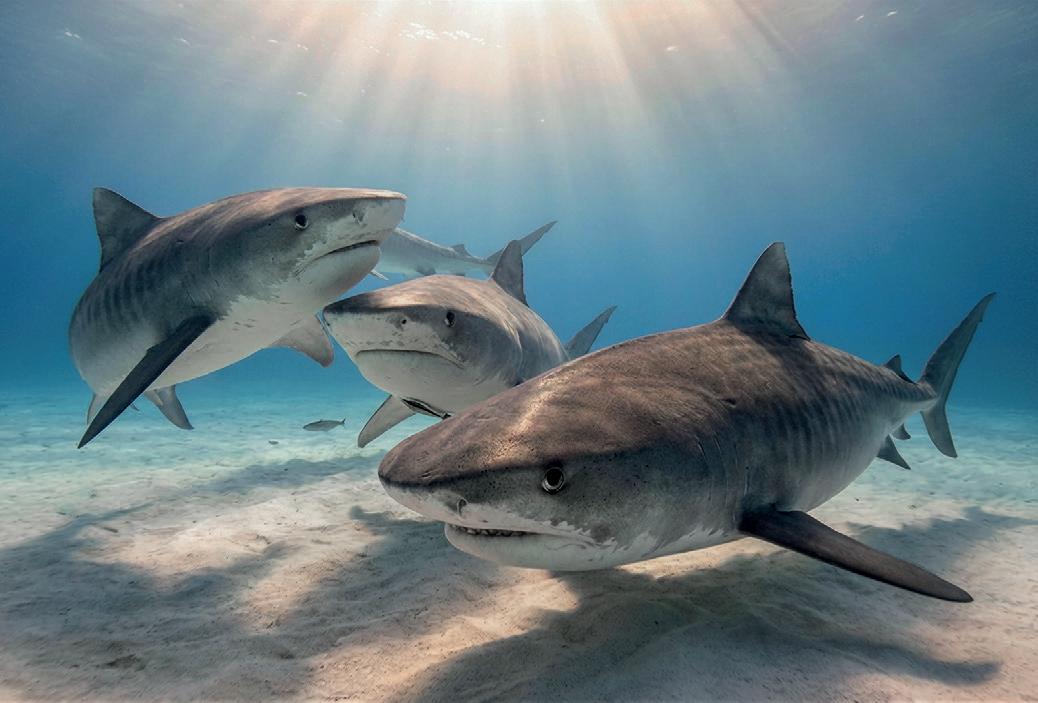
Tiger sharks, naturally curious, come unbelievably close. Literally within arm’s reach. And this is where the lesson from that meticulous briefing becomes useful – when a tiger pushes toward you, instead of shoving it away, you gently touch its enormous nose – calmly, softly, without any jerking, as if to say: I see you, everything’s fine, not this way. It works surprisingly well. The shark shifts its course slightly. And sometimes something happens that looks like a scene from a children’s movie, though in reality it is pure biology and behavior driven more by instinct than emotion – a tiger shark can raise its lower eyelids and cover its eyes, as if slipping for a moment into a state of bliss. It looks almost… intimate. As if it were overcome with pleasure. For a human being, it is an utterly surreal moment: you are touching the nose of an animal that weighs hundreds of kilograms, has massive jaws and several rows of large, razor-sharp teeth, and yet in that second there is something about it like a cat purring because someone has just found exactly the right spot behind its ear…
The most important thing in all of this is calm. Big sharks read our frail human bodies perfectly. Quick gestures, nervous finning, chaotic waving of arms – all of that would create “noise.” And underwater, noise is a language that only gets in the way.
Calm comes after the storm, and then the storm returns again after a moment of calm…
After three days of great weather, the sea becomes seriously rough. In strong wind, Tiger Beach is neither pleasant nor safe. So we moved to the southern side of Grand Bahama. The island gave us shelter, and we got a bonus in the form of wreck dives – shallow water, plenty of history, and a different kind of adrenaline.
The next stage was the crossing to Bimini – a place where great hammerheads tend to show up during the winter months. Encountering them is very different from encountering tiger sharks.
Tiger sharks have confidence and curiosity. They come in numbers, quickly “read the scene,” and immediately settle into the center of the action. Hammerheads? Hammerheads behave like divas. They make you wait. A long time. Sometimes they show up only when you are already glancing nervously at your pressure gauge and watching the needle creep toward the limits of reason. The frustration builds. Hope starts to fade. And that is exactly when, as if someone had switched on the lights and sounded the fanfare, our divas finally arrive.
The dive site where the hammerheads come in is shallower than Tiger Beach, with the bottom at about 7 meters, so the strategy is different. You do two dives back to back with no surface interval. You surface only for a moment, climb onto the
boat, swap cylinders, and drop right back down. Our divemaster’s version looks completely different. He does not surface at all. He goes through something like a Formula 1 pit stop. After 100 minutes in the water, a second divemaster comes down with a fresh cylinder full of air, swaps it with the one worn by our crate guardian, and returns to the surface with the empty one. The show must go on. Two such consecutive dives can last up to 3.5 hours in total. And although that sounds absurd at such a depth, there can still be a need for a short “deco” stop – although in our case it was probably more of a computer obsession than an actual physiological need.
When a great hammerhead finally appears, the water once again turns into a stage. A shark ballet begins, except that this ballerina is nearly five meters long and weighs several hundred kilograms. That does nothing to change the fact that it moves with a grace a human being can only envy. You watch, hypnotized, with the feeling that you are in the middle of a dream, because what you are seeing surely cannot be real.
And yet it is… and every detail makes sense, even the most improbable one of all – the shark’s hammer-shaped head. That characteristic head is not some whim of nature or an extravagant ornament. The cephalofoil, as biologists call it, is like a multifunctional console housing the senses and the tools of orientation.
Set far apart at the ends of the “hammer,” the hammerhead’s eyes give it a wide field of vision and excellent spatial awareness.
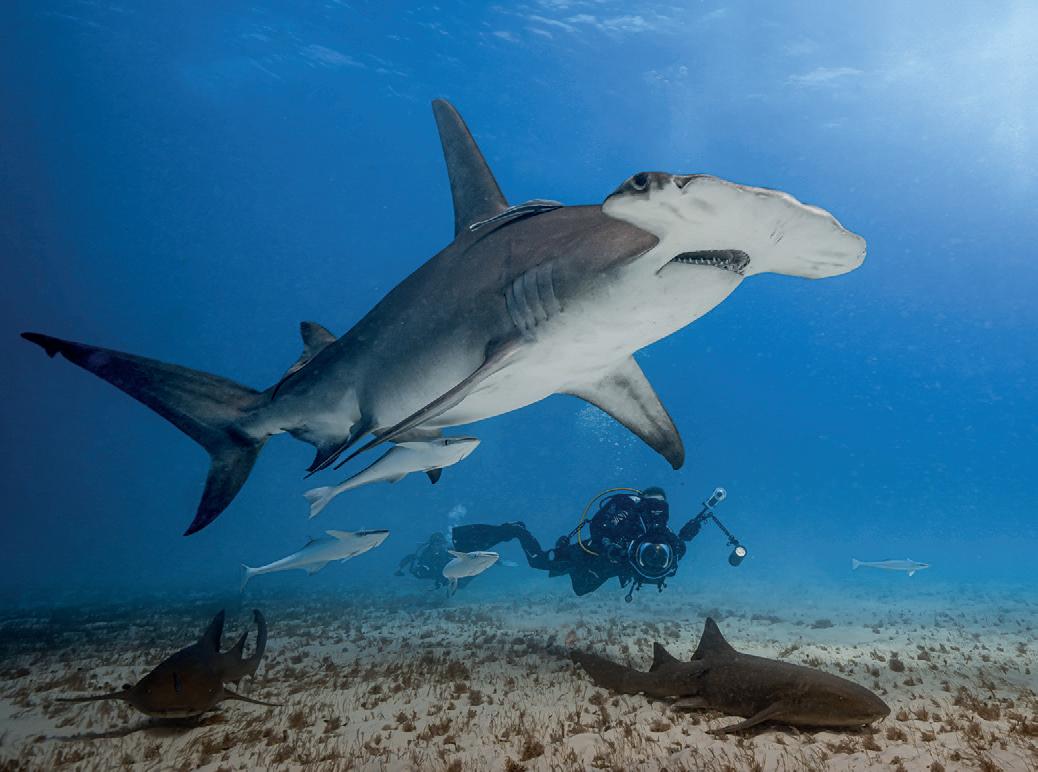
In an environment with no horizon, where judging distance can be deceptive, that panoramic field of view is a real advantage – the shark sees more, faster, and more calmly, without nervously swinging its head around. But the real magic happens elsewhere, beyond vision. Sharks detect electrical signals – micro-impulses generated by the muscles and nervous systems
of potential prey. With its broadened head, the hammerhead is like a wide antenna that picks up a broader range of those signals. That is why hammerheads are so effective at hunting stingrays hidden in the sand on the bottom. They do not need their eyes to “spot” them.
And then there is scent and current. Water does not carry smell the way air
does – it breaks it apart into bands, streaks, and fine threads. The wide head and the spacing of the nostrils help the shark read those traces as if it had a built-in chemical compass. And hydrodynamics? The “hammer” may function like a stabilizing plane. It does not so much provide propulsion as it organizes movement, helping the shark hold its line and make turns with a grace that looks like choreography, but is in fact pure physics.
And when you put all of that together, suddenly you stop being surprised. Because that ballet is no accident. It is the result of millions of years of trials, errors, and refinements – evolution perfected that shape not to impress us or amaze us, but because it works. And the fact that it works so beautifully? That is just a bonus for those lucky enough to watch it from the front row.
At the end of the trip, the ocean reminded us once again who really calls the shots here. The wind picked up so much that our ferry to Miami was canceled – the same ferry we had booked long ago and mentally checked off as a “sure thing.” And once again, a quick discussion, phone calls, and a Plan B thrown together on the fly. In truth, these Plan Bs are often the best ones, because this time the solution was something straight out of a movie: a seaplane. It lifted off lightly and confidently, as if that route were the most natural thing in the world, and carried us safely to Florida, from where we could begin the journey home.
But before that happened, we said goodbye to the underwater Bahamas by diving the famous and by now iconic wreck of the ferrocement ship SS Sapona.
The wreck of the concrete-hulled Sapona is not just “another dive site” – it is a film set, with sunlight, water, and time playing the leading roles. What was once a structure is now an openwork sculpture: shafts of sunlight pour through its jagged hull, slicing the water into bright ribbons and bringing every part of the frame to life. You have the feeling of entering an underwater cathedral in which every moment looks different, because
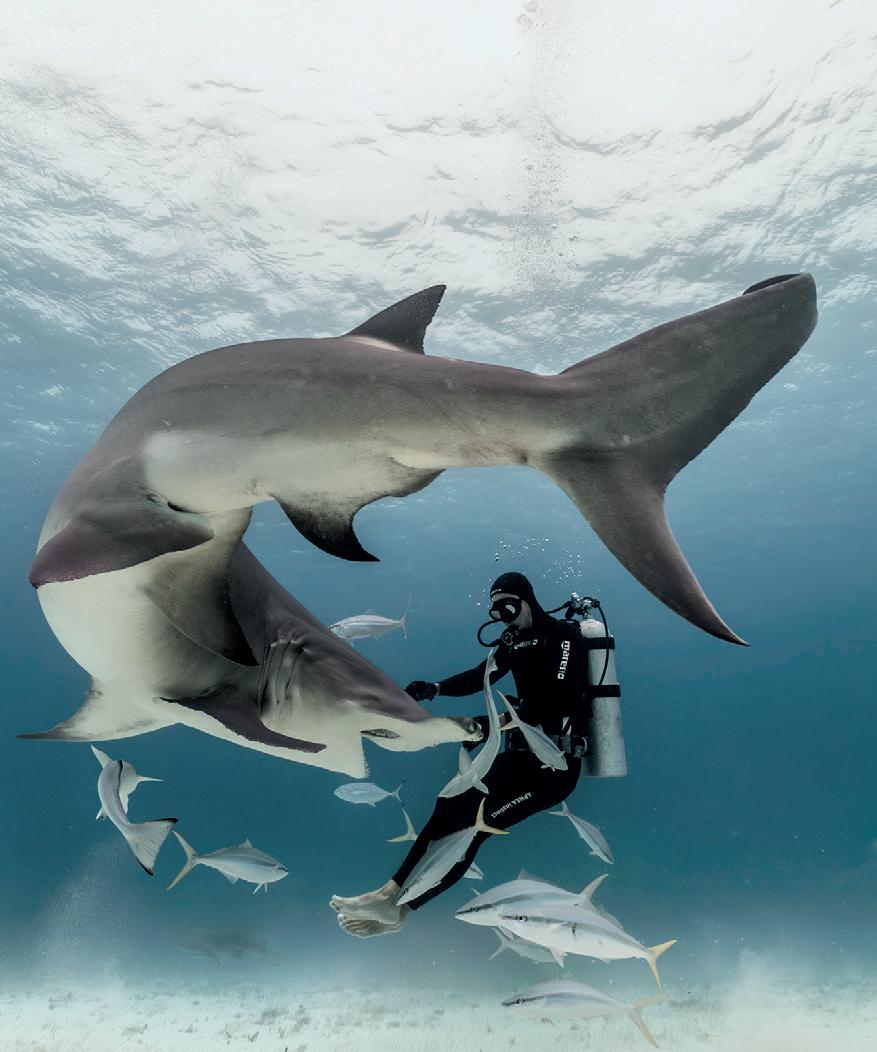
the light never arranges itself in exactly the same way twice.
When we finally reached Florida, another scene from the category of “you couldn’t make this up” was waiting for us. Record cold and… iguanas falling out of trees. When the temperature dropped to 4-5°C, Florida iguanas, literally “stunned by the cold,” went into a hibernation-like state, lost consciousness, and slid en masse out of the trees onto sidewalks, lawns, and sometimes right at the feet of passersby. Fortunately for them, it was only a temporary condition. Once it warms up, they usually wake up fresh and fully recovered. But that is a story for another time…
The truth is, you cannot see all of this on your way from home to work – and maybe that is exactly what travel is for: to pull us out of routine and remind us how vast, wild, and beautiful the world really is. As the old saying goes, life is short, every journey ends someday, but the one who travels lives twice. Twice as long…
Text and photos MAGDALENA
SOKOŁOWSKA
FROM THE EDITORS: Put on a warm sweater and grab a cup of hot chocolate before you start reading this article!
People often avoid uncomfortable situations, even if they can bring satisfaction and new experiences. I don’t tolerate cold well, which is why I rarely dive in Polish lakes, even in summer – below the thermocline I feel discomfort and soon start shivering.
My diving friends had long encouraged me to try ice diving, but I knew my body wouldn’t physically handle it. My main interest is sharks, so I always traveled to warm places. In 2025 I couldn’t book a suitable trip, until at the end of the year I came across a Facebook offer for snorkeling with orcas in Norway – in early January 2026. Temperatures there at that time are below zero, and the water is between 2–5°C. I thought it was worth trying something new, even if it was outside my comfort zone.
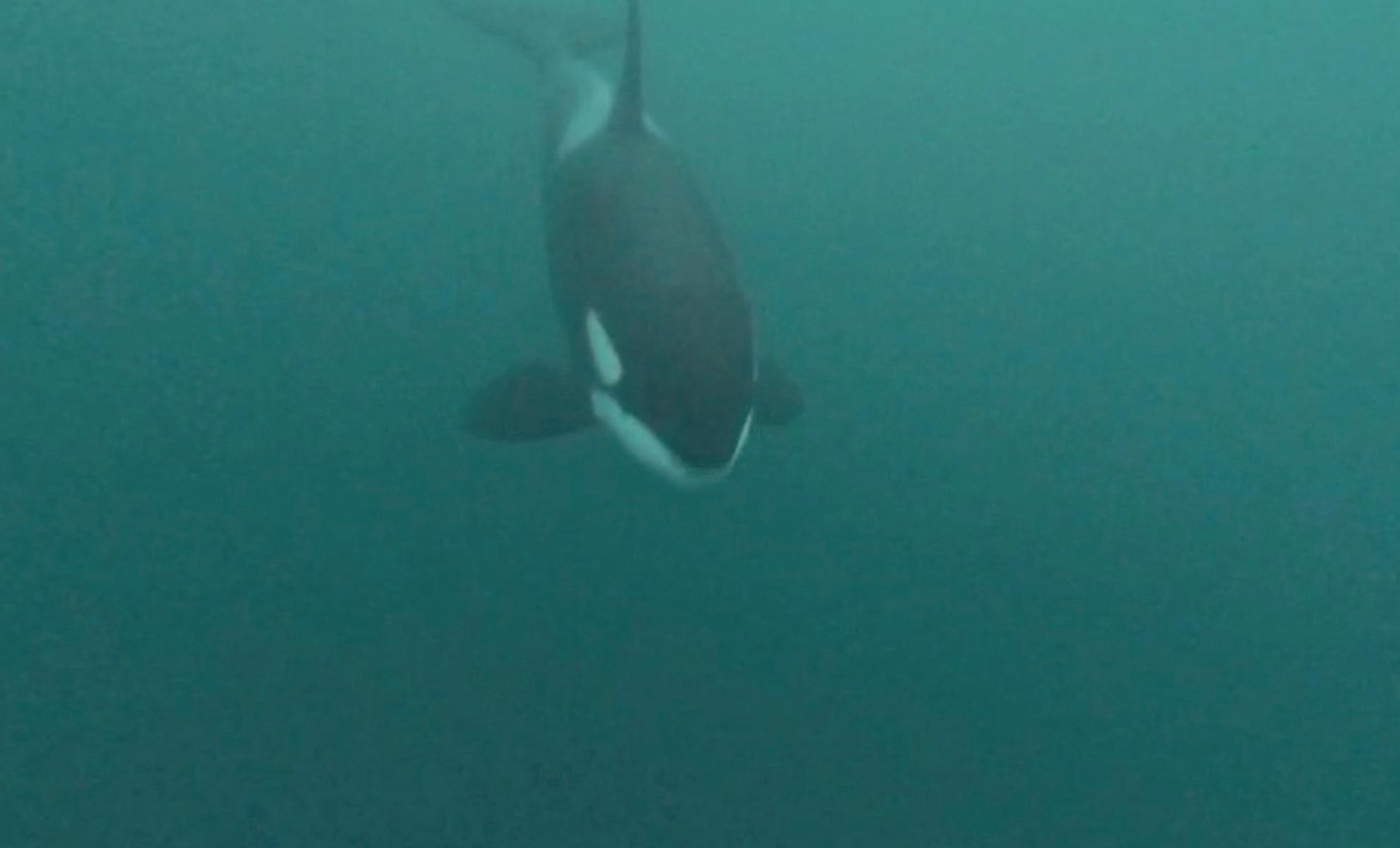
Something inside told me it would be an amazing experience – especially since online videos make snorkeling with orcas look easy and pleasant: calm water, no rain, bright sky. Orcas come to Norway in winter, attracted by herring shoals. It’s the largest orca population in the world – about 2,000 individuals. There are also whales such as humpbacks and fin whales.
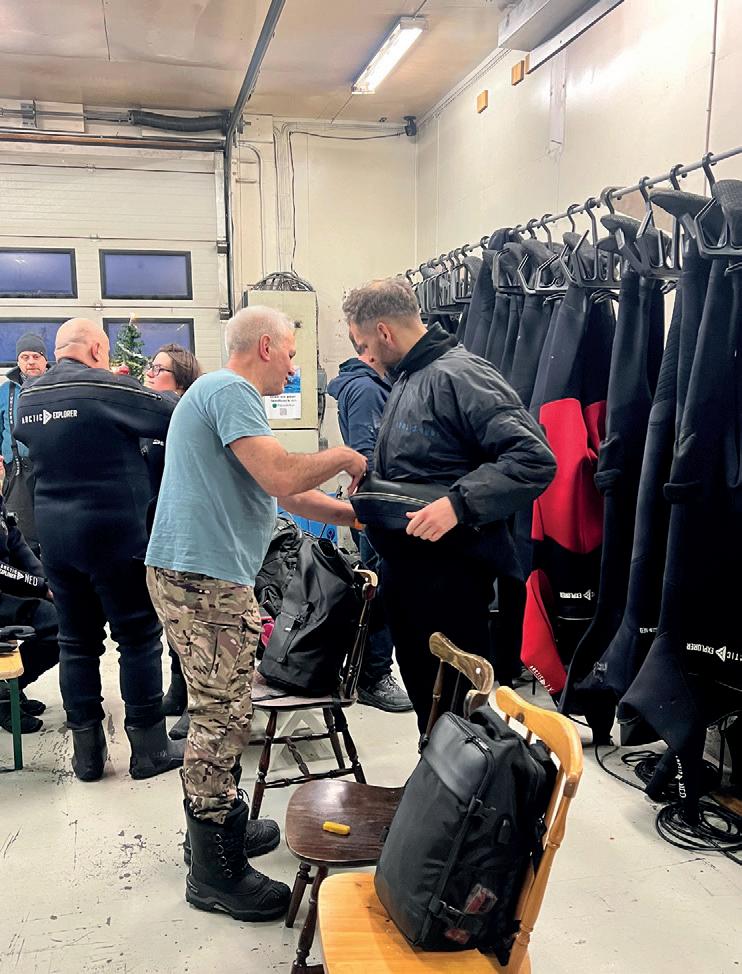
After signing up, I received a list of what to bring – special warm gloves, gaiters, a fur hat, merino wool thermal underwear, fleece, etc. It all suggested serious cold. On-site, dry suits, masks, snorkels, hoods, gloves, and insulation layers were provided. On January 3, 2026, I flew with a group of over 20 people to Tromsø, Norway. At 11:00 it was still light, though cloudy, but by 13:00 “the day ended” and it was already dark. Three people lost their luggage during transfers (in Copenhagen and Oslo) and wouldn’t get it until the next day or even two days later. They were left without warm clothes, but our group was amazing – we gathered spare gear for them.
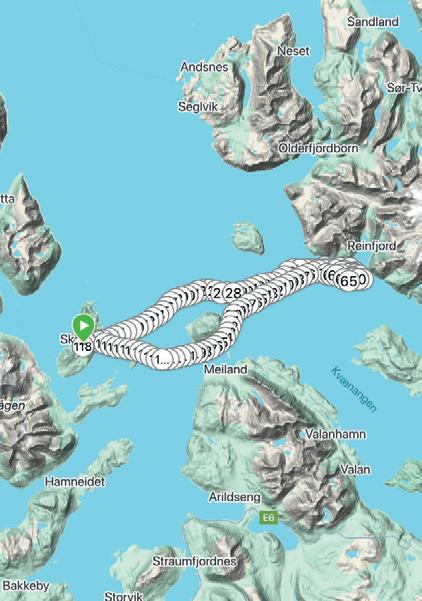
From Tromsø we were to travel about 4 hours by bus to Skjervøy, but the driver chose a longer scenic route using ferries. He was right. Even though it took an extra hour,
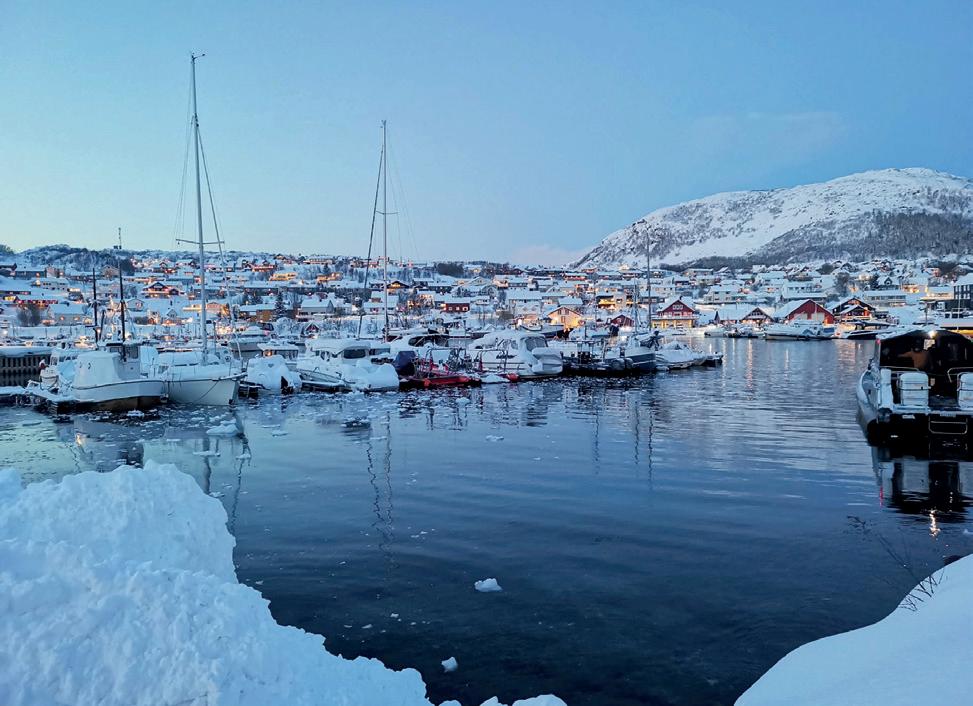
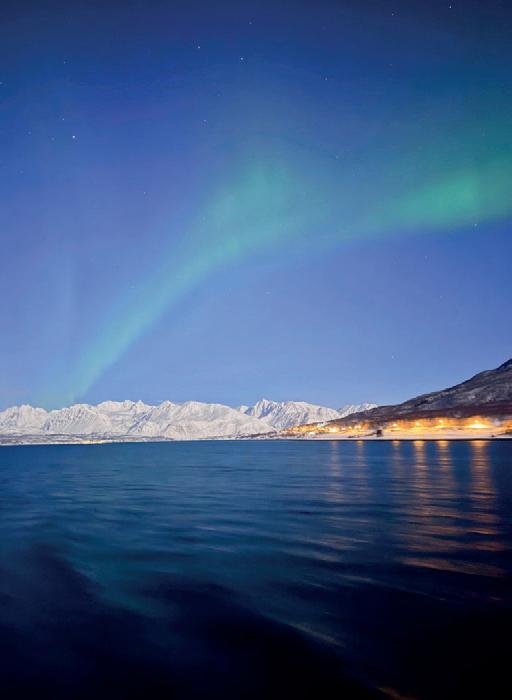
we saw a beautiful snowy landscape, mountains, water, a full moon, and the northern lights. On ferries we stepped outside to take photos. The roads weren’t cleared – we drove on packed snow – but the bus didn’t slip at all. The driver was very professional. When we arrived in Skjervøy around 20:00, we went for a short walk – the entire town was buried in snow.
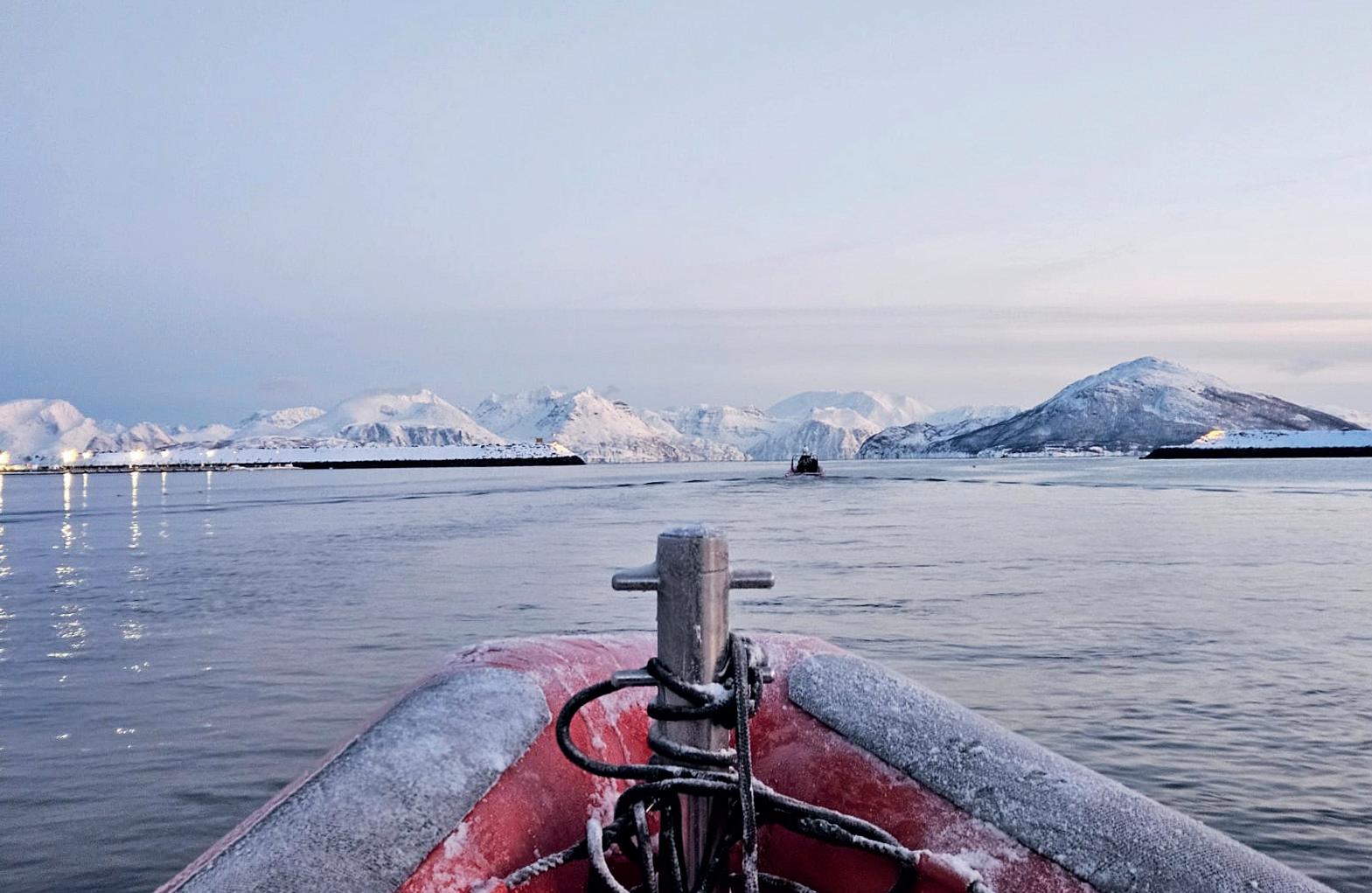
The next morning, we walked quickly to the Lofoten Opplevelser base, which organizes orca trips. At 9:00 it was still dark and snowing. At the base we attended a briefing about orcas and how the snorkeling would work. The crew helped us put on our suits. The trip would last just over 3 hours, so I need to stop drinking water to avoid needing the toilet. Outside, it actually felt quite pleasant despite – 6°C and snowfall. Our group included people who had never dived, and even some who had never used a mask and snorkel. The youngest was in their 20s, the oldest around 70.
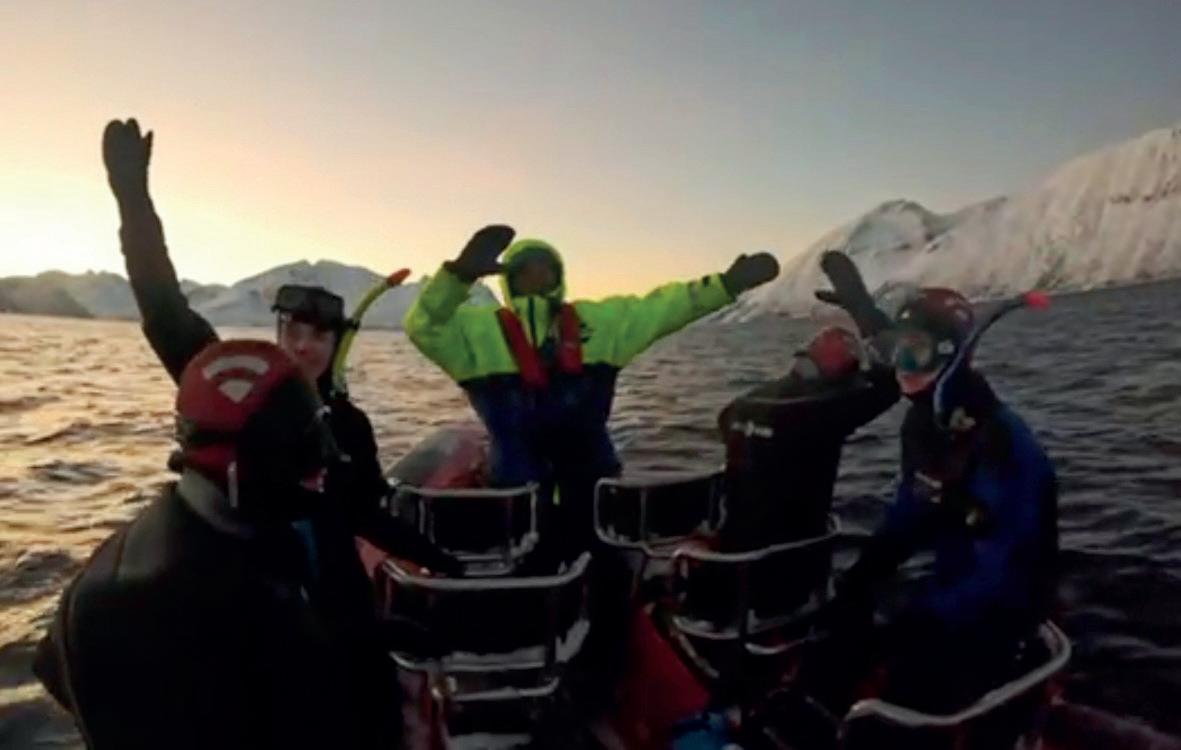
We boarded a snow-covered inflatable boat with saddle-like seats and metal bars to hold onto. I thought we’d sit on the edges holding ropes – later I understood why these seats were necessary. We also had to wear masks immediately and keep moving to stay warm. At first, we moved slowly, and I felt I was handling the cold well.
Once we left the bay, everything changed. The boat sped up, the waves grew large, the wind intensified, and the snow froze into hard pellets, hitting our faces painfully. Sometimes larger chunks struck our suits. We bounced over the waves, and the seats proved essential –we clung to metal bars, covered in snow. At times, we were airborne before crashing down. Someone joked that when we came back to Poland, our spines would shrink from the impacts. Water splashed over us constantly. I felt nauseous, as if my breakfast was rising in my throat.
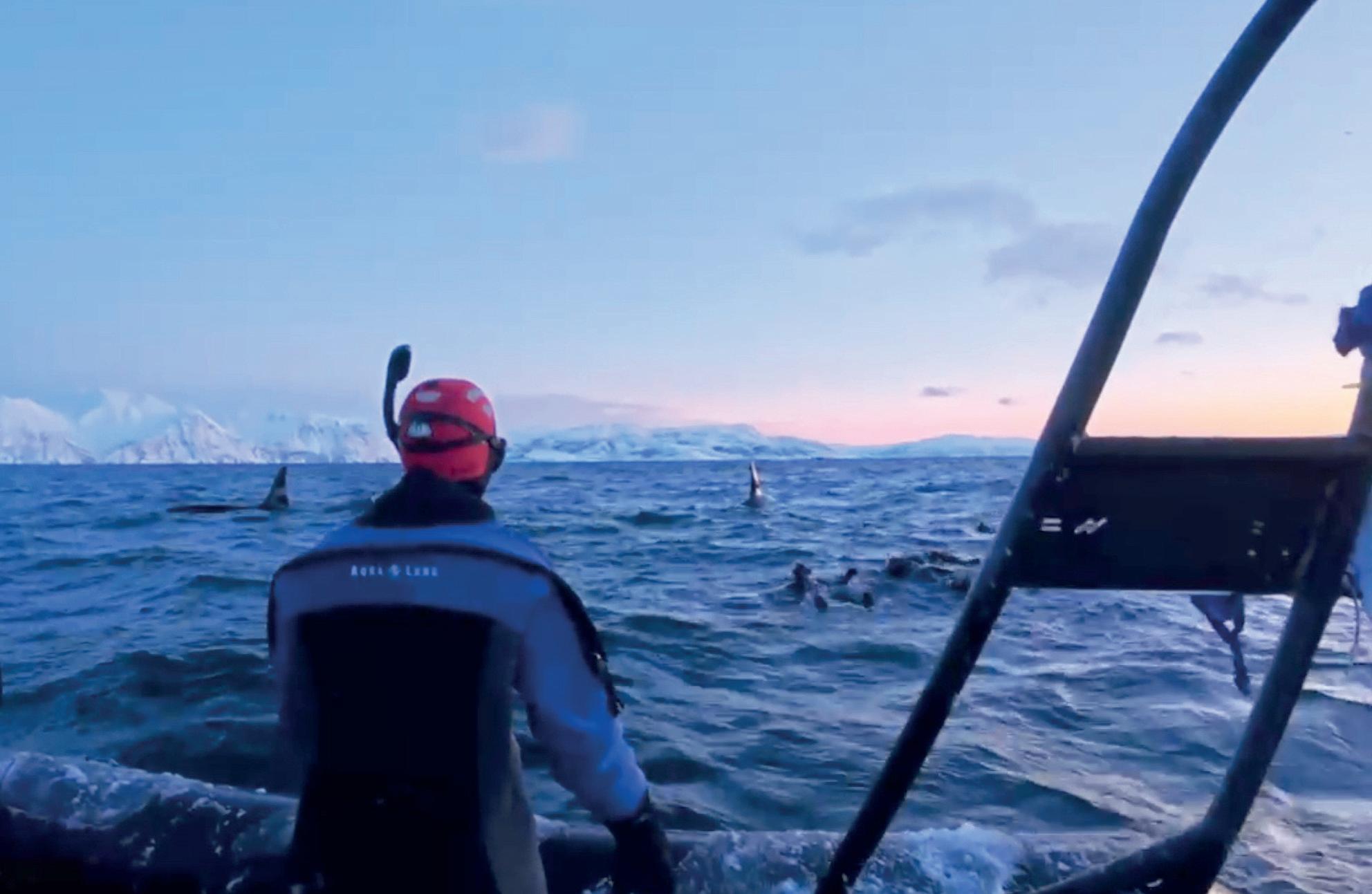
A friend behind me started breathing heavily, fighting seasickness. Mucus streamed from my nose into my mask. A crew member kept shouting, “Remember to move!” Despite the dry suit and undersuit, I got very cold, and all that time I was moving, pulling my legs up and down, shifting from side to side. My friend next to me even started dancing. We were sailing in these difficult conditions quite long, maybe about 30 minutes, on the way passing a humpback taking a breath. We were to look out for protruding fins, flocks of birds or blows
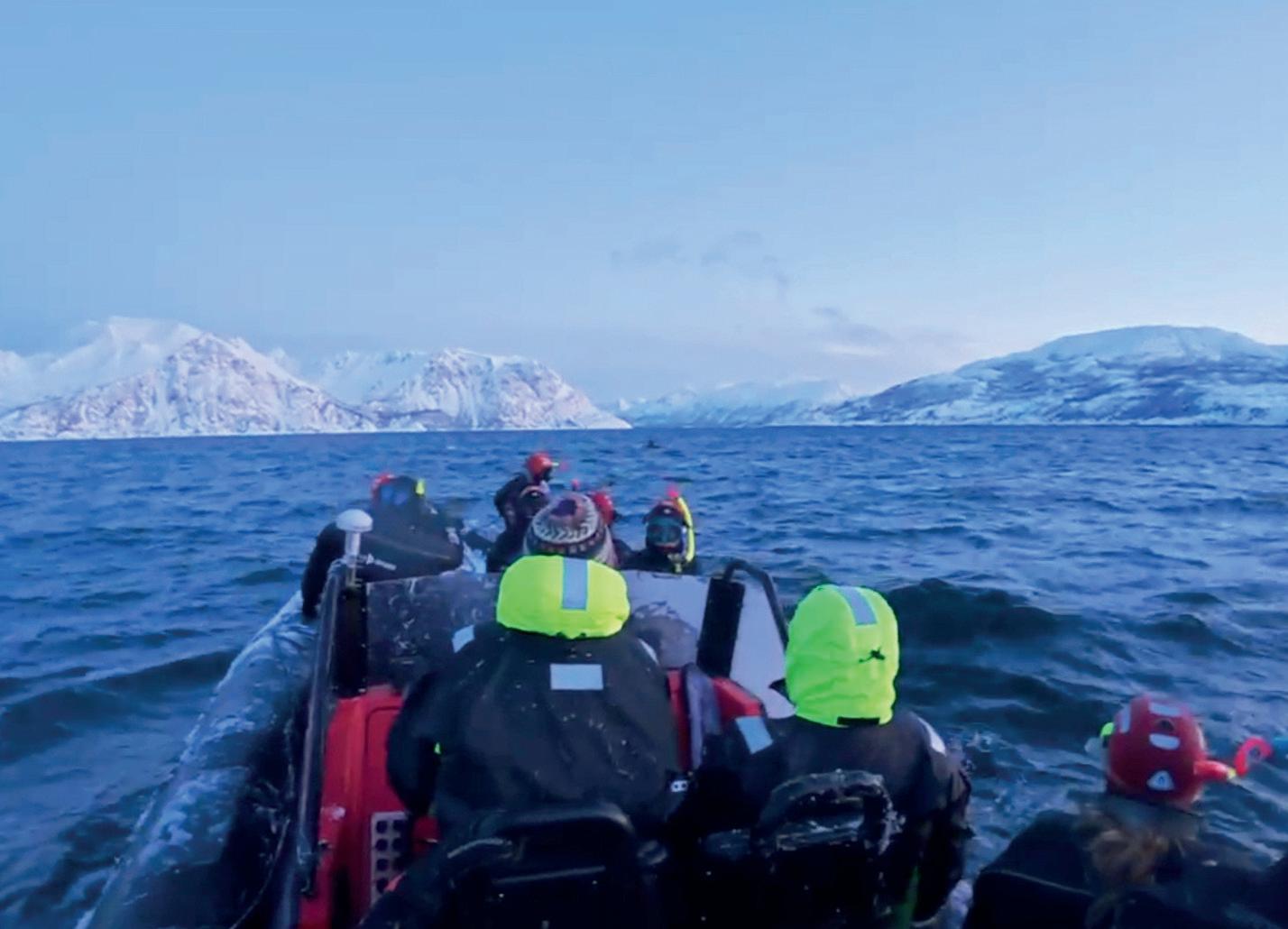
of air, when orcas surface to take air. The skipper spotted a fin, we approached and he shouted: “Ready left side” – meaning we would enter the water from the left side. We stood up from the seats, put snorkels into mouths and waited for the signal to slide from the pontoon into the water (without splashing, so as not to scare the orcas), however the orca quickly dived into the depths. We sailed further. Again a fin was visible, and even several fins. “Ready right side” – but also when we approached, the orcas quickly
dived. We had to search further. It looked as if we were hunting the orcas. I was already really uncomfortable and fingers of my hands began to sting painfully. I thought: it was supposed to be easy –of course cold, but not so extremely cold! All the time I was moving to the right and left, lifting legs and forcing myself to positive thinking.
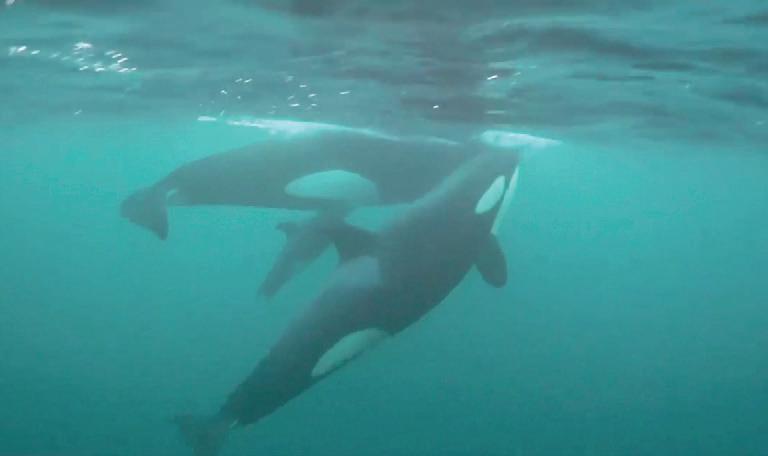
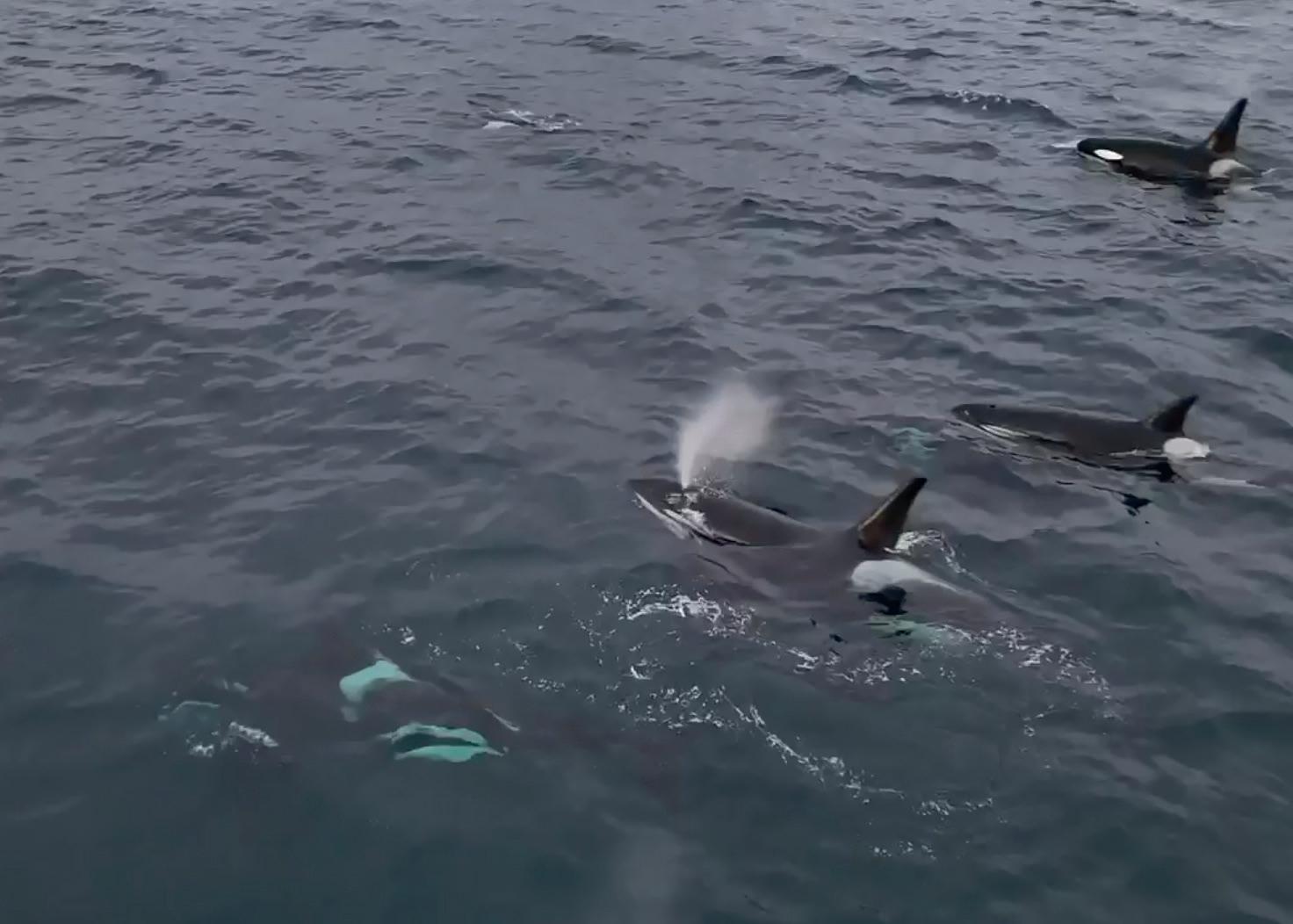
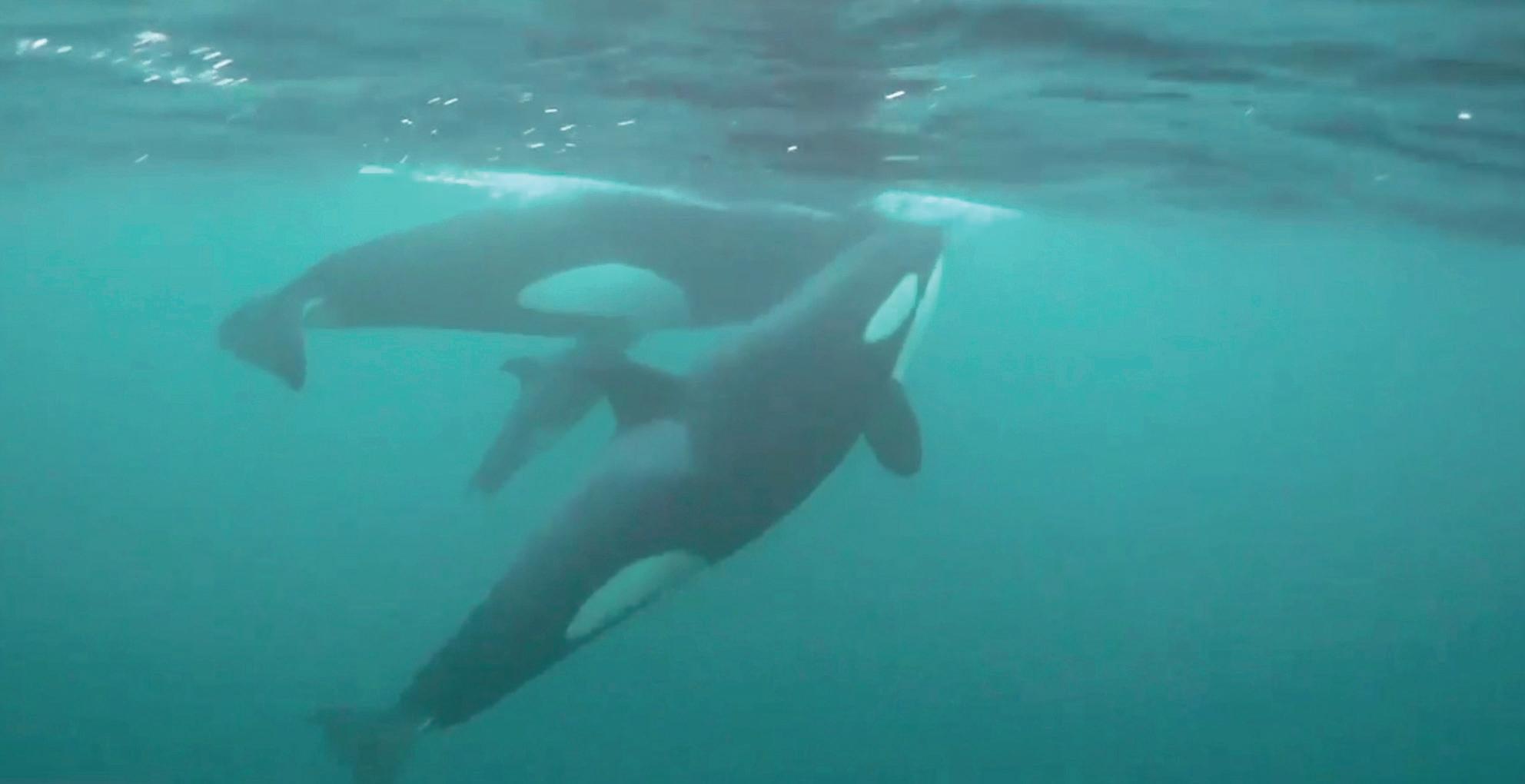
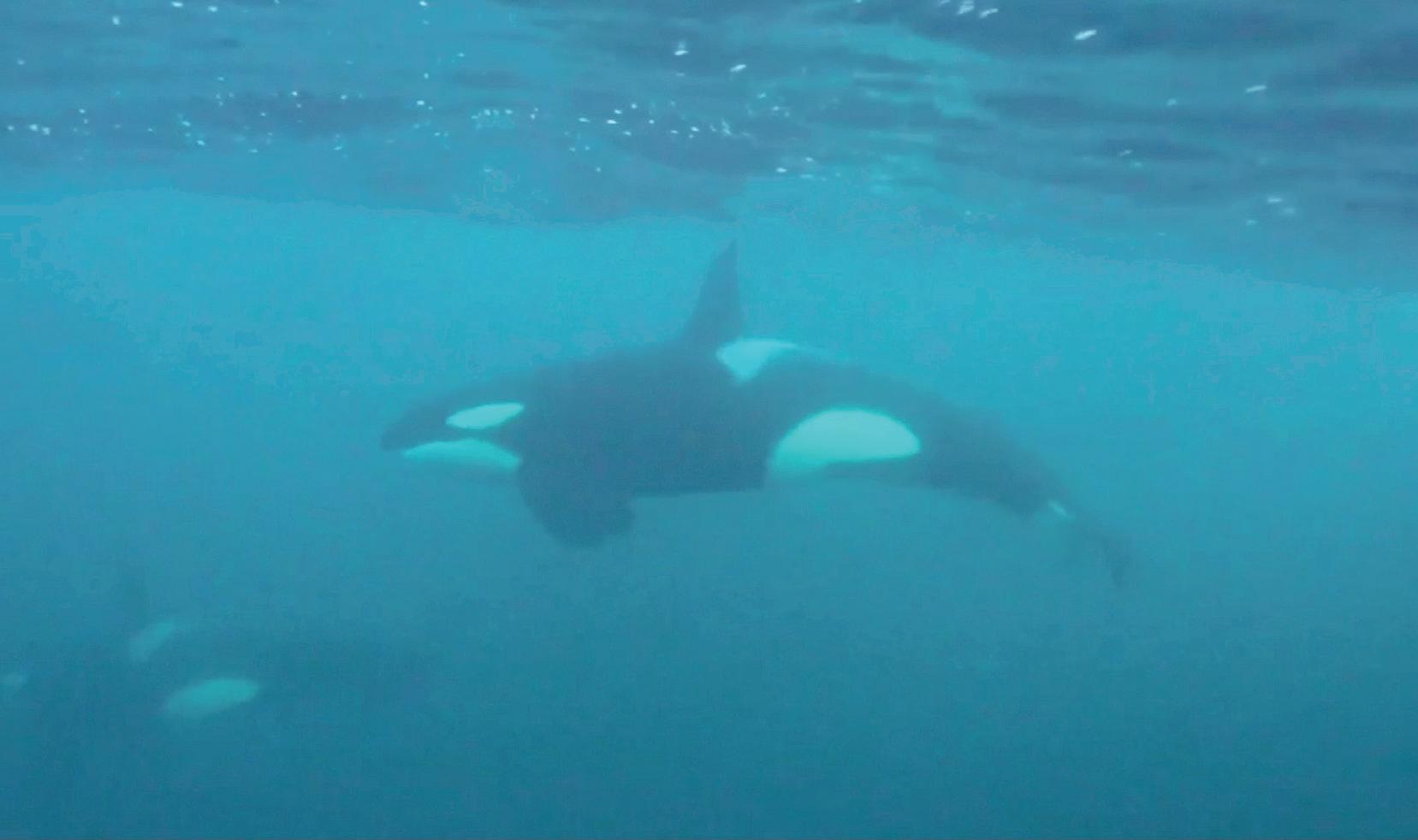
Finally we came across an orca family, which was swimming slowly and staying at the surface. Everyone stared at the swimming giants and their long
dorsal fins. First the skipper approached and waited observing the orcas, getting them used to the presence of the pontoon, then he shouted: “Ready left side”… “Go go go!” Finally we slid into the water. My heart immediately began to beat stronger, because the fin sticking out next to me was enormous. The orca passed me very quickly, next ones I saw about 20 meters below me. It lasted maybe 2 minutes and we already had to return to the pontoon, because the orcas very quickly disappeared into the
depths. We entered from the back of the boat – there was a small wooden platform at water level. On the deck I understood why with orcas one snorkels, and not dives with equipment – there is too little time to enter the water, better not to splash water, because orcas will be scared and there can be serious accidents on a fast moving “jumping” pontoon. During snorkeling one cannot even have fins, because that splashing will also scare the orcas. During those 2 minutes that I was in the water, I completely forgot about how bad I felt and that I was very cold. In the water it was so pleasant that I could jump in there every moment.
Next orcas we saw after a few minutes and we also slid into the water. Then we already observed herds of orcas only from the boat – after approaching with the pontoon, they dived and disappeared. After 3 hours we were returning to the port, and I returned to my terrible state – I already had shivers from cold, painful, stinging and already not moving fingers of hands, chattering teeth, nausea and breakfast halfway in the esophagus, headache, additionally waves were even bigger – jumping on them scared me and I had the feeling that we would fall out from our saddles. Water all the time was flooding us. It was not such a pleasant experience as in videos on the Internet.
After reaching the base and taking off the suit my body still was shaking and I decided that I am not going the next day, because there are to be the same weather conditions. The guide said that it was one of the worst days of this season!!! In the hotel room I warmed up under the shower, and a moment later painful cramps of thighs and calves caught me – probably from
entering, or actually sliding onto the boat. Before sleep I began to think: everyone tomorrow goes, only not me. Everyone was cold, everyone felt some discomfort. Maybe tomorrow we will jump into water more times, maybe there will be more orcas, but is it worth consciously giving oneself this terrible state? Or maybe it will be even worse? I decided that tomorrow I am not going.
The next day I changed my attitude to optimistic, because the sky was not cloudy and it was not snowing. In the mirror I saw that yesterday’s frozen snow injured my face so that near the mouth I had small scabs. I ate a smaller breakfast, I properly planned drinking coffee and water so that for the next hours I would not feel like going to the toilet. At breakfast it turned out that several people also had slightly injured faces and frostbites. On the way to the base I saw that the thermometer showed -10°C, which meant that on the water it would be about -15°C – much colder than yesterday, but I thought that it is a good moment to strengthen the strength of spirit and despite everything watch orcas in the water. After all it is a unique experience. Together with us also boats were sailing, from which one can observe orcas without jumping into the water.
Unfortunately it was even worse than the previous day. What of it that there was no cloudiness and it was not snowing, if while sailing with the pontoon at temperature -15°C our masks froze and the view was unclear? We could not rinse them until the pontoon stopped, but after rinsing the mask served for about 3 minutes and then froze again. Our faces also froze, because water was splashing onto us. “Keep moving guys”! I was moving all the time, because our guide said that if we
stop moving we can reach a state that it cannot be warmed again – and my head understood “move otherwise you will die”. However it is difficult to move when the boat jumps on the waves. Already after 10 minutes again appeared to me the stinging pain of fingers, despite that I was moving them all the time in the glove. Again I had nausea. I endured it bravely. I was satisfied with myself, because not every person despite pain and cold decides to repeat such an experience.
We stopped near a herd of several orcas. I had to take off the mask to rinse it in the water and I felt how my whole face was freezing. I could not however properly put the mask back, because I lost feeling in fingers, additionally every smallest movement began to tire me very much. Two orcas vertically surfaced from the water to see us, they made such a small “peekaboo” and swam away. We hunted further and after a short time we were already sliding into the water, to watch how orcas swim down – do they fear us? I thought that they would be more interested in people floating on the water. Because I could not properly put on the mask, water got into it and I inhaled some of it through the nose. In my 11-year-old GoPro housing buttons froze and it was not possible to turn on the camera, I recorded nothing. Watching lasted maybe 1 minute. It was hard for me to swim to the boat and I had a problem to get out of the water – as if my muscles stopped working and I could not pull myself up. A colleague grabbed me and pulled me out of the water onto the boat. After the next few minutes I felt how
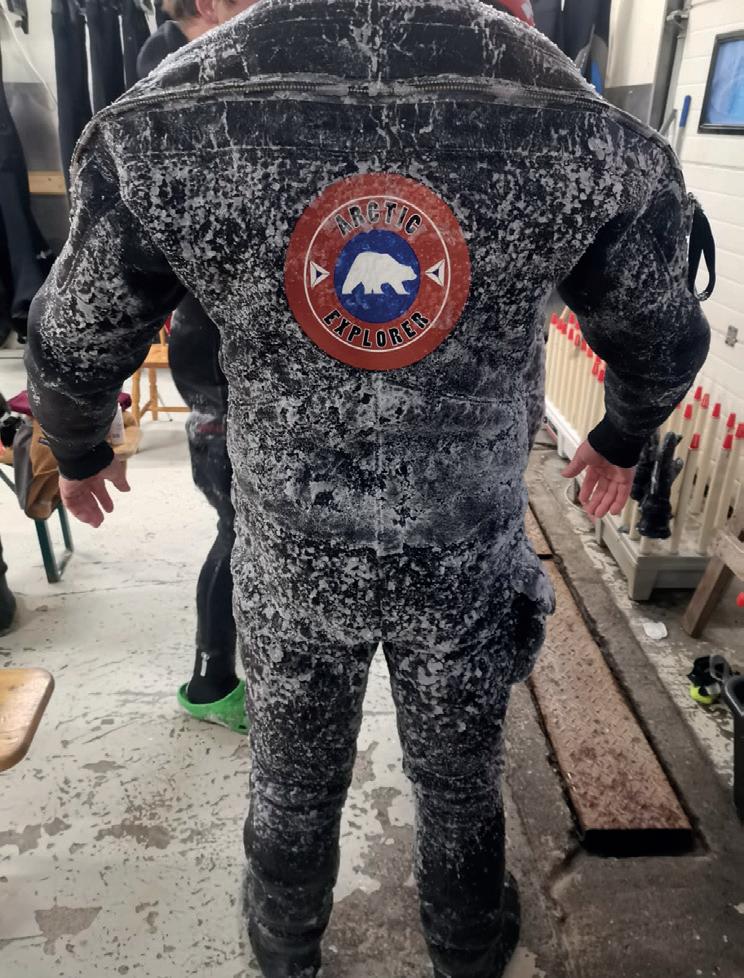
my lips were freezing. My gums and teeth hurt. Again I saw nothing through the mask, which froze to my forehead. Everyone’s dry suits began to freeze, which limited our movements. I thought – are we just turning into icicles? I always have cold fingers of hands and feet, therefore this cold on the boat was for me two times bigger than for other people. -16°C on water, that is felt -27°C plus speed of the boat = felt -40°C – this was my mathematics.
I felt worse and worse. Never had I fought with such enormous pain. It was hard for me to move until finally it was hard for me to breathe. From pain tears began to flow from me. I thought that soon I would lose fingers of hands and feet. I had a small panic attack and I thought that today I will die. “Keep moving guys!” and the skipper turned on music so that we move more – dance. Soon more orcas appeared. “Ready right side”. Only 4 people jumped in, the rest stayed on the boat, because they were also very cold. Our guide noticed my state and flowing tears. She asked if everything is alright, and I had no strength to answer her, so I shook my head that NO. I already had shivers and chattering teeth. I knew that I will not manage to snorkel anymore, because I am in a very bad state. The crew took care of me: the guide put on me a wool balaclava onto the hood – I could not put it on myself, because my fingers stopped moving. Through numb lips I managed to tell her that I am extremely cold and that I feel enormous pain in fingers. She took a thermos, asked me to tilt gloves so
that she can pour warm water inside. I tried to tilt them, but my fingers did not move and I could not do it. It turned out that the gloves tightly adhered to the suit. They took off those gloves, dried my hands with a towel and put on thick, warm fleece gloves. Additionally I got from a colleague an extra hat – earflap hat and I wrapped my face with a scarf. I was praised that it is good that I keep moving – and I had the feeling that these are reflex muscle contractions, because my organism tries to keep me alive. Such shivering is a defense mechanism of the organism, which tries to generate heat, because it knows that it is seriously overloaded with cold. I could not lift a leg to sit on the seat, so I was moved to the back of the boat – there at least it was less windy. I tried a bit to force myself to move, but it tired me quickly and I had to take breaks to breathe –never before had I been so weak, tired, resigned and helpless. In my thoughts I repeated to myself: “You can do it, you can do it” and I breathed deeply through the scarf to calm down. All my symptoms were typical for early hypothermia: feeling of strong cold, weakness, slowed movements, stiffness of muscles, fingers of hands and feet, numbness, speech disorders, uncontrollable shivering.
When we returned to the base, the guide helped me undress. I put my hands under lukewarm water, not hot – such instructions I received. I changed into warm clothes, put on 2 hats, a scarf, drank hot tea. Applause is due to the staff working in the base – they are real hardcore working in such cold conditions for 3 months of the season. In the hotel I immediately slipped under the duvet and rested the rest of the day. I had no
strength for anything else. Some people from our group, having experience of diving in Antarctica, said that there conditions were easier.
Third day – last. At breakfast I sat as if suspended, it was hard for me to hold a cup with coffee, hard to grab a fork. After twenty steps I went up very slowly and I had to rest at the top. Actually every movement tired me – it was a reaction of my organism to yesterday’s cooling. Unfortunately I made the decision that today I will not go to the boat, this time already finally. Overcoming one’s barriers is a great idea, but one cannot ignore signals coming from the body. It turned out later that I was not the only person who resigned from today’s adventure.
Do I regret that I went on such a trip? Absolutely not! I recommend it to everyone, but let us remember that we cannot control everything and not always diving trips go according to our thoughts. One can encounter the worst weather. One also cannot demand too much from wild animals – on the Internet some people wrote that during the time when they were in Norway in the season, they did not see even one orca. It was an adventure which I will remember to the end of my life. I feel that my inner strength increased and I already think about another interesting trip. Snorkeling with orcas was for me more extreme than my diving with tiger shark or bull shark. Why is it worth breaking one’s own barriers and throwing challenges to oneself? – because it provides new experiences, we discover our possibilities, we increase self-confidence. The more often we try new experiences, the more courage we have for next challenges and our life becomes richer.
It all began
Text and photos ADAM SOKÓLSKI
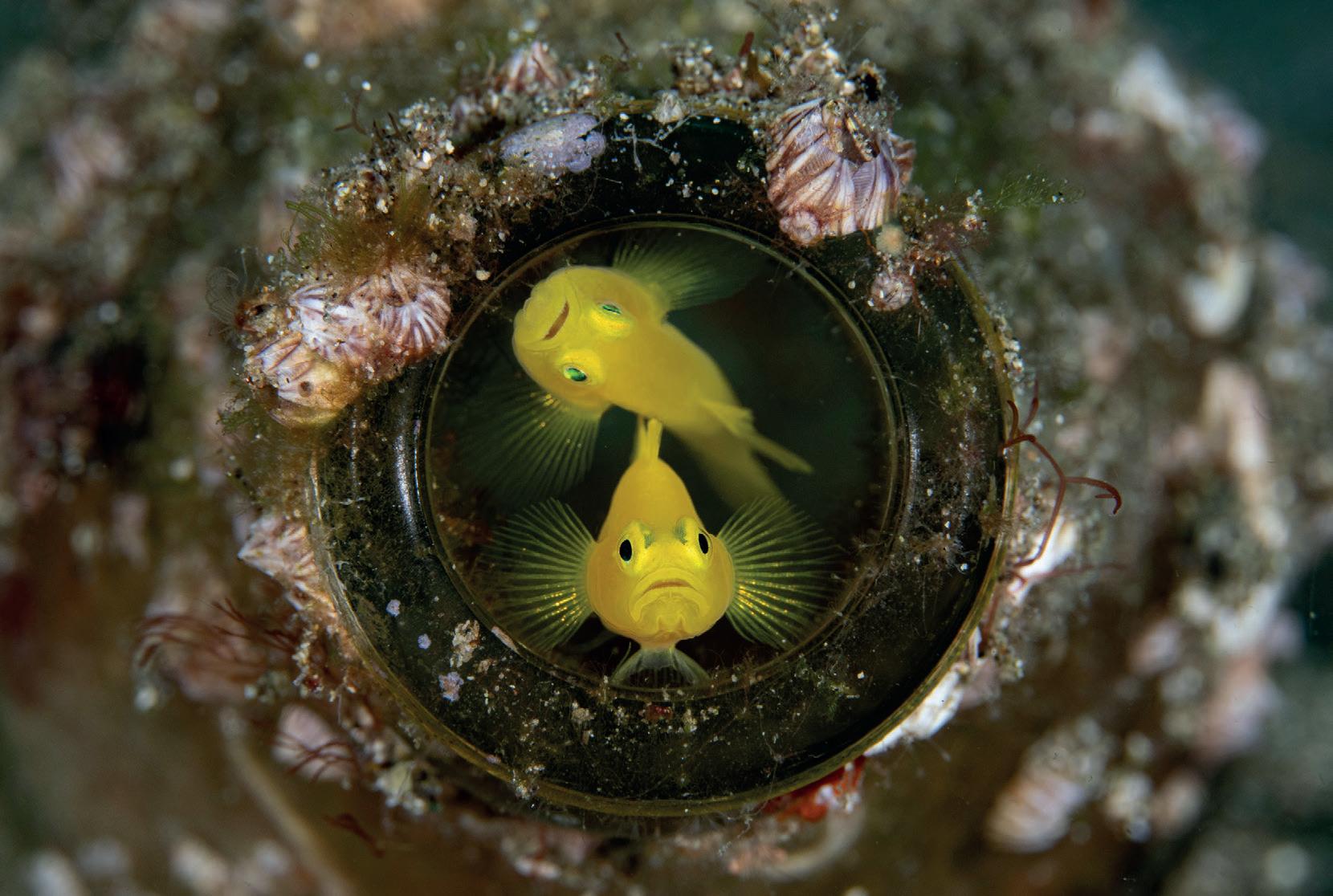
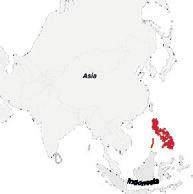
Anilao, a small town on the island of Luzon in the Philippines, IS A MECCA FOR UNDERWATER MACRO PHOTOGRAPHERS.
Iflew there for the first time 11 years ago. I've been swimming underwater with my camera for some time now – I had pretty decent equipment in the case, two flash guns and a lot of enthusiasm. It made me happy, but I was still more "taking pictures" than photographing intentionally. When I came across an advertisement for macro-photography workshops on the Internet, I thought: why not? I packed my equipment and together with my friend Wojtek Męczyński we set off for the Philippines.
It was my first encounter with professional workshops, experienced photographers and – what I know today is absolutely crucial – brilliant underwater guides. On the first day, I felt that I was entering a completely different world. Suddenly, it turned out that what I thought was a "good macro shot" was just an introduction to the real play with light, background and composition.
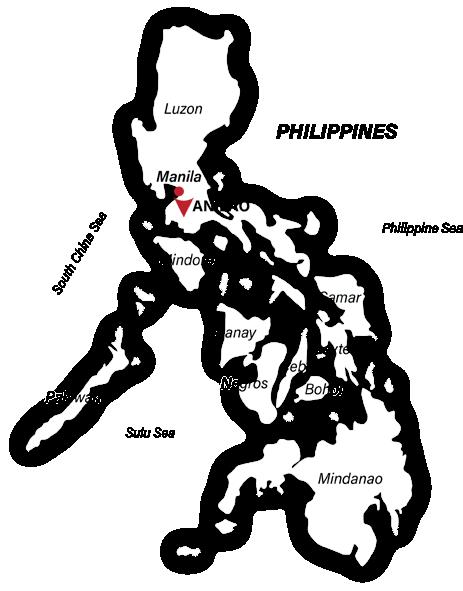
I remember driving from Manila to Anilao. I was driving with an American woman, one of the workshop participants – an experienced underwater photographer. At one point, she asked:
"Do you have a list of creatures you want to see?"
I looked at her slightly surprised. A list? Me? I had a vision of "something cool" in my head. She had a few pieces of paper written in small print – Latin names, color variations, specific species. After a moment of awkward silence, I said the only name that came to mind – to this day I do not know where it came from: Hairy Frogfish.
She nodded with a polite smile: – Hmmm. OK. Cool.
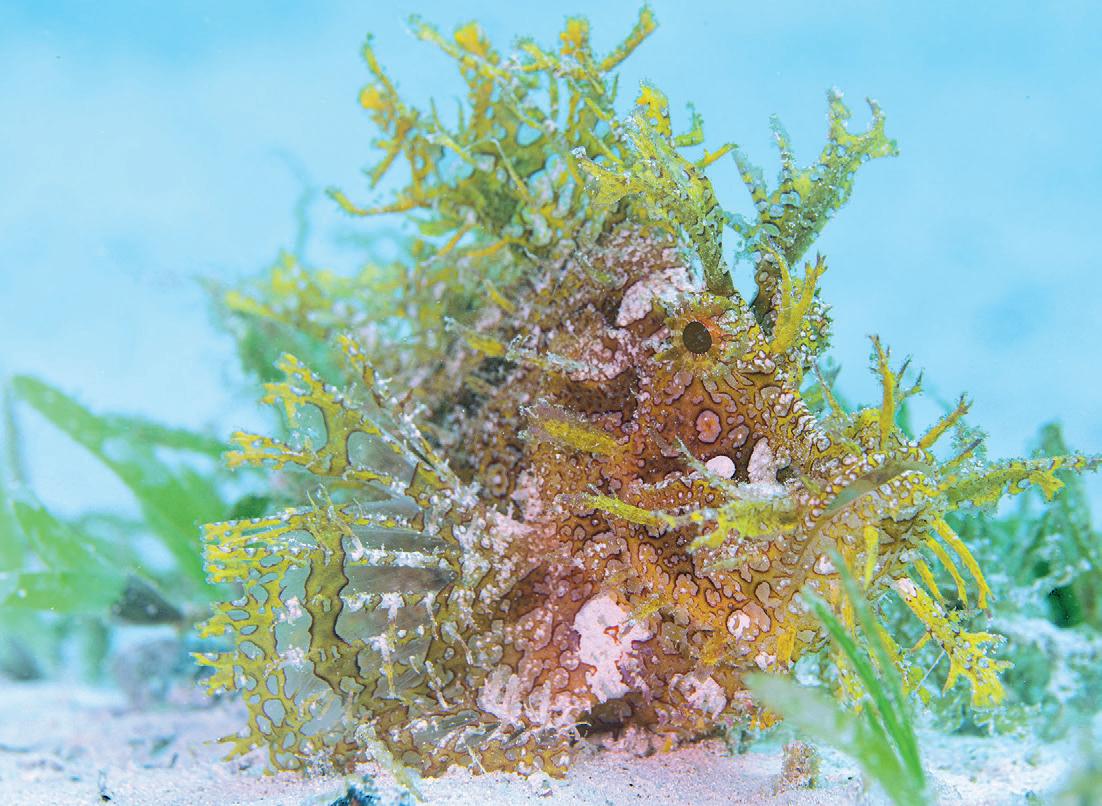
Imagine my face when, on the first dive, literally a moment after jumping into the water, that exact creature was sitting at a depth of maybe four meters. In all its shaggy glory. Perfectly posed. As if it was waiting.
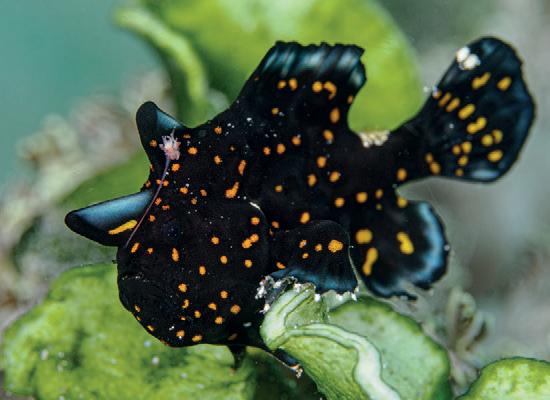
Later it turned out that there is also a hairy frogfish in black, white, orange and non-hairy yellow version and one that looks like a colored sponge fragment and many more. It was then that I understood for the first time that in Anilao, "rare" does not always mean "difficult to find." Everything is simply possible there.
Since then, I've been to Anilao six times. And I know one thing – I will be coming back there. In my photographic travels, I always try to dive with professional bases focused on underwater photography, especially macro, and in Anilao you can find such bases. This allows you to make the most of your time underwater. You don't waste your energy on logistics, you don't worry about the equipment, you don't wonder if the guide will understand that you can spend 20 minutes with one eye of a shrimp. You focus only on the shots.
The last four times I stopped at Anilao Photo Academy. In addition to super-professional service, I found an extremely friendly team and owners with real passion. It's one of those places where evening conversations about light, snoots and new macro ports are just as important as the dives themselves. And where you can really grow. I certainly learned a lot there.
I've taken thousands of photos there over the years. I have disks full of strange Anilaonian creatures. But the Editor-in-Chief asked me to choose a few creatures that are particularly characteristic of Anilao.
This is not an easy task at all.
Because in Anilao, the list of macro 'icons' is long. Very long. And on top of that, it is dynamic – one season there is something, the next it disappears. Rhinopia appears, everyone is talking about it, photographers are flying especially to see it... And a month later, it is gone without a trace. That's the charm of muck diving – nothing is given forever.
That's why I decided to write not about the "rarest" or "most fashionable" creatures, but about those that stuck in my memory the most.
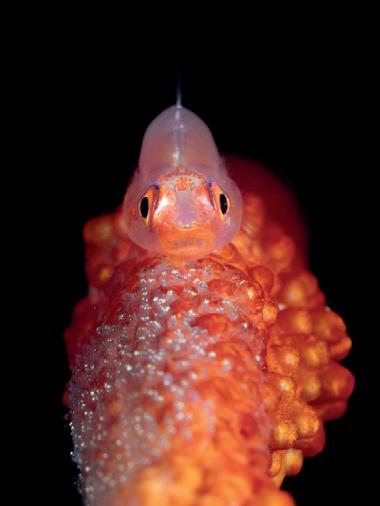
Pygmy Seahorse – Patience
I'll start with a little creature which taught me humility.
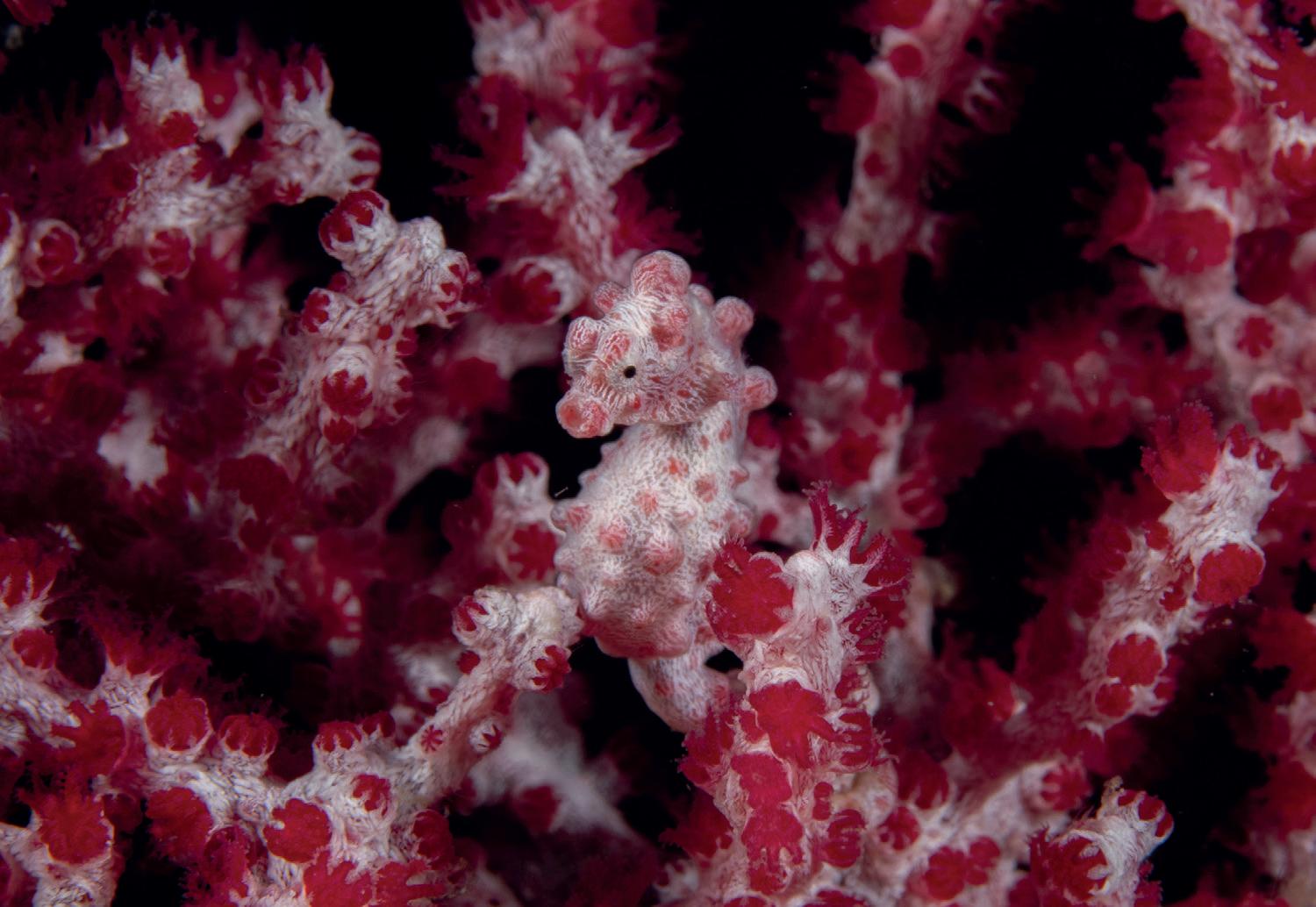
Pygmy seahorse on Kirby's Rock. A rock is known to every local guide. A tiny seahorse attached to a gorgonian so perfectly that even knowing where to look, I needed a moment to see it. And when I saw it – I couldn't "unsee it".
It's been 11 years since I first met it, and it's still there. I like to imagine that this is the next generation. The same rock, the same gorgonian, only the little tenants change.
Photographing pygmy is a lesson in patience. Minimal movement. Breath control. Focus precision. One millimeter closer –and the eye is gone. It was with this creature that I understood that macro is not a rush.
Rhinopia – star of the season
Then there was it. Rhinopia.
When the guide showed us the first one, the atmosphere under the water became almost festive. Everyone was excited. Gentle waving of his arms, wide-open eyes behind masks. As if someone had just found a unicorn.
And I was a little surprised by this and smiled gently in the depths of my soul, because for several years, when I worked in Zanzibar, two such creatures were sitting on the reef five minutes from the base. Which shows that "rarity" is a relative concept.
But when you kneel on the sand and look into its eyes – you understand the excitement. Textures, skin appendages, the way of "walking" on the bottom. Rhinopia looks like a project by an artist who has been given too much creative freedom. In Anilao, it is the star of the season. Sometimes it appears for a few weeks, sometimes for a few days. And then the whole photographic community lives on one theme.
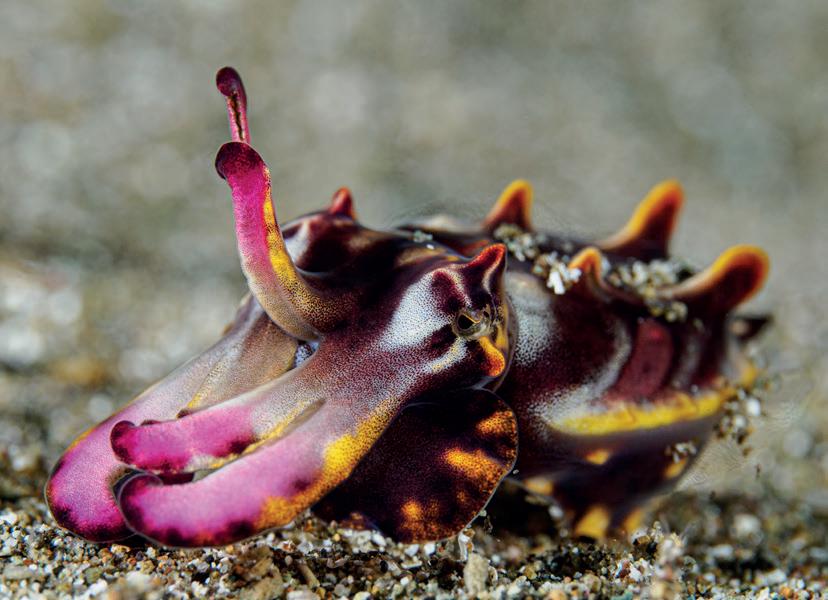
There are moments when you see something underwater and you have the impression that it shouldn't exist. The Flamboyant Cuttlefish is just that. Small, colorful, pulsating like a neon sign in a night bar. It doesn't swim – she "walks" on the bottom, slowly, almost theatrically, as if it were aware that everyone is watching.
Its colors change in a fraction of a second. Reds, yellows, whites. Warning, contrasting, almost aggressive. And at the same time mesmerizing. When I first saw it in Anilao, I completely forgot about the camera settings. For a moment, I just watched.
It's one of those creatures that suddenly makes a piece of sand beneath you a stage, and you feel like you're participating in something special.
During the black water dive, I finally managed to photograph the Wonderpus octopus in larval form. I'd always dreamed of it
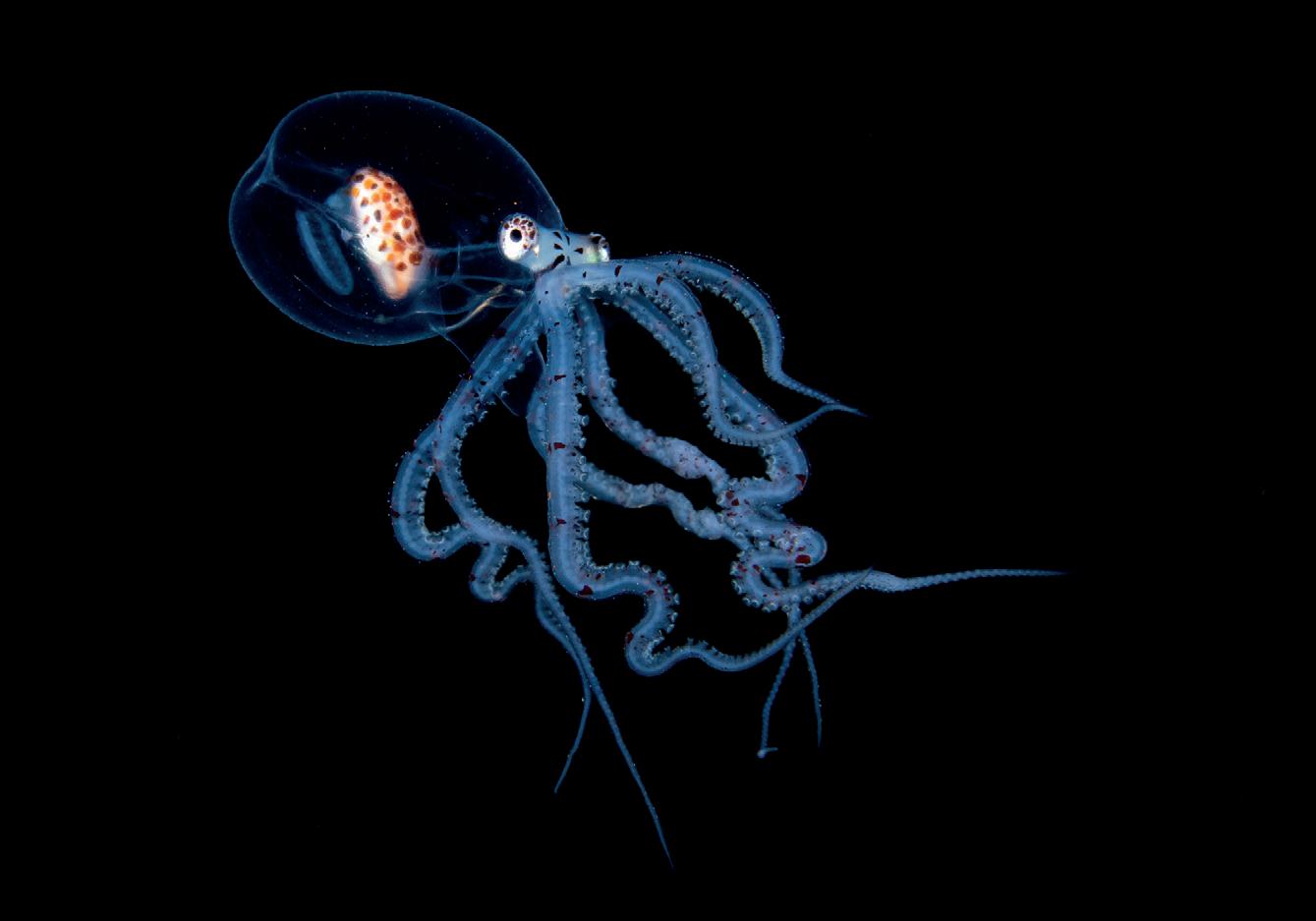
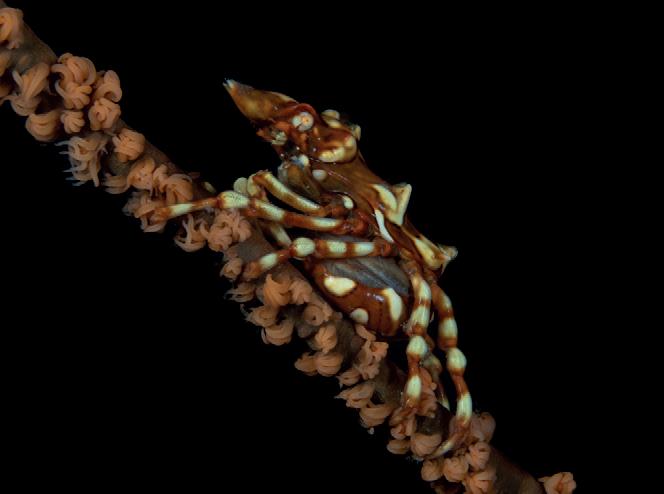
– I'd seen many photos of this bizarre octopus with a transparent head and I had been fascinated by its unusual, almost cosmic silhouette.
Anilao is famous for its black water night dives – they are truly unique. It's like traveling into space, only underwater. You plunge into the darkness of the night, and creatures drift around that you won't see anywhere else on a daily basis. Each immersion is a surprise,
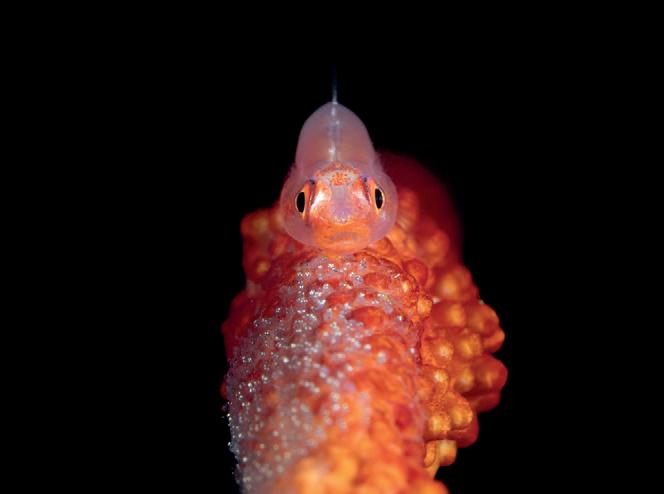
adrenaline rush and full focus on one, often tiny, hero.
This is one of those dives that will stay in your memory forever.
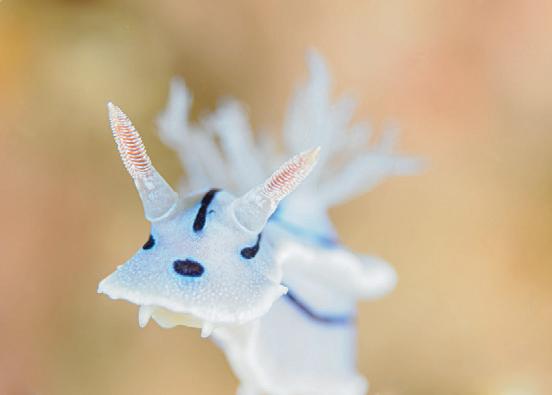
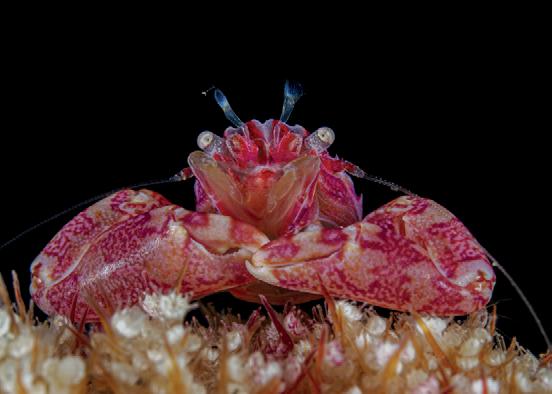
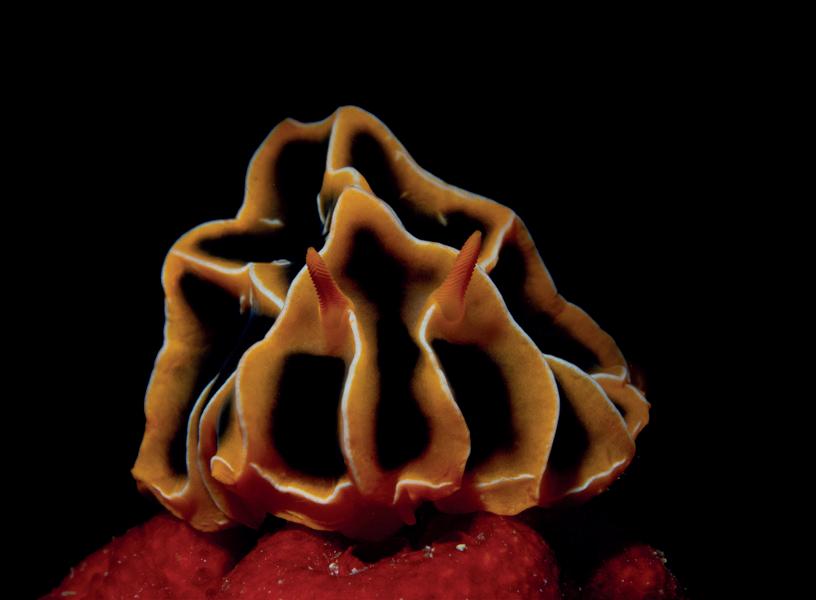
There are plenty of such amazing creatures in Anilao. Frogfish in every possible version, nudibranchs in colors that a marker manufacturer would not be ashamed of, shrimps, crabs, octopuses pretending to be something they are not. And on top of that, strange creatures from the depths.
And that is why choosing a few "characteristic" species is so difficult.
Because Anilao is not a single creature.
It is a daily search, discovery and sometimes surprises underwater.
The moment when the guide shows something new and you have a chance to take a photo.
This place taught me to really look at things.
And to which I keep coming back.
Say
the name BELIZE, and most divers immediately think of one thing – the world’s most famous Blue Hole.
But is it really the greatest diving attraction waiting for us there?
What other diving experiences can we look forward to on our trip, and what can we expect after the dives? The cultural differences, and what we need to keep in mind when planning our trip and our diving. Get ready for fantastic photos and plenty of interesting facts that would never have crossed my mind if I hadn’t experienced them firsthand – let’s begin!
Belize is a small country bordering Mexico and Guatemala. It is home to only 330,000 people, which means 16 people per km². That puts it among the thirty least densely populated countries in the world! Belize lies in Central America on the Yucatán Peninsula, on the Caribbean Sea, and is home to the second-largest coral reef in the world, making it one of the world’s top diving destinations! Because Belize was once a British colony, its official language is English, although many people also speak Spanish and Creole. The currency is the Belize dollar, which has a fixed exchange rate to the U.S. dollar of 2:1. The capital
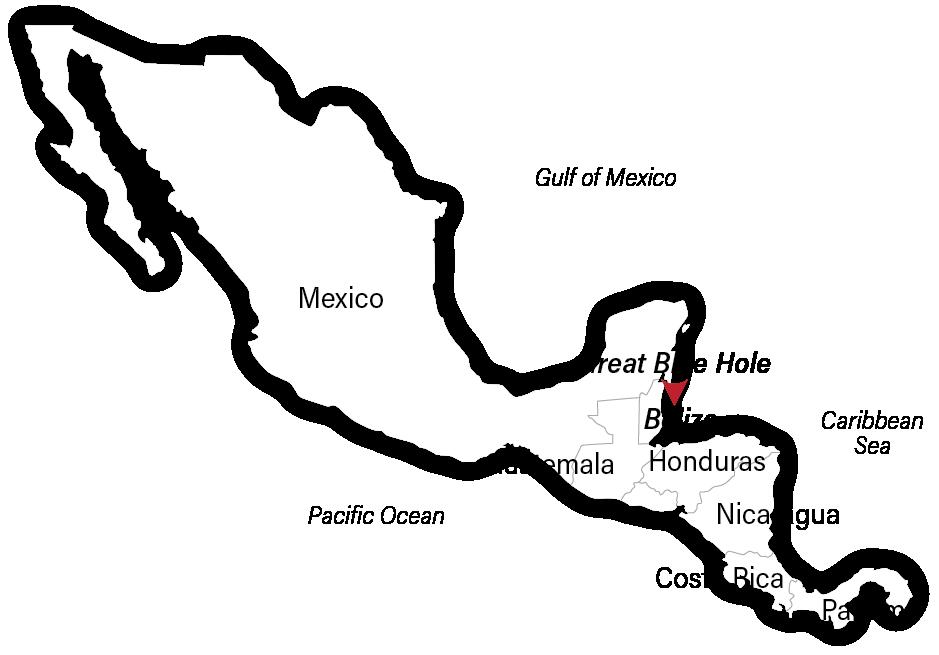
is Belmopan, after the largest city, Belize City, was destroyed by a major hurricane and the decision was made to move the capital inland, away from the coast. The best time for a trip is the dry season, which usually lasts from December to May, although even during that period a storm or brief rainfall is nothing unusual. As for safety, the website of the Polish Ministry of Foreign Affairs advises visitors to exercise particular caution.
That’s enough general information – in real life, the first thing that really hits you right after arrival is the lifestyle. Passport control is a true oasis of calm – for the officers, of course; for tourists, it means hours of waiting. At the hotel, it was exactly the same. The room wasn’t ready yet, but it would be soon When we got back from diving at 7 p.m., the girls were only just finishing up… For us, that would be hard to imagine; there, it was completely normal. Everyone there is incredibly laid-back. In my humble opinion, that’s exactly the thing we’ve lost through
our frantic pace of life, the endless to-do lists, and the constant rush… There, when the receptionist started talking to me, after 30 minutes I had to apologize because we were heading to dinner, and she was still saying, wait, tell me this, tell me that. I’m not sure you fully get what I mean – life there is simply calmer, more patient, built around a different rhythm, and for us that rhythm can already feel a little frustrating. We’re used to the idea that if something is scheduled for 12, then it has to happen at 12, period; for them, everything is flexible And it’s not just the lifestyle that surprises you – transportation does too, because people get around in golf carts. The food is delicious, and pretty much everyone will find something they like. There’s practically no language barrier. And as a travel destination? It’s full of absolutely beautiful places.
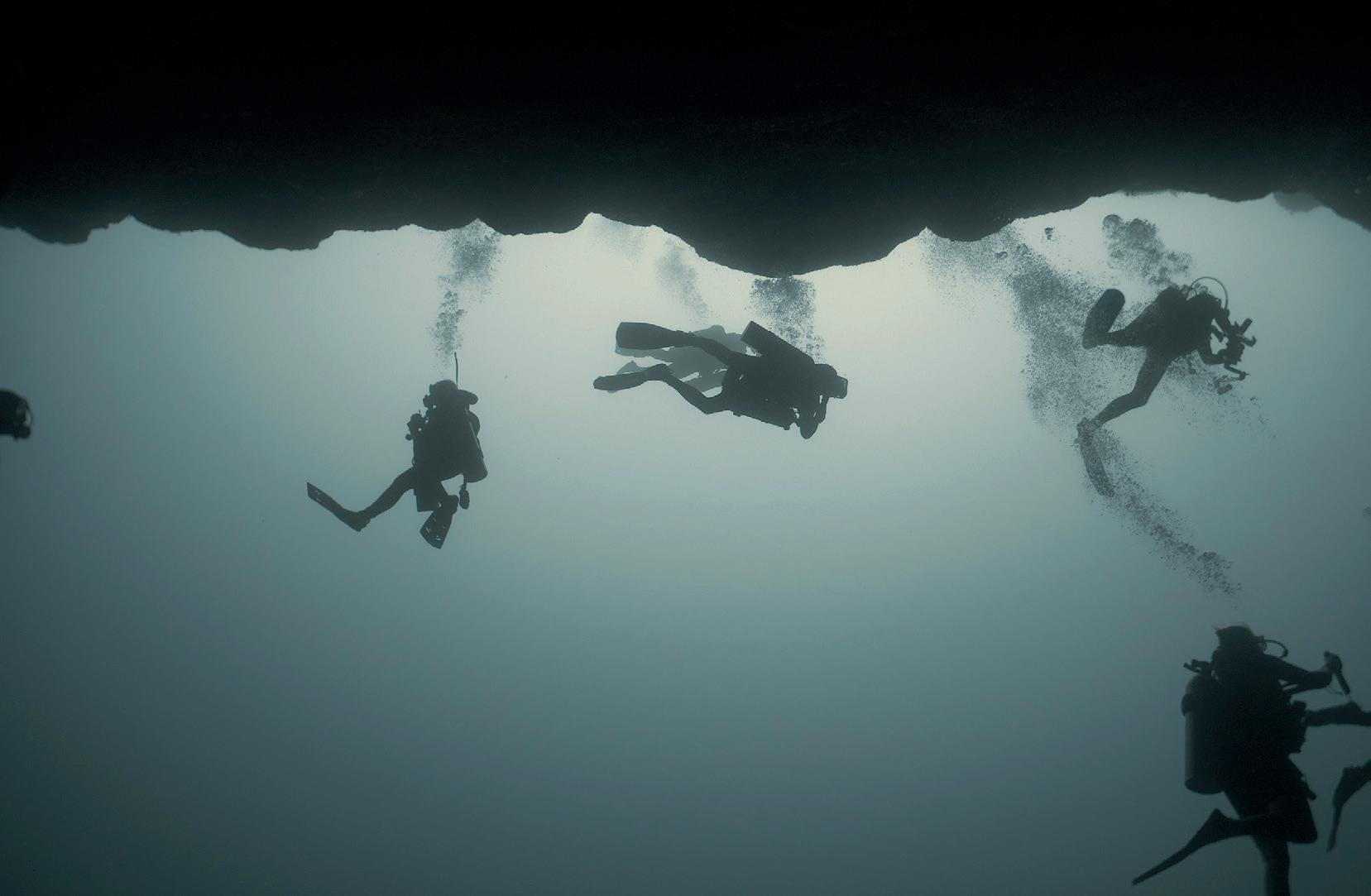
It would take pages to describe everything in detail, because this is not a place I can compare to anything else that comes to mind. So let’s move on to what Belize is most famous for: THE GREAT BLUE HOLE. Located about 80 kilometers off the coast of Belize City, in the heart of Lighthouse Reef Atoll, the Great Blue Hole is one of the most recognizable underwater formations in the world. This monumental sinkhole in the coral reef, visible even from space, has fascinated both scientists and diving enthusiasts for years. Its international fame was cemented by the films and expedition accounts of the legendary ocean explorer Jacques Cousteau. Today, the site
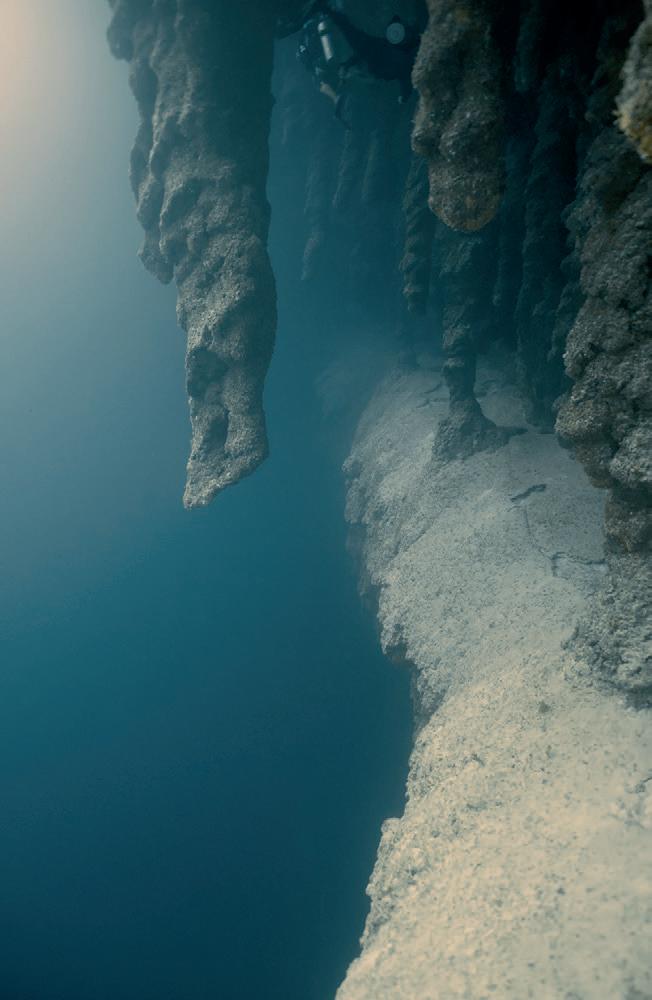
is protected under UNESCO and remains one of the region’s greatest tourist attractions. Nearby lies the picturesque island of Half Moon Caye. The distinctive dark navy circle contrasts with the turquoise water and the pale ring of living reef, creating a spectacular bird’s-eye view. In reality, the Great Blue Hole is an almost perfectly circular underwater sinkhole about 300 meters in diameter and reaching a depth of 124 meters. Its nearly vertical walls descend to around 35 meters, where the formation opens into a huge chamber resembling a cathedral hall. There are impressive stalactites there, some reaching lengths of up to 15 meters – evidence of the time when the cave stood above sea level.
The origin of this extraordinary place dates back to the Ice Age. Back then, it was an extensive karst cave, forming part of a larger system of underground passages. As the ice sheets melted, sea levels rose by more than 90 meters, flooding the cave complex. The final collapse of the cave ceiling – most likely caused by seismic activity and the pressure of the water – led to the formation of the massive sinkhole we know today as the Great Blue Hole.
Water clarity, often exceeding 60 meters, makes this place a true paradise for divers. Most dives descend to around 35 meters, where the monumental chamber with its stalactites begins. The waters surrounding the reef ring also offer excellent snorkeling conditions. Trips are organized from Belize City
as well as from the nearby islands. Beneath the surface, divers can encounter a rich variety of Caribbean marine life: colorful reef fish, barracudas, and several species of sharks, including the bull shark. It is this combination of spectacular geology and a thriving ecosystem that keeps the Great Blue Hole among the most extraordinary dive sites in the world.
Actually getting to the Blue Hole is not easy. We were departing from San Pedro. Meeting time was 5:30 a.m., then breakfast, packing gear, and about 3 hours of pushing the boat hard to get there. The Blue Hole itself is so enormous that, from the boat, you cannot see the entire circle. It simply looks like a vertical wall where the beautiful turquoise water ends and a vast depth begins, with every shade of blue imaginable. Diving the Blue Hole is fairly deep, since we descend to 40 m and stay there as long as our no-decompression limits allow.
One interesting detail: during the briefing, all values are given in feet and PSI, which means you have to do the math yourself – as I already mentioned, that’s just how things work there Since we’re on that subject, most cylinders have INT valves, so in the future it’s a good idea to bring an adapter for our DIN first stages, especially if you dive sidemount, which is also not very common locally, and lots of people were asking about the two tanks…
Back to the Blue Hole – the main attraction is the karst formations in the cavern section, which begins at 40 m and ends at around 50 m. These are truly massive formations and they make a huge impression – unless, of course, you’ve just spent the whole week diving cenotes, in which case the impression is much smaller, but, you know, the more you have, the more you want On top of that, you have to remember that at this depth narcosis and gas consumption are both fairly significant, so the entire dive lasted about 30 minutes. Unfortunately, we didn’t encounter any larger marine life that might also have added something extra to the dive.
And just like that – our Blue Hole dive was done. Did we like it? As always among divers, opinions were extreme: on the one hand, so much travel just to see a deep hole and do a 30-meter dive; on the other, real awe at the sheer size of the formations. Everyone takes it in their own way. In my opinion: was it my best dive ever – NO. Would I do that dive again – 100% YES. Would I go back – of course YES.
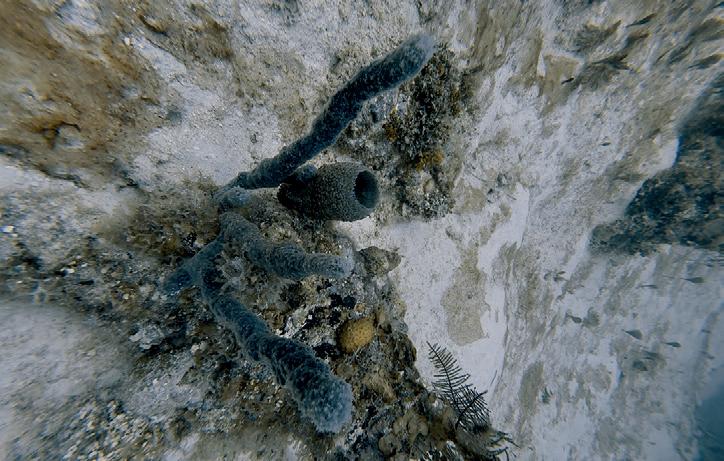
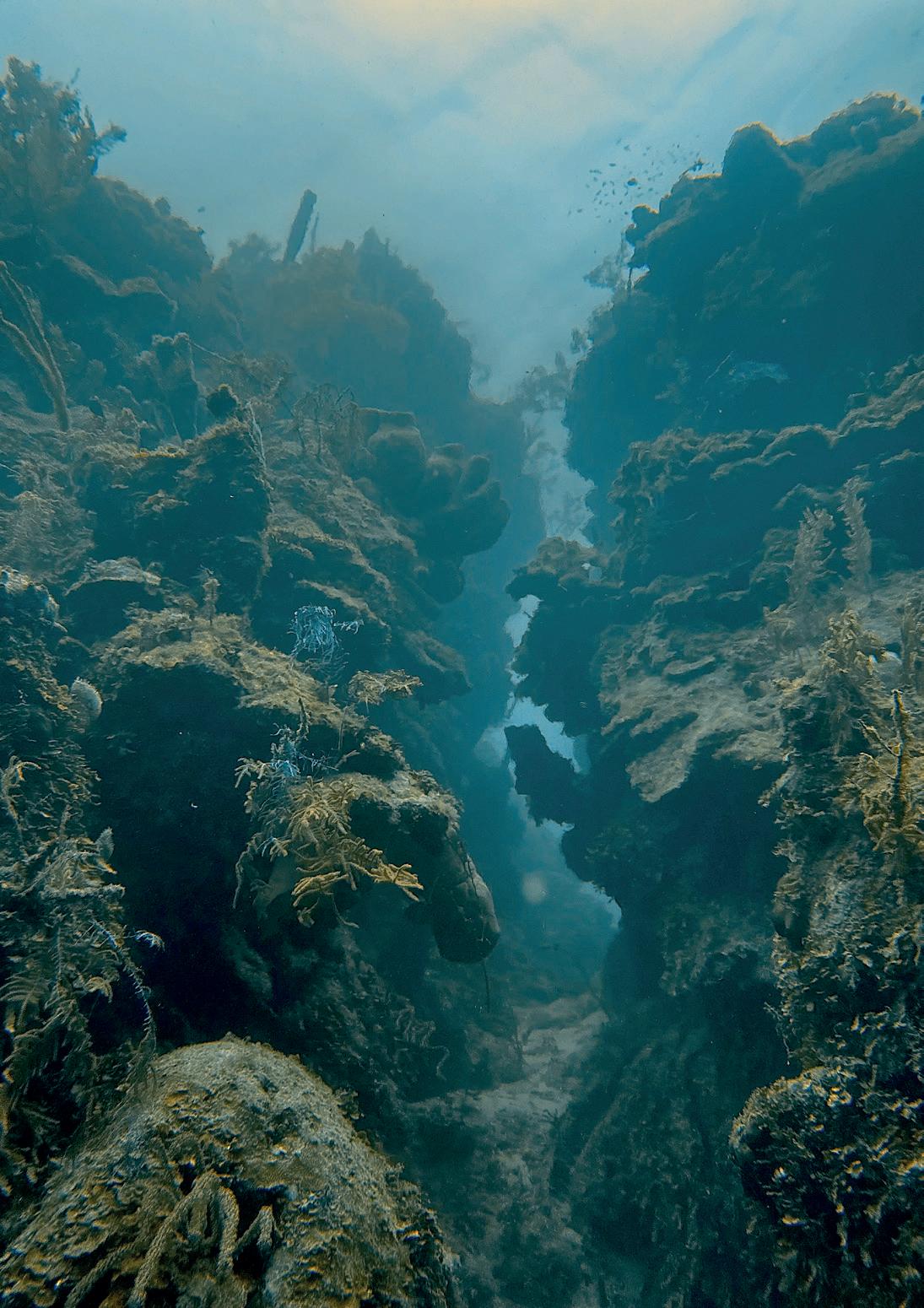
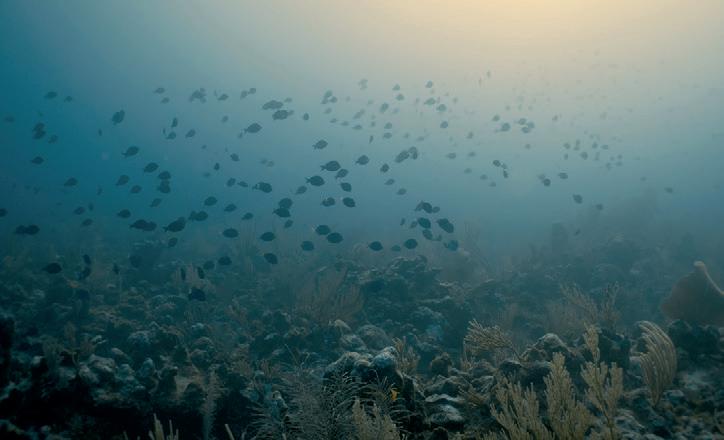
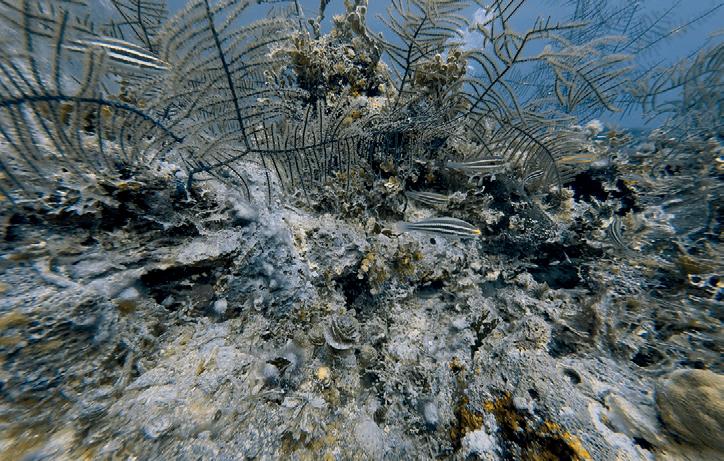
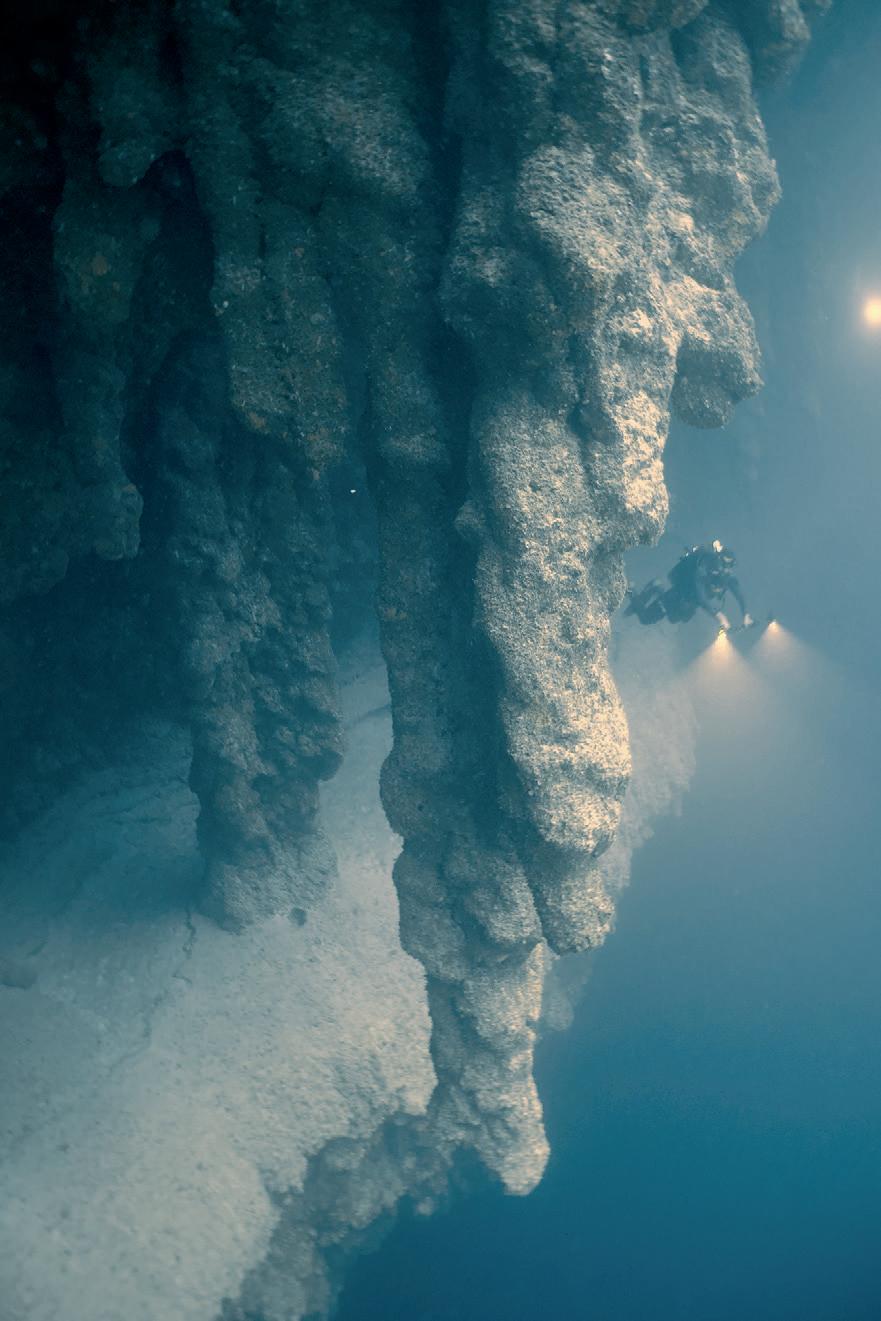
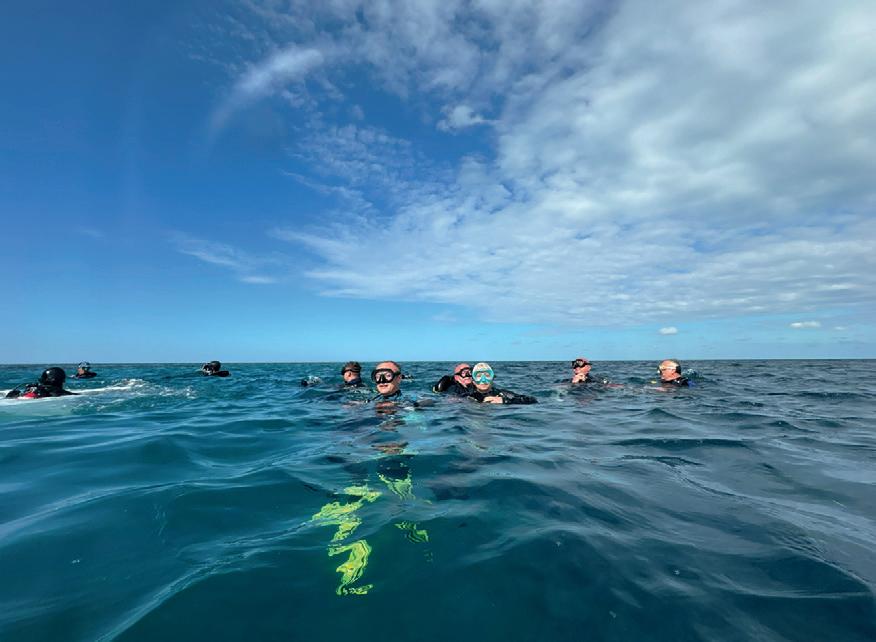
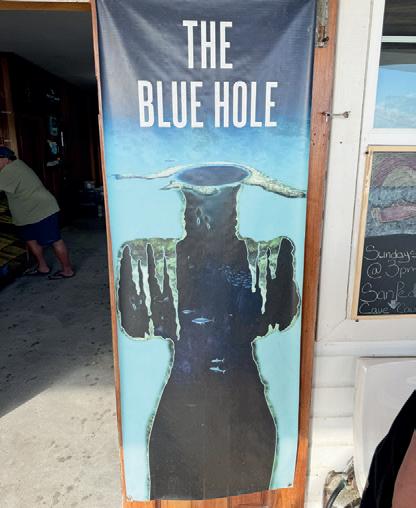
The plain facts are these: the Blue Hole simply has very good marketing and publicity. Most people expect something out of this world, because from the airplane photos they think they’re going to see one of the wonders of the world – while it is simply, and at the same time impressively, the largest Blue Hole in the world… For lovers of caves, speleology, and rock formations – it’s an amazing experience. For people who are not into that kind of thing – it’s a huge sinkhole with a few stalactites, but no plants and no marine life. The conclusion here is the same as with most dive destinations: they won’t appeal to everyone, and the only person who will truly find out is the one willing to experience it firsthand. Fortunately, after the Blue Hole dive, we still had two more dives on the nearby reefs, where everything was full of life and once again completely different from diving the Blue Hole. And here nobody felt disappointed, because everyone found something for themselves. We got back at around 7 p.m., so this kind of trip really takes the whole day, but on the way back everyone was smiling and happy.
To sum up – diving the Blue Hole in Belize will not appeal to everyone… It’s a bit like spicy food – you have to get used to it. But you’ll have to find out for yourselves whether you’ll be among those who place it in their world TOP 5, or just wave it off and say it’s overrated… Fortunately, the Blue Hole also comes with diving on the nearby reefs, which is a completely different diving dimension – but maybe that’s a story for the next article…
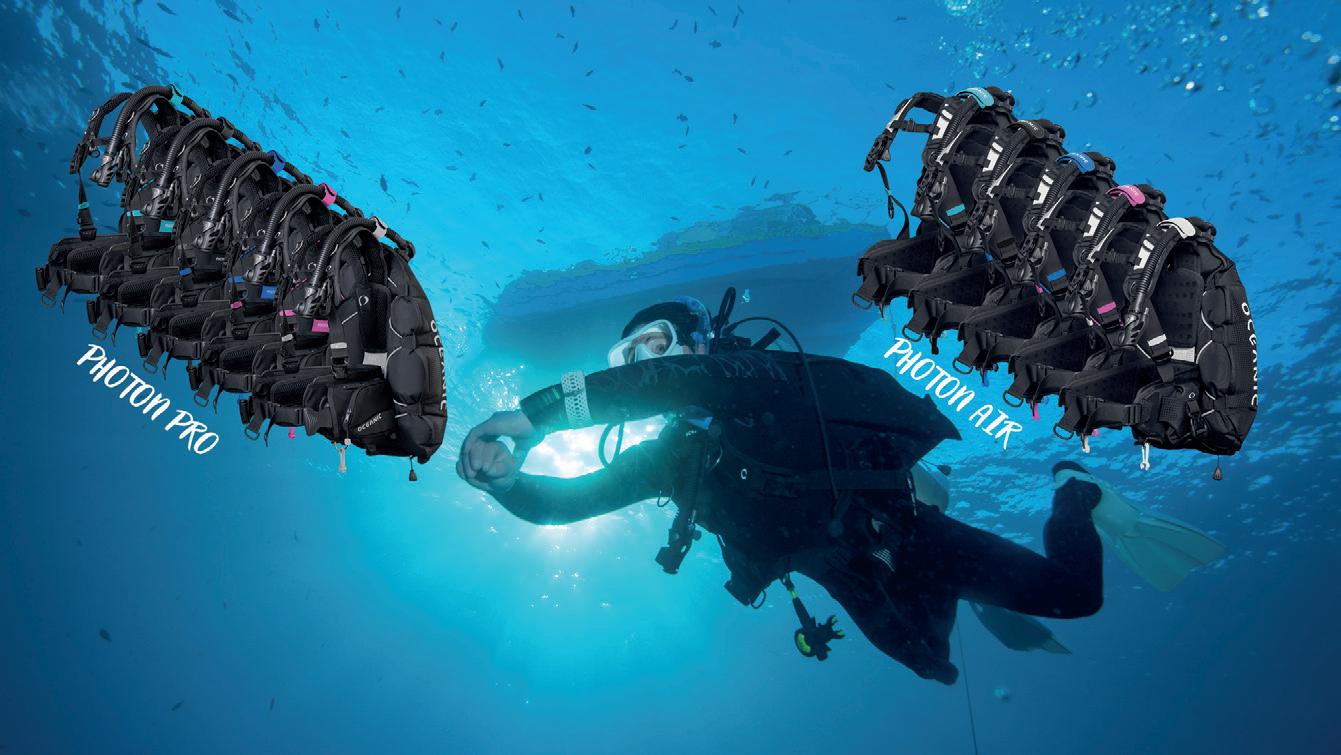
The Oceanic Photon series (new) shows how much the concept of a jacket can vary depending on the diving style. In this family we can find two main directions: the more classic Photon and the ultralight Photon Air. At first glance, they look similar, but their philosophy of use is clearly different.
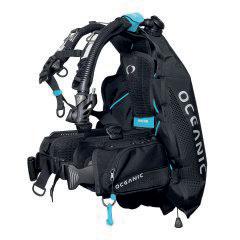
Photon Pro is a jacket for divers who expect stability, high buoyancy and a large amount of ballast. The lift, depending on the size, reaches 15-19 kg, and the ballast system can hold up to 13.6 kg lead.
This is equipment that will work well in colder waters, with a thicker wetsuit or a dry suit. The sturdy design and steel elements increase durability, although they increase the weight of the set – about 3.8 kg.
In practice, this means one thing: The Photon Pro is a jacket for intensive use, for divers who want to have plenty of space for accessories, ballast and buoyancy reserve. On the other side is the Photon Air –a jacket designed for mobility and travel. The key here is the minimum weight and compact design. The whole system weighs about 3 kg, and the wing with a bag on the back reduces drag in the water and makes it easier to maintain horizontal trim.
The Photon Air also features a quick-drying 3D mesh construction that reduces water retention after a dive – a practical thing when gear needs to get into a bag or on board a boat quickly.
The most interesting element, however, is the modular Photon system. The shared frame allows you to expand the jacket with additional pockets, color sets or accessories, without having to replace the entire BC. This solution will be especially appreciated by divers who like to match their equipment to their own style.
1. Diving Style
If you dive locally, in cold water and with a lot of equipment – the Photon Pro will be a more stable choice.
If you travel often – the Photon Air wins with weight and packability.
2. Ballast & Buoyancy
The Photon Pro gives you more buoyancy and more space for lead. The Photon Air gives up unnecessary weight in favor of full freedom of movement and a streamlined silhouette underwater.
3. Mobility
Photon Air is easier to pack and dry faster – and that makes a huge difference on the go.
In short: The Photon Pro provides the foundation for dives that require high buoyancy and a reserve of ballast, while the Photon Air offers a streamlined silhouette
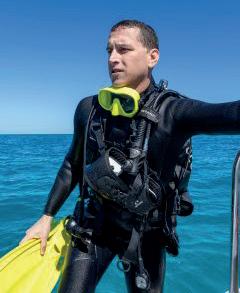
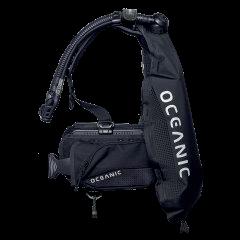
and minimal weight. Although they differ in design, both systems use the same modular base, allowing you to perfectly configure the equipment for a specific diving style.
Practical information: The straps position adjustment system (A.P.S.) allows you to perfectly adjust the jacket to your silhouette (this is especially important when switching from foam to dry suit).
We tested these jackets in the Editorial Office – we can recommend them to you, they passed the exam with an A :)
A little mention of extras:
● Photon Storage Pocket (Utility Pocket): Low-profile pocket mounted under the waist belt, perfect for a slate or spare light.
● Photon Dive Housing Pocket: Dedicated Oceanic+ Dive Housing Case Holder that allows you to keep your iPhone close at hand.
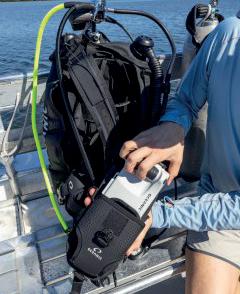
You can find the link to the products on the website https://www.nurkowanie-ecn.pl/kategoria-produktu/jackety-nurkowe?brand=brand-oceanic
The volcanic pearl of the Aegean Sea above and below the water
Text and photos BOGDAN ZAJĄC
Imagine white houses perched on the edge of a caldera, churches with blue domes, and spectacular sunsets over the Aegean Sea.
SANTORINI HAS LONG BEEN CONSIDERED ONE OF THE MOST PHOTOGENIC ISLANDS IN EUROPE.
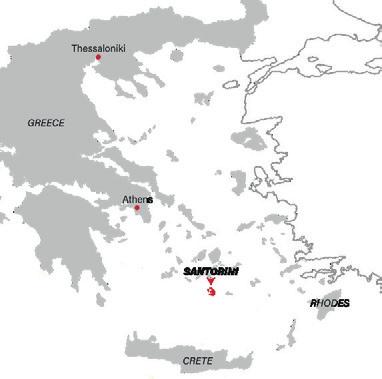
Part of the Greek Cyclades archipelago, it was formed by a massive volcanic eruption that shaped its distinctive semicircular coastline. It is precisely this volcanic origin that makes Santorini fascinating not only above the water, but beneath its surface as well.
Although the island is mainly associated with romantic terraces in Oia or vineyards growing on black volcanic soil, it is increasingly attracting divers looking for a different, more rugged underwater landscape.
We stayed at a hotel in the village of Perivolos, where one of the advantages was a diving base located about 200 meters from the hotel. This is especially convenient for recreational divers.
I used Caldera Diving Center – unfortunately, I only managed to complete two dives. The base is well organized, with full rental equipment available and a very friendly and helpful staff.
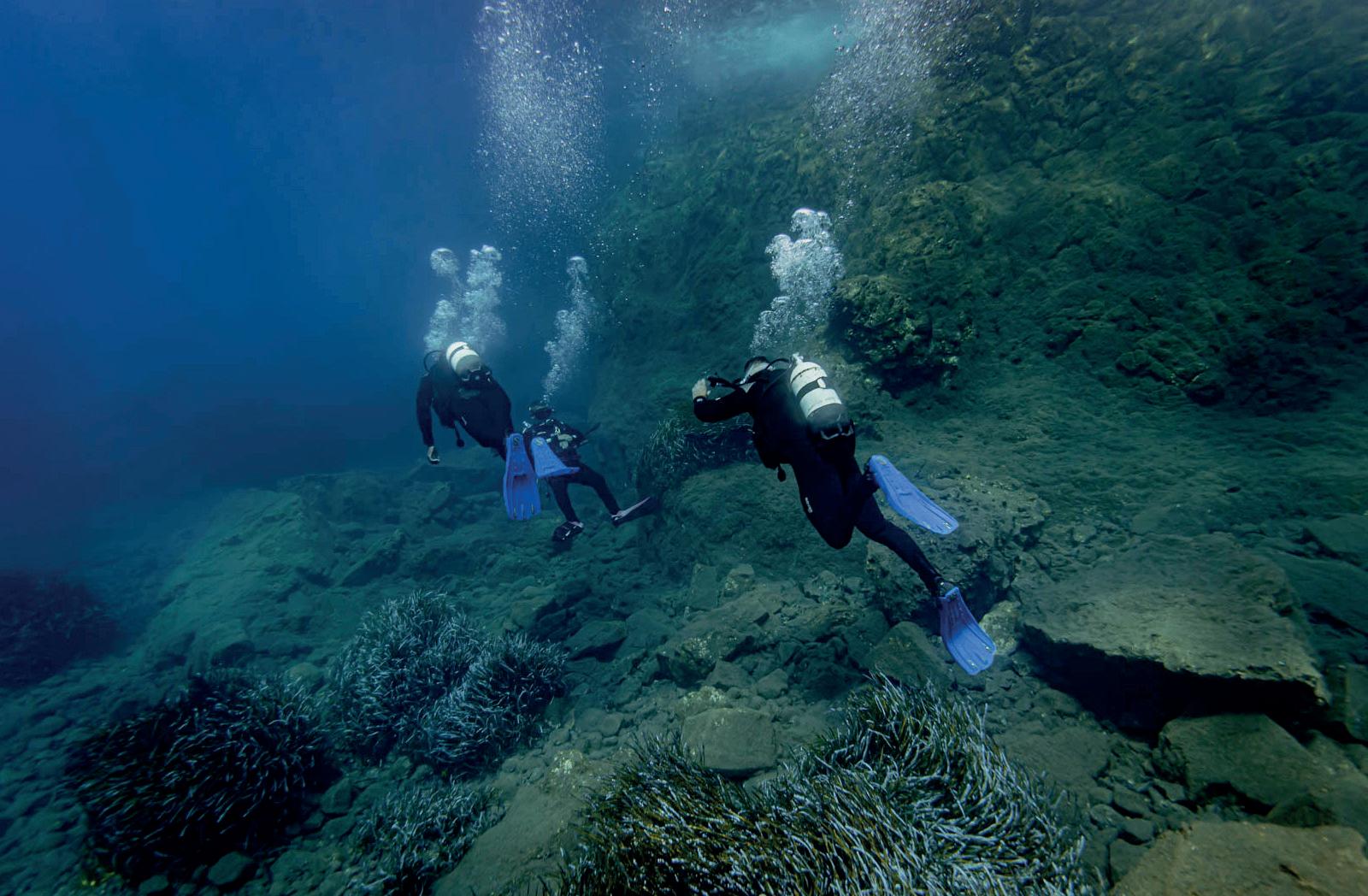
Local dive sites offer a wide range of depths, from recreational to technical diving. I focused on recreational dives up to 15 meters. The profile was gentle, and entries were made from a dinghy.
The biggest advantage is the excellent visibility, often exceeding 20 meters. The crystal-clear waters of the Aegean Sea allow you to fully appreciate the structure of rock formations and the play of light in underwater corridors.
Underwater Santorini is primarily about rocks, lava flows, and caverns – empty spaces within volcanic rock formed by past eruptions. Solidified lava has created imaginative formations, arches, crevices, and small caves where light streaming from the surface produces spectacular visual effects.
Diving in such conditions feels like exploring an underwater canyon. Dark rocks contrast beautifully with the intense blue of
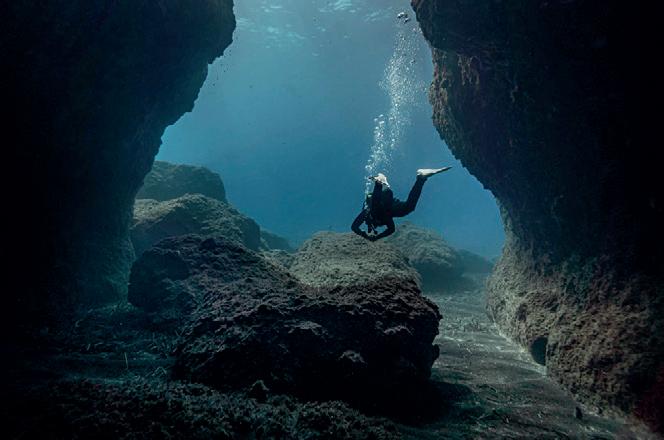
the water, and the varied topography makes even shallow dives feel like a true adventure.
The caverns are generally spacious and accessible to recreational divers, of course with proper safety precautions and under the guidance of local experts who know the characteristics of the area well.
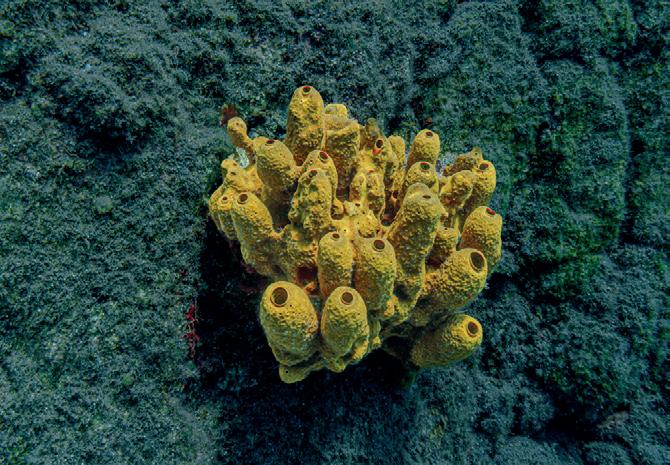
Those accustomed to tropical reefs may be surprised by the relatively small amount of marine life. Santorini is not a “fishheavy” destination–you won’t see schools of colorful fish or the rich macro life known from the Red Sea.
Underwater, you may encounter solitary fish, small species hiding in rock crevices, or occasionally octopuses. One of the attractions was also the expansive meadows of seagrass. This is diving for those who can appreciate the beauty of a raw landscape, silence, and space.
The lack of abundant marine life also has its advantages. The water clarity and absence of distractions allow you to focus on rock formations, wide-angle photography, and playing with light.
Santorini is an excellent choice for beginner divers, but more advanced divers will also find something for themselves. Couples and groups can perfectly combine relaxation with diving, and photographers will certainly be drawn to the underwater scenery.
It’s a destination where diving is a perfect complement to a holiday stay, alongside sightseeing, walking along the caldera cliffs, and tasting excellent local cuisine and wines.
The awareness that you are diving in waters filling a former volcanic caldera adds a unique character to every dive.
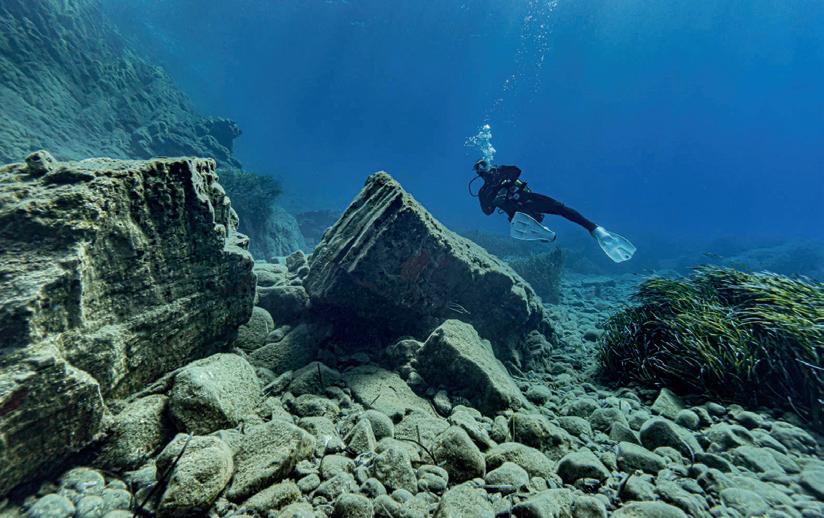
Beneath the surface, traces of the island’s geological past are still visible – cracks, layers of solidified lava, and irregular rock structures.
Santorini may not offer the most spectacular fauna of the Mediterranean, but it provides something different: a sense of connection with the living history of the Earth. It is diving in the shadow of a volcano – calm, safe, and full of raw beauty.
For those looking for an alternative to classic reefs and wanting to combine comfortable relaxation with diving in a unique setting, this Greek island is a perfect choice.
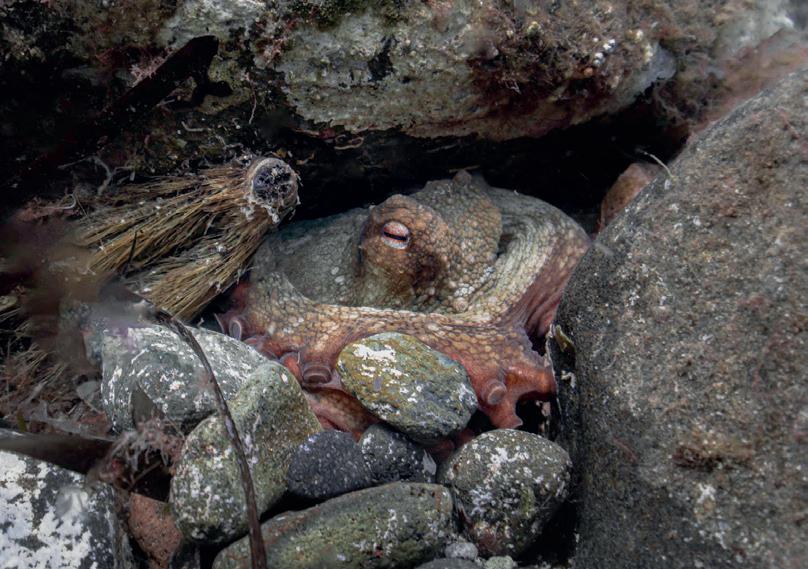
Text JAKUB BANASIAK, EDWIN RADZIKOWSKI Photos EDWIN RADZIKOWSKI
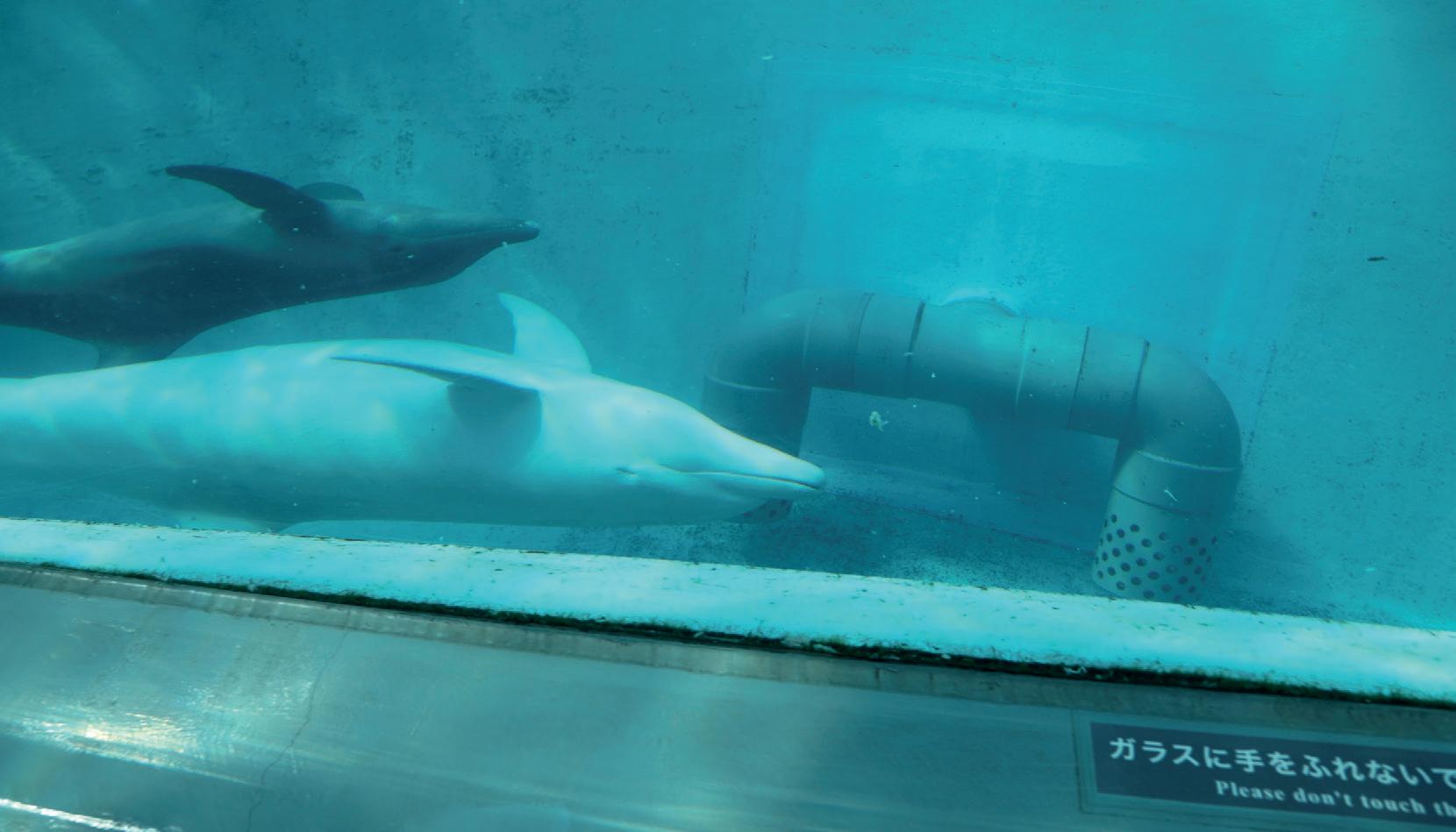
ALMOST EVERYONE HAS HEARD ABOUT THE TRAGEDY OF DOLPHINS KIDNAPPED AND KILLED IN A BLOODY BAY IN TAIJI, JAPAN.
But it is one thing to listen to or watch films on the Internet, and another thing to know and see with your own eyes the drama of a particular dolphin caught there...
The camera above the door recorded my movement, thus activating the door opening mechanism, which slid apart with a characteristic hiss and invited me inside. I hear music. Deep, calm, moving. Not a prelude, but something that immediately penetrates the body and mind. I enter a corridor surrounded by water. The concrete walls are dirty, dark, covered with stains in places. Cloudy water, full of slick fringes, floating and sticking to the walls – sticky to the eye. The smell of moisture, the ocean and fish mixes with something chemical, metallic, something very unnatural. Out of the corner of my eye I see a white shadow. I turn my head. It's Angel. Albino dolphin of the bottlenose species. It swims upside down, next to it another dolphin –a spinner dolphin – also in the same strange, repetitive position. They circle around the pool, swim past me, turn around, emerge for air, dive, and again the same loop. Endlessly. Every move is like a mantra. Each return to the same position is a reminder of the closure that limits them. This view is surreal. Tears came to my eyes and I couldn't stop them. I feel like I'm in a dream. It's hard to comprehend all this when you have knowledge about dolphins and what they experience in confinement. I see what I have only read or heard about. It is so very difficult to make it
real and get on with it. On the walls there are labels describing dolphins that swim in the pool. I looked into Angel's eyes. One was concave, the eyelid looked scarred, as if something was no longer there. The other, convex, closed, sometimes seemed minimally open. I couldn't take my eyes off. Every gesture, every turn, every exhale in the water – full of seriousness, sadness, and quiet desperation.
I go up the stairs, to the platform, from where you can see the pool from above. From this perspective, the water seems almost clear. It reflects light, moves, spins in the rhythm of the waves. Dirt, tassels, slime – invisible from above. But the pipe above the pool still casts a shadow of reality: rust, filter hole, metal of the old structure. There is nothing natural here. I don't see any toys or stimuli for dolphins anywhere – just concrete and water in a repetitive loop. I turn around. From here, you can see the entire area of the local dolphinarium. Taiji Whale Museum. The main building, which is also a whaling museum, stands magnificently, as if proudly presenting the history of Japanese whaling. On its façade, there is a huge graphic in the style of Japanese painting from the 16th century depicting a whale, next to two small pools where dolphins
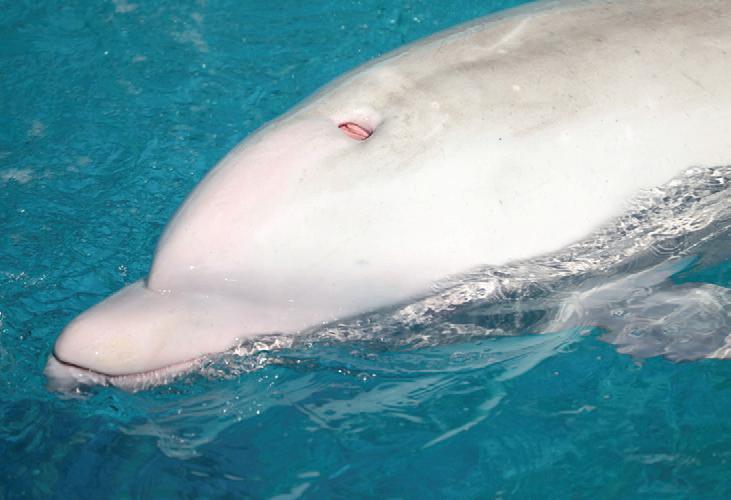
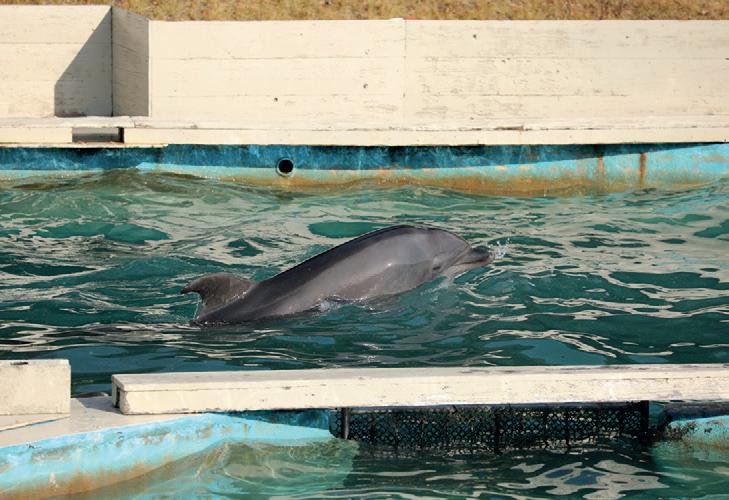
participate in the show three times a day. Everything is located on a tiny bay, within which there are water cages, and in them more dolphins stick their heads out, begging for fish from the hands of people on the pier. They look like they're hungry all the time. The entire area is separated from the ocean by a concrete wall. Angel and the other dolphins come from hunts organized in Taiji. Angel was captured on January 17, 2014. According to people documenting these events, its mother, after hunters separated her from the cub, dived and was never seen on the surface again... The rest of the herd was brutally killed and their bodies sold to a butcher in the port. I stand there for a long time, looking at Angel, at her eyes, at the repetitive movement. I feel the weight of the whole place. The silence of the corridor, the echo of the music, the contrast with the open sea behind the concrete wall – this is the image that stays with me. An image that does not allow you to forget.
Edwin Radzikowski,
Captain Paul Watson Foundation Poland
Understanding Angel's increasingly deteriorating health requires first defining its biological specificity. Angel is not a leucystic individual (simply white), but a "true albino", which determines its extreme sensitivity to external factors. Albinism is a congenital anomaly consisting of a total or partial deficiency of melanin pigmentation in the skin, iris, choroid, but also in other
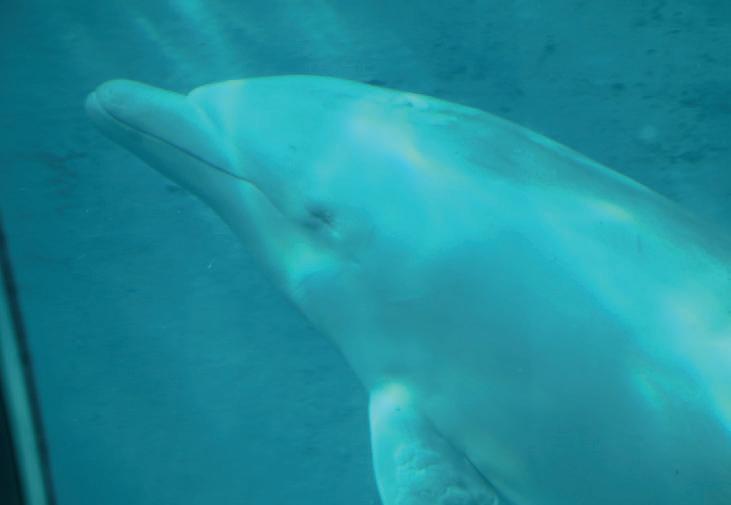
tissues. In Angel's case, the lack of melanin in the iris causes her eyes to have a characteristic pink or red hue, resulting from the visibility of blood vessels in the retina and choroid. This pigmentation deficit carries a number of negative physiological consequences, which in captivity become a source of chronic suffering.
Melanin in the eye acts not only as a pigment, but also as a protective barrier and an element supporting the proper development of optic nerves. Albinism in Angel causes that light can penetrate not only through the pupil, but also through the sclera and iris, which results in degradation of the retinal image and chronic pain in strong sunlight. When feeding and interacting with trainers, dolphins are forced to look upwards, in the direction of light, to receive a fish. For an individual suffering from photophobia, it is a form of physiological torture. Angel's constant closing of the eyes is direct evidence of pain caused by both light and probably a chemical burn to the surface of the eyeball.
The first recordings of Angel from the Taiji Whale Museum, recorded by Karla Sanjur, showed the unnatural behavior of the bottlenose dolphin: avoiding swimming with other individuals, less frequent surfacing for air, and apathy. Later, Angel was placed in a small, covered tank, which was initially considered an attempt to protect her skin and eyes, but quickly turned out to be the source of other pathologies. In this small,
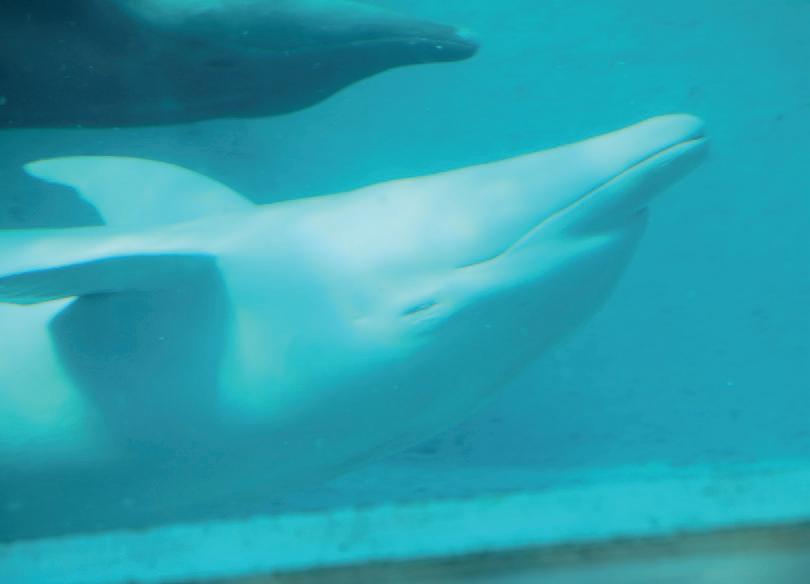
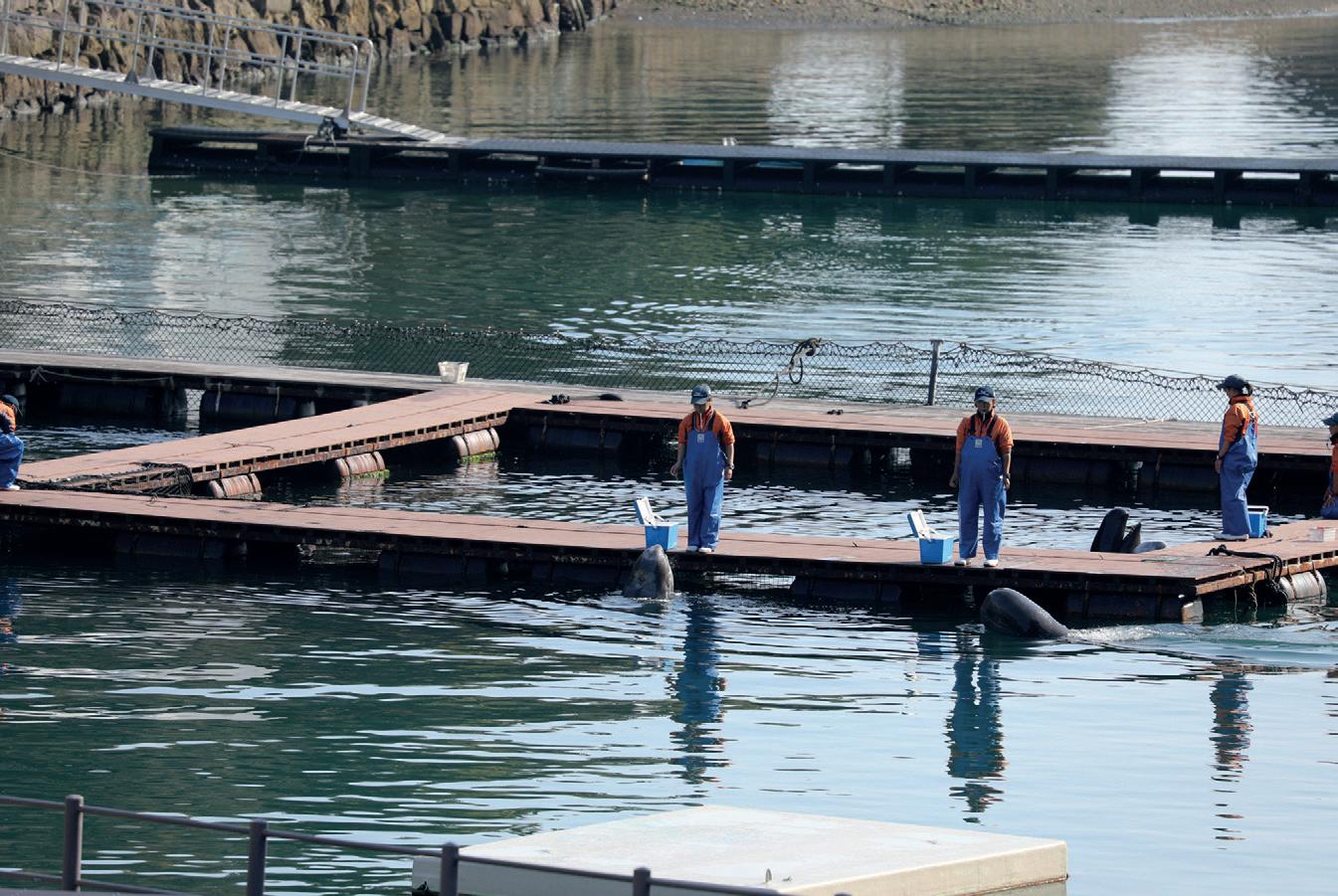
crowded pool, Angel was harassed by other dolphins, e.g.male striped dolphins. Reports from 2015 began to indicate that Angel kept her eyes closed almost constantly. It also often floated motionless on the surface of the water, which is a typical symptom of depression and lack of stimulation in captivity. In December 2017, Mark J. Palmer of the International Marine Mammal Project (IMMP) reported that despite its weight gain, Angel continues to suffer from stress, mainly due to aggression from reservoir's residents. Its eyes remained closed during most of the observations. This suggested persistent irritation or pain in the cornea.
In recent years, Angel has been spotted missing teeth in photos shared by the Dolphin Project and IMMP. Bottlenose dolphins are monophyodonts, i.e. they have one set of teeth for life. Angel's tooth loss has been interpreted by veterinarian Luca Giovagnoli, observing Angel in Taiji, as a secondary genetic change or the effect of chronic stress, which in albinos can lead to anomalies not seen in healthy individuals.
It's 2026. Edwin's account of meeting Angel indicates that the dolphin is suffering more and more. Chlorine destroys the tear film, which in dolphins has a specific mucous structure protecting the eye from osmosis and friction. Prolonged chemical irritation leads to corneal opacity, scar formation, and ultimately blindness. Angel, with its eyes devoid of protective melanin, experiences these effects with greater intensity. Therefore, it seems that Angel lost her eyes. Such is the hell of dolphinariums. Not only for albino dolphins. Jakub Banasiak
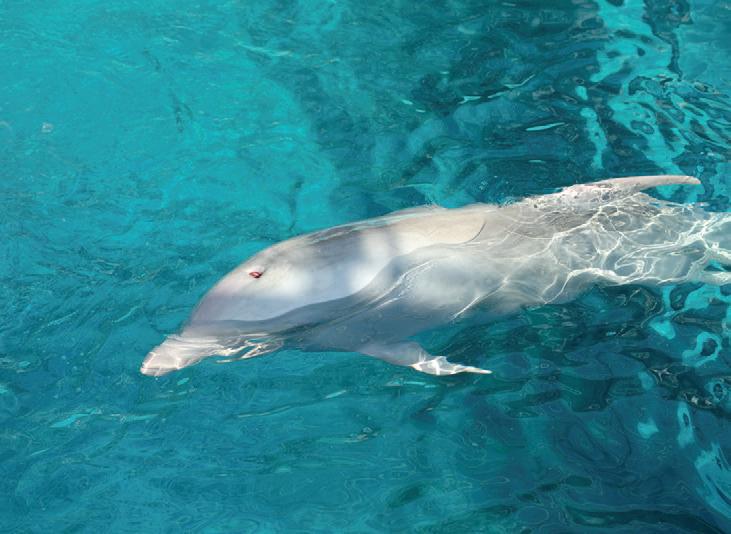
Help end the era of dolphinariums. Join the campaing NO! FOR DOLPHINARIUM, the main goal of which is currently to convince Polish travel agencies to stop promoting and selling trips to dolphinariums.

Use the qr-code and sign the petition: https://niedladelfinarium.pl/ powiedz-nie/

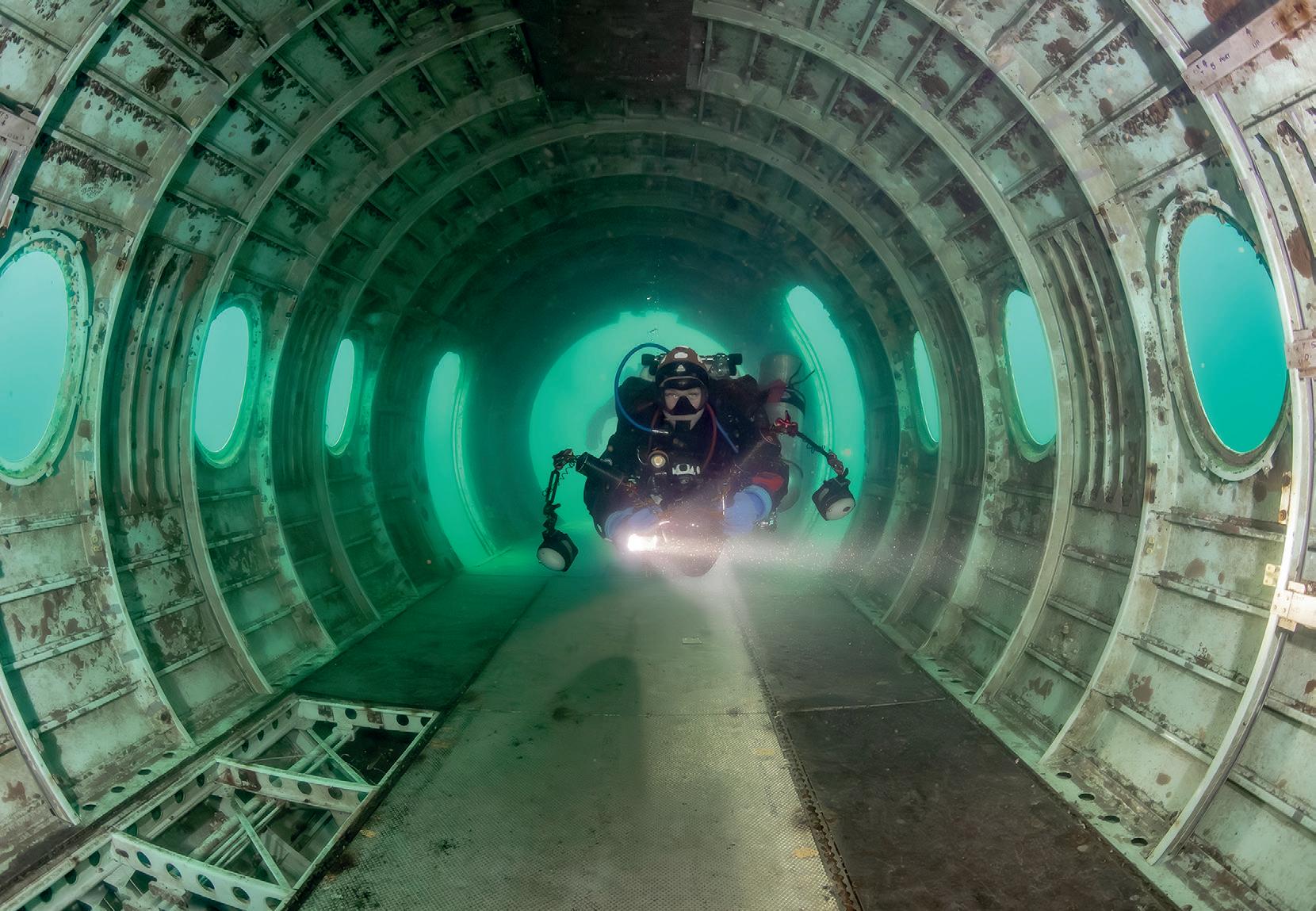
We ended up at Capernwray a bit by chance, on our way back from diving with seals off the coast of England.
Those were great dives, but demanding ones – visibility ranged from 2 to at best 5 meters. There was surge underwater, and the swirling water could really spin a diver around. There was plenty of adrenaline and excitement, but comfort was definitely not the strong point of those dives.
On the way back through the United Kingdom, we stopped for a moment in London. A Polish friend living in England then said:
– Capernwray Quarry is practically on the way…
A quick look at the map, a short discussion, and the decision was immediate. A small detour, one dive, and then back on the road. As it later turned out – it was an absolute bull’s-eye.
Capernwray is a flooded limestone quarry (Jackdaw Quarry) located in the village of Over Kellet, near Carnforth in Lancashire, in northern England. After limestone extraction ended, the quarry gradually filled with water. In the 1990s, its diving
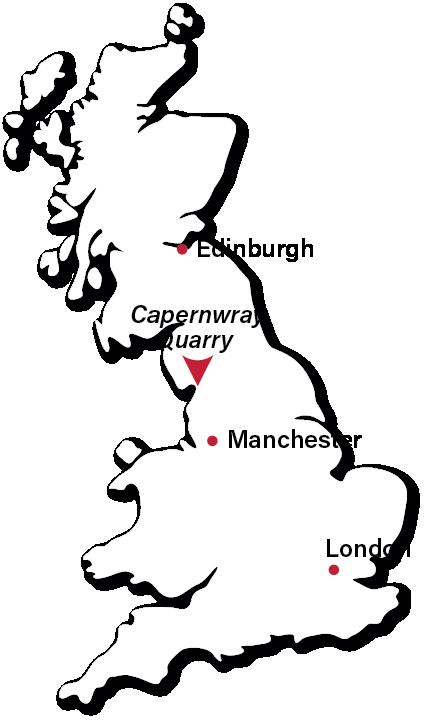
potential was recognized, and in 1995 an official dive center was established there. Since then, the site has been run as a private diving facility. Capernwray is a project developed by people with a passion for diving and safety in the water. Today, it is one of the best-known inland dive sites in the United Kingdom. It attracts both students and experienced divers who want to spend a day in the water in calm and comfortable conditions.
As soon as you drive onto the site, it is obvious that this place was designed with divers in mind. A large parking area, a spacious dive center, a shop and rental facility with a wide range of gear, and a cylinder filling station. Everything is well organized
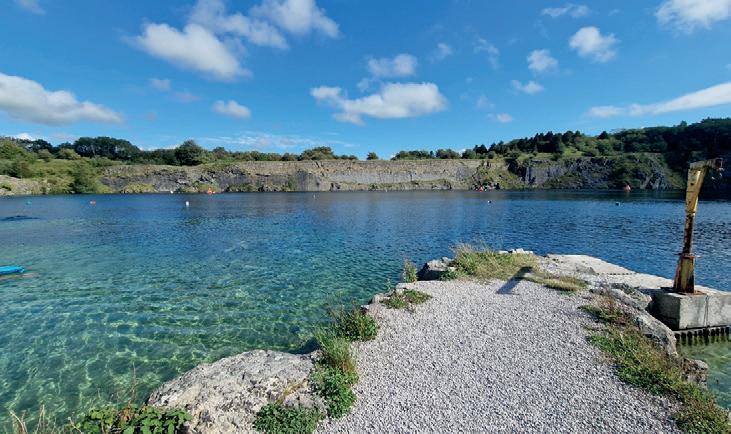
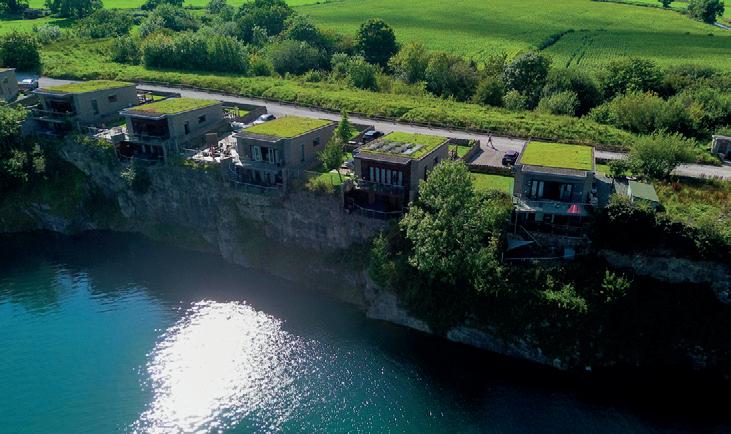
and prepared for a large number of visitors. On site there is also: a restaurant overlooking the quarry, toilets and showers, training facilities, and wooden accommodation cabins with a view of the water. And the view from the terrace over the calm surface of the water and the quarry walls is genuinely impressive.
It is an ideal place for a weekend dive trip or several days of training. The infrastructure is well set up for divers, which makes the whole stay at Capernwray comfortable and genuinely enjoyable.
The dive
August. A quarry. In my head I had the usual image of that classic green inland-water haze. The smile came the moment I descended. Visibility was around 15 meters – for that time of year, really very good. Apparently, in winter it can reach as much as 40 meters. Water temperature was around 23°C, so for an inland site it was genuinely comfortable. The maximum depth
of the quarry is about 22 meters, which makes it ideal for long, relaxed dives and unhurried exploration.
The one thing that can really surprise you at Capernwray is the huge amount of metal underwater. Wrecks, steel structures, and various installations make compasses behave quite erratically. At one point the needles started spinning in circles, so navigation had to rely more on the site map and recognizable landmarks. It adds a bit of an exploratory feel to the place.
After a few minutes, a huge shape began to emerge from the greenish water column. First a wing.
Then the fuselage. And finally the entire passenger aircraft – a Hawker Siddeley HS 748. I entered through the door and swam inside. Beams of light came through the windows, cre -
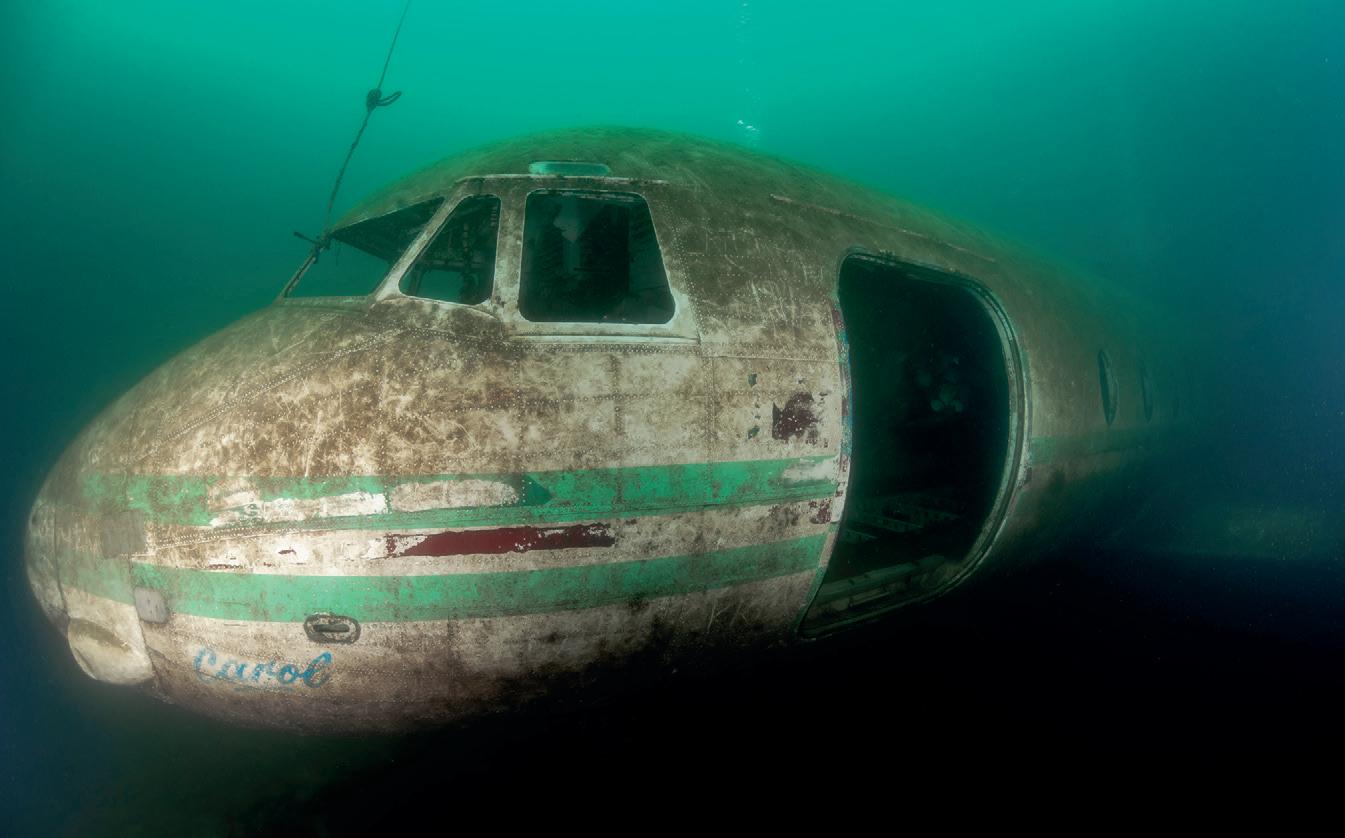
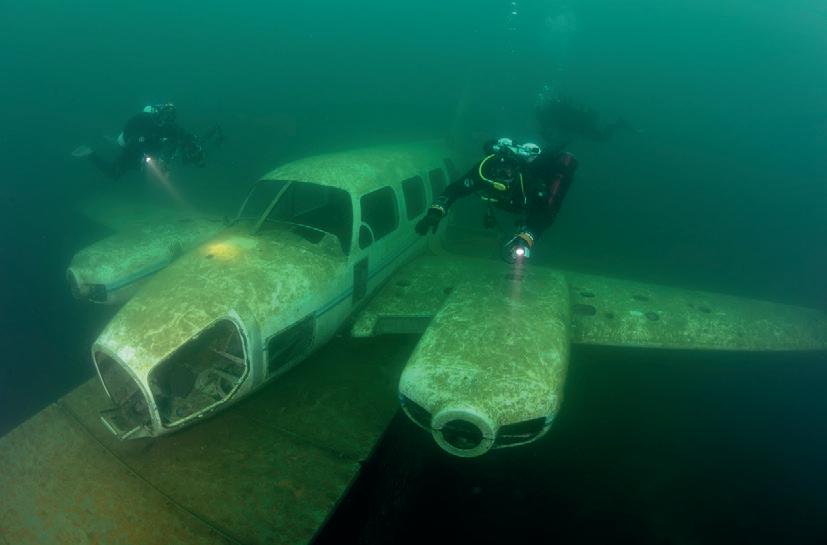
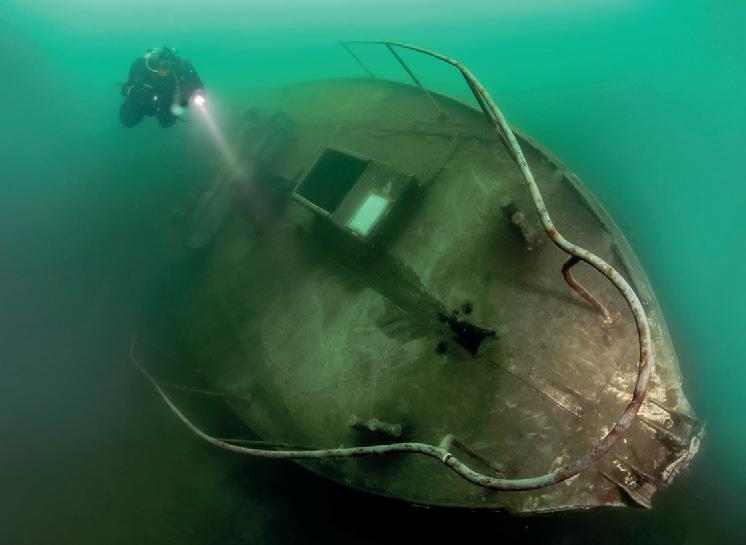
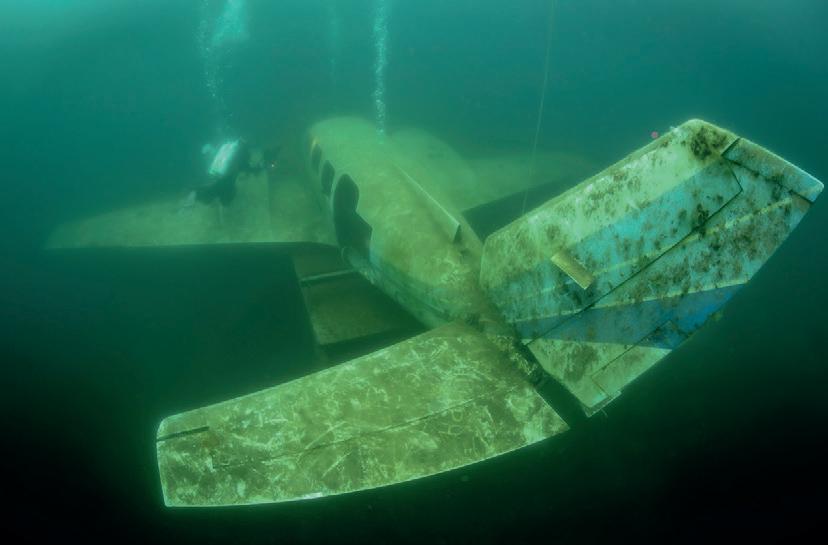
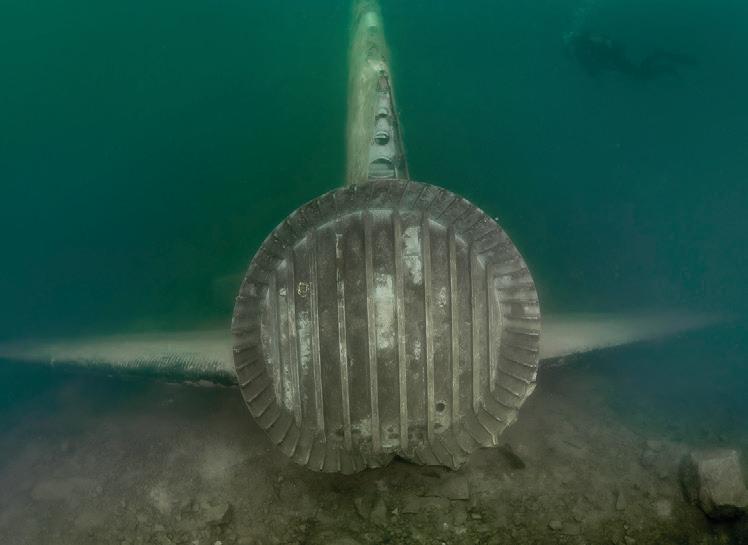
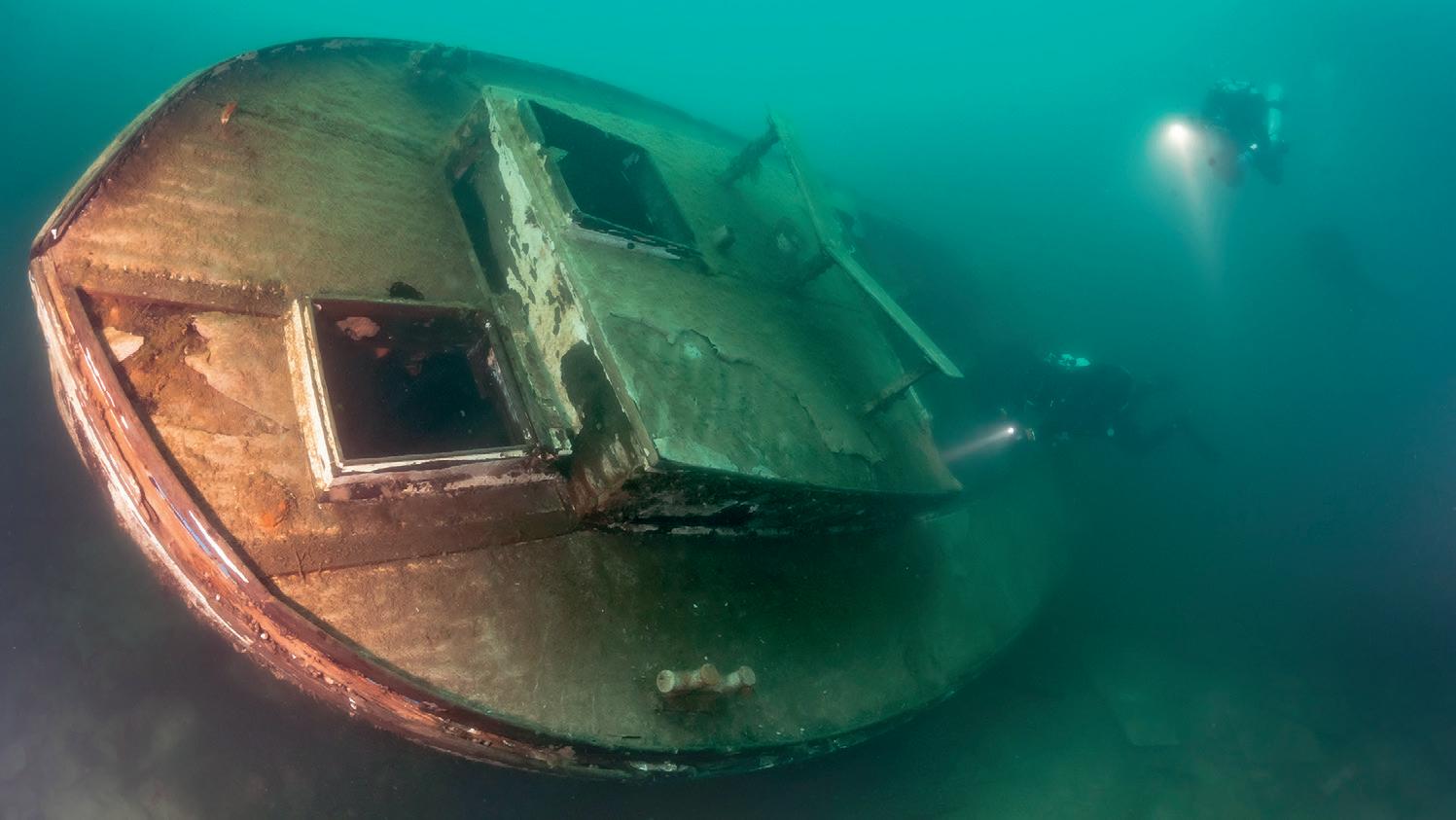
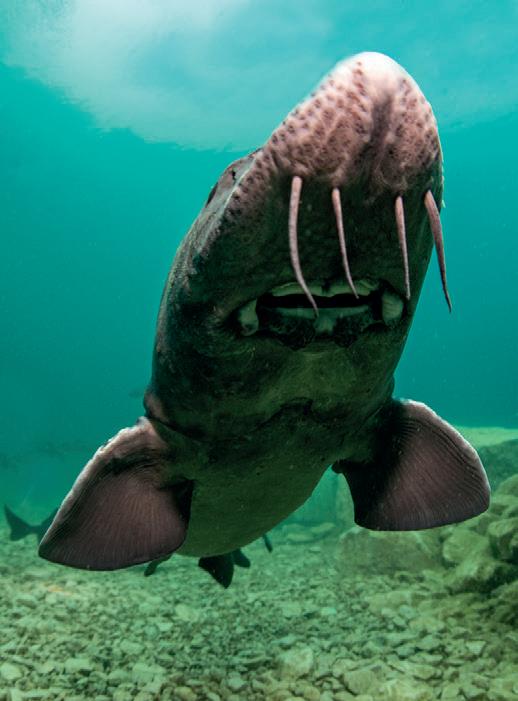
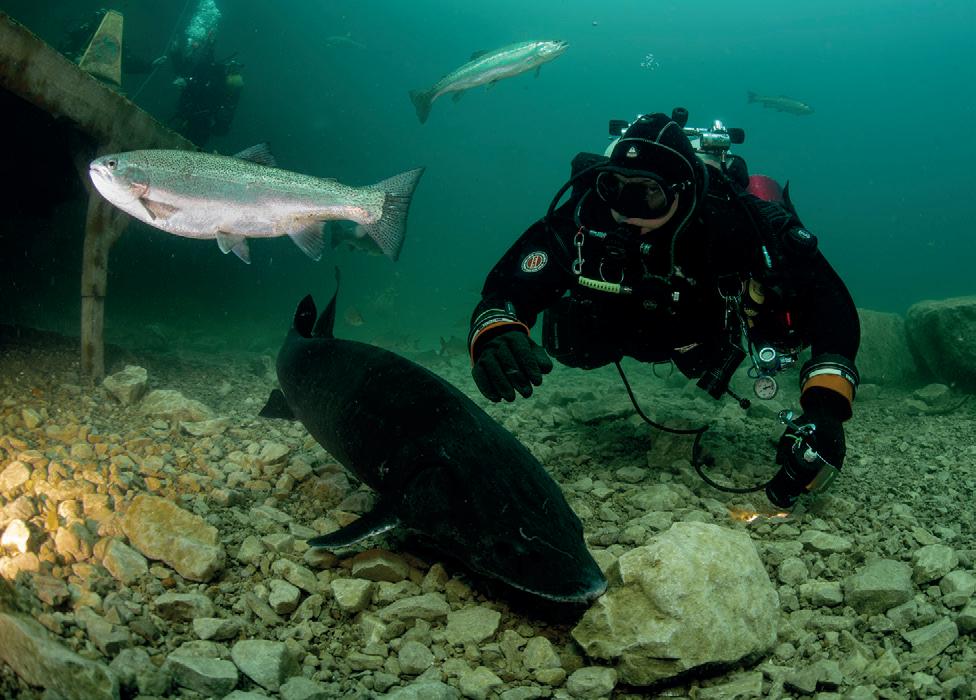
ating beautiful shafts in the water. At the end of the fuselage, the tail section had been detached. You exited through a large opening, and a few meters farther away the entire tailplane was lying on the bottom. It looked truly spectacular.
An underwater playground
And that was only the beginning. As the dive continued, we came across more objects: a Cessna 150, a Piper PA-31 Navajo, and helicopters as well – a Westland WS-51 Dragonfly and a Westland Wessex. Larger vessels also rest on the bottom, including HMS Podsnap, Ted Tandy, and the boat Orca. In addition, the site features various training structures built specifically for divers – a diving bell, a training container, platforms, and an underwater training cave. There are also more unusual features – the miniature submarine Thunderbird 4, a garden of gnomes, and various sculptures hidden in different parts of the quarry.
The most remarkable encounter, however, was waiting for us near the exit, in just a few meters of water. Huge fish began circling around the platform. Sturgeon – about a meter and a half long, majestic, and completely unafraid. There were a dozen or so of them. They circled around us, came right up to the lens, brushed against the divers, and looked as if they were just as curious about us as we were about them.
I hovered in midwater and spent more than forty minutes simply watching and photographing them. 130 minutes underwater. It was supposed to be a quick dive. It ended up being 130 minutes underwater. There was always something new – another object, another photo, another look at the circling sturgeon.
When we finally surfaced, our pressure gauges told the whole story. We came out of the water with our tanks practically empty. And that was when one thing hit us – what we regretted most was that we could only do one dive there…
One major drawback of the site is the changing area. There weren’t enough benches or covered shelters. We geared up out of the trunk of the car, which in good weather is still manageable without too much trouble. But in the rain or wind, it would definitely be far less pleasant. For such a popular and frequently visited dive site, the lack of simple places to change comfortably, sit down, or prep gear is a pretty significant downside. A few benches and a covered area would really improve comfort for divers, especially those arriving with a lot of equipment or spending the whole day there.
Location
Capernwray Quarry is located in a way that makes it easy to visit either as a stop on the way or as a weekend dive trip.
Distances from larger cities:
Manchester – about 140 km – 2 hours by car
London – about 450 km – 5 hours
Summary
Sometimes the best dives really do happen by accident. And Capernwray was exactly that kind of accident. After demanding dives with seals, in surge and poor visibility, we suddenly found ourselves in a place offering almost comfortable, even “luxury” diving conditions. Calm water, good visibility, a huge number of underwater attractions, and excellent infrastructure make Capernwray one of the most interesting inland dive sites in the United Kingdom. For us, it was only supposed to be a quick stop on the way home. It turned out, however, to be one of those places you definitely want to come back to – this time not for just one dive, but for several days of relaxed exploration.
Text PIOTR KARPIŃSKI
Photos PIOTR KARPIŃSKI, JEREMIASZ MAJOR
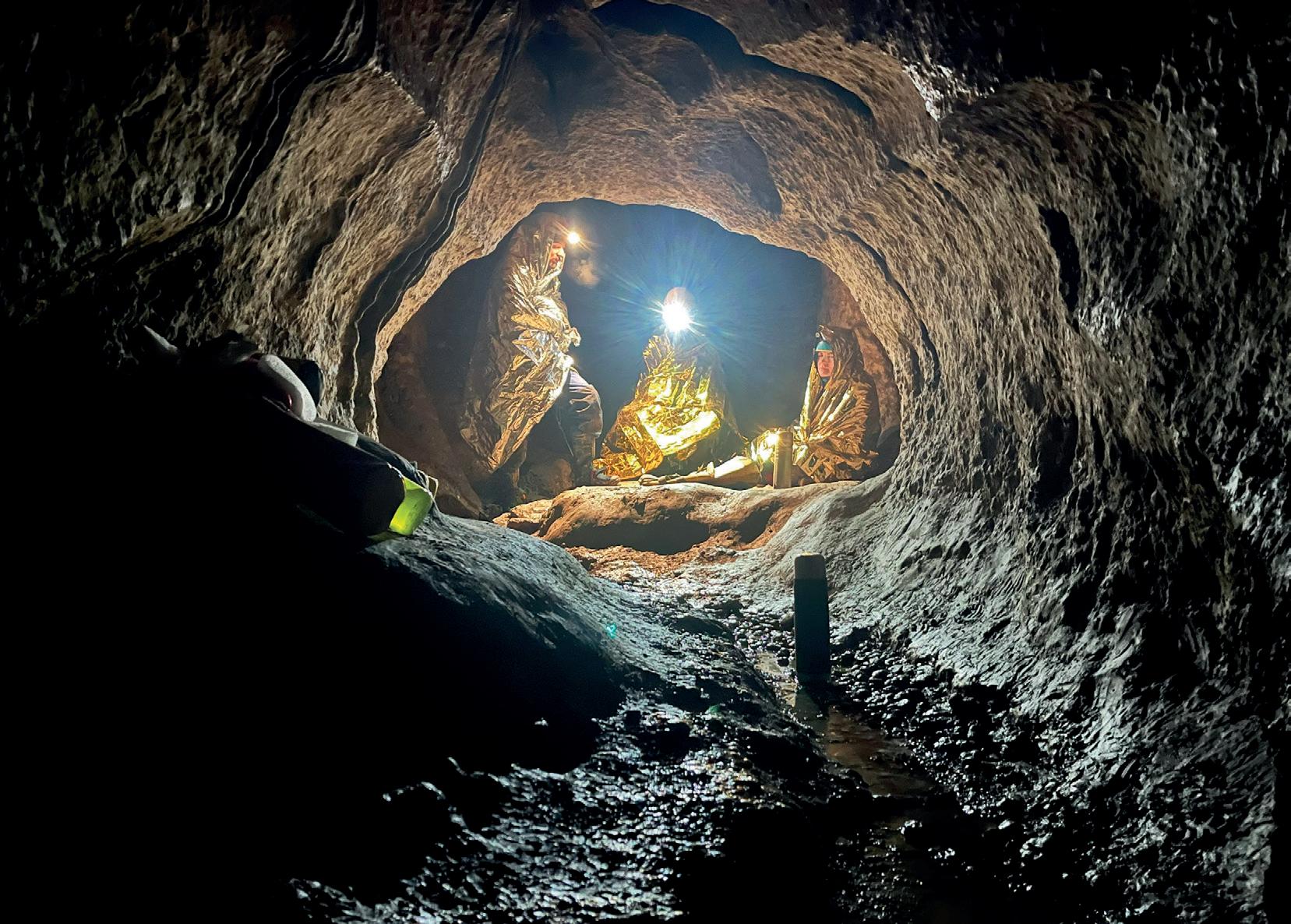
When my colleague Janek from the Warsaw Speleoclub asked me where I would like to dive, I first answered that in Kasprowa Niżnia Cave. A moment later, half-jokingly, I said: “or maybe in Miętusia?”
I did not expect that two weeks later, wet and chilled, we would be standing at the bottom of this Tatra cave.
Preparations for the Operation
Miętusia Cave is located in the Western Tatras, in the Miętusia Valley, and is one of the largest caves in the Tatras. The total length of its passages exceeds 10 km. The cave was discovered in 1936 and has been actively explored over the following decades. The first dive in the cave was carried out by Andrzej Zinserling. The most recent underwater explorations were conducted by Krzysztof Starnawski together with Andrzej Czubalski, Wiktor Bolek, and Norbert Ziober.
The goal of our operation was to dive in the siphon located at the bottom of the cave section known as the Great Chimneys. The last dive in this cave probably took place about
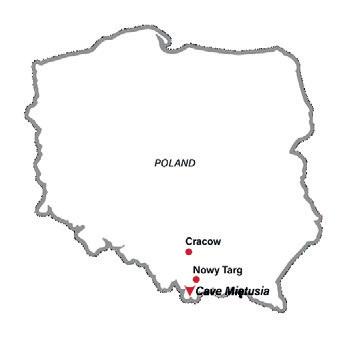
10 years ago – it was an underwater traverse (from the Tight Chimneys to the Great Chimneys) carried out by Mateusz Popek. Diving in siphons of dry caves is always the result of teamwork. Without the support and involvement of others, carrying out such an operation solo is practically impossible.
The cave is accessible for activities only in winter and only under favorable conditions – the seasonal siphon must be dry in order to reach the deeper parts of the system.
The cave entrance is located at an altitude of 1270 m above sea level. Exploration begins with a very narrow, approximately 200-meter-long “tube,” which makes equipment transport exceptionally demanding. The siphon in the Great Chimneys lies
Miedzianka, Korytarz P etwonurka, Sala Lustrzana,Gilotyna, Studnia PodTrawersem, Syfon Kaczanosia,
W związku z zimowaniem nietoperzy należy ograniczyć zwiedzanie tzw. Starych Ciągów (Partii Nietoperzowych) od listopada do kwietnia.
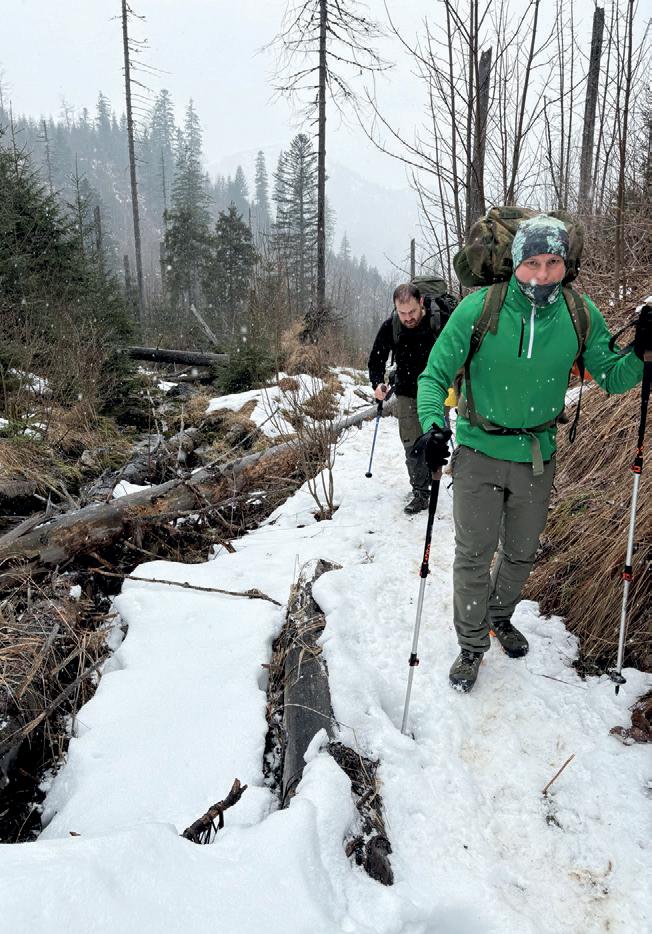
at a level of –223 m, which means this vertical difference must be descended to reach the water.
In the evening, the day before the planned operation, we gathered as a team to establish a detailed plan of action. In undertakings of this type, precise organization is the foundation of an efficient and safe operation.
We started with an analysis of the topographic map and checked the length and number of ropes we would need. We have five rope sections, but we took an additional rope for the “tube” to slightly facilitate transport through the tight passage. The ropes were packed in the proper order to maximize efficiency during rigging (fixing rope sections).
The diving equipment filled five cave bags. I tried to distribute the weight as evenly as possible – except for the cylinders, which were naturally the heaviest. For the dive, I took two 7-liter cylinders filled to 300 bar.
In the morning, we had a quick breakfast, and as soon as we packed the cave bags into our backpacks, we set off. At first, the backpack literally drove me into the ground – despite handing over part of my personal caving gear to other team members, it still weighed over 20 kg. We had about a two-hour approach to the cave entrance at a fast pace.
In the Kościeliska Valley, we passed strolling tourists, completely unaware of what we were carrying on our backs. Sometimes we could hear jokes about our enormous backpacks. Along the way, we made two short stops to catch our breath
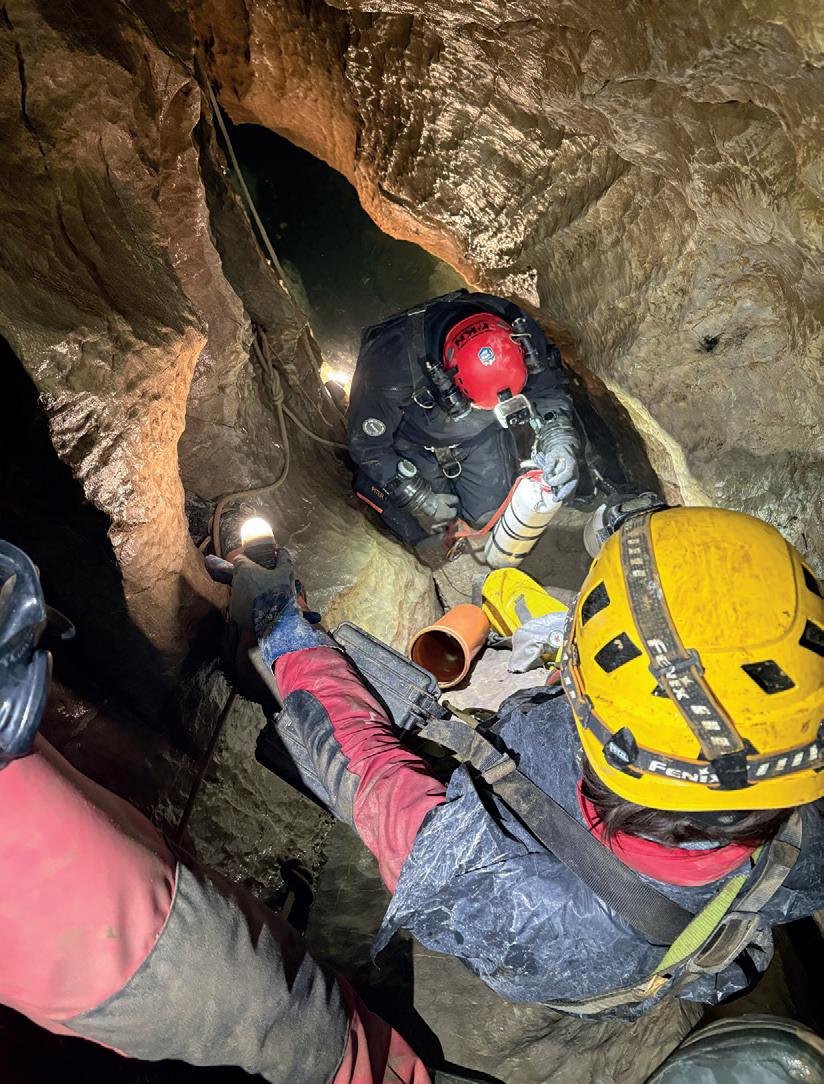
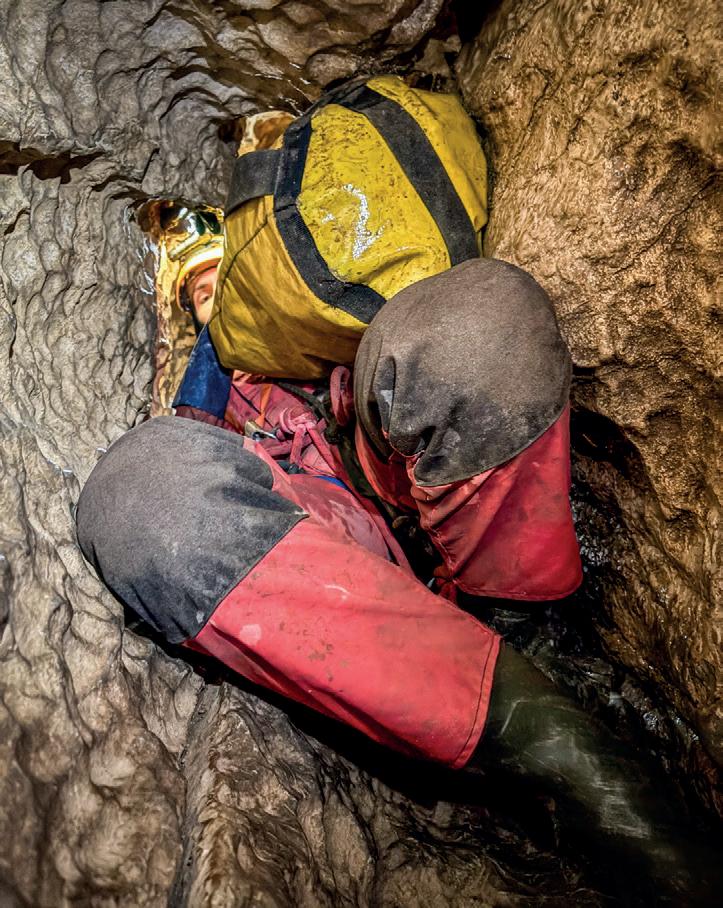
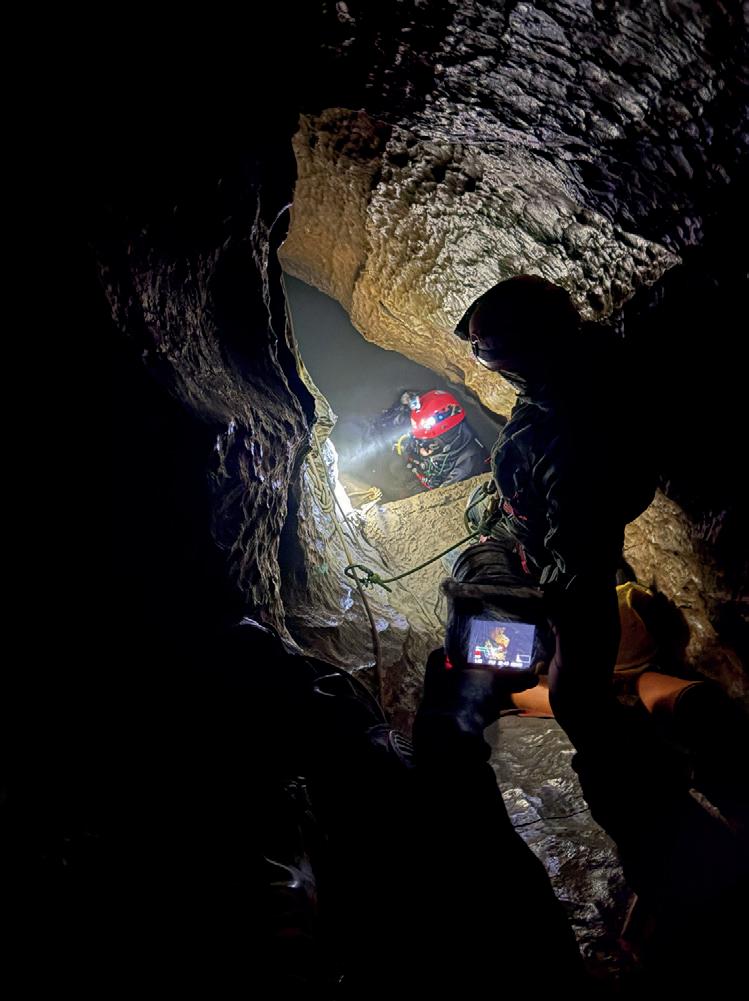
and remove some clothing – despite winter conditions, we were exceptionally warm.
After an hour, we left the trail into the Miętusia Valley, entering an area accessible only to cave climbers.
At the entrance, we caught our breath, had a quick second breakfast, and changed into caving suits and gear needed for rope sections. The rigging team went in first, preparing the route for the transport team.
The cave begins with the famous “tube” – over 200 meters of horizontal tight passages and constrictions, gradually descending. The entire section is traversed practically by crawling on your knees. Transporting diving equipment through this section is both physically exhausting and carries a risk of damage. To minimize the risk of damaging the cylinder valves, thanks to Janek’s idea, I used self-made protective covers made from sewer pipes. Reducing the noise of the cylinder hitting the rocks also positively affects the morale of the entire team.
Sliding downward with the cylinder between my legs, I still couldn’t believe we were actually carrying out this operation. After exiting the “tube,” I felt relief – all the equipment had arrived safely.
We passed the “hanging lake,” which for most of the year is flooded up to the ceiling, preventing further penetration. Further
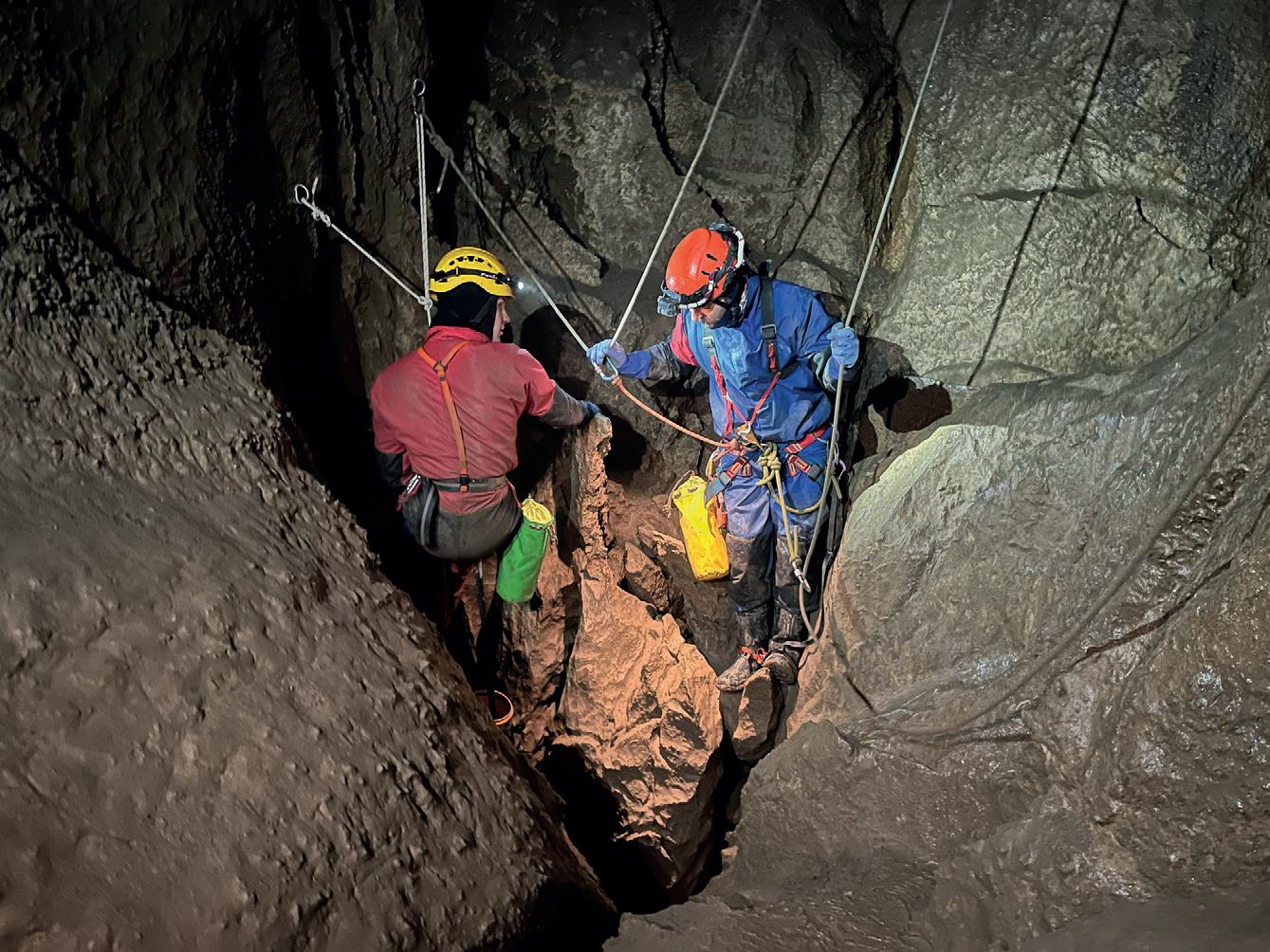
on, rope sections, narrow passages, and large chambers awaited us.
Four hours after entering, we reached the entrance to the Great Chimneys, where we met the rigging team – Ania, Janek, and Major. A short break for food, preparation of diving bags, and we headed down toward the siphon.
Before descending, I removed the caps from the cylinder covers. Additionally, I attached both the bag and the cylinder to my harness – the cylinder suspended on a climbing sling. This double securing was necessary. The thought of a full cylinder falling from over 80 meters is terrifying.
The Great Chimneys are known for being “wet” – during descent, water often pours onto cavers. You can imagine it as if it were raining inside the cave. At a temperature of around 4°C, this means rapid body cooling.
At the bottom, I efficiently began assembling the equipment. We laid out a tarp to change and protect the gear
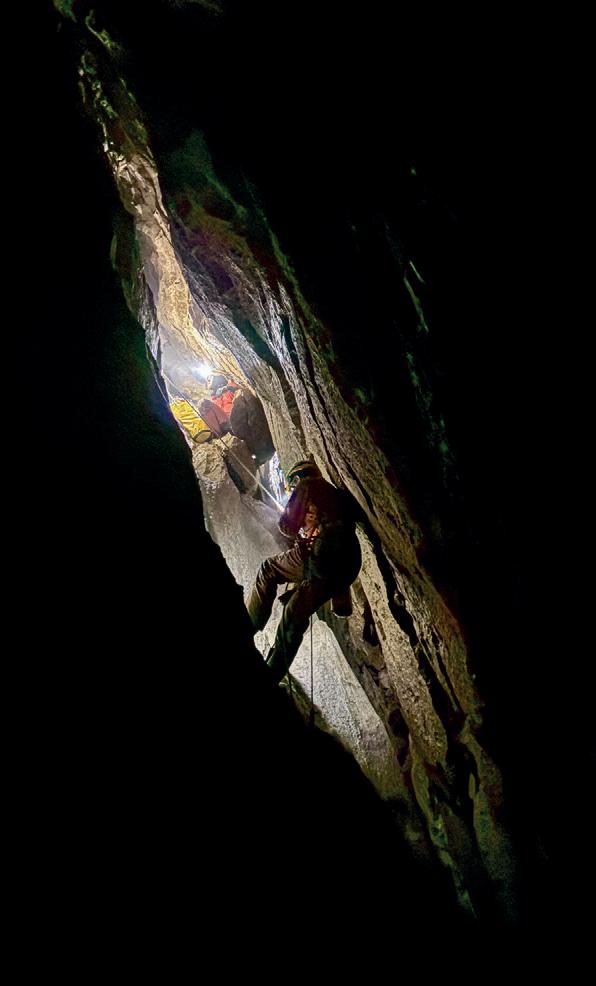
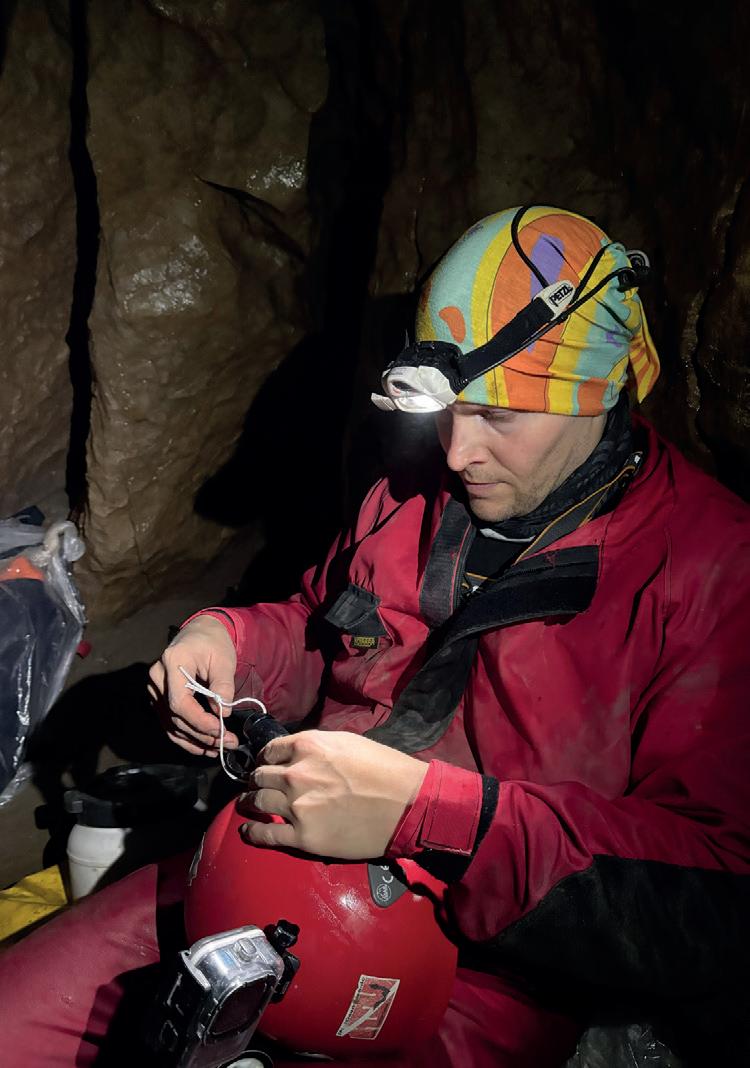
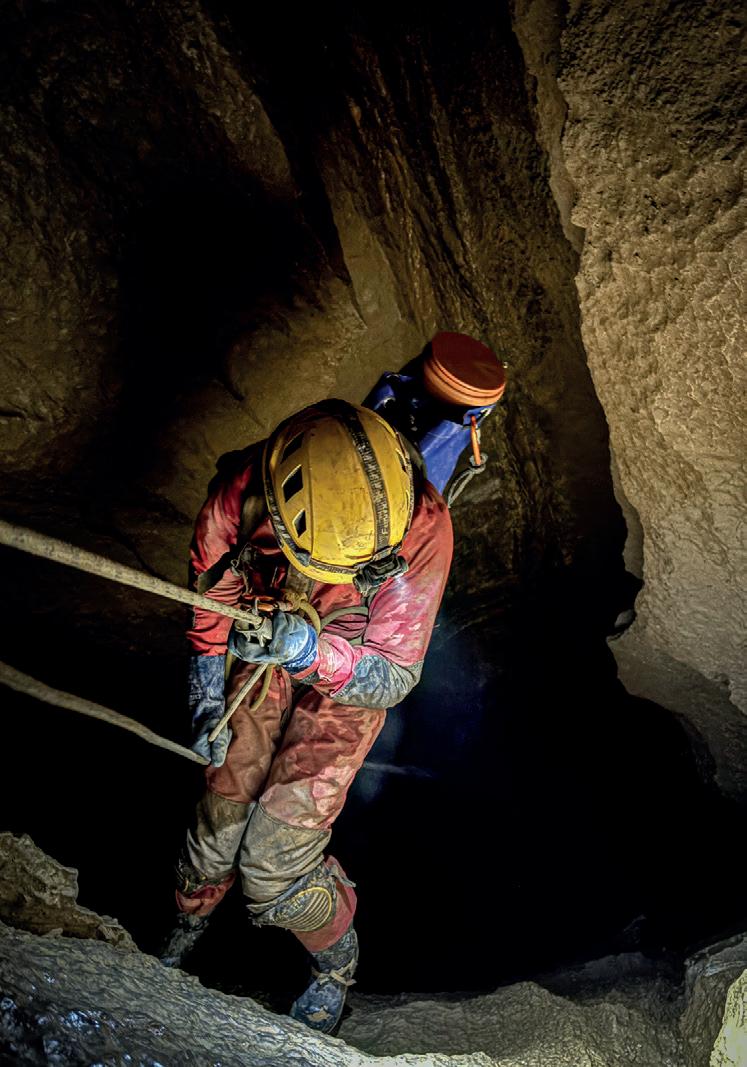
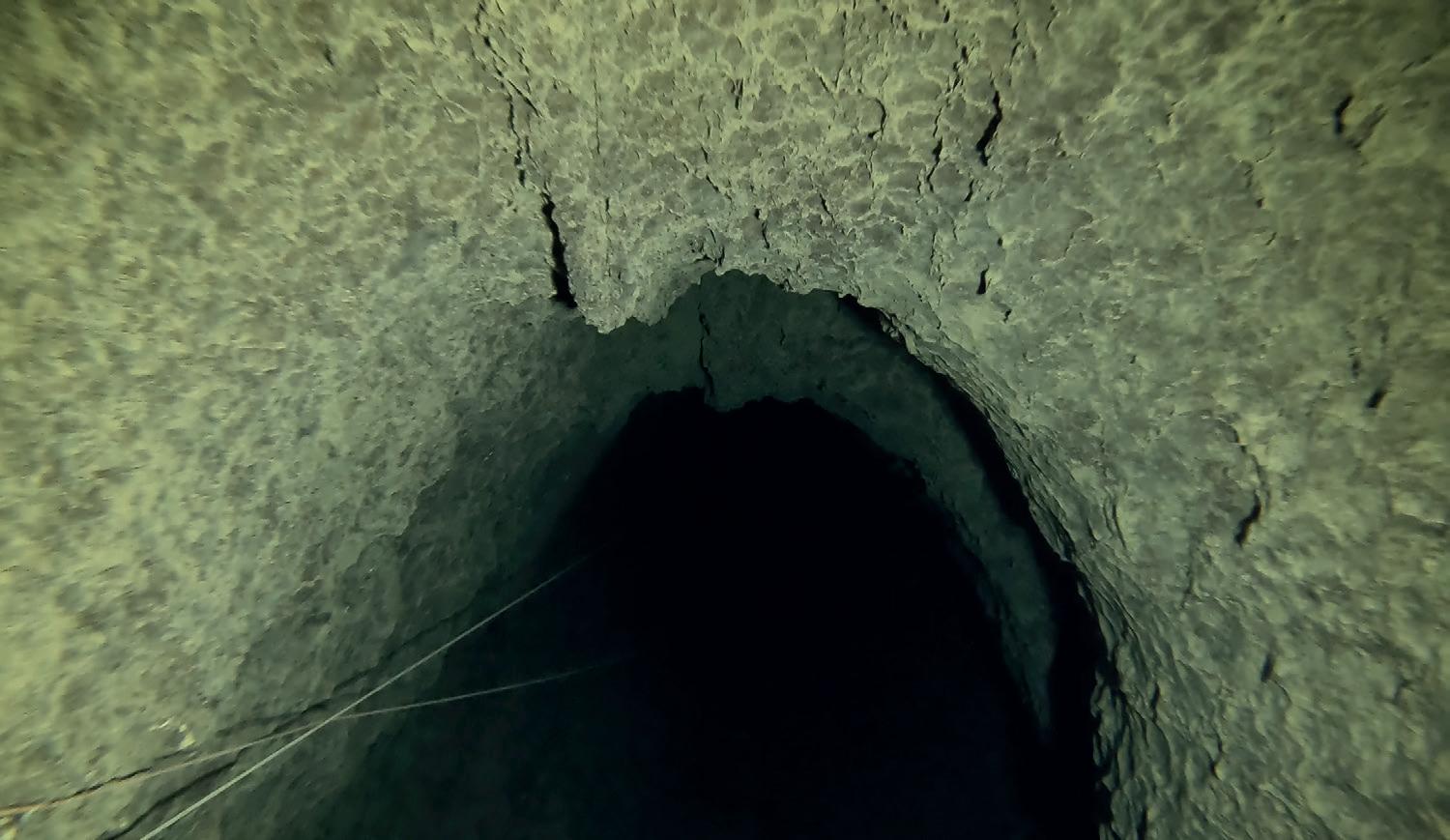
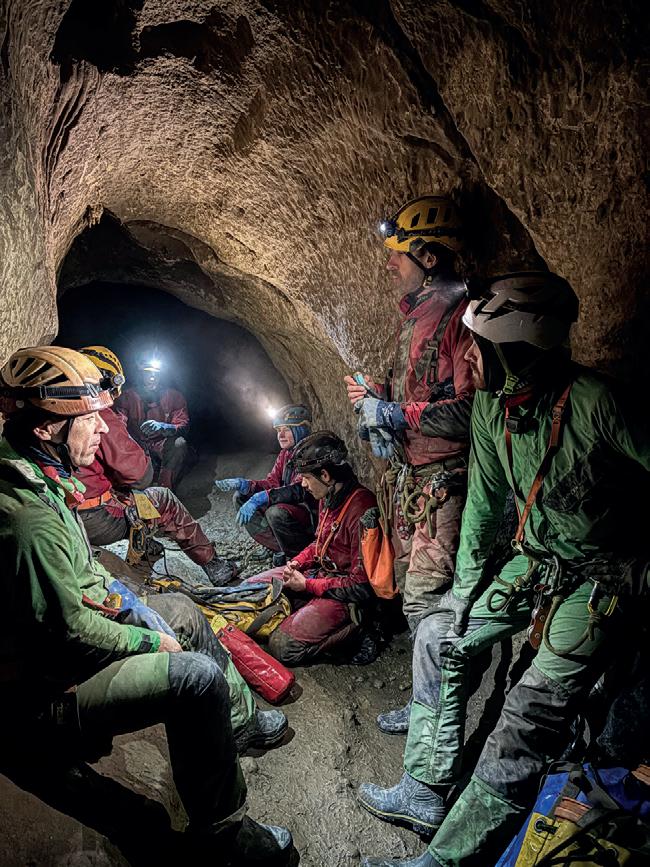
from clay and sand. I entered a state of full focus: cylinders, suit, harness, mounting lights on the helmet, checking regulators.
When I was ready, I gave the signal and we headed toward the siphon. There was still a sloping section leading directly into the water. Above the water surface, there is still a small platform installed many years ago – an ideal place to finalize the configuration. Siphons deep inside caves have always
sparked my imagination – I always wanted to see “what’s around the corner.”
The siphon begins with a narrow crack; the initial descent is completely vertical. Right upon entering the water, sediments were stirred up, and down to about 15 meters I was swimming in very limited visibility. Below that, the water was crystal clear.
I planned to pass through the siphon into a section called “The Double Life of Veronika.” However, due to the silt, I first headed toward a deeper part of the passage leading to the Tight Chimneys. At 30 meters, the corridor was quite spacious, with beautifully formed flutes (a karst feature of grooved walls). I felt a great privilege being able to experience this place.
On the way back, I intended to enter “The Double Life of Veronika,” which, if I had earlier decided to complete the full traverse to the Tight Chimneys, would have required descending to 30 meters four times. I therefore decided not to perform the full traverse to the Tight Chimneys in both directions. The enormous effort required to exit the cave demands particular caution regarding the risk of decompression sickness.
On the way back, I noticed that the sediment stirred up during entry had flowed into the passage leading to “The Double Life of Veronika.” I was swimming in almost zero visibility, along a loosely fixed guideline. I knew that at 30 meters there is a “restriction,” a narrowing that tends to silt up. Not knowing the exact profile of the passage and considering the conditions, I decided to turn back this time. As my mentors used to say: “the cave will wait.”
From 15 meters up to the surface, visibility was about 30 cm. The maximum depth of the dive was 30 meters, the bottom time 30 minutes, and the water temperature 4°C.
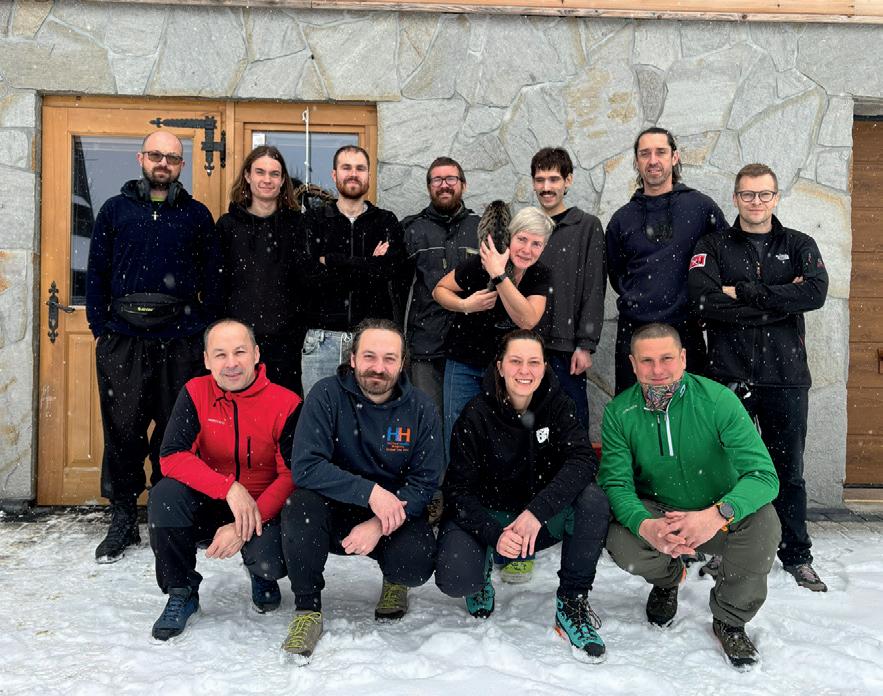
From the bottom of my heart, I thank all participants of this operation for their commitment, determination, and the immense amount of work put in. Without a well-coordinated team, carrying out such an undertaking would have been impossible. It was wonderful to share this adventure with you – until next time!
Participants (members of the Warsaw Speleoclub):
Ania Kaliska
Jan Zabrzyjewski
Jan Grzeszek
Sławomir Derymacki
Arek Kowalski
Jeremiasz Major
Artur Juraszek
Andrzej Piotrowski
Maciek Piechota
Piotr Karpiński (diver)
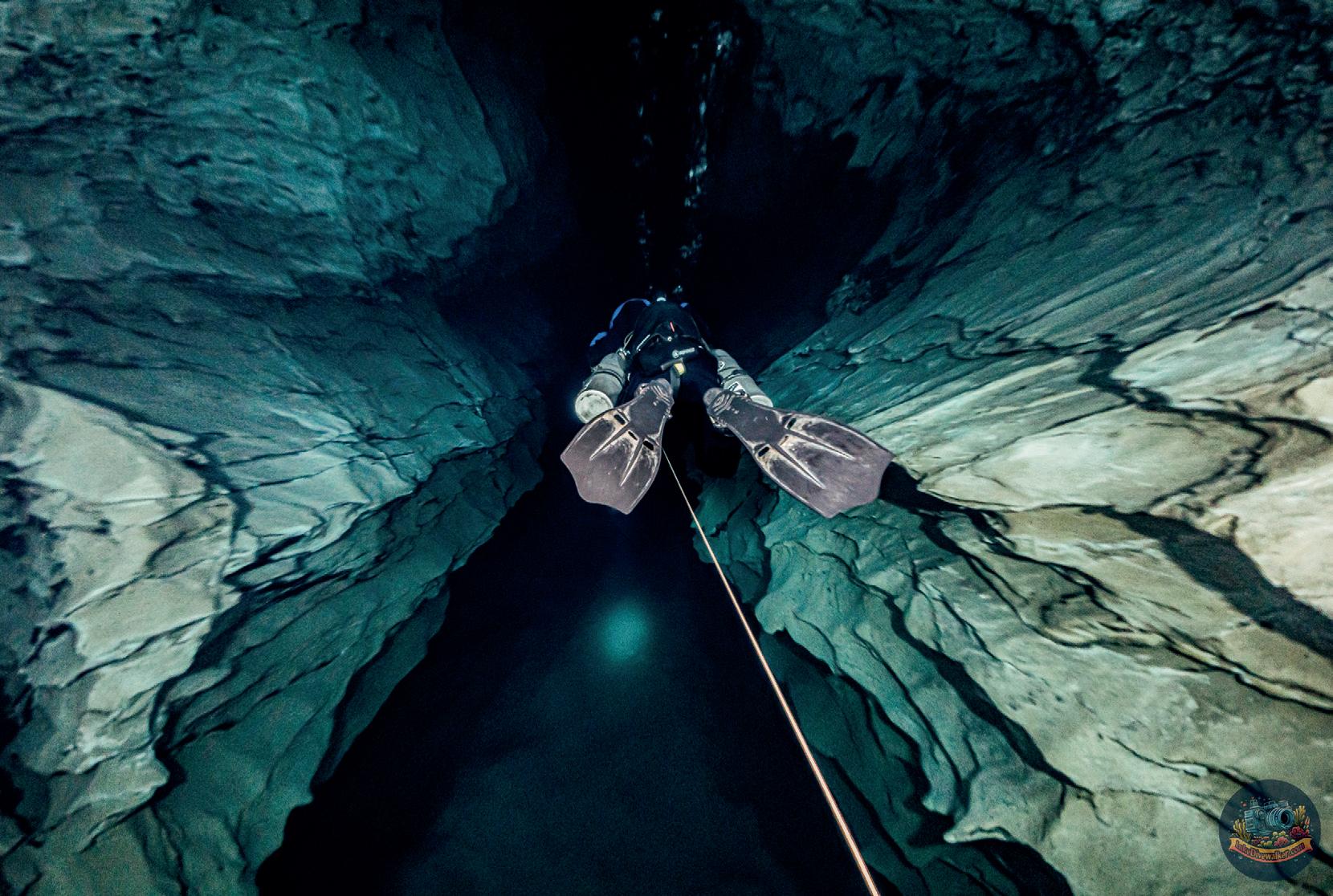
The majestic Parliament building, the mighty Danube, relaxing thermal baths, and lángos (Hungarian snacks) – until recently, these were my main associations with Budapest.
Ihad visited the city many times, even as a diver, but only a few years ago (also thanks to previous issues of Perfect Diver) did I realize that beneath this bustling city lies one of the most extraordinary diving cave systems in Europe: Molnár János Cave.
The history of Molnár János dates back to the 19th century and is inseparably linked with Budapest’s thermal springs. In the area of today’s cave, water mills and bathhouses once operated, using the warm water flowing from beneath Rose Hill (Rózsadomb). The site takes its name from János Molnár, the owner of one of the mills, who was among the first to describe the hydrological phenomena of the area. For decades, only small, dry sections of the cave passages were known. The breakthrough came in the 20th century, when the first attempts were
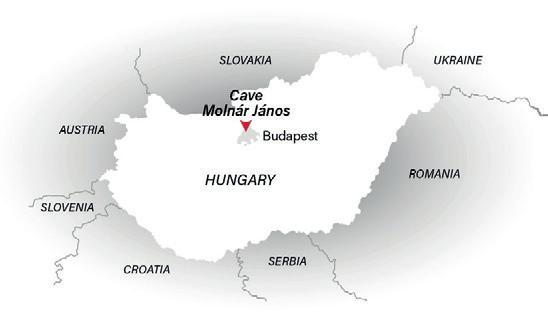
made to explore the flooded parts. It turned out that beneath the surface lies an extensive system of corridors formed by so-called thermal karst – a process in which warm, mineral-rich waters dissolve limestone from within. Intensive diving exploration began in the 1970s, with particularly rapid development after 2000. Hungarian divers discovered additional kilometres of tunnels, wells, and chambers, creating a complex network of guidelines and permanent installations. Today, the known system reaches about 8 kilometres in length and continues to grow.
A unique feature of Molnár János is its constant water temperature – between 20 and 28°C depending on depth – and very good visibility, which unfortunately can be easily destroyed by poor buoyancy control. One of the places where divers are espe-
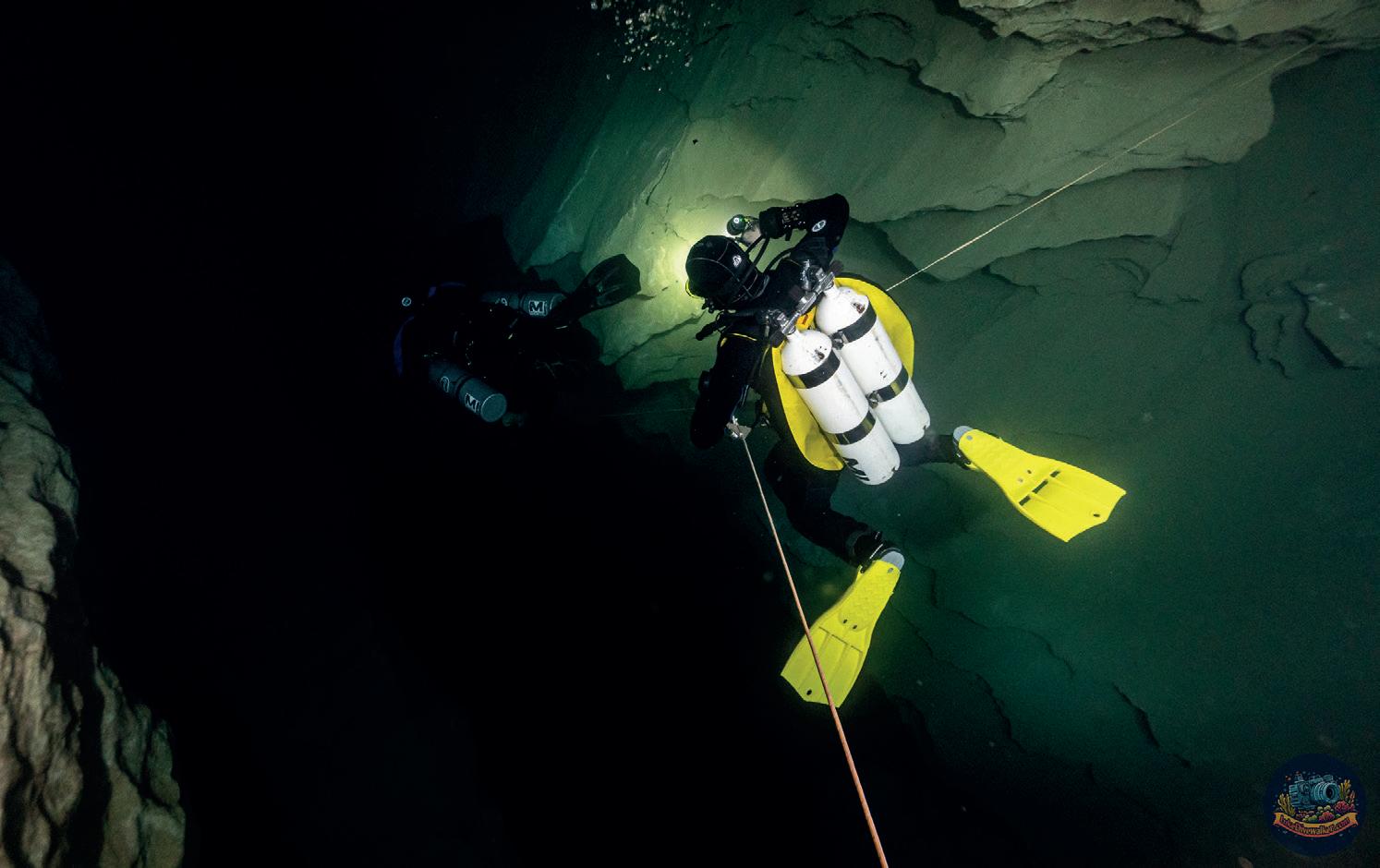
cially reminded to maintain precise positioning is a section of the cave known by guides as the “Sahara.” The name comes from the light, yellowish sediment covering the bottom. It is not desert sand in the usual sense, but a fine-grained carbonate material formed by the dissolution and redeposition of limestone. Admixtures of iron oxides give it a warm hue which, in torchlight, truly resembles an underwater desert. With improper finning or even a moment of inattention and loss of buoyancy control, this sediment can be stirred up, causing almost complete loss of visibility for a long time. For this reason, and above all due to the cave-diving nature of Molnár, strict rules must be followed. Dives take place in groups of no more than four people (a guide and three divers). Redundancy of equipment such as mask, computer, and torch is not a recommendation but a requirement. Similarly mandatory are a valid medical certificate confirming fitness to dive and diving insurance (e.g., DAN). A twinset configuration is also required, twinset or sidemount with a long hose (minimum
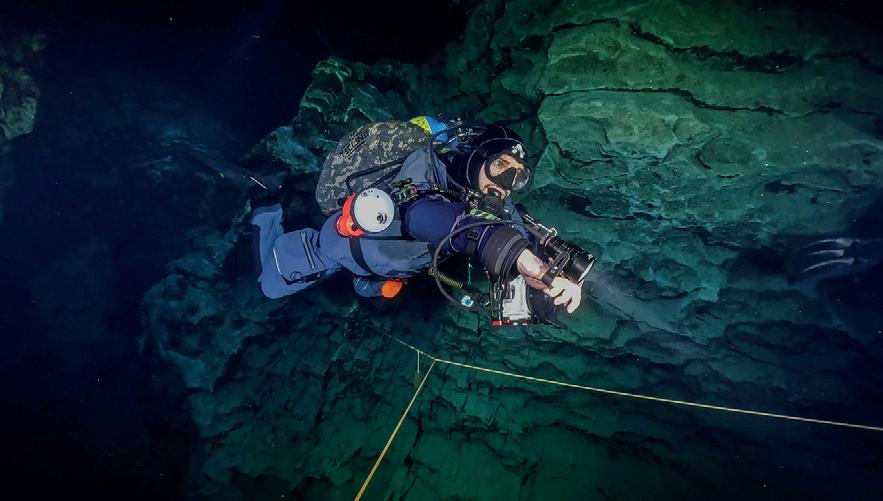
210 cm), as well as a dry suit (unless we are satisfied with staying in Zone 1, closest to the entrance).
Dives are conducted in accordance with the gas management principle used in cave diving – the Rule of Thirds. According to this rule, one third of the gas is used for the penetration, one third is reserved for the return, and the final third is kept for emergency situations. In practice, this means that the return al-
ways begins when the first diver in the group reaches 150 bar in a twinset. This provides a significant safety margin in case of unexpected situations.
This entire list of requirements is not a whim of the dive centre, but a strong emphasis on safety, which is fundamental in cave diving. All of this may create an impression that these dives are dangerous and could discourage some from diving in Molnár, but hold off on that
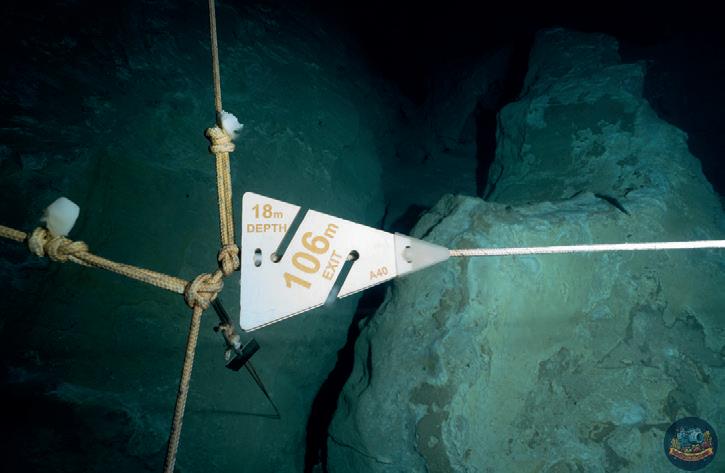
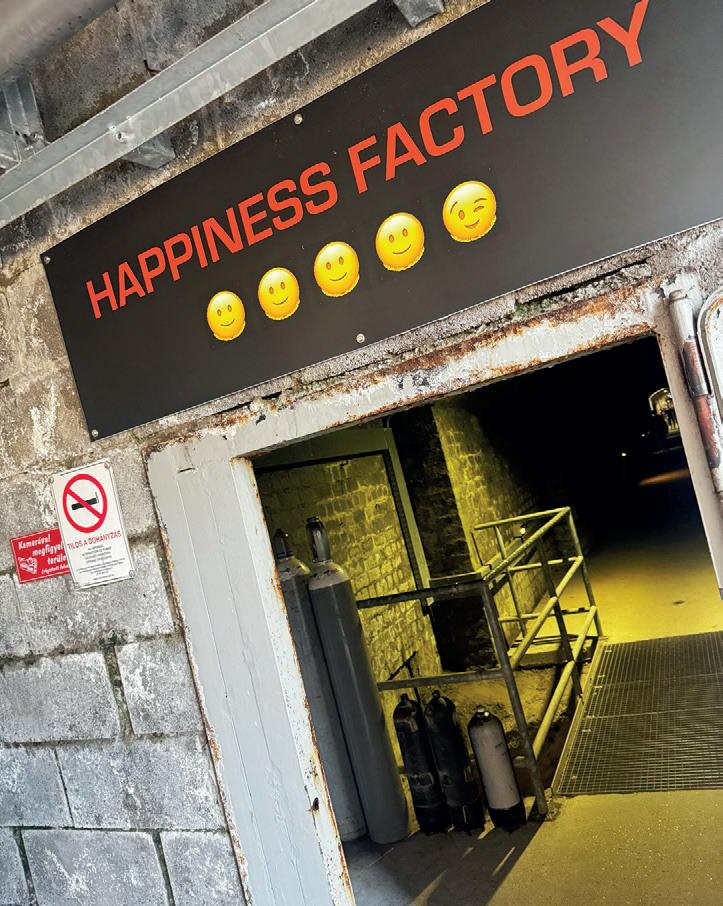
judgment. Even divers with average underwater navigation skills should not feel overwhelmed by what they encounter while making their way through sometimes narrow passages. The reason is the excellent guideline system along every accessible route, along with clear “signposts” indicating the direction to the exit, including depth and distance. Despite the omnipresent darkness, spotting an arrow labelled “EXIT – 106 m” provides a reassuring sense of security – even for those who are not experienced in cave diving and prefer open spaces, blue water, and colourful reefs.
Molnár János is one of the best places for cave diving training in this part of Europe, something Polish instructors often take advantage of. Another undeniable advantage is the organization
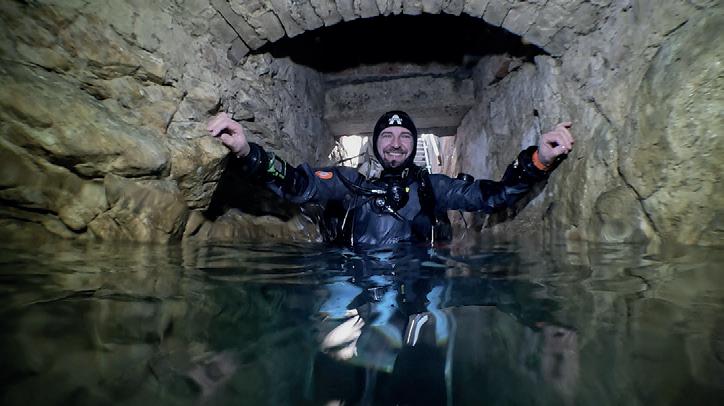
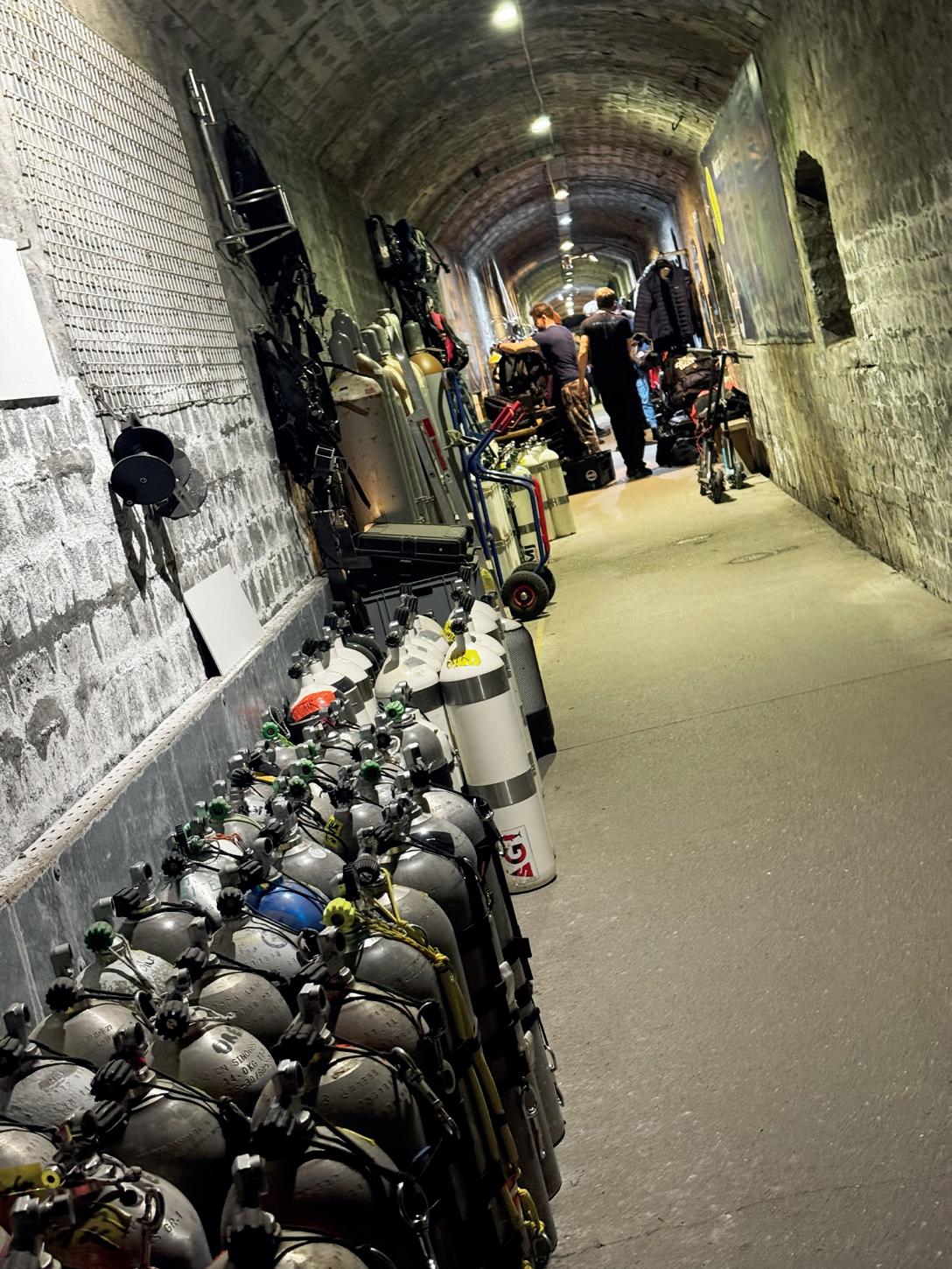
and equipment of the local dive base. The cave passages are adapted as part of the surface infrastructure and equipped with everything a diver needs for preparation. The base offers a full range of rental equipment, its own highly efficient compressor station, and a large, helpful staff. It is commonly said that the “Everest” of cave diving is the Mexican cenotes, and everything else is compared to them. However, I have become convinced that a “closer and more affordable” alternative does not have to be approached with only moderate enthusiasm. As the sign at the cave entrance states, Molnár János is a true HAPPINESS FACTORY.
Special thanks to Konrad from Nurkowanie.pl, organizer of the diving trip.

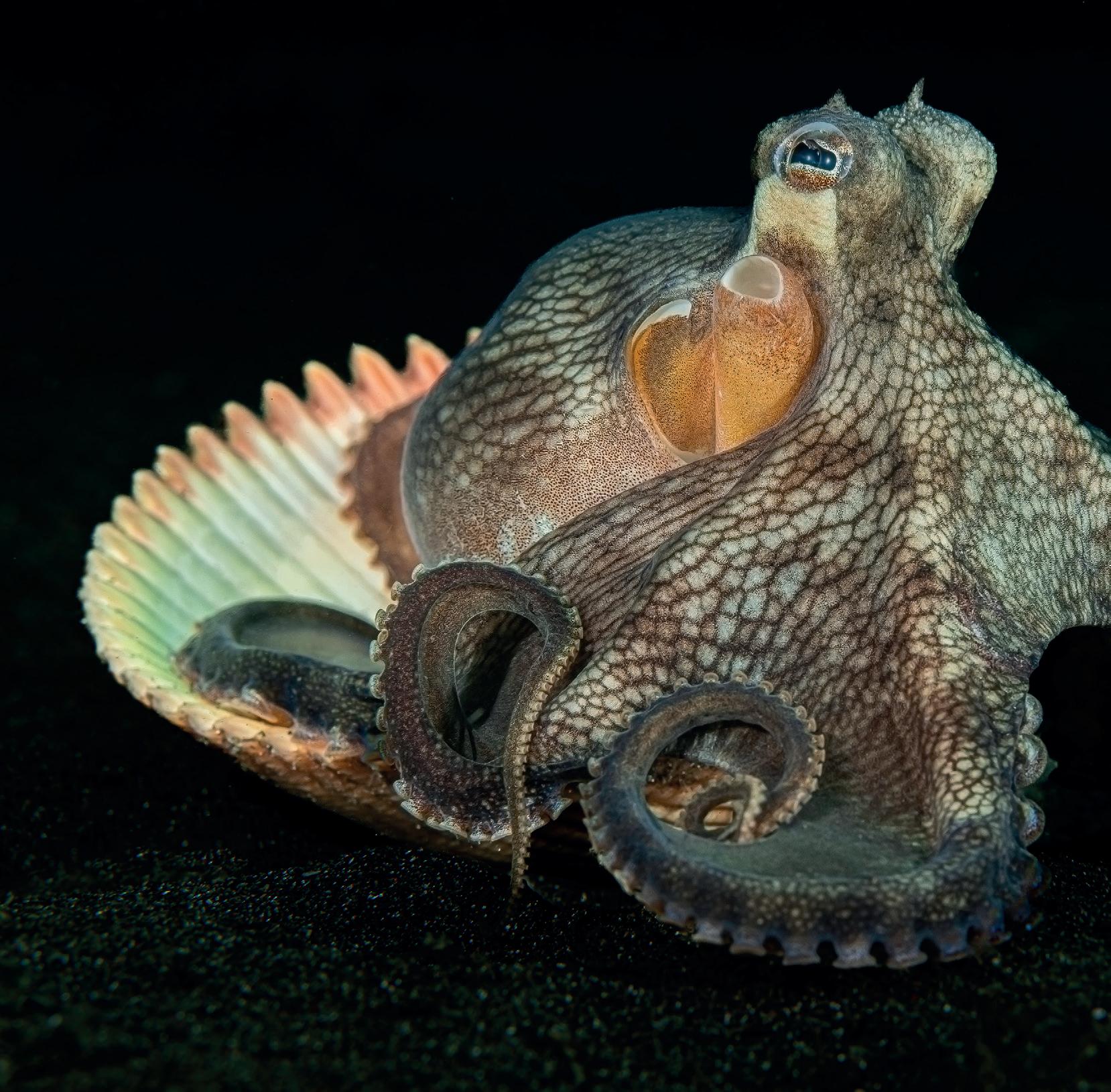
Æ E xposure Parameters:
M Mode, 1/160 sec. f/16 ISO 100
Æ Camera: Nikon Z8
Æ L ens: Nikkor Z MC 105mm f/2.8 VR S Macro
Æ Housing: Nauticam NA-Z8 + flat port
Æ L amps: 2x Inon Z330
As it wasn't my first trip to Lembeh, I had already known what I was going to face. You know, long hours on the plane, boring transfers and constant fear of losing my luggage somewhere. But the prospect was too tempting to let it go. Especially since the trip was organized by Adaś Sokólski, and after all, his Blue Photo Adventures is famous for its intimate trips to small, but very friendly diving centers. And the rule that there are no more than two photographers per divemaster.
So I flew. What's better, I took my... wife with me. The ideal version – diving, but not photographing, which resulted in having your own tracker /illuminator and at the same time winning some brownie points with her.
It was probably the fourth day of departure when, after a short rest, rightly due after a whole day of tyranny under water, we decided to go for a night dive. It started "spectacularly" – 15 meters deep, black sand and absolutely nothing. Views as thrilling as watching the grass grow. The minutes dragged on like a slow-stopping local train, while the air in my tank refused to run out and end this misery. I was already in a slight lethargy when suddenly... She came. I mean my wife. Except that instead of a nice trim and a calm figure, I had an excited version of it in front of me, gesticulating like an Italian citrus vendor on Campo de Fiori. She grabbed my hand and jerked me, pulling me to the stall. Scratch that, I mean into the endless darkness stretching out in front of us. Nitrogen narcosis at its finest. But a few kicks with my fin later I had to bark everything off.
Like Venus from Milo, my model was sitting on a white shell, taxing me critically from under her eye. Such an assessment usually looks quite poor and blazed, and a bored star swims away somewhere. Usually, but not this time! As soon as I started to catch her profile in the frame, she began to pose for camera, bending, rotating and moving her perfectly muscled body. She interchangeably covered and exposed herself using the white shell, having probably no less satisfaction than I with the photos taken. We had so much fun that I almost forgot myself and at the last moment I stopped myself from showing her on the display the last shots, wanting to suggest a few more settings.
While I usually take about 4-5 photos of one object on average, now, after a while, I had over fifty of them. I would probably still be sitting there if it weren't for the fear that it would go to her head. I'd already seen this bill for a session at Cindy Crawford's price level with the eyes of my imagination. Therefore, happy, although already longing, I swam to the surface, seeing seven shoulders waving goodbye to me out of the corner of my eye.
Darek Mrozek's story was listened to and then written down by Marcin Trzciński
Text and photos PIOTR STÓS
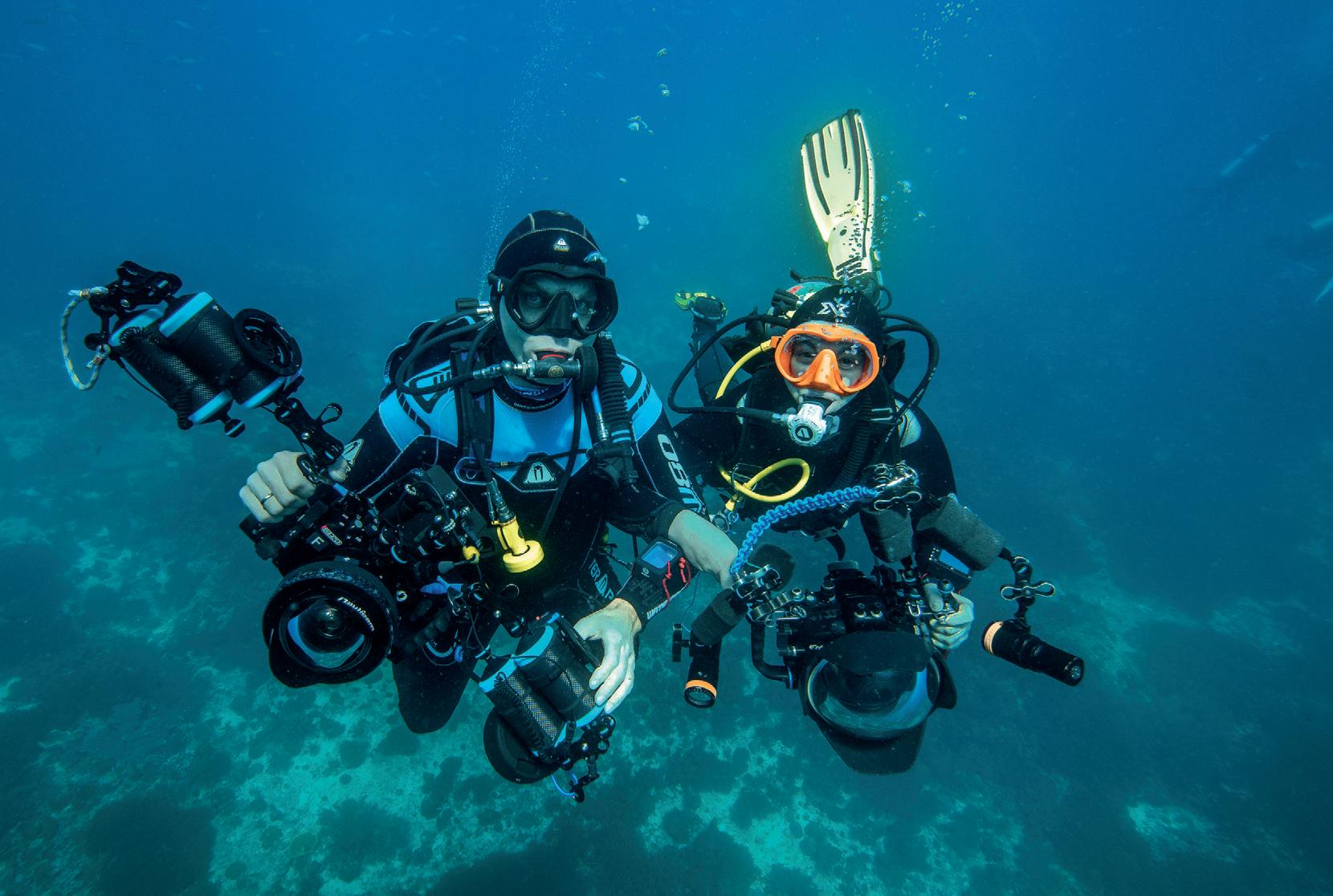
There are no clear guidelines on how well you need to dive to start photographing underwater.
For some, the camera appears only when they feel fully confident and are able to do more than control the course of the dive. Others have no such doubts and want to document their underwater adventures from the first dive.
Alot depends on the circumstances, the conditions of the dive and the support of partners and guides.
One thing is certain: the diving skills that are important to a photographer are exactly the same set of competencies that every good diver should possess – only mastered to the level of automatic reaction. The idea that the better you dive, the better you photograph is supported by the example of all the great underwater photographers I know who are also excellent divers.
The most important skill for a photographer diver is buoyancy control, i.e. the ability to control one's position in the water. It is the same for you as a sense of balance for a cyclist – because how do you ride a bike when you have to lean on your leg every now and then?
Buoyancy allows you to maintain a stable, stationary position with the camera in your hands at the selected depth and change it with the breath alone. Effective photography is not possible when the diver is constantly working with their fins, supporting himself on the bottom or reaching for the inflator every now and then to correct the position. The buoyancy control is closely related to trim – a horizontal positioning of the body that reduces movement resistance, gas consumption and allows you to get close to the bottom without the risk of damaging delicate organisms. It is a skill that we perfect throughout our diving and photographic lives.
Most divers don't realize how much they help themselves with their hands when swimming. This becomes obvious the moment you start diving with the camera held in both hands. It's one of those moments where you think about how cool it would be to have a third hand… Mastering a few advanced fin techniques
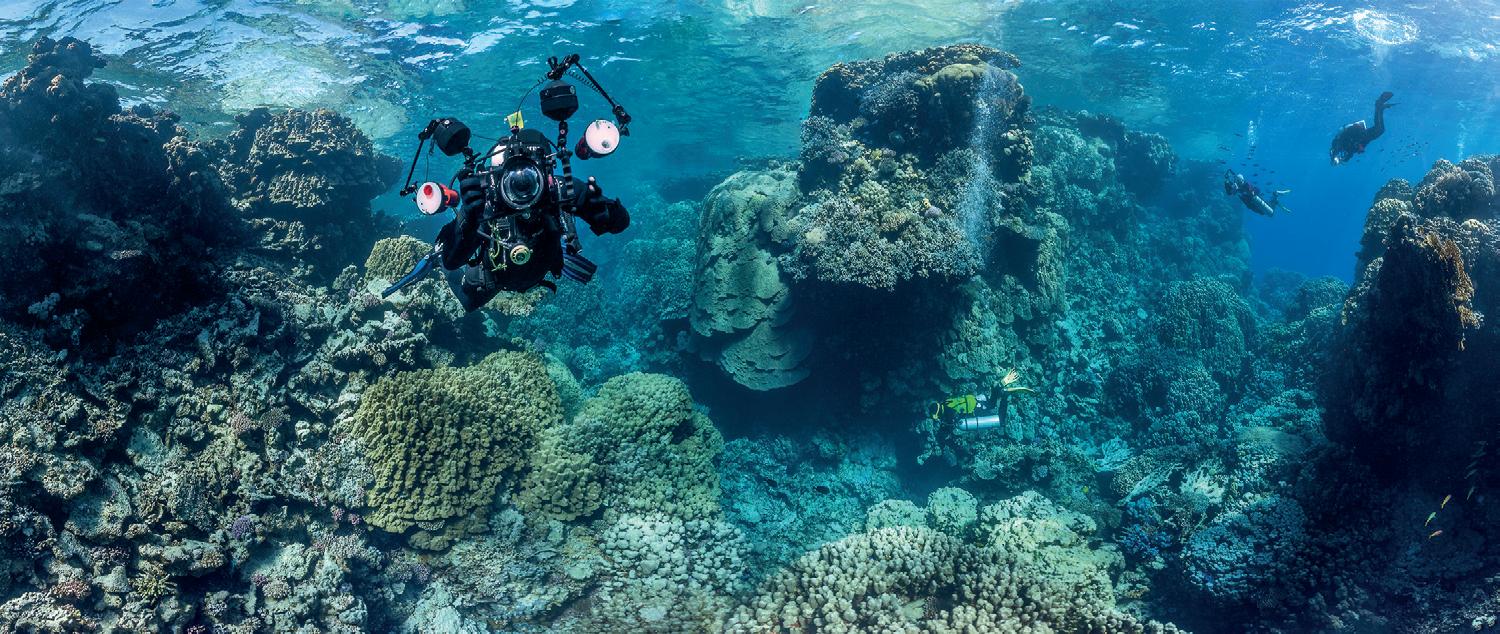
– such as the reverse frog, the “helicopter”, and the modified frog and crawl – will give you the necessary freedom of movement when shooting hands-free and without lifting the bottom sediments. It is worth taking the time to learn these techniques under the supervision of an instructor, because they are one of the key elements of comfortable and precise shooting.
When taking photos, a lot of time is spent in stillness, and the cooling of the body quickly takes away the pleasure of shooting. Choosing the right suit is crucial here. Even in tropical waters, with temperatures on the order of 29–30°C, repeated dives during the day for several days in a row can lead to a noticeable cooling and a decrease in enthusiasm. A 3 mm thick suit or lycra clothing alone often turns out to be insufficient.
Many photographers use warmer wetsuits, neoprene vests, and even dry suits – even in areas considered warm, such as the Red Sea, where the water temperature drops to 21-23°C in winter. It's hard to imagine a more frustrating situation than an ear infection that will force you to give up diving during a long-awaited trip
When shooting, we use more gas than when diving without a camera. We take a deep breath when changing positions and looking for a better shot, we get tired when we overtake a group of model divers, and at the first encounter with a whale shark, we often unconsciously speed up ventilation. In my case, the difference is almost 30% – it's worth checking your photographic SAC (Surface Air Consumption) as well.
How to deal with increased gas consumption? The simplest solution is to dive with a larger cylinder (15 l or 100 cuf) and sometimes also with an additional "stage" cylinder that provides an adequate supply at the end of the dive. For deeper and/or longer dives, it is worth learning how to use a sidemount or twinset configuration. Not only do they give you more gas, but
you also have peace of mind – which is extremely important when shooting.
Your training is also important: general physical form and conscious control of the diaphragmatic breathing path, which ensures effective ventilation of the lungs. Try not to get out of breath and develop the ability to control the emotions that accompany photography. It really works!
Remember that the deeper you shoot, the more often you should control your gas supply. The photographer gets easily absorbed in the work on the shot and loses track of time. Systematic checking of the pressure gauge is one of the most important habits that should be developed in order not to end the dive "running on fumes". The excitement of a seemingly unique photo opportunity often leads to overestimating the potential of a shot – and photos taken under stress are rarely as good as we think at the moment.
Just as important as checking the gas supply is the control of the remaining decompression time. At depths exceeding 20 meters, this limit can shrink very quickly. If you don't have the training to conduct decompression dives, systematic tracking of it is absolutely crucial.
Performing unscheduled decompression without an adequate supply of gas is not a safe practice. This risk can be partially reduced by using nitrox, which extends the no-decompression limits while limiting the maximum dive depth. With the "toothed" dive profiles characteristic of photographers, it can also reduce the risk of decompression sickness symptoms.
Finish each dive with a safety stop and always plan a reserve of gas for it. When working at greater depths, it is a good solution to place an additional diving computer in the field of view – on the camera housing or the lamp arm – so that the diving parameters are visible without distracting from the shot.
Accept the rule that before you start working on a new shot, you check both the gas supply and the remaining time
limit. Thanks to this, you will not miss the moment when it is safe to start the ascent.
Underwater photographs are created in very different environments – from calm, shallow reefs to wrecks at great depths, caves or places washed by strong currents. Before you start photographing in a new environment for yourself, learn how to dive safely in it. Complete the appropriate training and do your first dives without a camera, focusing only on technique and building safe habits.
The greater your diving experience, the easier it is to deal with the challenges posed by the environment and logistics of underwater photography. Also, do not hesitate to leave the camera on the boat if you think that the conditions are too difficult and that this time you need to focus only on diving. The dive can be repeated and safety is paramount.
Photographic equipment is expensive and we pay a lot of attention to it when diving. However, it is worth asking yourself a few uncomfortable questions in advance. What will you do if you have to let go of the camera to help your partner? How will you react when you notice water in the enclosure? Are you calm enough to finish the dive safely and not sprint to the surface to save the equipment, no matter what else? What would you do if you dropped your camera on the bottom of a boat?
Awareness of such situations is not used for scaring, but for mental preparation. It facilitates rational action when something goes wrong. If possible, it is also worth considering equipment insurance – it provides peace of mind that is conducive to making the right decisions.
Diving is an inherently team activity, and underwater photography doesn't have to change that. A well-coordinated group of photographers can dive together without getting lost and without violating safety rules. A diving partner is not only someone who increases the level of
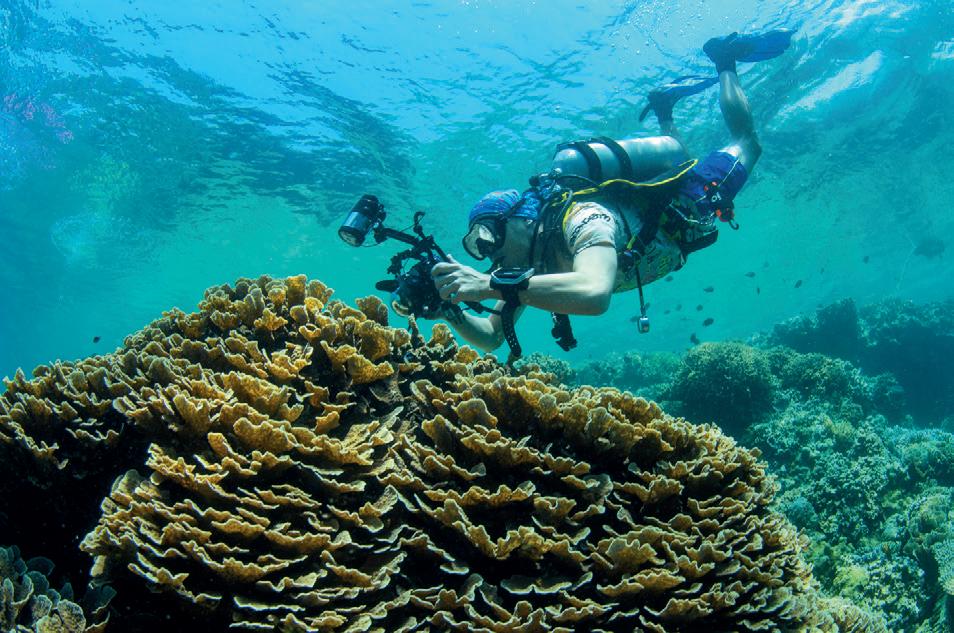
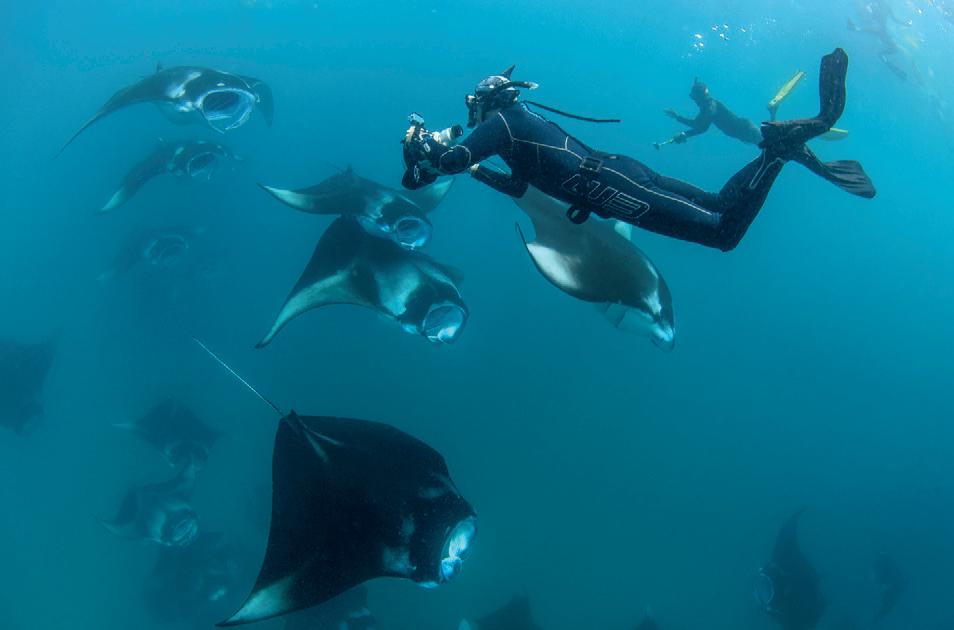
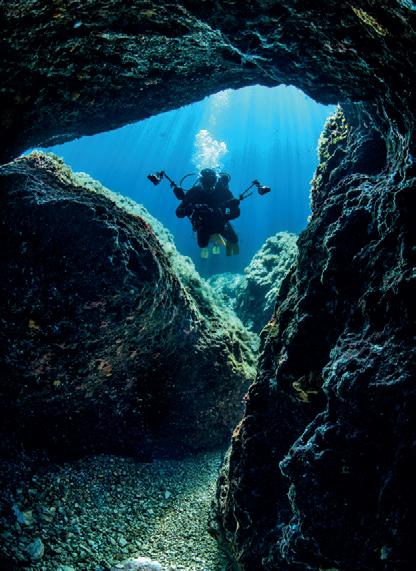
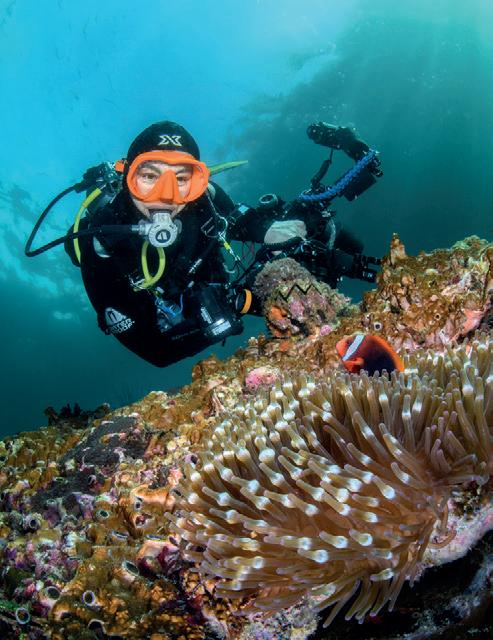
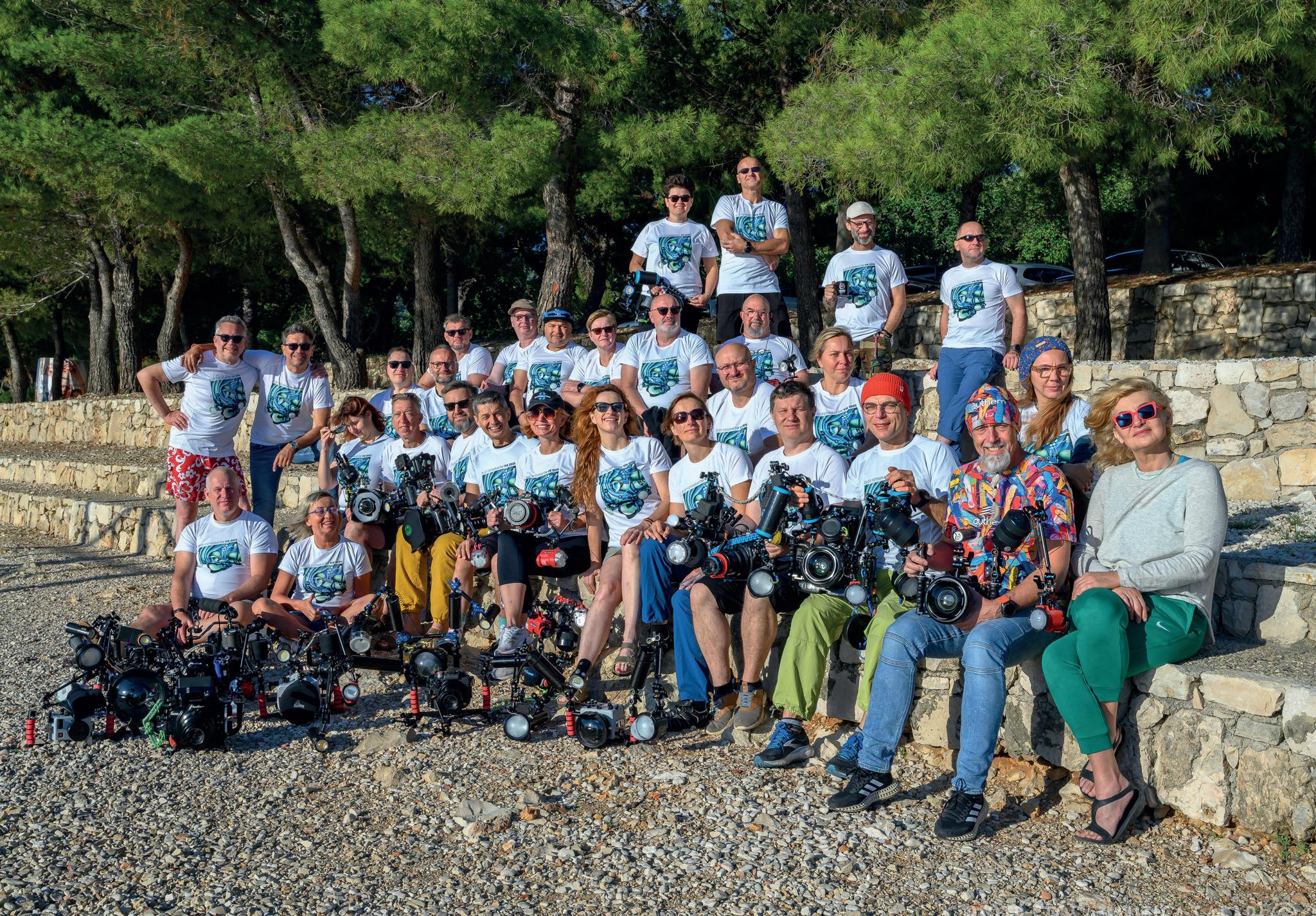
safety, but also a potential model, assistant or person who will spot an interesting topic for a photo.
If you are diving in new company, make sure that your style of photographic diving is accepted and that you do not separate from the group as soon as you enter the water, becoming an involuntary solo diver.
And by the way – is "solo" diving a bad solution? It depends. There's no denying that many advanced photographers need time and uninterrupted attention to focus solely on the subject. Most often, their diving skills and experience allow them to safely carry out such dives. However, it is not a "sport" for everyone. It requires proper configuration of equipment, gas supply, high responsibility and formal authorizations to conduct this type of dives. If you have reached this stage, remember to arrange a solo dive with your partners and organizers each time. To put it simply: don't let your photographic fun be paid for by someone's stress.
A good underwater photographer is usually also a very good diver. However, do you ever forget about the safety rules in the pursuit of your dream shot? Of course – this is a threat to each of us. The more experience and the more precise the photographic goals, the easier it is to push the boundaries.
With our hand on our hearts, we admit that no photo is worth risking the safety of ourselves and our partners, and yet, in the heat of the hunt for the perfect shot, we are sometimes willing to dive deeper than planned, stay underwater longer than a safe supply of gas allows, swim into difficult terrain without proper equipment, or disconnect from the group and swim away into the blue distance.
No photo is worth risking your health or life. Unfortunately, there are no courses where photographers are taught how not to behave recklessly underwater. Everyone must earn their own common sense license.
The text comes from the book under preparation: "Underwater Photography Without Secrets".
An underwater camera is just a tool, and only conscious, competent diving creates space for effective photography. Once the basics of safety and control are mastered, another question arises: why do even properly taken photos often look "flat" and pale underwater? In the next episode, we will look at how light behaves in water and what tools to use to get great underwater photography.
Piotr Stós – Underwater Photography Instructor, SSI Instructor Trainer, owner of Nautica Safari

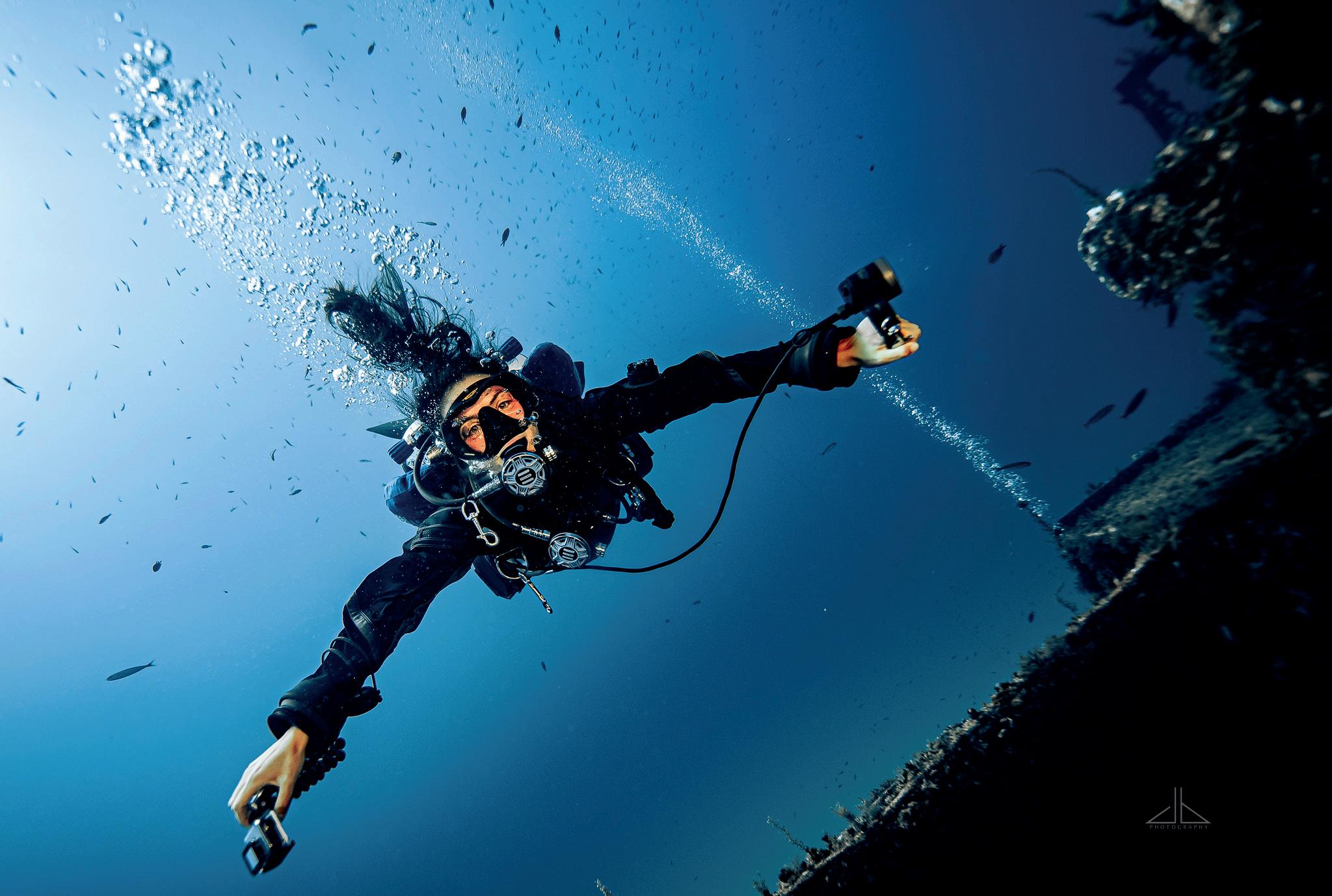
You switch masks underwater and suddenly start floating up?
You swap regulators and the same thing happens?
You reach back to your tank valve and find yourself heading to the surface?
Most of the time this happens because our natural response to stress is an involuntary inhale.
An inhale increases lung volume – and therefore your buoyancy. That’s why, under stress, we often start to ascend without even realizing it.
Let’s break it down quickly. You’re about to take your mask off – and the last thing you do is… inhale. Yet you still have a regulator in your mouth the whole time; you can easily wait with that next breath.
Second situation: regulator switch. You not only want to keep the time without a regulator in your mouth as short as possible, but right before you pull it out you… yes, inhale again.
You want to reach back to your tank valve to open it, and almost automatically you take a breath while reaching – even though in this case that inhale only makes it harder to actually reach the valve.
There are plenty of similar situations in diving.
From wanting to “take a bit of extra air, just in case” when you’re learning the basics, through skills at different levels of training, all the way to truly unexpected situations – like a light failure in a cave or on a night dive.
A good friend of mine, an experienced instructor, shot up to the surface several times while practicing the “lost mask” drill. When I asked him about it, he couldn’t really explain what had happened. When we reviewed the training video, it turned out that right after he took the mask off, his exhalation bubbles simply disappeared.
Over more than 20 years of working with students I’ve taken a lot of notes, trying to identify the actions that most often trigger that reflexive inhale and the habit of cutting off the exhale.
The most common triggers are: mask drills removing the regulator doing movements with way more force than needed (for example during valve drills)
Beyond that, the list gets pretty long. From an unnecessary inhale while dumping gas from the BCD, through taking a breath while posing for photos, all the way to inhaling while peeing

through a p-valve. Every single time it ended either with the start of an ascent or with a fully uncontrolled ascent.
Let’s wrap this part up in one sentence: you’ll perform a lot of skills much more calmly if you start them with an exhale.
The easiest way is to agree with your instructor or buddy that before each drill they give you the “exhale” signal.
You need to reach back to the valve – start with an exhale. You want to switch regulators – start with an exhale.
It doesn’t have to be a massive exhale that practically turns you inside out. Just take a calm exhale, and only then do the task.
OKAY, BUT AT SOME POINT I HAVE TO INHALE!
Of course.
Stay in the exhale for a moment, then take a slow, light inhale. Light? How light?
or: yoga vs. karate
Put on a sweatsuit or some other comfy clothes.
Sit down in your favorite armchair. Relax. Adjust your position until you’re really comfortable.
Close your eyes for a moment and… yawn. Just normally –draw air in through your wide-open mouth, then exhale.
Think about something pleasant or read a few pages of a book.
If someone were to measure your breathing right then, the result would be roughly this: you take about 8–12 calm breaths per minute, and each inhale is around 0.5 liter of air.
If, after descending but before you actually start swimming, you give yourself that same “underwater armchair” moment, it’s very easy to recall this breathing pattern: calm, not too deep.
Of course, your gear has to fit you like that sweatsuit, and you need to be as relaxed as in that armchair.
Stabilize your buoyancy and close your eyes for a moment.
The whole thing takes about a minute.
Don’t change the way you breathe, don’t speed it up, don’t make any sudden movements.
Let the water carry you – don’t fight it.
For the whole dive.
Back when Krzysiek and I were doing a dive beyond restriction in Glavas Cave, nobody had been through there before. So, you can imagine the mindset: first passage, exploration, wondering what’s on the other side…
After we published the footage, someone watched the video from that dive and asked me: “Why are you breathing so slowly?”
I’m breathing normally. That’s just my armchair breathing technique, and I try to use it all the time.
You don’t have to learn it from scratch – you already know how to do it. You just need to recall how you breathe in your favorite armchair.
That’s not a joke. Just make sure nothing in your gear gets in the way – and go for it.
Not only will your gas consumption drop, you’ll also start seeing a lot more.
For many years I was involved in martial arts.
Yoga is great – it helps you calm down and stabilize your body – but it teaches you to breathe from scratch. And usually through the nose, which isn’t exactly something we can use underwater.
We humans don’t like relearning how to breathe.
Every time we try some “breathing technique”, after a while we drift back to our natural pattern, because it doesn’t require constant conscious control.
Underwater it works the same way. If you focus only on controlling your breathing, your stress level starts to climb, until
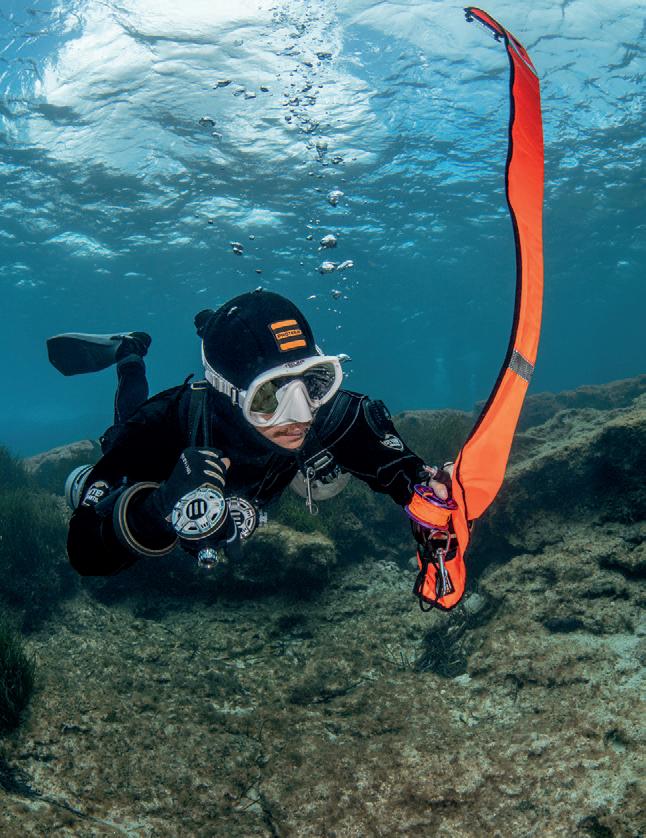
you end up out of breath – even though you’re trying to breathe “perfectly” .
That’s where it gets interesting.
In many defensive techniques, the actual moment of action is tied to an exhale. Over the years I noticed that, in stressful situations, I naturally do a short exhale and tense my core –something very similar to ibuki.
The exhale shows up there in a lot of elements: kiai, nogare and kime, for example.
We don’t do those sitting in an armchair, but if I had to point to a school that really teaches you how to exhale under stress, then… the Japanese school is actually pretty “diver-ish”
YOUR ARMCHAIR IN FRONT OF THE TV WILL TELL YOU HOW TO BREATHE
Don’t believe it?
Instead of trying to convince you, let me suggest a simple test.
Prepare a line marked every 0.5 m and hang it vertically where you’re training (for example at a buoy).
Do an exercise you don’t like – for example removing and replacing your mask while hovering mid-water.
First, do it the way you usually do. Ask your buddy to check how much your depth changed.
Then take a break and try again, using your “armchair breathing”.
Half a liter on the inhale and half a liter on the exhale usually keeps your depth changes during various tasks within about ±0.5 m.
So how about precision shooting?
Marksmen use a very simple breathing pattern: inhale → slow exhale → breathing pause → shot
Turns out they know a thing or two about comfortable armchairs as well
Don’t try to push through the whole stressful drill in one go. Break it into pieces. Think about what exactly is stressing you out.
Take your mask off and just breathe calmly.
Once you put it back on, don’t clear it right away – start with an exhale and the mask will clear as a result.
Being aware of what you’re doing underwater is the ability to spot the parts that aren’t working the way they should – and calmly fix them.
WHAT DOES AN EXHALE GIVE YOU?
lowers ner vous system tension stabili zes your body make s it easier to control your core muscles reduces the risk of a reflex gasp under stress give s you a short breathing pause in which it’s easier to perform a precise task
IS THAT ALL?
Of course not.
How you breathe underwater is always up to you.
The most important thing is that your breathing effectively clears CO₂ from your system.
If you can’t slow your breathing down, ask your instructor whether your regulator settings are creating too much breathing resistance, or whether you’re simply doing too many sudden, forceful movements underwater.
The topic gets even more interesting once we get into technical diving – but that’s a story for another article.
Sometimes the best breathing instructor is… your favorite armchair.