Stainless Steel Passivation Services: Enhancing Corrosion Resistance and Performance
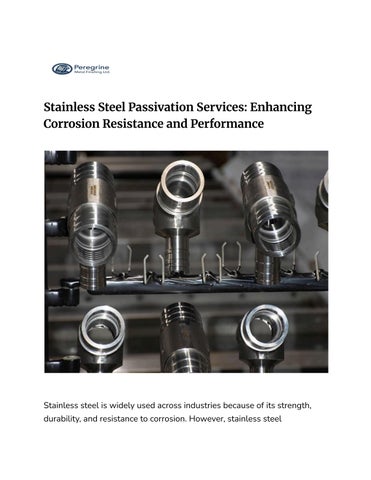
Stainless steel is widely used across industries because of its strength, durability, and resistance to corrosion. However, stainless steel
components may still require additional treatment to remove surface contaminants and improve their corrosion resistance. Stainless steel passivation services provide an effective solution for preparing and protecting stainless steel components for demanding applications.
What Is Stainless Steel Passivation? Stainless steel passivation is a chemical treatment process used to clean the surface of stainless steel and promote the formation of a protective passive oxide layer. This process helps remove free iron, manufacturing residues, and other contaminants that may affect the corrosion resistance of the material. Passivation does not significantly change the appearance or dimensions of the component when performed correctly. Instead, it helps the stainless steel surface develop its natural protective properties.
Why Are Stainless Steel Passivation Services Important? During machining, fabrication, grinding, or handling, stainless steel can become contaminated with iron particles and other materials. These contaminants can contribute to surface corrosion and reduce the expected performance of the component. Professional stainless steel passivation services can help: ● Improve corrosion resistance ● Remove surface contaminants and free iron ● Protect stainless steel components from corrosion ● Improve surface cleanliness ● Extend component service life
● Prepare components for demanding industrial applications
How Does the Passivation Process Work? The passivation process generally begins with thorough cleaning of the stainless steel component to remove oils, grease, dirt, and other surface contaminants. The component is then treated using an appropriate passivating solution under controlled conditions. After treatment, the component is thoroughly rinsed and inspected to ensure that residues have been removed. The process allows the stainless steel surface to form a more stable passive oxide layer that provides improved corrosion protection.
Applications of Stainless Steel Passivation Stainless steel passivation is used for components across a wide range of industries. It can be particularly valuable where corrosion resistance, cleanliness, and reliable component performance are important. Common applications include: ● Automotive components ● Aerospace parts ● Industrial equipment ● Medical and pharmaceutical equipment ● Food processing equipment ● Precision-machined components ● Industrial fabrication and assemblies
Benefits of Professional Passivation Services
Choosing professional stainless steel passivation services helps ensure that the treatment is carried out using suitable processes and controlled conditions. Experienced metal finishing specialists can assess the material and component requirements before selecting an appropriate treatment process. Proper passivation can help improve corrosion resistance, maintain component integrity, and support the long-term performance of stainless steel parts.
Conclusion Stainless steel offers excellent durability and corrosion resistance, but proper surface treatment can further enhance its performance. Stainless steel passivation services help remove contaminants and support the development of a protective passive surface, making them an important part of metal finishing for many industrial applications. For stainless steel components used in automotive, aerospace, industrial, and other demanding environments, professional passivation can provide improved surface protection and reliable long-term performance.
Contact Details Company Name: Peregrine Metal Finishing Address: 429 Dewitt Rd., Unit 12, Stoney Creek, Ontario, L8E 4C3 Email: sales@peregrinemetalfinishing.com Website: www.peregrinemetalfinishing.com