PDBY PDBY






Welcome to the big, wonderful University of Pretoria. I’m not going to tell you about tutors and AIM and how many nights a week you should or shouldn’t be spending at the Strip. You’ll figure all those university bits out on your own. What I do want to help you with is the human who is stepping foot into the unknown terrain of semi-adulthood.
I’m going back to my Entertainment journalism roots here to give you a short breakdown of one of my favourite books: Liz Gilbert’s Eat Pray Love. I can assure you that it is nothing like the film, so definitely give it a read in-between lengthy varsity readings. I read it at the beginning of second year and found it relatable to this journey. And a lot of the things, having gone through it again for this editorial piece, are still relevant to my constant transformation. So hopefully, you can come back to this piece when reminiscing on your student days and still find something solid on this page.

Okay, enough waffling. Let’s get you started on your journey. Firstly, Gilbert’s Eat part is all about pleasure. Essentially, she goes to Italy and eats and eats and eats. But really, it is just her learning to enjoy life. Remember to enjoy this time. Yes, you need to get a degree and most of your time will be spent in lectures, but enjoy the simple things. Gilbert describes painting her walls and buying herself flowers – very mundane things that make her feel more human. The reality of university is that things are going to get incredibly busy and losing yourself in this newfound independence is bound to happen. This is when you need to reconnect with what makes you happy. Become your own best friend. At the end of the day, when the books are closed and Padstal’s lights are out, you need to be okay with who you are. When you don’t know the answers, it is okay to just stop and gather yourself. Something will come out of your stagnation. She explains “lay[ing] it on the table”. You don’t need to have it all figured out this week, or this year. Just take it all bite by bite. Her Pray is more about connecting to something bigger than yourself. In India, Gilbert experiences a journey of faith, which might be something you will have here too. I recommend it. If religion is not something you’re keen on, find something bigger than your immediate surroundings to believe in. Gilbert meditates on what causes a revolution in her mind. She describes religion as a way of safekeeping herself – having something to hold onto when life gets messy. If you have something to believe in that is worth more than marks or res leadership, then you will be okay. Another thing she recommends is sitting through discomfort and learning to let go. Many moments of change will come knocking. Sit in the scary situations, get through them, and then remember to carry on.
It won’t all be perfect, and without the immediate support of home, it can get overwhelming. However, these next few years are pretty small compared to your whole life ahead. Lastly, Love. In the film, we get tons of steamy romance. However, the book has more to do with happiness. A Balinese medicine man reminds her to smile so much that she is even smiling in her liver. He states that seriousness is something that can make one sick. Essentially, just spread love. Some days are going to feel heavy, but when you wake up the next morning, you get to start again. Gilbert ends her book by encouraging us to just keep saying “thank you”. And I think that is excellent advice. These years will be tough, but you will make it through by the grace of those around you and the revolution that you hold onto. So be thankful for everything that you are about to experience. I know this all sounds super cheesy. The guidelines here aren’t that complicated. That is the beautiful thing about faith. It is cheesy and super uncomplicated. You literally just need to lay it all down on the table in front of you and let it happen. One of my favourite lines in the book is the Italian saying “L’arte d’arrangiarsi” – the art of making something out of nothing. Make this journey yours – it is officially all up to you. Welcome to the fever dream we call university. It’s so good to have you here.

Editorial
Editor-in-chief carel.willemse@up.ac.za
Carel Willemse @Ed_in_Chief
Editor editor@pdby.co.za
Domonique Bennetts @pdbymedia
Deputy Editor digitalmanager@pdby.co.za
Jason Visser
News news@pdby.co.za
Relebogile Manana
Features features@pdby.co.za
Gabriella Hobson
Entertainment entertainment@pdby.co.za
Cara Heymans
Sport sport@pdby.co.za
Neo Paledi

Hannah Roberts
Layout layout@pdby.co.za
Alyx Bell
Visual Media multimedia@pdby.co.za
Danielle Oosthuizen
Dynamic Media
Jason Visser
Web webeditor@pdby.co.za
Sivenathi Makhanda Social Media
Amai Ngulube

PDBY appreciates that freedom of speech is an inalienable right enshrined in the Constitution of the Republic South Africa. We encourage our readers to engage in discussion and debate on issues that affect them through letters to the Editor, comments on our website, tweets, or posts on Facebook. We ask our readers to keep the following in mind:
1. PDBY will not edit letters, comments, tweets, or Facebook posts in any way.
2. PDBY will label letters, comments, tweets, or Facebook posts as opinion. These do not represent the views of PDBY in any way.
3. The PDBY editorial must approve letters, comments, tweets, or Facebook posts before they are published.
4. PDBY will not publish letters, comments, tweets, or Facebook posts that are defamatory, or libelous, or that contain offensive content.
5. PDBY reserves the right to practice discretion when publishing letters, comments, tweets, or Facebook posts.
6. PDBY reserves the right to publish any content we receive unless the sender specifically requests otherwise.
7. PDBY reserves the right to retract a letter, comment, tweet, or Facebook post after it has been published.
8. PDBY will not accept responsibility for any consequences the author of a letter, comments, tweets, or Facebook posts may experience as a result of the letter being published.
9. PDBY will only publish letters between 150 and 200 words.
10. PDBY will not publish letters unless the writer confirms their full name, student number and contact number. PDBY will not publish this information, we need it for our records.
Ompha Mudau
As first-year students prepare to start the 2026 academic year at the University of Pretoria (UP), the most significant change shaping their entry into university life is the continued increase in upfront registration fees – a development that has sustained attention and debate on campus in recent years. For 2026, undergraduate students are required to pay an initial registration fee of R11 000, an increase of R1 000 from previous years, while postgraduate students must pay R13 500. International non-SADC (Southern African Development Community) first-year students are required to pay R40 000 before registration, while non-SADC postgraduate students have to pay 50% of their total fees upfront. Registration remains an annual process, separate from application, meaning students must re-register and pay the required fees each year.
Previous reporting by PDBY journalists Relebogile Manana and Datis du Preez highlighted the steady rise in registration fees at UP, noting increases from R5 000 in 2022 to R7 500 in 2023 and R10 000 in 2024. This reporting also outlined student concerns about affordability, transparency, and consultation, situating UP’s fee increases within a broader national trend affecting universities across South Africa.
Beyond finances, academic regulations continue to shape the first-year experience.
The General Academic Regulations (G Regulations), updated annually and published in UP’s online yearbooks, apply to all faculties and students. They outline assessment rules, progression requirements, and conduct, and students are expected to familiarise themselves with both general and faculty-specific regulations. Lack of awareness is not accepted as grounds for exceptions. These measures are aimed at supporting students’ transition to university-level reading and writing.
Assessment rules remain unchanged. A minimum performance mark of 40% in a module is required for admission to examinations. These processes are administered through Student Administration, a division within the Department of Enrolment and Student Administration (DESA), which also co-ordinates examinations, student records, appeals, curriculum information, and scheduling of lectures and assessments.
Student support at UP continues to expand. PDBY spoke to Tshegofatso Kenalepe, a Senior Disability Officer at UP, who explained that Access, Disability, and Inclusion Services (ADIS) plays a central role in ensuring that students with disabilities or specific access needs can participate fully in university life. According to Kenalepe, ADIS works with students, academic departments, and other support services to identify barriers to learning and implement reasonable academic and administrative

accommodations, including examination concessions, assistive technology, alternative formats for learning materials, and psychological screening and referrals. Kenalepe added that students are encouraged to register with ADIS as early as possible to ensure support is in place from the start of the academic year, noting that seeking support is a proactive step towards academic success. Beyond ADIS, first-year students can access a wide range of support services, including mental health, physical health, and financial assistance, through the UP website.
This network of support extends to ensuring students’ physical safety and security on campus. Safety remains a priority on campus, which is why UP provides 24-hour security services, CCTV surveillance, and emergency response support. The Green Route service allows students to request an escort to their residence between 18:00 and 06:00. The university also works with the Hatfield Improvement District to address safety in surrounding areas. Students are encouraged to remain vigilant, avoid displaying valuables, walk in groups, and report suspicious activities.
For first-year students entering UP in 2026, understanding the rise in fees, academic expectations, administrative processes, and available support services is key to navigating their first year. Staying informed and making use of the university’s resources can help students manage the transition into higher education successfully.






Londeka Mbokane
Money makes the world go round or brings it to an abrupt halt. Along with academic stress comes financial strain, which firstyears will soon come to realise as they experience the effects of inflation on student life. However, if you are looking for a practical solution that incorporates flexible working hours, skills development, networking, and mentorship among faculty and peers, all while earning a decent income within one's immediate vicinity, on-campus employment might be the most convenient.
The job market at UP is incredibly vast, ranging from faculty-specific tutoring roles to residence-centred House Committees and administrative positions such as library support. These are all part-time, term-based opportunities that become available when vacancies arise. Based on the experiences of two employed students, here is a guide on the different routes that can be followed to secure a job.
For Regis Ndove, a third-year Computer Engineering student, the intention was to boost his CV and earn an extra income. Securing a tutoring position within your faculty simply requires reading the department's emails. Other platforms to keep an eye on for vacancy advertisements include the university portal, career services emails, notice boards, and social media posts. The minimum qualification needed is passing the specific module exceptionally well, thus highlighting how crucial maintaining academic excellence is. Along the way, he emphasises how to “not let the opportunity pass you by due to doubt and fear of rejection and not coping”.
Although balancing a job and academic commitments may seem challenging, the skills acquired are rewarding, as attested by final-year BSc Computer Science student Lufuno Mphagi who served as a student IT lab technician. “This not only teaches time management and planning skills, but also serves as an opportunity to network by conversing with experienced seniors and supervisors who are always willing to share useful advice in handling the job.”
Additionally, completing the Ready for Work programme on your clickUP portal accelerates skills development and provides resources for career planning. This programme, being specifically designed for UP students, consists of one quiz for each of the five packages of six to eight modules respectively.
A certificate of completion is then awarded, enhancing your professional profile and increasing your chances of employability and work-readiness within UP. Applying for an on-campus job may seem complicated, but a pattern emerges across most applications, which is subject to adjustments specific to the job. Most applications require a concise and tailored CV, no longer than two pages.

Creating and continuously updating a professional profile on platforms such as LinkedIn and Leaply can aid in keeping track of achievements and prior commitments for when you are drafting a CV. Other supporting documents to have on standby are your proof of registration, current academic transcript, and a personalised motivational letter.
Notably, some jobs have distinct requirements including a minimum GPA, affiliation with certain societies or residences, and various technical skills.
Keeping an eager eye out for advertisements on multiple communication platforms, not only for vacancies but also for events hosted by the potential employer, ensures a competitive advantage. Moreover, submitting early applications, professional correspondence, and interview etiquette are likely to place you in the most favourable position.
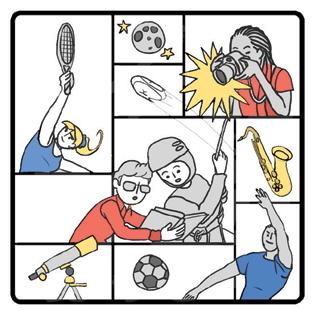
The University of Pretoria can be described as a melting pot of ideas, cultures, and ambitions. This is where dreams come alive, diversity flourishes, and creativity overflows. It is a world filled with countless possibilities, yet many students move through campus life in a bubble, sticking closely to their degrees, familiar friend groups, and one or two societies that feel “safe”. While this is natural, it quietly limits one of the greatest opportunities university offers: meaningful connections beyond the bubble. Societies often fall into this pattern too.
Academic societies engage only with those in their faculty. Cultural societies focus inward, and professional organisations host events for a select audience. This results in missed opportunities for collaboration, creativity, and growth. It is crucial to note that the most pressing challenges of our time, from economic inequality to climate change as well as innovation and social cohesion, are not solved by one discipline alone. Why should student life be any different? Societies should come together to empower and encourage students by embracing, rather than ignoring, their differences.
Remember, campus societies were created to expand student life beyond the lecture hall. However, when societies operate independently and rarely engage with one another, they unintentionally create smaller bubbles within the larger university space. Stepping beyond these bubbles is where growth, connection, and opportunity truly begin.
Venus Nare, a final-year student, said, “One society already feels like a lot when you are trying to adjust, but you do not even realise how much you are limiting yourself until you attend something outside your usual space.”
It is evident that when campus societies collaborate, bubbles burst. Events become richer, conversations more diverse, and networks broader. A business society partnering with a media or an arts society gains new storytelling perspectives. A political or social justice organisation working with a science or engineering group sparks practical solutions rooted in policy and innovation. When interviewed, Executive Committee (EC) members across campus echoed the same sentiment: collaboration exposes students to skills and mindsets they would not encounter within their own spaces. It builds adaptability, teamwork, and leadership qualities that employers increasingly value in a rapidly changing world.
This sentiment was summarised by one EC member who said, “When we collaborate with other societies, we reach students we would never normally reach. It pushes us to think differently and plan events that are more inclusive and engaging.” Through collaboration, societies stop functioning as isolated groups and start contributing to a more connected campus culture.
Step beyond your bubble! Going beyond your comfort zone starts with something small, like attending a joint event, supporting another society’s initiative, or simply starting a conversation with someone outside of your usual circle. Over time, these small steps create a campus environment that is vibrant and inclusive. However, societies must lead students into this diversity with collaboration, assistance, and support. Societies should not just co-exist, but they should grow stronger together.
Visual: Daniel Green
What may present as a minor invitation of employment could be an opportunity that helps you meet financial needs, gain experience, and feel more integrated into the campus community. The trick is staying proactive and exploring different options.


Kofi Donkor
Whether you want absolute freedom, a sense of community, or seek the ultimate student life experience, Hatfield hosts a variety of housing options to choose from. Deciding what place is best for you is an intimidating task, so for those who do not know where to start or need reassurance in their decision, here is a brief overview of what Hatfield has to offer.
Private Student Accommodation
Private student accommodations cater to students’ needs, boasting study centres, communal kitchens, furnished rooms, and amenities such as games rooms, gyms, and public pools. Students who want to avoid the restrictions and traditions of TuksRes often turn to private accommodation for a greater sense of freedom. PDBY asked Lesedi Padi, a third-year Information and Knowledge Systems student who lives at Hatfield Studios, why he chose private accommodation in his first-year. He said, “I was led to believe that when you’re in a private res, you have more freedom and you don’t have to participate in initiations, which sounded cool at the moment. As a firstyear going into a new place, I didn’t want to be caught doing things I didn’t want to do, especially since it’s my first year of [university] and I’m trying to adjust to the location.”However, private accommodation is not without its constraints. When asked if all of his expectations of freedom were met, Padi replied, “Not entirely. I didn’t expect private accommodation to have so many rules.
The rules feel like I’m still at a UP residence even though it’s a private accommodation.” Padi noted that students enamoured by the student lifestyle may still find what they are looking for at private accommodations, saying, “There are sports, there is culture, there are activities – Hatfield Studios does feel like its own community… that everyone is together in everything.”
Apartments
Apartments offer students complete freedom as well as a wide price range, allowing you to make a choice that combines affordability with liberty. PDBY asked Keeshania Pillay, a third-year Law student living in a Hillcrest apartment, what influenced her decision. She explained, “Private residences were too expensive for the space that I was getting, so I thought that [by] getting an apartment, I would get more space and the price would match the space.” She later added, “I think the freedom is one of the biggest things I was looking for.”

However, despite the freedom offered, apartments seemingly provide little opportunity for student socialising, Pillay says. “There aren’t [any] student socials. It’s a bit more difficult to socialise… there aren’t opportunities given.”
Studying from Home
Students who study from home are seemingly greatly disadvantaged. Marvon Marasi, a first-year Accounting student, said, “There’s definitely more disadvantages than advantages.” Marasi spoke about the fatigue of the daily commute and further detailed that campus resources being inaccessible creates difficulties when studying. “It’s not conducive, if you have to ‘lock in’. I’m really productive in the library, but it’s not like I can take a fiveminute walk down to the library.
I have to be in my room or my living room, and sometimes people in the house aren’t considerate of that.”
However, Marasi details some of the benefits that come with staying at home, saying, “I never have to worry about food or having hot water or not having anyone to talk to when I get home. So it can be comforting as well, because I’m not paying for any accommodation or my own groceries.” In regards to student life, Marasi ultimately laments the student experiences he missed out on due to living at home, saying, “Definitely… I feel like I’ve missed out. I think when you’re staying at res, being able to go out whenever you want, being free… it adds to the experience. Staying at home takes away from that student experience.” TuksRes
The rules and traditions of TuksRes can seem limiting to some. Onkabetse Makgobane, a third-year Medicine student, recounts a notable restriction she dealt with during her first year at TuksRes – a curfew. She said that it would be made earlier or later depending on the first-years’ behaviour. Makgobane noted that the shared bathrooms and being limited to the residence’s catering may be an inconvenience to some.
However, residences take great effort in helping students assimilate into UP. Makgobane noted that tours of campus and the surrounding area were provided in addition to efforts to have students socialise through a mentorship programme and connecting students who study the same degrees. Makgobane concluded, “Res is just the space where you’re surrounded by people who are in the same boat as you, and you guys are doing this thing together.”
Whether you want the total independence of an apartment, the community offered by TuksRes and private accommodations, or even the financial freedom of studying from home, the university housing market has something for everyone. Ultimately, no matter what type of person you are, the choice is yours.
Kofi Donkor

STUKU, a student organisation dedicated to showcasing the cultural side of UP, curates multiple cultural events throughout the year, giving students the opportunity to put their talents on full display. Whether you are looking for some local entertainment or crave the spotlight for yourself, you should take a look at what STUKU has in store for us throughout the year.
1NSYNC
Also known as O-Week’s main event and the introduction to UP culture, 1NSYNC showcases first-years that participate in a singing and dancing competition on behalf of their student houses. Although incoming students may loathe the fact that participation is mandatory, testimonies of past participants may prove that this is something to look forward to. Onkabetse Makgobane, a third-year Medicine student, said, “You’ve never really done something like this before… you should open yourself [up] to having that new experience. You can just give the practices a try. Even if you find a little bit of joy in those practices, you should hold on to that because that means that the performance is going to be even better than what you could have ever imagined.”
Makgobane reminisces on the bonds created through her participation in 1NSYNC, citing the competition as a large contributor to the friendships she had formed at her residence and at UP. “It was the friendship aspect that I liked the most. It was a nice opportunity to learn about people I want to be friends with.”
Step It Up
Similar to 1NSYNC, Step It Up is a mid-semester singing and dancing competition open to all students in residences, faculty houses, and other student structures. Makgobane, who participated in Step It Up in 2024 and 2025, shared what attracted her to the competition in her first year, saying, “Step It Up [was] a chance to get to know your seniors in your res. It’s also a chance to get to know [your HCs] as people and not just see them as this HC figure. I think that’s what made me interested in doing it, to get to see more people in the house and to become more integrated in the house.”
Makgobane notes that there is a stark difference in intensity between 1NSYNC and Step It Up, “The passion was different… now you’re with people that have stayed there for two or three years, [and] they have this passion for [the structure]. That type of passion is inspirational, it excites you.” Later, she said, “The practicing, the amount of practicing we did... it’s way more competitive than 1NSYNC was. If your res wins Step It Up, it’s a big deal, so it was a bit more intense.”
Sing It Acapella
Another competition between student structures, Sing It Acapella gives UP’s vocalists an opportunity to show off their incredible talents. PDBY spoke with Atamelang Molekoa, a third-year Law student who participated in Acapella for Invicta in 2024 and 2025. When comparing Acapella to his time participating in Step It Up and 1NSYNC, Molekoa found Acapella to be easier out of the three, saying, “You’re there because you want to be. People want to sing, and things come together relatively quickly. Acapella is definitely the most comfortable to do out of the three.” Although Molekoa had prior experience in culture before attending UP, he adds that first-years who lack experience should not hesitate to participate in acapella. “There’s nothing wrong with trying something new, you never know what you might get out of it.” UP’s Got Talent
UP’s Got Talent is a variety show full of student talent and is open to musicians, comedians, dancers, and many more. PDBY interviewed Faneriwile Chawane, a third-year Information Science student who participated last year. Chawane highlighted the independence that participants have when preparing for the competition, saying, “In terms of preparation, that’s really just up to you, the organisation doesn’t really do much to prepare you, which is not their responsibility.”
Chawane further speaks on the differences between the above events and UP’s Got Talent, saying, “In a group setting where people’s capabilities differ, everyone needs to get to the same level. For example, people [who] are not that musically inclined find it more difficult to prepare than people who are musically inclined, and that does pull back people who are musically inclined. So preparing for anything in a group setting is a lot more challenging than preparing for something by yourself.”
Cultural events provide students with much-needed breaks from the woes of academic life, and they provide opportunities for growth and self-discovery. Lethokuhle Ndlovu, STUKU’s External Culture Head, shared this sentiment, saying, “These events show first-years that UP is about more than just academics, it’s about growing, creating, and having a blast with your peers.”
Hannah Hambly
It is easy as a first-year student to feel lost and unsure about where you fit in or what Hatfield has to offer.
You may find yourself focusing solely on finding your next class or ensuring that you make it to second year. However, there is more that UP and Hatfield have to offer. With so many options available, you are sure to find your place.
There are various types of extracurricular activities offered at UP, from academic, cultural, social, religious, and political societies to sports teams and running clubs, and even leadership structures and faculty specific clubs.
Some of the academic societies include the Psyche Society, which is within the Psychology Department and run by students with a focus on mental health and social work. This society aims to “bridge the gap between theory and practice”. There is also the UP Aerospace Society that “aim[s] to provide a community for like-minded students who share a passion for all aspects of aerospace”.
There are also cultural and art-focused societies such as the Tuks Anime Society. There is also the Culture Shifting Society that is “dedicated to advancing the success of the youth in the entertainment industry”. Other societies include Tuks Student Christian Fellowship, Tuks4ClimateJustice, and UP&OUT. It is important to research UP’s societies, follow their social media pages, and keep tabs on them in order to find out where you would like to be. To find a society that suits you, you first need to log in to the UP Portal, navigate to the Student Centre, click Student Societies, and then Explore Societies. Here is where you will find a list of all the societies you may join, and all you have to do is click “Join” to be a member of that society. There are also a range of sports at UP, from aquatic sports to individual and team sports that mostly take place on the LC de Villiers Sports Campus. There is lifesaving, a sport that “empowers you to serve as a lifeguard and compete at provincial and national levels”. There is also highly competitive swimming with a team that prides itself as “one of the leading and competently coached swimming programmes in Africa and South Africa”. With alumni like Tatijana Smith (née Schoenmaker), it is clear that this environment promotes “a culture of hard work, dedication and good fun”.

For those who did not know, UP has underwater hockey, which is “a non-contact water sport where two teams of six players compete in a two-metre deep 25m x 15m pool, maneuvering a puck across the pool bottom into the goals”. It includes wearing a diving mask, snorkel, fins, and a swimming costume. Gloves and a stick are provided. There are also more traditional sports like training for a triathlon through TuksTriathlon for cycling, swimming, and running.
The individual sports consist of Aikido, which is a “traditional Japanese system of self-defence that emphasises throws and joint lock techniques”, as well as Archery, Athletics, Badminton, and Chess. These sports “provide an inclusive and dynamic environment where students sharpen their skills and engage in friendly competition”. There is also Cycling, Golf, Gymnastics, and even E-Sports for those who want to be competitive gamers. TuksSport also has racket sports like Squash and Tennis, and then they have more combat-orientated sports like Karate, Judo, Wrestling, and Taekwondo.
The team sports consist of well-known options such as Basketball, Cheerleading, Cricket, Football, Hockey, Netball, Rowing, Rugby, and Volleyball – which you should go watch during Varsity Cup season. Students can also participate in Ultimate Frisbee, which is “a highly competitive, mixedgender sport played with a frisbee or disc”. These athletes play under the rules created by the World Flying Disc Federation. No matter who you are or what your interests and background are, there is a place for you at the University of Pretoria.
Beyond the university, there are also social running clubs such as Running to Coffee, where you can enjoy a good workout, have social interactions, and visit local coffee spots. You can also take an adventure to the recently opened Pantry in Hazelwood. In Pretoria, you could also go for a hike, trail running, or biking at the surrounding nature reserves, including the Wolwespruit Bike and Trail Park, Faerie Glen Nature Reserve, and Groenkloof Nature Reserve.
Being aware of these activities may help you settle into university more confidently and help you navigate academics and create lasting friendships. Although participation is optional, these activities offer valuable ways to connect and grow in a new city and academic space.


After getting an acceptance letter from the University of Pretoria (UP), the unexplainable excitement quickly gives way to the reality of what comes next. Registration marks the first official step into university life, and for many first-year students, it is both a milestone and a moment of not knowing where they stand.
Orientation Week (O-Week) often begins with unanswered questions about accommodation, academic expectations, campus culture, and the support systems available to help students succeed in their journey. Stepping onto campus with little more than luggage, determination, and ambition, first-year students take their first steps into an unfamiliar but promising environment.
The idea is to offer guidance to first-year students as they begin their journey at UP. It clearly focuses on key registration insights, introducing important student support structures, and exploring the role of Faculty Student Advisors (FSAs) in making life easier as one transitions from high school to higher education. First-year students are equipped with academic resources, social spaces, and services that are put in place to help students settle in and thrive in their new environment.
For many students, the registration process can feel intimidating, but the university has put systems in place to simplify the experience.
PDBY spoke to Kate Matabane, Chairperson of House Theology and Religion, who recalls that staying informed made a significant difference. “The registration process was straightforward for me because the university communicated clearly on social media,” she explains. UP regularly shares registration dates, walk-in details, and campus information on platforms such as Instagram, making it easier for students to stay prepared.
Kamogelo Mothapo, a first-year student studying a bachelor’s in Town and Regional Planning, describes her registration experience as exciting rather than stressful. She gives all credit to the STARS Mentorship Programme, a mentorship initiative put in place to support first-year students.
“We were assigned mentors who guided us step-by-step, from logging into the student portal to uploading important documents,” Mothapo says. The programme also helped her with her registration fees, easing financial pressure. O-Week plays a crucial role in preparing students for academic life at university. Matabane describes O-Week as a game changer, noting that it introduced students to academic expectations, assessment methods, tutoring services, and library resources. “It showed us how assignments and exams work and pointed us to resources so we would not get lost,” she says. Beyond academics, O-Week also exposes students to campus culture, student structures, and residence life.
Mothapo shares the same sentiment, highlighting the effectiveness of O-Week in easing her transition. “It helped me understand how the academic system works, including module registration, timetables, and online platforms such as clickUP,” she explains. She adds that learning about academic rules and available support gave her the confidence she needed to begin her studies.
One of the most valuable support structures introduced to students is the Faculty Student Advisor. Both interviewees emphasised the role that FSAs play in guiding first-year students at the start of the year. Matabane shares that her advisor assisted her with her course selection, workload management, and accessing academic workshops. Mothapo describes the interaction with her advisor as one that clarified academic expectations and reduced uncertainty.
Aside from academics, UP offers support services that address students’ personal and social needs. These include the Student Service Centre, Student Counselling Unit, health services, and financial aid support. Programmes such as the Student Nutrition and Progress Programme (SNAPP), an initiative that provides food parcels, and Student Representative Council (SRC) assistance with NSFAS matters demonstrate UP’s commitment to student wellbeing.
It is without a doubt that the university’s support structures ensure that first-year students are not left behind. With the right guidance and resources, students are well equipped and empowered to truly FLY@UP!














Hello UP student – this is a safe space to shoot your shot at all those cute people you see on campus Tell those people how you feel about them, hit on your crush, or compliment a person on that outfit they were wearing the other day. Anything positive really. Try to be as descriptive and creative as possible with your description so it makes it easy for the person to identify themselves If both people agree, PDBY will arrange a meetup Do you think this is you?
Email: shootyourshot@pdby co za

to my fine chocolate stranger I did tell you I will be doing this, you left me with no other option You and that bike dangerous combo Makes me want to be the next thing you take for a spin Sincerely, your stranger
To the girl shooting her shot at MY Chocolate man: bold move but the ball is not in your court He told you he is seeing someone so the respectful play would be to cheer from the sidelines instead of dribbling where you don’t belong Sincerely, his MVP
To HCT in architecture what's up bbg I want you to tackle me like you tackle that rugby ball You make my heart stop everytime you have that durag on I'd watch those Marula games everyday to see those big blue eyes Hit me up bbg
To the short Italian guy always smoking outside of engineering Mamma Mia you’re smoking hot I’ll make you pasta if you bring the meatballs ;) See you in class xoxo

To the girl in FMR 121, I know where you live and I want you so BAD!, I think you’re cuffed but not for long
To the guy who works at the AIM labs, with the broken finger There is something about you that just drives me absolutely off the rails
The way you look like you own the place gives off big daddy vibes I need you to work me like you work in the AIM labs boy!
baby give me a chance I know you moved on but I haven’t ur boy ain’t a mountain please give me a chance at happiness my peachy princess
To the girl I was talking to before recess on Instagram and is studying Food Science 2nd year Bro what happened to you? You just deactivated your account and disappeared
To the light skinned firstyear dentistry guy (with a coloured friend) who likes wearing black scrubs with Nike sneakers and recently joined the sixteen Oh ate running club: I think might have a cavity only you can fill; sincerely "Call me by your name"


Can’t get enough? Find these articles online
Features: The Psychology behind “Not Feeling Good Enough” In University by Buhle Jantjies

Entertainment: Dorm Diaries: Tips And Tricks on Surviving Communes by Kopyani Ramokgopa
Sport: Boxing or Branding: The Controversial Rise of Celebrity Fighters by Anastacia

Games by Cara Heymans
Visuals by Alyx Bell



‘‘I read about it in a book when I was a child’’precocious



Down:
Across:
2. Stick to your friends, not the floor
Where you can get in sync
Your home for two hours a week 10. Late-night studying fuelled by energy drinks and procrastination 11. Grocery runs close to home

PDBY welcomes you to UP & humbly requests you follow us on instagram



Rona Disetlhe
There is this silent pressure to be the most bright-eyed and productive student during your first year, but here is the truth – you are allowed to be tired. While the transitional stage is jam-packed with excitement and adrenaline, many days will come where you have heavy eyes and a daunting schedule ahead. This is completely understandable. After months of disrupted sleep schedules during matric exams and weeks of “catching up” during the holidays to recover from the exam fatigue, you most likely started the year with an irregular sleep schedule.
Balancing early or late-afternoon lectures, late nights, and your newfound independence can feel overwhelming, more so with the social pressure to never miss out on anything. One way to handle these pressures is through short and intentional naps that can help you manage your energy levels and settle into new routines. Understanding the sleep cycle allows you to use rest strategically so you can actually thrive and not just survive the day.
Why Naps?
Naps have been shown to reset the mind, reduce grogginess, and improve your concentration. This helps you actually stay engaged in lectures and present in conversations with your friends. A good nap can release serotonin, your brain’s natural mood enhancer that regulates your emotions. Naps also help to improve your cognitive function and retain information. That way, you might actually be smiling during your exams while the person next to you is confused because they missed those two important sentences on page 81 of your textbook.
The best time to take a nap is between 13:00 and 15:00. This early afternoon window aligns with the body’s circadian rhythm and is when your energy often dips, resulting in an energy slump. Napping in those two hours allows you to recharge your batteries without ruining your chances of falling asleep at night. Essentially, the circadian rhythm is your built-in clock that responds to light cues, telling you when it is time to rest. However, if you commute and can only nap around 18:00, keep it short at around 20 minutes so that you can avoid a sleepless night.
But, How Long Should Your Naps Be?
For an energy boost, 10 to 20 minutes is often best. This is known as the power nap. These are short enough to keep you

in the light stages of sleep so that you wake up feeling refreshed and alert without a “heavy” feeling. This nap is ideal for study breaks or when you need a small energy boost in-between lectures.
For heavy workloads, a 60-minute nap works well. The memory nap is perfect for recall. These allow you to reach slow-wave sleep, which is crucial for processing and storing facts and concepts. It is especially useful before an intense study session or a dense two-hour lecture because it leaves you feeling refreshed and better prepared for learning.
For a total reset, you need to have 90 minutes. This full-cycle nap includes REM (Rapid Eye Movement) sleep, which is linked to improving your memory, creativity, and problem-solving abilities. While this nap is longer, it prevents the disoriented, groggy “what day is it?” feeling after waking up. This is perfect if you are mentally exhausted and need a good reset to get back to studying effectively.
Remember: taking a break is still productive and taking a nap does not mean you are missing out. It means you are getting ready to show up as your best, most awake self for the moments that matter.


Lydia la Grange
University is a great opportunity to learn, make new friends, and discover who you truly are, but it is full of noise, busy schedules, new people, and demanding curricula. It can be an overwhelming experience, and many students end up struggling with their mental health as a result. If you ever feel like you need support to cope with university stress, difficult challenges, or mental illness, the University of Pretoria has a variety of student counselling services you can use. Some of these include trained psychologists, crisis lines, support for victims of gender-based violence, peer support groups, and more.
You can access these resources via the student portal on the UP website by following these steps:
1. Log into your student portal.
2. Click on the “Student Matters” tab at the top of the page.
3. On the drop down menu that appears, click on “Student Health and Wellness” to see all of the resources you can access.
To access psychological counseling, click on the “Student Counseling” tab. In the form that comes up, select “Psychotherapy with a psychologist” under the options for what services you require. This will allow you to speak to a registered psychologist about any mental health struggles you may have, completely free of charge. This will allow you to work through your challenges with a professional in a safe space and learn how to effectively care for your mental health in the long run. Alternatively, you can select “Mental health consultation with a counsellor” for something more short-term like situational struggles or coping strategies for academic stress or motivation. These services are completely confidential and free for registered UP students. Whether you choose to speak to a psychologist or a
counsellor, or even make use of any of the other available resources, your sessions are conducted in a safe, judgement-free environment. Seeking support will not appear on your academic record and it will not affect your studies in any way.
If you are going through a mental health crisis or feel that you need urgent support, you can call 0800 747 747 – the 24/7 emergency care line. You will be connected to a trained SADAG (South African Depression and Anxiety Group) counsellor who will provide immediate support and advise you on the best way forward. UP also offers peer support groups for those who feel more comfortable discussing their struggles with other students or feel like they need supplementary support in addition to counselling. These groups address a range of mental health challenges and provide a safe space where students can feel understood and supported. You can enquire about available support groups by emailing the counselling unit at studentcounselling@up.ac.za or calling the 24/7 helpline.
If you would like to visit the Student Counselling Unit (SCU) in-person – whether to ask questions, attend a counselling session, or learn more about available services – you can do so at any SCU on a UP campus. On Hatfield campus, the centre is located next to TuksFM and the Student Centre. At Prinshof, it can be found in room 3-12 of the Tshwelopele Building. Groenkloof students can visit room 1-28 in the Letlotlo Building, while Mamelodi students can access services through the Health Clinic. At Onderstepoort, the centre is located in room 1-51 of the Student Health Clinic.
It can be easy to neglect our mental health or dismiss our struggles as manageable, but mental health challenges, big or small, always deserve support. Asking for help is never a sign of weakness; it is something everyone needs at one time or another. No matter how it may feel, you are not alone. Support is always available.
Tshepiso Makhetha

There is a specific kind of confidence that comes along with seeing money in your account at the beginning of the month. For a moment, life feels possible. Groceries? Easy. Latte on campus after class? Why not? McDonald’s instead of cooking? You deserve it. But suddenly, you realise that it is the 20th, and you are checking your balance like it personally betrayed you. Welcome to varsity budgeting.
For many first-year students, university is the first time money becomes your responsibility. No parents or guardians monitoring every purchase, no fixed school routine, and no warning for how fast small expenses pile up. Whether it is an allowance, a bursary, or even a part-time income, money has to stretch, and stretching money is a skill most of us were never taught. Needs and Wants
One of the hardest lessons first-years learn is the difference between needs and wants. Rent, food, transport, and books are non-negotiables. Everything else? Optional, even when it does not feel like it. The phrase “it’s just once” is budgeting’s worst enemy. Once becomes twice, and after that, it becomes an expensive habit. Budgeting does not mean that you can never enjoy yourself. It simply means choosing when and how often you do it.
Split Your Money
Never keep your money in one place. When all of your money sits in one account, it is easy to overspend without realising it. Splitting your money into weekly amounts or even having separate accounts creates boundaries. Once the week’s money is gone, it is gone. No guessing, no panicking. Weekly budgeting also makes mistakes smaller and more manageable. If you overspend one week, you can recover the next. Overspending the whole month’s money? That is when noodles become a lifestyle.
Peer Pressure is More Expensive than You Think Budgeting at university is not just about maths, it is about confidence. Saying “I can’t afford that” feels uncomfortable, especially when everyone else seems fine spending money. Remember that everyone comes from different backgrounds, so remember to know yourself and your pockets. Learning to say no without explaining yourself is both a financial skill and a boundary.
Convenience is the Silent Budget Killer
Having something that is convenient costs a lot of money. Cooking often feels inconvenient until you realise how much you are spending to avoid it. Meal prepping does not have to be anything fancy, it just has to exist. Planning one or two cooked meals a week can make a massive difference. Budgeting is not about perfection – it is about reducing damage.
NSFAS is Not Extra Money
For students receiving NSFAS funding, there is a dangerous misconception that allowances are flexible or easily replaceable They are not. That money is structured for specific needs, and once it is gone, it is gone. Running out of money early does not mean that you are irresponsible. It means you are learning. However, learning early on matters, because financial stress affects everything – academics, mental health, and even friendships.
Being Broke is not a Moral Failure
Struggling with money does not mean you are bad with money. Budgeting is a learned skill, and first year is where many people learn it the hard way. You will mess up. You will overspend. You will have a “how am I going to survive the rest of the month?” moment. That does not mean that you have failed adulthood. It means that you are becoming acquainted with it.
Budgeting is not about restriction, it is about control. It is about choosing peace over panic, intention over impulse. And like with every other university skill – writing essays, studying smarter, and managing your time – it gets easier with practice. Your money does not need to run your university experience. With a little awareness and a lot of honesty, you can make it last.
Promise Erero
“Welcome” is a word you are going to hear quite often as someone experiencing something new. To all of the first-year students, let this article be your 100th welcome! Welcome to the University of Pretoria, welcome to adulthood, and most importantly, welcome to a time where you will be tested like never before – academically and non-academically. The fun times are going to be a blast and you are going to experience the best moments of your life! The Strip is going to feel like a trip to Ibiza, Burnett Street is going to be calling your name every weekend, and the house parties are going to have you contemplating moving in with your friends full-time.
An interesting dilemma to deal with in social settings is your first encounter with substances – whether it is alcohol, weed, or any other drug. Some people may have had this experience before leaving high school, but the biggest difference between having this experience before and after independence is access. What happens when curiosity gets the better of us and we try substances? Allow me to be your big sister for a minute. Yes, we are going to discuss the dangers of substance abuse, and before you think this is like the lecture your parents gave you before you left home, let me assure you, it is definitely not. It is very easy to get caught up in all of the new things you are expected to adjust to and get lost in the fog of academics, new friends, new environments, and new experiences.
Rona Disetlhe
It is your first night in your new room. You are eating takeout while a suitcase, cracked open, spills onto the floor in the corner. You are missing home and the fifth “ping” of the night from your loved ones telling you that they “miss you already” has just come through. To ease the quickly developing homesickness, you do what we all do: open TikTok. The first video on your For You Page is a “Day 1 at Uni”, low-exposure, aesthetically pleasing vlog where the creator has 15 new friends and they are walking to Uncle Faouzi for a late-night ice cream. They look both settled into their new life and really happy. They look like they belong. This is incredible for them, but now, your night feels even lonelier. You start to feel like you have already failed at your transition to university. You wonder if you are the only one who missed the crash course on the right way to do this new chapter.
The truth is, feeling homesick and a little out of place may be uncomfortable, but it is necessary and completely normal. Your world is reshaping itself. This is a whole new environment with new people and a new version of you, one without the school uniform, the 10-year long friendships, or the teachers that felt like parents. Of course you feel out of tune. It is a developmental stage that you need to be honest with yourself about so that you can find your new voice.

The pressure of curating the perfect digital presence can stifle this fundamental growth spurt. You do not need to have the morning matcha, midday side-quests, late-afternoon gym sessions, and an early night-in after extensive journaling. While these vlogs may foster a sense of companionship and community for some, they also create a false sense of pressure for a seamless transition for the student sitting alone in their room. When we see a clip of friends laughing, what we do not see is the awkward “what are you studying?” and “where are you from?” conversations that preceded it. We see the final result, but we miss the messy process.
True transition does not happen in a two-minute voiceover. It happens in the small, brave moments when you finally say “hi” to the person sitting next to you in a lecture, even if your voice slightly cracks. It is when you bond over not knowing where the AE du Toit hall is or the collectively confused “huh?” during a challenging lecture. It is about celebrating the small, quiet wins like raising your hand to ask a question for the first time, or walking to Monastery with a new friend. These moments are not aesthetic, but they are signs that you are slowly finding your place here, even without an audience.
Uncle Faouzi will still be there tomorrow. For tonight, it is okay to be right where you are.
Becoming overwhelmed is completely understandable, and sometimes, all you need is an escape – just for a moment, or a day, or even a week. The problem is that a week could easily turn into a month, a month could turn into a quarter, and before you know it, a full semester of indulging has just dragged you further down the rabbit hole of overwhelming factors. The key to avoiding this is self-control. It sounds simple, but it is harder than it seems. Picking yourself up is hard. If there is one thing you should know, it is that you are never too far gone to pick yourself up. We already know that alcohol is an easily accessible beverage in South Africa. According to the South African Depression and Anxiety Group (SADAG), the average age of dependency on a substance in South Africa is 12 years old, with 50% of teens drinking alcohol. We all know that not everyone drinks alcohol, but a statistic like this is still very alarming because it points to how big of a problem alcohol and drug dependency can be.

When we are able to factor in a problem like this, our perspective widens to beyond personal experiences. Alcohol and substance use can lead to possible overindulgence if it is not monitored and regulated. With this in mind, it is possible to approach substance use with a clearer understanding. When it comes to academics, alcohol and substance abuse may hinder your ability to cope with your coursework. There have been various studies that suggest that the abuse of substances can have a negative effect on your academic performance. From hangovers to being unable to function at 100%, there are many ways that your academics could be negatively affected, especially considering how much time is taken away while recovering from one too many drinks. Understanding the difference between moderation and abuse is a key factor in curbing this potential issue. Pacing yourself goes a long way. Addiction is a hard trait to come to terms with, but it does not have to be. You can contact the SADAG Substance Abuse Whatsapp Chat Line at 087 163 2025 if you are in distress. Just breathe and know that everything will be okay.
Buhle Jantjies
The first night in a university residence is something unforgettable. The corridors are alive with excitement, doors open and close as people exchange bashful smiles, and the air is thick with optimism. For students, this signifies the start of their independence, and also their uncertainty. In the University of Pretoria residences (TuksRes), residential life transforms uncertainty into connections. Residences are more than just places to live – they are locations where life-long friendships bloom, traditions come to life, and a sense of belonging takes root.
Starting university is both an exciting and overwhelming experience. New academic demands, unfamiliar faces, and the task of finding your place can be quite daunting. The TuksRes life makes this transition an interconnected experience as it reminds you that you are not alone. UP residences are more than just a place to stay; they are authentic, vibrant communities where students can bond, support one another, and make memories that will last a lifetime.
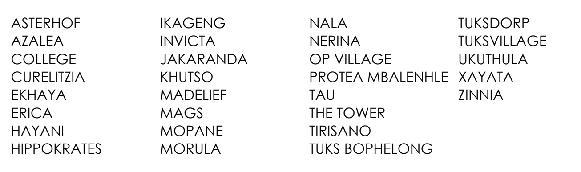
The vibrant TuksRes culture promotes diversity and is founded in community values. Each residence has its own personality, but they all contribute to a greater sense of campus unity. Residences such as Madelief and Tuks Ekhaya are noted not only for their facilities, but also for their hat-stealing culture and house pride. Azalea provides a sense of security and creates a sisterhood for the incoming skerwe, which soon becomes their home away from home. Tuks Ekhaya lives up to its moniker as a true “home of Tuks” and can be seen as the home of residence rugby. Mopane is known for their strong community spirit and pride (for their mielie field). Regardless of where they stay, students are welcomed into a space that promotes connection and community. One of the primary advantages of living in a UP residence is the built-in support system.
AFrom Res orientation week onwards, students are surrounded by their peers who are overcoming similar obstacles. Support systems in the form of house parents, house committee members, and academic mentors offer students support, structure, and encouragement as they navigate academic and personal transitions. This support helps the transition to university become slightly easier, particularly for first-year students, and creates an environment in which no one has to overcome challenges alone. Traditions play an important role in creating the sense of community around campus, especially in the residences. TuksRes traditions bring students together and allow them to create lifelong memories and develop a sense of belonging. From the welcoming ceremony onwards, all the incoming first-year TuksRes students experience socials and events such as RAG of Hope Day and Step It Up. The participation in these events forges lifelong ties and reminds students that they are a part of something bigger than themselves.
The social climate at TuksRes is lively and exciting. Every Friday, the male residences host clubhouses, which are a highlight of residence life. Clubhouses such as Rodney’s Clubhouse at Tuks Ekhaya are an integral part of the university social life, allowing students to unwind after a long week of lectures and assignments. Beyond the clubhouses, UP residences offer Res rugby nights, wellbeing sessions, and so much more, ensuring that there is something for everyone.
Ultimately, residence life at UP is about community, not just convenience. Living alongside fellow students ensures regular interactions that turn your neighbours into friends and make the environment feel like home. The strong sense of community not only enriches your university experience, but also makes the transition easier and more meaningful. At UP, a residence is more than just a room – it is where students feel at home.
ttendance, deadlines, and reminders. Teachers, timetables, and monitoring. In high school, this is a student's life. A routine of constant check-ins, endless supervision, and the subtle but firm nudge to get things done.
Welcome to your first year of university. You are on your own now.
The greatest shock about university life is not the workload, the size of the campus, or the number of people – it is freedom. After years of bells, blazers, attendance registers, and constant supervision, independence feels exhilarating. But once timetables are set and the novelty wears off, a quiet reality sets in: no one is watching. There are no reminders, no warnings, and no one to stop things from slipping until they have gotten out of control.
University freedom is strange because it never announces itself as a responsibility. It disguises itself as “the due date is a week away” and “I’ll do it later”. This freedom presents itself as free calendar days and minimal pressure. However, this freedom, without realising it, transforms into a burden. The key thing to understand is that this rapid freefall is not a reflection of laziness or incompetence. But rather, it is a lesson you were never taught: freedom requires discipline.
First year has a way of letting one skipped lecture turn into two, and then a rushed reading quiz becomes one you have missed altogether. The sinister part of this gradual slip is that it often goes undetected. It never feels like a drastic gap – it is just enough to keep you slightly out of breath.
Everyone’s first reaction is to overcorrect: to create some sort of colour-coded timetable or to cut out sleep. This is not enjoyable, and it also is not sustainable. All you really need to do is to survive, to stay afloat. It is crucial to understand that failing – whether it be a test or an assignment – is not a personal flaw. It is a very human part of learning how university works. These moments of failure matter. Failing teaches you consequences in a way that success never quite does. Failure sparks growth – growth to learn what your limits are, how to manage your time, and which habits work for you. Sometimes, submitting an imperfect assignment is better than submitting no assignment at all. Just pass the test, leave the distinction for now. Attend the lectures and the rewards will come sooner than you expect. Learn what hours of the day are optimal for your best studying. Use the library. Engage with your peers – a little help never killed anyone.
University offers space to succeed, but there is also room to disappear. Independence is about using your autonomy when no one is watching. While this sounds intimidating, it can be used to your advantage. Being able to conduct your life according to your own rules is a privilege – it simply takes time to learn how to do it well. University freedom is not free. It requires time, energy, and plenty of trial and error. But it gives you something very valuable: it teaches you how to work, not just how to perform well.
Welcome to your first year of university.
Mazviita Pasi
With tricky quests and pesky NPCs that can be downright annoying, the university game launched by TUKS can feel unbeatable. But after two playthroughs, I think I am starting to get the hang of things.
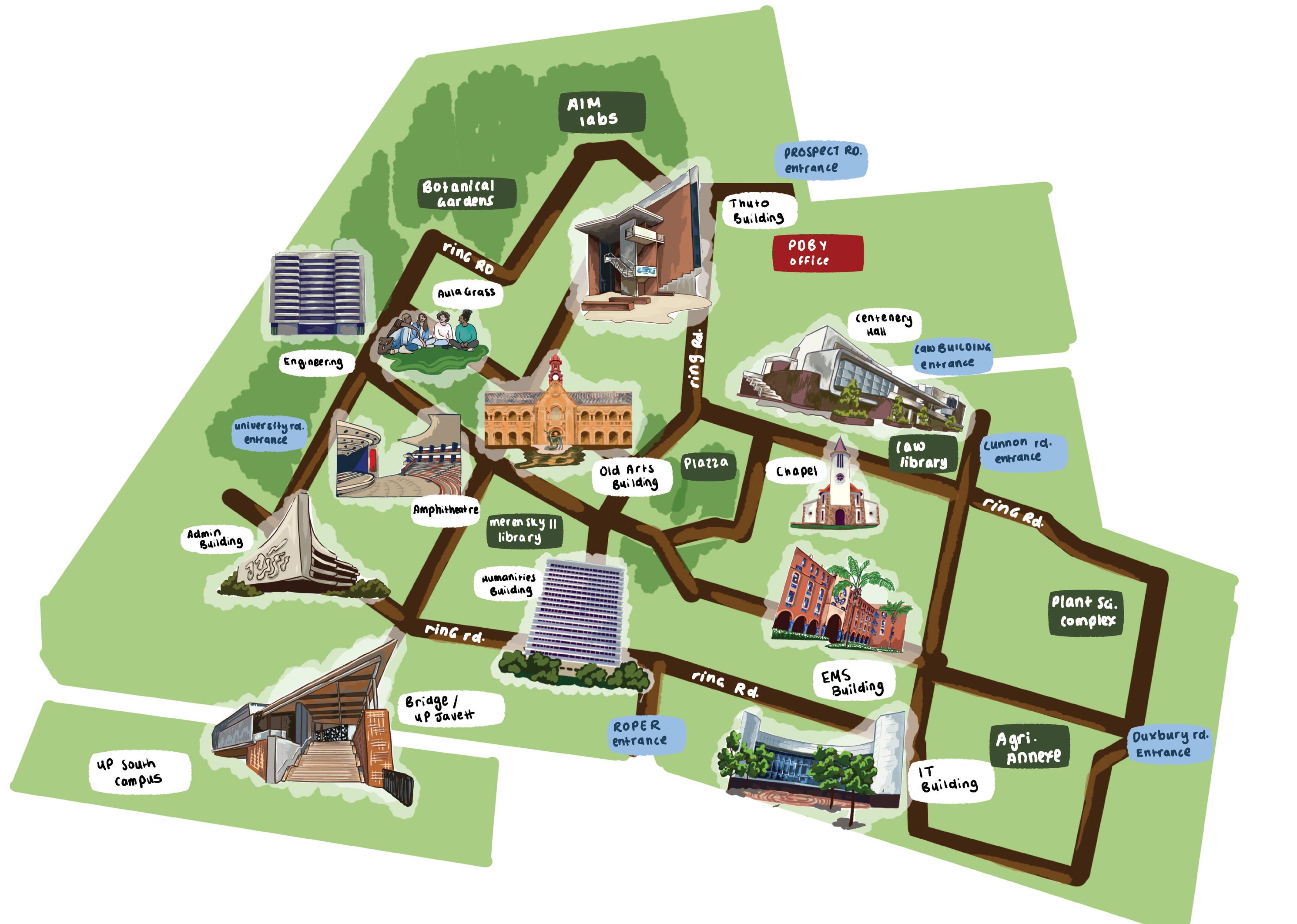
In an open world map made up of seven scenic campuses, you play as an eager first-year with a certain light in your eyes that will progressively dim as the game continues. You can decide to stick to one campus, but visiting each one to “check out” the scenery (which is not just limited to the trees and historic buildings) is the more entertaining choice.
Your mission is simple…right? Your character just needs to get their degree so that they can advance to the final boss called “Adulting”. Unfortunately, some NPCs will make this mission tricky. The Nasty Roommate
Threat level: 50
Social awareness: 2
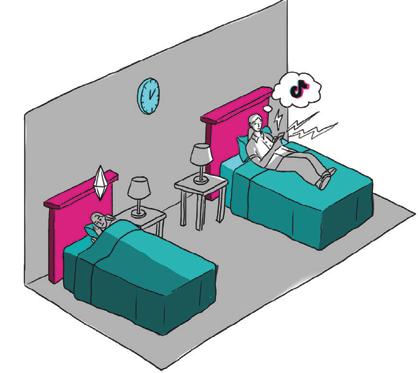
You will most likely encounter this threat in the “Res” game mode. This character will make your sleep and mental stats tank with lethal combos like playing loud TikTok videos early in the morning and leaving their dirty dishes by the communal sink. With enough hits, you will enter a “Crashout” state that lowers your character’s productivity.
The Predatory Super Senior Where my hug at: 1000 Experience: 1000000000
Surrounded by green stink fumes, these characters scattered across different campuses can be tricky to spot, making them super dangerous. You will find them at a party full of first-years, offering drinks left, right, and centre. Proceed with caution as these potions may hit your character ’s awareness stats, leaving you vulnerable. To weaken this threat, avoid going out alone and toggle your character’s location settings. Right-click your mouse to hold onto your drink securely and try to avoid accepting potions or offers to drive you home alone from these characters.
There are many ways to neutralise this threat and manage your relationship bar with them. When you are first introduced to them, select the “Ground Rules” dialogue option so you can lay out your character’s boundaries. It is extremely important that the relationship bar remains civil during this interaction. Throughout your gameplay, make sure that this NPC sticks to these set boundaries by selecting the “Firm” dialogue options.
If your relationship bar stays low, the game will give you the option to speak to your residence manager and request a change in your room. If this fails, the game developers have not come up with a solution beyond this. Not all who play the “Res” game mode are dealt this hand. If you are, all I can say is good luck.
The O-Week Crush
Charisma: infinite
Attractiveness levels: infinite
You cannot have a role-playing story without a little romance. This character is likely to be found while enjoying the scenery in the law library, waiting in line for chips at 10z, or having a fun night out at the strip. You will think you have found the one, but you must not fall for this trap easily. Perhaps something other than love is in the air. This character will boost your character's morale or cause your health bar to fall.
The game allows you to take two different paths: lurking in the shadows and stalking (observing) your crush, or taking a risk that will affect your relationship bar with this character for better… or for worse. Dialogue options provide for cheesy or bold pick-up lines. A recent update also allows you to “shoot your shot” in the campus newspaper. Remember to stay true to yourself and avoid compromising your character’s traits. If you do, this action will have consequences. In the university game, all choices, including the “bad” ones, will raise your XP. Your character’s stats can always make a comeback. If the first playthrough does not go how you planned, you can always load the game for a second time and try again.
A66-year-old man, a divorcee, a pair of best friends with a vaguely homoerotic dynamic, and three people bound to end up in a love triangle walk into a library for the first meeting of their study group. No, this is not the beginning of a convoluted joke. It is actually the origin story of a friendship that spans six seasons. The 2009 television series Community follows six community college students as their relationships evolve from a study group to friends, and then to family. Just like in the series, your first year can be tough. It often feels like everyone around you is miles ahead while you are still trying to figure out where the AIM building is. But once you find your people, everything becomes much easier.
The Community study group seems to have been formed purely for entertainment purposes However, it actually mirrors the diversity of the university space. Tens of thousands of students from different upbringings and walks of life arrive at the same university. It is quite possible that your closest friends will have a very different life from the one you have. Maybe you are an Annie – fresh out of high school and ready for new academic challenges. Or maybe you are a Shirley – coming back to education with a new outlook on life. These differences hardly matter in university, because friendship becomes less about what you have in common and more about supporting and uplifting each other.
When meeting new people, it is important to always approach them with an open mind and open heart because you never know where you may find friendship. Sometimes, finding your “people” is not as easy as forming a study group. The first person you exchange numbers with may end up being the person whose status you view from time to time.
The person you borrow a pen from may end up becoming one of your closest friends. These people will form your support system, so it is important to find someone you truly connect with rather than clinging to the first person who asks you for your name. It is important to choose good friends who you can trust because these are the people you will need when times are tough. If you do not meet anyone you click with instantly, there is no need to worry. Friendships need to be about more than just having a good rapport, so it is important to be picky with who we let into our lives After all, these are relationships we want to last for more than six seasons (and a rumoured movie).
Your friends will become the most important people in your life. These are the people you will rely on to help you back up when you fall, and trust me, you will fall. If you choose them wisely and let them in, your friends will become your second family. They are the people who will cry with you through loss and heartache. They are the people who will call to make sure you made it to your 07:30 lecture. Even in the darkest of times, evil Troy has his evil Abed to get him through it. Once you find your people, you will see that they will become more than friends to you. As you grow together, you will find that found family is more than a television trope – it can be a reality.
Every friend you make in university will become a part of a support system that keeps you afloat in times of need. Whether it be your closest friends comforting you in seasons of sadness or a friend from class reminding you of a deadline, your friends will be the people who help you carry the weight that comes with being in the real world. Soon, you will see that the people you keep in your life will become your community
Kopanyi Ramokgopa
Being a first-year student is an exciting, yet nerve-wracking experience. You may feel like a fish out of water, hurled into a new environment and trying to figure out exactly where you belong. One of the best ways to ease into this transitional phase of life is by joining a society. At the University of Pretoria (UP), societies are led by students and cover a wide range of interests, including social causes, politics, cultural celebrations, and religious communities. In most cases, joining a society can be the lifeline to surviving your first year.
Acing Academics Academic societies provide one of the best support systems for your studies. They are a useful link between students and their peers, mentors, and lecturers who provide valuable assistance in navigating academic challenges and coursework. They are especially useful in easing the transition from high school to university by organising workshops and providing valuable study methods and tips to ensure that you ace your academics in this more intense academic environment. Societies such as UP Women In Law (UPWIL) take students a step further by helping them strengthen their academic portfolios. UPWIL connects their members with women who are independent founders of law firms, and they collaborate with ENS Africa (Africa’s largest law firm) to conduct mock interviews with feedback from some of the best lawyers the continent has to offer.
Cultural societies celebrate diversity and provide opportunities to share customs, literature, and art, therefore allowing you to feel a sense of belonging in an unfamiliar environment. Annually, UP hosts an International Students Day where students, both local and international, showcase their cultures through exhibitions, cuisine, song, dance, and poetry. Additionally, societies such as UP’s award-winning cultural ensemble, Ovuwa, celebrate indigenous African culture through traditional artistic forms of expression. They hold various concerts throughout the year that are dedicated to preserving African culture. Being part of a cultural society not only gives you a taste of home but also fosters cultural awareness and appreciation.
Communal Collaboration
Zizo Mtshemla
You are one of the many first-year students, including those who have come before you and those who will come after you, to be starting your tertiary education in 2026. That is the beauty of a rite of passage. Although these times may be marked by what feels like isolating periods of confusion, anxiety, or chaos, they connect you to every other first-year who experiences and has experienced this milestone. It allows you to have the opportunity to learn from others’ mistakes and discoveries.
To guide you into this journey, here is what some students had to say to their past First-Year Selves: Dear First Year Me…
“Don’t deny yourself any experiences you want to try, even if you have to do it alone! Uni is your trial adult years and the best time to start figuring out who you are as an individual. You CAN have a social life and be an academic weapon. In my opinion, you need both to earn your degree. My golden rule [is] only go out after you’ve finished the work you’ve set out for the day. [You should also] find a hobby that keeps you fit. You don’t realise how much less exercise you do in uni. [And also], start building your village! But to have one, you need to be a villager too. ;)” – Chisom Emekpo, BSc Computer Science
“Take ownership of your time. University won’t structure your days for you. You have to be the one setting rules, boundaries, and routines. Plan your days intentionally so that you make time to study, sleep, eat, exercise, and socialise. When you organise your own life this way, you can thrive academically without missing out on having fun or meaningful connections. Structure is what will give you the freedom and balance you’re looking for.” – Tahira Solombela, BSocSc Honours in Psychology
“Nuance can exist, and [it] most definitely will exist posthigh school. Yes, your uni career and 20s are the best [time] for experimenting, making mistakes, and living wildly.
However, in the same breath, there is still a lot of truth in your uni life and 20s being important for building the foundation for the rest of your life. Therefore, trying to stick to one rigid formula post-matric and trying to control everything will be overwhelming and more damaging than beneficial. So, my advice to you is to embrace the nuance and confusion. Take those opportunities and have fun in the process. The most important thing is to stay rooted in what grounds you, whether that is your faith, your family, [your] community, or something as simple as hobbies, because those will always bring you back to the one thing you can control... yourself.”
– Nkanyezi Lethule, BCom General
“Don’t lose yourself in the chaos. Stay true to your values, trust your instincts, and don’t let anyone convince you otherwise. And also, never compare yourself to others!!” – Anonymous
“Try to really appreciate the unique rhythm of UP. I’m glad I balanced tough classes with enjoying Tuks events, parties, and making friends, but I wish I’d really focused on the ‘why’. Time flies so quickly, so make sure you don’t lose sight of what’s truly important and make it count for your future.” – Lesedi Mvula, BCom Business Management
“Try to never lose yourself in the streets of keeping up or fitting in (even academically). Allow yourself to adjust to the new environment and don’t put pressure on yourself that may be to your mental health’s detriment. Books? They’ll be up one day. Friends? They’ll come by and form organically. Fun time? Do have it, but balance that, babe. Give yourself grace, be patient, and try to attend at least 70% of those lectures (it’s tempting to skip, but doable). Lastly, be kind to yourself. You’re new to this, so allow yourself to grow xx” – Khanya Mtambeka, BCom General
As they say, hindsight is 20/20, and what you know after the end of this new chapter, you will wish you had known at the beginning. One day, it could be you writing to your first-year self from the future. In the meantime, start living so that you will have something good to say.

Social societies are the heart of campus life. They offer you a quick, effective way to find your tribe. Whether you have an interest in sports, community development through volunteer work, social justice, or even just a niche hobby, you are guaranteed to find your fit. Social societies are also known to host the most vibrant festivals. Most notably, UP&OUT organises an annual Pride Parade where members of the LGBTQIA+ community and allies come together to celebrate and show their pride.

Nourish Your Spirit It is important to find things that ground you in the hustle and bustle of life at UP.
If you are a religious person, a religious society not only provides a space for you to strengthen your faith but also connects you with a support system that understands your beliefs and values. Participation in prayer groups and interfaith dialogues may help you to find solace amid academic and social pressures.
Pick Your Party
Political societies are more than just engaging in passionate debates and echoing the sentiments of important historical figures. They enable you to engage in enlightening conversations that foster tolerance for diversity and an in-depth understanding of different viewpoints. Furthermore, they play an integral role in providing students with important skills such as leadership opportunities that allow them to organise events around campus, run political campaigns, and chair debates that give students a platform to argue in a persuasive yet respectful manner. The value of joining a club extends beyond your university journey – it can help shape your community, career, and personal growth. As a student, societies can be the difference between feeling like a visitor on campus and feeling like you are a part of a thriving community.

first_year.mp3

William Shakespeare famously wrote, “If music be the food of love, play on,” and I believe there is a song for every emotion and experience one faces. First year at university is no different. With so many firsts packed into one year, music naturally becomes a constant companion, connecting us through shared experiences. And yet, it touches each of us in a unique way. And so, here is PDBY’s soundtrack to first year:
“Unwritten” – Natasha Bedingfield
First year is your blank slate, so make the most of it. Just remember to always feel the rain on your skin.
“Down South” – Jeremy Loops ft. Motheo Moleko
Chasing new opportunities sometimes means you have to leave home, but hold onto the memories and people that shaped you while stepping into the unknown.
“Palco” – Gilberto Gil
Find. Your. Own. Spotlight. “Palco” celebrates the joy and selfdiscovery that comes from embracing your own independence.
“Gnarly” – KATSEYE
They could describe [first year] with one single word: gnarly. First year is a beautiful chaos – messy, but completely unforgettable.
“What You Know” – Two Door Cinema Club
This song mirrors the rush of first year. A year full of energy, movement, and discovering your own pace.
“Temporary Fix” – One Direction
University creates a space for you to explore and have fun, even when not everything is meant to last. Remember, don’t go looking for love in Jolly’s.
“I Love It” – Icona Pop ft. Charli XCX
Did you even go to the Strip if you did not hear this song at least twice?
“Tanzania” – Uncle Waffles
This song captures the kind of nights that are less about where you are and more about who you are with in the moment.
“Geheueverlies” – Eloff
It is important to let loose and have a wild night out every so often. Whether that means waking up the next day with fuzzy memories of the night before or having ice cream at Uncle Faouzi's at 11pm with friends… the choice is yours.
“Sweet Caroline” – Neil Diamond
“Sweet Caroline” has become an unofficial requirement at every Varsity Cup game, and the game just does not feel complete without it.
“Lovefool” – The Cardigans
Whirlwind romances are bound to happen during your time at university, but remember, knowing yourself is important before diving headfirst into romance.
“Ribs” – Lorde
Some of you might be lucky and meet your best friend on day one of O-Week, but if not, trust that your people will find you. University is made memorable not by the campus, but by the friendships formed on it.
“Vienna” – Billy Joel
Remember to take deep breaths. First year is not a race; it is a journey to be enjoyed. Focus on the present because just like Vienna, your whole life is still ahead of you.
“this is me trying” – Taylor Swift
University is a completely different ball game than high school ever was, so allow yourself time to adapt and adjust. Do not put yourself under too much pressure to be the best or at the top.
Simply do your personal best in this new chapter of your life.
“Call Your Mom” – Noah Kahan
As my dad always says, “call your mother”. It is super important to have a support network to fall back on when that academically-challenging degree decides to academically challenge you.
“DtMF (Debí Tirar Más Fotos)” – Bad Bunny
Take the time to make memories you will tell your children about one day.
And if you have a digicam, prepare to be the life of the party.
“Tongue Tied” –GROUPLOVE
Enjoy the feeling of being young and free. Even if it gets loud and messy, make it exciting.
“You’re On Your Own, Kid” – Taylor Swift
Tia Haswell
The moment you set foot onto campus during that manic O-Week, it begins to sink in just how small you are. The buildings seem taller than in that virtual tour you did at the dinner table, the people plentier, and the expectations far greater. At first, that smallness feels exhilarating and empowering, but the thrill crashes quickly when you realise that, for the first time in twelve long, carefully structured years of school, you do not know what the hell you are doing.
That cliche your matric teachers repeatedly told you proves to be true: you are no longer exceptional at what you do just because you are a veteran of the high school system. Suddenly, you are a small fish again – a mere sardine packed tightly into echoing lecture halls with lecturers who flip through slides so fast you feel whiplashed. It becomes overwhelming to sit shoulder-to-shoulder with others who look like they understand something you missed.
Throughout my undergraduate studies, I was supported by an academic bursary. On paper, this meant someone believed in my potential. In practice, it placed me in rooms full of brilliance that felt more intimidating than affirming. I met peers who seemed effortlessly extraordinary. They were academically excellent, leading and serving in their communities, and participating in student life all while maintaining hobbies. Watching them, I decided that that was the benchmark. If they could do it all, I should too. So, I tried. And in doing so, I carved a wound into myself.
Billy Joel wrote “Vienna” as a reflection on the ills of chasing the American Dream. After visiting his father and seeing an elderly woman sweeping the streets, Joel remarked on how sad it was that an old woman had to do that sort of work. His father corrected his pity, saying that this woman had found her role in society. To reflect on this is to shatter the metric of what success is “supposed” to look like.

We are constantly lining our lives up with someone else's and calling the difference failure. Comparison is a self-inflicted violence. It convinces you that resting is laziness and your worth must constantly be proven by the amount of work you do. We have fallen into the capitalistic trap that if we just keep running for long enough, we will win. We will eventually arrive somewhere that feels good enough. But nine times out of ten, we learn far too late that we have been conditioned to keep shifting the finish line further
Joel asks, “If you're so smart, tell me why are you still so afraid?” The question stings because it exposes that wound again. My discovery at the centre of this relentless strife for “better” is that even continuous achievement cannot protect me from fear. In fact, it amplifies that sense of “hurry to catch up with everyone else”. “Vienna” teaches you that it does not matter how hard you work or what you achieve if you cannot celebrate those achievements. It is not your duty to continuously strive for more without first acknowledging how far you have come. It is a song about slowing down amid the rush to figure out exactly what you should
The inner compulsion to live up to high standards can steal your university experience from you. I’m not encouraging you to neglect your studies, but I am encouraging you to “cool it off before you burn it out”. Slow down, inhale the scent of the jacarandas, and understand that you are a beginner again. You can afford to lose a day or two.
Remember that feeling of being small when you first arrived? Hold onto it and let it humble you. Most of what we panic over will not matter in the long run. The world will always tell you to hurry up. Vienna waits anyway.
Aquarius (Jan 20 – Feb 18)
Listen to your intuition – it won’t steer you wrong.
Pisces (Feb 19 – March 20)

"The scary news is you're on your own now, but the cool news is you're on your own now.”


It is time to network.
Aries (Mar 21 – Apr 19)
Your hard work is being noticed.
Taurus (April 20 – May 20)
Consider all of the possibilities that lie ahead of you.
Gemini (May 21 – June 20)
Watch your budgets and make smart financial decisions.
Cancer (June 21 – July 22)
Leo (July 23 – Aug 22)
Expect an energetic month ahead. Make those “to-do lists”.
Virgo (Aug 23 – Sep 22)
Focus on enjoying the moment, Virgo.
Libra Libra (Sep 23 – Oct 22)
Get ready for some spring cleaning!
Scorpio (Oct 23 – Nov 21)
New plans are on the horizon.
Sagittarius (Nov 22 – Dec 21)
Now is the perfect time to learn something new.
Capricorn (Dec 22 – Jan 19)

Nurture the important relationships in your life.

Focus on you. It is your time to shine!
Hlomla Henna
Christmas is always a special day on the NBA calendar. The best teams in the country battle it out in five consecutive games as the rest of the world enjoys all of the festivities. The league's biggest superstars shine bright like expensive decorations on a tree in this annual showpiece.
The first game of the day saw the New York Knicks host the Cleveland Cavaliers at Madison Square Garden. The Knicks came back to beat the Cavaliers 126-124 despite an inspired performance from Donovan Mitchell – one that was filled with jaw-dropping dunks and shot-making. Jalen Brunson invariably leads this talented yet resilient group by being “clutch” and simply scoring whenever the game is on the line.
Eight days prior, the men from the Big Apple won the NBA Cup. The 3rd edition of the league’s in-season tournament was added to bring excitement to the early part of a long 82-game season. They played well, advancing through the group phase, beating the Toronto Raptors in the quarter-finals, winning against Orlando Magic in the semi-finals, and then being the victors against the San Antonio Spurs in the finals which were hosted in Las Vegas. Each main roster player and coach earned $530 000 in the process.
French Giant and shot blocking machine Victor Wembanyama missed the game due to family circumstances. However, he returned on 25 December with 19 points and 11 rebounds off the bench as the Spurs defeated Oklahoma City Thunder 117-102. This further proves the Spurs’ case of being the reigning champions’ kryptonite.
This super team, led by the 2025 regular season and finals MVP Shai Gilgeous-Alexander, is once again set to mount a serious title challenge. After 37 games, they held a win percentage of just over 81%. Gilgeous-Alexander averaged an efficient 31.6 points per game at that stage, and in the Netflix series Starting 5, he famously said that if he scored less than 30 points, he had a bad game
The third game of the day saw youth take on experience when Cooper Flagg, Rookie of the Year favourite and number one pick in the 2025 NBA Draft, made his Christmas debut. In his way stood a team of veterans led by Stephen Curry, who was playing in his 12th Christmas Day game.
The Golden State Warriors beat the Dallas Mavericks 126-116 – one of the few highlights in a disappointing season for the Warriors so far. Flagg scored 27 points, joining LeBron James as the only rookies to score 25 or more points during a Christmas Day game. Curry added that the “league is in good hands” in his post-game interview following Flagg’s performance. This should console Maverick fans who were left outraged and shocked by the blockbuster trade of 2025.
Dallas traded away franchise player Luka Dončić for an injury-prone and older Anthony Davis.
Nico Harrison, the former General Manager of the team, has since been released as a result of this move.
Davis left the game and did not return in the second quarter due to a groin injury.
Dončić leads the league in scoring, averaging over 33 points per game at the time of recording. James, Dončić, and the Lakers hosted the Houston Rockets, led by Kevin Durant, in the penultimate game of the day. Houston’s Amen Thompson finished with 26 points as the Rockets came out on top with an impressive score of 119-96.

Both teams held an identical record of 22-11 after 33 games. The Lakers have struggled as stars LeBron James, Luka Dončić, and Austin Reeves have hardly played together. Even though they have their defense as a team, that has remained a thorn in their side.
Kevin Durant has enjoyed a good start to life in Houston after being traded to the Rockets from the Phoenix Suns. Durant scored a gamewinning dagger against the Suns on 6 January to seal a 100-97 victory for the team. Point guard Fred VanVleet remains out of action due to a torn anterior cruciate ligament (ACL).
University Sport South Africa (USSA) is often judged by podium finishes, medal counts, and varsity rankings. But across South African universities, its real influence runs far deeper than the results table. USSA plays a quiet yet powerful role in shaping student life, influencing identity, discipline, opportunity, and campus culture in ways that last well beyond graduation.
For student-athletes nationwide, USSA is not limited to competition week. It is embedded in the everyday student experience: earlymorning training sessions before lectures, academic work comple on buses between fixtures, and the mental pressure that comes al with representing an institution on a national stage. The balance between sports and studies is not theoretical; it is a lived reality that defines any student-athlete’s life.
Across campuses, USSA demands maturity. Students learn to manage time with precision, to perform under pressure, and to navigate fatigue without sacrificing academic performance. These demands shape character as much as athletic ability, producing graduates who are resilient, disciplined, and self-aware.
While universities like UP have demonstrated how structured support systems can enable success through high-performance facilities, academic assistance, and athlete wellness programmes, similar stories unfold at institutions across the country. USSA provides a platform where students from diverse backgrounds compete on equal footing, gaining exposure and national recognition that might have otherwise been inaccessible.

Importantly, USSA’s influence extends beyond the athletes themselves. On various campuses, competitions foster unity and pride, bringing students together across faculties, cultures, and social spaces. Sporting success becomes a shared language, strengthening institutional identity and offering moments of collective celebration or USSA also creates opportunities. For many athletes, it serves as a stepping stone to professional sport, national teams, or careers in sport science, coaching, and administration. For others, the value lies not in progression but in personal growth, learning leadership, teamwork, and perseverance in high-pressure environments. What makes USSA significant within higher education institutions is its ability to co-exist with academic purpose. It reinforces the idea that excellence is multidimensional and cultivated in lecture halls, libraries, training fields, and competition arenas alike. Ultimately, USSA’s greatest contribution is not the medals displayed in trophy cabinets, but the students it helps shape. Through challenge and competition, it produces graduates prepared for life beyond university as well as individuals who understand commitment,
Looking beyond the podium, USSA stands as a defining force in South African student life, proving that sport at university level is not an extracurricular distraction, but a powerful educational experience in its own right.
Two teams that did not feature in the holiday schedule are the Detroit Pistons and the Boston Celtics. The Pistons, for one, are surely a bit of a fairytale story. In 2024, the Pistons finished the season in last place in the Eastern Conference. Fast forward to 2026, and they are sitting solidly in first place. Superstar point guard Cade Cunningham is a smooth operator. His partnership with center Jalen Duran continues to flourish as Detroit reaches new heights. The 2024 champions, the Boston Celtics, have exceeded all expectations. After Jason Tatum suffered a ruptured achilles injury in May 2025, most people left the Celtics off their lists of contenders. However, Jaylen Brown has stepped up in his absence. The 2024 Finals MVP averaged 30 points, 6 rebounds, and 5 assists per game to lead the Celtics to 2nd in the Eastern Conference after 35 games. The highlight of his season so far is a 50-point performance to lead his side to victory over the LA Clippers.
The NBA regular season is a slow burner – 82 games over a period of 9 months, with a game almost every other day at times. Every chapter has an enticing final page in the form of the NBA Cup, Christmas Day, the All-Star Game, the Play-In, and finally, the Playoffs.
Next up, you can hopefully look forward to a new and improved All Star Game on 15 February. Hollywood will once again be the stage for this show as Los Angeles will host the event. This year’s format will see the US take on the rest of the world. The likes of LeBron James, Stephen Curry, and Kevin Durant can reunite with their gold medalwinning team to potentially face off against Luka Dončić, Nikola Jokić, Victor Wembanyama, Shai Gilgeous-Alexander, and Giannis Antetokounmpo.
The 2025/2026 season is shaping up to be another all-time pageturner!
Cayden Coetzer
In the high-stakes world of international rugby, controversies can erupt in an instant, and South Africa's Eben Etzebeth found himself at the centre of one during the match against Wales on 29 November 2025. What started as a heated clash on the field ended with a red card, a hefty suspension, and ripple effects for the Springboks. This incident not only highlights the game's strict disciplinary measures, but it also tests the team's resilience. Let us break it down for you.
The drama unfolded in the second half of the game when Etzebeth, the Springboks' formidable lock, was accused of an eye-gouge on the Welsh flank Alex Mann. Replays showed Etzebeth's hand making contact with Mann's eye during a scuffle, leading to an immediate red card from French referee Luke Ramos. World Rugby's independent disciplinary panel later upheld the charge, ruling it as a dangerous play under Law 9.12, which prohibits actions that could cause injury.
Etzebeth faces a twelve-match ban, meaning that he will miss crucial games for the Sharks who play in the United Rugby Championship and European Champions Cup. Etzebeth's ban is until 27 March 2026, which is when the Sharks go head-to-head with Cardiff.
Betty Molefe
After a three-year-long hiatus, the International Swimming League (ISL) is set to return in 2026. The league's return is about more than just swimming; it will demonstrate how professional sports rely on various occupations beyond sporting events, creating opportunities that students may not be aware of.
The ISL was established in 2019 with the aim of giving swimming a regular seasonal timeline and maintaining fan interest in-between four-year Olympic cycles. Some of the best competitors in swimming such as Adam Peaty, Katinka Hosszú, and Caeleb Dressel were once a part of the league.
The last season of the ISL took place in 2021 before it was shut down because of a few issues, some of which included the league's main financial supporter, Ukrainian businessman Konstantin Grigorishin, being impacted by the conflict in Ukraine, as well as the COVID-19 pandemic disrupting all international sport.
ISL organisers were able to analyse the comments from the athletes, coaches, commentators, and fans during the league’s hiatus.

In an attempt to enhance the viewing experience and make travel easier, one possible change is to move away from a two-day tournament towards a single day of events. According to ISL CEO Rob Allen, the league’s return is expected to consist of seven games in North America and Europe, with at least one stop in Asia and possibly an event in the Middle East.
The ISL expects its comeback to help broaden the sport's audience and give swimmers a solid, professional platform outside of the Olympic cycle as the sport becomes more popular. This marks an exciting new chapter for swimming as the anticipation for the 2028 Olympic Games grows.
This suspension hits hard. Etzebeth is a cornerstone of the Springboks' forward pack and is known for his physicality and leadership. He was among a list of Sharks players released from the Sharks squad, and his absence did not go unnoticed. Rassie Erasmus, head coach for the Springboks, acknowledged Etzebeth's red card as a "justified" decision, saying that it "didn't look good" and was not the way the Springboks wanted to play. He further admitted that the optics were poor, even if he questioned whether or not Etzebeth was provoked, emphasising accountability and that such actions have no place in the game. Regardless, he remained proud of the team's overall performance.
Etzebeth, who has played 141 test matches without a previous red card, accepted the guilty verdict and issued a public apology. He described the incident as “a mistake” and said that he was reacting to an open-hand strike from Mann. He insisted that the contact with the eye area happened as bodies collided and angles shifted. He said that he owed young fans clarity because he did not want his own error to be interpreted as acceptable behaviour. Critics argue that the ban is overly harsh, pointing to Etzebeth's apology and claims of accidental contact. Supporters of the decision, however, emphasise player safety, with long-standing debates being reignited around foul play, intent, and slow-motion interpretation.
This red card is not just a blip; it is a reminder of rugby's ever-evolving rules. For South African fans, it adds extra tension to World Rugby. Will Etzebeth bounce back when he returns? Only time will tell.

For years, South African Mixed Martial Arts (MMA) existed on the fringes of the global fight scene, respected by those who knew it, ignored by those who did not. That was until Dricus du Plessis walked into the Ultimate Fighting Championship (UFC) ring and changed everything. But first, before we can have a conversation about Du Plessis, we need to look back at where he came from and the league that helped him grow.
Africa watched the global rise of MMA from the sidelines. While promotions like the UFC exploded in the United States and Europe, the continent had little access to the sport beyond grainy clips, imported DVDs, and late-night television. That gap is precisely where the Extreme Fighting Championship (EFC) found its purpose. Founded in 2009, the EFC has grown into Africa’s leading MMA promotion, not only hosting fights but building a pathway for African athletes to reach the highest levels of competition.
According to EFC CEO and co-founder Cairo Howarth, the idea for the organisation emerged in the mid-2000s when MMA was beginning to break into mainstream media internationally. While the sport was gaining traction abroad, it was virtually inaccessible in South Africa and across the continent. Unlike today, where we can switch on our phones and stream a fight from anywhere in the world, overseas sporting leagues such as the UFC were only accessible through DVDs. “We were watching the sport grow in the States, but you couldn’t find it here,” Howarth explained. Recognising both the global momentum of MMA and Africa’s deep-rooted fighting culture, the EFC was
created to fill a void that larger international organisations had overlooked. Rather than waiting for the sport to arrive in Africa, the EFC brought it here on its own terms. What sets the EFC apart is that it functions as far more than a fight promotion. It is a structured development system designed to prepare athletes for international competition. Fighters progress through the organisation knowing there is a clear route forward: train locally, compete professionally, earn recognition, and ultimately transition to global platforms like the UFC. Along the way, athletes are exposed to the full demands of professional sport, from medical and drug testing to media training and performing under live television pressure. As Howarth noted, by the time EFC fighters reach the global stage, “nothing is new to them”. They are already accustomed to the scrutiny, discipline, and expectations that come with elite competition.

The impact of this approach is increasingly visible. EFC athletes are not only competitive, but confident when they move overseas, having already fought high-level opponents and performed in front of large audiences. The organisation also draws from a wide

Hey, UP students! If you are looking to ditch the textbooks for some adrenaline-pumping action, Varsity Cup Rugby is your ticket there. This annual tournament pits South Africa's top university teams against each other in a frenzy of tackles, tries, and tailgates. Whether you are a die-hard fan or a curious newbie, this guide will get you in the game – from snagging tickets to cheering from the best spots. Let us dive in and make you a Varsity Cup pro! First things first: what is the Varsity Cup? The FNB Varsity Cup is South Africa's premier university rugby tournament, featuring the top university teams. It is known for innovation, exciting rules, and player development, acting as a bridge to professional rugby with strict student eligibility. The tournament usually runs from February to April, featuring teams in a round-robin format followed by playoffs. Each game lasts 80 minutes and is divided into 2 halves, with an easily understandable points system: 5 points for a try, 2 for a conversion (a conversion must be taken within sixty seconds after a try has been scored), 3 for a penalty, and 3 for a drop goal. Every team must have 23 players in their matchday squad, and they have to have two props and a hooker on their bench. The team that causes uncontested scrums must finish the game with 14 players. The calculation of log points works as follows: 4 points for a win, 2 points for a draw, and 0 points for a loss. Bonus points (1 for scoring 4 or more tries, 1 for losing by 7 points or less) keep things competitive. Therefore, the maximum points a team can receive in a match are 5. Think of it as rugby with a twist – faster-paced and more tactical than international matches.
Varsity Cup also has some unique rules. While the FNB Varsity Cup abides by the rules and regulations of the sport as determined by SA Rugby, it also continues to lead the way in terms of rugby law innovation to improve the game. In the season of Varsity Cup, a team can gain additional points upon scoring a try from their own half. If a team gains possession inside their own half and scores a try without conceding possession of the ball, the try is worth 7 points (5 points plus 2 bonus points). This is called a Point of Origin try. Then, we have the red and white card rules. When a player is given a red card, that player must go off the field. However, the team will only play with one less
player for 15 minutes. Once the 15 minutes are over, the player who received the card may not go back onto the field, but another player from the team can. The main intention of this rule change is so that the contest stays alive amid an early-game red card. The white card will be only used in the televised semi-finals and final of the Varsity Cup. The team coach or captain can, during a stoppage in play, request the referee to review a decision they believe to be incorrect or request him to review a possible infringement that went undetected and required an appropriate sanction. There are many more rules, but these are just a few to take note of so you do not get lost while watching the game.
Next, we have tickets. To purchase tickets, head to either the Varsity Cup or UP shop websites, or you can visit the UP shop in person. Prices start at around R50 for students, with discounts for bulk buys or early birds. If you are on a budget, check for free entry days or student promotions – UP often offers perks for its own students. Matches are held at the universities that take part in the Varsity Cup. So when UP hosts a game, it takes place at the LC de Villiers Sport Grounds at the Tuks Stadium. The games are also sometimes livestreamed on SuperSport, so keep an eye out on the Varsity Cup Instagram page to know if the games are being livestreamed or not.
For first-timers, arrive 30 minutes early to soak in the atmosphere. The best viewing spots? Think packed stands with chants, dancing, and even residences like Sonop making an appearance. Bring a blanket when you want to sit on the grass hills and a friend to share the excitement with. There are plenty of activities on the field during half-time where the sponsors of the tournament pick students out of the crowd to participate. Whether it is running through cones in the Suzuki cardboard cards or running across the field to build a Steers burger, rest assured that you will be fully entertained whether the teams are on the field or not.
Expect fierce rivalries and community spirit that unites the campus. It is not just about the game; it is about the vibe – cheering for Tuks, networking with fellow students, and creating memories that last beyond graduation.
Varsity Cup is not just rugby – it is a celebration of student life, resilience, and fun. So, grab your tickets, rally the crew, and make some noise. Who knows? You might just discover your new favorite pastime. Go Tuks!
range of martial arts backgrounds, providing professional opportunities for athletes trained in disciplines such as judo, wrestling, kickboxing, and jiu-jitsu – sports that often lack sustainable professional pathways on their own. In this sense, the EFC does more than showcase talent; it keeps athletes in the sport by giving them something tangible to work toward. When posed with the question of whether the EFC is solely an African league or a global one based in Africa, Howarth gave a nuanced answer. Despite being firmly rooted in Africa, as a league focused on promoting and supporting African fighters, the EFC’s reach extends far beyond the continent. Its social media presence attracts millions of viewers globally with approximately 1.2 billion minutes of streaming per year over the last five years on their Facebook account, with its largest audiences based in countries like the United States and Brazil. This level of international visibility is rare for African sports properties, many of which struggle to gain traction outside their home markets. And yet, EFC content – fast-paced, highquality, and easily accessible – resonates with MMA fans and the modern media consumer worldwide. For African fighters, this exposure is invaluable.
A single standout performance can be viewed by millions, transforming relatively unknown athletes into globally recognised prospects almost overnight. This separates the EFC from other African and South African leagues. You can become a global phenomenon after one viral punch or knockout, which differs largely from other sports where you must work your way up over time.
Another defining feature of the EFC is its accessibility to local fans. Local audiences can watch African fighters live, many of whom are legitimate future UFC contenders. Unlike many South African sports where athletes stay local, the EFC’s MMA fighters frequently go global. For young, aspiring fighters, the UFC is no longer a distant dream; there is a world-class promotion operating on their doorstep, actively preparing them for that leap.
Looking ahead, the EFC shows no signs of slowing down. With plans to expand events across South Africa and explore opportunities elsewhere on the continent, the organisation is positioning itself for continued growth. Importantly, that growth remains tied directly to the athletes it serves. As the EFC expands, so too does the platform available to African fighters chasing global success, and the opportunity for fans to witness that journey up close.
To mark this next chapter, PDBY, in collaboration with the EFC, will be giving away five double tickets, allowing the winners to attend either the upcoming Cape Town event in February or the Johannesburg event in April. Keep an eye out on the PDBY’s Instagram page for details on how to enter the competition. In a sport defined by opportunity and timing, the EFC has ensured that Africa is no longer waiting on the sidelines; it is firmly in the fight.
South Africa's national football team, Bafana Bafana, has secured its place in the 2026 FIFA World Cup, marking a significant milestone in the nation's footballing history. This achievement is a culmination of dedication, perseverance, and strategic planning, ending a 16-year wait since their last World Cup appearance.
Even though the team has spent more than ten years rebuilding itself through African qualification rounds, South Africa's return to the World Cup stage is something to be proud of.
This World Cup appearance is not just a milestone; it is a redemption story for both Bafana Bafana and South Africa. After years of underwhelming performances, the team is finally getting the recognition it deserves. The nation is eager to see its team compete at the highest level, and this qualification has reignited the passion and pride that come with representing the country on the global stage.
The team's qualification campaign is a showcase of their strength and determination, topping their group with a mix of experienced players and emerging talents. Coach Hugo Broos’s leadership and tactical awareness have been instrumental in the team’s success, fostering a cohesive unit capable of competing at the highest level.
Their strong home record, with only three goals conceded in eight qualifiers, provided a solid foundation for their campaign. This unexpected accomplishment has led to excitement flowing from stadiums to classrooms. Furthermore, Gayton McKenzie, the South African Minister of Sport, Arts, and Culture, congratulated the team on their determination and dedication while reminding them that their campaign is just getting started. The inclusion of young players like Oswin Appollis and Teboho Mokoena has injected fresh energy into the team, allowing them to compete with more established nations. The team's defensive solidity, conceding only six goals in ten qualifiers, has been a crucial factor in their qualification.
As they prepare to compete internationally in North America, the players must keep moving forward, have faith in themselves, and continue to make South Africa proud. The World Cup will begin on Thursday, 11 June, with South Africa playing against Mexico, followed by South Korea, and then the winner of Path D of the semi-final seeding pots. The nation is filled with excitement and anticipation. This is an opportunity for the team to make their mark on the global stage and inspire a new generation of South African footballers.

This team's achievements are extremely inspirational for students and aspiring athletes. It makes it clear that South African athletes can compete with the greatest in the world if they train hard, have faith, and are confident. The journey to the World Cup is a testament to the team's resilience and national pride, and it is clear that Bafana Bafana is ready to take on the best in the world. This is more than just a victory; this marks the beginning of a new era of football for the nation. Bafana Bafana Halala!