Saturday, May Twenty-Third, Two Thousand Twenty-Six Ten Thirty in the Morning Malibu, California
Marshal REYNA G. GARCÍA RAMOS Professor of Education
Processional Pomp and Circumstance (Elgar)
Invocation AMANDA S. WICKRAMASINGHE
Assistant Clinical Professor of Education Class of 2016 Class of 2020
Pledge of Allegiance
National Anthem
MARTINE A. JAGO Professor of Education
JENNA MICHELLE ESTEP Class of 2026
Presiding JAY L. BREWSTER Provost
Presentation of Distinguished Alumnus Award
Commencement Address
ANTHONY M. COLLATOS
Associate Dean of Education and Professor of Education
YAKOV SMIRNOFF Class of 2019
YAKOV SMIRNOFF
Comedian, Entertainer, Actor
Presentation of Candidates or Graduate Degrees
FARZIN MADJIDI Dean
Professor of Leadership
Class of 1988, Graziadio Business School
Class of 1991
Doctor of Education in Educational Leadership, Administration, and Policy
Doctor of Education in Educational Leadership Pre-K to 12
Doctor of Education in Learning Technologies
Doctor of Education in Organizational Leadership
Doctor of Philosophy in Global Leadership and Change
Master of Arts in Social Entrepreneurship and Change
Master of Arts in Teaching
Master of Science in Education
Conferring of Degrees
Benediction
JAMES A. GASH President
Class of 1993, Caruso School of Law
RICARDO J. VIGIL
Assistant Clinical Professor of Education
(The audience will rise for the benediction and be seated during the recessional.)
Recessional Pictures at an Exhibition (Mussorgsky)
The Graduate School of Education and Psychology Alumni Engagement Department invites you to a reception in Alumni Park following the commencement ceremony.
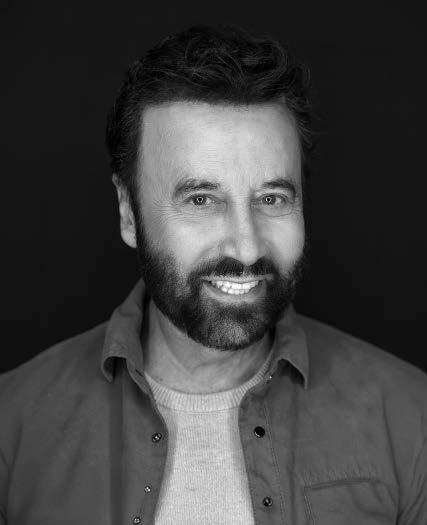
YAKOV SMIRNOFF
Yakov Smirnoff is an award-winning comedian, stage performer, and owner of the 2,000-seat Yakov Theatre in the historic Midwestern entertainment district of Branson, Missouri, where he has entertained more than 6 million people over the last 32 years. Since the 1980s he has been a celebrated headliner, attracting audiences from across the country in pursuit of his trademark humor. During his career, Dr. Smirnoff has performed for four US presidents, appeared on the Tonight Show with Johnny Carson and, later, Jimmy Fallon, and acted alongside such Hollywood greats as Robin Williams, Tom Hanks, Meryl Streep, and Jack Nicholson on the big screen.
Arriving in the US in 1977 to pursue a new life, Dr. Smirnoff used his experiences growing up in the Soviet Union as inspiration for his signature act celebrating the American Dream, with the catchphrase, “What a country!” His perspective and wit charmed audiences and launched a successful career that has allowed him to continue entertaining for nearly five decades. Ever curious and interested in honing his craft, Dr. Smirnoff pursued two postgraduate degrees and has given back to the academic community by teaching courses at Missouri State University and Drury University.
In both 2016 and 2017, his one-hour program Happily Ever Laughter: The Neuroscience of Romantic Relationships was named best special on PBS. Also gifted in the visual arts—and a former art professor at Odessa Pedagogical University in Ukraine—Dr. Smirnoff created a painting called America’s Heart in response to the terrorist attacks of September 11, 2001. The 200-foot-tall by 135-foot-wide mural was displayed for 18 months at Ground Zero in New York City, with the caption, “The human spirit is not measured by the size of the act, but by the size of the heart!” It served as an encouraging visual message to first responders, local residents, and worldwide visitors.
Yakov Smirnoff received his bachelor of arts from Odessa Pedagogical University. He then earned his master of arts in psychology from the University of Pennsylvania in 2006. In 2019, he received his doctorate in organizational leadership from the Pepperdine Graduate School of Education and Psychology.
CANDIDATES FOR DEGREES AWARDED BY THE GRADUATE SCHOOL OF
EDUCATION AND PSYCHOLOGY
Doctor of Education in Educational Leadership, Administration, and Policy
Serena Trice
Doctor of Education in Educational Leadership Pre-K to 12
Chloe Nicole Ford Madison Kopie
Doctor of Education in Learning Technologies
Deborah Decker
Joseph Anthony Gomez
Reuben Gonzalgo
Ana G. Guzman
Katie Hong
Abdullah Laique
Alan D. Lewis
Yujing Li
Mark Malonzo
Destiny Krystle Chioma Nnadozie
Jeremy Quintney Reese
Francesca Texidor
Doctor of Education in Organizational Leadership
Arwa Abuhaimed
Enid Ann Bozic
Dillon Condon
Lashonda Cooperwood
Ana Shadrick Corona
Cordaro Davis
Myron Jonah Fletcher
Misael Garcia
Frank Ramon Gomez
Corey Idleburg
Vivianna Alicia Kirby
Ruoxi Lu
Rebecca Ann Noell
Ronamae Dizon Panganiban
Jade Pratt
Karen Riggione
Angela Marie Sanchez-Gomez
Gaysha Denette Smith-Abbott
Anthony Tripp
Alan Rashmi Trivedi
Kameron Utter
Oscar Valenzuela
Doctor of Philosophy in Global Leadership and Change
Lynnette Adams
Jaclyn Black
Jazlyn D. Turner Brown
Mary Margaret Calacci
Patricia Camarillo
Channing Carney-Filmore
Shelbi Chandler
Rene Anita Lemsi Chombeng Epse
Sama Ambe
Sophia Cortez
Jarica Garner
Aasiyah Noor Ghazi
Samuel Lawrence Green Jr.
Laura Heaton
Jessica J. Henning
Shatha Al Kaud
Hernani Luison Ledesma Jr.
Ahli Moore
Carolyn Musyimi-Kamau
Mina N. Nandwani
Kimberly Nesper
Anasheh Gharabighi Oliven
Katherine Brittany Reyes
Ana Isabel Ruiz
Mark Saye
Jai’Oni Sly
Byungsun So
Susan Rhee Suh
Chenglong Sun
Chanel Michele Swoope
Katrin Tischler
Angelique Grace Van Sky
Karl Eugene White
Corrinne Evette Williams
Feidana Yalikun
Master of Arts in Social Entrepreneurship and Change
Haley Angela Canales
Yukai Chang
Bethany Alexandra Guerrero
Alexis Elizabeth Heald
Yilan Qian
Rola Ramadan
Grace Redmond Stiberth
Blake Tallents
Briana Julia Schuler Wiley
Master of Arts in Teaching
Katri Loreen Altenberg
Amari Mikayla Anderson
Nurhannifah Hamdi Badar
Sadie Sue Bearg
Keven Ian Berman
Nikki Brower
Presley Burgess
Amanda Cristina Cabrera Mayol
Edward Craven
Philip de Blasi
David Doublet
Emily Talia Elbaum
Jenna Michelle Estep
Dianne Flores
Natalie Focha
Emily Thoa Galvan
Fiorella Gherardi
Kasey Alan Gibbs
Joselyne Saily Gonzalez
Nathan Juyoung Ha
Nataline Halladjian
Yolanda Hampton
Hsin-Yu Hsiao
Alexandra Jackson
Katherine Kennon Janson
Audrey Claire Johnson
Jenna Kim Johnson
Ashley Chae Kang
Amber Linh Kha
Hanna Caroline Klein
Charissa Kwok
Kristan Marie Lanza
Max Benjamin Lew
Angela Zhihua Lin
Sara Macy
Mallery Michelle Marcoux
Elinor Kunde Marrett
Melissa Martinez
Natalie Masis
Milan Jocelyn McLoughlin
Janine Mena
Vana Minasmasihi
Madison Misch
Brenda Melissa Monroy
Jenna Alexis Mosbacher Giordano
Sophia Nelson
Emma Justine Ocegueda
Kimberly Ann O’Connell
Amanda Michelle Ortega
Crystal Ruby Palacios
Emily Mae Park
Claire Pattison
Carmen Consuelo Perez
Julia Piper
Kathleen Rabe
Leo Ramey
Kaisey Santiago
Gessica Maria Sementilli
Maria Serrano
Stephen Nicholas Silides
Viviana Herrera Silva
Xurui Song
Isreal Spencer
Samuel Spiewak
Anders Linder Thro
Katelyn Morgan Tretschok
Kelei Turner
Viviana Isabel Valdivieso
Benjamin Henry Viramontes
Akio Yamada
Fan Yang
Master of Science in Education
Bethany Aguiar
Beatriz Elizabeth Aguilar
Kellie Bartley
Cristian Caudillo
Janet Cerda
Danielle Darby
Daniel Moises Delara
Massimo Dobrovic
Christopher Jason Jones
Hailey Victoria Magana
Ivery Linett Marquez
Camille Quiazon Melara
Caitlin Drew Mongeluzo
Marcarini Montero
Richard Anthony Ponce
Tiffany Yvette Ruvalcaba
Elijoh Sanchez
Nathalie Irene Sanchez
Alexis Solares
Laura Eva Stokes
DOCTORAL CANDIDATES BY HOODING FACULTY
Order of Procession
Doctor of Education and Doctor of Philosophy
Dr. Ebony Cain
CHANNING CARNEY-FILMORE
The Impact of COVID-19 on Women Wash Fieldworkers in Malawi, Africa: Exploring Adaptations, Mobile Technology Use, and Educational Strategies
JARICA GARNER (Re)Imagining Workplace Mindfulness
VIVIANNA ALICIA KIRBY
More Like Jesus: A Case Study on Fostering Inclusivity and Belonging for Black Women at Higher Educational Institutions Affiliated with Churches of Christ
Dr. Weina Chen
BYUNGSUN SO
Korean Wave in the Formation of Global Cultural Identities in Local Contexts
Dr. Anthony Collatos
CHANEL SWOOPE
The Social Construction of Homelessness: A Qualitative Examination of International Efforts to Eradicate Homelessness
Dr. Kay Davis
JACLYN BLACK
Sex Education Policies and Reproductive Health Outcomes: Preventative Behaviors, Risk Factors, and Maternal Healthcare Access and Utilization
ENID BOZIC
Digital Entrepreneurship as a Mechanism for Empowerment and Social Identity for Underrepresented Women: A Phenomenological Study
DEBORAH DECKER
A Case Study on Evaluating the Instructional Design of an E-Learning Course Using the Experience Application Programming Interface (XAPI)
REUBEN GONZALGO
Bridging the Gap: A Study of Professional Development for Next Generation Science Standards in an Urban Charter School
SERENA TRICE
Exploring Femininity as a Leadership Strength
Dr. Kay Davis with Dr. Amanda Wickramasinghe
MADISON KOPIE
Moral Injury Becomes Her: A Systemic Review of Ethical Harm and Professional Identity in School Counseling
Dr. James Dellaneve
ARWA ABUHAIMED
A Phenomenological Study: Best Leadership Practices Among Successful Leaders in Los Angeles County
Dr. Danielle Espino
PATRICIA CAMARILLO
Who Am I? A Phenomenological Study Exploring the Development of Disability Identity in Adults with Visual Impairment Including Blindness from Their Adolescent Lived Experiences
SAMUEL LAWRENCE GREEN
Reconstructing Leadership: Afrocentric Discourse and Decision-Making in the Colored Conventions, 1830–1883 Using Epistemic Network Analysis
JAI’ONI SLY
A Tail of Transformation: Exploring the Effects of Dog Training Programs for Formerly Incarcerated Folks
Dr. Samaa Haniya
AASIYAH NOOR GHAZI
Leading Through Faith: A Phenomenological Study of Muslim Women Entrepreneurs, Values-Based Islamic Leadership, and Grassroots Resistance in the United States
ABDULLAH LAIQUE
Graduate Students’ Perspectives on Using AI Chatbots in STEM Education
JEREMY QUINTNEY REESE
Learning Through Creativity: Evaluating Instructor Perceptions of Engagement in an Urban Maker Space Summer Camp
ANA RUIZ
Increasing Latina Physician Assistants in Clinical Leadership Roles
Dr. Martine Jago
LYNNETTE ADAMS
Black Women Leaders in STEM: A Phenomenological Study of Their Perceived Role of Joy-Centered Practices in Mitigating Race-Based Traumatic Stress
DILLON CONDON
Laugh-Out-Loud Learning: A Qualitative Study of Humor and Student Engagement in the Adult Classroom
COREY IDLEBURG
Navigating Conflicting Identities: An Autoethnography of a Student Veteran’s Experience in Higher Education
HERNANI LUISON LEDESMA JR.
Exploring the Perceptions of Male Registered Nurses Who Chose to Remain in the Profession Post COVID-19 Pandemic
AHLI MOORE
Racial Identity Development in African American Males who Chartered a Black Fraternity Chapter at a Predominantly White Institution
KIMBERLY JEAN NESPER
Benchmarking Managerial Behavior Through the Eyes of the Frontline: A Quantitative Study of Universally Endorsed Leadership Behaviors Applied to Managerial Practice in Culturally Diverse Workplaces
KATRIN DORIS TISCHLER
Ambient Music, Driver Emotions, and Driving Behavior: A Mixed-Methods Study of Human-Centered Mobility
KARL WHITE
How Educational Leaders Embody Social Justice in Their Decision-Making: A Phenomenological Study
Dr. Stephen Kirnon
CORDARO DAVIS
Entrepreneurship, Equity, and Sustainable Start-Ups Navigating Systemic Barriers: A Phenomenological Study of Black Entrepreneurs’ Adaptive Strategies in Community-Based Accelerators
RUOXI LU
Executive Perspectives on Mid-Level Leadership Development in Chinese American and Cross-Cultural US Companies: A Qualitative Study Using Situational Leadership Theory
Dr. Seung Lee
LAURA HEATON
The Mid-Level Leader’s Inner Game: How Ego Development, as a Master Personality Trait, Influences Leadership Effectiveness
REBECCA NOELL
Carrying the Weight of Leadership: Burnout, Imposter Syndrome, and the Power of Connection
JADE PRATT
Facilitators and Barriers to STEM Persistence: A Quantitative Ethnographic Study of African Diaspora Women in Undergraduate General Chemistry
KAMERON UTTER
Cognitive Signatures of Executive Leadership: A Quantitative Ethnographic Study of Leader Cognition in CEO Podcast Discourse
Dr. Farzin Madjidi with Dr. Maria Brahme, Dr. Theresa Dawson, Dr. Gabriella Miramontes, and Dr. Kelly Sullenberger
JAZLYN D. TURNER BROWN
Bridging Success: A Phenomenological Study of Leadership Succession Within the Black Church
SHELBI CHANDLER
More Than a Seat at the Table: Examining How Psychological Safety, Identity Representation, and Leadership Accountability Impact African American Women in Global Workplace Environments
RENE ANITA LEMSI CHOMBENG EPSE SAMA AMBE
Leveraging Digital Leadership and Innovation: A Socio-Economic Model for Empowering African Immigrant Women Entrepreneurs in the USA
MISAEL GARCIA
Learning from the Frontlines: A Phenomenological Study of Moral Injury–Trained Chaplains’ Best Practices
CAROLYN MUSYIMI-KAMAU
Enhancing Food Systems Resilience in South Eastern Kenya
RONAMAE PANGANIBAN
Best Practices in Leadership in Probation
KATHERINE BRITTANY REYES
It Starts with Connection: Informal Mentorship Impact on First-Generation Undergraduate Students
KAREN RIGGIONE
Career Success Strategies for Women Leaders in Information Technology: A Phenomenological Study
MARK SAYE
Leadership Characteristics of Frontline Managers in High-Performance Teams
CHENGLONG SUN
Leadership in the Age of AI: Adapting Global Leadership Practices in the Third-Party Logistics (3PL) Industry
FRANCESCA TEXIDOR
Como Se Dice Users’ Perspectives of the Mobile Assisted–Language Learning Ecology
ALAN RASHMI TRIVEDI
Leading on Purpose in Times of Uncertainty: A Phenomenological Study of Leadership Alignment in Adaptive Organizations
ANGELIQUE GRACE VAN SKY
Surviving a Slow Burn: A Delphi Study on Civil Society Success Strategies Amidst Democratic Blacksiding
CORRINNE EVETTE WILLIAMS
The Experiences of Black Women Who Lead in Precarious or Crisis-Oriented Leadership Roles
Dr. Jennifer Miyake-Trapp
MYRON JONAH FLETCHER
Understanding the Motivations and Influences Behind African American Freshmen College Students Pursuing STEM Majors: A Qualitative Study
CHLOE NICOLE FORD
From Passion to Departure: Early-Career Teachers’ Perspectives on Attrition
JOSEPH ANTHONY GOMEZ
Advancing Technology’s Impact in Higher Education: A Qualitative Phenomenological Study on Higher Education Instructional Designers and Their Perceptions of AI Tools
Dr. Latrissa Neiworth
ANA CORONA
Perceived Barriers Foster Care Alumni Encounter to Pursuing Higher Education: A Qualitative Descriptive Study
GAYSHA DENETTE SMITH
Practitioners’ Perceptions of DEIA Requirements for Art History Curriculum: A Research Study of the California Community Colleges
Dr. Kent Rhodes
SUSAN RHEE SUH
Confucian and Steward Leadership in South Korean Multinational Corporations: An Exploratory Study on Cultural Continuity and Organizational Transformation
Dr. Paul Sparks
LASHONDA COOPERWOOD
Exploring Disparities Among Women of Color in Leadership in the Aerospace and Defense Industry
KATIE HONG
A Phenomenographic Study of Resistant Teachers’ Conceptions of Technology Integration in California Secondary Classrooms
ALAN D. LEWIS
Understanding Military Simulation Gaming Communities: A Phenomenological Study of the 7th Cavalry Online Gaming Regiment
MARK MALONZO
A Mixed-Methods Case Study Exploring Peer Online Course Review and Equity Outcomes at a California Community College
ANTHONY TRIPP
Examining the Integration of National Culture Into the Macro-Environmental Factors Impacting E-Government Maturity in 2024
Dr. Paula Thompson
FRANK RAMON GOMEZ
Transforming Hazardous Workplaces: The Impact of Leadership on Employee Wellness and Engagement in Violence-Prone Healthcare Settings
JESSICA J. HENNING
Exploring Global Leadership Effectiveness Through the Lens of Mindfulness: An Interpretative Phenomenological Study
ANGELA MARIE SANCHEZ-GOMEZ
Exploring the Manifestation of Destructive Leadership Behaviors: A Trauma-Informed Analysis
Dr. Amanda Wickramasinghe
M. MARGARET CALACCI
Exploring Female Director–Level Leaders’ Experience of Psychological Safety in Organizational Culture
SOPHIA CORTEZ
Echoes of Erasure: An Exploratory Phenomenological Study of the Ethnocide of the Nahuat-Pipil of El Salvador
SHATHA AL KAUD
Social Disruption in a Wicked Transition: A Realist Review of Circular Thinking in Saudi Arabia
DESTINY NNADOZIE
Purpose-Driven Curriculum for 9th–12th Grades for Adulthood Career and Life Gratification
MINA NANDWANI
Mental Silence for Emotional Intelligence Development
ANASHEH GHARABIGHI OLIVEN
CrossFit as a Lived Experience: A Phenomenological Comparative Study of Coach-Athlete Relationships in Brazil and the United States
OSCAR VALENZUELA
Decline of Male Enrollment in Higher Education
Dr. Kevin Wong
ANA G. GUZMAN
How Educators’ Self-Efficacy in the Use and Integration of AI Enhances Transformative Multilingual Adult Learning Spaces
YUJING LI
Examining the Relationship Between Teaching Methods and Writing Instructional Materials: Opportunities and Challenges in a Mandarin-English Dual Language Immersion Education Program
FEIDANA YALIKUN
Living Under the Standard: Chinese Students’ Experiences of Linguistic Legitimacy and Identity in English-Dominant Education
THE ACADEMIC REGALIA
The academic regalia worn at college commencement exercises dates back to the Middle Ages, when scholarship was usually associated with a church or monastery. The influence of the church could be noted by the regular costume worn by the faculty and students, which consisted of clerical garb borrowed largely from the monastic dress of their day. Over the years, the simple hooded gown, or cassock, worn during this era evolved into a distinctive academic costume.
By the end of the 16th century, English scholars and students added birettas, floppy hats similar to berets, to their academic regalia. As fashionable educators tried to outdo each other with larger birettas, these hats finally had to be stuffed with cardboard to keep them from falling into their faces, thus giving birth to the concept of the mortarboard.
By the end of the 19th century, American universities and colleges standardized their academic costume, following the English tradition. Today, the distinctive caps, gowns, and hoods worn at college and university functions denote the institution granting the degree, the field of learning in which the degree was earned, and the level of the degree.
Today’s gown is usually black in color. The master’s gown has long pouchlike sleeves that were once probably used to carry books, while the doctoral gown is faced with panels of velvet down the front and three bars of velvet across each sleeve.
The hoods of monastic times have remained, becoming decorative symbols of the attainment of higher degrees. Worn around the neck and hanging down the back, the hood is emblematic of the nature and source of the degree held. The colors in the hood lining are the colors of the school conferring the degree—orange and blue for Pepperdine. The color of the border indicates the specialization attained by the wearer—light blue for education and white and royal blue for psychology. These colors are used for the edging of all hoods, and may also be used for the velvet facing and sleeve bars of the doctoral gown and the tassel on the master’s cap.
The modern cap may be a square mortarboard or a round, soft, flat velvet hat, which is reserved for the doctoral graduate. Both types bear a tassel, which may be black, gold, or colored, according to the scholarly field of the wearer.
Today’s academic regalia is profoundly symbolic of the reverence that is still held for the pursuit of knowledge and the achievement of scholarship.
As a Christian university, Pepperdine affirms:
That God is
That God is revealed uniquely in Christ
That the educational process may not, with impunity, be divorced from the divine process
That the student, as a person of infinite dignity, is the heart of the educational enterprise
That the quality of student life is a valid concern of the University
That truth, having nothing to fear from investigation, should be pursued relentlessly in every discipline
That spiritual commitment, tolerating no excuse for mediocrity, demands the highest standards of academic excellence
That freedom, whether spiritual, intellectual, or economic, is indivisible
That knowledge calls, ultimately, for a life of service
Accessible Seating
SERVICES
Drinking Water
First Aid
Lost and Found
Reception
Restrooms
Sun-Sensitive Seating
Blue chairs indicate the area for accessible seating plus one accompanying guest. Please find posted signs or ask an usher for assistance.
Drinking water is available in dispensers in various locations on Alumni Park.
First aid is available at the first aid/information tent near the entrance of Alumni Park. If an emergency occurs, please ask the nearest usher for assistance.
Please visit the information tent regarding any lost or found items.
Following the ceremony, refreshments will be served under the canopies near the Alumni Park pond.
When facing the stage, restrooms are located to the left of the graduation ceremony area.
A small area of shaded seating is located behind guest seating.
To view a live broadcast of this event or a digital version of this program, scan the code or go to go.pepperdine.edu/commencement