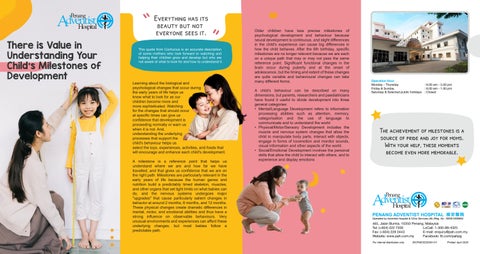
There is Value
in Understanding Your Child's Milestones of Development
Everything has its beauty but not everyone sees it.
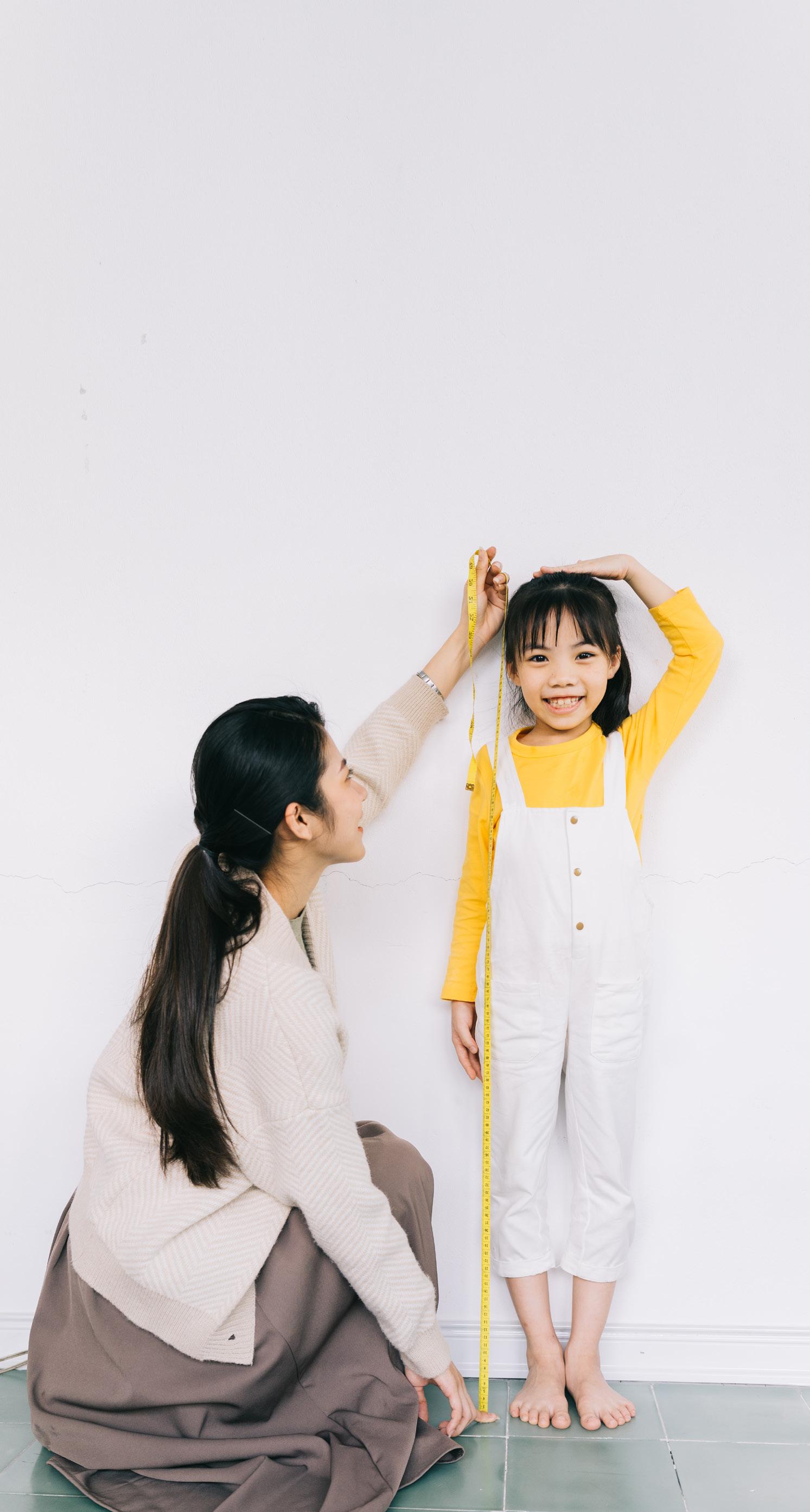
Learning about the biological and psychological changes that occur during the early years of life helps us know what to look for as our children become more and more sophisticated. Watching for the changes that should occur at specific times can give us confidence that development is proceeding normally or warn us when it is not. And, understanding the underlying processes that support the child's behaviour helps us select the toys, experiences, activities, and foods that will encourage and enhance each child's development.
A milestone is a reference point that helps us understand where we are and how far we have travelled, and that gives us confidence that we are on the right path. Milestones are particularly relevant in the early years of life because the human genes and nutrition build a predictably timed skeleton, muscles, and other organs that set tight limits on what babies can do, and the nervous systems undergoes major "upgrades" that cause particularly salient changes in behavior at around 2 months, 6 months, and 12 months. These physical changes create dramatic differences in mental, motor, and emotional abilities and thus have a strong influence on observable behaviours. Very unusual environments and experiences can affect these underlying changes, but most babies follow a predictable path.
Older children have less precise milestones of psychological development and behaviour because neural development is continuous, and slight differences in the child's experience can cause big differences in how the child behaves. After the 6th birthday, specific milestones are no longer relevant because we are each on a unique path that may or may not pass the same reference point. Significant functional changes in the brain occur during puberty and at the onset of adolescence, but the timing and extent of these changes are quite variable and behavioural changes can take many different forms.
A child’s behaviour can be described on many dimensions, but parents, researchers and paediatricians have found it useful to divide development into three general categories:
• Mental/Language Development refers to information processing abilities such as attention, memory, categorisation and the use of language to communicate and to understand the world
• Physical/Motor/Sensory Development includes the muscle and nervous system changes that allow the child to manipulate body parts, interact with objects, engage in forms of locomotion and monitor sounds, visual information and other aspects of the world.
• Social/Emotional Development involves the personal

The achievement of milestones is a source of pride and joy for moms. With your help, these moments become even more memorable.

Fax: (+604) 228 0443 E-mail: enquiry@pah.com.my Website: www.pah.com.my Facebook: fb.com/pahpg
Movement/ Physical Development Milestones
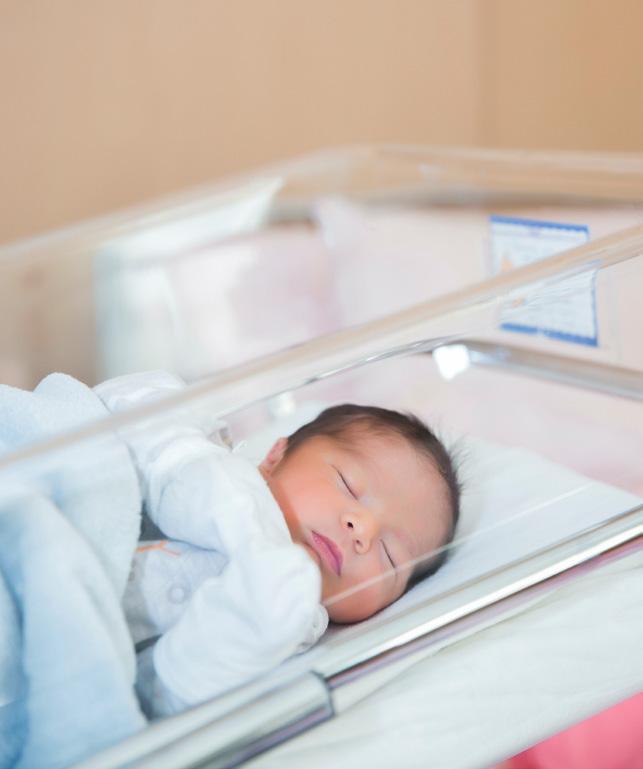
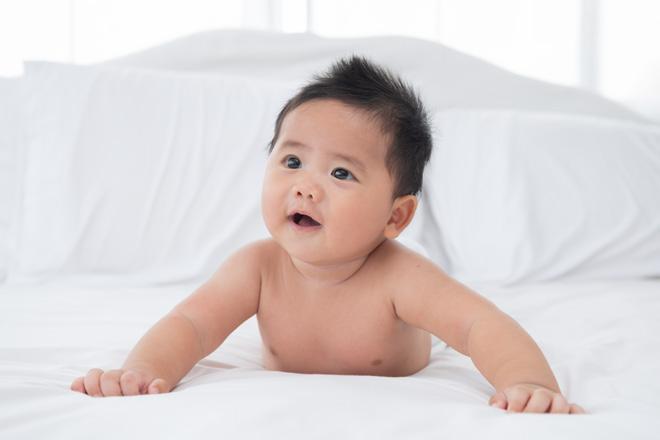
• Holds head steady without support
• Holds a toy, uses her arm to swing at toys
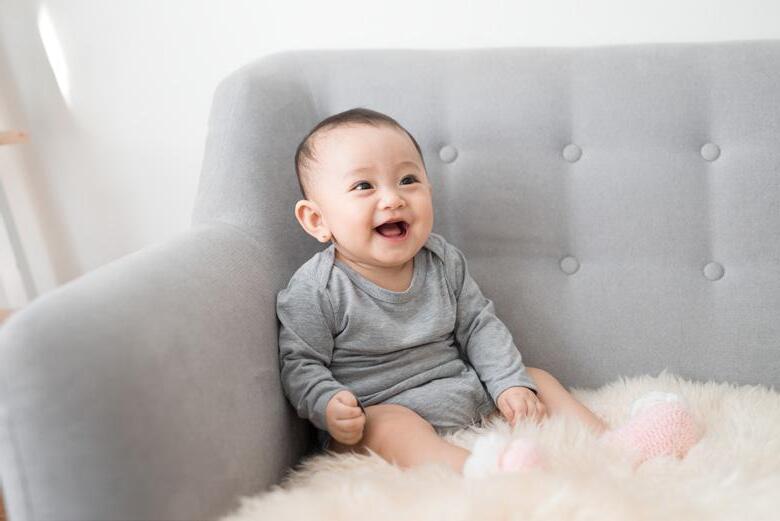
• By 9th month, gets to a sitting position by herself
• Moves things from one hand to her other hand
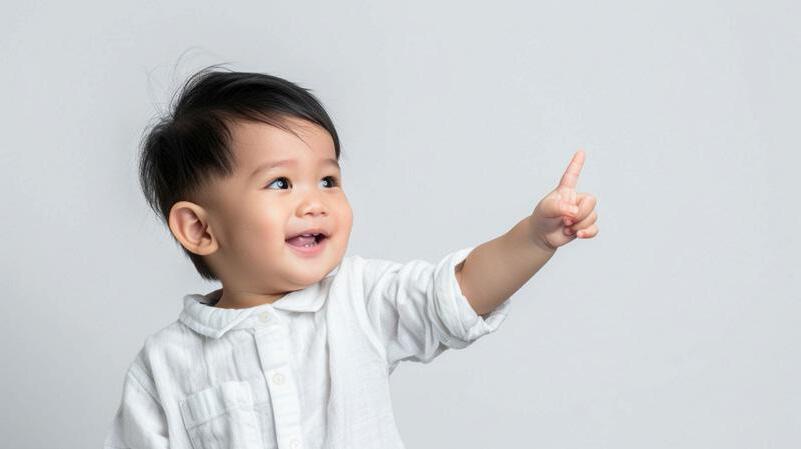
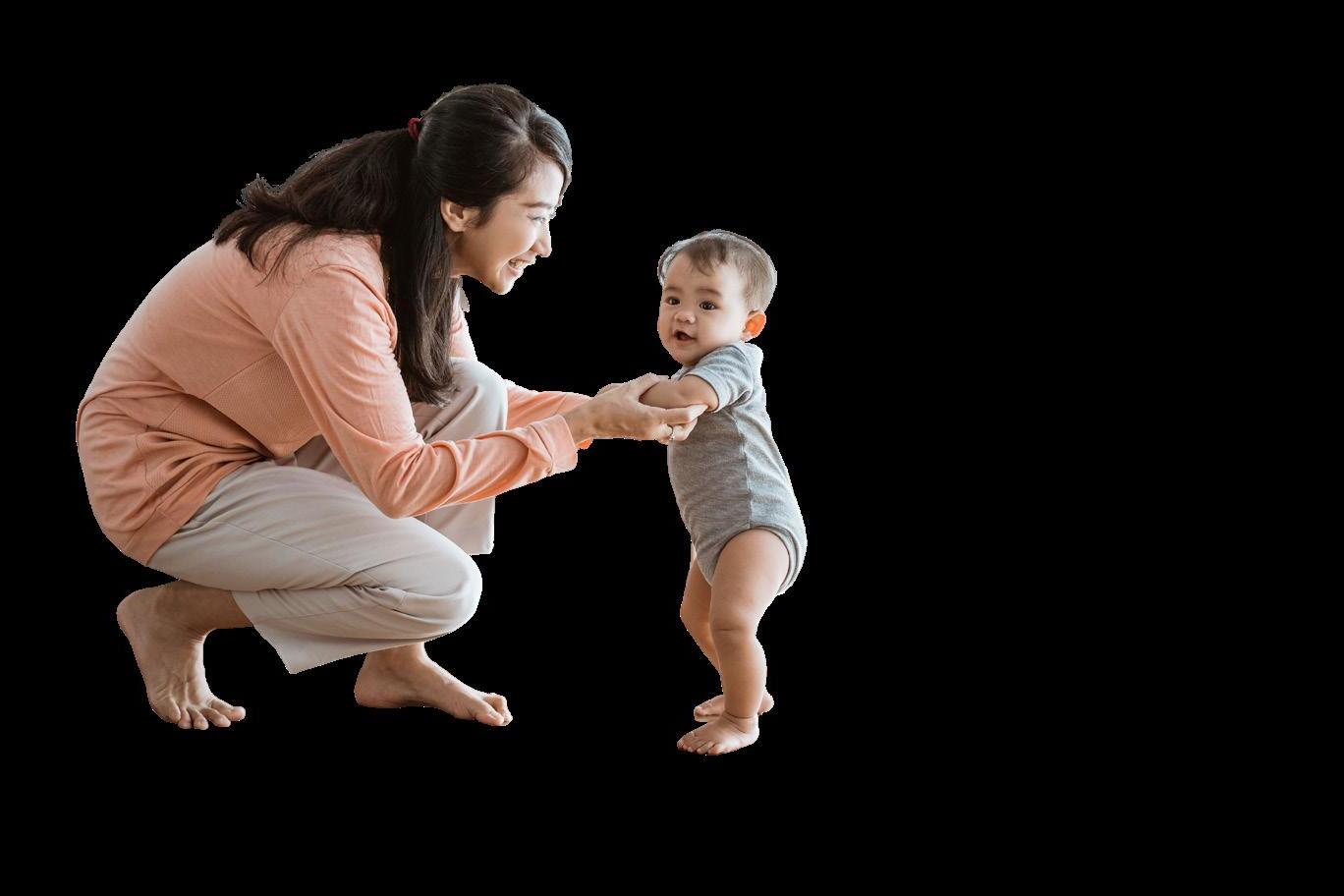
• Pulls up to stand, walks, holding on to furniture
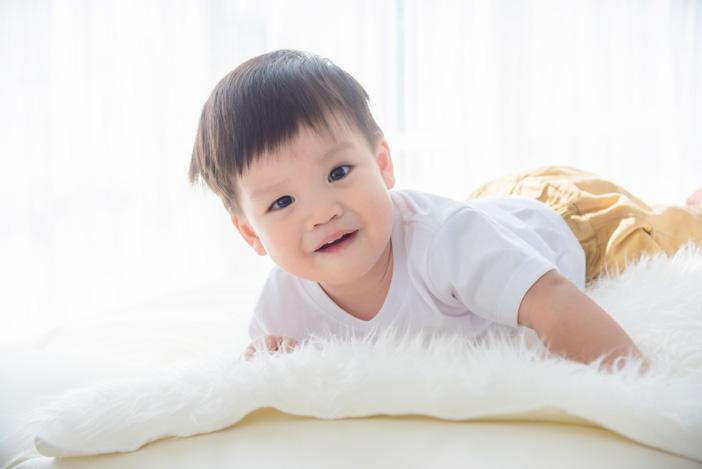
• Holds head up when on tummy
• Moves both arms and both legs
• Opens hands briefly
• Brings hands to mouth
• Pushes up onto elbows/forearms when on tummy
• By 6th month, rolls from tummy to back, pushes up with straight arms when on tummy
• Uses fingers to “rake” food towards himself
• Sits without support
• Picks things up between thumb and pointer finger, like small bits of food
• Uses fingers to feed herself some food
• Drinks from a cup without a lid, as you hold it
• By 18th month, walks independently
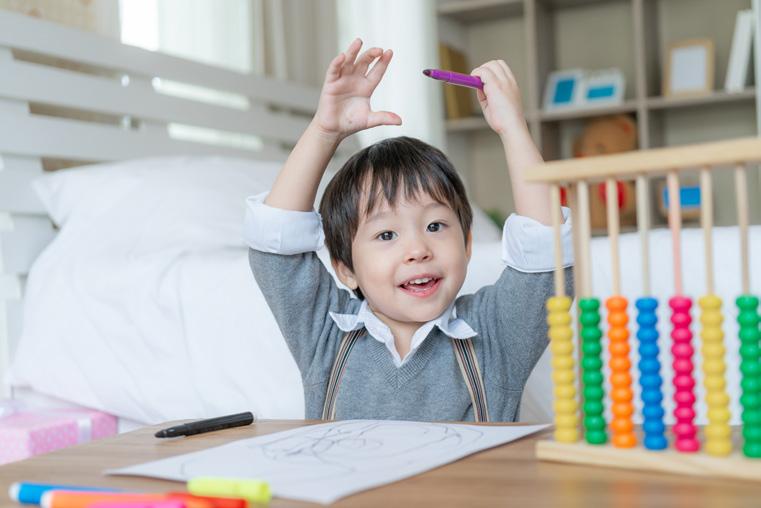
• Scribbles
• Tries to use a spoon
• Climbs on and off a couch or chair without help
• Kicks a ball, runs
• Walks (not climbs) up a few stairs with or without help
• Eats with a spoon
• Uses hands to twist things, like turning doorknobs or unscrewing lids
• Takes some clothes off by himself, by 3 years old, able to put on some clothes
• Jumps off the ground with both feet
• Turns book pages, one at a time, when you read to her
• Strings items together, like large beads
• Catches a large ball
• Serves himself food or pours water, with adult supervision
• Unbuttons some buttons
• Holds pencil between fingers and thumb (not a fist)
• By 5th year, buttons some buttons
• Hops on one foot
• Names a few colours, counts to 10
• Uses things to pretend, like feeding a block to a doll as if it were food
• Waves “bye-bye”
• Closes lips to show she doesn’t want more food
• Makes sounds other than crying
• Reacts to loud sounds
Language/ Cognitive Milestones
• Watches as you move
• If hungry, opens mouth when she sees breast or bottle
• Makes sounds like “oooo”, “aahh” (cooing)
• Makes sounds back when you talk to him
• Looks for objects when dropped out of sight (like his spoon or toy)
• Makes different sounds like “mamamama” and “babababa”
• Lifts arms up to be picked up
• By 1 year old, understands “no” (pauses briefly or stops when you say it)
• Calls a parent “mama” or “dada” or another special name. By 18th month, tries to say one or two words besides “mama” or “dada,” like “ba” for ball or “da” for dog
• Puts something in a container, like a block in a cup
• Looks for things he sees you hide, like a toy under a blanket
• Tries to use things the right way, like a phone, cup, or book
• Follows directions given with both a gesture and words
• Holds something in one hand while using the other hand; for example, holding a container and taking the lid off
• Tries to use switches, knobs, or buttons on a toy
• Points to things in a book when you ask, like “Where is the bear?”
• Says at least two words together, like “More milk.”
• Points to at least two body parts when you ask him to show you
• Uses more gestures than just waving and pointing, like blowing a kiss or nodding yes
• Follows two-step instructions like “Put the toy down and close the door.”
• Shows he knows at least one colour
• Says about 50 words, says two or more words together, with one action word, like “Doggie run”
• Says words like “I,” “me,” or “we”
• Talks with you in conversation using at least two back-and-forth exchanges
• Asks questions, like “Where is mommy/daddy?”
• Says first name, when asked
• Tells what comes next in a well-known story
• Draws a person with three or more body parts
• Says sentences with four or more words
• Talks about at least one thing that happened during his day, like “I played soccer.”
• Answers questions like “What is a coat for?” or “What is a crayon for?”
• By 5th year, uses words about time, like “yesterday,” “tomorrow,” “morning,” or “night”
• Pays attention for 5 to 10 minutes during activities. For example, during story time or making arts and crafts (screen time does not count)
• Tells a story
• Calms down when spoken to or picked up
• Looks at your face
Social/ Emotional Milestones
• Smiles when you talk to or smile at her
• Chuckles (not yet a full laugh) when you try to make her laugh
• Looks at you, moves, or makes sounds or smiles to get or keep your attention
• Is shy, clingy, or fearful around strangers
• Shows several facial expressions, like happy, sad, angry, and surprised
• Looks when you call her name
• Smiles or laughs when you play peek-a-boo
• Plays games with you, like pat-a-cake
• Copies other children while playing, like taking toys out of a container when another child does
• Claps when excited, hugs stuffed doll or other toy
• Shows you affection (hugs, cuddles, or kisses you
• Notices when others are hurt or upset, like pausing or looking sad when someone is crying
• Looks at your face to see how to react in a new situation
• Plays next to other children and sometimes plays with them
• Shows you what she can do by saying, “Look at me!”
• Follows simple routines when told, like helping to pick up toys when you say, “It’s clean-up time.”
• Calms down within 10 minutes after you leave her, like at a childcare drop off
• Notices other children and joins them to play
• Pretends to be something else during play (teacher, superhero, dog)
• Comforts others like hugging a crying friend
• Avoids danger, like not jumping from tall heights at the playground
• Likes to be a “helper”
• Follows rules or takes turns
• Sings, dances, or acts for you
• Does simple chores at home, like matching socks or clearing the table after eating