


TYRES • BATTERIES • EXHAUSTS








A MAN from Pembroke Dock is standing trial at Swansea Crown Court accused of a series of historic sexual offences alleged to have taken place over a 24-year period.
Anthony Kenniford, of Britannia Drive, denies 13 counts including indecent assault, indecency with a child, rape, attempted rape, and sexual activity with a child.
The trial is being heard before His Honour Judge Geraint Walters. Kenniford has pleaded not guilty to all charges.
The jury was told that the indictment now before the court runs from 1984 to 2008 and gives fuller particulars of the allegations than at the earlier magistrates’ court stage.
Some counts relate to allegations said to have taken place between May 1984 and May 1986. Further counts concern alleged offences said to have occurred between April 1984 and April 1988.
The court also heard allegations dating from between January 2000 and November 2003, including claims of indecency with a child, indecent assault, rape and attempted rape. Additional counts relate to alleged offences said to have taken place between September 2000 and August 2003, while the most recent allegation on the indictment concerns sexual activity with a child between April and September 2008.
Opening the case, the prosecution alleged Kenniford targeted boys known to him over a number of years, including family members and friends of his son.
The jury heard allegations of grooming behaviour, with claims that some of the boys were offered money or gifts, and in some cases exposed to sexualised behaviour and pornography before or during the alleged abuse.
One of the first complainants referred to in the prosecution case was a young relative who, the jury heard, alleged that Kenniford invited him into bed at
Rieve Nesbitt-Marr rieve.nesbitt-marr@herald.email
his grandparents’ home before touching him indecently. The court was also told of a further allegation that, on another occasion, the boy was invited into the defendant’s home, where it is alleged he was offered money to touch the defendant sexually.
Further allegations concern another complainant, who the jury heard was between the ages of seven and ten at the time of the alleged offences. The court was told that this complainant alleges he was asked to engage in sexual acts at the defendant’s address and that years later a text message was received which allegedly referred back to the earlier abuse.
The prosecution also outlined allegations involving the defendant’s son, who the jury heard was a child at the time. It is alleged that incidents took place over a number of years in the family home, including in the bathroom, and that the abuse escalated to rape and attempted rape.
Another complainant, described as a friend of the defendant’s son, alleges he was abused in a garage after becoming friendly with the family. The jury heard claims that he was shown pornographic material, indecently assaulted, and given gifts including money and computer games.
A further complainant alleges that, in 2008, after becoming friendly with the defendant’s son, he received inappropriate messages and was later taken to the defendant’s home, where sexual activity allegedly took place in the garage.
During proceedings, jurors heard a recorded police interview conducted in June 2021 with one complainant, who described what he said were his earliest

memories of abuse from the age of five.
In that interview, the complainant alleged he was taken from the area of the Red Roses pub in Pembroke Dock to the Fire House on Co-operation Terrace, where he said he was offered small amounts of money to remove his clothes and spend time with the defendant.
The complainant later gave evidence before the jury and appeared visibly distressed at times during questioning. He forcefully rejected the defence case and insisted the events described were not something he could have forgotten.
The jury also heard from another complainant, who similarly rejected suggestions put to him by the defence and described the defendant as a “bad man”.
Family witnesses also gave evidence. One witness told the court that, in 2021, her brother disclosed that he had been
abused as a child. Another witness said concerns had been raised within the family many years earlier, when children were said to have complained that the defendant had asked to see their genitals.
The court heard that Kenniford was first arrested on May 12, 2021. In police interview, he denied allegations made against him.
Kenniford previously appeared before magistrates, where earlier historic allegations were sent to Swansea Crown Court because of their seriousness. At that stage he denied the accusations and was granted conditional bail, including a condition that he must not contact the complainants.
The trial is expected to last two weeks and continues at Swansea Crown Court.
The complainants cannot be identified for legal reasons.
THE FAMILY of a 19-year-old man who died in a road traffic collision in Ceredigion last month have paid tribute to him.
Lee Barber, from Aberaeron, died after the vehicle he was travelling in was involved in a collision on the A482 between Lampeter and Ciliau Aeron on Tuesday, March 24.
In a statement released through Dyfed-Powys Police, his family said: “There are no words that can describe the pain we are feeling as a family. The loss of our son, Lee, has devastated us and has deeply affected the whole community.
“Lee was a loving son who lived life to the fullest. He will be remembered for his kindness, his strength, and his positive attitude. He had a way of
bringing people together and made a lasting impact on everyone who knew him.
“We want to take this opportunity to thank everyone in the local community and further afield for the overwhelming support we have received. The messages, stories, memories, and photos that have been shared with us mean more than words can say.
“Our boy Lee will live on forever in our hearts and minds. We now kindly ask for privacy as we take time to grieve.”
Police confirmed the collision happened on the A482 between Lampeter and Ciliau Aeron and that Lee died at the scene.







Labour points to “real progress” on treatment backlogs as surgeons and Conservatives warn the next Welsh Government still faces a huge task
WELSH LABOUR leader and
First Minister Eluned Morgan has claimed “real progress” is being made on NHS waiting times in Wales after new figures showed the treatment backlog fell for the ninth month in a row.
Latest NHS data published on Thursday (Apr 23) showed there were 687,958 referral-to-treatment pathways waiting to start treatment at the end of February, down from more than 713,000 in January. The average wait for treatment also fell to 16.7 weeks.
In a statement issued by Welsh Labour, Morgan said: “Nine months in a row waiting lists have fallen in Wales, the biggest sustained drop on record. That’s real progress improving access to outpatient appointments and treatment across Wales driven by NHS staff.”
She said Welsh Labour had prioritised bringing down waiting lists and long waits, adding that the average wait had fallen from 23 weeks when she became First Minister to 16.7 weeks now.
Morgan also said the waiting list had dropped by around 70,000 in the
Tom Sinclair editor@herald.email
past three months.
In a pointed political attack ahead of the Senedd election on Thursday, May 7, she criticised Plaid Cymru, saying: “Plaid say people shouldn’t expect change in 100 days. That tells you everything about their priorities. While they make excuses, we’re delivering.”
She added: “Only Welsh Labour has a plan to keep the waiting lists falling and only Welsh Labour can stop that progress being put at risk on May 7th.”
But while the overall waiting list has continued to fall, the wider NHS picture remains much more difficult.
A total of 105,559 patient pathways were still waiting more than a year for treatment in February, while 4,517 were waiting more than two years. Although both figures are significantly lower than they were a year earlier, they remain far above where ministers had hoped to be by now.
Cancer performance also remains well below target. Only 57 per cent of patients started cancer treatment
within the 62-day target in February, unchanged on the previous month and still far short of the 75 per cent standard.
Emergency care pressures are also continuing to mount.
In March, only 64.2 per cent of patients spent less than four hours in emergency departments, well below the 95 per cent target. At the same time, 10,939 patients waited 12 hours or more in A&E, worse than the previous month.
Ambulance performance also slipped. The median response time for the most serious red calls was 9 minutes and 25 seconds in March, again missing the target and slightly worse than in February.
The latest figures prompted a warning from the Royal College of Surgeons of England, which said patients in Wales are still waiting too long for surgery and urged the next Welsh Government to act.
The College said recent improvements were welcome, but argued that progress remained too slow and too dependent on short-term fixes rather than long-term increases in NHS capacity.
Professor Jon Barry, Director in Wales at the Royal College of Surgeons of England, said: “Behind today’s figures, the last before the Senedd election, are thousands of people still waiting for surgery, living with pain, uncertainty, and the risk that their condition will deteriorate.
“Progress has been made, but not at the pace patients need, and this is the challenge the next Welsh Government will face.
“Surgical hubs can help reduce cancellations and increase capacity, but only if there are enough trained staff to run them. Without a long-term workforce plan, patients will continue to face delays.
“Whoever forms the next Welsh Government must be ready to deliver real improvement on waiting times. Patients in Wales have been waiting far too long for an NHS they can rely on to help them get on with their lives.”
The College said Wales risked falling further behind the rest of the UK unless progress accelerates in expanding long-term surgical capacity, including more accredited surgical hubs and a credible workforce plan.
It also highlighted ongoing problems with access to operating theatres, saying many surgeons in Wales believe lack of theatre time remains a major barrier to reducing delays.
Welsh Conservatives seized on the latest figures, arguing they exposed a wider NHS failure despite the reduction in waiting lists.
Commenting on the data, Welsh Conservative health spokesman Peter Fox said: “After repeated promises to cut waiting lists, these latest figures lay bare Labour and Plaid’s record over the past 27 years; missed targets, broken promises and patients paying the price.
“Cancer waiting times are worsening, fewer patients are starting treatment on time, and there is no sign of improvement. Meanwhile, A&E delays and ambulance red call waits are getting worse, a clear sign the system is under growing pressure.
“The Welsh Conservatives have a credible plan to fix our NHS. We will declare a health emergency, increase the number of beds in our hospitals and create a Cancer Treatments Fund so that doctors can use the most innovative, life-saving treatments for cancer.”
Conservative figures comparing Wales with England also pointed to a stark difference in the number of very long waits. In February, Wales still had

4,517 pathways waiting more than two years, compared with 189 in England. However, Labour will point to the fact that the overall treatment backlog in Wales is now at its lowest level for nearly three years, and that the
longest waits have been cut sharply over the past 12 months.
The latest figures are the last scheduled NHS performance release before voters go to the polls in the Senedd election.
They give Welsh Labour evidence that planned care is moving in the right direction, but they also underline the scale of the challenge still facing hospitals, patients and the next Welsh Government.


A YOUTH club in Milford Haven was forced to lock its doors with children inside after staff called police to an incident nearby, in a disturbing episode that has left many local people deeply concerned.
The incident happened on Wednesday evening (Apr 22) near Milford Youth Centre on Priory Road, next to The Meads leisure facilities.
Dyfed-Powys Police have now confirmed that the youth club itself was not the scene of the trouble, but that staff took the decision to secure
Tom Sinclair editor@herald.email
the building while officers dealt with what was happening a short distance away.
In a statement issued to The Pembrokeshire Herald, police said:
“Staff at Milford Youth Centre called police due to an incident a short distance away on 22nd April and locked themselves and youth club attendees inside while police dealt with the matter. Young people attending the youth club were not involved in the
incident and as soon as it was deemed safe the building was reopened.”
That statement is likely to reassure parents whose children were inside at the time, but it still leaves key questions unanswered about exactly what unfolded nearby, who was involved, and whether any arrests were made.
Before police responded, concern had already been spreading rapidly across Milford Haven through local social media posts and messages sent to The Herald.
A number of those reports claimed that a group of masked youths had been seen in the Priory Road and Trafalgar Road area at around 6:00pm. Some posts alleged that one of the group may have been carrying a knife, although that has not been confirmed by police.
Other local accounts said youths had been seen running through The Meads car park, while one witness claimed that some had earlier climbed onto the roof of the old telephone exchange building nearby. Another account alleged that a member of staff had been subjected to abuse.
Taken individually, some of those claims remain unverified. Taken together, however, they paint a picture
of a chaotic and intimidating situation which was serious enough for youth workers to lock down the centre while police attended.
What is clear from the police statement is that staff acted quickly, that the young people inside the club were not involved, and that the building was only reopened once officers judged it safe to do so.
The incident has attracted intense local attention because of heightened nerves over youth disorder and kniferelated violence in Pembrokeshire. Earlier this month, four youths aged 13 to 17 suffered stab wounds during serious disorder at Tenby railway station, prompting a major police response and renewed concern about violence involving young people in the county.
In that context, even an incident which ends without confirmed injuries or arrests is enough to send shockwaves through a community already on edge.
Parents, residents and youth workers will now want fuller answers about what happened near the centre, whether those responsible have been identified, and what steps are being taken to prevent further incidents of this kind.
CAREW CASTLE will host its annual Classic Car Show on Monday, May 4, from 10:00am to 3:00pm.
The popular event, one of the highlights of the local spring calendar, will see classic and vintage cars, motorbikes and military vehicles on display against the historic backdrop of Carew Castle.
Vehicles from across south Wales are expected to take part, with the show again offering a day out for motoring enthusiasts, families and visitors to the castle.
There will also be live music throughout the day from local folk band Razor Bill, along with a mini funfair run by Pembrokeshire Attractions.
Food and drink will be available on site, with Nest Tearoom serving light lunches, homemade cakes and coffee. Fresh bacon rolls will also be on sale in the Walled Garden.
Families visiting over the Bank Holiday weekend can also take part in Time Traveller’s Quest, a new treasure hunt running daily from Saturday, May 2, between 10:00am and 4:00pm.
The self-led activity invites children and families to explore Carew Castle’s past, travelling from the Iron Age through the Medieval and Elizabethan periods and into World War Two.
Using a smartphone, participants can uncover clues and secrets hidden within the castle walls as part of an interactive journey through history.
The treasure hunt costs £2.50 per child, with normal admission fees applying. It is bilingual in Welsh and English and includes stepped access.
The manager of Carew Castle, Daisy Hughes said: “The Classic Car Show is always one of the most anticipated events in our calendar.
“It brings together a wonderful mix of heritage, community and family

fun, and there is always a fantastic atmosphere on the day.
“With live music, fairground rides and plenty to explore around the site, it promises to be a brilliant Bank Holiday day.”
No advance booking is required.
The event is weather dependent and may be cancelled in poor conditions.
For the latest updates, visit www. carewcastle.com or follow Carew Castle and Tidal Mill on Facebook.


A PEMBROKESHIRE homebuyer was left unregistered as owner of his cottage months after completing the purchase while a historic building control application remained live and incomplete, Pembrokeshire County Council has confirmed.
Wayne Davies bought Kingfisher Cottage, Three Ways, Wiston, on December 17, 2024, for £158,000. But HM Land Registry later cancelled the registration application linked to the purchase, leaving him in limbo while questions mounted over historic building control issues, the presence of a log burner shown in marketing particulars, and what was disclosed during the sale.
The council has now confirmed that building regulations application BR/0735/04 relating to Three Ways, Wiston remains a live application and was never completed.
In a statement to The Herald, Pembrokeshire County Council said the application was “not complete” and confirmed that its records showed the development was incomplete at the time of the sale.
A Pembrokeshire County Council spokesperson said: “Yes – our records historically would show and still shows that the development is incomplete and awaiting completion, this requires the client to contact building control for final inspection for sign off which then follows the formal completion certificate for the development.”
The council also confirmed that the original application was made for “Three Ways Wiston, the now known Kingfisher Cottage,” and that it related to a holiday let.
They added: “It has come to our attention that the building is now being used as a residential home. We have been in contact with the current owner to establish whether the conditions have
Tom Sinclair editor@herald.email
been met and if a completion certificate can be issued.”
The council also were insistent on saying that responsibility for compliance with Building Regulations rests solely with the owner, “in line with duty holder responsibilities”.
Documents seen by The Herald include a conditional approval of building plans dated April 22, 2005, relating to the provision of a holiday accommodation unit at Three Ways, Wiston.
That approval included a condition under Part J covering combustion appliances and fuel storage systems, requiring details of any proposed combustion appliance and associated works to be submitted and approved before commencement.
The council said no completion certificate had ever been issued and confirmed no formal enforcement action or notice had been taken.
The case only came to light after Mr Davies made enquiries following concerns relating to a log burner at the property.
Sales particulars seen by The Herald showed the log burner in place and referred to it in the property description.
However, Cardiff-based Gateway 2 Conveyancing, which acted for Mr Davies in the purchase, later stated that it had not received the sale particulars and had therefore been unaware there was a log burner in the property.
In a formal complaint response sent to Mr Davies and seen by The Herald, Robert Dudden, Financial and Compliance Director at Gateway 2, said the firm had
enquiries with the seller’s solicitors about the entries shown on the local authority search, and had been told that the conditions and requirements had been met.
Mr Dudden said the firm was continuing to assist with registration of the property and had recently received contact from the seller’s solicitors.
The Herald has seen correspondence from HM Land Registry confirming that the original application was cancelled on April 1, 2026.
In a further update sent to Mr Davies, Land Registry said the cancelled application had also led to cancellation of the newly created title linked to the transfer.
Land Registry also confirmed that Gateway 2 had lodged an Official Search on April 1, 2026, giving a priority period until May 15, 2026, and stating that it was now in Mr Davies’ interest for a fresh transfer application to be lodged before that date.
requested the sales particulars from the estate agent but did not receive them.
He wrote that Gateway instead carried out an online search and found older rental particulars, which did not mention a log burner and did not make its presence clear from the photographs.
Mr Dudden said the firm had relied on the seller’s TA6 and TA10 forms, which he said now appeared inaccurate in light of what had since come to light.
He said the seller had answered “no” to questions relating to building works, unfinished works, breaches of planning permission or building regulations conditions, guarantees and warranties, and electrical installation matters.
Gateway also said the TA10 fixtures and fittings form made no reference to any free-standing heater, stove fuel, oil, wood or LPG.
In the complaint response, Mr Dudden stated: “It would appear that the information contained in TA6 and TA10 was not accurate from the seller in light of the information now known.”
He continued: “It would appear that there maybe misrepresentation from the seller and we advise you to take advice from a litigation solicitor.”
Gateway said it was unable to uphold Mr Davies’ complaint against the firm, maintaining that it had undertaken the expected enquiries based on the documents and responses it received.
The firm said the historic planning and building control issues were linked to the wider address of Three Ways rather than clearly to Kingfisher Cottage, and said the local authority search report did not reveal the problem in the way it later emerged.
Gateway also said it had made
Mr Davies says he has also been contacted by his mortgage lender and told that no mortgage charge has yet been registered because the property has still not been registered in his name.
The Herald has previously seen correspondence from Popular Move stating that the issues raised by Mr Davies should have been picked up during the conveyancing process. The agent also indicated that sales particulars showing the log burner had been supplied.
Price & Son Solicitors declined to comment. In an email to The Herald, the firm said: “We do not discuss with the Press whom we act for nor the business affairs of those we do represent.”
Gateway 2 also declined to comment directly to The Herald on the specifics of the case, citing client confidentiality and data protection, but its position is set out in the complaint response later provided by Mr Davies.
The dispute raises a number of serious questions, including whether the unresolved building control position should have been more clearly identified before the sale completed, whether the seller’s replies accurately reflected the true position, and whether the registration failure could have wider consequences for both the buyer and his mortgage lender. For Mr Davies, the situation remains unresolved more than a year after he instructed solicitors to handle the purchase. He alleges he has been left fighting on several fronts at once: trying to secure legal title to the property, resolve the building control position, and establish who is responsible for the omissions that have now come to light.


KEMI BADENOCH said she was “absolutely horrified” by the loss of Britain’s industrial strength as she visited Valero Pembroke Refinery on Wednesday.
Speaking at the site, the Conservative leader said the refinery was of major importance to Wales and the wider UK, warning that too few politicians were prepared to stand up for the industry and the jobs connected to it.
She said: “I am here at Valero because this is the last oil refinery left in Wales. There are no more in Scotland. I am absolutely horrified about the loss of sovereign industrial capacity. This is very, very important not only for the United Kingdom but specifically for Wales as well.”
Badenoch said the Pembrokeshire refinery remained a crucial part of the Welsh economy.
She said: “This refinery alone is about 15% of Wales’ exports. And no one is sticking up for this industry. No one is sticking up for the jobs that are being lost.
“That is one of those things that I wanted people here to know — that we are thinking about the future, not just at election time, but all the time.”
The visit came as the Conservatives try to regain ground in Wales ahead of the Senedd election, with Badenoch using the stop in Pembrokeshire to underline her party’s message on energy security, industry and employment.
She was also asked by The Herald why right-wing voters should not

not serious about delivering.
“If you look at what they have done in England in the councils, they have made a mess. Conservatives acknowledge that we have made mistakes.
abandon the Conservatives in favour of Reform UK, which has been gaining traction by arguing that the Tories failed on immigration and the economy.
In a sharply-worded reply, Badenoch said voters should think carefully before backing Nigel Farage’s party.
She said: “Voters on the right need to remember that Reform’s last leader in Wales is now in prison for taking bribes from Russia. Those are the sorts of people who are in Reform. They are
“What we are doing now is having a new offer. A new party with a new leader. Not just in Westminster but also here in Wales. This is the first time Darren Millar is putting himself forward to be First Minister.
“I believe that he is the most hardworking person. He is the one that can actually deliver a proper plan for Wales.”
Her comments set up a clear dividing line with Reform as the battle on the right intensifies, while also putting Welsh industry and energy resilience at the centre of the Conservative pitch in
With concern growing over the future of heavy industry, energy costs and strategic infrastructure, Badenoch’s message in Pembrokeshire was that refineries such as Valero are too important to be taken for granted.
Also at Valero were the Welsh Conservatives’ number one and number two candidates for Ceredigion Penfro, Paul Davies and Samuel Kurtz, who both told The Herald they were determined to stand up for businesses and industry in Wales. They said protecting major employers, backing skilled jobs and supporting firms facing growing pressure had to remain a priority, warning that the Welsh economy could not afford to lose more industrial strength.

A MILFORD HAVEN man is due to appear before Haverfordwest Magistrates’ Court on Tuesday (Apr 21) charged with three offences under the Fraud Act 2006.
Michael David Barrow, 48, of Priory Road, Milford Haven, is listed to appear before magistrates in connection with allegations relating to software and devices said to have enabled unlawful access to pay television content.
According to the court list, it is alleged that between October 19, 2019 and February 22, 2024, at Haverfordwest and elsewhere in Pembrokeshire, Barrow made applications, known as apps, and/or other electronic data which
enabled access to pay television content without appropriate payment being made to those entitled to it.
He is further accused of supplying applications, apps and/or other electronic data intended to be used to commit, or assist in the commission of, fraud.
A third charge alleges that he supplied Amazon Fire TV Sticks which, when adapted, enabled access to pay television content without appropriate payment being made to the rights holders, intending them to be used to commit, or assist in the commission of, fraud.
All three charges are brought under Section 7 of the Fraud Act 2006


A TWENTY-year-old man from Keeston is due to stand trial in Haverfordwest after appearing before Llanelli Magistrates’ Court charged in connection with alleged driving offences on the A40 near Haverfordwest.
Thomas Hayes, of Keeston, appeared before magistrates on Wednesday (Apr 22) in relation to three offences said to have taken place between late on December 26 and the early hours of December 27, 2025.
The court heard Hayes is accused of driving a Volkswagen car on the A40 between Haverfordwest and Johnston without due care and attention.
According to the prosecution summary, police officers first saw the car at around 10:00pm and believed it was travelling above the speed limit. Officers later reported seeing the same vehicle again and said they were unable to catch
up because of its speed.
It is further alleged that at around 1:00am officers saw the vehicle on Freemens Way, Haverfordwest, negotiating a sharp bend at speed and crossing solid white lines onto the opposite side of the road. Police later traced the car after checks through the operations room and located it at a filling station in Johnston at around 1:35am.
Hayes denied the allegation of driving without due care and attention.
He did, however, plead guilty to two separate vehicle defect offences. These were using a vehicle with an incorrectly inflated rear nearside tyre, and using a vehicle with a front nearside tyre said to have had a lump, bulge or tear caused by structural failure.
The case was adjourned for trial at Haverfordwest Magistrates’ Court on Monday, August 10 at 10:00am. The hearing is expected to last two hours.


A NEW pay deal covering workers at the Valero refinery in Pembroke has been agreed following months of stalled negotiations and industrial unrest across the UK engineering construction sector.
The agreement, reached under the National Agreement for the Engineering Construction Industry (NAECI), will see workers receive a 4.5% pay rise, alongside increases to travel and lodging allowances.
The deal applies to around 8,000 workers nationwide, including those employed on major energy and industrial sites such as Valero in Pembrokeshire.
Talks between employers and unions broke down earlier this year, marking the first time in more than four decades that a pay settlement had to be imposed before being put to workers. The agreement has now been accepted by a narrow majority following a ballot of the workforce.
The engineering construction sector plays a critical role in maintaining and upgrading major infrastructure, including oil refineries, power plants and chemical facilities.
Industry representatives say the deal reflects difficult economic conditions, including rising costs, global instability and a shortage of skilled workers.
The Engineering Construction Industry Association (ECIA), which represents more than 150 employers, said the agreement strikes a balance between fair pay and maintaining the competitiveness of UK projects.
ECIA Managing Director John Simpson said: “We wanted to make sure

Tom Sinclair editor@herald.email
that operatives receive fair pay and are pleased the 4.5% increase has been accepted. Our focus now is on ensuring long-term stability for the sector.”
Trade unions GMB and Unite confirmed the deal had been accepted, but only by a slim margin, highlighting ongoing concerns among workers about pay levels.
Union representatives have already
called for talks on the 2027 agreement to begin without delay, signalling that tensions within the sector remain.
Workers have previously argued that pay increases have not kept pace with the rising cost of living, despite long-term gains in wages across the industry.
The Valero refinery in Pembroke is one of several UK sites operating under the NAECI framework, which sets national terms and conditions for engineering construction workers.
The site is a major employer in
Pembrokeshire and plays a key role in the Welsh economy, meaning the outcome of national pay negotiations has a direct impact on local jobs.
With the 2026 deal now agreed, attention will turn to future negotiations and wider industry challenges, including recruitment, investment and maintaining stable industrial relations.
Both sides have indicated a willingness to return to the table, but the narrow vote suggests further disputes cannot be ruled out.
SAMUEL Kurtz has backed Welsh Conservative plans to expand free childcare for working families across Pembrokeshire and Ceredigion.
The Conservative candidate for the new Ceredigion Penfro constituency said the proposals would ease pressure on parents struggling with the rising cost of living.
Under the plans, up to 30 hours of funded childcare per week would be extended to working parents of children aged from nine months to four years.
At present, funded childcare in Wales is largely focused on children aged three and four, with eligible working parents able to access up to 30 hours a week. However, many families do not qualify for the full offer, while others struggle to find suitable provision locally, particularly in rural areas.
The Welsh Conservatives say their proposal would help parents return to work sooner and reduce the financial strain faced by families during a child’s earliest years.
Tom Sinclair editor@herald.email
The plans also include support for informal childcare arrangements, with grandparents who help provide childcare able to receive up to £200 per month per child.
Mr Kurtz said: “Families across Pembrokeshire and Ceredigion are feeling the pinch, and childcare costs are a huge part of that pressure, especially for younger children where support is currently very limited.
“These plans would make a real difference locally by extending up to 30 hours of free childcare a week to working parents from when their child is just nine months old right through to school age.
“That is a major step forward from the current system, which is largely focused on children aged three and four and often does not work for families in rural areas like ours.
“By expanding childcare, cutting income tax and keeping council tax under

control, we can ease the cost of living and help more parents get back into work.”
Alongside the childcare expansion, the Welsh Conservatives are also proposing a cut to income tax and measures aimed
at keeping council tax rises under control.
The party says the package would support working households, improve access to childcare in rural communities, and help strengthen the local economy by allowing more parents to remain in work.
DENTISTS have warned that NHS dentistry in Wales is at a “make or break” point, with access to treatment now ranking as one of the biggest local concerns for voters ahead of the Senedd election.
The British Dental Association said new polling by YouGov showed local dentistry services were now a top doorstep issue in Wales, with 30% of adults naming it as one of the most important issues in their local area.
That places dentistry ahead of crime and education, both on 14%, and above job opportunities, which were cited by 27% of respondents.
The poll also found that 79% of people in Wales believe the Welsh Government should be doing more to improve NHS dentistry, while only 11% think ministers are doing all they reasonably can.
According to the BDA, unmet need for NHS dentistry now stands at around a third of the adult population in Wales. One in five people said they had tried but failed to get an NHS dental appointment in the past two years, while a further 13% said they had not tried because they assumed they would be unable to secure one.
The professional body said the figures suggest Wales may now be the worst place in Britain to be an NHS dental patient.
The warning comes after controversial dental reforms were introduced in Wales on April 1. The BDA says the changes were forced through without proper testing and have already led some practices to return NHS contracts or reduce their NHS commitment.
It is calling for a “safety net” for struggling practices, including a pause on implementation until 2027 while further improvements are worked up.
The association is also calling for a break from what it describes as chronic

Whoever forms the next government will need a plan to guarantee the future of this service.
underfunding, better protection for vulnerable patients, and a change of tone from the next Welsh Government.
Russell Gidney, Chair of the BDA’s Welsh General Dental Practice Committee, said: “NHS dentistry in Wales was already in crisis, and without decisive action things are set to go from bad to worse.
“Untested reforms have already seen many dentists walk away from the NHS.
“For voters facing access and cost of living crises dentistry matters. Political choices mean it is now a real concern on the doorstep – polling ahead of crime, education and even jobs as a top-flight issue facing Wales.
“Our message to all candidates and all parties is very clear: dentistry is on the ballot paper in this election. And the public will measure how you choose to respond.
“This is a service millions of voters depend on. Meaningful action will be rewarded. Complacency will be punished.”
The Welsh Government has defended its reforms, saying the new contract is designed to “make NHS dentistry more accessible, fairer and sustainable,” with a stronger focus on prevention and prioritising patients based on clinical need.
The YouGov survey of 1,092 Welsh adults was carried out between February 2 and February 9, 2026.
THE NUMBER of Welsh speakers living in Wales has fallen for the second year in a row, according to the latest annual population survey.
Figures published on Wednesday (Apr 22) show that 844,300 people aged three and over were able to speak Welsh in the year ending December 31, 2025.
That represents 27.3% of the population.
The figure is down from 896,300, or 29.2%, in the year ending December 31, 2023.
Despite the recent fall, the overall trend since 2010 remains upward. In March 2010, the survey recorded 731,000 Welsh speakers in Wales, equivalent to 25.2% of the population.
The Welsh Government said the latest data showed that the number of Welsh speakers had “declined in general over the past two years”, but added that the longer-term picture since 2010 was still one of growth.
However, officials have also urged
caution when interpreting the figures.
The Annual Population Survey has seen falling sample sizes in recent years, and the estimates have not been reweighted to the latest population estimates. As a result, the Office for Statistics Regulation has agreed that the figures should no longer be treated as accredited official statistics for the time being.
The Welsh Government says the census remains the key source for measuring the number of Welsh speakers in Wales.
According to census data, the number of Welsh speakers was 582,400 in 2001, 562,000 in 2011, and 538,300 in 2021.
Cardiff had the highest estimated number of Welsh speakers in the 2025 survey, with 96,800, followed by Gwynedd with 91,300 and Carmarthenshire with 88,100.
The lowest estimated numbers were in Blaenau Gwent, with 8,200, and Merthyr Tydfil, with 10,200.

Gwynedd had the highest estimated percentage of Welsh speakers, at 74.7%, followed by Anglesey at 63.5%.
The lowest percentages were recorded in Blaenau Gwent, at 12.1%, and Bridgend, at 15.5%.
Children and young people aged three to fifteen remain the age group most likely to speak Welsh, with 48.8%, or 237,900, reporting that they could do so.
But the percentage of children and young people able to speak Welsh has generally fallen since the start of 2019.
The survey also found that 14.5%
of people aged three and over, around 448,800 people, said they spoke Welsh daily.
A further 4.9%, or 151,200 people, said they spoke Welsh weekly, while 6.5%, or 200,400 people, said they spoke it less often.
Around 43,500 people said they could speak Welsh but never did so.
The figures also showed that 31.5% of people could understand spoken Welsh, 24.9% could read Welsh, and 22.3% could write in Welsh.
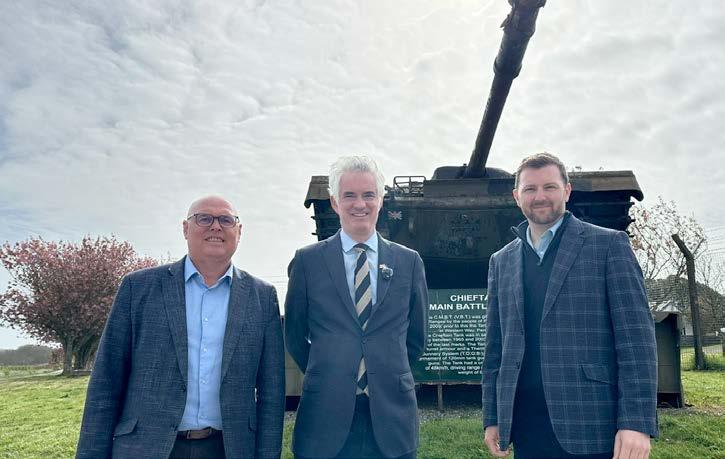
JAMES CARTLIDgE, the UK Shadow Secretary of State for Defence, has visited Castlemartin Training Area on Thursday (Apr 16) to meet personnel and discuss the site’s importance to both UK defence capability and the Pembrokeshire economy.
Castlemartin Training Area has a long-established role in the community, having been established in 1938 for tank training by the Royal Armoured Corps. The range was temporarily abandoned following the Second World War but reopened in 1951. From 1961 to 1996 it was also used by German Bundeswehr armoured units under NATO agreements. Today, it is regarded as one of the UK’s premier live-fire armoured training facilities, regularly used to prepare troops for operational deployment.
During the visit, the Shadow Defence Secretary was joined by Paul Davies and Samuel Kurtz, both former Pembrokeshire MSs and Conservative candidates for the Ceredigion Penfro constituency in the upcoming Senedd
Tom Sinclair editor@herald.email
election on May 7. They highlighted the training area’s role in sustaining skilled local employment, supporting the wider supply chain, and underpinning the presence of the Armed Forces in West Wales.
Discussions also focused on the importance of maintaining strong defence capability amid global instability, alongside the contribution made by defence infrastructure to local communities and businesses across Pembrokeshire.
James Cartlidge MP, Conservative Shadow Defence Secretary, said: “Our Armed Forces rely on world-class training facilities like Castlemartin to ensure they are prepared for the challenges they face.
“It is clear this site plays a crucial role not only in UK national defence but also in supporting local jobs and the wider economy here in Pembrokeshire.”
Paul Davies said: “Castlemartin

is an incredibly important asset for Pembrokeshire and for the UK as a whole.
“It supports skilled jobs locally and brings significant economic benefits to the area, as well as playing a key role in training our Armed Forces. We have a proud military history here, with many veterans living in the community.
“We also made clear during the visit that it was the Welsh Conservatives who fought to secure the extension of the 14th Signal Regiment at Cawdor Barracks, protecting jobs and ensuring a continued military presence in the county.”
Samuel Kurtz added: “We are proud of the role Pembrokeshire plays in supporting our Armed Forces. As a former MS with Castlemartin within
my constituency, I have worked to build relationships and champion this important military site.
“Facilities like Castlemartin are vital. It is essential they continue to receive the support and investment needed to remain world-leading, and not be repurposed for any other use.”
The visit also underlined Conservative commitments to defence, including increasing defence spending, strengthening the Armed Forces, and ensuring the UK remains secure in an increasingly uncertain world.
It further provided an opportunity to highlight the importance of the defence industry supply chain and the range of businesses across the region that contribute to the sector.

has been ordered to hand over Tesla shares worth just £91.78.
Austin Hockey, 32, was already jailed for 40 months after admitting a string of drug offences linked to dealing in the county during 2023.
But when prosecutors returned to court under the Proceeds of Crime Act, it was agreed that although he had benefited by £311,594 from his offending, the only asset available to seize was a small investment in Tesla shares.
Swansea Crown Court was told Hockey had no other realisable assets.
Judge Paul Thomas KC made a confiscation order for £91.78.
The case had previously heard that more than £171,000 passed through Hockey’s bank account, while phone evidence showed he was heavily advertising Class A and B drugs.
Dyfed-bred mare rose from a farm in Eglwyswrw to national ceremonial fame and became a trailblazer for the Household Cavalry
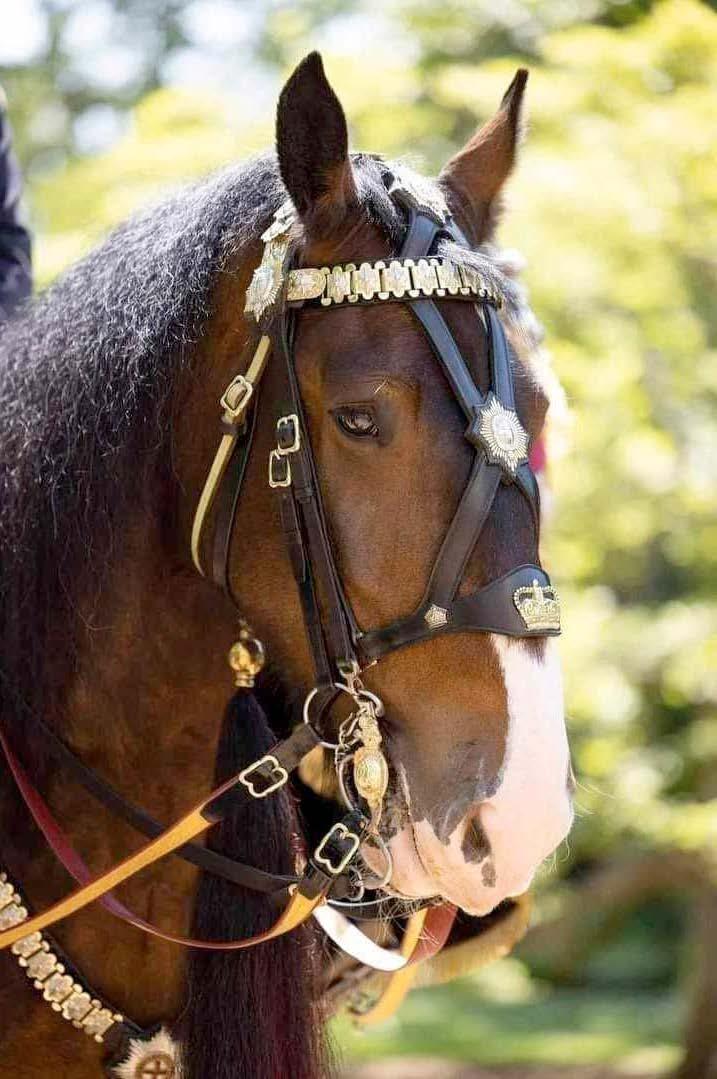
TRIBUTES have been paid across Pembrokeshire following the death of Major Juno, the Dyfed-bred Shire horse whose journey from a working farm in Eglwyswrw to the centre of Britain’s ceremonial life made her a source of enormous local pride.
Known at home as Willa Rose, she was bred at Dyfed Shire Horse Farm, where her size, strength and calm temperament quickly marked her out as something special. Born on May 10, 2013, she was part of the fourth generation of the Dyfed bloodline and would go on to become one of the farm’s most celebrated horses.
In 2021, she was bought by the Household Cavalry and sent to
London, where she underwent two years of specialist training before being officially named Juno in 2023.
Her rise was historic. Major Juno became the first mare to pass out onto parade as a Household Cavalry drum horse, placing both horse and farm in the national spotlight. The achievement shone a light on Pembrokeshire and on the work of breeders in rural west Wales, with many locally seeing her success as something truly extraordinary.
She went on to appear in three consecutive Trooping the Colour parades, cementing her place among the most notable horses ever bred at the farm. For local people, she was far
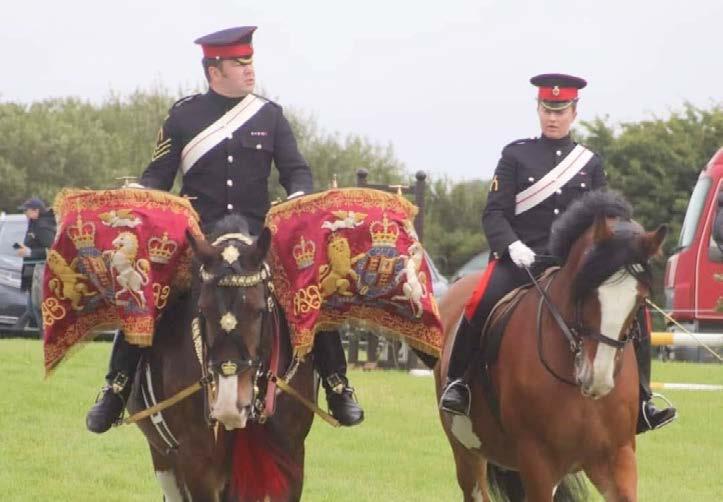

more than a ceremonial animal. She was living proof that a horse raised in Pembrokeshire could reach the very highest level of national service.
Major Juno came from a remarkable line. Her uncle Celt went on to serve in London as Major Mercury after joining the Household Cavalry in 2008, while another Dyfed horse, Ed, later became Major Apollo. In 2023, Apollo and Juno paraded together at Trooping the Colour, an extraordinary moment for the family behind Dyfed Shire Horse Farm and a measure of the farm’s unique reputation for producing elite ceremonial horses.
Despite her national fame, Juno never lost her connection to Pembrokeshire. She returned to the farm for public visits, drawing crowds of admirers eager to see the Dyfed-bred mare whose reputation had spread far
beyond the county.
Her death, after a short illness, has prompted an outpouring of sadness from those who followed her story from the beginning. Dyfed Shire Horse Farm paid tribute to her as “our Rose”, while the family has asked for her to be returned to Pembrokeshire to be laid to rest alongside Major Mercury.
Among those paying tribute was county councillor Huw Carnhuan Murphy, who wrote: “Your journey is done, proud to have been there on the day it all began on May 10th, 2013 with Nikki Murphy & Anna Raymond.”
From the fields of north Pembrokeshire to Horse Guards Parade, Major Juno carried the county with her. In death, as in life, she remains a symbol of the care, quality and quiet ambition that took a Welshbred mare to the very heart of national tradition.


THREE families have been forced from their homes after a major fire tore through a terrace in Letterston, destroying two properties and leaving a third badly affected by smoke.
The blaze broke out at around 4:00pm on Wednesday (Apr 15), prompting a major emergency response from fire crews across west Wales.
Appliances were sent from Fishguard, Haverfordwest, Milforad Haven, St Davids, Narberth, Carmarthen and
Tumble as firefighters worked for hours to bring the incident under control.
Residents nearby said they first noticed what looked like a dark haze outside before realising smoke was pouring from the row of houses. As the seriousness of the situation became clear, people in neighbouring homes were told to get out.
Witnesses described seeing flames race through the roof spaces of the terrace, while windy conditions made the fire harder to contain. There were also
POLICE were seen in large numbers at a Pembrokeshire cemetery on Monday (April 20) as officers searched for a man who had fled following a domestic incident in Milford Haven the previous day.
Dyfed-Powys Police said they received a report of a domestic incident in Waterloo Square, Milford Haven, at around 10:00am on Sunday (April 19).
Officers attended, but during efforts to arrest a 23-year-old man, he fled the scene.
The Herald understands the search then moved to the Milford Haven Cemetery area on Monday, where a significant police presence was reported, including dog units, drones and several police vans.
The man was later arrested on suspicion of a domestic-related offence and escaping lawful custody.
He has since been released on bail while enquiries continue.

A third remained standing but was left uninhabitable because of heavy smoke contamination inside.
Among those affected was a young family with a three-month-old baby. Although their house was not destroyed structurally, smoke damage is understood to have ruined furniture, clothing and other possessions, including items for the child.
All three households have since moved in with relatives or friends while they deal with the aftermath.
Despite the scale of the incident, nobody was injured.
The fire has shocked the village, but local people have quickly stepped in to offer help, with fundraising appeals launched to support those who have lost their homes and belongings.
Fundraising appeals can be found at:
power lines.
Fire crews remained at the scene into the evening, supported by utility workers dealing with the electricity supply. Some nearby homes were left without power until late that night.
By the time the fire was out, two houses had been completely gutted.
gofundme.com/f/help-young-familyreturn-home-after-smoke-damage
gofundme.com/f/friends-housedestroyed-by-fire-f24y5
gofundme.com/f/the-families-effected-bythe-fire


A PEMBROKESHIRE man has been sentenced for disrupting an entire town’s broadband connection by causing over £26,000 worth of damage to Ogi’s underground cabling and fibre-optic network.
Between September 2023 and January 2024, Mickey Probert, 37, gained access to five of Ogi’s protected underground chambers extending from Wavell Crescent to Hamilton Court, Pembroke Dock. Using wire snippers, Probert caused a total of £26,237.73 worth of damage to the Ogi network.
On January 23, 2024, Probert was caught red-handed after once again gaining entry to one of Ogi’s chambers armed with wire snippers, a screwdriver and a metal crowbar.
This week Swansea Crown Court heard that suspicions were raised when Ogi’s alarm system confirmed that numerous cables had been affected in the Pembroke Dock area between September, 2023 and January 2024. When fault engineers began assessing the damage, they discovered that someone had gained access to the Ogi protected chambers and had cut numerous cables. Five different locations were flagged with six separate findings of damage.
Sarah Jane Absalom sarah.jane.absalom@herald.email
Mickey Probert was subsequently discovered by police officers in the Wavell Crescent site as they carried out a search following reports of what the Crown described as ‘suspicious activities’ near one of the Ogi junction boxes.
Judge Huw Rees was told that when officers arrived at the scene at 3.55 am, they located the defendant hunched over a metal manhole cover. He had in his possession a pair of wire snippers and a screwdriver, and was wearing a head torch and latex gloves. A metal crowbar was also found nearby.
“His actions severely impacted the network services of the Pembroke Dock area, but also OGI’s reputation,” the Crown counsel told Judge Rees.
“As a result, they suffered a cascade of negative effects and the 999 services were also affected. Many people rely on these services for their lives.”
Probert, of Laugharne Close, Pembroke, pleaded guilty to causing criminal damage to the Ogi network and Judge Huw Rees described the defendant’s actions as ‘very serious offending’.
“I take a serious view of this as a result of the damage that was caused, and this is a serious example of a crime to an independent public network provider in Wales,” he said.
“People who use that network and people who wanted to make emergency calls in dire circumstances, were prevented from doing so by your actions. Your actions disrupted essential services.”


But Judge Rees went on to say that as a result of Probert’s ‘realistic prospect’ of rehabilitation, his custodial sentence will be suspended.
“There’s been a period of nonoffending when you’ve shown your ability to live a normal life,” he said.
“ You’ve got it in you to keep out of trouble and there’s a realistic prospect of rehabilitation.”
Probert was sentenced to 16 months in custody suspended for two years. During this time he must carry out 20 rehabilitation activity requirement days and a 120-day alcohol abstinence monitoring programme.


A MAN was found staggering around Pembroke Dock town centre covered in blood after a brutal attack inside a caravan, Swansea Crown Court has heard.
The victim had gone to the mobile home in the early hours of January 29 intending to buy cocaine. But after arriving at an address in Pembroke Dock, he was directed to a caravan parked behind another house, where he encountered two men, including Zack Ian Craig High.
Prosecutor Sian Cutter told the court that while the complainant was making his way to the caravan, he received a phone call telling him to make an online payment.
Once inside, an argument broke out between the complainant and High. The confrontation quickly turned violent, with High punching the victim to the floor before repeatedly punching and kicking him.
After the attack, the injured man managed to leave the caravan and


walk back towards Pembroke Dock town centre. While doing so, he made a video call to a friend. Alarmed by the bloodied state of the complainant, the friend contacted police.
Officers later found the victim staggering through the town with blood on his face. He was taken to hospital, where medics found significant bruising to his face as well as bruising to his back, arms and legs. He was also found to have suffered a possible fracture to his upper jaw and a fractured wrist bone.
High, aged 26, of no fixed abode, was arrested and gave a “no comment” interview.
He had originally been charged with inflicting grievous bodily harm with intent, but later pleaded guilty to the lesser offence of assault occasioning actual bodily harm.
The court heard that at the time of the assault, High was already subject to a suspended sentence.
Defending, Stuart John said High denied any involvement in drug dealing. He suggested the background to the incident may have involved the fact that his client was in a relationship with the complainant’s former partner.
Sentencing, Judge Geraint Walters described the attack as “brutal” and said it had caused significant injuries.
With credit for his guilty plea, High was jailed for 18 months. He will serve 40 per cent of the sentence in custody before being released on licence for the remainder.
The judge also imposed a fiveyear restraining order banning High from contacting the victim.


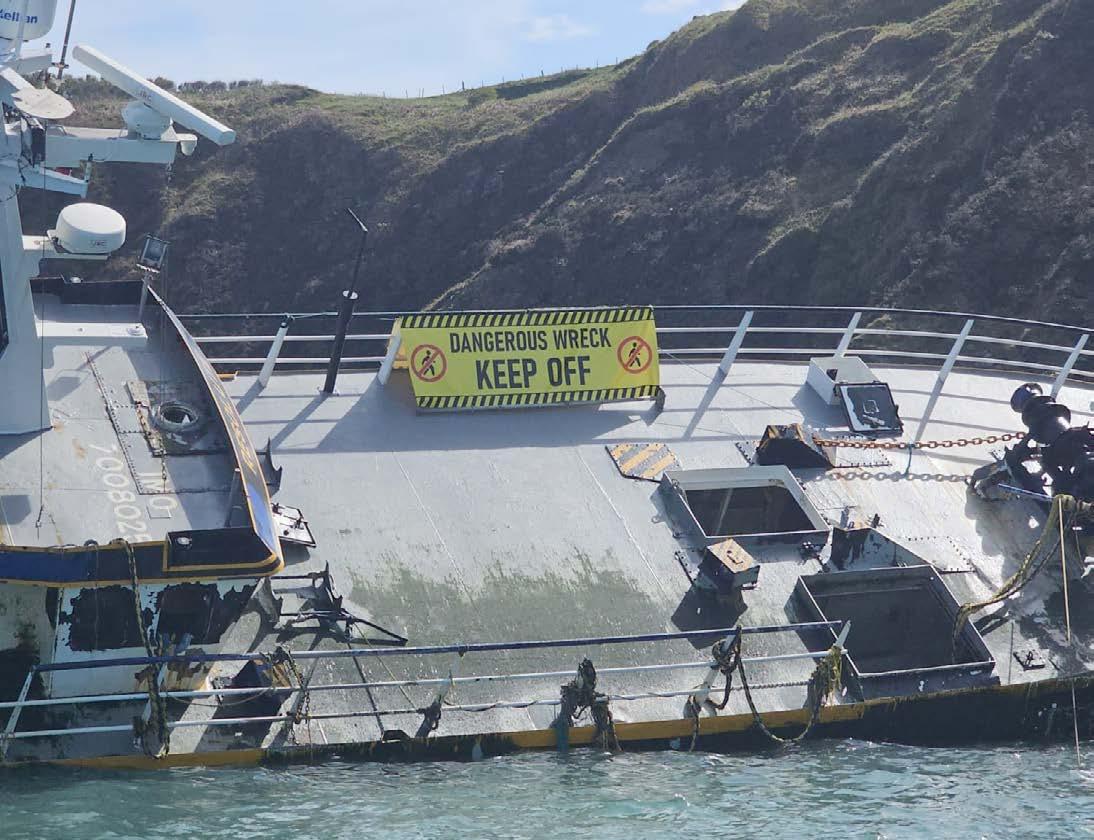
FRESH concerns have been raised over public safety around the wreck of the Resolute off the Pembrokeshire coast, with fears the stricken vessel could become “an accident waiting to happen” as summer approaches.
The 25-metre vessel ran aground in stormy weather in the early hours of Thursday, December 11, 2025, near Aber Hywel, Dinas.
Since then, the wreck has become an increasing cause for concern among local marine users. A 3D survey of the seabed carried out in February showed the vessel wedged on a rocky section of seabed, while photographs taken the same month by JC Explores revealed it had become more submerged, with much of the stern and parts of the deck underwater at high tide and the hold filled with water.
In January, more than 10,000 litres of fuel and oil were salvaged from the vessel.
Now, with more people expected on the water during the warmer months, warnings are being made that the wreck poses a serious hazard to kayakers, paddleboarders and small craft users.
Kayaking guide Paul Cokeley said: “It’s a magnet for younger people. They don’t see the danger, but it’s a really dangerous thing there.
“It is already drawing people on kayaks, paddle boards, and small craft who may not be aware of the significant structural dangers.
“With open doors and a compromised hull, there is a high risk of entrapment or falls for anyone attempting to board it.
owner and salvor.”
“Imagine that you got trapped in there; the tide comes in, and you drown.
“There’s a lot of pleasure craft around as the summer comes. It’s an accident waiting to happen.”
In the past week, bright yellow hazard signs have been placed on the wreck in an effort to warn people away. The signs were commissioned
Mr Cokeley said it was positive that warning signs had now been installed, but questioned whether they would be enough on their own to stop people from attempting to climb aboard.
The Maritime and Coastguard Agency said: “HM Coastguard continues to monitor the situation and is in contact with both the vessel
The Western Telegraph understands that local firms and salvage contractors are still working to remove the wreck as soon as possible, although the operation remains complicated by seabed survey findings and weather conditions.
Further confirmation on the next steps is expected in due course.

A court has heard how a man drove his unlit van through Pembroke Dock at midnight while two women shared the front seat. When David Janssens was arrested
by officers on April 6, he was found to be over twice the legal drink-drive limit.
“The officers were concerned about the manner of his driving,” Crown Prosecutor Linda Baker told Haverfordwest magistrates court this week.
“The Fiat Doblo was swerving in the middle of the road and the officers saw the lights being turned off while it was moving.”
After stopping the vehicle, the driver was identified as 38-year-old David Janssens.
“The officers also discovered two females in the passenger seat, one sitting on the other’s lap,” added Linda Baker.
Janssens, of Water Street, Pembroke Dock was arrested and breathalysed with the lowest reading showing he had 77 mcg of alcohol in his system, the legal limit being 35.
This week he pleaded guilty to drinkdriving, using a vehicle without third party insurance and driving otherwise than in accordance with a licence. He was represented in court by solicitor Michael Kelleher.
“He was driving a two-seater van, which was why the two female friends were sitting the way they were,” Mr Kelleher told the court. “He was giving them a lift home.”
The solicitor went on to say that Janssens had previously lost his licence under the totting-up procedure.
“He’s very remorseful of what he did, and realises that he shouldn’t have been driving that night,” concluded Mr Kelleher. Janssens was fined £320 and ordered to pay a £128 court surcharge and £85 costs. He was disqualified from driving for 20 months.

SUPPORTERS of Haverfordwest County AFC have fresh reason to be concerned after a new windingup petition emerged in Scotland involving another football business linked to Haverfordwest Chairman, Rob Edwards, and Morley Sports Management.
The latest case is against 1874 Holdings Limited, the company in the ownership chain above Hamilton Academical.
That matters in Pembrokeshire because Haverfordwest County AFC Ltd was only just taken to the High Court in London by HM Revenue & Customs. That case was dismissed, but only after reaching a live hearing, with costs ordered against the club.
Now another football-linked company in the same orbit is facing winding-up action in Scotland.
For Haverfordwest fans, the question is obvious: was the Bluebirds’ court case a one-off, or part of a bigger pattern around the same people and businesses?
A notice published in The Gazette states that a petition was presented at Hamilton Sheriff Court on April 2 seeking to wind up 1874 Holdings and appoint an interim liquidator. The petitioner is Zenith Legal Services Group Limited.
Hamilton has previously said that Morley Sports Management owns 100 per cent of 1874 Holdings, which in turn owns 97.5 per cent of Hamilton Academical FC.
The Scottish club’s latest statement does not deny the petition exists. Instead, it says the claim is disputed, says lawyers are dealing with it, and argues that a winding-up petition is not the right forum for the dispute.
That line is likely to sound familiar to many in west Wales.
During the Haverfordwest case, Rob Edwards described the HMRC petition as “a non-story”, said it related to “a VAT offset against PAYE that wasn’t recorded”, and insisted no debt was owed to HMRC.
But the Haverfordwest matter still remained live until it came before the High Court on April 15, where it was dismissed only after a hearing, with costs payable by the company.
That is why the latest Scottish petition is relevant here. It suggests the recent High Court case involving Haverfordwest may not have been an isolated scare, but part of a broader picture around the same football ownership circle.
There are also growing links between the two clubs at senior level. Earlier this month, Rebecca Nuttall was credited by Haverfordwest for key work behind the scenes in the club’s successful licensing process, while Hamilton also announced she had been appointed chief executive there in a dual role.
Hours after The Herald first
reported the HMRC winding-up petition against Haverfordwest County A.F.C. Ltd, the club published a call for
additional members to join its Board of Directors, saying it was entering “an exciting new chapter” and looking for commercially experienced people to help drive transition and growth.
Then, on April 8, Haverfordwest announced it had been awarded both its UEFA licence and FAW Tier 1 licence for the 2026-27 season, even though the HMRC petition was still live in the court system at that point and was not disposed of until a week later.
The Herald contacted the Football Association of Wales for comment last week, asking about the licensing position and the live HMRC petition, but no response had been received by the time of publication.
A petition is not the same as a winding-up order, and liquidation is not inevitable in the Hamilton case. But it is a serious legal step.
And when two football-linked companies in the same ownership network face winding-up petitions in the same month, supporters are entitled to ask hard questions.

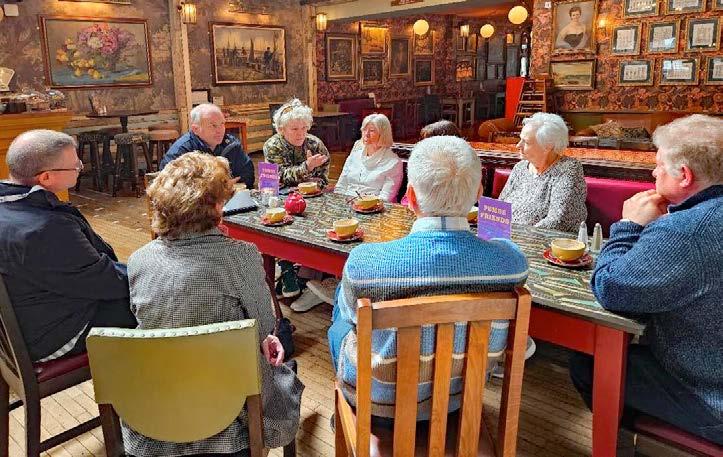
PEMBS FRIENDS, an informal over50s social group that meets fortnightly, invited two County Councillors to their latest gathering to discuss Social Care issues that affect their age group. County Councillors Anji Tinley and Huw Murphy responded to several passionately expressed concerns centred around two main issues.
The first issue raised was the poor level of transport available to older citizens in Pembrokeshire and the detrimental effects this has on their social lives and well-being. The second area of concern was the poor level of medical care at both GP surgeries and Hywell Dda Health Board levels. It was felt that, while there is excellent service from many medical staff, most of the procedures seemed to operate for the convenience of the
system rather than in the interests of patients. One area of particular concern was the hoops that have to be jumped through to get a doctor’s appointment and the unhelpfulness of many reception staff. Another serious problem was the poor level of aftercare experienced by some on leaving hospital.
The Councillors thanked those present for raising these important issues and giving them an insight into the real problems faced by older people in rural areas. They promised to raise these issues wherever they could and to let the members know what is being done. They also stressed that it is important that people contact their local County Councillors to let them know of particular problems so that they can act on them, based on first-hand experiences
A Pembrokeshire chef has admitted turning his Audi A3 onto its roof when he was over twice the legal drink-drive limit.
Police were called to Stevens Green, Milton, just before 1.30 am on April 2 following reports that an Audi A3 had been involved in a single vehicle road collision. There, officers found the vehicle lying on its roof across the entire width of the road.
“The driver, Davey Bailey, 32, was
sarah.jane.absalom@herald.email
seen standing on the opposite side of the road, holding a mobile phone,” outlined Crown Prosecutor Linda Baker. “And he confirmed to officers that he was the driver.”
After providing a positive roadside breath test. Bailey, 32, was arrested and conveyed to the police station where he gave further breathalyser
tests, the lowest reading being 82 mcg. The legal limit is 35.
Bailey, of Stover Avenue, Sageston, pleaded guilty to the drinkdrive offence when he appeared before Haverfordwest magistrates court this week. His solicitor, Tom Lloyd, confirmed that the defendant is employed as a chef, however the loss of his licence is unlikely to affect his work commitments.
Bailey was fined £600 and ordered

to pay a £240 court surcharge and £85 costs and was disqualified from driving for 21 months.
AMENDED plans for a scheme to convert a vandalised former Pembrokeshire town centre Chinese restaurant to a flat and bedsits has been approved.
In an application recommended for approval at the February meeting of Pembrokeshire County Council’s planning committee, Mr S Sahin and Miss S Ahmed, through agent Hayston Developments & Planning Ltd, sought permission for a change of use of Grade-II-listed 20 Hamilton Terrace, Milford Haven from the former Mandarin Restaurant to one flat and eight bedsits.
The application had previously been recommended for approval at the January meeting, but was deferred pending a site visit after member of the public Jessica Clarke raised concerns about the potential impact on her mother’s neighbouring property, with issues of height and massing, surface water discharge, and shared boundary walls.
The scheme, in the town’s conservation area, was before committee rather than delegated to officers as it was recommended for approval despite being contrary to development plan policy.
A supporting statement said of

the subject of unfortunate vandalism particularly to the interior of the building.”
hip-roof as “a compromise” to lessen the impact on neighbours by reducing the £200,000 investment’s scale and bulk.
At that meeting, members backed a compromise delegation for final any approval going to a senior officer on condition the hip roof design could be formally agreed.
A report recommending approval of the amended scheme said concerns had been raised on those plans by two members of the public, raising concerns regarding amenity impacts, the scale and siting of the extension, the external staircase, alleged unauthorised works to the listed building and general concerns regarding process and property value.
the initial scheme: “The property has historically been in use as a Chinese restaurant on the ground floor with two flats on the upper floors of the building. The ground floor use of the building ceased some 10 years ago and currently lies vacant. Due to the lack of use of the building, it is in a very poor condition and has been
It added: “The proposal would represent a high-quality and sympathetic conversion and extension of the building, and which would make a positive contribution to the locality and conservation area status.”
Speaking at the February meeting agent Andrew Vaughan-Harries said, following the site visit, an alternative
The report added: “These matters have been considered in the context of the amended scheme. The issues raised do not introduce any new material planning considerations that would alter the assessment presented in the original committee report.
“The proposed amendments do not result in unacceptable impacts, and the overall planning balance remains unchanged.”
The application was conditionally approved.
NO OMBUDSMAN investigation is to take place into a recently elected Pembrokeshire county councillor following a “waste of taxpayers’ money” complaint of a claimed breach of the code of conduct.
William Cuthbert Linton Shaw, commonly known as Billy Shaw, won the Fishguard North-East ward seat for Plaid Cymru – The Party of Wales in February following a byelection called after the death of Cllr Jordan Ryan last November.
Cllr Shaw’s election win in February means Plaid now has three county councillors in Pembrokeshire.
Cllr Shaw was reported to the Ombudsman after attending his first full council meeting in March, describing the complaint as “a waste of taxpayers’ money” and “a sad attempt at stifling the right to my freedom of expression”.
“On March 5 I attended my first county council meeting as the newly elected councillor for Fishguard NE,” said Cllr Shaw.
“Outside was a group, Solidarity with Palestine who had a petition to be heard on Agenda Item No 5 [of that meeting], ‘Disinvestment in Companies profiting from Genocide’.
“A ‘member of the public’ complained that these people were supporting ‘Palestine Action’ and that I had breached the Code of Conduct relating to being a councillor by being pictured

Bruce Sinclair Local Democracy Reporter
with them and this report was sent to the Ombudsman on March 10.
“On Thursday I found out that this was not being investigated by the Ombudsman, as under Article 10 of the European Convention on Human Rights (ECHR) I am allowed the freedom of expression in who I want to support and there was no evidence that they

A HAVERFORDWEST man has been cleared after the prosecution offered no evidence against him at Swansea Crown Court.
Luke Phillips, 23, of Woodlands Park, Haverfordwest, had previously faced charges relating to indecent images of children and extreme pornography.
The case came before His Honour Judge Thomas KC on Monday (Apr 13).
When the matter was called on, the prosecution offered no evidence on all counts.
Formal not guilty verdicts were then entered on each count, bringing the proceedings to an end.
Phillips was represented by barrister Ian Ibrahim.
The outcome means there is no further action to be taken in relation to the case.
It is understood that property seized during the investigation can now be returned following the conclusion of the proceedings.
supported ‘Palestine Action’ or indeed did I by being pictured alongside them.”
Cllr Shaw said there were two lessons following the complaint: “It was a waste of the Ombudsman’s time, as it was a petty and vindictive attempt by
this individual who has a long history of trolling anyone especially those in public office with a left-wing viewpoint. The ECHR protected my rights to freedom of expression, remove the ECHR and you remove that freedom.”

A 21-year-old man has been sentenced for being abusive to customers queuing at the McDonald’s fast-food outlet in Milford Haven.
Officers were called to the restaurant at around 9.30pm on April 5 after the manager reported that a drunken male was refusing to leave the premises. The man was later identified as 21-year-old Kasper Gut.
“He was being abusive to customers and when three officers arrived, he was seen talking to the manager who was asking him to leave,” Crown Prosecutor Linda Baker told Haverfordwest magistrates this week.
“He refused, and then became aggressive towards the officers, swearing at them and clenching his fists.”
The Crown stated that when Gut’s behaviour continued to escalate, he was
Sarah Jane Absalom
sarah.jane.absalom@herald.email
arrested for being drunk and disorderly in a public place.
Gut, of Silverdale Inn, Johnston, pleaded guilty to being drunk and disorderly in a public place and an additional offence of failing to attend an initial assessment after cocaine was found in his system on November 8, 2025. He was legally represented in court by Michael Kelleher.
“At the time of the offence he was in a bad state and had been made homeless,” he said. “But things have changed. He’s now stopped taking drugs and has been clean for months.”
Gut was fined £260 and ordered to pay a £104 court surcharge and £85 costs.

recorded 625 instances of stalking over the past year, as the force highlights the serious and often hidden impact of the crime.
Marking the start of Stalking Awareness Week, new figures show the control room receives on average between one and two calls a day reporting stalking behaviour.
Through a social media campaign running this week, the force is raising awareness of the warning signs of stalking, its impact on victims, and where people can seek help and support.
Temporary Detective Chief Inspector Katie Cuthbertson said: “One of our force priorities is to ensure a compassionate response to victims of stalking, as we recognise the devastating impact it can have on someone’s life.
“It is incredibly important that anyone who reports being

Tom Sinclair editor@herald.email
stalked is supported throughout an investigation, and that we consider all measures to safeguard them while enquiries are carried out.
“Anyone can become a
victim of stalking. While many victims are targeted by former partners, perpetrators can also be acquaintances or even strangers with no prior connection.”
She added: “Stalking remains a widely misunderstood crime, and we are using this week to educate our communities about how serious it
Since Stalking Awareness Week 2025, the force has also secured 15 interim or full Stalking Protection Orders through the courts.Police say multiple reports can often relate to the same victim and perpetrator, as stalking is defined by fixated, obsessive, unwanted and repeated behaviour.
Victims are urged to report every incident to help officers build a full picture and identify any escalation in behaviour.
T/DCI Cuthbertson said: “Stalking behaviours can appear innocuous, from leaving gifts or flowers to sending repeated messages, which can make it difficult for victims to explain to others why they feel frightened.
“The true risk is often masked by what appears to be low-level behaviour, but stalking is considered a high-risk crime.”
HIgH STREET in Haverfordwest is due to close this weekend while resurfacing works are carried out on behalf of Pembrokeshire County Council.
An approved contractor said essential highway maintenance is scheduled for Saturday (April 25) and Sunday (April 26).
The road will be closed while the work is ongoing, and residents have been warned that access cannot be guaranteed at all times.
The contractor has asked for the roadway to be kept clear of obstructions between 7:30am and 5:30pm on both days. Drivers are also being urged to allow
Tom Sinclair editor@herald.email
extra time for their journeys and to follow the instructions of traffic management staff.
Access for emergency services will be maintained throughout the works.
Pedestrians have also been advised to take extra care when approaching the area because of the nature of the resurfacing work.
The contractor said every effort would be made to keep disruption to a minimum and apologised in advance for any inconvenience caused.

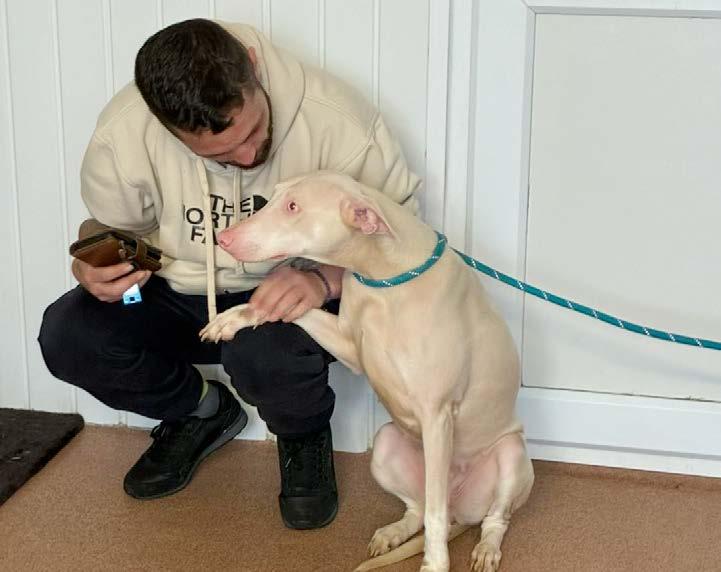
gREENACRES RESCUE has been pulled back from the brink after an overwhelming public response cleared a £24,000 vet bill that had left the Pembrokeshire animal sanctuary facing the prospect of shutting its doors to new intakes.
The Talbenny-based rescue had warned it was at breaking point after receiving a March veterinary bill of £24,113.92, saying it could be forced to stop taking in emergency cases unless the money was raised by the end of the month.

The stark appeal triggered an immediate wave of support, with donations pouring in from Pembrokeshire and beyond.
Within the first 24 hours, Greenacres said it had raised £12,759, taking the charity more than halfway to its target. By Wednesday, the full amount had been reached.
In a message thanking supporters, the Greenacres team said: “Because of you our doors stay open.
“We hit our target for the vet bill and we are absolutely overwhelmed with gratitude.
“The support we’ve received has been nothing short of incredible, and thanks to every single one of you, our doors can stay open to help as many animals as we physically can.”
The rescue had warned that failing to clear the bill would have devastating consequences, with new emergency calls potentially having to be turned away.
Mikey Lawlor said last week that March had been the toughest month the charity had faced, despite more than £43,000 already being raised and paid off earlier this year.
He said the number of animals needing urgent help had reached an all-time high, pushing the rescue to the brink.
While Greenacres stressed it would always honour commitments to animals already in its care, it warned that being forced to close to new intake could leave other animals without a lifeline.
In its thank-you message, the charity said the successful appeal meant it could continue helping “animals who feel forgotten” and those with nowhere else to turn.
The rescue also highlighted the case of Venus, a Doberman taken in last week after spending time in council pound kennels.
Greenacres said Venus had faced an uncertain and heartbreaking future after going unclaimed, and had arrived too frightened to show her true character. Staff said she has already begun to relax and reveal herself as a gentle dog.
“Dogs like Venus are the reason we exist,” the team said.
As well as direct donations, Greenacres is continuing to ask supporters to help through its Amazon wish list, which provides food and other essentials for the animals in its care.
The charity, which has been rescuing, rehabilitating and rehoming neglected and unwanted animals since 2008, cares for dogs, cats, horses, reptiles and other small animals across Pembrokeshire.

DYFED-POWYS POLICE have shared the story of a father-anddaughter response team who recently worked side by side on duty.
Superintendent Chris Neve stepped back onto the frontline for the shift, joining his daughter, PC Abi Neve, as part of Response Policing Week.
The force said Abi grew up listening to her father’s stories about policing and was inspired to follow the same path, often imagining how rewarding it would be to help people in need.
Speaking about the experience, Abi said: “Before work that day, he was just my dad, but as soon as our shift began, he became my boss and my colleague.
“He has always looked after me since I was born, so it was nice for me to be able to have his back, if needed, for a change.”
Dyfed-Powys Police said it was a moment Chris had long been looking forward to.
Reflecting on the shift, he said working alongside his daughter while supporting victims brought comfort in difficult situations.
He added that while there are

response.
times a parent wonders whether their child is still too young, Abi was more than capable of handling herself on
Chris said he was proud of the woman she had become and was looking forward to hearing more of her stories as her policing career continues.
The force described the pair as the “ultimate response father/daughter duo” and said it was a shift that would stay with both officers long after Response Policing Week came to an end.
PEMBROKESHIRE FRIENDS OF THE EARTH has renewed calls for urgent action on climate change and nature loss following a recent film screening and discussion at the Bloomfield Centre in Narberth.
The event focused on the growing threat posed by climate change and the decline of the natural environment, with campaigners warning that the challenges facing the country are more immediate and serious than many people realise.
The film featured broadcaster and environmental campaigner Chris Packham introducing presentations from a range of experts, including climate scientists and military voices. They called on the Government to launch a national response to the climate and nature crisis, showing the same level of leadership seen during World War Two and the financial crisis.
Those involved in the campaign say the aim is to push for a much stronger national effort to reduce emissions, protect wildlife and prepare communities for the effects of a more dangerous climate.
A spokesperson for Pembrokeshire Friends of the Earth said extreme weather, including heavier rainfall, is only the beginning of what lies ahead if urgent action is not taken.
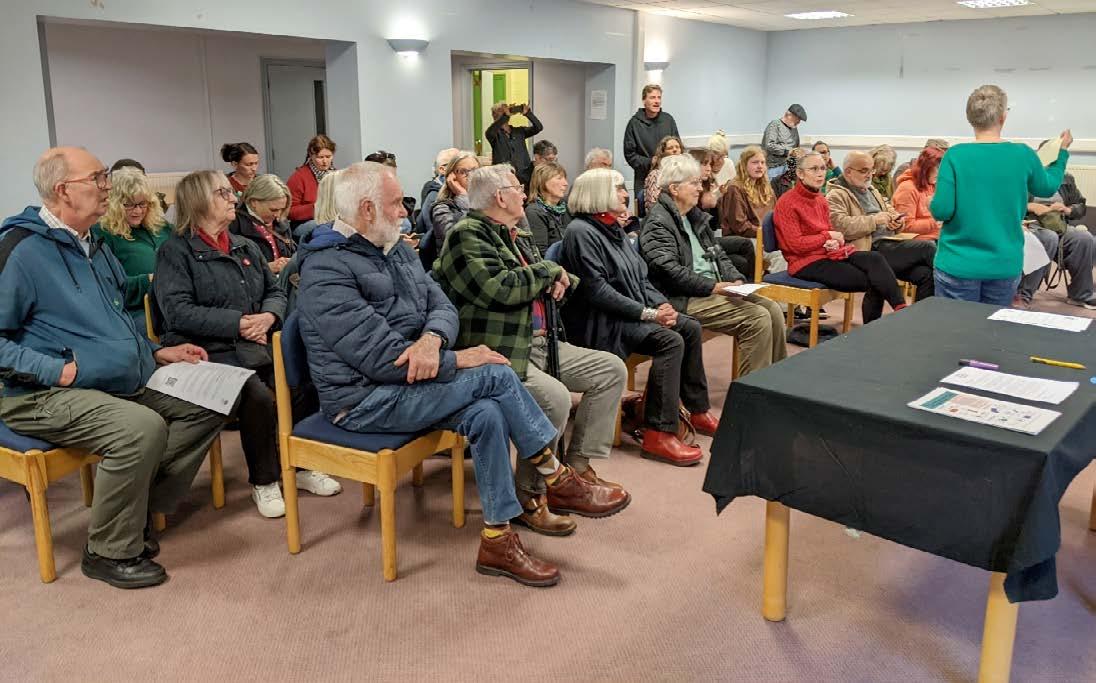
They warned that climate and nature breakdown could increasingly damage public health, food systems, infrastructure, national security and economic stability.
The group says there is strong evidence that bold action would
not only cut emissions and improve resilience, but also create jobs and improve lives.
Pembrokeshire Friends of the Earth is calling for emergency legislation to speed up cuts in climatechanging emissions while investing in
measures to help communities adapt. For further information, contact Bettina Becker at Pembrokeshire Friends of the Earth on info@ foepembrokeshire.org.ukor 01437 563657.
PEMBROKSHIRE’S thriving chess community witnessed a unique blend of tradition and technology last week, as Pembrokeshire Chess Club hosted a special guest: “Rook to D2” – an AI-powered chess robot from the Welsh Chess Union.
The visit marked the first stop of the robot’s tour across Wales, making it a historic moment for the county. Club members, both young and old, gathered at Kensington Court in Steynton to experience the future of chess firsthand.
Excitement filled the room as the club’s President officially opened proceedings by making the first move against the robotic challenger. From that moment on, it was “game on,” with 15 junior players eagerly taking turns to test their skills. Several adult members also joined in, creating a lively and inclusive atmosphere.
The evening proved especially memorable for the club’s younger players, who relished the chance to play against cutting-edge technology. Their enthusiasm was matched by club officials, including the Chairman and President, who welcomed the opportunity to introduce innovation into the local chess scene.
Club representatives described the atmosphere as “amazing,” highlighting how advancements in technology are

enhancing traditional games like chess and inspiring a new generation of players.
Pembrokeshire Chess Club continues to meet weekly at Kensington Court, Steynton. Junior sessions are
held every Tuesday from 5:30pm to 6:30pm, followed by sessions for more experienced juniors and adults. The club prides itself on being family-friendly and inclusive, catering to all abilities –from casual players seeking a friendly game to those aiming to compete in
league and tournament chess.Following its successful debut in Pembrokeshire, the AI chess robot is expected to visit other clubs across Wales in the coming weeks, bringing the same sense of excitement and innovation to chess communities nationwide.
THE NEYLAND and Llanstadwell Heritage group is pleased to acknowledge the support of Dragon LNg as a Founding Sponsor of its newly launched heritage website.
The website was officially launched at a special community event held at Neyland Hub on Wednesday, April 15, marking 170 years to the day since Isambard Kingdom Brunel brought the railway to Neyland in 1856.
As part of the evening, Dragon LNG presented a cheque in support of the project, recognising the importance of preserving and sharing the area’s rich local history.
The new website has been developed as a central and accessible resource to bring together research, stories, and historical material relating to Neyland and Llanstadwell. It is intended not only as a record of the past, but as a living resource that encourages community involvement and participation.
Carol Elliott, Chair of the Neyland and Llanstadwell Heritage Group, said: “We are extremely grateful to Dragon LNG for their generous support. Their contribution has helped make this website possible, ensuring that the history of Neyland and Llanstadwell can be preserved and shared with the community and with future generations.”
A spokesperson for Dragon LNG said: “Following a request from Gareth, a member of our Team, we are
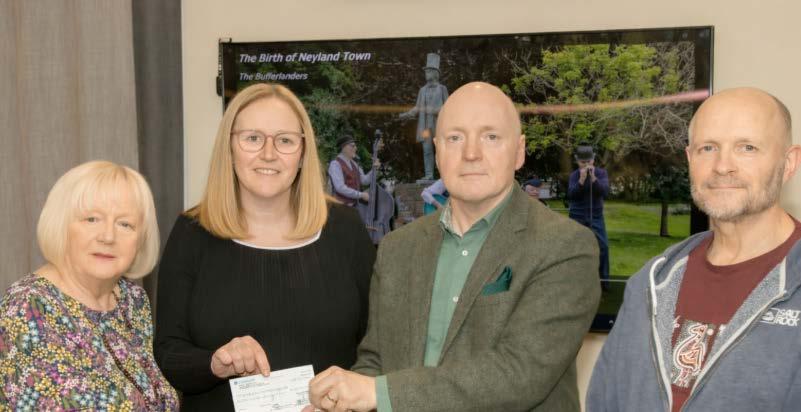
delighted to support the new Neyland Heritage Website, through our Staff Sponsorship programme, reflecting his valued involvement in the Neyland and Llanstadwell Heritage Group. We are proud to support initiatives that celebrate and preserve local heritage. This project reflects the strong sense of community in Neyland and Llanstadwell, and we are pleased to play a part in helping to
make local history more accessible to all, particularly younger generations.”
Dragon LNG plays an important role within the local community, supporting a range of initiatives and organisations across Pembrokeshire. Their support for the heritage website reflects a continued commitment to community engagement and the promotion of local identity.
The Neyland and Llanstadwell Heritage Group hopes the website will become a lasting resource for residents, visitors, and schools, while also encouraging wider participation from the community in recording and sharing its history.
The new website can be viewed at: https://www.neylandhistory.org.uk/

DRIVERS in Haverfordwest are facing weeks of disruption as a programme of resurfacing works hits key roads in and around the town.
Pembrokeshire County Council’s roadworks listings show temporary traffic lights on Haven Road and Portfield from Tuesday, April 22 to Tuesday, April 29 as resurfacing work is carried out. At the same time, motorists are already dealing with delays on Main Street, where temporary lights have been in place since March 25 because of a dangerous structure.
Tom Sinclair editor@herald.email
Town council information also shows High Street is due to close for two days from Saturday, April 25, adding to concerns about congestion in the town centre and disruption for shoppers, businesses and local traffic.
And the disruption is not expected to end there. Further resurfacing works are also planned at Merlins Hill, Winch Lane and St Thomas Green during the weeks that follow, meaning drivers could face a rolling
programme of delays into May.
The works form part of the council’s annual road maintenance programme and come after Pembrokeshire County Council said its newly approved 2026-27 budget would direct extra funding towards front-line services including road repairs, gully clearing and highway maintenance.
While many motorists will welcome smoother and safer road surfaces in the longer term, the timing is likely to frustrate residents and businesses already coping with traffic issues in Haverfordwest. With several schemes either under way or imminent, the
impact could be felt well beyond the roads directly affected as drivers look for alternative routes.
The overlap between resurfacing works and existing restrictions is likely to increase pressure on surrounding roads, particularly at busy times of day and as spring visitor numbers begin to rise. Businesses in the town centre may also be concerned that closures and delays could affect trade.
Motorists are being urged to allow extra time for journeys and to check for updated traffic information before travelling.
COUNCIL has urged Racecourse users to dispose of rubbish responsibly after repeated misuse of dog waste bins.
The council said it provides both general waste and dog waste facilities at the Upper and Lower Racecourse, as well as at most other green spaces it owns or maintains.
However, it has received ongoing reports — backed by photographic evidence — of general litter, including coffee cups and other rubbish, being placed in dog waste bins at Haverfordwest Racecourse.
Council officials say this misuse is causing the bins to become blocked and appear full when they are not. As a result, dog walkers are sometimes left
with no option but to place bagged dog waste beside the bins, creating what the council described as an avoidable and unpleasant environment for everyone.
The council said this was not acceptable and could easily be avoided.
Dog waste bins are intended for bagged dog waste only and should not be used for general litter.
The council is asking all users to avoid putting general rubbish in dog bins and instead either take litter home or use the appropriate general waste bins available elsewhere on the Racecourse.
The town clerk thanked the majority of responsible users for their cooperation and said their support helps keep the Racecourse clean and welcoming for everyone.
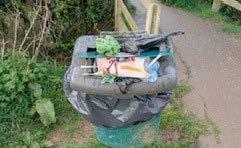

As I write this on Sunday evening, the end of this story could come after we go to press or before, but given the fact that Sir Keir has more lives than a back-street tabby, he is without doubt our worst prime minister, at least in my lifetime.
The latest kick in the teeth to the electorate is him making out he knew nothing of the damning vetting of his disgraced buddy Peter Mandelson on his journey to becoming ambassador to Washington.
When one considers this selfrighteous buffoon hounded Boris to resign on several occasions for misleading the House during Covid, he hangs on to power like his life
depends on it.
After sixteen U-turns, the latest sacrificial lamb is Sir “Oily” Robbins, chief civil servant to the Foreign Office. This wretched premier would throw his granny under the bus to save his skin.
As I write, he is making a statement in Parliament tomorrow and old “Oily” is being quizzed on Tuesday. I hope I have to edit this, but once again the folly of a landslide win for Labour, with their overwhelming numbers, will save him. I sincerely hope I’m wrong.
Phase two — well, it’s now Tuesday evening and yes, I was right. This fireproof PM went in front of the Commons and wriggled out
of it. The only victims came from two MPs on opposite sides of the political spectrum, namely, on the far right, Reform’s Lee Anderson, and from the far left, my party’s Zarah Sultana, who both quite rightly shouted out “Liar” to Sir Keir and were thrown out of the House and suspended with no pay for five days.
Then Oily Robbins appeared before the vetting board this morning (Tuesday) and said that Downing Street put pressure on him to let Mandelson off the hook for his past wrongdoings over Epstein and, despite red flags, allowed Mandelson to be appointed.
So, with Robbins losing his job
and Sultana and Anderson turfed out of Parliament, the real villain in the game is Sir Keir Pinocchio, who stumbled on to fight another day.
I now feature another “peace” quote from Trump as the laughable ceasefire deadline is imminent: “I will blow up every bridge and power point in Iran if they do not free up the Strait of Hormuz. No more Mr Nice Guy.” Very diplomatic, Mr President.
Meanwhile, Number 11 Downing Street, which has a flat upstairs, was allocated an obscene £30,000 for refurbishments and guess what — it totalled virtually £29,990 to include everything from luxury couches to a new toilet brush. This at a time when the hard-working taxpayer is seriously struggling with mortgages, rent, fuel bills, council tax, soaring food bills and out-of-control fuel prices for their mode of transport.
Is it any wonder that folk have had it up to the hilt with greedy politicians that just take the mick, for want of a better word?
And finally, a robot — yes, a robot — called Lightning has won the half marathon in Beijing in a time of 50 minutes and 26 seconds, faster than world record holder Jacob Kiplimo. Some 20 of these metal devils were given their own lanes to run in, and many were collapsing and, would you believe, being helped back up by mere mortals.
So let’s put all this into perspective. These latter-day Daleks are made by human beings, so how can the manufacturers claim that they beat humans? The world has indeed gone completely potty. The scary fact is people really believe all this tripe, that a man-made contraption can beat humankind whilst being made by a human.
We have a prime minister that is robotic, and that’s quite enough, thank you. It is only a matter of time now before AI and robots will be running our lives, and it serves us right!
MORE children in Pembrokeshire are learning to swim thanks to an expanding programme backed by Long Course Weekend and Princes gate water.
The 2026 Pembrokeshire Learn-toSwim Legacy Programme is set to reach 55 local schools this year, giving more than 1,000 pupils access to structured swimming lessons.
Organisers say the scheme is already making a clear difference. Last year, 62 per cent of Pembrokeshire pupils in Years three to six achieved the national swimming standard, which is 22 per cent above the national average. Among Year six pupils, 80 per cent reached the National Curriculum standard.
At one participating school, the swim pass rate reportedly rose from just 8 per cent to 80 per cent in a single year.
The programme was first launched by Long Course Weekend in 2022 after Swim Wales reported that up to 52 per cent of children leave primary school unable to swim.
Its aim is to improve access to lessons in schools, raise swimming standards, and ensure cost and opportunity are not barriers for children in communities around Long Course Weekend host towns.
This year’s programme will also include a new open-water initiative
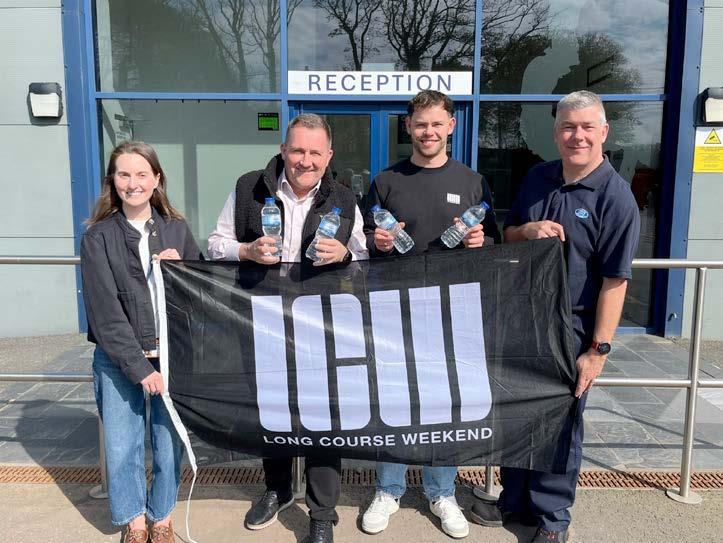
Tom Sinclair editor@herald.email
across South Wales, with planned sessions designed to help both children and adults build confidence in natural bodies of water.
Matthew Evans, CEO of Long Course Weekend, said: “Although each
host region shapes the Programme around its own needs, the purpose remains the same: to leave a long-term, positive legacy, ensuring accessibility and affordability are never obstacles to participation or progression.
“With the support of our partners such as Princes Gate water, our initiative is designed to help overcome barriers in sport and create opportunities not only
for children, but for people of all ages to participate in physical activities in a positive, supported environment.”
Princes Gate, which bottles its water at source near Narberth, has continued its support for the programme through its Pembrokeshire site.
Niall Bridge, Plant Manager of the Princes Gate bottling site, Nestlé Waters & Premium Beverages UK, said: “Being a water company, with our site based near the Pembrokeshire coast, it was a natural choice for us to support the Long Course Weekend Legacy Programme with its mission of improving the swimming ability across the region.
“We want to be a good neighbour in Pembrokeshire, where we bottle our Princes Gate water. We are proud to call this beautiful place home and share the same vision as LCW – to improve access, opportunity and wellbeing in our local communities.”
Long Course Weekend Wales, founded in 2010, has become one of Europe’s best-known multi-sport endurance festivals, bringing athletes from around the world to Tenby each year.Through its Legacy Programme, the event also aims to leave a lasting benefit in its host communities by directing funds into projects that help people learn to swim, cycle and run.
CARDIgAN distillery In the Welsh Wind is celebrating after its debut blended Welsh malt whisky, Brychan, struck gold at the World Whiskies Awards 2026.
The whisky was also named category and country winner for Best Welsh Blended Malt 2026, marking a major achievement for the west Wales distillery.
The award is significant not only for the company, but also for Welsh whisky more widely, with Brychan described as the first blend of single malt Welsh whiskies to come to market in Wales.
Produced near Cardigan on the Cambrian Coast, Brychan is a smallbatch release made from a carefully selected blend of Welsh single malt whiskies aged in bourbon, port and red wine casks. Just 10 casks were chosen for the launch.
Ellen Wakelam, co-founder and director of In the Welsh Wind, said: “We are delighted and immensely proud to have won these awards. For us, Brychan is the culmination of many years of dedication to whisky-making here in west Wales.
“To have our first blended malt recognised at this level and to be judged as gold award-winning standard
Tom Sinclair editor@herald.email
is incredibly exciting and rewarding for us as a craft distillery and for Welsh whisky as a whole. Brychan, however, is just the beginning.”
She said the aim when creating Brychan was to produce a distinctive blend that would be greater than the sum of its parts.
Made in collaboration with other Welsh distilleries, Brychan is the first in a planned series of blended Welsh malt whiskies from In the Welsh Wind.
Its character comes from a combination of bourbon casks, which add depth and warmth, port casks for richness, and red wine casks to bring a softer red-fruit note.
The distillery said the result is a whisky with complexity, balance and broad appeal, designed to suit both seasoned enthusiasts and those new to Welsh whisky.
In the Welsh Wind is planning to release two more blended Welsh malt whiskies later this year.
Brychan is priced at £45 and is available from the distillery’s online shop and at its distillery shop in Tanygroes.



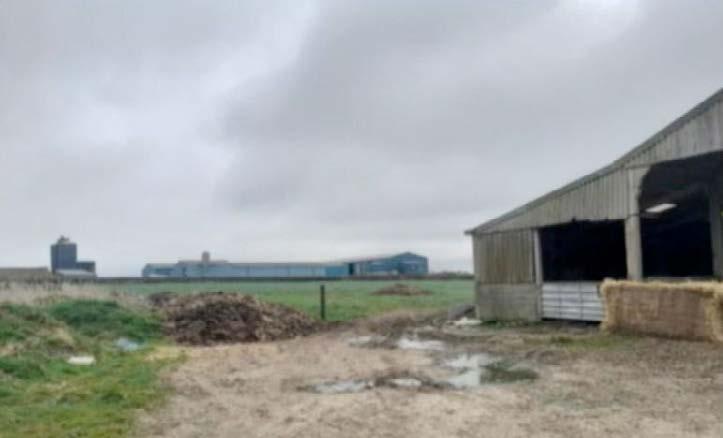
A CALL for a further time extension for the implementation of a waste recycling facility in north Pembrokeshire has been given the go-ahead by county planners.
In an application recommended for approval at the April 21 meeting of Pembrokeshire County Council’s planning committee, Llew Rees of Gamallt ready mix concrete, through agent SLR Consulting Ltd, sought an extension of time, for the development of the facility on land adjoining Clunderwen Depot, Nevern Road, Glanrhyd, some 4km from Cardigan.
The application followed two previous successful time extension calls for the 2007-approved material recovery facility.
An officer report recommended approval, subject to a lengthy string of conditions including the scheme be commenced within 12 months of the decision date and no more than 24,999 tonnes of material be accepted.
“This section 73 application is to extend the commencement time limit for the previously approved Materials Recovery Facility (MRF) therefore the principle of the development has been previously considered, although some time ago in relation to the original permission.
“Whilst this is a section 73 application, because the commencement period has passed (as of March 22, 2025), granting this application would essentially give another opportunity for the proposal to be implemented.
“A refusal would mean that a new full planning application would be required as there is no longer an extant planning permission at the site. Therefore, whilst the consideration of section 73 applications is limited to those specific matters applied for, section 73 applications also need to consider the acceptability of the
Bruce Sinclair Local Democracy Reporter
principle of the development as a new planning permission for the development would be issued, albeit with a one-year commencement of development timescale.”
It went on to say: “As confirmed in the original application, the Glanrhyd development is intended to focus on Construction and Demolition (C&D) waste, suitable for the production of recycled aggregate, which would then be complementary to the applicant’s wider quarrying interests, and waste recycling aligned to the farming community in terms of the recycling of wood (for use as sawdust for animal bedding), composting of green waste, and recycling of tyres, none of which are catered for in the immediate local area.
“There are similar facilities to this, further afield in Pembrokeshire, but these are mostly south of Glanrhyd in Haverfordwest, Withybush and Milford Haven. However, the applicant highlights that these are some distance from the location of the proposed development and so would not be sustainable in terms of managing these waste arisings in the North Pembrokeshire area.”
It added: “The facility will make a positive contribution to the sustainable management of waste in Pembrokeshire and will help to drive the percentage of recycling up for the county.”
Moving approval, local member Cllr John T Davies said: “This proposal has been around with the county council nearly as long I have,” adding the details in the extensive report for members and the one-year extension was “reasonable”.
The application was conditionally approved.
RISINg fuel costs and the demands of busy modern life are leading more Pembrokeshire households to rethink the way they shop for everyday essentials.
For many families, short trips into town for milk, bread, eggs or other basics can quickly add up in both time and money. In more rural parts of the county, where a car journey is often unavoidable, the cost of repeated trips is becoming an increasing concern.
Mathias Dairies, a long-established family-run business serving Pembrokeshire, says doorstep delivery is proving to be an increasingly practical alternative.
The company has been operating across the county for more than 37 years, delivering fresh milk and a growing range of everyday products direct to customers’ doors, often before the day begins.
What began as a traditional milk round has developed into a wider weekly delivery service. Alongside fresh milk, customers can order bread, eggs, butter, juices, cheeses and oat milk, as well as items including biscuits, compost and seasonal extras.
For households in outlying areas, the service can remove the need for repeated short journeys during the week, offering a simpler way to keep cupboards and fridges stocked with everyday basics.
Customers have praised the service for its reliability and convenience.
One customer said: “Never miss a delivery brilliant service.”

Another added: “We don’t have to keep running into town anymore for basics.”
A third described it as: “Proper oldschool service, but exactly what modern life needs.”
Mathias Dairies says its service is designed to fit around customers’ routines, with flexible ordering and no delivery charge.
At a time when fuel prices remain a concern for many households, the business believes doorstep delivery is no longer simply a nostalgic throwback, but a sensible and cost-effective option

for modern family life. By combining traditional service with a wider range of household essentials, the company continues to offer Pembrokeshire residents a reliable alternative to unnecessary travel.
To arrange a delivery, contact Mathias Dairies on 01437 731777 or email richardmathias@btconnect.com. The business can also be contacted through its Facebook page, Mathias Dairies – Pembrokeshire.

A MENTAL health nurse from Pembrokeshire has opened up about two life-changing calls to Samaritans, as she prepares to take on a 26-mile challenge across the Preseli Hills to raise funds for the charity.
Her first encounter with the Samaritans came in 2013, when she was struggling with postnatal depression. At the time, she said she desperately needed someone to talk to.
“I just needed someone to listen while I cried about how hard everything felt,” she recalled. “The response was lovely – non-judgemental, warm and caring.”
Though it was a one-off phone call, the experience stayed with her, made all the more memorable by the unexpected discovery that the volunteer she spoke to was based in her own local town.
Years passed before she reached out again. But in October 2025, during what she describes as one of the most overwhelming periods of her life, she found herself turning back to the charity.
“My whole world felt like it was crashing down,” she said. “I was exhausted, and my thoughts didn’t feel like my own anymore. I knew what I was going through was temporary, but my mind was offering permanent solutions.”
At a breaking point, she made the call.
Her plea for help was answered by a volunteer named Tony, whose calm presence proved pivotal. “He could
hear the panic and fear in my voice and stayed with me while I got myself to a safe place,” she said.
The call was unexpectedly cut short when the signal dropped out as she made her way back to her car— but the impact lingered.
“That moment changed everything,” she said. “It was a turning point. It gave me the courage to open up to my friends and my employer about what I was going through.”
As a mental health professional, she admits that asking for help did not come easily.
“I’m a very private person, and working as a mental health nurse can sometimes make it harder to reach out through traditional avenues,” she explained. “But even for those of us in the profession, there are times when we need somewhere to turn.”
Now, with time and distance from that difficult period, she feels ready to share her story publicly in the hope of helping others.
To give back, she is planning a 26-mile sponsored walk across the Preseli Hills, retracing a deeply personal route. The walk will take in Carningli – a place where she once felt “on top of the world”—and Rosebush, where the pivotal phone call took place.
“Walking has become incredibly cathartic for me,” she said. “Spending time in the Preselis has helped me process so many thoughts and feelings. It’s brought a real sense of peace.”
While she acknowledges the emotional challenge of revisiting
those locations, she feels stronger now.
“I have a support network and a life I’ve been able to rebuild – thanks, in part, to that one phone call.”
The Samaritans, which operates a 24-hour helpline, responds to a call for help every 10 seconds. The
service is free and available yearround, offering confidential, nonjudgemental support to anyone in need.
Through her fundraising effort, she hopes to raise awareness as well as vital funds – while reminding others that help is always within reach.
A CALL to change Pembrokeshire farmland to a garden and wildflower meadow has been given the goahead despite it falling under a condition restricting the loss of such agricultural land.
In an application recommended for approval at the April 21 meeting of Pembrokeshire County Council’s planning committee, Peter Jones sought permission for a change of use from agricultural land to garden, vegetable growing area and wildflower meadow/grove at Old Furzton Cottage, Maidenwells, near Pembroke.
The application was before committee members rather than being decided by officers under delegated powers as it was contrary to a policy of the development plan but was being recommended for approval.
An officer report for committee members said: “The proposal is for the change of use of the land to enable the agricultural field to be used for domestic
purposes in conjunction with the dwelling known as Old Furzton Cottage. The land subject to this application is located outside of the curtilage of Old Furzton Cottage.
“Justification has been provided with the application to explain that the occupiers of the dwelling have a desire for a larger garden area to provide additional space for growing of fruit, salad and vegetables, tree planting and wildflower planting.”
One potential sticking point was the proposed site, some 0.4ha of land, falling into a Grade 3a agricultural land classification, defined as Best and Most Versatile (BMV) land, which has tight planning controls against its potential loss.
The report added: “The use of the land at present is for agricultural purposes including making of hay and

grazing of livestock, as such the land is underused for agricultural purposes. The development subject to this application would enable some agricultural use to continue, with the production of food from the site.
“Further to this there would be a net benefit to green infrastructure and biodiversity on the site. For these reasons there is justification for the small loss of BMV land.”
At the meeting, committee chair Cllr Mark Carter read out a submission form the applicant, who was unable to attend
the meeting, saying the land had been purchased from Pembrokeshire County Council with the intention of creating a low-intensity and environmentally sustainable form of development.
Local member Cllr Steve Alderman said his first concern had been the loss of the BMV land, but pointed out the proposal would offer “massive biodiversity increases,” moving approval.
Members unanimously backed approval of the scheme.
TWELVE golfers are preparing to test their endurance in an extraordinary charity challenge at Rosemarket golf Club on June 19.
The group will attempt to complete the club’s 18-hole course not once, but four times in a single day – a feat expected to take more than 17 hours. Play is set to begin at 4am, with participants walking the entire distance, as buggies are not permitted.
Organisers describe the challenge as both “brave” and “foolhardy,” with three teams of four competing throughout the day.
Teams taking part include:
Red Team: Patrick “Captain” Bellerby, Jeremy Evans, Luke Young, Alex Young
Blue Team: Damian Haworth, Paul Hayler, John Rees, Alex James Green Team: Neil Hainsworth, Marc Edwards, Andrew “Garbo” Ramage, Chris Bourne
Alongside the physical challenge, the event will feature friendly competition between the teams, with support from club members helping to keep players fed and hydrated during the marathon effort.
The fundraiser aims to support the Paul Sartori Foundation, a charity dedicated to providing end-of-life care services across Pembrokeshire.

Founded in May 1981, the organisation was established by parishioners of Father Paul Sartori, a widely respected local priest who died of cancer at the age of 38. Inspired by his vision for hospice care in the region, the foundation continues to deliver services to the community
regardless of religious affiliation, with a mission to provide sustainable and compassionate end-of-life care.
Participants are encouraging donations from the public to support the cause, with all contributions going towards maintaining and expanding vital
hospice services in the county.
As the golfers prepare for what promises to be a gruelling day on the fairways, organisers hope the challenge will not only raise funds but also awareness of the essential work carried out by the foundation.
A RETROSPECTIVE call for works associated with the new Loungers beachfront venue in Tenby has been given the go-ahead.
In an application approved by Pembrokeshire Coast National Park, Loungers UK Limited, through agent Richard Pedlar Architects, sought retrospective permission for new fascia signage, a new wall-mount menu board and a free-standing menu board at the new Loungers based at the former Salty’s Beach Bar and Restaurant, Battery Road.
Back in January, UK-wide hospitality company Loungers plc announced it was planning to open a new beachfront Lansio Lounge at Tenby’s South Beach, with the promise of 30 jobs created, on March 25.
Lansio Lounge is based at the former Salty’s Beach Bar and Restaurant on Water’s Edge, South Beach.
The announcement for the Loungers plans for the former Salty’s Beach Bar and Restaurant were revealed shortly after the application to Pembrokeshire Coast National Park for Loungers signage at Salty’s.
Family-run venue Salty’s Beach Bar and Restaurant announced its closure on social media, confirming that Sunday, January 4 was its final day of trading.
An officer report recommending approval for the signage said the call for the retrospective installation and associated works “has attracted numerous third-
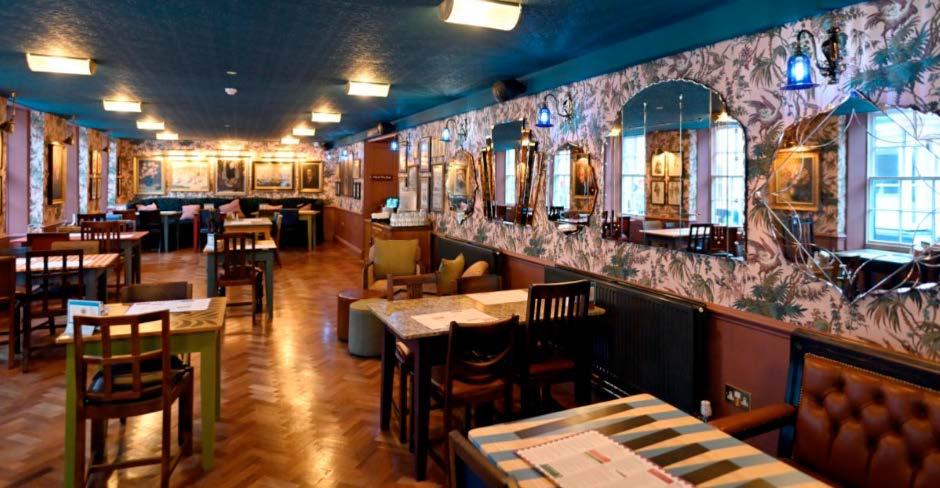
Bruce Sinclair Local Democracy Reporter
party representations, primarily raising concerns in relation to potential light pollution and the colour treatment of the existing windows and doors”. It went on to say consultation
responses from relevant statutory consultees “confirm that the proposed halo illumination is acceptable and would not give rise to unacceptable levels of light pollution, nor would it adversely affect nearby designated sites or sensitive landscapes,” adding: “A planning condition has been attached,
requiring the submission and approval of revised details to secure a more neutral colour finish for the external joinery and menu boards, to ensure an appropriate visual appearance in the context of the surrounding area.”
The application was conditionally approved by Park planners.
CELLIST Seren Barrett has been named Young Musician of Dyfed 2026 after winning the final at Rhosygilwen.
The talented young performer secured the title with what organisers described as a sumptuous programme featuring works by Squire, Rachmaninov and Saint-Saëns.
The announcement was made by St Davids Cathedral Festival at Rhosygilwen, which praised Seren’s winning performance and confirmed she will now appear at this year’s Cathedral Music Festival.
As part of her prize, Seren will give the winner’s recital on Tuesday (May
26) at 11:00am.
The recital will take place during the St Davids Cathedral Festival and is expected to give audiences another chance to hear the young musician following her success in the competition final.
The Young Musician of Dyfed title is regarded as an important platform for emerging talent in west Wales, showcasing some of the area’s most promising performers in front of festival audiences and supporters of classical music.
Tickets for Seren’s winner’s recital are available through the festival.
YSgOL Penrhyn Dewi headteacher Rachael Thomas read the first lesson at a special service in St Davids Cathedral as past and present choristers gathered to celebrate a tradition that began in dramatic circumstances in 1966
ST DAVIDS CATHEDRAL celebrated sixty years of girl choristers on Sunday (Apr 19) with a special choral evensong honouring the schoolgirls who first stepped in when the choir faced a crisis.
The service marked six decades since girls from Ysgol Dewi Sant, now Ysgol Penrhyn Dewi, were called on to help save a BBC Radio 3 broadcast after a shortage of boy choristers left the cathedral choir in difficulty.
In a proud moment for the school, headteacher Rachael Thomas was invited to read the first lesson during the anniversary service, which brought together past and present choristers in the cathedral where the tradition began.
Ysgol Penrhyn Dewi said afterwards that it had been a proud evening for the school, recognising the bond between the cathedral choir and the school dating back to the spring of 1966.
Material produced for the service explains how Peter Boorman, who had arrived at St Davids Cathedral in late 1953 with a strong musical reputation, had been struggling to recruit enough boy choristers in the years leading up to the landmark change.
The problem came to a head ahead of a BBC Radio 3 broadcast of choral evensong on Wednesday, April 20, 1966. At the time, measles had swept through primary schools in St Davids and several boy choristers were unable to sing. By the day of the broadcast, no boys were present at rehearsal, leaving the choir in serious difficulty.
Fearing that there would be no treble line ready, Boorman turned to the girls’ choir of Ysgol Dewi Sant, led by music teacher Rosalyn Charles. With the agreement of Dean Edward Jenkins, the Chapter and headmaster David James, the girls were excused from lessons and brought in to perform.
The schoolgirls rehearsed the

the quality of their singing, a chapter meeting held on Monday, July 25, 1966 decided that the girls should become full choristers.
required music at speed and, despite the unfamiliar demands of psalm singing, the emergency plan proved a success.
A handwritten note in the Chapter Service Book for that day recorded the moment in stark terms: “boys did not arrive – used 6 girls from Ysgol Dewi Sant.”
What began as a one-off solution quickly became something much bigger.
According to the historical account shared at the service, Dean Jenkins initially agreed to allow the girls to sing with the choir only as an isolated occasion. However, after hearing
The minutes of that meeting recorded: “approval to girls in choir – separate vestry – clothing left to Dean.”
That decision laid the foundation for a tradition which has continued ever since, with generations of girls singing in the cathedral choir over the past sixty years.
Sunday’s celebration recognised not only that original moment of necessity, but the lasting musical contribution made by the school and by the many choristers who followed.
The service booklet described the anniversary as a celebration of “the
generations of girl choristers both past and present” and said the cathedral’s choral foundation continues to ensure that “the joy of singing can be experienced by choristers to come.”
The first lesson, read by Mrs Thomas, included the words from Haggai: “Take courage… work, for I am with you, says the Lord” – a fitting theme for an occasion rooted in courage, quick thinking and musical dedication.
For Ysgol Penrhyn Dewi, the anniversary was a reminder of a remarkable chapter in the school’s history – and of the day six girls helped change cathedral music in St Davids for good.
A NEW dog-powered sport is coming to Milford Haven, giving local people and their pets a fresh way to get active together.
Dog trainer Tamsin Mathias, founder of Welsh Underdogs Canicross and Welsh Underdogs Dog Training, has introduced certified DogFit canicross classes to the area after qualifying as an instructor.
Canicross is a growing sport in which runners are attached to their dogs by a harness and bungee line, allowing the dog to run ahead and help create shared momentum. The sport combines cross-country running with dog handling and is becoming increasingly popular among owners looking for a more active partnership with their pets.
Ms Mathias said she was proud to bring DogFit training to Milford Haven.
She said: “I’m incredibly proud to be bringing DogFit training to the Milford Haven area.
“Canicross is such an empowering sport. It builds confidence in both dogs and handlers, improves fitness, and creates a real sense of partnership.
“I’m excited to help more people get started safely and enjoy it as much as I do.
“I’m also excited to be representing DogFit through Welsh Underdogs.
Tom Sinclair editor@herald.email
They’re a fantastic UK-based company, and I’m excited to be working with them to help make canicross accessible to more people.”
Her new qualification means she can now offer structured canicross classes as well as one-to-one sessions, with the nearest certified training previously based near Cardiff.
Ms Mathias already holds professional qualifications with the Institute of Modern Dog Trainers and the Dog Training College. She runs with her spaniel-beagle cross Toby and has experience competing in events including Canix Fur Nations and Red Warrior.
She will be offering DogFit’s Couch to 5K canicross courses, helping dog owners of all abilities to get involved through group classes and personalised coaching. Training will also include guidance on equipment, running technique and dog fitness.
As a certified dog trainer, Ms Mathias said dog welfare and ethical training methods remain central to her work.
She said: “Toby is a very highenergy breed, and even though we do
ST MARY’S CHURCH in Pembroke will hold a special service on Sunday (May 10) at 3:00pm to bless its newly restored bells and three new bells added as part of the project.
The service is expected to be a significant occasion for the church and the town, with refreshments available before and after, along with plenty of bell ringing to mark the celebration. Photographs showing the restoration work will also be on display.
The event will also reflect the longstanding link between the town’s mayors and St Mary’s bells.
Former Mayor of Pembroke, Councillor Dennis Evans, famously
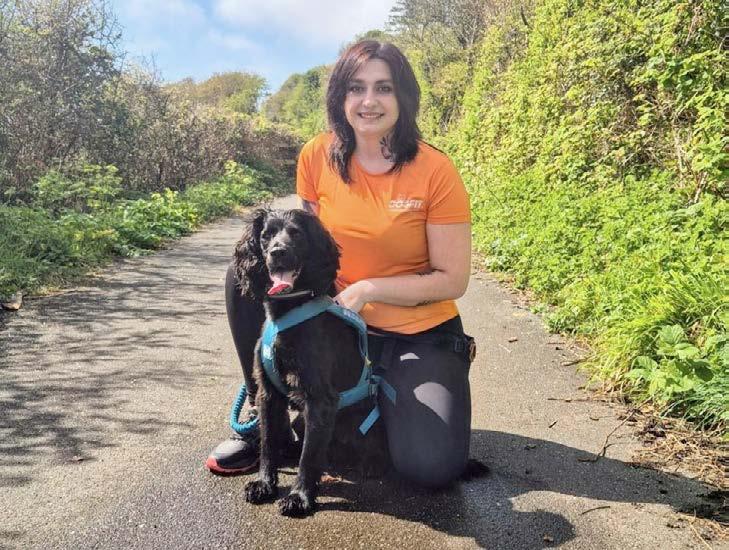
agility, I felt that he needed a job to do.
“Canicross has become his job, and our bond has strengthened as a result.
“I’ve also introduced my nervous collie to the sport, and he is coming on in leaps and bounds.”
Canicross is said to offer physical and mental benefits for both dogs and
owners, while also helping improve behaviour and providing access to a supportive outdoor community.
Details of upcoming classes and training sessions are available through the Welsh Underdogs Canicross website and Welsh Underdogs Dog Training social media pages.
climbed the church’s narrow tower steps in full regalia to inspect the bells during his term of office.
Organisers say it is fitting that Pembroke’s new Mayor, Cllr Jonathan Grimes, County Councillor for Pembroke St Mary South and Monkton, will take part in the service at the beginning of his mayoral year.
The celebration is expected to draw local residents, church supporters and those with an interest in Pembroke’s history, as St Mary’s marks the completion of a project that has preserved an important part of the town’s heritage.


THE WILDLIFE TRUST OF SOUTH AND WEST WALES has announced a record-breaking year for puffins on Skomer Island, with 52,019 birds counted during this year’s survey.
The new figure smashes the previous record of 43,626, which was set in 2025, and marks another major boost for one of Pembrokeshire’s most important wildlife sites.
Skomer, off the Pembrokeshire coast, is internationally recognised for its seabird colonies. Each spring, staff from the Wildlife Trust of South and West Wales carry out the annual puffin count to monitor the breeding population returning to the island.
Leighton Newman, Skomer Island Warden for the trust, said: “After the tragic number of seabirds washing up on beaches across southern Europe earlier this year, we weren’t expecting a count this high this season. It’s a very pleasant surprise to see the puffin population thriving.”
Counting puffins may sound straightforward, but with more than 50,000 birds involved it is a demanding task. Each spring, the Skomer team heads out on a calm, clear evening armed with binoculars and notepads to count every puffin on land, at sea and in the air.
The island is divided into seven sections, with wardens working carefully against the light and the weather to ensure no area is missed. Timing is crucial. If the count is carried
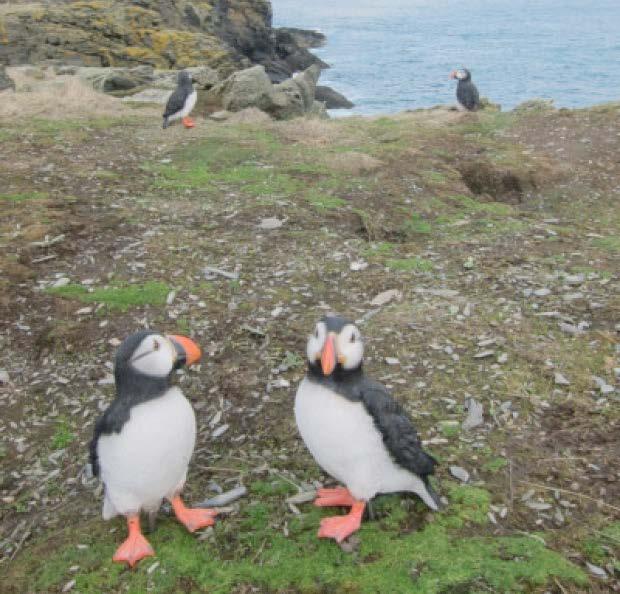
out too early, many birds may not yet have returned. Too late, and many will already be tucked away in burrows incubating eggs.
The trust said the same counting method has been used since the 1980s, allowing more than four decades of puffin population data to be compared consistently.
Monitoring on Skomer goes far beyond puffins. Every summer, the team also carries out boat-based surveys of guillemots, razorbills, kittiwakes and fulmars breeding on the island’s cliffs. Volunteers and researchers also help monitor manx shearwaters, reptiles, marine mammals and the island’s unique Skomer vole.
The trust said long-term monitoring is vital for understanding how seabird populations are changing and for spotting problems early.
Seabirds face a growing number of threats, both at sea and on land, including pollution, invasive predators, avian influenza and offshore renewable development. Globally, seabirds are among the fastest-declining bird groups.
Mr Newman added: “Puffin numbers are declining at many sites around the UK, but Skomer bucks the trend – and it’s thanks to long-term monitoring work that we know this. It’s special that Skomer is a refuge for so many seabirds and it’s a privilege to be able to work to protect them, but we want to see seabird populations
The trust believes the rise in puffin numbers on Skomer is likely linked to good food availability in the wider area, providing plenty of fish for chicks and helping deliver strong breeding success. Good adult survival over winter, along with the absence of rats and other predators on the island, is also thought to have played an important part.
The annual counts are submitted to
a national dataset used by decisionmakers to help shape seabird conservation strategies in the UK and beyond. The data is also made available to academics to support further research.
This year, the charity is urging wildlife lovers to back its Big Give appeal, which runs from April 22 to April 29, with a target of raising £40,000 to support vital seabird monitoring work on Skomer.

HYWEL DDA Health Charities, the official charity of Hywel Dda University Health Board, is calling on local communities to help them provide comfort and support to families who have lost a child.
The charity is running a campaign this spring to highlight its Wish Fund which provides support to families during times of bereavement.
The Wish Fund supports Hywel Dda’s Paediatric Palliative Care team to provide personalised support to families of children and young people receiving palliative care, and helps them create treasured memories when their child sadly passes away. From hand moulds and fingerprint jewellery to memory boxes and specialist sibling support, the fund ensures bereaved families are not alone during the most devastating moments of their lives.
Frankie’s parents Phil and Veronica shared how the Wish Fund helped them during their darkest days:
“We had the absolute pleasure of looking after the most beautiful, awesome, wonderful, loving and brave little lad who was very poorly in the last years of his life.
“We met his Paediatric Palliative Care team two years before his passing and boy what an awesome team they are.
“We will never be able to thank the Wish Fund enough. Thanks to the Wish Fund, we had the most amazing mementos, a Christmas bauble, a necklace with Frankie’s fingerprint on it and a mould of his hand. Those simple objects are our most treasured possessions along with a lock of his beautiful hair.”

The Wish Fund relies on charitable donations, and every contribution can have a lasting impact:
• £15 provides a teddy for a bereaved sibling
• £30 funds a sibling support session
• £50 creates a hand mould keepsake
• £70 provides a Memory Box
• £85 funds bespoke hand-printed jewellery
These meaningful items offer comfort to parents, carers and siblings who are navigating unimaginable loss.
Rebecca McDonald, Clinical Nurse Specialist – Paediatric Palliative Care, said: “I want to extend my heartfelt thanks to everyone who has donated and continues to donate to the Wish Fund.
“Thanks to your kindness and generosity, we have been able to provide meaningful memorymaking items and bereavement materials. These resources make an
immeasurable difference in helping us support our families through the most difficult time.
“Your compassion and support truly help us bring comfort, dignity, and lasting memories to the families we care for. Thank you for your support in helping us make a big difference to families we support across our health board.”
To find out more or to donate to the Wish Fund, please visit: https:// hywelddahealthcharities.nhs.wales/ campaigns/the-wish-fund/

TWO years ago, seven-piece band Hejira performed a magical show to a packed-out audience at Mwldan in Cardigan.
On May 1, the venue is excited to welcome them back for another spine-
tingling show that truly captures the poetry, passion and beauty of Joni Mitchell’s masterpieces. Since their formation in 2022, the band has been a tremendous success, with sold out shows, standing
ovations, over 1,500,000 views on their YouTube channel and more than 1,500 enthusiastic comments and audience reviews.
Hejira is a project that has rapidly blossomed from an initial ‘one-off gig’
into a highly successful touring band, set up to celebrate the music of Joni Mitchell.
In particular, the band performs the masterpiece works that Mitchell captured on her albums, ‘Court and Spark’ through to ‘Wild Things Run Fast’. Hejira comprises seven highly experienced, world-class musicians whose primary concern is to serve the music.
Within three years, Hejira have clocked up more than 130 shows, including many prestigious venues and festivals; they will be performing 40-50 shows in 2026 including theatres and festivals in America this July.
Tickets are priced at £23 and are available now from www.mwldan.co.uk (24/7) or by phoning their box office between 12 – 8pm Tue – Sun 01239 621 200.
A HIgH-ENERgY family wrestling show is set to bring thrills, spills and plenty of crowd-pleasing action to Milford Haven next month.
From Trecco Bay to Baglan, and from Cwmbran to Milford Haven, the Superstars of Welsh Wrestling are back on the road and preparing to rumble once again.
The popular live entertainment show will arrive at the Torch Theatre for a onenight extravaganza on Sunday, May 17, promising body slams, larger-than-life characters and fast-paced action for all ages.
Since being established in 2005, Welsh Wrestling has built a reputation as the leading wrestling promotion in Wales, staging shows in theatres and venues across the country. Each year, the company performs in front of thousands of fans, offering an actionpacked night out aimed at families and wrestling supporters alike.
Audience members can expect an afternoon of glamour, chaos and athletic spectacle, with organisers promising a memorable experience that will have children and adults alike cheering on their favourite stars.
Welsh Wrestling has received glowing praise from fans on its Facebook page, with one audience member saying: “What a fantastic night. My two grandsons loved every minute of the show. A great show designed with families in mind. I will highly recommend

this to all friends and family. Thanks for a great evening!”
The Superstars of Welsh Wrestling
will appear live at the Torch Theatre, Milford Haven, on Sunday, May 17 at 4:00pm.
Tickets cost £15 for adults and £12
THE TORCH THEATRE in Milford Haven is inviting audiences to celebrate one of the biggest acts of the 1980s with a night of unforgettable hits and nostalgia.
Taking fans on a journey back in time, Yourythmics brings the music of Eurythmics to life with favourites including Love is a Stranger, Here Comes the Rain Again, Would I Lie to You?, Right by Your Side and, of course, the chart-topping Sweet Dreams (Are Made of This).
Yourythmics promises the ultimate full-band tribute to the legendary duo, combining energetic musicianship, striking costumes and plenty of audience participation. Leading the show is Stacy Green as Annie Lennox.
Stacy has already earned recognition as the UK’s number one Annie Lennox tribute and lookalike, an honour awarded by the National Agents Association. She has also been recognised by Annie Lennox herself.
The production promises an evening of singing, dancing and classic songs that are sure to have audiences on their feet and joining in.
Yourythmics comes to the Torch

Theatre on Saturday, June 20 at 7:30pm.





NOT that long ago, the UK had a PM who, to put it mildly, had problems with the truth.
Boris Johnson’s inability to lie straight in bed eventually caused the collapse of his government and his eviction from Number 10 Downing Street.
Leading the charge to oust Mr Johnson was a knight on a very high horse. His name was Sir Keir Starmer. He pilloried the PM for his failings, both political and personal. People were invited to draw a comparison between the shifty, shambolic Johnson and the boring, apparently organised Starmer and then to conclude that one was a chancer and the other a model of recondite public service.
Do you remember those far-off days, readers?
Keir Starmer wishes you didn’t.
That’s the problem with presenting oneself as a paragon of sound judgment, honesty, and integrity. When things go pear-shaped, and your personal conduct is in question, people are entitled to draw attention to the stench of hypocrisy issuing from your flaming under crackers.
It turns out that the 2024 General Election campaign, during which Labour was only too keen to play up to the idea that they would be competent, boring, and grown-up, compared with the riotous and ungovernable Conservative Party, was about as good as it got for Starmer’s reputation for calm competence. Since the election, he and his parliamentary colleagues, who have a massive majority in the House of Commons, show every sign of being battered by events, easily distracted from their goals, and unable to formulate a single policy without falling into a bear trap of their own making.
With the size of Labour’s majority, it could do almost whatever the hell it wanted in government. Instead, it has done little or nothing of consequence. So weak is the Cabinet’s grip on power, and so committed to crawling up the collective bottoms of fractious special interest groups, that the government

has fannied around in shallow waters (such as the Supreme Court decision on the ECHR guidance that found that a woman was, in fact, a biological woman born female) without doing anything of note.
The agonies suffered by Labour in governmnet have been almost entirely self-inflicted. In case you’d forgotten, readers, the last Conservative government dealt with a global pandemic and the consequences of Russia’s war on Ukraine. Since June 2024, Labour has had a comparatively easy ride, right up until America began bombing Iran this March. Such alarums and excursions that have occurred in foreign affairs have not required much direct input from the UK’s armed forces.
The core problem for Sir Keir Starmer is simple: he believes in government as a process but has a limited understanding of how people think and react outside a very narrow circle of advisors and political tagalongs. His desperate attempts to paint himself as a working-class hero, emerging from the mean streets of Oxted, who suffered the privations of poverty while studying (thanks to a bursary) at Reigate Grammar School, and who attended the Guildhall School of Music and Drama on a scholarship until age 18. He attended Oxford University as an undergraduate and a postgraduate, and was called to the Bar in 1987. Like all impoverished working-class heroes, he got married at an exclusive wedding venue on a private estate.
Yes, readers, the stench of boiling the chicken carcass you had for the Sunday roast, with leftover veg to make soup for Monday, lingers on Starmer’s bespoke-tailored suits like a fart in a freezer.
As recent events have demonstrated, however, it’s not all bad news for Keir Starmer. If ignorance is truly bliss, he must be the happiest man in Westminster. And that must count for something.
Lord Mandelson applied for the post but needed political backing to get it.
Who, readers, could give that backing other than the PM? It doesn’t take a great deal of imagination to imagine Sir Keir Starmer’s studied outrage had a Conservative PM acted so fecklessly and incuriously over a key - if not, THE key - UK diplomatic appointment.
You have to wonder whether the PM knew of Mandelson’s deeply unfortunate personal connections to the Chinese government and Jeffrey Epstein, and if he didn’t, whether he is functionally illiterate. The alternative is that he chose not to be aware of the obvious issues an appointment of this kind entailed.
As a lawyer, a KC, no less, Sir Keir must know that dishonesty does not require active participation by a party to it - it merely requires a party to turn a blind eye when committing an act in furtherance of the scheme’s aim. When he appointed Peter Mandelson as the UK’s ambassador to the USA, the PM claimed he did not know the content of the vetting process that his erstwhile colleague had failed.
That is horseshit on stilts.
There is no world in which Keir Starmer is an illiterate dupe who knew nothing of Lord Mandelson’s widely reported and highly problematic business and personal relationships. We should also note that the thenCabinet Secretary, Simon Case, warned Starmer about the risks of making a political appointment to the US ambassadorship. Moreover, and he picks his words carefully, Badger would appreciate a logical explanation for how Lord Mandelson’s appointment was announced to the press a week before the security vetting process was completed.
The Prime Minister has lost all the moral authority he once pretended to have.
In medieval and early modern England, revolts against the Crown were often couched as complaints about the king’s reliance on bad advice from those he trusted. That didn’t stop several kings coming to sticky and bloody ends. In this instance, the PM chose his political advisors; he

appointed them. Their failure is his failure, their failings are his failings.
If we accept the government’s attempt to dismiss this as nothing more than a failure by officials, we are left with one conclusion: that Keir Starmer outsourced responsibility and took a back seat in his own government over an appointment he personally approved.
It’s a pattern we, in Wales, are familiar with, readers.
It’s apparently the Labour way of doing things: it doesn’t matter whether you win or lose, but where you place the blame.
A plastic doll may as well be PM in those circumstances.
We studied it in school, some of us may have re-opened its pages as adults and a few of us might even have been fortunate to see what’s hailed as Dylan Thomas’s greatest masterpiece – ‘Under Milk Wood’ –performed on stage.
I fall into all three categories, but never have I been made so aware of Thomas’s sheer literary magnitude as I was during Theatr Clwyd’s production of ‘Under Milk Wood’, currently showing at The Torch Theatre, Milford Haven.
The cast’s command over this mighty work becomes manifest within minutes of curtain-up thanks to some exquisite stage definition and a magnificent yet unadorned script delivery. This, after all, is a poem where rhythm and precise diction are essential.
With each character dressed in white, characterised solely by a specific clothing item or prop, it was initially difficult to work out who was who. But then ‘Under Milk Wood’ was first aired in 1954 for radio, where the spoken word was the audience’s sole pilot. Throughout Theatr Clwyd’s production, I was constantly reminded of just how strongly the Llarregyb community – I’m deliberately spelling it this way to match Theatr Clwyd’s laudable captioning –unites. So much happens during those intertwining 24 hours when everyone is interconnected in so many different ways. And Theatr Clwyd makes one realise just how canny Thomas was in his social observations of the busy lives that bustled around him. The play takes its inspiration from so many segments of the poet’s life, be it his childhood letters, his adolescent poems and the time he spent at his waterside homes in New Quay, Ceredigion, and Laugharne. The friendships and the social understanding that existed between the people of Llarregyb was intense but Thomas’ writing also depicts an honesty so indicative of post-war society. How many houseproud women would echo the words of the controlling Mrs Ogmore-Pritchard – she who’s already nagged two husbands to death – as she caws ‘Before you let the sun in, mind he wipes his shoes’?
In many ways the play typifies ‘Under Milk Wood’s’ ‘clock without hands’ as it presents a solid and changeless society, with many traits remaining just as strong in 2026. How many of us know a Nogood Boyo (Jacob Coleman) who flirts shamelessly with that deliciously naughty sparkle in his eyes, an uptight Mrs Ogmore-Pritchard (Georgia Griffiths) who hates people breathing over her immaculate home and maybe even an Evans the Death (Macsen McKay) who loves his job just that little bit too much.
Theatr Clwyd has to be commended for some creative staging set against

Sarah Jane Absalom sarah.jane.absalom@herald.email
Llarregyb’s piled up, box-like houses, their windows illuminated by nightlights, capturing the dreamlike, often dark nature, of Llarregyb’s bible blackness. Lighting, in many ways, is used to exemplify Thomas’ narrative as well as the relationship between darkness and light – good and evil – that’s found within the town.
The choreography is also exquisite, each character moving as one, with the result that the movement becomes an integral part of the production’s strength. Not once did I feel this movement overpower the words, but rather support it and magnify the poem even more.
Initially I felt that being able to see the script printed on the backdrop would be a detraction from what was going on on stage. But how wrong can one be? Seeing the text helped me appreciate the way in which Dylan Thomas was able to metamorphose his words into such an overwhelming power force but is also reinforces them as we watch the actors on stage.
Under Milk Wood also uses integrated BSL with signing, audio description (which doesn’t require headsets), and captioning, all built into the design of the show. This, incidentally, doesn’t detract one iota from the performance’s strength.
The play has over 60 characters, played by a cast of 11. And despite their considerable task, the actors capture the intimacy of this tightly-knit community so well. This particularly comes to the fore with Jacob Coleman’s Organ Morgan and Sean Carlsen’s portrayal of the Reverend Eli Jenkins
who captures the Welsh passion and musicality so beautifully. “Praise the Lord! We are a musical nation.”
Mirain Fflur oozes sexiness with her stunning looks and her slightly revealing costume, speaking in a seductive manner as she delivers Rosie Probert’s immortal words ‘Come on up, boys. I’m dead’.
Talking of voices, I was immediately struck by Georgia Griffiths’ dulcet tones as she plays Polly Garter and Mrs Ogmore-Pritchard. But when Griffiths breaks into song, her vocal quality takes on a completely new level. Truly beautiful.
Also wonderful to watch is Macsen McKay as he flits through no fewer than five characters – the local undertaker
Evans the Death; the town’s draper Mog Edwards who’s hopelessly in love with Miss Price in the sweet shop; Mr Pritchard who is one of Mrs O-P’s two long dead husbands; the would-be wife murderer Mr Pugh and finally the sadly troubled Lord Cut-Glass, for whom darkness always lurks on the horizon. McKay gives us five outstandingly quirky individuals, each displaying some fabulous facial expressions and a sizeable helping of humour.
In a nutshell, this is a truly magnificent performance that captures every essence of Dylan Thomas’ legacy.
‘Under Milk Wood’ will be showing at The Torch Theatre, Milford Haven, from Tuesday April 21 to Friday, April 25.









Saros is a striking and atmospheric experience that leans heavily into mood, mystery, and player interpretation rather than straightforward storytelling, and that choice ultimately defines both its strengths and its limitations. From the moment you begin, the game establishes a haunting tone through its visual design, blending stark environments with subtle, almost surreal details that make every area feel deliberate and quietly unsettling. The world doesn’t overwhelm you with exposition; instead, it invites you to observe, to question, and to piece together meaning from fragments, which can be deeply engaging if you enjoy slow-burn narratives that reward patience and curiosity.
Mechanically, Saros tends to favor deliberate pacing over fast action, encouraging exploration and careful interaction rather than reflex-driven gameplay. This works well in building tension, as even small discoveries feel significant, but it can occasionally feel sluggish for players expecting a more dynamic or
varied gameplay loop. The controls are generally intuitive, though at times they can feel slightly unrefined, especially in moments that demand precision.
Still, these minor frustrations rarely overshadow the overall experience, as the game’s design clearly prioritizes immersion over mechanical complexity.
One of the most compelling aspects of Saros is its audio design. The soundscape is used masterfully, with ambient noise, subtle musical cues, and long stretches of near-silence combining to create an everpresent sense of unease. It’s the kind of game where you find yourself listening as much as you’re looking, and that balance adds a layer of psychological depth that many games struggle to achieve. The music, when it does appear, feels purposeful rather than constant, reinforcing key moments instead of filling space.
Narratively, Saros is intentionally ambiguous. It doesn’t hand you clear answers, and that can be either a strength or a frustration depending on your preferences. For players who enjoy interpreting symbolism and
drawing their own conclusions, the story offers plenty to unpack, with themes that seem to touch on isolation, memory, and perception. However, those looking for a more concrete or traditionally structured plot may come away feeling unsatisfied, as the game resists tidy explanations.
Visually, the game stands out not through hyper-realism but through strong artistic direction. Lighting, color palettes, and environmental composition are used to guide attention and evoke emotion, often making even simple spaces feel meaningful. There’s a quiet confidence in how Saros presents itself, trusting the player to engage with its world without constant direction or reassurance.
Ultimately, Saros is not a game designed to appeal to everyone, but that’s part of its identity. It’s a thoughtful, atmospheric experience that prioritizes tone and introspection over action and clarity. While it may occasionally stumble in pacing and mechanical polish, it succeeds in creating a memorable and distinctive journey that lingers in your mind long after you’ve finished playing.




ANTICIPATION for The Devil Wears Prada 2 is running high, and while it has the daunting task of living up to the sharp wit and cultural impact of The Devil Wears Prada, early impressions suggest a sequel that leans into both nostalgia and evolution rather than simply retreading old ground. The film appears to revisit the glossy, cutthroat world of fashion journalism with a more modern lens, exploring how the industry—and the characters within it—have adapted to an era dominated by digital media and shifting cultural values. There’s a clear effort to deepen the emotional stakes this time around, particularly in how ambition, identity, and personal
compromise are portrayed, giving the story a slightly more reflective tone beneath its signature glamour and biting humor. The dialogue retains that deliciously acerbic edge fans expect, with moments that feel tailor-made to become instantly quotable, while the visual style once again luxuriates in high fashion, using costume and setting not just as spectacle but as storytelling tools. Performances, especially if anchored again by commanding figures reminiscent of Meryl Streep’s iconic presence in the original, are likely to be a major highlight, bringing both gravitas and nuance to characters navigating an increasingly complex professional landscape.
with familiarity in ways
may divide audiences between comfort and predictability. Still, it manages to carve out its own identity by asking whether success and fulfillment can truly coexist in a world that demands constant reinvention. Overall, The Devil Wears Prada 2 looks poised to deliver a stylish, entertaining continuation that respects its predecessor while daring to question the very ideals it once glamorized, making it a compelling watch for both longtime fans and newcomers alike.




There are some headlines that make you sit up straight in the chair and say: “Oh, hang on now, what’s this then?”
This is one of them.
The government has confirmed that health data linked to 500,000 UK Biobank participants was listed for sale online in China. Now, straight away, that sounds absolutely shocking, and for a lot of people it’ll go down like a cold cup of tea on a wet Monday morning.
Because let’s be honest, mun — if you give your information to a major British health research project, you expect it to be used by scientists trying to crack dementia or Parkinson’s, not ending up advertised online like somebody’s flogging a second-hand lawnmower.
Now, before everyone starts panicking, it’s important to say this: ministers say the data did not include names, addresses, contact details, dates of birth, phone numbers or NHS numbers. UK Biobank says the material was de-identified, which means the obvious personal bits had been stripped out.
That matters. It’s not nothing.
But it doesn’t make the whole thing fine and dandy either.
Because the real issue here is trust, butt. Trust is the whole game with something like this. UK Biobank
only works because hundreds of thousands of people agreed to take part in good faith. They signed up thinking: “Right then, if this helps medical research and helps people in future, fair enough.” That’s a noble thing to do.
But when data from a project like that appears to have been listed for sale on a Chinese platform, people are bound to feel rattled. And I don’t blame them one bit.
You can explain until you’re blue in the face that the data was anonymised, de-identified, pseudonymised, scrambled, diced, sliced or whatever other lovely technical word they’ve come up with in Whitehall this week — but most ordinary people will still hear one thing:
“My health data was up for sale online.”
And that, look you, is a serious problem.
Because once confidence takes a knock, it’s very hard to build it back up again. People start wondering what else can happen. Who had access? How did it get there? Was it copied? Was it stolen? Was it scraped? Was it licensed and then mishandled? Was someone asleep at the wheel? Those are the questions now.
And here’s the bigger point, see. We’re forever being told that data

is the future. Data will transform healthcare. Data will revolutionise diagnosis. Data will power AI. Data will unlock new cures. Lovely. All sounds grand. But none of that happens if the public stops trusting the people holding the data in the first place.
That’s the bit some of these clever clogs in tech and government never quite grasp.
You can’t build the future of medicine just on servers, algorithms and a fancy dashboard. You build it on public consent. On confidence. On people believing their information will be handled properly, securely and with respect.
And health data, of all data, should be treated like gold dust.
This isn’t somebody forgetting a password to a shopping account. It isn’t a playlist getting leaked. It’s information tied to people’s bodies, illnesses, risks and life stories. Even if names aren’t attached, it is still sensitive stuff. Proper sensitive.
The government says no purchases were made from the three listings, which is obviously a relief. The listings have been taken

down. Also good. UK Biobank says it’s investigating. Fine. The Information Commissioner’s Office is making enquiries. As it should.
But let’s not pretend that because the worst-case scenario may have been avoided, everything is rosy. The listing existed. That alone is bad enough. It tells you there are holes somewhere in the system — maybe technical, maybe procedural, maybe legal, maybe all three.
And if Britain wants to be a leader in health research and AI, it needs to get a grip of that sharpish. Because I’ll tell you now, butt: people are generous. They will contribute to research. They will share information. They will take part in studies if they think it might help save lives. But they are not daft. They do not want to feel like they’ve become entries in some giant digital cattle market.
This is why plain speaking matters. No waffle. No polished corporate mush. UK Biobank and the government need to be straight with people: what happened, how it happened, what exactly was exposed, and what is being done to make sure it doesn’t happen again.
That’s the only way you steady the ship.
The technology may be clever. The science may be world-class. The intentions may well be good. But if the public starts to think their data can drift out into the wild and pop up on online marketplaces abroad, then the whole thing starts looking less like medical progress and more like digital carelessness.
And that, in proper Welsh terms, is not tidy at all.
Because the future of healthcare might run on data, sure enough. But the future of health data runs on trust.
And once that trust starts slipping through your fingers, mun, you’ve got a hell of a job getting it back.


Season 4 of From feels like a series that has fully embraced its identity, leaning deeper into psychological dread and existential mystery rather than simply trying to escalate the surface-level horror. By this point, the show no longer needs to prove it can unsettle you—it understands that what keeps viewers hooked is the slow, suffocating sense that answers may never come in the way anyone expects. The tension is less about what’s lurking outside at night and more about what’s unraveling within the characters themselves, as prolonged exposure to the town’s impossible rules begins to fracture relationships and sanity alike.
What stands out most this season is how confidently it expands the mythology without rushing to clarify it. Instead of tidy revelations, the narrative offers fragments—visions,
contradictions, and eerie parallels—that suggest a much larger design at work. This approach can feel frustrating at times, especially for viewers craving concrete answers, but it ultimately strengthens the show’s atmosphere, reinforcing the idea that the characters are trapped not just physically but intellectually, unable to grasp the logic of their situation. The writing leans into ambiguity in a way that feels intentional rather than evasive, trusting the audience to sit with discomfort.
Character development also takes a more introspective turn. Longstanding tensions finally boil over, and decisions carry heavier emotional consequences. Some characters grow more resolute, clinging to purpose as a survival mechanism, while others drift into paranoia or fatalism, creating a compelling contrast that drives much of the drama.



you regret later. Take all the time you need to get a better understanding of your situation today. You already know enough details to make some educated guesses about what could be coming down the road, but that just isn’t enough now. To add some fun to your deliberations, get your favorite people involved.
The performances reflect this shift, with a greater emphasis on quiet moments—lingering looks, strained conversations, and the weight of unspoken fear—which often prove more powerful than the show’s more overtly horrific elements.
Visually and tonally, the season maintains its bleak, oppressive mood, but there’s a subtle evolution in how it uses its setting. Familiar locations begin to feel distorted, almost dreamlike, as if the town itself is changing in response to the people trapped within it. This blurring of reality and perception adds another layer to the storytelling, making it increasingly difficult to distinguish between what is truly happening and what might be psychological or symbolic.
That said, the season isn’t without its challenges. The deliberate pacing and refusal to provide clear answers may test patience, and at times it risks feeling like it’s circling its mysteries rather than advancing them. However, for viewers who appreciate atmosphere, character-driven tension, and a willingness to embrace the unknown, Season 4 delivers a deeply immersive experience that lingers long after each episode ends. It’s less about solving the puzzle and more about living inside it, and in that sense, the series feels more confident—and more unsettling—than ever.
over each other to catch a glimpse of you’ve got to offer. Bask in all the positive attention and invite others to join the parade. You’ll feed off the energy that an audience gives you, and you’ll savor the vitality of crowds. There is a real sense that anything is possible when a group of like-minded folks commune together.

VIRGO
You’re the missing factor in a very exciting equation today, so get connected with the people around you and see if anyone needs any help. If you make your availability known early enough, you’ll have a day full of fun and laughter. You’re going to have a great chance to add your own unique flair to something drab that you’ve been wanting to rework for quite a while. Get ready to do your magic and impress some tough customers.
LIBRA
You’re going to be energy efficient today, coasting along on the solid momentum you’ve built up. There’s no need for you to fill up on compliments or encouragement. You are your own cheerleader and will keep yourself going. While you might not have all the time you want to linger and laugh, you’ll get a great feeling with your fly-by socializing. Your presence is more substantial than a butterfly’s, though. Is there such a thing as a social hawk?
SCORPIO

Continued effort is required if you expect to get the attention you deserve from a certain person. You may feel like you are already putting yourself far enough out there on that limb, but bolder action may be necessary. While you’re at it, try jumping up and down calling this person’s name. Make a banner and hang it out of your window. This isn’t the time for subtle actions. If you want to make an impression, you need to swallow some of your pride.
SAGITTARIUS
Things are starting to free up a bit in your life. You’re getting a little more free time, so what are you planning to do with it? Be careful not to let this time drain away without taking advantage of it. Put together a short list of a few things you’re curious about or places you’d like to explore. Take the steps necessary to make them a commitment you need to follow through on. Just because it’s “free” time doesn’t mean it doesn’t need structure.
CAPRICORN
Your priorities should be easy to establish today. You’re thinking clearly and you’re feeling motivated. You’re ready to roll up your sleeves and get things going. Vivid concepts about growth and nurturing are at the forefront of your mind. You know that something new and wonderful can get started today, and you have no interest in wasting any more time thinking about it. You’re ready to move, so that should be the thing you focus most on today.
AQUARIUS
A few new adventures are beginning, although at first glance not all of them will look like things you can get involved with. If you really want to make yourself part of an especially ambitious endeavor, you’ll have to use your creativity to figure out how to elbow your way in. Luckily,




THE WALES AIR AMBULANCE charity is urging the public to continue their support after a sharp rise in aviation fuel prices linked to the ongoing conflict in the Middle East.
Even if the conflict were to end in the coming days, the Charity warns it would still face additional costs of around £50,000 due to sustained increases in global fuel prices.
Every day, Wales Air Ambulance crews respond to some of the most serious medical emergencies across the country, reaching people who are critically ill or seriously injured. Missions often involve long-distance flights, with medics travelling to
patients before transferring them to specialist hospitals in Wales or England for urgent treatment.
Wales Air Ambulance pilot Captain James Gardiner said: “Every time we take off, we know someone on the ground is relying on us during one of the worst moments of their life. Fuel isn’t just a cost for us – it’s what allows us to take A&E-standard care to patients wherever they are in Wales, and then take them to the most appropriate specialist centre for their needs.
“When fuel prices rise this sharply, it has a real impact. The support we receive from the public genuinely helps keep us flying, and we’re

incredibly grateful to everyone who makes this service possible.”
Since the start of the conflict in the Middle East, the Charity has seen a significant increase in fuel costs, coinciding with a seasonal rise in air ambulance demand. Spring and summer typically bring longer daylight hours and improved flying conditions, leading to increased operational activity.
The Charity is asking supporters to consider donating – however small – to help offset these exceptional costs and ensure crews can continue to respond when they are needed most.
Wales Air Ambulance is consultantled, bringing hospital-standard treatments directly to patients and, where necessary, transferring them to the most appropriate hospital for their condition. The service is delivered through a unique partnership between the third sector and the NHS.
It relies on public donations to raise the £13 million required each year to keep helicopters in the air and rapid response vehicles on the road.
The Emergency Medical Retrieval and Transfer Service (EMRTS) provides highly skilled NHS consultants and critical care practitioners who work alongside the Charity’s crews. This advanced level of care includes the ability to administer anaesthesia, deliver blood transfusions and perform minor
surgical procedures at the scene of an incident.
As a pan-Wales service, crews travel across the country to deliver emergency, lifesaving care wherever it is needed.
Dr Barnes said: “The war in the Middle East has created an unexpected and, we hope, temporary challenge. Rising fuel costs are a serious issue for air ambulance charities across the UK and reflect global factors beyond our control.
“Global fuel markets do not respond instantly to geopolitical change, and we anticipate that any reduction in costs following the end of the war would be gradual and spread over a prolonged period. This means the financial impact on the Charity would continue well beyond the immediate end of the conflict.
“When someone’s life is at risk, our crews must be ready to fly, no matter the distance or the time of day.
“While we carefully manage these increases, we are also asking supporters, if they are able, to help us mitigate this exceptional rise in fuel costs.
“We know that many people across Wales are facing rising costs in their own lives, and we don’t take lightly the decision to ask for help.”
To find out more or to donate, visit: https://www.walesairambulance.com/ fuel-cost-appeal
As bombs fall on Iran and world leaders posture, it is ordinary families — in the Middle East and far beyond — who will pay the highest price

Let us be blunt: this war is already a catastrophe, and like most catastrophes of this kind, its worst effects will not be confined to the battlefield.
More people will die if it continues. More children will be buried. More homes will be destroyed. But the suffering will not stop at the edge of the blast zone. It never does. The deeper damage of a war like this is that it spreads outwards, through oil markets, food prices, transport costs, debt, fear and instability, until millions of people who had nothing to do with it are forced to pay the bill.
That is what is so obscene about the conflict involving the United States, Israel and Iran. It is not just a military confrontation. It is a machine for producing misery on a vast scale.
The headlines focus, understandably, on missiles, retaliation and ceasefires that seem to appear and disappear with each passing day. Donald Trump’s latest remarks on whether bombing will resume, and whether any truce will hold, only add to the sense of chaos. Diplomats may meet. Statements may be issued. Deadlines may be extended. But none of that changes the central truth: the longer this goes on, the worse it gets.
The immediate death toll is horrifying enough. Thousands of Iranians have reportedly been killed, including hundreds of children. Whatever governments say to justify their actions, there is no moral language strong enough to disguise what that means in
practice. Children are not “collateral”. Civilians are not footnotes. Entire communities are being torn apart.
But war in a region as strategically important as this does not stay local for long.
Iran may not be able to overpower the US or Israel in conventional terms, but it does not need to in order to cause massive disruption. Its ability to threaten shipping routes, particularly around the Strait of Hormuz, gives it enormous leverage over the global economy. Even the fear of wider escalation is enough to send shockwaves through energy markets.
And once oil prices rise, everything else follows.
Fuel becomes dearer. Transport becomes dearer. Food becomes dearer. Fertiliser becomes dearer. Supply chains tighten. Inflation worsens. Households that were already stretched are pushed closer to the brink. Here in the UK, families will feel it in petrol costs, in energy bills and at the supermarket checkout. In poorer countries, the consequences are far more severe. There, an international crisis does not mean trimming back luxuries. It means real hunger, deepening poverty and growing desperation.
That is the hidden cruelty of this war. It will not only kill through explosions. It will kill through economics.
When the price of food climbs, it is always the poor who suffer first and most. When aid budgets are squeezed and governments are already financially broken, there is less room to cushion

is that this spending is taking place at a time when governments routinely tell their own people that there is no money for the basics. No money for struggling hospitals. No money for social care. No money for mental health support. No money for schools, local councils or humanitarian relief. Yet somehow, when war beckons, the taps are opened immediately.
That should shame every politician who signs off on it.
Think what even a fraction of that money could do if it were spent on preserving life rather than ending it. It could feed people. It could strengthen public health systems. It could support refugees. It could stabilise vulnerable economies. It could save lives on a scale that war can only destroy. Instead, vast fortunes are being burned in the service of death and geopolitical vanity.
the blow. Families skip meals. Children go without proper nutrition. Fragile countries sink further into instability. This is how a war launched and sustained by powerful states ends up being paid for by people in villages, towns and cities thousands of miles away.
And still the men in power talk as if this is a game of pressure and leverage.
Iran’s regime believes it can endure pain and wait for its opponents to blink. The United States and Israel appear to believe that more force, more pressure and more destruction will produce the concessions they want. So the pattern repeats itself: every side says it wants peace, but every side behaves as though peace can only be reached after the other has been beaten into submission.
That is not strategy. It is delusion, and it is a delusion with a body count.
We have seen this before. Military power can destroy targets, degrade infrastructure and impose short-term pain. What it cannot reliably do is build a stable peace. It cannot make populations forget what has been done to them. It cannot bomb a region into calm. In fact, history suggests the opposite. These interventions often leave behind shattered societies, hardened grievances and generations of anger.
Meanwhile, the financial cost is staggering.
Billions upon billions are being poured into military action, with far more to come if the conflict drags on. And what makes that especially sickening
And while the powerful gamble, others profit. Energy traders, speculators and those positioned to make money from volatility will always do well out of conflict. They thrive on uncertainty. But ordinary workers, pensioners, struggling families and poorer nations do not. They carry the consequences in silence, in worry, in empty cupboards and in shrinking pay packets.
That is why this war cannot be judged only in military terms. It must be judged morally, economically and politically too. And on every count, it looks indefensible.
Peace will not undo what has already been done. It will not bring back the dead. It will not instantly repair shattered economies or traumatised families. But it can stop this disaster becoming even worse. Every extra day of war means more death, more instability and more avoidable suffering.
The final truth is this. The people driving this conflict will not bear its heaviest burden. It will be borne by frightened children in bombed streets, by families facing hunger, by workers paying more for fuel and food, and by poorer countries pushed further into crisis by a war they did not choose.
That is why the fighting must stop — not next week, not after one more round of threats, not once pride has been satisfied, but now.
Because when the history of this conflict is written, the greatest shame will not simply be that it was fought. It will be that so many could see the devastation coming, and still chose to carry on.


Squark! gather round, my lovelies, and pull up a fish box, because there’s a nasty smell blowing in from Westminster, and for once it isn’t the old bait bins behind the docks. No, this pong is far stronger. It’s the sour stench of a government that thought it could flap its wings fast enough to outrun judgment, ethics, common sense and the obvious question every half-awake gull on Milford Haven waterfront was already asking: what in the name of all the chips in Wales made them think Peter
Mandelson was the right bird to send to Washington?
Now then, down here on the docks, we know a thing or two about reputation. If a trawler captain’s got a habit of steering too close to the rocks, folk remember. If a fish merchant’s scales come out a bit too kind to himself, everyone notices. If a bloke says one thing on the quay and another thing in the pub five minutes later, word gets round before the tide’s even turned. That’s life in a place where people still look each other in the eye.
Westminster, though, is another world. A world where a man can spend half his life floating through drawing rooms, billionaires’ banquets and the sort of circles where everyone smiles politely while quietly checking where the exits are, and somehow that gets described as “experience”. Squark! Experience of what, exactly? Of knowing which fork to use while the country gets sold a pup?
That, my beaky friends, is the rotten heart of this whole affair. Keir Starmer and his lot didn’t appoint Mandelson despite his slipperiness.
They appointed him because of it. That is the part they still don’t want to admit.
They looked at Donald Trump in the White House, stamping about like an overfed cockerel in a scrapyard, and panicked. They convinced themselves that normal diplomacy would not do. Rules would not do. Propriety would not do. A respectable ambassador quietly and competently doing the job would not do. No, what was needed, they reckoned, was a courtier. A fixer. A man who could glide through gilded rooms and speak fluent plutocrat to a
rogue administration.
And so, instead of asking what kind of representative Britain ought to send to Washington, they asked what kind of operator might flatter, charm, soothe or outfox Trump. That wasn’t statecraft. That was appeasement dressed up in an expensive suit.
Squark! It’s like hiring a fox to guard the fish market because you’ve heard he’s very good at talking to other foxes.
The really striking thing is that the moral hazard wasn’t hidden under a tarpaulin somewhere. It was plain to see. This wasn’t some bolt from the blue. The concerns were there. The background was there. The questions were there. But because Mandelson had been polished and repackaged for so long as some kind of grand master of politics, the very traits that should have ruled him out were recast as advantages.
Too close to murky elites? Ah, but he knows the right people.
Too comfortable around wealth and power? Ah, but that means he can “work the room”.
Too much baggage? Ah, but who better to deal with a chaotic presidency than a man with a few skeletons of his own jangling in the overhead locker?
That, dear readers, is how an ethical failure becomes an institutional one. Not with one dramatic crash, but through a long series of nods and shrugs and muttered little excuses. Each compromise sounds small at the time. Each concession feels temporary. Each person involved tells themselves they are simply being practical. And then one day you wake up and realise the principle wasn’t bent. It was buried.
Starmer now says he didn’t know the full picture. He says nobody told him the vetting raised alarms. He says the system failed him. He has performed outrage, sacked officials and tried to present himself as the last innocent man wandering through a maze built by other people.
There comes a point when “I didn’t know” stops sounding like a defence
and starts sounding like an admission of unfitness. A prime minister does not get to claim credit for every decision that goes well and then shelter behind the curtains when one goes bad. Leadership is not just the cutting of ribbons and the solemn nodding at podiums. It is also ownership. If the signal from Downing Street was that Mandelson was going to Washington come hell, high water or a flashing red warning light, then the blame does not magically vanish into the filing cabinets of the Foreign Office.
What Starmer appears to want us to believe is that everyone else around him felt the pressure, read the room, understood the desired outcome and acted accordingly, while he himself remained somehow detached from the whole enterprise, a sort of startled supply teacher arriving at the scene after the windows had already been put through.
Down on Milford Docks, that excuse wouldn’t wash for a minute. If the foreman’s marching about all morning making clear what result he wants, he doesn’t later get to say the lads acted entirely on their own initiative. Not if the message was obvious. Not if the pressure was real. Not if the outcome was preordained.
And that is why this row matters. Not because the average voter lies awake fretting about diplomatic vetting forms. They don’t. Most folk are more worried about the weekly shop, council tax, fuel prices and whether the wages stretch to the end of the month. But scandals matter when they reveal character. They matter when they show how decisions are made. They matter when they confirm a suspicion already sitting in the public mind like a heavy fog over the estuary.
And the public suspicion, I’d say, is this: Starmer’s Labour looks less and less like a movement anchored in conviction and more and more like a management operation terrified of displeasing the wrong people.
That fear has shaped too much of the government’s posture, especially towards Trump. Instead of approaching the relationship with calm realism, they seem to have
approached it like nervous guests at a difficult dinner party, determined to laugh at the host’s jokes and pray he doesn’t start throwing crockery. For a while, maybe, they thought it was working. Maybe there were handshakes and warm words and little moments that Westminster insiders took as signs of cleverness.
But Trump is not a man to be managed with deference. He interprets deference as weakness. He treats accommodation as tribute. The more you yield, the more he expects. Every gull on the quayside knows that if you give a bully your chips to keep the peace, he’ll be back tomorrow for the pickled egg and your lunch money.
That is the lesson Starmer seems to be learning much too late. And there is precious little credit in finally rejecting a bad road once you’ve already driven halfway into the swamp.
To his defenders, this was just a lapse. A mistake. An error in judgment made under pressure in difficult circumstances. But leadership is judgment. Strip away the slogans, the careful suits and the PowerPoint presentations and that is what remains. Who do you trust? What do you prize? What are you willing to overlook? When the pressure comes on, do you hold the line, or do you start telling yourself that principles are luxuries for quieter times?
Because once a government starts treating ethics as optional extras, reserved for sunny weather and shelved when the sea turns rough, it is already in trouble. Principles are not ornaments. They are not the parsley garnish on the side of the political plate. They are meant to be the keel. Without them, the whole vessel drifts.
And perhaps that is why this Mandelson mess has cut through more deeply than some in Labour expected. It is not just about one appointment. It is about a broader feeling that too many of the people in charge regard morality as a communications issue
and responsibility as something to be subcontracted. They are forever surprised by the consequences of their own choices, forever furious at being found out, forever reaching for some official, adviser or civil servant to stand in the splash zone while they back away with their trousers dry.
Here on the docks, we have a simpler view. If you pick the wrong skipper, you don’t blame the tide. If you send the wrong envoy into dangerous waters, you don’t blame the weather chart. And if you knowingly choose a man because you think his closeness to grubby power is just the thing for dealing with another grubby power, don’t act shocked when the whole deck starts heaving with the consequences.
The truth is, Mandelson was not some regrettable misunderstanding. He was the logical product of a frightened strategy. He was what happens when a government decides that looking worldly is more important than being wise, that access matters more than honour, and that a man’s moral liabilities can be repainted as diplomatic assets if the moment feels urgent enough.
And now Starmer wants sympathy because the thing blew up in his face. Sorry, old fruit, but no sale. The country is weary of leaders who discover their conscience only after the paperwork leaks and the headlines turn nasty. Regret is easy once the trap has snapped shut. The harder thing is to explain why you walked into it in the first place.
That is the question still circling over Westminster like a hungry gull over a dropped sausage roll: not whether Starmer regrets the appointment now, but why on earth he thought it was a good idea then. Until he can answer that honestly, the squawking will continue.
And rightly so. Squark.





Dogs Trust Bridgend is urgently appealing for more dog lovers to come forward to volunteer as foster carers. Having recently changed the way it works to support dogs across Wales, Dogs Trust Bridgend now relies on foster carers to provide a temporary but loving environment, which can be vital for preparing these pooches for life in their forever homes.
The charity’s appeal for more volunteers to come forward to foster a dog comes as across Wales, it has already received over 900 handover enquiries so far this year from owners needing to give up their dog.
Fostering offers all the joys of having a dog without the long-term commitment, and with the flexibility to take a break whenever needed. It is a hugely rewarding experience, allowing individuals or families to provide a loving home for a dog, until we find their forever home. Foster carers open their homes to dogs on a temporary basis until they are matched with their forever families, whether that’s for a few days or a few months.
Dogs Trust also shares its training expertise with foster carers, helping them to build confidence and gain a deeper understanding of dogs and their behaviour. All costs are covered
by the charity, including food, bedding, grooming, and vet treatment.
Dogs Trust Bridgend is particularly seeking foster carer applications from people who:
• Are over the age of 18.
• Ideally live in adult-only home but will consider applications from homes with children aged 10 and over.
• Located in South Wales, as foster dogs may need to visit regularly to see the vet or training team for support, as well as to meet potential new families.
• May have other pets in the home, but dogs should be vaccinated and neutered, and cats should be dogsavvy.
• Are open to fostering dogs with medical conditions, who might require more patience and understanding.
• Can be flexible and open to caring for dogs of different breeds, ages, sizes and temperaments.
Nationally, the charity continues to receive over 700 enquiries a week from people facing the heartbreaking decision to rehome their dogs.
Foster carers also help the charity learn how dogs behave in a home environment, making it easier to match the dogs to
their forever homes. Fostering is also great for the dog’s welfare, as when a new home becomes available, Dogs Trust will often move the dog straight from their foster home to their forever home, meaning little to no time in kennels.
Kim Davies, Rehoming Centre Manager at Dogs Trust Bridgend, said: “With so many dogs needing our help right now, foster carers are absolutely vital. By offering a temporary home, you’re giving a dog safety, comfort and love at a time when they need it most.
“We know that many dogs don’t cope well in a kennel environment, so Dogs Trust Bridgend is focusing on fostering as an alternative for those that would find kennel life hard. Fostering is such a rewarding experience, and a way to make a real difference without a longterm commitment. If you’re interested in becoming a Dogs Trust foster carer, please call us, or apply online.”
Visits to Dogs Trust Bridgend are now by appointment only. If you would like to apply to adopt a dog, please fill in our online application form and, if a match is found, the charity will arrange an appointment for you to meet them.
To find out more or to apply to become a Dogs Trust foster carer, please visit www. dogstrust.org.uk/foster.


Campaigners say this is now the crucial stage in the battle to stop the closure of the rural Tegryn school, with every formal objection required to be logged and answered before a final council decision.
THE BATTLE to save Ysgol Clydau has entered its most critical stage, with campaigners urging residents to lodge formal objections before the May 11 deadline in a last-ditch effort to stop the village school from being shut.
In a fresh appeal posted on Sunday, Save Ysgol Clydau – Cadw Clydau yn Gadarn said the school was “at the heart of our community” and warned supporters that earlier consultation responses do not count at this stage.
The campaign said: “A local school is at the heart of our community. It means less time travelling and more time together, friendships that last a lifetime, and a place where every child feels they belong.
“If you haven’t already, please submit your objection to the closure of Ysgol Clydau – previous responses do not count, and every single objection must be recorded
and answered.”
That message marks a new phase in the fight over the future of the Tegryn school, after Pembrokeshire County Council formally published its statutory notice to discontinue Ysgol Clydau from Aug 31, 2026.
Under the proposal, the school’s catchment area would transfer to Ysgol Bro Preseli from Sept 1, 2026, if councillors approve the closure.
The issue is already highly charged. Members of Pembrokeshire County Council voted by the narrowest of margins in March to move the closure process forward, with the proposal passing by just one vote.
That slim majority has emboldened campaigners, who believe there is still everything to fight for if enough people object during the formal notice period.
The council says the closure is the most appropriate response because of surplus places, concerns over the condition of the buildings, the long-term sustainability of education in the Preseli area, and value for money.
But for families and
supporters in Tegryn, the argument is not simply about budgets or buildings.
They say the loss of Ysgol Clydau would strike at the heart of the community, forcing young children to travel further, weakening local ties, and removing a school that many see as central to village life.
Campaigners are also likely to point to the fact that Ysgol Clydau is a rural school, a category that carries added significance in school reorganisation cases in Wales.
The school’s supporters argue that once a rural school is lost, the wider damage can stretch far beyond the classroom, affecting the Welsh language, village identity, and the long-term future of the community itself.
That argument is strengthened by the school’s recent reputation. Ysgol Clydau has been described by inspectors as a happy, caring and welcoming community, with pupils feeling safe and supported.
For opponents of closure, that raises an obvious question: why shut a school that is valued by its children and families?
The latest Facebook appeal
makes clear that campaigners now see the statutory objection process as the decisive battleground.
Supporters are being told to email educationconsultations@ pembrokeshire.gov.uk or write to County Hall before May 11, with campaigners stressing that each objection must be formally considered and answered.
The final decision is expected to return to councillors in June, setting up what could be a dramatic showdown over the future of one of Pembrokeshire’s rural schools.
For now, the message from Tegryn is simple: this is the stage that counts, and the fight to save Ysgol Clydau is far from over.






RETROSPECTIVE plans
for a Pembrokeshire horse menage have been allowed despite being on land of a quality which normally precludes development.
In an application to Pembrokeshire Coast National Park, Grant and Kayli Goddard, through agent Preseli Planning Ltd, sought retrospective permission to retain a horse menage on land South of Ferny Glen, Roch, works having been completed last March.
A supporting statement said one of the complications to the application was a predictive
agricultural land classification changing the grade of the land from 3b to 2 as part of the most recent predictive classification.
Planning Policy Wales states that agricultural land of grades 1, 2 and 3a of the Agricultural Land Classification, often known as Best and Most Versatile (BMV) land, should be conserved as a finite resource for the future and should only be developed if there is an overriding need for the development and either
previously developed land or land in lower agricultural grades is unavailable.
The supporting statement says there were mitigating factors, the holding being a mixed use one of forestry, agriculture and equestrian use, and development elsewhere on-site would potentially give rise to loss of sensitive green infrastructure and significant levelling and excavation works.
It added: “There is a need for the development inherent with the location of the stables, but also a need for the applicant for the wellbeing and health benefits
of family members. The applicant lives and works a short distance from the site and therefore the site is the most logical location and essentially the only location for the development.”
It also said the area of the land “is small and insignificant within the wider land holding and extent of agricultural land in the locality”.
An officer report recommending approval said, following an agricultural land classification (ALC) report, the Landscapes, Nature and Forestry department of Welsh Government had been consulted regarding agricultural land quality.
“The department comment that a detailed ALC field survey is not practical or representative for such a small area (<1.0ha) especially in retrospect as soils have been disturbed on site. The ALC report therefore cannot be accepted as an accurate reflection of the land quality.
“The Landscapes, Nature and Forestry department consider that due to the small area of potential predicted BMV (0.12ha), exceptionally in this case the Department does not recommend the application of BMV agricultural land policy.”
The application was conditionally approved.


DYFED SHIRE FARM has welcomed its first foal of 2026, with a Suffolk Punch mare giving birth to a strong colt.
The new arrival was announced on Saturday by the Pembrokeshire farm, which said the foal is from mare Dixie and is doing well.
In a social media post, the farm said: “Mother nature working 100% as we would want.”
The birth will be seen as a boost for the farm and for supporters of traditional horse breeds, with the Suffolk Punch regarded as one of Britain’s rarest native working horse breeds.
Dyfed Shire Farm has not yet chosen a name for the colt and has invited the public to send in suggestions.
The farm is preparing to open to visitors over the early May bank holiday weekend, with opening times announced for Friday, May 1 from 5:00pm to 8:00pm, and again on Sunday, May 3 and Monday, May 4. Visitors are expected to be able to see Dixie and her foal during the open days.
The Pembrokeshire attraction also used the announcement to promote stays at its campsite as interest grows around the latest addition.
Images shared online show the foal standing close to its mother in a field, as well as resting in the spring sunshine.
Photo caption: New arrival: Dyfed Shire Farm has announced the birth of its first foal of 2026, a Suffolk Punch colt born to mare Dixie (Pics: Dyfed Shire Farm).

Conservative candidate says farmers feel under pressure as parties battle over support, regulation and the future of Welsh agriculture
FARMERS from across the region raised concerns about rising costs, regulation and future support during an agricultural hustings in Aberaeron on Tuesday (Apr 14).
The event, jointly hosted by the Farmers’ Union of Wales, NFU Cymru and Ceredigion Young Farmers’ Clubs, brought together members of the farming community to question candidates on the challenges facing the sector ahead of the Senedd election.
Among those responding was Samuel Kurtz, Conservative candidate for Ceredigion Preseli Pembrokeshire, who said the mood in the room reflected growing frustration among farmers.
Mr Kurtz said: “The hustings made one thing very clear: farmers feel let down, ignored and under increasing pressure from Labour in Cardiff Bay and in Westminster.
“As the Shadow Minister for Rural Affairs, I have been warning for some time that the direction of travel is wrong. Farmers are being asked to do more and more with less and less support.
“Rising costs, burdensome regulation

and uncertainty over future funding are placing real strain on farm businesses and family livelihoods.”
He said many in the industry were worried that current policies could undermine food production and place further strain on rural economies.
Mr Kurtz also raised concerns about long-term food security, saying farmers wanted stronger backing for domestic production and more confidence about
the future.
He said: “Our farmers are the backbone of rural Wales. They produce our food, support local jobs and care for our countryside.
“But right now, too many feel that decisions by Labour, backed by Plaid Cymru and the Liberal Democrats, are being imposed on them rather than made with them.
“That has to change.”
The Welsh Conservatives say their proposals for the sector include an extra £100 million for the agriculture budget over the next Senedd term, placing food security and productivity at the heart of the Sustainable Farming Scheme, increasing the amount of Welsh food served in schools and hospitals, and moving away from an all-Wales NVZ policy in favour of a more targeted, catchment-based approach.
The party has also pledged to continue campaigning against the so-called family farm tax and to take stronger action on bovine TB in livestock and wildlife.
Mr Kurtz said: “We need a government that backs farmers, not one that creates barriers and uncertainty.
“We will continue to fight for a better deal for rural Wales and ensure that farmers’ voices are heard loud and clear.”
The hustings formed part of wider engagement with the agricultural sector during the election campaign, with farming remaining one of the key issues in rural parts of west Wales.
While Mr Kurtz used the event to attack Labour’s record in Cardiff Bay and Westminster, the discussion also reflected broader concern within the industry over funding, regulation and the future direction of farm policy in Wales.
VET and farmer trials in Wales of a bespoke app to enhance farm biosecurity have improved livestock health and prompted actions to combat antimicrobial resistance (AMR) in animals.
The vets and farmers have been trialling the HerdSafe farm biosecurity risk assessment app as part of the Arwain DGC (Defnydd Gwrthficrobaidd Cyfrifol / Responsible Antimicrobial Use) programme.
Funded by the Welsh Government, the award-winning Arwain DGC programme supports farmers and vets in the fight against AMR through data-driven decisions, innovative technologies, and promoting best practices.
Arwain DGC programme partners, Iechyd Da, in partnership with Cefn Gwlad Solutions Ltd, developed the HerdSafe biosecurity risk-assessment app, a hand-held tool which can be used on a phone or tablet.
Working together, farmers and their vets use the app to identify potential biosecurity risk areas and produce a weighted risk score for individual farms and action points discussed.
To date, some 30 livestock farms and 13 veterinary practices have been using the HerdSafe app to improve farm biosecurity.
NFU Cymru President Abi Reader has been one of the farmers trialling
the app. With her vet, Morgan Hanks of South Wales Farm Vets Ltd, Abi uses the app to improve biosecurity on her farm in the Vale of Glamorgan.
The technology, Abi said, has enabled a more dynamic on-farm discussion about biosecurity, “because the app allows you to be on location with your vet and ask questions ‘live’, it’s easier to both spot areas you may not have considered risky and to discuss options to close down that risk.”
As a result, she believes the app has made the discussion on health and biosecurity “feel more meaningful than just talking about foot dips and fences.”
The results, she says, “feel like I have better control over shutting down or reducing multiple risk factors. Crucially, it helps you focus on what’s achievable and effective and feel positive you’ve made a difference as opposed to worrying about an enormous to-do list that can be overwhelming and demotivating.”
For many farmers, the main challenge in implementing biosecurity action points comes from the potential financial outlay, especially as fencing or perimeter containment is expensive. However, Abi said, the app enables discussion around what is feasible. “For example, can a simple solar-powered electric fence around your feed store at night suffice, or using a wildlife camera to see if you have a problem in the first






place, before you spend money. Other conversations included options for feeding youngstock outside and how to reduce possible risk.”
Abi said that improving biosecurity helps improve animal health and productivity and reduce antibiotic use.
“Our antibiotic usage keeps falling, and we are way below the national average at 2mg/kg. As with many things, it’s often never any one change you make; it’s an accumulation of them. And that’s what the app is all about: shutting off as many gaps in your health planning as you can. It’s not a silver bullet for eradicating diseases, like bovine tuberculosis, but it’s a huge part of the picture. Cows that get in calf quickly, calve down without trouble and have a great lactation without problems are what I want to see. Health management is an enormous topic; it’s never about any one problem in isolation.”
Taking part in the HerdSafe app trial has also helped develop the farmer-vet relationship.
Abi said, “I definitely think our relationship with our vet has been enhanced. We rarely have emergency callouts; all vet visits are focused on being proactive. The more my vet understands how the farm operates, the greater the quality of advice and support she can give me, meaning health and performance continue to improve, which saves considerable time and money. I have a zero tolerance to firefighting.”
From a vet’s perspective, the app has provided a useful platform for discussing biosecurity.
Morgan Hanks said, “The app has been a great conversation starter about a topic that is sometimes not prioritised in the busy day-to-day lives of both farmers and vets.
“It has helped immensely with discussions, and the simple questions trigger more in-depth questions that are more specific to each farm. The app has definitely highlighted areas of concern and has made these concerns more apparent to farmers and enabled them to focus on solutions.”
Morgan said she has also found the app easy to use whilst on farm during routine fertility visits as well as by phone, and when fully developed, she thinks the app will be “very beneficial to
vets and their clients.”
Iechyd Da director, Ifan Lloyd, said, “The team that led this biosecurity workstream are extremely pleased with the commitment of the participating vets and their farmer clients in carrying out comprehensive biosecurity risk assessments using the HerdSafe app. As a result, 30 farms in Wales have implemented a range of changes, which have led to improved biosecurity and infection control protocols.
“Not surprisingly, most improvements were related to risks associated with the movement of animals - be this the sourcing of animals introduced onto the farm, their disease status, quarantine arrangements and any testing or treatments during the quarantine period. Boundary management and straying of stock were other key areas highlighted, although some vets cited practical barriers and cost issues as barriers to change.”
HerdSafe trial vets have also shared their experiences at a biosecurity workshop, which was held as part of the Infection Prevention Control (IPC) workstream within the Arwain DGC programme.
In addition to evaluating the use of the HerdSafe app to promote improved biosecurity among farmer clients, another key aim was to understand the factors that affect how farmers and vets engage with biosecurity and to identify the barriers and enablers to improving farm biosecurity. The design of the app’s questions and the use of a numerical score to quantify the risks were highlighted as particularly important motivating factors.
Ifan said, ““The prime aim of the scoring system is to prioritise hazards, demonstrate risk improvements and promote discussion between the vet and the farmer. The impact of any proposed changes recommended by the vet (and agreed by the farmer) could be measured by the change in the score in a “what if...” manner. Improvements made by the farmer were subsequently reflected by the new score when the farm was re-assessed after 9 – 12 months.
“There was a collective agreement by vets who attended the workshop of the value of further rollout of this type of biosecurity tool to the wider farming community in Wales.”

Eight forward-thinking beef and sheep farms from across Wales have been selected to embark upon an ambitious journey to measure the environmental impact of their businesses as part of a groundbreaking national project.
They represent the Welsh red meat industry in the Environment Baselining Pilot - a collaborative initiative between the UK’s red meat levy boards, led by AHDB with support from Hybu Cig Cymru – Meat Promotion Wales (HCC) and Quality Meat Scotland (QMS).
The aim of this work is to showcase agriculture’s vital role in not only producing food, but in protecting the environmentfrom reducing greenhouse gas emissions and building carbon stocks to enhancing soil health and supporting biodiversity.
The participating Welsh farms were chosen based on factors relating to geographical location, topography, soil type and enterprise systems, and joined a larger group of 170 farms across England and Scotland, alongside dairy and arable farmers in Wales.
They are:
• Alwyn Phillips, Caernarfon
• Andrew Edwards, Nelson
• Catrin George, Brechfa
• Haulwen Jones, Blaenau Ffestiniog
• Huw & Daniel Owen, Pen-ybont Fawr
• Keri & Julie Davies, Brecon
• Peter Morris, Pembroke
• Stephen & Lisa Harwick, Llandrindod Wells
Sampling and scanning activities have already been undertaken on the farms to measure greenhouse gas emissions, landscape and soil carbon stocks. This includes carbon soil sampling at 1m depth and LiDAR scanning, as well as carbon auditing with bespoke action plans created for each farm.
HCC’s Dr Eleri Thomas, Industry Efficiency and Sustainability Executive said:
“We are pleased to support this exciting pilot and support red meat producers as they take bold steps to baseline and better understand the environmental impact of their businesses.
“The work is intended to provide the industry with a national dataset, showing the range and variety of results from individual farms and enabling a move away from national and international averages. The data

will help to demonstrate the real environmental benefits of the agricultural industry and provide a more accurate reflection of its position and progress towards Net Zero.”
HCC recently published a strategic action plan - Red Meat Industry Vision: Delivering Value for Wales - which outlines three key priority areas for the organisation. Priority 2 focuses on developing and leading on the implementation of initiatives that improve economic and environmental sustainability.
Dr Thomas added:
“To ensure a prosperous and sustainable future for the Welsh red meat industry, it is imperative to balance economic performance and environmental stewardship. HCC has committed to measuring current environmental and economic performance and drive improvements through industry collaboration. This pilot is a key element of that promise, and we look forward to working with the eight Welsh farmers and enabling them to take insight-led action towards a more sustainable future.”
For more information about the project and the participating farmers, click here: Environment Baselining Project - Hybu Cig Cymru
Tenant farmers play a key role within Welsh agriculture. Around one third of the nation’s farmland is managed through tenancy arrangements, underlining just how vital the sector is to food production, land management and rural life. These arrangements provide crucial opportunities for new entrants, particularly those without the capital or inheritance needed to purchase land, while also enabling established businesses to grow and adapt. At the same time, they allow landowners to retain an income from their land while ensuring it remains actively farmedsupporting rural economies, sustaining communities and food production and helping to preserve the Welsh language.
Despite its importance, the tenanted sector has not been without its challenges. Too often, issues around communication, transparency and fairness have created uncertainty and, in some cases, strained relationships between landlords and tenants.
To this end, the Farmers’ Union of Wales has welcomed the opportunity to collaborate with the Welsh Government and other key stakeholders to help form the new Agricultural Landlord and Tenant Code of Practice for Wales The Code reflects a shared commitment to strengthening relationships and securing the longterm sustainability of
our tenanted farming system.
At its heart, the Code promotes three key principles: clarity, communication and mutual respect. These are not abstract ideals, but practical foundations for better working relationships. By encouraging open dialogue, clearly defined expectations and a willingness to engage constructively, the Code recognises that while landlords and tenants may have different interests, these can and should be balanced in a fair and cooperative way.
Importantly, the Code covers all stages of a tenancy - from the initial offering of agreements through to rent reviews, renewals and day-today management. It highlights the need for transparency, early discussion and proper documentation, while also encouraging collaboration on investment, improvements and access to diversification or environmental opportunities.
While the Code does not introduce new legal requirements, its value lies in raising standards across the industry. It provides a framework that goes beyond minimum obligations, aiming to build trust and confidence within the sector.
For the FUW, the introduction of this Code is to be welcomed. It represents a positive step towards ensuring tenant farmers - so integral to Welsh agriculture - are supported to thrive, invest and continue playing their essential role in the future of our rural economy and food production.



CHERY UK confirm that it will mark a major milestone in its electrification journey at Auto China 2026, celebrating the evolution of its Chery Super Hybrid technology across five generations – while signaling the next phase of its global growth with new models, advanced powertrain developments and expanded European operations.
Taking centre stage at the Beijing auto show and the accompanying CHERY Global Partners Business Summit, the brand will present its latest Chery Super Hybrid (CSH) system –the culmination of nearly three decades of in-house powertrain innovation. From its early “heartbuilding” engine programme in the late 1990s through to today’s fifth-generation hybrid systems, CHERY has consistently invested in core technologies spanning engines, hybrid systems and intelligent control, building a fully integrated innovation capability.
The fifth-generation CSH system represents the latest step in that journey, combining a dedicated 1.5GDI hybrid engine with 44.5% thermal efficiency and an advanced DHT transmission delivering up to 98.5% efficiency. Developed for full-scenario use, the system has been validated across extreme environments –from 57°C desert heat to Siberian cold, as well as European road conditions – ensuring stable,
reliable performance for global users.
This focus on real-world usability will be central to CHERY’s presence at Auto China 2026 and the CHERY International Business Summit, where the brand will unveil multiple new models and technologies designed to meet the needs of global families across a wide range of use cases, from urban commuting to longdistance travel.
Beyond product and technology, the event will also serve as a platform to reinforce CHERY’s evolving global value proposition. Rooted in longtermism, independent innovation and user-first thinking, the brand continues to position technology not just as a performance differentiator, but as a way to reduce cost of ownership, improve everyday usability and build long-term trust with customers worldwide.
This evolution is being delivered alongside an accelerated global expansion strategy. Earlier this month, CHERY confirmed the opening of its first overseas regional operations centre in Barcelona, alongside the launch of a Spain R&D institute – a major milestone in the brand’s European localisation efforts.
The Barcelona hub will act as the central platform for CHERY’s European operations, integrating business functions including supply chain coordination,
organisers of the 24 Hours of Le Mans. The agreement highlights CHERY’s growing engagement with global automotive culture and reinforces its commitment to innovation and performance at an international level.
Commenting on what this milestone means for the UK market, Farrell Hsu, Country Director, CHERY UK, said:
“Reaching five generations of hybrid technology is not just a technical achievement – it’s a sign of how seriously CHERY takes long-term engineering and real-world performance. For UK customers, that matters. These systems have been proven in some of the world’s most extreme climates – from desert heat to sub-zero cold – which, reassuringly, means they’re more than prepared for everything the British weather can throw at them.
compliance, finance and public affairs, while supporting the development of products tailored to European standards and customer expectations.
The move reflects CHERY’s long-standing “In somewhere, for somewhere, be somewhere” philosophy, embedding the brand within local markets through investment, partnerships and product development. Now present in 18 European markets and serving more than 100,000 users in the region, CHERY continues to see strong growth across the UK and EU, with Auto China 2026 and the CHERY International Business Summit providing a global stage to demonstrate this momentum.
Further strengthening its international presence, CHERY has also expanded its global partnerships, including a new collaboration with the Automobile Club de l’Ouest (ACO) in Paris,
“As we continue to grow our presence in the UK, this level of durability and efficiency underpins our confidence in bringing advanced hybrid technology to more drivers, with solutions that are not only accessible, but genuinely usable every day.”
Auto China 2026 and the CHERY International Business Summit will bring together CHERY’s latest technology, product innovation and global strategy in a single showcase moment. Alongside hybrid advancements and new model debuts, the brand will host a series of activities including safety challenges, long-distance testing experiences and ecosystem displays, designed to demonstrate its capabilities across the full mobility landscape.
For UK audiences, the message is clear: CHERY’s global growth is being driven not only by scale, but by a technology-led approach grounded in real-world performance, local relevance and long-term value.




1.0

























At EV Wales, electric vehicles aren't just part of our business – they are our passion. As dedicated EV specialists, we provide a level of in-depth expertise in sales, service, and repair that goes beyond what a main dealer can offer. Are you looking to buy your first EV and need honest, real-world advice from people who drive them every day? Or are you an owner searching for expert, economical repair solutions that make sense? We are your trusted local partners. We believe in making electric driving simple, affordable, and exciting for everyone. For a better way to buy and maintain your EV, speak to the experts who live and breathe them.








SUzUKI has achieved strong success in What Car? Real MPg testing over the years and the latest results continue this theme with two models available as Approved Used Cars featuring in the top 10 of small SUVs. Real MPg clearly demonstrates what an owner could realistically achieve in every day driving conditions.
Ignis Hybrid ranked in 2nd place achieving a score of 59.9mpg overall which is an improvement of three mpg versus the official WLTP tested combined figure of 56.9mpg when available as a new car up until 2024.
In recent years, Ignis has received several accolades from What Car? for its very low fuel consumption helped by its efficient and lightweight hybrid

application which continues to be available as standard equipment on the current Swift model.
Vitara 1.6-litre also scored very well and ranked 4th overall with an overall fuel consumption figure of 47.7mpg. The very popular Vitara model continues to shine in other areas of the magazine as it features in their top 10 most reliable small SUVs.

The long-established Real MPG test by the What Car? team takes place in laboratory conditions on a rolling road to ensure that variables such as weather and traffic do not affect the results. This guarantees that the tests are repeatable and the cycle is based on a real-world route.
To ensure accuracy before evaluation begins, the team weigh every test car, check tyres are correctly inflated and make an exhaust connection to measure emissions.
For Used Car buyers, Suzuki offers its own in-house Approved Used Car Warranty to vehicles up to 10 years old and 100,000 miles recorded which is a further demonstration of the brand’s commitment in ranking high for customer service and trust.
Providing alignment with Service Activated Warranty also offering up to 10 years cover renewed after every annual service, the Suzuki Approved Used Car Warranty offers customers 12 months’ comprehensive cover when purchasing a Suzuki vehicle up to 10 years old. Importantly, this cover is also offered free of charge to private retail customers and includes 12 months UK and European Roadside Assistance.
This helps provide a real customer benefit and further confidence in the Suzuki brand as well as supporting Suzuki retain older cars in the dealer network that are already well renowned for their reliability.
Prior to handover, electrical and mechanical factory fitted components are covered against failure and the vehicle has a pre-delivery assessment check by a Suzuki trained technician to ensure a clean bill of health.


PLANS to convert a former art gallery to a dental surgery on the edge of a Pembrokeshire town have been refused.
In an application to Pembrokeshire County Council, Ahmed Abouserwel, through agent A.D Architectural Design Consultants LTD, sought permission for a change of use of the former Kadinsky gallery, Redstone Road, Narberth, to a dental surgery, along with associated works.
A supporting statement said:
“The existing open plan gallery space will be transformed into the
main dentist area, with a glazed internal lobby, leading directly into the open reception / waiting area. There will be five treatment rooms accessed directly off the reception, with a private archive room behind the reception desk.
“The rear lean-to projection will be extended to the north to accommodate a proposed decontamination room and to remodel the Staff area and W.C provision (number to remain as existing).”
It said the proposal would create 10 full and three part-time jobs.
An officer report recommending refusal said concerns were raised by the county Highways authority, who having assessed the application on safety, capacity and policy considerations, recommended the application be REFUSED on the grounds of insufficient evidence provided.
“The submitted design and access statement and block plan indicate on-site parking provision for 16 vehicles, located to the north and west of the building.
The application form states that the site will employ 10 full-time staff and three part-time staff. However, the submission does not differentiate between practitioners and ancillary/support staff.”
It said, on planning guidance, health centres require three spaces per practitioner; and one space per three ancillary staff, adding: “As the applicant has not provided a breakdown of staff roles, the Highway Authority is unable to assess whether the proposed parking provision is adequate.”
It stressed: “Whist there is no in-principle objection to the redevelopment of this established site for a dental surgery, insufficient information has been provided to fully assess the proposal.”
It was refused on the grounds including it would lead “to the unjustified loss of an employment premises in a location which contributes to the local supply of employment land and buildings,” adding: “Insufficient evidence has been submitted to demonstrate that the building is no longer suitable or viable for continued employment use, nor that there is overriding community need to justify its loss.”
It was also refused on the grounds that “Insufficient information has been submitted to demonstrate that the development would operate without giving rise to unacceptable highway safety impacts or on street parking pressure”.

A CALL for a beer garden at the back of a Pembrokeshire seaside village bar could lead to binge and underage drinking, fights, and drunk punters relieving themselves by neighbouring properties, objectors have said.
At the next meeting of Pembrokeshire County Council’s licensing sub-committee, members will consider an application for a variation of a premises licence at The Bunker, Cambrian Terrace, Saundersfoot by Rebecca Evans by adding a beer garden area to
the rear of this premises.
A report for members says the beer garden would have a capacity of 50, operating from 2pm to 9pm, monitored by CCTV and staff.
It adds: “During the consultation process the authority received correspondence disputing a right of way in respect of a fire exit marked on the original plan submitted at the rear of the beer garden. The applicant subsequently amended the plan to remove this exit.”
It goes on to say objectors raised other concern, which include:
“The proposed external drinking area would create unacceptable noise and disturbance to the immediately adjoining residential and consented properties. With happy hours all-day-everyday and prices from £3.80 this is encouraging binge drinking”.
Other concerns include:
“Visitors come to Saundersfoot to embrace the village coastal image it lends itself to. 50 customers is such a small space will definitely impair our [holiday letting] businesses as it such limited area,” and “I believe that if this goes ahead people will be loitering around the back of our premises in a drunk state, relieving themselves as they will not have access to toilets.
“They will be outside by our vehicles in the car park until all hours, if drunk they could damage our vehicles, fights could occur.
The doors to the entrances to the flats are left open for holiday makers with young children, the
guests to The Bunker may try to access the flats.”
Another concern raised was:
“If the beer garden goes ahead children may have access to alcohol when individuals over the age of 18 purchase alcohol and give it to those underage in the garden. Those underage will be able to access the garden from the back gate. They may even be given the alcohol bought on the premises, off the premises, at the back gate area. This cannot be monitored by The Bunkers.”
It report also says there is no current planning consent for a beer garden on site, but stresses planning and licensing are separate regimes, adding the decision of the licensing authority “would not exempt an applicant from the need to apply for planning permission, where appropriate”.
Members will decide on whether to grant the licence amendment at the April 23 meeting.
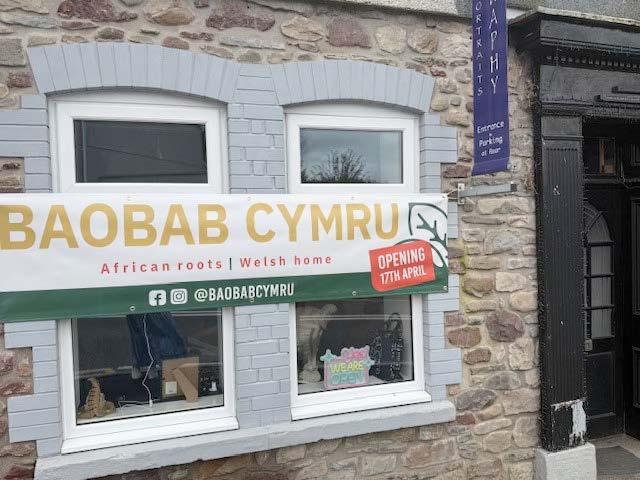
New venture in Llandybie brings together g hanaian cooking, Welsh produce and a shared love of community
A NEW café, kitchen and gallery celebrating West African food and culture has opened in the Carmarthenshire village of Llandybie.
Baobab Cymru officially opened at The College Inn on Friday (Apr 17), bringing a new food and arts venture to the Amman Valley community.
The business has been created by Ghana-born Adisa Amanor-Wilks, who has lived in the area for more than a decade and says the project is about blending the cultures she loves most.
Named after the iconic African baobab tree – often seen as a symbol of community, resilience
and nourishment – the venue will serve a range of West African dishes alongside regular café favourites.
The menu includes jollof rice with chicken, goat, fish or vegan options, Red Red – a black-eyed bean stew served with fried plantains – and a variety of traditional soups, including light soup, okra soup and groundnut soup with chicken, goat or fish.
Sweet treats will also be on offer, including Chin Chin, a traditional
West African snack made from crunchy fried dough.
Many of the ingredients will be locally sourced, with customers able to choose between takeaway and sitin dining. The venue will also include a gallery space showcasing both African and Welsh artwork.
Baobab Cymru has created three jobs and is now open for takeaway orders, coffee, sit-in meals and gallery visits.
A grand opening celebration was set for Sunday (Apr 19), with free tasters and live music from kora player Josh Doughty and West African ensemble Successors of Mandingue.
Councillor Julian Tandy, Welsh language campaigner Aran Jones and Dai Nicholas were all expected to attend the launch.
Adisa Amanor-Wilks said: “This is about bringing two cultures I love together in one space.
“West African food, Welsh hospitality, and a place where people can gather, eat well and feel welcome. African roots. Welsh home.” The business will operate bilingually in both Welsh and English. For opening times and the full menu, visit the Baobab Cymru Facebook page.

A CALL to keep a wedding venue, erected without permission at a georgian Pembrokeshire hotel whose site once belonged to the Knights Hospitallers, has been given a five-year period of grace.
In a listed building application to Pembrokeshire Coast National Park, Traverse Development Ltd, through agent Harries Planning Design Management, sought retrospective permission for the temporary retention of a wedding marquee at Slebech Park Restaurant and Rooms, Slebech;
Bruce Sinclair Local Democracy Reporter
works having started back in 2009. Grade-II*-listed Slebech Park once belonged to the Knights Hospitallers of the order of St John, later becoming the seat of the powerful Barlow family.
The present house was completed in 1776, built by Anthony Keck. This is his largest known house and the biggest Georgian single build in the country.
The grade-II-listed stables, which
have the marquee on their eastern terrace, were converted to a hotel, conference centre and restaurant after 2003.
A supporting statement accompanying the application said: “The proposal seeks to retain the already erected temporary marquee used for weddings to allow the site to continue to host weddings, whilst a permanent solution is developed and approved by planning.
“The marquee will continue to operate as it has for over 10 years, with no changes proposed. The marquee is completely removeable without any permanent fixtures.”
It added: “The marquee is only affixed temporarily and will be removed with no damage to any of the listed buildings or the overall site once a permanent solution has been agreed.
“By retaining the marquee in the same location, it ensures that continuation of the site is as existing, reduces the potential impact of moving the marquee to a potentially more harmful site and ensures any ecology is not further disrupted. Once removed the site will return to its historic state.”
An officer report recommending approval said no adverse comments have been received from consultees towards the current proposal, and no third-party representations raising issues relating to listed building matters have been received, the proposed scheme “in keeping with the character of the listed building, and its setting in terms of design and form”.
It added: “Temporary consent for this marquee has been granted on four previous occasions and a letter submitted in support of the current application states that an application for a permanent solution for a wedding venue at Slebech Park is imminent, in line with the original proposals for the terrace restaurant.
“The effect on character and setting is not considered acceptable long-term but short-term retention in the interests of retaining the complex of buildings in viable use (and repair) whilst a suitable permanent solution is found is considered reasonable. As such, the application can be supported for a temporary period subject to conditions.”
The application was approved, conditions including a five-year period of grace.



PEOPLE in Wales with autoimmune and rheumatological conditions are facing long waits for diagnosis, poor access to specialist care and repeated obstacles when trying to secure treatment outside their local area, according to new research.
The study, led by Swansea University, examined the experiences of patients with illnesses including lupus and other autoimmune disorders. It drew on interviews, survey findings and Freedom of Information responses from health boards across Wales.
Researchers found that specialist provision remains limited in some parts of the country. Some patients reported having no access to a lupus specialist in their area, while FOI responses indicated there is only one NHS neuro-ophthalmologist in Wales for patients with neurological or visual problems linked to autoimmune disease.
The report also highlighted a lack of diagnostic services. None of the Welsh health boards that responded said they currently provide nailfold capillaroscopy, a test used to help identify conditions such as scleroderma.
Diagnosis in rheumatology can also be difficult because many of the conditions involved
are complex and may develop gradually over time. Illnesses such as ankylosing spondylitis can be mistaken in the early stages for more common causes of pain, while autoimmune disorders often present with symptoms that overlap with other conditions.
Patients may require a combination of investigations before a diagnosis can be confirmed, including HLA-B27 testing, routine blood work, MRI scans, X-rays and detailed clinical assessment. Doctors also rely heavily on patient interviews to build up a picture of pain, stiffness, mobility and the wider pattern of symptoms.
There have also been local pressures on services in west Wales. At Withybush Hospital, delays were caused after the departure of a specialist consultant, and it took some time for that post to be filled. That consultant has now been replaced. However, it is understood the workload remained heavy, with the specialist working through a backlog of cases.
In some cases, patients may also feel rheumatology is treated as a lower-profile service. At Withybush Hospital, for example, the department has been based in a portacabin in the hospital car park, which it shares with the lymphoedema service — a setting
that can give the impression that two important but often overlooked specialties are being accommodated on the margins of the wider hospital system.
Rheumatology also places a significant burden on the NHS because of the cost of long-term treatment and follow-up care, although that is not the main focus of the study. Biological drugs used to treat conditions such as rheumatoid arthritis and ankylosing spondylitis can cost around £500 for a pack of four injections, according to local hospital sources. Patients on those medications often also require regular blood monitoring, consultant reviews, specialist nurse support and physiotherapy. The Herald understands that more than 1,000 patients in Pembrokeshire are currently being managed through this treatment pathway.
Researchers said patients were also being held back by the referral system. Under current NHS Wales rules, doctors must apply to their local health board for permission to send patients for treatment outside the area or across the border into England.
The study said decision-making around those requests was often inconsistent and unfair.
One patient with systemic lupus erythematosus told researchers he waited two years
for approval to be referred to England, despite believing the process should only have taken weeks.
The study found that patients in Wales often face longer journeys to diagnosis than elsewhere in the UK. In the sample reviewed by researchers, the average time from first symptoms to diagnosis was around 11 years, compared with around seven years across the UK.
Patients described the effect those delays had on their health. One woman in her 30s said requests to see a specialist in a neighbouring health board had been turned down, and that her lupus had worsened as a result. Another patient said access to care became more difficult after moving from England to Wales.
The research was led by Rupert Harwood of Swansea University Medical School, who himself lives with several autoimmune conditions.
His own experience reflects the wider concerns raised in the report. After developing visual symptoms in 2016, he was advised to see a neuroophthalmologist, but no such service was then available in Wales. A referral to England was not successfully made until 2025, and he is still waiting for an appointment.
Mr Harwood said the present system can leave patients at a disadvantage if they cannot afford to seek private treatment outside Wales.
The study concludes that while NHS Wales rheumatology teams provide high-quality care, patients in Wales face additional barriers compared with those in England.
Researchers are calling for a review of the out-of-area referral system, better access to specialist services and greater investment in diagnostic testing to reduce delays and improve outcomes.

THE Welsh Liberal Democrats have pledged to use their influence in the next Senedd to keep controversial technology firm Palantir out of Wales’ NHS and wider public services.
The party said it would oppose any attempt to introduce the company into Welsh Government systems, citing concerns over data security, transparency and Palantir’s wider links to military and intelligence work.
The move comes amid increasing scrutiny of Palantir’s £300m contract with NHS England and reports that UK ministers are considering whether to activate a break clause.
The Welsh Liberal Democrats said Wales must not follow what they described as a risky approach to the handling of sensitive public data.
A debate on the issue is due to be led in Westminster today by Liberal Democrat MP Martin Wrigley.
The party said it supported better data integration to improve patient care and help reduce waiting times, but argued that this should not come at the expense of public trust or national security.
Instead, the Lib Dems are calling

for investment in what they describe as trusted and transparent alternatives, including British-based providers, to modernise digital infrastructure without raising concerns over foreign influence or the handling of personal data.
The party also said that, in a finely balanced Senedd, it would use its votes to block any effort to bring Palantir into Welsh public services.
It warned that once contracts involving critical digital systems are signed, they can be difficult to reverse, and said ministers in Wales should take a precautionary approach now rather than try to solve problems later.
Commenting, Welsh Liberal Democrat Westminster spokesperson David Chadwick MP said: “People across Wales will rightly be asking why
a controversial foreign tech company with links to military and intelligence operations is being trusted with something as sensitive as our health data.
“The Welsh Liberal Democrats are clear: Palantir should be nowhere near our NHS or our public services. Trust in how data is handled is absolutely fundamental, and once that trust is lost, it is incredibly difficult to rebuild.
“In the next Senedd, we will use our votes to make sure this company is kept out of Wales. There can be no compromise when it comes to protecting people’s personal information and safeguarding our national security.
“We all want to see better joined-up care, shorter waiting lists and a modern NHS fit for the future. But that must be delivered in a way that puts patients first, not by handing over the keys to organisations that many people simply do not trust.
“Wales should be leading the way in building secure, transparent digital systems that the public can have confidence in, not going down a path that risks undermining that trust.”

ST JOHN AMBULANCE CYMRU has unveiled a range of new courses to help transform the nation’s wellbeing and create a ‘mentally healthy Wales,’ to combat a crisis that currently costs the UK economy millions of lost workdays.
The first aid charity for Wales, which trains hundreds of people in Mental Health First Aid each year, is calling on businesses to integrate it into the core of their operations, treating it with the same lifesaving urgency as physical first aid.
In a recent interview for the St John Ambulance Cymru podcast, Just in Case: Stories from St John, the charity’s Lead Trainer, Belinda James, highlighted the staggering economic and human
cost of the current mental health crisis and noted that approximately 17 to 18 million workdays are lost annually due to mental health struggles.
James said the statistics, published by the Health and Safety Executive, were “surprising and upsetting.”
She added: “You think for all of those statistics, for all of those numbers, there’s a person, there are people at the heart of that, who are at home not able to work because they are struggling.”
While physical injuries are often visible, mental health challenges frequently manifest in subtle behavioural shifts. James emphasised that “knowing your colleagues well” is the first line of defence in identifying when someone is
in distress.
“If it’s normal for me to be quite chirpy, to be early, to be on the ball first thing in the morning… and then I come in, and I look bedraggled, and I look stressed, and I’m snappy… that would be a good time to just say, is everything all right?”
She noted that other “hidden signs” include withdrawal, changes in eating or sleeping habits, and increased substance use, such as stepping out for more frequent cigarette breaks.
The push for better training comes as society navigates a generational divide in how mental health is discussed. James noted that workplaces are currently “caught in the mix” of the “make do and mend” generation and the younger “snowflake” generation.
“We live in a society that’s like, ‘Oh God, no, don’t address that. Don’t talk about the hard stuff. Chin up,” James observed.
However, she argued that directness is often what saves lives. “It is so much more validating to hear somebody say to you, ‘You are going through a really tough time at the moment. I’m so sorry. That must be very difficult to handle.”
As the UK faces gaps in mental health service provision, many individuals are turning to Artificial Intelligence for support – a trend James views with caution. While AI can be a “fantastic tool for signposting,” she warns that it lacks the essential component of empathy.
“It cannot understand human emotion. It won’t pick up on a human emotion,” she said. “The last thing that we want is for them to be led astray by an AI language program that cannot
understand the depths of human emotion”.
St John Ambulance Cymru provides Mental Health First Aid Wales-certified training designed to give people the skills to recognise signs of mental illhealth and provide initial support until professional help is received. These courses are evidence-based and cover critical topics, including depression, anxiety, psychosis, and crises such as suicidal thoughts and panic attacks.
THE CURRICULUM INCLUDES:
Mental Health First Aid (2 Days): The flagship 12-hour course teaching adults how to support friends, family, and co-workers. Participants learn the “Mental Health Action Plan” and gain the confidence to intervene in crises like non-suicidal self-injury or traumatic events.
Mental Health Advocate (1 Day): A course for those looking to proactively champion wellbeing and reduce stigma in their organization.
Mental Health Awareness (1/2 Day): A foundational session to build empathy and understanding of what mental health is.
Mental Health for Managers: Specifically designed to help leadership recognise indicators of stress and manage the unique pressures of supporting a team.
For more information on Mental Health First Aid training or to book a course, visit www.sjacymru.org.uk/en/ courses/MHFA

REFORM UK Wales leader
Dan Thomas has come under attack from UNISON Cymru, which says his record in local government should serve as a warning to Welsh voters ahead of the Senedd election.
In a report released on Wednesday (Apr 15), the union claimed Barnet Council became one of the most far-reaching outsourcing experiments in British local government during Thomas’s time as a Conservative councillor, deputy leader and later council leader.
UNISON says core services were handed to private contractors on a huge scale, costs increased sharply and public scrutiny was weakened.
The report claims decadelong contracts with Capita ended up costing Barnet Council £229 million more than originally planned, while around 790 jobs were transferred out of the public sector, including roles in cleaning, IT and customer services.
Jess Turner, regional secretary for UNISON Cymru, said: “Barnet’s outsourcing disaster shows the price staff

and residents have to pay when politicians hand public services to private contractors and weaken scrutiny.
“Wales needs high quality services that are properly funded, publicly delivered and accountable to the communities they serve. Staff and residents have every right to judge politicians by what they did when they had power.
“This report gives Welsh voters the chance to look at Dan Thomas’ track record and draw
their own conclusions.”
John Burgess, Barnet UNISON branch secretary, also criticised Thomas’s record, claiming he had been hostile to criticism during his time at the authority.
He said: “I watched Dan Thomas operate for the best part of two decades in Barnet. He is adversarial, arrogant and hostile to anyone who challenges him.
“When residents tried to ask questions, he shut down public scrutiny at council meetings.
“People in Wales need to understand what he did when he had power. He championed contracts that cost the council £229m more than planned, left basic financial controls in tatters and saw Barnet become the first local authority fined by the Pensions Regulator.”
Reform UK rejected the criticism when approached by The Herald.
A party spokesperson said: “Dan has experience in cutting taxes while protecting frontline services.
“Other party leaders in Wales do not.”
Thomas served as a Conservative councillor in the London Borough of Barnet from 2006, became deputy leader in 2011 and council leader in 2019. He resigned as a councillor in December 2025 and now leads Reform UK Wales.
The exchange is the latest sign that Thomas’s record in local government is becoming a political battleground in Wales as parties seek to define Reform’s approach to public services before polling day.

CEFIN CAMPBELL and Mari Arthur, Plaid Cymru’s candidates in Sir gaerfyrddin for the Senedd election next month have reiterated their call to the Welsh Rugby Union (WRU) for the Scarlets to be protected in any future plans for the future of professional rugby in Wales. This comes after WRU’s Extraordinary General Meeting
(EGM) last week in Cardiff, after more than 50 member clubs demanded accountability.
Plaid Cymru representatives in Carmarthenshire have long argued for the survival of professional rugby in the region, pointing to the Scarlets’ £17 million contribution to the local economy and the 400 full and part-time jobs that are supported by the club. The club also
boasts an impressive pedigree, having produced 34% of Welsh internationals in the past decade alone.
Cefin Campbell and Adam Price, currently seeking reelection as Plaid Cymru candidates to the Senedd for Sir Gaerfyrddin, as well as Plaid Cymru MP for Caerfyrddin
Ann Davies, submitted a formal response to the WRU’s consultation last year, declaring that dissolving the Scarlets would not solve WRU’s historic mismanagement of professional rugby in Wales.
Lifelong Scarlets supporter and Plaid Cymru’s lead candidate in Sir Gaerfyrddin, Cefin Campbell, said:
“Like thousands across west Wales, this club is in my DNA.
I am an ardent supporter of the Scarlets and share supporters’ disillusionment at the confusion and vague plans presented by the WRU.
“Watching them play Cardiff over the weekend, the thought of losing this club – which has produced so many greats for the national team such as Phil Bennett, Delme Thomas, Ray Gravell, Stephen Jones and Ken Owens to name a few –
weighed heavily on my mind. The economic and social impact on the region would also be immense.
“I’m also a fan of club rugby in all its forms. The Ospreys are our neighbours and rivals and that rivalry is part of what makes the game here so special. The WRU should not be forcing west Wales to choose between its clubs. That is not a solution.”
Mari Arthur, also a Plaid Cymru candidate in the election in May, said: “I’m so proud that we as Plaid Cymru representatives in the area have led the way in defending the Scarlets over months and years of speculation over their future. We have made it absolutely clear to the WRU that we are fundamentally opposed to any plan that puts the future of the Scarlets at risk. Unfortunately, that threat still hovers over our club.
“The Scarlets are central to the identity and economy of this region and are a cornerstone of the game in Wales. We call on the WRU’s incoming leadership to start again: to pause this plan, engage with the alternatives, and protect the long-term future of the Scarlets.”

INDEPENDENT Senedd candidate Paul Dowson defended his controversial public record in a combative interview with The Herald, insisting he had been “targeted” for speaking out and dismissing official findings against him as “corrupt”.
The former Pembrokeshire county councillor, who is standing in Ceredigion Penfro at the Senedd election on Thursday, May 7, said he decided to run because he was unimpressed by the choice facing voters and believed the main parties had failed west Wales.
“From my experience, there’s a lot of parties and a lot of politicians that really say a lot and do nothing,” Dowson told The Herald. “I have proven to be quite the opposite, where I do a lot and say very little.”
He added: “Looking at the candidates for this Senedd election, I was not impressed at all… I thought, well, somebody’s got some common sense in there.”
Dowson said his three main priorities for west Wales were business, the NHS and transport.
“Our businesses have been killed,” he said. “There’s no investment in business whatsoever. NHS… and transportation and roads have really just been underfunded for too long.”
He also claimed that “the health services are absolutely
caught up in delays around renewing his badge.
When challenged on whether his record showed “instability, poor judgment, disregard for standards”, he replied: “What my record shows is targeting if you speak against the mainstream.”
He went further, claiming he had been branded “a racist, a fascist, a bigot” after opposing support for Black Lives Matter protests during lockdown.
He also framed himself as a candidate willing to say what others would not.
“I’m honest,” he said. “I stand up and I’m brave enough to say the things other people would say.”
Reflections from the campaign trail and why it’s more important than ever to vote
The Senedd election campaign is now well underway, and I’ve been out and about with my colleague Samuel Kurtz, meeting people across Pembrokeshire and Ceredigion. We’ve been knocking on doors, delivering leaflets, and most importantly, having real conversations with residents about what matters to them.
ruined” and said those running public services were not being properly held to account.
Politically, Dowson made clear he sees himself on the right and sought to distance himself from Reform UK. Asked whether he was more right-wing than Reform, he replied: “Yeah, very much so,” adding: “Reform will eventually show their true colours.”
But a large part of the interview centred not on policy, but on the baggage Dowson brings into the campaign.
He was challenged over his disqualification from holding public office for three years following findings by the Adjudication Panel for Wales.
The ruling related to false accusations, misleading claims and conduct which brought the council into disrepute.
Dowson rejected that process outright.
“I didn’t take part in that process whatsoever,” he said. “I insisted that it was held in public so I could show how corrupt they were, and they refused.”
Later in the interview he added: “I’m quite done with having to explain it all the time, because why should I waste time explaining it? It was corrupt. There we are. Move on.”Dowson was also challenged over his later conviction for working as a door supervisor without a valid licence in Tenby.
Asked what that said about his judgment, he argued the punishment was excessive and claimed he had effectively been
On policy, Dowson called for more support for small businesses, more scrutiny of Welsh Government spending, and stronger backing for the farming sector.
“Let’s leave farming to farmers,” he said, arguing that too many decisions affecting rural Wales were being made by people with little understanding of the industry.
He also set out some of his most divisive views on schools and culture. Discussing education, Dowson said: “I’m the only candidate that has publicly come out and protested against an Indian chap being allowed to wear a dagger in school.”
He added: “The biggest problem in schools is ideology needs to be wiped out. People need to be retrained to teach facts, to teach science, to teach biology.”
On the environment, Dowson said pollution should be tackled with stricter rules on what is discharged into rivers and the sea, but he also rejected mainstream views on climate change.
Asked directly whether he was a climate change denier, he replied: “Denier.”
The interview leaves little doubt that Dowson is trying to turn controversy into part of his political pitch. Rather than distancing himself from the rows that have dogged his time in public life, he is presenting them as proof that he is the only candidate prepared to challenge the system head-on.
One issue that keeps coming up time and again is the future of services at Withybush Hospital. In almost every community we’ve visited, people have raised concerns about the continued centralisation of services further eastwards. Withybush Hospital is valued by all of us in Pembrokeshire and we want it to receive the support and investment that it deserves. We absolutely should not have to travel further for essential services.
I’ve consistently stood up for Withybush Hospital - challenging both the Health Board on its decisions and the Welsh Government on its lack of intervention. If I’m re-elected in May, I’ll continue to make the case loud and clear: services should stay local.
Another big concern that’s been raised is the rising cost of living. Many households are feeling the squeeze, and there’s real anxiety about the future. Global events are pushing up fuel and energy costs, and for many families, budgets are being stretched to the limit. A lot of people feel that governments aren’t doing enough to help and there’s a real opportunity here for change. A Welsh Conservative government would focus less on costly vanity projects and more on practical support, like improving childcare provision to help working families balance their finances.
Alongside this, businesses are facing their own set of challenges. Many are dealing with rising rates, higher energy bills, and increased National Insurance contributions. It’s a tough environment, and it’s clear that businesses need more support. I believe that Wales needs a government that backs its private sector; one that encourages innovation, supports entrepreneurs, and helps its businesses grow. Strong businesses are essential to strong communities, and that needs to be reflected in government priorities.
And Readers, one of the other key issues that keeps being raised is the future for the farming industry. I’m a big advocate for our farmers, being born to a farming family and married into one. I know our farmers play a crucial role in feeding the nation and sustaining rural life and yet, longstanding challenges like Bovine TB still need to be addressed, and food production must be at the heart of government policy. Supporting farming isn’t just about the economy; it’s about protecting a way of life that’s central to communities like ours in west Wales.
While this campaign may feel different in some ways, the core issues remain the same. As you consider your vote, I’d encourage you to take the time to read manifestos and learn more about the candidates standing in this area.
Readers, every vote really does matter. By supporting me and Samuel Kurtz on 7th May, you’ll be helping us continue our work in the Senedd - and we will continue to stand up for local services, support families and local businesses and champion our local communities.

W ITH ANDREW LYE
Labour’s Lord eorge Robertson was in the news last week for his strong attack on the government, saying the UK was underprepared for war due to the “everexpanding welfare budget” and “corrosive complacency”.
Lord Robertson had served as Defence Secretary in Tony Blair’s Government, and he went on to serve as NATO Secretary General.
Lord Robertson had led the Government’s Strategic Defence Review (SDR) and accused ministers of not being willing to make the necessary investment and said the Iran war must be a “rude wake-up call” to ministers to act.
He went on: “We are underprepared. We are underinsured. We are under attack. We are not safe… Britain’s national security and safety is in peril.”
The 10-year defence investment plan which was meant to be published in autumn last year to deliver the SDR’s plans has still not been produced.
Responding to Lord Robertson’s criticisms of the Government’s approach to defence, Liberal Democrat Defence Spokesperson James MacCleary MP said:
“Lord Robertson’s comments echo what the Liberal Democrats have said for months: a pile of unpublished reports is no substitute for a credible national defence plan.
“In an era of Kremlin aggression, conflict in the Middle East, and a completely unpredictable ally in the White House, the Prime Minister - and the nation - simply cannot afford to wait to rearm. The Government must publish the Defence Investment Plan now and hold crossparty talks to agree the way
forward to hitting 3% of GDP on defence spending by 2030.
“Our armed forces also need an immediate cash injection, to begin undoing the damage wrought by the Conservatives. That is why Liberal Democrats are calling for the issuance of Defence Bonds, to raise £20 billion over two years and provide a secure, ringfenced way to strengthen our sovereign capability and end this inexcusable era of defence stagnation.”
James MacCleary also responded to reports that the Chancellor is increasing defence spending by less than £10bn over the next four years, saying:
“This is a shocking dereliction of duty. To offer less than £10 billion over four years is nowhere near good enough at a time when Britain faces the greatest threats in a generation. The Government is clearly clueless about how to raise defence spending and ensure the safety of our nation.
“The country is already unable to meet our existing NATO commitments or provide an adequate baseline defence of the UK. Our nation’s defence is not an optional extra, and the Chancellor must stop treating it like one.
“The Government must get serious about rearming Britain. Liberal Democrats are calling for the immediate launch of Defence Bonds to raise £20 billion over two years and begin repairing the damage dealt to our Armed Forces by the Conservatives. It’s also beyond time that the Government heeded Liberal Democrat calls for cross-party talks to reach a consensus on how to spend 3% of GDP on defence by 2030, ending this era of defence stagnation.”
If you have any issues or comments, please contact me at andrew.lye@pembslibdems.wales

CROSS-PARTY Senedd members and councillors say Welsh public money must not be invested in firms linked to alleged war crimes and apartheid
POLITICIANS from across Wales have called for local government pension funds to stop investing in companies they say are complicit in Israel’s actions against Palestinians.
In a cross-party letter coordinated by Palestine Solidarity Campaign Cymru, Senedd members and councillors from Plaid Cymru, the Greens, Labour and the Liberal Democrats urged the Wales Pensions Partnership to end investments they describe as supporting “genocide and apartheid”.
The Wales Pensions Partnership manages Welsh local government pension funds worth an estimated £26 billion.
In their letter, the politicians said ensuring public investments “are not contributing to grave violations of international law must be an urgent priority”.
The intervention comes as the Wales Pensions Partnership develops an Exclusion Framework, which campaigners say is intended
to prevent investments that conflict with climate, human rights and international law commitments.
However, those behind the letter argue that the framework risks falling short of what they describe as a clear democratic mandate from councils across Wales.
According to PSC Cymru, many councils have already passed motions calling for divestment from companies alleged to be complicit in war crimes, apartheid and other breaches of international law.
The group says 11 councils in Wales — half of all councils in the country — have now backed such motions.
Research cited by the campaign claims that Local Government Pension Scheme funds in Wales have more than £1.1 billion invested in companies said to be linked to Israel’s actions against Palestinians.
As one example, the campaign says Rhondda Cynon Taf Pension Fund has invested more than £12 million in BAE Systems, which it describes as an arms manufacturer making parts for fighter jets used by Israel in Gaza.
The letter calls on the Wales Pensions Partnership to ensure its Exclusion Framework explicitly excludes all companies said to be enabling grave violations of international law by Israel, and to produce a clear, time-bound plan for divestment.
Bethan Sayed, co-chair of PSC Cymru, said: “Today’s letter sends an unmistakable message: Welsh politicians from across the political spectrum will not allow public money to fund genocide and apartheid.
“The Wales Pension Partnership manages £26 billion on behalf of Welsh workers and communities — not a single penny of it should be profiting from the massacre of Palestinian men, women and children.
“Six out of seven people in Wales support divestment. Eleven councils have passed motions. The democratic mandate could not be clearer. The WPP must act — and it must act now.”
PSC Cymru said the letter reflected growing pressure across Wales for public bodies to review investments linked to the conflict.
FEARS over the future of Withybush Hospital were thrown into sharp focus when Liberal Democrat Senedd candidate Sandra Jervis sat down with The Herald and accused the Welsh government of allowing vital rural services to be eroded “by stealth”.
In a strongly worded interview, Jervis said people in Pembrokeshire were right to be alarmed by the steady loss of services at the Haverfordwest hospital, warning that the removal of emergency surgery was exactly the kind of move that fuels public suspicion that Withybush is being gradually run down.
She said: “We need hospitals in our locations.”
Jervis said the argument that services should be concentrated elsewhere was failing rural communities and ignoring the realities of living in west Wales, where longer journeys can have serious consequences for patients and families alike.
She also launched a fierce attack on the idea of a new central hospital for west Wales, describing it as wasteful and out of touch when existing hospitals are crying out for investment.
“I think it is the most ridiculous, ludicrous idea on this planet,” she said. “That money could be spent on investing in those hospitals and

bringing them up to scratch, up to the modern standards that we deserve.”
Her comments come amid continuing anger over changes at Withybush and wider concern that Bronglais and other rural hospitals are being left to struggle while ministers and health chiefs talk increasingly about centralising services.
Jervis said the real problem was not that local hospitals were underperforming, but that they were being starved of the resources needed to do the job properly.
“They’re not underperforming. They’re under invested,” she said.
She argued that Pembrokeshire
should not be expected to accept a second-rate service simply because it is rural, adding that emergency care and core hospital provision should be seen as basic standards, not optional extras.
The Lib Dem candidate also said the crisis in the NHS could not be solved without serious investment in social care, which she described as overlooked and undervalued for too long.
“Social care is severely under invested,” she said. “It is quite easily seen as the poor cousin to the NHS.”
Jervis said more support outside
hospital would help free up beds, reduce backlogs and improve care for patients who no longer need to remain on wards.
Beyond health, she said west Wales faced deep-rooted economic problems, with local businesses being squeezed by rates, rising costs and lack of support, while young people were too often forced to leave the area in search of decent wages and better opportunities.
Speaking as a business owner, she said many traders felt they were being punished rather than backed.
“Everything feels like it is against you,” she said.
Jervis said town centres needed investment, business rates needed reform, and young people needed real reasons to build their lives in west Wales rather than move away.
On the environment, she said cleaning up polluted rivers and unlocking housing development had to go hand in hand, with tougher action against water companies and more urgency around delivering the homes communities need.
Asked why voters should back the Lib Dems, Jervis said the party had deep roots in west Wales and a record of challenging those in power.
“I take great pleasure in being a thorn in the side of other parties,” she said. “I can challenge, and I think that’s what we need.”
PAUL DAVIES and Samuel Kurtz have reaffirmed that the Welsh Conservatives are the only political party to make an explicit manifesto commitment to protecting services at both Withybush Hospital and Bronglais Hospital.
At a time when health services across Mid and West Wales are under growing pressure, the lead Conservative candidates for Ceredigion Penfro say local people must continue to have access to safe, high-quality care close to home. They argue that means safeguarding and strengthening vital district general hospitals such as Withybush and Bronglais.
Both candidates say they have led sustained efforts to oppose further downgrades at Withybush Hospital, working closely with residents, campaigners and healthcare professionals. They have also backed community campaigns and stood alongside local people in defence of essential services.
In the Senedd, Paul Davies and Samuel Kurtz say they have
repeatedly raised concerns about proposed service changes, challenged Welsh Government ministers and pressed for clear assurances over the future of local healthcare. They have also written directly to Hywel Dda University Health Board and the Health Minister calling for action to protect key services.
They say that, if re-elected, they will continue to stand up for local healthcare services regardless of which party forms the next Welsh Government.
Paul Davies said: “We have long been clear that any further downgrading of services at Withybush Hospital is unacceptable. We have stood with our communities, supported local campaigns and used every opportunity in the Senedd to fight for the services people rely on.

“The Welsh Conservatives are the only party to make an explicit commitment in our manifesto to protecting services at both Withybush and Bronglais hospitals. That shows a clear and unwavering commitment to safeguarding local healthcare in West Wales.”
Samuel Kurtz added: “People should not have to travel hours for treatment that could and should be delivered locally. We will continue to hold the Welsh Government to account, whoever forms it after May, to secure proper investment and
ensure these hospitals remain at the heart of our communities.
“Let us be absolutely clear: we will be relentless in opposing any attempt to strip services from our rural hospitals, and we will not hesitate to challenge anyone who threatens their future.”
SEND YOUR LETTERS TO: THE EDITOR, 11 HAMILTON TERRACE, MILFORD HAVEN, PEMBROKESHIRE, SA73 3AL
EMAIL US AT: editor@herald.email

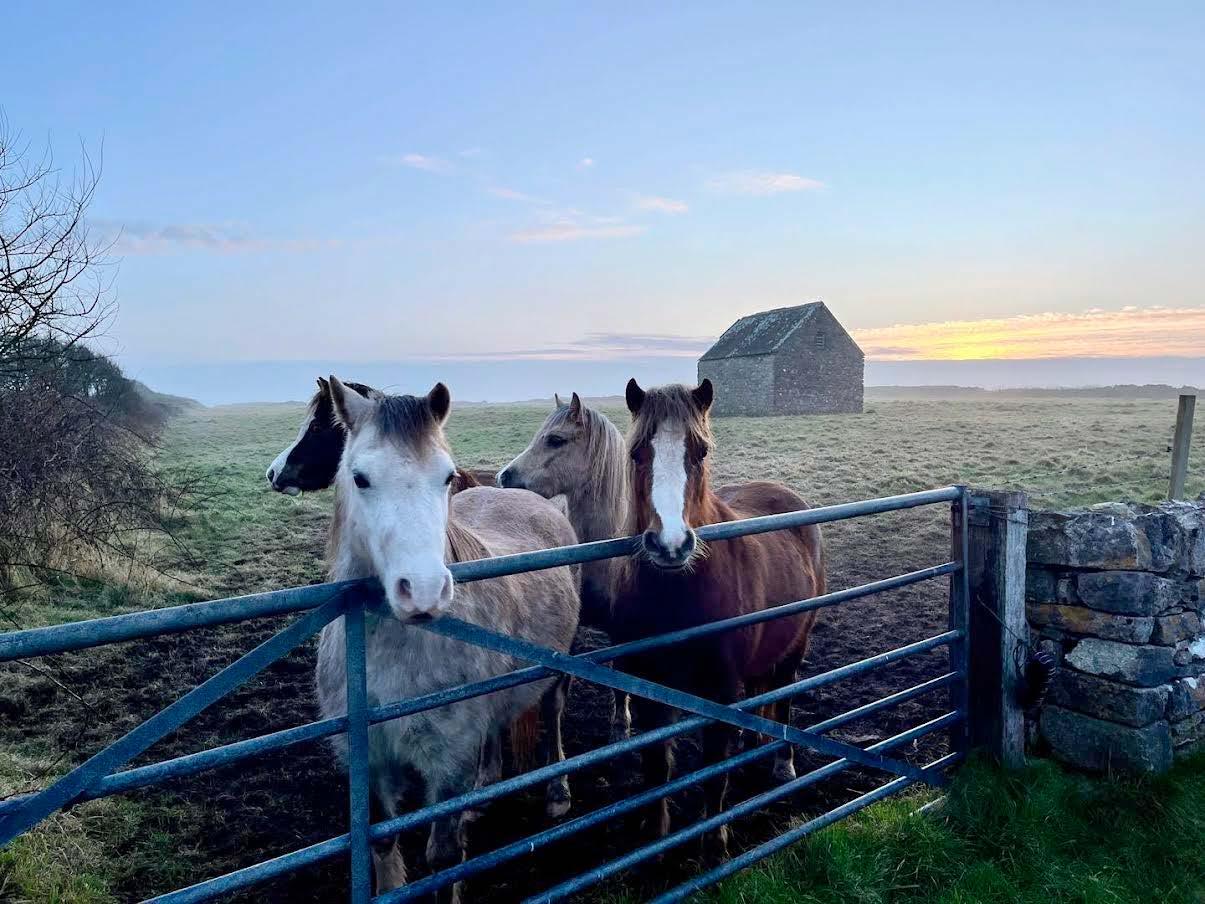
IF WE IGNORE THIS NOW, THE SITUATION WILL ONLY GET WORSE
DEAR SIR,
Recent violent and antisocial incidents involving young people in Pembrokeshire should concern us all.
No one wants to see our towns become places where families feel nervous, businesses feel abandoned, or young people themselves feel unsafe. The reports of disorder, intimidation, weapons, and police responses in recent weeks are deeply troubling.
But this is not just a policing issue. It is a community issue.
Parents, schools, youth services, councils, police, and local organisations all have a role to play. We need firm action where laws are broken, but we also need to ask why some young people are gathering in ways that lead to fear, violence, and chaos.
Pembrokeshire needs visible
policing, proper consequences, and better support for youth services. We also need honest conversations with parents and guardians. Too often, decent young people are let down by a minority whose behaviour damages whole communities.
The vast majority of young people in Pembrokeshire are respectful, talented, and full of potential. They should not be tarred with the same brush. But neither can we pretend there is no problem.
If we ignore this now, the situation will only get worse. Our young people deserve better, and so do the communities they live in.
Peter Miles
STUTTERING RESEARCH IS WELCOME, BUT THERAPY SUPPORT IS ALREADY HELPING MANY
DEAR SIR,
I was pleased to read your article on Dr Charlie Wiltshire, of Bangor University, receiving a Springboard Award to investigate why
people stutter.
This is important and welcome research. In recent years, scientists have identified genetic links associated with stuttering, and further work into the brain functions of people who stutter can only improve understanding and support.
However, I was concerned by the suggestion that “current therapies for stuttering are limited”. While there is no single speech and language therapy that can be described as a miracle cure, many people who stammer have benefited from effective and reputable therapies.
Readers interested in support may wish to consult STAMMA, formerly the British Stammering Association, at www.stamma.org, or The Stuttering Foundation at www. stutteringhelp.org.
A targeted search will also show that many people who stammer have found success through established speech therapy programmes.
Michael Park London
EVERY VOTE COUNTS
DEAR SIR,
This May’s Senedd election is one of the most important Wales has faced.
Whatever your politics, everyone who has the right to vote should use it. Decisions made in Cardiff Bay affect our hospitals, schools, roads, farming, housing, public services, and the future of local communities across Wales. This election will also be held under a new voting system, meaning every vote really does count. The result will help shape not just who forms the next Welsh Government, but the direction Wales takes for years to come.
Many people feel disillusioned with politics, and that is understandable. But staying at home does not send a clear message. Voting does.
Democracy only works properly when people take part. So read the leaflets, listen to the candidates, ask questions, and make your choice.
But above all, vote. David English


P EACEFULLY with the family, on Wednesday 8th April, Maureen, of Trem-y-wawr, Maenclochog, Clunderwen.
Beloved wife of the late Roderick, dear mother and motherin-law of Carol and Dai, Clive and Jo and Gary and Liz. Loving and proud grandmother and greatgrandmother.
Funeral Service at Parc Gwyn Crematorium, Narberth, on Thursday, 23rd April at 12.15pm.
Family flowers only.
Donations if so desired towards The Coach and Horses Surgery and district nurses, St Clears or The First Response Team, received by Ken Davies & Sons, Funeral Directors, Clunderwen, SAA66 7NQ Phone: 01437 563319

H EATHER passed away peacefully at Foxhunters Care Community, Abergavenny on Tuesday 7th April 2026.
Beloved wife of the late Tom, loving mother of Grace and Kevin, treasured mother-in-law to Mark and Phoebe, and adored Mamgu to Anwen, Ava-May, Elin and Dan. Funeral service to be held at Pen-y-Bont Chapel, Wolfscastle on Monday 27th April 2026 at 11.30am, followed by interment at the Chapel Cemetery.
Family flowers only please. Donations in lieu, if desired, to support the Alzheimers Society (registered charity 296645), c/o Paul Jenkins & Sons, Funeral
Directors, Feidr Castell, Fishguard, SA65 9BB. Telephone: 01348 873250.
B ARBARA P assed away peacefully on 6th April 2026.
Her funeral service will take place Tuesday 28th April 2026 at Parc Gwyn Crematorium, Narberth at 1.45pm.
Family flowers only.
Donation in lieu of flowers can be made to the Dr. MorganHughes Research Fund.
Please wear normal day attire.
All enquiries to Roy Folland & Son Funeral Directors (01437) 763821
PAUL M ORGAN
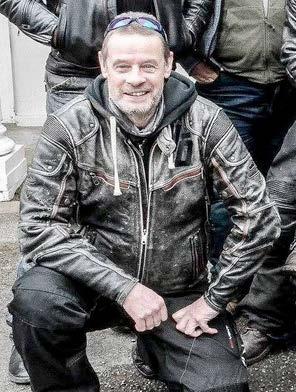
PAUL passed away peacefully at home surrounded by his family on 3rd April 2026 aged 67 years. Much loved Husband to Cath, Dad to Rhys and Nonnie, Son, Brother, Uncle and g reatUncle, he will be greatly missed by his family and many, many friends.
Paul’s funeral will take place on Friday 1st May 2026 at Parc Gwyn Crematorium, Narberth at 1.00pm. The family would like to thank the Paul Sartori Foundation, Swansea Oncology Department, Withybush CDU, the District Nurses and the Palliative Care Team for all their help and support
during Paul’s illness.
B ILL passed away peacefully at home with his son, David, by his side on 1st April 2026 aged 97 years.
Much loved Dad to Robert and David; father-in-law to Alix, Catrin and Philip, Grandad to Kath and Laura; Grandfather-in-law to Martin and James; Great-Grandad to Dylan and Susi.
Pre-deceased by loving wife Vilma and adored daughter Sue. He will be greatly missed by all his family and many friends.
Bill’s funeral will take place on Tuesday 28th April 2026 at St David’s and St Patrick’s Catholic Church, Dew Street, Haverfordwest at 11.00am.
Followed by interment at City Road Cemetery.
Family flowers only. If desired, donations in memory of Bill for a charity close to your own heart.
All enquiries to Roy Folland &
Son Funeral Directors (01437) 763821.
T HE death occurred at Withybush Hospital, Haverfordwest on 7th April of Mr g eoffrey Aston, he was aged 84 and lived in St Florence.
Geoffrey is survived by his wife Eiona, daughter and son-inlaw Sian and Andrew, son and daughter-in-law Ian and Katherine, and grandsons Thomas, Rhys and Harry.
The funeral service takes place on Friday 1st May at St Florence Church at 10.45am followed by Cremation at Parc Gwyn, Narberth at 12.15pm
There will be family flowers only, donations if desired, can be made payable to “The Paul Sartori Foundation” c/o Funeral Directors W & M J Rossiter & Sons Ltd, The Old Rectory, The Norton, Tenby, SA70 8AB or Landsker House, Station Road, Narberth, SA67 7DR or via www.rossitersfunerals. co.uk












RECLAIMED BUILDING MATERIAL

RUBBISH AND WASTE REMOVAL


PROFESSIONAL CAR WASH





TECHNOLOGY AND COMPUTERS












COUNTY secured their place in the JD Cymru Premier European play-offs with a crushing 6-0 victory over Llanelli Town at the Ogi Bridge Meadow.
The Bluebirds were far too strong for the visitors and had the game under control early on, turning sustained pressure into a commanding first-half lead before finishing the job in emphatic style after the break.
Dan Hawkins was the star of the show with a hat-trick, while Ben Ahmun, Rhys Abbruzzese and Panashe Makwiramiti also got on the scoresheet in a onesided contest.
Tony Pennock’s side wasted little time in stamping their authority on the game. Haverfordwest moved the ball sharply, created openings from the outset and were rewarded with an early breakthrough which set the tone for the afternoon.
Llanelli struggled to cope with the pace and movement of the home side, who looked dangerous whenever they went forward. Ahmun added a second as the pressure told, and although the visitors tried to stay in touch, Haverfordwest always looked the more likely to score again.
Even a missed penalty did little to slow the Bluebirds’ momentum. They continued to push forward, and a third goal before the break effectively ended the contest, giving the hosts a deserved cushion at half-time.
Any hopes of a Llanelli

response disappeared quickly in the second half as Haverfordwest stepped up another gear.
Hawkins completed his hattrick in style, underlining an impressive individual display, before Abbruzzese added a fifth as the home side carved open the visitors once again.
There was also a welcome moment for Jack Wilson, who made his return after a long spell out with injury, as the Bluebirds continued to dominate in front of their home support.
Makwiramiti rounded things off with a superb long-range strike late on to complete a memorable afternoon for the hosts, who rarely looked troubled and could have scored even more.
The result keeps the

Haverfordwest heading into their final outing before the play-offs,
they can extend their season further.
THE SOUTH PEMBROKESHIRE SHORT MAT BOWLS ASSOCIATION’S Friendly League season has officially concluded following the final catch-up matches played over recent weeks.
East Williamston were confirmed as league champions after finishing top of the final table with 126 points from their 20 matches. St Johns took second place with 118 points, while Hundleton finished third on 107.
The final catch-up results
saw Hundleton beat East Williamston 10-0, Kilgetty defeat Carew 10-0, Llanteg overcome St Twynnells 8-2, and Cosheston record an 8-2 win over Llanteg.
Despite that final defeat, East Williamston had already done enough over the course of the campaign to secure the title, with St Johns ending the season as runners-up after another strong year in the competition.
Llanteg finished fourth on 105 points, just ahead of
St Twynnells on 101, while Reynalton ended the season on 99. Carew were close behind on 98, followed by Cosheston on 96, Badgers on 89, Kilgetty on 83 and Lamphey on 80.
League Fixtures Secretary Steve Cox congratulated the top two clubs and also confirmed that this was his final report in the role.
In his closing message to clubs, he said he hoped whoever takes over the position would enjoy it as much as he had.






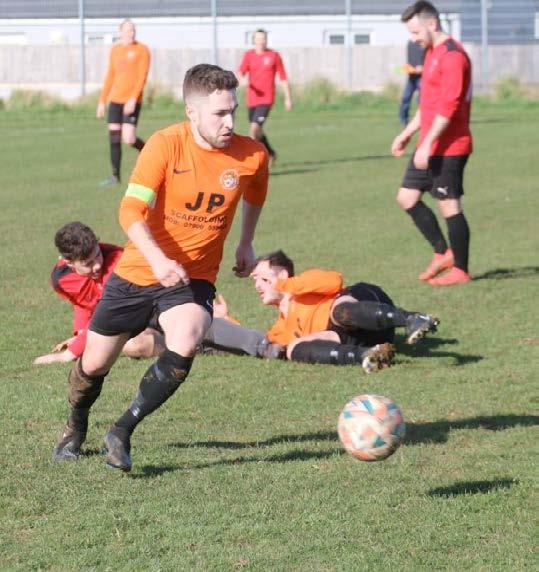
HAKIN UNITED 2nds lifted the Pembrokeshire Division Two Cup after a powerful display saw them beat Johnston 5-3 in front of 719 spectators at the Ogi Bridge Meadow Stadium on Friday night.
The Vikings’ young side rose to the occasion in style, turning in an energetic and confident performance to take control of the final and keep Johnston on the back foot for long periods.
Hakin made the most of mistakes from the Tigers and showed real quality going forward, with Mason Dolling and Callum Stannett particularly impressive in attack as they helped drive their side towards the trophy.
Although Johnston did manage to get two late goals on the scoresheet, they came too late to change the outcome of a contest that had already been decided.
By that stage, Hakin had built a commanding lead and looked the more dangerous side throughout, combining pace, movement and clinical finishing to put themselves firmly in control.
The strong turnout at the Ogi Bridge Meadow added to the occasion, with a crowd of 719 watching Hakin’s young team deliver on the big stage.
In the end, the Vikings were deserved winners, producing the sort of dominant cup final display that left little doubt over where the silverware was heading.


WALES Under-20 women secured a historic victory at the Lacrosse Home Internationals last weekend, lifting the title for the first time in 23 years.
The landmark success came after an impressive three-day tournament at Lilleshall National Sports Centre in Newport, England, from Thursday, April 10 to Saturday, April 12, 2026.
Joint captains Maddie Sturt, Ellora
Williams and Kaitlin Miller praised the squad’s commitment and team spirit throughout the competition.
They said: “We are incredibly proud of how hard the team worked throughout training. Everyone put in so much work and it clearly showed in our performance over the tournament this weekend.
“Playing for our country is always such an amazing moment and
although we are a very new and young team, we all came together in the matches. It was incredible.”
Wales began the tournament with a dramatic clash against England on Friday, narrowly losing 13-12 in the closing minutes. They bounced back on Saturday with a strong 12-9 win over Scotland before sealing the title on Sunday with a superb 15-9 victory over the home side.
Coach Jamie Nicholson said the tournament had given the squad exactly the kind of experience it needed as it builds towards next year’s European Championships.
He said: “Home Internationals were exactly what we needed as a developing squad building toward the European Championships next year.
“We learnt a great deal across three competitive games and came away knowing we have real quality in the group, across all areas of the field.
“Our coaches couldn’t be prouder of how this squad conducted themselves on the pitch and off. They gave everything in every game and showed real character and maturity between games. This is a group of players and staff that genuinely believes in each other and winning the title in their first tournament playing together makes the weekend even more special.”
The success comes at a time of growing global interest in lacrosse, with the sport set to return to the Olympic Games at Los Angeles in 2028 for the first time in 120 years.
The Olympic programme will feature the fast-paced “Sixes” format for both men and women, a version designed to make the sport quicker, more accessible and more appealing to new audiences.

THE FAW (Football Association of Wales) has posted a £3.4 million loss for the year ending June 2025, despite recording its highest-ever turnover.
New accounts show revenue rose sharply from £32.4 million to £40.6 million over the 12-month period, driven by increased funding from UEFA, the UK Government and the FAW’s coaching education programme.
But administrative expenses also surged, climbing by nearly £10 million to £32.8 million. That contributed to an operating loss of £5 million, reversing the £1.1 million profit recorded the previous year.
The accounts became publicly available on Companies House on Wednesday night, two weeks after the FAW issued a statement describing the year as a period of “strategic investment and accelerated growth”.
The governing body said the rise in turnover was helped by the Wales women’s team qualifying for their first major tournament, Euro 2025, in December 2024. It also pointed to the men’s team winning their Nations League group, increased UEFA support for the expansion of the Cymru Premier, and additional Welsh Government funding to help expand FAW headquarters.
In its statement, the FAW said the
The association said the £3.4 million net loss after tax was partly offset by healthy returns from investments and deferred tax movements linked to the transfer of its investment portfolio.
FAW chief finance and operations officer John Young said the organisation accepted that operational losses could not continue indefinitely, but argued that the current level of spending was justified.
He said the FAW believed continued investment was needed to strengthen the domestic league, improve the chances of tournament success for the national teams and support growth in the grassroots game.
However, the next set of accounts is likely to be affected by the men’s team missing out on qualification for this summer’s World Cup.
FAW chief executive Noel Mooney said qualification for the 2022 World Cup had provided a major platform for investment in grassroots facilities across Wales.
He said the FAW had used that moment to put £4 million into creating the Cymru Football Foundation, which has since distributed around £30 million.
Mooney admitted another World Cup appearance would have helped speed up development even further, but said the association now had to remain agile and focus on the
He said Euro 2028 would allow the FAW to keep investing in the game at