







A PEMBROKESHIRE teenager who was previously granted bail on drug-dealing charges has now been remanded in custody after facing additional allegations, including conspiracy to possess a firearm.
Harrison Billing, 18, of Jury Lane, Haverfordwest, had been granted bail following his arrest for possession of cocaine with intent to supply in Milford Haven on December 27, 2024.
He was also charged with possession of criminal property, relating to £925.31 in cash, and dangerous driving after a high-speed police pursuit ended with a Mercedes crashing into a house on Hamilton Terrace.
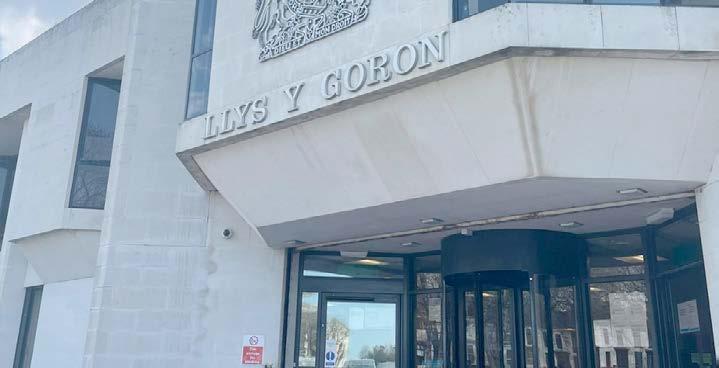
Billing initially appeared before Llanelli Magistrates’ Court on December 30, where he admitted the driving offences but was bailed pending further court proceedings. However, he has now been remanded in custody following the emergence of new, more serious allegations.
Court records show Billing has been further charged with conspiring to possess a firearm without a certificate, additional drug supply offences, and possession of a knife.
These charges, combined with the existing drug-dealing allegations, resulted in him being sent back into custody ahead of his next appearance at Swansea Crown Court.

The case continues, with Billing due to appear in court again for a plea hearing.
The Herald understands that the new charges played a significant role in the decision to revoke his bail.
Meanwhile, his co-accused, Dylan Brown, 18, of Chestnut Way, Milford Haven, remains on bail, awaiting his next hearing related to the same
December 27 incident. More updates to follow as the case develops.
PEMBROKESHIRE magistrates have been shown video footage of an unprovoked attack in Tenby town centre where a man was dragged through the streets while being kicked and punched by a former serviceman.
The victim, Christopher Noden, was walking towards the Albany Hotel in the early hours of October 28, 2024, when he was approached by former serviceman Simon Roblin.
“Simon Roblin had come outside to have a cigarette and he approached me about things I hadn’t done,” Mr Noden said in a statement read out to Haverfordwest magistrates earlier this week.
“I knew him and considered him a friend, but he was accusing me of making him feel small earlier that day when we were in the pub. It was completely unprovoked, and I was telling him that I didn’t know what he was talking about.”
But Crown Prosecutor Nia James said that at this point, Roblin started grappling with Mr Noden and pulled him to the floor, where he began kicking and punching him to his face and head.
“I saw stars,” stated Mr Noden.
Sarah Jane Absalom sarah.jane.absalom@herald.email
Hearing the disturbance, the hotel manager came out of the property and pulled Roblin off the victim.
As a result of the assault, Mr Noden sustained bleeding and bruising to his face and jaw.
Meanwhile, probation officer Julie Norman informed the magistrates that at the time of the offence, Roblin, 50, was residing at the Albany Hotel, having been given emergency accommodation after finding himself homeless in December 2023.
“There had been issues between the two of them earlier that evening, and the defendant felt that part of the incident was in self-defence,” said Julie Norman. “But he accepts that he caused [Mr Noden] harm.”
Ms Norman said that Roblin, an ex-serviceman, is currently of no fixed abode and is living in a van.
“He’s an HGV driver by trade and is hoping to start work again soon,” she said. “He came to Pembrokeshire to try and find employment, but that hasn’t happened, and he’s found himself homeless.”

Roblin pleaded guilty to assault causing actual bodily harm. He was legally represented by solicitor Leila Williams.
“Both men knew each other as they both lived in emergency accommodation,” she said. “Alcohol was involved, and there was some provocation that happened earlier.
“But the defendant is definitely someone who can be rehabilitated
back into the community.” Roblin was sentenced to a 12-month Community Order, during which he must carry out ten rehabilitation activity requirement days. He must also complete 100 hours of unpaid work. He was ordered to pay a £114 victim surcharge and £85 costs. Magistrates awarded no compensation to Mr Noden due to Roblin’s limited financial means.





A MOTHER accused of murdering her son and attempting to kill her father is set to appear in court next month.
Karolina Zurawska, 41, of Cwm Du Close, Gendros, Swansea, is charged with the murder of her six-year-old son, Alexander Zurawski, whose body was discovered at a property in Swansea in August last year. She is also accused of attempting to murder her father, 67-year-old Krzysztof Siwi, on the same occasion.
Zurawska was due to appear at Swansea Crown Court on Monday but was not produced from custody. A plea hearing has now been scheduled for March 3. She remains in custody.
Following Alexander’s death, his family described him as a “very kind child”. They said: “Alexander was always well-behaved and never naughty. He was very clever and very mature for his age. He had great understanding of facts. Alexander was always helpful, always eager to assist with cooking and cleaning.
“Alexander spoke both English and Polish and would often correct his parents with their English if they got words wrong. He was amazing.”


A PEMBROKESHIRE Learning
Support Assistant has appeared before magistrates charged with illtreating and causing unnecessary suffering to her two children.
This week, Haverfordwest magistrates were shown shocking photographs of the appalling living conditions the children endured between November 2019 and June 2024.
Their bedding was infested with maggots and flies, while a potty containing faeces was left in one of the bedrooms. Faeces were also smeared across the walls and floors.
“It’s difficult to say what effect this will have on those children,” said Crown Prosecutor Nia James.
The children’s beds had no
appropriate bedding, only dirty rags. Magistrates heard that concerns were initially raised by one of the children’s teachers after noticing a maggot on the carpet near where the child had been sitting.
“The child said there were flies in his bedroom because of the rubbish,” said Nia James. “He also said he was unable to sleep because of the maggots in his bed.”
Following the school’s concerns, a welfare check was carried out at the family home in Milford Haven.
“Significant issues were noted,” continued James. “There was a stale odour, numerous flies, and a foul smell coming from the fridge. There was a limited amount of food in the
cupboards, and the dining room was inaccessible due to clutter, as was one of the bedrooms.
“Faeces were smeared across the walls and floors, and there was no bedding on the beds, just dirty rags. Takeaway boxes and large quantities of rubbish were strewn over the floor, and in one bedroom, a toilet-type potty still contained excrement.
“These were the conditions the children had been living in for years, not just a couple of months.
“This was severe, long-term neglect, with flies and maggot infestations and the smell of urine on the children.”
James told magistrates that the defendant, who cannot be named for legal reasons, is employed as an LSA.
“As an education worker, she should have been aware of the circumstances, given her day-to-day job,” added James.
After hearing the prosecution’s evidence, magistrates declined jurisdiction. As a result, the 39-yearold woman will now be sentenced at Swansea Crown Court on March 11.
She was released on conditional bail, with restrictions preventing her from having unsupervised contact with her children unless approved by social services or police. She must also continue to reside at her home address.
POLICE have confirmed are investigating an alleged sexual assault at HMP Parc, the Category B prison which hold many prisoners from Pembrokeshire.
The incident is understood to have taken place in recent days, with another prisoner alleged to be the suspect.
A South Wales Police spokesman said: “A police investigation is underway following a report of a sexual assault on an inmate at HMP Parc. This investigation is ongoing.”
A spokeswoman for G4S, the private company that operates Parc, which houses many prisoners from Pembrokeshire, said: “There is an ongoing police investigation and it would be inappropriate to comment further at this stage.” The firm added that all allegations of sexual assault in its jails are immediately referred to police and that appropriate support is provided.
Zack Griffiths, of the HMP Prisons Justice Group, claimed the attack took place on X1 Wing and involved one of the younger inmates.
“Two days ago, on X1 Wing at HMP Parc, a young offender was subjected to a brutal and predatory attack. According to a trusted source, the victim, who was known to be vulnerable, was sexually threatened and coerced into compliance under extreme duress,” he said.
“The perpetrator, already recognised as dangerous, escalated the assault by

Tom
Sinclair editor@herald.email
pouring scalding hot water over him, before forcing him to commit a sexual act at knifepoint. The victim’s clothing has been removed for forensic testing, but the real question is… Why was he ever placed at risk in the first place?” Griffiths described the incident as
A PEMBROKESHIRE man is facing allegations of making repeated death threats against another man, including in a call to police.
Wayne Tydeman, 43, formerly of Dew Street, Haverfordwest, but now of no fixed address, has been charged with three counts of making threats to kill.
Prosecutors claim that on February 1, Tydeman called a police control room and threatened to kill a man. The next day, he allegedly made the same threat
to a woman in Carmarthen, before repeating it to another woman in the town on February 4.
The court heard that all three complainants were intended to believe the threats would be carried out.
Tydeman appeared before Llanelli Magistrates’ Court on February 6, where the case was sent to Swansea Crown Court.
He has been remanded in custody and is due to enter pleas on March 10.
A PEMBROKESHIRE garage owner will stand trial after denying a charge of rape.
Ceri Morgan, 61, is accused of raping a woman in Haverfordwest between November 30 and December 31, 2009. Morgan appeared at Swansea Crown Court, where he pleaded not guilty.
Judge Paul Thomas KC set a trial
date for September 29. Morgan, of Cardigan Road, Haverfordwest, was rebailed with conditions.
His bail conditions include remaining at his home address, adhering to a 7:00pm–7:00am electronic curfew, avoiding contact with the complainant, and surrendering his passport at Haverfordwest police station.
a “catastrophic failure of the prison system to safeguard those in its care” and called for urgent action to prevent similar incidents.
“This should never have happened. A vulnerable young person was left exposed to a violent, dangerous offender, and the consequences have been devastating. This isn’t just an
individual crime—it is a failure of the system.”
HMP Parc has faced significant controversy over the past year, with a series of inmate deaths, allegations of corruption, and concerns over prison conditions leading to scrutiny of its management.

BUSINESSES in Narberth are facing mounting challenges as concerns over shoplifting spread beyond Tenby. Narberth High Street Pharmacy has issued a stark warning to local traders after a suspected theft incident, urging vigilance among businesses and the public.
In a statement posted online, the pharmacy said: “Warning to Narberth High Street. Another case of suspected theft. Please watch the video carefully. Items were not left behind after inspecting the shelves. It is extremely difficult for businesses to remain viable when this sort of thing happens.”
The pharmacy, which remains open seven days a week, highlighted the growing difficulties in maintaining a presence in the town due to ongoing retail crime.
RISINg SHOPLIfTINg ACROSS PEMBROKESHIRE
The incident in Narberth follows widespread national coverage of shoplifting issues in Tenby, where local businesses have reported
Tom Sinclair editor@herald.email
thousands of pounds in losses due to theft. The situation has drawn attention to a concerning trend across Pembrokeshire, where independent shops and pharmacies—already struggling with rising costs—are finding it increasingly difficult to operate.
According to the latest crime data, shoplifting offences have been rising in Wales, mirroring a nationwide trend. The Office for National Statistics reported a 23% increase in retail thefts across England and Wales in the past year. In DyfedPowys, shoplifting cases have surged by 12%, with many small businesses feeling the pressure.
Narberth traders are now calling for more proactive policing and stronger deterrents to tackle the issue. While CCTV and security measures have been introduced by some businesses, many feel they are left to handle the problem themselves, with limited

police resources available.
The pharmacy urged the community to assist in identifying the individual involved in the latest suspected theft, stating:
“If anyone has any info on this individual, please share so we can
follow up with the police.”
With the problem now affecting multiple towns in Pembrokeshire, there is growing pressure for authorities to implement stronger measures to support businesses and protect livelihoods.
A MAN caught with a stash of drugs—including cocaine, cannabis, amphetamine, and ketamine—has been told to prepare for prison after admitting multiple offences.
Luke Jones, 33, of Maes Morfa, Newport, appeared at Swansea Crown Court facing ten drug-related charges.
The court heard that Jones was
stopped by police while driving on the A4076 at Dredgeman Hill on June 3 last year. He was later convicted of drug-driving at Haverfordwest Magistrates’ Court on December 3, receiving a 17-month driving ban and a one-year community order.
Jones returned to Swansea Crown Court accused of possessing 14.37 grams of cocaine with intent to supply on the same date. He also admitted
possessing 41.7 grams of cannabis and 56.76 grams of cannabis resin with intent to supply, as well as 135 grams of amphetamine found at his home.Further charges included possession of MDMA and ketamine at his address, and being concerned in the supply of cocaine, cannabis, amphetamine, and ketamine between December 7, 2023, and June 3 last year.
Jones pleaded guilty to all charges. Judge Catherine Richards ordered a pre-sentence report but warned: “Based on what I have read so far, it is difficult to see any outcome other than immediate custody.”
Jones was granted bail and will return for sentencing on March 14.
“You should attend expecting an immediate custodial sentence,” the judge told him.
DYfED-POWYS Police were called to Priory Road, Milford Haven, at around 10:15am on friday (feb 14) following reports of a collision involving three vehicles.
A 43-year-old woman was arrested on suspicion of driving under the influence of drugs.
She has been bailed pending further inquiries.
Two vehicles parked on the side of the road, both belonging to nearby residents, were damaged in the crash.
A witness at the scene said: “I saw the woman. She was absolutely off her face, and lost control of her car. Its really lucky that no one was hurt.”

A COURT has heard how a woman was left feeling ‘humiliated and embarrassed’ after being allegedly raped by a man when she was just nine years old.
“I feel so humiliated,” the victim told a jury sitting at Swansea Crown Court on Monday.
“He told me that if I ever told anybody, they wouldn’t believe me and I wouldn’t have any friends. I took his word for it.
“I was so scared that I used to wet the bed. And I knew why I was doing it…it was because I was scared.”
Gary Hicks, is accused of raping the female sometime between July 7, 1987, and December 31, 1989, when she was aged between 9 and 11.
This week Hicks, 63, appeared before a jury where he denied the charge.
The Crown claimed that at some point between 1987 and 1989, Hicks entered an upstairs bedroom in the house in the Milford Haven area where the child was living at the time of the alleged offence.
“She’d fallen asleep on the floor and Gary Hicks entered the room and laid her on her front,” said Daniel Jones, KC, for the Crown.
“She felt the defendant lift her hips and he penetrated her vagina with his hands from behind.”

Mr Jones claimed the assault lasted ‘a few minutes’.
“Gary Hicks said that if she ever told anyone about the abuse, she would not be believed and she’d have no friends,” he said. “‘Who was going to believe a young girl over a grown up?”
However when the child reached adulthood, she began telling people in confidence. These included her psychotherapist in 1993, her GP in 2006, a work colleague, and close members of her family. Finally, in the early hours of October, 2022 the victim made a call to Dyfed-Powys
Hicks, formerly of Milford Haven, who now resides in Oregon Way, Luton denies the charge of rape. His trial is expected to continue throughout this week.

A MAN already serving a prison sentence for attacking a woman has been jailed again for assaulting another woman.
Regan Boswell, 52, of no fixed abode, was sentenced last month to 21 months in prison for inflicting grievous bodily harm and criminal damage after an attack on a woman on October 29, 2023.
On that occasion, Boswell got drunk and assaulted his friend—who had allowed him to stay at her home—by hitting her with a broom, fracturing her elbow.
However, he later appeared before the court again, accused of assault by beating after an incident involving a
woman in Haverfordwest on November 6.
Boswell denied the charge but was found guilty on January 3.
The court heard that the offence was serious enough to warrant a custodial sentence, particularly as it was aggravated by his previous convictions and the presence of a baby during the attack.
He was sentenced at Llanelli Magistrates’ Court on January 21, receiving an additional 18-week prison term to run concurrently with his existing sentence.
Boswell was also ordered to pay £650 in costs, and the victim was granted a two-year restraining order.
HAVERfORDWEST County Councillor Thomas Tudor has voiced his support for a new initiative aimed at shaping the future of the town.
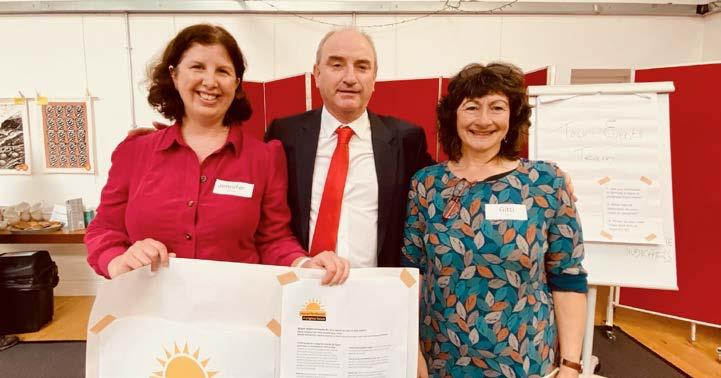
Cllr Tudor, who represents the Castle Ward, attended a meeting at HaverHub alongside various stakeholders to discuss development plans for Haverfordwest.
He said: “As the County Councillor for the Castle Ward, it was lovely to attend a meeting of various stakeholders at HaverHub on the future of Haverfordwest. This is an excellent initiative, one which has my full support. It can only improve
Tom Sinclair editor@herald.email
collaboration between all the various stakeholders in our County Town— stakeholders who most definitely have the needs and aspirations of the people of Haverfordwest close to their hearts. This will undoubtedly generate a brighter future for Haverfordwest for all involved.”
The initiative aims to bring together key figures in the community to foster cooperation and drive positive change. Among those involved in the discussions were Gitti Coats and Jennifer Summers.


COUNCIL’s efforts to set its budget and determine next year’s Council Tax were thrown into disarray on Thursday, february 20, as councillors voted to adjourn the decision amid uncertainty over funding from the Welsh Government. Councillors had gathered to scrutinise the proposed budget based on forecast financial settlements. However, before discussions could begin, standing orders were suspended after it emerged that the Welsh Government planned to issue the actual financial settlement for Pembrokeshire later that same day, potentially after the budget and Council Tax had been set.
This development meant councillors were being asked to make critical financial decisions based on incomplete information. Moving for an adjournment, Cllr Jamie Adams highlighted that even a small increase in Welsh Government funding could significantly alter which cuts were necessary and the level of Council Tax required.
Cllr Joshua Beynon, Cabinet Member for Corporate Finance and Efficiencies, acknowledged the point, stating he did not yet know the exact impact of the updated settlement, whether it would be an additional £100,000 or £2 million.
Following debate, councillors voted to adjourn the budget-setting meeting until March 6, by which time the Cabinet
Jon Coles jon.coles@herald.email
is expected to have greater clarity on overall grant funding, including allocations for specific projects outside the core budget settlement.
Scepticism remains over the process. One councillor told The Herald: “Being cynical, they hoped to get 9.85% through and, hey presto, a large chunk from the Welsh Government, for which certain Cabinet members would take credit and utilise as they see fit. One thing’s for sure, if the budget and council tax had been passed before the extra money was announced, we wouldn’t be returning for a ‘let’s lower Council Tax Day’!”
Another councillor added: “They (the Cabinet) knew the money was coming in but didn’t want to tell the public.”
The Conservative Group was even more critical. Cllr Aled Thomas, the Conservative spokesperson for finance, said: “The Cabinet have been caught red-handed playing fast and loose with public finances, asking for extortionate council tax rises today despite knowing they were likely to have additional funding tomorrow.
“As councillors, we owe it to the people of Pembrokeshire to spend their money wisely, focusing on statutory services and not vanity projects. The Cabinet and leader have clearly lost the confidence of the chamber, and they should consider stepping
down for the benefit of the people of Pembrokeshire.”
Shortly after the budget meeting was adjourned, the Welsh Government confirmed a funding floor of 3.8% for local authorities, significantly increasing the money available to Pembrokeshire County Council.
In response, the council issued an official statement: Pembrokeshire County Council budget discussion adjourned. Councillors have voted to adjourn the budget decision to a future meeting, following the full announcement of Welsh Government funding for local authorities.
At a meeting of Full Council on February 20, it was agreed to reconvene to set the budget for 202526 on March 6. Local authorities have a statutory requirement to agree on a balanced budget before March 11.
Cabinet Member for Corporate Finance and Efficiencies, Cllr Joshua Beynon, said: “I am committed to ensuring we work across the council chamber to deliver a budget before the legal deadline.”
Speaking to The Herald, IPG Leader, Cllr Huw Murphy said: “For Pembrokeshire County Council Cabinet to sanction a Council Tax setting meeting prior to knowing the full financial settlement from WG was surprising and not something the Independent Group could support hence the Notice to adjourn.
“It was clear at today’s meeting that Cabinet did not have the confidence of the majority of Council members to
continue with their recommendation to debate and vote upon a Council Tax of 9.85%.
“Following a short recess it was decided that Full Council will reconvene on March 6th to debate and decide the level of Council Tax that will be imposed on the hard working residents of Pembrokeshire.
“The Independent Group has every belief that their decisive move to adjourn Full Council will ultimately result in a lower Council Tax being levied to the 9.85% recommended by Cabinet today.
“The Independent Group comprise members from all over Pembrokeshire, all steadfast in their aim of protecting essential services but not forgetting the tremendous burden Council Tax bills impose on many households, many being pensioners on fixed incomes who have no easy remedy to ever increasing bills foisted upon them and this has to be considered when raising Council Tax. The question for Cabinet to consider is should they now put forward an alternative budget for March 6th recommending a Council Tax of less than 9.85% why did they recommend this level of Council Tax to Full Council today when not in possession of the full financial picture?”
With tensions running high and accusations of political manoeuvring, the coming weeks will determine how the council moves forward in setting a budget that reflects the updated funding available.
A DETERMINED group of women from Wales and beyond are ramping up their fight for justice, calling on Liz Kendall MP, Minister for Work and Pensions, to engage in mediation under the Civil Procedures Rule 2024. The 1950s Women of Wales & Beyond, the largest group of its kind in Wales, has been at the forefront of the campaign against what they describe as state pension injustice. Their fight is part of a broader movement representing millions of women born in the 1950s who have been affected by the increase in the state pension age.
On Monday, February 10, representatives from the group presented evidence to the All-Party Parliamentary Group (APPG) for State Pension Injustice, making a powerful case that successive governments have misled Parliament and the public over the extent to which women were informed about the rise in the state pension age. The campaigners claim that statements made by Liz Kendall MP, Rachel Reeves MP, and Prime Minister Keir Starmer suggesting that 90% of women were aware of the changes are demonstrably false.
“Every person with knowledge of the true facts of our case completely agrees that what has been done to these women was wrong. It was badly implemented, without any impact assessment, and needs to be put right,” said Kay Clarke, founder of 1950s Women of Wales, 50s Women United, and co-founder of Pension Partners for Justice.
Clarke emphasised that many affected women have suffered financial hardship, lost their homes, and even experienced severe health issues, including stress-induced heart attacks. Tragically, some women have taken their own lives due to the despair caused by the pension delay.
The campaigners argue that six additional years of waiting for their pensions—amounting to one-tenth of their lives—has cost women over £190 billion collectively.
The 1950s Women of Wales & Beyond is demanding that the government engage in mediation to resolve the crisis in a fair and lawful manner. They argue that a reasonable lump sum payment, followed by additional non-taxable payments

added to state pensions, is the fairest approach. This method would allow the government to spread the cost over multiple fiscal years, easing pressure on public finances.
The United Nations Convention on the Elimination of Discrimination Against Women (CEDAW) supports the idea of compensatory measures, stating that pension changes were discriminatory and implemented without adequate safeguards.
Jackie Gilderdale, organiser of the 1950s Women of Wales, stressed that mediation is the only viable way forward.
“The Cedaw legal approach through mediation is the most sensible way forward. We hope that all groups can come together to support this and push for Alternative Dispute Resolution to enforce the legal rights of 1950s women,” she said.
Campaigners have provided what they call a plethora of evidence showing that the claim that 90% of women knew about the changes was based on a survey of just 40 respondents. They
argue that the Department for Work and Pensions (DWP) was aware that its communication was unclear, even reprinting leaflets to correct misleading information.
The campaigners also highlight that many MPs themselves were unaware of the changes when they were introduced in 1995 and 2011.
The Government’s response
So far, the government has refused to commit to financial compensation, arguing that the changes were legally sound. However, the 1950s Women of Wales & Beyond believe that the legal case for mediation is strong, particularly given past failures in government consultation and adherence to equality legislation.
Despite setbacks, campaigners remain resolute.
“We will not be silenced. This is an injustice that must be put right,” said Clarke.
With mounting pressure on politicians and a growing public awareness of the issue, the fight for justice for 1950s women is far from over.
The 1950s Women campaign refers to the fight for pension justice by women born in the 1950s who saw their
state pension age rise unexpectedly, leaving many in financial hardship. The issue stems from two key pieces of legislation:
The 1995 Pensions Act, which first raised the state pension age for women from 60 to 65 to bring it in line with men.
The 2011 Pensions Act, which accelerated the changes, bringing forward the rise to 66 with little notice.
Many of the women affected argue that they were not properly informed of these changes, leaving them little time to plan for their financial future.
The core issue for the 1950s women is that they were not given enough notice of the increase in their pension age. Campaigners argue that millions of women were expecting to retire at 60, only to discover—often at short notice—that they would have to wait up to six more years to receive their state pension.
For many, this was devastating. Women who had already left work to retire, or who had planned their finances based on a pension they thought would be available at 60, were suddenly left without an income. Many were forced to remain in work, struggle on benefits, or rely on savings that were never

intended to last that long.
Campaigners argue that this disproportionately affected women, particularly those who had spent years in low-paid jobs, worked part-time, or taken time off work to care for children or elderly relatives. As a result, many women have found themselves in financial hardship, struggling to pay for essentials like rent, food, and heating.
The campaigners are not arguing against equalising the state pension age for men and women. Instead, they want recognition that the changes were poorly communicated, unfairly implemented, and have caused significant hardship.
Different groups have suggested different solutions, but the 1950s Women of Wales & Beyond—one of the largest campaign groups—are calling
for:
A fair financial settlement – They propose a lump sum payment to affected women, followed by additional payments added to their state pensions to make up for the years they lost.
Non-taxable compensation – Any payments should be tax-free and should not affect benefits.
Mediation with the government –They want Liz Kendall MP, the Minister for Work and Pensions, to engage in mediation under the Civil Procedures Rule 2024 to reach a fair resolution.
AND gOVERNMENT
The Parliamentary and Health Service Ombudsman (PHSO), which investigates complaints about government departments, ruled in 2021 that the Department for Work
and Pensions (DWP) had committed maladministration by failing to communicate the changes clearly. However, the Ombudsman stopped short of recommending compensation, angering campaigners who felt their hardship was being ignored.
The government has consistently refused to provide financial redress, arguing that the pension changes were necessary and legally sound.
Liz Kendall MP and Rachel Reeves MP have stated that the government cannot afford to pay compensation, a claim that campaigners dispute. They argue that the government has saved over £190 billion by not paying out pensions as expected.
The fight for justice has been ongoing for over a decade, with
campaigners staging protests, lobbying MPs, and taking their case to court. The Women Against State Pension Inequality (WASPI) movement initially led the campaign, but disagreements over legal strategy led to the formation of several other groups, including BackTo60, Pension Partners for Justice, and 1950s Women of Wales & Beyond.
Despite setbacks, the movement remains strong. Campaigners believe that mediation is the next logical step and are calling on the government to enter discussions in good faith.
For the women affected, the issue is not just about money—it’s about justice. Many feel they have been betrayed by the government and left to struggle in their later years after decades of paying into the system. Their message is clear: they will not give up until the injustice is put right.
A NARBERTH man has been found not guilty of three charges of sexual assault after the Crown Prosecution Service (CPS) offered no evidence against him.
Kevin Evans, 69, of Highfield Park, had been accused of sexually assaulting a woman in 2022. He was
charged with one count of sexual assault by touching on March 21, 2022, and two counts of assault by penetration on April 25 and May 9, 2022.
Evans denied all allegations from the outset. His defence barrister, Dyfed Thomas, previously told the
court: “The position is a firm not guilty plea.”
The case was originally scheduled for trial on July 15, 2023, but was delayed until May 6, 2024. However, concerns over the complainant’s health and well-being led to a review by the CPS.
At a hearing at Swansea Crown Court on February 18, prosecutors confirmed they had considered all options but would not proceed with the case. As a result, the court recorded formal not guilty verdicts, bringing the matter to a close.

THE LATEST figures for NHS Wales show that waiting lists remain stubbornly high, with 800,395 patient pathways still awaiting treatment. Despite a small decrease from November’s figures, concerns persist over the length of delays and the impact on patients across the country.
The statistics reveal that fewer than half (48.3%) of the most serious emergency calls—classified as ‘red’—received a response within the eight-minute target time. Additionally, median waits for treatment have
Tom Sinclair editor@herald.email
increased by 0.6 weeks to 23.6 weeks, a stark contrast to the 14.2week median wait in England.
In December, 10,387 patients waited over 12 hours in Welsh emergency departments, despite a target of zero patients exceeding this timeframe. The proportion of patients seen within four hours in A&E also fell to 67.6%, well below the 95% target.
Experts warn that delays in emergency response times and long A&E waiting periods put patient safety at risk, increasing the likelihood of deteriorating conditions before treatment is received. Patients suffering from strokes, heart

attacks, and other critical conditions are especially vulnerable to these delays.
RESPONSE: ‘LABOUR DISTRACTED BY PET PROjECTS’
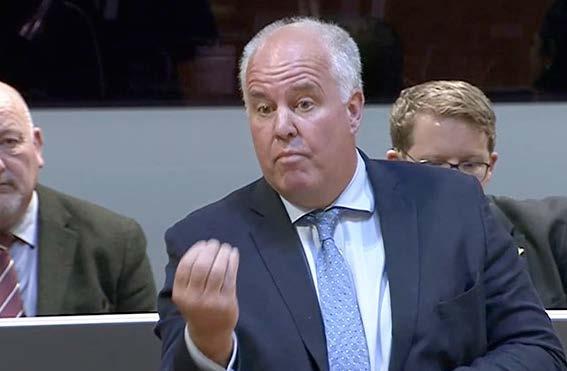
Andrew RT Davies, former party leader, criticised the Labour-led Welsh Government for failing to tackle the crisis effectively.
“People in Wales will take little solace in this downturn in patient pathways,” said Mr. Davies. “After months and months of Labour’s NHS waiting lists reaching record highs, a small decrease is the first step in an incredibly long journey, and I have serious doubts that Labour have the focus to keep us on
this path.”
He added: “If Labour could only drop their pet projects and distractions, Wales might have a Welsh Government fully and unshakably committed to working with staff to turn our NHS around.”
The Conservatives argue that funding has been misallocated to nonessential projects rather than front-line services. They claim that additional resources should be directed toward increasing NHS capacity, improving recruitment, and cutting bureaucracy to allow medical staff to focus on patient care.
A major point of contention


remains the lengthy two-year waits for treatment, which stand at 23,621 in Wales. In England, only 155 patients remain on similar extended waiting lists. Welsh Labour’s First Minister Eluned Morgan, who previously served as Health Minister, had pledged to eliminate these long waits by March 2023 and then again by March 2024—but both targets have been missed.
For thousands of Welsh patients, these long delays mean living in pain and uncertainty, often forced to give up work while waiting for essential procedures. Patient advocacy groups have called for immediate action, urging the government to accelerate treatment pathways and explore innovative solutions, such as expanding the role of community hospitals and increasing specialist workforce recruitment.
Cancer treatment sees best performance since 2021
Performance against the 62-day cancer treatment target improved in December, rising to 61.9% from 60.2% in November. While this represents the best performance since August 2021, it remains well below the 75% target. Campaigners argue that more must be done to ensure cancer patients are diagnosed and treated as early as possible, particularly as delays can significantly impact survival rates.
A key development in the latest figures is a slight reduction in the overall number of patient pathways, which fell from just under 802,300 in November to just under 800,400 in December. While this marks the first decrease in several months, waiting lists remain at crisis levels, with over 600,000 patients still waiting for treatment.
Health leaders warn that the downward trend could be temporary, particularly as winter pressures continue to take a toll on hospital capacity and workforce shortages persist.
Darren Hughes, Director of the Welsh NHS Confederation, acknowledged the dedication of NHS staff in delivering improvements despite unprecedented challenges but stressed that urgent action is still needed.
“The latest figures show a mixed picture of performance in the face of relentless demand and pressure on NHS services,” Mr. Hughes said.
“The fact that improvements were made in several areas is testament to the dedication of staff who labour
night and day to provide treatment for patients—thank you for your determination, commitment, care, and hard work. These improvements include performance in emergency departments in January, the overall number of people waiting for treatment coming down for the first time in months, and the best performance against the 62-day cancer target since 2021. Given these statistics are based on December and January, the most difficult months of the year for the health service and a particularly difficult flu season, these green shoots are not to be dismissed.”
However, he cautioned that major challenges remain, particularly in tackling waiting lists and ensuring sustainable improvements across the system.
“We cannot ignore that, ultimately, challenges remain across the breadth of health and social care services, and people are needing higher levels of care at an ever-increasing rate. Waiting lists are higher than any of us would like them to be. Health and care leaders know there is still a long way to go in what is a very difficult financial climate, and staff are committed to continuing to innovate and transform services in the face of increasing demand.”
Mr. Hughes warned that without long-term investment and strategic planning, the NHS would continue to
struggle to cope with rising demand.
“The NHS is likely to face more difficult winters until we tackle the long-term challenges across the NHS and social care. Unless we make meaningful shifts towards prevention, longer-term planning and solutions, upgrading to fit-for-purpose physical and digital infrastructure, and creating a sustainable social care system, the NHS will continue to firefight day in, day out.”
With waiting lists still at record levels and emergency care targets continuing to fall short, political pressure is mounting on the Welsh Government to deliver meaningful reforms.
The Welsh Conservatives have criticised Labour’s handling of the NHS, arguing that funding has been misallocated to “pet projects” rather than front-line services. Meanwhile, patient advocacy groups are calling for increased investment in staffing, diagnostic equipment, and hospital infrastructure to address the deepening crisis.
As the Welsh NHS continues to grapple with growing demand, the question remains whether these modest improvements are the start of a sustained recovery or merely a brief respite in an ongoing healthcare crisis.

NHS DENTISTRY in Wales is in crisis. The state of NHS dental care has been overshadowed by the broader collapse of NHS services in Wales, from spiraling waiting lists to patients being treated in hospital corridors.
This week, the British Dental Association (BDA) took a chainsaw to Welsh Government claims of an improving picture in NHS dentistry, accusing ministers of spreading halftruths and spin.
NHS dentistry garners fewer headlines than delays in cancer treatment, GP shortages, and the overall
Jon Coles jon.coles@herald.email
deterioration of the Welsh NHS. Yet, of all these crises, the rapid collapse of dental services is among the most stark.
The Herald asked Hywel Dda University Health Board how many dental practices in Pembrokeshire had vacancies for NHS patients. The Health Board could not provide an answer. That means local patients in need of dental care must either ring around every dental practice listed on Hywel Dda’s website or rely on emergency services. Even for those accepted onto an NHS dental list, waiting times for treatment remain extensive.
Currently, more than 1.5 million
people in Wales are unable to secure an NHS dentist, with many more facing months or even years of delays.
Sam Kurtz, MS for Carmarthen West and South Pembrokeshire, called the situation “one of the top issues” raised by his constituents.
“The system is failing,” Mr Kurtz said. “Patients are left in pain, dentists are overwhelmed, and public trust in NHS dentistry is eroding, all while the Welsh Labour Government sits back and watches this crisis unfold.”
LONg-TERM fAILURE TO ACT
As with many issues plaguing the Welsh NHS, the collapse of NHS dentistry was predictable—and
avoidable.
As The Herald reported last week regarding GP shortages, dentists have been retiring at a foreseeable rate for years, with little or no effort made to replace them—especially those willing to take on NHS patients.
Over 10% of dentists have been leaving the profession annually since 2010-11, with 2024 marking the secondhighest departure rate in over a decade. The overall number of dentists in Wales continues to decline, with around 20% nearing retirement.
In 2022, 93% of dental practices in Wales were not accepting new NHS patients, and 88% were refusing new child patients.
The impact of this failure to recruit

and retain dentists is clear.
Large parts of rural Wales are now NHS dental deserts. The lack of access disproportionately affects children, older people, pregnant individuals, disabled people, those with additional learning needs, and lower-income families.
Despite repeated assurances from the Welsh Government about increasing NHS dental appointments and the supposed success of its dental contract, reports from Senedd committees and direct questioning in the Welsh Parliament reveal a chasm between ministerial claims and patients’ realities.
This week, the British Dental Association delivered a scathing assessment of the Welsh Government’s handling of NHS dentistry.
“For too long, the Welsh Government has offered spin, half-truths, or doublespeak on dentistry,” the BDA said.
In an open letter to Health Secretary Jeremy Miles, the BDA called for honesty, accusing the government of misrepresenting negotiations over the General Dental Service contract for 2024-25.
Mr Miles claimed the Welsh General Dental Practice Committee had refused further negotiations, but the BDA described this as “a spectacular act of
bad faith.”
The association warned that the promised funding uplift for dental practices—backdated to April 2024— has yet to materialise, putting the financial sustainability of services at risk.
“This uplift means another real-terms pay cut for dentists and insufficient funds to cover running costs,” the BDA said. “It will not begin to meet the hike in employers’ National Insurance contributions coming in April.”
The BDA also criticised the Welsh Government’s misleading claims about investment and patient numbers.
“Ministers claim investment and patient numbers are breaking records. The reality is that investment in dentistry has stalled, and the number of patients seen each year remains 30% lower than in 2019. It is time our patients received the dental service they deserve—not empty promises and PR stunts like the so-called Dental Access Portal, which does nothing to create extra appointments out of thin air.”
‘gASLIgHTINg’ WALES ON DENTISTRY
At the heart of the crisis is the deeply flawed NHS dental contract, which offers a fixed price for all NHS treatments. This financial model forces dentists to hand back contracts or operate at a loss. Complex procedures, which take time
and resources, often leave dentists out of pocket, discouraging them from taking on NHS work.
Plaid Cymru’s Health and Social Care spokesperson, Mabon ap Gwynfor MS, did not mince words, accusing Labour of “gaslighting” the Welsh public over the scale of the crisis.
“The people of Wales experience this crisis daily—being forced to go private, travelling long distances, or, in extreme cases, pulling their own teeth. Meanwhile, dentists are
burning out.
“Labour’s empty boast of 400,000 ‘extra’ appointments has rightly been called out as spin. NHS dentistry needs fundamental, systemic reform. The contract is simply not fit for purpose, and, like the entire primary care sector, it must be prioritised.”
The question now is whether the Welsh Government will listen—or whether patients will continue to suffer while ministers cling to their narrative.


A WARRANT has been issued for the arrest of a Pembrokeshire woman accused of stealing meat from a local service station.
Lisa Stewart, 44, of Truscott House, London Road, Pembroke Dock, is alleged to have stolen meat worth £63.12 from Bush Hill Service Station, Pembroke, on January 1. She was due to appear before Haverfordwest magistrates on Tuesday (Feb 18), but after failing to attend, magistrates issued a warrant for her arrest.
A TENBY chef has been sentenced after being found to be in possession of a large kitchen knife at Cardiff Central Railway Station.
Police officers were called to the station on July 19, following reports that a man, later identified as Morgan Mitchell, had been seen with a knife.
“The defendant had had an altercation with a street performer and had taken a knife from his backpack,” Crown Prosecutor Nia James told Haverfordwest magistrates this week.
“When the police officers found him, they discovered that he did indeed have a knife in his bag, and
when spoken to, he said he’d been camping and was a chef.
“The knife was pulled out of his bag, but it had not been brandished at anybody.”
Mitchell, 39, of Clareston Road, Tenby, pleaded guilty to possessing the knife in a public place.
He was sentenced to 20 weeks in custody, suspended for 18 months. He must complete 25 rehabilitation activity requirement days and a 60day alcohol abstinence order. He was ordered to pay a £154 court surcharge and £85 costs. A forfeiture and destruction order was imposed on the knife.

A HAKIN woman has been brought before magistrates after throwing a cupful of water over an on-duty police officer.
Veronica Jones, 36, had been placed inside the cage of a police van as she waited to be interviewed by officers in relation to an unrelated matter. But after being refused pain relief medication by one of the officers, Jones saw red.
“A number of prisoners were waiting to be booked in on February 2, and Veronica Jones was told that there would be some delay,” Crown Prosecutor Nia James told Haverfordwest magistrates this week.
“She told the officers that she was feeling claustrophobic in the rear cage, so the officer opened the door to allow some fresh air in.”
At this point, Jones, of Haven Drive, Hakin, became verbally abusive.
“She stated she was having a panic attack, although she seemed to be fine,” continued Nia James. “She asked for some water, and the officer locked the rear cage, got a paper cup, and filled it to about 1 cm from the top.”
When the officer returned to the police van, Jones began demanding her medication. However, Nia James
reminded magistrates that police officers are not authorised to grant any medication to prisoners unless they have been seen by a nurse.
“This was when the defendant became irate,” said Nia James. “She told the officers, ‘I’m in f****** pain and all I want is my f****** meds.’”
At this point, Jones threw the water at the officer, shouting, “F****** have that, you ugly b****.”
“Police officers are people who are simply doing their jobs to help other people,” concluded Nia James.
Jones pleaded guilty to assaulting the emergency worker by beating. She was legally represented in court
by solicitor Michael Kelleher.
“Being in the back of a van can be very uncomfortable,” he said. “The defendant had a torn ligament in her ankle and asked for her Co-codamol, which is just a painkiller. She’d brought it with her in readiness for a delay, but the officers had to follow the correct procedure.
“Foolishly, in her annoyance, she threw the water at the police officer. She lost her temper, but no injury has been caused.”
Jones was sentenced to an 18-month conditional discharge. She must pay £85 court costs and a £26 victim surcharge.
A MILfORD HAVEN man accused of cultivating cannabis at his home address has been remanded in custody by magistrates.
Reece Cookson, 33, is accused of growing the Class B controlled drug at his property in Hawthorn Path, Milford Haven following a search carried out by police officers on January 19. He is further charged with possessing 995.4 grams of cannabis and of assaulting a female causing her actual
bodily harm at the Mount Estate on the same date.
This week, Cookson appeared before Haverfordwest magistrates via a video link from Swansea Prison, where he is being remanded in custody pending his trial, which will take place on March 10.
Following a request from the Crown Prosecution Service, Cookson’s remand will continue due to concerns that he will reoffend and interfere with prosecution witnesses.


f ORMER Reform UK parliamentary candidate Stewart Marchant has appeared before a district judge charged with driving over the legal alcohol limit.
Marchant, 44, is accused of driving a Dacia Duster on the A40 between Penblewin and Llanddewi Velfrey on February 1 with 76mcg of alcohol in his breath. The legal limit is 35mcg.
Appearing at Haverfordwest Magistrates’ Court this week, Marchant pleaded not guilty to the charge. He chose to represent himself in court.
His trial is scheduled to take place at Llanelli Magistrates’ Court on Thursday (Feb 20). He was released on unconditional bail.
A PEMBROKESHIRE accountant has been handed a four-figure fine after being caught drink-driving through Gelliswick in the early hours.
Police were alerted by concerned members of the public about the manner in which a Toyota was being driven from Milford Haven along Hubberston Road on February 2.
Officers stopped the vehicle and found it was being driven by Logean
Moyo. A roadside breath test proved positive, and further readings at the police custody suite showed he had 90 mcg of alcohol in his breath. The legal limit is 35.
Moyo, of Maes Dyfed, St Davids, pleaded guilty to the charge. He was ordered to pay a total of £1,162, comprising a £769 fine, a £308 surcharge, and £85 costs.
A 69-YEAR-OLD Dock man has appeared before magistrates charged with swinging his stick towards a neighbour who had inadvertently sprayed a taxi driver with water.
The Crown claims that Mr Steven Bromhall was washing his car, which was parked outside his property in Market Street, Pembroke Dock, on July 17 when a taxi arrived to collect his neighbour, Henry Howlett.
“The driver opened the taxi window as he drove past, and Mr Bromhall inadvertently sprayed him with his hosepipe,” Crown Prosecutor Nia James told Haverfordwest magistrates this week.
“The taxi driver started remonstrating, and the defendant then began waving his walking stick in the air, towards Mr Bromhall.”
The Crown claims while Mr Bromhall
sustained an injury to his back, it remains unclear whether his back was struck by Howlett’s stick.
This week, Howlett, of Market Street, Pembroke Dock, pleaded not guilty to a charge of common assault.
His trial will now take place at Haverfordwest Magistrates’ Court. Howlett was released on unconditional bail.


DYfED-POWYS POLICE has carried out its most significant drugs operation to date, seizing more than £12 million worth of cannabis and dismantling 37 large-scale cannabis farms across the force area. The crackdown, named Operation Scotney, has resulted in 35 arrests and the disruption of organised crime gangs operating in rural communities.
Raiding sites including former schools, empty town centre shops, and a disused newspaper office, police have uncovered thousands of cannabis plants and tonnes of commercial heating and lighting equipment.
Detective Chief Inspector Rich Lewis explained how the operation began: “Through proactive policing, we noticed a rise in large-scale cannabis factories being discovered in seemingly unrelated locations. The scale was unprecedented, with thousands of plants found in each warrant. It quickly became clear that these factories were linked, run by organised crime groups from outside the force area, aiming to evade detection in our rural towns.”
In response, Operation Scotney was launched in early 2024, bringing together detectives, intelligence experts, and proactive policing officers to locate and disrupt these operations

before the cannabis could be cultivated.
The criminal networks behind these farms have been using increasingly brazen tactics, setting up operations
in town centres and even on the same street as a police station. DCI Lewis said: “We’ve found cannabis factories in former schools, empty shops, and a disused newspaper office, all in public areas where it would be difficult to go unnoticed. These gangs disguise themselves as construction workers or landlords, wearing high-visibility vests and moving large boxes into buildings in broad daylight to avoid suspicion.”

A striking example occurred in Newcastle Emlyn, where officers discovered 400 cannabis plants just four doors down from the local police station.
CRACKDOWN YIELDS MAjOR ARRESTS
Over the past year, Operation Scotney has led to the arrests of 35 individuals. Twenty-nine have been jailed, four are awaiting sentencing, two are yet to enter pleas, and two others have been deported.
CARMARTHENSHIRE COURT RESULTS:
• King Street, Carmarthen Jurgen Kodra: Jailed for 2 years, 4 months for production of cannabis.
• Old Llangunnor Road, Carmarthen: Nurdin Hoxha: Charged with production of cannabis – sentencing on March 7.
• gordon Road, Llanelli: Argil Bushi: Jailed for 20 months for production of cannabis.
Aldi Xhaferri: Jailed for 9 months for production of cannabis.
• Craddock Street, Llanelli: Blerjan Dedja: Jailed for 12 months for production of cannabis.
• Bigyn Road, Llanelli: Franko Sulovari: Jailed for 18 months for production of cannabis.
• Mountain gate Inn, Ammanford: Beni Mirashi: Jailed for 12 months for production of cannabis.

• Maes Y Wern, Carway: Viktor Gjeloshi: Jailed for 15 months for production of cannabis.
Nikoll Necaj: Jailed for 6 months for production of cannabis.
Eduart Nenfusho: Jailed for 15 months for production of cannabis.
• Vaughan Street, Llanelli: Hazis Rapi: Jailed for 12 months for production of cannabis.
CEREDIgION COURT RESULTS:
• former Llandysul school:
• Alfred Perkola: Conspiracy to supply and possession with intent to supply cannabis. Sentencing on February 26, 2025.
Aldi Gjegjaj: Conspiracy to supply and possession with intent to supply cannabis. Sentencing on February 26, 2025.
• former Llandysul school (second warrant):
Armeld Troski: Jailed for 40 months for production of cannabis.
Njazi Gjana: Jailed for 30 months for production of cannabis.
Ervin Gjana: Jailed for 30 months for production of cannabis.
PEMBROKESHIRE COURT RESULTS:
• Honeyborough Industrial Estate,
Neyland:
Zhupa Gentian: Jailed for 12 months for production of cannabis.
Ergest Mucopata: Jailed for 12 months for production of cannabis.
• Stop search, Cleddau Bridge: Albert Nikolla: Jailed for 4 years, 3 months for possession with intent to supply and supply of cocaine.
Pajtim Meta: Jailed for 5 years for possession with intent to supply and supply of cocaine.
• India Row, Monkton, Pembroke: Sergej Zakacura: Jailed for 7 years, 3 months for production of cannabis.
• North Crescent, Haverfordwest: Shahin Mustaj: Jailed for 8 months for production of cannabis.
• Treowen Road, Pennar, Pembroke Dock:
Ervis Kerciku: Jailed for 12 months for production of cannabis.
• Industrial yard, Honeyborough: Flamur Vengo: Jailed for 24 months for production of cannabis.
Nertil Dallenga: Jailed for 24 months for production of cannabis.
• Dimond Street, Pembroke Dock: Armando Beti: Jailed for 2 years, 8 months for being concerned in production of cannabis.
• Main Street, Pembroke: Amarildo Daja: Jailed for 12 months for being concerned in production of cannabis.

• Dimond Street, Pembroke Dock: Esmirald Dedej: Charged with production of cannabis and remanded in custody.
Arsen Tanasica: Jailed for 12 months for production of cannabis.
POWYS COURT RESULTS:
• former County Times building, Welshpool: Dino Marku: Jailed for 18 months for production of cannabis.
Former County Times building (second warrant): Kastriot Gega: Jailed for 6 months for production of cannabis.
• Broad Street, Welshpool: Alban Qemalli: Jailed for 22 months for being concerned in production of cannabis.
• High Street, Welshpool: Kladji Toci: Jailed for 16 months for being concerned in production of cannabis.
• former HSBC bank, Llandrindod Wells: Two men deported following arrest. The force says it remains committed to disrupting organised crime and ensuring the safety of local communities.

A PERSISTENT Pembrokeshire shoplifter has appeared before magistrates after being caught stealing items from the Pembroke Dock branch of Home Bargains on three separate occasions.
Michel Valmont, 47, was seen entering the store on November 21 and removing goods valued at £53.49. None of the stolen items were recovered.
Eight days later, he returned to the store and stole £181.67 worth of goods, and once again, none of them were recovered.
The third offence took place on December 1, when Valmont stole a watch strap from Home Bargains, valued at £6.99.
This week, Valmont, of Water Street, Pembroke Dock, appeared before Haverfordwest magistrates, where he pleaded guilty to all three
Sarah Jane Absalom sarah.jane.absalom@herald.email
charges of theft.
After outlining the facts, Crown Prosecutor Nia James said the defendant has 71 similar convictions.
Meanwhile, his solicitor, Tom Lloyd, said the defendant is currently “trying very hard to lead a pro-social life.”
“He’s engaged fully with the probation service and is trying to get clear of heroin, because over the years, this has been his main problem,” Mr Lloyd told the magistrates.
Valmont was sentenced to a 12-month Community Order, during which he must carry out 15 rehabilitation activity requirement days. He was also ordered to pay a total of £242.15 compensation to Home Bargains, £85 court costs, and a £114 surcharge.

RUgBY fANS heading to Cardiff for Wales’ home Six Nations fixtures will be monitored by live facial recognition cameras as part of a South Wales Police initiative aimed at enhancing public safety.
The technology will be deployed across the city’s main pedestrian areas during Wales’ matches against
Tom
Sinclair editor@herald.email
Ireland and England, creating what the force describes as “zones of safety.”
South Wales Police say the cameras are temporary, clearly marked, and designed to help officers
identify individuals wanted by police.
If the trial is deemed successful, the force suggests the technology could be used at other major events across South Wales.
A spokesperson for South Wales Police said: “Our priority is to keep the public safe. With tens of thousands of rugby fans expected in the capital, this technology helps us achieve that.”
• There have been no wrongful arrests linked to the use of the system.
• The force has not recorded a false alert for more than five years.
• Advance publicity of deployments is used partly to deter criminals.


The use of facial recognition technology has been a point of controversy in the past, with concerns over privacy and accuracy. However, police insist their system is reliable and does not lead to wrongful arrests.
They added:
• An officer, not the technology, makes the final decision on whether an alert is valid.
The technology was previously used at a Cardiff concert following reports of mass mobile phone thefts at similar events across the UK. During that deployment, one suspect was identified and arrested for going equipped to steal. Police say no phone thefts were reported at the gig as a result.
If the scheme proves effective, South Wales Police could expand its use of facial recognition to other major events and locations across the region.

THE fINDINgS of the Ministry of justice’s Independent Sentencing Review Report could mark a turning point in the future of Britain’s criminal justice system, according to Nacro CEO Campbell Robb.
The report, published on Tuesday (Feb 18), argues that successive governments’ “tough on crime” stance has contributed to the ongoing prison overcrowding crisis, which has brought the system “to the brink of collapse.”
Prison overcrowding at crisis point
The UK’s prison population now exceeds 85,000, a figure the report describes as symptomatic of a justice system prioritising punishment over evidence-based intervention. According to Nacro, research shows that community-based sentencing and investment in support services are more effective at reducing reoffending, yet government policies have continued to rely on longer custodial sentences as a default response.
Robb said: “This is a pivotal moment for justice reform. If we’re truly committed to a fair and effective system, we must shift away from the illusion of quick fixes and tough sentences and focus on building a system that rehabilitates and reintegrates people.”
Chair of the Independent Sentencing Review, David Gauke, criticised the “haphazard policy making and underinvestment” that has plagued the justice system for decades.
“For too long politicians have operated in a vacuum, increasing sentencing for individual crimes without considering the knock-on impact on the wider system. It is time to accept this does not deliver justice for victims; it fails them,” he said.
Academics contributing to the report have identified the 1991 Criminal Justice Act as a key turning point in the shift towards “penal populism,” in which political pressure has led to increasingly severe sentencing policies. Measures such as mandatory minimum sentences, extended terms for specific offences, and recall policies have inflated the prison population, with little evidence that they contribute to crime reduction.
According to the review, those given custodial sentences have some of the highest reoffending rates, with overall reoffending for ex-prisoners standing at 37.2%. For offenders
Tom Sinclair editor@herald.email
serving short sentences of under 12 months, this rises to 56.9%. By contrast, community sentences and rehabilitation orders have been shown to be more effective at reducing reoffending.
Gauke stressed the need for an “honest conversation” about sentencing, stating: “Punishment will always be a central aim of the criminal justice system, but it is not the only aim; and prison is not the only form of punishment.”
Alongside the trend of longer sentences, the growing use of recall has significantly increased the prison population. In 1993, fewer than 100 people were in prison due to recall; by the end of 2024, this number had risen to nearly 13,000.
The review notes that changes such as mandatory post-release supervision for short sentences, combined with a more risk-averse probation service, have fuelled this surge.
The Independent Sentencing Review will release its full proposals for reform in the spring, calling for a “system reset” that aligns with all five statutory aims of sentencing: punishment, crime reduction, reform and rehabilitation, public protection, and reparation.

PRIVATE messaging platforms exploited by criminals
MORE than 2,000 child sexual abuse image offences were recorded by police forces in Wales over the past year, according to Home Office data. The figures highlight the exploitation of private messaging platforms by criminals to share illegal material, prompting renewed calls for stronger regulations.
The NSPCC has urged the UK Government to take decisive action to protect children in private messaging environments. The charity, along with Barnardo’s and the Marie Collins Foundation, has written to Home Secretary Yvette Cooper and Science, Innovation, and Technology Secretary Peter Kyle, calling for Ofcom’s approach to private messaging to be strengthened.
The data shows that 2,194 child sexual abuse image crimes were recorded by Welsh police forces in 2023/24, equating to around six offences per day.
• Dyfed-Powys Police recorded 192 offences.
• South Wales Police recorded 964 offences.
• North Wales Police recorded 535 offences.
• Gwent Police recorded 503 offences.
A separate Freedom of Information request by the NSPCC revealed that, in cases where police documented the platform used by perpetrators, half (50%) of offences occurred on Snapchat. Meta platforms accounted for a quarter of cases, with 11% on Instagram, 7% on Facebook, and 6% on WhatsApp.
In their letter to the Government, child protection charities expressed concerns over Ofcom’s Illegal Harms Code of
Tom Sinclair editor@herald.email
Practice, published in December 2024. The charities argue that the code does not go far enough to protect children from the worst forms of abuse on private messaging services, despite the Online Safety Act aiming to address such risks.
Ofcom has stated that platforms are only required to remove illegal content where it is ‘technically feasible’. However, campaigners warn that this loophole allows some services to avoid implementing basic protections for children.
Police data suggests that private messaging platforms are involved in more child sexual abuse image crimes than any other type of online platform. Offenders exploit the secrecy of these services to target children and avoid detection.
The NSPCC is calling on the UK Government to push Ofcom to strengthen its codes of practice and ensure online safety regulations adequately tackle this issue. The charity also wants private messaging services, including those using endto-end encryption, to introduce robust safeguards.
End-to-end encryption is a secure communication system where only the sender and recipient can access messages, preventing service providers from detecting illegal content. This, campaigners argue, creates a ‘safe haven’ for child abusers.
Data from Childline provides further evidence of the dangers of private messaging platforms. Last year, the service delivered 903 counselling sessions to children experiencing blackmail or threats to expose or share sexual images online—a 7% increase compared to 2022/23.
One 13-year-old girl who sought help

from Childline said: “I sent nude pics and videos to a stranger I met on Snapchat. I think he’s in his thirties. I don’t know what to do next. I told him I didn’t want to send him any more pictures and he started threatening me, telling me that he’ll post the pictures online. I’m feeling really angry with myself and lonely. I would like support from my friends, but I don’t want to talk to them about it as I’m worried about being judged.”
Chris Sherwood, NSPCC Chief Executive, said: “These offences cause tremendous harm and distress to children, with much of this illegal material being repeatedly shared and viewed
online. It is an outrage that in 2025 we are still seeing a blatant disregard from tech companies to prevent this illegal content from proliferating on their sites.
“Having separate rules for private messaging services lets tech bosses off the hook from putting robust protections in place. This enables crimes to continue to flourish on their platforms even though we now have the Online Safety Act.”
He added: “The Government must set out how they will take a bold stand against abuse on private messaging services and hold tech companies accountable for keeping children safe, even if it requires changes to the platform’s design. There can be no excuse for inaction or delay.”
MILfORD HAVEN Community
Primary School’s Prioryville site was forced to close on Monday morning
(Feb 17) following a gas leak. The junior section of the school shut down at 10:15am due to a strong smell of

THE WELSH gOVERNMENT has unveiled a budget agreement securing over £100 million in additional funding for public services, with key investments directed at childcare, social care, local councils, transport, and the environment. The deal, reached with jane Dodds MS, Leader of the Welsh Liberal Democrats, aims to bolster essential services, particularly in rural areas, and address pressing social and infrastructure concerns.
Key investments in the Final Budget 2025-26
The budget agreement, published on February 20 in the Senedd, details major funding allocations, including:
• An additional £30 million has been allocated to expand the Flying Start programme, providing free childcare for twoyear-olds across Wales.
• The hourly funding rate for childcare providers will rise from the previously proposed £6 per hour to £6.40 per hour, helping to support sustainability in the sector.
• The move follows concerns raised by the National Day Nurseries Association (NDNA) Cymru, which found that 89% of nurseries surveyed believed the previous rate was insufficient to cover rising operational costs.
NDNA Cymru Chief Executive Purnima Tanuku CBE welcomed the increase, saying: “This new deal is a step in the right direction and shows that the Welsh Government is committed to supporting providers
Tom Sinclair editor@herald.email
who deliver vital early years places.”
• £30 million will be allocated to social care services, aiming to reduce delayed hospital discharges and provide greater support within local communities. The funding is expected to alleviate pressures on the NHS by preventing unnecessary hospital admissions and improving community care services.
• A guaranteed 3.8% funding floor for all local authorities, costing £8.24 million, will benefit nine councils: Monmouthshire, Powys, Gwynedd, Vale of Glamorgan, Flintshire, Pembrokeshire, Ynys Môn, Ceredigion, and Conwy.
• £5 million has been set aside to enhance playgrounds and play facilities for children across Wales.
• £5 million will support leisure centres in becoming more energy efficient, addressing rising energy costs and sustainability concerns.
• A £15 million pilot scheme will allow young people aged 21 and under to pay just £1 per single bus fare to encourage greater public transport use and affordability.
• Extra funding will contribute to a
£120 million local authority road and pavement repair scheme, tackling maintenance issues on Wales’ road network.
• Funding has also been secured to restore the fifth train service on the Heart of Wales line.
• £500,000 in capital funding will be allocated to improve toilet facilities along major roads across Wales.
ENVIRONMENTAL AND RURAL DEVELOPMENT MEASURES
• £5 million will be used to combat water pollution in rivers and coastal areas.
• An extra £10 million has been allocated to support rural investment schemes, benefitting agricultural and environmental projects across Wales.
• A commitment has also been made to move towards a ban on greyhound racing in Wales, addressing concerns over animal welfare.
• The budget agreement also includes funding for feasibility studies to support several community projects, including:
• The development of the Wyeside Arts Centre in Builth Wells.
• The North Powys Wellbeing Campus in Newtown.
• Safety measures at the Pont y Bat junction on the A470.
• The refurbishment of Brynamman Lido.
gOVERNMENT AND OPPOSITION RESPONSES
Cabinet Secretary for Finance Mark
Drakeford praised the agreement, saying: “This demonstrates what can be achieved when the Welsh Government and Members of the Senedd work together constructively on areas where we have common ground. The additional investment will make a real difference to communities across Wales, particularly in rural areas.”
Jane Dodds MS, Leader of the Welsh Liberal Democrats, also welcomed the agreement, highlighting the benefits for families and local services. She stated: “I’m delighted we have secured the funds needed to deliver my party’s key priorities, including improving social care, increasing quality childcare, tackling water pollution, improving roads and public transport, and protecting vital council-run services.”
While the additional funding has been widely welcomed, some sectors argue that the increases may still fall short of covering rising costs. Early years providers stress that while the increase to £6.40 per hour is a positive move, further long-term investment is needed to ensure sustainability.
Similarly, concerns remain regarding ongoing pressures on the NHS and social care, as well as the state of Welsh roads, which have been in need of substantial repairs for years.
The Welsh Government maintains that this budget provides a strong foundation to address these challenges while working within financial constraints. However, it remains to be seen whether these measures will be enough to meet the growing demands of public services across Wales.
The Final Budget 2025-26 will now be debated in the Senedd before being officially passed into law.
THE WELSH gOVERNMENT
says it has welcomed a new report examining how town and country planning impacts Welshspeaking communities, with recommendations for strengthening policies to protect the language.
The Commission for Welshspeaking Communities has published its findings on the challenges faced by the Welsh language. Evidence presented to the commission highlighted concerns from planning authorities and professional bodies, many of whom believe existing policies and guidelines need revision to better support Welsh-speaking areas.
The report outlines 14 recommendations, including the need to strengthen planning guidance and assess the impact of policies on the language. One key proposal calls for a framework to evaluate how planning applications affect the Welsh language in high-density Welsh-speaking areas, similar to assessments used for Special Areas of Conservation. The commission also recommends reinforcing Technical Advice Note 20 to provide clearer guidance on planning matters relevant to the Welsh language.
The Welsh Government will now review the report and respond to its findings in the coming months.

have shared their time and expertise. We will consider its findings and recommendations carefully.”
Cabinet Secretary afor Finance and Welsh Language, Mark Drakeford, said: “I would like to thank the members of the commission for presenting this report, and the contributors who
Dr Simon Brooks, Chair of the Commission, added: “Following thorough research, we have concluded
that planning policies related to the Welsh language should be revised. Strengthening the role of the language within the planning system is crucial to securing its future as both a national and community language.”
THE WELSH PORTS gROUP held a well-attended reception at the Welsh Senedd on Tuesday (feb 20), bringing together over 100 industry leaders, Senedd Members, and key stakeholders to discuss the crucial role of Welsh ports in driving economic growth.
A key moment of the evening was the formal appointment of Tom Sawyer, Chief Executive of the Port of Milford Haven, as the new Chair of the Welsh Ports Group, succeeding outgoing Chair Andrew Harston.
Samuel Kurtz MS, Senedd Member for Carmarthen West & South Pembrokeshire, welcomed attendees, sharing his personal ties to the maritime industry and its deep roots in coastal communities. Economy Secretary Rebecca Evans MS also spoke, alongside Mr Harston, highlighting the importance of collaboration between industry and government to unlock investment, improve infrastructure, and strengthen Welsh ports’ competitive edge.
The event emphasised the growing role of Welsh ports in energy transition, as well as the need for infrastructure investment to support future growth. The resilience of the industry was also a key theme, particularly in light of recent
Tom Sinclair editor@herald.email
severe weather disrupting GB-Ireland crossings through Holyhead.
Tom Sawyer, as the new Chair, pledged to champion ports as the powerhouse of the Welsh economy, ensuring coastal communities benefit from economic and industrial growth.
He said:
“Ports are the powerhouse of the Welsh economy and play a fundamental role in ensuring that our coastal communities prosper. As the Welsh Ports Group, we will continue to position ports and our coastal communities at the centre of our nation’s reindustrialisation and economic growth agendas.”
Outgoing Chair Andrew Harston reflected on his tenure and praised the Port of Milford Haven’s leadership in the sector, saying:
“With the right investment, ports will continue to be the foundation of regional economic growth, industrial innovation, and cross-border trade for years to come.”
The reception concluded with a strong message of collaboration and ambition, reinforcing Welsh ports’ vital role in the nation’s economic future.

NEYLAND TOWN COUNCIL is facing mounting criticism after a controversial closed-door meeting on Thursday (Feb 19) led to the cooption of the Town Clerk’s mother onto the council. The decision has sparked accusations of corruption, conflicts of interest, and a lack of transparency in the democratic process.
In an unprecedented move, the press and public were excluded from the meeting at Neyland Community Hub, forcing frustrated residents to wait outside in the Hub bar. The exclusion has led to growing anger in the community, with some describing the council’s actions as a “disgrace”.
A resident told The Herald:
“If they had nothing to hide, we’d have been allowed in. The secrecy makes it clear—they know what they’re doing is wrong.”
CLERK’S MOTHER APPOINTED AMID CONTROVERSY
One of the most contentious points of the meeting was the co-option of the Clerk’s mother, Donna Matthews, onto the council. This follows weeks of allegations that Neyland Town Council manipulated the selection process to favour particular candidates.
Leaked emails suggest that at least one valid candidate, Mr. Dickson, was ignored despite submitting an application. Documents indicate that Clerk Libby Matthews did not acknowledge or respond to his candidacy, while her mother’s application proceeded without challenge.
Further controversy arose when Councillor Brian Rothero was prevented from attending remotely, despite giving prior notice. In a leaked email, Rothero accused the council of deliberately obstructing certain members from participating:
“You and your group have done everything in your power to make this as difficult as possible… You are breaking protocol by not allowing me to attend and cast my vote remotely.”
He added:
“This entire process is corrupt. The Clerk is at the centre of it, organising everything.”
LEAKED EMAILS
Tom Sinclair editor@herald.email
Leaked correspondence reveals that Councillor Steve Thomas repeatedly questioned the legitimacy of the selection process but was met with silence or outright refusal to engage.
In one email, Thomas wrote:
“The vacancy needs to be readvertised, perhaps with a Clerk from another Council managing the process whilst all of this is going on.”
The response from Clerk Libby Matthews was blunt:
“No.”
When pressed on why she ignored Mr. Dickson’s application, her reply was:
“No is a full answer, and it’s the one you’re getting.”
These responses have heightened suspicions that the council was determined to install a pre-selected candidate regardless of fairness or due process.
Conflict of interest allegations
Adding to the scandal, leaked documents suggest that Councillor Mike Harry, a key figure in the co-option process, has direct financial ties to one of the candidates. As a paid director and employer of an applicant, his involvement should have disqualified him from participating in the selection.
Councillor Rothero warned in an email:
“As a now paid Director and employer of one of the candidates [via his directorship of Neyland CIC], I hope he removes himself. If not, the press will have a field day with this.”
The Herald contacted Cllr Mike Harry who confirmed he was a director, but said he wasn’t paid. Mike Harry also confirmed he voted in the meeting for the co-option of the clerk’s mother.
Former Neyland Mayor Andrew Lye has called for Councillor David Devauden to resign, citing allegations that he sent a threatening and malicious email to the Town Clerk.
Lye has also reported the council’s actions to the police, stating:
“This entire situation has spiralled out of control. If the full extent of these councillors’ emails were published, people would be shocked.”
Public frustration is growing, with many calling for the council to be dissolved and fresh elections to be held.

One resident summed up the mood:
“This council is rotten from the inside out. It’s time to clean house.”
What happens next?
Complaints have now been submitted to the Ombudsman, the Election Committee, and the police, placing Neyland Town Council at the centre of a deepening scandal.
Pressure is mounting for an independent investigation into the co-
option process, alongside renewed demands for resignations and a complete overhaul of council leadership. For now, residents are left wondering: Will those responsible be held accountable, or will secrecy and controversy continue to plague Neyland Town Council?
The Pembrokeshire Herald will continue to investigate and report on this developing story.

THE WELSH gOVERNMENT has unveiled a new initiative allowing young people across Wales to travel by bus for just £1 per journey. The scheme, set to launch in September 2025, has been met with widespread approval, including strong support from the Confederation of Passenger Transport (CPT).
The £15 million pilot programme will enable those aged 21 and under to travel anywhere in Wales for £1 per trip, with an unlimited travel option available for £37 per month. The move aims to improve access to education, employment, and social opportunities while encouraging greater use of public transport among young people.
Aaron Hill, Director of CPT Cymru, welcomed the announcement, describing it as a much-needed step in supporting the next generation of public transport users.
“Encouraging young people to travel by bus is an investment in the wellbeing of future generations. This is great news for young people across Wales who will be able to travel more affordably to work, to education and to see friends and family in local communities,” he said.
“This initiative is long overdue: until today, Wales was the only nation in Great Britain with no national scheme to reduce fares for bus users. Every pound invested in bus services brings £4.55 of benefits to the environment, the health of the nation and to communities. Bus operators look forward to working with the Welsh Government to ensure that this scheme can be delivered successfully, is financially sustainable, and that taxpayers get the best possible value for money.”
The scheme is part of a broader effort to enhance public transport accessibility and affordability in Wales. Currently, the mytravelpass scheme, funded by the Welsh Government, provides discounted bus fares of approximately one-third for those aged 16 to 21. The introduction

of the £1 fare represents a significant expansion of affordable travel options for young people.
Bus operators across Wales have expressed their willingness to collaborate with the Welsh Government to ensure the smooth implementation of the scheme. Industry leaders have
highlighted the potential economic and environmental benefits, citing evidence that investment in bus services yields a significant return in terms of public and environmental health.
The initiative is also part of a wider £15 million package that includes additional funding for local councils and social care services. With bus companies keen to engage in discussions about its long-term sustainability, the scheme is expected to shape the future of public
transport policy in Wales.
The Welsh Government hopes that the initiative will not only provide immediate cost savings for young travellers but also promote long-term public transport use, reducing car dependency and supporting environmental goals.
Further details on how young people can access the new fares are expected to be released in the coming months as preparations for the September 2025 rollout continue.
A LONg-fORgOTTEN stretch of disused railway sidings in Whitland is being repurposed into a much-needed town centre car park.
Work is already in progress to transform the site, located next to Whitland station, with completion expected by the end of March. The project, led by Carmarthenshire County Council in partnership with Network Rail, will provide 25 new parking spaces for both rail passengers and town centre visitors.
Whitland and Henllanfallteg county councillor Sue Allen welcomed the initiative, describing it as “fantastic news for the town.”
“Improving parking is crucial to supporting businesses and making the town centre more accessible,” she said. “I’m very grateful to Network Rail and the county council for their commitment to
Tom Sinclair editor@herald.email
this project.”
The site’s railway sidings, last used over six decades ago, have been relocated to the Gwili Railway project in Carmarthen to preserve Whitland’s railway heritage.
As part of the development, a new footpath will be built connecting the car park to the area behind Whitland Rugby Club. Future funding may allow for further improvements, linking multiple parking areas to ease congestion in the town.
Funding for the project has come from the UK Government’s Shared Prosperity Fund, supporting local infrastructure improvements.
Cllr Allen acknowledged that some

disruption is inevitable but reassured residents that the work would be completed before the summer.
“This has been a priority for residents and businesses since consultations took place in 2020 and 2021,” she said. “I know
people will welcome the improvements once they see the benefits.”
All construction is being carried out by Carmarthenshire County Council staff, ensuring local oversight and investment in the town’s future.
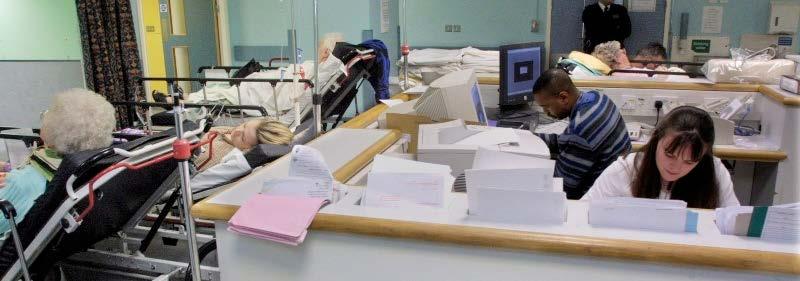
Of NURSINg in Wales has issued a stark warning to the Welsh government, demanding urgent action to eradicate the growing crisis of corridor care. Patients across Wales are being treated in unsafe and undignified conditions due to a shortage of hospital beds, with many forced to wait for treatment in corridors, car parks, and even toilets. Nurses describe these conditions as “unsustainable,” with both patient safety and the nursing workforce at breaking point.
The latest report by RCN Wales, Ending Corridor Care in Wales, details shocking accounts of elderly patients left waiting for hours on chairs without access to life-saving equipment, pregnant women vomiting in hospital corridors, and patients collapsing in waiting rooms due to lack of appropriate care facilities. The report places blame squarely on the Welsh Government’s failure to invest in hospital capacity, the downgrading of emergency departments, and inadequate staffing levels in both hospitals and community care settings.
The report highlights that corridor care is not limited to emergency departments but has also been reported in community hospitals, primary care, social care, mental health units, and even within the criminal justice system. Nurses warn that the situation is rapidly worsening, with overcrowded hospitals unable to cope with the rising demand.
RCN Wales outlines eight urgent recommendations for the Welsh Government to implement, including increasing weekend staffing to speed
Tom Sinclair editor@herald.email
up discharges, restoring District Nurse numbers to 2010 levels, and investing in social care to ensure patients can transition out of hospitals when they are medically fit for discharge. The report also calls for the government to halt the reduction of hospital beds and review capacity across NHS Wales.
Helen Whyley, Executive Director of RCN Wales, said: “Nurses are facing immense challenges in maintaining high standards of patient care amidst the growing prevalence of corridor and chair care in hospitals. The RCN’s recent report starkly highlights the stories of nurses striving to provide quality care in these difficult conditions. Despite the lack of proper facilities and the strain of overcrowded hospitals, nurses continue to demonstrate remarkable dedication and resilience. They often work long hours under intense pressure, ensuring that patients receive the best possible care even when resources are stretched thin.”
The report details harrowing accounts from frontline nurses and patients. In one case, an elderly man who had suffered a stroke was left sitting in a waiting room chair for hours due to a lack of available beds. Another patient described sitting in a corridor for three days following a heart attack, with no access to a bed or proper facilities, only able to eat a single sandwich and a cup of tea over that period.
Welsh Government under fire
The Welsh Government’s handling of the crisis has come under sharp criticism from opposition politicians. The Welsh Conservatives are leading a debate in the Senedd today, calling on
the Labour-led government to implement RCN Wales’s eight recommendations immediately.
Welsh Conservative Shadow Secretary for Health and Social Care, James Evans MS, accused the Welsh Government of presiding over a system in collapse, stating:
“Under the Welsh Labour Government, people in Welsh hospitals continue to be treated in unsafe, undignified, and unacceptable environments. On Labour’s watch, we’ve seen hospital beds axed, hospitals downgraded, and new ones promised but not delivered, and Emergency Department performance that is worse than elsewhere in Great Britain.”
Meanwhile, comments from former First Minister and current Finance Secretary Mark Drakeford have resurfaced, in which he stated that Wales has “too many hospitals and too many beds,” reinforcing concerns that bed shortages are a result of deliberate policy decisions rather than unforeseen demand.
The RCN report warns that the consequences of inaction could be dire, with patients continuing to suffer unnecessary pain, distress, and even premature deaths. It urges the Welsh Government to fully implement the Six Goals for Urgent and Emergency Care programme and to engage with all healthcare stakeholders to tackle the crisis head-on.
Despite previous commitments from the Welsh Government to limit corridor care to “exceptional circumstances,” the report reveals that overcrowding remains routine, with no clear timeline for resolving the issue. Nurses have
also raised concerns about a workplace culture where they feel unable to report safety concerns without fear of repercussions.
THE CALL fOR CHANgE
RCN Wales is urging the Welsh Government to act now to ensure patient safety and restore dignity to hospital care. The eight-point action plan proposed by the RCN includes:
1. Establishing corridor care lasting over 24 hours as a “never event.”
2. Creating a workplace culture where nursing staff feel safe raising concerns.
3. Increasing senior clinical decisionmakers on hospital wards over the weekend to enable timely discharges.
4. Restoring District Nurse numbers to 2010 levels to support communitybased care.
5. Investing in social care to facilitate prompt hospital discharges.
6. Halting the reduction of hospital beds and reviewing national capacity.
7. Expanding the nursing workforce to deliver urgent and emergency care services effectively.
8. Allowing NHS Wales to safely divert patients to neighbouring services when needed.
With patient safety, staff wellbeing, and the entire Welsh healthcare system hanging in the balance, the RCN’s demand for immediate action cannot be ignored. The Welsh Government now faces mounting pressure to respond –but for many patients already caught in the crisis, the question remains: will change come soon enough?
THE WALES farm Safety Partnership (WfSP) is proud to announce the success of Bob the Dog!
Bob, a Welsh Sheepdog is WFSP mascot and in conjunction with creating Bob, the partnership lead by Farming Connect have published 2 bilingual children’s books designed to promote farm safety awareness among young children in Wales. In addition to the books, the Welsh Whisperer has visited over 20 schools across Wales to engage children in interactive learning experiences about staying safe on farms, and sings his song ‘Diolch Byth am Bob’. If that was not enough the books have also been turned into animated cartoons available on YouTube!
Both books, Nice One Bob and Nice One Again, Bob, are available in both English and Welsh, ensuring accessibility for all children in Wales. The books feature engaging stories and colourful illustrations that teach children about potential hazards on farms, such as machinery, livestock, and chemicals, in a fun and age-appropriate way.
“We are committed to educating the next generation about the importance of farm safety,” said Alun Elidyr, Welsh Television Personality and WFSP Ambassador. “By engaging children at a young age, we can instil lifelong safety habits and help reduce the number of farm-related accidents.”
The Wales Farm Safety Partnership’s efforts have been widely recognised and praised by educators, parents, and the farming community. The bilingual books have been distributed to schools

Tom
Sinclair editor@herald.email
throughout Wales and are also available on the Farming Connect website.
The school visits have been met with enthusiasm from students and teachers alike, with many schools requesting
repeat visits.
“The Wales Farm Safety Partnership’s work is essential in promoting farm safety awareness among young children,” said Rhian Lloyd, Ysgol T Llew Jones School, Ceredigion. “The bilingual books and school visits are valuable resources that will help keep children safe on farms.”
The WFSP is committed to continuing its efforts to promote farm safety awareness in Wales. The Partnership plans to expand its school visit program in the coming year and is developing additional resources to support farm safety education.
CARMARTHENSHIRE COUNTY
COUNCIL has published its flood Investigation Report following flooding events in Llansteffan over the New Year period of 2023/24. The report examines the causes and impacts of the flooding and outlines recommendations to improve flood risk management in the area.
During two storms on 30 December 2023 and 2 January 2024, approximately 34 properties in Llansteffan were affected by flooding to varying degrees. While the recorded rainfall levels—19mm and 32mm respectively—were not exceptional, they followed an unusually prolonged wet period, making ground conditions highly saturated. This contributed to increased surface water runoff, which overwhelmed local watercourses. The flooding was further exacerbated by the burial of a key outfall under the beach, preventing effective drainage between the two storms.
To understand the events and impacts, three stakeholder engagement sessions were held in April 2024, allowing affected residents to share their experiences. The investigation also reviewed the response
efforts of key agencies, including Carmarthenshire County Council, Natural Resources Wales, Dŵr Cymru Welsh Water, and Mid and West Wales Fire and Rescue Service.
The report concludes with a series of actions aimed at improving flood risk management, enhancing community resilience, and reviewing maintenance and operational activities.
Cabinet Member for Transport, Waste and Infrastructure Services – Cllr Edward Thomas said:“Over a year has passed since this event in Llansteffan, however my thoughts are with those within the local community that were affected by the flooding and are still impacted by its devastating effect.
“Carmarthenshire County Council welcomes the publishing of the Flood Investigation Report and we will oversee the implementation of these recommendations through a multi-agency project group, which we will continue to chair in the short term. The Council remains committed to working closely with all relevant authorities and the local community to help mitigate future flood risks and enhance preparedness.”

SOME of the images that Ben giles has confronted over the past three decades have been stomachchurning.
He’s seen the brutality of murders, corpses left to rot for weeks on end, young children who have been mauled to death by dogs, victims of fatal car crashes, and an ever-increasing number of tragic suicides.
As he tackled each new scene as founder and director of Ultima Cleaning, Ben’s sole focus was on ensuring that the job was executed professionally. But it was only when he began working on his recently published book The Life of a Crime Scene Cleaner, that the true extent of those harrowing experiences began to hit home.
“Arriving at a crime scene, my main drive was to get the job done properly, but this meant not really thinking about what had happened,” Ben told The Pembrokeshire Herald.
“It was only when I began working on the book and started going over some of the scenes I’d confronted that I began to realise what some of those families had gone through.
“Yes, some of the things I’ve seen have been horrific.”
One image that will never leave Ben is that of a middle-aged woman who had been bludgeoned to death by her husband at their home in Birmingham.
“It made me realise that people sometimes die in ways that we don’t think possible,” he said. “I’d recently got married, and I just couldn’t accept how anything like this could happen between a husband and his wife.”
The woman had survived for three days on the kitchen floor but sadly died as she was being taken to hospital by

sarah.jane.absalom@herald.email
ambulance. The entire room in which she’d been murdered was covered by a fine mist of blood, and bloody handprints and fingerprints were all over the kitchen units. The drawers had blood inside them and their runners, while the washing machine had so much blood on it that it had seeped into the door and into the seal.
“In a few hours, we’d completely cleaned the room and were travelling back home to our own wives and families. But the emotion that we were all feeling as a team will never leave me.”
On another occasion, Ben and his team were asked to attend a property in Penrhiwllan, near Newcastle Emlyn, where a man had lain dead for eight weeks.
“The smell was horrendous,” recalls Ben. “His face and legs had been eaten by his dog, and the man had begun decomposing through the carpet. His body fat had gone into the concrete. There were swarms of bluebottles everywhere.
“This was one of the very first biohazard cleaning jobs I’d ever done, so obviously the expectations were considerable. And in those days, we didn’t have Google to refer to, so it was a question of using our own knowledge and initiative to ensure the job was done well.”
In many ways, this strong sense of self-belief has been the undercurrent of Ben’s life journey.
He left school at the age of 16 with a handful of GCSEs and no inclination to pursue further education.
“I knew I wanted to carry on living here in west Wales but I also knew that the qualifications I had weren’t going to get me the job or the salary I wanted,” explains Ben.
And so he set up his own window cleaning business.
“I managed to make a success of it,” he explains. “By the time I was 17, I was earning more money than my schoolteachers, and when I was 18, I was able to buy my first house and car.”
That same year, Ben decided to diversify into different methods of cleaning, focusing on offices and schools. By the time he was 23, he had a workforce of 20 people.
His first job came courtesy of a client who worked with the Aberystwyth branch of Age Concern.
“She told me that a warden-assisted flat hadn’t been cleaned for ten years. The bath was full to the brim with human faeces, as was the toilet, and the place was crawling with flies. Both the flats on either side were empty because of the smell.
“We cleaned the property that same day for a fee of £2,000, and I knew that by deodorising it and doing everything possible to clean it, we’d created an opportunity for the other flats to be let out too.”
BUILT ON ExPERTISE
Under Ben’s directorship, Ultima has
been split into three categories:
• Ultima Cleaning, specialising in crime scene and biohazard cleaning;
• Ultima Academy, which offers specialist biohazard training to organisations such as police and prison officers, British Aerospace, and immigration officers;
• Ultima’s Environmental Network, facilitated by some 400 operatives throughout the UK.
The company has also worked closely with leading pharmaceutical companies to develop pioneering cleaning materials for severe cleanup operations, while a mental health specialist is always on hand to support any staff members affected by their work.
Ultima remains the sole British company that can offer a two-hour call-out, operating from its centre in Newport, Gwent.
In 2022, Ben made the difficult decision to sell Ultima Cleaning.
“When COVID hit, I was going to bed at 3am and waking up at 6, when there’d be 20 jobs already in, waiting to be sanitised. We were absolutely everywhere, and it nearly exhausted me and the team.
“So I suppose it was this that made me take stock of where I am today.
“Over the years, it’s become obvious that people love hearing about the work we do as loads of people love crime, and the most popular question I get asked has to be ‘What’s the worst thing you’ve ever had to clean up?’
“But people are also interested in my own personal journey.
“And this is why I decided to write the book. OK, so I’m a much better cleaner than I am a writer, but I’ve always kept a diary of my jobs, and this has helped me to select between 30 and 40 of the most interesting ones for the book.
“At the end of the day, I’m a normal guy from Cardigan who’s worked hard, who’s had a firm belief in everything I’ve done, and who’s succeeded.
“But the business has made me appreciate my life, my family, the wonderful people around me, and my home near Cardigan.
“Ultima has taught me a great deal about life, but perhaps the greatest thing is to forget the word ‘no’. If I’d said no to so many of those jobs over the years, there’s no way I’d be where I am today.”
The Life of a Crime Scene Cleaner is available from Amazon on Kindle (£7.99) and paperback (£15.99).
SAMUEL KURTZ, Member of the Senedd for Carmarthen West and South Pembrokeshire, has urged the Welsh government to collaborate with the UK government to boost defence spending in Wales, citing escalating global tensions and uncertainty surrounding the future of NATO.
His call follows recent remarks from Prime Minister Keir Starmer, who suggested that UK forces could be deployed to Ukraine in the event of a ceasefire, potentially positioning British troops along the Russian border alongside other European forces to help maintain stability.
The urgency of Kurtz’s appeal is further reinforced by concerns over NATO’s long-term stability, with former US President Donald Trump recently questioning the level of US commitment to the alliance. Trump’s suggestion that NATO members failing to meet their defence spending obligations might not receive US protection has sparked alarm among European allies, with many now re-evaluating their military preparedness. The UK has already committed to increasing defence spending to 2.5% of GDP, but many believe that further investment is necessary, particularly in Wales, where defence infrastructure remains underfunded.
Speaking outside the Senedd, Kurtz said: “It is clear that many commentators are right: the UK is entering a pre-war era. It is our duty to ensure that our military personnel, whether in the Army, Royal Navy, or Royal Air Force, receive the full support they need and deserve.

Tom Sinclair editor@herald.email
“Wales has a proud military tradition and is home to key defence assets, including Castlemartin Firing Range, Cawdor Barracks in Brawdy, and Brecon Barracks, to name but a few. Despite this, Wales has historically received a disproportionately small share of defence investment.”
Kurtz warned that with the US potentially scaling back its NATO commitments, European nations, including the UK, must take greater responsibility for their own defence.
“In light of escalating global tensions and growing doubts over the future of NATO, the Welsh Labour Government must do all it can to secure increased defence funding for Wales. Strengthening our military infrastructure is not only vital for
our national security but also for ensuring that our servicemen and women have the resources and backing they require.”
With NATO facing an uncertain future, and the UK reassessing its defence commitments, Kurtz’s call for greater investment in Wales is likely to gain traction among those concerned about both national security and regional economic benefits tied to military funding.
MORE than 150 female secondary school students from the SPARC Alliance initiative came together for a successful Career Connections event at Pembrokeshire College this month.
The SPARC Alliance introduced the young women to leading industry professionals to explore career opportunities in renewable energy, construction, engineering, and maritime industries.
Luciana Ciubotariu, CEO of Celtic Freeport and SPARC Patron, delivered an inspiring opening speech, encouraging students to embrace curiosity, stay open to new opportunities, and step boldly into industries where women have historically been underrepresented.
Ms Ciubotariu said: “This event is all about you—your future, your possibilities, and the incredible careers waiting for you. All industries need more women, and even though some spaces haven’t always seemed open to us, they absolutely are. You belong wherever you want to be.”
Designed to inspire, empower, and connect, the event included the recording of a podcast interview hosted by Apollo Engineering, and an inspiring closing
Tom Sinclair editor@herald.email
talk from Captain Louise Sara and Kristy Dawson (Carnival Corporation), who shared their experiences of navigating the maritime industry.
There was also an interactive ‘Career Connections’ session where SPARC pupils used Career Passports to engage directly with industry professionals and discover skills essential for Wales’ fastest-growing sectors.
Despite progress, women remain underrepresented in STEM careers and with the UK’s low-carbon energy workforce set to grow by nearly 500,000 jobs by 2030, initiatives like SPARC play a critical role in ensuring young women see themselves in these careers and have the confidence and knowledge to pursue them.
Throughout the day, students engaged in career discussions, interactive activities, and hands-on experiences with professionals from Apollo Engineering, Blue Gem Wind, Celtic Freeport, ERM, Laing Rourke, Ledwood Engineering, Lincweld, , KIER, INSITE Technical, Morgan Sindall,

Marine Power Systems, Pembrokeshire College, Pembrokeshire Coastal Forum, the Port of Milford Haven and RWE.
Hayley Williams (Pembrokeshire College), Rob Hillier (Pembrokeshire County Council), and Holly Skyrme (Pembrokeshire Coastal Forum), who coordinated the event, expressed their gratitude to industry partners for making the event such a success.
“Your engagement and enthusiasm have made a real impact, helping
students to recognise the exciting career paths available to them. We’re looking forward to seeing what this incredible cohort of young women achieves in the future,” they added.
For further information about the SPARC Alliance and future events, please contact holly.skyrme@ pembrokeshirecoastalforum.org.uk or follow on Facebook https://www. facebook.com/PCFCiC
RETROSPECTIVE plans to change a Pembrokeshire car sales/valet area to include a barber shop and tanning salon have been submitted to the county council.
Zizo Barbers & Affordable Cars, of Cambrian Place, Haverfordwest are seeking permission for the change of use of previously granted valet and car sales area, the works completed in 2024.
A supporting statement through agent Hayston Developments & Planning Ltd said the former commercial garage business has been operating in several guises from the premises for many years and has included petrol sales, motor servicing and repairs, MoTs, vehicle valeting, car sales and customer parking.
This followed on from a 2011 permission for the partial demolition of the original commercial garage, with a later approval for the site refurbishment to provide a workshop, valeting and offices for the existing car sales, allowing a maximum of 20 cars.
A later application restricting that to seven cars; leading to the applicant being informed in 2024 by a planning enforcement there was a breach of that condition.
The statement says: “With the current proposal to replace the

Bruce Sinclair Local Democracy Reporter
commercial valeting with a barber shop and tanning salon and limiting any washing and valeting of vehicles to those cars for sale, and with a former consent allowing the display of up to 20 vehicles, it is considered that the limit of seven vehicles is unreasonably restrictive for this town centre site.”
It adds: “The proposed update to a
change of use involves the replacement of a car valeting service, which took place under a covered area at the rear of the site by a wash and valet operation – and restricting this service to those cars being sold at the Cambrian Place site. The use of a former office / store as a barber shop. The use of the former customer waiting area as a tanning salon including a new moveable timber shed for use as a meet and greet facility and as a car sales office. Provision
of a communal parking area. Whilst retaining the principal use of the site for the sale of used cars.
“It is therefore suggested that the proposal will reduce both the elements of noise and the generation of dust whilst improving air quality as substantially fewer cars being power washed and valeted as well as the visual impact of these activities in this very public location – and with adjacent residential properties.”
HUNDREDS of young people across the UK are set to benefit from outdoor learning experiences in 2025 following the launch of a major fundraising campaign by the field Studies Council.
The charity, which has been providing environmental education for more than 80 years, has launched an ambitious £10,000 fundraising campaign aimed at providing vital outdoor learning experiences for school children.
The Re-Boot and Raise campaign has been spearheaded by the charity’s new Fundraising Manager, Gemma Edmonds with support from newly recruited Fundraising Officer, David Plant.
The challenge will see participants collectively walk, run, cycle or swim 514 miles – the distance between the charity’s most northern and southern field centres – as part of a Virtual Hike challenge this March.
Gemma said: “This campaign comes at a crucial time when many young people, particularly those experiencing socioeconomic disadvantage, are missing out on essential outdoor learning experiences.
“These experiences are not just educational – they’re transformative, holistic, offering vital skills development opportunities that can shape future career choices.”
The campaign will raise funds for the charity’s Grants for Schools programme, which provides bursaries

Tom Sinclair editor@herald.email
enabling young people to participate in curriculum-based outdoor learning at a range of centres in England, Wales and Scotland.
“With £35 covering a day trip for one young person and £225 providing a full two-night residential experience, this campaign could help up to 285 students access vital learning opportunities,” added Gemma.
“Some visitors to our centres have never left their home city, have never been in the countryside, been
on a beach or worn wellington boots. Through this fundraising initiative, we aim to change that reality for hundreds of young people.”
Teams of seven to 10 people are being invited to take part in the virtual challenge, with each participant asked to cover between 51-73 miles during the month and raise £100-£150. The full route mirrors the distance from Millport in Scotland to Slapton Ley in Devon.
In response to the Government’s recent curriculum review, experts at the charity emphasised that practical fieldwork experiences are essential for developing the green skills needed to
tackle climate change and biodiversity loss.
They also stressed that these experiences are particularly crucial for nurturing future ecologists, conservationists, habitat managers, wildlife restoration officers and biodiversity managers.
The charity’s evidence shows that practical, hands-on experiences in the natural world not only create better scientists and geographers but also helps to nurture curiosity, give context to classroom learning and engage those who sometimes struggle in a classroom environment.
SUPERMARKET staff and their customers have raised an incredible £40,000 for the Wales Air Ambulance Charity in tribute to the team reaching 50,000 missions earlier this year.
Twenty-five Tesco Extra and twentythree Express stores have taken part in a fundraiser which spanned from Milford Haven, up to Aberystwyth across to Caerphilly.
Regional store managers Nicola McGuiness and Vanessa Martin worked with their teams to “create something special” after learning the lifesaving service had supported many of its staff members’ family and friends.
Martin, who runs an Express store in Swansea, said: “A colleague’s father, had a health emergency and needed the air ambulance, so we all felt it was a really important cause to get behind.”
Wales Air Ambulance is consultant-led, taking hospital-standard treatments to the patient and if required, transferring them directly to the most appropriate hospital for their illness or injury.
It is delivered via a unique Third Sector and Public Sector partnership. The Emergency Medical Retrieval and Transfer Service (EMRTS) supplies highly skilled NHS consultants and critical care practitioners who work on board the charity’s vehicles.
The service is pan-Wales, and Matt Bourne who runs a Tesco Extra in Bridgend said it was important to reflect that by trying to get as many stores as possible across the country involved.
He said: “It has been fantastic working together across the Tesco family. We have been able to bring together all our colleagues from the Extra stores, like Bridgend where I work to the express stores like Martin’s in Sketty.”
Matt is a keen runner who oftens takes on big challenges like marathons and ultra marathons. He said: “Given my record, when I first reached out to colleagues, they were quire apprehensive.
“But once they knew we were organising a slightly smaller do-able walk, they were delighted.”
Around forty staff took part in a 12-mile hike along the Pembrokeshire Coastal Path from Freshwater East to Broadhaven South on 15 September 2024. Local landlord Nigel Land, from Jack’s at the Longhouse provided shelter, hot drinks, and cooked food for the team.
Matt said: “It was great to catch up with so many people who we’ve worked with in the past who have moved to other stores, and I hadn’t seen for years.
“It was a positive experience, not only because we’re helping a great local charity, but just to catch up and take some time out in the beautiful Welsh country.
“We were super grateful that Nigel at Jack’s at the Longhouse – stepped in and

Tom Sinclair editor@herald.email
saved the day too – he really looked after us all.”
Each store has organised their own fundraisers from second-hand book sales, cake bakes too sponsored fitness challenges.
Matt continued: “There were running and cycling events in store, with gym machines brought in.
“The ones fortunate enough to have close links with their local air ambulance base managed to get pop up banners, which looked great.”
He added: “We’ve felt the love from customers running groups, cycling groups, motorbike groups, people that have had lots of experience with the Welsh air ambulance.
“This has been such an easy thing to raise money for because people are so enthusiastic about the charity, which encouraged us to keep going.”
Larger stores were set a £1,500 target, whilst the smaller ones were tasked with raising £250.
Matt said: “There’s been a playful sense of competition between a few of the large stores, including Haverfordwest and Carmarthen who raised £2,300 between them.
“I think once we get the final figure, everyone will feel a real sense of pride.”
He added: “It was a bigger hill for the smaller stores to climb too, so it’s great that the larger ones did so well. They’ve done a brilliant job.”
Martin who lives near the air ambulance’s base in Dafen near Llanelli, says he often sees it taken off from the back garden of his home.
He said: “It’s one of those things that you fundraise for, but you never want to have to use because you know it’s only coming to you if you are seriously unwell or injured.”
The whole team have been overwhelmed by the kindness shown to them. Local suppliers like Braces Bread donated £500 and a signed Swans shirt appeared on Martin’s desk.
He said: “I only mentioned on our store Facebook page what we were doing and a female customer messaged saying she’d get the team to sign this season’s shirt.”
Wales Air Ambulance needs to raise £11.2 million every year to keep its helicopters in the air and rapid response vehicles on the road.
Martin said: “It costs such a huge amount of money each year to run and what we have raised in comparison is a real drop in the ocean.
“But over these past few months, everyone we’ve spoken with and told what we were doing have been very positive about supporting the cause.”
He added: “I think most people don’t realise how much these clinicians do at the scene. It has educated us about the work the air ambulance does.
“It is one of those things that you want to help fundraise for but never want to have to use because you know they are only coming to you if you are seriously unwell or injured.”
The Tesco team recently visited Wales
Air Ambulance’s airbase in Dafen, to hand over a cheque for £40,000. Martin said: “It’s so fascinating to actually come and see the base. When you do the fundraising and your challenges, you don’t think about the area where the helicopter comes from, or the people involved.
“But just coming here and seeing the facilities and the clinicians, it has been incredible to see everything up close and in action. We were here when the team were called out and watched it take off and then return.
“It’s just an eye opener to watch behind the scenes what actually goes on, we are just so happy to have been able to raise as much money as we have for such a great cause.”
Mike May, Regional Fundraising Manager for the Wales Air Ambulance Charity said: “We were hugely proud to complete 50,000 missions earlier this year, but we could not have done it without fundraisers like this.
“The team at Tesco have been incredible, they really pulled out all the stops to make this happen and it has been wonderful for my colleagues Abi Pearce and Christian Sullivan and I, to support them along the way.
“To raise just over £40,000 is an incredible feat! It has been inspiring to see how everyone has pulled together. We are hugely grateful to all the staff and customers who made this possible.
“Each mission costs around £2,900, one hour of aftercare with our patient liaison team costs £31- so this large donation will really make a huge difference to so many people and help save lives across Wales.”
THE PEMBROKESHIRE OUTDOOR SCHOOLS PARTNERSHIP (PODS) has received a significant boost in the form of a £7,500 contribution from Blue Gem Wind. The funding arrived at a pivotal time for the outdoor education initiative, enabling projects that connect learners with Pembrokeshire’s rich outdoor spaces, including its National Park.
One of the key focus areas to benefit from the funding was the development of bespoke learning resources for the Courage and Community – RNLI 200 Cymru exhibition, which is being hosted by Oriel y Parc, National Park Discovery Centre until June 2025.
The resources have been designed to engage learners with the vital work of the RNLI, whether they’re able to visit the exhibition or not. Put together by Pembrokeshire Outdoor Schools to include a range of partners, including the Park Authority, Pembrokeshire Coastal Forum, Darwin Science, RNLI, Pembrokeshire Marine SAC, the Field Studies Council (FSC) and Câr y Môr, they cover topics such as renewable energy, coastal wildlife and Pembrokeshire’s maritime heritage.
Bryony Rees, Pembrokeshire Outdoor Schools Co-ordinator, said: “This funding has enabled us to develop engaging learning resources that bring the work of the RNLI to life. By exploring Pembrokeshire’s coastal heritage and maritime communities, these materials provide meaningful learning
Tom Sinclair editor@herald.email
opportunities for children in and beyond the classroom.”
The funding also supported a landmark outdoor learning experience for Year 8 pupils from Henry Tudor School in Pembroke, who took part in a hands-on programme at Newgale Beach. The visit explored topics such as climate change, recreation management, geology, and ‘art in the environment,’ using the stunning coastal setting as an open-air classroom. Delivered by PODS in collaboration with the National Park Authority, Pembrokeshire Coastal Forum, and local geologist Sid Howells, the sessions gave students a unique opportunity to connect with nature while deepening their understanding of these important themes.
As part of the programme, National Park staff trialled mobility equipment, enabling two students with additional mobility needs to fully experience the beach’s dynamic and challenging terrain.
David Jones, Stakeholder at Blue Gem Wind, said: “We absolutely loved taking part in some of the Pembrokeshire Outdoor Schools activity days, particularly doing it in collaboration with other partners and bringing renewable energy to school children in the outdoors. Providing funding for this crucial project allows us the opportunity to support future activity and highlight the exciting
careers renewable energy could provide for young people in Pembrokeshire.”
PODS is co-ordinated by Pembrokeshire Coast National Park Authority, and supported by a network of specialist organisations, teachers and local authority advisors. It aims to
enable learners to benefit from high quality outdoor learning experiences, encouraging children to become fully engaged with and confident in their local environment. Further information about the partnership can be found at https:// pembrokeshireoutdoorschools.co.uk.

THE fINANCIAL crisis gripping Welsh universities has worsened, with Bangor University announcing plans to cut 200 jobs in an effort to save £15 million. The move follows similar measures at Cardiff University, which is set to axe 400 positions, and the University of South Wales, which will shed 90 jobs and shut down several courses.
Bangor’s Vice Chancellor Professor Edmund Burke outlined the university’s dire financial position in an email to staff, citing a drop in international students, rising costs, and changes to national insurance as key factors. While the
Tom Sinclair editor@herald.email
university hopes to avoid compulsory redundancies by extending its voluntary redundancy scheme, it has warned that enforced job losses may be necessary.
The crisis has sparked a political row, with Labour’s funding policies and tax hikes under fire. Welsh Conservative Shadow Cabinet Secretary for Education, Natasha Asghar MS, placed the blame squarely on the Labour Government’s handling of higher education:
“Labour’s National Insurance hike
continues to heap pressure on industries across Wales and following the similar news from Cardiff University last month, it was inevitable these pressures would ripple across the higher education sector.”
“With universities already grappling with a £100m deficit and Labour’s tuition fee increases making higher education less appealing for many young people, Labour’s funding cuts and tax hikes are now jeopardising the future of our institutions, their staff, and students.”
“After 26 years of Labour failure in education, it’s clear that only the Welsh Conservatives have the solutions to fix these deep-rooted problems and secure a brighter future for Wales.”
The UK Government has also been criticised for immigration policies that discouraged international student enrolment, worsening financial struggles across the sector. Prof Burke noted that some top-tier universities have responded to the drop in international students by lowering entry grades, making it even harder for institutions like Bangor to attract students.
On Tuesday, Welsh Higher Education Minister Vikki Howells announced a further £19 million in funding for the sector, despite stating earlier this month that no extra money was available. However, universities have warned that
this support falls short of what is needed to prevent further cuts.
Meanwhile, the University of South Wales has confirmed its own job losses and course closures. The institution will withdraw from some research topics and concentrate on crime, security and justice, health and wellbeing, the sustainable environment, and creative innovation. The university said it is making efforts to limit compulsory redundancies and provide support to affected staff and students.
With the financial future of Wales’ universities hanging in the balance, opposition leaders and university officials alike are calling for a long-term solution to prevent further disruption to students, staff, and the wider economy.
Responding to the news that Bangor University is expected to cut 200 jobs, Leader of the Welsh Liberal Democrats Jane Dodds MS said: “Under Labour, we are seeing the hollowing out of Welsh educational and research institutions. First Cardiff and Lampter and now Bangor with concerns more will follow.
“Labour’s increase in national insurance contributions will have only exacerbated the financial situation being faced by our universities.
“We urgently need to see a review into higher education and research funding in Wales.”
A PEMBROKESHIRE farm barn attraction, which gained a 3,500-strong petition of support after a previous refusal, has been approved after an agreement was reached on improving access.
Late in 2023, Stuart Williams of Home Farm, Leweston, near Camrose, was refused retrospective permission by planning officers to retain the Willhome Farm Barn farm park – and ancillary buildings – built in June 2022.
The site – whose facilities were used by the council’s own educational providers and parents of children with learning difficulties – is home to rabbits, llamas, donkeys, poultry, owls, goats, ponies and pigs, along with a café building, public conveniences, a children’s play area, and visitor parking.
The attraction was set up as a form of diversification after the farm lost its entire cattle herd through bovine tuberculosis; developing over time to having more than 150 children and students visiting a week.
One of the issues for a previous refusal by officers was due to highway safety concerns.
Since that refusal, a change.org petition, Grant Planning Permission for Willhome Farm Barn in Pembrokeshire, was set up by Hook-based Jessica Austin, attracting more than 3,500 signatures.
Jessica’s petition said: “This decision not only affects this resilient family but also impacts schools attended with over 6,000 pupils, by adults from local wellbeing centres and families with children who have autism or learning difficulties like mine.”
In 2024, the applicant submitted a fresh call, which was again due to be decided by planning officers until, at the request of local county councillor, and former council leader, Cllr Jamie Adams, a special meeting was held in July backing a decision for it to be made by councillors.
At December’s planning committee,

Bruce Sinclair Local Democracy Reporter
members agreed to a site visit, the applicants given a “last-chance saloon” to address issues including highway access through potential passing bays.
The application returned to the February 18 planning committee, with a recommendation of approval after amended plans “identifying a number of passing places within the local highway network to accommodate highway improvement works” were received.
At the meeting, members heard the attraction provided “well-needed facilities in Pembrokeshire that makes a real difference to the lives of over 6,000 students a year.”
Cllr Jamie Adams, who has championed the cause of the attraction, spoke again at the meeting, saying: “I implore members to support this important application once again; what this has to offer in terms of children and young adults is a valuable alternative in terms of the standard curriculum.
“It’s been a long time pulling the
strands together, now we have a scheme that’s fully supported by all parties.”
Approval was moved by Cllr Alistair Cameron, who said: “The only issue we had was transport issues, it seems to me we’ve resolved that satisfactorily; it’s a great facility.”
He was joined by Cllr Mark Carter, of a nearby ward, who said: “there’s universal like for this in my area, I’m verry happy to approve this.”
The application was unanimously approved by committee members.
A CALL to allow a Pembrokeshire school to keep a mobile classroom in use for nearly 16 years, as there is no money for a replacement facility, has been approved by county planners.
Pembrokeshire County Council, in an application to county planners, sought a renewal of permission for the mobile classroom at Fenton Community Primary School, Jury Lane, Haverfordwest.
The mobile classroom has been in use since the start of 2009.
A statement in support of the application said: “This application seeks retrospective planning consent for the continued retention of the existing mobile classroom. Access and parking arrangements would remain as existing.
“The mobile classroom is used
Bruce Sinclair Local Democracy Reporter
on a daily basis, and provides a vital facility for the children who use it. This application is for the retention of the existing mobile classroom to ensure the children can continue to benefit from its use.
“There is currently no budget available to provide a more permanent solution.”
It added: “The mobile is located at the rear of the school, adjacent to the rear fenced boundary and generally out of public view. The mobile is in close proximity to the main school building to provide ease of use.”
The application has now been conditionally approved by Pembrokeshire County Council planners.


PEMBROKESHIRE restaurant is set to receive national attention as it appears on Channel 4’s hit series Four in a Bed next week.
3 5 Main Street, a well-regarded restaurant in Solva, will make its television debut on Monday, February 24, as part of the competition-style show that pits four bed and breakfast owners against each other. The series follows participants as they visit and rate each other’s establishments, with the winner being the business that offers the best value for money.
Restaurant owner Steve Henstridge, who took over 35 Main Street in December 2023, was stunned when he was invited to take part.
“When I first got the call, I thought it was a joke,” he admitted. “I’ve always loved the show, so as a big fan, I was excited but also nervous about how I’d be portrayed. The way you come across on TV can have a huge impact on your business.”
Despite his initial reservations, he saw the opportunity as a turning point.
“I was struggling when I first took over, especially during the winter months,” Steve said. “But then my daughter joined me for filming, and it turned into an amazing experience for both of us.”
He was also encouraged by a former contestant, who revealed that appearing on the show had driven more than 20,000 visitors to their website.
“I thought, if I can get that level of exposure, it could be a game-changer for my business,” Steve added.
A new chapter for 35 Main Street
Since taking the helm, Steve has transformed 35 Main Street into one of Pembrokeshire’s most highly rated dining spots, with the restaurant currently ranked second in the county on TripAdvisor.
The venue is known not only for its

food but also for its accommodations, offering rooms above the restaurant. It even boasts what Steve proudly calls “the most romantic table in Wales.”
To celebrate their television appearance, the restaurant is inviting locals to watch the episodes on-site, offering half-price food and drinks during screenings.
A recent Facebook post from 35 Main Street reads: “Everyone is welcome to join us for the viewing of Channel 4’s Four in a Bed. All food and drink will be half price.”
A personal journey
Steve’s decision to buy the restaurant came just three weeks after suffering a heart attack. Originally from Buckinghamshire, he left behind his home, his elderly father, and his partner to start a new life in Pembrokeshire—a move that initially left him feeling isolated.
However, the warm reception from customers and the local community has helped him settle in, and he now has big ambitions for the restaurant.
“My goal is for 35 Main Street to be the best restaurant in Pembrokeshire,” he said.
The restaurant takes pride in sourcing local ingredients and working with regional suppliers, including

Adding to its credibility, head chef Julian Kreft has an impressive background—he has cooked for the Queen and worked alongside Gordon Ramsay.
With the Four in a Bed feature set to put 35 Main Street in the national spotlight, Steve hopes the exposure will help his restaurant reach even greater heights.

TATA STEEL UK’S proposals for a £1.25bn Electric Arc Furnace (EAf) based steel making facility at its Port Talbot site have been approved by Neath Port Talbot Council’s Planning Committee.
The decision taken on Tuesday, February 18th, 2025, paves the way for a new era of green steel making in Port Talbot just months after Tata closed its traditional blast furnaces in the town at the cost of thousands of jobs.
The Planning Committee granted approval for the project subject to a long list of conditions and the signing of legal agreements which include securing long term ecological management and mitigation at the site.
While primary steelmaking at Port Talbot ended last September with the closure of the blast furnaces and the ‘heavy end’ of the plant, the new EAF will produce steel by effectively melting scrap steel using high intensity electric currents.
The Port Talbot EAF will be accompanied by two new ladle furnaces in which liquid steel produced by the EAF will be further processed. The new furnaces are due to start operating in 2027 with a crude steel
Tom Sinclair editor@herald.email
capacity of 3m metric tonnes per year. Molten metal will be tapped from the EAF at a rate of 320 tonnes every 42 minutes.
Traditional steelmaking at Port Talbot used three main raw materials; iron ore, coal and lime. Iron ore will not be required in EAF steelmaking and lime use will be much reduced. Coal will still be required as a reducing agent but in much smaller quantities.
The Tata proposals, described in a planning officers’ report as being of “national strategic importance”, will see the demolition of a number of existing buildings and structures within the current steelworks boundary alongside construction of the new EAF.
This proposal forms part of a £1.25bn investment in the Port Talbot facility supported by the UK and Welsh Governments.
Tata Steel said in its planning application that since 2007 it had lost £4bn at Port Talbot – the position deteriorating further after 2023 due to a leap in energy costs and “ageing assets at the site which are expensive to maintain and operate”.
Tata added in its submissions: “EAF presents the most appropriate solution for the continued use of the Port Talbot site in comparison to alternative options. It will focus on recycling steel – the UK has a large surplus 8 million tonnes exported every year, which is more than any other country in the world – and with ultra-low emissions if the electricity supplied to EAF comes from renewable sources.”
The committee heard there will be a “significant reduction” in emissions to air from the steelmaking process through the transition to EAF steel production.
The Leader of Neath Port Talbot Council, Cllr Steve Hunt, said: “Our primary focus in the move to less carbon intensive steel production at Port Talbot has been on mitigating the effect of the net loss of jobs on our communities here in Neath Port Talbot and further afield.
“Through the Tata Steel UK Transition Board, of which I am a member, we have access to up to £100m (£80m from the UK government and £20m from Tata Steel UK) which is being invested in skills and regeneration programmes for this area.
“The board and associated funding
is being concentrated on immediate support for the people, businesses and communities directly affected by the transition to greener steelmaking and is being used to develop a plan for local regeneration and economic growth for the next decade.
“As the new £1.25bn EAF at Port Talbot given planning permission today forms part of that plan we must now work together to ensure it is a success.”
Welsh Secretary Jo Stevens said: “This decision is a significant step forward, providing more certainty over Tata’s plans for the site and for the future of steelmaking in South Wales.
“As part of our improved deal with Tata Steel, we have provided £500m to support the company’s transition to greener steelmaking.
“This is backed by a further £80m which we are investing directly into the community to support individual steelworkers and their families, businesses in the supply chain and on the regeneration of Port Talbot as we drive future economic growth in the area.
“We promised that we would deliver for our steel communities, and through this investment and the Steel Strategy we are doing just that.”
CALLS fOR URgENT RECONSIDERATION
THE UK TRESASURY has been accused of dismissing serious concerns over proposed changes to Inheritance Tax, following a meeting with the farmers’ Union of Wales (fUW) President Ian Rickman and other UK farming unions on Tuesday (Feb 18).
FUW President Ian Rickman expressed deep disappointment at what he described as a “dismissive response” from the Treasury, despite clear warnings about the potential economic, emotional, and cultural devastation the changes could inflict on Welsh family farms and rural communities.
“Together with other UK farming unions, we clearly outlined the risks these changes pose to the future of domestic food production and the viability of farms across Wales,” said Mr Rickman. “We also expressed our willingness to collaborate with the government and industry stakeholders to address the flaws in this ill-thoughtout policy.”
However, Mr Rickman said the

arguments had “fallen on deaf ears,” raising serious concerns about the Treasury’s figures. He highlighted the sharp rise in land prices, coupled with historically low farm profits, making it
increasingly difficult for family farms to afford the expected Inheritance Tax bills.
“Given the financial pressures already facing Welsh agriculture, these tax changes would be unaffordable
for a significant proportion of family farms,” he added. “We remain gravely concerned about the impact and will continue to liaise with our membership on the best way forward.”
The FUW has vowed to keep pressing for changes to the policy, warning that failure to act could have lasting consequences for Welsh farming and the rural economy.
Following reports that the Treasury meeting with farming groups this morning led to no resolution, Welsh Liberal Democrat Westminster Spokesperson David Chadwick MP said: “Labour is throwing Welsh farmers to the wolves, completely disregarding the importance of farming communities to our economy and environment.
“Their family farm tax could be the final nail in the coffin for many communities struggling to cope. It will worsen rural depopulation and damage the Welsh language, in addition to the serious impact on the economy.
“Labour must end their ideological war on the countryside, the Welsh Liberal Democrats will continue to fight tooth and nail to protect rural communities across Wales.”
Tom Sinclair editor@herald.email
SENEDD Member Paul Davies has praised feed the Community as a “fantastic initiative” during a recent visit to Haverhub in Haverfordwest. The project, which is backed by several local organisations, offers free hot meals and activities to residents.
Feed the Community is organised by Councillors Randell Izaiah ThomasTurner and Dani Thomas-Turner, with support from Haverfordwest Town Council.
Mr Davies said: “Feed the Community is a fantastic initiative and a great example of the local community coming together to create inclusive and welcoming events.”
He added: “It’s a wonderful opportunity for local businesses and charities to connect with residents and strengthen community ties. The event was well attended, and I was pleased to meet residents, business representatives, and volunteers. The positive atmosphere at the Hub was inspiring, and I was delighted to experience it firsthand.”
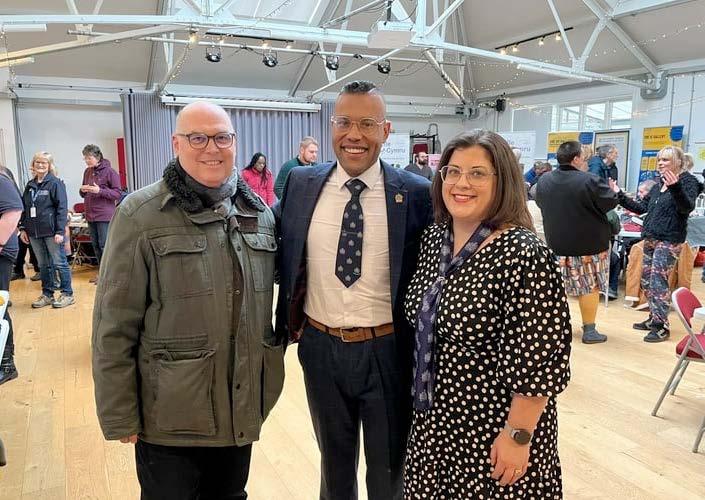
SAUNDERSFOOT Runners are set to host a charity run/jog/walk in aid of the James Criddle Foundation. The event will take place on Sunday, February 23, starting at 10:00am from Wiseman’s Bridge Inn.
The route is traffic-free, making it safe for participants of all ages, including those bringing dogs— although owners are asked to keep their pets on a lead. The event will last no longer than an hour, and hot drinks will be available for purchase at the Inn afterwards.
The initiative was originally launched by Sarah Don at her running club in Fareham, Hampshire, as a way to collect donations for the local food bank. Inspired by the impact of the event, Sarah and her club planned to make it an annual tradition. However, the onset of COVID-19 and personal challenges delayed its expansion. In 2023, Sarah took the initiative to create a Facebook page, encouraging running groups across the UK and beyond to support their local food banks, turning the event into a national and international movement.
Saundersfoot Runners answered the call in 2023 and have since been organising their own Food Bank Run in support of the James Criddle Foundation. The Foundation operates a food bank from Tenby AFC clubhouse in the Clickets, Tenby.
“The Food Bank Run has been a huge support to the Foundation,” said

Tom Sinclair editor@herald.email
Rachael Criddle, one of the founders.
“We are grateful to everyone who takes part, to Saundersfoot Runners for organising such a positive and uplifting event, and to Wiseman’s Bridge Inn for generously allowing us
to use their premises.”
The event is free to enter, but participants are encouraged to bring a bag of food donations. Items in high demand include dried food such as pasta and rice, tinned goods including beans, soup, meat, fish, fruit, and vegetables, as well as tinned pies,
sausages, and jars or packets of cook-in sauces. Toiletries such as toothpaste, shampoo, and shower gel are also welcomed. A full list of needed items can be found on the Saundersfoot Runners Events page. Organisers are hoping for a strong turnout to support this vital cause.
THE WELSH LABOUR gOVERNMENT says it is investing an extra £3m in bereavement services across Wales to help ensure those going through difficult times can access the support they need, when they need it.
The Bereavement Support Grant supports people experiencing a loss, with specialist forms of support available for those experiencing more complex forms of grief.
The three-year additional funding continues to help organisations currently benefiting from the Welsh Labour Government’s existing bereavement care offer across Wales.
This includes Cardiff and Vale University Health Board, the first
health board in Wales to provide a psychology-led bereavement service for those who experience the death of a baby, either in pregnancy or up to 28 days following the birth of their baby.
Sarah Murphy, Minister for Mental Health and Wellbeing, said: “I am proud that we as a Welsh Labour Government can continue to provide these important services to ensure that people have the right support they need, when they need it.
“Wales is a compassionate nation and providing additional funding for the Bereavement Support Grant will help these services continue, with the goal of everyone in Wales having equitable access to high-quality bereavement care and support.”


DESPITE a third round of financial support from the Welsh government, universities across Wales continue to face significant job losses and course closures, prompting criticism from opposition leaders.
The Welsh Labour Government has announced an additional £19 million funding package for higher education, with £18.5 million directed at institutional challenges and £500,000 allocated for international student recruitment. This follows an earlier increase in the tuition fee cap, projected to generate up to £21.9 million in additional income next year, and an extra £10 million allocated last autumn.
However, the new funding has not been enough to prevent deep financial crises at some of Wales’ largest universities. Cardiff University has confirmed 400 job cuts—7% of its workforce—and plans to close multiple degree programs, including nursing, music, ancient history, and modern languages, due to a £31.2 million funding shortfall.
The news led to a protest on the steps of The Senedd earlier this month where hundreds came out against the plans.
Swansea University has extended its savings plan by £30 million, with further staff departures expected after 342 job losses in the past 18 months. Meanwhile, the University of South Wales is bracing for significant staff reductions and course closures, with a projected £20 million deficit.
The financial pressures stem from declining international student enrollment, rising costs, and recent visa rule changes affecting postgraduate admissions. Despite the Welsh Government’s financial interventions, Higher Education Minister Vikki Howells
stated that no additional emergency funding will be provided, instead placing responsibility on universities to manage their budgets effectively.
The response has drawn sharp criticism from opposition leaders. Jane Dodds MS, Leader of the Welsh Liberal Democrats, accused Labour of failing to protect Welsh education: “Under Labour, we are seeing the hollowing out of Welsh educational and research institutions. Labour’s increase in national insurance contributions will have only exacerbated the financial situation being faced by our universities. We urgently need to see a review into higher education and research funding in Wales.”
Labour, however, maintains that its funding increases are a response to years of underfunding by the UK Conservative Government. In a statement, Vikki Howells defended the government’s approach: “Universities across Wales are anchor institutions in our economy, our communities, and our culture. This funding will contribute to the longer-term sustainability of universities and ensure that this Welsh Labour Government provides opportunities for students today and in the future.”
While Labour insists that it is doing what it can within its budget, critics argue that the current level of support is insufficient to prevent job losses and course closures, raising calls for a full-scale review of higher education funding. With no immediate relief in sight, university staff and students face an uncertain future in a sector under increasing financial strain.

WITH spring just around the corner, the DWP jobcentre staff in the 3 Pembrokeshire offices are looking forward to the challenge of helping more jobseekers into work and local businesses to recruit the numbers of staff that they need and with the right skills for the needs of their various businesses. If this means that some jobseekers need some training prior to employment, then this can be sourced, often at no cost to the jobseeker. If jobseekers have little or no work-related skills there is the opportunity to gain valuable, meaningful experience within a workplace through voluntary work experience. These measures, along with specialist services through the Disability Employment Advisors, can act as a springboard to a new and fulfilling career. For employers, DWP can host recruitment days and identify suitable applicants to fill their vacancies and employers are encouraged to get in touch to find out more. Nationally, there are currently 23 thousand more jobs being advertised than there were in early 2020, just prior to the pandemic.
Work and Pensions Secretary Liz Kendall said: “Since July, wages have continued to grow at pace, putting vital money back in people’s pockets as we work to make work pay and improve living standards for all. But these figures also show that too many people are being locked out of work and denied that chance, including those sick
and disabled. Instead of writing people off and labelling them, we must step up our support. Through our Get Britain Working reforms, we are overhauling Jobcentres, guaranteeing every young person the chance to earn or learn and our upcoming Green Paper will bring fundamental change to a broken system that currently pushes people towards welfare instead of work.”
Fred Hatton of the DWP Pembrokeshire Employer and Partnership Team said, “Currently there are vacancies in virtually every sector, whether that is hospitality or health care. In particular we are working with many businesses, particularly those in the tourism and hospitality sectors to fill their vacancies. Jobsfairs are planned in the first few weeks of March; readers of this press release are encouraged to come along to see what is on offer; the venues are: The Lord Nelson Hotel, Milford Haven, 10AM to 2PM on Tuesday 4 March; The Haverhub, Haverfordwest 1PM to 4PM on Thursday 6 March; The Pater Hall, Pembroke Dock, 10AM to 2PM on Wednesday 12 March; there will also be a Care Jobsfair at The Pembrokeshire Archives, Haverfordwest 10AM to 2PM on Thursday 27 March. This Care event has been scheduled as a yearly one for the 5 years just prior to the pandemic, and the first one post pandemic took place last year; the feedback from jobseeking and employer attendees was excellent and each and every event was deemed to be very successful.”








THIS WEEK The Pembrokeshire Herald celebrates its 600th Edition It only seems like yesterday that the first edition was printed in july 2013 – with the first copy being sold, at 5.50am to a very keen Milford Haven resident, Mr Malcolm Wood, who was queuing outside Milford News on that warm summer morning.
Since then, for the busy team, the weeks have flown by, and everyone one of those weeks has been enjoyable, busy and had its unique challenges.
One of the first to offer their best wishes was local MP Stephen Crabb. He
said: “Congratulations to the Pembrokeshire Herald on its 10th birthday! It has been a rollercoaster ride, but they have demonstrated time and again the importance of local news and fearless reporting. The Herald has been a strong independent voice for Pembrokeshire and long may that continue. So, here’s to all the team at the Herald. Best wishes for the future!”
Herald Editor Tom Sinclair said: “Local newspapers have always been the epicentre of local news ecosystems.
“While communities may have other sources of journalism, such as TV and radio stations and onlineonly outlets, the bulk of
the reporting serving local communities has traditionally been provided by local newspapers.
“Local newspapers such as ours have been hit particularly hard by the economic challenges confronting local journalism, which raises questions about whether papers such as The Herald can still serve as the linchpins of local reporting in their communities, and whether other types of outlets are stepping up to take their place.
“In west Wales however, I strongly believe that The Pembrokeshire Herald and its team have an important role to play in holding democracy




to account, to covering court cases, inquests, events, and other important community news.
“Very often we are the only outlet covering some news events, meaning that if we were not there those important topics would not be covered properly, if at all.
Reporting in Pembrokeshire has faced recent criticism. Welsh actor Michael Sheen once famously offered to support anyone who wants to start a local news service in either of Wales’ major news gaps.
Sheen said that in 1970 the town of Port Talbot had
five local newspapers and 11 reporters.
Now there are none based either in the county of Neath Port Talbot or Pembrokeshire, he said.
He said: “It is truly frightening, the idea that if you don’t have reliable sources of information, [if] you don’t have representation, your community’s voice isn’t represented and you can’t hold people in power to account and scrutiny, then you have no power – and people will deal with that in different ways.”
His view is certainly wrong.
In response the Herald’s Chief Writer and Deputy Editor, Jon


Coles, posted on the Press Gazette forum. He wrote: “I’m almost certain I didn’t imagine the last ten years and 515 editions of writing for The Pembrokeshire Herald.
“The idea that no investigative reporting takes place is nonsense.
“The Western Telegraph won newspaper of the year twice on the spin. I’m certain they didn’t do that by not challenging politicians on their statements.
“Then in 2019 The Pembrokeshire Herald took a trophy for Best Columnist at the Welsh Media Wards. Well done Matthew Paul.














“The Herald thoroughly unpicked the pensions scandal surrounding the former Council CEO and exposed a European grant funding scandal which led to a large police investigation which exposed even more irregularities.
“The Observer (Tindle) reports diligently on planning issues and news affecting its three edition areas.
“The Milford Mercury (now a website) covers Milford and Neyland and reports on issues affecting those towns.
“The County Echo is a unique voice for St Davids.
“The Tivyside Advertiser reports major issues affecting both sides of the Teifi Valley.
Media in Pembrokeshire is vibrant and diverse – both in print and online. Saying otherwise is just rubbish.”
Herald Editor Tom Sinclair added: “As a now established part of the news eco-system in west Wales we will continue to strive to serve the people of the county.”
“We, as a team, have learned a lot over the ten
years, and I realise that I have made mistakes. Dealing with the legal, financial and deadline challenges of running a local paper is a constant battle – but The Herald is going from strength to strength with a committed team determined to do all we can to report, accurately and independently – without fear or favour – on the local news which matters to you.”
“Now in its 11th year The Herald is now fully digital - meaning it will be here for many years to come”

LOCAL newspapers, once the lifeblood of communities, are facing a severe decline in readership as more people turn to digital platforms for news consumption.
In response to this alarming trend, industry experts are suggesting that launching digital-only versions could not only help revive readership but also bring benefits to advertisers and pave the way for more extensive editions.
Over the years, local newspapers have played a vital role in connecting communities, reporting on local events, and providing a platform for local voices. However, with the advent of digital technology and the rise of online news outlets, traditional print newspapers have struggled to retain their readership. The convenience and accessibility of digital news have enticed readers away from the physical copies that once graced coffee tables and newsstands.

Recent studies have revealed a sharp decline in readership figures for local newspapers across the country.
The reasons are multifaceted, including changing consumer preferences, a shift towards online platforms, and the ubiquity of smartphones. As a result, local newspapers have seen dwindling circulation numbers and reduced advertising revenue, leading to cutbacks and layoffs within the industry.
To combat this downward trend, experts are proposing a digital transformation for local newspapers. Launching digital-only versions would allow these publications to leverage the power of the internet and reach a broader audience. With the majority of people now accessing news through their smartphones or computers, digital platforms offer a convenient and immediate way to connect with

readers.
The benefits of a digital transition extend beyond increased readership. Advertisers stand to gain as well, as digital newspapers provide more targeted advertising opportunities. With advanced data analytics and audience segmentation, advertisers can reach specific demographics and tailor their messages accordingly. This precise targeting can lead to better engagement and a higher return on investment for businesses.
Furthermore, going digital opens the door for expanded content and bigger editions. Unlike the limitations of print, digital platforms offer virtually unlimited space for news articles, features, and multimedia elements. Local newspapers can embrace this flexibility to deliver in-depth coverage of community issues, showcase local talents, and offer interactive features that











enhance the reader experience. However, the transition from print to digital does come with challenges. Some readers may still prefer the tactile experience of holding a physical newspaper, and not all communities have equal access to reliable internet connections. To address these concerns, newspapers could explore a hybrid model where both print and digital versions coexist. This approach allows for flexibility and caters to the preferences of a diverse readership.
The decline in readership of local newspapers is a pressing issue that requires innovative solutions. Embracing the

digital realm can breathe new life into these publications, fostering stronger connections with readers, and ensuring the survival of local journalism.
The potential for increased readership, improved advertising opportunities, and the ability to produce richer and more extensive editions make the case for a digital transition compelling.
As the industry evolves, local newspapers must adapt to the changing times and seize the opportunities offered by the digital landscape to thrive once again at the heart of their communities.
The Pembrokeshire Herald is no exception to the challenges faced by local newspapers in the digital age. Recognizing the need to adapt to the changing landscape, the publication has announced a significant milestone in its history. On 30th June 2023, coinciding with its 10th anniversary, The Pembrokeshire Herald will release its first digital-only e-edition, available for free download to all customers.
The decision to launch a digital edition marks a strategic move to align with the evolving preferences of readers and the broader industry trends. By embracing digital technology,

The Pembrokeshire Herald aims to not only retain its existing readership but also reach a wider audience within and beyond the county.
The transition to a digitalonly format comes with several advantages. Readers will have instant access to the latest news, features, and local stories at their fingertips. The digital edition will leverage interactive elements, such as videos and image galleries, to enhance the reader experience and bring stories to life. Furthermore, the e-edition will offer a user-friendly interface that allows for easy navigation and searchability.
The decision to offer the digital edition for free reflects The Pembrokeshire Herald’s commitment to its readership and the local community. By removing barriers to access,
the publication aims to encourage broader readership and engagement. This move also opens up opportunities for advertisers to connect with a larger audience, amplifying their reach and impact.
While embracing digital technology, The Pembrokeshire Herald acknowledges the importance of its heritage and loyal print readership. To cater to diverse preferences, the publication will continue to offer a limited print edition, ensuring that those who prefer the tangible experience of a physical newspaper can still enjoy their trusted source of local news.
The launch of the digitalonly e-edition on the paper’s 10th anniversary marks a significant milestone for The Pembrokeshire Herald. It showcases the publication’s
resilience and willingness to adapt to the ever-changing media landscape. By embracing digital transformation, The Pembrokeshire Herald aims to secure its position as the leading source of local news, catering to the needs and preferences of its readership in the digital age.
As local newspapers face the challenges of declining readership, The Pembrokeshire Herald’s digital transition sets an example for other publications to explore innovative solutions and embrace the opportunities presented by the digital realm. It is a testament to the publication’s commitment to providing quality journalism and community-focused reporting, ensuring that the voice of Pembrokeshire continues to be heard in the modern era of news consumption.










OVER the past 12 years, The Pembrokeshire Herald has established itself as a cornerstone of the community, consistently delivering positive change and support when it’s needed most.
From providing essential supplies during the COVID-19 pandemic to organising numerous charitable initiatives, the newspaper’s unwavering commitment to the people of Pembrokeshire has left an indelible mark on the community. As we reflect on the remarkable achievements of The Pembrokeshire Herald over the past decade, we celebrate its transformative impact on the lives of residents.
Amid the unprecedented
challenges of the COVID-19 pandemic, The Pembrokeshire Herald emerged as a beacon of support. Recognising the vulnerability of local community members, the newspaper launched a remarkable campaign to deliver essential supplies. In a heartwarming display of solidarity, bread, eggs, milk, and other necessities were distributed to those in need, ensuring that the most vulnerable individuals were not left without vital resources during these trying times. The Herald’s initiative provided comfort and assistance when it was needed most, making a significant impact on the lives of countless Pembrokeshire residents.
The Pembrokeshire

Herald rallied the community to collect donations for the people of Ukraine. The Herald offices transformed into a hub for receiving generous contributions of food, blankets, and medical supplies. Undeterred by distance or logistical challenges, the newspaper’s team orchestrated a monumental effort, filling five vans with donations bound for Ukraine. This tremendous act of humanitarian aid brought much-needed relief to families affected by turmoil and hardship, showcasing the power of community solidarity and support.
The invaluable work undertaken by Macmillan Cancer Support has been consistently championed by


The Pembrokeshire Herald. Over the years, the newspaper has organised and hosted numerous Macmillan Coffee Mornings. These delightful events have served as a platform to raise substantial funds for the charity, enabling them to continue their vital support for individuals and families affected by cancer. Beyond financial contributions, the Herald’s initiatives have fostered a sense of togetherness and compassion within the community, providing a comforting space for individuals to connect and find solace in shared experiences.
As a steadfast advocate for PATCH, The Pembrokeshire Herald has consistently supported this charitable organisation dedicated to providing assistance to children and families in need. With unwavering determination, the Herald has collected Easter egg donations and facilitated the creation and sale of charity calendars. These initiatives have not only raised funds to support PATCH’s mission but have also brought joy and happiness to the lives of countless individuals facing challenging circumstances. The Herald’s commitment to making a positive impact shines through in their continued efforts to uplift and support the most vulnerable members of the community.
The Pembrokeshire Herald’s commitment to community extends beyond acts of charity. The newspaper has taken the lead in organising and hosting a range
of engaging events designed to foster unity and celebration. One of the most recent and memorable examples is the Milford Haven Waterfront fun day, a vibrant gathering that brought together residents, visitors, and local businesses. These community events have become integral to The Pembrokeshire Herald’s legacy, nurturing a sense of belonging and pride within Pembrokeshire. They provide an opportunity for individuals to connect, celebrate, and create lasting memories while fostering a strong sense of community spirit.
As we reflect on the past ten years, The Pembrokeshire Herald’s positive impact on the community is undeniable. From providing essential supplies during the COVID-19 pandemic to supporting vital charitable organisations like Macmillan and PATCH, the newspaper has consistently gone above and beyond to make a meaningful difference in the lives of Pembrokeshire residents. The Herald’s dedication, compassion, and tireless efforts have not only transformed individual lives but have also woven together the social fabric of the entire community. As we look towards the future, we can only anticipate that The Pembrokeshire Herald will continue to shine as a beacon of hope and support, leaving an enduring legacy of compassion and community spirit for years to come.













WHEN we launched The Pembrokeshire Herald 600 editions ago, the landscape of local news was already shifting.
Print circulations were in steady decline, and many traditional newspapers struggled to maintain their readership. Yet, against this backdrop, we managed to build a loyal audience, challenging the more staid and established competition with a fresh approach to reporting.
From the outset, we set out to change the way local news was covered. Instead of resorting to the well-worn formula of “he said, she said,” we took a different approach. We

prioritised cutting through the spin to get to the heart of the story. Our commitment to real, investigative journalism resonated with readers, and we quickly gained a reputation for fearless, independent reporting.
But while we were revolutionising how local news was reported, the way people consumed their news was undergoing its own transformation. With the rapid growth of digital platforms and mobile technology, more people than ever began getting their news online and from non-traditional sources. It was clear that the future of journalism would not be confined to the pages of a printed newspaper.


The rise of “hyperlocal” news providers has been a defining feature of this new digital era. Across Wales, 46 such publishers have emerged, more than double what might be expected based on population share. These outlets have filled the gaps left by the traditional media, many of them operating without the substantial funding provided to legacy publishers by the Welsh Government. The internet has provided the tools for smaller, independent voices to thrive, challenging monopolies and ensuring a broader range of perspectives are available to the public.
Another fundamental shift has been the
widespread adoption of smartphones. With over 40 million smartphone users in the UK, news is no longer something people read once a day in a physical newspaper—it’s something they consume constantly. Whether through breaking news alerts, long-form investigative pieces, or quick updates on social media, the modern reader expects their news to be immediate, accessible, and engaging.
Simply transferring stories from print to a website is not enough. Digital journalism requires a different approach. Long before we made the decision to go fully digital in 2023, we recognised that print and online









content needed to serve different audiences in different ways. Some stories that appeared in print never made it online, and vice versa. That strategy has remained in place, ensuring our online edition retains exclusivity and value for subscribers while our website and social media channels continue to offer a dynamic mix of breaking news, opinion, and analysis.
Going fully digital was not just a necessity— it was an opportunity. And the results have been nothing short of extraordinary.
Since making the switch, The Pembrokeshire Herald has experienced unparalleled growth. In January 2025 alone, Pembrokeshire-Herald.com recorded over 230,000 visits. Our weekly digital edition attracts 14,500 unique reads, and its content is displayed to users over 360,000 times every four weeks. Meanwhile, our email subscriber base has grown to over 3,200 people, with thousands more accessing our content without a subscription.
Beyond Pembrokeshire, our national news site, Herald.Wales, continues to expand its reach, attracting over 161,000 visits per month—144,000 of which are driven by search engine traffic from readers looking for Welsh news. This proves a key point: the demand for independent, reliable, and wellresearched journalism is higher than ever, and by embracing digital, we have positioned ourselves at the forefront of this new media landscape.
Engagement is at the heart of our success. Any website can generate clicks, but meaningful engagement—readers who return regularly, share stories, and participate in discussions—requires compelling content. The right stories, told in the right way, keep people coming back. That’s why we have
focused on maintaining our distinctive editorial voice: bold, investigative, and unafraid to challenge authority.
Moving online has not just kept The Pembrokeshire Herald alive; it has allowed us to thrive. Print circulation numbers had been declining industry-wide for years, and continuing with a print edition would have meant limiting our reach and resources. Instead, going digital has allowed us to expand in ways that simply weren’t possible before.
We have a larger audience than ever before, with more people engaging with our content across multiple platforms. Our reporting now reaches readers not just in Pembrokeshire, but across Wales and beyond. The immediacy of digital media means we can break stories faster, update information in real time, and provide readers with a richer, more interactive news experience.
Social media has played a crucial role in our expansion. Our Facebook presence continues to grow, driving significant traffic to both our website and digital edition. We’ve embraced the advantages of digital storytelling, incorporating video, podcasts, and interactive content to enhance the reader experience. The ability to engage directly with our audience, respond to their feedback, and adapt to their changing interests has been invaluable.
Our move online has also created new opportunities for advertisers. The digital space offers more targeted, effective advertising than print ever could, giving businesses greater return on investment. This has helped sustain and grow our operations, ensuring that we can continue to provide high-quality



journalism without the financial constraints of print production.
The journey is far from over. The media landscape will continue to evolve, and we are committed to staying ahead of the curve. We are exploring new ways to deliver content, from expanded video reporting to deeper investigative projects. We are also looking at further developing our presence in other digital formats, such as newsletters and
multimedia storytelling.
One thing, however, remains unchanged: our dedication to independent journalism. As a local news provider, our mission is to serve our community, holding power to account and telling the stories that matter. The move to digital has only strengthened our ability to do that.
To our readers, supporters, and critics— thank you for being part of this journey. We’ve come a long way since our first edition, and the best is yet to come.


A NEW 10-week course which will help people understand and cope with their trauma is launching in Haverfordwest on March 19th.
The Trauma Toolkit Workshops will help participants try out practical techniques, skills and ideas about managing the impact of trauma.
The workshops are run by Pathway Counselling, a local mental health charity which is part of PATH (Pembrokeshire Action for The Homeless).
There will be two group sessions held every Wednesday from March 19th, the first for women at 10am –12pm, and then a second for men at 2pm – 4pm.
The sessions will take place at The Green Shed, Old Hakin Road, SA61 1XF.
The workshops will be led by Meriel Goss, who has been offering practical sessions to cope with the impact of trauma for 10 years.
She trained at The Trauma Centre, Justice Resource Centre, Boston where Dr Bessel van De Kolk, author of
Tom Sinclair editor@herald.email
The Body Keep the Score researched trauma therapies and approaches.
Meriel is also an Adlerian counsellor at Pathway Counselling and a regular at their offices at 19 Market Street, Haverfordwest.
Meriel said about the workshops: “Trauma is something that can impact any and every aspect of your life, so having a safe environment to learn more about it, and how to cope with it, is so important.
“Pathway Counselling ran a shorter trauma course last year which was extremely popular, so the need for another, bigger course was clear.
“The sessions aren’t a processing space for sharing your stories, and it’s perfect for people who maybe don’t feel like they are ready for counselling sessions.

“When you sign up the workshops, I always have a discovery call with you beforehand, which lay rest to any nerves.”
The sessions are free for anyone who is low income or on benefits.
The low cost sessions are available for £58 (standard) / £28 (concessionary).

PRESELI PEMBRKOEHIRE Senedd
Member Paul Davies has recently met the Pembrokeshire Association of Community Transport Organisations (PACTO). PACTO provide services and help for people who don’t have access to their own transport and who don’t have or can’t use conventional public transport services.
Mr Davies discussed PACTO’s work in delivering more accessible community transport solutions in Pembrokeshire. They also discussed PACTO’s Community Transport Transformation project and the findings from the consultation that PACTO carried out last year.
Mr Davies said, “PACTO do a fantastic job in helping people travel across Pembrokeshire and I’m pleased to have met the team and learnt more about their work.”
“PACTO play an enormous role in making Pembrokeshire a much more accessible place for all. They help enable people to travel more freely across Pembrokeshire and live more independently.
“Travelling across Pembrokeshire is not without its challenges and so it was great to talk to the PACTO team about how they plan to transform community travel across the county and build on their good work in our communities”

TO ADDRESS STAffINg CHALLENgES
THE WELSH NHS Confederation has responded to an Audit Wales report highlighting workforce challenges in the health and social care sector, calling for a fully funded, long-term staffing plan.
Darren Hughes, director of the Welsh NHS Confederation, said: “We welcome Audit Wales’ report on NHS workforce challenges. It’s no secret that the workforce is the lifeblood of the NHS and social care services.”
He reiterated long-standing calls for the Welsh Government to invest in a costed Long-Term Plan to create a sustainable workforce, ensuring the NHS and social care services can meet future demand.
gROWINg WORKfORCE, RISINg COSTS
Hughes acknowledged ongoing efforts to reduce reliance on agency staff and fill vacancies but warned that while the NHS workforce is expanding, staffing costs are rising unsustainably.
“Audit Wales rightly questions the sustainability of these rising staffing costs in the current financial climate,” he said.
MULTI-DISCIPLINARY TEAMS

Tom Sinclair editor@herald.email
NHS leaders believe that multidisciplinary teams are key to meeting the evolving needs of the population. However, Hughes expressed concerns over the lack of a national workforce
plan and unclear system leadership arrangements.
“Now more than ever, we must work together across NHS and social care boundaries to find long-term solutions to recruitment and retention,” he added.
The Welsh NHS Confederation represents the country’s seven local health boards, three NHS trusts, Health Education and Improvement Wales, and Digital Health and Care Wales.

A CALL to allow a Pembrokeshire school to keep a mobile classroom in use for nearly 16 years, as there is no money for a replacement facility, has been approved by county planners.
Pembrokeshire County Council, in an application to county planners, sought a renewal of permission for the mobile classroom at Fenton Community Primary School, Jury Lane, Haverfordwest.
The mobile classroom has been in use since the start of 2009.
A statement in support of the
Bruce Sinclair Local Democracy Reporter
application said: “This application seeks retrospective planning consent for the continued retention of the existing mobile classroom. Access and parking arrangements would remain as existing.
“The mobile classroom is used on a daily basis, and provides a vital facility for the children who use it. This application is for the retention of the existing mobile classroom to ensure
THE BEST that can be said about this month is that there is one week left in it.
The weather has been vile.
It has been wet and cold, and where it has not been wet and cold, it has been cold and wet. There have been times I have contemplated trying to locate the kids’ old beach equipment and canoeing down to the shops to pick up the daily paper and a packet of Victory Vs.
One particular sodden day last weekend, I tucked the wife’s favourite newspaper under my coat and legged it the short distance to the car in rapid order.
No good.
When I removed it from its place of concealment, the wretched tabloid was soaked. I took it home and showed it to the wife, who proceeded to display the self-control and good humour I have come to expect when she is deprived of her horoscope, the racing form, and her daily dose of bilious right-wing tat.
She crumpled the offending sodden mess into a ball and hurled it across the kitchen diner towards the bin, where it landed with a sorry splat.
On the plus side, when it dried and completed its journey towards papiermache, it looked like a perfectly realised model of the half-completed Death Star in Return of the Jedi.
But the weather is not the only reason this last month will go down in history, as I hope to be able to forget, but I never will.
Having recently had a prolonged bout of stomach trouble, in the middle of July, I hauled my carcass to the GP, who, after much prodding of my tender belly, referred me to the hospital.
There, I found myself a few weeks ago to have a camera inserted in my nether parts and samples taken.
Mercifully, the experience was brief. For those of you who have not had the pleasure, I can heartily recommend avoiding it in all but the most urgent and trying circumstances. Nothing can quite prepare you for the sensation of having the air blown up your back passage while the whole drama unfolds on a screen in front of you, displaying those parts never destined to see the light of day.
While I lay there and thought of England (as I am inclined to do whenever the word ‘arseholes’ pops into my head), I wished the procedure was happening to Keir Starmer (ditto).
the children can continue to benefit from its use.
“There is currently no budget available to provide a more permanent solution.”
It added: “The mobile is located at the rear of the school, adjacent to the rear fenced boundary and generally out of public view. The mobile is in close proximity to the main school building to provide ease of use.”
The application has now been conditionally approved by Pembrokeshire County Council planners.

In my case, I cheered myself by imagining that fantastic journey undertaken by a full BBC camera crew and soundman), preferably with a hushed commentary from either Professor Brian Cox or Sir David Attenborough. As it turned out, Jeremy Bowen would’ve been more appropriate. The fundamental news was that my innards were healthy, but I could do with going easy on the spicy food for a while. I thought of curries, kebabs, and sizzling Singapore noodles burning their way through my digestive tract. I sighed. Oh well, back to fish and chips!




WALES have unveiled their team to face Ireland in round three of the Six Nations, with interim head coach Matt Sherratt making wholesale changes following the disappointing defeat to Italy.
Sherratt has opted for a significant reshuffle, handing starting roles to Max Llewellyn and Gareth Anscombe, both recently called up to the squad. Llewellyn will partner Ben Thomas in midfield, with Thomas shifting to inside centre and Anscombe slotting in at fly-half.
Meanwhile, Ellis Mee will make his Wales debut on the wing, joining Blair Murray and Tom Rogers in the back three.
Up front, Wales have a completely revamped front row, with Nicky Smith, Elliot Dee, and WillGriff John packing down together at the Principality Stadium. Dafydd Jenkins returns
from illness to resume his place in the second row alongside Will Rowlands.
In the back row, Sherratt has opted for two opensides, with Tommy Reffell wearing the number seven jersey and captain Jac Morgan shifting to blindside flanker. Taulupe Faletau completes the forward pack at number eight.
Among the replacements, Joe Roberts and Jarrod Evans feature in a 5-3 bench split.
Sherratt is under no illusions about the scale of the challenge against the reigning champions but is optimistic about the response from his side.
“We’re looking forward to the challenge of facing Ireland. We have spoken this week about being brave, but not reckless, and making sure everyone knows their roles. We also know that keeping our discipline will be



huge.”
“Everyone is excited for our first home game of the Six Nations. The atmosphere Wales fans create at Principality Stadium is incredible, and playing at home is something the players really look forward to.”
Ireland, who named their team earlier on Thursday morning, will be captained by Dan Sheehan in the absence of Caelan Doris. Thomas Clarkson earns his first start in the front row, while Jack Boyle is set to make his debut from the bench.
Interim head coach Simon Easterby is well aware of the challenge his side faces in Cardiff.
“Playing Wales in Cardiff is one of the great tests, and we know the challenge that awaits us. With a new coaching set-up in place, Wales will be re-energised and determined to impress in
front of a vocal home support.”
“There will also be a huge Irish travelling support which, when added to the closed roof and the great respect and rivalry between the two nations, will add to an electric atmosphere.”
Wales XV: Blair Murray; Tom Rogers, Max Llewellyn, Ben Thomas, Ellis Mee; Gareth Anscombe, Tomos Williams; Nicky Smith, Elliot Dee, WillGriff John, Will Rowlands, Dafydd Jenkins, Jac Morgan (c), Tommy Reffell, Taulupe Faletau.
Replacements: Evan Lloyd, Gareth Thomas, Henry Thomas, Teddy Williams, Aaron Wainwright, Rhodri Williams, Jarrod Evans, Joe Roberts.





IRELAND head coach Simon Easterby has confirmed the squad for Saturday’s guinness Men’s Six Nations showdown against Wales at the Principality Stadium (kick-off 2:15pm).
Following victories over England and Scotland, Ireland head to Cardiff for their Round 3 encounter, with Dan Sheehan set to captain the team for the first time. The Leinster hooker becomes the 111th player to lead Ireland in a Test match. Meanwhile, Leinster’s Jack Boyle could make his international debut if called upon from the bench, while Jamie Osborne is poised for his first Six Nations appearance at full-back. Gus McCarthy and Cian Prendergast are also in line to earn their Championship debuts, having been named among the replacements.
Osborne forms a back three alongside James Lowe and the returning Mack Hansen. In midfield, Robbie Henshaw and Garry Ringrose renew their partnership, while Sam Prendergast retains his spot at fly-half, pairing up with scrum-half Jamison Gibson-Park.
In the front row, Andrew Porter, captain Sheehan, and Thomas Clarkson—who earns his first start for Ireland—have been selected. Joe McCarthy returns from injury and joins Tadhg Beirne in the second row. The back row remains unchanged, with Peter O’Mahony at blindside flanker, Josh van der Flier at openside, and Jack Conan starting at number eight.
Easterby has named McCarthy,
the uncapped Boyle, Finlay Bealham, James Ryan, and Cian Prendergast as his forward replacements. Conor Murray, Jack Crowley, and Bundee Aki provide backline cover.
Speaking ahead of the fixture, Easterby acknowledged the tough test awaiting his side: “Playing Wales in Cardiff is one of the great tests, and we know the challenge that awaits us. With a new coaching set-up in place, Wales will be re-energised and determined to impress in front of a vocal home support. There will also be a huge Irish travelling support which, when added to the closed roof and the great respect and rivalry between the two nations, will add to an electric atmosphere.
“We have made a few changes to the squad this week, some of which were enforced, and we’re confident that the 23 we have selected are primed and ready to go. Dan Sheehan’s selection as captain is recognition of his high standing within the squad, both on and off the pitch. I have no doubt that he will relish the opportunity to lead Ireland for the first time.
“Equally, I would also like to congratulate Jack Boyle on his inclusion in the Match Day Squad for the first time. Jack has impressed for his province, Leinster, and in the national training camps over the last number of months, and he is a young forward with a bright future.”
Saturday’s match will be broadcast live on Virgin Media One and BBC One,


with radio commentary available on RTÉ Radio 1.
Ireland squad to face Wales: Jamie Osborne (Naas/Leinster)(5), Mack Hansen (Corinthians/Connacht)(26), Garry Ringrose (UCD/Leinster)(65), Robbie Henshaw (Buccaneers/Leinster) (79), James Lowe (Leinster)(38), Sam Prendergast (Lansdowne/Leinster)(5), Jamison Gibson-Park (Leinster)(40), Andrew Porter (UCD/Leinster)(72), Dan Sheehan (Lansdowne/Leinster) (captain)(29), Thomas Clarkson (Dublin University/Leinster)(4), Joe McCarthy (Dublin University/Leinster)(16), Tadhg
Beirne (Lansdowne/Munster)(58), Peter O’Mahony (Cork Constitution/Munster) (111), Josh van der Flier (UCD/Leinster) (70), Jack Conan (Old Belvedere/ Leinster)(48).
Replacements: Gus McCarthy (UCD/Leinster)(2), Jack Boyle (UCD/Leinster)*, Finlay Bealham (Corinthians/Connacht)(48), James Ryan (UCD/Leinster)(69), Cian Prendergast (UCD/Connacht)(4), Conor Murray (Garryowen/Munster) (122), Jack Crowley (Cork Constitution/ Munster)(21), Bundee Aki (Galwegians/ Connacht)(62).



THE WELSH CONSERVATIVES are demanding urgent action to address the worsening crisis in Wales’ NHS, calling on the Labour-run Welsh government to enact emergency reforms. In response to the Royal College of Nursing (RCN) report, ‘On the frontline of the UK’s Corridor Care Crisis’, the Conservatives have tabled a motion in the Senedd, demanding immediate measures to tackle corridor care, overcrowding, and deteriorating hospital conditions.
THE MOTION, SET TO BE DEBATED NExT WEEK, STATES:
• • Notes the Ending Corridor Care in Wales report published by the Royal College of Nursing Wales.
• Regrets that people in Welsh hospitals are being treated in unsafe, undignified, and unacceptable environments.
• Calls on the Welsh Government to enact the report’s eight recommendations in full.
Welsh Conservative Shadow Secretary for Health and Social Care, James Evans MS, has condemned Labour’s management of the NHS, stating:
“Under the Welsh Labour Government, people in Welsh hospitals continue to be treated in unsafe, undignified, and unacceptable environments.
“On Labour’s watch, we’ve seen hospital beds axed, hospitals downgraded, and new ones promised but not delivered, and Emergency Department performance that is worse than elsewhere in Great Britain.
“In the Senedd next week, we’re calling on the Welsh Labour Government to enact the Royal College of Nursing’s eight recommendations to ensure urgent action and transparency on corridor care in Wales.”
RCN REPORT HIgHLIgHTS SYSTEMIC fAILURES
As we reported last week, the Royal College of Nursing Wales report has exposed widespread failures in Welsh

Tom Sinclair editor@herald.email
hospitals, describing a system where patients are forced to wait in corridors, sometimes for hours, in unsafe and undignified conditions. The RCN states that government inaction has directly contributed to avoidable patient deaths, citing severe hospital overcrowding and critical staffing shortages.
Helen Whyley, Executive Director of RCN Wales, urged immediate government intervention:
“Nurses are facing immense challenges in maintaining high standards of patient care amidst the growing prevalence of corridor and chair care in hospitals.
“Our recommendations provide a clear and achievable roadmap to ensure patients receive care in the right place, at the right time, and by the right professional. The nursing workforce is ready to lead the way – but we need the Welsh Government to act now.”
The latest findings from Llais, the statutory body representing the public’s voice in Welsh health and social care, further support the RCN’s damning

assessment of NHS Wales. Their survey of over 700 people revealed severe delays, ambulance backlogs, and an overstretched system unable to cope with demand.
A patient at Morriston Hospital’s emergency department described the situation as dire: “I drove because the ambulance ETA was 7-8 hours, but I had severe chest pain and couldn’t wait that long.”
The study also found that many patients are forced to arrange their own transport to hospital, sometimes at great personal cost, due to long ambulance wait times.
The Llais report warns that the pressures on Welsh emergency services are not temporary but systemic. Since the study was conducted, ‘business critical incidents’ have been declared by both the Welsh Ambulance Service NHS Trust and Aneurin Bevan University Health Board. Other health boards, including Swansea Bay and Cwm Taf Morgannwg, have issued urgent warnings about overwhelming demand.
The combined reports from Llais and the RCN call for urgent action on multiple
fronts, including:
• Faster ambulance response times
• Better coordination between emergency services and primary care
• Increased staffing and resource allocation
• Improved dignity and care for patients waiting in corridors
• Greater transparency and accountability from NHS Wales and the Welsh Government
With emergency care in Wales under “extreme and unsustainable pressure,” as described by Llais Chair Professor Medwin Hughes, many patients and staff feel abandoned in a system that is failing them.
“The dignity of patients is not even being considered anymore. The system is chaotically inefficient and in desperate need of a review,” one patient at Glan Clwyd Hospital remarked.
With the Welsh Conservatives pushing for immediate action in the Senedd and the RCN calling for an overhaul of emergency care, the pressure is mounting on the Labour-run Welsh Government to provide answers—and, more importantly, solutions.

LOCALLY, the Royal National Lifeboat Institution (RNLI) is seeking budding lifeguards to launch their lifesaving careers on some of Wales’ most popular beaches.
The RNLI are recruiting beach lifesavers ahead of the 2025 season. Recruitment for this season’s lifeguard team has started nationally in preparation for providing local authorities and landowners with the service they request to keep beachgoers safe this summer. Recruitment is still open for positions in North Pembrokeshire.
The charity’s lifeguards not only rescue those in difficulty in the water, they also provide vital beach first-aid and safety advice to ensure visitors can return home safely. In 2023, RNLI lifeguards in West Wales provided patrols and responded to more than 753 incidents, helping more than 1,148 people in need, saving seven lives.
Last summer, lifeguards rescued stricken swimmers from powerful rip currents, saved children being blown offshore in inflatables, came to the aid of paddleboarders and gave lifesaving CPR on beaches among the thousands of incidents they attended.
Successful applicants will receive world-class lifesaving training, enjoy good rates of pay, the possibility of flexible working patterns and develop valuable skills for a future career.
Stuart Penfold Lead Lifeguard Supervisor for North Pembrokeshire

Tom Sinclair editor@herald.email
said:
‘Being a beach lifeguard is great. Although the job can be very challenging at times, you get the chance to work alongside some incredible people, receive great training, be outdoors and most importantly, make a real difference to people’s lives.
‘The role is well suited to outgoing individuals, confident swimmers and those who are passionate about helping people. This year our lifeguard team will

be patrolling Poppit Sands, Newport Sands, Whitesands, Newgale, Nolton Haven and Broad Haven.’
‘To apply to join North Pembrokeshire’s Lifeguard Team visit: Lifeguards: Haverfordwest North –Poppit Sands to Broadhaven’
Lee Fisher, Lifeguard Experience Manager said: ‘Beach lifeguarding is a great opportunity and a very rewarding role that changes lives – including your own – all whilst enjoying the beach as your office.
‘Our lifeguards range from teenagers all the way up to lifesavers in their
70s, as long as you meet the fitness requirements and you are over 16 years old, there could be a role for you.
‘The job also has great paths for progression – we have lifeguards who have been working for the RNLI for years, both on the beach and as part of our support teams, and the skills you gain can make an ideal first step towards many careers. It’s a great opportunity whether you want a rewarding summer job or to pursue a career in lifesaving.’
To find lifeguard vacancies in your area visit: Find a job (rnli.org)

HE’S the wild man of rock who became a national treasure. Now Shaun Ryder, front man of Happy Mondays and Black g rape, is hitting the road for a new, spoken word tour with an unforgettable night at the Torch Theatre on Saturday 5 April.
Taking in the length and breadth of the UK, Shaun will talk candidly about his hedonistic life in the music industry, his successful TV career, and everything in between and fans will be in for a real treat as he hosts a Meet and Greet session ahead of his performance.
The star of more -TV-shows-thananyone-has-a-right-to-feature-on –including Celebrity Gogglebox, and I’m A Celebrity Get Me Out Of Here, among many others – redefined the sex’n’drugs’n’rock’n’roll lifestyle during the halcyon age of Madchester.
Shaun will be touring in support of his new book: Happy Mondays – and Fridays and Saturdays and Sundays. He said: “I have certainly had a bit
Tom Sinclair editor@herald.email
of a mad life and I can’t wait to share all my stories from Happy Mondays, Black Grape and beyond. This is me at my most honest; nothing is off the table – expect the unexpected and prepare for me to twist your melons, man.”
Fans can look forward to a carnival of excess, wild tales, and improbable truths, as they enjoy the talents of a unique rock’n’roll star dubbed Britpop’s answer to WB Yeats.
Strap yourselves in and say Hallelujah for Shaun.
Shaun Ryder will visit the Torch Theatre on Saturday 5 April at 7.30pm. The Meet and Greet Session of 45 minutes will commence at 6pm. Tickets for the show are priced at £30 / £50 VIP and £80 Meet and Greet. Visit the website for further details on www.torchtheatre.co.uk or phone the Box Office on (01646) 695267.


HOW we see ourselves isn’t always how others see us. Join movement artist Sara Hartel in a workshop that explores the tension between identity and perception here at the Torch Theatre this Wednesday followed by a work in progress show on Thursday with Foreigner in My Body.
The evening workshop will give you an opportunity to learn how to creatively use audio description in a safe, nurturing environment which gives you space to explore the role gender plays in how we move, and how others see the way we move, through the creation of a piece of movement.
The show itself, Foreigner in My Body, is a work in progress show exploring the transgender journey through the lens of crossing borders. It blends circus, physical theatre and storytelling with malicious audio description. A story of rebellion and trans joy. Think of the burlesque of airport security, the luggage carousel of emotional baggage and a plane crash on aerial silks.
The workshop will be held on Wednesday 12 February at 7pm and the show on Thursday 13 February at 7pm. Both the workshop and show are suitable for those 14+. Anyone who attends the workshop can go the performance for FREE too!
Tickets for Foreigner in My Body are priced at £5.00. Visit the website for further details on www. torchtheatre.co.uk or phone the Box Office on (01646) 695267.

ARE you fans of the legends of Irish music and song? The fUREYS, renowned for their hit songs ‘I Will Love You’, ‘When You Were Sweet 16’, ‘The Green Fields of France’, ‘The Old Man’, ‘Red Rose Café’, ‘from Clare to Here’, ‘Her father Didn’t Like Me Anyway’, ‘Leaving Nancy’, ‘Steal Away’ and many others, will hit the Torch Theatre stage this March.
The oldest of the brothers, Eddie Furey left home in 1966 and travelled to Scotland at the time of the great folk revival, where with his brother Finbar, he met and shared accommodation with then unknown folk singers Billy Connolly, Gerry Rafferty, Tam Harvey and Alex Campbell.
In 1972, Gerry Rafferty wrote ‘Her father didn’t like me anyway’ for Eddie. BBC Radio 1 presenter, the late John Peel, made it his single of the year. They are particularly proud of their UK chart success with songs such as ‘I Will Love You’ and ‘When You Were
Sweet Sixteen,’ which in turn helped bring Irish folk and traditional music to a completely new audience. The band made their Top of the Pops debut in 1981.
Eddie Furey recalls how “many musicians have told us we influenced them after hearing a record from their parents or grandparents’ collection”.
Dave Stewart of The Eurythmics has credited Eddie with teaching him his first chords on the guitar while still a teenager. Eddie would return the compliment by joining Dave on stage in Paris for a jam during the latter’s wedding to Bananarama’s Siobhan Fahey.
Their emotive songs stir many emotions, tears and laughter, sadness and joy.
Tickets for The Fureys on Thursday 27 March at 7.30pm at the Torch Theatre are priced at £26.00. Visit the website for further details www. torchtheatre.co.uk or phone the Box Office on (01646) 695267.





DISNEY+ is set to unveil “A Thousand Blows,” an original series immersing viewers in the gritty underworld of 1880s Victorian London’s illegal boxing scene.
Premiering on 21 February 2025, the six-part drama is the brainchild of acclaimed screenwriter Steven Knight, renowned for creating “Peaky Blinders.”
The narrative follows Hezekiah Moscow, portrayed by BAFTA award-winning actor Malachi Kirby (“Small Axe”), and his best friend Alec Munroe (Francis Lovehall), who journey from Jamaica to London’s East End. As they navigate the vibrant yet perilous environment, they become entangled in the thriving bare-knuckle boxing circuit. Hezekiah’s prowess in the ring catches the eye of Mary Carr, played by Erin Doherty (“The Crown”), the formidable leader of the Forty Elephants, a notorious all-female gang.
She seeks to exploit his talents to advance her criminal enterprises. Simultaneously, Hezekiah’s ambitions draw the ire of Sugar Goodson, a seasoned and menacing boxer embodied by Stephen Graham (“Boiling Point”). This sets the stage for an intense rivalry that transcends the confines of the boxing ring.
The series boasts a robust supporting cast, including Jason Tobin as Mr Lao, James NelsonJoyce as Edward “Treacle” Goodson, and members of the Forty Elephants gang portrayed by Hannah Walters, Darci Shaw, Nadia Albina, Morgan Hilaire, Jemma Carlton, and Caoilfhionn Dunne. Additional notable appearances include Susan Lynch, Daniel Mays, Adam Nagaitis, Gary Lewis, Tom Davis, and Robert Glenister.
Steven Knight leads the writing team, collaborating with emerging voices such as Ameir Brown, Insook Chappell, Harlan

Davies, and Yasmin Joseph. The series is directed and executive produced by Tinge Krishnan and Nick Murphy, with contributions from Ashley Walters and Coky Giedroyc. Stephen Graham and Hannah Walters serve as executive producers under their banner, Matriarch Productions, alongside Damian Keogh and Kate Lewis for The Story Collective, and Tom Miller and Sam Myer for Water & Power Productions. Historian Professor David Olusoga also lends his expertise as an executive producer.
The release of the official trailer on 16 January 2025 has heightened anticipation for the series, offering a glimpse into the intense performances and rich historical backdrop. Demonstrating confidence in the show’s potential, Disney+ has already commissioned a second series, with production completed and further details forthcoming.



THE BELOVED “Karate Kid” franchise is set to captivate audiences once again with its latest instalment, “Karate Kid: Legends,” scheduled for release on 30 May 2025.
This forthcoming film promises to blend nostalgia with fresh narratives, uniting iconic characters and introducing new faces to the saga.
A Fusion of Past and Present
In an unprecedented move, “Karate Kid: Legends” brings together Ralph Macchio, reprising his role as Daniel LaRusso from the original 1984 film, and Jackie Chan, returning as Mr. Han from the 2010 reboot. This collaboration aims to bridge the different eras of the franchise, offering a cohesive storyline that honours its rich history.
Introducing a New Protagonist
The narrative centres on Li Fong, portrayed by Ben Wang, a young kung fu prodigy from Beijing who relocates to New
York City following a family tragedy. As Li grapples with his new environment and the challenges of adolescence, he finds himself drawn into a karate competition. Recognising that his kung fu skills may not suffice, his mentor, Mr. Han, seeks the expertise of Daniel LaRusso. Together, they endeavour to merge their distinct martial arts styles, preparing Li for an ultimate showdown.
A Stellar e nsemble Cast
Beyond the leading trio, the film boasts an impressive supporting cast, including Joshua Jackson, Sadie Stanley, Ming-Na Wen, Aramis Knight, and Wyatt Oleff. Their involvement is anticipated to enrich the narrative, adding depth and diversity to the storyline.
Directorial v ision
Helming the project is Jonathan Entwistle, renowned for his work on “The End of the F***ing World.” Entwistle’s

unique storytelling approach is expected to infuse the film with a contemporary sensibility while respecting the franchise’s legacy.
Continuity Within the Franchise
Set three years after the events of the final season of “Cobra Kai,” “Karate Kid: Legends” seamlessly integrates into the established timeline. This strategic placement allows for character development and plot progression that align with the series’ evolution.
Anticipation and e xpectations
The release of the official trailer on 17 December 2024, showcasing the collaboration between Macchio and Chan, has heightened anticipation among fans. The film is poised to deliver a compelling blend of action, drama, and mentorship, themes that have been central to the franchise’s enduring appeal.




AI Takes on Superbugs – and Wins in Extra Time!
Well now, dear readers, it seems that AI has pulled off a miracle faster than a Welsh rugby team on a counterattack. Scientists at Imperial College London spent a full decade cracking the mystery of why some superbugs are immune to antibiotics—only for an AI to do it in two days. That’s right, two days. That’s less time than it takes to fix the WiFi in some parts of Wales.
Professor José Penadés, the scientist leading the research, was so gobsmacked by the results that he actually emailed Google to ask if their AI had been snooping on his computer. (Fair question, really— who among us hasn’t suspected their gadgets of knowing too much? I swear my phone listens in when I mention biscuits.)
The AI That Stole Science’s Homework
The AI in question—Google’s “coscientist” tool—was given a short prompt about the superbug problem. Instead of shrugging and telling the professor to try turning it off and on again, it churned out the exact same hypothesis the team had spent years proving. It even threw in a few extra ideas for good measure, like an overachieving student desperate to impress the teacher.
Now, this isn’t some run-of-themill AI chatbot spitting out dodgy football predictions. This is serious stuff. Antibiotic-resistant superbugs are one of the biggest threats to global health—like an invisible army of tiny, unstoppable invaders. Finding out how they spread could save countless lives.
The future of Science: AI or Actual Intelligence?
Understandably, some people are a bit twitchy about all this. If an AI can
out-think the world’s top scientists in 48 hours, what does that mean for jobs? Are we looking at a future where research labs are filled with silent, glowing machines instead of sleep-deprived PhD students?
Well, Professor Penadés himself isn’t worried. He says this is less about replacing scientists and more about giving them an “extremely powerful tool.” Think of it like an electronic sheepdog—still needs a human to steer it, but it’ll round up the problems far quicker than you ever could alone.
And to be fair, AI doesn’t get distracted, need tea breaks, or argue about who ate the last custard cream in the staff room. But can it truly replace human curiosity? Probably not. AI might be great at spotting patterns, but it’s people who ask the big questions—like “what happens if we poke this weird-looking microbe?” or “why does Windows update at the worst possible time?”
AI vs. Superbugs – Who Wins?
This breakthrough is huge, but it’s just the start. AI could revolutionize medical research, cutting years off the time it takes to develop cures. But as with any powerful tool, it depends on how we use it. If we get it right, AI could be the key to solving some of humanity’s biggest health problems. If we get it wrong… well, let’s just hope it doesn’t decide we’re the superbugs.
For now, I’d say this is one AI development we should all welcome— especially if it means we don’t end up fighting a real-life pandemic sequel.
Until next time, keep your firewalls strong and your tea hot!
Yours digitally, Professor Barry Davis (Geek, proud Welshman, and slightly concerned that AI might be better at crossword puzzles than me)


This dazzling production promises to enchant audiences of all ages with a one-hour performance filled with humour, vibrant characters, and extraordinary glow-in-the-dark visuals.
Since its establishment in 2006, Magic Light Productions has become renowned for its expertise in creating professional puppets. Their work has seen them collaborate with top production companies worldwide, and their puppets have starred in numerous variety shows across the UK. Notably, the company has undertaken 12 theatre tours with the BBC’s popular Chuckle Brothers.
This upcoming performance will
feature a diverse selection of puppets from the company’s extensive collection. Designed to captivate audiences, the show invites viewers to sing, clap, and cheer along, creating a fully immersive and interactive experience. The combination of captivating music, humour, and luminous visuals is certain to keep spectators of all ages thoroughly entertained.
The Puppet Spectacular Glow Show is a perfect family outing, offering both an exciting and engaging theatrical experience. Tickets are available now for the show, which will be staged at the Torch Theatre from Wednesday, 26th February 2025.
Ticket Prices: £13.00 (Adult) | £11.00 (Children) | £42.00 (Family)
Don’t miss this unique opportunity to witness the magic of UV puppetry in one of Wales’ most cherished theatres.
BIg PEMBS PANTO Returns with “Aladdin” this festive season and the search for the juvenile ensemble is on!!
The beloved Big Pembs Panto tradition continues in 2025 with an enchanting production of “Aladdin,” offering local young talent an extraordinary opportunity to shine alongside industry professionals and a celebrity headliner.
Building on three years of remarkable success that has seen over 100 children grace the stage in its juvenile ensemble, Big Pembs Panto has now opened registration for its 2025 production. Young performers aged 7-18 are invited to showcase their talents at the upcoming auditions scheduled for June 28th, 2025.
“Our youth ensemble has become a cornerstone of our annual pantomime, providing invaluable performance experience to young talent across Pembrokeshire,” says director - Drew Baker. “We’re thrilled to once again open our doors to the next generation of performers.”
The production offers young performers the unique opportunity to work alongside seasoned industry professionals, perform with a celebrity headliner, gain real-world stage experience and of course be part of an amazing local tradition at Christmas. Interested parents and guardians can register their children for the auditions by visiting www. bigpembspanto.com





BEHOLD! A virtual pantheon where chiseled gladiators in suspiciously tight trousers pummel each other into pixelated oblivion for our entertainment.
WWE 2K25 drops on March 14, unless you’re willing to slip the capitalist overlords a few extra quid for early access on March 7—because why wait to get body-slammed by capitalism when you can pay for the privilege?
This year’s main event? The Island—a sprawling, open-world wonderland where wrestling meets mythology. There’s Hero HQ, a righteous realm of valiant warriors; The Arcade of Tomorrow, where neon dreams meet piledrivers; The Temple of the Ancestors, a lucha libre sanctuary echoing with the chants of spectral masked men;
and The Deadlands, where the supernatural lurks, waiting to chokeslam you into another dimension. Missions, fisticuffs, and digital debauchery await.
And finally, intergender matches! A world where equality means anyone can get hit with a steel chair. New match types include Underground Brawls, where ropes are mere suggestions, and Bloodline Rules, where you can summon a squad for a good old-fashioned mugging— because why fight fair when you can stack the odds like a proper villain?
The 2K Showcase: The Bloodline’s Dynasty sees Paul Heyman spin the epic yarn of the Anoa’i family, from The Rock to Roman Reigns—a tale of power, betrayal, and more family drama than Christmas
dinner at the McMahons. Meanwhile, the roster bursts at the seams with over 300 superstars, from Cody Rhodes and Becky Lynch to Bret Hart and LA Knight, all ready to drop each other like bad habits.
Three editions await: Standard (March 14), Deadman Edition (a love letter to The Undertaker), and The Bloodline Edition (honoring Roman Reigns), both letting you in early on March 7. Pre-orders unlock the Wyatt Sicks Pack, featuring the eerie Uncle Howdy and his band of unsettling misfits.
WWE 2K25 is shaping up to be a digital Royal Rumble of myth, mayhem, and melodrama—where every chokehold, moonsault, and villainous betrayal is just a button press away. Let’s get ready to simulate!

This one issue you’ve been dealing with lately has really gotten under your skin, and you’re willing to do whatever it takes to make your point. Good for you, because you’re right. And you know it too, don’t you? Don’t give up and don’t give in. Keep at it. You’re almost there.
SCoRPIo
You’re just about due for something totally out of the ordinary. You’ve turned down all kinds of fabulous temptations in just about every category lately. But just as you start to wonder why, the Universe will deliver you a one-of-a-kind reward designed especially for you. Don’t question it and don’t worry about why it’s there. You’ll definitely want someone fun on board for this.
SAGITTARIUS
Every now and then everything just falls into place with only the smallest effort on your part. See what happens when you go with the flow today rather than try to force things to happen exactly the way you want them to. If you go for it immediately, you’ll bypass all the pleasurable anticipation. Since victory is already pretty much a foregone conclusion, you should let it linger.
CAPRICoRN
You’re challenging authority again. You’ve almost certainly been tweaking the rules and playing devil’s advocate at every opportunity. The good news is that you have an appreciative audience for all of your hijinks. The somewhat less good news is that you may have also earned the irritation of someone who thinks they’re in charge. Tone it down for the time being. You can go back to your more rambunctious self soon enough.
AQUARIUS
While your

AS T.S. Eliot said: “There is no such thing as a Lost Cause because there is no such thing as a Gained Cause.”
With that in mind, Badger still faintly hopes that common sense, decency, and intelligence will animate our politicians, whether local, national, or international. Recent events, however, have caused Badger’s flickering hopes to gutter like a tallow candle in a breeze.
When it comes to local politics, the annual tub-thumping contest around Council Tax is underway. Listen to the roar of the greasepaint as nobody makes any counterproposal to the budget but objects to increasing Council Tax to meet it. Any councillor can make suggestions about the budget. To get it on the table, they need support from other councillors of the same mind as themselves and convince the relevant senior officer that their proposal does not breach the rule that the proposal will create a balanced budget.
The coalition of forces around the current administration is fragile. The Conservatives and IPG should be able to corral enough dissenting votes, or at least encourage enough abstentions, to push through a budget using their combined numbers. When Bob Kilmister was a backbench councillor, he managed to produce an alternative budget almost single-handedly. It beggars belief that the two largest groups on Pembrokeshire County Council lack the wit, resources, and will to do likewise. Who knows, readers, they might even persuade those councillors of “the plague on all everyone’s houses” tendency to get an alternative and, to them, a less objectionable budget passed.
You wouldn’t bet on it, but if those opposed to the current administration are serious about replacing it, here’s their chance to make a decisive move.
At the Welsh level, it is hard to find words adequate to capture the entirety of the omnishambles of the current Welsh Government. You have to wonder who is briefing

Welsh ministers and providing them with a policy lead. Badger has one example in mind, in particular.
Eluned Morgan leads Welsh Labour. She is the First Minister of the Welsh Parliament. Welsh Labour policy is to support the devolution of Crown Estate revenues (worth hundreds of millions of pounds) to Wales. For this article, it doesn’t matter whether you support or oppose Wales getting the money from the Crown Estate. It’s immaterial.
The policy of Welsh Labour is to devolve them.
Unless, of course, you’re a Labour MP from a Welsh constituency. Nine of them voted against devolving the Crown Estate revenues to Wales. When asked about it in the Senedd, all Baroness Morgan could do was wring her hands and repeat she had approached UK ministers with the request for them. However, suppose you lead your party, and you cannot impose your will and your national policy on those in the same party as you. In that case, you’re less a leader than you are an afterthought. It’s hardly surprising, readers. Wales is usually an afterthought in UK politics. Most of Wales is an
afterthought even for the Welsh Government.
The feebleness of the Welsh Government is such that the muchvaunted benefits of “having a Labour Government at both ends of the M4” are as solid as moonbeams reflected in the River Cleddau. Cardiff Bay’s denizens couldn’t bend over any further to accommodate Westminster if you removed their spines and replaced them with string.
As for the UK Government, Badger cannot remember any time in his long interest in politics when a government entering office has diminished its reputation and made so many avoidable political mistakes as Keir Starmer and his merry band of morons and misfits. Jesus wept readers: Badger is beginning to wonder whether any government with so long to prepare for power and formulate a coherent plan has ever - EVER - entered government with so little idea of what to do and how to do it.
In the international sphere, things are better only so far as the Teflon Donald appears to have a plan, even if that plan involves approaching international relations using the old
Dr Pepper slogan: “What’s the worst that could happen?”

It’s one thing for the Welsh Government to bend over and show its arse to the Westminster Parliament while offering a come hither stare; it’s quite another for a US President to pimp a sovereign state, Ukraine, against its will to the predatory Putin. Donald Trump is offering up European security and the Ukrainian people for the Russians to do with as they want, probably without lube.
None of the above is new. The United States has a far longer history of isolationism and zealously pursuing its economic interests than it does of cooperating with others. Labour governments historically fall about because of the stresses and strains of governing and delivering instead of campaigning and promising. Devolution has pushed two generations of Welsh politicians into a cul-de-sac where Westminster and the Welsh Office control their freedom of movement. In local politics, it was only after 2017 that widespread consultation with the public took place over the Council’s budget. It wasn’t until a very few years previously that councillors were given the opportunity to respond to the budget before the day they were asked to vote on it.
Writing about the tumult of recent weeks in the US, the columnist Jacob Goldberg observed: “A lot of people have goldfish-like memories these days, but I find comfort in looking at history. Among the many problems with historical ignorance is that it can foster panic and hysteria because people are constantly surprised by things that are not nearly as new or as unprecedented as they think.
“When it comes to freedom, democracy, republicanism, the rule of law, and all such things, all victories are temporary, as are all defeats. What is permanent is the necessary struggle to make the victories last as long as possible and to make the defeats as small and as short-lived as you can.”
And that gives Badger cause for cautious optimism.

SqUAWK! Now listen up, me fellow seagulls, because this one’s a real feather-ruffler. Ol’ Donald Trump, never one to shy away from a madcap scheme, is now eyeing up Ukraine’s mineral riches like a seagull spotting an unattended chip. His latest wheeze? Demanding half of all revenues—not just profits— flowing from Ukraine’s gas, oil, and minerals. That’s a tidy sum of £400bn, or, in more relatable terms, enough to buy an infinite supply of discarded pasties from Milford Haven docks.
But here’s the thing, gull-fans— this isn’t just about greed. It’s another clear sign that the mighty United States of America isn’t so mighty anymore. Once upon a time, the US strutted about the global stage like the biggest gull in the flock, claiming moral superiority while also, let’s be honest, pecking at whatever crumbs it fancied. Now? It’s flapping about, looking desperate, and dropping all pretences of being the world’s selfdeclared beacon of freedom. The days of carefully crafted propaganda and lofty speeches are over—now it’s just a matter of ‘what can we grab?’ and ‘who’s going to stop us?’
Let’s break it down. The US’s power stood on three wobbly legs: military might, economic dominance, and moral authority. First, the military bit— absolute disaster. Iraq? Afghanistan? Libya? All ended in chaos, and Ukraine isn’t looking much better. The ongoing support for Ukraine has drained resources while exposing America’s strategic weaknesses. Second, the economy—still powerful, but it took a proper battering in 2008, and wages have been flatter than a seagull squashed by a speeding lorry. Third, and most amusingly, the ‘moral high ground’—a hill that’s now just a pile of rubble. Trump, with his open greed and casual chat about annexing Canada (yes, really), isn’t even pretending anymore. It’s like watching

a seagull swoop in for a sandwich and not even bothering to act innocent when caught.
The US used to claim it was different from the old imperial powers. Back in the day, after the Spanish-American War, some US bigwigs even formed an anti-imperialist league, warning their country was about to become the very thing it fought against. Then came Woodrow Wilson, loftily proclaiming the US must make the world ‘safe for democracy.’ Franklin Roosevelt carried on the tradition, talking about fighting for freedom in World War II, and then there was Reagan, declaring the US only ever fought wars ‘to defend freedom and democracy.’ The idea was simple: the US wasn’t like those old colonial powers—it was fighting for something bigger.
Of course, that was always a load of old fish guts. The US has propped up brutal dictators, meddled in elections,
and bombed entire countries into oblivion. Vietnam? Carpet-bombed. Cambodia? Half a million civilians dead. Latin America? US-backed coups and death squads all over the place. But at least they used to pretend! Now Trump is just openly saying: ‘Yeah, we want the resources, so what?’ It’s like a seagull proudly standing over a stolen bag of chips instead of trying to sneak away with it.
That’s left the right-wing cheerleaders in a bit of a flap. At some swanky shindig in London this week, Tory rising star Kemi Badenoch told an audience it was time to ‘fight for Western values.’ But what are those values now? If America’s biggest Western leader is acting like a cartoon villain, openly embracing brute force and greed, what exactly is the West supposed to stand for? ‘Freedom and democracy’? Not if it gets in the way of a big payday. It’s like a seagull
promising to share its chips, then flying off with the whole lot while squawking about fairness.
Hollywood used to sell the idea that the US were the ‘good guys.’ But even that illusion is cracking. Without the fairytale of noble intentions, all that’s left is a declining superpower with a busted military, a broken economy, and a leader whose idea of diplomacy is rubbing his hands together and asking, ‘What’s in it for me?’ The US public, once convinced they were the world’s righteous defenders, are starting to see through the act. And if the American people are losing faith in their own country’s moral superiority, what hope is there for convincing the rest of the world?
The fall of US power isn’t just happening—it’s happening with all the dignity of a seagull crash-landing into a chip shop window. Squawk! Seagull out.














A WEST WALES man has been sentenced after two Shetland ponies—one dead and one alive—were found in a severely poor body condition.
Stephen Edward Griffiths (born 12 December 1962), of Llansteffan, Carmarthenshire, appeared at Llanelli Magistrates’ Court on Thursday (Feb 13) for sentencing after pleading guilty to two offences under the Animal Welfare Act.
The court heard that Griffiths caused unnecessary suffering to a male Shetland pony by failing to investigate and address its poor body condition. He was also convicted of failing to ensure the needs of two ponies—a female grey Shetland and a male skewbald Shetland—by not providing a suitable environment, adequate diet, or treatment for rain scald and lice infestation.
Griffiths was sentenced to a 16-week prison term for each offence, to run concurrently, suspended for two years. He was also disqualified from keeping equines for 10 years, given a oneyear community order, ordered to complete 15 Rehabilitation Activity Requirement days, and told to pay £250 in costs. The court heard he was remorseful.
RSPCA Inspector Keith Hogben visited the location on June 18 last year following concerns raised about the welfare of two Shetland ponies.
“When I arrived, I observed a dead grey Shetland pony in thin condition with hair loss. A chain was attached to a collar around its neck but not secured to anything at the other end,” he said.
Nearby was a skewbald Shetland pony in an emaciated state. Its spine and ribs were clearly visible, and it had a skin condition. The pony had been sprayed with purple spray and was tethered by a chain to a tree.
A bucket of water was found near the pony, but the caller who alerted the RSPCA had placed it there.



Griffiths told Inspector Hogben that the grey Shetland pony had been dead for a few days but he had been unable to move the body due to a broken tractor. He also claimed he had only had the ponies for a few months and had rescued the skewbald pony from Cross Hands.
An equine vet attended and deemed the skewbald pony fit to travel. It was later signed over into RSPCA care.




In a witness statement, the vet described the skewbald Shetland stallion as being in very poor condition, tethered on a short chain of approximately eight feet.
“He had very limited access to forage due to the tether, and the available space was well grazed. He also had a severe lice infestation,” the vet said. The pony was given a Body Condition Score of 0.5 out of five.
The dead grey Shetland mare was also in extremely poor condition, with a Body

Condition Score of 0.5 out of five.
“Her spine and spinous processes were protruding, her ribs were clearly visible despite her long coat, and her pelvis was skeletal. She had been dead for several days,” the vet reported.
The male Shetland pony, later named Groovy Bob, has since recovered following veterinary treatment and has been rehomed by the RSPCA.



MORE than 1,300 school pupils recently received defibrillator and CPR demonstrations with St john Ambulance Cymru trainers as part of the charity’s Defibruary campaign launch.
Pupils in years 7-11 at Haverfordwest High VC School in Pembrokeshire received key information about the annual campaign, which aims to raise awareness of these vital lifesaving skills and the importance of early intervention when someone has suffered a cardiac arrest.
The first aid charity for Wales is organising a range of events during February to help raise awareness of the importance of defibrillator and CPR skills, as a person’s chances of survival are reduced by 10% for every passing minute without action following a cardiac arrest
The campaign will also be urging people to learn where the nearest defibrillator to them is located via The Circuit and ensure any they are responsible for are registered, so that emergency services can direct people to the nearest one in an emergency.
St John Ambulance Head of Response Operations, Darren Murray said: “It was a fantastic way to launch our annual Defibruary campaign and the pupils were keen to get hands-on and have a go at putting these skills to work in our demonstration sessions.
“As your chances of surviving an out of hospital cardiac arrest are just 5% in Wales, we are determined to help improve that by sharing these lifesaving skills and helping people be more prepared to act quickly in an emergency.
“We would like to thank the school for welcoming our team and helping us to share these important messages with the students, who will hopefully be more comfortable to act if they find themselves in an emergency situation in future.”
The Defibruary campaign is run because of people like Janice. A decade ago, Janice John suffered a cardiac arrest at home. Fortunately, her husband Keith knew how to administer CPR and put these skills to work until an ambulance crew arrived with a defibrillator.
Janice and Keith had both completed first aid training as
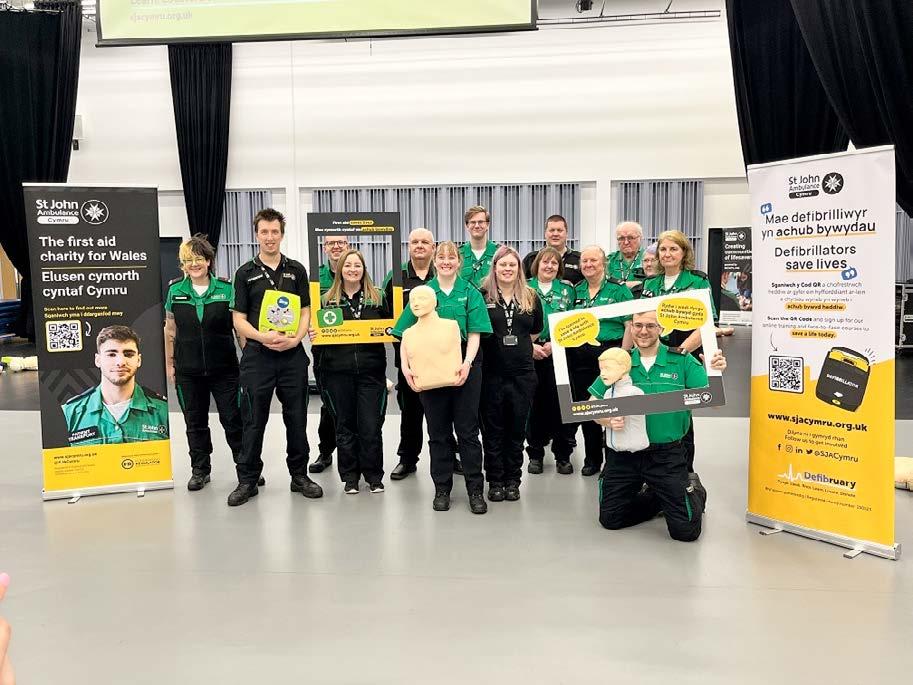
they were St John Ambulance Cymru volunteers and volunteer first responders, but they never expected these skills would be needed so close to home.
Fast forward ten years and Janice is still an active St John Ambulance Cymru volunteer and also works to help others with the charity’s Welfare and Falls Rapid Response Service in the Pembrokeshire area, run in partnership with Hywel Dda University Health Board.
Janice, who has since purchased a defibrillator just in case something like this should happen at home again, said: “It’s so important to learn these basic first aid skills and it’s vital to administer first aid as soon as possible to give people a better chance of survival.”
The event at Haverfordwest High is just one of the free first aid demonstrations in schools and community groups delivered as part of St John Ambulance Cymru’s partnership with EcoFlow, a global company, specialising in portable power products, solar technology and smart home energy solutions.
To find out more about St John Ambulance’s Defibruary campaign and learn how you can get involved, visit www.sjacymru. org.uk/defibruary.
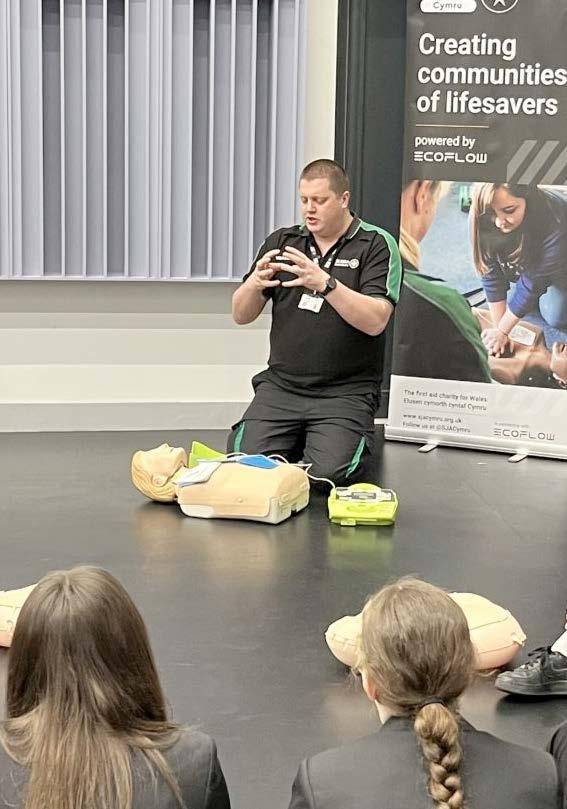




The Welsh crops and horticulture sector came together recently for a special conference to look ahead and inspire for the coming 12 months.
The conference, which took place at the Duke of Wellington Hotel, Cowbridge on Wednesday 5th February, included a fantastic line up of speakers and industry experts addressed arable farmers from across the country.
The event was opened with a keynote speech by NFU Cymru Crops & Horticulture Board Chairman Tom Rees. He said: “I am delighted that NFU Cymru has been able to host this dedicated conference for arable farmers and horticulture growers in Wales. We have had a really challenging few years with unpredictable and significant weather events impacting our harvests; and continued uncertainty over the policy detail and funding arrangements of the Sustainable Farming Scheme. However, as we look forward, there are some huge opportunities for us as a sector including building improved relationships across the supply chain and on farm assurance the chance we now have to shape what we want it to look like going forward following the publication of the review.”
Tom also took part in a panel session which was chaired by NFU Cymru Crops & Horticulture Board Vice Chairman, Richard Anthony, along with NFU Combinable Crops

Board Chair Jamie Burrows and NFU Cymru President, Aled Jones. Jamie Burrows told those in attendance about his background in arable farming as well as his rise to the role of NFU Combinable Crops Board Chairman. He outlined the difficulties of the last year but looking forward he discussed the opportunities for the sector following the Farm Assurance review.
NFU Cymru President Aled Jones also addressed the conference and gave those in attendance an update on the Sustainable Farming Scheme and the on-going work being undertaken to ensure the scheme works for all sectors and all farmers in Wales. He
also discussed the latest on the Stop the Family Farm Tax campaign, before thanking members of the NFU Cymru Crops and Horticulture Board for their work over the past 12 months.
After lunch, in a session chaired by NFU Cymru Deputy President Abi Reader, conference goers heard from NIAB Agronomist Will Vaughan-France, who specialises in crop and soil management for the long-term benefit of the farm. Will told those in attendance about his journey into arable farming and the background to his role at NIAB. He discussed arable crop performance and the importance of farm-based trials being undertaken in Wales
to ensure growers had access to varieties that best suited the climatic conditions and disease challenges faced in Wales.
Finally, members of the audience heard from Huw Thomas, Managing Director of Puffin Produce, who gave an insight into the story behind the Pembrokeshire company’s success. Huw outlined Puffin’s background and went through the product ranges they provide including supermarket own brands and Puffin’s Blas y Tir and root zero brand. Huw was able to show that the increased sales and value being achieved by the company through branding and labelling the potatoes as Welsh grown. He also covered the businesses sustainability work and the company’s carbon footprint.
NFU Cymru Crops & Horticulture Board Chairman Tom Rees said: “The arable industry has had a very challenging 12 months, and with the SFS still in development and the Inheritance Tax proposals causing real worry for farming families the next 12 months will continue to be difficult, but the aim of this conference was to be positive and to inspire us all and I am confident with the professionalism and dedication of our arable and horticulture growers and with support across the supply chain we can look forward with confidence. I would like to thank our guest speakers for taking the time to join us and those who attended for some really insightful thought-provoking discussions.”


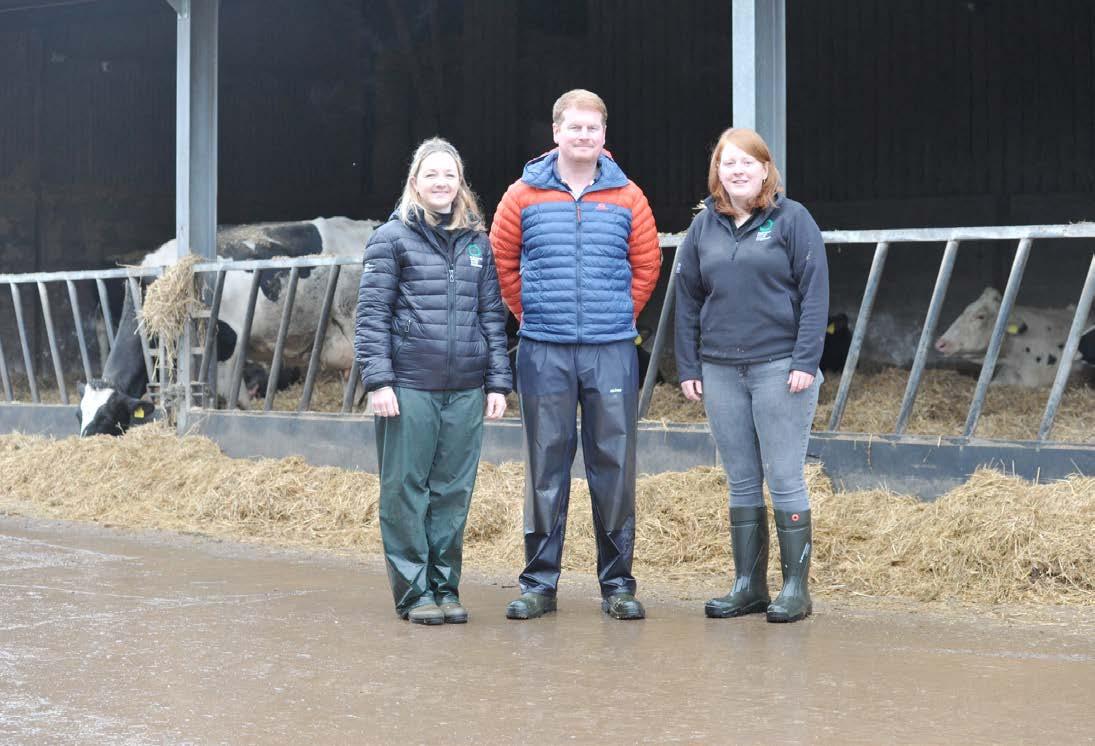
A DAIRY farmer managing a chronic bovine TB breakdown has eliminated a major disease threat to his herd by no longer buying in cattle.
Michael Williams is one of 15 farmers involved in the Pembrokeshire TB pilot, a Welsh Government initiative which aims to develop additional measures for bovine TB control, over and above the statutory actions currently being used.
Sharing his progress with other farmers at a recent Farming Connect event, Mr Williams said there is much that every farmer can do to protect their herds from TB.
He has introduced multiple biosecurity measures, including running a closed herd.
He milks 150 cows on a robot milking system at Fagwrfran East, Puncheston, and had sourced cattle from livestock markets but this came with the risk of importing TB.
“We had already stopped buying in cattle before becoming part of this project but we have since become a truly closed herd, we don’t even buy a stock bull,’’ Mr Williams explained.
Cameras were installed to establish if badgers were coming into contact with cattle in the yard and housing and with
Tom Sinclair editor@herald.email
food and water sources.
None were detected but there were obvious physical signs of activity in fields and on cow tracks.
One and a half miles of badger-proof fencing has since been erected along a hedge with a high number of setts and latrines, to separate these from the stock.
Mr Williams has introduced other measures too:
The fallen stock collection point had been situated on a part of the farm which compelled a vehicle to cross the yard to collect carcasses.
This facility is now located in a contained area of a building that sits closest to the road and can be completely sealed off from wildlife.
Erecting electric fencing along the maize clamp
Although the farm has no feed bins vulnerable to wildlife, its open maize clamp is a potential risk at feeding out.
Mr Williams erected a simple deterrent, filling two redundant 20-litre dairy chemical drums with sand, placing these at each end of the clamp face and running polywire from one to the other, hooked up to a solar-powered energiser.
“This cost about £20, took ten minutes of my time and prevents badgers from interfering with the feed,’’ he said.
Unplanned visits by sales representatives and others are now discouraged.
Visits are by appointment only and a sign has been placed at the farm entrance advising of this policy.
Vehicles coming onto the farm must be clean.
In-field drinking water troughs that are not used in the winter when the herd and youngstock are housed are drained and remain empty until turnout.
Water troughs in use are
cleaned weekly.
Reducing reliance on farm contractors
Investment has been made in slurry application equipment to remove the need for hiring contractors for this job.
The frequency that feed passages in the cattle housing are cleaned has increased to minimise the period that slurry pools in these locations.
Adopting the highest level of hygiene at calving
Matting similar to cubicle bed mattresses has been laid in a dedicated calving pen to allow the floor to be thoroughly pressure washed and disinfected between calvings.
Containers of disinfectant solution are positioned around the yard to allow footwear to be disinfected in between contact with different classes of stock
Increasing intervals between slurry application and silage harvesting
Although Mr Williams operates a multi-cut silage system, he has increased cutting intervals from four weeks to five and applies slurry to the aftermath at the very earliest opportunity, the day after the grass has been collected from the field.
In addition to rolling out biosecurity measures, Mr Williams has been culling animals which have been identified as at high risk of contracting or spreading TB, flagged up on a ‘risk rating’ list through an app developed for the Pembrokeshire TB pilot.
Any cow in the two highest risk categories – in this case red or amber – is sold as barren.
“Being more proactive with culling, choosing when an animal leaves the farm rather than being in a forced situation as a result of a TB test, is a better option in many ways,’’ said Mr Williams.
If an animal falls into a ‘yellow’ band, the lowest of the three risk categories, but is nonetheless
a risk, she is bred to a terminal sire to ensure that no female replacements enter the herd.
In 2024, 35 of Mr Williams’ cows exited the herd based on risk rating results.
“There is short term pain in getting on top of the residual disease but I am confident that we will reap the rewards a few years down the line,’’ he maintains.
“If we can get down to two or three per cent risk rating, we will be in the realms of being on top of the disease rather than the disease being on top of the herd.’’
“In December 2024 the risk rating was 7% compared to 11% in January 2024 so this is a start, we think culling is working.’’
Mr Williams also emphasised the importance of making time to discuss biosecurity and disease risks with the farm vet.
“Don’t do this while the vet is TB testing or on the farm for another reason, set aside a dedicated time to have a proper discussion,’’ he advised.
He credits his vet, Rhiannon Lewis, of Gwaun Vets, with supporting him through this process. “We have worked together on this,’’ he said.
The Farming Connect event was hosted by Rhys Lougher at Ty Tanglwyst, a dairy farm near Pyle.
Mr Lougher’s 120-cow herd of pedigree Holsteins has been free of TB for many years.
He too has high levels of biosecurity and benefits from his farm being largely remote from cattle on other holdings and protected by hard boundaries including roads and limestone quarries.
Only sexed semen is used for breeding and no cattle have been bought in for 40 years.
Mr Lougher has his own slurry tanker and muck spreader to avoid use of contractors.
“A big part of our business is selling high health status, freshly calved, pedigree Holstein heifers to other dairy farms, the wish to continue to do this is our main driver for wanting to keep TB out of our farm,’’ he said.

As lambing season gets underway on many Welsh farms, the farmers’ Union of Wales is supporting Public Health Wales’ campaign for pregnant women in the farming community to be mindful of the risks posed by zoonotic diseases.
Zoonotic diseases are infections that can spread between animals and humans. Many of these diseases can result in animal abortions and pose a serious risk to pregnant women. These diseases include but are not limited to, enzootic abortion (EAE), Q fever, Salmonella, Campylobacter, Toxoplasma, and Listeria.
It’s therefore vital pregnant women exercise caution during this time, and take notice of guidance issued by Public Health Wales. Crucially, pregnant women should avoid helping or providing assistance during lambing, calving or kidding - including avoiding contact with aborted or newborn lambs, calves or kids or with the afterbirth, birthing fluids or materials (e.g. bedding or clothing) contaminated by such birth products, vaccines or recently vaccinated sheep.
Public Health Wales also suggests avoiding handling (including washing) clothing, boots or any materials that may have come into contact with animals that have recently given birth, their young or afterbirths. Potentially contaminated clothing will be safe to handle after being washed on a hot cycle.
It’s also important contacts or partners who have attended lambing ewes or other animals giving birth take
appropriate health and hygiene precautions, including the wearing of personal protective equipment and clothing and adequate washing to remove any potential contamination. If it is not possible to clean up thoroughly during the night, then sleep in separate bedrooms. It may be worth considering hiring additional help if necessary.
While it is relatively rare for pregnancies to be affected by animal contact, the potential consequences can be serious. It’s therefore important that everyone is aware of the risks posed during this lambing and calving season, and take precautions to protect themselves and others.
Pregnant women should seek medical advice if they experience fever or influenza-like symptoms and share with their health care provider they are from or have connections with working farms.
For more information about the precautions pregnant women should take during lambing and calving season, visit Public Health Wales’ website: https://phw.nhs. wales/news/pregnantwomen-urged-to-takeprecautions-duringlambing-season/



Kia Corporation today unveiled the EV4, showcasing both the EV4 saloon and EV4 hatchback models ahead of the brand’s second Kia EV Day event, which will be held in Tarragona, Spain.
Developed to enhance the appeal of Kia’s EV offering, targeting a broad demographic, the EV4 features a modern design and advanced technologies that resonate with lifestyle-focused buyers who are eager to explore.
“The Kia EV4 is a clear reflection of our commitment to rethink mobility, and expand the boundaries of what design can achieve. By offering both saloon and hatchback variants, we are bringing to our customers, the unique experience of modernity and practicality that defines the Kia EV family, in a way that suits their varied lifestyles and needs” said Karim Habib, Executive Vice President and Head of Kia Global Design.
“Offering a fresh take on the saloon, the EV4 saloon features a sleek, low nose and long-tail silhouette. The EV4 hatchback is a nimble, versatile all-rounder. Distinctive and clean, it is built to excel in any situation.”
What defines the Kia EV4’s design?
Rooted in Kia’s ‘Opposites United’ design philosophy, the EV4 typifies harmony achieved through contrasts in a

manner not seen before in the compact segment. This ethos is highlighted in the vehicle’s dynamic profiles, which blend sharp, distinctive lines with bold, technical detailing.
The EV4 demonstrates Kia’s vision for the next generation of electric saloons through its innovative silhouette, presenting a new typology in a uniform EV market.
Every element of the EV4’s design speaks to a forwardthinking character, embodying a sense of freedom and exploration that resonates with drivers seeking innovation and versatility. With both the EV4 saloon and the EV4 hatchback models, Kia’s unique design approach ensures both models
are equally at home on urban streets or continent-crossing adventures.
What exterior design features characterise the Kia EV4 hatchback?
The EV4 hatchback has a contemporary, solid look, defined by its contrasting black vertical C-pillars and crisply executed lines. Robust fenders and machined 19-inch wheels add visual strength and a sense of dynamic energy, while geometric patterns applied to the car’s lower body sections emphasise its innovative nature.
The EV4 hatchback’s rear profile mirrors the strong proportions of its saloon sibling while adding its own unique character. Sharply sculpted
lines, wide-positioned taillights, and a sloping rear window create a clean, robust look. The bold upright C-pillar trim provides a contrasting visual element, emphasising the vehicle’s proportions and design identity.
What exterior design features characterise the Kia EV4 saloon?
The EV4 saloon and EV4 hatchback’s striking front-end design feature Kia’s innovative EV Tiger Face, complemented by vertically oriented headlamps and the brand’s iconic Star Map lighting signature. This dynamic combination accentuates the vehicle’s wide, sporty stance while underlining its refined, cutting-edge character.
































Škoda has expanded its highlyanticipated Elroq line-up ahead of its arrival on UK roads. Škoda has added a range of additional variants that are available to order now, including a new SportLine trim. The sporting flagship of the range will introduce a striking look and bespoke interior, along with a revised suspension setup to deliver an even more dynamic driving experience. Joining the SportLine will be Elroq SE L 60 and Edition 60 derivatives, which will be positioned between the entry-level SE 50 and the Edition 85 variants.
New Elroq SportLine from £37,400 (Manufacturer Direct Price)
Following in the wheel tracks of the Enyaq SportLine, the new Elroq SportLine is poised to introduce a striking new edge to the range thanks to an exclusive design package and sharper driving dynamics. Available with both the 60 and 85 battery variants, the latter features standard sports suspension with specially tuned springs and dampers. Additionally, the ride height is lowered by 15mm at the front and 10mm at the rear. SportLine 85 models also feature progressive dynamic steering as standard.
The Elroq SportLine 60 features a 63kWh (59kWh net) battery pack and

a 204PS motor that delivers power to the rear wheels. It can sprint from 0-62mph in 8.0 seconds and has a WLTP driving range of up to 263 miles.
The Elroq SportLine 85 comes with a larger 82kWh battery (77kWh net) and a 286PS rear-mounted motor. It has a 0-62mph time of just 6.6 seconds and
a WLTP range of up to 355 miles. The Elroq SportLine 60 has a maximum DC rapid charge speed of 165kW, while the SportLine 85 has a peak DC charge speed of 175kW.
Like other Sportline models in the Škoda range, the Elroq features numerous gloss black details, including
the exterior mirror caps, side window trims and roof rails. Both versions come with 20-inch Asterion black alloy wheels as standard, along with a front bumper spoiler and a rear apron insert finished in gloss black. The SportLine badge also has a new place on the tailgate, replacing the designation of the battery version. The rear side windows and the rear window feature privacy glass as standard (privacy glass also standard on the Edition trim).
Inside, the Sportline Design Selection is dominated by black, which also extends to the headliner. The front sports seats with integrated head restraints feature black microsuede and artificial leather upholstery, grey contrasting stitching and seat heating as standard. The heated sports steering wheel has three spokes, recuperation paddles and a Sportline badge. The look is completed by carbon-effect trim strips on the dashboard and stainlesssteel pedal covers.
In terms of standard equipment, both Elroq SportLine models come with full LED Matrix beam headlights with variable light distribution, a 13inch infotainment system with satellite navigation (standard from SE L) and an electrically-operated tailgate with kick activation.


NEW analysis of the United Kingdom’s Small Business Survey has revealed a worrying decline in the number of familyowned businesses across the country—except in Wales, which was the only UK nation to see an increase since 2020.
The research, conducted by Geraldo’s, tracked changes in the percentage of small and mediumsized enterprises (SMEs) that identified as family businesses from 2020 to 2023, the latest available data. The overall findings suggest a downward trend, with the proportion of family-run SMEs across the UK dropping by 5% from a peak of 80% in 2021 to 75% in 2023.
Despite the overall decline, Wales saw an increase in family businesses over the four-year period, rising from 73% in 2020 to 76% in 2023. In contrast, England, Scotland, and Northern Ireland all experienced declines. Northern Ireland maintained the highest percentage of family-run SMEs, but even it saw a reduction from 83% in 2020 to 77% in 2023.
The survey also examined changes by industry, revealing that only Farming and the Information and Communications sectors maintained their peak percentages. Farming had the highest overall proportion of family-owned businesses, with

90% of small to medium-sized enterprises in the sector still in family hands.
However, the Arts and Entertainment sector saw the sharpest decline, with family-run businesses falling by 13%—from 57% in 2021 to just 44% in 2023.
Toni Dawson, owner of Geraldo’s, shared her insights into the struggles faced by familyrun businesses:
“It’s a shame to see
the number of small family businesses in decline, but I think it speaks to the unique pressures that these businesses can face. When you’re running a business that carries your family’s name, there’s a sense of responsibility that goes beyond the day-to-day work. The people you employ, whether they’re part of your family or not, rely on you—and ultimately, there’s no one else to help carry that burden, unlike in businesses with multiple owners or investors.
“However, there’s also a great amount of pride in being able to carry on the name and
heritage of something that means so much to you and your history. I hope that as we see new figures come in, we start to see some more growth again in businesses that are owned by a family long term.”
While family-run businesses remain a vital part of the UK economy, the overall decline highlights the increasing challenges they face. Wales’ ability to buck the trend may offer lessons for other regions looking to preserve this traditional business model in the years ahead.
SCORES of firms listed in court for non-payment of business rates
HUNDREDS of businesses across Pembrokeshire are facing court action for unpaid non-domestic rates (business rates), with a staggering number of cases listed at Haverfordwest Magistrates’ Court on Monday (Feb 17).
The court list reveals that Pembrokeshire County Council is seeking liability orders against an astonishing 686 defendants.
The hearings will determine whether the council can proceed with enforcement measures against those who have failed to pay their dues. The proceedings
fall under Regulation 12 of the Non-Domestic Rating (Collection and Enforcement) (Local Lists) Regulations 1989.
These liability orders, if granted, could result in enforcement action, which may include bailiff visits, seizure of goods, or other legal consequences for businesses struggling to meet their financial obligations.
The scale of the action highlights the financial strain faced by many local businesses, with concerns growing over the economic pressures forcing traders into arrears. The Herald understands that businesses across multiple sectors, including hospitality, retail, and services,
are among those affected.
A local business owner, who wished to remain anonymous, told The Herald: “The cost of running a business has skyrocketed, and many of us are struggling to keep up. We want to pay our rates, but when you’re dealing with soaring costs and reduced footfall, it becomes a real challenge.”
As the Welsh Government considers levying a Tourism Tax, the court action underscores the difficulties facing Pembrokeshire’s business community, as economic conditions continue to tighten.
The Herald will continue to monitor the outcome of these proceedings and report on any further developments.

A NEW solar farm set to generate green electricity for thousands of homes has been approved in Pembrokeshire.
The 8.6 MW project, featuring more than 14,000 solar panels, was originally developed by One Planet Developments Limited before being acquired by Shawton Energy Limited. Planning permission was granted last year, and construction is expected to commence soon, with energy production anticipated later this year.
Once operational, the solar farm will generate enough electricity to power approximately 2,500 homes annually, reducing carbon emissions by more than 2,000 tonnes each year.
Jamie Shaw, CEO of Shawton Energy, said: “Acquiring this readyto-build asset marks a significant step for Shawton Energy as we continue to help UK businesses achieve their sustainability goals while lowering energy costs. This project strengthens our growing solar portfolio and reinforces our commitment to expanding renewable energy infrastructure.”
Robert Wall, director of Shawton
Energy and head of sustainable private infrastructure at Lazard Asset Management, added: “We are pleased to support Shawton Energy’s expansion and investment in local renewable energy projects. The increasing demand for electricity requires diverse renewable solutions, and this solar farm will provide UK businesses with the low-cost energy they need.”
One Planet Developments’ business development director, James Stoney, welcomed the project’s progress, stating: “We are delighted to have worked with Shawton Energy on this development. Having taken it from concept to a ready-to-build stage, we look forward to seeing the project come to fruition.”
Shawton Energy, part of the Shawton Group, has been active in the renewable sector for nearly three decades, developing large-scale solar, battery storage, and renewable energy projects across the UK. The company partnered with Lazard Asset Management in 2023 to accelerate the deployment of fully funded commercial solar projects nationwide.

ASCONA gROUP, one of the fastest growing companies in Wales, has secured a £92 million funding package from HSBC UK and Barclays.
The refinancing package, which was led by HSBC UK, will allow Ascona, a Pembrokeshire-based business with operations across England, Wales and Scotland, to continue to pursue its fast growth strategy.
Ascona was founded in 2011 by CEO Darren Briggs and embarked on its current growth strategy in 2017. Since then, the business has gone from two to 60 sites across the UK, serving over 300,000 customers every week.
Darren Briggs, Founder & CEO of Ascona Group – pictured –commented: “We are delighted to complete this important transaction for Ascona. This strategic financing marks a pivotal moment in our growth journey as we continue to strengthen our footprint as one of the UK’s largest independent forecourt operators and one of Wales’s fastest-growing companies. We are incredibly grateful to the HSBC UK and Barclays teams for their support.”
Simon Williams, Relationship Director at HSBC UK, said: “We are pleased to support Ascona Group with this significant refinancing deal. It provides a solid foundation to secure future investment and drive the

company’s impressive growth plans. Ascona Group’s entrepreneurial spirit and commitment to expanding its footprint across the UK aligns perfectly with our mission to foster business growth and economic development. We eagerly anticipate the company’s continued success and its positive contributions to the communities it serves.”
Rebecca Davies, Relationship
Director at Barclays Corporate Banking, said: “We’re delighted to have worked with the Ascona Group on this pivotal refinance, enabling them to implement the next phase of their ambitious strategic plan. The group has a strong track record of high growth and supporting the communities they invest in across the UK. We look forward to using our industry expertise and regional footprint to further support
this in the years ahead.”
In October 2024, Ascona Group was recognised as one of the fastest growing businesses in the UK by the UK Fast Growth Index for the second year running. On top of this, two of its forecourts were named as winners at Forecourt Trader 2024 awards, highlighting Ascona’s commitment to high-quality customer service and operational excellence.


COUPLES seeking fertility treatment in Wales face a postcode lottery in terms of access to services, a Senedd Member warned.
James Evans, the Conservatives’ shadow health secretary, said the eligibility criteria for NHS-funded fertility treatments varies across the country.
Mr Evans called for the Welsh Government to standardise the criteria to make sure everyone has equal access to treatment and provide people with greater choice.
He said: “There are notable differences in the fertility treatments offered across different health boards and patients often lack autonomy to choose their preferred treatment centre.”
Mr Evans raised the example of ICSI, a treatment for men with infertility, during health questions in the Senedd on February 12.
He said: “For those people with low sperm counts, that is the only way in which they can actually access fertility treatments but some centres don’t do that.”
Peter Fox cautioned that male infertility issues are often overlooked despite studies showing that male factors contribute to 30% to 50% of cases in Wales.
He added: “When males are diagnosed… they’re often left in the dark with no support offered to them because most of the treatment services are focused toward the women.
“A lot of those men are left feeling frustrated – they feel shame, they feel anger –because they don’t feel like they get the mental support needed to get through that time in their lives.”
Standing in for health secretary Jeremy Miles, who was ill, Sarah Murphy, the mental health minister, said one in six couples will struggle with

infertility.
She explained that the Human Fertilisation and Embryology Authority regulates the NHS and private sector, setting out the treatments and procedures available.
Raising commissioning policy on fertility services, Ms Murphy stressed: “I think it’s really important to emphasise, though, that this is a specialist service.
“It is not something that is provided across every health board.”
Ms Murphy pointed to services provided in clinics in Cardiff and Swansea, adding: “I understand completely that there will be people out there where this is not ideal, I do.”
She told the Senedd: “There absolutely shouldn’t be any shame or stigma around this –it’s not as uncommon as maybe people think.”
Mabon ap Gwynfor, Plaid

Cymru’s shadow health secretary, warned of high levels of homelessness, mental health issues and financial insecurity among unpaid carers.
He said only 6% of unpaid carers were able to access personal needs assessments during 2024 despite a right to one being enshrined in Welsh law a decade ago.
Mr ap Gwynfor raised concerns about a “chronic lack of capacity” to conduct assessments, with councils facing spending pressures of £559m in 2025/26.
Dawn Bowden, the Welsh Government’s social care minister, recognised the picture, saying: “This is something that I hear consistently from unpaid carers … and carers’ organisations.”
Ms Bowden added: “I want to reassure you, Mabon, that we know we are nowhere near where we need to be with this and this is very much a priority piece of work.”
Plaid Cymru’s Sioned Williams said one in three women will have an abortion in their lives as she criticised a lack of services within Wales despite warnings since 2018.
She told the Senedd that nowhere in Wales offers surgical termination beyond 16 weeks nor any type of abortion after 20 weeks.
Ms Williams said: “If a woman needs access to abortion services beyond this up to the legal limit of 24 weeks, they must travel out of Wales for treatment, usually to Liverpool or London.
Plaid Cymru’s shadow social justice minister, Sioned Williams “Although abortions at later gestations account for only 2% of all abortions, the women who require them are some of society’s most vulnerable.”
Ms Murphy pointed to the ten-year women’s health plan, adding that she has sought to move the issue up the agenda with work on a specialist abortion service under way.
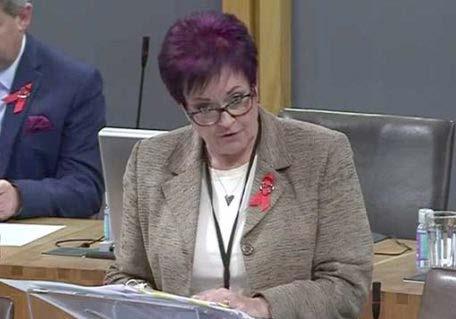
SENEDD Members warned of a public health emergency due to the dominance of ultra-processed food in people’s diets.
Labour’s Jenny Rathbone led a debate on a cross-party motion which was co-submitted by the Conservatives and Plaid Cymru.
She told the Senedd: “The food industry spends billions promoting our disastrous diets and we have to use the power of community to fight back.”
Ms Rathbone warned: “There’s no time to lose. The ever-escalating diabetes epidemic is already devouring 17% of the NHS budget.
“The levels of malnutrition among hospital patients are prolonging patient stays, and the main driver of early death and chronic illness is not smoking but our obesogenic diets.”
The Conservatives’ Peter Fox introduced an ultimately unsuccessful bill on sustainable production and food security in 2021.
“We don’t need data to show that things are getting worse,” said Mr Fox, a farmer and former council leader. “It’s clearly evident all around us.
“We see growing levels of obesity across our population and, worryingly, a significant rise in childhood obesity leading to serious health-related issues, such as childhood diabetes.”
During the February 12 debate, Plaid Cŷmru’s Llyr Gruffydd warned that too many people in Wales struggle

to access fresh, healthy and affordable food.
He urged ministers to make greater use of public procurement to improve food in schools, hospitals and care homes while supporting Welsh producers.
Labour’s Lee Waters broadly agreed,
Wales.
He said: “What’s stopping us from supporting Welsh farmers and buying local? Well, we don’t grow enough veg for a start, so there’s an opportunity for farmers to embrace horticulture to create new sources of income.”
But the former minister stressed the need to influence the private sector, with
the value of all public food procurement equivalent to the annual turnover of one big supermarket.
Warning of a public health emergency, Alun Davies, a fellow Labour backbencher, urged the Welsh Government to put food centre stage.
He said: “I think it’s no exaggeration to say that obesity is an absolute national emergency and it’s not a national emergency that is an act of God; it’s an act of capitalism.”
Huw Irranca-Davies said the Welsh Government’s community food strategy would be published as soon as possible as he pointed to spending on local food partnerships.
The Deputy First Minister, who is responsible for food policy, described the food sector as a real success story employing 228,000 people or 17% of Wales’s workforce.
Ms Rathbone argued the community food strategy will be insufficient, warning a lack of follow through and rigorous execution has left Wales a very pale imitation of Scotland.
She said: “France and Italy would never have allowed their children to be sold the second-class food that is being served in our schools today.
“And I want to see the commitment to actually ban ultra-processed food from all public procurement – that is what we need to work towards.
“We can’t achieve it overnight but we need to set a date and do it.”
RCN Wales calls for urgent action as Cardiff University faces cuts
THE NuMBER of applicants for nursing courses in Wales has risen by 14% this year, but the Royal College of Nursing (RCN) warns that the longerterm decline remains a major concern.
Figures from the Universities and Colleges Admissions Service (UCAS) show applications for 2025 nursing courses have increased from 3,050 to 3,480. However, since 2021, applications have fallen by 15%, down from 4,090.
Helen Whyley, Executive Director of RCN Wales, welcomed the rise but warned that it does not reverse years of declining inteest in the profession.
“This increase in applications is a positive step, but we remain deeply concerned about the long-term decline in nursing applicants in Wales,” she said. “The health care system is already under immense pressure, and without sustained investment in nursing education, we risk deepening the workforce crisis.”
Cardiff University nursing cuts ‘alarming’
Ms Whyley also criticised Cardiff University’s proposed closure of its School of Nursing, warning that it would have serious consequences for Wales’ health services.
“RCN Wales is alarmed by Cardiff

University’s current proposals,” she said.
“Any reduction in nursing education provision would have significant implications for the future workforce and the ability to meet health care needs across Wales. We urge Cardiff University and policymakers to prioritise investment in nursing education and ensure that opportunities for aspiring nurses are expanded rather than reduced.”
Need for more nursing education
places
Despite steady commissioning figures for nurse education places in Wales, RCN Wales argues that numbers must be increased to match growing demand.
Ms Whyley added: “RCN Wales will continue to advocate for sustained investment in nursing education, ensuring that Wales has a well-supported, welleducated nursing workforce now and
in the future. The RCN urges the Welsh government, universities, and health leaders to work together to secure the long-term sustainability of nursing education and protect the future of the profession.”
With thousands of nursing vacancies still unfilled across Wales, the RCN is calling for urgent action to ensure the next generation of nurses can be trained and supported in their careers.


THE WELSH government has announced plans for Wales to become the first nation in the UK to ban greyhound racing.
Huw Irranca-Davies, the Deputy First Minister, told the Senedd that a ban will come into force as soon as practicably possible.
He said: “There will be work to do in ensuring the dogs, their owners, and those involved in the industry around the racetrack, can wind down from this activity while still protecting the welfare of dogs currently within the industry, the local community and the local economy.”
In a statement on February 18, Mr IrrancaDavies pointed to cross-party support and a petition signed by more than 35,000 calling for a ban on greyhound racing.
Senedd Members from across the political
divide supported a ban during a debate last week. Valley Greyhound Stadium in Ystrad Mynach is the last remaining track in Wales.
Caerphilly MS Hefin David has called on the Welsh Government to consider the flood impact a ban could have if the greyhound track closed.
He said: “The track in Ystrad Mynach is on a flood plain and I understand that the owners have introduced flood mitigation, as well as clearing up following flooding.
“A ban would close the track, leaving derelict land on a flood plain adjacent to my constituency.
“Any implementation group planned by the Welsh Government must consider this

and any financial commitment required to remediate the land.”
Huw Irranca-Davies, Deputy First Minister and secretary for climate change and rural affairs
In December, New Zealand – where the industry is worth £73m a year and employs 1,000 people – announced plans for a ban due to injuries and the deaths of dogs.
Mr Irranca-Davies said: “We also note what is happening in other countries across the world who are taking steps to ban this activity.
“As a result, I believe that now is the right time to move to ban greyhound racing in Wales – we are proud to be the first nation in the UK to do this.”
Mr Irranca-Davies explained the next step will be setting up an implementation group to advise the Welsh Government on how a ban will come into force.
He told the Senedd: “I’m pleased to share with the Senedd that I have seen the strength of feeling on this and I have listened.”
The Conservatives’ Peter Fox said his party’s members would have a free vote on the issue, with his colleague Andrew RT Davies warning greyhound racing could go underground.
Mr Fox added that he would visit the greyhound track to take a balanced view on the plans but he added: “I think the evidence is very, very powerful.”
Llyr Gruffydd welcomed the announcement, pledging Plaid Cymru’s support and questioning if it will be possible to pass legislation due to a mounting logjam before the 2026 election.
He said: “But you did say you wanted it to happen ‘as soon as possible’ and therein lies the small print, I suppose, because the government does need to show diligence and an adherence to proper process

otherwise you leave yourself open to challenge.”
Mr Gruffydd also stressed the need to consider the potential unintended consequences such as illicit, unregulated racing or dogs being raced across the border.
Mr Irranca-Davies agreed about the need to avoid the risk of jeopardising animal welfare, saying a clearer timetable will be set out in the spring.
Labour’s Carolyn Thomas said: “There are well over 35,000 people who are pleased and relieved to hear this statement today, banning greyhound racing in Wales.”
Ms Thomas, who chairs the Senedd’s petitions committee and cross-party group on animal welfare, added: “I feel we’re really leading the way here…. This is a good day for thousands of animals in Wales and I’m so excited and so pleased to hear this.”
Welsh Lib Dem leader Jane Dodds, who has a rescue greyhound called Wanda, said: “I have to say, there are not many times where I stand up in the Siambr and I’m smiling.
“But this is one of those days. This is a landmark statement, it does very clearly demonstrate the commitment that Wales has to looking after our animals.”
Ms Dodds, whose first rescue greyhound called Arthur died in 2023, paid tribute to the “Cut the Chase” coalition of charities for their campaigning on the issue.
She told the Senedd: “I also want to pay tribute to all those greyhounds who’ve gone before and all those who will come after as well.”
The Mid and West Wales Senedd member said Arthur was traumatised by his experiences.
“I learned a lot from him,” she said. “He could sleep at 100 miles an hour but he was absolutely devastated by
his experiences on the track.
“And we lost him three years later –far, far too early.”
Ms Dodds said: “Many of us have seen the trauma and the injuries … their suffering has been needless, their abuse has been unnecessary and their pain has been unavoidable.
“But, from today, we need to mark this in the sand and make sure that this stops.”
Mark Bird, chief executive of the Greyhound Board of Great Britain, said: “This announcement has nothing to do with greyhound welfare

and everything to do with pressure from the extreme animal rights movement.
“The Welsh Government’s own summary of consultation responses highlighted the lack of evidence to support the case for a ban on the sport. This summary made clear there has been a coordinated campaign against licensed greyhound racing, seeking to drown out the voice of local people including those whose livelihoods rely on the sport.
“Questions should be asked as to why, despite repeated requests, the
minister has failed to meet with the industry in Wales, or its regulator, and preempted his own timeline to make this call.
“Meanwhile, the minister has engaged on numerous occasions with campaign groups known to use shock tactics and misleading information to achieve their ends.
“We have engaged in the consultation process in good faith as regulator for the sport, but this statement is hugely disappointing and will do absolutely nothing to support greyhound welfare.”
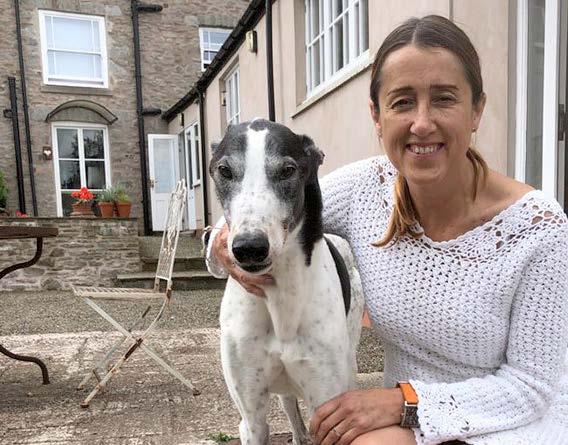

week 4 of the Trump Presidency and I have managed to refrain from mentioning him, until now. As he puts his wrecking ball into the recognised world order, supported in most instances by Reform UK leader, Nigel Farage and the Conservative Party leader, Kemi Badenoch, my fear is that what I am about to write about will be past history, as by publication day of the Herald, he will have upset other nations and the Munich Security Conference and Ukraine will be forgotten by events elsewhere.
The Liberal Democrats are calling for the seized Russian assets to be repurposed for the good of Ukraine. Emergency legislation would require Parliament to be sitting, meaning recess would have to be cancelled if needed.
Liberal Democrat Leader Ed Davey said to the Prime Minister at last week’s PMQs that “if Ukraine is forced to surrender its sovereign territory to Russia, it will be the greatest betrayal of a European ally since Poland in 1945”.
He called on PM Starmer to reassure the House that he would not allow President Zelensky to be “bullied by Trump and Putin into a deal that effectively hands victory to Russia”.
Ed Davey said:
“Trump’s actions mark the end of an era for Europe and our security. Now is the moment for the UK to lead. We have said for months: if the US won’t, Europe must.
W ITH ANDReW Lye
“The Government cannot afford to sit on its hands whilst Trump’s actions threaten our economic security through tariffs and our national security through Trump’s deal with Russia.
“For too long the Conservatives sat on these seized assets. I urge the PM to act and lay emergency legislation. That has to be the first step in standing up for Ukraine and our collective security.”
Commenting on US Vice President, JD Vance’s speech at the Munich Security Conference, Calum Miller MP, Liberal Democrat Foreign Affairs Spokesperson, said:
“Britain will not take lectures about political freedoms from the acolyte of a President who tried to undermine American democracy and now praises Putin.
“The British people will see straight through this hypocrisy.”
I was horrified at Vance’s speech in Munich. The Conference was supposed to be primarily about 2 things: how to end the war in Ukraine without giving in to Russia, and how Europe needed to boost its defence spending.
Instead, delegates largely sat in silence, whilst for 20 minutes, Vance attacked their allies, including Britain, in a blistering attack decrying misinformation, disinformation and the rights of free speech.
I was brought up learning about World War 2 and how we should learn from the mistakes. Appeasement is still a dirty word to many of us and it appears Trump is content to see Ukraine concede further territory to Putin.
As we learnt in the 30’s, a dictator is never satisfied and will go on to grab more land. Can we in Europe trust the US under Trump and MAGA? Sadly, it’s beginning to look like we can’t. We should learn from history. Instead it looks like history is about to repeat itself.
If you have any issues or comments, please contact me at andrew.lye@pembslibdems.wales

A DISCREPANCY in Pembrokeshire County Council’s budget documentation has raised concerns about transparency in reporting the projected funding gap for 2025-26.
Local political commentator and county councillor, Mike Stoddart, has questioned changes between two versions of Appendix D, presented to Cabinet in December and February, which outline how the Council plans to bridge the significant funding shortfall.
Pembrokeshire County Council: Statutory duty to agree on a balanced budget
In December, documents stated that over the past 11 years, the Council had addressed a cumulative funding gap of £174.8 million through a mix of budget savings, Council Tax increases, and reserve use. A breakdown showed that £110.2 million (63%) had been achieved through base budget
reductions, with Council Tax increases contributing £43.3 million (24.8%), Council Tax premiums adding £11.7 million (6.7%), and reserve funding accounting for £9.6 million (5.5%).
However, the February version of Appendix D omitted references to cumulative funding and detailed figures, instead focusing solely on the projected funding gap for 202526, which had also decreased from £34.1 million to £27.4 million.
Stoddart argues that without the cumulative context, the figures become “mathematically meaningless” and has expressed concern that the Council has not provided an explanation for the change.
Speaking to The Herald, he said: “It is noticeable that
the December document presented cumulative figures, but in February, this crucial context has disappeared without explanation. If these funding gaps and the methods used to bridge them are not cumulative, they don’t make mathematical sense.”
The Council has a statutory duty to agree on a balanced budget for 2025-26 by 11 March 2025, which will involve difficult decisions regarding budget savings, potential Council Tax increases, and the use of reserves.
The Herald has approached Pembrokeshire County Council for clarification on why the format of the funding report changed between December and February and whether the omission of cumulative data was intentional or a revision based on new financial assessments.
More to follow as this story develops.

judge rules council failed to justify decision on Heritage Park expansion
THE HIGH COURT has quashed Pembrokeshire County Council’s approval of a controversial holiday lodge development at Heritage Park, Pleasant Valley, Narberth, ruling that the council failed to provide adequate reasons for granting permission against its own planning policies.
The case, brought by local residents’ group SPVRG Limited, challenged the council’s decision to approve the extension of the existing caravan park. The plans, submitted by Heritage Leisure Development (Wales) Limited, proposed 48 new holiday lodges, a spa, holiday apartments, a café, cycle hire, equestrian stables, and other facilities.
The court heard that the development conflicted with the county’s Local Development Plan (LDP), particularly Policy GN 19, which restricts the expansion
of caravan sites to within settlement boundaries. The council’s own planning officers had recommended refusal due to the development’s location outside these boundaries.
Despite this, the planning committee voted in favour of the scheme, citing its potential economic benefits. When the decision was referred to the full council, members endorsed it without providing written reasons, prompting the legal challenge.
Judge Jarman KC ruled that the council had “failed to grapple with” key issues, including the project’s sustainability and its potential negative impact on existing tourism businesses. The court found that the council did not properly explain how the economic benefits outweighed the policy conflicts.
The judgment also criticised the decisionmaking process, noting that the council’s reasoning was simply to endorse the planning committee’s decision without
WITH BRIAN MURPHy
T RUST in politics and politicians is at an all time low, and it is imperative that the trust is restored. Hardly a day goes past when it is reported that we have been misled or lied to, and there are little consequences for those peddling the mistruths.
Take for example the LinkedIn claims by Rachel Reeves that she worked as an economist for 10 years when she was an office clerk for about 6 years. There are also questions being asked about her expense claims. She has stated that the information was put on by someone else and has now been rectified.
farmers in some of the wealthiest countries. That is unjustifiable and shows the contempt Labour has for farmers.
The lack of trust is not confined to Westminster, it is rampant in Wales. We have the Welsh Labour Government giving money to their mates whilst ignoring problems in the NHS, education, tourism and other areas.
addressing concerns raised in later reports. The court ruled that this major departure from planning policy could set a dangerous precedent.
As a result, the council’s approval has been overturned, and the matter will now be reconsidered. The ruling means the development cannot proceed unless the council provides a legally sound justification for granting permission.
The case has reignited debate over the balance between economic growth and environmental protection in Pembrokeshire’s tourism sector. The Herald understands that SPVRG Limited and other campaigners are calling for stricter adherence to planning policies to prevent unchecked expansion of holiday parks in rural areas.
Pembrokeshire County Council has yet to comment on whether it will attempt to reapprove the development or if it will accept the court’s decision and refuse permission.
Reeves is responsible for the content on her profile. It is scandalous to blame someone else for your own mistakes. If she had posted the information, she is a liar. If it was posted by another person and she never checked it she is, at best, incompetent. Either way it shows she is not fit for one of the highest offices in Government and should be required to resign. In business had an employee behaved like that they would be sacked.
Another example is the claim that there was a £22bn “black hole” when Labour came to power and the only way to plug that was to raise taxes and impose a disgraceful inheritance tax on farmers. The people who work hardest in the country in all weathers, never getting proper time off are seen by Labour as an easy target. The Treasury estimates that this will raise about £250 million, whilst at the sae time it is sending £500 million abroad to support
It has been revealed that Lee Waters chums in Sustrans has been given over £3 million to support active travel. I’ve seen cycle lanes popping up all over the place, but no evidence has been produced that these are being used. Whilst at the same time Welsh Labour has refused to reinstate the winter fuel allowance to shivering pensioners.
Another organisation called Size of Wales, which is led by a former Labour First Minister, has been granted £775,000 to help people in Peru to navigate a river. I am sure that people in Pembroke could use that money to sort out the trains and they can navigate to work.
There are many more examples of the Welsh government’s wasteful spending on pet projects. And these are the people who claimed the moral high ground during the election campaigns.

SeND yoUR LeTTeRS To: THe eDIToR, 11 HAMILToN TeRRACe, MILFoRD HAveN, PeMBRoKeSHIRe, sa73 3al
eMAIL US AT: editor@herald.email


There are eight billion humans on this planet, all dependent on the fundamental design of the universe—a structure that Isaac Newton and others proved to be based on ethical principles, rationality, and mathematics. However, history has shown that systems such as conservative slavery, the Nazi Holocaust, and the rampant dishonesty in capitalism exist far outside this design, shaped instead by human self-interest and deception.
SUPPoRT NATURe BeFoRe IT’S Too LATe
DEAR SIR,
Nature needs our support—we are the guardians of this planet. We all cherish walks along the beach and through the countryside, the sound of birdsong, the sight of wild rabbits, and the excitement of a visiting pod of dolphins. The beauty of butterflies and the presence of healthy woodlands enrich our lives.
Yet, despite this, we continue to witness a blatant disregard for the natural world in the relentless pursuit of profit and so-called progress. Self-interested politicians and individuals disconnected from the environment— whether through littering or harming our landscapes and waterways—contribute to the destruction of fragile ecosystems.
A shift in mindset is urgently needed. We must take responsibility for our planet before it is too late. Protecting and valuing our environment is not just an ethical duty but a path to economic and societal benefits. Costa Rica stands as a shining example of how
environmental protection can go hand in hand with prosperity, and Wales has the potential to follow suit.
The time for change is now. We must act before the damage becomes irreversible.
Michael Metcalf
BUT WHAT vALUeS ARe We TRULy UPHoLDING?
DEAR SIR,
I came of age during World War II and later served in the UK Peacekeeping force in Palestine at a time when war-weary nations still upheld peace as an ideal—despite the sacrifice of my compatriots, far from home.
During the war, every British adult believed that the Axis powers were skilful, habitual liars. Educated individuals recognized the anti-Christian influence of 19th-century philosopher Friedrich Nietzsche, who despised cooperation. However, we also came to accept that the Allies, too, had to employ falsehoods— both to mislead the enemy and for domestic morale. From this necessity, truth was
often sacrificed, justified by the moral duty to protect our soldiers in the “Defeat of Evil.”
Such moral compromises are not unique to war but have shaped civilization over millennia, aligning with the fundamental design of the universe, as demonstrated by great minds from Pythagoras to Isaac Newton. If we accept that ethics and justice are intrinsic to this world— however imperfectly grasped by humanity—then we must also question the trajectory of modern conflicts.
After World War II, many Western leaders sought to attack our wartime ally, a weakened Russia, simply because its people favoured Communism. From Korea to Vietnam and beyond, wars have been waged under the guise of Capitalism defeating Communism, despite the fact that Communism itself was evolving from within.
Today, Britain’s complicity in senseless warfare exposes the profound dishonesty of unchecked Capitalism—a system that now threatens eight billion lives. Shockingly, many Britons reject calls for ceasefires in distant conflicts, preferring force over cooperation. But what values are we truly upholding if we refuse even to engage with others in dialogue?
C. N. Westerman
Yet, these eight billion people are divided across 194 nations, many dominated by nationalism—”my country, right or wrong”—fueling hostility toward others. This self-obsessed perspective blinds people to their own reflection in their so-called enemies, a mirror image of themselves. Such thinking draws hard-right individuals toward xenophobia, fostering a hatred of foreigners—except, of course, for oligarchs whose wealth is revered.
Millions of these right-wing voices insist that we “must be strong” and advocate for evergreater military spending, believing that war can solve problems rather than destroy civilizations. This relentless push for “security through strength” inevitably escalates global tensions, compelling nations such as Russia and China to respond in kind. The result is a cycle of military buildup and hostility—echoing past Cold Wars and, ultimately, leading humanity down the path to destruction.
Today, a majority of British adults remain fiercely opposed to even the mention of a ceasefire, convinced of their ability to predict the future with certainty. Yet, this mindset reduces complex geopolitical issues to a simplistic battle of “goodies and baddies”— the thinking of a child, not of a society capable of true progress.
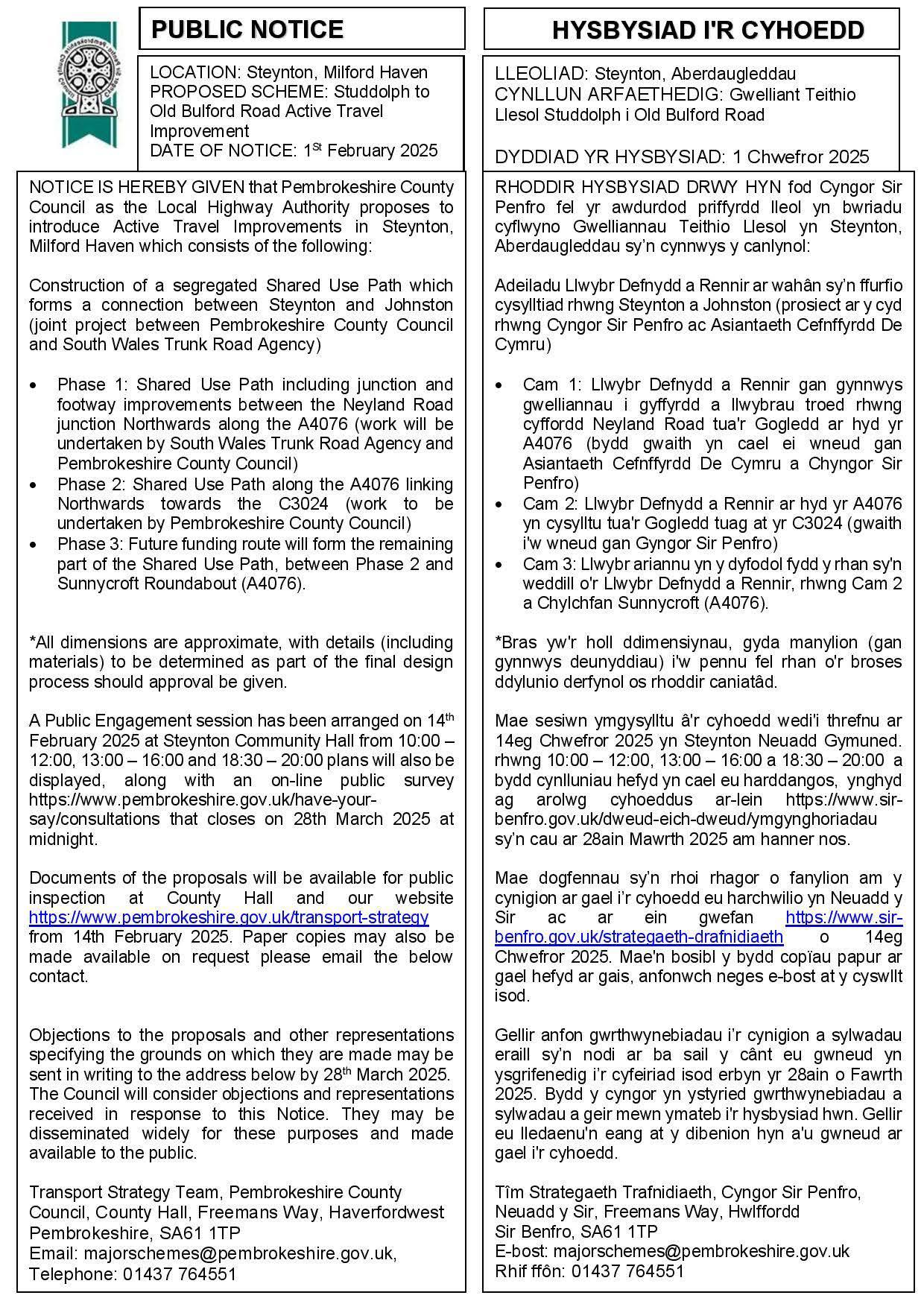
L LANFALLT e G
THE death occurred in Hampshire on 4th february of Mr gordon jones, of Dolycoed, Llanfallteg, he was aged 96.
He will be sadly missed by all of his family.
The funeral service takes place on Thursday 27th February at Parc Gwyn Crematorium, Narberth at 12.15pm.
There will be family flowers only, donations if desired, can be made payable to either “The Injured Jockeys Fund” or “Wales Air Ambulance” c/o Funeral Directors W & M J Rossiter & Sons Ltd, Landsker House, 21 Station Road, Narberth, SA67 7DR or via www.rossitersfunerals.co.uk
PEACEfULLY at Withybush Hospital on friday, february 7, 2025, Lena Margaret Myfanwy Evans, Brynawel, Ambleston aged 81 years.
Beloved wife of Eric, much loved mother and mother-in-law of Elin and Hugh, Arwel and Helen and a proud grandmother.
Strictly private funeral service.
Further enquiries to Colin Phillips Funerals Ltd, 4 Morgan Street, Cardigan, SA43 1DF. Tel: 01239 621192.
Peacefully at his home on february 2nd, Edward aged 84 years.
Devoted husband of Beryl, Dearly loved father of Nina and the late Rupert, father in law of Edward, Much loved grandfather of Harry and Alfie.
Funeral service Tuesday 25th February 12 noon at the Lady Chapel, St.Davids Cathedral.
Enquiries to W.G.Bernard Mathias & Daughter (01437) 720537.
PEACEfULLY at her home in Croesgoch on February 2nd.
Carole, beloved wife of Roy, dearly loved mother of Steven.
She will be sadly missed by her family and friends
A private family funeral will be held in Llanrhian Cemetery on February 19th
Enquiries to W.G.Bernard Mathias & Daughter (01437) 720537
FISHGUARD
PEACEfULLY on Tuesday 4th february at Withybush Hospital, Dilys of fishguard (formerly of Trellwyn Fawr).
Loving wife of the late James, loving mother and mother-in-law to John, Dyfrig, Arwel and Lorraine and the late
Gareth, cherished grandmother, great grandmother, sister, sister in law and auntie.
Private family funeral.
Family flowers only. Donations in lieu if desired to a charity of your choice.
Further enquiries to Paul Jenkins & Sons Funeral Directors, Fishguard. Tel 01348 873250
GLoRIA PARFITT
PeMBRoKe DoCK
THE death occurred suddenly and tragically whilst in America recently of Miss gloria Parfitt, formerly of Meyrick Street, Pembroke Dock.
Gloria was 69 and will be very fondly remembered by her many friends all over the country.
A Service of Celebration and Thanksgiving for her life will take place at St. John’s Church, Pembroke Dock on Thursday 27th. February at 11.00. am.
All are welcome. Further enquiries may be made to John Roberts & Son, Funeral Directors, 51, Bush Street, Pembroke Dock, SA72 6AN, Tel. 01646 683115, who are carrying out the arrangements.
formerly of Little Rathe, Crundale. Meg passed away peacefully at home on the 5th February aged 79 years.
Much loved mother to Hayley, Clare, David and their partners, she will be sadly missed by all who knew her
Her funeral service will take place on Thursday 6th March 2025 at 11.00am at Bethlehem Baptist Chapel, Spittal.
Please wear what you feel comfortable in.
Family flowers only, donations, if desired, for the Paul Sartori Foundation and/or Bethlehem Baptist Chapel can be sent directly to Paul Sartori House, Winch Lane, Haverfordwest, SA61 1RP or www.paulsartori.org or Bethlehem Baptist Chapel, Spittal, Haverfordwest, SA62 5QL.
All enquiries to Roy Folland & Son Funeral Directors (01437) 763821. recently of Miss Gloria
Peacefully at fairfield Nursing Home on Sunday 29th December 2024 Ann Barbara Perry of Milford Haven formerly of Brentford, Essex aged 85 years.
Much loved mother and mother in law of Julie and Simon, nan of Jamie and Lucy.
The funeral service will take place on Tuesday 25th February, 11:30am at Parc Gwyn Crematorium, Narberth.
Family flowers only. Donations in lieu, if desired, in aid of the Guide Dogs for the Blind made payable to ‘Guide Dogs’ may be sent directly to Guide Dogs, Hillfields, Burghfield Common, Reading Berkshire, RG7 3YG or at www.guidedogs.org.uk memory donation page.
Further enquiries to F. G. Rees & Sons, Haverfordwest. Tel: 01437 764418.




















































fORMER Wales rugby star Louis Rees-Zammit has re-signed as a wide receiver with the jacksonville jaguars, ensuring he continues his pursuit of an NfL career following his switch from rugby union in January 2024.
Rees-Zammit will once again compete for a spot in the Jaguars’ 53-man squad ahead of the new NFL season, which begins in September. The 24-year-old remains eligible for their practice squad under the league’s International Player Programme, allowing him to be promoted to the active roster twice during the season without the Jaguars forfeiting one of their 53 regular spots.
The former Wales wing became a free agent after the Jaguars chose not to sign him on a reserve/future contract, leaving him free to negotiate with any team. However, this latest deal secures his place in Jacksonville for the next stage of his development.
Rees-Zammit caused a major stir in January 2024 when he announced his departure from rugby union to join the NFL’s international player pathway, a 10-week programme designed to develop and assess prospective players. Initially recruited by the Kansas City Chiefs for pre-season training, he later moved to Jacksonville last August

and has now committed to staying with the franchise.
Despite not yet featuring in a competitive NFL game, Rees-Zammit played three preseason matches for the Chiefs and was in New Orleans to witness his former side miss out on a third consecutive Super Bowl victory. His new deal also puts an end to speculation about a potential return to rugby union in the near future.
During his rugby career, Rees-Zammit
earned 32 caps for Wales, scoring 14 tries. His final appearance came in the 2023 Rugby World Cup quarter-final defeat to Argentina—the first of what would become a record-breaking 14 consecutive Test losses for Wales, culminating in Warren Gatland’s departure during the 2025 Six Nations.
For now, Rees-Zammit remains committed to his NFL dream, hoping to make his mark as a wide receiver in Jacksonville.
fRENCH rugby legend Mathieu Bastareaud has thrown his support behind Shaun Edwards as a potential candidate for the vacant Wales head coach role, insisting the current france defence coach “checks all the boxes.”
Edwards’ name has been mentioned in discussions following Warren Gatland’s departure last week, which came after a disastrous run of results in the Six Nations. Heavy defeats to France and Italy ultimately sealed Gatland’s fate, with the loss in Rome proving the final straw. The Kiwi opted to step down, prompting Welsh Rugby Union (WRU) CEO Abi Tierney to appoint Cardiff Rugby boss Matt Sherratt as interim head coach.
Several names have been linked with the permanent position, including Franco Smith and Simon Easterby. However, Bastareaud believes Edwards would be an ideal candidate.
“It’s true that Shaun Edwards is often synonymous with defence, but above all, he is someone who has real expertise in rugby and a deep understanding of the game,” Bastareaud wrote in his Six Nations column.
“All the players I have been around and who knew him, whether at club or national level, only say good things about him. He is a strong character, with solid principles and convictions. And when you take on a team,

I think it is essential to immediately impose high standards. Edwards clearly checks all the boxes.”
Bastareaud also praised Edwards for his confidence and openness about his ambitions.
“In addition, he is a confident candidate. I like people who are not afraid to say loud and clear: ‘I am interested in this position, I think I have the qualities for it.’ I’d rather deal with someone like Edwards, who’s up front about their ambition, rather than those who scheme behind the scenes, doing everything to get the job while acting indifferent in public. At least with Edwards, it’s clear.”
Reflecting on the struggles of Welsh rugby, Bastareaud admitted he was
saddened by the team’s decline, having previously faced Wales sides he once feared. He also questioned the timing of Gatland’s departure, suggesting the decision should have been made before the tournament began.
“In my opinion, the real question is: shouldn’t it have been done before?” he asked. “Because in the end, if you want to attack the Championship with a new coaching staff, you might as well do it from the start, with new energy and a group that starts with a positive dynamic. Starting the competition dragging the weight of all these past defeats doesn’t help anyone.”
Despite the disappointing end to Gatland’s second tenure, Bastareaud acknowledged his immense contribution to Welsh rugby.
“However, it’s always difficult to judge from the outside. But I still have the impression that it might have been more judicious to turn the page before the start of this year’s Championship. That said, it doesn’t take away from what Gatland brought to Wales. The ending is sad, yes, but the history between him and this nation remains magnificent.”
As the WRU continues its search for a permanent head coach, Edwards’ credentials and reputation could make him a strong contender for the role, should he express an interest.
AMMAN UNITED’S hopes of extending their strong home form were dashed as they fell to a 24-14 defeat against Haverfordwest in torrential conditions at Cwmamman Park.
Having won three of their last four home fixtures, Amman United entered the match with confidence. However, they struggled to contain a wellorganised Haverfordwest side, who made full use of the wet and muddy conditions, particularly excelling with their driving maul.
Despite the defeat, Amman United were bolstered by the return of captain Rhydian Jones and Alun Lewis, both of whom had been sidelined with longterm injuries. Their presence was felt early on as the home side dominated the opening 20 minutes, with Jones and Lewis making inroads and backrower Ieuan Phillips covering significant ground. However, Amman failed to convert their territorial advantage into points.
Haverfordwest made their first meaningful incursion into Amman’s 22 count, opening the scoring through lock Carl Bush. Full-back Jack Codd added the conversion. Minutes later, the visitors employed the same strategy, earning a penalty try after Amman were unable to

halt their momentum legally. A further Codd penalty on the stroke of half-time gave Haverfordwest a comfortable 17-0 lead.
The visitors extended their advantage early in the second half, with prop Tom Carrington powering over from close range to make it 24-0. However, Amman
St Davids Extend Winning Streak
St Davids 17 – Teirw Crymych 0
ST DAVIDS secured their fourth consecutive victory with a dominant 17-0 win over Teirw Crymych. Playing in challenging conditions, the home side used their set-piece superiority to control the contest.
Centre Harvey Lavin opened the scoring in the first half, finishing off a well-crafted move orchestrated by captain Nathan Foster and centre George Raymond. Bob Froy added the conversion, giving St Davids a 7-0 lead at the break.
After halftime, full-back Mike Gurney extended the advantage with a penalty. Teirw Crymych had a chance to close the gap, but fly-half Nick Bevan missed a penalty attempt. The visitors enjoyed a strong spell but were undone by errors at crucial moments.
St Davids sealed the win when outside half Ben Joyce kicked a penalty to the corner, setting up a try for hooker Rhys Price. Crymych had a late opportunity to score, but a knock-on near the try line ended their hopes.
Pembroke Retain Palmer Cup
Pembroke 42 – Llangwm 21
Pembroke retained the Palmer Cup with a commanding 42-21 victory over Llangwm. Having won the first
leg by five points, Pembroke started aggressively, crossing for three tries within the opening ten minutes.
Llangwm fought back, narrowing the deficit to 20-6 at halftime. They briefly took a 21-20 lead in the second half while Pembroke were down to 13 men due to yellow cards.
However, Pembroke responded emphatically in the final stages, scoring several tries to pull away. Will Edwards scored the standout try of the match, with prop Dan Gosnold also adding his name to the scoresheet.
Neyland Run Riot Against Llanybydder
Neyland 60 – Llanybydder 12
League leaders Neyland delivered a dominant display, running in ten tries in a 60-12 demolition of Llanybydder. The home side established a 28-0 halftime lead before adding six more tries in the second period.
Ben Williams led the scoring with a hat-trick, while Owen Hamer crossed twice. Llanybydder managed two tries in the third quarter but struggled to contain Neyland’s relentless attack.
Narberth Athletic Gain Revenge Over Dreigiau Emlyn
Narberth Athletic 39 – Dreigiau Emlyn 11
from Iestyn Griffiths nearly resulted in a spectacular score for wing Dylan Matthews. The pressure eventually paid off, with substitute Gavin Lewis instrumental in setting up a superb try in the corner for centre Luc Rees. Griffiths then delivered a pinpoint conversion from the touchline to bring the final score to 24-14 in favour of Haverfordwest.
Despite their victory, Haverfordwest will be disappointed not to have secured a bonus point, as they continue to hover just above the relegation zone. Meanwhile, Amman United remain in the bottom four and will now take a break for the Six Nations before resuming action with a trip to Pontyberem on 1st March.
Cwmgors Push League Leaders Rhigos But Fall Short
refused to roll over. With fresh legs from the bench, including 18-yearold debutant Chris Powell, the hosts began to apply pressure on the Blues’ try line. Powell was initially denied a try due to an infringement, but Amman were soon awarded a penalty try.
A well-placed cross-field pass
In another fixture, Cwmgors gave Division 4 West Central leaders Rhigos an early scare. The Cherries led 13-5 at half-time thanks to a try from Owen Davies and two penalties and a conversion from Jordan Smith. However, Rhigos came out strong in the second half, running in three tries to seal a 30-13 victory.
Cwmgors will return to action after the international break with a crucial clash against bottom-of-the-table Briton Ferry on St David’s Day.

Narberth Athletic avenged their early-season defeat to Dreigiau Emlyn with a convincing 39-11 victory. The hosts ran in six tries and restricted their opponents to just one in the second half.
Narberth took control with two firsthalf tries, while Dreigiau Emlyn replied
with two penalties. After the break, Narberth’s defense held firm, and they finished strongly, scoring four more tries. Shane Rossiter added two conversions and a penalty, with Iwan Thomas also slotting a conversion on his return to action.
PENNAR Robins capitalized on their chances to secure a convincing 4-1 victory over Merlins Bridge at the Pembrokeshire Sports Village. Despite an entertaining contest, the home side struggled to convert their opportunities, while Pennar were ruthless in front of goal.
The visitors struck first in the 16th minute when Jamie Wilkes latched onto Nick Willis’ through ball and expertly lobbed goalkeeper James Dickson. Merlins Bridge responded just before halftime as Josh Thomas weaved through the defence and finished into the far corner.
However, Pennar quickly regained the lead on the stroke of halftime when Cameron Brunton’s cross was met by Ben Adams, whose volley deflected off Dickson and into the net.
Merlins Bridge pushed for an equaliser early in the second half, with Jordan Thomas heading against the crossbar, but Pennar took control in the 67th minute as Adams capitalized on a poor back pass to round Dickson and tap into an empty net. Wilkes sealed the victory in the 89th minute, running

onto Liam Williams’ pass to complete his brace.
Cope inspires Kilgetty to victory over Herbrandston
KILGETTY captain Richard Cope led by example, scoring twice in a dominant 4-0 victory over Herbrandston. The visitors found the net twice in each half to secure their seventh win of the season, while Herbrandston remain
without a point.
Cope opened the scoring in the 28th minute before Lloyd Hughes doubled Kilgetty’s lead just before the break. The visitors remained in control after halftime, with Cope grabbing his second soon after the restart. Jordan Gorman then made it 4-0 in the 56th minute, drilling home to cap off an impressive display.
Despite the scoreline, Herbrandston battled well in the final half-hour, but
Kilgetty’s win moves them six points clear of the relegation zone.
Goodwick see off determined Clarbeston Road
gOODWICK UNITED 3 –CLARBESTON ROAD 1
TITLE-chasing Goodwick United continued their strong campaign with a 3-1 win over a determined Clarbeston Road at Phoenix Park.
Jonny Horgan gave Goodwick the lead in the 29th minute, finishing clinically after good work from Scott Delaney and Alex Thomas. The hosts extended their advantage in the 59th minute when Rhys Jones was fouled inside the box, allowing Thomas to convert from the penalty spot.
Clarbeston Road pulled a goal back in the 73rd minute through Jamie Griffiths, who fired home after a scramble in the box, but Goodwick restored their two-goal cushion just five minutes later. Delaney’s curling effort from 20 yards found the top corner to seal the points for the home side.
The win keeps Goodwick in the hunt for the title, while Clarbeston Road remain in mid-table, showing resilience despite the defeat.
FISHGUARD & GOODWICK 45 –WHITLAND 14
FISHGUARD & GOODWICK delivered a commanding performance to secure a 45-14 victory over Whitland in a highly anticipated rematch at The Moor. Earlier in the season, Whitland edged a narrow 13-10 win at Parc Llwyn Ty gwyn, but this time, the Seagulls took full control from the outset.
The home side dominated proceedings early on, heading into halftime with a 19-0 lead. Despite a spirited effort from Whitland in the second half, Fishguard remained in the driving seat throughout.
fAST START SETS THE TONE
Fishguard’s forwards laid the foundation for their success, with young talents Rhys and Will Lewis, Bryn Thomas, Cai Llewellyn, and Will Delaney stepping up alongside captain Sion Colella and seasoned front-rowers Iwan McVeigh and Liam Wilkes. Their dominance in the set-piece provided
half-backs Dan Evans and Jake Jenkins the perfect platform to unleash their backline.
Hooker Liam Wilkes opened the scoring before winger Rhys Evans and full-back Mark Jones crossed for further tries. Jones also added two conversions, giving the Seagulls a comfortable cushion at the break.
WHITLAND fIgHT BACK BUT fALL SHORT
Minutes into the second half, veteran replacement Gavin Walsh secured the bonus-point try, again converted by Jones. Whitland, however, refused to roll over. Captain Dan Bennett led from the front, with Rhys Nicholas, Iestyn Comey, and the Hughes brothers— Will and Tom—putting in strong shifts. In the backs, Gareth Davies and Oli Bujega were constant threats, and their persistence paid off as Will Hughes and pacy winger Morgan Lewis touched down for well-earned tries, both converted by replacement full-back Jonathan Thomas.

SEAgULLS fINISH IN STYLE
Despite Whitland’s fightback, Fishguard reasserted control.
Centre Nial Keane powered over for
a try under the posts before Mike Jenkins capped off a fine individual performance with a final score, sealing an emphatic victory for the Seagulls.