








Port Talbot row reignites


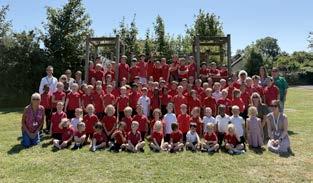
STEPASIDE Community Primary School will remain open after Pembrokeshire County Council formally reversed its earlier decision to consider closing it.
Councillors approved the change at a meeting of the full council on Thursday afternoon, July 16, bringing months of uncertainty for pupils, parents, staff and the wider Kilgetty and Stepaside community to an end.
The decision rescinds the authority’s previous instruction to begin statutory consultation on proposals to close Stepaside and Saundersfoot primary schools and replace them with a new school for children aged three to 11 on the existing Saundersfoot site.
The governing body of Stepaside Community Primary School said it was “delighted” by the outcome and described it as a major achievement for the community.
Chair of Governors Laura Burnett said: “We are delighted to share the exciting news that Stepaside Community Primary School will remain open.
“This is a tremendous achievement for the community served by the school in Kilgetty, and it means our staff can continue providing a highquality education in the nurturing and supportive environment for which the school is known.”
However, governors said they continued to believe the original closure proposal had been ill-informed. They raised concerns that figures relating to the school’s capacity, projected pupil numbers and finances were outdated and did not provide a reliable basis for deciding its future.
The governing body also argued that the effect of closing the school on pupils, families and the wider community had not been examined thoroughly enough.
It said there had initially been limited engagement with those who would have been most affected and expressed disappointment that some of those involved in developing the proposal had not visited the school
Tom
Sinclair editor@herald.email
before it was put forward.
The decision to reconsider the plans followed a change in Pembrokeshire County Council’s Cabinet responsibilities.
Deputy council leader and Cabinet Member for Place, the Welsh Language and Education Cllr Paul Miller recommended that the authority should no longer pursue Stepaside’s closure.
He previously said a review had concluded that the school was producing good educational outcomes for its local population and was sustainable in its present form.
Governors thanked Cllr Miller and the county councillors, MPs and Senedd Members who visited the school and listened to the concerns of families and campaigners.
They said the visits had allowed the school to demonstrate its educational standards, community values and the wider consequences that closure could have caused.
The school’s recent Estyn inspection described Stepaside as “a happy place where pupils feel safe and are eager to learn”.
Inspectors also praised its nurturing ethos and described the school as having a welcoming, calm and purposeful learning environment in which pupils made good progress and were proud of their achievements.
The campaign to protect the school received widespread community support, with a council petition started by Angela Robinson attracting 1,952 signatures.
Local county councillors Alistair Cameron and Alec Cormack were also among those who publicly opposed the proposed closure.
The governing body said the dispute had raised wider questions about the future of rural education in Pembrokeshire.
It said: “Closing successful schools is
not the right approach to educational development.
“Rural schools are far more than places of learning. They are at the heart of their communities, and their loss has far-reaching consequences for local families and community life.
“Approaches that may be appropriate in cities should not automatically be applied to counties such as Pembrokeshire, where vibrant rural schools play a vital role in sustaining
thriving local communities.”
The decision was also welcomed by Swansea City and Wales footballer Liam Cullen, a former Stepaside pupil whose family has been connected with the school across several generations.
He said: “Stepaside is a school that my family and I attended, from my mum and auntie to my nephew and niece today.
“It provided me, and so many other pupils, with an amazing education and prepared us perfectly for moving on to secondary school.
“I met many friends there who I am still in contact with today. Alongside giving me a brilliant education, the staff supported my ambition of becoming a footballer.
“My family and I could not have done it without the school allowing me to train and play while making sure I remained on top of my education.”
The governing body said it was now looking forward to welcoming pupils back in September and beginning a more settled chapter in the school’s history.
Families interested in applying for a place or arranging a visit can contact the school at admin.stepaside@ pembrokeshire.gov.uk.






THE UK GOVERNMENT’S decision to nationalise British Steel has reignited questions over its handling of the steel crisis in Wales, following the closure of Port Talbot’s blast furnaces and the loss of thousands of jobs.
British Steel formally transferred from its Chinese owner, Jingye, into public ownership on Thursday after ministers said negotiations to secure the company’s future had failed.
The takeover is intended to protect approximately 2,700 direct jobs and preserve the Scunthorpe works, the last site in the UK still capable of producing primary steel from iron ore and coking coal.
However, the intervention is likely to cause renewed anger in Welsh steel communities.
Port Talbot’s final blast furnace closed in September 2024 as part of Tata Steel’s move towards electric arc production, bringing an end to traditional primary steelmaking at the South Wales site and contributing to the loss of approximately 2,800 direct jobs.
The UK Government committed £500 million towards Tata’s £1.25 billion transformation programme, with a new electric arc furnace now being built and expected to begin operating in late 2027 or early 2028.
Ministers say the investment secures a long-term future for steel production in Wales and safeguards around 5,000 jobs across Tata Steel’s UK operations.
Critics, however, are likely to question why public ownership was considered necessary to preserve blast-furnace production and skilled employment in Scunthorpe, while calls for similar intervention at Port Talbot were rejected.
Plaid Cymru MPs attempted to strengthen the legislation used to nationalise British Steel by adding protections for steelmaking sites and communities in Wales.
Caerfyrddin MP Ann Davies said during

the passage of the legislation that Port Talbot remained a “painful reminder” of what she described as the neglect of Welsh steel communities.
The government previously confirmed that it had no plans to nationalise Tata Steel’s Port Talbot operation, arguing that its future was already underpinned by the electric arc furnace agreement.
The contrasting approaches reflect significant differences between the two companies. Tata Steel remains the owner

of Port Talbot and is investing alongside the taxpayer, while ministers said they had been unable to reach a viable agreement with Jingye over British Steel.
Nevertheless, Thursday’s announcement means taxpayers will now own and support Britain’s remaining blast furnaces, while Wales has already lost the same primary steelmaking capability.
That distinction is expected to become central to the renewed political debate over whether Welsh steelworkers and communities were offered the same level of protection.
PROCEEDINGS against a man accused of assault and intentional strangulation in Pembroke Dock have been discontinued.
Michal Rakowski, 42, had been due to stand trial at Haverfordwest Magistrates’ Court on Thursday (July 16).
He had faced allegations of assaulting a woman and causing her actual bodily harm, and of intentionally strangling her, in Pembroke Dock on June 8
Rakowski, who was listed as being of no fixed abode, entered not-guilty pleas to both charges on Tuesday (July 14).
The court register confirms that both proceedings have now been discontinued. No findings were made against Rakowski and he was not convicted of either offence.


A MILFORD HAVEN town councillor has questioned whether Pembrokeshire County Council needs to appoint a new deputy chief executive at a time when local services are under growing financial pressure.
Councillor Lee Bridges spoke out after the authority advertised for a Deputy Chief Executive and Director of Place, with a salary of between £132,063 and £145,050.
The successful candidate would also receive a £9,576 annual lease car allowance and a relocation package,
taking the potential overall package above £154,000.
Cllr Bridges stressed that his concerns related to the position itself and were not intended as criticism of the person currently holding, or previously holding, the role.
He said: “At a time when local authorities across Wales are facing significant financial pressures and frontline services are under increasing

strain, I do question whether this role is really necessary.
“The council already has a chief executive, directors responsible for each service area, together with multiple layers of senior managers, middle managers and team leaders.
“When opportunities arise through senior vacancies, they should also be seen as opportunities to review and streamline management structures rather than simply replacing like-forlike.”
The senior post carries responsibility for areas including regeneration, economic development, planning, transport, environmental services, climate change and major capital projects.
The successful applicant would also support major investment opportunities linked to the Celtic Freeport.
Cllr Bridges said strong leadership remained important, but argued that the cost of senior management needed to be balanced against the pressure on council services.
He said: “Every pound spent on senior management is a pound that cannot be invested in frontline services that residents rely upon every day.
“Over recent years, we have repeatedly heard that difficult financial decisions have had to be made, with services being reduced or placed under increasing pressure because budgets
are stretched.
“If that is genuinely the case, then it seems entirely reasonable that senior management structures should be reviewed with the same level of scrutiny as every other area of council spending.”
He said the vacancy should have prompted the authority to consider whether the responsibilities could be divided among existing senior officers.
Cllr Bridges added: “I would have welcomed a strategic review of whether this post is genuinely essential, or whether its responsibilities could be absorbed within the existing leadership team.
“Any savings could then be redirected towards protecting services for Pembrokeshire residents, whether that is highways, social care, education, environmental services or other frontline functions.”
He said his comments were intended to encourage debate about council priorities rather than criticise individuals.
“This is not about personalities,” he said. “It is about ensuring that, when opportunities arise through natural vacancies, the council asks whether there is a better way of structuring itself for the future.
“At a time when every public pound counts, I think residents would expect those questions to be asked before another senior appointment is made.”
A FOOTBALLER who put an opposing player in a headlock before jumping on his back and gouging at his eyes has been ordered to complete 200 hours of unpaid work.
Robert Hedley, 42, returned to Haverfordwest Magistrates’ Court on Thursday (July 16) after being found guilty of assaulting Liam Morley-Trivett and causing him actual bodily harm.
The assault took place during a football match at St Clears on August 30 last year.
Following a two-day trial earlier this week, magistrates concluded that Hedley grabbed Mr Morley-Trivett in a headlock before jumping onto his back and gouging at his eyes.
The court heard that Mr Morley-Trivett suffered injuries including blurred vision following the attack.
When delivering the guilty verdict on Tuesday, the presiding magistrate said the defence had given varying versions of what had happened and where the two players had been positioned on the pitch.
The prosecution witnesses, however, were found to have given credible accounts of Hedley jumping onto Mr Morley-Trivett’s back and gouging at his eyes.
“We’re satisfied beyond reasonable doubt that the defendant caused injuries and, as a result, we find him guilty,” the magistrate said.
Hedley, of Wesley Way, Spittal, appeared for sentence after an all-options pre-sentence report had been prepared by the probation service.
A victim personal statement from Mr Morley-Trivett was read to the court by prosecutor Sian Vaughan. Magistrates imposed a community order lasting until July 15, 2027, requiring Hedley to complete 200 hours of unpaid work.
He was also ordered to pay £200 compensation to Mr Morley-Trivett, £650 prosecution costs and a £114 surcharge. The total financial penalty must be paid in monthly instalments of £100, beginning on August 14.
The bench considered imposing a restraining order but decided it was neither necessary nor proportionate because of the length of time since the offence and the absence of any further offending.

TENBY’S Summer Spectaculars have been brought to an end after the licence allowing the popular charity events to take place at Tenby Harbour was revoked.
Tenby Round Table says it did not want to abandon the events and had spent hundreds of hours attempting to find a workable solution with Pembrokeshire County Council and the emergency services.
The volunteer organisation maintains that it was prepared to reduce crowd numbers, increase security and medical provision, introduce road closures and accept amendments to its licence.
However, organisers say they could not secure the legal powers needed to control the number of people entering the harbour and beach.
Without those controls, the Round Table says it could not guarantee the safety of those attending or accept responsibility for continuing to operate the event.
The premises licence was revoked following a meeting of Pembrokeshire County Council’s Licensing SubCommittee on Thursday, July 9.
The decision was confirmed after the committee concluded that the licensing objectives were not being adequately met, leaving significant concerns about crowd safety, emergency access and the protection of children from harm.
Evidence was considered from Dyfed-Powys Police, the Welsh Ambulance Services NHS Trust, Mid and West Wales Fire and Rescue Service, council officers and the event organisers.
Tenby Round Table said it disagreed with the final decision but respected the committee’s role and its overriding responsibility to protect public safety.
The group said: “We are sorry to announce that our licence to host the Summer Spectaculars in Tenby Harbour has been revoked for all future events.
“While we do not agree with the decision, we respect the SubCommittee’s role and its overriding concern for the safety of those attending the events.
“Public safety is, and always has been, paramount to us and it was the reason we initially raised these

Tom Sinclair editor@herald.email
concerns with PCC and Dyfed-Powys Police following the 2025 events.”
The dispute centred on how organisers could control the number of people entering the harbour and adjoining beach during the events.
The Summer Spectaculars were free to attend, with visitors asked to make
voluntary donations to support local charities and good causes.
Unlike a ticketed venue, the harbour remained accessible through several routes, including from the beach.
Organisers say this made it impossible to accurately control attendance once the area reached its safe capacity.
Tenby Round Table said: “Our position has been, and remains, that safe control of access to the harbour is fundamental to the safety of those attending the event.
“The management of crowd movement is at the heart of the
police’s appeal against this licence.
“We believe that this control, when combined with road closures and the other measures we had already put in place, would have allowed these vital fundraising events to continue safely.”
The group said it had repeatedly drawn Pembrokeshire County Council’s attention to legislation which it believed could be used to control pedestrian access.
It claims the same legal framework has been used in Tenby during other large events to manage crowd movement on public footpaths.
However, the Round Table says the council’s Public Realm department repeatedly maintained that the legislation could not be used for the Summer Spectaculars.
Organisers said they obtained independent legal advice and raised the matter again during the licensing hearing.
They said the hearing was then suspended while the position was reconsidered.
The Round Table has pointed supporters towards the webcast of the hearing, saying the exchange can be viewed at approximately two hours, 16 minutes and 45 seconds into the recording.
The organisation said: “We continue to believe that the Summer Spectaculars can be run safely and successfully in Tenby Harbour, as they have been for almost 40 years.
“We were prepared to accept amendments to our licence to make this possible and to adapt the event to ensure it remains viable in the changing world we live in.
“We were happy to review crowd numbers, security, medical provision and road closures.
“All we needed in return was the ability to control the number of people accessing the harbour and beach so that we could be confident of everyone’s safety.”
The problems surrounding the Summer Spectaculars had been developing for several months before the licence was revoked.
Two events had been planned for
August 2026, continuing a tradition which had attracted thousands of residents and visitors to Tenby Harbour.
Following the 2025 events, organisers raised concerns about their ability to control crowds and began discussions with the council and emergency services.
The Round Table commissioned professional health and safety advice, attended multi-agency meetings and began preparing an updated Event Management Plan.
However, it said it could not complete the plan without a clear answer on how access to the harbour and beach could be restricted when the site reached capacity.
In June, Tenby Round Table provisionally cancelled both 2026 events.
At the time, the group said Pembrokeshire County Council’s Public Realm department had been given months to resolve the access issue but had failed to provide the legally grounded response required.
The council denied that it had ordered the cancellation and said it wanted the events to continue, provided the necessary safety arrangements could be agreed.
Despite further discussions, no agreement was reached before the licensing hearing.
During the hearing, Dyfed-Powys Police called for the premises licence to be revoked and warned that the event, in its existing format, presented a serious public safety risk.
The committee heard concerns about the size of the crowds attending, the possibility of a sudden crowd surge and the limited routes available for people to leave the harbour in an emergency.
Police said they were not opposed to the Summer Spectacular itself but believed its popularity and scale had outgrown the existing arrangements.
The Welsh Ambulance Services NHS Trust raised concerns about access for ambulances and the ability of medical teams to reach casualties within a densely crowded harbour.
Mid and West Wales Fire and Rescue Service also raised concerns about crowd numbers, uncontrolled attendance and access for emergency vehicles.
The committee was told that the working harbour environment, narrow access routes and unrestricted entry from the beach created significant difficulties for organisers and emergency services.
Tenby Round Table disputed some of
the evidence and argued that it had not ignored the safety risks.
The group said it had identified the crowd-control problem itself and had spent much of the previous year asking for help to resolve it.
Its representatives maintained that the event could continue safely if a lawful method of controlling access was put in place.
Cllr Aaron Carey, Pembrokeshire County Council’s Cabinet Member with responsibility for the Licensing Service, said the authority took no satisfaction from the decision He acknowledged the disappointment it would cause to volunteers, charities, residents, businesses and the many visitors who valued the events.
He said: “Neither I nor Pembrokeshire County Council take any satisfaction whatsoever from this decision and I know this will be very disappointing news for the organisers, volunteers, charities and many people who value the Tenby Summer Spectacular.
“The Sub-Committee also recognises the longstanding charitable contribution of the event, its importance to the local economy and the significant funds it raises for local good causes.
“However, committee members concluded that public safety must always be the overriding consideration.”
Cllr Carey said the concerns presented by Dyfed-Powys Police were extremely powerful.
He also highlighted the concerns raised by the ambulance and fire services regarding emergency access, uncontrolled attendance and crowd numbers.
He said there was significant evidence that the event’s size and popularity meant it may have outgrown its current setting.
Cllr Carey added: “Public safety has to be paramount, particularly where an event involves large crowds in a working harbour environment and affects surrounding public spaces.
“However, the evidence presented by the Tenby Round Table was not sufficient to satisfy the committee that the licensing objectives relating to public safety and the protection of children from harm could be adequately promoted.”
The council said officers and partner agencies had met organisers on a number of occasions in the hope that the concerns could be mitigated.
It said it remained willing to work with the Round Table to explore how a sustainable and properly managed event might be delivered in the future.

Dyfed-Powys Police also recognised the fundraising work undertaken by Tenby Round Table and the importance of the event to the town.
A police spokesperson said the force had raised concerns surrounding public safety, the protection of children from harm and the prevention of crime and disorder.
The force said keeping communities safe had to remain its priority but that it was willing to work with organisers on a safe event in the future.
Although the council has spoken publicly about continuing discussions, Tenby Round Table says the position expressed during the hearing appeared to rule out a future Summer Spectacular at the harbour.
The group said: “While we welcome PCC’s comments in their press release about their willingness to work with us on future events, we must highlight
their clear view in the Sub-Committee hearing was that any future event will not be taking place in Tenby Harbour.
“The offer to ‘continue working constructively’ is a welcome one, which we wish had been apparent throughout this process.”
The Round Table also rejected any suggestion that the dispute had been about increasing revenue or attempting to transfer responsibility to the local authority.
It said responsibility for the safety of those attending remained with the organisers and this was precisely why it would not proceed without effective access controls.
“This has never been about raising more money or shifting liability,” the organisation said.
“It has always been about our ability to host these fundraising events safely for our community and its visitors, as we alone bear the responsibility for those attending.
“We wish that PCC’s Public Realm department had been prepared to work with us to make that happen.”
The Summer Spectaculars have been a major part of Tenby’s summer calendar for almost four decades.
The events traditionally brought live entertainment, charity stalls, food and drink to the harbour before ending with a fireworks display over the bay.
They attracted large numbers of residents and tourists into the town and provided a significant boost for local businesses.
The events also raised hundreds of thousands of pounds for charities, sports clubs, community organisations and local families facing difficult circumstances.
Their organisation required months of preparation by volunteers, supported by local performers, businesses, contractors and members of the public.
Tenby Round Table said it had now reached the point where its volunteers could no longer continue fighting to preserve the harbour events.
The group said: “As a group of volunteers who have already devoted hundreds of hours to fighting for these events this year alone, we feel we must now draw a line under the Summer
Spectaculars in Tenby Harbour.”
One comment made during the hearing has particularly stayed with the organisers.
The Round Table said a member of the committee told them: “I think you’re just too good at the job.”
The organisation responded: “We simply wish we had been given the support to continue doing it.”
Thanking the public for decades of support, it added: “The hundreds of thousands of pounds that you have helped Tenby Round Table raise have been invaluable to so many local charities and good causes.
“We hope you cherish the memories as much as we have loved creating them.”
The licence decision means the Summer Spectacular cannot continue at Tenby Harbour under its previous arrangements.
A future event could only return if a new agreement, a different licensing arrangement or a substantially revised format could be secured.
For now, however, Tenby Round Table says it has been left with no realistic option but to bring almost 40 years of harbour spectaculars to a close.



PEMBROKESHIRE County Council has been asked whether it could temporarily stop residents taking unwanted fridges and freezers to its waste and recycling centres.
Councillor Huw Murphy submitted an urgent question for consideration at a meeting of the full council on Thursday, July 16, following similar restrictions introduced elsewhere in Wales.
The council’s Presiding Member agreed that the late question could be raised during the meeting.
Cllr Murphy said Cardiff Council and Carmarthenshire County Council had suspended the acceptance of fridges, fridge-freezers and other cooling appliances at their recycling centres
because of a reported lack of national processing capacity.
Sinclair editor@herald.email
The problem has reportedly resulted in discarded appliances remaining at council facilities and taking up significant amounts of storage space while they await collection.
Cllr Murphy said Pembrokeshire’s position as a major tourism destination could mean the county handles a relatively high number of redundant fridges and other cooling appliances.
In his question, he asked the Cabinet member responsible for waste
A ST FLORENCE man has been given a suspended prison term after magistrates found that he had wilfully refused to pay more than £2,000 in child maintenance.
Christopher James Gough, aged 40, appeared before Haverfordwest Magistrates’ Court on Monday, July 13.
The court heard that £2,120.91 remained outstanding in child maintenance and associated costs.
Proceedings were brought by the Child Maintenance Service under the Child Support Act 1991.
Magistrates found that Gough had wilfully refused to make the required
payments and concluded that no other method of enforcement was appropriate.
He was ordered to pay the full outstanding sum or serve 42 days in prison.
The prison term was suspended on condition that Gough pays £40 each week, with the first payment due by July 27.
He was also ordered to pay £46 towards the costs of the Child Maintenance Service.
No details relating to the child or the other parent were disclosed during the published court proceedings.


services to explain the likelihood of Pembrokeshire adopting similar restrictions.
He said: “Can the Cabinet Member inform council and residents of the likelihood of Pembrokeshire adopting this measure and suspending the ability of residents to take either a fridge, fridge-freezer or cooling appliance to a waste and recycling centre?”
Cllr Murphy also requested that, should a detailed answer not be
available during the meeting, a written response be circulated to all councillors confirming whether restrictions were being considered. Any suspension could leave residents temporarily unable to dispose of large cooling appliances through the council’s recycling centres and could increase concerns about storage and potential fly-tipping.
Pembrokeshire County Council’s response to the urgent question will be reported when it is available.

More than 4,300 people have applied to study nursing in Wales, but the profession’s union says students must be assured of employment when they qualify

INTEREST in studying nursing in Wales has remained broadly stable following last year’s five-year high, according to the latest university application figures.
Data published by the Universities and Colleges Admissions Service, known as UCAS, shows that 4,340 people had applied for nursing courses in Wales by the June 2026 deadline.
That is 30 fewer than the 4,370 applications recorded at the same point last year, representing a decrease of approximately 0.7%.
However, the latest total remains
significantly higher than in 2024, when 3,870 applications were received. Applications rose by almost 13% between 2024 and 2025, suggesting that interest in joining the profession has remained relatively resilient despite the pressures facing NHS Wales.
The Royal College of Nursing Wales welcomed the continued interest but said attracting people into nursing education must be matched by clear employment

opportunities once they complete their training.
Professor Sandy Harding, Associate Director of Nursing Policy and Professional Practice at RCN Wales, said: “It is encouraging to see continued interest in nursing programmes in Wales.
“While application numbers are slightly lower than last year, the difference is minimal and follows a particularly strong year for recruitment.
“Nursing remains a rewarding and valued profession, and we are pleased that so many people continue to choose Wales as a place to study.”
She said many applicants would come from outside Wales, bringing different experiences and perspectives to universities and the future nursing workforce.
The latest figures come amid continuing concern about the number of jobs available to nurses after they qualify.
In May, Health Education and Improvement Wales announced that 809 roles would be made available across NHS Wales for nurses completing their training during the remainder of 2026.
RCN Wales said that was enough to provide jobs for around 69% of the anticipated graduating cohort, potentially leaving almost one in three newly qualified nurses without a confirmed NHS role in Wales.
The union has repeatedly called on the Welsh Government to introduce a graduate guarantee, ensuring that nursing students trained in Wales are offered employment within the Welsh NHS after qualifying.
The Herald previously reported that 65 final-year adult nursing students connected to Swansea Bay University Health Board had been left with no suitable vacancies to apply for despite completing much of their clinical training in local hospitals.
At the time, the health board was understood to have introduced a partial vacancy freeze because of financial pressures.
The situation prompted criticism from the RCN, which warned of a contradiction between reports of staff
shortages across NHS Wales and the lack of entry-level posts for people completing nursing degrees.
RCN figures highlighted in earlier Herald reporting suggested NHS Wales was struggling to fill more than 1,400 registered nurse vacancies during late 2025.
The union warned that shortages were placing additional pressure on existing staff, increasing reliance on agency workers and contributing to burnout and unpaid overtime.
Professor Harding said Wales had invested considerably in educating its future nursing workforce and should ensure that graduates were not forced to move elsewhere to begin their careers.
She said: “As students prepare to begin their nursing education this September, we look forward to welcoming them and supporting them throughout their studies.
“We will engage with many of them during their first placement experiences and in their early weeks of clinical practice.
“At the same time, it is important that we continue to focus on employment opportunities for those completing their nursing programmes.
“Wales has invested significantly in educating the next generation of nurses, and we want newly qualified registrants to be able to build their careers within the Welsh NHS and wider health and care system.”
The RCN fears that graduates who cannot secure suitable posts could be lost to health services elsewhere in the United Kingdom, overseas or outside the profession altogether.
It has also raised concerns about career development for nurses who do secure employment, including limited progression from Band 5 roles and a lack of funded support programmes for newly qualified staff.
Professor Harding added: “RCN Wales continues to call on the Welsh Government to guarantee employment opportunities for all nursing graduates in Wales.
“At a time when services face significant workforce pressures, it is essential that newly qualified nurses are able to move into practice, develop their skills and contribute to patient care.
“Supporting people into nursing education and ensuring there are opportunities for them when they graduate are both critical to building a sustainable nursing workforce for the future.”
The UCAS figures record applications rather than the number of students who ultimately accept places and begin courses.
Further acceptance and enrolment data will therefore provide a clearer indication of how many new nursing students are expected to begin their studies in Wales during the new academic year.


TEENAGER says Vicki Williams was injured during a struggle over the weapon, but prosecution claims he concealed the knife all day and waited until the teacher was alone before launching a planned attack
A TEENAGE boy accused of attempting to murder a teacher has told a jury that he took the largest knife from his family’s kitchen into school to impress his friends, and never intended to hurt anyone.
The 16-year-old, who cannot be identified because of his age, gave evidence over two days at Swansea Crown Court as the trial concerning the knife incident at Milford Haven School entered its second week. He was 15 when history teacher Vicki Williams suffered injuries to her head, hands and back inside her classroom on Thursday, February 5.
The prosecution says the boy deliberately isolated Mrs Williams in an empty classroom and attacked her with a large kitchen knife he had brought to school for that purpose.
The defence presents a very different account. It says the teenager took the knife into school as part of a reckless attempt to show off, but that Mrs Williams was injured accidentally after seeing the weapon and trying to take it from him.
The defendant denies attempted murder, wounding with intent to cause grievous bodily harm and unlawful wounding. He has admitted possessing a knife on school premises.
On Monday, July 13, the teenager
entered the witness box and gave the jury his account of what happened before, during and after the classroom incident.
On Tuesday, he faced sustained cross-examination from Christopher Rees KC, prosecuting, who accused him of lying to save himself and repeatedly suggested that the attack had been planned.
The defendant rejected every allegation that he had intended to kill or seriously injure Mrs Williams.
Questioned by his barrister, Matthew Roberts KC, the teenager said he had liked Mrs Williams and had not previously argued or fallen out with her.
He had chosen to study GCSE history because he found the subject interesting and denied harbouring any resentment towards his teacher.
The jury has previously heard Mrs Williams describe the teenager as initially polite when he entered the classroom and asked her to look at his work.
The defendant told the court that his reason for visiting her classroom was genuine.
He said he wanted her to check work in his history book and denied that the request had been used as a pretext to get close to her.
The Crown says the defendant’s movements around the school, the timing of his visit and his decision to
enter after other pupils had left were evidence of planning.
The boy said they were innocent actions which had subsequently been interpreted in the most sinister way.
The jury was taken back to events on Tuesday, February 3, two days before Mrs Williams was injured.
CCTV footage showed the defendant and a group of friends in the area of her classroom when another pupil “donkey-kicked” a door, causing its glass to shatter.
The defendant described the damage as horrible, but accepted that footage showed members of the group laughing afterwards.
He denied that he had led the group to the classroom, that the damage had been planned or that Mrs Williams was being bullied.
The prosecution suggested that the pupils had been picking on her and asked whether she had been targeted because she was a female teacher.
The teenager denied both suggestions.
He said the group had been wandering around instead of attending lessons and claimed he had been signalling to a friend to leave school with him.
The court also heard about previous occasions when the defendant and his friends had removed items from the school’s technology department.
The teenager said the pupils treated it as a game to see how many tools
could be taken before the teacher noticed.
Items taken had included a power drill and a spanner.
This behaviour, he said, formed the background to his decision to take the knife into school. The prosecution says it did not explain why the weapon remained hidden from every pupil throughout the day.
The following day, Wednesday, February 4, the teenager refused to attend a lesson, prompting the school to telephone his mother.
He accepted that she was furious about his behaviour when he returned home.
As a punishment, she took away his phone or prevented him from going online that evening.
The prosecution questioned whether the events of that day had contributed to the defendant’s state of mind when he selected the knife the following morning.
He denied that the punishment, the lesson refusal or the earlier damage to Mrs Williams’ door had led him to plan an attack.
The defendant said he entered the family kitchen on the morning of February 5 after his mother had gone upstairs.
He selected what he described as the largest knife from the kitchen knife block and placed it inside the second compartment of his school rucksack. He told the jury he chose the biggest knife because it would be the most impressive to show his friends.
The teenager said members of his group had previously brought unusual tools and household objects into school to see what they could get away with.
He denied wanting to use the knife violently and said he had never previously taken a knife into school. However, the Crown questioned why a pupil supposedly intending to impress his friends had said nothing to them about the weapon.
The defendant accepted that he did not show the knife to anybody during the school day.
He said some members of the group were absent and he wanted to show it
to all his friends together, rather than revealing it to them individually.
The knife remained concealed in his bag throughout the day.
He accepted that he did not want teachers to see it and did not want pupils outside his immediate friendship group to know it was there.
The prosecution suggested that the weapon had not been brought to school as part of a game at all. It had been carefully hidden, the Crown alleged, because it was intended for Mrs Williams.
The boy denied that allegation.
Jurors were shown CCTV footage charting the defendant’s movements towards the end of the school day.
The footage showed him in the area around the school toilet block and later walking towards Mrs Williams’ classroom.
At one stage he approached the room, turned around and walked away.
The defendant said the classroom lights appeared to be off and he believed Mrs Williams was not inside.
He said he did not want to stand waiting outside the room, so walked around the school before returning a few minutes later.
The prosecution suggested that Mrs Williams had in fact been visible in the doorway of a neighbouring classroom. It was alleged that the boy turned away because she was not yet alone and because he could not carry out the attack in front of another member of staff.
The defendant denied seeing Mrs Williams in the doorway.
He accused her of being mistaken or untruthful about where she had been standing.
The Crown also asked whether the defendant had been waiting for other pupils to leave the grounds, summoning the courage to attack his teacher or having second thoughts about what he was preparing to do. He answered no to each suggestion. When he returned, the classroom door was open.
The defendant said Mrs Williams was sitting at her desk looking at her laptop.
The prosecution case is that Mrs Williams had been standing when the pupil arrived. The teenager maintained that she was already seated.
The defendant said he walked into the classroom and closed the door
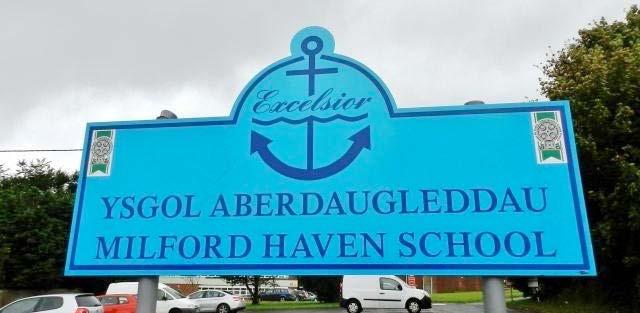
behind him.
His rucksack remained hanging from his left arm as he approached Mrs Williams’ desk.
He took out his history book and asked her to check his work.
The teenager said the book and knife had been placed in the same compartment of his bag.
As he searched inside, he claimed, Mrs Williams noticed the weapon and asked what it was.
He initially did not answer.
He said she told him to take it out, so he removed it by the handle with his right hand, holding the blade pointed downwards.
The defendant described Mrs Williams’ expression as shocked. Her eyes were wide and her mouth was open.
He said she ordered him to hand over the knife, but he refused because he knew he would be in serious trouble for bringing it onto school premises.
According to his account, Mrs Williams then reached for the knife with both hands and grabbed the blade.
The weapon moved around as they struggled for control of it.
The defendant said the struggle lasted around ten seconds.
He denied lunging at Mrs Williams or deliberately driving the knife into the top of her head.
Although he did not see the moment the blade made contact with her head, he accepted that it must have done so because of the injury she suffered.
His account was that any contact happened accidentally during the struggle.
Mrs Williams has given a sharply different version.
She told the jury that the defendant’s expression changed and that there was a look of “pure hatred” in his eyes before he lunged at her and stabbed her in the head.
The teenager told the court that this account was untrue.
He also denied circling around Mrs Williams before attacking her or striking her with enough force to drive her backwards.
The prosecution says the teacher’s injuries were inflicted during a deliberate attack and that wounds to her hands were caused as she desperately tried to defend herself and seize the blade.
The defence says the hand and head injuries could have been sustained during the struggle described by the boy.
The teenager accepted that Mrs Williams grabbed the sharp part of the knife and began screaming loudly.
Judge Paul Thomas KC asked him why, once the teacher had the blade in her hands, he did not simply release the handle and allow her to take it.
The defendant answered: “I didn’t want to get into trouble.”
Mr Rees suggested the teacher had been screaming because she had been stabbed in the head and believed she was fighting for her life.
The defendant accepted that Mrs Williams was terrified, but denied that he had been trying to kill her.
He also accepted that using such a knife to stab somebody in the head could cause serious injury or death.
The Crown said the teacher’s resistance and screams were the only reasons the alleged attack was not completed.
It was suggested that the boy ran because the noise had caused him to panic before he could “finish her off”.
The defendant denied that allegation.
He said the whole situation had become too much for him, causing him to let go of the knife, leave his rucksack behind and run out of the
classroom.
A central part of Tuesday’s cross-examination concerned the irreconcilable accounts given by Mrs Williams and the defendant.
The prosecutor asked whether Mrs Williams was telling the truth when she said she had been stabbed deliberately.
The defendant replied that she was lying.
Asked why a teacher would falsely accuse him of stabbing her, he said he did not know.
He also said Mrs Williams was wrong when she said she had been standing when he entered and when she described hatred in his eyes.
Mr Rees told the teenager that one of them was lying and suggested it was the defendant.
The boy repeatedly rejected that proposition.
The prosecutor put it to him that he had been rummaging through his bag not for an eraser or his schoolwork, but to retrieve the knife.
Again, the defendant said no. Judge Thomas questioned why the one occasion on which the teenager chose to approach Mrs Williams alone also happened to be the only day on which he had taken a large knife to school.
The defendant maintained that the timing was a coincidence.
He said the weapon had been brought for his friends and that the visit to Mrs Williams was unconnected.
After leaving the classroom, the defendant made his way out of the school grounds and headed to his grandmother’s home.
The Crown suggested that he walked
rather than ran through parts of the school because he did not want to draw attention to himself.
The defendant disagreed and said he had been in shock.
He accepted that he knew he had been involved in a serious incident, but did not stay at the school to explain what had happened.
He also did not return directly to his own home.
Asked why, he said he wanted to go to his grandmother’s and was afraid of getting into trouble.
The jury previously heard evidence that he arrived there distressed, crying and holding his head in his hands.
Reference was made during crossexamination to comments attributed to the teenager that something had gone wrong in his head or that his head had “gone”.
The prosecution suggested these were the words of someone who knew he had just stabbed his teacher.
The defendant said they were not an admission and maintained that he had been confused and shocked.
Police arrested him at his grandmother’s home shortly afterwards.
‘NO COMMENT’ INTERVIEWS
tThe teenager was interviewed by police on the day of the incident and again the following day.
He answered “no comment” to questions.
The prosecution asked why, if the incident had been an accident, he had not immediately told officers that Mrs Williams had seen the knife, tried to confiscate it and been injured during the resulting struggle.
The defendant said he could not remember what had happened at that stage.
He claimed his memory of the incident did not return until several weeks later, possibly as long as a month, while he was being held in a secure unit.
Mr Rees suggested that the defendant had remained silent because he had not yet invented the account he would later give at trial.
The teenager denied making up his evidence.
He maintained that his memory loss had been genuine and caused by shock.
Final prosecution challenge
The cross-examination ended with a rapid series of direct allegations.
The prosecution put it to the boy
he t W o cases
The Crown says the teenager took the largest kitchen knife from his home because he intended to use it against Mrs Williams.
It says he concealed it throughout the day, waited until most pupils had left, checked whether the teacher was alone and then entered her classroom under the pretence of asking for help with schoolwork.
Prosecutors allege that he deliberately stabbed Mrs Williams in the head and intended to kill her. They say she survived because she fought back, grabbed the blade and screamed for
The defence says the knife was brought into school as part of an irresponsible game among friends and was intended to impress them.
It says Mrs Williams noticed the knife while the teenager was retrieving his history book, demanded that he hand it over and then grabbed the blade when he refused.
The defence maintains that her injuries were caused accidentally during that struggle and that the boy never intended to harm or kill her.
Tuesday, February 3: Another pupil kicks and shatters the glass in Mrs Williams’ classroom door. CCTV shows members of the group laughing afterwards.
Wednesday, February 4: The defendant refuses to attend a lesson. The school contacts his mother, who later punishes him by removing access to his phone or the internet.
Thursday, February 5: The teenager takes a large kitchen knife to school. Mrs Williams is injured inside her classroom shortly after 3.10pm. The defendant leaves and is arrested at his

that he had taken the knife to school specifically to attack Mrs Williams.
He denied it.
It was suggested that he had concealed the weapon, waited for other pupils to leave and approached the classroom only when he believed the teacher was alone.
He denied it.
The Crown said he had deliberately stabbed Mrs Williams in the head and intended to kill her.
He again answered no.
The prosecutor suggested that Mrs Williams was alive only because she had fought back and grabbed the blade.
The defendant rejected that allegation.
questions after the prosecution’s cross-examination concluded.
Mr Roberts then confirmed that no additional defence evidence would be called.
Judge Thomas told the jury that, apart from answering a question they had raised about a photograph, they had now heard all the evidence in the case.
The trial did not sit on Wednesday or Thursday.
Jurors are due to return to Swansea Crown Court on Friday, July 17, when they are expected to receive legal directions and hear closing speeches from the prosecution and defence.
grandmother’s home.
Monday, July 13: The defendant gives his account, saying he took the knife to impress friends and that Mrs Williams was injured during a struggle.
Tuesday, July 14: The prosecution cross-examines the teenager. He denies planning an attack, deliberately stabbing Mrs Williams or intending to kill her. The evidence in the case concludes.
Asked whether he felt remorse for what had happened to Mrs Williams, he said that he did.
The defence asked no further
The judge will then sum up the evidence before the jury begins considering its verdicts.
At the time of going to press, no verdict had been reached.
Friday, July 17: The jury is expected to hear closing speeches, legal directions and the judge’s summing-up. t he c har G es
The defendant denies:
• Attempted murder
• Wounding with intent to cause grievous bodily harm
• Unlawful wounding
He has admitted possessing a knife on school premises.
The defendant was aged 15 at the time of the incident and is now 16. He cannot be named or identified in any report of the proceedings.
The trial remains ongoing and the jury has not yet reached verdicts.

FREE summer activities for 11 to 17-year-olds will begin next week as the award-winning Under the Bridge project returns to Milford Waterfront. The initiative, delivered by the Port of Milford Haven in partnership with Milford
Youth Matters, will offer activities and entertainment throughout the school holidays.
The first session will take place on Tuesday, July 21, from 6pm to 8pm, with events continuing every Tuesday and
Friday evening until Friday, August 28.
Young people will be able to take part in a varied programme including inflatables, water safety sessions and workshops delivered by St John Ambulance and the VC Gallery.
Free refreshments will also be available at every session.
More than 250 young people took part in Under the Bridge last year, demonstrating the continuing demand for free and accessible activities during the summer holidays.
Emily Jones, Engagement Executive at the Port of Milford Haven, said the project had become one of the organisation’s most successful community initiatives.
She said: “Under the Bridge remains one of our most successful and wellestablished community projects, engaging hundreds of young people every summer.
“Working alongside the fantastic team at Milford Youth Matters, we are able to provide a safe and welcoming environment where young people can enjoy a wide range of activities, make new connections and develop valuable skills.
“The programme also plays an important role in promoting positive engagement and helping to reduce anti-social behaviour in the area.
“We are delighted to see it return
for another year and look forward to welcoming participants throughout the summer.”
Dayle Gibby, Milford Youth Matters Co-ordinator, said the programme had become an important part of the summer for many young people in the area.
He said: “We are extremely grateful to the Port of Milford Haven for its continued support of the Under the Bridge summer project.
“The programme provides free and accessible activities in a safe and welcoming environment.
“Through our partnership with the Port, we are able to engage with hundreds of young people each year, helping them to build confidence, form positive relationships and make the most of their summer holidays.
“We are proud to work alongside an organisation that shares our commitment to supporting the wellbeing and development of young people across our community.”
Under the Bridge forms part of the Port of Milford Haven’s wider educational engagement programme.
The programme is guided by three themes: creating a safe, inclusive and enjoyable Waterway, building a skilled and confident community, and supporting a sustainable and resilient environment.
Solva Edge Festival will return from Friday, July 24 to Sunday, July 26, bringing three days of live music, literature, crafts and community activities to the Pembrokeshire coast.
Held at Solva Football Club’s Maes y Môr ground, the volunteer-run festival will feature performances across two stages, alongside poetry readings, storytelling, wellbeing sessions, creative workshops and outdoor activities.
The weekend will open on Friday with a performance by Gelliswick Community Choir, setting the tone for a festival rooted in Pembrokeshire talent and community spirit.
This year’s main-stage headliners are The Stickmen Project on Friday, Electric Kicks on Saturday and UK Foo Fighters, who will close the festival on Sunday.
They will be joined by local favourites Twpsyn and Cardinal Sin, while Sunday’s Legends Slot will feature ABBA tribute act Bjorn to Be. Stowaway, a young band from Ysgol Bro Gwaun and winners of the Pembrokeshire Battle of the Bands, will also make their Solva Edge debut.
ACOUSTIC PERFORMANCES

The Shipwreck Stage will host a weekend of acoustic and intimate performances, including sets from Robyn Benge and Bryony Sier, alongside a line-up of emerging artists. Literature at the Edge
The festival’s literature programme will include poet Ifor Thomas, reading from his new collection, The Undertaker’s Invoice.
Matthew Raggett will discuss his latest book, Crab Salad with Books and Bards, while Simon Alderwick will share work from his collections published by Broken Sleep Books, much of it inspired by the local
landscape.
Storyteller John Roach will explore the origins of the Welsh Red Dragon through a mixture of history, writing and hands-on craft activities. Pilates and dance sessions led by Viktoriia will also take place during the weekend.
Visitors will be able to take part in a range of creative workshops, including flower crown making with The Floral Goat, pottery design with Mary George
and mosaics and printing with Penny Dafforn.
Outdoor activities will include coastal foraging with Pembrokeshire Coast National Park Authority Get Outdoors co-ordinator Ben Macare, a Smugglers and Pirates session with long-standing park volunteer Gordon Lewis and a Solva beach clean organised by EcoDewi.
The Green Scar Bar will return, serving local ciders, craft beers and traditional favourites.
Food stalls, makers, artists and family activities will operate throughout the weekend.
Solva Edge Festival is organised entirely by volunteers from the village, with surplus funds used to support youth and community organisations across the area.
Previous beneficiaries have included Solva AFC, St Davids Guides, Strength Academy Wales, Simpson Cross Activities Group and Roch’s Victoria Hall Association
The festival will be held at Solva Football Club, Maes y Môr, Solva, SA62 6XW, with parking available. Tickets can be purchased online or at the gate.
Further information is available at www.edgefestival.co.uk.
ARREST warrants have been issued for two Pembrokeshire defendants accused of breaching court orders.
Sarah Childe, aged 43, of Milford Haven, was due to appear before Haverfordwest Magistrates’ Court on Monday, July 13.
She is accused of failing, without reasonable excuse, to comply with a community order imposed by the same court on March 31.
The alleged breaches relate to a missed probation office appointment on May 28 and a missed appointment with the Nelson Trust on June 23.
Childe was not present in court and magistrates issued a warrant for her arrest without bail.
A separate warrant was issued for Stefan Sheeham, aged 34, of Pembroke Dock.
Sheeham is accused of breaching a suspended sentence order imposed by Haverfordwest Magistrates’ Court on January 14, 2025.
The alleged breaches relate to a missed probation appointment on December 10, 2025, and a missed programme session on May 26 this year.
He also failed to attend Monday’s hearing.
Magistrates issued a warrant for his arrest without bail, with both warrants allocated to police for execution.
The allegations have not yet been proved in court.

A KILGETTY man has been banned from keeping animals for seven years after admitting that he caused unnecessary suffering to his bulldog.
Michael John Edward McGartland, aged 70, of Woodlands, Kilgetty, appeared before Haverfordwest Magistrates’ Court on Monday, July 13.
The court heard that between July 12 and December 20, 2025,
Court Reporter
McGartland failed to seek prompt veterinary treatment for a bulldog named George.
The animal had been showing signs of ill health, including dry eye and a skin infection.
McGartland admitted causing unnecessary suffering to a protected animal by failing to act when he knew,

or ought reasonably to have known, that his failure was likely to cause suffering.
He had entered a guilty plea at an earlier hearing on May 26.
Magistrates fined McGartland £769 and ordered him to pay £400 in prosecution costs and a £308 victim surcharge, bringing the total financial penalty to £1,477.
He was also disqualified for seven years from owning, keeping, dealing
in or transporting animals.
The order also prevents him from participating in the keeping of animals or becoming involved in any arrangement allowing him to control or influence how an animal is kept.
McGartland will not be permitted to apply for the disqualification order to be lifted for at least five years.
The outstanding balance will be paid at a rate of £100 per month, beginning on August 10.
A WARRANT has been issued for the arrest of a Ceredigion man who was found guilty of drink-driving after failing to attend court.
Ruan Austin, aged 49, of Tanlan, Silian, had denied driving an Audi while over the prescribed alcohol limit.
The offence took place on Holyland Road, Pembroke, on May 9.
A breath test showed Austin had
100 microgrammes of alcohol in 100 millilitres of breath. The legal limit is 35 microgrammes.
Austin pleaded not guilty at an earlier hearing on May 26, but was found guilty following a trial at Haverfordwest Magistrates’ Court on Monday, July 13. The court issued a warrant for his arrest without bail after he failed to appear in answer to his bail.

A CALL for an impartial investigation into the contentious closure of Manorbier school, along with an apology from a senior councillor in connection with that closure, are to be heard next week.
Back in June, the final decision to close fire-ravaged Manorbier school was given the go-ahead, despite a heartfelt last-minute plea by local councillor Phil Kidney to keep it open.
Manorbier Church in Wales VC School and its adjoining schoolhouse was severely damaged by a fire in October 2022, which broke out in the school roof space.
After that, a ‘school from school’ was set up in Jameston Village Hall.
It had been hoped the school would be rebuilt, but last year councillors backed a report of the School Modernisation Working Group which, amongst other recommendations, included a statutory consultation on proposals to discontinue Manorbier Church in Wales Voluntary Controlled School.
The decision attracted strong local opposition, with more than 1,500 people signing a petition on the council’s own website calling for the school to be rebuilt.
The formal consultation for the discontinuation of Manorbier closed last December.
However, many of the council’s figures, especially on the level of surplus places at the school, were disputed.
At a special extraordinary council meeting held on June 15, members were asked to consider a report on a summary of 62 objections received in respect of the proposal to discontinue Manorbier VC school, which included options to end that discontinuation or to launch a fresh consultation.

However, it was recommended, in a report presented by deputy leader Cllr Paul Miller, who now also has responsibility for education, for the discontinuation be proceeded with.
At the meeting, local councillor Phil Kidney, who has been a staunch supporter of the keeping the school open, thanked the campaigners and staff.
“We’ve all let these people down, the way this council has handled this situation is appalling; from day one not one of the executives came up to see these children, no-one came out; if that was Haverfordwest or Tenby they’d be all over the place.”
He said the wording of the consultation had seen more mentions of St Florence [ the alternative school for pupils in the event of a discontinuation] than Manorbier, describing it as “like a brochure for St Florence”.
He also warned the Diocese of St Davids, which had always pressed for the school to be rebuilt, would not allow the council to “walk away from our liabilities lightly”.
Members later heard the diocese had, in a letter received by councillors, made “damning accusations the council is being biased against voluntary controlled schools,” with Cllr Jamie Adams saying the council administration should be “ashamed of this debacle”.
Cllr Miller said his only consideration was “the future welfare of the children,” adding: “I do not think 20 children educated in a welfare centre in
Jameston is the best for them.”
Members, by 30 votes to 23, with four abstentions, supported the final steps to close the school.
Following that decision, issues around the contentious closure will be heard at the forthcoming meeting of the council, taking place on July 16.
In a notice of motion before councillors, Cllr Kidney proposes: “That council considers a full impartial investigation into the process of closing Manorbier school, specifically the time it has taken, broken promises, inadequate insurance, and the involvement of HR department.”
A supporting statement for his motion says: “The review should be carried out by someone not employed by the authority, with powers to recommend disciplinary action if they deem necessary.
“A full impartial review should hopefully stop another school being treated so appallingly.”
Cllr Kidney is also, in a submitted question, seeking an apology from the deputy leader, who now has responsibility for education: “Would the Cabinet Member for Education like to apologise to the staff and parents of Manorbier School for his comments at the last council meeting, where he stated children would get a better education in St Florence and children in Manorbier were being taught in one room?
“This is both factually wrong and insulting to staff, who have worked tirelessly to provide teaching of an excellent standard, and if he had taken the time to read the last Estyn report, he may not have made these derogatory comments.”
Both the motion and question will be heard by councillors next week.
A PEMBROKESHIRE man who illegally trapped and kept wild birds has been banned from owning birds for 15 years and handed a suspended prison sentence.
Colwyn Probert, aged 38, was found keeping goldfinches and other wild birds in cages at a property in The Glebe, Tenby, following concerns raised by a Dyfed-Powys Police rural crime officer. Probert, of Kingsmoor Caravan Park,
Kingsmoor Common, Kilgetty, admitted three offences under the Wildlife and Countryside Act 1981 and one offence under the Animal Welfare Act 2006.
Appearing at Llanelli Magistrates’ Court for sentencing on July 2, he was given an eight-week prison sentence, suspended for two years.
He was also ordered to complete 20 Rehabilitation Activity Requirement days, comply with a six-month curfew and pay £400 in costs and a £154 victim surcharge.
All traps, cages and bird rings seized during the investigation will be confiscated.
The RSPCA launched an investigation after police reported concerns that wild birds were being caught in the rear garden of the Tenby property.
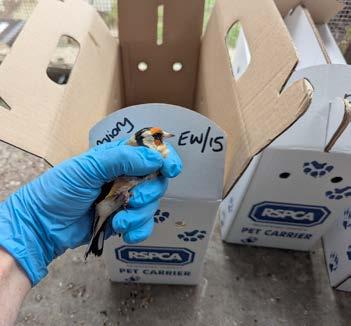
RSPCA Animal Rescue Officer Ellie West attended with police on October 17 last year and was shown an aviary containing more than a dozen goldfinches and a mule-type bird.
The birds appeared restless and
repeatedly moved from perch to perch.
A further 14 birds were found confined in small cages inside a roofed room at the side of the house.
Three cage traps were discovered at the property, including one that had previously been positioned near a bird feeder in the garden. Officers also found a bag containing metal bird rings and ring cutters.
The birds were seized and initially taken to a boarding establishment before being transferred to the RSPCA’s Mallydams Wood Wildlife Centre in East Sussex. They were later released back into the wild.
An ornithological expert who examined the birds said several had suffered damage to their beaks after repeatedly flying into the bars of their cages. One bird was also missing its tail.
Many of the finches had distinctive dark-coloured legs, which the expert said were characteristic of birds caught in the wild.
The expert said: “I believe all the
goldfinches were caught from the wild.
“While I did not see the original cages, the dirtiness of many of their feathers would point to the cages not having enough room for them to fly onto perches above the faeces at the bottom.”
The district judge said the birds may have been trapped with the intention of selling them.
Addressing Probert, the judge said: “You put wild birds, which should be free and wild, in unsuitable cages, which must have been extremely stressful for them.”
Speaking after the hearing, RSPCA Inspector Keith Hogben said: “These poor birds were treated like commodities.
“They were caged and unable to exhibit normal behaviour, while they were also living in a filthy environment with no clean water provided for them.
“All wild birds are protected under the Wildlife and Countryside Act 1981 and it is illegal to deliberately kill, injure or take one, except under licence.”
A PEMBROKESHIRE commercial fisherman has admitted failing to ensure his vessel was operated safely following the death of lobster fisherman Jack Walker off the coast of Pembrokeshire.
Adam Evans, aged 31, appeared before Haverfordwest Magistrates’ Court this week in connection with the operation of the fishing vessel FV Wilaya.
Evans owned the vessel when Mr Walker, aged 35, was dragged overboard and drowned during a fishing operation near Jack Sound, close to Skomer Island, on May 1, 2025.
Jack Murphy KC, prosecuting on behalf of the Maritime and Coastguard Agency, said the offence came to light following the fatal incident.
“Adam Evans’ failure to ensure the boat was operating safely was discovered following the tragic accident when Jack Walker became entangled in a string of pots as he carried out a ‘shooting’ exercise,” he told the court.
Mr Murphy explained that “shooting” involves deploying baited and weighted lobster pots over the side of a vessel, allowing them to sink rapidly to the seabed as the attached rope runs out.
“Jack Walker was dragged into the sea and tragically drowned,” he said.
Sarah Jane Absalom sarah.jane.absalom@herald.email
“This is a high-culpability case involving breaches of safety in which there was wilful blindness to the offending and a high likelihood of causing serious injury or death.”
The court heard that Evans had failed to take adequate steps to ensure the safety of the vessel and its crew.
The prosecution said there had been failures to comply with essential requirements, codes of practice and guidance, including a lack of adequate safety measures and failures to carry out annual maintenance and safety checks.
Evans was also said not to have held the required first-aid training qualification.
At the time of the incident, the vessel was carrying a third person despite not being coded to carry passengers, the court heard.
Evans, of Harbour Way, Hakin, Milford Haven, was interviewed by the Maritime and Coastguard Agency on July 2 and made what the prosecution described as a series of frank admissions.
He pleaded guilty to failing to take all reasonable steps to ensure that FV Wilaya was operated safely at the time of Mr Walker’s death.
“There were a number of breaches

here in relation to safety, particularly given the high-risk nature of fishing,”
Mr Murphy said.
“As a result, I request that the case be committed to the Crown Court for sentence.”
District Judge Mark Layton declined jurisdiction and sent the case to Swansea Crown Court, where Evans is due to be sentenced on August 4. He was released on unconditional bail.
A MAN has been sentenced after falsely claiming he had been stabbed and making abusive comments during a 999 call to police.
Christopher Lawrence, 43, contacted the emergency services from the Oasis campsite in Penally on June 2, saying he wanted to report a crime.
“He told police that he had been stabbed, stating: ‘You f****** don’t care,’” Crown prosecutor Sian Vaughan told Haverfordwest Magistrates’ Court this week.
Lawrence then ended the call, but the police control room contacted him again.
He told the call handler that a man he described as “half bald” and drunk had arrived at the campsite and was threatening him.
“I’ve told the f****** police that if he comes here, I’ll go mental,” Lawrence said.
He also claimed to have suffered a stab wound to his side but said he did not require an ambulance.
When officers arrived, they found Lawrence heavily intoxicated.
“He told the officers that he had not been stabbed and had not made the call, but clearly that was not the case,” Ms
Vaughan said.
Lawrence, of no fixed abode, pleaded guilty to sending an offensive, indecent, obscene or menacing message to police.
His solicitor, Michael Kelleher, said the offence had been driven by Lawrence’s alcohol misuse.
“What runs throughout this case is his alcohol abuse, but he is now showing a willingness to address it,” Mr Kelleher told the court.
“This functioning alcoholic wants to get to the bottom of his problem and stop offending.
“Alcohol can heighten a person’s anxiety
and their perception of what is happening. There was no issue concerning his safety on this occasion, but there had been in the past, and that was playing on his mind.
“But what he did was wrong. It was a waste of police resources, and he understands how other people could have been affected by his actions.”
Lawrence was sentenced to a 12-month community order, including a nine-month alcohol treatment programme and 15 rehabilitation activity requirement days. He was also fined £100 and ordered to pay a £114 surcharge and £85 prosecution costs.
A 56-YEAR-OLD man has admitted attempting to engage in sexual communication with a child in Saundersfoot.
Appearing before Haverfordwest Magistrates Court this week was Philip Williams, of Valley View, Saundersfoot.
The court was told that between July 20 and July 28, 2024, Williams attempted to engage in sexual communication with a 13-year-old child who was called Sam. During his communication with the child, Williams requested snapchat images of
the child’s bottom as well as images of her wearing running leggings or tights. This, the court, was told, was for his sexual gratification. But unknown to Williams, the ‘child’ was an undercover police officer. Williams pleaded guilty to the charge of attempting to engage in sexual communication with a child. His sentencing will take place on August 4 to enable an all options pre-sentence report to be prepared by the probation service.

A WOMAN has admitted racially abusing an organiser at a Narberth dog show but will stand trial over an allegation that she drove a van into the ring and knocked down a participant.
Marianne Hunter, 63, was attending the Snooty Fox dog show on June 1 when a dispute arose over the categories in which her dogs could compete.
“There was a difficulty with the defendant’s dogs when she was told they were unable to enter two categories at the same time,” Crown prosecutor Sian Vaughan told Haverfordwest Magistrates’ Court this week.
“Marianne Hunter lost her temper and called Tracey Hodges a ‘Welsh c***’.”
The Crown alleges that Hunter then drove her white Ford Transit van into the show compound, which had been secured with ropes, and knocked over one of the participants.
“The keys were then taken from the vehicle by her husband, and if he had not done that, the situation could have become a lot worse,” Ms Vaughan said.
“There were a lot of young children running around the event, but while the defendant was moving her vehicle, she had no regard for anyone else.”
Hunter, of Crockenhill, Kent, pleaded guilty to causing racially aggravated harassment to Tracey Hodges.
She denied a separate charge of

dangerous driving and will stand trial at Haverfordwest Magistrates’ Court on September 21.
A WOMAN has told magistrates she lives in fear after allegedly being persistently tracked, intimidated and threatened by her former husband.
Haverfordwest Magistrates’ Court heard that Michael Sutton repeatedly followed the woman to remote locations, turned up at her workplace and appeared to know details of private conversations with family members.
“This man is considered a risk,” solicitor Sally Rogers, acting on behalf of DyfedPowys Police, told the court.
“She knows that he carries a Stanley knife everywhere he goes, and this is undoubtedly adding to her fear.”
The court heard that Sutton, 48, of Victoria Road, Pembroke Dock, had been in a relationship with the woman for approximately 17 years. However, when the relationship ended in May 2025, he was allegedly unable to accept the separation.
“He had previously displayed controlling and coercive behaviour towards her, and research shows that where this is the case, the risks associated with stalking are greater,” Ms Rogers said.
Despite being placed on police bail in February, Sutton allegedly continued to stalk his former wife.
“He continued making or sending
unwanted social media posts, turned up at her place of work and repeatedly appeared at various locations, some of which were quite remote,” Ms Rogers said.
“He also bought a number of unwanted gifts, including Valentine’s cards and bunches of flowers, and said that if she ever entered a new relationship, he would slit her throat.
“These acts were fixated, obsessive and unwanted.”
Ms Rogers said the woman also believed Sutton may have installed a surveillance or listening device at her property.
“On one occasion, she told her son that
they needed a new oven glove, and the following day a brand-new oven glove appeared at the property,” she said.
“On another occasion, a knife was found underneath her car seat, but she had no idea how it had got there.“There are a lot of incidents that cannot be explained and, without a shadow of a doubt, this has placed her in fear.
“As a result, she rarely goes out. She feels like a sitting duck.”
After considering the evidence, magistrates imposed a full stalking protection order on Sutton, which will remain in force for five years.

A TEENAGER has been sentenced after repeatedly punching a man in the face at a Haverfordwest pub.
CCTV footage shown to Haverfordwest Magistrates’ Court captured Dylan Thomas, 19, lunging at Jamie Wilkinson in the toilets of the William Owen Wetherspoons pub on January 9, 2026.
Crown prosecutor Sian Vaughan said Mr Wilkinson had entered the pub with a friend and ordered two cocktails before going outside fora cigarette.
When he returned, he went to the toilets, where he saw three young men “hanging around”.
“One of them was Dylan Thomas, who asked Jamie Wilkinson what his name was,” Ms Vaughan told the court.
“He then asked him whether he remembered him and struck him in the face three times.”
The court heard that Mr Wilkinson was struck at least seven times by Thomas and other males who were with him.
Following the incident, Mr Wilkinson sought help from pub staff.
“I can get angry, and I wanted them to keep me safe,” he later told police.
“I felt I was going to be badly hurt, and this has aggravated my PTSD from past experiences.”
Thomas, of Haverfordwest, pleaded guilty to assault by beating.
His solicitor, Michael Kelleher, said there had been previous issues between Thomas and Mr Wilkinson.
“He accepts that he struck him,” Mr Kelleher said.
“This was because he believed something was going to kick off, but obviously it didn’t.”
The court heard that Thomas had no previous convictions.
He was fined £259 and ordered to pay a £104 surcharge and £85 prosecution costs.
A REAR-SEAT passenger has admitted causing serious injury by dangerous driving after repeatedly grabbing the steering wheel of a moving car.
Joseph Lawrence Jones, 21, was travelling in the back of a Volkswagen Golf being driven by Sioned Tesni Povey, 22, along the Spring Wells to Spittal road on September 30.
Haverfordwest Magistrates’ Court heard that Jones reached forward from the rear seat and pulled the steering wheel from the driver.
“He then repeated his actions, but Sioned Povey continued to drive and made no resistance to Mr Jones’ actions,” Crown prosecutor Sian Vaughan said.
“This was a deliberate decision to ignore the rules of the road.”
The court heard that Harlie-Louise Smith sustained serious injuries during the incident.
Jones, of Wesley Way, Spittal, pleaded guilty to causing serious injury by dangerous driving.
Povey, of Duncan Terrace,
Maenclochog, denied the same charge, maintaining that her driving had not caused Ms Smith’s injuries. Although magistrates accepted jurisdiction to deal with the case, Povey elected to be tried at the Crown Court. She is due to appear at Swansea Crown Court on August 14, when Jones is also expected to be sentenced. Magistrates imposed an interim driving disqualification on Jones. Both defendants were released on unconditional bail.

PUPILS at Milford Haven School have transformed discarded materials into an impressive dragon as part of a project promoting recycling and sustainability.
Students from 10 Usk wanted their work to leave a lasting impression beyond simply collecting litter, so they set out to educate others about the importance of reusing materials and reducing waste.
The dragon was created entirely from recycled items, while its dramatic “fire” was made using rubbish gathered by pupils during their litter-picking sessions.
Miss Crolla said she was extremely proud of the commitment, creativity and teamwork demonstrated by the group, adding that the pupils had exceeded all expectations.
She said the project showed what could be achieved when young people were passionate about making a positive difference to the environment. Special thanks were also given to Miss George, whose creativity, support and expertise helped bring the pupils’ vision to life.
The school said the completed dragon demonstrated how, with a little imagination, yesterday’s rubbish could be transformed into tomorrow’s masterpiece.

CHILDREN are being groomed, manipulated and placed in dangerous situations by county lines gangs, Crimestoppers has warned as it launches a new national awareness campaign
The independent charity is urging members of the public to recognise the warning signs of exploitation and report concerns safely and anonymously.
County lines gangs use children and vulnerable adults to transport drugs, money and weapons between different towns and cities. Young people may be sent far from home and subjected to violence, intimidation, threats and isolation.
Police estimate that as many as 11,600 children could be at risk of county lines exploitation.
More than 2,600 children were identified as being linked to county lines activity during the past year, although authorities believe the true figure is likely to be significantly higher. Going missing from home is one of the clearest warning signs.
Around 200,000 missing-child reports are made each year, with many involving children who disappear repeatedly. Each episode can increase the risk of exploitation, violence and other forms of harm.
Young people caught up in county lines networks may be taken to unfamiliar areas and feel unable to ask for help because they have
been threatened, coerced or made to believe they will be punished.
Violence is also frequently used to maintain control.
Children may be pressured into carrying knives or other weapons in the belief that doing so will protect them.
Crimestoppers warned that carrying a weapon instead places them at even greater risk of serious injury, arrest or death.
The effects can spread across entire communities, contributing to violence, drug dealing and antisocial behaviour.
Vulnerable adults may also be targeted through a practice known as “cuckooing”, where criminals take over a person’s home and use it as a base for drug dealing or other illegal activity.
Warning signs that a child may be at risk include unexplained gifts, money, new clothes or mobile phones, increased secrecy, changes in behaviour and frequent or unexplained absences.Hayley Fry, National Manager for Wales at Crimestoppers, said: “County lines exploitation is often hidden in plain sight and can affect any family or community.
“Children are being manipulated and placed in dangerous situations, while those responsible remain in the background.
“We know people may feel unsure about coming forward, but you can tell us what you know while staying completely anonymous.

“No names, no statements, just information that could help protect a young person from harm.” Anyone with information about county lines activity, or concerns that a young person may be at risk, can contact Crimestoppers anonymously by calling 0800 555 111 or visiting the
charity’s website.
Crimestoppers does not ask callers for their name or personal details, and information provided cannot be traced. Young people can also access advice and submit information anonymously through Fearless.org, the charity’s dedicated youth service.

WELSH Labour council leaders are pressing the Plaid Cymru Welsh Government to provide at least £100 million a year for Additional Learning Needs following the defeat of its supplementary budget in the Senedd.
The leaders argue that Wales received around £327 million in consequential funding after additional SEND spending was announced in England, but say the supplementary budget failed to include sufficient funding for learners with additional needs.
In a joint statement, they warned that the lack of investment could place further pressure on already stretched school and council budgets.
They said councils could be forced to cut other services or consider increases in council tax to bridge the funding gap, while schools could struggle to provide the support needed by some of Wales’ most vulnerable learners.
The council leaders said: “Education is the ultimate preventative spend, especially providing for learners with additional needs, as unmet needs in school result in lasting harm into adulthood and greater dependence on public services.”
They added that failure to provide sustained and realistic investment could have damaging consequences for the Welsh economy and public services for a generation.
The leaders have called on the Welsh Government to reconsider its position
Tom Sinclair editor@herald.email
and provide a minimum of £100 million a year for ALN provision, promising that any funding received would be passed on in full to schools.
Welsh Labour interim leader Ken Skates said Labour regretted that the supplementary budget had not passed but argued that the funding offered for additional learning needs was insufficient.
He said Labour had urged the Plaid Cymru Government to withdraw the budget, hold negotiations with teaching unions and return with revised proposals containing greater investment in ALN provision.
Mr Skates said Labour supported several elements of the budget, particularly funding intended to reduce NHS waiting lists, and wanted to see that money delivered.
The Welsh Conservatives also voted against the budget.
Vale of Glamorgan and Bridgend Senedd member Andrew RT Davies described the proposals as flawed and accused the Plaid Cymru administration of failing to pass additional education funding on to schools.
The dispute now centres on whether the Welsh Government will return to the Senedd with revised budget proposals and a larger funding package for children and young people with additional learning needs.



WILDLIFE found dead around Pembroke Mill Pond may have been deliberately targeted with a catapult, Pembroke Town Council has said.
The statement follows earlier reporting by The Pembrokeshire Herald after residents raised concerns
about several dead birds, including ducks, discovered around the Mill Pond and nearby Ferry Lane. Photographs shared on social media prompted calls for an investigation,

with some residents questioning whether the deaths could be connected to algae visible on the pond or a deterioration in water quality.
However, the town council has now said its representatives visited the area and recovered some of the dead wildlife.
According to the council, around five different animals appeared to have suffered injuries consistent with being intentionally targeted using a catapult.
The findings have been passed to Wildlife Crime Officers, who are understood to be investigating. The cause of the deaths has not yet been independently confirmed and will remain a matter for the police investigation.
Pembroke Town Council said: “This is an extremely distressing and cruel act against wildlife.”
The council also sought to reassure residents that it did not believe the deaths were connected to the condition of the pond.
It said Aqua Clear had been employed for the past seven years to manage algae growth and control the spread of reeds.
According to the council, the programme has reduced algae levels by approximately 45 per cent, while the water quality continues to be monitored and remains in good
condition.
The council added: “We are aware that there has been speculation on social media suggesting that the deaths may be linked to the water quality or algae currently present in the pond. We would like to reassure residents that this is not the case.”
Pembroke Mill Pond is one of the town’s best-known beauty spots and supports a wide variety of birds and other wildlife.
The council said it strongly condemned all forms of cruelty and urged anyone who had witnessed suspicious behaviour around the pond, or who had information that could assist the investigation, to report it immediately.
Information can be provided anonymously to Crimestoppers on 0800 555 111.
The council thanked residents for raising the alarm and for their continued concern for the pond and the animals living there.
The Herald’s earlier report recorded residents’ concerns about dead birds around the Mill Pond and Ferry Lane.
The latest statement confirms that the council believes the visible algae was not responsible and that injuries found on approximately five animals pointed towards suspected deliberate attacks.
A new member has joined Tenby Town Council after being formally sworn in at its meeting on Tuesday (July 14).
Cllr Helen Keohane has been co-opted to fill the vacant North Ward seat.
The council said Cllr Keohane lives and works in Tenby and has a strong commitment to serving the local
community.
She said she was enthusiastic about working alongside fellow councillors to support residents and contribute positively to the future of the town.
The Mayor, councillors and council staff have congratulated Cllr Keohane and welcomed her to the authority.

PEOPLE heading to Wales’ beaches, rivers and lakes are being urged to take extra care as warmer weather encourages more families and swimmers into open water.
Natural Resources Wales and Public Health Wales have issued joint safety advice ahead of the school summer holidays, warning that conditions in natural waters can change rapidly and may present risks that are not immediately visible.
Although outdoor swimming can provide physical and mental health benefits, officials say rivers, lakes and coastal waters are very different from managed swimming pools.
Potential hazards include cold-water shock, strong currents, sudden changes in depth, underwater obstacles and blooms of blue-green algae.
Even during hot weather, water temperatures can remain dangerously cold. Entering too quickly can trigger cold-water shock, affecting breathing and movement and increasing the risk of drowning.
Water that appears clean may also contain harmful bacteria, viruses or other contaminants from agricultural runoff, urban drainage, wildlife, wastewater or storm overflow discharges.

Tom Sinclair editor@herald.email
The risk can increase after periods of heavy rainfall, although officials stressed that water quality can vary at any time.
While a number of coastal areas and a small number of river locations in Wales are designated bathing waters and regularly monitored between May and September, most rivers, lakes and inland waters are not routinely tested for bathing purposes.
Bathing water designation provides information to help people make informed choices, but it does not guarantee that the water will always be free from pollution or other health risks.
Hamish Osborn, Environment Team Leader at Natural Resources Wales, said: “We know more people are looking to rivers, lakes and coastal waters to cool off and enjoy the outdoors during periods of hot weather.
“Wales has fantastic places to connect with nature, but natural waters are different from managed swimming environments and conditions can change quickly.
“Most rivers and lakes in Wales are not designated bathing waters, so we encourage people to make informed choices about where and when they enter the water, follow the Wild Swimming Code and take sensible steps to protect their health and safety.”
Alice
Munro, Consultant in
Environmental Public Health at Public Health Wales, said weather, tides, currents and water depth could all change quickly.
She said: “Even in summer, the water can be extremely cold and cause coldwater shock if you get in too quickly, which can lead to drowning.
“You may also not be able to see underwater dangers, especially if you dive or jump in. Getting in slowly and wearing a flotation device can reduce these risks when swimming in unfamiliar waters.”
People are advised to choose known and suitable swimming locations wherever possible, including designated bathing waters, and to check the weather, tides and local conditions before entering.
Swimmers should avoid swallowing water, cover cuts and grazes with waterproof dressings and wash their hands before eating or drinking. They should shower as soon as possible after swimming and regularly clean wetsuits and other equipment. Anyone who has recently suffered from diarrhoea or vomiting should stay out of the water. Medical advice should be sought if symptoms such as stomach cramps, fever, vomiting or diarrhoea develop after swimming.
A MAN has been sentenced after smashing four large holes into the bedroom wall of a social housing property in Pembroke Dock.
The criminal damage was caused on the night of December 21 after Adam Vickery arrived at the rented home of his partner, Cerys Randall.
Haverfordwest Magistrates’ Court heard that earlier that evening Ms Randall had received numerous messages from Vickery while she was at work, some of which were threatening.
“When she got home, she walked upstairs to her bedroom and heard a series of bangs,” Crown Prosecutor Sian Vaughan told the court.
“She discovered Adam Vickery smashing up her bedroom, so she phoned the police.”
When officers arrived, they found four large holes in the plaster walls of the bedroom.
The property is owned by Pembrokeshire County Council and rented through Ateb housing association, with Ms Randall named as the sole tenant.
“I don’t know how to say this, but I’ve
had enough,” Ms Randall said in a victim impact statement read to the court.
“I’ve tried to help so much in the relationship, but there’s nothing more I can do.”
Vickery, of West Percy Street, North Shields, pleaded guilty to causing criminal damage and was represented by solicitor Michael Kelleher.
“The defendant came down at Christmas to visit his children but found out that Ms Randall was going to take them away from him that night,” said Mr Kelleher.
“He became frustrated and took that frustration out on the wall. He fully accepts that this was wrong and that he now loses his good character as a result.”
Vickery, who had no previous convictions, was fined £40 and ordered to pay £85 prosecution costs and a £16 court surcharge.
No compensation was awarded for the damage because the local authority had not provided sufficient information about the cost of repairing the wall.


TENBY’S inshore lifeboat was launched on Tuesday evening after four adults and two children became cut off by the incoming tide.
The alarm was raised at around 5.50pm when the coastguard received several 999 calls reporting that the group was trapped on the beach below the Imperial Hotel, with the water rising quickly around them.
Tenby RNLI’s volunteer crew reached the scene within a minute and found the six casualties with an RNLI beach lifeguard, who had heard they were in difficulty and paddled around to assist them.
All six were taken aboard the lifeboat and brought safely to Castle Beach.
They were reported to be unharmed following the incident and were able to make their own way home.


A NARBERTH retailer has described the damaging impact shoplifting is having on independent businesses after a £120 collectable bear was stolen from her shop. The owner of Matilda’s boutique and gift shop told Haverfordwest Magistrates’ Court that thefts were adding to the growing financial pressure faced by traders already struggling with rising costs.
Her victim impact statement was read during the sentencing of 45-year-old Christopher Brockway, who admitted stealing a pink leopard Charlie Bear from the High Street shop.
“People think they can just steal without realising the impact it has on other people and their families,” the proprietor said.
“I’m an independent retailer who has
worked hard to set up my business, but it’s a real struggle to keep it going.
“I can’t afford thefts like this with the rising cost of electricity, and I just can’t absorb losses like this.”
The court heard that Brockway entered Matilda’s on May 12 before placing the £120 collectable bear inside his jacket.
CCTV footage showed him leaving the premises without making any attempt to pay.
Brockway, of Silverdale Lodge, Johnston, pleaded guilty to theft from a shop.
Magistrates ordered him to pay £120 compensation to Matilda’s.
He was also fined £80 and ordered to pay £85 prosecution costs and a £32 court surcharge.

A MILFORD HAVEN man has been sentenced after threatening to damage his parents’ home with a hammer when they refused his demands for pizza and alcohol.
Christopher Sizer made the threats on March 3 while at his parents’ property with a group of friends.
Haverfordwest Magistrates’ Court heard that the 38-year-old had repeatedly asked his parents for money, causing increasing tension within the family.
“He came downstairs asking for pizza and drink, but was told there was already food in the house because they could not stretch to buying more,” Crown Prosecutor Sian Vaughan said. Sizer then referred to a hammer he
knew was kept inside the property.
“He told his parents he would use the hammer to damage the windows and that he would also kick the doors in,”
Ms Vaughan told the court.
In a victim impact statement, Sizer’s mother, Kay Sizer, said she and her husband were no longer able to manage their son’s behaviour.
“If we don’t give him what he wants, he threatens to kill himself,” she said.
“If we have a night away, he phones the hotel and constantly asks us for money. My husband has had to get another job just to bring in additional money.
“We can’t cope with this behaviour any more, nor with the threats he makes against the house.”
Sizer, of Prescelly Place, Milford Haven, pleaded guilty to threatening to destroy or damage property.
Defending, Tom Lloyd said Sizer had paranoid schizophrenia and had lost his temper on the night of the offence.
“He said certain things which he regrets,” Mr Lloyd said.
“The defendant needs help and is willing to engage with the probation service to get it.”
Sizer was sentenced to a 12-month community order, including a 12-month alcohol treatment requirement and ten rehabilitation activity requirement days.
A two-year restraining order was also imposed, preventing him from contacting either of his parents directly or indirectly.

The order prohibits him from visiting any property occupied by his parents and from posting anything online or on social media that refers directly to them.
Sizer was fined £100 and ordered to pay £85 prosecution costs.
Police officers have carried out a specialist search training exercise inside the former Wilko store at Riverside Shopping Centre in Haverfordwest
Officers from the Haverfordwest, Fishguard and St Davids Neighbourhood Policing and Prevention Team took part alongside police dog handler PC Benbow and PD Kaos.
The large vacant retail unit provided a realistic environment in which officers
and the police dog could practise searching a commercial building.
Riverside Shopping Centre manager Chris Walters said the centre was pleased to support the exercise and make productive use of the empty premises.
He said the training reflected the strong working relationship between the centre and local police, adding that Riverside was proud to assist officers in developing skills used to keep the community safe.




PUPILS from two Pembrokeshire secondary schools have been given a first-hand look at the wide range of careers connected to the Milford Haven Waterway.
More than 200 Year 8 pupils from Ysgol Harri Tudur in Pembroke and Milford Haven School took part in a series of educational boat trips organised by the Port of Milford Haven in partnership with Pembrokeshire Coastal Forum.
Travelling between the Cleddau Bridge and Stack Rock, the pupils heard from professionals working in industries based on and around the Waterway.
Representatives from Dragon LNG, Ledwood, the Port of Milford Haven, Pembrokeshire Coastal Forum and the Pembrokeshire Marine Special Area of Conservation spoke about their own career journeys and offered advice on routes into employment.
The initiative was designed to help pupils understand the opportunities available locally as they begin considering their future subject choices. A separate trip was also arranged for Year 10 engineering pupils from Milford Haven School.
Topics covered during the sessions included marine renewable energy, tourism, environmental conservation, skippering, engineering and careers within the energy industry.
Anna Malloy, Communications and Marketing Director at the Port of Milford Haven, said the project
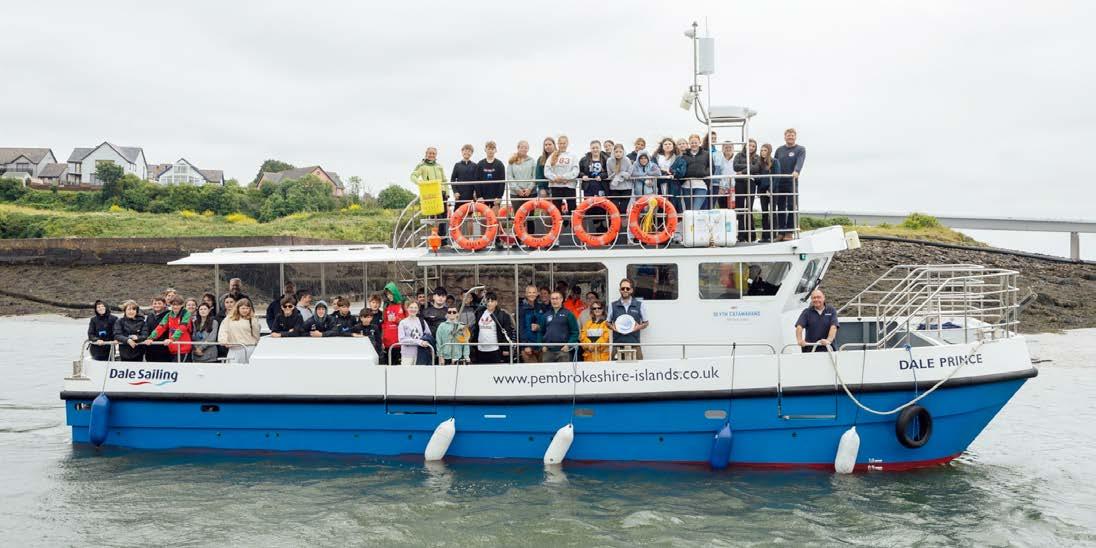
work contributes to a thriving local economy that reaches global markets.
to inspire pupils about potential future careers.
aimed to introduce young people to careers they may not previously have considered.
She said: “The Milford Haven Waterway supports a diverse range of industries and offers a wealth of career opportunities, many of which young people may not be aware of.
“Through this project, pupils had the chance to experience the Waterway from a unique perspective and hear directly from professionals whose
“By showcasing the breadth of careers available, we hope to inspire young people to consider the exciting opportunities that exist here in Pembrokeshire and broaden their understanding of the industries that help shape our region.”
Pembrokeshire Coastal Forum facilitated the trips.
Tom Luddington, Coastal Stakeholder Manager, said: “Hearing directly from people working in local businesses and conservation along the Waterway was an impactful and innovative way
“The professionals were able to share their knowledge and experience across areas including marine renewable energy, tourism, conservation, skippering and the energy sector.”
The project forms part of the Port of Milford Haven’s educational engagement programme, which aims to raise awareness of local career pathways and encourage the next generation to explore opportunities within Pembrokeshire’s maritime, industrial and environmental sectors.
THE charter was created by people with lived experience of learning disabilities and autism
THE MAYOR of Haverfordwest has pledged to strengthen links with Pembrokeshire People First after attending an event celebrating the launch and ambitions of the Dream Team Charter.
Cllr Randell Izaiah Thomas-Turner joined campaigners, community representatives and fellow councillor Lucy Hinksman at the event, which focused on inclusion, equality and ensuring people with learning disabilities and autism have a stronger voice in their communities.
The Dream Team Charter was created by people with lived experience and sets out a commitment to treating everyone with dignity and respect, supporting independence and ensuring people are fully involved in decisions affecting their lives.
Cllr Thomas-Turner said the event had provided an opportunity to hear from advocates campaigning for the rights, dignity and inclusion of people
Tom Sinclair editor@herald.email
with learning disabilities and autism.
He said: “It was an inspiring afternoon, listening to passionate advocates championing the rights, dignity, independence and inclusion of people with learning disabilities and autism.
“The Charter, created by people with lived experience, is a powerful reminder that everyone deserves the opportunity to be heard, respected and fully involved in their community.”
The mayor said he hoped Haverfordwest Town Council could develop a closer working relationship with Pembrokeshire People First and support the ambitions contained within the charter.
He added: “As Mayor, I look forward to building even stronger links with Pembrokeshire People First and playing an active role in supporting the ambitions of the Dream Team Charter.
“Working together, we can create

a more inclusive and welcoming community for everyone.”
Cllr Thomas-Turner thanked those who organised the event and said partnerships between
local organisations, campaigners and elected representatives were important in making Haverfordwest more accessible and inclusive.
A DETECTIVE inspector has spoken of his concern after being punched in the eye by a man who had been released from prison earlier that day.
In a victim impact statement read to Haverfordwest Magistrates’ Court, Detective Inspector Phil Kite described David Carruthers’ behaviour towards him as “unacceptable”.
“At no time should being subjected to assaults be part of this job,” he said.
“We were simply carrying out an arrest, but the whole incident demonstrated an overall disregard towards me and my professionalism.”
Carruthers, aged 34, was arrested on April 24 following his release from an eight-month custodial sentence.
He had been instructed to report to Haverfordwest Police Station on the day of his release, but failed to attend. Officers subsequently went to arrest him at his former accommodation in Pembroke Dock.
Crown Prosecutor Sian Vaughan said Carruthers became violent while being transported to custody in the rear of a police vehicle.
“He began flailing his arms around and tried to get out of the vehicle while it was moving,” she told the
Reporter
court.“When Detective Inspector Kite turned around to see what was going on, he was punched by the defendant.”
Photographs shown to magistrates revealed severe bruising to the officer’s upper right eyelid.
Carruthers appeared before the court by video link from HMP Parc, where he is serving a custodial sentence for an unrelated offence.
He pleaded guilty to assaulting an emergency worker by beating.
Defending, Tom Lloyd said Carruthers was a highly vulnerable man who suffered from severe anxiety and depression and had difficulties with alcohol.
“Since he has been in prison, he has been using his time wisely and doing the best he can to make sure something like this does not happen again,” said Mr Lloyd.
“He wants to ensure that the next time he is released, he does not make the same mistake.”
Carruthers was sentenced to 12 weeks in custody and ordered to pay £200 compensation to Detective Inspector Kite.

A WOMAN was left naked and locked outside in her garden after being repeatedly kicked, pushed to the floor and stamped on by her partner, a court has heard.
In a victim impact statement read to Haverfordwest Magistrates’ Court, the woman described the fear she experienced during the assault by 34-year-old father-of-two Tomas Baker.
“I have no words to express how I feel,” she said.
“He can be so nice and then he just goes. His eyes glaze over as if he wants to kill me. I genuinely felt scared for my safety.”
The assault took place on the evening of May 1 after the couple returned to a property in Begelly following a day out together.
Crown Prosecutor Sian Vaughan said the woman went to take a shower shortly after they arrived home, while Baker began looking through her phone.
“When he saw that she was on a dating site, he came barging into the shower and began shouting at her,” Ms Vaughan told the court.
The woman got out of the shower and ran into the kitchen, where she
attempted to retrieve her phone from Baker.
“He kept calling me a slag and started kicking at my lower leg to swipe my legs from underneath me,” the victim said.
“I fell, hitting the floor with force. Tomas stamped on me at one point, and every time I got up, he would push me and swipe my legs from underneath me again.”
The court heard that the woman eventually managed to escape into the garden, but Baker then locked her outside while she was still naked.
“There was understandably a level of embarrassment involved,” Ms Vaughan said.
Photographs showing the woman’s injuries were presented to magistrates.
She later underwent X-rays at Withybush Hospital. Although she had suffered no broken bones, she sustained torn ligaments behind her knee and extensive bruising, including around her eye socket.
Baker, of Ty Dee, New Road, Begelly, pleaded guilty to assault occasioning actual bodily harm and a separate charge of assault by beating.
Defending, Tom Lloyd said Baker accepted that his behaviour had

been unacceptable and was “utterly remorseful” for what had happened.
“The defendant has already spent seven weeks in custody after breaching his bail conditions when he was charged with this offence, and this has had a major impact on his life,” he said.
Baker was sentenced to a 12-month community order, including ten
rehabilitation activity requirement days and 100 hours of unpaid work. He was also ordered to pay £300 compensation to the victim, £300 prosecution costs and a £114 court surcharge.
A two-year restraining order was imposed, preventing Baker from contacting the woman directly or indirectly.
A JOINT policing operation aimed at tackling antisocial behaviour in Tenby and across Pembrokeshire will return during the busy summer holiday period.
Operation Lion brings together Transport for Wales, Dyfed-Powys Police and British Transport Police to provide an increased visible presence in the area as visitor numbers rise.
The annual operation, first launched in 2015, will run throughout the sixweek school summer holidays, with dedicated patrols every Friday, Saturday and Sunday.
British Transport Police officers will patrol Tenby and the surrounding area, working alongside Dyfed-Powys Police to respond to incidents and reassure residents, businesses and visitors.
Transport for Wales security teams will also patrol train services between Tenby and Pembroke Dock, while additional cover will be provided on the final service to Carmarthen.
The operation aims to reduce antisocial behaviour, public disorder and vandalism, while improving public safety through a visible police and security presence.
Organisers say the initiative has helped reduce summer incidents in previous years and has received

across Pembrokeshire over the years, and we are committed to building on that success again this summer.
positive feedback from businesses and communities in Tenby.
Transport for Wales security manager Simon Turton said: “We’re proud to once again support Operation Lion

“This initiative is a great example of partnership working in action. Through a proactive, community-focused approach, we have helped reduce antisocial behaviour in Tenby and
“Our aim is simple: to ensure that residents and visitors can enjoy everything these fantastic areas have to offer in a safe and welcoming environment.”


A £2.4 MILLION plan to replace Pembrokeshire County Council’s passenger-carrying vehicles over the next three years is to face further scrutiny amid questions over costs, electric vehicles and the authority being delegated to officers.
An extraordinary meeting of the council’s Services Overview and Scrutiny Committee has been arranged for Monday, July 20, at 3pm following a call-in of the Cabinet decision.
The process allows councillors to examine the decision before it is implemented and, depending on the committee’s conclusions, refer it back to Cabinet or potentially to a meeting of the full council.
The programme, considered by Cabinet on July 6, concerns the procurement of passenger-carrying vehicles as part of a three-year fleet replacement programme.
However, questions are expected over precisely what Pembrokeshire taxpayers would receive for the
Tom Sinclair editor@herald.email
proposed £2.4 million expenditure and whether the sum would cover the full cost if electric vehicles are selected.
In an email seen by The Herald, Independent Group councillor Huw Murphy said members should use the meeting to examine the “robustness” of the £2.4 million figure and establish whether the programme represents value for residents.
He also raised concerns about how the final decision over vehicle types would be made.
Cllr Murphy wrote: “We can also test the water on are they likely to go with EV.
“The cynic in me says they want to go EV but dressing it up as undecided, but officers decide once we give the green light.
“The question then is, will £2.4 million cover it all?”
His comments represent his concerns ahead of the meeting and do not establish that the council has already decided to purchase electric vehicles.
The scrutiny committee is expected to examine whether the £2.4 million allocation would include only the vehicles or also any charging points, electrical upgrades, specialist adaptations and other infrastructure required to operate an electric passenger fleet.
Members may also seek details of the proposed number and type of vehicles, the anticipated replacement timetable and how electric models would perform on longer rural journeys across Pembrokeshire.
Another issue is likely to be the extent of the powers that would be given to council officers once the overall programme is approved.
Councillors could question whether elected members would be asked to approve individual purchases and specifications or whether those decisions would be made under
delegated authority within the agreed budget.
Cllr Murphy said the scrutiny process was intended to ensure taxpayers’ money was used “in the most effective way possible”.
Parts of the meeting could be held in private if councillors are presented with commercially sensitive information about vehicle prices, procurement arrangements or potential suppliers. The committee will nevertheless have the power to seek further information, endorse the Cabinet decision or refer it back for reconsideration.
The proposal appears to be the first time the council’s specific £2.4 million passenger-vehicle replacement programme has faced detailed public scrutiny, although the broader transition towards lower-emission public-sector fleets has been discussed previously.
The extraordinary meeting will take place at County Hall and is expected to be available through the council’s online meeting webcast service.
TWO kayakers were brought safely ashore after getting into difficulty off Llangrannog on Sunday afternoon.
New Quay RNLI was tasked by Milford Haven Coastguard at around 4:00pm on Sunday, July 12, following reports that two people in a double kayak were struggling in the prevailing conditions
An RNLI lifeguard had already reached the casualties and was assisting them from a rescue board. However, strong conditions were pushing the group further offshore and making it difficult for them to return safely to the beach.
New Quay RNLI’s D-class inshore lifeboat, the Will Morgan, launched immediately with three volunteer crew members on board.
The crew made their way quickly to Llangrannog, where they located the two kayakers alongside the lifeguard.
All three people were taken aboard the lifeboat and brought safely back to
Llangrannog beach. No casualty care was required.
The volunteer crew then returned to sea to recover the double kayak and the lifeguard’s rescue board, bringing both back to the beach before returning to New Quay Lifeboat Station.
The lifeboat was then refuelled and made ready for its next service.
Huw Williams, New Quay RNLI’s volunteer helm, said: “This was a great example of the RNLI working together to help people in difficulty.
“The lifeguard had already reached the casualties, but the conditions were making it challenging to return safely to shore. Our crew was able to bring everyone back safely and recover the equipment.
“Remember, if you see anyone in difficulty in the water or on the shore, call 999 and ask for the Coastguard.”
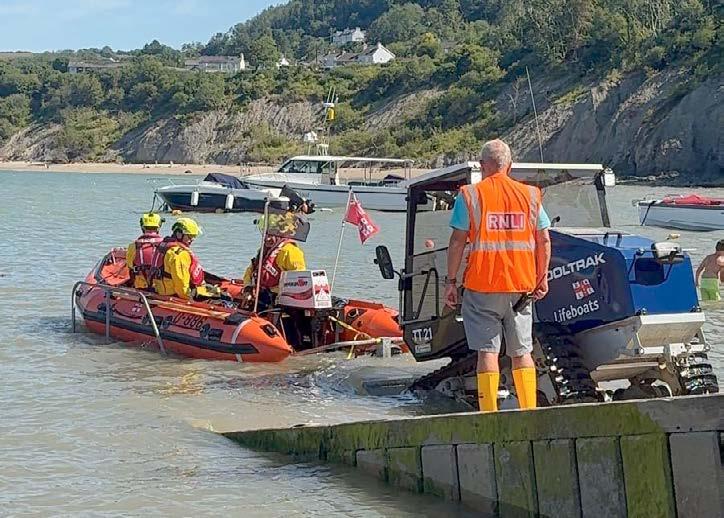




A MAJOR operation to remove a former fishing vessel which ran aground off the Pembrokeshire coast is nearing completion.
The 24-metre Resolute became stranded on rocks near Fishguard after drifting ashore during rough seas in the early hours of December 11 last year.
The vessel had been working as a guard boat for an offshore wind farm near Ireland when it got into difficulty. All four crew members were safely rescued by lifeboat.
After remaining on the rocks for more than six months, specialist marine
contractors Jevington Logistics began dismantling the wreck on June 29.
The Pembroke Dock-based company has positioned a 36-metre barge alongside the wreck, using an excavator fitted with powerful metalcutting shears to break the vessel into large sections.
These sections are then lifted onto the barge and cut into smaller pieces using oxy-propane torches before being transported to a local recycling company.
Steve Bradley, operations director at Jevington Logistics, said the condition and position of the wreck meant dismantling it in sections was the safest and most practical way of removing it.
The Resolute had suffered several substantial holes to its hull, while access to the wreck was restricted by rocks and a narrow channel.
A shallow-draught barge equipped with legs which can be driven into the seabed was brought in to provide a
stable working platform.
Mr Bradley said the vessel was being systematically divided into five main sections, which were then being lifted onto the barge for further dismantling. The operation has presented a number of challenges, including manoeuvring the barge close enough to the wreck and dealing with changing sea conditions.
Work had to be suspended for two days after the swell became too large for the salvage operation to continue safely.
Environmental protection measures have also been put in place, including a containment boom around the wreck.
The Maritime and Coastguard Agency has monitored the operation and was said to be satisfied with the pollution prevention arrangements. Most of the Resolute’s remaining fuel was removed and transferred ashore earlier this year. A small amount of pollution was initially identified following the grounding, but no further pollution incidents have been reported.
Once the main structure has been removed, salvage teams will inspect the surrounding rocks and seabed to make sure no pieces of the vessel or other debris have been left behind. The stranded ship has attracted considerable attention from residents and visitors since it was washed onto the rocks near Fishguard last winter.
A SECTION of a south Pembrokeshire seaside coastal path, closed once again after a landslide at the weekend, has now reopened.
After a landslide on July 12, DyfedPowys Police reported delays on the footpath between Coppet Hall and Wiseman’s Bridge, advising people to use alternative routes where possible or allow extra time for their journey.
The section of the south Pembrokeshire beach-side coastal path has been closed several times since late 2023 after it experienced ‘substantial rock falls’.
The footpath was last closed in January 2025, following a number of landslips in the space of one week.
The path, known as the Tramway, which connects Wiseman’s Bridge to Coppet Hall in Saundersfoot is a popular and accessible stretch of the Wales Coast Path.
Following Sunday’s rock fall, Pembrokeshire County Council has said: “The footpath between Coppet Hall and Wiseman’s Bridge has re-opened following a rock fall at the weekend. “The rock fall has been assessed as
Bruce Sinclair Local Democracy Reporter
localised and from a low level. The path has therefore re-opened and work to remove the fallen material will be carried out in due course.”
The path was previously closed after it experienced ‘substantial rock falls’ in late 2023 and early 2024, with substantial investment made by the council to reopen the route.
In January 2025 a further fall happened towards the western end of the Wisemans Bridge to Coppet Hall cycleway, between the Coppet Hall and Wisemans Bridge tunnels, affecting access between Wisemans Bridge and Coppet Hall beach.
Costs of the works for the multiple incidents had, back in March 2025, amounted to nearly £700,000.
During 2024’s works, local councillor Chris Williams hit out at “selfish” path users putting others at risk by repeatedly cutting open safety barriers and fencing while the repair works were being undertaken.

The crew were paged at 11.38am following a 999 call from island

wardens. Concerns were raised because the casualty had a history of cardiac problems.
The lifeboat launched at 11.50am and made best speed to Skomer, where casualty care-trained crew members were transferred ashore to assess the man.
Following an initial assessment, the casualty’s condition improved slightly. After being placed on oxygen, a decision was made to evacuate him from the island and return him to the mainland for further medical treatment.
The casualty and his wife were then brought aboard the lifeboat and transported to Martins Haven. Once ashore, the man was assisted to his vehicle by RNLI crew before being taken to hospital by his wife.
With no further assistance required, the crew returned to station and the lifeboat was ready for service again by 2.30pm.
The call-out was also the first shout for newly qualified Launch Authority Annie Thomas, who was congratulated by the station following the successful rescue.
A REGISTERED sex offender who was jailed last year for exposing himself to a vulnerable woman has returned to court after police found a push dagger at his Milford Haven home.
Uwen Watts, aged 20, was sentenced to 29 weeks in prison in December after sending the woman links to pornographic material before exposing his genitals to her.
He was also made subject to notification requirements under the Sex Offenders Register for ten years.
Watts has now appeared before Haverfordwest Magistrates’ Court after officers discovered the push dagger at his home in Coombs Drive.
Police attended the property on May
15 while monitoring Watts in connection with an unrelated matter.
After entering the address, officers found the push dagger, which is legally classed as an offensive weapon.
Watts pleaded guilty to possessing an offensive weapon in a private place and was represented by solicitor Tom Lloyd.
“The item was found in a private place and he didn’t use it or threaten anyone with it,” Mr Lloyd told the court.
“It wasn’t hidden and he made full admissions to the officers.”
Magistrates fined Watts £40 and ordered him to pay £85 in prosecution costs and a £16 surcharge.
A destruction order was also imposed for the push dagger.


THE SYSTEM used to distribute Welsh Government funding to councils has not been independently reviewed for more than 20 years and still relies partly on information dating back to 1991, a new report has warned.
Audit Wales says the current arrangements do not always help Wales’ 22 principal councils secure value for money or plan essential public services effectively. Its report, Funding Councils, calls on the Welsh Government to provide funding information earlier, offer councils greater certainty about future settlements and ensure decisions are based on accurate, up-to-date
Tom Sinclair editor@herald.email
evidence.
Councils rely heavily on Welsh Government funding to pay for services including education, social care, waste collection, highways and housing support.
However, auditors found that councils are often given limited information about how much funding they are likely to receive in future years, making long-term financial planning more difficult.
The report says both councils and the Welsh Government should prepare for a range of possible
funding settlements so that decisions do not have to be rushed once final figures are announced. It also raises concerns about the formula used to distribute the majority of unrestricted council funding.
The system has not undergone a full independent review for more than two decades, while some of the indicators used to calculate allocations continue to draw on census and other information from 1991 and 2001.
Audit Wales said there had been significant demographic, economic and social changes across Wales since those figures were collected.
The report also questions the number, design and timing of specific
grants handed to councils.
Some grants are announced late in the financial year, leaving authorities with little time to spend the money and increasing the risk that decisions are made quickly rather than as part of a wider strategic plan.
Five recommendations have been made to the Welsh Government, including a review of the funding formula, clearer indications of future funding levels and improvements to the administration of grants.
Auditor General for Wales Adrian Crompton said many of the problems identified reflected recurring concerns he had encountered during his time in office.
He said: “This report finds that the way the Welsh Government funds councils does not always help them to achieve value for money, particularly over the longer term.
“Addressing these themes is essential if the Welsh Government and local authorities are to navigate today’s extreme financial and demand challenges and deliver sustainable public services to the people of Wales.”
The annual local government settlement provides councils with money that is not restricted to a particular service. The amount received by each authority is calculated using a formula intended to reflect local needs and circumstances. Councils also receive separate grants that must be used for specified purposes.
The latest findings follow previous Audit Wales reports examining the financial sustainability and capital planning arrangements of Welsh local authorities.
PEMBROKESHIRE COUNTY
COUNCIL is asking residents and other interested parties for their views on Council Tax premiums for the 2027-28 financial year.
The consultation focuses on the future level of additional Council Tax charged on second homes and long-term empty properties across Pembrokeshire.
A Council Tax premium is charged on top of the standard Council Tax bill, which also includes contributions towards the Dyfed-Powys Police and Crime Commissioner and town and community councils.
The council said feedback received through the consultation would help inform future decisions about the level of the premiums and how any additional income raised should be used to support local priorities.
Councillor Jon Harvey, Cabinet Member for Corporate Finance and
Tom Sinclair editor@herald.email
Efficiencies, said: “We want to hear from as many people as possible on this important issue.
“By taking part in the consultation, residents and stakeholders can help shape future decisions and ensure that a wide range of views are considered before any recommendations are made.
“Please have your say by the closing date of Monday, August 10, 2026.”
The consultation includes background information on Council Tax premiums, the current position in Pembrokeshire and the legal framework within which the authority must operate.
Residents can take part online through the Council Tax Premium Setting for 2027-28 consultation on Pembrokeshire County Council’s website.

Paper copies are available by calling 01437 764551 or emailing revenue. services@pembrokeshire.gov.uk. A final decision on the premium levels and the use of any
raised is expected to be made by the full council at its meeting on October 15, 2026. Any changes agreed will take effect from April 1, 2027.

MORE than half of older people in Wales have struggled with the cost of living during the past year, while one in six say they or a relative have experienced treatment in hospital corridors or other unsuitable spaces.
The findings are contained in Age Cymru’s seventh annual survey, which gathered responses from 1,448 people aged over 50 across all 22 Welsh local authority areas.
Respondents ranged in age from their early fifties to more than 100 years old.
The survey found that 52 per cent had found the cost of living challenging, up from 46 per cent in 2025 and just nine per cent when the survey began in 2020.
Fuel prices, water bills and council tax were among the main pressures reported.
More than a third of respondents said they had changed their lives to cope with rising costs. Of those, 52 per cent had reduced their use of energy or heating, around a third had cut their food spending and 30 per cent were socialising less.
Confidence about the coming year has also fallen. Just 53 per cent said they were confident they could meet their living costs over the next 12 months, dropping to 48 per cent among those living alone and 43 per cent among people with a disability.
Only six per cent of those surveyed were receiving Pension Credit, although the proportion claiming Attendance Allowance had more than doubled since last year.
Maintaining physical health was the most commonly reported challenge, affecting 53 per cent of respondents.
A third said their health had worsened
during the past year, while only six per cent reported an improvement.
Almost half, 49 per cent, said it was difficult or very difficult to secure a GP appointment, and 23 per cent struggled to travel to hospital appointments.
For the first time, Age Cymru also asked respondents about “corridor care”, where patients wait for or receive treatment in hospital corridors, waiting rooms or other areas not designed for clinical care.
Seventeen per cent said they or someone close to them had experienced corridor care during the previous year.
Five per cent had experienced it personally, while 12 per cent were reporting the experiences of a relative or loved one.
The longest reported case lasted three weeks, with five people describing periods of at least seven days.
One respondent said a relative had been left sitting in a chair for four days in a corridor “packed with people being treated”, with one toilet shared between dozens of patients and no washing facilities.
Another said a dying relative waited 20 hours for an ambulance, spent a further 18 hours outside hospital in the ambulance and then almost a week in an A&E bed before being moved to a clinical decisions unit.
The patient was suffering from prostate cancer, lung cancer and endstage heart failure.
Those who had experienced corridor care were also more likely to report serious health problems. Sixteen per cent described their physical health as very poor, compared with four per cent across the survey as a whole.
while 77 per cent were aged 65 or over.
Only five per cent of those identifying themselves as carers were receiving Carer’s Allowance.
Access to social care showed some improvement, with 62 per cent of those seeking support saying they received the help they needed, compared with 52 per cent in 2025.
However, 46 per cent still said accessing support was difficult or very difficult, and 40 per cent were contributing towards the cost of their care.
Transport remained another major concern, particularly in rural and former industrial communities.
Almost a quarter of respondents blamed a lack of public transport for difficulties getting out and about, while 23 per cent cited the cost of travel.
Problems with bus services were reported in every Welsh local authority area.
Almost three-quarters said their health was significantly worse than a year earlier.
Geoffrey, 79, from Conwy, cares for his wife, who has cancer and requires frequent hospital treatment.
He said the couple had visited A&E four times during the past year, with each visit involving waits of between six and 13 hours overnight.
He said: “My wife has cancer, which gives her constant pain. She works hard to get through the day. She cooks, tidies up and does a little gardening.
“I have Myasthenia Gravis, which does limit my activities. I do not have the same energy as before, but I work hard to try to keep well.”
He also criticised difficulties accessing NHS services by telephone, describing the 111 system as “hopeless” when automated options fail and callers are forced to begin again.
Marie, 76, from Denbighshire, said she had reduced her use of heating, electricity and water to manage rising costs.
She lives alone and said older people, particularly those aged over 75, were often made to feel “invisible”.
“Although I have very good friends and family, I miss the companionship of having a spouse,” she said.
The survey found that 29 per cent of older people were providing unpaid care for at least one person, with more than half saying their caring responsibilities had increased since last year.
Women accounted for 63 per cent of unpaid carers responding to the survey,
Only a third of respondents said they felt optimistic about the coming year, down from 42 per cent in 2025.
Forty per cent said they were not optimistic, the highest level recorded since the survey began.
Age Cymru chief executive Victoria Lloyd said the findings presented a striking picture of the pressures facing older people.
She said: “It’s perhaps no surprise that cost of living and physical health are at the top of their concerns.
“This was the first year we asked respondents about corridor care, and the results are a stark image of the difficulties facing some of the most vulnerable people during some of their most challenging times.
“Respondents often said that frontline staff were doing all they could, but that the facilities were simply struggling to cope with the number of people needing care.”
The proportion reporting loneliness or isolation fell to 16 per cent, while 19 per cent said their mental or emotional health had been a challenge, down from 26 per cent last year and 30 per cent in 2024.
Ms Lloyd warned that those improvements could be reversed unless the underlying pressures were addressed.
She said: “The fall in loneliness and improvements to mental health are real positives, but there is a real risk of losing these gains if we don’t address the fundamental issues of cost of living and physical health.
“By investing in the organisations and people working to make positive change, we can help people live longer with a better quality of life.”
A SPECIALIST Pembrokeshire aviation company has announced that it is to close its Haverfordwest Airport operation after directors concluded that it was no longer commercially viable.
PembrokeshireTourism Information
Metal Seagulls Ltd confirmed on Monday (July 13) that it will begin a voluntary and solvent wind-down, bringing nearly 11 years of light aircraft engineering, fabrication and builder support to an end.
The company expects to suspend operations from its airport hangar at the end of August, with its machinery, tooling and production equipment now being offered for sale.
Metal Seagulls stressed that the decision was not the result of insolvency and that the business would be closed in an orderly manner over the coming months.
Directors said the decision followed a detailed examination of operating costs, together with personal challenges which had affected the company’s ability to continue running its workshops in their current form.
Jonathan Porter, director of Metal Seagulls Ltd, said: “We are sad to see Metal Seagulls close its hangar doors after nearly eleven years of service, but it is the right decision with the economic and personal challenges faced by the company and its directors at this time.”
Mr Porter suffered a leg injury in

Tom Sinclair editor@herald.email
2025 and continues to experience mobility problems. The company said this had prevented him from providing significant physical support to the workshops during the past nine months.
Fellow director Patricia Porter said the decision had not been taken lightly.
“This has not been an easy decision, but after a thorough review of our cost base, the directors believe it is the right one for the business,” she said.
“We are grateful to our customers, suppliers and the wider light aviation community for their support over the years, and we intend to work closely with clients during the wind-down to keep disruption to a minimum,
ensuring where possible ongoing support as applicable.”
Founded in 2016, Metal Seagulls has operated from Haverfordwest Airport since 2021.
The family-run company has supplied parts, engineering services, CNC production, custom fabrication and practical support to aircraft builders, manufacturers and specialist operators.
Its customers and programmes have extended far beyond Pembrokeshire, reaching across the UK, Ireland, Iceland, the Falkland Islands and parts of Africa.
The company has also worked to encourage young people and underrepresented groups to consider careers in aviation and engineering. It previously hosted public events and educational visits at its Haverfordwest workshops.
Its closure will therefore represent
the loss of a distinctive specialist engineering and aviation presence at the airport.
A substantial collection of manufacturing machinery is now available for sale, including a Kimla CNC routing, milling and cutting system and a 120-tonne Morgan Rushworth CNC press brake used to produce specialist light aircraft components.
The production equipment can be sold separately or as an established light aviation fabrication cell, potentially accompanied by introductions to existing customers and production programmes.
Other assets being offered include aircraft engine cowling moulds, an electric forklift, a box pan folder, an English wheel, a manual beading machine, an industrial guillotine, a plasma cutter and table, workshop racking, a drill press, a band saw and a media blasting cabinet.
The equipment is being offered on an as-seen and where-is basis, subject to contract.
The directors said they would do everything reasonably possible to support customers and partners during the transition.
Details have not yet been released about the number of jobs or contractors affected by the closure.
Asset enquiries can be directed to Jonathan Porter, with contact details on the Metal Seagulls Facebook page.
TENBY Lifeboats RNLI has presented a framed crew photograph to The Dennis Café on Castle Beach in recognition of the support it provides throughout the year.
The café has become a valued friend of the lifeboat station, regularly helping with crew social events and barbecues, as well as providing a convenient venue for meetings.
Members of the crew visited the café to hand over the photograph, which shows the Tenby lifeboat team gathered outside the town’s distinctive lifeboat station.
A spokesperson for Tenby Lifeboats RNLI said: “From crew socials and barbecues to providing us with a place for crew meetings, they have always got our backs.
“Thanks a lot. It’s much appreciated.”
The framed picture will now be displayed at the popular Castle Beach café as a lasting reminder of the close relationship between the business and Tenby’s volunteer lifeboat crew.
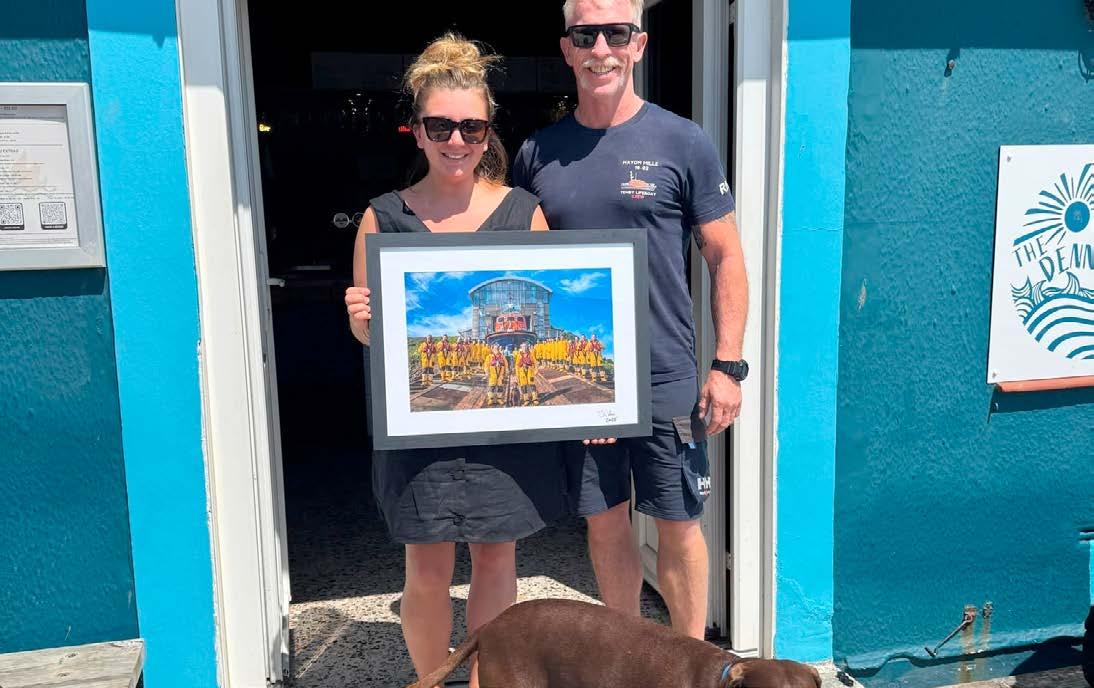

SCOLTON MANOR Country Park has retained its place among the best parks and green spaces in Wales after securing a Green Flag Award for 2026/27.
The 60-acre country park and woodland, located around six miles from Haverfordwest, remains the only site in Pembrokeshire to hold a full Green Flag Award.
It is among 93 parks and green spaces across Wales to receive the internationally recognised accolade this year.
The award recognises sites which meet demanding standards
for safety, cleanliness, maintenance, environmental management and the quality of the welcome offered to visitors.
A further 13 volunteer-run green spaces across Pembrokeshire have received Green Flag Community Awards, taking the county’s total number of awards to 14.
Eleven of the community sites have retained awards from previous years, while the Giraldus Centre and St Issells Old Cemetery have both received the accolade for the first time.
Pembrokeshire’s Green Flag Community Award winners are:
Brynberian Community Garden, Canolfan Clydau Community Garden, Coast Allotment Project, Dewi’s Acre, Fishguard and Goodwick Green Spaces, Giraldus Centre, Hayscastle Community Woodland, Jubilee Park and Nature Trail, New Hedges Village Hall Play Park, Saundersfoot Sensory Garden, St Issells Old Cemetery, Tabernacle Garden Through Time and Tenby Edible Community Garden.
The Community Awards celebrate high-quality green spaces managed by volunteers, including community gardens, allotments, woodlands, nature
reserves and recreational areas.
A total of 237 sites across Wales have received Green Flag Community Awards for 2026/27. The result means Wales has secured more community awards than any other country participating in the international Green Flag scheme for the third consecutive year.
Owen Derbyshire, chief executive of Keep Wales Tidy, said: “We are delighted to see so many green spaces in Pembrokeshire recognised in this year’s Green Flag Awards, with an impressive 14 awards in total.
“Congratulations to Scolton Manor Country Park for being the only full Green Flag Award winner in the area and to the 13 green spaces which have achieved a Green Flag Community Award.
“Community Awards reflect the dedication, time and skills of volunteers who work hard to ensure these green spaces can be enjoyed by all. It is great to see the Giraldus Centre and St Issells Old Cemetery joining them with their first Community Awards.
“Green spaces play a vital role in supporting the health and wellbeing of our communities. We would like to thank everyone involved in caring for these sites for their unwavering commitment to nurturing welcoming and inclusive green spaces.”
The Green Flag Awards in Wales are administered by Keep Wales Tidy with support from the Welsh Government.
A CALL for permission for works clearing part of the 2026 Eisteddfod site ahead of this year’s festival in Pembrokeshire has been given the goahead county planners.
In an application to Pembrokeshire County Council, Cardiff-based Angharad Davies sought permission for the removal of multiple small sections of hedge on a temporary basis for the forthcoming Eisteddfod at Glanrhyd Road, Llantood/ Llantwd.
A supporting statement said: “Preparation works have been undertaken to reduce hedge growth in several locations where openings are required for festival access, with all arisings shredded and retained within the hedgerow to support natural regeneration.
“Any openings created will be carefully excavated, with the soil set aside and preserved for reinstatement upon completion, ensuring that all materials are returned as found. Where herringbone stonework is uncovered, we will reinstate it to match the original as closely as possible, typically engaging a specialist local stone mason experienced in traditional methods.
“Following the event, reinstatement works will be completed prior to leaving site, and we will return in November to plant a mix of seven hedgerow species and
Bruce Sinclair Local Democracy Reporter
we will consult with yourselves to ensure the selected species are appropriate and in line with your recommendations, maintaining the character and biodiversity of the site.
“Where possible, we have incorporated original gates into a number of the proposed openings to retain the character and integrity of the site, ensuring consistency with existing features.
“In selecting locations for access points, we have prioritised sections of hedgerow with minimal growth to reduce the extent of intervention required and to minimise impact of the surrounding vegetation. This approach supports efficient installation while maintaining the natural appearance and structure of the hedgerows.”
The application was unconditionally approved by county planners.
The 2026 festival, running from August 1-8 at Llantwd holds particular historical significance, marking the 850th anniversary of the first recorded Eisteddfod, held in 1176 at Castell Aberteifi.
With this year’s Maes located close to the original site, the event is expected to be a landmark occasion for the region and

for Wales as a whole.
The National Eisteddfod is the largest cultural festival in Europe and one of the most prominent events in the Welsh cultural calendar, attracting approximately 175,000 visitors annually.
The festival celebrates Welsh language, literature, music, and the arts, with a diverse programme of competitions, performances, exhibitions, and community
activities.
The Eisteddfod proclamation took place in Narberth last May, with hundreds attending.
At the time, Narberth County Councillor Mark Tierney posted: “One of the biggest parades through Narberth in a long time and we provided the warmest of welcomes to visitors from near and far for the Eisteddfod proclamation procession.”
WELSH local authority bodies are carrying debts of almost £6.7 billion, according to new figures which have prompted warnings about the long-term burden being placed on taxpayers.
Research published by the TaxPayers’ Alliance puts total local authority debt in Wales at £6.698 billion during 2025-26.
The campaign group said that amount was equivalent to nearly 2.94 million average Welsh Band D council tax bills, based on an average annual charge of £2,283.
The figures were compiled from UK Government borrowing and investment data for the final quarter of the financial year.
Wales’ 22 county and county borough councils accounted for around £6.55 billion of the total, with additional borrowing attributed to other local authority bodies.
Cardiff Council recorded the largest debt among Welsh councils at £1.148 billion, followed by Swansea at £629.2 million and Wrexham at £542.5 million.
Carmarthenshire Council had debts of £434.1 million, while Flintshire recorded £362.3 million and Powys £361.9 million. However, the picture changes when debt is calculated according to population.
Wrexham had the highest council debt per resident in Wales at approximately £3,924, followed by Denbighshire at £3,431 and Merthyr Tydfil at £3,049.
Cardiff’s debt was equivalent to £2,989 per resident, while Powys recorded approximately £2,680 and Swansea £2,504.

In Pembrokeshire, the figures show total council debt of £201.794 million, equivalent to approximately £1,605 for every resident.
Of Pembrokeshire’s total, £170.194 million was recorded as borrowing from the Public Works Loan Board, the government body which provides loans to councils and other public organisations.
Pembrokeshire ranked 12th among Wales’ 22 principal councils for total debt and 15th when borrowing was calculated per resident.
The figures do not, however, mean that each household personally owes the amount calculated per resident.
Council borrowing is commonly used to finance long-term capital projects such as schools, council housing, roads, leisure facilities and regeneration schemes.
Under the prudential borrowing
framework, Welsh councils are permitted to borrow for capital purposes provided they judge that the repayments are affordable. Welsh Government figures state that authorities can borrow without specific government consent where they can afford to service the debt.
Audit Wales has also stressed that capital spending is essential for providing services, including the construction of schools, improvements to libraries, social care equipment and the maintenance of public buildings.
However, borrowing must eventually be repaid, and interest and repayment costs can place continuing pressure on the annual budgets used to fund frontline services.
Across the UK, local authority debt reached a record £154.6 billion during 2025-26, an increase of £6 billion, or 4.1 per cent, compared with the previous year.
The TaxPayers’ Alliance said council
debt had risen by £84.6 billion since 2009-10, representing a cash increase of 121 per cent.
Around £116 billion, or three quarters of the UK total, was borrowed from the Public Works Loan Board.
John O’Connell, chief executive of the TaxPayers’ Alliance, described the level of local authority debt as a “ticking time bomb” and called for councils to bring their borrowing under control.
He said taxpayers ultimately risked being left responsible for obligations accumulated through borrowing, statutory service pressures and, in some parts of the UK, unsuccessful commercial investments.
The figures should nevertheless be treated as a measure of gross borrowing rather than a complete assessment of the financial health of an individual council.
They do not deduct councils’ cash balances or investments, assess the value of assets funded through borrowing, or show the interest rates, repayment dates and annual servicing costs attached to each loan.
A council with substantial borrowing may also hold valuable housing, property and infrastructure assets, while an authority with less debt can still face serious pressure because of falling reserves, rising demand or an ongoing budget deficit.
The findings are likely to increase pressure on Welsh councils to provide clearer information showing what their borrowing has funded, how much taxpayers are paying each year in interest and repayments, and whether those costs remain affordable as spending pressures continue to grow.
A RARE steam-powered car will be among the star attractions when classic and vintage vehicles gather in Pembroke Dock this weekend.
The Classic and Vintage Car Show takes place at the West Wales Maritime Heritage Society’s historic boatyard at Hancock’s Yard, Front Street, on Saturday, July 18.
Running from 11:00am until 4:00pm, the event will give visitors the chance to admire a varied collection of carefully preserved vehicles and speak to the owners who keep them on the road.
Organiser Peter Kraus said there was particular excitement surrounding one highly unusual exhibit.
“We even have a steam car coming,” he said.
Steam cars were among the earliest mechanically powered road vehicles, using a boiler and steam engine rather than the petrol or diesel engines found in most classic cars.
The show will offer motoring
Tom Sinclair editor@herald.email
enthusiasts a chance to take a closer look at vehicles from different periods of road transport history, while providing an enjoyable day out for families and visitors to Pembroke Dock.
The event is being held within the West Wales Maritime Heritage Society’s working boatyard, where volunteers preserve the area’s maritime history.
Visitors will also be able to explore the society’s museum, restoration workshops and collection of historic vessels and maritime artefacts.
Admission and parking are free, although donations to support the work of the volunteer-run society are welcomed.
The Classic and Vintage Car Show takes place at Hancock’s Yard, Front Street, Pembroke Dock, SA72 6JY, from 11:00am until 4:00pm on Saturday, July 18.

WELSH financial, legal and technology businesses could gain improved access to the Swiss market under a major new trade agreement announced by the UK and Switzerland.
The UK Government estimates the agreement could increase British services exports to Switzerland by £5.2 billion a year in the long term, although no separate estimate has been published for the potential benefit to Wales.
However, Wales already has an established services trading relationship with Switzerland.
UK Government analysis found that Welsh businesses exported £175 million of services to Switzerland in 2020, with financial and insurance services making up the largest category.
The new Free Trade Agreement is intended to make it easier for lawyers, accountants, architects, consultants and digital businesses to sell their expertise in Switzerland.
It will also reduce barriers for businesses transferring employees between the two countries and provide greater certainty for firms considering investment or expansion.
Cardiff-based Capital Law, which already works in Switzerland and advises Swiss clients, said the agreement could strengthen the Welsh capital’s position

Tom Sinclair editor@herald.email
as a growing professional services centre.
Christopher Nott, senior partner at Capital Law, said: “This FTA is a terrific result for Capital Law, our clients and Cardiff’s growing reputation as a leading professional services hub.
“The agreement locks in legal market access, reduces unnecessary barriers

and provides the certainty we need to pursue opportunities in Switzerland.
“As a firm that already works in Switzerland and advises Swiss clients, with one of our partners based there, we understand the value of a strong and predictable trading relationship.
“It’s exactly the kind of practical, modern trade deal that helps UK businesses compete and succeed internationally.”
The agreement could also create opportunities for Welsh businesses operating in life sciences, financial technology, cyber security, digital services and the creative industries.
Switzerland is the UK’s sixth-largest services export market, with bilateral services trade worth more than £30 billion during 2025.
Services account for around 81 per cent of UK economic output and 83 per cent of employment, making improved access particularly significant for regions seeking to grow professional and technology-based businesses.
Secretary of State for Wales Jo Stevens said the agreement would open new doors for businesses across Wales.
She said: “The UK-Switzerland trade deal shows how the UK Government is delivering real results for businesses in Wales and across the UK.
“Wales already has a thriving services sector. This landmark agreement supports further economic growth and encourages job creation by opening new doors for businesses and enhancing Wales’s reputation on the world stage.”
Under the agreement, UK services professionals will be able to travel visafree to Switzerland for up to 90 days a year.
British businesses will also be able to transfer employees to work in Switzerland for periods of up to five years without being subjected to some of the economic needs tests currently applied to work permit applications.
The Government said this would make it easier for British professionals
and graduates working in areas including finance, insurance and consultancy to obtain Swiss work permits.
The deal also aims to reduce paperwork, support digital payments and remove requirements for certain back-office functions to be physically based in Switzerland.
Provisions will lock in future liberalisation of Swiss services markets, meaning British companies would automatically benefit from further easing of trading rules.
British travellers are also expected to receive practical benefits.
Under a separate initiative announced alongside the agreement, UK passport holders will soon be able to use electronic passport gates at Swiss airports.
The UK and Switzerland also intend to remove international mobile roaming surcharges, allowing tourists and business travellers to use their phones as part of their normal contracts without additional charges.
Around 800,000 visits are made to Switzerland by UK residents each year.
Prime Minister Sir Keir Starmer said: “Whether you’re growing a business or travelling for work, this agreement is about making life easier and creating more opportunity for people across the UK.
“It means British firms will find it easier to sell their expertise in one of our most important markets in Europe, supporting jobs and investment here at home.
“British people will also be able to enjoy using their mobile in Switzerland without extra roaming charges and, alongside the FTA, they will soon also have quicker trips through Swiss airports.”
Trade Secretary Peter Kyle described it as the most significant services trade agreement negotiated by the UK. He said: “This deal will mean faster journeys through the border, cheaper phone use for families and business travellers to Switzerland, and new opportunities for British firms selling their world-class services overseas.” Government figures estimate that exports to Switzerland supported 171,400 UK jobs in 2022, including 144,800 linked to services exports.
Those employment figures are based on economic modelling and include people employed directly by exporters and those working for businesses within their supply chains.
While ministers have presented the agreement as a major opportunity for Welsh businesses, its precise economic value to Wales remains uncertain.
The £5.2 billion estimate applies to the whole of the UK and the Government has not yet published a Wales-specific assessment of the expected increase in trade, investment or employment.
The agreement will now move towards formal signature and implementation, subject to the usual parliamentary scrutiny.
DYFED-POWYS POLICE has issued a warning after receiving an increased number of reports of counterfeit £20 notes being circulated in the Builth Wells area.
Although the reports have so far centred on the town, the warning is relevant to businesses and residents across the force area, particularly with thousands of visitors expected to travel to Powys for the Royal Welsh Show.
Police are urging shopkeepers, hospitality businesses, market traders, taxi drivers and members of the public to examine any £20 notes they receive.
A genuine Bank of England polymer £20 note contains several security features. When the note is tilted from side to side, the word “twenty” inside the oval hologram should change to “pounds”.
The holographic section should also appear multicoloured when moved. Genuine polymer notes have a smooth, slightly glossy texture, with raised printing on areas including the words “Bank of England”.
Signs that a note could be counterfeit include the word “twenty” failing to change when the note is tilted, the holographic section remaining silver and the note having an unusual texture or thickness.
On some fake notes, the holographic patch may also appear
Tom Sinclair editor@herald.email
out of alignment because it has been glued into place.
Police are also warning people to look out for so-called “prop notes”, which may have the words “prop” or “copy” printed on them.
In some cases, these words are covered with a foil sticker intended to resemble the security hologram on a genuine banknote. Police said these notes are still considered counterfeit under UK law, even when the wording remains visible.
Anyone who suspects they have received a counterfeit note should avoid attempting to spend it and should report the matter to police.
Possessing or knowingly using counterfeit currency is a serious criminal offence which can carry a prison sentence of up to ten years and an unlimited fine.
Anyone with information is asked to contact Dyfed-Powys Police online, email 101@dyfed-powys.police.uk or call 101.
People who are deaf, hard of hearing or speech impaired can text the non-emergency number on 07811 311 908.
Information can also be provided anonymously to Crimestoppers by calling 0800 555 111.

THIS AUGUST, SPAN Arts is proud to present Journey of a Shapeshifter, an immersive Welshlanguage aerial circus performance from Freya Sofia and company.
Surrounded by ancient woodland in the meadow at Colby Woodland Gardens, this unforgettable show offers an immersive, nature-drenched experience.
Freya Sofia and company are based in the Dyffryn Ogwen (Valley) in North-West Wales.
Their work is inspired by the local landscape, folklore and folk music. Journey of the Shapeshifter is a circus and theatre show with live folk music, performed in Welsh, that will captivate families and audiences of all ages
Inspired by the tale of Ceridwen and Taliesin from the Mabinogi, the show follows the themes of transformation and metamorphosis of humans embodying animal forms.
The show is performed on an outdoor aerial rig, with symbolic props, puppets and accompanied by live Welsh folk music that draws you into the story of the performance.
Cerys Lafferty cerys@herald.email
The greater message is that we, as animals, are part of the natural world and can live harmoniously with nature. Join us for an enlivened summer performance in the meadow at Colby Woodland Garden on August 1. There will be two performances at 1pm and 2pm.
Audiences are advised to bring their own picnic rugs and chairs for the performance. The show will go on, rain or shine, so we ask you to dress for the weather and come prepared. There is on-site pay-and-display car parking provided by the National Trust. The site is accessible via gravel paths. Please contact info@span-arts. org.uk for accessibility information. You can book tickets via www. span-arts.org.uk
For ticket holders who need access support to attend, we offer a free ticket for their companion, carer or personal assistant. Contact 01834 869323 to book your carers ticket.

THREE-QUARTERS of identified adult care home places in Wales are now operated by for-profit providers, according to a new report warning that private investment is playing an increasingly dominant role in the sector
The research, published by TUC Cymru and the Centre for International Corporate Tax Accountability and Research, found that commercial providers account for 75% of identified care home places across Wales.
Providers owned by investment firms now supply 17% of all places, giving them a larger share of the market than local authorities.
TUC Cymru and UNISON said the findings should serve as a “wake-up call” for politicians and council leaders, arguing that too much public money intended for care is being extracted from the system as profit.
The report, titled People in Cymru expect better for their communities, examines changes in the ownership and provision of adult care homes between 2020 and 2025.

Tom
Sinclair editor@herald.email
It found that the only significant increase in the number of care home places during that period came from providers backed by investment firms, which are commonly associated with

private equity and other global investors. At the same time, not-for-profit provision fell by 34%, with its share of the care home market declining from 16% to 10.9%.
The 30 largest providers now control 35% of all identified care home places in Wales. Of those places, 75% are operated by for-profit companies.
Investment firms account for 22% of the places controlled by the largest providers, compared with 15% supplied by local government.
The unions warned that care quality and employment conditions could suffer when services were operated primarily to generate profits.
Care assistants, support workers, domestic staff and other care home employees are already facing low pay, heavy workloads and increasing demand, they said.
TUC Cymru and UNISON are calling on the Welsh Government to extend its policy of removing profit from the care of looked-after children to all areas of social care, including adult care homes.
They also want councils to receive greater support to provide care directly, alongside stronger transparency requirements covering the ownership of care companies and care home properties.
Amber Courtney, head of policy at TUC Cymru, said: “Private social care providers in Cymru are no longer predominantly smaller homes rooted in the community. Instead, big global players have become increasingly involved.
“There is now strong evidence that
workers in privately operated care homes are often paid less, care quality suffers, and profit is extracted from public money to benefit owners and offshore investors.
“Removing profit would mean public money is invested solely for public benefit. Without a change, social care is going to get ever more expensive for us all.”
UNISON Cymru secretary Jess Turner said the adult social care system in Wales was “heading in the wrong direction”.
She added: “Care workers are calling on the new Welsh Government to take the opportunity to complete the job of removing profit from all care.
“Public services should be delivered for the public benefit, by well-paid workers working in the public interest.”
Report author Vivek Kotecha said research into private care providers in the UK and internationally showed clear risks when care was treated as an opportunity to make money.
He said: “When care is treated as an opportunity to make money, it is care workers and our loved ones that they care for who suffer, while others become rich.
“With the only significant growth in the supply of care home places in Wales over the last five years coming from global investment firms, the government urgently needs to change the direction of travel before it is too late.”
The report will be officially launched at the Norwegian Church in Cardiff Bay at midday on Tuesday, July 14.
PLANS to move Coastguard Rescue Officers to an expensesonly volunteer system have been abandoned following widespread concern from crews, MPs and trade unions.
The Department for Transport confirmed on Thursday (July 16) that the proposed change, which had been due to take effect in September 2026, will no longer go ahead.
Current payment arrangements for Coastguard Rescue Officers will remain in place while the Maritime and Coastguard Agency carries out further consultation on the future of the service.
The reversal follows warnings that removing modest payments could force experienced officers to leave, placing additional pressure on teams responsible for responding to emergencies around the UK coastline.
Coastguard Rescue Officers are trained volunteers who attend incidents including cliff rescues, searches for missing people, flooding, maritime emergencies and casualties cut off by the tide.
The proposed expenses-only model was announced on June 1 following a Court of Appeal ruling in the case of Maritime and Coastguard Agency v Groom.
The judgment found that the
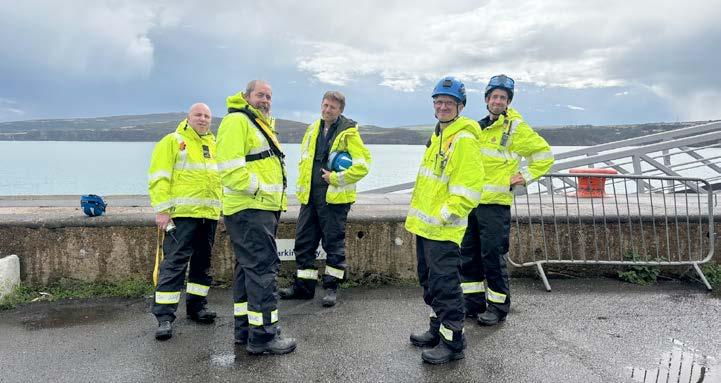
Tom
Sinclair editor@herald.email
payment of modest remuneration had inadvertently created a worker relationship between the MCA and Coastguard Rescue Officers.
The Government said the ruling meant it would either need to restore a fully voluntary model or formally adopt a worker model to remain legally compliant.
Transport minister Keir Mather said the expenses-only option had initially been considered the most appropriate

response, based on advice provided by the MCA.
However, he said further scrutiny had revealed that two surveys used to inform the decision had not been detailed enough to properly assess the consequences for individual officers, their families or the wider service.
Mr Mather said: “I can confirm that plans to move to the expenses-only volunteer model in September will not go ahead and current arrangements will remain in place.”
He said ministers had listened to concerns raised by Coastguard Rescue Officers, MPs and trade
unions, including during parliamentary questions, an urgent question and a Westminster Hall debate.
Mr Mather also visited a Coastguard station in Southampton, where he met members of the Hill Head and Portsmouth teams to hear directly how the changes could affect officers and their families.
He added: “Coastguard Rescue Officers must feel that their views have been heard and that they are valued, respected and empowered to carry out their duties.
“I am committed to ensuring that we now take the time to robustly gather the information required to understand the full operational implications of future decisions.”
Over the coming months, the MCA will consult directly with Coastguard Rescue Officers, trade unions and MPs before deciding on the longer-term structure of the service.
The Department for Transport will also examine how officers can continue to be properly recognised and rewarded while retaining the flexibility needed to serve their local communities.
Mr Mather said protecting the public around the coastline and recognising the work of Coastguard Rescue Officers remained his key priorities.


SUMMER evenings at Carew Castle will be filled with mystery, music and family entertainment as two much-loved stories are brought to life in the historic castle grounds.
Audiences are being invited to pack a picnic, bring a rug or low-backed chair and enjoy professional touring theatre in one of Pembrokeshire’s most atmospheric settings.
Hot drinks and ice creams will also be available during the performances.
The first of this summer’s open-
editor@herald.email
air productions takes place on Thursday, July 30, when the critically acclaimed Pantaloons Theatre Company presents a new adaptation of Sherlock Holmes and The Hound of the Baskervilles.
Featuring live music, audience interaction and inventive theatrical comedy, the production follows Holmes and Watson as they investigate the deadly secret behind

the Baskerville family curse.
Suitable for all ages, although parental guidance is advised, the show promises an evening of suspense, mayhem and laughter.
The entertainment continues on Tuesday, August 4, when Immersion Theatre brings its trademark energy to a musical adaptation of The Jungle Book.
Packed with original songs, audience participation and largerthan-life characters, the production follows Mowgli, Baloo and Bagheera on a fast-paced jungle adventure.
The story features cheeky monkeys, a slithering snake and the fearsome tiger Shere Khan.
Recommended for children aged four and above, the show promises a funny, exciting and entertaining evening for the whole family.
Daisy Hughes, manager of Carew Castle, said: “What works so well about outdoor theatre at Carew Castle is the relaxed, sociable feel of it.
“People can bring a picnic, settle in with family and friends, and enjoy professional touring theatre without the formality of a traditional auditorium.
“This year’s prodctions offer two very different experiences, from the
suspense and humour of Sherlock Holmes and The Hound of the Baskervilles to the colour, music and energy of The Jungle Book.
“They are exactly the kind of performances that work beautifully outdoors, with plenty for families and theatre fans to enjoy.”
Gates will open at 5.30pm for Sherlock Holmes and The Hound of the Baskervilles, with the performance beginning at 6.30pm.
The show will run for approximately two hours, including an interval.
For The Jungle Book, gates will open at 4.45pm and the performance will begin at 5.30pm.
The show has an approximate running time of one hour and 25 minutes, with an interval between acts.
Tickets cost £16 for adults and £12 for children aged between three and 16.
A family ticket, covering two adults and two children or three adults and one child, costs £50.
Booking is essential through the Carew Castle website.
Tickets are non-refundable and performances will go ahead in wet weather. Visitors are advised to wear warm, waterproof clothing and bring a torch.

FAMILIES can look forward to a summer of treasure chests, gruesome tales from the past and the spectacle of a giant siege engine thundering into action at one of Pembrokeshire’s most striking medieval landmarks.
From Saturday 18 July to Monday 31 August, Carew Castle will host a packed holiday programme designed to bring its towers, passageways and grounds to life, with daily trails, medieval activities, open-air theatre, archaeology, living history and hands-on adventures for visitors to enjoy.
Adventure Days will bring the medieval mayhem from Sunday to Thursday each week between 19 July and 27 August. Young visitors can follow the free Proving Ground trail, sharpen their skills at Knight School, test their aim with Have-a-Go Archery, and discover just how noisy and exhilarating Castle life could be.
The daily programme on these days also includes Horrid Histories at 11am, bringing the Castle’s gorier stories to life for younger visitors, followed at 3pm by an interactive Find the Key! activity –both of which are included with normal Castle admission.
For those interested in medieval might on a much larger scale, Carew’s giant trebuchet will be hauled into

action every Tuesday from 21 July to 25 August at 2.30pm, revealing how power, engineering and sheer nerve shaped the brutal business of attacking a castle. As evening falls, the Castle grounds will become a stage for suspense, music and larger-than-life storytelling, with open-air performances of Sherlock Holmes and The Hound of the Baskervilles on Thursday 30 July and The Jungle Book on Tuesday 4 August. Advance booking is required.
Pupils from Neyland Community School are celebrating after their specially decorated “Stori ar Sedd” (Story on a Seat) bench was selected to be displayed at this year’s National Eisteddfod.
The colourful bench, which tells the story of Neyland’s maritime heritage and local history, has been designed and painted by the school’s pupils following weeks of hard work and creativity.
Featuring scenes linked to the town’s waterfront past, the artwork will now take pride of place on the
Eisteddfod Maes at Llantood in north Pembrokeshire, where thousands of visitors are expected to attend.
The school said pupils had worked hard designing and decorating the bench and encouraged anyone visiting the Maes to keep an eye out for their creation.
The project forms part of the Eisteddfod’s popular “Stori ar Sedd” initiative, which invites schools and community groups to create unique benches celebrating local stories, culture and heritage.
Da iawn to everyone involved.

The Castle’s real-life stories will also come into focus this summer. On Monday 3 August, Unearthing History: Pembrokeshire’s Past will bring local archaeology to Carew. Running from 10am to 4pm, the event will invite visitors to step behind the scenes, with experts on hand to reveal how small finds, buried evidence and fragments of everyday life can help unlock stories from centuries ago. There will also be talks, games and hands-on activities for
children throughout the day, alongside Knight School and Have-a-Go Archery.
Over the August bank holiday weekend, Carew will be taken over by warriors, weapons and the sights and sounds of a 12th-century encampment. Across the three-day event, Historia Normannis will bring medieval life into the Castle grounds with combat displays, traditional skills and weaponry demonstrations, giving visitors a closeup look at how soldiers trained, fought and lived. Activities will run from 10am to 4pm each day, with Have-a-Go Archery also available.
Daisy Hughes, Manager of Carew Castle, said: “Carew is a wonderful place for children to let their imaginations run ahead of them. It has that rare mix of space, mystery and surprise that turns a day out into something children keep talking about on the way home.
“We’ve shaped the summer programme so families can make the day their own, whether they come for a favourite event, stumble across something unexpected, or simply enjoy being somewhere that feels made for adventure.”
For full details of Carew Castle’s summer holiday programme, including event timings and booking information, visit www.carewcastle.com.


WORLD RENOWNED drag icon, Dr Bev, has been announced as the closing act for the Pembrokeshire Pride Festival in September.
Dr Bev, whose full stage name is Dr Beverley Ballcrusher, is a well known drag artist from Cardiff. In a career that has lasted for over 30 years, she has become one of the highlights of the city’s LGBTQ+ scene.
James Sinclair james.sinclair@herald.email
In that time, she has toured across mainland Europe. Before coming to Pembrokeshire Pride Festival, Dr Bev will be performing at Sao Paulo Pride Festival, the world’s biggest Pride festival.
Dr Bev has also been a fierce

advocate for LGBTQ+ rights and HIV awareness. Dr Bev’s performer, Rob Keetch, volunteered at Cardiff Body Positivity to offer advice to those dealing with HIV during the 1990s. Dr Bev began at an event designed to support one of Rob’s associates from this charity, drag queen Connie Condom.
Dr Bev went on to be the founder of Pride Cymru, Wales’ largest LGBTQ+ celebration, holding an annual big weekend in Cardiff. The parade
and festival promotes awareness of LGBTQ+ people, part of Pride Cymru’s wider mission to promote acceptance in Wales.
Dr Bev is therefore a figure rooted deeply in Welsh Pride and LGBTQ+ celebration. Having her come to Pembrokeshire Pride Festival is a massive moment for Pride in Pembrokeshire, closing out the festival with one of Wales’ biggest LGBTQ+ icons.
The day will include family friendly entertainment and activities, with food vendors, community areas and performances.
On Dr Bev’s appearance, Rob Keetch said: ‘To go from São Paulo Pride to Dewslake Farm is exactly what Pride should be about: joy, visibility, connection and making sure LGBTQ+ people know they are seen and celebrated wherever they live.‘
Dr Bev will also be wearing her rainbow outfit worn at San Paulo Pride, giving fans an opportunity to see part of the world’s biggest pride festival.
Pembrokeshire Pride Festival will take place on 19th September at Dewslake Farm, near Lamphey. Tickets will be available from the 24th July.

PLANS to convert a former GP surgery in Pembrokeshire’s only city to a home and to build a holiday let in its grounds have been given the go-ahead by the national park.
In an application to Pembrokeshire Coast National Park, Alice and Danjal Joensen, through agent Oochitecture, sought permission for a change of use of the ground floor of the former GP surgery, Eryl Mor, 36, New Street, St Davids, merging with an existing first-floor apartment to create a larger single dwelling house, along with the creation of an attached short-term holiday let.
The GP surgery is currently vacant, following its closure in October 2024 after new partners could not be secured.
A supporting statement says, prior to being a GP surgery, the two-storey element was a single dwelling house.
It adds: “The house would consist of an open plan kitchen-living space to the ground floor, along with a study, lounge and utility room. The first floor includes four double bedrooms with ensuite and main bathroom.
“The new unit of accommodation would form a holiday-let with two double bedrooms, shower room, and an open plan kitchen-living space.

“The GP surgery is currently vacant, following its closure in October 2024 after new partners could not be secured, therefore the proposed change of use will provide a viable long-term future use for the property.”
It said minimal external alterations are proposed to the property with existing entrances utilised for both the main house and holiday-let, adding:
“The existing concrete ramp to the front elevation will be retained with proposed works including extending
the upper level and steps to provide a connection to the front door, allowing for accessible entrance to the property.
“There will be no changes to vehicular or pedestrian access, with the site continuing to be accessed via the existing entrance from New Street. Parking will be provided for the main house and holiday-let on the existing tarmac driveway off New Street.”
An officer report recommending approval said the application included
a unilateral undertaking agreement for a contribution towards off-site affordable housing.
Of the loss of the surgery itself, it said: “Given that the loss of the surgery was a high-level decision made by the Health Board, it is not considered that the current proposal would have a detrimental impact upon the community.”
The application was conditionally approved by Park planners, conditions including the affordable housing contribution.
A CALL to replace a Pembrokeshire village school classroom that had reached the end of its life with a modern facility has been given the go-ahead by county planners.
In an application to Pembrokeshire County Council, the local authority itself, through agent WilliamsArchitects Ltd, sought permission for the erection of a new modular classroom building at the site of Llandissilio’s Ysgol Brynconin Welsh Medium 3-11 school, along with the demolition of the existing modular classroom building.
A supporting statement said: “In addition to the main school building, some classroom and library facilities are located in a prefabricated hut within the school grounds constructed under the historical HORSA programme.
“Despite various upgrades over its lifespan including insulation and new windows, the building is no longer fit for purpose, and a replacement is required to ensure the school can continue to provide its pupils with modern, suitably equipped and compliant facilities that enable high quality education.”
HORSA buildings were originally designed as temporary structures, typically constructed using

prefabricated concrete, timber, and steel to facilitate rapid assembly. Although intended for short-term use, many HORSA buildings have remained in operation for decades. Over time, these structures have surpassed their intended lifespan, leading to significant structural issues, such as weakened frames, deteriorating roofs and external facades.
The statement added: “The primary use of the replacement building will remain as currently; it will include a single classroom alongside a multifunctional space which will be used as a library, staff and group room as required. It will also include an additional toilet, new accessible toilet, a cleaners’ store and formal classroom storage.
“The intention of the proposed building is to replace an existing classroom facility which is no longer fit for purpose, and whilst a simple replacement will significantly improve
the day-to-day experience of the staff and pupils who currently use this building.”
An officer report recommending approval said that, while the proposed replacement building would not result in any greater impact on the visual amenity in terms of its design, scale and overall appearance, the proposal includes the demolition of an existing building which could have an impact on the local amenity during the demolition process.
It said that, since local concerns were raised, a Demolition and Construction statement has set out the proposed demolition methodology and construction process, including details of the sequence of works, hours, and anticipated timeframe, and it is considered that the proposed demolition and construction “will have no significant detrimental impact upon the locality amenity”.
The application was conditionally approved.
Back in July 2025, members of the council’s Cabinet backed approval for a new modular building at Ysgol Brynconin, members hearing that “the external structure has rapidly declined, with the render board failing and allowing water ingress into the areas of external wall insulation”.
Glorious sunshine provided the perfect backdrop as Neyland Carnival returned today, with crowds turning out to enjoy one of the town’s most colourful annual events.
The parade featured an impressive mix of floats, fancy dress entries and themed costumes, with participants showing off everything from Teletubbies and movie characters to inflatable animals, retro outfits and imaginative homemade creations.
Children lined the route collecting
sweets and cheering on the procession, while spectators packed pavements along the carnival route to enjoy the afternoon’s entertainment.
Among the standout entries were a striking Predator costume, colourful 1980s-inspired outfits, a group of onion-adorned cyclists and a host of family-friendly characters that drew smiles from the crowd.
The carnival continued with entertainment, attractions and community celebrations at Neyland Athletic Club



















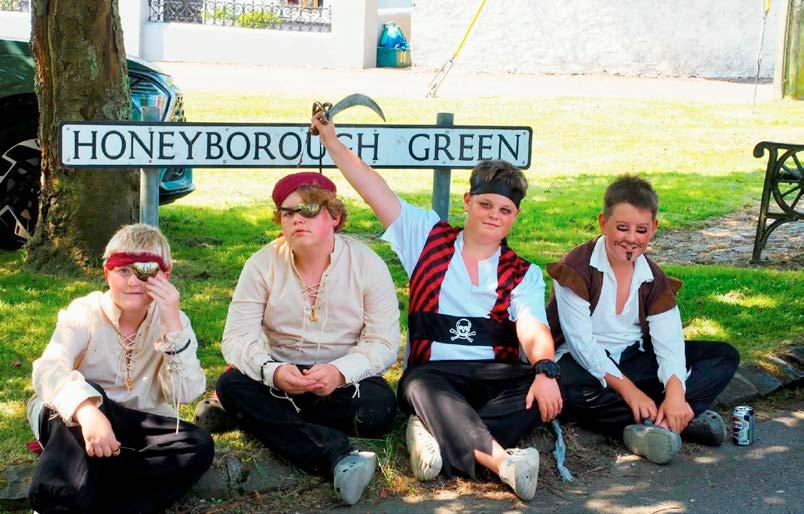

As Britain experiences longer and more intense heatwaves, pressure is growing for ministers to introduce a legal maximum workplace temperature. Climate change means this is no longer a question that can be left unanswered.
For generations, the British weather has provided employers with a convenient excuse for failing to prepare for extreme heat.
Summer would be brief. Rain would return. The temperature would fall before anyone had time to install air conditioning, improve ventilation or reconsider how buildings were designed.
That argument is becoming increasingly difficult to sustain.
Heatwaves are growing more frequent and more severe, while schools, hospitals, offices, shops, factories and transport networks are struggling to cope with temperatures they were never built to withstand.
Against that background, the Mayor of London, Sadiq Khan, has backed calls for Britain to introduce a maximum legal workplace temperature.
Trade unions including Unison and the Trades Union Congress have proposed a limit of 30C for most workplaces and 27C where employees are carrying out strenuous physical work.
At present, health and safety guidance includes recommendations about minimum workplace temperatures, but there is no equivalent maximum.
Employers are required to provide a “reasonable” working temperature, but that phrase becomes increasingly vague when offices are overheating, kitchens become unbearable and workers are expected to carry out physical labour in intense sunshine.
What constitutes reasonable at 28C? At 32C? At 38C?
When does discomfort become danger?
These questions are no longer theoretical. Temperatures in some workplaces have reportedly exceeded 40C during recent heatwaves.
Teachers have described attempting to cool pupils with wet towels and trays of water. Hospitals have experienced failures involving cooling systems, computers and sophisticated medical equipment. Transport infrastructure has

struggled as rails, roads and machinery face conditions beyond those for which they were designed.
The Climate Change Committee has recommended regulations on maximum workplace temperatures, both to protect workers and to encourage investment in cooling and ventilation.
The Government says it has no current plans to introduce a mandatory limit, although the Health and Safety Executive is expected to consult on workplace temperature thresholds and other safety issues.
Consultation is welcome, but the climate will not wait patiently for another report.
This is not simply about ensuring that office workers are comfortable at their desks.
Excessive heat can cause dehydration, dizziness, exhaustion and confusion. It can worsen existing heart and respiratory conditions and increase the risk of accidents, particularly where people are operating machinery, driving, working at height or carrying out physically demanding tasks.
Those most exposed are often among the least able to change their working conditions.
A senior manager may be able to work from home or move to an air-conditioned room. A construction worker, care worker, delivery driver, kitchen assistant or factory employee may have no such option.
That makes extreme heat a
question of employment rights and social inequality as much as climate adaptation.
The same inequality can be seen in people’s homes. Wealthier households may be able to install cooling systems, improve insulation or relocate temporarily. Those living in poorly ventilated flats, overcrowded accommodation or older housing stock have fewer choices.
Wales is not immune.
Our climate may traditionally be associated with wind and rain, but Welsh communities are already experiencing periods of intense heat, water pressures and increased wildfire risk.
Many of our schools, hospitals and public buildings were designed to retain heat, not release it. Large windows, limited ventilation and ageing infrastructure can create dangerously uncomfortable conditions during prolonged hot weather.
Older school buildings are a particular concern. Closing a school may protect pupils from unbearable classrooms, but it can create difficulties for working parents and leave some children in homes that are equally hot.
There is no single temperature at which every workplace automatically becomes unsafe.
Humidity, air movement, direct sunlight, protective clothing and the physical demands of a job all affect how heat is experienced. A fixed legal limit would therefore need sensible
exemptions and accompanying rules rather than becoming a crude one-sizefits-all measure.
However, complexity should not become an excuse for doing nothing.
A maximum temperature could trigger clear responsibilities. These might include additional breaks, drinking water, temporary changes to working hours, reduced physical activity, improved ventilation or the suspension of work where conditions become dangerous.
Employers should also be encouraged to prepare before temperatures rise.
That means investing in shading, reflective materials, better insulation, ventilation, tree cover and building designs that remain usable during hotter summers.
Air conditioning may form part of the response, but simply filling every building with energy-intensive cooling systems would risk increasing electricity demand and worsening the very emissions driving climate change.
The best solutions will keep buildings cool naturally wherever possible.
There must also be recognition that climate adaptation costs money.
Schools, hospitals, councils and small businesses cannot be expected to transform ageing buildings without financial support. If government introduces new obligations, it must provide the investment needed to meet them.
The debate over a maximum workplace temperature therefore points towards a much larger problem.
Britain’s laws, buildings and public services were created for the climate we used to have.
They are not necessarily ready for the climate now arriving.
We can continue treating each heatwave as an unexpected emergency, or we can accept that extreme heat is becoming a recurring feature of British summers and plan accordingly.
Setting a maximum workplace temperature would not solve the climate crisis.
But it would provide something workers currently lack: a clear point at which the law acknowledges that it is no longer simply hot.
It is too hot to work safely.





EVEN nocturnal creatures, like Badger, who venture out into the still and humid evenings, think to themselves, “Stone the crows, it’s jolly warm”, or something like that. Sweaty though he is, it occurs to Badger that he started last week planning to say something nice about Reform UK’s members of the Welsh Parliament.
They don’t make it easy. Barely a week goes by without a Reform UK MS bouncing up to say, “I’m not racist, but...” and then blowing a dog whistle. However, Badger is scrupulously fair and is prepared to give credit where it is due. A couple of weeks ago, Reform UK proposed a sensible motion to the Welsh Parliament. Take a moment to dislodge the biscuit crumbs from your nostrils and any other crevices they’ve settled into. Badger is serious.
Badger is also seriously impressed that, for a change, neither the motion tabled by Reform UK’s Llŷr Powell and moved by Francesca O’Brien, nor the speeches made in support of it, had anything to do with those imaginary immigrants landing at Bullslaughter Bay or Pwllgwaelod to set up vape shops in Puncheston and Little Newcastle.
Instead, the motion dealt directly and indirectly with a scourge on Welsh parliamentary politics.
The Reform motion, which received support from Plaid Cymru and the Conservatives, proposed a publicly available register of lobbyists and greater transparency around lobbying by special interest groups or professional companies acting on their behalf. Badger regards that idea as essential.
Put bluntly, the Welsh public has the right to know who is trying to influence Welsh Government policy, for whom, and to what end.
The idea that the public has a right to know who is whispering in ministers’, advisers’ and civil servants’ ears is not new. The incestuous nature of Welsh politics, where it is not what you know but who you know who knows someone who knows which buttons to press, has screamed out for such basic transparency for donkeys’ years.
Badger will illustrate that with two salient examples.
Around a decade ago, Badger spotted that one Cardiff-based

consultancy had among its clients a host of interest groups and quangos that sought to influence Welsh Government policy and access the public purse to promote their aims.
The list of the firm’s clients was impressive, and it touted its ability to get access to decision-makers and policymakers to get its clients’ message across. Its senior staff had strong connections to the then-Welsh Government and the then-Welsh Assembly, which made that pitch appear compelling.
When Badger came to research a different news item, he made a Freedom of Information Act request asking for a list of all formal meetings between Welsh Government ministers, their advisers and civil servants and the lobbying company in question.
The answer caused Badger to fall off his chair.
Over a protracted period of several years, there had been no recorded formal meetings between anyone remotely involved in the Welsh Government and the lobbying firm. Not one.
That absence undercut the impression created by its client list and sales pitch.
And that, readers, struck Badger as odd.
It was especially odd as, while giving evidence at the inquest into the death of former Welsh Government minister Carl Sargeant, the former First Minister

Carwyn Jones confirmed that he had spent a considerable amount of time on the telephone to the lobbying company’s director after he was informed of Mr Sargeant’s death.
That call showed that contact could occur, even if it did not appear in a formal meeting record.
The same lobbying firm, Deryn, emerged a few years later after the Welsh Government decided to spend seven figures to acquire a farm for use by the company behind the Green Man Festival.
An Audit Wales report highlighted serious failings in how the transaction was handled. The minister responsible, Vaughan Gething, approved the £4.25 million purchase before the Welsh Government had received Green Man’s full business plan for the property.
It was a shambles.
It became even more of a shambles when nesting ospreys were discovered at the site. The restrictions required to protect them meant Green Man’s proposed plans for the farm could no longer be fully realised.
A forgotten side of the story is that two then-Welsh Government ministers, former MSs Julie James and Jeremy Miles, recused themselves from decisions relating to Gilestone Farm.
They did so after it emerged that they had attended a dinner at a Deryn director’s home during the period
in which the transaction was being considered. One of the other guests was the head of the Green Man Festival, which was a Deryn client.
An official Welsh Government review subsequently concluded that the gathering was social, that Gilestone Farm was not discussed and that no Ministerial Code breach had occurred.
Both ministers nevertheless recused themselves from future decisions because of the perceived risk of a conflict.
That distinction matters.
The dinner is not evidence of wrongdoing. It is evidence of why transparency is necessary.
When contacts only emerge after journalists start digging, perfectly legitimate relationships acquire a shadow they might never otherwise have had.
In light of the above, and no impropriety by anyone or any company is implied in, or should be inferred from, anything Badger has written, a register of lobbyists and contacts with lobbyists should be maintained.
Otherwise, all sorts of adverse inferences could be drawn from its absence.
The examples above show why the register would help distinguish legitimate contact from hidden influence. It should also help end the situation where individuals representing groups seeking money, resources or policy changes from the Welsh Government are simultaneously appointed to public bodies that advise the Welsh Government on its policies.
And without suggesting that his readers should draw any adverse inferences, Badger finally notes that the motion passed by 77 votes to eight.
The eight voting against were Green Party MS Anthony Slaughter and the seven Labour MSs remaining in the Welsh Parliament.
Labour’s defence is that its own amendment also supported the principle of a statutory register, while directing the matter back through the Standards Committee.
That is not opposition to transparency. It is merely another invitation for transparency to enter the procedural long grass, build a bungalow and settle there permanently.
ASHMOLE & CO, one of mid and west Wales’ largest bilingual accountancy firms, is delighted to be supporting Wales YFC by sponsoring its dance competition at this month’s Royal Welsh Show.
The firm has worked closely with the Welsh farming community since it was established in 1897 and remains deeply committed to the agricultural sector.
Many of Ashmole & Co’s partners and staff are past or present members of Wales YFC and have benefited personally and professionally from their involvement with the organisation.
Supporting the next generation of farmers and rural leaders is therefore of great importance to the firm.
The Royal Welsh Show is one of the highlights of the year for YFC members, with competitions including shearing, dancing, stock judging and flower arranging.
The dance competition sponsored by Ashmole & Co will take place on the main YFC stage on Tuesday, July 21, from 1pm.
Ceri Llwyd, a partner at Ashmole & Co’s Llandovery and Llandeilo offices, said: “As the auditor of Wales YFC, we understand the importance of this bilingual rural youth organisation in helping young people become successful farmers, confident

individuals, effective contributors and responsible citizens.
“It has been an honour to work with Wales YFC over many years. We have developed an excellent working relationship, and I very much hope this will continue for many years to come.
“We would like to wish everyone competing at the Royal Welsh Show the very best of luck and hope they enjoy the tremendous experience.
“I will be there on Tuesday to watch the competition and show my support.”
Wales YFC is a vibrant organisation that encourages young people to take responsibility and play an active role in their communities while developing their skills through a wide range of member-led programmes and activities.
The organisation has more than 5,000 members aged between 10 and 28, as well as thousands of supporters,
volunteers, parents and friends.
Mared Rand Jones, chief executive of Wales YFC, said: “The Royal Welsh Show is the pinnacle of the year for YFC members, and we look forward to seeing them once again representing their counties and competing in a wide variety of competitions.
“Wales YFC will be showcasing the very best of its membership, and the public will be entertained throughout the four days of the show.
“We thank Ashmole & Co for its tremendous support. As a charity, we depend on generous sponsorship to provide activities and competitions for our members.
“We look forward to welcoming everyone to the Wales YFC Centre during the show.”
The 2026 Royal Welsh Show will take place from Monday, July 20, to Thursday, July 23.
Widely regarded as one of the leading events in the British agricultural calendar, the show will feature four days of livestock and equine competitions, forestry, horticulture, crafts, countryside sports, shopping, food and drink, alongside a packed daily programme of entertainment, attractions and displays.
A MAGICAL glow-in-the-dark puppet show featuring colourful characters, music and family-friendly humour is returning to the Torch Theatre this August. The Puppet Spectacular Glow Show is a captivating one-hour UV performance designed to entertain audiences of all ages.
Combining puppetry, comedy, music and striking black-light visuals, the interactive show encourages children and adults to sing, clap and cheer along with the characters.
Magic Light Productions has been creating professional puppets for its own productions and for companies around the world since 2006.
The company specialises in UV black art, with its puppets having appeared in numerous variety shows across the UK, including 12 theatre tours with the BBC’s
Chuckle Brothers.
Drawing from an extensive collection of puppets, the production promises an immersive sensory experience for the whole family.
Last year’s Puppet Spectacular Glow Show sold out at the Torch Theatre, with audience members praising the inclusive and interactive nature of the performance. Visitors were also given the opportunity to meet some of the characters after the show.
The Puppet Spectacular Glow Show will take place on the Torch Theatre stage on Saturday, August 8, at 2pm.
Tickets cost £14 for adults and £12.50 for under-16s, with a family ticket available for £48.
Tickets can be booked at torchtheatre. co.uk or by calling the box office on 01646 695267.






Nintendo has never been shy about taking its brightest ideas in unexpected directions, but even by its own standards, Splatoon Raiders is a curious proposition. Spinning away from the paint-splattered chaos of the multiplayer series, this Switch 2 exclusive exchanges competitive arenas for a colourful adventure built around exploration, teamwork and discovery. The result is a game that occasionally stumbles beneath the weight of its own ambition, yet more often than not succeeds because it understands what has always made Splatoon distinctive: movement is joyous, colour is everything and the world feels genuinely alive.
Rather than chasing the relentless pace of online competition, Raiders encourages curiosity. Islands unfold as layered playgrounds packed with hidden paths, environmental puzzles and creatures that reward experimentation rather than brute force. Traversal is the obvious star. Swimming through ink remains as satisfyingly fluid as ever, while new movement abilities create a rhythm that turns simply getting from one location to another into a source of delight. There is an infectious sense that every cliff edge, cave entrance and suspicious splash of colour might conceal another secret.
Combat retains the familiar blend of shooting and territory control, although it has been adapted into encounters that demand more tactical
thinking than twitch reflexes. Battles often revolve around manipulating the environment, coating surfaces to open escape routes or create advantageous positions, making every confrontation feel like a puzzle as much as a firefight. Veterans of the series may initially miss the delicious unpredictability of multiplayer matches, but the slower tempo ultimately allows Nintendo’s immaculate mechanical design to shine in different ways.
The supporting cast brings warmth without becoming overbearing. Their chatter occasionally veers towards the overly chatty conventions of modern Nintendo adventures, yet the writing is consistently charming, punctuated by moments of understated humour and surprising melancholy. The game’s environmental storytelling is equally effective, suggesting a world with a deeper history than its relentlessly cheerful exterior first implies.
Visually, Splatoon Raiders is exactly the kind of showcase one hopes for from Nintendo’s new hardware. Colours practically glow from the screen, animation is effortlessly expressive and the world bursts with tiny details that reward close attention. Even when environments become crowded with effects, the action remains readable, preserving the elegant clarity that has always distinguished the series from more visually cluttered shooters.
There are shortcomings.
The structure occasionally becomes repetitive, with familiar objectives resurfacing more often than they should, and some later areas introduce busywork that interrupts the game’s otherwise breezy momentum. A handful of boss encounters rely too heavily on inflated health bars rather than inventive mechanics, making them feel less memorable than the journey leading to them. Players hoping for the endless replayability of Splatoon 3’s online modes may also find that this more contained adventure reaches its natural conclusion sooner than expected.
Yet these flaws are easier to forgive because Splatoon Raiders possesses an uncommon confidence in its own identity. Rather than awkwardly forcing multiplayer conventions into a single-player framework, it imagines what the Splatoon universe can become when given room to breathe. It is playful without being frivolous, inventive without becoming exhausting and consistently driven by the simple pleasure of moving through beautifully realised spaces. In an industry increasingly obsessed with scale, Nintendo has produced an adventure that feels refreshingly handcrafted, reminding us that imagination remains its greatest technical achievement. It may not replace the anarchic thrill of covering every available surface in neon ink alongside friends, but it proves there is still plenty of life left in one of Nintendo’s most original modern creations.


Few contemporary directors command anticipation quite like Christopher Nolan, and The Odyssey arrives carrying the weight of expectation that inevitably accompanies his name. Yet there is something particularly compelling about his decision to tackle Homer’s foundational epic, a work whose influence stretches across millennia and whose themes of endurance, identity and the longing for home remain as resonant now as they were in antiquity. If the film fulfils the promise of its early glimpses, Nolan may have found material perfectly suited to his fascination with time, memory and the extraordinary resilience of the human spirit.
Matt Damon cuts an imposing figure as Odysseus, presenting the legendary king not as an untouchable mythic hero but as a man visibly shaped by war, loss and the relentless burden of survival. Around him is a cast of remarkable depth, with Tom Holland, Anne Hathaway,
Robert Pattinson, Zendaya, Lupita Nyong’o and Charlize Theron suggesting a production more interested in the emotional consequences of its story than the simple mechanics of spectacle. Even in brief moments, there is an impression that character will remain the driving force behind the film’s considerable scale.
That scale, however, is undeniably formidable. Nolan has long championed practical filmmaking, and the results appear striking. Towering coastlines, unforgiving seas and vast, sun-scorched landscapes possess a physical grandeur that computer-generated imagery rarely achieves. There is a tactile quality to the imagery, a sense that these are real places inhabited by real people, lending even the story’s mythological dimensions an unexpected credibility. It is precisely the sort of filmmaking that justifies the continued relevance of the cinema experience in an era increasingly dominated by

smaller screens.
There are familiar signatures throughout. Nolan’s preference for restraint over excess is evident in the way the story is presented, allowing atmosphere and suggestion to build anticipation rather than relying on exposition or empty spectacle. The imagery hints at the trials that have defined The Odyssey for centuries, but wisely resists reducing Homer’s epic to a catalogue of famous episodes. Instead, there is an unmistakable sense that the journey itself— physical, emotional and spiritual—remains the film’s true destination.
Adapting one of the cornerstones of Western literature has defeated more than a few ambitious filmmakers, but Nolan appears less interested in modernising Homer than in rediscovering the timeless qualities that have allowed the story to endure. The result promises to be neither a museum piece nor a conventional swordand-sandals adventure, but something more thoughtful and immersive: an epic that understands spectacle has little meaning unless it serves character and theme. On this evidence, The Odyssey has all the makings of a film that deserves to be experienced where cinema is at its most powerful—on the largest screen possible, with an audience willing to lose itself in one of storytelling’s greatest journeys.




There was a time when proving your age involved producing a driving licence, a passport or, in certain Welsh pubs, looking sufficiently exhausted by life to be waved straight through Online, things are rather different.
A child can be asked whether they are over 13, tap “yes”, and suddenly gain access to a digital universe filled with dancing influencers, questionable health advice, conspiracy theories, beauty filters, political propaganda and somebody filming themselves eating a luminous blue sweet for 14 hours.
Now Ofcom has launched an investigation into whether TikTok is doing enough to protect children from harmful content, and whether its agechecking systems actually work.
The regulator says there are concerns that TikTok may be failing to comply with duties introduced under the Online Safety Act. Ofcom has also questioned whether the systems used by TikTok to identify younger users may have failed to spot a significant proportion of children.
TikTok, naturally, insists it takes safety seriously. The company says it has invested billions in protecting users, strictly enforces ageappropriate experiences and uses advanced technology to estimate how old people are.
There is something wonderfully modern about the phrase “age inference technology”.
Rather than simply asking how old you are, the platform studies your behaviour. It may look at the videos you watch, the accounts you follow and the way you interact with the app, then attempt to calculate whether you are 12, 22 or a 58-yearold accountant who has accidentally become obsessed with Minecraft.
The problem is that internet
behaviour is not always a reliable indicator of age.
Some children watch financial advice videos. Some adults watch cartoons. Some pensioners are better at TikTok dances than people half their age. My own online history would probably convince an algorithm that I am simultaneously a technology professor, a steam railway enthusiast and a man urgently researching how to remove gravy from a keyboard.
Age inference might be clever, but clever is not necessarily accurate.
That matters because identifying children is the first step in protecting them. A platform cannot provide a safer experience for younger users if it does not know they are there.
This is not merely about children seeing the occasional rude word or unsuitable joke. Campaigners have repeatedly raised concerns about young people being exposed to content involving self-harm, suicide, eating disorders, dangerous challenges and extreme material.
The Molly Rose Foundation, established in memory of 14-year-old Molly Russell, has welcomed Ofcom’s investigation. Its chief executive said the inquiry must examine not only age checks but also the way TikTok’s algorithms can repeatedly recommend harmful content.
And that word, “repeatedly”, is important.
TikTok is not simply a digital noticeboard where users happen upon random videos. Its recommendation system learns what keeps people watching and then serves them more of it.
Watch a video about football and the app gives you more football. Watch one about cooking and you may spend the next hour watching people construct air-fryer lasagne.
But when a young person pauses

on harmful material, the same system can potentially lead them further down a dangerous path.
Algorithms do not have morals, common sense or a concerned auntie from Merthyr. They are designed to maximise attention. If distress keeps somebody scrolling, the machine may treat distress as engagement.
That is why platform safety cannot rely entirely on parents checking phones over their children’s shoulders.
Parents certainly have a role, but many are trying to supervise apps they barely understand, powered by systems specifically designed to hold attention. Telling families to “keep an eye on things” is a little like handing them a teaspoon and asking them to supervise the tide at Tenby.
Technology companies know more about their users than almost anyone. They know what people watch, where they pause, what they search for, who they message and which videos they replay.
It is therefore difficult to accept claims that identifying children accurately is somehow beyond the industry’s technical abilities.
The uncomfortable truth is that strong age verification creates problems for platforms. It can make registration slower, reduce user numbers and require companies to collect sensitive information. It may also expose how many underage users are already using services supposedly restricted to older children.
There is no perfect answer. Asking everyone to upload passports would create obvious privacy and security concerns. Facial age estimation can make mistakes. Parental approval systems can be bypassed. Behavioural analysis may misidentify people.
But “it is complicated” cannot become an excuse for doing very little.
Ofcom has serious enforcement powers. If it finds that TikTok has broken its legal duties, the regulator can issue fines of up to £18 million or 10 per cent of qualifying worldwide revenue, whichever is greater. In the most serious circumstances, it can also seek court orders that could lead to access being restricted.
TikTok says it is confident it complies with the law and will work with Ofcom during the investigation. It is important to stress that opening an investigation does not mean the company has already been found guilty of anything.
Still, the case could become an important test of whether Britain’s online safety laws have real teeth or merely the appearance of a sternly worded pop-up box.
The wider debate is already moving rapidly. The Government has announced plans to ban social media for under-16s, with the restrictions expected to begin in spring 2027. There are also proposals allowing 16 and 17-year-olds to activate overnight curfews and switch off infinite scrolling. Whether those measures will work remains to be seen.
Children are resourceful, technology moves quickly and bans often create new workarounds. But the status quo, where a child enters a false birthday and is welcomed aboard, is clearly no longer credible.
Social media companies built extraordinarily sophisticated systems capable of predicting what people want to watch before they know it themselves.
Surely they can do better than asking: “Are you over 13?”
Until next week, Taff.



Comedy has long thrived on stories of faded glory and reluctant redemption, and The Hawk comfortably settles into that tradition without ever pretending to reinvent it. Led by a typically committed Will Ferrell, the Netflix series follows former golfing superstar Lonnie “The Hawk” Hawkins, a man whose reputation has outlived both his talent and his better judgement. Ferrell leans into the role with the boundless energy and fearless physicality that have become his trademark, creating a protagonist who is equal parts egotistical blowhard, tragic has-been and oddly sympathetic dreamer. It is familiar territory for the actor, but one he continues to navigate with effortless comic confidence.
At first glance, The Hawk appears to be another broad sports comedy built around exaggerated personalities and increasingly ridiculous situations. Those elements are certainly present, with the series delivering an abundance of slapstick humour, awkward encounters and sharp one-liners, but it proves more effective when it allows its characters room to breathe. Beneath the bluster lies a surprisingly thoughtful examination of identity, ageing and the difficulty of accepting that yesterday’s triumphs cannot sustain a lifetime. Lonnie’s desperate attempts to cling to his former status become less about sporting success and more about a man struggling to define his own worth after the applause has faded.
The supporting cast plays a crucial role in grounding the series, ensuring that Ferrell’s larger-than-life performance never overwhelms the narrative. Rather than existing simply to react to his antics, the characters possess enough personality and emotional weight to make their relationships feel authentic. The tension between Lonnie and his
family, particularly his son, provides the series with its strongest dramatic thread, lending genuine emotional stakes to what could easily have remained a string of disconnected comic set pieces. These quieter moments are handled with restraint, allowing the humour to emerge naturally from character rather than relying solely on increasingly outrageous situations.
The writing strikes an effective balance between affectionate satire and conventional sitcom rhythms. Golf, with its traditions, exclusivity and carefully cultivated image, offers fertile ground for comedy, and the series enjoys puncturing the sport’s polished exterior without descending into easy mockery. Even viewers with little interest in golf will recognise the broader themes of fading celebrity, inflated ego and the uncomfortable process of confronting personal failure. While some episodes inevitably recycle familiar comic beats and a handful of jokes are stretched beyond their natural lifespan, the scripts generally maintain enough wit and momentum to carry the occasional lull.
Production values are consistently impressive, with beautifully photographed courses and country clubs providing an elegant backdrop that contrasts neatly with the chaos Lonnie leaves in his wake. The visual polish reinforces the sense that this is a premium comedy rather than a hastily assembled vehicle for its star, while the soundtrack and pacing help maintain an easy, confident rhythm throughout. The direction rarely calls attention to itself, instead allowing the performances and dialogue to take centre stage.
What ultimately distinguishes The Hawk from many comparable sports comedies is its willingness to embrace vulnerability alongside its more outrageous humour. Lonnie may spend
much of the series masking insecurity with arrogance, but the writing never loses sight of the sadness that underpins his bravado. As his carefully constructed image begins to crumble, the series finds unexpected poignancy in watching a man slowly realise that redemption has little to do with reclaiming past success and everything to do with accepting who he has become. Those emotional undercurrents give the comedy a resonance that lingers long after the punchlines have landed.
Not every gamble pays off. The series occasionally relies too heavily on Ferrell’s established comic persona, making certain scenes feel more familiar than fresh, and its overarching narrative rarely strays far from the predictable contours of the redemption story. Yet these shortcomings are outweighed by the warmth of its performances, the consistency of its humour and the sincerity with which it approaches its central themes. Rather than chasing relentless absurdity, The Hawk understands that its greatest strength lies in allowing comedy and character to work in tandem.
It may not emerge as a defining entry in either Will Ferrell’s career or Netflix’s growing catalogue of original comedies, but it succeeds on its own modest ambitions. Funny without becoming frivolous, sentimental without tipping into melodrama, and consistently engaging throughout its run, The Hawk delivers an entertaining and unexpectedly heartfelt portrait of a man attempting to outrun his past while discovering that the most meaningful victories rarely take place on the scorecard. It is an accomplished comedy that earns its laughs honestly and its emotional moments without manipulation, making it a rewarding watch for sports fans and comedy lovers alike.
strong anything-is-possible attitude. Positive thinking will empower you and encourage you to take chances. Things need to be attempted in life - even if they can’t always be mastered.
CANCER
Someone close to you is going through some major mood swings right now, so beware that a giggle may turn into tears with little (if any) provocation. Do not take it personally if you seem to trigger this sort of surprising reaction. There are a lot of things going on that you may not be aware of, and these extreme changes in behavior are the start of a trend that may rub off on you. Ride your emotions as if you were on a thrilling roller coaster: With your hands held straight up!
LEO Use your ears today! Take extra time to listen for important clues, comforting compliments and juicy rumors! People around you are talking, and they are not watching what they say. This is a wonderful time to gain extra insight and get the information you need to see the bigger picture. You are bound to discover some things that you are not supposed to know. Treat this data with the greatest amount of dignity that you can. Don’t rush to cash in.
VIRGO If things have been getting silly instead of serious between you and another person, today is the day to push things into a decidedly more romantic realm. If you want things to grow, you will have to nurture them. Surround yourself with candlelight, soft music, and exotic fragrances - and dress in an outfit that you know will get you noticed. Create a comfortable situation that is conducive to talking about your feelings and talking about where to go next.
LIBRA
Someone who is usually a source of bright sunshine in your life is feeling a bit depressed right now - and you hold the key to lifting her or his spirits. Touch base with this person throughout the day, with silly jokes and goofy gossip. And make sure that lines of communication are open. Your attempts will be greatly appreciated. Just try to avoid making this person feel like the object of pity or sadness.
SCORPIO
If you stop and think about it today, you’ll realize that the greatest battles of your life have been little more than battles of wills. So if you encounter conflict today, keep that in mind. If you can focus on achieving one goal today, nothing and no one can stop you. Do not accept compromise merely to spare another person’s feelings - move forward with your ideas. If you display all the confidence you feel, you won’t ruffle any feathers - you will inspire people.
SAGITTARIUS
Prioritize your expenditures today - are you putting all your resources into the right places? You don’t have to cut back on all your expenses - spending money isn’t wrong, but you do have to make sure that you’re opening your wallet at the right times (and for the right reasons). The things that will bring you longterm results are still wise investments. Avoid tossing around too much money on insubstantial things - like fancy food and convenient cab rides.
CAPRICORN
The cold, hard truth is quite simple: You can’t have a positive outcome if you put in only negative energy. So today, make sure that everything you do is focused around the good things that you’re trying to accomplish - and not the bad things that you’re trying to avoid. This is a wonderful time of hope in your life, so do your best to tap into the wistful, romantic side of your personality. It will help you keep a sunny outlook - and create beautiful things.
AQUARIUS


LETTERSTON came together for a packed week of entertainment, sport and community spirit, raising more than £2,500 in memory of local girl Mabli.
Letterston Fun Week featured a treasure hunt, bingo, pool, junior football, men’s and ladies’ darts, a quiz night and children’s disco, before concluding with a hugely successful Fun Day.
Organiser Tim Evans thanked the volunteers, performers, sponsors and residents who helped make the week possible, describing the support received at every event as “incredible”.
The Fun Day began with a chicken wing challenge, won by Shaun McVey of Letterston, before young singers Arthur, Mila, Etta and Nancie from Ysgol Ger y Llan took to the stage alongside Cassidy from Tonna. They were followed by dancers from the Lowri Jones School of Dance, who performed in front of a packed field.
Live music came from Chrissy D and Steve Bartram, while children were entertained by Crazy Clayton.
As the evening continued, the Fishguard and Goodwick Rugby Club Choir delivered what organisers described as an outstanding performance.
Local band Roccanna then took

to the stage, led by Letterston’s own Tristan Mansell, before headline act Forever Elton brought the celebrations to a close with a tribute to the music of Elton John.
Tim said: “This year has been a challenging one to organise, with plenty of obstacles along the way, but seeing the whole week come together so successfully made every bit of hard work worthwhile.
“To every volunteer who helped set up, sold raffle tickets and programmes, marshalled events, cleared away
afterwards or simply stepped in wherever needed, I honestly could not be prouder.
“You worked your socks off to give Letterston an event to be proud of, and I cannot thank you enough.”
More than £2,500 has already been raised, with organisers expecting the final total to increase as the remaining proceeds are counted.
Fun Week is held each year in memory of Mabli, whose life continues to be celebrated by the Letterston community.
Paying tribute, Tim added: “Rob, Gwen and all the family, it is a privilege for us to organise this event each year and create a day where Mabli’s life can be celebrated by the whole community.
“We send you all our love and look forward to doing it all again next year.”
Organisers thanked everyone who attended, donated, volunteered, performed, sponsored or supported the events.
Letterston Fun Day will return on Saturday, July 17, 2027.


COUNCIL is spending millions of pounds redeveloping Haverfordwest Castle into a major year-round visitor attraction.
The ambition is to bring tens of thousands more people into the town centre, support local businesses and help create a vibrant, modern county hub.
Yet the same council has refused Vodafone’s application to upgrade 5G equipment on the roof of Haverfordwest Telephone Exchange, a modern building situated only a short distance from the castle redevelopment.
This was not a proposal for a new mast in open countryside. It was not an attempt to attach antennas to a listed building, a medieval gateway or one of the castle’s surviving historic structures.
It involved replacing ageing rooftop apparatus with a modern installation on a building that already exists for the purpose of providing telecommunications services.
Planners rejected the application because they considered the proposed equipment too prominent and harmful to the character and appearance of the Haverfordwest Conservation Area.
Protecting the town’s historic character is important. Haverfordwest Castle and the surviving fabric of the old town are valuable assets which deserve to be preserved.
But conservation cannot mean freezing Haverfordwest in time while simultaneously promoting it as a thriving destination for residents, businesses and visitors.
People who live and work in the town already know about the problems with mobile reception around High Street, Quay Street and Bridge Street. Signals can be unreliable outdoors, but the situation is often worse
inside buildings, particularly in older properties where thick stone walls can turn an already weak signal into no usable service at all.
This is not simply an argument about downloading films more quickly or scrolling through social media.
It is about whether residents can make and receive calls, access banking services, use navigation, receive security alerts and contact others reliably.
It is about whether businesses can communicate with customers, process mobile payments, manage deliveries and keep online systems working.
It is also about whether visitors attracted to the council’s expensive new castle development will be able to use digital tickets, find directions, make bookings or contact emergency services from the heart of the county town.
Reliable connectivity is basic infrastructure, not an optional extra.
Restricting it risks undermining the very economic regeneration that the castle project is intended to support.
The Telephone Exchange is not located on an isolated industrial estate away from the community. It stands immediately beside terraced homes and within the tightly developed historic street pattern surrounding the castle. There are numerous small homes in the old medieval streets nearby, many of which are precisely the kind of properties where indoor mobile signals are likely to struggle.
That does not weaken the case for using the exchange. It strengthens it.
If telecommunications equipment is needed to serve a densely populated and historically sensitive part of the town, surely it makes sense to concentrate it on an existing, purposebuilt telecommunications building.
The alternative may not be some

reached a similar conclusion.
In that case, the Inspector gave particular weight to improved indoor mobile coverage and to the benefits of concentrating shared infrastructure on one established site.
The alternative could have resulted in more equipment and a proliferation of installations elsewhere.
That reasoning should resonate strongly in Haverfordwest.
invisible installation hidden miles away.
Refusing an upgrade at the exchange does not remove the demand for better coverage. It merely leaves operators searching for another solution.
That could mean a new standalone mast, additional street-level equipment or installations spread across other rooftops within the town centre.
Such alternatives could create greater visual intrusion, not less.
It is also important to understand that the proposal represented one base-station upgrade. The six antenna panels formed part of a single rooftop installation. They were not six separate mobile phone masts and did not represent numerous unrelated operators preparing to cover the Haverfordwest skyline with equipment.
Although the application was Vodafone-led, it would have modernised an established telecommunications site rather than creating an entirely new one elsewhere.
There is precedent for councils getting this balance wrong.
In March 2025, a Planning Inspector overturned Leicester City Council’s refusal of a larger rooftop antenna installation on a modern six-storey building within a conservation area.
The Inspector accepted that the replacement equipment would be taller, bulkier and more prominent than the apparatus already in place.
However, the decision also recognised that it was an established rooftop telecommunications site, that a ground-based mast would have created a greater visual impact and that the economic and social benefits of improved connectivity outweighed the limited heritage harm.
A separate appeal involving rooftop telecommunications equipment in London’s Soho Conservation Area
The council may possess compelling evidence showing that Vodafone’s proposed equipment would cause serious damage to important views or to the setting of the conservation area. If so, that evidence should be made easily available to the public, including the verified visual assessments, photographs and viewpoints used to reach the decision.
The planning system requires more than a general concern that equipment will be visible.
Almost every piece of essential modern infrastructure is visible to some degree.
The question is whether the visual harm would genuinely be so serious that it outweighs the public benefit of improved mobile coverage.
That assessment should also consider the consequences of refusal.
Will ageing equipment now remain in place? Will coverage fail to keep pace with growing demand? Will operators be forced to search for additional sites? Could those alternative locations be more intrusive than the Telephone Exchange?
Most importantly, if modern telecommunications equipment cannot be accommodated on the roof of Haverfordwest Telephone Exchange, where exactly does the council expect it to go?
Haverfordwest stands at a crossroads.
Only a short distance separates one of Pembrokeshire’s most important historic sites from a functional modern building designed to support communications.
The town can protect its rich past while embracing the practical realities of the present.
Or it can become a beautifully preserved heritage attraction that struggles to function in the modern world.
The castle redevelopment tells the story of Haverfordwest’s past.
A reliable mobile network is part of its future.
Real regeneration demands both.


There is a terrible noise coming from Westminster. No, not the usual sound of MPs avoiding questions, claiming expenses or trying to open a £9.6 million door. This is different. It is the sound of politicians discovering devolution.
Suddenly, everyone is in favour of giving power back to the people. Andy Burnham is talking about it. Labour MPs are talking about it. Think tanks are producing reports about it. People who previously thought the Senedd was a brand of Scandinavian flat-pack furniture are now presenting themselves as experts on Welsh democracy.
Stephen Seagull has seen this sort of thing before.
A politician spots an idea, circles it for a while, swoops down, steals it from somebody else’s plate and then flies away claiming he caught it himself.
Devolution is a fine idea. Decisions should be taken closer to the people they affect. Local communities generally understand their own needs better than a minister in London who thinks Pembrokeshire is somewhere near Penzance and that Milford Haven is a service station on the M4. But there is devolution, and then there is the peculiar half-plucked version Wales has been given For more than 25 years, Cardiff Bay has been expected to run major public services, grow the economy, improve transport, create jobs and generally make Wales sparkle like a freshly washed chip wrapper.
But many of the tools needed to do those things remain locked away in Westminster. The Welsh Government has responsibility for economic development, but limited borrowing powers. It is responsible for encouraging growth, but Wales receives a pitiful share of UK research and development spending. It is expected to improve transport, but control of major rail infrastructure remains elsewhere. It is rather like giving a seagull responsibility for the harbour, but refusing to let him near the boats, the fish, the bins or the chips. Then, when the harbour is not thriving, everyone points at the seagull. “Look at that useless bird,” they say. “He has been in charge for years.”
This does not mean the Welsh Government is blameless. Far from it. Cardiff Bay has had more than two decades to demonstrate the benefits of devolution and has sometimes responded by commissioning a consultation, appointing a taskforce and producing a bilingual leaflet. Successive Welsh administrations have occasionally displayed the urgency of a seagull asleep on top of a warm car. There have been wasted opportunities, weak decisions and economic strategies so vague they might as well have said: “Something innovative will happen near Swansea at some point.” One former Welsh minister even admitted: “We don’t really know what we’re doing on the
economy.” It was refreshingly honest. Most governments wait until they have left office before the public reaches that conclusion. But the central problem remains. You cannot give a government responsibility without also giving it power. Wales has been handed the steering wheel while Westminster keeps the engine, the petrol and the keys.
Cardiff Bay is then criticised for not driving fast enough. The borrowing arrangements are particularly ridiculous Welsh councils have prudential borrowing powers allowing them to invest in major capital projects. The Welsh Government, meanwhile, operates under strict limits that have not always kept pace with inflation. This has led to the bizarre spectacle of a national government relying on councils to borrow money on its behalf. Imagine the captain of a ferry asking one of the passengers to take out a bank loan so he can repair the engine. Even Stephen Seagull, who once attempted to finance a bag of chips using a discarded Tesco Clubcard, thinks this is poor fiscal planning. Then there is rail. Wales is told to improve connectivity, reduce car use and build a modern economy.
Yet the purse strings and many of the major decisions remain in London. Westminster spends billions on rail schemes in England, declares them to be projects benefiting the whole United Kingdom, and Wales receives little or nothing extra This is political accounting of the highest order. It is like Stephen eating an entire pasty in Tenby and then telling the other gulls they have all benefited because the smell drifted across the harbour.
Research and development funding is another fine example.Wales has around 5% of the UK population but receives roughly 2% of UK research spending. Politicians then stand in front of large signs reading INNOVATION, GROWTH and JOBS OF THE FUTURE while wondering why so much investment remains concentrated in London, Oxford and Cambridge. Wales is told to build the industries of tomorrow using the loose change Westminster found behind the sofa. That is not a strategy. That is a raffle.
Andy Burnham therefore needs to understand that devolution cannot simply mean creating more mayors and sending them slightly larger stationery cupboards. Nor can it mean devolving the difficult jobs while keeping hold of the money. Westminster loves that form of devolution. When something goes well, ministers claim it as a triumph of national policy. When something goes wrong, they point towards Cardiff, Edinburgh, Manchester or the nearest town hall and shout: “Nothing to do with us.” It is the political equivalent of stealing someone’s chips and blaming them for being hungry. There is another danger. Politicians in London often talk about Wales, Scotland and the English regions as though they are identical administrative zones. They are not. Devolution in Greater

Manchester is largely about running a city region. Devolution in Wales is also about national identity, language, culture and the recognition that Wales is a country rather than a scenic waiting room on the way to Ireland. This distinction appears to have briefly escaped Burnham’s team. Articles outlining his vision for different parts of Britain were reportedly sent to publications in London, Scotland and Wales. Unfortunately, they appeared to be largely the same article with the place names changed.
Newham became Merthyr. Tottenham became the Valleys. Barking became Wrexham. This is not devolution. This is Microsoft Word.
Even Stephen Seagull knows Merthyr is not simply Tottenham with hills.The Valleys are not an interchangeable political prop.Wrexham is not Barking wearing a red scarf.
Different places have different economies, identities and needs.That is supposed to be the whole point.You cannot preach local decision-making while writing policy with the political equivalent of a rubber stamp.There will, of course, be complaints about the cost.More devolution, critics will cry, means more politicians, more buildings and more bureaucracy.
Perhaps.Democracy does cost money. The cheapest form of government is one man in a shed shouting orders through a loudhailer. That does not necessarily make it desirable. And it is difficult to take lectures about administrative extravagance from Westminster while Parliament’s restoration bill may eventually reach tens of billions of pounds. The Palace of Westminster is infested with mice, parts of it are falling apart and one door reportedly cost £9.6 million before failing to work properly.
Stephen Seagull has built several nests using kebab wrappers and fishing line, and every entrance worked perfectly. Where is his government contract?
The Senedd, meanwhile, is routinely attacked for costing too much. Yet the estimated bill for restoring Westminster could fund the Welsh Parliament for centuries. Apparently, democracy becomes extravagance only when it happens outside London. There is also the question of protecting devolution.
The people of Wales voted to create the Senedd. They later voted to give it greater law-making powers.
Yet, in theory, Westminster could still abolish it through an Act of Parliament.
Even if every Welsh MP opposed abolition and every Senedd member voted against it, politicians in London could remove Wales’s parliament. That cannot
be right.
You cannot ask people to vote on whether they want their own democratic institution, wait for them to say yes, and then reserve the right to take it away whenever you become annoyed with the result. That is not constitutional stability. That is lending someone a chip and keeping hold of the other end. Real devolution must come with proper funding, borrowing powers and constitutional protection.
It must recognise that different nations and regions need different arrangements. It must allow elected governments to make meaningful decisions, rather than merely choosing the colour of the deckchairs while Westminster controls the ship. Most importantly, it must not be used simply to transfer blame. Wales has already learned what happens when responsibilities are devolved but power is not.
The result is a government that is permanently expected to perform miracles using limited authority, restricted finances and a strongly worded letter to the Treasury.
Cardiff Bay then deserves criticism when it misuses the powers it does possess. And there is plenty to criticise. Stephen has a whole filing cabinet full of complaints, most of them written in discarded ketchup. But the answer to flawed devolution is not less devolution. It is proper devolution. Give Wales the power to raise money, borrow responsibly, invest in infrastructure and shape its own economic future. Then voters will know who is responsible.
If things improve, ministers can take the credit. If they fail, Stephen Seagull will be waiting outside the Senedd with a loud voice, a sharp beak and absolutely no respect for personal space.
Andy Burnham is right that Britain is too centralised. Westminster hoards power like a gull guarding a dropped portion of chips outside Greggs. But he must learn from Wales. Do not hand out responsibilities while keeping the useful powers in London.
Do not treat nations as English regions with different names. Do not build a new constitutional system using copy, paste and a vague promise to “empower communities”. And do not give Wales another shiny electric car while Westminster keeps the charging cable. Because that is not devolution. That is just a more elaborate way of leaving us stranded.
SWARK!

RSPCA CYMRU has raised “deep concerns” over an increase in deliberate cruelty towards wild birds, with more incidents already reported in Wales this year than during the whole of 2025.
The charity received 29 reports involving cruelty to wild birds across Wales last year, up from 27 in 2024.
However, 31 incidents have already been reported during 2026, with frontline teams preparing for a possible further surge over the summer months, when reports of animal cruelty typically peak.
Caerphilly recorded the highest number of incidents in Wales during 2025, with four reports, followed by Newport with three.
Across England and Wales, 359 incidents involving wild birds were reported during July and August 2025. That was almost double the 179 reports received during the same two-month period in 2024 and represented the highest summer total recorded in five years.
The figures have been released as part of the RSPCA’s Cruelty Hurts, Love Rescues campaign, which highlights the increased pressure placed on the charity’s officers, rescuers and animal centres during warmer weather.
Pigeons, crows, magpies, ravens, gulls, swans and ducks were among the birds most commonly targeted last year.
Many of the incidents involved catapults, air weapons, crossbows or other deliberate acts of violence.
The RSPCA said there was no single explanation for the increase, but possible factors included the deliberate misuse of catapults and airguns, copycat behaviour, exposure to harmful online content and a lack of understanding about animal welfare.
Almost 40 per cent of all reports involving cruelty towards wild birds last year were received during the summer months.
Across England and Wales, the charity has already received 474 reports involving wild birds during 2026. That is more than half of the 876 incidents recorded throughout the whole of 2025.
Charity says 31 incidents have already been reported this year, exceeding the total recorded across Wales during the whole of 2025
RSPCA CYMRU has raised “deep concerns” over an increase in deliberate cruelty

towards wild birds, with more incidents already reported in Wales this year than during the whole of 2025.
The charity received 29 reports involving cruelty to wild birds across Wales last year, up from 27 in 2024.
However, 31 incidents have already been reported during 2026, with frontline teams preparing for a possible further surge over the summer months, when reports of animal cruelty typically peak.
Caerphilly recorded the highest number of incidents in Wales during 2025, with four reports, followed by Newport with three.
Across England and Wales, 359 incidents involving wild birds were reported during July and August 2025. That was almost double the 179 reports received during the same two-month period in 2024 and represented the highest summer total recorded in five years.
The figures have been released as part of the RSPCA’s Cruelty Hurts, Love Rescues campaign, which highlights the increased pressure placed on the charity’s officers, rescuers and animal centres during warmer weather.
Pigeons, crows, magpies, ravens, gulls, swans and ducks were among the birds most commonly targeted last year.
Many of the incidents involved catapults, air weapons, crossbows or other deliberate acts of violence.
The RSPCA said there was no single explanation for the increase, but possible factors included the deliberate misuse of catapults and airguns, copycat
behaviour, exposure to harmful online content and a lack of understanding about animal welfare.
Almost 40 per cent of all reports involving cruelty towards wild birds last year were received during the summer months.
Across England and Wales, the charity has already received 474 reports involving wild birds during 2026. That is more than half of the 876 incidents recorded throughout the whole of 2025.
WelshLanguage Resources
Mike Scargill, the RSPCA’s wildlife partnerships manager for England and Wales, said: “We are deeply concerned by the number of reports involving deliberate cruelty towards wild birds.
“Day after day, our frontline officers and animal centres see the sickening consequences of weapons being used on animals, causing awful suffering, severe injuries and often leading to death.
“These figures are likely to represent only a fraction of the true scale of the problem because a lot of cruelty goes unseen and unreported.
“Wild birds feel pain, fear and distress, and deserve our care and respect. Deliberately harming them causes immense suffering and can have devastating consequences for both individual animals and local wildlife populations.”
Among the incidents investigated in Wales was the shooting of an adult gull in Merthyr Tydfil.
The bird was found repeatedly collapsing and dragging one of its wings. It was taken into RSPCA care but had to be put to
sleep because of the severity of its injuries.
An X-ray later revealed an airgun pellet lodged inside the gull’s body and a fractured wing.
In Powys, a buzzard was found dead in woodland after being tied to a tree root with blue rope secured around one of its wings.
Evidence at the scene suggested the bird had struggled for some time before dying. It had also suffered injuries to one of its wings.
Elsewhere in England, reported incidents have included a swan shot in the leg with an air weapon, 25 dead pigeons abandoned in a crate and geese found with darts embedded in their bodies.
The RSPCA is working with police and conservation organisations through initiatives including Operation Lakeshot, which aims to tackle the illegal use of catapults and other wildlife offences.
The charity said education and early intervention were also essential to reducing deliberate animal cruelty.
Adults concerned about a young person’s behaviour towards animals are being encouraged to seek support through the RSPCA’s early intervention referral service.
All wild birds are protected under the Wildlife and Countryside Act 1981. It is illegal to deliberately kill, injure or take a wild bird except in limited circumstances covered by a licence.
Anyone who witnesses deliberate cruelty towards wildlife is urged to report it to the RSPCA or police.

WELSH Government funding choices are forcing headteachers to make “difficult decisions” about the support they can provide to vulnerable pupils, opposition leaders have warned.
During First Minister’s Questions on Tuesday July 7, interim Welsh Labour leader Ken Skates called on Plaid Cymru’s First Minister Rhun ap Iorwerth to avoid “abdicating responsibility for the most vulnerable children in Wales”.
Recent extra funding for additional learning needs (ALN) in England mean £340 million is available to Wales in consequential funding.
This is not ring-fenced –meaning the Welsh Government can use the extra cash as it sees fit.
Mr Skates noted Plaid Cymru’s 2024 acknowledgment that schools are forced to make difficult decisions about the support they can provide – quoting Mr ap Iorwerth as saying: “Wales can do better than this. Under Plaid Cymru, the pupils who need support will receive it.”
Mr Skates therefore called on the First Minister to reveal
why not “a single extra penny” was allocated towards ALN in the supplementary budget, which was announced last month.
Describing creating a “sustainable” ALN framework as a “priority” for his government, Mr ap Iorwerth told the Labour leader that he is as “keen” as he is to work on ALN.
However, the First Minister also acknowledged the “tight constraints” within which his government must work, noting the “hundreds of millions of pounds of overspend” that his government “inherited from the last”.
Mr Skates called for the First Minister to avoid “abdicating responsibility for the most vulnerable children in Wales”.
In response, the First Minister said: “The problems that we face in ALN have been caused by 27 years of Labour education ministers. We want to work with this current group and anybody else to make sure that we build up sustainability for the future.
“The plans that we have in
on much needed additional learning needs provision.”
More than 3,500 school pupils across Caerphilly County Borough have ALN.
The council’s Labour group has said its “preparing in advance” for a Welsh Government U-turn.
Cllr Carol Andrews, Caerphilly Council’s cabinet member for education, said: “All of our schools have experienced increasing pressures in supporting learners with ALN. We feel that this funding consequential has to come to schools to the direct benefit of pupils with ALN.
“In addition to the specialist resource bases already approved by cabinet, we continue to experience significant growth in demand for ALN support. Should Welsh Government make additional this funding available, we already have plans of what will be done.”
Cllr Carol Andrews, Labour councillor for the Gilfach ward
the supplementary budget stick with the previous government’s spending plans, whilst making allocations in areas I know the member’s party supports.
“I hope we can make positive progress on this, because we owe it to the people who are quite right in pointing out that we have a depth of problem in ALN in Wales and in England that deserves to be resolved. But it’s not going to be resolved by a one-off payment.”
It is not the first time the First Minister has faced questions over additional ALN funding, with the Welsh Conservatives and Reform UK raising the issue in previous sessions of First Minister’s Questions.
Mr Skates’ call for extra funding has echoed that of Caerphilly Council leader Jamie Pritchard and the local authority’s Labour group.
Cllr Pritchard said: “The Labour group on Caerphilly Council are calling on the Welsh Government to allocate consequential funding from the UK Labour Government to support children and young people with additional learning needs in Wales.
“There can be no raid
Cllr Pritchard added: “I think the Welsh Government will be forced to U-Turn, and a U-Turn is no bad thing when it is the right thing to do.
“Our job as leaders of the 22 local authorities, is to ensure the voice of those local authorities are represented to Welsh Government. We are absolutely united in calling for the consequential funding to go straight to support our most vulnerable learners”.
The Welsh Local Government Association, which represents Wales’ 22 councils, has also expressed concern that funding for ALN support is not keeping up with the demand.
It says ALN costs are rising sharply, accounting for more than a quarter of all school budget pressures.
Councils say the growing complexity of need, alongside learner transport and workforce costs, is creating unsustainable financial strain.
According to a report by ITV Wales, the Welsh Government are in talks with Labour over ALN funding as it seeks support to pass its supplementary budget.
The Senedd is set to debate and vote on the budget on Tuesday July 14.




A FAMILY-run cattle farm in Carmarthenshire has opened its gates to visitors for the first time after launching a new holiday cottage business offering guests a hands-on taste of rural life.
Carnau Mawr Holiday Cottages, based at Brynawelon, has created two high-quality three-bedroom holiday lets alongside its existing beef farming operation.
The project was supported by a £150,000 loan from the Development Bank of Wales through the Wales Flexible Investment Fund.
Owned by Robert and Emily Currell, the farm now combines traditional livestock production with a growing rural tourism venture. The cottages give visitors the chance to stay on a working farm and learn more about day-to-day agricultural life.
The investment was led by David Knight, Investment Executive at the Development Bank of Wales.
Robert and Emily said: “Diversifying into holiday accommodation has been an enjoyable experience for us. It has given us a way to bring in additional income alongside the
farm, while making full use of the land we already have.
“Neither of us had a background in hospitality before this, but we have found that we really enjoy welcoming people here.
“One of the most rewarding aspects has been giving visitors a chance to see how a working farm operates. For many children especially, it is their first real insight into farming, and that educational side has been incredibly positive.
“The Development Bank of
Wales was excellent to work with.
The team were approachable, supportive and made the whole process feel very personal. It really felt like dealing with people who understood what we were trying to achieve.”
The investment comes amid growing demand for high-quality rural accommodation in west Wales, while also highlighting how farming businesses are looking at new ways to diversify and strengthen their long-term future.
Nakeja Howell, Portfolio
Executive at the Development Bank of Wales, said: “Carnau Mawr is a strong example of how farms across Wales are adapting and evolving.
“By diversifying into tourism, Robert and Emily have created a business that not only strengthens their own income but also contributes to the wider rural economy.
“Projects like this highlight the value of flexible finance that works alongside the realities of running a farm. By taking a relationship-led approach, we aim to provide funding that is practical, accessible and tailored to individual businesses.
“We are pleased to support Carnau Mawr as they establish their holiday accommodation offering and open up their farm to visitors, creating new opportunities for both the business and the local area.”
The £150,000 loan came from the Wales Flexible Investment Fund, which is financed by Welsh Government.
The £500m fund supports Welsh businesses with terms of up to 15 years. Loans, mezzanine finance and equity investments are available from £25,000 to £10m.
THE WELSH Government has no plans to force a reduction in livestock numbers to meet climate targets, the rural resilience minister has insisted.
Llyr Gruffydd said agriculture remains “central” to Wales’ rural economy following a clash in the Senedd over netzero policies.
The minister was challenged by Reform’s Laura Anne Jones, who accused the administration of pursuing “left-wing ideological climate targets” at the expense of farmers.
Ms Jones, the shadow rural affairs minister, questioned whether the government would adopt independent recommendations to cut meat and dairy consumption.
The UK Climate Change Committee previously advised that meat consumption should drop by 25% by 2033, alongside a 27% reduction in cattle and sheep numbers by 2040 to hit net-zero goals by 2050.
Ms Jones said the UK Government had accepted the framework and called for clarity on whether Wales would follow suit.
Rejecting the claims, Mr Gruffydd said: “This government is clear that Wales needs a strong, sustainable and productive livestock sector.
“We want to see Welsh farmers producing high-quality food in a way that’s both economically and, yes, environmentally sustainable.”
The minister pointed to the upcoming Sustainable Farming Scheme as the primary vehicle to help farmers improve long-term resilience while maintaining food production standards.
He added that his long-term vision relied on boosting local production, processing, and procurement.
The row escalated when Ms Jones expressed surprise that the minister would not commit to the UK committee’s figures, citing an “obsession” with climate targets.
Responding to what he described as a “quip” about left-wing ideology, Mr Gruffydd said: “Your colleague two questions ago was asking me about heat in schools and the consequences of climate change and the need for air conditioning and improved infrastructure.
“Maybe you should talk to each other about where you stand on this, because I’m hearing very different messages coming from these sides, these benches over here.”
Labour MS, Vikki Howells reminded the Siambr of the work done by the previous Labour administration to protect nature in Wales.
Noting that the Welsh Labour government was the first in the world to formally recognise and declare a nature emergency in 2021, Ms Howells

stressed the importance of policies and initiatives to help improve habitats and reverse biodiversity loss.
The Pontypridd Cynon Merthyr MS – who is also the Labour spokesperson for the environment and farming –discussed one of the last initiatives established by her party, Nature Estate Cymru.
She also referenced the Naturfa sites – places for nature recognised under a Welsh Government programme – four of which were announced at the end of the last Senedd term.
Ms Howells asked Mr Gruffydd for his assessment of the two schemes, and if he will commit to continuing them.
Admitting he is not yet “fully versed” on the two initiatives, Mr Gruffydd said he will write to Ms Howells with his reflections.
He added: “We do have an aspiration within our climate and nature action plan, which we’re working at and working on, that will hopefully meet and support some of the aspirations that those groups and herself, I’m sure, will share.”
Andrew RT Davies meanwhile told the Siambr that the Economy, Trade and Rural Affairs Committee has produced a report on governance at Hybu Cig Cymru.
The former Welsh Conservative leader noted one of it’s recommendations was that it should be “returned to the producers and actually be run by the producers and the levy payers”.
Mr Davies, who declared an interest as a levy payer himself, called for HCC to be returned to the levy payers.
He said this would promote “quality Welsh beef, lamb and pork on the world stage rather than paying solicitors and human resources advisers to deal with ludicrous accusations levelled against many individuals within that organisation”.
Mr Gruffydd confirmed he has met with the chief executive and the chair of Hybu Cig Cymru, saying they “know what [his] view is”.
He said: “I want a fully functioning, firing-on-all-cylinders Hybu Cig Cymru. I feel that under the new chief exec and the Vision 2030 strategy that’s been published recently, that they are now on a positive trajectory.
“I will be a critical friend of theirs, but I will support the work that they do, because I honestly think that they are the organisation to move us forward in this space.
“Levy payers’ voices are critical, of course they are, but we need to strike the right balance in terms of making
sure that we have an organisation that is functioning, delivering.
“If we rip it up and start again, I fear we’ll do nothing but look at internal structures for time to come. I think we’re beyond the point now where we’re looking back. For me, it’s about looking forward and building Hybu Cig Cymru into what it could and should be.”
But Mr Davies accused the minister of failing to answer his question and pressed for clarification on whether he will allow levy payers to take ownership of HCC.
Mr Gruffydd responded: “Let’s not forget that the Welsh Government brings a lot to the table here as well. So, the Welsh Government has to be represented in the organisation. And I believe that they are on the right trajectory now.
“So, I don’t believe in changing the current structure. I will, of course, keep a watching brief on things as they develop.
“And I’ve spoken with NSA Cymru and others on a myriad of issues around this. But I’ve also spoken to the people running HCC, leading HCC, and they are giving me confidence that they are on the right track and I will support them.”

DAIRY farmers preparing autumn-calving cows are being urged to pay close attention to precalving nutrition as prolonged hot and dry weather reduces grazing availability and increases the risk of heat stress.
Dr Alison Bond, Technical Services Manager at Rumenco, said the six to eight weeks before calving were
particularly important, with farmers needing to maintain suitable body condition and address any nutritional deficiencies.
She said: “Milking cows will naturally be front of mind when farmers are assessing grazing and rationing, but it is important not to forget the dry cows.
“Farmers should assess body
condition during late lactation and adjust drying-off dates where necessary. Cows in poorer condition may need to be dried off earlier, with the aim of calving at around body condition score three and in optimum health.”
Where grass is limited, Dr Bond said farmers may need to consider housing dry cows and feeding a ration based on good-quality silage with appropriate supplements.
protection against challenges such as scour and respiratory disease.
“With the added pressure of heat stress and possible disruption to forage supplies, closer attention to the needs of dry cows will be particularly important this year.”
Farmers who have moved cattle indoors are advised to provide goodquality forage and, where possible, have it analysed for its mineral and trace element content so that any deficiencies can be identified.
Dr Bond said shortages of forage, or changes in its quality, could leave cows more vulnerable to deficiencies in minerals and trace elements during the weeks before calving.
Rumenco recommends using a specialist pre-calving supplement where necessary. The company produces LIFELINE Pre-Calver, available as a mineral bucket or crumb, which is designed to supply vitamins, minerals and trace elements to cows before calving.
The company says the product contains a low-calcium and highmagnesium balance intended to reduce the risk of milk fever and difficult calvings.


Careful nutrition during the dry period can help cows make a smooth transition from pregnancy into lactation and reduce the likelihood of problems including difficult calvings, milk fever, mastitis and retained placentas.
It can also affect fertility after calving and the quality of colostrum provided to newborn calves.
Dr Bond said: “Good-quality colostrum is essential during the calf’s most vulnerable period. It helps to prime the immune system and provides
Rumenco also says trials have shown improvements in colostrum quality of up to 20 per cent, although farmers should seek independent nutritional or veterinary advice when deciding what supplementation is appropriate for their herd.
Dr Bond added: “Ensuring cows receive the nutrition they need is recommended best practice, particularly when they are facing additional stresses such as extreme heat and reduced grazing.
“Taking action before calving can support the health of the cow, improve calf vigour and help protect future fertility and milk production.”

Nerys Evans and Cefin Campbell, Plaid Cymru
Members of the Senedd for Sir Gaerfyrddin (Carmarthenshire), met representatives from the Farmers’ Union of Wales (FUW) last week(Friday, 10 July) at Gurnos, the family farm of the Union’s President, Ian Rickman, near Llandeilo.
Since being elected as the largest party in the Senedd in the election in May this year, the Welsh Government led by Plaid Cymru have already introduced several policies that will address the challenges farmers face, and which were called for by agricultural unions and the wider sector.
At the beginning of June, Llŷr Gruffydd MS, the Cabinet Minister for Rural Resilience and Sustainability, announced that John Davies, a beef and sheep farmer from the Brecon area and former President of NFU Wales, would chair a review of paperwork that
farmers and agents face.
Two weeks ago, Mr Gruffudd announced that the Welsh Government would also provide low interest loans of up to £1,000,000 for farmers in Wales to invest in - amongst other things - improving agricultural buildings, improving energy efficiency and production, or buying new equipment.
Speaking following the visit in her constituency, Nerys Evans MS, a former FUW board member for 7 years, said:
“During the Senedd election earlier this year - and at the heart of our plan for our first hundred days in government - we committed to start work immediately to deal with the challenges facing the agricultural sector.
“From providing low interest loans to enable farms to improve their efficiency to starting the work of finding ways to cut paperwork in the sector, we are already making
that happen. I’m looking forward to seeing the impact this government will have over the next few years.”
Ian Rickman, President of the FUW, said:
“Welsh farmers are facing an extremely challenging period at the moment, with a number of complex issues putting pressure on the sector - from adapting to the Sustainable Farming Scheme and the far-reaching expectations of the agricultural pollution regulations, to the ongoing impact of bovine TB on the emotional and financial well-being of our farmers.
“It was therefore a great pleasure to welcome Nerys and Cefin to the Gurnos and have the opportunity to discuss these key issues, as well as to detail some of the policies that the new Government has already announced to support the sector and give more certainty to Welsh farmers.”


The Royal Welsh Show is almost here, and the Farmers’ Union of Wales is looking forward to another exciting four days at Llanelwedd, celebrating the very best of Welsh agriculture and rural life.
Our ringside FUW pavilion will once again be a hive of activity as we welcome members, customers and visitors throughout the week. We’ll also be hosting a packed programme of seminars, panel discussions and special events, exploring the opportunities and challenges facing Welsh agriculture.
The week begins on Monday with an opportunity to hear from the Welsh Government’s new Cabinet Secretary for Rural Resilience and Sustainability, Llŷr Gruffydd MS, as he outlines his priorities for Welsh agriculture. Later that day, Women in Public Affairs Cymru will host a panel discussion exploring the growing role of women in shaping the future of rural Wales.
Tuesday’s programme focuses on two key issues facing the industry. A panel of experts will debate the future of livestock numbers in Wales and what changing policy could mean for farmers, rural communities and the environment. This will be followed by a discussion with Ofcom and industry representatives on improving mobile and broadband connectivity in rural Wales. The day concludes with the return of popular Welsh-
language band Bwncath, always one of the highlights of the Show.
On Wednesday, visitors can join an interactive questionand-answer session on the next phase of BVD legislation in Wales and what it means for cattle farmers. This will be followed by a lively discussion on farming and social media, with well-known agricultural content creators and marketing experts sharing their experiences of telling the story of Welsh agriculture online.
The final day of the Show features a practical seminar on cyber security, offering advice on protecting farm businesses from the growing threat of online crime and fraud.
Away from the seminar programme, the Show will also provide an invaluable opportunity to engage with politicians, policymakers and key stakeholders. With around 100 meetings and diary entries already scheduled, it promises to be another busy week for FUW staff and officials as we continue to champion the interests of Welsh farmers and rural communities.
Whether you’d like to discuss the latest policy developments, seek advice from our team or simply take a break from the bustle of the Show, you’ll be assured of a warm welcome at the FUW pavilion. We look forward to seeing you in Llanelwedd - visit our website for more details!




With 500 kW (680 hp) of peak power and acceleration from 0 to 100 km/h in 2.7 seconds[1], the new Mercedes-AMG CLA 45 4MATIC+ advances into spheres that were previously unthinkable in this segment. Behind this surge in performance are three axial flux motors: two on the rear axle and one on the front axle.
With the groundbreaking electric motors that made their production debut in the new Mercedes-AMG GT 4-door Coupé, Mercedes-AMG is now bringing a top-of-therange technological concept to the CLA. Thanks to fully variable all-wheel drive, adaptive suspension and active aerodynamics, this compact sports car channels this unbridled power directly onto the road, delivering pure driving pleasure.
The vehicle from the Affalterbach-based performance and sports car brand shares its architecture with a Mercedes-Benz sister model whose outstanding qualities have been confirmed by numerous independent bodies. For example, the Mercedes-Benz CLA was named “Car of the Year 2026” by the European Car of the Year jury and was the safest car
tested by Euro NCAP in 2025.
At market launch, the new Mercedes-AMG CLA 45 4MATIC+ will be available in two versions: as a saloon and as a Shooting Brake. With their striking design and unmistakable AMG look, the cars appeal primarily to a young target audience and, even when stationary, leave no doubt as to their highly dynamic character.
Minimal size, maximum performance – the axial flux motors: As compact as they are, the three revolutionary axial flux electric motors – two on the rear axle and one on the front axle – combine to deliver a peak output of 500 kW (680 hp) and can deliver full power time and time again whenever required. This allows you to experience a new dimension of electric performance.
More than just looks – active aerodynamics: As a first in its class and a unique selling point, as well as a visible statement of performance, the active rear spoiler on the saloon and the roof-edge spoiler on the Shooting Brake optimise the aero balance and, consequently, the vehicle’s efficiency and dynamism.
AMG Performance 4MATIC+
transforms every journey into an immediate performance experience. It combines performance- and track-dayoriented features. AMG TRACK PACE turns every visit to the racetrack into a professional training session. To do this, the high-end software records more than 80 vehicle-specific data points – ten times per second. Push your limits lap after lap.
AMG DYNAMIC SELECT – change the character at the touch of a finger: From efficient and comfortable to suitable for track days, in the CLA 45 4MATIC+ you can choose between seven drive modes. This gives you a driving experience that’s tailored to you.
– traction and driving pleasure at its finest: The fully variable allwheel drive system distributes power continuously to the road via three independently controlled electric motors. The result: dynamic handling, confident control and unlimited driving pleasure in every situation.
AMG RIDE CONTROL –you choose, the suspension adapts: “Comfort”, “Sport” or “AMGFORCE S+”? With adaptive damping, you can determine the setup of your suspension yourself. What’s more, the damping force on each wheel adapts to the driving situation in milliseconds. That’s intelligent dynamics in action.
AMGFORCE S+ –combustion engine emotion at the touch of a finger: In the AMGFORCE S+ driving mode, the Mercedes-AMG CLA 45 4MATIC+ delivers an authentic, AMG typical combustion engine experience with the characteristic sound of a high-performance AMG fourcylinder engine. Coupled with a haptic, immersive experience, including interruption of traction during simulated gear changes, the result is a driving experience that makes performance intensely tangible.
Always on board – your personal racing coach: The AMG Dynamic+ package
Over 670 or 640 kilometres of WLTP range2 depending on the model – equivalent to the distance between Berlin and Vienna: The combination of innovative battery technology, aerodynamics, a thermal management system and highly efficient axial flux motors set the standards. Plan your journeys with complete freedom – longdistance comfort without any range anxiety.
Performance even when charging: Thanks to its 800volt architecture, the CLA 45 4MATIC+ charges at up to 330 kW and manages the charging process from 10 to 80 percent in just 22 minutes. In ten minutes, enough power is supplied to provide a range of over 270 kilometres.
A promise of performance, even when stationary – the design: Whether as a saloon or Shooting Brake, the CLA 45 4MATIC+ boasts the expressive AMG look. A special highlight is the AMG specific front end, available with an optional illuminated grille. At the rear, an AMG specific design with a diffuser-style look emphasises the car’s dynamic character. Inside, too, AMG specific components such as Performance seats, an AMG steering wheel, exclusive trim elements and high-quality upholstery embody the unmistakable AMG DNA and create a focused, driveroriented racing atmosphere.




























At EV Wales, electric vehicles aren't just part of our business – they are our passion. As dedicated EV specialists, we provide a level of in-depth expertise in sales, service, and repair that goes beyond what a main dealer can offer. Are you looking to buy your first EV and need honest, real-world advice from people who drive them every day? Or are you an owner searching for expert, economical repair solutions that make sense? We are your trusted local partners. We believe in making electric driving simple, affordable, and exciting for everyone. For a better way to buy and maintain your EV, speak to the experts who live and breathe them.








OMODA made the UK debut of the new OMODA 7 SHS-P Noble Tech at the Goodwood Festival of Speed yesterday. The vehicle will take part in two Hill runs each day and remain on display in the First Glance paddock until Sunday 12 July. The debut marks another significant milestone for OMODA UK, representing the brand’s third model launch in less than two years.
The range-topping OMODA 7 SHS-P Noble Tech builds on the already generous Noble specification, introducing two exclusive technology features designed to elevate the ownership experience even further. Priced from £35,505 OTR* and available in showrooms now, Noble Tech adds next-generation Remote Parking Assistance (RPA) – a UK first for OMODA&JAECOO – alongside an innovative sliding infotainment display, to the all-new OMODA 7. Building on the comprehensive Noble specification, the OMODA 7 SHS-P Noble Tech retains an extensive list of premium equipment as standard, including a 12-speaker SONY audio system, six-way electrically adjustable heated and ventilated front seats, a 1.45-metre panoramic sunroof and 20-inch alloy wheels. Also included is OMODA’s integrated air fragrance bar, offering three signature scents and nine adjustable fragrance settings to further enhance cabin comfort.
Exclusive to the Noble Tech, Remote Parking Assistance enables the driver to control parking manoeuvres from outside the vehicle using the key remote. Designed to simplify parking into tight spaces, the system supports parallel,
perpendicular and angled parking, delivering greater convenience, precision and confidence in everyday driving.
Inside, the centrepiece of the cabin is a pioneering 15.6-inch ultrathin 2.5K infotainment display that slides seamlessly from the centre console towards the front passenger. The innovative design creates a more personalised in-car experience while providing intuitive access to entertainment, navigation and vehicle functions.
Powering the OMODA 7 SHS-P is the brand’s popular and propriatory inhouse Super Hybrid System (SHS-P), combining a 1.5-litre turbocharged petrol engine with an 18.3kWh battery. Producing a combined 204 PS and 365 Nm of torque, the system delivers 0-62 mph in 8.4 seconds, an electriconly driving range of up to 56 miles and a combined range of more than 700 miles, while CO2 emissions start from just 23 g/km.
Victor Zhang, Managing Director, OMODA UK, said: “The Goodwood Festival of Speed is the perfect stage for the UK debut of the OMODA 7 SHS-P Noble Tech. It brings together some of the most passionate automotive enthusiasts, industry experts and forward-thinking customers, making it an ideal opportunity to showcase what OMODA represents.
“The OMODA 7 SHS-P Noble Tech further strengthens OMODA’s growing UK line-up, offering customers a compelling combination of advanced technology, premium features and long-distance efficiency. It reflects our commitment to combining bold design, innovative tech and exceptional value,
that meet the evolving needs of British drivers.”
Held annually at the iconic Goodwood Estate, the Festival of Speed is one of the world’s most prestigious automotive events, bringing together manufacturers, industry leaders and motoring enthusiasts from around the globe. It provides the ideal stage for OMODA to showcase the new OMODA 7 SHS-P Noble Tech to thousands of prospective customers and automotive fans during its UK debut. You will find OMODA and sister brand JAECOO represented in the First Glance paddock and holding test drives at Molecomb Drive throughout the event.
All OMODA models are supported by the brand’s comprehensive 7-year/100,000-mile warranty, an 8-year/100,000-mile battery warranty for the SHS variants, and RAC breakdown services in the UK and Europe as standard for the lifetime of the warranty.**
and we are excited to introduce it to the UK audience at such a prestigious and influential event. This debut marks another important step in our journey as we continue to grow the OMODA brand and deliver innovative vehicles
* All prices quoted are correct at time of writing
** Subject to servicing within the OMODA&JAECOO network, in line with the maintenance schedule


PLANS for 5G Vodafone
telecommunications works at Haverfordwest’s telephone exchange have been refused on the grounds of the impact on the town’s conservation area.
In an application to Pembrokeshire County Council, Reading-based Cellnex UK, through agent WHP Telecoms Ltd sought permission for the installation of replacement telecommunications apparatus and ancillary equipment at Haverfordwest exchange on Perrotts Avenue.
The works proposed included the removal of the existing antenna and the installation of six antennas.
A supporting statement said the application for the rooftop of the existing three-storey Haverfordwest Telephone Exchange, was for a 5G mobile base station for the mobile network operator Vodafone Ltd in conjunction with Cornerstone; the site owned and operated by Cellnex UK, a radio site infrastructure provider.
It added: “The proposal seeks to upgrade the existing equipment in situ to ensure that Vodafone Ltd. customers continue to benefit from modern and reliable connectivity.
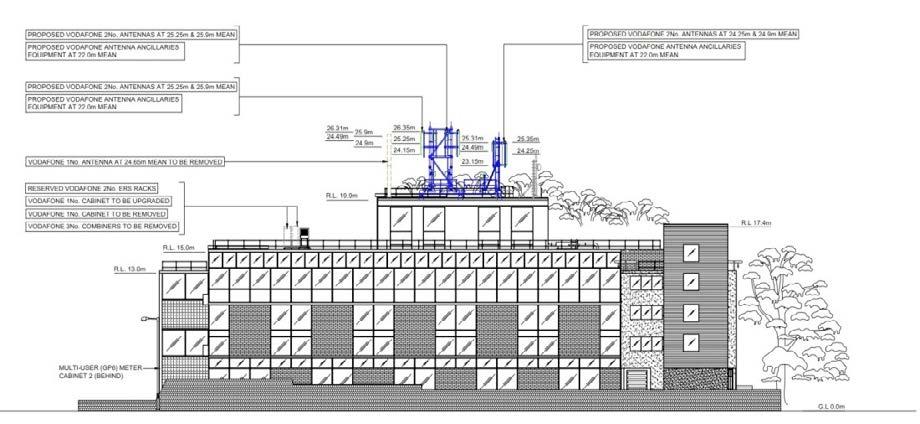
The current equipment has not been upgraded for a number of years and now requires significant modernisation to support the latest wireless technologies and meet the needs of both customers and the wider community.”
It went on to say: “Unlike earlier generations of mobile connectivity, 5G has more significant technical and operational requirements and this has implications on the amount, height, position and design of the apparatus on the rooftop of this building.
“The service provided by the operator is in the public interest and is in very high demand, with 5G being the next and highly significant advancement in mobile
connectivity. In the UK there are now more almost 92.5 million subscriptions to mobile networks and mobile services now exceed fixed landlines in terms of customer numbers and usage.”
An officer report recommending refusal said: “The siting and design of the development are considered to be insensitive, incongruous, and harmful to the character and appearance of the Haverfordwest Conservation Area. The proposal fails to preserve or enhance the significance of the designated heritage asset, contrary to the fundamental objectives of sustainable development.”
It added: “While the proposed
masts are of a broadly comparable height to the previously approved [2007] installation, the current proposal materially differs in both form and visual impact. In particular, the introduction of three separate telecommunications masts to facilitate 5G infrastructure results in a more prominent and visually intrusive arrangement that is not considered to be subservient to the host building, unlike the previously approved tubed apparatus.”
The application was refused on grounds including the visual impact and no biodiversity enhancement measures included as part of the proposed scheme.
A CALL to extend a Pembrokeshire “boutique nature retreat destination” previously featured in the Sunday Times with further holiday cabins, a mobile sauna and padel courts has been lodged with county planners.
In an application submitted to Pembrokeshire County Council, Paul Cleaver of Wilder Retreats, through agent Hayston Developments & Planning Ltd, seeks permission for two holiday cabins, a mobile sauna and the conversion and extension of an existing building to padel courts and changing rooms to form phase 2 of the existing Wilder Retreats holiday cabins and complex, on land at the former agricultural/ forestry works depot, Solbury Road, Tiers Cross. Padel is a racquet sport that combines elements of tennis and squash.
A supporting statement said of Wilder Retreats, an ecotourism destination located on 20 acres of rewilded land: “Since opening, the business has established itself as one of Wales’ leading boutique nature retreat destinations —

Bruce Sinclair Local Democracy Reporter
demonstrating how sensitive, highquality tourism development can work in harmony with landscape, ecology and local economy.
“The business has attracted national press coverage from publications including the Sunday Times and Coast Magazine.”
It said the existing business “was conceived from the outset as an ecotourism model — one that funds and enables genuine environmental restoration through sustainable commercial activity, working towards ecological targets set by Kite Ecology including native woodland planting, wildflower meadow creation and habitat coridor development”.
The Phase 2 developments proposed are: two additional A-frame cabins in addition to the existing six; Wilder Woodland Sauna, a commercial woodland sauna; and Wilder Padel Club, two covered LTA (Lawn Tennis Association) compliant padel courts with associated clubhouse facilities, that re-uses a redundant shed and yard in the client’s ownership.
“Together, the three proposals reinforce one another: the cabins bring more guests to the site; the sauna and padel give those guests — and local residents — more reasons to visit and to stay longer,” the statement says, adding: “All three operate independently but collectively strengthen the economic, social and environmental case for this
site as a model of sustainable rural tourism.”
The site was previously lawfully occupied by the applicant’s tree works consultancy and land management business until this subsequently relocated a few years ago.
Although the site has since been occupied by a motorcycle business, that business has been given notice to vacate but will trade until early 2027.
The application proposal is supported by a letter from Tennis Wales, the national governing body for Padel, one of the fastest growing sports in the country, which fully supports the principle of creating two padel courts, saying: “Creating more Padel courts, which can be used throughout the year, is critical to sustaining this growth.
“These new facilities will enable more adults and juniors to enjoy, compete and experience the game of Padel in line with Tennis Wales Vision and Mission which is to see ‘Padel opened up’.”
The application will be considered by county planners at a later date.
TY HAFAN has officially opened its newly relocated charity shop in the centre of Cardigan, marking the latest chapter in its long-standing relationship with the town and surrounding communities.
Diane Lloyd and her daughter Emily, both dedicated supporters of Tŷ Hafan Children’s Hospice, cut the ceremonial ribbon at the new premises at 25 High Street on Friday, July 10.
Diane has worked for the charity for 22 years, while Emily has volunteered for Tŷ Hafan for the past 11 years.
The charity currently supports 22 families caring for children and young people with life-shortening conditions in the Ceredigion Penfro Senedd
constituency. A further 17 families continue to receive bereavement support.
Maree Thomas, regional sales manager for Tŷ Hafan, thanked the community, volunteers and businesses that helped make the relocation possible.
She said: “I’d like to thank everyone who joined us on this exciting occasion as we opened our newly relocated Cardigan Tŷ Hafan store.
“We’ve been present on this high street for over 30 years, with the first few years spent in a tiny cabin and the last 22 years in the smaller shop just down the road.
“None of this would have been possible without the wonderful Lloyd
family and other local supporters, who were among the first fundraisers for Tŷ Hafan.”
She also thanked the shop’s volunteers, landlord Andrew, local companies, donors, customers and supporters who helped with the move.
“Your support means that we can walk alongside every family that needs us,” she said.
“Our shops play an important part in raising funds and awareness of the hospice. Right now, we are only supporting one in ten families who have a child whose life will be short.
“Our ambition is that when a child’s life will be short, no family should have to live it on their own.”
During the past year, the Cardigan
community has contributed around 3,000 volunteer hours, donated 2,000 bags of goods and purchased approximately 3,000 items from the charity.
The move to larger premises will allow the shop to display and sell more donated goods, helping to raise additional funds for hospice care.
Shop manager Diane said: “I would like to thank the local community for its massive support over the past 30 years, right from when we started in a little cabin in the market to our lovely new shop on the High Street.
“I’d also like to thank my absolutely amazing volunteers. Some have been with me for more than ten years and some have been here since the shop opened. Without them, we simply could not do what we do.”
Emily said volunteering had given her the opportunity to help families while also being part of a friendly and welcoming team.
She said: “I love volunteering for Tŷ Hafan. It’s great fun, it keeps me busy and you know you’re making a difference for local families with children who have life-shortening conditions.
“We’re always looking for more volunteers, so anyone who would like to join us can email volunteering@ tyhafan.org or call 02920 532255.”
Musician Mark Watkin Price also performed during the opening celebrations, singing and playing guitar for visitors and supporters.
The new shop is expected to begin trading seven days a week and includes a dedicated donation dropoff area at the rear of the premises.
A RETROSPECTIVE call to let a Pembrokeshire beauty salon stay on the site of a former edge-of-town printing business has been given the go-ahead by county planners.
In an application to Pembrokeshire County Council, Sarah Collins of SC Skin Care Ltd, sought retrospective permission for the change of use from shop to a beauty clinic at 60A, Cartlett, Haverfordwest.
No adverse comments around the proposals were made by Haverfordwest Town Council.
An officer report recommending approval said the unit was most recently occupied by Mobad, a printing business specialising in commercial graphics, which operated between 9 and 5pm, Monday to Friday; the change of use seeking to open 9am-7pm MondaySaturday, with no external alterations proposed.
It said the application was in retrospect as the change of use happened back in March, the clinic accommodating three
Bruce Sinclair Local Democracy Reporter
treatment spaces, with one full time member of staff.
It concluded: “The application seeks retrospective planning permission to change the use of an existing commercial unit to a beauty and aesthetics clinic (sui generis) within the sustainable and accessible settlement boundary of the Hub Town of Haverfordwest.
“Whilst beauty and aesthetics services are a use ordinarily directed to town centres the proposal involves the continued occupation of an existing commercial premises and is not considered likely to undermine the vitality or viability of Haverfordwest Town Centre.
“The proposal would not result in any unacceptable impacts upon the character or appearance of the area, residential amenity, highway safety, drainage infrastructure or biodiversity subject to the imposition of conditions

requiring the provision of secure cycle parking and ecological enhancement measures.”
It finished by saying the scheme “represents an appropriate and
sustainable form of development that complies with the relevant provisions [of planning policy].”
The application was conditionally approved.



PATIENTS awaiting elective hip replacement surgery under Hywel Dda University Health Board waited an average of 450 days during the 2025/26 financial year, according to newly released figures.
The average wait was equivalent to just over 64 weeks, significantly longer than the treatment times set out under Welsh NHS targets.
The figures were obtained through a Freedom of Information request submitted to the health board by private healthcare marketplace My Medical Gateway.
In Wales, the stated aim is for 95% of patients to begin treatment within 26 weeks of referral, with no patient waiting
longer than 36 weeks.
Hywel Dda confirmed that 1,608 patients were on its waiting list for hip replacement surgery as of May 28, 2026.
The health board also said 16 patients had been removed from the waiting list during the 2025/26 financial year after choosing to undergo treatment privately.
Hip replacement surgery is most commonly offered to people experiencing severe pain, stiffness and reduced mobility, often after other treatments such as physiotherapy, pain relief, injections and lifestyle changes have failed to provide sufficient relief.
Sara Gezdari, Head of Investor Relations at My Medical
Gateway, said prolonged waits could have a serious effect on patients’ physical and emotional wellbeing.
She said: “Many people join NHS waiting lists after already spending months or years attempting to manage their condition through physiotherapy, pain relief medication, injections and lifestyle modifications.
“By the time surgery is recommended, they are often already struggling. The true impact of waiting is measured not in weeks but in declining quality of life.”
She said patients waiting for surgery could experience increasing pain, disrupted sleep, reduced mobility, loss of independence, social isolation
and worsening mental health.
Long waits could also have financial consequences, particularly for people whose employment relies on physical mobility.
Ms Gezdari added: “Many patients continue working despite severe symptoms. As pain worsens, productivity often falls. Some reduce their hours. Others leave work entirely.
“The consequences can be particularly significant for self-employed individuals who depend upon physical mobility to earn a living.”
My Medical Gateway said private hip replacement surgery in the UK typically costs between £12,549 and £14,950.
The company, which connects UK patients with private hospitals in the European Union, said the average price offered by many European providers was approximately £9,088.
However, travelling abroad for medical treatment can involve additional considerations, including travel costs, insurance, post-operative care and arrangements if complications arise.
The Freedom of Information response was returned by Hywel Dda University Health Board on June 8, 2026.

THERE are signs of improvement at one of Pembrokeshire’s most heavily pressured GP practices, but fresh figures suggest the problems facing Argyle Medical Group are far from resolved.
Henry Tufnell MP has welcomed the introduction of a new appointment system at the Argyle Street surgery in Pembroke Dock, together with what he described as the arrival of an additional doctor and the rollout of free health screening for patients aged over 65.
The Mid and South Pembrokeshire MP said he had received positive feedback about the practice’s new booking arrangements, following months of concern over difficulties securing appointments.
Argyle Medical Group introduced its Anima online triage system on June 10. It replaced the previous online system and was intended to reduce the familiar 8am rush for appointments.
Patients submit details of their medical problem online, after which the request is assessed and directed to the most appropriate clinician or service. Those unable to use the internet can still contact the surgery by telephone and reception staff can complete the request on their behalf.
The practice says it aims to assess requests on the same day, although some routine matters may take longer.
However, the system does not remove the underlying issue of limited capacity.
Argyle has warned that Anima may close to further medical submissions when the number of requests reaches
the maximum level the practice believes it can safely manage.
Patients may then have to try again on the following working day, although those with urgent concerns are advised to contact the surgery, NHS 111 or emergency services as appropriate.
The pressure is also being increased by the continuing closure of St Oswald’s Surgery in Pembroke, which is part of Argyle Medical Group.
The branch remains closed for maintenance work and is currently not expected to reopen until September 2026.
Argyle Medical Group serves more than 22,000 patients across the Pembroke and Pembroke Dock area.
Previous figures raised in the Senedd indicated that the practice had nine registered GPs, giving it one of the highest patient-to-doctor ratios in Wales.
Mr Tufnell’s announcement that another doctor has joined the practice will therefore be welcomed, although it is not yet clear whether the appointment is permanent or full-time.
The developments come as new research from BMA Cymru Wales paints a bleak picture of general practice across the country.
A survey of 221 Welsh GPs found that 54 per cent believed patient access was routinely inadequate when compared with demand.
A further 63 per cent said excessive workloads were routinely or constantly affecting patient care, while 70 per cent said the pressure was having a similar effect on their own wellbeing.

Practices are also making difficult financial decisions to remain viable. The survey found that 43 per cent had frozen recruitment, 31 per cent had delayed investment in buildings, technology or facilities, and 23 per cent had reduced services such as minor surgery and shared-care arrangements.
Dr Gareth Oelmann, chair of the BMA’s Welsh GP committee, said demand was far outstripping the capacity available within surgeries.
He called for sustained investment to allow practices to recruit more doctors, improve services and plan for the future.
Welsh Conservatives have blamed what they described as years of political mismanagement for the situation.
Natasha Asghar MS, the party’s Shadow Minister for Health and Social Care, said: “These findings are deeply worrying but, sadly, they won’t come as a surprise to patients who are struggling
to get a GP appointment.
“When GP practices cannot recruit staff, are forced to freeze investment and are even cutting services just to keep their doors open, it is patients who pay the price through longer waits and poorer access to care.
“If we are serious about shifting more healthcare into the community and reducing pressure on hospitals, then general practice must be properly resourced.”
For Argyle patients, the new booking system and reported recruitment of another doctor represent positive steps.
The more important test will be whether patients experience sustained improvements, whether the system regularly reaches its daily limit, and whether the practice can recruit and retain enough clinicians to meet the needs of its large patient population.
WALES has recorded the highest rate of self-medication for anxiety and stress of any UK region, according to a new healthcare survey.
The STADA Health Report 2026 found that 31 per cent of adults surveyed in Wales said they selfmedicated to manage anxiety or stress. That was almost six percentage points above the UK average of 25.2 per cent.
The report also found comparatively low levels of trust in artificial intelligence for healthcare, alongside concerns about access to services, ageing and the amount of health information people are expected to navigate.
Just 38.5 per cent of Welsh respondents said they would trust AI to make a health diagnosis, the lowest rate recorded among the UK regions surveyed and well below the national average of 52.3 per cent.
Fewer than half, 42.4 per cent, said they would consider having a health
consultation using AI, compared with 49.5 per cent across the UK.
Satisfaction with the public healthcare system was also lower in Wales. Some 57.9 per cent of Welsh respondents said they were satisfied, compared with a UK average of 65.1 per cent.
The findings form part of an international study commissioned by pharmaceutical manufacturer STADA Thornton & Ross and carried out by market research company Human8 Consulting.
A total of 2,001 adults were surveyed in the UK during February and March 2026, as part of a wider study involving 19,514 respondents across 20 countries. The company has not stated in the press material how many of the UK participants were based in Wales.
Concerns about ageing and access to care
More than two-thirds of Welsh respondents, 66.8 per cent, said they
feared becoming dependent on care as they grew older.
That compared with a UK average of 54.3 per cent.
More than half of those surveyed in Wales, 55.4 per cent, also said they felt overwhelmed by the amount of health information available, against 47.7 per cent nationally.
The report’s authors said the findings suggested that some people were increasingly relying on selfmanagement when they felt unable to access timely professional support.
However, the term “self-medication” can cover a range of behaviours, including the use of non-prescription medicines, supplements or other substances without direct advice from a healthcare professional.
Craig Shaw, general manager for STADA UK, said: “When one in three adults say they are self-medicating for anxiety or stress, it suggests many people are looking for practical ways to manage their wellbeing, but may not
always feel they have access to the support they need at the right time.
“While trust in AI health tools is lower in Wales than elsewhere in the UK, the data also reinforces the enduring importance of trusted, faceto-face healthcare.
“Community pharmacists are uniquely placed to provide accessible advice, reassurance and guidance, helping people make informed decisions about managing their health and knowing when additional support is needed.”
STADA Thornton & Ross manufactures healthcare products including Covonia, Cetraben, Hedrin, Savlon and Zoflora, as well as generic and specialist medicines.
Anyone experiencing anxiety or stress is advised to speak to a GP, pharmacist or another qualified healthcare professional before taking medication that has not been prescribed for them.

Pembrokeshire MP says customers have already paid substantially more while the company’s environmental and operational performance has continued to fall

HENRY TUFNELL has launched a blistering attack on Welsh Water after its new chief executive suggested customers must either accept higher bills or wait longer for improvements to the company’s ageing infrastructure
The Labour MP for Mid and South Pembrokeshire said Welsh Water “still don’t get it”, arguing that household bills have already risen sharply while the company’s performance has deteriorated.
In a video published on Friday (July 10), Mr Tufnell said customers were being asked to pay again for failures which had developed over many years.
He said: “The new chief executive of Welsh Water has said that if customers want better service, they will have to pay more.
“But bills have already been going up, while performance has been going down.
“In the last year alone, Welsh Water has been handed a £44.7 million penalty for serious failures in the way it manages sewage and wastewater.
“The public should not be asked to keep paying more while those at the top avoid responsibility.”
Alongside the video, Mr Tufnell wrote: “Their new chief exec says that bills must go up to improve their infrastructure. However, bills have been going up and their
performance has gone down.
“As your MP, I have been working hard in Parliament to scrutinise our failing water sector, and I support the steps this government has taken to strip water bosses of their bonuses and fine underperformance.”
The row follows comments from Welsh Water’s new chief executive, Roch Cheroux, who said the company faced a choice between investing more to improve services quickly or taking longer to repair and modernise its network.
Mr Cheroux said years of under-investment and ageing infrastructure meant significant spending was required to reduce leaks, improve water quality and cut sewage discharges.
“We are at a point where we have a choice,” he said.
“We can invest more and improve faster, or take longer to get there.”
But Mr Tufnell argues that customers have already been presented with substantial increases without seeing the level of improvement they were promised.
Average Welsh Water household bills rose sharply in 2025 as the company began a fiveyear investment period. Senedd
Research said average bills increased by around 27%, with an overall rise of approximately 42% expected by 2030.
Welsh Water then announced a further 4.8% increase for 202627, taking its stated average annual household bill from £652 to £683.
Individual bills vary significantly depending on whether a property has a meter, its rateable value and whether the customer receives water, sewerage or both services.
The increases are intended to support an investment programme which Welsh Water says is needed to replace ageing pipes, improve treatment works, reduce pollution and make supplies more resilient.
However, the rises come against a backdrop of repeated regulatory criticism.
Ofwat’s most recent published company performance assessment ranked Welsh Water as “lagging behind” for the fourth consecutive year.
The company was performing worse than its target in seven of the 12 areas assessed.
Natural Resources Wales also maintained Welsh Water’s two-star environmental rating, meaning that the company “requires improvement”, for a
third consecutive year.
Regulators recorded 155 water supply and sewerage pollution incidents attributed to Welsh Water during 2024, including six serious incidents. It was the highest number of incidents recorded for the company in a decade.
Welsh Water has said its storm overflow figures improved during 2025, with the total number of hours in which overflows operated falling by around 18% However, sewage discharges across Wales remained extensive. Analysis of published monitoring data by The Rivers Trust recorded 94,974 discharges during 2025, lasting a combined 777,545 hours.
Storm overflows are intended to prevent homes and businesses being flooded when sewage systems are overwhelmed by rainwater. An overflow activation does not automatically mean that a company has acted illegally, and the monitoring data does not show the volume or precise contents of each discharge.
Nevertheless, campaigners argue that the frequency and duration of their operation demonstrate that the sewer network is routinely unable to cope.
Analysis of Welsh Water monitoring data by the campaign website Top of the Poops estimated that overflows within the Mid and South Pembrokeshire constituency operated 5,944 times during 2025, for a combined 56,669 hours.
The figures cover 104 monitored locations and include discharges affecting rivers, streams, estuaries and coastal waters across the constituency.
£44.7
Pressure on Welsh Water intensified in June when Ofwat confirmed a £44.7 million enforcement package after finding “serious and unacceptable” failures in the company’s wastewater operations.
The regulator found that Welsh Water had failed to properly operate, maintain and
upgrade sewage treatment works and sewer networks so that they could cope with the amount of wastewater entering the system.
It also identified inadequate company processes and insufficient oversight by senior management.
The action is sometimes described as a fine, but it is technically an enforceable package of undertakings. The money is not paid to the Treasury.
Welsh Water must instead spend £40.6 million on work to reduce spills, address groundwater entering the sewer network and limit environmental damage.
A further £4.1 million must be spent on improving river quality in environmentally sensitive catchments.
The package is to be funded by the company rather than being added to customer bills.
It followed separate action in 2024, when Welsh Water agreed a £40 million redress package after Ofwat concluded that the company had misled customers and regulators about its performance on leakage and household water consumption.
Welsh Water insists that significant progress cannot be delivered without major investment.
The company operates as a not-for-profit business with no shareholders. It says financial surpluses are reinvested in services, infrastructure and support for customers rather than being distributed as dividends.
Welsh Water says it invested £617 million in its water and wastewater network during 202526, including £134 million on environmental improvements and £120 million on water quality and network resilience.
Its wider programme proposes more than £4 billion of investment between 2025 and 2030, including around £2.5 billion on environmental work.
Mr Cheroux, who formally became chief executive at the beginning of 2026, has also begun a major company transformation programme intended to improve performance, restructure the organisation and develop a new long-term strategy.
The company’s position is that the cost of upgrading thousands of miles of underground pipes, sewers and treatment
infrastructure must ultimately be recovered through customer bills.
Critics, however, say Welsh Water must demonstrate that the additional money will produce measurable improvements rather than asking customers to accept repeated increases based on future promises.
Mr Tufnell, who serves on the House of Commons Environment, Food and Rural Affairs Committee, said he had been using his position in Parliament to scrutinise the water industry.
The Water (Special Measures) Act introduced powers allowing Ofwat to block bonuses for senior executives where companies fail to meet environmental, customer service or financial standards.
The legislation also introduced potential criminal liability for executives who obstruct regulatory investigations or conceal illegal sewage discharges.
Mr Tufnell said: “For too long, water companies have been allowed to underperform while customers pick up the bill.
“We have introduced legislation to stop bonuses being paid to the bosses of failing water companies and to make senior executives criminally accountable when they cover up wrongdoing.
“Welsh Water must now invest properly in its infrastructure, clean up our rivers and seas and give customers the service they are already paying for.”
Pembrokeshire waterways under pressure
The MP said protecting Pembrokeshire’s rivers, coastline and estuaries was not simply a national political issue but an immediate local concern. He highlighted his work with The Cleddau Project and Surfers Against Sewage, both of which have campaigned for improved monitoring, stronger enforcement and faster action to protect local waterways.
Mr Tufnell said: “Locally, I am proud to work with community groups like The Cleddau Project and Surfers Against Sewage to collectively protect our waterways.
“I am committed to protecting and restoring our county’s beautiful waterways.”
The central question facing Welsh Water is no longer whether its infrastructure requires investment. The company, regulators, politicians and environmental groups broadly agree that it does.
The dispute is over who should bear the cost, how quickly improvement should be delivered and why customers should trust Welsh Water to produce better results after years of rising bills, regulatory intervention and declining performance.
For households in Pembrokeshire, Mr Tufnell’s message is clear: customers have already paid more, and Welsh Water must now prove it can deliver.

Paul Davies MS
Bovine TB and the need for action from the new Welsh Government Local farmers have consistently highlighted bovine TB as one of the most significant challenges facing the agricultural sector and our wider rural communities. Pembrokeshire and Ceredigion are both designated as High TB Areas due to persistently high levels of infection and as a result, farms in this region are subject to enhanced disease control measures, including more stringent testing and movement restrictions, placing additional operational and financial pressures on farming businesses. However, despite these measures, the continued prevalence of the disease demonstrates the scale of the challenge and the need for effective action to reduce infection rates and support affected farmers.
Bovine TB didn’t appear overnight – this is something that has been plaguing local farms for many years now and it’s taking huge toll on farmers. Family farms can spend years living with repeated testing regimes, movement restrictions and the constant fear of a disease breakdown.
The loss of cattle through compulsory slaughter is often devastating, both financially and emotionally, particularly for farms that have invested generations of work into building their herds. Indeed, evidence of the strain bovine TB is having on the industry is clear. A National Farmers Union (NFU) Cymru survey conducted in 2023 found that 85% of respondents said bovine TB had negatively affected either their own mental health or that of a family member, while more than 93% said they were extremely or very concerned about the disease.
I’ve had many conversations with frustrated, anxious and
heartbroken farmers over the years and they have repeatedly asked for the same thing. They want the Welsh Government to use all the tools at its disposal to tackle this disease in all its transmissions – including targeted intervention when it comes to wildlife.
The previous Welsh Government was very clear that it did not agree with the industry and instead proceeded to invest in a vaccination programme and increasingly stricter biosecurity procedures. However, the scale of the problem remains significant and without a comprehensive strategy that considers wildlife transmission, then we won’t see the progress we all want. In the most recent figures issued by the UK Government, 3,415 cattle were slaughtered in Pembrokeshire and a further 1,163 in Ceredigion and as I’ve said in a recent Senedd debate, behind the statistics is a farming family coping with uncertainty, loss and the challenge of maintaining a viable business under difficult circumstances.
But is the tide about to turn? A new Welsh Government was elected in May and the new Cabinet Member for Rural Resilience and Sustainability has himself campaigned for the Welsh Government to take a more holistic approach to tackling bovine TB. Whether or not he’ll make the right decision for the industry remains to be seen. However, I can assure farmers in west Wales that I will continue to campaign for a genuine bovine TB eradication strategy that includes measures that prevent the transmission of disease from wildlife to cattle.


W ITH ANDREW LYE
As Andy Burnham is days away from becoming the Labour Party Leader and to replace Sir Keir Starmer as PM, you may be forgiven for thinking that the excessive heat has got to some.
Reform UK Ltd’s leader, Nigel Farage has resigned as MP for Clacton, to fight a by-election in which he will stand. He says it the People against the Establishment. With his upbringing, in my eyes, he IS the establishment. But could he lose this the by-election to Count Binface as the polls are suggesting? That would be so embarrassing for him and Reform!
Responding to Reform UK’s Welsh Leader Daniel Thomas’s comments to BBC Wales, where he said he would consider a donation from a criminal if it was his “only option” to help pay for security, Welsh Liberal Democrat Leader Jane Dodds MS said:
“Dan Thomas’s comments are an absolute embarrassment to Welsh politics and a glaring reminder of why Reform cannot be trusted with serious leadership. This, of course, comes after Reform’s last Welsh leader took bribes from Russia.
“To openly admit that you would consider taking money from a convicted criminal, even under certain circumstances, is an insult to the public and a complete abandonment of basic political integrity.
“The people of Wales deserve leaders who uphold the highest ethical standards, not politicians who make casual excuses for murky finances and dodge accountability by claiming the establishment is out to get them, when in fact many Reform politicians are about as establishment as they
come.”
Back to Westminster, Andy Burnham’s spoke recently on his priorities. Welsh Liberal Democrat Westminster Spokesperson David Chadwick MP said:
“Andy Burnham says he wants to take power out of Westminster, yet today’s plans appear to leave Wales once again at the back of the queue compared to English regions.
“If Labour can find the ambition to devolve powers across England, they should have the ambition to give Wales the same powers as Scotland.
“The Welsh Liberal Democrats believe Wales deserves a stronger devolution settlement, starting with the powers that will make the biggest difference to people’s lives and our economy: greater borrowing and taxation powers, the devolution of rail and the Crown Estate, and a fair funding formula for Wales.”
David Chadwick MP also spoke out on the 10year anniversary of the vote to leave the EU, saying:
“It is clear that Brexit has not improved livelihoods or helped solve any of the problems Wales faces as a nation. The Conservatives and Reform sold Brexit as a silver bullet, but instead, it has been more of a rock dragging us down.
“Wales has been one of the parts of the UK hardest hit by Brexit, with our economy paying the price for a decade of broken promises.
“Ten years on, Nigel Farage and Reform must answer for the damage Brexit has done to Wales. Yet instead of admitting they got it wrong, they continue to demand more of the same failed approach.
If you have any issues or comments, please contact me at andrew.lye@pembslibdems.wales
PEMBROKESHIRE’S new Conservative county councillor, who won a sevenway battle for the Pembroke Dock Market ward seat, has said he is “fully focussed on representing everyone in Market Ward and being a strong voice for Pembroke Dock”.
The seat was made vacant following the death of veteran councillor Brian Hall.
Before he passed away in April, Councillor Brian Hall had held the Pembroke Dock Market ward seat since 1996.
Since that seat became vacant, seven hopefuls put their names forward to represent the Market ward, with an election being held on July 9, the results announced the following morning.
The election for the ward, which has an electorate of 1,442 voters, saw a 28 per cent turnout.
Winner was Welsh Conservatives candidate Jamie Street with 143 votes, approximately 36 per cent of all votes cast.
Second place, with 100 votes, went to Independent candidate Claire Francis-Boswell, who can be commiserated by recently becoming a town council member for the very same ward.
Other candidates, and their

share of the votes, were: Chloe Louise Richards, Plaid Cymru, 79 votes; Ryan Morgan, Reform UK, 48; Paul Haywood Dowson, Independent, 11; Lee Herring, Welsh Liberal Democrats, nine; Hayley Wood, Independent, seven.
Following his win, Jamie said:
“I would like to sincerely thank everyone who placed their trust in me by voting in this election.
“It is a tremendous honour and a privilege to have been elected as the county councillor for the Market Ward, I will work hard to repay that confidence.
“I would also like to thank my fellow candidates for running a
positive and respectful campaign.
“Now the campaign is over, I am fully focussed on representing everyone in Market Ward and being a strong voice for Pembroke Dock.
“Throughout the campaign I promised to listen to residents, stand up for our community and work tirelessly to secure the investment, opportunities and improvements our area deserves.
“I am eager to get started on the many issues you told me on the doorstep and will do everything I can to achieve the very best outcomes for local people.”

AN INDEPENDENT inquiry into grooming gangs across England and Wales has failed to identify a single location in Wales for local investigation, the Senedd has been told.
Welsh Conservative leader Darren Millar raised the issue in the Siambr on Wednesday July 8, warning that known victims of child sexual exploitation in Wales are being overlooked.
Mr Millar said independent investigations had already cited Swansea, Rhyl and parts of mid Wales as areas where grooming gangs operate, with victims being trafficked to other parts of the UK.
Addressing Deputy First
Ella Groves ICNN Senedd reporter
Minister Sioned Williams, Mr Millar asked for assurances that she would commit to a standalone, Wales-wide inquiry if the current crossborder investigation continues to bypass Welsh locations.
Ms Williams, who also serves as social justice and equality minister, said the Welsh Government had consulted on the terms of reference to ensure the “unique Welsh context” is captured.
She confirmed that Welsh officials meet monthly with the inquiry team and have been
assured that Welsh survivors will be able to contribute fully.
Ms Williams added that her government would take further action if it believes it is required.
The debate followed figures highlighted in the Senedd by Plaid Cymru’s Beca Brown on Wednesday July 2, showing an estimated 25,000 children and young people are sexually abused in Wales every year.
Labour’s spokesperson for equalities, Shav Taj, called for ring-fenced funding to train teachers to identify sophisticated online AI deepfake networks and “sextortion” rings.
Ms Taj warned that relying on a central website without specific funding was a “passive strategy” for exhausted school staff.
Ms Williams said the government’s ten-year strategy focuses on prevention, effective protection, and supporting affected families alongside the NSPCC and the Centre of Expertise on Child Sexual Abuse.
AN “ExPERT GROUP” has been set up as the Welsh Government looks to pilot its proposed child payment.
Wales’ Deputy First Minister faced questions on Cynnal – a Plaid Cymru manifesto pledge to deliver a £10 payment to to low income households.
Sioned Williams said the group will support the “design, delivery, monitoring, and evaluation of the Cynnal pilot” – which could benefit up to 15,000 children aged six and below.
Answering a question from Plaid Cymru colleague Elyn Stephens, Ms Williams the group brings together “expertise from across the sector” to ensure the scheme is “evidence-led, is robustly evaluated, and is grounded in the realities of families’ lives.”
Drawing on experiences from her own constituency of Afan Ogwr Rhondda, Ms Stephens noted the “real difference” the Cynnal payment could make to families facing the “sharpest end of child poverty”.
However, she said potential recipients need clarity that the support will reach them directly.
She said: “We know there are clear precedents for additional payments being disregarded within the benefits system, including the Scottish child payment and local welfare provision.
“But the Welsh NHS and social care bonus show that without Department for Work and Pensions protection, the value of a government payment can be reduced through the Universal Credit system as it’s then classed as earnings.”
Ms Stephens said the Cynnal payment needs to be “simple to access and protected in full”.
Ms Williams confirmed negotiations have begun with the UK Government to look at the links between benefits, taxation, and the Cynnal payment.
She said: “I’ve already started discussing this with Andrew Western MP, the minister for transformation, and further meetings are in the diary.”
Reform’s Gareth Thomas asked Ms Williams how many families in his constituency of Pen-y-Bont Bro Morgannwg are expected to benefit from the payment, and whether his area will be included in the original rollout. He also pushed for the Welsh Government to publish local figures so MSs can assess “whether Cynnal is delivering real benefits for families and value for public money”.
In response, Ms Williams said: “The task of the expert group will be to ensure that we plan this payment carefully. It is a pilot programme, so it won’t reach every family in need in Wales, because that’s the nature of a pilot, clearly.”
She continued: “We need to think how we can assess how this child payment can support families in the best way possible, and then build those strong foundations of robust evidence in order to steer future decisions.”
Labour’s Jane Bryant emphasised the importance of working with both the UK Government and local authorities in
Wales on the scheme’s rollout. She asked when the child payments will start, and urged the minister to ensure it will not affect families’ eligibility for other financial support.
On the involvement of local authorities, Ms Williams said: “We know we have key partners in this work as regards delivery and interaction with other Welsh benefits.
“So that is, again, what will be completely under the consideration of the expert steering group which will be meeting next week.”
SEND YOUR LETTERS TO: THE EDITOR, 11 HAMILTON TERRACE, MILFORD HAVEN, PEMBROKESHIRE, SA73 3AL
EMAIL US AT: editor@herald.email


DEAR SIR,
THE renewed enthusiasm for devolution at Westminster should be welcomed, but Wales’s experience shows why warm words and new political structures are not enough.
For more than 25 years, the Welsh Government has been expected to improve the economy, transport, housing and public services while many of the most important financial and policy levers remain controlled in London.
Responsibility without the necessary powers is not meaningful devolution. It simply allows Westminster to transfer blame while retaining control of borrowing, infrastructure spending and much of the
taxation system.
That does not excuse the failings of successive Welsh governments. Cardiff Bay must be held accountable for the decisions it makes and the money it controls. However, voters deserve a system in which it is clear which government has the power to act and which government is responsible when it fails.
Andy Burnham and others now advocating greater devolution should also recognise that Wales is not merely another English region. Welsh devolution reflects our status as a nation, with its own democratic institutions, language and political priorities. A policy designed for Greater Manchester cannot simply be copied and pasted into Wales with the place names changed. Any future settlement must include proper funding, meaningful borrowing powers, control over key infrastructure
give everyone pause for thought.
Many people have strong views about the national press, especially the tabloid press. There is no doubt that parts of the industry have, in the past, behaved disgracefully. Phone hacking, blagging and intrusion damaged public trust and caused real harm to people who were already under intense scrutiny.
But this case is a reminder of something important. In a court of law, suspicion is not enough. Anger is not enough. A pattern of bad behaviour elsewhere is not enough. Serious allegations have to be proved.
The claimants in this case made grave accusations against Associated Newspapers. The judge did not say the newspaper world has always behaved honourably. He said these particular claims had not been proved on the evidence before him.
That distinction matters. It matters because the law must apply equally to everyone, whether the person bringing the claim is a prince, a pop star, a campaigner, a politician or an ordinary member of the public. It also matters because journalism, however unpopular it may be at times, cannot be judged on assumption alone.
and constitutional protection for institutions created by the votes of the Welsh people. Britain is one of the most centralised states in the democratic world. Reform is overdue, but repeating the weaknesses of the Welsh settlement across the rest of the UK would be a wasted opportunity.
Devolution must mean handing over the tools as well as the job.
Peter Richards Milford Haven
The High Court judgment involving Prince Harry, Sir Elton John, Baroness Lawrence and others should
There is another uncomfortable point. Cases like this cost staggering amounts of money. If the reports about the legal bill are anywhere near accurate, the sums involved are beyond the imagination of most people in Wales. Ordinary people with genuine privacy complaints would never be able to fight litigation on this scale.
That should concern us. Justice should not be a game only the wealthy, famous or heavily insured can afford to play.
This judgment is not a love letter to the press. Nor is it a humiliation only for the claimants. It is a warning to both sides.
Newspapers must obey the law. But those who accuse them of breaking it must prove their case.
Gemma Farley


PEACEFULLY at Williamston Nursing Home on Thursday 25th June 2026 Joan Lilian Mackeen formerly of Neyland aged 87 years. She will be sadly missed by all her family, friends and neighbours.
The funeral service will take place on Wednesday 22nd July, 11:30am at Parc Gwyn Crematorium, Narberth.
Family flowers only. Donations in lieu, if desired, in aid of South Pembrokeshire Cat Rescue or Wales Air Ambulance may be sent c/o Angela Jones, Milton Farmhouse, Oxland Lane, Burton, SA73 1LG.
Further enquiries to F. G. Rees & Sons, Haverfordwest. Tel: 01437 764418.

MARGARET passed away peacefully at her home and surrounded by her loving family on Sunday 5th July 2026 aged 83 years.
Dearly loved wife to Alan, loving mother to David, Christopher and Debbie. A beloved Nan, Mother-in Law, Sister and Aunt, she will truly be missed by all her family and many friends.
Her funeral service will take place on Monday 20th July 2026, 12.15pm at Parc Gwyn Crematorium, Narberth.
Family flowers only. Donations in memory of Margaret, if desired for Paul Sartori Foundation, can be sent c/o Mrs Amanda McDonald, 1 Dingle Close, Dingle Lane, Crundale, Pembrokeshire. SA62 4FE
All enquiries to Roy Folland & Son Funeral Directors (01437) 763821
jEAN M ARY C ALLEN
PEACEFULLY On Friday evening 26th June, Jean formerly of Clunderwen and Narberth.
(Former Pembrokeshire District Nurse and Midwife)
Beloved and amazing wife of the late Colwyn, dear mother of Andrew
loving grandmother of Nichola, Lisa, Steven and Lauren, proud greatgrandmother of Theo, Olivia and the late Isabelle.
Funeral Service at St Andrew’s Church Narberth, on Thursday 23rd, July at 2.30pm, followed by cremation at Parc Gwyn Crematorium, Narberth.
Family flowers only.
Enquiries to Ken Davies & Sons, Funeral Directors, Clunderwen. Tel 01437 563319














RECLAIMED BUILDING MATERIAL

RUBBISH AND WASTE REMOVAL


PROFESSIONAL CAR WASH





TECHNOLOGY AND COMPUTERS


VEHICLE RECOVERY











WELSH Conservative Senedd member Andrew RT Davies has called for FIFA to take action after Argentina players celebrated their World Cup victory over England by displaying a banner asserting the country’s claim to the Falkland Islands.
The banner, which read “Las Malvinas son Argentinas”, meaning “The Malvinas are Argentine”, was displayed on the pitch following Argentina’s dramatic 2-1 semi-final victory in Atlanta on Wednesday night.
Lisandro Martínez and Giovani Lo Celso were pictured holding the banner and waving towards Argentina supporters after their side scored twice in the closing minutes to overturn England’s 1-0 lead.
The result sent the defending champions into a second consecutive World Cup final, where they will face Spain in New Jersey on Sunday.
Mr Davies, the Conservative
of
for
and Bridgend, described the display as unacceptable and called on people across the United Kingdom to condemn it.
He also said football’s international governing body must investigate whether the Argentina Football Association or members of the national team had breached tournament rules.
FIFA’s stadium code of conduct prohibits banners, flags, clothing and other material considered political, offensive or discriminatory from being displayed inside World Cup venues.
FIFA had not publicly announced whether disciplinary proceedings would be opened at the time of publication. UK Business Secretary Peter Kyle has also called for the incident to be formally investigated.
The controversy has particular resonance in Wales
because of the role of the Welsh Guards in the 1982 Falklands conflict.
Thirty-two Welsh Guardsmen were killed when Argentine aircraft attacked RFA Sir Galahad near Bluff Cove on June 8, 1982. The incident was one of the deadliest attacks suffered by British forces during the 74-day conflict and left many other servicemen seriously injured or burned.
In total, 255 British personnel and 649 Argentine military personnel were killed during the war.
The Falkland Islands are administered as a selfgoverning British Overseas Territory, although Argentina continues to claim sovereignty and refers to the islands as Las Malvinas.
In a referendum held in 2013, 99.8 per cent of participating islanders voted to retain their existing political status as a British Overseas Territory. The
UK Government maintains that there can be no negotiations about sovereignty unless the islanders themselves request them.
Mr Davies said: “The Falkland Islands are British and people from across Wales, England, Scotland and Northern Ireland must come together to condemn this unacceptable gesture.
“FIFA wrongly punishes our football teams for displaying poppies around Remembrance Day.
“If football’s governing body does not take robust action against Argentina, the double standard will stink.”
FIFA fined the football associations of England, Wales, Scotland and Northern Ireland following poppy displays during international matches around Armistice Day in 2016, after ruling that the commemorations breached regulations concerning political symbols.

Anthony Gordon’s second-half goal appeared to be carrying the Three Lions into their first final since 1966, before two late strikes turned the semi-final on its head
England’s hopes of ending 60 years of World Cup hurt were destroyed in devastating fashion as Argentina produced a late comeback to win a dramatic semifinal 2-1 in Atlanta.
The Three Lions were five minutes away from reaching Sunday’s final after Anthony Gordon converted an excellent Morgan Rogers cross shortly after the interval.
But Enzo Fernandez equalised with a powerful strike from outside the penalty area in the 85th minute before substitute Lautaro Martinez headed home a Lionel Messi cross in stoppage time, sending the defending champions into the final against Spain.
England had spent much of the evening matching Argentina physically and tactically. Thomas Tuchel’s side defended aggressively, frustrated Messi and carried a threat through the movement of Gordon, Rogers and Jude Bellingham.
However, England became increasingly defensive after taking the lead and ultimately invited the world champions to attack them.
It was another agonising major tournament defeat for a country that has repeatedly come within touching distance of glory in recent years.
There was little attractive football during a fiercely contested first half in which challenges flew in and tempers repeatedly threatened to boil over.
The first genuine opportunity did not arrive until after the half-hour mark, when John Stones headed wide from a Declan Rice free-kick.
Reece James later tested Emiliano Martinez with a curling free-kick, while Fernandez sent Argentina’s first attempt off target from distance.
The opening 45 minutes ended goalless, with neither side having established control of a match carrying the weight of decades of footballing rivalry.
Argentina emerged with greater purpose after the restart. Julian Alvarez twice forced Jordan Pickford into saves during the opening minutes of the second half, but it was England who struck first.
Rogers found space on the right in the 55th minute and delivered a superb ball across the six-yard box.
Gordon timed his arrival perfectly, guiding the cross beyond Martinez at the back post and sparking wild

celebrations among the England players and supporters.
For a moment, England could see the final.
Argentina almost responded immediately when Giuliano Simeone broke through, but Djed Spence produced a perfectly timed intervention to prevent a clear opportunity.
That proved to be one of several vital defensive moments as the pressure began to build.
Pickford made an excellent reaction save from Nicolas Gonzalez before Alexis Mac Allister headed against the post. Fernandez then forced the England goalkeeper to tip another long-range effort over the crossbar.
Rather than attempting to exploit the increasing space left by Argentina, England retreated.
Gordon was replaced by defender Ezri Konsa in the 72nd minute, while Dan Burn and Nico O’Reilly were introduced ten minutes later for Rice and James.
The changes moved England into a back five, but left the side without an effective route out of its own half.
Sky Sports reported that England averaged only 12 per cent possession between Gordon’s goal and Argentina’s winner. The Three Lions also failed to record another touch inside the opposition penalty area after taking the lead.
The equaliser felt increasingly
inevitable.
Argentina worked a short corner in the 85th minute before Messi found Fernandez near the edge of the box. The midfielder drove an emphatic finish beyond Pickford and into the corner.
England were visibly shaken and never recovered their composure.
Mac Allister struck the post again during stoppage time. Messi collected the loose ball and delivered a cross towards the back post, where Martinez rose to head home the winner.
England, who had been within minutes of the final, were suddenly out.
Captain Harry Kane admitted England had attempted to defend their lead rather than continue playing with the approach that had put them ahead.
He said: “Once we went 1-0 up, we seemed to just try and hold on. At this level, it’s not enough.
“We’ve worked so hard to be here and the lads have given every last bit of running, sweat, blood and tears. To fall short like we did is just gutting.”
Tuchel acknowledged that his side had become too passive but defended his decision to strengthen the defence.
He said the switch to a back five had been intended to close gaps and improve England’s ability to defend crosses, adding that he had “no regrets” over the tactical decision.
The manager also indicated that he
intends to remain in charge and lead England into Euro 2028, which will be staged across the United Kingdom and Ireland, with matches held in Wales.
The circumstances will fuel an uncomfortable inquest.
England led Croatia before losing their 2018 World Cup semi-final, scored first against Italy before losing the Euro 2020 final on penalties and were ahead against Spain before falling short in the Euro 2024 final.
This time, England appeared to have finally learned how to navigate the decisive moments of a major tournament.
Instead, they again surrendered momentum while attempting to protect a narrow advantage.
Argentina’s victory means Messi, now 39, will have the opportunity to lead his country to consecutive World Cup titles when the holders face European champions Spain in Sunday’s final in New Jersey. He played a decisive role in Atlanta despite being kept relatively quiet for much of the match, providing the final pass for both goals.
England’s tournament is not quite finished. Tuchel’s side will face France in the third-place play-off in Miami on Saturday at 10pm BST.
But the match will offer little consolation after a night when England stood on the brink of history, only to watch the opportunity disappear in seven brutal minutes.

CRESSELLY Ladies produced a commanding all-round performance to defeat Hook Ladies and lift the 2026 Clive Huxley Cup at Bosherston and Stackpole Cricket Club.
Lucy Johnson was named player of the match after scoring an unbeaten 78 in Cresselly’s opening innings before claiming six wickets across Hook’s two attempts with the bat.
Cresselly scored 186 for five and 120 for two from their two 20-over innings, giving them an aggregate total of 306.
Hook replied with 107 for eight and 121 for eight, leaving Cresselly as winners by 78 runs.
The final was played at the picturesque ground where Clive Huxley spent much of his cricketing career, with the trophy presented by his daughter, Cath Adams.
Cresselly captain Ffion Ashman won the toss and elected to bat, although Hook initially kept the scoring under control.
Maisy Davies and Kacey Arran restricted Cresselly to 25 runs from the opening five overs, with Arran also bowling Eleri Williams for nine.
The contest then swung decisively in Cresselly’s favour as Johnson and Ashman launched a powerful counterattack.
The pair added 70 runs in the next five overs and shared a partnership of 103 before Ashman was caught by Elin Miller off the bowling of Hook captain Sam Rossiter.
Ashman’s 57 came from just 45 deliveries and included nine boundaries.
Rossiter then bowled Ava Midgley for two, while Bethan Chapman removed Lauren Davies for 11 and Jess Gibby for four.
Johnson, however, remained unbeaten and continued to attack throughout the closing overs.
She finished on 78 from 61 balls, striking seven fours and two sixes, as Cresselly accumulated 59 runs from the final four overs.
Twenty runs came from the last over alone as Cresselly closed on an
imposing 186 for five.
Hook’s response was immediately placed under pressure by an excellent opening spell from Mari Cole.
Cole bowled Kacey Arran and Jemma Phillips without scoring before also removing Kate Farr for 11, leaving Hook struggling at 38 for three.
She completed her four-over spell with figures of three wickets for 21 runs.
Rossiter attempted to rebuild the innings and found support from Elin Miller and Maisy Davies.
Miller made 15 before being bowled by Ashman, while Davies scored 18 before falling to Johnson.
Rossiter struck eight boundaries in a determined innings of 45 from 40 balls, but her dismissal to Lauren Davies left Hook well behind the required rate.
Johnson then removed Bethan Chapman and S Layton to finish with three wickets for 11 runs from her single over.
Hook ended their first innings on 107 for eight, giving Cresselly a substantial
79-run advantage at the interval.
Cresselly’s second innings began badly when Johnson was bowled by Arran for two and Ashman suffered the same fate against Miller, also for two.
Any hopes Hook had of forcing their way back into the contest were ended by an excellent unbroken partnership between Eleri Williams and Ava Midgley.
Williams made amends for her firstinnings dismissal with an unbeaten 57, including six fours and a six.
Midgley provided strong support with 42 not out from 41 balls, striking three fours and a six.
Their unbeaten stand of 90 carried Cresselly to 120 for two and left Hook requiring 200 runs from their final 20 overs to win the trophy.
Hook made a promising start through Farr and Arran, who shared a 40-run opening partnership.
Ashman then transformed the innings with four wickets in quick succession.
She dismissed Farr for 15, Arran for 23 and Jemma Phillips for two before bowling Miller without scoring.
Rossiter again led Hook’s resistance despite carrying several injuries and made a determined 38 before being run out by Lois Howlett-Dyer.
Maisy Davies provided late entertainment with an aggressive 30, which included one four and three sixes. Johnson ended her innings and then removed Maddie Potter and Chapman to complete another three-wicket haul.
Hook finished on 121 for eight, one run more than Cresselly had managed in the second innings, but well short of the overall target.
Ashman returned figures of four for 25, while Johnson took three for 12 to complete an outstanding individual performance.
Trophy presented in Clive Huxley’s memory
Following the match, Cath Adams presented the Clive Huxley Cup to winning captain Ashman.
Adams, formerly Cath Huxley, played alongside men for Stackpole and represented Wales with her bowling before continuing her career with Hook Ladies after marrying former Narberth batsman Richard Adams.
Herbrandston v Saundersfoot
l awrenny v Narberth
Neyland v Cresselly
St i shmaels v Burton
Whitland v Carew Division 2
Cresselly ii v l lanrhian
Fishguard v Hook
Haverfordwest v l langwm
l lechryd v Pembroke Dock
Pembroke v Johnston Division 3
Burton ii v Haverfordwest ii Carew ii v Stackpole
l amphey v Pembroke ii l augharne v k ilgetty
Saundersfoot ii v Hundleton Division 4
Carew iii v St ishmaels ii Crymych v lawrenny ii Hwest iii v Neyland ii
Hook ii v Herbrandston ii Narberth ii v llechryd ii Division 5
Hundleton ii v Pembroke iii llangwm ii v llechryd iii llanrhian ii v Whitland ii PDock ii v Cresselly iii Division 6
H’west-Cresselly v Laugharne II kilgetty ii v Whitland iii Neyland iii v Haverfordwest iV