




c llr paul Miller, who took over responsi B ility F or education on May 15, has su BM itted a M otion asking councillors to rescind two previous decisions page 11






c llr paul Miller, who took over responsi B ility F or education on May 15, has su BM itted a M otion asking councillors to rescind two previous decisions page 11
Police say gang used luxury cars, rural meeting points and local distributors to move cocaine into west Wales
EIGHT people have been convicted over what police have described as an industrial-scale conspiracy to supply cocaine into Pembrokeshire and Carmarthenshire.
The convictions follow a major DyfedPowys Police investigation into the large-scale movement of Class A drugs into west Wales over a nine-month period.
The case began when officers stopped a DPD courier van on the M4 near Pont Abraham, Carmarthenshire, on August 8, 2025. Inside, police found more than 1.6kg of high-purity cocaine, which the police say has an estimated value of almost £190,000.
Further enquiries uncovered what police say was a complex organised crime network involving upstream suppliers, couriers from outside the Dyfed-Powys area, wholesale customers and local distributors operating in Pembrokeshire and Carmarthenshire.
Tommy Lee Jones, aged 33, of Castle Quarry, Monkton, was identified by officers as playing a leading role as the head of the Pembrokeshire gang.
Police said Jones was sourcing multiple kilograms of cocaine on delivery dates from supplier Ahmed Al-Farraji and his associate Adam Noraddin, both from Cardiff.
According to Dyfed-Powys Police, Jones would make regular contact with the suppliers before large cash payments were handed over to AlFarraji. The drugs were then transported in high-end luxury cars from Bristol and Birmingham to rural locations, including Stepaside, Lamphey, Hundleton and Monkton.
From there, the cocaine was distributed onwards by members of the gang based in Pembrokeshire and Carmarthenshire.
Kalum Haines, Leon Haines and Zak Fecci were identified as trusted members of the gang, taking possession of drugs directly from upstream suppliers and acting as distributors in Pembrokeshire.
Ryan Hare carried out the same role in Carmarthenshire and was identified as being responsible for organising the collection and delivery of the drugs seized by police on August 8.
Usman Afsar was found to have played a role in the conspiracy when he drove from Bristol to Pembrokeshire as
a courier and met with gang members riding e-bikes in Pembroke.
Detective Sergeant Mark Jones, of Dyfed-Powys Police’s Serious and Organised Crime Team, said: “After a number of months of enquiries, we built a case clearly evidencing that Ahmed Al-Farraji travelled from Cardiff to meet with Tommy Lee Jones in rural locations.
“Upstream supply couriers would also drive from Bristol to Pembrokeshire on these dates and supplied Tommy Lee Jones with large amounts of cocaine.
“These deliveries were then collected by loyal customers of his and distributed throughout two counties.
“We estimate that the total amount of controlled drugs handled by the gang between February and November 2025 was that of large-scale commercial trafficking.”
A proactive police operation was later carried out to arrest the suspects over the course of a week. Warrants were executed by the Serious and Organised Crime Team, alongside Neighbourhood Policing and Prevention Teams, in Carmarthenshire, Pembrokeshire, Cardiff and Bristol.
The following defendants were charged with conspiracy to supply Class A drugs: Tommy Lee Jones, aged 33, of Castle Quarry, Monkton; Ryan Hare, aged 27, of Heol Cae Pownd, Cefneithin; Kalum Haines, aged 22, of Woodland Park, Neyland; Leon Haines, aged 26, of Ashdale Lane, Pembroke; Zack Fecci, aged 20, of Hawkstone Road, Pembroke Dock; Ahmed Al-Farraji, aged 25, of Topaz Street, Cardiff; Usman Afsar, aged 41, of Woodborough Street, Bristol; and Adam Noraddin, aged 25, of Plas Nanthelyg, Cardiff.
All eight appeared at Swansea Crown Court.
Jones, Hare, Kalum Haines, Leon Haines and Fecci admitted their involvement. Al-Farraji, Noraddin and Afsar were found guilty following a sixweek trial.
Officer in the case DC Sam Burson said: “These individuals have worked together as an organised criminal gang bringing large amounts of Class A drugs into our towns and villages.
“They have shown an utter disregard to the safety of the communities in Pembrokeshire and Carmarthenshire,


and contributed with the adverse effect that drugs have on the social and economic wellbeing of the places that we live and work.
“Through detailed and thorough investigative analysis, we have brought charges against and dismantled a group of people who thought they could profit from their criminal activity.
“The strength of evidence against them has, however, resulted with positive outcomes and the conviction of these individuals.”
The defendants will be sentenced at a later date.
Cover image: Computer generated artists’ impression







A COURT has heard how two men left a threatening voice message in which they claimed they knew people in prison who could kill a man’s son.
Alexander Campbell and Jonathan Garland made the call to Robert Kershaw in the early hours of December 21, 2024.
Haverfordwest Magistrates’ Court heard that the pair told Mr Kershaw they knew which prison his son, James, was in and claimed they had contacts who could arrange for him to be killed.
In the voice message, which was played to the court, the men could be heard saying: “Are you a paedophile, Mr Kershaw?
“I know exactly who your son is. I know everything.
“Are you crying? I know people in jail who will kill your son. I know exactly which prison he’s in. He’s going to get killed.”
Crown prosecutor Sian Vaughan said Mr Kershaw had received two earlier calls that night.
The first came from a withheld number and claimed his son was critically ill in prison. When Mr Kershaw contacted the prison, he was told his son was in good health.
Minutes later, he received another call in which a voice said: “Please help me.”
“He knew it wasn’t his son,” said Ms Vaughan.
“When he received the third call, he recorded it and contacted his son, who recognised the voices as those of the defendants.”
In a victim impact statement read to the court, Mr Kershaw said the
Sarah Jane Absalom sarah.jane.absalom@herald.email
incident had caused him “extreme anxiety”.
“While these people are at large, I don’t feel safe in my own home,” he said.
Campbell, 30, who is currently serving a custodial sentence for assaulting a woman and two police officers, and Garland, 36, of Coombs Road, Milford Haven, both pleaded guilty to sending an offensive, indecent, obscene or menacing message by a public communication network.
Campbell was represented by Michael Kelleher, who told the court his client had been struggling with alcohol at the time of the offence.
“Both defendants egged each other on, and things were said that would never have been carried out,” he said.
“But he accepts what they said would have caused anxiety, concern and worry.”
Mr Kelleher said Campbell was making progress in tackling his alcohol issues while in custody.
“He has now had time to reflect and he wants to turn his life around when he gets out,” he said.
“He realises alcohol has been a problem throughout his life and he has lost years of his life as a result of his alcohol abuse. He is hoping that, upon release, his sobriety will continue.”
Garland’s solicitor, Tom Lloyd, described his client’s actions as “a moment of madness”.
“This is a man of completely clean character who has never before appeared before a court,” he said.
“Alexander Campbell was far more involved and my client’s level of involvement was considerably less.
“He is remorseful for what took place. This was a moment of madness and he was in a bad place at the time.”
Probation officer Julie Norman told the court that Garland had been under the influence of alcohol when the call was made.
“At the time of this offence, the defendant was associating with the co-defendant and they both made the telephone call while under the influence of alcohol,” she said.
“Since that day, he hasn’t consumed alcohol and he doesn’t use drugs.”
Campbell was sentenced to ten weeks in custody, to run concurrently with his existing prison sentence. He was ordered to pay an £85 contribution towards prosecution costs and a £15 surcharge.
Garland was fined £200 and ordered to pay £85 costs and an £80 surcharge.
A restraining order was imposed on both defendants, preventing them from having any direct or indirect contact with Robert Kershaw.
The order also prevents them from entering the victim’s home address and from entering any data relating directly or indirectly to the victim on any electronic device.
James Kershaw has been released from prison but is now facing new charges including an allegation of rape. He will appear at Swansea Crown Court next month. In addition, he is to appear at the same crown court later this year on separate charges of alleged online sexual activity with a child.
CONCERNS are growing in Neyland after another vehicle collision added to long-running fears over speeding and road safety in the town.
Residents say the latest incident, in which a driver struck a parked vehicle, has renewed calls for action on Honeyborough Road and Kensington Road, where there have been repeated reports of vehicles losing control, wing mirrors being knocked off and damage caused to parked cars.
The issue has become a major concern for people living near the bend where Honeyborough Road leads into Kensington Road.
Earlier this year, a car mounted the pavement and crashed into the wall of a house on Kensington Road, prompting warnings that it was only “sheer good luck” that nobody had been killed or seriously injured.
Local community page Neyland News said there was “real public concern” about safety in the area, particularly on Honeyborough Road.
It said: “On Thursday a driver hit a parked vehicle. These incidents have happened a number of times with cars losing wing mirrors and scrapes to bodywork. This has been reported to the police and the county council.”
The post added that Pembrokeshire County Council is carrying out a topographical survey from Honeyborough Roundabout to Kensington Road, with proposals expected to follow for measures aimed at physically slowing traffic.
The post said: “This cannot come soon enough. I will keep everyone updated on this. I have asked the police to carry out much more regular speed checks. I am in direct contact

Tom Sinclair editor@herald.email
with the Inspector.”
County councillor Simon Hancock, who represents the area and is also Pembrokeshire County Council’s presiding member, said speeding on Honeyborough Road and Kensington Road remained a serious concern.
He said: “Speeding on Honeyborough Road and Kensington Road are matters of great concern.
A number of serious incidents have been reported recently but this situation is getting worse.
“I am pushing hard for much greater speed enforcement checks from the police and physical traffic calming measures from the highways
department of Pembrokeshire County Council.”
The latest incident follows repeated warnings from residents and councillors about the risk to pedestrians, householders and drivers.
In February, Cllr Hancock called for traffic calming measures after a vehicle hit the wall of a house in Kensington Road. At the time, he said residents had attended a town council meeting to raise concerns about speeding vehicles losing control at the bend.
He said the incident was the fifth serious collision in nine years involving vehicles striking houses in the terrace.
Cllr Hancock said at the time: “Any
pedestrians on the pavement at the time could have been killed or seriously injured. I have written to the chief executive, leader and cabinet member insisting on road traffic calming measures at this location.
“It is by sheer good luck that a terrible tragedy has been avoided.”
After the February collision, Pembrokeshire County Council said it was liaising with police to establish the cause before considering what measures the highway authority could take.
Residents are now waiting to see what proposals emerge from the latest survey work, with calls growing for visible enforcement and permanent traffic calming before a more serious incident occurs.
A CILGERRAN man accused of intentionally strangling a woman in Haverfordwest has been remanded in custody.
Carl Rago, 29, of Penffynnon, Cilgerran, Cardigan, appeared before Llanelli Magistrates’ Court on Thursday (Jul 2) for a mention hearing.
The court register states that Rago is charged with intentional strangulation, contrary to section 75A of the Serious Crime Act 2015.
The alleged offence is said to have taken place in Haverfordwest on May 25.
No plea is recorded on the court register for that charge.
Rago has also indicated a guilty plea to a separate charge of criminal damage.
That offence relates to damage caused in Haverfordwest on June 7 to the inside of a police vehicle, described as a C30 Vauxhall van, and a Samsung mobile phone belonging to Dyfed-Powys Police.
The damage was valued at under £5,000.
Magistrates remanded Rago in custody after the hearing. The court register records the remand basis as including a likelihood of further offending, breach of bail, previous record and character, and the nature and seriousness of the offences.
The case was adjourned for a further mention hearing at Llanelli Magistrates’ Court on July 23.


TEMPORARY overnight road closures and changes to station parking will be in place in Tenby from this weekend as Network Rail begins installing sections of a new pedestrian bridge at the town’s railway station.
The work forms part of a major accessibility upgrade funded through the Department for Transport’s Access for All programme.
Once completed, the scheme will provide step-free access to both platforms at Tenby station for the first time, improving access for disabled passengers, people with reduced mobility, parents with pushchairs and
Tom Sinclair editor@herald.email
those travelling with luggage. The station car park is now closed and is due to reopen at 7:00am on Saturday, July 11.
Passengers are being advised to use nearby car parks while the closure is in place. Alternative parking is available at The Green on Lower Park Road, Salterns Car Park on Marsh Road, Sainsbury’s multi-storey car park on Upper Park Road, and Seafront Car Park on Southcliffe Street. Overnight road closures will also be


in place on Warren Street and Station Road between 9:00pm and 5:00am from Saturday, July 4, until Thursday, July 9.
The roads will reopen each morning in a bid to minimise daytime disruption. Resident permit holders will be able to use the top floor of Tenby Multi-Storey Car Park on Park Road free of charge during the bridge installation, as long as a valid permit is clearly displayed.
A temporary pick-up and drop-off point will also be available on the corner of Greenhill Avenue to help passengers access the station while the works are carried out.
Network Rail has said Tenby station will remain open throughout the work, with trains continuing to operate as normal.
Helen Hodgson, senior sponsor at Network Rail Wales and Borders, said the bridge installation marked “another exciting milestone” in the project.\
She said: “This is another exciting
milestone in transforming Tenby station into a fully accessible railway station for the first time.
“Once complete, these improvements will make a real difference for passengers, providing easier, safer and more independent access to the railway for everyone.
“We appreciate that the temporary overnight road closures and car park closure may cause some inconvenience, and we’d like to thank the local community for their patience and understanding while we carry out this important work.
“Every effort is being made to minimise disruption and keep people moving while these improvements are delivered.”
The upgrade is part of wider efforts to improve accessibility across the rail network and remove barriers for passengers who currently face difficulty using stations with steps between platforms.

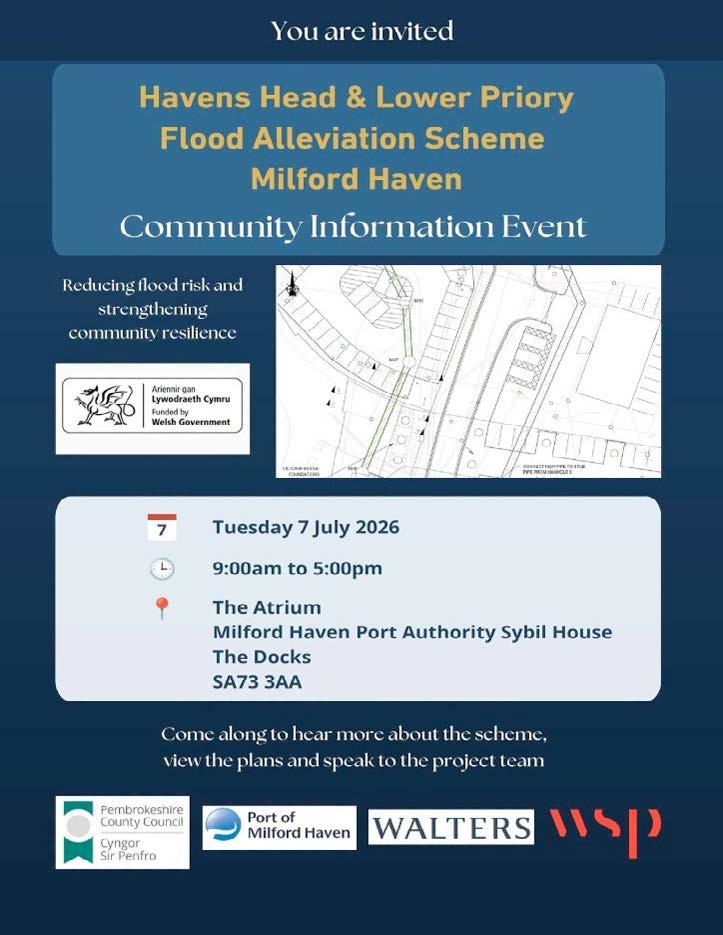
RESIDENTS and businesses in Milford Haven will have the chance to learn more about a major flood defence project next month as plans for the Havens Head and Lower Priory Flood Alleviation Scheme move forward.
RESIDENTS and businesses in Milford Haven will have the chance to learn more about a major flood defence project next month as plans for the Havens Head and Lower Priory Flood Alleviation Scheme move forward.
Pembrokeshire County Council has announced a community information event to give local people an opportunity to view the proposed works and speak directly with members of the project team before construction begins.
The scheme, which is being delivered in partnership with the Port of Milford Haven, Walters UK and WSP, is funded by the Welsh Government and aims to reduce the risk of flooding to homes, businesses and key infrastructure in the Havens Head and Lower Priory areas of Milford Haven.
According to the council, the project is designed not only to reduce flood risk but also to strengthen the community’s resilience to future flooding events.
Tom Sinclair editor@herald.email
Tuesday, July 7, 2026
9:00am to 5:00pm
The Atrium, Milford Haven Port Authority, Sybil House, The Docks,
Residents will be able to examine plans, ask questions and discuss the proposals with engineers and project representatives at a drop-in event taking place on:
In an invitation circulated to stakeholders, Coastal, Rivers and Drainage Team Manager Angharad Llewelyn said the event would allow members of the public to learn more about the project and speak directly with the team before works commence.
The Havens Head and Lower Priory area has experienced flooding concerns
in the past, with the new scheme forming part of wider efforts to protect vulnerable parts of Milford Haven from the increasing threat posed by extreme weather and rising flood risks. Anyone interested in the project is encouraged to attend the event at any time during the day to view the proposals and discuss the plans with those involved in delivering the scheme.
A MILFORD HAVEN pensioner has avoided jail after exposing himself to women on two separate occasions near his home.
Stewart Laugharne, 75, of Dairy Park Grove, Hakin, appeared before Swansea Crown Court on Tuesday, June 30, after pleading guilty to two counts of exposure.
Sian Cutter, prosecuting, told the court the offences took place weeks apart in August 2025.
On the first occasion, Laugharne was seen naked near his home and thrust his hips towards a woman who was walking alone.
On the second occasion, a woman was walking with her baby when Laugharne called out to the child in an apparent attempt to get the mother’s attention. When she looked over, she saw Laugharne naked and again thrusting his hips.
The court heard that children had been present, although it was not believed they had seen Laugharne without his clothes on.
Laugharne had one previous conviction for an unrelated matter dating back more than 40 years, to 1980.
Sarah John, representing him, said Laugharne had lived a law-abiding
Rieve Nesbitt-Marr rieve.nesbitt-marr@herald.email
life for the majority of his years and was capable of leading a “pro-social lifestyle”.
The court heard that Laugharne had endured a difficult childhood after being adopted, had never met his biological mother, and had been physically assaulted by his adoptive mother.
His barrister added that Laugharne now leads a lonely existence, is estranged from his three children, and has no partner.
Judge Paul Thomas KC told Laugharne: “You behaved quite disgracefully.
“On one occasion, you also thrust your hips forward.
“You can only be described as a dirty old man.”
The judge imposed a two-year community order, with Laugharne required to complete 20 days of rehabilitation activity. He must also sign the sex offenders register for five years and pay a victim surcharge.
Judge Thomas warned him: “This court is determined that this offending will not occur again.
“It was clearly persistent behaviour

on your behalf.
“There will be a different outcome if you were to be so foolish as to repeat it.
“It will not end well for you if you come back to court, Mr Laugharne.”
The case first came before Haverfordwest Magistrates’ Court in December last year, when Laugharne,
then aged 74, denied both charges. Although the Crown Prosecution Service had indicated the case was suitable to be dealt with by magistrates, Laugharne elected trial by jury and the case was sent to Swansea Crown Court, where he later admitted the offences..
POLICE in Haverfordwest, Fishguard and St Davids are reminding residents that privately owned e-scooters cannot legally be used on roads, pavements or other public spaces.
E-scooters are treated as motor vehicles under road traffic law. This means riders would need to meet the same legal requirements as other motorists, including having a valid licence, insurance and tax. However, because privately owned e-scooters cannot currently be insured for use on public roads, they cannot legally be ridden in public places. They may only be used on private land, with the permission of the landowner.
Anyone caught riding an e-scooter illegally could face a fixed penalty notice, including a £300 fine and six penalty
points for riding without insurance. Riders may also face a fine of up to £100 and three to six penalty points for riding without the correct licence.
Police say riders may also be committing further offences if they are caught riding on pavements, using a mobile phone while riding, going through red lights, or riding while under the influence of alcohol or drugs.
The penalties for drink or drug riding are treated in the same way as if a person was driving a car, and could include a court-imposed fine, a driving ban or imprisonment.
Officers are urging parents and young people to understand the rules before buying or using an e-scooter.

THE WELSH GOVERNMENT has told NHS Wales and social care partners to start planning earlier for winter, after a difficult year for emergency care and recent heatwave pressure on ambulance services.
Health and Care Minister Mabon ap Gwynfor said the aim was to make ambulance, emergency department and hospital services safer and more resilient during the colder months, while also recognising that pressure on the NHS is no longer confined to winter.
The announcement will be closely watched in west Wales, where Hywel Dda University Health Board runs Withybush, Glangwili, Bronglais and Prince Philip hospitals.
Latest published figures show Hywel Dda performing better than the Wales average on emergency department waits in May, with 66.5% of patients admitted, transferred or discharged within four hours and 9.9% waiting more than 12 hours. However, the health board remains well short of the Welsh Government’s 95% fourhour target, and therapy waiting times in Hywel Dda were worse than the Wales average.
Across Wales, 64.4% of patients attending emergency departments in May spent less than four hours there, while 11,066 patients waited 12 hours or more. Official figures also showed more than 1,300 “pathway of care” delays on the day data was collected, meaning patients were clinically ready to leave hospital but were still waiting for the right care, support or accommodation.
The Welsh Government says this year’s winter plan will focus on five key areas: preventing illness through improved vaccination uptake, keeping more people well at home, freeing up hospital beds through better infection

Tom Sinclair editor@herald.email
control and earlier discharge, helping patients leave hospital safely when they are ready, and keeping services running under pressure while supporting staff.
An expansion of the RSV vaccine to people aged over 65 who are clinically at risk will begin in September.
Ministers also want stronger uptake of vaccination among people at greatest risk, NHS and care staff, and children.
A new communications campaign is also being developed to help people understand where to go for care, so that emergency departments and ambulances are preserved for those with the most serious needs.
Mr ap Gwynfor said: “Our fantastic NHS and social care staff worked incredibly hard last winter, and we are being clear with health boards and partners more needs to be done.
“Last winter was tough. Too many people waited too long for the care they needed, and that’s not good enough. Early planning and action
are key, and I’ve also asked officials to begin planning now so we’re better prepared for the winters ahead.
“I am also clear that this is not just a winter challenge. The recent period of extreme heat is a clear reminder that pressures and risk can arise at any time of year.
“Our ambition is simple: safe services all year round that protect ambulance and hospital capacity for those who really need them, ensuring people get the right care, in the right place, at the right time.”
The statement follows renewed concern from emergency medicine doctors about long waits and socalled corridor care. The Royal College of Emergency Medicine has warned that poor patient flow, delayed discharges and a lack of inpatient beds are leaving too many patients stuck in emergency departments for long periods.
The British Medical Association in Wales has also called for clearer recording and reporting of corridor care, arguing that without better data it is harder to understand the scale of the problem and hold decision-
makers to account.
There was a further warning last week when the Welsh Ambulance Service declared a critical incident during the extreme heat. The service said 999 call volumes had risen by 31% compared with two weeks earlier, with around 400 additional emergency calls a day. The critical incident was later stood down, but ambulance chiefs said demand remained high.
The political test for the Plaid-led Welsh Government will be whether early planning can translate into visible improvements by winter. Health boards and councils will be expected to work together more closely, but many of the problems ministers are trying to solve depend on social care capacity, staffing, available beds and community services.
For patients and families in Pembrokeshire, Carmarthenshire and Ceredigion, the key question will be whether the plan leads to shorter ambulance waits, fewer long delays in A&E, and quicker support for people well enough to return home from hospital.
A MAN who admitted stealing thousands of pounds worth of electrical items from Currys stores, including branches in Haverfordwest and Carmarthen, has been remanded in custody after his sentencing was adjourned.
Ilia Patchkoria, 27, of no fixed abode, Bacup, appeared before Llanelli Magistrates’ Court on Thursday (Jul 2) for a mention hearing.
He had previously indicated guilty pleas to eight theft charges involving Currys stores across Wales and the south west of England.
The court register states that Patchkoria stole electrical items worth £1,525 from Currys PC World in Haverfordwest on May 23.
On the same day, he also stole electrical items worth £7,664.78 from Currys PC World in Carmarthen.
Further offences involved thefts from Currys stores in Torquay, Barnstaple, Penzance, Plymouth and Truro between May 14 and May 18.
The total known value of the stolen goods is at least £17,459.46, with the value of the Truro offence listed as unknown.
Magistrates remanded Patchkoria in custody after the hearing. The court register records the remand basis as including a likelihood of further offending, failure to surrender, the nature and seriousness of the offences, breach of court orders, and the real prospect of a custodial sentence.

Tom Sinclair editor@herald.email
The case was adjourned for sentence at Llanelli Magistrates’ Court on July 16.
A TEENAGER has appeared in court accused of a burglary and assault following an incident in Monkton, Pembroke.
The youth, who cannot be named for legal reasons, appeared before Llanelli Magistrates’ Court on Wednesday, July 1.
The defendant faces an allegation of burglary of a dwelling with attempted grievous bodily harm, contrary to the Theft Act 1968.
The charge states that on June 23, at Monkton, the defendant is alleged to have entered a dwelling as a trespasser and attempted to inflict grievous bodily harm on a person inside.
The teenager is also charged with assault occasioning actual bodily harm, contrary to Section 47 of the Offences Against the Person Act 1861, relating to the same date and area.
No pleas were recorded on the court list.
The case was adjourned to Haverfordwest Magistrates’ Court for further case management on August 4.
A trial has also been listed for August 10.
The defendant was remanded on conditional bail.
Bail conditions include a daily curfew between 8:00pm and 6:00am, a ban on entering specified areas of Monkton, and a condition not to contact two named people either directly or indirectly.
The youth must also comply with intensive supervision by the Youth Justice Team and attend at least two appointments a week as directed.
The defendant cannot be identified because Section 49 of the Children and Young Persons Act 1933 applies.


THE LEASEHOLD of a well-known Saundersfoot pub has attracted strong interest after the business closed suddenly at the weekend.
The Hean Castle Inn shut its doors on Sunday, June 28, after current leaseholder Suzannah Palmer announced she was stepping away from the business following four years at the helm.
Ms Palmer said the decision had been “heart-breaking”, but said months of financial pressure and personal circumstances meant she and her family could no longer continue.
The lease is now being offered for sale, with Ms Palmer confirming that she has already received 43 enquiries from people interested in taking over the pub.
She said: “We have been genuinely overwhelmed by the number of enquiries from people interested in taking over the lease at The Hean Castle Inn.
“This is an opportunity to acquire an established hospitality business in the heart of Saundersfoot, with a strong reputation built over the past four years.
“The sale includes the lease together with an agreed inventory of fixtures and fittings.
“We are looking for serious enquiries only, and sensible offers will be considered.”

“Until then, there will be no negotiations, no viewings and absolutely no further communication.”
eyes.
“Our last shift is done. It’s a bittersweet moment. The relief is real, but so is the sadness.
“The reality now is that we’ll be selling our lease, before emptying the building that we’ve loved, worked for and sacrificed so much to create.
“With our lovely George being unwell, alongside months of relentless financial pressure, I’m not going to pretend, I’m ready for a rest.”
She also urged people to continue supporting local independent hospitality businesses, warning that many pubs and restaurants are facing pressures that customers may not always see.
Ms Palmer said: “If there’s one thing I’d ask of everyone, it’s this: please continue to support your local pubs, restaurants and independent businesses.
“From the outside they may look busy, but very few people see the reality of the costs involved or how much it takes just to serve that one drink or one meal.
“Independent hospitality can only survive if people continue to support it.
Ms Palmer has clarified that the sale relates to the lease only, not the building itself.
Due to the level of interest already received, she said proof of funds will be required before any viewings or negotiations take place.
She added: “Once proof of funds has been received, I will happily discuss the opportunity and arrange a viewing.

The closure has prompted sadness among regulars and visitors, with many paying tribute to the pub and the work carried out by Ms Palmer and her family over the past four years.
In a message shared after the final shift, Ms Palmer said the decision to close had come after a difficult period.
She said: “I write this with tears in my
“Your kindness over the past few days is something we’ll never forget. The Hean has been a huge part of our lives, and so have all of you.”
Anyone interested in the lease is asked to contact Ms Palmer by emailing suzpal@heritage-inns.com or calling 07395 292881.

A HAVERFORDWEST woman is to stand trial after denying two drugdriving allegations.
Sian Brazendale, 48, of Pedwar, Dingle Lane, Crundale, Haverfordwest, appeared before Llanelli Magistrates’ Court on Wednesday, July 1.
She is accused of driving a grey Peugeot on West Street, Fishguard, on October 31 last year when the proportion of benzoylecgonine in her blood was allegedly 800ug/L, exceeding the specified legal limit.
Brazendale is also accused of driving the same vehicle on the same road and
date when the proportion of cocaine in her blood was allegedly 67ug/L, again exceeding the specified limit.
Both charges are brought under Section 5A of the Road Traffic Act 1988.
The court list records that Brazendale entered not guilty pleas to both charges on March 17.
The case has now been adjourned for trial at Llanelli Magistrates’ Court on September 17. The trial is expected to last three hours.
Brazendale was remanded on unconditional bail.

COUNCIL’S Deputy Leader has launched a major bid to halt controversial plans to close Stepaside School.
Cllr Paul Miller, who took over responsibility for education on May 15, has submitted a motion asking councillors to rescind two previous decisions which authorised officers to begin statutory consultation on closing Saundersfoot and Stepaside schools and replacing them with a single 3-11 primary school on the Saundersfoot site.
The proposal, backed by council in December 2025 and reaffirmed in March 2026, would have seen consultation begin in September. But in a significant change of direction, Cllr Miller has now told members he no longer believes the proposal to discontinue Stepaside School is “the right one”.
In an email sent to all county councillors, he said he had reviewed the council’s school modernisation and reorganisation plans since taking on the education portfolio.
Tom Sinclair editor@herald.email
He said the authority’s work to date had focused mainly on surplus places, which he described as an “interesting estates and facilities metric” but one which “tells us very little about the educational experience of the children inside those buildings”.
Cllr Miller said he accepted that very small schools could become unviable, not only financially but educationally, because of pressures on leadership, staff capacity, mixed-age classes, peer groups and pupil wellbeing.
However, he said Stepaside was in a “materially different position” from schools with exceptionally low pupil numbers.
With around 100 pupils on roll, he said the school was “substantially larger than schools previously deemed unviable”.
He added that decisions affecting larger schools required a broader assessment of educational sustainability, leadership capacity, workforce resilience and pupil

experience before closure could be justified.
Cllr Miller also raised the possibility of alternatives, including shared leadership arrangements or formal federation, which he said could strengthen the sustainability of both schools.
He further noted that the planned temporary full decant of Tenby VC School may use a significant proportion of existing surplus places at Saundersfoot School, potentially weakening the case for closing Stepaside as a response to surplus capacity in the Tenby cluster.
His motion asks council to rescind its decisions of December 12, 2025 and March 5, 2026 and to discontinue the proposed statutory consultation process relating to the closure of Saundersfoot and Stepaside schools.
He has asked for the motion to be dealt with at July’s full council meeting, describing it as the final ordinary meeting before the planned September consultation.
The move is likely to be welcomed by campaigners and parents who have opposed the closure of Stepaside School, but it also raises fresh questions about the future of the wider Saundersfoot proposal and
the council’s school modernisation programme.
The Herald has previously reported strong local concern over the plans, with parents and residents arguing that Stepaside remains a viable village school and plays an important role in the community.
Pembrokeshire County Council has consistently said school reorganisation must take account of pupil numbers, surplus places, Welsh Government guidance, building condition, long-term sustainability and the need to provide high-quality education.
If accepted onto the agenda, Cllr Miller’s motion could force councillors to revisit one of the most sensitive education decisions currently facing the authority.
South Pembrokeshire MP Henry Tufnell welcomed the development, describing it as “absolutely fantastic news” and “a massive victory for our community”.
He said the council had listened following serious concerns raised by local parents, residents and community representatives.
Mr Tufnell added: “When a community stands together, raises its voice, and refuses to be ignored, this is exactly what can be achieved.”


YOUNG people from Pembrokeshire and Neath Port Talbot will gather in Carmarthen next week for a Welsh education project aimed at tackling what organisers describe as a growing crisis in youth confidence.
Cymbrogi Futures will hold its fourth annual Tomorrow’s Changemakers Hackathon at the University of Wales Trinity Saint David on Friday, July 10, bringing together five finalist teams of 12 and 13-year-olds to pitch ideas linked to tourism, hospitality and the built environment.
The event comes against a stark national backdrop. Latest figures from the Office for National Statistics show more than one million young people aged 16 to 24 across the UK are not in education, employment or training. In Wales, Welsh Government data shows the proportion of 16 to 24-yearolds classed as NEET rose to 17.0% in the year ending December 2025.
A recent report by the Institute for Public Policy Research has also warned that many young people are losing faith in their futures, with only one in four 16 to 29-year-olds believing that people have a fair chance to succeed through talent and hard work.
Cymbrogi Futures says its programme is designed as a practical response to those concerns, giving pupils the chance to work with employers, community organisations and mentors on real-world sustainability challenges.
The Tomorrow’s Changemakers
programme is rooted in the Curriculum for Wales and inspired by the Wellbeing of Future Generations Act. It asks learners to act as researchers, designers, communicators and problem-solvers, rather than simply studying climate and economic issues from a distance.
This year’s programme has reached around 1,000 learners across three counties, with five teams making it through to the Carmarthen final. Since 2022, Cymbrogi says the programme has worked with thousands of learners across Wales, with further expansion planned into Swansea, Powys and Bridgend from September 2026 and Bristol in 2027.
Ian Chriswick, Director of Cymbrogi Futures, said Wales already had the foundations for a more hopeful approach to education.
He said: “Wales has a groundbreaking curriculum that asks us to truly teach the future. But at a time when we should be celebrating its successes, we hear instead of record teacher burnout and falling learner morale.
“Tomorrow’s Changemakers is a direct, practical response to that, and to the question of why so many young people are losing faith in their own futures.”
The programme is backed by a range of Welsh and UK partners, including Milford Haven Port Authority, Cwm Environmental, Morgan Sindall
Construction, Tai Tarian Housing Association and Admiral Insurance.
Organisers say the aim is not only to inspire pupils, but also to connect them directly with sectors that will need new skills as Wales moves towards a lower-carbon economy.
Milford Haven Port Authority, one of the UK’s major energy hubs, is involved as Pembrokeshire looks to position itself at the centre of floating offshore wind, green hydrogen and future energy infrastructure. Other partners bring links to construction, housing, insurance, the circular economy and community resilience.
Owen Stacey, Senior Social Value Manager, said: “For any business that cares about investing in the skills of the future or demonstrating social impact in their communities, this programme delivers on both counts.
“This is our third year and it’s exactly what the industry needs.”
The event will include a welcome lunch, keynote addresses, team pitches, collaborative judging and an awards ceremony. Organisers describe the format as friendly and informal, with adult participants asked to act as “cheerleaders first, judges second.”
Representatives from the Future Generations Commission, Welsh Government, local education authorities and academic partners are also expected to attend.
The wider policy context is significant. The new Plaid Cymruled Welsh Government has placed education, skills, climate action and
the green economy at the centre of its programme. Cefin Campbell MS, who represents Sir Gaerfyrddin, is now Deputy Minister for Skills and Tertiary Education, while Anna Brychan MS is Cabinet Minister for Education and the Welsh Language.
However, the scale of the challenge remains substantial. A single school programme cannot solve youth unemployment, poor mental health, transport barriers, poverty or the shortage of secure entry-level jobs. Those issues require sustained action from government, councils, colleges, employers and the voluntary sector. There are also questions about how projects such as Tomorrow’s Changemakers can be scaled up without adding pressure to already stretched schools and teachers.
But supporters argue that the model offers something often missing from the national debate: a route from classroom learning into practical confidence, workplace awareness and civic purpose.For west Wales, where young people often face limited transport, fewer local opportunities and pressure to leave their communities to build careers, that connection matters.
The Carmarthen hackathon will not by itself reverse the rise in young people falling out of education and work. But it offers a glimpse of a different approach, one where pupils are treated not as a problem to be solved, but as people with ideas, agency and a stake in Wales’s future.
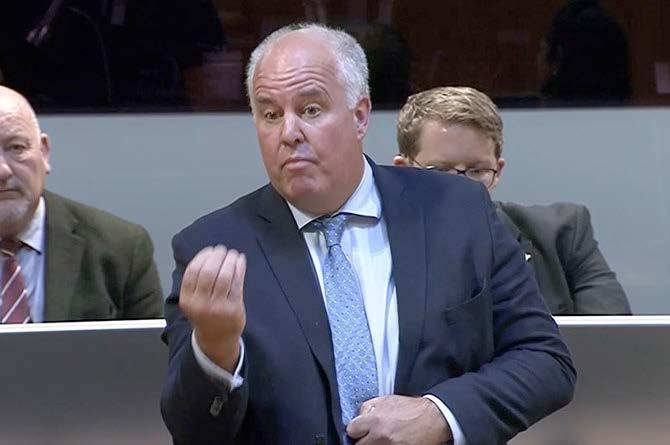
ANDREW RT DAVIES has accused the new Plaid Cymru Welsh Government of backtracking on a pledge to hold a Wales-specific Covid inquiry.
The Conservative Senedd member for the Vale of Glamorgan and Bridgend challenged ministers in the Senedd this week, asking whether the Government’s proposed examination of Wales’s pandemic response would be a full public inquiry under the Inquiries Act 2005.
Such an inquiry would have statutory powers, including the ability to compel witnesses and evidence.
Mr Davies said Plaid had repeatedly called for a Wales-specific inquiry while in opposition, but claimed ministers were now using the language of a “review” instead.
Speaking in the Senedd, he asked Trefnydd and Culture Minister Heledd Fychan to clarify whether the process would be an inquiry under the 2005 Act.
He said: “In his statement last week, he referred constantly to the Covid review rather than the Covid inquiry that the Government promised when they were in opposition.
“It was quite clear that, when you were in opposition, you were voting for an inquiry.
“Can we have clarity, please, via a statement, to understand the Government preparations in putting this together and that it will be an inquiry under the Inquiries Act 2005?”
Ms Fychan did not directly confirm whether the process would be statutory, but said Plaid would stand by its manifesto commitment and continue working with families affected by the pandemic.
She told the Senedd: “I will refer the Member to the Plaid Cymru manifesto, where it was clear, and the commitment that was made in working with Covid bereaved families, in terms of what we would commit to.
“Certainly there will be an update
Tom Sinclair editor@herald.email
when that work does progress.
“He will also know that we stood shoulder-to-shoulder and have been calling for lessons to be learned. And that’s what needs to happen here: lessons should be learned, so that preparations are better for the future.”
Responding afterwards, Mr Davies said the answer suggested Plaid was watering down its previous position.
He said: “Plaid Cymru’s first weeks in power have been marred by broken promises.
“Their failure to commit to a Covid inquiry with full statutory powers suggests they’re backtracking on this too.
“The cynical way in which many politicians fail to keep their pledges is the reason public trust in politics has collapsed.”
The dispute matters because there is a significant difference between a statutory public inquiry and a nonstatutory review.
A statutory inquiry can compel documents and witnesses. A review may be quicker and cheaper, but its
powers depend on the terms set by ministers.
Plaid’s position has developed over time. While in opposition, the party was among the strongest voices calling for Wales-specific scrutiny of the pandemic response. In November 2025, following the publication of the UK Covid Inquiry’s report into core decision-making, Heledd Fychan said a Plaid Government would conduct a dedicated “gap inquiry” to examine Welsh Government decisions. However, Plaid’s 2026 manifesto promised to “establish a review of Wales’s Covid response, its legacies and lessons for the future within the first year of the next Senedd term, with a targeted focus on Wales-specific matters and questions not covered by the UK-wide inquiry.”
That wording is likely to be central to the political row now developing in Cardiff Bay.
The UK Covid Inquiry has already considered aspects of Wales’s pandemic response. Module 2B focused on core political and administrative decision-making in Wales, including decisions taken by the First Minister and Welsh Ministers between early 2020 and the lifting of
remaining restrictions.
The inquiry has also published reports on resilience and preparedness, decision-making, healthcare systems, and vaccines and therapeutics. Further reports are expected on procurement, social care, test and trace, children and young people, economic support, and the wider impact of the pandemic.
For many families in Pembrokeshire and across Wales, the issue remains deeply personal rather than political. Pandemic decisions affected care home visits, hospital appointments, school closures, business support, funeral arrangements, access to GPs and the rules governing daily life. In rural areas such as west Wales, the impact was felt by older residents, tourism businesses, farming families, pupils, carers, NHS staff and people who lost loved ones in difficult and often isolated circumstances.
Covid Bereaved Families for Justice Cymru has continued to call for a Wales-specific statutory public inquiry.
The group has argued that Wales does not need simply to repeat the UK-wide inquiry, but does need a short, focused and economical process capable of answering questions specific to Wales.
The Welsh Government says it remains committed to learning lessons from the pandemic and has pointed to its manifesto commitment to a targeted review.
The key question now is whether that review will have the legal force demanded by opposition politicians and bereaved families, or whether ministers will opt for a narrower process intended to report more quickly.
The Herald has asked the Welsh Government whether the planned Covid review will be established under the Inquiries Act 2005, whether it will have powers to compel evidence and witnesses, when its terms of reference will be published, and how bereaved families in Wales will be involved.
A PEMBROKE DOCK man has been banned from the roads for more than three years after being caught drugdriving for the third time.
Adam Crayford, 28, was stopped by police shortly after 10pm on January 9 as he drove his Volkswagen Golf through Pembroke Dock. Blood tests later showed he had 5.8mcg of delta-9 tetrahydrocannabinol, the active ingredient in cannabis, in his system. The legal limit is 2mcg. He was also found to have 117mcg of benzoylecgonine, a cocaine breakdown product, in his blood. The legal limit is 50mcg.
This week Haverfordwest magistrates were told that Crayford, of Mayfield House, Victoria Road, Pembroke Dock, had previously been convicted of drugdriving in 2019 and of failing to provide a specimen for analysis in 2022.
Crayford pleaded guilty to both drugdriving offences.
“He is disappointed to be back before the courts again and recognises the seriousness of the matter,” said his solicitor, Alaw Harries.
“This is particularly so in light of his previous convictions.”
After considering a probation report, magistrates sentenced Crayford to an

18-month community order. He must complete 100 hours of unpaid work and attend 20 rehabilitation activity requirement days.
He was disqualified from driving for 40 months and ordered to pay a £114 court surcharge and £85 costs.
TOURISM developers in Wales are likely to face greater pressure to show how new projects benefit local communities, support jobs and protect Welsh culture, according to planning and development consultancy Lichfields.
Plaid Cymru is leading the Welsh Government for the first time after emerging as the largest party in the Senedd, although it does not hold an overall majority.
No major tourism-specific policy announcements have yet been made by the new administration, but Lichfields says the direction of travel suggests a stronger emphasis on sustainable tourism, local benefit, the Welsh language and community involvement in planning decisions.
Tourism and hospitality is a major part of the Welsh economy, employing around one in nine people across Wales, rising to about one in five in areas such as Pembrokeshire and Anglesey.
Key policy areas already affecting the sector include the visitor levy, the 182-day threshold for holiday accommodation, and new registration requirements for shortterm visitor accommodation, which are due to come into force from October 2026. Planning reform is also expected to have implications for tourism development. Proposed changes include stronger community involvement, earlier pre-

application consultation, greater emphasis on the Welsh language, simplified planning processes, and reform of national and regional planning frameworks.
Helen Ashby-Ridgway, Planning Director at Lichfields, said: “The change in government is an important moment for tourism and planning in Wales, but the direction of travel looks more evolutionary than revolutionary.
“Tourism is recognised as an important part of the Welsh economy, but future proposals will need to do more than show

visitor demand. They will need to show how development supports local jobs, communities, culture, language and longterm place-making.
“That does not mean tourism development cannot come forward. It means operators, landowners and developers should be thinking carefully about how proposals are shaped, explained and brought to local communities from the outset.”
From October 2026, providers offering stays of 31 nights or fewer will need to register with the Welsh Revenue Authority by March 31, 2027. The data collected is expected to help local authorities better understand the scale and location of visitor accommodation in their areas.
Lichfields says this could influence planning policy, local development plans and future investment decisions.
Helen added: “The short-term accommodation register could become an important evidence base for councils and for businesses looking to invest in Wales.
“Good data should help move the debate beyond assumptions. It can give councils, communities and the industry a clearer picture of where accommodation is located, what demand looks like and where future growth may be appropriate.
“For tourism businesses, the key will be to engage early, take part in planmaking and show clearly how proposals deliver economic, social, cultural and environmental benefits. That will become increasingly important if planning policy moves further towards community value and local benefit.”
Because Plaid Cymru is leading without an overall majority, cross-party support is likely to be needed to deliver future reforms. Several current policy areas, including the visitor levy and accommodation registration system, continue measures developed during the previous Senedd term.
Lichfields says those bringing forward tourism and leisure developments in Wales should prepare for a planning environment where community engagement, local benefit and policy alignment carry increasing weight.
A FISHGUARD man has been jailed after breaching a restraining order which banned him from contacting his mother.
Steven O’Sullivan attended his mother’s home on June 22, despite the order having been imposed in November 2012. It prohibited him from having any direct or indirect contact with her.
“She felt she needed to phone the police because she was frightened of her son,” Crown Prosecutor Sian Vaughan told Haverfordwest magistrates this week.
“He had been dropped off at his mother’s property by a female, and his

mother went upstairs to ring the police because he makes her feel vulnerable.” When officers arrived, they found O’Sullivan inside an outbuilding, crouching beside an outside toilet.
“There have been a number of previous breaches, the most recent being on June 5,” continued Ms Vaughan. “Now we have yet another one on June 22.”
O’Sullivan, of Gwelfor, Fishguard, is currently on remand at Swansea Prison. He is also accused of stealing beer and food worth £45 from the Nisa store in Haverfordwest on June 21.
Representing him in court, solicitor Tom Lloyd said there had been no threats of violence when O’Sullivan went to his mother’s home.
“But the aggravating factor is his previous convictions,” he told the bench.
“He was particularly upset and had nowhere else to go. This was why he went to see his mother.”
Magistrates jailed O’Sullivan for eight weeks. He was also ordered to pay a £154 court surcharge and £85 costs. He is due to return to Haverfordwest Magistrates’ Court on July 7 to enter a plea in relation to the alleged theft offence.
WELSH victims of group-based child sexual exploitation must not be left on the margins of the national grooming gangs inquiry, the Leader of the Welsh Conservatives has warned.
Darren Millar MS has called on the Welsh Government to seek urgent assurances that cases from Wales will be properly examined by the statutory inquiry chaired by Baroness Anne Longfield.
The inquiry formally covers England and Wales, but the first named local investigations are London, Oldham, Bradford and Keighley. No Welsh area has yet been listed as one of the first local investigation sites.
Mr Millar said that has raised serious questions about whether Welsh victims and survivors will be given the same level of scrutiny, particularly where devolved public services may have failed to identify or protect children at risk.
He said schools, councils, social services, health boards and safeguarding partnerships in Wales must be prepared to answer difficult questions about what was known, what was missed and whether vulnerable children were properly protected.
Mr Millar said: “The grooming gangs scandal was not confined to a handful of towns in England.
“We know organised child sexual exploitation happened in Wales, Welsh victims suffered appalling abuse and there are serious questions about whether public bodies did enough to protect vulnerable children.
“Victims deserve confidence that no stone will be left unturned in uncovering the truth.
“If the UK inquiry is not going to investigate Wales, then the Welsh Government must establish a Walesspecific inquiry into the role of devolved public services, including schools, health boards and local authorities.
“There is evidence that vulnerable children have been failed by the very institutions that should have protected them. It is unforgivable that warnings were ignored and victims were dismissed because people avoided having uncomfortable conversations that could have raised the alarm about safeguarding concerns.
“Lessons must be learned to ensure these horrific crimes can never happen again.”
The call comes amid renewed UK-wide scrutiny of group-based child sexual exploitation and the repeated failure of public bodies to act on warnings from victims, families and frontline professionals.
The statutory inquiry was established after Baroness Louise Casey’s national audit into group-based child sexual exploitation and abuse. It will examine how children were targeted, how institutions responded and whether public bodies failed to act because of poor practice, weak leadership, cultural

editor@herald.email
sensitivities, or a failure to treat victims with credibility and care.
The inquiry has powers to compel evidence and require witnesses to give testimony. It is expected to look at failures by local authorities, police, health services, schools and other public bodies.
Although Wales is included in the formal England and Wales remit, the inquiry has made clear that it will not investigate every area where abuse may have taken place. Victims and survivors outside the named local investigation areas are still able to share evidence.
That distinction is now central to the political argument in Wales.
The Welsh Conservatives say it is not enough for Wales to be technically covered by the inquiry if Welsh cases are
not examined in detail. They argue that Welsh victims need public confidence that the inquiry will follow the evidence into Welsh institutions where necessary.
The issue is especially sensitive because child protection, education, social services, health boards and safeguarding arrangements are devolved responsibilities in Wales. Policing and criminal justice remain largely reserved to Westminster, meaning any proper examination of Welsh failures would need to look at how devolved and nondevolved bodies worked together.
Wales has already featured in previous national scrutiny of child sexual exploitation. The Independent Inquiry into Child Sexual Abuse included Swansea as one of its case study areas when it examined child sexual exploitation by organised networks.
That inquiry found concerns around the way cases were identified, recorded and understood. It said examples of

exploitation by networks or groups should have been identified by police and the local authority.
The Welsh Government has previously argued that an England and Wales inquiry is the best way to examine the issue, rather than setting up a separate Wales-only process. It has also published a 10-year strategy for preventing and responding to child sexual abuse in Wales.
That strategy is intended to improve prevention, strengthen professional responses, support children and families, and provide help for adult survivors.
However, the Welsh Conservatives say a safeguarding strategy cannot replace accountability for historic failures. They argue that victims need answers about whether warnings were missed, whether agencies failed to share information, whether children in care were properly protected, and whether professionals wrongly dismissed victims instead of recognising exploitation.
Campaigners and specialist support organisations have also warned that any inquiry must remain focused on victims and survivors rather than becoming a party-political row.
They have stressed that child sexual exploitation can take many forms, including online grooming, trafficking, abuse by groups or networks, criminal exploitation, familial abuse and abuse by people in positions of trust.
Mr Millar said Welsh victims must not be treated as an afterthought.
The Herald has asked the Welsh Government whether it has sought assurances that Welsh evidence will be considered by the inquiry, and whether Ministers would support a Wales-specific investigation if no Welsh area is selected for detailed examination.
Bu S i N e SS e S from across South and West Wales are preparing to gather at Parc y Scarlets on Thursday 9 July as The Welsh Business Show Carmarthenshire returns for another day of networking, learning and business growth.
Free to attend, The Welsh Business Show is Wales’ longestrunning business-to-business exhibition, bringing together more than 50 exhibitors, hundreds of visitors and an extensive programme of expert-led seminars designed to help organisations of all sizes generate new ideas, build valuable relationships and discover opportunities for growth.
The day begins with the Business
Networking Breakfast from 8:30am until 10:00am, providing professionals with the opportunity to meet fellow business owners, entrepreneurs and decisionmakers before the exhibition opens. Whether you’re looking to generate new business, find trusted suppliers or simply expand your professional network, the breakfast offers the ideal environment to make valuable connections.
From 10:00am, visitors can explore a diverse exhibition featuring businesses from a wide range of sectors, showcasing innovative products, professional services and practical business solutions.
Many exhibitors will also be offering exclusive on-the-day promotions,
making it an excellent opportunity to discover new suppliers while taking advantage of special offers.
Running throughout the day will be a series of free seminars delivered by industry experts. Topics include guidance from Sell2Wales on accessing valuable public sector contract opportunities, practical advice on improving business efficiency through CRM systems, and effective marketing strategies to help businesses increase their visibility and drive growth.
The Welsh Business Show has earned a strong reputation for creating a welcoming and productive atmosphere where conversations lead to collaborations and new business opportunities. Whether
you’re an established organisation, a growing SME, an ambitious start-up or someone looking for fresh inspiration, the event offers something for every business.
Attendance is completely free, with visitors encouraged to register in advance to secure their place and receive a complimentary goodie bag on arrival.
The Welsh Business Show Carmarthenshire takes place on Thursday 9 July at Parc y Scarlets, with the exhibition open from 10:00am until 1:00pm, following the Business Networking Breakfast from 8:30am to 10:00am.
Free visitor registration is available at https://twbs.wales/visitorregistration-Carmarthenshire/.



July 9th 2026 10AM - 1PM






MILFORD HAVEN ROUND TABLE
is asking residents in Hakin and Hubberston to help keep roads clear ahead of this Saturday’s Carnival Procession.
Tom Sinclair editor@herald.email
Organisers say the event is shaping up to be one of the biggest yet, with a large number of floats, lorries and support vehicles expected to make their way through Hakin before the procession begins at Waterloo Square.
Residents living along Gelliswick Road, Rectory Avenue, Glebelands and Picton Road, particularly near the junction with Observatory Avenue, are being asked to avoid double parking or parking on pavements where possible
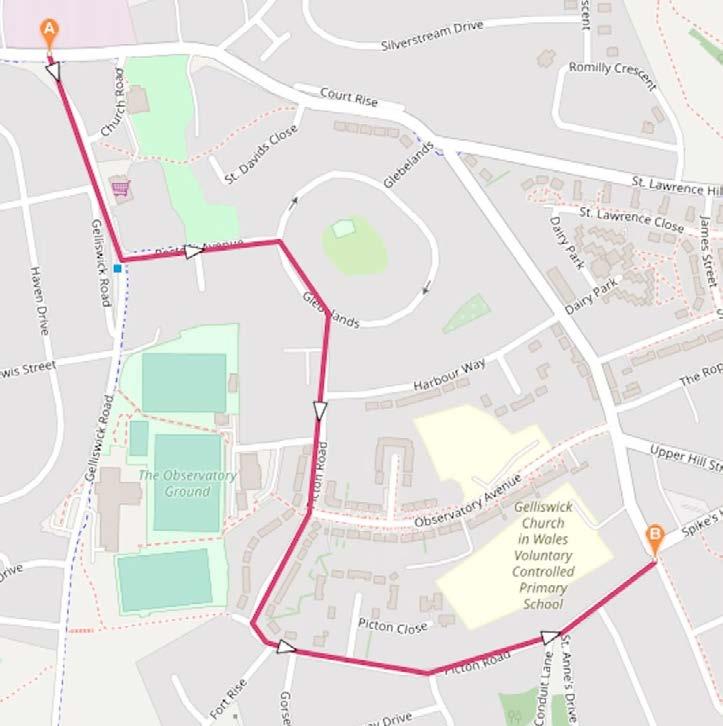
between around 11.45am and 1.00pm.
The route being used by the floats and support vehicles is shown on the map.
Some of the vehicles involved are large, and organisers say keeping the roads as clear as possible for the short period will help ensure the procession reaches Waterloo Square safely and on time.
Milford Haven Round Table said the carnival “belongs to the whole
community” and thanked residents for their continued support.
They added: “Your understanding and cooperation, even for this short time, will make a huge difference and help make this year’s Carnival another fantastic day for our town.”
Residents are also being encouraged to share the message with friends, family and neighbours who live along the affected roads.
A SCAFFOLDER has been banned from driving for 14 months after an off-duty police officer smelt cannabis coming from his Volkswagen Transporter as it travelled through Slebech.
The report was made to police at around 10.30am on February 15. When officers located the vehicle, they discovered it was being driven by 46-year-old Christopher Bennett.
Further blood tests showed Bennett had 16.8 mcg of Delta-9 tetrahydrocannabinol in his system. The legal limit is 2.
This week Bennett, of Queensdown Gardens, Brislington, Bristol, pleaded guilty to drug-driving when he appeared before Haverfordwest magistrates. He was represented in court by Alaw Harries.
“The defendant is remorseful for his actions and recognises the seriousness of the offence,” Ms Harries told the Bench.
“He suffers significant pain following operations to his shoulders and has been prescribed codeine. But this causes drowsiness, so he began selfmedicating using cannabis.
“On the day of the offence, he was in worse pain than usual, so he used cannabis earlier than he normally does.”
Ms Harries said the conviction would have serious financial consequences for Bennett, who works as a selfemployed scaffolder.
“His driving licence is fundamental to his livelihood,” she said.
“The financial consequences are going to be significant to him, as well as to those who are dependent on him.”
Magistrates fined Bennett £600 and ordered him to pay a £240 surcharge and £85 costs.
He was disqualified from driving for 14 months.
A PEMBROKESHIRE estate agent
has been banned from the road after admitting driving through Milford Haven with nearly five times the legal limit of a cocaine metabolite in her system.
Alison Walker, 59, was arrested on February 2 after her white MG was involved in a two-car collision on Great North Road, Milford Haven.
“Fortunately there were no injuries, just damage to the vehicles,” Crown Prosecutor Sian Vaughan told Haverfordwest magistrates this week.
After providing a positive roadside drug swipe, Walker was arrested and asked to provide blood samples. These showed she had 240mcg of benzoylecgonine in her system. The legal limit is 50mcg. Walker, of Woodland Crescent, Milford
Haven, pleaded guilty to drug-driving and was represented in court by solicitor Tom Lloyd.
He told the bench that prior to the offence, Walker had been employed as an estate agent.
“She has a good relationship with her boss, and as soon as this conviction is dealt with and her sentence has been served, he will be happy for her to return to her employment,” he said.
After considering a comprehensive probation report, magistrates disqualified Walker from driving for 20 months.
She was fined £80 and ordered to pay a £114 court surcharge and £85 costs.
Walker must also carry out a 12-month community order, during which she must complete 15 rehabilitation activity requirement days.


POLICE are appealing for witnesses after a single-vehicle collision on the A44 near Capel Bangor, Aberystwyth, led to an attempted murder investigation.
Dyfed-Powys Police said the incident happened at around 8:50pm on Tuesday, June 30.
A 24-year-old man has been arrested on suspicion of attempted murder, domestic abuse and dangerous driving. He remains in police custody.
The investigation is being led by CID and the force’s major crime team, with officers expected to remain in the area over the coming days while enquiries continue.
Police are now appealing for anyone with information, footage or dashcam video to come forward.
Officers would like to hear from anyone who witnessed a disturbance in or around
Capel Bangor at the time of the incident, anyone who was travelling on the A44 near Capel Bangor on Tuesday evening, or anyone who may have mobile phone, video or dashcam footage showing the people involved.
They are also asking anyone who can identify others who were present at the location around the time of the incident to contact them.
Information can be submitted through the dedicated investigation page at: https:// mipp.police.uk/operation/6325A32-PO1 Alternatively, police can be contacted by emailing 101@dyfed-powys.police. uk, sending a direct message on social media, or calling 101.
Information can also be given anonymously to Crimestoppers on 0800 555 111 or through the charity’s website. Anyone contacting police should quote reference: DP-20260630-390.
A TENBY firefighter whose career has spanned almost four decades has been honoured on his retirement after 37 years of service with Mid and West Wales Fire and Rescue Service.
Photographs shared to mark the occasion show Phil Lees-Griffiths’ remarkable journey from a young firefighter at the beginning of his career to a respected and experienced member of Tenby’s fire crew, reflecting nearly four decades of commitment to protecting local communities.
Tenby Town Council has paid tribute to Phil’s dedication, courage and professionalism, describing his retirement as the end of an era for the town’s emergency services.
Mayor of Tenby, Cllr Dai Morgan, said: “Today, we celebrate not just the retirement of a firefighter, but the remarkable career of a man who has devoted 37 years to protecting the people of Tenby and our surrounding communities.”




A PEMBROKE DOCK motorist has been banned from the roads after being caught driving with more than seven times the legal cocaine limit in her system.
Naomi Grant, 47, was stopped by police on the night of February 6 as she drove her Vauxhall Astra along the A477 near Pembroke Dock.
After providing a positive roadside drug swipe, Grant, of Cheriton Road, Pennar, Pembroke Dock, was taken for further tests.
Blood analysis showed she had 74mcg of cocaine in her system. The legal limit is 10mcg. She also had 1,200mcg of benzoylecgonine, a breakdown product of cocaine, where the legal limit is 50mcg.
This week Grant, who has no previous convictions, pleaded guilty
to two charges of drug-driving when she appeared before Haverfordwest magistrates.
She was represented by solicitor Tom Lloyd, who told the court that his client is currently prescribed a considerable amount of medication for a number of medical issues.
“She also has her own personal assistant as a result of her medical needs,” he said.
“She has done everything that has been asked of her in relation to this offence and has engaged with the Dyfed Drug and Alcohol Service to help her move forward.”
Magistrates disqualified Grant from driving for 12 months and fined her £120.
She must also pay £85 court costs and a £48 surcharge.
A NEW YEAR’S EVE drive has resulted in a 12-month road ban after a motorist was found to be more than twice the legal cannabis limit.
Ridwan Rahman, 20, was stopped by police as he drove his Vauxhall Astra along Steynton Road, Milford Haven, on January 1.
“Police noted the car accelerating away from traffic lights in an erratic manner,”
Crown Prosecutor Sian Vaughan told Haverfordwest magistrates this week.
“When officers asked the vehicle to stop, they smelt cannabis coming from inside.”
A blood test later showed Rahman had 5.2mcg of delta-9 tetrahydrocannabinol, the active ingredient in cannabis, in his system. The legal limit is 2mcg.
Rahman, who has no previous convictions, pleaded guilty to drugdriving. He was represented in court by solicitor Alaw Harries, who disputed
the prosecution’s claim that he had been driving erratically.
“He does not accept that he was driving in an erratic manner, nor that he accelerated away from the traffic lights,” she said.
“The officers told him he had been stopped because the vehicle’s registration plate light was not working.” Rahman, of Carbon Close, Newport, was fined £323 and ordered to pay a £129 court surcharge and £85 costs. He was disqualified from driving for 12 months.

THE PRINCE OF WALES has praised the lifesaving work of Wales Air Ambulance as the charity marked its 25th anniversary with a gala fundraiser. The charity’s Royal Patron attended the special dinner at Celtic Manor, Newport, on Friday, June 26, joining volunteers, former patients, crew members, partners and supporters to celebrate a quarter of a century of emergency critical care across Wales.
Hosted by television and radio presenter Jason Mohammed, the event raised £180,000 for the charity, including more than £85,000 in sponsorship from corporate supporters.
Since its launch on St David’s Day in 2001, Wales Air Ambulance has grown from a single aircraft operating limited hours into a nationwide, 24-hour service. Its crews now have access to four aircraft and a fleet of rapid response vehicles, delivering advanced hospital-standard care at roadsides, homes, mountainsides, coastlines and other emergency scenes.
The charity has attended more than 57,000 missions since it was founded.
Speaking at the event, the Prince paid tribute to the crews and supporters who have helped build the service.
He said: “For 25 years, Wales Air Ambulance has provided a vital service to people and communities across Wales. In life-threatening moments, its crews have brought advanced critical care directly to those in greatest need, offering help and hope.”
He also praised the charity’s international reputation and its focus on evidencebased care.
The Prince said: “Wales Air Ambulance has earned an international reputation for the service it delivers, and for its commitment to evidence-based decisionmaking that helps ensure the best possible care for the people of Wales.”
The evening also featured powerful

less real.
patient stories, including an address from former patient Alan Owen, who suffered a cardiac arrest while playing walking football in April 2022.
Alan was without a heartbeat for eight minutes before being revived by those around him. Wales Air Ambulance clinicians then provided advanced critical care at the scene, stabilising him and helping coordinate the onward treatment that saved his life.
Reflecting on his experience, Alan told guests: “There is no doubt in my mind that without the Wales Air Ambulance, I would not be standing here today.”
He also spoke about the lasting impact on families, describing loved ones as “cosurvivors” whose trauma is different but no
He added: “I have been given more time. Time with my family. Time that I would not have had without this charity.”
Wales Air Ambulance chief executive Dr Sue Barnes said the milestone was a moment to reflect on how far the service had come.
She said: “When the service launched in 2001, it was one aircraft. Today, it is a truly national service, operating 24 hours a day, seven days a week. It is a transformation that has helped save countless lives and touched not just patients but their families.”
Dr Barnes said the charity’s development had only been possible because of public support across Wales. She added: “The charity’s evolution is all the more remarkable because it is powered by a nation of just over three million people. A small country, with a huge heart. So, as we
mark this milestone, we do so with pride and gratitude.
“For everyone who has given their time, expertise, commitment and support, thank you.
“This service belongs to the people of Wales. We are your air ambulance, and we exist because of you.”
The gala included fundraising activities and a live auction, with exclusive experiences and prizes donated in support of the charity.
The event was sponsored by Ascona Group, Gama Aviation, Bibado and Redkite Solicitors.
Wales Air Ambulance said the anniversary was not only a celebration of the past 25 years, but also a reminder of the continued need for support to ensure crews can reach more patients across Wales when they need help most.
A HAVERFORDWEST man has been warned he faces prison if he breaches a court order again after failing to attend unpaid work and rehabilitation appointments.
Rhys Wheeler, 24, was convicted in July 2025 of aggravated vehicle taking, causing more than £5,000 worth of damage, and a string of driving offences including drugdriving, driving without a licence and driving without insurance. He was sentenced to 12 weeks in prison, suspended for 12 months, and ordered to complete ten rehabilitation activity requirement days and 200 hours of unpaid work.
But this week Haverfordwest magistrates were told that Wheeler, of Penycwm, Haverfordwest, had breached the order for a second time.
Probation officer Julie Norman said Wheeler had failed to attend unpaid work and had also stopped engaging
with probation.
“It’s disappointing that he’s here for a second time,” she told the court.
“He appeared before this court in February for an identical breach. The last time he attended his probation appointments was on May 6. Since then, he’s completely disengaged.”
Wheeler admitted failing to comply with the order and was represented in court by solicitor Tom Lloyd.
“The defendant has done a fair chunk of the hours, and he’s motivated to complete them,” said Mr Lloyd.
“He’s nearly there, so it would be a real disaster if he was sent to prison after getting as far as this.”
Magistrates ordered Wheeler to complete an additional ten hours of unpaid work, leaving him with 79 hours still to complete. His order was also extended until January 2027.
He must pay £60 prosecution costs.

PEMBROKESHIRE
NATIONAL PARK AUTHORITY is celebrating after the Saundersfoot Harbour Redevelopment Project was named Best Project at the RTPI Cymru Awards for Planning Excellence 2026.
The award recognises Phase 2 of the harbour regeneration scheme, which has helped transform Saundersfoot Harbour into a resilient, year-round destination with new commercial, community and visitor facilities.
Delivered by Saundersfoot Harbour with planning input from the National Park Authority, the project supports local businesses, public access, events and wider regeneration in the village.
Judges described the scheme as “an exemplar for coastal economic resilience in smaller settlements” and “a very good example of planning enabling placebased regeneration.”
They highlighted the project’s economic and community benefits, including investment, job creation, new business space, major events, year-round activity, improved public access and the reuse of brownfield and heritage assets.
The judges also praised the role of planners in dealing with design changes, conservation area issues, flood risk, accessibility and the coordination of several linked schemes within a working harbour.
Sara Morris, Director of Place and Engagement at Pembrokeshire Coast National Park Authority, said: “We are delighted that Phase 2 of the Saundersfoot Harbour Redevelopment Project has been recognised by RTPI Cymru.
“This award is a real testament to the
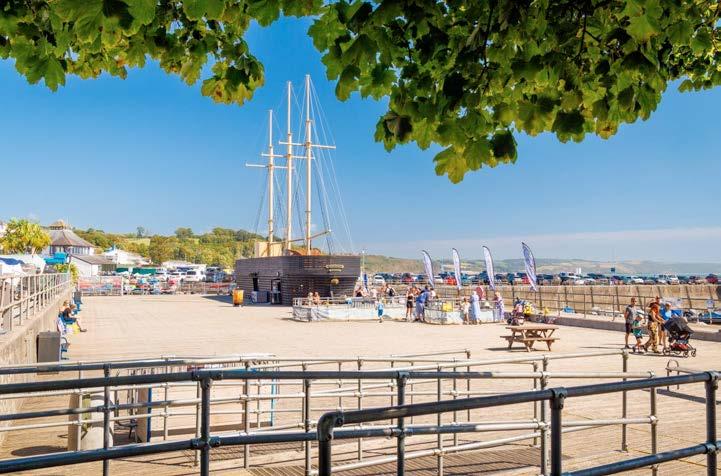
Harbour’s ambition and commitment.
and an all-year-round visitor attraction, serving an increasingly diverse range of users.
“It has created around 100 new jobs so far. Our work with local businesses and stakeholders has been greatly assisted and supported by the open and consultative partnership with the Park Authority, which is based on the shared aim of sustainable economic delivery and social benefit to our community.”
As winner of the Best Project category in Wales, the Saundersfoot Harbour scheme will now be automatically entered as a finalist in the UK National Awards for Planning Excellence.
The national finalists are due to be formally announced by the RTPI on October 7, ahead of the UK finals on December 3.
value of good planning in helping places adapt, thrive and deliver lasting benefits for their communities.
“Saundersfoot Harbour is a hugely important location, both locally and strategically, and this project shows how careful planning can support regeneration while respecting the character, heritage and environmental challenges of a coastal setting.
“I would particularly like to thank Andrew Richards and Nicola Gandy, who both led on the planning aspects of the project for the Authority.
“The judges’ comments underline the strength of the partnership approach behind the project, and we are very pleased to see the work of our planning team recognised alongside Saundersfoot
“The final delivered scheme is a result of significant work from the Harbour, local businesses and the community, who have transformed Saundersfoot’s offer.”
Ted Sangster, Chairman of Saundersfoot Harbour Commission, said the award reflected the strength of the partnership behind the redevelopment.
He said: “Saundersfoot Harbour congratulates Pembrokeshire Coast National Park Authority on this award.
“As a trust port we operate very much as a commercial business but with no shareholders, and therefore no dividends to pay. Our strategy is to provide real, long-term benefit for our community and all users of the harbour.
“The successful Phase 2 of the harbour development now provides both an active fishing and recreational sailing harbour
The Authority also welcomed further success after the Dark Skies Guidance for Wales, developed by a working group from across Wales including Principal Planning Officer Gayle Lister, won the Chair’s Award at the RTPI Cymru Awards for Planning Excellence 2026.
Sara Morris added: “It is particularly pleasing to see the Dark Skies Guidance for Wales recognised alongside the Saundersfoot Harbour project.
“Protecting dark skies is an important part of caring for the special qualities of Wales’ landscapes, and this guidance reflects the value of collaboration across planning, conservation and environmental disciplines.”
The RTPI Cymru Awards for Planning Excellence celebrate outstanding plans, projects and people that demonstrate the power of planning to make a positive difference to places and communities.
SPECIALIST salvage crews have begun dismantling the wreck of the MV Resolute, which has been stranded on the Pembrokeshire coastline since it was driven onto rocks during severe storms last December.
The bright yellow vessel became a familiar sight after running aground during Storm Darragh, but new images show heavy equipment, barges and marine contractors now working to remove it piece by piece.
Photographs taken by Marc Evans for The Herald show workers cutting into the vessel’s structure, with an excavator mounted on a floating barge assisting the operation.
Oil containment booms have also been placed around the wreck as a precaution while the work continues.
The vessel has suffered extensive damage after months of exposure to tides and rough weather, with large sections of the upper deck and wheelhouse now stripped away.
The operation is expected to continue subject to weather and sea conditions.
Pic: Marc Evans/Herald

A YOUNG man from a remote Pembrokeshire farm found himself at the centre of one of the most famous battles in American history after leaving Wales in search of a new life across the Atlantic.
This week marks 150 years since Sgt William Batine James, originally from Pencnwc Farm near Dinas Cross, was killed alongside General George Armstrong Custer at the Battle of the Little Bighorn.
The battle, fought on June 25 and 26, 1876, became known around the world as “Custer’s Last Stand” after the defeat of the US Army’s 7th Cavalry by a coalition of Lakota Sioux, Northern Cheyenne and Arapaho warriors.
Among the dead was a 27-yearold Welshman whose remarkable journey had begun on the north Pembrokeshire coast.
Born on March 3, 1849, James grew up in rural Pembrokeshire before emigrating to North America as a young man. Records show he arrived in Toronto in 1871 before later crossing into the United States and joining the US Army.
He eventually became a sergeant in Company E of the famed 7th Cavalry Regiment.
Just five years after leaving Canada, James found himself riding with Custer into what would become one of the most studied and debated military engagements in American history. The battle took place in present-day
Tom Sinclair editor@herald.email
Montana during the Great Sioux War. Custer’s force was overwhelmed after encountering a much larger Native American force than expected.
Every member of Custer’s immediate command was killed.
For many years, James’s family back in Pembrokeshire had little idea what had become of him. Communication across the Atlantic was slow and unreliable, and news often took weeks or months to reach rural communities.
His story only gradually emerged through letters he had sent home, helping relatives piece together the fate of the young man who had travelled thousands of miles from Dinas Cross to the American frontier.
Today, historians of both Welsh emigration and the American West continue to document the lives of those who fought at the Little Bighorn. James remains one of Pembrokeshire’s most unusual historical figures – a local farm boy whose life became entwined with one of the defining moments of the American frontier era.
One hundred and fifty years after his death, Sgt William Batine James remains a reminder of how far Welsh emigrants travelled in the nineteenth century, and how people from even the smallest communities could find themselves caught up in events that would echo through history.

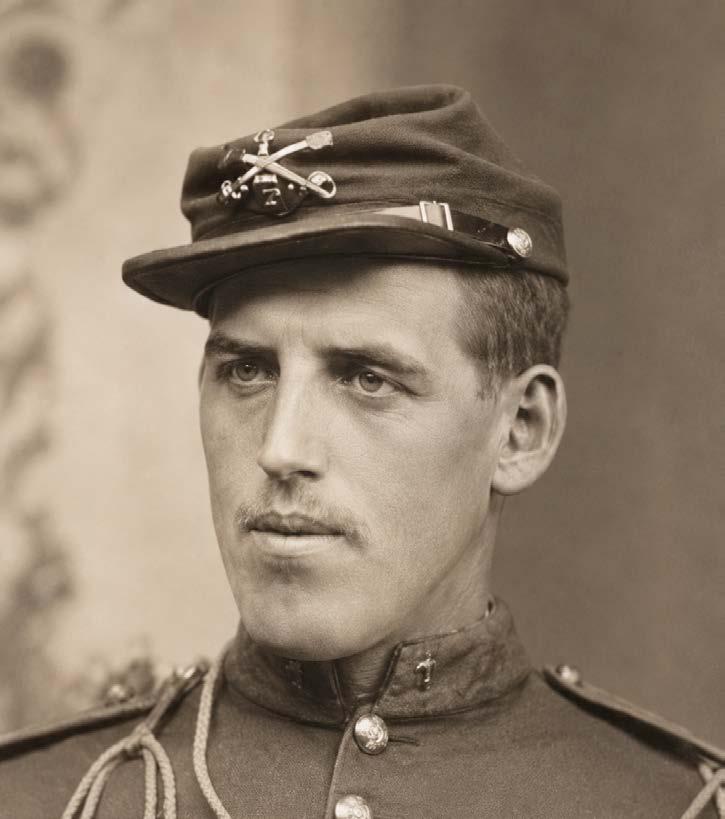

COASTGUARD rescue officers are to gather outside Parliament this week as pressure grows on the UK Government to reinstate emergency call-out payments.
Dozens of coastguards from across the country are expected at College Green, Westminster, at 5pm on Wednesday (July 1), where they will call for the Maritime and Coastguard Agency to reverse plans to remove hourly remuneration for emergency incidents and training.
The protest, organised with the GMB union, follows a Court of Appeal case which found that Coastguard Rescue Officers could be classed as workers when carrying out paid duties.
Until now, volunteer coastguards have been able to claim modest hourly payments when called out to emergencies or attending training exercises. The MCA says the legal ruling means the current arrangements cannot continue in their existing form, and that from September 2026 officers will instead be able to claim expenses only. GMB says the decision is unacceptable and risks undermining one of the UK’s statutory emergency services.
Coastguard Rescue Officers are often

crews, police, ambulance services, fire crews, air ambulances and Coastguard helicopters.
39,147 incidents during the same year.
Plaid Cymru MPs have already raised concerns about the impact on Welsh coastal communities, warning that removing call-out payments could make it harder to retain and recruit trained responders.
The UK Government has defended the move, saying the change follows the Court of Appeal ruling and that the revised volunteer model is intended to protect the future of the service.
In a parliamentary answer, Transport Minister Keir Mather said changing the operating model was “not something which we wanted to do” but was a consequence of the legal position.
He said moving to a volunteer model with expenses, but without hourly remuneration, was judged to be the best option to protect the service and allow people to continue serving alongside their main employment.
the first to respond when people are trapped on cliffs, cut off by tides, stuck in mud, missing near the coast or in difficulty in the water. They work alongside lifeboat

The issue is of particular importance in Pembrokeshire and across Wales, where coastguard teams are regularly involved in difficult and dangerous rescues along remote coastline, beaches, cliffs and tidal waters.
The Herald has repeatedly reported on incidents where coastguard teams have played a key role. These include the major rescue of three climbers at St Govan’s Head, where teams from Fishguard, St Govan’s and Tenby were deployed alongside helicopters, lifeboat crews, police and air ambulance teams.
In another incident, Milford Haven Coastguard Operations Centre coordinated the rescue of six children from the sea at Aberavon, with Port Talbot and Porthcawl Coastguard Rescue Teams among those sent to the scene.
Angle RNLI has also been tasked this year to searches coordinated by the coastguard, including concern for a fishing vessel near Marloes and a separate search after a vehicle was found abandoned on the Cleddau Bridge.
Supporters of the campaign say these incidents show how reliant coastal communities are on trained volunteers who leave work, family life or rest periods at short notice when pagers sound.
The Westminster photocall will take place after a Westminster Hall debate earlier the same day on the remuneration of coastguard volunteers. That debate is due to be opened by Liberal Democrat MP Alistair Carmichael.
The House of Commons Library says the Coastguard Rescue Service had more than 3,500 volunteers in 287 teams across the UK in 2024/25, supported by more than 100 employed operational staff. HM Coastguard responded to
The Government has also said serving Coastguard Rescue Officers are entitled to compensation for up to the previous six years of service, with the MCA calculating individual entitlements.
GMB argues that the answer should be to protect both the volunteer nature of the service and the right of coastguards to be fairly compensated when they are called out to save lives.
A GMB spokesperson said Coastguard Rescue Officers carry out rescues and save lives around the UK’s coast, including Scotland, Wales and England’s south coast.
The union said: “The coastguard is a statutory emergency service, like the police, fire or ambulance.
“They have always been given hourly remuneration for attending incidents and training exercises, but the MCA has now removed the payments.
“The move follows a landmark case by GMB Union which saw the Court of Appeal uphold a judgement classifying coastguards as workers.”
GMB says coastguards will be available for photographs and interviews at College Green on Wednesday evening. The row comes only days after The Herald reported fresh concern over the loss of call-out payments, and amid a series of recent incidents showing how often coastguard teams are used across west Wales. In the past week alone, Milford Haven Coastguard paged lifeboats after an aircraft ditched in Cardigan Bay, while Fishguard and Teifi Coastguard teams helped stretcher an injured woman from the coast path at Dinas Island.
Earlier this year, coastguard teams from Fishguard, St Govan’s and Tenby were among the emergency services sent to a fatal climbing incident at St Govan’s Head.
TWO people were taken to hospital after a light aircraft ditched into the sea off the west Wales coast on Friday evening.
New Quay RNLI said its all-weather lifeboat was launched at 6:06pm following a direct page from Milford Haven Coastguard.
The emergency followed reports that an aeroplane had come down in the sea approximately 10 miles north-west of Cemaes Head, with two people on board.
The New Quay all-weather lifeboat proceeded at best speed to the scene, alongside a Coastguard helicopter, RNLI Fishguard Lifeboat and RNLI Cardigan Lifeboat.
The two casualties were spotted by the Coastguard helicopter before being recovered by Cardigan Lifeboat. They were then transferred to the larger New Quay all-weather lifeboat, where crew members were able to provide casualty care during the return to shore.
Both casualties were brought ashore at New Quay’s main pier and handed over to the Welsh Ambulance Service. They were then transferred to hospital.
Photographs from the incident show lifeboat crews operating in choppy sea conditions, an ambulance waiting at New Quay harbour, and the aircraft partially submerged in Cardigan Bay.

was reported adrift in Cardigan Bay. The cause of the ditching has not yet been confirmed.
One image appears to show the aircraft floating with part of the fuselage, wings and tail visible above the water.
A navigation warning was later issued after a partially submerged microlight
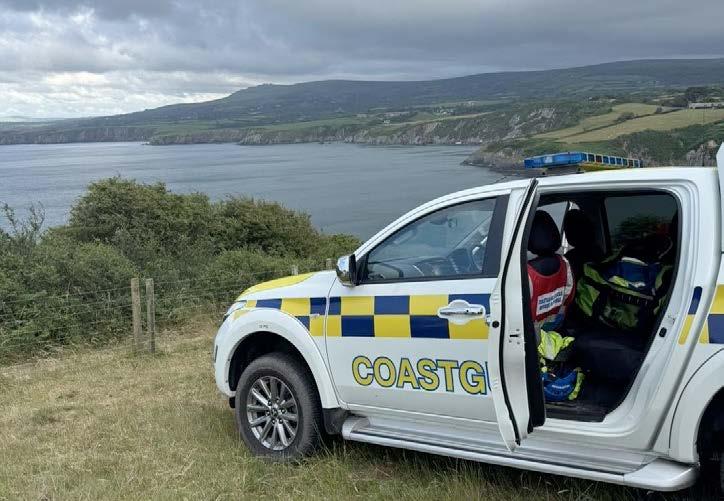
A WOMAN was stretchered from the coast path near Pwllgwaelod after suffering an ankle injury.
HM Coastguard Fishguard was tasked at 5:22pm on Friday, June 27, alongside HM Coastguard Teifi, to assist the casualty on Dinas Island.
The teams attended the scene near Hendre Farm Campsite and Cottages
and, with help from the landowner, were able to quickly locate the injured woman.
Her injured limb was immobilised before she was carried by stretcher to her nearby car, where family members were able to take her on to hospital.
Fishguard Coastguard thanked the landowner for their help.
The aircraft’s departure point, intended destination and route have not yet been officially released.
New Quay RNLI confirmed that after the casualties were handed over, its all-weather lifeboat was recovered, rehoused and made ready for further service.
The incident involved a major multiagency response from HM Coastguard, the Coastguard helicopter, New Quay RNLI, Fishguard RNLI, Cardigan RNLI and the Welsh Ambulance Service. Aircraft accidents and serious incidents in the UK are reported to the Air Accidents Investigation Branch.

A WATCHDOG has rated DyfedPowys Police only “Adequate” in its response to serious and organised crime, despite praise for the wider southern Wales regional crime unit.
HMICFRS inspected the regional response involving Dyfed-Powys Police, South Wales Police, Gwent Police and Tarian, the Regional Organised Crime Unit for southern Wales.
Tarian was graded “Good”, as was South Wales Police. But Dyfed-Powys Police and Gwent Police were both graded “Adequate”.
The finding means the force covering Pembrokeshire, Carmarthenshire, Ceredigion and Powys has been told there is still work to do in how it identifies and tackles organised criminality.
Inspectors said the southern Wales region had recorded just 93 serious and organised crime threats by July last year. The next lowest region in England and Wales had identified 219. HMICFRS said that gap was “concerning”, even allowing for the smaller size of the region.
The report also found that recorded threats were heavily focused on drugs, raising concerns that other forms of organised crime may not be being

Sinclair editor@herald.email
identified as effectively.
However, Tarian recorded 2,650 disruptions between June 2024 and June 2025, the second highest total among regional organised crime units

in England and Wales. These included arrests, the closure of drugs lines and safeguarding work.
Across 2025, Tarian investigations led to 285 arrests, the safeguarding of 1,488 children and 598 vulnerable adults, and combined prison sentences totalling 320 years.
Inspectors praised strong regional partnership working and highlighted Tarian’s use of technology, including systems capable of reducing some data-review work from weeks to
around 30 minutes.
The report also noted that Tarian is the only regional organised crime unit in the network to have a dedicated artificial intelligence coordinator. But inspectors made clear that improvements are needed. They recommended that Tarian and the three forces improve how serious and organised crime threats are recorded and identified across a wider range of criminality.
A YOUNG Pembrokeshire dairy farmer has been banned from the road after being caught driving while over the drink-drive limit.
Lucy Pope, 22, pleaded guilty to the offence when she appeared before Haverfordwest magistrates this week.
The court heard that Pope was arrested in the early hours of March 7 after police stopped her Volkswagen T-Roc in Dew Street, Haverfordwest.
“At around 1.30am, police received a call from a member of the public who suspected the defendant may have been driving after consuming alcohol,” Crown Prosecutor Sian Vaughan told the court.
“Her car was located and, when officers spoke to Lucy Pope, she confirmed she had consumed alcohol at around 9pm that evening.”
A subsequent blood test showed Pope had 103 milligrammes of alcohol in 100 millilitres of blood. The legal limit is 80.
Pope, of Fronhaul, Hermon, Glogue, was represented by solicitor Aled Owen, who said the offence was “very much at odds” with her character.
“This is a woman who is very much part of the community,” he said.
“She works as a dairy farmer and also keeps her own heifers. She had spent the day watching a Six Nations rugby international with friends.
“She believed she had eaten enough during the day and thought she was under the limit. But this was a miscalculation which has been devastating.”
Magistrates disqualified Pope from driving for 12 months and fined her £115. She was also ordered to pay £85 costs and a £46 surcharge.


Haverfordwest’s Haverhub was the whirlpool where river action groups from the Gwaun, Teifi, Cleddau and Usk met for the first time, alongside farming representatives and a newly elected Senedd member. The dominant current was clear:: a fierce love for West Wales’ rivers and coast — and a determination to turn dismay into action.
Whatever their differences, everyone in the room agreed that healthy rivers are the arteries of our landscpape, vital for wildlife, livelihoods, swimmers and anglers. The mood was constructive, urgent, and notably practical: this was not a talking shop.
That spirit didn’t erase disagreement. On the thorny question of who is to blame, views diverged. Several written comments were forthright about farming’s role while farm representatives held varying views - some said agriculture is always scapegoated, the evidence is inconclusive, others acknowledged that high nutrient loads from historic practices are still leaching from the land and fueling algal blooms, even where today’s slurry spreading is carefully managed. The economic squeeze on small farms, forced to consolidate as supermarket pressure bears down on prices, was a recurring theme — bigger units, mean concentrations of nutrient-rich waste to dispose of in the windows between downpours.
If blame was contested, solutions were fertile ground. The room rallied around a suite of technical, behavioural and design fixes that could start tomorrow and scale with support. Riparian tree planting to shade and stabilize banks, absorb nutrients and cool waters. Smarter, catchment-bycatchment approaches instead of onesize-fits-all rules. Separating rainwater from sewage with SuDS and greener streets so both become resources, not liabilities. Replacing bought-in fertiliser with slurry where fields actually need it, and measuring nitrate and phosphate loads so additions are precise. Where levels are too high, planting nutrienthungry crops — from trees to hemp — to pull them back down. Expanding slurry spreading to appropriate arable land. Publicly funded nutrient testing to make decisions data-driven, not guesswork. Innovation got its moment too. Attendees called for research and investment into better slurry treatment — chemical or mechanical water extraction, or avoiding mixing manure with water in the first place. Biodigesters featured, with a caveat: they need better auto controls and dedicated management to minimise risks. On energy, people wanted the barriers lifted so farms can power local communities via smart microgrids. And there was a powerful cultural note: valuing “happy outdoor cattle,” and labelling dairy to reward higher environmental standards — First Milk’s standards and innovations was praised as an example of the way forward working with farmers. Regulation
drew contrasting but overlapping views. Some argued fines should stay in Wales and be ploughed straight back into remediation, with on-the-spot penalties replacing lengthy, expensive court cases. Others demanded that regulators receive more funding — especially for enforcement — and that the money from fines pays for both prevention and repair. There were calls to cut regulator office overheads and redirect the savings to solutions on the ground; to remove perverse rules that make turning waste into energy impossible; and to tailor oversight, with stricter licences for the largest indoor livestock units and lightertouch rules for small enterprises — without simply offshoring our impacts through imports.
On chemicals, several voices pressed for a Welsh ban on glyphosate or, at minimum, strong backing for councils that restrict it, coupled with public education. More broadly, people wanted safe alternatives to toxic pesticides and biocides promoted — not just on farms but in domestic cleaning and pet care. And a political edge ran through the conversation: countering heavy lobbying by chemical firms and corporate agriculture, and linking any river rescue to a fairer food system that reduces supermarket dominance, trims the middlemen, and strengthens direct Farmto-Plate relationships.
Who should do the monitoring — and who should lead — sparked lively exchange. Some urged that citizen science step back and leave testing to Natural Resources Wales; others wanted NRW defunded and replaced by hundreds of trained community monitors, with backing and basic kit. A middle path emerged in several comments: keep citizen scientists, support them properly, and reform NRW leadership while empowering the enthusiastic, hands-on staff who already care deeply about the rivers. What united the room was a plea for the new Welsh Government to set a clear vision and then back it with education, technical support, and prompt, predictable payments under the Sustainable Farming Scheme — especially for collaborative, catchmentscale work.
Threaded through the evening was a bolder idea: recognising rivers as having rights to health and life, and giving them a voice in decisions that affect them. Whether through law, policy, or practice, attendees wanted our waterways treated as living systems, not just pipes and channels. By the close, the sense was of momentum. The Senedd member for Ceredigion Preseli drew praise for commitment and attunement. There was hope - that West Wales can be a model, and caution –. Turning a tanker takes time. But farmers, are used to adapting. With leadership, fair rules, and practical fixes and urgency, the sparking fish filled waters could return.


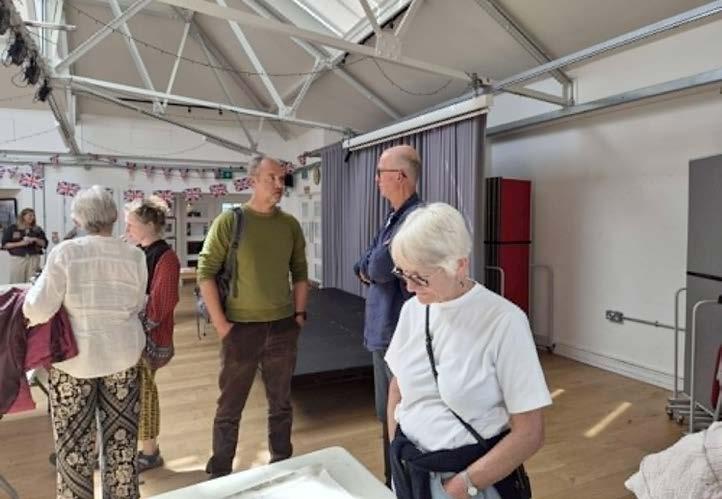
PEMBROKESHIRE COAST
NATIONAL PARK AUTHORITY has confirmed the re-election of its chair, deputy chair and key committee leaders following its Annual General Meeting.
Dr Madeleine Havard has been reelected as Chair of the Authority, with Cllr Claire George continuing as Deputy Chair.
Cllr Dr Simon Hancock has also been re-elected as Chair of the Authority’s Development Management Committee, with John Hogg re-elected as Deputy Chair of the committee.
The appointments were agreed by members at a meeting of the National Park Authority held on Wednesday, June 24.
The Authority is made up of 18 members, including 12 county councillors appointed by Pembrokeshire County Council and six members appointed by Welsh Government.
Together, they oversee the work of the Authority and make decisions on matters affecting the Pembrokeshire Coast National Park.
Dr Havard said: “It is an honour and a privilege to continue serving as Chair
of Pembrokeshire Coast National Park Authority.
“Our National Park is one of Wales’ most treasured landscapes, and the Authority has an important role in protecting it for future generations whilst supporting the communities who live and work here.
“I look forward to continuing to work with all members, staff, partners and local communities as we respond to the opportunities and challenges facing the National Park.”
Cllr Dr Hancock said he was pleased to continue as Chair of the Development Management Committee, which considers planning matters within the National Park.
He said: “The Committee’s work requires careful judgement, balancing the need to conserve and enhance this special landscape with the needs of local people.
“I look forward to continuing to work with fellow members and officers in carrying out this responsibility.”
Members spend an average of two days a month on formal committee business, as well as representing the Park Authority at a range of formal and informal events.
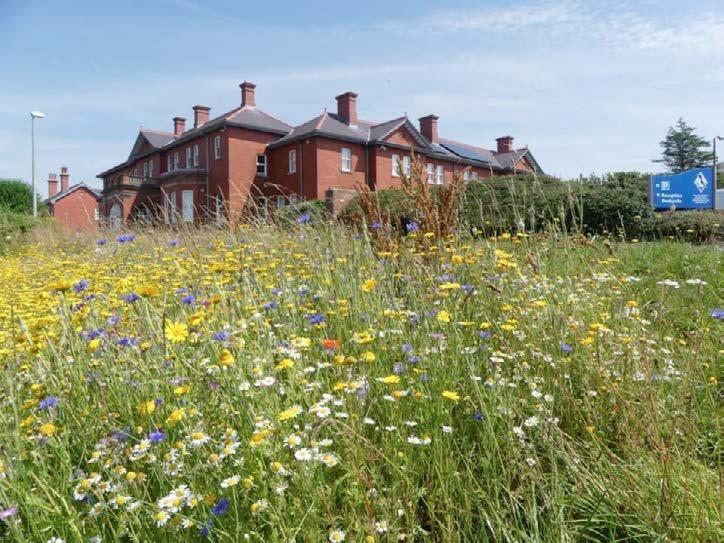
and presentations
and partner organisations.
The current members of Pembrokeshire Coast National Park Authority are Cllr Maureen Bowen, Cllr Di Clements, Ms Fiona Day, Cllr
A FREE woodland event in north Pembrokeshire will invite people to reconnect with the Welsh language, local landscape and cultural traditions through storytelling, creativity and time spent in nature.
Dod yn ôl at fy nghoed / To Return to My Trees will take place on Friday, July 17, from 10am to 4pm, at Canolfan Llwynihirion and Allt Tŷ Canol, near Brynberian.
The event is being hosted by Cwm Arian as part of the Preseli Woodlands Project and will be led by Welsh Druid, author and celebrant Deborah Rose Hālani.
Participants will spend time in the ancient woodland of Allt Tŷ Canol, exploring how Welsh language, landscape, folklore and local traditions have shaped one another over generations.
Organisers say the day is open to everyone, including those reconnecting with their own heritage, people learning about Welsh culture for the first time, or anyone who wants to build a deeper connection with the place they call home.
Sophie Jenkins, Outreach and Engagement Coordinator at Cwm Arian Renewable Energy, said: “Conservation isn’t only about protecting species and
habitats. It’s also about nurturing our relationship with the places we live.
“The Welsh language, our stories and our landscapes have evolved together over centuries, yet many people feel disconnected from one or all of those things.
“Whether someone is rediscovering a part of their own heritage or beginning a relationship with Cymru for the first time, we hope this day creates space to connect more deeply with the land, with culture and with community.”
The Preseli Woodlands Project brings together nature restoration and cultural heritage through activities designed to help people experience, understand and care for Pembrokeshire’s woodland heritage.
The project is a partnership between Cwm Arian Renewable Energy, the South and West Wales Wildlife Trust and Pembrokeshire Coast National Park Authority.
It is funded through the Welsh Government’s National Forest for Wales Landscape Scheme 2025–2027 and administered by WCVA.
The event is free, but places are limited and advance booking is essential.
To book, email sophie@cwmarian.org. uk.

SIX people have been arrested following Immigration Enforcement raids at Florentino’s Italian restaurants in Tenby and Carmarthen.
Officers visited the Tenby branch in St Julian’s Street on June 18, where two Romanian nationals were identified as allegedly having no right to work in the UK. Both were arrested on suspicion of illegal working.
The Tenby operation followed an earlier raid at Florentino’s in Carmarthen in February, where four workers — two Romanian nationals, a Bangladeshi national and a Mongolian national — were also arrested on suspicion of illegal working.
The Herald previously reported in March that the Carmarthen restaurant had been linked to a major HMRC case, after Claudio Cernat Ltd, formerly trading as Florentino’s on Jacksons Lane, was listed over a £278,000 deliberate tax underpayment and a further £186,000 penalty.
Immigration officials say inquiries are now under way to establish who may be liable for employing the individuals. Employers found to have breached illegal working rules can face civil penalties of up to £60,000 per worker.
Tom Sinclair editor@herald.email
One of the Tenby workers has already returned, while the other is in the process of returning.
Of the Carmarthen workers, two have returned, one was placed on immigration bail and another was dearrested with a warning.
Immigration Enforcement Lead for Wales, Richard Johnson, said: “I want to thank my officers who showed the highest levels of professionalism under challenging circumstances on these operations.
“Immigration Enforcement teams in Wales continue to work round the clock to ensure businesses play by the rules and those with no right to be in the UK are tracked down and returned at the earliest opportunity.”
The Home Office says illegal working enforcement has increased significantly since July 2024, with raids and arrests rising across the UK and Wales.
No finding has yet been made against the restaurant operators in relation to the latest arrests.
Florentino’s has been approached for comment.

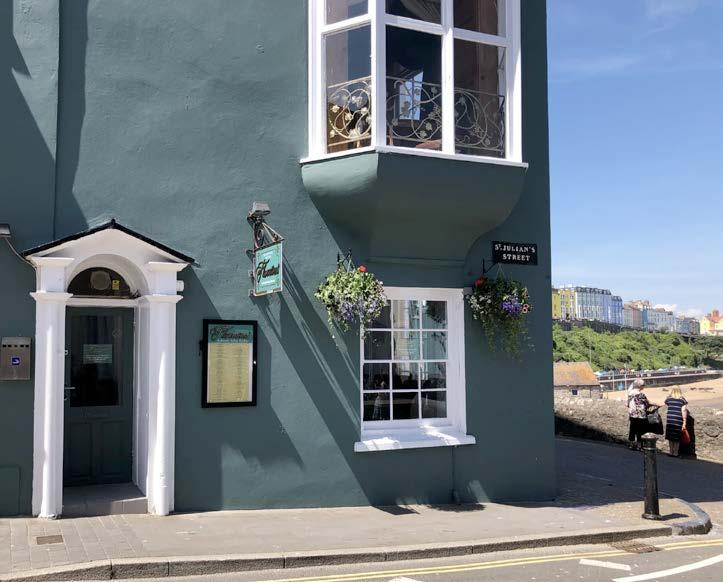
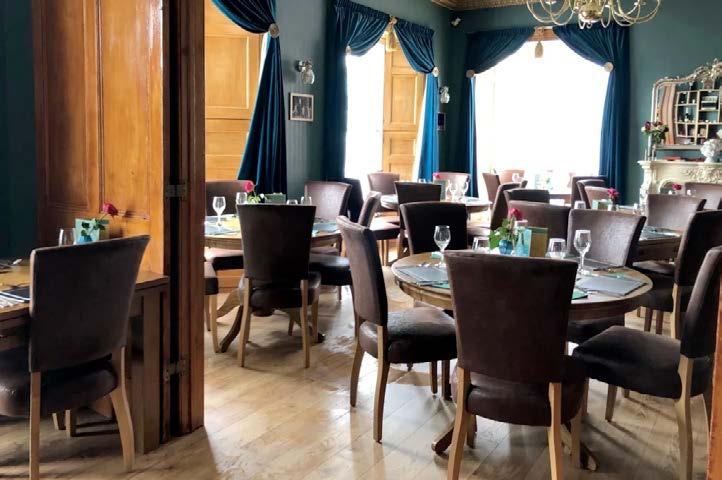
OFFICERS investigating an alleged sexual assault in Carmarthen are appealing for the public’s help to identify a person who may have information.
Dyfed-Powys Police said the incident happened in front of F.Hinds jewellers on Lammas Street at around 4pm on Tuesday, May 12.
Investigating officers have carried out a number of enquiries and are now asking for assistance in identifying the person pictured.
Police stressed that the person may have information that could help the investigation.
Anyone who is the person pictured, or who knows who they are, is asked to contact Dyfed-Powys Police online at https://bit.ly/DPPContactOnline, by emailing 101@dyfed-powys.police.uk, or by calling 101.
Alternatively, information can be passed anonymously to Crimestoppers on 0800 555111 or via crimestoppers-uk.org. Quote reference: 26000377639

Dominik Szymanski raped and beat the woman at his flat before stealing her dog. She was found dead the day after giving evidence against him
A SWANSEA man has been jailed for 16 years after raping and assaulting a vulnerable woman he had met only hours earlier.
Dominik Szymanski, 47, attacked the woman at his flat in Matthew Street, Swansea, after the pair met in the city centre on September 2 last year.
Swansea Crown Court heard both had their dogs with them when they began talking, before going back to his nearby flat.
Once inside, Szymanski subjected the woman to a prolonged attack. CCTV later showed him dragging her from the property and leaving her in a lift.
In the days after the attack, he kept the woman’s dog and arranged to sell it. The animal was later returned. Szymanski denied rape and assault occasioning actual bodily harm but was convicted by a jury after a 10-day trial. He later admitted stealing the dog.
The court heard the woman gave evidence against him during the trial. The following day, she was found dead. An inquest has yet to determine the cause of death.
In a victim impact statement read to the court, the woman’s mother said her daughter was a devoted animal lover who looked “broken” after the attack and the loss of her pet.
She said her daughter had worked hard to tackle addiction issues and had written a list of things she still wanted to do with her life.

Her mother told the court: “In my eyes, his actions killed my child.”
Sentencing Szymanski, Judge Geraint Walters described the case
as “disturbing” and said he had seen the woman as someone vulnerable who he could take advantage of.
The judge said she had been a “most
compelling and honest witness”, despite the difficulties she had faced with drink and drugs.
He said he could not conclude that she had taken her own life because of what had happened, but added that the timing of her death was “particularly sad”.
Addressing Szymanski, he said: “What you did to her had a profound emotional effect on her.”
The court also heard Szymanski had previous convictions, including assaulting a former partner, battery, and assaulting a police officer.
He was sentenced as a dangerous offender to an extended 16-year term, made up of 12 years in custody and a further four years on licence.
He must serve two-thirds of the custodial term before he can apply for release. Any release will be decided by the Parole Board. He will remain on the sex offenders register for life.
Detective Constable Claire Davies, of South Wales Police, described the attack as “prolonged and significant” and called Szymanski a “truly despicable offender”.
She said the outcome had brought relief to the victim’s family and friends, adding that police hoped the case would reassure victims of sexual abuse that they will be listened to and treated with dignity and respect.
Anyone affected by the issues in this article can contact Samaritans free on 116 123 or by emailing jo@ samaritans.org.
A PEMBROKESHIRE community council, which only has half its council seats filled, is calling for anyone interested in becoming a councillor to think about joining it.
Kilgetty and Begelly Community Council which cover areas such as Reynalton, Thomas Chapel, Begelly and also Kilgetty, is on the lookout for new members, having six vacant seats out of 12.
Peter Adams, Vice-Chair said: “The community council currently has six vacancies for our council, and would very much like to hear from anyone who may be interested in becoming more involved in community matters.
“The only commitment asked, is for a monthly meeting at the Kilgetty community centre on the second Thursday of the month to assist in decision making in the community, apart from the summer break which is usually in August when there is no meeting.”
He added: “KBCC council has 12
seats for councillors to represent the community covering the areas of Reynalton, Thomas Chapel and KilgettyBegelly; in recent years councillors have left for various reason due to retirement and other commitments etc, leaving us currently with six people.
“A lot has been achieved in the community in the last two years with a new park being opened, and now the completion of the ownership of the community centre the council feel that we need to encourage new people to come forward with ideas, and to also assist in the running of the increasing community facilities.”
Anyone interested please contact the council’s clerk Gary Price using the council’s website (www. kilgettybegellycouncil.co.uk) or phone 07984991520.




REFORM UK MS Paul Marr has warned that dirty water entering rivers, streams and the sea is putting public confidence in Pembrokeshire’s coastline at risk.
The Ceredigion Penfro MS has raised the issue in the Senedd and has now told the Herald that tougher regulation, greater transparency and clear accountability are needed from Welsh Water, Natural Resources Wales and the Welsh Government.
Mr Marr said his concern was not only about rivers, but about small streams running across popular Pembrokeshire beaches, where children often play before the water reaches the sea.
He said one moment at Broad Haven had brought the issue home.
Mr Marr said: “I felt like saying to them, ‘Get out of the water.’ It felt like I was seeing a scene from Jaws.”
The Reform MS said Pembrokeshire’s coastline was one of Wales’ greatest assets, but public trust was being undermined by uncertainty over what was being discharged into local watercourses. He said: “We have a beautiful coastline and beaches, and these areas have to be safe.
“I am worried about all of them. We need tougher regulation. I want accountability of the water companies.”
Mr Marr used a recent Senedd debate on Reform UK’s call for a Welsh Rivers Act to highlight concerns in Pembrokeshire and Ceredigion.
He told the chamber that several south Pembrokeshire beaches hold Blue Flag status, which is important to the visitor economy, but warned that streams running across beaches and into the sea are not designated as bathing water by NRW.
There have been protests over pollution at beaches in west Wales (Pic: Martin Cavaney)
He said those streams still attract small children, while local citizen science groups had recorded what he described as seriously high levels of E. coli.
Mr Marr told MSs that some results were “consistently far worse” than water classed as poor under freshwater bathing water standards.
He said: “E. coli can cause serious illness and may pose a particular risk to young children.”
Speaking to the Herald, Mr Marr said people had a right to know whether water was safe.
He said: “People’s safety has to be put first. When people are unsure, it is because of illegal discharge and the fault of the water companies.
“NRW is not testing for E. coli because it is not going to be in the report. That is very poor enforcement from NRW.”
In the Senedd, Mr Marr also referred to the Cleddau Project, a 12-month citizen science initiative which assessed water quality across 49 sites within the Cleddau
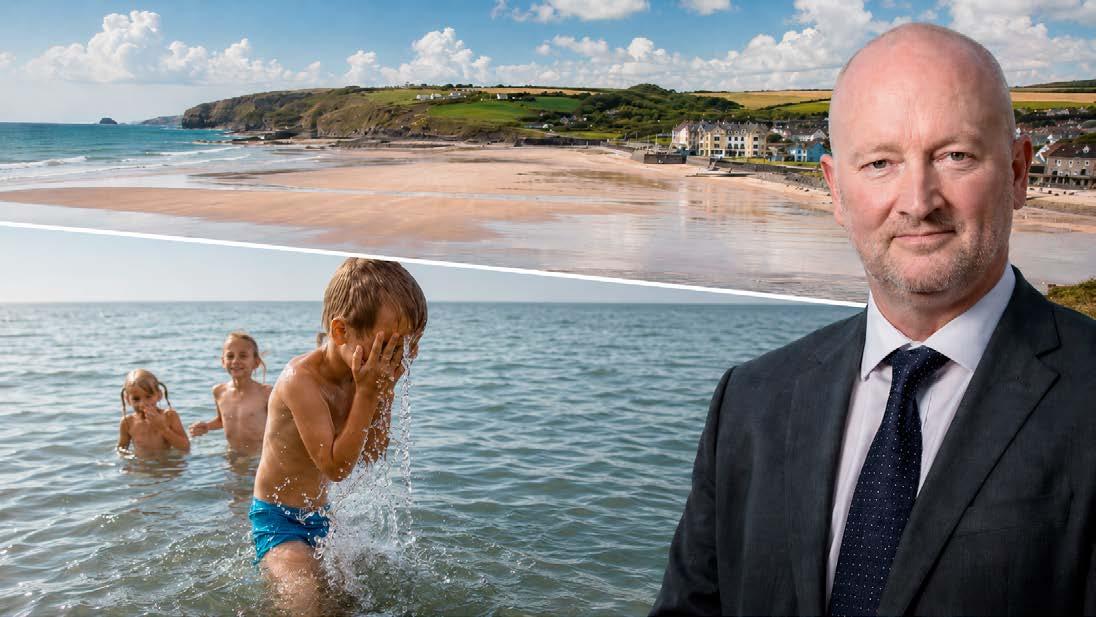
Tom Sinclair editor@herald.email
catchment.
He said the project had identified a significant decline in river health, with concerns over sewage discharge, phosphates, nitrates and E. coli.
He also raised the River Teifi, where community monitoring has identified a number of sites exceeding NRW orthophosphate targets.
Mr Marr said citizen-led evidence should not be brushed aside by public bodies.
He told the Senedd that residents were asking “whose agenda NRW are exactly working towards” after concerns that community testing data would not be used or recognised by key authorities.
Mr Marr said the issue was not only about pollution, but public trust.
He said: “Everyone has to hold a shared responsibility. We need honesty and transparency. There has to be a whole rejuvenation and honest discussions.
“We can’t have quangos shielding Welsh Water. People could die. That is not the legacy I want to leave for future generations.”
Reform UK has called for a Welsh Rivers Act, which it says would create tougher rules on sewage discharges, clearer accountability and measurable improvements in water quality.
The party’s motion was defeated in the Senedd by 49 votes to 37.
Mr Marr said any new law would have to deal with enforcement as well as ambition.
Asked whether senior figures should face consequences when pollution failures occur, he said: “There should be consequences. You can’t keep rewarding people for bad behaviour. People’s
agendas change when there are no consequences.”
He said Welsh Water had to be held to account where there were failings, and warned that without consequences the same problems would continue.
Mr Marr has also linked water quality and sewer capacity to the future of rural communities.
In the Senedd, he said three housing developments in his constituency had been effectively shelved because of concerns about run-off affecting water quality and the capacity of the sewer network to deal with additional waste.
He said that amounted to more than 200 homes.
Speaking to the Herald, he said communities could not grow properly unless basic infrastructure was fit for purpose.
He said: “You have got to have strong foundations. We need a functional, safe sewage system, or we are throwing money down the drain.”
Mr Marr also said farmers should not be used as a convenient scapegoat for every water-quality problem.
He said sewage discharges, agricultural run-off, septic tanks, highways drainage and development pressure all needed to be looked at honestly.
He said: “We all need to play a part. I am not putting blame on one group. It is a collective responsibility.”
But he said the public deserved the truth, even when it was uncomfortable.
Mr Marr said: “If there is an uncomfortable truth, people can deal with that better than lies. I would want my kids to be told if it was not safe.
“Nothing is transparent. We need a collective approach.”
Welsh Water has previously defended its record in Pembrokeshire, saying water
quality is affected by a range of sources and not only by water company assets.
Following concerns at Broad Haven earlier this year, the company told the Herald there were “no capacity issues on the network for normal operations”, but that the system could become overwhelmed during periods of heavy rain.
It said storm overflows had discharged intermittently at Broad Haven on February 15, adding that most of the sewer network in the village is a combined system, taking rainwater from gutters, drains and roads as well as wastewater from homes.
Welsh Water said this meant any release was “very dilute”, with more than 95 per cent rainwater.
The company also said Broad Haven has a Blue Flag and has consistently achieved an “Excellent” rating under the Welsh Government’s bathing water classification scheme since 2019.
In earlier responses to the Herald, Welsh Water has said improving water quality requires “multi-sector cooperation”, citing rural land use, urban run-off, industry, soil erosion, illegal misconnections and private septic tanks as contributing factors.
It has also pointed to planned investment, including environmental improvements and work to reduce the impact of storm overflows.
Mr Marr said the next step should be practical action, including clearer testing, better public reporting, stronger enforcement and investment in infrastructure where the system is failing.
He said: “It is our duty of care to keep Welsh people safe. If we don’t do that, then we are failing.
“Only then can we make progress and implement the things that need to be done.”

THOUSANDS of people lined the streets and quayside in Cardigan on Saturday as the town marked 850 years since Lord Rhys held the first recorded Eisteddfod at Cardigan Castle.
The spectacular procession formed the finale of the Journey of Lord Rhys, a week-long celebration which has travelled across west Wales before returning to Cardigan, where the story began in 1176.
At the centre of the event was a 5-metre-tall puppet of Lord Rhys, created as part of the Carreg Filltir Las project to celebrate the origins of the National Eisteddfod.
Crowds gathered around the castle, quayside and town centre as music, performance and pageantry brought the story of the first Eisteddfod back to life.
Concerts& Music Festivals
One of the most striking moments saw George, one of the Gentle Giants Shire Horses, given the honour of carrying this year’s Eisteddfod Chair to Cardigan Castle, 850 years after chairs were first awarded there for poetry and music.
The first recorded Eisteddfod was hosted by Lord Rhys ap Gruffudd at Cardigan Castle in 1176, with poets and musicians competing in what is widely regarded as the foundation of the modern Eisteddfod tradition.
This year’s National Eisteddfod, Eisteddfod y Garreg Las, will be held at Llantood from August 1 to 8. The location is less than four miles from Cardigan Castle, creating a direct link between the first recorded gathering and the modern festival.
The Eisteddfod has described the anniversary as a chance to celebrate 850 years of tradition while inspiring




new audiences across Wales. Saturday’s homecoming brought that history into the streets of Cardigan, with families, visitors and local



residents turning out in large numbers for one of the most significant cultural moments in the town’s recent history.


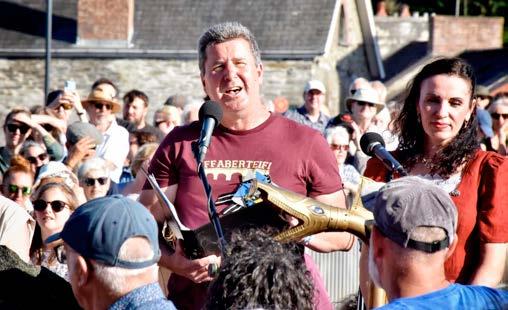
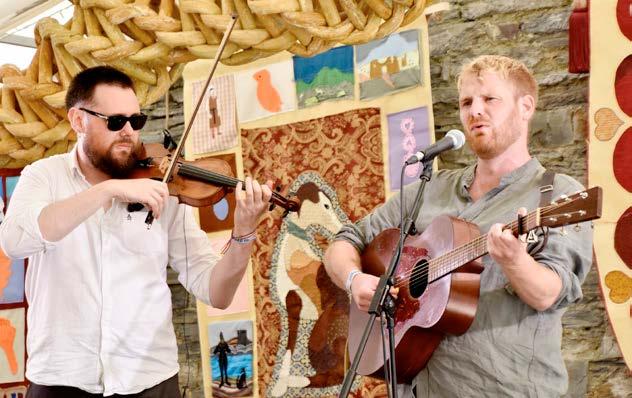
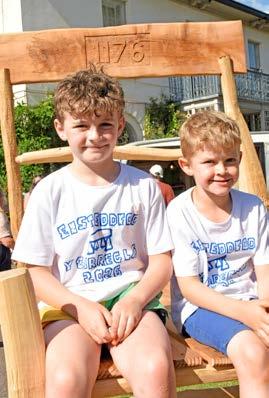
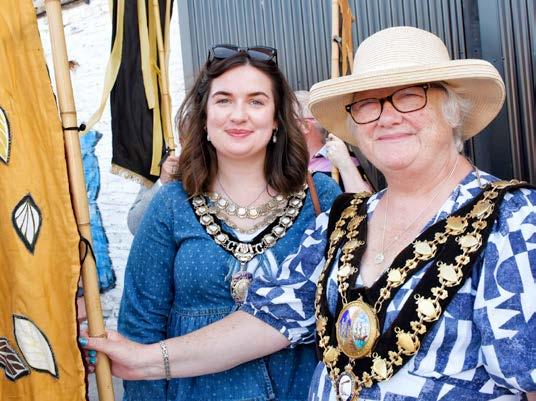








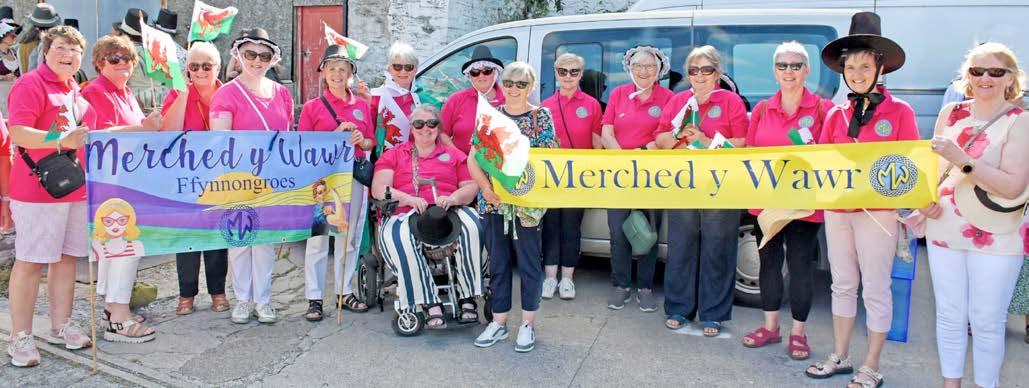






















A CIVIC service has been held at St Mary’s Church in Haverfordwest, bringing together civic leaders, councillors, cadets and community representatives from across Pembrokeshire.
The Mayor’s Civic Service took place at 11:00am on Sunday, 28 June 2026, at the historic High Street church, one of the county town’s most familiar landmarks.
The service was hosted by Haverfordwest Town Council and attended by the Sheriff of Haverfordwest, Cllr Dani ThomasTurner, Deputy Lord Lieutenants,


the mayors of Pembroke, Pembroke Dock, Neyland and St Davids, members of the Guild of Freemen, the Lord Lieutenant’s Cadet and the Mayoral Cadet.
St Mary’s Church has stood at the heart of Haverfordwest for more than 800 years. Built in about 1200, its size and position have made it one of the town’s dominant historic buildings.
Cllr Randell Izaiah Thomas-Turner said the occasion had been “truly special and humbling”.
He said: “It was an honour to gather in one of our town’s most historic and beautiful buildings, a church that has stood at the heart of our community since the 12th century, bringing people together in faith, service and reflection.”
Cllr Thomas-Turner and the Sheriff thanked all those who attended, saying the presence of civic representatives from neighbouring towns reflected the “strong spirit of friendship and partnership across Pembrokeshire”.
They also paid tribute to fellow town councillors, the Guild of Freemen, and the cadets who supported the service.
Cllr Thomas-Turner added: “Days like today remind us that civic life is about more than titles and chains of office. It is about service, community, friendship and working together for the good of our towns and our county.”
He said the event had been a proud day for Haverfordwest, adding: “Haverfordwest truly is the Best in the West.”
A CARMARTHEN man has admitted a string of burglaries at the same takeaway business on consecutive days.
Phillip Roberts, 44, of Brewery Road, Carmarthen, appeared before Llanelli Magistrates’ Court after pleading guilty to three offences connected to USA Chicken on Blue Street.
The court heard that on June 4,

Roberts entered the premises as a trespasser and stole a tip jar containing cash. He also admitted a second burglary at the same business on the same date, during which £50 cash was stolen.
A further offence took place on June 5, when Roberts entered USA Chicken as a trespasser with intent to steal.
Magistrates adjourned sentence for the preparation of a pre-sentence report. The report will consider all sentencing options, including possible committal to the Crown Court.
Roberts was granted conditional bail. He must not enter USA Chicken, Blue Street, and must not contact Mustafa Baksi, either directly or indirectly.
He is due to return to Llanelli Magistrates’ Court on July 1 for sentence.

FAMILIES planning a summer visit to Carew Castle and Tidal Mill, Castell Henllys and Oriel y Parc will benefit from reduced prices on selected tickets, events and children’s lunch boxes from June 25 to September 1.
The temporary reduction follows the UK Government’s decision to reduce VAT from 20 per cent to 5 per cent on eligible children’s menu meals and family leisure activities during the
summer period.
Eligible child and family day tickets at Carew Castle and Tidal Mill and Castell Henllys will be included, along with selected events such as open-air theatre, concerts and Carew’s Grand Medieval Joust. Young Squires lunch boxes from Nest Tearoom at Carew Castle will also be reduced. Discounts will be applied automatically at the till point, or at the online checkout for eligible event

bookings.
James Parkin, Director of Nature and Tourism at Pembrokeshire Coast National Park Authority, said: “The summer holidays are an important time for families to enjoy days out together, but we know that costs can quickly add up.
“This temporary reduction will help make selected visits, events and children’s meals more affordable at the attractions run by the Authority. Our hope is that this will give families
more opportunities to enjoy the National Park this summer.
“Carew Castle, Castell Henllys and Oriel y Parc each offer something different, from heritage and hands-on history to family events, exhibitions, food and outdoor space, and we look forward to welcoming visitors over the coming weeks.”
To find out what’s on across the Pembrokeshire Coast National Park this summer, visit www. pembrokeshirecoast.wales/events
VOLUNTEERS’ Week this year (June 1-7) brought organisations together across Carmarthenshire, Ceredigion and Pembrokeshire, to celebrate and say a heartfelt “thank you” to the incredible people who give their time to support others.
Volunteering brings wide-reaching benefits – for organisations, for the communities they serve, and for the volunteers themselves.
This contribution is recognised in the Social Model for Health and Wellbeing Charter, adopted by partners across the region, including Hywel Dda University Health Board, in March 2025.
Senior leaders from the Health Board joined celebrations across the three counties to show their appreciation in person.
Professor Phil Kloer, Chief Executive of Hywel Dda University Health Board, attended a vibrant multi-agency event hosted by Carmarthenshire Association of Voluntary Services (CAVS). The event, held at Parc Dewi Sant, was organised and funded by CAVS and supported by Lucy Cummings, New Business Development Officer.
The gathering brought together a wide range of organisations supporting local communities, including Dolen Teifi, Angor, People Speak Up and many more. Carmarthenshire County Council Chair, Councillor Giles Morgan, was also in attendance.
Professor Kloer said: “Health Services make just a small contribution to our health and wellbeing – connection, belonging, education and opportunity
make a significant contribution to our health and wellbeing.
“The Health Board is keen to recognise and celebrate the fact that everyone has a contribution to make. I want to thank organisations and our partners across the region who work together to grow this understanding and important work on behalf of the Health Board.”
In Pembrokeshire, Dr Bruce Bolam, Deputy Director of Public Health, took
part in a community event at Simpson’s Community Hall and Gardens. The event was organised and funded by Pembrokeshire Association of Voluntary Services (PAVS) and brought together partners including Community Connectors, Bluestone, South Hook, 2Wish and the VC Gallery, who provided a much-enjoyed lunch for attendees. Meanwhile, in Ceredigion, Megan Harris, Consultant in Public Health, joined one of the eight multiagency celebrations in Ceredigion, in
Llandysul to thank volunteers for their invaluable contributions. The event was organised by Arts4Wellbeing and funded by Ceredigion Association of Voluntary Organisations (CAVO), with contributions from organisations including Dolen Teifi and Pont Tyweli. Across all three counties, the events were marked by warmth, gratitude and a shared recognition of the essential role volunteers play in supporting health and wellbeing in local communities.
FISHGUARD was packed with colour, noise and laughter on Saturday as the town’s Soap Box Derby brought crowds out to enjoy one of the most entertaining events of the summer.
Homemade carts, fancy dress, hay bales and plenty of brave competitors made for a brilliant afternoon, with spectators lining the route to cheer on the teams as they made their way down the course on Saturday (June 27).
From pirates and hippies to community groups, families and volunteers, the event, organised by the Round Table, once again showed Fishguard at its best, with a strong community turnout and plenty of smiles along the way.
Photos: Lucy Hinksman.






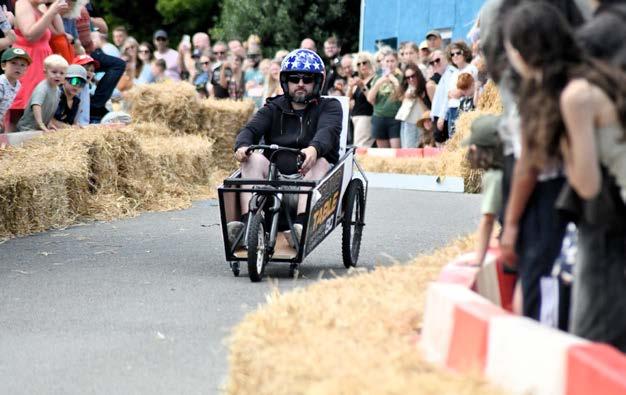


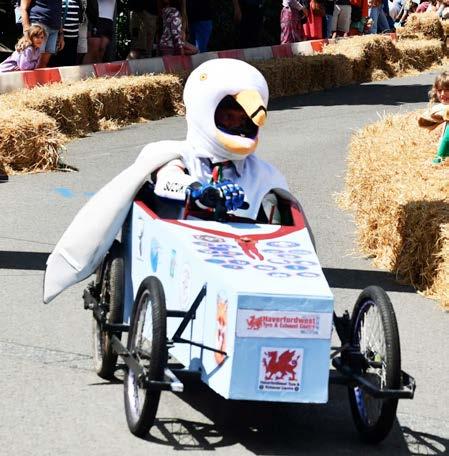





FOUR women from Pembrokeshire have become the first all-Welsh female crew to row across the Atlantic Ocean, raising £17,000 for charity in the process.
Merched y Môr – Denise Leonard, Helen Heaton, Liz Collyer and Heledd Williams – completed the 3,000mile World’s Toughest Row Atlantic challenge after spending 50 days, 14 hours and 43 minutes at sea.
The crew set off from La Gomera in the Canary Islands on December 12, 2025, and arrived in Antigua on February 2 this year.
The challenge raised funds for the RNLI, Sea Trust Wales, Popham Kidney Support and Action for Children.
The women trained for more than two years, launching from locations including Llangwm and Fishguard, and completed more than double the minimum qualifying hours required for the race.
Their boat, Cariad, was blessed at St Davids Cathedral before the challenge as part of the RNLI’s 200th anniversary celebrations.
During the crossing they faced

rough seas, torrential rain, extreme heat, seasickness and exhaustion. At one stage they had to enter the ocean to scrape barnacles from the hull while other crew members kept watch for sharks.
The team navigated the entire route themselves and remained unaided throughout the crossing,
carrying emergency beacons, survival equipment and maintaining regular contact with race safety teams.
Crew member Liz Collyer said the women chose to support the RNLI because of their close links to the coast and the charity’s lifesaving work around Wales.
The achievement places the four rowers among fewer than 600 women worldwide who have successfully rowed across the Atlantic Ocean.
The crew said the challenge was the experience of a lifetime and that they were proud the money raised would help charities supporting communities in Wales and beyond.

After a break, I have been itching to get back, albeit on a monthly basis, and while I have been absent, quite a bit has happened to say the very least.
After many months of speculation regarding Sir Keir Starmer’s premiership, the most unpopular prime minister in our history finally bit the bullet this June after gaining a landslide election victory barely two years ago. His tearful resignation speech was reminiscent of the one Theresa May delivered a few years ago.
Enter the opportunist Andy “I’m just an ordinary bloke” Burnham, who had gone into Wakefield to use its electorate to secure a seat.
Weeks prior, Wes Streeting had sharpened his hatchet to lead a challenge. Here is a man who supposedly was doing a great job as Health Secretary but nevertheless walked away from this vital post, like all good self-serving politicians, in an attempt to go for glory, which thankfully blew up in his face when he failed to gather enough support.
Ed Miliband was about to throw his hat in, but the job wrecker forgot to allow for the fact as to how massively unpopular he is.
So, at the time of writing, it seems Downing Street becomes Coronation Street, with Burnham
being given an easy ride by the four hundred or so Labour MPs petrified to lose their seats, which is the road they were on under two-tier Keir.
The present situation is that if no other candidates show up by 17 July, then the most undemocratic period of our time will produce an unopposed prime minister, and to hell with what the electorate want.
The hapless Starmer becomes the seventh prime minister in ten years. I swear I have iceberg lettuces in my fridge which have lasted longer than British prime ministers.
Personally, as Private Frazer would say, Burnham is doomed from the start. He flip-flops more than Starmer and no one, including himself, knows what he actually stands for.
Mr Farage demands an election. Careful what you wish for, Nigel. Your party managed to lose three by-elections the same night “bloke” Burnham, the king of the north, was victorious, while Kemi Badenoch led the Tories into victory in Aberdeen of all places and insists she will NEVER do a deal with Reform. Hmm, I wonder?
Meanwhile, a couple of borders over in bonnie Scotland, an astonishing story has finally unravelled, and I don’t mean the prowess of the Tartan Army in
spending spree, she replied that she just assumed that because both of them enjoyed good salaries, had no children and did not take holidays, she didn’t think it was that odd.
It is one thing to see some people in power accused of being selfserving, but this story is something else and must surely, in the not-toodistant future, become a strangerthan-fiction mini-series.
After the drama of Starmer’s resignation on the Monday, the fickle media had quickly turned their attention by the Wednesday to Britain’s all-time favourite subject: “the weather”.
At the time of writing, it is a rainy, overcast Saturday in flaming June, with the temperature at around 19C, but my friendly weather forecaster is telling me to run for the hills as this weather is so, so dangerously hot. Close the curtains and, guess what, drink plenty and be as miserable as humanly possible!
the USA, as Peter Murrell, the chief executive of the Scottish National Party and now estranged husband of SNP former leader Nicola Sturgeon, was sentenced in a court in Edinburgh to over four years’ imprisonment for stealing a staggering sum of £400,000 of party funds.
His former partner, Miss Sturgeon, must be a new contender for the next Specsavers advertisement, as she claims she NEVER noticed the £113,000 motorhome parked on her mother-in-law’s driveway.
Interviewed on the BBC Laura Kuenssberg show, one could almost feel sorry for her as she was quizzed about Murrell’s bizarre shopping list between 2023 and his arrest a couple of years later. In that time, he purchased items ranging from the motorhome and a Jaguar to several hairdryers, which was odd given he is as bald as a coot, and also three coffee machines totalling around £6,000, copious amounts of superglue to add to his sticky fingers, no doubt.
Sturgeon reflected on how they went into a high-class jewellery store and she fell for a very expensive necklace, and when they got home, he had purchased it for her.
When asked about any knowledge she may have had of this
Records have been broken for extreme heat. Ignore 1957 and 1976. This climate change chapter will kill us all, and forget the fact that we had extreme heat in 1976 for 13 weeks solid, and forget the fact that the climate has been changing for millions of years. This is the one that counts.
Ed Miliband loves a few hot days in June. It means he can carry on his insane plan to achieve net zero by 2050 and have no more fossil fuels. Well, I have a message for Red Ed: your plan WILL fail, for guess what, kids will have to be driven to school, families will have to go shopping and folk have to drive to work.
Learn the lesson of earlier in the month when the people of Aberdeen kicked you and the SNP into the long grass after your constant attack on North Sea jobs. And this is a possible chancellor. If he was not so scary and hugely damaging, he would be funny.
And finally, we have to mention the World Cup being played in no less than three nations. The Americans have managed to play games in four quarters with hydration breaks, and the players race for cover as soon as a clap of thunder is heard.
Mexico is one of the hosts for an unprecedented third time, despite football NOT being the national sport, which is “charrería”, similar to a rodeo!
Enough said. See you next month.
NET ZERO WEEK will put Pembrokeshire at the centre of one of the biggest economic and environmental debates facing Wales — how to cut emissions without leaving rural communities, households and local businesses behind.
From Milford Haven’s energy terminals to family farms, older village homes and the Celtic Freeport, the county has more at stake than most parts of Wales.
For supporters, the move to net zero offers a chance to bring new investment, skilled jobs and cleaner industry to an area already central to the UK’s energy supply.
For others, it raises difficult questions about cost, planning, rural transport, household bills and whether the promised benefits will actually reach local people.
PEMBROKESHIRE has long been one of the UK’s most important energy counties.
Milford Haven Waterway has played a major role in oil, gas and power generation for decades, with facilities including Valero, South Hook LNG, Dragon LNG and Pembroke Power Station forming part of the county’s industrial landscape.
Now the question is whether the same waterway can lead the next phase of the energy story.
Floating offshore wind, hydrogen, cleaner shipping, grid upgrades and industrial decarbonisation are all being discussed as part of the county’s future.
The Celtic Freeport, linking Milford Haven and Port Talbot, has been promoted as a major opportunity to attract investment, create skilled jobs and support the development of a lowcarbon economy.
But local people will want more than promises. The key test will be whether projects create real employment, apprenticeships and supply-chain work for Pembrokeshire firms.
FOR many households, net zero is not about slogans. It is about the cost of heating a home.
Pembrokeshire has many older rural properties, stone cottages, coastal homes and farmhouses which are difficult and expensive to insulate.
Some households are also off the mains gas grid and rely on oil, LPG or

solid fuel.
That makes the transition more complicated than in urban areas. Heat pumps, insulation, solar panels and battery systems may cut bills in the long term, but the upfront costs can be far beyond the reach of families already under pressure.
Net Zero Week is likely to renew calls for clearer advice, better grant support and practical schemes aimed at rural Wales.
Without that, there is a risk that the people most in need of help with energy bills are the least able to afford the changes being asked of them.
FARMING is another major part of Pembrokeshire’s net zero debate.
Farmers are being asked to reduce emissions, protect rivers, improve biodiversity and adapt to more extreme weather.
At the same time, many are already facing higher costs, bovine TB pressures, changing support schemes and tight margins.
There are opportunities in renewable energy, better soil management, tree planting, slurry management, local food production and nature recovery.
But farmers will want policies that are practical, properly funded

and shaped with the industry — not imposed from Cardiff or Westminster without understanding the reality of rural life.
In Pembrokeshire, a fair transition means recognising that food production, landscape management and climate action must work together.
ONE of the strongest arguments for net zero in Pembrokeshire is the potential for new employment.
If floating offshore wind and hydrogen projects move ahead, the county could need more engineers, welders, electricians, technicians, marine specialists, planners, construction workers and environmental experts.
That could be a major opportunity for young people who currently feel they must leave Pembrokeshire to build a career.
But that will only happen if training routes are put in place early.
Schools, Pembrokeshire College, local firms and major energy companies will all have a role in making sure local people can compete for the jobs being promised.
The county has heard grand claims about regeneration before. Net zero will be judged on whether it
delivers visible benefits in places such as Milford Haven, Pembroke Dock, Haverfordwest, Fishguard, Tenby and rural communities across the county.
Pembrokeshire County Council has previously declared a climate emergency and set out ambitions to reduce its own emissions.
That work includes cutting energy use in buildings, improving street lighting, looking at fleet vehicles and considering how services are delivered.
The council’s own carbon footprint is only part of the wider picture, but it has influence through planning, housing, transport, procurement and waste.
Decisions on new developments, active travel routes, public transport, school buildings and council housing will all shape how realistic net zero feels to ordinary residents.
There is also a balance to strike. Climate targets must be pursued without making daily life harder for people in communities where buses are limited, journeys are long and cars are often essential.
The phrase “just transition” is often used in climate policy. In Pembrokeshire, it means something simple: the move to net zero must not leave rural communities worse off.
That means recognising lower wages, older homes, limited transport, agricultural pressures and the importance of small businesses.
It also means making sure major green projects do not simply use Pembrokeshire as a backdrop while profits, contracts and skilled jobs go elsewhere.
Net Zero Week will bring national speeches, campaigns and pledges.
But in Pembrokeshire, the test is practical.
Will homes be warmer? Will bills come down? Will farmers be supported? Will young people get skilled jobs? Will local firms win contracts? Will the county benefit from the energy transition it is being asked to host?
If the answer is yes, net zero could become one of Pembrokeshire’s biggest opportunities.
If not, it risks becoming another policy that feels as though it is being done to rural Wales, rather than with it.
IN today’s economic climate, where rising energy costs continue to impact both households and businesses, reliability and value have never been more important when choosing a renewable energy partner. For many across Pembrokeshire and beyond, Solŵr Ltd is quickly becoming synonymous with both.
Operating across West Wales, the Narberth-based company has built a strong reputation not only through its technical expertise, but through consistent customer satisfaction—something that is increasingly rare in a competitive and rapidly expanding sector.
While accreditations and certifications are vital indicators of quality, it is often customer experience that tells the real story—and Solŵr delivers on both fronts.
Recent feedback highlights the company’s commitment to efficiency and professionalism:
“Very reasonably priced and the PV
system was installed in 1 day. Turned up exactly when they said they would and everything’s working perfectly. MCS certified too, can’t go wrong!”
This combination of competitive pricing and rapid installation is a key advantage for both homeowners and businesses looking to minimise disruption while maximising return on investment.
For rural customers—who often face additional challenges when sourcing reliable contractors—Solŵr has proven to be a dependable choice:
“Solar panel installation. They were really responsive to any enquiries and getting the job done was first class. I live very rural and it can be hard to find someone good.”
One of the standout themes across customer endorsements is communication—an area where many companies fall short, but where Solŵr consistently excels.
“They’ve been the very best at
keeping us updated… even on occasions where they were unable to attend, they still managed to keep us well informed, which you don’t often get.”
In an industry where delays and logistical challenges can occur, this level of transparency builds trust and reinforces the company’s reputation for putting customers first.
Solŵr’s offering extends far beyond simply fitting solar panels. From battery storage systems to full energy solutions, the company provides tailored installations designed to deliver long-term savings and energy independence.
For businesses, this means greater control over energy costs and protection against market volatility. For homeowners, it translates into lower bills and a reduced carbon footprint—without compromising on quality or reliability
What sets Solŵr apart is its strong local presence combined with industry-leading standards. In rural and semi-rural areas like Pembrokeshire, trust is built through word of mouth—and the company’s growing list of positive endorsements reflects a business that consistently delivers on its promises.
As more organisations and households move toward renewable energy, Solŵr Ltd is proving that the transition doesn’t need to be complicated or costly. Instead, it can be efficient, transparent and—most importantly—worthwhile.
With verified customer satisfaction, recognised certifications, and a track record of dependable service, Solŵr Ltd is helping to remove the uncertainty that can sometimes surround renewable energy investment.
In doing so, they are not just installing solar systems—they are building confidence in a cleaner, more sustainable future for West Wales.


In a region where the elements can be as challenging as they are beautiful, having a home or holiday property that stands up to the Pembrokeshire climate is essential. That’s where www.c4w. co.uk has firmly established itself as one of West Wales’ most trusted names in uPVC and composite solutions.
Based in Pembroke Dock and serving communities across Pembrokeshire, Carmarthenshire and Ceredigion, C4W is more than just a supplier and installer— it’s a family-run business built on decades of local knowledge, craftsmanship and genuine customer care. With over 30 years of experience, the company has grown from a small, passionate venture into a respected leader in its field, all while staying true to its roots. Local Knowledge That Makes the Difference Living and working in West Wales gives C4W a unique understanding of the region’s environmental challenges. Coastal air, high winds and persistent rain demand materials that go beyond standard specifications. That’s why the company focuses on high-quality, British-manufactured products designed to withstand the harshest conditions while maintaining their appearance and performance over time. From
energy-efficient windows and secure composite doors to low-maintenance decking, cladding and fencing, C4W offers solutions that enhance both the look and longevity of homes and holiday properties alike.
What truly sets C4W apart is its approach. As a family-run business, reputation is everything—and every project reflects that commitment. There’s no ard sell, no one-size-fits-all packages—just honest advice tailored to each customer’s needs. Whether working on a residential property, a caravan park, or a commercial installation, the same level of care and attention to detail is applied. The result is a portfolio of work that speaks for itself and a growing base of loyal customers across the region.
C4W’s range of services is designed to help customers make the most of their space, both inside and out. From bespoke conservatories and stylish front doors to
durable composite decking and modern balustrades, the company helps create environments that are as functional as they are attractive. For holiday parks and leisure developments—an important part of the local economy—C4W has become a go-to partner, delivering installations that combine durability with visual appeal, enhancing the experience for visitors and owners alike. What Customers Say
C4W’s reputation is reinforced by consistent positive feedback from customers who value both the quality of the products and the professionalism of the team. “From start to finish, the service was excellent—friendly, knowledgeable and reliable. The finished result has completely transformed our home.“Living near the coast, we needed something that would last. The team at C4W recommended the perfect solution, and we couldn’t be happier with the outcome.” “A genuinely local company you can trust—great advice, no pressure, and workmanship that speaks for itself.”
C4W’s success is closely tied to the communities it serves. By employing local people, supporting regional suppliers and maintaining a strong presence in Pembroke Dock, the business plays an active role in the local economy. Customers are even encouraged to visit the company’s showground, where they can see products first- hand and speak directly with the team—another reflection of C4W’s commitment to transparency and personal service.
Building for the Future As homeowners and businesses increasingly look for sustainable, low-maintenance solutions, C4W is well positioned to meet that demand. Its focus on durable materials, energy efficiency and long-lasting installations aligns perfectly with modern expectations.
But despite its growth and success, the company’s philosophy remains unchanged: deliver quality, support local customers, and take pride in every project.
From its family roots to its growing reputation across West Wales, C4W continues to prove that local businesses can deliver not just great service—but exceptional results that stand the test of time.



As businesses, farms and community organisations across Pembrokeshire look for practical ways to manage rising energy costs and reduce reliance on imported fuels, biomass heating systems are increasingly becoming part of the conversation.
While renewable technologies often grab headlines for their environmental credentials, the real story behind biomass is one of resilience, local economic benefit and long-term energy security.
Pembrokeshire has always been a county closely connected to the land. Agriculture, forestry and rural enterprise play a vital role in the local economy, making biomass heating a particularly natural fit for the region.
Unlike many energy sources that depend on international supply chains and global market fluctuations, biomass fuel can often be sourced much closer to home.
This creates opportunities for local suppliers, transport operators and landowners while helping to keep energy spending within the Welsh economy.
One of the strongest advantages of biomass heating is its suitability for larger buildings and properties with significant heat demand. Rural hotels, holiday parks, schools, agricultural buildings and community facilities often require consistent heating throughout the year. Biomass systems excel in these environments, delivering dependable heat output even during
the coldest months when demand is highest.
For many organisations, energy independence has become just as important as sustainability. A biomass heating system allows businesses to reduce their exposure to volatility in oil and gas markets. In a county such as Pembrokeshire, where many properties remain off the mains gas network, this can provide greater certainty when planning operating budgets and future investment.
Biomass technology has also evolved considerably over the past decade. Modern systems are highly automated, with sophisticated controls that can adjust output to match demand, integrate with existing heating infrastructure
and provide detailed performance monitoring. This means users can enjoy the benefits of renewable heating without sacrificing comfort or convenience.
The local economic impact should not be overlooked. Investment in biomass heating supports skilled engineering, servicing and maintenance roles within the region. It encourages the development of specialist expertise and helps create jobs that cannot easily be outsourced elsewhere. As Pembrokeshire continues to diversify its energy sector - from offshore wind ambitions in the Celtic Sea to community-led sustainability projects - biomass represents another valuable piece of the renewable energy puzzle.


As the world accelerates toward a cleaner, more sustainable future, electric vehicles are no longer a niche choice—they are becoming the smart, responsible standard. At the forefront of this shift is Leapmotor, a forward-thinking electric vehicle manufacturer redefining what drivers can expect from efficiency, performance, and environmental impact.
One of the most impressive aspects of the Leapmotor range is its commitment to reducing emissions without compromising on practicality. Unlike traditional petrol or diesel vehicles, Leapmotor cars produce zero tailpipe emissions. This means cleaner air in our towns and cities, reduced greenhouse gases, and a direct contribution to tackling climate change.
But the environmental benefits go far beyond just eliminating exhaust fumes.
Leapmotor vehicles are engineered with cutting-edge battery technology, allowing for exceptional energy efficiency. Electric motors convert a significantly higher percentage of energy into motion compared to internal combustion engines. The result? Less wasted energy and more miles per charge—reducing overall energy demand and supporting a more sustainable transport system.
While all vehicles have an environmental footprint during manufacturing, Leapmotor’s electric models quickly offset this through their cleaner operation. As the UK

continues to expand its renewable energy infrastructure—such as wind and solar—charging an electric vehicle becomes even greener.
Over its lifetime, a Leapmotor car can significantly reduce your carbon footprint compared to a conventional vehicle.
Another often overlooked benefit is noise pollution. Leapmotor vehicles operate almost silently, helping to create calmer, quieter streets— particularly in residential and urban

areas. Combined with zero emissions, this makes them ideal for communities aiming to improve quality of life while reducing environmental impact.
Leapmotor doesn’t just build electric cars—it builds smart mobility solutions. With advanced software integration, efficient battery management systems, and a focus on innovation, the brand is shaping the future of transport. Choosing a Leapmotor vehicle isn’t just about driving—it’s about making a conscious decision to support sustainability.

As more drivers look for ways to reduce their environmental impact without sacrificing convenience or performance, Leapmotor offers a compelling solution. With impressive range, modern design, and a clear environmental advantage, it represents a step forward in responsible motoring.
The road ahead is electric—and with Leapmotor, it’s cleaner, quieter, and more sustainable than ever.


















FAMILIES are being invited to the Torch Theatre this July for a lively bilingual production that uses music, storytelling and interactive performance to explore the importance of bees and other pollinators.
We Need Bees, an original production from Theatr na nÓg, has been created by award-winning Welsh playwright Katherine Chandler and introduces important environmental themes to young audiences in an engaging and accessible way.
The show will visit the Torch Theatre in Milford Haven on Saturday, July 11, with performances in both Welsh and English, thanks to support from the ScottishPower Foundation’s Art for Climate Fund.
Fun, energetic and thoughtprovoking, We Need Bees explores biodiversity loss, climate displacement and environmental responsibility through the fascinating world of insects. By focusing on the lives of bees and other pollinators, the production encourages children to think about empathy, resilience and the real-world impact of climate change.
Featuring striking oversized bee costumes and original songs, the show promises a memorable experience for school and community audiences alike.
Director Phylip Harries said: “It’s a privilege to be part of a production that shares such important messages with young audiences. Theatre is a

The production features original music by Barnaby Southgate and will be performed in both English and Welsh at selected venues.
Hill, Executive Officer and Trustee of the ScottishPower Foundation, said: “The climate crisis is the defining challenge of our time, and we know the arts have a unique power to make complex ideas accessible, emotional and impossible to ignore.
“Through our new Art for Climate Fund, we’re backing bold, imaginative projects that give young people hope, confidence and a real sense of agency. Theatr na nÓg, a worthy beneficiary of this new fund, shows how creativity can spark climate action in classrooms and communities across the UK, and we’re incredibly proud to support them as one of the first recipients of this new fund.”
brilliant way to entertain children while encouraging them to think about the world around them, and We Need Bees does exactly that.
“At Theatr na nÓg, we create productions that leave audiences smiling but also talking and thinking afterwards. Morgan, Catrin and Aled are fantastic storytellers who bring so much energy to the show. We’re delighted that the school tour has sold out, and I’d encourage families to come along to one of the public performances and enjoy it together.”
We Need Bees first toured schools in 2012 before later being adapted as an online podcast during the Covid pandemic. It returned as an outdoor theatre production at Theatr Brycheiniog in 2021 as part of a Welsh Government pilot scheme encouraging audiences back to theatres.
Thanks to ScottishPower’s Art for Climate Fund, the show will tour schools across Wales, reaching more than 1,200 children, ahead of the arrival of its brand-new companion production, Bug Hotel, in 2027.Melanie
The cast includes Morgan LlewelynJones, whose theatre credits include The Trial of Elgan Jones for Theatr na nÓg and The Snow Queen at Sherman Theatre; recent musical theatre graduate Catrin Lewis; and Aled Herbert, who returns for his twelfth production with Theatr na nÓg. On screen, Aled was most recently seen in the popular television series Rownd a Rownd.
We Need Bees is suitable for families and children aged four and over.
The show can be seen at the Torch Theatre on Saturday, July 11, at 11:00am in Welsh and 2:00pm in English. Tickets are £10 and can be booked at torchtheatre.co.uk or through the Box Office on 01646 695267.
A youth-led project that began as a small discussion group for girls at Ysgol Greenhill has grown into an award-winning movement reaching across Pembrokeshire and beyond.
Supported by Pembrokeshire Youth Service and Senior Youth Worker Leah Walker, We Know Our Journey has spent the past four years empowering young people to become leaders, educators and advocates for positive change.
The countywide initiative now brings together girls and boys to promote healthy relationships, positive masculinity, mental health awareness, emotional wellbeing, and the prevention of violence against women and girls.
Young people involved in the project have led workshops, developed resources, raised more than £3,000 for local charities, represented Pembrokeshire at national and international events, and worked with a range of partners to create lasting change in their communities.
The project has also built strong working relationships with a number of organisations in Wales, including the Welsh Government’s Sound campaign.
Tom Sinclair editor@herald.email
Following a Taith exchange trip to New Zealand involving We Know Our Journey and Her Voice, a Vale of Glamorgan youth project, a new community interest company, Our Voice Our Journey, was created to continue and expand the work.
The group has also worked with the global movement She Is Not Your Rehab, which members hope to welcome back to Pembrokeshire this September.
Among its achievements, We Know Our Journey has helped develop a bilingual Sexual Harassment Toolkit with Her Voice for use across Wales, launched positive masculinity campaigns, and delivered emotional wellbeing projects that have reached schools and communities across the county.
The project’s work has been recognised with a Highly Commended Safer Wales Award and a Pembrokeshire Spotlight Award.
Earlier this year, Leah was invited to St James’s Palace for a special event celebrating local government workers
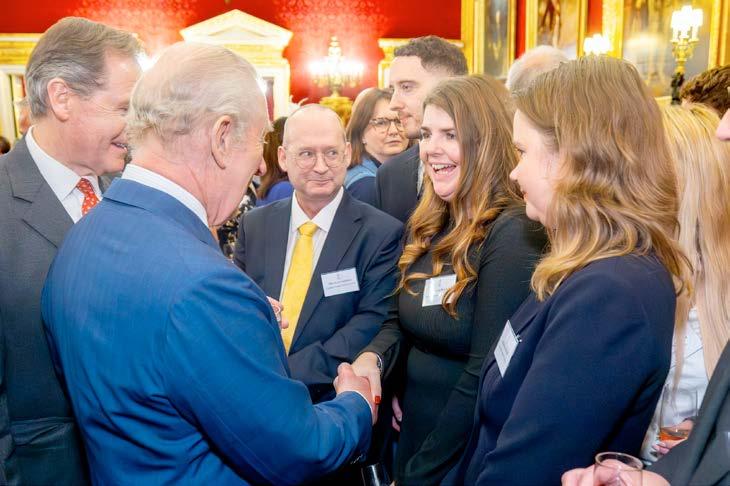
and their work around violence against women and girls, domestic abuse and sexual violence.
Leah said: “What started as a small group of determined young people has become a powerful example of what can be achieved when young people are trusted to lead.
“As We Know Our Journey continues to grow, its mission remains clear: to educate, empower and inspire lasting change.
“I am incredibly proud of our young people and what they have achieved.”
PEOPLE across Pembrokeshire, Carmarthenshire and Ceredigion are being encouraged to discover the wildlife on their doorstep as Wales Nature Week returns this July.
The annual celebration takes place from July 4 to 12, with more than 80 events across Wales, including a strong programme in Pembrokeshire, Carmarthenshire and Ceredigion.
This year’s theme, In Your Neighbourhood, focuses on the wildlife, green spaces and everyday nature that can be found close to home, from beaches and wetlands to country parks, nature reserves, gardens and community spaces.
In West Wales, events include seashore activities on the Pembrokeshire coast, conservation work at Broad Haven, a guided walk at Teifi Marshes, a family nature day at Pembrey Country Park and the Ceredigion Nature Festival in Aberystwyth.
Natural Resources Wales said the week is designed to encourage people of all ages to get involved, spend time outdoors and take simple steps to help nature recover.
Prys Davies, Executive Director of Strategy, Policy and Evidence at Natural Resources Wales, said: “Wales Nature Week is a fantastic opportunity for people of all ages to get involved and make a difference for nature.
“We’re encouraging everyone to take a closer look at the nature on their doorstep, and to take simple, practical steps to help it thrive. Whether that’s creating space for wildlife at home, getting involved in local projects, or supporting conservation work, every action counts and adds up to real change.
“We’re facing a nature and climate emergency, and the need to act has never been clearer. Healthy ecosystems underpin our food, our health and our economy, and they need our support to thrive. Wales Nature Week is a chance for all of us to play our part.”
Local events include a Balsam Bash at Morfa Wetlands in Carmarthen on Friday, July 4, from 10:00am to 1:00pm. Volunteers will help tackle invasive Himalayan balsam and protect an important wetland habitat.
On Saturday, July 5, a guided walk at the former Pentremawr Colliery in Pontyberem will explore how nature has reclaimed the historic industrial site. The free event runs from 10:00am to 12:30pm.
Families in Pembrokeshire can take part in a Junior Seashore Safari on the

Tom Sinclair editor@herald.email
Pembrokeshire Coast on Saturday, July 5, from 2:00pm to 4:00pm, with young explorers invited to discover the marine life living along the shoreline.
A Volunteer Conservation Day will also take place at Slash Pond Community Nature Reserve in Broad Haven on Sunday, July 6, from 10:30am. Volunteers will help with practical conservation tasks, including habitat management and boardwalk maintenance.
On Wednesday, July 9, the Wildlife Trust of South and West Wales will lead a Wales Nature Week walk at Teifi Marshes Nature Reserve in Cilgerran from 1:30pm to 3:00pm. The walk will give visitors a chance to learn more about the reserve’s habitats, wildlife and future plans for the visitor centre.
One of the biggest local highlights will be Gone Wild at Pembrey Country Park on Saturday, July 11, from 11:00am to 4:00pm. The free family event, with parking charges applying, will include outdoor activities, nature challenges, scavenger hunts, den building and stalls from organisations working to protect wildlife in Carmarthenshire.
Ceredigion will also host one of the headline events, with Ceredigion Nature Festival taking place in Aberystwyth on Saturday, July 11, from 10:00am to 4:00pm. The free festival will bring together conservation groups, artists, researchers and community organisations to celebrate the county’s wildlife and landscapes.
The week ends locally with a Nature
Bingo Walk with Sea Watch in New Quay, Ceredigion, on Sunday, July 12, from 11:00am to 1:00pm. Participants will explore the coast while spotting and identifying local wildlife.
Further West Wales events continue later in July, including a BioBlitz Festival at the National
Botanic Garden of Wales in Llanarthne on July 18 and 19, where visitors will help record as many species as possible across the garden and Waun Las Nature Reserve.
Full event listings and booking details are available on the Wales Nature Week website.


A PEMBROKESHIRE DJ and music producer is celebrating a major career breakthrough after having his new track signed by London dance label Perfect Havoc.
Josh Oughton, 29, who performs as J Flow, will release his new single Another Lie on all major platforms on Friday, July 3.
Josh, who is from Pembrokeshire and still lives locally, began DJing in 2018 and has been performing professionally for the
Tom Sinclair editor@herald.email
past two years. He has also spent several years learning music production, before deciding to take it seriously over the last two years.
He said Perfect Havoc discovered him after he sent demos directly to the label.
“Having my track signed to Perfect Havoc is a massive achievement in my career,” Josh said. “It gives me the


potential to get booked for bigger shows and festivals.”
He described Another Lie as a highenergy dance track with “pure summer vibes”.
“The story behind it is constantly being lied to and me being able to walk away from them lies,” he said.
Josh said finding out the label wanted to sign the track was a huge moment.
“My reaction was along the lines of, how is this happening?” he said. “It was a mixture of emotions. I was excited but
very nervous at the same time, but now it’s coming closer to the release it’s just pure excitement.”
The 29-year-old said the achievement still has not fully sunk in.
“To me personally, it still doesn’t feel real,” he said. “I never thought I would have got as far as having my music signed to a label, so it means the world to me.”
Josh also had a message for other young DJs and producers in Pembrokeshire hoping to break into the industry.
MILFORD HAVEN TOWN COUNCIL has presented a £6,000 donation to Milford Haven Round Table to help support this year’s Milford Haven Carnival and Free Fireworks Extravaganza.
The cheque was presented by the Mayor of Milford Haven, Councillor Mark Woodward, at the Lord Nelson Hotel on Thursday, June 25.
The donation was agreed at a meeting of the full council on Monday, June 8, in recognition of the work carried out by Milford Haven Round Table in organising
major community events for the town.
A further £500 will also be donated to the Round Table for its annual support with the Visit of Santa to Milford Haven.
Milford Haven Town Council said it was proud to support the Round Table and hoped the strong relationship between the two organisations would continue for many years to come.
The council added: “Thank you all so very much for giving up your time to put these fabulous events together for our beloved town.”

A PEMBROKESHIRE sailor is leading a team of non-professional crew members on the final ocean crossing of one of the world’s toughest yacht races.
Lou Boorman, from Haverfordwest, is skipper of Team Tongyeong in the Clipper 2025-26 Round the World Yacht Race.
Her team has now departed Washington, DC, and is heading across the North Atlantic to Oban in Scotland, marking the last major ocean crossing of the global race.
The Clipper Race is unusual because it takes people from all walks of life and trains them to become ocean racers. No previous sailing experience is required.
Each of the ten identical Clipper Race yachts is led by a professional skipper and first mate, with up to 22 non-professional crew members on board. The teams race around the clock for up to 30 days at a time, covering a global route of around 40,000 nautical miles.
Lou has been leading Team Tongyeong since the race began in Portsmouth last August. The team has been representing the South Korean
city of Tongyeong throughout the competition.
Speaking ahead of the final Atlantic crossing, Lou said: “It doesn’t feel quite real that we’ve nearly sailed around the world and are one hop across the ocean to home waters!
“This is the hardest thing I’ve ever done. A huge challenge. We’ve had three podiums so far and are hungry for more.”
At the time of the release, Team Tongyeong was leading the current stage of the race.
The route from Washington, DC, to Oban is just over 3,000 nautical miles and will see crews face changing weather systems, strong Atlantic currents and the unpredictable conditions that make ocean racing so demanding.
Lou said the challenge had not only been about sailing, but also about leadership.
She said: “In addition to the sailing and the conditions, the challenging part has been about people management and leadership. I’ve had to be a strong leader. That’s what my team expects and needs from me. So the development in this race is incredible.”



She added: “I think it’s going to leave a big hole in my life, leaving this team and leaving the boat. I’m going to have to fill that gap in my life fairly quickly. I’ll miss it too much!”
After ten months at sea, and with just over three weeks of racing remaining, the arrival in Oban will mark a major milestone as the fleet returns to UK waters.
Oban is due to welcome the Clipper Race fleet from Friday, July 10, with a
programme of public events allowing visitors to see the yachts and meet the race crews and professional skippers. From Oban, the teams will race for the final time in the 2025-26 edition, finishing in Portsmouth on Saturday, July 25, where the overall leaderboard positions will be confirmed. Applications are already open for the 2027-28 edition of the race, which is due to begin next summer.


BBC’s Bargain Hunt returns to film at the Llandeilo Antiques and Vintage Fair , on Saturday 4 th July , which means the fair will be setting some high standards.
They will be filming their popular BBC day time television programme at the Llandeilo Civic Hall fair, where it has always turned up some surprises over the years , with different celebrities turning up. This is the third time that Bargain Hunt has chosen this venue to film their show , which is aired at lunchtime on BBC1 and is watched by millions of viewers each day.The presenter on the day is Eric Knowles and the experts are Irita Marriott and John Cameron
Bargain Hunt was first aired on BBC 1 on 13 March 2000 and was originally presented by David Dickinson. From 2003 to January 2016 it was presented by Tim Wonnacott. In 2016 the format changed to a rota of hosts from a “team of experts” fronting the show.
Two teams – designated the “Reds” and the “Blues” – compete. Each team has two members, who wear jackets that correspond to their team’s colour. At the beginning of the show, each team is given £300 with which to purchase antiques. The objective is to find items that will earn the team a profit when later sold at auction. Each team is accompanied by their expert, though it is the contestants’ decision whether to heed the advice , given by their expert. After the contestants have completed their purchases and presented them to the host, home viewers are shown a “what the auctioneer thinks” section in which the auctioneer appraises the buys and gives the auction estimate.

At the auction, as each item is sold, the host compares the auction sale price to the price originally paid by the team. If the final total shows a profit, the team receives that profit in cash; otherwise, the team receives nothing.
2019 again brought a change to the rules with two challenges, the ‘Big Spend Challenge’ and the ‘Presenter’s Challenge’ being introduced. The teams have to spend at least £75 on one item, and buy an item relating to a specific category. Other changes include the contestants introducing themselves to camera, rather than to the presenter, and the bonus buy is now revealed to the contestants in the auction room after the sale of the first three items. If the teams gain profits on all 3 items then a golden gavel is awarded to the team members,
The experts Irita and John will aid the contestants in their choice of items.
Irita Marriott is an antique expert and dealer, known for her role as an expert on BBC1’s Antiques Road Trip,Celebrity Antiques Road Trip, Bargain Hunt and Channel 4’s The Greatest Auction.
Irita, from Latvia, came to the UK at the age of 20 .
She has spent nearly a decade working in the antiques and dealing industry. She previously worked as a cataloguer and a valuer in a leading auction house based in Derbyshire. Now, she deals with the precious and beautiful items full time.
Irita was first seen on the TV screens in the UK in 2021 when she joined the Antiques Road Trip team and then became one of the presenters on Bargain Hunt.
In 2023, she opened Irita Marriot

Auctioneers and Valuers – one of very few female-led auction houses in the uk
The other expert John Cameron ,is a familiar face on our screens thanks to his regular appearances on BBC One’s Bargain Hunt .The antiques expert began his TV career two decades ago on Cash in the Attic and Put Your Money Where Your Mouth, making him a permanent fixture of the BBC’s daytime schedule.
While John initially trained as a carpenter and joiner, a back injury forced him to change careers and follow in his grandfather’s footsteps. He grew up around antiques as his
grandfather was a dealer, however, on leaving school ,he served a fiveyear apprenticeship as a carpenter/ joiner. A re-occurring back problem forced him to give up his physical job and return to college ,where he undertook a three-year degree course at Southampton, studying fine art valuation he later became a chartered surveyor of antiques and fine art ,after further studying.He has become a regular expert on Bargain Hunt.
It is the popular presenter Eric Knowles who is in charge on the day. Eric Knowles was born in Nelson Lancashire, in 1953 and worked in


both engineering and for a firm of antique shippers in the early 1970s. His love of antiques, inherited from his parents, came to the fore in 1976, when he joined Bonham’s, the London auctioneers, working first as a porter in the ceramics’ department, before becoming head of the department in 1981.
Eric has also become a regular face on TV. His appearances include BBC Bargain Hunt, Antiques Road Show, Antiques Master to name but a few. Eric is a writer. He is resident Sunday Times Antiques Expert and a frequent contributor to the BBC Homes and Antiques magazine. Eric has lectured extensively in the UK and both in the USA and Canada.

As well as presenting and appearing on radio and TV, he has written books on subjects such as Victoriana, Art Nouveau, Art Deco and Royal Memorabilia.
However it’s on BBC Bargain Hunt that we regularly see Eric as one of the team of presenters ,who took over from Tim Wonnacott. This lunch time favourite sees Eric encouraging 2 teams plus their experts ,to go out and find a bargain at various fairs around the country.
We were delighted to have the Bargain Hunts teams at the Llandeilo fair and it will be exciting to see what bargains the contestants discover at this popular fair.The programs will be aired later in the year.

The Llandeilo Antiques and Vintage Fair can be located in the heart of Llandeilo, close to the main car park. Here you will find a bustling, vibrant Fair with lots of antiques and vintage to wet your appetite. The fair now includes a vintage element with a touch of retro.
The fair brings a surprising diversity of antiques on display. There should be a good selection of Welsh items on offer. Whether it’s an original Welsh watercolour or oil painting or a piece of Welsh pottery or examples of Welsh blankets and textiles on display .
Attractive displays of gardinalia has proved extremely popular at the fair, including watering cans , wheel
barrows and garden tools and large garden pots and urns.
The Llandeilo fair has a rich cross section of antiques and vintage on display, from jewellery,watches, books, ephemera, postcards, militaria and vintage clothes and accessories. There will also be collections of glass and up cycled and pre loved furniture, plus interior design pieces. I’m sure visitors will not be disappointed with the selection on offer at this popular fair, especially as there will some outside stands to browse.
Homemade refreshments will be available and doors open at 10 am until 4pm.Admission is just £2and dogs are allowed admission.



Tom Sinclair editor@herald.email
A PIONEERING Pembrokeshire
skills initiative encouraging young women to consider careers in sustainable power, renewable energy and construction has welcomed The Crown Estate as its newest partner.
The SPARC Alliance works with secondary schools across the county to bring future local career opportunities to life for girls aged 12 to 14, with a particular focus on STEM-related pathways.
The programme is already supported by RWE Generation and RWE Renewables at Pembroke Power Station, the Port of Milford Haven, Blue Gem Wind and Ledwood Engineering.
It has now announced new backing from The Crown Estate, the independent organisation which manages land, property and the seabed across England, Wales and Northern Ireland.
The Crown Estate is playing a key role in the development of floating offshore wind in the Celtic Sea, with South West Wales expected to be at the centre of a new clean energy industry.
Three sites for new windfarms are being taken forward by some
of the world’s leading offshore wind companies, creating major opportunities for the region and its supply chain.
The Crown Estate has also awarded funding through its £50m Supply Chain Accelerator Programme, including projects in Pembrokeshire, and is co-funding the regional Fit For Offshore Renewables programme in South Wales with the Offshore Renewable Energy Catapult.
Supporters say the growth of the sector could create significant demand for engineers, welders, construction workers, environmental specialists, business support professionals, maritime experts and port operatives.
Current forecasts suggest more than 5,000 jobs could be created through new Celtic Sea windfarms and their associated supply chains.
However, with an ageing population and changing demographics, there is increasing pressure to ensure local young people have the skills and confidence needed to take advantage of these opportunities.
SPARC aims to help meet that challenge by engaging young women who have historically been underrepresented in engineering, construction, manufacturing and clean energy careers.
Through direct contact with industry, pupils are given insight into the range of roles being created by renewable energy, from traditional power generation to offshore wind and hydrogen technologies.
Hayley Williams, of Pembrokeshire College, the lead partner for SPARC, said: “The Crown Estate’s commitment to SPARC will enable the programme to expand its reach across more schools and strengthen its support for young women aspiring to become STEM professionals.
“This includes enhanced mentoring opportunities, helping participants explore both university pathways and work-based apprenticeships as routes into the industries that will shape Pembrokeshire’s future.”
SPARC Alliance partners say the programme is helping ensure local young people are informed, inspired and equipped to seize the opportunities presented by one of the most significant economic developments Wales has seen in a generation.
FOLLOWING a recent Church in Wales legal threat against Pembrokeshire’s council over plans to remove church status from Cilgerran’s school, Wales Humanists has supported the council plans.
The Humanist support comes after the Church in Wales issued a formal notice that it will take legal action against Pembrokeshire County Council if it presses ahead with plans to remove church status from Cilgerran Voluntary Controlled Primary School.
Back in May, the council voted to remove the Voluntary Controlled status of the Welsh-speaking rural school and to establish it as a 3-11 community school despite 97 per cent of the responses to a consultation about its potential discontinuation opposing it.
That consultation followed a review which “considered the extent of surplus school places in the area, set against a significant decline in the pupil population,” the council has previously said.
Hundreds opposed the proposed changes, with a petition on the council’s own website gaining 391 signatures.
During the consultation, 203 responses were received; 97 per cent (197 responses) against the proposal, with just 1.5 per cent (three) in favour.
Following this, a letter was sent to council officers on behalf of the Diocese of St Davids and the Church in Wales saying that, if the council

Bruce Sinclair Local Democracy Reporter
persists with this course, the Church will take legal action on the grounds of claims of “public misrepresentation and unqualified legal assertions made by Pembrokeshire County Council officers,” and “discrimination against faith schooling”.
The letter also says that, if the council removes VC status from the
HUNDREDS of thousands of young people are being urged to check whether they are entitled to forgotten savings held in Child Trust Fund accounts.
The UK Government has launched a new drive to reunite young adults with more than £1.6bn in unclaimed savings, with more than 750,000 matured accounts still unclaimed.
Child Trust Funds were set up for children born between September 1, 2002, and January 2, 2011, with Government payments made into accounts to give young people a financial asset when they reached adulthood.
Around 6.3 million accounts were opened, mostly by parents or guardians, with some set up directly by HMRC where no account was opened.
The average unclaimed account is worth around £2,200.
Economic Secretary to the Treasury Rachel Blake MP has now convened a new Child Trust Fund Taskforce, bringing together government and providers to improve tracing and encourage more young people to access their money.
Members include OneFamily, Coutts, Nationwide, HSBC UK, Pilling,
The Coventry, Sheffield Mutual, Unity Mutual, Forester, Healthy Investments and The Share Foundation.
Ms Blake said: “Too many young people are missing out simply because they are not aware of where their Child Trust Fund is or how to access it.
“We are acting to fix that by bringing government and industry together, improving coordination and making it easier for people to find and claim what’s rightfully theirs.”
HMRC chief executive JP Marks said many young people had an average of £2,200 waiting to be claimed.
He said: “This is their money, and we want to do all we can to help them find and access it.
“If you think you have one, you can use the Find my Child Trust Fund tool on GOV.UK to find out where your account is held.”
Accounts began maturing on September 1, 2020, when the oldest eligible young people turned 18.
Anyone born between September 1, 2002, and January 2, 2011, can search for their account for free on GOV.UK using their National Insurance number.
Those aged 18 or over can access the funds immediately.
school, the Church will not make the site available for a successor school, which it says will render “the case on which the proposed removal of VC status is based untenable”.
The legal warning described “the gratuitous attack on the church status of Ysgol Cilgerran” as amounting to “a targeted assault on the inclusive Christian education which Church in Wales schools have provided to their communities for generations”.
Since then, Wales Humanists has welcomed the move, which would remove church status from Cilgerran Voluntary Controlled Primary School, and has written to Pembrokeshire County Council expressing its support for the proposal “on behalf of the area’s substantial non-religious community”. It says, according to the 2021 Census, almost half of people in Pembrokeshire identified as having no religion.
Kathy Riddick, Campaigns and Policy Manager for Wales Humanists, said: “Schools should exist to serve their whole community. Where publicly funded schools no longer reflect the beliefs of the communities they serve, it is entirely appropriate for local authorities to consider whether they should continue to have a religious character.
“The question is whether publicly funded schools should continue to be legally designated as belonging to one particular religion when they serve increasingly diverse communities.
“We believe education should be equally welcoming to every child, regardless of their religion or belief, and call on local authorities across Wales to keep the religious character of maintained schools under review so that school organisation reflects local demographics and the needs of modern communities.”

A 200-year-old law which criminalised rough sleeping and begging has been repealed in England and Wales.
The Vagrancy Act 1824, long criticised by homelessness charities as outdated and inhumane, was formally repealed today, Monday, June 29.
The change means people can no longer be criminalised simply for sleeping rough or begging, although existing laws remain in place to deal with criminal behaviour or anti-social behaviour where necessary.
Welsh homelessness charity The Wallich welcomed the repeal, describing it as a major step away from punishment and towards support.
Sian Aldridge, Interim Chief Executive at The Wallich, said: “If you are forced to sleep on the streets, you are not a ‘vagrant’, you’re a human being who needs support and love.
“Experiencing homelessness is

extremely traumatic and the 200-yearold Vagrancy Act was altogether cruel, inhumane and actively prevented people from breaking repeated cycles of homelessness. It’s been a long fight get it repealed.”
The charity said it had campaigned for years alongside Crisis, Liberty,
Shelter Cymru, St Mungo’s, Centrepoint, Cymorth Cymru and Homeless Link for the law to be scrapped.
Ms Aldridge added: “The final repeal of the Vagrancy Act shows that when we speak out together, change is possible. Change that could be transformative to tackling homelessness in Wales.
“We only hope now that policing and local authorities in Wales do not use other means to unnecessarily penalise people for sleeping rough.”
The Wallich said it remained concerned about the use of dispersal orders, public space protection orders and “hostile architecture”, such as anti-sleep benches or doorway spikes, where these are used to move people on rather than address the causes of homelessness.
The repeal comes after years of pressure from charities and campaigners, who argued that criminalising rough sleeping pushed vulnerable people further away from help.
The UK Government said the move marked a shift from punishment to prevention, with ministers saying homelessness should be treated as a social issue requiring support rather than prosecution.
A BOOK signed by Sir Paul McCartney has raised almost £1,000 for charity after being donated to an Oxfam shop in Ceredigion.
The copy of Paul McCartney In His Own Words, a collection of interviews with the former Beatle, was handed in to
Tom Sinclair editor@herald.email
the Oxfam shop in Aberystwyth as part of a wider collection of 1970s memorabilia. It remained on a shelf for several

months before shop manager Joan Randle discovered the inscription while sorting through the items.
The book was later sold at auction through Bonhams, raising £950 for Oxfam.
Ms Randle said the discovery was one of the highlights of her decade working at the shop.
She said: “The book had actually been sitting on a shelf for a few months alongside lots of other 1970s memorabilia.
“I’d been planning to use some of the items in a fun window display, so it wasn’t something we’d paid particular attention to at first.
“One afternoon I found myself with a bit of spare time and decided to work my way through the pile. It was one of the very last things I looked at.
“When I opened the book and saw Paul McCartney’s signature, I could hardly believe it. It was one of the best moments of my 10 years working in the shop.”
The book is signed on the inside front cover in black ballpoint pen with the message: “All the best! to ye!”
Oxfam staff have so far been unable to trace the person who donated the book.
An Oxfam spokesperson said the sale showed how valuable donations to charity shops can be.
They said: “This is a fantastic example of how a single donation can make a real difference.
“We’ve just launched an emergency appeal following the devastating earthquake in Venezuela and every donation to our shops helps ensure Oxfam can respond when communities are hit by disasters around the world.
“We’re incredibly grateful to everyone who donates to Oxfam.
“Whether it’s a signed collectible, a well-loved book or an everyday item, every donation and every sale helps us stand with people when they need it most.”

WALES NATURE WEEK returns next month, with communities across the country being encouraged to discover the wildlife and green spaces around them.
The annual celebration takes place from 4 to 12 July, with more than 80 events planned across Wales, ranging from wildlife walks and family festivals to creative workshops and conservation activities.
This year’s theme, In Your Neighbourhood, focuses on the nature people can find close to home, from city parks, schoolyards and gardens to coastlines, community spaces and local nature reserves.
Highlights include Cardiff Nature Festival in Bute Park, Nature Day at Eirias Park in Colwyn Bay, and Ceredigion Nature Festival in Aberystwyth, alongside dozens of smaller events across Wales.
Organisers say people can get involved by attending a local event, exploring nearby green spaces, or simply taking time to notice the wildlife around them.
Prys Davies, Executive Director of Strategy, Policy and Evidence at Natural Resources Wales, said: “Wales Nature Week is a fantastic opportunity for people of all ages to get involved and make a difference for nature.
“We’re encouraging everyone to

take a closer look at the nature on their doorstep, and to take simple, practical steps to help it thrive.
“Whether that’s creating space for wildlife at home, getting involved in local projects, or supporting
conservation work, every action counts and adds up to real change.”
He added: “We’re facing a nature and climate emergency, and the need to act has never been clearer.
“Healthy ecosystems underpin our
food, our health and our economy, and they need our support to thrive. Wales Nature Week is a chance for all of us to play our part.”
Full event listings are available on the Wales Nature Week website.
A MAJOR exhibition of work by Helen Chadwick is to open at Oriel y Parc, National Park Discovery Centre, in St Davids this month.
Helen Chadwick: Body and Landscape will run from Saturday, July 11, 2026, until Sunday, January 10, 2027. Admission is free.
The exhibition will include work from Chadwick’s Viral Landscapes series, which was inspired by the Pembrokeshire Coast National Park. It will be the first time the works have been shown in the landscape that helped shape them.
The exhibition has been developed through Oriel y Parc’s partnership with Amgueddfa Cymru and is organised as part of ARTIST ROOMS, the touring programme run by Tate and the National Galleries of Scotland.
Chadwick, who died suddenly in 1996 at the age of 42, is regarded as one of the most radical and inventive British artists of her generation. Her work crossed sculpture, photography and installation, often using unusual materials to explore ideas about the body, identity, gender and the natural world.
The Pembrokeshire connection is central to the new exhibition. Chadwick created Viral Landscapes between 1988 and 1989 after receiving an
Artists in National Parks commission from the Victoria and Albert Museum.
As part of that work, she walked the coast path between Fishguard and Castlemartin, photographing the point where land and sea meet. The resulting series reflected both the physical landscape and its powerful effect on the artist’s senses and sense of self.
Bryony White, Senior Curator at Amgueddfa Cymru, said: “Helen Chadwick was a true original. Through her radical and singular approach to art and ideas, she produced a body of work which retains its relevance and power, even today.
“We’re delighted to partner with Oriel y Parc to present this exhibition in Pembrokeshire where, for the first time, visitors will be able to experience and enjoy some of Chadwick’s Viral Landscapes in the landscape which inspired them.”
The exhibition will also include Chadwick’s well-known installation Piss Flowers from 1991-92, along with photographic works from Tate’s collection. These works were recently shown as part of ARTIST ROOMS displays at Tate Modern in London and the National Galleries of Scotland in Edinburgh.
James Parkin, Director of Nature

and Tourism at Pembrokeshire Coast National Park Authority, said: “Helen Chadwick’s work has a powerful connection with Pembrokeshire, and it is very special to be able to bring pieces from her Viral Landscapes series back to the landscape that helped shape them.
“This exhibition reflects the strength of Oriel y Parc as a nationally significant gallery space and the importance of our partnership with Amgueddfa Cymru, Tate and the National Galleries of Scotland.
“It gives visitors a rare opportunity to
experience major contemporary art in one of the most remarkable protected landscapes in the UK.”
ARTIST ROOMS presents the work of international artists in solo exhibitions drawn from a national touring collection jointly owned by Tate and the National Galleries of Scotland. Since 2009, around 220 exhibitions have been shown at nearly 100 museums and galleries across the UK.
Helen Chadwick: Body and Landscape will be on display at Oriel y Parc, St Davids, from July 11, 2026, to January 10, 2027. Admission is free.

THE SEA is often treated as background. We look at heatwaves on land, at parched gardens, hosepipe warnings, pressure on hospitals, wildfires abroad and record temperatures in cities. But the ocean is where much of the climate story is really being written.
This week, European climate scientists reported that global sea surface temperatures outside the polar regions have hit record levels for this time of year. On June 21, data from the Copernicus Climate Change Service showed sea surface temperatures edging above the extraordinary records seen in 2023 and 2024.
That matters because the ocean is not just a passive victim of climate change. It is one of the main engines of the world’s weather.
Warmer seas put more moisture into the atmosphere. They help keep the air warmer for longer. They can add energy to storms. They can increase the risk of intense rainfall, flooding, marine heatwaves and disruption to wildlife. For coastal communities, fishing industries and anyone who depends on the sea, rising ocean heat is not an abstract statistic. It is a warning light.
The oceans absorb more than 90% of the excess heat trapped in the Earth system. That heat is mainly caused by the burning of fossil fuels such as coal, oil and gas. For decades, the seas have acted like a giant buffer, slowing the pace of warming on land. But that buffer comes at a cost.
The more heat the ocean stores, the more the whole climate system is pushed out of balance.
For Wales, this is not a distant concern. We have just seen an exceptional spell of heat. Cardiff Bute Park recorded 35.9C on June 25, setting a new Welsh June maximum temperature record. The same site also recorded an overnight minimum of 23.5C, a new record for both Wales and the UK.
Hot days are one thing. Hot nights are another. When temperatures do not fall properly overnight, people, animals, buildings and infrastructure

get no chance to recover. That is when heat becomes especially dangerous for older people, young children, outdoor workers and those with health conditions.
The link between a warming ocean and weather in Wales is not simple. No single heatwave, storm or wet summer can be blamed on one measurement in the sea. Weather is always shaped by a mix of pressure systems, winds, ocean currents and natural patterns such as El Niño. But the direction of travel is becoming clearer. A warmer world loads the dice.
When the ocean surface is unusually warm, the atmosphere has more energy and more water vapour to work with. That can mean heavier downpours when rain does arrive. It can mean stronger marine heatwaves. It can affect fish, seabirds, plankton, shellfish and the wider food chain. Around our own coast, changes in sea temperature can influence where species live, how well they breed and how resilient marine habitats are to pollution, storms and disease.
This is why climate change should
not only be discussed when there is a flood, a heatwave or a political row about net zero. It should be understood as a steady reshaping of the conditions we live with.
For Pembrokeshire, Carmarthenshire and Ceredigion, the sea is part of daily life. It supports tourism, fishing, ferry routes, wildlife, beaches, ports and coastal communities. Warmer seas may sound pleasant to some visitors, but they come with risks: more stress on marine ecosystems, changing fish patterns, increased coastal vulnerability and greater pressure on already stretched public services during extreme weather. There is also a danger that record-breaking weather becomes normalised.
The 2023 ocean temperature records shocked scientists. Then came 2024. Now those levels have been passed again. Each new record can make the previous one feel less remarkable, but the lesson should be the opposite. Records falling year after year are not a sign that we are adapting comfortably. They are a sign
that the baseline is shifting.
The ocean has been buying humanity time. It has absorbed vast quantities of heat that would otherwise have warmed the land and atmosphere even faster. But the heat has not disappeared. It is in the system. It affects currents, storms, sea levels, ice melt and marine life. What happens at sea eventually comes back to shore.
There are still practical choices to make. Cutting emissions matters. Protecting saltmarshes, seagrass and coastal habitats matters. Planning for hotter summers and heavier rainfall matters. Supporting farmers, fishers, councils and emergency services to adapt matters. So does taking everyday heat risk seriously, especially for vulnerable people.
Climate change is sometimes presented as a future threat. But this week’s ocean temperature record is another reminder that it is already here, already measurable and already affecting the world around us.
The sea is speaking. The question is whether we are listening.






ONE of Badger’s older woodland chums recently became ill. Let’s call him Derek.
Two months ago, Derek was very poorly for a week. Finally, on a Sunday, Derek felt very unwell with chest pains and a general malaise following a painful bout of what he thought was a stomach bug.
Derek is a quiet soul and not necessarily the most comfortable person when it comes to making a complaint about his health. However, after a painful, restless night, Derek felt so unwell that he called an ambulance at about 9:30 in the morning.
Badger and his martyr of a missus kept checking on Derek throughout the day. He looked dreadful and was in great discomfort. Derek felt too unwell to eat and found moving around very difficult. So, Mrs Badger made sure he stayed hydrated and took pain-relief medication.
At around 8:20 in the evening, an ambulance finally arrived. Well, at least it was the same day. You know, to reach an older mammal complaining of chest pain.
When they eventually arrived, the paramedics assessed Derek and whisked him off to Withybush. Badger popped in to check on Derek the following morning. He was in a sideroom and hooked up to a range of machines going bip and bop. He was there the

following day. And the following day. Not admitted to a ward, but still in a side room off A&E.
From there, Derek was taken to Swansea, where he was treated for what turned out to be kidney problems that had caused fluid to build up in his chest, leading to cardiac issues. While he was in Morriston, Derek was also diagnosed with a damaged hip that necessitated his being provided with a walking frame. So, readers, we have an older woodland chum, with no nearby family, stuck in a hospital miles from home, with only Badger and Mrs Badger for visitors.
It turns out that what Hywel Dda UHB and the Welsh NHS mean by “treatment close to home” is “sixty miles away from everyone and everything you know”. Derek was worried, even frightened. Eventually, the fluid cleared his chest cavity, the oedema in his legs went down, and there was a clear diagnosis of long-term kidney trouble necessitating dialysis.
So, readers, Mrs Badger moved heaven and earth to ensure someone visited Derek’s home to confirm it was safe for him to return. That meant a grab rail on the stairs, but somehow failing to notice that, because of a leak from the water tank, there was no running water.
After a few weeks, Derek was transported back to Withybush, where it became apparent that the clinical goal
was to discharge him home as rapidly as possible, regardless of his condition. It turns out that being treated close to home is being turfed out, whether you’re ready or your home is fit.
Badger visited Derek at Withybush. On the day of the visit, while Badger was with him, an occupational therapist called in with good news.
Derek was to be sent home the following day.
To recap, Derek, an older gent with kidney disease, was going to be discharged to an unheated home with no running water. Badger might have raised a sceptical eyebrow. Derek patiently pointed out that he had no running water.
“Well,” the OT declared, “since you’re compos mentis, you’ll have to call a plumber.”
Derek pointed out there was no signal for his phone.
“I’ll get you a phone,” the OT responded with a fixed, brittle grin.
Badger bit his tongue so hard that he felt the iron taste of blood fill his mouth. His hackles raised, he said his goodbyes to Derek.
Blimey, patient transport works fast when they want to get rid of you. By lunchtime the following day, Derek was at home with a bottle of water, a sarnie, and a cookie.
At home, without running water or heating.
The plumber arrived at 6 that evening and set to work. He had to call the following day, too, after solving one leak only for that to reveal a separate, more serious one. Fortunately, while in hospital, Derek hadn’t had to worry about paying bils or buying food. He’d have been stuffed, otherwise. Not that the OT cared one jot about that.
In the following weeks, Badger and Mrs Badger have helped Derek adjust to his new normal, found him the support he needed, and provided a fair bit themselves. As you might imagine, Derek has had to attend a series of appointments at Withybush and ensure he has patient transport for the ones he must attend in Swansea and Port Talbot.
One to Swansea meant an enjoyable trip in an ambulance with a knackered door. Derek had an unrivalled view through the resulting gap of the tarmac whizzing past.
One to Port Talbot meant getting into shared patient transport at seven in the morning and getting home at seven at night.
One of the procedures Derek underwent went awry, and he developed a very unpleasant infection. This Sunday, on seeing the state of the wound, Badger filled in a form on 111, which advised Derek to attend his GP as soon as possible - on a Sunday.
Derek rang 111 and was told they would ring him back. On Monday morning, no phone call had been received. So Badger rang the GP surgery and was told Derek would get a call back. With things to do, Badger told Derek he would be back at lunchtime to check in on him and, if necessary, take him to the GP.
When Badger popped his head around the door at 1:00pm, Derek was on the phone. It was 111. Only fifteen hours late.
Derek told Badger that he had phoned Morriston, where he was told to go to his GP and get the infected wound checked out. Derek had phoned the GP, but nobody had rung him back. So Badger rang the GP a third time. Derek couldn’t be seen. There was a computer problem, and bookings couldn’t be made. Apparently, the availability of pens, paper, and working telephones was an obstacle to good care.
The GP receptionist told Derek he would have to go to A&E and get it checked out.
Off to an overcrowded A&E at Withybush. The average wait was seven hours. After a couple of hours, Derek said he would ring when he needed a lift.
At 10:20 that night, Derek rang. He’d had nothing to eat for nine hours. And had to shuffle back and forth using his walking frame to get water from the solitary water dispenser. He was in agony from his hip.
To top it all, after inspecting the wound, cleaning away the pus and muck, and redressing it, the doctor had given him a few dressings and told him to make an appointment with his GP practice nurse to get the dressing changed.
You couldn’t make it up, readers.
The sad thing is Badger hasn’t had to.

SEVERAL long-serving members of Torch Youth Theatre are preparing to take their final bows with the company this summer, as they head off to university, college and new careers.
The Torch Theatre’s summer youth production, Robin Hood: The Legend of the Black Knight, may be the last chance for audiences to see Callie-May, Neo, Dan, Zane and Caitlyn performing together as part of the young company.
The group have become familiar faces to Torch audiences through productions including the NT Connections plays Replica, Ravers and Sycamore Gap, as well as The Bangers and Chips Explosion and The Wind in the Willows.
Tim Howe, Senior Manager Youth and Community at the Torch, said he would be sad to see them go, but proud of what they had achieved.
He said: “We are incredibly proud of what these young people have achieved. They have blossomed into remarkable adults, ready to take on the next stage of their journey beyond our rehearsal room.
“They are confident, ambitious and creative individuals, and we have no doubt that wherever their paths lead, they will succeed.”
Callie-May, 18, who played the Chief Weasel in last year’s The Wind in the Willows, returns this summer as the equally villainous Queen Eleanor in Robin Hood: The Legend of the Black Knight.
She has recently qualified as a Level 3 hairdresser, but hopes to work in theatre and film hair and make-up.
She said: “The friendships and connections I have with the group will be something I will forever look back on. It’s definitely shown me my love for design and creating, and within the past year it has shown me that I want a
Tom Sinclair editor@herald.email
career within theatre.
“Tim has definitely been a major influence in my career and life path. He’s helped me find my dream path.”
Neo, 17, who will play Robin Hood, is heading to university to study forensic science, but says the stage will remain a huge part of his life.
He said: “Going to Aberystwyth to take part in the NT Connections programme has to be one of the best experiences.
“I want to continue doing drama as Torch Youth Theatre feels like family. It’s inclusive, fun, freeing, happy and interesting.”
Caitlyn hopes to study drama at college before eventually moving on to Cardiff Theatre, with the aim of working in television.
She said: “I get a real sense of joy from performing, so I know I want to continue with it and try to make a career as an actress.
“I really like the social element of it, and meeting new people.”
Zane, who plays Friar Tuck in Robin Hood and previously played Mrs Gunge in The Bangers and Chips Explosion, is heading to the Royal Birmingham Conservatoire to study Applied Theatre.
He said one of his favourite memories was playing Mrs Gunge, “the child-hating, grotesque, head dinner lady”.
He added: “During Milford Haven Carnival, I got to take part on Torch Theatre’s float, dressed as Mrs Gunge and wielding a meat cleaver.
“If I hadn’t gone to Torch Youth Theatre, I probably wouldn’t have even considered a career within the arts. The opportunity to perform in one of the only producing theatres in Pembrokeshire,
He said: “Being a Torch Youth Theatre member has inspired my career. It has encouraged me to pursue acting because I could see my skills improving.”
Dan said Robin Hood should not be missed, adding: “It’s written by Tim, who wrote The Bangers and Chips Explosion, which was an amazing production. We have a lot of experience in these shows now, so we know it will be the best it can be.”
Tim added: “It’s going to be quite an emotional set of shows, a series of lasts for these members of our cast.
“Some of these young people have been with the Torch for a long time. But what an amazing set of memories we are making for them, and the friendships they forge here will be some that we know they have for life, just like Robin Hood’s gang.”
Robin Hood: The Legend of the Black Knight is supported by the Port of Milford Haven and the Ingles Charitable Trust.
and one of the few in Wales, has been a great experience.”
Dan, who will play Little John, has also appeared as Toad and Hairy Harry, and is currently auditioning for some of the country’s leading drama schools.
Performances take place at the Torch Theatre on Monday, July 20, Tuesday, July 21, and Wednesday, July 22, at 6:30pm.
Tickets are £10, or £8 concessions. Book via torchtheatre.co.uk or call the Box Office on 01646 695267.






For years, Star Fox fans have been hoping Nintendo would finally bring Fox McCloud and his team back into the spotlight, and on Nintendo Switch 2 that wish has finally become a reality. Rather than reinventing the series, this new version takes the beloved Star Fox 64 and rebuilds it with stunning visuals, cinematic presentation, and a host of modern features while staying true to the fast-paced arcade action that made the original such a classic. From the opening moments it’s clear that this is more than a simple remaster, with beautifully animated cutscenes, fully voiced dialogue, and an orchestral soundtrack giving the adventure a much grander feel than ever before. The core gameplay remains as addictive as ever, with players piloting the iconic Arwing through thrilling onrails missions filled with enemy fighters, giant bosses, and plenty of opportunities to perform the series’ trademark barrel rolls and daring evasive manoeuvres. Controls feel incredibly responsive on the Switch 2, making every dogfight satisfying whether you’re blasting through swarms of enemies or chasing
high scores. The branching mission paths return, encouraging multiple playthroughs as different decisions unlock new stages, tougher encounters, and alternate endings, giving the relatively short campaign impressive replay value. Classic vehicles such as the Landmaster tank and BlueMarine submarine also make welcome appearances, adding variety to the gameplay without overstaying their welcome. New additions including Challenge Mode, local co-op, and competitive multiplayer give players even more reasons to keep coming back long after the credits roll. Visually, this is easily
one of the most impressive games currently available on the Switch 2, with detailed environments, spectacular lighting effects, and smooth performance helping every battle feel cinematic. Long-time fans will appreciate the respectful treatment of the original while newcomers will find an accessible, action-packed adventure that never loses its momentum. The campaign may only last a couple of hours on a first run, but Star Fox has never been about length; it’s about mastering every route, improving your score, and discovering everything the Lylat System has to offer. This remake captures that spirit perfectly while updating nearly every aspect for a modern audience. Star Fox on Nintendo Switch 2 is a triumphant return for one of Nintendo’s most iconic franchises and proves that sometimes the best way to honour a classic is simply to make it better. Whether you’re revisiting a childhood favourite or taking your first flight with Team Star Fox, this is an exhilarating space shooter that deserves a place in every Switch 2 library.





AFTER more than a decade of banana-fuelled chaos, Minions & Monsters proves there’s still plenty of life left in Illumination’s tiny yellow troublemakers. Taking the action away from Gru and into the glamorous yet unpredictable world of 1920s Hollywood, this latest adventure delivers a fresh setting that feels inspired while still embracing everything fans love about the Minions. The idea of combining classic movie monsters with silent-era filmmaking sounds wonderfully bizarre on paper, and thankfully the film commits wholeheartedly to its delightfully absurd premise.
The comedy is as relentless as ever, with visual gags, slapstick mayhem and the Minions’ trademark gibberish providing laughs for younger audiences while plenty of
clever nods to classic cinema keep older viewers entertained. Rather than simply repeating familiar jokes, the film leans into its vintage Hollywood backdrop, creating a playful love letter to the magic of filmmaking that gives the story a surprising amount of charm. The monster designs strike an enjoyable balance between spooky and adorable, ensuring they’re never too frightening for younger children while adding a fresh layer of imagination to the franchise.
Visually, the animation is vibrant and packed with personality. The bustling studio lots, extravagant film sets and larger-than-life creature effects are bursting with colour and detail, making every frame feel energetic and alive. The action sequences are inventive,
escalating into increasingly ridiculous situations that somehow become even funnier the more out of control they get. Despite the constant chaos, the pacing rarely lets up, keeping audiences engaged from start to finish.
While the story isn’t especially complex, it doesn’t need to be. Its greatest strength lies in its infectious sense of fun and willingness to embrace complete silliness without apology. There are moments of genuine heart hidden beneath the comedy, particularly in the themes of friendship, teamwork and finding your place, but these never overshadow the film’s primary goal of delivering laughs.
Minions & Monsters is exactly the kind of family blockbuster audiences expect from the franchise: colourful, energetic, consistently funny and overflowing with visual creativity. It successfully introduces a fresh direction while staying true to the anarchic spirit that made the Minions global icons in the first place. Whether you’re a lifelong fan or simply looking for an entertaining family trip to the cinema, this is a joyful slice of animated escapism that reminds us why these mischievous yellow characters continue to delight audiences of all ages.



Now then, butt, there was a time when buying technology followed a nice, simple rule.
You waited.
That was it. That was the trick. You wanted a new games console, laptop or tablet, but the price made your wallet squeal like a seagull outside Greggs, so you gave it a year. Maybe two. The price came down, the bundle got better, and you felt like a financial genius.
Not anymore, boyo.
We are now living in the strange new world where old tech does not get cheaper. It gets dearer. The games console that has been sat on shelves for years is suddenly going up in price. The laptop that should be drifting gently into bargain territory is being pushed back up like a pint in Cardiff on match day.
And who is getting the blame?
Artificial intelligence, of course.
AI has become the new “dog ate my homework”. Only now it is “the chatbot ate my RAM”.
For those who do not spend their evenings reading computer component forums while eating cold toast, RAM is short-term memory. It is the bit of your device that helps it juggle all the things you are doing at once. Open too many browser tabs, a spreadsheet, Spotify, and a video of a man restoring a rusty tractor, and RAM is what tries to keep the whole circus going.
For years, RAM was one of the more boring parts of a computer. Important, yes, but not glamorous. Nobody queued outside Currys at midnight shouting, “Give me the DDR5, butt!”
But now it has become gold dust. The reason is simple enough. AI needs vast data centres, and data centres need mountains of chips and memory. These are not little sheds with a laptop in the corner. They are giant warehouses full of servers, humming away like an angry beehive, trying to answer questions, generate images, write emails, summarise meetings and tell people how to make lasagne without having any tomatoes.
All that computing power uses some of the same ingredients needed for ordinary consumer gadgets.

So when the AI giants start buying components by the truckload, the rest of us end up fighting for scraps.
This is why some people have called the memory shortage “Ramageddon”, which is a tidy word, even if it sounds like a heavy metal band from Merthyr.
The big tech companies say this is why prices are rising. Apple, Microsoft, Nintendo, Valve and others are all feeling the squeeze, or at least saying they are. Consoles are going up. Laptops are going up. Handheld gaming machines are going up. Even products that are not exactly brand new are suddenly being treated like rare antiques.
Now, I am not saying the component shortage is made up. It is real. Demand for AI infrastructure has exploded. Chip makers can charge more because everyone wants what they are selling. Manufacturers would rather serve the customers offering huge long-term contracts than worry about whether Dai from Pembroke Dock can afford a new gaming PC for his boy’s birthday.
But let us not put a little halo on Big Tech just yet.
Some of these companies are not exactly passing around a collection bucket after chapel. They are among the richest firms in human history.
Several of them are spending billions on AI infrastructure while also selling us the devices that are now rising in price because of that same AI boom.
That is the cheeky bit.
It is like building a massive allyou-can-eat buffet, eating all the sausages yourself, then charging everyone else extra for breakfast because sausages are scarce.
And consumers are not daft. People can see when a five-year-old console is suddenly dearer. They can see when a tablet costs nearly a fifth more than expected. They can see when the explanation is dressed up in corporate language so smooth you could wax a rugby ball with it.
There are other factors too. Inflation has not vanished. Global supply chains are still fragile. Wars, trade tensions, shipping disruption and energy costs all feed into prices. The world is not a tidy spreadsheet, no matter how much Silicon Valley wishes it were.
But AI is now becoming the convenient excuse for everything. Prices up? AI. Service worse? AI. Customer support replaced by a chatbot called “Mia” who cannot understand the word “refund”? AI.
Here in Wales, this matters because most people are not buying gadgets for fun every weekend. A
laptop is schoolwork. A phone is banking, benefits, family, work shifts and GP appointments. A games console, for many families, is the main entertainment system in the house. When prices rise, it is not just nerds grumbling online. It hits ordinary households.
The irony is that AI was sold to us as a tool that would make life cheaper, faster and easier. Yet one of its first great achievements seems to be making the Xbox more expensive.
Tidy work, boyo.
So what should you do? First, do not panic buy unless you genuinely need something. Second, check refurbished and older models from trusted sellers. Third, do not be dazzled by “AI-powered” stickers on products that are basically the same as last year’s model but now cost more and occasionally suggest recipes.
And finally, remember this: technology is supposed to serve people, not the other way around.
If the machines are getting smarter but everything is getting dearer, perhaps the cleverest thing any of us can do is keep our wallets in our pockets for a little longer.
Whose coat is this jacket? Mine, probably. I’m off to see whether my old PlayStation still works.


Rolf Harris: Primetime
Predator is a gripping, deeply unsettling and expertly crafted documentary that examines the shocking downfall of one of Britain’s most recognisable entertainers while ensuring that the focus remains firmly on the people whose lives were forever changed by his abuse. Instead of simply recounting the wellpublicised criminal case, the series explores how Harris was able to maintain his wholesome public image for decades, becoming a trusted household name despite the horrific reality that existed behind closed doors. It is a documentary that is as much about the abuse of power and the failures of institutions as it is about Harris himself, revealing how celebrity status, public affection and professional influence combined to create an environment in which allegations could be ignored, dismissed or never spoken about.
One of the documentary’s greatest strengths is its decision to give survivors the space to tell their own stories. Their testimony forms the emotional heart of the series, delivered with honesty, dignity and remarkable courage. Rather than reducing them to footnotes in Harris’s story, the documentary restores their voices and places their experiences at the centre of the narrative, allowing viewers to understand not only what happened but also the lasting emotional consequences of the abuse. The filmmakers approach these interviews with sensitivity and restraint, avoiding sensationalism and allowing the emotional impact
of the survivors’ words to speak for itself.
The use of archive footage is particularly effective, creating a disturbing contrast between Harris’s cheerful television persona and the reality that has since emerged. Watching him perform, joke and interact with audiences now carries an entirely different meaning, and the documentary captures this uncomfortable shift without resorting to melodrama. Familiar clips become haunting reminders of how easily a carefully manufactured public image can conceal deeply disturbing behaviour, forcing viewers to confront how charisma and popularity can create a dangerous sense of trust.
The series also provides valuable context by examining the wider culture that enabled Harris for so many years. It explores the reverence once afforded to celebrities, the reluctance of organisations to investigate accusations against famous figures and the societal attitudes that often discouraged victims from coming forward. Rather than suggesting that Harris acted in isolation, the documentary demonstrates how institutional failures, misplaced loyalty and a culture of silence all contributed to the length of time his crimes remained hidden. This broader perspective transforms it from a simple true crime retelling into a thoughtful examination of systemic failings.
The pacing is deliberate, allowing each revelation and testimony the space it deserves. The documentary avoids the rapid-fire
style often associated with modern true crime productions, instead opting for a measured approach that encourages reflection. The editing, music and narration are all understated, reinforcing the seriousness of the subject matter without unnecessary dramatic flourishes.
Perhaps the documentary’s most important achievement is that it refuses to mythologise its central figure. Harris is not presented as an enigmatic monster or the subject of morbid fascination; instead, the programme dismantles the carefully cultivated persona that allowed him to thrive for decades while continually returning its attention to those who suffered because of his actions.
Although many viewers will already be familiar with the broad outline of Harris’s crimes, Rolf Harris: Primetime Predator succeeds by providing greater emotional depth and a clearer understanding of the wider failures that allowed those crimes to continue for so long. It is often difficult and emotionally draining to watch, but that discomfort is entirely appropriate given the gravity of the subject matter. Rather than exploiting tragedy for entertainment, the documentary serves as a powerful reminder of the importance of listening to survivors, challenging cultures of silence and recognising that fame should never place anyone beyond scrutiny. It is an exceptionally well-made documentary that is compassionate, thought-provoking and profoundly sobering, leaving a lasting impression long after the final credits roll.
CANCER
and
long run, paring your life down to its bare essentials will make it easier to be happier. Move toward a sparer life and you will be able to make more room for deep connections with new people.
LIBRA
IThere is a growing air of confidence around you - even if you’re not exactly feeling like a superstar. You will have a strong sense of clarity about where you want to go and who you want in your life. You need to make key decisions, but those choices will be easy. Someone else’s unusual behavior will give you all the information you need. It’s a good day to make those family or love commitments you’ve been putting off.
SCORPIO
All your energy should be directed at the future - keep things moving in a forward direction and don’t look back. Remembering special friendships and reliving past successes may make you feel warm and cozy, but they are only distractions for you. To push yourself into a forward-thinking mode, start making plans. Organize an outing with friends, research some potential vacation destinations, and book yourself a massage appointment. Give yourself something to look forward to.
SAGITTARIUS
The surprising actions of a friend will leave you delighted, albeit a bit confused. The life choices you’ve been struggling with aren’t making the situation any easier to understand, so just let things settle down for a while before having the conversation you want to have. To see a better way to handle your own upcoming challenges, observe the life of a wise friend. There is strong inspiration in the hard-learned lessons of someone you respect and admire.
CAPRICORN
From the moment your alarm clock goes off this morning until the time you rest your head on the pillow tonight, this day will drag. Instead of getting frustrated, make use of your exaggerated sense of time by taking a good look at your surroundings. Some obvious (and easy) improvements will occur. Relax through the day and remind yourself that you’re not running any races. Things are moving slowly in a new relationship too - and this meandering schedule the healthiest one to adhere to now.
AQUARIUS
You’ve been running around so frenetically that you may have missed the fact that you already tore through the finish line on that project or goal. Slow down! There is no point in continuing on this path because everyone you wanted to impress has long disappeared.
PISCES


ORGANISERS of a country music festival held in Carmarthen have thanked visitors for their support while admitting that parts of the event “did not go exactly as planned”.
This Ain’t Texas Festival took place at the United Counties Showground on Saturday (Jun 27), promising live country music, line dancing, American BBQ, street food, westernthemed stalls and family-friendly entertainment.
The event was part of a UKwide tour, with the Carmarthen date promoted as a Nashville-style day out for families and country music fans.
But after the event, a number of attendees took to social media to raise concerns about queues, parking, food options and the overall organisation of the day.
In a statement posted online, organisers said: “Thank you, Carmarthen. What a day.
“Firstly, we want to say a huge thank you to everyone who came out and made this event so special. The support, energy, and positive feedback we’ve received across the country has been incredible, and we’re truly grateful for every single one of you.
“That said, we also know that not everything went exactly as planned. We’ve received some constructive feedback from attendees, and we
go exactly as planned’

want you to know that we’ve listened carefully.”
Some visitors said they had enjoyed the atmosphere, music and line dancing, while others said the event had fallen short of expectations.
One attendee said the day had been “very disappointing” after booking early-bird tickets and looking forward to the festival for months.
Another visitor said the bar queue was long, adding that they had queued for more than an hour, although they still felt the ticket price had been good value.
Others called for more food choice, including vegetarian options, and said parking and space on site would need to be reviewed if the event returned on a larger scale.
There was also praise for the local line dancing element, with one attendee saying it had “definitely added to the experience”.
The festival had been advertised as a one-day country and westernthemed event, with live tribute acts, dancing, food, drink, stalls and activities.


THERE are few things more precious in British public life than the NHS.
It is not perfect. Anyone waiting too long for an ambulance, a GP appointment, a scan, an operation or a hospital bed knows that. Families across Pembrokeshire and Wales know that better than most.
But the principle remains one of the greatest achievements of this country: treatment based on need, not wealth.
That is why the UK Government’s medicines deal with the United States deserves far more scrutiny than it has received.
This is not an argument against new medicines. It is not an argument against cancer patients getting access to promising treatments. It is not an argument against medical research, British science, or the life sciences industry.
Of course patients should get the best drugs available. Of course the NHS should not be left behind. Of course families facing devastating diagnoses want hope, and rightly so.
But hope is not a blank cheque.
And the NHS is not a negotiating chip to be placed on the table in a trade argument with Donald Trump’s America.
The public has been told that the deal will help patients access new medicines sooner, protect pharmaceutical exports to the United States, and support investment in Britain’s life sciences sector.
That is the government’s case.
But there is another side to this story, and it is a deeply uncomfortable one.
Under the arrangement, the UK has agreed to spend more on new medicines and increase what the NHS pays for certain new branded drugs. Ministers say this will help patients. Critics say it will divert billions of pounds from other parts of the health service.
That matters because every pound spent in the NHS is a pound not spent somewhere else.
A pound spent on a new branded drug cannot also pay for a district nurse in Haverfordwest, a cancer scan in Swansea, a mental health appointment in Carmarthen, or social care support
that frees up a hospital bed in Withybush.
The NHS is already stretched to breaking point. Wales has its own devolved health service, but medicines policy, NICE recommendations, UK-wide pricing arrangements and Westminster spending decisions do not exist in neat little boxes. What happens in Whitehall is felt in Welsh waiting rooms.
The most alarming part of this row is not simply the price tag. It is the secrecy.
The government has not published its full impact assessment. It says some of the information is commercially sensitive. That is not good enough.
When ministers make decisions affecting billions of pounds of public money and the future shape of the health service, the public is entitled to know the consequences.
If a county council tried to push through a major decision without giving councillors the costs, the risks, or the impact on services, it would be accused of contempt for democracy.
Why should Whitehall be held to a lower standard?
A recent analysis published in the British Medical Journal suggests that, without extra funding, the deal could force NHS England to divert tens of billions of pounds from other services by 2036. The researchers modelled the possible health consequences and warned of a huge number of excess deaths if money is shifted away from more cost-effective NHS care.
The Department of Health says it does not recognise those figures.
Fine. Then publish its own.
That is the simple test.
If ministers believe the BMJ analysis is wrong, they should show the public why. If the government has better figures, let us see them. If the deal really is good for patients, let Parliament examine the evidence properly.
What cannot continue is government by press release.
The NHS belongs to the public. It does not belong to ministers, pharmaceutical lobbyists, trade negotiators or foreign presidents.
There is a wider democratic issue here too.
Major changes to the way medicines are assessed and funded should not be slipped through with minimal debate. They should not be wrapped in technical language so dense that most people turn away before they realise what is happening.
That is how bad decisions survive: not because the public agrees with them, but because the public is never given a fair chance to understand them.
The government and the pharmaceutical industry say the deal will bring benefits. They may be right that some patients will get access to treatments that would otherwise have been delayed or rejected. That must be acknowledged.
But the question is not whether some good can come from the deal.
The question is what the trade-off is.
How much will it cost? Which services will lose out? Will Wales receive protection from any knock-on effects? Will the Welsh Government be expected to absorb higher medicine costs without equivalent funding? What does this mean for already struggling health boards such as Hywel Dda?
Those questions are not anti-science. They are not anti-business. They are basic democratic accountability.
People in Pembrokeshire do not need lectures about the importance of the NHS. They live with its pressures every day.
They know what it means when services are centralised, when waiting lists grow, when ambulances queue, when families travel further for treatment, and when social care cannot cope.
So when ministers make a deal that could reshape NHS spending for years to come, we are entitled to ask: who

agreed this, on what evidence, and at what cost?
The answer cannot be: trust us.
The public has trusted too much, too often, and been shown too little.
If this medicines deal is as beneficial as ministers claim, it will survive scrutiny. If it cannot survive scrutiny, it should not survive at all.
The government should publish the impact assessment, allow a proper parliamentary vote, and provide a Wales-specific explanation of what the deal means for NHS Wales.
Welsh MPs should demand answers. The Welsh Government should demand clarity. Health boards should be told what financial pressures may be coming down the line.
And the public should be treated like adults.
The NHS was created to protect ordinary people from fear: fear of illness, fear of poverty, fear of being unable to afford treatment.
It was not created so that future healthcare spending could be used as a bargaining chip in a trade negotiation. New medicines can save lives. But so can nurses, scans, operations, GP appointments, community care and hospital beds.
A government that forgets that has forgotten what the NHS is for.




STREWTH, I have seen all sorts wash up on the Milford Haven tide.
Old chip papers. Half a sausage roll. The occasional abandoned flip-flop. Once, memorably, a full bag of prawns that made my week.
But even this old gull had to pause when £5 million came flapping into British politics and everyone started arguing whether it was a personal gift, security money, political backing, or just another example of democracy being given a luxury upgrade.
The row, of course, is around Nigel Farage and the reported £5 million gift from Christopher Harborne, the Thailand-based cryptocurrency investor who has also donated millions to Reform UK. The Parliamentary Commissioner for Standards is looking at whether Mr Farage should have declared the gift after becoming an MP. Reform says it was a personal, unconditional gift and that no rules were broken. Mr Farage has denied wrongdoing. That distinction matters. Allegations are not findings. Investigations are not verdicts.
But the wider question is bigger than one man, one donor, or one party.
It is this: why is so much crypto money suddenly so interested in politics?
In the first three months of 2026,
Reform UK raised £9.3 million, more than Labour and the Conservatives over the same period. Reuters reported that £4 million came from Ben Delo, co-founder of BitMEX, and just over £3 million came from Christopher Harborne. Again, those donations are part of the legal political funding system as it currently stands. But legal does not always mean reassuring.
Old politics had its grandees, union barons, business dinners, and men in good suits whispering near the vol-auvents.
New politics has all that, plus crypto billionaires, borderless fortunes, digital tokens, offshore structures, lobbying networks, and money that moves faster than a gull spotting an unattended pasty. Across the Atlantic, the same story is playing out on a much larger scale. Donald Trump reported more than $1.4 billion in income from his family’s crypto ventures in 2025, including money from World Liberty Financial and Trumpbranded meme coins. The White House denies conflicts of interest and says his administration’s crypto policies are in the public interest.
But the pattern is clear enough for even a bird with one eye on a bin bag to notice.
The crypto industry wants rules
written in its favour. Politicians need money, attention, and digital reach. Somewhere between the two, influence starts building a very comfortable nest.
Dr Tom Redshaw, a lecturer in Digital Society at the University of Salford, argues that cryptocurrencies have been sold as revolutionary technology but have often functioned in practice as vehicles for speculation, gambling-style behaviour, scams, money laundering, and other forms of criminality. He also points to the vast energy demands of crypto mining and warns that the social costs of the industry can outweigh its benefits.
Now, fair is fair. Not everyone who owns crypto is a crook. Not every crypto firm is a scam. Not every donation from someone who made money in digital assets is automatically suspicious.
But voters are entitled to ask awkward questions.
Who is giving the money?
Where did it come from?
What does the donor want?
What access do they get?
And when politicians talk about “innovation”, “freedom”, and “cutting red tape”, are they speaking for the public, or for the people who paid for the microphone?
The Financial Conduct Authority has now set out a new UK framework for crypto firms, including capital requirements, stress testing, and rules for how firms manage risk. But reports have also noted that some requirements were eased after industry pushback, including reduced capital demands for some crypto assets such as stablecoins.
That is where ordinary voters in Pembrokeshire, Carmarthenshire, Ceredigion and across Wales come in.
Most people here are not sitting around the kitchen table discussing stablecoins. They are discussing mortgages, food prices, energy bills, farm costs, NHS waiting lists, school budgets, and whether the bus will actually turn up.
But political money affects all of that. If a party’s funding is dominated by a handful of extremely wealthy donors, the public has a right to know whether policy is being shaped by voters or by cheque books.
And if new technology allows vast sums to move around with less transparency than traditional banking, then democracy has a problem it cannot just shrug off.
Because democracy is not only about voting every few years. It is about trust. It is about knowing who is trying to influence the people asking for your vote. There is nothing wrong with innovation. There is nothing wrong with people making money. There is nothing wrong with political parties raising funds within the law.
But when money floods politics faster than the tide at Hobbs Point, the answer is not to look the other way and say: “Nothing to see here.”
The answer is sunlight.
Clear declarations. Tougher rules. Proper scrutiny. Donation systems that voters can understand. And politicians of every party willing to say that democracy should never become a private members’ club for billionaires, whether they made their money in oil, property, banking, unions, tech, or magic internet coins. Because if politics is for sale, ordinary people will not be the ones doing the buying.
They will be the ones picking up the bill.
And from down here on the docks, I can tell you this much: when something smells fishy, do not just blame the fish.
Check who is feeding them.

THE COST of keeping a pet has reached breaking point for many families, with animal charities warning that more owners are being pushed into crisis by rising vet bills, food prices and everyday household pressures.
New figures from the RSPCA show the charity received 22,503 abandonment reports in the past year, the highest number on record.
The charity says the increase reflects the growing pressure on households across England and Wales, with many people struggling to meet the cost of caring for animals they love.
The figures come as pet ownership becomes increasingly expensive. According to the Office for National Statistics, vet bills are now almost 50% higher than in 2020, while the average price of a can of dog food has risen from 60p to £1.03 over the same period.
For many families, those costs are coming on top of higher rent, mortgage payments, energy bills, food prices and transport costs.
Animal charities say the result is a welfare crisis. Rescue centres are already full, waiting lists are growing, and volunteers are reporting more cases of pets being left at the roadside, abandoned in boxes, or dumped outside veterinary practices.
Families facing ‘impossible choices’
Consumer finance expert Tamsin Powell, from Creditspring, said the figures showed how quickly unexpected costs could push struggling households over the edge.
She said: “The rise in pet abandonments is a heartbreaking example of how unexpected costs can push households to breaking point.
“Vet bills and pet food prices have soared far beyond inflation, and for families already stretched thin, even a single unplanned expense can send shockwaves through their

finances.
“When money is tight, an emergency like a vet bill can be the difference between coping and crisis. That’s why it’s so important for households to build a small financial buffer where possible, even just a few pounds a week, to help absorb life’s inevitable surprises.
“No one should have to make impossible choices between caring for their pets and keeping up with everyday bills, but that’s the reality for too many households right now.”
Rescue centres under strain
In Pembrokeshire, volunteers at local animal charities told The Herald they have seen a steady rise in calls from owners who can no longer afford basic pet care.
One Haverfordwest-based rescuer said: “We’ve had people breaking down in tears because they can’t pay for medication or food. They love their animals, but they’re desperate.
“The worst thing people can do is abandon an animal. There is no shame in asking for help. Speak to a rescue, speak to your vet,
speak to a food bank. There may be options.”
The Herald understands that some veterinary practices in West Wales are offering flexible payment arrangements where possible, while a number of food banks and community groups have started accepting pet food donations to help owners keep animals at home.
Animal welfare groups are urging people who are struggling not to leave pets unattended or abandon them, but to seek help early.
Owners are also being encouraged to speak to their vet before a problem becomes an emergency, check whether they are eligible for low-cost treatment through animal charities, and ask local food banks whether pet food is available.
The message from rescuers is clear: abandoning a pet is never the answer.
For many families, pets are part of the family. But as the cost of caring for them continues to rise, charities fear more animals will suffer unless owners are given support before they reach crisis point.

SCHOOL leaders have called for greater funding and support for Relationships and Sexuality Education in Wales after a new Estyn report found that provision is helping pupils feel safe and respected, but is not yet consistent across schools.
The report looked at how schools are delivering RSE under the Curriculum for Wales, where it is a statutory part of learning for pupils aged 3 to 16.
RSE is intended to help children and young people understand healthy relationships, personal safety, respect, rights and wellbeing in a way that is appropriate to their age and stage of development.
However, the subject has also been one of the more controversial parts of the new curriculum, with some parents and campaigners raising concerns about transparency, age-appropriateness and the removal of the parental right to withdraw children from lessons.
Supporters argue that high-quality RSE helps pupils recognise healthy and unhealthy behaviour, challenge

bullying and harassment, and build respect for others.
Schools and unions say the difficulty is not the principle of the subject, but the uneven level of support available to staff expected to deliver it.
Responding to Estyn’s findings, Laura Doel, national secretary of school leaders’ union NAHT Cymru, said the report highlighted both strong practice and areas where improvement was still needed.
She said: “We welcome the spotlight Estyn has shone on RSE in Wales, including both the examples of really positive practice and areas for
improvement.
“One of the issues is that many schools are left to develop their own practice and programmes due to a lack of funding and investment in effective professional learning or collaborative work for local clusters of primary and secondary schools.
“At a time when schools are facing unprecedented financial shortfalls, it feels as though areas like this in the school curriculum have not been prioritised, and we urge the new Welsh Government to put this right.”
NAHT Cymru said schools need more investment in
training, resources and collaborative working so that pupils receive high-quality RSE regardless of where they live or which school they attend.
The union’s comments come as schools continue to face wider pressures, including budget shortfalls, staff workload, additional learning needs reform and post-pandemic challenges around pupil wellbeing and attendance.
The Welsh Government has previously said RSE must be developmentally appropriate and delivered in line with statutory guidance. It says the aim is to support learners to form and maintain healthy relationships, understand their rights and responsibilities, and stay safe.
Estyn’s findings are likely to increase pressure on ministers to ensure schools are not left to interpret the curriculum alone, particularly in an area where public concern and political debate remain high.
The Herald has approached the Welsh Government for comment.
PLANS to upgrade a Pembrokeshire early learning centre so it will comply with fire safety regulations have been given the go-ahead.
In an application to Pembrokeshire County Council, the council, through agent Harries Planning Design Management, sought permission for external and internal improvements for fire safety at Neyland Early Learning Centre, Clements Road, Neyland.
A supporting statement accompanying the application said: “Externally, the building comprises a curtain wall of single glazed windows and doors. These are in a poor state of repair, with some doors no longer opening easily.
“Further to this, the existing fire escape arrangements are unlevel and do not comply with building regulations at present. Therefore, to improve the existing arrangements of the

building and to future proof it for continued use, this proposal seeks to replace the existing curtain glazing with like for like double glazed units.
“These will contain outward opening fire escape doors in the same positions as the
existing doors. The double glazing will thermally improve the building, and the exits will serve as appropriate means of escape. Further to this, the external path is proposed to be regraded to provide a level threshold for disabled access.
“Overall, this application seeks minor like for like external alterations and necessary

upgrades to meet building regulations and comply with both fire safety and means of access requirements.
“The proposal does not seek to introduce a new use or alterations that would impact upon neighbouring and local amenity. To enhance biodiversity on the site a sparrow terrace and rainwater garden is proposed.”
An officer report recommending approval said no response had been received from Neyland Town Council, and no third-party representations about the scheme had been received, concluding: “It is considered that the application would comply with policies of the Pembrokeshire Local Development Plan and that planning permission shall be granted.”
The application was conditionally approved by officers under delegated powers.



NFU Cymru officeholders met with Welsh MPs last week to discuss a range of issues of concern to farmers in Wales that are reserved to the UK Government.
The union’s President Abi Reader and Deputy President Paul Williams headed to Westminster on Wednesday 24th June for a series of meetings with Welsh MPs from the Labour Party and Plaid Cymru.
During a busy day of political engagement, Abi Reader and Paul Williams held discussions with Tonia Antoniazzi MP (Gower), Ben Lake MP (Ceredigion Preseli), Becky Gittins MP (Clwyd East), Alex Davies-Jones MP (Pontypridd) and Claire Hughes MP (Bangor Aberconwy). The pair also had conversations with Labour MP Alex Barros-Curtis (Cardiff West) and UK Trade Envoy to Italy Catherine McKinnell MP (Newcastle upon Tyne North).
Of critical focus was the financial sustainability of Welsh farming, particularly the current costs of production with the rising fuel, energy and fertiliser prices brought on by the conflict in the Middle East
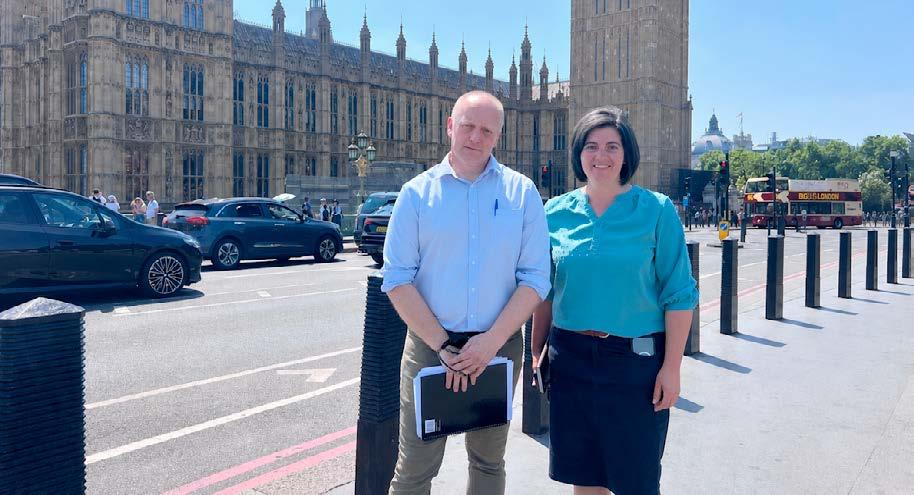
creating long-term volatility and uncertainty in the sector.
Similar uncertainty was highlighted in the now-delayed UK-EU reset and ongoing negotiations of a potential sanitary and phytosanitary (SPS) agreement aimed at reducing trade barriers for agricultural products, plants and animals. Following the resignation of Prime Minister Sir Keir Starmer, a summit scheduled for this summer has
now been postponed, leaving many Welsh farmers wondering what changes will come into effect and when. NFU Cymru’s officeholders stressed the need for urgent clarity on when this summit will be rescheduled.
Discussions also included the removal of the longstanding visa concession on sheep shearers travelling to the UK, which is due to come into effect from 2027.
NFU Cymru President
Abi Reader said: “Whilst we continue to lobby every day on a UK-level through our office in Westminster, face-to-face discussions with our elected representatives in the Houses of Parliament are invaluable for us to get member concerns heard by opposition and government powers alike. We are grateful to all the MPs we met with and for their ongoing engagement with members.”
A CALL to allow a Pembrokeshire farm to keep welfare facilities to care for rare breed breeding Tamworth pigs has been given the go-ahead.
In an application to Pembrokeshire County Council, Sharron Nicolas, through agent Hayston Developments & Planning Ltd, sought a certificate of lawfulness permission for the creation of a welfare flat within a previouslyapproved agricultural building, plus a rear lean-to extension and the erection of two further sheds at Fairybank Fields Farm, Bethesda, near Clynderwen.
An application for a certificate of lawfulness allows an applicant to keep a development if they can provide proof of occupancy or use, without any enforcement taking place, over a prolonged period.
The previous agricultural building application was granted back in 2003.
A supporting statement accompanying the application said the two-level welfare unit in the 2003-granted shed “contains the necessary elements to allow overnight stays which are essential when the pigs are farrowing.”
It added: “Mr Allan and Mrs Sharron Nicholas have been owners of Fairybank Fields since 1998. Unfortunately, Mr Nicolas died in February 2025. Although managing the farm at Bethesda, they lived at Pleasant View, Cold Blow, Narberth meaning a round trip of some 12 miles per visit – a visit which was required on a daily basis because of the need to feed and generally care for their animals – which were and still are rare breed pigs together with a number of beef cattle.
“It is essential that the pigs require continuous care when farrowing or when there are other pressures on animal health. When such occasions occurred, it was the practice of Mr Nicholas to spend the night at the farm and to use the welfare provision.”
It said Mr Nicholas would have spent approximately three months’ worth of nights (circa 90 nights) staying over at Fairybank Fields – a period of some 12 years when the bedroom above had been created to late 2024 when his brother assisted Mrs Nicholas in caring for the pigs as Mr Nichol
It went on to say: “Whilst the principal
the unit being occupied as a separate residential dwelling, nor as a primary residence.
activity at the Farm is the breeding of the rare breed, the Tamworth Pig of which there are only currently 290 breeding
An officer report recommending approval said a site visit had been undertaken finding no evidence of

It said a range of evidence was submitted in support of the application, including a detailed timeline, aerial imagery and multiple witness statements “which consistently indicate that the rear extension to Building 1 was constructed circa 2008, Shed 2 was completed in September 2012 and Shed 3 was erected in 2015”.
It said historic aerial photographs and witness statements demonstrated “on the balance of probability, that the operational development was substantially completed well in excess of four years prior to the submission of the application and has not been subject to any material interruption,” considered to be lawful by virtue of immunity from enforcement action.
It was granted approval on that basis.

THE Farmers’ Union of Wales (FUW) has announced the election of Alan Gardner as a Farmer Director to the Union’s Board.
Alan has been a prominent member of the FUW for many years and brings a wealth of experience to the Board. He has previously served as Chair of
1990, where he began share-farming with his young family.
Commenting following his appointment, Alan said: “I am honoured to have been elected as Farmer Director and would like to thank members for placing their trust in me once again.
The FUW has always played a vital role in representing the interests of Welsh farmers, and I look forward to working diligently with the Board, Union staff and members to ensure that the FUW continues to be heard at every level. Welsh agriculture faces significant challenges, but also opportunities, and I am committed to helping the Union deliver positive outcomes for farming families and rural communities across Wales.”
Welcoming Alan back to the board, Farmers’ Union of Wales President, Ian Rickman added: “On behalf of everyone at the FUW, I would like to congratulate Alan on his election as a Farmer Director. His extensive experience across the agricultural sector, combined with his longstanding service to the Union, makes him exceptionally well placed to take on this important role. Alan’s knowledge, insight, and passion for Welsh farming will be invaluable as we navigate the opportunities and challenges facing the industry and continue to deliver for our members.”


the FUW’s Flintshire County Branch, National Livestock, Wool and Marts Committee, as a Vice-President, and completed a previous term as Farmer Director between 2021 and 2024. He currently chairs the Union’s Rural Affairs Committee.
Beyond the Union, Alan has held several influential roles across the industry sector, including positions with Hybu Cig Cymru, the Food Standards Agency, and the Welsh Food Advisory Committee. In 2024, he was appointed to the Welsh Government’s Bovine TB Eradication Programme Board and is a Farming Connect Agrisgôp Leader and Mentor.
Originally from Montgomeryshire he grew up on a hill farm in Dolfor near Newtown, Alan went on to serve as County Chair of the Young Farmers Clubs before moving to Flintshire in
Alan took up his Farmer Director in June 2026, succeeding Breconshire farmer, Darren Williams, who has completed the maximum nine years permitted in the role. FUW President Ian Rickman paid tribute to Darren for his dedicated service to the Union and Welsh agriculture.
“Darren’s contribution as a Farmer Director has been immeasurable. His hard work, insight and good humour in the face of challenges have helped to strengthen the Union, delivering real benefit to our members and farming communities across Wales. We extend our sincerest thanks for his commitment and wish him every success for the future.”

As part of our ongoing political engagement work following the Senedd election, the Farmers’ Union of Wales (FUW) welcomed Anna Nicholl MS, the newly elected Plaid Cymru Member of the Senedd for Ceredigion Penfro, to a farm in north Pembrokeshire.
The visit took place at the farm of Wyn and Eurig Jones, a fatherand-son farming partnership based near Blaenffos. The family runs a mixed farming enterprise, producing beef and lamb alongside arable crops.
The visit provided a valuable opportunity to discuss first-hand the challenges and opportunities facing Welsh agriculture. Particular attention was given to the ongoing impact of bovine TB, which continues to place a significant burden on farming businesses across west Wales.
Discussions also focused on Plaid Cymru’s priorities for government, including the party’s recent commitment to reviewing the bureaucratic burden facing Welsh farmers. In turn, the FUW highlighted its own key priorities, particularly the need for a stable, long-term budget for
the Sustainable Farming Scheme (SFS). FUW representatives also highlighted the need to review the Control of Agricultural Pollution Regulations that continue to cause frustration and concern across the farming community.
Following the visit, Anna Nicholl MS raised a number of the issues discussed during the visit in the Senedd with the Welsh Government Cabinet Minister for Rural Resilience and Sustainability, Llyr Gruffydd MS. She has also, since the visit, been appointed to the Senedd’s Climate Change, Environment, Sustainability and Rural Affairs Committee.
Commenting following the visit, FUW President Ian Rickman said:
“It was a pleasure to welcome Anna to north Pembrokeshire and to have the opportunity to discuss a range of important issues affecting the industry. I am particularly grateful to Wyn and Eurig Jones for hosting the visit and for providing such a warm welcome. Their farm is a terrific example of a successful mixed farming enterprise, and their

LAST week’s soaring temperatures served as another timely reminder of the impact climate change is having on our countryside, our communities and our farming businesses.
As warmer conditions become more frequent, an increasing risk facing rural Wales is the growing threat of wildfires. Earlier this year, a fire in the Elenydd highlighted the possible scale of these events whilst similar scenes in Derbyshire last week again underlined that this is a challenge facing rural areas across the UK.
The evidence is becoming increasingly difficult to ignore.
The Climate Change Committee has concluded that weather conditions conducive to wildfires are now around six times more likely because of climate change. Meanwhile, the National Fire Chiefs Council reported that 2025 saw a record number of wildfire incidents across the UK.
insight into both the opportunities and challenges facing Welsh agriculture was invaluable.
“It was also good to meet Anna and to discuss how policymakers can work with the industry to ensure farming remains at the heart of our rural communities and economy. We were encouraged that, following the visit, several of the issues raised were taken directly to the Minister for Rural Resilience and Sustainability in the Senedd.”
Anna Nicholl MS added:
“I’m extremely grateful to Wyn, Eurig, and the FUW for taking the time to meet with me and discuss the issues facing the agricultural sector. Agriculture remains a crucial part of the fabric of west Wales, underpinning our communities and local economy. However, it is also a sector facing significant change and a range of challenges.
“I look forward to continuing to engage with the sector, ensuring that farmers’ voices are heard, and raising these important issues in the Senedd as we work towards a sustainable future for Welsh agriculture.”
climate objectives. Policies designed to improve biodiversity or reduce emissions should not inadvertently increase wildfire risks by allowing combustible vegetation to accumulate across our uplands. Rather than banning practices such as controlled burning, existing policies should be reviewed and strengthened to support responsible land management while protecting sensitive habitats. This must be coupled with raising awareness of the Countryside Code and the responsibilities of visitors when it comes to lighting fires and barbecues in sensitive areas.
Against this backdrop, the FUW welcomed the opportunity to recently contribute evidence to Westminster’s EFRA Committee’s inquiry into wildfires.
Our submission made clear that preventing wildfires depends on practical, active land management.
Sustainable livestock grazing is one of the most effective ways of reducing the build-up of vegetation that can act as fuel during prolonged dry spells. Likewise, controlled burning, when carried out responsibly and in accordance with regulations, remains an important tool for reducing fuel loads and limiting the spread of larger, more destructive fires.
The FUW believes wildfire policy must be considered alongside wider agricultural, environmental and
The inquiry also highlighted important evidence gaps. More research is needed into the impacts of reduced grazing on fuel accumulation, the long-term effects of no-burn policies, the effectiveness of different land management approaches and the causes of wildfire ignition. Better monitoring and investigation of wildfire incidents will help ensure future policy is based on robust evidence.
As climate change reshapes our landscapes, farmers must be recognised as essential partners in reducing wildfire risk. Supporting active land management and evidence-based policymaking will help protect our countryside, environment and rural communities for generations to come.




ASTON Martin returns to the majestic surroundings of Goodwood House next month with another breathtaking line-up of exceptional cars for the 34th annual running of the world-renowned Festival of Speed (9-12 July).
Taking place amid the spectacular surroundings of the Goodwood Estate in Sussex, this year’s festival will witness a display of nothing less than the most powerful and dramatic line-up of Aston Martin models yet created.
Leading the line in the Supercar Paddock will be the marque’s latest ‘S’ model –the ferociously fast DB12 S – a Super Tourer capable of class-leading performance with an intensified dynamic edge. Unleashing 700PS and 800Nm of torque and covering the 0-60 mph sprint in a blistering 3.4 seconds, the new DB12 S stands as nothing less than the most powerful front-engine V8powered non-hybrid model in its class.
Featuring a recalibrated 8-speed automatic gearbox with rapid 120-millisecond shifts, the car’s dynamics have been honed to match its formidable performance. Handling is sharpened through improved damper software, optimised Electronic Differential (E-Diff),
and a thicker anti-roll bar, delivering exceptional agility. Standard Carbon Ceramic Brakes enhance stopping power while also significantly reducing unsprung mass. Its assertive character is further amplified by a new yet more muscular exhaust note.
The exceptional DB12 S is joined at the event by a further brace of Aston Martin models freshly adorned with the exclusive ‘S’ nomenclature in the shape of the agile and dynamic Vantage S, and the imposing and supremely wellappointed DBX S.
Vantage S, the most performance- and track-focused Vantage in Aston Martin’s sports car range, naturally majors on epic power and exceptional dynamic prowess. The benchmark for marque’s acclaimed front-engined sports car range arrives at the foot of Goodwood Hill with 680PS and 800Nm of torque available from its 4.0-litre V8 Twin-Turbo powerplant. Covering the 0-60 mph dash in just 3.3 seconds Vantage S will power up the iconic hill, and, thanks to a driveby-wire throttle map bespoke to ‘S’, also delivers an even greater sense of connection with all controls working in harmony.
As with the DB12 S, there
and out that underscore the DBX S’s commanding presence on the road.
Underlining Aston Martin’s breadth and depth of exceptional supercar and hypercar offerings, festival goers will this year also witness dynamic appearances from the likes of the still sector-defining 1079PS / 1100Nm PHEV Valhalla supercar; Valkyrie –the ultimate hypercar; and the imperious new Vanquish – now celebrating 25 years and in its third generation of what has become the pinnacle of Aston Martin’s fabled front-engined sports car range. Each of these cars are exceptional in their own ways, and all represent exotic and exciting interpretations of the marque’s modern approach to high luxury, ultra-high performance motoring.
are important changes to the Vantage S suspension hardware and powertrain mounts to bring greater agility along with improvements in feel, driver engagement and composure, while styling changes such as centrally mounted bonnet blades and a full width decklid spoiler at the rear ensure this model has the looks to match its performance prowess: these distinctive features combining immaculate design form with true performance-enhancing function.
DBX S, meanwhile, brings that more performance-focused edge to the luxury SUV segment – delivering the best of all worlds to the all-wheel drive five-seater. Returning to the scene of its hillclimb record-setting exploits of 12 months ago and boasting an engine enhanced by technology transferred directly from the Valhalla supercar, DBX S offers perhaps the most engaging and responsive driving experience in its class. The statistics speak for themselves: 727PS, 900Nm of torque, a 3.3-second 0-60 mph time and a useful weight reduction of up to 47kg versus the DBX707.
All this arrives in a package that includes dynamic enhancements aligned to the other ‘S’ models, along with styling enhancements inside
The Aston Martin Aramco Formula One™ Team will also be bringing the excitement and speed of Formula One to this year’s Goodwood Festival of Speed. The weekend will see the team run the AMR25 on the world-famous hillclimb, with both Jak Crawford and Jessica Hawkins making their debut runs at the summer festival in a Formula One® car.
Reflecting on the 2026 Goodwood line-up, Aston Martin’s newly-appointed Chief Commercial Officer, Andrea Baldi, said: “The Festival of Speed is always a landmark event for us and, once again, we have curated what I believe is a display entirely befitting of this celebration of automotive excellence.
“The selection of ‘S’ models on show emphasises our commitment to engineering excellence and driving excitement on-road, while giving festivalgoers the chance to see such exceptional Aston Martin creations as the AMR25 and Valkyrie, a true Formula 1® car for the road, underscore the depth and breadth of our automotive ambitions. We are, as ever, doing our part to ensure those in attendance have a festival to truly remember.”
The 2026 Goodwood Festival of Speed opens to the public on Thursday 9 July, and runs until Sunday 12 July.




























At EV Wales, electric vehicles aren't just part of our business – they are our passion. As dedicated EV specialists, we provide a level of in-depth expertise in sales, service, and repair that goes beyond what a main dealer can offer. Are you looking to buy your first EV and need honest, real-world advice from people who drive them every day? Or are you an owner searching for expert, economical repair solutions that make sense? We are your trusted local partners. We believe in making electric driving simple, affordable, and exciting for everyone. For a better way to buy and maintain your EV, speak to the experts who live and breathe them.








WITH higher costs for fuel, and new research from Dacia revealing that 62% of UK motorists(1) have reduced how much they drive in the past three months, Dacia has teamed up with six-time Guinness World Record holder Kevin Booker to show how drivers can get more from every gallon.
Kevin, who helps businesses and communities cut running costs by applying efficient driving techniques, has already recorded a fuel economy improvement of around 29% in early running with the Dacia Duster Journey hybrid 155. That’s the equivalent of increasing the Duster hybrid 155’s already efficient 61.4mpg official economy figure to 79mpg, just by adopting a more efficient driving style.
For an average UK driver, a 29% improvement in economy could equate to around £190 a year(2) in fuel savings at current petrol prices. That works out at almost £16 a month – enough to cover the cost of a monthly TV streaming subscription(3), with change left over. For a driver covering 10,000 miles annually, the saving is even greater at around £265 a year.
Rather than relying on one single trick, Kevin says efficiency comes from a combination of smoother driving, better anticipation, correct vehicle preparation
and understanding how the car’s technology works.
He said: “The Dacia Duster Journey hybrid 155 is a really interesting car to apply these techniques to because it gives drivers several different ways to influence efficiency. It’s surprisingly light, especially for an SUV, with a hybrid system that can recover energy very effectively through regenerative braking, while rewarding smooth, anticipatory driving.
“The key is learning how to work with the car to make the most of it. Being heavy with the throttle and brakes wastes energy. If you read the road, carry momentum where it is safe to do so and let the hybrid system do what it is designed for, you can make a real difference. I’ve already seen around a 29% improvement, and the aim of these sessions is to show drivers that efficiency is not just about the car you buy, but how you use it.”
Dacia’s research(1) suggests the nation’s motorists are likely to welcome Kevin’s advice, with 63% saying they now only drive when necessary and almost half (44%) aiming to maintain steady speeds on motorways. The findings show drivers are becoming increasingly mindful of fuel economy, and are looking for practical ways to get more from every

journey.
The hybrid 155 combines a petrol engine with two electric motors, allowing drivers to benefit from electric-only running in urban conditions, while regenerative braking recovers energy that would otherwise be lost, helping to maximise efficiency still further.
Kevin’s advice for drivers includes:
1. Drive smoothly and anticipate traffic
Reading the road ahead helps drivers avoid unnecessary braking and acceleration. In a hybrid, smooth driving can also help maximise energy recovery and keep the car operating efficiently.
2. Reduce unnecessary weight and drag
Extra weight in the boot and unused roof boxes or racks make the car work harder. Removing them can help improve fuel economy, particularly on longer journeys.
3. Maintain a steady speed on motorways
Constant acceleration and overtaking can increase fuel use without significantly improving journey times. A smoother, steadier pace is usually more efficient.
4. Keep tyres properly maintained
Under-inflated tyres increase rolling
resistance, which can reduce efficiency. Drivers should check pressures regularly and follow manufacturer recommendations.
5. Use the terrain to your advantage Hills can have a major impact on fuel use. Carrying momentum where safe and making use of regenerative braking on descents can help reduce wasted energy.
6. Corner smoothly
Setting the right speed before a corner and maintaining smooth inputs reduces unnecessary braking and acceleration, both of which can waste fuel.
7. Keep your vehicle well maintained
A well-maintained car will usually perform more efficiently. Regular servicing, correct oil and good-quality components can all contribute to better real-world economy.
Lina Ribeiro, Dacia Brand Director for the UK: “Dacia has always been about giving people the freedom to explore, without asking them to spend more than they need to. With family budgets under pressure and summer adventures on the horizon, Duster hybrid 155 is exactly the kind of car we believe in: practical, robust, efficient and ready for real life. With Kevin’s advice, families can afford to venture even further afield.”



WELSH defence and aerospace firms could be in line for a share of billions of pounds in new military spending after the UK Government published its long-delayed Defence Investment Plan.
The plan, announced on Tuesday, sets out how the Ministry of Defence will spend almost £300bn over the next four years, including an extra £15bn above the previous settlement.
Prime Minister Sir Keir Starmer said the investment would transform the Armed Forces, strengthen national security and support more than half a million defence-related jobs across the UK by the end of the decade.
But for Wales, the key question is whether the new money will translate into real contracts, skilled jobs and apprenticeships for Welsh companies, or whether the bulk of the spending will be concentrated elsewhere.
At the centre of the plan is a major shift towards drones, artificial intelligence, autonomous weapons and faster battlefield technology.
The Ministry of Defence says more than £5bn will be spent over the next four years on a “drone transformation” for the Armed Forces.
That includes £650m
for inexpensive expendable autonomous systems, including drones and uncrewed ground vehicles, to increase the lethality of the Army, Commando Force and Special Forces.
The plan also includes nearly £2bn for a new Digital Targeting Web, designed to connect the Armed Forces more effectively and allow faster decisions on the battlefield.
A further £790m will be spent on protecting the UK and overseas bases from air, drone and missile threats, including new radars, sensors, directed energy weapons and expanded counterdrone systems.
The Government has also committed £11bn to munitions and weapons, including longrange strike weapons, low-cost cruise missiles and one-way effectors. Ministers say at least six new energetics factories will be built by 2030 to increase the UK’s capacity to produce munitions.
For Wales, those commitments are significant because the country already has a sizeable aerospace and defence sector, as well as a specific UK Governmentbacked plan to grow its role in autonomous systems.
Earlier this year, the UK Government announced a £50m Wales Defence Growth
Deal, designed to make Wales a launchpad for next-generation autonomous technology.
That deal was presented as an opportunity to support highskilled roles and strengthen Wales’ position in areas such as surveillance drones, autonomous systems, cyber security, advanced manufacturing and defence research.
The Defence Investment Plan now becomes the first major test of whether those ambitions are backed by procurement decisions.
Wales already has a substantial defence and aerospace footprint, with major employers including BAE Systems, General Dynamics UK, Airbus, Thales, GE Aerospace, Rolls-Royce and Safran.
The combined aerospace and defence sector in Wales directly employs around 16,000 people, with turnover of £3.7bn and a contribution of approximately £1.5bn in gross value added to the Welsh economy.
Wales is also home to a wider supply chain of engineering, electronics, software, cyber security and manufacturing firms that could potentially benefit from the move towards drones, AI and autonomous warfare.
But industry figures, unions
and politicians are likely to ask how much of the promised spending will actually reach Wales.
Welsh Government has previously said Wales receives around 3% of total Ministry of Defence expenditure, with an ambition to increase that to 5% or more as overall defence spending rises.
The new plan will therefore be watched closely by ministers, unions, defence firms, universities and local authorities across Wales.
GMB Union said the Defence Investment Plan provided some stability after months of uncertainty, but warned that workers would judge it by whether it delivered secure jobs and investment.
Matt Roberts, GMB National Officer, said: “Today’s Defence Investment Plan provides some stability for a sector besieged by insecurity.
“The challenge now is delivery. Workers will judge this plan on real jobs, real investment, and real outcomes.
“We must rebuild our own sovereign capability, and strong defence depends on a strong
workforce.
“Procurement must prioritise social value and public money must come with the right strings attached, fair pay, decent conditions, and trade union recognition.
“GMB welcomes renewed focus on defence investment, but the real test is whether this delivers jobs, skills, and secure work here in the UK.”
The Government has also announced a new £50bn defence export facility through UK Export Finance, aimed at helping British defence companies win contracts overseas.
That could be important for Welsh firms looking to scale up and compete internationally, particularly if smaller businesses can access support rather than being locked out by larger prime contractors.
The Wales Regional Defence and Security Cluster, launched earlier this year, was designed to bring together small businesses, larger contractors, universities and colleges to strengthen Welsh supply chains and improve access to Ministry of Defence work. Its role is likely to become more important if the UK’s defence economy shifts further towards dual-use technology, cyber security, artificial intelligence and autonomous systems.
BAE Systems’ Glascoed site in Monmouthshire is one of the bestknown defence manufacturing sites in Wales, employing hundreds of people in munitions work.
General Dynamics UK also has operations in south Wales, including
work linked to armoured vehicles, tactical communications and systems integration.
Airbus has a major presence in north-east Wales, while Thales, Safran, GE Aerospace and other firms are part of a broader high-value manufacturing and technology base.
The Government says the new plan will also support the Global Combat Air Programme, with more than £8bn over the next four years for the nextgeneration stealth fighter jet being developed with Japan and Italy.
More than £63bn will be spent over the next four years on the UK’s nuclear deterrent, including Dreadnought and SSN-AUKUS submarines, a new warhead and the purchase of 12 F-35A aircraft.
Those programmes are not Walesspecific, but ministers argue that the wider increase in defence spending should support jobs and supply chains across the UK.
There are also potential implications for west Wales
Pembrokeshire is home to important military training infrastructure, including Castlemartin Range, while Manorbier has long been associated with air defence training.
Cawdor Barracks near Brawdy has also been the focus of separate Ministry of Defence plans for the proposed Deep Space Advanced Radar Capability project, known as DARC.
Any increase in spending on drones, surveillance, radar, electronic warfare or autonomous systems could raise
questions about whether Welsh military sites will receive further investment or new roles.
There may also be interest in whether Welsh ports, marine engineering firms and coastal infrastructure could play any part in the development of uncrewed naval vessels and high-speed military craft.
The Defence Investment Plan includes a shift towards what ministers call a “hybrid Navy”, combining traditional ships with autonomous vessels, AI and uncrewed systems.
Plans include at least six new Common Combat Vessels to act as control hubs for uncrewed systems in the 2030s, alongside high-speed boats for Royal Marine Commandos.
For coastal areas such as Pembrokeshire, that raises a natural question: will maritime defence investment create opportunities for Welsh ports, marine services and engineering businesses?
The plan has been delayed for months amid arguments in Whitehall over money.
Former Defence Secretary John Healey resigned after warning that the funding package fell short of what was needed to protect the UK and meet existing commitments.
Armed Forces Minister Al Carns also quit, saying the plan was not transformative enough in the face of rapidly changing warfare.
New Defence Secretary Dan Jarvis has said the character of warfare is changing rapidly, with uncrewed
systems now defining conflicts in Ukraine and the Middle East.
He said the UK had to embrace new technology to give British forces the edge.
Sir Keir said the world was becoming more dangerous and volatile, and that the UK had to rebuild ammunition stockpiles, invest in cutting-edge technology and strengthen the Armed Forces.
The Conservatives have criticised the plan as “too little, too late”, while the Liberal Democrats said the Government had dangerously short-changed the Armed Forces.
Critics have also questioned whether the plan goes far enough to meet NATO expectations and whether the funding will be sufficient to deliver all the ambitions set out in the Strategic Defence Review.
The Government says defence spending will rise from £54bn a year under the previous government to almost £80bn a year by 2029, taking UK defence spending to 2.7% of GDP.
Ministers say the country remains on track to meet NATO defence spending targets by 2035.
There will also be political questions over how the plan is funded, with the Prime Minister saying some capital projects in areas such as roads and energy will no longer go ahead as previously planned.
For Wales, that raises a further issue: whether any Welsh infrastructure schemes could be affected by the wider reprioritisation of public spending.
A FRESH call to allow the retrospective conversion of office space to a chocolate factory, a beauty salon and laundrette has been submitted after a previous refusal.
In an application refused by Pembrokeshire County Council in March, Mr M Williams, through agent Preseli Planning Ltd, sought retrospective permission for the subdivision of an office on land off Scotchwell Cottage, Cartlett, Haverfordwest into three units forming a chocolate manufacturing, a beauty salon, and a launderette, along with associated works.
A supporting statement, for the chocolate manufacturing by ‘Pembrokeshire Chocolate Company,’ as part of the scheme said: “The operation comprises of manufacturing of handmade bespoke flavoured chocolate bars.
“Historically there was an element of counter sales, but this has now ceased. The business sales comprise of online orders and the delivery of produce to local stockist. There are no counter sales from the premises.”
It said the beauty salon “offers treatments, nail services and hairdressing,” operating “on an appointment only basis, with the
Bruce Sinclair Local Democracy Reporter
hairdresser element also offering a mobile service”.
It said the third unit of the building functions as a commercial laundrette and ironing services known as ‘West Coast Laundry,’ which “predominantly provides services to holiday cottages, hotels and care homes”.
The application was refused on the grounds it represents an unjustified out of centre use with regard to the salon and nail bar, “insufficient information has been provided to justify the loss of B1 employment floorspace,” and “the introduction of a hairdressing salon and nail bar, uses typically found within established shopping centres, into this out of centre location would undermine the strategic role, vitality, and viability of Haverfordwest town centre”.
Since then, a resubmitted application aimed at addressing the reasons for refusal has been lodged.
A supporting statement with that resubmitted application says it has “included additional evidence in terms of a sequential assessment, financial viability and client needs to justify the mixed-use unit having an out-of-town centre location, which is of a scale that

would not undermine the vitality and viability of the town centre and has a saturation of similar services being offered”.
It adds: “The application has also provided additional evidence to justify the loss of 70 square metres of a B1 unit not being harmful to employment land provision in the settlement, where adequate alternative provision remains.”
It says the scheme “would represent a suitable re-use of the building, which would not undermine the vitality and viability of the town centre or result in harmful loss of employment land,” and would not “result in any significant harmful impacts upon neighbouring amenity or the character of the area”.
The latest application will be considered by county planners at a later date.


THE WELSH AMBULANCE SERVICE has issued a fresh appeal to the public following the declaration of a critical incident on Friday (June 26), as exceptionally high demand continues to place pressure on crews across Wales.
In a social media post published today (Saturday, June 27), the Trust warned that hot weather is contributing to a rise in ambulance call-outs, including incidents involving heat-related illness, falls, breathing difficulties and existing medical conditions worsened by the heat.
The message comes less than 24 hours after the service declared a critical incident amid unprecedented demand, with ambulance resources stretched across Wales.
The Trust is urging people to call 999 only for serious or lifethreatening emergencies, contact NHS 111 Wales for urgent health advice, and use local pharmacies for minor illnesses and ailments.
It said choosing the right service can help ambulance crews reach the sickest patients more quickly while pressures remain high.


THE WELSH AMBULANCE SERVICE has stood down the critical incident declared on 26 June following three days of sustained pressure linked to the extreme heat.
The service said demand has now begun to reduce, although it remains under significant pressure.
Members of the public are still being urged to call 999 only in serious or life-threatening emergencies.
For less urgent health concerns, people are being asked to use NHS 111 Wales or the online Albot service for advice and support.
The Trust thanked staff, volunteers, partner organisations and the public for their patience, professionalism and support during what it described as an exceptionally challenging period.

HYWEL DDA University Health Board is urging people to take part in its consultation on the future of stroke services, as the process reaches the halfway point.
The second phase of the eight-week consultation began on May 28 and will remain open until July 26.
The health board is seeking views from patients, carers, staff, local communities and stakeholders on its preferred option for stroke services across Carmarthenshire, Pembrokeshire and Ceredigion.
Under the preferred option, a 24hour acute stroke and rehabilitation unit would be based at Glangwili Hospital, with a stroke rehabilitation unit at Bronglais Hospital. Treat-and-transfer services would continue at Bronglais, Prince Philip and Withybush hospitals.
Stroke services are currently provided at all four main Hywel Dda hospitals, namely Bronglais, Glangwili, Prince Philip and Withybush. However, the health board says services do not consistently meet national clinical standards and that specialist stroke cover is not available 24 hours a day, seven days a week.
More than 1,700 people have already taken part in the second phase of consultation, either through public events or by completing the questionnaire.
Mark Henwood, Hywel Dda University Health Board’s Executive Medical Director, said: “We know how important stroke services are to members of our communities and to our staff.
“Providing timely, high-quality specialist care for people who experience a stroke is critical. Stroke care has advanced significantly, and evidence shows that patients have better outcomes in specialist units with

access to expert teams and equipment around the clock.
“We are listening carefully to what people are telling us, and this feedback is important in helping us understand what matters most to our communities. Thank you to everyone who has already attended our engagement events, both in person and online. We look forward to speaking to more people before the consultation ends on July 26.”
Lee Davies, Executive Director of Strategy and Planning, said the health board had been meeting staff and communities across the three counties, as well as representatives from neighbouring health board areas.
He said people had raised questions about where they would go for diagnosis and treatment, how transfers between hospitals would work, and why stroke services could
not continue as they are across all four hospital sites.
Mr Davies said: “It’s important to reassure people that, now and in the future, if you think someone is having a stroke, you should seek immediate help by calling 999.
“As happens today, and with any future option, they will be taken to the nearest appropriate hospital for assessment and initial treatment. If specialist treatment such as a thrombectomy is needed, patients would continue to be transferred to specialist centres in Bristol or Cardiff.
“Throughout this process we are working with the Welsh Ambulance Services University NHS Trust, and other providers such as the Adult Critical Care Transfer Service and national commissioners.
“Once an option for the future of stroke services is chosen,
detailed modelling will take place to understand what dedicated transport arrangements will be needed, so this would not impact on emergency ambulance availability.
“We need to make changes to ensure we meet national standards and can provide safe, sustainable, accessible and kind services. We need to give people the best possible chance of recovery after the devastating effects of a stroke.”
The remaining public drop-in events are:
• Tuesday, June 30, 2pm to 7pm, Y Plas, Machynlleth, SY20 8ER
• Monday, July 6, 2pm to 7pm, Canolfan Creuddyn, Lampeter, SA48 7BN
• Wednesday, July 8, 2pm to 7pm, Pater Hall, Pembroke Dock, SA72 6DD
• Tuesday, July 14, 2pm to 7pm, Ivy Bush Royal Hotel, Carmarthen, SA31 1LG
• An online session will also be held on Tuesday, July 7, at 6:30pm.
• Everyone is welcome to attend to find out more, ask questions and share their views.
The health board says all feedback received during this phase of consultation, along with views gathered in 2025 and the latest evidence, will be considered before a final decision is made later this year.
Further information, including the questionnaire, is available on the Hywel Dda stroke consultation wbsite. People can also contact the engagement team by emailing hyweldda.engagement@wales.nhs.uk or by calling 0300 303 8322, option 5.

ANDY BURNHAM has used his first major policy speech since returning to Westminster to set out a blueprint for government, promising the biggest transfer of power away from Whitehall in modern times and unveiling plans for a new “No 10 North” in Manchester.
Speaking at the People’s History Museum on Monday, Burnham presented himself as the politician capable of breaking what he described as Britain’s cycle of economic stagnation, political division and over-centralised government.
The speech is widely being seen as his opening pitch to the country ahead of his expected move into Downing Street next month.
Burnham enters the contest from a position of strength after winning the Makerfield byelection earlier this month with a landslide majority. The result marked his return to Parliament and cleared the way for his challenge to succeed Keir Starmer.
At the heart of the speech was a promise to deliver “good growth in every postcode”, with Burnham arguing that Britain can no longer rely on decisions being made almost exclusively in London.
He said the UK remained one of the most centralised countries in the developed world and claimed the current system was failing the north, the south, London and the wider regions alike.
“The whole country suffers when the regions and nations are not meeting their potential,” he said.
Burnham argued that economic growth should be driven from communities and regions rather than directed from Whitehall, promising what he called “the biggest rebalancing of power our country has seen”.
The headline announcement

was the creation of a permanent northern operation for the Prime Minister’s Office.
Burnham said a new No 10 North would be based in Manchester, but insisted it would not simply move power from London to one city.
“The job of No 10 North will be to make power flow into the Midlands, into the South West, into the East of England and yes, into London,” he said.
Burnham used the speech to outline what he calls “Manchesterism” — an approach shaped by his years running Greater Manchester.
The model combines sound public finances, local leadership, infrastructure investment, housing, universities, business, public services and trade unions working together to drive growth.
He said his time in Greater Manchester had shown that a different style of politics was
possible, based on “place first, not party first” and “problem solving, not point scoring”.
Burnham also attacked Westminster culture, saying Parliament had become increasingly fragmented and disconnected from the communities MPs represent.
He promised a more collaborative style of government and said MPs should be allowed to be “authentic representatives” rather than being controlled by fear of the whipping system.
He also said local government had been left “threadbare”, with councils struggling to meet basic responsibilities while national government had grown larger since the pandemic.
The speech was quickly attacked by Conservative leader Kemi Badenoch, who dismissed Burnham’s proposals as “more public control, more regulation,
more taxes”. Reform UK figures also criticised him for not taking questions from journalists after the speech.
For Wales, the speech will be watched closely because of its focus on devolution, regional growth and shifting power away from Westminster.
His argument that decisions should be taken closer to communities is likely to resonate with ongoing debates about transport, healthcare, economic investment and local government powers in Wales.
With Labour’s leadership transition expected to conclude within weeks, Burnham’s Manchester speech offered the clearest indication yet of how he intends to govern: less power concentrated in Whitehall, more influence for regions and nations, and a long-term focus on rebuilding local economies and living standards.

A FRESH call has been made for Crown Estate assets in Wales to be devolved to the country, a call backed by Pembrokeshire councillors last year, after it made £210m profit this financial year.
Today, June 26, the Crown Estate published its annual review, also releasing a Walesspecific review, showing that, in 2025-’26 its profits in Wales were £210m, up from £8.7m in 2020-’21.
Plaid Cymru Westminster Leader Liz Saville Roberts said that Plaid Cymru – which has long campaigned for the assets to be devolved – has a “mandate to keep fighting for fairness” with devolving the Crown Estate being a position held by every council in Wales.
The new Plaid Cymru Welsh Government is also pursuing control over natural resources, in line with Scotland, where the Crown Estate was devolved in 2017.
Ms Saville Roberts said that profits from Wales’ natural resources being sent to London is a “striking injustice” and that the next UK Government “must take steps to devolve the Crown Estate to Wales”.
Back in 2025, Pembrokeshire County Council
Bruce Sinclair Local Democracy Reporter
joined other Welsh councils in supporting the Crown Estate assets in the county being devolved to its people.
The Crown Estate owns 65 per cent of Wales’ riverbeds and beaches.
Proceeds from the Crown Estate, which dates to the 17th century, are split by 25 per cent funding the Royal Family and 75 per cent to the UK Treasury.
Responsibility for the Crown Estate is already devolved to the Scottish Government, which has previously been reported as generating £103.6 million into the public coffers in Scotland in 2023.
A sticking point in Wales is that Westminster has to date been against any change.
A successful notice of motion before Pembrokeshire County Council, by Plaid Cymru councillor Michael Williams said: “We ask PCC to support the proposal for the Crown Estate assets to be devolved to the people of Wales, so that profits can be used to invest in the economy and communities of Wales.
“A poll in 2023 showed that 75 per cent of the population
With Brian Murphy
were in favour of taking control of the assets of the Crown estate rather than the profits going to the Treasury and the Crown.
“Local authorities are under huge financial pressure and placing the Crown Estate in the hands of Wales would be a significant step to address the lack of investment in our local government.
“We call upon the Welsh Government to ask Westminster to devolve the assets and revenue of the Crown Estates as a matter of urgency, as was done in Scotland in 2017.
“We demand that Wales is treated fairly and accepts management of the Crown Estate land for the benefit of the people of Wales.”
Councillors have previously heard the Crown Estates derives nearly £60,000 from some 16 leases in Pembrokeshire.
The £59,005 quoted at the time includes £26,600 for foreshore lease agreements, £8,520 for the land around Haverfordwest’s Riverside Market, and £12,800 for a sailing centre and car park at Cosheston Pill near Pembroke Dock.
It is not just the weather which has had a heatwave; politics in the UK and Wales is heating up. It looks more than likely that Andy Burnham will become the next PM. In his speech he made it clear that he wishes to move the centre of power away from London. This is a clear desire to attract the nationalist vote from Plaid Cymru and SNP to Labour. However, as we have seen devolution in Wales and Scotland has failed. Creating more layers of bureaucracy is not leadership; its shirking your responsibilities. I want my PM to be a person with a vision for the UK. Someone who can take the tough decisions, cut taxes, reduce welfare, grow the economy, deliver energy security and invest in defence. Regional mayors cannot deliver on any of these areas. We have a real leader who has identified that it is the economy which drives everything. That person has already identified that cutting red tape can unleash up to £450 billion of new lending. Not borrowing, not from taxation. But £450 billion of real investment in the UK. Her name is Kemi Badenoch.
She is outlining a future for the UK where business rates are slashed, the family farms tax is scrapped, and stamp duty on family homes are abolished. She will also stand up for our oil and gas industry as she recognises that it sustains jobs, creates wealth and energy security is national security. Closing viable fields in the North Sea whilst buying gas from Russia is not only stupid, but we also become beholden to Putin. A fact that was not lost on the electorate in Aberdeen where the Conservatives won with 50% of all votes. Giving the Welsh and
Scottish Parliaments more powers will only lead to greater burdens and confusion. We can all remember how each country brought in their own versions of Covid restrictions and how damaging they were. A similar situation is likely to happen under the proposed deposit return scheme. Unlike other parts of the UK, the Welsh Government is planning to include glass as part of the scheme, which will add 50p to the cost of glass bottles.
This will result in customers in Wales having to pay more for the same product. Or some products being withdrawn from sale in Wales. Also, what will happen when a customer buys a bottle in England and tries to recycle it in Wales? Will they be refused or will they be given the refund? Has the Welsh government not learned from the disaster that happened in Scotland when they tried to introduce a similar scheme? Not only did it never happen it cost the taxpayer millions in lawsuits, and the SNP tried to go beyond their competencies.
Further devolution will only generate more issues such as these, create more division, make us poorer and less secure. I fear an Andy Burnham led administration will be disastrous for the UK.


W ITH ANDREW LYE
revolving door to 10 Downing Street has claimed its latest shortlived PM.
Liberal Democrat leader, Ed Davey, addressed the British Chambers of Commerce Global Annual Conference saying that failing to grow the economy is the “original sin” of Keir Starmer’s government and the previous Conservative government – underpinning the cost-of-living crisis, the chaos over defence spending, and the rising welfare bill.
Ed Davey set out the party’s plan to get the economy growing through a new Growth and Defence Partnership with Europe, including a customs union and membership of the single market.
Ed Davey said “Without growth, the government will never escape the trap of high borrowing costs, high debt interest payments, and no room for manoeuvre.
“It is its failure on growth that drives so much of people’s anger and frustration towards the Labour government. Just as it was their failure on growth that drove so much anger and frustration towards the Conservatives before them.
“Whether it’s the cost-of-living crisis that is causing so much pain to families across the country or the inability to find money for defence at a time when national security is so critical, the rising welfare bill or the scandal of one million young people not in work, education or training, the crisis underpinning them all is anaemic economic growth.
“And if the next PM is going to solve those other problems, they must start by getting the economy growing again – and fast!
“It would be a terrible mistake for the new PM to think that the problem with Starmer’s government is that it wasn’t left-wing enough. Don’t lurch to the left. That’s a mistake the country can’t afford.
“Whoever the next Chancellor is will have to face up to the reality that we spend £110 billion every year, just paying the interest on our national debt. That’s £1 of every £12 the government raises in revenue, gone.
“And the only way to bring down those high borrowing costs is to reassure investors and the markets that Britain has a real plan to grow our economy and get the public finances under control. A plan that both the Conservatives and Labour have disastrously failed to deliver.
“Our party’s plan for a new Growth and Defence Partnership with the EU would make Britain richer, safer, and stronger, with a new Customs Union, and – crucially – taking Britain back into the Single Market.
“Tearing down the barriers to trade. Ending the mountains of paperwork. Cutting costs for businesses. Giving our young people the chance to study and work, live and love anywhere in the EU.
“Undoing the damage of the Johnson-Farage Brexit deal that has held our economy back for so long. Giving British businesses the certainty they need to invest, to hire, and to grow.
“And giving Britain’s public finances a growth dividend – a new fund worth tens of billions of pounds to rebuild the public finances, cut the cost of living, cut the cost of business, fix the NHS and strengthen our Armed Forces.”
If you have any issues or comments, please contact me at andrew.lye@pembslibdems.wales

MORE THAN 100 development schemes in Pembrokeshire, amounting to more than 2,300 homes, are in limbo due to the ongoing Nitrogen Neutrality guidelines from Natural Resources Wales, councillors heard.
At the June meeting of Pembrokeshire County Council’s services overview and scrutiny committee, members received an update on the ongoing issue of Nitrogen Neutrality which has led to delays in many housing schemes in the county since its introduction last June.
The area which development is required to demonstrate nitrogen neutrality is approximately 75 per cent of the county, including Haverfordwest, Narberth, Pembroke and Pembroke Dock.
The report, presented by Cabinet Member for Planning and Highways Cllr Jacob Williams, focussed on the implications of Natural Resources Wales’ (NRWs) Nutrient Neutrality requirements
in respect of dissolved inorganic nitrogen (DIN) for development within the Milford Haven Inner waterbody catchment of the Pembrokeshire Marine Special Area of Conservation (SAC) and the measures being taken by the council at a local level to address this issue as well as the council’s contribution to regional and national initiatives.
The report said that, as of May, there were 21 planning applications which were in the system before the introduction of nitrogen neutrality requirements (June 2025) which are now caught and which remain undetermined, along with a further 66 undetermined since that date, and a further 15 applications which are caught by nitrates requirements, but which have not yet reached eight-week determination date.
It said the 102 developments caught by the nitrates issue amounted to some 35 per cent of the total undetermined applications; that figure even higher when determined (refused) schemes were taken into account.
Cllr Williams, who last year with the backing of full council, wrote a letter to the First Minister, conveying the authority’s “great concern over Natural Resources Wales’ recent river nitrates guidance in relation to development, and the serious effects this is having,” said that amounted to 2,376 of 6,741 potential housing units, adding that “Pembrokeshire County Council cannot approve development which is unable to demonstrate Nitrogen Neutrality”.
Last October, Cabinet endorsed an action plan to address the nitrates issue for affected development within its planning area, the early stages already delivered, with a final report due for Cabinet consideration this September in order to determine how mitigation opportunities identified might be taken forward.
Members backed a recommendation to note the action plan progress ahead of the report to Cabinet.

FIRST MINISTER Rhun ap Iorwerth has told European ambassadors that Wales is ready to play a stronger role in rebuilding relationships with the EU.
Speaking at Europe House in London yesterday, the First Minister addressed representatives to the UK from major EU nations, setting out his government’s ambition for closer cultural, economic and political cooperation with Europe.
The meeting came just a day after Mr ap Iorwerth made his first overseas visit as First Minister, travelling to
Dublin on Wednesday.
In his speech, he described Wales as an “internationalist nation” and said the Welsh Government wanted to strengthen ties with European neighbours.
He said: “This Welsh Government is determined to take meaningful action to strengthen cultural and economic ties with our European neighbours.
“But we must have the tools to do this. That means a stronger Welsh voice in international engagement.”
Mr ap Iorwerth also repeated
his support for a closer UK-EU relationship, saying Wales would continue to make the case for the UK to rejoin the Single Market and Customs Union.
He said doing so would “reduce friction, restore alignment and unlock the full potential of our shared economies.”
The First Minister said international engagement was already helping Welsh exports, inward investment and job creation, but added that Wales wanted to build further partnerships across Europe.
He also said the relationship with Europe was about more than trade.
“For generations, opportunities to live, study and work across Europe have shaped Welsh lives and broadened horizons,” he said.
“We are determined that the next generation will not be denied those opportunities.”
Mr ap Iorwerth said Wales was “full of national pride” while also being “confidently internationalist”.
He added: “We stand ready to work with you to deliver that future, together.”
THE WELSH CONSERVATIVES have called for urgent action on hospice funding after Hospice UK warned that services in Wales are facing growing pressure from rising demand, more complex patient needs and increasing staff strain.
Hospice UK says all adult hospices in Wales are now caring for patients with increasingly urgent and complex conditions, while half reported staff distress linked to being unable to support everyone who needs help.
The charity has warned that demand for palliative care in Wales is expected to rise significantly over the coming decades, at the same time as hospices face higher workforce costs, inflationary pressures and continued uncertainty over long-term funding.
Hospices provide end-of-life and palliative care for patients and families, often supporting people in their own homes and communities. Campaigners argue that without sustainable funding, more pressure could fall back on already stretched NHS services.
The Welsh Government has previously announced extra support

for the sector, including a £4.3m package in March to help stabilise adult and children’s hospices, alongside a £3m annual uplift in hospice funding.
Ministers said the money was intended to help protect staffing capacity and
maintain essential services.
However, hospice leaders have continued to call for a longer-term settlement, arguing that one-off grants do not provide the certainty needed to plan services, retain staff and meet
future demand.
Natasha Asghar MS, Welsh Conservative Shadow Cabinet Secretary for Health and Social Care, said the latest findings were “deeply worrying”.
She said: “Hospice staff do incredible work supporting patients and families through the most difficult moments imaginable.
“But they cannot be expected to carry on facing rising demand and growing pressure without proper support.
“Plaid Cymru must now deliver a sustainable funding model for hospices in Wales, so patients can receive the compassionate care they deserve, when and where they need it.”
The call comes as end-of-life care remains under increasing scrutiny across the UK, with charities warning that hospices are being asked to do more while relying heavily on charitable donations and short-term support.
Hospice UK has said sustainable funding is needed to ensure patients in Wales can access the right care, in the right place, when they need it.
SEND YOUR LETTERS TO:

EMAIL US AT: editor@herald.email

BOILED ALIVE: WALES MUST ACT NOW
Most people would be shocked to learn that crabs and lobsters can still legally be boiled alive in Wales.
The Animal Welfare (Sentience) Act 2022 recognises decapod crustaceans, including crabs, lobsters and crayfish, as sentient beings capable of experiencing pain, distress and suffering.
At the same time, Welsh regulations make it an offence to cause an animal avoidable pain, distress or suffering at the time of killing. Given the growing scientific evidence surrounding decapod sentience, and the availability of more humane methods, it is increasingly difficult to justify the continued practice of live boiling.
The UK Government has already acknowledged this issue. As part of its Animal Welfare Strategy for England, it has committed to publishing guidance clarifying that boiling crustaceans alive is not an acceptable method of killing.
Yet Wales has so far failed to provide similar guidance, leaving consumers, restaurants and seafood suppliers without clear direction.
Regardless of where individuals stand on the consumption of shellfish, there should be broad agreement that unnecessary suffering has no place in modern society. If more humane alternatives exist, they should become the norm.
The Welsh Government should now follow England’s lead and provide clear guidance to ensure that sentient animals are not subjected to avoidable suffering.
Bill Carter Science Policy Advisor Animal Defenders International
DEAR SIR,
A visit to Glangwili Hospital yesterday left me deeply concerned about the state of the
site and whether it is currently fit for purpose.
Parking was chaotic, with far too few spaces available for patients and visitors. Inside the hospital, corridors were overcrowded, patients appeared to be waiting in difficult conditions, and there was not enough seating for everyone.
Most concerning, however, was the poor standard of cleanliness and hygiene I witnessed, particularly in the toilets near the main reception. One urinal appeared not to have been properly cleaned for some time, the toilets smelled strongly of stale urine, and bins were overflowing.
Hospitals should be places where people go to recover, not places where basic hygiene standards appear to have slipped. I would urge Hywel Dda University Health Board to inspect these facilities urgently and take immediate action.
To make matters worse, the journey from Milford Haven took well over an hour because of traffic, adding further stress to an already poor experience.
Hywel Dda must do better for patients, visitors and staff.
Ian Sturley
I am increasingly concerned by the number of people I have seen walking their dogs in Pembrokeshire during the current hot weather, including in the middle of the day.
Dogs of various breeds have appeared exhausted and distressed, and I have also seen people running with dogs attached to waist harnesses in the heat. This is irresponsible and puts animals at serious risk of heatstroke.
Hot pavements, paths and even beach sand can also burn dogs’ paws and cause real pain. I would urge dog owners to be sensible and avoid walking their pets during the hottest parts of the day. Early morning or late evening are much safer times.
Please think carefully before taking your dog out in extreme heat.
Michael Ledsam

PEACEFULLY at Park House Court, Tenby on Tuesday 22nd June 2026, Mr. William Lloyd affectionately known as ‘Billy’ of West Lane, Templeton aged 82 years.
Beloved Husband of Marion. Dearly loved Dad to David and the late Joanne. Much loved Father-inlaw to Erin. Treasured Brother to Donald and the late David and Pam.
The funeral service will take place on Thursday 9th July 2026 at Zoar Chapel Funeral Home, Llanteg at 11:00am Followed by a private cremation.
The funeral arrangements will be carried out by E. C. Thomas and Son, Zoar Chapel Funeral Home, Llanteg, Narberth SA67 8QH (01834) 831876 and 21 Main Street, Pembroke SA71 4JS (01646) 682680 or via www. ecthomasandson.co.uk
PEACEFULLY on June 21st at Highgrove Care Home, Jean aged 94 years.
Beloved wife of the late Gordon. Dearly loved mother of Alan, Hamish and Jane. A loving Grandmother of Gareth, Tyron, Tazmin, Jack, Louise, Thomas, Jonny, Jennifer and Maria. A much-loved great-grandmother.
Funeral service Friday July 10th at
2.00pm at the W.G.Mathias Chapel of Rest, St.Davids followed by burial in the natural burial ground, Keeston. Enquiries to W.G.Bernard Mathias & Daughter 01437 720537.

BRIAN Eastwood Jenkins, of Kingsbridge and formerly of Haverfordwest and Burton Ferry. Peacefully at the age of 98, on Wednesday, 24th June at Kingsbridge Hospital, Devon.
Beloved husband of the late Eluned, loving father of Ceri, Timothy and Rhodri and a much loved grandfather of Bethan and Bryn.














RECLAIMED BUILDING MATERIAL

RUBBISH AND WASTE REMOVAL


PROFESSIONAL CAR WASH





TECHNOLOGY AND COMPUTERS


VEHICLE RECOVERY











THE PEMBROEKSHIRE TABLE TENNIS LEAGUE has marked another successful season, with the competition growing to 27 teams across four divisions in just three years.
The league, which includes
teams from Fishguard, St Davids, Haverfordwest, Cardigan, Carmarthen and surrounding areas, now caters for players of all standards, from complete beginners to former Welsh internationals and nationally ranked competitors.
The 2025/26 season has now concluded, with Fishguard Jellyfish taking the Division One title. The winning team featured Gary Strawbridge, Lawrence Harris and Silfan Rhys-Jones. Division Two was won
by St Davids Whitesands, represented by Harry Lovett and David Fisher, while Redstar Stepaside claimed the Division Three title through Aidan and Stuart Johnson.
Organisers say the league has gone from strength to strength since being established, helping to revive competitive table tennis across Pembrokeshire and west Wales.
Silfan Rhys-Jones, who helped establish both the Fishguard club and the Pembrokeshire Table Tennis League, said the competition now offered a place for everyone, from beginners in the lower divisions to elite players in the top tier.
Fishguard players have also enjoyed success on the national stage. Fishguard A won silver in Division Five of the Welsh National League, earning promotion to Division Four, while Fishguard C also won silver in Division Eight and secured promotion to Division Seven. Fishguard B finished fourth in Division Six.
In the National Welsh Veterans League, Fishguard A won bronze in Division Two.
The league hopes to provide annual standings, photographs and season summaries in future years as the sport continues to grow locally.

CHILDREN from Pembrokeshire could see their designs for a new rugby kit showcased on the world stage – thanks to a partnership between Specsavers and Wales Deaf Rugby.
Specsavers stores across Wales are teaming up with Wales Deaf Rugby to launch a colouring competition inviting children to design the shirts that the men’s and women’s teams will wear as they play to retain their world title at this year’s World Deaf Rugby 7s World Championship in Tokyo.
Running until Saturday 1 August, the competition will see two winners selected – one for designing the men’s kit and one for the women’s. Each winner will have their design produced and will receive a replica kit. Two runners-up will also receive a £50 colouring hamper.
The partnership supports the Welsh men’s and women’s squads as they prepare to defend their world titles in Tokyo, helping to fund kit, training and travel costs. The teams were last crowned world champions in Córdoba, Argentina, in 2023.
Siân-Elin Melbourne, Chair of Wales Deaf Rugby, says: ‘This partnership means a huge amount to us, especially at such a pivotal time for the club. I was proud to be part of the very first Wales Deaf women’s team back in 2019, and to now see both squads preparing to

defend world titles on the global stage is incredibly powerful.
‘Support from Specsavers and their customers doesn’t just help with travel and kits – it sends a message to our
players that they are valued, believed in and backed by their communities. As we build towards Tokyo, that belief makes all the difference.’
The Deaf Rugby 7s World

Championship is an international tournament that brings together leading deaf rugby teams from across the globe to compete for the world title.
In 2023, 10 men’s and six women’s teams took part in the competition. The next tournament will be staged in Tokyo over six days this October and November.
Lizzie Broughton, audiology marketing manager at Specsavers, adds: ‘We’re incredibly proud to support Wales Deaf Rugby as they prepare to compete on the world stage. Through this competition, we’re giving local children the opportunity to get involved in the team’s journey and show their support in a creative way.
‘As hearing specialists, supporting the deaf community is something we’re passionate about and we can’t wait to see the designs that young people come up with for this year’s tournament.’
The partnership follows on from Specsavers’s sponsorship of Wales Deaf Rugby earlier this year, when 11 Welsh audiology businesses contributed towards the club’s £150,000 fundraising target. Specsavers audiologist, Kyle James, also met with the team to discuss how hearing plays a key role in both sport and everyday life.
Colouring sheets are available to collect from Specsavers stores across Wales. Entries should be submitted instore by Saturday 1 August. To find your nearest store, visit www.specsavers. co.uk/stores.

THE CYCLING leg of Long Course Weekend brought colour, effort and plenty of smiles to the roads around Carew on Saturday, as riders powered their way past one of Pembrokeshire’s most recognisable landmarks.
With Carew Castle standing proudly in the background, competitors tackled the climb through the village in warm summer conditions, cheered on by spectators and watched by visitors enjoying one of the county’s busiest sporting weekends.
The pictures, taken by Malcolm
Richards Photography for The Herald, capture the spirit of the day: determined faces on the steep sections, thumbs-up for the camera, club colours from across Wales and beyond, and plenty of riders still smiling despite the miles in their legs.
The cycling event is one of the centrepieces of Long Course Weekend, taking athletes through some of Pembrokeshire’s most scenic and demanding roads. From coastal views to countryside climbs, it is a route that tests endurance while showing off the county
at its best.
Carew once again proved to be one of the standout locations on the course.
The medieval castle, flags flying in the sunshine, provided a dramatic backdrop as riders passed through in steady streams throughout the day.
Long Course Weekend continues to bring a major boost to the local area, with competitors, families and supporters filling towns, villages, cafés, pubs and accommodation across Pembrokeshire.
For many taking part, Saturday’s ride was about more than finishing times. It


was about atmosphere, achievement and being part of one of Wales’ biggest endurance sporting events.

Divison 1
Burton v Cresselly
Herbrandston v Narberth
Lawrenny v Whitland
Neyland v Saundersfoot
St Ishmaels v Carew Divison 2
Cresselly II v Llechryd
Fishguard v Llanrhian
Haverfordwest v Hook
Johnston v Llangwm
Pembroke v Pembroke Dock Divison 3
Carew II v Hundleton
Kilgetty v Stackpole
Lamphey v Burton II
Laugharne v Haverfordwest II
Saundersfoot II v Pembroke II Divison 4
Carew III v Haverfordwest III
Crymych v Herbrandston II
Hook II v St Ishmaels II
Llechryd II v Lawrenny II
Narberth II v Neyland II Divison 5
Llangwm II v Hundleton II
Llanrhian II v Llechryd III
Pembroke Dock II v Pembroke III
Whitland II v Cresselly III Divison 6
Haverfordwest IV v Lamphey II
H’west-Cresselly v Kilgetty II
Neyland III v Whitland III

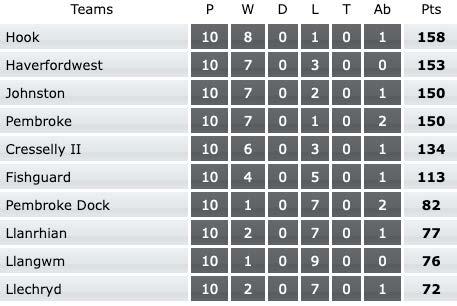

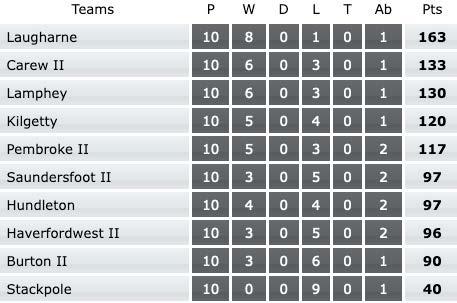

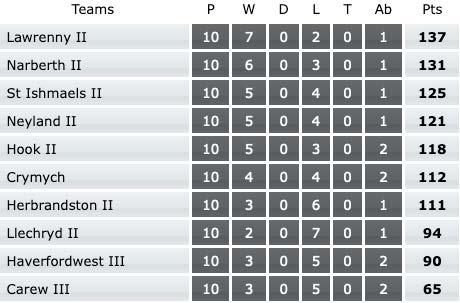




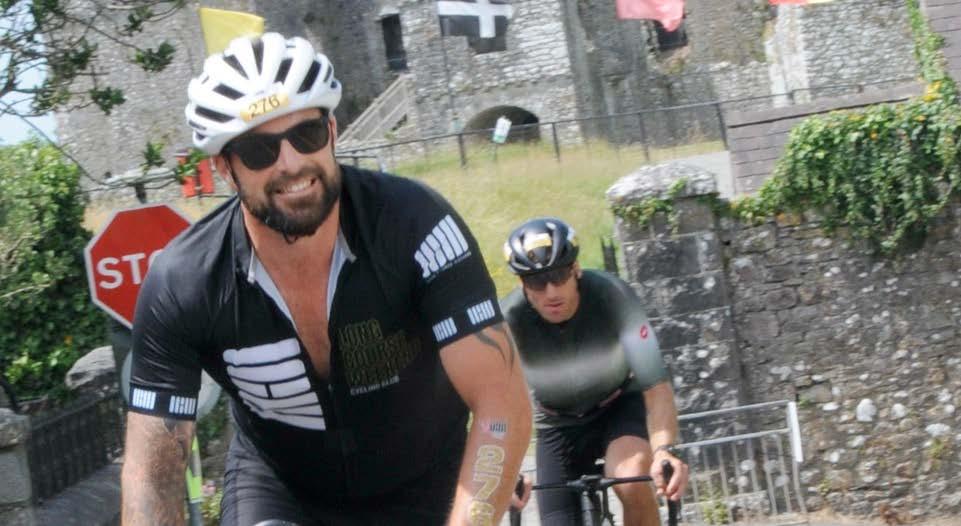
Long Course Weekend cycling leg lights up Pembrokeshire • p92