The Heart of Pembroke
Celebrating Our Staff

Acknowledgement of Country
We pay deep respect to all Aboriginal and Torres Strait Islander people, to their Elders past, present and emerging, and to all cultural ambassadors. In particular, we acknowledge the Kaurna people on whose traditional lands Pembroke was founded, the Ngarrindjeri and Ramindjeri people as custodians of the land where Pembroke’s presence extends to the Finniss River at Old Watulunga, and the many other groups around the country with whom we also enjoy close and respectful ties.


Welcome from Our Principal
A great school is, at its heart, a community of learners. While our attention quite rightly centres on the growth and development of young people, the strength of a school ultimately rests upon the professional curiosity, generosity and expertise of the adults who guide them.
Mark Staker Principal
At Pembroke School, we hold a deep belief that everyone in our community is on a professional journey, one that is characterised by reflection, improvement and a commitment to excellence.
It is therefore a pleasure to commend this second edition of The Heart of Pembroke . This publication celebrates the professional lives of our staff and provides a window into the vibrant culture of learning that sits at the centre of our School. Within these pages are stories of inquiry, collaboration and renewal. They remind us that teaching and working in schools is not a static profession, but one that requires continual engagement with new ideas, new research and new ways of thinking about our craft.
Research into professional learning communities reinforces what many educators instinctively understand. When teachers and professional services staff work collaboratively, engage in sustained inquiry into their practice and learn together within a supportive professional culture, both teaching and student outcomes improve. The implication is clear: when schools create the conditions for adults to learn well together, students benefit.
At Pembroke, this philosophy is not theoretical. It is embedded in the daily life of the School. Our professional learning culture is built upon the belief that growth is collective. When one colleague explores a new idea, undertakes research, refines a practice or shares a professional insight, the learning extends far beyond the individual. It becomes part of the shared intellectual life of the School.
The past year has offered many compelling examples of this spirit in action. Our 'Power of Pembroke' professional development day last September highlighted the depth of expertise that exists within our own community. Across presentations and conversations, the day demonstrated something important: the most powerful professional learning often occurs when educators learn from one another.
Equally inspiring have been the sabbaticals undertaken by members of staff during the 2025–2026 period. Sabbaticals provide educators with the rare opportunity to step beyond the immediate demands of the school year, to travel, research and reflect deeply on their work. When colleagues return from these experiences, they bring with them fresh perspectives, new ideas and renewed energy that shape the direction of the School in meaningful ways.
Central to this work is the continued development of the Didi Medlin Centre for Professional Growth under the leadership of Simon Miller, Dean of Professional Growth and Development. The Centre represents an important expression of Pembroke’s commitment to what we sometimes describe as a ‘parallel school’ for staff, a place where professional learning is intentional, inquiry based and deeply valued.
As you read this edition of The Heart of Pembroke , I hope you will see not only individual stories of professional discovery, but also the deeper culture that makes such journeys possible. A culture where learning is shared, improvement is embraced and the professional life of the School continues to flourish.
And with that foundation firmly in place, we look forward with great anticipation to what 2026 will bring.

Pembroke's
Inside Pembroke's Thriving Professional Learning Programs
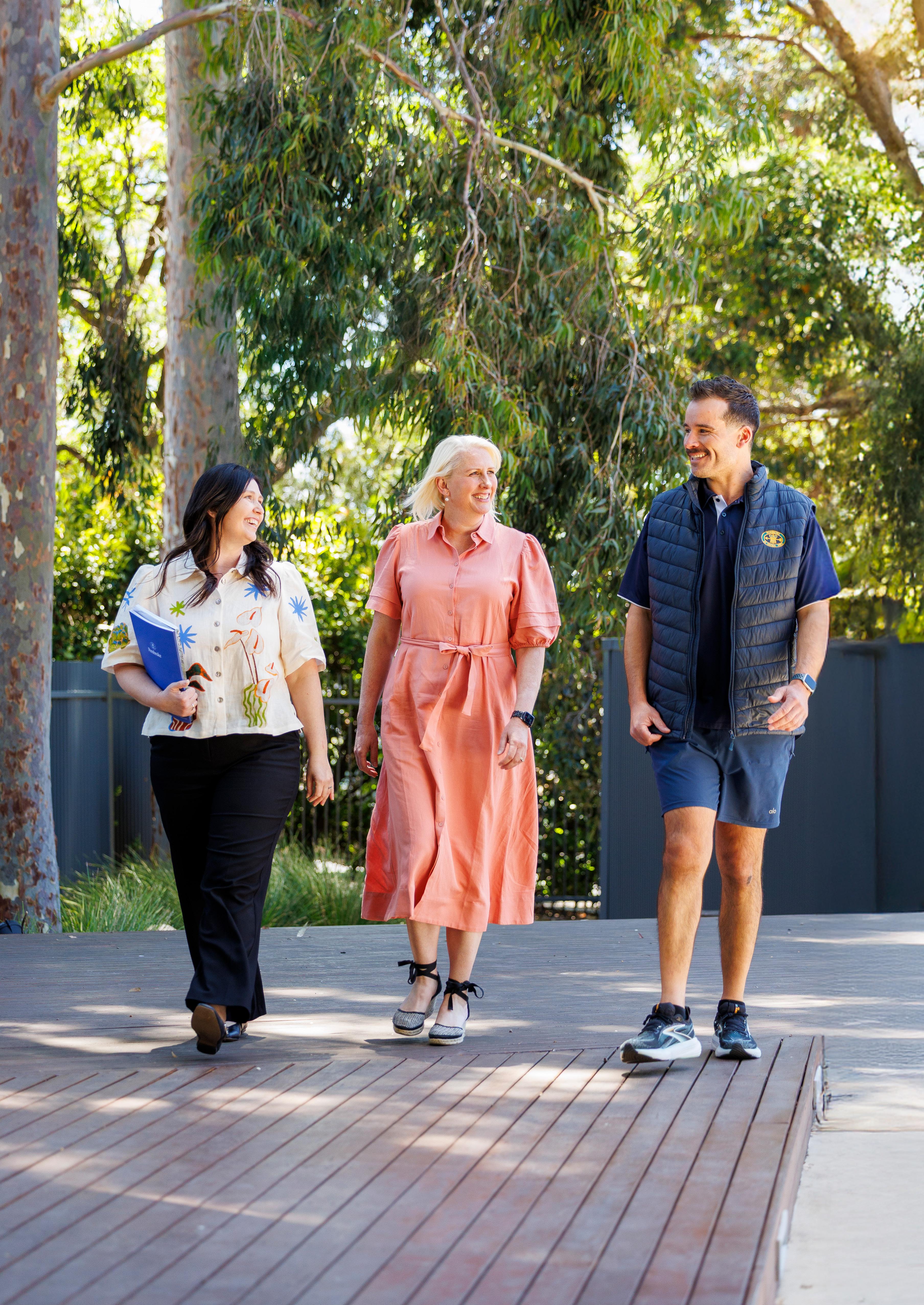
At Pembroke, professional learning is not just an event, a program or a requirement. It is a lived value, woven into the daily work of school life. Over the past year, the work of the Didi Medlin Centre, our parallel school for staff, has continued to expand in reach and influence. It strengthens our collective capacity and shared learning culture, reaffirming our belief that great schools such as ours are ones where adults remain curious, reflective and committed to growth.
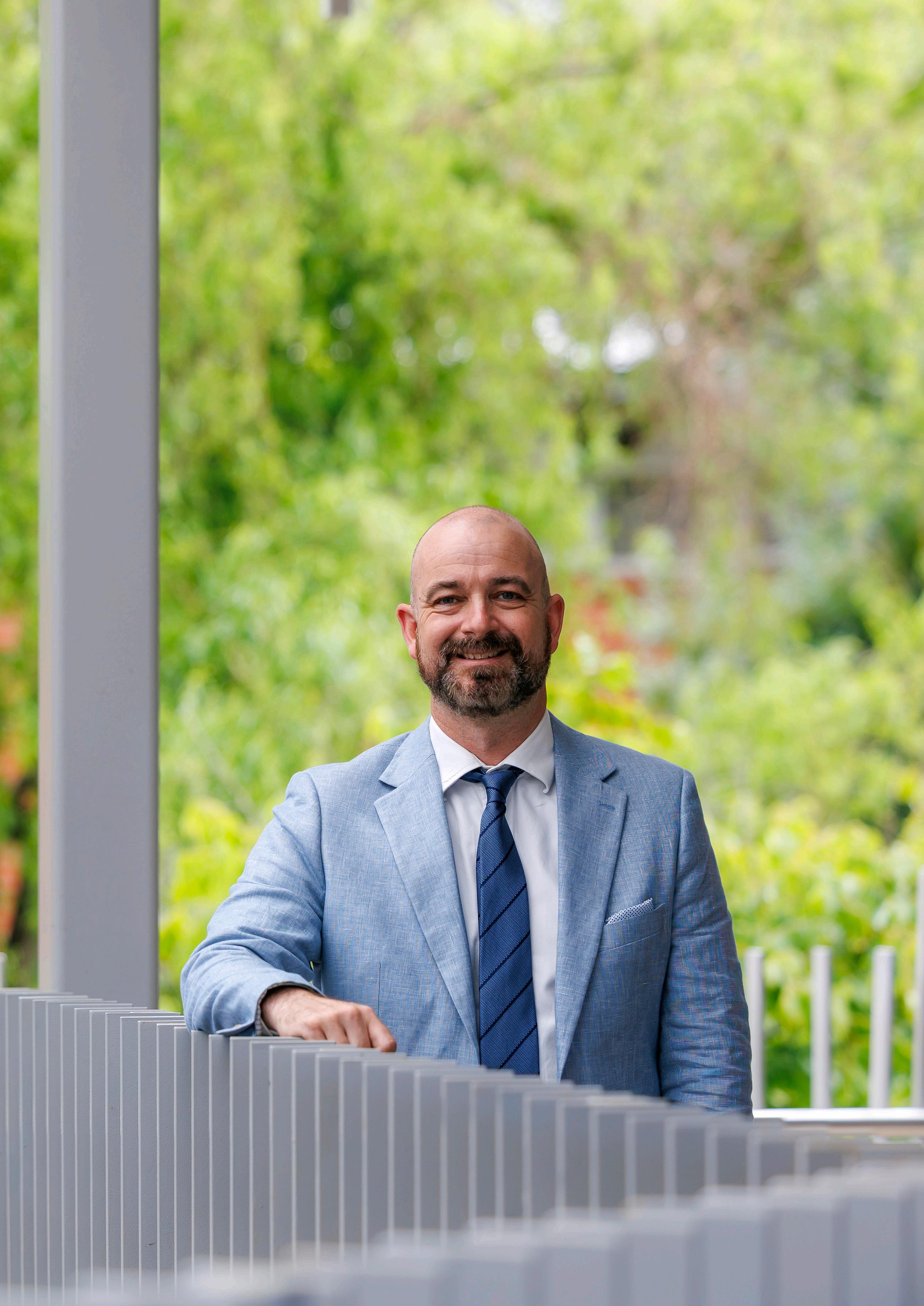
Simon Miller Dean of Professional Growth and Development
just a value, of and growth. Professional
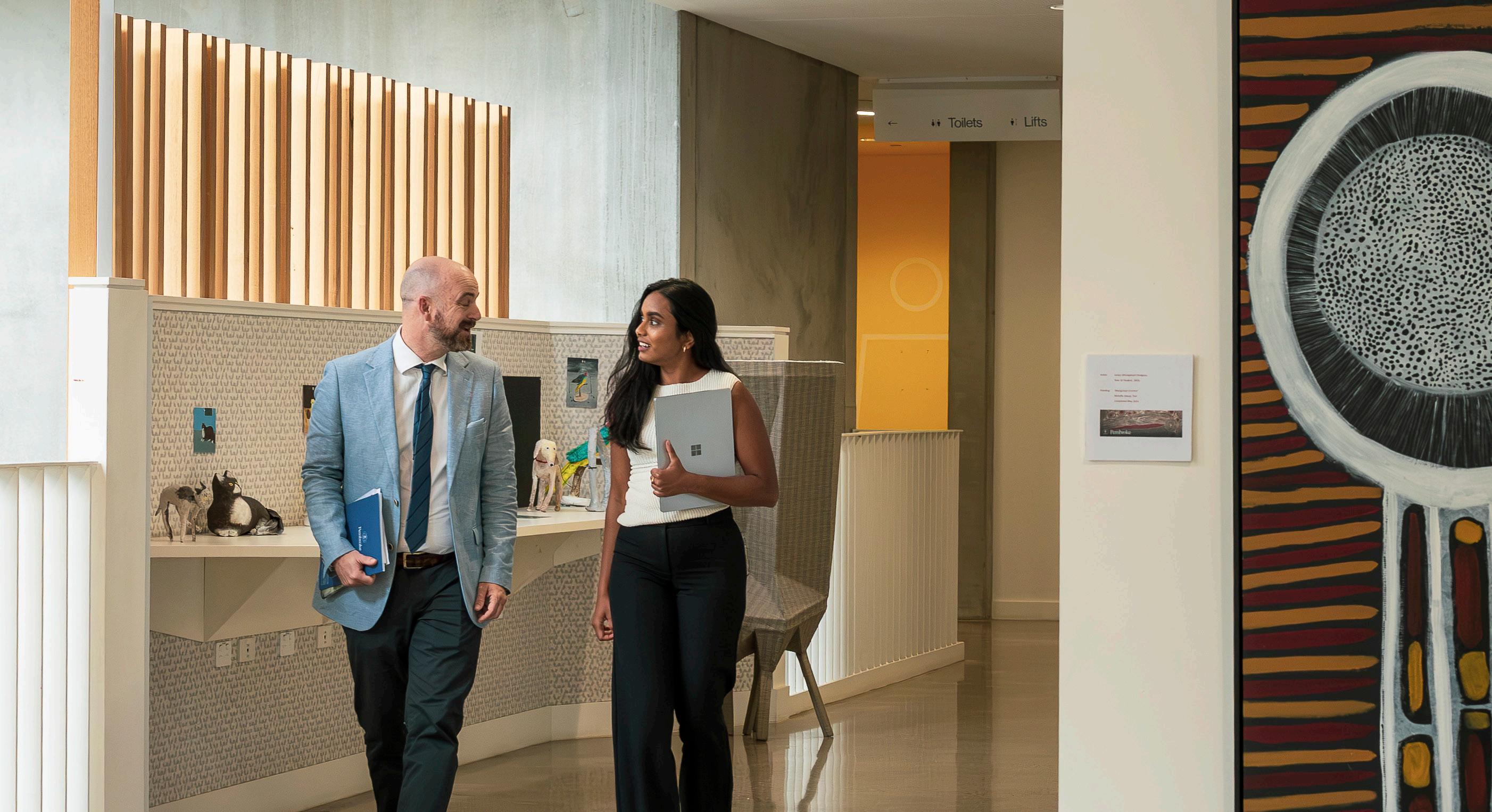
This year, we have offered up a huge range of learning opportunities for staff, including working alongside renowned academic and industry experts such as AI trailblazer Dr Nici Sweaney and multi-awardwinning educator and entrepreneur Nicole Dyson. Such opportunities provide contemporary and thought-provoking sessions for both professional services and teaching staff. While regularly drawing on outside expertise is vital in ensuring we access the latest educational research, we are extremely proud of the incredible skills and knowledge our staff bring to the workplace every single day. Our ‘Power of Pembroke’ professional development day was an incredible testament to this, with staff running both learning and wellbeing sessions on a wonderfully varied range of topics.
In 2025, our Instructional Coaching Program for teachers became firmly established at the School, with over 30 educators embracing the bespoke support and intentional, evidence-based approach provided by our coaches. You can read more about this initiative, and the impact it is having in our classrooms, on page 18. Our Quality Teaching Rounds have continued to grow, building reflective processes and collegiality as our classrooms are opened to colleagues and we develop a shared understanding of evidence of the fantastic practice that occurs.
Our staff are not passive implementers of external ideas, but expert professionals whose deep contextual knowledge positions them uniquely to investigate, refine and advance their own practice and share with others. To support this in 2026, we have partnered with Adelaide University to develop a Pembroke Framework for Action Research. This has been utilised across the School in a range of ‘challenges of practice,’ with resourcing supported by the Didi Medlin Centre to give staff time to collaborate with a structure that provides deep insight and opportunities for use of evidence and data to drive improvement.
The use of the approaches has contributed to refinements in our Sabbatical Program, and in the past 12 months, we have had some outstanding work carried out across schoolwide practice challenges, including embedding our Ethics Program (Gabrielle Corbett), developing student Service Learning (Emily Monaghan) and the integration of career education into our classrooms (Donna O’Connor). You can read more about these valuable contributions on pages 46-59. In addition to this, the School has also taken part in a wide range of research. This includes studies conducted by staff on cognitive load theory, to external PhD candidates examining student relationships with nature and wellbeing. We are proud that Pembroke is contributing to the generation of knowledge across the wider educational landscape.

It is a privilege to work alongside colleagues who approach their roles with curiosity, professionalism and a willingness to contribute to something larger than their individual classrooms or teams.
With Australia facing teacher shortages and high rates of attrition for those entering the profession, Pembroke is proactively working to support early career teachers. In addition to generous conditions, the Didi Medlin Centre’s Newly Qualified Teacher Program provides structured support to those in their first year of teaching. This includes a time provision allocated to give them space to reflect and plan, along with sessions designed to prepare and sustain them as they begin their work in schools. Pembroke is the ideal place for early career teachers to develop their craft, and we actively look to attract the best new teachers through our recruitment process. Indeed, Pembroke’s wonderful work culture and reputation mean that we often attract staff from a huge variety of backgrounds, and their rich experiences add greatly to the experiences for those they work alongside. You can read more about some of these career journeys on pages 32-35.
For those working both in and out of the classroom, we have seen a huge interest in developing leadership skills, and the Didi Medlin Centre has facilitated this through our new Leadership Program. Since the launch of our new Principles of Leadership, over 70 current and aspiring leaders are involved in mentoring relationships at Pembroke, illustrating both the quality of leadership among our staff and their disposition as seeing leadership as a way of serving others. The program also includes Leadership Coaching through our coaching team, a thriving Women in Leadership group and our new flagship Leading from the Middle Program for middle leaders.
This edition of The Heart of Pembroke reflects a staff community defined by expertise, generosity and an enduring commitment to growth. It is a privilege to work alongside colleagues who approach their roles with curiosity, professionalism and a willingness to contribute to something larger than their individual classrooms or teams. I am deeply grateful for the ongoing support of the Pembroke Foundation Board and our donors, whose belief in staff learning makes this work possible. Their investment enables us to sustain a culture in which professional growth is not peripheral, but central to the success, wellbeing and learning of our students.
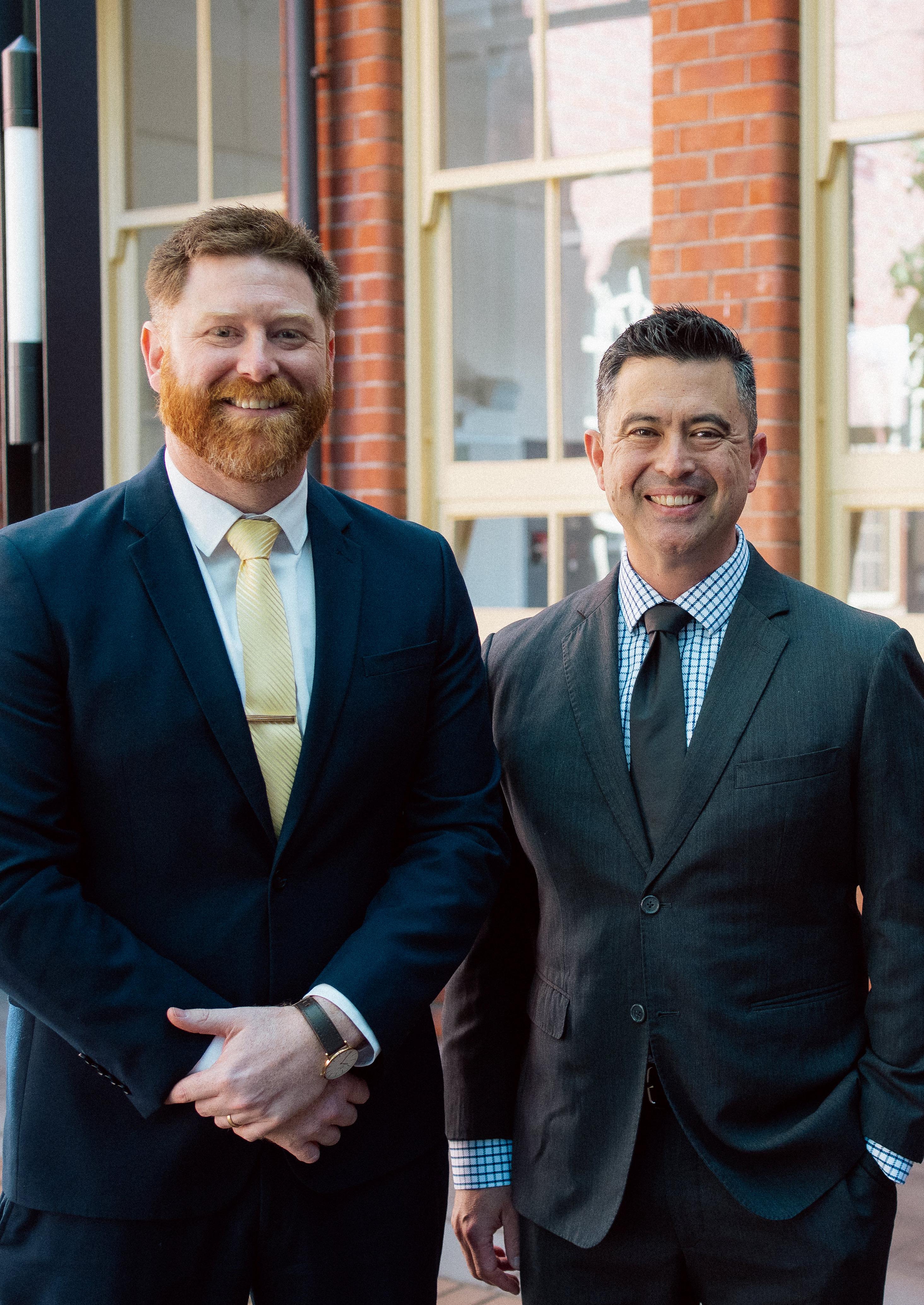
Meet Our Heads of IB and SACE
Two recent appointments in Pembroke's Senior School bring complementary experience to the programs that shape Pembroke students’ final years of schooling.
Gabbi Agnew Publications Manager
Chris Bateman joined as Head of SACE and Adrian Gan as Head of IB, each arriving with careers built across multiple schools and systems. Together, they oversee the two pathways available to Pembroke's senior students: the South Australian Certificate of Education (SACE) and the International Baccalaureate Diploma Program (IB DP).
In speaking with both Chris and Adrian, there are more similarities than differences. Both describe their role as creating the conditions for others to thrive through Pembroke’s highly capable staff and effective programs. Both spoke about the shift away from content delivery towards how students learn and think, and how they build inquiry skills and independent thinking. And both describe the other program without competition, measuring success by student growth rather than raw achievement.
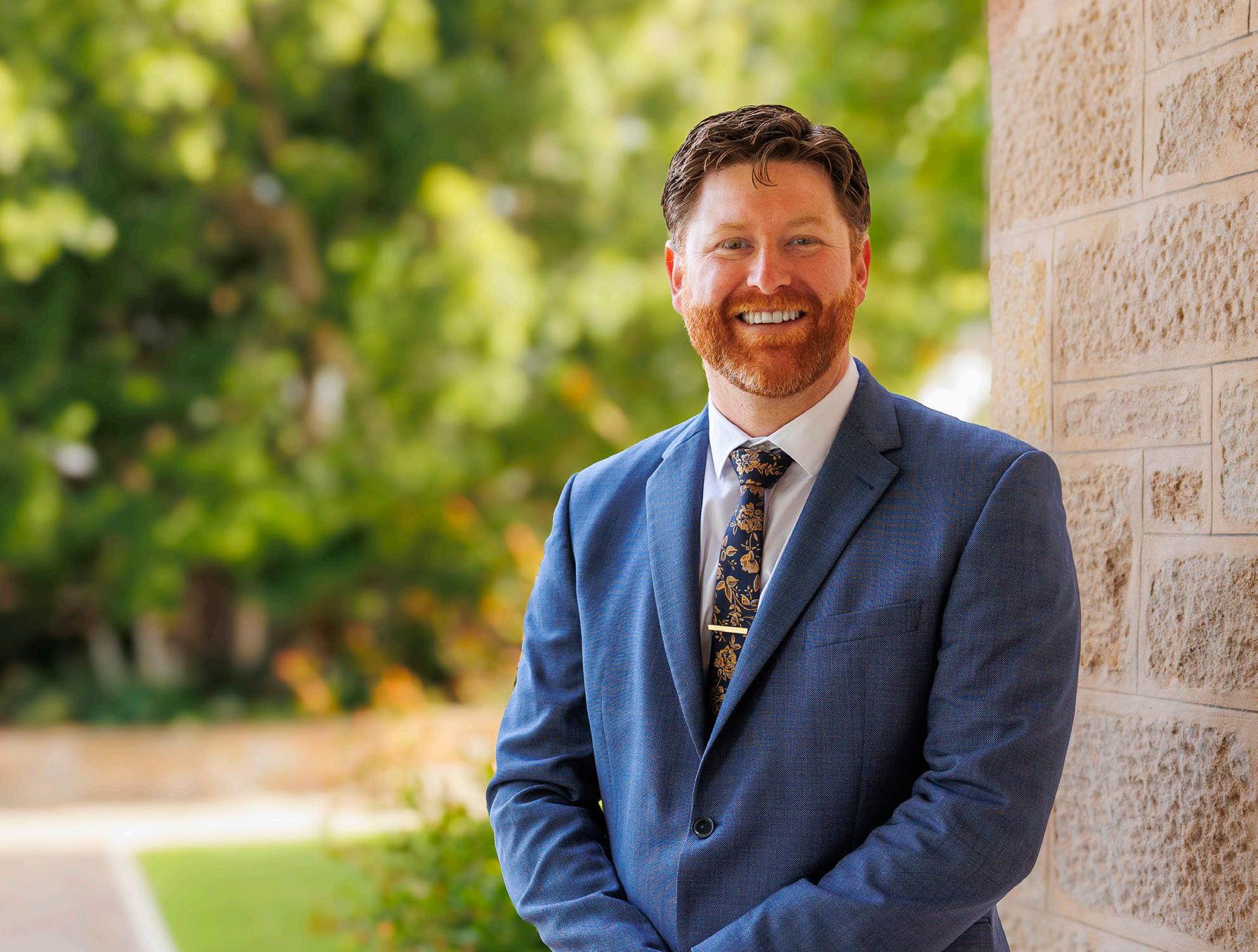
Chris Bateman: Head of SACE
Chris began his teaching career in 2009 at Xavier College in Gawler, where he spent 14 years teaching English, Drama and Research Project, eventually becoming English Curriculum Leader and then Director of Teaching and Learning. After spending time as Assistant Principal of Teaching and Learning at Gleeson College, he came to Pembroke.
His version of the Head of SACE role is broader than the title implies. While the administrative layer is everpresent, including subject selection, system entries, VET enrolments and ensuring every student has a plan, Chris is incorporating Pembroke’s signature caring nature within the role. Students come to him to discuss their pathways, find help when they are struggling with work and access support when needed. Chris works closely with Year Level Coordinators on subject changes and provisions, and sees the role as one that sits at the intersection of academic planning and student welfare.
Pembroke teachers enjoy a well-earned high level of trust in running their own subjects, and as a result, Pembroke benefits from a strong culture of ingenuity. Chris works closely with staff as the SACE Board implements subject renewals, ensuring that the program is implemented in a way that works for Pembroke. Here, we’ll incorporate more student agency, more natural and authentic evidence and encourage deeper levels of understanding. Chris describes a staff culture with no silos, where teachers work together rather than in parallel, and where the shared commitment is to students rather than to any particular set of outcomes.
The major benefit of the SACE is its flexibility. The range of what counts towards a student's credential is broader than most families realise: VET qualifications, university subjects and external courses all have a place. Around 10-15% of Year 12 SACE students at Pembroke currently study university subjects as part of their program. 'Students can choose to be a jack of all trades, or delightfully skewed. The structure accommodates both,' says Chris.
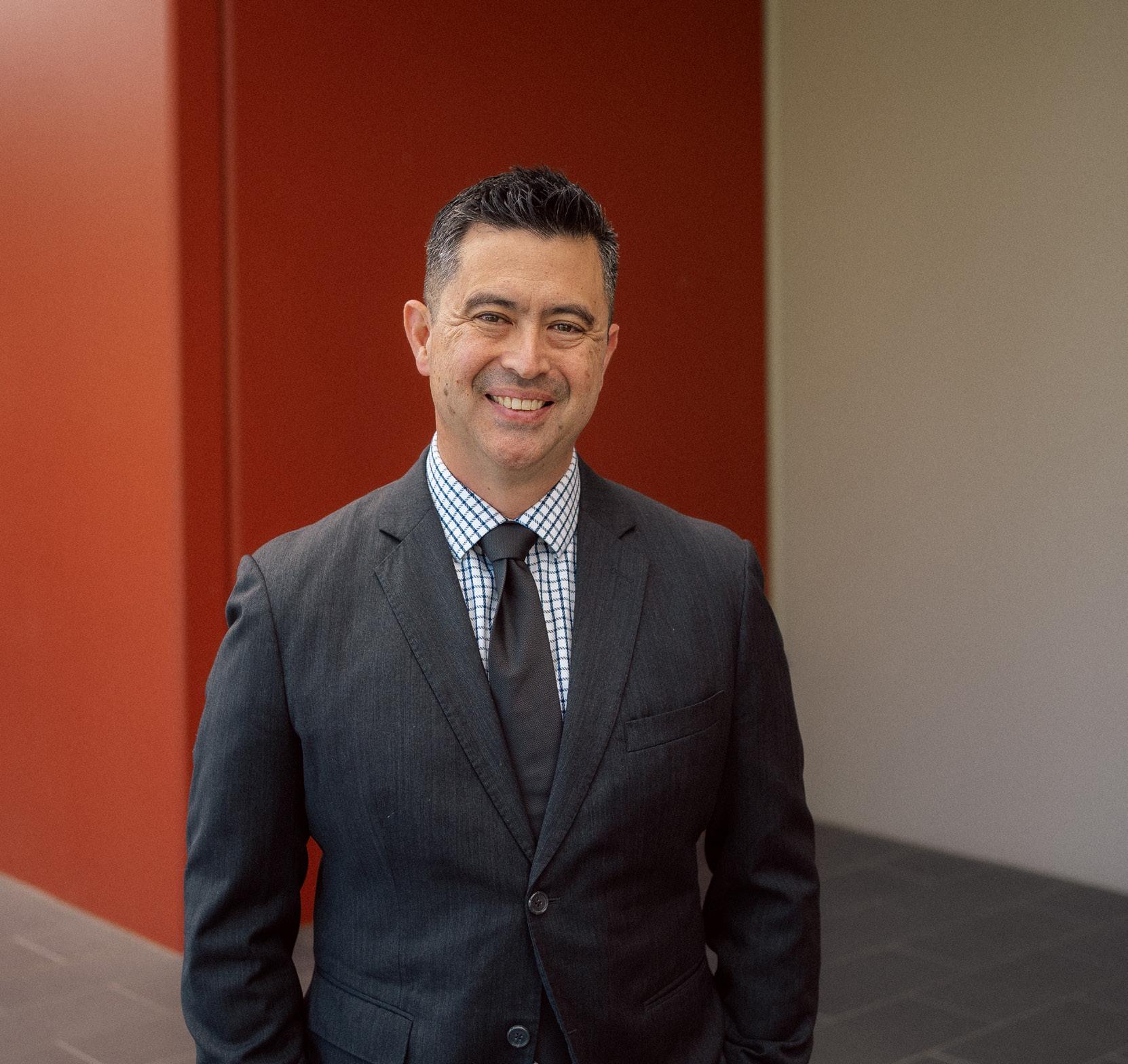
Adrian Gan: Head of IB
Adrian began teaching in 1997 at a government girls' school in Sydney before his career took him to the Australian International School in Singapore, back to Australia for his first IB school at St Paul's Grammar in Penrith, to Canberra Grammar School, then to Hong Kong where he served as IB Middle Years Coordinator and Vice Principal. A stint as IB Middle Years Coordinator at Seoul Foreign School in South Korea followed, before heading back to Canberra. Now, Adrian has made the move to Adelaide for the role of Head of IB at Pembroke.
Alongside school-based roles, Adrian fills his time with work that keeps him connected to the broader IB world. He is a Workshop Leader and Visiting Team Leader within the IB Educator Network, assessing schools across the Asia-Pacific region and working with schools in the candidacy phase as they prepare to adopt IB programmes. He has also worked as a Visible Learning Consultant, engaging with the research of Professor John Hattie on the influences that most affect student outcomes, with teacher efficacy sitting at the top of the list. That body of work led to a presentation at last year's IB Global Conference.
His description of the Head of IB role centres on conditions rather than content. He explains that his role is to create an environment where teachers and students can do their best work, maintaining programme integrity, building teacher capacity, and ensuring the IB Diploma is taught both with fidelity to its assessment requirements and in the spirit it was designed for. He is particularly drawn to the programme's core components, the Extended Essay, Theory of Knowledge and the Creativity, Activity, Service component, which he describes as the connective tissue between subjects and the elements that make the Diploma transformative.
The IB offers a well-rounded experience, suiting students best when they are curious, open to challenge and willing to engage with ideas. Adrian explains that persistence when things become challenging is more important than academic performance by far.
After careers spanning Australia, Singapore, Hong Kong and South Korea, Adrian is not short of opinions about what good IB practice looks like on the global stage. The main outcome of choosing IB, he explains, is that Pembroke students will develop the disposition needed to enter our increasingly complex world, and to tackle that with agency and optimism.
The Heart of Pembroke: Celebrating Our Staff
Right Person, Right Time
Our new Head of Middle School Lawrence Pascale (1998) spoke with fellow old scholar Kate Holland (1992) to reflect on his path, his philosophy and the values shaping his leadership.

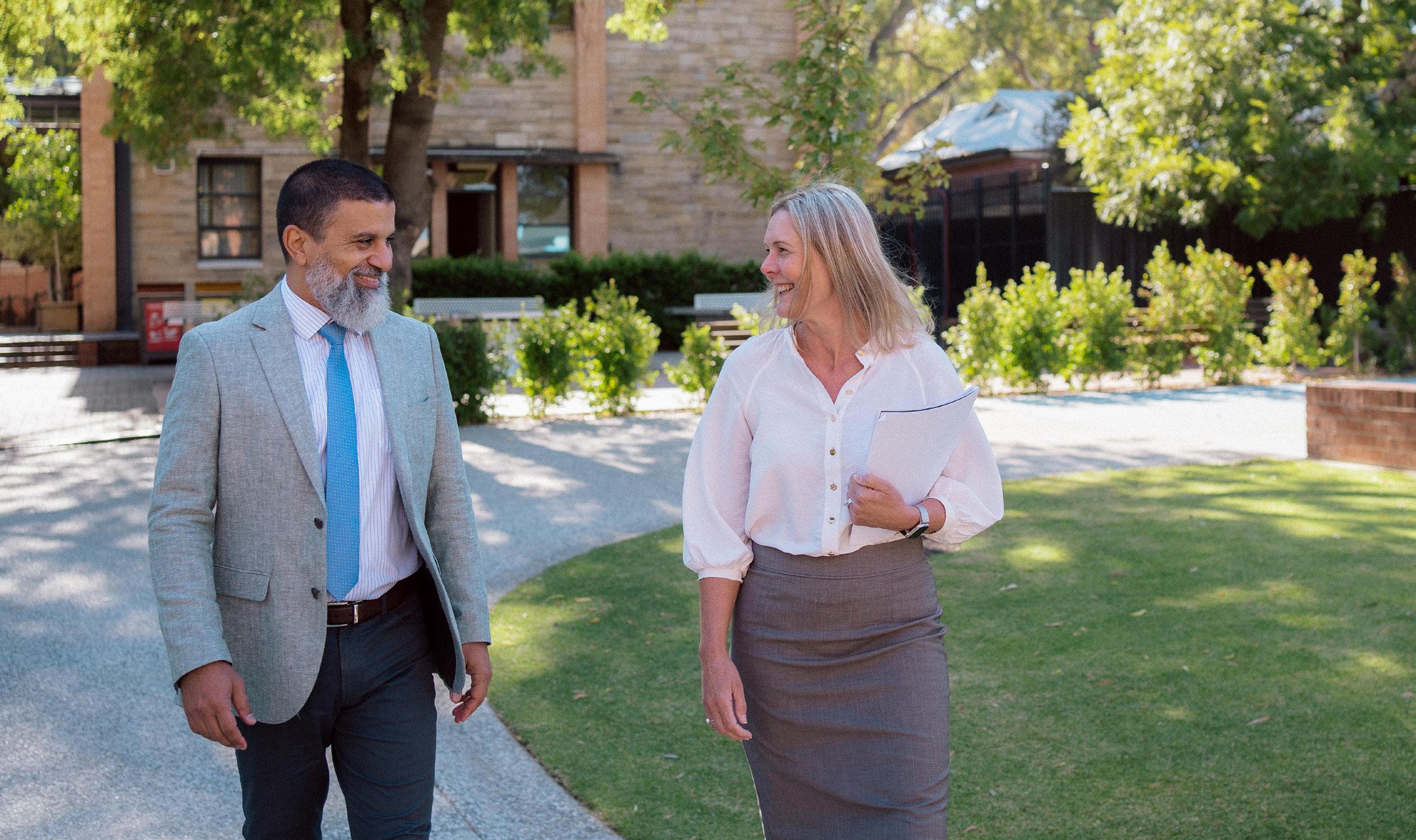
Ushering me into his office, Lawrence exhibits his trademark smile, warm demeanour and matching vocal timbre. Being approachable is in his DNA and a part of his new role that he takes very seriously.
But being appointed Head of Middle School is much more than a popularity contest, and within minutes of chatting, it’s clear that Lawrence would never have applied for the position if he didn’t feel fully prepared.
'I've been in school leadership of various kinds for a long time, and I've learnt pretty quickly that it's got to be the right time, right place, right position. You can’t do a leadership role without feeling ready for it and like you can really invest in it.'
In 2021, Lawrence was encouraged to apply for a leadership role in the Senior School. A role he hadn’t even contemplated. The simple act of someone believing in him shifted something. Within months, he found himself not just in the role, but acting up into an even bigger one.
'A few weeks in, you just have to do it,' he says. 'And you realise what you are able to do.'
Throughout 2025, with the School’s backing, he completed the Association of Independent Schools of NSW globally acclaimed National Flagship Program to further extend himself.
When the Middle School leadership position came up, he felt ready, applied and beat applicants from all over the world.
The theme of being seen, backed and believed in threads through everything he talks about. It’s the heart of his pastoral philosophy, and it’s impossible to miss how deeply he cares about student needs. 'Young adolescents need to be reminded that they’re important,' he says. 'Their automatic response to most things is that no one cares about them.'
Lawrence has spent much of his career with Years 7 to 10, observing how they tick and trip up.
He’s acutely aware that boys often won’t talk when asked directly and that they worry about being seen getting help. He believes that the magic lies in relationships built quietly and consistently, over time. Maintaining a system that promotes opportunities for relationship building is high on his agenda, and he extols the virtues of Heads of House, Home Group Teachers and Wellbeing Team members. 'All students need to know there are people in their corner. So, when the need is there, they know where to go.'
His experience teaching in a single-sex environment showed him that co-education was where he wanted to be. Why? 'The simple answer is that reality is important. I felt that the boys were missing day-today interactions with half of humanity, and it showed in how they talked about women. It wasn’t always derogatory, but it was missing something. They weren’t experiencing the other gender as colleagues or friends.'
But he concedes that even in a co-ed environment, respect needs to be consistently modelled and reinforced. 'Our expectation is that everyone should feel safe, have a voice and be respected regardless of who they are. It’s a very important message that students need to hear and see across all aspects of school life – not just when issues are being dealt with.
We are pretty unique in this space in that students can wear whichever uniform items they want, and as much as possible, we allow them to play the sports of their choosing. Seeing people breaking moulds and being celebrated is important, and I think we do that really well. They are starting points for these considerations.'
Lawrence is equally conscious of guiding students to appreciate what’s on offer at Pembroke. 'We are privileged to be in an environment like this, so we should be using that and sharing that. Service is one of the pillars of our Strategic Plan, and the emphasis on it is building, which I’m excited to be a part of.'
This thinking formed part of the vision that he pitched when applying for his new role. Students who feel connected not just to each other, but to the wider world. And students who understand they can contribute, whether their world is small or vast. 'School should be set up so that students learn how they can make an impact in their world. I want them to come out of here feeling like they can contribute and that they want to.'
When I ask whether he plans to reshape the role now that he’s stepping into it, he smiles. 'I’m not going to pretend to be someone I’m not, so it’ll certainly reflect me as a character. But I’m not here to make wholesale changes. This is a really well-functioning community.'
Seeing people breaking moulds and being celebrated is important, and I think we do that really well.
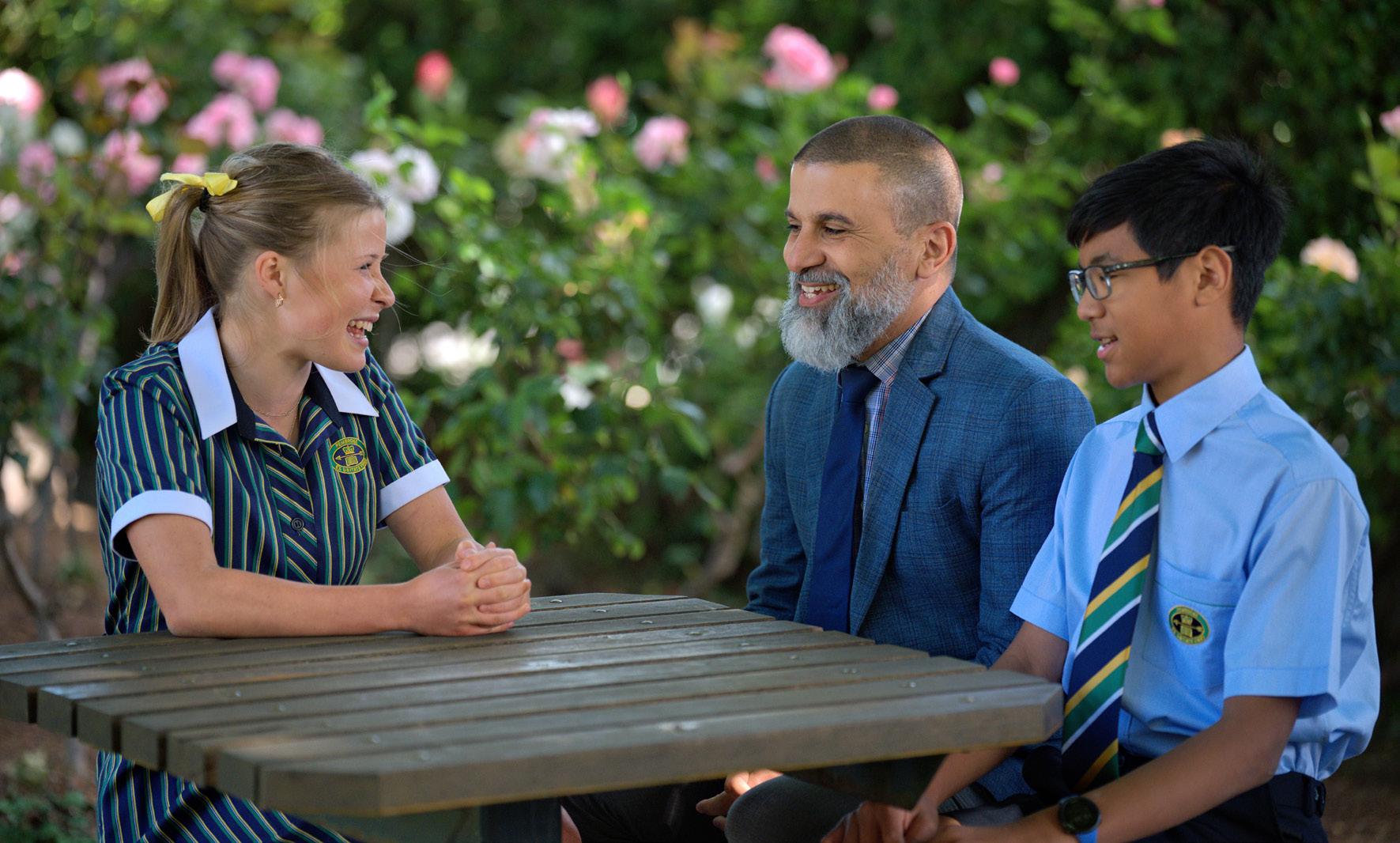
As for how being a parent has influenced him as a teacher, it might not be what you’d expect. He says that teaching has taught him patience as a parent. 'Most importantly, I’ve learnt that a teacher and a parent are very different things. Your kids don’t want everything to be a lesson.' He laughs as he describes his own son seeking out role models beyond home. 'And that’s important. The more voices they learn from, the more they can work out who they are.'
It was, in fact, the advice of Pembroke teachers that sent Lawrence on the path to teaching. They agreed he was good at relating to people and that the profession would be right up his alley. His Maths Teacher, Mr Hilditch offered practical advice about university pathways and, he says, 'It has always felt like the right decision.'
Given all the added responsibility, Lawrence will only be teaching one class this year. Outside of that, he intends to be as visible as possible, getting to know around 900 students and inviting them to get to know him too. 'I want them to know what I value, what I think and what I think they can get out of this place, which is a lot more than an ATAR.'
He also intends to nurture his teachers. 'It's not an easy job to do if you're not into it, right? So, you’ve got to create an environment where they are being supported, extended and challenged. That’s something I want to make sure is continued, so we have people who are really invested in the place. Because they need to be.'
While he’s cautious about sweeping statements on technology, Lawrence is clear about the pressures young people face in a world shaped by social media and rapidly evolving AI. He worries about the expectation that adolescents should somehow resist systems designed to capture their attention, calling it 'A pretty unfair burden to place on a developing mind.' For him, the remedy isn’t necessarily banning technology outright but ensuring students have the grounding, relationships and critical thinking to navigate it.
And when it comes to AI, he’s pragmatic about the pace of change, noting that assessment systems are already struggling to keep up. 'We can’t pretend students won’t use it. The question is how we teach them to use it well.' He doesn’t see AI as a threat to learning but a prompt for schools to double down on the skills that matter most, including human connection and communication. As he puts it, the future belongs to students who understand themselves and can work with others, 'because a lot of what they’ll be doing doesn’t even exist yet.'
Lawrence’s knowledge is vast, and we could have talked for hours given the affable ease with which he articulates. But he’s a very busy man who will have little spare time in the year ahead. In case you’re curious what he’ll do when he does, it’ll be spent with family, playing basketball (when the body allows) and adding to his basketball card collection.
A Different Kind of Professional Learning: Instructional Coaching at Pembroke
The legendary basketball coach Pat Summitt once stated, ‘A great coach can lead you to places you never thought you could reach.’
Simon Miller Dean of Professional Growth and Development
Many of us hold vivid memories of someone on the sidelines whose guidance, encouragement and belief made a lasting difference on the sporting field. At Pembroke, we are fortunate to offer a similarly powerful form of support to our teaching staff.
With the backing of the Pembroke Foundation, the Didi Medlin Centre launched the Instructional Coaching Program in 2025, providing bespoke and sustained support for teachers to reflect on and refine their practice. While instructional coaching can take many forms, at its core it is a structured and supportive process that enables teachers to engage deeply with their professional growth. Jim Knight, widely regarded as the most influential academic figure in this field, defines instructional coaching as helping teachers develop ‘a clear picture of current reality, a clear picture of a preferred future, and a clear path from one to the other.’
Instructional coaching at Pembroke is grounded in Knight’s Partnership Principles, which emphasise teachers as professionals working alongside expert peers. Coaches listen carefully, ask purposeful questions and support reflection, while maintaining teacher agency in decision making. Coaches also assist their partners to measure impact within a confidential and supportive environment where experimentation and reflection are actively encouraged. Through what is known as the Impact Cycle, coaching pairs follow a structured process that may include multiple ways of understanding current reality, measuring impact and identifying refinements or interventions. Observation, video footage, student feedback and other data sources form vital tools in this work.

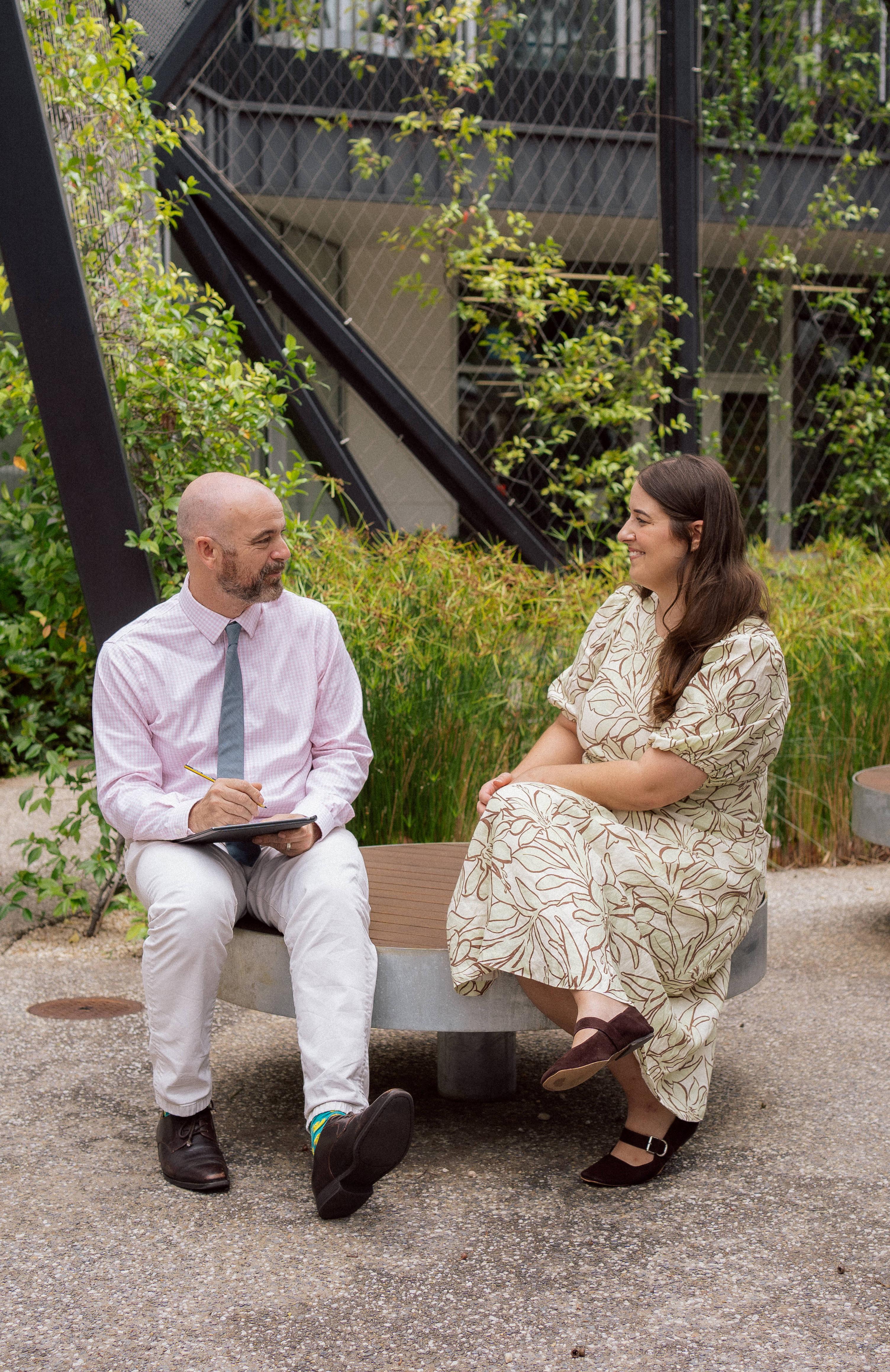
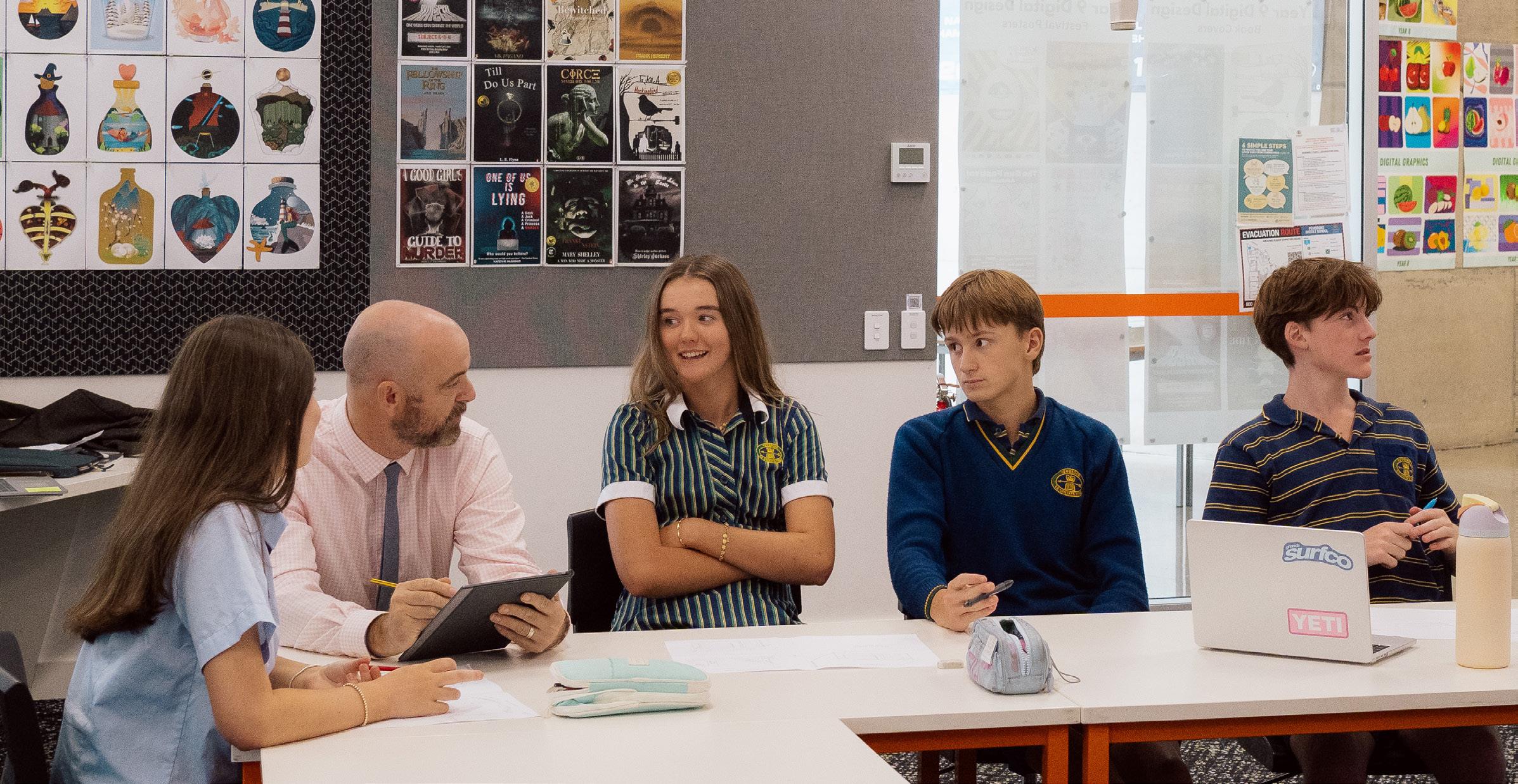
Last year, 32 teachers from across all campuses and with a wide range of experience partnered with our six instructional coaches. Teachers focused on diverse aspects of practice, including questioning techniques, student engagement, classroom management and the collection of evidence aligned to AITSL standards. These partnerships have led to meaningful impacts on teacher practice and, in turn, on student outcomes. When reflecting on the experience, several key themes emerged.
A safe space and time to reflect on practice
The confidential, curious and non-judgemental relationships formed between teachers and coaches were consistently identified as central to the program’s success. One teacher reflected, ‘I have never felt more heard.’ Many participants highlighted the openness and generosity of spirit within coaching conversations, noting the psychological safety that allowed them to engage honestly with their practice. Others emphasised the importance of time, describing it as essential for deep professional reflection. As one teacher explained, ‘It afforded me the time to deeply unpack what is occurring in my classroom, which is something we may not always have capacity for in the busyness of everyday school life.’
Pembroke’s coaching model is notably generous in its time allocation, with coaches often assuming yard duties or relief lessons to create protected space for reflection. This commitment ensures instructional coaching is experienced as deep and meaningful professional learning rather than a compliance exercise.
Seeing practice differently through evidence
A distinctive feature of the Impact Cycle is its deliberate use of evidence to understand classroom reality and measure impact. This requires teachers to be both vulnerable and objective. While a range of data collection approaches were used, video footage emerged as particularly powerful. One teacher commented, ‘While initially I found this awkward, I soon lost sight of the actual people in the video and focused on the technique, and it was incredibly illuminating. You rarely see yourself in action.’
Teachers who experienced live observation also valued the opportunity to share their classroom with a trusted colleague. As one long-serving teacher noted, ‘The experience of having a colleague observe my teaching was supportive and affirming.’ Others who used student focus groups or interviews described gaining deeper insight into student experiences. One teacher reflected, ‘I had little idea as to their reasons for not always engaging. This direct feedback allowed me to make individual changes to my interactions, with instantly better outcomes for both teacher and student.’
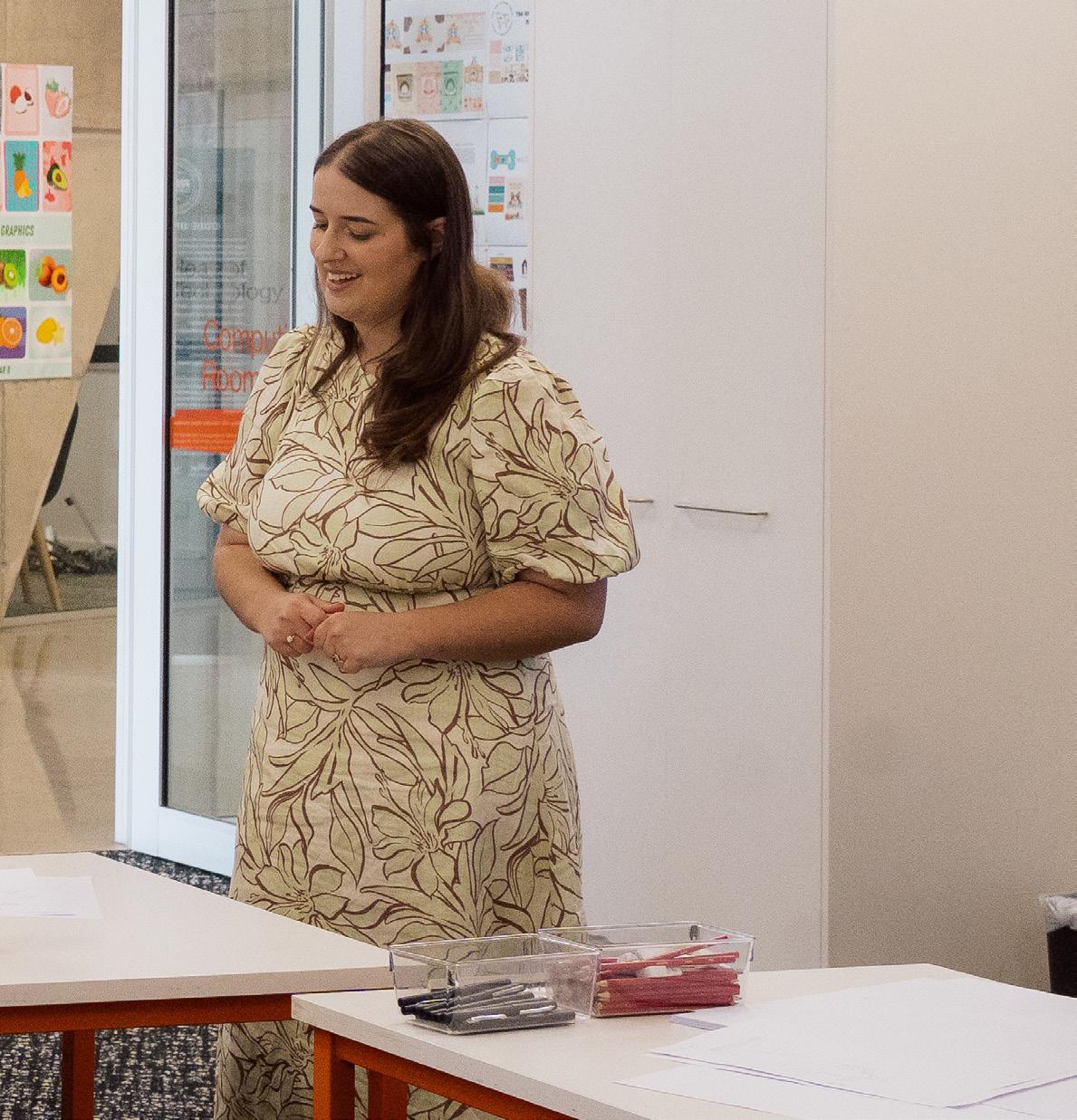
From reflection to deliberate action
Participants consistently reported that coaching led to tangible changes in classroom practice. One teacher explained, ‘Through the process, I have become more deliberate in the type of questions I ask my class. I have developed strategies such as pre-designing questions for use during the lesson or using a second prompt to require students to clarify their thinking. This has improved student outcomes significantly.’ Others refined their approaches to group work, placing greater emphasis on collaboration and intentional role design. Informal assessment of student understanding was another common focus, with teachers developing purposeful strategies to check learning and adapt instruction responsively.
A mutually beneficial relationship
For the coaching team, the experience also generated significant professional growth. One coach reflected, ‘I have engaged with thoughtful and honest reflections on practice that have inspired me to consider my own teaching with greater enthusiasm for development.’ The strong relationships formed through coaching partnerships fostered increased collegiality and, in some cases, new initiatives. One partnership led to English as an Additional Language students in the Middle School working alongside Reception classes, creating rich learning experiences for both cohorts. Coaches frequently described the reward of witnessing colleagues’ moments of insight as new strategies succeeded. As one coach wrote, ‘The most valuable moments have arisen when we have discovered something together. That discovery seems to sustain the type of enthusiasm usually reserved for early career teachers.’
Participants consistently reported that coaching led to tangible changes in classroom practice.
In 2026, the Didi Medlin Centre has expanded its work to include specialist technology coaching and leadership coaching, available to both teaching and professional services staff. We look forward to seeing these programs continue to grow and strengthen professional learning across the School.
Long-Standing Staff
Pembroke is proud to have many long-standing staff members who have dedicated years, and in some cases decades, to shaping the School community. Their experience fosters a sense of continuity and trust within the School and the wider community, where they contribute to a supportive, caring and egalitarian culture.
40+ Years
Peter Sulicich
Julianne English
30+ Years
Amanda Bourchier
Claire Woods
Meg Oates
Susie Sadler
Tony Mazzeo
Mary-Anne Riley
David Charlesworth
25+ Years
Shaun O'Neill
Nicolle Somerford
Angela Brewerton
Lih Ling Wong
Kate Hodgkison
Daryl McCann
Tim O'Loughlin
Chris Baldock
Mee Ching Ling
Emily Davis
Evan Shillabeer
Catherine Andrews
Michael Ferrier
James May
Katie Westley
Wendy Wills
Alison Allan
Darren Miller
Names are in order of years of continuous service, calculated from 31 March 2026.
20+ Years
Nikki Abdilla
Shane Claridge
Elizabeth Crowhurst
Benjamin Knights
Stephenie Martin
Louise McNamara
Alison Neill
Troy Schroeder
Glen Whiffen
Andrew Quinn
Peta Harries
Peter Woon
Sebastian Cielens
15+ Years
Ty Manning
Rachel Merritt
Mark Reid
Joe Connelly
Michele Bond
Matthew Hopkins
Andrea Schultz
Niall Ward
Andrew Clark
Penny Cowell
Jonathon Fuller
10+ Years
Sally Fleet
Gabi Walldorf-Davis
Mim Barnard
Luigina Doyle
Simon Miller
Elizabeth Treloar
Alison Dunbar
April Millar
Catherine Mitchell
Anthony Izzo
Rebecca Ramsey
Rebecca Vaughan
Tracey Bartholomew
Thomas Lodge
Geoff Goh
Andrew Chapman
Chloe Braun
Janet Farnham
Kate Rutherford
Peter Barnard
Scott Carey
Alexandra Piggott
Melissa Battye
Robyn Baker
Gabrielle Corbett
Ben Williamson
Anthony Owen
Sally Martin
Nicki May
Luke McCarthy
Donna O'Connor
Martin Roberts
Sophie Dearman
Rachel Howard
Catherine Paholski
Naomi Diggens
Jason Lentakis
Kathryn Schumacher
Ros Sidwell
Lucy Barber
Lauren Malec
Morrison Lygo
Rachel Dalton
Cassa Robinson
Xiuxiang Dunn
Emily Holds
Ashley Remkes
Anna Jones
Sandy Luong
Gabrielle Kelly
Tara Manning
Emily Monaghan
Jonathon Wurst
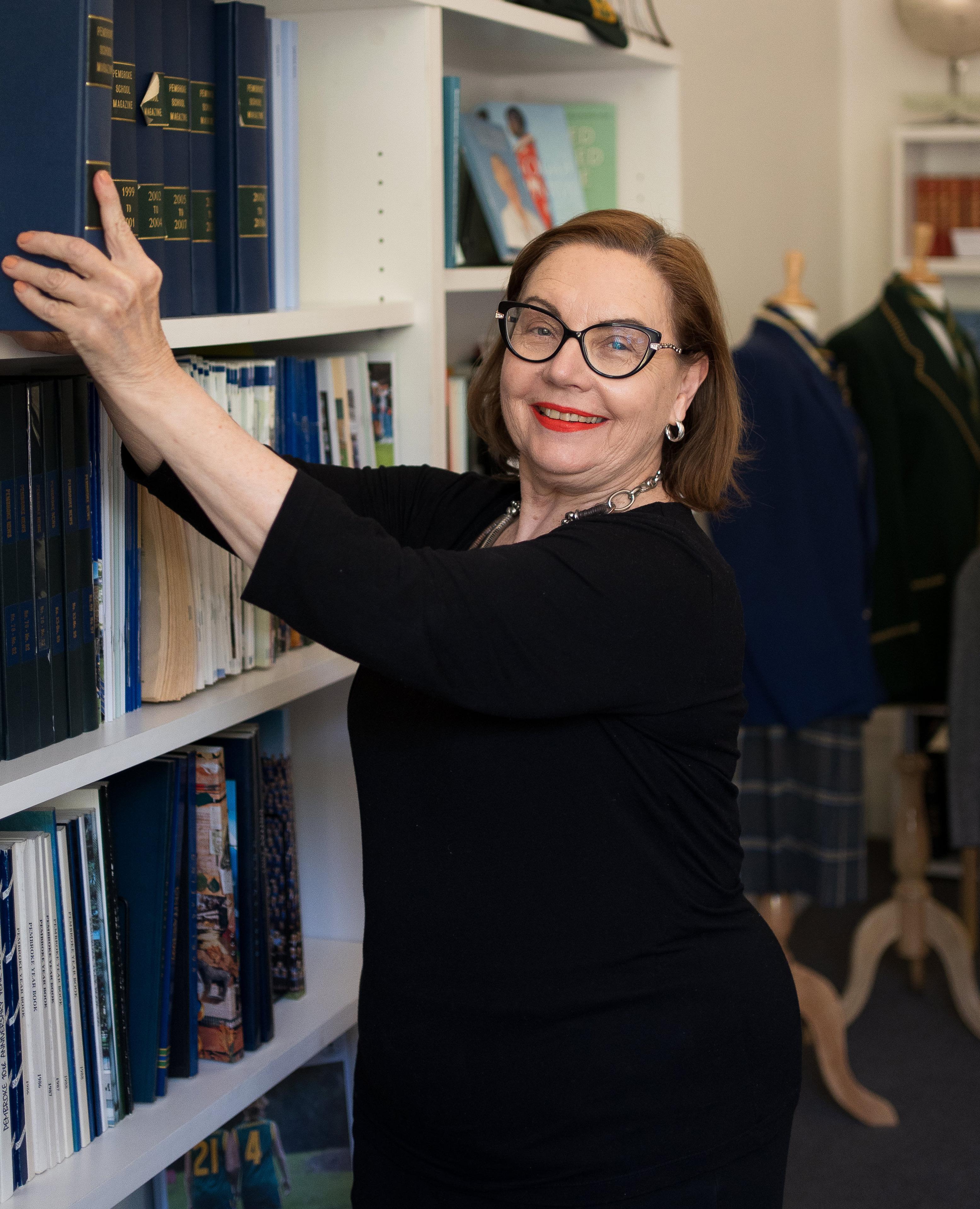
I love that Pembroke reflects a culture where staff are valued and respected as individuals. We are given opportunities to develop during each stage of our career journey.
Peta Harries School Archivist
The Role Most Schools Don’t Have (But Should)
How Pembroke’s Experiential Learning Coordinator, Sam Slattery makes magic happen.
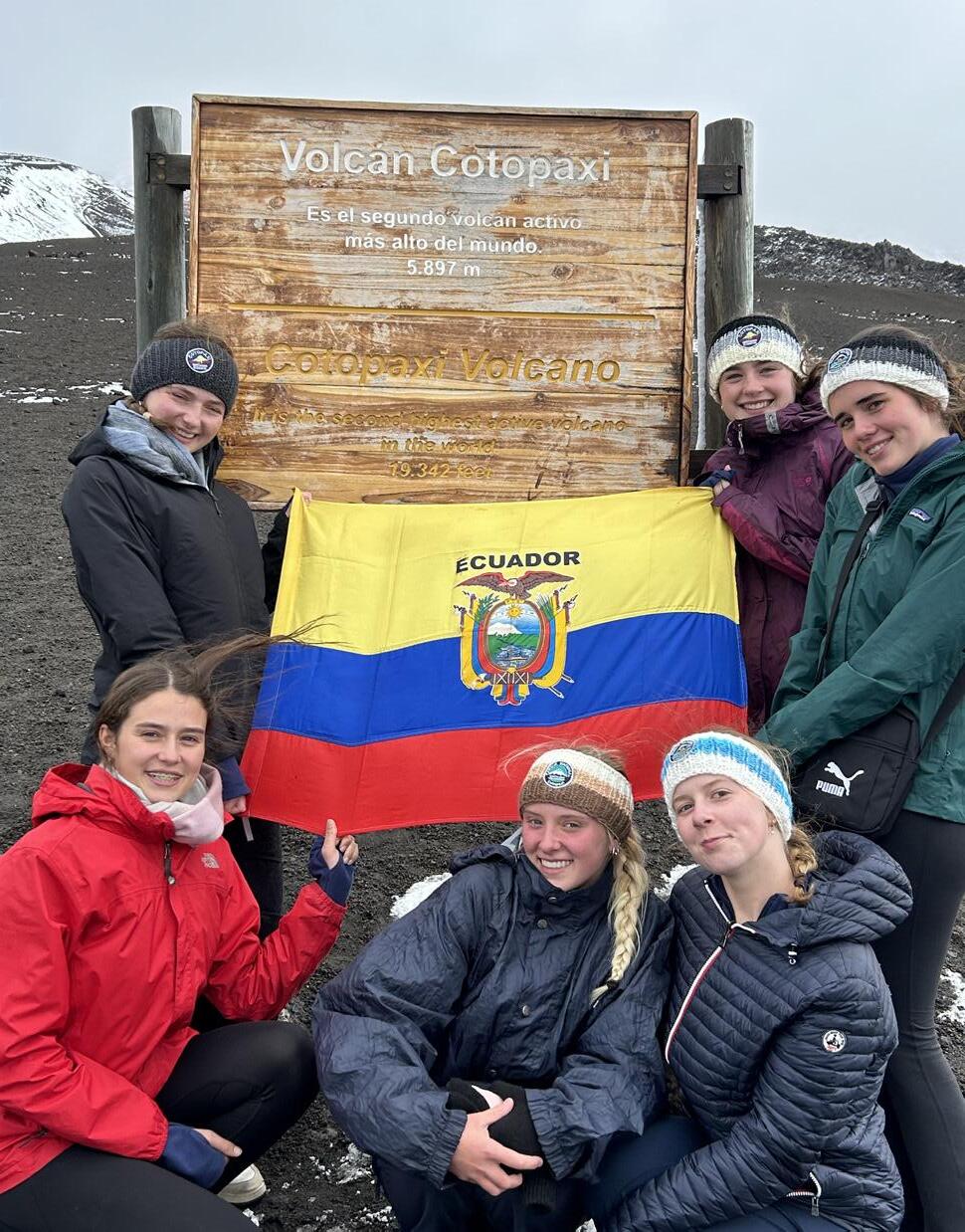
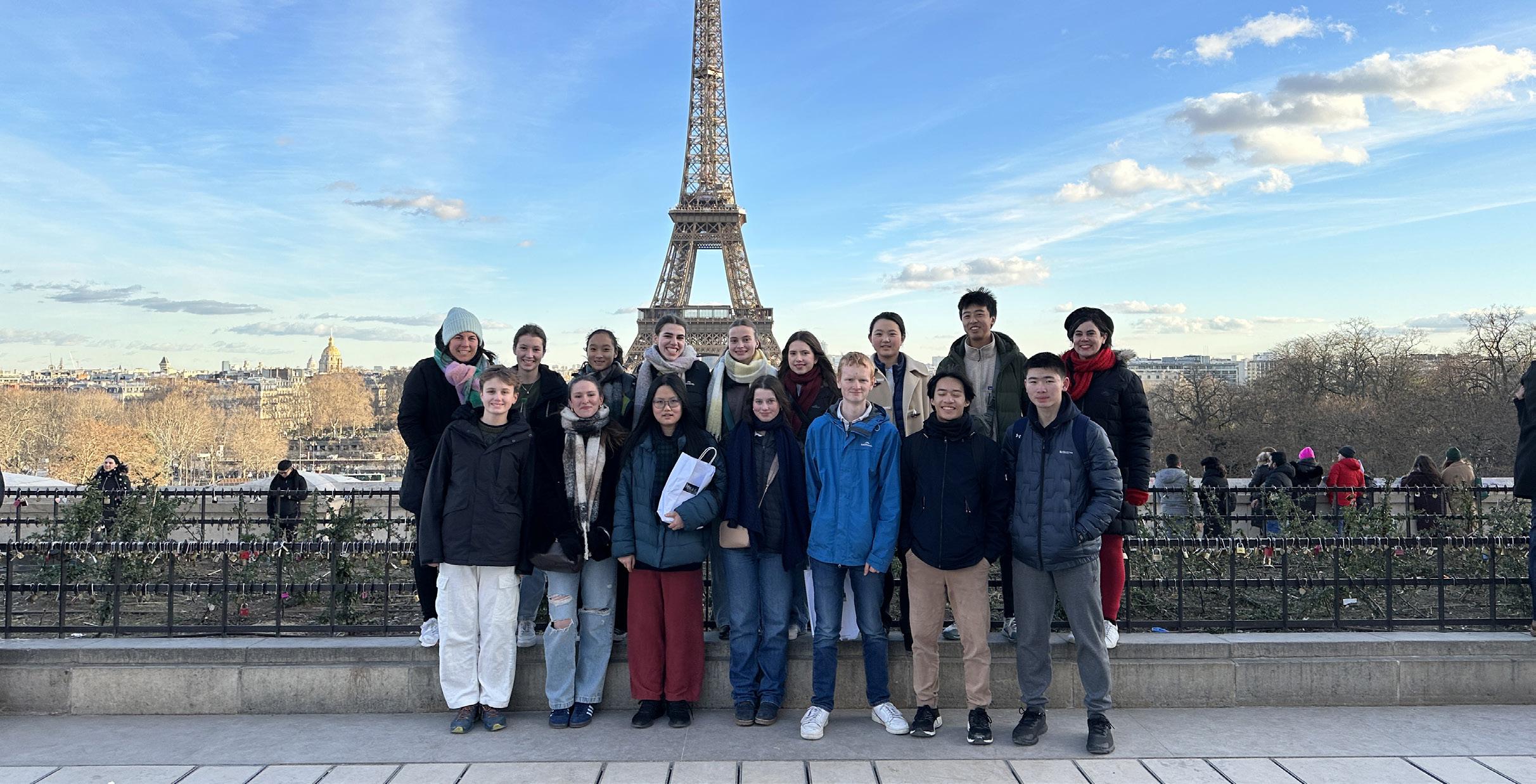
Last year alone, Pembroke students travelled to seven countries across five continents. They skied on the snow-covered slopes of Japan, admired the rose windows in the Notre-Dame Cathedral in Paris and stayed with host families in rural Chile.

Gabbi Agnew Publications Manager
Domestically, Pembroke visited every corner of the country, from the ancient gorges of the Kimberley, to Cairns’ tropical coastline, to Tasmania’s rowing mecca, Lake Barrington. Behind every passport stamp, flight booking and bus schedule was Sam Slattery, Pembroke’s Experiential Learning Coordinator.
Most schools don’t have a dedicated staff member for coordinating student and staff travel, but most schools aren’t Pembroke. The benefit is clear to Sam, who says, 'Instead of teachers spending hours on hold with airlines and juggling visas, they can leave it to me. Then they are left to focus on what they do best: building relationships with students, providing the support for them to step out of their comfort zone and learn something new along the way.'
If you stop to think about it, the scope of her role is staggering. Approximately 30 trips run annually, both interstate and internationally, and include curriculum excursions, sporting tours, language immersion tours, cultural exchanges, Service Learning trips, and even some last-minute ‘we just won something’ student trips to compete at an international level.
On top of that, Sam looks after staff travel: Admissions staff travel to showcase Pembroke internationally, our Old Scholar Engagement Managers run community events the major cities and our professional development is extensive, with staff attending conferences and speaking events year-round. At any given moment, Sam is juggling multiple trips at different stages of planning, some departing next week and some being planned for 2027.
Sam’s path to Pembroke began with two decades of experience in travel, starting with Flight Centre in 2003, based in Darwin. Following a family move to Sydney, she began working under their corporate travel brand, and eventually launched her own business, servicing everything from business travel for small businesses, family holidays for her friends and an international trip for over 200 dancers, complete with performances at Disney and Universal Studios.
COVID-19 hit Sam’s business harder than most. She refunded everything that had been booked in the past year, and the franchisor pulled up stumps from Australia, effectively closing her business. Always quick with a solution, Sam pivoted to school administration and finance work and quickly developed a love for the school environment. The pace, the community and the energy of school life were all she needed to thrive. When Pembroke advertised for the role she eventually won, it was a dream come true. It was a combination of everything she’d learnt so far: the intricacies of group travel, the financial management, the problem-solving and the people skills.
Now, her day-to-day is wonderfully varied. Depending on how close a trip is to departure, Sam is juggling information nights, expressions of interest, planning meetings, student selections, deposits, payment plans, booking airlines and accommodation, organising visas, collecting consents, doublechecking medical information, and liaising with Pembroke’s Work Health and Safety Coordinator, Lisa Hart to arrange necessary risk assessments.

Once a trip has departed, Sam keeps a close eye on them through the Microsoft Teams chat, receiving daily updates, solving problems as they (inevitably) arise, and her favourite part of the job, seeing photos of our students enjoying themselves all over the world. Once they’re back on home soil, Sam still doesn’t rest – she runs debrief meetings, collects feedback and handles any insurance claims from the trip.
The aforementioned risk assessments are no small feat either, and they are certainly not taken lightly. 'Student safety is of course the most important thing at all times. Lisa is so thorough in her process. For example, when we sent a group to the Galapagos, she learnt what the local ambulances carried, and made sure we brought extra equipment that might be required if something unexpected happened. We’ll consider every eventuality and make it as safe as possible for every student.'
Sometimes, this means changing plans at the last minute. In June last year, conflict in the Middle East led to Qatar abruptly closing its airspace, grounding hundreds of flights and causing chaos. Only a few days later, Pembroke’s Spanish Trip and Literature Tour to the UK and France were both supposed to fly though Qatar. Sam sprang into action, quickly diverting the large groups onto two different flights through China. Everything went to plan after that, but she still says it was the most complex occurrence since she began.
Teaching staff who’ve worked with Sam on their trips know exactly how helpful she is, however most teachers don’t have a need to interact with her. 'Many staff don’t realise the full scope of the support available, how I can help them. I’m very resourceful and I have industry channels that aren’t normally available, so I can always find a solution. That’s what my role is all about – removing barriers so that experiential learning can happen.'
For many students, school trips are the longest they’ve spent away from home or their first time overseas. It’s a daunting prospect for any teenager, or parent for that matter, and Sam’s support means that teachers have the capacity to provide the pastoral care required. 'It’s a great way to expand their comfort zones. Learning Spanish in a classroom is so different to ordering food in a Madrid restaurant, or living with an exchange family in Chile for a term. Of course it’s difficult – it would be for any of us – but that’s where growth happens. Students see how far they can challenge themselves to do hard things. And sometimes come back dreaming in Spanish!'
If she could design her dream trip with unlimited resources, the answer is telling. 'Any trip where kids experience different cultures and languages, where they're pushed outside their comfort zone and communicating with people around the world, that's where the magic happens.'
At Pembroke, that magic isn't left to chance. It's carefully coordinated, thoughtfully planned and backed by someone who understands that the best learning often happens far from the classroom.
Photos
Left to Right
The inaugural Campbell Whalley Geography Expedition to Ecuador and the Galapagos Islands
• Lia Litchfield (Year 12) (second from right) with her exchange family in Chile
• Students and staff on the 2023 French Tour
Leaders in Tune
If the walls under the Kensington Oval Grandstand could talk, they’d probably sing instead. Certainly, the part that’s home to Pembroke’s music space. Each week, it welcomes an abundance of soloists, numerous choirs, a bounty of bands and more than 15 ensembles.
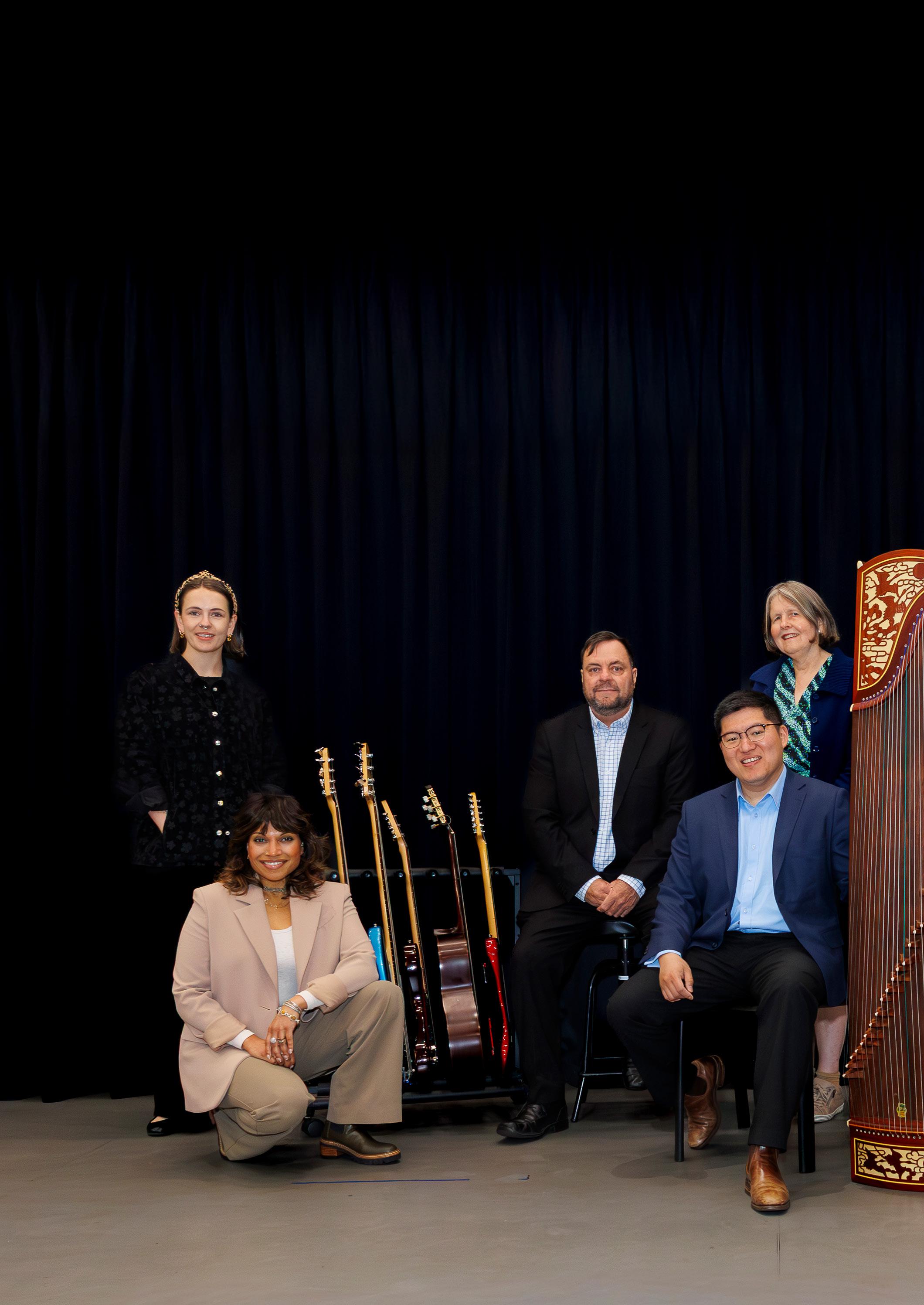
Old Scholar Kate Holland (1992) found a rare moment of quiet to chat with the leaders of that space, Lester Wong (Director of Music Performance) and Stephen Millar (Head of Music – Curriculum).
For Lester, his musical journey began during his schooling in Singapore. Forced to select a co-curricular activity, he chose the Chinese Orchestra. He learnt both the violin and erhu (a traditional instrument) in an intense, competitive environment that he grew to love.
'I found my voice in the violin and gained many friendships. After two years in the army, I decided to pursue music and headed to the Conservatorium in Adelaide.'
Stephen’s parents were in the Salvation Army, and at the age of 8, he was offered lessons so he could join the brass band. He began learning euphonium, which he says was terrible. Persistence carried him to the band around 10, then the choir, and later Brighton High’s special music program in its second-ever intake, where things really took off. Trombone became his main instrument, but he learned across brass, percussion and composition.
'I was open to pursuing both Maths and Music postschool, then in Year 12, my Music grades soared while my Maths dropped. It became clear that I was better at Music, and I also realised that I wanted to be a Music Teacher, not just a performer.'

I’ve performed with ensembles from the Adelaide Symphony Orchestra to Opera Australia. But now my greatest joy is watching young musicians grow, collaborate and create something greater than themselves. Every time I see our students perform in front of an audience, I am inspired by their resilience and thoughtfulness in creating music where there would otherwise be silence.
Neal Holmes Coordinator of Bands, IMT
Music is ever-present in my life – not only through teaching, playing and collaborating, but also through my involvement in Kodály and Orff communities worldwide, where I explore best practice.
Mary-Anne Riley Coordinator of Junior School Arts
Today, the duo harnesses passion and professionalism to oversee a dynamic program of musical offerings. Lester looks after strings, jazz, Rock School, choirs and bands, 'ensuring every student finds a place to discover their musicality'. Stephen conducts, teaches and oversees the curriculum—'refining programs, setting exams and ensuring compliance.'
Their two roles used to be one, and they have high praise for the split, saying it’s given them more time to grow the programs in their own domain and hire specialists.
Whether a student is engaged in Music as a cocurricular activity outside school hours or as part of the curriculum, the pair extols its benefits – particularly when experienced in groups. As well as connecting us to history, Stephen believes 'Playing in ensembles teaches patience and is teamwork at its purest.' According to Lester, 'The collective experience of making music can deliver goosebumps and is incredibly moving.'
Asked whether they still play for fun, the answer was a resounding yes. In perfect unison.
Playing in ensembles, It is rewarding to engage in conversations with students, exploring composers, performers and pianos. I enjoy developing series and displays to share what I’ve learned, especially the quirky details. I am continually amazed by the maturity and insights young students bring and it is teamwork at its purest.
Jennifer Stokes Peripatetic Music Teacher, IMT
I love seeing students stand tall and confident, proud of their creations and their skills. What music teaches us about ourselves and about others is an educational journey like no other.
Charmaine Jones Coordinator of Choirs and Singing, IMT
Sean Bates: The Leader of Our IT Crowd
Turn it off and on again is the phrase that makes Sean Bates, Director of Pembroke’s Information Communication Technology (ICT) Department both smile and wince because, frustratingly, it sometimes works.
He spoke to old scholar Kate Holland (1992) about the reality of his profession and how, with Pembroke’s support, he’s also studying at Oxford.
Was an IT role always your ambition?
I kne w I wanted to work in technology when I finished school, so I started a Computer Science degree at UniSA. It was focused on software development, which didn’t really set my world on fire. I persisted for about 18 months before taking a role in the technical support team at Optus.
A colleague mentioned that he’d done a diploma in Networking Engineering at TAFE, and it sounded like exactly what I wanted to learn. When I finished in 2007, I completed numerous network-related certifications before landing my first non-help desk job as a network engineer.
My sink-or-swim moment came when I was 23, working for Mitsubishi Motors Australia. I was brought on in a split role, assisting the current Head of Network Engineering and the System Administrator. The former wasn’t big on communicating. When he announced he was moving on, I was asked to ‘temporarily’ assume his role at short notice. I picked it up and ran with it.
It was a combination of super stressful and super exciting. The network was business-critical. If anything went down, car manufacturing stopped, which meant millions of dollars in lost revenue.
How did you end up at Pembroke?
From an IT pe rspective, schools are often underserved when it comes to technology maturity. Our future generations are coming through schools, and they deserve the same levels of access to technology tools as any other organisation. I knew Pembroke would be a great place for me because I could apply learnings from corporate roles, as the principles remain the same.
As with all organisations, the School has critical systems that must be available for it to operate. It’s part of my role (and the wider team's) to ensure this continues, as well as plan for future strategic and operational requirements. The tech mindset is very different from 20 years ago.
Because the systems don’t knock off when the kids do, do they?
Certa inly not. Nowadays, everyone is plugged in for far longer. The system runs 24x7x365. Our focus has been on operating more like a contemporary ICT function. Some of that work isn’t technical. It’s change management and communicating properly about what’s happening, when and why.
We’ve also set clear projects and initiatives for the last three years that align with different parts of the School’s Strategic Plan to ensure all our actions are linked to a purpose.
Are AI and cybersecurity priorities?
AI and cybersecurity are the two main areas that ‘keep me awake at night’ and are a focus at Pembroke. I've done a lot of personal professional development and study in this area, and my current study at Oxford is an MSc in Software and System Security
What made you want to study at Oxford?
I'd already completed some distance learning with the Oxford Continuing Education Department in 2015. Late last year, I realised it had been almost 10 years since I applied and got accepted for a postgraduate degree, and it felt like now or never.
I was over there in June, and it was incredible. The access to world-class thinkers, historical significance and a constant stream of interesting people was mindblowing. I attended presentations from the UK National Quantum Computing Centre and Google in one day alone, which was eye-opening. Pembroke has provided consistent support in my career, making it feel possible to pursue these types of aspirational opportunities.
Pembroke has provided consistent support in my career, making it feel possible to pursue these types of aspirational opportunities.
I absolutely love what I do. It is so rewarding and we have the most amazing community of staff and students.
Starting Strong: How Pembroke Supports Early Career Teachers
Teaching is not a profession where you arrive fully formed. Every classroom encounter is a new one, and the gap between graduating and feeling confident at the front of a room can be wide.
Gabbi Agnew Publications Manager
What narrows it, more than any formal training, is the quality of the environment a teacher lands in during those first few years. At Pembroke, that environment is something the School takes seriously.
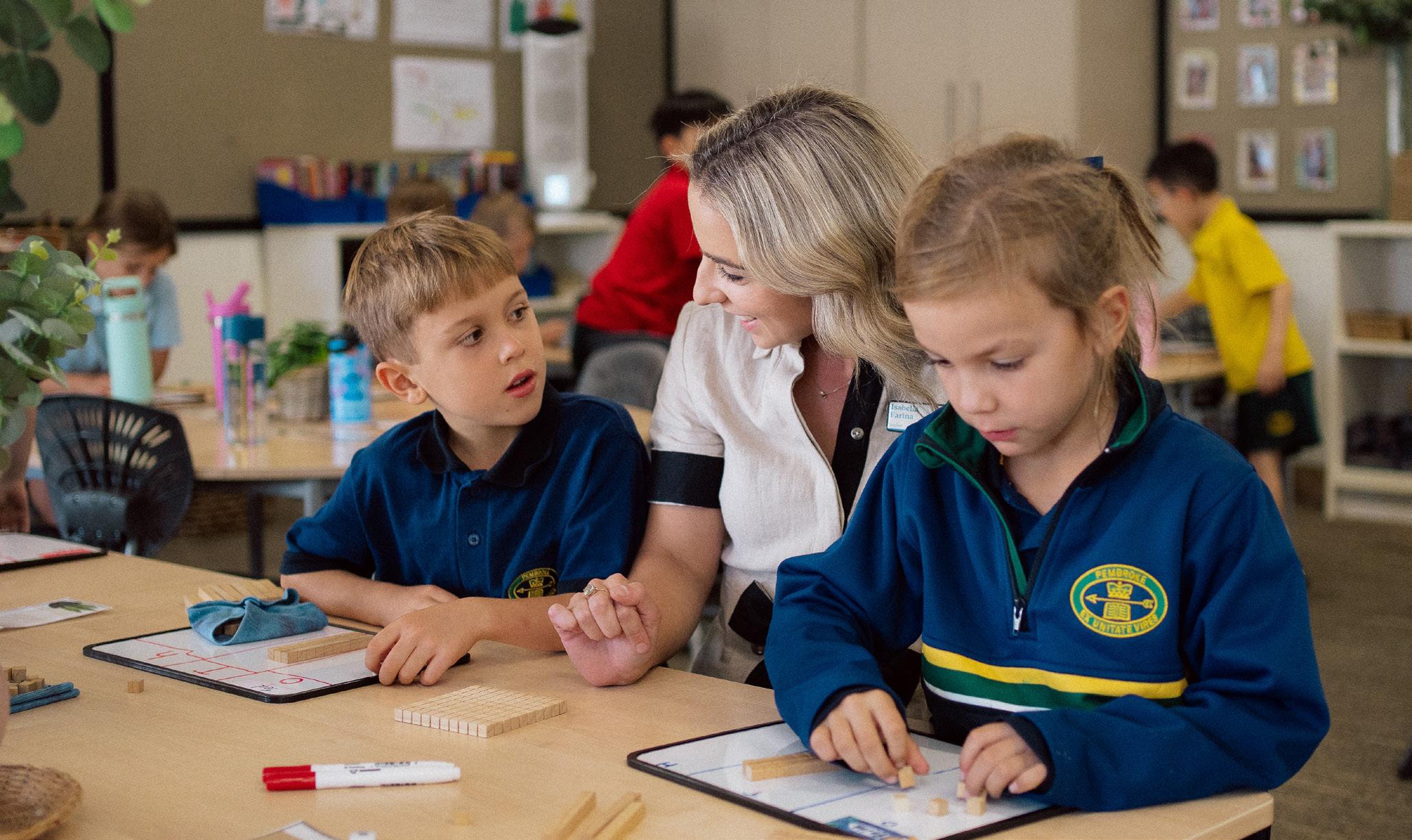
Two early career teachers, Isabella Farina (Junior School Class Teacher) and Liam Sutton (Middle and Senior Design and Technology Teacher), spoke about their experiences. Their paths into teaching could not be more different, and that contrast itself says something about who Pembroke attracts and how the School benefits from the mix.
How They Landed Here
Bella came to teaching with a clear sense of direction. She had spent her school years coaching and mentoring younger students in sport, enrolled in a Bachelor of Education (Primary), and progressed through her degree alongside retail and out-of-school-hours care work. The combination built her capacity to manage competing demands while staying focused on outcomes for others. By the time she completed her degree, she had already been promoted to store manager.
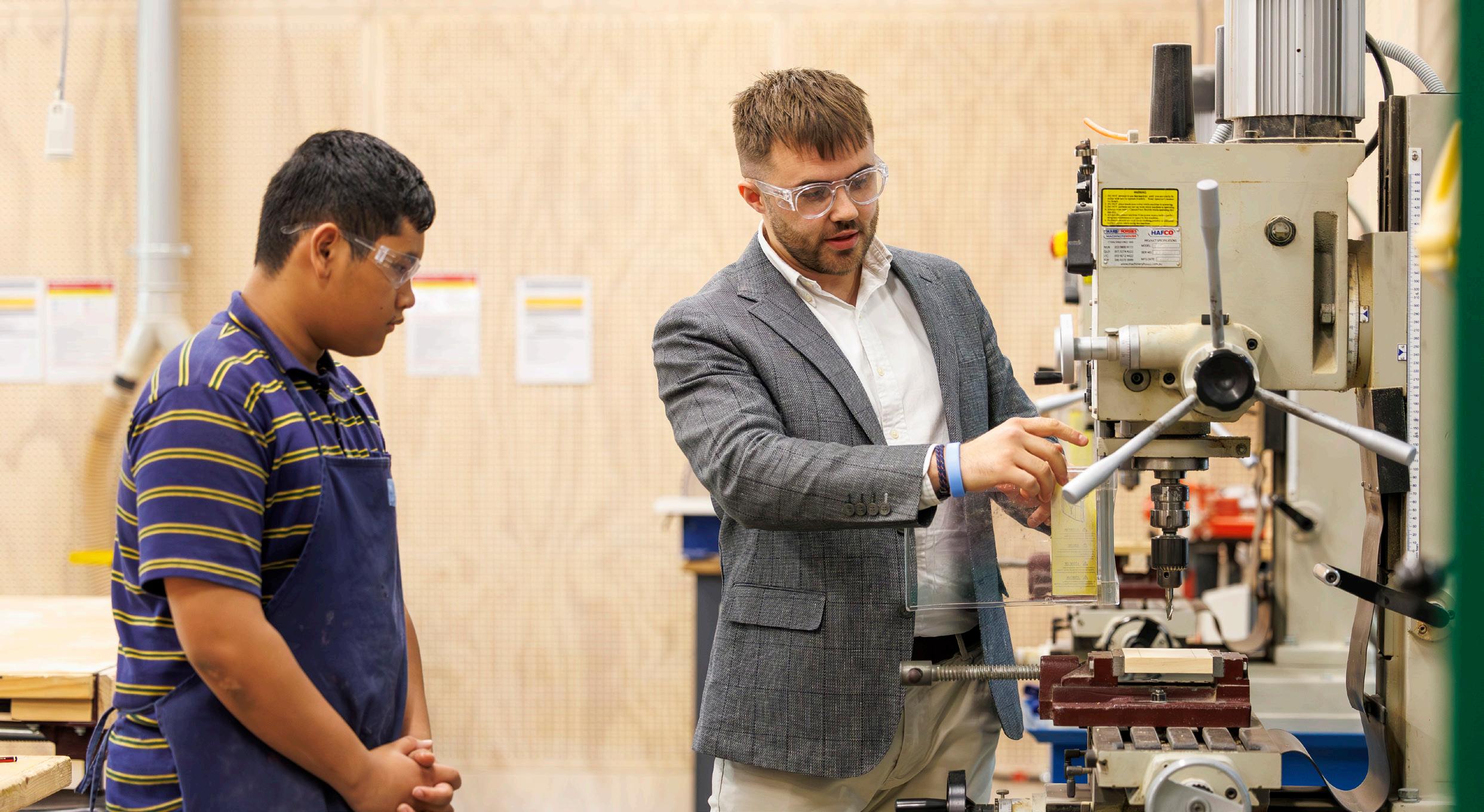
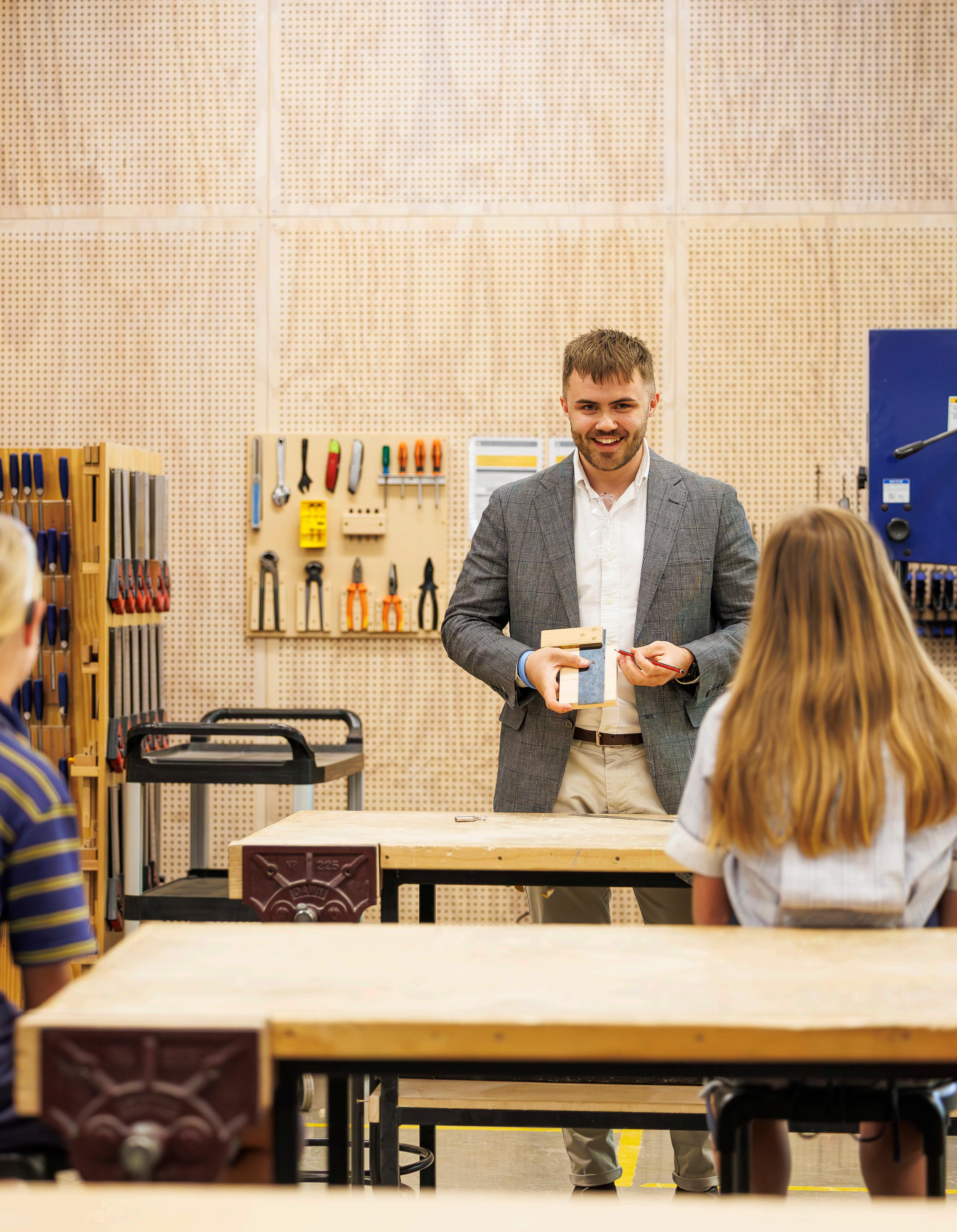
Liam arrived via a different route. He began a Bachelor of Business, took a job at BankSA and quickly concluded that an office desk was not where he wanted to spend his days. He switched to a Bachelor of Secondary Education, completed placements at four different schools across Adelaide and joined Pembroke straight out of university. He is now in his fourth year, teaching Design and Technology from Year 7 to Year 11, and has recently taken on his first Position of Responsibility as Acting Assistant Head of Reeves House.
What Early Career Support Looks Like
Bella enjoyed a high level of both structured and informal support as an early career teacher. 'I received ongoing mentoring from an experienced teacher, clear guidance around parent-teacher communication and professional practice, and I participated in Pembroke’s Quality Teaching Rounds professional development. I have also been supported through targeted professional learning, including my Master of Education studies, where I am majoring in Leadership and Innovation.'
Liam found the most support came from his colleagues. 'I have been lucky to learn so much from staff within my faculty, who have been amazing in guiding me, sharing resources for classes, moderating assessments and providing constructive feedback along the way.'
Both Bella and Liam speak warmly about Pembroke as a place to develop. Liam, who came in unsure whether teaching would stick, is now unambiguous: 'I absolutely love what I do. It is so rewarding and we have the most amazing community of staff and students.'
What New Teachers Bring
In asking Bella and Liam what early career staff contribute to Pembroke’s overall culture, the answers are consistent: currency, perspective and fresh ideas.
Bella cites her familiarity with ACARA Version 9 (the Australian Curriculum) as an example. Having just completed her studies during the transition, she arrived with a working knowledge of the updated curriculum that saved her colleagues time and prompted productive planning conversations. It was not theoretical familiarity; it was practical, and her colleagues recognised it as such.

Liam makes a broader point. Having done placements across four different schools, he came to Pembroke with a mental catalogue of what works elsewhere. He is candid about the risk he sees in institutional insularity: 'I believe too often in education we get stuck in the bubble of our own site, thinking what we are doing is the best without reinvigoration.' Early career teachers, moving between sites during training, are well-placed to challenge that assumption, and Pembroke’s culture for continuous improvement not only allows it, but encourages it.
Liam adds one caveat, and it is a good one: new ideas land better when combined with an understanding of why things are done a particular way in the first place. Pembroke’s winning combination of early career teachers and more experienced teachers within the same faculty makes that kind of exchange possible, driving student engagement and success.
Leadership Without Waiting
One of the things that surprised Liam about Pembroke was the sheer range of leadership pathways on offer. In his first four years, he has assisted with the HPV/ Pedal Prix Program, attended and helped coordinate trips and taken on additional responsibilities at both curriculum and pastoral levels. Now, Liam is excelling as the Acting Assistant Head of Reeves House, a role he has earned through involving himself in school life and seeking out opportunities as much as possible.
Bella's leadership in the Junior School is different in character: more embedded, less formally titled. She has taken on mentoring roles with students, contributed to collaborative planning and supported colleagues, and is now extending her co-curricular coaching across multiple year levels, strengthening students’ skill development while also fostering leadership, responsibility and resilience.
Career Transitions
We welcome staff from diverse professional backgrounds who bring varied perspectives, real-world expertise and an array of experiences that enrich our School community.
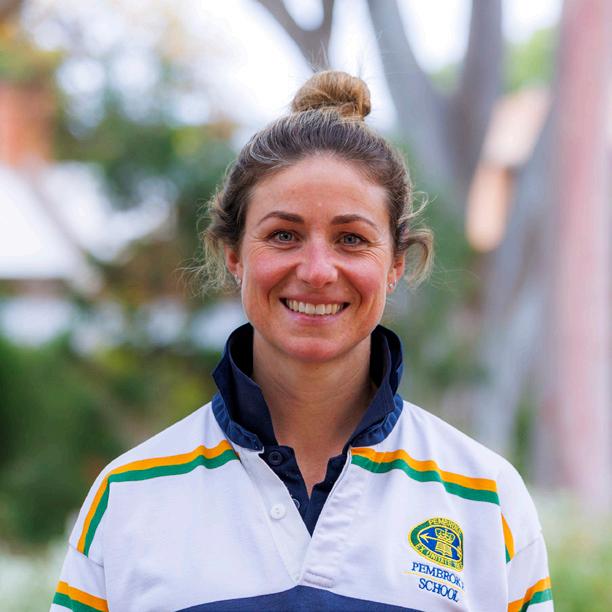

Jess Northcott Dive Instructor → Coordinator of Senior School Outdoor Education
After graduating from university with a Bachelor of Applied Science, Pembroke old scholar Jess Northcott (2003) knew she wasn’t ready to settle into a teaching career. Instead, she headed straight for the outdoors, working ski seasons in Australia, the US and Canada, and then switching the cold for the Florida sun, working on yachts in Fort Lauderdale.
While she was looking for something new, some friends mentioned diving. 'I had done a bit of diving in Australia and Florida, but nothing serious. I decided to fly to Thailand and do my Divemaster certification.'
For four months, she dived every day, learning guiding techniques, safety protocols and equipment maintenance. She passed her practical and theory exams, then stayed on to complete her Instructor certification. She ended up living on the island for three years. There were no cars, just bikes and boats, crystal clear water and world-class diving.
Little did she know, she was building experience that would assist in her teaching Outdoor Education back in Adelaide. 'The awareness of safety was different in Thailand, and I would always be thinking of solutions to problems as they were happening. We worked with such a diverse range of people
from all over the world, and diving took them out of their comfort zone, so we would see a lot of different reactions from people.' Jess loved the challenge of teaching them, building their confidence, watching them discover something new about themselves.
But island life had its limits. There was no career progression, no long-term stability. Jess knew she wanted more, and teaching diving had shown her she was good at it – patient, adaptable, able to connect with people in stressful situations. Jess moved back to Adelaide and started teaching Outdoor Education at Pembroke in 2017.
Since then, Outdoor Education has grown steadily, now running three Year 12 classes, sometimes four. The School has the facilities and support to run great trips, and Jess has built a program that adapts to challenges while keeping the focus on student growth and service.
When asked her favourite thing about teaching Outdoor Education, Jess is quick to answer: 'Away from screens, off their phones, students become different people. They're less anxious, more present, more connected. They take responsibility, build life skills and discover things about themselves they didn't know were there.'

Kerwin Penn Police Officer → Facilities Coordinator
Like many of us, Kerwin Penn wasn’t sure what he wanted to do when he finished school. After one week of university, he knew it wasn’t for him. It was only when he was chatting to a cousin who was a police officer that something clicked for him.
He applied, passed the rigorous testing including general knowledge, Maths, problem solving, physical assessments and psychological evaluations, and in 2009, started at the Police Academy as a Cadet.
For nine months, Kerwin studied legal theory, criminology, defensive tactics, firearms and tactical driving. After graduation, he built up his experience quickly, and over the next decade, moved through the ranks. He spent two years on patrol, then joined the uniform tactical team before transitioning to plain clothes and surveillance work. Eventually, he became a Brevet Sergeant, running his own patrol team. He also taught defensive tactics and firearms training back at the academy.
Ultimately, the time came for Kerwin to think about moving on. 'Shift work got harder with a young family at home, and the danger is always there. I’ve been shot at multiple times and seen some horrific scenes that you don’t forget.' The trauma accumulated, and Kerwin knew he needed to leave.
Looking back, Kerwin knows now that he had endless transferrable skills from his years with SAPOL, such as managing high-pressure situations, building relationships and staying organised under chaos, but he didn’t recognise that at the time. He felt daunted by leaving the only organisation he’d ever worked in, but applied for a General Hand position at Pembroke anyway.

What matters most is effort, care and being open to learning. Be brave enough to take the opportunity.
The timing couldn’t have been better, as the Facilities Coordinator was headed on long service leave, and that role seemed like a better fit for Kerwin’s skillset. He agreed immediately.
Now, the skills he honed in policing serve him daily. He communicates easily with everyone from contractors to students, finding common ground and building trust. His ability to manage dynamic, unpredictable situations, once used at crime scenes, now helps him coordinate multiple jobs, respond to emergencies and keep the School running smoothly.
His advice for anyone considering a major change? 'Don't underestimate what you bring. Your skills are transferable, even if you can't see it yet. What matters most is effort, care and being open to learning. Be brave enough to take the opportunity.'
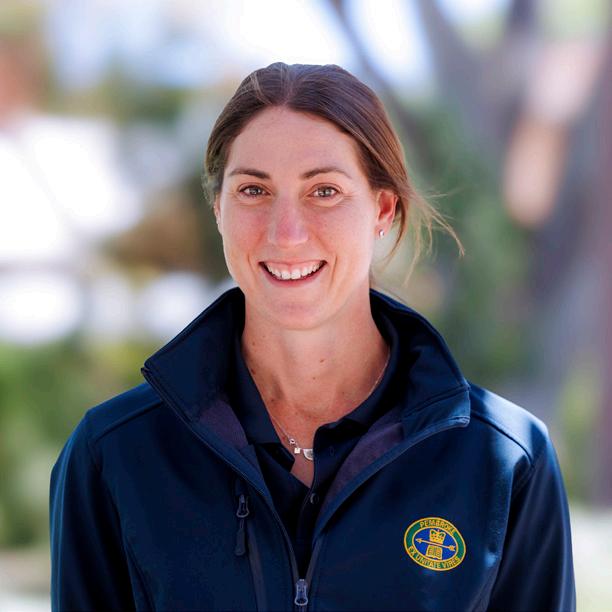
Renee Chatterton
Olympic Rower → Co-Head of Sport
Not many students get the chance to say their PE Teacher is an Olympian, but that's one privilege of being in Renee Chatterton's class. Bragging rights aside, Renee brings professional advice to our aspiring athletes and non-sporting students alike, developing their focus, organisation and personal goal setting.
After transitioning from swimming to rowing on the advice of the South Australian Sports Institute (SASI), Renee initially struggled with the sport. 'I felt like I wasn’t training as hard as I did with swimming because I was still learning the basics of the rowing stroke.'
SASI made the correct call; she quickly progressed in rowing and competed at her first World Championships the following year, which led to her trialling for the Olympic crew. She ended up in Switzerland at the final qualification regatta for the 2012 Olympics, Australia’s last chance to qualify the boat.
After successfully qualifying, Renee and the team stayed in Europe, focusing purely on training, completing three sessions a day, eating all the right foods and prioritising sleep and recovery. The crew made it through to the finals in Eton, and the team narrowly placed sixth, only 1.2 seconds short of fourth place. While the team was somewhat disappointed in the result, Renee acknowledges that they were so lucky to qualify and have the experience at the Games.
Having finished her teaching qualification and worked for a few years, Renee was initially attracted to Pembroke thanks to the Athlete Development Program (ADP), a high-performance sporting pathway that enables students to achieve their best, for selected students in Years 9 and 10. There, she knew she could teach everything she’d learned on her Olympic pathway: time management, discipline, focus and teamwork.

Renee understands the pressures of balancing elite sport with workloads, study, social lives and potential injuries. 'We have a number of students who are focusing on elite pathways and I can give them advice. There are so many elements to being an athlete other than training, and that’s what I try to teach them.'
However, Renee certainly recognises that we aren’t all on an Olympic journey: 'There are students who just want to play for fun or fitness, and students who want to play at a higher level. Both are equally important, so I try to tailor my teaching style and support depending on the individual.'
'I love working here. We have a good balance across our sporting programs, we have a wide range of sports which allows people to find what they are good at, try new things and find their people. Whether students are aiming to become professional athletes, playing for the first time or just playing with friends, there are opportunities for all at Pembroke.'

Andrew Chapman Science Fiction Author → Network Administrator
Andrew Chapman's first career wasn't supposed to be writing. He studied Psychology at the University of Adelaide in the late 1970s, following an interest in Gestalt therapy. During his third year, the university installed new VAX terminals in the lab, and Andrew, still a Psychology student at the time, was drawn to the computers. He wrote his own text-based computer game built around a procedurally-generated dungeon.
His path forward changed forever during his honours year after one of his lungs spontaneously collapsed. He left the program and landed a graduate position at the Bureau of Statistics in Canberra. It was 'mind-numbingly dull' answering questions about the minutiae of manufacturing classifications, so he moved into census design, working on the 1984 form, before another collapsed lung sent him back to South Australia following major surgery.
During recovery, Andrew discovered the Fighting Fantasy series, choose-your-own-adventure books that read like the computer games he’d been enjoying and creating in his spare time. Inspired, he wrote his first gamebook, Space Assassin , and then a second, Rings of Kether . The publishing company rejected both. Deflated, Andrew took a job at the Department of Social Security, then moved to the Australian Tax Office. Neither role was any more interesting than his first job at the Bureau of Statistics.
Then, salvation! A letter from the publishing company, explaining that they wanted to publish his books. 'I quit my job immediately, I literally danced with joy,' smiles Andrew. 'And thus began my writing career.'

Andrew wrote his third book in record time, spurred on by his publisher’s vote of confidence. He developed a board game, wrote children's series and sold short stories. Another couple of Fighting Fantasy books were published. With his first cheque, he bought his own computer. Instead of making him more productive, it distracted him. He wrote programs instead of books.
In the early 90s, Andrew sidelined writing and went back to university, completed a first-class honours in Psychology, then a Graduate Diploma. He started a PhD, which remained unfinished as he turned his attention back to writing an epic fantasy novel ('alas, unpublished!'). He worked briefly for the Health Department, then spent several years at the College of Surgeons doing literature reviews for the ASERNIP-S project (Australian Safety and Efficacy Register of New Interventional Procedures – Surgical). He was the lead author on half a dozen papers published in journals such as the Annals of Surgery and the British Medical Journal.
All the while, he was teaching himself networking, hosting LAN parties, getting deeper into computers. When his wife mentioned a help desk position at Pembroke in 2003, working under Chris Blake whom he’d previously met at a Cisco networking course, Andrew applied. Shortly afterwards, he became the Network Administrator, where he’s been highly appreciated ever since.
Reflecting on his varied career, Andrew says, 'I wanted to do whatever I found interesting at the time. Follow what interests you. In the 1980s and 90s, you could teach yourself anything.'
Since starting at Pembroke, Andrew and his wife have welcomed three children. While he misses writing sometimes, Andrew explains he is grateful for a steadier career for the benefit of his family, whom he speaks about with unmistakable warmth and pride.
2025 Staff Awards
Pembroke's Staff Awards returned in 2025, recognising outstanding staff who have made remarkable contributions to our School community. Winners were nominated by their colleagues, with selected submission quotes included below.
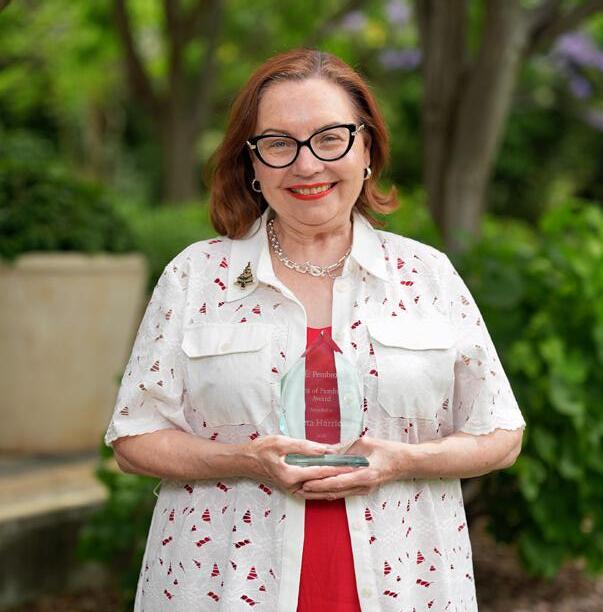
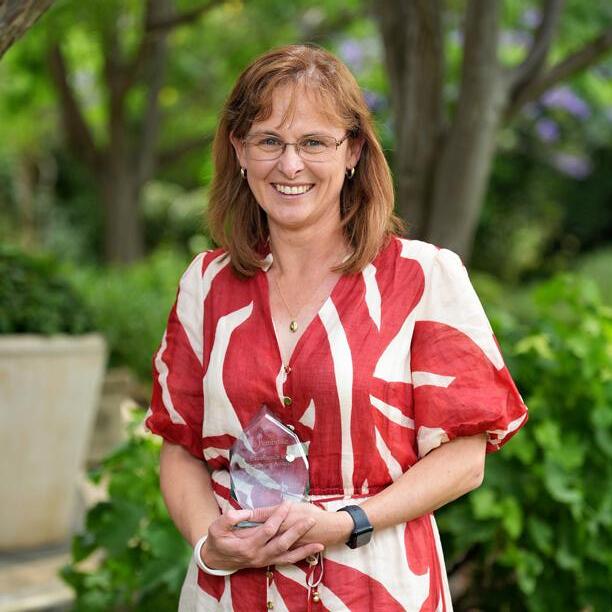
Spirit of Pembroke Award
Peta Harries School Archivist
For demonstrating exceptional commitment in their service to Pembroke.
'Peta is recognised for her extraordinary dedication to preserving and celebrating the history of our School. Over more than two decades, she has built deep connections with our old scholar community, safeguarded countless historical materials, and guided the evolution of our archives into a vibrant and widely valued resource.'
Excellence in Teaching Award
Shelley Chandler Head of the Early Learning Centre
For demonstrating exceptional commitment to student learning, wellbeing and success.
'Shelley is an exceptional educator within the Early Learning Centre whose calm presence and thoughtful guidance inspire deep trust among colleagues and families. She creates an environment where children and educators feel supported, valued and encouraged to flourish.'
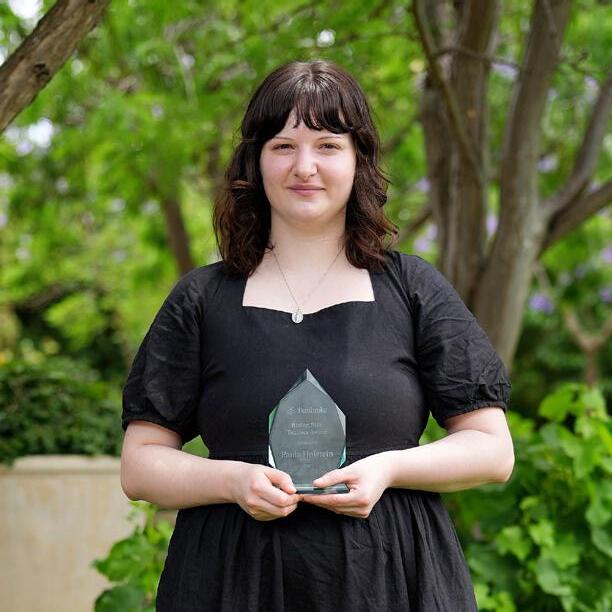
Rising Star Teacher Award
Paula Holstein Teacher
For demonstrating outstanding growth in their practice and having a positive impact on students.
'Paula is recognised for the remarkable impact she has made in just her first year of teaching at Pembroke. Her classroom is a place of focused learning, genuine excitement for language and culture, and strong, respectful relationships.'

Co-Curricular Contribution Award
Lester Wong Director of Music Performance
For demonstrating exceptional commitment and/or contributions to Pembroke’s Co-Curricular Program.
'Lester is recognised for the exceptional quality of performances under his leadership and the gracious way he supports the life of the School. His leadership has been central to the continued development of the Strings Program and the flourishing of the Chinese Orchestra.'
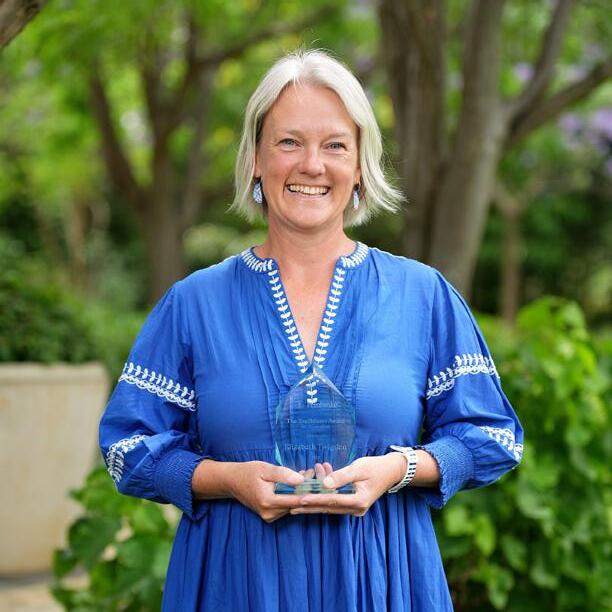
The Trailblazer Award for Innovation
Elizabeth Twigden Coordinator of First Nations Languages and Studies
For demonstrating exceptional levels of innovation to achieve positive outcomes for students or school operations.
'Libby is recognised for her outstanding innovation in establishing Pembroke’s Kaurna Language Program, a visionary initiative that has transformed the way our community connects with Kaurna Yarta and its language.'
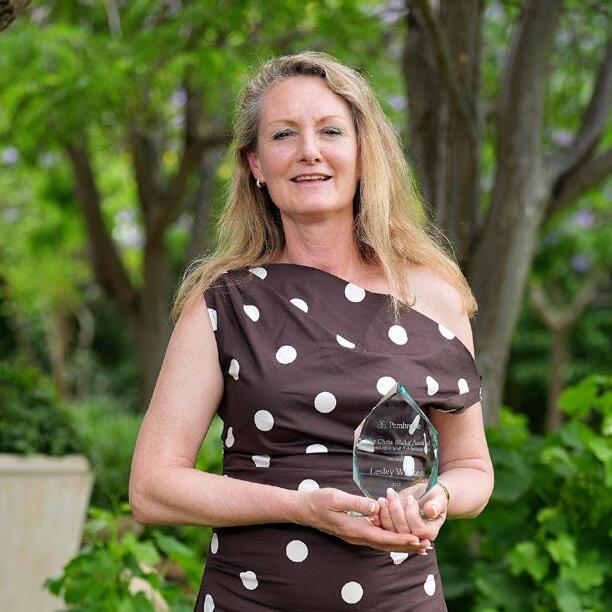
Chris Blake Award for Initiative and Achievement
Lesley Wickes Coordinator of the Hearing Unit and Inclusive Education Assistant
For demonstrating significant initiative and achievement.
'Lesley is a deeply respected member of the Inclusive Education Team whose diligence, compassion and exceptional professionalism have strengthened the Hearing Unit.'
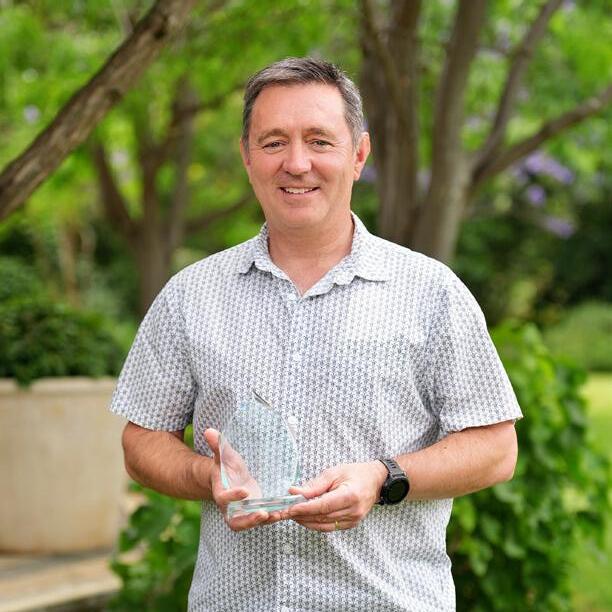
Outstanding Leadership Award
Martin Roberts
Assistant Head of Middle School (Years 7 & 8)
For demonstrating exceptional team leadership and achieving remarkable outcomes in fostering the development of others.
'Marty is an exceptional leader of the Year 7 and Year 8 cohorts, and it has been a pleasure working with him this year. His role is inherently complex, involving many stakeholders, students, staff and parents. His sure-footed, fair and steady approach has been truly impressive. Marty maintains a strong focus on the positive, brings relentless optimism to his work, and prepares every event with diligence and care.'

Rising Star Professional Services Award
Joshua Broderick
Property Coordinator
For demonstrating outstanding growth in their practice and having a positive impact on the Pembroke community.
'Josh is recognised for the remarkable commitment, skill and generosity he brings to the Building and Grounds Team and the wider Pembroke School community. His leadership has been exceptional, marked by meticulous organisation, thoughtful problem solving and an unfailing willingness to step in wherever needed.'
Teaching Awards
Pembroke’s teaching staff are recognised across the industry as leaders in education. Here, we celebrate the staff who received recognition by state and national-level bodies, identifying excellence in their respective fields.
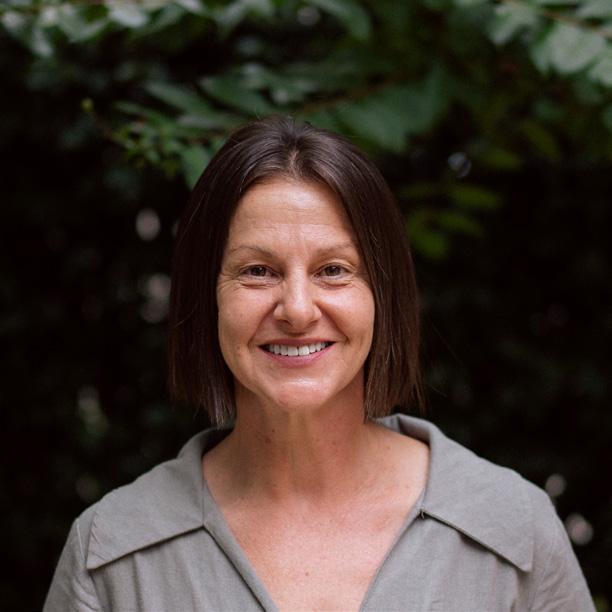
Zoe Tidemann Head of The Arts and Head of Drama
Minister's Arts Education Award (2024) Educators SA
Zoe Tidemann received the Minister's Arts Education Award for excellence in Drama and Theatre education, one of South Australia's most recognised honours for Arts educators.
This year, Zoe took on the role of Head of The Arts, in addition to her existing responsibilities as Head of Drama, where her programs are framed around transformation, artistry and wellbeing, and connect students with professional artists, Arts organisations and the wider community. She is also a Board Director for Windmill Theatre Company and has served in multiple roles on the Drama South Australia Board across four years.
Zoe’s award came with a professional development grant, which she used to travel to New York and Vancouver. In New York, she presented her paper 'The Value of Learning' at the National Theatre at the Beyond Four Walls: Theatre and Community Symposium, a gathering of researchers, artists and practitioners examining how participatory theatre connects with communities. She then travelled to Vancouver for the International Drama in Education Research Institute conference at the University of British Columbia, before completing an intensive week of physical theatre training with PUSH Physical Theatre, working across physical performance, partnering, corporeal mime and devising processes.
The physical theatre methodologies, research exchange and connections made with global practitioners are now being embedded into Pembroke's Drama and Arts programs. We thank Zoe as she continues to contribute her extensive knowledge and experience to collaborative processes that strengthen the foundations of learning through The Arts with students and staff.
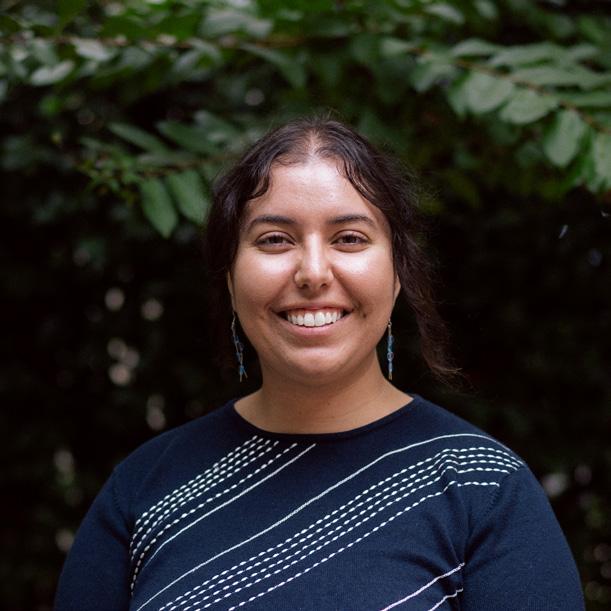
Eleni Stamelos Assistant Head of English (IB: Language A)
English Teacher of the Year (2024)
Educators
SA
Ellie Stamelos was named English Teacher of the Year by the South Australian English Teachers Association (SAETA), recognised for her contribution to English education in South Australia and her commitment to the teachers who deliver it. At Pembroke, Ellie teaches English with a focus on keeping engagement at the centre, building classrooms where students enjoy themselves, participate and make strong progress.
Her investment in the profession extends well beyond her own classroom. Since 2020, Ellie has co-convened SAETA's Early Career Teacher workshops, taking responsibility for organising content and sourcing speakers. Through this, she has given early career English teachers in South Australia a better start than they might otherwise have had. This year, she will be convening the State Conference for the first time. In 2024, she became Vice President of the association, and is currently leading an initiative that brings in-person professional development to English teachers working in rural and regional areas.
That same orientation towards the broader profession showed up at the 2024 AATE National Conference, where Ellie served on the hospitality committee. She has presented at both state and national levels, speaking to rooms that include experienced and early career teachers alike. Her sessions consistently make the case for creative, considered approaches to English teaching, and the people in those rooms leave with something to take back to their own classrooms.
The SAETA award reflects not just what Ellie does inside Pembroke, but the consistent effort she puts into a discipline and a community she deeply cares about.
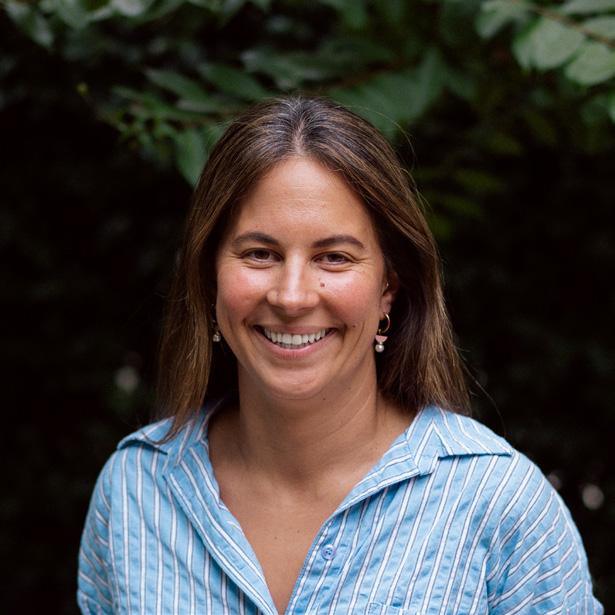
Clémence Semmler French Language Coordinator
French Teacher of the Year (2024) Educators SA
Clémence Semmler was awarded French Teacher of the Year by the South Australian French Teachers' Association (SAFTA) in recognition of her outstanding teaching and long-standing contributions to French language education in South Australia. As our French Language Coordinator, Clémence brings care and commitment to every lesson. Her students benefit from her investment in the subject and in their progress, evident in the confidence and capability they develop as French language learners.
She has supported French teachers for many years, both at Pembroke and across the state, offering mentorship through classroom observations, resource sharing and peer collaboration. Her colleagues consistently describe her as ‘a dependable and generous presence, a joy to be around,’ and she is always willing to share her time and knowledge.
Beyond her school-based role, Clémence has given a great deal to the broader French teaching community in South Australia. Through her active involvement with SAFTA, she has organised events, led professional development sessions and made herself available as a resource across South Australia.

Liam Sutton Design and Technology Teacher
Early Career Teacher of the Year (2025)
South Australian Design and Technology Teachers Association
Liam Sutton was named Early Career Teacher of the Year by the Design and Technology Teachers Association, recognised for his immediate and significant contributions to the learning area since joining Pembroke as a new graduate in 2023.
At Pembroke, Liam’s teaching combines the explicit instruction of practical skills with a deep and authentic understanding of the design process. He instils in his students a genuine passion for Design Technology, encouraging creativity, critical thinking and resilience through hands-on, project-based learning.
Liam has designed and implemented new units of work across the Middle School that are structured for accessibility at every ability level while still offering extension for students who are ready for it. His projects are purposeful, with student outcomes and skill development clearly at the centre of his planning and delivery. He continually reflects upon his practice, refining projects to maximise learning impact and ensuring that his students develop both technical proficiency and transferable future-focused skills.
Liam balances deep curriculum knowledge and excellent student rapport within his classroom, making him an outstanding early career teacher whose contribution to the subject is already significant.
Staff Sabbaticals
Staff at Pembroke can apply to pursue a sabbatical: a period of extended leave during which they are given the time and space to conduct in-depth research in their discipline. Sabbaticals may be taken as a block of leave from the School, or spread across an extended period by reducing load, allowing staff to pursue their research without stepping away from the School entirely. Upon completion of their sabbatical, staff return to work refreshed, inspired and ready to enrich our School community.
Education for Hearts and Minds: Ethics, Character and the Profession of Teaching
Across my career in education, one conviction has remained constant: teaching is not simply the transmission of knowledge but the shaping of human lives.
Gabrielle Corbett Head of Ethical and Spiritual Care
A Life Shaped by Education
Schools influence how young people understand themselves, how they relate to others and how they respond to the complexities of the world. Education therefore carries a profound responsibility - not only to develop intellectual capacity but to nurture ethical discernment, compassion and a sense of shared humanity.
My own journey as an educator has unfolded across diverse settings. I have worked in remote Aboriginal communities in the Northern Territory, disadvantaged public schools in South Australia, independent schools in Adelaide and an Australian international school in Asia. Each of these contexts revealed similarities related to the possibilities and responsibilities of education. Later, teaching within the Education Faculty at the University of South Australia provided another perspective, as I worked with pre-service teachers preparing to enter the profession. Supporting future educators reinforced the importance of rigour, reflective practice and the understanding that teaching is as much a moral endeavour as an academic one. My work as an Australian Institute for Teaching and School Leadership (AITSL) Teacher Assessor for Highly Accomplished and Lead Teachers has also sustained my interest in teacher excellence and passion for consistency across the nation.
These vast experiences have shaped my educational philosophy: that schools must exist to transform students beyond academia by addressing who they are becoming. My belief is that an outstanding and comprehensive education must hold character at its centre. This sentiment is echoed across the history of philosophy and defined now as Character Education.
Education as Formation
The Latin root of education, educere , means 'to draw out'. This idea captures an important truth about learning. Education is not simply about delivering information; it is about cultivating the capacities that already exist within young people including character traits related to intellectual, civic, performative and moral virtues.
In contemporary schooling, increasing attention is being given to the moral, ethical and spiritual dimensions of education as essential to human flourishing. Academic achievement remains critical but exists alongside broader developmental goals. Students must learn to think critically, engage respectfully and with acceptance of difference, and consider the ethical implications of their decisions. Through self-awareness, they must learn to know their strengths and virtues, which must be ‘drawn out’ by the educator, and will subsequently lead to flourishing individuals and communities.
This perspective informs my work as Head of Ethical and Spiritual Care at Pembroke School, where education is approached through the Learning and Caring Framework that places our students at the centre of school life. Within this framework, wellbeing and intellectual growth are understood as interconnected. The aim is to create an environment where students feel both challenged and supported as they ‘find their place’. Ethical and Spiritual Care is key to the Learning and Caring Framework and through this component students engage with our Chapel program and various educational offerings in Ethics.
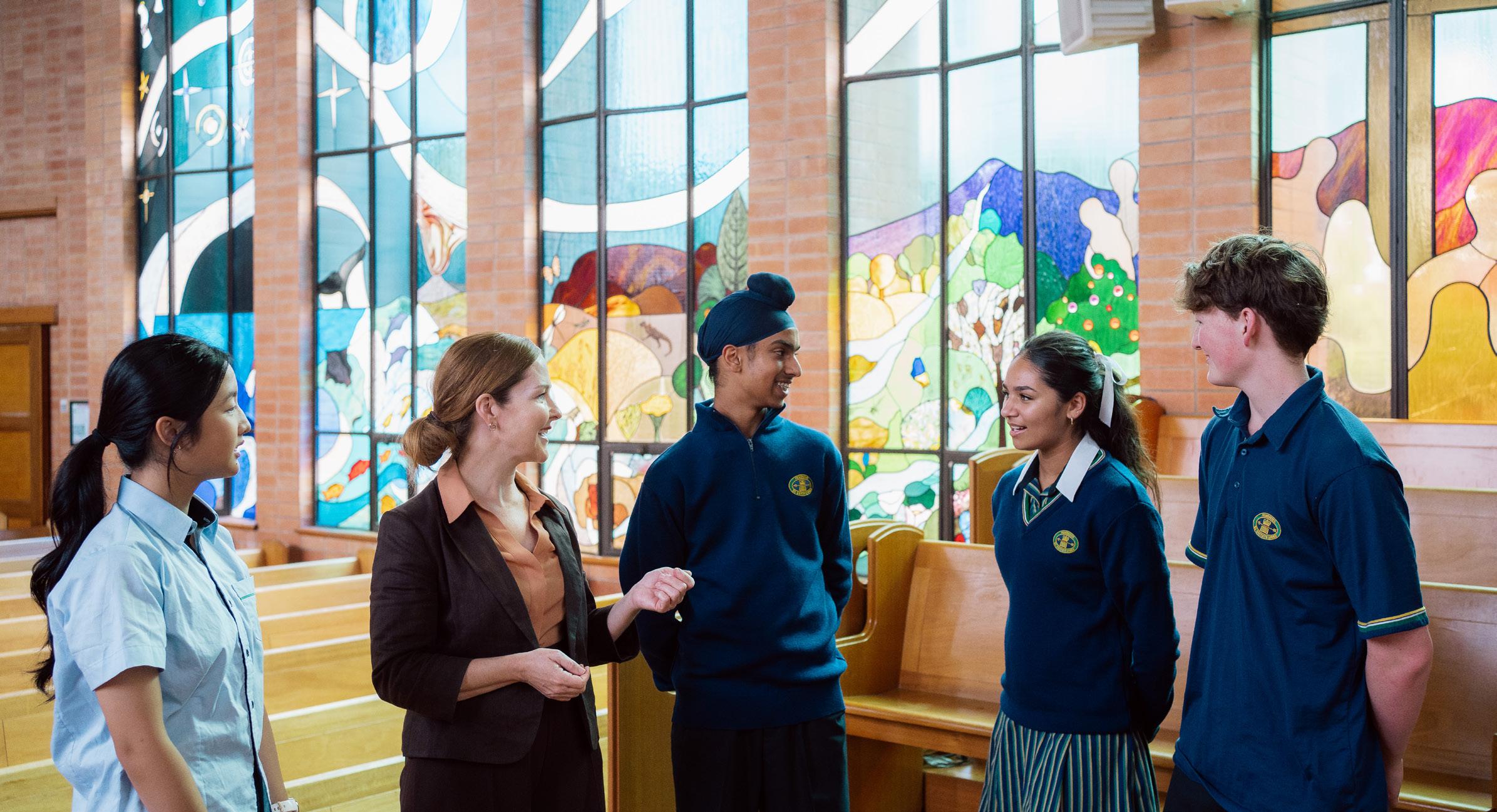
An Inclusive Approach to Ethical and Spiritual Care
Pembroke’s approach to Ethical and Spiritual Care respects the School’s historical foundations while responding to the needs of a contemporary, liberal and diverse community. While early influences came from Christian traditions, the School espouses a universal and inclusive model that honours all faiths, philosophies and belief systems.
In practice, this means approaching spirituality as a shared human concern rather than from a doctrinal position. Questions about meaning, responsibility and belonging are explored through reflection, dialogue and exposure to a wide range of perspectives. The goal is to accomplish authentic understandings of various cultures, philosophies and religions, while encouraging individual contemplation through spiritual exploration and ethical development.
One of the key spaces where this exploration occurs is through the School’s Chapel Program. Regular Chapel services occur for each sub-school and provide an opportunity for students to engage with philosophical ideas, stories of service and perspectives from different traditions. The historic R.A. Cook Chapel is situated on our Middle School campus and is a communal space for reflection on ethical and spiritual dimensions of life.
When Pembroke students encounter ideas from philosophy, world traditions and contemporary thought, it allows them to consider how values shape their personal choices and relationships, as well as societal structures and diverse cultures. The emphasis is on shared values which act as a common thread connecting diverse backgrounds and experiences.
Our School Values influence the Chapel Program and include curiosity, respect, honesty, uniqueness, inclusivity, bravery, kindness and service to foster a peaceful and harmonious community and society.
Developing Ethical Reasoning
Alongside Chapel, ethical development is supported through structured learning experiences. In the Junior School, students participate in a comprehensive Ethics Program from Reception to Year 6 during weekly lessons. The program invites children to explore philosophical questions through discussion, storytelling, roleplay and collaborative inquiry.
Using a neutral pedagogical approach grounded in Socratic questioning, students examine ethical dilemmas and consider varying perspectives. The process encourages careful listening, respectful disagreement and the development of reasoned arguments. Importantly, the focus is not on arriving at consensus but on learning how to think ethically with reason.
Observing young students engage with complex questions has been one of the most rewarding aspects of this work. Children are often capable of remarkable insight when given the opportunity to reflect openly and respectfully. Ethical reasoning becomes not an abstract concept but a lived practice and one which permeates class and school culture.
In the Middle and Senior Schools, learning opportunities continue through Home Group discussions during Chapel preparation and reflection sessions. Students engage with contemporary ethical issues and philosophical ideas to develop confidence in articulating their views while remaining open to others as free-thinking individuals.
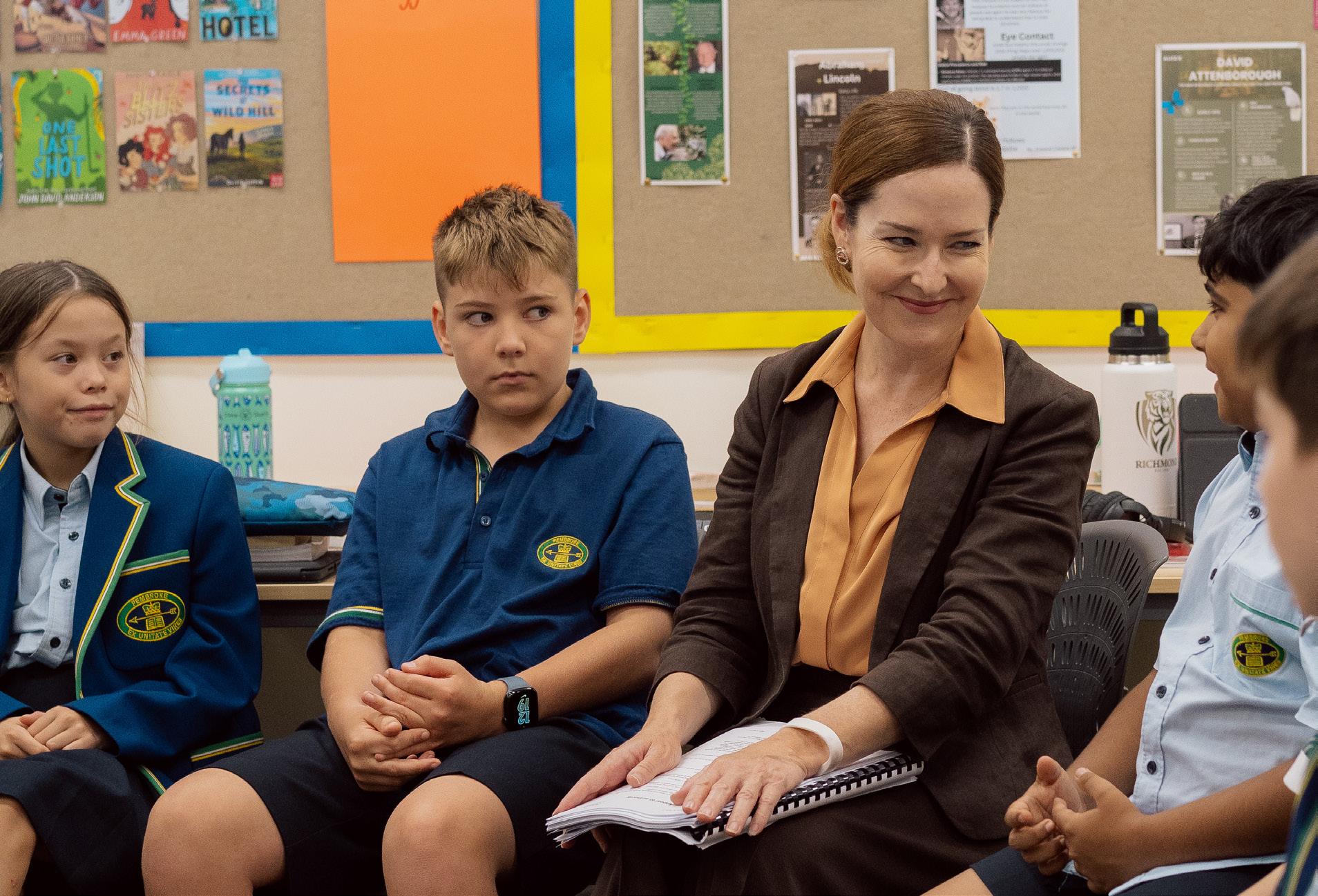
Research and Educational Development
In 2024, I was fortunate to be awarded a sabbatical through the Didi Medlin Centre for Professional Growth. The sabbatical provided an opportunity to explore how ethical and spiritual development might be embedded more deliberately across the life of a school to effectively address School Aim 4: ‘The exploration of students’ spiritual values and their power to make ethical decisions.’
Over 12 months, my research involved school visits, professional learning, postgraduate philosophical study and interviews with experts and educators. I also collected feedback from students and staff involved in the implementation of our Ethics Program. This work occurred alongside the ongoing development of our Chapel program and the emerging ethical learning initiatives within the School.
One of the key insights from the research was that ethical development and spiritual exploration are most effective when integrated into the culture of a school rather than isolated in specific programs. In essence, ethics and spirituality are evident and effective when lived through the community, not confined to curriculum, and visible or sensed through our relationships, rolemodelling, decision making and everyday interactions.
The resulting framework which emerged from the sabbatical brings together ethical reasoning, spiritual exploration and character development within a unified model centred on universal values. The framework aligns with the School’s Strategic Plan 2030, Stronger Together, and supports our aspiration that we are ‘Free to be ourselves and find our place as we shape a hopeful future’, through the ‘Hearts and Minds’ pillar.
Learning from Diverse Contexts
My educational philosophy has been shaped by formal study and professional experiences across different cultural contexts. Living and teaching in Asia provided an opportunity to engage closely with communities shaped by Hindu, Buddhist and Muslim traditions. Observing these different expressions of spirituality highlighted a shared human concern with living a meaningful and ethical life, and an awareness that all people yearn to flourish.
Similarly, working within marginalised communities reinforced the role of education as a pathway to opportunity, dignity and maximising the outcomes of society. Students facing significant challenges often demonstrated extraordinary resilience, potential and determination. Their adversity and experiences offered powerful reminders of the importance of education as a force for inclusion, empowerment and transformation.
My professional appointments in teaching and leadership have strengthened my conviction that education must attend both to human diversity and to the shared values that unite us. While cultures differ in traditions and perspectives, the aspiration to live with integrity and purpose is widely recognised across societies. Aspiration itself arises from a deep human desire to become the best versions of ourselves, a pursuit grounded in the cultivation of virtue. From this perspective, the goal of contemporary education may be understood through an Aristotelian lens, articulated more than 2,300 years ago: 'The aim of our studies is not to know what virtue is, but to become good.' – Aristotle.
Education and the Possibility of Hope
Young people today are growing up in a world characterised by rapid change, global challenges and uncertainty. Schools therefore have an important role in helping students navigate complexity while maintaining a sense of hope, optimism and responsibility.
Ethical education contributes to this process by encouraging thoughtful reflection on choices and consequences. Students become empowered as they learn to consider how their actions affect others and how they might contribute positively to their communities.
Underlying this work is the idea of inherent human dignity. Across philosophical, religious and human rights traditions, dignity remains a foundational principle. Education that acknowledges this principle encourages respect, inclusivity, empathy and a commitment to the wellbeing of others.
At its best, education seeks to cultivate the character of students. When educators nurture the pre-existing strengths and virtues within each learner, students grow into confident and self-aware individuals, better prepared to engage with the complexities of the world. Education does not offer simple answers to complex questions; rather, it equips students with the intellectual and moral resources needed to think critically, act responsibly, and live meaningfully. It is here that the importance of Character Education becomes evident.
The Continuing Work of Education
Reflecting on my teaching career, I am reminded that education is a collective endeavour. Progress occurs through the collaboration of teachers, students, families and communities committed to learning and growth. Comprehensive education seeks the pursuit of wisdom and formation of character through guidance and example as we shape future generations.
By cultivating wisdom alongside knowledge, educators help young people develop integrity, empathy and responsibility. Education therefore becomes both a privilege and a responsibility: an opportunity to grow in wisdom ourselves while helping others positively influence the world around them.
I have been fortunate to work alongside colleagues and mentors who believe deeply in the power of education to improve lives. From classrooms in remote communities to university lecture theatres and school contexts, each setting has reinforced that education has the potential to be transformative for all indiviudals and the societies in which they live.
In a world often shaped by division and uncertainty, the purpose of schools remains unequivocal. To meet these challenges, contemporary education must cultivate ethical discernment, compassion and a commitment to service. Through the development of character, students will gain the capacity to thrive personally and contribute substantively to the common good. As educators, this potential renders our work as both humbling and profoundly significant, highlighting the enduring impact of thoughtful guidance and excellence in education.
Reframing Learning at Pembroke
Integrating Career Development Education Across Curriculum and Social, Emotional and Personal Development
During her 2024 sabbatical, Future Pathways Coordinator Donna O’Connor examined how Career Development Education (CDE) can be meaningfully embedded across Pembroke’s curriculum and Social, Emotional and Personal Development (SEPD) programs. Drawing on academic literature, national policy documents, contemporary frameworks and classroom-based case studies, Donna explored how Pembroke can cultivate future readiness not through isolated career interventions, but through purposeful, curriculum-aligned experiences.
Donna O'Connor Head of Future Pathways
Rethinking relevance, purpose and learning
My sabbatical began with a question that runs through much of contemporary educational literature: How do students make sense of the learning we ask them to engage in? Biesta (2009) argues that students are increasingly unsure about the purpose of schooling, leading to disengagement not rooted in ability, but in a perceived disconnect between curriculum and meaning. Shergold’s (2020) review into senior secondary pathways echoes this concern, diagnosing fragmentation, opaque structures and a system that often leaves young people, particularly high achievers, navigating their futures with limited contextual guidance.
CDE offers a compelling response: when understood in its full breadth, CDE is not about narrowing young people towards specific jobs; rather, it supports them to understand identity, values, opportunity and purpose. Thus, the intellectual grounding of my sabbatical: learning becomes powerful when it is connected to purpose, and career learning is one of the richest conduits for this connection.
Observing practice: insights from South Australian schools
A core part of my sabbatical involved visiting a diverse range of South Australian schools to see how they approach CDE. While structures differed, some had explicit middle years programs, others embedded CDE through interdisciplinary projects or pastoral systems, I was struck by the conceptual coherence shared across the most effective models. These schools recognised that CDE is not ‘an add-on,’ but part of the culture: a way of teaching students to reflect deeply on who they are becoming and how their learning shapes that journey.
I observed programs where inquiry learning was tied to contemporary workforce problems; where industry partnerships were used to deepen curriculum knowledge; and where reflective practices were built into pastoral systems. Whole-school commitment, not isolated interventions, produced the richest outcomes. These observations sharpened my understanding of how Pembroke can strengthen its existing programs while retaining our academic identity and pastoral philosophy.
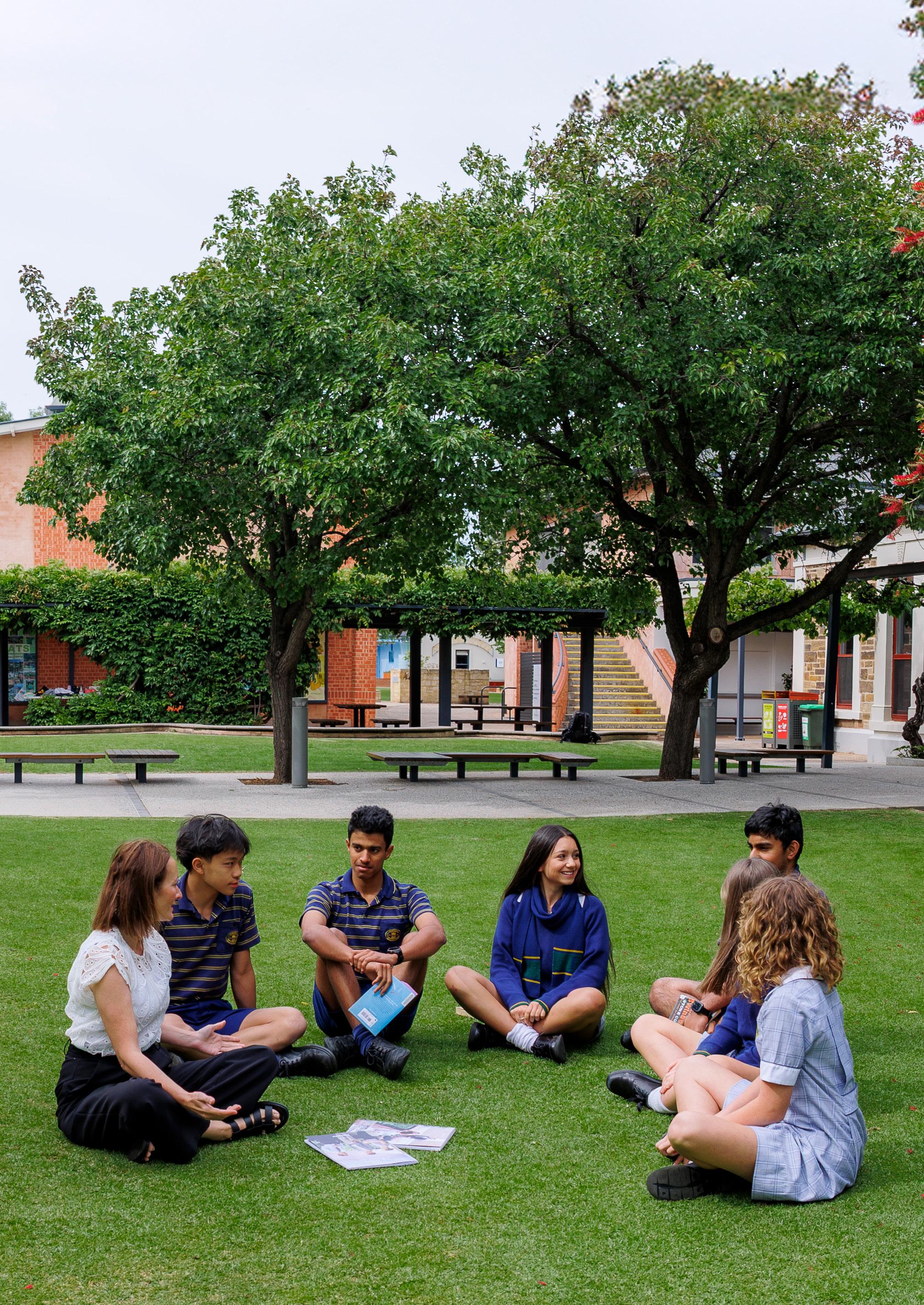
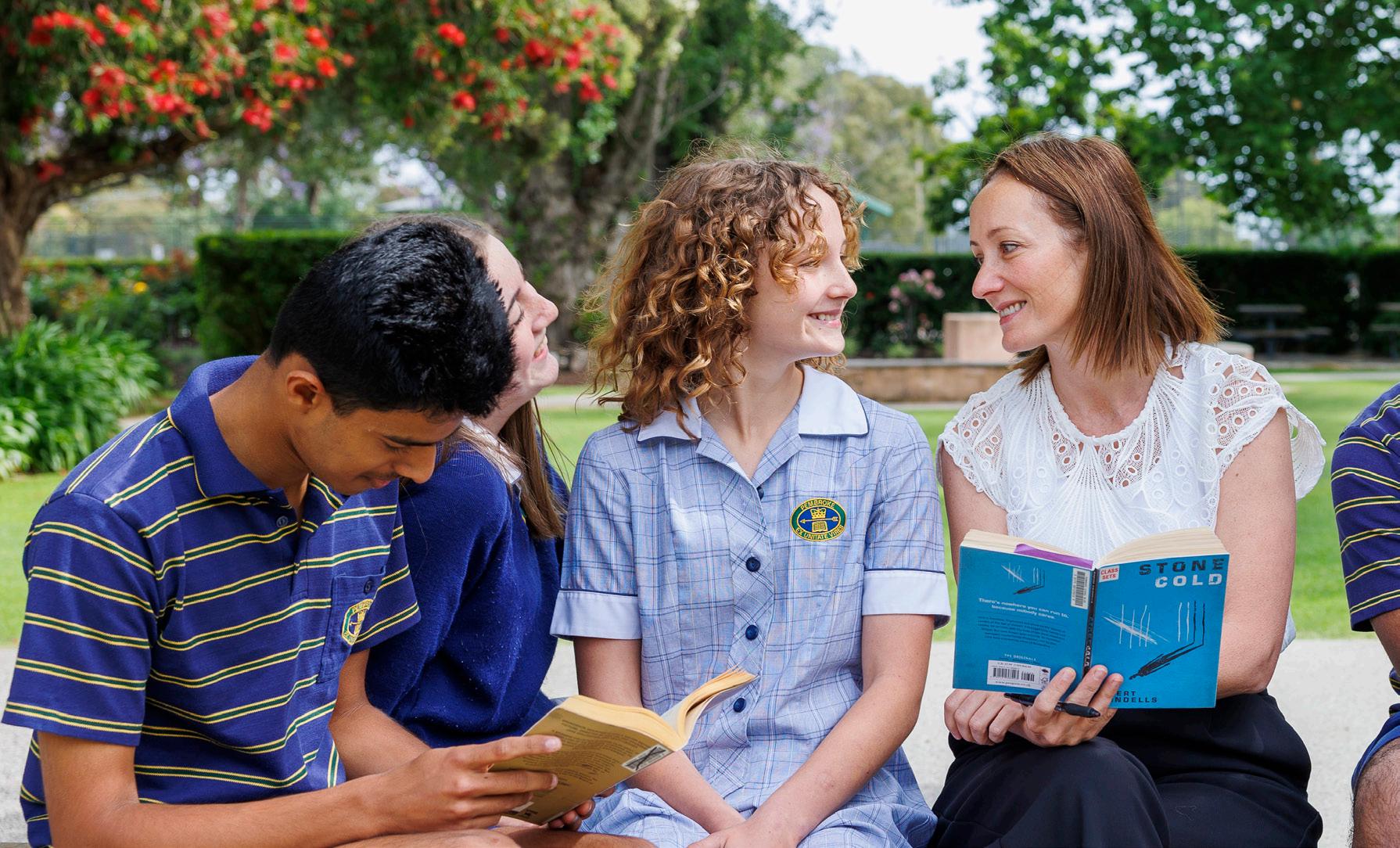
Integrating CDE through discipline-rich learning
During my sabbatical, I designed case studies to embed CDE into the curriculum without compromising rigour. By framing career learning as an enhancement rather than an external addition, I collaborated with staff to show how it illuminates academic content.
In the demanding Geospatial Geography unit, students used ARC GIS and Epicollect5 to analyse community wellbeing. Framing these tasks through professional practice deepened their understanding of how geospatial reasoning operates in the real world.
Year 10 Design Engineering students linked design processes to robotics, renewable energy and industrial design. Aligning engineering thinking with authentic industry problems reinforced subject mastery rather than interrupting it.
A more narrative-driven example emerged in the English learning area. Using Disney’s Up as an anchor text, Year 7 students explored identity and purpose. A Flinders University immersion across Archaeology, Allied Health, Conservation and Engineering workshops demonstrated how personal values intersect with future possibilities.
These projects affirmed what the research suggests: contextual learning deepens student engagement, strengthens disciplinary understanding and builds the ‘why’ of learning which is something students often hunger for, but rarely receive explicitly.
Strengthening SEPD as a developmental pathway
I also examined how SEPD can play a more intentional role in career identity formation. SEPD already supports students’ social and emotional development, but it also offers a powerful structure for helping students articulate values, strengths and aspirations.
Students do not need to ‘choose a career’ in SEPD; they need language and tools for navigating uncertainty. Embedding CDE in SEPD strengthens self-understanding – a foundation for academic engagement, wellbeing and future pathways.
Partnerships as a catalyst for possibility
Across the sabbatical, one finding became unequivocally clear: authentic partnerships are the strongest lever for expanding students’ sense of possibility. Visits to Adelaide schools demonstrated that high-performing CDE programs are built on structured collaboration with universities, RTOs, employers, councils and alumni. Pembroke already leverages this ecosystem: we host tertiary evenings, run a well-established Careers Breakfast, invite industry speakers and maintain strong lines of communication with families and alumni. Indeed, the strategic engagement evident at Pembroke matched or exceeded that observed in many peer schools, particularly through our capacity to personalise guidance for boarders, international students and families navigating unfamiliar tertiary systems.
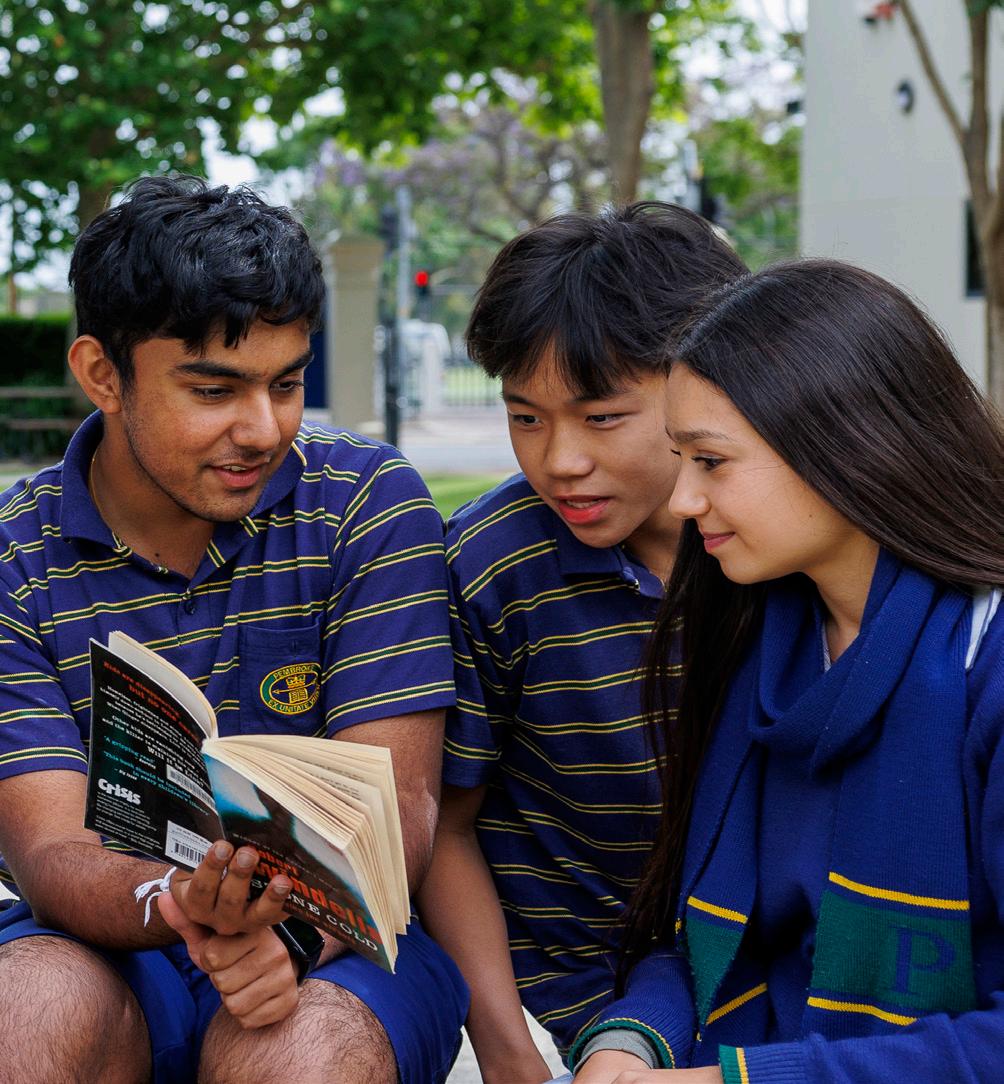
Through this sabbatical, new partnership opportunities became visible. The strengthening of the Year 12 SEPD Futures Thinking unit, for example, creates scope for deeper collaboration with micro-credential providers, entrepreneurship hubs, volunteer organisations and industry partners. Partnerships are not embellishments to CDE. They are the narrative architecture through which students begin to answer the most developmental of questions: What matters? Who is doing the work I care about? How might I contribute? When designed with intentionality and mapped to learning programs, partnerships move beyond guest visits or excursions. They become catalysts for meaning-making.
A way forward for Pembroke
My sabbatical reaffirmed that CDE is not peripheral to Pembroke’s mission but central to the kind of contemporary, purpose-driven schooling articulated in the Pembroke Strategic Plan 2030. Much of the current Future Pathways work already aligns strongly with the plan’s four pillars: Our Hearts and Minds through personalised counselling and SEPD learning that foregrounds identity and wellbeing; Our Place and Home through meaningful engagement with families, alumni and community networks; Our Service to Community through excursions, micro-credentials, volunteering and work experience; and Our Sustainable Future through sustained efforts to build student agency and prepare young people for an increasingly complex world. Yet the sabbatical also highlighted structural constraints that limit cohesion and reach.
Pembroke’s model, unlike those seen in peer schools, lacks dedicated timetabled pastoral care lessons where CDE can be embedded developmentally and consistently. Delivery currently rests with a small number of staff, creating sustainability issues and reducing opportunities for early intervention in the middle years.
What emerged across the sabbatical is a clear blueprint for strengthening and systematising the work already undertaken. The development of a whole-school Futures Framework across ELC - 12 will ensure that all students receive a coherent, age-appropriate sequence of CDE woven through their academic and pastoral experience. CDE should function as an enhancer of disciplinary knowledge rather than an add-on. The sabbatical has reinforced that when learning is connected with identity, purpose and possibility, young people flourish not merely as students, but as emerging citizens capable of navigating the complexities of the world with clarity, confidence and compassion.
References
Biesta, G. (2009). Good education in an age of measurement: On the need to reconnect with the question of purpose in education. Educational Assessment, Evaluation and Accountability, 21 (1), 33–46.
Shergold, P. (2020). Looking to the future: Report of the review of senior secondary pathways into work, further education and training. Department of Education, Skills and Employment.
Reimagining Service Learning for the Next Generation
I’ve always been fascinated by politics, particularly the idea that members of a democratic society need to collectively ensure that our elected representatives and institutions reflect the needs of its people.
Emily Monaghan Head of Service Learning
I am also passionate about the role of educators and our responsibility to actively address that with the privilege of a Pembroke education comes a great responsibility to give back. We must be net givers, it’s a non-negotiable in my view. Pembroke has long been a community where our egalitarian spirit has been reflected in our community engagement and service. I frequently hear stories and reflections from staff, parents, students and old scholars about a range of activities and events that capture us at our best, and the memories are profound.
We acknowledge that service and connection bring so many evidence-based benefits to young people. We know that our students thrive through connection, agency and authentic opportunities to be change-makers. It is our responsibility to reimagine service at Pembroke to ensure that we honour the legacy of those who have gone before us, and I strongly believe that Service Learning will yield tangible benefits.
As the inaugural Head of Service Learning, I am in no doubt that it is because of the unique opportunity to undertake a sabbatical through the Didi Medlin Centre that I am fortunate to be undertaking this significant ELC - 12 role. This whole-School focus signifies not only a strategic intent to meet our goals, but more importantly to contribute towards a holistic journey from our youngest students through to our graduating Year 12s. This transcends our Sub-Schools and enables consistent, authentic Service Learning, which is driven by community need, to occur.
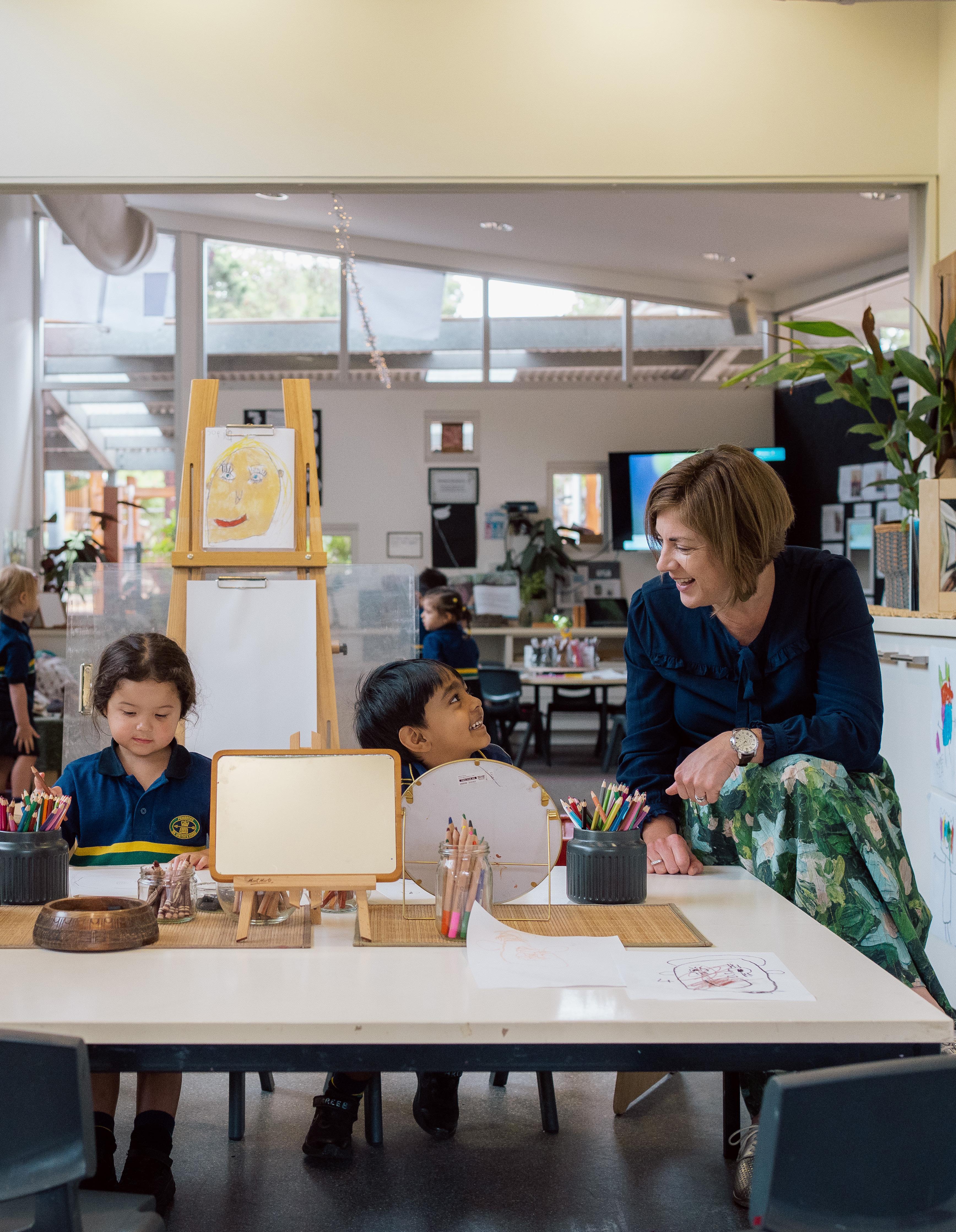
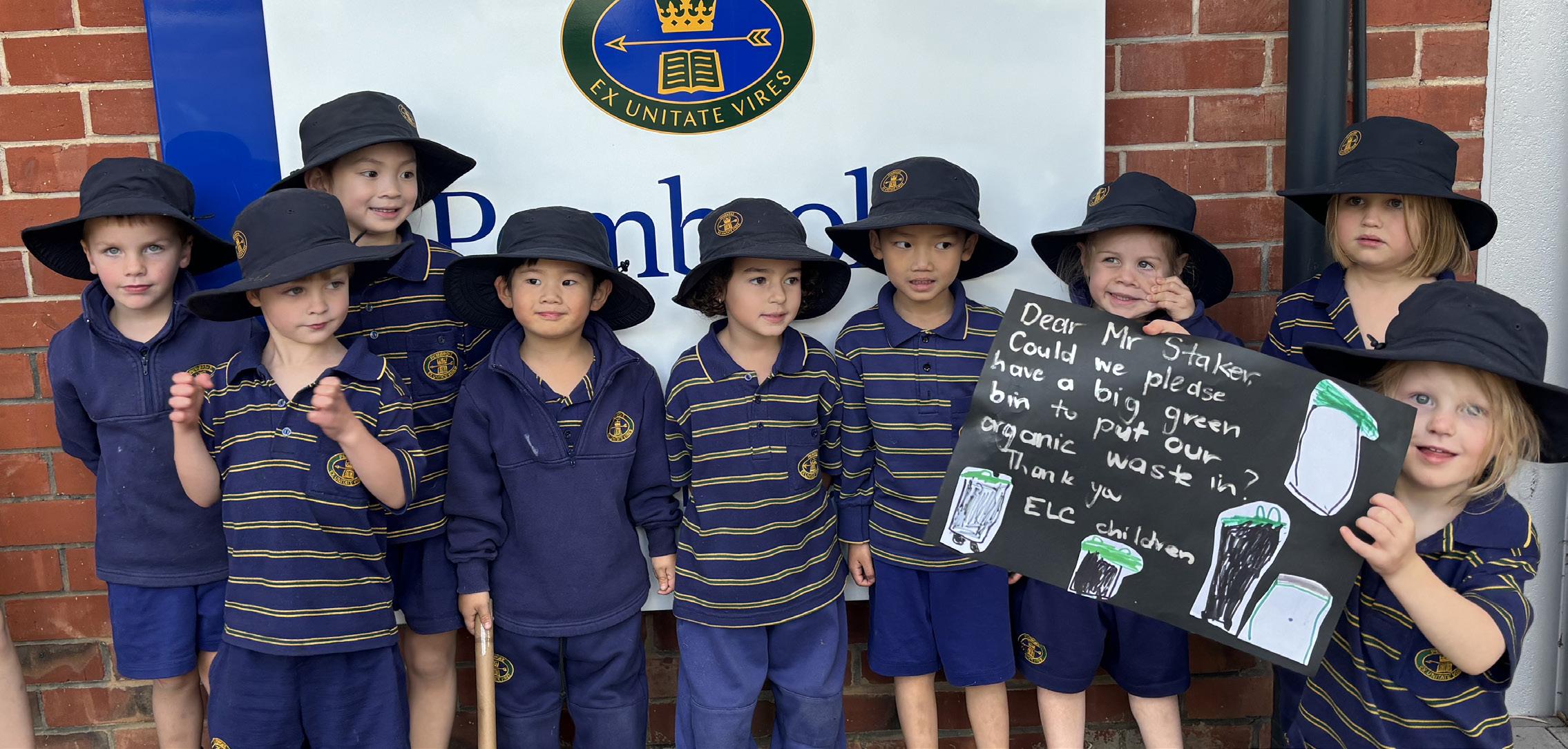
Service Learning is more than just a service activity coupled with a learning experience, it is so much more. Don’t get me wrong, there is still a place for a bake sale and I’m rather partial to a chocolate brownie! While we know that acts of service generate personal growth, what I have learnt through my sabbatical about the fullness and richness of Service Learning is that these actions need to be deeply embedded in a process which weaves together civic engagement through engagement with and responding to community need and student voice in this learning journey. This will collectively enhance the social and emotional learning of all our students through a carefully designed curriculum architecture.
The National Youth Leadership Council (NYLC), based in the USA, are regarded as world’s best practitioners, and I was fortunate enough to attend their National Conference in Minneapolis in 2024. They have developed both K-12 standards for Service Learning and a clear process, where in actual fact the ‘action’ or what we know as the service, is actually only a small part of the process. This is a departure from how service has been viewed, and will have a profound impact on how we consider the learning and ensure that our high teaching and learning standards and requirements across our curriculums are all taken into account, and in fact, strengthened.
My journey through the Sabbatical Program has been an interesting and deeply fulfilling one, and I’m just getting started on the real work! Back in early 2023, I had to select an area for my final unit in my Master of Education in Leadership and Innovation studies, which incidentally was also supported by the Didi Medlin Centre. I was eager to choose an area that would enable me to satisfy a personal interest and also align with a need of the School. In conversations with Principal Mark Staker about ideas that he hoped would be in the then upcoming Strategic Plan, I decided that ‘reimagining Service Learning at Pembroke’ was the perfect fit and that was the start of a brilliant adventure!
Perhaps what is worth acknowledging is that due to my study, I was able to start my sabbatical with a very comprehensive understanding of the research. What I really enjoyed was the ability to indulge in asking myself ‘What if?’, ‘Why not?’ and ‘What next?’ across all aspects of my research. I was intent on asking how the sabbatical could benefit our students, our community and the world outside what I describe as our immediate bubble of privilege.

In the USA, I was fortunate to visit Blake School and Breck School in Minnesota, which unintentionally had many similarities to Pembroke. I was profoundly impacted by these visits as in my short time on campus, I could see, feel and hear Service Learning so deeply embedded into the fabric of both schools. This clearly is a result of a sustained whole-school commitment and culture of respect for community engagement by both schools. What struck me was the collective responsibility to place community engagement at the heart of the teaching and learning models. Our Learning and Caring Framework also does this, and I think we are making rapid progress in positioning Pembroke as a world leader in this space of integrated education where our studentcentred model has clarity of thought and purpose. It certainly makes my role easier given that Service Learning is explicitly embedded in the framework. What I know after a decade of teaching at Pembroke is that our community holds dear our responsibility to educate holistically, and I am confident they will embrace this latest evolution of our learning journey.
There is a strong link to student leadership with Service Learning, which goes far beyond those who hold formal roles across the Sub-Schools. Embedded elements within, the inspiring work done by our wonderful ELC educators for community engagement, the Junior School PYP, our commitment to the Duke of Edinburgh program, the newly formed Service Society and the contribution that CAS as part of the IB DP core are just some of the areas where we know that we are helping shape change makers not only for the future, but for now. By giving focus and exposure to all students to build their leadership skills throughout all aspects of their education, we can make lasting impact.
Now, I am undertaking a Certificate in Service Learning as an Instructional Pedagogy through the NYLC to further help me in understanding how to operationalise it. While my sabbatical did not give me all the answers, it has certainly enhanced my appetite for ongoing study, and I was thrilled when the NYLC awarded me a scholarship to undertake this course.
We are on the cusp of transformative change as we look to create and implement a Service Learning Program, initially across curriculum areas in the School. Our long-term plan is to have every pocket of the School engage with service, with a layer of explicit learning embedded to it in some way. This was proposed in the Sabbatical Report, and while very ambitious, will add a new element of depth to our community engagement.
Pembroke students care deeply about social justice. They deserve every opportunity to actively participate in their learning and graduate with service so deeply embedded into their DNA that they are lifelong contributors to their communities and capable of enabling change where it is needed.
At the end of last year, the Head of Senior School, Alexandra Piggott gave me a framed quote by Nelson Mandela, which I frequently contemplate. He said, ‘It is what difference we have made to the lives of others that will determine the significance of the life we lead.’ I am looking forward in coming months to talking with our wider community about how we can make that difference together.
Past Staff –Reflections

Jim Derrington Retired Health and PE Teacher
Ask any PE-loving old scholar from the past 30 years, and beloved former teacher Jim Derrington’s name will come up. Having spent over three decades in various roles, Jim impacted countless student and staff lives, before moving into retirement in 2023.
His tenure included stints as Health and PE Teacher, Head of PE for over 20 years, Year 11 Life Skills Coordinator, twice Acting Head of Mellor, and coach and coordinator across numerous sports.
Jim recalls being unsure about moving away from Reynella East, where he was enjoying work at the time, but ‘with some reluctance’ made the move to Pembroke. He threw himself into almost every aspect of Pembroke sport on offer, even developing a Wrestling Club that engaged both girls and boys. ‘It demanded your weekends, but it was an exciting and fruitful enterprise, always the best part of my working week.’
Teaching between Middle and Senior Schools and across subject areas, Jim’s work was always varied. Senior School meant PE, Health and assisting the Outdoor Education Program, while Middle School brought History, Religion, Personal Learning Plan, PE and Health.
Jim, often credited with inspiring our staff leaders of today, reflects on his own learnings from Head of Middle School Peter Deane, who modelled a leadership style that resonated. ‘Without knowing it, Peter taught me that leaders first and foremost personally care for those they lead, helping to create a valued and secure professional environment.’
His biggest inspiration came from early luminaries like Campbell Whalley, John Mugford and Richard Anderson. ‘The norm was full commitment and cheerful endeavour which, unsurprisingly, filtered naturally down to our students.’ Outside of that, his list of inspirational staff is too long to mention: ‘Perhaps I might just say every person in the PE/Outdoor Ed Department!’
Retirement brings good health, 11 grandchildren and plenty of purposeful living, spending time as a hands-on grandparent and leader at the Burnside Family Church, and filling his days with travel, gardening, coffee gossip and fishing.
His advice to new teachers cuts through the complexity: ‘Whatever is going down, however you feel or don't feel, regardless of the mundane, keep your eyes on your students, for that is where the joy of teaching lies, in relationship with them.’
It was an environment where everyone performed at a high standard and everyone was positively challenged to reflect, learn and develop.
Robyn Scott Director of Academic Programs R-12, Loreto College Marryatville
Robyn Scott’s first brush with Pembroke was back in 2008 when her husband, who is also a teacher, worked at the School. She knew from the beginning that it was a workplace that cares for, values and invests in its staff. Naturally, she was happy to undertake relief teaching at Pembroke when the opportunity arose.
‘It was an environment where everyone – staff and students – performed at a high standard and everyone was positively challenged to reflect, learn and develop. When the opportunity of a leadership role within the Mathematics Department became available, I knew it was something I would love to be part of, and I wasn’t disappointed.’
Robyn took on the role of Assistant Head of Mathematics (SACE) and enjoyed the professional development opportunities that were offered by the School. On two occasions, she took on the role of Acting Head of Mathematics, building her leadership and teaching skills. She attended multiple workshops and was encouraged to teach mathematical subjects that were new to her, and was supported to speak at a conference, something she’d never thought of doing before.
‘I was mentored by some wonderfully experienced and inspirational colleagues. I learnt so much by observing and discussing ideas and teaching strategies with the team.’
Within the culture of leadership development at Pembroke, Robyn thrived. She attended the many leadership seminars held at the School, and attended the 2023 Women in Leadership Summit in Sydney. She learnt ‘about guiding others, forward planning and managing change and communicating clearly to all stakeholders in a school community. It is these very skills that I draw upon daily in my new role, and I regularly reflect on experiences from Pembroke to guide my actions.’
This level of support is not just offered to those in leadership positions. Through Pembroke’s professional development arm, the Didi Medlin Centre for Professional Growth, staff at all levels are offered professional learning opportunities, both formal and informal. Robyn, along with many others, lists these opportunities as a highlight of working at Pembroke.
Her advice to others considering working at Pembroke is straightforward: ‘Go for it! Regardless of what stage in your career you are in, Pembroke is a place where you can find your next level. The community care and support offered is extremely high. You can really stretch yourself and be amongst like-minded and friendly staff. The students are eager, dedicated and grateful too, making it the perfect environment for a teacher to reflect, learn and be at their best.’

Jonathan Moore
Jonathan (Johnny) Moore spent a decade at Pembroke, wearing more hats than most staff could count. From Boarding House Tutor to Maintenance Hand, Soccer Coach to Lifeguard, his 10 years at the School demonstrates the breadth of opportunities available in professional services roles.
His first encounter with Pembroke came in 2012 while working as an external coach. ‘The facilities were fantastic; I was extremely impressed with the conditions of the ovals and grounds. The staff were always friendly and made me feel welcome, in particular Carl Salt, Susie Sadler and Luke McCarthy.’
That positive impression led Johnny to explore career opportunities at the School. He credits Evan Shillabeer for his first position as a Boarding House Tutor, Mark Reid for bringing him into the Sports Program as a Soccer Coach, and Phil Gabell and Peter Sulicich for the opportunity to work in Building and Grounds, where he eventually became permanent in his role as General Hand.
‘I did not have any major expectations when I joined but I hoped the environment would be one that made me feel valued.’ Evidently it was, and Jonathan was awarded the Chris Blake Award, presented to staff for initiative and achievement.
Like many, Johnny accessed Pembroke’s substantial professional development through practical courses including a scaffolding course and a light rigid driving certification, both expanding his professional capabilities. ‘Maintenance duties were always hands-on which I really enjoyed and have given me valuable skills that I use daily within my current framing role. Undertaking such an active role has kept me fit and healthy which has been beneficial in both my career and personal life.’
Another unexpected highlight of working in a school is the possibility to attend school trips. Standouts for Johnny included several Year 6 Ski Trips, a visit to Marree with the Junior School and accompanying the Senior Soccer Trip to Queensland.
After leaving Pembroke in January 2023, Johnny returned to his home country of the United Kingdom, taking on the role of Head Framer at Green Bean Framing, an art and memorabilia gallery in St Albans.
His advice to prospective applicants? ‘Working at Pembroke is a wonderful opportunity to anyone wanting to become part of an inclusive community. With so many resources within the School, there is so much potential for growth and development.’
Head Framer at Green Bean Framing, St Albans, England
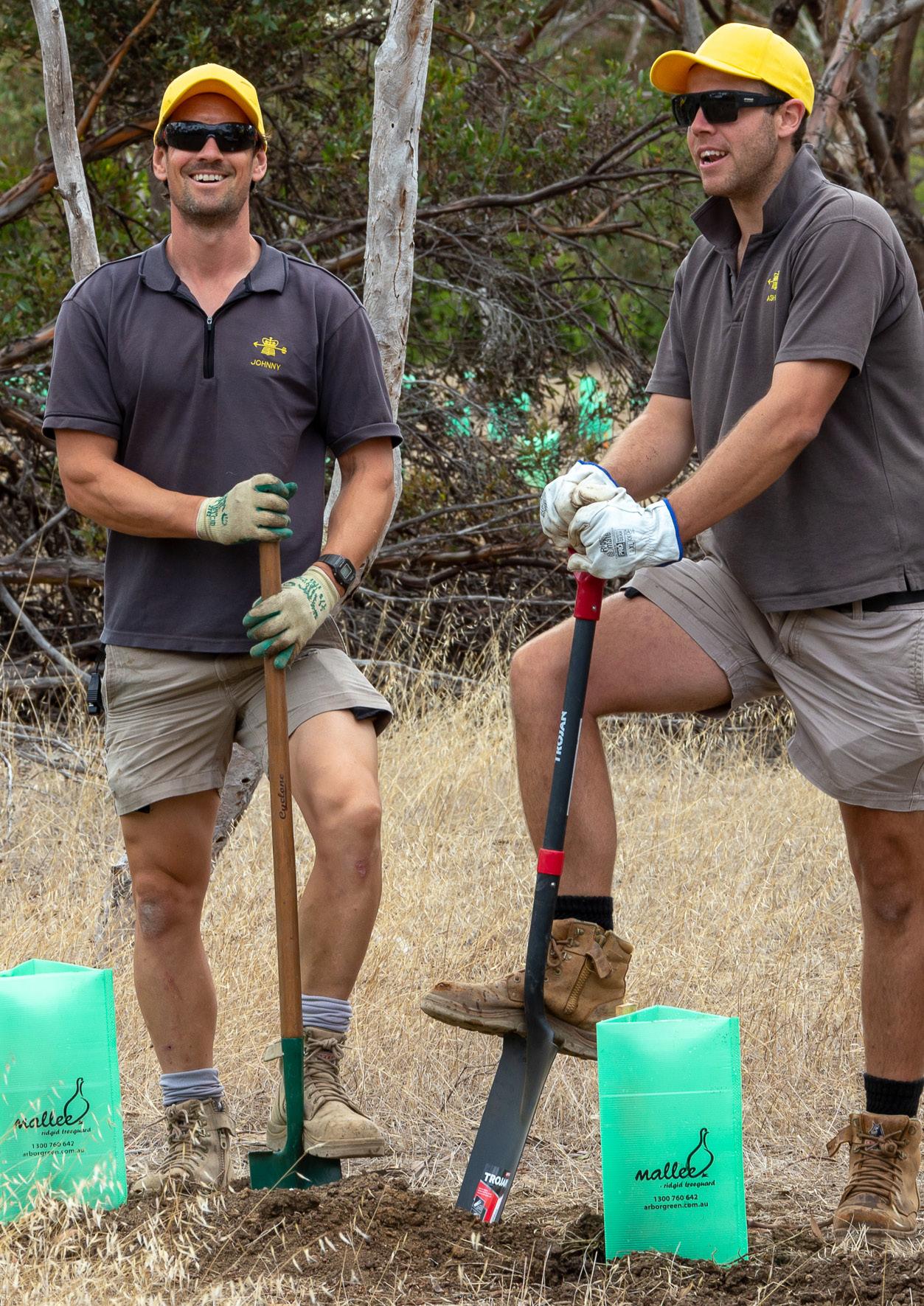
Welcoming Our New Staff
Pembroke is excited to welcome new teaching and professional services staff into our community. Across the board, our staff provide an environment that facilitates each student’s exploration of their potential, academic progress and personal welfare.

Chloe Fusco Head of Inclusive Education (Middle School)
Chloe joins us from Glenunga International High School, where she held senior roles across Inclusive Education, case management and middle years leadership. She brings significant expertise in supporting diverse learners, leading school-wide inclusive practices and building teacher capability through innovative, evidence-based professional learning.
Her experience includes NEP and ILP development, functional behaviour assessment, multi-tiered systems of support, Modified SACE coordination, and the design of bespoke literacy, socialemotional and behaviour interventions.
Chloe is known for her collaborative, studentcentred approach and her commitment to ensuring every learner is supported through proactive planning, strong family partnerships and high quality teaching practices. She has extensive experience leading transition programs, analysing learning and wellbeing data, coaching teachers and fostering positive, inclusive middle years culture. Her warm communication style and thoughtful leadership align strongly with Pembroke’s values of respect, inclusion, kindness and service.
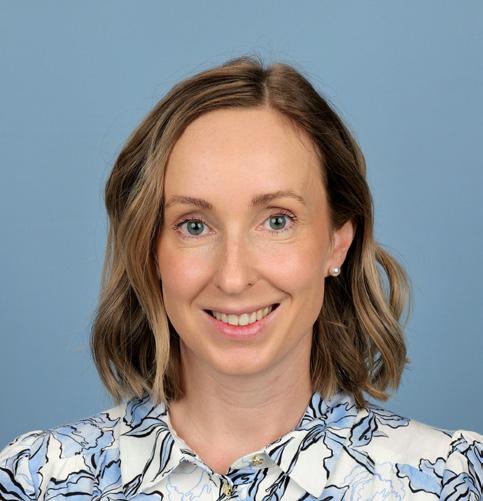
Olivia Raston Teacher of the Deaf and Hard of Hearing
Olivia brings more than five years of experience working with Deaf and Hard of Hearing students across primary and secondary settings.
Olivia works fluently across Auslan, spoken and written communication modes, ensuring learning is accessible and aligned to each student’s needs. Her work includes ongoing collaboration with Classroom Teachers, Student Support Officers and families to create consistent, supportive and inclusive learning environments. Her approach is grounded in inclusive practice, relationship building and empowering students to engage confidently in their learning.
She is currently completing her Master of Disability Studies (Deaf and Hard of Hearing) at Macquarie University and holds a Graduate Diploma of Primary Education alongside extensive Auslan qualifications.
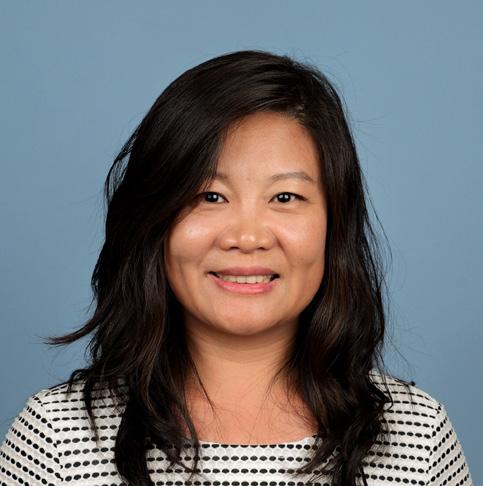
Fang Liu Language Coordinator (Chinese)
Fang brings more than 20 years of experience teaching Chinese across South Australian independent and government schools. She has taught students from Reception to Year 12 and has developed strong programs across Beginners, Continuers, Background and IB pathways.
Fang holds a Master of Arts in Educational Studies and a Graduate Diploma in Education from the University of Adelaide, along with national teaching qualifications in China. She is also an active contributor to curriculum and assessment through her involvement with the SACE Board and the Chinese Language Teachers' Association of South Australia.
Fang is recognised for her strong curriculum knowledge, dedication to intercultural learning and collaborative leadership.

Tim Parsons Teacher (English)
Tim brings experience teaching English across Years 7 to 11 in multiple Adelaide schools, and has contributed to a range of curriculum and wellbeing programs.
Tim holds a Master of Teaching (Middle and Secondary) and a Bachelor of Music with a minor in English Literature from the University of Adelaide. His academic background has shaped his strong interest in literary analysis, critical literacy and helping students develop confident written and analytical skills.
In the classroom, Tim is recognised for creating positive and engaging learning environments and for his ability to support learners with diverse needs. He brings creativity, a genuine passion for literature and a reflective approach to teaching.
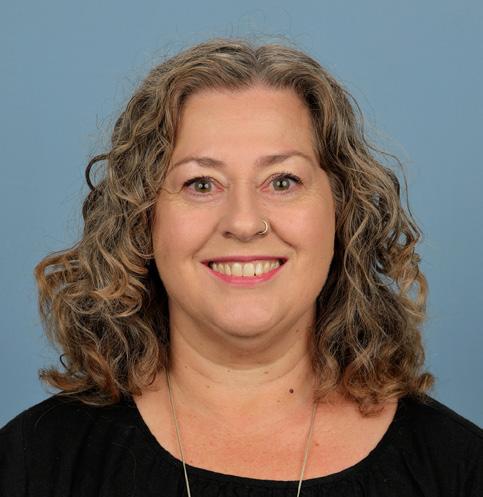
Anne Gacic Student Support Assistant
Anne brings extensive experience supporting students with a wide range of learning, physical, behavioural and sensory needs across early learning, primary and specialist school settings. Her background includes significant work with students requiring tailored support, including those with mobility challenges, vision impairment, Autism and additional learning needs.
Across her career in schools and specialist disability services, Anne has developed a calm, supportive and highly professional approach. She is known for building strong relationships, adapting to individual needs, maintaining clear communication and contributing positively to team environments.

Kaela Gadaleta People and Culture Administrator
Kaela joined Pembroke in 2025 as a School Administration Assistant and has quickly became a valued member of the professional services team. In early 2026, she moved into the People and Culture Administrator role.
Kaela has supported large-scale operations with the Australian Electoral Commission and the Department of Home Affairs where she developed strengths in project coordination, data accuracy and stakeholder communication.
During her time in the School Administration office, she managed the print room and stationery operations, supported reception services, maintained databases, and contributed to a range of whole-School initiatives including staff recognition projects and system improvements.
Kaela brings a strong commitment to positive workplace culture, clear communication and professional integrity. Her passion for people-focused practice and continuous improvement positions her well to support the ongoing development of People and Culture at Pembroke.

Tony Zimbardi Teacher (Design and Technology)
Tony holds a Bachelor of Education (Design and Technology) from the University of South Australia and brings more than a decade of teaching experience in South Australian schools across both Design and Digital Technologies. He has led and delivered programs spanning materials technology, digital systems, robotics and STEM, with a strong focus on project-based learning and student agency. His experience includes teaching timber and metal technologies, CAD and CAM, robotics, electronics and emerging digital pathways.
He is known for creating inclusive, engaging and well-structured learning environments that balance creativity, technical skill development and strong safety practices. He uses a collaborative approach and has a clear passion for innovation in teaching and learning.
Welcoming Our New Staff
We’re excited to welcome Pembroke’s newest staff members to our community. It’s been a pleasure having them with us and seeing the positive impact they've already made across the School.
The following list outlines new staff members who commenced employment from April 2025 until March 2026.
Teaching Staff
Sophia Borick
Rebecca Brett
Kate Cutts
Anam Dhanji
Chloe Fusco
Adrian Gan
Ben Hock
Joseph Hodson
Caterina Jones
Hanli Jonker
Lily Kennedy
Fang Liu
Josh Martin
Tim Parsons
Novilia Putri
Casey Raeside
P rofessional Services Staff
Tanya Annetta
Elissa Blight
David Blumberg
Amy Elgar
Patrick Ey
Anne Gacic
Kaela Gadaleta
Suzy Guo
Jess Harrison
Steph Lord
Harrison Peacock
Lauren Pickford
Stine Pueschel
Sarah Rowe
Olivia Raston
Tom Rose
Kate Strudwick
Laura Teicher
David Yanni
Tony Zimbardi
Talia Slater
Mason Sleiman
Will Smith
Wendy Wickham