16 From Pembroke to Purpose: Peter Bachmann (1994) on Building a Sustainable Future
20 An Investment in Generations: The Pembroke School Endowment Fund
22 Connecting through Language at Pembroke
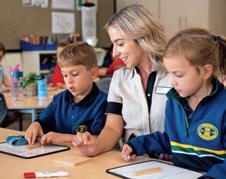
24 Introducing the Junior School Learning Pods
26 First Vintage and Full Circle at Wirra Wirra
30 Reframing Pathways: The Growth of School-Based Apprenticeships and Vocational Education at Pembroke
34 Summer Sport Gallery
36 Both Actor and Academic
38 More Than a Club: Building Leaders On and Off the Court
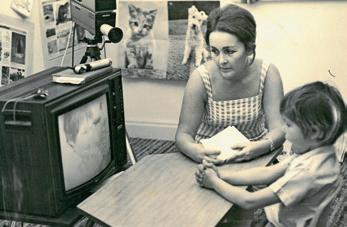
40 History of the Hearing Unit
42 POSA Update
43 Alumni News
44 Alumni Gallery
46 2026 Calendar
A Co-Educational, Non-Denominational Day and Boarding School from Early Learning Centre to Year 12.
Pembroke School is an International Baccalaureate (IB) World School offering the IB Diploma (DP) & Primary Years Programme (PYP).
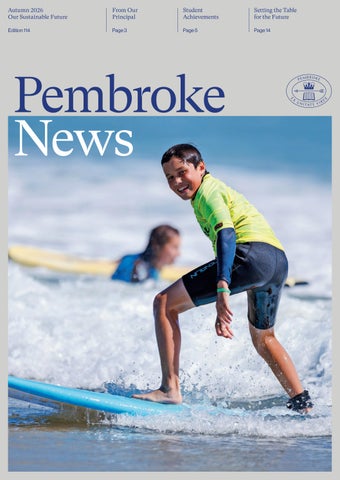
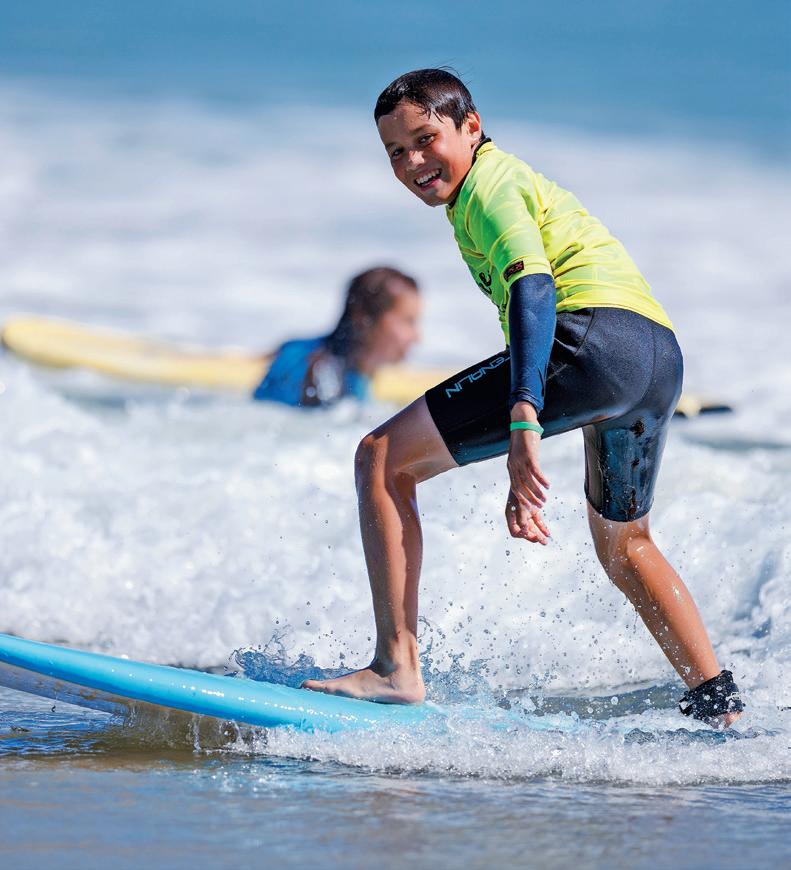
Cover Image
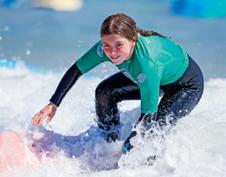
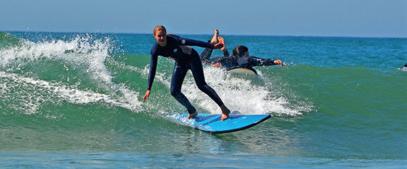
Robbie Bain (Year 7) surfing while on Year 7 Camp
Welcome to another edition of Pembroke News. This time, we are focusing on the fourth and final pillar of our Strategic Plan 2030 – StrongerTogether. When I hear the word sustainable, I am quick to conjure images of recycling bins and the like. Without minimising the importance of recycling, this edition reveals all the ways Our Sustainable Future shows up across Pembroke’s campuses.
You’ll read about the planned introduction of Food Technology, a new subject where students will learn where their food comes from, how to make ethical food decisions, and the skills behind budget management and meal planning to reduce wastage. Of course, they’ll also be building their culinary skills and discovering how to improve every dish they prepare. Find out more on pages 14-16.
Principal Mark Staker also reveals that at the heart of our philanthropic vision for Pembroke lies a simple yet profoundly important idea: the Pembroke School Endowment Fund. This permanent investment in the future of the School, and the students who will come after us, is sustainability in its most literal form, ensuring that the opportunities available to students today remain available to every generation that follows.
In a form of social sustainability built on inclusion, some of our younger students are learning Auslan (Australian Sign Language) in a new co-curricular. As they are learning about the Auslan alphabet, everyday greetings and the essential protocols that underpin respectful communication in the Deaf community, they are building empathy, respect for diversity and an understanding of the lived experiences of others. Find out more about this inspiring new co-curricular offering on pages 22-24.
In the Senior School, our students are crafting their own sustainable futures by undertaking School-Based Apprenticeships, where they develop the skills required to enter the workforce during a critical skilled trades shortage. Head of Future Pathways Donna O’Connor goes into detail on pages 30-33.
Pembroke alum Emma Wood (1993) is taking sustainability to the next level in her new role as Chief Winemaker at Wirra Wirra, where solar panels and recycled water are just the tip of the iceberg. She explains their ethos of biodynamic farming on pages 26-29.
Another graduate of Pembroke who is making a difference is Peter Bachmann (1994). Working as the Managing Director, Sustainable Infrastructure at Gresham House in London, Peter has channelled his Pembroke Economics class learnings into investing for good, finding solutions that are both economically and environmentally sustainable. He explains more on pages 16-19.
As you’ll read throughout this edition of PembrokeNews, Our Sustainable Future depends on all of us to make decisions with the community and wellbeing of others in mind.
I hope you enjoy this edition of Pembroke News. Happy reading.
Gabbi Agnew Publications Manager
From Our Principal
Our Eyeson the Future
‘When we speakof sustainability at Pembroke, it iseasy to think first of the natural environment.’
Stewardship of our planet is an important responsibility, and schools have a vital role in helping young people understand the challenges and opportunities that lie ahead. Yet sustainability, in the life of a school, must be understood more broadly. It speaks to the enduring strength of an institution and the thoughtful stewardship required to ensure a school remains vibrant, principled and relevant not only for today’s students but for generations to come.
Great schools are built slowly and carefully over time. They are shaped through decisions that balance the needs of the present with a clear responsibility to the future. Sustainability therefore touches every aspect of school leadership. It is reflected in the way we recruit, support and retain exceptional staff who dedicate their professional lives to the education of young people. It is evident in maintaining strong enrolments so that the School community remains diverse, vibrant and connected to our values. It is also seen in the careful investment we make in our facilities and infrastructure, ensuring the environments in which our students learn today will continue to serve those who follow.
At Pembroke, this thinking is embedded within our strategic direction. Our Strategic Plan 2030 – StrongerTogether recognises that a thriving school must balance ambition with stewardship. It calls on us to strengthen the foundations that allow the School to flourish: a strong culture of professional growth among staff, careful planning for enrolments and resources, and investment in facilities that support contemporary teaching and learning. Sustainability, in this sense, is not a single initiative but a guiding principle that informs how we plan for the future of the School.
Our educational philosophy also aligns closely with this longterm perspective. Through our International Baccalaureate programmes, students are encouraged to think beyond themselves and to understand their responsibilities as members of a global community. The IB learner profile – with its emphasis on principled action, reflection and international mindedness – encourages young people to consider the consequences of their decisions and their responsibility to others. In this way, sustainability becomes not only an institutional goal but a mindset cultivated in our students as they prepare to contribute thoughtfully and responsibly to the world they will inherit.
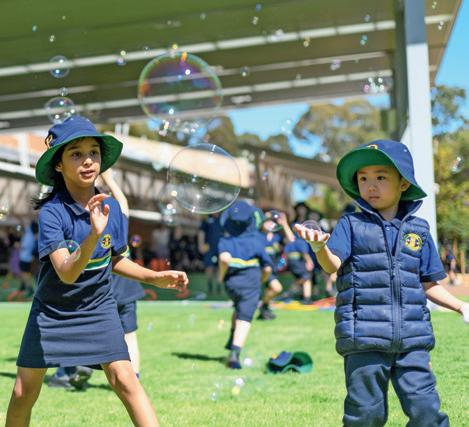
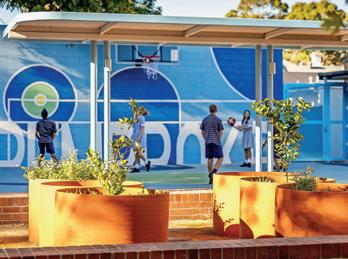
→ Students enjoying the new Junior School Playground and Covered Outdoor Learning Area
→ Early career Junior School teacher Isabella Farina with Year 2 students Ted Oliver and Stella Strudwick
→ Dean of Professional Growth and Development, Simon Miller, and Assistant Head of Technology (Digital Technology), Jordan Pokorny
An essential part of sustaining a great school lies in philanthropy and development. Independent schools have always relied on the generosity and foresight of those who recognise that education is a long endeavour, extending well beyond a single generation. The Pembroke Endowment Fund represents a powerful commitment to this principle. By building a permanent financial foundation for the School, the Endowment creates stability and opportunity for the future, ensuring Pembroke remains strong even as governments, policies and funding models inevitably change over time.
Our thinking about sustainability is also shaped by the wider global conversation about education and the future of society. The United Nations Sustainable Development Goals remind us that education plays a central role in creating a more just, peaceful and sustainable world. In particular, Sustainable Development Goal 4 calls upon the global community to ensure inclusive and equitable quality education and promote lifelong learning opportunities for all. This vision resonates deeply with the work of schools everywhere.
At Pembroke, it reinforces an important truth. Schools do not exist only for the present generation. Every decision we make, every investment we undertake and every initiative we pursue must be guided by the understanding that the true beneficiaries of our work may be students we will never meet.
There is an old proverb that I reference often, which reminds us that a society grows great when people plant trees under whose shade they will never sit. Schools understand this instinctively. Pembroke, and King’s and Girton have benefited tremendously from these acts of generous wisdom – and we all enjoy the ‘shade’ from those who came before us. The work of education is always an act of faith in the future.
Our responsibility, therefore, is both simple and profound: to ensure Pembroke continues to flourish long after our own time has passed, so that generations of young people may continue to learn, grow and contribute to the world. Sustainability, in its fullest sense, is our commitment to that enduring promise.
Mark Staker Principal
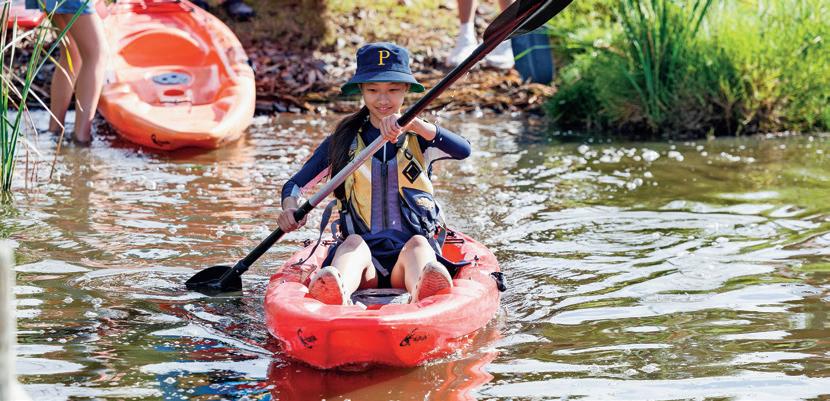
→ Yolanda Fu (Year 7) at Old Watulunga, Pembroke’s Environmental Education Centre on the Finniss River
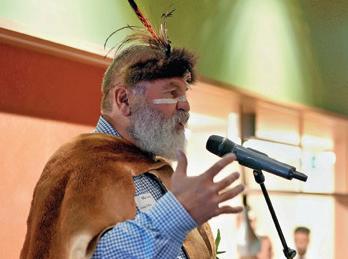
→ Kaurna Ambassador Uncle Mickey ‘Kumatpi Marrutya’ O’Brien at the official opening of the King’s Cafe, John Moody Dining Room and Yellow Submarine Too Café
→ A thoughtfully designed space for students in the Middle School
Student Achievements
Two Pembroke students, Darshbir Singh (Year 10) and Natalia Pole (Year 11), were selected in a group of 30 South Australian students who spoke in Parliament as part of the Teen Parliament initiative.
Anika Hiriyanna (Year 11) ran 100km throughout the summer holidays to raise over $800 for the international charity, Doctors Without Borders.
Pembroke students and alumni achieved excellent results at the State Athletics Championships, with a number a students placing on the podium in their events. Joseph McGee (2025) won the Open 3000m Steeplechase. Harry An (Year 9) placed second in the Under 15 100m and third in 200m. Keanu Cooper (Year 9) placed first in the Long Jump, second in the Triple Jump and third in the High Jump. He also placed third in the 100m, all for the Under 16 age group. Ivy Oliver (Year 8) won the Under 14 400m and Javelin, and Eva Harrington Downie (Year 8) won the Under 15 200m, 400m and 800m. Back in December, Eva also earned a podium finish at the Australian All Schools National Athletics Championships, where she placed second in the 400m. At this event, she also placed 10th in the 800m and sixth in the 200m. At the SA Little Athletics State Individual Championships, Eva won the 400m and the 200m, and placed second in the 100m, 800m and 1500m. Ivy also competed at this event, and placed first in Javelin and the 400m, second in 80m Hurdles and 200m Hurdles, and third in the 800m.
Holly Knights (Year 8) enjoyed a successful bid at the West Lakes Australia Day Triathlon, where she was awarded the State Champion medal and was the fastest female in the Enticer length race. She was selected for the South Australian Under 13-18 Triathlon team, where she competed at the National School Sports Triathlon, placing 26th nationally after four challenging days of competition.
Following a strong season on Pembroke’s Badminton team in 2025, Lucy Li (Year 11) won the Badminton Mixed Doubles title at the Under 17 State Championships, and in February she won the Mixed Doubles title in the Under 19 State Championship. More recently, she and Pembroke Badminton Coach Perrie Liu placed second in the A Grade Women’s Doubles at the City of Adelaide Championships.
Emmanuel Lentakis (Year 11) competed in RADL GRVL, a 127km gravel cycling event in McLaren Vale, where he finished in second place for the Under 19s. He also raced in the Tour of Bright, where he finished third in King of the Mountain and won the final stage, finishing sixth overall in the Open Men’s C Grade. Tyler Cunniff (Year 10) won the Keirin Under 17 Track Race at the National Cycling Championships in Queensland.
Oliver Bentley — Year 11
Elliot Bentley — Year 8
Kate Thomson — Year 12
Amethyst Kian — Year 3
Holly Knights — Year 8
Eva Harrington Downie — Year 8
Anika Hiriyanna — Year 11
Natalia Pole — Year 11
Darshbir Singh — Year 10
Keanu Cooper — Year 9
Harry An — Year 9
Joseph McGee — 2025 Alumni
Emmanuel Lentakis — Year 11
Tyler Cunniff — Year 10
Arsh Panjvani — Year 5
Jasmine Oldfield — Year 11
Lucy Li — Year 11
Ivy Oliver — Year 8
Student Achievements
Jasmine Oldfield (Year 11) received an Australian Institute of Classical Dance Scholarship for 2026 in recognition of achieving third place nationally in the Advanced One AICD Borovansky Examination. Arsh Panjavi (Year 5) participated in an Australian All Star Cheerleading Federation Hip Hop Dance competition, where his team achieved third place, taking home bronze medals. Amethyst Kian (Year 3) was selected to perform in the Calisthenics South Australia State Team (Tier 2) in the Sub-Junior category for 2026.
At the Panda Challenge, an Adeliade-hosted event for Ice Skating Australia, Kate Thomson (Year 12) placed second and third in the Junior and Senior Divisions respectively. She was also nominated to represent Australia at the Thai Open in Bangkok.
On a less slippery surface, brothers Elliott (Year 8) and Oliver Bentley (Year 11) represented the state in the South Australian Indoor Hockey team, with Elliott winning Player of the Match. Oliver and Lucas Lee (Year 10) both represented South Australia in the Under 16 State Hockey team in April.
Lia Litchfield (Year 12) has had another successful Lacrosse season, representing South Australia at the Australian Lacrosse Under 18s National Championships in Perth, where her team won the Championship for the third year running. She was also selected in the National All-Stars Team for her performance.
Mia Huang (Year 10) was awarded equal winner of the Sieben-Scott Prize for 2026 by the Adelaide Metropolitan Male Choir. Mia was also invited to perform a movement of a piano concerto accompanied by the orchestra and the choir in July.
On the netball court, Alice Page (Year 10) was selected for the Under 17 State team in advance of the National Netball Championships in April, and Scarlett Kilsby (Year 10) and Emilie Kilsby (Year 11) both represented South Australia in a 16 and Under Mixed Netball Tournament held in Queensland. Emilie was also announced as Co-Captain and was selected in the Australian All-Stars Mixed team for the second time.
17 Pembroke rowers went to Lake Barrington in Tasmania for the Australian Rowing Championships. Mia Chapman (Year 12) and Evie Barras (Year 11) fought hard to claim silver in the Under 19 Women’s Eight final. Mia and Evie also came fifth in the Under 19 Women’s Coxless Four. Mia, Evia, Catherine Watts , Alex Riddler (both Year 11) and Beatrice Leue (Year 10) came sixth in the Schoolgirl Coxed Quadruple Scull Sprint final. Jed Watson , Angus Hutton , Luke Jones , Brock Redman , Max van de Meulengraaf , Alex Smitham (all Year 12), Hugo Hopprich , Seb Willis-Hell (both Year 11), and Dora Rossi-Fedele (Cox, Year 10) came seventh in the Schoolboy Eight Sprint final. At the Interstate Regatta, Mia and Evie raced in the Women’s Youth 8+ where South Australia placed fifth.
Brock Redman — Year 12
Luke Jones — Year 12
Angus Hutton — Year 12
Jed Watson — Year 12
Emilie Kilsby — Year 11
Scarlett Kilsby — Year 10
Mia Huang — Year 10
Lia Litchfield — Year 12
Lucas Lee — Year 10
Evie Barras — Year 11
Catherine Watts — Year 11
Beatrice Leue — Year 10
Alex Ridler — Year 11
Mia Chapman — Year 12
Alice Page — Year 10
Alex Smitham — Year 12
Hugo Hopprich — Year 11
Max Van De Meulengraaf — Year 12
James Wadham (Year 8) was selected for the South Australian Under 14 Boys Softball team recently. James and his team competed at the National Championships in Canberra, ultimately placing fifth.
Hanyu Liu (Year 8) competed in Tennis Australia’s 2025 J125 CBC Green Tea Tree Gully tournament, where, after winning his final match 6-2, 6-2, he won the championship in the Boys’ Under 14 Singles Main Draw.
In the pool, Cayden Zhou (Year 9) participated in the 2026 Swimming SA State Relay Championship, where he won the 10-14 Years Men’s 200m Medley Relay and placed second in the 10-14 Years Men’s 200m Freestyle Relay with his teammates.
Also in the pool, but from a higher vantage point, Gabrielle Prider (Year 10) was recently awarded SA Female Junior Diver of the Year for 2025 and the Diving SA Coach’s Award. She had an excellent weekend in Mildura in January, placing in every event she entered at the Peter & Patricia Morgan Memorial Meet (Rip N Tear) and the Victorian Country Championships.
Younger sister Annabelle Prider (Year 7), along with Holly Knights (Year 8) were selected for the South Australian Under 14 Girls’ team at the Australian Youth Water Polo Championships in Brisbane. Pembroke was well-represented at the Championships: Holly, along with sister Ruby Knights , Ellie Bentley (both Year 10) and Sofia Spagnoletti (Year 9) were all selected for the Under 16 Girls, and Ruby was also selected in the Under 18 Girls’ team with Miranda Thomas (Year 12).
Ever strong in the water, Ruby Knights (Year 10) was also selected in the Under 15 South Australian Reds Squad, our state’s Surf Life Saving team.
Ellie Bentley — Year 10
Ruby Knights — Year 10
James Wadham — Year 10
Dora Rossi-Fedele — Year 10
Seb Willis-Hell — Year 11
Gabrielle Prider — Year 10
Cayden Zhou — Year 9
Hanyu Liu — Year 8
Sofia Spagnoletti — Year 9
Miranda Thomas — Year 12
Annabelle Prider — Year 7
It Takes a Village
Year 7 sits at a fascinating point in a young person’s life – no longer primary school students, but not yet senior schoolers. At Pembroke, it is a carefully supported bridge between the two: an experience shaped with care, intention and a genuine desire to make this year count.
So how do you define the Year 7 journey? And what are we hoping students carry with them by the end of it?
The First Step
The Year 7 journey often begins quietly, but with great significance.
In August 2025, Year 6 students and their families gathered on King’s Campus for the Year 7 2026 Welcome Evening – a first introduction to Middle School life at Pembroke. This annual event provides a chance for families to meet staff, connect with other parents and students, and get a taste of what’s to come.
For some students, this transition is even more significant, as they begin life as boarders – living away from home for the first time while adjusting to a new school environment.
What made the evening particularly meaningful was the sense that this transition is shared.
In the lead-up, the Year 7 students of 2025 wrote a message to welcome the incoming cohort:
‘Starting Year 7 is a big step. It’s normal to feel a mix of excitement and nerves – we did too.’
They spoke of camp, friendships and House spirit, but their message ultimately reassured:
‘Starting at a new school or campus can feel a little scary – but know this: you won’tbe alone.’
It is a reminder that the Year 7 experience is shaped not only by staff and structures, but by students themselves – each cohort helping the next to find their place.
From the next building block, Orientation Day, through to the early weeks of Term 1, each step is designed to build confidence and belonging.
Orientation Day introduces students to the campus through tours, icebreakers and short sessions with teachers. They begin to find classrooms and meet new peers. By the end of the day, what felt daunting already feels more familiar – supported by the sense that everyone is finding their way together.
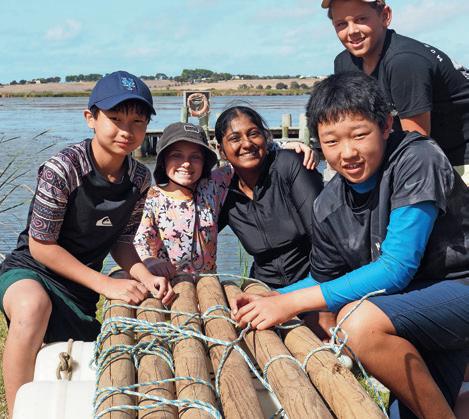
→ Bradley Wong, Laura Miller, Shreya Sandesh, Harry Langworthy and Nick Wang putting the finishing touches on their raft at Year 7 Medlin Camp
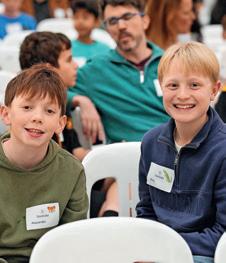
→ Alex Dean and Rory Matschoss at the Year 7 2026 Welcome Evening
Stepping In, Together
A defining feature of Year 7 at Pembroke is the strong sense of belonging built from the outset.
‘For many families, Year 7 is both exciting and a little daunting,’ says Head of Middle School, Lawrence Pascale. ‘It’s a bigger environment, and more than half the cohort is new.’
His advice is simple: get involved.
‘You really want to find your people – and to do that, the best thing is to embrace the opportunities that are out there.
Think about what you’re interested in and get involved. That’s how you find your tribe.’
Through House activities, co-curricular programs and clubs, students are encouraged to explore widely.
Activities such as Robotics, Debating and Chess challenge students intellectually, while Music ensembles, Film and Visual Art nurture creativity. Sport also plays an important role, offering both competition and connection. These opportunities help students discover new interests and form friendships across the year level.
A Foundation for What Comes Next
Having experienced Pembroke as a student, parent and staff member, Mr Pascale brings a unique perspective to the Year 7 experience.
‘It gives you a broader lens,’ he explains. ‘You understand not just what Year 7 looks like, but where students are heading.’
That long view is central to the philosophy of Year 7. It is not defined by grades alone, but by transition, growth and self-discovery.
‘If I had to describe it in three words,’ he says, ‘I’d say challenging, rewarding and connection. Year 7 is not about ATARthinking – it’s about becoming part of the place, finding out who you are, what you enjoy and how you fit in.’
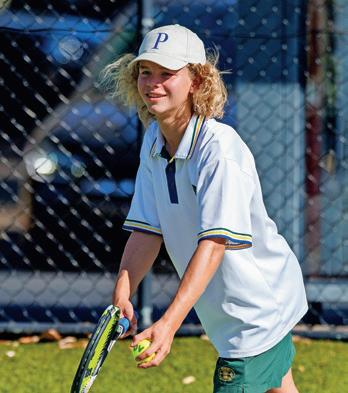
→ Flynn Skeates (Year 7 in 2025) representing Pembroke in Boys’ Tennis
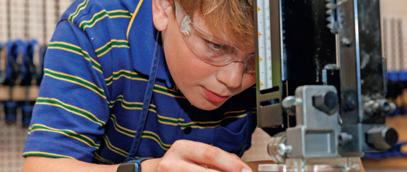
→ Harry Willis-Hell (Year 7 in 2024) during a Design Technology Studies lesson
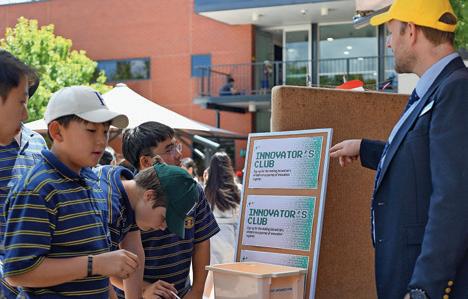
→ Head of Yates House, Mr Callum Iles introduces the Innovators’ Club to eager students at the Middle School Clubs Showcase
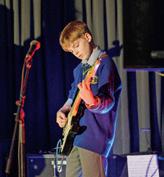
→ Tommy Wissell (Year 7 in 2025) performing at the Middle School Rock School Concert
→ Charlotte Goddard enjoying perfect surfing conditions on Year 7 Camp
The Power of Connection
A key element in fostering belonging is the Home Group model, led by Dean of Student Wellbeing, Rebecca Forrest.
In 2026, the School introduced smaller Home Groups for Year 7 students, with each group consisting of 12 to 14 students who will remain together with the same teacher through Years 7, 8 and 9. Home Group Teachers will then ‘loop back’ to start the process again with a new Year 7 cohort.
‘What we wanted was to make Home Groups as small as possible, particularly at transition points,’ Ms Forrest explains. ‘But just as important is the continuity of care.’
Beyond the Classroom
Some of the most memorable moments of Year 7 happen beyond the classroom.
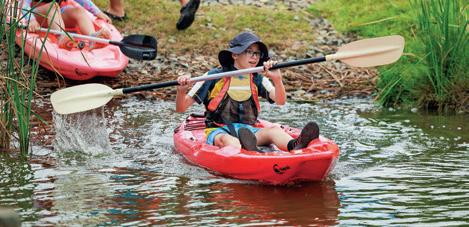
The Year 7 Camp, held early in the year, is a highlight of the Middle School experience. Set at Old Watulunga on the Finniss River, the three-day program combines outdoor adventure with team-building challenges. Activities such as kayaking, raft building, cultural experiences and garden-to-plate cookery foster resilience, independence and collaboration.
Away from the familiar, students support one another, step out of their comfort zones and build confidence. For many, it is the moment they begin to feel truly part of the Year 7 community.
This approach allows teachers to know their students deeply – socially, emotionally and academically – while building strong connections with families.
‘The feedback from staff has been incredible,’ she says. ‘Teachers are forming really strong connections with their group.’
For experienced staff, the impact has been immediate. As 7 Oats Home Group Teacher Shane Claridge reflects: ‘I realised I was going to know far more about these students’ lives than with any Year 7 group I’ve worked with in the past 22 years. Every student feels like they belong and are part of something special in a group this size.’
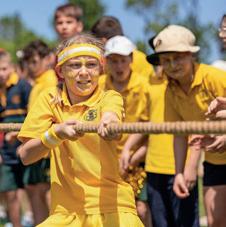
→ Lola Ebert (Year 7 in 2022) giving her all in the tug of war at House Athletics Day
→ Hamish Zecevich confidently launching his kayak on Year 7 Reeves Camp
→ Patrick Kent enjoying the Year 7 2026 Welcome Evening
Finding Their Place
By the end of Year 7, the transformation is often striking.
‘I hope students feel like they’re part of the place,’ Mr Pascale reflects. ‘That they’re in the school they want to be in –that they belong. And that they feel like they have a voice, both with staff and among their peers.’
It is, as the 2025 cohort expressed it, about finding your place – and helping others to do the same.
This sense of belonging – of being known, connected and confident – defines a successful Year 7 experience.
The Village
As the adage reminds us, it takes a village to raise a child.
At Pembroke, that village is strong – a network of staff, peers and parents working together to support each student’s journey.
It is this collective effort that ensures Year 7 is not simply a transition, but a foundation – one that allows every student to move forward with confidence into the years ahead.
Amelia Weston Marketing and Communications Coordinator
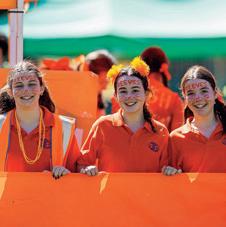
→ Mia Precup, Ava Bishop and Sophie Whitham (Year 7 in 2025) bringing plenty of spirit to House Athletics Day
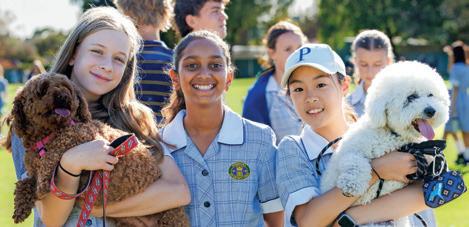
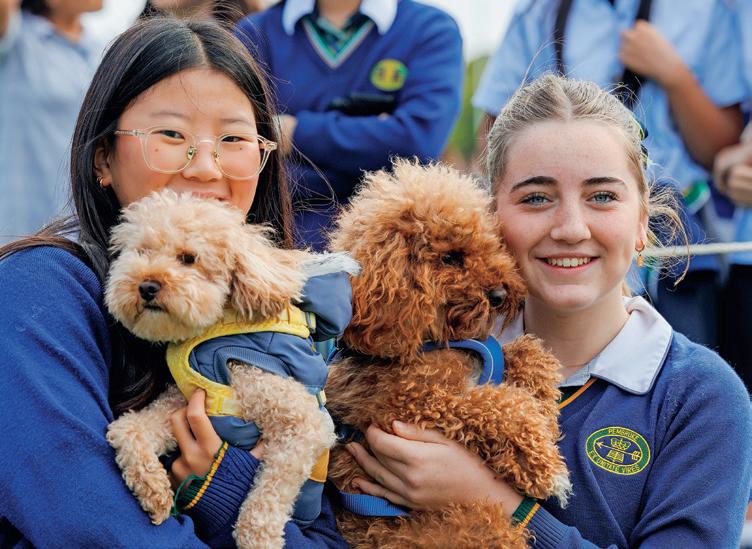
→ Zara McGregor, Akhila Joka and Lois Lee (Year 7 in 2025) with their furry friends at Pembroke Pet Show Day
From India to King’s College, and Well Beyond
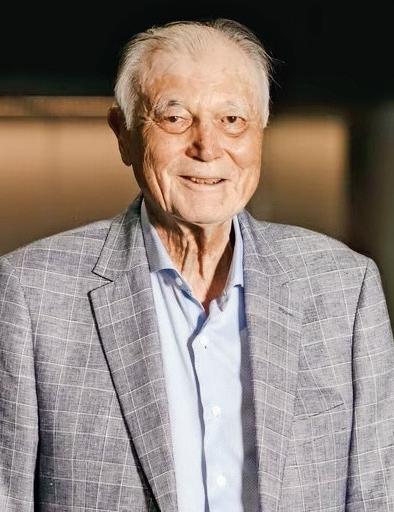
King’s Old Collegian Basil Sellers AO (1954, left in 1952)
When Basil Sellers arrived at King’s College to board as a slight, fine-boned 12 year old from India, he brought with him a lot of luggage, including a cricket bat and a tennis racquet. It’s an image his schoolmate Allen Beilby never forgot – a small boy stepping into a new country, a new school and a new life.
Born in Bulsar (now Valsad) in Gujarat, Basil spent his early childhood playing cricket with his younger brother Rex on a makeshift backyard pitch. Their father, Alf, a bridge engineer, taught them the game; their mother, Irene, created a home filled with warmth and safety. But in 1947, as India’s independence brought riots and uncertainty, the family made the difficult decision to leave. Basil had also survived two bouts of malaria, and doctors urged a hot, dry climate. Australia became their new beginning. And Adelaide being the dryest capital, was obviously the best destination.
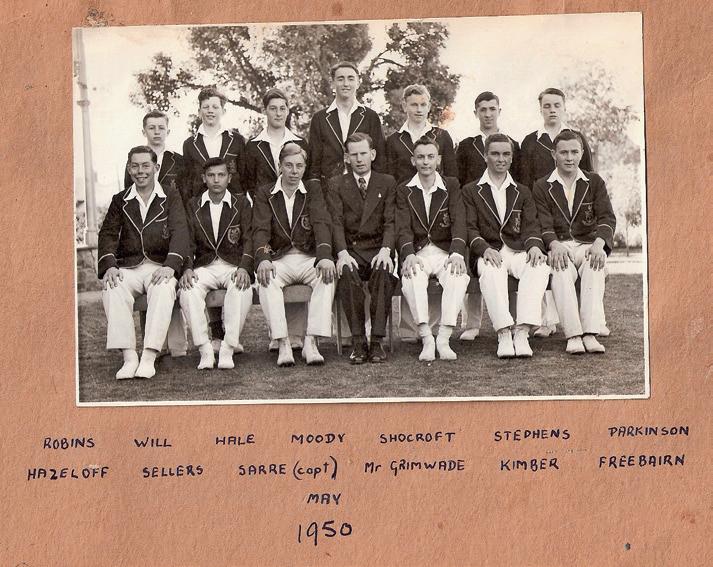
In the early days after Basil arrived, he was asked if he played any sport. He replied that he played some cricket. The Sports Master said go to the Under 13 nets which he did. After a while, the Sports Master said ‘you are in the wrong nets young lad’ and directed Basil to where the First XI were practising. He was so impressed that they selected him for the First XI the next weekend. When Basil turned up for the game, he was in his shorts which was against all the rules and the umpires refused to let him play. However, the Sports Master pleaded with them, telling them about Basil’s recent arrival from India and he had no time to buy the appropriate gear. The umpires relented that and Basil played, scoring 34. And over two seasons, he took 20 wickets, scored 200 runs and earned his colours aged just 13.
School magazines of the era described him as ‘a dashing bowler,’ ‘dazzling’ with a ‘vicious leg break’ and ‘great determination’. He was also recognised as unique, quiet, hard-working and respectful. Several classmates later recalled a certain separateness about him, perhaps because he came from a different background. It’s a difference that became part of the school’s evolving identity. King’s was beginning to welcome more overseas students, and Basil’s presence and personality helped shape a spirit of openness that would grow in the decades to come. A school philosophy that stressed excellence and inclusivity.
He wasn’t only a cricketer. Basil played tennis and was eventually Vice Captain of the Tennis team. He loved his Arts subjects, and worked weekends in a delicatessen, at a greengrocer during school holidays, and later at Myer doing clerical work. It’s thought that his Saturdays spent as a penciller for a bookmaker at the Adelaide races may have strengthened his mental agility and confidence with figures, perfect for the business world he would later dominate.
→ Basil Sellers, photo credit Sydney Swans
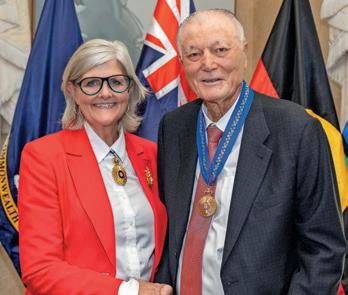
→ Basil Sellers AO with Her Excellency the Honourable Ms Sam Mostyn AC, Governor-General of the Commonwealth of Australia. Basil was appointed an Officer of the Order of Australia in 2026
After leaving school at 16, Basil’s life unfolded with remarkable momentum. He decided not to pursue further academic studies to become a teacher or librarian, as advised. A handy 188cm tall, he was also a capable basketballer for North Adelaide, eventually earning a spot on the state team.
Career-wise, he joined stockbrokers Cutten and Harvey at 18, where he worked for 13 years. Early in his career, he bought a real estate agency. From there, he built Devon Homes into South Australia’s leading home construction company, revived struggling manufacturing firms and eventually moved to Sydney, where his business career expanded internationally.
But sport, and giving back, remained central. His love for the Sydney Swans began with a chance visit to a Swans game at the SCG and realising they wore the same colours as his beloved SANFL Roosters. Decades later, he would become one of the club’s greatest benefactors, with the Basil Sellers Centre and the Sellers & Colless Centre named in his honour.
His philanthropy extends across cricket, art, community organisations and youth development. He co-founded the Bradman Museum, established the Basil Sellers Art Prize and has supported countless charities in Australia and abroad. The respect for his approach is vast.
Among his many awards, titles and honours, Basil was named a Member of the Order of Australia in 2003 and appointed an Officer of the Order of Australia for ‘distinguished service to the community through philanthropy and leadership, and to sports administration’ in 2026.
Despite his global reach, Basil’s connection to King’s – now Pembroke – has never faded. He and Rex funded the development of the pavilion at Kensington Oval in 2000 in honour of Sir Donald Bradman, a gesture that reflected both gratitude and affection for the school that welcomed them.
And it’s been said that, to this day, Basil always acknowledges the camaraderie of King’s and the part the school’s philosophy played in the development of his character and his ability as a gentleman. From a shy boy with a cricket bat to a well-respected philanthropist whose impact spans continents, we are so proud to call him our own.
Kate Holland (1992) Pembroke Alum
→ King’s College First XI with Basil Sellers front, second from left circa 1950
→ Fresh produce becomes a nutritious and delicious meal for students on camp at Old Watulunga
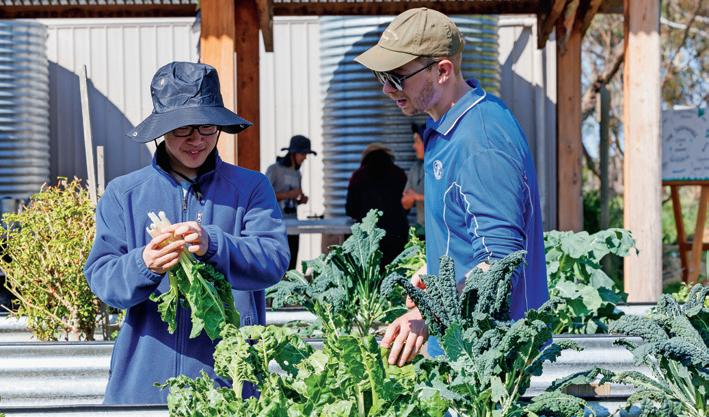
→ Daniel Wen (Year 11, pictured in Year 8) harvesting silverbeet from the kitchen garden at Old Watulunga
Setting the Table for the Future
In our Technology Department, it’s commonplace to see students problem solving, collaborating, designing, testing and reflecting. Whether they’re coding an app in Digital Technology, designing a building in Graphics and Architecture or building hand-crafted furniture in Material Solutions, the thread of learning by thinking, making and doing runs through every subject in the Department.
Enter Food Technology. The latest subject area to be developed takes all the core learning approaches of the Technology Department and applies them one of the most universal and human contexts there is: food. Launching in 2028, the subject blends creativity, critical thinking and practical skill building.
Students will learn about food systems, identifying where food comes from and making ethical choices about the origins of their food. They’ll build a deep understanding of nutrition, and how various cooking methods affect the quality of what they plate up. Through an iterative design process, they’ll prototype, test and refine food solutions, learning that an excellent dish, much like an excellent product, is never perfect on the first try. They’ll identify what can be changed in their creation, and know what tweaks to make to improve their final dish. They’ll gain skills in food safety, budget management and meal planning. Our students will emerge from the subject armed with a formidable repertoire of culinary skills, and more importantly, as people who engage with food thoughtfully, whether as a consumer, a cook or a citizen of the community.
Food Technology is also ripe for interdisciplinary learning. Maths shows up in the budgeting and ratio work behind scaling a recipe. English comes into play when students write and interpret clear, precise instructions, an increasingly important skill in our digital world. Languages finds a natural home here too, as food is one of the most authentic points of connection with cultures all over the world. The links with Science are self-evident, and the chemistry of what happens when heat, acid, fat and protein interact is nothing short of fascinating. Geography underpins the conversation about where food originates and how it travels. Health and Physical Education is perhaps the most obvious partner, as students build an understanding of nutrition, how we fuel our bodies and how food choices affect long-term health. Rarely does a subject offer so many natural bridges to the rest of the curriculum.
So, what do the next few years look like? Behind the vision of Food Technology is careful planning. We’re designing a modern learning space informed by best practice, researching innovating and engaging programs used across the country, and designing robust safety, hygiene and allergy management processes.
The table is being set for a subject that will engage heads and hands alike, and we are excited to see what our students will create when they step into the kitchen.
Gabbi Agnew Publications Manager
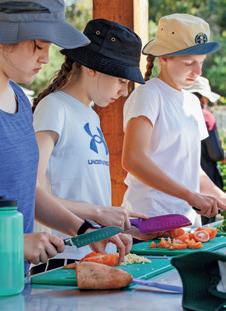
→ Year 8 Hill students hone their culinary skills in the camp kitchen at Old Watulunga
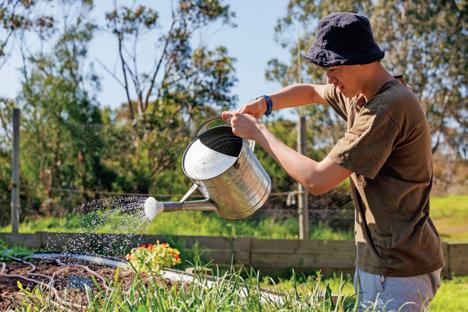
→ Howard Liu (Year 11, pictured in Year 8) in the kitchen garden at Old Watulunga
From Pembroke to Purpose: Peter Bachmann (1994) on Building a Sustainable Future
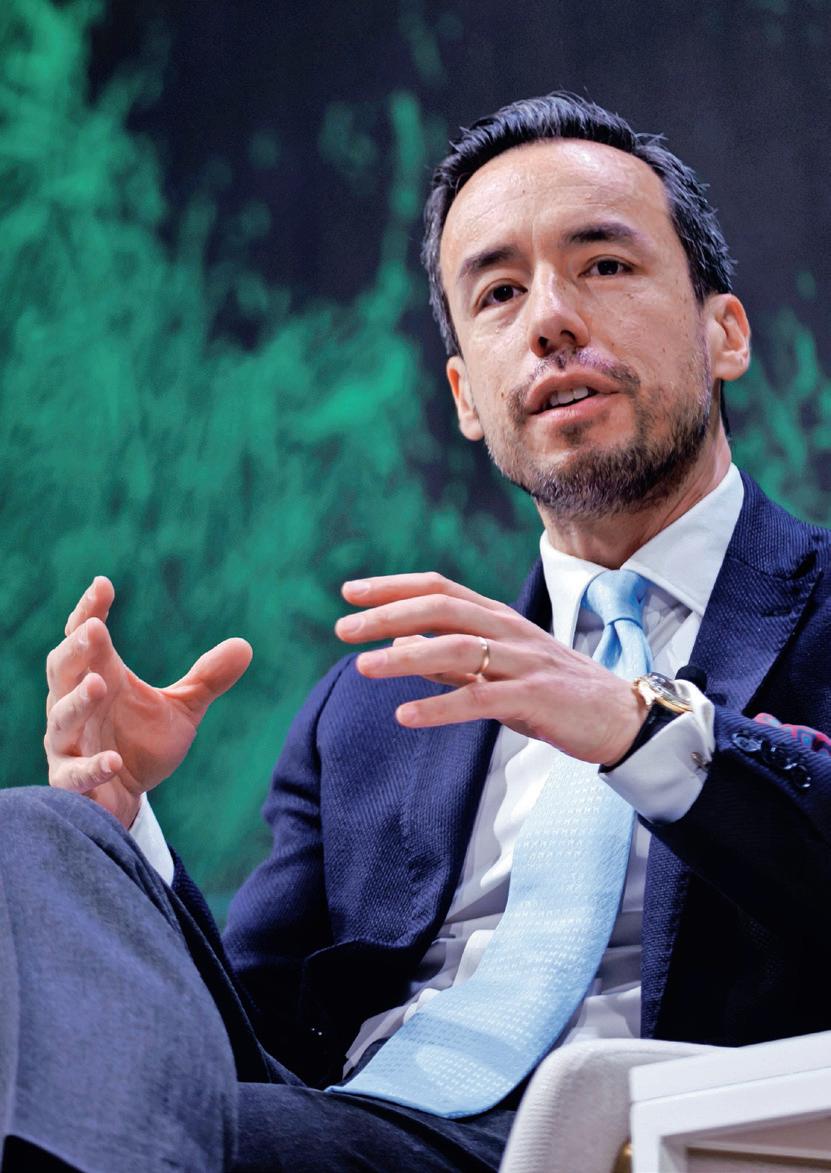
→ Peter Bachmann on stage at Bloomberg COP28
When Peter Bachmann graduated from Pembroke in 1994, sustainability was not yet the global imperative it is today. Fast forward three decades, and Peter is now Managing Director, Sustainable Infrastructure at Gresham House in London, working at the forefront of investments that aim to power communities, protect natural resources and future-proof economies.
In this issue of Pembroke News, we explore Peter’s journey from his school days at Pembroke to leading sustainable infrastructure initiatives on the global stage. Reflecting on the lessons, mentors and experiences that shaped him, Peter shares how his career evolved, the challenges and opportunities facing sustainable investment today and why the values formed at school continue to guide his work.
Looking back to your time at Pembroke in the early 1990s, what stands out most to you? Were there particular teachers, subjects or experiences that shaped your thinking or sparked early interests?
Thinking all the way back to my time at Pembroke which started in Junior School, my overriding memory is one of being genuinely happy. I always loved how wide and varied the School’s offering was and how caring and present the teachers were. Memories include: being amazed that Mrs Medlin and then Mr Lamb knew my name and some fact about me; being totally numb (but loving it) on early morning icy lake swims on camp; the trust we got as young kids to go abseiling which was really cool; Question Time in RE; Chinese with Mr Westermann; Sports Day on the old Kensington Road athletics track; Mr Callaghan’s kindness as Wright House Master; Spring Fairs; enjoying ToK in the IB programme; but above all, my friends. I could literally have filled a page with all of my good memories but will spare you this fate, needless to say I had a great time. Pembroke not only gave me lasting friendships but it also set me up with the confidence and self-belief to do anything I wanted to do in my future.
Sustainability and responsible investment are central to your current role. Was there anything during your school years that planted the seed for this interest, or did it develop later in your career?
My favourite subject at school was always Economics, and it brought out the concept of demand and supply that underpins everything in my thinking around sustainability today. During my school years, I was probably too naïve and unaware of how finite our planet’s supply is of many things we take for granted. So once I started to see this a bit later in life, around the level of unsustainability in pretty much everything we do and make, it kicked off my passion for investing for good. My Economics classes at Pembroke also reinforced a belief I’ve always held: that for any solution to endure, it needs to be economically viable. That was, and still is, central to how I approach tackling the sustainability challenges we face.
You are now Managing Director, Sustainable Infrastructure at Gresham House in London. Could you explain what sustainable infrastructure means in practice, and what your role involves day to day?
To me, Sustainable Infrastructure means: real asset-based solutions to the key environmental and social challenges we face. In simple terms, it’s about backing the physical products and essential services that enable us to live in a sustainable way while also generating strong financial returns.
Examples of things I’ve invested in include: vertical farming which we think is the future of food production; various solutions to convert landfill-bound waste into products that can replace fossil fuels; battery energy storage systems to help the grid balance wind and solar power production intermittency; connecting rural homes to the internet; building 50 new children’s nurseries which help people get back to work to improve diversity and therefore productivity; plus we’ve created a whole new asset class investing in nature and biodiversity net gain (BNG) in a company called the Environment Bank. As for my day to day, it is incredibly varied – which I love – and primarily revolves around running the Sustainable Infrastructure division within Gresham House where I have nearly $2bn of investor capital across eight private equity funds all investing broadly in the same strategy, running a team of 13 investment professionals and about 3,000 people within our portfolio companies, driving investment and asset management strategy and sitting on key portfolio boards. To perhaps give better insight into what that really means day to day, during Covid when I was working at home a lot, my wife joked, ‘You pretty much only deal with either the really good things, or the really bad things and not much in between’. Whilst my job is incredibly demanding and all encompassing, it is something I love doing, to the point where sometimes I do step back and pinch myself with the opportunity I have to do good.
My days also include some pretty fun things like speaking at COP28, meeting Al Gore, presenting to the King, becoming staff at Cambridge, being invited to speak at a multitude of global conferences and even speaking at my kids’ school on careers in the field (probably the toughest audience I faced!).
What has been the most pivotal moment or decision in your career journey so far? Was there a particular opportunity, risk or challenge that significantly shaped your trajectory?
I’ve been really racking my brains, but boiling it down to one moment is not quite possible. I could probably make peace with narrowing it down to three: first was deciding to take on a full-time job in investment banking whilst simultaneously doing my law degree full time (after degrees in Commerce and Finance) as well. By somehow managing to do the crazy work hours, it allowed me to work with an amazing guy (Chris ‘Spud’ Atkins) with whom I got to take on more and more responsibility at a young age which really accelerated my career. Second, was deciding to move to the UK in 2004 despite having great prospects if I had stayed in Oz as I saw that infrastructure was a very small part of institutional investors’ allocations in the UK compared to Australia, so felt this presented a massive opportunity for the rapid growth of infra as an asset class in the UK. The UK market was also really meritocratic, so again, it allowed me take on a lot more responsibility quickly and accelerate my career development far beyond what I could have achieved in equivalent time in Australia. Finally, my third moment came when I was a partner in my first fund in the UK and we sold it to Land Securities in 2007, deciding to pivot my role there beyond more mainstream infrastructure into renewables and waste to energy. This then set me up right at the start of the renewables industry and allowed me to really scratch my sustainability itch. As a small career journey aside, I actually tried retirement in 2019, discovered it wasn’t for me, and that helped me realise I don’t think I’ll ever truly retire again! Also thinking back, I only ever really applied for two jobs in my career, the first jobs in each of Australia and London, so the decisions that ultimately made the biggest overall impact were probably what I said no to.
Sustainability is often discussed in global terms. From your perspective, what are the most pressing challenges and opportunities in sustainable infrastructure today?
For me, the biggest challenge and therefore the biggest opportunity pertains to nature. For too long, we’ve all treated nature as a free public good. It is now starting to show the signs of our abuse, with nature and biodiversity loss throwing out some very real-world costs on global GDP and productivity given we rely on it for air, water and all food. The UK Government even described nature loss as a matter of national security. As it rightly should be recognised. As such, to me, investing in natural capital now takes me back to what it was like investing in renewables 20 years ago. This creates great opportunities for those that can create investable propositions today. Food and food production is also an area that hasn’t really benefitted from major new innovation in the last few decades, yet it is one of the biggest contributors to climate change and nature loss. Cracking more sustainable food production, and water production in locations where it is needed, feel like the other biggest opportunities to me today.
For current Pembroke students who are passionate about sustainability but unsure how that translates into a career, what advice would you offer? Are there particular skills, mindsets or experiences that have served you well?
My biggest piece of advice is to stop thinking about sustainability as a drag on financial returns. Instead, if done well, sustainability should actually drive financial returns and increase the resilience of a business. Or putting it another way, if a business/idea is not profitable, it is not actually sustainable. We shouldn’t be ashamed of making money when doing good, as otherwise the business is a charity which isn’t going to survive to continue creating a positive impact. Effectively, the more money a sustainable business makes, the more impact it is creating. In terms of skills and mindsets to do good, starting with a strong financial/analytical skillset coupled with a continuously curious mind will allow you to thrive. Above all else though, for me, resilience/grit have been the things that have ultimately allowed me to succeed.
When you reflect on your journey from Pembroke to London, what values or lessons from your school days have stayed with you? And what does sustainability mean to you personally, beyond it being a professional focus?
The value that has probably stuck with me the most from school days, and served me the best, is to treat people kindly. Treating people the way you would want to be treated is such a simple but important life lesson. The School Motto has also remained with me, as finding unity in situations when done constructively generally creates the best outcomes.
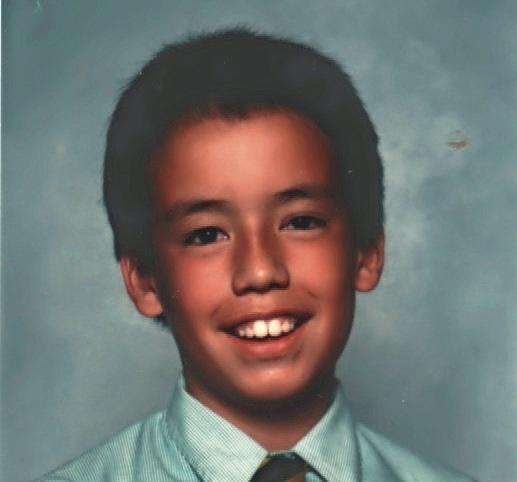
→ Peter Bachmann, 1988
“If someone does even one thing better than they did before, that is still incrementally better for people and planet.”
As for what sustainability means for me personally, well it’s a way of life for me now. This comes out in various ways such as I’m always repairing all of my clothes so I can extend their lives, being able to run my house – and a few neighbours – on my solar and batteries at home, turning into the waste bin for my kids’ leftover food, I’ve even planted my own Miyawaki Forest with 600 trees in my backyard in Kent to increase biodiversity. At the same time, I recognise that people aren’t perfect and we will always do things that perhaps aren’t terribly sustainable (for me, that’s skiing all over the world) to keep us sane. For some reason, people sometimes think that unless you’re 100% perfect, you can’t be sustainable. To me, it is quite the opposite. If someone does even one thing better than they did before, that is still incrementally better for people and planet. It then actually becomes quite addictive when people see their small actions making a difference and so they do more and so on. This is the type of self-fulfilling sustainability approach I like to take.
To me, sustainability is also about giving back, so I’m really proud of being on staff at the University of Cambridge in their Cambridge Institute for Sustainability Leadership (CISL) faculty where I get to help a lot of early-stage cleantech and nature startups. I’ve also got about 25 early-stage startup companies, mainly sustainability focused, which I’ve backed with time and money. So, add this all up with my wonderfully supportive wife and three young kids, I’ve got an extremely fulfilling life where hopefully I can help leave the planet in a better place for my kids, and Pembroke has been a massive part of making me who I am today.
→ Bloomberg COP28 panel
→ Bloomberg COP28
An Investment in Generations: The Pembroke School Endowment Fund
At the heart of our philanthropic vision for Pembroke lies a simple yet profoundly important idea: the Pembroke School Endowment Fund.
An endowment fund is, in essence, a permanent investment in the future of the School.
Rather than being spent immediately, gifts made to the Endowment Fund are carefully invested. The capital is preserved in perpetuity, while the earnings generated from that investment are used each year to support Scholarships, programs and opportunities for students. In this way, a single act of generosity continues to have impact – year after year, generation after generation.
The Pembroke School Endowment Fund is therefore not simply a financial structure; it is a commitment to continuity. It provides a stable and enduring source of support that allows the School to plan with confidence, to respond to emerging needs, and to ensure that access to a Pembroke education remains available to talented students regardless of their circumstances. It underpins the longterm strength of the School while safeguarding the values that define us.
An endowment is one of the most powerful expressions of belief in the future. When someone contributes to the Pembroke Endowment Fund, they are making a statement that extends far beyond the present moment. It is not just a gift for today, or even for this generation. It is a gift made in recognition of the students who will come after us – the young people we may never meet, but whose lives will be shaped by the opportunities that such generosity sustains.
Endowment giving allows philanthropy to transcend immediacy. It enables generosity to grow quietly and faithfully over time, compounding in both financial and human terms. The impact of each gift is not limited to a single outcome or cohort; rather, it becomes part of an ongoing story, ensuring that the opportunities we value today will continue to be available well into the future.
The purpose of a school is not only to educate the students who walk through its gates today, but also to preserve and extend the conditions that allow future generations to flourish. The Endowment Fund is central to that purpose. It provides the means by which Pembroke can honour its responsibility not only to the present, but to the future.
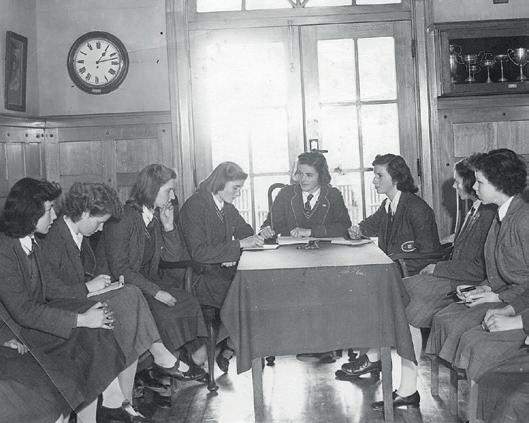
→ Girton Girls’ School Class Representatives’ meeting circa 1945
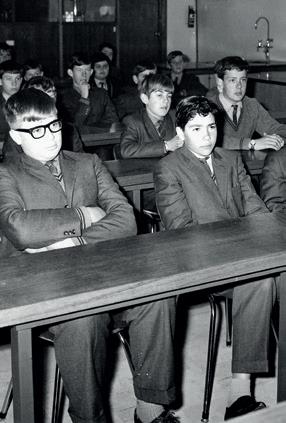
→ King’s College class in Milne Lab circa 1967
When someone contributes to the Pembroke Endowment Fund, they are making a statement that extends far beyond the present moment. It is a gift made in recognition of the students who will come after us – the young people we may never meet, but whose lives will be shaped by the opportunities that such generosity sustains.
If I may offer a personal reflection, one of the most meaningful aspects of giving is what I think of as an ‘embrace’. When we give to something that matters deeply to us, the act of giving becomes more than a transaction – it becomes a relationship. It is, in a sense, an embrace between the giver and the future.
We give because we believe.
We give because we hope.
We give because we want something to flourish long after our own time has passed.
Education is perhaps the most hopeful expression of that embrace. When we support education, we are placing our trust in the next generation. We are investing not only in individual students, but in the broader future they will help to shape.
This is why the Pembroke School Endowment Fund is so important. It allows philanthropy to become enduring. It transforms generosity into something lasting and self-sustaining. Quite simply, it represents philanthropy at its most forward-looking – an investment in possibility, in opportunity and in the enduring promise of education at Pembroke.
For those who may wish to learn more about the Pembroke School Endowment Fund, or to consider how they might contribute, we warmly invite you to be part of this enduring legacy.
Mark Staker Principal
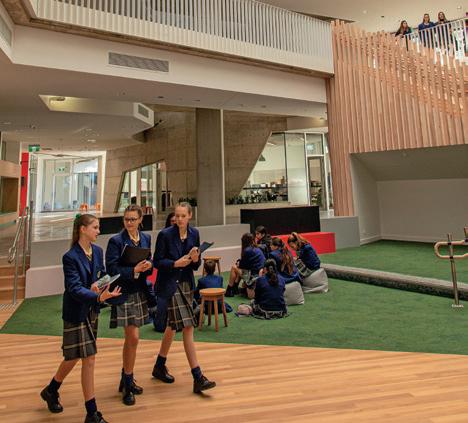
→ Modern learning space in the Balnaves Place atrium in the Shipsters Road Building
Connecting through Language at Pembroke
It didn’t take long for Pembroke’s newest co-curricular program to gain momentum across the Junior School. Auslan (Australian Sign Language) was introduced in October last year, and already, student interest in the program has been overwhelming.
Currently open for Junior and Middle School students from Years 3 - 10, the Beginner Auslan sessions are part of our greater co-curricular Languages Program.
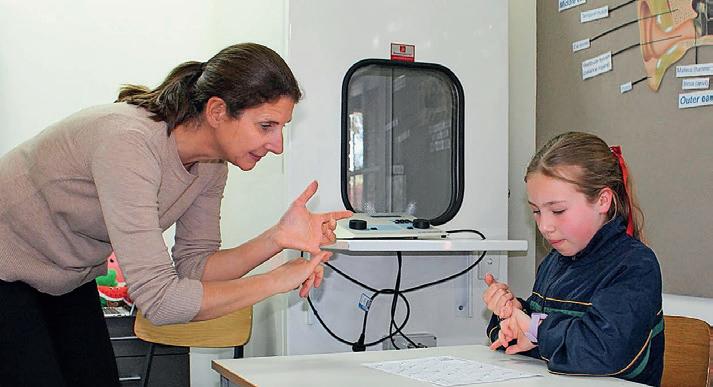
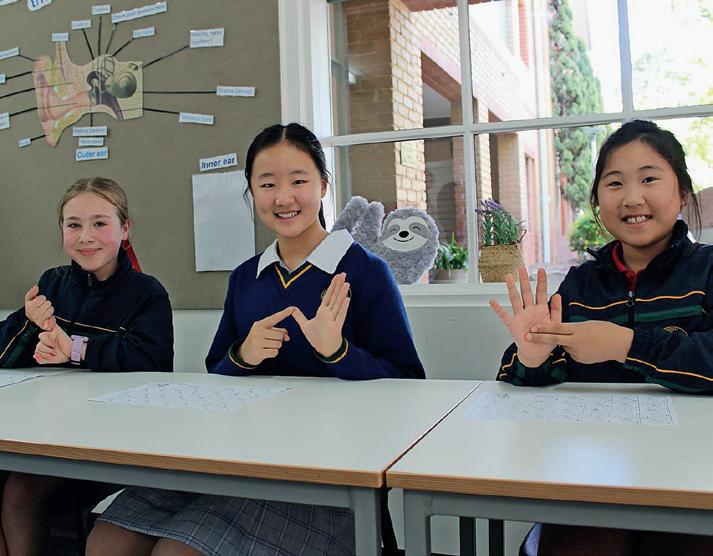
Enthusiastic Years 5 and 6 students chose to extend their school day to take part in the inaugural sessions last year. In a supportive environment, they learnt about the Auslan alphabet, everyday greetings, and the essential protocols that underpin respectful communication in the Deaf community. They were immediately engaged and asked thoughtful questions throughout the sessions.
This year, Auslan has also been extended to Years 3 and 4 and Years 7 to 10 students. Meeting as a lunchtime club with Pembroke’s Teacher of the Deaf, Olivia Raston, some students are continuing their Auslan journey from the Junior School last year, while for others, this is their first introduction to the language.
Auslan is a rich, visual language, completely different to English. Like any other language, it has its own grammar, structure and cultural identity. There are around 300 known sign languages worldwide. In Australia, Auslan is the language of the Deaf community. It’s not just in the hands either, like some might imagine. Auslan includes body language and facial expressions to convey meaning, adding to the richness of the language. In their cocurricular sessions, students were fascinated to learn that, while sign language has been used since around 1860, Auslan was only formally recognised in Australia in 1991.
Anyone who has learned a language before will know that starting is easy, and real fluency is a challenge. Auslan is no different. However, similarly to the brain development that occurs when learning second languages, our Auslan students will improve memory, language processing, cognitive flexibility and attention control. With so much visual input from body language, facial expressions and hand movements, Auslan also improves emotional recognition and spatial awareness. Most importantly, our students build empathy, respect for diversity and an understanding of the lived experiences of others.
The Auslan co-curricular is led by Pembroke alum Sophia Borick (1985), Deaf Auslan Teacher, Teacher of the Deaf and valued member of the Deaf community.
→ Sophie Pybourne (Year 6) learning Auslan with Ms Sophia Borick (1985) during a beginner co-curricular class
Her connection to our School brings an added depth of meaning to the program. Supported by our Inclusive Education Team and Hearing Unit staff, Sophia teaches in the Hearing Unit where she herself once studied, linking generations of learners.
This sense of continuity is especially meaningful as we prepare to celebrate the 50th Anniversary of our Hearing Unit in 2026. Since 1976, Pembroke’s Hearing Unit has provided specialist support for students who are Deaf or Hard of Hearing, including students from the Early Learning Centre through to Year 12.
Interest in the Auslan co-curricular has continued to grow, with more than 30 Junior School students expressing a desire to be involved. Additional sessions have since been introduced, including opportunities for younger year levels, ensuring more students can experience this unique form of communication. The addition of Auslan within our School reflects a broader commitment within our community to inclusive learning and cultural awareness. As Auslan becomes an increasingly visible part of Pembroke life, it diversifies our co-curricular offering, strengthening connections between students, staff and the Deaf community. In this way, the program stands as a fitting tribute too as we prepare to celebrate the Hearing Unit’s 50-year legacy this year.
Gabbi Agnew Publications Manager
→ Sophie Pybourne, Amelia Xu and Annie Lin (Year 6) enjoying a beginner Auslan co-curricular class
→ Sophia Borick (1985) learning at Pembroke
Introducing the Junior School Learning Pods
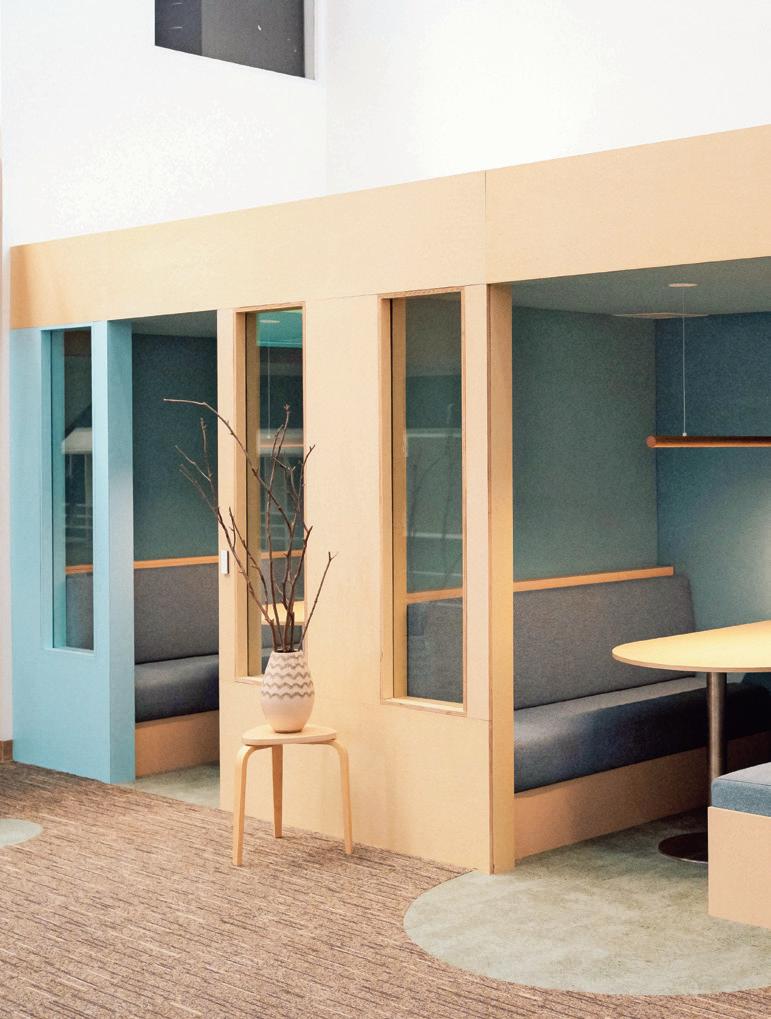
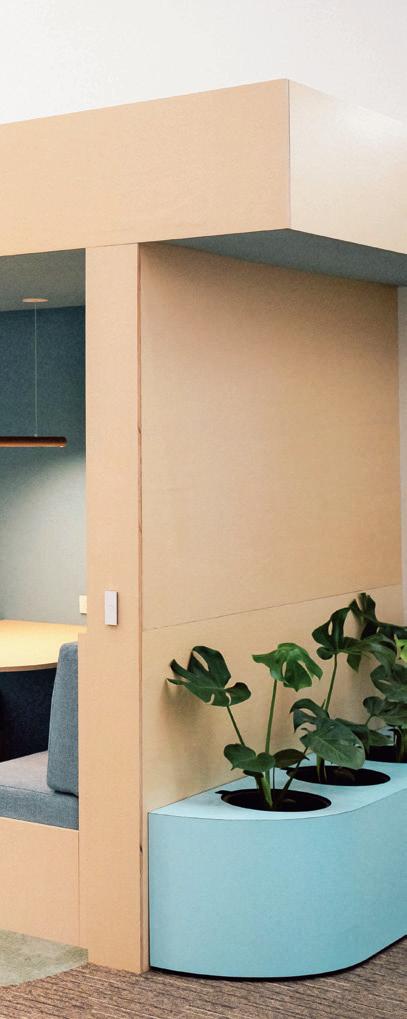
Tucked into the heart of the Junior School is the latest addition to our suite of learning spaces: the Learning Pods.
Within the Junior School building’s main atrium, the pods provide a space that is open enough to feel connected to our young learners, but defined enough to offer a quiet sense of place.
Throughout the year, the pods have found their rhythm quickly. We’ve enjoyed seeing students work in small groups, lose themselves in a book or find a moment to focus during a busy school day. The pods are comfortable, well-lit and designed for practical use, making them a popular choice for students looking for a space to learn.
The pods are one part of an ongoing commitment to ensuring that every corner of our School supports the way children actually learn: with curiosity, collaboration and the occasional need for a quiet place to think.
First Vintage and Full Circle at Wirra
Wirra
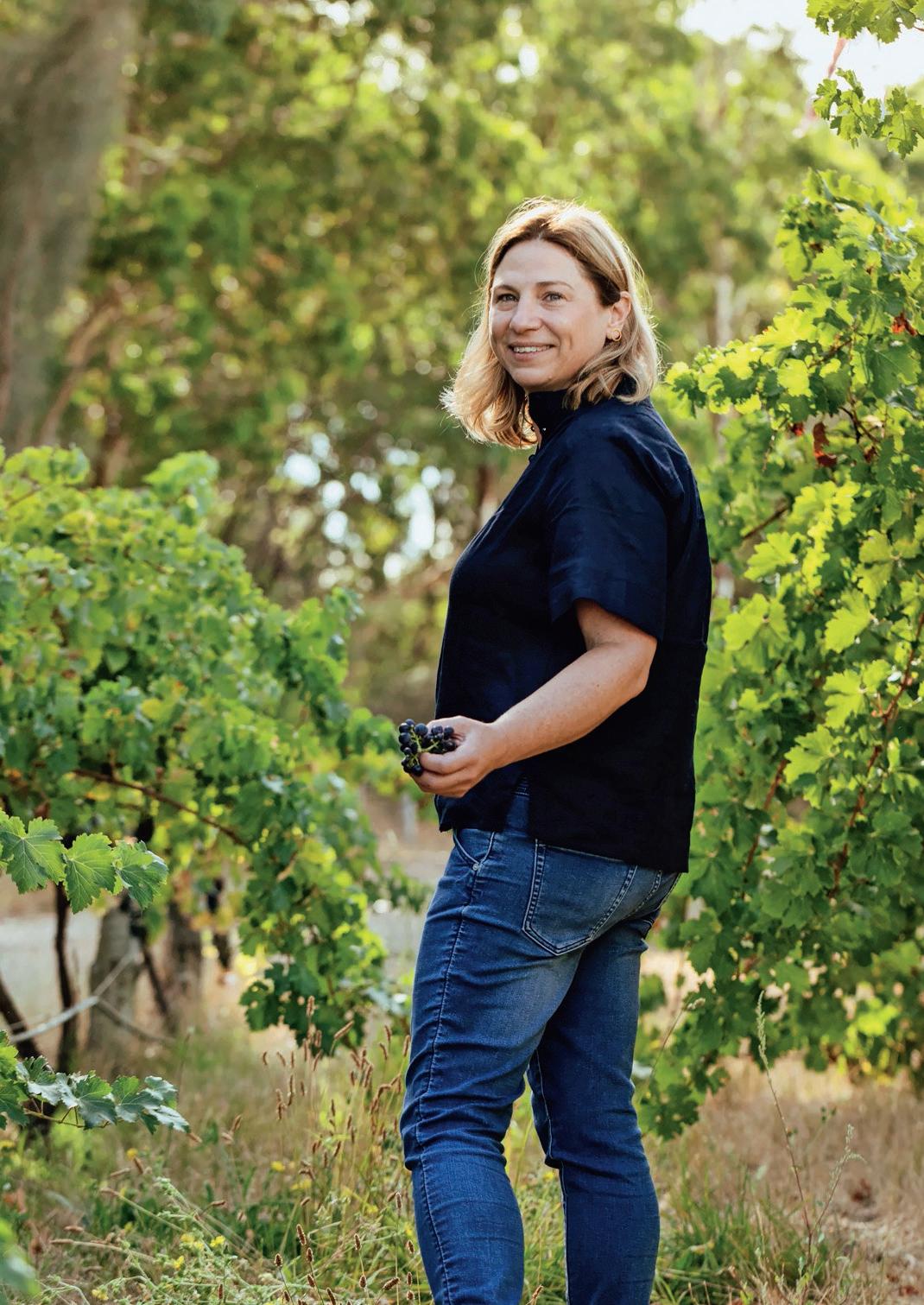
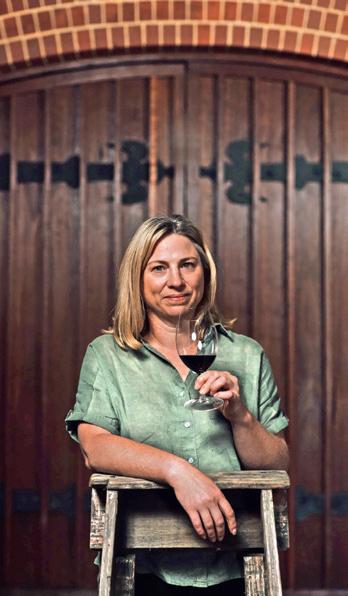
Interview with Emma Wood (1993)
One of Emma Wood’s (1993) earliest memories is of her Dad venturing down into the cellar of their family home, choosing a bottle of wine and pouring a glass for her Mum. Without seeing the label, her Mum would be able to tell them both the variety and where it was from. It was a regular ritual, and a skill Emma inherited.
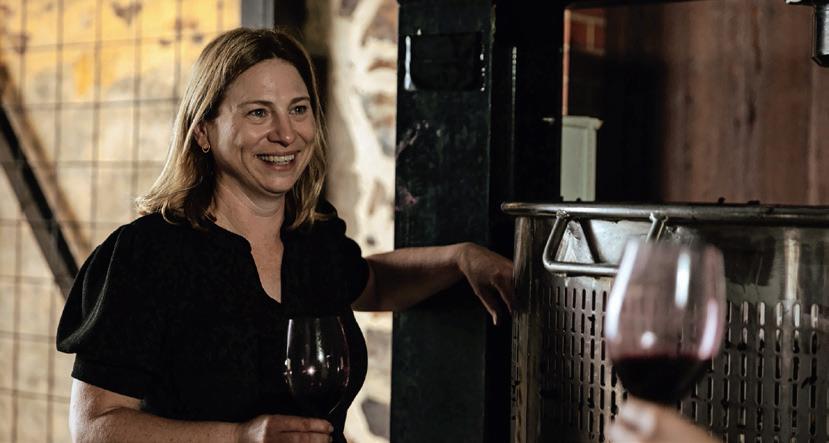
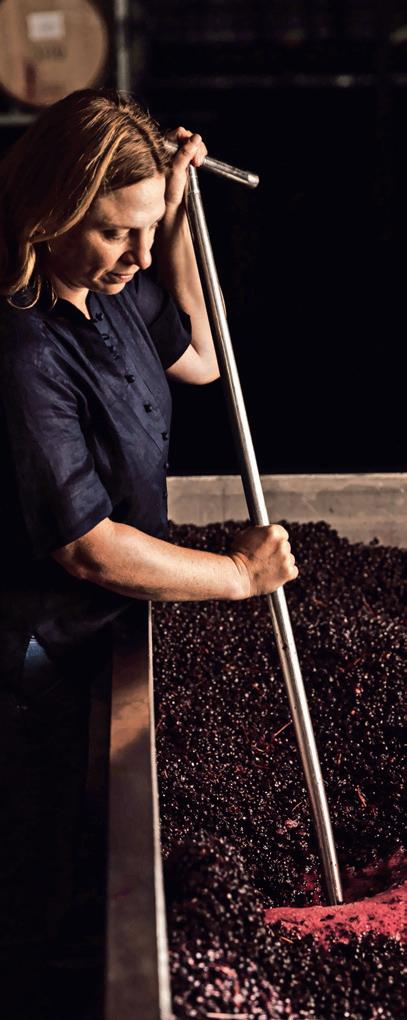
Decades later, Emma is now Chief Winemaker at Wirra Wirra in McLaren Vale, a role she moved into after 20 years at Southcorp (now Treasury Wine Estates), where she worked under different labels including Lindemans’, Seppelt and Penfolds. She also headed up Treasury’s expansion into Bordeaux, where she put her Year 12 French lessons into practice. Emma never imagined her life would take her in this direction: ‘I love what I do. Back at school, I never really pictured what I would be doing, but I know for sure I didn’t picture this!’
As a teenager, between weekend family trips to the Barossa and Clare Valley, Emma worked hard at Pembroke, both academically and in sports. Under fondly-remembered staff like Mr Ian Hilditch, Mrs Helen Fleet and Mrs Jan Thomas, Emma chose an academically rigorous selection of subjects in Year 12: Maths 1 and 2, Physics, Chemistry and French. Emma recalls, ‘Maths was really hard but Mr Hilditch was a great teacher. The top two students in the state were in my class, so it was pretty intense.’
It was during Careers Day back in 1993 that she spoke with Roseworthy Agricultural College, which was throwing around words like ‘pig farming’, ‘horse husbandry’ and ‘winemaking’. At the time, Emma didn’t know what any of that meant, nor how it would translate to a career, but thanks to friend Zoe (Parsons) Harrison (1993) pointing out that winemaking would use the chemistry Emma loved, she decided to apply.
Throughout her studies at the University of Adelaide, Emma enjoyed its new agricultural facility at Waite Campus, and ventured up to Roseworthy for the actual winemaking. Serendipitously, she completed her first ever vintage at Wirra Wirra, though she didn’t know then that she’d be back decades later as their Chief Winemaker. Following her graduation, she was accepted into the highly competitive Graduate Winemaking Program with Southcorp, gaining invaluable exposure across Victoria, Coonawarra and the Barossa.
After her two sons Angus and Myles were born, she moved back to South Australia from Great Western in Victoria, and spent five years working across viticulture and winemaking teams, focusing on quality, within Treasury Wine Estates. ‘I felt like Switzerland – I was always in the middle of negotiations between different departments. Getting viticulture teams and winemaking teams on the same page was sometimes a challenge!’
Eventually, Emma returned to the winemaking and led the Penfolds red winemaking team, overseeing the iconic Magill Estate winery, just a cork’s throw from Pembroke.
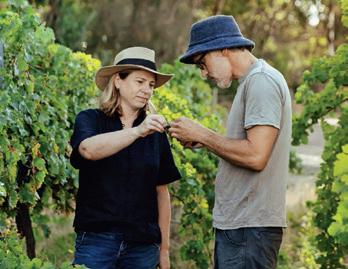
When the Chief Winemaker role came up at Wirra Wirra, Emma knew it was the right move. She wanted to try winemaking in a less corporate environment, and she still harboured a soft spot for the winery that hosted her first vintage. ‘I already knew all the vineyards around here, and Wirra Wirra has their own house style with more expressive and elegant wines. I’ve got more freedom now and I love it. We’ve created more premium wines, and the single vineyard range has been fantastic.’
Another thing that stood out was Wirra Wirra’s commitment to sustainability. ‘Wirra Wirra has always put sustainability at the forefront – it is the ethos of the winery and the site. They are always looking for ways to improve it. Everything is organically and biodynamically farmed, so we’re using less chemicals and looking after the property better. The quality comes through in the wine, and the soil health is a really important part of that.’
Emma’s time in Europe opened her eyes to what is possible when the industry demands it. What is par for the course in France is often used as a point of difference in Australia, although Emma says we are getting there. ‘Smaller wineries are catching on quicker than large ones. It makes so much sense, because they are living on their own land, they prioritise the health of the land.’
Wirra Wirra is leading the way wherever they can: they’ve installed solar panels, they treat all their wastewater on site for irrigation of their trees and use other recycled water for their vines. They learned that the weight of wine bottles has a significant impact on CO 2 emissions over their lives, both in manufacturing and in transport, so they reduced the weight of the bottles by a significant amount. They joined the Bottle Weight Accord to encourage others to do the same, and became certified by Sustainable Winegrowing Australia, only the fourth winery in McLaren Vale to do so.
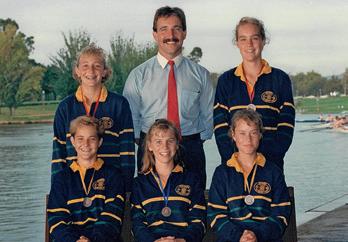
→ Emma was a keen athlete at School, representing Pembroke in rowing (Vice Captain, 1993) and tennis
Emma’s sons Angus and Myles are now in Year 12 and Year 10 at Pembroke, getting ready to choose their own future pathways. Emma is more than confident they are equipped to make their own choices, but offers this advice to anyone considering winemaking as a career: ‘Ag Science and Winemaking are very niche paths. I didn’t expect such a large amount of human interaction to be involved, but it’s something I love. It’s way more people-oriented than I expected. I speak with growers, sellers, winemakers and casual staff at the winery. If you get into this career, you’ll always be talking to other people about wine.’
She gave this same advice to Pembroke alum Ben Townsend (2021), whom she was seated with at the Careers Breakfast in 2021, an event where our students meet industry experts and explore their future pathways. Ben took the advice on board, and this year was fortunate to take out the Treasury Wine Estates Prize for Excellence in Winemaking. He has also landed a vintage placement at Emma’s former employer, which she hopes could lead to a place in the very same Graduate Winemaking Program that Emma completed in her first years out of university.
Gabbi Agnew Publications Manager
Reframing Pathways: The Growth of School-Based Apprenticeships and Vocational Education at Pembroke
→ Tom Mitchell (Year 12) and Harry Sullivan (2025)
Pembroke has long offered a broad and inclusive definition of success, and the expansion of our School-Based Apprenticeship (SBA) Program represents a significant step in strengthening this commitment.
This has been formalised through our School-Based Apprenticeship policy, which clearly outlines how students can combine paid employment and trade training with their SACE. Students undertaking an SBA attend their workplace or trade school for three days each week while continuing their academic studies at school on the remaining two days, supported by structured VET lessons and ongoing monitoring of their progress. At its core, the SBA Program reflects a simple but powerful principle: diverse learners require diverse opportunities. Rather than viewing VET as an alternative to academic success, Pembroke is embedding it as a parallel and equally valid pathway.
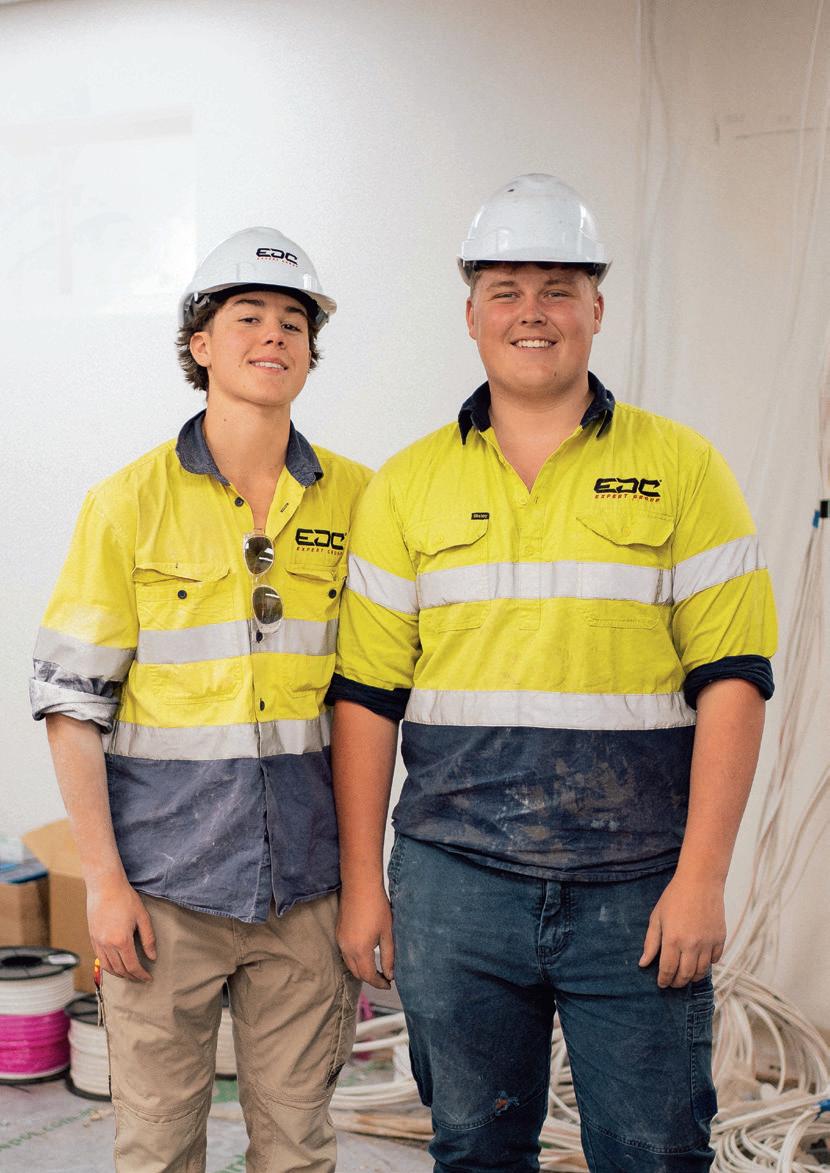
The implementation of the program has been deliberate and considered. Last year, Harry Sullivan (2025) became Pembroke’s first student in over five years to undertake a structured SBA through his work with the EDC Expert Group. This marked a significant milestone, not only operationally but culturally. It signalled to our community that apprenticeships are not a fallback option, but a purposeful and supported pathway for all students.
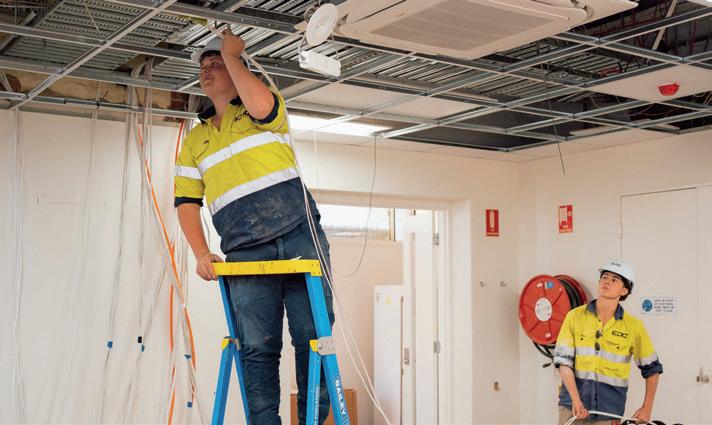
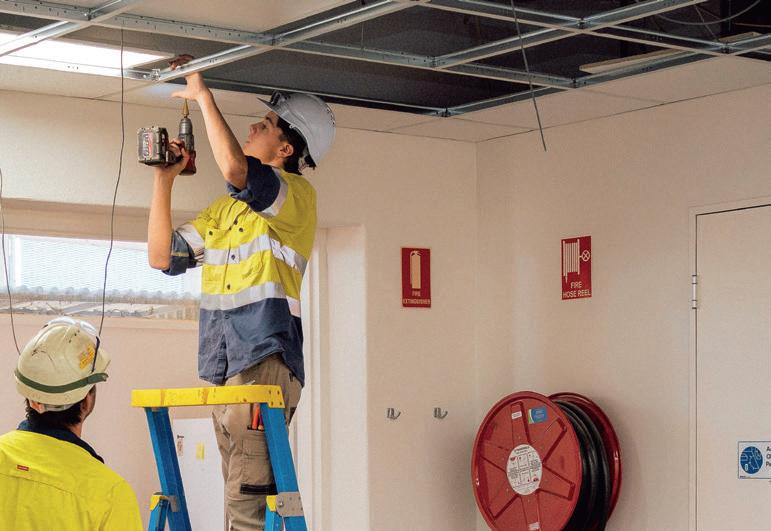
Building on this foundation, the program has expanded in 2026. Connor Zecevich (Year 12) is currently working towards a career in carpentry, while Tom Mitchell and Will Baker (both Year 12) are also engaged with the EDC Expert Group as apprentice electricians. These students are navigating a demanding but rewarding structure: balancing school attendance, workplace commitments and trade training. This model reflects a genuine integration of learning and work, rather than a separation of the two.
What is particularly significant about these students is not just their participation, but what they represent. They are actively challenging entrenched stereotypes about what success looks like in a high-performing independent school. For too long, pathways such as carpentry, construction or electrical trades have been positioned, implicitly or explicitly, as secondary to university routes. Pembroke’s SBA students disrupt this narrative. They demonstrate that ambition and aspiration do not have to follow a specific formula; they are as present on worksites, in workshops and in applied learning environments as they are in university lecture theatres.
This shift aligns strongly with broader labour market trends. The 2025 Occupation Shortage Report highlights that many of Australia’s most persistent skill shortages lie in technical and tradebased fields, including construction, engineering and automotive industries. At the same time, 43% of Certificate III and IV level roles remain in shortage, reinforcing the critical importance of vocational pathways. In this context, Pembroke’s SBA Program is not simply innovative, it is responsive. It is preparing students for areas of genuine economic demand and long-term career sustainability.
Alongside the SBA Program, Pembroke continues to see strong engagement in broader VET pathways. Each year, approximately 65 students complete a VET qualification, placing us above the state average for participation. These pathways are diverse, spanning areas such as music, business, fitness, and increasingly, specialised trades and services.
A particularly powerful example of this diversity is Ava Snel, a current Year 12 student completing a Certificate III in Nail Technology. Her experience highlights an important truth: vocational education is not limited to traditional trades, but extends into creative, entrepreneurial and service-based industries. As Ava reflects, the course has been ‘an amazing opportunity’, allowing her to connect with people at different stages of life and gain valuable perspectives on school and future careers. She also notes that undertaking the qualification has improved her Year 12 workload balance, while equipping her with practical skills that will enable her to begin working as a nail technician after graduation, supporting herself as she pursues tertiary study.
Our students are exposed to subtle but powerful messages about careers from an early age, often shaped by media, family expectations and societal narratives. These messages frequently privilege high-status, university-aligned professions while undervaluing vocational roles. The result is that students may dismiss viable and rewarding careers before they have fully explored them.
Pembroke’s response to this challenge is both strategic and philosophical. Rather than positioning VET in opposition to university pathways, we advocate for a balanced approach. Students are encouraged to explore the full range of available pathways and to consider not only what is perceived as prestigious, but what is meaningful and aligned with their individual strengths and interests. Our approach is grounded in evidence. Research consistently shows that VET graduates often secure employment faster and report high levels of job satisfaction, particularly when their training aligns directly with industry needs.
→ Harry Sullivan (2025) and Tom Mitchell (Year 12) working with EDC Expert Group
→ Tom Mitchell (Year 12) undertaking his electrician apprenticeship
Importantly, this is not about diminishing the value of university education. Pembroke continues to support and celebrate academic achievement. Rather, it is about expanding the conversation. It is about ensuring that students are not making decisions based on incomplete or biased information, but are instead equipped to be critical consumers of labour market data and career narratives.
The SBA Program is the intersection of this broader vision. It reflects Pembroke’s commitment to providing authentic, realworld learning experiences that sit alongside, and complement, academic study. Students are not only learning about the future of work, they are also actively participating in it, developing technical skills, professional habits and a growing sense of identity within their chosen fields. This work aligns closely with Pembroke’s Learning and Caring Framework, which emphasises knowing the learner, supporting their wellbeing and enabling them to thrive in pathways that are right for them. It also reflects the direction of our Strategic Plan 2030 – StrongerTogether, which prioritises adaptability and meaningful engagement with the world beyond the classroom.
Looking ahead, the potential for growth is significant. As more students and families become aware of these opportunities, participation is likely to increase. The challenge for us will be to continue supporting this growth while maintaining the quality and integrity of placements. This will require ongoing collaboration between the School, employers, training organisations and families.
Ultimately, Pembroke’s work in this space is about more than pathways; it is about purpose. It is about recognising that success is not singular and that education should empower students to pursue a future that is both personally meaningful and socially valuable. By challenging stereotypes and embracing vocational education as a core component of our offering, Pembroke is responding to the future of work.
Donna O’Connor Head of Future Pathways
Summer Sport Gallery
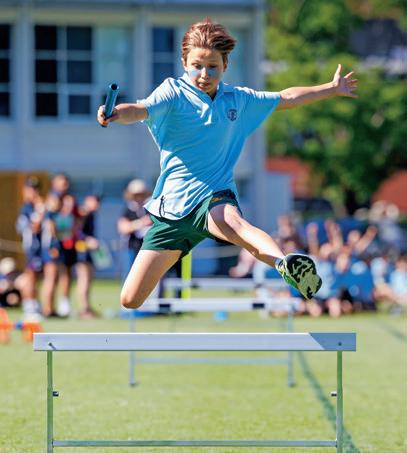
Rupert Morris (Year 6) clears a hurdle with style representing Torrens at Junior School Sports Day
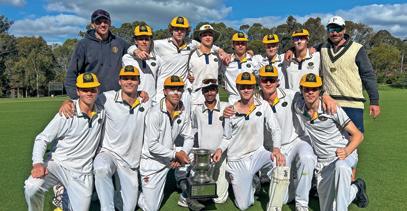
Pembroke’s First XI Cricket team retained the Harris/Inverarity Trophy after a strong four-day contest against Westminster School
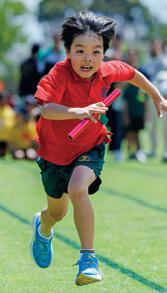
Harvey Yuan (Year 3) in full flight for Flinders on Junior School Sports Day
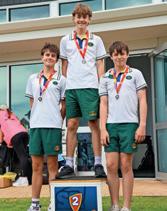
Mitchell Lentakis, Nate RobertsThomson and Elliot Webber (Year 9) on the podium for Pembroke at the State Triathlon Championships
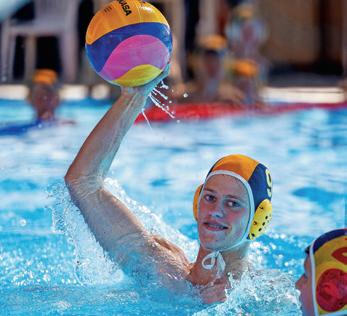
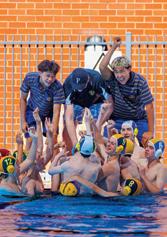
Ash Newman (Year 10) lines up a shot for goal during a Middle B Boys’ Water Polo game
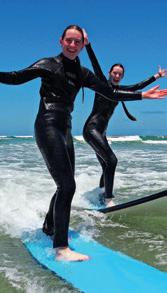
Ruby Knights (Year 10) carving up a wave on the 2025 Surf Safari
Estella Driver (Year 11) and Ava Driver (Year 10) making it look easy on the 2025 Surf Safari
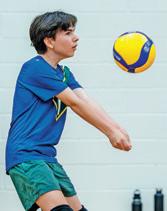
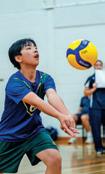
Aksel Okar (Year 8) representing Pembroke in Boys’ Volleyball
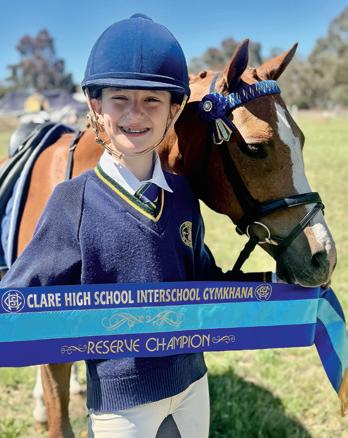
Lucy Rhodes (Year 6) and Scaysbrook Park Royal Encore (Archie) representing Pembroke at the Clare High School Interschool Gymkhana
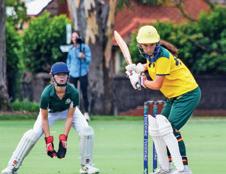
India Roberts-Thomson (Year 11) lines up the ball for Pembroke’s Open A Girls’ Cricket team during a game against Westminster School
Jiayu Zhou (Year 8) representing Pembroke in Boys’ Volleyball
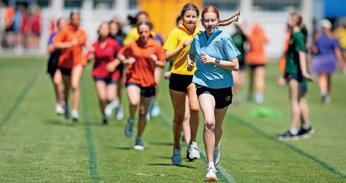
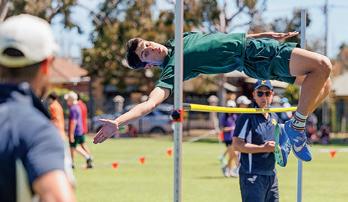
Keanu Cooper (Year 9) on his way to breaking multiple records on House Athletics Day
Hayley Redman (Year 9) races to the lead for Smith on House Athletics Day
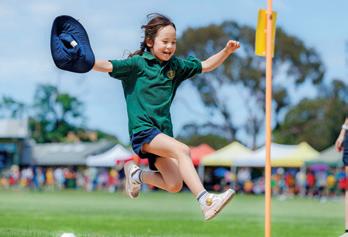
Amelia Chen (Year 1) long-jumps for joy at Junior School Sports Day
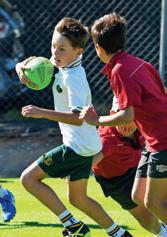
Louis Oliver (Year 6) charges away with the ball in a Touch Footy game against Prince Alfred College
Players and coaches celebrating a hard-fought win following a Middle B Boys’ Water Polo game
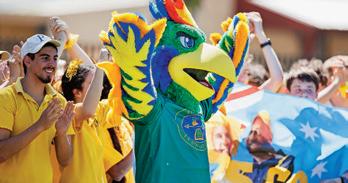
The Pembroke Phoenix joins the Yates cheer squad at House Athletics Day
→ Dr Alys Daroy/Hana Walsh (1999)
Both Actor and Academic
Alum Hana Walsh (1999), known professionally as Dr Alys Daroy
If you ever meet an actor from the UK, their real name might surprise you. When Hana Walsh headed to London to act, she discovered the one-actor-per-name rule, enforced by the UK actors’ union She registered under family name Alys Daroy, and when rules changed back home, the name change stuck. Professionally, at least.
Hana by any other name smells just as sweet.
That’s a reference to Shakespeare, of course. The Bard remains an integral part of Hana’s life, and she says her final Year 12 essay on Hamletwas a huge influence on her career path.
‘I was a stock standard Humanities student. As soon as Pembroke allowed us to go into a dedicated stream of The Arts, I could really focus. And that helped me hugely. It helped me do well in Year 12, which helped me do well at university, which helped me do well in honours, which helped me get into a PhD, which helped me to do everything. I trace it all back through that lineage of teaching, and to my Mum, who was an amazing English teacher.’
Hana says she had a year group that really valued their study and results, which also helped. ‘We had a good year – we would even go to parties and talk about our essays. Doing well was a culture supported by Mr Lamb and Mr Houey, too.’
But Hana wasn’t all about academia. She sang in the School Choir, citing the 1997 tour to Europe as one of her favourite school memories. And she always aspired to be an actor.
‘I did drama outside of school because we had to choose between Drama and History, and I thought History would help me get into Law, which I then enrolled in. Pembroke still helped there, though. As an actor, it’s important to understand how to analyse the text, and Pembroke taught thatreallywell.’
Like many of her generation, she studied Arts/Law at the University of Adelaide to counteract concerns about a viable career as an actor. But she also juggled a Journalism degree at UniSA before completing Honours in English Literature. She then followed her family to Sydney, where she went to acting school for three years.
Next came a move to the UK to act in the theatre. ‘I got to do lots of classical theatre. Shakespeare, Chekhov, Bulgakov, alongside screen, commercial and voiceover work. It was fantastic.
Even the small shows. My first play in London was in a tiny black box theatre above a pub. One night, only two people came, but I had a sixth sense about one of them and gave it the best performance I could. That’s the magic of theatre – you never know what might happen.’
As is often the case for actors, life was fun but tough. Early starts, lots of travel and countless hard jobs. Working at Shakespeare’s Globe, she was finally able to apply an environmental lens on literature (known as ecocriticism). And she began her PhD on Ecological Shakespeare.
Then COVID-19 hit. She jumped on a plane, this time returning to Adelaide. With her agent in London, she approached Ann Peters at SA Casting for guidance. When Ann told her she needed to start her own Shakespeare company, she was too scared to argue. Shakespeare South was founded in 2020, not only the first such company in South Australia, but the first eco-Shakespeare company nationwide. Hana is the founder, as well as a director and an actor.
They had sold out seasons for their first two shows, but writing two books, exhibiting at the Venice Biennale, directing shows and securing her current role as the Academic Chair of Theatre and Creative Production at Murdoch University (in Perth) hasn’t left much space. That said, she’s starting to do some more eco-production work, and the company’s adaptation of The Tempest,IlVento has been selected for presentation at the World Shakespeare Congress being held in Verona this July, with music by the Conservatorio di Verona.
Hana sees Adelaide as her home base in between teaching, where her husband works as an academic at Adelaide University. She has an eye on more research with Shakespeare’s Globe and the Shakespeare Institute, having recently received a generous endowment as a recipient of the S Ernest Sprott Fellowship.
It’s perhaps no surprise she remembers so vividly being gifted a photo with a note and a copy of Ithaka by her Classics Teacher, Mrs Moreland-Mitchell while studying Homer’s Odyssey. Her life is very much about the journey.
Remember that performance in London, where ‘Alys’ performed to an audience of two? One of them was a reviewer for TheTimes, and he nominated her for a National Theatre Award.
Kate Holland (1992)
Pembroke
Alum
More Than a Club: Building Leaders On and Off the Court
Many Pembroke netballers aren’t ready to hang up the bibs
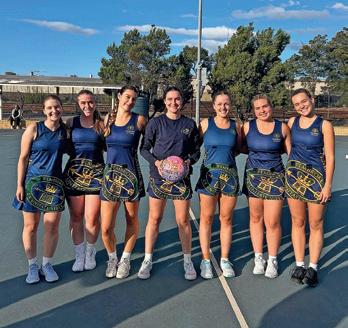
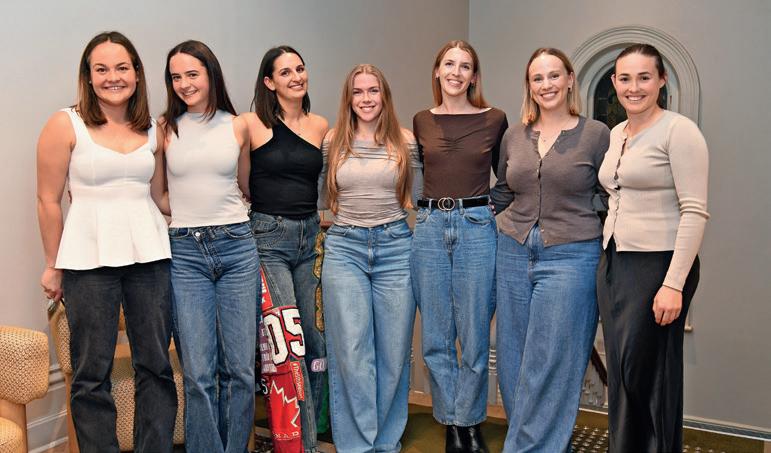
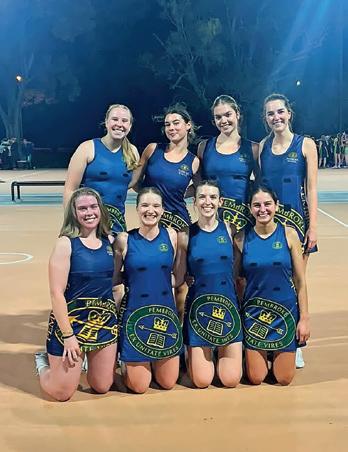
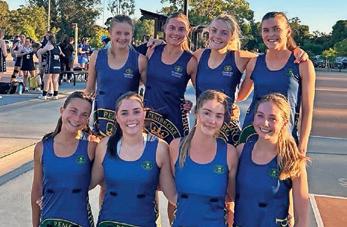
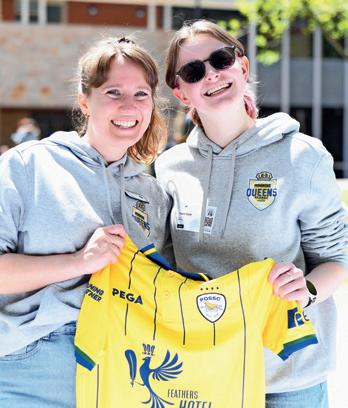
For a growing number of alumni, that next chapter starts with the Pembroke Old Scholars Netball Club, proudly known as the Queens.
The Queens have long been more than a place to keep playing netball after the school years are over. They are a community that keeps alumni connected to Pembroke and to each other. Newly appointed President Jasmine (Lee) Kirkpatrick (2011), who joined the Queens looking to stay in the game, is a product of exactly that journey. What she found was a club that offered far more than court time. And now, she leads it.
‘For our Pembroke leavers especially, the club is a really important way to stay connected with the School, and with past classmates,’ she says. ‘But we also have a really diverse playing group, and that’s something we’re proud of.’
That pathway from player to committee member, from participant to leader, is one of the defining features of the Queens. Alumni who once showed up for a Saturday game now find themselves shaping the direction of the club, organising seasons, mentoring newer members, managing finances and building the culture that keeps others coming back. In doing so, they develop skills that extend well beyond the netball court.
The Queens draw strongly from the Pembroke old scholars’ network, but their doors are open to all, resulting in a wonderful mix of shared history and fresh faces. Many past players who left the court years ago remain close friends today, a testament to the connections built through the club.
What sets the Queens apart is the balance between performance and connection. Thursday night trainings and mid-week fitness sessions keep standards high, while a packed social calendar ensures those connections continue to grow. Post-game catch ups, end-of-season events and highlights like the club’s Quiz Night (which sold out in record time last year!) reinforce that this is a club where people show up for the sport and stay for the community.
‘We have a fantastic mix of social and competitive,’ says Jasmine. ‘We work hard at training, and then we celebrate together.’
The club competes across both summer and winter seasons, offering flexibility for players at all stages of life. With three teams fielded in winter, there is a place for everyone, whether you are returning to the game or looking to push yourself further.
Development is part of the culture, with players supported to grow and move between grades over time.
when they graduate.
Importantly, there is also a role for those who may no longer play. From umpiring to contributing off the court, the Queens remain an accessible and inclusive way to stay connected to the game and the community.
Looking ahead, the club continues to build. On court, the A Grade side is aiming to challenge for a premiership and return to the top division, with ambitions to expand to a fourth team in the near future. Off the court, new sponsorship initiatives are being developed to support players and strengthen the club’s long-term sustainability.
Under the guidance of a new Head Coach in 2026, the focus remains clear. To compete, to grow and to protect the culture that has made the Queens what they are today.
For anyone in the Pembroke community wondering what comes next after school, the answer might already be waiting. Whether you want to play, coach or contribute in another way, the Queens offer more than a place to belong. They offer a place to grow, to lead and to stay connected.
Will Cutts (2011) Manager, Old Scholar Engagement
→ Celebrating the Adelaide Metropolitan Netball Division (AMND) First Nations Round and the specially designed ‘Yinaar Yinaar’ match balls by Sean Kinchela
2025 Executive Committee
Players celebrating qualification for the 2025/26 Summer Series Finals
2025 Quiz Night at the Marryatville Hotel
Players celebrating qualification for the 2025/26 Summer Series Finals
Pembroke
History of the Hearing Unit
When Pembroke was asked by a small group of parents to accept Deaf and hard of hearing children, the School saw an opportunity to provide a defined area of special education. Educating Deaf and hard of hearing children in a recognised school environment allowed a specific integration and assistance program. Pembroke established the Hearing Unit for these students which officially opened in 1976.
In our Archives, it is often a delight to discover a hidden story not widely known and, in this case, our Medlin collection provided a story of how the seed was sown. At the time, Mrs Diana Medlin, or ‘Didi’ as she was affectionately known, was the Headmistress of Girton.
Didi wrote, ‘It was during the year 1972 – when we were still Girton & King’s – that a parent of a small Deaf girl came to me, asking that I take her into our Grade 1 classroom for one afternoon per week during Term 3. She was then a pupil at the excellent Oral School in South Australia, but her parents were very keen that she should spend her school days with hearing and speaking children rather than in a school which catered for Deaf children only. During this one afternoon the little girl attended PE, Music and Rhythm classes, and most importantly played with speaking and hearing fiveyear-olds. This highly intelligent child whose behaviour exhibited understandable frustrations, settled into her new environment extremely well, in fact, she insisted that she have a school uniform when she came for her special afternoon with us.’
This paper continues to outline the success of this experiment, highlighting that teachers were amazed at the enthusiasm and acceptance of many new children. In 1974, King’s and Girton amalgamated and plans continued.
Didi went on to say, ‘Several other parents, by this time, were interested in the ‘experiment’ so at the instigation of parents, a committee was set up with a view to looking at the possibility
Archives is always pleased to receive memorabilia from King’s, Girton or Pembroke eras to include in our collection. Please contact Archives via archives@pembroke.sa.edu.au
Remember – Archives Matter!
of starting a small unit for Deaf children at Pembroke School. A great deal of reading and research was done during 1974. I was convinced that the education of Deaf children in a normal environment was a ‘must’ and that we would explore ways and means of setting up a properly facilitated unit within the Pembroke Junior School. During 1974, there were literally dozens of enquires asking if it were true that Pembroke was to set up this special education facility. Our reply always was that we hoped so!’
In 1975, Mrs Medlin (then Co-Principal of Pembroke) began to explore the possibility of supporting this program. She visited the Yarra Valley Anglican School in Victoria which had an established educational program for Deaf and hard of hearing children. Margaret Vercoe who was teaching at a primary school in New South Wales at the time was an experienced teacher having taught at numerous speech and hearing centres and special schools. Following her appointment to Pembroke in January 1976 as the Hearing Unit’s first teacher, Margaret devoted the next 13 years of her life to the development of the unit into a worldclass facility for the education of the Deaf and hard of hearing. Five students were enrolled at the beginning of 1976. Students reported their appreciation in being surrounded by hearing people.
Enrolments grew steadily and were maintained at the ceiling of 12 students during the 1980s. In 1985, a new Hearing Unit was located in the new Junior School building. The unit was able to take advantage of technology advances and government subsidies. In addition, the School applied for a 50% subsidy of a part-time speech pathologist for the unit and was successful. In 1994, new technology was embraced in the Hearing Unit with three students fitted with cochlear implants. Today, we continue to expand our technology, with newly installed Bluetooth Sound Field Systems in every Junior School classroom and Hearing Unit resource rooms on our Girton and King’s Campuses. Students from ELC to Year 12 are supported through specialist teaching, counselling, and technical matters relating to hearing aids, cochlear implants and FM systems. Auslan (Australian Sign Language) has also recently been introduced as a co-curricular offering for Junior and Middle School students, led by Pembroke’s Teacher of the Deaf Olivia Raston, and Pembroke alum Sophia Borick (1985), Auslan Teacher and Teacher of the Deaf.
Peta Harries
School Archivist
→ Michael Smith (1982) interviewing Andrew Correll (1983), taken in 1976
→ Sophia Borick (1985) in the 1970s
Daniel Badger (1991) and Adam Page (1991) in 1981
Mark Watson (1992) at the computer in late 1980s
Peter Dickens (1989), Nicki Franklin (1986) and Alastair McEwin (1987) in 1979
Margaret Vercoe with Alastair McEwin (1987) in 1977 Pembroke
POSA Update
It’s been a busy and positive period for our old scholar community, with plenty happening across events, clubs and connections.
Congratulations to Alice Rolls, Pembroke old scholar and current parent, who contested and won the seat of Unley at the South Australian state election, running a strong campaign in one of the state’s most closely watched electorates.
We acknowledge Rick Sarre, a King’s old collegian and past parent, who, although unsuccessful in his bid for the seat of Bragg, fought a strong and commendable campaign.
I would like to reflect on the recent trip to Perth, which I attended alongside Director of Development and Philanthropy, Vincent Ciccarello, hosted at the beautiful University Club of Western Australia. The event saw a strong turnout and was, without doubt, one of my favourite old scholar events to date. The group was wonderfully eclectic and engaging, with attendees from a wide range of fields including mining and healthcare, as well as an actor who had been living and working in London, performing in both television and Shakespearean productions (read about her on pages 38-39).
What stood out most was the shared sense of connection. Conversations naturally returned to favourite teachers, memorable moments from school and reflections on those teachers who perhaps inspired a little more fear than others. It was a fantastic reminder of the strength and diversity of our old scholar community, and the enduring bonds that continue well beyond school years.
I would like to take a moment to thank Will Cutts, Manager, Old Scholar Engagement for his ongoing work with POSA, particularly his efforts in organising
interstate events. These events are incredibly important in keeping our wider old scholar network engaged, and they don’t happen without a lot of behind-thescenes work.
It is great to see strong activity across our affiliated clubs and groups.
The InU choir continues to go from strength to strength, performing very well at the Fringe with two successful shows, attracting 115 attendees on the Friday night and 98 on the Saturday. They have an anniversary performance coming up on 18 October, along with a reunion planned for 13 September, which will be a great opportunity for past and current members to reconnect.
Football have had a terrific start to the season, with exciting events ahead including a Past Players Day on 27 June. Participation remains strong, with one women’s team and three men’s teams confirmed, and the potential for a fourth team. Cricket concluded a successful season, with two of the four teams making the finals — a fantastic achievement and something the club can be very proud of.
I hope Term 1 has been a success for you all, and I look forward to seeing many old scholars at our upcoming interstate events and events here in Adelaide. Please ensure your details are up to date on the website so you don’t miss any important updates.
Holly Jamieson-Loveday (1997) President
Pembroke Old Scholars Affiliated Clubs
Men’s Soccer Club possc.net pembroke.soccer@hotmail.com facebook.com/pembroke.os.soccer.club
Cricket Club pembrokeoscc@gmail.com facebook.com/groups/18278828118
In Unitate inuchoir@gmail.com facebook.com/inunitate
Football Club pembrokekings.com.au facebook.com/pembrokekings
Women’s Soccer Club pembrokewomenssoccer@gmail.com facebook.com/poswsc
Netball Club facebook.com/pembrokeoldscholarsnetballclub
Alumni News
Births
Jacqui Sandland (1999) and fiancée Steve Brown welcomed Amali Sierra Brown on 26 March.
Marriages
Edward Mignone (2012) and Renee Van Der Hoek were married on 1 November 2025 in the Adelaide Botanic Garden. The wedding party included Franco Mignone (2009), Philip Mignone (2012) and Nicholas Duddy (2012).
George Laparidis (2012) and Jen Hughes were married on 10 January 2026 at Beresford Estate.
Madison Thompson (2014) married Oliver Sheahan at Le Mas, Barossa Valley on 10 January 2026. Bridesmaids included old scholars Lauren Blake (2014), and attendees included old scholars Shai Helyar (2014), Abbey Battersby (2014), Emma (Martin) Connolly (2014), Tobias Connolly (2014), Giselle Mignone (2014), Ellie Rogers (2014), Lucy Burnett (2014) and many more!
Deaths
Christopher Maynard Bills (1961) sadly passed away on 18 March 2026, aged 82. Christopher was brother to old scholars Roger Bills (1963), Andrew Bills (1966), Graham Bills (1968) and Josephine Bills (1972).
Robert Buchan (1974) sadly passed away on 29 November 2025, aged 68.
Pauline (Stevens) Craven (1961) sadly passed away on 18 February 2026, aged 81. Pauline was mother to old scholars John Craven (1988), Emma Martin (1987) and Charles Craven (2004), and grandmother to Alastair McMillan (2018) and Oliver Craven.
Colin May (1975) sadly passed away on 18 December 2025, aged 68.
Colin Richard ‘Rick’ Michell (1968) sadly passed away on 7 December 2025, aged 75. Rick was father to old scholars James (1995) and Ali (1998).
John Christopher Grant Webster (1969) sadly passed away on 6 January 2026, aged 73.
→ Madison Thompson (2014) and Oliver Sheahan
Alumni Gallery
Natasha Stott Despoja AO and Kerry Wilckens at the 1986 40-Year Reunion
Principal Mark Staker welcoming guests at the Melbourne Old Scholars Drinks 2025
Games at the 2025 Leavers’ BBQ
POSWSC Representatives Evangeline Metz (2012) and Caitlin Boyle at the 2025 Leavers’ BBQ
1986 Leavers at their 40-Year Reunion
2005 Leavers at their 20-Year Reunion
Guests at the Perth Old Scholars Dinner
Alice Rolls (1995) speaking at the 2025 Leavers’ Assembly
Pembroke Old Scholars Netball Club before their 2025 A Grade Grand Final
1995 Leavers at their 30-Year Reunion
Pembroke Old Scholars Soccer Club faced the Pembroke School First XI in their annual pre-season friendly in March
2026 Calendar
June
Year 12 SACE Drama Performance
Wednesday 3 – Friday 5
Class of 2016 10-Year Reunion
Saturday 13
SACE Choreographic Night
Wednesday 17
Pembroke Old Scholars Brisbane Event
Friday 19
Year 5 Musical
Wednesday 24 – Thursday 25
Hong Kong Community Event
Sunday 28
July
Darwin Community Lunch
Sunday 26
IB Diploma Programme at Pembroke Event
Wednesday 29
P&F Junior School Movie Night
Friday 31
August
Cleve (Eyre Peninsula) Community Event
Wednesday 12
P&F Principal-Hosted Quiz Night
Saturday 15
Junior School Book Week
Monday 17 – Friday 21
Parent Information Evening | Madhavi Nawana Parker from Positive Minds
Tuesday 18
Class of 1976 50-Year Reunion
Saturday 22
Music Showcase
Saturday 29
Alumni Week Sunday 30 August – Saturday 5 September
September
Middle School Art Exhibition
Tuesday 1
Generations Breakfast
Wednesday 2
P&F Father’s Day Event
Friday 4
Pembroke Alumni Back to School Workshops
Saturday 5
Pembroke Food and Wine Festival Sunday 6
The events and details listed on this page are correct at the time of print.
Term Dates
Term 3
Monday 20 July – Friday 25 September
Term 4
Monday 12 October – Thursday 3 December
King’s Luncheon
Thursday 17
Middle School Musical Thursday 17 – Saturday 19
Student Learning Conversations (ELC-12)
Monday 21
Pembroke Old Scholars Association AGM
Wednesday 23
October
Middle and Senior School House
Athletics Day
Wednesday 14
Valedictory Ceremony and Dinner
Friday 16
Rowing Season Launch – First Stroke
Saturday 17
Hearing Unit 50th Celebration
Monday 19
Pembroke Old Scholars Sydney Event
Thursday 22
ELC – Year 6 Sports Day Friday 30
Year 11-12 SACE/IB Art Exhibition Friday 30
Public Holidays and Student Free Days
Term 2
Monday 8 June (King’s Birthday)
Term 3
Friday 11 September (Student Free Day)
November
Grandfriends’ Day
Thursday 5
Spring Fling
Friday 6
Class of 2006 20-Year Reunion
Saturday 7
Year 11 SACE Drama Production
Thursday 12 – Saturday 14
Pembroke Live
Saturday 14
Parent Information Evening | Dr Tom Nehmy – Understanding and Overcoming Anxiety
Monday 16
Year 2 Musical
Thursday 18 – Friday 19
Pembroke Old Scholars Melbourne Event
Friday 20
Carols in the Quad
Sunday 22
P&F Committee AGM
Tuesday 24
Class of 1996 30-Year Reunion
Saturday 28
December
Year 6 Graduation
Thursday 3
End of Year Awards Ceremony
Friday 4
Open Days
We warmly invite families of prospective students to experience Pembroke for yourself. Please register to attend an Open Day via www.pembroke.sa.edu. au/admissions/open-days-and-tours or by scanning the QR code below.
Term 2
Wednesday 3 June (Senior School) Tuesday 23 June (Middle School)
Term 3
Thursday 30 July (Junior School) Tuesday 4 August (Middle School) Thursday 3 September (Middle School)
Term 4
Thursday 29 October (Middle School) Tuesday 10 November (Junior School)
→ Cole Griffiths (Year 6) displaying some serious soccer skills in the new Competition Sport Uniform
Publications Manager
Gabbi Agnew
Email: gagnew@pembroke.sa.edu.au
Editorial Team
Gabbi Agnew (Editor)
Candace Cox-Tuck (Manager, Old Scholar Engagement)
Will Cutts (Manager, Old Scholar Engagement)
Contact
Website: pembroke.sa.edu.au
Telephone: +61 8 8366 6200
Email: enquiries@pembroke.sa.edu.au
Please send all address changes to Reception Office
Pembroke School
342 The Parade
Kensington Park SA 5068
Telephone: +61 8 8366 6200
Email: update@pembroke.sa.edu.au
Pembroke News is published twice annually.
Registered by Australia Post Print Post no. 100003637
CRICOS Provider Number 00367B
pembroke.sa.edu.au
Update Your Details
Are your contact details correct?
Old scholars can stay up to date with the latest news and receive invitations to upcoming events. Update your details by scanning the QR code.
If you prefer to receive the online version of Pembroke News, please notify us via oldscholars@pembroke.sa.edu.au
Connect with us on social media! Find Pembroke School on Instagram (@pembroke_school), Facebook and LinkedIn, and connect with Pembroke Old Scholars on Facebook.
→ Louise An and Emily Taylor (Year 10) enjoying what is commonly referred to as the ‘Happiest Day of the Year’ at Pembroke – Middle School Pet Show Day