


100 Years, 100 Voices: Stories of a Century
We pay deep respect to all Aboriginal and Torres Strait Islander people, to their Elders past, present and emerging, and to all cultural ambassadors. In particular, we acknowledge the Kaurna people on whose traditional lands Pembroke was founded, the Ngarrindjeri and Ramindjeri people as custodians of the land where Pembroke’s presence extends to the Finniss River at Old Watulunga, and to the many other groups around the country with whom we also enjoy close and respectful ties.
It is an honour to share with you this copy of the commemorative publication marking the centenary of King’s College in 2024.
Step back in time throughout these pages as we reflect on the legacy of King’s and all who forged it. As superbly summarised in Principles & Pragmatism by John Davis, buildings house schools: people and ideals make them. Among those people, King’s founding fathers and their noble ideals that spawned a vision for a school of which Australia might well be proud – a school with aims to develop character and values in producing responsible citizens with remarkable individual qualities, a devotion to service and a zest for adventure of the spirit.
In this publication, witness the spirit of King’s shine through as proud old collegians share their stories about an institution that has shaped the lives of so many, not only as King’s but also as co-partner of Pembroke. May these memories endure, and long live the legacy of King’s for centuries to come.
Nisi Dominus Frustra
Mark Staker Principal, Pembroke School
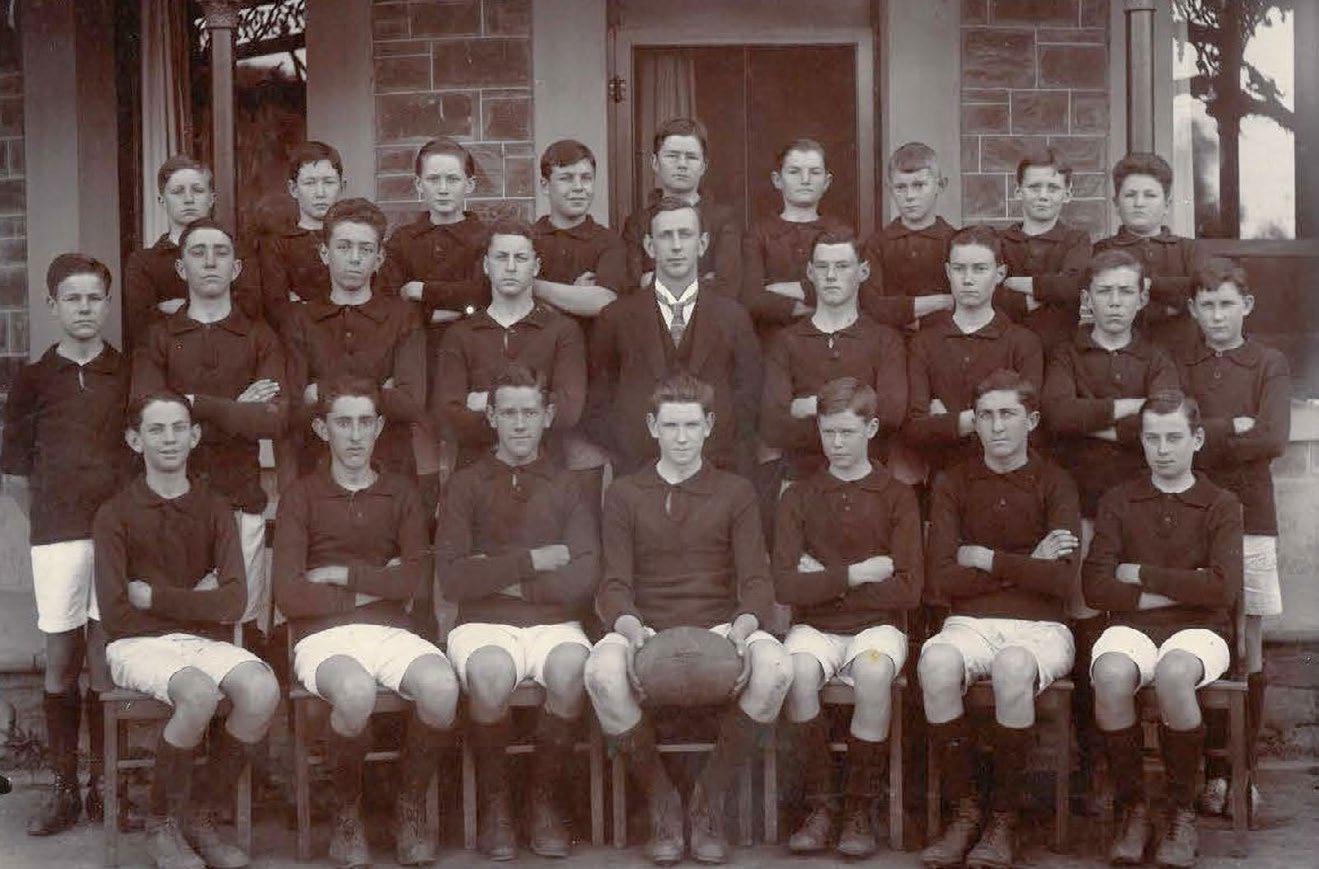
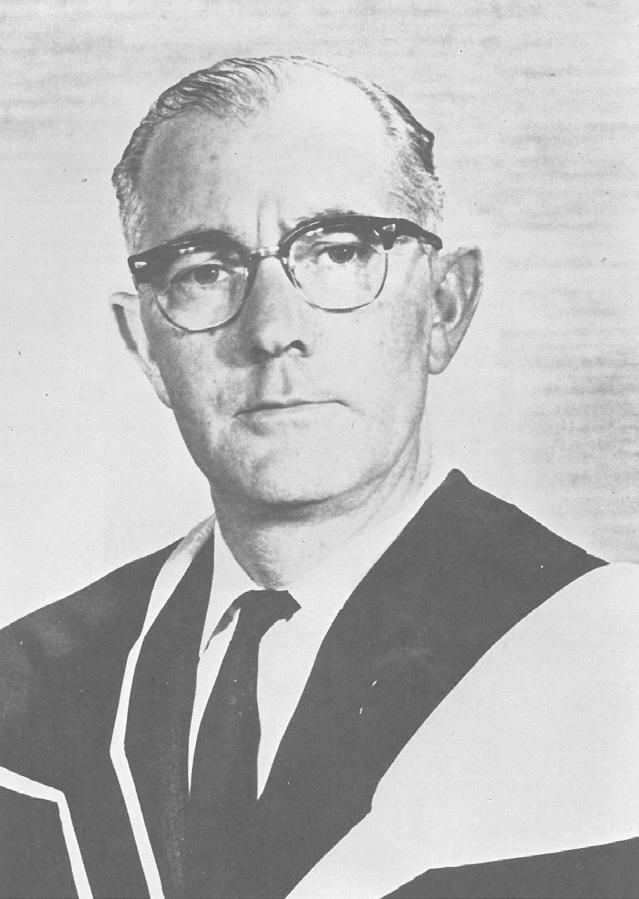
King’s College was opened in 1924 after cooperation between the Congregational and the Baptist Churches, led by its two leading proponents, Reverend (later Dr) GH Wright and Reverend AC Hill.
The first Headmaster of King’s College was Mr Joseph Haslam, who had worked in teaching at several other schools around the state including Prince Alfred College (PAC), and came from a strong Nonconformist background.
Several names were contemplated for the new school, including The Independent Collegiate School, Whitefield, Carey, and Milton Collegiate School. The Committee voted between King’s and Wycliffe, with King’s winning 41 to 13. There are several possible reasons referenced for this, including the potential initials of Wycliffe College also referring to a lavatory, that King’s is ‘one ranking up’ from Princes (PAC), for King George V
himself, or perhaps in reference to Christ, their ‘King of King’s’.
The connection with King’s College Cambridge was not lost on them, though there is no evidence that this was the reason for their choice.
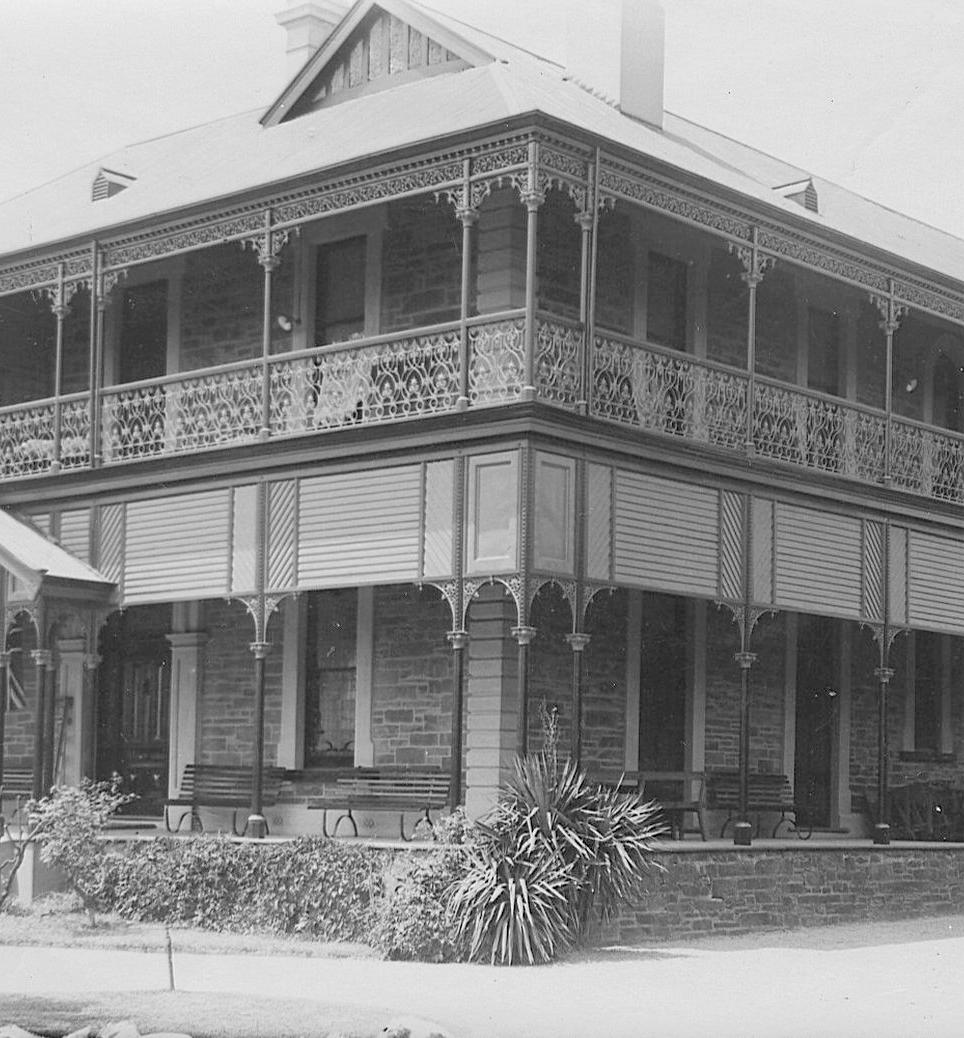
In selecting a site, an advertisement was placed in The Advertiser in June 1923 looking for a house of ‘not less than fifteen to twenty rooms with not less than six acres of land at Glenelg, Brighton, or within easy distance of Metropolitan Trains or Trams.’ Houses were inspected in Unley, Burnside, Walkerville, and Collinswood, and eventually the Kensington Park property was purchased at a price of £6100.
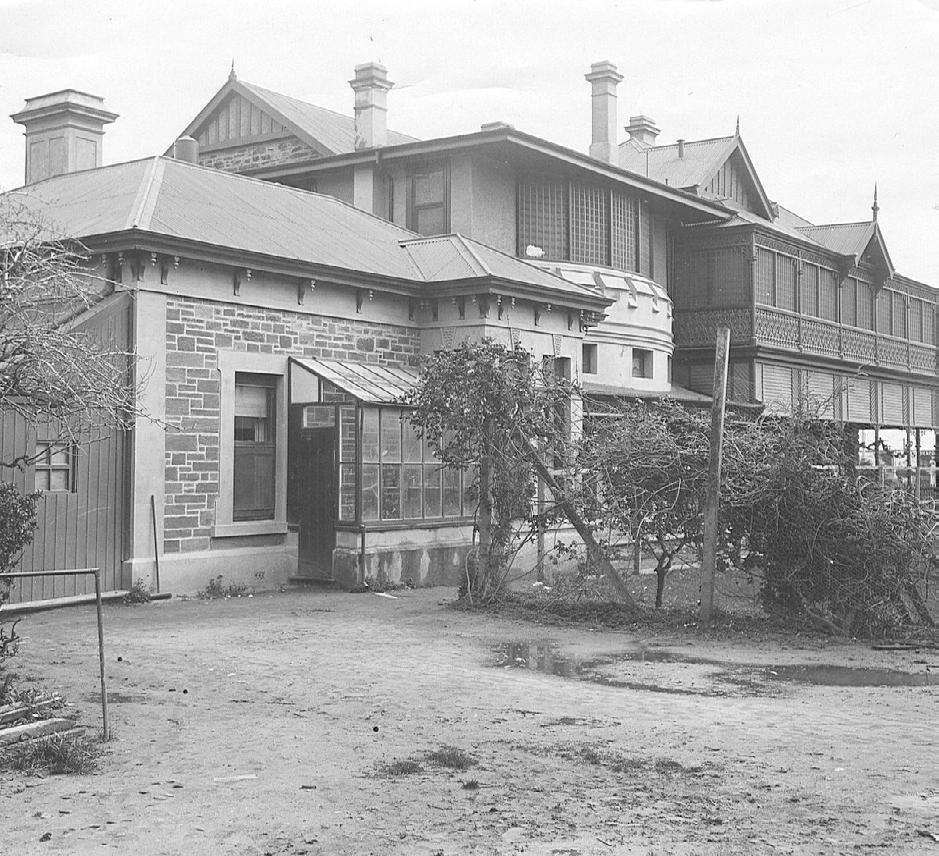
The main building, then known as ‘Gwent’ and now known as Bills House, was originally built in 1882, with a second storey added in the 1890s. After it was purchased for King’s College, change rooms and toilets were added, while the balconies were enclosed to provide a sleeping space for the boarding students.
On its first day in 1924, King’s College had 56 students, 17 of whom were boarders.
The uniform was a grey suit with the school’s crest on the front, with identical ties and caps in the schools green and gold colours. By 1927 there were 150 students and a House system was introduced. ‘School’ house was exclusively for boarders, and the other Secondary School houses were named Wycliffe and Carey, while the Prepatory School was divided into Wright and Hill houses.
After a successful start to the new school, Haslam was admitted to hospital in 1928 due to illness, and sadly passed away shortly afterwards. Mr James Bills, previously Vice Principal of Melbourne’s Carey Baptist Grammar School, was appointed and began in mid-1928, and would remain in the position until 1933.
Under his leadership, the land opposite King’s (now known as Haslam Oval), was purchased in 1929 and named after the late Headmaster. The collegians laid the first turf wicket, tended the oval, and tended the trees planted by the mothers. Ash trees planted in 1931 have survived to the present day.
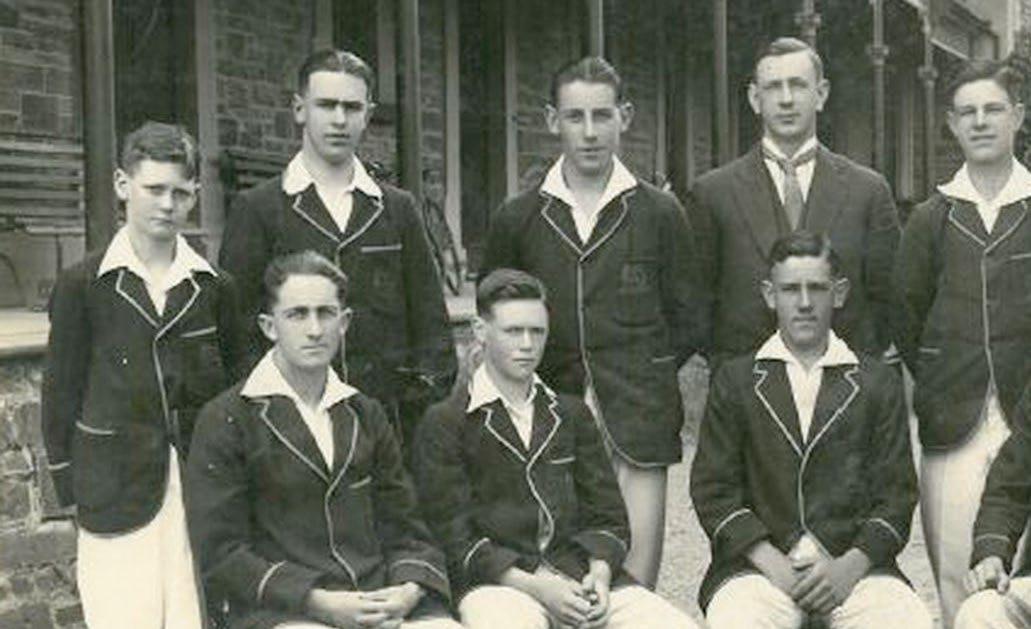
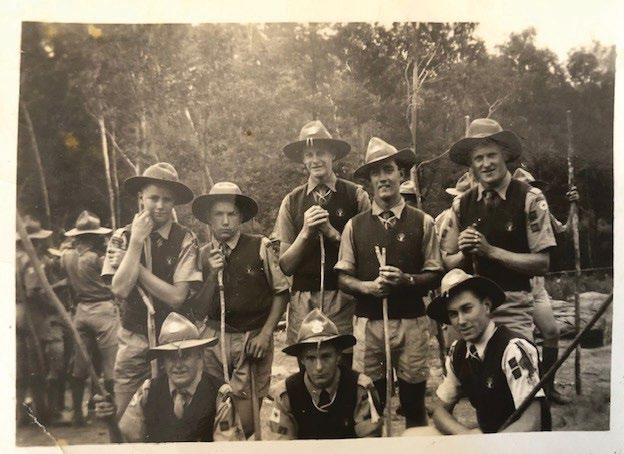
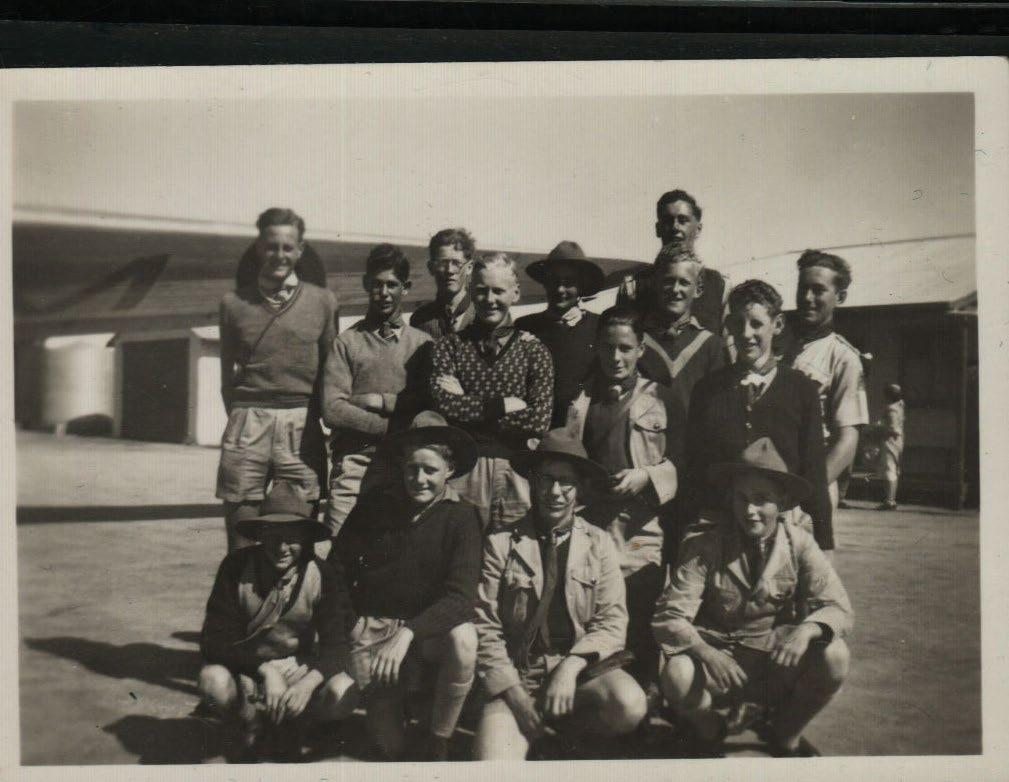
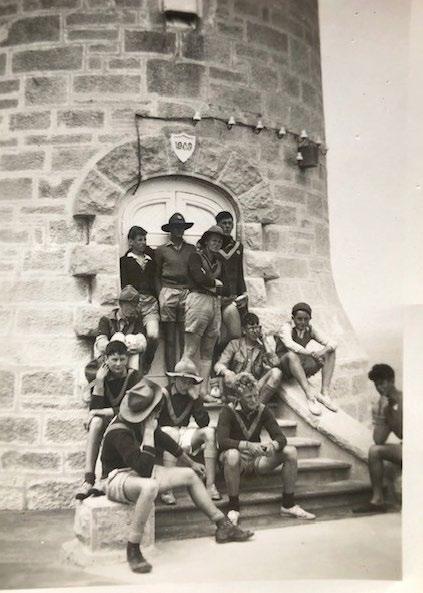
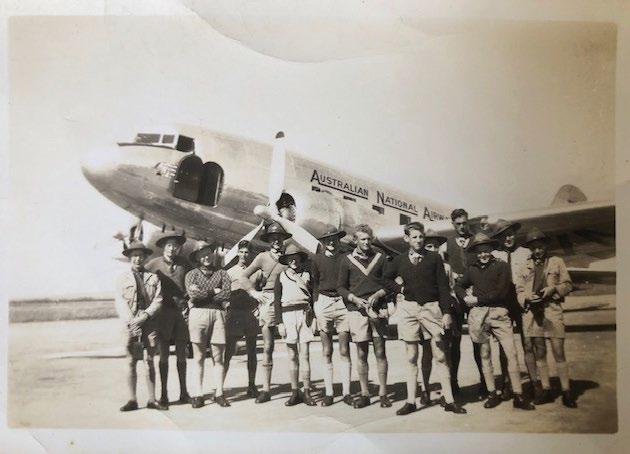
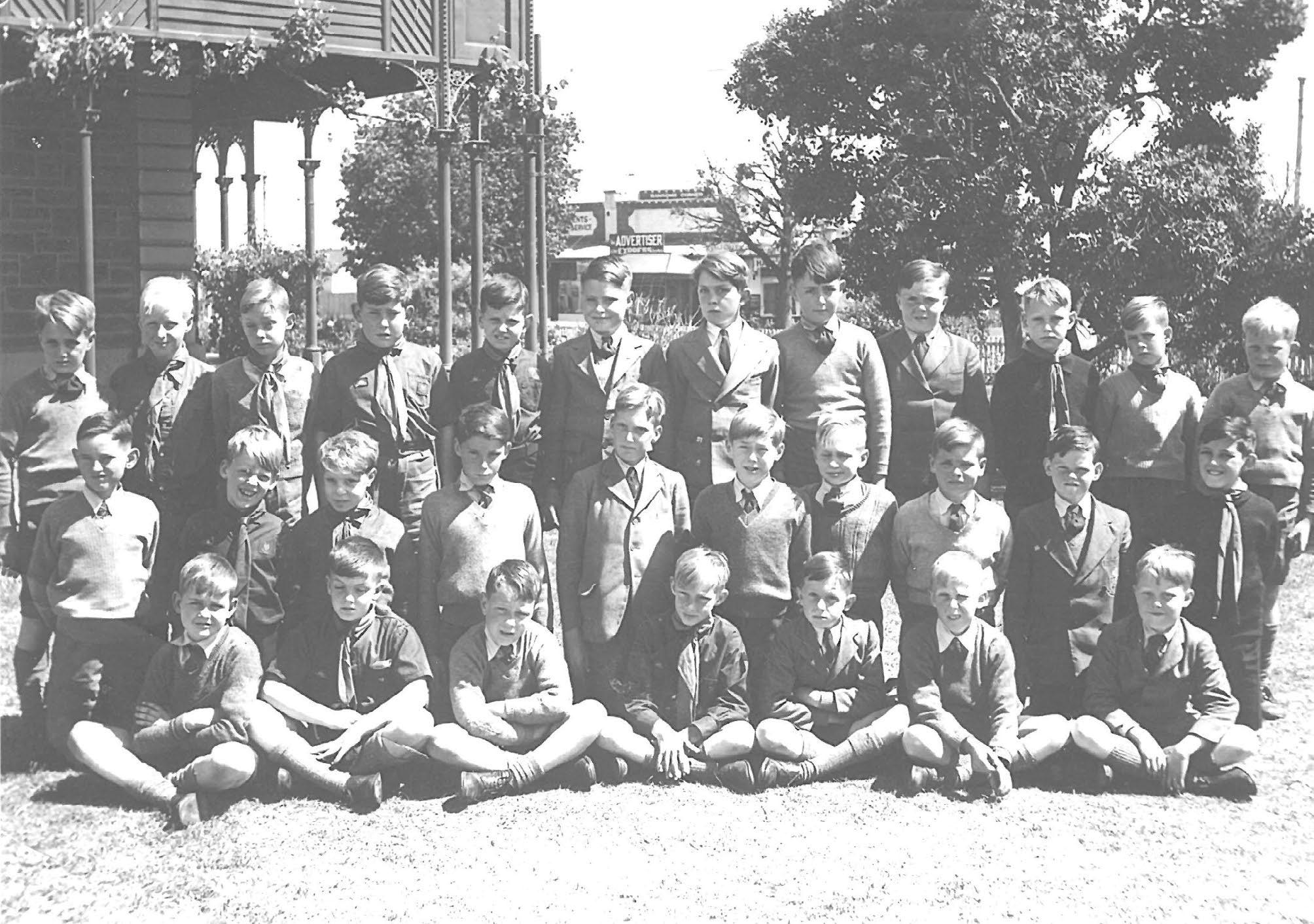
That year, Mr Donald (D.D.) Harris OAM was appointed to staff. Among other things, he was well known for operating the Scout Troop, where his efforts over the following 42 years ensured it survived as a vital and healthy part of the curriculum until the school merged with Girton in 1974.
Following Bills’ resignation, the Acting Headmaster Mr Kenneth Smith was officially appointed in the Headmaster role in September 1933.
Three years later, in September of 1939, World War II was declared. Within the first year, 69 King’s old collegians had volunteered, and by its conclusion, 70% of King’s old collegians (249 young men) had enlisted. Tragically, 18 of them died. Today, they are listed on the Honour Roll in the RA Cook Chapel.
Mr William Oats replaced Smith in 1941, following the latter’s resignation. Oats was to be the shortest serving Headmaster in the School’s history, but is recognised as having saved the School from its financial hardship after the Board considered the need to close. In contrast with the horrific events
of World War II, Oats promoted democracy among staff and students. He held democratic staff meetings, reports were adjusted to give letter grades instead of a percentage score so that students could not be ranked against each other, and space was provided for teachers to comment on each boy’s interests, temperament and educational objectives. Only a few years after beginning, Oats left in 1945 to take up the Principalship at the Friends’ School in Hobart, where he would remain for almost 30 years.
Lieutenant Commander Cecil Shinkfield, a former naval engineer, was appointed, and discipline at King’s tightened. Corporal punishment returned, and prefects were given permission to use the slipper. New buildings were constructed, including Charlick Memorial Cottage and Livingstone Memorial Building. More international students began to be educated in Australia, and were welcomed to King’s College. Shinkfield retired at the end of 1956, and Reverend Ralph Cook, after whom the Chapel is named, was appointed.
Cook happened to be educated for a year at Scots College in Sydney under Dr Wright, the same man who had started King’s College in 1924. Cook boosted enrolments and continued to upgrade the facilities. The Chapel was opened in 1962, and in the following year a new Junior School was built on the northern side of The Parade. It was later converted to a boarding house in 1969, and remains so today at Pembroke School. The KH Milne Laboratories were opened in 1966 and The Harris Library was opened in 1970.
Prior to the merging with Girton Girls’ School to create Pembroke School, the boys from King’s would combine with the girls from Girton for many activities, including productions of Salad Days, Oedipus Rex, Antigone, and The Crucible In 1972 and 1973 King’s hosted co-educational exchange students from the Friends’ School in Hobart, where former King’s Headmaster Mr Oats was still leading.
Following the success of this program and other interactions with Girton, the two schools merged and flourished under the co-leadership of Mrs Diana Medlin AM and Mr John Moody AM.
The Second World War brought significant social, political and economic change to Australia. Australia had provided troops to our British allies to fight the war against Germany, but some were forced home following the bombing of Pearl Harbour. In 1949 Robert Menzies won the election, starting 23 years of Liberal government at the national level. The first Australian Holden motor car came off the assembly line in 1948.
If I had my time again I would pay more attention to schoolwork!
Career and Life Highlights
Number one highlight was sharing a 225-run partnership with Phil Sarre in 1949 against Teachers College. There was also the trip to Melbourne with the School Football team to play against Carey Grammar School—alas, we lost!
Favourite King’s Memories
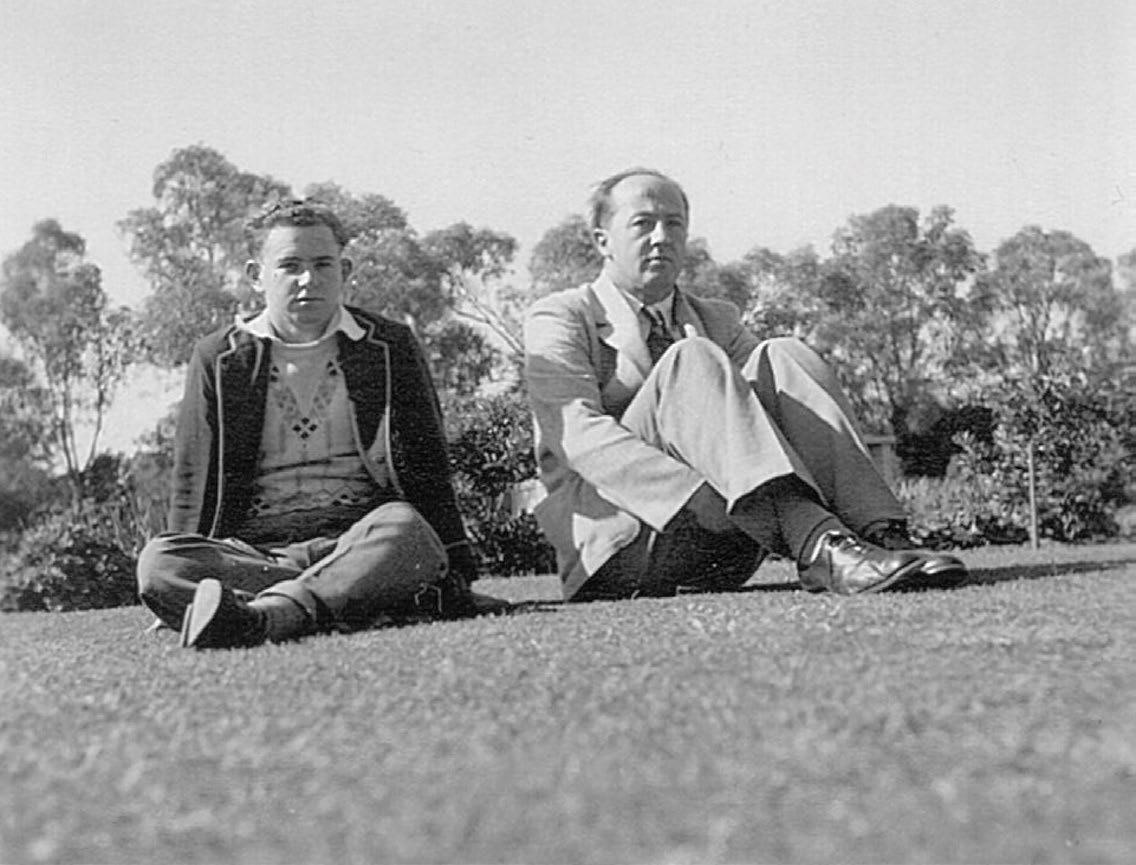
I was a full-time boarder for five years, and when I started school there I was a bit on the ‘porky’ side, hence the nickname ‘Pud’! I came from Alawoona. My House Master was Don Harris, and Matron was Miss Hocking, who was a very caring lady. Harold Wigan joined the Boarding House in 1947 and he came with the nickname ‘Speed’! I was a keen photographer (photo above of Speed and me on the Boarding House lawn).
I ended up being House Prefect for 1948–49.
I had various jobs at Thevenard near Ceduna until I moved to Port Noarlunga in 1960. I stopped work in a laboratory at Bridgecton, Edwardstown, in 1999.
Advice for your 18-year-old self
Ah! If I had my time again I would pay more attention to schoolwork! Cricket was my No. 1 priority and I was Captain of the King’s First XI team, 1948–49.
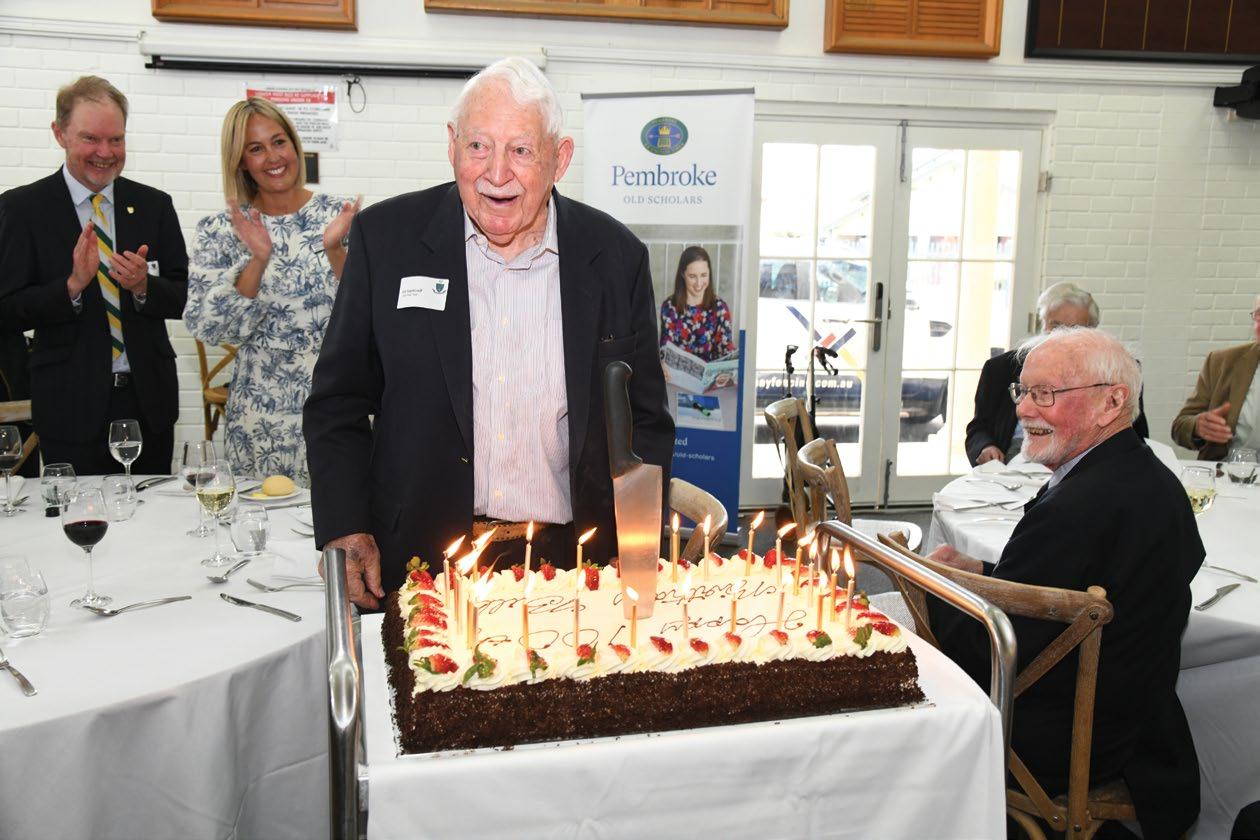
Bill died on 11 June 2024, at the age of 100.
At the time of his death, he was the oldest King’s scholar, having started school in 1928, only four years into the school’s existence. He did not have a chance to write for this publication. The editors have written the paragraphs below based upon information gained from interviews with Bill found in various sources, and in speaking with his son, Tim.
I was born in Mt Gambier on September 7, 1923, the son of a Baptist pastor. I came from a farming background so, following my time at King’s, I went on to study at Roseworthy Agricultural College. World War II had a major impact on my life. I joined the RAAF in 1944. Once I was discharged, I studied agriculture. My family operated two properties at Geranium, in the Murray Mallee region, where I set up both Red Poll cattle and Romney Marsh sheep studs (in conjunction
with the overall cropping program), so I was very interested in animal husbandry and breeding genetics. On selling up at Geranium I then purchased a large sheep and cattle grazing property at Willalooka, in the Upper South East which I farmed for 15 years. Whilst there I was elected to the SA House of Assembly for seat of Albert. I held Albert from 1959 to 1970 for the Liberal and Country League, and the seat of Mallee from 1970 to 1979 for the Liberal Party. I was a member of the Parliamentary Committee on Land Settlement (1963–1968), the Parliamentary Standing Committee on Public Works (1968–1973) and the Public Accounts Committee (1973–1977). I left politics in 1979 at the age of 56. That led me on to being a Company Director with Southern Farmers. Following this, I was elected to the Executive Committee of the Commonwealth Parliamentary Association (CPA).
In 1947 I married Girton old scholar Diane Nankivell (nee Basse). Together we had two children and we were married for 69 years before her passing in 2016.
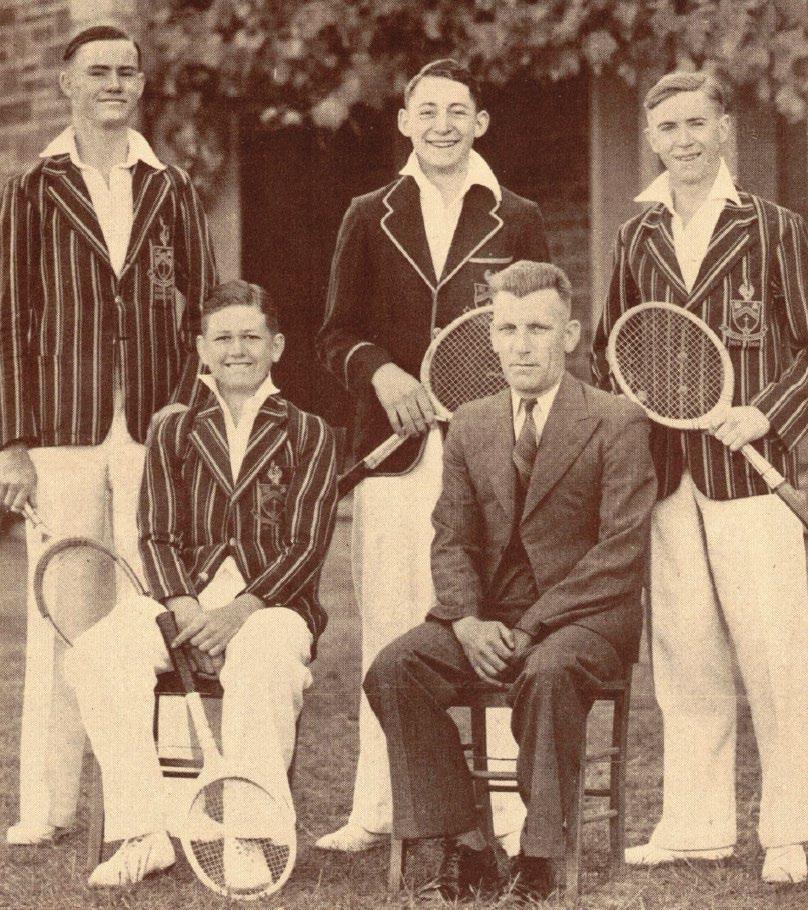
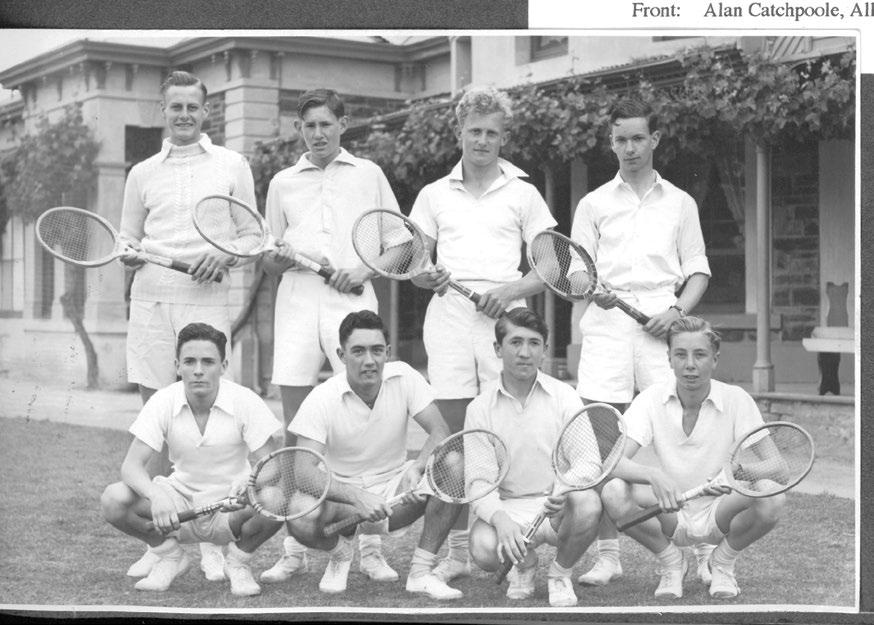
I have good memories of my school years. I started at King’s in the second term in 1928, a few months short of my 5th birthday. I was enrolled at the school for thirteen years. In 1940 I was in the First Tennis ‘A’ Team. My memories were jogged each time I attended the King’s luncheons, which I enjoyed for many years.
Friendships made at School lasted a lifetime.
1954 joined Adelaide Junior Chamber of Commerce
1962 Vice President P & C Association St Morris Primary School
1964 President of Adelaide Junior Chamber of Commerce
1965 appointed a senator of Adelaide Junior Chamber of Commerce
1965–68 inaugural President of the SA Debating Association
1967–69 conducted three or four courses in chairmanship and public speaking each year for SA Institute of Management
1965–69 Member of Woodville Rotary Club
1966–68 Secretary of Woodville Rotary Club
1967–69 Magill Rover Crew Leader
1973–79 Group Leader 2nd North St Ives Scout group
1977 Received the Wood Badge for leadership training
1978–93 member of the Fremantle Fire Brigade (Bathurst district)
1987 Member Blaxland Ridge Volunteer Bush Fire Brigade
1991–92 Vice President Blaxland Ridge Volunteer Bush Fire Brigade
1993–94 President Blaxland Ridge Volunteer Bush Fire Brigade
1997–2012 Operations Blaxland Ridge Rural Fire Brigade
2000–08 Treasurer Blaxland Ridge Rural Fire Brigade
2002–04 Crew Leader Blaxland Ridge Rural Fire Brigade
2004 appointed life member
2001–24 member KurrajongComleroy Historical Society
2008–12 Grants Officer KurrajongComleroy Historical Society
2007–12 Treasurer of Hawkesbury Rainforest Network
Active in Streamwatch through monthly water-quality testing of Little Wheeny Creek and volunteer work at the Hawkesbury Community Nursery
Married Brenda Reeves Smith on the 1 May 1954. Brenda passed away 17 February 2024, six weeks prior to our 70th wedding anniversary. We had four children, 10 grandchildren and 13 great grandchildren.
Sporting activities—summer times, Swimming, Cricket, Tennis, Athletics; winter times, Aussie Rules Football, organised activities for weekends, and during the week any opportunity to get to the oval was taken. Other activities included House Debating competitions. In 1944 World War II was in critical stages and many of the boys had fathers or relations overseas fighting; morning papers were an important start to the day. In 1946 I sang in the production of Gilbert and Sullivan’s HMS Pinafore opera. For the boarders, war-time rationing meant that our weekly menus became a similar meal—roasts, rabbit, sausages. A breakfast of tripe was once served; I took one bite and refused to eat the rest, then was kept at the table on Saturday morning under instruction to eat the rest before going out to play Football. The prefect retired behind his paper and I managed to push aside most of it and swallowed one piece. I was late getting to Football. Friendships made at School lasted a lifetime. Support provided by teachers and staff in the School was excellent.
Pay more attention to your studies. My parents were dirt farmers from the West Coast and money was scarce, but they made every effort to provide me with everything necessary—clothing for sports, outings, boarder’s weekends—and the important part, exam results, suffered because my attention was concentrated on other activities.
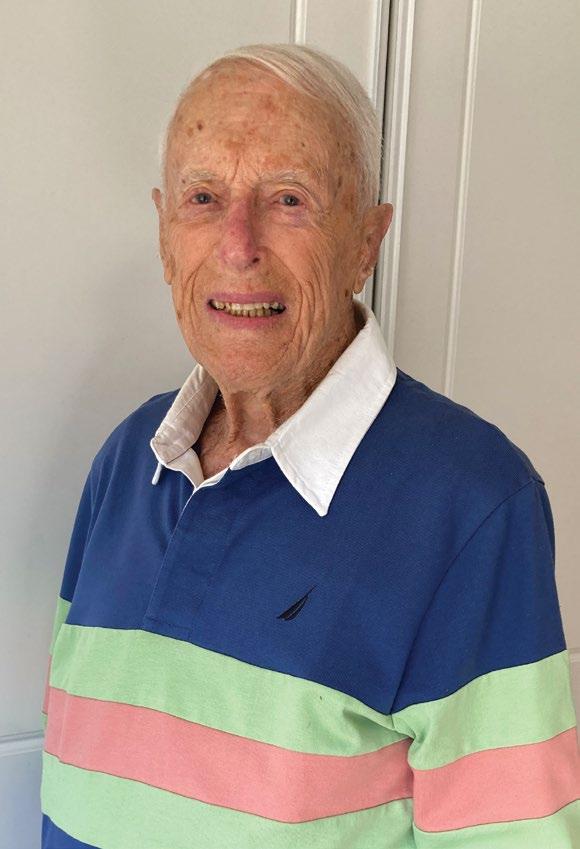
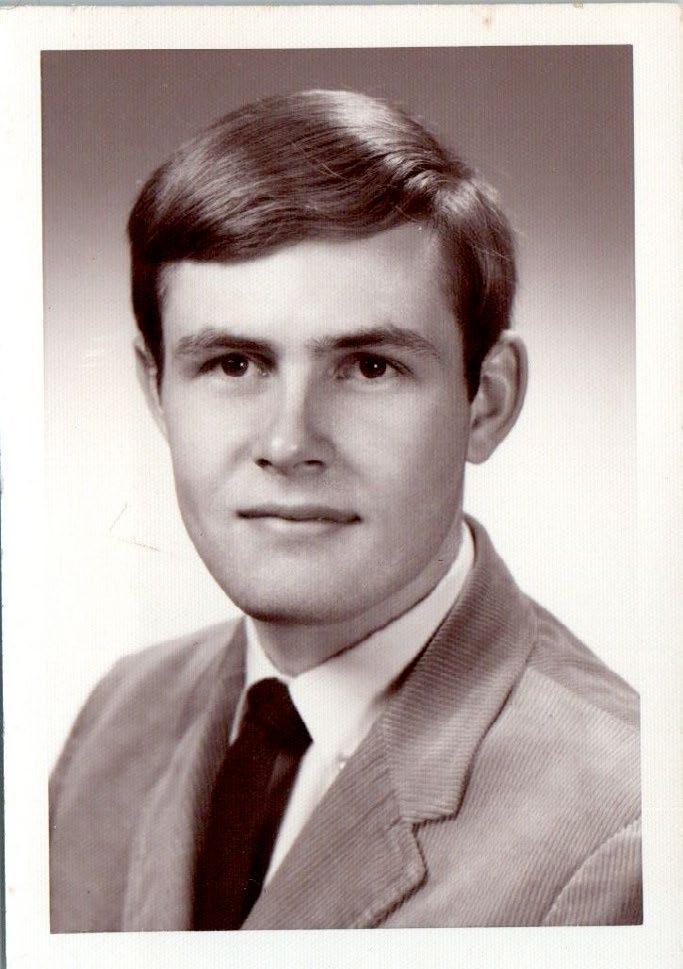
...listen more carefully more often, and talk less.
In the following response to the book editor’s request for ‘career highlights’, I’m aware that what I see as highlights most people would justifiably regard as trivia—although I think D.D. Harris would have liked to know his tutelage wasn’t entirely wasted. For it enabled me to be the first SA winner of an annual national competition for cadet journalists, the only Australian journalist to be awarded a Commonwealth Press Union Fellowship, which enabled me to study at Oxford University and gain invaluable experience in internships with major UK newspapers, as well as in the White House press corps (where I had a one-on-one interview in the Oval Office with President Kennedy).
Subsequently I was the first SA journalist appointed as a press secretary to a SA Federal Cabinet Minister, and during my time with the Department of Foreign Affairs and Trade I was seconded as a public
relations director to staffs of royalty and heads of state visiting Australia that included Prince Philip and Pope John Paul II.
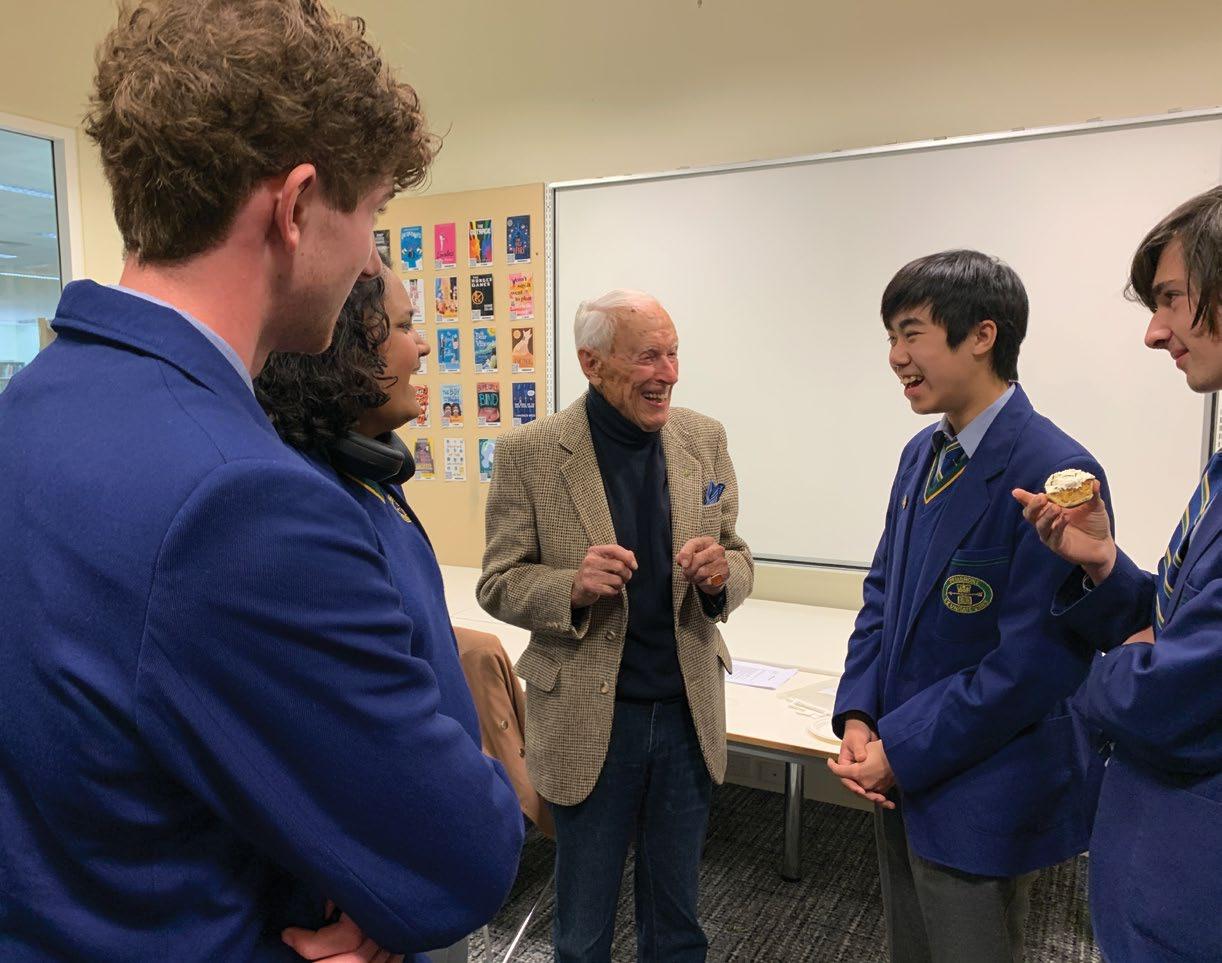
At 96, and still a working journalist, the most recent highlight of my career was being able to accept an invitation to talk interactively with Pembroke Year 12 students, and lunch with them.
My time at King’s spanned WWII (1939–45), saying goodbyes to former schoolmates enlisting in our country’s armed forces who I’d never see again. I feared constantly for my father, who during those six years fought in Middle East battles and in PNG. The Advertiser’s battle maps convinced me that Hitler’s Wehrmacht would conquer all of Europe and that, because of aerial bombing of the NT and submarines’ destruction of ships in Sydney and Newcastle harbours, Japanese invasion was inevitable.
Yet, against this background of fear, favourite memories persist, including boyish fun derived from digging an air raid shelter and trenches adjacent to School House, and organising and conducting
air-raid drills for the prep school. There was the wonder of learning, in 1945, that scientists’ knowledge of Earth’s 92 fundamental elements had increased by seven since I started at King’s. (I believe there are now 118 elements on the periodic table.)
Memories include seeing samples of my early writing being published in the King’s magazine, recalling the honour and joy of being coached with the King’s First XI by Clarrie Grimmett of Bradman’s famed ‘Invincibles’, and (as a chronic asthmatic) becoming School Swimming champion—while establishing a record that stood for nine years.
A good rule of thumb to employ before acting is to listen more carefully more often, and talk less.
Make the most of life, not only for yourself but for the benefit of everyone you encounter throughout it.
Read, and keep ready to hand for reference, Rudyard Kipling’s poem If, together with Shakespeare’s play Hamlet (bookmarked at the page where Polonius gives fatherly advice to Laertes). You’ll probably remember that the final paragraph starts with the injunction, ‘To thine own self be true’, but the whole speech is well worth committing to memory—and being lived.
I owe much to King’s, which
gave me a start in life.
Graduated with a medical degree in 1954. During the course I helped D.D. Harris with the King’s Scouts, as well as Senior Scouts in SA Scout HQ, helping organise large-scale hikes to the Flinders, and Gammon and McDonnell Ranges.
Antarctica 1957–58, MO at Mawson Base. Emperor penguin research during winter, tractor driver on seismic survey during second summer, driving 1,200 km across plateau. Memories of brilliant auroras, beautiful scenery and great camaraderie. We all survived and most earned a Polar Medal and a landmark. Mine is Mt Willing in the Prince Charles Mountains.
After postgrad study in the UK I returned to Adelaide and set up as a gastroenterologist at the new Flinders Medical School and in private practice. Hon. Medical Secretary of Australian Medical
Association, SA Branch about 1983–87.
Farming sheep and beef on the Fleurieu Peninsula since 1970s, conserving native vegetation and running biological surveys each autumn and spring.
Co-founder 1984 of Scientific Expedition Group (SEG), which connects groups of volunteers with scientists doing scientific field trips to remote areas. Still going strong after 40 years.
Awards: OAM 2021; Silver Medal 2021 of Field Naturalist Society of SA; Lifetime Achiever Award 2022, SA Environment Awards, Conservation Council of SA.
Favourite King’s Memories
I owe much to King’s, which gave me a start in life. The result of a failed marriage, I came to the School as an 8-year-old loner with a new name (my mother’s maiden
name), found peers and friends, and flourished. An anonymous donor arranged a private boarding scholarship, a common means of keeping the School afloat during the Depression. The School was small—only 23 boarders—so I knew everyone. I found live classical music with ASO school concerts, and have subscribed to ASO concerts ever since.
WWII started one year later, which led to digging of air raid trenches and a vegetable garden close by, close shaves but no severe accidents. Many old scholars went to war and often came to visit the School, D.D. Harris and the Scout group when on leave. The war was brought much closer to home with news of the deaths of old scholars.
Scouts taught me many life skills. My first camp was at Myponga; one day we all hiked down to Myponga Jetty. I continued my association with Scouts in HQ and am now a Life Member.
I was the first of three generations of scholars at King’s/Pembroke— two children, two grandchildren.
Be yourself, be happy.
Choose your career wisely.
Be on the lookout for opportunities that may help you—don’t let them pass.
Don’t be afraid to make bold decisions.
Don’t be afraid of hard work.
Be kind and help other people. Be humble.
Honour those who help you achieve your aims.
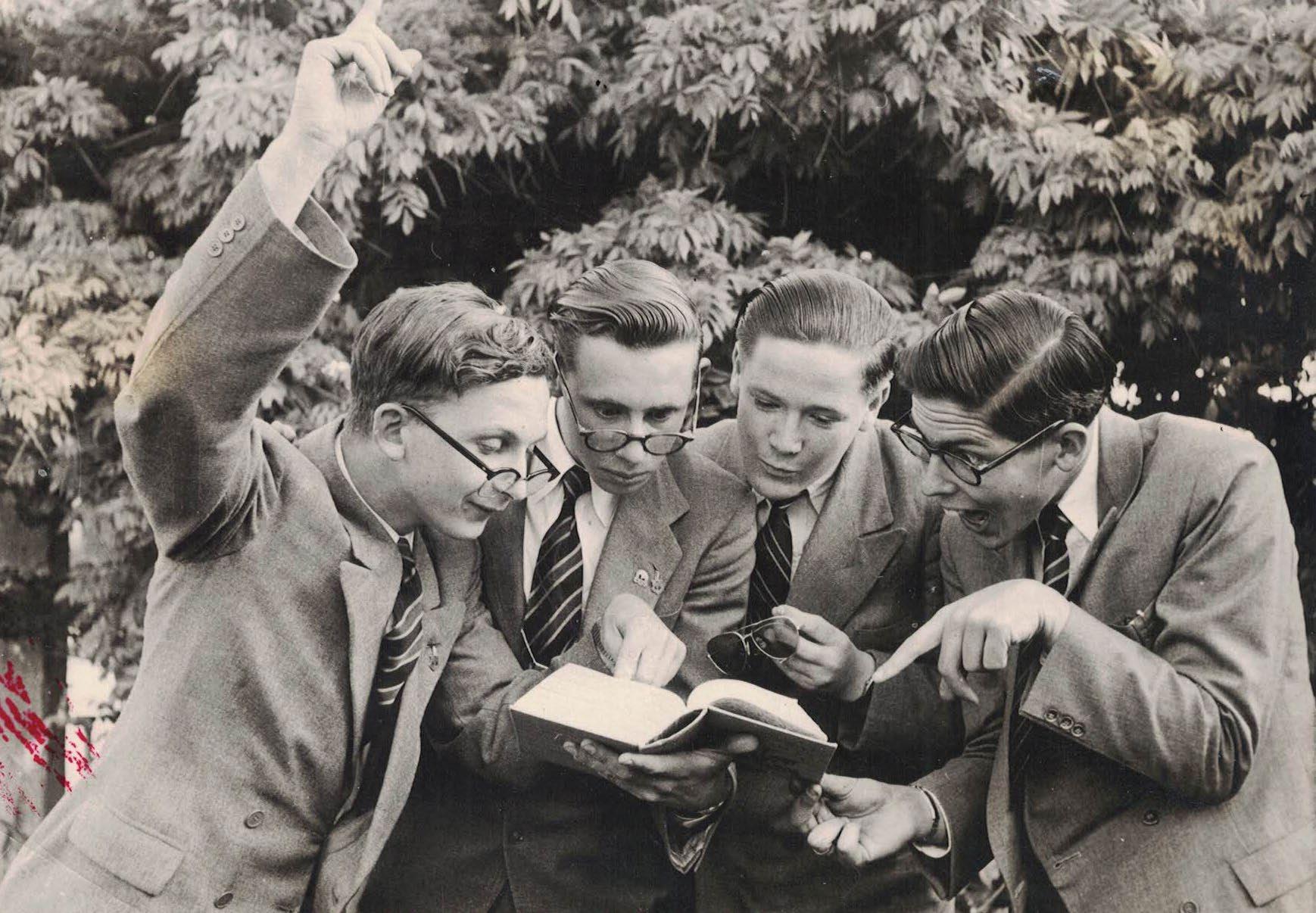
1954 Debating Team
Following the stress of the Great Depression and Second World War, many Australians worked to build homes and enjoy happier times. Cars were now affordable for families and more homes had access to electricity, sewage and running water. Television arrived in Australia just in time to watch the Melbourne Olympic Games in 1956 and Anzac Day was declared a national public holiday in 1958.
[King’s] was a school built on camaraderie and mateship, which has led me to have lifetime friendships with a great many old scholars.
I qualified as a chartered accountant under the watchful eye of my mentor Joe Winter at Peat Marwick Mitchell (now KPMG). I was sent to Mount Gambier in 1967 to open a branch there, returned to Adelaide in 1971 and became a partner in 1973. I left there in 1979 to form a specialist insolvency firm Allert Heard & Co. with fellow partner John Heard.
When we sold that firm in 1989 I became a full-time professional company director. Some of my notable chairmanships included Southcorp (formerly SA Brewing), Coles Myer, AXA Asia Pacific, Tourism Australia, Ayers Rock Resort, Kakadu Tourism Australasian Railway Corp (which had the responsibility of building the Alice Springs to Darwin Railway).
I was also a director of the railway company Genesee & Wyoming based in Connecticut and its Australian subsidiary, and have been on the board of Indigenous Business Australia for 10 years. I was on the inaugural board of the Adelaide Crows, and have been Chairman of the Major Performing Arts Board and a board member of the Australian Arts Council.
King’s was a fun school. Many of the teachers were quirky characters and their interaction with students led to many hilarious and memorable incidents!
Notwithstanding, I received an excellent education, particularly after Ralph Cook became Headmaster.
It was a school built on camaraderie and mateship, which has led me to have lifetime friendships with a great many old scholars.
Enjoy life and have fun, but don’t ever forsake integrity and honesty.
Value your friendships and always be proud to look at yourself in the mirror!
Make sure you stay focused on achieving your aspirations.
Approach all matters in life with confidence.
Career and Life Highlights
Achievements in the fishing industry
Chairman of the Australian Fishing Council
Council member of the Australian Maritime College
Recipient of Churchill Fellowship Award
Appointed to be a member of the Order of Australia AM
Favourite King’s Memories
Great guidance from teachers D.D. Harris, Paul Trudinger and Harry Wigan
Enjoyed Scouting
Head Prefect 1995
Violinist in the School Orchestra
Awarded Colours for Football
Advice for your 18-year-old self
Approach all matters in life with confidence.
Canaveral), and its ‘approvals’ to enter service – Bristol and Faslane
I would not hesitate to change my direction if there was any doubt in confidence...
Career Highlights
1954 Obtained a letter of introduction from Bristol Aeroplane Company (Australia), located at Salisbury, South Australia (LRWE – Long Range Weapons Establishment)
1955 Travelled to Bristol, UK, for aerospace career with Bristol Aeroplane Company, Engine Division
1958 Ramjet development and missile trials for Bloodhound and Sea Dart – Bristol, Aberporth and Salisbury/Woomera
1968 Concorde technical sales
1969 Bristol Aerojet – liquid bipropellant rocket motor research and development for Chevaline (to upgrade nuclear weapon system delivery) – Banwell and Bristol
1977 British Aerospace – Flight Trials Manager of Chevaline (Cape
1982 Project Manager for development of Rapier FSC common trailer base and launcher
1995 QinetiQ (Malvern) –consultant/employee on Rapier FSC for army acceptance
2003 During the Iraq War, design and manufacture of DMST (deployable mission systems trainer) for HMS Ark Royal and HMS Invincible aircraft carriers, to enable on-board battle management training for helicopter crews
2015 Manager of an art group in Wiltshire
Life Highlights
Childhood, King’s College, marriage and career
Managed Bristol City Fitness Club, ran five marathons
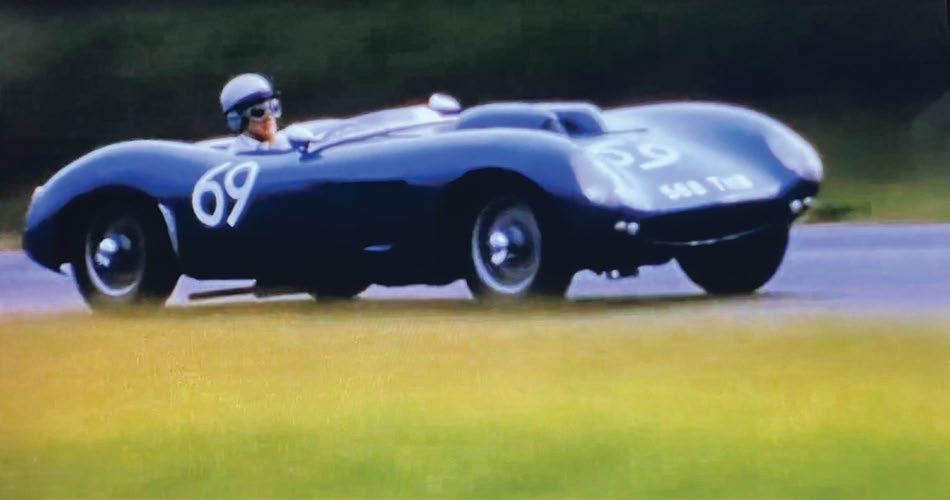
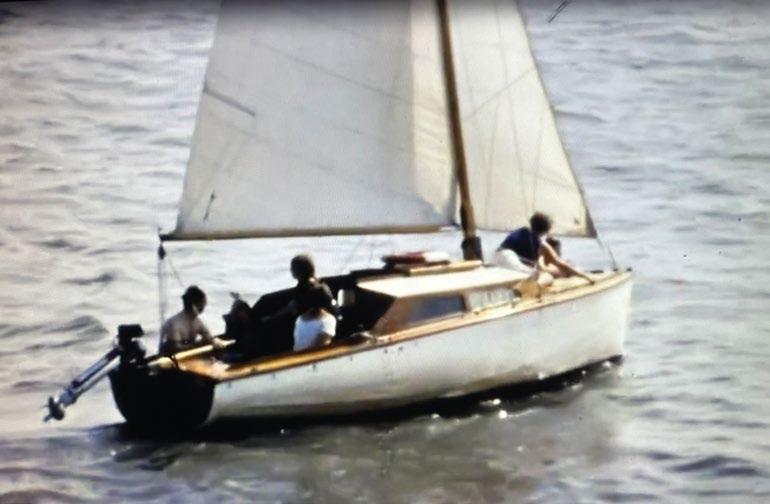
Achieved three major hobby projects: Buckler-MG racing car, restored Lewis V8-powered boat and a two-berth Seagull yacht
Supported my wife’s three horses
Created rock band in 2003, performed till 2005
Art – currently manage an art group 56+ years of marriage
Playing the flute in the orchestra, under Paul Trudinger’s guidance
Singing in the choir. I passed an original ‘cut’ record of one performance to Peta Harries for the Archives in about 2009. Paul Trudinger sang a solo part on it.
Scouting under the Leadership of D.D. Harris
Boarding in 1949 in Bluebell Dormitory
Using the parallel bars, which were stored, undercover, northeast of the gum tree. I also enjoyed using the high single bar at the northern end of Bluebell Dormitory.
A not-so-favourite memory was receiving the ‘slipper’ from a prefect for failing the King’s War Cry in the ‘yard’ (along from the Tuck Shop). My favourite memory from that experience is that I can repeat the War Cry perfectly—and in 12.35 seconds—I just tried it!!
I would do preliminary selfconfidence building by attending public speaking, touch typing and IT courses, had they existed at the time.
I would locate and approach those who have succeeded in my field of interest, hopefully to confirm my plans. However, I would not hesitate to change my direction if there was any doubt in confidence.
I would continue studying in my chosen field to strengthen my long-term objectives, ideally at the expense of my employer.
Once having decided on my career plans, I would make them the top priority over any hobby or seeing-the-world plan.
I would make my career my baseline and let my life surround it.
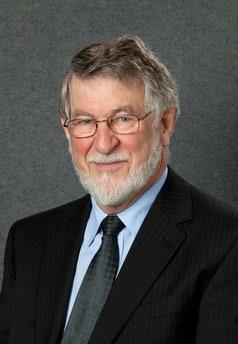
Memories of forming my first deep friendships (which have lasted a lifetime and become more important over the years).
BHP cadet 1960, part-time Economics degree at the University of Adelaide (1961–64), working as an economist at the Reserve Bank (1965–68), doing an MBA at the University of Washington in Seattle (1968–70). The highlight of this period was marrying Jenny Lawton (Girton) in 1964 and having our three children (Sarah in ‘68, Dan in ‘70 and Jon in ‘72). Other highlights included being part of an 8-week Rotary Team visit to USA (New Mexico) in 1967 (which had a big impact on my future studies), and my involvement in many voluntary organisations (especially Community Aid Abroad).
After returning from the USA I joined the newly established Department for Community Welfare in 1970. I actively participated in what
became known as ‘The Dunstan Decade’, which was a very real highlight of my career. I completed a PhD in Social Planning (1976–78) and then became a senior executive in the new SA Health Commission during 1978–85. Later I was CEO of Mutual Community Health Services (1986–88) and then GM of Foundation SA (1988–94), through these years I had many highlights including my marriage to Ann. I left Foundation SA to establish my own strategic management consultancy in 1994, which over the next 25 years involved me in a wide range of activities and took me to many Asian countries (China, Vietnam, Thailand, Mongolia and Bhutan, among others). I taught strategic management for many years at the International Graduate School of Management.
Since my retirement in 2020
I have enjoyed family and friends, growing vegetables, reading and playing bridge (President SA Bridge Federation 2023).
So many! Memories of forming my first deep friendships (which have lasted a lifetime and become more important over the years). Memories of some inspirational teachers (D.D. Harris, Angas Holmes, Paul Trudinger), and of some teachers remembered for other reasons! House nights. Model International Parliament. Sporting achievements, especially Football (beating Carey Grammar School in 1959). Two Carey trips to Melbourne in ‘56 and ‘59, with King’s war cries in restaurants and on train platforms. Prefects Dances. Old Scholars football and cricket 1960–68 (and that memorable premiership year in 1967).
Make sure that you put a lot of effort into building and maintaining your family relationships and your friendship circles. They will and should be a large and deeply sustaining part of your life—and they become increasingly important as you grow older.
… and for happiness you will also need a sense of achievement in some field of life. Make sure that you develop some areas of activity that match your interests and abilities, and can challenge you and provide a sense of self and satisfaction.
I entered the King’s Boarding House at age 11...
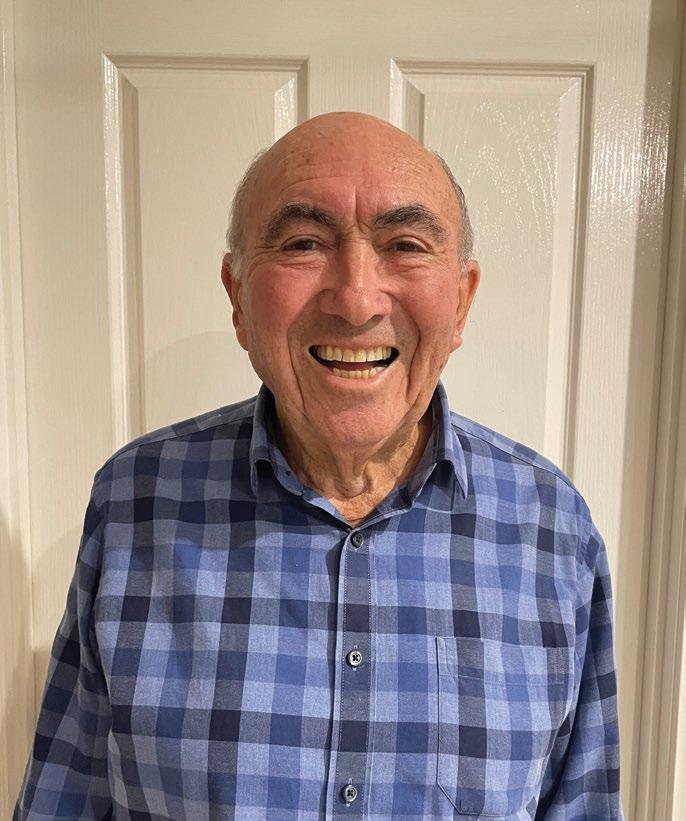
etc. for whole of government. I spent the last 20 years at Division Director level in various departments. I also had outside interests in a major credit union and a private health fund insurer as a Board Director, and undertook terms as Chair of the Payroll Tax Appeal Tribunal and the Arts Funding Authority, both part-time positions.
Friday School assemblies often included an address by a visiting speaker from a particular profession. Ken Carroll, a chartered accountant, addressed the School and that confirmed my interest in accounting. Unlike the present, I joined the State Government and studied at night at the SA Institute of Technology. After seven years, interrupted by National Service, I graduated as a Certified Practising Accountant. I had an interesting and varied career in government enhanced by my qualifications.
In the early 1960s I became a computer programmer using the Fortran language to design and write software for water rate billing, motor vehicle registration and drivers’ licensing etc. Subsequently I joined the Public Service Board, which was accountable for staffing, salary fixing, people development
I met my wife Helen through work and we sent three children to Pembroke—Stuart (1983), Heather (1991) and Andrew (1996). Since retirement I have been a volunteer director on Uniting Church Wesley Bowden Mission and Westside Housing, each for 10 years.
I entered the King’s Boarding House at age 11 after spending the majority of my primary schooling at Streaky Bay. I survived well even though I did not know any other boys at King’s. I played Football and Cricket and I think that helped the integration process. I slept in the Bow Window dormitory with eight other boys from Year 8. I was able to make my own decisions on how to spend 9 pence (8 cents) per week in allocated pocket money. All meals were in the dining room. I recall the food as being good, with similarity from week to week. As a Year 8 student I was expected to drink two
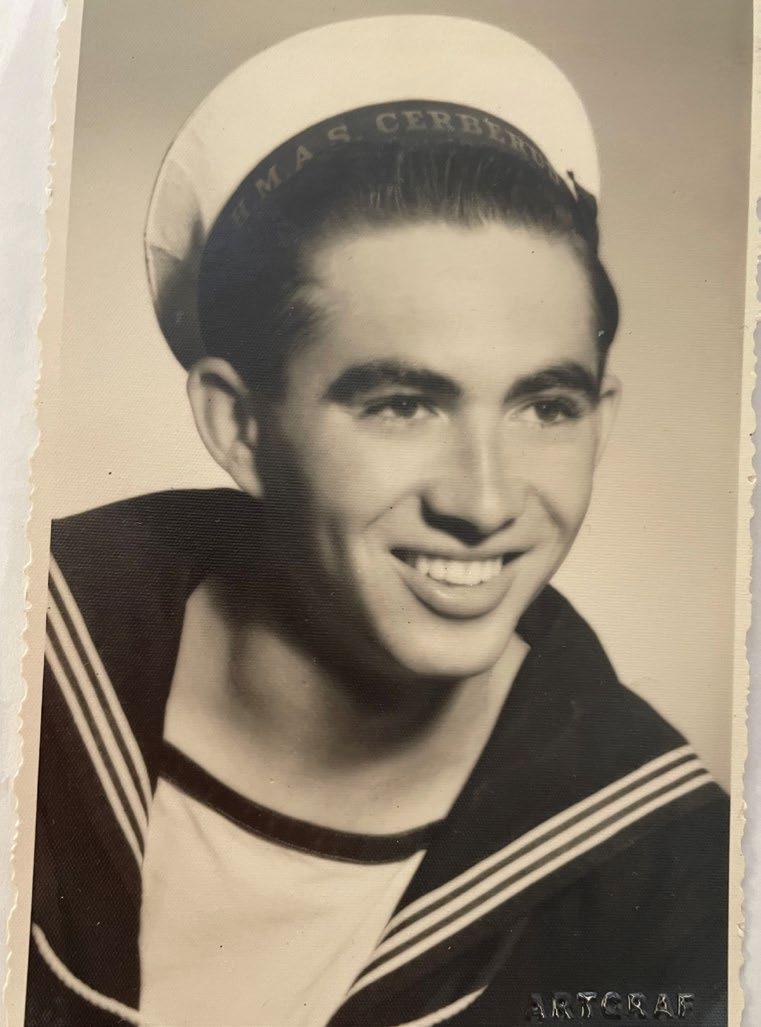
schooner glasses of milk each evening and observe good manners. Because of distance I only returned home at the end of each term.
A number of boarders invited me to spend Easter and some of the holidays with them, and I visited Orroroo (David Brooks), Tintinara (Geoff Will), Naracoorte (Brian Johnson), Mt Barker (Dean Carman) and Port Lincoln (Barry Jeanes). Boarders could only wear School uniform and could not kick a football on the oval on Sundays. I attended the 25th, 50th and 75th King’s anniversaries, was KOCA President in 1967 and Treasurer for the combined period of 10 years.
Ensure that you manage your studies and other balancing activities including sporting and social events so you can achieve results to meet your goals. You may consider a gap year depending on your finances and engage in part-time work for experience purposes. Listen to parental advice and engage in mature interaction with the ‘oldies’. Remember, you will have 40+ years in the workforce in a vocation that you love and where you make a worthwhile contribution to society.
Engage more enthusiastically in curriculum and social activities.
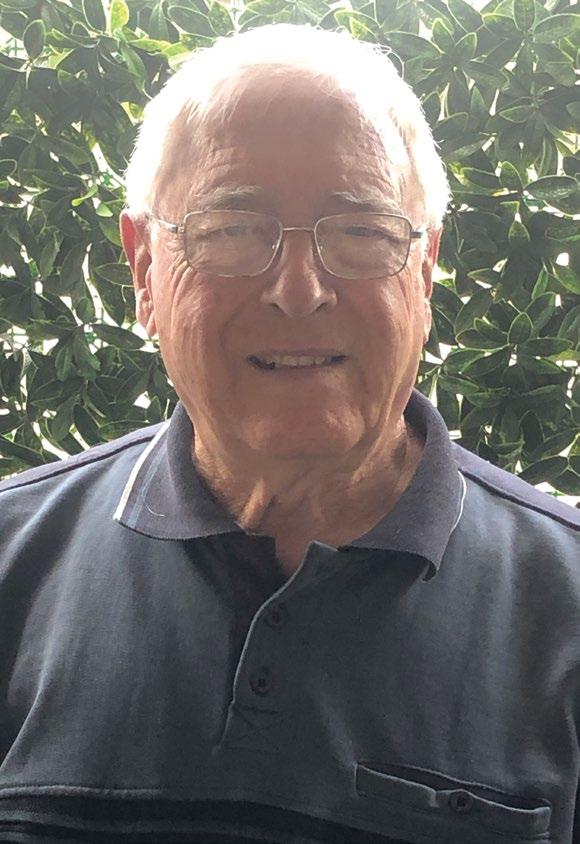
Leaving school at the end of 1956 and entering a 5-year apprenticeship, and obtaining the Technician’s Certificate in 1961 (PMG Telecommunications)
Getting married in 1966 and moving into a newly built home; firstborn son in 1974 and second in 1976
Retiring in 1994 from Telecom (package)
Getting involved in volunteer activities, particularly in public education, e.g. school councils, reference committees
Appointed President of the State Schools Association in 2000
Achieving 30 years of training parents to represent their schools on Principal selection panels
Still involved in and enjoying volunteering at 84 years of age.
Commencement in Junior School in 1945; first teachers, viz. Ms Sobey, Ms Mitchell and then Ms Henty for Years 2–5, were all excellent teachers
Enjoying the skills of the ‘good’ teachers such as D.D. Harris, Harry Wigan and Paul Trudinger
Being a member of the School Orchestra and Choir under Paul Trudinger
The orchestral and choral tour of the Mallee towns in 1954. I remember the first concert at the old Parilla Institute Hall where a special podium, which one of the students had designed and built, was used for the first time. It had rows of coloured lights representing the different sections of the orchestra (strings, wind, brass etc.), which were to be operated by the conductor at the
appropriate stages of the musical items. During the opening item the lights were switched on—disaster! The whole town was blacked out— the town’s local generator couldn’t handle the load.
Overcome shyness at an earlier stage of school life. Engage more enthusiastically in curriculum and social activities. Study harder!
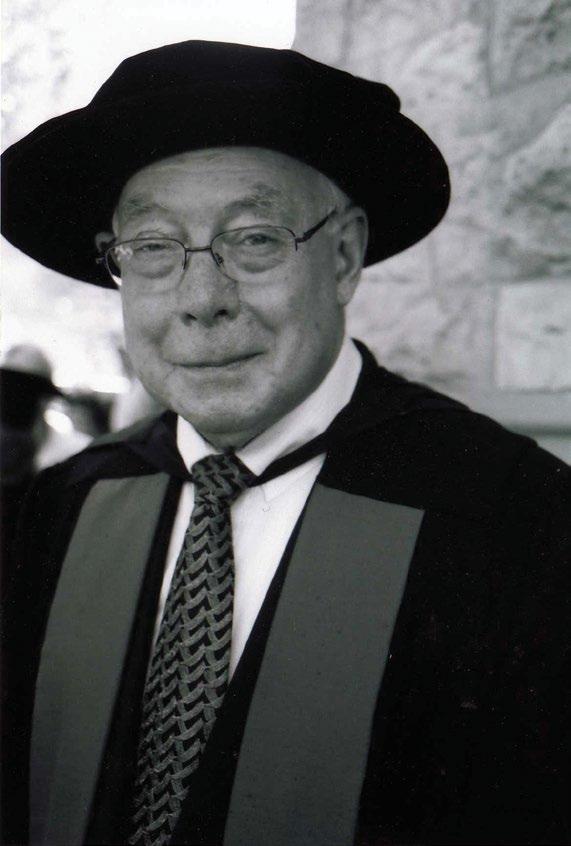
The key is to hold yourself ever open to the new.
My wife Win and I moved together as teenagers from our small Mid North towns to begin our lifelong research commitment to education. I was fortunate to win a scholarship to King’s College and there a pathway was set to further children’s learning, just as I had been helped.
Beyond my initial Diploma in Teaching, I later completed a Master of Educational Studies and a PhD entitled ‘Aligning Disparate Practical Theories for Pedagogic Change’. I was Deputy Headmaster at Prince Alfred College for close to 30 years and regularly assessed other schools in teams interested in teacher appraisal. International studies helped me to develop a program called Dimensions of Learning, where teachers were assisted in the search for better outcomes for students, using
Howard Gardner’s theory of multiple intelligences. Teachers themselves must perceive the need for change and to be motivated to effect that change in their own behaviours. Organising practical teacher training sessions and professional support was a key role of my working life.
Family life, bowling cricket hat-tricks, body surfing, poetry, Baroque music appreciation, caravan travels across Australia and golf have cemented my interest in the theory of multiple intelligences.
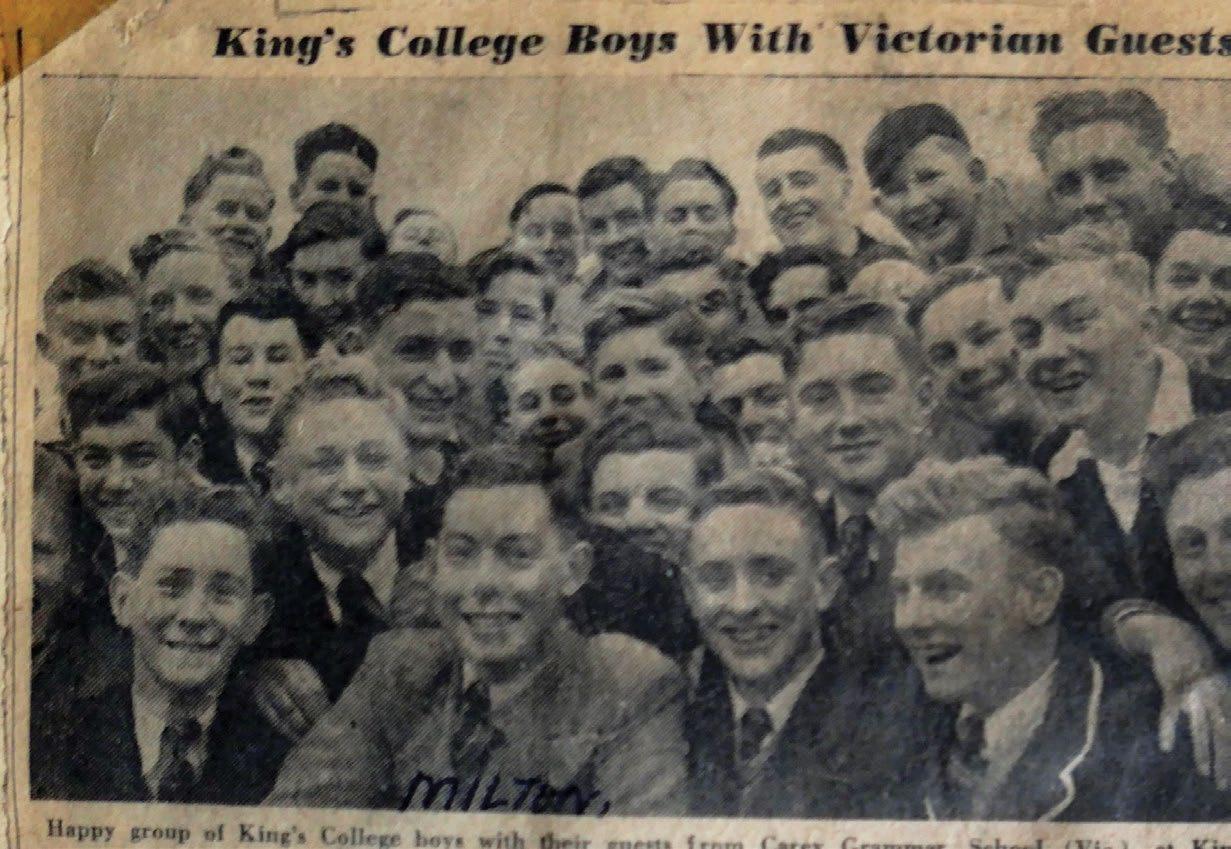
My father collected cuttings from both local Mid North and Adelaide newspapers, where my events at King’s College were often reported. I appear very happy in these early photographs. My brief years at King’s College were filled with happy and rich experiences, as well as honours that brought me great gratitude.
I have always thought of a school’s student body as being characterised by independence, integrity and a remarkable ability to triumph in adverse circumstances.
(Football matches can cement that last quality.)
As a Boarding House prefect, and later Head Prefect, I was fortunate to interconnect with a wider world. The task to nurture and strengthen the source of all that I could say and do and be—that inner self, that concept of yourself that you fashion and constantly refashion—began here, away from my strong family supports in Eudunda.
There are two great continuing tasks of self-education. One is to go on acquiring knowledge—at times in hundreds of small daily increments that refine what you already know, but at other times with huge leaps that take you to exciting new vistas of what might be. The key is to hold yourself ever open to the new. Never forsake your sense of curiosity.
The second is to preserve your inner moral, spiritual and intellectual armature. Dare to go on learning, knowing that this inner protective core will direct you into wise, humane and honourable uses of your knowledge.
Live in the moment–and keep smiling.
and Life Highlights
I remember a career highlight that also involved a nice reconnection from school days. In the 1980s I led a team developing an in-service training program for teachers with non-English-speaking background learners in their classes. The program was very successful and continued to be delivered for at least the next 20 years.
In the later stages of the project a colleague and I travelled to Port Augusta to run some workshops to trial the program. One evening, being bored with the motel room, I decided to go down to the town and check out the local pubs. My colleague declined to come, so I found myself alone in the front bar of a somewhat run-down hotel that I imagined would be patronised by local railway workers.
As I sat on my bar stool I saw a man emerge through a door and cross the room, and to my surprise he looked just like an old friend from
King’s days. If it was him, I thought, he must have come down in the world since I knew him.
In 1968 we had both done less well in our final exams than we hoped and we had gone fruit-picking together in the Riverland after school finished. I then went back to study and passed a supplementary exam that got me into university. He got a job in a surf shop. He and I remained in touch for a while but our life paths diverged in a number of ways and after a year or two we drifted apart.
Could this be the same old friend walking across the room, looking like a local worker?
He now had his back to me so, to find out, I called out his first name. He turned around and recognised me and came over to join me for a drink. What was he doing here, I asked. His answer was wonderful!
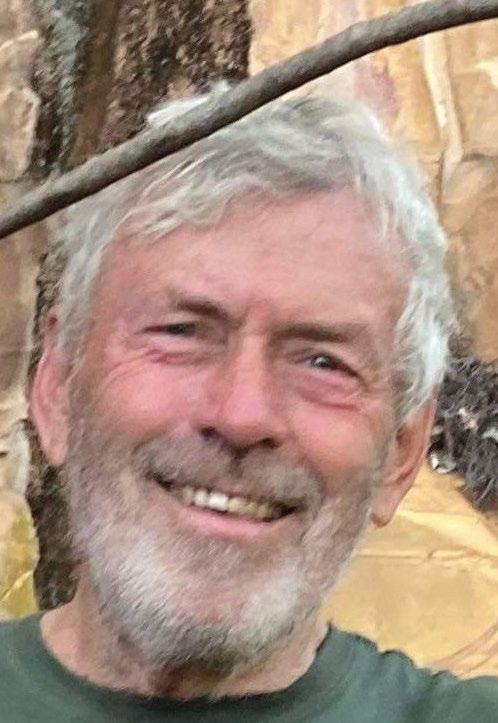
After we had lost touch years earlier, he had eventually gone back to school and then to university to do a Law degree. He was now a legal aid lawyer in that northern region and he had just won a major case against this very hotel that we were in, for discrimination against Indigenous customers. He was there that night to show his face and let them know he was watching them.
We had a great night, catching up and sharing our life stories, and we stayed in contact for some time after that. Eventually, distance and the busy pace of life led to us losing touch again, but I treasure the memory of that night and that chance meeting.
(Two of my children now work in Indigenous affairs, one as a corporate Indigenous engagement leader and one as a lawyer.)
Returning to the topic of careers, my team’s success with the training program gave me confidence and impetus to make a change in my life. I undertook another postgraduate degree (actually my fourth), this time in computer science, and I went on to have a long and successful second career in information technology from which I finally retired last year, aged 72.
Favourite King’s Memories
Drama Club, bridge at lunchtimes, History classes (even though I failed), naughty pranks in Physics class.
Live in the moment— and keep smiling.
In 1967 I married Carryll Margaret Abbott in the King’s College Chapel.
Career and Life Highlights
1967 – married Carryll Margaret Abbott in the King’s College Chapel
1968 – Service Award – Rural Youth movement
1982 – one of five Outstanding Young Australians (Jaycees)
1990 – Australia Day Citizen Award – Barossa Council
1991 – Life Membership of RDNS (Royal District Nursing Society)
1995 -–Melvin Jones Award for dedicated humanitarian services
1997 – Life Membership – Justice of the Peace
1999 – Meritorious Service Award – SA Liberal Party
1988 – RSL ANZAC of the Year Award
2005 – Queen’s Birthday Honours – Order of Australia Medal (OAM)
2024 – Life Membership of Lions International – in recognition of outstanding service as a Lion
...it was possible to know almost everyone.
Career and Life Highlights
Getting into computing when it was new (1964 with Bureau of Statistics in Canberra).
Spending three years in New York, which was interesting but not always enjoyable.
Favourite King’s Memories
Being in a small school where it was possible to know almost everyone.
Advice for your 18-year-old self
Don’t be so afraid to say what you want. You might get it. Other people can’t read your mind.
Post-war King’s was a small, hard school. We all had to pitch in.
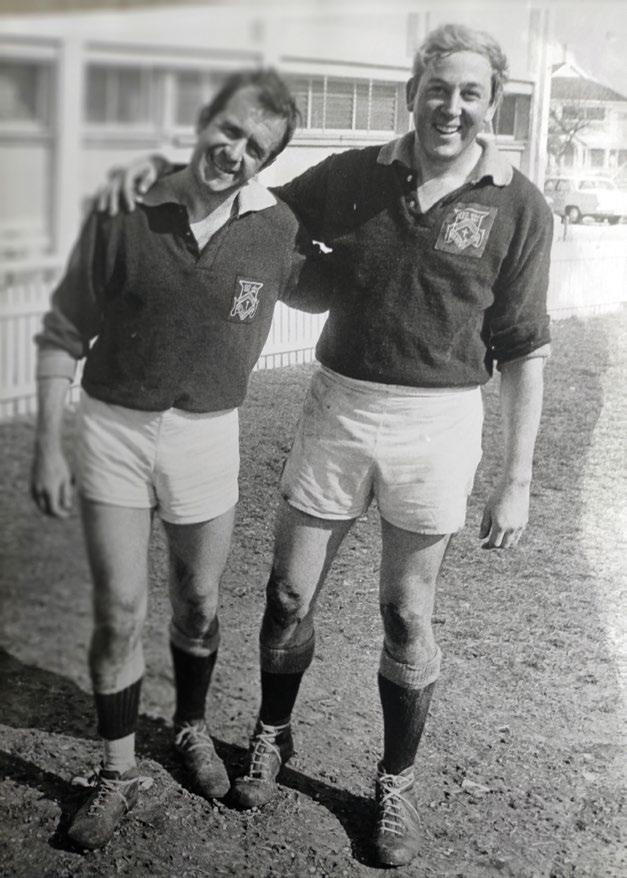
Halfway through 1954 I became a copy boy at The Advertiser. King’s men abounded—Bill Slade, John Stone and David Green were soon joined by Andy Hall, Graham Gambie, Dave Matthews and myself. During 18 months as a junior in our Melbourne office, I briefly shared a room with Graham Freudenberg, future speechwriter for Gough Whitlam.
I spent three decades as a sub-editor in Adelaide and completed an arts degree. I moonlighted at The Herald and the Labor Party monthly, and was editor for a time. I was the Labor candidate for the state seat of Bragg in 1985 and the federal seat of Sturt in 1987.
Electronic newspaper production was not people friendly. I retired early to help my wife Shirley, the dynamo who ran the Union Hotel for 39 years and instituted the Anzac Day party in Waymouth Street.
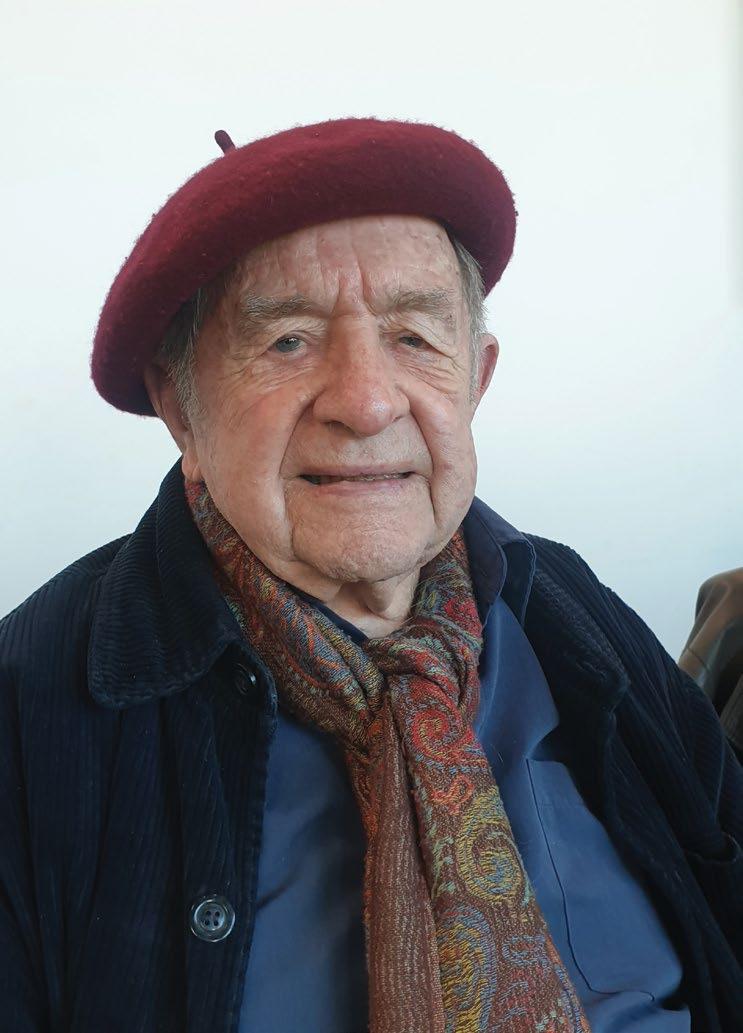
In 1960 I was a member of the first KOCA premiership team in Grade A2 of Adelaide turf cricket. Captain Peter Whimpress, Basil Sellers and Mike Sayer survive, but sadly not Glen Bagshaw, Allen Beilby, John Moody, Graham Oke, Geoff Will, ‘Bulla’ Williams and Ray Wood. I hung around long enough to enjoy success with our A3 football team in 1967 after our A3 Reserves team had won the club’s first flag in the curtain-raiser.
I was nearly 10 when I came to King’s in the last term of 1945 after a long spell in hospital with osteomyelitis in my left knee. C.C. Shinkfield arrived at the same time as Headmaster. I was a goody-goody but he did cane me once, after an errant ball smashed a Wright Hall window.
Post-war King’s was a small, hard school. We all had to pitch in. One classroom, where the Chapel now stands, was an army hut with kerosene heaters. Prefects wielded ‘the slipper’. Prayers and hymns sustained us.
I enjoyed Chemistry under Harry Wigan, who used a strap to civilise the unruly. Once he locked his class in the inner lab for misbehaviour and
they escaped through the window and the bike shed.
D.D. Harris kindled my love of literature and, through the Scouts, of nature. A.E. ‘Jerry’ Grimwade got me though Physics and, later, bought me my first beer. Paul Trudinger introduced me to Latin and Music.
I was a solid student, a milquetoast Queen’s Scout, a promising debater until imploding against Carey Grammar School, and a keen footballer generously awarded Colours.
At the Prefects Service at Norwood Baptist Church, I spoke against apartheid and discrimination. King’s instilled some sound beliefs.
Listen to your parents and your inner self. Have the confidence to tackle medicine as a career. Seek advice. Leave school at matriculation and try to become a better social animal. It’s a tough world out there. Grab your opportunities. Work hard. You have the ability to succeed if you apply yourself. Never take yourself too seriously. Build friendships. Keep fit. Drink water with your wine. Don’t be greedy. Help the needy. Take time off to smell the roses.
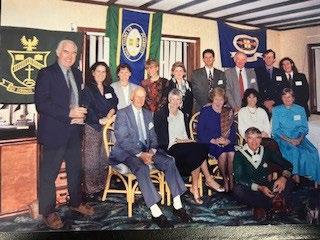
After graduating from King’s, I spent six months at LRWE Salisbury as an apprentice fitter and turner. I then joined the South Australian Mines Department as a draftsman.
I subsequently enrolled in the University of Adelaide science course in 1955. I did national service and went back to the family farm at Tooperang to milk cows, assist with shearing and grow gherkins. I was part of the Mount Compass AFL team which were premiers in 1958.
After urging from Harry Wigan and my parents, I went back to studying. I achieved a Bachelor of Science in 1961 and Honours in 1962.
In 1963, I joined the Mines Department as a geologist and worked in regional mapping around Eudunda and then in mineral exploration looking for iron ore south of Whyalla.
I met my wife to be, Helen Cawood, and we married in the Catholic Church in Henley Beach.
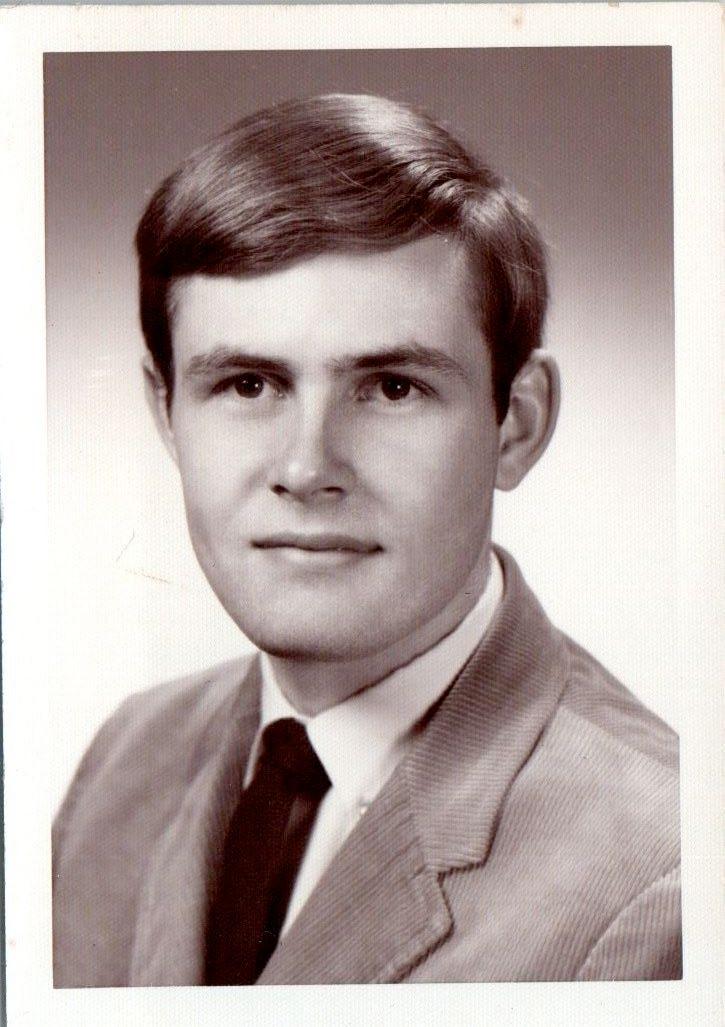
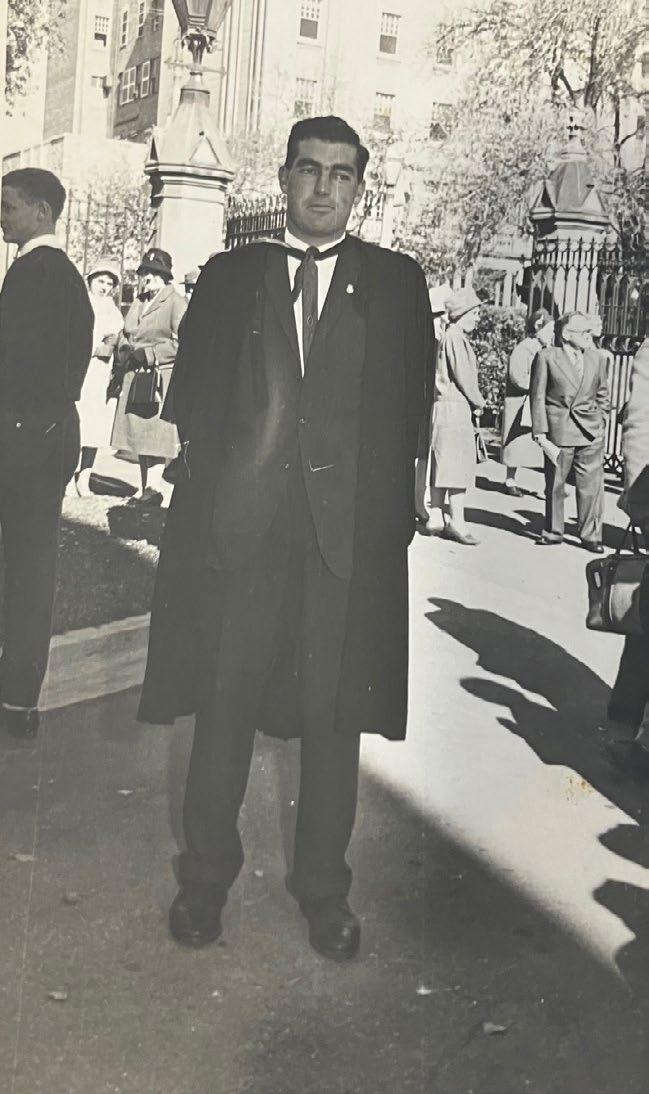
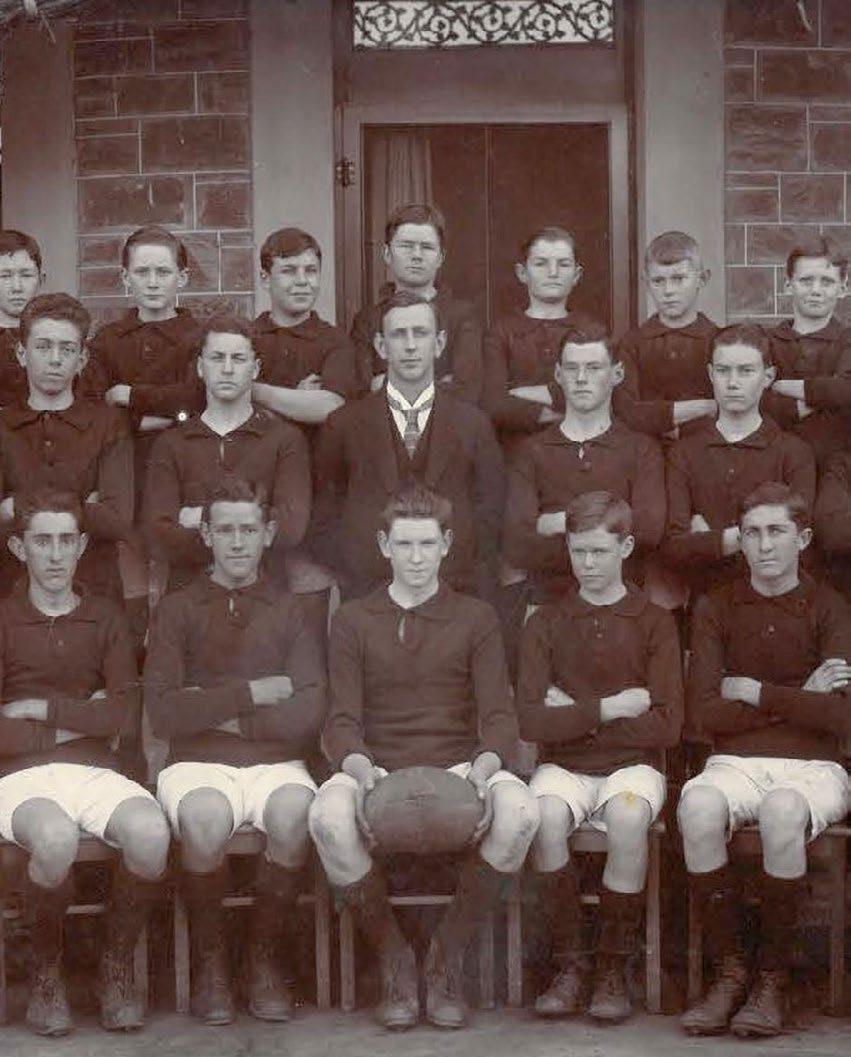
An opportunity presented itself in Mount Isa. I initially worked in the bush looking for new deposits and then moved underground and became the Chief Mine Geologist. I was kept busy at home helping raise three daughters, Michele, Jenni, and Samantha; our fourth, Nikki, followed soon after.
From Queensland, it was off to Western Australia: Posiedon’s Windarra Nickel prospect had been in the news and was being managed by a group of people I knew in Adelaide. I started as a Senior Geologist in 1970, responsible for the exploration drilling at Mt Windarra and the potential open cut at South Windarra.
In 1974, Poseidon was taken over by Western Mining and so I decided to move back to Adelaide to work with the Department of Mines. I went to King’s old scholars football games. Eventually, after many complaints from our daughters that it was too
cold in Adelaide, we looked for a warmer climate to live.
We family moved back to Queensland, but there were stints in Indonesia, the Philippines and New Caledonia.
I boarded at King’s College between 1950 and 1953, matriculated and won a Commonwealth scholarship. Don Harris and Harry Wigan helped. Students from Girton College attended science classes.
My contact with King’s had slacked off since moving to Brisbane. In 1994, Peter Habel organised an old scholar’s function at his home in Coorparoo. It was an enjoyable night. Ralph Cook’s widow and son attended.
One year, we swapped houses with the Scrymgours; over the years, we kept in touch with some old scholars, namely the Thomas, Robins, Whimpress and Applebee families.
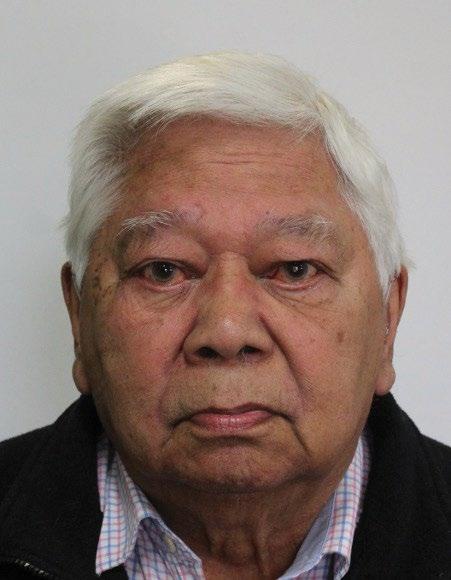
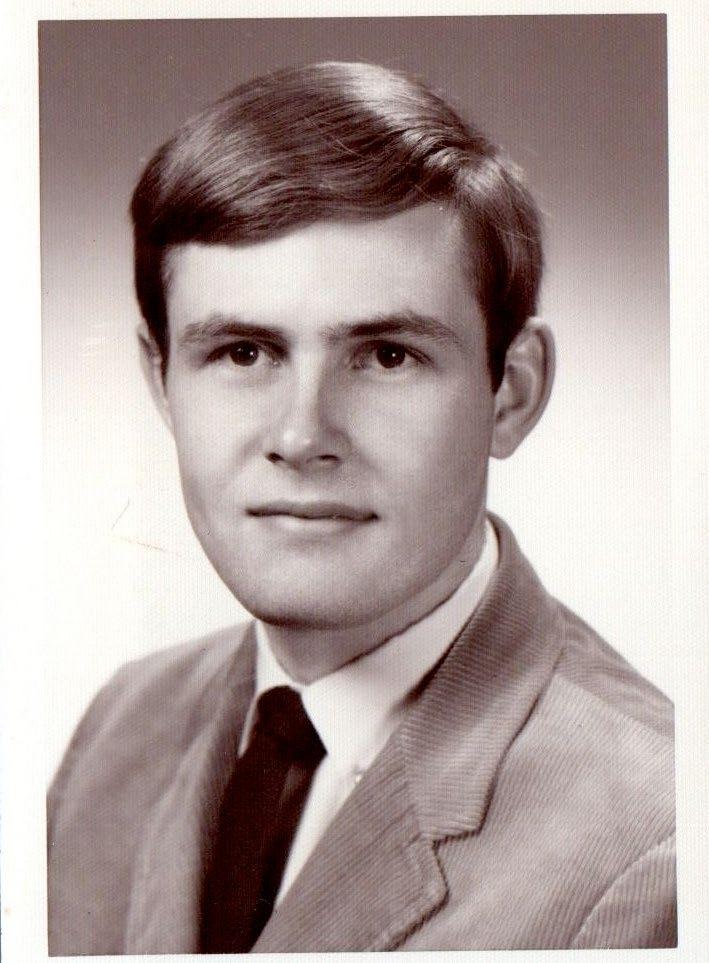
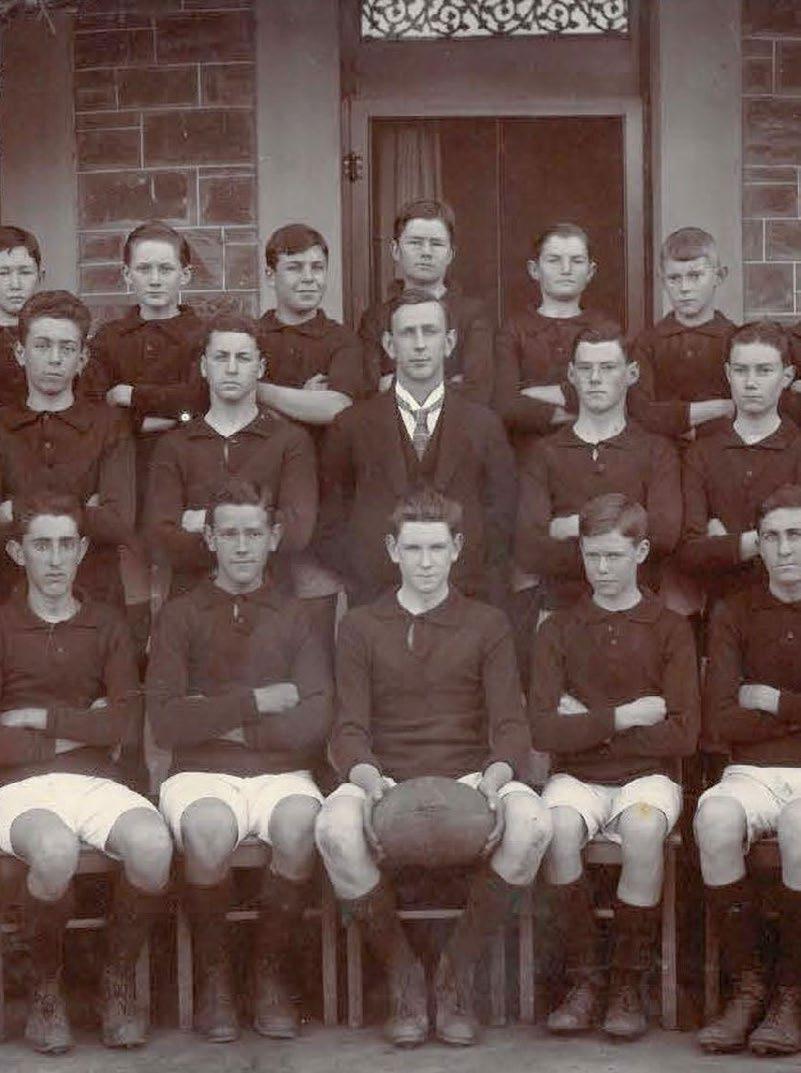
I thoroughly enjoyed the [boarding] families’ hospitality, as they took me in as though I too was their son.
After my studies I elected to remain in Adelaide permanently and obtained Australian citizenship. I married an Australian girl. Circa 1960 I was appointed as a liaison officer for Malaysian students in Adelaide and also a liaison officer for Malaysia, which was an appointment by the Malaysian government. I started working in War Service Homes as an assistant (clerical) in the Architect’s Section, then as Senior Loans Manager in the same department. Later I was appointed as State Manager (Registrar) of the Veterans Review Board. After retirement I operated hostels for international students with a total bed capacity of 250.
Circa 1970 I was appointed an Honorary Malaysian Consul in
SA. In recognition of my work the Malaysian King conferred upon me a knighthood (a Datuk). I retired from the Consul position in 2019. At that time I was the longest serving Honorary Consul in SA and also the longest serving Honorary Malaysian Consul worldwide. During my term as Honorary Consul I was invited to speak at various events. During one such event I mentioned that when I first arrived in Australia in 1954, by boat from Singapore, our first port of call was Carnarvon, WA. As it was a tidal port, the ship could not sail again (for Fremantle) until high tide the next day. The ship’s captain advised passengers to perhaps walk into the township for a visit. It was the middle of summer and a tiring long walk. It was hot and the only living Australian I came across was a black crow on a fence post,
welcoming us with his call— ’f....rk f...rk’. I said to myself, if this was Australia take me back home. I was 13 at that time.
Later, someone listening to my speech about this mentioned it to the Migration Museum in Pyrmont, Sydney. The museum authorities took it on board and featured my comments on a huge bronze display on the Pyrmont Wharf. I did not know about it until many years later when a student tenant of mine was visiting Sydney and saw it. He mentioned it, and my family made a special trip to Sydney to view it. It was awesome. Now, in my twilight and retired years I sit back and fondly reminisce.
I was a boarder, as were my three brothers who arrived at King’s the year before, and a sister who attended Girton. All the other boarders were farm boys, and during exit weekends and holidays all boarders had to move out. Quite a few boys invited me back to their parents’ farms. The ones I recall that gave me the greatest insight into farm life and farm families and were most enjoyable were at Quorn, Comaum, Gladstone, Carrieton and Johnburg, and later my current wife’s hometown of Eden Valley in the Barossa. I thoroughly enjoyed the families’ hospitality, as they took me in as though I too was their son. It was only in later years that I heard of the White Australia Policy, but never in my days in Australia have I encountered any such racial issues. Other Malaysians I come across say to me, ‘What about the White Australia Policy. Are there any racial issues towards Asians?’ My answer has always been, ‘What issues?’
Strive for what you believe in. And remember your parents and siblings. Achieve whatever you can and keep in touch with your childhood friends.
...their influence remains with me to this day and I am forever grateful to them and to King’s.
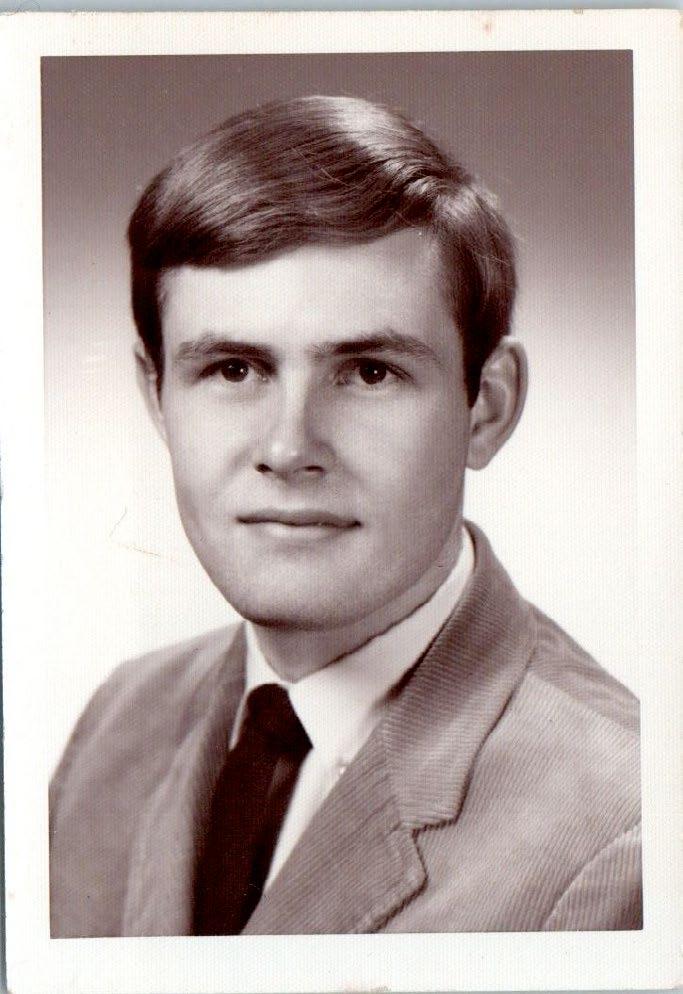
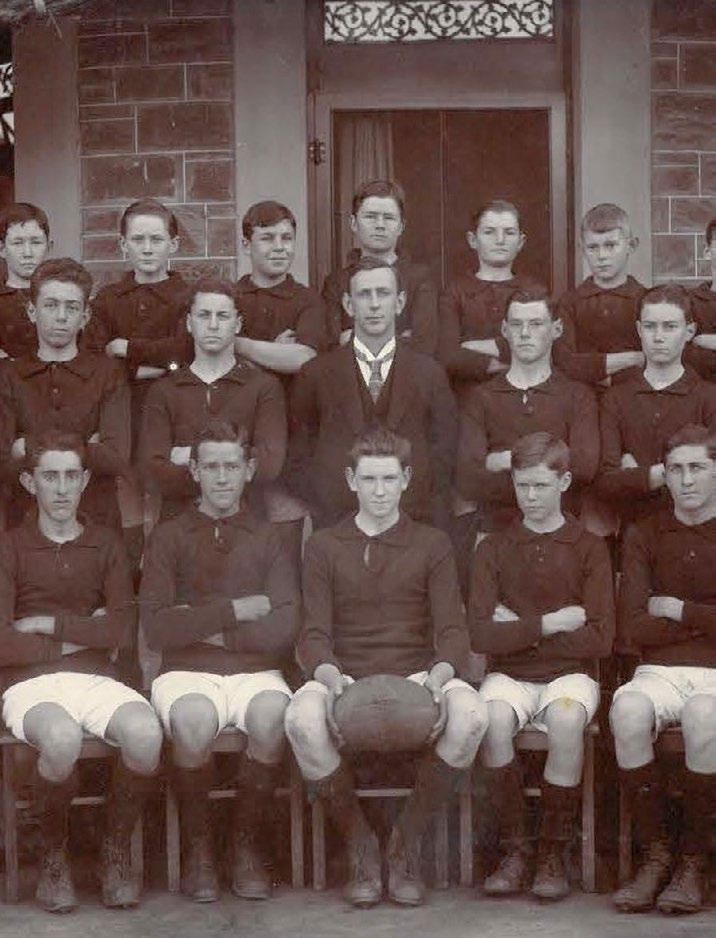
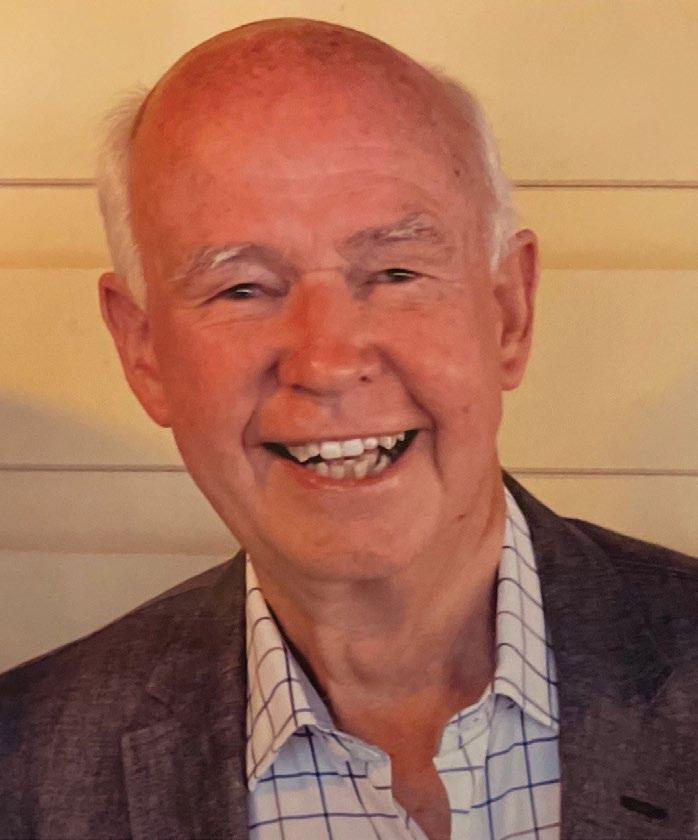
After leaving King’s I attended Roseworthy Agricultural College, then farmed for a couple of years before embarking on a working holiday overseas for about two and a half years.
From 1969 to 1972 I attended the University of New England, from which I graduated in economics and then went to Canberra to work in the Commonwealth Treasury. That experience was a first-rate foundation for becoming Executive Director of the Grains Council of Australia and then a private-sector agribusiness consultant. A highlight of that time was the removal of legislation and other impediments to efficient grain storage, handling and marketing, from which farmers benefited substantially.
During the 1990s, as Chief of Staff and Principal Adviser to the Chief Minister of the ACT, I played a major role in introducing performance-based budgeting and monitoring in the ACT, leading to substantial improvements in the effectiveness of the public service.
Having farmed for some 13 years at Yass, NSW, I now live in Yass with my wife Marie.
The real highlights of my life are marrying Marie and our three children, Cameron, Hamilton and Anna, who have grown into marvellous, responsible and contributing citizens.
Being given the opportunity to participate in and develop leadership in a broad range of activities.
The masters who played a major role in providing these opportunities and responsibilities were D.D. Harris and Paul Trudinger. Their influence remains with me to this day and I am forever grateful to them and to King’s for allowing them the freedom to teach as they chose.
Listen carefully to the wisdom of your mentors/teachers, evaluate it thoughtfully, question it and come back for more.
Be proud of yourself and your School.
About 23 years with ANZ Bank, where my roles took me to Head Office and the Principal Banking Offices in all the capital cities of Australia, including Darwin in the NT, as well as Auckland and Wellington in New Zealand. In later years with the bank I was part of the management team that computerised all SA and NT branches, and that involved the establishment of a courier network to ‘move paper’ by the quickest means possible. We used Lear, Citation and Westwind jets but prop aircraft within SA. Good training for my next 23 years at Neller Software in Adelaide providing human resources as well as asset management software to clients in Australia, NZ, PNG and SE Asia.
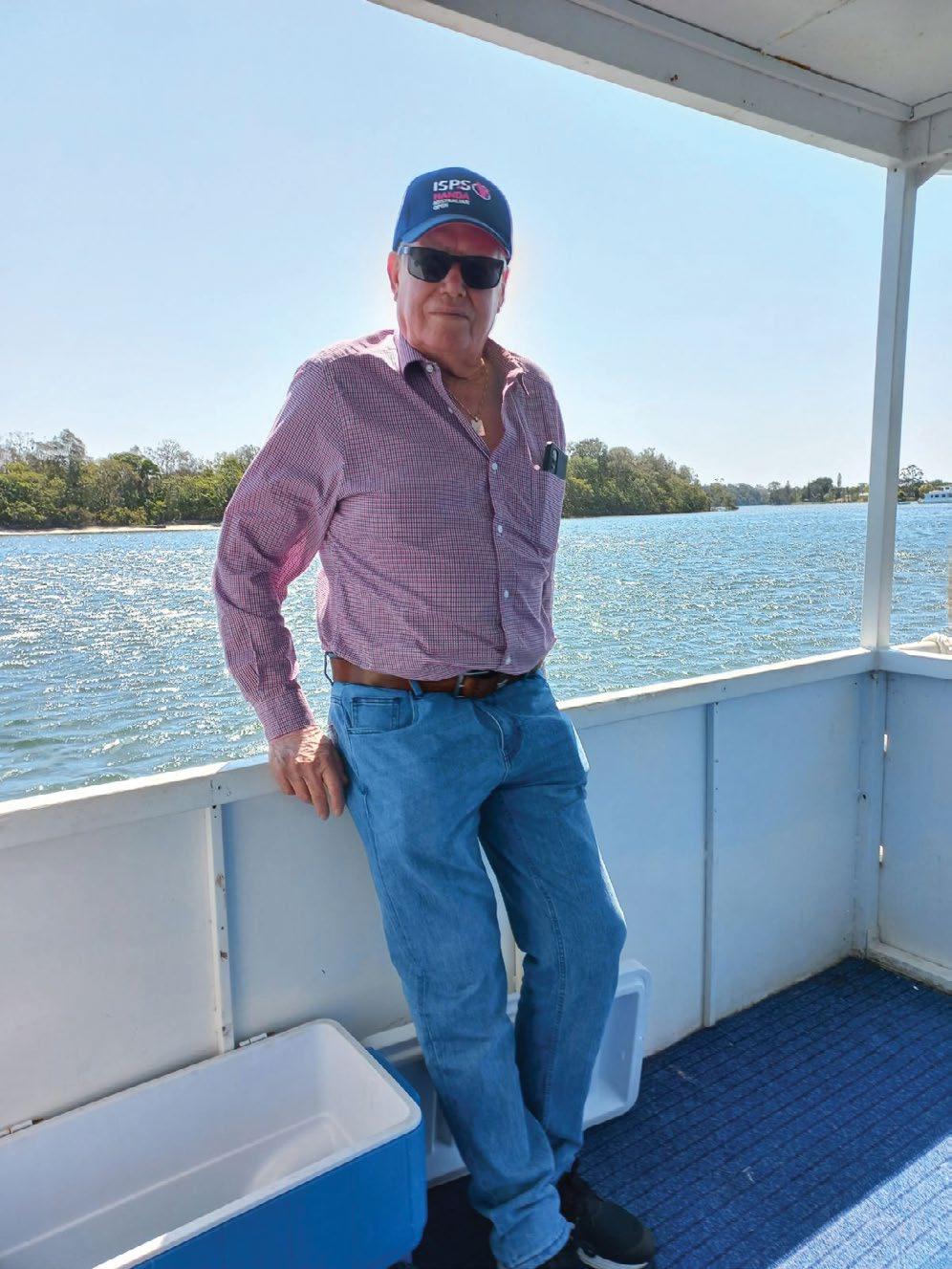
The HR software made it through the Y2000 concerns!
Three Welsh boys, Andrew, Matthew and Thomas, all spent time at Pembroke, with varying degrees of success.
The Boarding House and having 60 ‘brothers’. Performances by the Choir and Orchestra, as the genius of Paul Trudinger not only got us to sing but play instruments we hadn’t even contemplated.
We were a small school of only about 240 students so it was necessary to double up in the sporting arena. No specialisation for us. ‘Rex Sellers, you’ll play Cricket and Tennis; and Welsh, you don’t play Cricket but you’ll be opening bowler for the First XI next year’, said sportsmaster and
Economics teacher Garnet Hills. ‘Yes sir’, was the response and I’m still proud to be a Colours recipient for those two sports.
D.D. Harris somehow imparted enough of his knowledge to help me through English and Geography and I will be forever grateful for his teaching. Gerry Grimwade was another enthusiastic teacher at the time and, while I never found a vein of gold, I still enjoy geology and the benefits flowing from some mining shares!
Make sure your parents sent you to King’s when you were 13.
Be proud of yourself and your School.
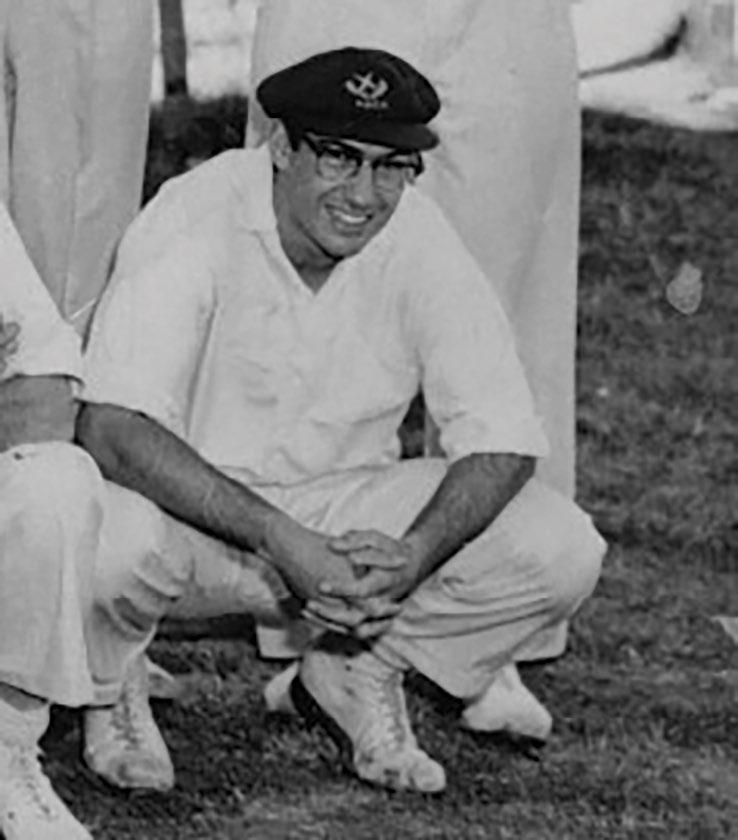
I continue to be an advocate for King’s College and Pembroke School...
Career and Life Highlights
1958 – Conveyancer’s certificate (School of Mines)
1958 – Real Estate Manager, Auctioneer, Business Agent’s licence
1959 – Commissioned in the Australian Defence Force (National Service and Defence Service medals)
1961 – Associate, Australasian Institute of Bankers
1975 – Bachelor of Economics (Adelaide)
1978 – Master of Urban and Regional Planning (Adelaide)
1979 – Associate, Australian Institute of Valuers (now Property Council Australia)
1981 – Fellow, Real Estate Institute of Australia
1981 – Registration as a tax agent
1983 – Bachelor of Arts (Adelaide)
1984 – Admitted as a Certified Practising Accountant
2000 – Bachelor of Laws (University of New England)
2000 – Admitted as practitioner in the Supreme Court of ACT
2001 – Admitted as practitioner in the Supreme Court of SA
2002 – Graduate Diploma in Legal Practice (Australian National University)
2002 – Master of Laws (specialised in Environmental Law) (ANU)
2009 – Doctor of Philosophy
(University of South Australia) –Thesis: The Wakefield Model of Systematic Colonisation in South Australia: an examination of with particular reference to its economic aspects
2010 – Certified Practising Planner (Chifley Institute, Canberra)
Favourite King’s Memories
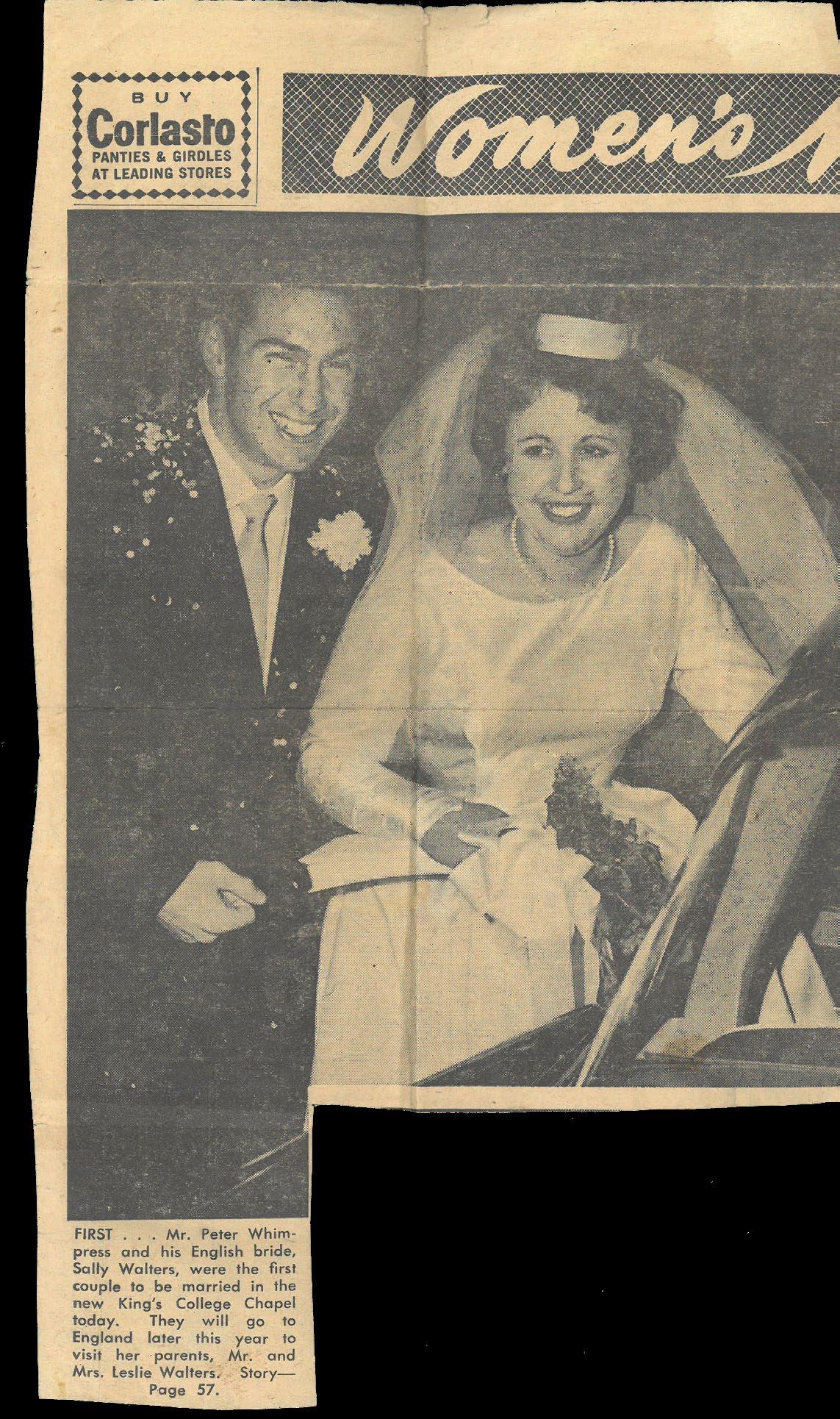
I was a boarder from 1950 to 1953, having been awarded a scholarship in sport to attend. I participated in both Cricket and King’s Old Collegians football until I was 38 years old. I was the first old scholar to be married in the King’s Chapel (1961).
I continue to be an advocate for King’s College and Pembroke School and, at 88 years old, I attend as many social events as possible.
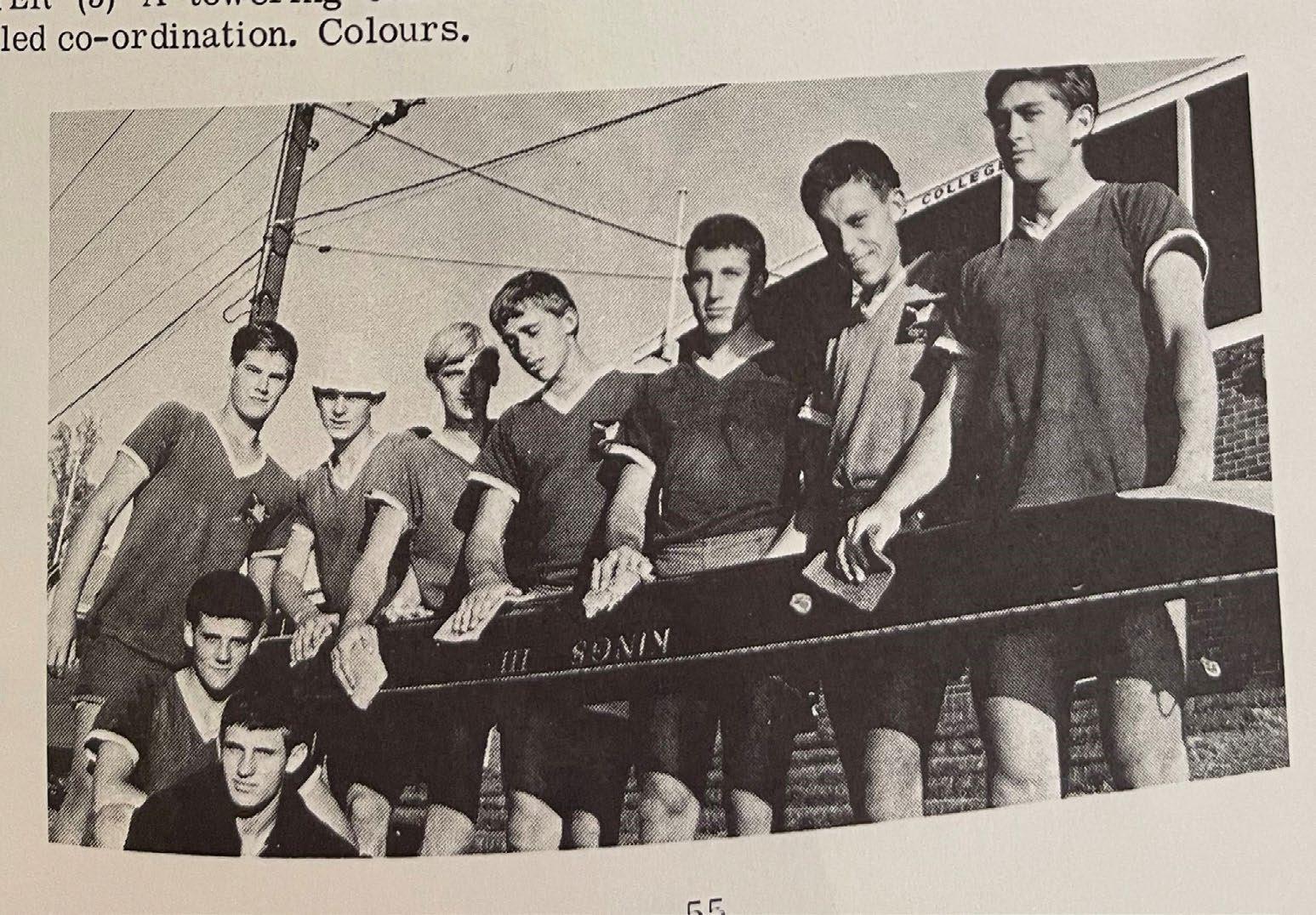
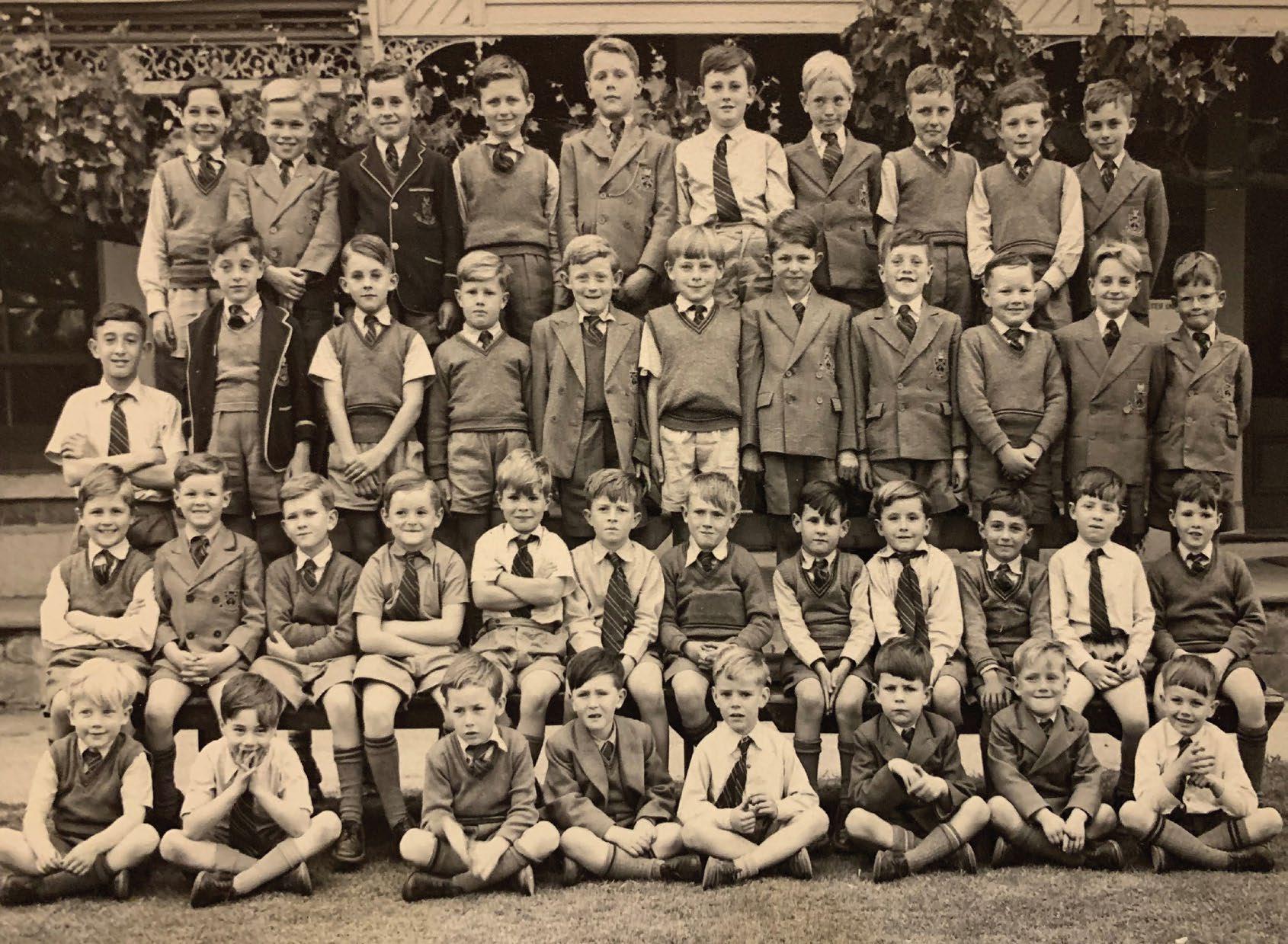
King’s boys in class in 1967
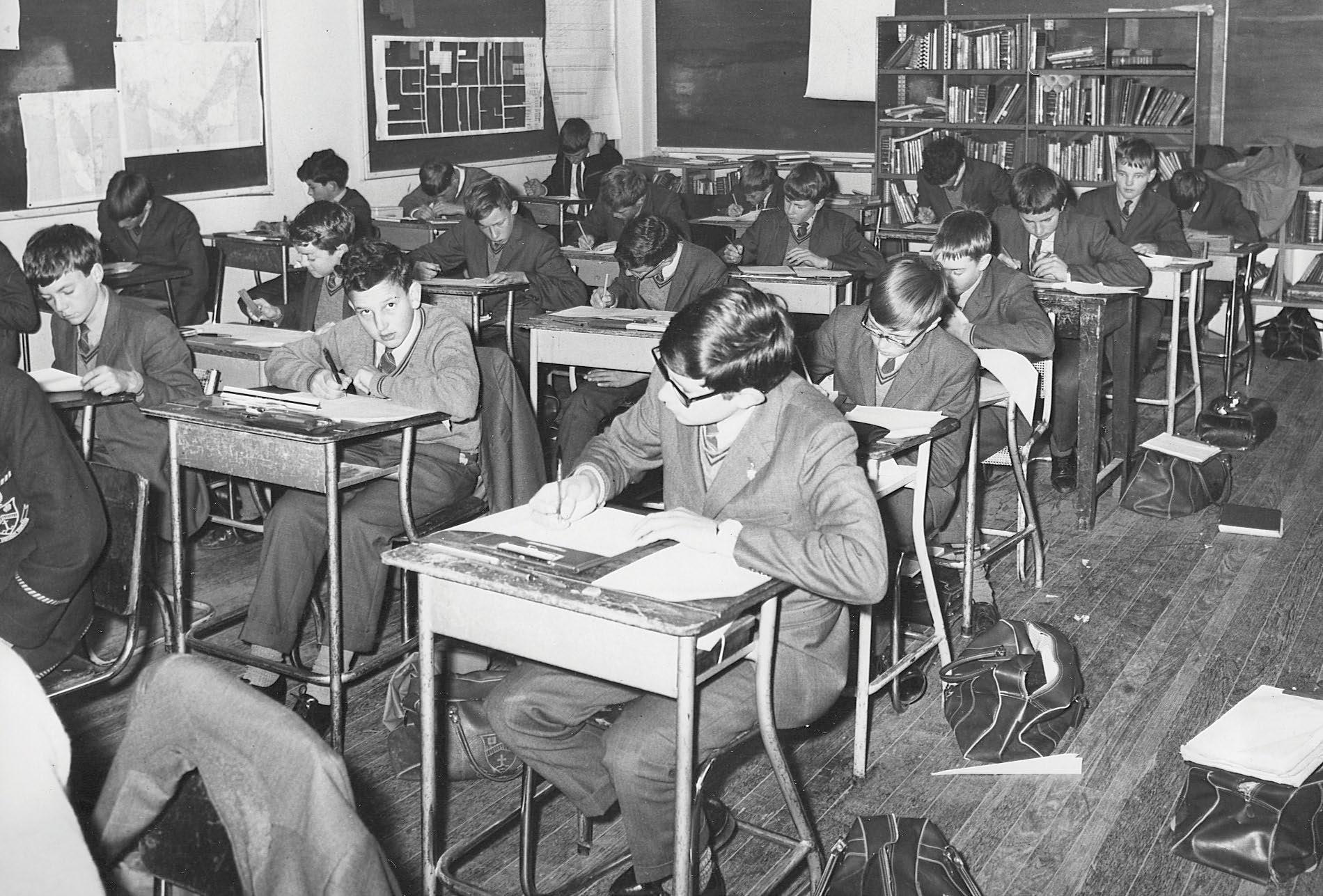
Many changes to society and the economy took place during the 60s as Australians began to question the status quo. Women continued to campaign for independence and equality, and First Nations people were granted the right to vote in national elections in 1962. On the pop culture front, ‘Beatlemania’ took over in 1964 as the British pop band The Beatles arrived down under. The first battalion of Australian troops were sent to the war in Vietnam in 1965.
Lindsay is currently retired....[and] writing books that he intends to publish on Amazon.
As of June 2024 Lindsay is a widower with an adult son and daughter and eight grandchildren.
He is currently retired and filling in his time with writing books that he intends to publish on Amazon.
On leaving school he completed an automotive apprenticeship.
After that he became the owner operator of a horticultural enterprise.
From 1982 to 2015 he was a director and part owner of an automotive repair company until ill health forced his retirement.
When home computers first became available Lindsay was an early adopter, so early that when he attended adult education classes on programming the computer language BASIC the college had
no computers. The students’ efforts had to be sent away on cards to be entered in a mainframe computer and printed out.
Later the college purchased one of the early Tandy computers. The students soon learned to save their work frequently because when the woodworking shop switched on their big saw the computer crashed!
Lindsay has purchased a long series of computers following the first one with 4 kB of RAM with tape cassette storage, increasing in power to the current 32 GB of RAM and TB disk drives.
During his student years he was such a bookworm that one morning the class teacher addressed his class with, ‘This class’s library book borrowing average equals the rest of the school.
But! Lindsay Allen (and another student) have borrowed 90% of those books!’
Lindsay attended King’s College as a boarding house student.
One afternoon another boarder told him, ‘Lindsay, there is a girl on the phone that wants to talk to you!’
He was immediately suspicious as there was no reason for a girl to contact him and too many of the other boarders were standing around trying so hard to be inconspicuous that they were actually conspicuous!
So, he put down the handset and ran outside where he could see the public phone box on the other side of the main road.
It was a pity no one was on hand with a movie camera because if King’s College could not claim the record for the most students crammed in a phone box they would have had the record for the quickest evacuation of a packed phone box!
John Moody and Don Harris greatly influenced me, both at school and in continued contact after school.
I am glad I chose medicine as a career, uncertain as I was in Year 12, when geophysics or engineering seemed more suited. In medical school, as in the Boarding House, you grow close to your year cohort (50th year graduation celebration this year) and suddenly you have another 100 amazing potential friends. The discipline of constant lectures and practicals and the pressure to learn are great training. I enjoyed every rotation and specialty I was exposed to and eventually chose generalism and particularly rural procedural general practice for the opportunity to enjoy the full breadth of medicine. The joy of 2,000 deliveries is equally matched by the rewards of end-oflife and palliative care.
I am proud of the culture of the Victor Harbor medical centre as a workplace and a training practice
for students and registrars.
I have also enjoyed working more remotely—as an obstetric locum in Ceduna and Kangaroo Island, in obstetrics in the Torres Strait and surgery on Thursday Island, and in retrievals and clinics on remoter islands like Saibai, only three km from the PNG mainland, where Torres Strait Islander Australians live with First World diseases and their Melanesian cousins three kilometres away die from Third World problems in childbirth, and of neonatal mortality, trauma and infections. Australia reaches out with some aid but the problems are immense.
Arriving at the Boarding House and having access to tennis courts, ovals, sports and the Library.
The wonderful friendships made in the Boarding School, living with
boys from every corner of the state and South-East Asia.
The exeat weekends, catching the south-east train or Birdseye bus to the west coast, going to friends’ homes and farms.
Boarding House masters, eccentric like Harry Wigan or Bob Oatey, who would play any sport with us and take us to Norwood games and change my football allegiance, much to my black and white grandfather’s disgust.
Dancing classes with Bunty Knox, who became an unofficial house mother to the boarders, enabling us to go to other girls’ school formals.
Some of the fantastic teachers, imposing but caring like John Moody; Maths with Dean Jaensch, and later in uni holidays being paid (a pittance) by Dean to recover records from the State Library for his PhD.
Don Harris and Scout hikes throughout the Adelaide Hills, KI and Tasmania, and learning compass and map navigation.
John Moody and Don Harris greatly influenced me, both at school and in continued contact after school.
I thoroughly enjoyed my time at King’s and have always been grateful for the Evans family scholarship that enabled me to be there.
Follow your dreams, take risks. Find a job you love doing, never stop learning.
Be curious about people and their lives, science and technology, history and culture.
Spend more time with your children, family and friends.
Enjoy your work but there are other things in life, and life goes past quickly.
Just enjoy yourself while you are young and free.
After leaving school it was home to the farm at Bordertown for nine years before moving to Adelaide in 1972.
Worked in a menswear shop and later Lunch Plus on Unley Road, which took up the next decade or so, before moving to Seppeltsfield in 1985. The Lodge Country House, Angaston Gourmet Foods and finally antiques (and more) at 24, kept me busy in the Barossa Valley until 2012.
I am now retired and living in Angaston with my partner of 52 years, Aaron Penley.
Sharing the Boarding House with about 85 other students.
As a member of the First Hockey team, going on the exchange trip to Carey Grammar School in Melbourne.
Advice for your 18-year-old self
Just enjoy yourself while you are young and free.
Ignore convention and find yourself.
Career and Life Highlights
I enjoy a reflective life as a medical consultant and novelist.
Favourite King’s Memories
I remember John Craik’s era-defining exposition, ‘Cook’s Law: the mass of gas liberated is proportional to the margin of defeat’. My contemporaries will understand. And for all the current students, I hope this was Pembroke’s nadir. On this I should say no more.
Advice for your 18-year-old self
Ignore convention and find yourself; discover your true identity.
I enjoyed my time at King’s.
Career and Life Highlights
Prefect 1965; Cadet Under Officer 1965; Hockey Firsts and Carey Grammar School Interstate Entry Trip 1965; Rowing Head of the River 1963, 1964, 1965.
Matriculated including coming second in the state for Economics; entry to Dentistry, University of Adelaide
Favourite King’s Memories
I enjoyed my time at King’s. The standout factor that the School promoted was that each boy must have a go and do their utmost in both sport and academic achievement.
Advice for your 18-year-old self
Ian, you have done well in both studies and sport and it is imperative that you continue and expand on these achievements.
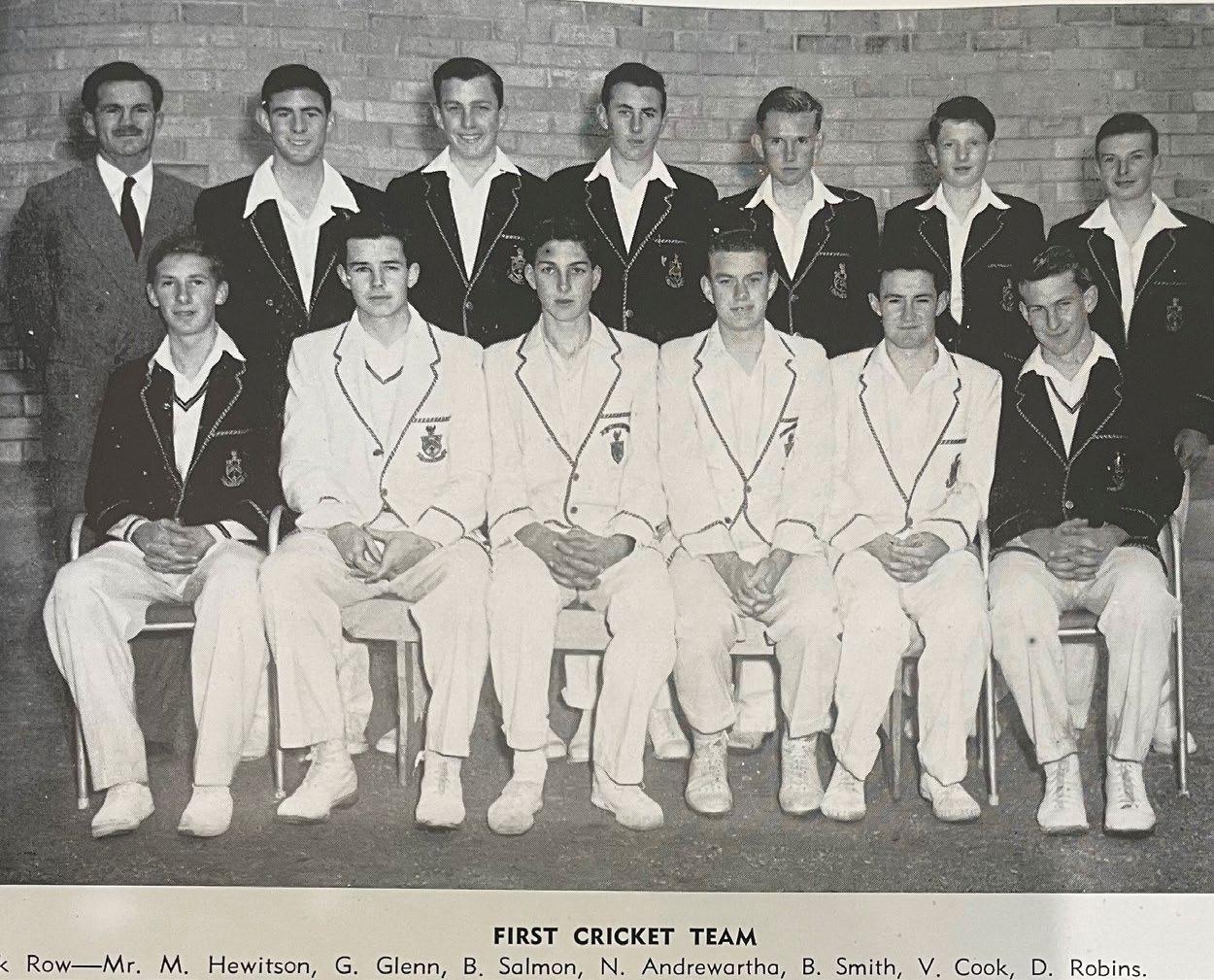
Listen to and act on the advice of trusted elders...
Being an agricultural advisor and research officer at Pt Lincoln, Loxton and Lenswood, and finishing in agricultural policy at Grenfell Centre.
After 40 years in the world of economics, rural economy in particular, retiring with a Commonwealth Medal!
At 62 years of age, qualifying as a personal trainer, and group and Tai Chi instructor. I still practise … the most elderly instructor in SA? It’s a very good ‘transition to retirement’.
Favourite
Making friends at King’s and remaining so to this day.
Playing in Football and Athletics teams, winning (pleasure) and losing (pain).
Listen to and act on the advice of trusted elders, old scholars, community club members (Rotary, Apex, Lions) and parents!
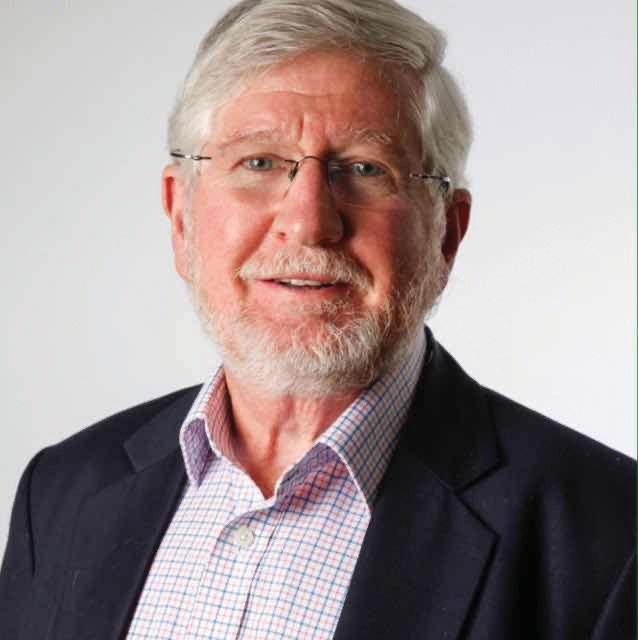
There was also a wide range of activities that gave us an understanding of the world around us...
After leaving King’s I graduated from the University of Adelaide, followed by an MA from the University of Western Australia and a PhD from the University of Washington.
I was a school teacher in the SA Education Department, lecturer at Adelaide College of Advanced Education, and then had a 20year career in the Commonwealth Public Service in Canberra in policy areas including communications, transport and the arts.
I left the public service and became a policy adviser to Labor leaders, shadow ministers, ministers and members of parliament, including Kim Beazley, Simon Crean, Mark Dreyfus and Luke Gosling.
King’s gave me a solid grounding in academic subjects, with teachers who were genuinely interested in our growth and development—
I particularly remember Don Harris, Ralph Jones, Harry Wigan, Malcolm Hewitson, John Moody, Lewis Sevcik, Dennis Mainwood, Dick Fricker, Allen Beilby, Angus Holmes, Ted Brailey and Ian Forbes.
There was also a wide range of activities that gave us an understanding of the world around us—sport, debating and a Model International Parliament on Friday nights, acting and drama on House Night, and interstate visits with Carey Grammar School in Melbourne.
As a son of the Headmaster Ralph Cook, and mother Dora Cook, with my older brother Venton and sister Dorothea (Girton), we lived on the School grounds in the Charlick House on The Parade, and we were very much a part of daily School life.
I have now not lived in Adelaide for many years and I have lost contact with many school friends, but I remember them with respect and affection.
I value my continuing connection with Pembroke, now a very different school from King’s College, through membership of the Old Scholars Association.
Seize the opportunities you are offered, take risks, be kind and enjoy life.
My memory of King’s was the total absorption of our time after formal class time with sports activity...
I graduated from the University of Adelaide with an honours degree in Economics and then went to the USA to undertake a graduate degree. I returned to Australia and worked for the Reserve Bank and then the Bankers Association in Sydney at a time of rapid change in the financial system. This led to a career with the ANZ Bank for 25 years. After retirement I enjoyed a considerable period on boards of a number of listed Australian companies. I recently celebrated 40 years of marriage—and still going. Both my children have followed a career in finance but to the best of my recollection I never pushed them into this career choice at all.
My memory of King’s was the total absorption of our time after formal class time with sports activity that changed with the season. For me the start of the school year was Rowing, which was followed by Football, which was followed by Athletics and then back to Rowing, including our first victory in the Head of the River.
Class time was a mixed bag that depended on the individual quality and skills of the teaching staff. By today’s standards it was pretty ordinary, with some very strange staff, but overall it seemed to produce a reasonable basis for later life.
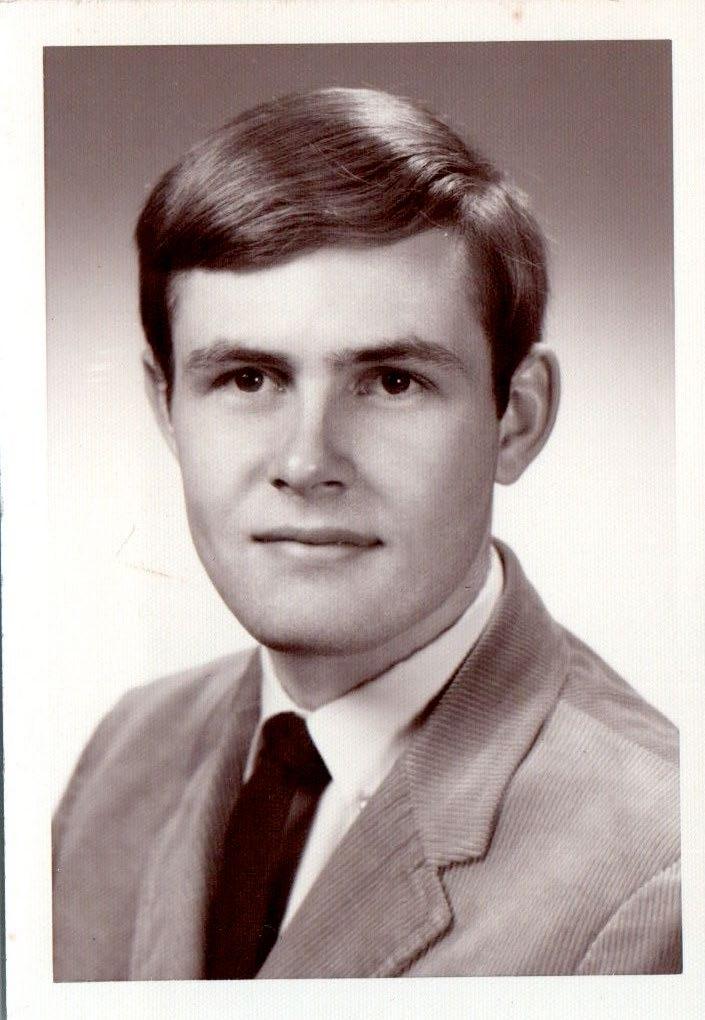
Focus more on the academic tasks at hand.
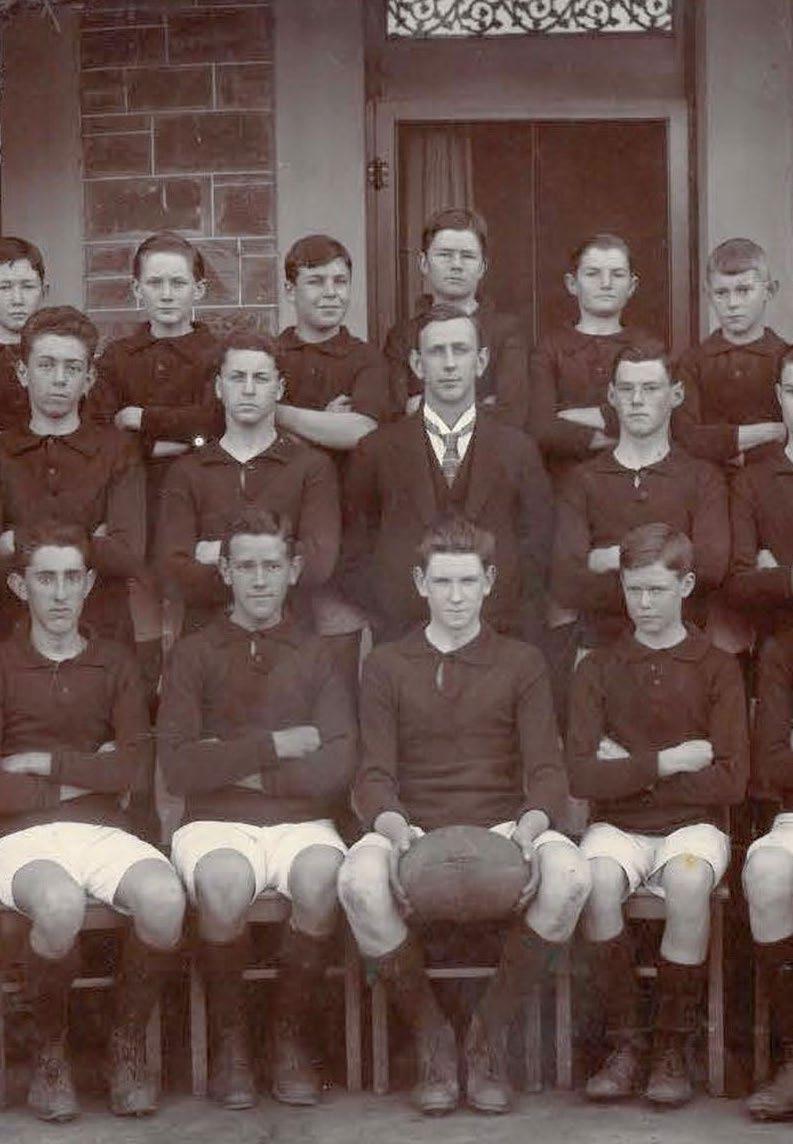
Thank you for the education, friendship, experiences and fond memories.
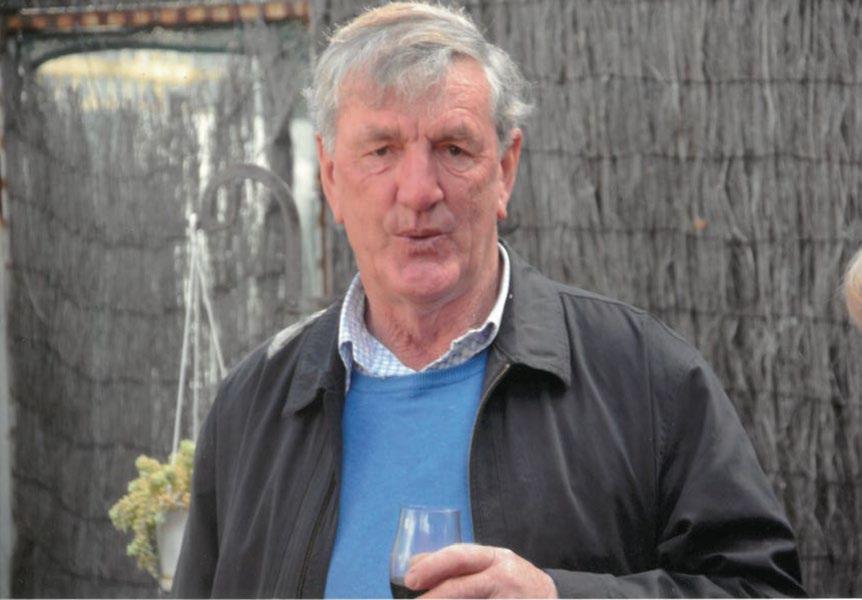
Good ‘evans’—well, not necessarily so—but there have been many who have passed through the doors at King’s and Pembroke over the years. It all started in 1929 when John Evans left Keyneton for his secondary school education at King’s College. His brother Lindsay followed a few years later. John often spoke of the enjoyable time and fellowship of boarding house life. He played both Cricket and First XVIII Football and was Head Boy in his final year.
Some 30 years later John’s eldest son Peter (1955–60), generation two, began at King’s in Grade 7, with exercise gained playing Tennis, Football and Athletics. Richard (1958–62), John’s second son, then followed with Hockey, Athletics and Rowing—winners in the Open Fours, Head of the River team, what a crew! Sports being the main interests, John’s only daughter Joan began at Girton in the following year (1958–63) and became Captain of the School in her final year. John’s youngest son Robert was at King’s during 1961–65 and became Head Boy in his final year. His sporting achievements included Athletics, First Football and First Cricket. John met his wife Ruth at a King’s
– Carey Grammar School Football Exchange in Melbourne, as her brother played in the match and John was billeted at her place.
Peter had three sons, generation three. Andrew (1982–85) was Head of the Boarding House, and Football and Rowing kept him active. David (1982–86) played Football, as did Jamie (1984–88). Richard had two sons. Michael (1984–88) was Head of the Boarding House and Head Boy of the School, with Tennis and Rugby Union keeping him fit. Timothy (1986–90) enjoyed Football and Rowing. Joan, who was married to G. Hurn, had four girls, all boarders at Pembroke School. Katherine (1985–87) was Head of the Boarding House and played Tennis and Netball, as did Susan (1987–89) and Jennifer (1988-90). Anna (1990–92) also played Tennis and Netball but joined Athletics and Cross-country as well. All the girls were outstanding sportswomen. Robert moved to Melbourne to work and had two daughters and a son Tom, who attended Carey Grammar. Robert sadly passed away after a long illness on 12 January 2019.
Peter had four grandchildren who boarded at Pembroke, Andrew’s two and David’s two – generation four. Jonathon (2012–16) enjoyed
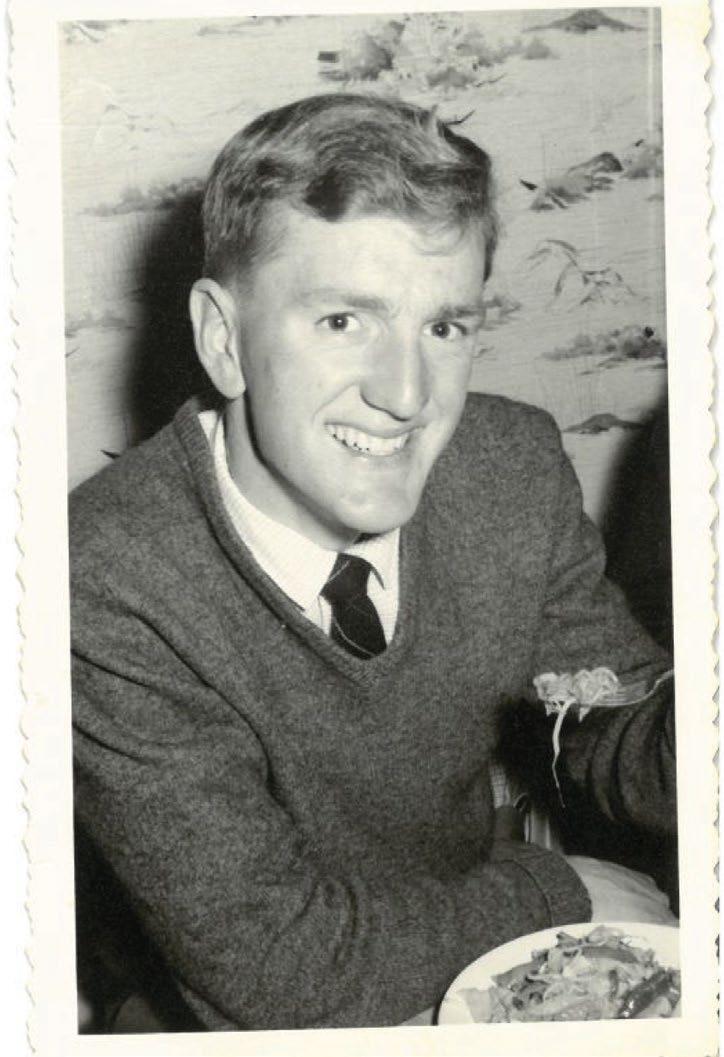
Athletics, Football and Rowing. Damien (2014–18) played Football, as did Nicholas (2014–16) and Ryan (2017–19).
Richard had two grandchildren that attended Pembroke School as day students. Alice (2016–21) played Hockey and Soccer, and George (2019–24) joined Athletics and played Football.
Joan had two grandchildren who boarded at Pembroke, who were Susan’s daughters. Georgie Sharman (2015–19) was Deputy Head of the Boarding House, House Captain of Mellor and involved in Netball, Tennis, Swimming, Athletics, Touch Football and Cross-country. Her sister Lucy Sharman (2017–21) was involved in Volleyball, Water Polo, Soccer and Hockey. She has been selected in the Australian Hockey Team for the Paris Olympics.
There are many more of John’s relatives who have passed through the gates of King’s College and Pembroke over the years, but enough is enough.
Thank you for the education, friendship, experiences and fond memories.
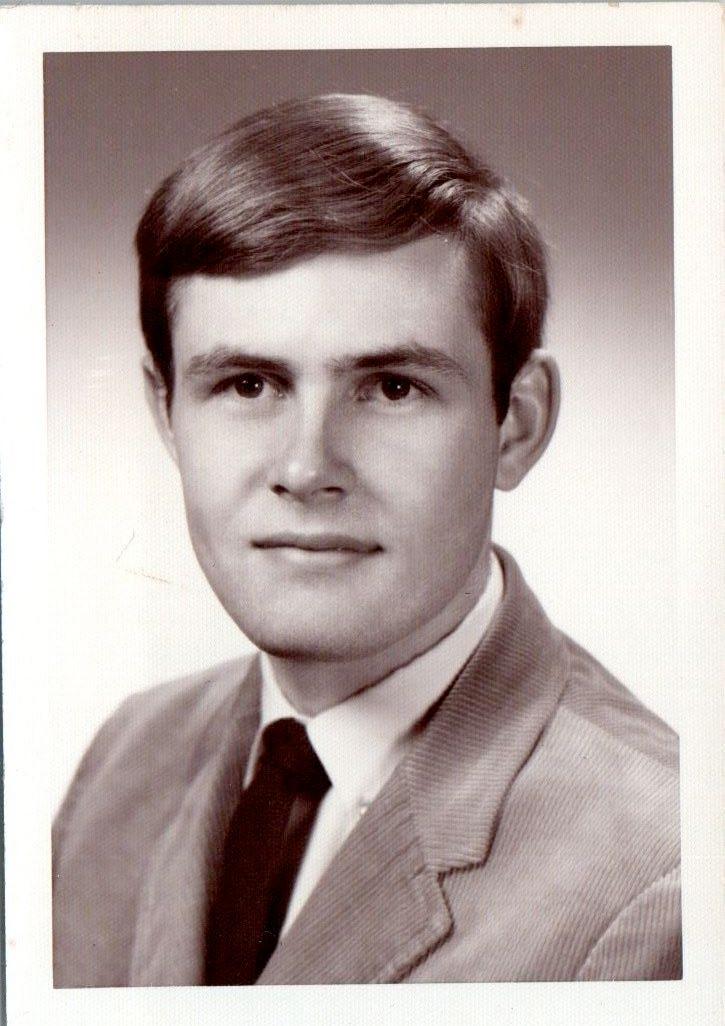
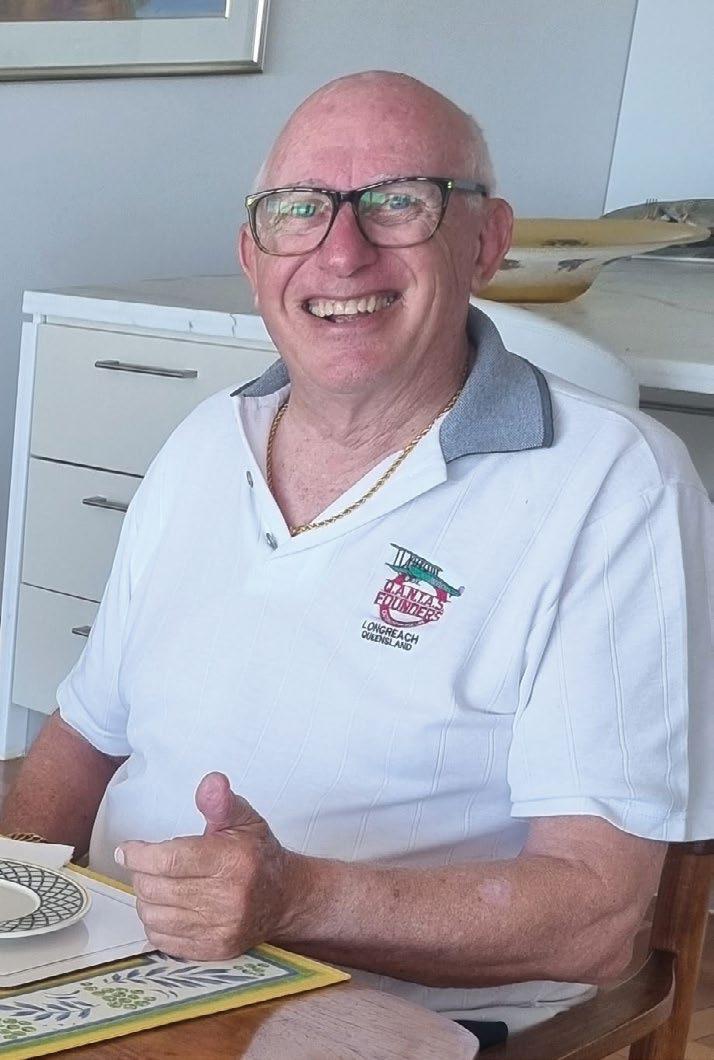
Don’t upset the coach.
Career and Life Highlights
Pilot (Flying Officer) In RAAF
Living overseas, Malaysia, for two and a half years as a pilot in the RAAF
Owner of own business (motels and hotels within South Australia)
Retired now
Favourite King’s Memories
Lots of fun on Rowing camps
In the First VIII at 15 years of age
In the First VIII for four years
Won two Head of the River titles for King’s 1966 and 1967
Won Australian Schoolboy Eight National Championship 1967
Advice for your 18-year-old self
Balance my studies and sport more effectively
Be a better student and take notes in class
Not muck around so much
Don’t upset the coach
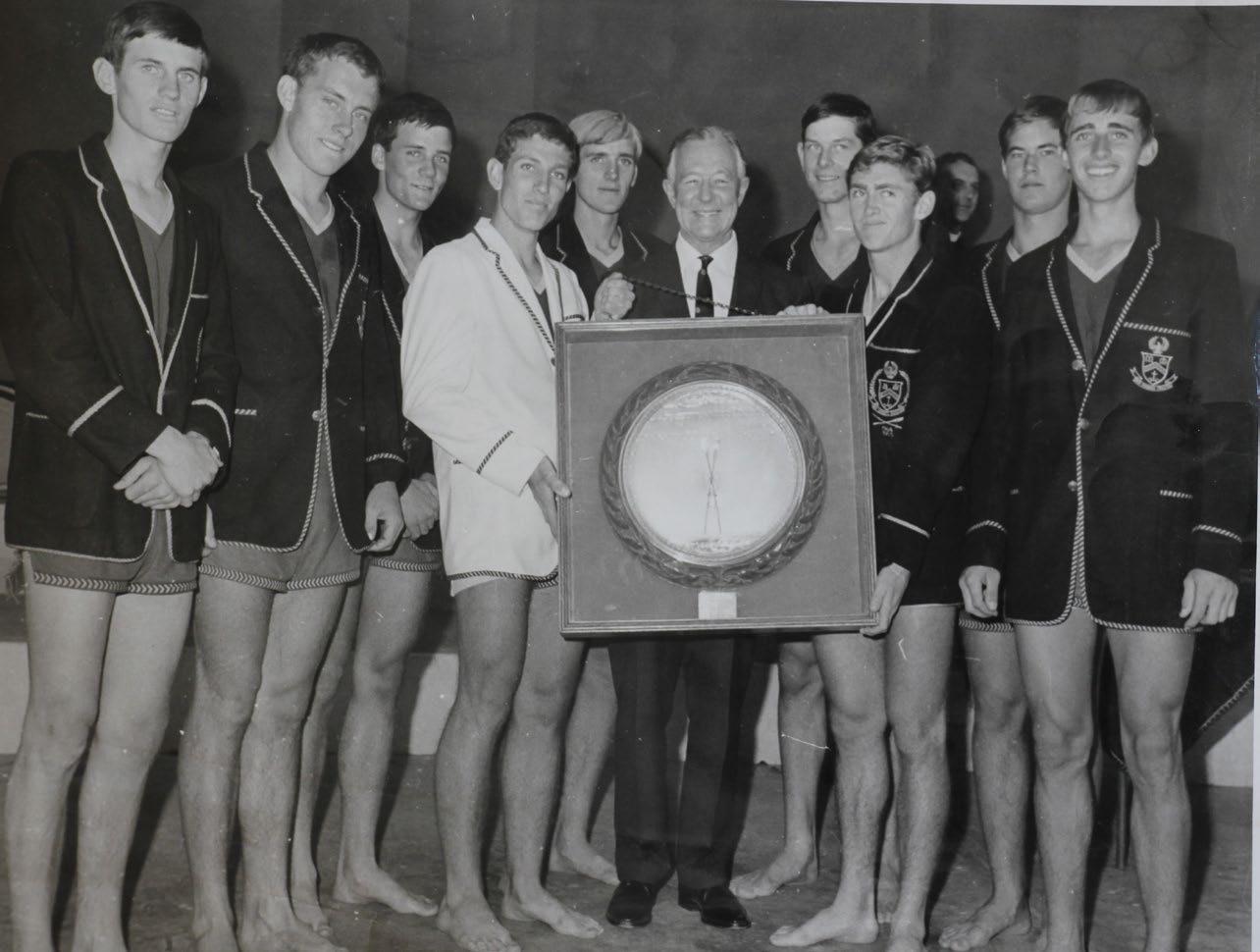
Winning the Head of the River in 1966.
Started work as a chain-man for a surveyor, then worked on The Ghan Railway line setting out for bridges etc. As that was working away from home, I changed direction completely and grew meat chickens for various companies, from day-old to various ages depending on market requirements, up to approximately 49 days old.
Winning the Head of the River in 1966
Catching the bus from Semaphore to the city then changing buses to go out to Kensington, sometimes with my brother Trevor. When Trevor got his licence he drove us both.
Maintained contact with Rowing Coach Graham Coldwell until his passing.
Start playing the field.
The first year at King’s was probably the happiest of all my schooldays.
I worked on the family farm with my father from 1962 to 1964. Then I had a trip to Ayers Rock (Uluru), Darwin and the Birdsville Track with King’s ‘old boy’ Kip Murray. In 1968–69 I had a 12-month working trip around Australia on a motorcycle. In 1972 I took over the running of the family farm from my father. In 1978 I flew in a 747 Jumbo jet to Europe with Captain Kip Murray. I spent six months away and rode a motorcycle from London to Athens. In 1984–86 I had trips to the USA and Canada.
In 1988 I met my partner Eliska. We produced four children together between 1988 and 1995.
I am still farming in 2024!
Favourite King’s Memories
For two years I cycled to School most days from our Broadview home. The first year at King’s was probably the happiest of all my schooldays. Then in 1960, my last year, I boarded privately and had four changes of board, which wasn’t ideal and my results were not good. I boarded near the School for a while with King’s boys Tony Noblet and Abang Abu Bakar, and that was great.
Advice for your 18-year-old self
Give your ear to all and your tongue to few.
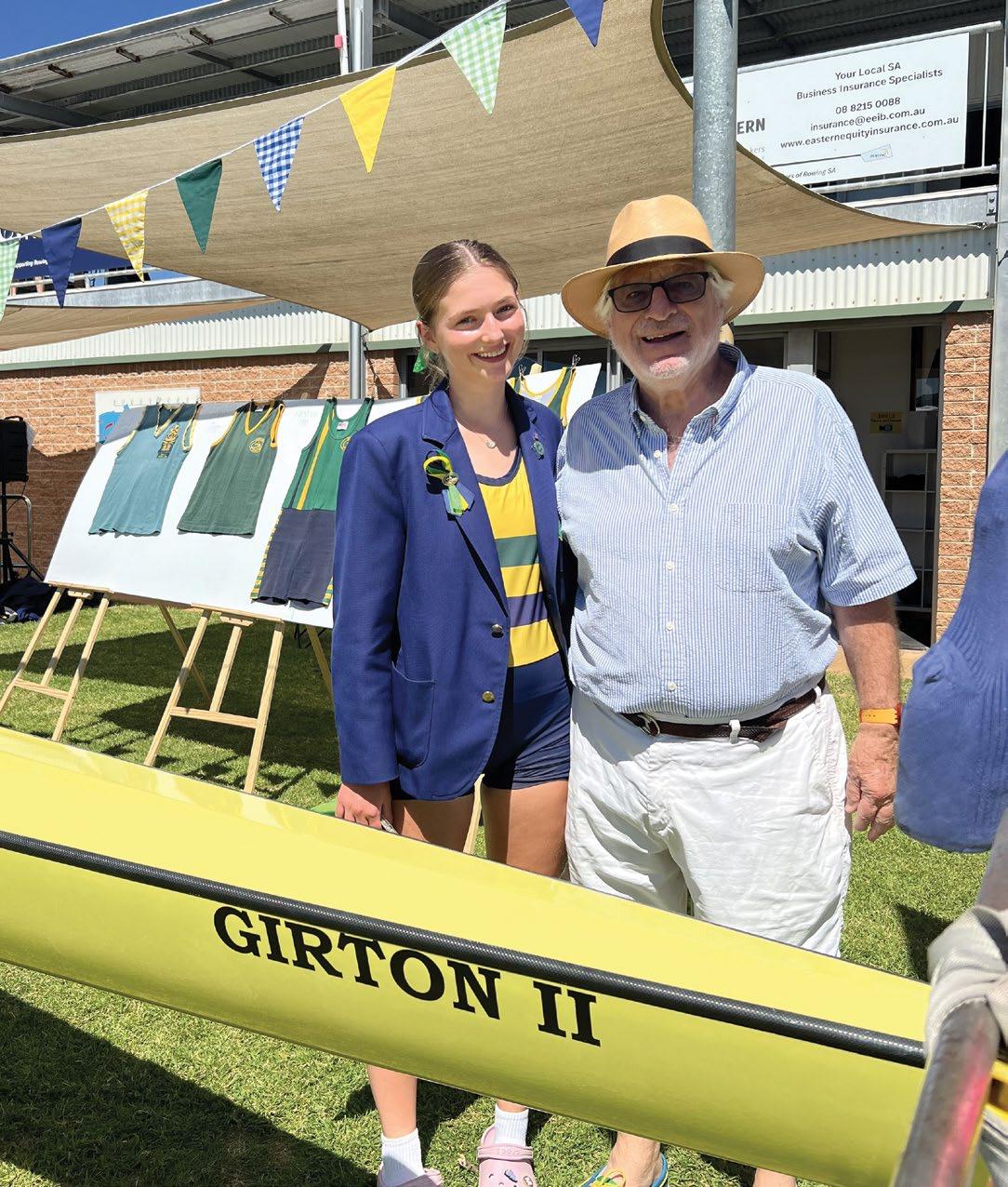
The photo of me includes Sue Groacock (née Kirke). Both her parents taught at King’s. Her uncle was D.D. Harris, a legend of King’s College. She is wearing her Uncle Don’s Scout hat!
Play hard and work/study hard.
Director of Delfin, a leading urban and community developer throughout Australia.
Achieving a BEc degree at the University of Adelaide.
Favourite King’s Memories
Influence in my life from D.D. Harris; love of Geography; Boy Scout camps; member of the very first First VIII Rowing team; married to Sue Rowe in UK in 1968 and two years travelling throughout Europe; my family of two kids and three granddaughters, who all attended Pembroke from Year 1.
Advice for your 18-year-old self
Play hard and work/study hard.
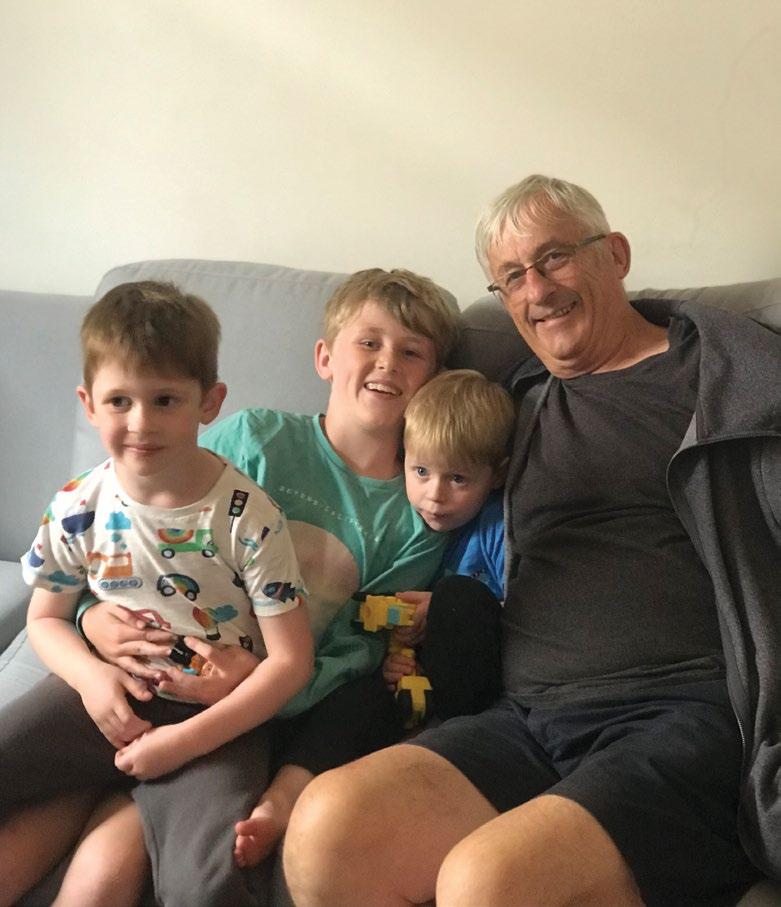
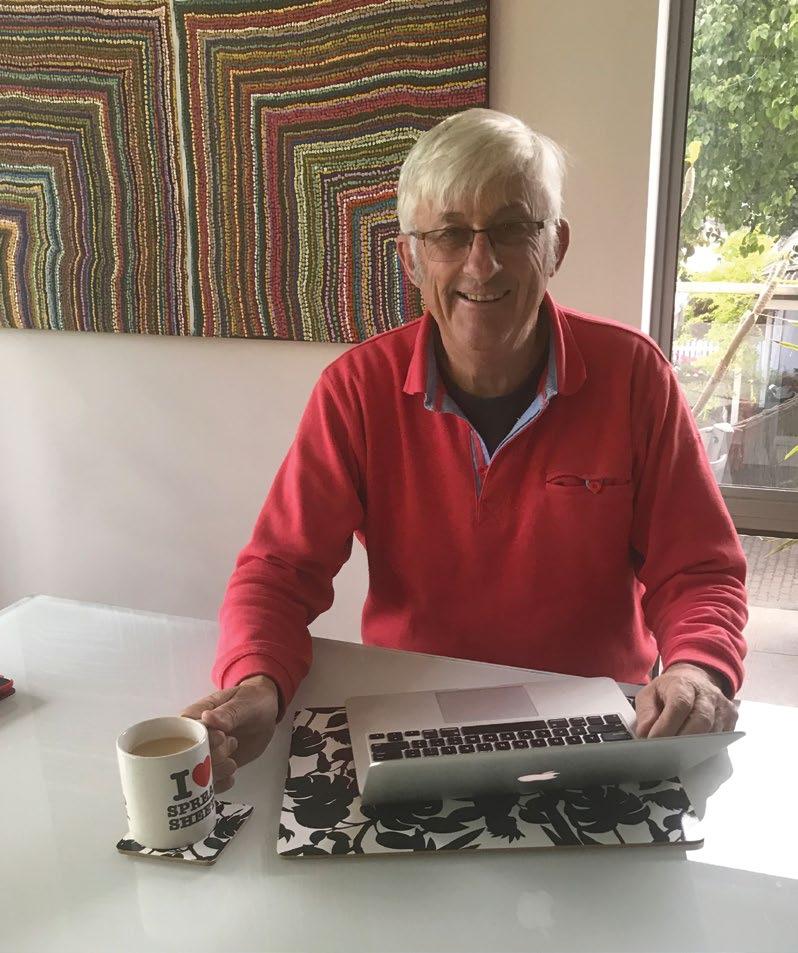
Enjoy yourself.
I have two children, Sarah and Andrew, who are both Pembroke old scholars.
I graduated LLB from the University of Adelaide in 1972 and was admitted as a solicitor, Supreme Court of SA, in December 1972.
I practised as a litigation solicitor in Adelaide until June 1998, firstly as a solicitor then partner until 1982. Until 1998 I was at Wallmans then Fisher Jeffries & Co. At Wallmans
I specialised in health law, principally medical negligence, acting for doctors and dentists and their medical defence organisations.
I also acted in defamation matters.
I was significantly involved in the Law Society of SA Professional Indemnity Scheme (which commenced in 1982) for over
30 years, initially as a member of the Claims Committee, and subsequently as inaugural chair of Lawguard (1997–2001) and later chair of the Claims Committee (2008–17). From July 1998 until June 2007 I was employed at United Medical Protection, initially as a senior adviser and subsequently General Manager Claims, Deputy CEO, Acting CEO and then consultant.
From late 2007, having returned to live in Adelaide, I conducted a consulting practice to indemnity insurers, solicitors and professional organisations.
Highlights included supporting my teenage children through my wife’s (their mother’s) terminal illness and death, and through life’s challenges, while continuing my
own professional and personal pursuits.
I played a key management role in bringing United Medical Protection out of provisional liquidation and in its ongoing recovery.
I was a significant participant in medical insurance committees, particularly concerning law reform, and a leader in establishing and consolidating the SA Law Society Professional Indemnity Scheme.
I had a key management role at Wallmans Solicitors, emphasising business efficiencies including being the first Adelaide law firm to have screens on solicitors’ desks.
I mentored numerous professionals as they established their careers.
Board roles were:
Chair SAPMEA June 2008 – June 2014
Chair, then director of Lawguard 1997–2004
Chair then director of SANTS 2008–22
Veterinary Surgeons Board SA, Deputy to Presiding Member 2015–21
Member (sessional) SACAT 2017–23
Chair Adelaide University Cricket Club 2008–16
Great friendships, great opportunities to participate in many activities, good relationships with most teachers.
Enjoy yourself.
Look, listen, observe and make choices that are right for you.
Have fun.
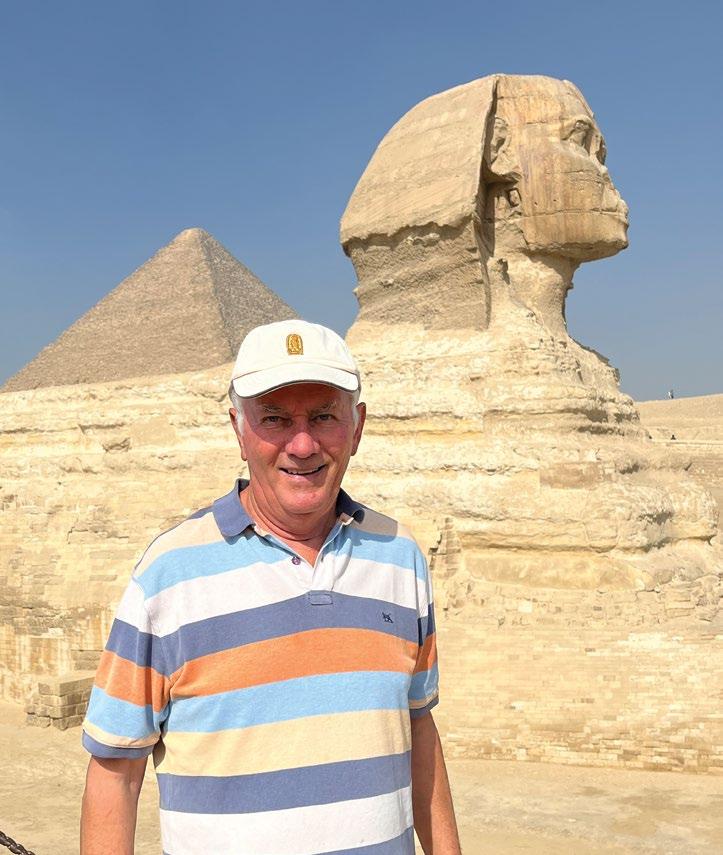
Don’t sweat the small stuff and get a better life balance.
After matriculating in 1969 I attended Flinders University, graduating in 1974 with a BA DipEd. My entire career was spent as a Humanities teacher at four schools: Norwood High (1975–81), Correspondence School (1982), Marryatville High (1983–92) and Glenunga International (1993–2016). History, Geography and Tourism were my principal subjects and I was fortunate to serve on the executive of the GTASA (Geography) and CASTT (Tourism) associations. I always enjoyed participating in extracurricular activities, in particular with a sport focus, and managed a number of boys’ state soccer teams, competing in the national championships.
Life highlights are meeting my wife Robyn and raising and being a proud parent of Emma and Kate, who both attended Pembroke. In retirement we have travelled
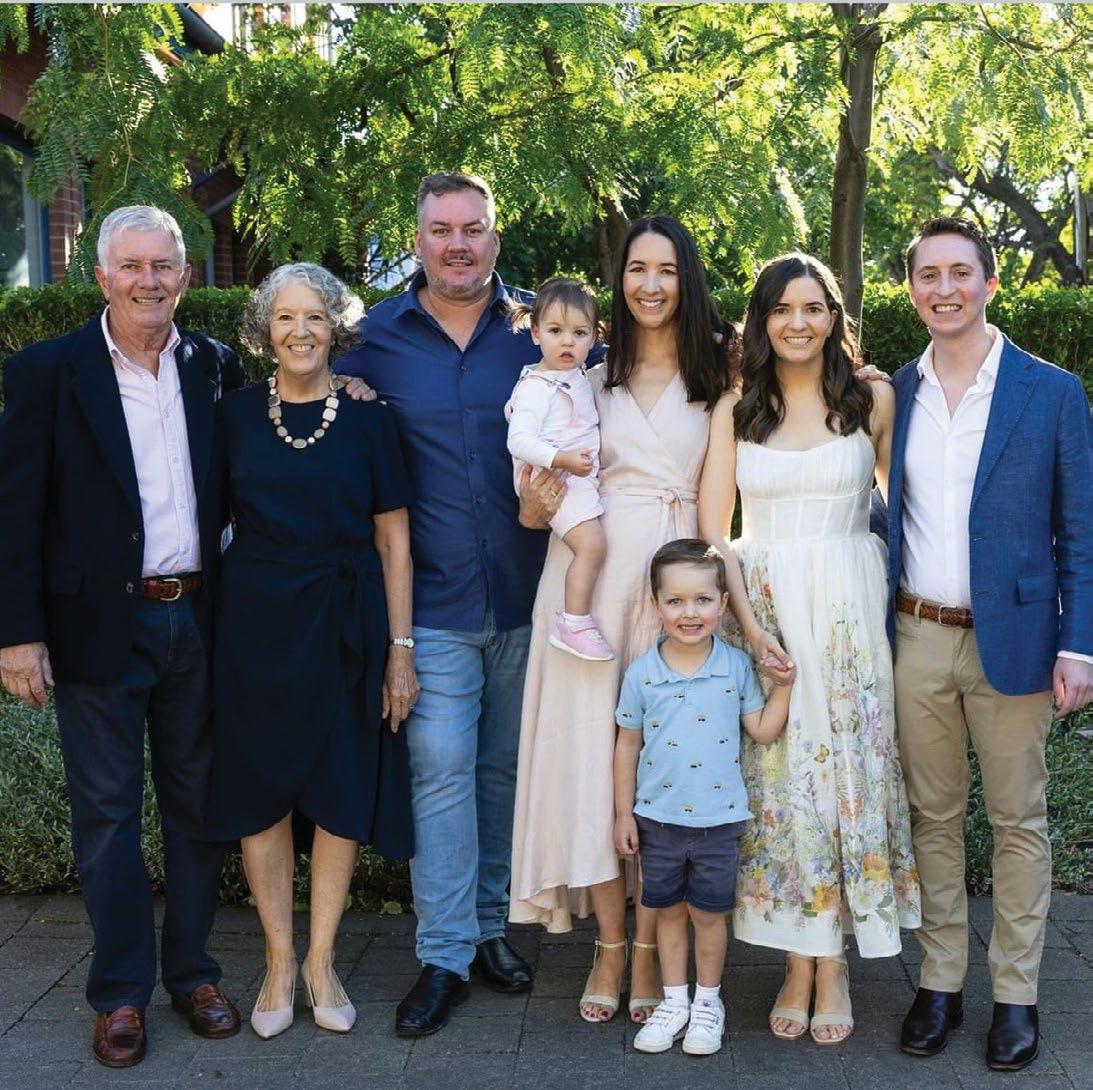
extensively overseas and have visited six of the seven Wonders of the New World (maybe Mexico one day). We happily assist in the upbringing of our grandchildren and enjoy reading, gardening, walking and keeping fit, and being passionate supporters of Adelaide United.
Grade 1 (1957)—I caught the tram along The Parade with brother Greg, looking pristine in buttonedup blazer and peaked cap and, for the first few weeks, polished shoes. On my first day I met Karlis and my fellow students. I thought that I had never heard of that name, but that was the catalyst for the beginning of many lifelong friendships with other students. I never excelled academically but was awarded a book on Robin Hood for good work in 1958, and in 1963 a merit award on polar exploration. Must read them sometime!
My most memorable moment was Drama night in 1969. With fellow students Rod Adcock and Tony Urwin, we were to perform a series of Jimmy Hendrix songs under the title ‘Maniac Depression’. It was loud, and while miming All Along the Watchtower the technician, under the direction of Headmaster Rev. Ralph Cook, pulled the plug. Deemed inappropriate, it was hard to forgive him until later reading the 1974 School magazine, which listed his two favourite hobbies as golf and classical music. We performed the album in its entirety the following week in Wright Hall. While we were only a one-night stand, we did have the last laugh.
Don’t sweat the small stuff and get a better life balance (less social activity and more academia). Maybe that is the reason many of us repeated matriculation in 1969.
In early 1989, in London, John founded the world’s first Centre for the Study of Democracy.
Born in Adelaide, John Keane is Professor of Politics at the University of Sydney. He is renowned globally for his creative thinking about politics, history, media and democracy, and the author of many distinguished books including the best-selling Tom Paine: A Political Life (1995), The Life and Death of Democracy (2009) and The New Despotism (2020). Under the pseudonym Erica Blair, his first writings were path-breaking defences of civil society in central-eastern Europe. In early 1989, in London, he founded the world’s first Centre for the Study of Democracy. Ranked by the ABC as ‘one of the great intellectual exports from Australia’, and by El País (Madrid) as ‘one of the greatest theorists of political systems’, he was nominated for the 2021 Balzan Prize (Italy) and the Holberg Prize (Norway) for outstanding global contributions to the human sciences. His latest books include The Shortest History of Democracy (2022), translated into more than a dozen languages, and China’s Galaxy Empire (2024).
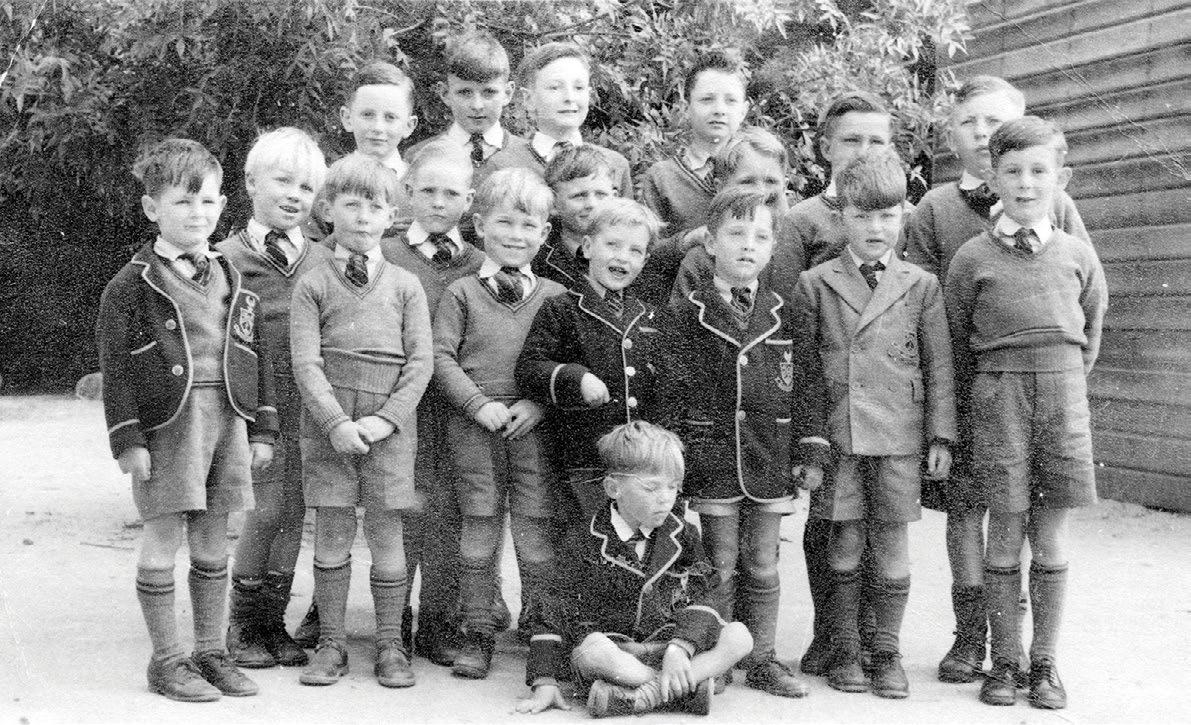
Grasp with both hands and run with every opportunity presented to you...
After leaving King’s (end of 1963) I undertook BSc and PhD degrees (in chemistry) at the University of Adelaide. I left Adelaide in 1972. Following postdoctoral work in Canberra and Chapel Hill (North Carolina, USA), I pursued an academic career, primarily based at James Cook University, although research collaborations took me for periods to many Australian and international institutions, including University of Oxford, Stanford University, Université Louis Pasteur (Strasbourg, France), Universität Leipzig (Germany) and Tokyo Institute of Technology (Japan).
I received a number of awards for my research, including the 1979 Rennie Medal of the Royal Australian Chemical Institute as the top early-career researcher in chemistry and chemical engineering in Australia and New Zealand.
I was a Fulbright Scholar in the USA (1983–84) and was awarded a DSc by the University of Adelaide in 1998. I retired from JCU in 2012 as a Distinguished Professor, and currently hold an honorary position at the University of Adelaide as an Emeritus Professor.
During my time as a university student (1964–71) I played cricket and football for the old scholars’ teams: I was a member of the KOCFC premiership team in 1967 and captained the Club for the following three seasons (1968–70).
My favourite memories come mainly from my Senior School years. There was excitement and much change that occurred with the arrival of the new Principal (Rev. Ralph Cook) in 1959, and the Chapel was built. Of the teachers in my Grades 8–11 years, I particularly recall Mr Ralph Jones (Physics/Mathematics), who was undoubtedly the best teacher I ever encountered, and in Chemistry the somewhat eccentric Mr Harry Wigan, who I found quite inspirational—and I did end up with a career in chemistry!
I loved the sport, and particularly looked forward each year to the first four weeks of Term 3 where every afternoon after school was spent with time trials and standards. And who could forget the gym classes with the legendary Mr Lewis Sevcik. I also enjoyed the extra-curricular activities on Friday evenings, particularly Debating and the Model International Parliament.
In those days we matriculated after Grade 11 (‘Leaving’), which meant that Year 12 (‘Leaving Honours’) was a year to complete any required university prerequisite subjects, but with time to be involved in other areas of interest or inquiry, and somewhat less pressured than the current Year 12 year.
And finally … all the wonderful and lifetime friendships!
Keep your interests and activities (and studies) as broad as you can. Too much attempt at specialisation early may lead to limitation of vision and opportunities.
Grasp with both hands and run with every opportunity presented to you … and don’t be inhibited by the possibility that occasionally something may not work.
If you have an opportunity, consider a ‘gap year’ after school finishes; that extra year of maturity and life experience may serve you well in future studies or your career. Enjoy, and cherish your friendships— you only pass this way once!
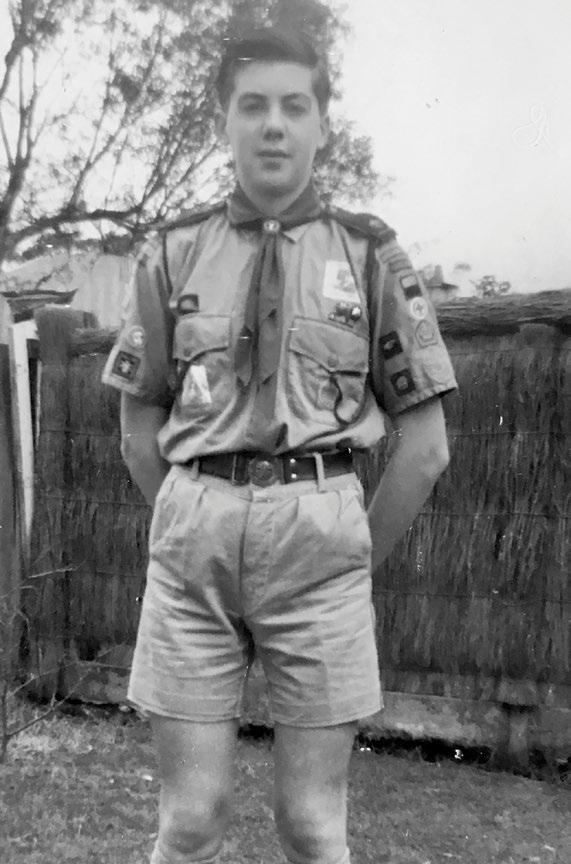
...listen carefully to people who matter...
Career and Life Highlights
Published author of four books on wilderness Tasmania, including shortlisting for the Tasmanian Book Prize
Volunteer work
Favourite King’s Memories
Attending Head of the River Rowing events
King’s Scout Group camps and jamborees
Attending triangular Sports Days
Advice for your 18-year-old self
Persevere, listen carefully to people who matter, learn from mistakes.
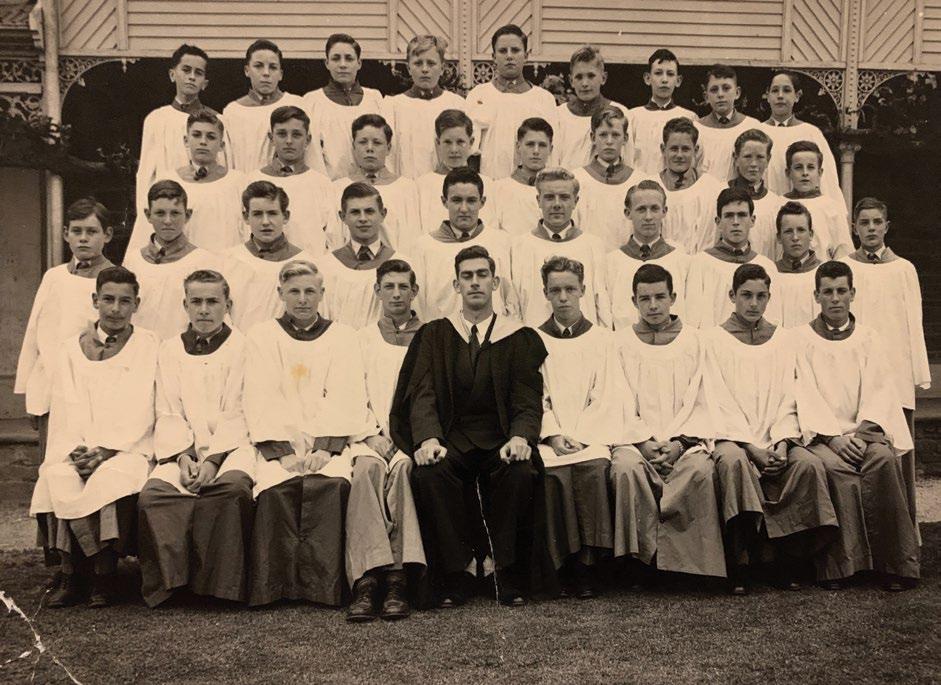
...making a number of lifelong friendships certainly stands out.
Obtaining a Law degree while working full-time and subsequently being admitted to the Supreme Court of SA as a barrister and solicitor. Later studying part-time to obtain a master’s degree in Business Administration. As a partner of various law firms, it was always a privilege to work closely with clients in the development of their businesses in both good and sometimes challenging times.
Being admitted as a notary and subsequently a Fellow of the Australian and New Zealand College of Notaries, and also serving as a State Governor and Deputy Chairman of that college.
Travelling to China on several occasions in my capacity as Honorary President of the Australia China Friendship and Development Association.
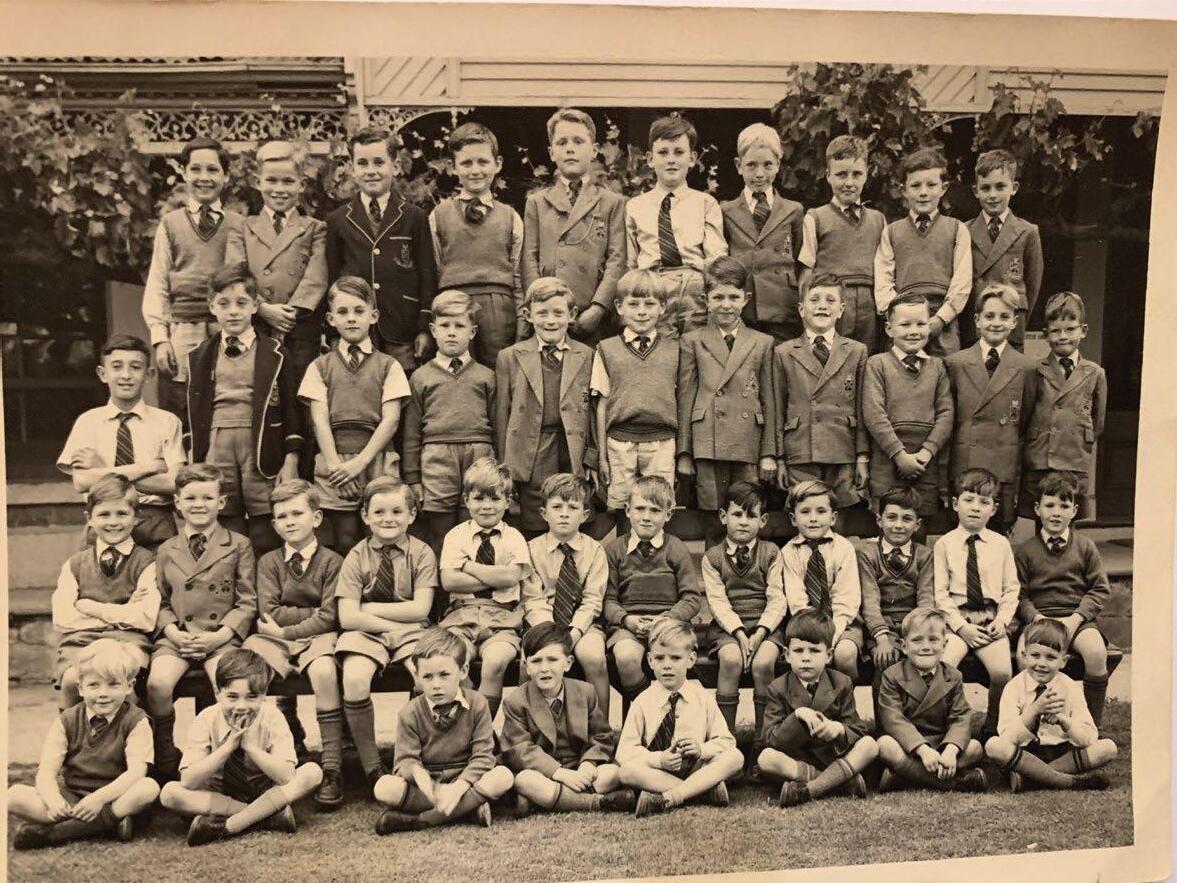
Being a director of the Mary Potter Foundation for 20 years and being made an Honorary Life Member of that association.
Being awarded the Premier’s Certificate of Appreciation (2001 International Year of Volunteers).
Finally, being included in the Queen’s Birthday Honours List to receive the award of a Member of the Order of Australia was certainly a significant highlight of my journey.
Too long ago to be specific, but making a number of lifelong friendships certainly stands out.
Don’t stress and worry so much— the sun will still rise in the morning!
Follow your own path and do not follow the masses.
Career and Life Highlights
A medical degree MBBS
An Anaesthesia Fellowship 1973–77 FFARACS
Awarded FANZCA 1992
Worked as consultant at Modbury RAH and QEH
Head of Anaesthesia for Pregnancy Advisory Centre 1992–2016
Regional Educational Officer and coordinator of training for anaesthesia, and Chairman of College SA
Retired 2016
Favourite King’s Memories
Being a prefect
Winning inaugural Silver King award for chess
Advice for your 18-year-old self
Follow your own path and do not follow the masses.
If you get the chance to do something different, have a go.
Career and Life Highlights
Jackarooing for John Harker at Anama at Clare
Starting Fernfield Wines with my wife Bronwyn at Eden Valley
Volunteering on behalf of Rotary Club of Barossa Valley on eight trips to Bougainville in Papua New Guinea and to Solomon Islands on building projects to help them.
Favourite King’s Memories
Rowing—I could do a sport that I was all right at.
Advice for your 18-year-old self
If you get the chance to do something different, have a go.
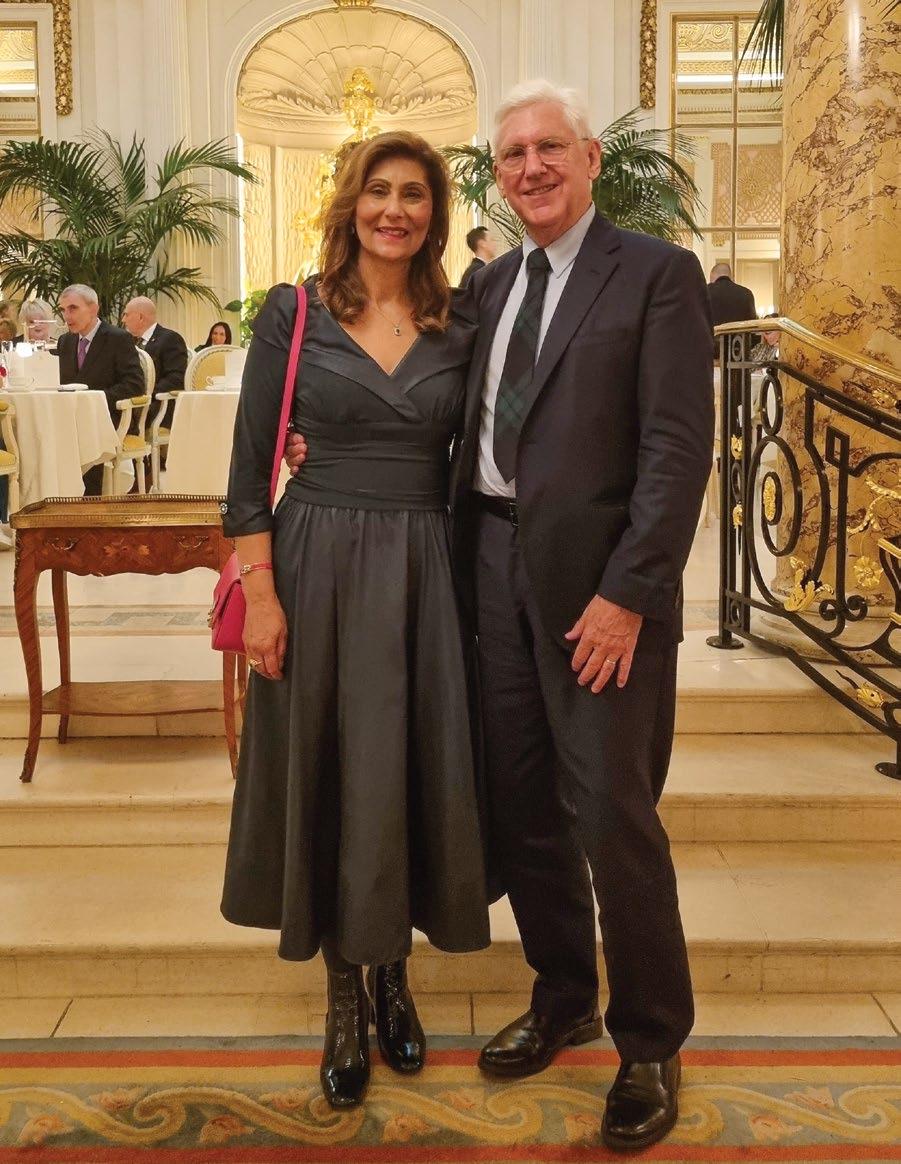
...my Long Jump record from 1968...still stands.
Having completed matriculation at King’s in 1968, I studied Architecture at Adelaide Uni, graduating in 1974.
After just two years working with the PBD in Adelaide, I went travelling through Southeast Asia, Europe and North America in 1976; intending to return after six months to resume my previous employment.
In the end, I never actually returned to live and work in Australia as one opportunity to work on interesting project assignments abroad was always followed by the next equally interesting and challenging one.
Such opportunities arose in Saudi Arabia (1977), Germany (West Berlin) (1978 -1980), Belgium (1981), Switzerland (1982-1983), UK (London) (1984), Malaysia (19851986), UK (London) (1987-1993), Germany (Berlin) since 1994.
Following the fall of the Berlin Wall in 1989, I was engaged to relocate from London to Germany (Berlin)
and establish a project management and cost management consultancy in Berlin for EC Harris - a Londonbased firm of property and construction consultants.
After 10 years in Berlin employed as Managing Director of the above firm, I took the step in 2003 to establish my own project management and cost management consultancy, MTM Project Solutions, which I actively managed until March 2023 when I sold my interest to global property and construction consultancy Rider Levett Bucknall, who were keen to add Berlin to their list of international offices.
Now retired, I continue to reside with my wife Robina in Kleinmachnow on the outskirts of Berlin.
Coming from a farming background and having attended a small primary school at Inman Valley (one classroom and one teacher for all seven grades), it was quite a big step for a shy country kid to relocate to the city in 1962 and become a boarder at King’s. I was a member of School House for just two years and can remember the sense of exclusivity and pride in being a boarder.
I had the good fortune to be endowed with a certain athletics prowess and this was a sport in which I could gain self-confidence, the respect of my peers, and a sense of achievement throughout my years at King’s. To be more specific, I was Open Champion at Inter-House Athletics in 1966, 1967 & 1968, receiving Athletics Colours for each of those years, and have been informed by Pembroke’s School Archivist that my Long Jump record from 1968 (22’ ½” / 6.718 m) still stands.
Very pleased to be selected to play for the First XVIII and First Tennis teams, I had further opportunities for personal progress and achievement and the great satisfaction of making a useful contribution to the sporting success of my respective team as well as for the school as a whole.
In my final year at King’s in 1968, I was honoured to be selected as Head Prefect and School Captain as well as receiving the F.G. Scammell Award. During my years at King’s, I was blessed with so many opportunities to learn, grow and develop and these set me up with the necessary competence, confidence and ambition to succeed in my university studies, in my professional career and in life generally.
Anyone attending King’s (now Pembroke) has such unlimited opportunities to grow, learn and develop – over and above that available via the standard school curriculum. When I attended King’s there was already a wide range of extra-curricular activities which, I note from the Pembroke Newsletter, have greatly expanded in the meantime.
Take maximum advantage of the extra-curricular offering and seize the opportunity to learn, grow and develop by involvement in as many as possible of the available activities. The opportunity to do so later in life may never again present itself so readily.
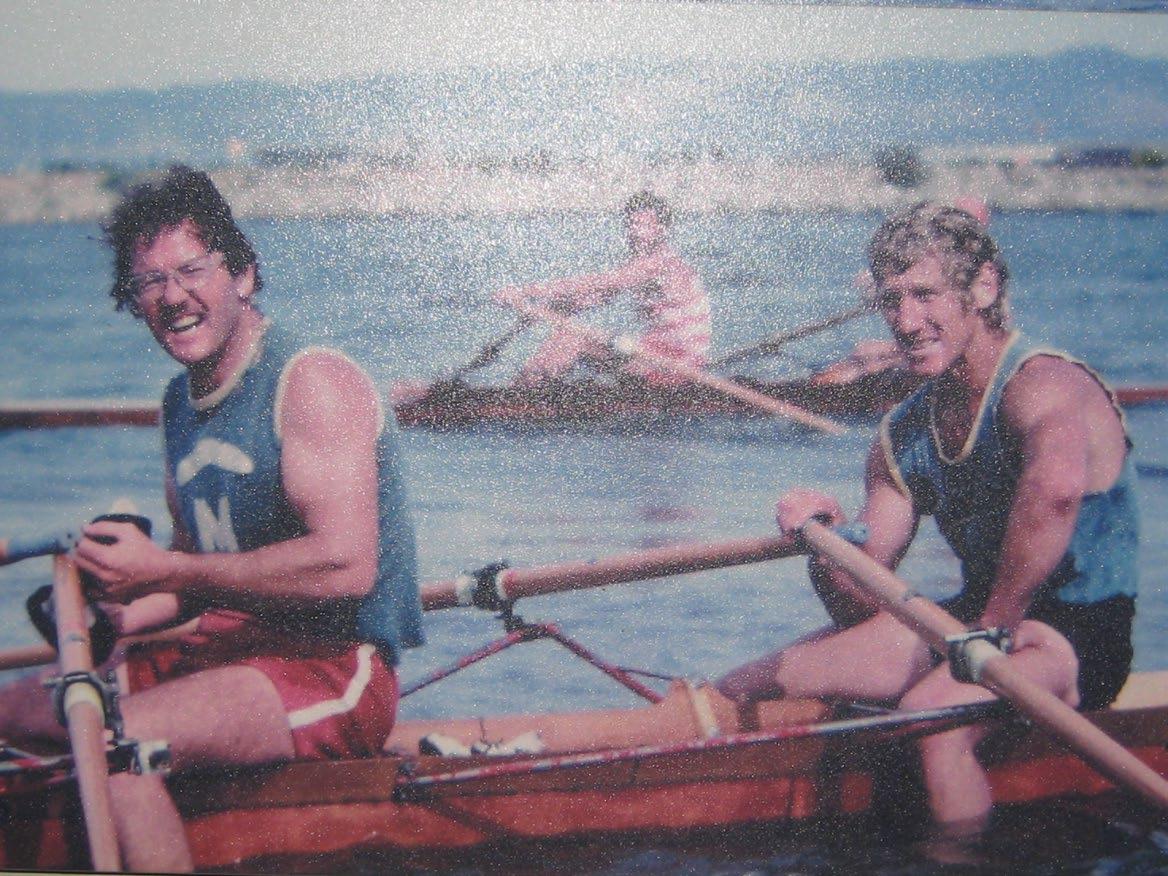
I was in awe of the sporting ability, talent and prowess of so many of my fellow King’s students...
and Life Highlights
High school teacher in SA from 1968 until now, and Commonwealth Exchange teacher in 1984 in Yorkshire, UK.
Rowing elite competitor for 19 years in Australia and overseas, SA State Coach for 20 years, SA Team Manager for four years, Australian Universities Rowing Team Manager in 1987.
Freelance rowing sports journalist since 1972, accredited rowing media journalist in 1986.
Commonwealth Games, four Olympic regattas, multiple World Championships and World Cup regattas.
I coached the Schoolboys First IV to win the Cudmore Cup in the 1974 Head of the River, the first HOR for Pembroke.
I made lifelong friends at King’s and coached Pembroke male and female rowers at the elite level,
with whom I share a special bond and warmth.
Favourite King’s Memories
Warmth of welcome, camaraderie, sharing and friendship from fellow students and staff during two years after entering King’s from country SA as a Year 12 student and new to life in the city.
The honour, joy and satisfaction of winning the first SA Head of the River First VIII Gosse Shield for King’s.
I was in awe of the sporting ability, talent and prowess of so many of my fellow King’s students in a variety of sports, in which I had no experience. While a Teachers College student I was a live-in King’s Boarding House master during 1965–66, again with the most lovely, friendly, cooperative, loyal, relaxed and helpful staff and students, especially the Primary School boys, with whom I had little experience but who looked after me well. Thanks.
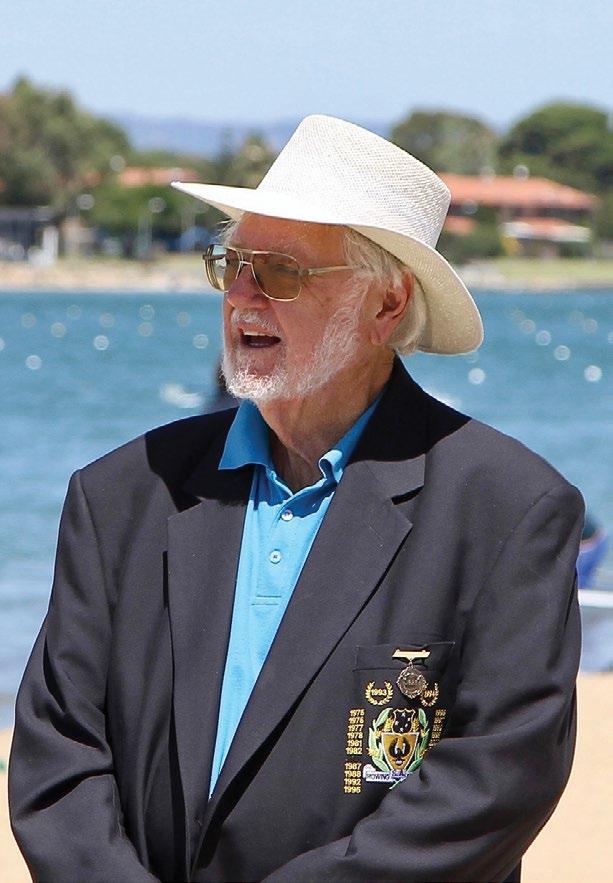
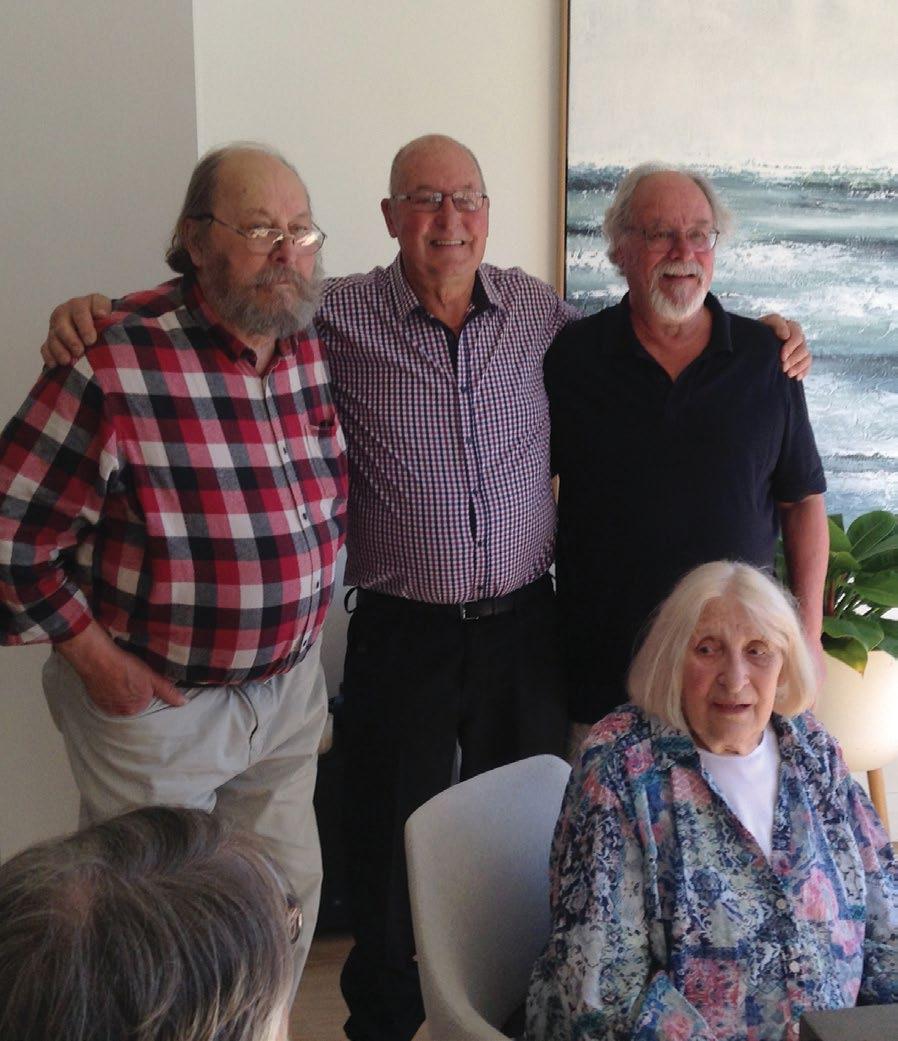
Become a farmer rather than a chartered accountant...
Career and Life Highlights
Second VIII Rowing, Captain and Colours First XI Hockey, Corporal First Cadets, Leaving Honours.
Siblings Denise Goward (McEwen née McCarthy), Girton; Jeffery McCarthy, King’s; Michael McCarthy, King’s.
Children Sarah McCarthy and Alexandra McCarthy, attended Pembroke.
Treasurer and Secretary KOCA, played 312 games for King’s and Pembroke OSFC.
Favourite King’s Memories
Teachers Harry Wigan, Lewis Sevcik, Tom Gawne, Sid Kelly. Rowing camps, Cadet camp.
Advice for your 18-year-old self
Become a farmer rather than a chartered accountant...
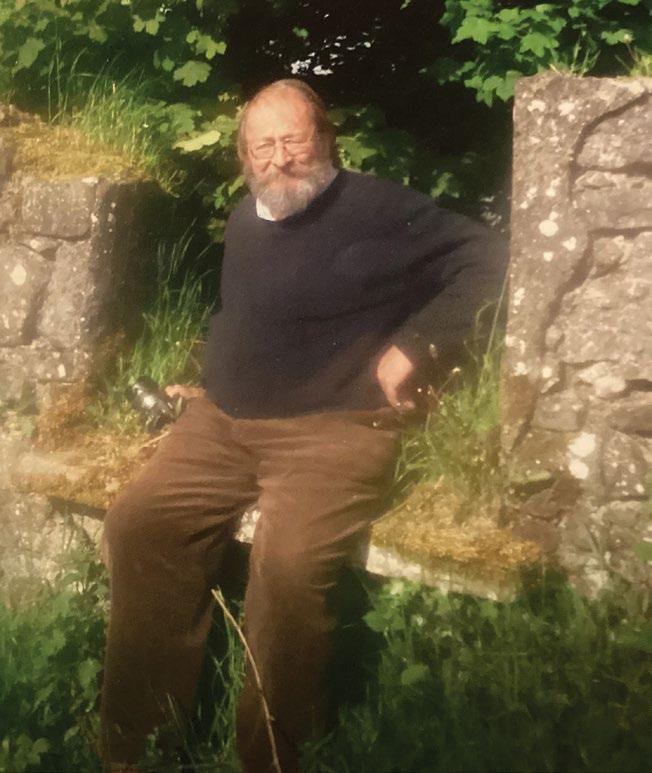
Take the study of other languages more seriously!
Played for three years on Reg Lindsay’s Country and Western Hour on Channel 9 with the Skillet Lickers.
Toured for 20 years to the UK and Ireland, Denmark, America and Canada, also around Australia with singer/songwriter Eric Boule.
Played many festivals, pubs, clubs with Country Express band.
Recorded numerous albums with the above artists and a few others.
Also qualified as a podiatrist and worked in the Barossa, Kapunda and Eudunda, and sessions in most church homes.
The friends I made, that I still have today!
A very pleasant, non-competitive Rowing crew that I was pleased to be a part of.
Take the study of other languages more seriously! Learn your theorems!
Just because fathers can call your teachers by a nickname, you shouldn’t.
As you might expect from the below School incident, my life was spent mainly on my knees, burdened by the weight of recurring failures.
Our teacher Mr (John) Moody tossed a question to the class. A quick answer slipped from my mouth, ‘Up the back, Jack’. Silence. Except for the rumble of my body slinking down the chair to slam my knees on the floor, leaving a blushing head resting on the desktop.
Just because fathers can call your teachers (also their drinking buddies) by a nickname, you shouldn’t.
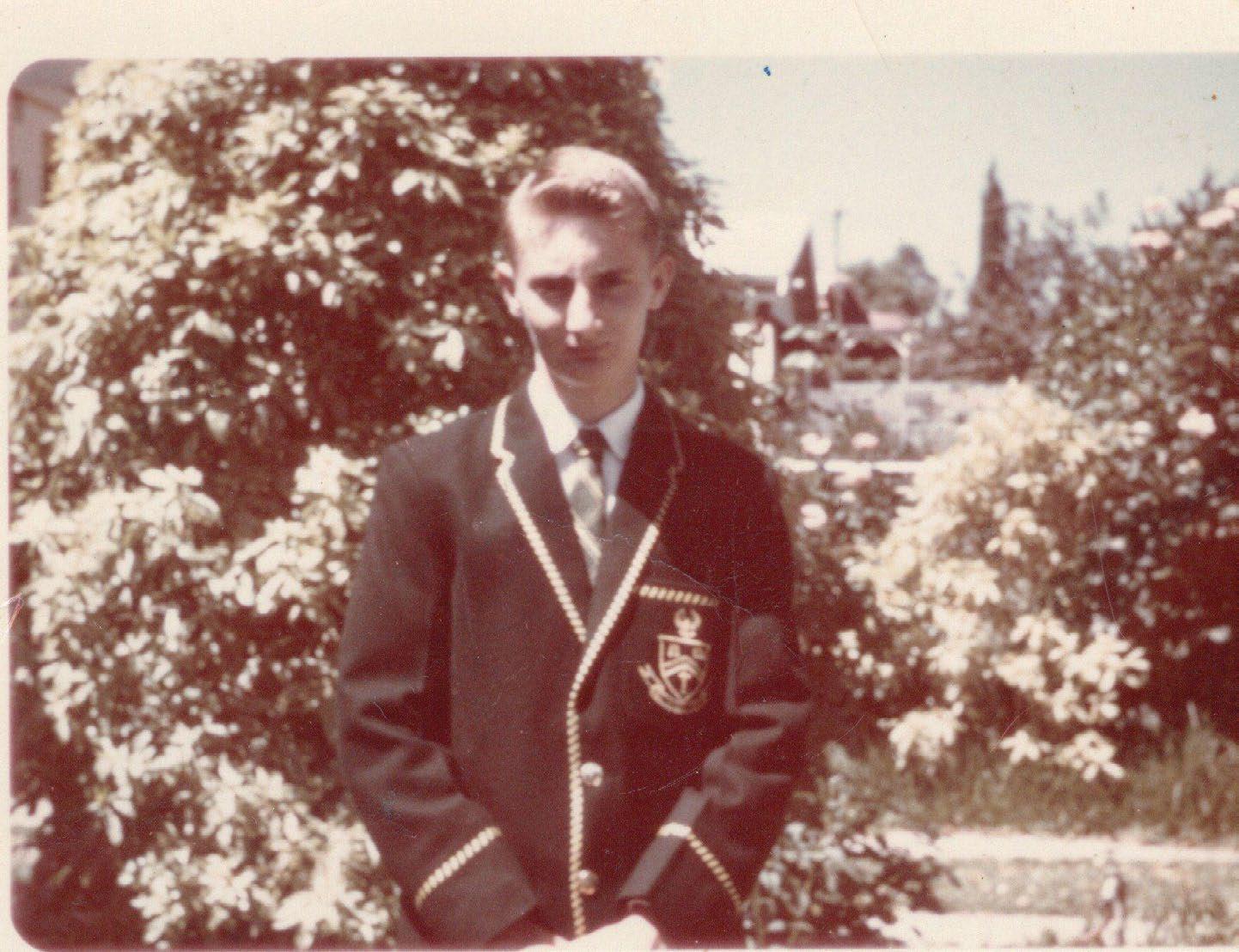
...friendship that was apparent throughout the School with both fellow students and some teachers.
Career and Life Highlights
First employed at Colonial Mutual Life Insurance Company, then joined Co-operative Building Society for 17 years, rising to be Services Manager.
Administrator of the Royal Australian College of General Practitioners Training Program for 17 years.
Diploma in Business Management (1996).
Favourite King’s Memories
The friendship that was apparent throughout the School with both fellow students and some teachers. I remember Mr Tom Gawne, the English teacher, and of course Mr Graham Coldwell.
Advice for your 18-year-old self
I would advise to study harder and think about for what career I may aim for.
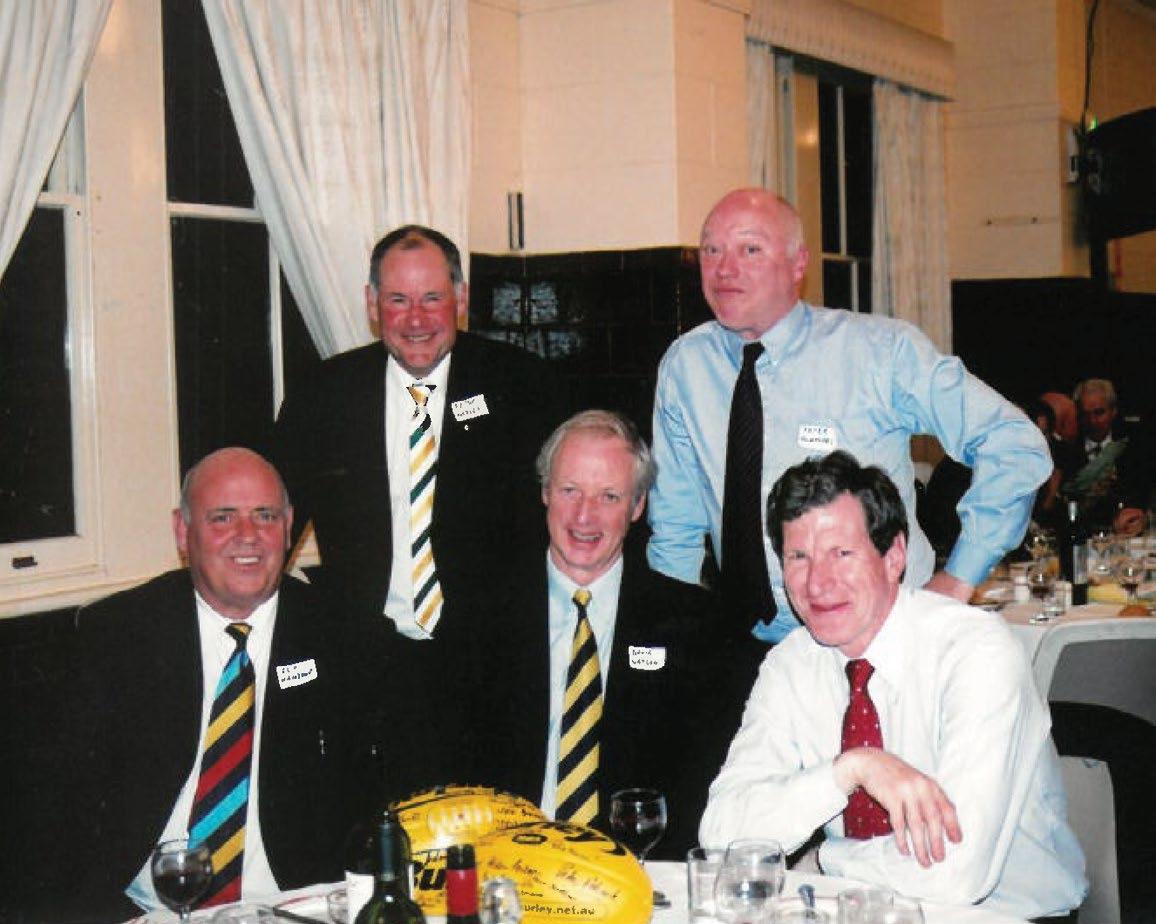
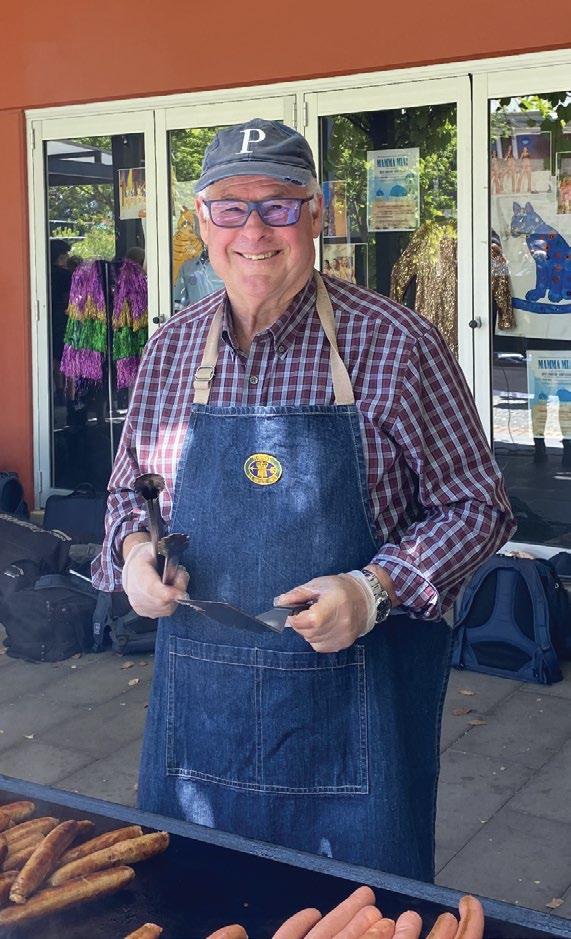
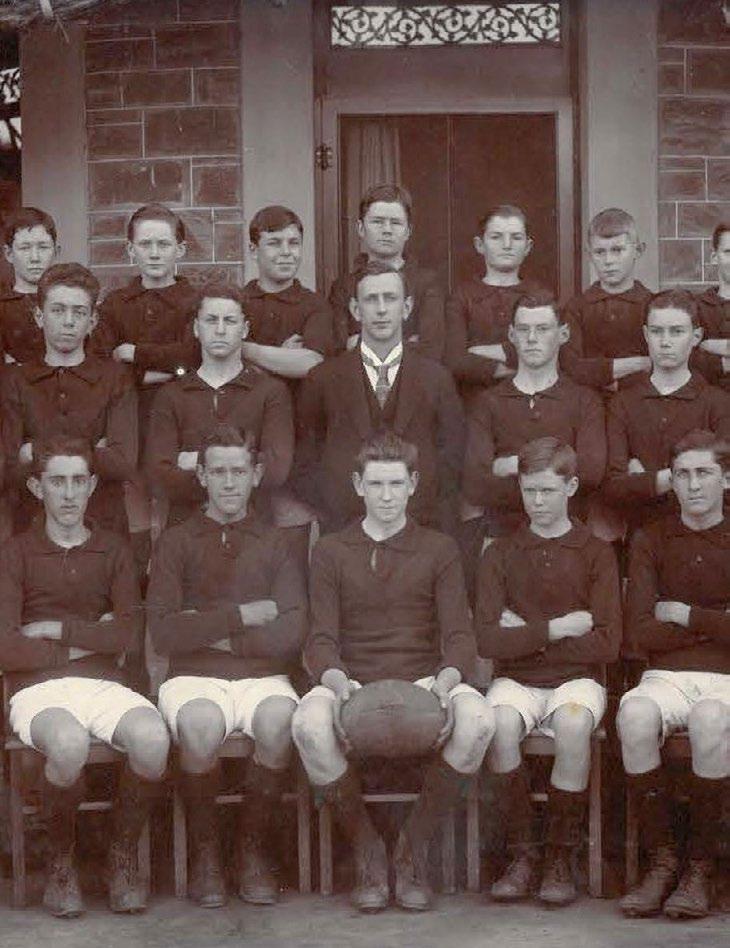
A special moment was when I was summoned to the Headmaster’s office to be told I was to become a prefect, conditional on having a decent haircut...
On graduating in dentistry, I entered the army as a national serviceman. Again, my experiences in the Cadets at King’s under the great Mr John Moody were invaluable during my army training. After leaving the army I went into private practice at Marryatville and appreciated the ongoing support of many King’s old collegians and their families who took a punt on me as their dentist.
I was humbled in 2005 to receive an award in the Order of Australia for services to the dental profession as an administrator and educator and to the community. My involvement with the King’s Old Collegians Association began immediately when I left school, playing for our cricket and football teams while at uni. It has been a privilege for me to serve continuously on the POSA committee for over 40 years, being President back in 1984. King’s and the old scholars have been a huge part of my life and I will be forever
grateful for the friendships I have enjoyed over the journey.
Finally, it has been a joy to have been able to send my three sons and three of my grandchildren to a school that I hold in such high regard and that means so much to me.
It was a fateful day in February 1960 when I walked through the gate near Wright Hall for the first time, arm in arm with Bill Mallyon; our mothers were great friends. Little did I know that the experience of the next five years would prepare me for life’s challenges in such a positive way. I was only an average student, but a collection of somewhat eccentric but dedicated teachers managed to ensure that I matriculated. In those days there was no quota for dentistry at Adelaide Uni and amazingly, in 1969, four of the 50 male graduates—Trev Harrington, Geoff Robson, Andy Cottell and myself—were all educated at King’s.
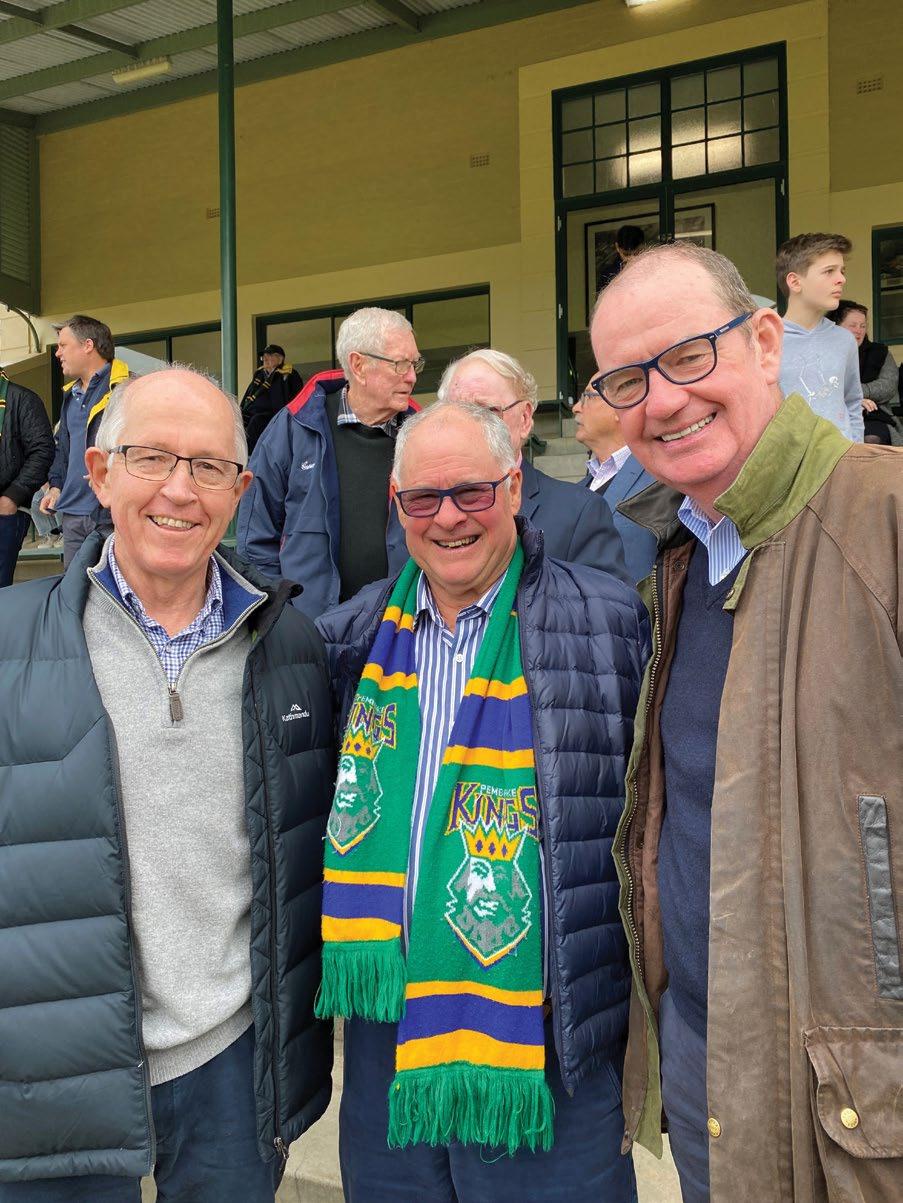
Driven by Headmaster Ralph Cook, there was a great emphasis on sport during my time at King’s and we punched way above our weight. Playing for the First XVIII when in Year 11, we only lost one match by a few points. Highlights were comprehensively beating Prince Alfred College on their front oval and Carey Grammar School in Melbourne. Although not a rower, I can well recall the spirited celebrations at the McCarthy residence in Gurrs Road after the King’s First VIII won the Head of the River. We were driven by our coaches and teachers to be competitive and to always give our best—not a bad philosophy to take through life.
A special moment was when I was summoned to the Headmaster’s office to be told I was to become a prefect, conditional on having a decent haircut—it was 1964, the year The Beatles came to Adelaide.
Remember in life that strong goals are a must...
King’s KOCA combined academic and sports scholarship holder 1959–64
Thespian activities (Carey House plays)
First Tennis team 1959–64
First XVIII Football team 1961–64
School Tennis Champion 1962–64
Prefect 1963, Head Prefect 1964
School Cross-country Athletics Champion (1964)
F.G .Scammell award for service to the School (1964)
Commonwealth Scholarship (1961)
Medical career: University of Adelaide student, RAH intern, RAH (and UK) resident and trainee 1971–79
Public hospital practice RAH 1971–93 (22 years)
Neurosurgeon RAH (13 years), rehabilitation coordinator
Committee member – AIDS, laser, pain clinic, infection control, road trauma, THINK, ABI
Lecturer and teacher – medical students, graduates, nurses, physiotherapists
Head-injury education and prevention
15 scientific papers
Special neurosurgical interests–cerebral aneurysm, skull base, laser, spine
Neurosurgical private hospital practice 1993–2015 (22 years), Memorial Hospital and Calvary Wakefield Hospital
Member or chairperson of hospital advisory and review committees
Other activities:
Wellington Rd Primary School –dux, cricket and football Captain SAPSASA premiership teams, 1958
Norwood league footballer (1965–73)
Tennis – junior and senior SA state tennis representative
Travel – sport, conferences, leisure, African safari (1974), cruising (2005–18)
House design and book authorship titled ‘A General Neurosurgical Odyssey’ (2022)
On my first day our class teacher Rev. Brailley related a vivid story about his time in China as a missionary’s son, involving a threatening salivating wolf, silhouetted against the moon, slowly creeping towards the open window of his bedroom. He had gained our undivided attention and then, just as circumstances became dire, he said with a chuckle, ‘And then I woke up from my dream’. I laughed with relief, as did all my classmates, and that story set the tone and atmosphere
so conducive to School harmony and the learning I experienced at King’s.
Harry Wigan taught us that proteins are insoluble in water because otherwise in the shower we would all dissolve and go ‘down the plug hole’. Harry would sometimes, in the Science lab, put alcohol on a student’s finger and set it alight before quickly extinguishing it with his hand. He did it to me during one lesson but was a bit slow to put it out. My finger developed a slight burn and blister, and after that episode Harry called me ‘Foster Burned Finger’, probably knowing that I was the son of a famous football coach, but confusing my father Jack with Foster Williams, the Port Adelaide coach!
Remember in life that strong goals are a must, And tempered by kindness, friendship and trust, Endeavour and toil will conquer life’s trials, And bring you much joy over life’s many miles.
Try not to act quickly without due concern, But carefully consider ‘cause then you will learn, That there are other ways to achieve the right end, With respect for adversity, as strength it might send.
Always assess the place that you’re in, And contrast the place that others are in,
Strengthen a weakness to meet any test,
And develop your strengths to get to your best.
You pass through this life only once.
Dare to take opportunities as they arise.
Bachelor of Economics, University of Adelaide 1968
University Blacks Football Club A1 1964–67; All Australian team 1966
Pembroke Council 1989–2000
Pembroke Chair 1995–2000
Mayor of Burnside 2010–18
Three children, one stepson. All attended Pembroke. Four granddaughters also attended, two currently.
King’s 1963 was the peak in enrolments—520. It was a very small school. My greatest satisfaction came from playing in the First XVIII, which beat Prince Alfred College and Sacred Heart College for the first time in 1962, and in 1963 beat them again and also beat St Peter’s College for the first time. Many of my teammates with the University Blacks were from Saints and I loved to rib them about that game. Many are friends of mine to this day.
Advice for your 18-year-old self
You pass through this life only once. Dare to take opportunities as they arise. In the end all that matter are family and friends. Look after them.
Plan ahead.
Career and Life Highlights
I completed an apprenticeship with ETSA. I left ETSA and worked in a small country town for three years. I returned to ETSA, studied and was promoted to staff. I was then promoted to Assistant Unit Controller in the northern power station. I was part of the commissioning. At 48 I accepted a package, moved to Adelaide, and worked and managed Campbelltown Barkuma factory. Retired aged 72.
Favourite King’s Memories
Having come from the School of the Air, real teachers were a novelty. Developing friendships.
Advice for your 18-year-old self Plan ahead.
...the many wonderful and skilled teachers who guided me, and all the other students, are forever imprinted on my mind.
At the age of 80 I count among my life highlights my lovely wife Franca who I married in the King’s College Chapel in 1969 with Headmaster Rev. Cook officiating; our two children, Ben and Bianca, together with their delightful spouses, Linda and Gareth; and our three grandchildren Lilla, Stella and Rhys.
I had a wonderful series of careers, spanning 64 years, first as a qualified electronics technician and then changing to a completely different field, joining the Department of Foreign Affairs (now DFAT) and travelling the world in addition to diplomatic postings in PNG and Indonesia with my family. After retirement a hobby of computing turned into an enjoyable and rewarding business of computer help supporting people in their homes with training and repairs.
Too many, both amusing and serious memories, to recount here, but the many wonderful and skilled teachers who guided me, and all the other students, are forever imprinted on my mind. Teacher Harry Wigan, though, stands out as a charming character who, despite being a sometime victim of student pranks, excelled at teaching Geology, Geography and Chemistry.
As for places, the Tuck Shop, Chemistry lab, Library and Assembly Hall remain clear in my mind. Naturally, also, the friends I made at King’s along with my classmates were to form an enduring part of my life. I was later to meet several old scholars both at official reunions and in coincidental business and social situations.
The advice to my 18-year-old self would be to look after family, friends and finances in that order.
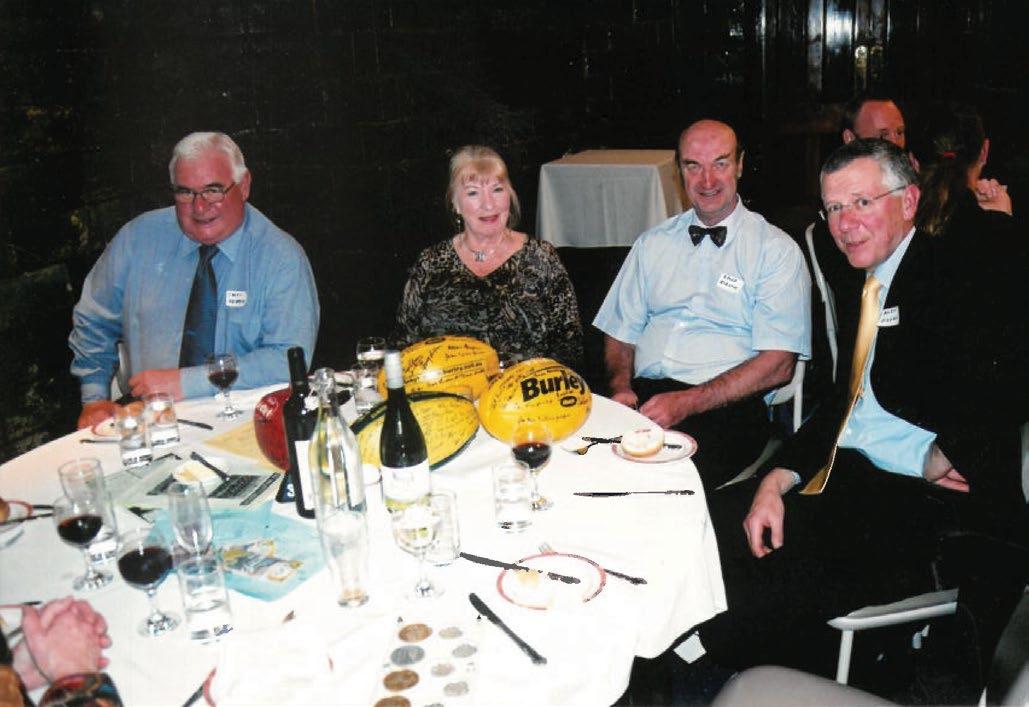
King’s had brought the best out of me and still does.
Enjoyed playing King’s Old Collegians and Pembroke Old Scholars football as a diversion from work commitments; l was enriched by the characters while giving them guidance about life’s work through help and advice.
Playing in old scholars premiership teams in 1967 in both A3 and A3 Reserves on the same day, being allowed to play due to the A3 team taking to the field with 19 players included in the playlist submitted. Playing 323 old scholars games and coaching our C Grade, I retired one week off my 40th birthday.
Working for finance companies, in particular Custom Credit for 26 years. I was manager of the Elizabeth Salisbury branch.
Deciding to sell our own house and buy into a block of flats and live in one. I have been a landlord since 1970 and still continue.
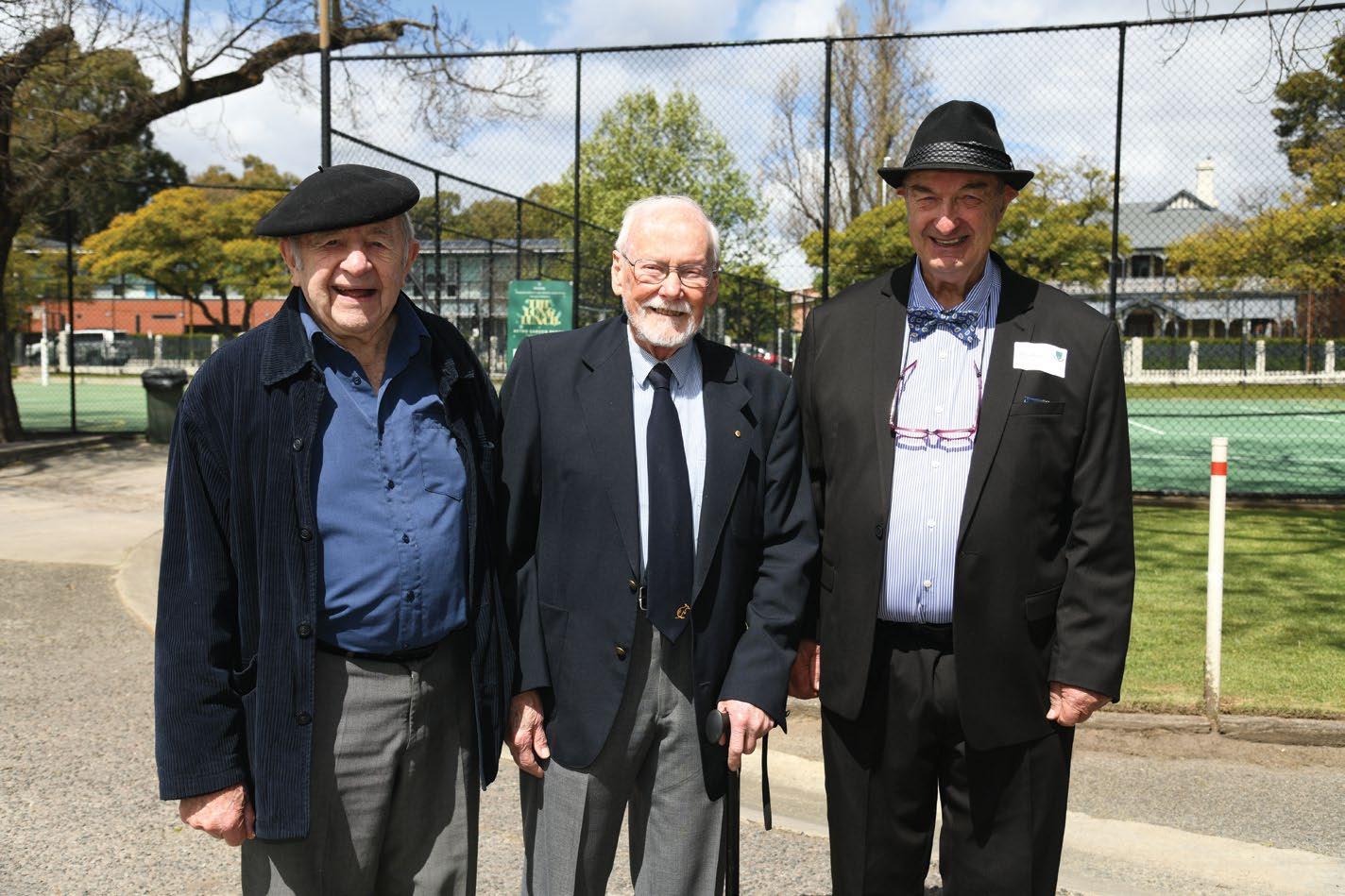
Both my children, Andrew and Louise, attended Pembroke.
Playing in the King’s First XVIII Football team in 1962 when not picked to play in any under-age teams but attending all practices.
I was good at arithmetic, geology, geography, some physics and history. I was a long-term good thinker and planner.
When school finished for me, I said to myself that, if I could, I would like to send my children to my School despite the fact that I did not pass Intermediate or Leaving, because King’s had brought the best out of me and still does.
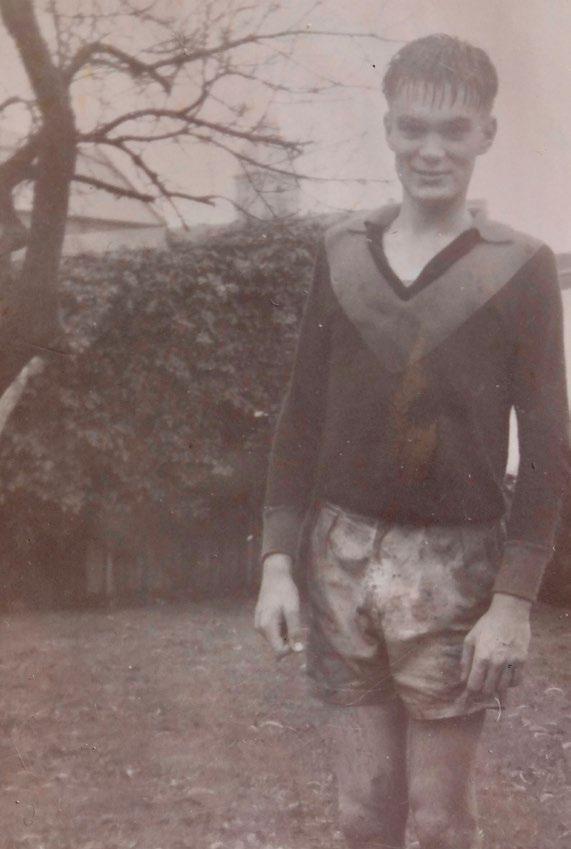
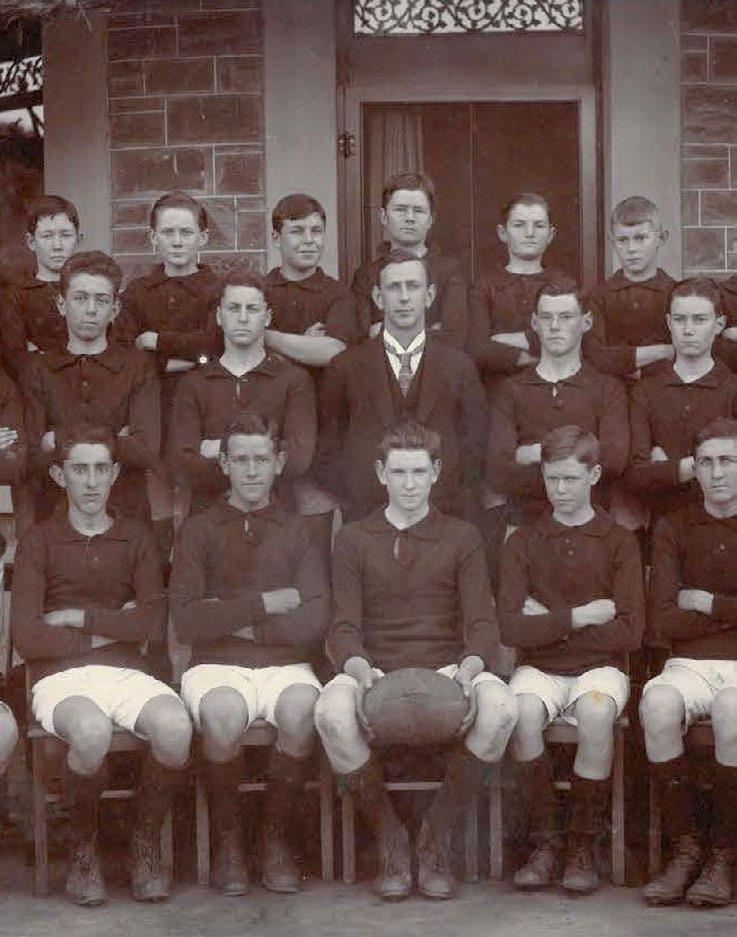
The secret of success is perseverance and attention to detail.
Graduating with MBBS (1971), MD (1988) from the University of Adelaide, and with DPhil (1976) from University of Oxford
Practising in general medicine, immunology and rheumatology at Flinders Medical Centre, Adelaide, for over 40 years. My special interest was in scleroderma, a nasty life-shortening autoimmune disorder causing skin hardness and internal organ damage, affecting over 350 South Australians
Supervising many medical trainees and hospital scientists (the brightest and best of Australian youth)
The award of the Australian Honour AM in 2021
Married Lesley, followed by three daughters and six subsequent grandchildren
Working in outback WA and NT in the Royal Flying Doctor Service in my early medical career
Four years in Oxford, UK, and two years in Dallas, Texas (on a Fulbright Scholarship)
Bushwalking in many countries, particularly Tasmania (my birth state) and New Zealand
Visiting many lands including New Guinea, Indonesia, Nepal, Lhasa, Patagonia and Antarctica
Publishing seven books on antiquarian books and historical topics
Surviving bowel cancer and a cardiac arrest!
Getting trampled in the mud by the bigger and heavier Catholic footballers in the King’s Third XVIII team (see photo)
A certain distraught teacher throwing all the completed class assignments through the door onto the courtyard below from the level one classroom. He received a big cheer!
Borry Hewitson’s acrimonious voice echoing around the courtyard on regular occasions
D.D. Harris’s ability to predict Public Examination Board (PEB) examination questions (that’s the main reason why I was able to pass those dreaded exams!)
Coming near to last in the annual cross country runs up to Penfold Road and return
The secret of success is perseverance and attention to detail.
To succeed in medicine you need a good memory and a compassionate personality. Bushwalking is one of the elixirs of life and is also therapeutic (particularly as you age).
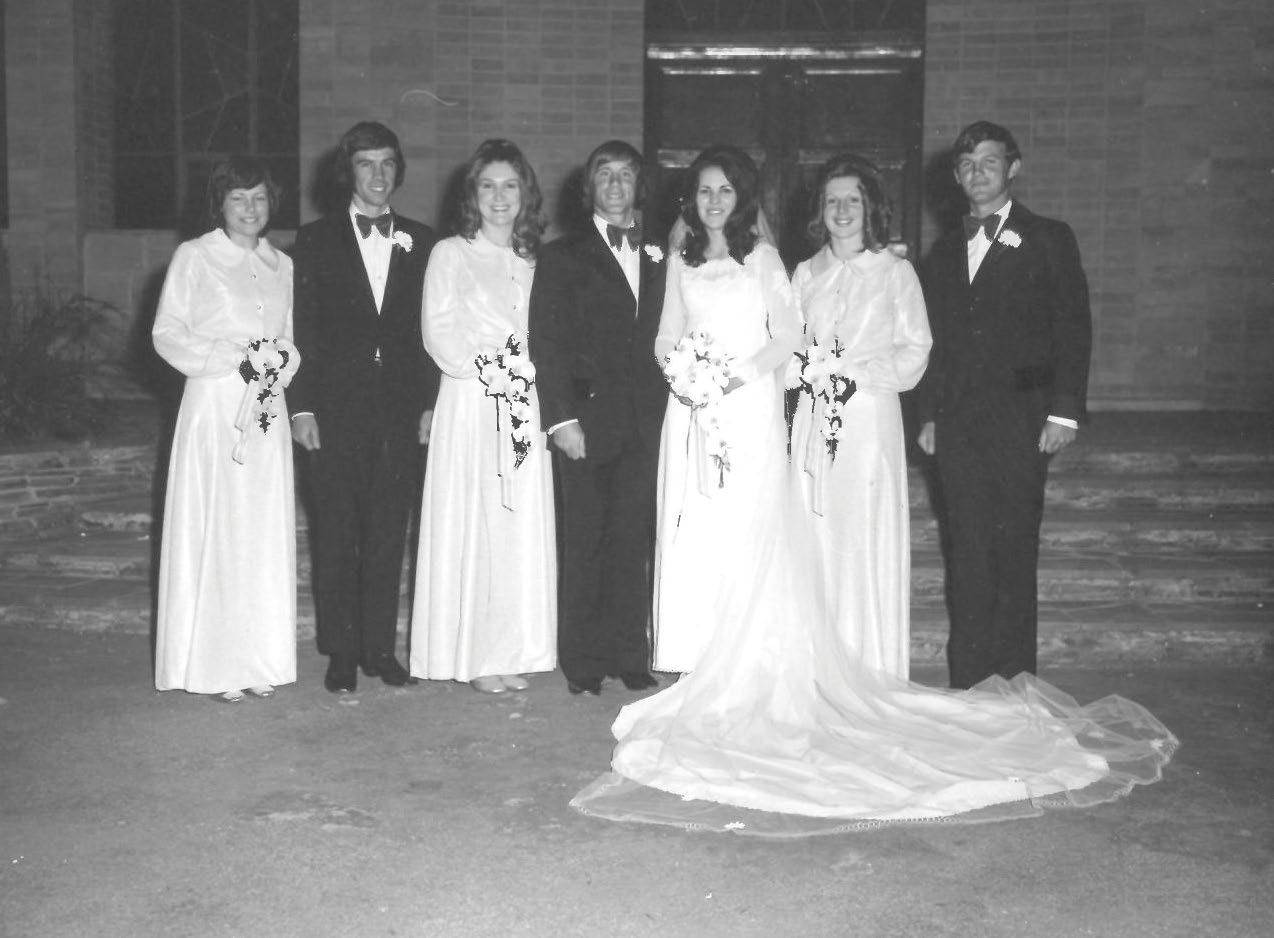
I really enjoyed being a boarder at King’s College and had many friends with boys from all over SA.
I joined the Bank of Adelaide after leaving King’s, and left the bank after 10 years as a Branch Accountant.
Then I purchased a sports store that became a very successful business; after eight years it sold at a substantial profit and I moved to the Gold Coast, Queensland.
We then purchased a newsagency at Australia Fair Shopping Centre, Southport, which we sold after four years, trebling the goodwill sale price.
After taking a 12-month break we bought a sport store in the Pines Shopping Centre, which turned out to be a very profitable and successful business. After 18 years we sold it and retired.
I really enjoyed being a boarder at King’s College and had many friends with boys from all over SA.
Most boys came off successful farming properties, and on exit weekends I visited many different locations throughout SA.
I also enjoyed playing Football in the First XVIII, Rowing in the First VIII, and captaining the House Swimming team.
To be successful in life and business, you require a strong work ethic, and be prepared to work hard and smart using common sense.
Also, seek employment in an occupation that you enjoy.
I owned sport stores for approximately 26 years and, having been involved heavily in sport, I really enjoyed that environment. Work was not a burden.
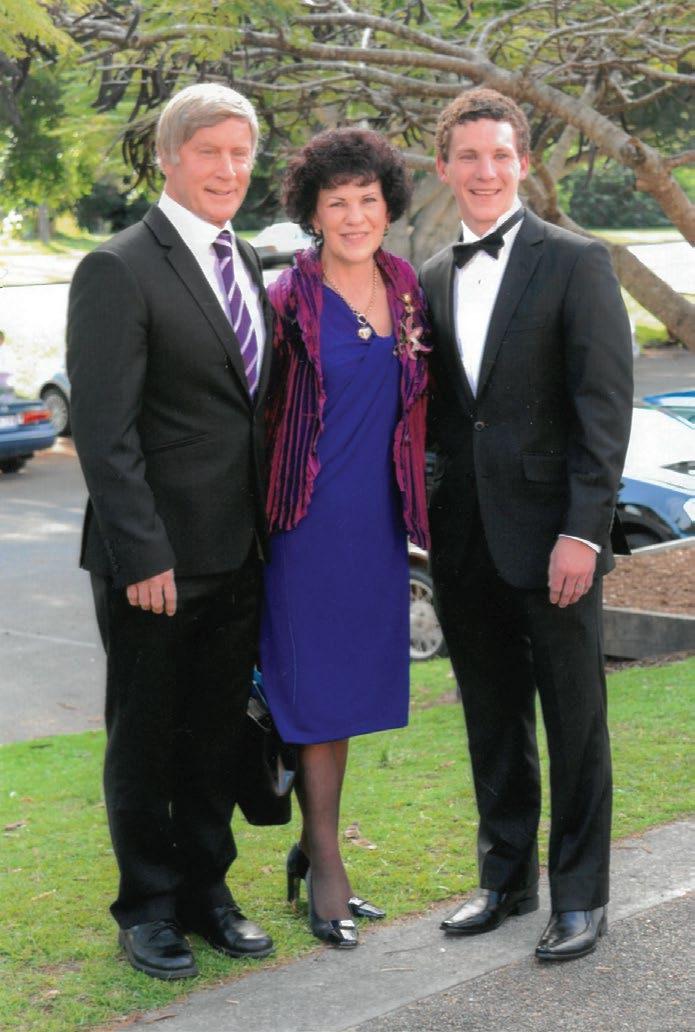
Some teachers had a very significant influence on my life.
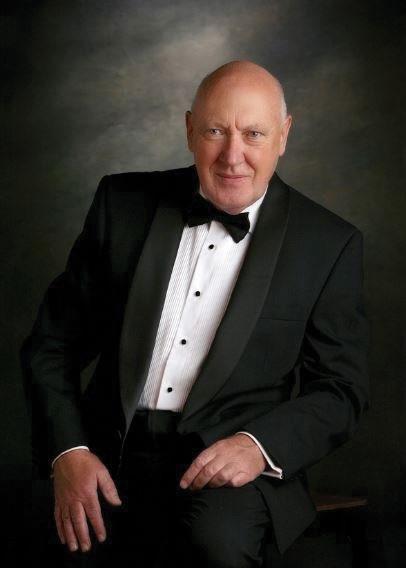
Working as a procedural GP and Emergency Medicine doctor for 43 years. Coal-face engagement with humanitarian agendas in Indonesia, India, Nepal, Kenya, Namibia and Peru. Dedication to serving humanity, e.g. via Rotary and voluntary organisations.
Thinking of retiring after 50 years as a doctor at the end of the year.
My long association with fellow students over 12 years ... we ‘grew up’ together and developed some wonderful friendships. My Scouting days, with D.D. Harris as the Scoutmaster, remain as fond memories. Some teachers had a very significant influence on my life.
Take the opportunity to travel and experience life. Consider Japan and Bhutan, where the people primarily look after each other. I have travelled a great deal in my life and these are my fondest memories.
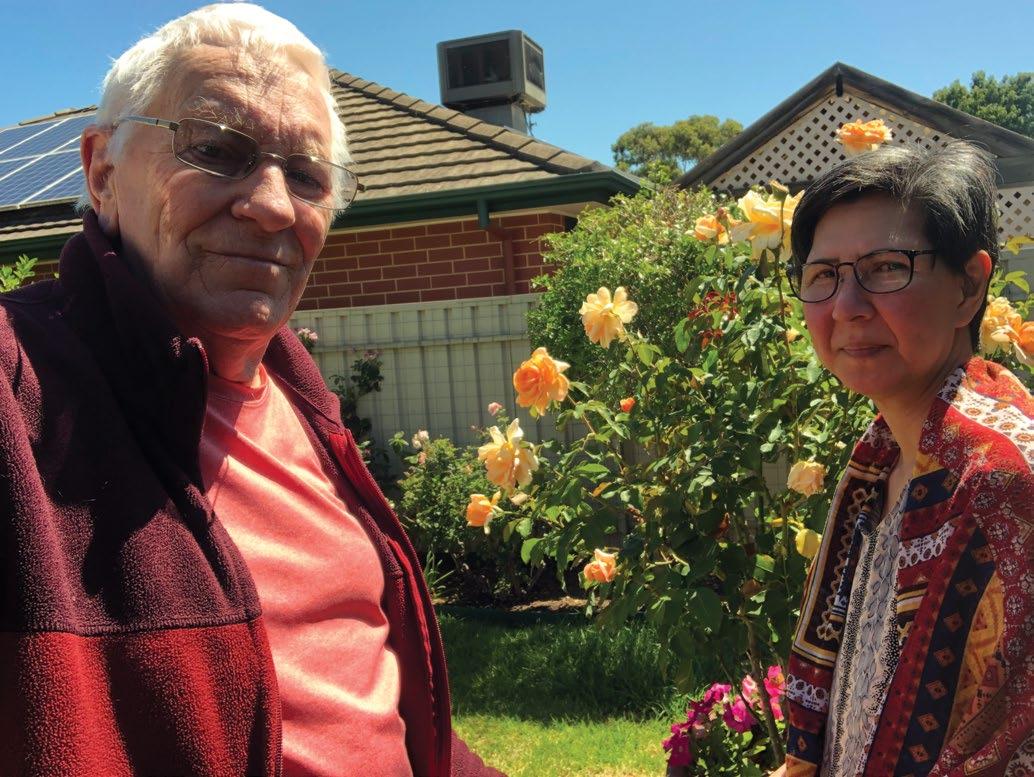
...King’s College was a place where life made our future.
Being involved in a sales-based environment all my life, I won many top sales awards, including three trips overseas along with many other prizes and money.
In my three years at Barbecues Galore, another national company, after about six months I had worked my way up into the top five sales personnel throughout the country. In my last six months I was national top salesperson three times, which also included top sales for accessories per sale for five of those months. I don’t like bragging, BUT I was good!
Growing up and not learning as much as I should have, but on reflection, although not a great academic, King’s College was a place where life made our future.
I did receive the cane occasionally from ‘Cookie’ (affectionately known as) and Borry Hewitson once! Or was it more? LOL!
And who didn’t get the sandshoe a few times, over the backside from the hilarious Harry Woeful Wigan, which he carried in his back pocket too!
Sadly, in these days of late teens, the advice to some would not be taken with the enthusiasm of yesteryear. For the past 60-odd years I had a saying for friends and colleagues— ‘Good Luck, Good Fortune, Good Future’. When emails came into existence, for me at least it was, ‘Live life to the fullest ... you only have one chance at it’.
Annoying Harry Wigan.
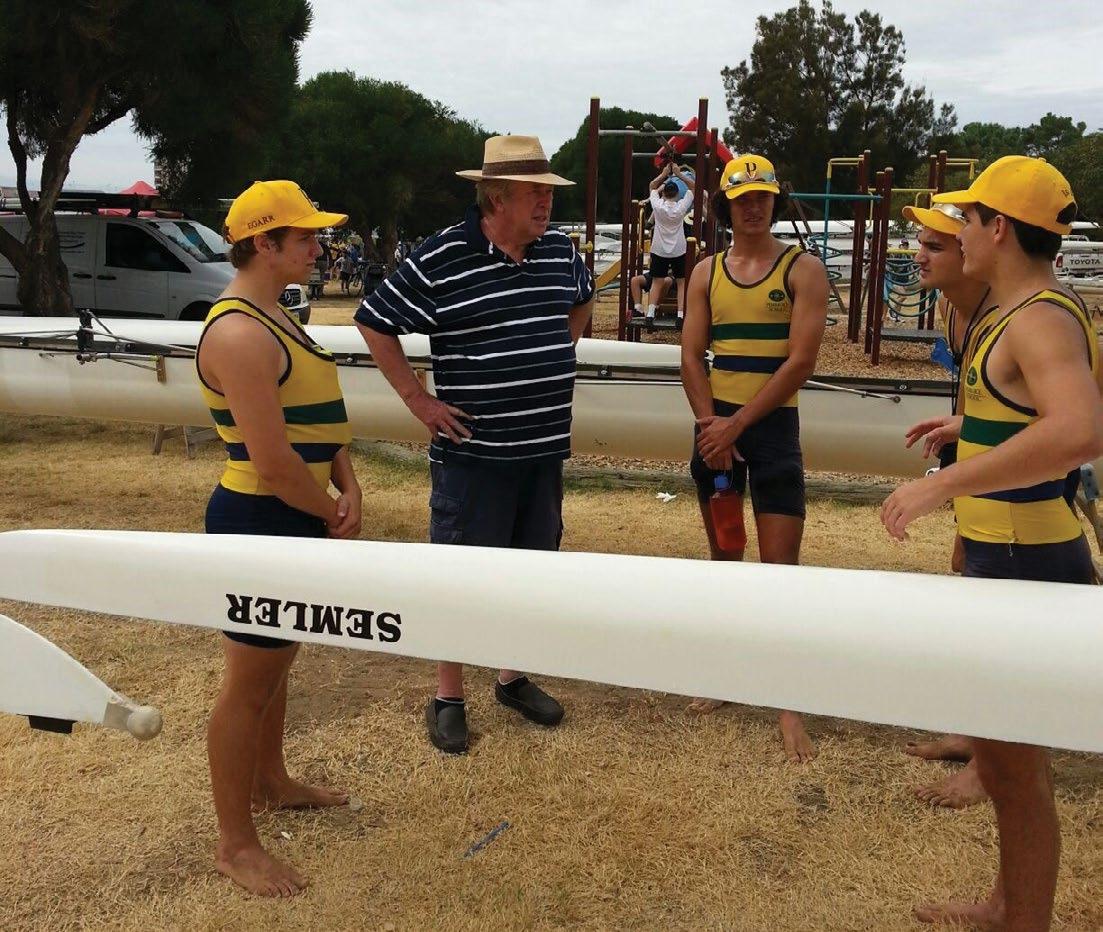
Career and Life Highlights
• <1974: National Sales/Marketing Manager SAS Channel 10 Adelaide
• 1971-1974: Field Operative C/with Attorney General’s Dept
• 1975-1979: National Marketing Manager North Queensland TelevisionTownsville based
• 1980-1992: Semler Advertising & Marketing (Adelaide)
• 2000-2003: President Pembroke Parents’ Rowing Association
• 2001-2006: 5-seat in the Pembroke Masters Rowing Club Second VIII
Favourite King’s Memories
• Annoying Harry Wigan
• Getting ‘the sandshoe’ from Harry Wigan
• 1960 Rowing in Head of the River U16 M4+
Advice for your 18-year-old self
Get professional help in identifying my strengths, weaknesses, motivational drivers, capabilities.
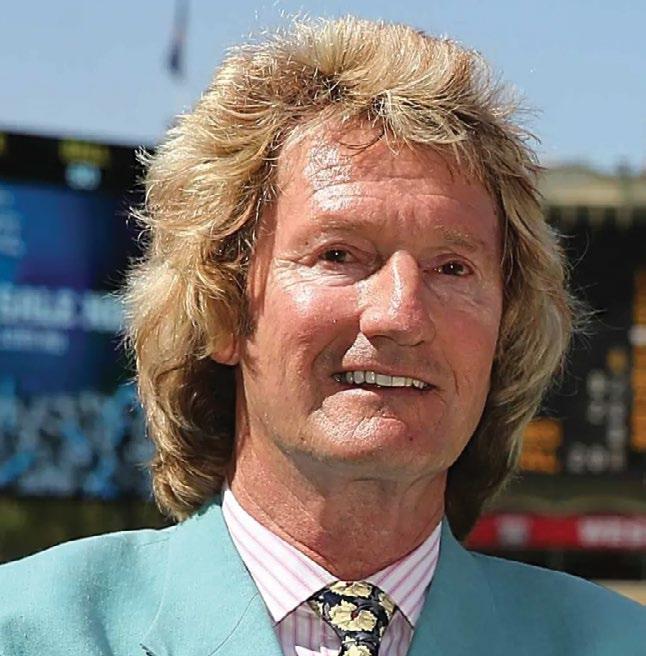
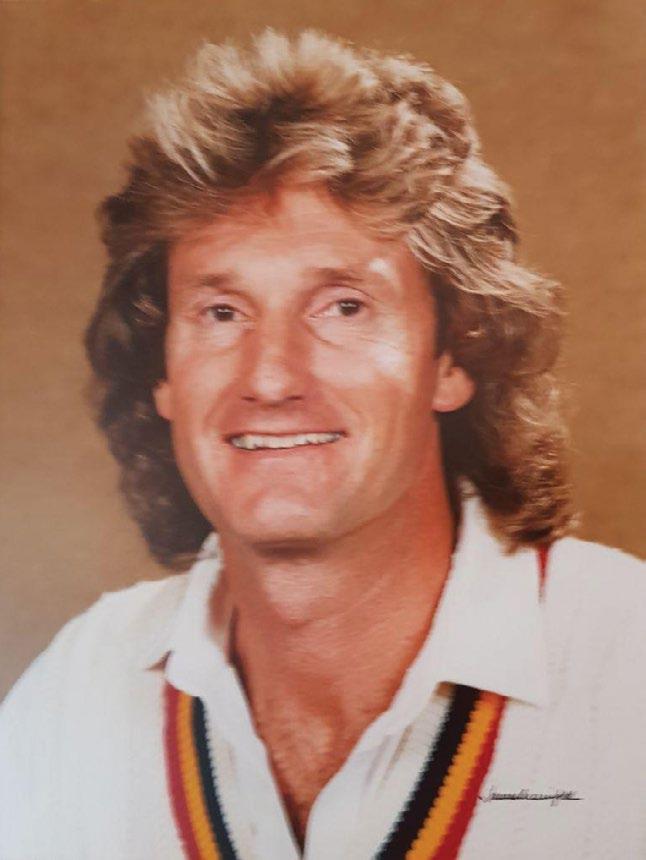
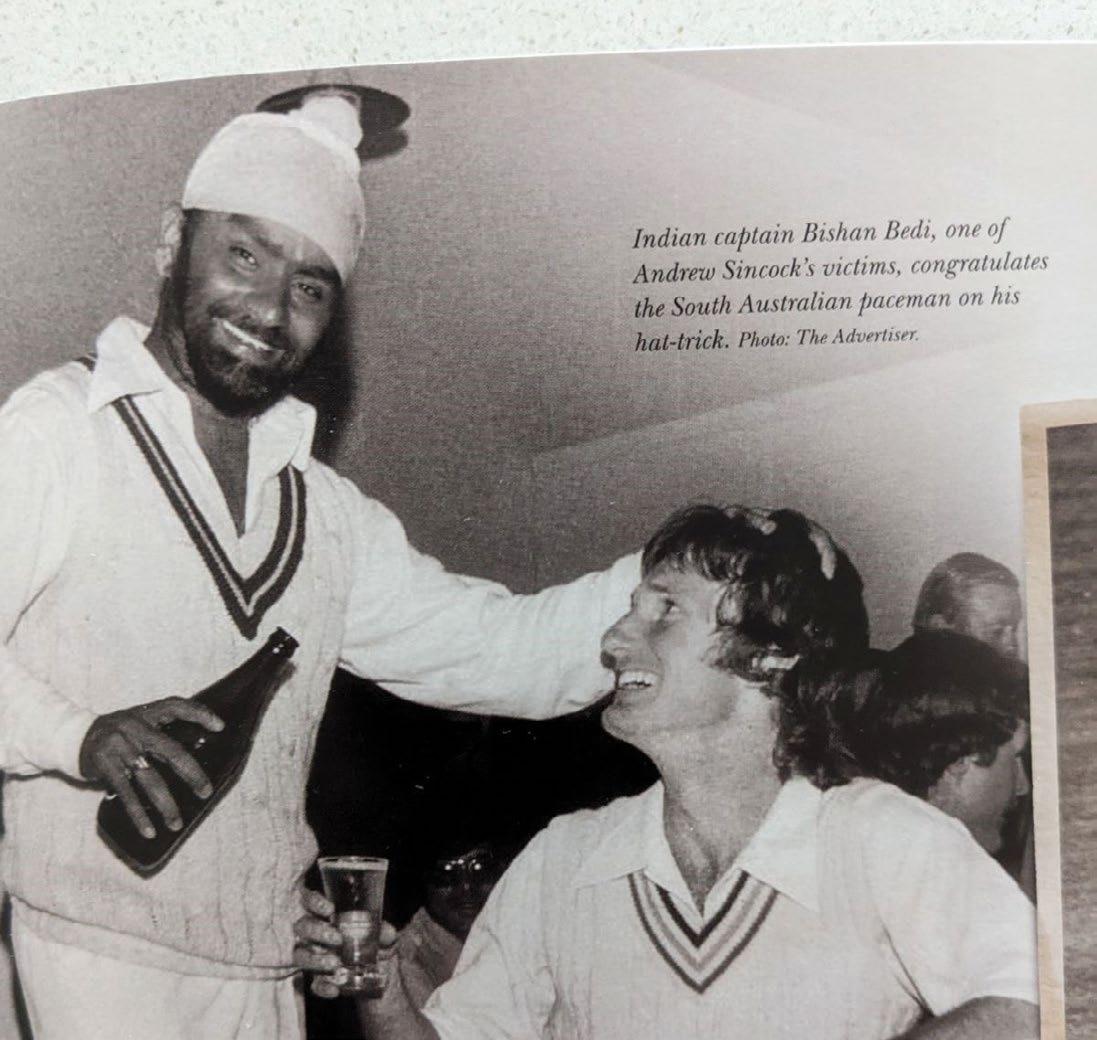
Being a student at King’s provided a great foundation for life.
Career and Life Highlights
Awarded OAM (Order of Australia Medal) on Australia Day 2017
Australian Sports Medal
Bachelor of Economics (University of Adelaide)
Diploma of Education
High School Deputy / Senior in Economics
Head Coach of the Australian National Cricket Academy 1990–91
Head Coach of SA Redbacks 1997–98
Vice President SACA
Inaugural Chairman of the Adelaide Strikers
SA rep at Cricket Australia for game development
Member of 1982 SA Sheffield Shield winning team
Dual Bradman Medallist
Chairman of Public Fund Committee for Rebuild Independence Group (American River, KI)
Having the Medal for Division 2 Premier Cricket named after me
Favourite King’s Memories
King’s was a small school that encouraged personal development in students
Some excellent teachers, who really assisted me to get through school, John Moody, Bob Oatey and Ralph Cook in particular
Sport was a highlight; undefeated Football team 1969
A great community of students, teachers and parents
Being a student at King’s provided a great foundation for life.
Aim high, have a go. Be kind and give people time if they want to interact with you.
Make decisions, and if any prove to be wrong quickly change them for the better.
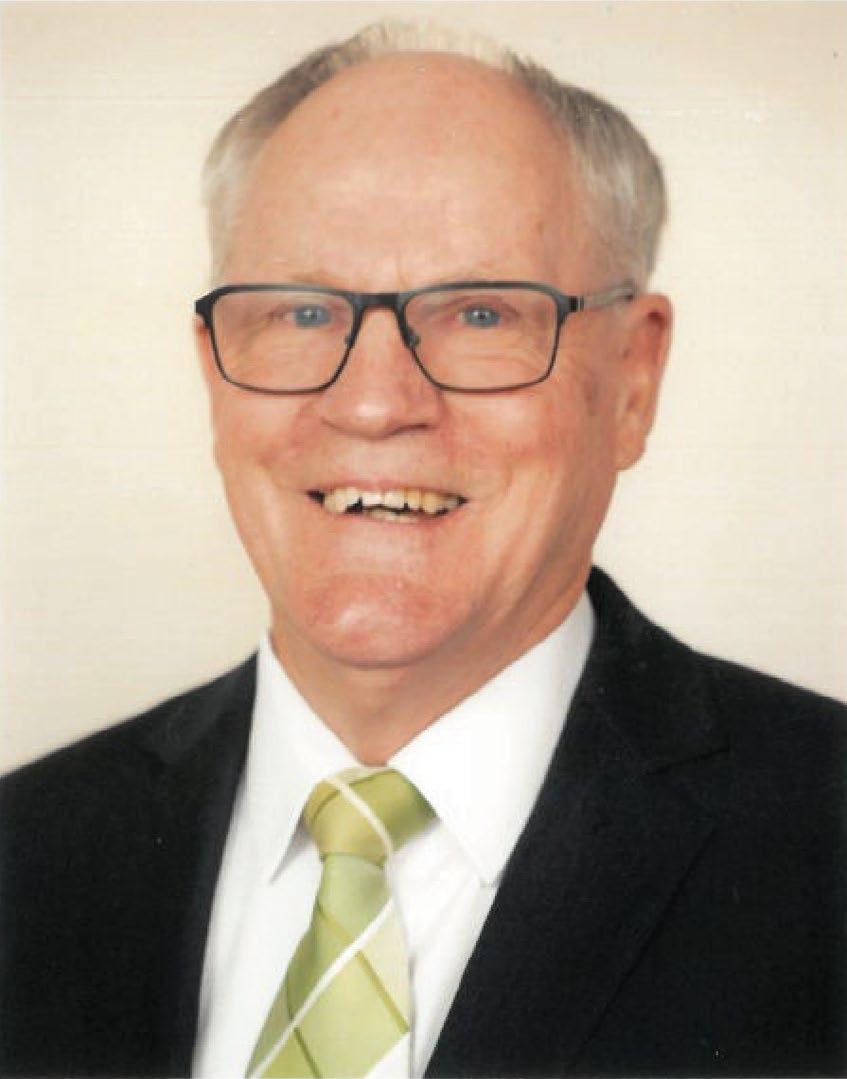
I was always proud to wear the King’s uniform with the green and gold cap...
I was always proud to wear the King’s uniform with the green and gold cap, and especially the green and gold blazer with the emblem proudly displayed for all to see.
To be one of the cheering King’s supporters on the banks of the River Torrens, urging the boys in the Eights to be first across the finishing line of the Head of the River competition against other private school rivals, was a great thrill.
I seem to recall we did it more than once. The late Graham Coldwell introduced Rowing to the School, and I had experience either as a
rower of Fours or as coxswain but never as a champion. How proud we all were when the King’s boatshed was built and located near the Morphett Street Bridge. I still look down and see it when crossing over the bridge.
I enjoyed singing in the Choir with teacher Rev. Angas Holmes, leading our mainly soprano voices with the exception of the deep voices of the boys who had grown into men. So angelic we were in our white cassocks and green smocks. We practised in the gallery of the Chapel and performed in various places and churches to which we were invited. Mr Holmes himself had such a deep and melodious voice, and it was fascinating to listen to it and watch him conduct. How he made harmonious music out of such a motley group of boys is a mystery, even to this day.
In addition I was always impressed by the playing of the electric organ for chapel services by Rev. Ian Forbes, particularly when he played a whole piece simply by using the foot pedals.
One of the musical students, Frank May, would sometimes play and is an accomplished organist today.
When I taught as one of the staff in the King’s Junior School years later, I had the opportunity to play a hymn or two for Chapel services on occasion, which may have given me the confidence to be a church organist before I entered the ministry after my teaching career had ended.
Be brave. Be less self-conscious.
Put yourself forward and ‘have a go’.
Try to be more comfortable talking with girls, and go to the School Dance next time.
Open your mind and do more research into career options available to you. Pursue your goals with vigour.
Realise what a great opportunity was yours to attend such a fine college and maintain the friendships you have made at King’s.
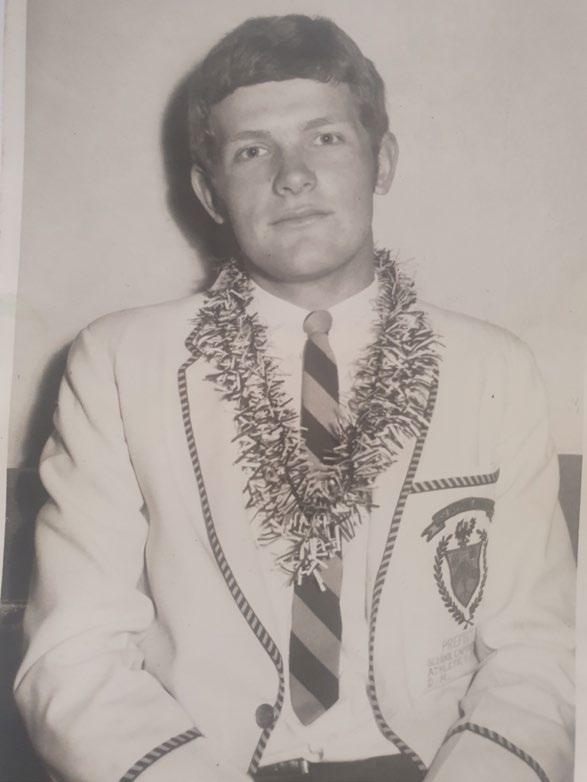
My most vivid and favourite memories of life at King’s were in Years 11 and 12.
After leaving King’s in 1969 I attended the University of Adelaide and SAIT, gained a degree in accounting and ultimately qualified as a CPA. I worked for a firm of chartered accountants in Adelaide until 1979 before becoming one of the early sea-changers. We relocated to Caloundra on the Sunshine Coast, where I commenced my own practice. In 2008 I sold the practice and began my second career as a commercial property developer and investor, which I am slowly winding down at this time.
In 1973 I married Claire and last year we celebrated our 50th anniversary. We have two daughters, Brie and Carly. Both are university graduates and are pursuing fulfilling careers and personal lives, and smashing glass ceilings. Claire and I are extremely proud of their life achievements. We have two adorable grandchildren.
As a student I was an average sportsman, but in my last two years at King’s I performed quite well as a middle-distance runner. A mid-life highlight for me was to run in the 1990 Boston Marathon, as well as to compete in a number of Australian marathon and half-marathon races.
In our 50s and 60s Claire and I hiked in various parts of the world, which was a great way to keep fit and to visit some amazing and far-flung places. Claire and I made a green change in 2010 and now live on a beautiful acreage property close to the village of Montville. We are surrounded by rainforest and waterfalls on the Blackall Range overlooking the Sunshine Coast. Life is good.
My most vivid and favourite memories of life at King’s were in Years 11 and 12 (1967–69). Our gap year in those days was to repeat
Year 12, and I was no exception after Ralph Cook indicated to my parents that I would be appointed School Captain if I returned in 1969.
The Prefects Room below Wright Hall was a great place to spend free periods or lunch hours. If we weren’t burning our toasted sandwiches on the radiator or taking a slug of Coke from the old Kelvinator fridge, we would be air guitaring Jimi Hendrix, The Rolling Stones or The Doors.
Sport was always an important part of life at King’s, whether participating or spectating. As one of the smaller private colleges, King’s had a proud sporting record.
Our top Football, Rowing, Tennis, Hockey and Cricket teams were at various times the best among all of Adelaide’s private schools, and as students we turned out every weekend to support our mates who represented the green and gold. Messers Moody, Jaensch, Oatey, Coldwell et al. were all inspirational coaches whom I still hold in great esteem today.
The Head of the River on the banks of the Torrens was a great day out, as was supporting the First XVIII whenever they played.
Assemblies in the quadrangle were always memorable, as were the morning services in the Chapel, which were regularly led by the prefects and other senior students.
Cherish your family and friends. Lead a balanced life.
Never stop exercising and eating healthily.
Actively seek out ways to improve and challenge yourself. Take time to smell the flowers. Travel, explore and experience other cultures.
Show care, consideration, respect and empathy towards others. Laugh a lot—enjoy the funny side of life.
Don’t take yourself too seriously.
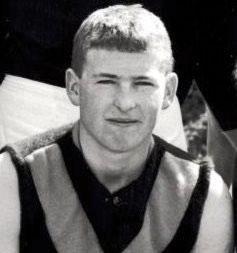
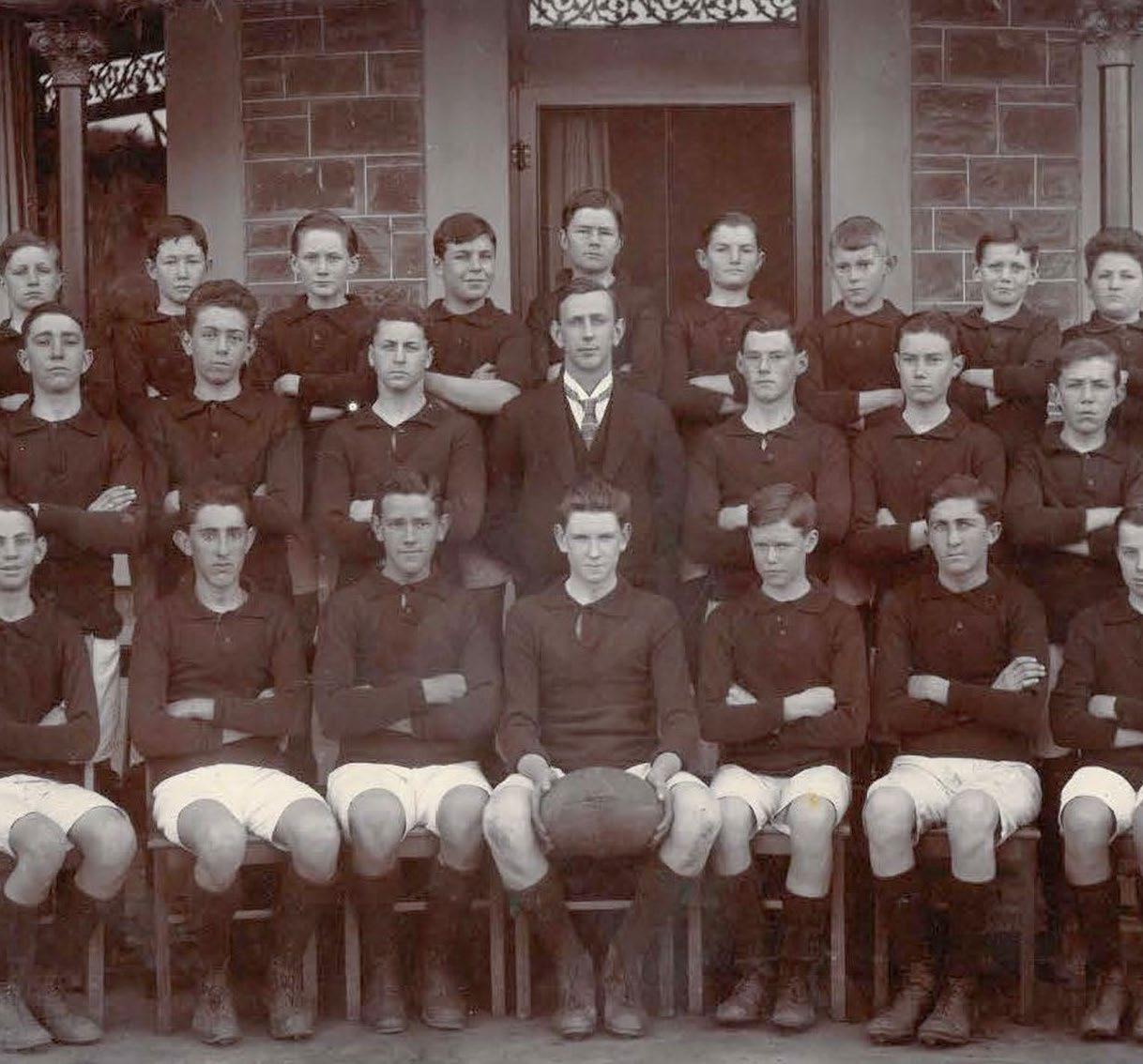
My King’s days were some of the best of my life and resulted in long-lasting friendships despite years overseas.
I joined the Adelaide newspaper
The News in 1965 as a cadet journalist and then the Hobart bureau of the Launceston Examiner, and then moved to the ABC for two years. I was headhunted in late 1969 to Melbourne with the Australian Information Service, later absorbed by the Department of Foreign Affairs and Trade, as their youngest-ever officer at 23. My postings over 25 years were to London, Vienna, Bangkok (where I met my Thai wife), Bonn and Bangkok again, besides Canberra. These years contained great experiences, including as Press Officer to Princess Anne on the 1970 Captain Cook Bicentennial Tour, and standing at the end of the table as PM Hawke met Soviet leader Mikhail Gorbachev in Moscow in 1987. I could not imagine a more interesting life.
While my German fluency benefited, Thai was more difficult! With my spouse, Nantirat Rachapaetayakom, we have a daughter and a son in their 30s who also attended Pembroke—she was a former Head Girl in 2007. I took a redundancy from DFAT in 1995 to become the Canberra Times foreign editor. To enable our youngsters’ Pembroke days, we moved back to Adelaide in 2000. I ended my working days in 2012 as state editor of the Adelaide Advertiser
My King’s days were some of the best of my life and resulted in longlasting friendships despite years overseas. I especially appreciated my English teacher Rev. I. L. D. ‘Ian’ Forbes, who mentored me in my determination to enter the realm of journalism. Football and Hockey matches were often rugged and
I still treasure the ball with which I dismissed later Australian Captain Greg Chappell with my first delivery for the Cricket First XI against Prince Alfred College in 1964. An exchange trip to Carey Grammar School in Melbourne in 1963 was the first time many of us had flown. Other long-ago memories include four unfortunate Girton girls arriving at King’s after recess for Chemistry lessons twice a week, with the boys wolf-whistling as loudly as they could from the upstairs balconies. This cacophony ceased abruptly with an approaching master, but the girls seemed to somewhat enjoy the attention! We had vocational guidance meetings with a privatefirm psychologist in 1964 who said I should become a teacher. Swapping notes with other boys, it turned out he had given that advice to everybody. There was a big shortage of teachers during those days of massive immigration.
In the 1960s, with few boys (and less girls) going on to university, life was good in a booming economy. Jobs were plentiful and obtaining one was almost a certainty. Whether or not it was the ‘right’ one was not so easy to define.
At 18 I would advise myself to still play a variety of sports but not be so obsessed with them. Also to study harder to get improved exam results and go on to university to be better prepared for life. I doubt that these days you can trust so much on the good fortune that abounded 60 years ago.
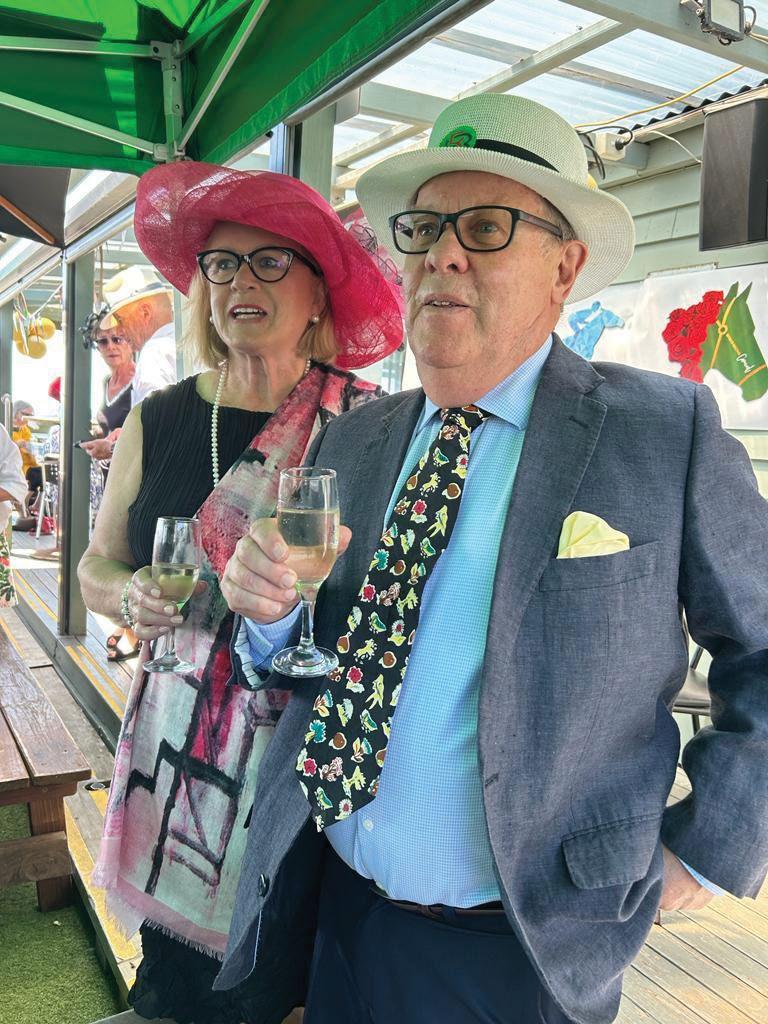
Believe in yourself...
Career and Life Highlights
Graduating from the University of Adelaide and qualifying as a chartered accountant
Happily married for 40+ years, with two children and now two grandchildren, living in Melbourne, London and USA
20+ years as an executive director at Linfox and subsequently establishing a property development business
Favourite King’s Memories
Playing Cricket, Football and Tennis
Being a student in the first year of matriculation, and passing.
Advice for your 18-year-old self
Believe in yourself, work hard and accept that setbacks are just tests to make you stronger.
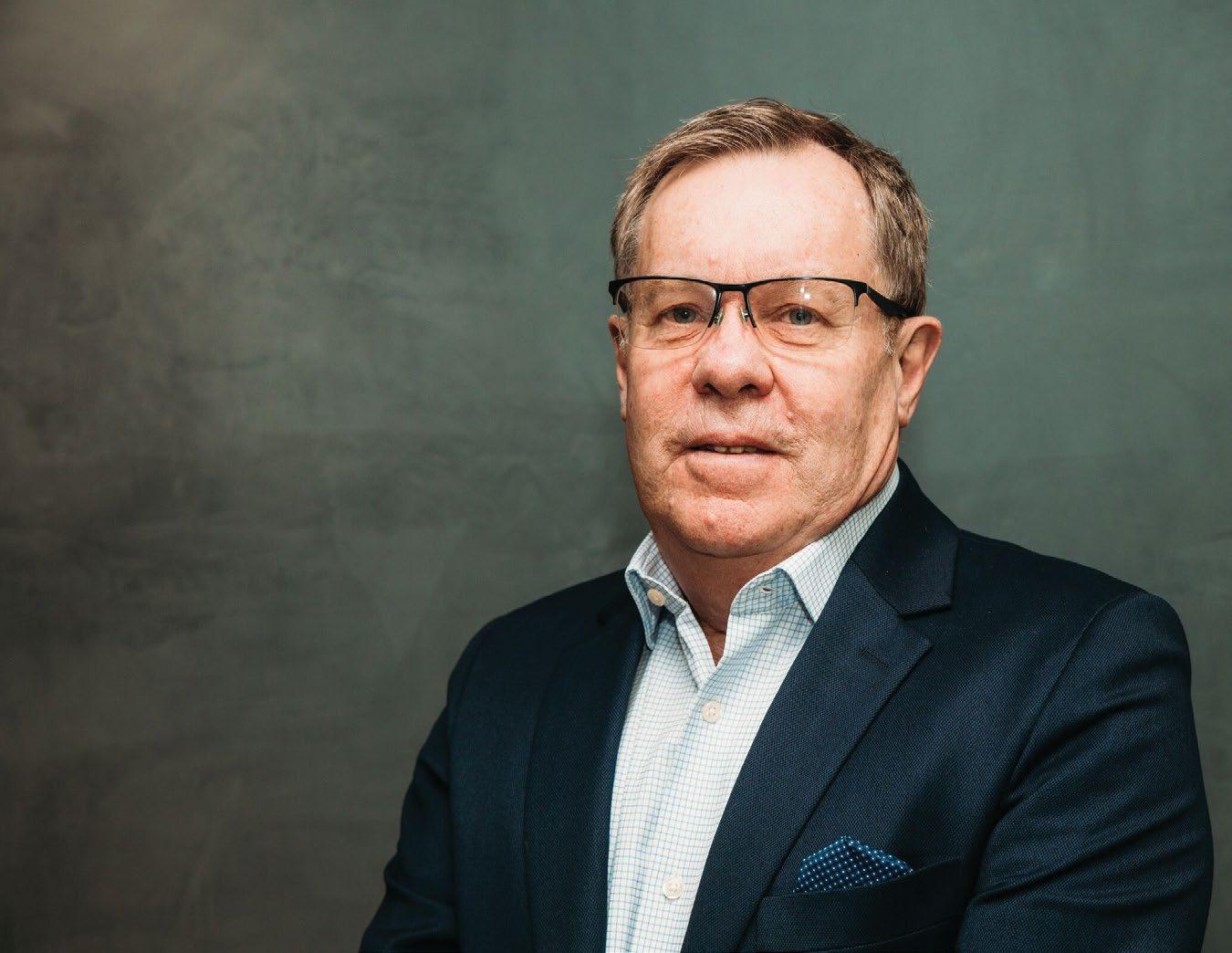
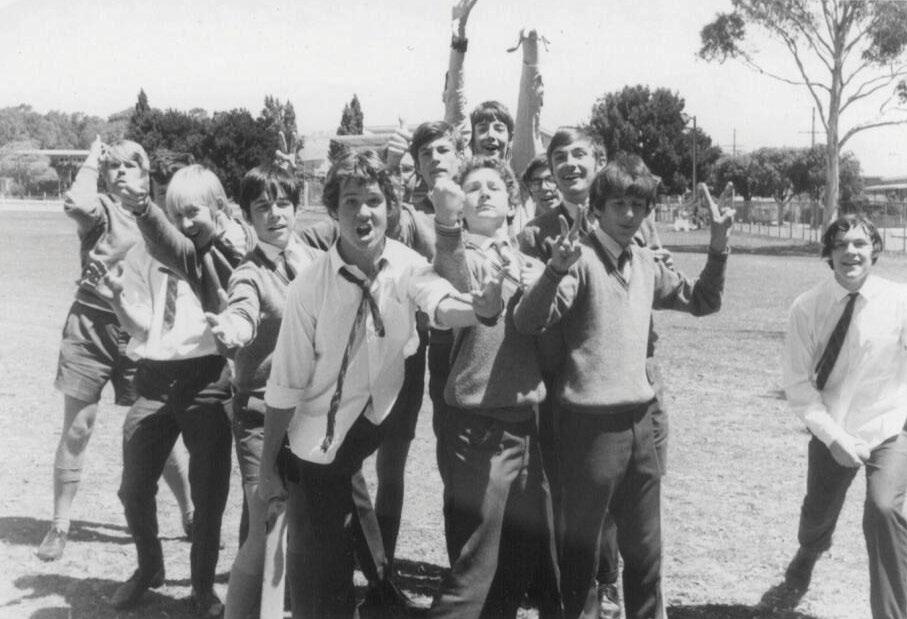
The 1970s was a decade of great debate and social change. The Australian Labor Party took power for the first time in 23 years, led by Gough Whitlam from 1972-1975. The new government made significant changes including introducing free university education and recognising First Nations land rights with the enactment of The Aboriginal Land Rights (Northern Territory) Amendment Act. In 1978, SBS, the Special Broadcasting Service, was established and the first bionic ear was implanted.
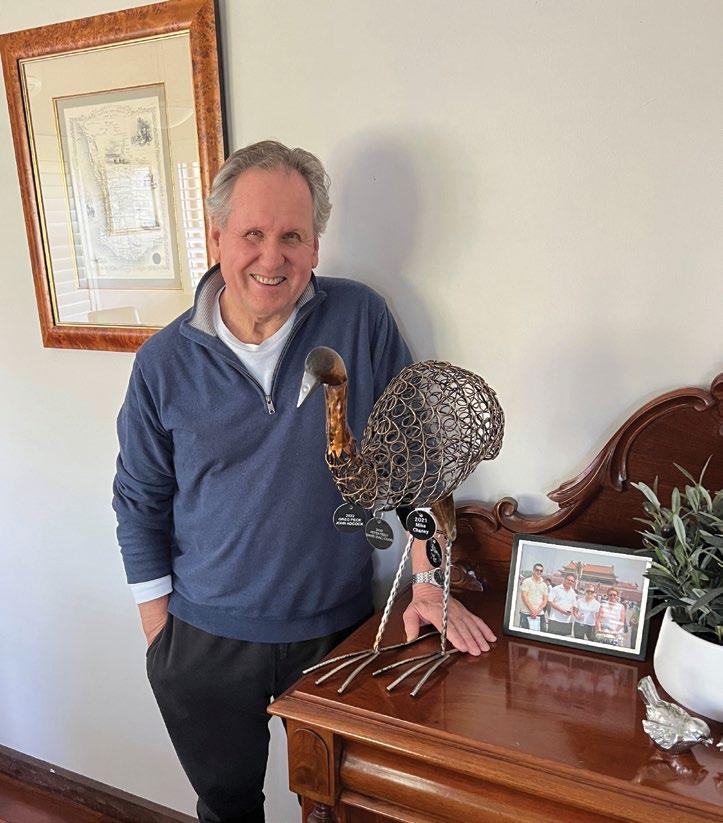
A School trip to Tasmania in 1967 and a camping trip to the Flinders Ranges were highlights.
King’s College Junior School Captain 1967
King’s College School Captain 1973 – Nigel (Charlie) Winter was the first for Pembroke the next year. He is sadly missed by many – what a character, leader and friend.
BA Degree at Flinders University 1974-1979.
King’s Old Scholars Football Club 1973 to 1981 – Premierships 1974, 1975 – Grand Finalists 1980
Colliers 1980 to 1985 (Commercial Property) in Adelaide – completed Graduate Diploma Building Project Management – SAIT
Married Robyn Ware 1982
Georgina was born in 1985 and Edward in 1987.
Jones Lang Wootton 1985 to 1997 –Manager/Director
Graduate Diploma in Property 1995 from University of South Australia Moved to Perth in 1997 as Director of Leasing – Colliers until 2002.
Established Adroit Consulting in 2002 – consulting advice to Western Australian State Government, not for profits and general commercial tenants –ongoing.
Strategic Property Advisor (Leasing) Central Park 2002 to 2006.
Joined LPC (national commercial property consultants) as equity
Managing Director Western Australia 2022.
Grandchildren Huey (born in 2020) and Lola (born in 2022)
Life Member of Collegians Amateur Football Club – involved in redevelopment of changerooms and Clubrooms at Dalkeith Oval.
Member of Cottesloe Golf Club since 1997. Hole in one 2023 (rare highlight)
Remain a loyal Adelaide Crows supporter.
As a small school we were involved in everything. Cricket, Football, Athletics and Swimming were the main focus in Junior School complemented by Cubs, woodworking, valiant attempts at Religious Instruction, Drama and Choir, which I thoroughly enjoyed.
A good range of teachers with a well-run library by Miss Dean.
John Davis was a good coach who thought outside the box.
A School trip to Tasmania in 1967 and a camping trip to the Flinders Ranges were highlights.
In Senior School there was as much sport as you could possibly want, with regular House competitions in the traditional sports, plus
Standards, Table Tennis, Volleyball, Softball, Cross Country (not my favourite, although I did run the Marathon in 1986).
House competition was intense.
John Moody and Lewis Sevcik were very positive influences while Glad Blood kept us fuelled. In underage competitions, because of our size we struggled, but at more senior levels we more than held our own, particularly in Football, Rowing and Hockey. Big fan of Phil Carman – one of the best ever footballers whose career was significantly and positively influenced by mentor Robert Oatey.
The School was well led by Ralph Cook and John Moody who did their utmost to provide guidance to a group of young men whose worlds were rapidly changing in the early 1970s. Gough coming into power in 1972 changed the landscape!
Cadets, Scouts, Civil Defence and community service were all positive activities and reinforced the responsibility to undertake community service.
The vision shown by the School Council and leaders of King’s and Girton was way ahead of its time and has resulted in arguably one of Australia’s greatest success stories in co-education.
Be broad in your outlook –try new things and find the balance that suits you.
Everyone is good at something.
Travel so you can obtain a perspective about how great this country really is.
Do things for others.
Be positive about your future and remember to keep your sense of humour.
I also valued the friendships I made during this time...
After graduating from King’s in 1972, I obtained a degree in Chemical Engineering at the University of Adelaide. My first engineering position was with Delhi Petroleum and then a quick transfer to Santos Ltd. After 11 years I was headhunted by Mobil Oil Australia for their Altona refinery in Victoria. After 16 years with them I moved overseas to work with ExxonMobil in Singapore and the U.S. before retiring in 2014. My wife Pamela and I were married in 1992 and we have one son. We retired into the Adelaide Hills.
My career highlights include developing expertise in materials/ corrosion engineering while at Santos, and starting the biannual national Oil and Gas Corrosion Symposium, which is still going to
this day. I was also the Australasian Corrosion Association technical director for six years. During my years at Altona my team improved refinery reliability to a fully proactive position. During my 11 years of expat assignment I managed global work processes and coordinated networks for equipment reliability, and led teams assessing equipment reliability in refineries around the world.
Personal highlights include meeting my wife and raising our family, living overseas for 11 years and developing expertise in photography (I have had three exhibitions) and jazz (I play the saxophone).
I have many (but fading) memories of King’s College as I spent all my school years there. I experienced profound changes in education through the ‘60s and ‘70s, paralleling the many changes in Australian life during this period. The highlights of my School life (in no particular order) were doing well academically, developing skills in sport (I played Tennis, Basketball and Squash at School and carried these throughout my life), and
also being in the inaugural trial co-education classes which would become Pembroke School. I also valued the friendships I made during this time, although I mostly did not carry these forward in my life. I enjoyed the freedoms in my final years, and the opportunities that these gave me to practise self-expression, albeit sometimes a little further than my schoolmasters preferred.
I’d be careful about giving advice to my 18-year-old self because he often didn’t take kindly to receiving it. However, learning the hard way can be a two-pronged sword, so I might suggest the following: a little more application and less partying at university could have avoided that extra year (although who knows where my career would be now); that useless first marriage should have been avoided entirely; applying yourself to that saxophone and getting some mentoring, and getting to know your parents a little bit better than you did.
I remember having seven great years at the School, which included making many friends that I still have contact with.
Career and Life Highlights
I left King’s College at the end of 1971. I started working at Coles in May 1972 and finished in August 1991. I have worked at various jobs since leaving Coles, such as working as a security guard, driving taxis and owning my own home cleaning business. I have coached soccer at Ingle Farm Junior Soccer Club (1999–2023) where my two sons played. I have been involved with my local Catholic Church, the Parish Council, St Vincent de Paul and Knights of The Southern Cross. I have been married for 32 years, with three sons and two grandsons. I live in Hope Valley.
Favourite King’s Memories
I remember having seven great years at the School, which included making many friends that I still have contact with. I played Cricket and Hockey. I continued to play cricket after I left school. I was involved in State Emergency Services and continued for many years after leaving school.
Advice for your 18-year-old self
I would tell myself that I should study hard and pay attention to everything the teacher tells me.
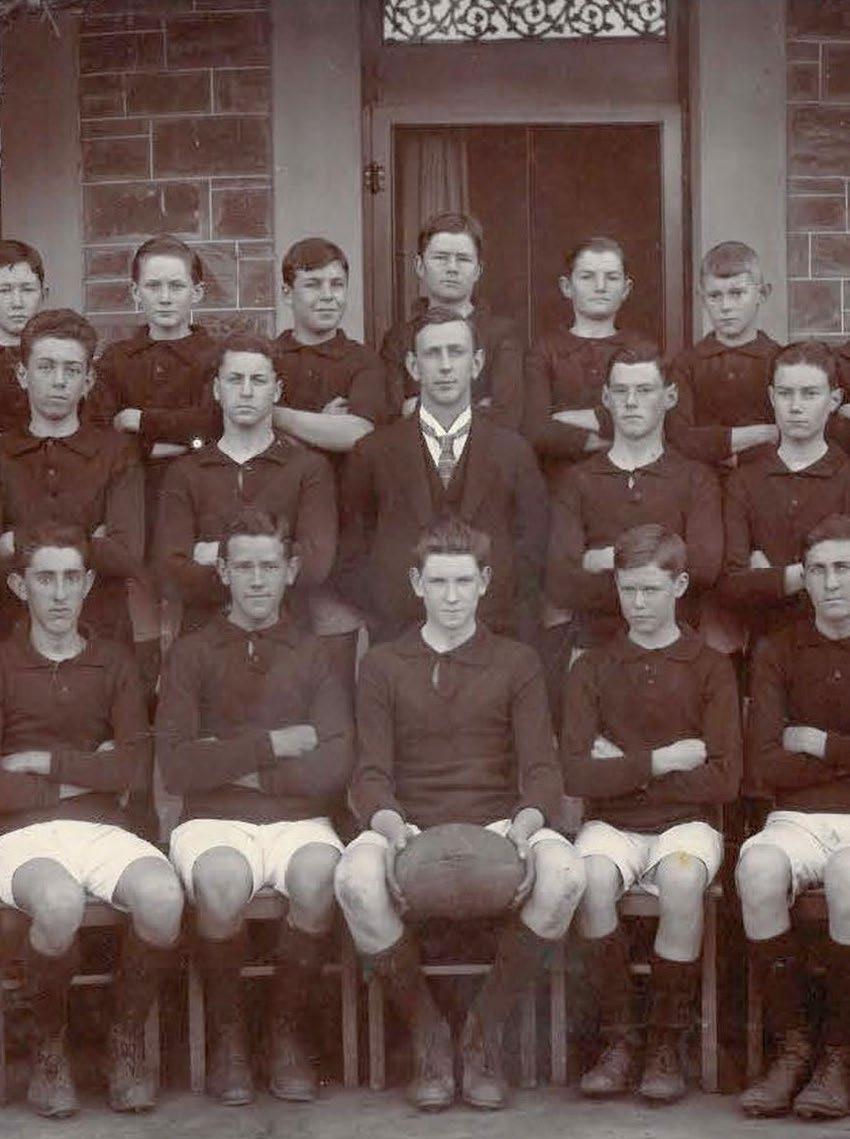
I have made many friends at King’s and have remained in touch with them to this day.
After leaving King’s and after a short time at the University of Adelaide, I entered the family funeral business, Berry Funeral Directors, in 1975. In 2024 I‘m celebrating 50 years in the funeral industry.
My career highlights are: becoming National President of the Australian Funeral Directors Association during 1993–95; being involved in organising and conducting the funeral of the Unknown Soldier in Canberra to celebrate the 75th anniversary of Armistice Day— 11/11/1993; conducting numerous state funerals including Sir Thomas Playford, Sir Lyell McEwin, Dr David Tonkin, Don Dunstan, Sir James Hardy, Kym Bonython and more recently Neil Kerley.
I also presided over sportsmen’s funerals including David Hookes,
Rod Marsh, Bob Hammond and Bob Hank. The greatest highlight for me is running a successful business and caring for the hundreds of families throughout my career.
I made many friends at King’s and have remained in touch with them to this day. I loved Cubs (2nd Kensington Colour group), Cadets, sporting events, Athletics, Rowing and Football. Some teachers I particularly remember are John Davis, Morrie Guy and Max McQuinn in the Junior School; and in Senior School, Robert Oatey, John Moody, Dave Stewart and Graham Coldwell, to name a few. I loved the fact that King’s was a small school and everyone— parents, teachers and students— all knew each other. It was a fact that we were the underdog to the larger boys’ schools.
I particularly remember the years of 1972 and 1973 as transition years from King’s College to Pembroke School. It was so much fun interacting with the Girton girls, particularly walking across the Olympic Sports Field (now Kensington Oval) with them between Girton School and King’s College.
Remember and appreciate the education that your parents afforded you. Your schooling days can be the best days of your life!
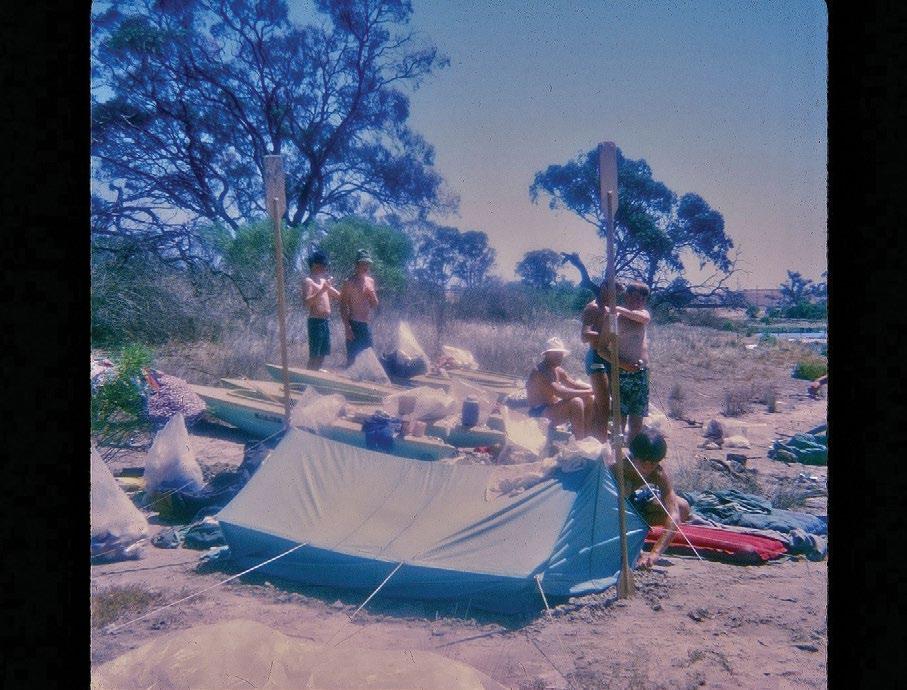
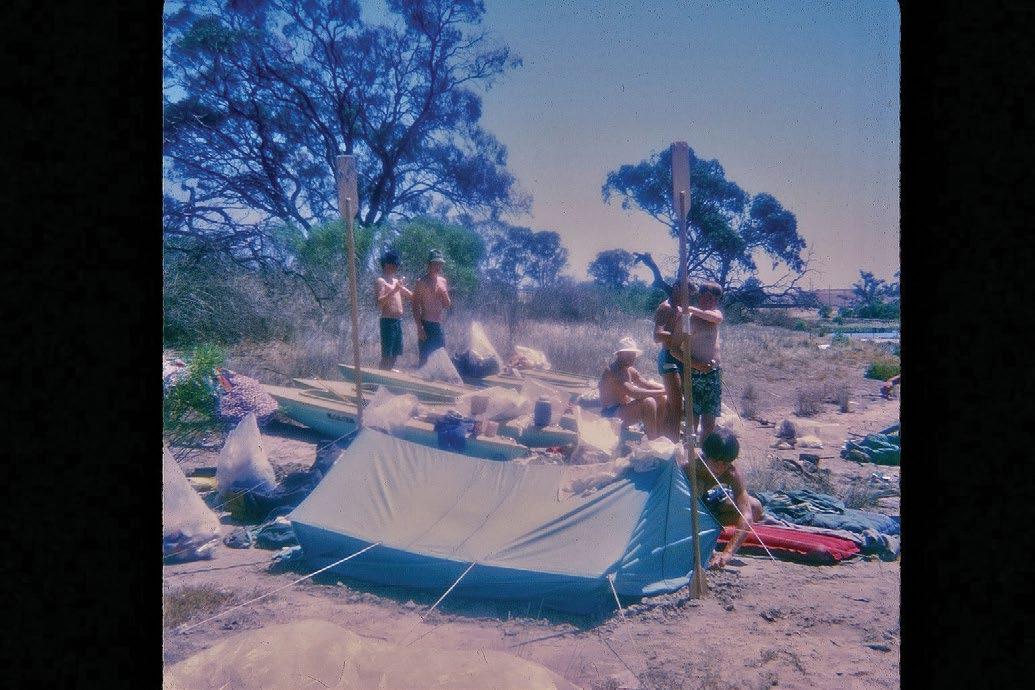
The most satisfying achievements though are family and being able to watch my daughters thrive...
The early years, post school, in retrospect seem crammed with a constant flurry of activity between university and coming to grips with practising as a new dentist, sport, travel and endless socialising. The constant need to adapt to new and evolving technologies meant that travel and learning remained constants and gradually evolved into roles in lecturing and teaching. An audience of 10,000 in Las Vegas seems a long journey from sitting in Mr Shepherd’s 8S class when I started at King’s.
The most satisfying achievements though are family and being able to watch my daughters thrive and carve their own paths in the Pembroke environment, then confidently establish themselves in their own careers.
The most enduring legacy of my time at King’s is the camaraderie and the long-lasting friendships from both the time at King’s and also through the old scholars’ sporting clubs, particularly cricket and football.
The time at King’s was full of stimulating challenges in many areas, a degree of academic content, plenty of sport and the multitude of additional activities. What other school could boast an Explosives Club, for example!
A group of us were fortunate to have the late Robert Oatey as our form master for three years and he had a way of making things happen, the canoe trip from Morgan to Purnong Landing being an example.
We learnt in sport that, despite our small size, King’s was able to hold its own against the big guys and this carried on into successes with the old scholars’ sporting teams.
Have confidence to tackle whatever comes your way, as you have been better prepared than you may realise.
Everything in moderation...
Career and Life Highlights
Married with four children and ten grandchildren, four of whom attend Pembroke
Establishment of Bray Chan Chartered Accountants, PVS Australia, Onyx Gaming and SA Pub Group
Favourite King’s Memories
Friends who are still close friends today
Dean Jaensch who turned Maths into my favourite subject
Cadets
Cricket and Hockey
Advice for your 18-year-old self
Everything in moderation
Listen
Play it straight
...have a crack at a career in cricket.
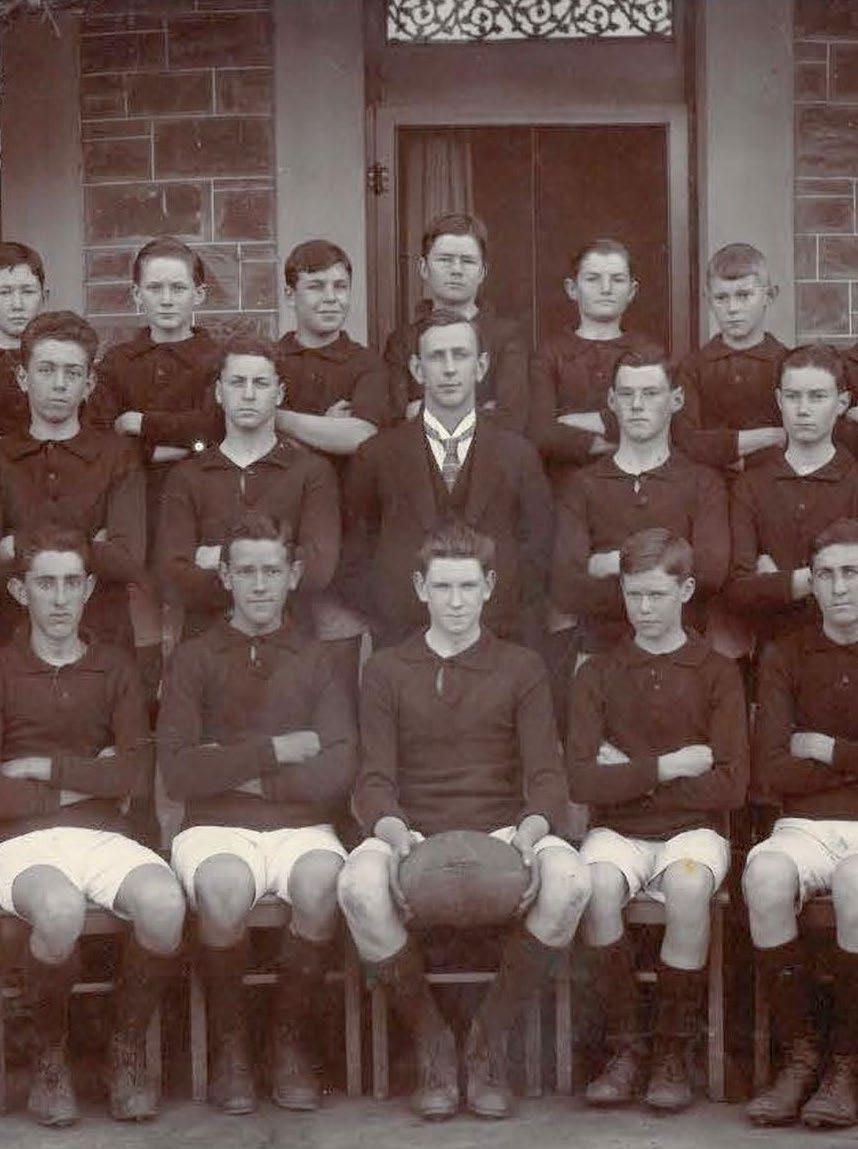
Career and Life Highlights
2023 – Present Deputy Chair Aged Rights Advocacy Service ARAS
2019 – Present Board Member Summit Sport and Recreation Park
2017 – 2021 Chair Victor Harbor Tram Authority (VHTA); SA Health Oakden – Response Plan Oversight Committee, Model of Care Expert Working Group
2020 – 2021 Member Planning Panel Neuro-Behavioural Unit and Older Person’s Mental Health Facility
2002 – 2020 Owner/Director Kangaroo Island Wilderness Tours
2007 – 2016 Owner/Director Seascape Lodge on Emu Bay
1972 – 2004 Owner/Manager Wyndemar, an 800-ha property with 240 ha crops (canola, wheat, oats, lupins) and 6,000 sheep for wool and prime lamb production.
Favourite King’s Memories
Being part of the Anzac Day parades as a Cadet
Playing Cricket on the main oval
Participating in all the interhouse School carnivals
Advice for your 18-year-old self
Stay in Adelaide and have a crack at a career in cricket.
Life is too short to follow the same road throughout it.
Admission as a South Australian Legal Practitioner – February 1978
Admission as a member of the South Australian Independent Bar –February 1983
Engagement as junior counsel in the case of Arpitsche, including travel to Germany as part of the conduct of such a case – 2002
Marriage – January 1986
Birth of daughter – October 1992
1986 – travelling overseas mainly to Greece, Italy, France and the United Kingdom (six weeks)
1990 – watching performance at La Scala, Milan
2003 – watching performance at Opéra Garnier, Paris
2014 – travel to the Cook Islands –two weeks
2015 – September – attending French language school in Bergerac in the Dordogne, France
2016 – travelling overseas to Italy (principally Bologna, Sardegna and the Amalfi Coast) – one month; and Oregon, Washington and Canada (principally Portland, Seattle and Portland) – one month
2018 – trip on The Ghan from Adelaide to Darwin
2019 – travelling overseas to the United States of America (Pennsylvania, New York and California) – one month; Chile and Colombia (principally Bogotá and Medellín) – one month; Durham in the United Kingdom (principally at the University of Durham) –three months; Paris, Prague and Budapest – two weeks
2024 – trip on the Great Southern Railway from Adelaide to Brisbane
Favourite King’s Memories
Latin and French studies with Mr Dan Slerka as teacher, 1966–67 Studying Geography and Economics with Mr John Moody as teacher, 1970–71
Athletics 1971 and becoming Open Champion
Membership of Open IV Rowing crew 1970 (myself, Grant Birkin, David Kutcher, Steven Nankivell, with Warwick Nicholls cox and Mr David Sheppard coach) –winning the Head of the River
Choose a qualification that has an interest for you and has international application.
Learn to be fluent in at least one second language; it is not that hard if you adopt the right methodology— French and Spanish are the most useful, German is less useful but easier than the other two. Having a second language adds to your value in the labour market and is intellectually rewarding.
Travel overseas when you can, and get employment there to add to your experience and curriculum vitae.
Plan your career in sections of 5–7 years. Life is too short to follow the same road throughout it. Embrace technology, difference and change.
I always felt very honoured to be there and took advantage of every opportunity that came my way.
Enjoying 31 years working in the Australian media, being good at my job, achieving what I set out to do and meeting my lovely wife, with whom I have shared over four decades of happy marriage. We have two grown-up sons who are both teachers. Lots of teachers in my family—teachers and hoteliers, an interesting combination I always thought.
I enjoyed my time at King’s. R.A. Cook was the Headmaster with some wonderful teachers—a couple were a bit scary but most were kind, interesting men. I joined the King’s Cadet Unit in 1966 under the leadership of John Moody and, because of that, people, including some of the teachers, called me ‘General’, a nickname that stuck for my entire time at King’s. I always felt very honoured to be there and took advantage of every opportunity that came my way. I played Hockey and
was the Under 15 Captain. After I left school I played hockey with King’s Old Collegians and we won a premiership!
I was elected Class Captain in 1967. I joined the then brand-new King’s Civil Defence Unit as a safety officer. I travelled with the unit to Civil Defence Headquarters at Mount Macedon, Victoria. I did some Rowing. The annual Head of the River event on the River Torrens was always an exciting day, especially when the First VIII won! I met some beaut blokes, made some good memories and have always been thankful to my parents for sending me to King’s College.
My advice would be to do the best you can because that’s all you can do. Learn all you can about your chosen profession or work, and don’t worry—follow your instincts and it will be alright. Nil desperandum!
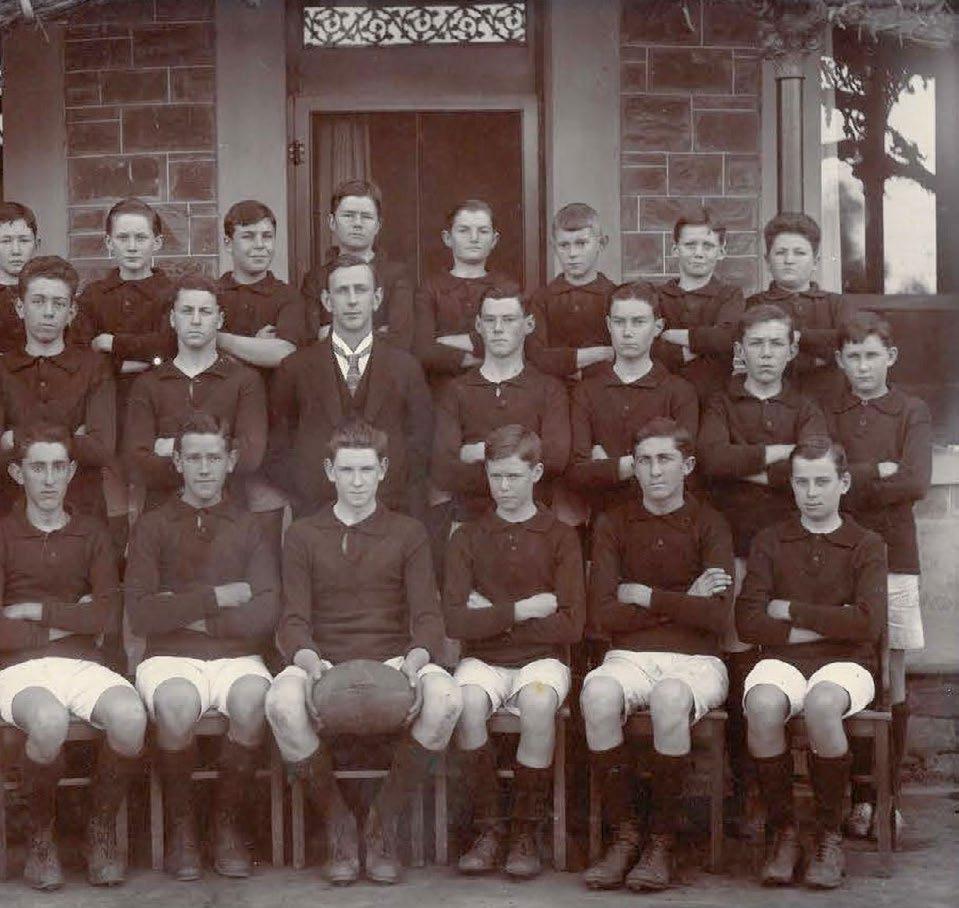
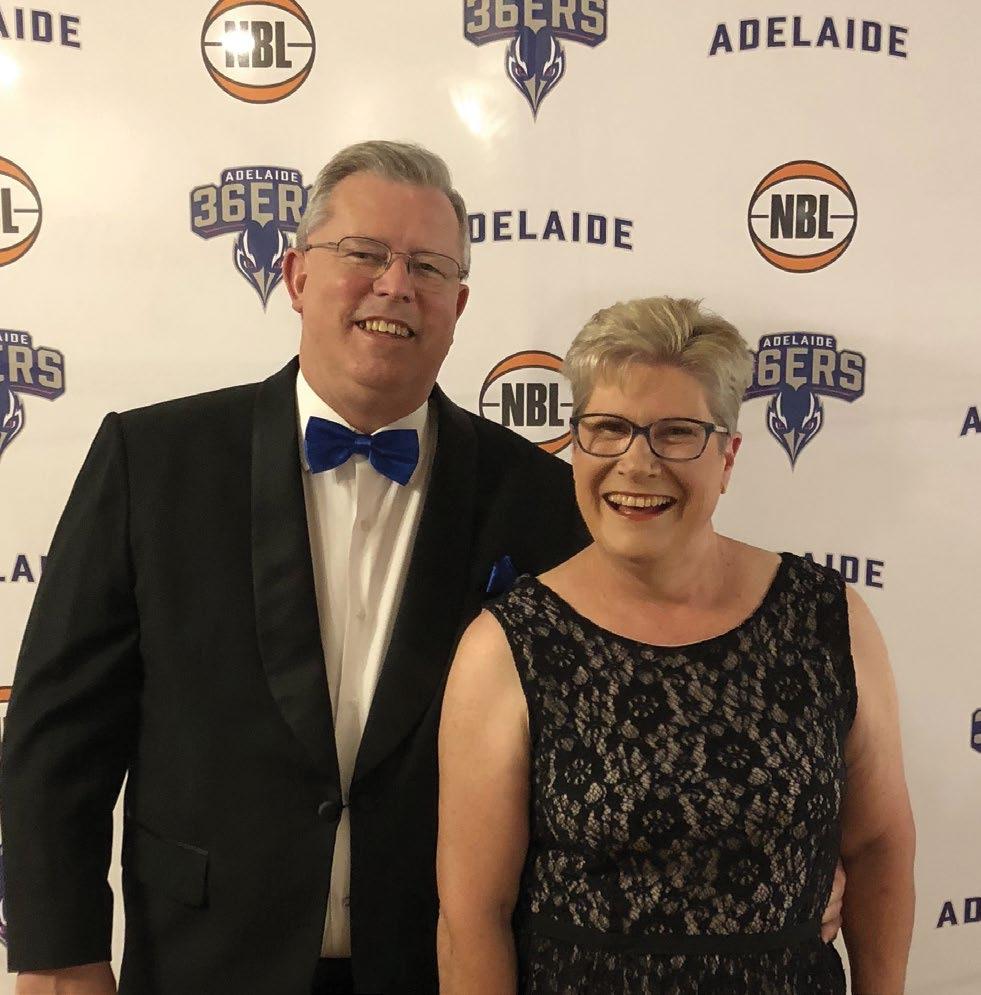
I remember one day we argued ‘that light is a liquid’ and covered the blackboards in two classrooms.
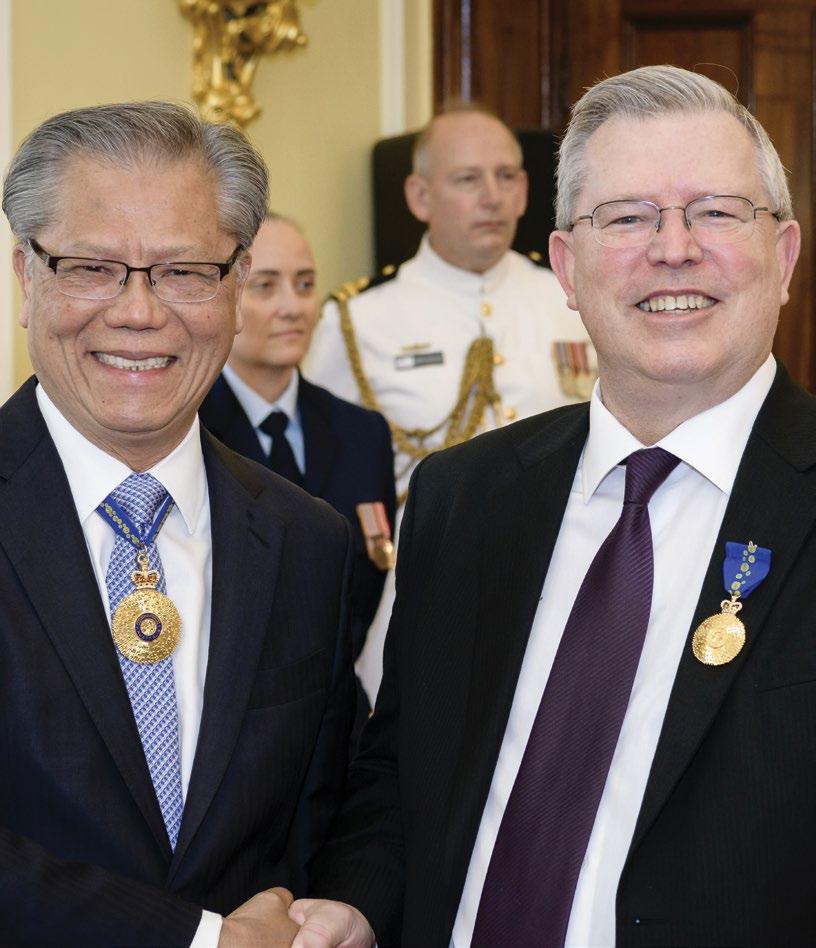
After a few years in banking I entered the musical instrument industry in sales and then management. Along the way I became an electronic organ concert artist before establishing Australia’s first digital music academy. Digital music led to opening a computer store in the ‘80s and winning Australian Dealer of the Year.
When computer hardware became mass market, I founded a software business that is still going strong nearly 30 years later.
For 50 years I have actively served the community in many ways, but especially in youth development through Scouting. I am proud to
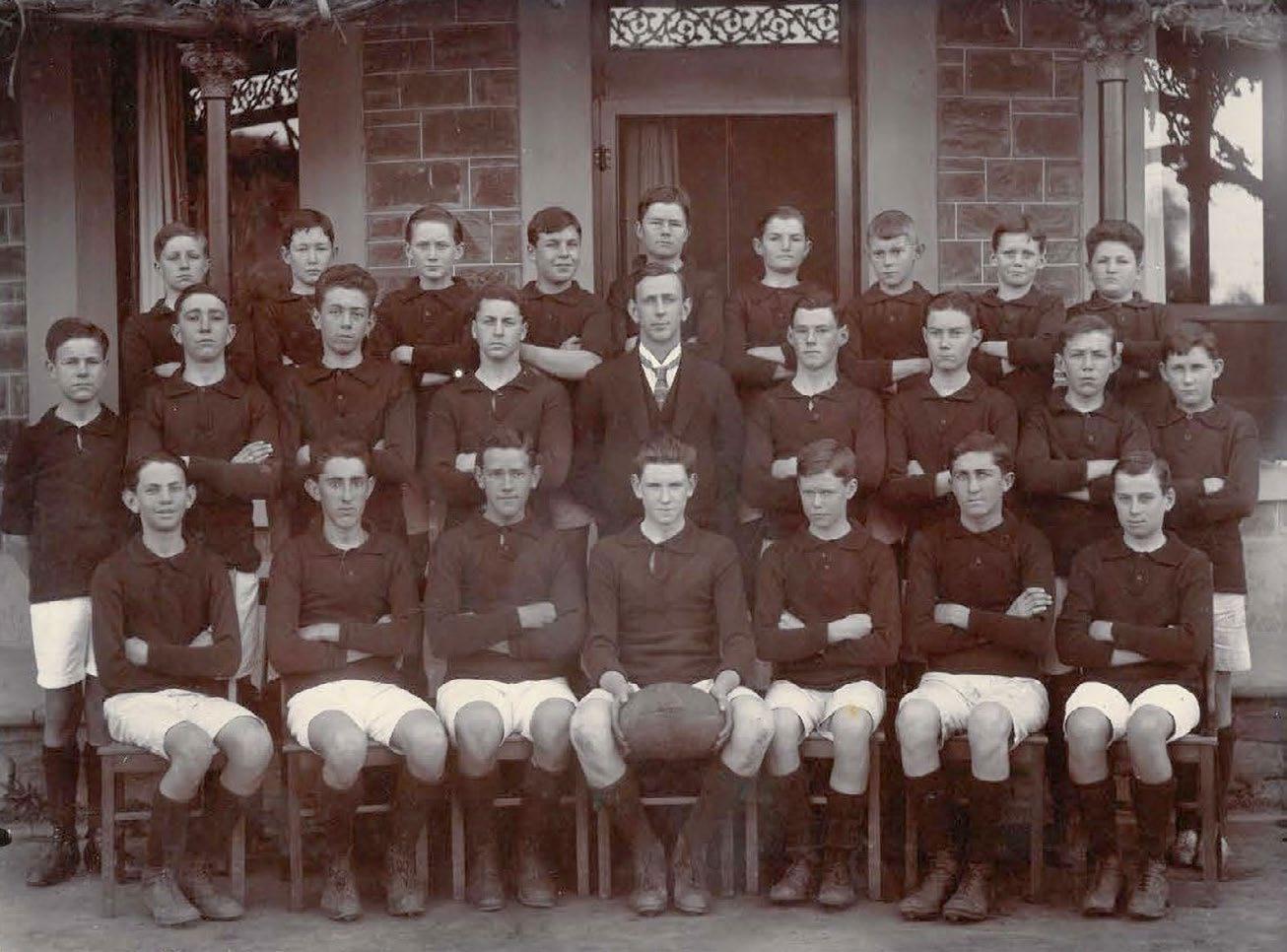
be the creator and writer of online leadership training for Scouts, with over 1.3 million learning module completions to date and still considered the best e-learning in the Scouting world.
In 2019 I was honoured to be invested as a Member of the Order of Australia (AM) for service to youth and the community at a state, national and international level.
How could I forget the experience of being caned by Rev. Ralph Cook for my ‘rotten egg gas’ stunt in Year 9! King’s was always strong on discipline. PE teacher Lewis Sevcik certainly had a way with a starting flag and he was a stickler for proper gym dress.
Mr Peter (Jock) Smythe passed on his passion for computers and programming in an amazing way. I still marvel at how King’s arranged a live terminal to the IBM 360 in the Canberra Library for a semester! Year 11 was a moon landing simulation in boxes of punch cards that you tried to never drop. Given where my future went, I have to thank (or blame) Mr Smythe.
The very first year of Pembroke (1974) was full of lunchtime jam sessions in Angove House. When not making music, we had impromptu lunchtime debates. I remember one day we argued ‘that light is a liquid’ and covered the blackboards in two classrooms. However, my fondest memory is of visiting the School around 15 years after I left and meeting Mrs Jean Ward, who not only recognised me but remembered who my cohort was. To me, that was the King’s magic.
My wife (Jill) and I were very pleased to be allowed to marry in the King’s Chapel in 1979, because I was a part of the King’s family.
Do your research and analysis. Make plans. Set goals. When you have it figured out, make it happen—don’t procrastinate.
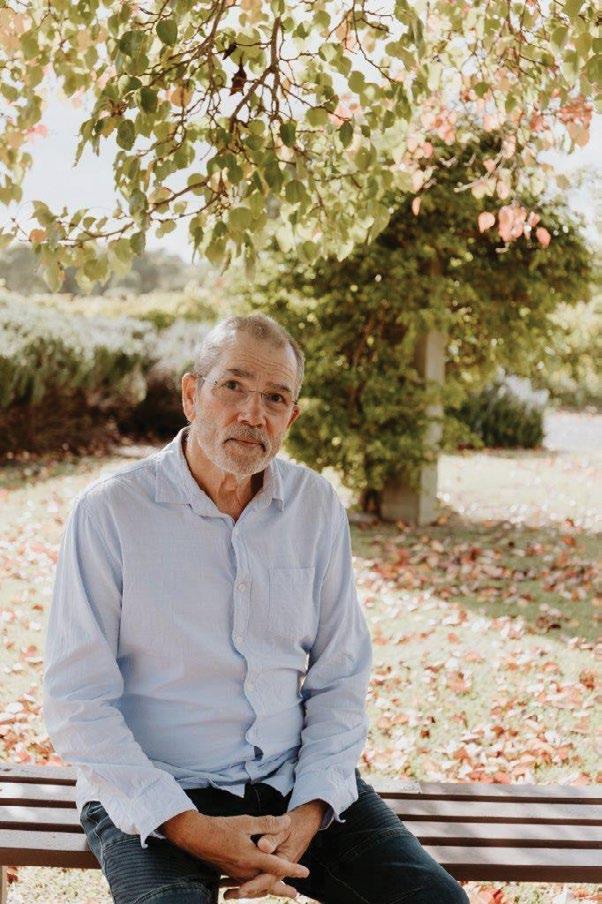
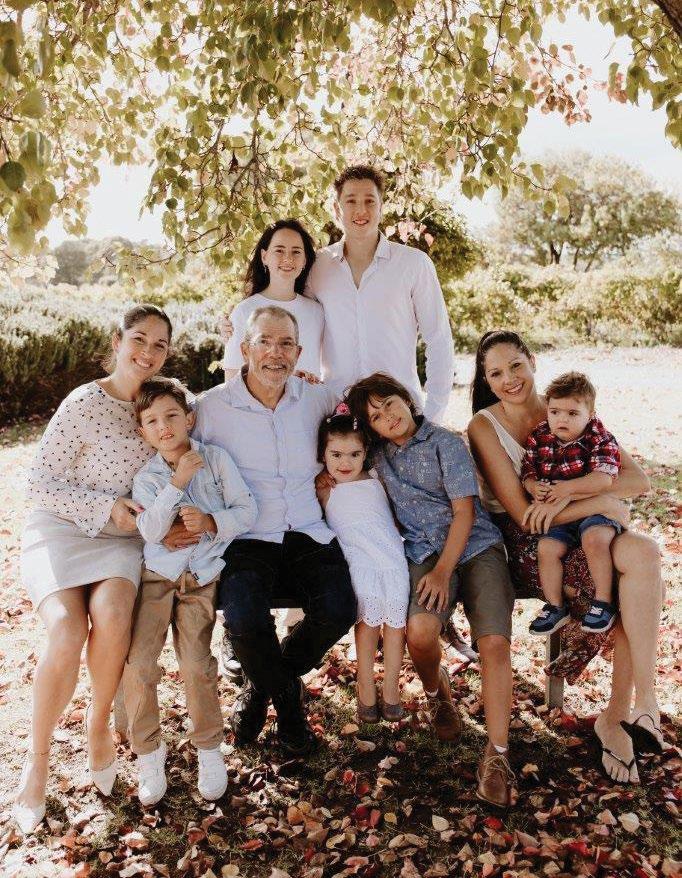
I had great school friends and very much enjoyed my time at King’s.
After completing matriculation at King’s I enrolled in and completed a Bachelor of Dentistry at the University of Adelaide. I entered the field of Public Health Dentistry, which later became SA Dental Service. I worked for the School Dental Service providing care for children both in the country and city for over 35 years. I completed a Masters in Public Health.
In addition to providing care for children, I spent some of my time in management, data analysis and policy development. I finished my career as Director of the General Practice Unit and the teaching clinics at the Adelaide Dental Hospital, and was also the Coordinator for 5th Year Dentistry for the University of Adelaide.
I was the Health Minister’s appointment for the SA Dental Board and was on the committee that developed the first SA Oral Health Plan. I very much enjoyed
my work with children’s dentistry, planning, policy and education throughout my career.
I have four wonderful children, the youngest having just started university. I have four grandchildren who keep me busy. I live in the Adelaide Hills. I have been retired for nine years but am very busy enjoying travel and my children and grandchildren. I love catching up with family and friends, bike riding, walking, tennis and playing my guitar.
I had great school friends and very much enjoyed my time at King’s. I loved Chemistry and Mr Fricker was a fantastic teacher. There were many memorable classroom moments, some so funny when I recall them today, some of incredible achievement and pride, and some of regret and pain. Remember that it was still the time when ‘the cane’ was a behaviour modifier.
Robert Oatey (OAM) was my class teacher for a few very enjoyable
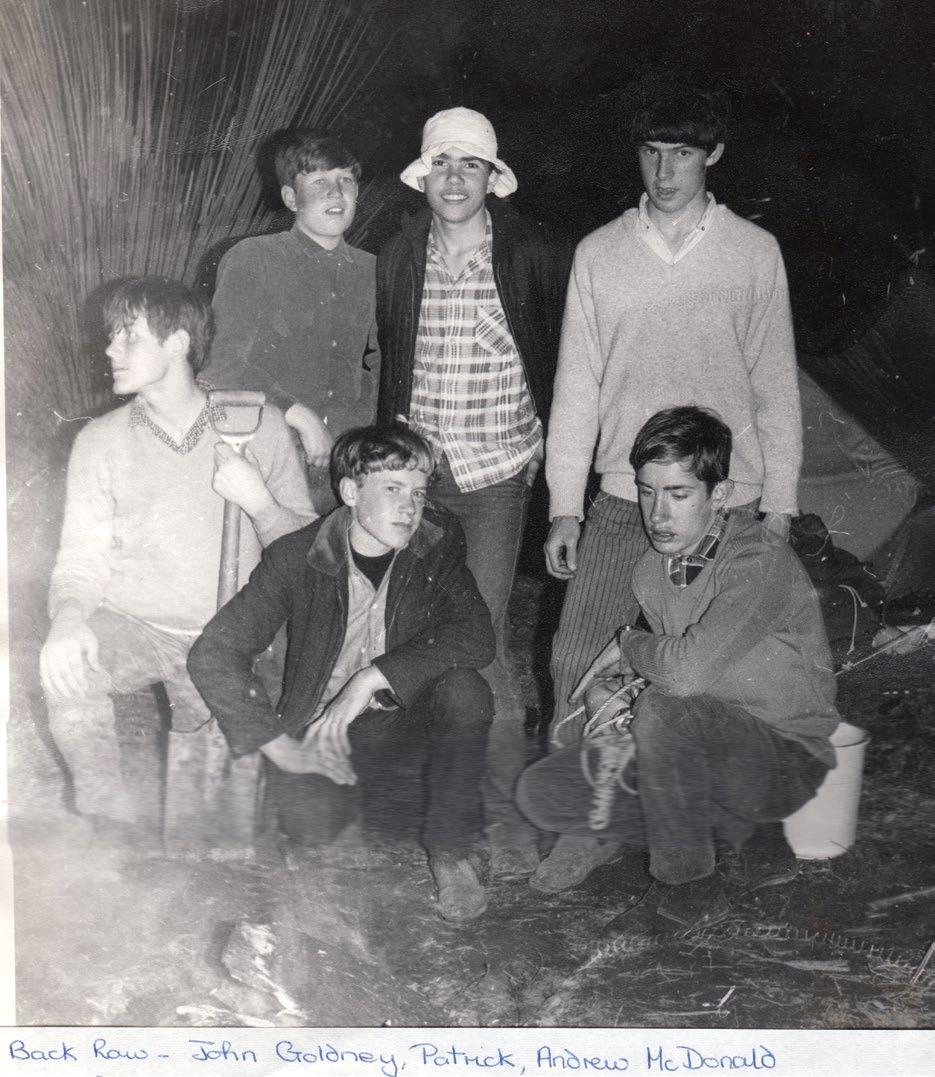
years. I, along with a few other school friends, were lucky enough to go on a camp with him for a few days to Deep Creek. The picture above was taken by Rob.
My brother Christopher, four years ahead of me, was a prefect while I was at Kings, and he looked out for me. My sister Rosemary was at Girton.
I have very few regrets. I enjoyed School and Uni, and I would do it all again, but a little bit of advice to my 18-year-old self would be to socialise a little less; understand that to graduate you only need a ‘pass’; and spend more time developing a music career alongside any future profession. I would also suggest travel to see more of the world, and appreciate the cultures and the differences before ‘settling down’, as it can only help you shape your own future.
King’s from 1970–1973)
I have fond memories with other classmates...
Coming from a farming background, I followed a career in agriculture. I initially thought I’d become a wool classer but I met the love of my life in Year 11 and didn’t want to travel. I eventually ended up in the state government Department of Agriculture and worked in lots of different research projects, then in the Animal and Plant Control Commission working on exotic disease preparedness and ways of eradicating feral goats. Time spent in fisheries compliance doing a few projects auditing their communications system set me up for a job in the Commonwealth Department of Agriculture as a Senior Auditor Compliance Officer in the team that collects industry levies to fund the likes of Meat and Livestock Australia, Grape and
Wine Australia, Wool Innovation, and Grains Research and Development Corporation.
Favourite King’s Memories
I came to King’s in Grade 2 and have fond memories of listening to the teacher (Mrs Hutt, I think) reading the Famous Five novels to the class during rest time.
As many may recall in those years, we were all given a bottle of milk to drink at recess time and this often resulted in a bit of friendly teasing of those among us who were a bit lactose intolerant.
I remember spending time with David Hassan playing with our collection of Matchbox cars, which I still have by the way. David had a great collection of the cars, which was perhaps no surprise as his
father owned a car yard, Australian Motors.
I certainly remember all of us playing on the monkey bars at lunchtime.
My fondest memories have to be of sports class, which was very gymnastics and athletics oriented with the strict but amazing Mr Sevcik as teacher. When Adam Munt and sometimes I forgot to bring white PE shorts, he would say in his European accent, ‘Ver are your vites!!!’, and then proceed to order us out to the front of the class to get a smack on the behind. Munty was usually prepared and would have shoved a text book down his pants to take the sting out of the smack.
Grade 4 was my last year before being joined by the girls for Grade 5 at the Girton campus. I remember having to learn how to use a typewriter in Grade 4. I’m pretty sure I also joined the army Cadets in Grade 4, and Brett Allison and I went on some camp to El Alamein near Port Augusta, camped under a fly sheet and found scorpions under our bed rolls in the morning. Brett was the only student on the camp who scored higher than me with the target practice shooting SLRs, but given he came from a sheep station that perhaps was no surprise.
I have fond memories with other classmates such as Patrick Winter, with visits to each other’s houses. I have an old photo of friends at one of my birthday parties, with Tom Moody and others around a campfire. It’s great to see the likes of Patrick Winter at reunions as the King’s College connection will be with us forever.
Try and finish school but follow what you love. Happiness is always more important than the money, but if you’re good at what you do the money usually comes anyway.
...resilience is a great strength to have.
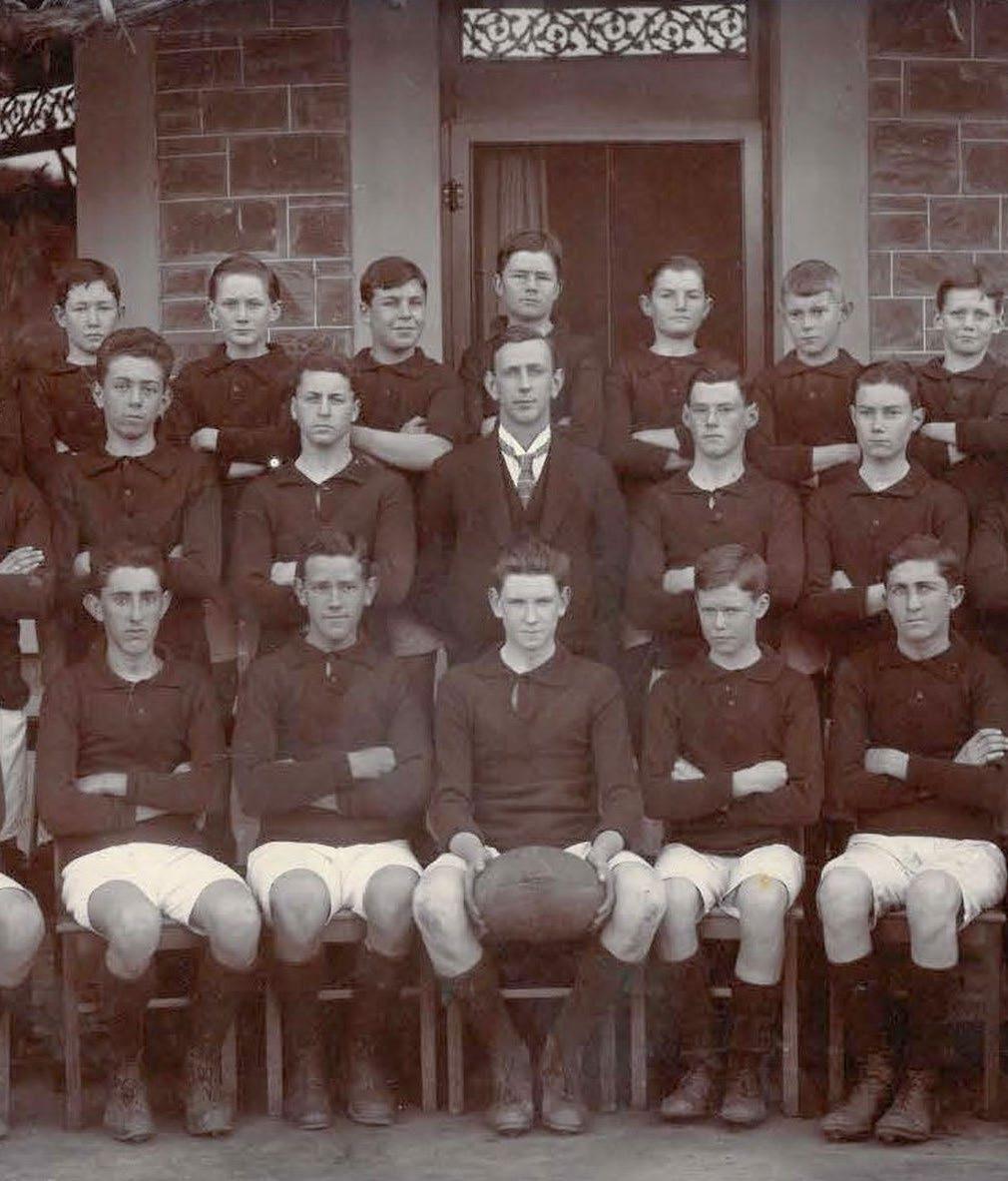
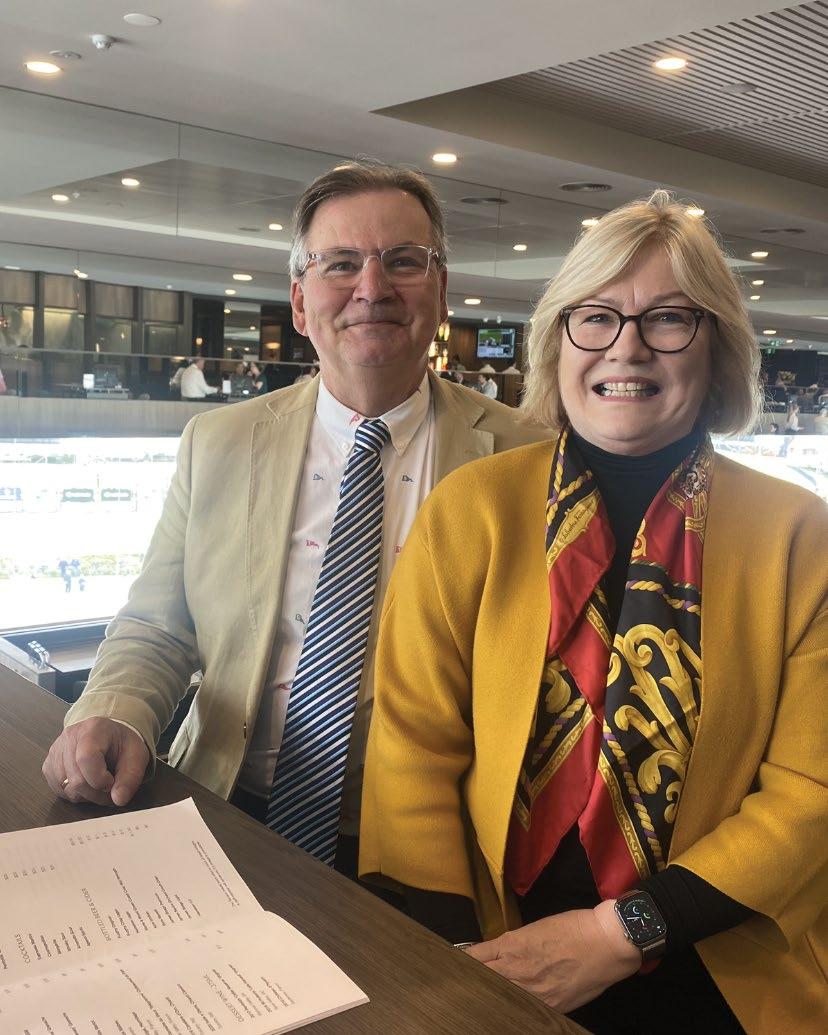
Career and Life Highlights
I have had a very satisfying career in both sales director roles in large organisations and, in the past 20 years, executive search and recruitment industries in Melbourne, starting my own business in 2004.
I have a wonderful wife, Jenny, two children, three stepchildren and seven grandchildren.
Favourite King’s Memories
Having wonderful friends, playing in the First XVIII and First XI, and having some great teachers and mentors. Three that come to mind are John Davis in the Junior School and Robert Oatey and John Moody, both as teachers and coaches.
Advice for your 18-year-old self
Be brave, don’t be afraid of failure, and resilience is a great strength to have.
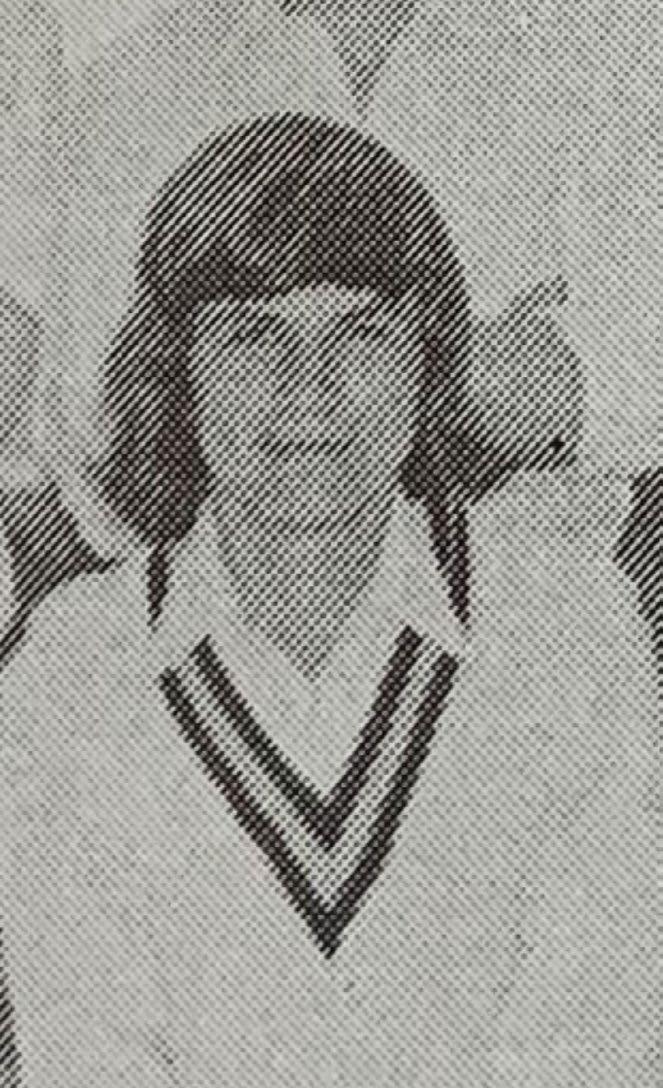
Learn to embrace the full diversity of knowledge that the world has to offer.
Along with Brett Schumacher, who was on a scholarship from his home in Upstate New York, USA, we were the first boys to set foot on the hallowed campus of Girton Girls’ School, joining Ms Gara’s French class. I remember well a gaggle of girls running around a corner into Brett and me, looking up and screaming off into the distance. Ms Gara and I did not see eye to eye, especially after I hung a chair from the cord of the blind outside the first-floor window. It was her habit, you see, to close the blind on entering the room.
As it happened, all the classes at King’s and Girton were 40 minutes long and they started 20 minutes after one another, so it was not untrue to tell the teachers at King’s that I couldn’t make the classes because I had French at Girton.
This led for a grand year, with Brett and I exploring the world around us—a different education. Not surprisingly, I had to re-do Year 12 again. I suppose (!!!???) Mr John Moody did think it a bit rich when I (as the only French student from King’s) said, ‘Couldn’t I get the French prize?’
I think the visit from the Quakers Friends’ School in Hobart was a highlight for many of us, for both Girton girls and King’s boys.
I had a fellow ruckman stay with me and the time spent together supporting the girls’ and boys’ sports carnivals brought with it lasting friendships. In my mind it showed that single-sex education was not as healthy for young people as co-educational settings.
The Football trip to play Carey Grammar School, Geelong Grammar School and Geelong College was a highlight. However, initially Mr Moody had his work cut out, rapidly getting us out of a den after some of the boys had bought cheap gold watches and had other saucy offers. The Federal Hotel in Little Collins Street was far safer,
just the Netball team from WA and a conference of S.C.I.I.A.E.S. (Society Common to Insane Intellectuals Amongst Engineering Students) offering free beer in the early morning. But to be together for a week helped grow strong bonds between us lads, and it was not easy to beat the King’s A Grade Footy team.
Take a year off after finishing your final year to travel and check out other cultures—Asian over European for more diverse cultural experiences and more affordable for sure.
Continue to play your favourite team sports and form new friendship circles in this healthy way.
As soon as possible move into a share house with others of your age, most likely as a student looking at new career opportunities. This is where you meet a broad range of people and can form lasting friendships, where you come across different ideas and learn to embrace the full diversity of knowledge that the world has to offer.
...my years at King’s were foundational in many ways and set a solid base for my further development.
I am now a retiree restoring my life-work balance after graduating from Flinders University and a rich and rewarding 45 years of service in the public sector. Career highlights included senior roles that made a difference in the Commonwealth’s transport, GBE and energy policies, and in South Australia’s Treasury and Finance Department. I undertook leadership roles as Secretary of the NSW Treasury, Secretary of the Australian Treasury and Secretary of the Department of the Prime Minister and Cabinet, as well as Chief of Staff to two Commonwealth treasurers.
Life highlights include a wonderful family, comprising my wife and son, with whom I have enjoyed
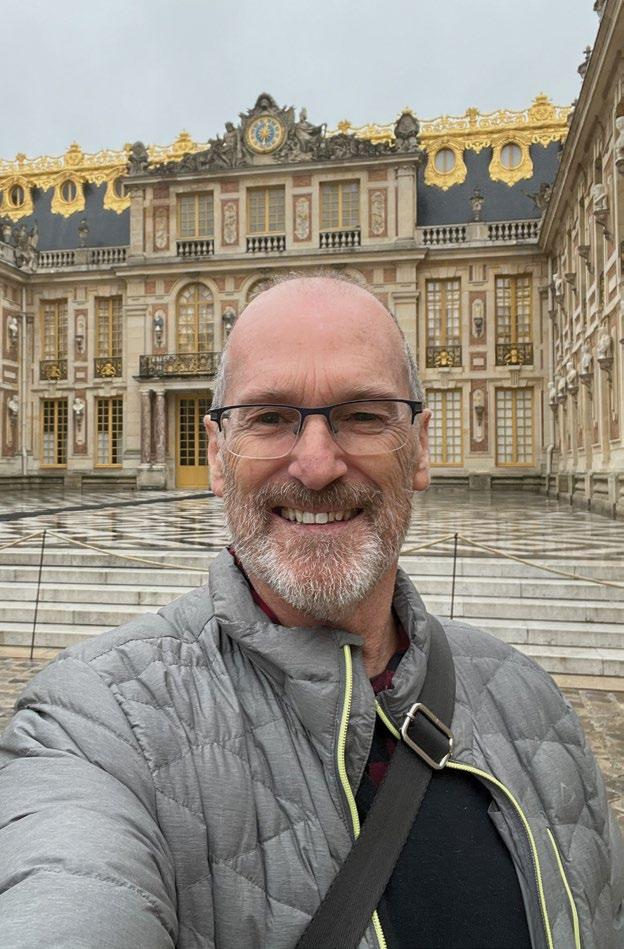
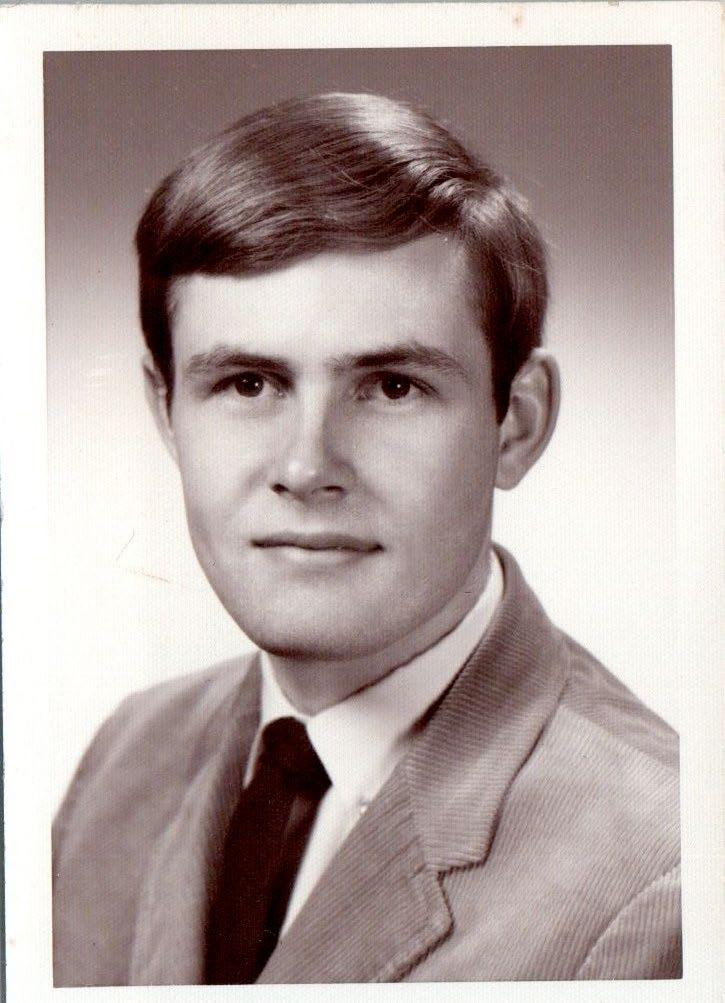
time at home and away in Australia and around the world. My travel highlights have included trekking in Australia, Kashmir, Sri Lanka and Peru; a university hockey tour to England, Ireland and Scotland; visiting great cities of the world including St Petersburg and great countries including the US, UK, Europe, Singapore, Japan, Thailand and New Zealand for work and pleasure; and Antarctica will be a highlight of 2025.
My time at King’s College was a long time ago when I started in Year 8 as a 12-year-old and left after matriculation when I turned 16. Boy, that’s a long time ago! I enjoyed learning and my memory is that the teachers did their best to educate young men in their teenage years when other interests were also competing for our attention. I combined my learning with very enjoyable pursuits such as an Assault Pioneer in the Cadets and playing Hockey (Seconds) under the coaching of Roger Clarke (external) and teachers Tony Paddick and Peter Smythe. I have indelible memories of R.A. Cook
(Headmaster) as well as J.M. Moody and D.D. Harris among the teaching staff. I also remember fellow students Stephen Whittington as a phenomenal player of the chapel organ, and David Meadows for his brilliance not only academically but for his writing and drawing as well. All in all, my years at King’s were foundational in many ways and set a solid base for my further development.
I was at Flinders University when I was 18. I had matriculated at King’s, and at Uni I was starting to learn more through my degree, more about myself and life, and also take on more adventures in my life. My advice would be to not lock in a particular future too early, but take and follow opportunities to continue learning, continue experiencing the ups and downs of development, and manage and don’t avoid risks— acknowledging that life will continue to get richer as you build on and expand the boundaries of your curiosity, your experiences, your family and friends.
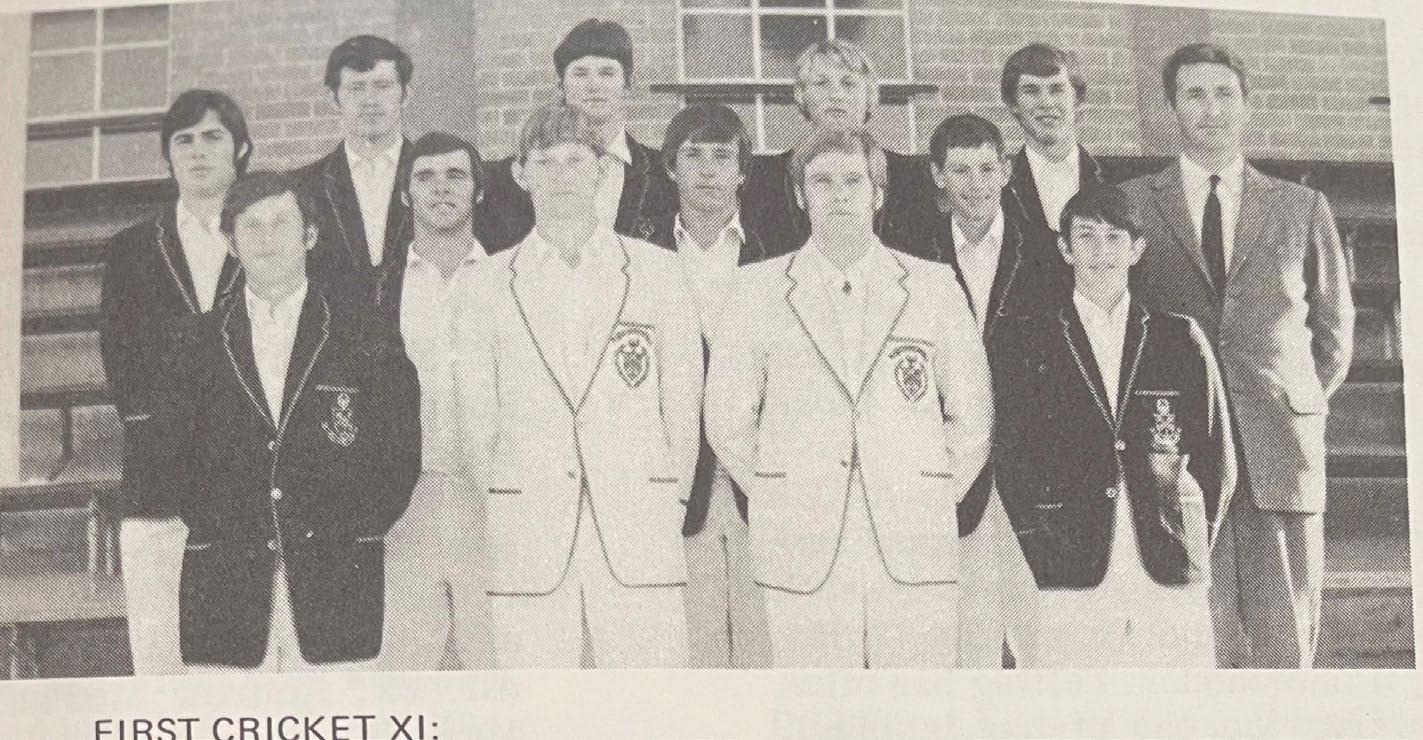
When I first came to King’s ... I just loved the atmosphere and vibe of the place.
Sport has dominated my life, more so than work. Having captained the School Cricket team at King’s in 1970 and also excelled in Athletics, I made the tough choice to pursue Athletics rather than Cricket in summer. In winter it was Aussie Rules, after being Vice Captain of the School team in 1970. Then I specialised in decathlon, winning five state titles during the 1970s, and I also won the SA high jump title in 1975, clearing 1.97 metres. I represented the Sturt Football Club during 1971–75, then transferred to South Adelaide in mid 1975 to play under Hadyn Bunton. I made the Northern Territory state side in 1979 and then the Queensland state team in 1982. I played golf after retiring from the AFL in 1988 in Toowoomba. I have scored 3 holes-in-one, 1 albatross and 25 eagles, with a handicap as low as 7. I’m still playing golf at 77 years of age.
I enjoyed being a prefect in 1970, and being Vice Captain under the Rev. Ralph Cook as Headmaster and Phil Carman as a fellow prefect. I enjoyed the camaraderie of fellow students, especially by being involved with the Cricket and Football teams. We had great coaches in AFL (John Moody) and Cricket, and then Bob Oatey arrived to coach our footy team. I was later involved in playing at Sturt with Bob Oatey after he left Norwood. When I first came to King’s in 1961 I started in Grade 4 and just loved the atmosphere and vibe of the place, with the Chapel and then over the road to the tennis courts, gym and ovals. Going to watch the Head of the River Rowing on the Torrens was also a yearly highlight. I also loved competing in the yearly Athletics championships.
Never say no to an opportunity, but make good choices...
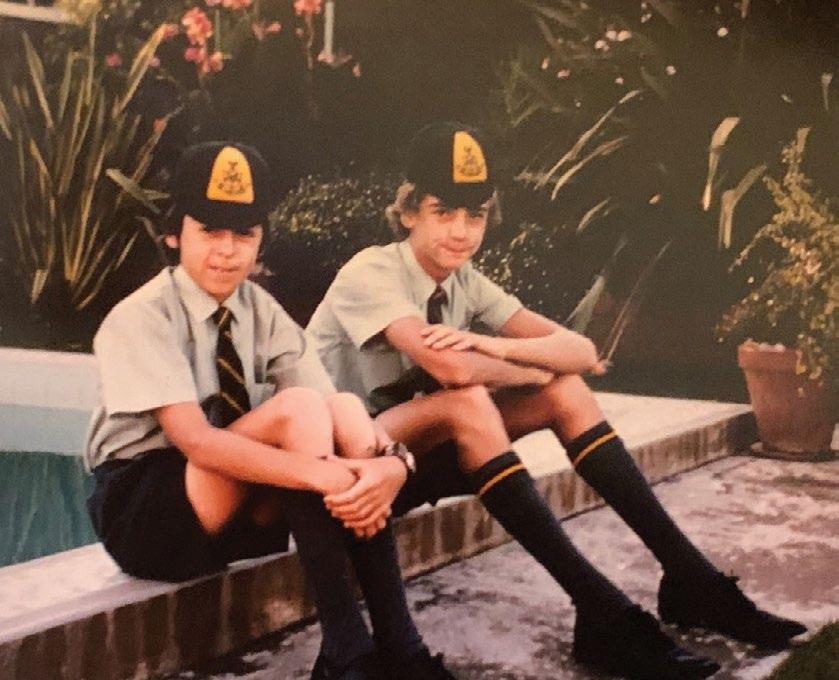
Studied economics at the University of Adelaide, graduating in 1977. Joined Price Waterhouse working in insolvency, audit and corporate finance, transferred to Price Waterhouse, Southampton office (UK) and had a stint working in Milan (Italy), 1986–88.
Rejoined PW Adelaide office in late 1988, started a forensic accounting practice in 1991 and became a director in 1995. Later joined Ferrier Hodgson as a partner and commenced their forensic accounting practice in December 2000, which was later merged with KPMG in June 2019. Currently Director, Forensic Accounting, Fraud & Financial Investigations, KPMG Adelaide.
Highlights include:
Bought my first house in 1990— interest rates were 17.5%
Married Chris in 1991; son Nick born in 1998 (Pembroke 2011–16)
Being arrested in former Yugoslavia for travelling without a visa
Attending the three Royal Events— Buckingham Palace Garden Party, Trooping the Colour and Royal Ascot (in the royal enclosure)— courtesy of a reference given by Peter Noblet
Dinner at The Ritz for my 30th birthday with Chris, and Hugh McPharlin
Watching Nick play Cricket for Pembroke First XI, and playing Open Squash
Travelling to Ireland/UK and Sri Lanka on Cricket tours
Passing professional exams and achieving Fellow status as a chartered accountant— 40+ years in practice
Appearing in several courts around Australia
Our home, and the wonder dog Alfie
Mates for life—still meet up regularly with Rick Sarre, Tim Mellor, Hugh McPharlin, Andrew Maeder and some King’s old scholars from footy days
Detentions if you didn’t know the School Hymn
Sergeant’s course at Warradale
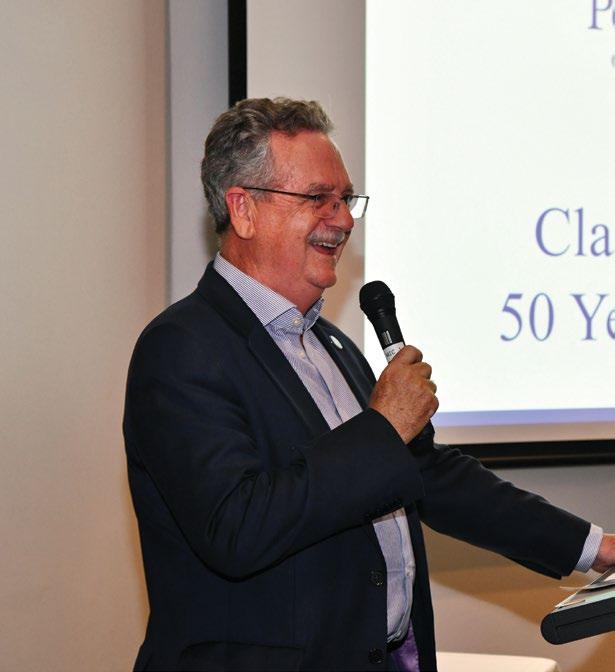
(1973); bivouacs at El Alamein and Flinders Ranges; Anzac parade in the wet
In Year 11, meeting Girton girls; Salad Days musical
The Friends’ School, Hobart, trip (1972)—football in the fog
Acting CSM of King’s College Cadet Unit 1974
Playing Old Scholars cricket from U15s with Andrew Rinder
Dick Fricker nearly taking the head off Geoff Parker in a failed Chemistry experiment
Tuckshop tucker and Mrs Blood
Lex Hambour, Michael Atchison, Graham Coldwell, John Moody, Basil Filby, Lewis Sevcik, Dave Shepherd and his dog ‘Nip’
Head of the River on the Torrens
Interhouse Football, Cricket and Athletics on Haslam Oval—Wycliffe House ‘Cock House’ in 1973!
Punching above our weight against some other schools.
Advice for your 18-year-old self
Lead by example—do what is right, ethical.
Give back—do some charity/ service work.
Never say no to an opportunity, but make good choices; extend yourself—get out of your comfort zone.
Keep up the humour.
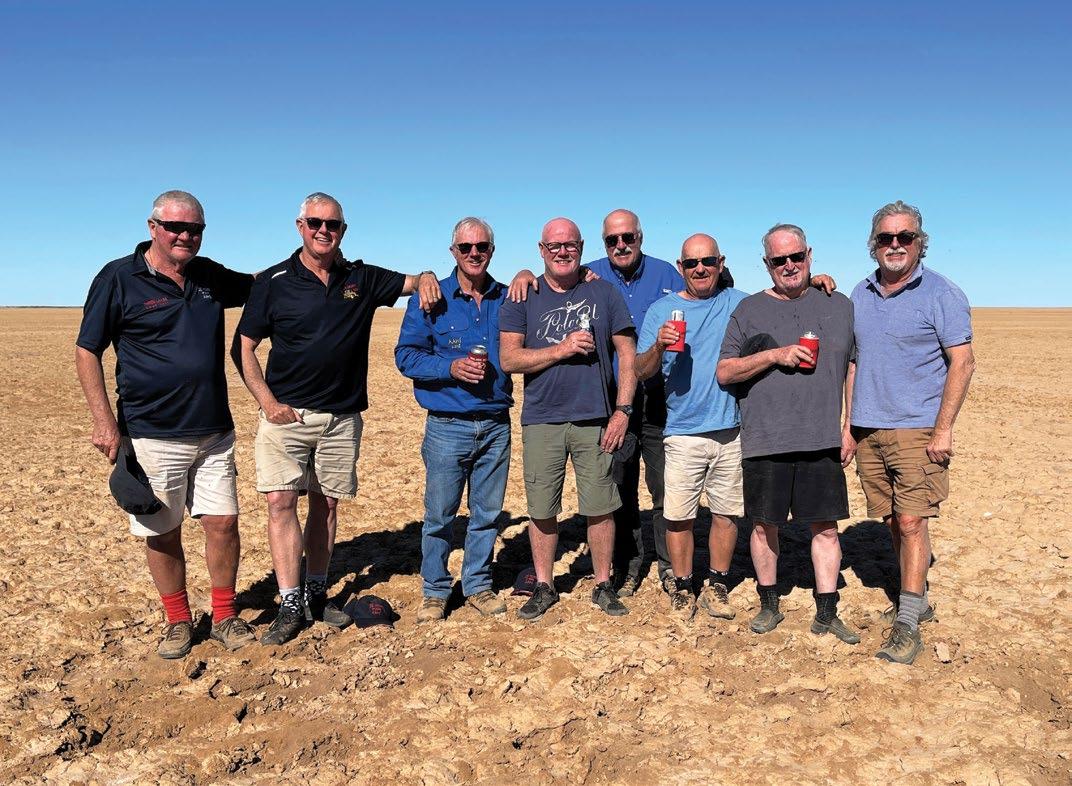
Memories from Senior School days include joining the Cadets and becoming the Staff Sergeant...
and Life Highlights
I finished at King’s in 1970 and obtained a degree in computer science (one of the first available) from SA Institute of Technology. I then embarked on a 50-year career in IT, starting as a programmer, moving on to project managing the implementation of major banking systems, through to owning my own IT consulting practice, and then advising large organisations throughout Australia and Asia on their IT strategic direction. I am a Fellow of the Australian Computer Society and taught at UniSA after I retired, hoping to pass on some of my experience to the students seeking a career in IT. I have been married to my wife Karen for 47 years and have three children who all attended Pembroke.
They all obtained degrees at university and are achieving successful careers. I played over 200 games for the King’s/ Pembroke Old Scholars Football Club, coached Pembroke teams on three separate occasions and was President twice. I play golf regularly with a number of my old football mates, and also for nearly 30 years have undertaken 4WD trips in the outback with friends from school days. I have been fortunate to travel to many parts of the world.
I started at King’s in 1963 in Grade 5 and remember gaining some new friends in that first year who are still my good friends today. Good memories in the early days in the Junior School relate to playing football on the oval at lunch time, exciting Cub camps and becoming a prefect in Grade 7. Memories from Senior School days include joining the Cadets and becoming the Staff Sergeant (Cadet camps were a lot of fun), being involved in directing and acting in plays, and involvement in sport throughout my Senior School days.
Most of my friends were the ones with whom I played sport. Dancing classes at Bunty Knox’s dance school in the RSL Hall next door to the King’s campus was another fond memory—a real growing-up experience. I don’t recall my studies being particularly exciting but I did enjoy Economics as I had, and have retained, an interest in business and finance. Like most boys in the Cadets I got to know John Moody a little bit, and later had the pleasure of captaining him in an old scholars’ cricket team in a grand final that we won.
The advice I would give to my 18-year-old self would be to have more confidence in my abilities. I think I was reserved and held back at times in my late teens and early twenties, where later life taught me to trust my instincts, relax and enjoy the process. I don’t think this is an uncommon issue but I would say that my time at King’s College did provide me with the education to overcome this lack of confidence and progress well in life.
Try to maintain those School networks and contacts.
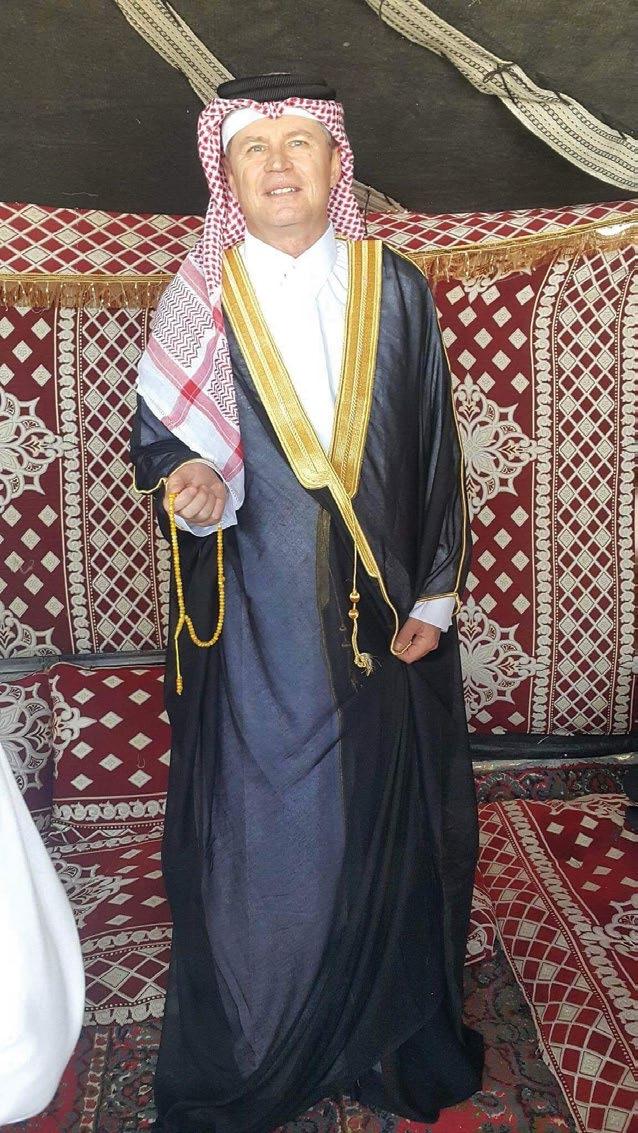
Career and Life Highlights
State Program Manager Health, Commonwealth Department of Veterans Affairs SA and NT
Director Hospital Access & Quality, Commonwealth Department of Veterans Affairs, Canberra
CEO Hunter Valley Private Hospital, Newcastle
CEO John James Memorial Hospital, Canberra
CEO Aspetar Sports Medicine Hospital, Doha, State of Qatar
CEO The Cuban Hospital, Dukhan, State of Qatar, and international negotiator with MINSAP, Republic of Cuba
Advisor Health Facilities & Commercial Relationships, Ministry of Health, State of Qatar
Father of five children and grandfather of 11.
Favourite King’s Memories
The nervousness of our first encounters with girls on merging with Girton. We used to have to walk between campuses for some lesson blocks.
Advice for your 18-year-old self
Try to maintain those School networks and contacts.
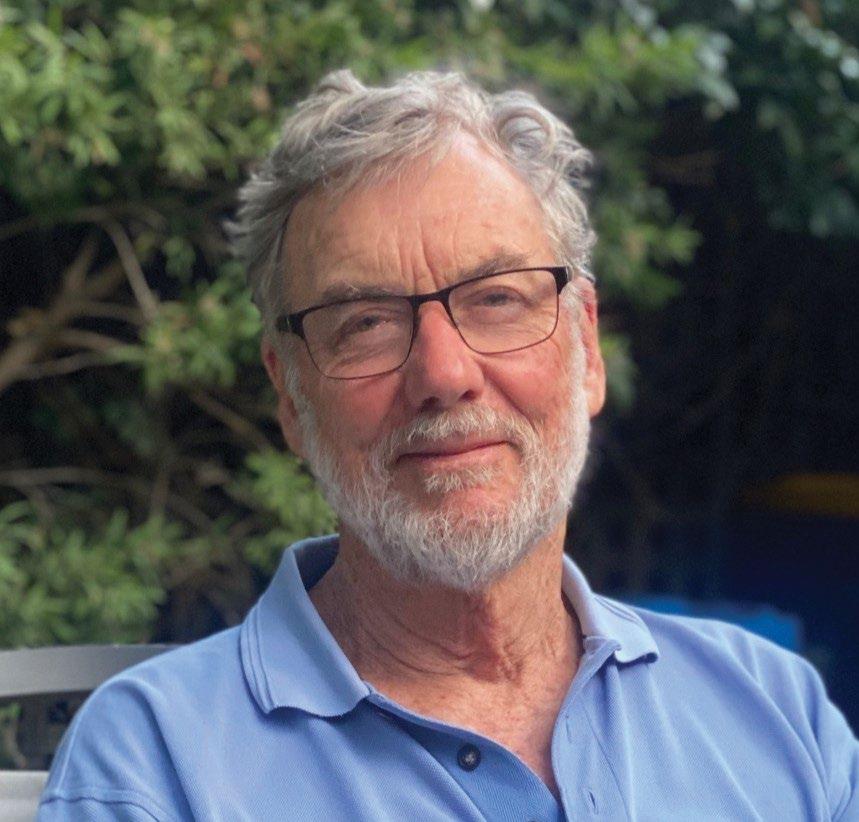
The years are crowded with significant memories from life as a young resident Boarding House Master... to working alongside the legendary D.D. Harris...
With Pembroke beginning in 1974, I would have been very happy to prolong my King’s life, but was offered a senior promotion as a teacher of English and Latin at Prince Alfred College (PAC), which was hard to refuse. During my first years at PAC, I maintained my interest in theatre by working with the Adelaide Theatre Group, was seconded as an advisory teacher with the Independent Schools Board (now AISSA) and spent 1983–1984 on exchange at The Bedford School. I worked on the Gilding Enquiry towards the formation of SACE and was appointed to the SSABSA board, developing my interest in special provisions in assessment for students with special needs. For 16 years I was Director of Studies at PAC, where I promoted the IB Diploma and developed my interest
in all IB programmes. That led to my working as a program manager in the IB Asia-Pacific regional office in Singapore from 2001–2003, and to my last full time school leadership role as Vice Principal of St Dominic’s International School in Lisbon, Portugal, from which I retired in 2007. I continued parttime consultancy until last year (2023) as a lead educator for IB schools around the world.
The nine years are crowded with significant memories from life as a young resident Boarding House Master living in the cottage at 2 Shipsters Road, to working alongside the legendary D.D. Harris and other great colleagues, to teaching some of the first Kings/ Girton combined Years 11 and 12 classes in 1972–1973, and working on the 1973 Central Australia trip. Most strongly, I recall directing
three combined school drama productions: Shaw’s Arms and the Man in 1969, Miller’s The Crucible in 1971 and Sophocles’ Oedipus Rex in 1973. I am proud of the work of my actors and stagehands in the tough conditions of the old Wright Hall – dusty, somewhat smelly from the biology students’ animal pens below, and lacking technical sophistication in terms of lighting and stage facilities. What a great training ground for aspiring actors this was; you don’t need wonderful halls to create good theatre, and I think my fabulous students proved that. Aided by the design expertise of the great Michael Atchison, Art Master and Advertiser cartoonist, and supported by tool-wielding fathers and sewing mothers of cast and crew, these productions form fond memories at least equal to my later theatrical endeavours in other places.
...the discipline I learned was life-changing...
The King’s campus was my first introduction to an all-boys school. I had attended co-ed primary schools before, so the idea of an all-boys school was a bit scary. However, the discipline I learned was life-changing, and I think punishments would not be allowed in modern times.
Having female teachers was also something different and strange in an all-boys school. Sporting activities were very much at the forefront.
The sports and comradeship with other students were something I thought would last a lifetime. I kept in touch with one or two students until the School became Pembroke and until I left to go to Norwood High School.
The teachers seemed to have good knowledge of their specific teaching areas and life issues. I took these thoughts with me when I started teaching at university level.
Constantly learn and study, and try to get a holistic education in sports, drama and learning subjects that interest you.
Try and question your teachers more and more. I tended to take their teaching as gospel.
I have many fond memories from my four years at King’s.
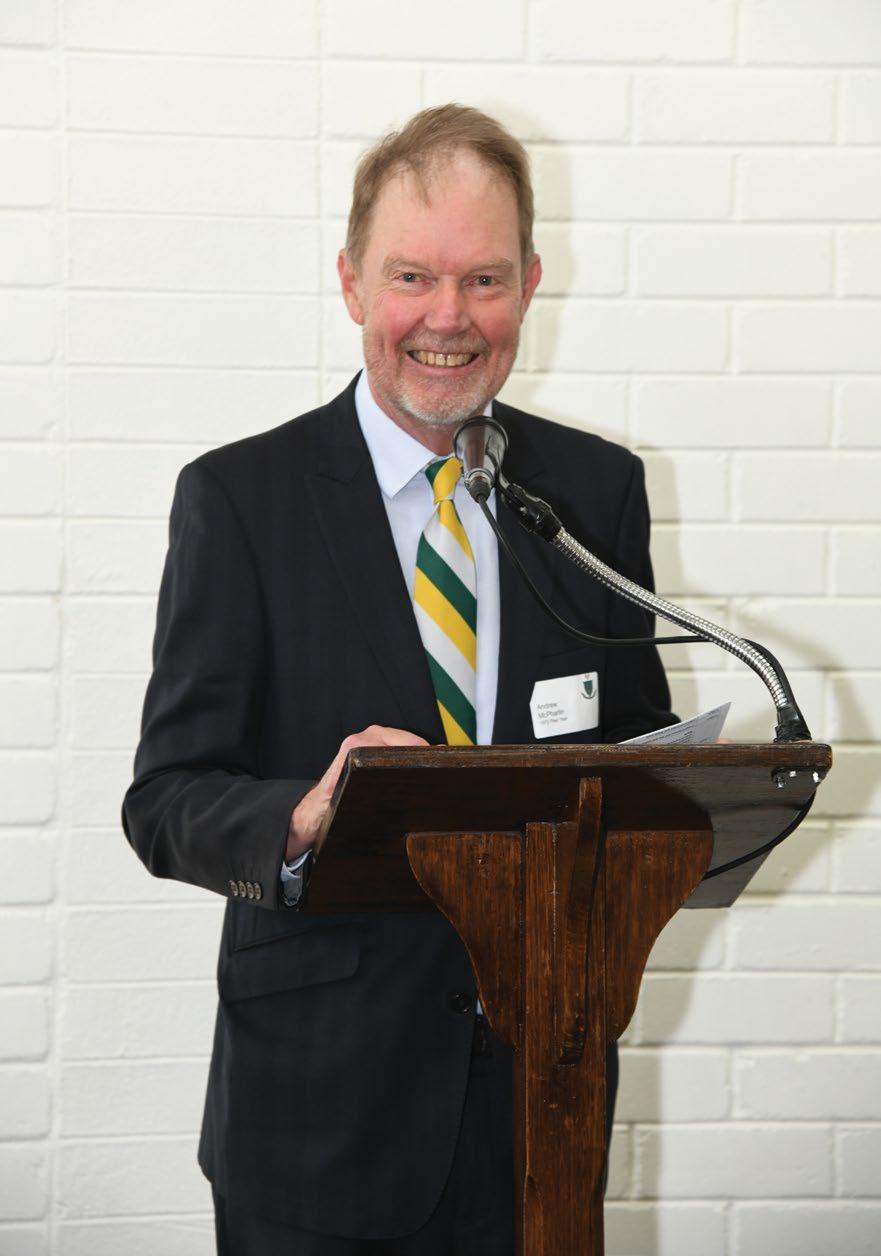
I was born in Balaklava into a farming family. After completing Year 8 at Balaklava High School the family moved to a farm at Eden Valley, resulting in me boarding at King’s.
Following school I completed an Honours Civil Engineering Degree at the University of Adelaide, residing at St Ann’s College as one of the original male students. Following graduation I joined the Engineering and Water Supply Department (later SA Water) in 1977. Over the next 39 years I worked all around the state, mainly in regional operations and in corporate project roles. I was awarded the Public Service Medal for services to the water industry in 2007.
My wife Lynda and I have two wonderful adult children, Daniel and Emily, who are a big part of our lives and an undoubted highlight.
Since my retirement in 2016 I have been involved in a voluntary
capacity with St Vincent de Paul Society, St Ann’s College Foundation and the Public Service Medal Association, as well as helping to organise various King’s old scholar events.
I have many fond memories from my four years at King’s. While not for everyone, I really enjoyed my time in the Boarding House, with such great mates as Paul Brown, Jamie Loxton and Joe Keynes, whom I still catch up with from time to time.
Geography was my favourite subject at School, and being taught by the legendary D.D. Harris in Year 11 was a great privilege.
I loved playing sport at School, Cricket in particular. Winning House Cricket in Year 12 is perhaps my proudest moment as a team captain. In my junior years at School we played our matches in the mornings, which meant we could watch the First XVIII play their home games in
the afternoon. Seeing ‘Fabulous’ Phil Carman play Football is something I will long remember.
Finally, joining the army Cadets was one of my best decisions I made at School. I loved all the camps, drill competitions and range shooting, so magnificently overseen by Deputy Headmaster Captain John Moody.
The following are some tips that have served me well over the years or I wish I had done more of:
Make the most of your university experience—an opportunity not to be wasted.
Listen, learn, lead—my management mantra.
Travel light—not just a good travel tip, but a reminder to only take what you need in life.
Value quality over price—life is too short to drink bad wine.
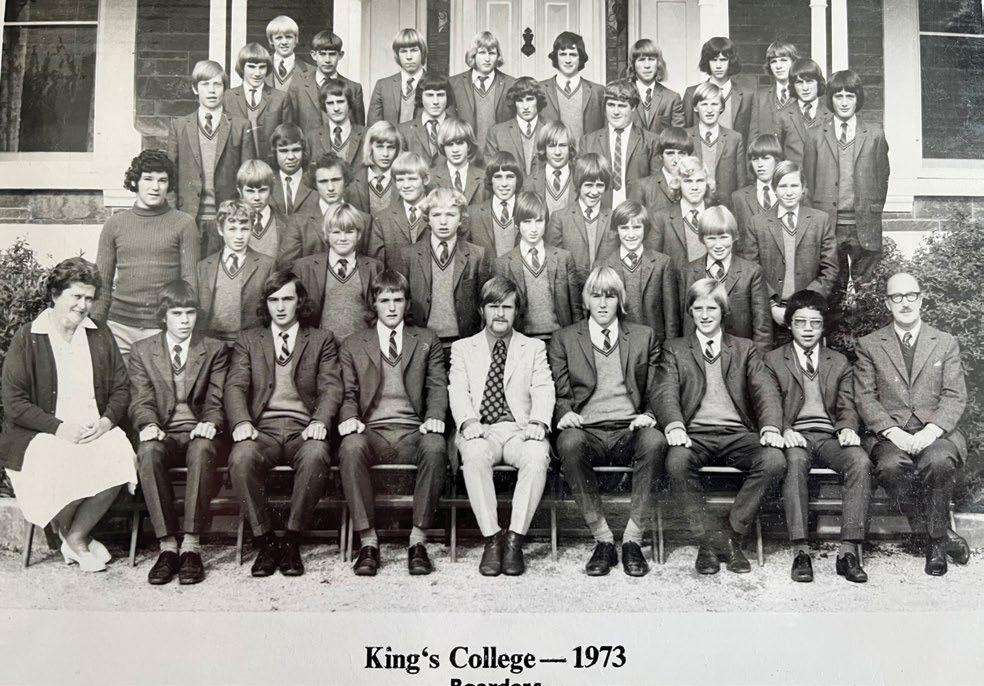
I met my lifelong friend Mike Mellor on my first day at King’s.
Married a superstar, father of four brilliant kids, Chartered Accountant, cricketer for Pembroke Old Scholars (highest score 96, best bowling 4 for 25), Pembroke Choral Society (life member), living and working in London, and later touring with choirs in the UK, France and Italy (my equivalent of Test Cricket’s Ashes).
In 1973, the Year 9 classrooms were situated downstairs on the western side of the Quadrangle. I was in 9S. The other class was 9N. The year before the same classrooms housed the Year 8s.
I met my lifelong friend Mike Mellor on my first day at King’s. His first words to me were, “You’ve got my chair.” He had recognised his skilful graffiti etched into its seat during Year 8. We swapped chairs and have been friends ever since. I recently had dinner with Mike in Perth. We sat next to each other, across the table from our wives. We were each happy with our chairs.
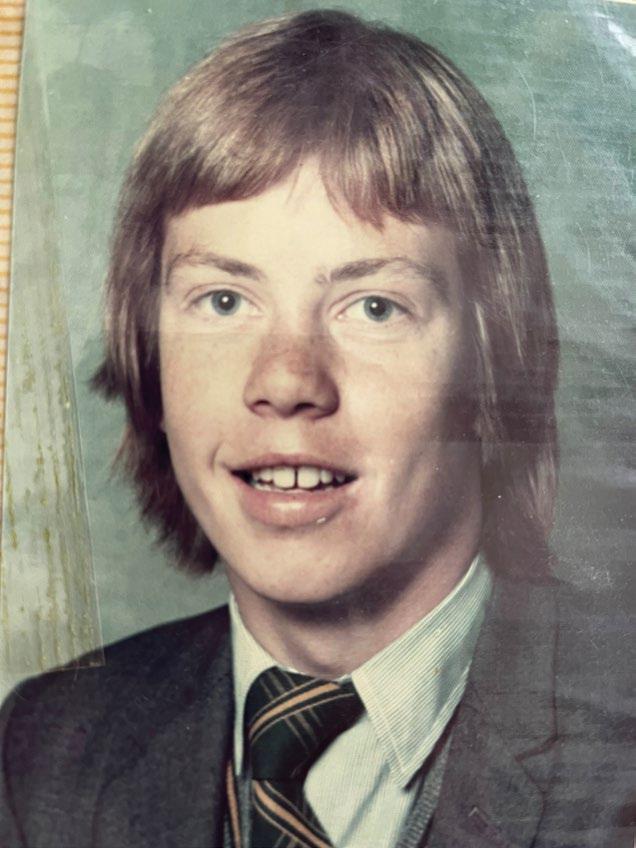
I was a boarder. It was at times threatening lining up for dinner. As the queue snaked its way through the lower floor of Bills House it was common for ‘friendly’ punches to be lobbed on the soft point of one’s companion’s shoulders, producing a ‘dead-arm’. But the real excitement was watching Steve Heading and Chris Warnes brawling with each other in a circular motion like sumo wrestlers. When the brawling stopped, the boys emerged redfaced, straightened the jumpers, tucked in their shirts and resumed their place in the line. “What’s for dinner?”
Cadets was character building; a bit of marching on parade (“Jumpers on or jumpers off?”), polishing brass belt fittings and hobnailed boots, and distant camps at Rawnsley Bluff in the Flinders Ranges. I enjoyed the ‘Bren Relay’, a competition which involved ‘stripping’ then reassembling a machine gun.
I remember the order: piston, body, butt, barrel, bipod, and the reverse to reassemble, then run to the finish line. Great fun!
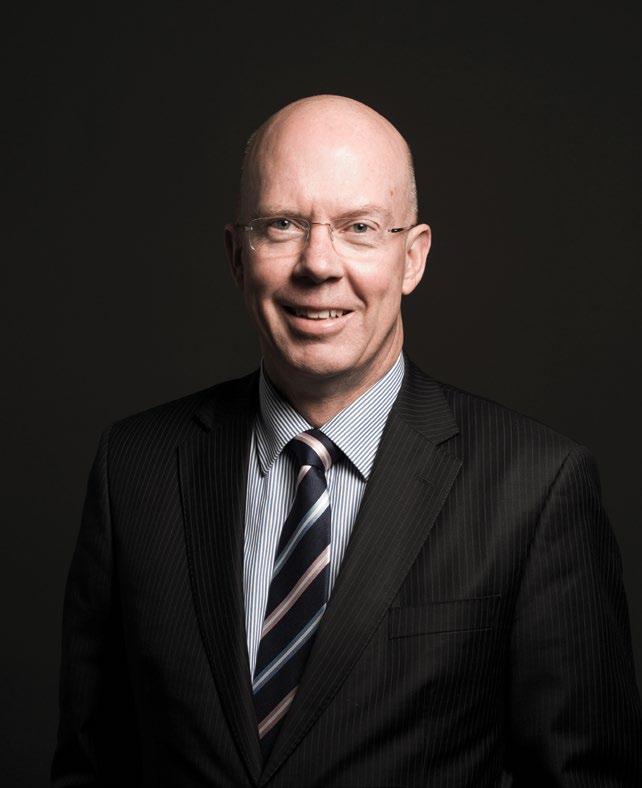
Dave Sheppard (Year 9 Science teacher and later a Boarding House Master) could be fierce, but he had an epiphany when he realised that I was Andrew McPharlin’s younger brother. Who said having favourites was wrong? Mr Caldwell was a caring Form Master. I wish I learned more from Jean Ward’s music lessons. Bob Oatey (I remember the yearbook cartoon with the caption: “Glenelg into four won’t go”) was a skilled and engaging maths teacher.
The transformation from King’s (Year 9) to Pembroke (Year 10) was amazing. No more throwing chalk or using a tie to secure a boy’s head between the vertical metal railings of the classrooms east and west of the quadrangle. The same boys who were the antagonists in Year 9 became the Casanovas in Year 10. The world had changed; the girls had arrived!
Keep in touch with your mates by attending reunions and at other times whenever you can.
Reflecting on my years at King’s, sport was always a highlight.
Career and Life Highlights
School highlights:
Vice Captain of the School 1973
Captain of Cadets 1973
Captain of Tennis 1970–73. I was privileged to be selected for the Drive Tennis Team in Year 8, the youngest player ever to be invited.
Vice Captain Football 1973
House Captain 1972–73
Debating team with Rick Sarre
Life highlights:
Involved for 40 years in retailing, spanning bricks and mortar shops, including three newsagencies (Newsagent of the Year twice), Angus & Robertson bookstore and Leading Edge Music store.
In 2008 my wife Lisa and I established Australia’s first online furniture/homewares store, Interiors Online, breaking new ground for others to follow.
Have two wonderful children, William and Grace, who attended Pembroke, and a grandchild on the way.
Favourite King’s Memories
At the age of 10 my father gave me the opportunity to select the
school that I would like to attend. Highly unusual for 1965. My answer stemmed from a love of sport, as King’s had just won the Head of the River Rowing Cup against much larger schools such as St Peter’s College, Prince Alfred College and Sacred Heart College. Being highly competitive myself, the idea of the underdog winning resonated with me and I knew I had made the right choice. I enjoyed the camaraderie of a smaller school and the fact that we always punched above our weight.
Reflecting on my years at King’s, sport was always a highlight. I played my whole Senior School life under the incredible coaching of Robert Oatey and then seven years with the Division 1 Pembroke Old Scholars team, and had the opportunity of playing with both Todd Viney and Roger Rasheed, providing many happy memories. In Year 10 I was selected for the First XVIII Football team and had the privilege of playing alongside an absolute champion in Phil Carman, who was an amazing footballer and athlete.
I also played state badminton for five years and several years in A1 squash. These opportunities brought camaraderie and taught
me life skills about teamwork, leadership, communication and resilience. Cadets (which no longer exists) provided another enjoyable interest, in contrast to sport and academic life, teaching us discipline and new-found skills. Having been Captain of Cadets in 1973, I was fortunate to be offered a scholarship to Duntroon Military College. My master, John Moody, who taught me Economics and Geography and was in charge of the Cadets, left a lasting impression on me as a man of principle and integrity.
Make the most of every moment of your school life and involve yourself in as many activities as possible. Participate in sport as much as possible, as it teachers you so many life lessons, camaraderie, working as a team, pushing your limits and learning resilience. My father Ray always said to me, a fit body is a fit mind.
It is a privilege to be part of such a wonderful community and it should never be taken for granted. ‘Seize the Day’.
Be who you are and don’t self-assess too much. Find a happy place. Find love. Take risks.
I am, and am happy to say, a South Australian. Born on Yorke Peninsula, taught on Eyre, retired on the Fleurieu. I’ve supported the welcoming communities, Marie, our two boys, and I have lived in, when and where I could. As an educator I hope I can say that I treated the secondary students I taught as valued individuals, as young adults to be challenged; to contribute; to succeed. And I may have shared a story or two.
In Adelaide, Port Augusta, Waikerie, Karcultaby, Naracoorte and Lucindale, I directed over seventy dramatic productions, subject specific or whole school spectacular; some for the gloriously silly community group, the Lucindale Players. For over half my career I fulfilled the role of Arts, English, Humanities Coordinator, a level of promotion at which I was comfortable.
My life changed with a bingle with cancer in 2006. Negative reaction to treatment knocked me out of the workforce within two years. Finding time to write while attending to ongoing difficulties produced one of my life’s proudest moments,
the zenith of my self-publishing career being The Kanceroo, poetry illustrated by SA artist and author, Mandy Foot. Written for children with cancer, widely distributed, it has served a worthy purpose.
As someone who arrived from a small country area school, courtesy of a snared scholarship, I entered a new universe, a seeming utopia, at King’s. Here were gods in Prefect blazers, men to whom to aspire, champions on hockey fields and football ovals. I cried, ‘Carman!’ with the best of them as he launched himself in the Goal Square. Plodded behind Simon Winter in the 1500 metre walk. Smiled wryly, but still applauded Kok Tuck Weng when he announced, ‘I don’t want King’s to be a good school. I want King’s to be a great school!’
Mixing with students destined to play sport or chess, debate or more importantly, reach the heights of medicine and law, confirmed me as a lesser mortal until finding my niche in the Wright Hall. There I directed one-act plays before performing in The Crucible and as the flawed king in Oedipus Rex in Roger Marshman’s brilliant productions.
Quoting Mao Zedong in Chapel probably wasn’t a highpoint. Finding quality friends was. And then there was Neil, from the neighbouring special needs school, who at the end of every football game taught me about life, farewelling me with, ‘I tried, Riddle. I tried.’
Be who you are and don’t selfassess too much. Find a happy place. Find love. Take risks. Take praise. If you don’t succeed … it doesn’t always matter. Do as you were taught to do, and treat people with kindness.
At King’s, I once wrote a poem which included the following lines – for somewhere in our madness, we may find in future years, the reasons for things done, the reasons for our fears. I’m not sure that’s happened but when, many years later, D. D. Harris quoted them back to me, I assumed they contained an element of wisdom.
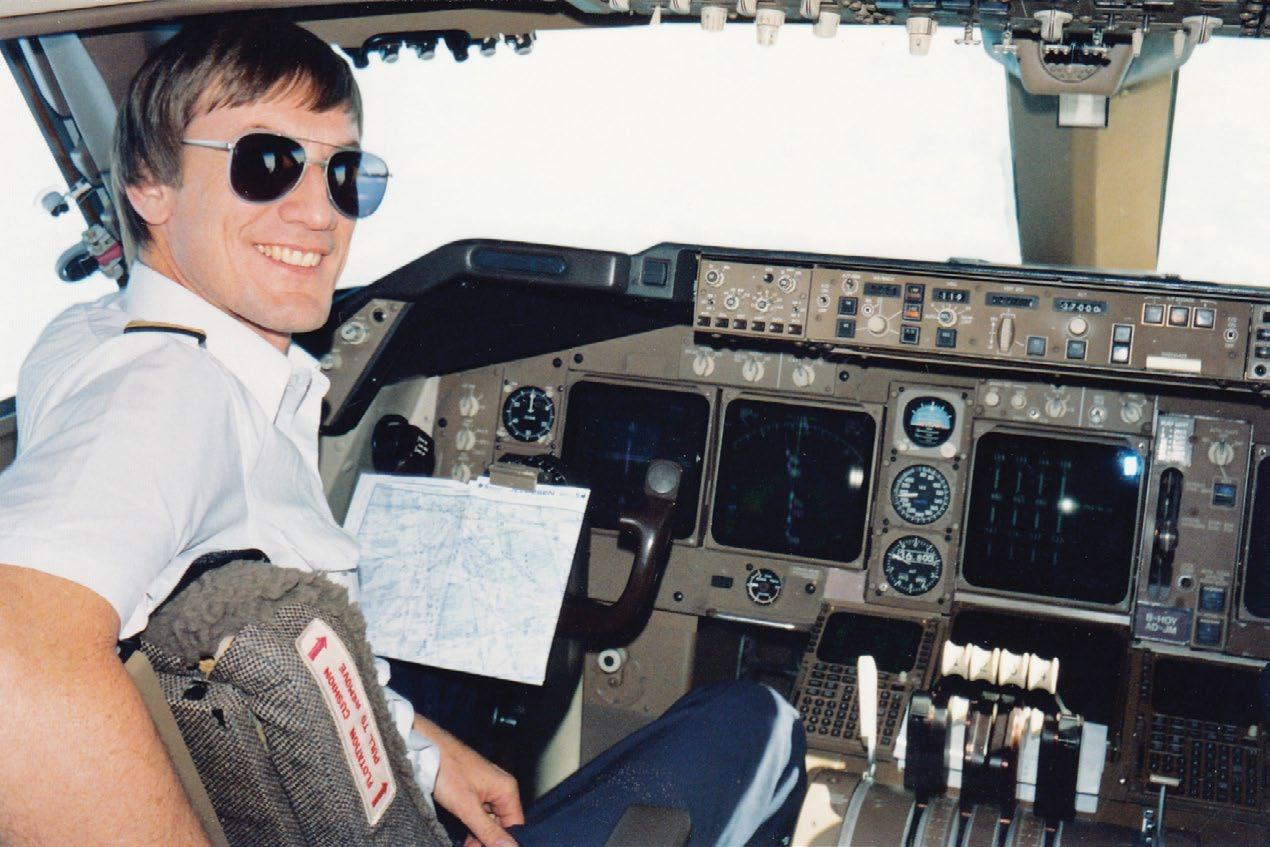
As long as you are keen and determined, and persevere, anything is possible.
Marrying my wife Janette and being blessed with four children.
Working in a career that I loved.
Living in a variety of diverse places from country towns to cities including Perth, Brisbane, Kuala Lumpur and Hong Kong.
Flying for what was a world-class airline until 1989—Ansett Airlines.
Flying for two overseas international airlines.
I was at King’s College for my entire school education. In Grade 1 I was taught by Mrs Coombs in a demountable building. I witnessed a number of buildings being built— the multi-story block by the oval, the Chapel, the Library and the Science block. The Rev. Ralph Cook was the Headmaster for most of my time. I was there for the introduction of
co-education with Girton Girls’ School. I obtained my Student Pilot’s Licence while still in Year 12. I enjoyed playing Basketball and Tennis on Saturday mornings for the School and also playing chess at lunchtimes. I watched the moon landing on television in the Old House with my classmates.
As long as you are keen and determined, and persevere, anything is possible.
Select school subjects to provide as wide a future as possible.
Maths teacher Bob Oatey advised me to do Maths A and B even though I thought it seemed difficult. It provided me a pathway to do a Bachelor of Science degree at the University of Adelaide and a career in aviation. I am appreciative of that advice.
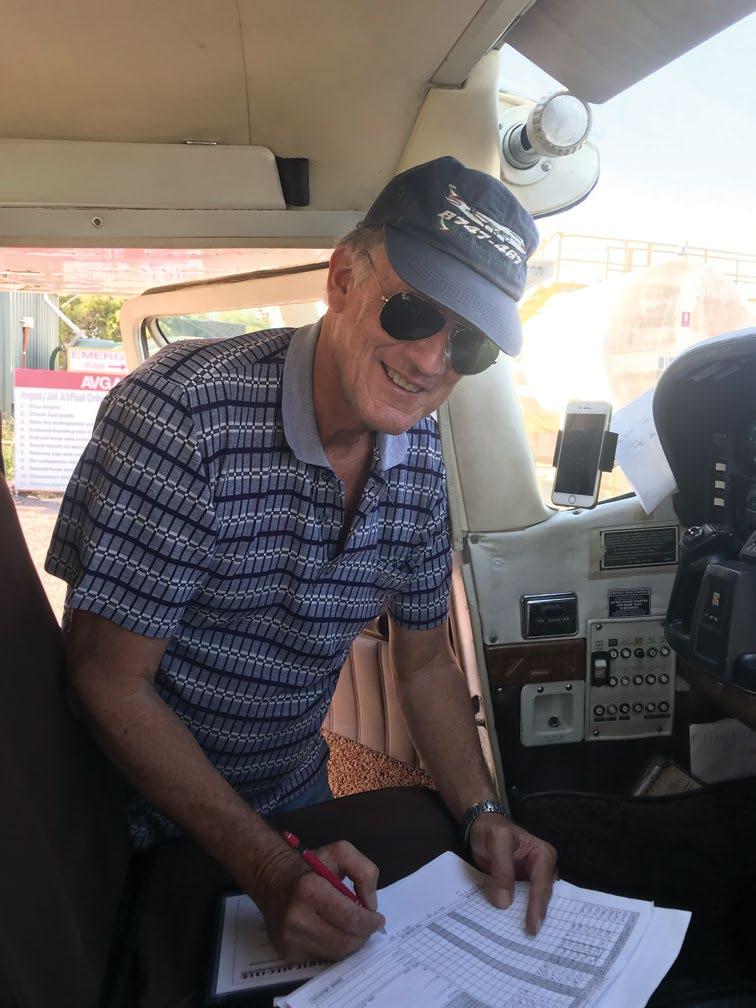
My favourite memory was my first day at King’s in February 1972.
I have worked on a global basis in supply chains for automotive and aerospace manufacturing. I had the honour of working on the largest US fighter aircraft program (F-16 Falcon) in US history.
My favourite memory was my first day at King’s in February 1972. I moved from Casper, Wyoming, where it was the dead of winter; leaving Casper, our flight took off just three hours before a large snowstorm and landed in Adelaide during summer where the temperatures were in the 90s F. The utter culture shock of my first day in an all-boys school was having to wear a uniform every day. But the education I received in the classroom and outside was the best a person could ever receive.
Make the effort to reach your potential in life and NEVER turn down an offer to learn something. If you keep learning you will stay young at heart.
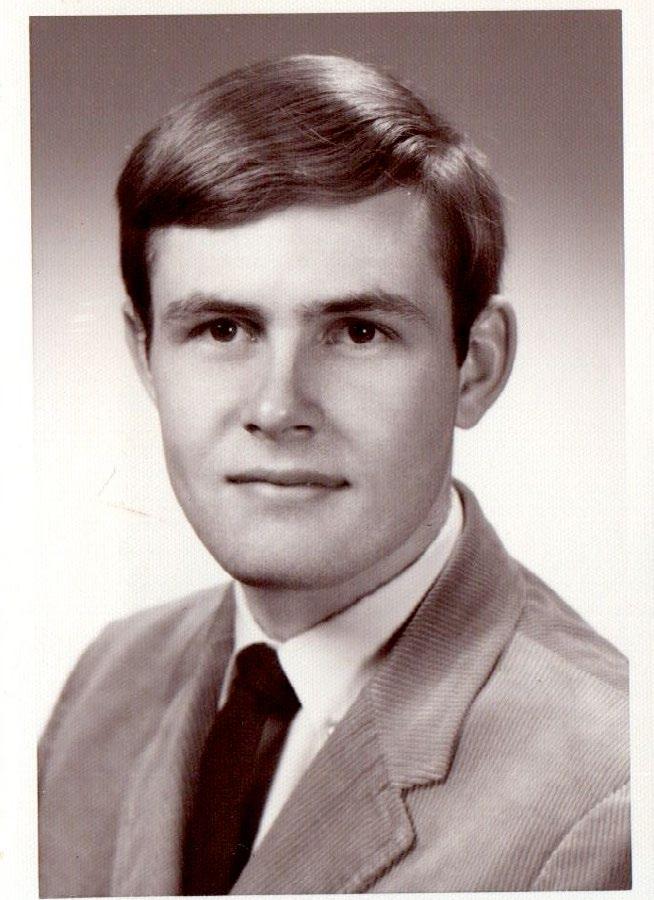
Remember that whatever silliness you are tempted to engage in, be sensible... all the while affirming the worth of other people and not damaging too much property.
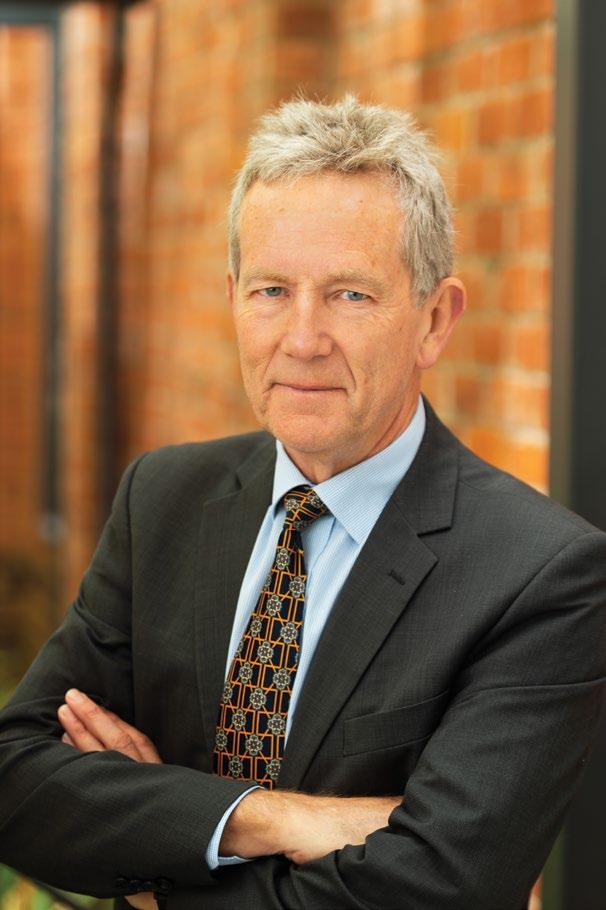
four years as the President of the Australian and New Zealand Society of Criminology. I finally retired as Emeritus Professor of Law at the age of 64, concluding my career as the Dean of the UniSA Law School. But I never lost touch with Pembroke. In May this year, 2024, I was awarded Life Membership of the School. I cannot think of a higher privilege than to be honoured by the School in this way.
After school I headed off to enjoy university life. Over the next decade I tackled a range of tertiary studies in law, criminology, theology and political science in Australia, the United States and Canada. I then toyed for a while with legal practice and four failed attempts at political office. Ultimately I settled into a rewarding lifetime of university lecturing, researching and writing in Australia, the USA, Hong Kong and Sweden. When my wife Debra and I finally settled in Beulah Park, around the corner from the King’s campus, we enrolled our children Millicent and Elliott at Pembroke, where they both enjoyed wonderful educational experiences. By this time I was heading up the Legal Practice course at the University of South Australia. I also spent
Perhaps it was when Roger Marshman (who directed The Crucible, a Girton and King’s co-production) was stepping us through our first rehearsal. I was John Proctor and the direction notes indicated that I was to go to my execution but first passionately embrace my wife, Elizabeth (played by Karin Nyfort-Hansen). There was much hesitation. ‘For heaven’s sake’, cried Roger from the back of Wright Hall, ‘just kiss her!’ It could have been when Colvil Smith introduced to our class Albert Camus’s essay
The Myth of Sisyphus. ‘The Myth of Syphilis?’, came a voice from the back. ‘No, it’s Sisyphus’, replied Colvil, ‘I can assure you, syphilis is no myth’. Perhaps it was preparing the Gestetner stencils for our studentrun newspaper ‘The Clarion’, with its admittedly puerile attempts at satire, all the while congratulating ourselves for our clever wit. It might have been arguing our inter-school debates, testing our spontaneity by giving no thought to preparation. Was it canoeing to the Murray
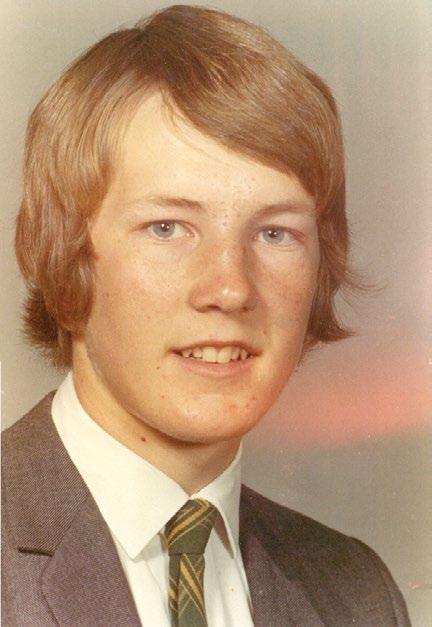
Mouth or trekking the Flinders
Ranges with Doug Stewart? No, it was sliding down the snow on our raincoats from the summit to the base of Mt Ossa in the Tasmanian wilderness on a Peter Smythe-led Scouting adventure.
I was asked to stay after school one afternoon when I was in what was then known as First Year. My form master John Hunwick offered me the following advice: ‘You won’t succeed in life if you persist on being class clown. You’re smart enough to do very well’. Fast forward 54 years and I caught up with John at our King’s/Girton matriculation 50-year reunion. (In 1972 Girton and King’s Years 11 and 12 had their first pre-nuptial trial marriage year ahead of Pembroke starting in 1974). I took the opportunity to thank John for the advice that I had remembered from all those years ago. He replied, ‘I gave that message to a number of boys. Fortunately, you were one who took it seriously’. I confess that I never lost my sense of fun, and was still able to enjoy some School buffoonery and go on to a good academic career. I offer my 18-yearold self today some tangential wisdom to that which John Hunwick had imparted: ‘Remember that whatever silliness you are tempted to engage in, be sensible, display a measure of intelligence, all the while affirming the worth of other people and not damaging too much property’.
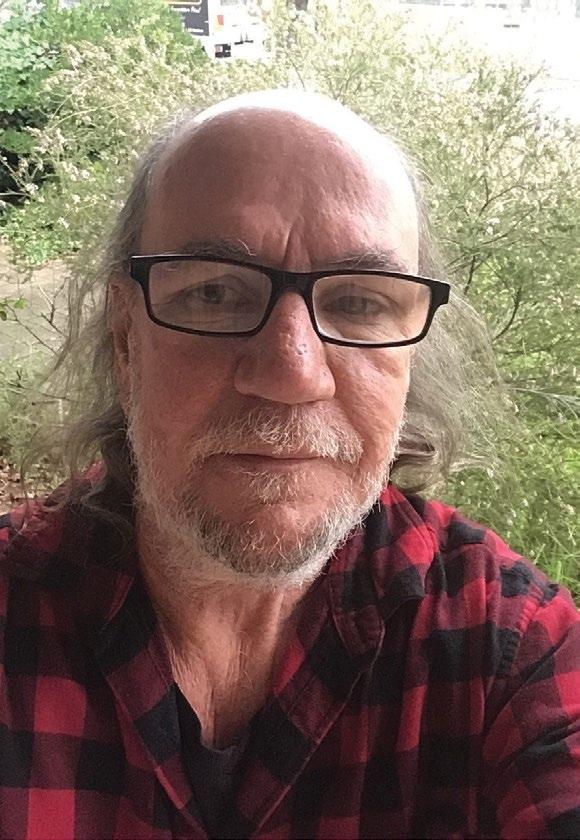
Try to look beyond tomorrow.
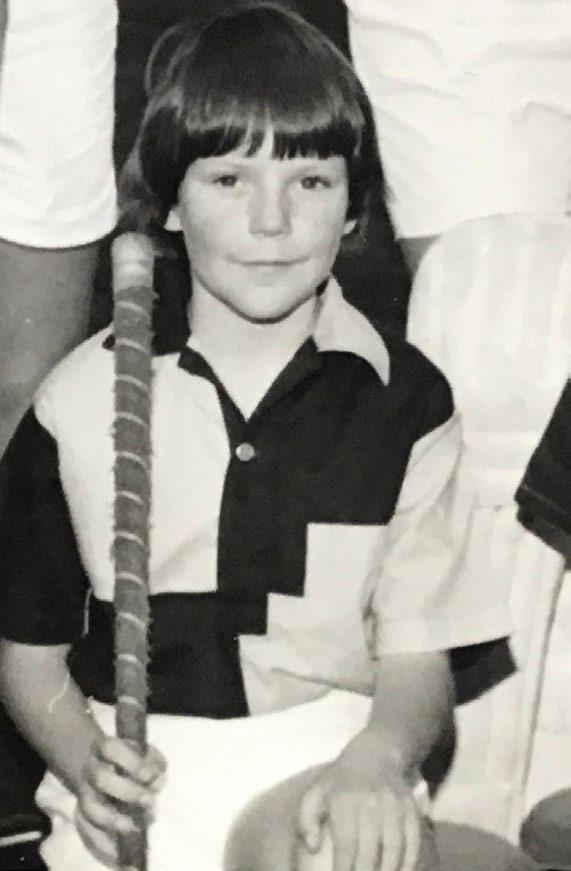
Career and Life Highlights
Labourer – railway worker
Commercial and news photographer
Sculptor – artist – associate of RSASA, winning arts awards
Rock climber – bike rider – swimmer – marathon runner
SES volunteer
Gold prospector
Hitch-hiking halfway around Australia
Driving every desert in Australia
Favourite King’s Memories
Red Rover on the front lawns
Jumping off the grandstand on to the high jump bags
Sport and gym with Mr Sevcik
Blackboard dusters and chalk being thrown by teachers
Climbing on the playground equipment and doing backflips
Advice for your 18-year-old self
Try to look beyond tomorrow.
Every Sunday evening we would have roast, the highlight of the week.
After finishing Year 12 at King’s College in December 1971, I was accepted to do a mechanical engineering course at the University of Adelaide. On completion of the degree the graduation ceremony was memorable, walking up to receive my engineering degree in front of friends, families and colleagues. I felt so proud then. Subsequently I found my first job at ROK (Rubery Owen & Kemsley), again feeling proud and excited to be working for a salary and embarking on the Australian dream!
Before starting university I was working in a Japanese restaurant as a teppanyaki cook. My highlight was cooking for Don Dunstan AC QC, the then Premier of South Australia. It was such a privilege and experience standing in front of him cooking on a big hot plate!
In the course of my career as an engineer I worked for several companies, ending up with Electrolux and retiring in December 2016. While at Electrolux I was involved with the introduction of new technology where numerous robots were installed, the sign of progress on a path of survival in manufacturing.
When I arrived at King’s College in February 1970 I was a fresh faced 15-year-old from Malaysia, having not sat on a plane before, nor left the country before. I travelled alone and somehow managed to make the journey to Adelaide.
I was enrolled for Year 11 and my classroom was 11E overlooking the quadrangle where the Assembly was held. I was staying in the Boarding House and every Sunday the boarders would walk to the School Chapel or neighbouring churches for Sunday afternoon service.
While at the Boarding House I had to adapt and learn some Western table manners. We would say a short prayer before meals, which was not common for me to do. I learned not to leave my teaspoon in the cup
after stirring, and after finishing the meal to put the knife and fork together, vertical on the plate and side by side, and not to burp aloud! I had only used chopsticks before! Every Sunday evening we would have roast, the highlight of the week. The highlight of the year was the end of the year Awards Night, where it was held in the Chelsea cinema (now Regal Theatre) on Kensington Road. Rev. R.A. Cook was the Headmaster then and Mr J.M. Moody the second master.
My advice would be to study hard, play hard and be the best you can be in everything that you do. Being the best you can be will earn you respect and set you on a path for further success. As they say, life is a journey, and when one gets older and reflects on it one can reminisce and think of the amazing journey!
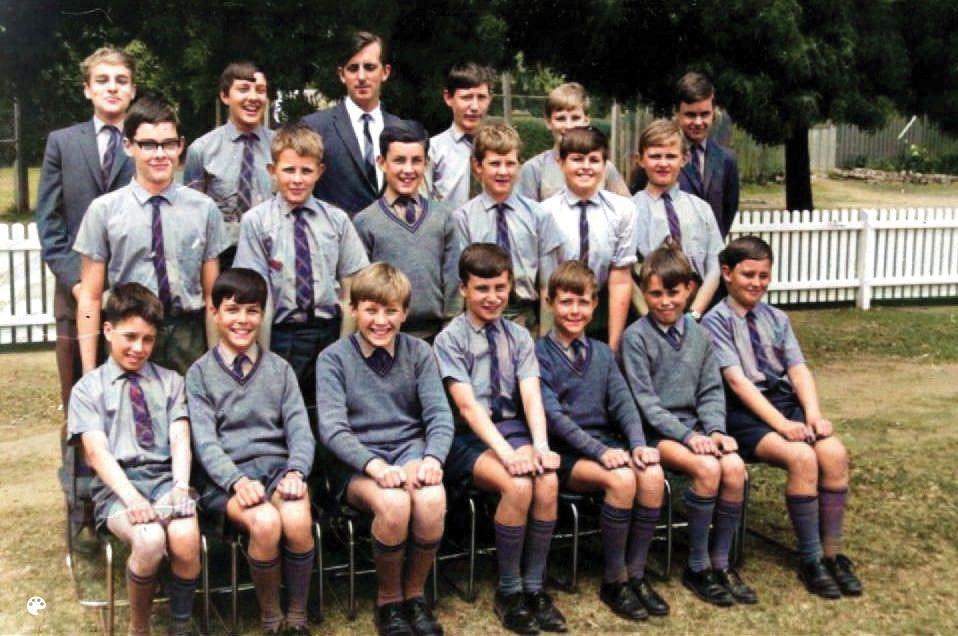
I really enjoyed my years at King’s College...
I really enjoyed my years at King’s College, and my first teacher was Miss Dean.
We had an interesting mix of students and teachers and I enjoyed taking my camera to School, something you can’t do these days. When I left school I did work for a photographer for a couple of years.
In later years at School I became interested in geology and gemmology. In my last three years at School I did a night-school course for a Diploma in Gemmology. I was told I was the youngest person in Australia at that time to get that diploma but I felt it helped me.
To get a foot in the door of the expanding mining industry, despite my age, I spent the next two years doing survey work for mining companies in South Australia
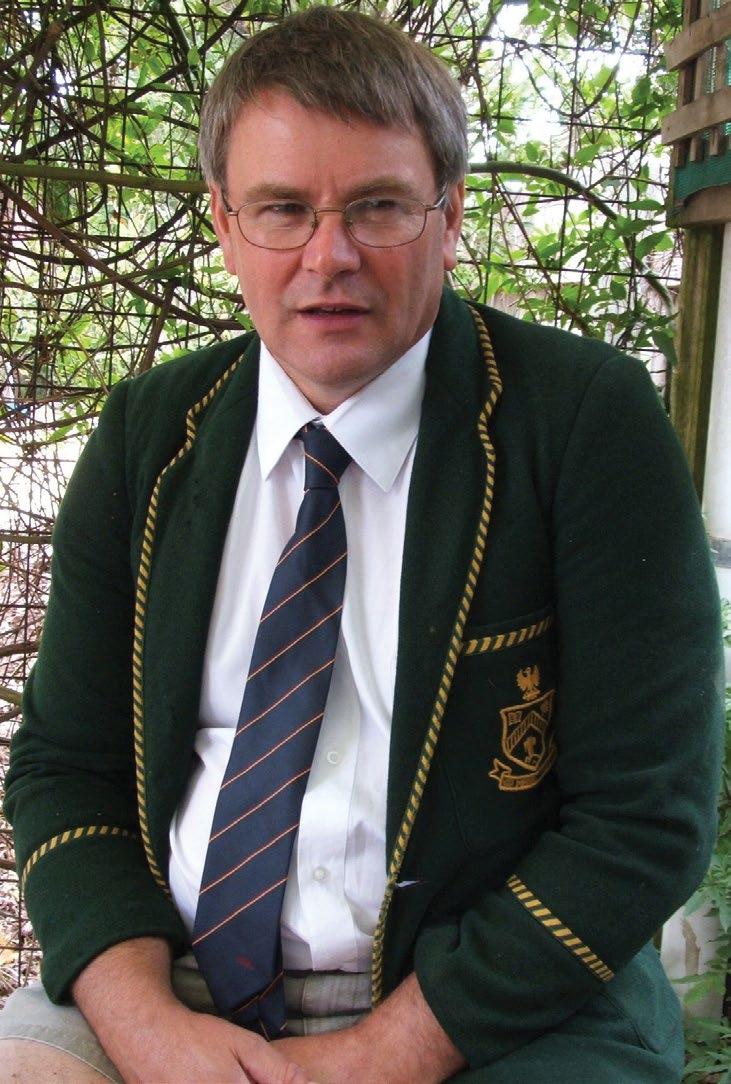
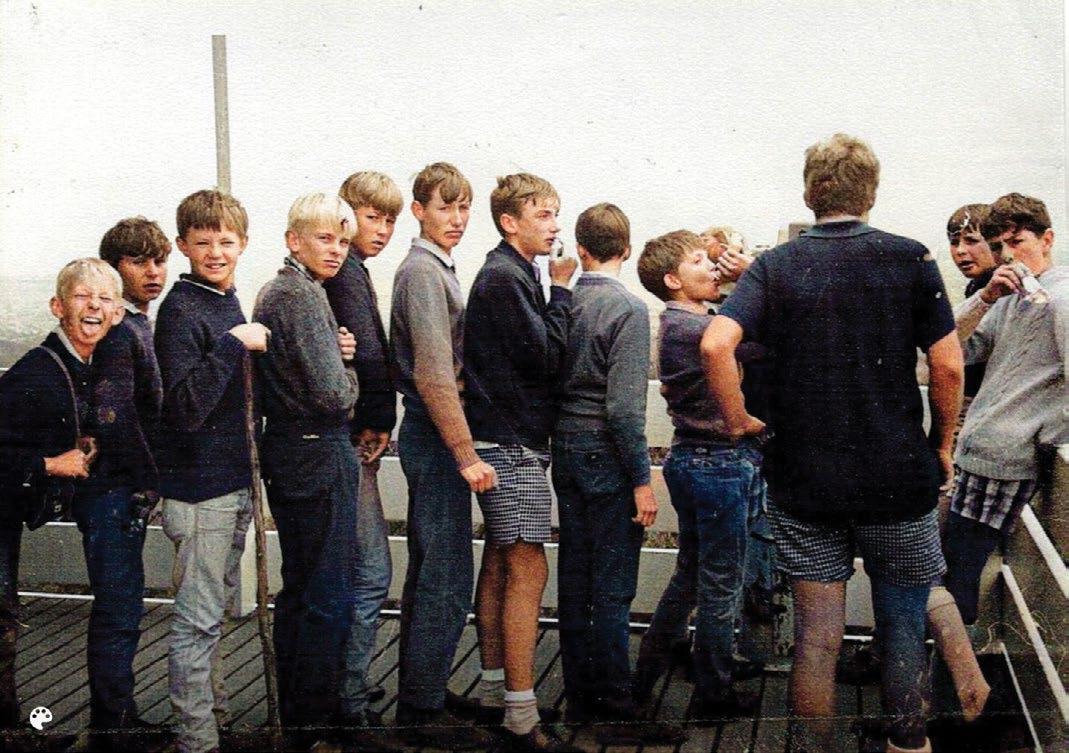
and the Northern Territory, but in hindsight I should have finished school first before heading off.
When the mining work slowed I had to look for other work. Later I ended up in Victoria in the army, and after that I worked as a train driver for nearly 40 years till retiring.
What I did was while I was still at School—I looked at growing fields and did a night-school course that I believe helped me get a foot in the door.
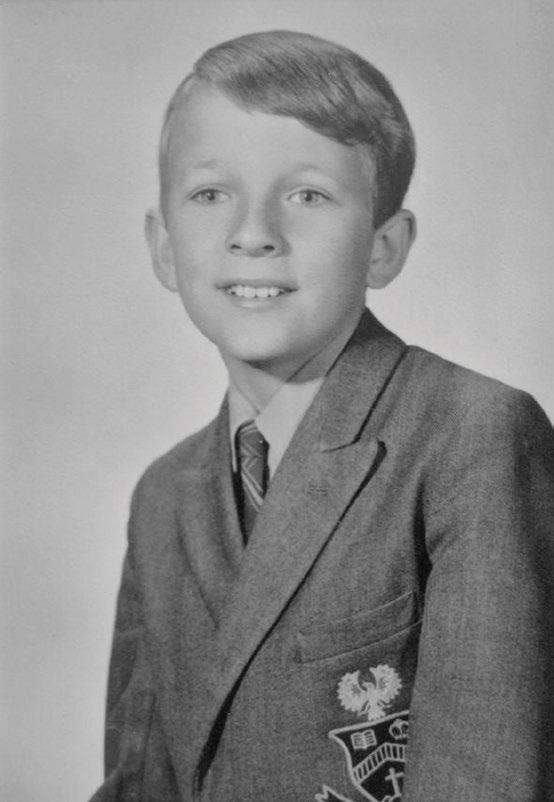
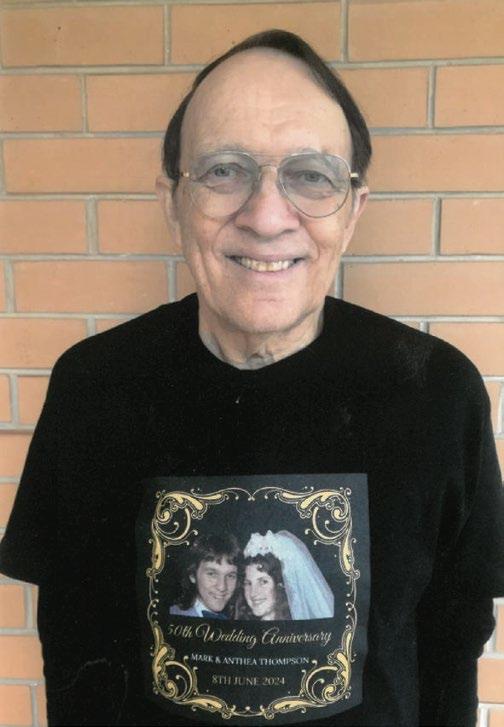
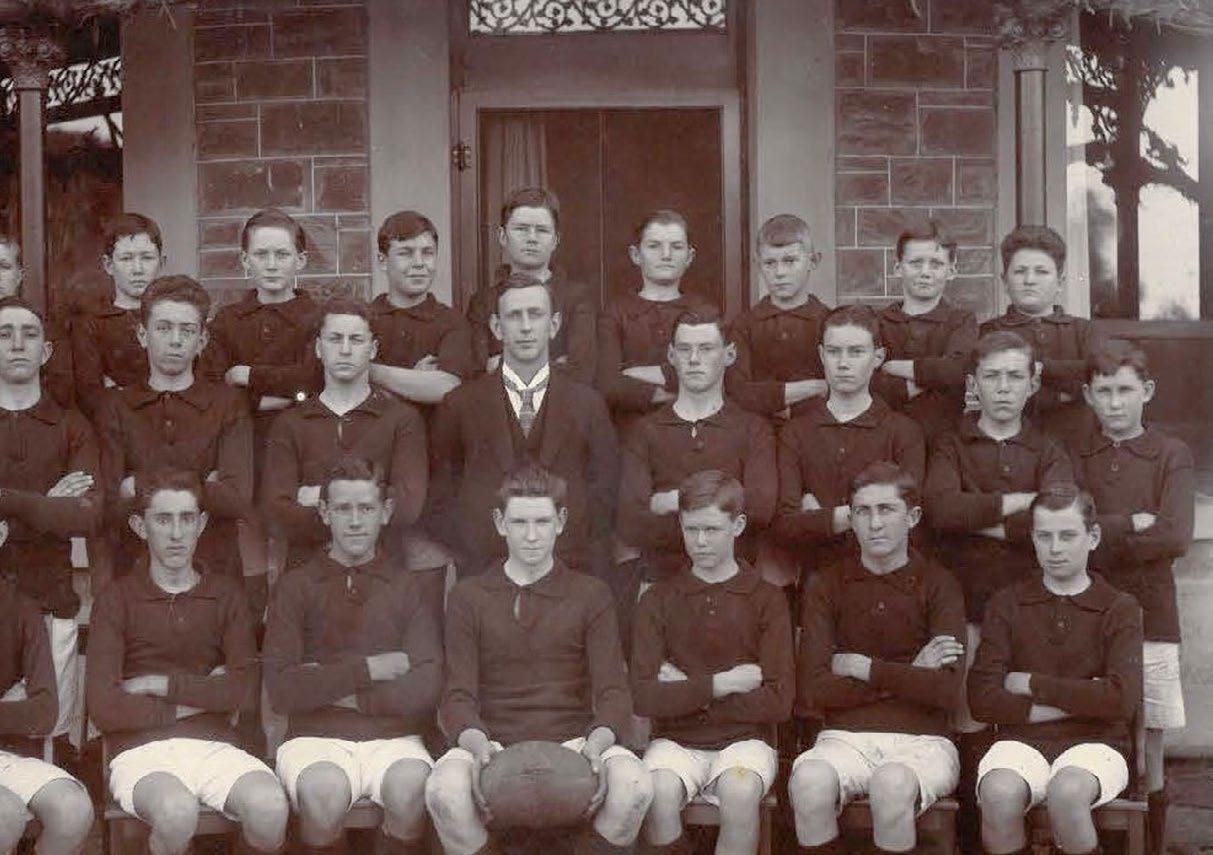
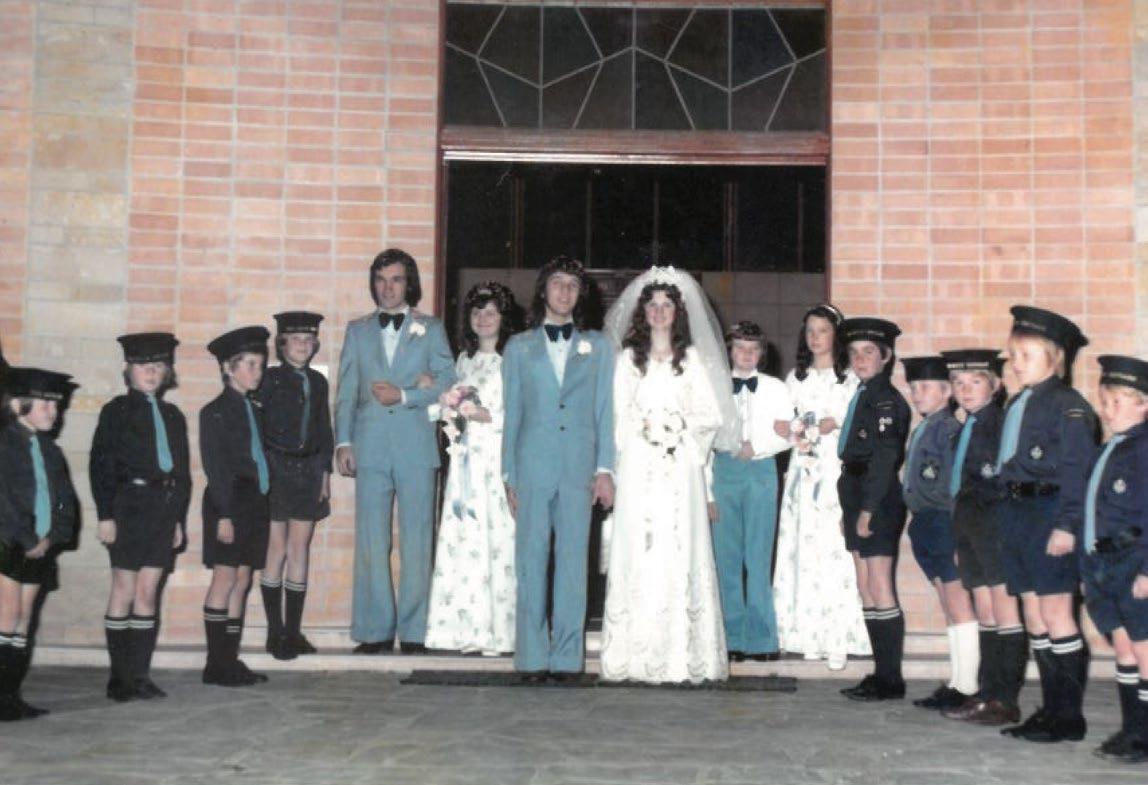
My time at King’s College helped shape me into who I am today.
I am married to Anthea with five children, Paul, Fiona, Karen, Adam and Megan, and have ten grandchildren. A highlight was marrying Anthea Smith in the King’s College Chapel 50 years ago on 8 June 1974.
After leaving school I had a career as a clerk at Eudunda Farmers. In retail I was a Department Manager at Kmart Firle in the paint, lighting and furniture department. Then I studied and gained a Bachelor of Theology degree from the Melbourne College of Divinity in 1992. I worked as an Administration and Extension Officer for The Boys’ Brigade SA. I had the pleasure of several trips to Government House with young men who gained their Queen’s Badge, the highest award in Boys’ Brigade. I also worked as a School Services Officer and
enjoyed helping struggling children with their education.
I was proud to be a King’s boy and wear the school uniform. As I was a Norwood supporter, I enjoyed having Norwood footballer Robert Oatey as my PE teacher. I also enjoyed participating in School sports such as Football and Cricket and meeting lads from other schools. I didn’t shine in sports but I gave it my best shot!
A highlight for me was acting, especially in a couple of Shakespeare productions. I was either a main character or a narrator. I found it easy to remember all the lines and redirect if someone lost their place. I was happy that I found something I was good at.
I joined the Civil Defence at School, mapping out suburbs, noting what
was dangerous and sending it in. I also went to Mount Macedon in Victoria for basic training.
My time at King’s College helped to shape me into who I am today.
I would tell myself to reach for the stars. It doesn’t matter if you don’t achieve all your dreams; at least put in all your effort. If you put in 100% effort, that is the success. I would remind myself to encourage others with their dreams.
I won’t forget the Golden Rule—to love your neighbour as yourself and to treat others as you wish to be treated. I would remind myself to be forgiving and non-judgmental, and neither bigoted nor racist. I have always tried to live by these principles.
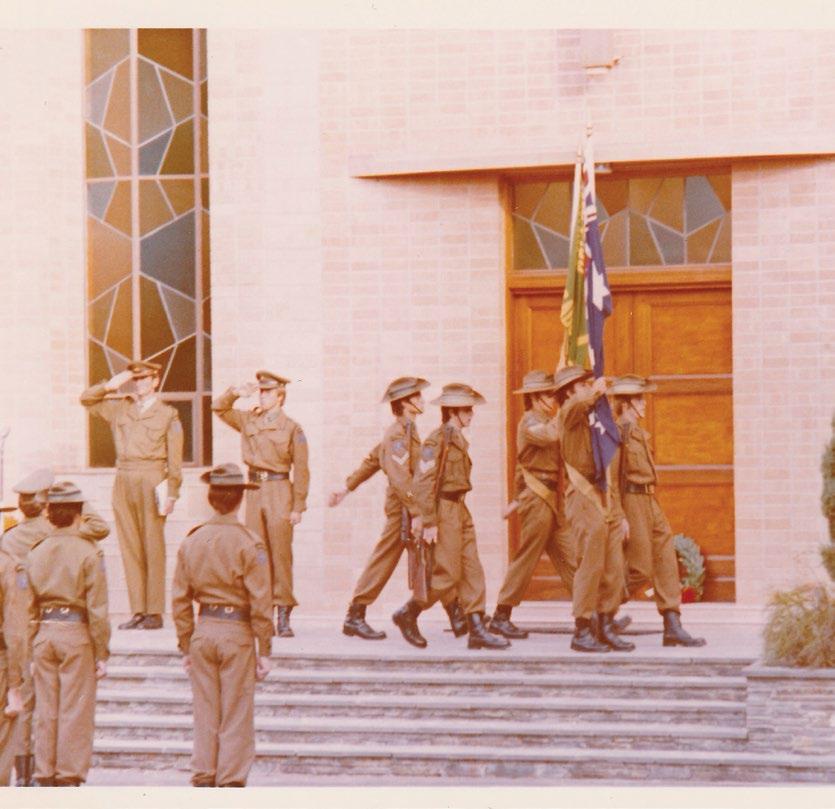
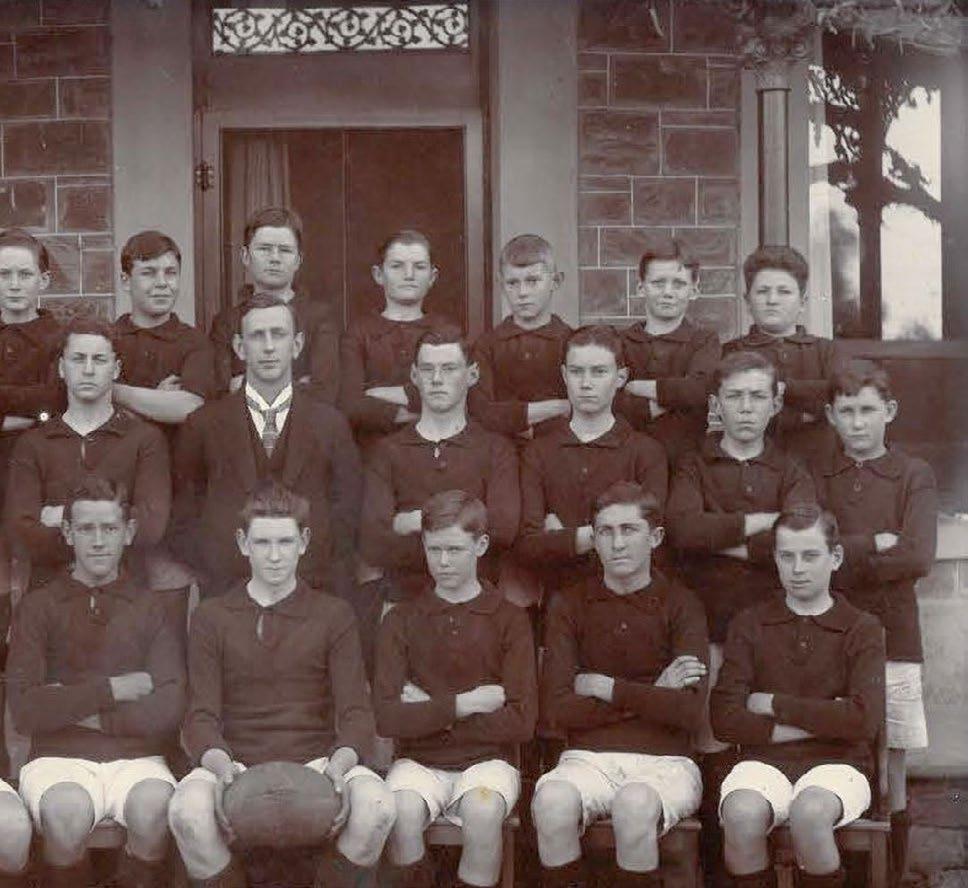
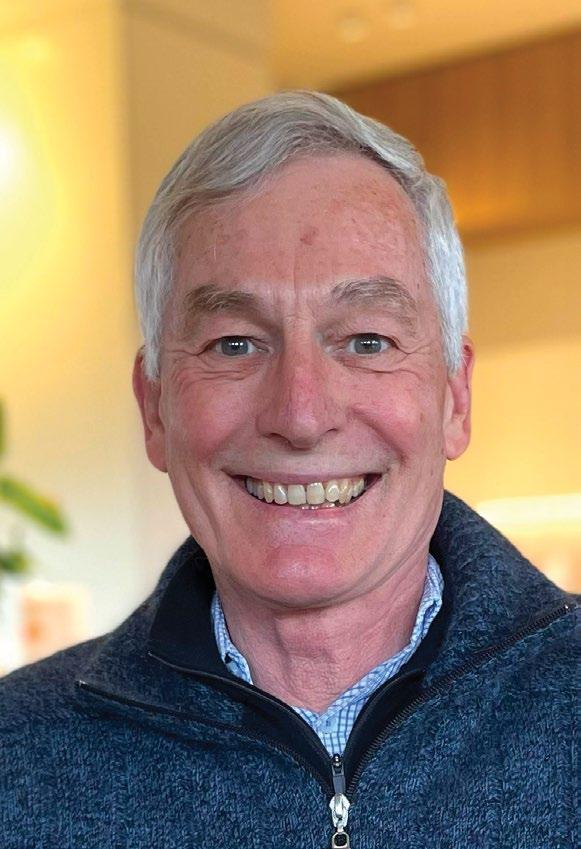
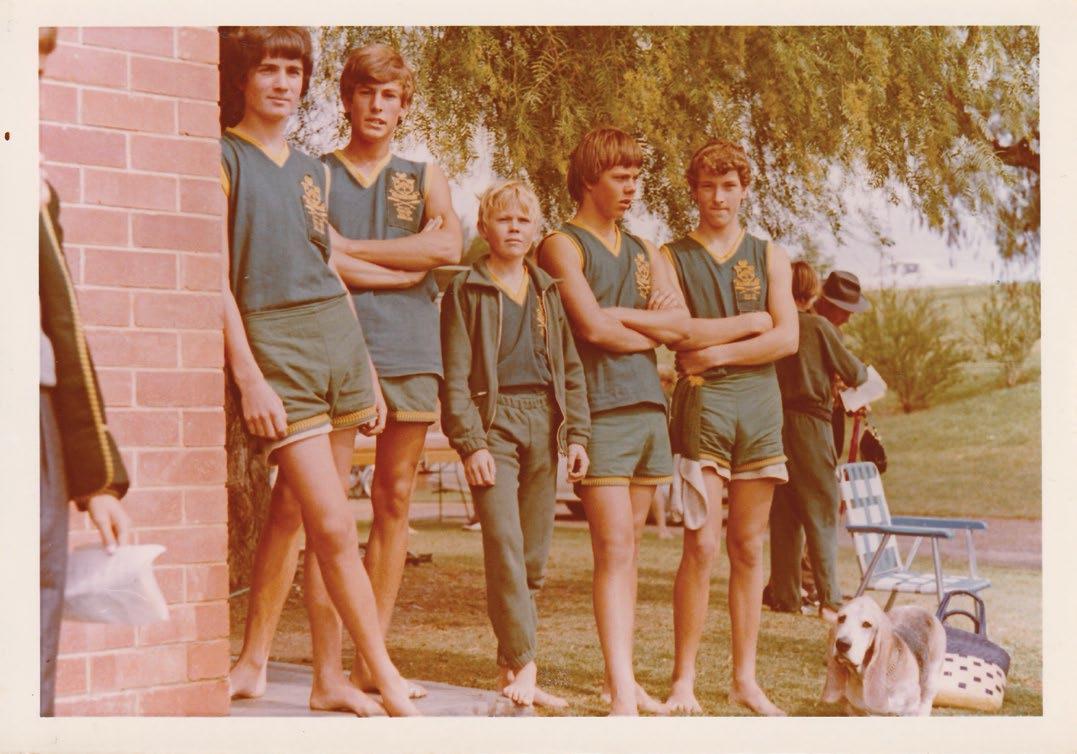
Worrying about a problem will never fix it –hard work always does.
Being appointed as a Member of the Order of Australia (Military Division) in 1990
Finishing ninth in the Army Champion Shot Competition in 1990 (not bad for a dentist!)
Being created an Honorary Doctor of the University (DUniv) by Griffith University 2010
Being the founding director of the Maxillofacial Surgery Unit at the Gold Coast Hospital 1999
Holding my son and my daughter for the first time on their adoptions in 1994 and 1997
Favourite King’s Memories
I enjoyed most subjects. Geography with John Moody, English with Roger Marshman and D.D. Harris, and Chemistry with Dick Fricker were highlights.
Art with Michael Atchison was laidback, anarchic and fun.
Running around Kuitpo Forest on bivouac as a 13-year-old blazing away at the ‘enemy’ with a .303 rifle loaded with blanks (under the watchful eye of John Moody) was a thrilling introduction to the Cadets in 9th form. I enjoyed every minute of it. I was the Senior Under Officer of the unit in my last year (1972). It was an entree to my army career, which lasted for 48 years.
I was taught to row in 1968 by Graham Coldwell as a 12-year-old. He was a kind and patient coach who rarely raised his voice. John Page coached me in the Second VIII (1970) and the Open Lightweight Fours (1971). He was an excellent coach who taught me a lot about rowing and how to get the best out of people. Being on the river was hard work but fun.
One incident, which doesn’t appear in the official history of the School, happened in 1971. For some reason someone in authority thought that it would be a good idea to house a group of 15/16-year-old boys in the old Chemistry laboratory and christen us Form 11C.
Dick Fricker was our form master. It was a great location, sitting right on top of Glad Blood’s tuck shop. If you had Chemistry right before lunch you were guaranteed a place near the head of the line. One day, before school, someone decided that it would be a good idea to turn on the hydrogen sulphide generator. This emptied the lab in record time. When it was safe to return, the evidence of this misdemeanor was all too obvious—a tell-tale brown stain on the walls about 2 feet below the ceiling all the way around the room. Dick was pretty relaxed about it, but made it abundantly clear that unauthorised experiments were verboten from then on.
Set goals, make plans and stick to them.
Don’t be too fussed about what other people think —do what you feel is right.
Worrying about a problem will never fix it—hard work always does.
No matter what you do, always do it to the best of your ability.
Always consider how your actions could affect other people.

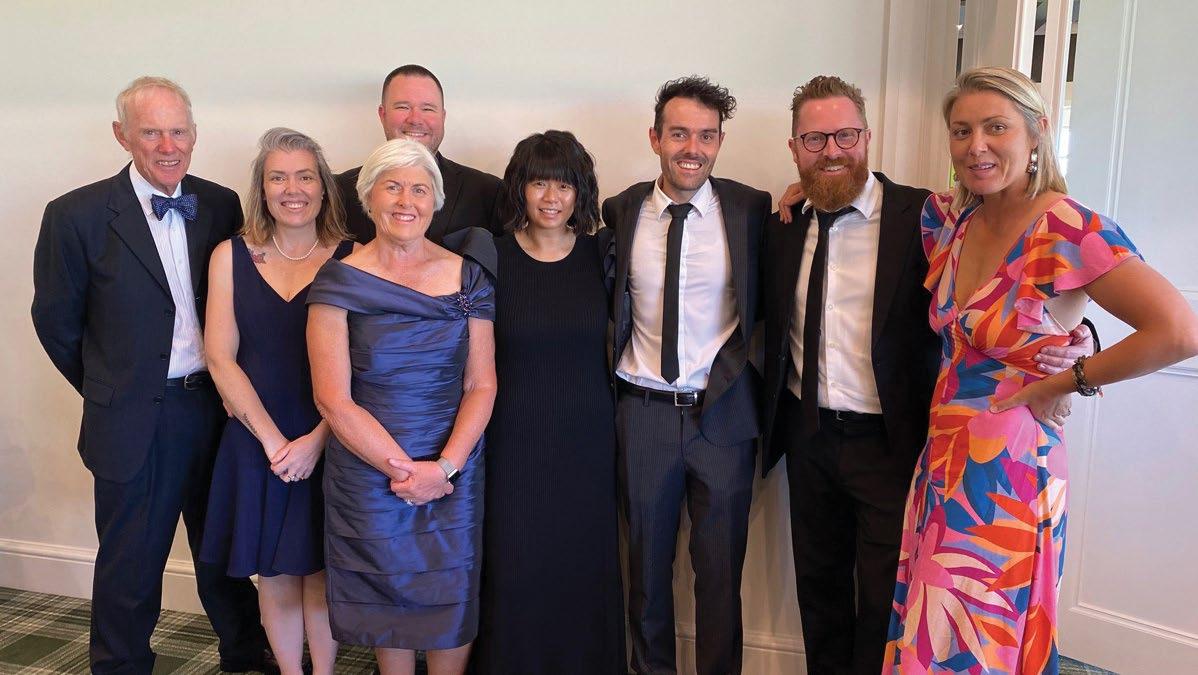
Many of my earliest associations at King’s resulted in lifelong friends.
Following my departure from King’s College I ventured into the world of engineering at SAIT Levels campus. The daily commute, often shared with Phil Ingerson, became a routine backdrop to my journey. I earned my builder’s licence, joining forces with my father and later branching out on my own until 1982. In the late ‘70s and early ‘80s I pursued further education, securing a real estate agent’s licence. This opened doors at well-respected agencies like Myles Pearce and Co. before I confidently established my own agency in 1986, a venture that continues to this day. Throughout this professional journey my lifelong friend Richard Bray has been a steadfast companion, weaving through both business and personal milestones, our families forging deep bonds over countless shared moments.
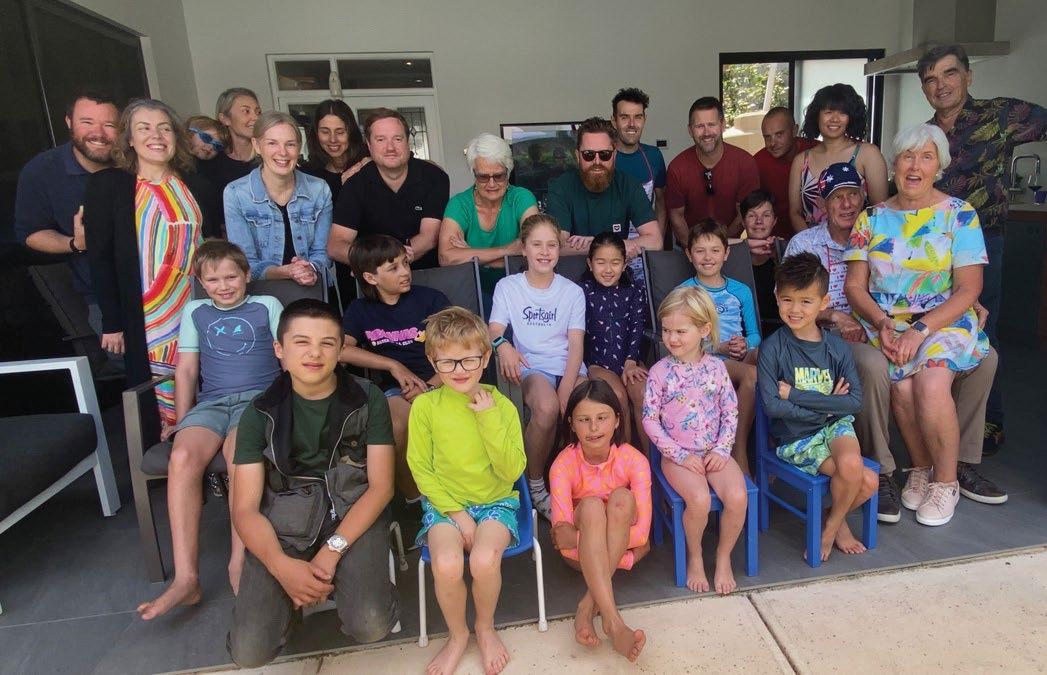
My recollections of King’s College stretch back to day one, when Mark Blunden took me under his wing as we lived in the same neighbourhood, Wattle Park—a friendship that endured for years. Many of my earliest associations at King’s resulted in lifelong friends. Amid my studies I played Football, Cricket and Rowing, while also serving in the School’s Civil Defence unit. In my senior years Headmaster Ralph Cook’s mentorship was pivotal, appointing me as a prefect in my final year. Important teachers such as Robert Oatey left indelible marks, dedicating countless hours to coaching Football and organising memorable outdoor adventures, including River Murray canoe trips that were celebrated in our School magazine.
Embrace every moment with purpose, don’t waste a minute of time, prioritise ongoing education. Reflections: Looking back, I would tread the same path, marrying my beloved Ngaire and raising our wonderful children—Katharine, Michelle and Mathew—all proud Pembroke old scholars.
Now, seeing my grandchildren follow suit at Pembroke fills me with hope for a legacy that spans generations.
The road trip to Wollongong in Year 6 stands out... a wonderful time.
Year 12 at Pembroke in 1977, then a Bachelor of Economics at the University of Adelaide. Joined the family shoe retail business, Barlow Shoes, Grundy’s Shoes and worked there ever since. We are now in our seventh generation and celebrated 155 years last year.
Married to Amanda with two girls (Sarah and Claire) who both attended Pembroke.
I have enjoyed a great education, working life and post-employment community service through Scouting and Rotary. A lifetime interest in the outdoors and conservation culminated in the purchase of 90 hectares of heritage scrub in the Southern Flinders some years ago. We get up there as often as we can.
A group of friends from our school days still catches up annually for a dinner, which is always wonderful.
The road trip to Wollongong in Year 6 stands out—all the Year 6s and 7s on a bus with John Davis on our way to the school Eisteddfod, the singing on the bus, the overnight stop in
Narrandera, the rugby and Aussie rules challenge matches— a wonderful time. I think it was my first trip away from home without Mum and Dad.
The same advice that we received from Mr Hambour in about Year 11 (we were only 15 then), ‘Now is the best time of your life, no responsibility, go out and do what you want, while you can’.
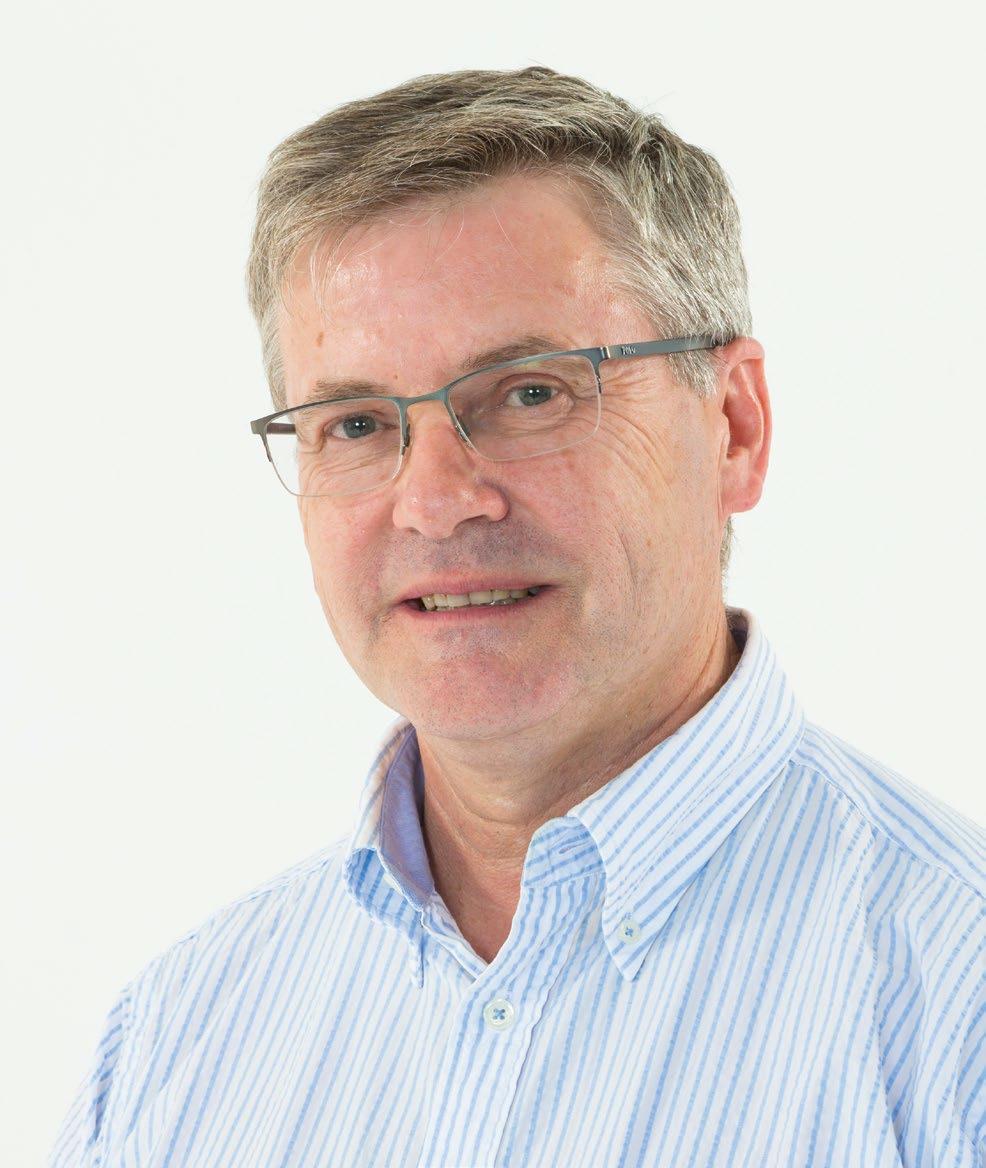
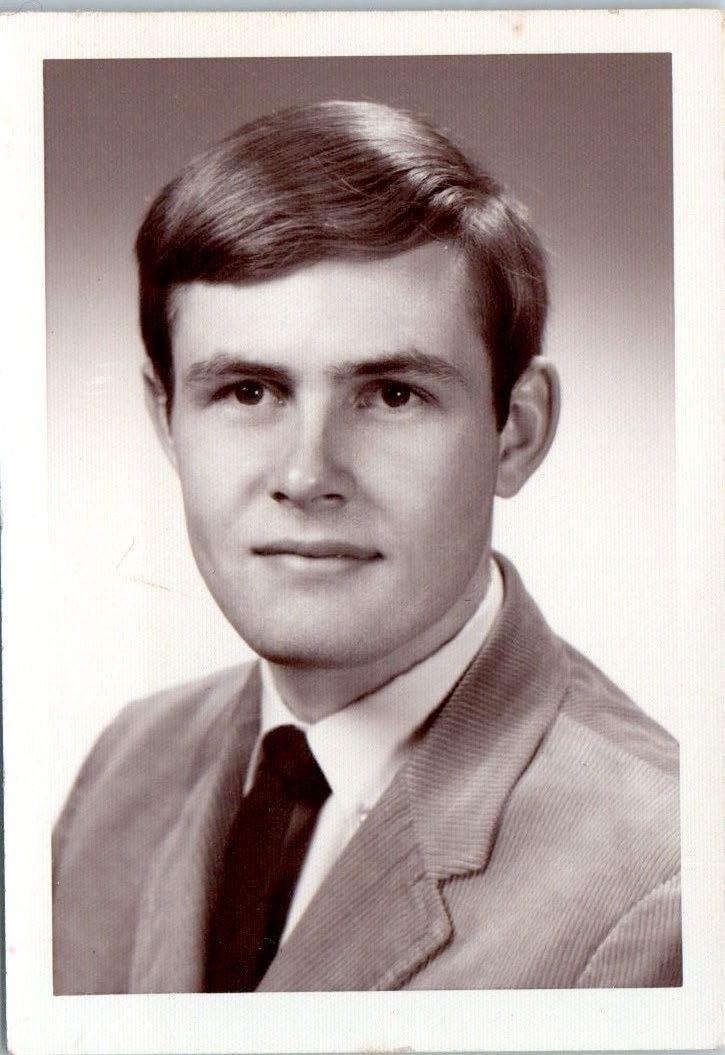
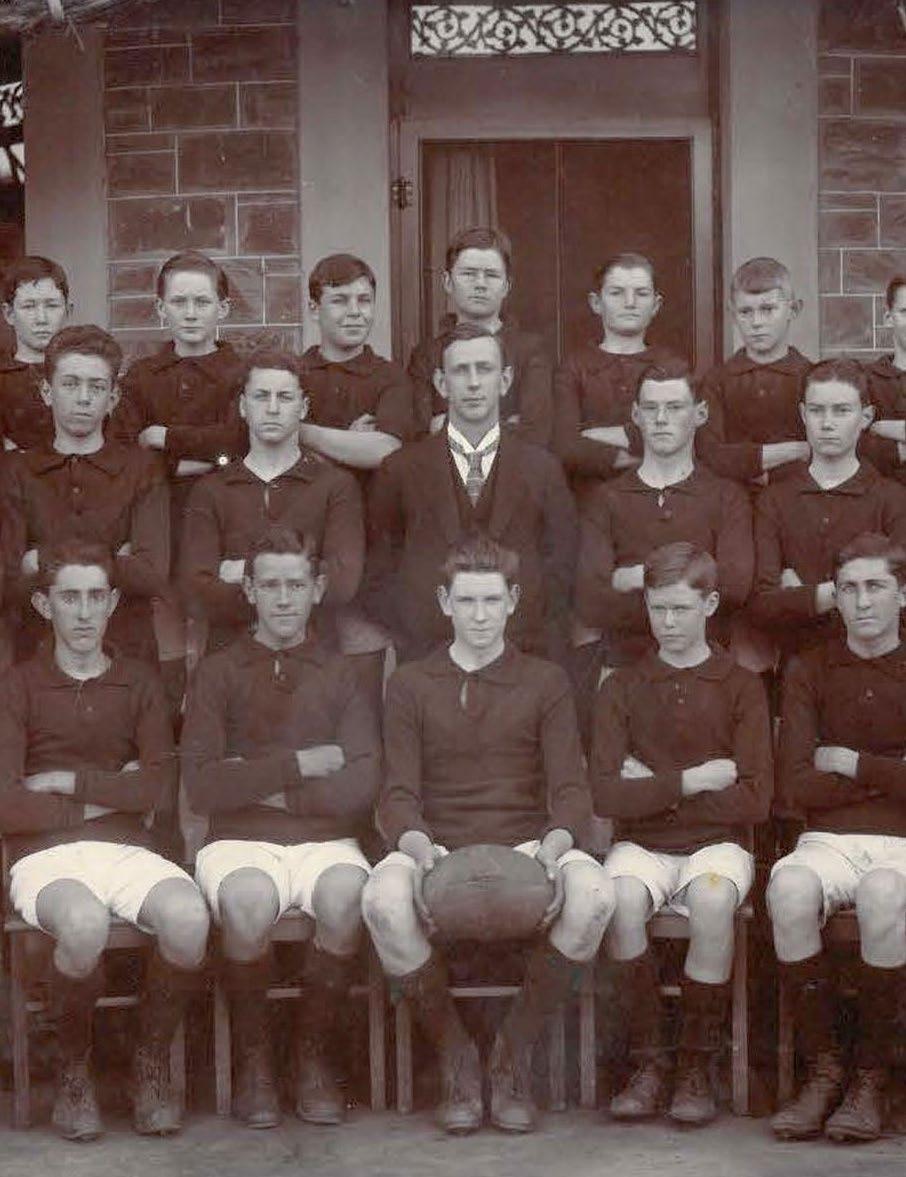
...they could see no reason why anybody would ever need computer skills.
Who could forget the Under 13s Football training on the bottom oval when David Hull suddenly started screaming for help with significant vigour? One leg had disappeared through the grass into a chasm just off the cricket pitch. He was down to his waist, and if it were not for his second leg protruding horizontally he would have disappeared altogether. Year 8 teacher and coach Mr Norm Thompson dragged a now very distressed Hull out of the hole and pulled back the grass to reveal a brick-lined well 12–15 feet deep and in perfect condition. The well had been there 50 years and, despite initially having been filled in, its contents had subsided and it was only hidden by a thin layer
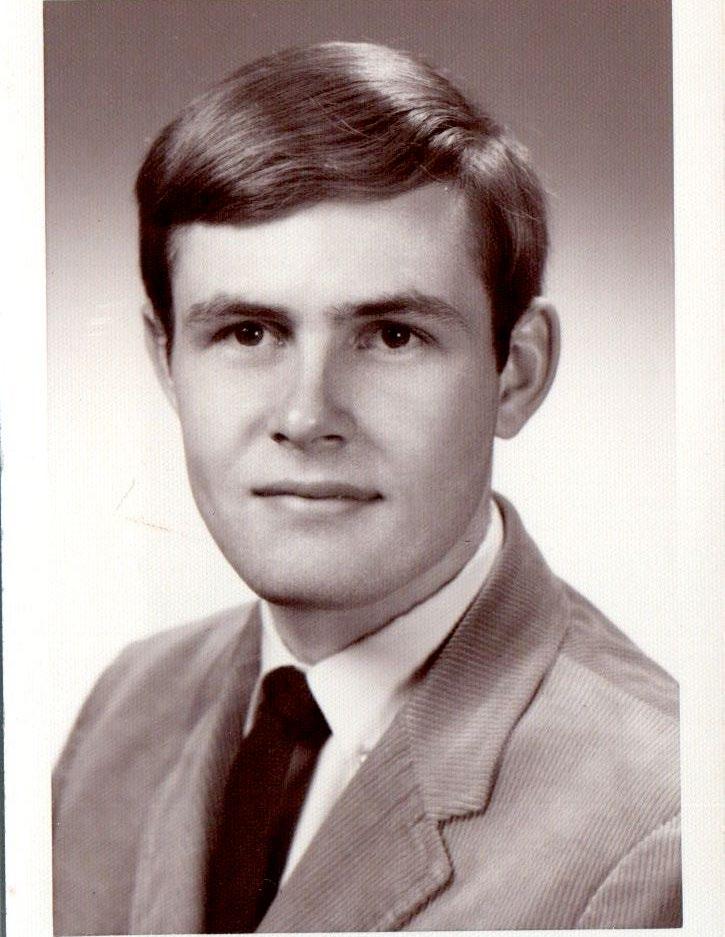
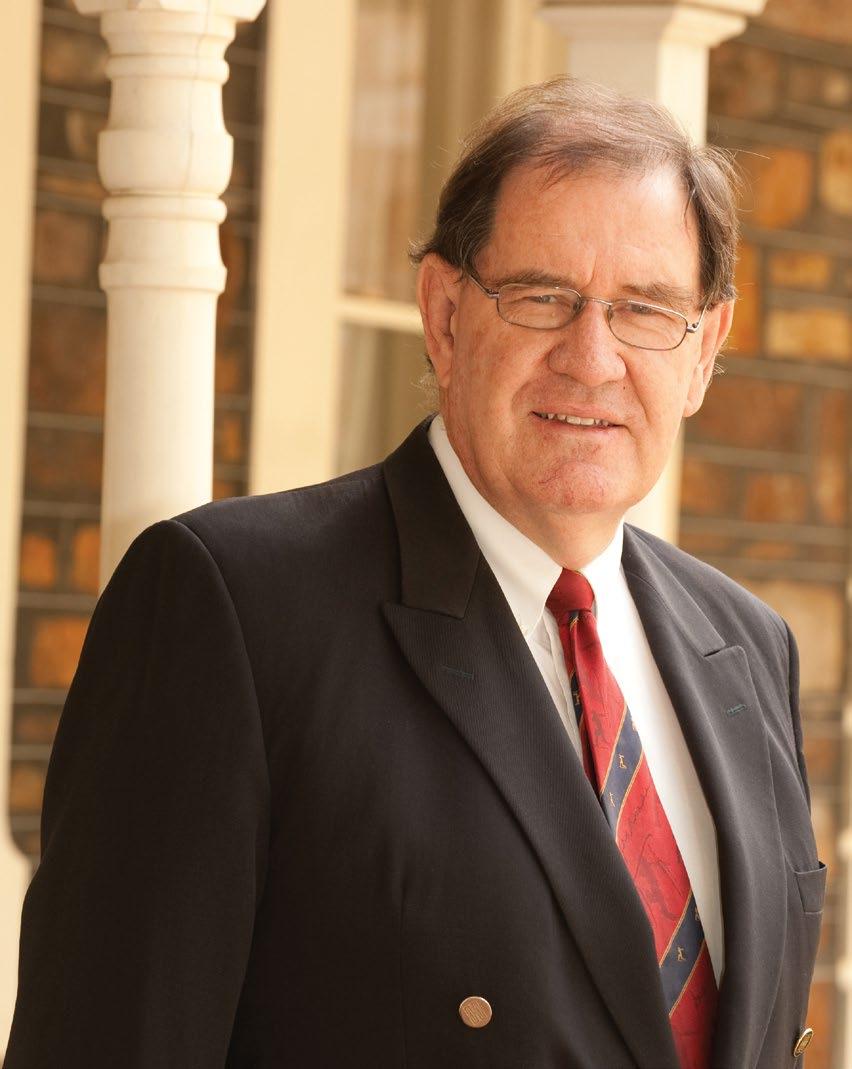
of matted grass. The next day the well was filled with building rubble, but another 50 years have passed and more subsidence may mean that we could see that well again.
My brother, Nigel Winter, was Head Boy in his final year of school (second or third year of Pembroke). As part of his responsibilities he met with Principal Diana Medlin weekly to discuss School affairs and activities. They would meet in the Head’s office and, with the door closed, they both had a cigarette (or two) and talked about anything but the School.
Friday afternoon was activities day, and every boy needed to be in one activity or another (Cadets, Scouts, Civil Defence etc.) There were a few other specialised activities, such as photography, but my favourite was the Bomb Making Club. The club was supervised by a Science teacher (Mr Cooke, not to be confused with Mr Cook the Headmaster), who seemed to have a passion for blowing things up.
The dozen or so members of this group would, from time to time on a Friday, spend the afternoon in the foothills blowing up tree stumps.
Today it would no longer be a group activity but a terrorist organisation. In 1969 a Maths teacher, Peter Smyth, was putting pressure on the School to allow him the opportunity to teach basic computer skills as a subject. The School eventually agreed to allow him to run a very limited number of classes but he had to do it during his lunch period, and it was not compulsory for students to attend. The School’s reason for this position was that they could see no reason why anybody would ever need computer skills.
Life begins when you leave school, so anything that happened before you are 18 doesn’t matter.
Buy land when you are young and hold it; put as much money as possible into super and leave it there.
The greatest surprise in a man’s life is old age, so don’t ever imagine life will get better as you get older ... retire young.
The memories shared in this book have been provided by King's old collegians. We are proud to be able to share their stories with you.
Thank you to our King's Working Group Committee - Rick Sarre (1972), Andy McPharlin (1972),Simon Berry (1974), Mark Jones (1969), Peter Noblet (1964), David Paley (1972) and Richard Willing (1947) for their support and guidance for the commemorative book and the events for the King's Centenary Celebrations.
Thank you to Philippa Hook (1958) for your support in editing this book.
Thank you to our Pembroke Archivist, Peta Harries and her wonderful volunteers for their support with providing archival photos and information.
Editorial team:
Candace Cox-Tuck – Manager, Old Scholar Engagement
Gabbi Agnew – Publications Manager
Jessica Gillard – Marketing and Engagement Coordinator (Graphic Designer)