Tōtara Pegasus Health Pānui


Pegasus House stands on land which was previously a dense Tōtara forest. The name Tōtara honours our home’s past. Just like the Tōtara tree thrives in the forest, soaring towards the sky and Ranginui, we create this newsletter with the aim of highlighting excellence in primary care and to support others to similarly flourish and strengthen.
Each issue of Tōtara Pegasus Health Pānui features stories, interviews, and new initiatives from across Waitaha Canterbury.
If you have a story, you would like our team to cover, please email communication@pegasus.health.nz.
Tōtara Pegasus Health Pānui is produced by the Communications Team at Pegasus Health. Content within Tōtara Pegasus Health Pānui has been included with the approval of content providers. If you wish to reproduce, alter, or transmit any of the information or images contained within, please contact communication@pegasus.health.nz.
Pegasus Health (Charitable) Ltd is one of the Aotearoa New Zealand’s largest and most progressive PHOs and practice networks, supporting general practice in Waitaha Canterbury and the health system throughout the South Island.
At our core we exist to support practices – and through this to help provide better health outcomes to people living in Waitaha.
Our purpose is by 2030, the health outcomes for people in our takiwā have improved substantially with a
significant reduction in inequities in access and outcomes.
Our values of Inclusive, Strive, Connection, and Integrity, are underpinned by our guiding principle of Manaakitanga, to create the fabric of our ways of being as an organisation.
Pegasus has a commitment to ensure that we overtly, purposefully, and strategically thread equity and Te Tiriti oWaitangi through all we do and how we operate.
Manukura | CEO
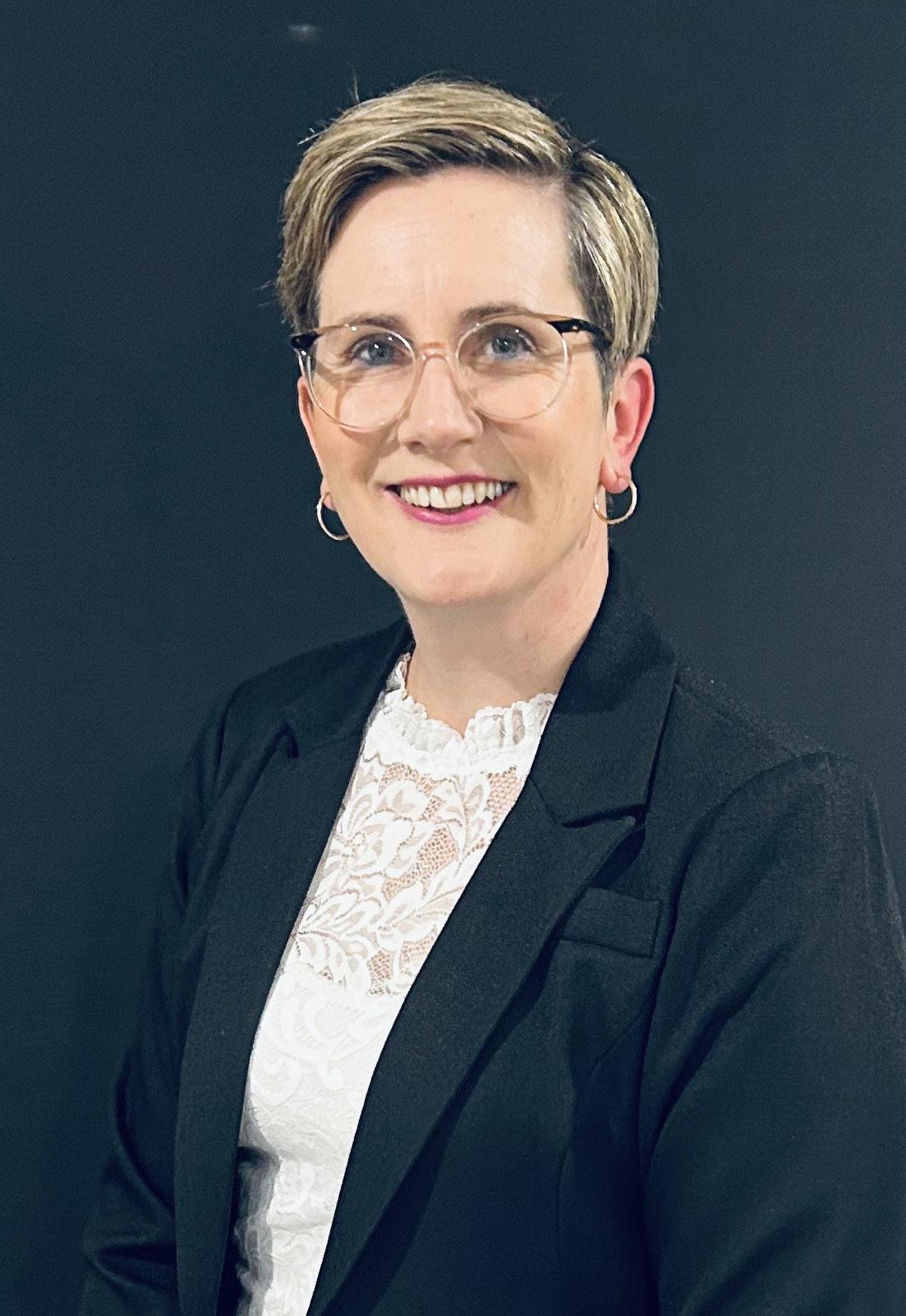
Kia ora koutou,
As winter approaches, general practice teams across our network are preparing for another period of increased demand, seasonal illness, and pressure across the wider health system. I know the work can feel especially stretched at this time, and I want to acknowledge the commitment and care you bring to your communities.
At Pegasus Health, our role is to support general practice in ways that are practical, connected, and responsive to what practices tell us they need. At this time of year, timely access, early intervention, prevention, and strong relationships become even more important. Our focus remains on backing sustainable, communitybased care and helping patients and whānau get the right support early.
This edition of Tōtara offers a snapshot of how this support is helping patients, whānau, and practices across Waitaha Canterbury. You will find examples focused on faster access to diagnostics, practical approaches to prevention and wellbeing, and early support for tamariki and whānau before they start school.
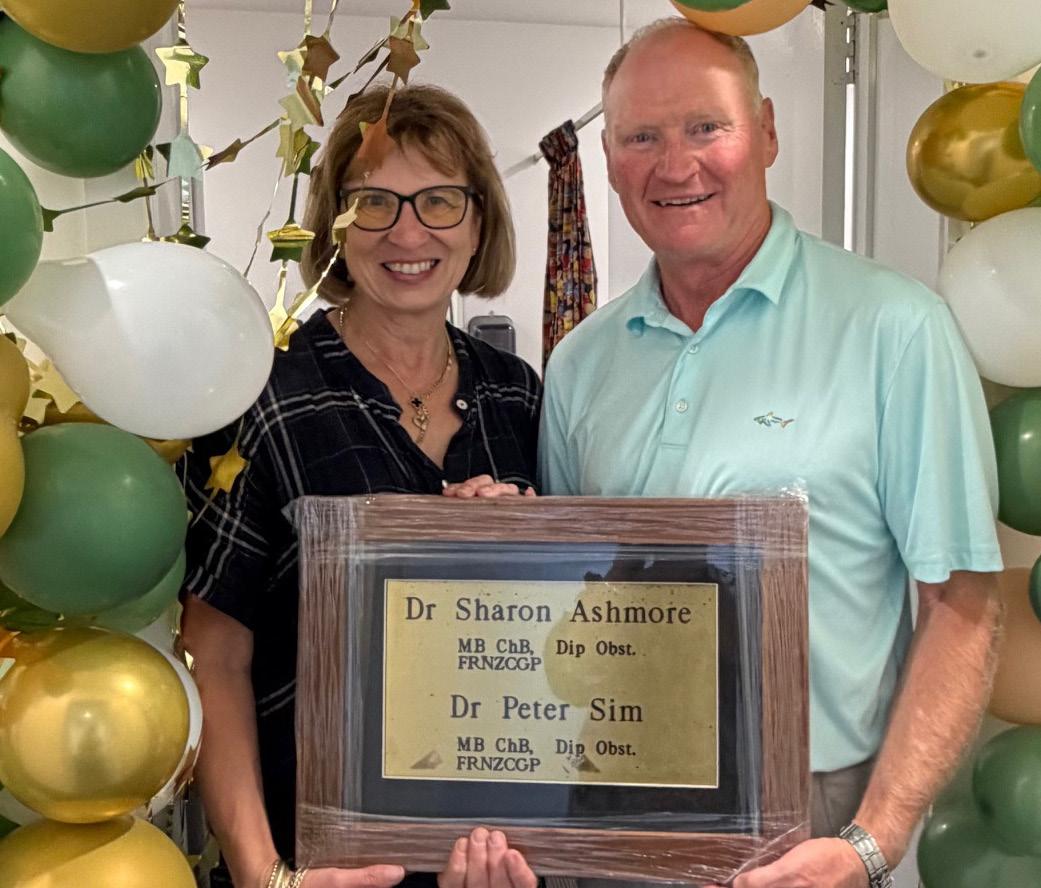
We recognise the long-term value of continuity in general practice. Sharon Ashmore and Peter Sim’s story is a reminder of the quiet impact built over decades through trusted relationships, and care carried across generations. This kind of local, clinically led ownership remains a priority across our network, and is central to our own practice ownership strategy.
Alongside this, the Primary Care Taskforce’s work shows the value of coming together across the sector to understand pressure, share learning, and develop practical tools to support sustainability, wellbeing, and access to care.
Together, these stories reflect the strength and breadth of primary care across Waitaha Canterbury. They remind us of the importance of partnership, prevention, continuity, and practical support in keeping people well and sustaining the teams who care for them.
Ngā mihi nui,
Kim Sinclair-Morris Manukura | CEO Pegasus Health (Charitable) Ltd.
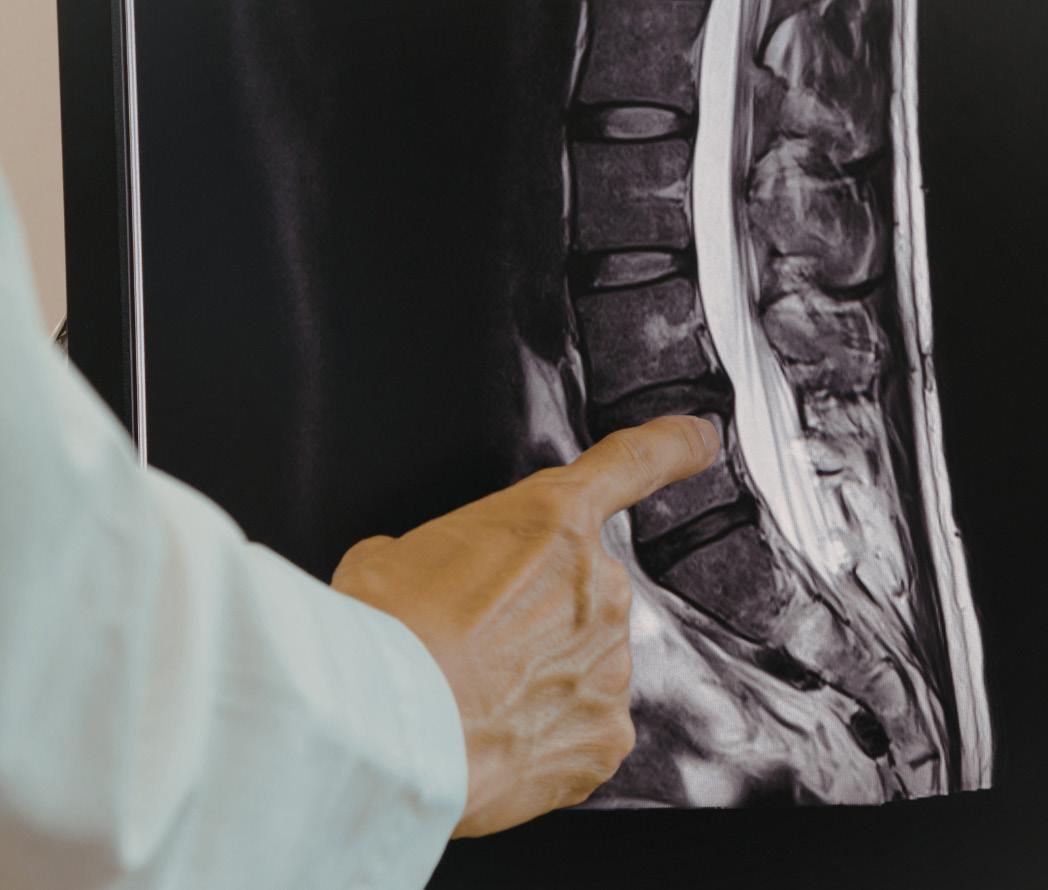
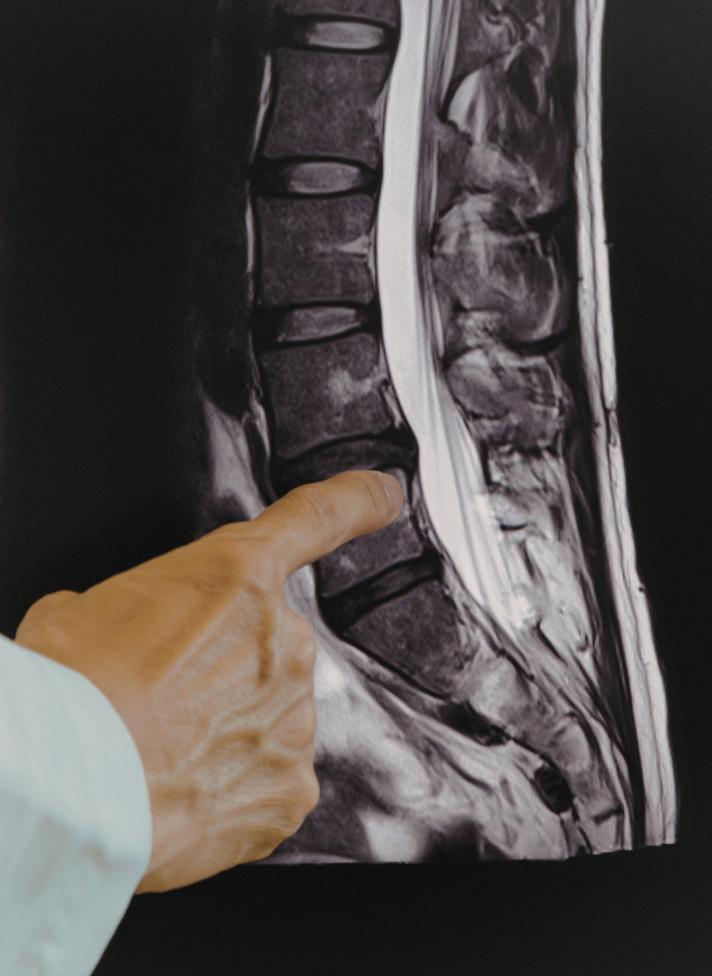
General Practitioners (GPs) and Nurse Practitioners (NPs) in Waitaha Canterbury can refer patients directly for ACC-funded MRI scans through the GP and NP Referral to MRI service, reducing wait times from months to days.
The initiative removes the need for a specialist appointment before an MRI can be approved for knee, lumbar, and cervical spine injuries. Previously, patients often waited weeks or months to confirm imaging was required. With direct referral, the average time from referral to a completed scan and report is around five working days.
“It makes a real difference for patients who are often waiting to understand what is wrong and what comes next,” Pegasus Health Primary Care Quality Manager, Sue Aitken, said. “Instead of waiting for a specialist appointment, trained GPs and NPs can make the referral directly. Patients get answers quickly and can start the right treatment or rehabilitation sooner.”
General Practitioner, Dr David Pilbrow, said the change has had a clear impact in practice.
“I really value this service because people used to sit around for months just waiting for an MRI of the knee. They were not working, and it was costing thousands,” he said. “But now you get the MRI result in about a week. You can start treatment faster, and it keeps patients flowing either back to work or into rehabilitation faster.”
Dr Pilbrow encourages other clinicians to complete training to refer into the service.
Clinicians complete a two-hour, handson training programme focused on assessing injuries and ensuring referrals meet ACC clinical criteria.
Clinicians interested in referring patients directly can contact Sue. aitken@pegasus.health to find out more or register for training.
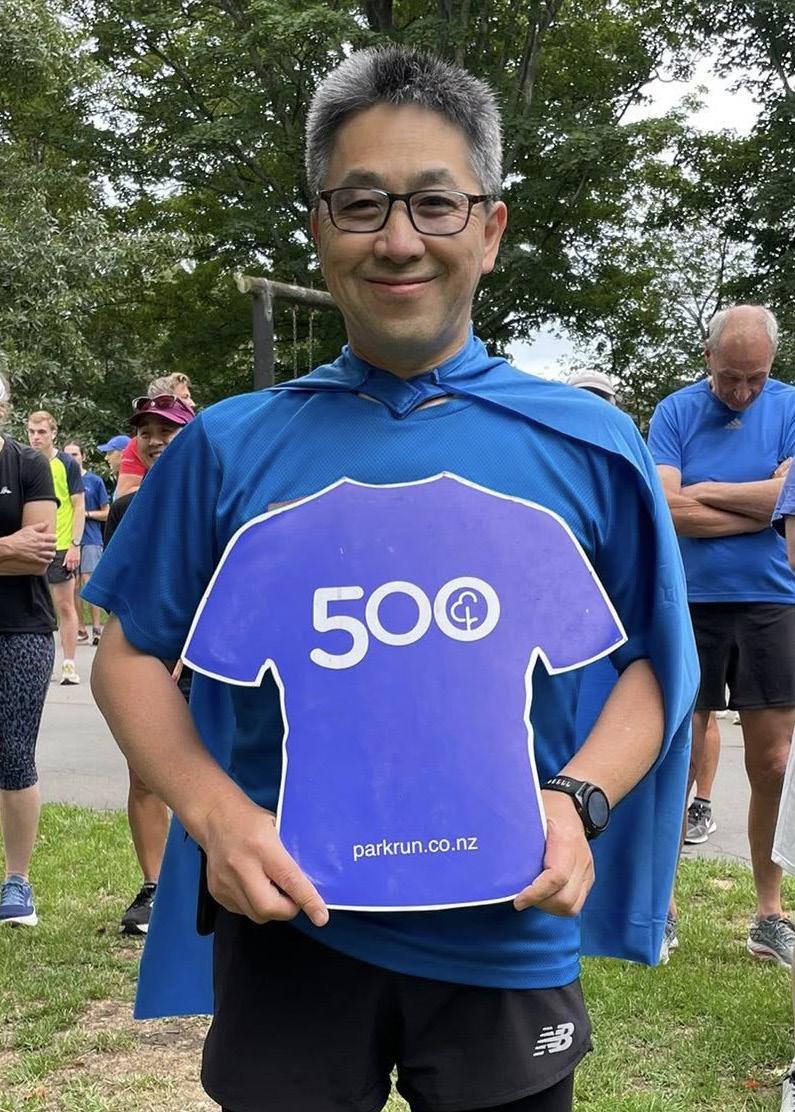
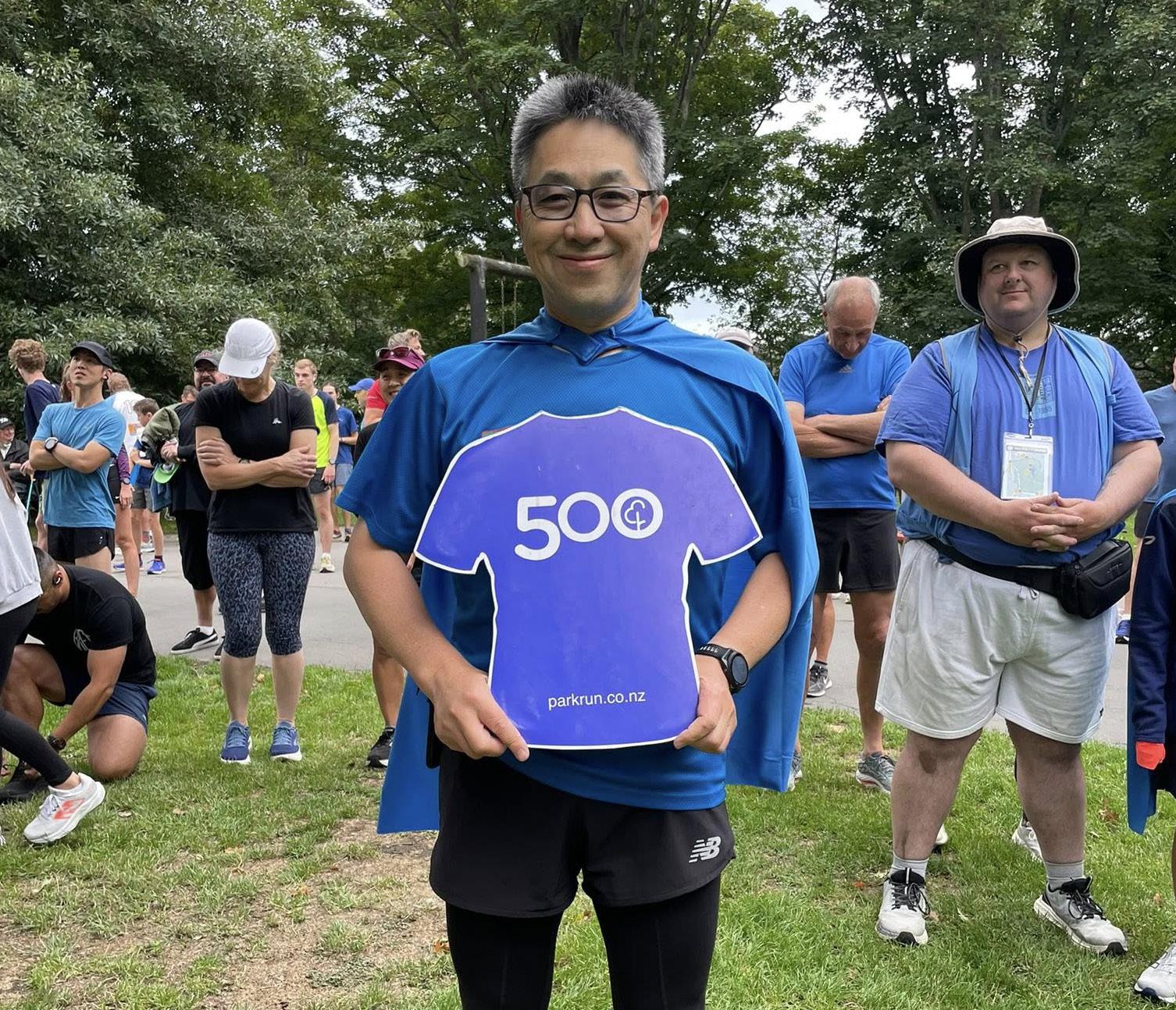
When General Practitioner (GP), Dr Colin Chin, ran his first Parkrun in October 2014, it was a practical way to fit exercise into his busy schedule. More than 11 years on, he has completed his 500th Parkrun and become a strong advocate for its benefits for patients and practice staff alike.
Parkrun is a free, weekly, 5km event held on Saturday mornings, where people can walk, jog, run, or volunteer. It operates in 22 countries, with eight locations across Ōtautahi Christchurch.
“There’s no membership fee, you just turn up,” Colin said. “It’s the perfect entry point to exercise. The hardest part is just doing the first one.”
Colin regularly recommends Parkrun to patients with high blood pressure, stress, or weight concerns as part of a Green Prescription, which he has set up in his PMS for easy referral.
“A patient of mine who was overweight started coming along. He’s lost 10 kilos and now runs faster than me,” he said.
The benefits go beyond physical activity, with the social aspect helping keep people engaged.
“It’s a community. We have people recovering from addiction, people with mental health challenges, and people who want to meet others. It’s not about being the fastest.”
Colin also recommends Parkrun for practice teams.
“As a busy GP, I found I was getting quite tired by the end of the week, but after doing Parkrun on a Saturday morning, I felt energised,” he said. “Some Saturdays, we have many of our practice staff joining in.”
A new Parkrun practices initiative, recently launched with the Royal New Zealand College of General Practitioners, makes it easier for practices to connect patients and staff with local events and access resources. Visit the Parkrun practice website for more information or register for the programme.

The B4 School Check, now broadly known as the 4-year-old, well child check, supports early identification of health and developmental needs in tamariki, well before they begin school, while also connecting whānau with the right support early.
Pegasus Health coordinates the B4 School Check Service across Waitaha Canterbury.
Pegasus Health B4 School Nurse Educator, Sharon Bennett, said the check is a conversation, rather than a clinical assessment in isolation.
“It really honours the parent as the one who knows their child the best,” she said.
A key part of the check is the balance between parent input and direct engagement with the child, helping nurses build a broader picture of development and wellbeing.
“The earlier the intervention, the more likely we are to get a better outcome,” Sharon said.
Where concerns are identified, the B4 School Check supports early connection to appropriate services,
including referrals to speech language therapy, behavioural support, dental services, and general practice for further assessment.
“Alongside identifying concerns, the check is an opportunity to provide reassurance and affirmation that things are going well, and that they are doing a great job,” Sharon said.
For Shannon, whose daughter Charlotte recently completed her B4 School Check, that reassurance was a key part of the experience.
“I left there thinking, okay, Charlotte’s on the right track. I don’t need to worry about anything,” she said.
She described the appointment as a helpful opportunity to talk through questions in a structured way. “You just show up and they guide you through it. They ask you things you wouldn’t usually think about day to day,” she said.
Around 180 nurses across Canterbury contribute to delivering 4-year-old checks, working alongside general practice and referral services to support tamariki and whānau ahead of school.
For more than three decades, patients arriving at a small Burnside clinic came to expect familiar faces, long-term relationships, and care that extended well beyond a single visit.
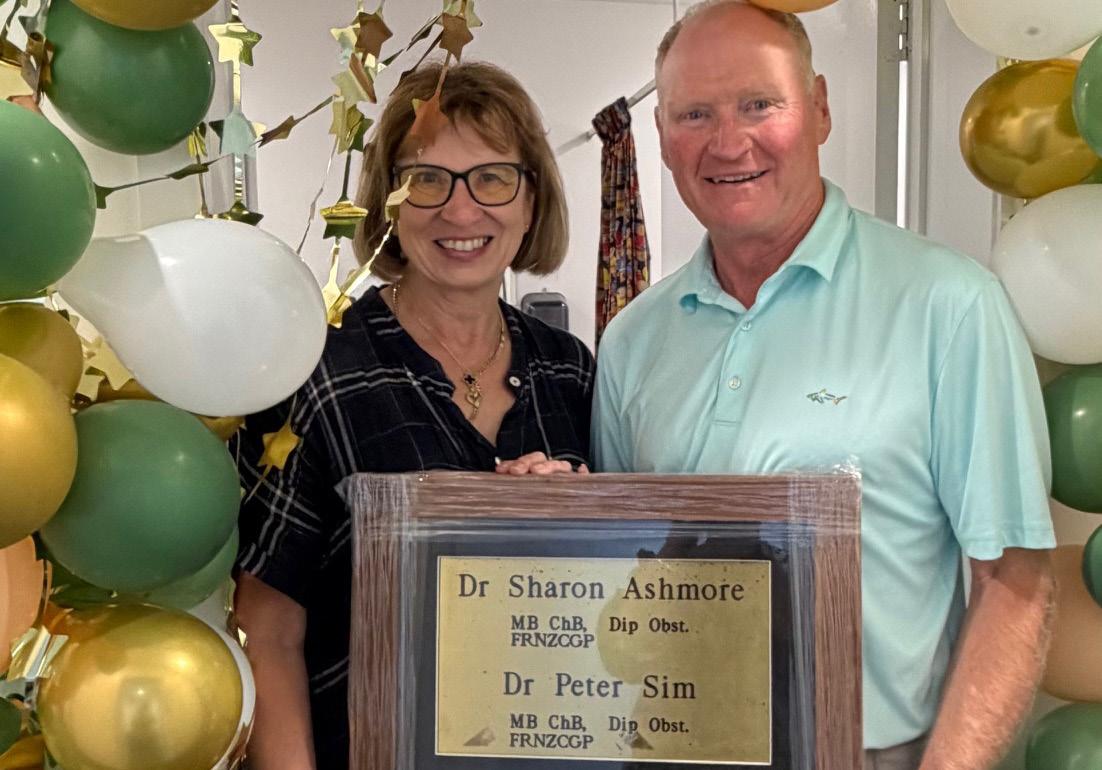
Now, after 34 years at Kendal Medical Centre, Sharon Ashmore and Peter Sim are retiring, marking the end of a career in general practice defined by continuity, commitment and deep community connection.
When Sharon and Peter took over Kendal Medical Centre in 1992, they had around 300 patients.
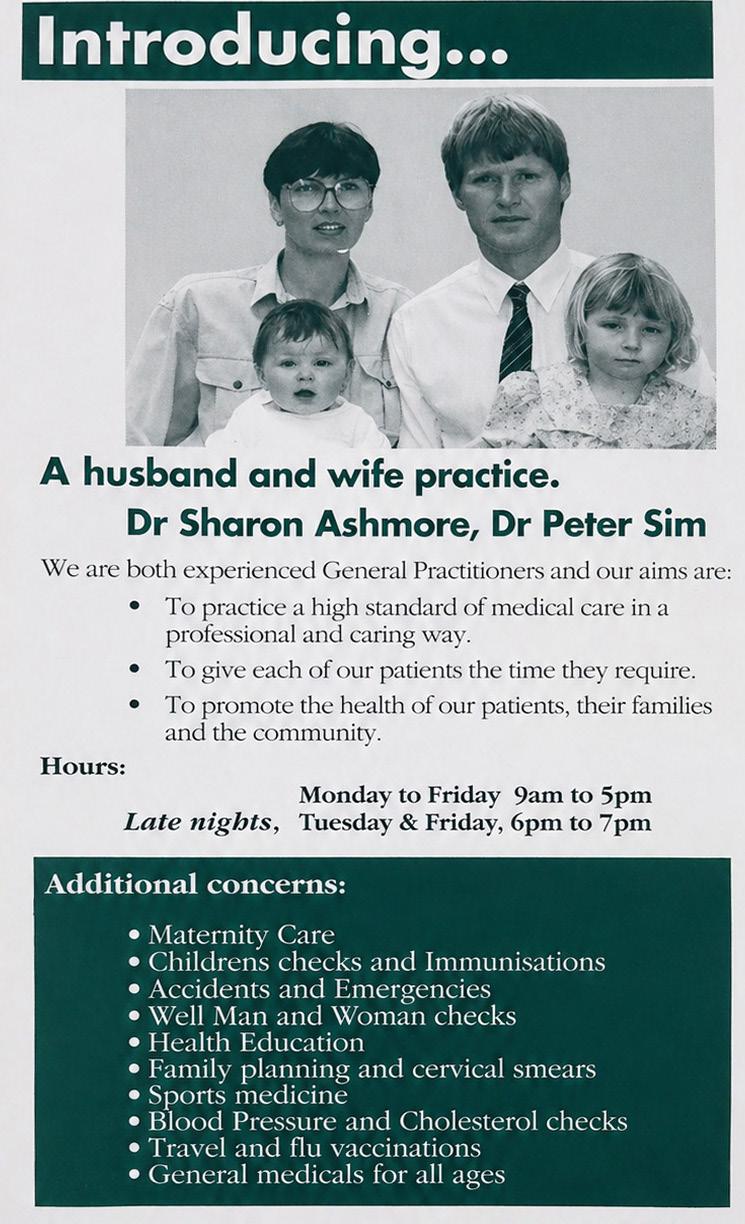
A brochure distrubuted in Burnside when the practice opened.
Over 34 years, that number grew to about 3,000, but the structure of the clinic stayed largely the same. A small team, long-serving staff, and a focus on knowing patients remained central to how they worked.
“Kendal Medical Centre has been a good example of how bigger is not always better,” Sharon said, noting that patients always knew who they were dealing with. “If they don’t see Peter, they see me and they are always greeted by the same familiar face at reception.”
Their work reflects a model of general practice built on continuity. Over time, Sharon and Peter cared for whole families across generations. They delivered babies, then treated those children as adults, and later saw their children in turn.
The relationships built over decades shaped not only clinical care, but also other decisions patients made in their lives.
“Patients tell you things they wouldn’t tell anyone else,” Sharon said. “It’s quite an honour and a privilege to be involved in their lives in that way.”
For Peter, the complexity of general practice is often underestimated.
“Hospital doctors sometimes think general practice is boring,” he said. “But all the interesting things they see, we often see first.”
The work demands breadth, but also persistence. Responsibility does not end when a patient leaves the room.
“We are the best advocates for our patients” Sharon said, “Good patient care relies on continuity, when you start something, it’s important to either follow it through or make sure it’s safely handed over.
In practice, that responsibility extends well beyond scheduled consultations.
Test results must be reviewed, referrals followed up on, care plans carried through and everything communicated to patients, often in hours not formally accounted for.
“You don’t need to know everything about everything,” Peter said. “But you do need to know how to find answers, to be a problem solver and make the system work for your patients.”
For both doctors, owning their practice was central to making that workload sustainable.
It allowed them to decide how care was delivered, what services to offer and where to invest their time.
“When you’re working in your own practice, you can make decisions about what’s actually going to improve patient care,” Sharon said.
In a health system increasingly shaped by corporate ownership, that autonomy is becoming less common. For Sharon and Peter, it was key to maintaining the kind of continuity they valued.
Ownership also changed how the work felt. The long days and extra effort were not just obligations, but part of building something they believed in, for a community they knew so well.
As Peter put it, “We had the best job in the world.”
When the Primary Care Taskforce (PCTF) convened in early 2023, general practice in Canterbury was under growing pressure. At the inaugural meeting, Project Manager Linda Wensley described the moment as an opportunity for the sector to respond together.
“An incredible and motivated group of primary care and community leaders have stepped up to address the pressures facing primary care and improve access to care for our community,” she said.
That collaborative approach would go on to shape the Taskforce’s work and deliver practical benefits for Canterbury practices.
One of the PCTF’s first steps was a capacity survey in June 2023, which drew responses from more than half of Waitaha practices. The results highlighted the pressures facing the sector. Many General Practitioners (GPs) and practice nurses said they planned to leave or retire from general practice within the next three to five years. Increasing administrative demands and inefficient referral pathways were also reducing the time available for proactive care.
For PCTF Chair, Dr Kim Burgess, the findings provided a clear starting point.
“The survey highlights urgent areas of focus that require collaborative efforts across all levels of our health system,” she said.
From there, the Taskforce focused on practical support for practices. A suite of resource kete was developed to
help teams trial new approaches and learn from each other.
Early work focused on clinical inbox management and integrating pharmacists into practice teams, supported by videos, webinars and peer-to-peer learning.
“Having a medical student manage the inbox was a game-changer,” Redcliffs Medical Centre GP Dr Felix Rueppell, said. “It saved us valuable time, reduced burnout, and enhanced both patient safety and continuity of care.”
The Taskforce also turned its attention to sustaining the workforce. Through interviews and focus groups, the PCTF explored both the challenges clinicians faced and what kept them committed to the profession. For many, the answer lay in the relationships at the heart of general practice. One GP described it as “the best job in the world,” reflecting the value of longstanding patient relationships and strong collegiality.
The research informed the Sustaining GP Wellbeing Toolkit, which offers practical actions, pathways to professional support and guidance for creating practice environments where clinicians can thrive.
The PCTF concluded at the end of March. Pegasus Health remains committed to the collaborative approach that defined the Taskforce and to supporting a sustainable, patient-centred future for primary care in Canterbury.
If you have feedback on this issue or would like to share a suggestion for a story in our next issue please contact communication@pegasus.health.nz.
Tōtara Pegasus Health Pānui is produced by the Communications Team at Pegasus Health. Content within Tōtara Pegasus Health Pānui has been included with the approval of content providers.
If you wish to reproduce or alter and transmit any of the information or images contained within, please contact communication@pegasus.health.nz