WATER WISE Easy, effective steps to reduce water usage in your yard P.3

WATER WISE Easy, effective steps to reduce water usage in your yard P.3
The week of April 24, 2026
TUNING OUT Strategies for avoiding the doom and gloom in global news P.8
ABOUT TOWN Find out what’s going on and where it’s happening P.11
Water restrictions arrive early in Peachland as drought continues
By Jeff McDonalD local JournalisM initiative reporter
Take a walk in a Peachland forest, or up in the hills and mountains above Peachland, and you won’t see much water in local creeks and streams.
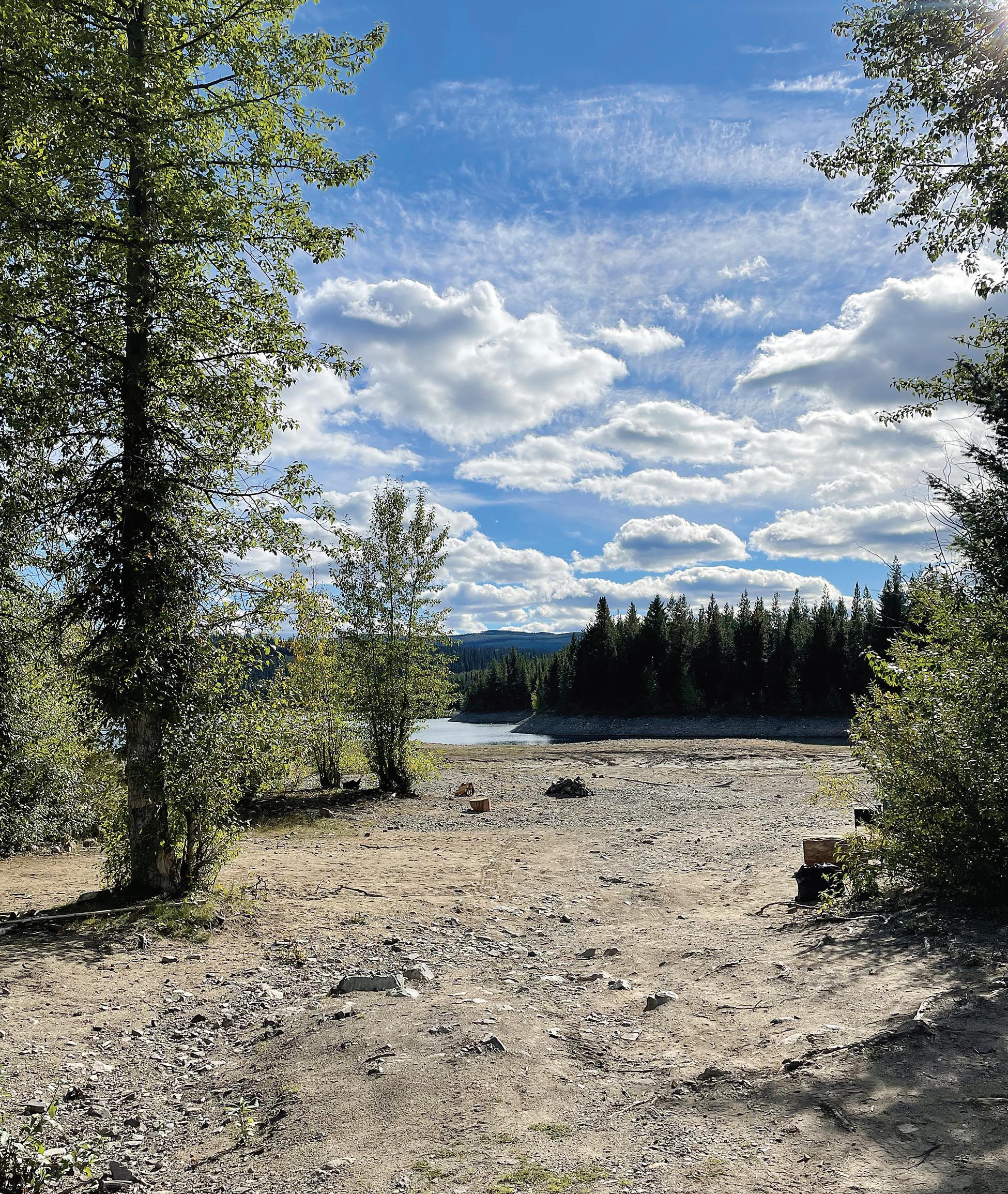
Peachland Lake, the town’s primary water source, is at historically low levels, and Stage 3 water use restrictions went into effect last week.
And according to Okanagan Basin Water Board (OBWB) water science specialist Sandra Schira, Peachland and the entire Okanagan has received less than average precipitation for years now, a drought situation that worsened this past winter with much less precipitation than normal and a very low snowpack that feeds local watersheds, lakes and streams.






“Peachland and the Okanagan as a whole has now been in drought for several years. Fall 2022 is when most people started counting it, so several years in a row,” said Schira, who does research and data analysis of Okanagan water and climate trends for the OBWB. “The state that we’re in now across the Okanagan, and I assume this also would apply to Peachland, is that the snowpack was very low at around 56 per cent of normal across the whole valley as of April 1. So it’s quite bad.”
The OBWB was formed in 1970 by the Okanagan’s three regional districts to provide leadership on water issues through the valley. Schira said there could be a slight increase in stream levels in the spring as the high alpine snowpack melts. However, that alone won’t ease drought conditions in Okanagan watersheds and won’t compensate for years of below-average rain and snowfall. She said a good winter snowpack is like money in the bank for the ecosystem, and a couple of wet weeks in May or June don’t balance the books.


It is often said that volunteers are the heart and wealth of our community.
Without them most of our nonprofit societies, clubs, organizations, charities, churches and social organizations would grind to a halt.
But, recognizing that fact does not necessarily translate to all those volunteers knowing how much their contributions are appreciated or the degree to which the organizations they work for are dependent on them for their survival.
And that is why National Volunteer Week is such an important event in our community calendar.
It serves to remind organizers that even if the celebration just involves sharing a cookie and coffee, volunteers receive a powerful thank you message -- at least that’s what Peachland Post is hoping, when our volunteers receive exactly such an invitation!
While not exactly at the Apollo 13 level of crisis, drivers wishing to enter or exit Trepanier from Hwy 97 have for the past several days been required to detour to the Huston Road intersection and reach their destination from there.
The safety considerations leading to the Trepanier intersection redesign and traffic light are replicated at the Huston intersection but to an even greater degree.
July 7, 1946, Edmonton, Alberta - April 9, 2026, Edmonton, Alberta
It is with deep sadness that the family of Bob (Robert Allen) Hall announces his peaceful passing in Edmonton on April 9, 2026, at the age of 79, with his wife and children by his side.
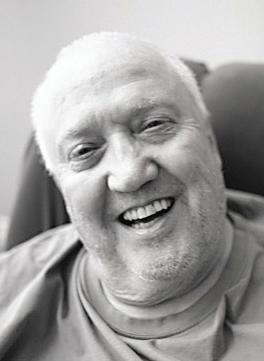
Bob was born and raised in Edmonton, the son of Kelly and Addie Hall, and grew up alongside his brother John. As a young man Bob worked alongside his father on ships and barges as far as the Arctic Circle. His passion for motorcycles and cars grew from youthful fun to professional career, taking him north to Grande Prairie. It was there that he reconnected with Doreen Henley, a familiar face from the Edmonton neighbourhood they had both grown up in. They married and established roots in Sexsmith, AB, welcoming son Andrew and daughter Jennifer.
Bob and family established Hall’s Trophy & Gift (later Emporium), a beloved community fixture that served the town for over two decades. Bob took pride in the community, serving as a town councillor, a highly respected board member for the Community Futures small-business support service and a familiar face at local events such as Chautauqua Days.
In retirement, Bob and Doreen moved to Peachland, BC, to be near Bob’s brother John and to enjoy their golden years. He joined the Jurassic Riders, fellow retired motorcycle enthusiasts of the Okanagan area. As Bob’s mobility declined he added a sidecar to keep him on the road a little longer, and cherished family dog Maggie rode along beside him. Bob and Doreen soon returned to their childhood city of Edmonton to bookend their years.
Bob’s love of classic TV shows, movies and music stayed with him his whole life, a tradition passed to his children. Bob could always be found quoting favourite rock-androll songs with a smile on his face. Whether it was Bill Haley’s “See You Later, Alligator”, Roger Miller’s “King Of The Road” or Arlo Guthrie’s “ Motorcycle Song”, it always came with a bit of cheery mischief from Bob. This love of music remained a source of joy and comfort til the end.
Bob is survived by his beloved wife Doreen; his son Andrew and daughter Jennifer; and his brother John. He was predeceased by his parents, Kelly and Addie Hall.
A memorial service will be held at a later date.
That is because there is only a single lane exit to the highway from Huston and southbound traffic must line up behind any northbound traffic stopped while waiting to brave a left turn dash, despite what often feels like an endless stream of two-way traffic.
It’s been frustrating for drivers while the detour has been in effect, but thankfully only a minor irritant and one well worth enduring, given the greater good -- a long awaited traffic light at Trepanier.
Premier David Eby and the First Nations Leadership Council have released the following statement regarding the Declaration on the Rights of Indigenous People’s Act (DRIPA):
“The Government of B.C. will not be introducing legislation to suspend or amend DRIPA or UN Declaration-related provisions in the Interpretation Act, in the spring legislative session.
“The government and First Nations Leadership Council are committed to working together with all First Nations leaders on a path forward to discuss and consider the government’s stated legal concerns, while upholding the title and rights and human rights of First Nations.
“Together, we commit to genuine collaboration to find solutions as soon as possible, and before the fall legislative session.”
Now that the Peachland Climate Action Plan draft has been released for public consultation, Peachland Post will do what it can to share highlights and help readers to become familiar with its contents. That we will do as a feature story in our next edition. We will also report on the June 9 Committee of the Whole meeting when the final report will be presented to council.
Post staff …is delivered free of charge to every home, every business, every week.
With Peachland already on Stage 3 water restrictions, conserving water is more important than ever. There are many easy, effective steps that can reduce water usage in your yard.
A very simple way to reduce watering in the garden is by selecting the proper plants. Native species are a good option because these are plants that already thrive in our environment, and eventually many will not require irrigation at all. Things like yarrow (Achillea millefolium), showy asters (Eurybia conspicua), and sticky geranium (Geranium viscosissimum) are all great choices for Okanagan natives.
Luckily new cultivars being introduced have low water requirements as a selling feature. There is an extensive selection of ornamental and showy plants with great drought tolerance once established. I was very happy to see Red Hot Poker (Kniphofia) recently planted on the south end of Beach Ave. It is a wonderful choice that proves you don’t have to sacrifice bright, attractive blooms for drought tolerance.
Choose plants with succulent leaves, such as Sedums, that store water in their leaves between waterings. Plants with taproots, one large main root, such as Russian sage (Perosvkia atriplicifolia) can reach far to search for water. Silvery plants like Artemesia and Catmint (Nepeta) have tiny hairs that prevent major moisture loss by regulating the temperature of the leaves. Things like cedars could be replaced with a more drought tolerant choice such as upright junipers or Privet (Ligustrum vulgare) Mulch is key to water retention in any type of garden, while also preventing soil erosion and helping with weed suppression. It doesn’t have to be expensive either. You can use leaves or grass clippings from each mow. There are other op-
tions such as bark mulch or wood chips, however these are not great Firesmart choices.
Mulching with sheep’s wool is beneficial for the garden in many ways. It holds a significant amount of water, insulates the soil, and also deters slugs. When it breaks down it adds nitrogen to the soil. Garden beds should have a depth of 2-4 inches of mulch for effective moisture retention. Be sure not to make a ‘mulch volcano’ or place too high up plant stems.
Lawns have their place in landscapes, and there are ways to maintain the green while not wasting water. You can plant drought tolerant types of grass, such as fescues and Kentucky Bluegrass that are suited to our dry, hot climate. The Turfgrass Water Conservation Alliance has certified a drought tolerant sod that requires 30-50% less water than typical turf. Do heavy, deep watering instead of regular short waterings. This helps establish deep roots, which allow them to search further for water.
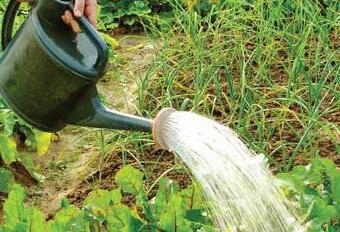
Morning watering plays an important role in moisture reservation. Early morning waterings ensure that water is fully taken up by the plants roots, instead of evaporating during the hot day. Drip irrigation for garden beds is more efficient than hand watering, and underground irrigation is more effective than moving around sprinklers for the lawn. Rain barrels capture runoff from your roof, and are
a worthy investment to supplement other irrigation.
Reducing water is a large responsibility, but long term planning can make this an accessible task. There are quick and easy solutions, as well as more extensive, costly options. Starting small and main-
taining consistency will provide a more resilient landscape and help preserve our water.••
Megan Gooder lives in Peachland and is a Production Horticulturist with a background in Permaculture and Landscape Design.

EVERYONE WELCOME!
In February, Coca-Cola and Coke Canada Bottling recognized Peachland as Canada’s 2026 Kindest Community.
In celebration of this honour, the Central Okanagan Foundation will formally announce the local charitable organizations receiving funding from this generous donation.
Come celebrate th us
WEDNESDAY, MAY 6 TH • 11 AM At the Peachland Wellness Centre 4475 4th St., Peachland



SATURDAY APRIL 25 TH • 10 AM World Tai Chi Day to be celebrated at Peachland Heritage Park Come and participate in this global healing event and have some fun! ~ PLEASE ARRIVE 15 MINUTES EARLY ~
THURSDAY, MAY 7 TH • 1:00-2:30 PM
Hospice Palliative Care and our Local Landscape of Support

With Cheryl Sewell

COMMUNITY SERVICES COORDINATOR CENTRAL OKANAGAN HOSPICE ASSOCIATION (COHA) Co-hosted by Peachland Wellness Centre
EVERYONE WELCOME! FREE TO ATTEND COME CELEBRATE! Register today at www.hospicecoha.org
For more information please contact the Peachland Wellness Centre at (250) 767-0141 www.peachlandwellnesscentre.ca
I am retired.
For “45 years” I have worked at Peachland Pharmacy.
Thank you! Wes, Geoff, Garnet, Curtis, Sharon and all the other pharmacists I have worked with over the years.
Thank you! To my coworkers, past and present, the team effort over the years has been a great benefit to helping our customers.
Thank you! Customers! Your kindness and support was really appreciated over the years.
The years I have worked at Peachland Pharmacy had many changes with staff and renovations. Change is good. It allows a different perspective, which allows us to change with a positive outlook.
A huge thank you! Goes out to my family!
I leave Peachland Pharmacy with a sense of proudness and sadness.
But I am going forward with my husband on a new adventure, to enjoy life to the fullest.
Thank you again to all of my family, friends, coworkers and customers who gave me a wonderful last day!
Bernice
(Mock) Collin
by RICHARD SMITH



What is the best thing about living in Switzerland? Well, the flag is a big plus.
Did you hear about the guy who got hit in the head with a can of soda? He was lucky it was a soft drink.
To the mathematician who thought of the idea of zero. Thanks for nothing!
We encourage readers to submit letters to the editor on appropriate subjects. We reserve the right to edit letters for clarity, brevity and legality. Keep your submissions under 250 words and they are more likely to be published. Send your submissions to editor@peachlandpost.net

For the past two years Councillor Rick Ingram has been leading a team of volunteers tasked with researching, analyzing and recommending an action plan that the District of Peachland, and Peachland residents can implement to prepare for the impacts of climate change and reduce our contribution to its development.
A draft version of the report, The Peachland Climate Action Plan, was released today and is now on the District’s website.
Over the next two weeks, ending May 8, Councillor Ingram and his committee are seeking public commentary via email on the draft plan. A final version of the plan will be published on June 2, one week prior to a planned Committee of the Whole presenta-
POLICY MATTERS
Keith Fielding
tion to Council at 1 p.m. on June 9.
Unlike most major project reports typically researched and written by consultants, The Peachland Climate Action Plan has been researched and written entirely by citizen volunteers. Team members
Shelly Elverun, Gail Karish, Sheila Kerr, Mark Meisner, Craig Thompson and Alex Morrison have
diverse backgrounds in relevant areas of science, environment, business, and regulation which they brought together to develop the plan. Those backgrounds helped ensure the plan would be based on sound scientific knowledge, as required by the District.
As our main feature story today reminds us, we are experiencing record low snow pack levels, severe drought risks, and early restrictions on water use throughout the Okanagan.
When combined with the increasingly prevalent risk of seasonal wildfires, it could not be more timely for Peachland to be developing plans to deal with the pressing realities brought to our doorstep by climate change.
Now that the draft plan has
been released for public consultation, Peachland Post will do what it can to share highlights and help readers to become familiar with its contents. That we will do as a feature story in our next edition. We will also report on the June 9 Committee of the Whole meeting when the final report will be presented to council. Meanwhile we encourage readers with the means to do so, to visit the District website, peachland.ca, read the report and leave their feedback.
Keith Fielding is President of the Peachland Community Newspaper Society and editor of Peachland Post. He is also a former Peachland mayor and councillor.

VIA CANADIAN
By eric Hall


For years, passengers on the VIA Canadian cross-Canada train told VIA staff that they wanted to travel through the Rocky Mountains and out to the coast during daylight. But such a service was not easy to organise. VIA did not own the railway tracks and was losing a lot of money on all of its routes.

However in 1988 they organised and ran the first two-day daylight train from Vancouver to Banff or Jasper with an overnight stop in Kamloops. Despite many challenges, it was an immediate success. But in 1989 the Federal Government downsized VIA rail and decided to sell off the Rocky Mountaineer. It was the only VIA train service that was making any money.
The VIA managers responsible for starting the Rocky Mountaineer looked around to get financial support so that they could take control when the service was privatized. One of the people that they spoke to was Peter Armstrong, who had been running the Gray Line tour-bus operation in Vancouver. Peter had travelled on the new VIA Rocky Mountaineer and saw the huge potential for growth. The VIA managers were not impressed when they subsequently found out that Peter planned to put in his
own offer to take over the operation. Peter Armstrong put together an effective team with railway experience and was able to put in a high and successful bid to take over the operation of the Rocky Mountaineer. The first train under the new owners left the Vancouver station on May 27th 1990.
After winning the rights to run the Rocky Mountaineer, Peter Armstrong had very little time to get organised. Initially they had no office and no employees. But having years in the travel business, Peter knew the right people to bring onboard.
With new people running the service, there were many logistical problems but the focus was on customer satisfaction from day one. The rail cars were old, the food served wasn’t great and the trains were often delayed on both the CP (to Banff) and CN (to Jasper) routes. But the biggest problem was that the passenger bookings for the following year were not as expected. Part of the purchase agreement with VIA rail was that they would hand over 15,000 passenger bookings but they only had 7,000.
The new company had to work fast to get the passenger count that they needed. One issue was that tour companies organise their travel more than a year ahead. Once again, it was Peter Armstrong who knew the travel business and hired the right people to keep things going. The company lost money for the first three years and new investment capital was needed. Some money came from the Federal Government after a court case determined that VIA had not sold the 1990 season as it had promsed. Many others shared Peter’s vision of what this train could become and by the fourth year, the passenger counts had increased to make the service profitable.
complex situation,” she said.
“If you think about it as like a budget, that’s one of our main income sources each year, and if it’s lower than normal, we’re going to need a lot of rain to offset that, and we’ve been in a deficit for a few years, if you will,” said Schira. “So to continue the financial analogy, it takes more than just one good paycheck just to get you back on track.”
Schira said the only way the drought will end is a sustained period of rain, although too much rain at once will simply flow into the lake. “The ground has to be able to absorb and capture the rain, so it’ll take a decent amount,” she said. To use another analogy, said Schira, think of a parched watershed like a sponge that has been slowly squeezed dry and needs to slowly absorb water over a sustained period.
Another complication for managing drought conditions and water use, said Schira, is that they vary widely across the Okanagan Valley because cities and towns get water from many different sources. “Some places get it from the lake, some places directly from creeks, some places from groundwater, so how all those different water sources are impacted is going to be different and it’s a really
The District of Peachland announced Stage 3 water restrictions last week, which are “…necessary due to ongoing drought conditions and lower-than-optimal levels of upland lakes that feed Peachland’s reservoir,” according to the announcement. Peachland’s primary water source is Peachland Lake, some 28 kilometres above the town. District director of engineering Jason Sandberg told Peachland council at its April 14 meeting that Peachland Lake’s level was rising due to spring runoff, but was still 18 feet below normal for that time of year and not predicted to reach normal levels. “We are forecast to continue below historic refill norms this year with peak lake levels tracking below longterm averages,” Sandberg said.
The Peachland Watershed Protection Alliance works to promote watershed health and advocate to reduce industrial activities in the watershed. The alliance’s board chair Alex Morrison said she understands that the lake has fallen to extremely low levels as a result of the ongoing drought. Not only do Peachlanders need to reduce water consumption, she said, but they need to understand the connection between the health of the watershed and Peachland’s water supply, even in times of




drought like the one we’re experiencing now. “A healthy watershed will still provide more water than an unhealthy watershed,” she said.
Decades of clearcutting and misguided reforestation efforts in the watershed have damaged its capacity to retain water, said Morrison. “Of natural forests left, which is pretty much nothing, it’s been either burned or clearcut over the years, and there’s not a lot left. The logging companies are still compelled to replant the forest, but they replant it with the most merchantable species of trees so that they can make more money in the future. So it’s really not forest, it’s tree farms,” she said.
The worst-case scenario for Peachland Lake, said Morrison, is that ongoing drought conditions will cause water in the lake to
fall to a level that can’t supply Peachland Creek, and therefore can’t supply the town. “If we don’t have snow for the next two years and we continue on a drought, the water level can get below the level of where the water intake is,” she said.
The District of Peachland’s imposition of Stage 3 rules restricting water use to once per week are good if Peachlanders follow them, but Morrison doesn’t think they’re followed closely enough, especially with lawn and garden watering. “I find the restrictions kind of interesting because they tell you when you should water, but they don’t tell you how much, right? So you can keep your sprinkler on all day on that one day and you’re still within the limits of the water restrictions,” she said.••




Ameme on social media stuck in my head. It was a video clip of three friends, standing wide eyed and motionless, silently staring at each other as if uncertain what to do next. Below, the caption read “My friends and I are trying to decide whether we should be preparing for WW3, AI takeover, economic collapse or assume it will of course be all three at once.”
I had a good laugh and then sat thinking about just how bizarre the world has gotten that there is even the sliver of truth needed to make that meme funny.
Between mass shootings, looming threats in the Middle East, constant warnings regarding Artificial Intelligence, talk of takeover of sovereign countries, and now… cartoon Lego videos
Triggiano
Effective April 26, 2026
Regular spring/summer schedule adjustments to several routes throughout the transit system.
✔ Plan your next trip or track your bus in real-time using the Umo App, Google Maps or your favourite trip planning app.
from Iran, it’s no surprise that many have grown increasingly weary of global news and are wondering, Has the world gone mad?
In fact, I read on “Harvard Health” that a continuous stream of threatening news, as well as what’s being commonly called “doomscrolling” on social media, can actually alter our brain’s stress response. Apparently, the more threats we hear about, the greater the tendency towards hyper vigilance resulting in an increased urge to scan for danger -- because our brains are wired for survival. So what can we do about it?
Of course there are the options of: stop scrolling and turn off the news. Leaving me the thought, But… I don’t want to be uninformed. And so my goal is to attempt to strike some kind of healthy balance. Here’s the plan: (Maybe you would like to join me!)
• Limit how many global news related accounts I follow online to two that are reputable and reliable, stick to facts and don’t sensationalize.
• Limit how many times I scroll social media to twice a day -- no longer than 15 minutes each session.
• Mindfully remind myself to focus on what is actually happening now. So much that brings anxiety is worry about what might happen rather than what is actually happening. We forget that what might happen may never actually happen.
• Make a conscious choice to do more that brings me joy and be fully present while I do so.
To that end, I asked online what brings you joy and got some great answers: several mentioned their fur babies. I agree! Nothing grounds us into the present moment better than our pups and cats.
Others posted photographs of noticing stunning views outside their windows and spending time in nature.
Taking a walk, yoga, pickle ball, and cycling were terrific suggestions. Bird watching, spending time with loved ones, and contributing to a positive cause in our community were other stellar ideas.
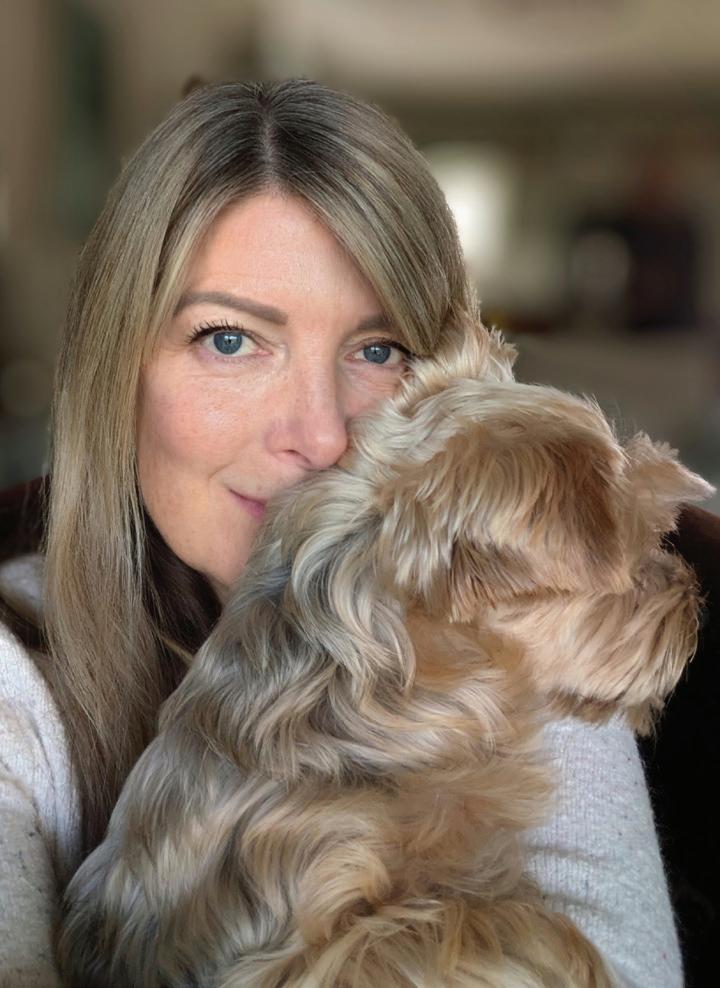
Early this morning it was as simple as noticing the way the light was miraculously hitting the trees outside my window, watching in awe a ballet of birds moving synchronously through the sky, and paying close attention to the taste of the dark chocolate I dipped in my coffee whilst sitting in a favourite chair by the window with my pup on my lap. So tell me, what brings you joy?
Teresa Harris Triggiano is a founder of a restorative justice program. She was a columnist in the Vancouver Sun and appeared as a weekly expert on Global’s BC Noon News for fourteen years. Email: theheartofpeachland@gmail.com
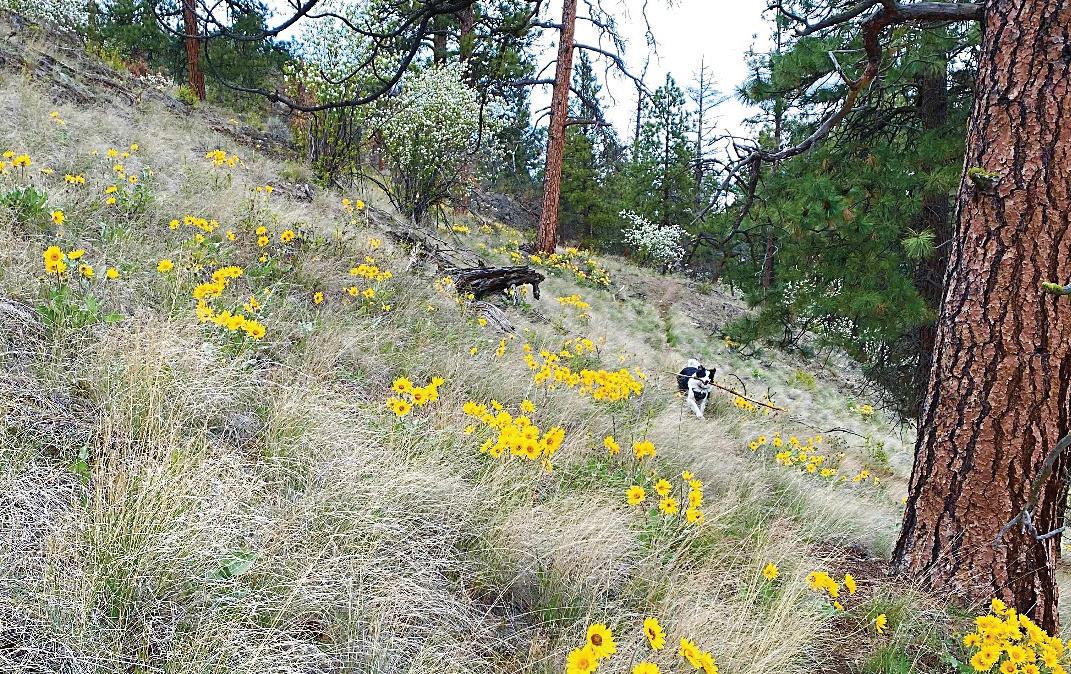
Up in the hills and along the trails, many of the early ephemerals have bloomed and disappeared, like the waxy buttercup and Spring mountain beauty. The tiny Blue Mary and Pink Twink remain. Saskatoon bushes and the Arrowleaf blossomroot are exuberant with many of their petals now strewn about in the wonderful spring winds. Desert parsley and delphiniums are blooming.
Yarrow is spreading its reach, and Mariposa lily leaves grow taller each day. The long bluegreen leaves are bent in the wind, but they are actively gathering energy for the flamboyant flowers that will bloom later in the heat. The Bitterroot leaves continue to plump up. The Woodland star with its five petals dot the landscape. Each petal has three points, with the central one longer than the others. Like a star.
I repeatedly walk the same hillsides and dale, making observations and comparisons over time. The bunch grass grows in bunches. Hence the name. They limit how close together each bunch grows. By summer’s end the grass is brown, but each spring new stems shoot up in the same spot. It helps each bunch to gather their own quota of water when it rains.
The Saskatoon bushes are similar. There isn’t a thicket of Saskatoons like there is for birch and aspens. Each bush can grow tall and wide, but they are spaced across the hillsides. So it is with the Arrowleaf blossomroot. I must say that this year the number of blooms per plant is huge. Where I walk there are some with upwards of 100 blooms.
Lichens don’t care about spacing. They often grow cheek by jowl, different species vying for space on rocks and tree trunks, black, orange and blue green
growing next to each other.
Some grasses, like the gregarious Bromes, are also like that, happily living together, their purple seed heads rippling in the summer wind.
There is such variety among the things that grow. It’s a reminder to me that everybody has their own way of conducting their life, making their living, being whatever feels right for them. There isn’t the same set of rules for everybody as to how to live their life, what decisions to make, how to choose the course for their life.
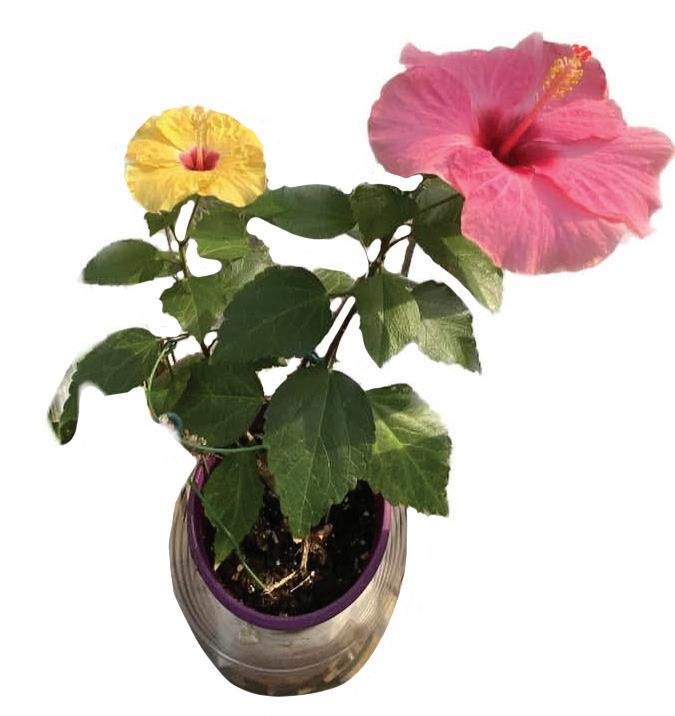
I continue to marvel at the succession of changes that each new season brings. What I see in the woods influences how I conduct my life. People develop relationships with things of nature. My friends, Wayne and Mary Power, have a cheeky plant. For years it bloomed dark pinkish. Then one winter it endured a cold spell in their solarium, and with a nod to show how environment changes us, it produced bright yellow blossoms on the same plant. (Genetics and soil pH can also cause this.) It was a wonderful surprise for them. More revelations from nature. Happy observing.
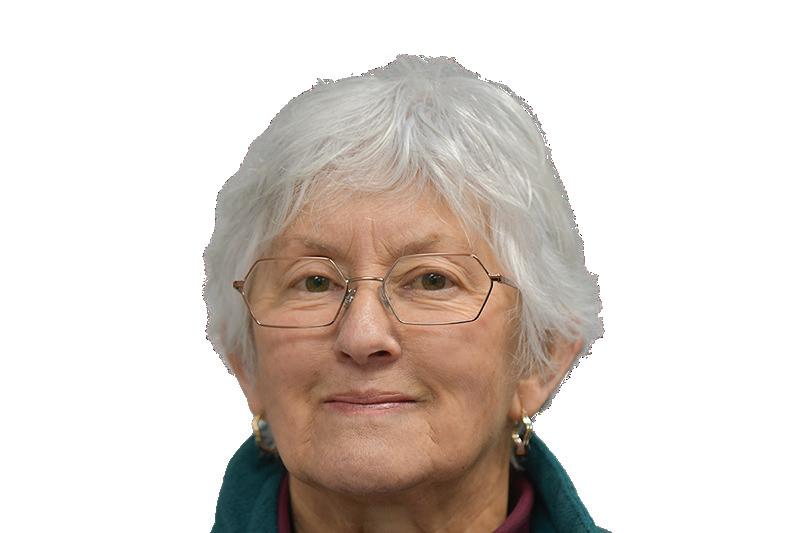
Judy Wyper has been hiking the hills around Peachland for 23 years and is an avid reader and observer of nature.


This road, running up the hill off Trepanier Bench Road, is named after the Coldham family who were among the earliest settlers in upper Trepanier. Theirs was an important presence in Peachland for over a century but their story is a sad one. The entire family, spread over three generations, consisted of only seven individuals, all now deceased.
Three siblings, William, Thomas (Tom) and Mary came to Peachland from England, William arriving first in 1904. In 1912, he purchased land off Trepanier Road near the intersection with Maxwell Road.
The brothers ran cattle and logged. Tom was also the long-time caretaker of the Legion.
Mary, a music teacher, served as the organist at the Anglican Church. William married Mae Elisabeth Walkden and together they had one son, Tony, who served in World War II.
Neither Thomas nor Mary ever married. Tony married Jean Marsh who became highly active in the affairs of Peachland. Together they had just one son, John, who, tragically, was killed in a 1977 road accident on Highway 33 while in his mid-twenties.
The Coldham presence in Peachland came to an end with the death of Tony in 2007 and then of Jean in 2009.
Extracted from The Road Names of Peachland: The Origins of Their Names 2nd Edition With permission kindly granted by Peachland author, Don Wigfield
Fill the grid so that every column, every row & every 3x3 box contains the numbers 1 to 9.
Keyword:
(4)
(7)
Small circular bands (5)
Blends; mixtures (12)
Composite fungus and alga (6) Done in stages (6) Beginning (12)
Impertinence (5) Perennial
(8)
(7)
(4)
(8)
ITAPCJLQOJYEUSI
VSHTEOLTEPLRXTT
ILIAEVUUREDPVRI
TANPSRFOBPWSEES
SUDDGTFRNIIRJEO

SRSIIASRNHKGFAD
IJMOIYMOPKTPPRP
EQNSEIBTBSUEOTJ
GDASOTCEPSERRYZ
(6)
(5)
Keyword:

In Thailand, it is illegal to step on
In Denmark, you must check under your car for children before driving o
In Scotland, it is illegal to be drunk in charge of a cow.
In Switzerland, it is illegal to ush the toilet after 10 p.m. in an apartment building.
In Greece, wearing high heels at ancient historical sites is illegal.
In some parts of the United States, it was once illegal to carry an ice cream cone in your back pocket.
APRIL 25-MAY 1, 2026
We invite you to post your group’s meeting times. Registration may be required. Please contact the organization for more details.
SATURDAY
50 PLUS CENTRE 250-767-9133
Carpet Bowling 9:30 AM-noon
Pipe Band 12-4 PM
PEACHLAND ART GALLERY
Hours Wed. to Sun. 10 AM-4 PM
Exhibits Beautiful Together and Echoes in Place
OUR SPACE
Register for workshops:
Scrappy Birds Stained Glass 10 AM-2 PM
PEACHLAND LEGION 250-767-9404
Tues. to Sun. opens at noon
Kitchen Opens Tuesday to Sunday at noon
Smash Burgers Meat Draw 50/50 3 PM
PEACHLAND LIBRARY
Master Gardener Container Gardening 1 PM Adults please register
PEACHLAND MUSEUM & VISITOR CENTRE 250-767-3441
Open Daily 10 AM-6 PM Train exhibit is operating
SUNDAY
50+ ACTIVITY CENTRE
Pipe Band 10 AM-12 PM
PEACHLAND ART GALLERY
Amateur photographer?
Send us some of your best JPEG photos from the Peachland area and we will publish the best of them in the Peachland Post. Mark your submissions
Picture Page and submit them to: editor@peachlandpost.org
Events listings are free to non-profit and community groups. Submit by Friday, 3 PM for publication the following Friday at info@peachlandpost.org
Wed.-Sun. 10 AM-4 PM
Beautiful Together and Echoes in Place
PEACHLAND COMMUNITY CENTRE
Pickleball 3.0-3.5 9-11 AM
Pilates Fusion 11 AM-noon
Pickleball 2.0-2.5 11:15 AM-1:15 PM
Bird Bath 1-3 PM
Pickleball 3.75-4.0 1:30-3:30 PM
PEACHLAND LEGION
Steak Sandwich 3-6 PM
MONDAY
50 PLUS CENTRE 250-767-9133
50+ Fitness 8-9 AM
We Art Here 12 PM
Bridge 1 PM
Tae Kwon Do 5:30-7:30 PM
PEACHLAND COMMUNITY CENTRE
Indoor Walking 8-9 AM
Blood Clinic 12-6:45 PM
Zumba 5:30-6:30 PM
Fitness Blast 6:15-7 PM
PEACHLAND WELLNESS CENTRE
Adult Day Service 9 AM
Ladies Social 1 PM
TUESDAY
50 PLUS CENTRE
Yoga 8:30-9:30 AM
Carpet Bowling 9:30-noon
AA 12-1 PM
Mahjong 1-4 PM
Passion 4 Art 1-4 PM
Line Dancing 4:30-5:30 PM
Cloggers 6-6:45 PM
OUR SPACE
Jim Elwood Life Drawing 6-8 PM
Register P Community Arts Council
PEACHLAND COMMUNITY CENTRE
Flow Yoga 9-10 AM
Remedy Yoga 10:30-11:45AM
Blood Clinic 12-6:45 PM
Fitness Blast 12:30-1:15 PM
Yoga for your Back 3:45-5:00 PM
Beginner Vinyasa Yoga 5:15-6:30 PM
PEACHLAND LEGION
Catch the King 5 PM
Darts 7 PM
PEACHLAND WELLNESS CENTRE
Ladies Cards 10:30 AM
Men’s Coffee 1 PM
Love, Loss, Grieving Group 4:30 PMRegister with PWC Meet at United Church Hall 4421 4th Street
PEACHLAND WHEEL NUTS
A&W 4-6 PM
WEDNESDAY
50 PLUS CENTRE
50+ Fitness 9-10 AM
Chair Yoga 11-noon
Bridge 1-3:30 PM
Zumba Gold 1-2 PM
Tae Kwon Do 5:30-7:30 PM
PEACHLAND ART GALLERY
Wed.-Sun. 10 AM-4 PM
Beautiful Together and Echoes in Place
OUR SPACE
Drawing with Terry Moore 1-3 PM $5
Mini Stained Glass 10 AM-2 PM Register
PEACHLAND COMMUNITY CENTRE
Indoor walking 8-9 AM
Pickleball Drop-in 1.5-2.0 9:15-11:15 AM
Functional Fitness 9:30-10:45 AM
Pickleball Drop-In 3.0+ 11:20AM-1:30PM
Pickleball 2.5-3.0 1:45-3:45 PM
Pickleball Drop-in All Play 4-6 PM
Yoga and Beyond 5:15-6:15 PM
Pickleball 4.0+ 6:30-8:30 PM
PEACHLAND LEGION
Wings Special Karaoke 3-6 PM Sherry
PEACHLAND MODEL TRAIN GROUP 6:30 PM Museum
PEACHLAND WELLNESS CENTRE
Tai Chi 10 AM
Sunshine Singers 1 PM
THURSDAY
50 PLUS CENTRE
Art In Peachland 10 AM-2 PM
Iron & Silk 11-12 AM
Ukelele 1-2:30 PM
OUR SPACE--PCAC
Talent Showcase 6:00
PEACHLAND COMMUNITY CENTRE
Pickleball 3.0-3.5 8:15-10:15 AM
Yoga for your Back 9:30-10:45 AM
Pickleball 3.5-3.75 10:30AM-12:30 PM
Fitness Blast 12:30-1:15 PM
Pickleball 3.75-4.0 1-3 PM
Volleyball & Badminton 5-6 PM
Spanish for Adventures 5-6:30 PM
Pickleball All Play Drop-In 6:15-8:15 PM
PEACHLAND LEGION
Liver & Onions
Meat Draw 50/50 3 PM
Red Ticket
PEACHLAND LIBRARY
Preschool Story Time 11 AM Stay & Play 11:30 AM
PEACHLAND WELLNESS CENTRE
Adult Day Service 9 AM
FRIDAY
50 PLUS CENTRE
50+ Fitness 9-10 AM
Coffee Beans 10:15-noon
Chair Yoga 11-noon
Canasta 1-4 PM
OURSPACE
Acrylic Painting with Wally Register with PCAC
PEACHLAND COMMUNITY CENTRE
Indoor Walking 8-9 AM Flow Yoga 9-10 AM
Creative Playtime: 9:00AM-12:15PM
Myofascial Yoga 10:30-11:45 AM
Pickleball Drop In 2.5-3.0 12:30-2:30 PM
Pickleball Drop-In All Play 2:45-4:30 PM
PEACHLAND LEGION
Fish & Chips
Crib 1-3 PM
Quiz Night 6:30 PM
PEACHLAND LIBRARY
Cozy Stitch Group 1 PM Drop in adults
For information on more programs at Peachland Community Centre search on-line at peachland.ca/recguide or phone 250-767-2133.