



























Edited by Mikkel Hyldebrandt
Photos courtesy of WatchVIM
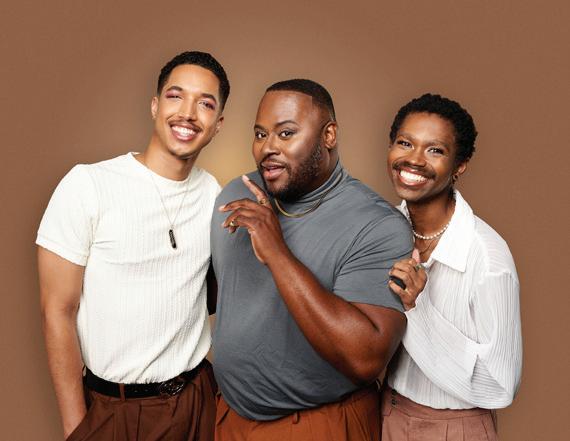
In a genre often defined by lighthearted escapism, Almost Us arrives with something more layered in mind – heat, humor, and a sharp awareness of the world its characters inhabit. Directed by and starring Anthony Bawn, the film blends classic romantic comedy beats with urgent questions about power, visibility, and the cost of belonging.
Set against the stark beauty of Phoenix, Almost Us opens with a familiar rom-com spark: a one-night stand. But what follows is anything but predictable. Darren, a closeted and politically connected real estate developer, finds himself entangled with Jason, an openly queer, deeply rooted community organizer. Their chemistry is immediate –but so are the complications. When Darren’s redevelopment plans threaten the Baldwin Cultural Center, a vital hub for marginalized communities, their relationship becomes a collision point between desire and responsibility.
That tension – between private longing and public consequence – drives the film forward. Bawn leans into the gray areas, resisting easy answers in favor of something more honest. “It’s somewhere in between, and that’s what makes it honest,” Bawn explains. “Jason is genuinely drawn to Darren’s tenderness beneath the armor, but he’s not naïve about what Darren represents in the fight to save the center. Love and leverage live in the same room, and the film doesn’t pretend they don’t.”
“Awkward run-ins and escalating misfires spark plenty of laughs along the way,” says Bawn, who also stars as Jason. “Darren is used to controlling his image – money, silence, strategy – while Jason leads with truth, community, and heart. Their connection forces them to face what they’ve both been avoiding: the difference between wanting someone and being willing to be seen with them.”
At its core, Almost Us is both intimate and expansive. It’s a romance, yes – but one grounded in the realities of class, power, and the choices people make to survive. Through Darren, Bawn explores the emotional toll of living behind a carefully constructed façade. “Darren embodies the cost of silence: what it does to your love life, your integrity, and your spirit,” he says. “Privilege can protect you, but it can also imprison you.”
Jason, by contrast, is rooted in authenticity and community. Described

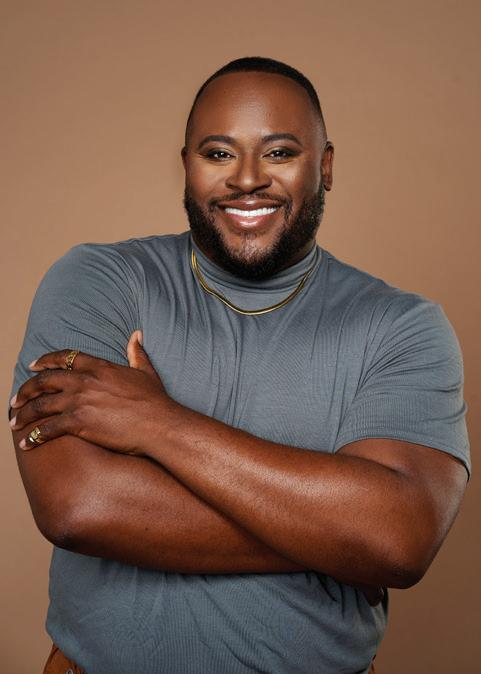
as “charismatic, messy in the best way, deeply rooted, and funny as hell when it counts,” he brings both levity and conviction to the story. “His superpower is belief,” Bawn notes. “He believes community can outlast systems that try to erase it.”
That belief is embodied in the Baldwin Cultural Center, the emotional heartbeat of the film. More than just a setting, it represents history, resilience, and the fragile spaces where marginalized people gather and thrive. “It isn’t just a location. It’s a sanctuary, a memory bank, and a lifeline,” Bawn says. “Spaces like it are where marginalized people gather, heal, organize, and breathe. The fight for the center is the fight for belonging and for who gets to shape a city’s future.”
The choice to set the film in Phoenix adds another layer of meaning. “Phoenix is a city of contrasts; the perfect backdrop for a romance comedy with real stakes, with new luxury rising fast and long-time communities fighting not to disappear,” Bawn explains. “The desert heat becomes emotional pressure. The wide streets and open sky can feel freeing or isolating depending on the
moment. The city helped us talk about expansion, erasure, and what gets left behind.”
Balancing these themes while directing and starring was no small feat. “The biggest challenge was staying emotionally open while also staying technically sharp; switching from ‘feel it’ to ‘fix it’ in real time,” Bawn shares. “But directing myself allowed me to capture intimacy that feels lived-in, not performed.”
Ultimately, Almost Us pushes queer storytelling beyond familiar narratives. “Queer stories aren’t just about identity,” Bawn says. “They’re about power, class, and how the past complicates the future. The film asks: who gets to be free, and what systems quietly decide that?”
The title itself captures that tension perfectly. “‘Almost Us’ is the ache of a future that’s within reach but not guaranteed,” Bawn explains. “It’s about that painful space between possibility and commitment, between almost and actual.”
Almost Us premieres April 17 and will stream exclusively on WatchVIM. Subscribers to the platform can access the film on release day, making it an easy athome watch for anyone craving a queer romance that delivers both laughs and something deeper to hold onto.
With its blend of sensuality, wit, and emotional honesty, Almost Us isn’t just another rom-com –it’s a story about what it means to love in a world where every choice carries weight.

Edited by Mikkel Hyldebrandt
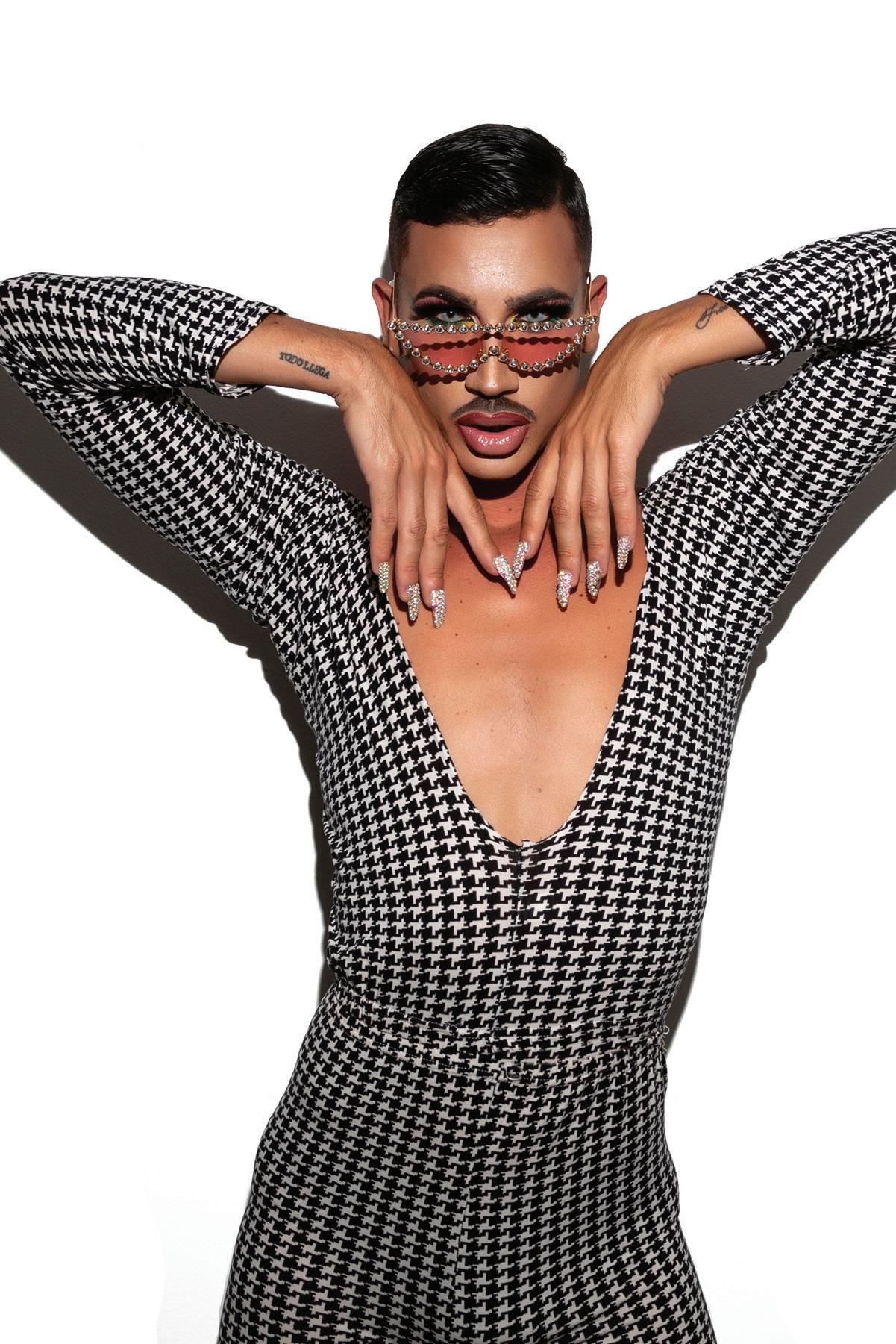
flamboyance, your softness, your camp? “Cringe” is often just authenticity without permission. And queer culture – our culture – has always thrived in that space. Camp, after all, was never about being subtle.
There comes a moment—sometimes quiet, sometimes seismic—when you realize the world has been watching you long before you ever felt ready to be seen. For many of us, queerness isn’t just something we discover; it’s something others detect, label, and respond to before we’ve even found the language for it ourselves. Too effeminate. Too loud. Too visible. Too much.
Too much is a phrase that has haunted queer people for generations. It shows up in classrooms, at family dinners, in office break rooms, and –maybe most insidiously – in our own self-talk. It’s the voice that asks you to shrink, soften, straighten up, quiet down. It tells you that acceptance is conditional, that love must be earned through palatability.
But here’s the truth: “too much” is often just code for “unapologetically visible.” And visibility, while powerful, can feel like a double-edged sword.
To be visibly queer – whether through your voice, your style, your mannerisms, or your joy – means you don’t always get to choose when you come out. It can feel like your identity walks into the room before you do. That lack of control can be exhausting. You might find yourself editing your gestures, deepening your voice, choosing different clothes, rehearsing neutrality. You become hyperaware of how you are perceived, and in that awareness, you risk losing yourself.
Then comes the harder work: unlearning the reflex to self-edit. This doesn’t happen overnight. It’s a practice. Start small. Let your laugh be as loud as it wants to be. Wear the thing you’ve been saving for “the right moment.” Speak in your natural voice, even if it shakes. The goal isn’t to perform confidence; it’s to build a life where you don’t feel the need to apologize for your presence.
It also means finding your people—the ones who don’t just tolerate your “too muchness,” but celebrate it. Chosen family, queer friends, community spaces: these are not luxuries; they are lifelines. In the right company, what once felt like a liability becomes a language. You begin to see yourself reflected not as excessive, but as expansive.
Of course, there are still realities to navigate. Safety matters. Context matters. There may be places where you do need to make calculated decisions about how you show up. That’s not hypocrisy – it’s survival. But there is a difference between strategic adaptation and internalized shame. One protects you; the other diminishes you.
The goal is not to be fearless all the time. The goal is to be honest with yourself about who you are, and to move through the world in a way that honors that truth as often as you safely can. Because here’s what happens when you stop trying to be less: you give other people permission to do the same.
So how do you come to terms with it? How do you stop apologizing for existing exactly as you are? First, recognize that the discomfort you feel is not a personal failure; it’s a cultural inheritance. We’ve been raised in a world that rewards conformity and punishes difference, even as it claims to celebrate diversity. Feeling “too queer” isn’t about you being wrong; it’s about systems that were never built with you in mind.
Second, interrogate the idea of “cringe.” Ask yourself: who decided what is embarrassing? Who benefits when you feel ashamed of your joy, your
Your visibility becomes a signal. To the kid who feels like they don’t belong. To the adult who has spent years hiding. To the stranger who catches a glimpse of you and thinks, “Maybe I could live like that too.”
Being “too much” in a world that demands restraint is not a flaw – it’s a kind of resistance. It’s a refusal to disappear.
So let them say it. Too queer. Too femme. Too loud. Too extra. And then, gently but firmly, decide: too much for who?
For the people who matter – for your community, your chosen family, and most importantly, for yourself – you are not too much. You are exactly enough.09










































By Tristan Lane for The Lavender Lens
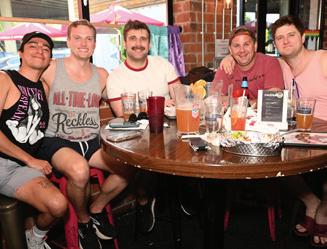
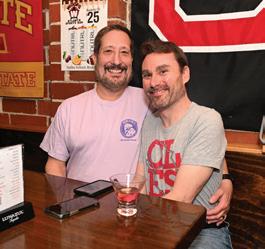
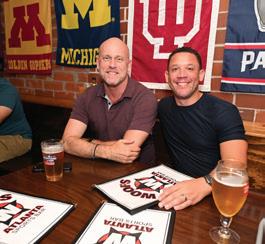
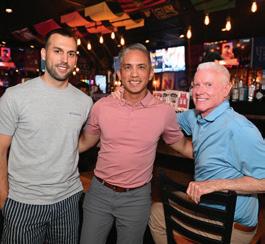
Atlanta is often celebrated as a city of opportunity, reinvention, and diversity. People arrive here from across the country—and the world—drawn by its energy and promise. It is a place where careers are built, communities are formed, and identities are embraced.
And yet, for all its openness, Atlanta can feel surprisingly closed.

Beneath the surface of Southern hospitality lies a quieter, more complex reality: Atlanta is a city of circles. Established networks—social, professional, and cultural—run deep. Relationships are often longstanding, and access frequently flows through familiarity. For those already inside these circles, the city works beautifully. For those outside them, it can feel like standing at the edge of a conversation that never quite turns to include you.
This is not unique to Atlanta, but it is particularly pronounced here. The city’s history of strong institutions, alumni ties, and interconnected leadership networks has created a culture where belonging is often inherited rather than built. Over time, that dynamic can harden into something more insular a system where opportunity is less about merit and more about proximity.
For LGBTQ+ professionals, this dynamic carries added weight. Access to networks is not simply a social advantage; it is often a determining factor in career progression, visibility, and leadership opportunities. When those networks are difficult to penetrate, the consequences extend beyond inconvenience. They shape who is seen, who is heard, and ultimately, who advances.
That expansion can take many forms. It may be as simple as extending an invitation to someone outside your immediate network, or as deliberate as creating spaces where no introduction is required. It may involve rethinking how organizations identify and elevate talent, ensuring that pathways to leadership are visible and accessible rather than informal and opaque.

There is an irony in this. Within a community that has long fought for inclusion, we can unintentionally replicate the very structures of exclusion we seek to dismantle. Familiarity becomes preference. Preference becomes pattern. And pattern becomes barrier.
But culture is not fixed. It is shaped often quietly by the choices individuals and institutions make every day.
In recent years, there has been a subtle but meaningful shift. Across Atlanta, more open and intentionally inclusive spaces have begun to emerge environments where connection is not predicated on who you know, but on a shared willingness to show up. These spaces are not defined by exclusivity, but by accessibility. They do not rely on legacy networks; they create new ones.
What is striking about these environments is how quickly they change the equation. When barriers to entry are lowered, relationships form more organically. Conversations become less transactional. Opportunities surface in unexpected ways. Perhaps most importantly, people begin to experience a sense of belonging that is not contingent on navigating unspoken rules.
This shift offers an important lesson: inclusion is not something that happens by chance. It is something that is designed.

At its core, it is about shifting from a mindset of gatekeeping to one of stewardship. The most influential individuals in any community are not those who control access, but those who create it. Atlanta does not need to lose its sense of community to become more inclusive. In fact, its strength lies in that very sense of connection. The opportunity is to broaden the definition of who that community includes.
This is particularly important in a city that prides itself on diversity. Diversity that exists without access is, at best, symbolic. True inclusion requires that people not only be present, but be able to participate fully to contribute, to lead, and to belong.
There is also a personal dimension to this. Many of us can recall moments when we entered a room unsure of our place, only to be welcomed in a way that made that uncertainty disappear. Those moments are rarely grand or orchestrated. More often, they are the result of small, intentional acts—a conversation initiated, an introduction made, a seat offered at the table.
These gestures matter more than we often realize. They are the building blocks of a more open culture. Clique dynamics do not dissolve overnight. They are reinforced over time and, as a result, require time to reshape. But they are not immutable. Each interaction presents an opportunity to either reinforce the boundary or soften it.

Designing for inclusion requires intention. It asks us to reconsider how we host, how we lead, and how we connect. It challenges the instinct to default to the familiar and instead invites us to expand the circle even when it is easier not to.

The question, then, is not whether Atlanta will continue to be a city of circles. It will. The question is whether those circles remain closed or whether we begin to connect them. Because when we do, something shifts. The city becomes not a collection of separate networks, but a more fluid and accessible community. Opportunity expands. Perspectives broaden. And the sense of belonging that draws people to Atlanta in the first place becomes something more than a promise. It becomes a lived experience.
Atlanta’s future will not be defined solely by its growth or its skyline, but by the culture it chooses to cultivate. The circle, after all, is not the problem. It is what we do with it that matters.

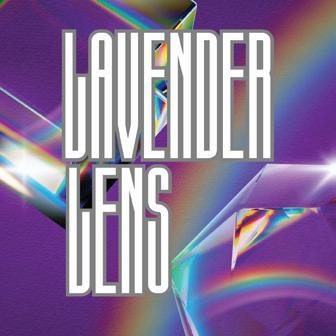



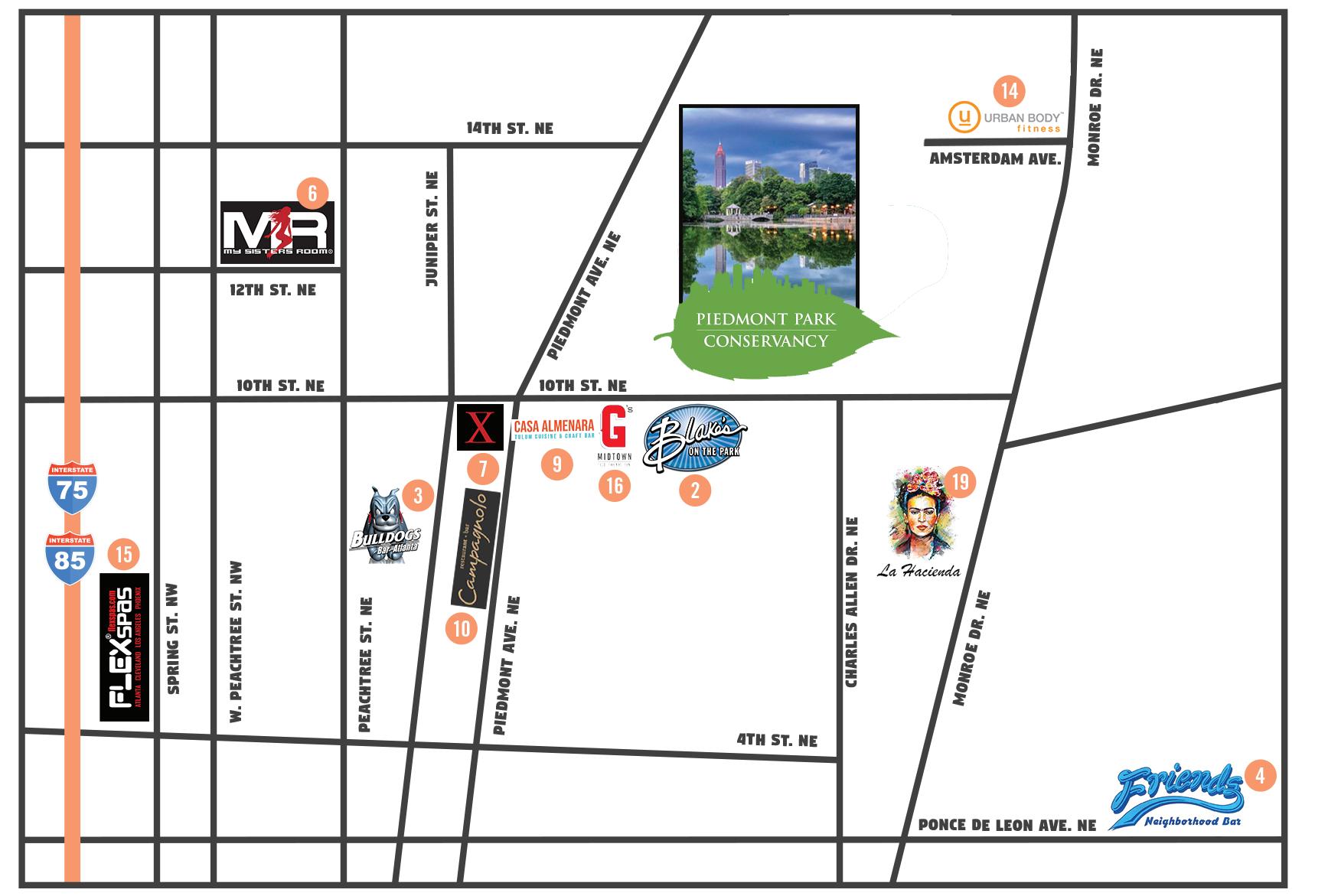
BARS & CLUBS MIDTOWN
BLAKE’S ON THE PARK blakesontheparkatlanta.com 227 10th St NE
BULLDOGS 893 Peachtree St NE
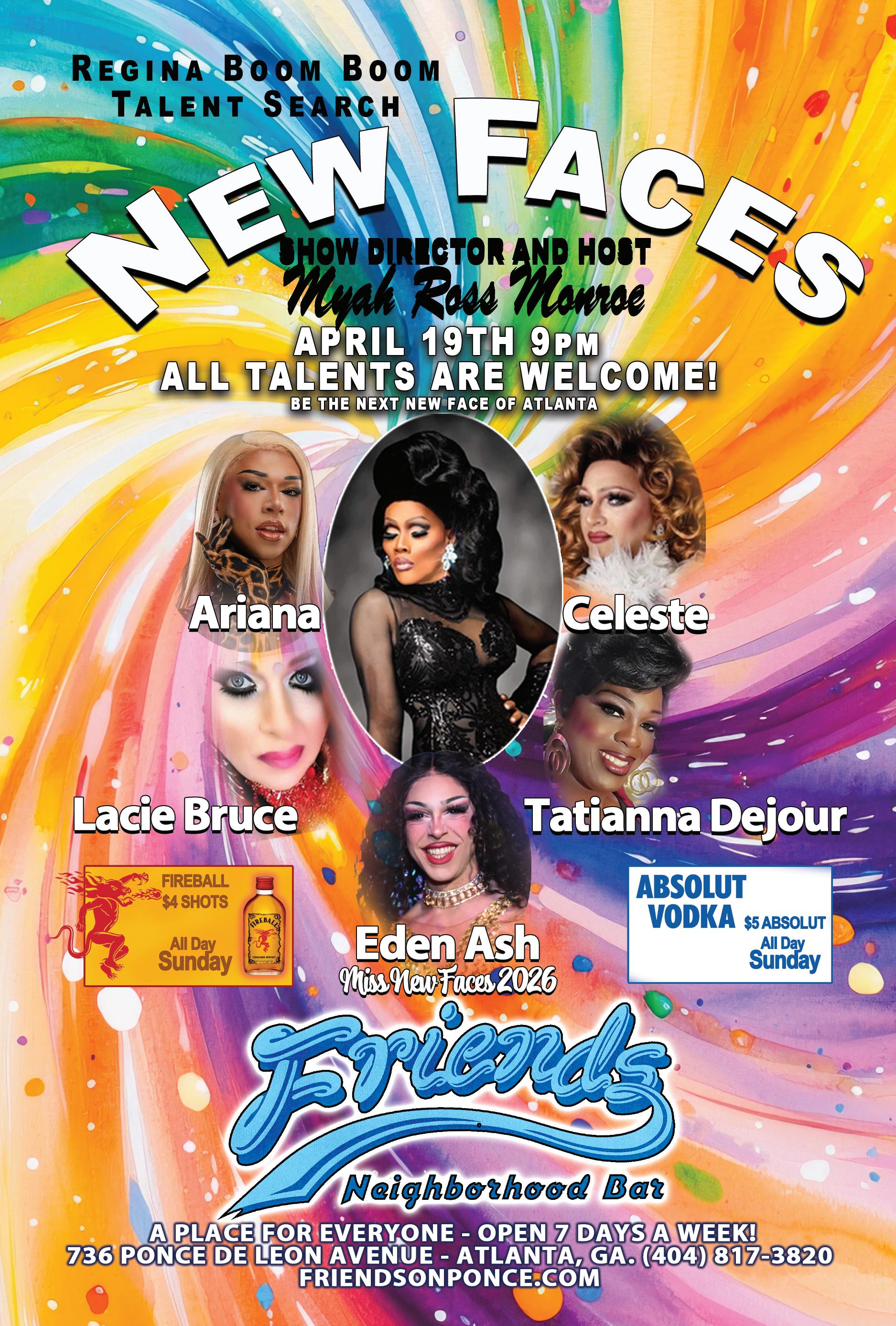
FRIENDS NEIGHBORHOOD BAR friendsonponce-atl. com 736 Ponce De Leon Ave NE
MY SISTER’S ROOM mysistersroom.com 66 12th St NE
X MIDTOWN xmidtown.com 990 Piedmont Ave NE
THE T modeltatlanta.com 465 Boulevard SE
CHESHIRE
HERETIC hereticatlanta.com 2069 Cheshire Bridge Road
BJ ROOSTERS bjroosters.com 2043 Cheshire Bridge Road NE
WESTSIDE
MARQUETTE 868 Joseph E. Boone Blvd NW
840ATL 840 Ralph David Abernathy Blvd
BOGGS SOCIAL & SUPPLY 1310 White St. SW Atlanta, GA 30310 boggssocial.com
ATLANTA EAGLE 1492 Piedmont Ave NE
FELIX’S 1510 Piedmont Ave NE
MIXX mixxatlanta.com 1492 Piedmont Ave NE
OSCAR’S oscarsatlanta.com 1510 Piedmont Ave NE
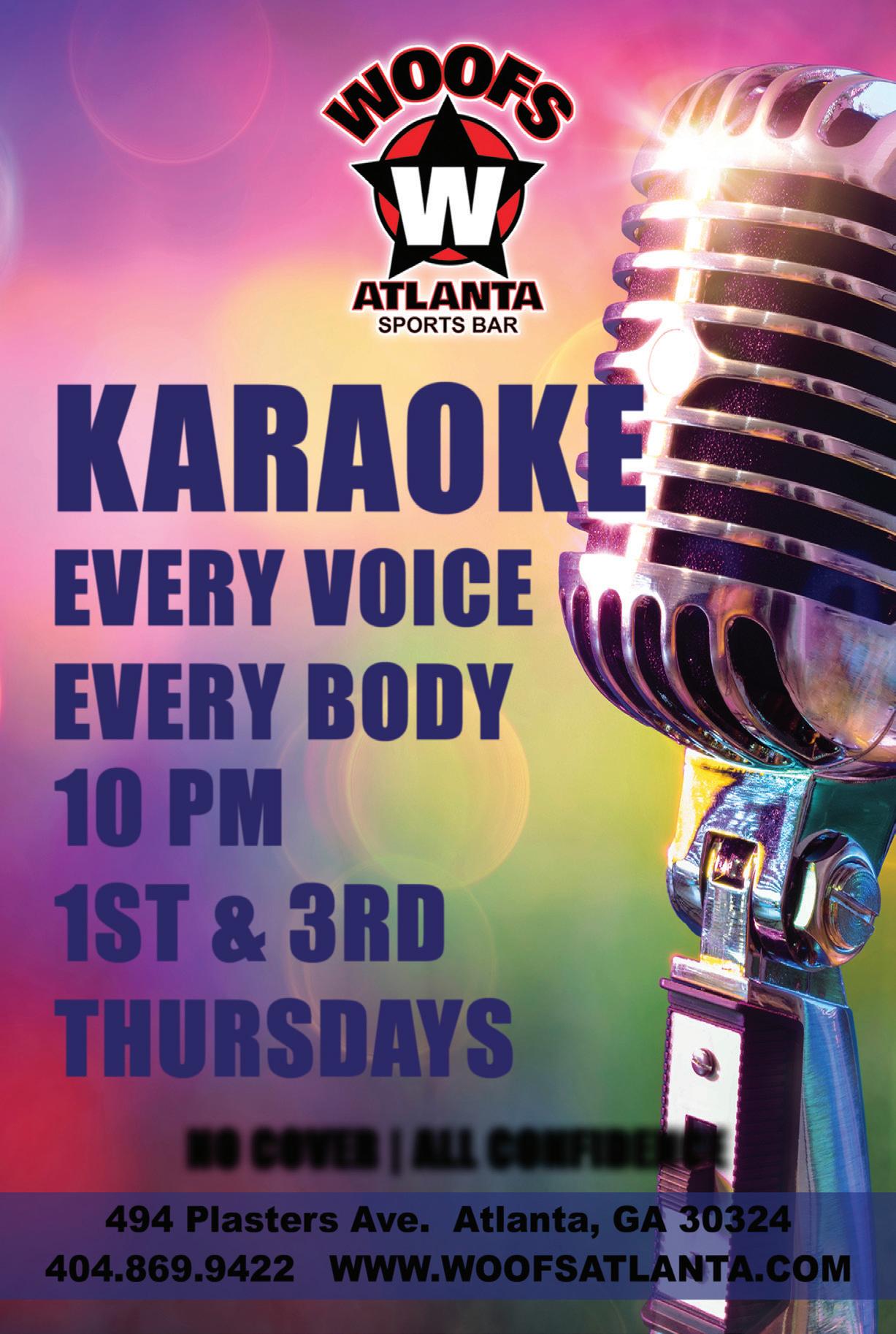
WOOFS woofsatlanta.com 494 Plasters Ave NE
TRIPPS fb: tripps-bar 1931 Piedmont Cir NE
EAST ATLANTA, GRANT PARK & EDGEWOOD
MARY’S marysatlanta.com 1287 Glenwood Ave SE
SISTER LOUISA’S CHURCH sisterlouisaschurch. com 466 Edgewood Ave SE
LORE ATLANTA loreatl.com 466 Edgewood Ave loreatl.com
DINING
MIDTOWN
CASA ALMENARA 991 Piedmont Ave NE casa-almenara.com
LA HACIENDA lahaciendamidtown. com
900 Monroe Dr NE
TUK TUK THAI FOOD LOFT TUKTUKATL.COM 1745 Peachtree Rd NW
DEKALB
LIPS ATLANTA atldragshow.com 3011 Buford Hwy NE
RETAIL MIDTOWN
BOY NEXT DOOR MENSWEAR boynextdoormenswear.com 1000 Piedmont Ave NE, Ste A
ANSLEY
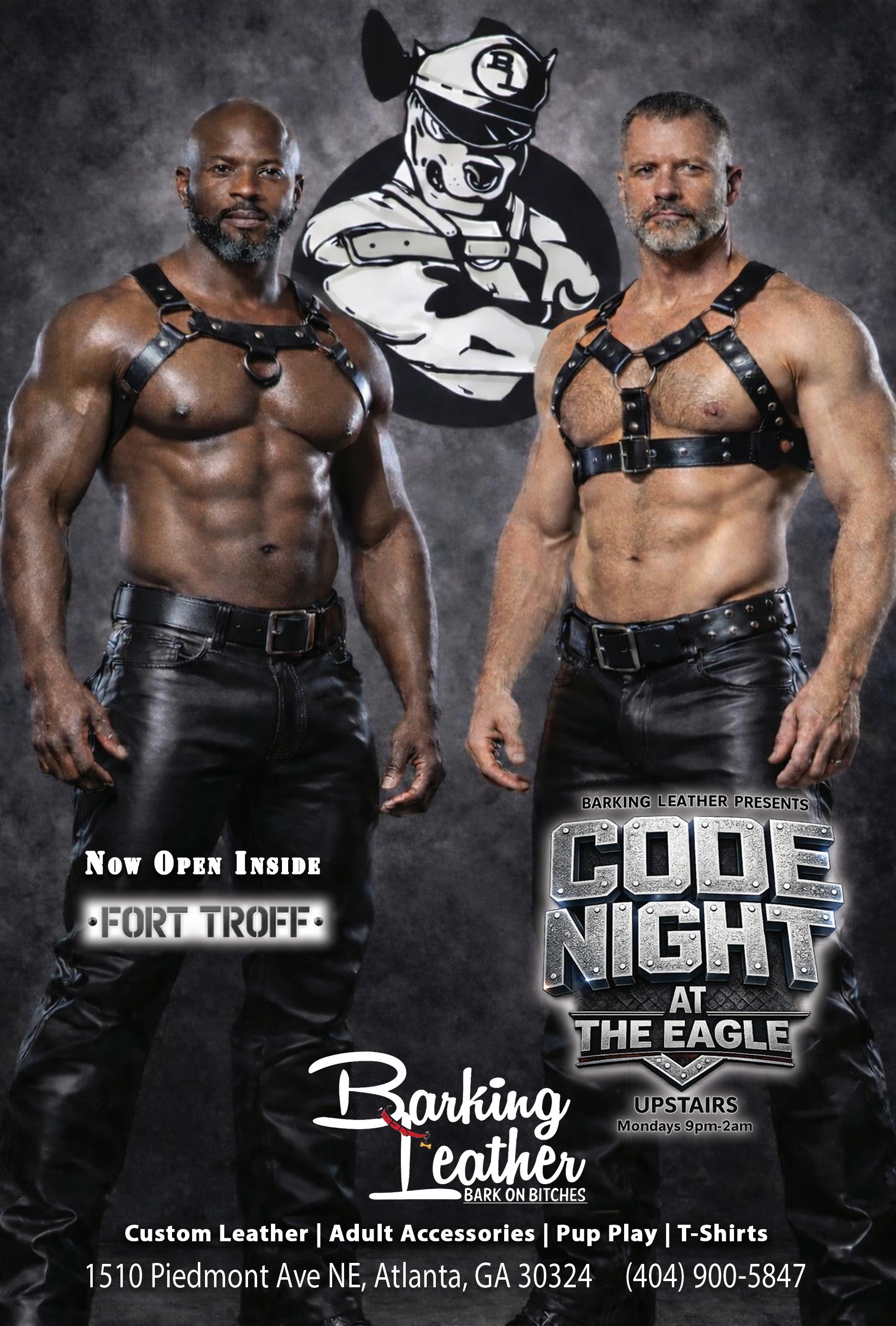
BARKING LEATHER barkingleather.com 1510 Piedmont Ave NE
GCB & PLEASURES brushstrokesatlanta. com
1510-D Piedmont Ave. NE
FITNESS MIDTOWN
URBAN BODY FITNESS urbanbody tness. com
500 Amsterdam Ave N
CHESHIRE
GRAVITY FITNESS
gravity tnessatl.com 2201 Faulkner Rd NE
SPAS/BATHS ADULT
FLEX SPA exspas.com 76 4th St NW
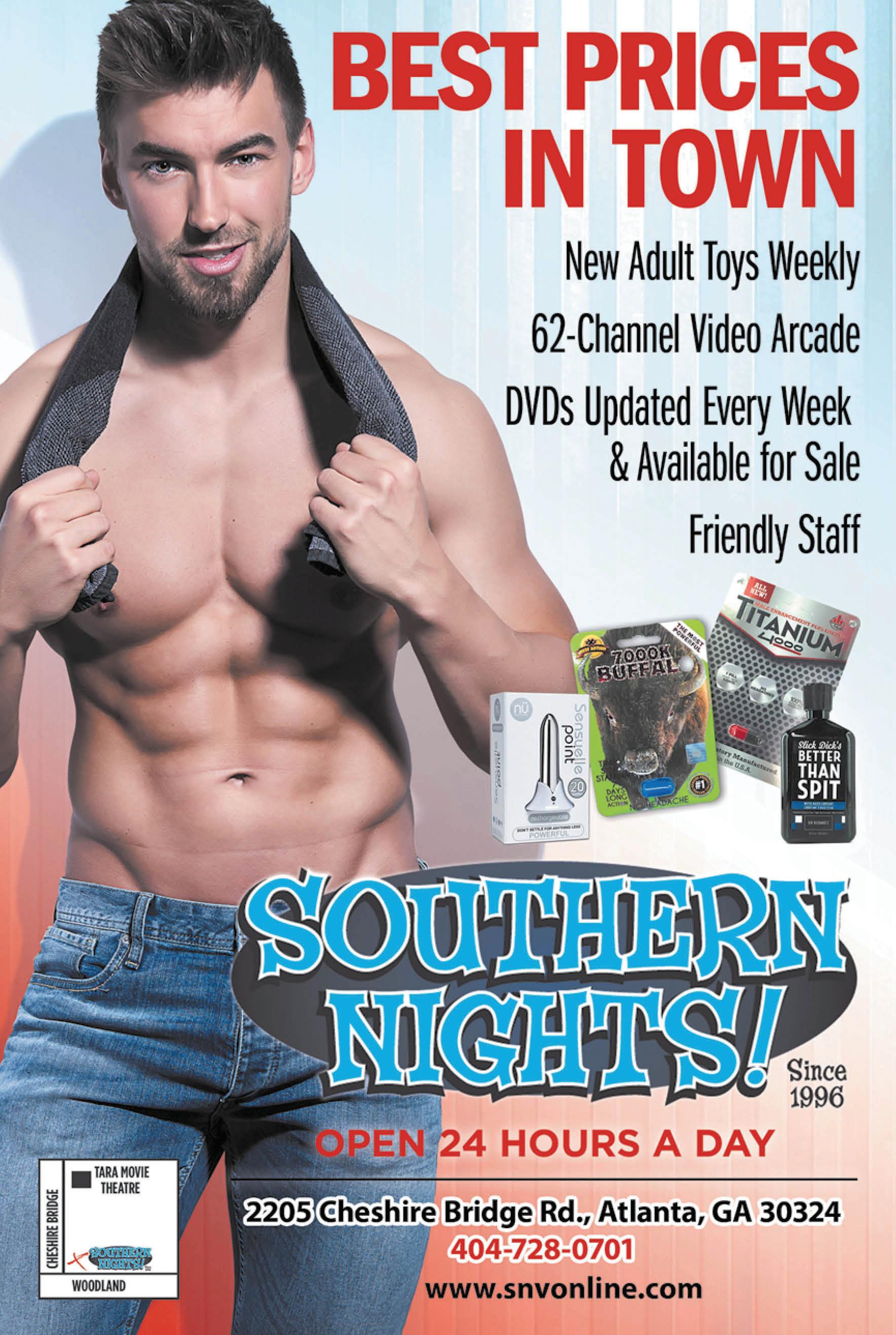
SOUTHERN NIGHTS VIDEO 2205 Cheshire Bridge Rd NE











































































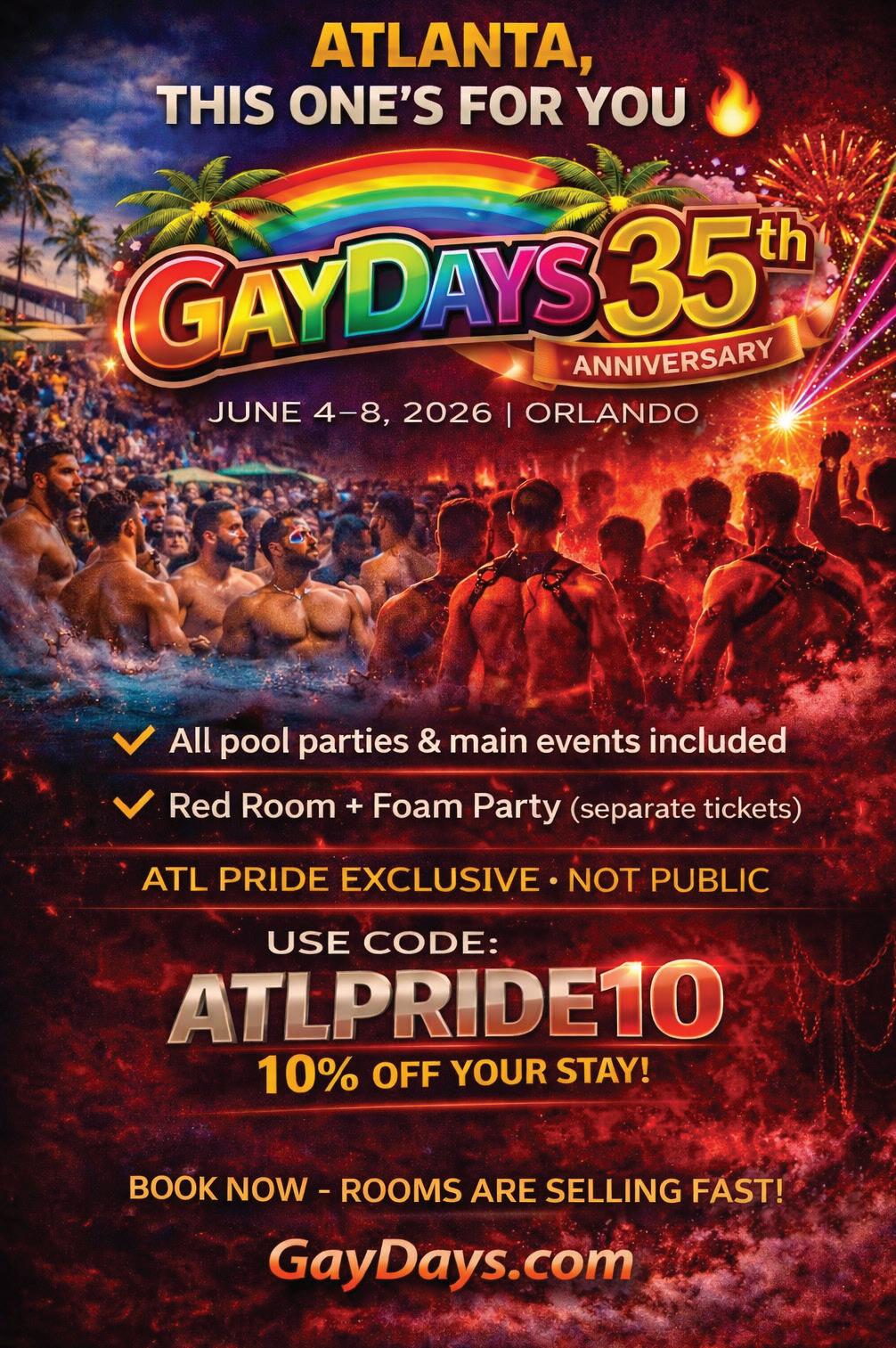



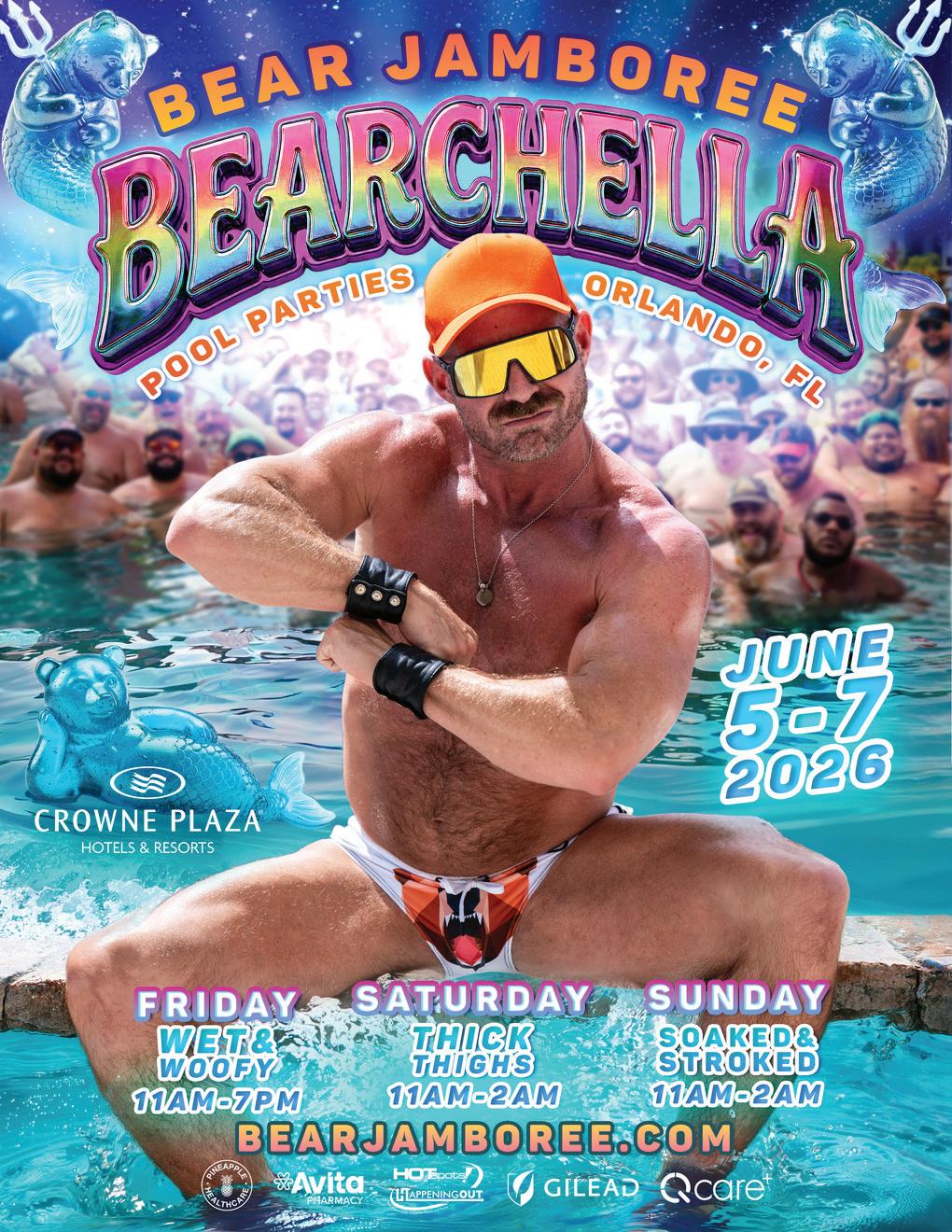


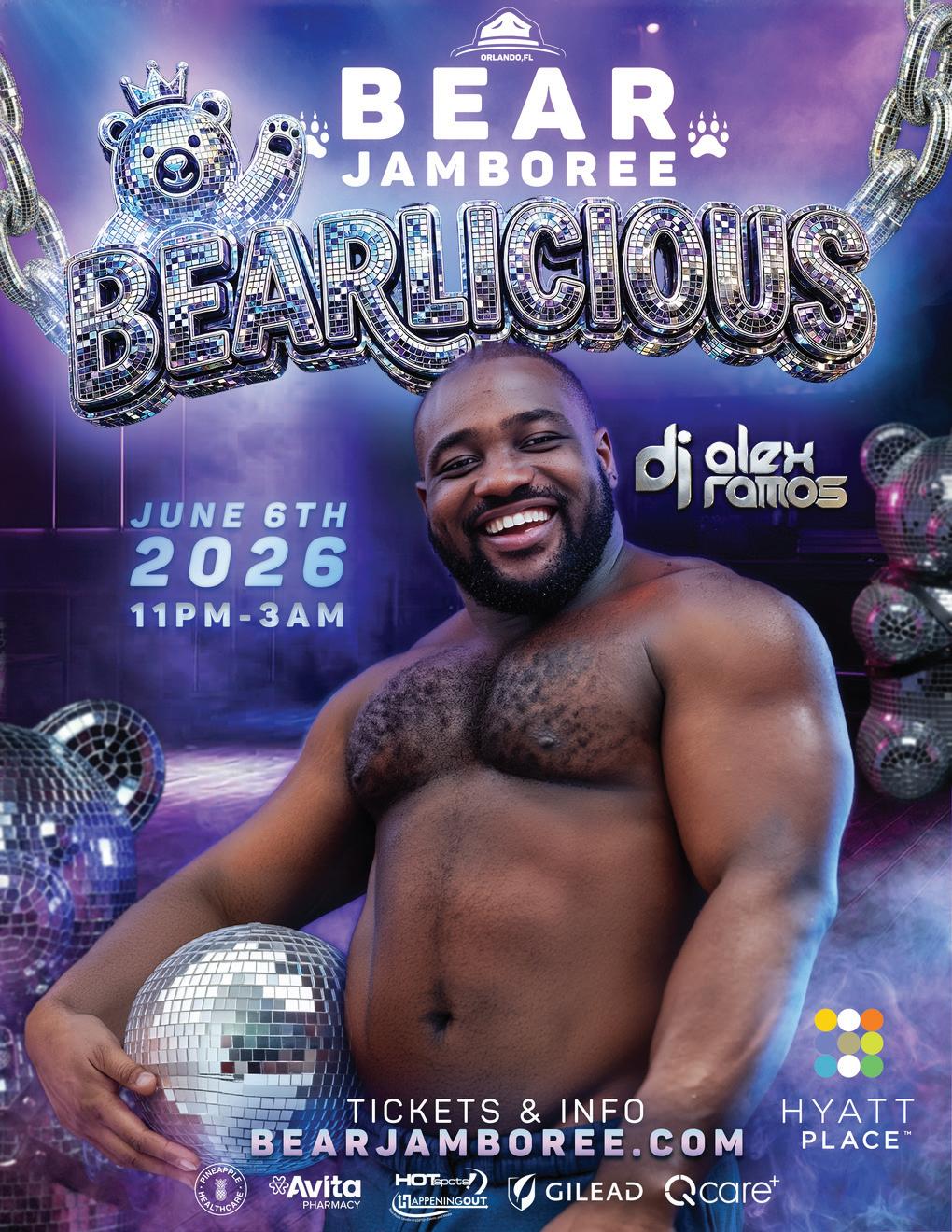



june 4-8, 2026
orlando, fl