MINERAL FINANCE 2026 A PATH TOWARDS RECONCILIATION
S-IMEW 2026 IN PICTURES
CANADA'S FIRST MINE SITE
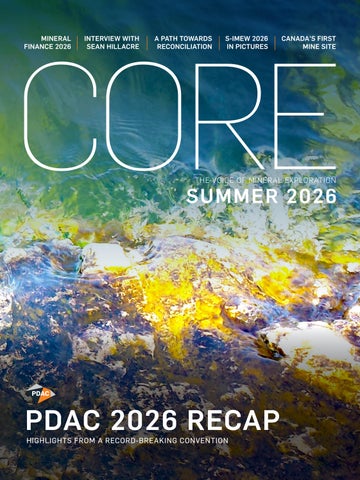
HIGHLIGHTS FROM A RECORD-BREAKING CONVENTION THE VOICE OF MINERAL EXPLORATION
CORE is produced by staff primarily located in Toronto, Ontario, on the traditional territory of the Mississaugas of the Credit First Nation, the Haudenosaunee, the Wendat, also known as the Huron, the Chippewa, the Anishnabeg and all other Indigenous nations that have lived on these sacred lands since time immemorial.
As the voice of mineral exploration and development in Canada, PDAC is committed to reconciliation through respectful dialogue and the creation of meaningful and mutuallybeneficial partnerships between First Nations, Inuit and Métis communities and industry.
We respect that as an industry that operates the world over, we engage with organizations and individuals far beyond these lands, and wish to acknowledge all Indigenous lands and peoples across the world, wherever you are reading this from and call home.
CORE
SUMMER 2026
PRODUCED & PUBLISHED BY PDAC’s Communications Dept.
FOLLOW PDAC the_PDAC thePDAC the PDAC PDAC_official ThePDAC
VISIT US ONLINE pdac.ca
CONTENT & FEATURES
PDAC IN THE NEWS
Timely news, including PDAC’s pre-budget recommendations, the new Emerging Leaders Award, Canada’s digital core library and more.
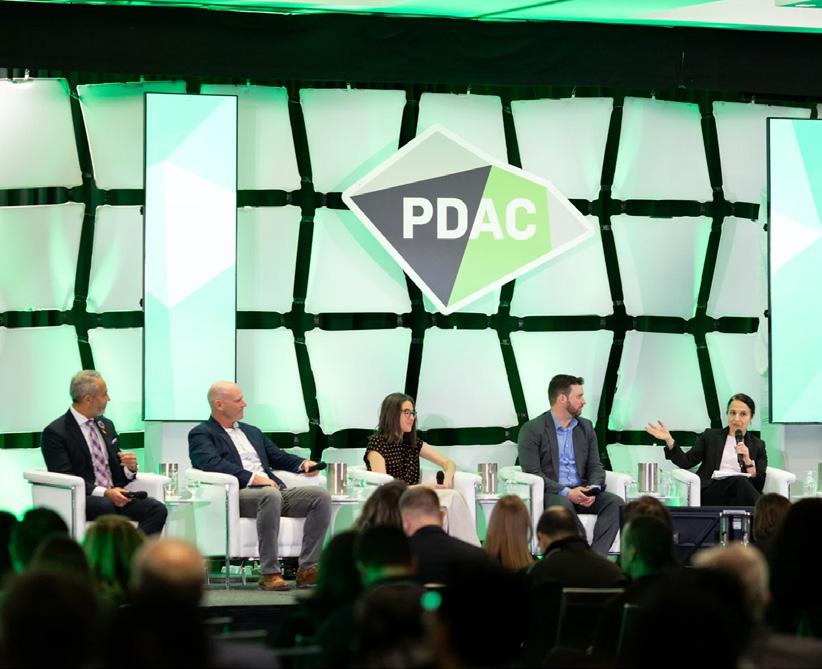
PDAC 2026 RECAP
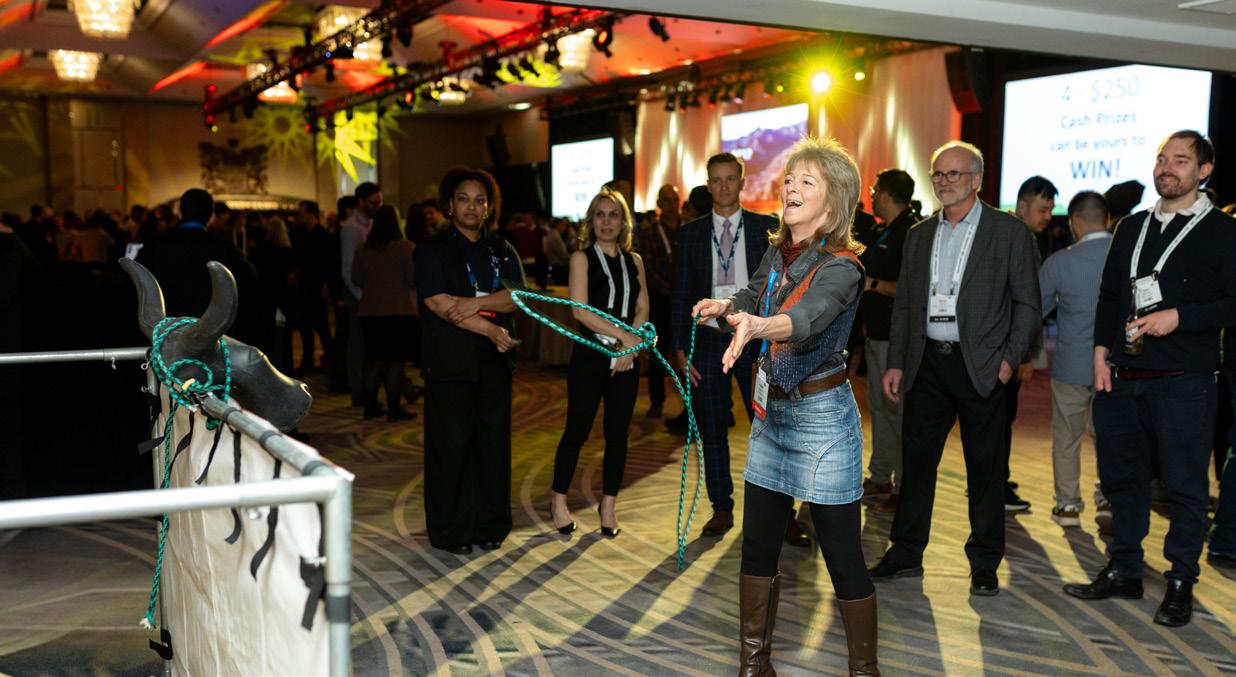
Highlights from PDAC’s best-attended convention, including photos, the Dr. Donald M. Leishman Convention Experience and opportunities for 2027.
A PATH TOWARDS RECONCILIATION
A feature on PDAC's Planning the Path Towards Reconciliation framework, including an interview with the Indigenous-led design firm Vincent Design.
S-IMEW 2026 IN PICTURES
A look inside the immersive, two-week StudentIndustry Mineral Exploration Workshop in Sudbury, Ont., through photos and captions.
MEMBER INTERVIEW
An engaging Q&A with geoscientist and longstanding PDAC member Sean Hillacre about his career and the future of the sector.
MINERAL FINANCE 2026
Exploring capital trends shaping mineral exploration, with charts, data, and insights on valuations and financing markets.
THIS MONTH IN HISTORY
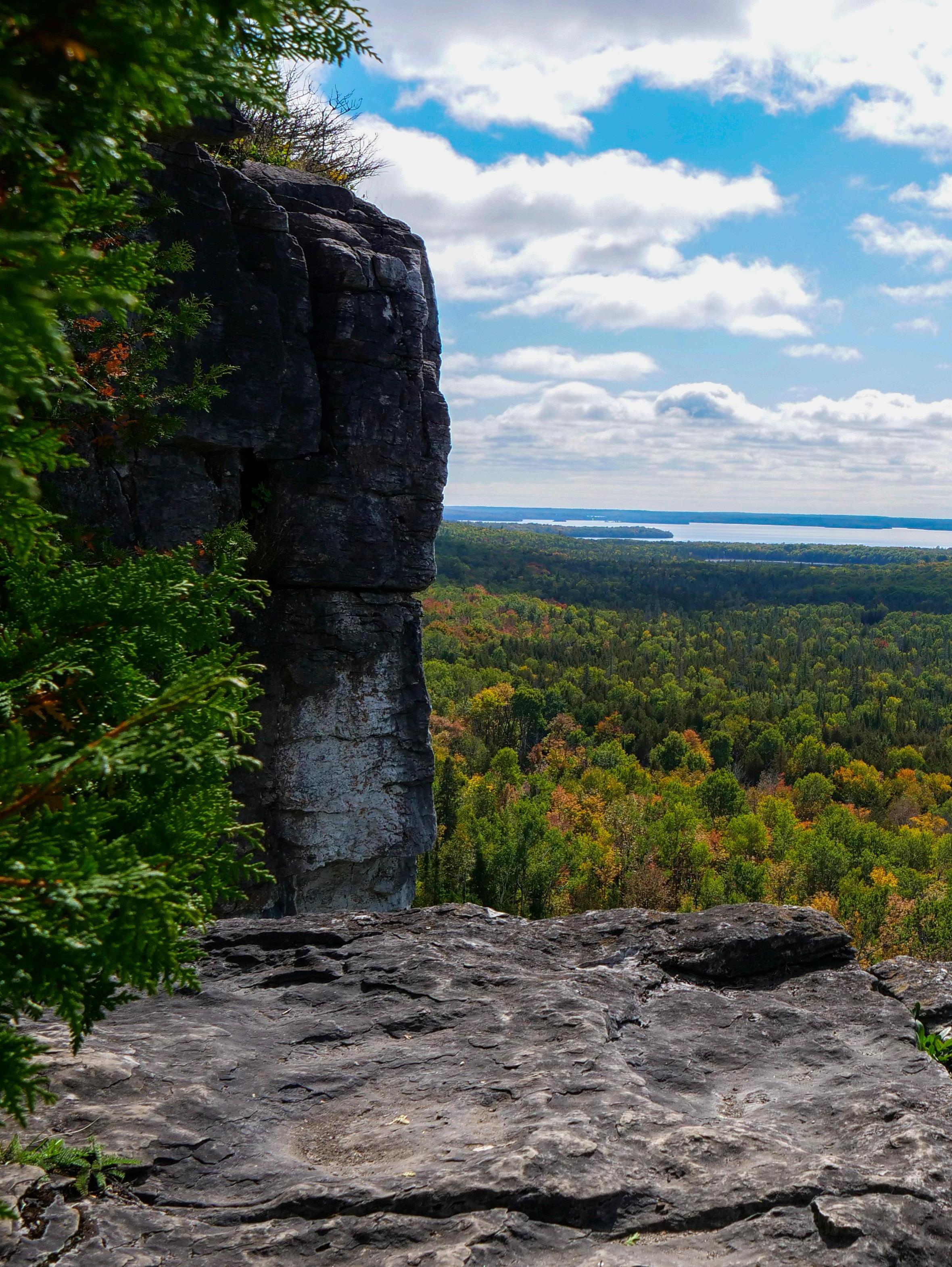
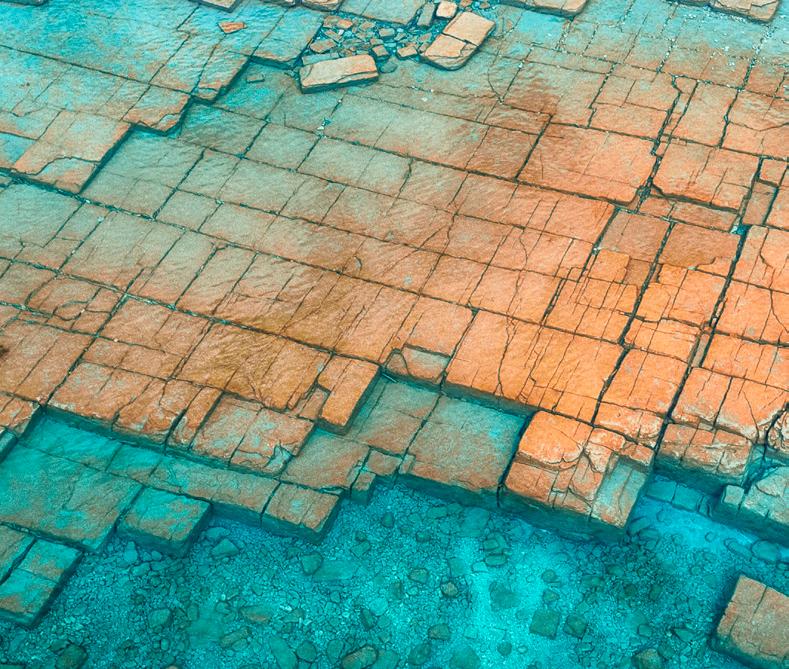
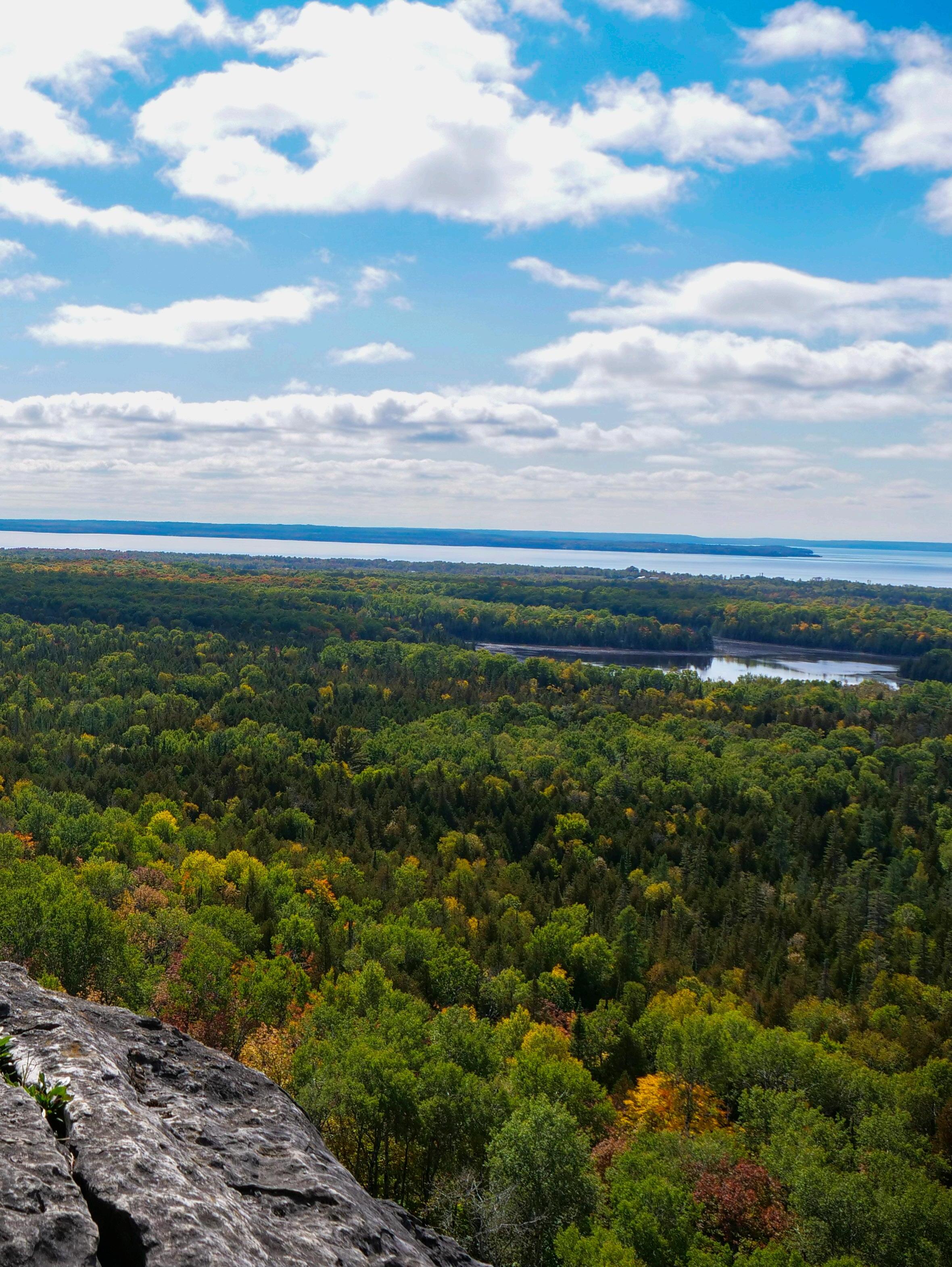
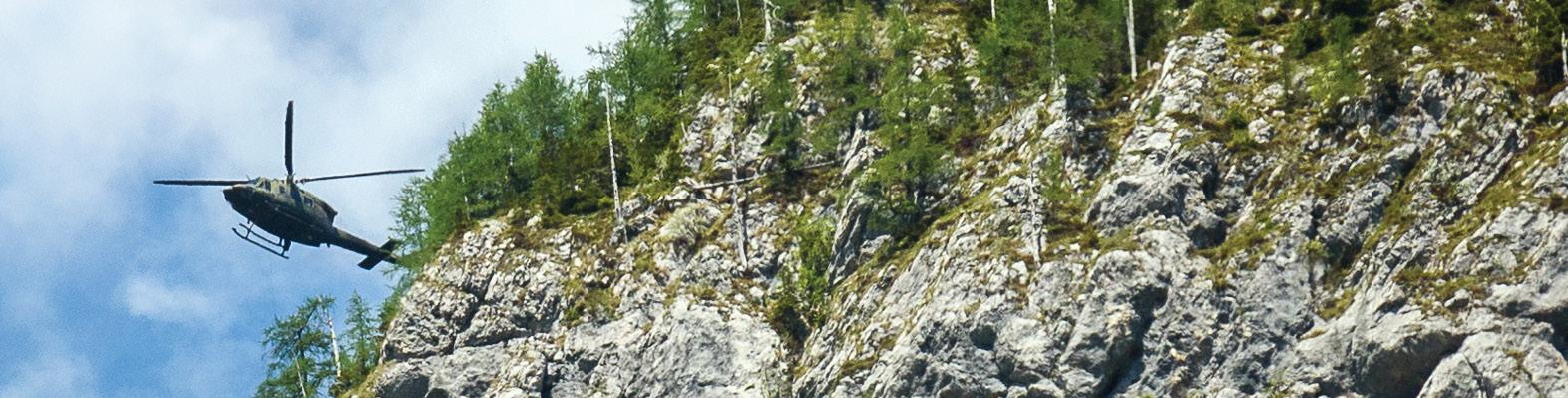
Designated a National Historic Site of Canada in July 1954, Sheguiandah on Manitoulin Island marked the beginning of known mining activity in what is now Canada, dating back 13,000 years. 36 4 2 4 8 4 8 22 2 8 4 40 8
PDAC IN THE NEWS
PDAC INTRODUCES THE EMERGING LEADERS AWARD
PDAC has launched the Emerging Leaders Award to recognize the next generation of professionals helping shape the future of Canada's mineral exploration and development industry.
The Emerging Leaders Award celebrates outstanding achievement by young professionals who are making meaningful contributions to the sector through professional excellence, innovation, collaboration and a commitment to responsible mineral development.
Recipients may be recognized for technical achievements, leadership and mentorship, innovative approaches, environmental stewardship, community engagement, or active involvement in industry initiatives.
Eligible nominees must be 40 years of age or younger, have three to five years of industry experience, and be currently employed or actively engaged in the mineral exploration and development sector.
Nominations are open until July 31, 2026. The inaugural recipient will be recognized at the PDAC Awards Celebration during PDAC 2027 in March 2027. To learn more about the award and begin the nomination process, visit pdac.ca/about-pdac/awards.
PDAC'S BOARD MEMBER ELECTION RESULTS
PDAC's volunteer Board of Directors represents a wide spectrum of professionals in the mineral exploration and development community. The board includes geoscientists, consultants, advisors, capital markets and financial experts, government relations and Indigenous affairs specialists, executives, managers, corporate directors and more.
On March 1, 2026, at PDAC's Annual and Special Meeting of Members, held during the 2026 Convention in Toronto, the association elected three new members to the board and confirmed the positions of PDAC's officers.
Each elected member of the Board of Directors serves a three-year term with PDAC. Together, incumbent and newly elected directors help guide the association's policies and strategic direction while advancing the interests of the mineral exploration and development sector. “PDAC benefits from a board that reflects the breadth of experience across Canada’s mineral exploration and development sector. I look forward to working with our directors as we continue to support our members and provide strong governance for the association,” said PDAC President Karen Rees.
To learn more about PDAC's Board of Directors, visit pdac.ca/about-pdac/board-of-directors .
NATIONAL INDIGENOUS
PEOPLE'S DAY 2026
The mineral exploration and mining industry is proportionally the largest private sector employer of Indigenous individuals in Canada. PDAC recognizes that the participation of Indigenous communities is vital to the future of our sector. The association is committed to supporting the equal and equitable inclusion of Indigenous communities across the mineral exploration and development industry.
PDAC is proud to celebrate Indigenous History Month each June, which includes National Indigenous Peoples Day on June 21. Originally created by the Canadian government to reflect and celebrate the culture, language, traditions and contributions of Indigenous Peoples, the day itself was chosen as it falls during the summer solstice, which is a culturally and spiritually significant time of year for many Indigenous communities.
PDAC's Indigenous Affairs Program priorities include supporting better collaboration between Indigenous communities, the government and mineral exploration companies, advocating for increased economic success for Indigenous Peoples in our industry, as well as encouraging capacity-support initiatives and investments into infrastructure and community development.
This year, PDAC released an important internal framework, titled Planning the Path Towards Reconciliation (the Plan). See page 22 of this issue of CORE to learn more about how the Plan was created, and how the association is implementing the Plan's pillars across its work.
PDAC IN THE NEWS
INTERNATIONAL DAY OF WOMEN IN MINING 2026
"I am Mining and I Belong" is the theme of International Women in Mining (IWIM), a global not-for-profit organization with 20 years of experience supporting and advocating for women across the mineral exploration and mining industry.
On June 15, IWIM hosted its International Day of Women in Mining (IDWIM) events, bringing together members of the global mining community to celebrate the contributions and achievements of women in the sector.
The annual event highlights the contributions of women in mining and supports ongoing efforts to strengthen equity, diversity and inclusion across the sector.
DID YOU KNOW?
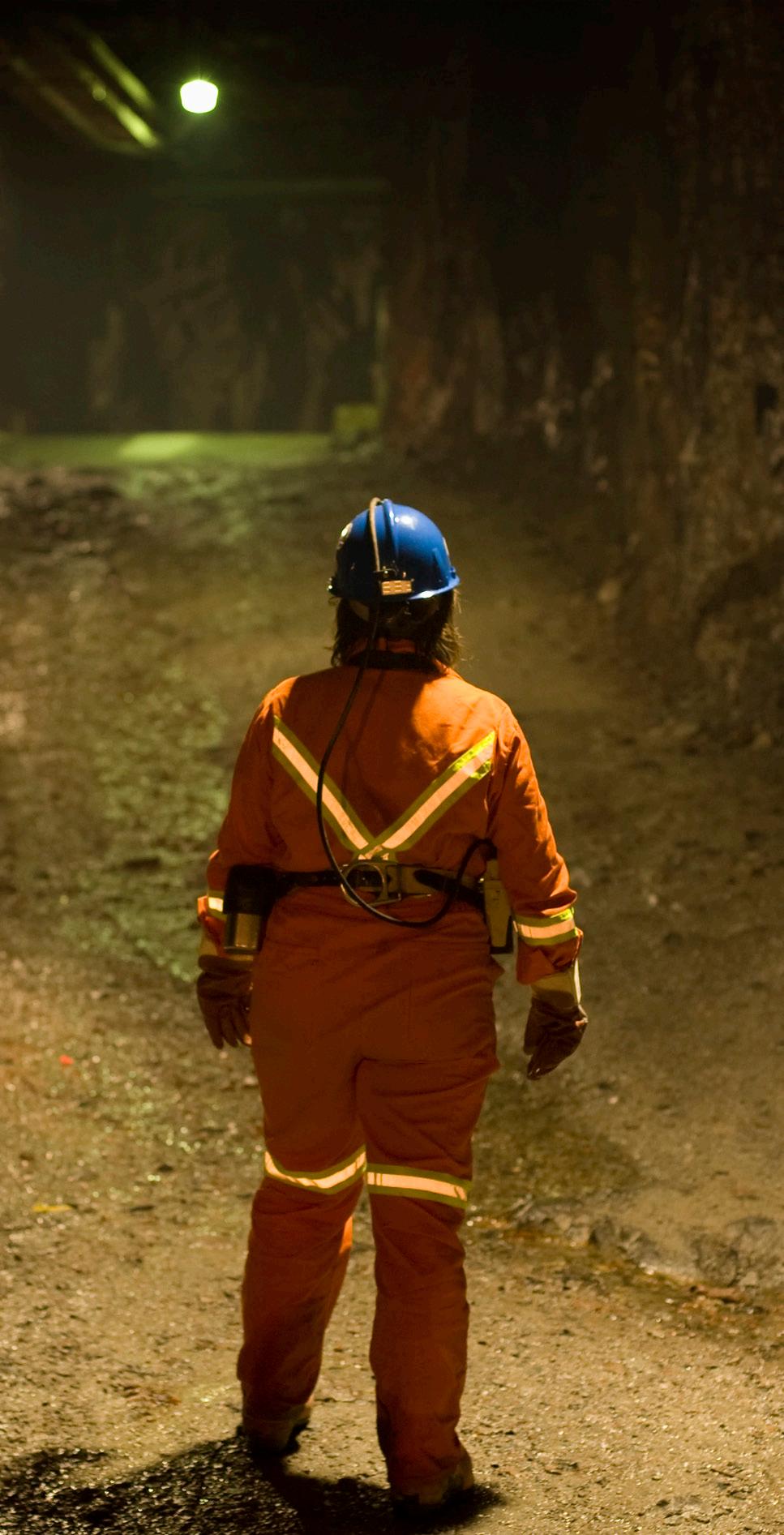
In Canada, legislation once prohibited women from working in and around mining operations. The 1890 Ontario Mining Act, for example, stated "...the prohibition of any girl or women in or about any mine." During the Second World War, when labour was in short supply, several provinces amended their legislation to allow women to work for mining companies, although only in clerical roles. It was not until the passage of the 1977 Canadian Human Rights Act (which strengthened protections against employment discrimination in federally-regulated industries such as mining) that women were finally allowed by law to work in all areas of a mine site. Today, women are strong contributors to the mineral exploration and mining industry, including both above-ground and underground operations.
PDAC INFORMS CANADA'S NEW DIGITAL CORE
LIBRARY
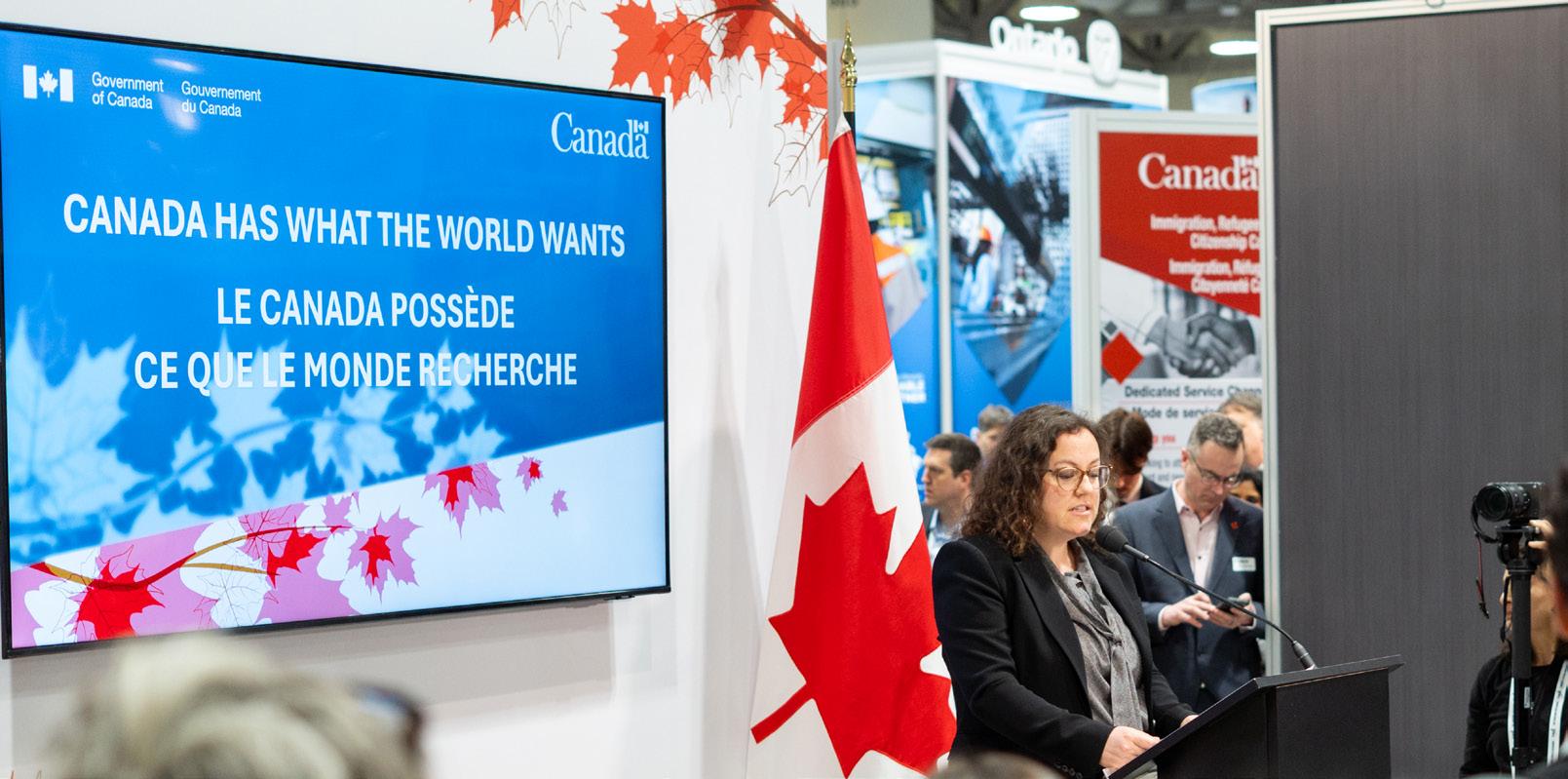
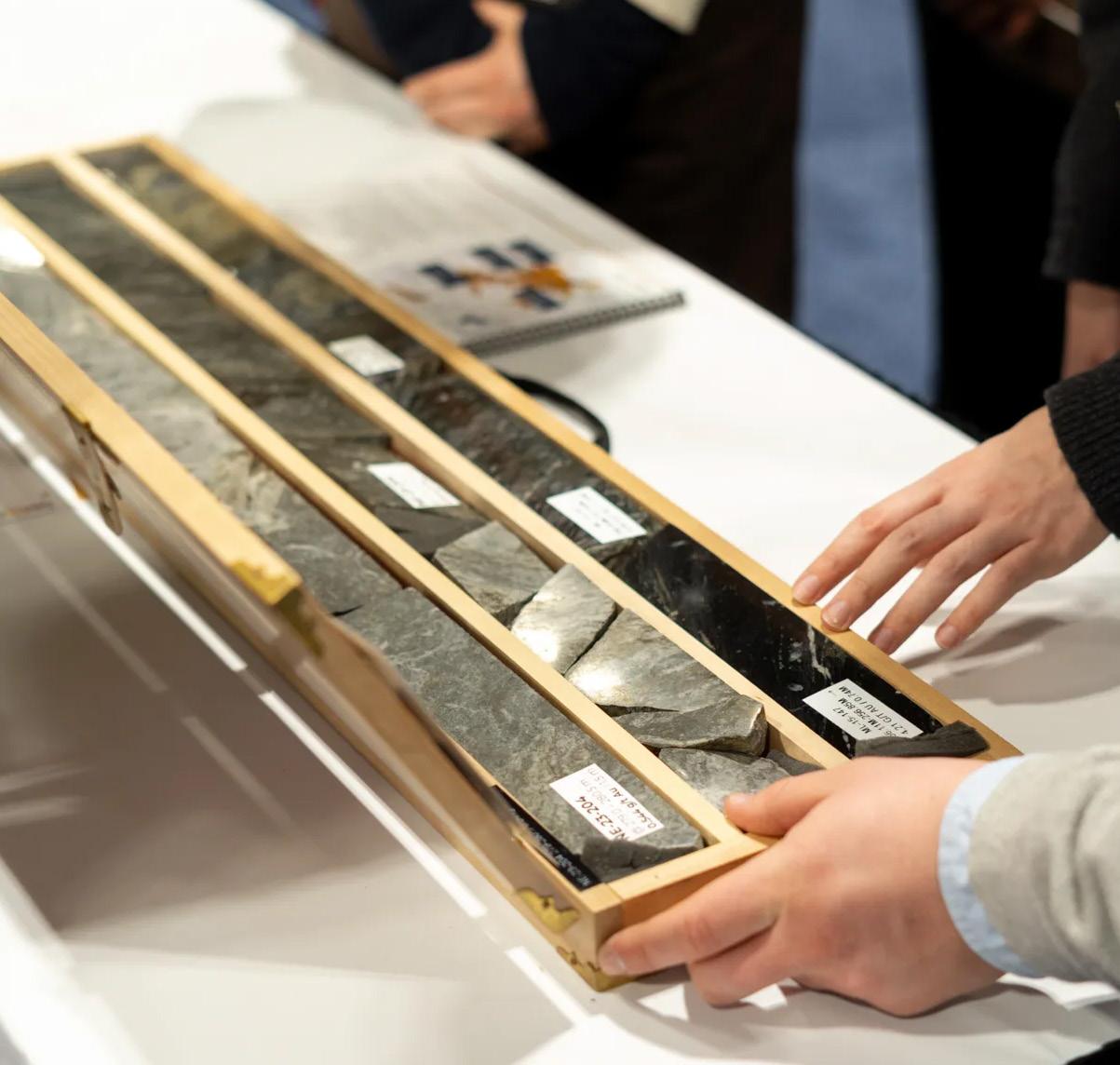
Natural Resources Canada (NRCan) announced a $40 million investment to support the development of a Canadian Digital Core Library (CDCL). Announced at PDAC’s 2026 Convention, the CDCL will create high-resolution, digital scans of drill core collections that are currently housed by Canada’s geological surveys. The scans will then be analyzed with AI-enhanced data analysis tools, and the new digital collection will be made available to the public.
The CDCL builds on a joint initiative by NRCan and the Northwest Territories, which was announced in July 2025, and will scan historic drill core samples and use AI-based analysis to reassess for critical mineral opportunities in the territory. Recognizing the potential value of such initiatives to Canada's mineral exploration sector, PDAC surveyed its members in the fall of 2025. Participants provided insights into which core-derived datasets and products would deliver the greatest benefit to the exploration community. The results were shared with NRCan and will be used to help develop the CDCL to meet the current and future needs of our industry.
By improving access to geoscience data and generating new insights from historic drill core, the CDCL has the potential to support better-informed early-stage exploration, accelerate discovery timelines and reduce risk for investment and mineral development projects. The first phase of the CDCL is expected to run until March 31, 2028, during which drill core from priority regions across Canada will be scanned and integrated into an accessible national digital platform.
PDAC'S 2026 PRE-BUDGET RECOMMENDATIONS
In May, PDAC submitted its annual pre-budget recommendations to Canada's House of Commons Standing Committee on Finance. With the goal of creating a more sustainable, prosperous and competitive mineral exploration and development sector, the association put forward four key recommendations .
The recommendations include eliminating the current gap in flow-through share (FTS) eligibility between the Canadian Exploration Expense (CEE) and Canadian Development Expense (CDE) categories; making the Mineral Exploration Tax Credit (METC) and the Critical Mineral Exploration Tax Credit (CMETC) permanent fixtures in the Income Tax Act, or renew them for a minimum of 10 years; committing a minimum of $30 million annually for priority geoscience, geo-mapping, conservation and land protection programs; amending section 248(1) of the Income Tax Act to expand the definition of a “mineral resource” in order to capture all CMETCeligible minerals that are on Canada’s critical minerals list.
These recommendations aim to provide greater certainty for industry and investors while supporting mineral discovery in Canada. To read PDAC's pre-budget 2026 recommendations in detail, visit pdac.ca/federal-budget-202 6.
A RECORDBREAKING PDAC 2026
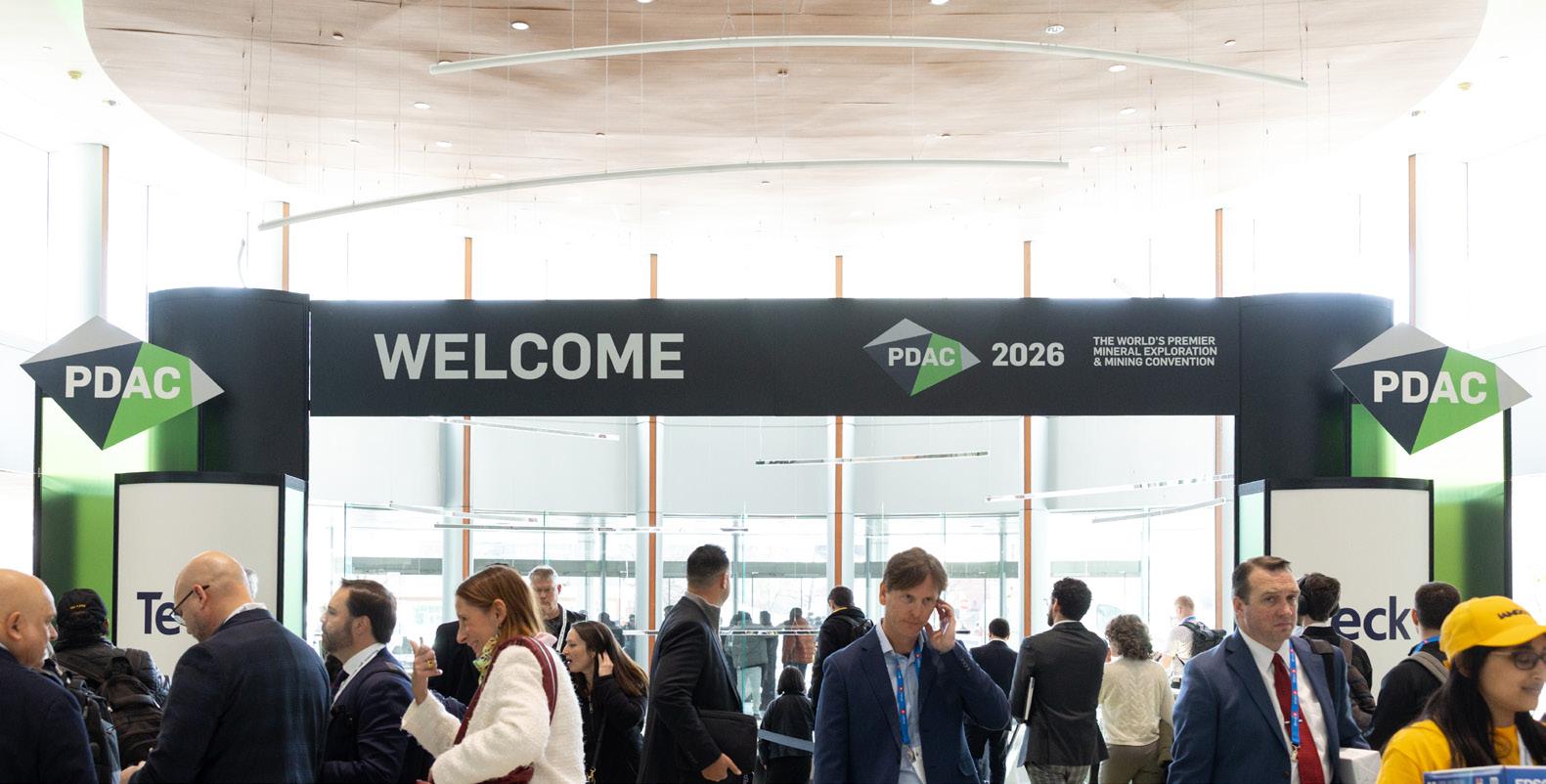
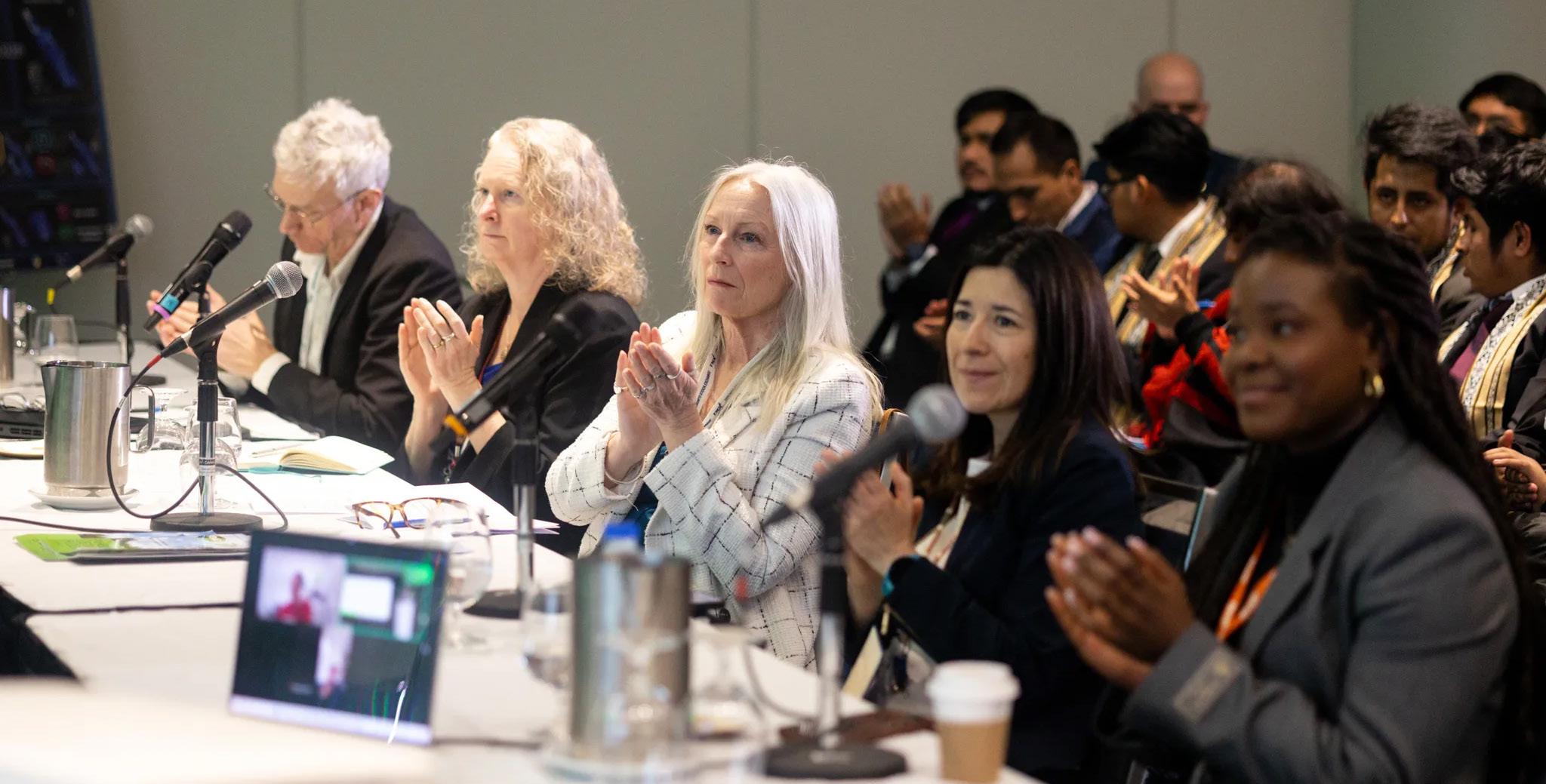
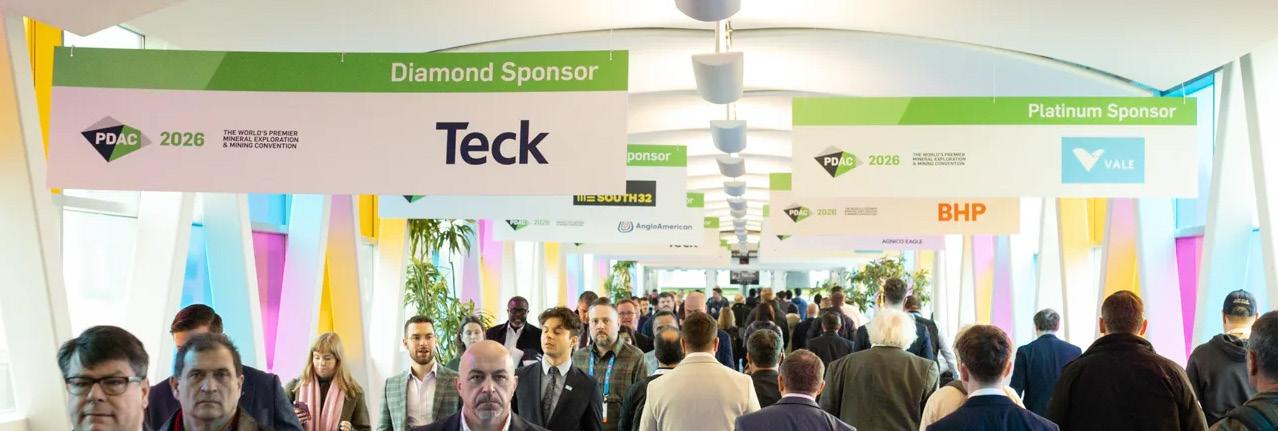
PDAC’S ANNUAL CONVENTION ATTRACTED 32,155 PARTICIPANTS, SETTING A NEW ATTENDANCE RECORD IN THE EVENT’S 94-YEAR HISTORY
Highlights from the 2026 convention include:
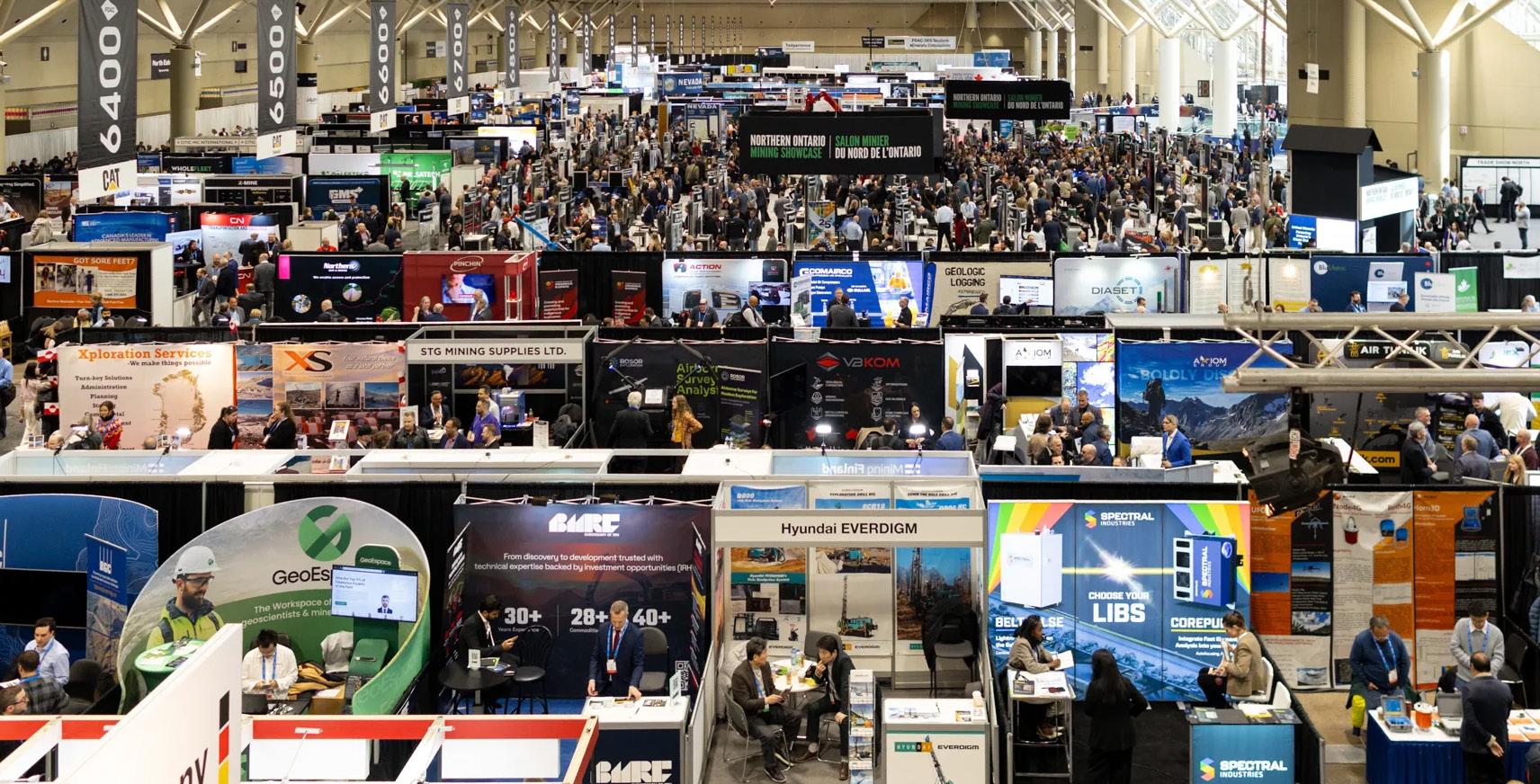
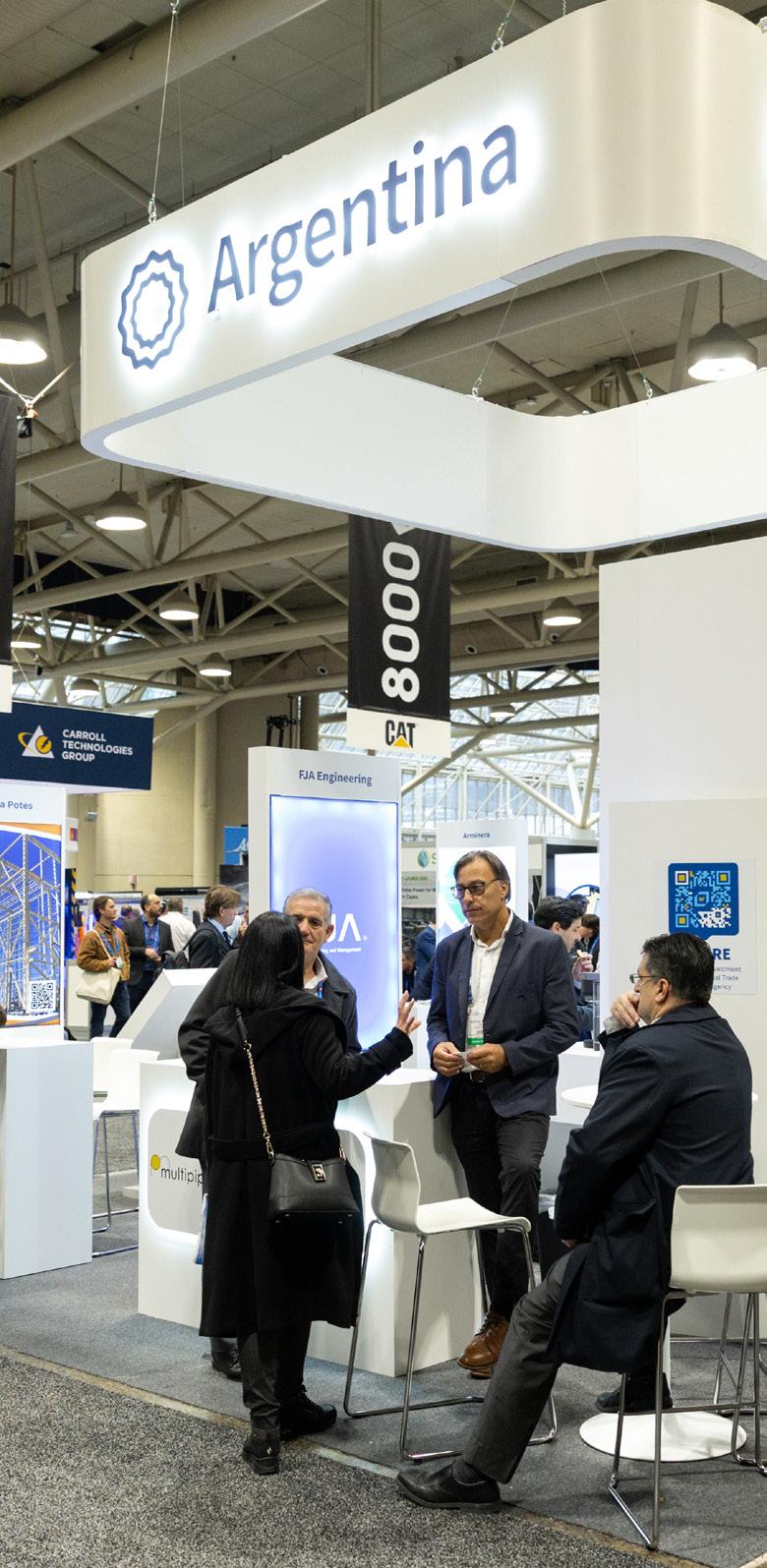
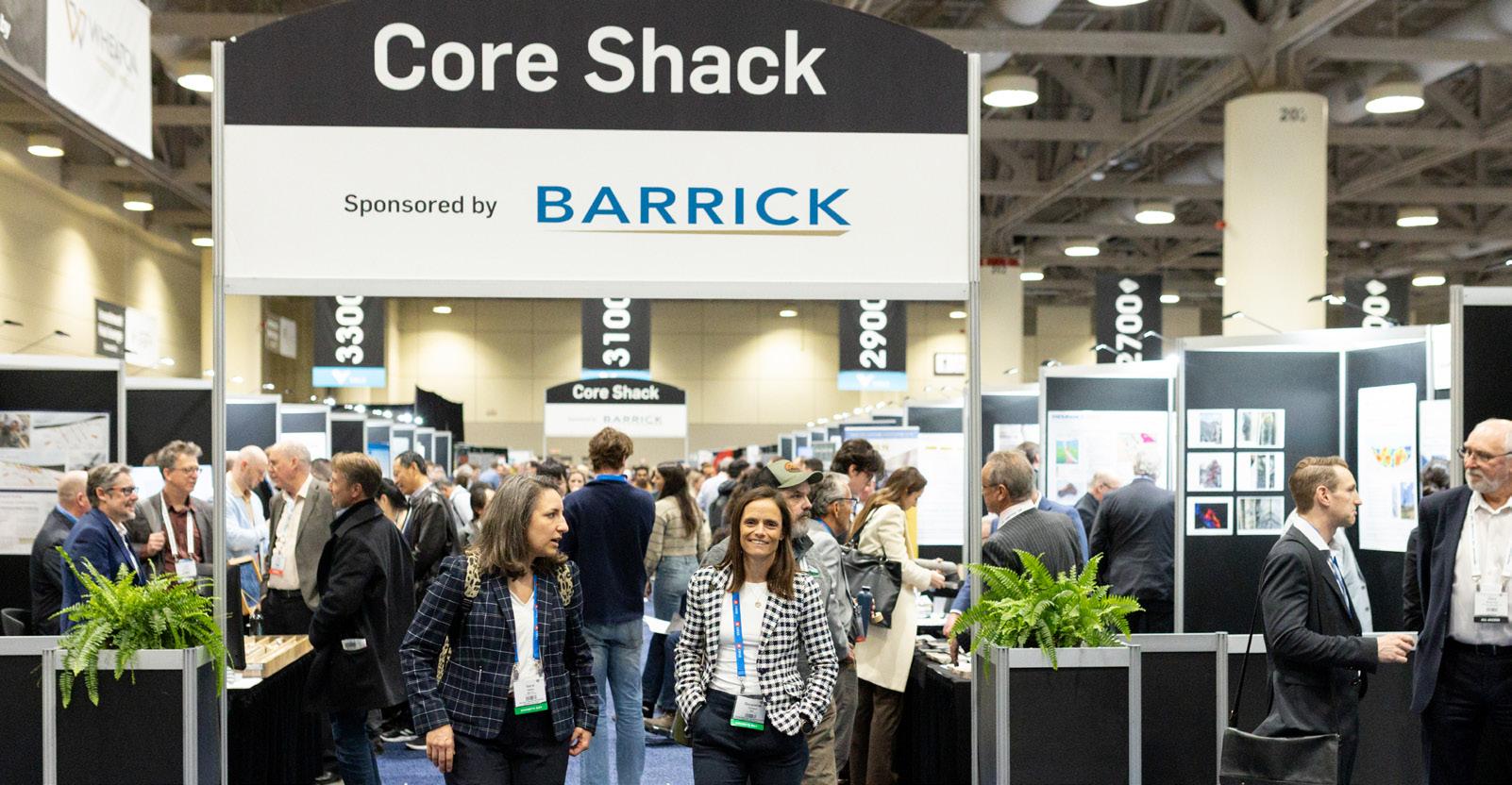
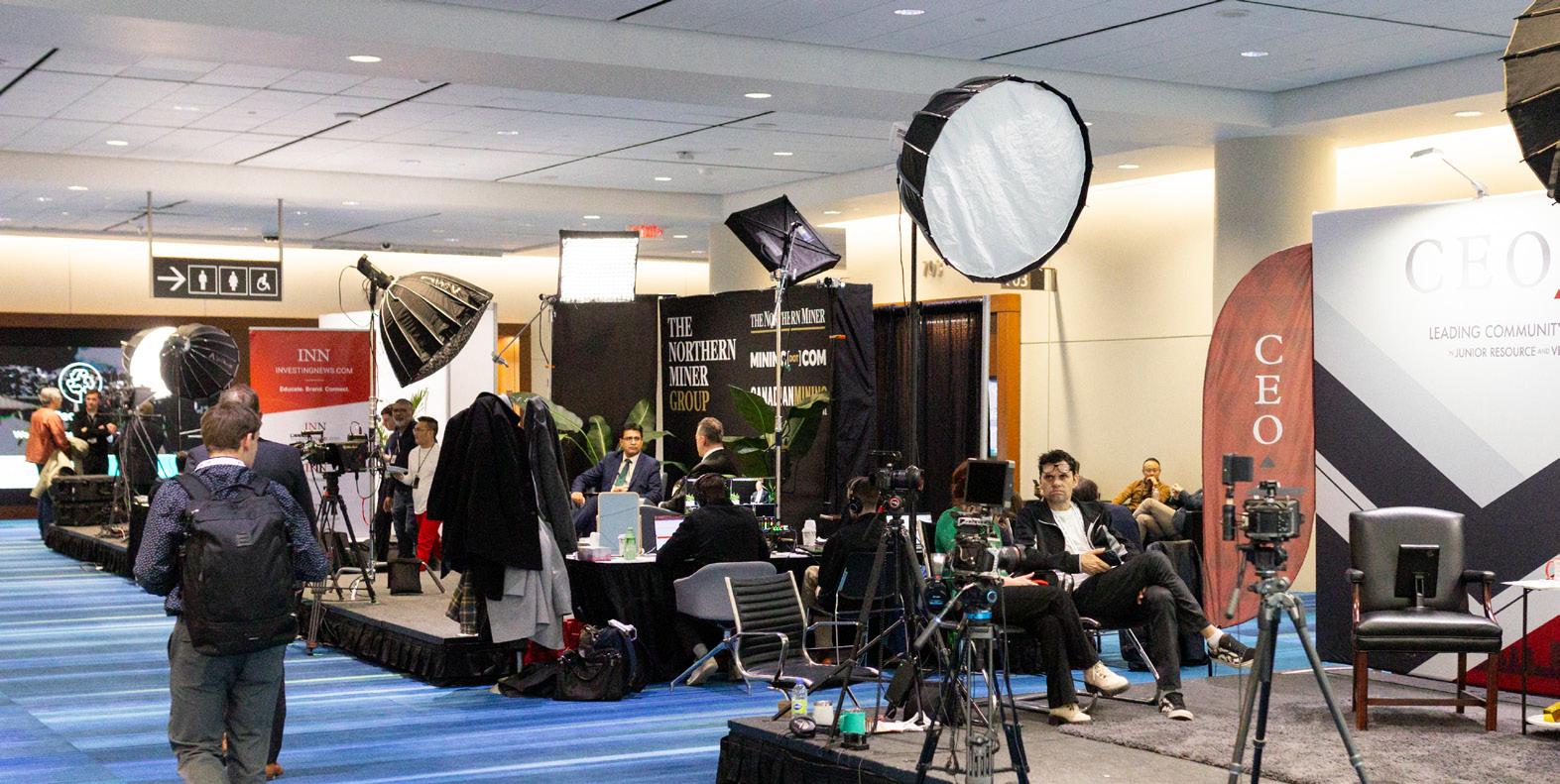
• The convention set a record with more than 1,300 exhibitors, delivering the largest trade show footprint in PDAC’s history and filling the Metro Toronto Convention Centre across both the North and South buildings.
• The convention’s programming featured hundreds of expert presenters examining the key opportunities and challenges shaping mineral exploration, project development and financing.
• Keynote speakers included Gustavo Pimenta, CEO of Vale; Don Lindsay, Director at BHP and Retired CEO of Teck Resources; Mikko Tepponen, Digital Officer at BHP; and Paul Bartos, Former Principal Geologist, Greenfields at AngloGold Ashanti.
• PDAC 2026 welcomed participation from governments around the world, alongside Canadian policymakers and leaders from municipal, provincial and federal levels. Their presence reflects the growing global focus on mineral supply, investment and the policies needed to support responsible development.
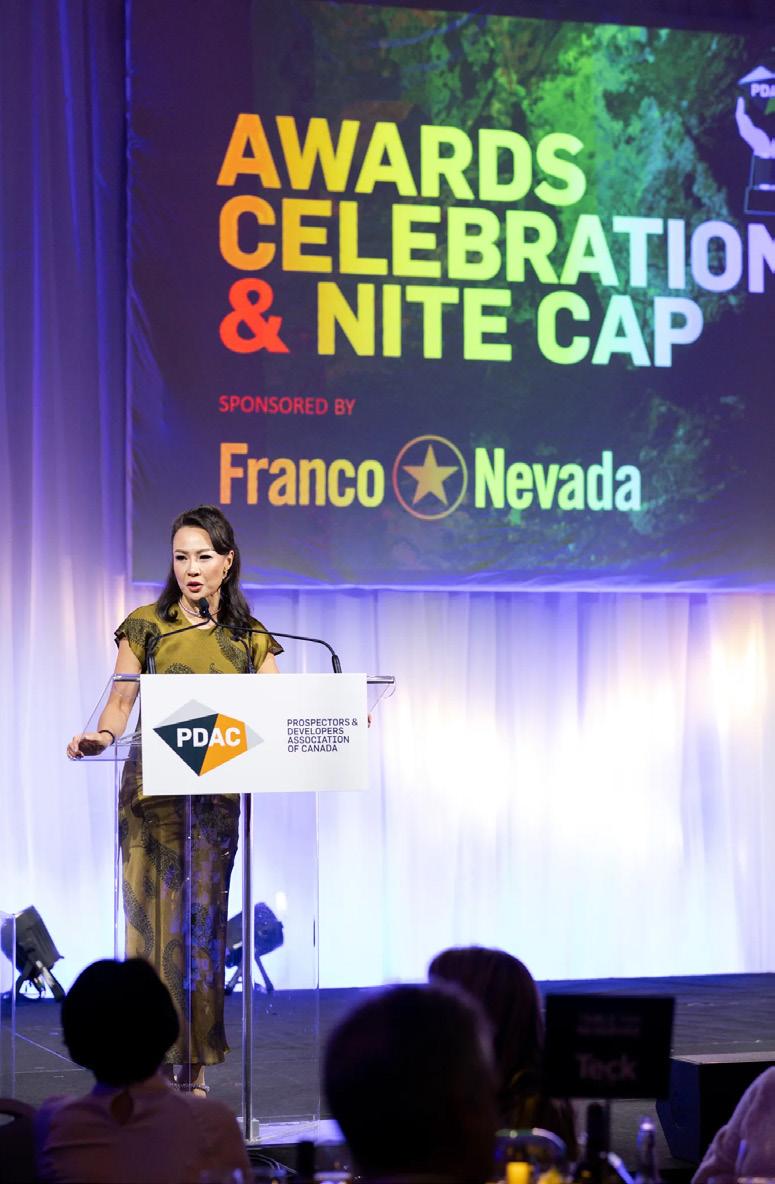
• Five of the industry’s top performers were honoured at the PDAC 2026 Awards Celebration.
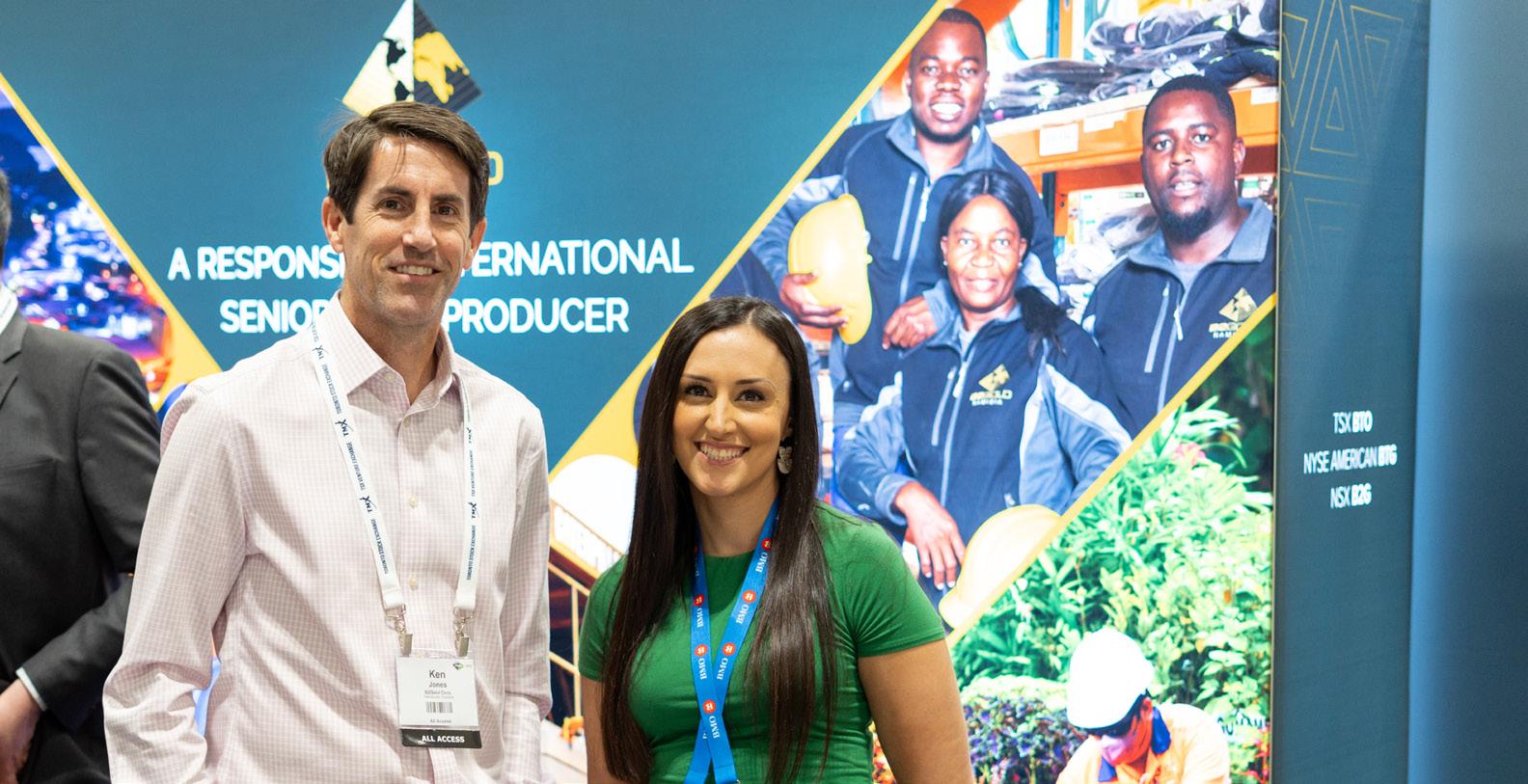
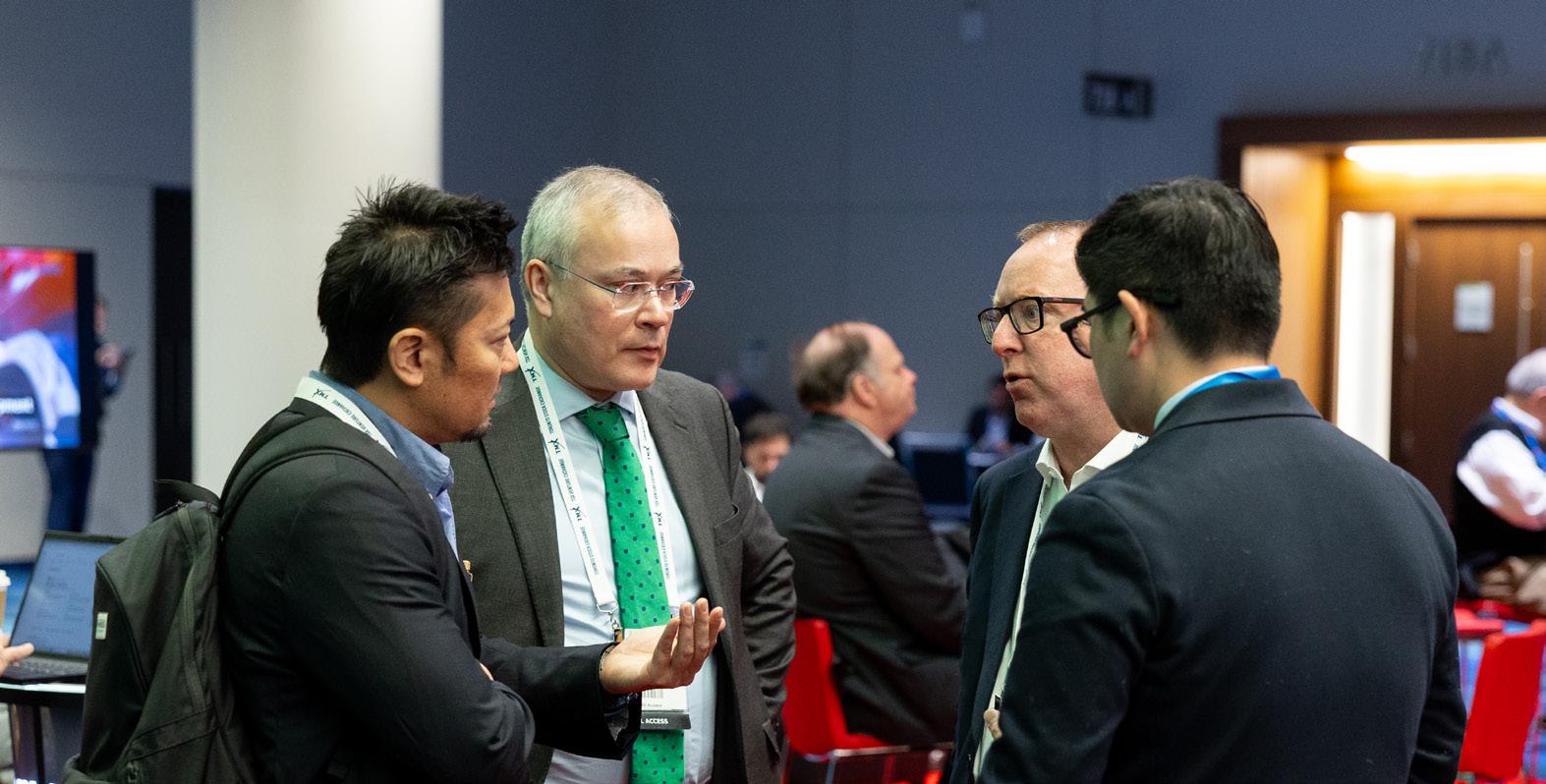
The following pages are a collection of photos and stats that showcase the energy, programming and people that made PDAC 2026 a success.
COUNTRIES REPRESENTED
33.4% INTERNATIONAL ATTENDEES
OUTSIDE OF CANADA, THE LARGEST NUMBER OF ATTENDEES CAME FROM:
UNITED STATES
AUSTRALIA
UNITED
MEXICO
TURKEY
GERMANY
32,155 CONVENTION ATTENDEES
1,193 TRADE SHOW & TRADE SHOW NORTH BOOTHS WITH 863 EXHIBITING ORGANIZATIONS
1,514 STUDENT ATTENDEES
474 INVESTORS EXCHANGE BOOTHS WITH 423 EXHIBITING ORGANIZATIONS
40 CORE SHACK EXHIBITORS
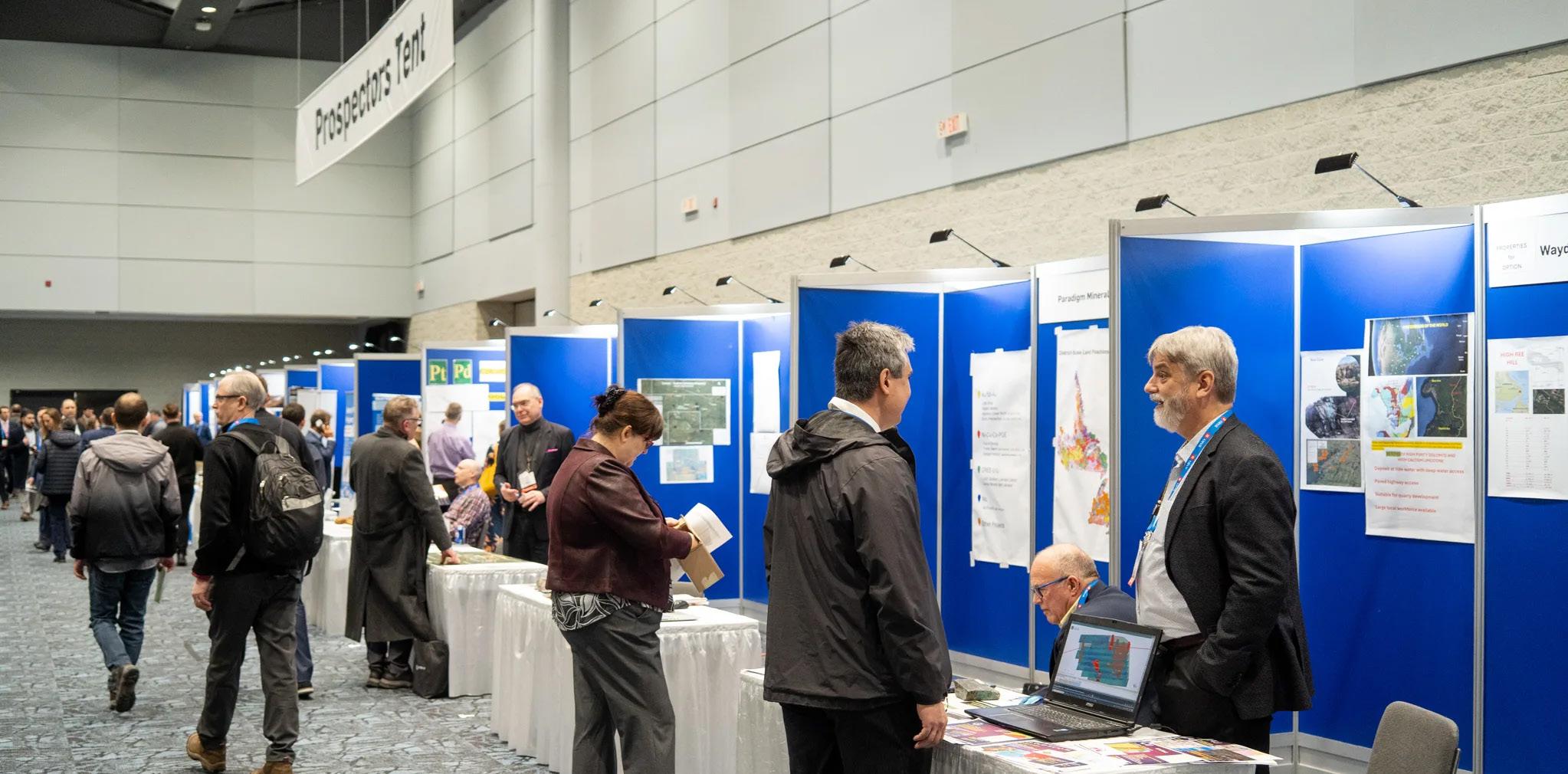
20 PROSPECTORS TENT EXHIBITORS
263 SESSIONS
8 SHORT COURSES
459 ACCREDITED MEDIA
3,431 INVESTORS SELF-IDENTIFIED
31 SPONSORS
PARTICIPATE IN PDAC 2027
A wide range of opportunities for presenters and facilitators to share knowledge, strategies, new concepts, case studies and more are still available for PDAC 2027.
The following program areas are currently accepting applications:
• Exploration Insights
• Short Courses
• Corporate Presentations for Investors (CPI)
• Presentation and Reception Rooms
Apply today by visiting pdac.ca/convention/programming-opportunities-2027
Renewing exhibitor applications opened on June 23, 2026.
Renew your Investors Exchange, Trade Show and Trade Show North booth space(s) for PDAC 2027 by the deadline of Aug. 14, 2026.
New exhibitor applications will open in September.
Mark your calendars and apply this September for booth space(s) in the Investors Exchange, Trade Show, Trade Show North, Core Shack, Prospectors Tent and Indigenous Artisans areas.
For more information on PDAC 2027 exhibitor applications, please visit: pdac.ca/convention/exhibitor-opportunities-2027
Sponsorship opportunities are now available for PDAC 2027.
Connect with your target audience and amplify your impact by visiting: pdac.ca/convention/sponsorship-2027
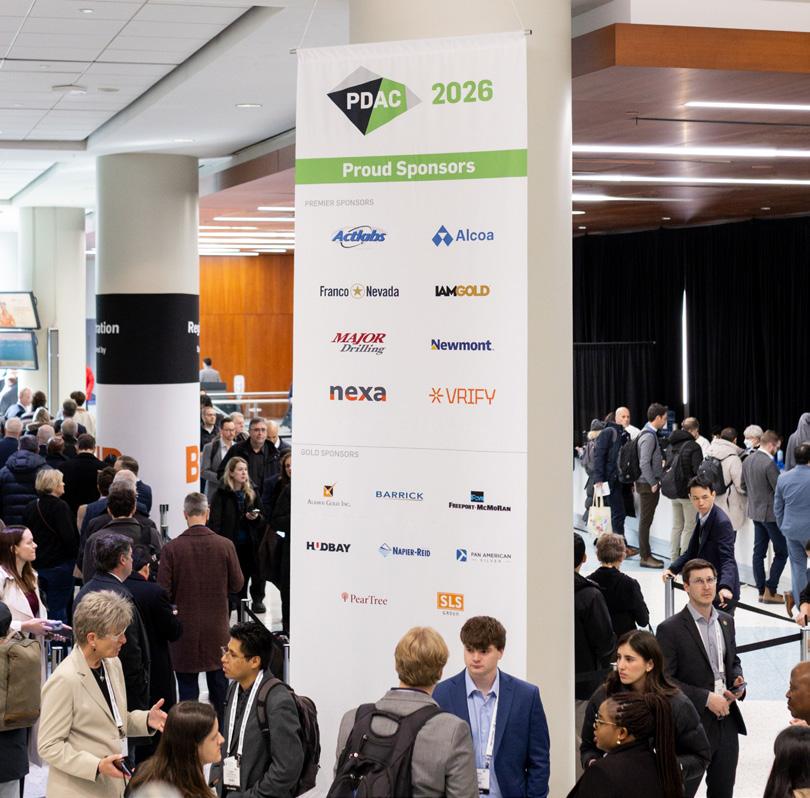
THANK YOU TO OUR PDAC 2026
SPONSORS
PLATINUM SPONSORS
HOST COUNTRY SPONSOR
PATRON SPONSORS 2026
PREMIER SPONSORS
GOLD SPONSORS
THE 2026 LEISHMAN EXPERIENCE
MEMORABLE MOMENTS FROM THE FOURTH ANNUAL DR. DONALD M. LEISHMAN CONVENTION EXPERIENCE IN TORONTO
I was impressed with how comprehensive the experience was, and I quickly learned why thousands of people return to PDAC every year.
- Juno Flath University of Waterloo
With a passion for student mentorship, the Dr. Donald M. Leishman Convention Experience was created by the Leishman family in honour of Don, a life-long geology and mining enthusiast who left a legacy of guiding students and advocating for their future in the mineral exploration industry.
For four consecutive years, the Leishman Experience has given students an all-expenses paid trip to PDAC's award-winning annual convention to attend special programming, educational opportunities, networking sessions and invitations to exclusive events including the President’s Reception, S-IMEW Alumni Reception and the Awards Celebration & Nite Cap
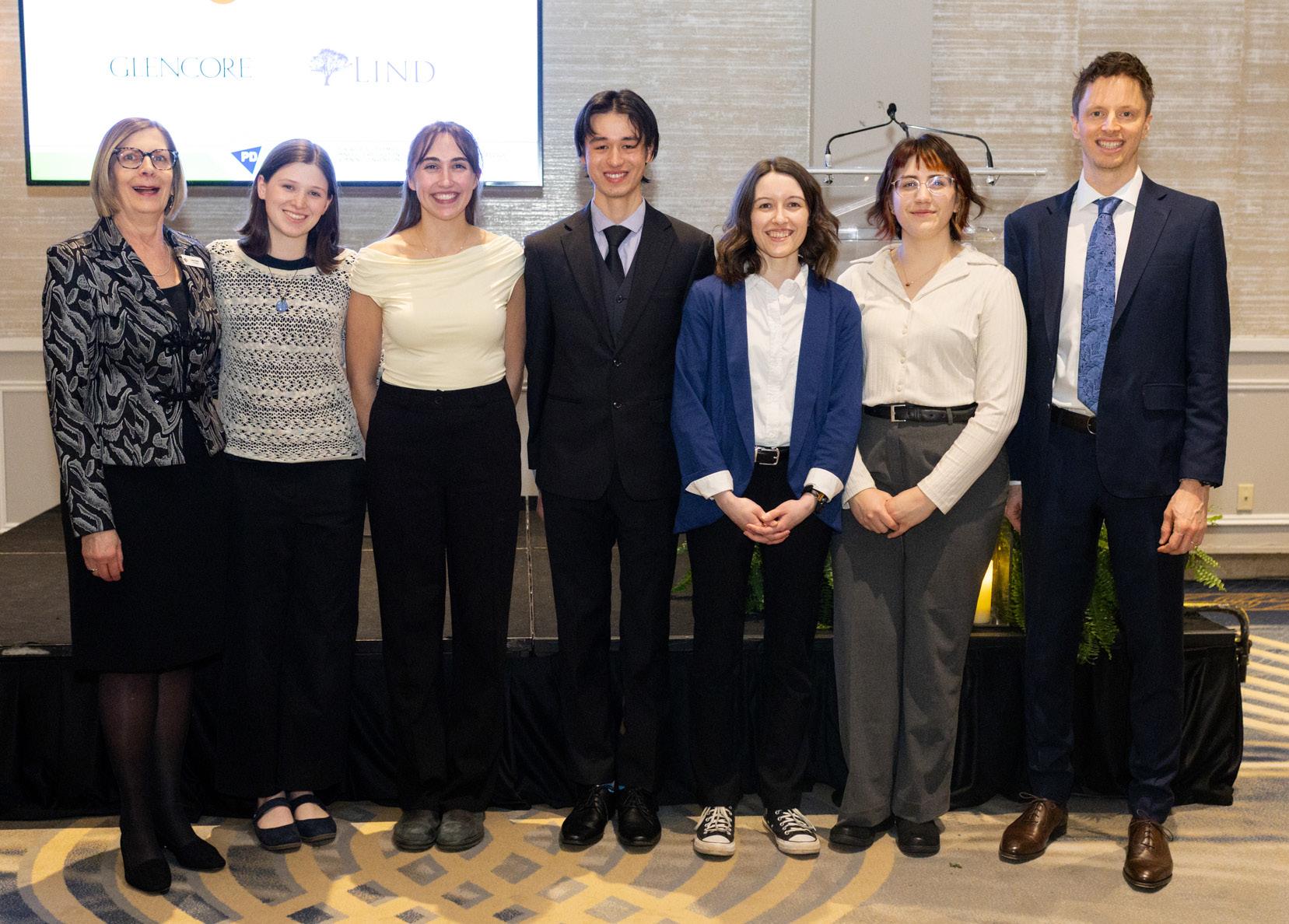
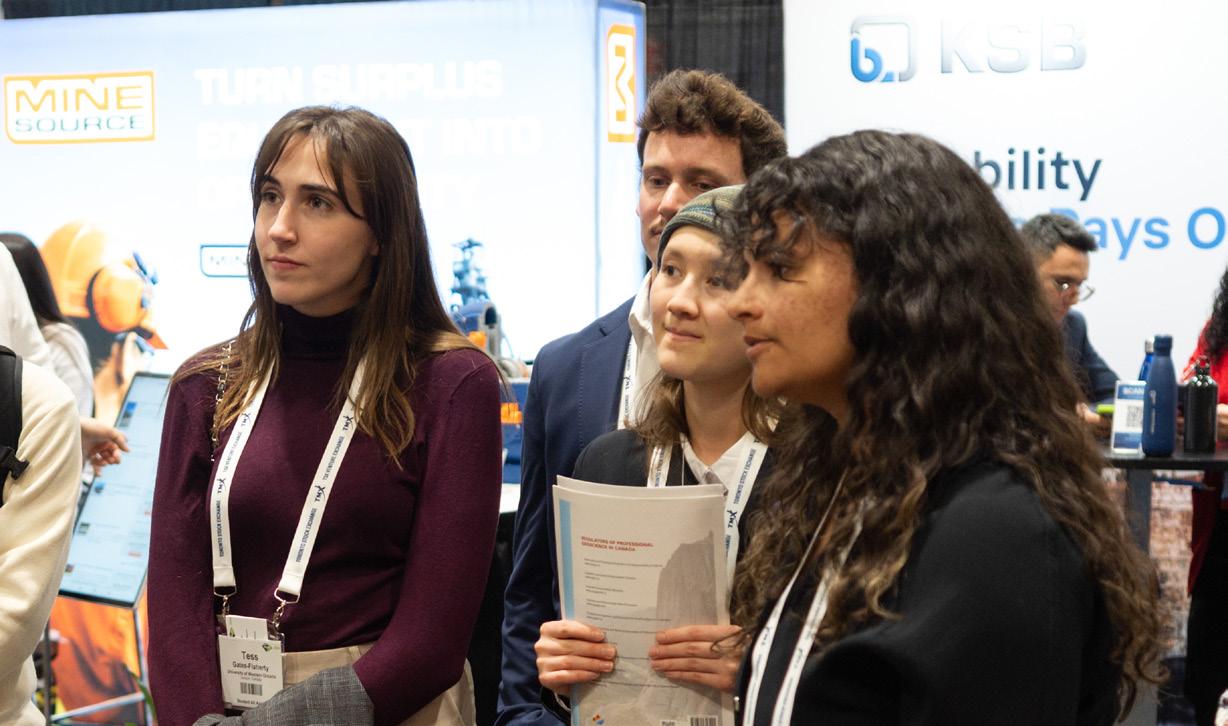
Five undergraduate and master's students enrolled in geology, earth sciences and engineering programs across Canada were selected for this exclusive opportunity to attend the 2026 Convention in Toronto. This year's students were: Amy Chaisson from Lakehead University's Geology program, Madison Dean from the University of British Columbia Okanagan's Earth and Environmental Science program, master's student Tess GatesFlaherty from Western University's Geology program, and Juno Flath and Caroline Landry from the University of Waterloo's Geological Engineering program.
This year's recipients had their flights, meals and accommodations covered while in Toronto, and received complimentary All-Access passes to PDAC 2026. During their four-day experience they made new connections with industry leaders, fellow students and mentors who offered expert guidance and career advice.
Gates-Flaherty described her experience meeting mentors at the Convention by saying, "Every industry professional I interacted with was extremely friendly
to students and eager to share their expertise or provide some advice. I never felt out of place as the industry professionals recognized that I was a student and were happy to provide guidance." Landry added, "Day-to-day you can only read or hear about the different paths available to you, but at PDAC you can talk to professionals who have taken those paths."
Supporting students to pursue their careers in the mineral industry is a priority for PDAC. This is why the Experience also gives students the unique opportunity to engage with PDAC’s Board of Directors and government representatives, as well as the association's current and past presidents, who have all made a point to make students feel included and welcome. "I was constantly refreshed by the energy of people such as PDAC’s President, Karen Rees. Despite having countless responsibilities, Karen made sure to guide us and support our careers in the industry," recounted Flath. Chaisson also said, "Meeting PDAC President Karen Rees was incredible. She warmly welcomed the Dr. Leishman Experience students, and gave us all really valuable advice for our future careers."
Connecting with peers in the industry during the convention is another important aspect of the Experience. When the students were asked what some of their most memorable moments were, several discussed meeting fellow students at various events. Chaisson said, "One of the most eye-opening experiences at the convention was the StudentIndustry Mixer. I met a lot of students from other universities and we got to share our work, school and PDAC experiences. Odds are we'll meet again in our careers and we can all look back at those moments of when and where we first met!" Gates-Flaherty echoed this by saying, "One of my favourite parts was being
able to meet new students and reconnect with friends from far away schools; it was amazing to see the community that formed due to PDAC. I’m particularly glad I got to share this experience with the other students selected for the Dr. Donald M. Leishman Convention Experience and was able to gain long-term friendships."
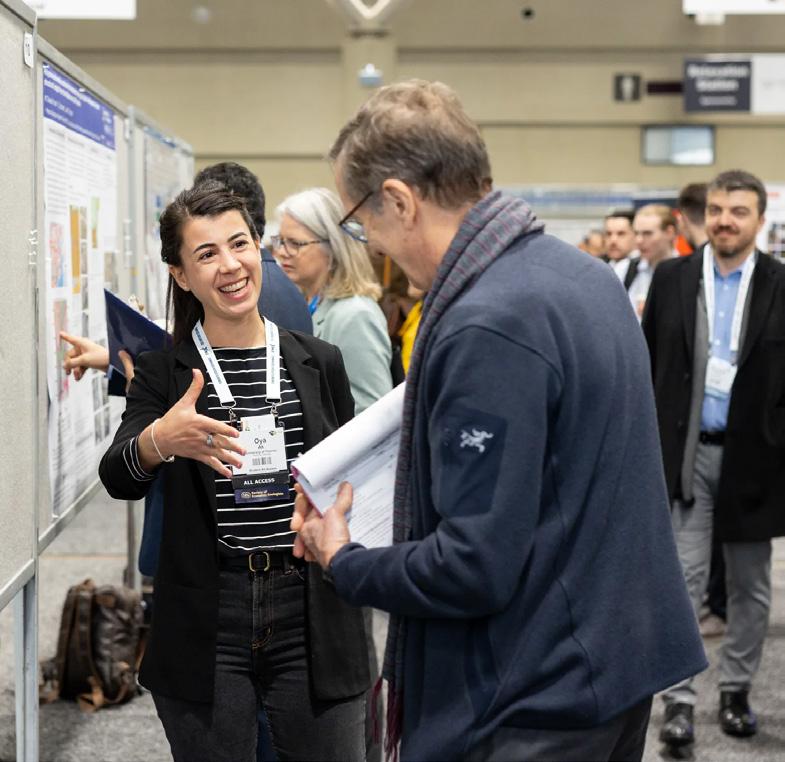
The students' All-Access passes allowed them the opportunity to explore the over 600,000 square feet of convention space in the Metro Toronto Convention Centre. This included visiting the thousands of tradeshow booths and exhibitors over four days. Gates- Flaherty talked about her experience networking with the kinds of mineral exploration and mining community members she would not have had an opportunity to meet if not for the Experience. "Going up to industry experts and professionals was extremely intimidating at first, but it allowed me to step outside my comfort zone, and I learned so much from it. There were so many talks, booths and networking events that allowed me to make connections, learn about the industry, and explore my own interests in the industry."
With more than 32,155 participants and 141 countries represented at the 2026 Convention, PDAC's annual event earned its name as the World's Premier Mineral Exploration & Mining Convention. For first-time attendees like these five students, it can lead to an appreciation of the true scope of the global exploration community. "Being at PDAC really put the whole of the mining industry into perspective. Something that big of a size is always hard to picture until you are immersed in it. For example, walking around the trade show and seeing all the different companies, technologies and services available helped me to realize that there are so many moving parts and evolving elements that are constantly transforming the industry," said Landry. "When you are overlooking the trade-show floor, and you gaze on all the booths, you are looking at infinite possibilities."
Additionally, at the evening special events, the students had a proverbial front-row seat to the industry's top performers. As Flath said, "The summit of PDAC was the Awards Celebration,
where I was given an inside look at recent technological and social advancements in the mineral industry and had the chance to speak with some of the industry’s most accomplished leaders."
At the end of the Experience, the students were asked what their overall expectations were going in, and how those expectations compared to the experience they received. Dean replied, "My expectations going into the Leishman Experience was high. I knew it would be so busy at PDAC and that we would be kind of everywhere during the Experience. Whereas my one goal was to try and make the most of it, and make more connections with those in the industry, professionals and students alike. The experience was all that and more."
Chaisson reflected on her thoughts when first applying versus her actual experience. "I was overwhelmed at the thought of going for the first time, but this opportunity was a perfect way to experience every aspect of the conference. I had so much fun interacting with so many new people. I learned about different aspects of the industry and making valuable connections along the way. I was so grateful to be able to meet Paul Leishman and thank him for his family's contribution."
PDAC is grateful for the Leishman family's ongoing generosity, providing students unparalleled access to PDAC's annual convention while covering the cost of travel, meal allowance, accommodation, PDAC student membership, inclusion at private networking events and exclusive learning opportunities.
For any student considering applying for 2027's Experience, the 2026 student cohort gave a few tidbits of advice to help strengthen their applications. Dean said, "While applying, just be yourself! Show off your interests, whether that be in the mining industry or geology, and express that in a creative and interesting way." Chaisson summed it up by saying, "This opportunity is great for learning all about the mining industry. If you show that you are eager to connect with others, ask questions, and make the most of the opportunity, then this experience is perfect for you!“
If I had to sum up my first PDAC experience, I would use the word inspiring. I left PDAC with a broadened perspective, valuable new connections, budding passions, and best of all, new friends.
- Caroline Landry University of Waterloo
To read more about the Experience and apply for PDAC 2027, visit pdac.ca/dr-donald-mleishman-convention-experience.
A PATH TOWARDS RECONCILIATION
Planning the Path Towards Reconciliation (the Plan) is a framework that was created from a foundation of respectful dialogue and reflection. The planning of this important document, which serves as a guide for PDAC's executive team, staff and volunteers to proactively foster mutually beneficial relationships between the mineral exploration industry and Indigenous Peoples, was a years-long collaboration that included the shared stories, experiences and knowledge of hundreds of individuals.
Initially, the idea for PDAC to create the Plan was raised by the association's Indigenous Affairs (IA) committee . The IA Committee brings together mineral exploration experts and Indigenous leaders who provide guidance to PDAC on strengthening relationships and meaningful collaboration among Indigenous communities, Indigenous-owned companies and the mineral exploration and development industry.
Recognizing that Indigenous participation is vital to the future of the sector, the committee provides a forum for open dialogue on how to support respectful engagement, meaningful participation and opportunities for Indigenous communities to help shape Canadian exploration projects.
Following the Indigenous Leaders Gathering at PDAC 2024, where the concept was discussed further, the Plan began to take shape. Those involved in the early discussions agreed it would provide important guidance for PDAC staff and volunteers.
The content development process for the Plan began in September 2024 and was informed by the Truth and Reconciliation Commission of Canada’s work, including
the Calls to Action, as well as the stories, experiences and knowledge shared by PDAC’s Indigenous members, convention attendees, presenters, volunteers and collaborating organizations.
Then in the spring of 2025, PDAC gathered additional feedback from hundreds of Indigenous and non-Indigenous contributors, including PDAC members, volunteers (including board members and committees), staff, and participants of the following year's Indigenous Leaders Gathering and PDAC's Indigenous Youth and Early Career Ambassador Program held during the annual convention.
Completed in December 2025, the final document was reviewed by the IA Committee and PDAC’s board before publication . In May 2026, PDAC staff participated in a training session focused on implementing the Plan into their work. Much like PDAC’s Strategic Plan, the Plan provides a framework to help guide the association’s decisions, priorities and actions.
Staff training focused on practical ways to apply the Plan’s pillars across PDAC’s work. This included encouraging Indigenous participation in PDAC programs and opportunities, such as committees and the convention, and identifying barriers that can be removed to support broader participation.
When considering a new project, executing a communication campaign, or planning for the convention, individuals can refer to the Plan to ensure their actions align to its objectives and goals.
As the sector continues to evolve, PDAC created the Plan as a flexible guide that can adapt over time. For that reason, the Plan is described as a “living document” and will be reviewed, assessed and evaluated with input from PDAC staff, volunteers and members, including as part of future updates to PDAC’s Strategic Plan.
For the Plan’s visual design, PDAC prioritized working with Indigenous creators. The association issued a national call for proposals seeking designers with experience in Indigenous art, culture and community engagement, as well as a thoughtful approach to representing the Plan’s themes visually.
Vincent Design, an Indigenous-led design firm from Winnipeg, Man., stood out for its experience creating thoughtful, informed and culturally grounded designs that honour Indigenous cultures across Canada. As a national organization, PDAC wanted the Plan’s visual identity to include elements that would resonate with readers across the country.
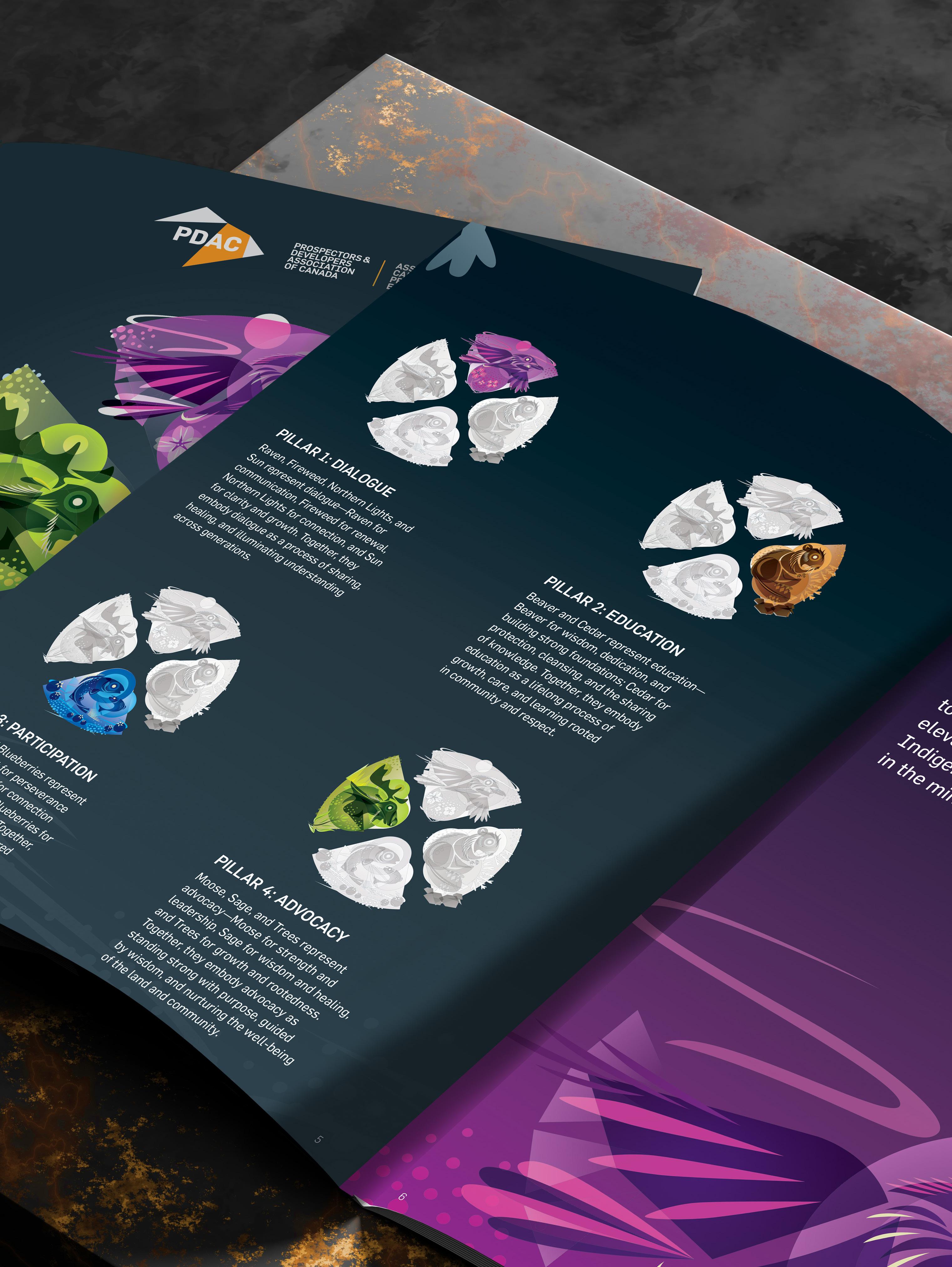
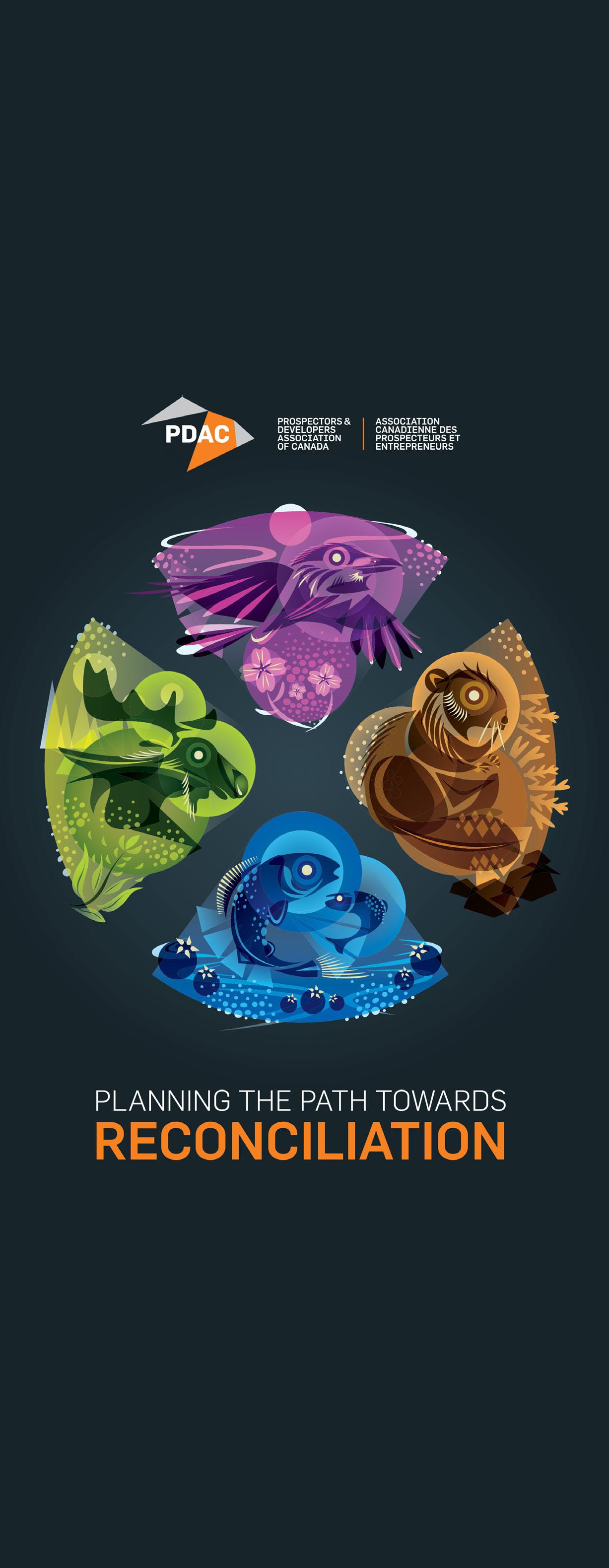
Vincent Design gave the Plan, and its four pillars (dialogue, education, participation and advocacy) a unique yet traditional look and feel, inspired by the Seven Generations Teachings and the connection between Indigenous Peoples and the land.
CORE talked with the Winnipeg agency about their process of designing the Plan, and how they used national Indigenous themes to craft the work's
identity.
| Tell us how Vincent Design and its designers first approached creating the traditional-looking visual aesthetic for the Plan and its “four pillars”?
VD: From the beginning, we approached the Plan as more than a communications piece. It was a relationship document and we wanted to ensure the visual language reflected that. We wanted the design to feel grounded, thoughtful, and connected to the spirit of reconciliation, while still being clear and easy to navigate.
The four pillars gave us a natural structure to build from, and we used that framework to create a design that felt balanced, intentional, and rooted in story.
Rather than designing something purely decorative, we focused on creating a visual experience that supported the message. The traditional feel came through in the symbolism, structure and overall tone, while the modern execution helped ensure the Plan remained approachable and practical for its audience.
| Were there any specific Indigenous cultural traditions that were used for inspiration in the design, and how did you ensure Indigenous perspectives and traditions were incorporated in an appropriate and respectful manner?
VD: Our inspiration came from broad Indigenous values and ways of knowing, including connection to community, the land, storytelling and long-term responsibility. We were careful not to pull from any one Nation in a way that would feel overly specific or inaccurate. Instead, we aimed to create something that honoured Indigenous perspectives in a respectful and inclusive way.
For us, respectful design starts with listening. That means engaging early, asking good questions and being clear about what we are and are not representing. It also means recognizing that Indigenous culture is not one singular thing, so we approach each project with humility, care, and a commitment to doing the work properly. The goal is always to reflect Indigenous perspectives in a way that feels authentic, considered and accountable.
| Can you tell us more about the Seven Generations Teaching the designer used to fashion the iconography throughout the Plan, and how they were able to achieve a balanced of traditional look with modern design?
VD: The Seven Generations Teaching was a meaningful foundation for the iconography because it speaks to continuity, responsibility and the impact of decisions over time.
That made it a strong conceptual guide for the Plan, especially because reconciliation is not about a single moment, it is about the work we carry forward for future generations. The Teaching helped shape symbols that feel connected to both the present and what comes next.
To balance the traditional and the modern, we kept the iconography clean, restrained, and simple, while allowing the underlying meaning to carry the depth. The traditional quality comes through in the ideas and symbolism, and the modern quality comes through in the clarity and refinement of the design system. That combination helped the Plan feel respectful, contemporary and enduring.
PDAC aims to advance the pillars described in the Plan through practical steps and commitments. The Plan is an important step in supporting mutually beneficial relationships between Indigenous communities and industry. To read the full document and learn more, visit pdac.ca/about-pdac/our-roadmap .
When considering a new project, executing a communication campaign, or planning the convention, individuals can refer to the Plan to ensure their actions align to its objectives and goals.
S-IMEW 2026 IN PICTURES
PDAC’S FLAGSHIP STUDENT INITIATIVE, THE STUDENTINDUSTRY MINERAL EXPLORATION WORKSHOP, MARKED ITS 17TH EDITION IN 2026.
Over two weeks, S-IMEW immersed participants in mineral exploration through field activities, technical workshops and industry connections.
APRIL 29 | ARRIVAL
Geoscience students from across Canada connect with each other upon arrival at Collège Boréal in Sudbury for the two-week workshop.
APRIL 30 | SUDBURY REGIONAL GEOLOGY
Jaime Burns, St. Francis Xavier University, poses with a shatter cone in the Huronian Quartzite.
MAY 1 | REGIONAL MAPPING
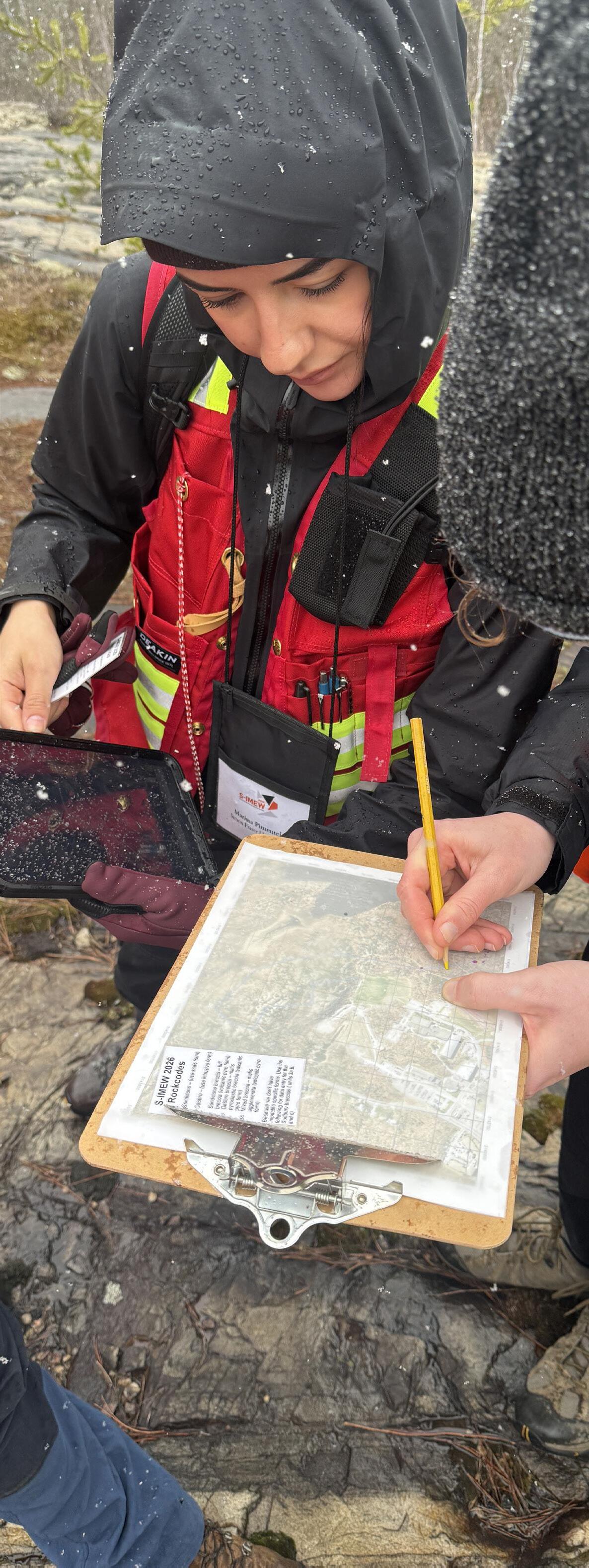
Marissa Pimentel, Simon Fraser University, and Heather Tocher, University of Victoria, map their traverse with the Ontario Geological Survey.
MAY 2 | EXPLORATION INDUSTRY KEY DRIVERS
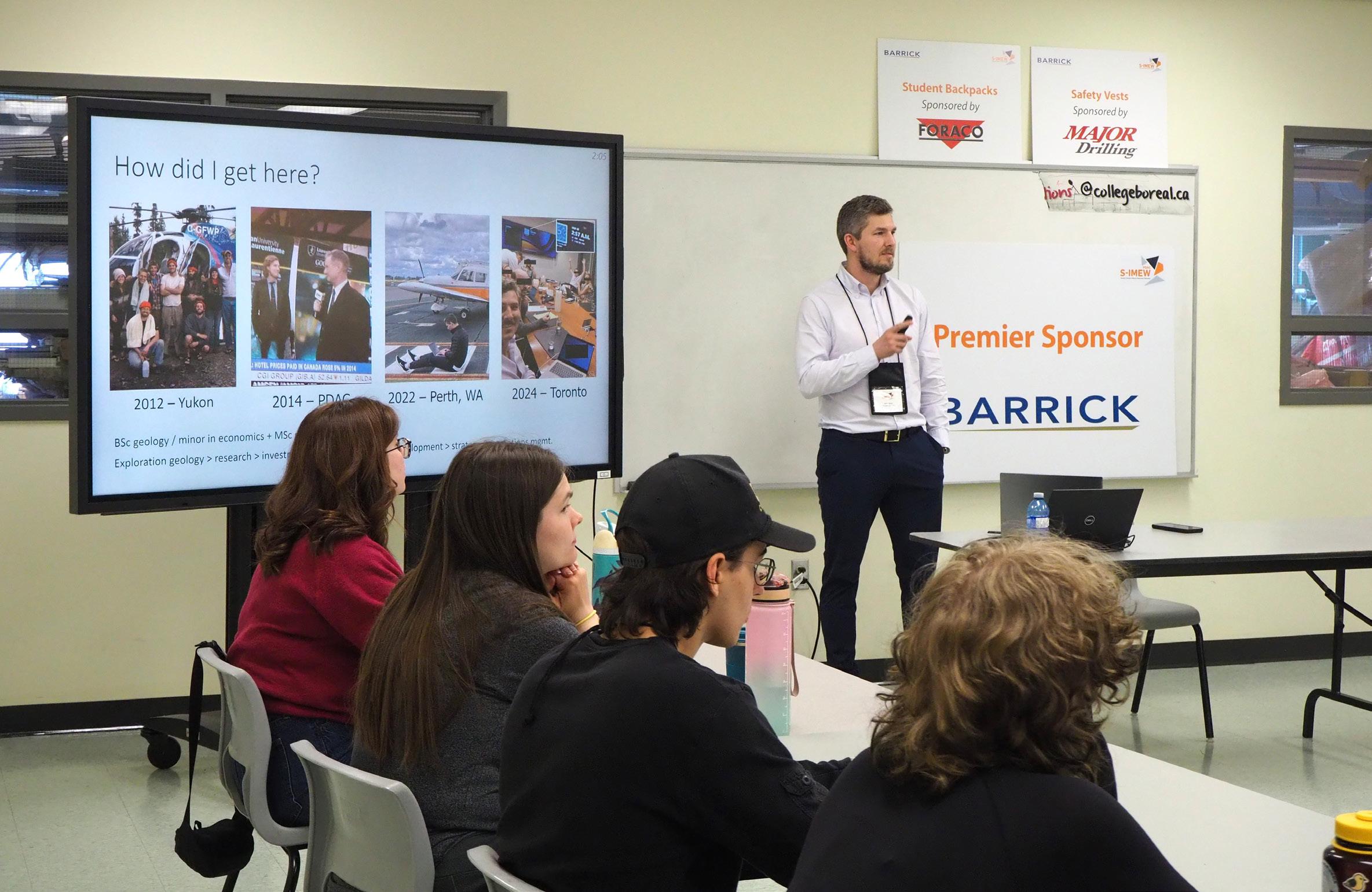
Nick Joyce, S-IMEW 2013, Hudbay Minerals, details his transition from field work to corporate development and strategy prior to breaking down the complex topic of capital markets for the students.
MAY 3 | EXPLORATION MAPPING
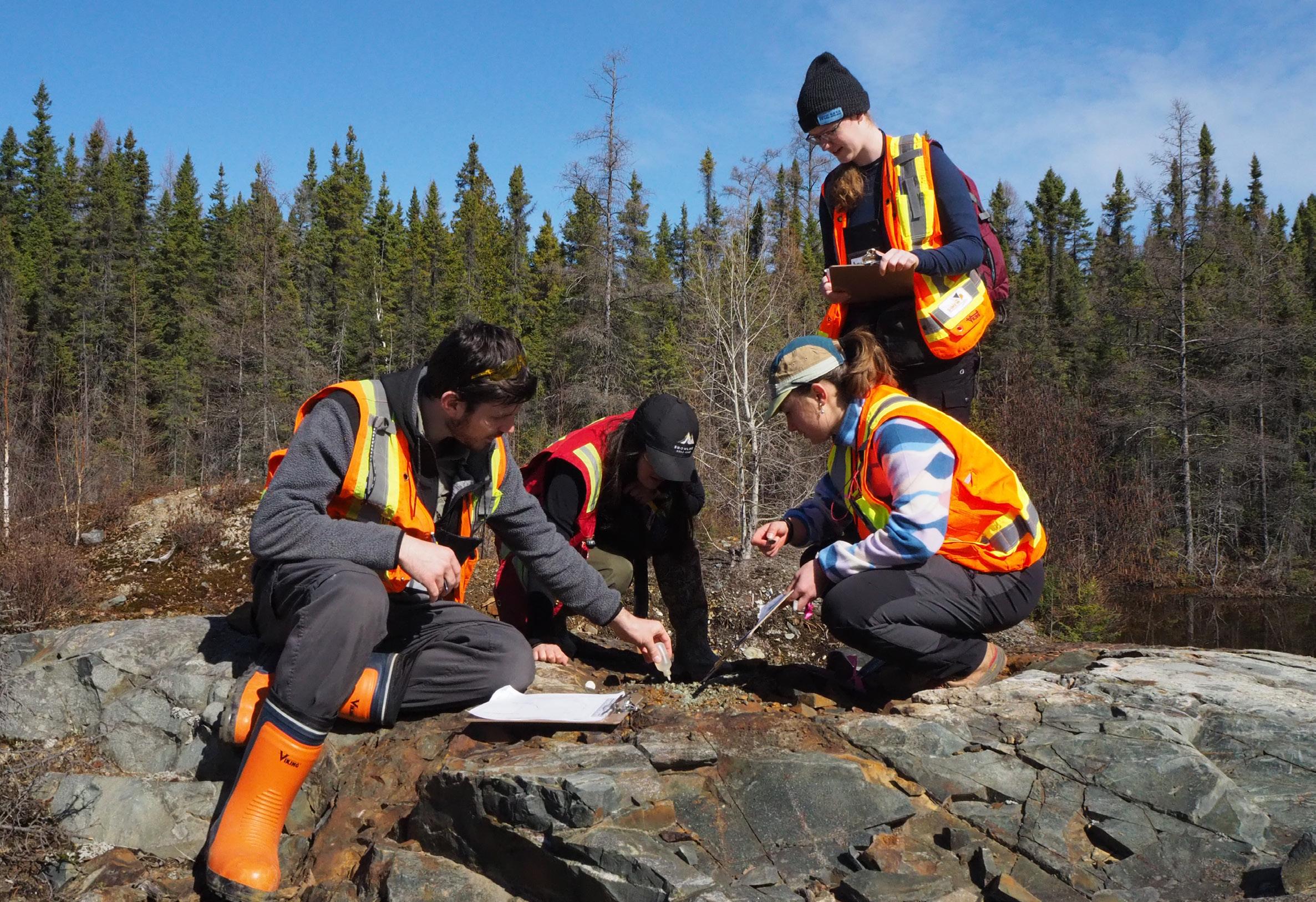
Philippe Paquet, Gold Fields, Roxana Gorodnichy, University of Ottawa, Heather Tocher, University of Victoria, and their team lead Joy Carter, S-IMEW 2019, Snowline Gold, test for carbonates using dilute hydrochloric acid.
MAY 4 | PROFESSIONAL RESPONSIBILITY
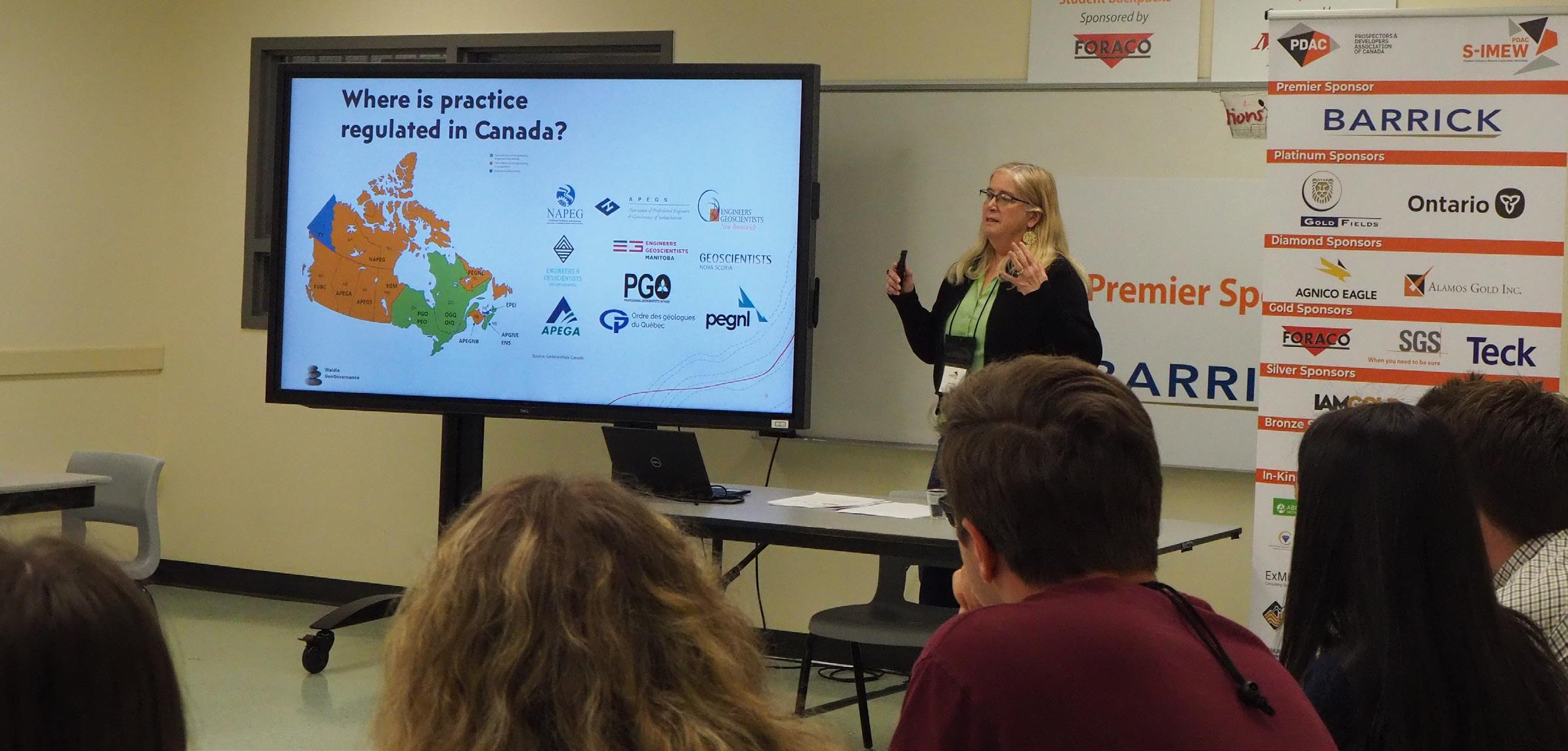
Andrea Waldie, Waldie GeoGovernance, discusses the importance of professional responsibility and registration in geoscience.
MAY 5 | GEOPHYSICS
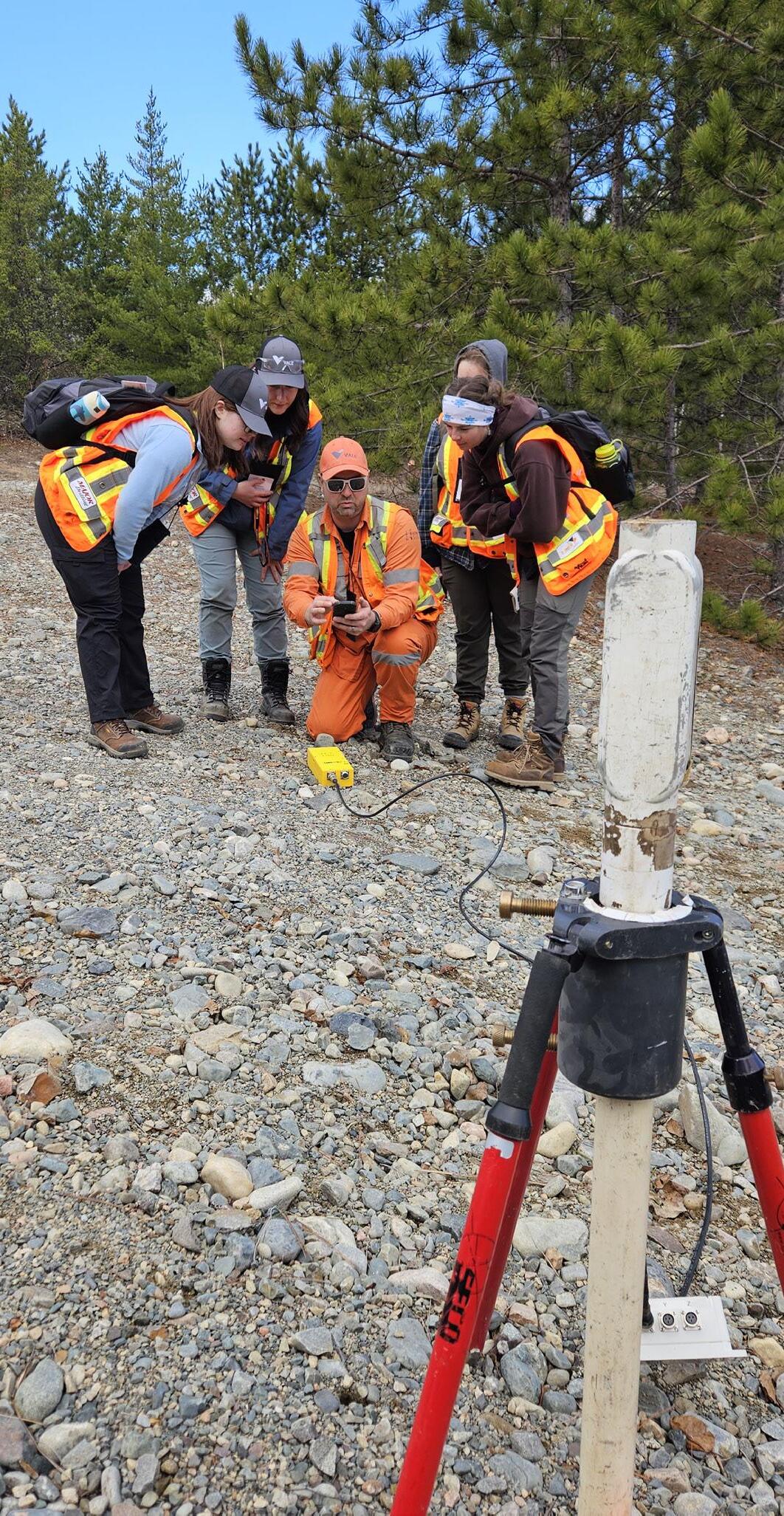
Chloe Oxner, Saint Mary’s University, Elise Delaney, Lakehead University, Maya Lecuyer, University of Calgary, and Sydney Brimicombe, Mount Royal University, observe real-time EM data with Steve Kant, Vale Base Metals.
MAY 6 | RESPONSIBLE EXPLORATION
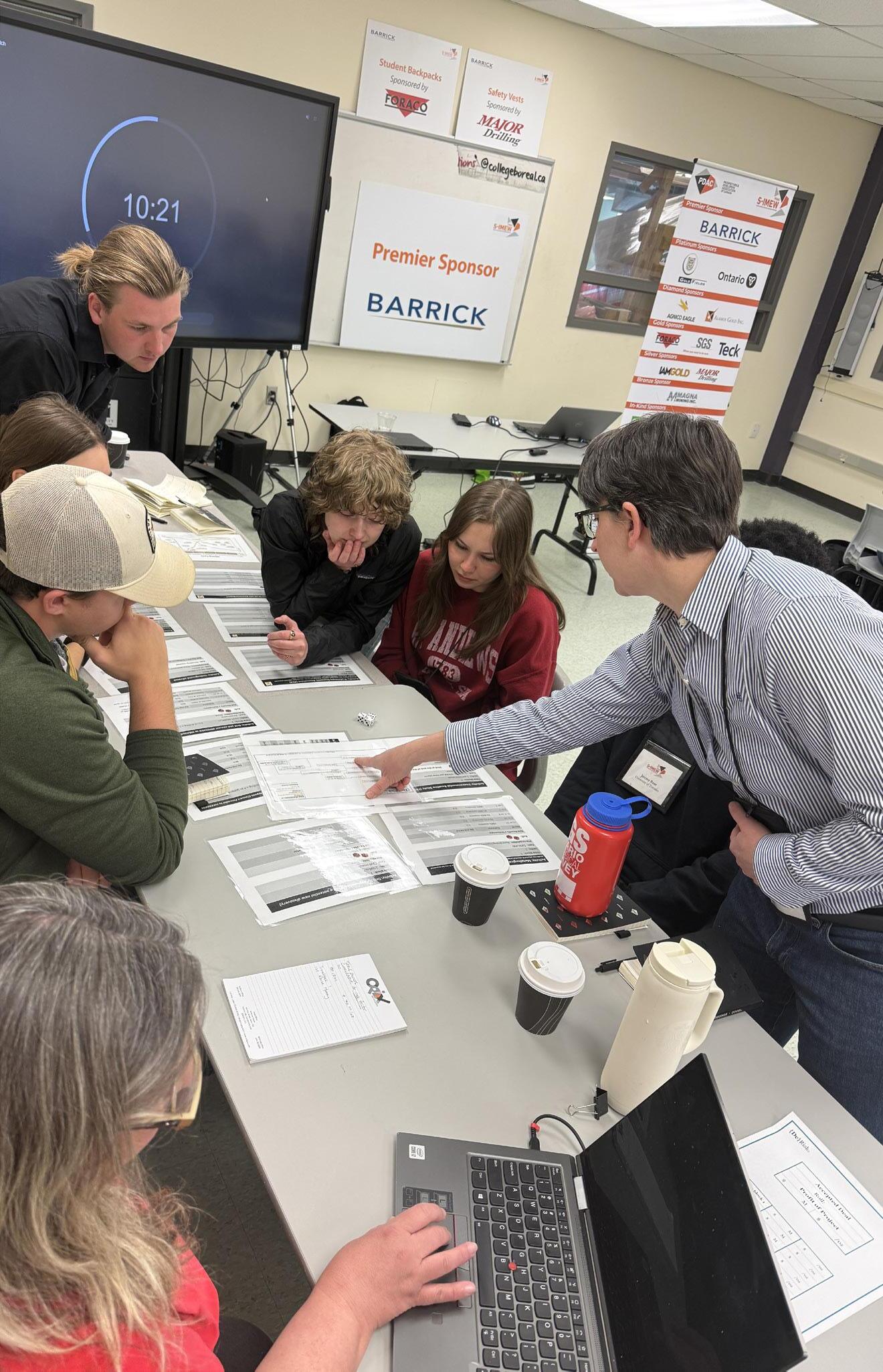
Alexandria Marcotte, Osisko Metals, leads an exercise to de-risk an exploration project.
MAY 7 | KIRKLAND LAKE TOUR
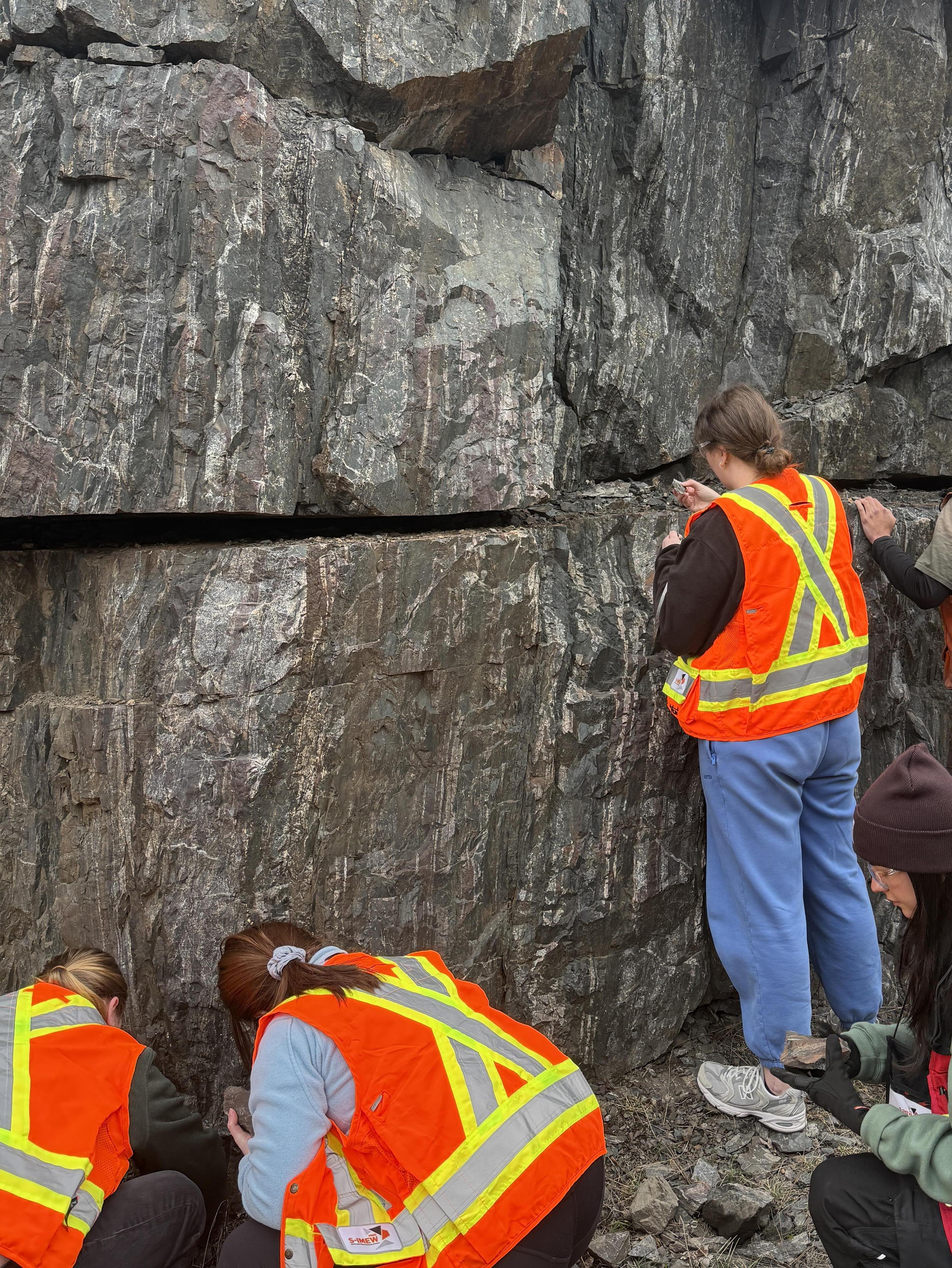
Ian Trinder, Willeson Metals Corp., and Ben Linton, Queen’s University, observe the bands in the Temagami Banded Iron Formation.
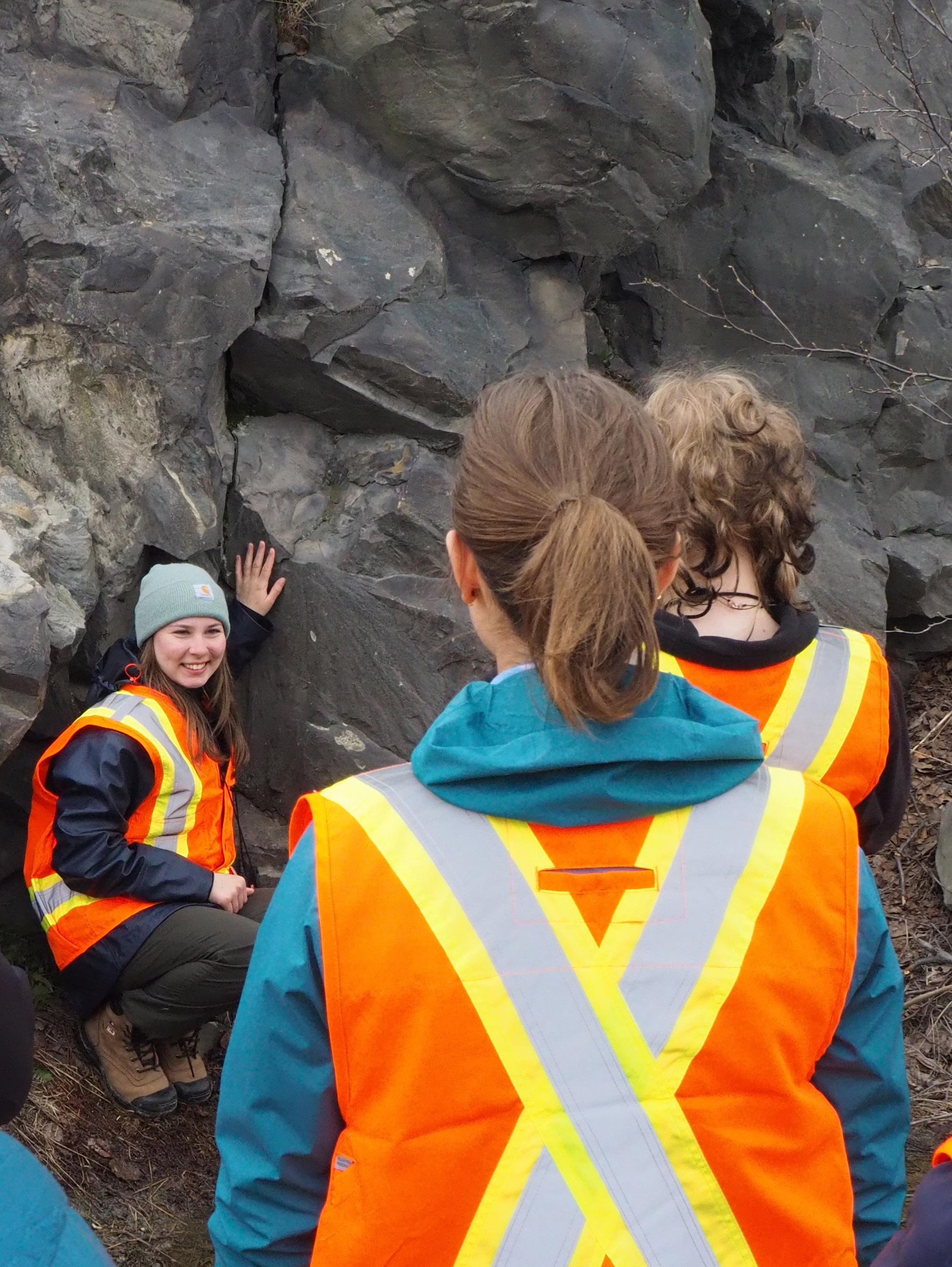
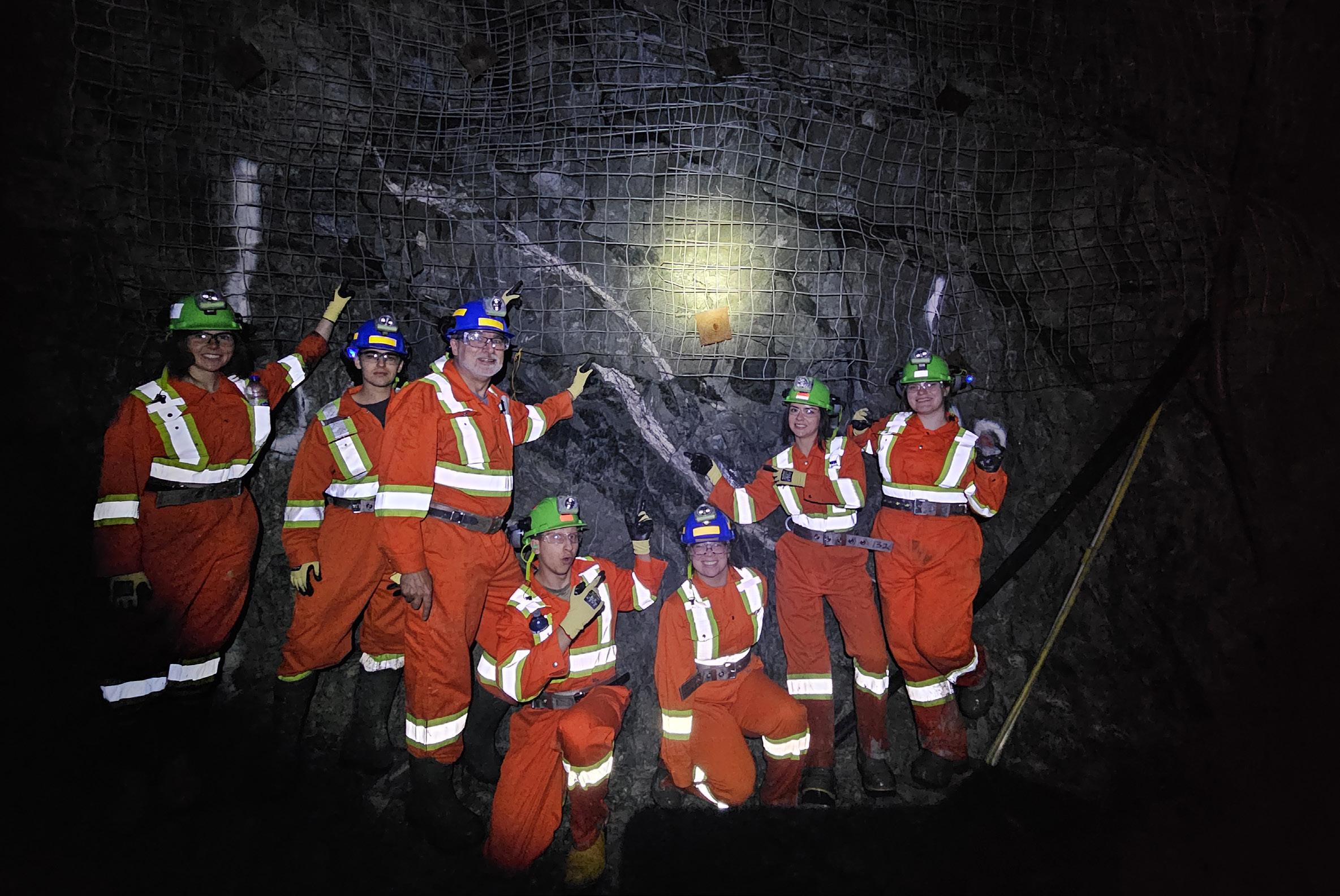
MAY 8 | UNDERGROUND MINE TOURS Students observe an offset laminated quartz-carbonate vein underground at Agnico Eagle’s Macassa Mine.
MAY 9 | KIRKLAND LAKE REGIONAL GEOLOGY
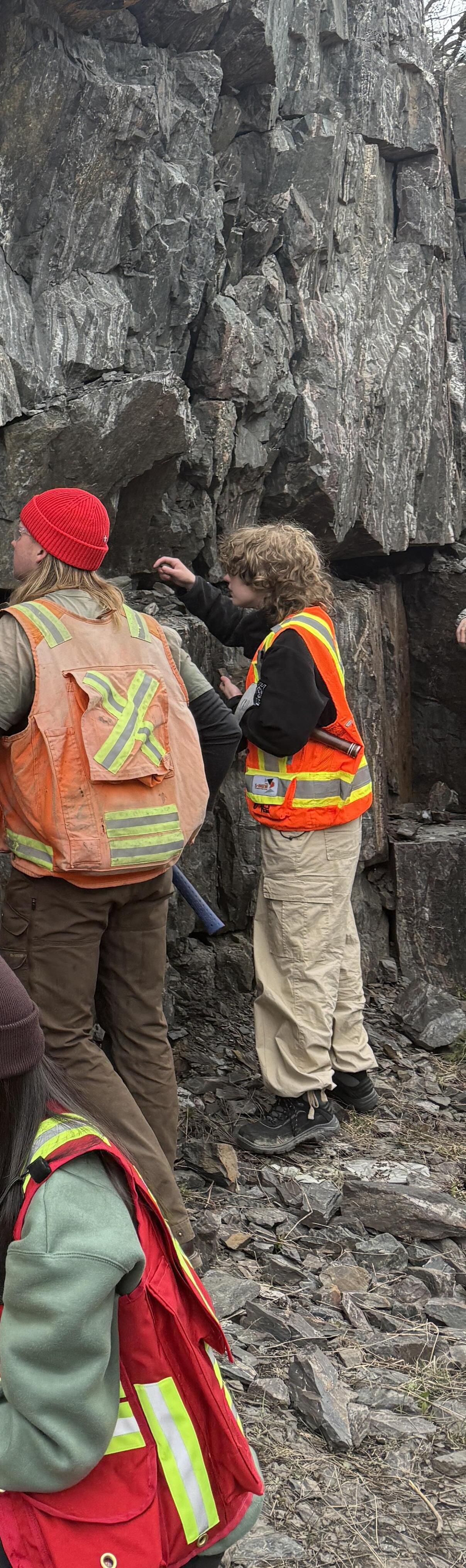
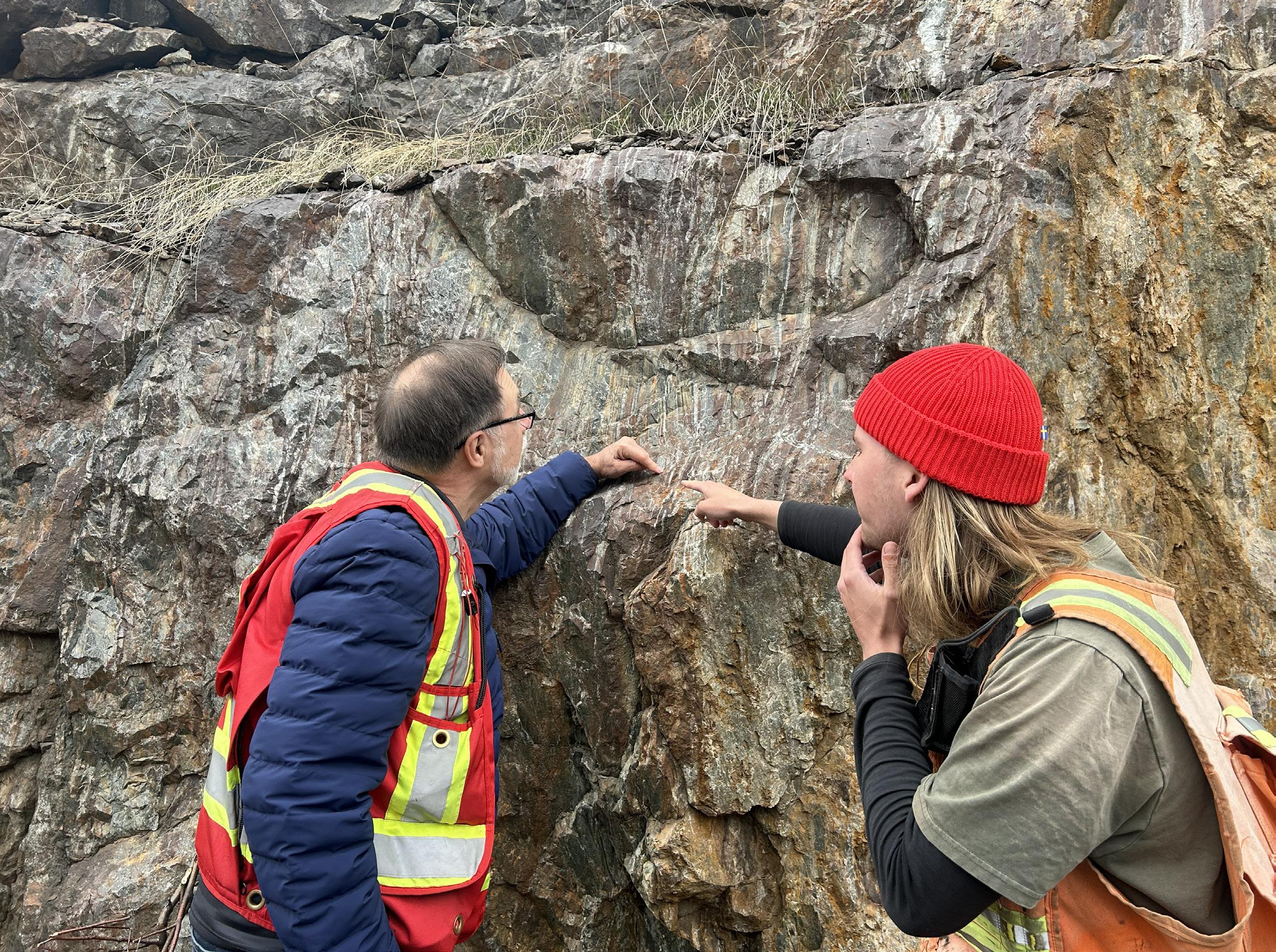
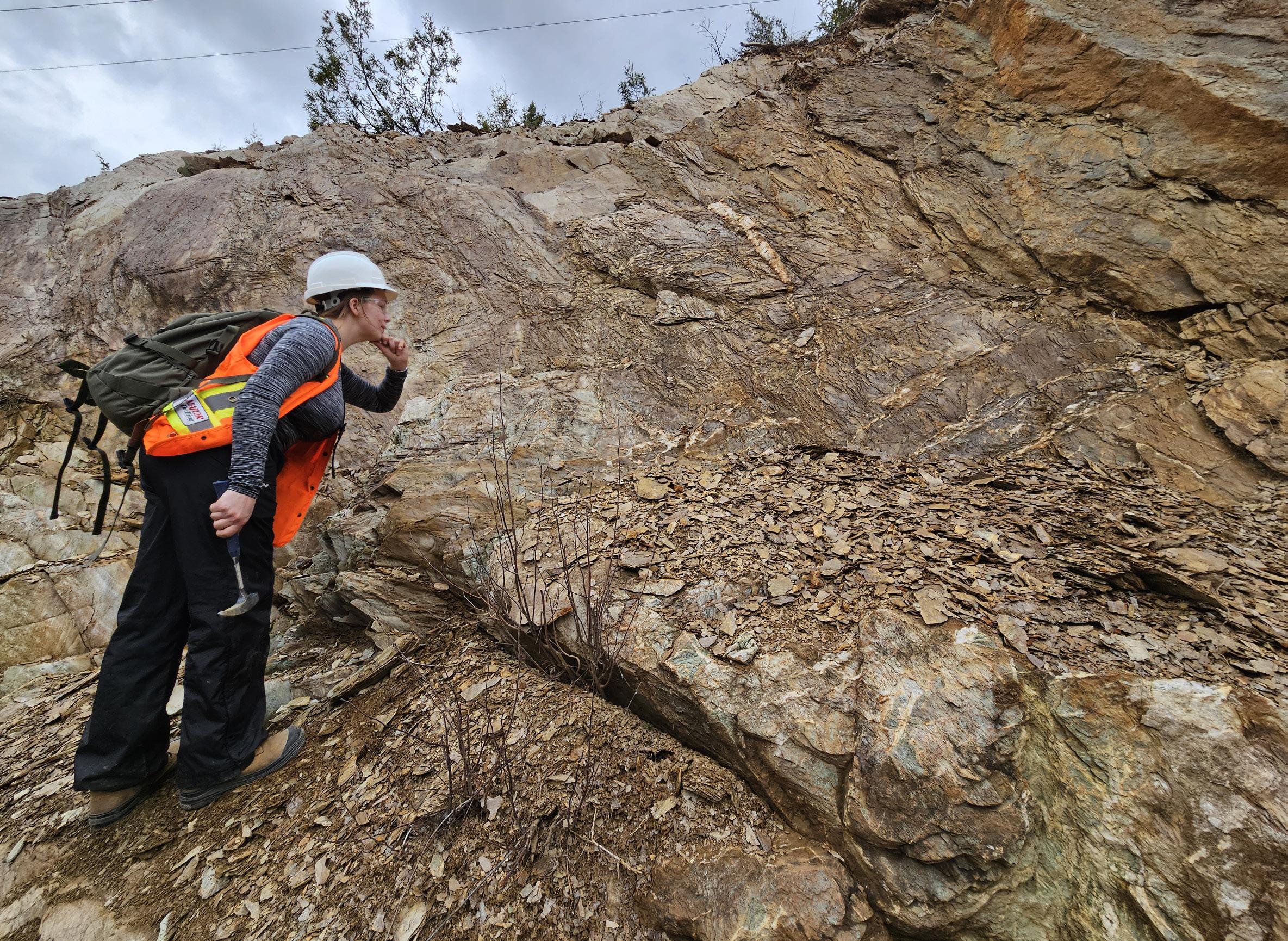
Sydney Brimicombe, Mount Royal University, looks at the ultramafic rocks within the Larder Lake-Cadillac deformation zone.
MAY 10 | COBALT
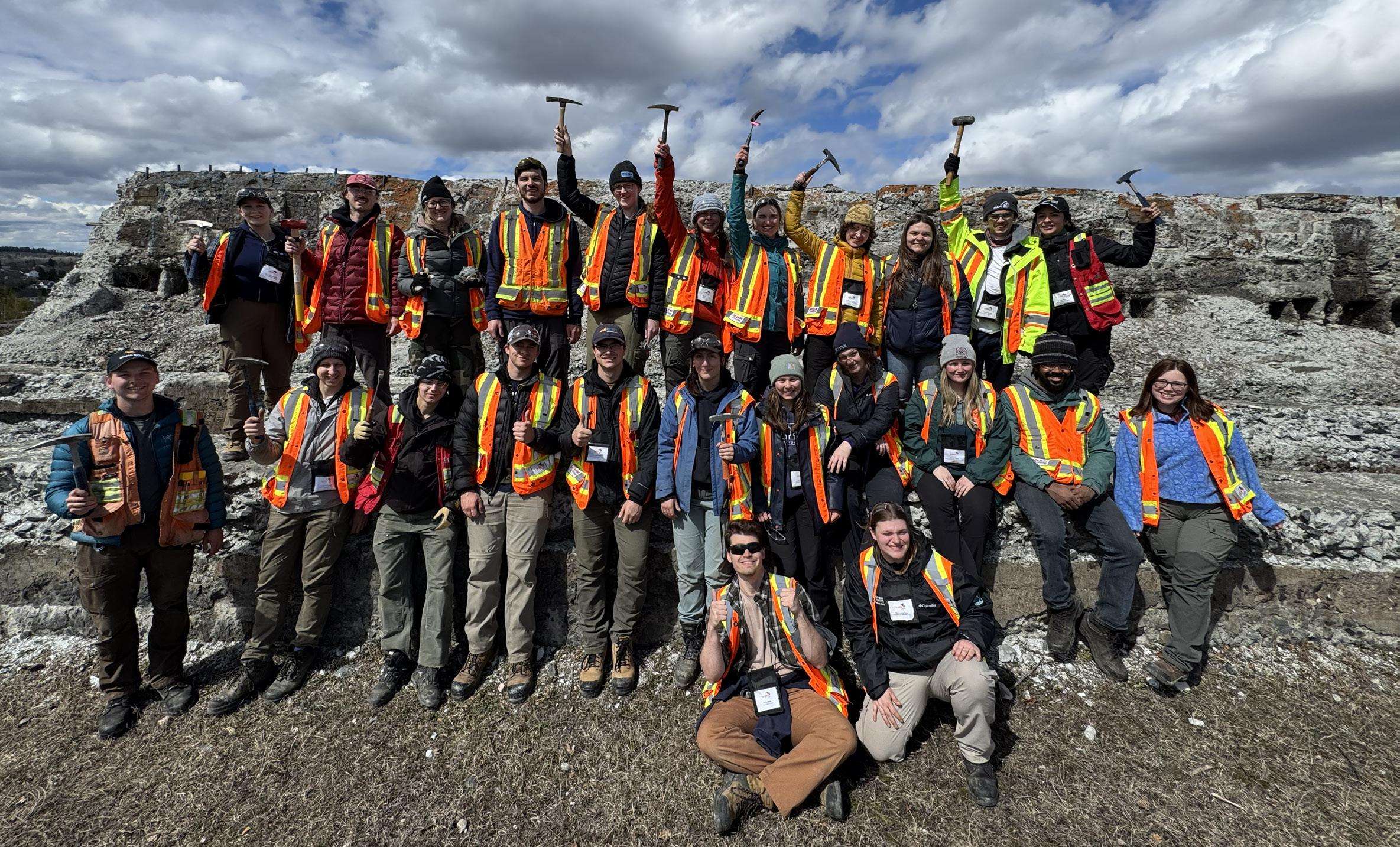
Group photo at the Nipissing Hill Lookout in Cobalt, Ont.
MAY 11 | GEOCHEMISTRY
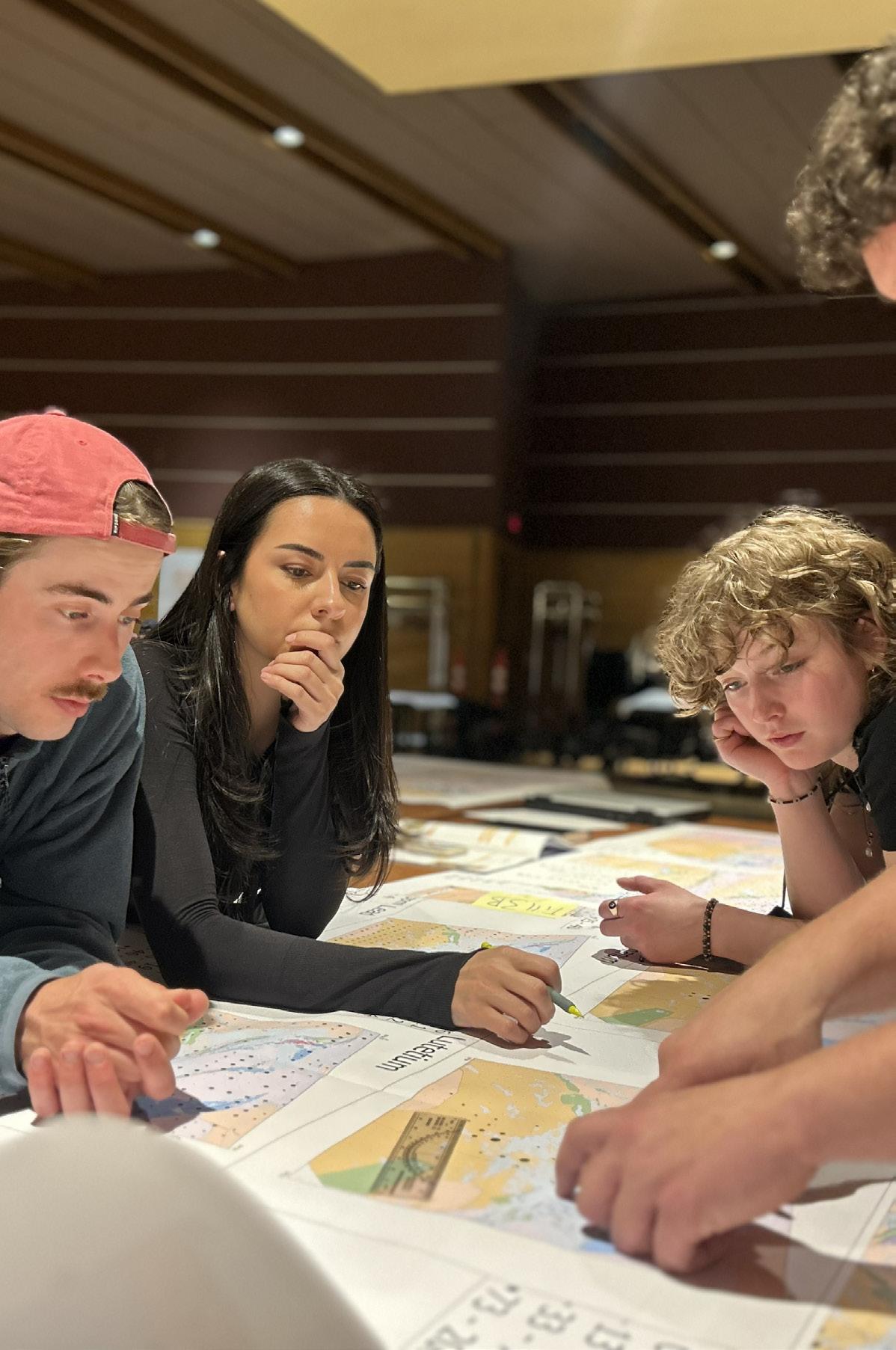
Gareth King, Vancouver Island University, Marissa Pimentel, Simon Fraser University, and Calliope Lochrie, University of British Columbia Okanagan, plan their drill hole targets during the Exploration Game with the geoscientists from the Ontario Geological Survey.
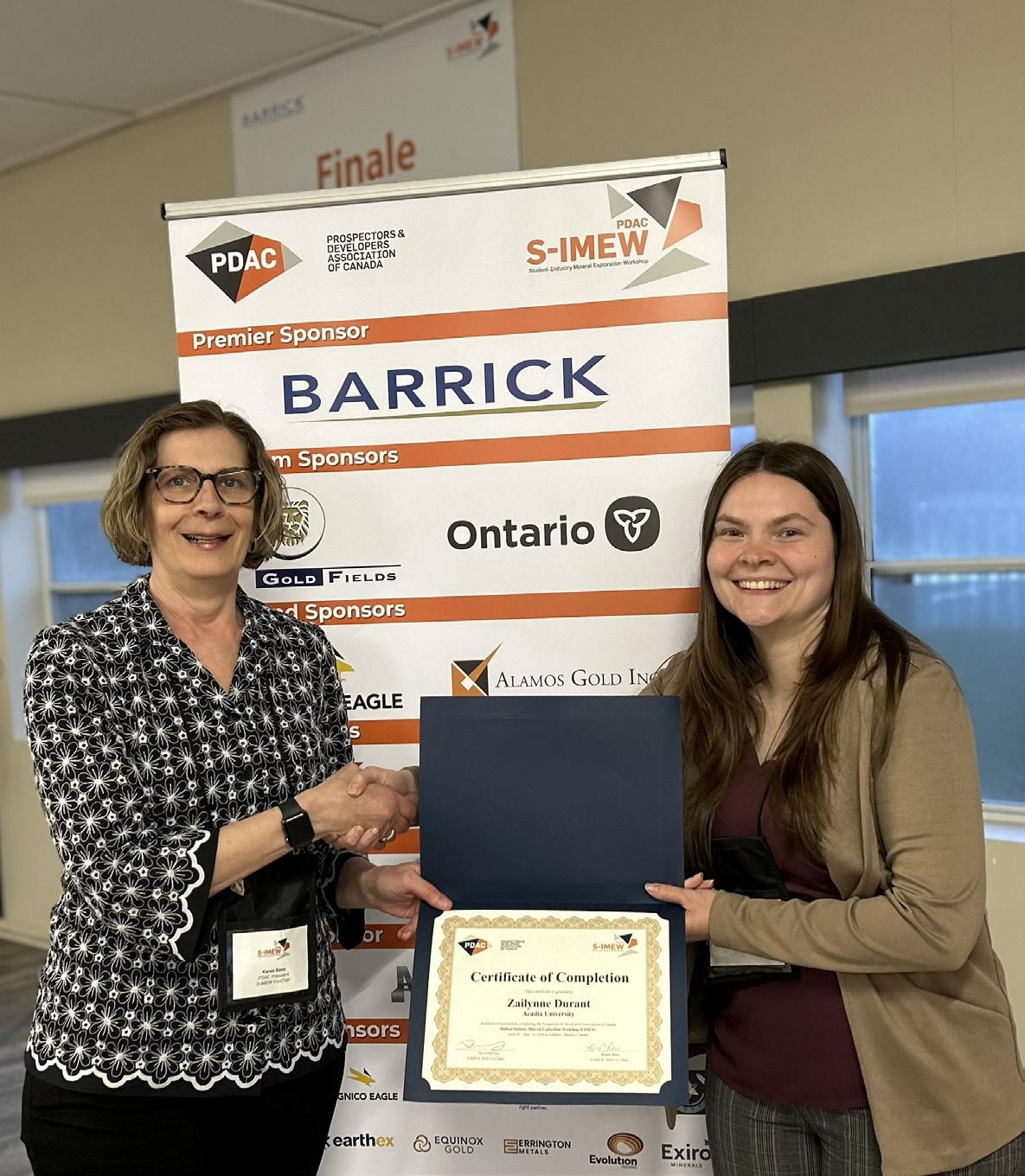
MAY 13 | QAQC & FINALE
MAY 12 | ERRINGTON METALS
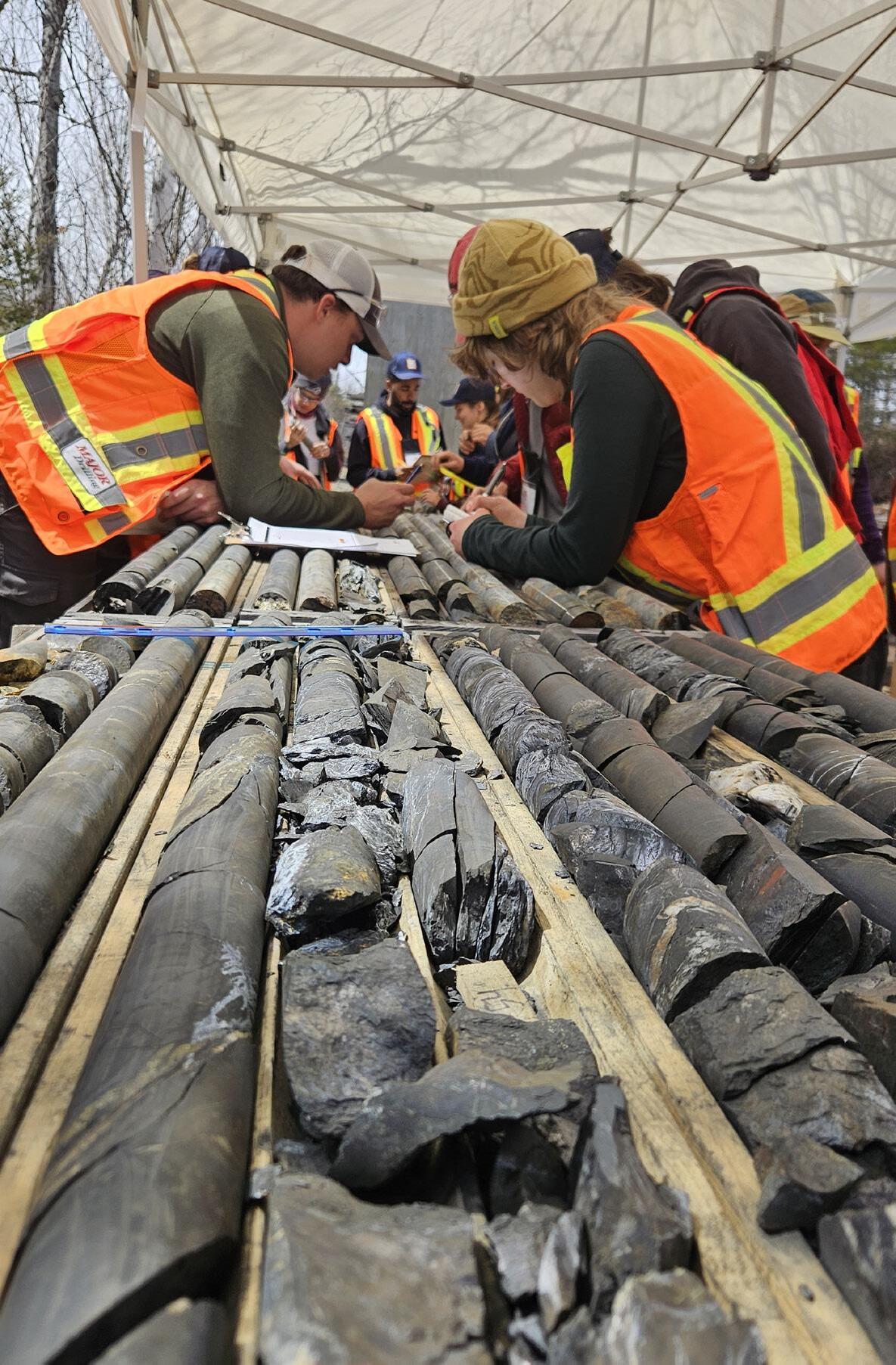
Jaeden Reggler, Barrick Mining Corporation, and Calliope Lochrie, University of British Columbia Okanagan, work on a core logging activity at the Errington Metals core shack.
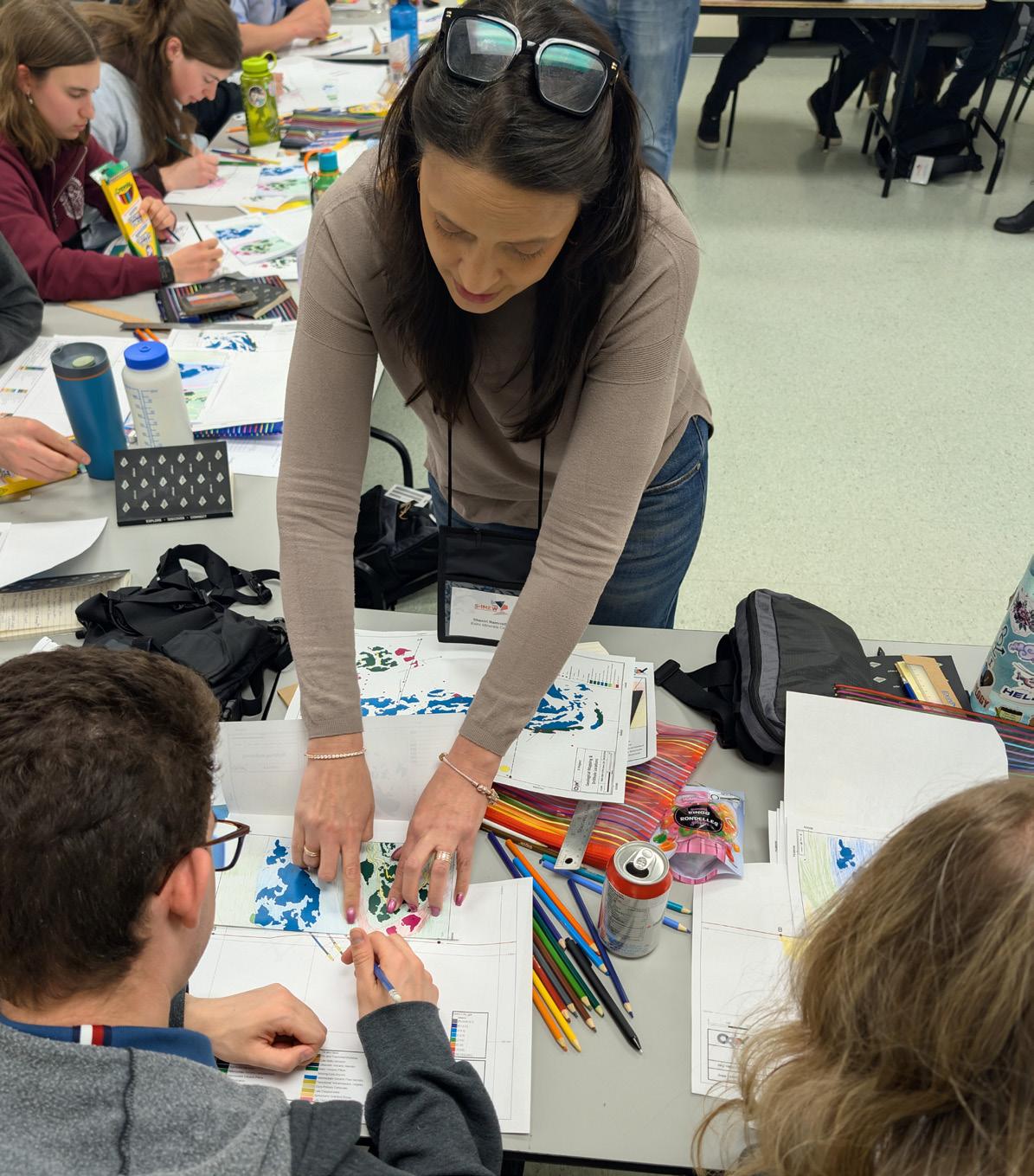
Shastri Ramnath, Exiro Minerals, leads Olivier Turcotte, Université du Québec à Chicoutimi, through a data interpretation activity, and Karen Rees, PDAC President, presents Zailynne Durant, Acadia University, with her certificate of completion at the S-IMEW 2026 Finale.