

COACHES CORNER
PERFORMANCE NEWSLETTER
Paul & Hank


Contents
PAGE 3
Message From Coach Paul
PAGE 4
Con-Ed Opportunities
PAGE 5-6
Coaching Cheat Code of the Month:
Paul has some tips and tricks to make consultations more streamlined and simple!
PAGE 7
Nutrition Hack
Weather you’ve heard about it or not let's touch up on Resistant Starches with Coach Paul
PAGE 8-9
Movement Lab: Closing the “V” Let's dig into Triphasic Training!
PAGE 10
The Library
Check Out This Months Podcast and Read
Hello squad
As we move into May, let’s focus on refining the consultation process by asking better, more intentional questions that uncover real behaviors, not just surface level goals. Pair that with actively shaping mindset by listening for limiting language and reframing it into ownership and structure. Finally, elevate your coaching by applying simple triphasic principles from Cal Dietz, helping members control each phase of movement to build awareness, progression, and long term buy in.
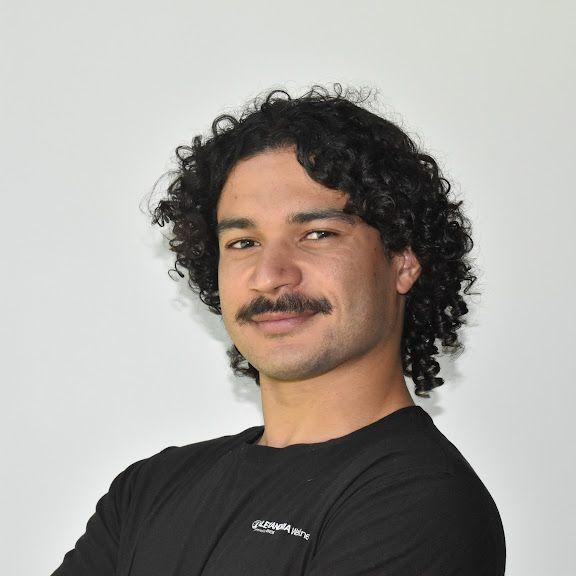
Paul Scott Performance Coach
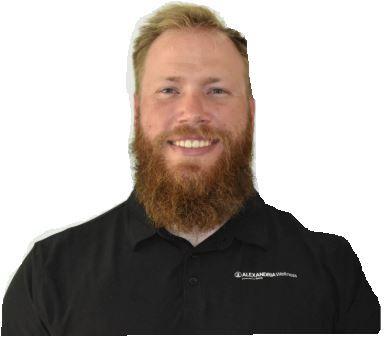
Hank Dembrowski Senior Performance Coach
Con Ed CEU Opportunities
In person:
● Looking to get your NSCA CSCS? Point Loma is Holding a CSCS Exam Prep Clinic May 16th-17th!
● May 15th Phil Nash In Person Performance Seminar for exos ARE!
Digital Options:
● Fitfixnow - offers online courses to gain NASM CEUs Check it out
● Did you know that exos offers CEUs through Workday? Check it out!
○ If you completed IXPM or XPS you will receive CEUs!
● If you hold a membership with NSCA you have access to online quizzes and videos that count towards Area-D of your CEUs!
Workday Options:
● Looking to change up your X30 class? Check out Signature Classes!


A Streamlined Approach to Consultations
A topic that I like brushing up on every year is consultations. Specifically how we go out about it. I think every coach has their way of going through these with our members, which is great. But what if we adopted the same system? I adopted my system from a previous coach, and made some changes that make conversations feel more natural rather than me sitting there and berating them with questions.
To start, if you have enough time before the consultation, try sending them this form (Pre-consultation form ) to fill out. By utilizing a pre-consultation form you can get some questions answered to start a conversation. The form asks the basics, exercise history, preferred training time, class/GX offerings, nutrition goals, and if they have any specific goals they want to talk about. Now, you have a basic framework of who this person is and what they are looking for. It saves everyone some time and helps you make more tailored recommendations.
Think of the pre-consultation form as an ice breaker for the actual consultation. I like to start by asking them about their hobbies, stressors (work/home) and their sleep quality. The more information I can extract out of a member the better recommendations you can make!
After, I will typically circle back to goals, and try to figure out what and why they made a consultation to begin with. By understanding what their goal is, and their primary driver for that goal, it will again help you help them.
Afterwards, I like to talk about training. I pre-fill the questionnaire with what they filled out on the form so we can jump right in. I want to hear about what they like doing for training, if anything at all. Play into their strengths and try to support them with their weaknesses. Depending on their training history, you can steer them into specific classes, or if you have time and get along with them, floor coaching!
Touching up on any previous pains or injury history is key as well. This again serves to help me point them in the right direction.
When wrapping up talking about training I like to at least have a basic plan for them. “Next week I will attend 2 classes”, “This week I will come in for our scheduled floor coaching @8am”.
Key Reminders:
● Always take notes
● Get them to sign up for an offering before they leave
● Be charismatic
A Streamlined Approach to Consultations
The framework you set up will help you on the backend of all of this, so you and the member leave feeling like you accomplished something rather than it being a one and done
Lastly, I like to talk about nutrition. This one can be challenging because some people come in looking for meal plans, and exact intake recommendations. As coaches, some of us might have a nutrition cert but not all of us. It's important that we stick within our scope of practice and make general recommendations.
Guiding rather than directly telling them has always been my practice. With that being said, I do like to get an understanding of their nutrition competence. I like breaking the ice with “how would you rate your current nutrition on a scale of 1-10”. This typically opens up the conversation even more because you can make them think about where their nutrition leaks are. If you look at the questionnaire there is a little more in there to help guide you as a coach.
At the end I like to finish with a body composition and let them know why they should track. Remember that the inbody is a valuable tool for both parties. I typically recommend retesting every 2-4 weeks depending on their goal and if they are making big changes in the kitchen or on the gym floor.
This is what I typically do for members, again I know everyone is different and goes about this their way. I’d love to hear how you all handle consultations and if you have any ideas of how we could make a master consultation sheet that is standardized across all sites so there is some consistency.
If you’d like to checkout the template I use for consultations shoot me an email and ill gladly run you through it!
- Coach Paul
Answering Nutrition Questions from a Coach's Scope of Practice
This months hack comes straight from Leron Sarig, and directly ties into “A Streamlined Approach to Consultations”. This video highlights what we can speak about nutrition wise during consultations and is a valuable tool for us coaches without a nutrition certification.
Click me!

Closing the “V”
As we move through different methodologies of training in our newsletter, I want to highlight a method that often sits just beneath the surface. Not overly complicated, but frequently misunderstood in how it is applied. That method is triphasic training.
At its core, triphasic training is built on a simple idea. Every movement happens in three phases: eccentric, isometric, and concentric. Instead of defaulting to the concentric and hoping the rest follows, this approach develops each phase with intention. The goal is not just stronger athletes, but athletes who can absorb force, stabilize position, and express power without energy loss between phases.
This is where the idea of “closing the V” becomes useful.
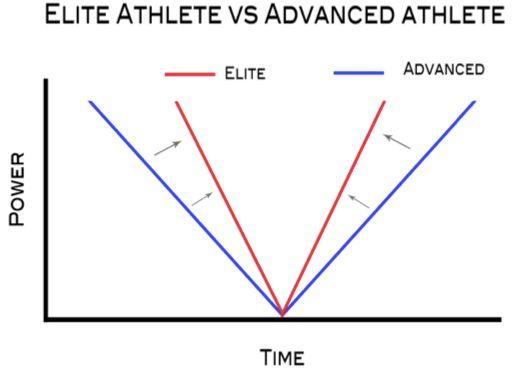
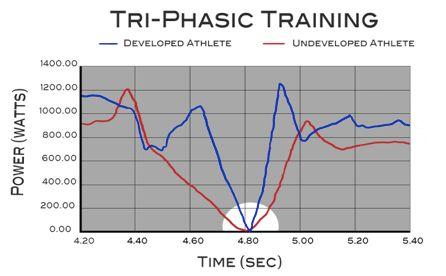
In less trained athletes, force production typically looks like an open V. High eccentric potential drops off significantly as the movement transitions into isometric control and then concentric output. In simple terms, they can absorb force, but they struggle to hold onto it and express it efficiently. There is a clear leak through the system.
Triphasic training works directly to close that gap. By isolating and developing each phase, the system becomes more connected. The eccentric no longer exists in isolation. It transfers better into the isometric, and the isometric better carries into the concentric. The V narrows as force is retained and expressed more efficiently through the entire movement.
What separates this method is how it organizes stress. Each phase places a distinct demand on the neuromuscular system. Eccentric work increases force absorption and tissue stiffness under high mechanical tension. Isometric work improves motor unit recruitment at specific joint angles and builds positional stability. Concentric work then expresses that stored potential through higher rates of force development. Rather than blending these qualities together, triphasic training sequences them so adaptation in one phase enhances the next.
This sequencing also connects to the alarm phase of adaptation (which is another topic we can cover).
Every training stimulus creates an initial disruption. In less trained athletes, that alarm response is large. Even moderate eccentric loading can create significant soreness and a wide adaptation curve. The system is not yet efficient at handling or distributing stress, which contributes to the open V profile.
Closing the “V”
In more trained athletes, that alarm response becomes blunted. The same stimulus creates less disruption, meaning adaptation slows. This is where many programs stall.
Triphasic training addresses this by changing the type of stress rather than simply increasing load. Eccentric and isometric focused blocks reintroduce a meaningful disruption, creating a new adaptive signal. The system is challenged in a different way, which helps re-establish progress.
From a coaching standpoint, this gives you a way to dose stress with more precision. Eccentric phases can intentionally push athletes closer to that adaptive threshold. Isometric phases consolidate those gains by improving control and reducing unnecessary fatigue. Concentric phases then allow for expression of the newly built capacity through speed and power.
In practice, this is best applied in structured blocks where tempo, pauses, and exercise selection are the primary drivers of adaptation. It does not require complexity, but it does require sequencing and patience. Rushing toward explosive work too early often leaves the V open, meaning force is still leaking between phases.
When each phase is given enough time, you not only build stronger athletes, you build more connected ones. Athletes who can better absorb force, hold it, and express it with minimal loss. In other words, athletes who have effectively closed the V.
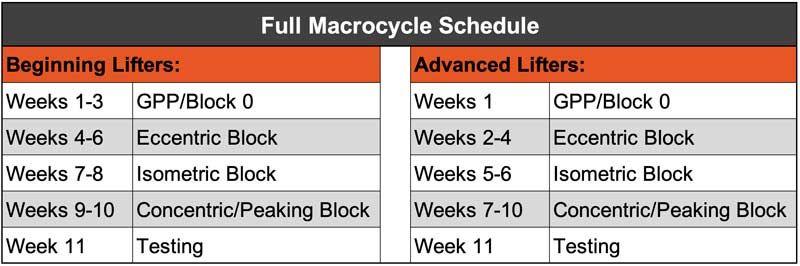
Example Schedule:
Episode of the month:

Coach Dan John - Shark Habits, Pirate Maps, Free-Will & Lifelong Fitness Listen Here!
Read of the month:
The Effects of Psyching-Up on Deadlift Performance in Competitive Strongmen, Strongwomen, and Powerlifters Read Here!