A message from our Centre for Doctoral Training Manager …
Welcome to the first issue of Red-ALERT Research, the quarterly newsletter of the RedALERT NERC Centre for Doctoral Training (CDT). This publication will bring you updates from our multidisciplinary research community, with seasonal editions released in winter, spring, summer, and autumn.
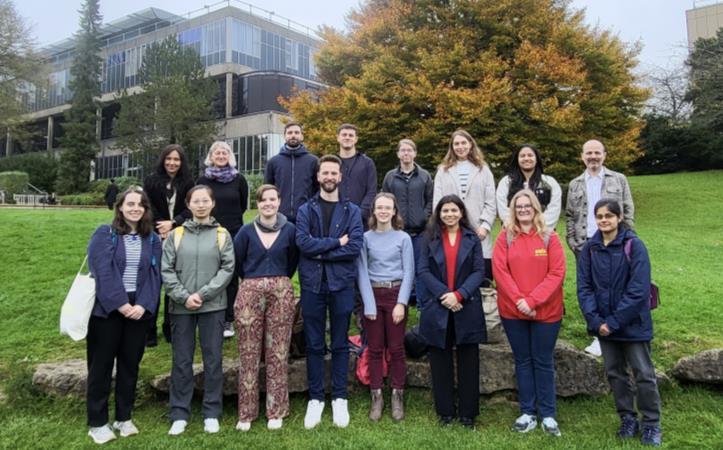
It has been incredibly exciting to see the Centre beginning to take shape. Welcoming and getting to know our wonderful first cohort of researchers as they take their projects forward and bring the Red-ALERT vision to life has been immensely satisfying. I look forward to seeing all that they achieve in the coming years.
We hope you enjoy this first issue and look forward to sharing more updates in the months ahead!
Best wishes,
Paula Buxton
An Introduction to Cohort 1
Sian Davies - daviessk7@cardiff.ac.uk
Project: A change in the water?: Using multidisciplinary approaches to leverage understanding of freshwater invertebrate responses to multiple environmental stressors.
Supervisors: Dr Tom Bishop, Dr Fred Windsor (Cardiff University), Dr Elma Lahive (UKCEH), Nina Menichino (NRW)
Maya Lhoste - lhostem@cardiff.ac.uk
Project: STREAM: Study of Two Rivers’ eDNA and Anthropogenic Pollutant Monitoring.
Lead supervisors: Dr Pablo Orozco Ter Wengel (Cardiff University), Dr Claus Svendsen (UKCEH), Gail Davies-Walsh (Afonydd Cymru)
Yanting Zhang - ZhangY425@cardiff.ac.uk
Project: Transport and spatial distribution of microplastics and byproducts, and associated risks to freshwater ecosystems.
Supervisors: Prof. Catherine Wilson (Cardiff University), Dr Thomas Lkjeldsen (Bath University), Paul Gaskin (Dwr Cymru Welsh Water)
Joseph Beaney - jb3782@bath.ac.uk
Project: Establishing a new effect-directed analysis platform for understanding exposure risks of hazardous chemicals and their mixtures’.
Supervisors: Prof. Barbara Kasprzyk-Hordern (Bath), Prof. Charles Tyler (Exeter), Dr Dan Read (UKCEH), Megan Robertson, John Bagnall (Wessex Water)
Chloe Ingham - cli23@bath.ac.uk
Project: Development of novel assays for PFAS pollutant compounds for incorporation into in-situ lab-onchip sensors for freshwater environmental monitoring.
Supervisors: Prof. Simon Lewis (Bath), Dr Glória dos Santos Pereira, Dr Gbotemi Adediran, Prof. Andrew C Johnson (UKCEH)
Javeria Munawar - jm3753@bath.ac.uk
Project: An e-DNA probe to enable microbial source apportionment from environmental samples.
Supervisors: Dr Tom Arnott, Prof. Ed Feil, Prof. Pedro Estrela (Bath), Dr Andrew Singer (UKCEH), Ruth Barden, Dan Green (Wessex Water)
Erica Boston - erb235@exeter.ac.uk
Project: Assessing Impacts of Combined Sewage Overflows and Surface Water Outfalls on Invertebrate Populations in River Catchments in Southwest England.
Supervisors: Professor Charles Tyler, Prof. Richard Brazier (Exeter University), Prof. Barbara Kasprzyk-Hordern (Bath University)
Eleanor Kirk - emk223@exeter.ac.uk
Project: Novel methodologies to assess the environmental health of freshwater systems.
Supervisors: Dr Robert Ellis, Dr Eduarda Santos, Dr Gary Codling, Dr Ceri Lewis (Exeter University), Prof. Pete Kille (Cardiff University), Dr Oliver Tills (EmbryoPhenomics), Dr Jonathan Newman (Environment Agency)
Holly Roberts - hr552@exeter.ac.uk
Project: Future Fibres: A OneHealth approach to tracking microfibres through the wastewater system.
Supervisors: Dr Ceri Lewis, Prof. Tamara Galloway (Exeter University), Prof. Barbara Kasprzyk-Hordern (Bath University), David Baldock (South West Water)
Kate Herridge - kth18rgy@bangor.ac.uk
Project: Source tracking and risk assessment of human pathogens in riverine water.
Supervisors: Dr Kata Farkas, Prof. Davey Jones (Bangor University), Prof. Laurence Jones (UKCEH)
Yashi Jain - ysj24hrp@bangor.ac.uk
Project: Factors controlling microplastic-pathogen interactions in watercourses.
Supervisors: Dr Karina Marsden, Prof. Dave Chadwick, Prof Davey Jones (Bangor University), Dr Richard Cross (UKCEH)
Adam Winrow - dmw24zvd@bangor.ac.uk
Project: Modelling the fate of wastewater-derived human pathogenic fungi from catchment to coast.
Supervisors: Prof. Peter Robins, Prof. Davey Jones, Dr Kata Farkas (Bangor University), Prof. Andrew Weightman (Cardiff University)
Cohort 1 Student News
Yanting Zhang, (1st-year PhD in Engineering, Hydro-Environmental Research Centre, Cardiff University) on the
River Taff Sampling Campaign
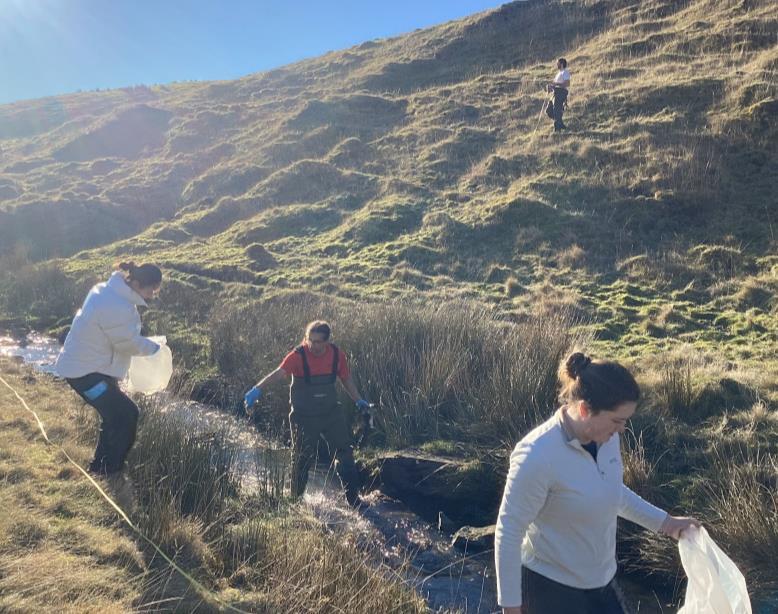
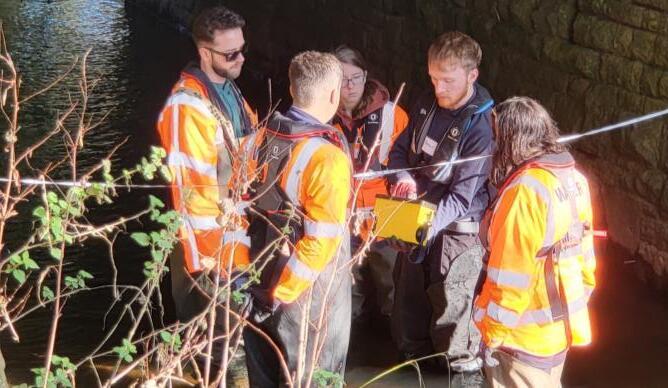
On 16 January 2025, I participated in a sampling campaign along the River Taff as part of my PhD research, focusing on spatial distribution and the identification of sources of microplastics in freshwater systems This fieldwork was supervised and conducted by Postdoctoral Researcher Dr Guglielmo Sonnino Sorisio, Professor Joanne Cable, Research Associate Dr Numair Masud, and Undergraduate Student Shannon Belringer We aimed to refine protocols for our forthcoming monthly monitoring program while evaluating preliminary contamination patterns. Our team collected collected water, soil, and litter samples from five sites. At each location, we measured flow velocity using a handheld current meter and performed horizontal tow sampling with a 250μm mesh net to capture riverine microplastics. Concurrently, litter surveys were conducted along both sides of riverbank, categorizing and quantifying debris to correlate with hydrological data. The samples will undergo laboratory analysis to quantify microplastic concentrations and characterize polymer types We aim to distinguish potential sources of microplastics in the River Taff
Holly Roberts, (1st-year PhD in Ecotoxicology, Biosciences, University of Exeter) on attending the Network Plus in Circular Fashion and Textiles Annual Research Meeting
The University of Exeter hosted the Network Plus in Circular Fashion and Textiles Annual Research Meeting on January 14th. The primary aim of Network Plus is to support the fashion and textile industries in adopting more sustainable and responsible practices. This meeting summarized the project objectives, emphasized the importance of cross-disciplinary collaboration, and showcased research from the three subnetworks: Future Fibres, Back to Baselines in Circular Fashion and Textiles and Baselines in Circular Fashion and Textiles and Impact+. The day began with introductions to each of the networks and their current projects, followed by panel discussions on topics such as standards and baselines, interdisciplinary collaboration, knowledge and behaviours, and stakeholder communication. Workshops covered key areas including funding landscapes, dissemination, and evaluation. Attending the event deepened my understanding of the complexities surrounding textile production and waste, while highlighting the crucial role of collaboration in addressing microfibre pollution.
Yashi Jain, (1st-year PhD in Ecotoxicology, School of Ocean Sciences, Bangor University) on presenting at the Cardiff University ‘Plastics in the Environment’ – Knowledge Sharing Workshop
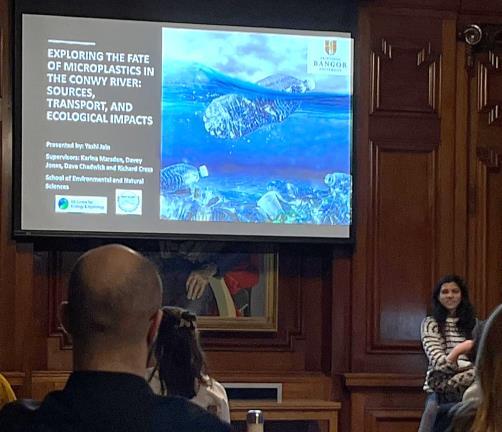
I recently had the opportunity to present on Exploring the Fate of Microplastics in the Conwy River: Sources, Transport, and Ecological Impacts at the Plastics in the Environment –Knowledge Sharing Workshop held at Cardiff University in December 2024, last year The workshop brought together researchers from the plastics community from across Wales, and it was a fantastic learning experience I got to know a lot about the ongoing research in Wales, related to plastics, specifically microplastics, and it was great to see the variety of approaches being taken. Connecting with others in this field was both informative and inspiring
Holly Roberts, (1st-year PhD in Ecotoxicology, Biosciences, University of Exeter) on the visit to the School of Design, University of Leeds
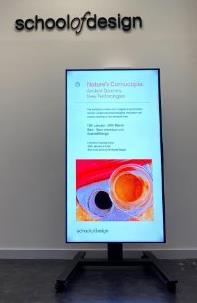
In addition to my PhD project association with the Red-ALERT CDT, I am a member of the Future Fibres Network+, and I had the opportunity to visit the School of Design at the University of Leeds in January. My research focuses on microfibre pollution, examining not only plastics but also fibres made from natural and regenerated materials. The visit to Leeds provided a valuable opportunity to engage with leading academics in textile design and engineering. During the trip, I toured their labs and gained insight into fibre manufacturing processes, as well as treatment methods such as dyeing and finishing. These discussions enhanced my understanding of how to identify origins of microfibres from environmental samples and helped me determine which fibres to include in my first experiment.
Eleanor Kirk, (1st-year PhD in Ecotoxicology, Biosciences, University of Exeter) on presenting at the University of Plymouth
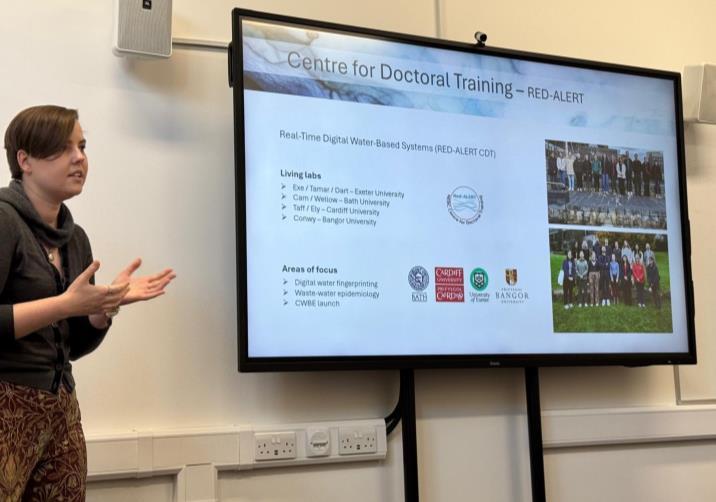
I was recently invited by Senior Research Fellow Dr Oliver Tills, a project partner and supervisor from the EmbryoPhenomics team at Plymouth University, to present to the Ecophysiology and Development group. My talk focused on ‘The Pathway to My PhD’, highlighting my academic and industry experience, including key projects during my undergraduate and master’s studies, as well as my work at the Environment Agency. I well as my work at the Environment Agency. I discussed how these experiences shaped my interest in how environmental factors influence evolutionary adaptation, leading me to the field of ecotoxicology. I also introduced the Red-ALERT CDT, emphasising how its goals align with my PhD research in developing novel methodologies to assess chemical impacts on freshwater ecosystems. This talk was a fantastic opportunity to engage with researchers in related fields, exchanging insights on how our career pathways have evolved over time
Reflecting on Red-ALERT training at
the University of Bath (24/10/2024
– 31/10/2024)
Thanks to the University of Bath in collaboration with Wessex Water, the UK Centre for Ecology & Hydrology (UKCEH) and UK Health Security Agency (UKHSA) for delivering this training.
“Our cohort recently visited Wessex Water’s Sewage Treatment Works, where we gained firsthand experience with wastewater treatment processes. We explored water flow measurement, used riverbed organisms to assess water quality, and monitored key water parameters. This visit provided valuable insights into effective water quality management and its role in maintaining healthy aquatic ecosystems.” - Yashi Jain
“It was great to have the Bath training course as the first in-person interaction within the cohort to meet and discuss projects and potential opportunities for collaboration. To see the research that is carried out within the team in Bath was fascinating and inspiring. The trip to the Water Recycling Centre in Paulton was also a highlight, as it gave a great insight into current practices and ways to incorporate sampling techniques into our own projects.” - Kate Herridge
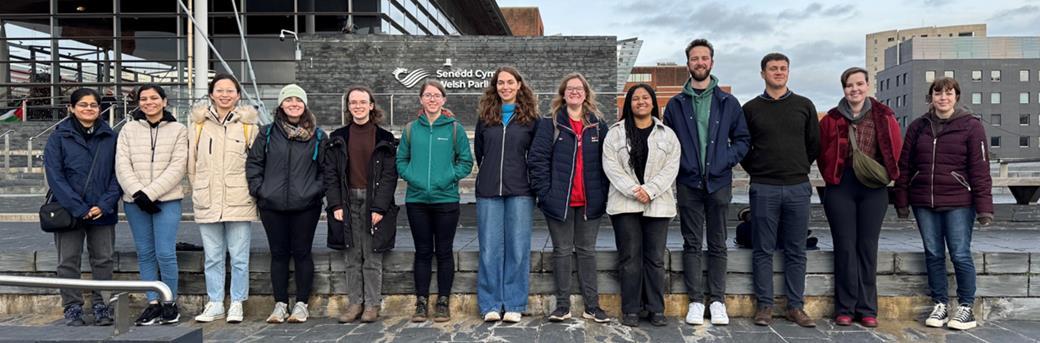
Reflecting on Red-ALERT training at Cardiff University (02/12/2024 – 04/12/2024)
Thanks to Cardiff University in collaboration with the Cardiff Harbour Authority
“The most memorable experience, was the tour of Cardiff Bay, given by David Hall The opportunity to learn from those in industry and regulatory bodies who dedicate their time and passion to preserving public blue spaces, was valuable and inspirational. This really helped me understand, that familiarity with an environment or habitat is so important for making impactful differences, something that can be too easy to forget in a purely academic setting.“ - Erica Boston
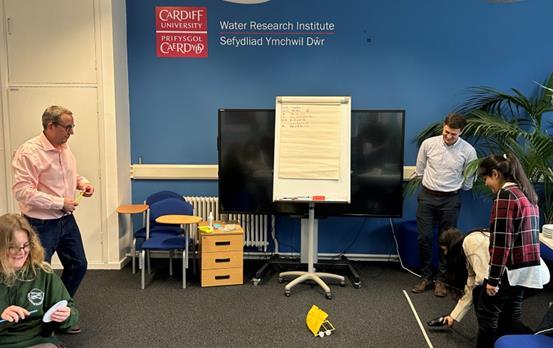
"Dave Filipovic-Carter’s workshop gave us insights into tackling PhD challenges, from time management skills to dealing with imposter syndrome. We took part in activities that pushed us out of our comfort zones, encouraging a more holistic approach, sharing practical tips for managing academic pressures.“ - Eleanor Kirk
"We studied chemical risk analysis, sensors development, aquatic pollution monitoring, and advancements in water quality technologies The training critically assessed the effectiveness of early warning systems for managing emerging pollutants, emphasizing a One Health approach to address environmental and public health challenges an aspect I found particularly thought-provoking“ - Javeria Munawar
Centre for Doctoral Training News
Welcoming Cohort 1 – September 2024
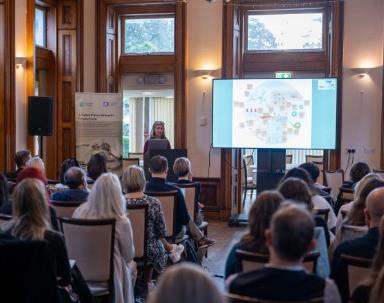
The Red-ALERT CDT had a busy start, bringing together a wide range of academics from four Higher Education institutions, along with our many external partners across industry, non-profit agencies, government bodies, water companies, and more, to co-create our multidisciplinary research projects In September 2024, we welcomed our first cohort of 12 PhD students, who are developing innovative approaches to monitoring and managing freshwater environmental health
Red-ALERT CDT Conference - 31 March & 1 April 2025
We are pleased to announce the first Red-ALERT CDT Conference, taking place on 31 March & 1 April 2025 at the University of Bath. This event will run alongside the official launch of the Centre of Excellence in Water-Based Early-Warning Systems for Health Protection (CWBE). The conference will feature a diverse programme, including keynote talks from leading researchers, partner presentations, and discussions on water-based monitoring systems. Confirmed speakers include Davey Jones (Bangor University), Kevin Thomas (University of Queensland), Ruth Barden (Wessex Water), Steve Morris (Defra, Environmental Analyst and Policy Advisor) and Gareth Cross (Welsh Government, Science Evidence Advice Division), with additional keynote speakers to be announced. A key highlight will be Cohort 1 student-led contributions, with prizes for the best two-minute thesis presentation (one-slide format) and A1 portrait project poster
Centre of Excellence in Water-Based Early-Warning Systems (CWBE) launch
We are excited to announce that the Centre of Excellence in Water-Based Early-Warning Systems for Health Protection (CWBE) will officially launch during the Red-ALERT CDT Conference on 1 April 2025 at the University of Bath. CWBE aims to drive innovation in earlywarning monitoring systems for detecting environmental risks to human health The launch will feature speeches from the Pro-Vice-Chancellor and the CWBE Directors, outlining the centre’s vision and research themes.
Cohort 1 Publications
We are proud to showcase the research outputs of our Cohort 1 students. Over the past year, they have made significant contributions to scientific research as both primary authors and co-authors. This will be a regular section in our newsletter, highlighting the ongoing impact of our students' research efforts.
Evaluation of Three Viral Capsid Integrity qPCR Methods for Wastewater-Based Viral Surveillance
Kevill, J.L., Farkas, K., Herridge, K., Malham, S.K., Jones, D.L., 2025, In: Food and Environmental Virology, 17(1), p.12.
Microcosm experiment investigating climate-induced thermal effects on human virus viability in seawater: qPCR vs capsid integrity for enhanced risk management
Kevill, J.L., Li, X., Garcia-Delgado, A., Herridge, K., Gaze, W., Robins, P., Malham, S.K., Jones, D.L., 2024, In: Marine pollution bulletin, 208, p117006.
Microplastic pollution in high-altitude Nainital lake, Uttarakhand, India