Please send your updates for the Summer 2026 issue
A message from our Newsletter Editors
As the year progresses, exciting research continues across the Red-ALERT community. This issue also highlights the second joint annual Red-ALERT and CWBE conference, which provided an excellent opportunity to share research, build connections, and strengthen collaborations
Meanwhile, preparations continue behind the scenes as the final Cohort 3 takes shape Students remain busy with their projects, taking part in data collection and participating in many more conferences as the conference season begins
We hope you enjoy this edition of the Red-ALERT Research Newsletter
Best wishes, Eleanor Kirk, Sian Davies, James Milton and Rosie Elliott
Red-ALERT Spotlights
Executive Board Member Cohort 2 Student
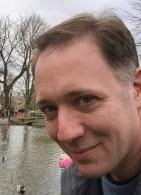
Dr Andrew Singer (Principal Scientist, UK Centre for Ecology & Hydrology)
What
inspires you?
I think people you meet can be inspiring When I meet someone who has a phenomenal grasp of their subject matter and can hold conversations about things not just in an informative way, but in a progressive way, moving the topic forward, asking questions that no one has asked before, and making you think in ways you have never thought about it before, those are fantastic people to me.
What moments stand out in your career?
I remember my first international talk, where I got really positive feedback afterwards. It stuck with me and gave me confidence for the next one. Having really great PhD students, making it feel like you're impacting someone else's trajectory. There is a responsibility to inspire them and motivate them to do something important, or to empower them to do something good.
A message for early career researchers?
Start networking across multiple circles so that you’re known, not only within your small area of research, but also beyond it Keep your mind open to transdisciplinary applications of your knowledge and embrace working with people from diverse fields. I always try to think of applied projects or applications of ideas that would make the world a better place, solving important problems. “Just keep swimming”… this will get you moving forward during those tough times when you feel all is lost!
Rosie Elliott (Red-ALERT Cohort 2 Student, Bath University, UK Centre for Ecology & Hydrology)
What inspires you?
I am really inspired by the people who have such passion for the work they do. You can tell when somebody genuinely cares about the impact of their work, and that has always been something I have found inspirational, from my schoolteachers to the researchers I work alongside now!
What attracted you to your PhD?
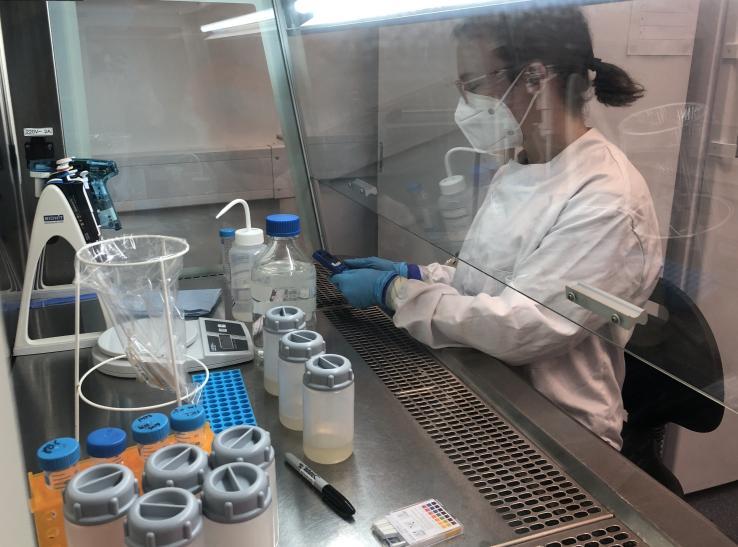
I was attracted to this PhD because of the problem it aims to tackle, a problem that I have been interested in since my undergraduate degree Antimicrobial resistance moves through water, infrastructure, and humans, and is predicted to cause millions of deaths annually if substantial interventions aren’t made The chance to trace that movement with molecular tools, to identify sources, pathways, and points of failure is intellectually very compelling because it turns a global challenge into something you can map and ultimately influence.
What are you most excited about?
This may be an obvious answer, but I am excited to deepen my understanding of my field and contribute to its body of knowledge. I am also looking forward to developing new skills, including some I probably haven't even encountered yet.
Student News
Kate Herridge, (Cohort 1 Red-ALERT student in Microbiology at Bangor University) on her time working in collaboration with Cardiff Bay
As part of one of my research chapters, I’ve been working across living labs by receiving samples from Cardiff Bay and the rivers Taff and Ely. My research aims to quantify the risk from pathogens in water bodies resulting from human contamination. I have been quantifying levels of noroviruses within the samples, and this data has enabled the development of a Quantitative Microbial Risk Assessment (QMRA), used to predict the risk to human health after exposure to contaminated water It has been a great experience to work within the Taff and Ely living lab
James Milton, (Cohort 2 Biosciences student at the University of Exeter) on recent fieldwork at South Milton and South Brent wastewater treatment works in Devon
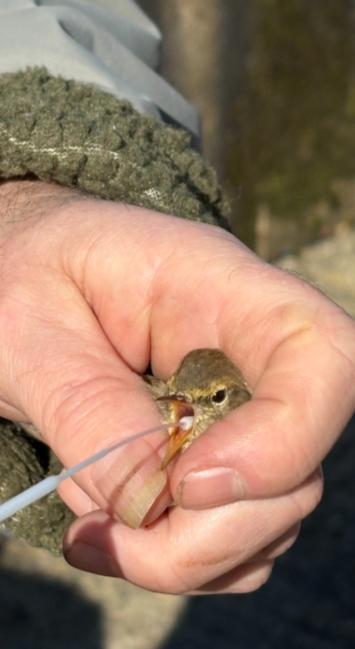
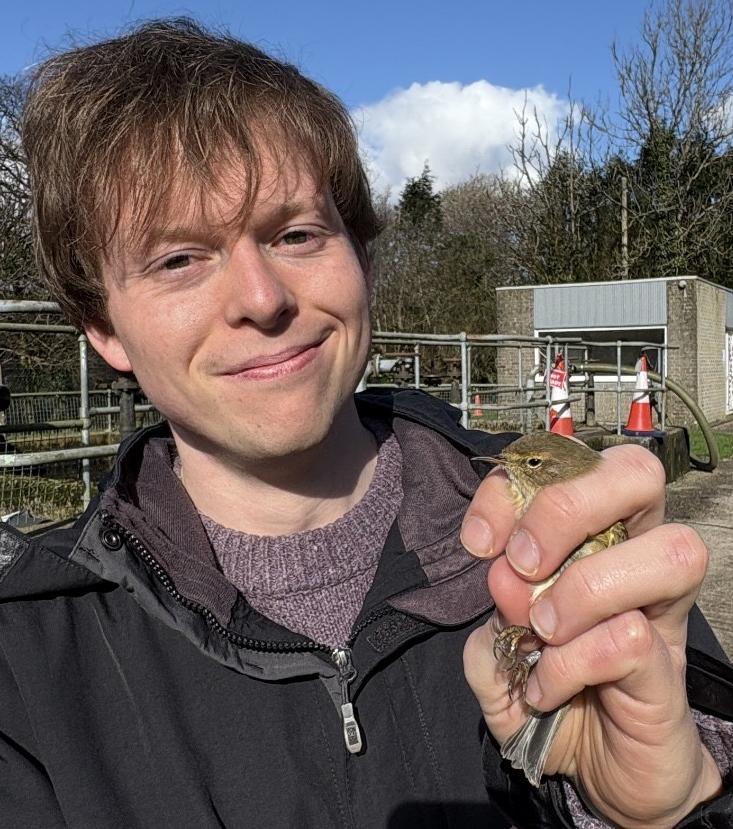
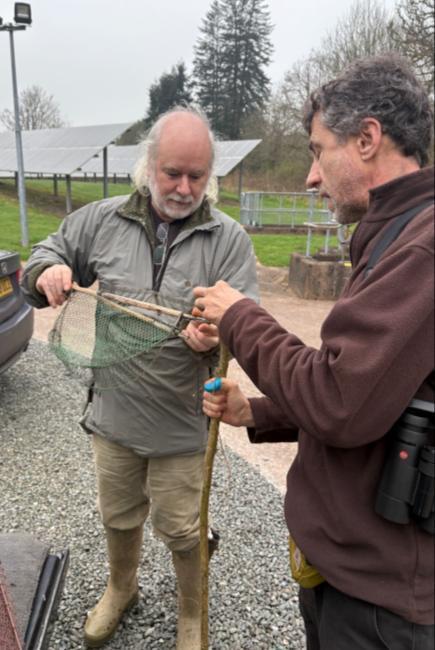
Over the winter, I carried out fieldwork across Devon at Kilbury, South Milton, and South Brent wastewater treatment works, collecting buccal and faecal samples from insectivorous birds. I was joined by licenced British Trust for Ornithology birders David Scott and Joan Castello, whose expertise was fundamental in safely catching and sampling the birds.
We caught various species ranging from firecrests (Regulus ignicapilla) to pied wagtails (Motacilla alba), all of which were safely released after sampling. Samples were preserved in 100% ethanol for laboratory analysis which will help determine whether these birds are feeding on potentially contaminated invertebrates within the percolating filter beds found at these sites. In turn, the generated data will make up the first chapter of my project where we are trying to determine the existence of a pollutant pathway within the food chain.
Javeria
Munawar,
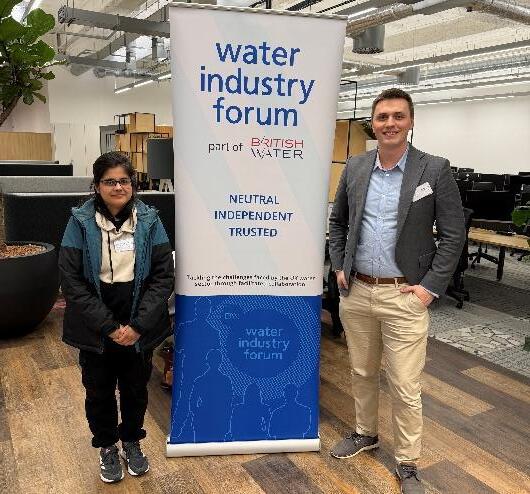
(Cohort 1 Chemical Engineering student at the University of Bath) on attending the Water Industry Forum for Young Water Professionals
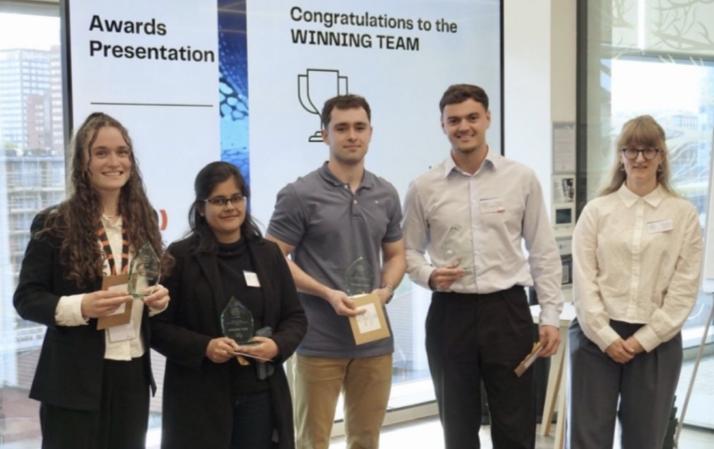
On 26 March 2026, I attended the WIF Team Challenge 2026 Briefing Event in Birmingham, organised by the Water Industry Forum (WIF), part of British Water, together with Geraint Pugh, a Cohort 2 Red-ALERT CDT student. The event was a great opportunity to hear insights from industry experts and connect with talented early-career professionals from across the sector. Over an eight-week period, our team collaborated to develop innovative ideas addressing this challenge, before presenting our proposal at the Judging & Awards Event.
This year’s challenge focuses on the question: How can technology help solve key challenges in the water sector?
My team's solution, PipeIQ, won by centring on the use data and technology to proactively manage pipeline burst risk; a challenge with real consequences for the millions of people who rely on safe, reliable water every day.
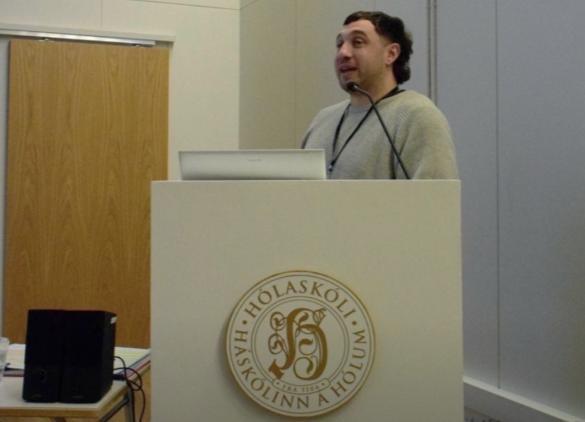
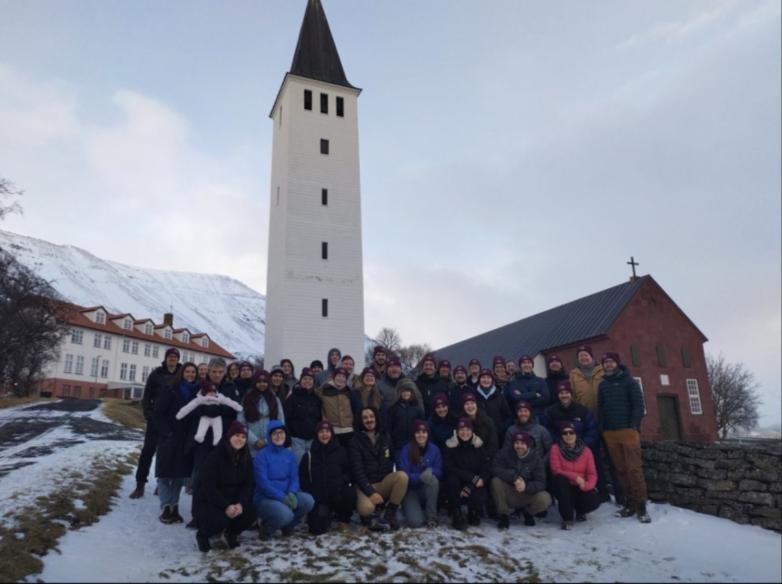
Patrizio Feliziani, (Cohort 2 Biosciences student at Bangor University) on attending the NoWPaS annual Conference at Hólar University, Iceland
My research focuses on developing an eDNA-based approach to target priority salmonid pathogens in UK rivers It was an incredibly inspiring experience to connect with researchers from across the world, share ideas, and discuss current challenges in salmonid ecology, conservation, and disease. I look forward to building on these conversations and creating future collaborations.
I recently had the opportunity to attend the International Workshop of PhDs and Post-doctoral Fellows on Anadromous Salmonids (NoWPaS) at Hólar University in Iceland, where I presented my PhD project research for the first time while representing the NERC Red-ALERT CDT