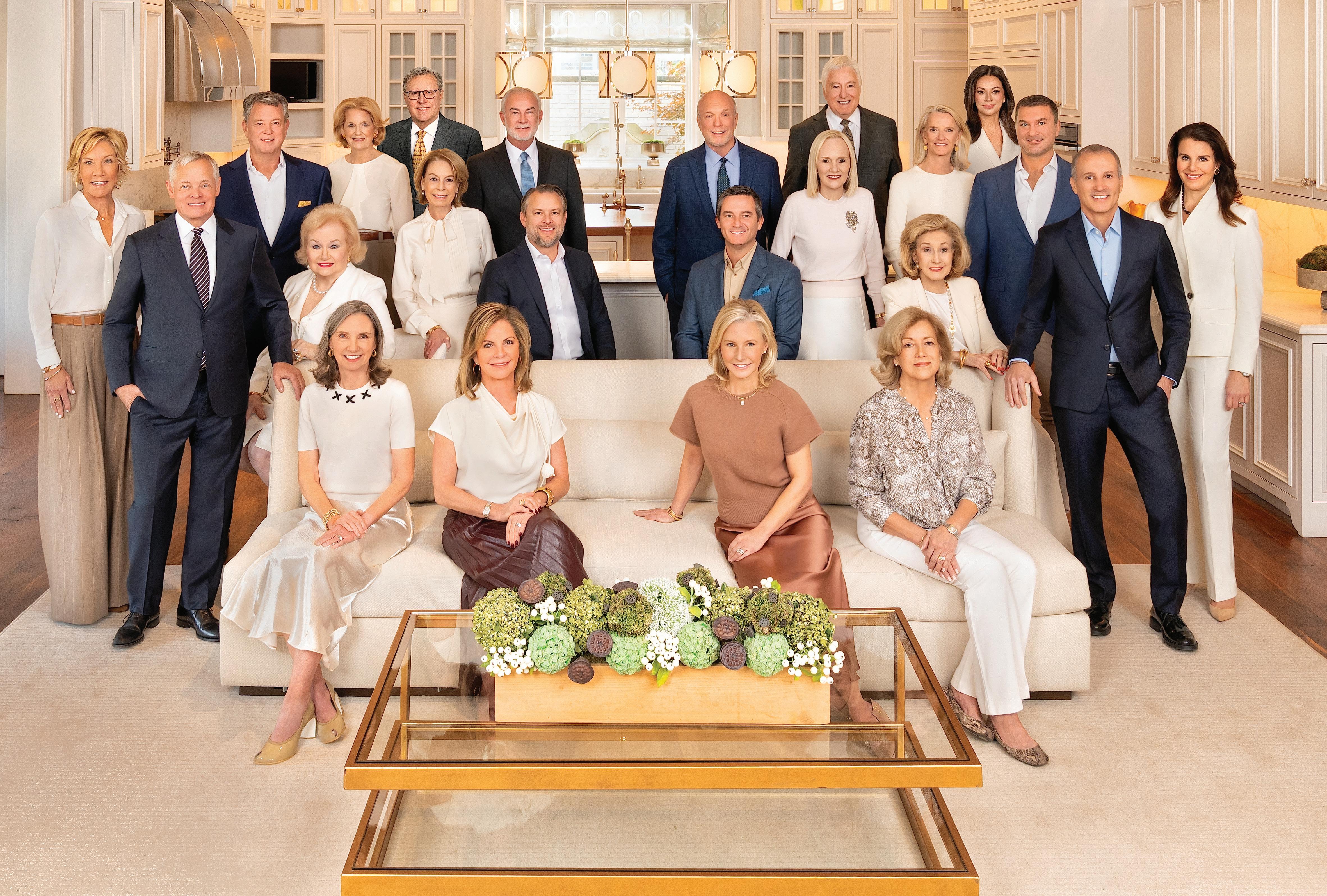
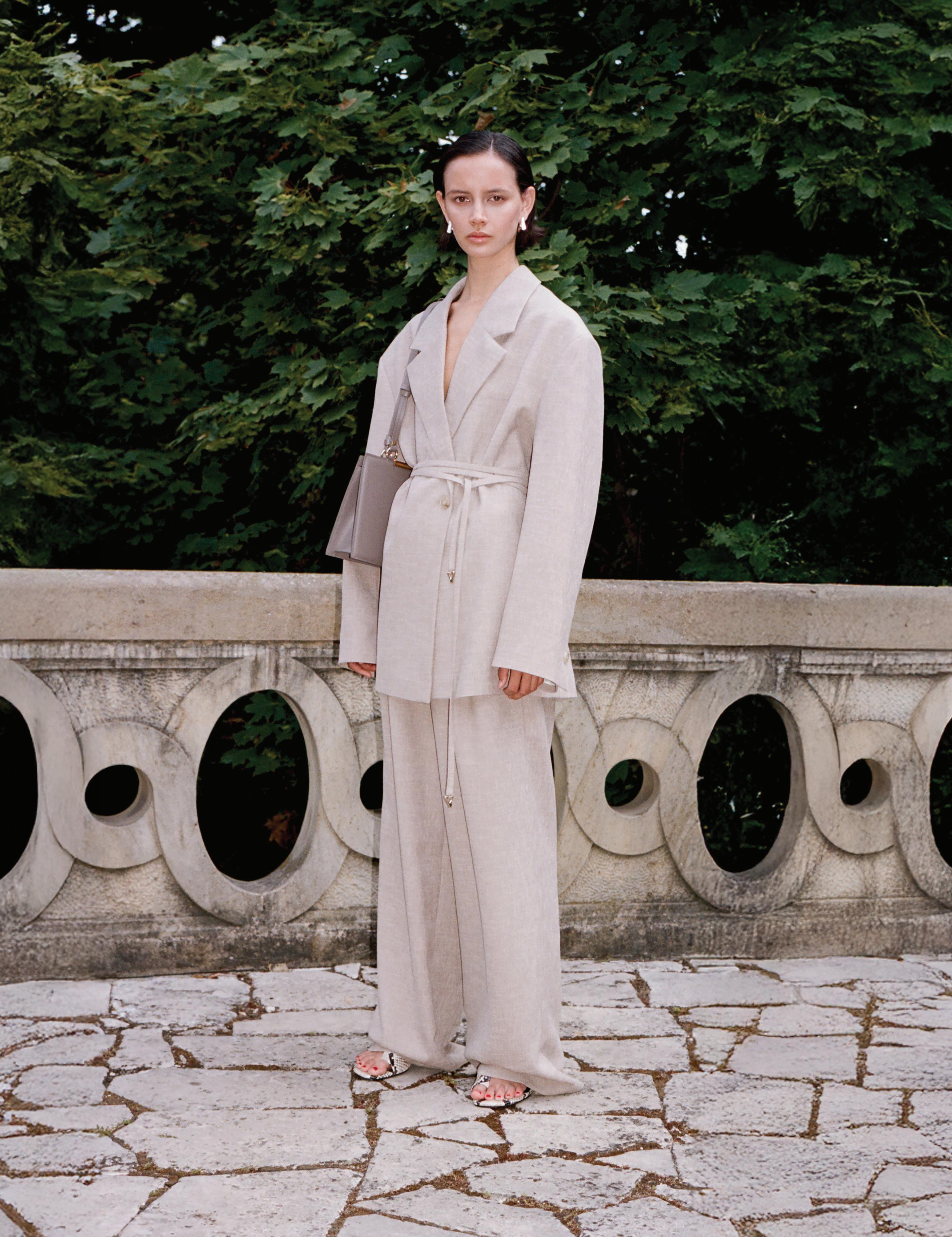
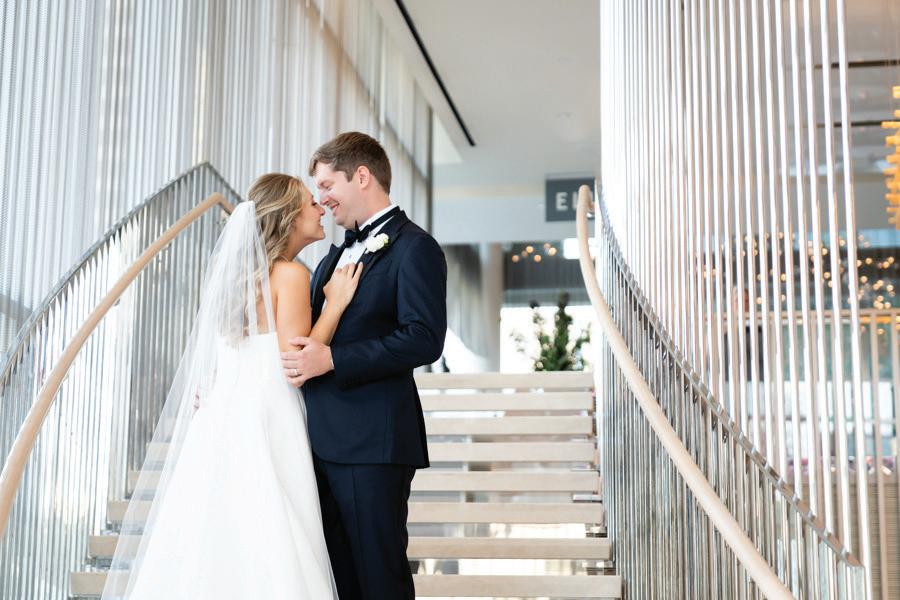
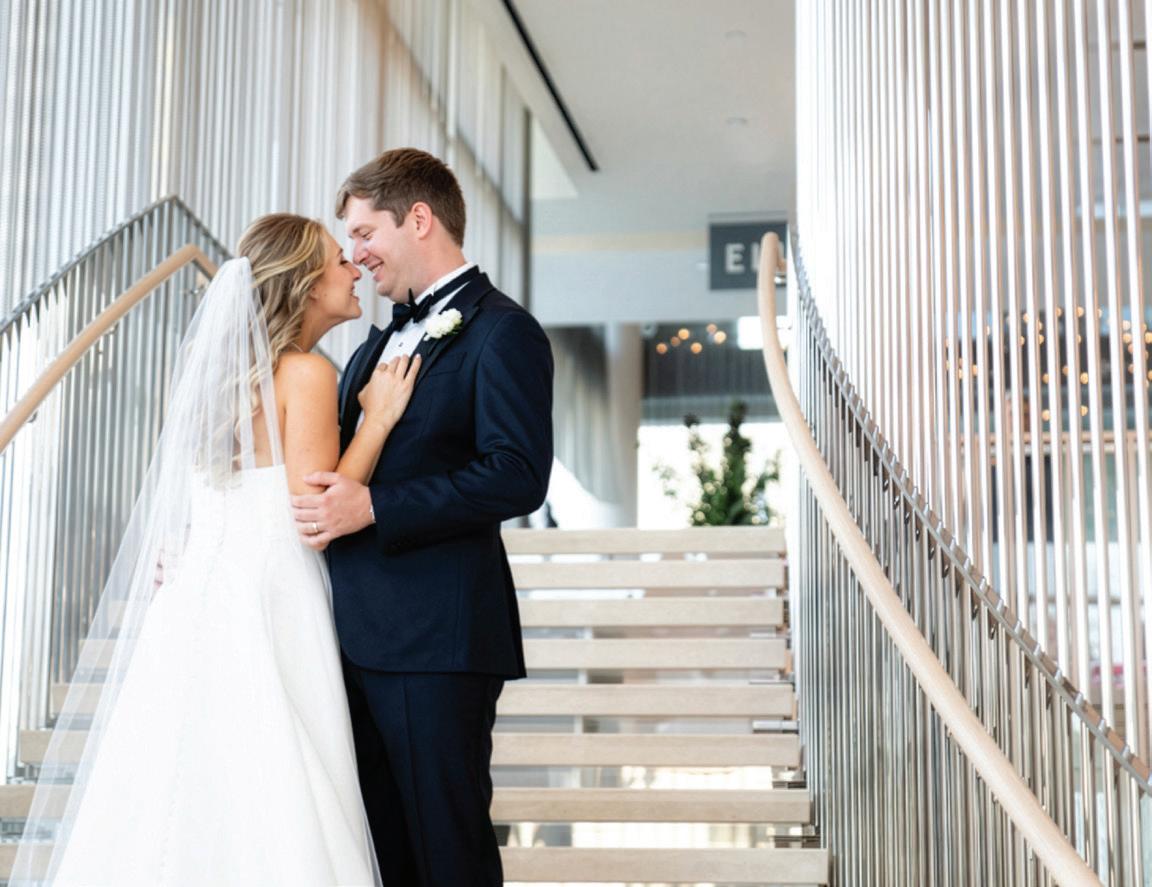
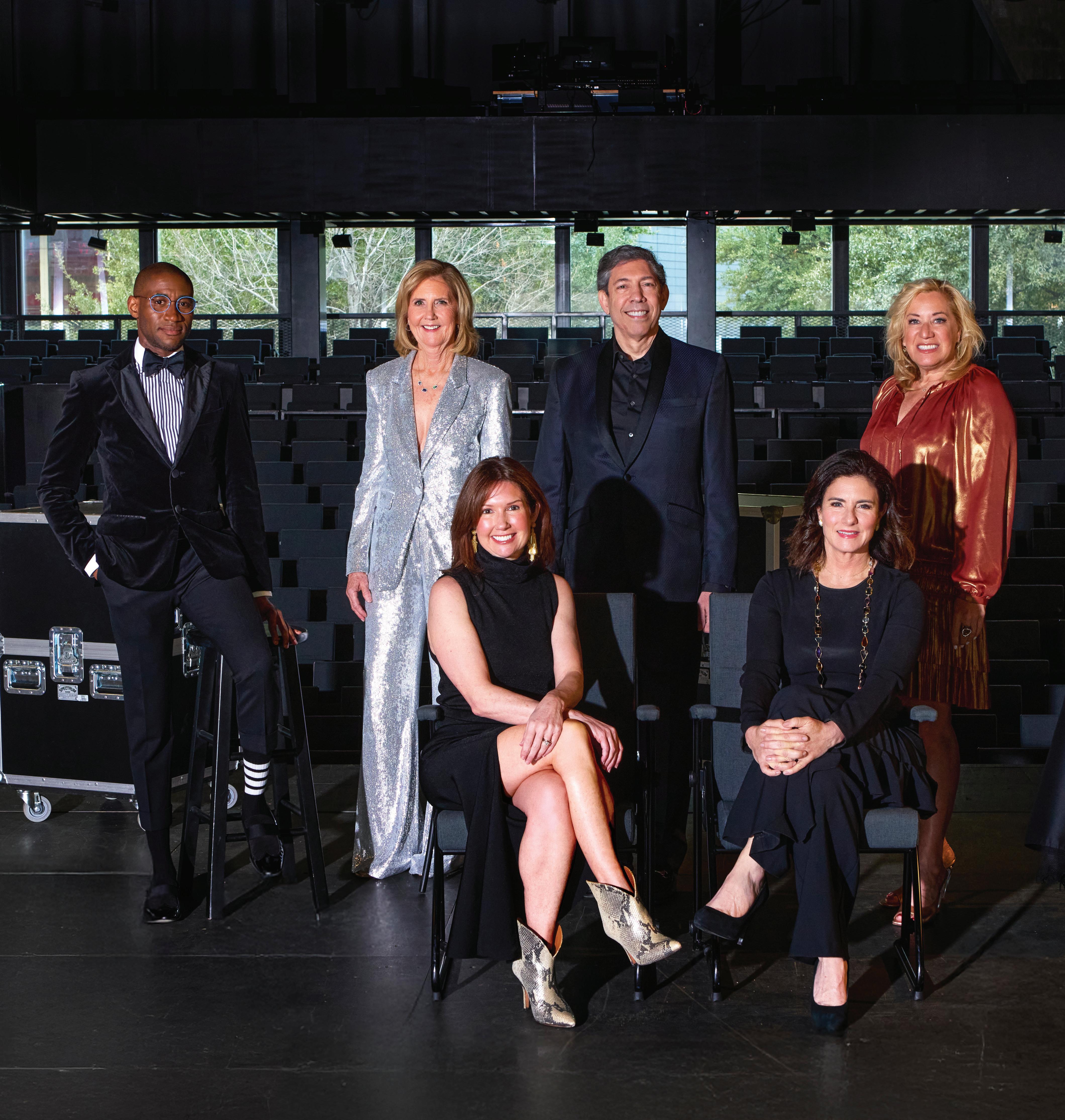
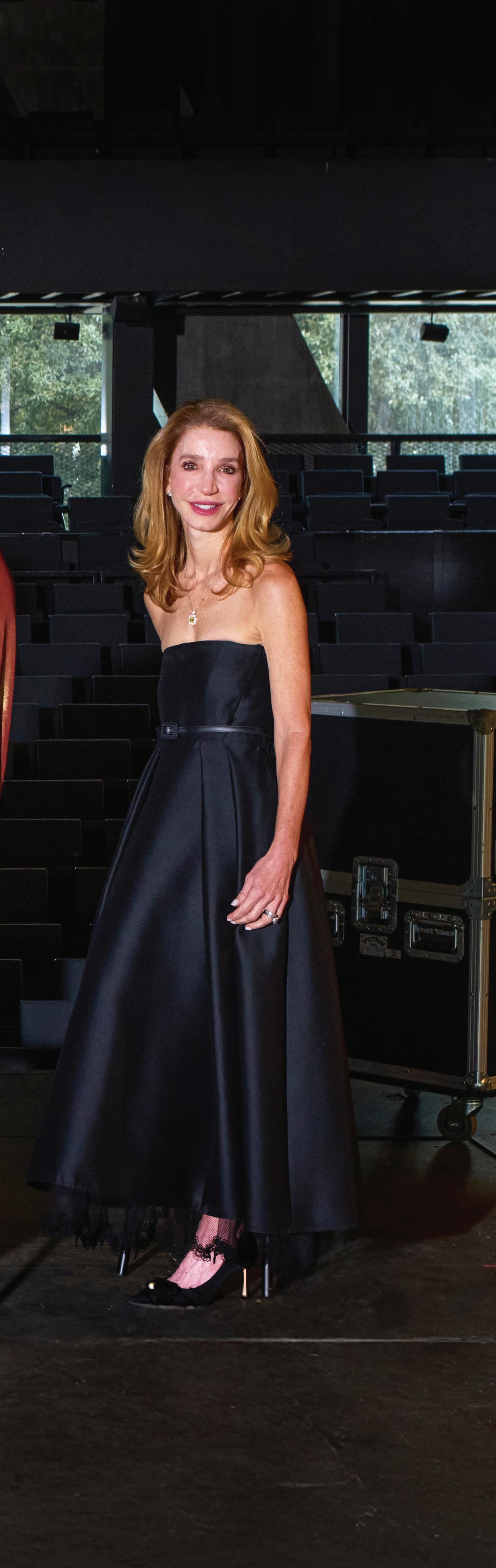
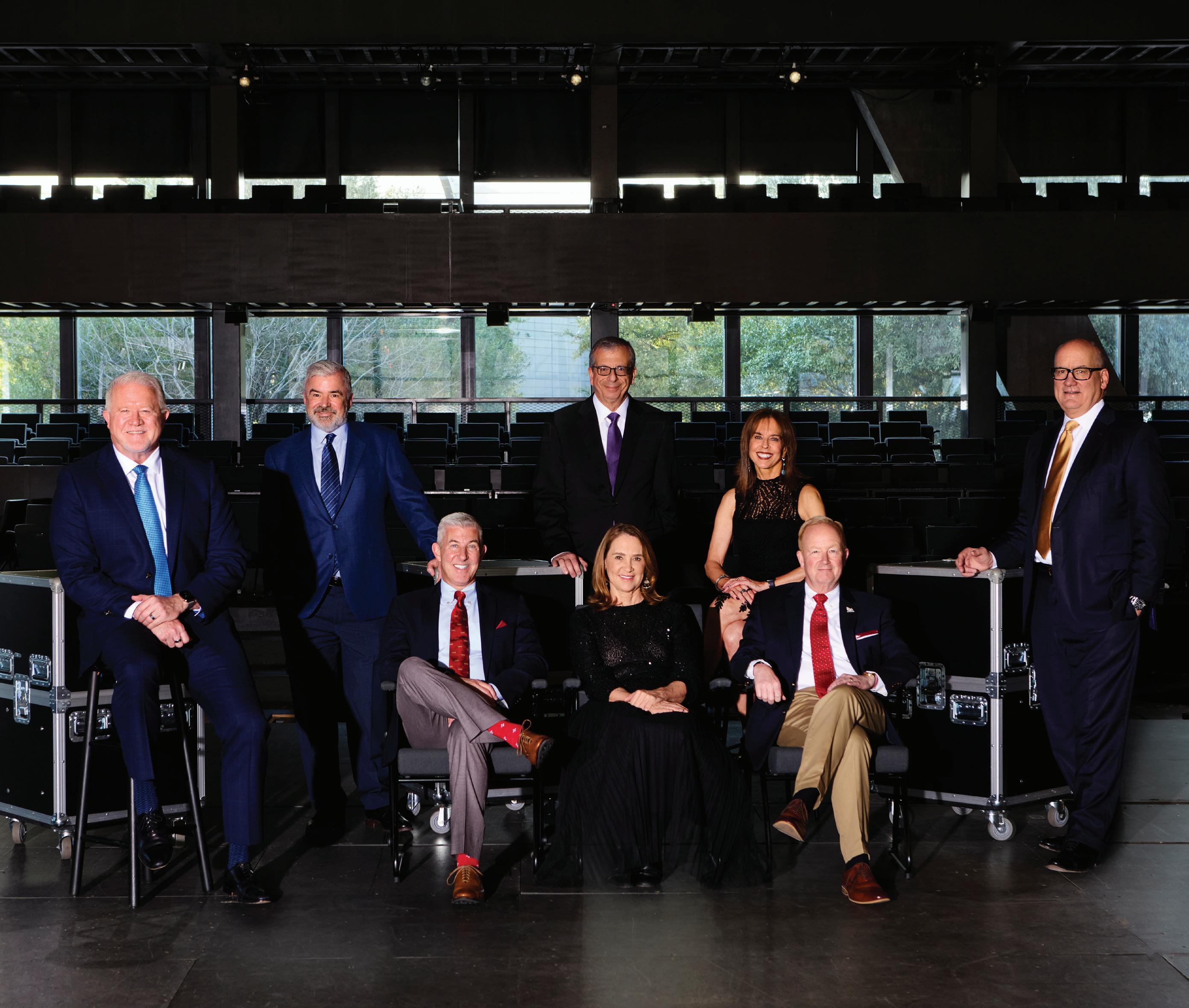
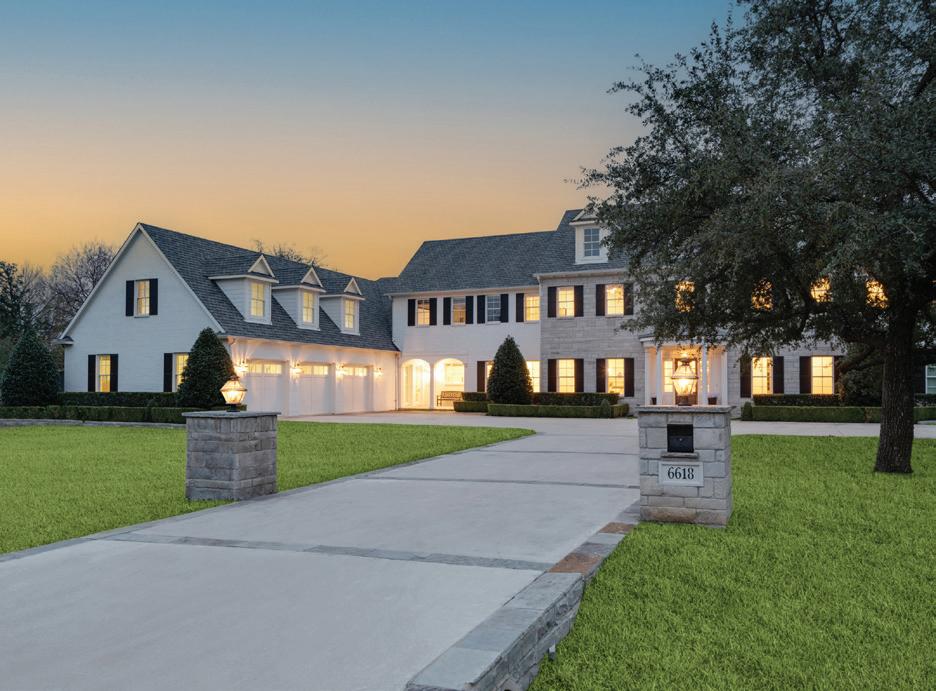
PLUG IN TO ONE AGENT. LIGHT A NETWORK OF 23. They bring this city to life like no other group. In a spirit of collaboration that has propelled some of Dallas’ most legendary real estate transactions, this premier networking group continues to do what it does best—connect people and properties. What does that mean for you? A more expertly facilitated sale of your prized property. A more perfectly matched home for your next move. Twenty-three of the most admired and knowledgeable real estate professionals in Dallas come together to put their resources and their vast experience to work for you. Insider information, off-market properties, Dallas’ most exquisite estates—all leveraged for your benefit. Thinking of a change? Put the Masters of Residential Real Estate to work for you.
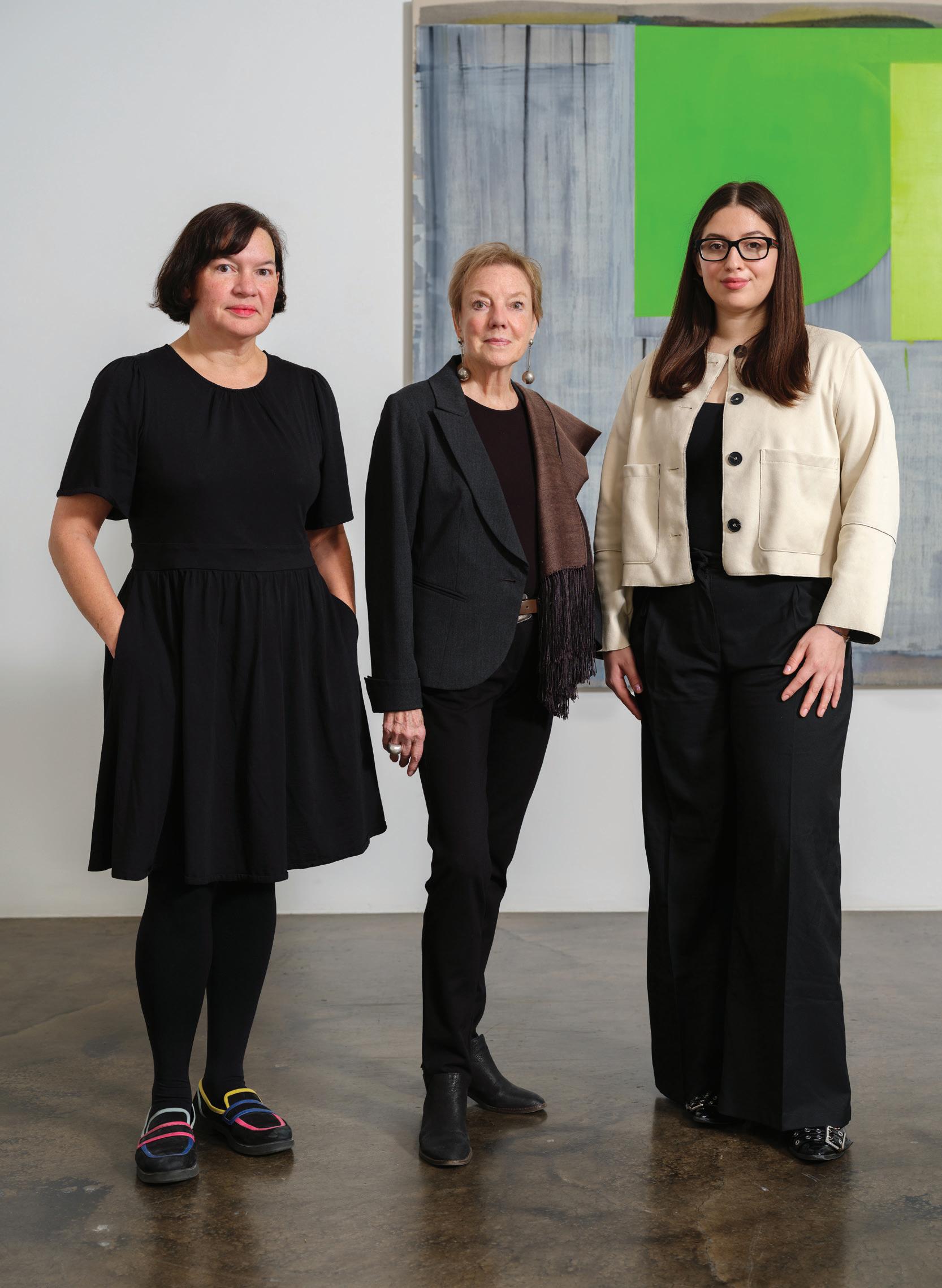
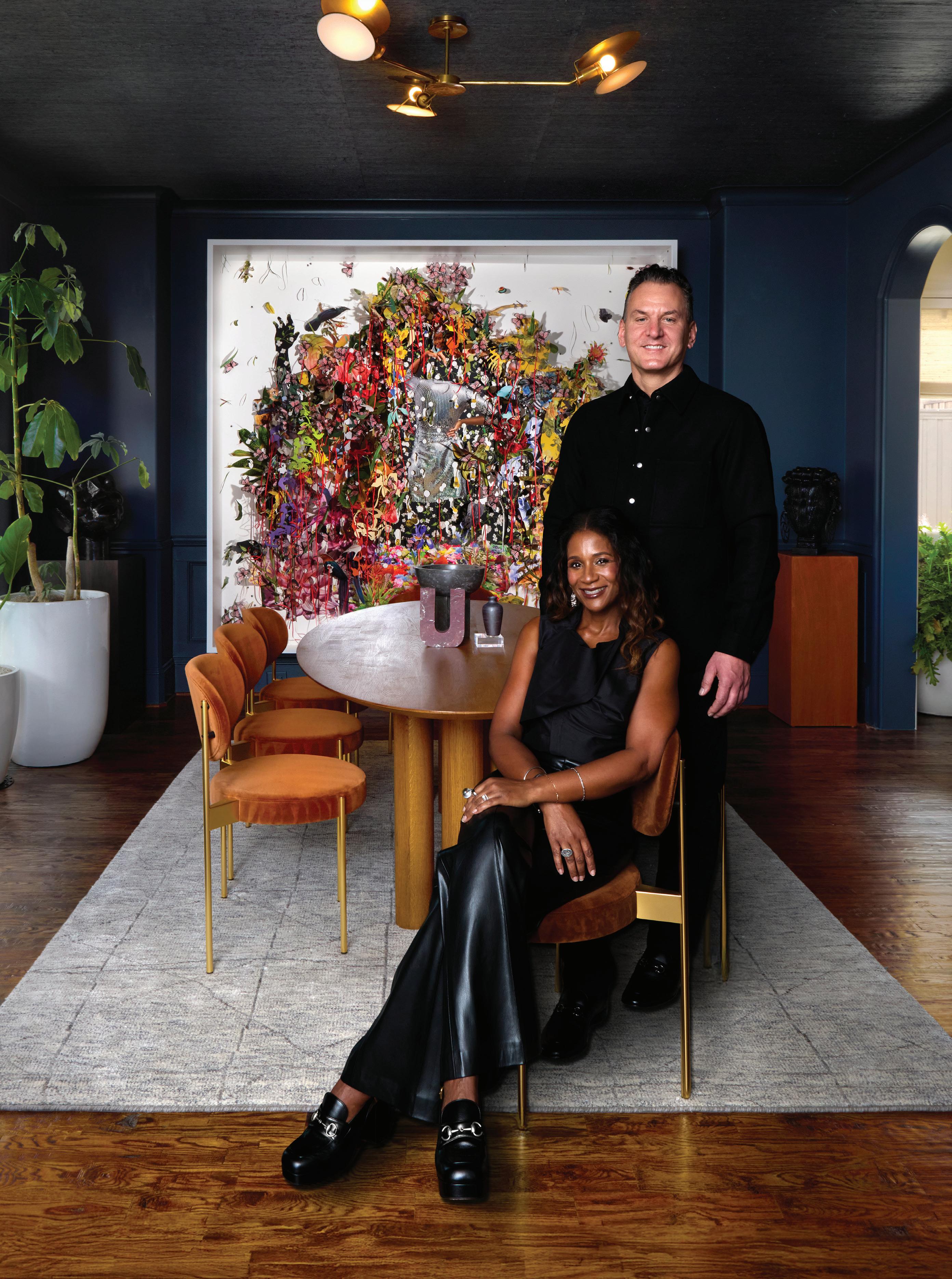
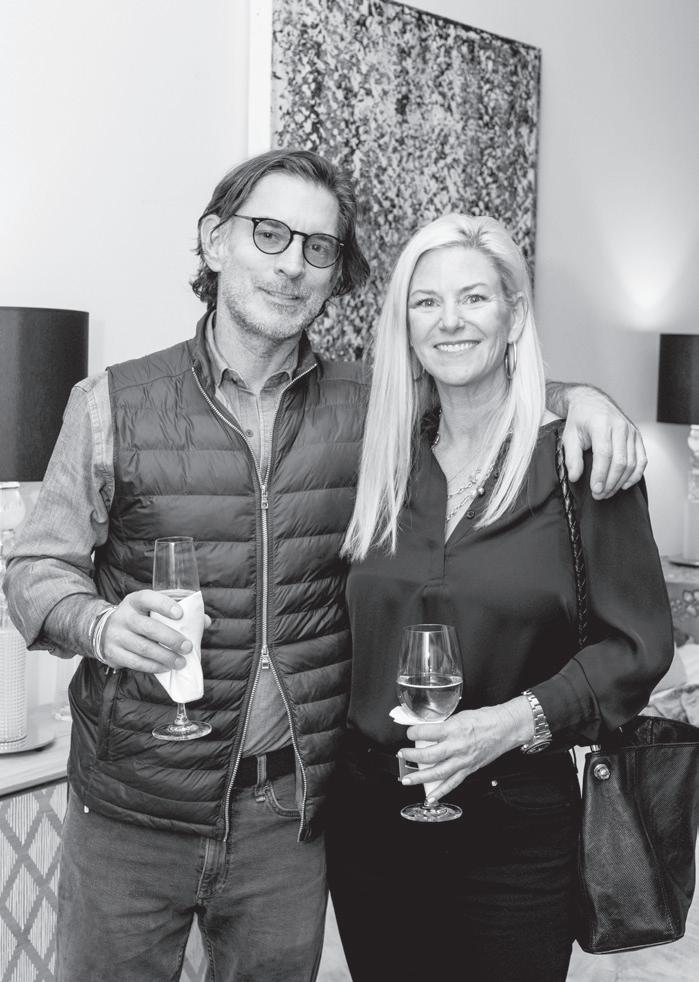
FRONT ROW SEATED : Susan Baldwin, Allie Beth Allman and Assoc. Michelle Wood, Compass Real Estate Amy Detwiler, Compass Real Estate Jackie McGuire, Allie Beth Allman and Assoc. SECOND ROW SEATED: Penny Rivenbark, Ebby Halliday Realtors Joan Eleazer, Compass Real Estate Ryan Streiff, Dave Perry-Miller Real Estate
Chad Barrett, Allie Beth Allman and Assoc. Doris Jacobs, Allie Beth Allman and Assoc. THIRD ROW STANDING: Becky Frey, Compass Real Estate Ralph Randall, Briggs Freeman Sotheby’s Tom Hughes, Compass Real Estate Susan Marcus, Briggs Freeman Sotheby’s Stewart Lee, Dave Perry-Miller Real Estate Mark Cain, Compass Real Estate Kyle Crews, Allie Beth Allman and Assoc. Erin Mathews, Allie Beth Allman and Assoc. Madeline Jobst, Briggs Freeman Sotheby’s
Emily Ray Porter, Compass Real Estate Jonathan Rosen, Compass Real Estate Faisal Halum, Compass Real Estate Rachel Trowbridge, Allie Beth Allman and Assoc.
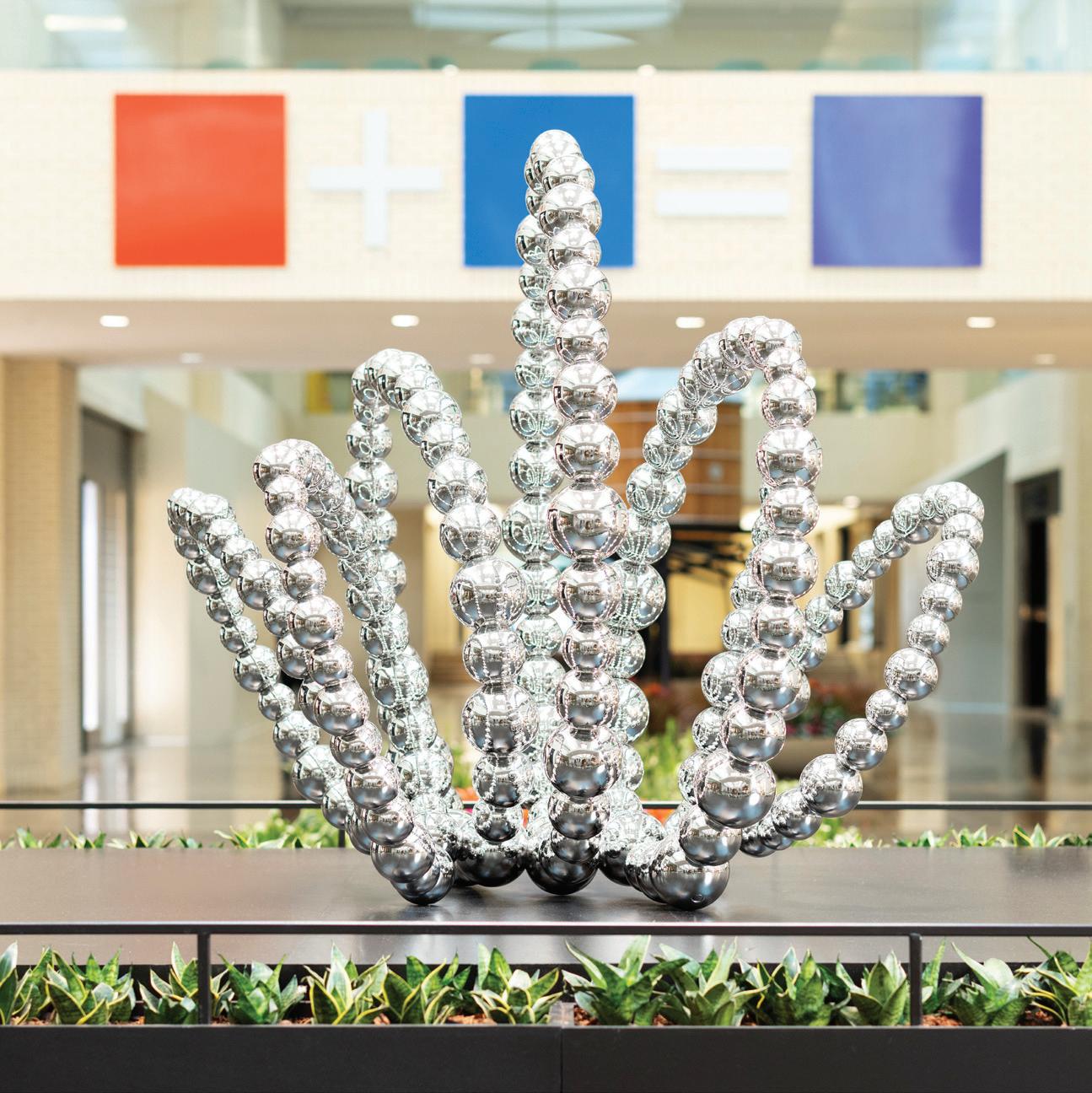
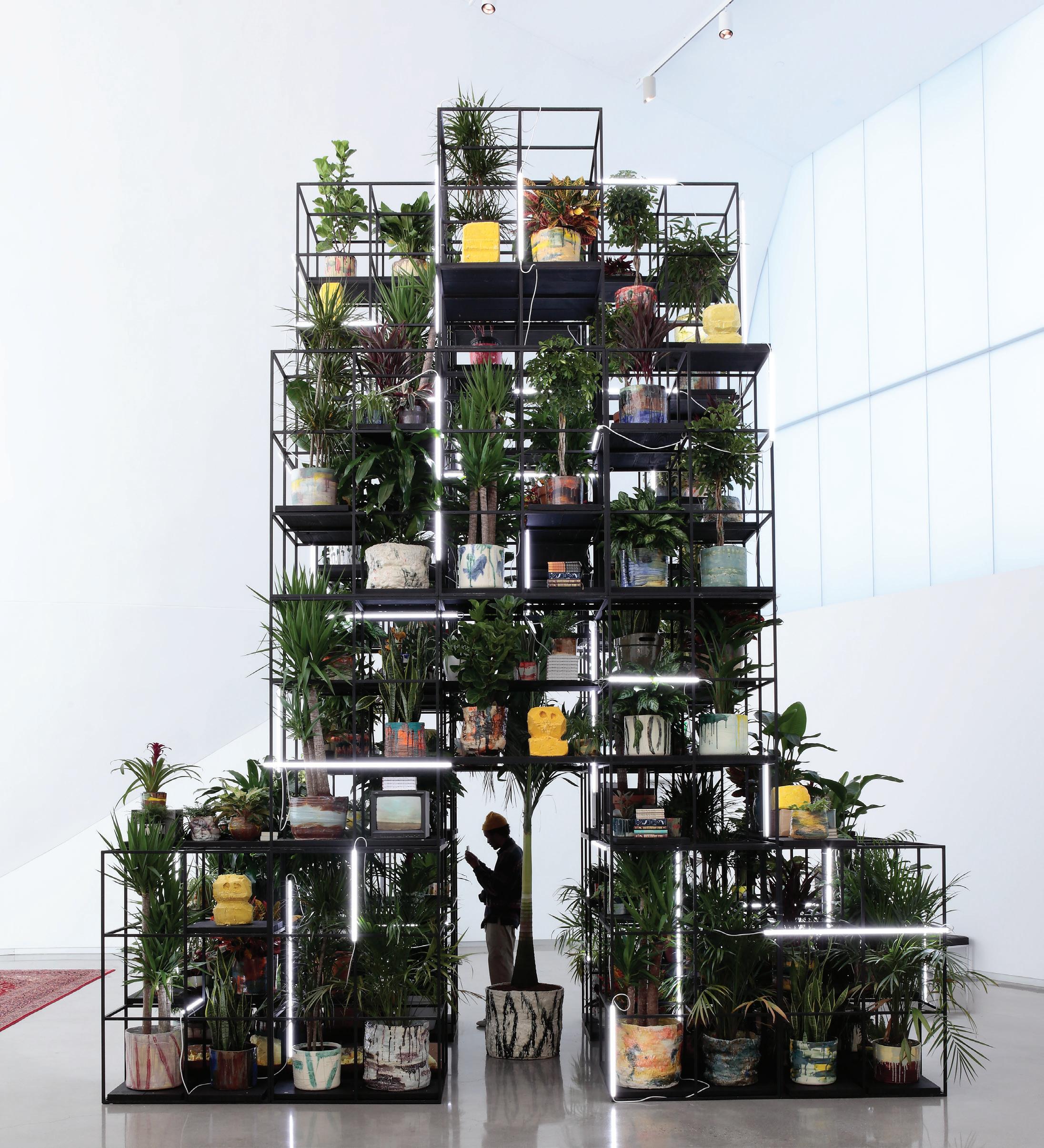
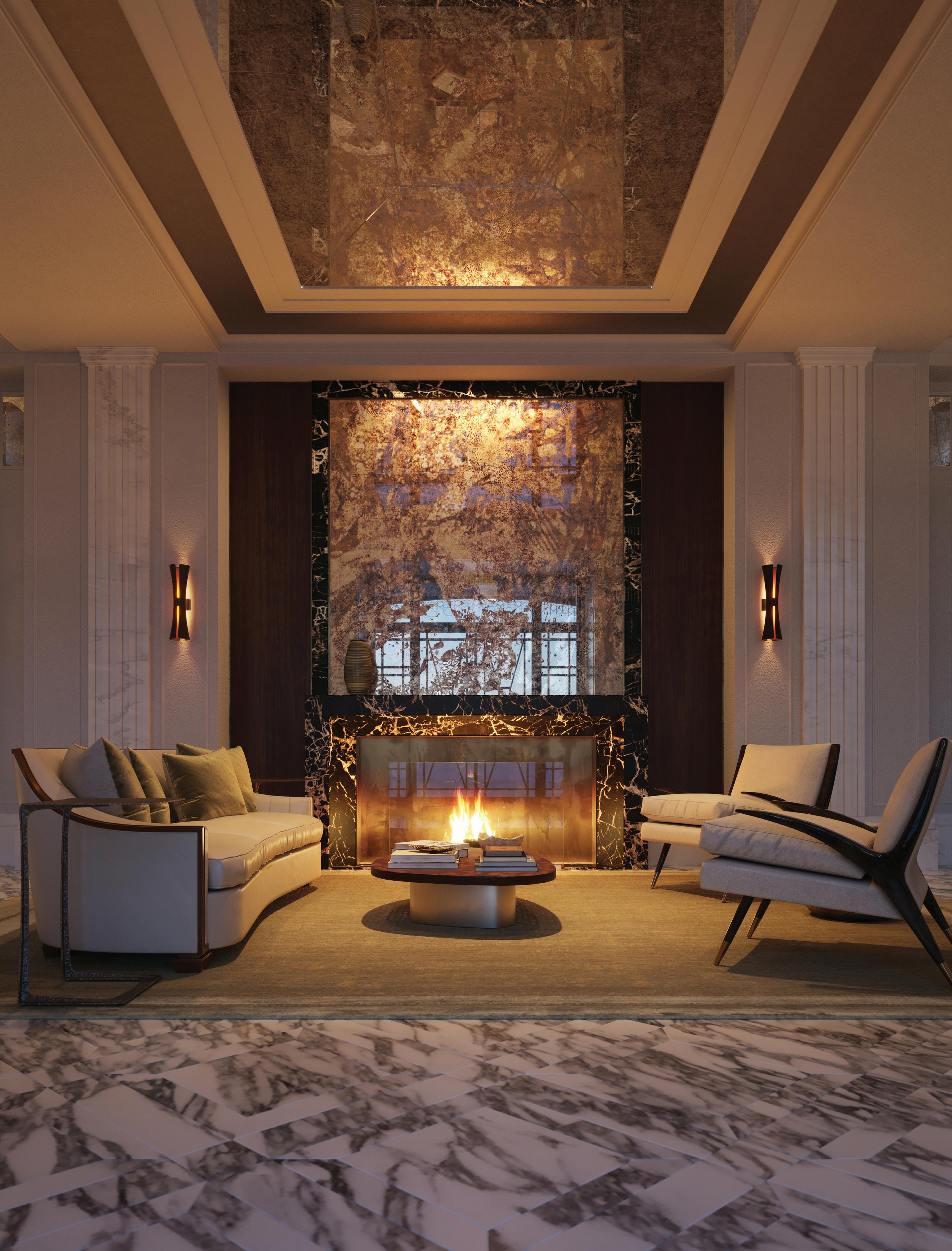
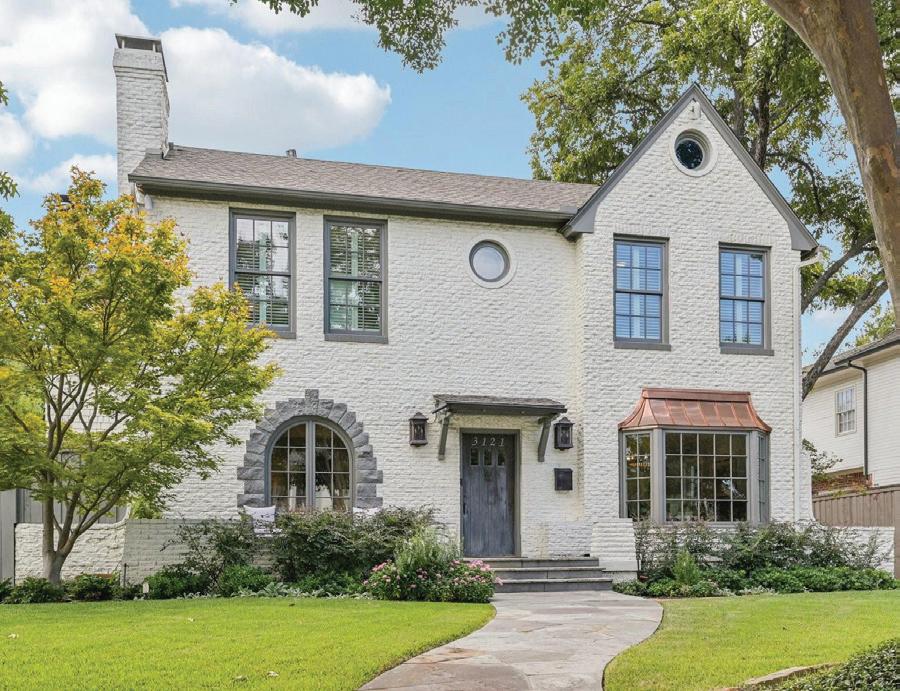
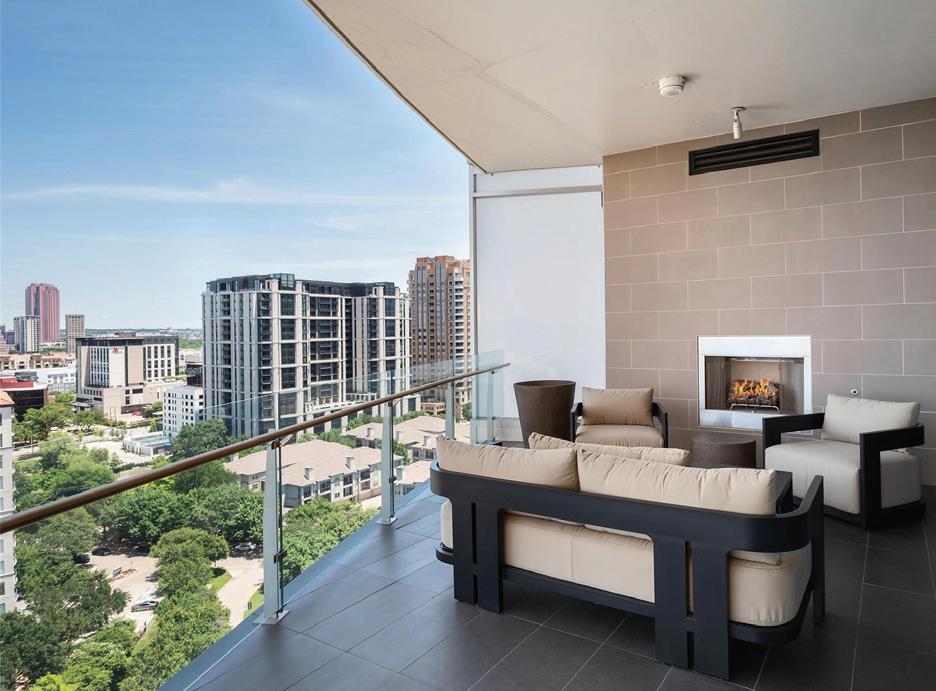
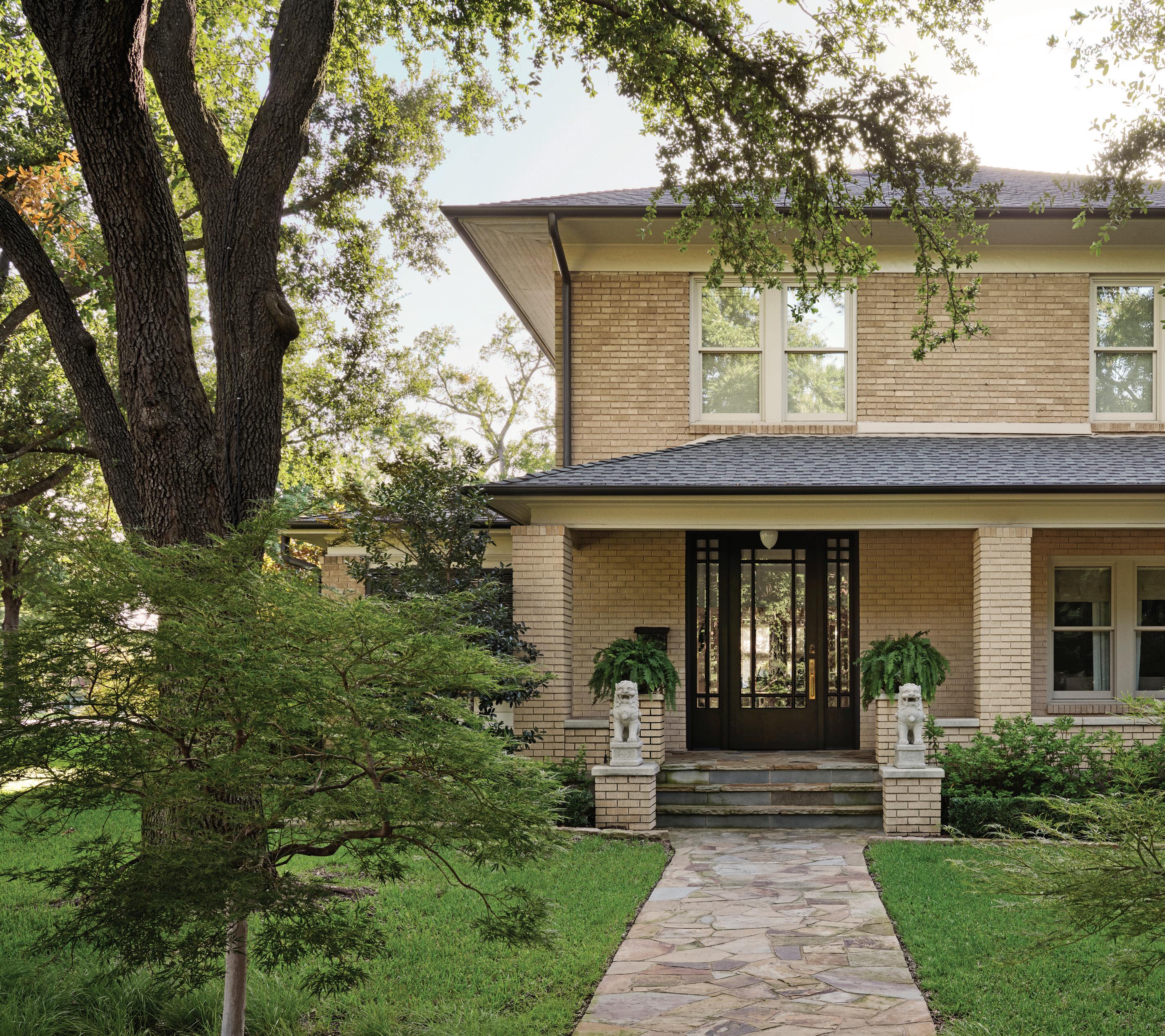
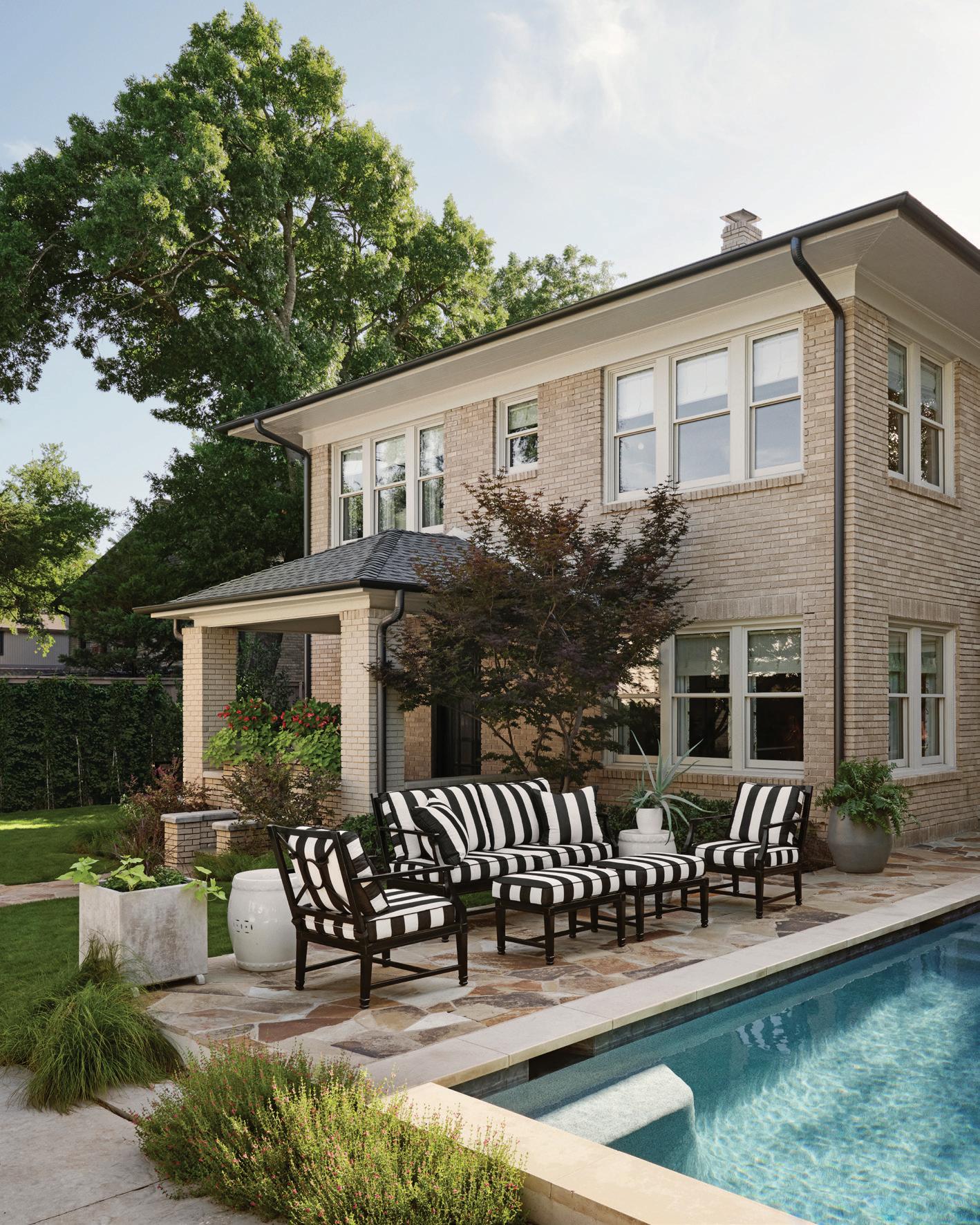
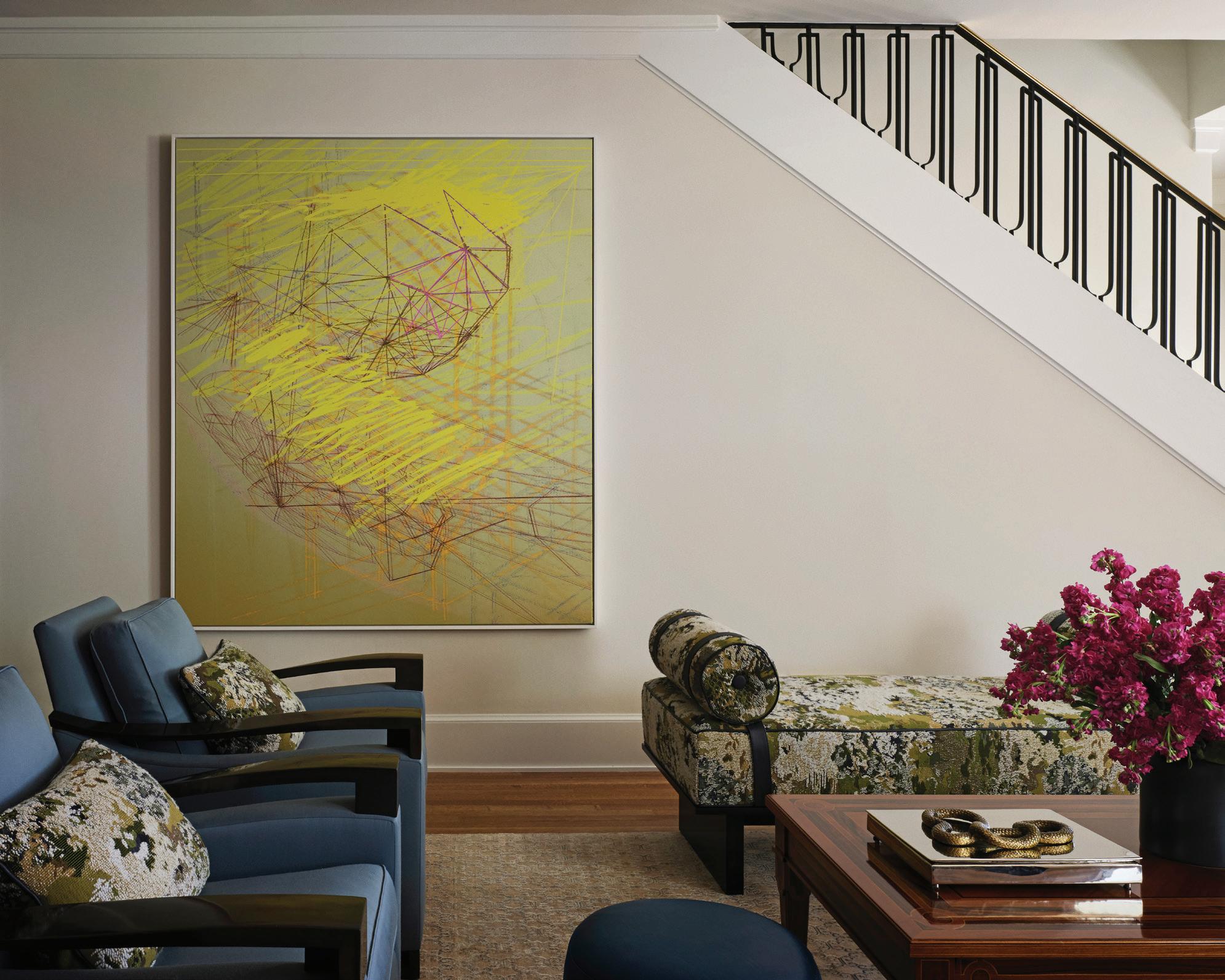
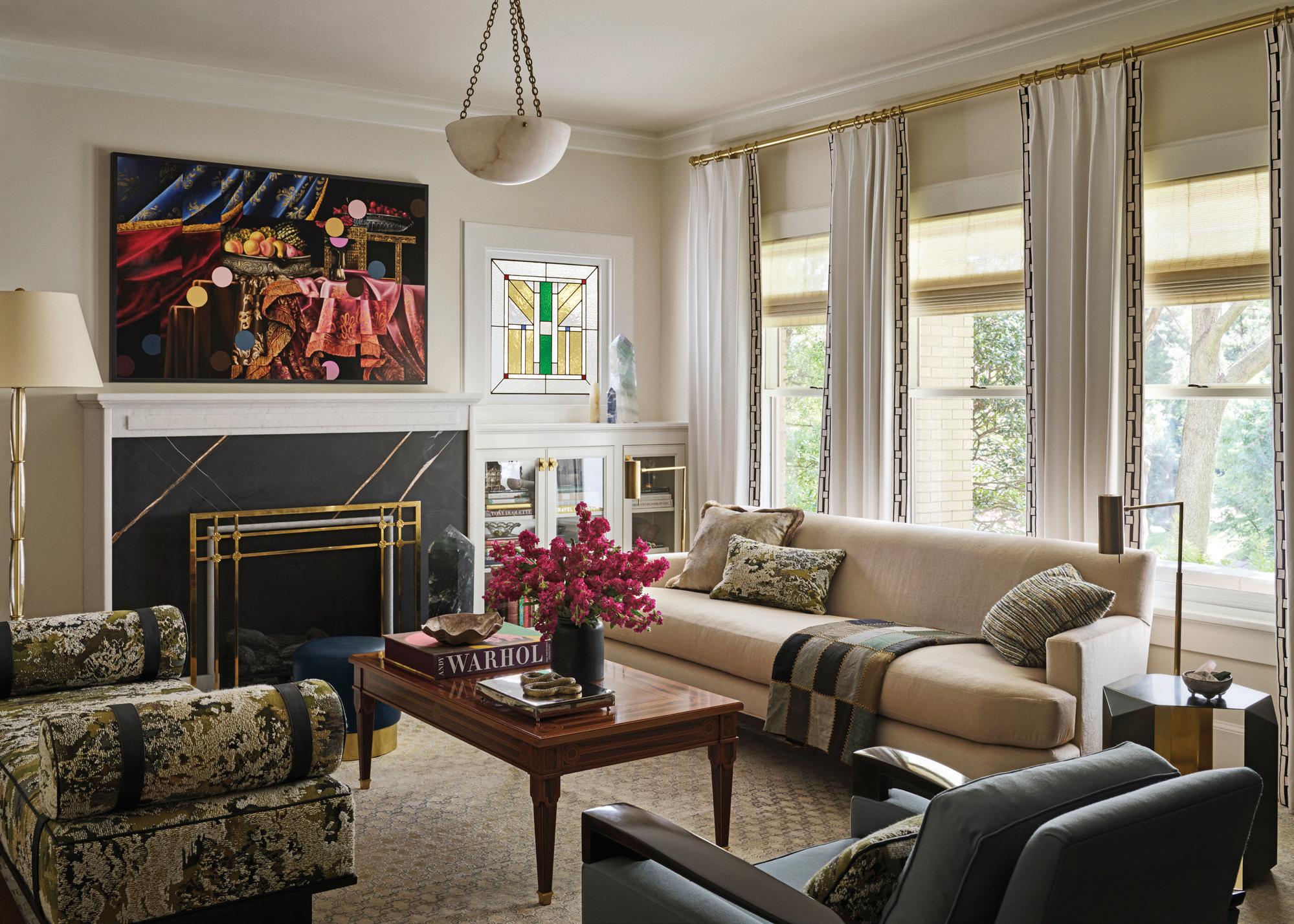
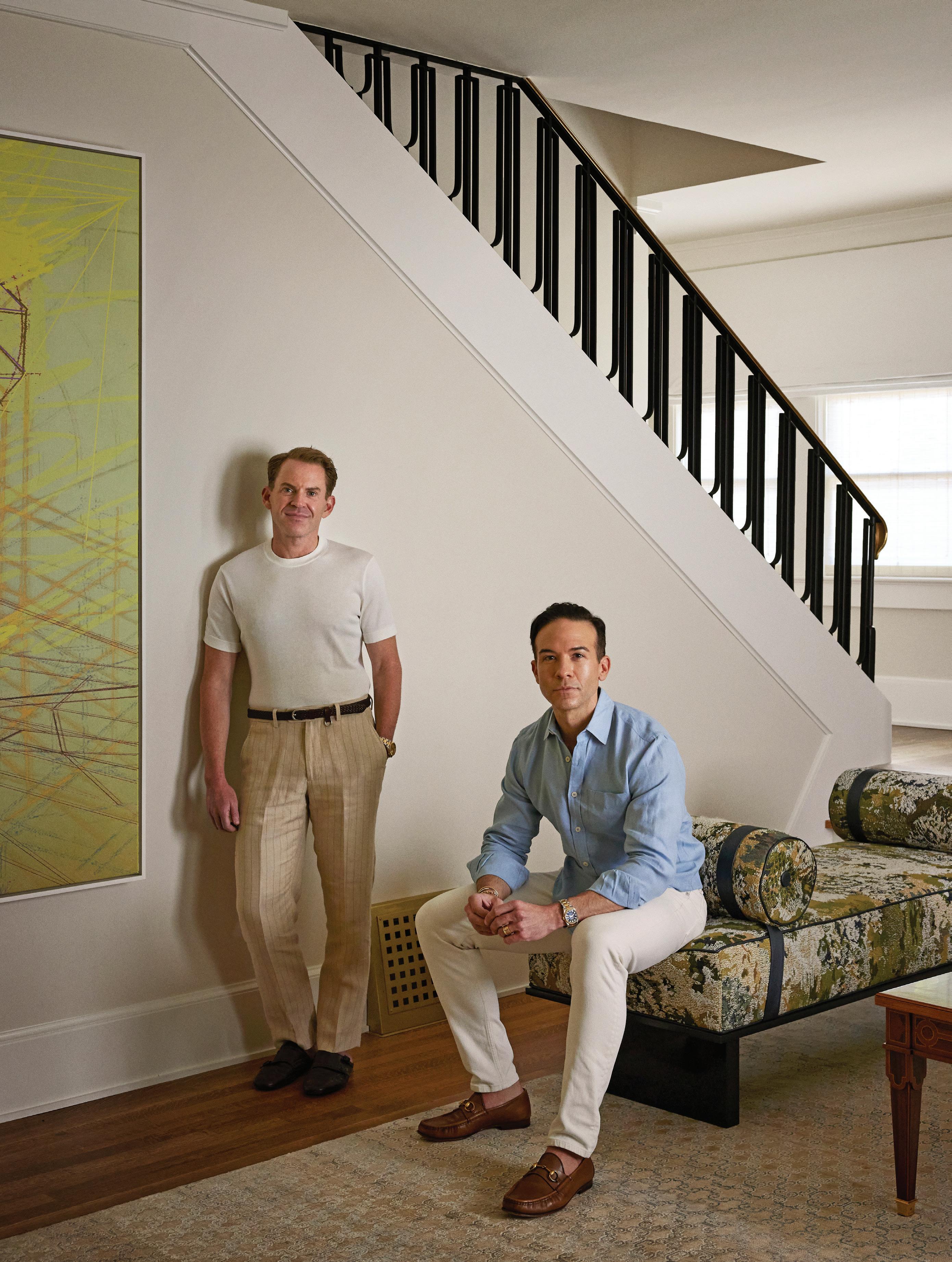
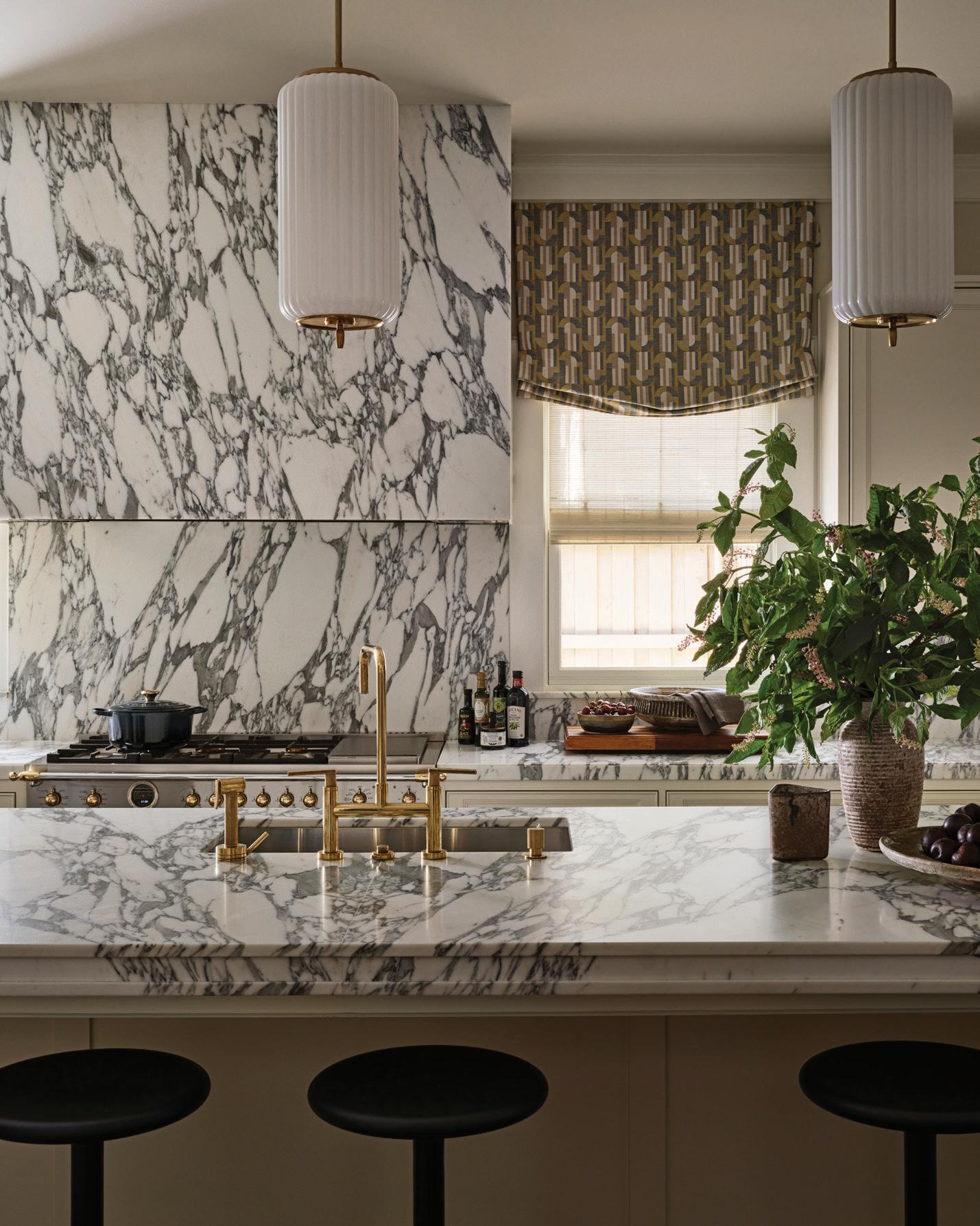
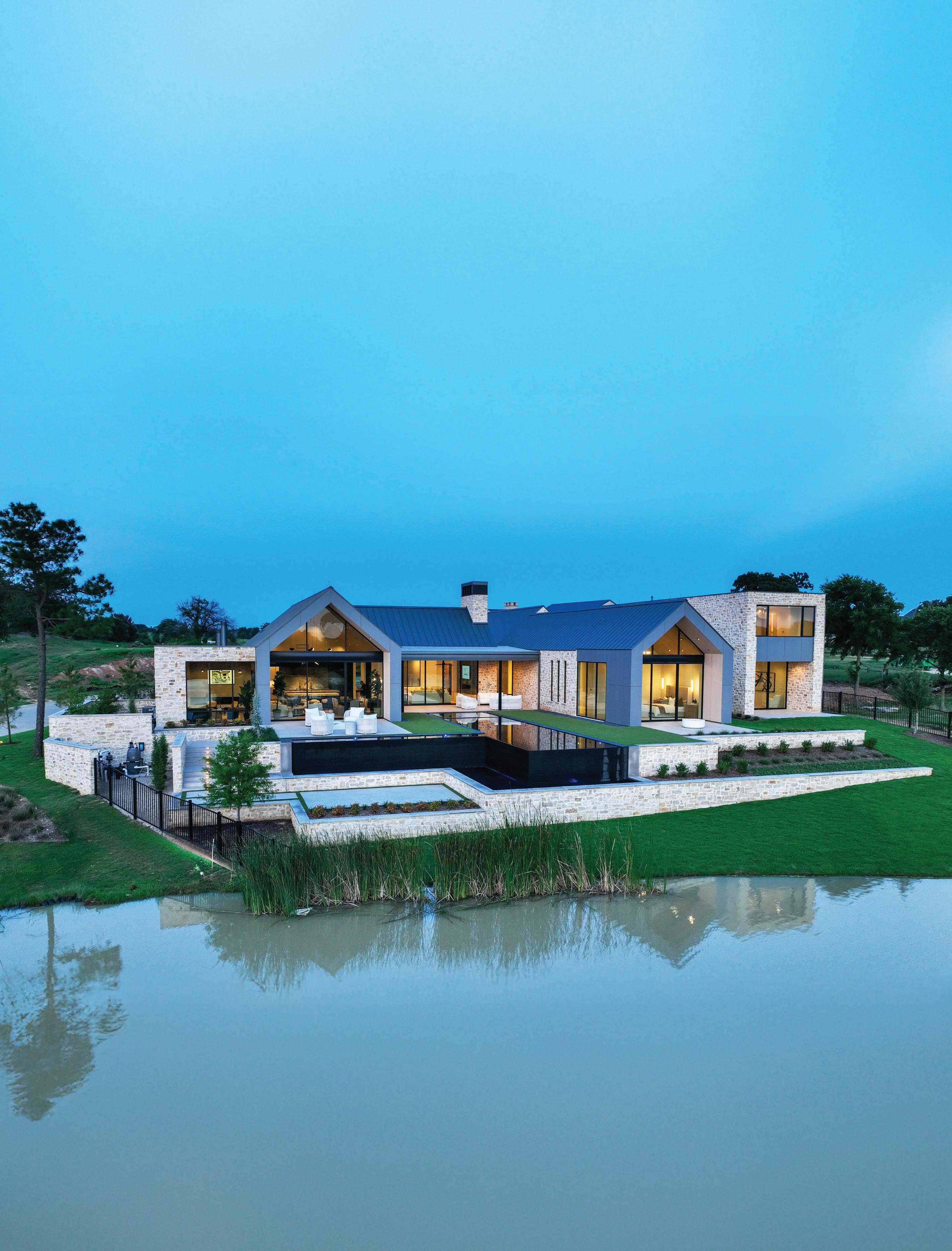
Photographed at 3612 Crescent Ave. courtesy of Jonathan Rosen, Compass Real Estate.
EDITOR’S NOTE
February / March 2026
TERRI PROVENCAL Publisher / Editor in Chief terri@patronmagazine.com
Instagram terri_provencal and patronmag
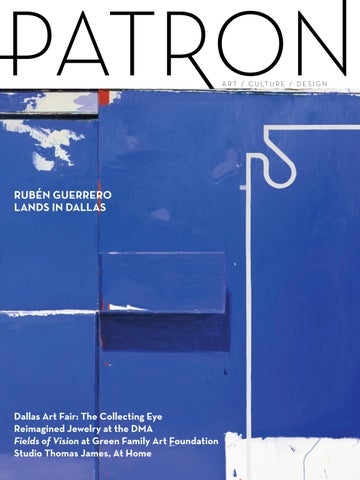
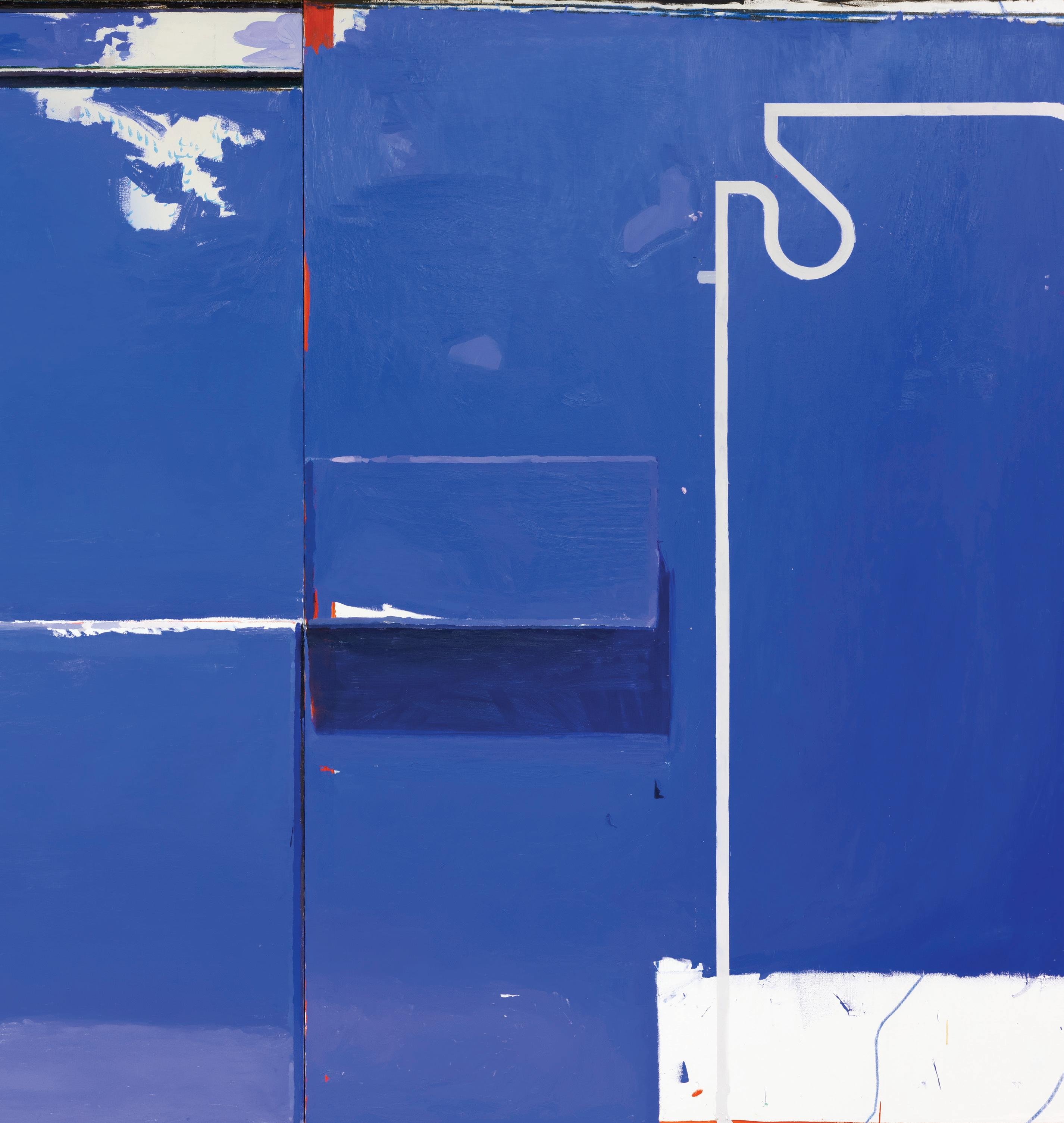
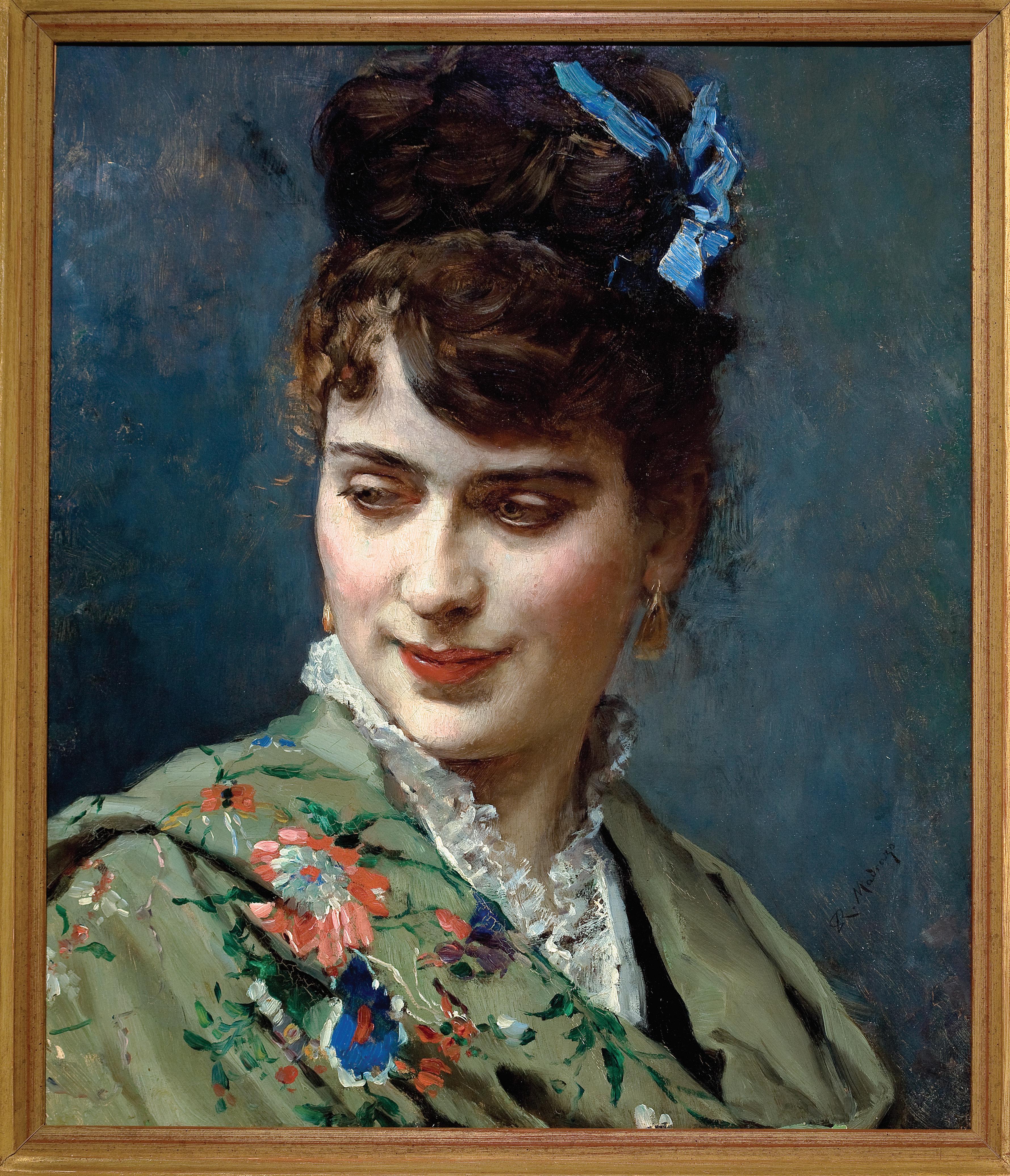
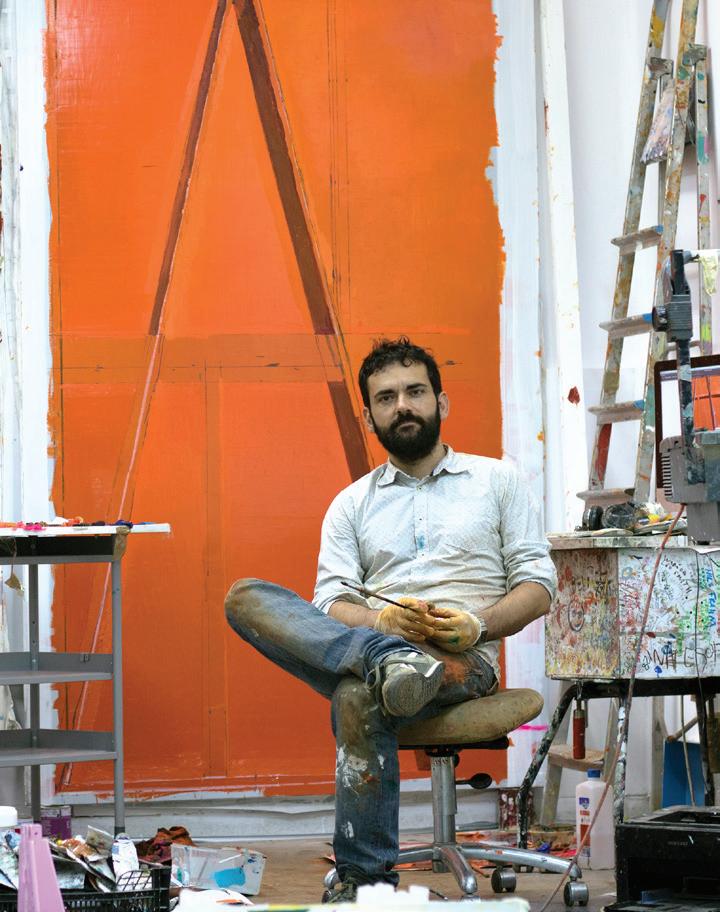
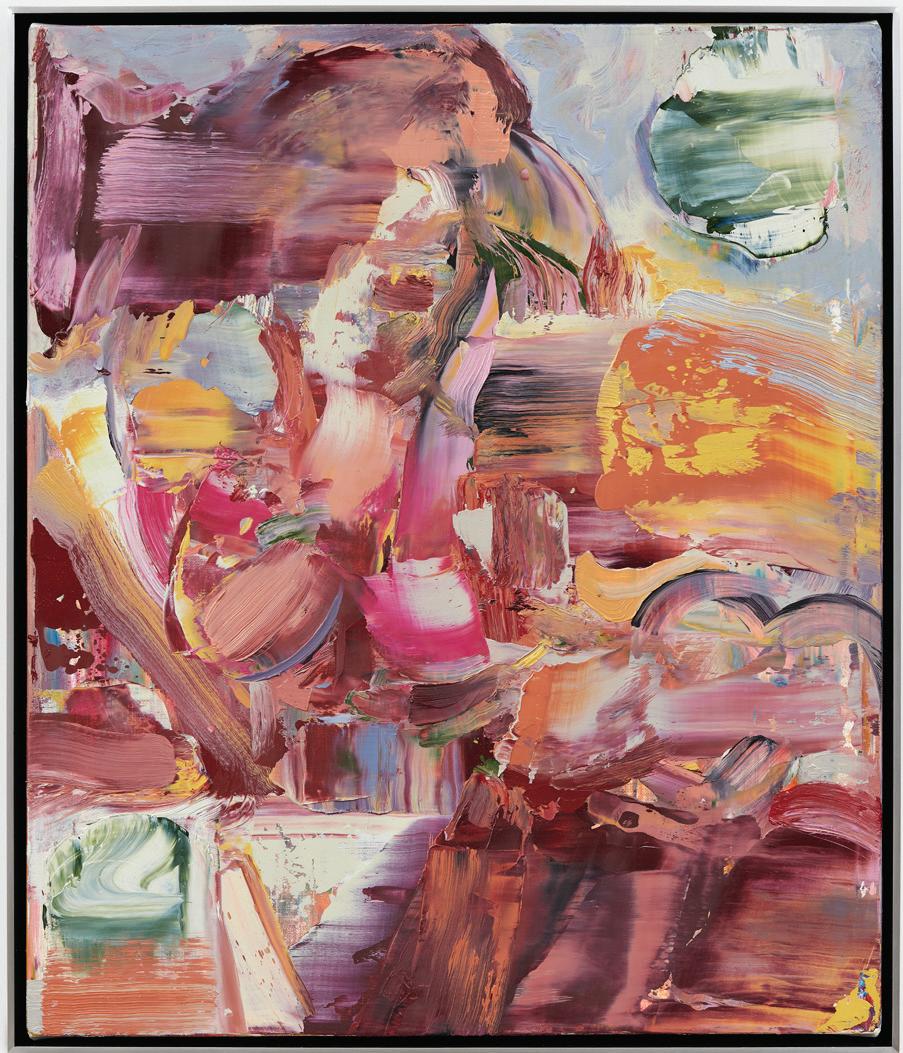
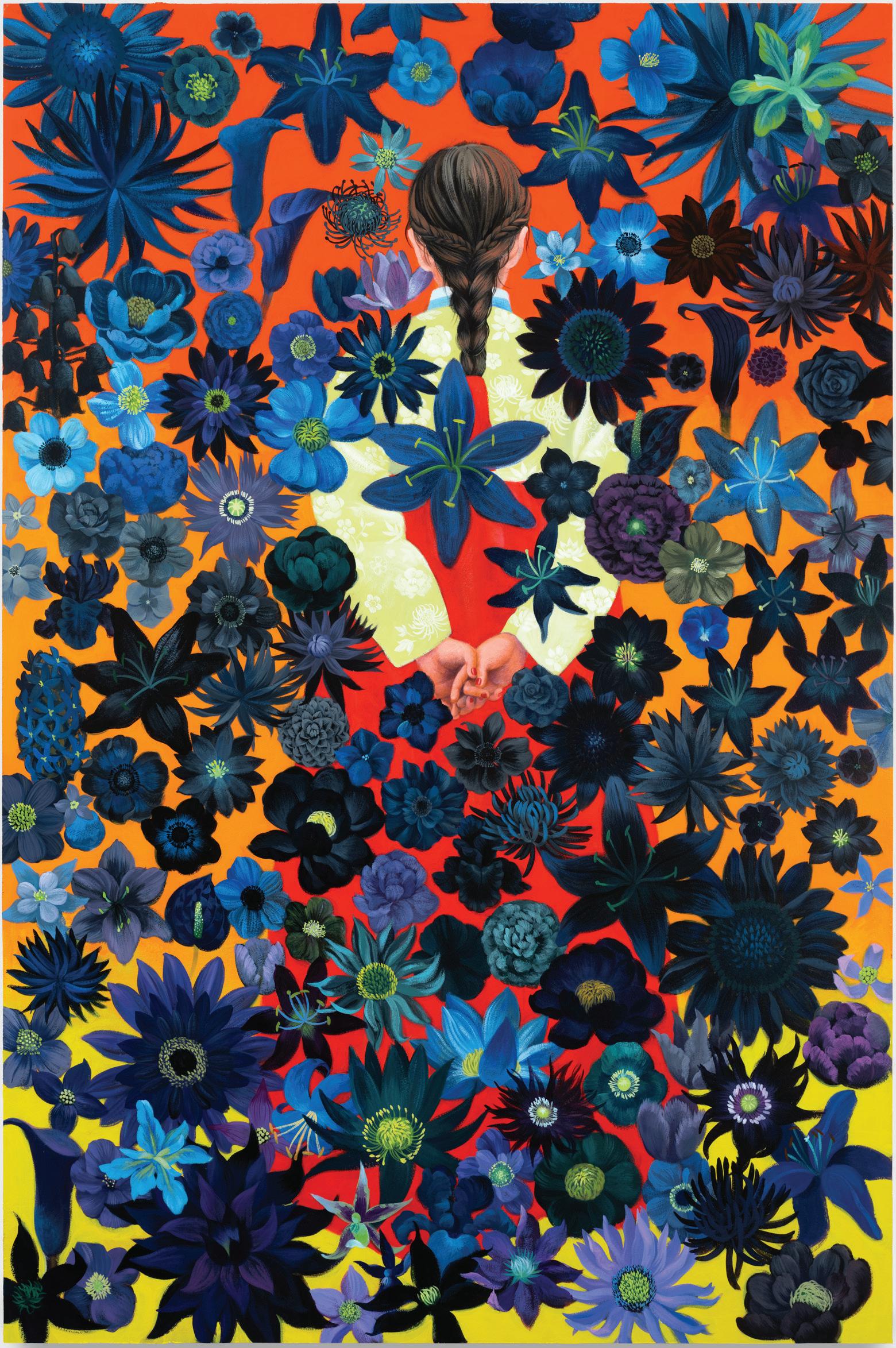
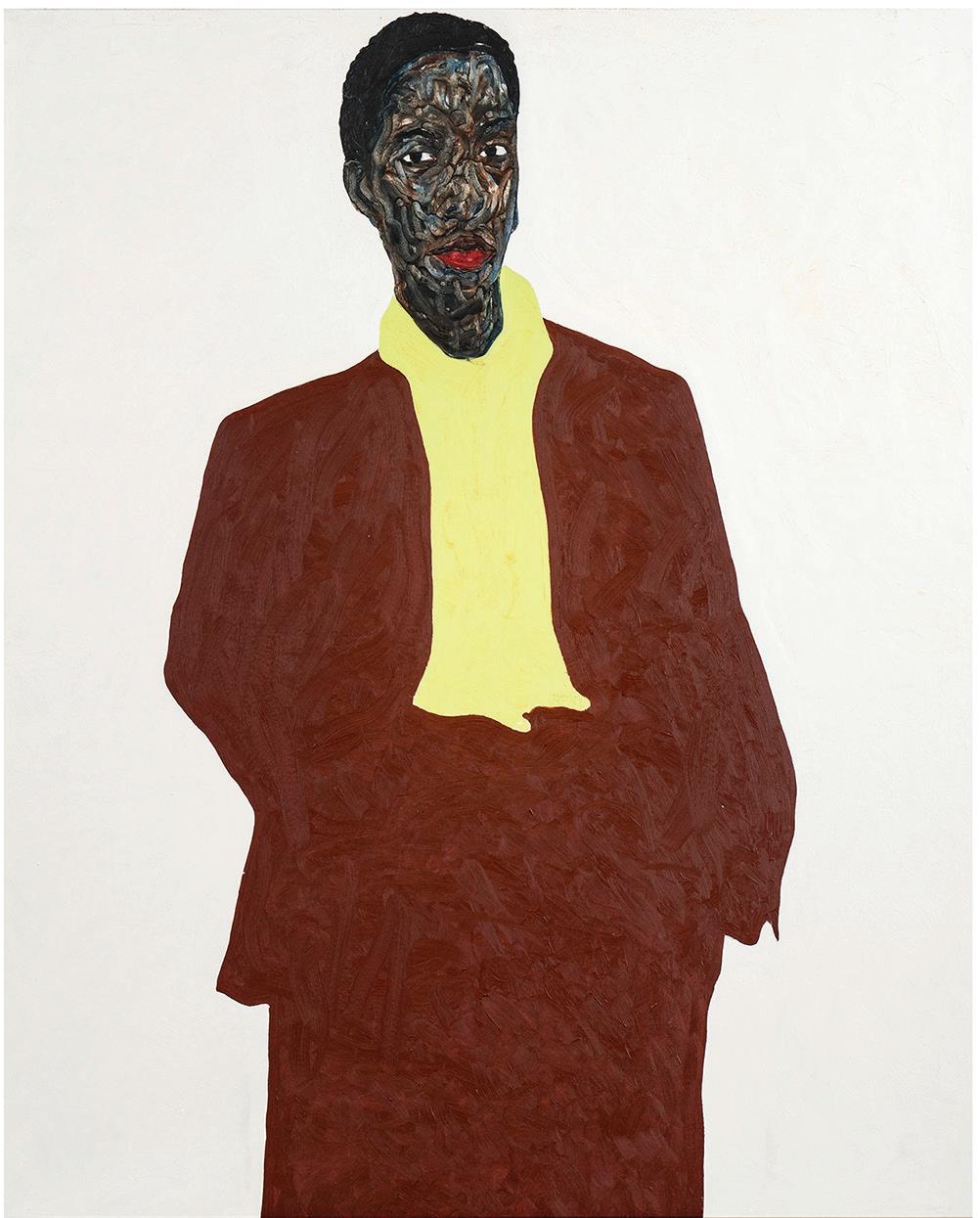
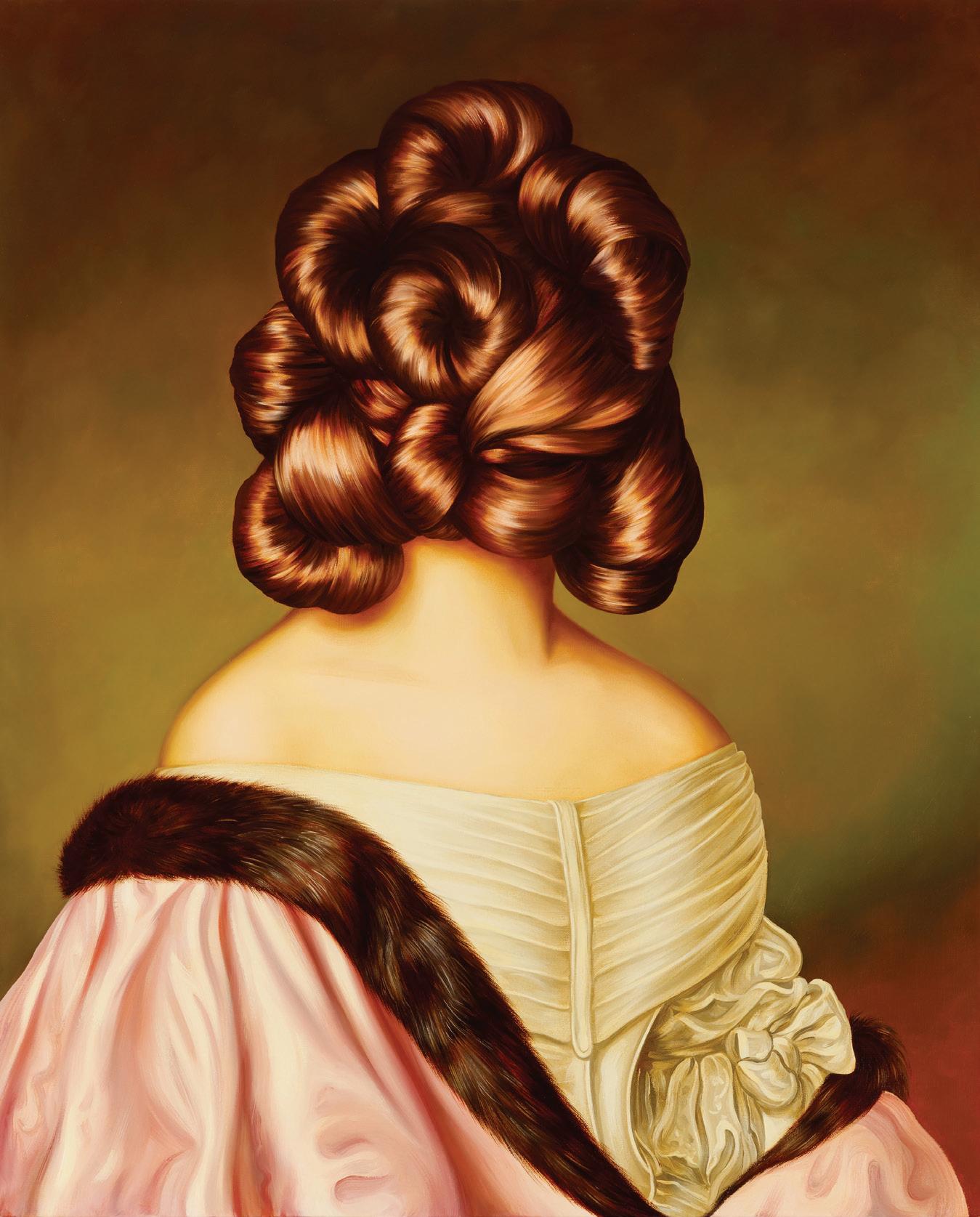
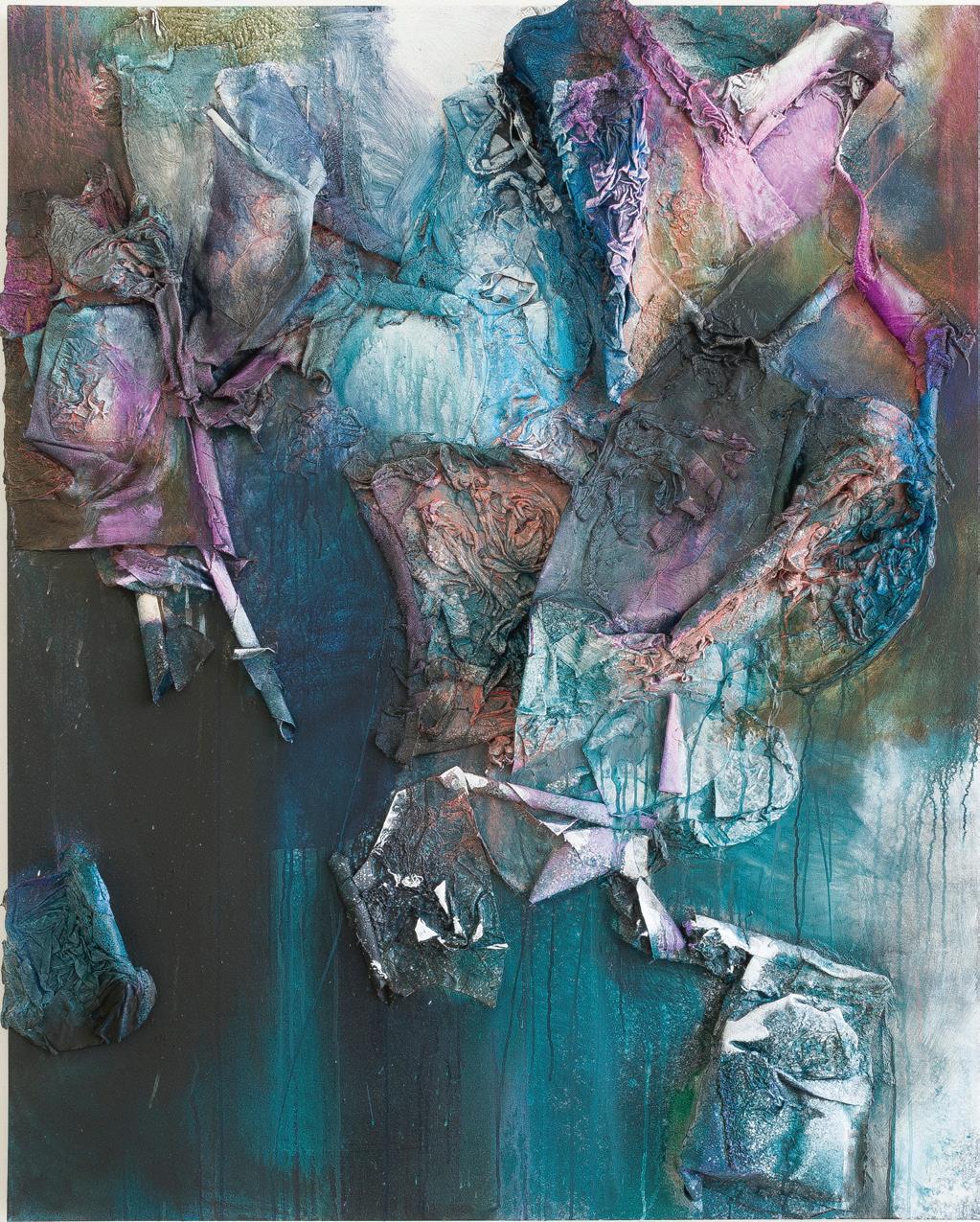
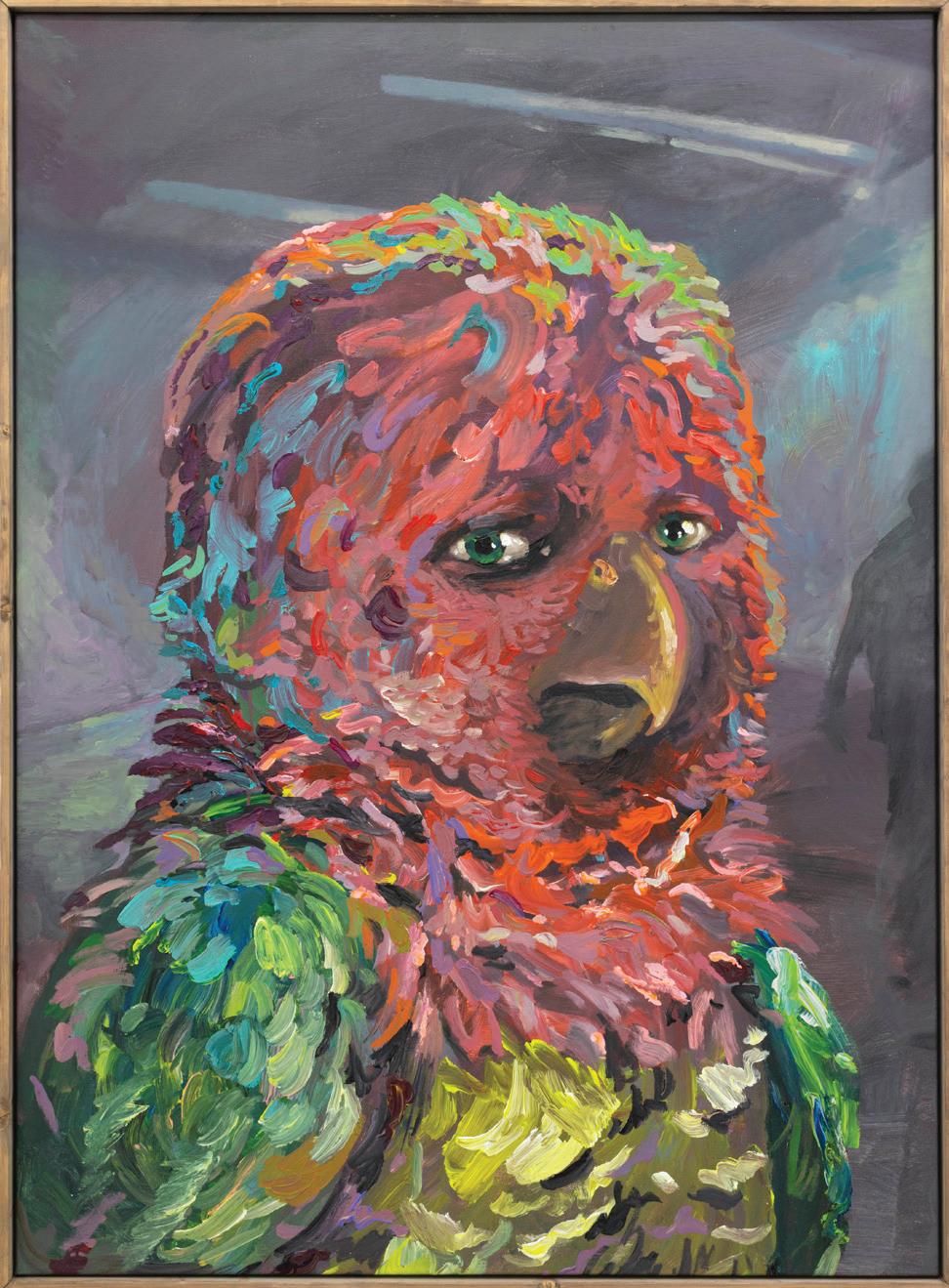
Our cover features a painting by Spaniard Rubén Guerrero celebrating the universal language of art and the return of the Meadows/ARCO Artist Spotlight (MAS) program, with Guerrero’s February exhibition at its center. In early March, a Dallas contingent will travel to Spain for ARCOmadrid, the international art fair where his dealer, Galería Luis Adelantado, will present his work. In Spotlighting the New Spanish Vanguard, we trace the key moments of Guerrero’s career alongside the artists—emerging and established—making their mark on the global stage at ARCO.
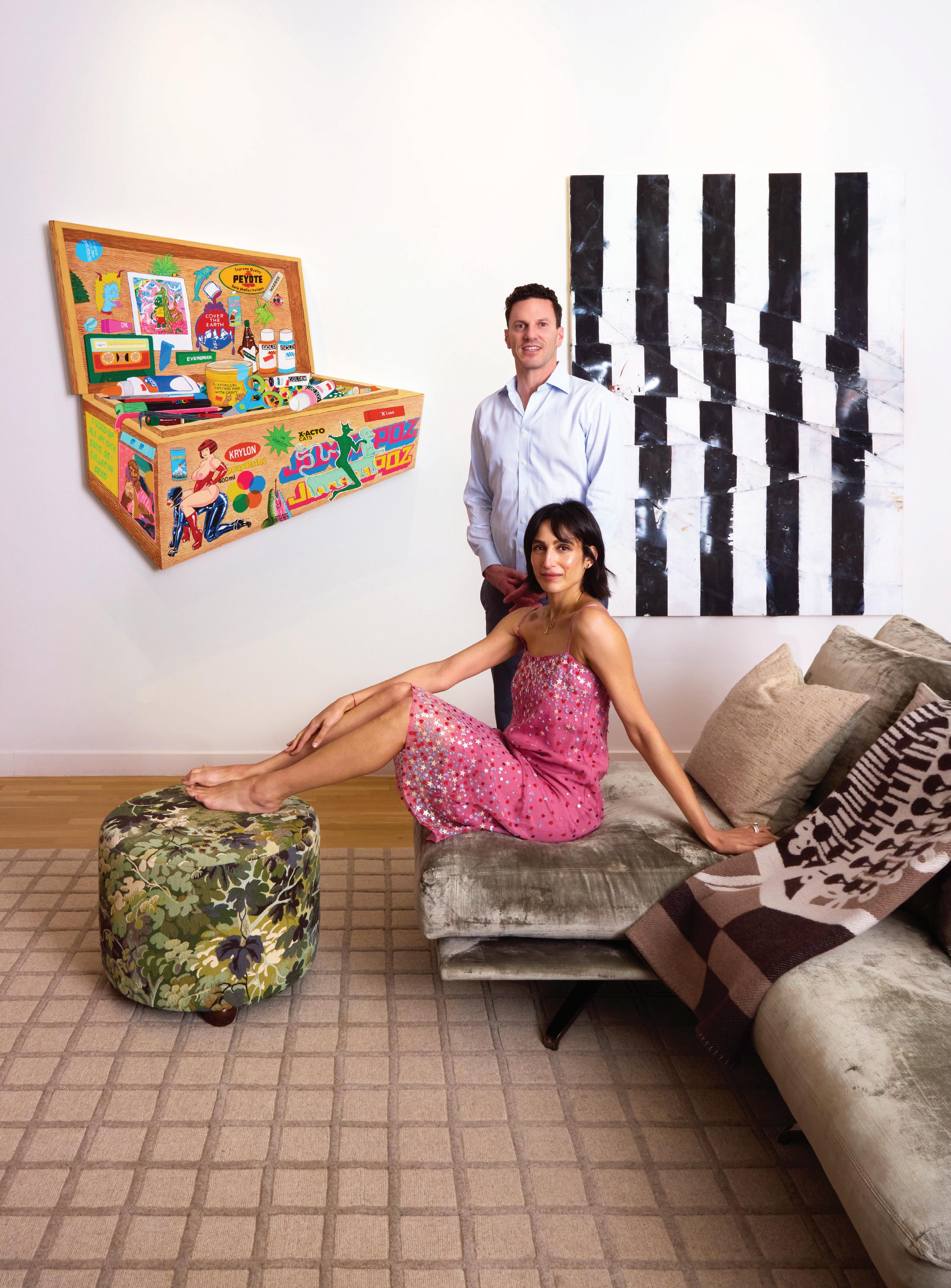
The Dallas art scene thrives on a mix of storied collectors and emerging enthusiasts, a blend that keeps the market fluid and full of surprises. In Early Access we spoke with five local collectors—Marlo and Jeff Melucci, Nadia Dabbakeh and Jason Friedman, and Travis Vandergriff—to get a glimpse of their standout pieces and gather their insights and advice ahead of the upcoming Dallas Art Fair. We also investigate new fair exhibitor Carpenters Workshop Gallery with interior designer Wendy Konradi.
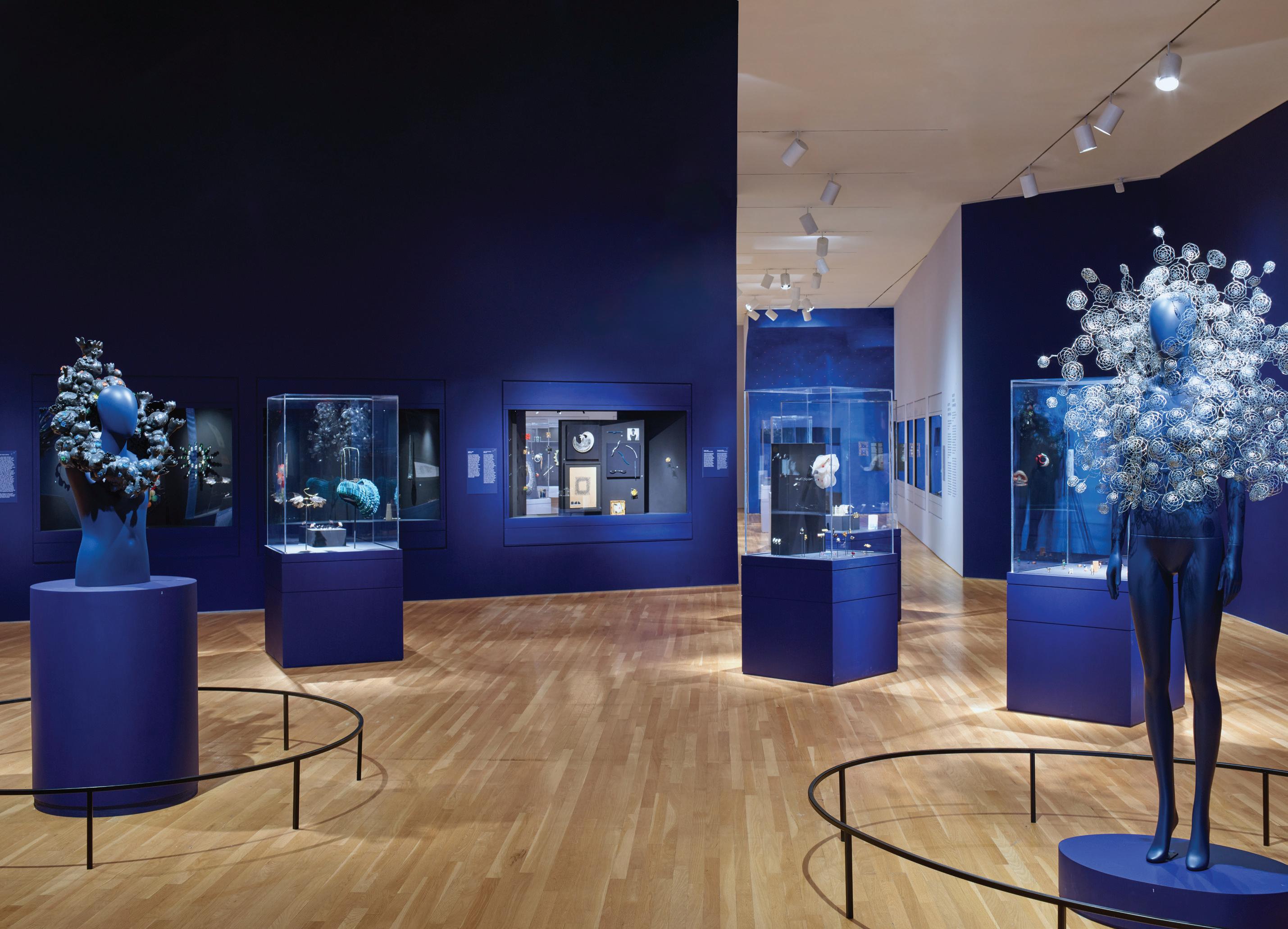
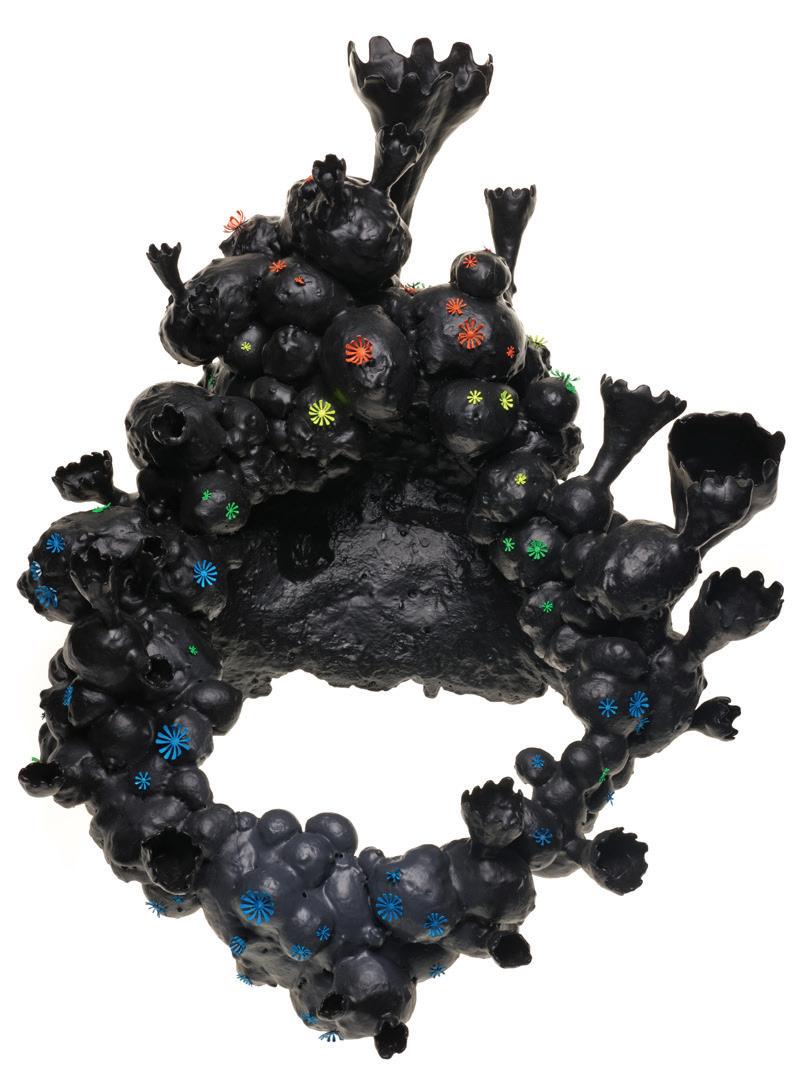
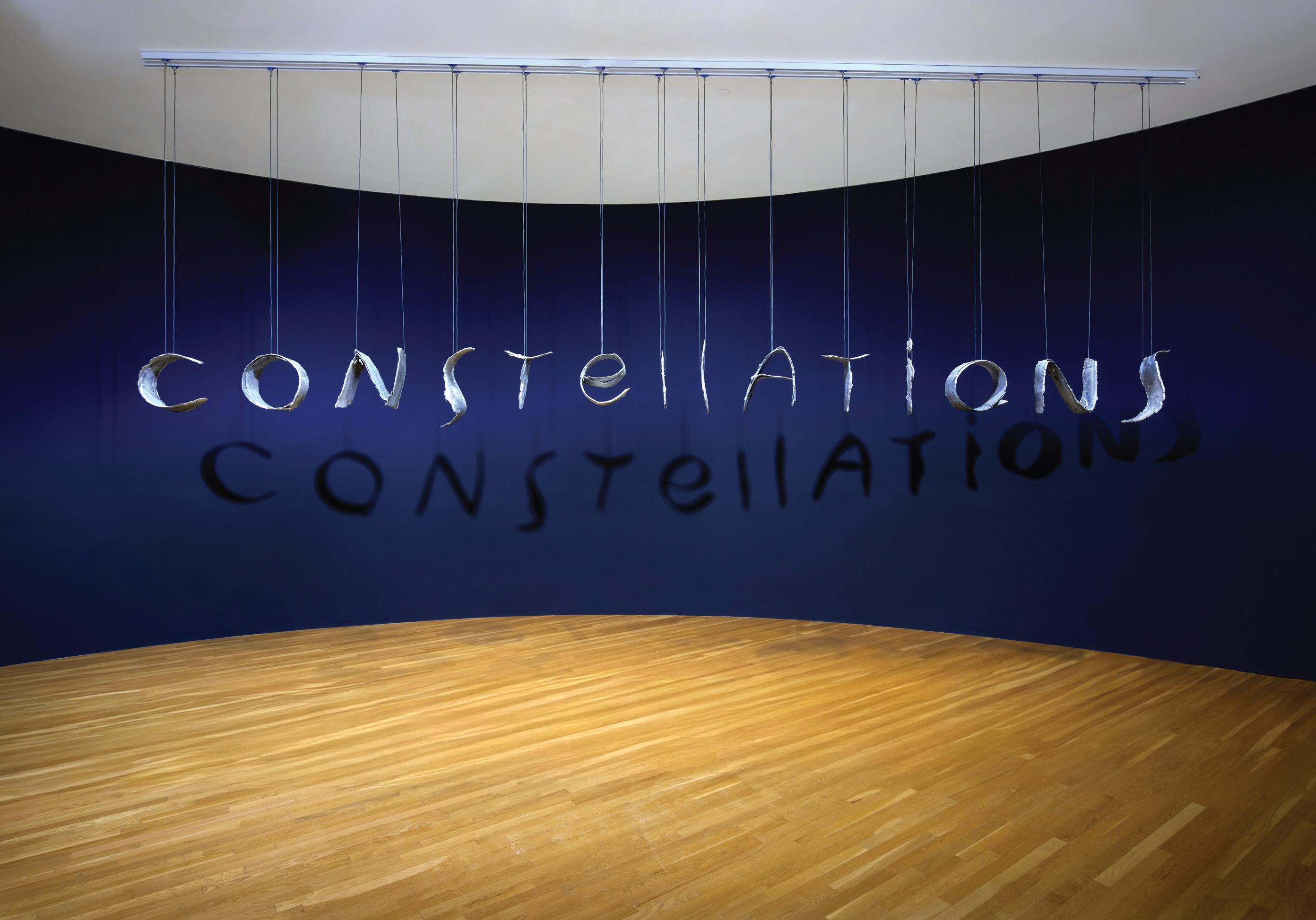
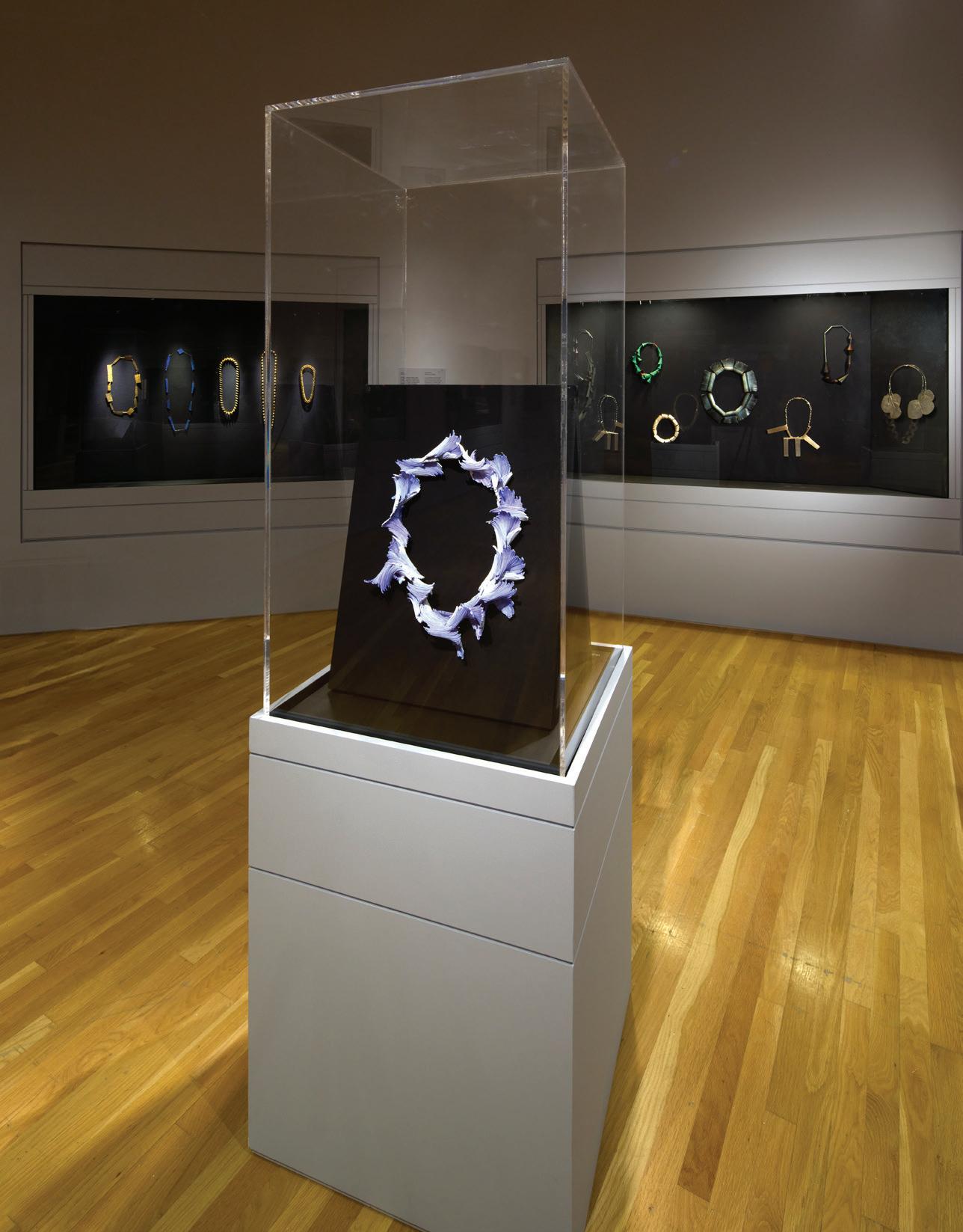
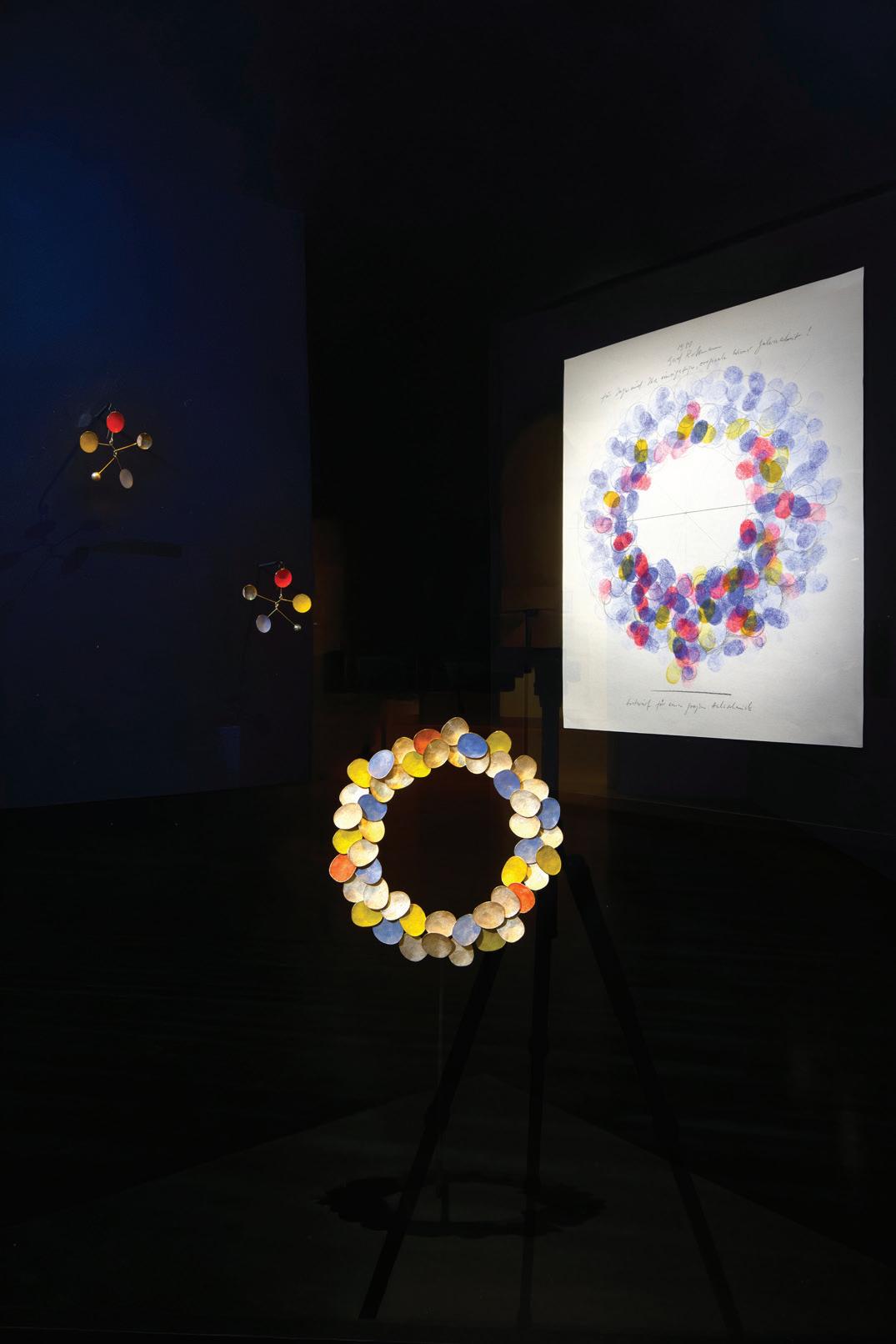
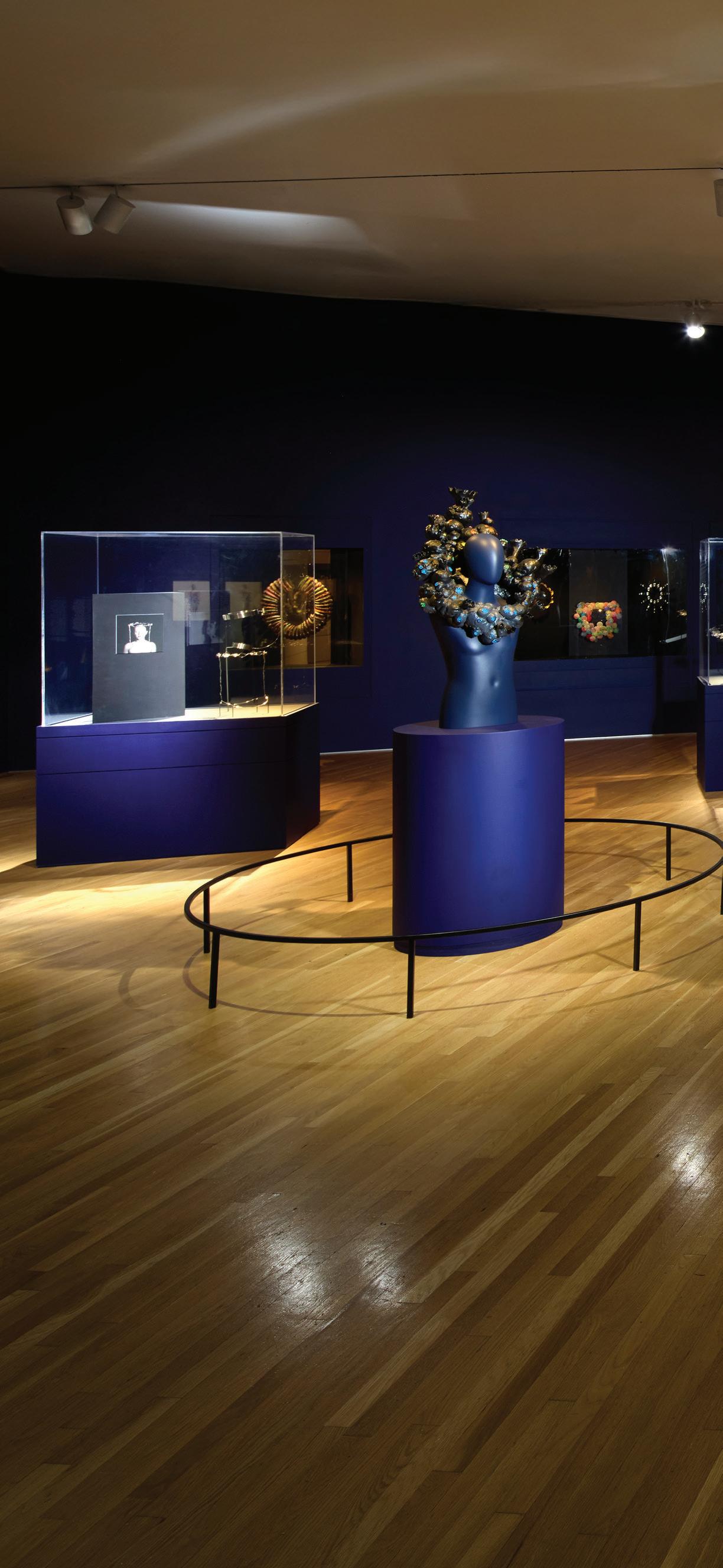
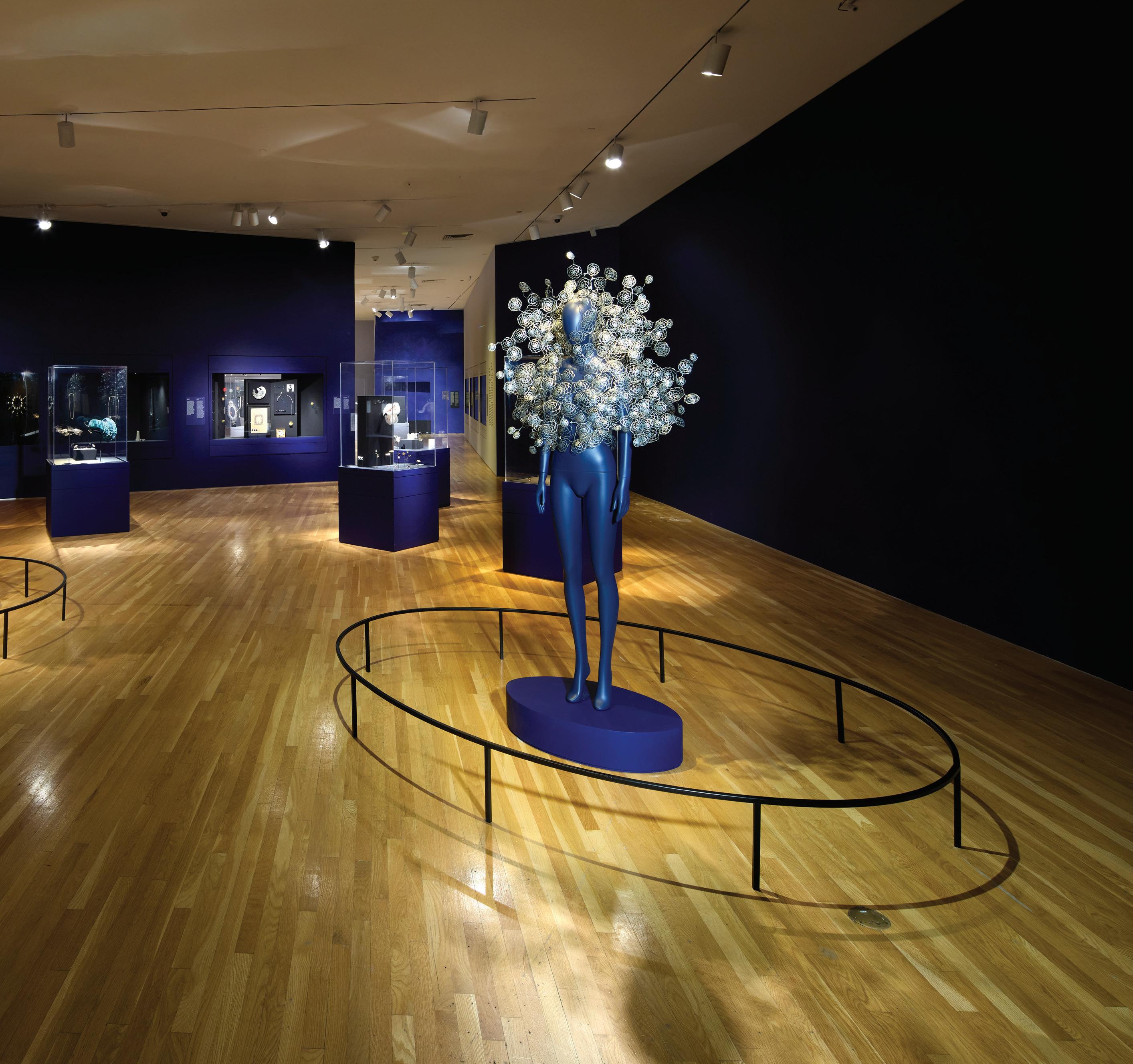
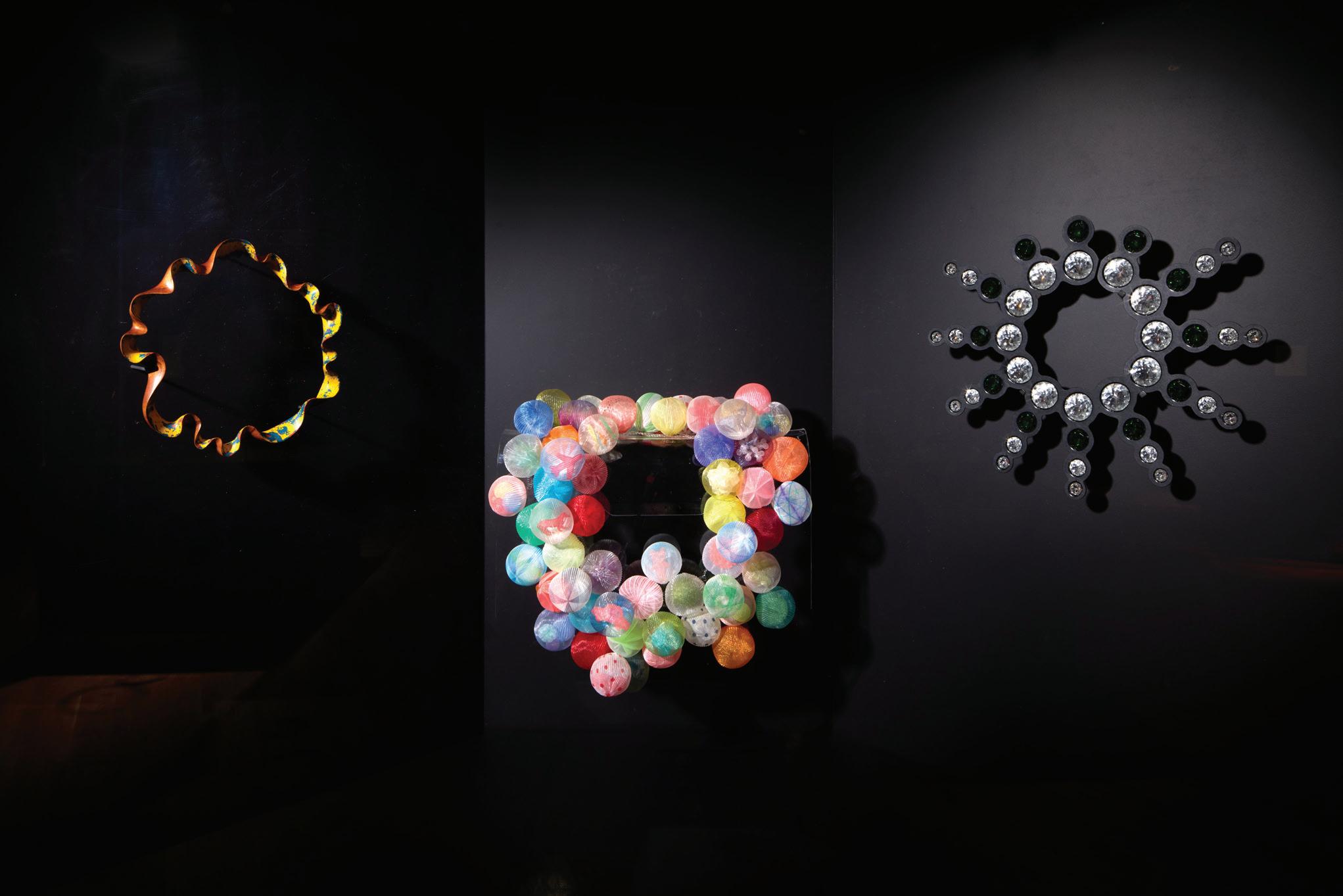
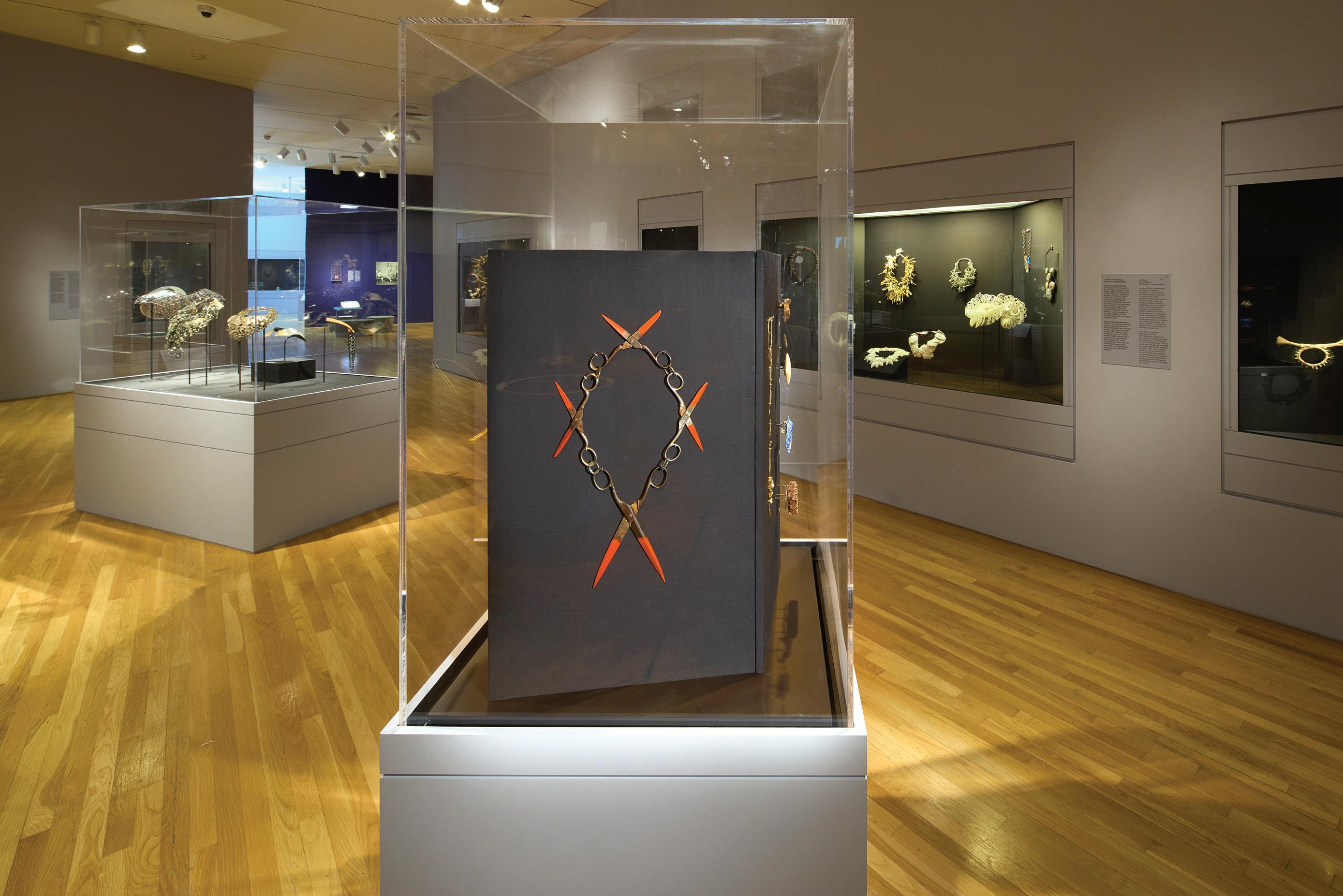
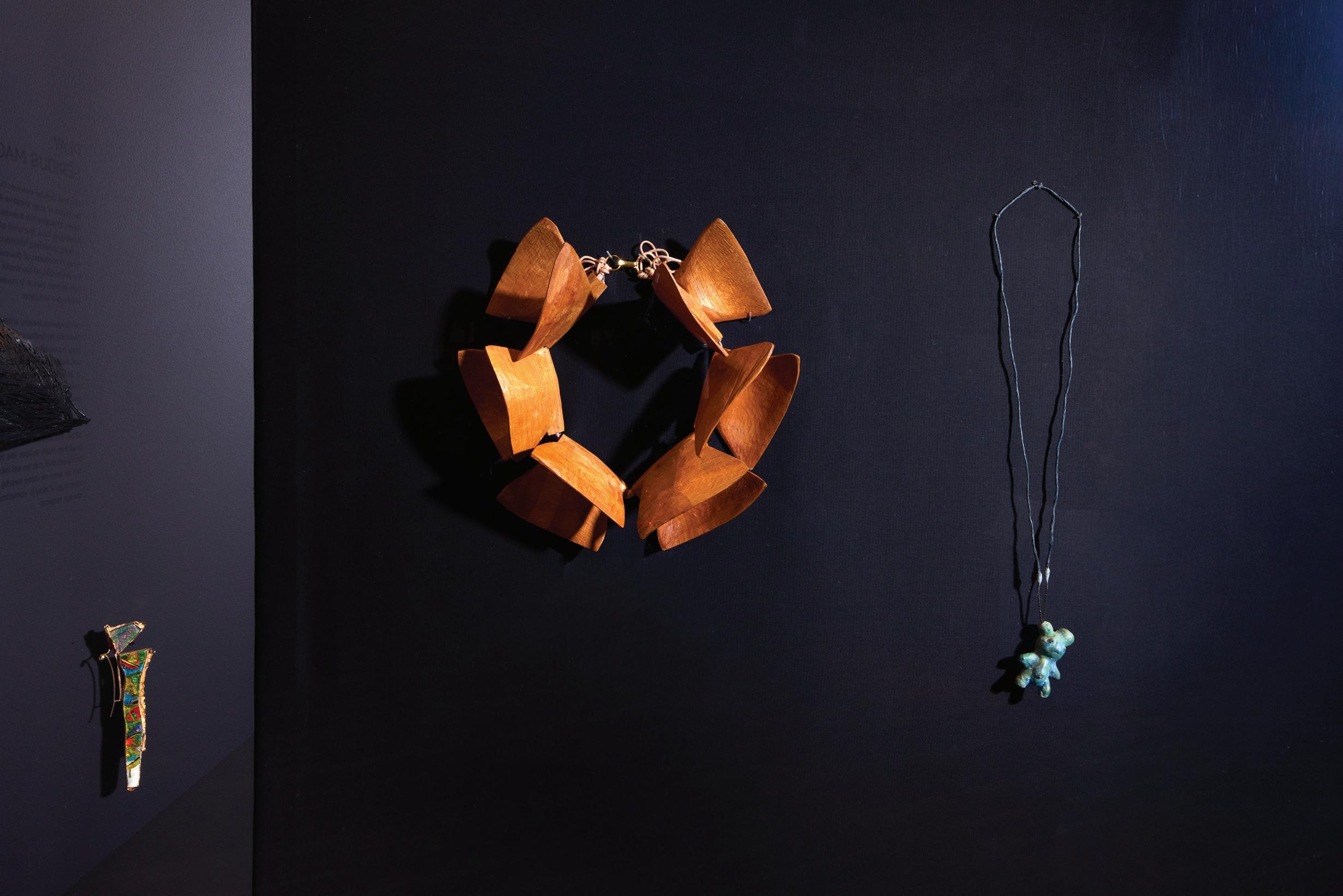
Constellations: Contemporary Jewelry arrived at the Dallas Museum of Art just before the holidays, dazzling visitors with more than 350 works—many drawn from the renowned collection of Deedie Rose. From bold, sculptural forms to inventive, unexpected designs (yes, multiple scissors reimagined as a necklace), the exhibition pulses with creativity and conceptual daring. In Mapping the Unexpected, Eve Hill-Agnus guides readers through this intersection of adornment, art, and idea, revealing the thought-provoking stories behind some of the many pieces.
The Green Family Art Foundation has quickly become a vibrant presence in the Dallas Arts District, presenting exhibitions that are ambitious and free to the public. Among its standout offerings is Fields of Vision: Dallas Collects, a showcase thoughtfully curated by Sara Hignite that draws from the collections of more than 40 local patrons, celebrating the city’s rich artistic community. Art critic Darryl Ratcliff casts a spotlight on what’s to come in February with his insightful preview, Curating Backward .
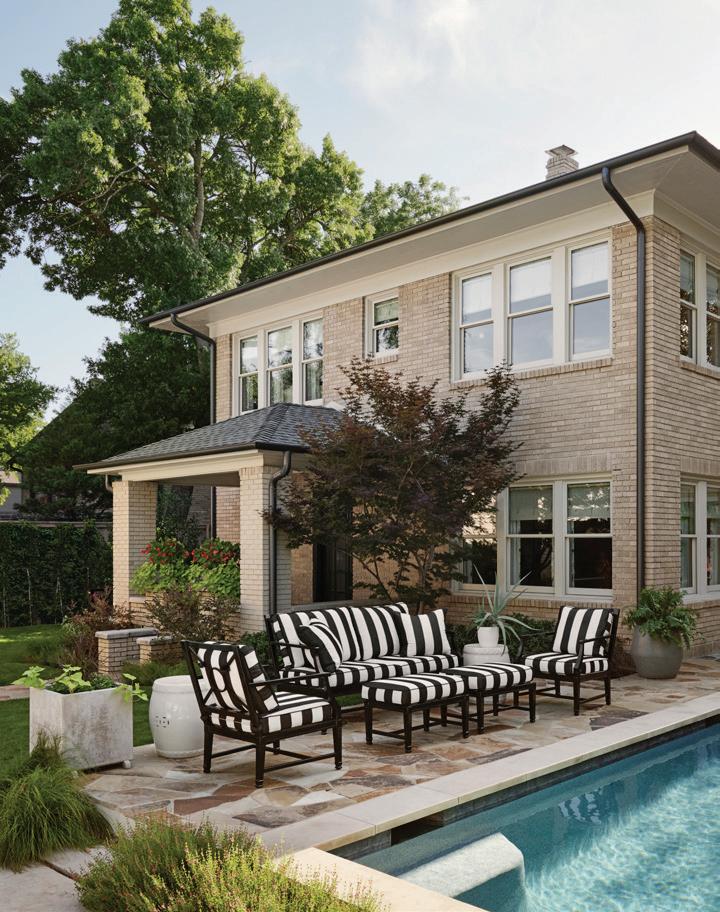
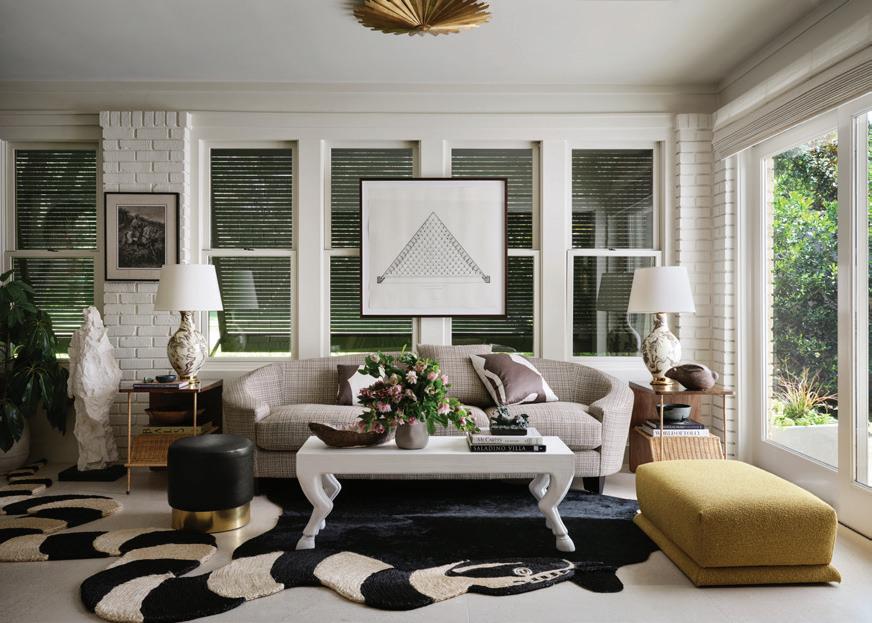
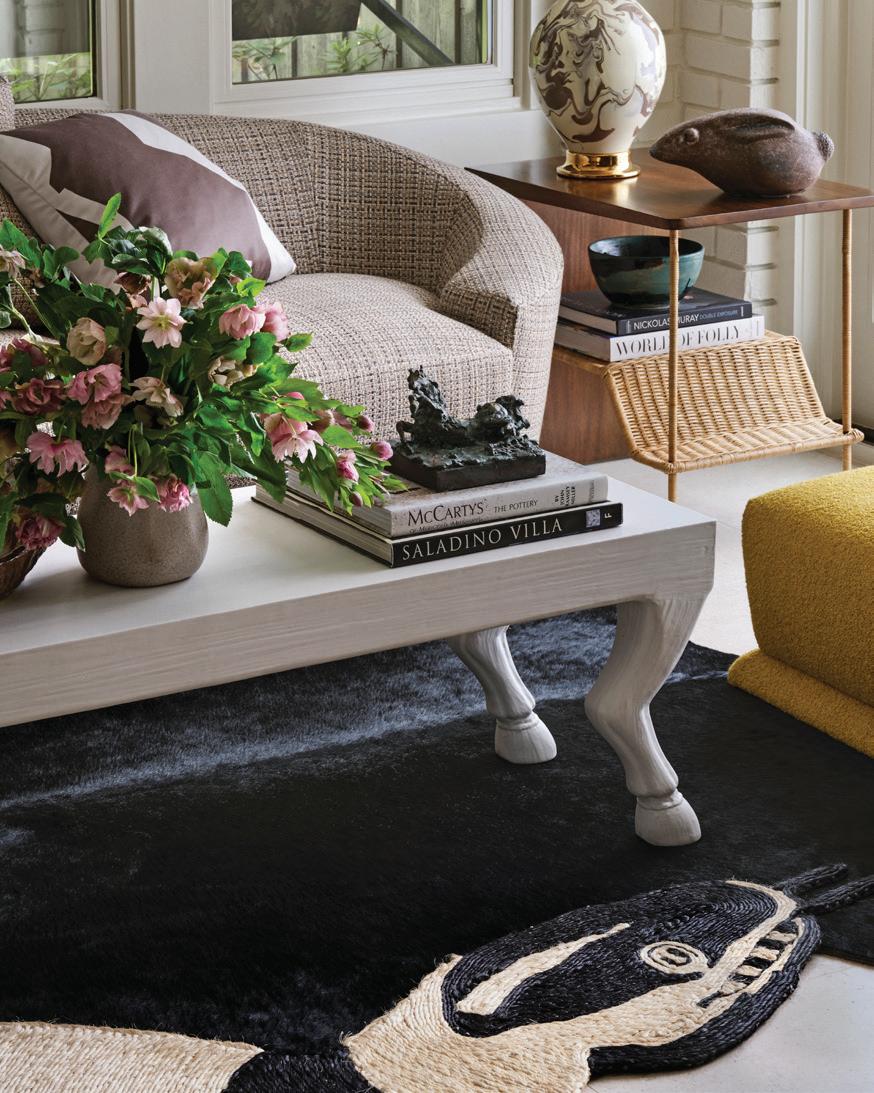
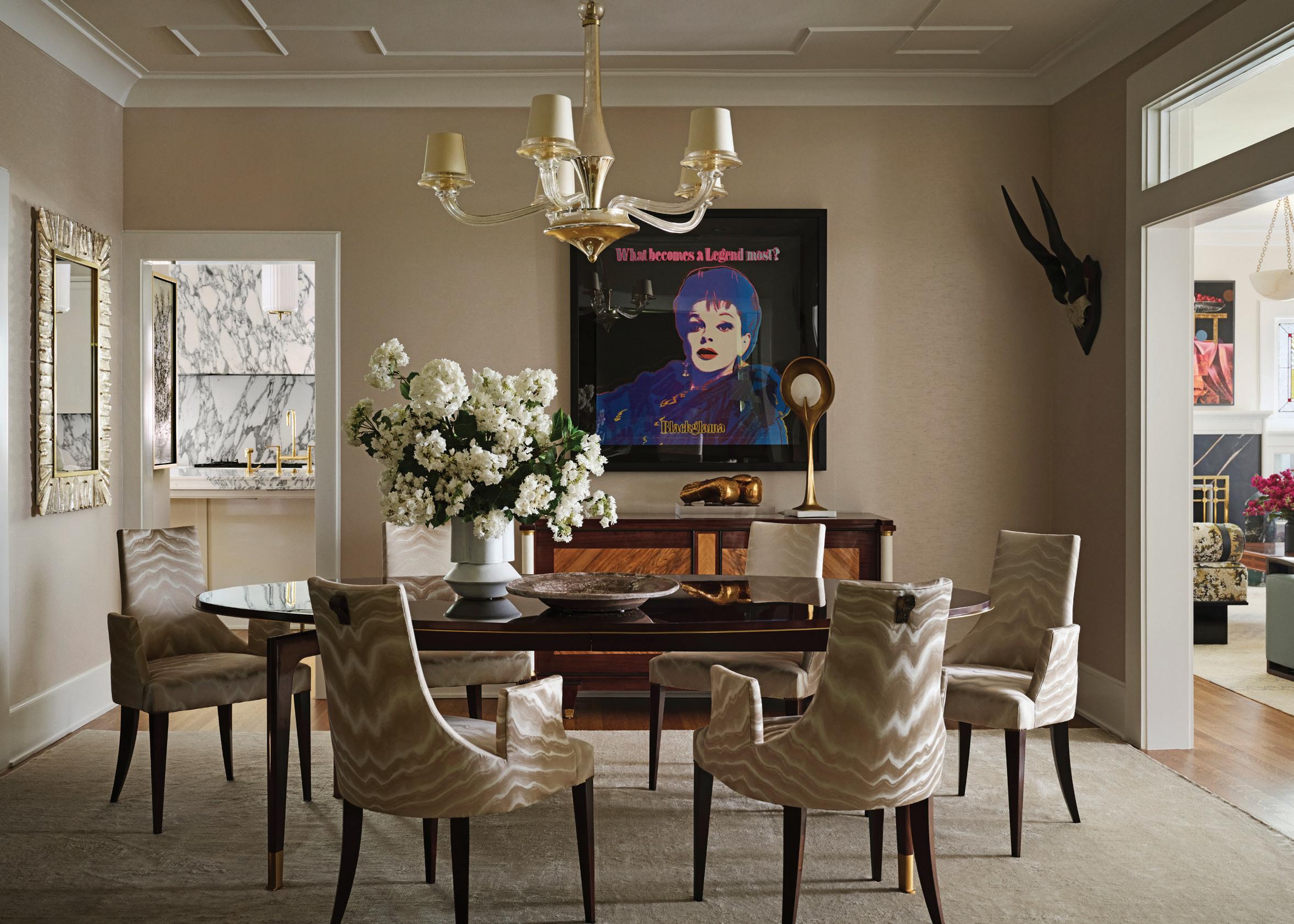
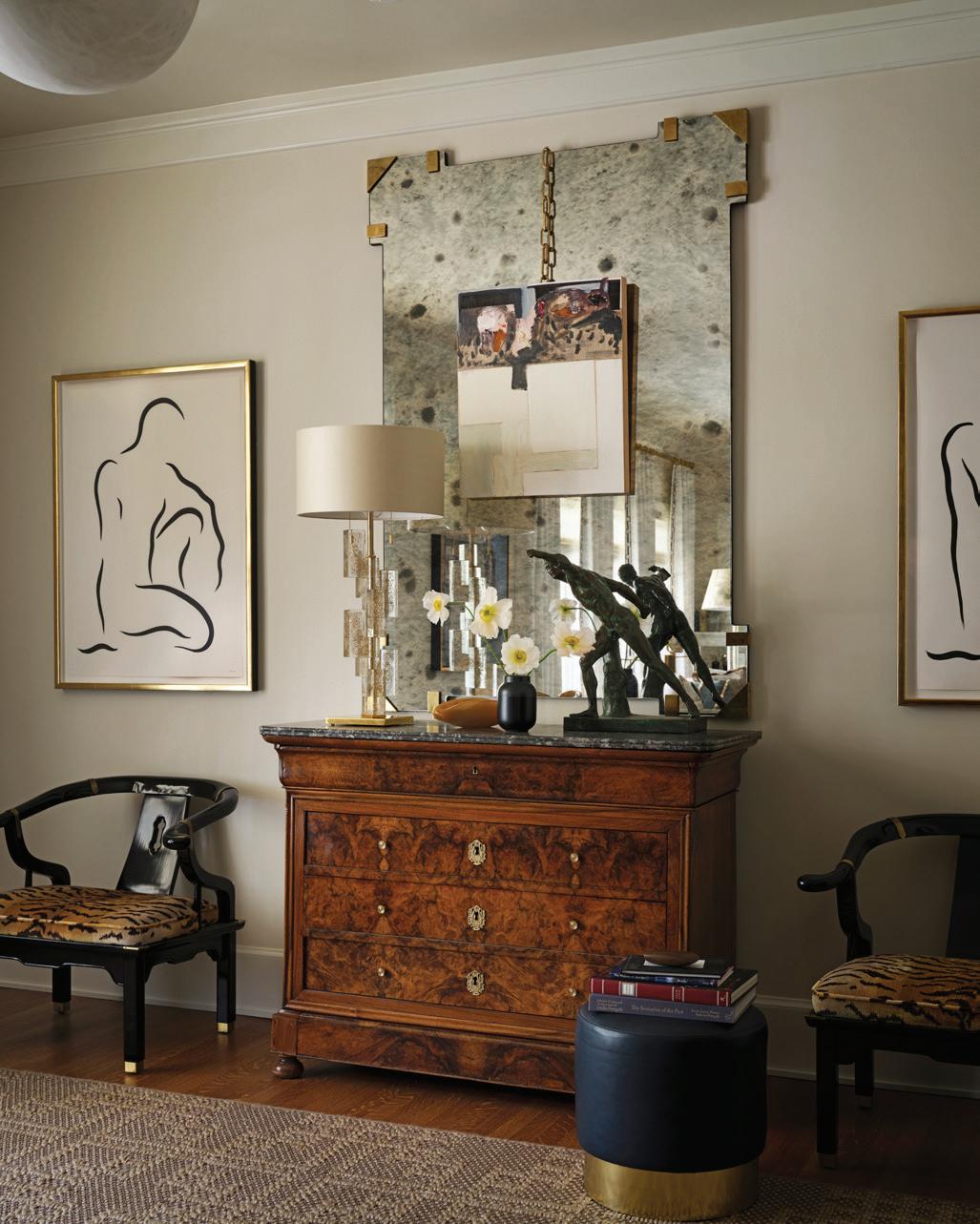
Rob Brinkley steps inside the effortlessly curated world of Phillip Thomas Vanderford, founder of Studio Thomas James, and Chase DeVasier in Dressed for Cocktails and Conversation. Nestled in Kessler Park, their buff-brick Prairie-style home is a master class in design, where artful interiors, thoughtful details, and a seamless blend of modern and classic elements create a space as captivating as it is engaging.
Speaking of home, we officially welcomed the Dallas Museum of Art’s new Eugene McDermott Director Brian Ferriso to his new home on December 1. In a New North Star at the DMA , Ben Lima sat down with the Portland, Oregon, transplant to hear his thoughts on favorite works within the DMA’s collection, his long-term vision, and his enduring passion for landscape paintings.
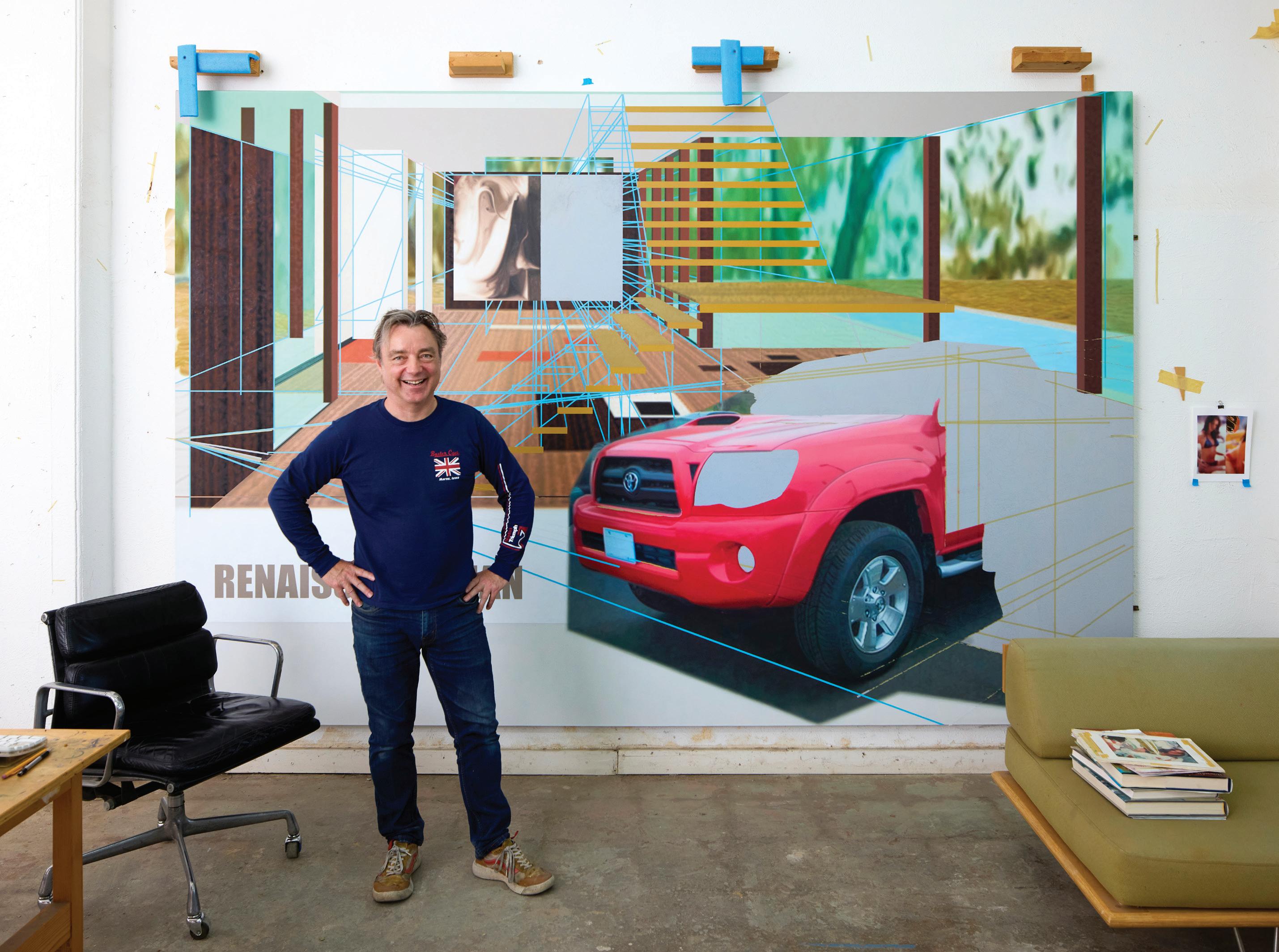
Longtime Dallas resident and transplanted Londoner Richard Patterson— an original figure of the Young British Artists movement— brings a singularly rigorous painterly voice to the local scene. His studio brims with multiple chances for discussion about his sensuous, layered, and provocative work. In Still Chasing the Frame Before it Vanishes Brandon Kennedy discusses the artist’s relentless pursuit that fuses imagery from pop culture and art-historical reference with a philosophy of painting that is as exacting as it is intellectually charged.
Donning our theater hats, we join the Dallas Theater Center’s CENTERSTAGE 42 gala chairs—a dynamic cohort spanning the past decade—where entertainment and philanthropy entwine in a sparkling evening of giving in Together for Theater
Finally, Brandon reminisces on the life and legacy of Charles Dee Mitchell, known simply as Dee to his friends, who left behind an art and book collection amassed over decades. True to his generous spirit, his collection is headed to the Dallas Museum of Art and the Museum of Fine Arts, Houston. In life, Dee shared it freely with all who crossed his path.
–Terri Provencal
FEATURES
54 EARLY ACCESS
Five local collectors share insider strategies to engage with the Dallas Art Fair.
By Terri Provencal
62 MAPPING THE UNEXPECTED
At the Dallas Museum of Art, Constellations invites visitors to chart their own paths through contemporary jewelry that blurs the boundaries between adornment, art, and ideas.
By Eve Hill-Agnus
68 CURATING BACKWARD
Green Family Art Foundation’s Fields of Visions lets local collectors—and their choices—lead the narrative.
By Darryl Ratcliff
72 SPOTLIGHTING THE NEW SPANISH VANGUARD
From the international stage of ARCOmadrid, the Meadows Museum presents Rubén Guerrero in his first US solo exhibition and leads a collectors group to experience the Madrid fair firsthand.
By Terri Provencal
78 DRESSED FOR COCKTAILS & CONVERSATION
Philip Thomas Vanderford and Chase DeVasier’s Prairie-style home gives way to a riot of art, glamour, and stories inside.
By Rob Brinkley
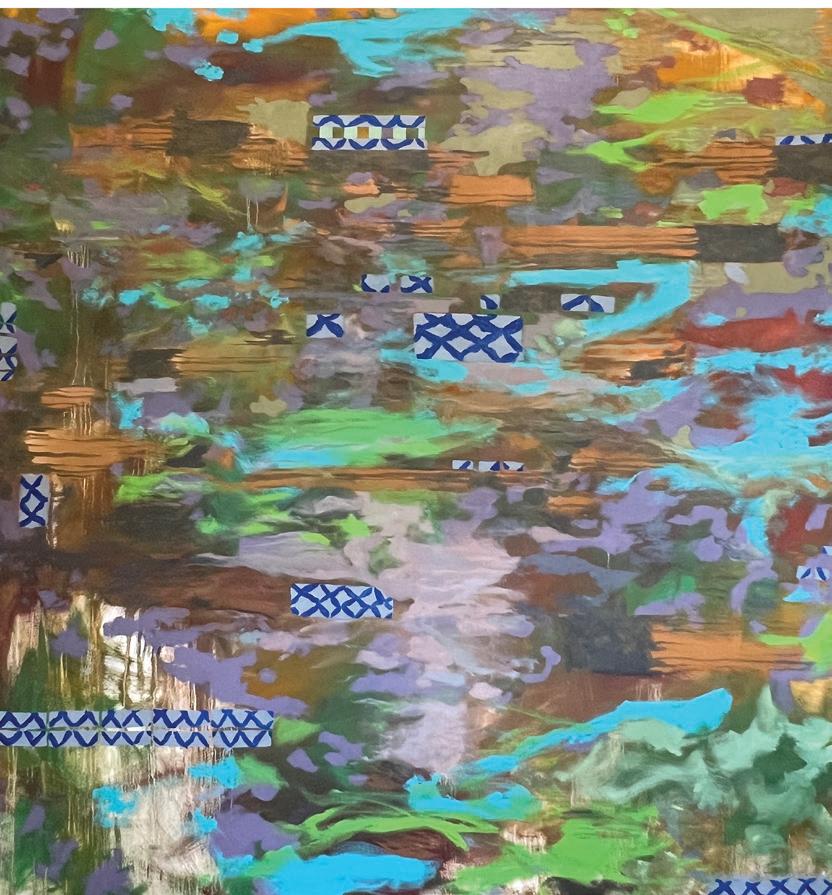
On the cover: Rubén Guerrero (Spanish, b. 1976), S-t (primero y segundo), 2023, oil on canvas, 113.37 x 156.12 in. Photograph courtesy of Galería Luis Adelantado.
HOUS T ON • DALLA S • A TLANT A
DEPARTMENTS
6 Editor’s Note
12 Contributors
22 Noted
Fair Trade
36 THOUGHT MADE VISIBLE
Upcoming Dallas Art Fair exhibitor Carpenters Workshop Gallery works fluidly across art, design, and craft.
Interview by Wendy Konradi
Contemporaries
38 TIMELESS VISION WITH A FRESH FRONT DOOR
Conduit Gallery moves to a new space on Levee Street after a 25-year run on Hi Line Dr.
By John Zotos
40 A NEW NORTH STAR AT THE DMA
Eugene McDermott Director Brian Ferriso arrives with vision, patience, and a long view.
By Ben Lima
42 WIFREDO LAM: WHEN I DON’T SLEEP, I DREAM
MoMA’s landmark retrospective unveils the bold world of a Cuban visionary whose hybrid forms challenged modern art and colonial narratives.
Interview by Chris Byrne
Studio
44 STILL CHASING THE FRAME BEFORE IT VANISHES
Richard Patterson and the art of trying to arrest time in an age that won’t stop scrolling.
By Brandon Kennedy
Performance
48 TOGETHER FOR THEATER
A decade of champions return to chair Dallas Theater Center’s annual fundraiser this May.
By Terri Provencal
Space
MOVING PARTS
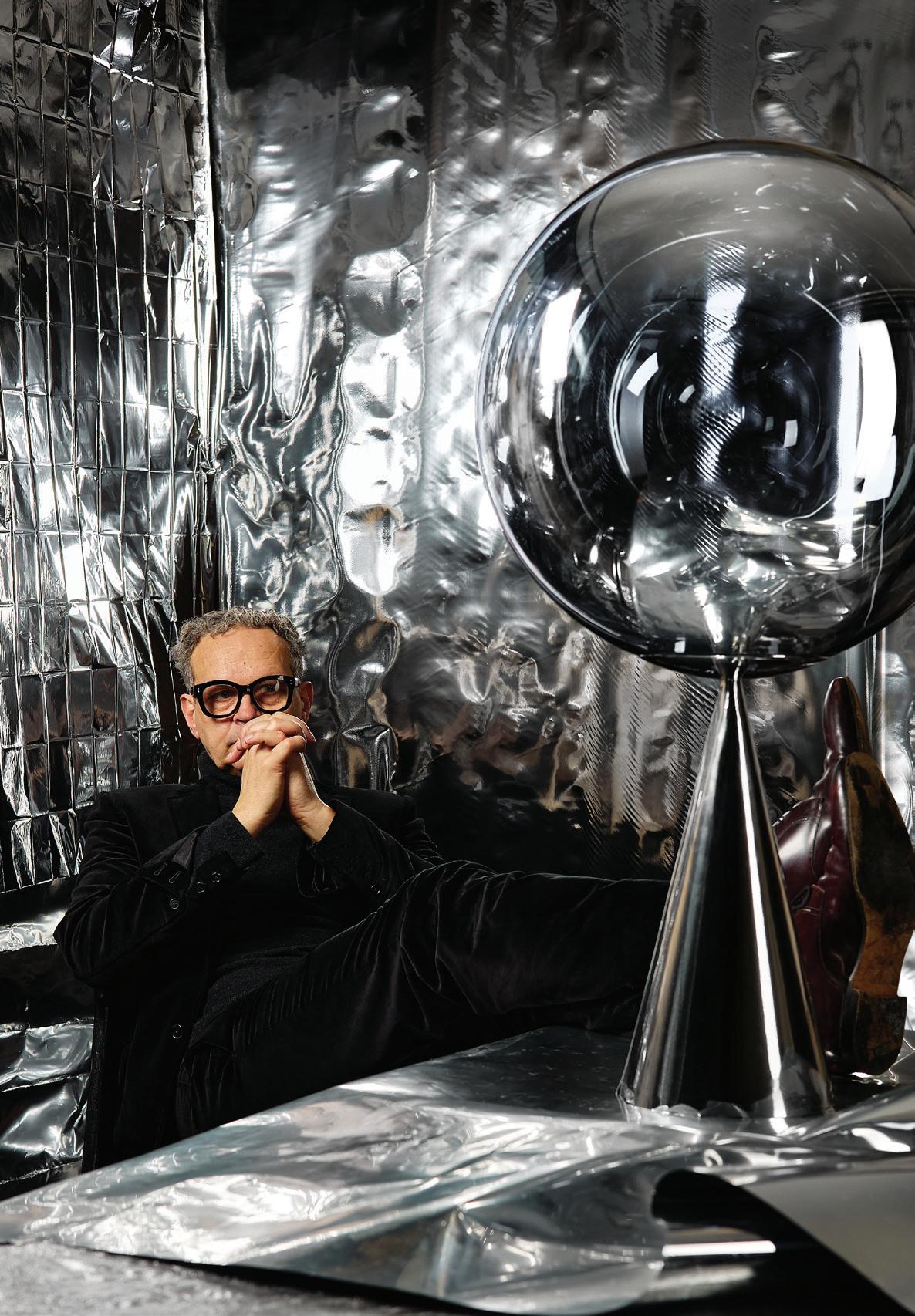
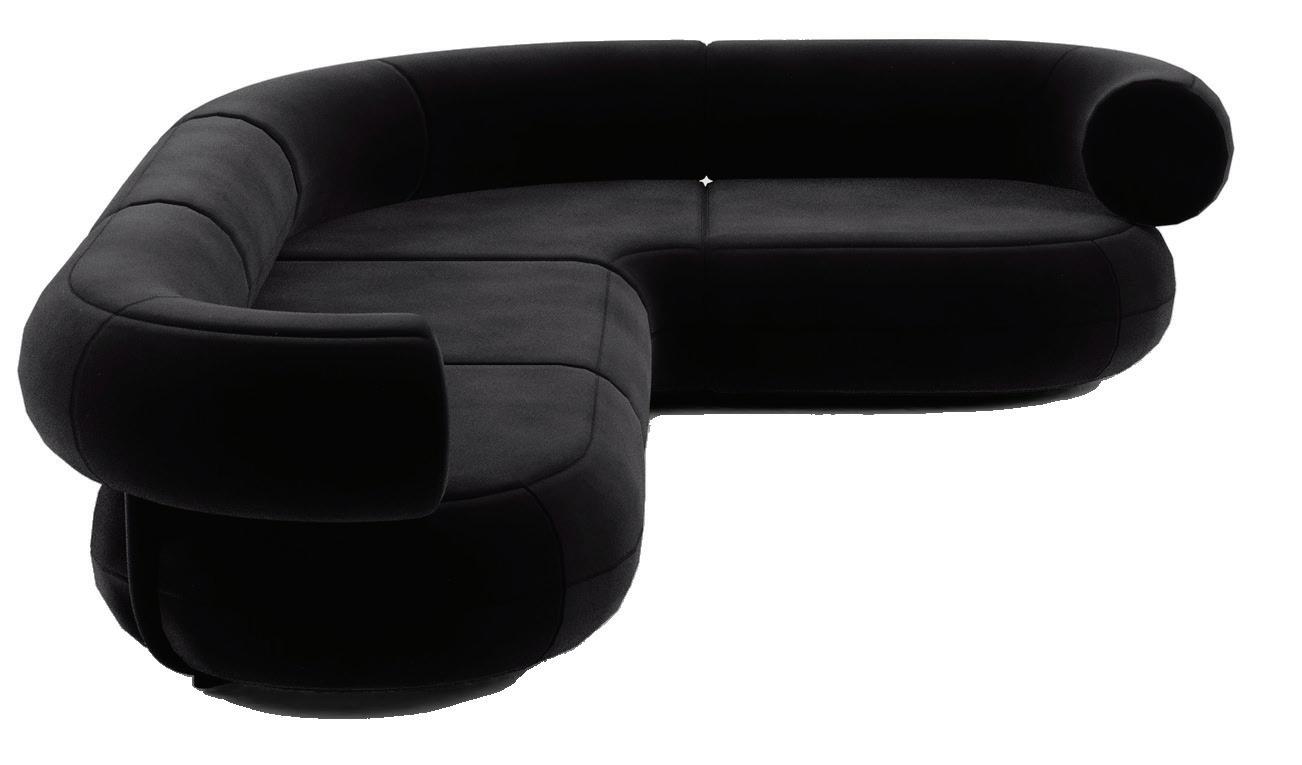
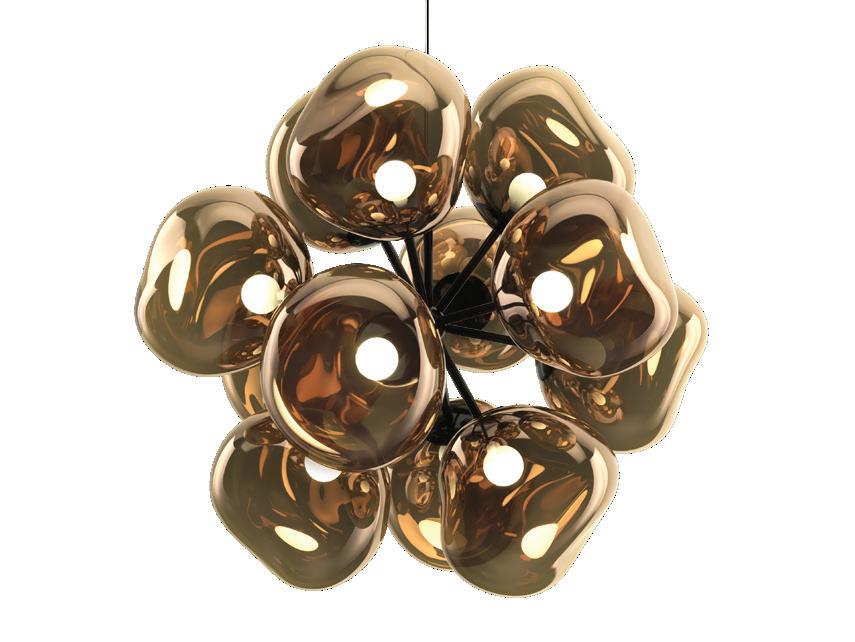
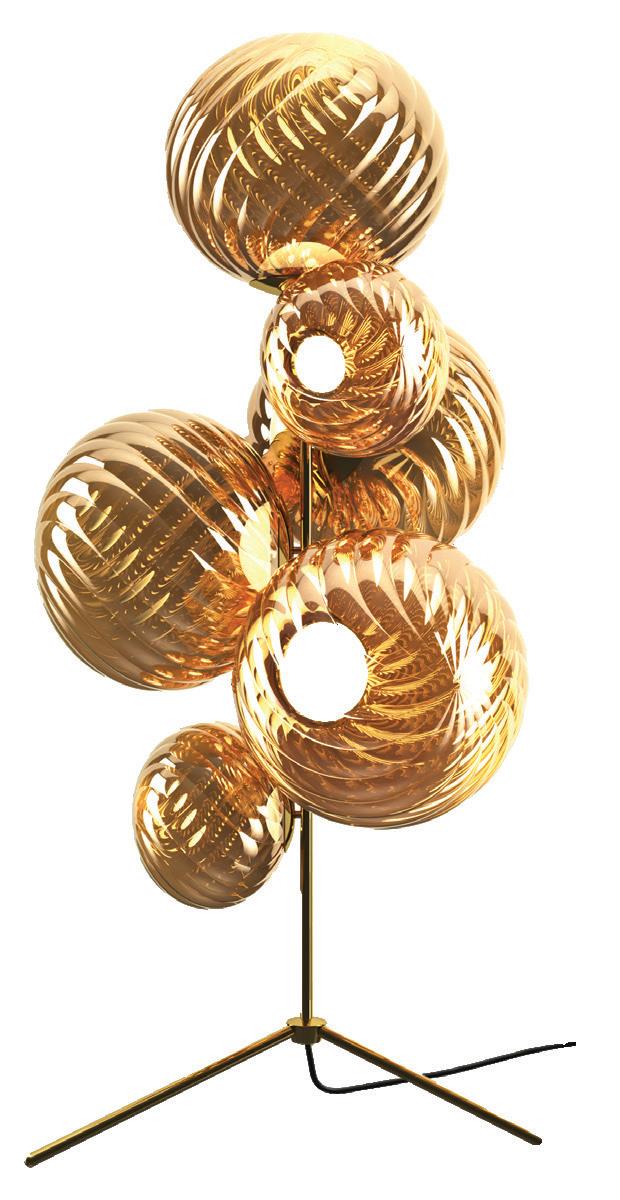
The enduring design of Tom Dixon.
By Terri Provencal
There
CAMERAS COVERING CULTURAL EVENTS
Furthermore A KINDRED SPIRIT IN ART AND BOOKS
Collector Charles Dee Mitchell generously spread his knowledge and opportunities widely.
By Brandon Kennedy
Names Bernbaum/Magadini
Best in Residential Architecture
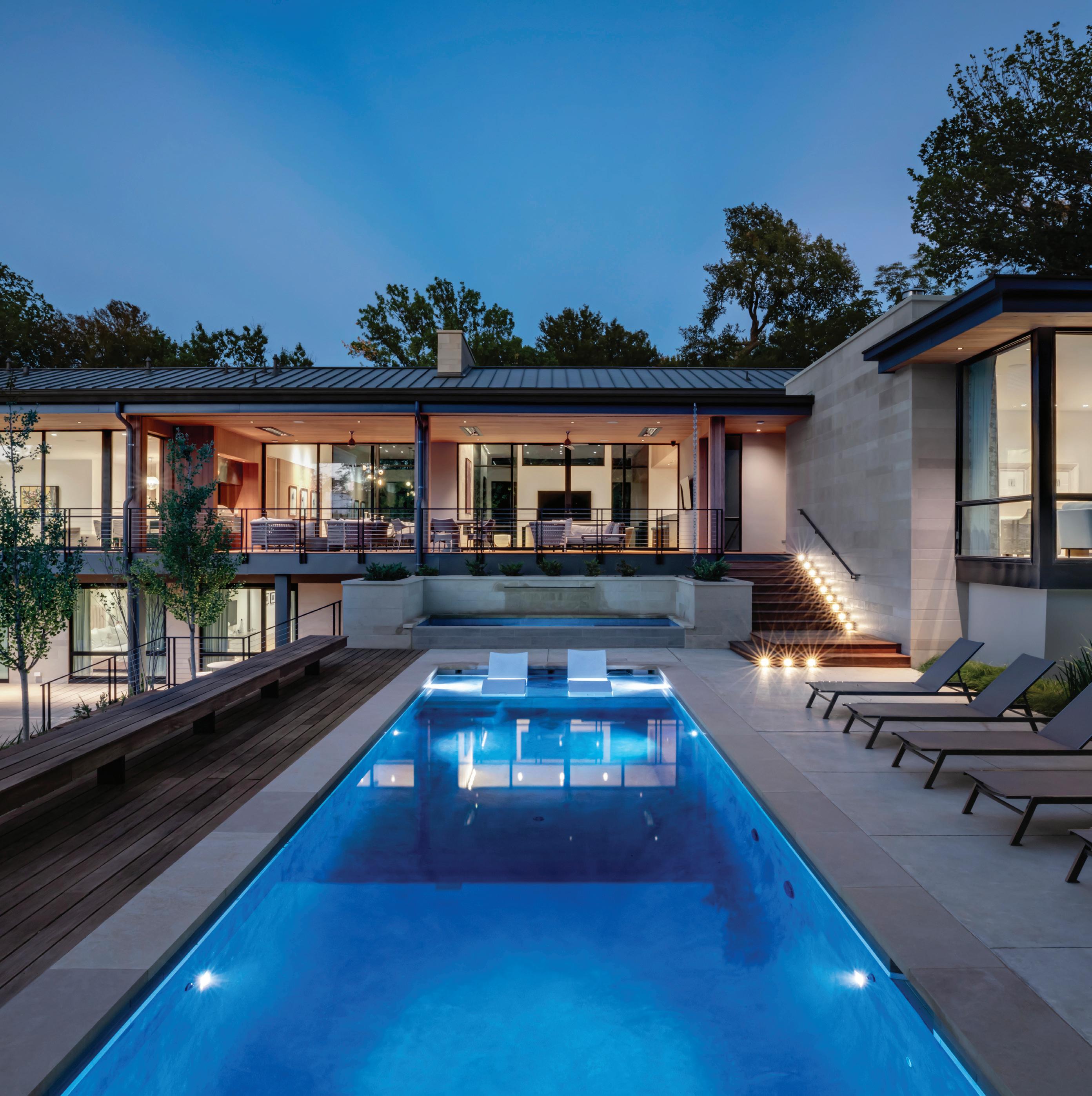
Bernbaum/Magadini Architects has been named to Forbes America’s Top 200 Residential Architects. This prestigious honor highlights BMA’s architectural mastery and deep connection to place, affirming that true greatness in architecture transcends mere construction. BMA’s homes are masterpieces that harmonize light, texture, and nature, embodying timeless elegance and cultural integrity, and reflecting the art of creating enduring, transformative living spaces.
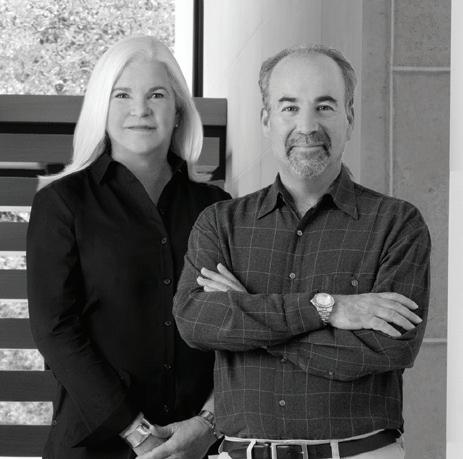
“WE ARE DEEPLY HONORED BY THIS RECOGNITION, BUT WHAT TRULY MATTERS IS THAT THE ART OF ARCHITECTURE IS CELEBRATED. IT’S THIS MASTERY THAT MAKES A HOME UNFORGETTABLE.”
TRICY MAGADINI AND BRUCE
BERNBAUM
CONTRIBUTORS
ROB BRINKLEY
is a writer, editor, and creative director in the worlds of magazines, social media, short films, and books. He has written about design for national shelter publications and is the co-author of the Assouline book Domestic Art: Curated Interiors. In Dressed for Cocktails & Conversation, Rob toured the Prairiestyle home of Studio Thomas James interior designers Philip Thomas Vanderford and Chase DeVasier—a space layered with art, glamour, and heirlooms in Kessler Park.
CHRIS BYRNE
is the author of The Magician (Marquand Books, 2013), included the Library of Congress. The University of Sydney Library recently acquired the graphic novel for its Rare Books and Special Collections. He is also the co-editor (with Keith Mayerson) of Frank Johnson, Secret Pioneer of American Comics Vol. 1, an Eisner Award–nominated work published by Fantagraphics in 2024. The co-editors are currently working on Vol. 2, to include essays by Gregory Gallant and Dash Shaw.
LAUREN CHRISTENSEN
has over two decades of experience in advertising and marketing. As a principal with L+S Creative Group, she consults with nonprofit organizations and businesses in many sectors, including retail, real estate, and hospitality. Lauren is a Dallas native and a graduate of SMU with a BA in advertising. Her clean, contemporary aesthetic and generous spirit make Lauren the perfect choice to art direct Patron
NANCY
COHEN ISRAEL
is an art historian with a background in 17thcentury painting as well as an arts writer and educator at the Meadows Museum. For the current issue she enjoyed writing about this year’s Meadows/ARCO Spotlight artist, Rubén Guerrero, whose inspiration also has roots in Baroque painting. Additionally, having organized and led art tours for many years, Nancy now looks forward to co-leading a culturally rich visit to Flanders this summer.
EVE HILL-AGNUS
is a writer, editor, and translator with roots in both France and California and a BA and MFA from Stanford University. An award-winning writer, her career spans teaching literature and journalism, critiquing dining, and writing across genres—from nonfiction and fiction to poetry. Arts-passionate, her Patron feature Mapping the Unexpected takes readers inside the voluminous contemporary jewelry Constellations exhibition at the Dallas Museum of Art.
DARRYL RATCLIFF
is an artist and poet whose writing and curatorial practice explores collaborative cultural projects that illuminate shared narratives, foster civic participation, and support collective well-being. He is a Yerba Buena Center for the Arts 10 Fellow and founder of Gossypion Investment. In Curating Backward, Darryl discussed the artwork within the collections of over 40 Dallasbased collectors in the Green Family Art Foundation Fields of Vision show with curator Sara Hignite.
BRANDON KENNEDY
is a Corsicana-based artist, book scout/ collector, and freelance curator/writer. He is the proprietor of 00ps b00ks, a project charting the margins and overlaps of used/ rare/collectible art/ books/culture and the persistent demands of commerce. In YBA is Not a Terminal Disease he revisits his longtime friend and artist Richard Patterson’s studio to explore new paintings and reflect on enduring themes in the artist’s longrunning practice.
BEN LIMA
is the founding editor of Athenaeum Review, the UT Dallas journal of arts and ideas. Born and raised in the Bay Area of California, he studied art history at Harvard and Yale and has previously lived and worked in Los Angeles, Berlin, and New York. In A New North Star at the DMA, Ben meets the new Eugene McDermott Director Brian Ferriso, who arrives with vision, patience, and a long view of the next decade for the Dallas Museum of Art.
PEYTON MIXON
grew up surrounded by cameras—her mother with a point-andshoot, her father with a Polaroid—naturally developing a love for photography. What began as admiration for captured moments became a passion for shaping them. Inspired by travel, nature, and connection, she finds creative energy in the places and people she meets along the way. Mentored by renowned artists and professors, she thrives on projects that allow her to preserve the beauty of the world around her.
JOHN SMITH is a photographer whose architectural background lends a sculptural sensibility to capture spaces as living expressions. His appreciation for projects by architects, interior designers, and artists is evidenced through his 25 years of experience behind the camera. For Patron he photographed art collectors Nadia Dabbakeh and Jason Friedman, Marlo and Jeff Melucci, and Travis Vandergriff. He also stepped onto the Dallas Theater Center stage to photograph a decade’s worth of chairs of DTC’s gala.
JOHN ZOTOS is an art critic and writer who has written about the arts in North Texas for 25 years. His writing is informed by advanced degrees in art history and aesthetics and frequent visits to galleries and museums. An ongoing Patron contributor, in Timeless Vision with a Fresh Front Door he discovered the new Conduit Gallery space on Levee Street in the Dallas Design District, examining the solo New Paintings show for Kirk Hayes alongside the concurrent group show, Phase Four.
PUBLISHER | EDITOR-IN-CHIEF
Terri Provencal terri@patronmagazine.com
ART DIRECTION
Lauren Christensen
DIGITAL MANAGER/PUBLISHING COORDINATOR
Anthony Falcon
COPY EDITOR
Sophia Dembling
PRODUCTION
Michele Rodriguez
CONTRIBUTING WRITERS
Rob Brinkley
Chris Byrne
Nancy Cohen Israel
Brandon Kennedy
Wendy Konradi
Ben Lima
Darryl Ratcliff
John Zotos
CONTRIBUTING PHOTOGRAPHERS
Benjamin Baccarani
Filipe Berndt
Dawn Blackman
Joseph Coscia Jr.
Kim da Motta
Dane Deaner
Kirsten Gilliam
Jenalee Harmon
Jason Mandella
David Mitchell
Peyton Mixon
Matthew Murphy
Jonas Park
Steven Probert
Karl Puchlik
Oscar Romero
Gúzman Rosado
Jeffrey Schmidt
Evan Sheldon
Scott Suchman
John Smith
Grace Tighe
Kevin Todora
Rachel Topham
Robert Tsai
Evan Michael Woods
Angel Xotlanihua
ADVERTISING info@patronmagazine.com or by calling (214) 642-1124
PATRONMAGAZINE.COM
View PATRON online @ patronmagazine.com
REACH US info@patronmagazine.com
SUBSCRIPTIONS patronmagazine.com/subscribe
One year $48/6 issues, two years $60/12 issues
For international subscriptions add $50 for postage
For subscription inquiries, email info@patronmagazine.com
SOCIAL @patronmag
T H A L L A R T S
O T E L : 2 0 2 6
More to Discover with Marriott Bonvoy’s
Autograph Collection
Autograph Collection brings together one-of-akind hotels defined by originality and thoughtful design Every stay is intentionally different
Astra Kitchen & Lounge Arrives in 2026
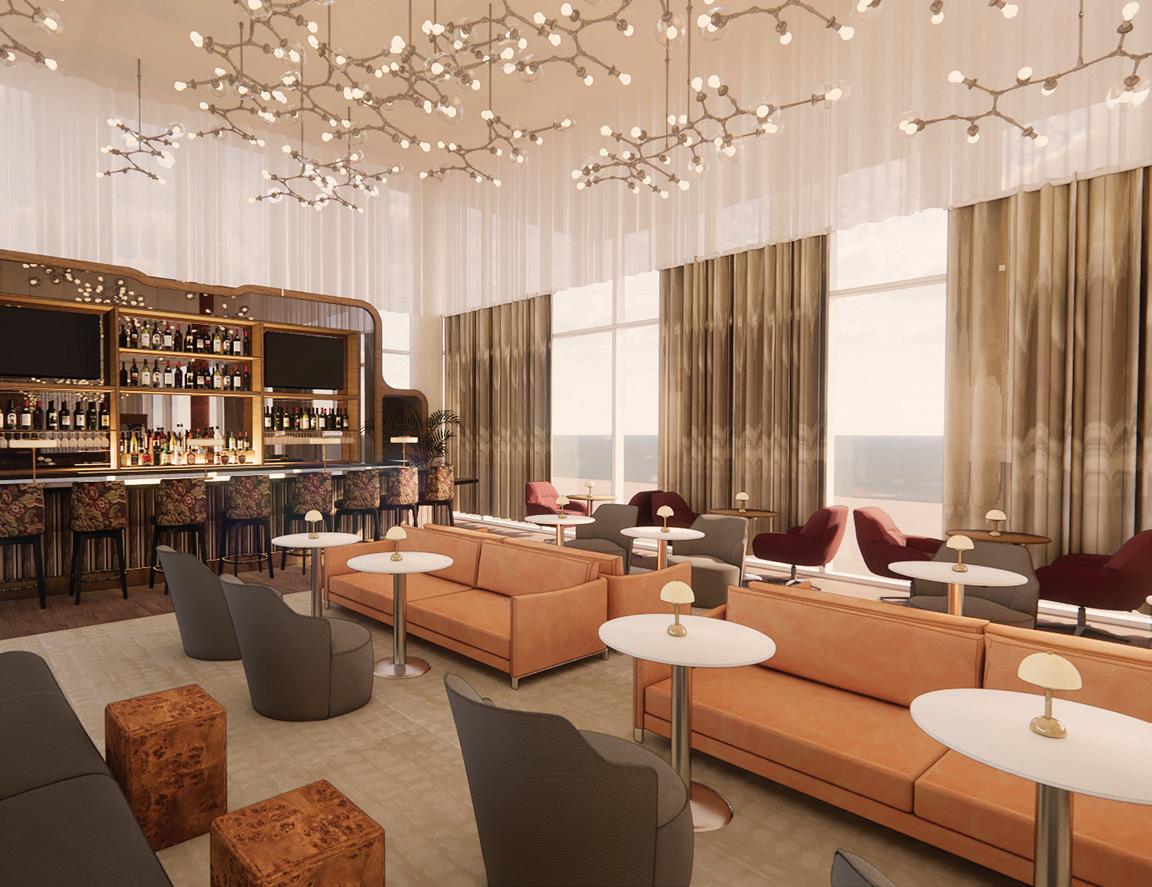
Opening in 2026, Astra, a modern bistro with vibrant culinary experiences awaits
Thoughtfully Curated Experiences
Wine on arrival, immersive contemporary art, and beautifully designed in-room touches set the tone. New activations are on the horizon.
Immerse yourself in the cosmos of contemporary jewelry. Experience over 350 works spanning more than 75 years made by artists from around the globe. Featuring golden crowns formed to look like cardboard and whimsical brooches resembling toast, Constellations: Contemporary Jewelry at the Dallas Museum of Art invites you to explore the wonders of creativity. Learn more and get tickets at dma.org.
Cindy
Catherine
This exhibition has been organized by the Meadows Museum, SMU, Dallas, in collaboration with Fundación ARCO and is funded
for
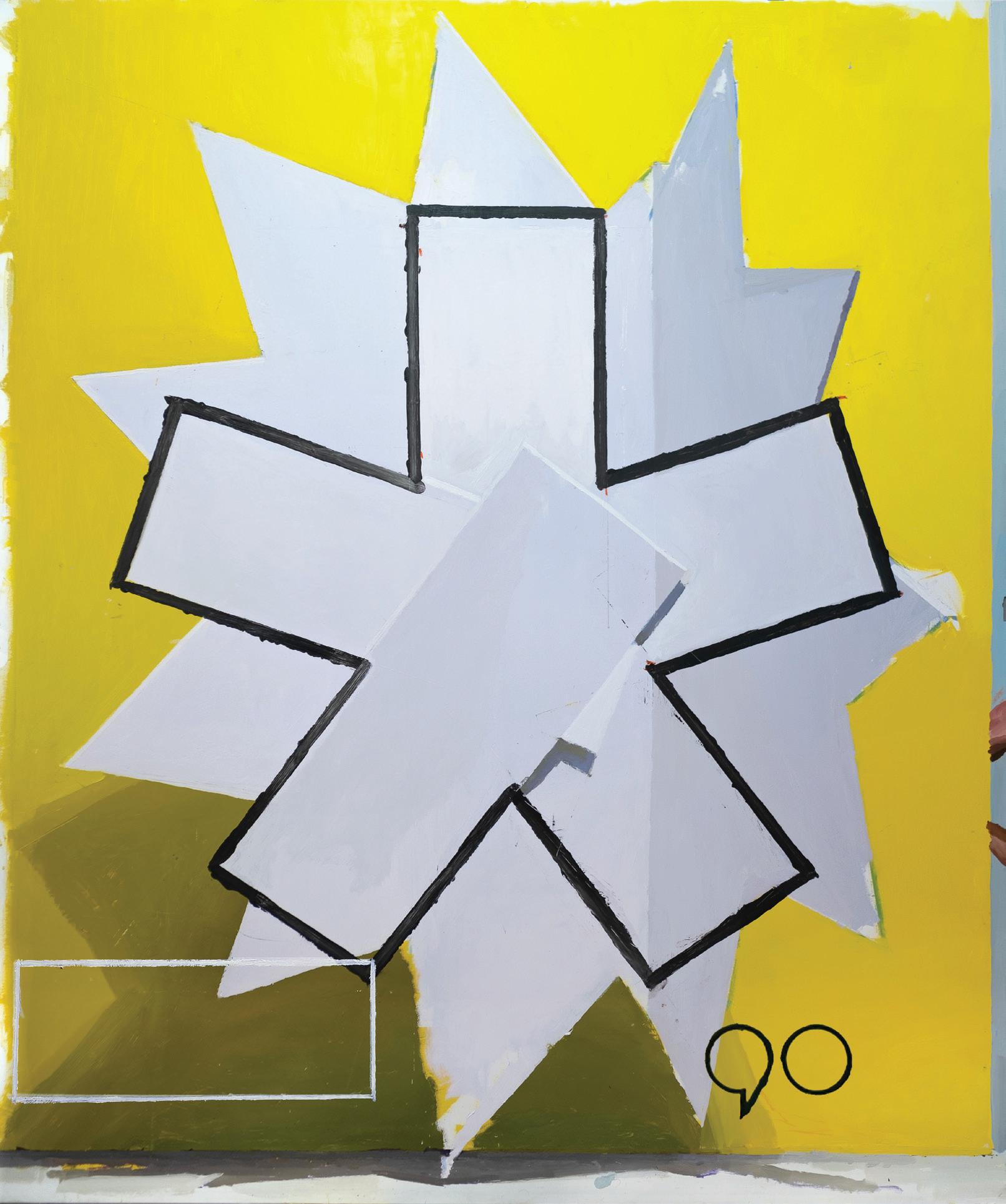
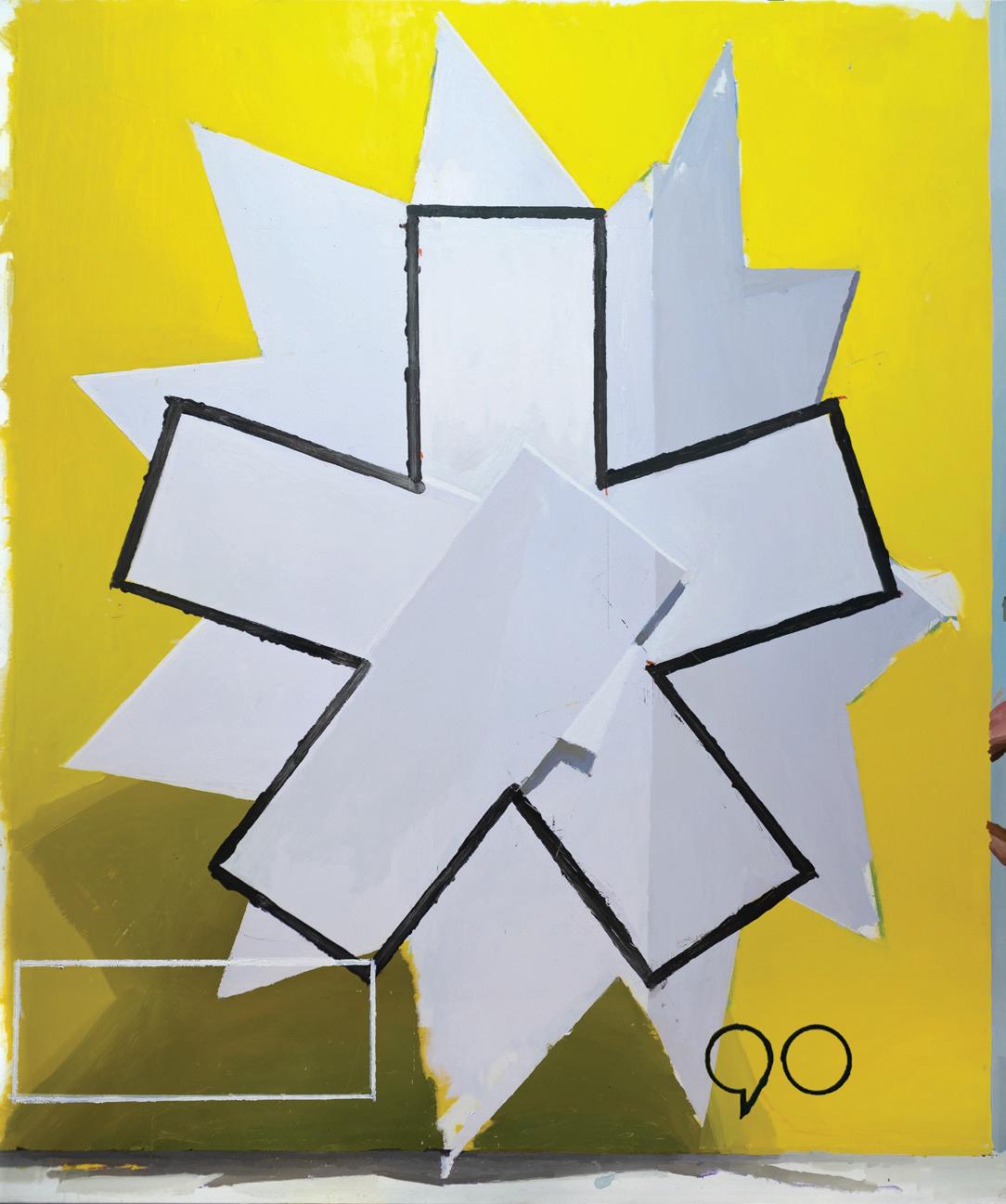
(AECID), alongside the Embassy of Spain in the United States. Promotional support is provided by the Dallas Tourism Public Improvement District. Rubén Guerrero (Spanish, b. 1976), Motif Etoilé (Starred Motif), 2024. Oil on canvas, 92 1/2 x 76 3/4 in. (235 x 195 cm). Photo by Pablo Asenjo, courtesy of Galería Luis Adelantado.
NOTED
THE LATEST CULTURAL NEWS COVERING ALL ASPECTS OF THE ARTS IN NORTH TEXAS: NEW EXHIBITS, NEW PERFORMANCES, GALLERY OPENINGS, AND MORE.
01 AFRICAN AMERICAN MUSEUM
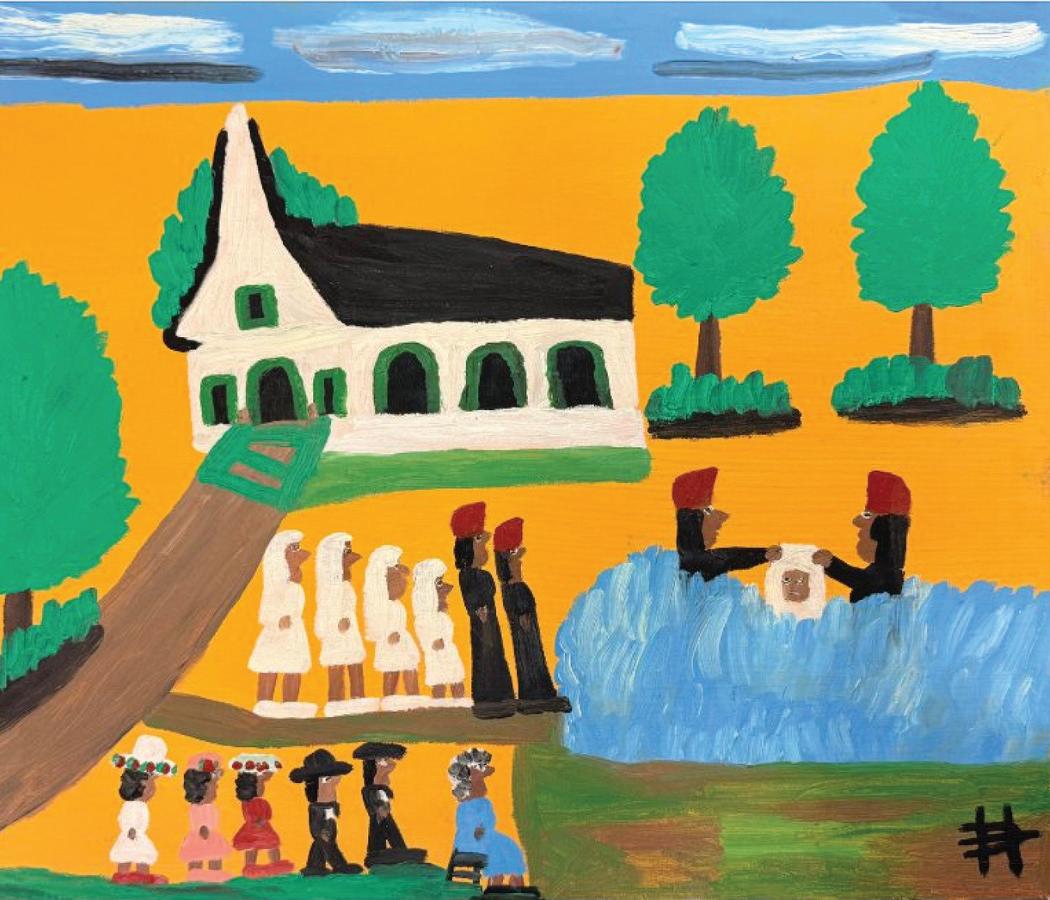
Sunday Call to Church: The Art of Clementine Hunter continues through Mar. 6, presenting paintings by the self-taught folk artist that chronicle faith, labor, and daily life in rural Louisiana through vivid color and direct storytelling. Protecting Cultural Memory, on view through Mar., examines the museum’s conservation efforts, including works by Gregory Warmack (Mr. Imagination), offering insight into the preservation of African American art, archives, and material culture. Image: Clementine Hunter, The Baptism Down by the River. Courtesy of the African American Museum. aamdallas.org
At the Crow Museum Dallas Arts District, Eliza Au: Squaring the Circle continues through Mar. 1 alongside Cecilia Chiang: Don’t Tell Me What To Do, on view through Mar. 10. At UT Dallas a full slate of exhibitions includes Mountain Jade with Lam Tung Pang and Echoes of the Earth, on view through Jun. 28; Groundbreakers: Post-War Japan and Korea from the Dallas Museum of Art and The Rachofsky Collection continues through Jul. 26; Mounds and Mist: Kondo Traditions in Clay through May 31; Whiskers and Paws: Cecilia Chiang through Mar. 8; and [ _____ ] Mirage (Blank Mirage) continues through Mar. 1. crowmuseum.org
04 DALLAS CONTEMPORARY
Pam Evelyn: Salvaged Future ends Mar. 15. In the Works, on view Feb.
13–Mar. 15, presents the second annual DC NTX Graduate Student Program exhibition, curated by Anna Katz. The group exhibition features work by North Texas MFA students in their final year of graduate study, selected by a visiting national curator and presented as part of Dallas Contemporary’s ongoing initiative to support emerging artists from the region. dallascontemporary.org
05 DALLAS HOLOCAUST AND HUMAN RIGHTS MUSEUM
Kindertransport—Rescuing Children on the Brink of War traces the ninemonth rescue that brought thousands of unaccompanied children from Nazi-occupied Europe to the United Kingdom, told through personal artifacts, stories, and firsthand testimony; on view through Feb. 15. dhhrm.org
A Nation Begins: A Conversation with Ken Burns and Rick Atkinson takes place Feb. 11, featuring a public discussion marking the approach of America’s 250th anniversary. The conversation will explore the legacy of the American Revolution, the narratives that shaped the nation’s founding, and how those origins continue to inform the present. bushcenter.org
08 KIMBELL ART MUSEUM
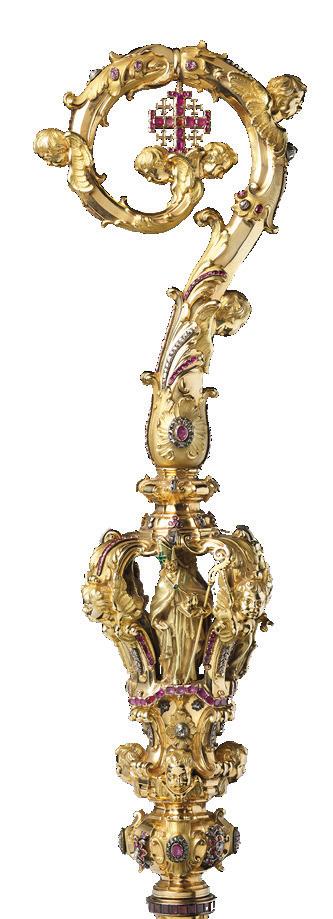
The Holy Sepulcher: Treasures from the Terra Sancta Museum, Jerusalem is on view Mar. 15–Jun. 28, presenting more than 60 ceremonial objects in silver, gold, enamel, and precious materials gifted to the Church of the Holy Sepulcher by European monarchs. Ranging from reliquaries and crosses to chalices and vestments, the works reflect 17th- and 18th-century craftsmanship and centuries of devotional use. The exhibition offers a rare opportunity to encounter these
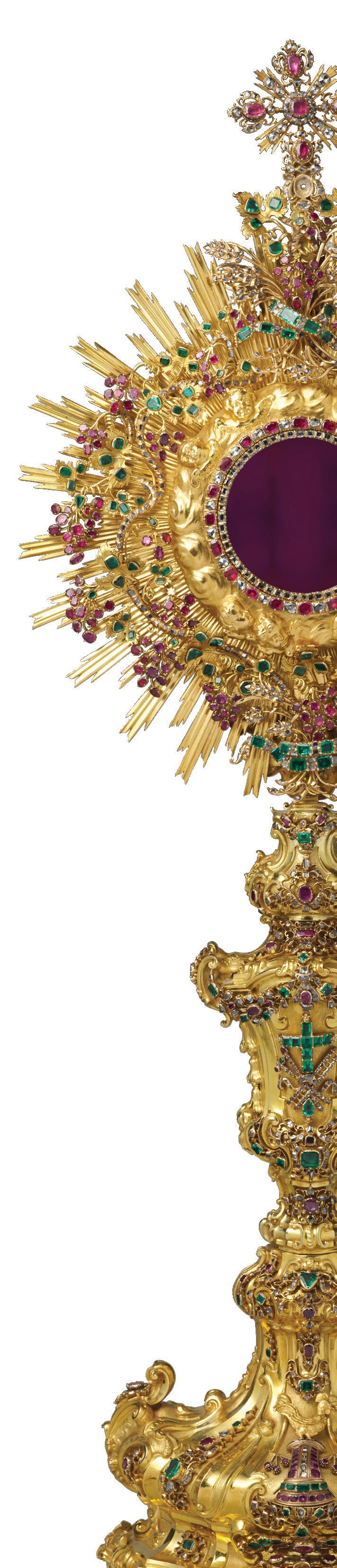
objects in the United States. Image: Crozier (detail), Naples, 1776, gold, rubies, diamonds, emeralds, almandine garnets, quartzes, and glass. Treasury of the Holy Sepulcher, Jerusalem. Photograph by Joseph Coscia Jr. kimbellart.org
09 LATINO CULTURAL CENTER
Cara Mía Theatre presents the world premiere of Medea , a new adaptation written and directed by Diego Fernando Montoya as part of the 22nd International Theatre Festival, Feb. 7–22. Drawing from classical mythology, the production reinterprets the story through a contemporary lens. lcc.dallasculture.org
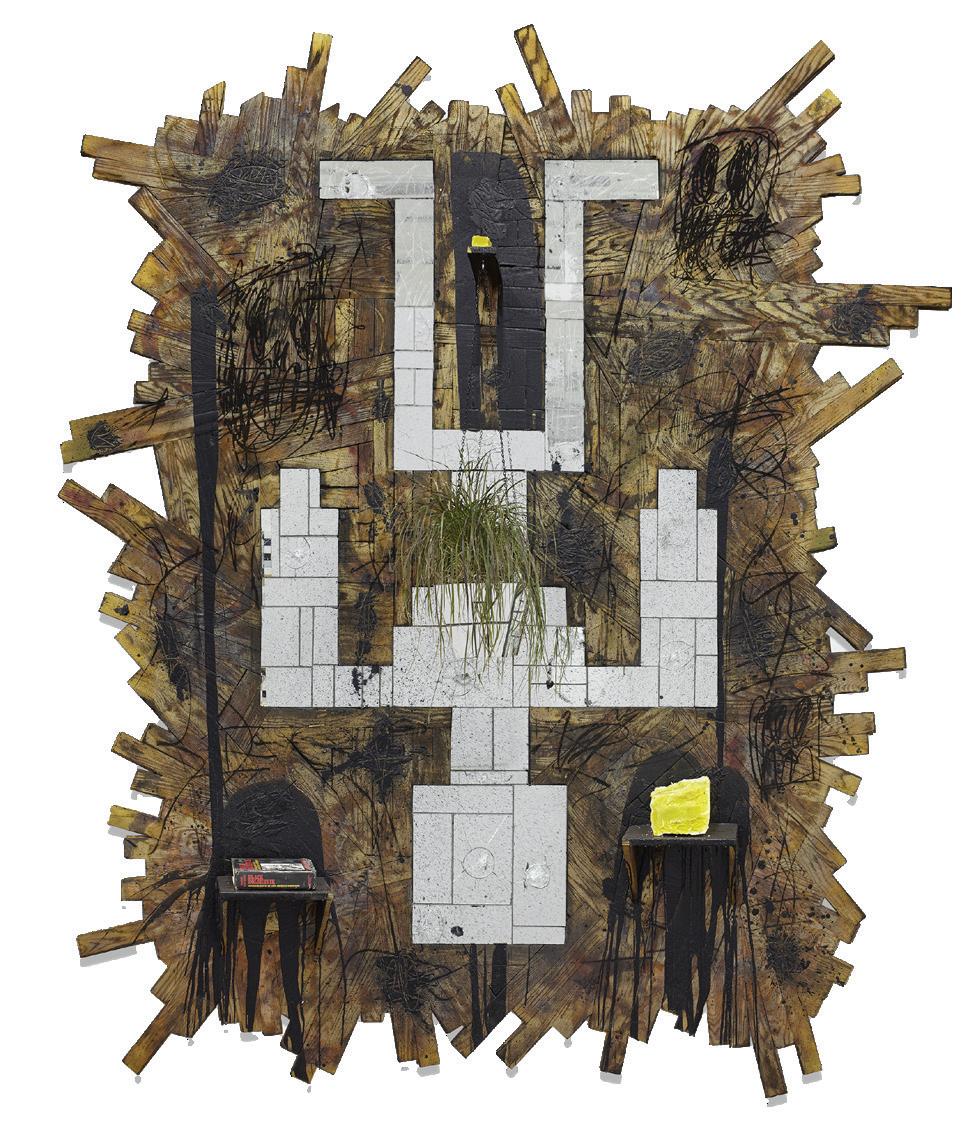
Rashid Johnson: A Poem for Deep Thinkers is on view Mar. 8–Sep. 27, marking the artist’s largest exhibition to date and his first major museum survey in more than a decade. Bringing together nearly 90 works across painting, sculpture, film, and installation, the exhibition traces Johnson’s evolving practice and its engagement with history, philosophy, and Black popular culture, exploring themes of identity, masculinity, and self-reflection. Image: Rashid Johnson, American, born 1977, Falling Man, 2016, burned red-oak flooring, spray enamel, mirror, black soap, wax, shea butter, book, and plant, 118 x 104 x 12 in. Collection of Marguerite Steed Hoffman. themodern.org
12 MUSEUM OF BIBLICAL ART
On view this winter: European Art Treasury; The Resurrection Mural (Ron DiCianni) and Via Dolorosa ; Tapestry of the Centuries continue alongside special exhibitions, including Voice (Chong Keun Chu), Holocaust
Heroes: Fierce Females (Linda Stein), Transitions & Traditions: A Brad Abrams Retrospective, and a Salvador Dalí presentation, plus the SWED Collection, George Tobolowsky’s The Elements of Hanukkah, and Barbara Hines’ Celebration of Survival. biblicalarts.org
Through Feb. 13, Drawn To Life features Chelsea Akpan, Tatyana Alanis, Raymond Butler, Dyemond Daniel, Christopher Machorro, Travis Oliver, and Raul Rodriguez. occc.dallasculture.org
15 PEROT MUSEUM
Soccer: More Than a Game is on view Mar. 7–Sep. 7, presenting a fastpaced, interactive exhibition that explores how physics, biology, and technology shape the world’s most popular sport. Through hands-on challenges and behind-the-scenes innovations, the exhibition examines performance, teamwork, and design, arriving as FIFA World Cup 2026 brings global attention to North Texas. perotmuseum.org
16 SIXTH FLOOR MUSEUM
Public programs continue with a Feb. 19 lecture by Rick Loessberg examining the 1968 Kerner Commission Report and its enduring relevance, followed by a Mar. 12 talk in which historian Matthew Butler explores the emotional, religious, and political responses to the assassination of President John F. Kennedy across Mexico. jfk.org
17 TYLER MUSEUM OF ART
A Naturalist’s Impression: Works by Janet Turner continues through Mar. 8. Featuring works across serigraphy, linocut, engraving, aquatint, and lithography, the exhibition also includes hand-carved linoleum blocks that illuminate Turner’s printmaking process. tylermuseum.org
01 AMPHIBIAN
Bull in a China Shop, running Feb. 11–Mar. 1, is Bryna Turner’s fastpaced queer romantic comedy exploring ambition, love, and women’s rights through the decades-long relationship of Mary Woolley and Jeannette Marks. Did You Eat? ( 밥 먹었니?) running Mar. 25–Apr. 12, is Zoë Kim’s autobiographical solo performance tracing family, memory, and Korean American identity. amphibianstage.com
02 AT&T PERFORMING ARTS CENTER
February and March programming spans music, comedy, and theater including Remember Me by Sam Cormier, from Feb. 6–8; Jane Lynch and Kate Flannery on Feb. 11; Piff the Magic Dragon: The Clone Tours on Feb. 21; Vitamin String Quartet on Mar. 6; The Music Man , on stage Mar. 12–14; Il Divo by Candlelight on Mar. 13; violinist Itzhak Perlman on Mar. 24; and Blue Man Group from Mar. 27–29. Image: Sam Cormier in Remember Me. Courtesy of the Elevator Project and AT&T Performing Arts Center. attpac.org
03 BASS PERFORMANCE HALL
Broadway programming continues with SIX, Feb. 10–15, reimagining the wives of Henry VIII as pop icons in a high-energy musical celebrating contemporary girl power. Back to the Future: The Musical, Mar. 24–29, brings the beloved film to the stage, following Marty McFly’s race to repair the past, save the present, and return to the future. basshall.com
04 BROADWAY
DALLAS
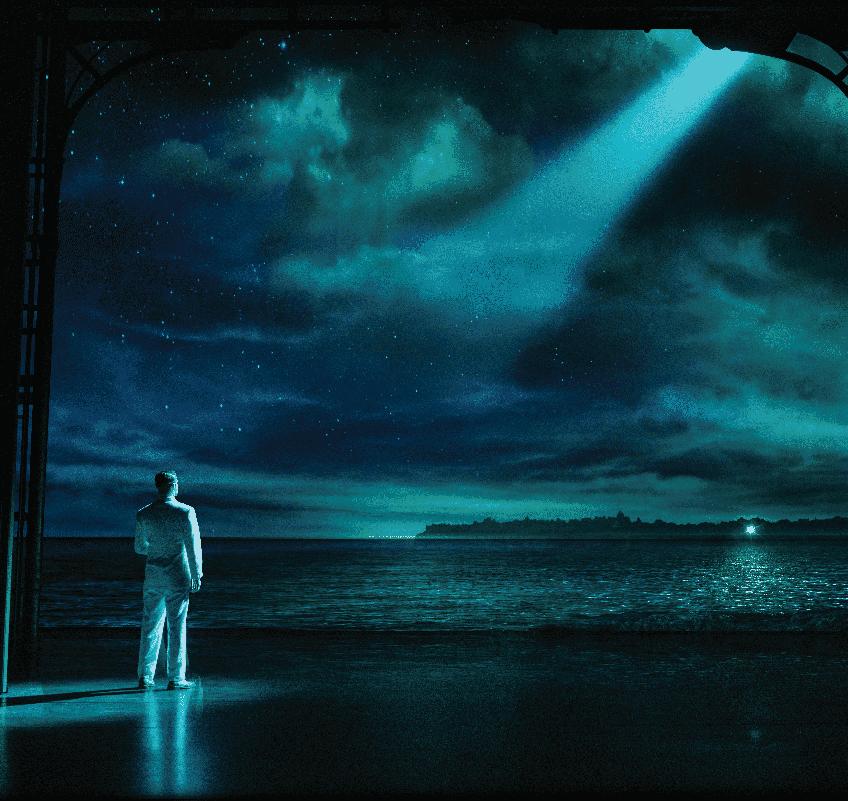
Programming at the Music Hall at Fair Park includes SIX on Feb. 1, followed by The Great Gatsby, on stage Feb. 17–Mar. 1. March continues with A Beautiful Noise: The Neil Diamond Musical , Mar. 10–22, alongside live performances by Puscifer on Mar. 25, The Sleeping Beauty on Mar. 29, and Some Like It Hot on Mar. 31. Image: Jeremy Jordan in The Great Gatsby. Photograph by Matthew Murphy. broadwaydallas.org
05 CASA MAÑANA
The Wizard of Oz , continues through Feb. 15. Hairspray, Feb. 28–Mar. 8, brings the Tony Award–winning musical celebrating selfexpression. The SpongeBob Musical opens Mar. 21, while the Reid Cabaret Theatre presents You Don’t Own Me, Carole Bufford’s tribute to the women of 1960s pop, running from Mar. 10–15. The Music of Fleetwood Mac begins Mar. 31. casamanana.org
06 DALLAS CHILDREN’S THEATER
The Very Hungry Caterpillar Show continues through Feb. 28, bringing Eric Carle’s iconic illustrations to life through a colorful stage production featuring oversized puppets and visual storytelling. Next Moon Mouse: A Space Odyssey , Mar. 27–29, follows Marvin
the Mouse on an imaginative, light-filled journey that celebrates difference, curiosity, and belonging. dct.org
07 THE DALLAS OPERA
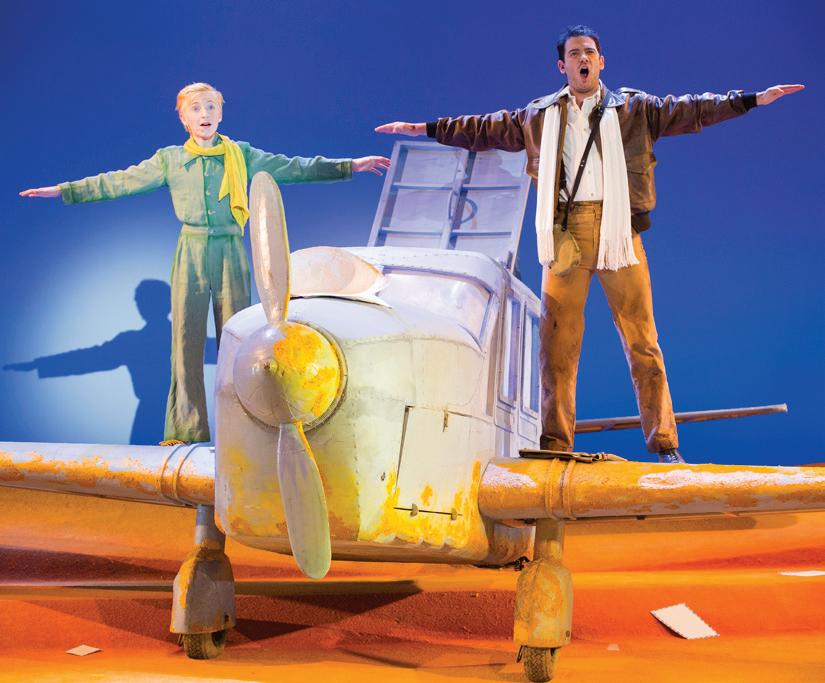
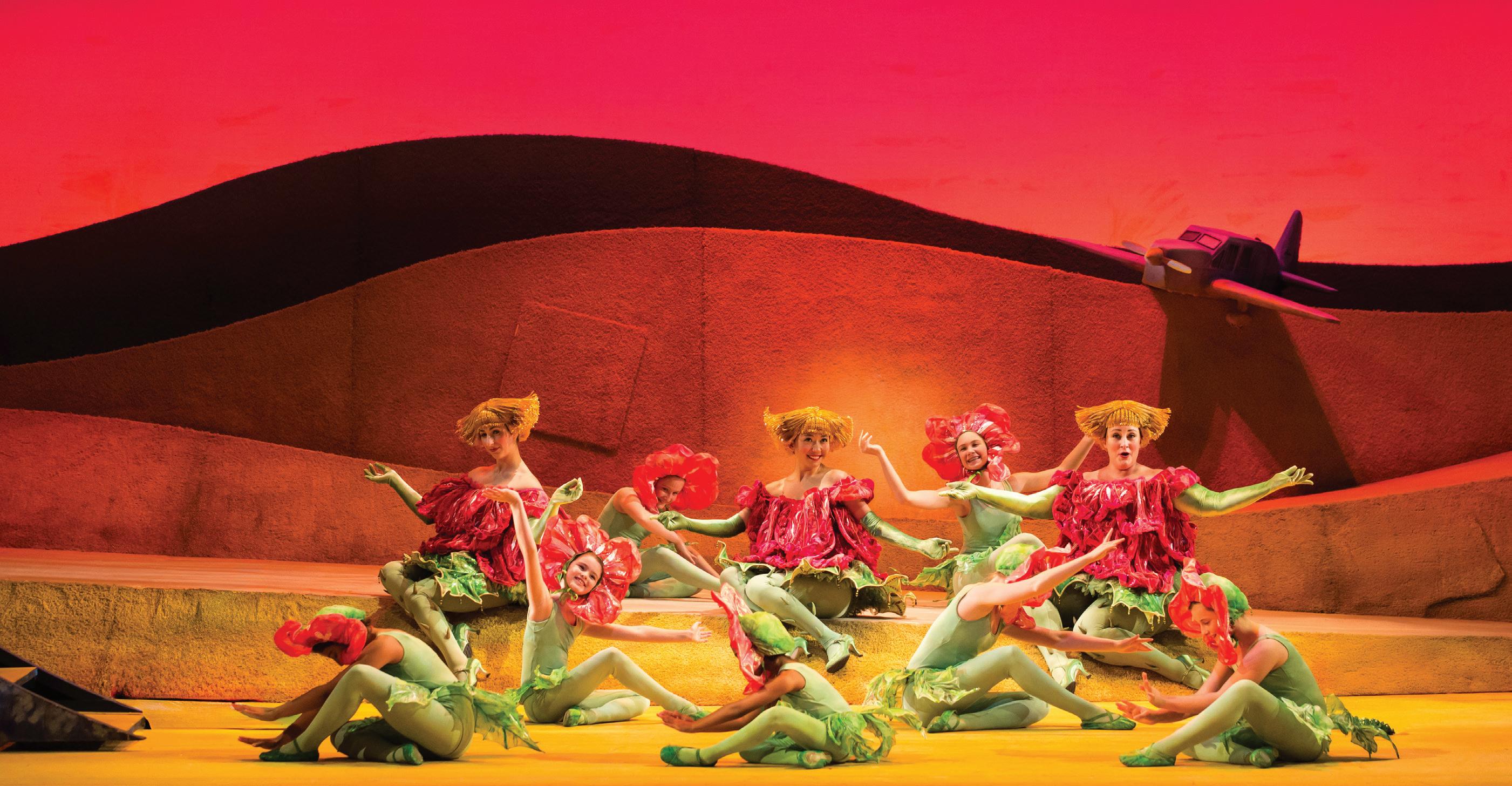
The Robert E. and Jean Ann Titus Family Recital: Erin Morley on Feb. 1 features the celebrated coloratura soprano in an afternoon recital. The Little Prince, with music by Rachel Portman , is a lyrical opera inspired by Antoine de Saint-Exupéry’s beloved tale, Feb. 6, 8, 11, and 14. Family offerings include The Little Prince Family Opera on Feb. 15 and The Three Little Pigs Family Opera on Feb. 28. The season culminates with Verdi’s Don Carlo, on stage Feb. 27 and Mar. 7, bringing political intrigue and grand drama to the Winspear stage. The National Vocal Competition takes the stage on Mar 6 Image: The Little Prince at the Washington National Opera. Photograph by Scott Suchman. dallasopera.org
08 DALLAS SYMPHONY ORCHESTRA
Enjoy La Vida Loca on Feb. 1 and How to Train Your Dragon in Concert from Feb. 6–8. Valentine’s Day week features Tchaikovsky & Rachmaninoff on Feb. 12–15, followed by Mussorgsky’s Pictures at an Exhibition from Feb. 27–Mar. 1. March continues with Brahms’ Double Concerto from Mar. 5–8, Danny Elfman’s Music from the Films of Tim Burton from Mar. 13–15, Alexi Kenney Plays Barber Mar. 20–22, followed by Bartók, Rózsa & Brahms, Mar. 26–28, and Organ Recital: Amanda Mole on Mar. 29. mydso.com
09 DALLAS THEATER CENTER
Fat Ham , James Ijames’ Pulitzer Prize–winning reimagining of Hamlet, continues through Feb. 8 at the Kalita Humphreys Theater Where We Stand follows at Bryant Hall with showtimes Feb. 25–Mar. 22, offering a contemporary reflection on community, history, and place. Spring programming culminates with Ragtime, opening Mar. 27 and running through Apr. 19 at the Dee & Charles Wyly Theatre, bringing the landmark American musical to the DTC stage. Image: Fat Ham. Photograph by Evan Michael Woods. dallastheatercenter.org
10
DALLAS WIND SYMPHONY
Asleep at the Wheel on Feb. 17 is a one-night collaboration pairing the Dallas Winds with the Texas western swing legends for an energetic crossover concert. Magnum Opera follows on Mar. 17, presenting iconic moments from the operatic canon, including works by Wagner, Verdi, Puccini, and Mascagni, in a symphonic evening that foregrounds drama, lyricism, and orchestral power. dallaswinds.org
11 EISEMANN CENTER
This winter see tribute concerts, global music, and community
DANNY ELFMAN’S MUSIC FROM THE FILMS OF TIM BURTON
MAR 13-15
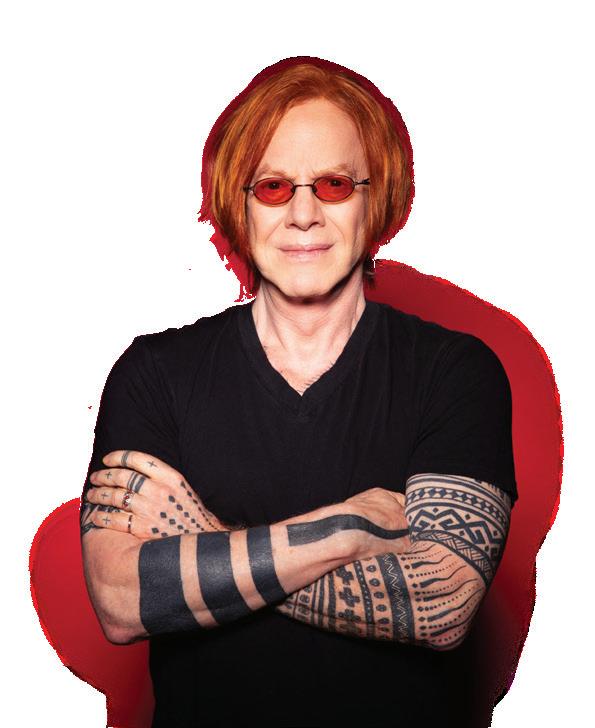
Composer Danny Elfman joins the Dallas Symphony Orchestra for a celebration of movie music magic! Hear the most iconic film scores from Tim Burton’s gothic fantasies brought to life, enhanced by visuals of original drawings and storyboards, plus a special live performance from the Pumpkin King himself!
TICKETS ARE AVAILABLE AT DALLASSYMPHONY.ORG
performances, beginning with Spanish Nights by Candlelight on Feb. 1 and RSO—Legends of Country on Feb. 7, followed by The Simon & Garfunkel Story on Feb. 14, Drum Tao on Feb. 27, and The Ten Tenors on Mar. 1. March continues with Syncopated Ladies LIVE! on Mar. 8, the Ravi Shankar Ensemble on Mar. 24, and OHO Productions’ Halwa on Mar. 29. eisemanncenter.com
12 FORT WORTH SYMPHONY ORCHESTRA
Beethoven, Britten, and Ligeti on Feb. 15 presents a chamber program at the Kimbell Art Museum. A Gala Concert Starring Gil Shaham follows on Feb. 21 at Bass Hall, with the celebrated violinist performing Brahms’ Violin Concerto. Shakespeare at the Symphony runs Feb. 27–Mar. 1, pairing Mendelssohn’s A Midsummer Night’s Dream with selections from Prokofiev’s Romeo and Juliet. Next, hear Marvel Studios’ Infinity Saga Concert Experience on Mar. 6–7 and Jane Glover Conducts FWSO Stars on Mar. 20–22, featuring works by Britten, Haydn, and Beethoven. fwsymphony.org
13
KITCHEN DOG THEATER
Pompei!!, Feb. 5–Mar. 1, is a company-created musical by Cameron Cobb, Michael Federico, and Max Hartman, directed by Christopher Carlos and Tina Parker. Set beneath the looming shadow of a volcano, the vaudeville-inspired production blends song, dance, and satire to examine nationalistic hubris and cultural excess, marking both KDT’s first original musical and the opening of the theater’s new home in the Design District. kitchendogtheater.org
14 LYRIC STAGE
Little Women, performed Feb. 6–22 at the Lyric Stage Studio, brings the beloved musical adaptation of Louisa May Alcott’s story to the stage, tracing the lives of the March sisters. The season also includes Dallas Divas, a fundraising concert on Feb. 11 at Moody Performance Hall featuring a program of Broadway and pop favorites performed by local standout vocalists. lyricstage.org
15 MAJESTIC THEATRE
See Bill Murray and His Blood Brothers on Feb. 6, followed by Gipsy Kings featuring Nicolas Reyes on Feb. 7, and George Lopez on Feb. 13., David Spade on Feb. 20, Jim Breuer on Feb. 22, and Dog Man: The Musical on Feb. 27–28. March highlights include Zarna Garg on Mar. 1, Rent in Concert on Mar. 4, Michelle Buteau on Mar. 5, Vitamin String Quartet on Mar. 6, Peppa Pig: My First Concert on Mar. 7, Swan Lake on Mar. 12, Il Divo by Candlelight on Mar. 13, Robert Plant with Saving Grace on Mar. 18, Modi on Mar. 19, Akaash Singh on Mar. 20, Jim Jefferies on Mar. 27, Frankie Quiñones on Mar. 28, and Justin Willman on Mar. 29. majestic.dallasculture.org
16 TACA
TACA is dedicated to making the Dallas arts community one of the strongest in the nation by investing in the arts community. taca–arts.org
17
TEXAS BALLET THEATER
Diversions, from Feb. 27–Mar. 1 and Mar. 13–15, presented in both Dallas and Fort Worth, is a mixed-repertoire program highlighting the company’s range and versatility. The evening brings together classical and modern works, including Violin Concerto in D, Diversion of Angels by Martha Graham, Bolero, and Company B, moving from white-tutu classicism to modern and neoclassical ballets. texasballettheater.org
18 THEATRE THREE
Penelope, from Feb. 19–Mar. 22, reimagines the ancient myth through a folk-inflected pop musical by Alex Bechtel, Grace McLean, and Eva Steinmetz. Directed by Sarah Gay, the production centers Penelope as she reckons with love, independence, and selfhood in Odysseus’ absence, blending wit, intimacy, and contemporary music in a modern retelling of a classical story. Through Feb. 26, see the dark, grisly comedy Deer by Aaron Mark in Theatre Too. Image: Shannon Mcgrann in Deer. Photograph by Jeffrey Schmidt. theatre3dallas.com.
19 TITAS/DANCE
UNBOUND
Flamenco Vivo Carlota Santana takes the stage Feb. 6–7, marking the company’s Dallas debut with a contemporary flamenco performance rooted in tradition and innovation. The season continues with BODYTRAFFIC on Mar. 20–21, bringing the Los Angeles–based contemporary dance company to the stage with a dynamic program known for its musicality, precision, and expressive range. Image: BODYTRAFFIC 205. Photograph by Gúzman Rosado. titas.org.
20 UNDERMAIN THEATRE
The Skin of Our Teeth, Feb. 12–Mar. 8, brings Thornton Wilder’s Pulitzer Prize–winning American classic to the stage under the direction of Stefan Novinski. Centering on the Antrobus family as they endure ice ages, wars, and floods, the play blends epic comedy and allegory to examine human resilience, cyclical history, and the enduring capacity for survival. undermain.org
21 WATERTOWER THEATRE
The Graduate closes on Feb. 8. Good Night, Oscar, Mar. 24–Apr. 12, dramatizes a legendary 1958 late-night television appearance by pianist and raconteur Oscar Levant opposite host Jack Paar. watertowertheatre.org
PHOTO:
01 12.26
CLUSTER , on view through Feb. 28, presents new work by Henri Paul Broyard exploring form and structure through layered, processdriven compositions. The Flower Called Nowhere features paintings by Peter Timinsky that reflect on perception, atmosphere, and the quiet tension between abstraction and representation. Next, Zoë Carlon and Elana Bowsher will highlight the gallery from Mar. 7–Apr. 4. Image: Peter Timinsky, Mississippi Kites, 2025, oil, oil stick, spray paint, and ebony pencil on raw canvas, 96 x 59 in. gallery1226.com
02 AKIM MONET FINE ARTS
Time Capsule-Rodin—The Sculpted Voice brings together studio casts, intimate studies, and monumental bronzes produced under the stewardship of Musée Rodin. akimmonetfinearts.com
03 ALAN BARNES FINE ART
Fine 19th & 20th Century Paintings and Sculpture Spring–Summer will be on view at the gallery in early spring. alanbarnesfineart.com
04 ARTSPACE111
Curated Texas I: Art & Style, on view through Mar. 22, brings together contemporary Texas artwork alongside the boot designs of Lauren Owen of Texas and jewelry by Gather Goods. Blending fine art, fashion, and craftsmanship, the exhibition highlights a distinctly regional dialogue rooted in tradition, innovation, and a shared sense of place. artspace111.com
05 BARRY WHISTLER GALLERY
John Pomara: Split_screen-_//-/... presents new paintings and multimedia works extending Pomara’s exploration of digital error, abstraction, and the aesthetics of technological distortion. A collaborative installation with artist Laura Kim rounds out the show, through Mar. 21. barrywhistlergallery.com
06 BEATRICE M. HAGGERTY GALLERY
The gallery welcomes new director Vahid Valikhani. The first exhibition he helms is a solo show for Yun Shin, running through Feb. 27. udallas.edu/gallery
07 CADD
Contemporary Art Dealers of Dallas Spring Gallery Day will take place on Mar. 7 featuring member galleries. caddallas.org
08 CHRISTOPHER MARTIN GALLERY
Christopher Martin Gallery displays the reverse-glass paintings of Christopher H. Martin along with 25-plus mid-career artists who work within painting, photography, mixed media, and sculpture. christophermartingallery.com
09 CONDUIT GALLERY NEXT
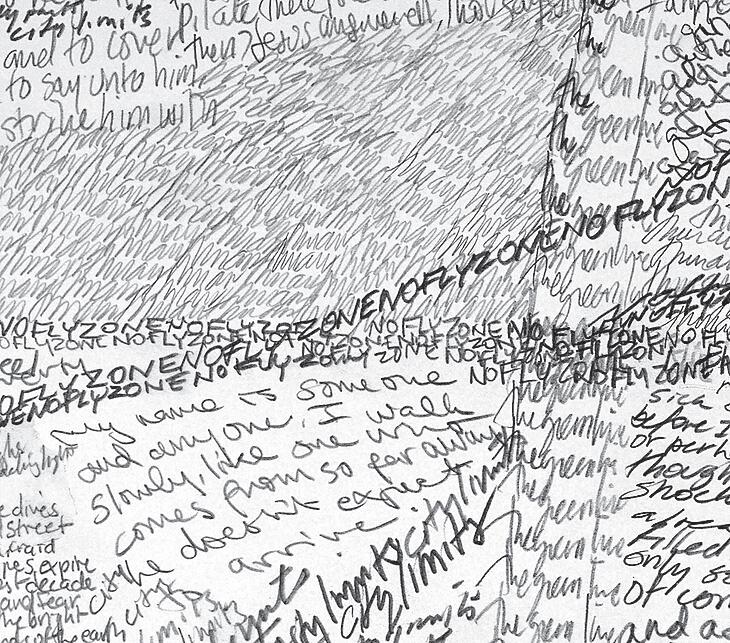
Conduit Gallery’s first exhibition in its new location at 1845 Levee Street, featuring new paintings by Kirk Hayes, closes on Feb 14. The Fort Worth–based artist is known for his trompe l’oeil paintings illustrating the human condition and resilience. Concurrently, Phase Four, featuring Marcelyn McNeil, Annabel Daou, Robert Jessup, and Dr. Fahamu Pecou is also on view. Image: Annabel Daou, America (detail), 2006, pencil, repair tape, and gesso on paper. conduitgallery.com
10 CORSICANA ARTIST & WRITER RESIDENCY
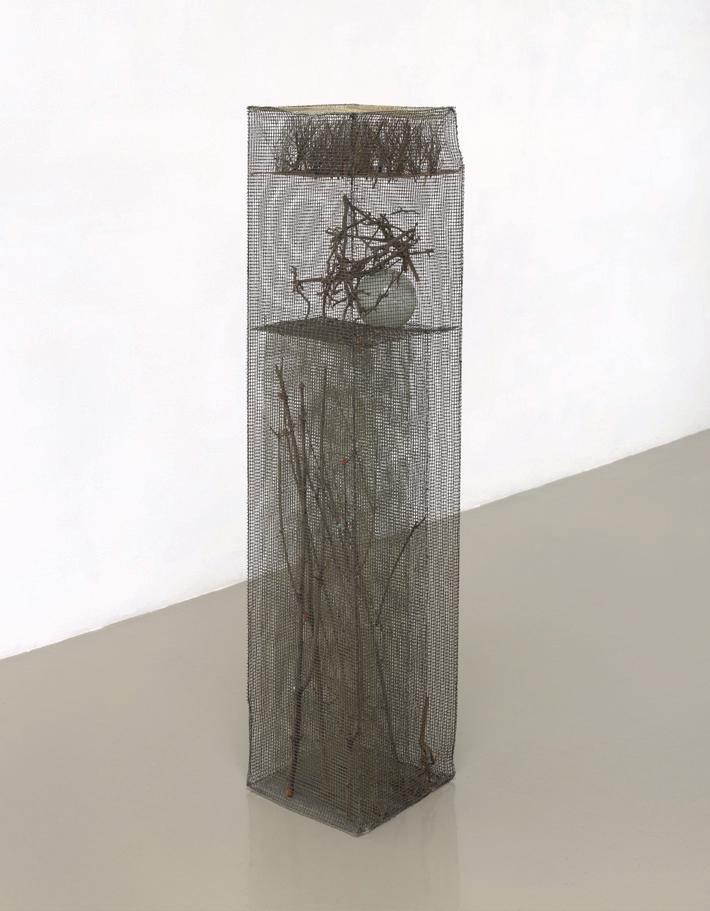
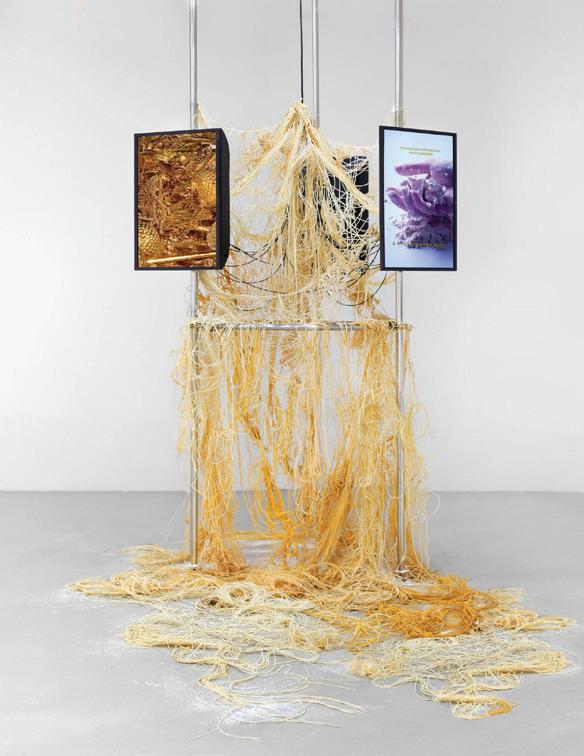
On Feb. 21 from noon to 5 p.m., 100 West hosts open studios for their winter residents featuring new work by Kaja Clara Joo, Erick Hernandez, and writer Jackson McGrath. Image: Kaja Clara Joo, The Age of Substitution (Grapefruit), 2025, calcium powder, natural rubber, silk strings, stainless steel, brass joints, video loops. corsicanaresidency.org
11 CRAIGHEAD GREEN GALLERY
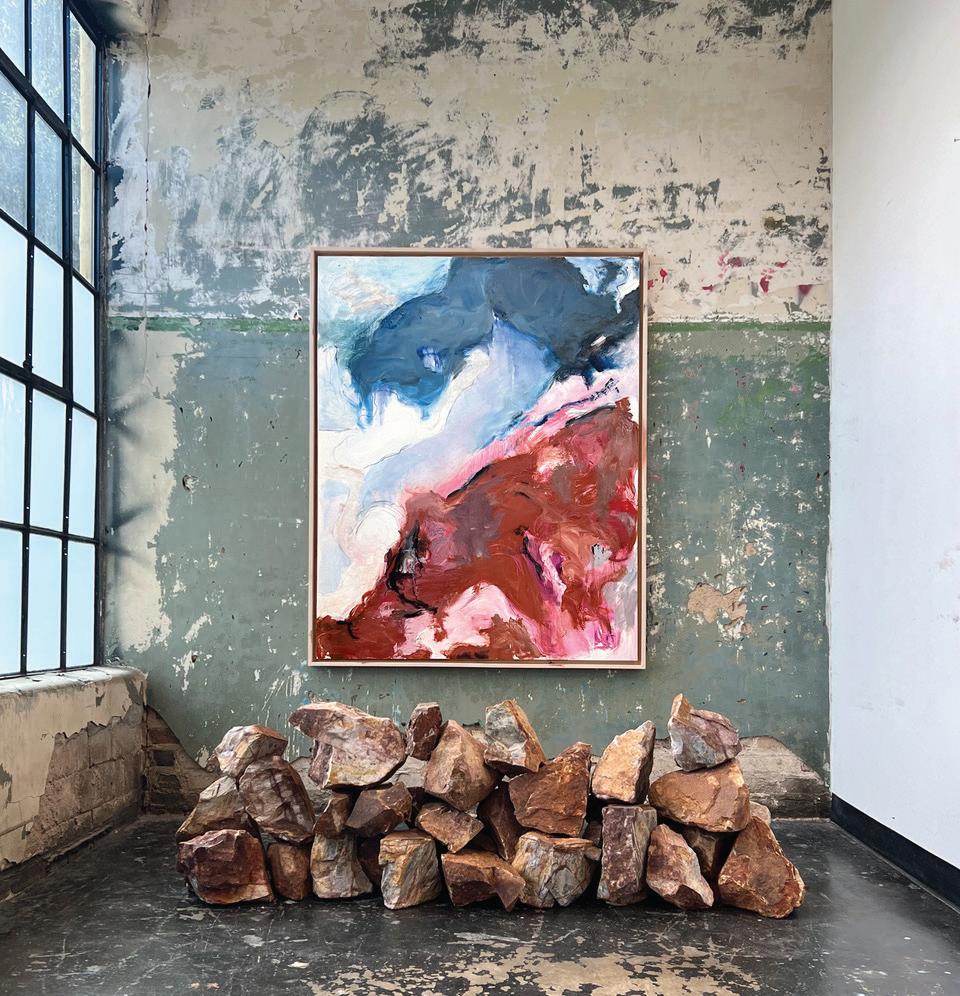
Reality Is Only Your Perception, on view through Feb. 21, is a group exhibition featuring works by Damián Suárez, Marla Ziegler, Chris Stewart, Shawn Smith, Kelsey Irvin, and Adam Ball that probes the shifting line between what is seen, felt, and understood, inviting viewers to consider how perception constructs meaning. From Feb. 28–Apr. 18, paintings and works on paper by Daniel Angeles, Carole Pierce, and Ian Grieve explore distinct but intersecting approaches to narrative, atmosphere, and material play Image: Chris Stewart, Balance, 2025, oil on canvas in artist maple wood frame, with rock, 61 x 49 in. Rock variable. craigheadgreen.com
12 CRIS WORLEY FINE ARTS NEXT
The Angels Exit by Celia Eberle and Suspense of Disbelief by William Cannings remain on view through Feb. 14. Silent Witness, on view Feb. 28–Apr. 4, presents new work by Robert Lansden exploring themes of presence, memory, and observation. Concurrently, Æmen Ededéen’s The Noise of Fear Is Drifting Down the River, You Cannot Die examines vulnerability and psychological tension through layered, symbolic imagery. Opening receptions for both exhibitions will take place on Feb. 28 with a book signing for Ededéen’s Nihil: Joshua Hagler in New Mexico. crisworley.com
13 CVAD, UNT COLLEGE OF ART AND DESIGN GALLERIES
The Paul Voertman Juried Student Competition and Exhibition presents selected student work juried by Victor “Marka27” Quiñonez, Feb. 3–28 at the Cora Stafford Gallery. Ni de Aquí, Ni de Allá (Not From Here, Not From There) is a solo exhibition of painting, street art, and cultural installation by “Marka27” organized by
Boston University Art Galleries, Boston, Massachusetts, and curated by Kate Fowle; on view through May 1. cvad.unt.edu
14 DAVID DIKE FINE ART
David Dike Fine Art has specialized in Texas, American, and European art since 1986. The gallery is located in Alpha Plaza. daviddike.com
15 ERIN CLULEY GALLERY
Mothering , on view through Feb. 14, is a group exhibition featuring work by Kaleta Doolin, Megan Hildebrandt, Riley Holloway, Leila Jeffreys, Catherine MacMahon, Madelyn Sneed-Grays, Jessica Vollrath, Nadia Waheed, and Rachel Wolfson Smith. erincluley.com
16 FERRARI FINE ART GALLERY
Ferrari Gallery is dedicated to the intersection of art and community, creating a space where creativity thrives and connections are made. ferrarigallery.net
17 FORT WORKS ART
Fragments of Memory , on view through Mar. 21, presents new paintings by Texas-based artist Amy Twomey. Drawing from the symbols, rhythms, and emotional landscapes of Texas life, Twomey’s layered compositions merge memory, intuition, and place, inviting viewers into works shaped as much by process and erasure as by narrative. fortworksart.com
18 FWADA
Spring Gallery Night for members and friends takes place on Mar. 28. FWADA also sponsors an annual show featuring submitted artworks from member institutions in the summer, and a Fall Gallery Night . fwada.com
19 GALLERI URBANE
Wish You Were Here, featuring work by Drea Cofield, and Magdalenian Suite, work by Erika Jaeggli, close Feb. 14. In late winter, the gallery presents work by Marlon Wobst and Benjamin Terry at Felix Art Fair in Los Angeles, Feb. 25–Mar. 1. galleriurbane.com
20 GREEN FAMILY ART FOUNDATION
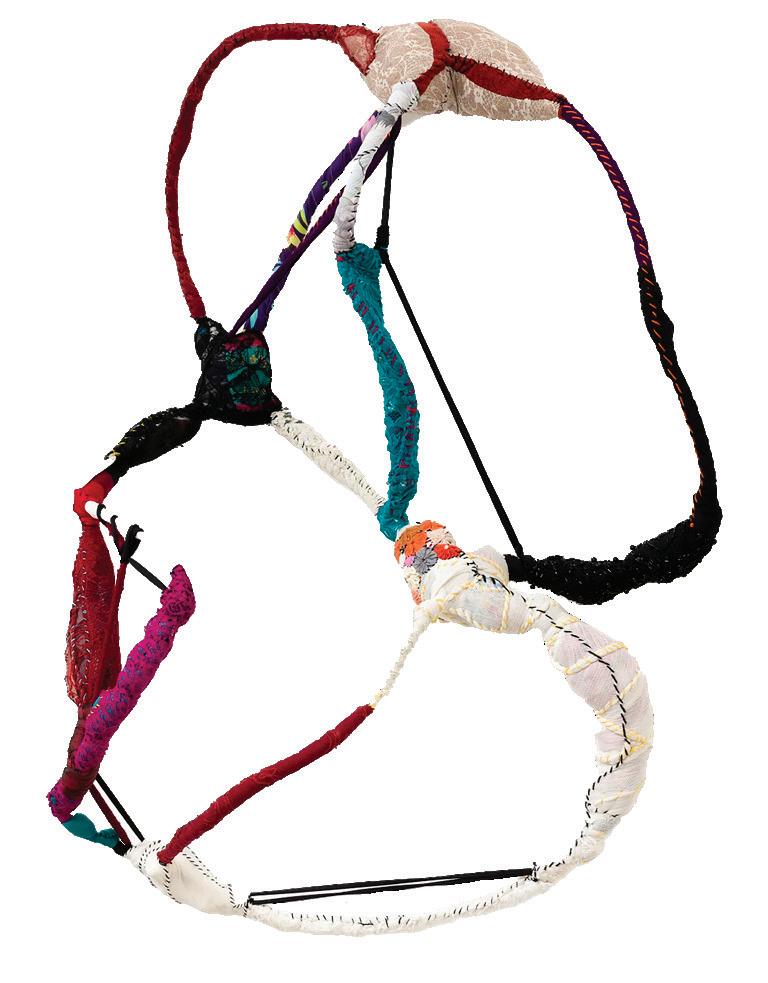
Fields of Vision: Dallas Collects, on view Feb. 7–Aug. 9, is curated by Sara Hignite and brings together 21st-century artworks acquired since 2020 by Dallas-based collectors. Featuring works drawn from both established and emerging private collections, the exhibition highlights the breadth of collecting practices in Dallas and situates them within a broader global art context. Image: Sonia Gomes, Untitled, from Torções series, 2021, sewing, galvanized wire,
Work by Emilie Louise Gossiaux, Janine Iversen, and Kathryn Kerr is on view through Feb. 14. Todd Cramer follows Mar. 7–Apr. 4. jamescope.biz
22 JAMES HARRIS GALLERY
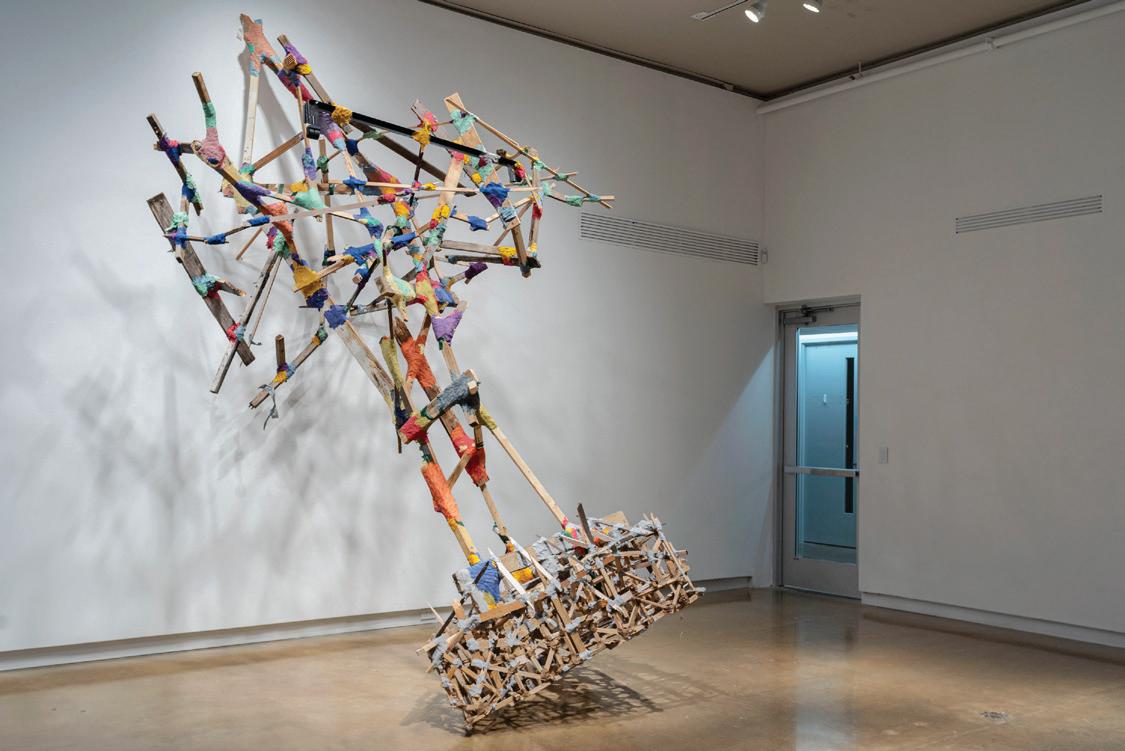
Austin Lewis: New Sculpture marks the artist’s first solo exhibition since earning his MFA from TCU and features new mixedmedia works created from found materials. On view through Feb. 28. Image: Austin Lewis, An Untitled Monument, installation view. Courtesy of the artist. jamesharrisgallery.com
23 KEIJSERS KONING
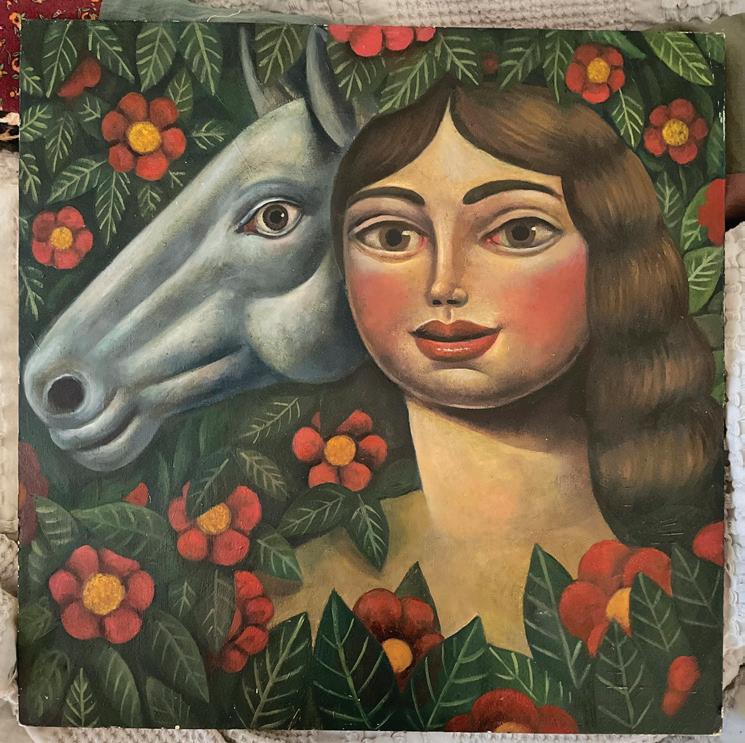
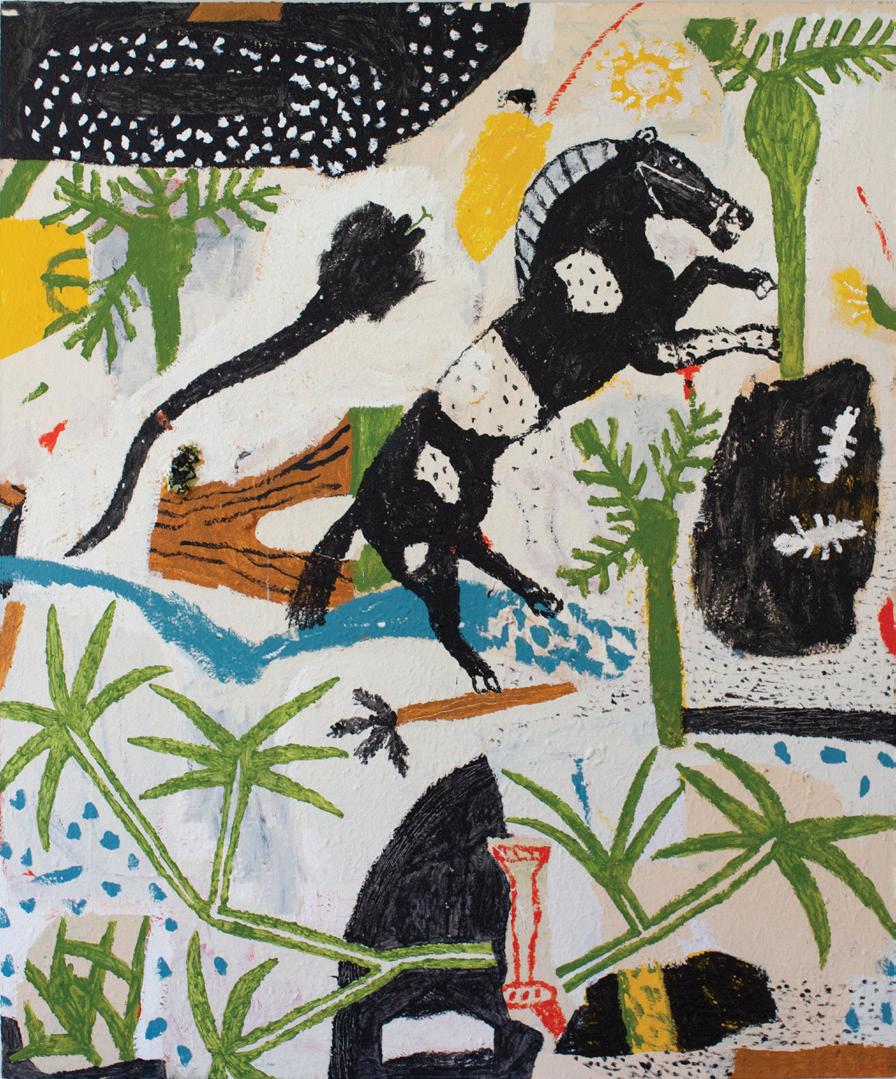
Outer, a solo exhibition by Amalia Angulo, remains on view through Feb. 14. Marking the artist’s first solo presentation with the gallery, the exhibition explores Angulo’s engagement with her Caribbean roots and the relationship between nature, spirituality, and the sacred. Image: Amalia Angulo, Woman with Horse, 2025, oil on canvas, 20 x 20 in. Courtesy of Keijsers Koning. keijserskoning.com
24 KIRK HOPPER FINE ART
Heap of Broken Images, featuring work by Ashley Canty, continues through Feb. 21. Next, Cande Aguilar’s solo show runs Feb. 28–Apr. 4. kirkhopperfineart.com
25 KITTRELL/RIFFKIND ART GLASS
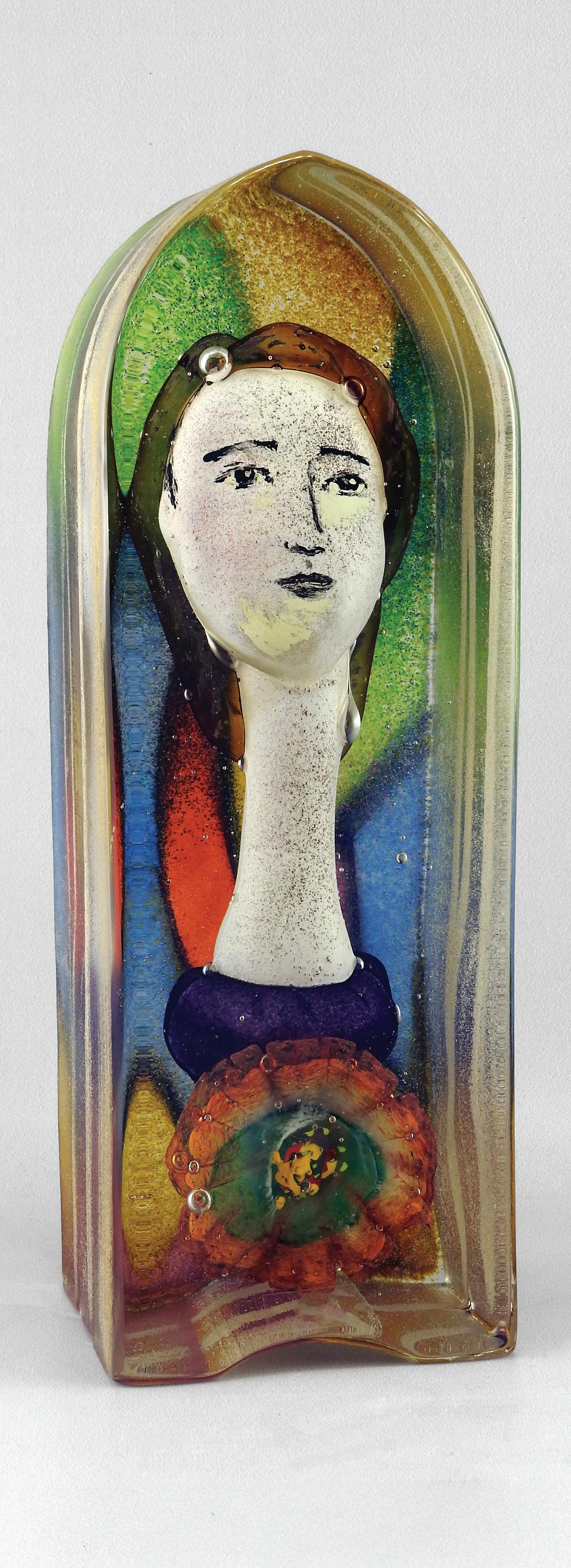
Kittrell Riffkind Art Glass is recognized as one of the country’s leading galleries for contemporary North American art glass and now operates in partnership with Southwest Gallery in North Dallas. kittrellriffkind.com
26 LAURA RATHE FINE ART NEXT
From Feb. 7–Mar. 21, LRFA celebrates with their anniversary show Lucky 13, featuring over 45 artists. Next , in collaboration with the Dallas Arboretum, the gallery hosts Hunt Slonem in a multi-venue event, beginning Mar. 28. laurarathe.com
27 LILIANA BLOCH GALLERY
Loving Is Caring , a solo exhibition by Francesca Brunetti, remains on view through Feb. 14, presenting work rooted in ecofeminism and philosophy. Next, through Mar. 14, selected works by Saba Besier and Antonio Lechuga bring together ceramic, sculptural, and mixed-media practices addressing ecology, materiality, and
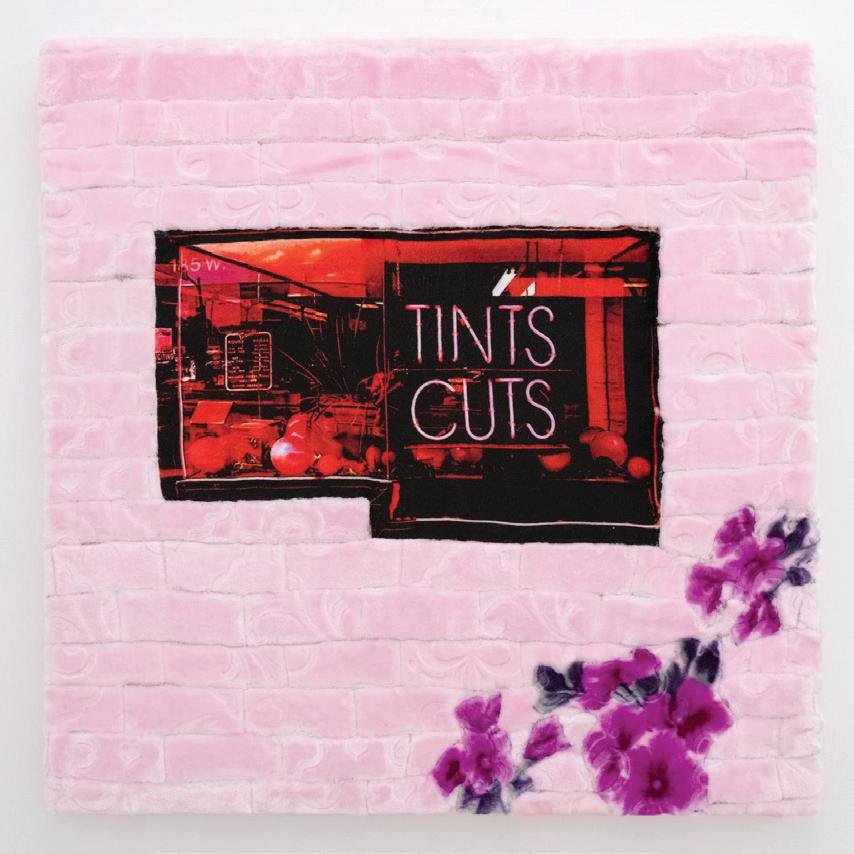
cultural identity. Image: Antonio Lechuga, Bambi’s, 2024, various fleece blankets, thread. 34 x 34 in. lilianablochgallery.com
28 LONE GALLERY
Lone Gallery showcases a diverse array of artists including painters Bradley Kerl, Danny Joe Rose III, and Camille Woods, alongside mixed-media artists such as Cruz Ortiz and Heather Sundquist Hall. lonegallery.com
29 MELIKSETIAN | BRIGGS
Meliksetian|Briggs represents the estate of Bas Jan Ader along with conceptual and contemporary artists including Yifan Jiang, Adam Saks, and John Miller. meliksetianbriggs.com
30 NATURE OF THINGS
Minor Regional Novelist, on view Mar. 14–May 23, brings together contemporary Texas artists in a group exhibition examining the idea of regionalism today. Featuring work by Carrie C. Cook, Ali Dipp, Jim Franklin, Emile Guidroz, Carol Ivey, Sam Linguist, Daryl Meador, George Zupp, and others, the exhibition takes its title from a remark by Larry McMurtry and considers how place, history, and cultural identity continue to shape artistic production in Texas, with historical context drawn from the legacy of the Dallas Nine. natureofthings.xyz
31 PENCIL ON PAPER
Dawn Okoro presents a series of nude portraits exploring Black womanhood through a lens of honesty and empowerment. Drawing from Elizabeth Catlett’s sculptural language and the ancient Mumuye figures of Nigeria, Okoro bridges cultural lineage and contemporary identity in works that honor individuality and collective strength. Through Mar. 7. pencilonpapergallery.com
32 PHOTOGRAPHS DO NOT BEND
Texas Women Artists: 1946–2025 is on view Feb. 14–Mar. 21, presenting a survey of work by women artists connected to Texas across nearly eight decades. pdnbgallery.com
33 THE POWER STATION
The Power Station presents Cabinet Pictures through Mar. 1 featuring Nate Antolik , Nicholas Bierk, Pat de Groot, Louis Eisner, Jeronimo Elespe, Karol Palczak, Marjorie Norman Schwarz, Ellen Siebers, Joanna van Son, and Yui Yaegashi. powerstationdallas.com
Sculpture Custom
34 RO2 ART
Ro2 Art champions artists who challenge the boundaries of contemporary art, those whose work commands attention, provokes thought, and advances the cultural conversation.
35 SAMUEL LYNNE GALLERIES
The gallery showcases a selection of contemporary artists with unique visions, including Lea Fisher and Brandon Boyd. JD Miller Valentine’s Day LIVE painting event returns on Feb. 14. samuellynne.com
36 SMINK
A showcase of fine design and furniture, SMINK is a purveyor of quality living products including a new Minotti showroom. The showroom also hosts exhibitions featuring Robert Szot, Gary Faye, Richard Hogan, Dara Mark, and Paula Roland. sminkinc.com
37 SOUTHWEST GALLERY
Gallery Picks 2026: Painting, Sculpture, Glass will feature curated works throughout Feb. with an eye on both emerging trends and classics. A solo exhibition featuring Irene Sheri’s figurative paintings will open on Mar. 21. swgallery.com
38 TALLEY DUNN GALLERY
Ori Gersht Amalgamation and Eva Lundsager Time Is Very Quick , remain on view. A solo show for Roxy Paine, Drawings and Model , opens this spring. talleydunn.com
39 TUREEN
The gallery’s solo exhibition by New York–based artist Eli Coplan continues through Feb. 28. Showstopper, featuring work by Hannah Taurins, follows Mar. 14–Apr. 18. tureen.info
40 VALLEY HOUSE GALLERY
Bob Stuth-Wade’s solo show No Separate Piece continues through Feb. 28. Wade considers value, shape, color, texture, materials, and meaning to arrive at a visual statement. Connecting Faraway Places, a solo exhibition by Gail Norfleet, opens Mar. 7 and remains on view through the spring. An artist talk is scheduled for Mar. 28. valleyhouse.com
41
THE WAREHOUSE
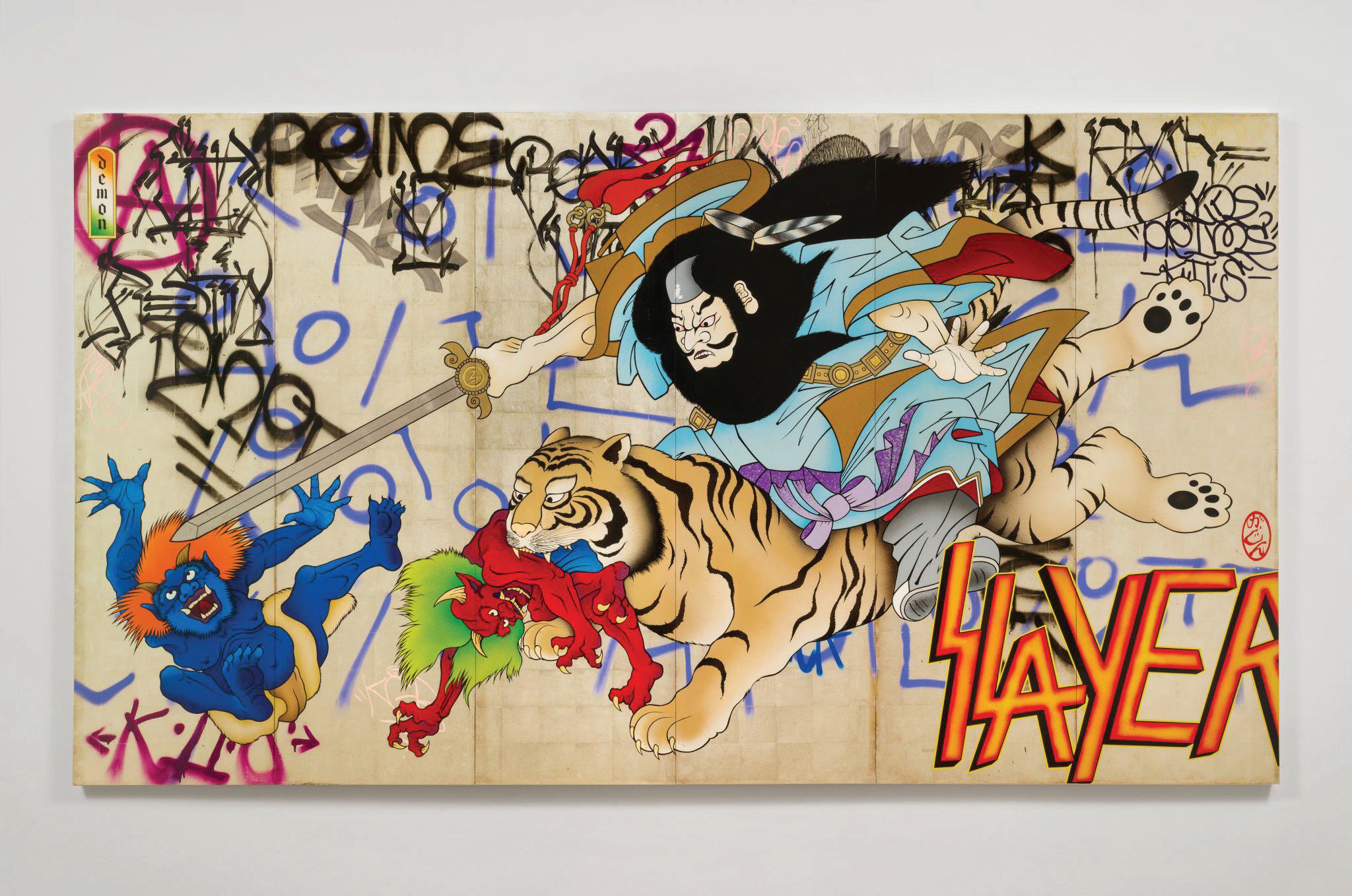
Yoshitaka Amano, on view Apr. 11–Jul. 18, surveys more than five decades of work by the Japanese artist whose practice spans illustration, painting, design, and narrative worlds. thewarehousedallas.org
42 WEBB
GALLERY
Webb Gallery in Waxahachie champions contemporary, self-taught, and visionary artists whose work embodies the grit, humor, and heart of Southern culture. The gallery presents rotating exhibitions alongside an eclectic mix of folk art, books, and curiosities. Webb’s Fair & Square in Fort Davis extends this ethos to West Texas with regular art and music events. webbartgallery.com
43
WILLIAM CAMPBELL GALLERY
Grit & Grace remaines on view through Feb. 7. Benito Huerta | Brownsville and David Lozano | Puncture are on view Feb. 14–Mar. 14. Huerta’s exhibition examines everyday gestures and moments through a practice rooted in observation and “living art,” while Lozano draws on cultural forms such as papel picado and milagros to explore themes of rupture and identity. Image: Cruz Ortiz, Pinche Dog con Red Lengua, oil on canvas, 24 x 18 in. williamcampbellgallery.com
AUCTIONS AND EVENTS
01 HERITAGE AUCTIONS
February highlights include In Focus: Shepard Fairey: Urban Art Feb. 3; Urban Art Showcase Auction Feb. 4; Classic American Illustration Art Showcase Auction Feb. 5–6; Depth of Field: Photographs Showcase Auction Feb. 11; In Focus: Robert Indiana: Prints & Multiples Showcase Auction Feb. 12; Fine & Decorative Arts Showcase Auction Feb. 12; Contemporary Art Within Reach Showcase Auction Feb. 19; and Animation Art: The Art of Hanna-Barbera II Showcase Auction Feb. 21–22. March opens with Depth of Field: Photographs Showcase Auction Mar. 11; Fine & Decorative Arts Showcase Auction Mar. 12; Prints & Multiples Showcase Auction Mar. 18; Provocateur: Part II: Urban Art Signature Auction Mar. 19; Asian Art Signature Auction Mar. 25; and Art of the West Showcase Auction Mar. 26. For a full list of upcoming auctions, visit ha.com.
Upcoming Dallas Art Fair exhibitor Carpenters Workshop Gallery works fluidly across art, design, and craft.
INTERVIEW BY WENDY KONRADI
THOUGHT MADE VISIBLE E
xhibiting in April at Dallas Art Fair for the first time, Carpenters Workshop Gallery occupies a rare and deliberate position in the contemporary art and design landscape: a place where material intelligence, conceptual rigor, and artisanal mastery are treated as a single, evolving language. Founded on the belief that design can carry the same cultural and intellectual weight as fine art, the gallery champions work and practices that resist easy categorization. Furniture becomes sculpture; craftsmanship becomes critique. Through ambitious, often technically demanding commissions, Carpenters Workshop Gallery, with outposts in London, Paris, New York, and Los Angeles, foregrounds process as much as outcome, making visible the dialogue between idea and execution.
The gallery’s program privileges singular voices and long-term collaborations, allowing practices to mature and bodies of work to unfold over time. Dallas-based interior designer Wendy Konradi discusses what distinguishes Carpenters Workshop’s commitment to depth and permanence with senior sales associate Betsy Beierle.
Wendy Konradi (WK): Having worked with Carpenters Workshop Gallery for many years, I’ve had the privilege of watching the value of works by some of your artists skyrocket in value. Two Nacho Carbonell sculptures we placed a few years ago have doubled in value since then—it was a great investment for my clients. Initiatives like the Dallas Art Fair have created important moments in the Texas cultural calendar that broadens local collectors’ exposure to collectible design. Are you bringing any new artists to the fair this year that Texas collectors should pay close attention to?
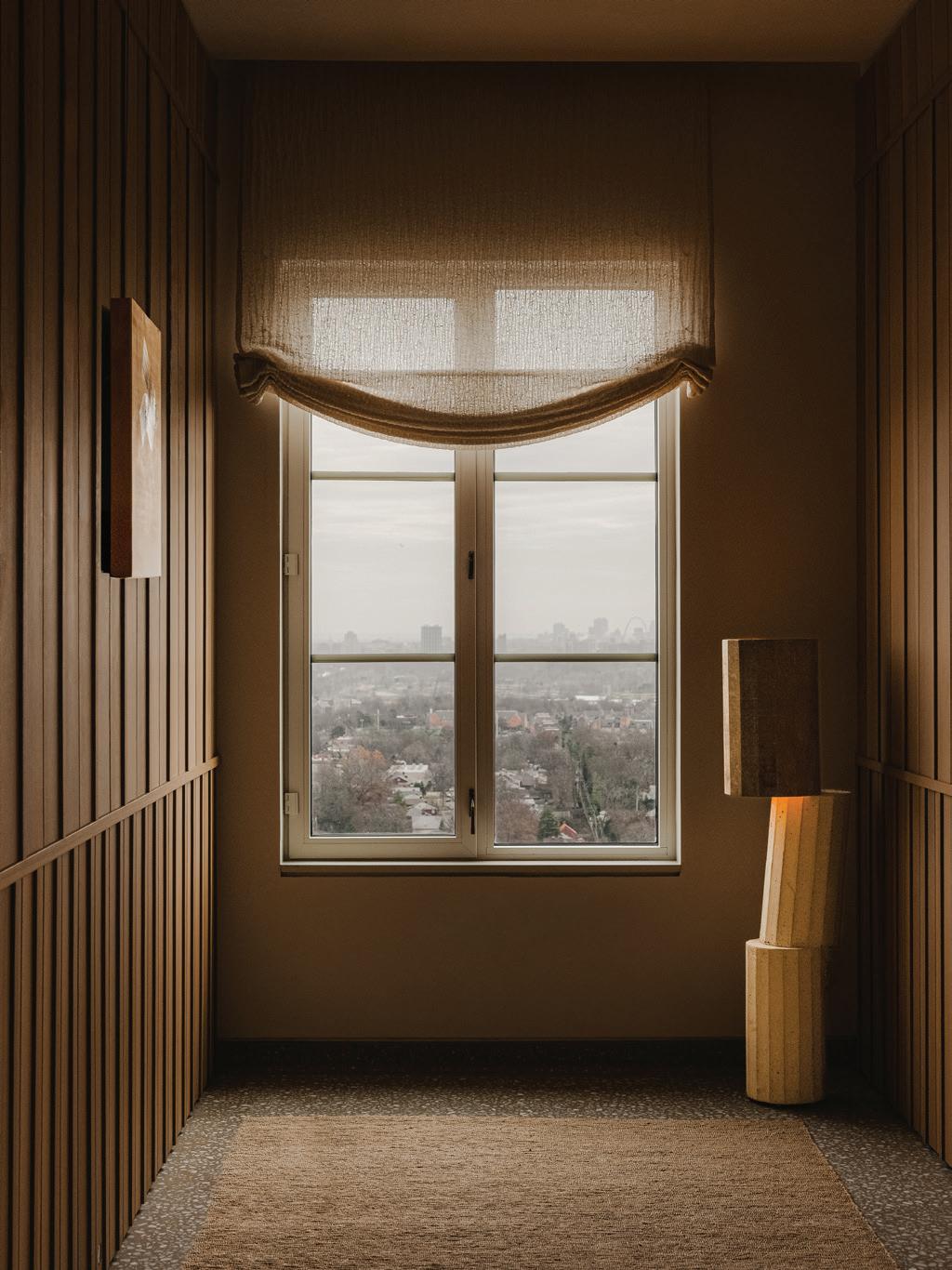
Martin Laforêt’s MCL2 light sculpture, made of cast cement and carved oak, placed in an oak-paneled sitting room by Wendy Konradi Interior Design. Photograph by Dane Deaner.
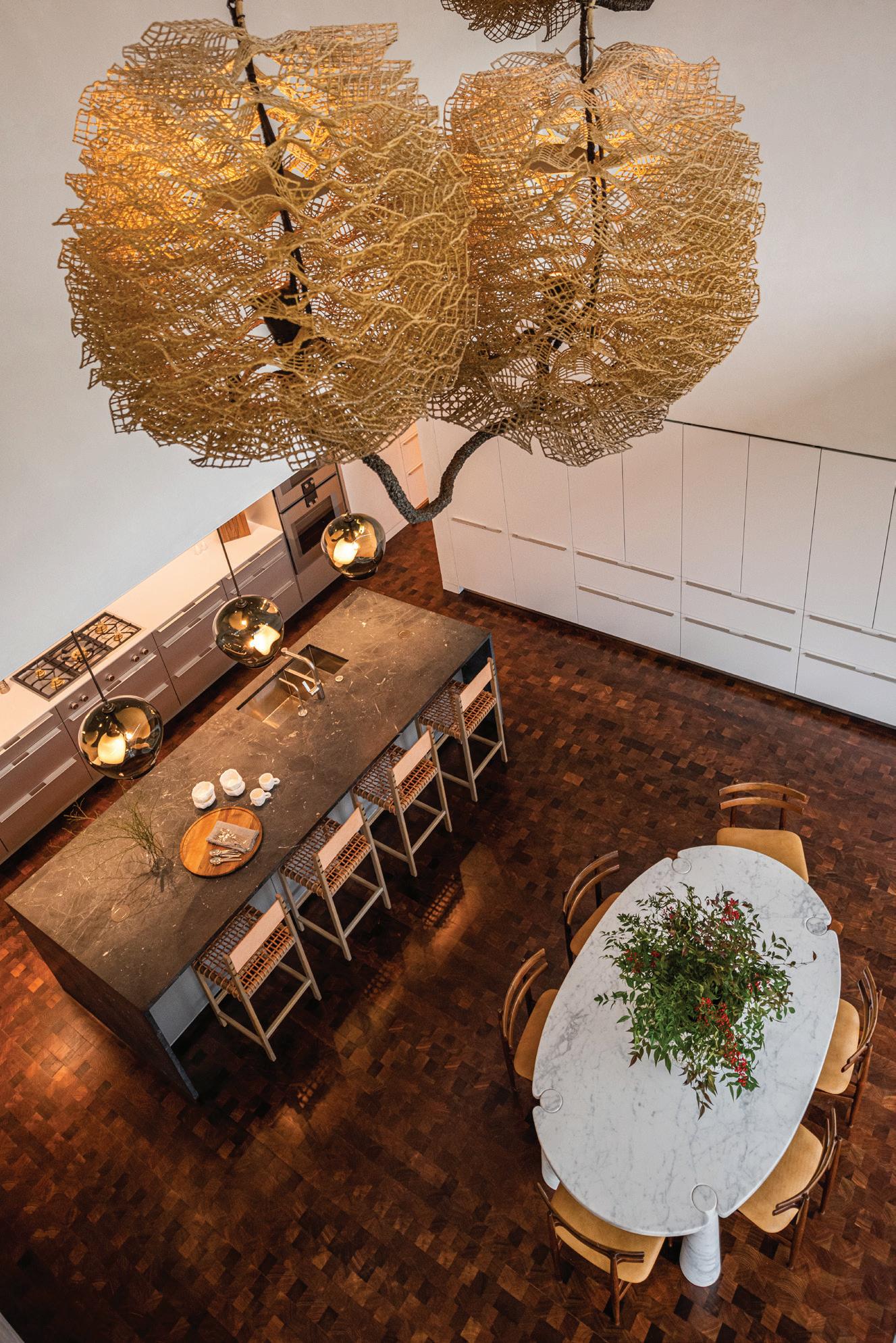
Nacho Carbonell’s Golden Shine, c. 2019, suspended over a double-height kitchen and dining area by Wendy Konradi Interior Design. Photograph by Robert Tsai.
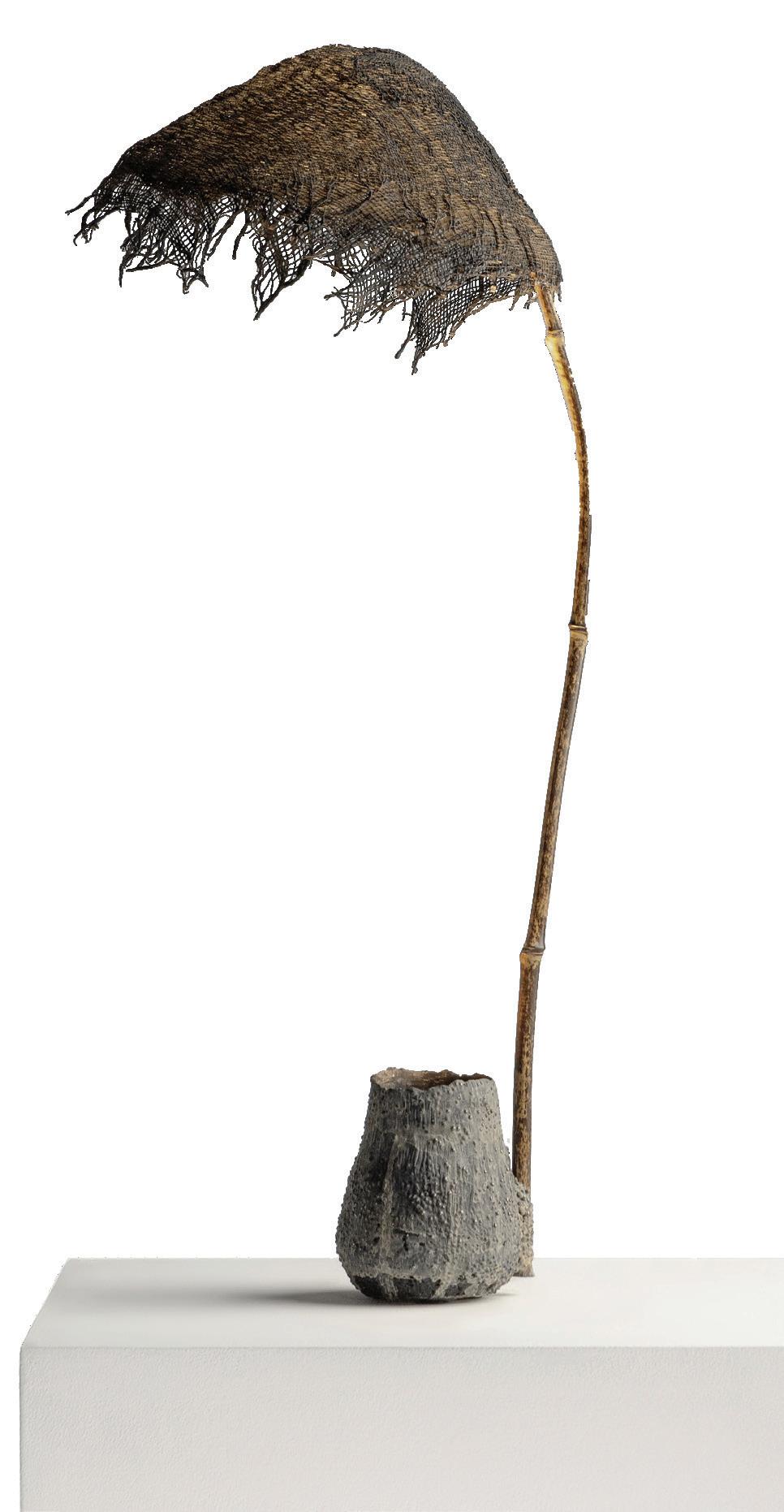
Ishigaki Lamp #21 Volcano by Aki+Arnaud Cooren. Courtesy of Carpenters Workshop Gallery. Photograph by Benjamin Baccarani.
Betsy Beierle (BB): It’s been amazing to see works by our artists acquire such value among Texas art collectors. For the first time in the region we’ll be showing works by Marcin Rusak, a multidisciplinary artist known for preserving floral waste and other natural matter in various states of decomposition, and by Aki+Arnaud Cooren, a Paris-based studio whose minimalist design aesthetic draws from Japanese and French influences. We’ll also have new pieces by artists whom Texas collectors may already be more familiar with, like Nacho Carbonell, the Spanish designer known for his tactile, experimental approach to sculpture; and Italian artist Vincenzo de Cotiis, whose practice is defined by reconciling ancient idioms with futuristic forms.
WK: Dallas is home to a large contingent of blue-chip art collections. How can collectible design play into these collections? What do people need to know about the role of collectible design in the global art scene today?
BB: Contemporary collectible design sits at the intersection of art, design, culture, and commerce. It is special because pieces are valued for aesthetics, concepts, and market value. They are often inspired by some of the most academic fine art of our time, requiring a unique narrative from the maker, which is then continued by the owner. The growing global appetite for design is hard to miss—more and more art collectors are embracing design objects for their craftsmanship as well as their appeal and functional character. At Carpenters Workshop Gallery we work with contemporary artists working at the highest level of contemporary design, including artists like Nacho Carbonell, Maarten Baas, and Yinka Shonibare CBE. We’ve seen these artists explore creative possibilities beyond the purely commercial design sphere through their new, distinctive expressions.
WK: What does Carpenters Workshop Gallery look for in terms of artists and designers to work with?
BB: Our founders, Loïc Le Gaillard and Julien Lombrail, have thoughtfully woven the tapestry of the Carpenters Workshop Gallery roster. The gallery works with artists and designers who blur the lines between art, design, and craft. These internationally acclaimed artists, designers, and architects look to push the boundaries of conventional artistic genres and extend past the confines of traditional gallery and art fair spaces. Loïc and Julien were first brought together by a shared vision to unite makers from specialized disciplines to produce experimental and innovative contemporary work—and the gallery consistently continues this mission today, seeking artists who harness the intersection of form and function to unleash the narratives
that exist within objects.
WK: We often place works directly from a Carpenters Workshop Gallery exhibition into a client’s home. However, there are times when customization is required, or a unique piece is commissioned. How does this affect the value of the piece? Is it any more or less valuable than a work that is one hundred percent from the mind of the artist?
BB: We specialize in producing limited-edition or bespoke works by internationally acclaimed artists. For example, our workshop just outside Paris is an extraordinary 8,000-square-meter facility dedicated to artistic production, providing artists, designers, mechanics, and craftspeople with unparalleled opportunities to experiment with new materials, processes, and technologies. So we know how important custom-made pieces can be for clients. The impact on value depends on production time and materials used: if these are consistent with an existing series, for example, the value will likely align; but if these factors are elevated, a customization or special commission can be considered even more special and valuable.
WK: Carpenters Workshops Gallery is the gold standard in collectible design. There are other collectible design gallerists in London and Paris, but Carpenters Workshops Gallery has a presence in both those cities and beyond. What sets CWG apart from other collectible design galleries? What does your wider presence on this side of the pond look like? How does this benefit collectors in Dallas?
BB: Carpenters Workshop Gallery is redefining the boundaries of art and design, and our pioneering founders have been leading this mission for 20 years. The gallery first opened in London but now also runs spaces in Paris, New York, and Los Angeles. Housed in a skyscraper on Fifth Avenue, our New York space features extraordinary height—vaulted ceilings and floor-to-ceiling windows—placing artworks against the city’s iconic skyline. Our LA gallery is nestled in West Hollywood’s burgeoning contemporary art scene, housed within a former industrial warehouse converted into edgy, expressive spaces for culture, creativity, and innovation. We hope that Dallas collectors benefit from our work in the region through living with and loving exceptional artworks while also becoming long-term patrons of individual artists’ practice. What really drives us is uniting collectors, artists, and academics in an ecosystem that exists outside of just the artworks themselves.
P
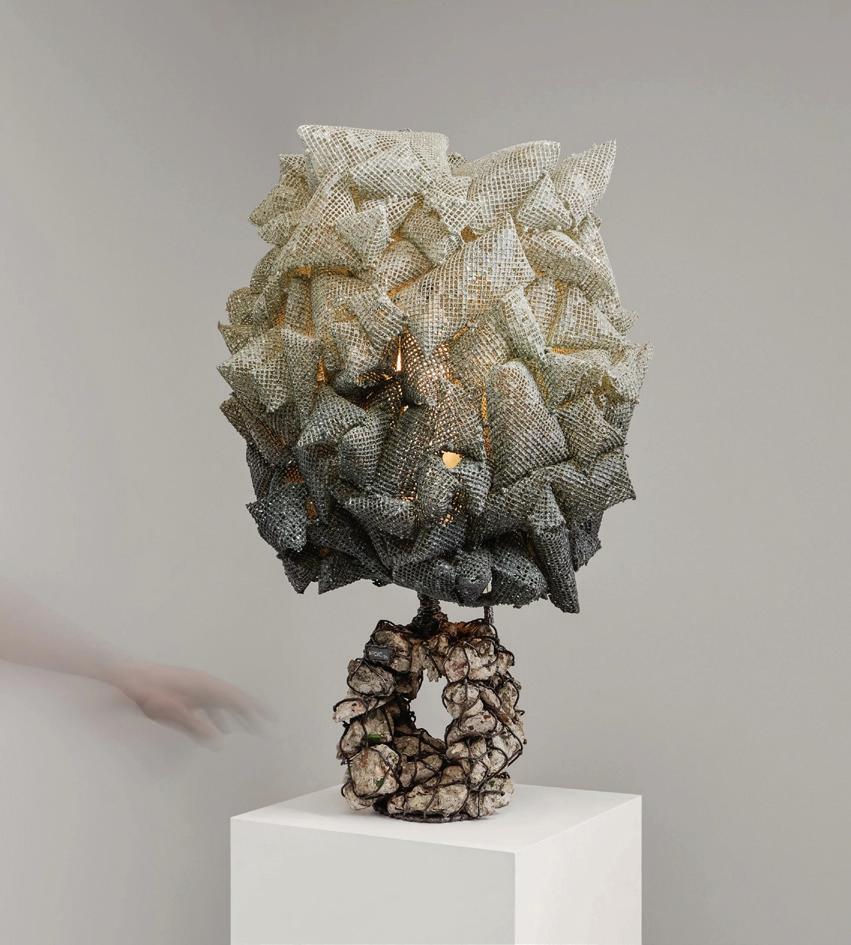
Nacho Carbonell’s Metal Mesh Rock Lamp, c. 2024, for a living room in St. Louis, Missouri by Wendy Konradi. Interior Design. Photograph courtesy of Carpenters Workshop Gallery.
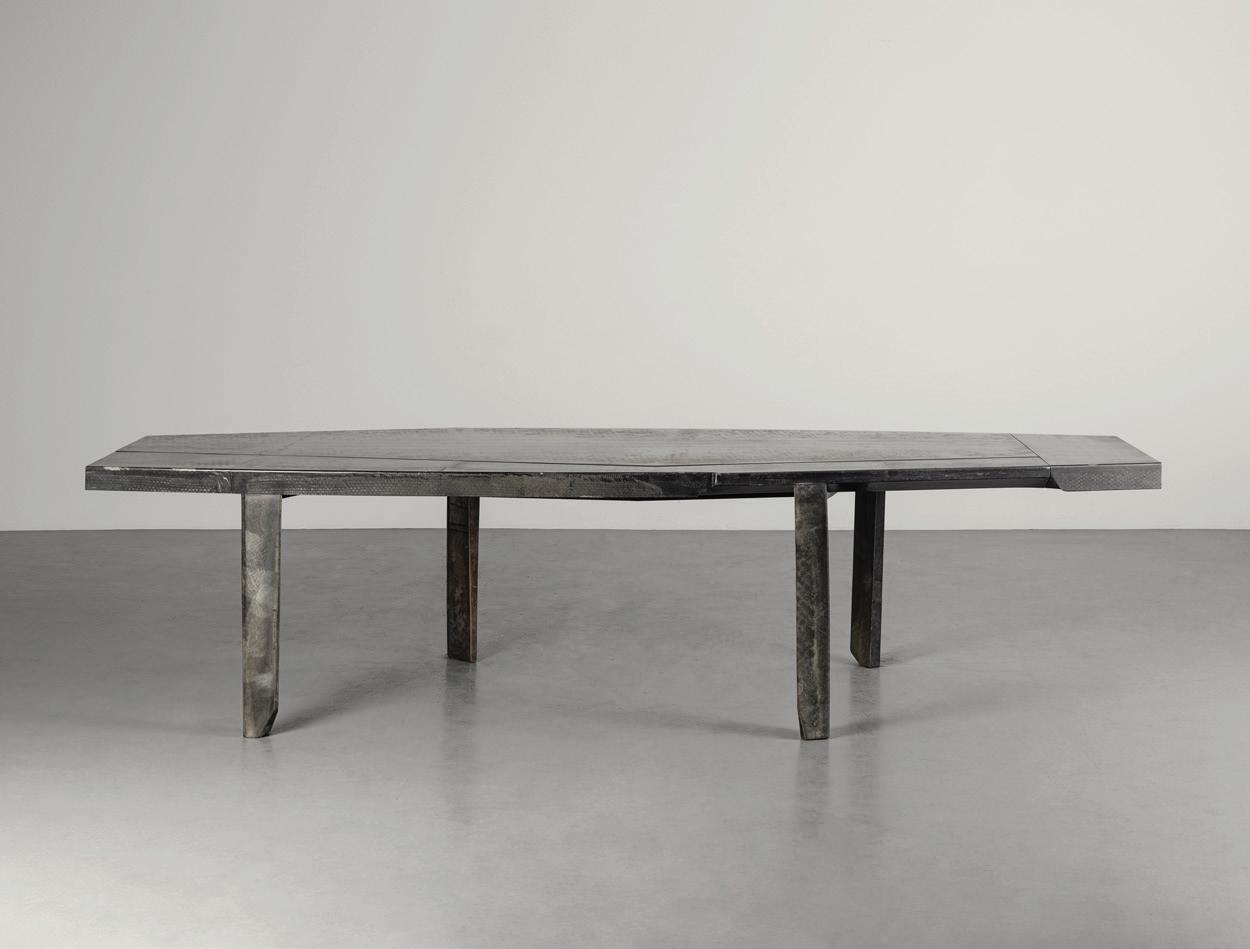
Vincenzo De Cotiis, DC1705 dining table, c. 2024, unique. Courtesy of Carpenters Workshop Gallery. Photograph by Benjamin Baccarani.
Timeless Vision with a Fresh Front Door
Conduit Gallery moves to a new space on Levee Street after a 25-year run on Hi Line Dr.
BY JOHN ZOTOS PHOTOGRAPHS BY KEVIN TODORA
Danette Dufilho, Nancy Whitenack, and Karina Coscia Cedillo at the new gallery.
Ludwig Schwarz, Untitled (2305), 2023, oil on canvas, 78 x 72 in.
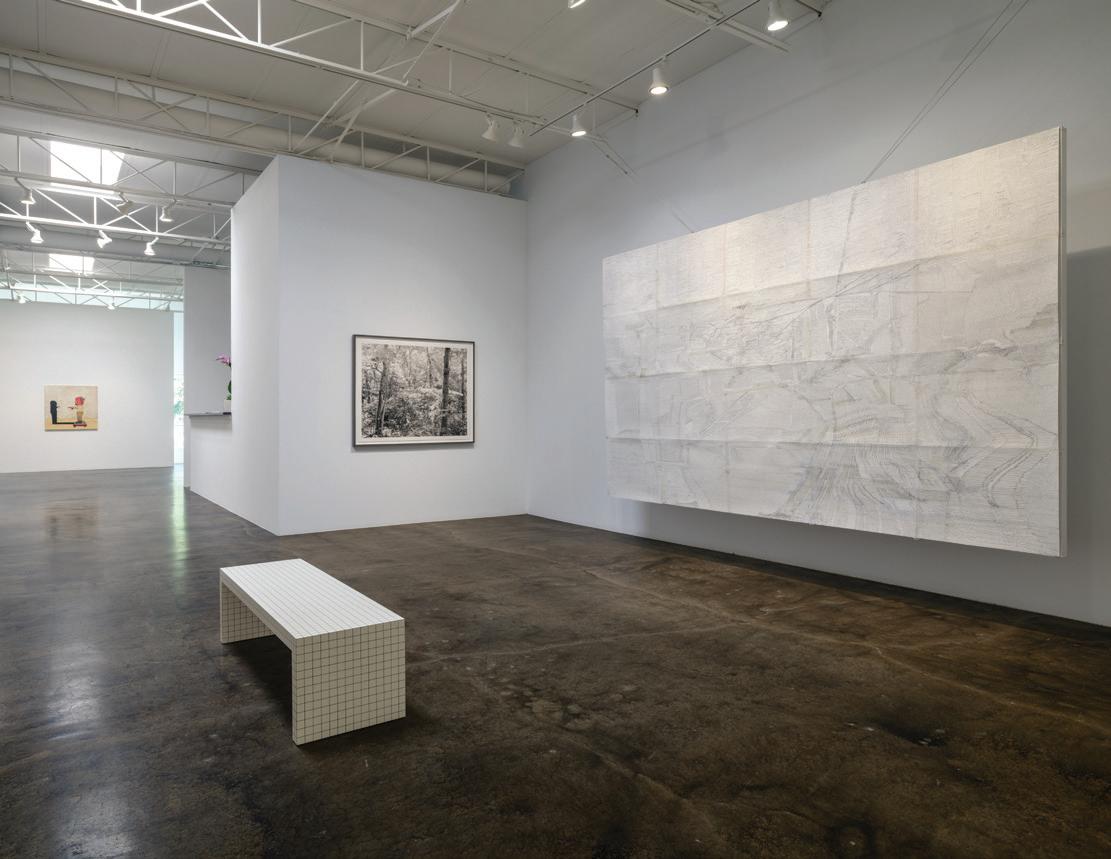
Conduit Gallery exhibition view with a work by Annabel Daou.
Conduit Gallery opened in Deep Ellum over 40 years ago as the brainchild of Nancy Whitenack. It was 1984, and at that time Deep Ellum and nearby Exposition Park were nowhere near to being regarded as the cultural magnets and contemporary art enclaves they were soon to become. Along with a smattering of galleries, Conduit set the stage for a tired part of town to flourish.
Then once again, in a forward-thinking move around 25 years ago, Conduit moved to the Dallas Design District as the first commercial contemporary art gallery in the area, paving the way for countless others to follow—and they did. This trailblazing 2002 move to Hi Line Drive was a sort of catalyst that led to the transformation of the entire district.
Since then the Design District has gone through quite a gentrification, seeing growth not only in the number of art venues and showrooms, but in condos, apartments, boutiques, hotels, and countless restaurants. It’s no surprise, keeping in mind the real estate industry, that this growth comes with a hefty increase in expenses, which has forced Conduit to find a new space further afield, on Levee Street. This new space, recently vacated by the much-missed Holly Johnson Gallery, is comparable in size to the former location.
Conduit will share the building with Cris Worley Fine Arts, a gallery also known for representing new and established talent. Whitenack proudly states, “A move is always exciting. It’s a fresh start, a chance to establish new rhythms and ways of working” and “getting to see the work through fresh eyes in a new space.”
Between Conduit Gallery and Cris Worley Fine Arts, nearly seventy artists are represented by two dealers intent on maintaining a vigorous schedule of exhibitions. Through their continued success they are uniquely positioned to exemplify Dallas as a vibrant art market during these challenging financial and cultural times. For Whitenack remaining in the Design District means “being closer to galleries we deeply respect—including having Cris Worley as our neighbor— strengthens the sense of vitality here.” This commendable choice to stay in the area underscores Conduit’s commitment to the cultural sphere represented by our city center and the benefits of a vibrant art world that nurtures creativity.
Since Conduit Gallery is designed to mount two exhibitions at the same time, it was decided to inaugurate the new space with both solo and group exhibitions. Kirk Hayes: New Paintings is a much-anticipated solo exhibition of a gallery artist who lives and works in Fort Worth. Known for his signature style and personal expression of trompe l’oeil painting, Hayes has mastered the technique of using paint to render elements in the picture plane that appear as illusions. Living up to the translation of the style as “trick of the eye,” the visual passages look like
collaged pieces of various materials that were pasted onto the surface, but they are in fact all elaborated by his handling of the medium.
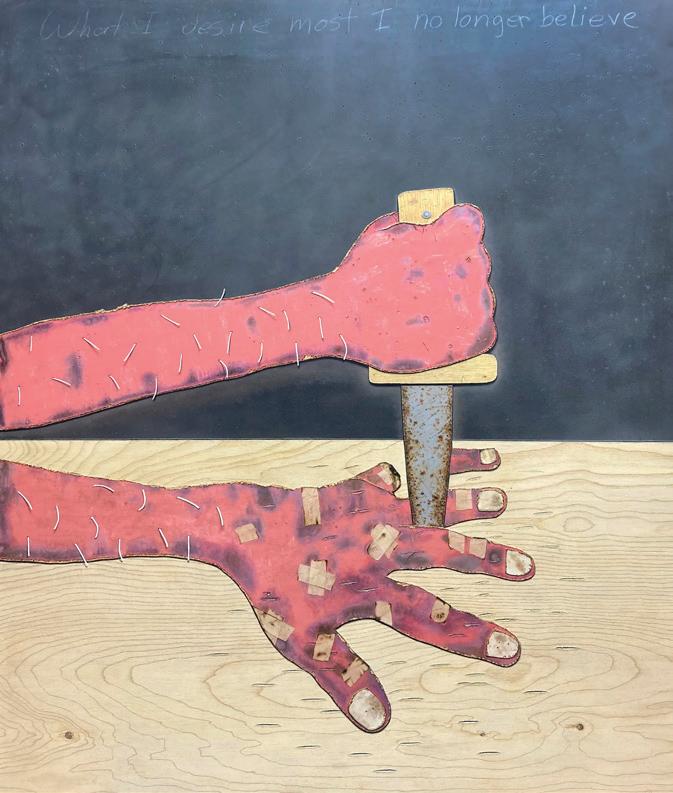
In the formidable What I Desire Most I No Longer Believe, two hands and their forearms play a game known as “the knife game” or “five finger fillet.” Both limbs have a reddish, deathlike pallor punctuated with bluish bruises; the right hand wields the knife that, in the game, quickly stabs in between the fingers of the left hand, where here it has already severed a pinky. The illusion here is that this hand is covered in bandages depicted in paint that look as if they’ve been pasted onto the canvas. Also, the metallic blade looks like a piece of real aluminum or sheet metal, where Hayes’ skill is in full view. Beyond an adept handling of paint, his iconography here alludes to themes of alienation, loss, and despair that comment on our dire times.
Also on view is Phase Four, a group exhibition with a selection of works by gallery artists, including Annabel Daou, Robert Jessup, Marcelyn McNeil, Fahamu Pecou, James Sullivan, and other artists well established within the gallery’s roster.
Preponderantly a selection of paintings and works on paper, the exhibition promises a lively and lyrical example of what the gallery is known for. These two exhibitions will usher Conduit Gallery into the next chapter of its adventure, a fifth decade nurturing successive generations of artists, cultivating talent, and enriching our collective cultural experience in North Texas. P
Robert Jessup, Robinwood 58, 2025, acrylic on canvas, 64 x 78 in.
Kirk Hayes, What I Desire Most I No Longer Believe, 2025, oil on signboard, 48 x 40 in.
Conduit Gallery’s new location on Levee Street features a solo show by Kirk Hayes.
A NEW NORTH STAR AT THE DMA
Eugene McDermott Direct Brian Ferriso arrives with vision, patience, and a long view.
BY BEN LIMA
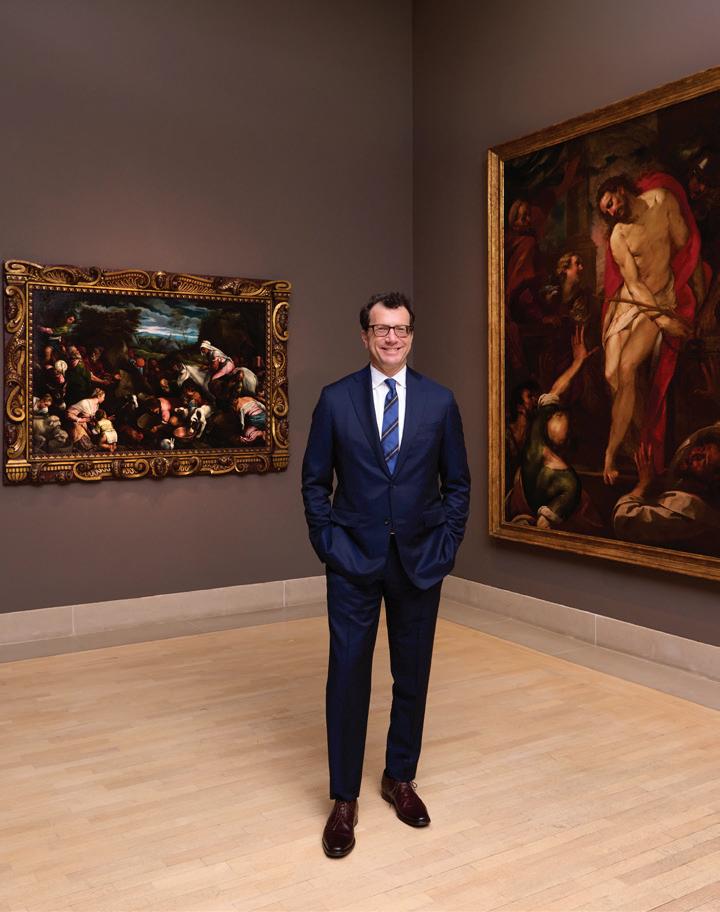
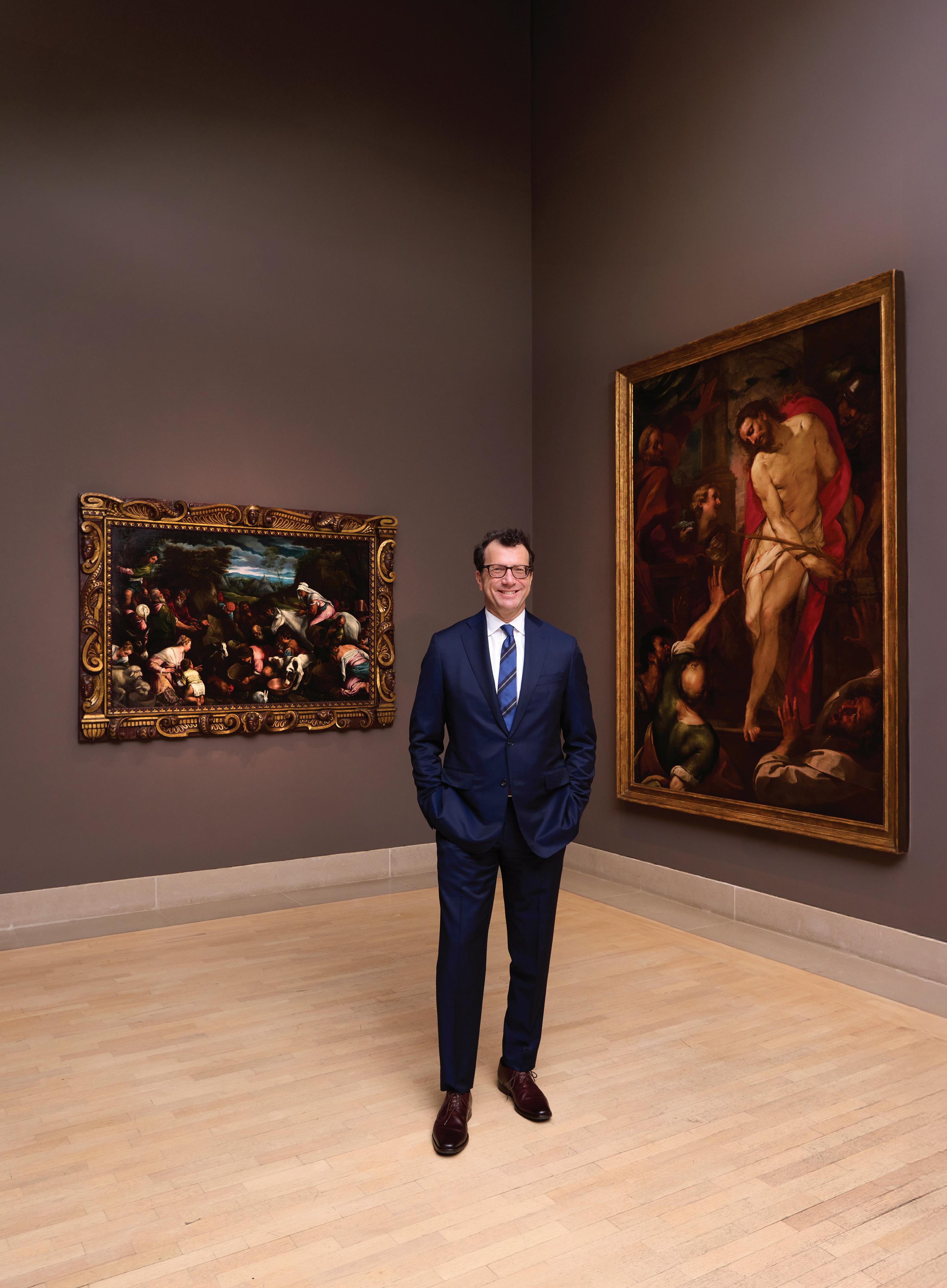
Brian Ferriso pictured with Jacopo Bassano's Moses Striking Water from the Rock and Giulio Cesare Procaccini's Ecce Homo in the European Galleries at the Dallas Museum of Art.
On December 1, after almost 20 years at the helm of the Portland Art Museum, Brian Ferriso officially joined the Dallas Museum of Art as its Eugene McDermott Director.
Shortly after his arrival, sitting down for a conversation with Patron in his gleaming office overlooking the Arts District, he combined a friendly, gracious manner—offering to make a visitor’s coffee himself and praising the value of arts journalism—with a crystalline clarity and precision of thought on a range of topics related to art, museums, and Dallas.
His West Coast accomplishments were many, beginning with a $140-million, 100,000-square-foot renovation and expansion that attracted national attention and praise and surely caught the attention of the DMA’s board as it plans an expansion of similar scope.
Asked how he managed the Portland project, he said, “Don’t lose sight of the beacon, the North Star.” That is, it’s up to the director to stay focused on the goal, despite whatever “zig-zags” arise from day to day—whether asbestos, permitting issues, or other hitches. Drawing also on his earlier experience working in Chicago, Milwaukee, Tulsa, and Newark, Ferriso’s watchwords were “resilience and patience,” essential for negotiating Byzantine big-city power structures and political fiefdoms. “When you can get at least the majority of those stakeholders moving in the same direction, it’s a very powerful outcome.”
As PAM director, he also raised $40 million in endowment funds, doubled the curatorial roster and endowed almost half of those chairs, and created a dedicated fund for free admission. Now, getting to know his new team at the DMA, he has begun one-on-one meetings with curators by asking, “What is your dream project? What do you want to do?”
In Portland he led a series of acquisitions and exhibitions by women, Black and Native American artists (including Jeffrey Gibson’s 2024 pavilion at the Venice Biennale), as well as showcasing single works by Titian and Raphael. Recalling other highlights from his time in Portland, he named artists Titus Kaphar, Hank Willis Thomas, and Richard Mosse, as well as Carrie Mae Weems, “somewhat of a guiding light in my entire career,” whose work dealing with Covid also came to Dallas in the fall of 2020.
Moving beyond artists, Ferriso also expressed admiration for the attorney Bryan Stevenson, founder of the National Memorial for Peace and Justice in Montgomery, Alabama; and Barry Lopez, author of
the environmental epic Horizon. In naming some of his own favorite artworks in the DMA’s collection, he took a similarly broad view, mentioning Robert Henri and Georgia O’Keeffe, Pollock and Rothko, as well as the Indigenous American and Latin American collections. Praising the collection as a whole, he said that some of its works “are at the highest level of collecting and art-historical investigation and critical thinking that I’ve seen.”
The DMA was on Ferriso’s radar long before he took up his new role. He praised former directors Bonnie Pitman and Jack Lane, whom he knows well, and the late Rick Brettell for their long-term vision. He recalled having a conversation with Lane in Dallas, shortly after the Nasher Sculpture Center opened in 2003, and coming away inspired both by the city’s vitality and dynamism and the DMA’s potential as an anchor for the Arts District.
His thinking about how to integrate art, architecture, landscape, and the urban environment—as the DMA does with its sculpture garden and neighboring Klyde Warren Park—was also inspired by another early work experience: being a ticket taker at the Frick Collection in New York, where he grew to appreciate the Frick’s beautiful garden and harmonious design.
What first set Ferriso on his career path, he recalled, were his classes in landscape painting from the academic painter Frank Mason during the academic year at the Art Students League in New York and during the summer in Stowe, Vermont. “We did landscape paintings for two months straight: sunrises, midday, sunsets—every day for two months.” While absorbed in the beauty of the Vermont woods, he stumbled across Albert Bierstadt’s 1867 painting Domes of the Yosemite in the St. Johnsbury Athenaeum and had an epiphany about the intersection of art and nature: “Oh, that’s the power of art—this is a really important thing for our humanity and life.”
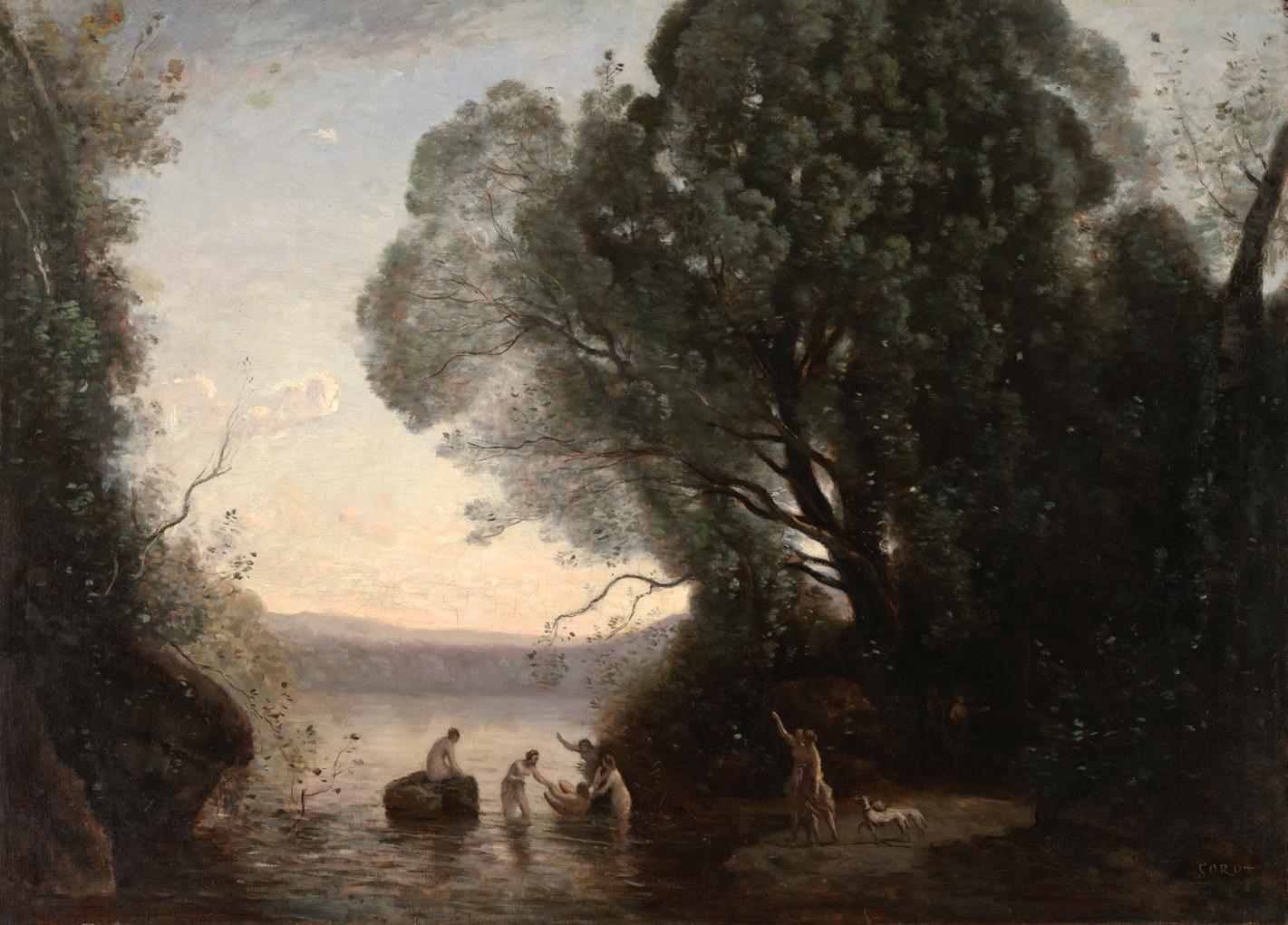
Throughout his career, the landscape has remained central to him. He had begun work with Brettell on a research project on the French landscape painter Camille Corot (which he hopes to one day finish in Brettell’s honor), and still singles out the DMA’s Corot, The Bath of Diana, as a personal favorite. And, when the time finally comes for him to retire, he promises to take up the brush again, trade the boardroom for the plein air, and resume his painting career.
But at the DMA, he said, people are his priority, “because people can make incredible things happen.” P
Jean–Baptiste–Camille Corot, The Bath of Diana, about 1855, oil on canvas, 25.50 x 35.50 in. Dallas Museum of Art, Foundation for the Arts Collection, Mrs. John B. O'Hara Fund.
WIFREDO LAM: WHEN I DON’T SLEEP, I DREAM
MoMA’s landmark retrospective unveils the bold world of a Cuban visionary whose hybrid forms challenged modern art and colonial narratives.
INTERVIEW BY CHRIS BYRNE
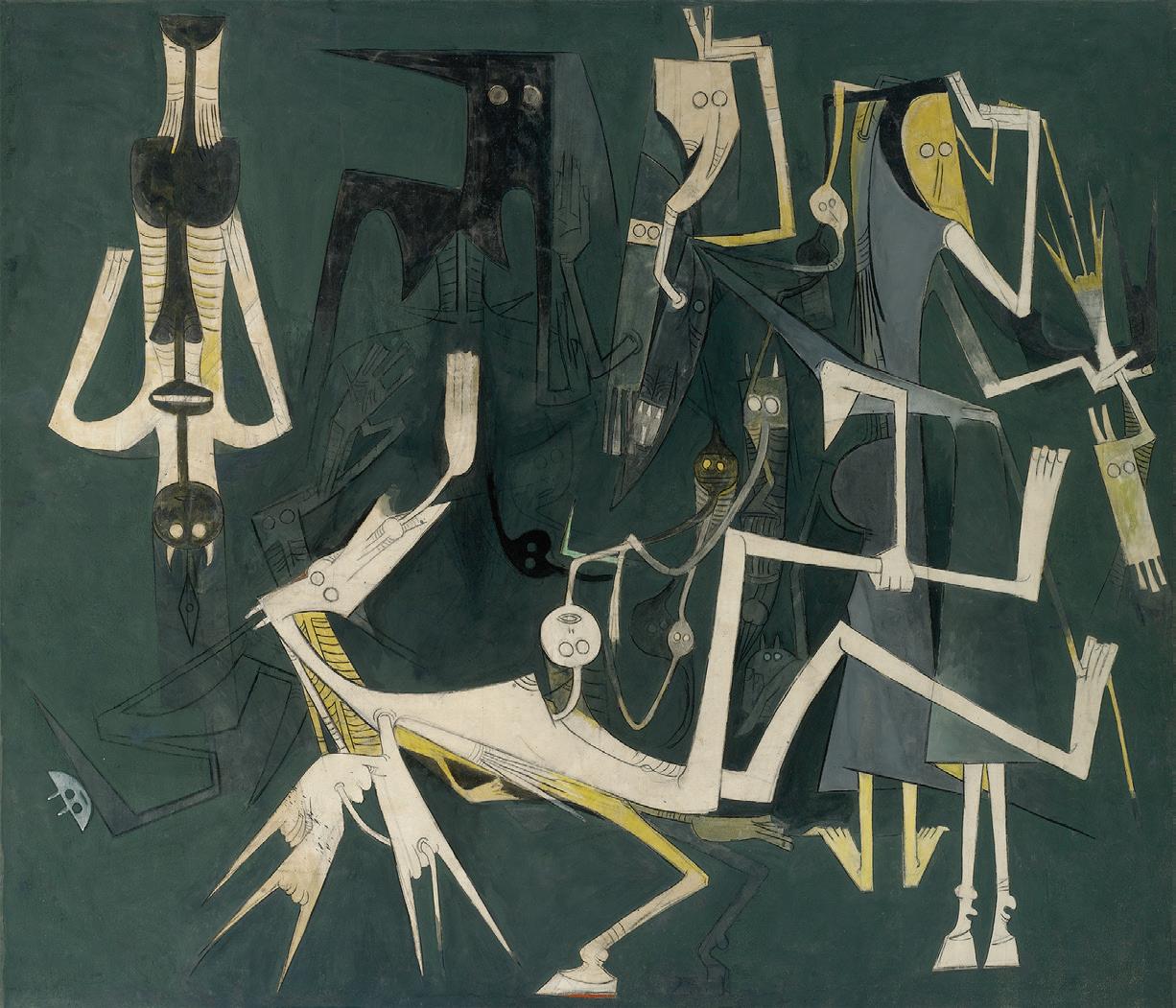
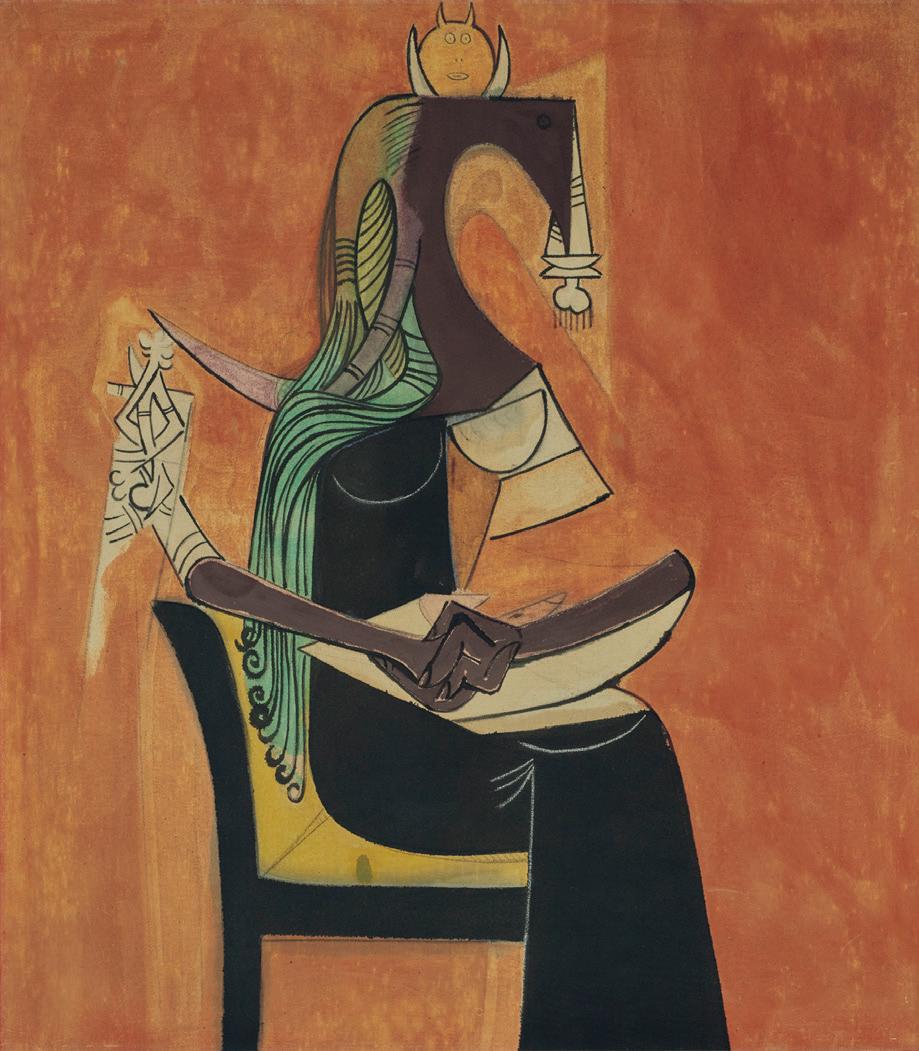
At the Museum of Modern Art, New York, Wifredo Lam: When I Don’t Sleep, I Dream traces the visionary path of a modernist who moved fluidly between continents, cultures, and artist vocabularies. Born in Cuba in 1902 and shaped by years in Spain, France, and Italy, Lam forged a visual language that entwines Surrealism and Cubism with Afro-Caribbean spiritual traditions, colonial histories, and the rhythms of the natural world.
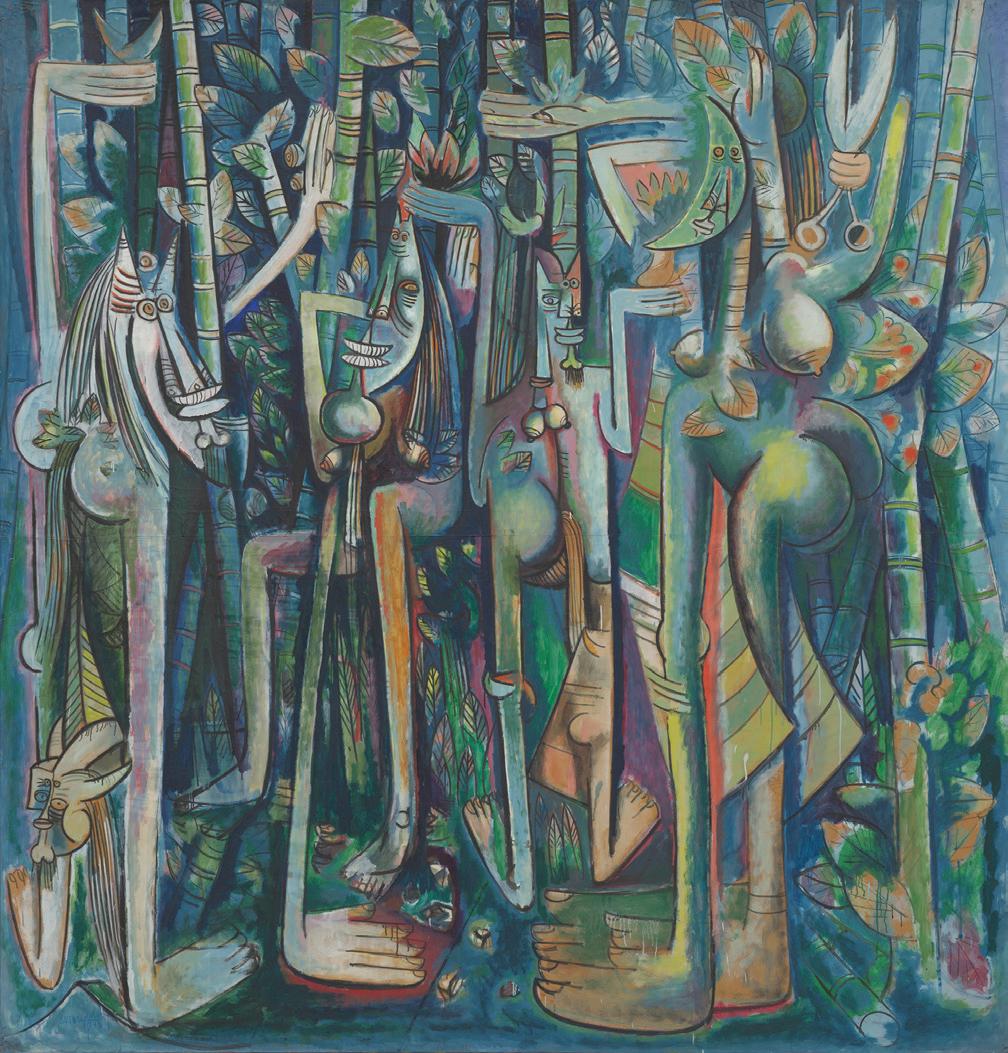
The exhibition spans six decades of his practice with over 130 works, from paintings and drawings to illustrated books and ceramics. It culminates with the iconic La jungle (The Jungle 1942–43), a dense, hypnotic composition in which human, vegetable, and animal forms coalesce into a charged liminal space. Throughout, Lam’s work resonates with questions of identity, diaspora, and cultural memory, inviting viewers to inhabit the spaces where abstraction and allegory converge. The exhibition also includes Lam’s final major painting, Les Abalochas dansentpour Dhambala, dieu de l’unité (1970), created after his return to Europe.
Curated by Christophe Cherix, the David Rockefeller Director at MoMA, and Beverly Adams, the Estrellita Brodsky Curator of Latin American Art, the show reframes Lam not only as a Cuban
modernist, but also as a transnational innovator whose singular vision continues to pulse at the intersections of history, myth, and imagination.
Chris Byrne spoke with Beverly Adams about the monumental perspective for Patron :
Chris Byrne (CB): Wifredo Lam: When I Don’t Sleep, I Dream is the most comprehensive US retrospective ever dedicated to the artist’s work. Spanning six decades from the 1920s through the 1970s, the exhibition includes paintings, collaborative drawings, illustrated books, prints, ceramics, and archival material. How did the show come about?
Beverly Adams (BA): MoMA was the first museum to acquire a work by Wifredo Lam in 1939 and has had the artist’s most famous painting, The Jungle (1942-43), since 1945. MoMA thus had an important history with the artist yet never had an individual exhibition of his work. We thought it was time to do a full-scale retrospective.
CB: The exhibition is accompanied by a richly illustrated catalogue edited by you and Christopher Cherix. To what extent did you rely on Lou Laurin-Lam and Eskil Lam’s seminal two-volume Wifredo Lam: Catalogue Raisonné of the Painted Work (1996/2002)?
BA: We worked closely with the estate throughout the entire
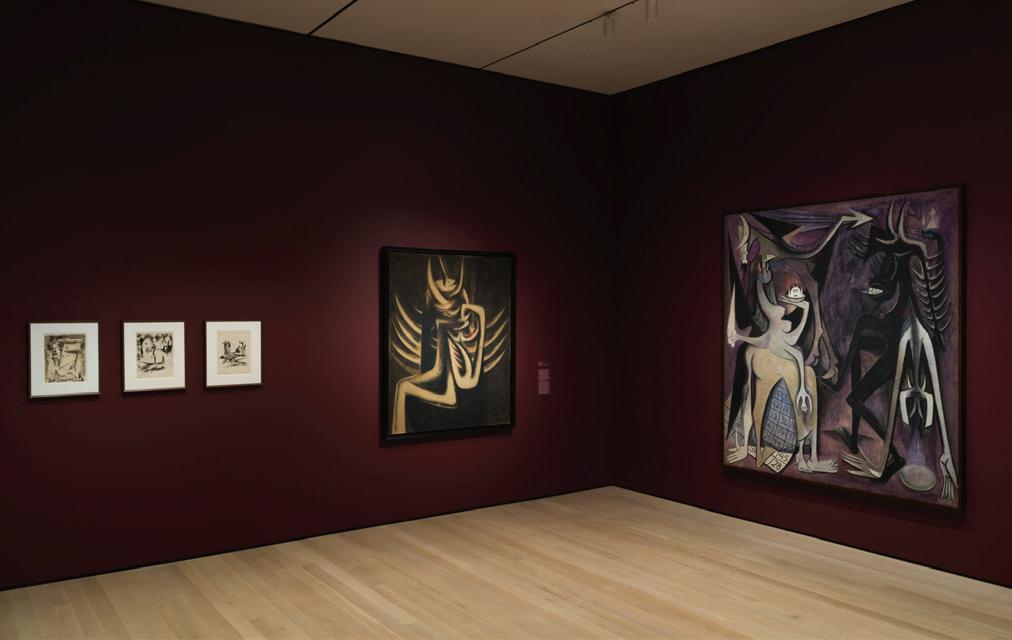
Wifredo Lam (Cuban, 1902–1982), Les Abalochas dansent pour Dhambala, dieu de l’unité / The Abalochas Dance for Dhambala, the God of Unity / Las abalochas bailan para Dhambala, dios de la unidad, 1970, oil on canvas, 83.87 x 96 in. Private collection. Courtesy of McClain Gallery.
Wifredo Lam (Cuban, 1902–1982), Je suis / I Am / Yo soy, 1949, oil on canvas, 49 × 42.93 in. Private collection.
february 28 – march 21
DANIEL ANGELES the heart that grew wings
exhibition, and their work on the Catalogue Raisonné was central.
CB: How did Lam’s alliance with the French poet Andre Breton, in Marseille in 1940–1941 and during the war, transform the painter’s approach and expand the Surrealist movement?
BA: Lam’s time in Marseille was transformative for his approach to art making. He experienced firsthand the political and empowering aspects of Surrealist practices that emphasized inversion, play, and collectivity. He in fact described his time in Marseille making art with the artists, poets, and intellectuals gathered at the Villa Air Bel, all searching for safe passage out of Nazi-occupied France, as “a combat for creation.” These tools became important for Lam as he returned to Cuba. With the same spirit and approach, he builds a practice that elevates Afro-Caribbean culture in opposition to the colonial legacy still present in his country and throughout the region. This in turn expands Surrealism not only geographically, but in terms of how it can be leveraged against oppression.
For both longtime admirers and first-time viewers, the exhibition offers a rare chance to inhabit the rich, luminous, and complex universe of a true modern master. P
Installation view of Wifredo Lam: When I Don’t Sleep, I Dream on view at The Museum of Modern Art, New York, from November 10, 2025, through April 11, 2026. Photograph by Jonathan Dorado.
STILL CHASING THE FRAME BEFORE IT VANISHES
Richard Patterson and the art of trying to arrest time in an age that won't stop scrolling.
BY BRANDON KENNEDY PHOTOGRAPHS BY JOHN SMITH
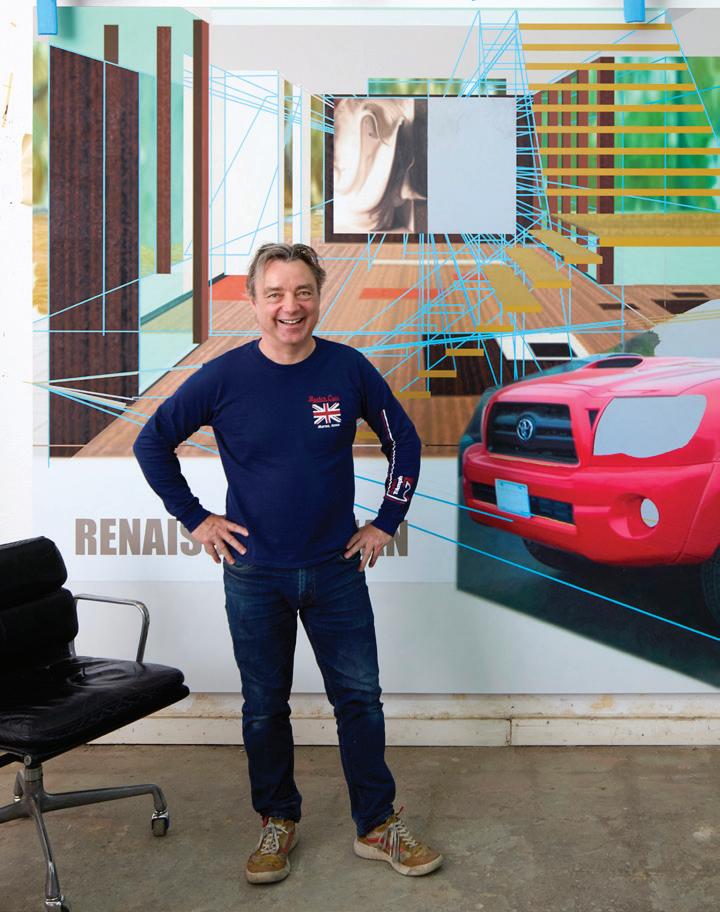
Richard Patterson in his studio with Renaissance Man, 2005-2026 (work in progress), oil on canvas, 92 x 139 in. Courtesy of Richard Patterson. Photograph by John Smith.
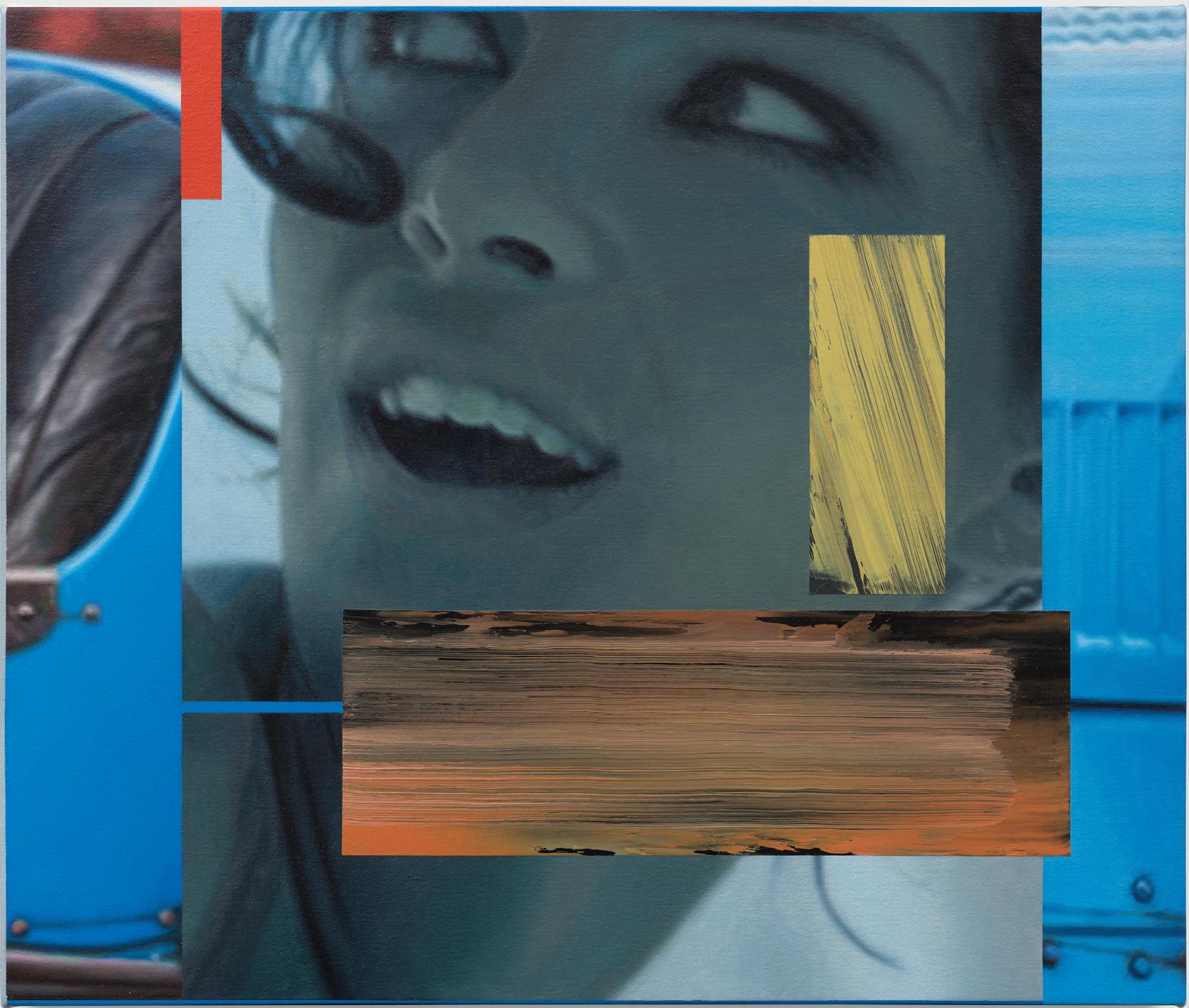
Richard Patterson, OnlyFan, 2022, oil on linen, 16 x 13.50 in. Courtesy of Timothy Taylor gallery.
Given a span of Sundays not too far in the recent past, whilst much of the general public was in church worshipping their god, the artist in question would venture out to a Jaguar dealership in the suburban hinterlands to inspect the lines and coloration of the latest models. The same middle-aged British import was also scouring over digitalized online celluloid frame-by-frame, looking for the exact moment that self-referenced the entire sequence of events in a frozen, familiar static pocket of warmth. A libidinous comical cat who saw people and products moving through time and space— ever faster, with the diminishing question of actually catching up. The metaphysically minded Renaissance man with a recorder, trying to freeze the moment before the present. The prey of yesterday, gone tomorrow with an illusory dollop.
I had waited, and then it was too late, with no chance to view it. Crated wet and headed elsewhere. The painting I can’t even speak about really—her face had been removed again, something having to do with finishing strokes. But it was corrected posthaste at the last moment and sent away. And it wasn’t the first time.
Richard Patterson has more or less lived in Dallas (save moving from London and living in Brooklyn for a spell) since he met his ex-wife at his Concentrations solo exhibition at the Dallas Museum of Art in 2000. The Goldsmiths-educated member of the Young British Artists of the late 20th century has a wellestablished, deliberate practice that skips slowly backward, in a longing embrace of a hazy, still moment.
As a YBA, Patterson was exhibited in the pioneering 1988 Freeze exhibition that took place at a derelict London Port Authority building as well as the later landmark survey Sensation
Richard Patterson, 11 Nonesuch Road, 2021, oil on canvas, 18.87 x 22.18 in. Courtesy of Timothy Taylor gallery.
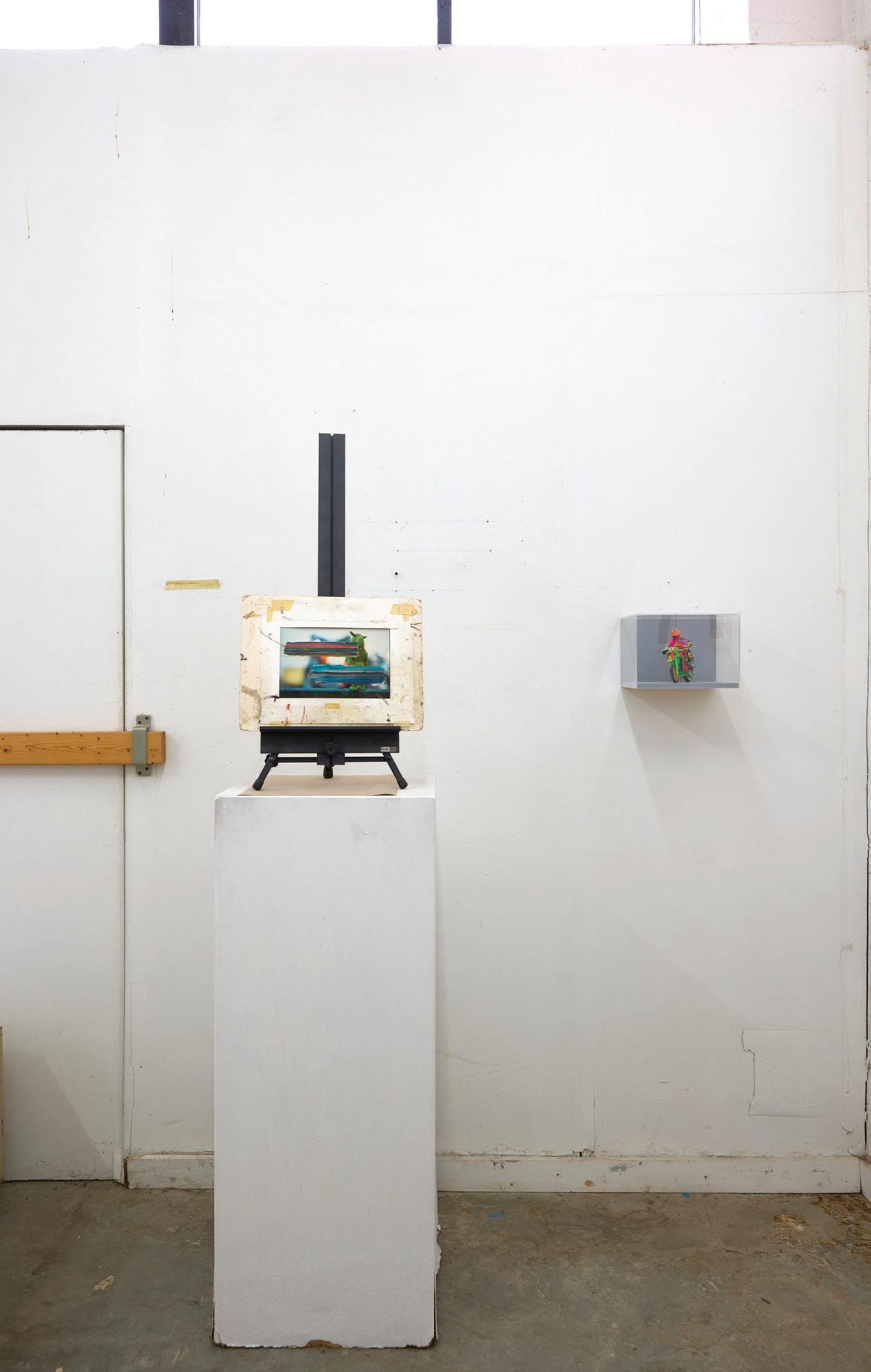
Richard Patterson, maquette for Minotaur with Brushstrokes, 1998, photograph, acetate, and oil paint, 8 x 10 in. Courtesy of Richard Patterson; Model for Motocrosser, 1993, plastic and oil paint, 5.5 x 4.5 x 3 in. Courtesy of Richard Patterson. Photograph by John Smith.
STUDIO
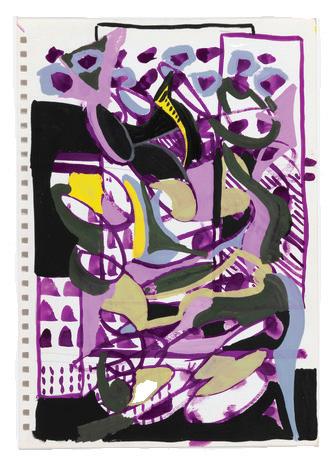
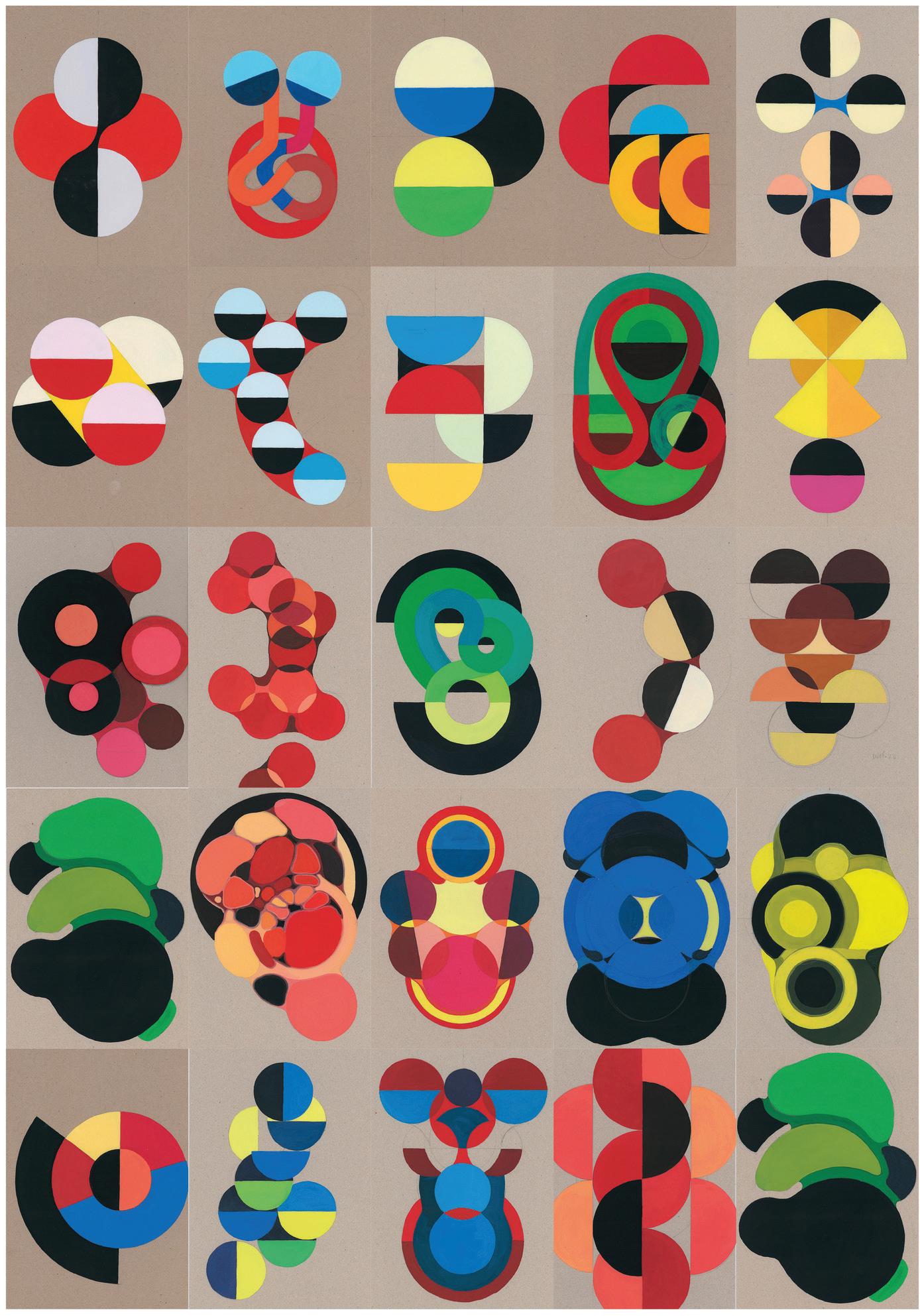
For his initial foray onto the scene, he exhibited six loopy-webbed abstractions selected by the artist-curator Damien Hirst. As those works were originally part of a spiral-bound, seven-by-ten-inch notebook, the artist revisited the series and put a show together of fifteen of the remaining images for an October 2021 exhibition at Cris Worley Fine Arts.
Entitled The Kennington Drawings (after the London neighborhood in which they were made), the gouache and pencil on paper works demonstrated a loose mastery of compositional awareness and gestural mark-making while experimenting with a vocabulary that also lent Patterson his iconic avoidant Minotaur. It was a glimpse into an emergent voice before the flash of recognition and buzz of arguably the last cohesive and influential worldwide art-historical movement.
The day after Christmas, I met the painter at his Fair Park studio for conversation and a festive late lunch. Even though we’d been friends for more than two decades, I hadn’t been by his workspace in at least ten years, and now Richard was getting ready to pack up and move to another studio altogether.
A wall by the sitting area where we were noshing and chatting was dominated by the mural-size painting Renaissance Man. Unfinished and dating from the early aughts, an imagined mid-century interior amid soft-focus trees is cut through with blue perspectival sight lines demarcating a floating staircase. A red Toyota Tacoma dominates the foreground and one of the painter’s own trompe-l’oeil viscous whips rests on a rear floating wall. On a nearby worktable lies the glossy printed plan for the painting, the only missing elements being the artist in shorts and shades in front of the pickup with a reproduction of a kissing Sapphic couple on their knees hanging next to the white abstraction in the background.
A little later we’re looking at a recent, completed small painting resting on an easel nearby. I bring up the question of finding the
perfect moment in such a work, which features a pulled image of a wistful woman in soft focus, and whether it’s nostalgia or just looking back.
“It’s really hard for me to address the nostalgia thing because I don’t really want it to be there, but it is an aspect of the melancholy of longing and this idea that the idea of trying to catch something in the moment in the age of Instagram and the internet and everything just seems ridiculous because everyone’s doing it all the time. How do you get back some form of longevity?” Patterson ponders. “I know that’s been a concern of mine from the very beginning.”
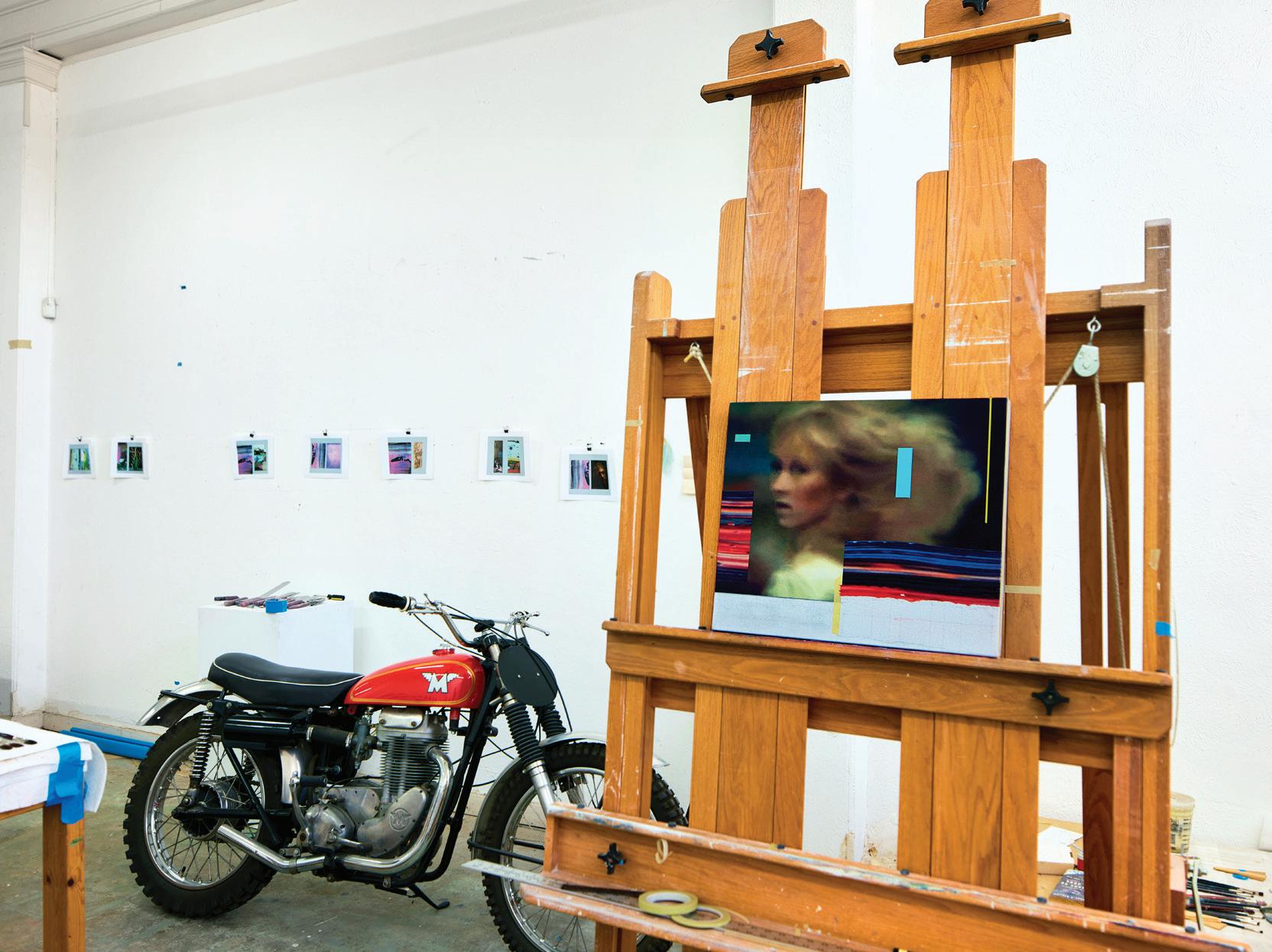
Tentatively titled I Should’ve Followed You Home, the image’s central figure is Abba’s Agnetha Fältskog, looking back over her left shoulder, blonde hair filling the frame against blurred greenery. A loaded, contrasting brushstroke—one of Patterson’s trademark styles—cuts in at left and stops short of her three-quarter profile, then continues at the nape of her neck and runs down and off to the right corner. A few small, bright rectilinear shapes float as abstract pulses above, as if marking time within the artist’s remembrance of the music and moment itself, just before it completely vanishes from collective memory. P
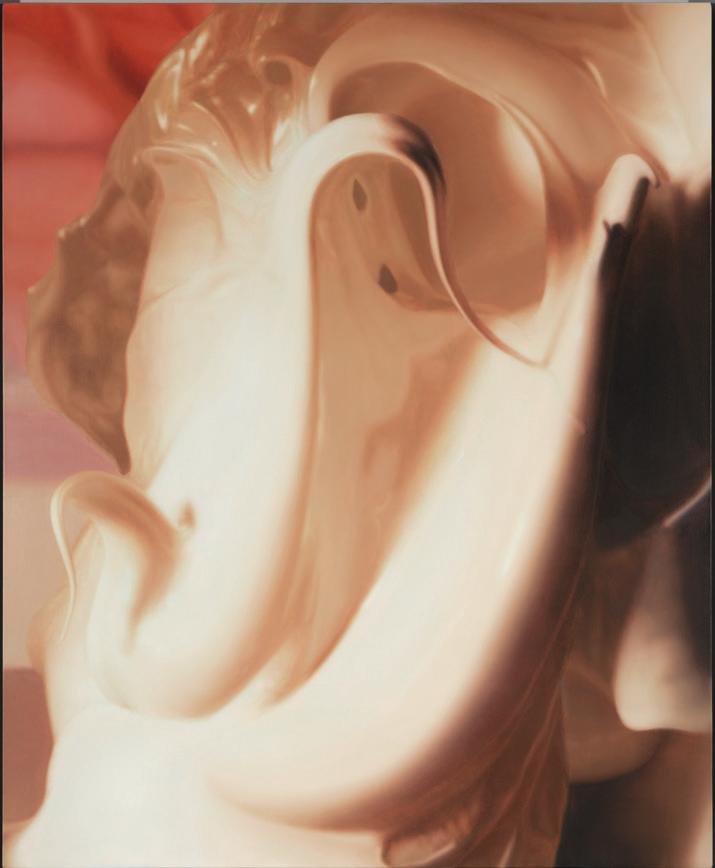
Clockwise from left: On the easel: Richard Patterson, I Should Have Followed You Home (in progress), 2025, oil on canvas, 17 x 20 in. Courtesy of Timothy Taylor gallery; Matchless G80TCS Typhoon, 1961, motorcycle. Courtesy of Richard Patterson. Photograph by John Smith; Richard Patterson, Kennington Drawing 13, 1988, gouache and pencil on paper, 10 x 7 in. Courtesy of Cris Worley Fine Arts; Richard Patterson, Siren, 2024, oil on canvas, 66 x 55 in. Courtesy of Cris Worley Fine Arts.
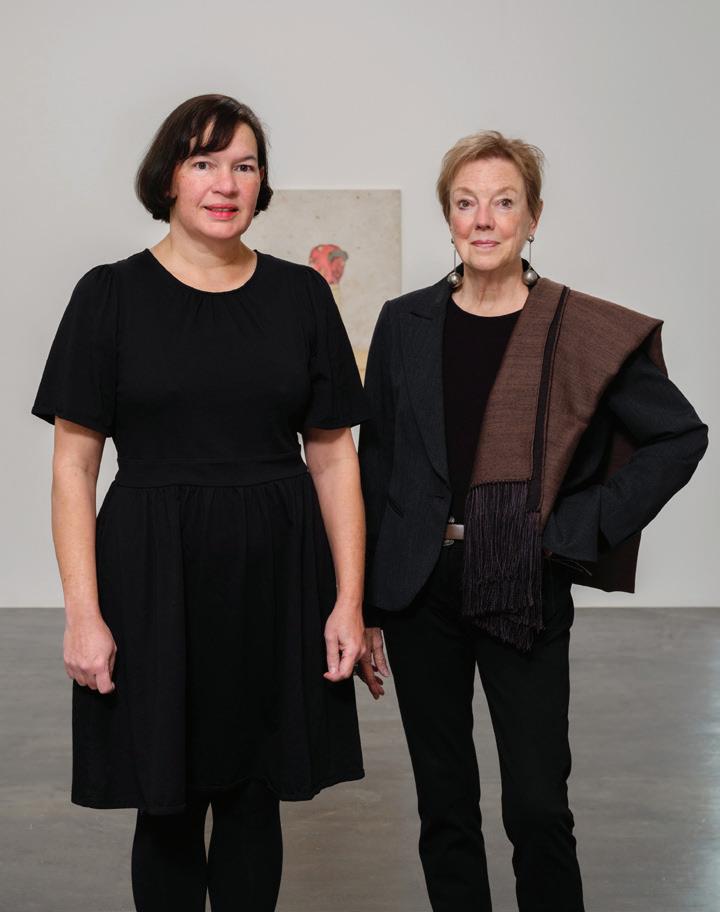
Back row from left: Hamilton Sneed, Mickie Bragalone, Jeff Bragalone, Krista Weinstein, and Bret Levy. Front row from left: Stephanie Byrd and Michelle Lockhart
TOGETHER FOR THEATER
A decade of champions return to chair Dallas Theater Center’s annual fundraiser this May.
BY TERRI PROVENCAL PHOTOGRAPHS BY JOHN SMITH
On a spring evening in early May, the Dee and Charles Wyly Theatre will glow a little differently. Its glass walls will catch the last light of day as familiar spaces transform for a gathering that sustains Dallas Theater Center long after the curtain falls.
This marks the 42nd year of the CENTERSTAGE Gala. Typically guided by one or two leaders, this year’s gala is chaired by a remarkable reunion of CENTERSTAGE champions representing a decade of stewardship, bringing continuity, experience, and a shared belief in the power of theater to connect and inspire.
The 2026 gala is led by past chairs spanning 2016–2025, including Melinda Johnson, Ann Mahowald, Mickie and Jeff Bragalone, Bret Levy, Michelle Lockhart, Krista Weinstein, Andy Smith, Paul Von Wupperfeld, Scott Davis, Scott Moore, Scott Orr, Peter Altabef, Deborah McMurray, Stephanie Byrd, and Hamilton A. Sneed. It’s a quiet acknowledgment that institutions are carried forward collectively, over time, by many hands.
Board of trustees president Andy Smith traces his connection to DTC to both passion and partnership. His “love for theater” drew him in, he says, “but my deep connection began when I was introduced to DTC through my company, Texas Instruments, which has supported DTC since its founding.” CENTERSTAGE, he adds, “provides essential fuel for our mission.… This evening ensures we can continue to inspire, educate, and bring transformative theater to our entire community.”
The evening will begin in motion, with guests circulating through a cocktail reception where scenic fragments, costumes, and props will place DTC’s artistry front and center. Stories from Public Works and community programs will circulate before the crowd moves into the Potter Rose Performance Hall, where the stage becomes a space to dine, watch, and engage. Here DTC will present its highest honor, the Linda and Bill Custard Award, to Larry Anglilli, whose decades of behind-the-scenes leadership have strengthened arts organizations across Dallas through durability rather than applause.
Later, energy will rise with a live auction and music, as Broadway actor Michael Urie, a son of Dallas, returns, bringing humor, warmth, and storytelling shaped by stages from television to Broadway.
A current of transition will run throughout the night. With Jaime Castañeda stepping into the role of Enloe/Rose Artistic Director, the evening will reflect continuity and change. “Through the distinct voices and styles of the past ten years of gala chairs, the evening reflects a living legacy—one that naturally welcomes Jaime Castañeda’s bold, modern, and inclusive vision,” says Deborah McMurray.
For these theater lovers, memory and momentum intertwine. “This year is special because DTC dedicated the season to Bill Custard, who we lost in 2025,” says Peter Altabef. “I admired him tremendously, and we all miss him.” He also remembers Sarah Warnecke “who had an encyclopedic knowledge of every gala.” And he recalls the gala’s “fascinating history, dating back to an early gala that featured Paul Simon, as well as stars from Broadway,” while also looking ahead “to see members of the Brierley Resident Acting Company sing and dance like the stars they are.”
For those who have stepped into the role of gala chair, the scale and collaboration behind CENTERSTAGE become unmistakably clear. “When Jeff and I first chaired the Dallas Theater Center Gala, we quickly learned that CENTERSTAGE is a true company production—crafted by DTC’s artistic staff in close collaboration with the development and marketing teams. It’s an extraordinary effort to create a spectacular, one-night-only show,” says Mickie Bragalone.
Jeff Bragalone adds, “While every gala brings memorable moments, 2017 was especially magical.… And watching Brierley company member Alex Organ rise from a dinner table to sing ‘You’ll Be Back’ from Hamilton —joined onstage by original cast member Sydney James Harcourt—was unforgettable.”
Chairing the gala for a third year, Hamilton Sneed says, “My part in the evening will be a gesture of gratitude, a step aside, and a clear expression of confidence in the future. At its best, CENTERSTAGE has never been about one person, but about collective belief—and the magic that happens when a city shows up for its theater.” He says that night’s final bow “will mark a new artistic chapter—rooted in bold storytelling, expanded voices, and DTC’s enduring role as a cultural anchor for Dallas.”
The 16 chairs have a shared understanding of why the theater exists at all. The funds raised will ripple outward into classrooms, rehearsal rooms, and neighborhoods, supporting programs that make theater accessible and alive across North Texas. P
Back row from left: Scott Orr, Scott Davis, Peter Altabef, Deborah McMurray, and Scott Moore. Front row from left: Andy Smith, Ann Mahowald, and Paul von Wupperfeld
Unrivaled Knowledge, Unmatched Luxury
Luxury isn’t just a market we operate in — it’s a world we intimately understand. With decades of experience, we’ve honed our expertise to become the foremost authority in luxury real estate, guiding discerning buyers and sellers through every nuance of the high-end market. From the finest architectural features to the most coveted locations, we know what defines value in luxury real estate — and how to leverage that knowledge to your advantage.
DISCOVER THE DIFFERENCE THAT EXPERTISE MAKES.
5
MOVING PARTS
THE ENDURING DESIGN OF TOM DIXON
BY TERRI PROVENCAL
British design studio Tom Dixon has built a global presence while translating industrial curiosity into luxuryscale production. Working across furniture, lighting, and accessories, the brand maintains outposts in London, New York, and Shanghai, and distributes internationally through a network of long-term partners like Scott + Cooner. Dixon recently made a special appearance at the Dallas showroom to unveil his new collection of lighting and furniture.
Tom Dixon first emerged in the mid-1980s as a self-taught designer producing welded furniture from reclaimed materials, a practice that positioned him outside the conventions of formal design training. “I never trained to be a designer and rather evolved into it,” he says. This early work established a hands-on, improvisational approach that would later translate into industrial production, most notably through his collaboration with Italian manufacturer Cappellini and the design of the S Chair
In the late 1990s, Dixon was appointed creative director of Habitat, where he redefined the brand’s visual identity while retaining founder Terence Conran’s ambition to bring modern design into everyday life. “My first eight or nine years I was just outputting stuff. My transformational moment was joining Habitat. I went from being a self-taught kind of naïve do-it-yourself metalworker to working for the biggest furniture company in the world, with access to international sourcing.” The experience, he says, “informed what I did after that.”
Dixon, who established his own label more than 20 years ago, sees longevity as central to meaningful sustainability. “The more you know about sustainability, the more complicated it becomes. We’re lucky to be in a category of consumer goods which, when done properly, is actually slow consumption,” he says. He frames durability as both principle and proof: “I think the true nature of sustainability is long life, because anything else can be greenwash. If you make an object properly for a home, it could last a couple of generations quite
easily, if not more.”
Longevity, he insists, starts with rigorous craftsmanship. “We do our utmost to make sure our build quality is as tough as it can be. I live with my great-grandmother’s writing desk; she liked Louis XVI. So that would be eight generations of use for one object.” Dixon often finds his own wares in antique stores specializing in design, and even on Ebay. Through this, he adds, “I get better at predicting the secondary use of things,” like the demure writing desk perfectly sized for a laptop for today’s generation.
For Dixon, timelessness isn’t just a principle—it’s how his work persists in the world. His designs form part of the permanent collections of institutions including the Victoria and Albert Museum in London; MoMA, New York; and the Centre Pompidou in Paris. In 2024 he was appointed Commander of the Order of the British Empire (CBE) by King Charles III in recognition of his contribution to British design.
Over a career spanning more than four decades, Dixon has developed a recognizable signature that moves between experimentation, commerce, and spectacle. “The aesthetics might be called expressive minimalism—I like things to really express what they are there for.”
The studio’s best-known designs—Melt , Beat , S Chair, and Fat— have become enduring reference points within contemporary design culture. Recent additions include the Plump and Fat sofas, the Groove outdoor collection, and portable lighting such as Bell, Melt, and Jack. “Portability in lighting,” Dixon says, “is part of a new revolution, driven by technology like the LED, consuming less electricity—and the battery giving us mobility in work. But in lighting, it was really Covid that pushed us all outside, and we needed to innovate.”
Throughout his long career, Dixon’s focus hasn’t shifted. “My obsessions remain the same,” he says. “I am still really interested in how you make things move.” P
Fat modular sofa.
Tom Dixon. Courtesy of Scott + Cooner.
Whirl floor chandelier
Melt Burst
Chandelier
EARLY ACCESS
FIVE LOCAL COLLECTORS SHARE INSIDER STRATEGIES TO ENGAGE WITH DALLAS ART FAIR.
BY TERRI PROVENCAL PHOTOGRAPHS BY JOHN SMITH
Sally J. Han, Blossom, 2026, acrylic on paper mounted on wood panel, 72 x 48 in. Courtesy of artist and Alexander Berggruen, NY. Photograph by Jason Mandella.
Carrie Cook, Nine Lives, 2025, oil on canvas, 60 x 88 in. Courtesy of the artist and Nature of Things. Photograph by Angel Xotlanihua.
Marlon Portales, Lovers Under the Blue Cypress, 2025, oil on canvas 64 x 90 in. Courtesy of the artist and Spinello Projects.
Amoako Boafo, Untitled, 2019, oil on canvas, 79.75 x 65.12 in. Courtesy of the artist and Michael Kohn Gallery. Photograph by Karl Puchlik.
Vera Barnett, Woof, 2025, oil on panel, 24 x 24 in. Courtesy of Valley House Gallery.
Nic Nicosia, I See Light, 2009, archival inkjet on watercolor paper. 43.50 x 72 x 1.50 in. Courtesy of Erin Cluley Gallery. Photograph by Kevin Todora.
Tomohiro Kato, L.B./d****04, 2025, iron-oxide, graphite, acrylic, paper, canvas, 51.18 x 63.78 x 1.57 in. Courtesy of Tezukayama Gallery.
Bobbie Burgers, Trickery and Illusions #2, 2025, mixed media on canvas, 48 x 60 in. Courtesy of Nicholas Metivier Gallery. Photograph by Rachel Topham.
Cannon Dill, Wild Horse, 2021, acrylic on canvas. 72 x 60 in. Courtesy of PIERMARQ*.
MARLO AND JEFF MELUCCI
Marlo and Jeff Melucci pictured with Ebony Patterson “…the land blisters… in grace”, 2021.
Some art collections are built with transactions: the quick exchanges, the thrill of the deal. Others are cultivated with time, attention, and care, through lingering, returning, and listening. Marlo and Jeff Melucci’s collection belongs to this second, slower tradition. And it all began with an invitation.
The Meluccis remember it clearly: their collecting journey “began when we first visited the Dallas Art Fair back in 2015, after accepting a generous invitation by the Sughrues (John and Marlene) to our school community to attend the fair for free,” says Marlo, adding enthusiastically, “We have been in attendance every year since, without fail!” That first visit didn’t just introduce them to art—it immersed them in a living, breathing culture of creativity, connection, and conversation.
Dallas, they note, is “incredibly fortunate” to host a fair that brings together galleries from around the globe, transforming the city into a buzzing civic stage. “The art fair,” says Marlo, “became instrumental in the formation of our collecting practice and is key to the many wonderful relationships we have formed with other collectors, artists, galleries, and curators.”
But collecting is just one chapter. Their love for art spans cinema, literature, theatre, and visual culture. It’s about more than aesthetics—it’s about how art moves, awakens, and provokes “Beyond the visual beauty and artistic practice, we are drawn to art because it has the power to evoke emotions, awaken us to histories, challenge our perceptions, and broaden our world view,” explains Jeff, a chief strategy executive with KimberlyClark.
The leap from looking to acquiring came with a work that still anchors the collection’s ethical heart. “Our first acquisition, in 2019, was a powerful work by LA artist June Edmonds (from Luis De Jesus, Los Angeles) titled Omar II,” Marlo recalls.
Encountered in Edmonds’ exhibition Allegiances & Convictions, the painting reframes one of America’s most charged symbols. Flags, rendered in thick, shifting brushstrokes of brown skin tones, hang vertically—less banners than bodies, less symbols than portraits. “Edmonds explored the American flag as a malleable symbol of ideals, promises, and identity,” she explains.
“This artwork will always matter because it challenges the viewer to confront the constructs of power, systematic disenfranchisement, and who do we choose to see as American,” Jeff adds. That first acquisition became a compass for the collection: art that demands accountability, embraces multiplicity, and asks viewers to sit with disquiet.
In 2023, the Meluccis invited Fort Worth artist Sedrick Huckaby—cofounder of Kinfolk House and a master of psychologically resonant portraiture—to paint a likeness of Marlo’s father, Dr. Herman Kingsley Headlam, “an immigrant from Jamaica and champion of the visual, literary, and musical arts.” Huckaby’s work, known for its rich materiality and chromatic intensity, honors everyday people. “We are truly honored that Sedrick agreed to capture an important person in our life who always exemplified grace, gratitude, hard work, and love for his family,” Marlo says.
Responsibility guides the collection. “It is deeply missioncentric, with a strong commitment to amplifying Black voices in the contemporary art world,” Jeff asserts. Its focus is both global and local: emerging Black artists worldwide, Texas-based practitioners nearby, and the Dallas arts ecosystem as a site of sustained investment.
“Our collection is not about owning objects; it is representative of a larger responsibility we feel to be stewards of important histories and civically engaged in the institutions that need to remain cultural gathering spaces for our communities,” Marlo explains. That sense of stewardship extends to the Dallas Art Fair itself. As members of the DMA Acquisition Fund Committee, the Meluccis help shape the Dallas Museum of Art’s permanent collection. Jeff says, “This notable program offers artists the important opportunity to be part of the DMA’s collection and helps to elevate the gallery programming overall at the fair.”
Their purchases are guided by instinct and listening. “We want the artwork in our collection to stir something deep within the soul,” Marlo says. And relationships matter, too. The ideal gallerist is relational—someone invested in thoughtful placement rather than fast sales. “Many of the gallerists that we see from year to year at DAF have sprung into wonderful friendships that are rooted in deepening our discovery of and enthusiasm for the art world,” she continues.
They are drawn to fearless artists, emphasizing, “We are inspired by artists who are brave—have something bold and important to say that challenges the status quo and speaks out against injustices.”
Looking ahead to the Dallas Art Fair this April, their excitement centers on both new and familiar partners—from the debut of Ziodoun-Bossuyt Gallery to longstanding relationships with Luce, Luis De Jesus, Tafeta, Perrotin, Pencil on Paper, and others. Their wish list includes Kenturah Davis, Simone Leigh, Nick Cave, Danielle McKinney, and Jeffrey Gibson, signaling a commitment to art that is materially inventive, politically incisive, and emotionally resonant.
This is a collection built for conversation, for memory, for seeing—and for seeing differently.
Ludovic Nkoth, Roz, 2023, acquired from Luce Gallery at the Dallas Art Fair.
Travis Vandergriff lives in a home in East Kessler Park that people daydream about looking into. Perched on a rocky hillside, an architectural pause above the city, it offers a vantage point that serves as an apt metaphor for a collector whose relationship to art is grounded in attention, patience, and intellectual curiosity.
A physician and native Texan, Vandergriff approaches art with the same care he brings to medicine, but with a deliberate desire for counterbalance. “I am an admirer of creativity. I love art that invites me to stop and think. I also love to be outside, enjoying the beauty of the natural world.” This ethos between rigor and openness runs through both his collection and the way he moves through the art world.
His art journey began as a conscious expansion: “After finishing my medical training, I really wanted to learn more about the arts, humanities, and creative processes, to add balance to the science that had been my focal point,” he says. What followed was immersion. “I was particularly excited to learn about the possibility of meeting artists, doing studio visits, and learning directly from them about their process and their practice.”
The moment when interest becomes commitment is often revealing for a collector. For Vandergriff, it came through the late Fort Worth artist Vernon Fisher. “The first major artwork that I purchased was a large-scale painting by Vernon Fisher. I fell in love with his work after seeing his retrospective at the Modern Art Museum of Fort Worth, and I did a studio visit. I am fascinated by the way his work pieces together texts, symbols, and seemingly disparate scenes that create more questions than answers.” One of his new favorite works is a painting on paper by Anne Truitt that somehow manages to feel “both restrained and complex.”
His wish list remains expansive. “Too many to list! Some of the artists that I’m currently interested in include Martha Tuttle, Gala Porras-Kim, and Meg Webster.” These are artists whose practices sit at the intersection of material intelligence, research, and conceptual rigor, underscoring his attraction to work that thinks as much as it looks.
The Dallas Art Fair has become a fixed point in Vandergriff’s calendar. “My first time visiting was about 12 years ago, and I have been every year since,” he says. Over time, the fair has
yielded meaningful acquisitions: “a photograph by Sarah Anne Johnson from Blouin Division, a Paul Jacobsen painting from David B. Smith Gallery, and photographic works by Nic Nicosia from Erin Cluley Gallery.” Cluley, who will present a suite of Nicosia’s photographic works at the Dallas Art Fair, is “an art-world inspiration,” Vandergriff says. “She has introduced me to so many interesting and exciting artists.”
Vandergriff’s approach to the fair mirrors his broader philosophy: prepared and unhurried. “I plan by reviewing the list of participating galleries and checking out their gallery programs online, ahead of the fair,” he says.
Once inside, he commits fully: “I try to make a complete loop through the ground floor and the upstairs and stop in each booth at least once. I give myself plenty of time and don’t want to feel rushed.” Collecting, however, is inseparable from building relationships. “The most important quality for me in making a relationship with a gallery is to feel confident that the dealer is knowledgeable and supportive of the artist.”
That people-centered focus extends beyond the booths themselves. “One of my favorite parts of the Dallas Art Fair is the programming around the fair, especially the artist studio visits and the public conversations between artists, curators, and collectors.”
Despite the excitement of discovery, Vandergriff resists impulsivity. “I tend to do some research and thinking before making a purchase. There can definitely be an immediate connection to an artwork seen for the first time, but I really like to learn about the artist, their process, and their relationship to other art movements before making an acquisition.”
As he looks toward the Dallas Art Fair in April, Vandergriff remains committed to seeing it all, but with specific anticipation. “I’m particularly excited to visit some of the international galleries, including Kerlin Gallery, OMR, and Sorry We’re Closed. It’s a unique opportunity to connect with and learn about these gallery programs here in Dallas.”
Vandergriff’s collection is about participation—entering into conversations that span disciplines, geographies, and histories. Like the house he inhabits, his approach to art is elevated, deliberate, and quietly searching, a moment to stop and think.
Elizabeth Glaessner, Earth Sucking Sky, 2024, oil on linen.
For Nadia Dabbakeh and Jason Friedman, collecting art is less a pastime than a lived practice—one that unfolds across their marriage, their domestic space, and even their children’s earliest sensory memories. Dabbakeh is the co-founder of the children’s brand SNAP Pajamas; Friedman is the managing partner of Friedman & Fieger. Together they have assembled a collection shaped not by strict market logic, but by intuition and a shared responsiveness to form.
“We’ve both been so lucky to be exposed to art since we were very young, so the interest has been there for a long time,” says Dabbakeh. Over time that early familiarity deepened into fluency. “As we grew up and got older, we were exposed to private art collections, family buying art, friends who collected art, art fairs—it became something as natural as buying new shoes or a sofa for your living room.”
For Dabbakeh, collecting crystallized into something personal at the Dallas Art Fair. “The first time I bought a piece of ‘real’ art was at the Dallas Art Fair,” she recalls. “I walked into Magenta Plains’ booth and saw all these big, abstract, painterly pieces by Bill Saylor, and I fell in love. I found this organic purple dolphin hiding in the back, and I just felt like, yes, you need to come home with me.” The painting has since become an anchor in their domestic life. “It’s been in two condos and finally our house together, and my toddlers say good morning to their ‘purple shark’ every day. I love this piece,” Dabbakeh says. Their first joint acquisition followed shortly after they purchased their first home amid the uncertainty of peak Covid. “[Art advisor] Robyn Siegel sent us some photos from a show of Sky Glabush, and we loved his work,” Dabbakeh explains. “So organic and calm and serene, a feeling we wanted throughout
our home (and lives!).”
As their collection evolved, the couple became acutely aware of how rare it was for them to respond identically to a work, and they learned to trust that alignment. Another encounter, this time at Anat Ebgi, reinforced that instinct. “We saw one of Samantha Thomas’ big, round, acrylic-on-canvas wheels and thought it was so bright and fun,” says Dabbakeh, adding, “When we both love something at the same time, we usually know okay, no thinking needed.” At the Dallas Art Fair, their approach balances preparation with openness. With Siegel as a trusted advisor they arrive with guidance, then spend hours looping the fair on their own.
Choosing favorites is not hierarchy but intimacy. “I think we both really love the Benjamin Echeverria in our living room,” says Friedman, recalling how it stopped them in unison at NADA Miami. Yet the most interesting works may be those acquired for their children. “We decided to buy our children a piece of art to have in their bedrooms, before they were even born, that could one day go to their first homes with them. A little gift,” he says. Their son received a Zeke Williams work from Erin Cluley Gallery; their daughter, a Tyson Reeder selected after months of consideration. “They’re both somehow perfect for each of them,” says Dabbakeh. “And they’ve always had art above their heads, so they know we ‘never touch the art!’ and will happily yell that at you or anyone else,” she adds, laughing.
Like most engaged collectors, they carry a mental archive of works that slipped away. “We walked into Management’s booth at the Dallas Art Fair two years ago and had a positive, visceral reaction to a Tim Brawner painting that had been sold before it got to Dallas; we’ve been trying to find a piece of his that hits that same spot since,” says Dabbakeh. They also plan to buy a work by Dallas-based Francisco Moreno.
Despite the coherence of their collection, there is no prescribed framework. “We follow our gut. That might not be the right way to do it, but it’s our way,” says Dabbakeh. While they have expanded to photography and entertained more provocative work—”Jason wants something a little sexier from Amie Dicke”—their gravitational pull remains toward “big, abstract pieces with a painterly feel.”
Beyond the fair, they remain deeply engaged with the broader art ecology of Dallas. “We love seeing what The Power Station and Dallas Contemporary are doing, always, and need no excuse to spend a morning perusing the Green Family Collection,” says Friedman. Institutionally, the Modern Art Museum of Fort Worth holds particular resonance. “We like to make it a little getaway and sometimes have a staycation too,” he says.
As they return once again to the Dallas Art Fair—with stops planned at OMR to find a work by Gabriel Rico, as well as Erin Cluley, Canada, Josh Lilley, Anat Ebgi, and Perrotin— their history suggests the most consequential moments will not be scheduled: a peripheral glance, a shared pause, and the unmistakable clarity of a mutual “YES.”
Samantha Thomas, Dia, 2022, acrylic on canvas over panel, 40 x 40 in. Acquired through Anat Ebgi at the Dallas Art Fair.
NADIA DABBAKEH AND JASON FRIEDMAN
Nadia Dabbakeh and Jason Friedman pictured with Alexander Revier's Art Box on the left and Benjamin Echeverria's Lavender on the right.
MAPPING THE UNEXPECTED
AT THE DALLAS MUSEUM OF ART, CONSTELLATIONS INVITES VISITORS TO CHART THEIR OWN PATHS THROUGH CONTEMPORARY JEWELRY THAT BLURS THE BOUNDARIES BETWEEN ADORNMENT, ART, AND IDEAS.
At first glance, it looks less like jewelry and more like atmosphere itself. A gauzy collar swirls around the head, neck, and shoulders of a mannequin.
Rendered in precision laser-cut, zinc-coated steel, the piece—by Dutch fashion designer Iris van Herpen—seems to diagram air: a floating anatomy of shadow and light. Thus Constellations: Contemporary Jewelry at the Dallas Museum of Art begins. And if it destabilizes, the thought-provoking tour de force is intentional. Is this jewelry? Fashion? Sculpture? Who gets to decide?
The creation was commissioned specifically for the exhibition, adapted from a dress in van Herpen’s Aeriform runway series. Rather than activating the body through fabric and movement, it reframes adornment as something that shapes space around the head and shoulders. The effect is both beautiful and disorienting—a fitting entry point for a show that persistently troubles expectations about what jewelry is, does, and can be.
Farther along, those expectations are unsettled again. A necklace by Swiss artist Bernhard Schobinger links together scissors dipped in blood-red cinnabar. The object is immediately legible—danger upon danger—yet its invitation is unmistakable: wear it. Nearby, other works incorporate plastic, zippers, eggshells, electrician’s wire, oboe reeds, a mango pit. Materials that seem humble or even discarded are transformed into objects of intense focus and conceptual charge.
Installation view of Constellations: Contemporary Jewelry at the Dallas Museum of Art. Courtesy of Dallas Museum of Art. Photograph by John Smith.
Installation view of Constellations: Contemporary Jewelry at the Dallas Museum of Art. Courtesy of Dallas Museum of Art. Photograph by John Smith.
“I just love the making process,” says Sarah Schleuning, the DMA’s Margot B. Perot Senior Curator of Decorative Arts and Design and the driving force behind Constellations. “I just love the way people think.”
Schleuning arrived at the DMA in 2018, already aware that the museum held a significant but under-recognized collection of contemporary jewelry—most notably the landmark Viennese Inge Asenbaum Collection gifted to the DMA in 2015 by Deedie Potter Rose and her late husband, Edward “Rusty” Rose. What began as an idea soon revealed itself as something much larger than an exhibition. Over several years, Constellations grew into a multilayered project encompassing acquisitions, commissions, conservation, photography, scholarship, and a substantial publication that functions as both collection catalogue and exhibition companion.
At its core, however, the project is guided by a deceptively simple framework. “Thinking about constellations—constellations of ideas,” Schleuning explains. “You have all these stars that are luminous at various levels, and you’re trying to create those connections, those dotted lines between them. Then you flesh out a story that’s bigger than those points.”
Rather than organizing the exhibition chronologically or hierarchically—by icons, leaders, or material value—Schleuning developed thematic groupings that encourage visitors to create
Installation view of Constellations: Contemporary Jewelry at the Dallas Museum of Art. Courtesy of Dallas Museum of Art. Photograph by John Smith.
Installation view of Constellations: Contemporary Jewelry at the Dallas Museum of Art. Courtesy of Dallas Museum of Art. Photograph by John Smith.
Installation view of Constellations: Contemporary Jewelry at the Dallas Museum of Art Courtesy of Dallas Museum of Art. Photograph by John Smith.
their own connections. “The sections I developed are one way of looking,” she says. “But you yourself could remap them in a way that makes sense to you.” Jewelry is allowed to tell numerous stories at once.
This refusal of fixed authority is deliberate. Instead the exhibition operates like a kaleidoscope: turn slightly, and the picture shifts. Jewelry becomes a medium not only of adornment, but of thought. A brooch responds to the Covid-19 pandemic; another piece, by the American multimedia artist Joyce J. Scott, known for her beaded and stitched work, reflects on violence against Haitian refugees at the Texas border. Muscogee Nation artist Brian Fleetwood brings biology and an Indigenous and neurodivergent perspective into dialogue with form to investigate parallels between organisms and systems via jewelry that slides between art and nature. These objects function as documents of recent history as much as they do wearable art. In addition to crystalizing memories, “they become incredible catalysts for conversation,” Schleuning says.
Throughout the galleries, the body remains a palpable absence. Jewelry, after all, is incomplete without it. Exhibition designer Jarrod Beck worked closely with Schleuning to address this challenge, developing mounts and displays that suggest wear without overwhelming the objects. Some pieces are pinned flat; others perch at varying heights. Mannequins appear sparingly. The
goal is not to dictate how something should be worn, but to help viewers imagine its potential for activation.
The exhibition opens with what Schleuning calls “zones of the body”—objects that cluster around the head, hands, and torso— offering familiarity before gently nudging it away. Tiaras may resemble cardboard only to reveal themselves as precious metals. Rings range from austere to kinetic. How many ways are there to encircle a finger? Slowly, expectations shift.
That shift is aided by humor and play, which Schleuning treats not as decoration but as necessity. In the exhibition’s final section, titled “Play,” silver cockroaches by artist Ruth Roach appear to crawl across a display case, offering a visual palate cleanser after nearly 400 objects. “You want people to keep looking,” Schleuning says. “Play, joy, curiosity—those are ways in.”
Underlying this experiential approach is a carefully documented institutional story: the collection itself is a constellation in terms of where the pieces come from. The DMA’s jewelry holdings began modestly in the 1950s with experimental enamel pendants by Ellamarie Woolley (one of which is featured in Constellations), acquired in a gallery show and immediately displayed as art. For decades acquisitions followed the tracks of regional craft exhibitions in Texas. The collection shifted dramatically with the gift of the Asenbaum Collection, bringing a strong European and
Installation view of Constellations: Contemporary Jewelry at the Dallas Museum of Art. Courtesy of Dallas Museum of Art. Photograph by John Smith.
Eastern European perspective rarely seen in the US, and, more recently, with other gifts from collectors like Rose.
“In reflection you realize this was actually the germination of an idea that somebody then watered and fertilized, and it evolved and expanded,” Schleuning reflects. “How do we make the sum bigger than the parts?”
Today, the collection encompasses roughly 1,400 objects. Schleuning has built on existing strengths but also identified gaps and addressed them through strategic acquisitions and commissions. The van Herpen collar exemplifies this approach, as do works by artists engaged with ethical sourcing (for example Ute Decker), recycled materials, and underrepresented voices. For Schleuning the museum is not a passive repository but an active collaborator. “Commissions are real opportunities,” she says. “They allow artists to explore something different and feel safe doing that.”
Ultimately, Constellations asks visitors to slow down and look. “What are the ripples of this to come?” Schleuning asks. “What will this spark for the people who see [the show], who read the book, who encounter these ideas?” The exhibition offers no single answer. Instead, it hands you the map—or perhaps just the stars— and invites you to draw the lines yourself. P
Installation view of Constellations: Contemporary Jewelry at the Dallas Museum of Art. Courtesy of Dallas Museum of Art. Photograph by John Smith.
Fields of Vision: Dallas Collects, on view at the Green Family Art Foundation from February 7 through August 9, brings together 42 works drawn from private Dallas-based collections. Rather than organizing the exhibition around a single artist, movement, or theme, curator Sara Hignite structures the show through the act of collecting itself—beginning not with an abstract idea but with works already chosen, acquired, and lived with. The result is an exhibition shaped as much by prior decisions and relationships as by curatorial design.
Hignite has described the process as “curating backwards.” The idea for a show focused on Dallas collections was initially proposed by Eric Green, who, as Hignite recalls, “just let me run with it.” Starting with 42 confirmed lenders, she selected a single work from each collection and built the exhibition from there. “This as opposed to the standard curatorial path of choosing an artist or a theme or concept and then finding the lenders who have the art you want to include,” she explains. “I found it refreshing for the art to steer the exhibition narrative with this show.”
That reversal is not just procedural; it shapes how the exhibition reads. Rather than presenting collecting as background context, Fields of Vision treats it as an active force. The show becomes less a survey of contemporary art than a map of how art is encountered, chosen, lived with, and eventually made public.
That process matters in Dallas. Long recognized for the strength of its institutions and the seriousness of its collectors, the city now helps shape how contemporary art moves and gains value, not just where it’s shown. From her vantage point now living in New York, Hignite sees Dallas as unusually coherent in this regard—a place where artists, collectors, fairs, and institutions operate in close conversation. “Dallas has been a major arts city for some time,”
Thokozani Madonsela, Abafowenu uyobathola phambili, 2023, acrylic on canvas, 36 x 40 in. Calvin LaMont of The LaMont Foundation. Photograph by Grace Tighe.
she notes, “and that identity has evolved and grown over the years,” sustained by a civic belief in the importance of the arts “not only to a city’s success but at a societal and even just a human level.”
Many of the works in Fields of Vision were acquired after 2020, and that timing is evident in the exhibition’s emotional tone. While the post-pandemic collecting boom has been widely noted, Hignite points to something subtler: “Beyond that,” she says, “we observe common themes bubbling up in work collected during and after the pandemic—themes of loss, isolation, displacement, and, ultimately, hope for the future. It may have been subconscious, but it’s there.” Rather than imposing a framework, the exhibition allows these shared concerns to surface on their own.
The variety of materials and approaches reinforces this reading. Assemblage, painting, sculpture, and text-based works sit side by side, without forcing stylistic unity. What links them is not form but feeling. Hignite notes that these themes only became clear after the selections were complete, suggesting that the exhibition reflects a broader post-pandemic mood filtered through individual acts of collecting.
One of the exhibition’s quieter strengths is how clearly it reflects Dallas as a place of encounter. Many of the works on view were acquired through local galleries, museum-related travel, or at the Dallas Art Fair. Others involve artists who have exhibited, worked, or maintained long-term relationships in the city. In these instances, collecting reads less like distant acquisition and more like proximity: art first encountered here, then lived with elsewhere, before returning to public view.
The presence of artists such as Hugh Hayden, Ja’Tovia Gary, and Evita Tezeno underscores Dallas’ role as a place where demanding work—formally, politically, and emotionally—is supported and sustained. Alongside Dallas-based and Texas-rooted figures such as David-Jeremiah and Celia Álvarez Muñoz, the exhibition collapses the familiar divide between “local” and “international.” What emerges instead is a picture of Dallas as a place where artistic value is built through sustained relationships and repeated engagement, then circulated outward into a wider conversation.
The collectors themselves appear not as a single class but as a range of approaches. Some, including Debbie and Eric Green, Nancy Nasher and David Haemisegger, Cindy and Howard Rachofsky, and Marilynn and Carl Thoma, have developed models that extend private collecting into public-facing institutions and foundations. Others—emerging collectors, such as Michael Buss, Annika Cail, and Grace Cook, alongside long-established ones like Deedie Rose, Tim Headington, Janelle and Alden Pinnell, and Sheryl AdkinsGreen and Geoff Green—appear through a single, carefully chosen work. What connects them, Hignite observes, is not scale or status, but sincerity. “Pretty much everyone genuinely loves art and takes collecting really seriously,” she says. “The intention with which each collector in the show approaches collecting is remarkable.”
That focus on intention also shaped Hignite’s selection process. Alongside chronological boundaries, she drew on Andrea Fraser’s mapping of contemporary art’s subfields to ensure a broad range of practices and positions. The goal was not to be comprehensive, but to show the depth and variety of contemporary art collecting in Dallas without flattening it into a single story.
For audiences outside the art world, Fields of Vision offers a rare opportunity to see private collections made public. Rather than presenting collecting as opaque or elite, the exhibition frames it as a series of human choices—moments of recognition, risk, and care. As Hignite puts it, she hopes the exhibition resonates as viewers navigate, “individually and collectively, what it means to be human in this post-pandemic world.” P
FROM THE INTERNATIONAL STAGE OF ARCOMADRID, THE MEADOWS MUSEUM PRESENTS RUBÉN GUERRERO IN HIS FIRST US SOLO EXHIBITION AND LEADS A COLLECTORS GROUP TO EXPERIENCE THE MADRID FAIR FIRSTHAND.
BY NANCY COHEN ISRAEL AND TERRI PROVENCAL
Rubén Guerrero in his studio. Photograph by Óscar Romero. Courtesy of Galería Luis Adelantado.
Each year, ARCOmadrid brings the pulse of the contemporary art world to Madrid, drawing curators, collectors, and artists to the Spanish capital. Every other year, through the Meadows/ARCO Artist Spotlight (MAS) program, the Meadows Museum, SMU, introduces its audiences to the work of a widely known Spanish artist who has had limited exposure in the United States. Through this endeavor, the work of Rubén Guerrero will go on view at the Meadows Museum in February.
“Captivating” is the word that Meadows curator Patricia Manzano Rodríguez uses to describe Guerrero’s paintings. She served on the selection committee and shares, “We discussed Rubén’s work for so long because we could not believe that the images we were seeing were two dimensional.” As a painter his work is already a departure from the previous MAS exhibitions, which featured conceptual artist Ignasi Abellí (2021) and textile artist Teresa Lanceta (2023).
This is the third exhibition in a six-year partnership between the Meadows and Madrid-based Fundación ARCO, which promotes
the collecting, research, and dissemination of contemporary art supported by IFEMA Madrid, the Madrid City Council, the Community of Madrid, Fundación Montemadrid, and the Madrid Chamber of Commerce, and it complements the educational mission of ARCOmadrid. The MAS selection committee includes curators from both organizations and members of the Meadows Museum Advisory Council. For Guerrero, his first solo exhibition in the US is especially auspicious. “What excites me most is the opportunity to present my work outside of Spain, in the United States, and particularly in a museum as important as this one, so closely connected to the pictorial tradition to which I belong,” he states.
That tradition has deep roots in his native Seville, where he continues to paint. Works reflecting the city’s rich artistic heritage also form an important part of the Meadows’ permanent collection.
“I believe there is a natural and unintentional dialogue, almost genetic in nature, that originates indirectly through a dialogue with the Baroque as a whole,” Guerrero says of his work, adding, “Seville is deeply marked by this style in both architecture and painting,
Rubén Guerrero (Spanish, b. 1976), Motif étoile, 2024, oil on canvas, 92.50 x 76.75 in. Photograph courtesy of Galería Luis Adelantado.
Blanca Gracia, Alumbré un tigre de sol, 2022, welded copper pipe, embossed brass and copper sheets, 33.50 × 17.70 × 11.80 in. Courtesy of ADA, Rome, Italy.
and this inevitably forms part of our artistic DNA.” Manzano Rodríguez explains that traces of the city’s most prominent 17thcentury artists, including Diego Velázquez and Francisco de Zurbarán, can be found in Guerrero’s work, most notably in the volume that they create in paint as well as their limited palettes.
That Guerrero’s works have an architectural quality about them is no accident. Artists who are also architects, such as Richard Tuttle, Shusaku Arakawa, and Hélio Oiticicia, are among Guerrero’s influences. His paintings have the heft of architecture in their scale. Just as they toggle between abstraction and figuration, they also play with notions of two- and three-dimensionality.
The Meadows/ARCO Spotlight exhibition will offer viewers a good sense of his work, with the goal of whetting their appetite. “It is always the hope of this ARCO show that the artist will be presented to a new type of public and a new type of collector. It is something that we are very proud to do, and to open the international market for these artists who might not have a strong presence in the US,” Manzano Rodríguez notes.
Since another goal of the program is to foster dialogue between Spanish artists and the local community, the museum is hosting several public programs with Guerrero. Additionally, he will visit with SMU studio art students, who will have the opportunity to discuss their work with him.
Last February, during the ceremony at the Museo Reina Sofía in Madrid, where Guerrero was announced as this year’s MAS artist, Santiago Herrero, Director of Cultural and Scientific Relations for the Spanish Agency for International Development Cooperation, ended the evening by announcing renewed support for this joint program, which will sponsor three more MAS exhibitions between
Mar de Dios, Narcisos (The Chance of Heat), 2025, ceramics, dimensions variable. Courtesy of Carreras Mugica, Bilbao, Spain.
Tania Blanco, MMT (El miserable milagro del trigo), Microtropías , gouache on 3mm-thick grey compacted chipboard. Courtesy of Formato Comodo, Madrid, Spain.
Michele Gabriele, Portrait of a Parrot. An Unbothered, Sad, and Cring Parrot. Indifferent to its Context, 2025, acrylic on canvas in artist frame, 51.12 x 37.37 in. Courtesy of Michele Gabriele and KALI Gallery, Lucerne, Switzerland. Photograph by Kim da Motta.
2028–2032. Now, in addition to being able to tell a comprehensive story of Spanish art history, the Meadows Museum is helping to write the newest chapters of contemporary Spanish art.
Guerrero is represented by Galería Luis Adelantado in Valencia, an ARCOmadrid exhibitor. The international fair has long occupied a central position in Spain’s contemporary art landscape, operating as both an international fair and a barometer of current artistic concerns.
As it approaches its 45th edition March 4–8, the fair looks ahead with ARCO2045: The Future, for Now, a thematic framework that turns attention toward speculation, temporality, and emerging artistic vocabularies. “The collaboration with the Meadows Museum is especially important because of that connection between the past and present (and future) of art with a transatlantic vision,” says Maribel López, director ARCOmadrid. Curated by José Luis Blondet and Magalí Arriola, two dedicated spaces within the fair will propose reflections on possible futures and the languages through which art might begin to articulate them.
Alongside this focus, the general program underscores the central role of curatorial vision and artistic production, presenting a selection of galleries and projects chosen by the organizing committee to shape the fair’s structure and discourse. As to the scope of the fair, Lopez says, “At ARCO, the commercial and the conceptual or experimental are undoubtedly mixed in an exceptionally natural way. They are not mutually exclusive, and this allows people with diametrically opposed approaches to
Rocío Garriga, Detalle de la obra Ver la montaña como montaña, 2025, 1,764 pages encapsulated in colored wax from various copies of Thomas Mann’s The Magic Mountain mounted on whiteboard. Courtesy of Freijo Gallery, Madrid, Spain.
Lyz Parayzo, Bixinha Pentagonal, 2023, polished brass, 9.84 x 9.84 x 9.84 in. Edition: unique. Courtesy of Casa Triângulo, São Paulo. Photograph by Filipe Berndt.
contemporary art to meet at ARCO and know that this is their place for encounters and dialogue.”
Two additional distinct sections anchor the fair: Opening. New Galleries, curated by Anissa Touati and Rafa Barber Cortell, brings together galleries with fewer than eight years of activity, while Profiles | Latin American Art, curated by José Esparza Chong Cuy, extends ARCOmadrid’s longstanding and evolving relationship with Latin American artists. Lopez says that supporting the Spanish and Latin American art ecosystems “is part of the fair’s DNA and one of the things that sets ARCO apart from many other art fairs. ARCO understands that part of its responsibility is to present— not exhaustively, but responsibly—the art scene in Spain, while also prioritizing research and attention to the Latin American art scenes.”
Madrid’s deep engagement with ARCO is one of the fair’s defining strengths. “We can proudly say this is one of ARCO’s unique features: the way Madrid fully embraces the fair,” Lopez notes, as galleries, visitors, and institutions converge during Madrid Art Week. Alongside other fairs, the city becomes a showcase for major museum exhibitions—from the Museo Reina Sofía’s
renewed presentation of its post-1970 collection and the Prado’s Juan Muñoz exhibition to the Thyssen’s Robert Rauschenberg and TBA21 projects—along with presentations of private collections at CentroCentro. This public momentum is matched by private initiatives, including the Fondazione Sandretto Re Rebaudengo’s annual site-specific project and the openness of foundations such as Fundación María Cristina Masaveu Peterson and the Colección Inelcom, whose programs welcome ARCO guests each year.
These artistic offerings are further enriched by conferences, events, and celebratory gatherings that animate the city throughout the week. Through the Meadows Museum, a Dallas contingent will attend ARCOmadrid, led by the Linda P. and William A. Custard Director of the Meadows Museum Amanda Dotseth, board chair Stacey McCord of the Meadows Museum Advisory Council, and The Honorable Janet P. Kafka, Honorary Council of Spain, as part of the International Collectors Programme, which attracts a large group of active private and institutional collectors to Madrid, together with the International Professionals Programme, for museums from around the world, and the entire institutional acquisitions project and awards for galleries.
Alioune Diouf, Untitled, 2024, graphite and natural pigment on paper, 39.37 x 27.55 in. Courtesy of Selebe Yoon, Dakar, Senegal.
Julia Padilla, Untitled, chromed pipe, fragments of sandals, seeds, rubber, bone, painted snail, artificial hair, 13.77 x 11.81 x 23.62 in. Linse Galeria, Buenos Aires, Argentina.
Fito Conesa, Still-life, the young person’s guide to the orchestra, 2022–2025, digital print created with AI, dimensions variable. Courtesy of House of Chappaz, Barcelona, Spain.
With well over 200 galleries taking part, this year’s ARCOmadrid offers an abundance of discoveries. Within the General Programme, don’t miss the work of Spanish ceramicist Mars de Dios at CarrerasMugica, whose practice brings a tactile intensity to the fair. Madrid is strongly represented by Travesía Cuatro, Formato Cómodo, and Freijo Gallery, while House of Chappaz joins from Barcelona. On the international front, Brazil’s Casa Triângulo makes a welcome return to ARCO. Meanwhile, the Opening. New Galleries section injects fresh energy, with notable newcomers including Selebe Yoon; ADA Project, presenting work by Blanca Gracia; Linse; and KALI Gallery from Lucerne, showcasing Michele Gabriele.
Together these intersecting initiatives, from museum partnerships and artist exchanges to the breadth of voices on view at the fair, underscore ARCOmadrid’s ability to bridge histories, geographies, and generations. As Rubén Guerrero’s work travels from Seville to Dallas and new galleries stake their place on the international stage, ARCO continues to function not only as a marketplace, but as a catalyst for sustained cultural dialogue. In doing so, it affirms Madrid’s role as a vital crossroads where the future of Spanish and global contemporary art is actively being shaped. P
Harold Mendez, Ain’t I Épistémè?, 2024, porcelain, 1 x 3 x 300 in. Courtesy of Patron Gallery, Chicago, US.
Jorge Eielson, Quipus 23 B-1, 1966, acrylic on canvas laid down on board, 39.30 x 32 x 7.75 in. Courtesy of Travesía Cuatro, Madrid, Spain.
Dressed for Cocktails & Conversation
Philip Thomas Vanderford and Chase DeVasier’s Prairie-style home gives way to a riot of art, glamour, and stories inside.
BY ROB BRINKLEY
PHOTOGRAPHS BY DAVID MITCHELL
Dhilip Thomas Vanderford and Chase DeVasier live in a house with a split personality. To passersby it is a simple, Prairie-style house in quiet Kessler Park: two stories of buff brick, deep eaves and tall windows, with a wide porch across the front that is held aloft by three mighty, squared columns of more buff brick. It is a polite home—well-mannered, not showy.
But fling open its wide front door and—huzzah!—there is an Auntie Mame party percolating inside, where the erudite guests include Liza Minnelli, Elvis Presley, leggy chairs, glowing lamps, sumptuous fabrics, and a wild mix of art that even a museum couldn’t categorize.
Your hosts are Vanderford, the owner and lead interior designer of Studio Thomas James, and DeVasier, his husband, also a designer at the studio. The two bought the house about three years ago—even though they were not looking. They were quite happy in Uptown, in a sleek, contemporary town house by Ron Wommack, all clean lines, high ceilings, and streaming light. But brunch with a Realtor friend turned into a drive-by of the Kessler Park house and, well, you already know how this ends. Vanderford says an immediate draw was because he “grew up in a house from about this era, with the same detailing and the same brick.” Both gentlemen loved the way the house stood tall on its land, a corner lot at the top of a gentle hill, with nothing but trees and the occasional glimpses of neighbors’ homes out those tall windows.
Their unplanned new house had what Vanderford calls a massive renovation in the late 1980s, but, luckily, no ghastly additions or soulsucking gutting. More recently, though, there had been some DIY-
Philip Thomas Vanderford and Chase DeVasier’s 1926 buff-brick Prairie-style home. Right: The designers added a linear swimming pool in the backyard.
Lorraine Tady’s Dragon Fly Field Stellation, UV ink on canvas, through Barry Whistler Gallery. Vintage Donghia Woodbridge Club chairs in Donghia wool.
David Crismon, Cremona Still Life, 2024, oil and acrylic on metal, through Craighead Green Gallery. Jean-Louis Deniot’s Celestite sofa in mohair for Baker.
Chase DeVasier and Philip Thomas Vanderford.
level transgressions by previous owners. “We had to undo a whole lot,” DeVasier says. They did add a linear swimming pool with three elegant arcs of water that splash into it from a low limestone wall, and they enlarged and glamorized the kitchen. The significant change was creating a modern-day primary suite upstairs, turning a fourth bedroom into a private bath and walk-in closet, the latter with a shoe wall that could make Carrie Bradshaw lose consciousness.
Once the shell was sorted, the couple could focus on the fun part: filling it. They estimate that about 20 percent of their previous furnishings made the move, along with several prized works by a mishmash of artists. At the start they ran into an unexpected phenomenon about the décor: a lot of their contemporary furniture didn’t work because of the home’s wholly intact 1920s aura. (One casualty? A bright-white leather Eames lounge chair.) So they recalibrated, took their time, and waited “until the house told us what it wanted,” says Vanderford. “Being Prairie-style, anything too fussy or too modern just doesn’t work.”
What the house wanted, it turns out, was glamour—but disciplined glamour. History—but edited history. And art—lots and lots of art. This is a house where art is not a layer; it is half the point. The couple’s
collection is not just eclectic, it is geographic, autobiographical, and deeply narrative. Much of it reads as a scrapbook of travels and previous lives, souvenirs for two men who love a backstory, a provenance, a tale. “Our art is all over the place,” Vanderford says, “from high-end pieces to stuff that was five dollars.” There are works and objects that reference Venice, Santa Barbara, the Texas Gulf Coast, Japan, Italy, and the Mississippi River. There are pieces bought when the men were young, pieces inherited, and pieces hauled home in suitcases. There are serious artists and playful ones, activists and formalists, conceptual works and kitsch. Together they create a collection that is less about hierarchy than about memory. Each piece is a pin on the map. It is also a deeply human collection. There are portraits of Japanese Americans from WWII, gestural figure drawings, and a text painting that winks and bites. (“Small town bitch, real big ideas,” says that work, by Frances Berry Moreno. Both Vanderford and DeVasier are from little towns in Eastern Arkansas.)
The furnishings here play an equally important role—and this is where the couple’s design sensibilities and the house’s 1920s bones have their most intriguing conversation. The pieces walk a line between history and modernity, glamour and restraint. There are Deco
Clockwise from left: Brass hardware by Watermark Designs; Roman shade in Métaphores fabric. Thomas Pheasant sofa reupholstered in Donghia fabric; Patterson Flynn handmade Serpiente rug; Paul Schneider Ceramics custom lamps; McCartys Pottery; plaster cast sculpture by Michael O’Keefe; heirloom mid-century bedside table remade from Vanderford’s father’s bedside table, customized with brass feet and black glass; horse sculpture by Lorenzo Cascio.
Thomas Pheasant table for Baker; Thomas Pheasant chairs in Donghia fabric; Phillip Jeffries silk wallcovering and a hand-knotted silk rug; sculpture of boxing gloves in gold by Krzysztof Strzelecki; Andy Warhol, Blackglama (Judy Garland) from Ads Portfolio, 1985, screenprint in colors on Lenox Museum Board, published by Ronald Feldman Fine Arts, Inc., New York.
Louis-Philippe-style bureau; Donghia Murano glass lamp; line drawings by Don Bodine (Untitled, 2008, India ink on paper); chairs upholstered in Scalamandré Tigre-Silk Velvet.
A work by Alli Lemon, a friend of DeVasier’s, hangs above the custom bar cabinet with a stone top and brass hardware.
Abpve: Checkerboard floor of Borghini marble and limestone from Ann Sacks; brass vanity fixtures by Kallista; sconces by The Urban Electric Company; below: Jared Small’s
Ranunculus 3 is above the bed by Baker, upholstered in mohair and with Métaphores bedding; painting by Don Bodine; bedside tables by Thomas Pheasant for Baker; custom dresser.
references, leggy silhouettes, sculptural profiles, lacquered moments, and brass notes. There are vintage pieces, inherited pieces, and beloved pieces that have been reworked or refinished for their new life here.
The men have stirred together everything from out-of-production Donghia chairs and lamps to a tubular Italian bench from the 1980s Memphis movement to a Henredon campaign-style dresser that was Vanderford’s grandmother’s. (“You can still smell the mothballs,” he says wistfully, pulling out a drawer.) Importantly, the furniture does not attempt to compete with the architecture. It collaborates. They have leaned into pieces that feel timeless without being literal, luxurious without being loud. These are grown-up rooms, dressed for cocktails and conversation.
Textiles do their part, too—rich velvets, layered weaves, a nubby jacquard—adding sensuality to the situations. Even the customdesigned elements, such as the Deco-esque stair railing that replaces
what Vanderford calls the home’s former “overly stylized Mission” version and a stained-glass window in the living room, designed by DeVasier, are calibrated to feel inevitable rather than inserted. This balance—between reverence and mischief, scholarship and play—is the throughline of the house. It is also the throughline of the couple themselves. They love telling the backstory of each piece, often fetching a book about an artist or relaying an anecdote about a designer.
The past is present here. The present is alluring. And the future, one suspects, will be just as layered. Remember that the two were not looking for this house: it found them. Something in its dignity, its character, its accumulated years called out, immediately. After all, it has seven more decades of life—and stories—than their previous place. Now, they have gently pushed and pulled it into a home that feels both deeply rooted and wildly alive—a simple 1920s Prairie house that has learned how to throw a marvelous party. P
Freestanding bathtub by Victoria + Albert; painting by Mississippi-born Georgia artist Miles Cleveland Goodwin, Zombie, 2021, oil on canvas, acquired through Valley House Gallery.
AN EVENING OF ART AND DESIGN AT KD BIEL WITH MATT CLARK AND SUSIE PHILLIPS BENEFITING DALLAS CHILDREN'S ADVOCACY CENTER
PHOTOGRAPHS
BY PEYTON MIXON
Ramon Longoria, Roger Koen
Meg Fitzpatrick, Anna Membrino
Susie Phillips
Kurt Bielawski
Matt Clark, Molly Fiden
Luke Gonzalez, Victoria Gomez
Allison Gaughan, Alec DeJesus, GG Reid
Custom console handprinted by Susie Phillips
KD Biel showroom view
SIP & SHOP AT HALL ARTS RESIDENCES WITH EVE AND MAX, SIMON WARANCH, KATE WEISER CHOCOLATE, GRANGE HALL, & ELIZABETH HOOPER STUDIO
PHOTOGRAPHS
Skyline view
Isabella Engler, Mallory Adams, Allison Carp, Emily Anderson Tess Novek
Joyce Goss
HALL Arts Residences featuring Grange Hall
Audrey Rose Warner
Max Trowbridge
Simon Waranch, Craig Hall
Elizabeth Hooper O'Mahony, Darryl Ratcliff, Teresa Moeller
BY PEYTON MIXON
UA Kindred Spirit in Art and Books
Collector Charles Dee Mitchell generously spread his knowledge and opportunities widely.
BY BRANDON KENNEDY
pon entering the home of Charles Dee Mitchell for the first time since his passing on November 21, 2025, I paused briefly to issue a knowing smile at the crumpled wall illuminated just to the right of where he would often sit and greet visitors on any given Sunday afternoon the past few years.
Undeterred by his failing health, the East Dallas collector was almost always up for conversation with friends, artists, and writers surrounding a table of rotating book offerings. Known by friends as Dee, he was preternaturally curious, always inquiring: “What are you reading? What have you seen lately?”
After graduating from Southern Methodist University with a BFA in theater, the Fort Worth native decamped to New York City, only to return to Dallas after a year. Soon thereafter, the avid reader made some trips to the recently opened Half Price Books to sell a few used titles and quickly found himself employed in the used book trade. He eventually graduated to buyer and stayed with the Dallas mainstay (or their wholesale division, Texas Bookman) until retiring in 2006 after 32 years.
Dee was also possessed by a keen curatorial eye, a fortunate combination of astute observation and the workings of an insatiable mind. In addition to building his own collection—consisting of primarily works on paper and documentary photography, with some sculpture—Dee was also invested in helping others realize collaborative projects. He and artist and curator Cynthia Mulcahy partnered to curate two exhibitions over as many years exploring contemporary war photography: one at the Oak Cliff Cultural Center in 2011, and Engines of War at a gallery in New York in 2013.
In 2014, Fort Worth artist Jesse Morgan Barnett proposed an installation in Dee’s East Dallas residence entitled Jjigae (after a Korean stew), which traversed the environs of the Ron Wommack–designed house. Dee also put forth a Ludwig Schwarz exhibition of
With the aid of his collection manager, art advisor Temple Shipley, Dee catalogued his holdings and made plans for future museum donations, both at the Museum of Fine Arts, Houston and the Dallas Museum of Art. To date, the donated works number nearly 200 at both institutions, with a total number to be gifted soon in the neighborhood of 600 artworks for the DMA alone.
While perusing Dee’s fiction shelves in his upstairs office, I came across a sizable stash of books by the sci-fi prophet Philip K Dick. I spent last summer reading PKD’s novels and never had a chance to discuss them with Dee. I walked around to the other side of the office shelves and got a glimpse of the funky tile work designed by Ludwig, which Dee had commissioned for the office bathroom and that had initially escaped my recall.
Back downstairs, I briefly dipped into the vast art book library off the living area for a last reading of spines and a few pulled volumes. The depth and breadth of Dee’s art book collection rivaled most contemporary art and photography holdings at midsize museums. Thankfully, in 2023 the Charles Dee Mitchell Visual Art Library was established at Sam Houston State University under the watchful eye of longtime friend and associate dean and professor Michael Henderson; the remainder of the library would be enroute before long.
I looked towards the crumpled wall (Matthew Day Jackson’s Body Pressure II, 2008, headed to the DMA) again as I departed, thinking about all the WordSpace writers who once read their work before it while Dee was president of the nonprofit’s board from 2010–2018. I thought about all the magical conversations sparked in this home during Dee’s legendary New Year’s Day parties. I pulled out my phone to look up Philip K Dick’s middle name. “Kindred,” I said aloud, deadpan, with no surprise. I’m sure Dee knew. P
the artist’s Some Twenty-Year-Old Drawings and Two New Sculptures at The Box Co. in 2017.
Above, left: Charles Dee Mitchell pictured with two photographs by Jan Banning. Photograph by Michael Henderson. Courtesy of Temple Shipley Art Advisory; right: Charles Dee Mitchell at the 1987 rattlesnake roundup in Sweetwater. Courtesy of Michael Henderson. Courtesy of Temple Shipley Art Advisory.