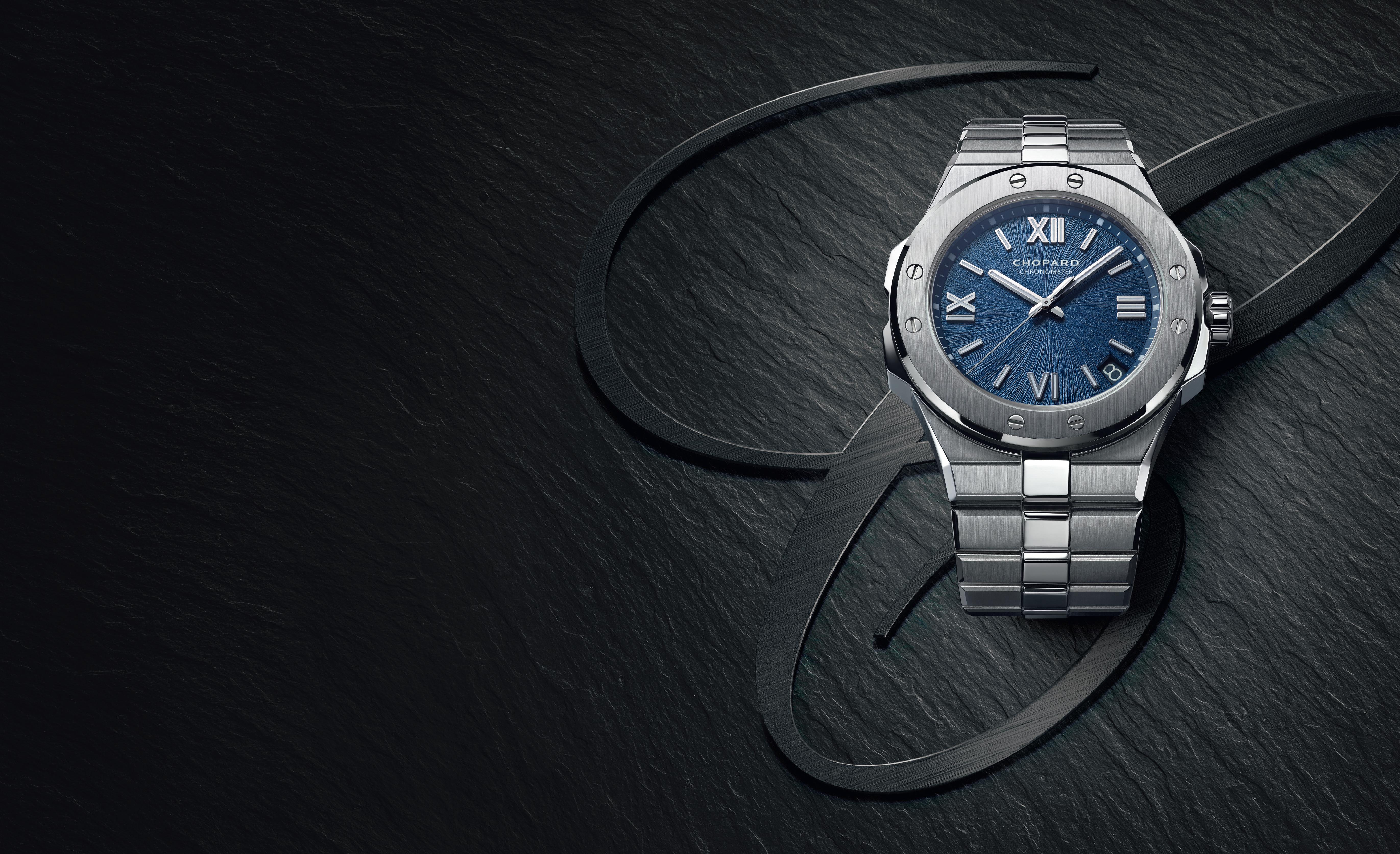
Epitomising the pure and sophisticated aesthetics of the Alpine Eagle collection, this 41 mm-diameter model with integrated bracelet is crafted from Chopard’s exclusive, high-quality Lucent Steel™. It is equipped with the chronometer-certified self-winding Chopard 01.01-C movement. Proudly developed and handcrafted by our Artisans, this exceptional timepiece showcases the finest expertise and innovation cultivated within our Manufacture.
Internationally celebrated. Distinctly Dallas.
The Dallas Art Fair presents extraordinary work by today’s most compelling artists—inviting visitors to discover new ideas, meet the people behind the work, and experience museumquality art up close.
Whether you’re art-curious or an avid collector, this is your chance to experience Dallas at its cultural peak.
Preview Benefit: April 16
Public Access: April 17-19
Names Bernbaum/Magadini
The Art of Real Estate
EDITOR’S NOTE
April / May 2026
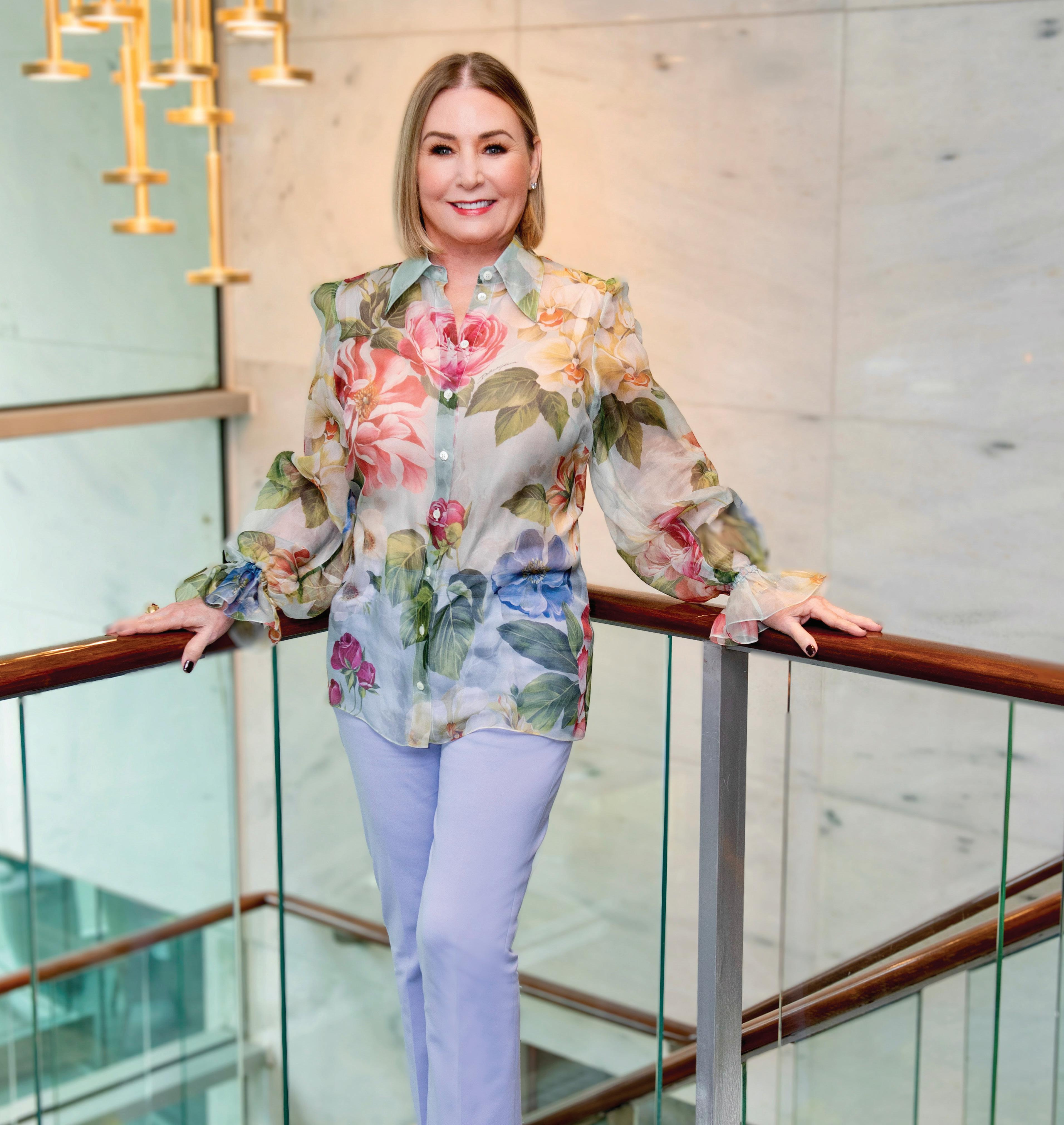
TERRI PROVENCAL
Publisher / Editor in Chief terri@patronmagazine.com
Instagram terri_provencal and patronmag
When the Texas redbuds burst into bloom, the city’s art scene comes alive. Among other events, the Dallas Art Fair galvanizes the arts community, propelling the acquisition of contemporary art by local collectors.
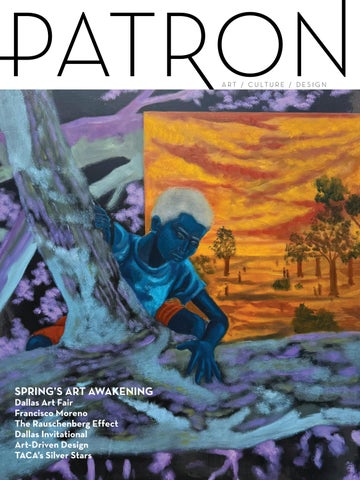
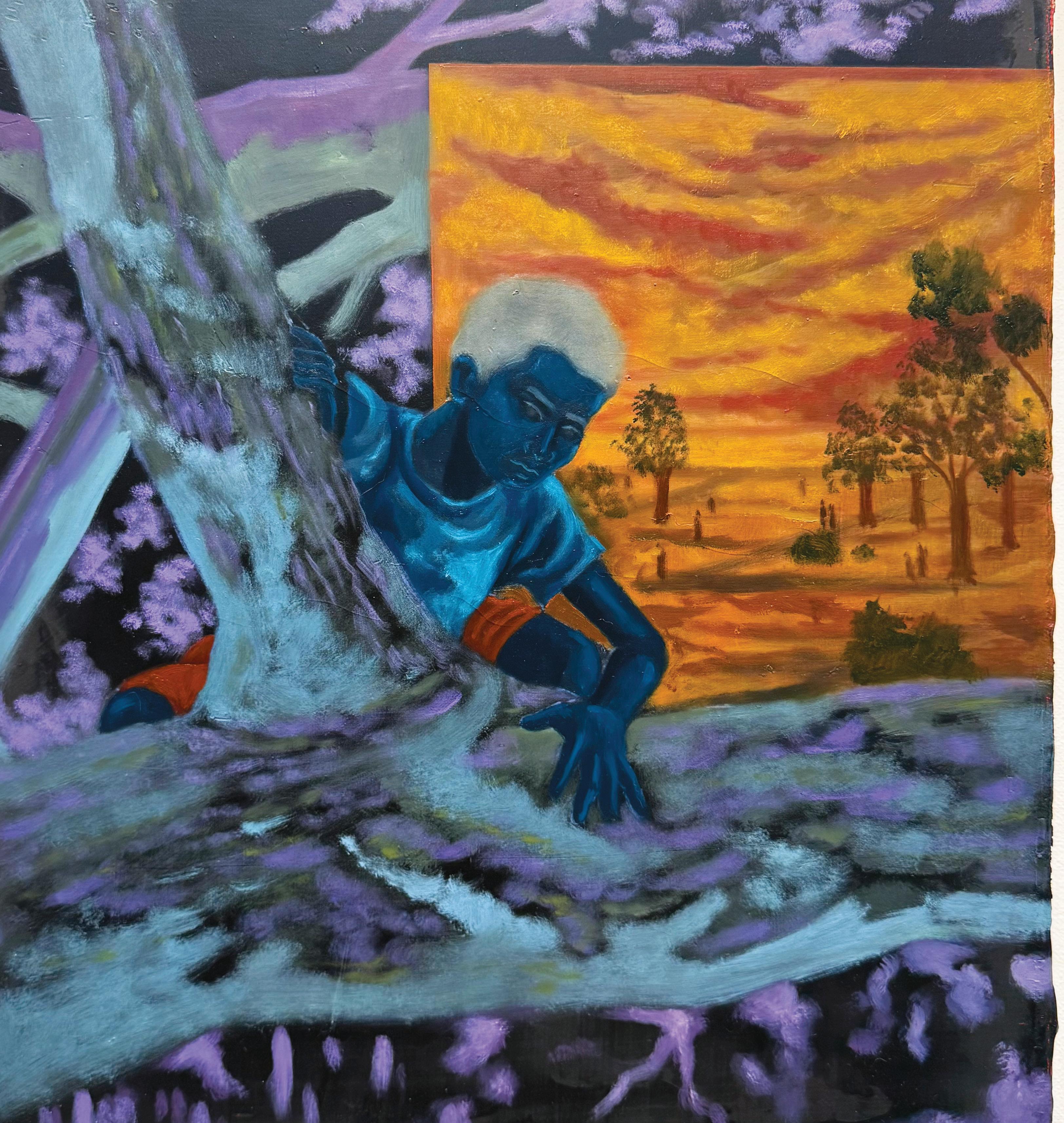
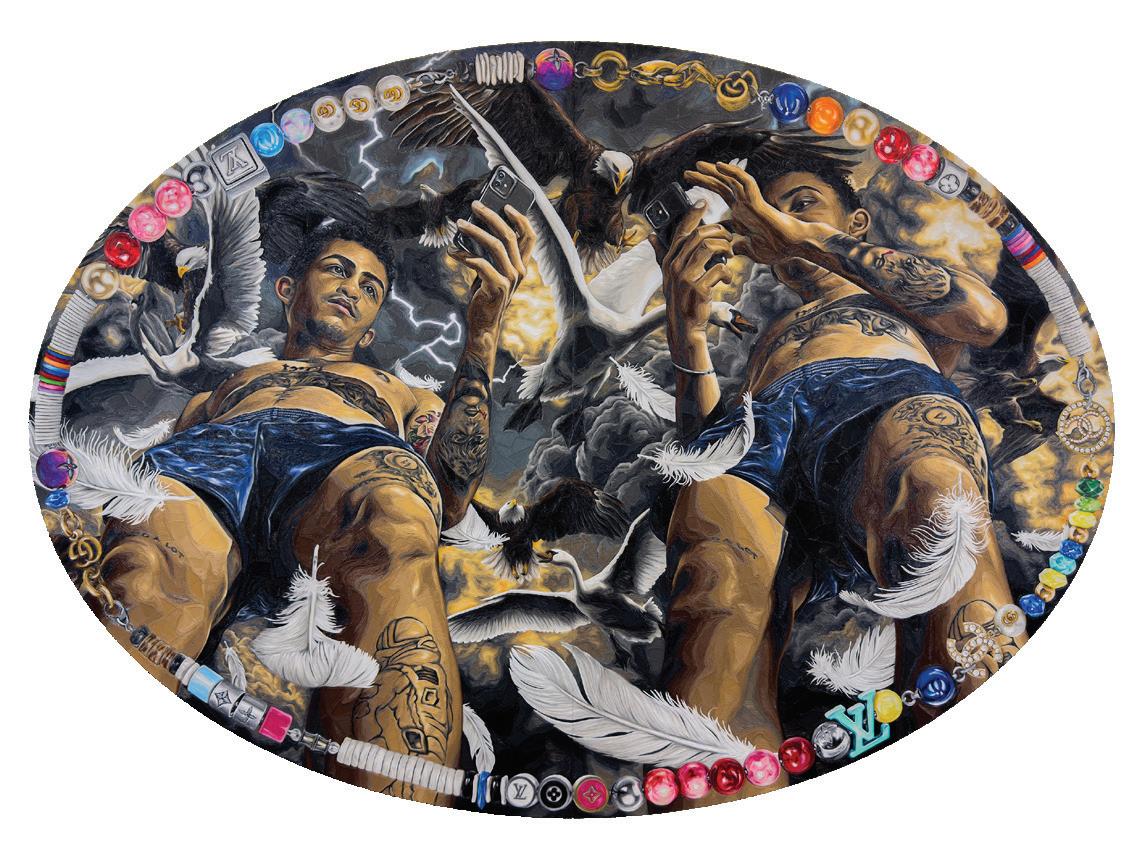
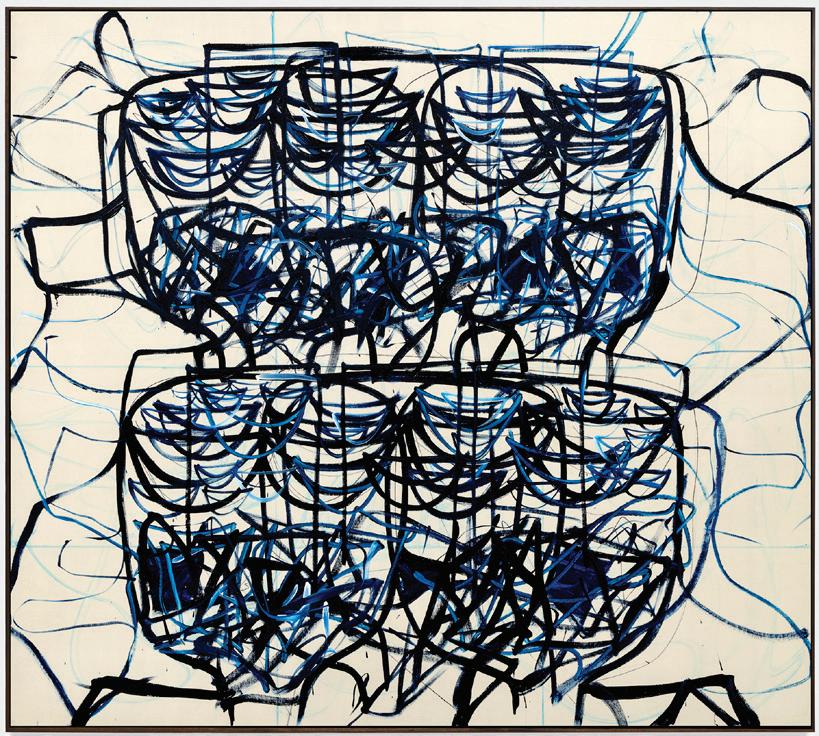
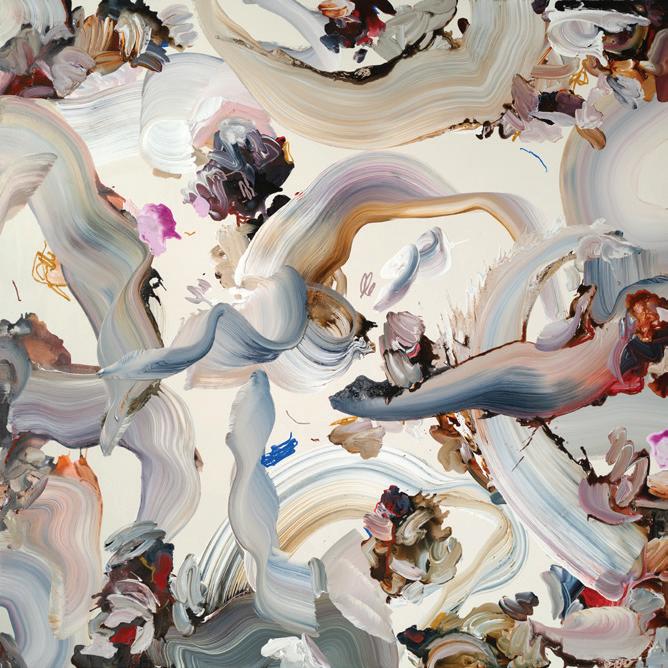
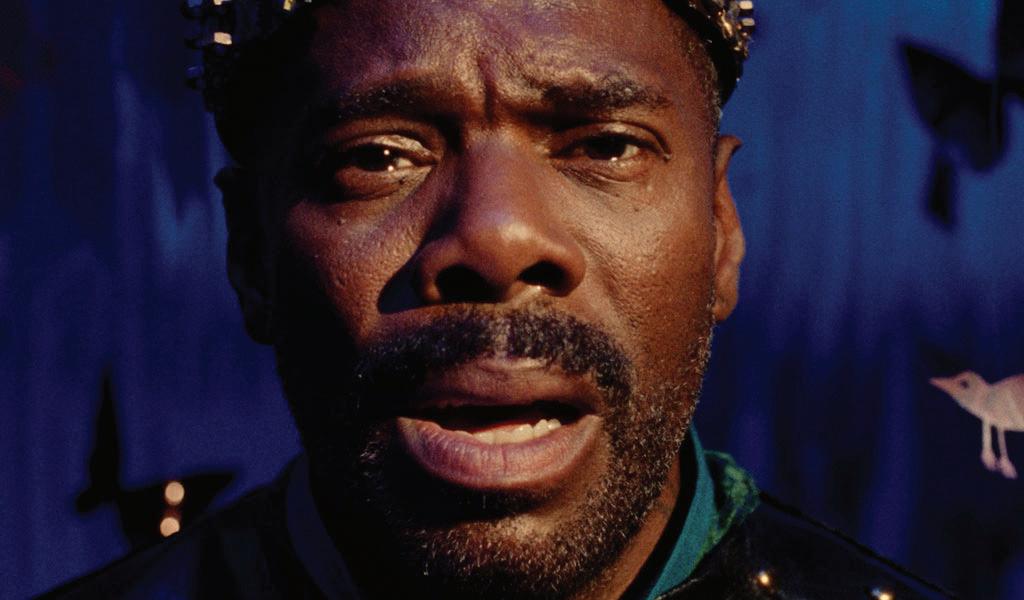
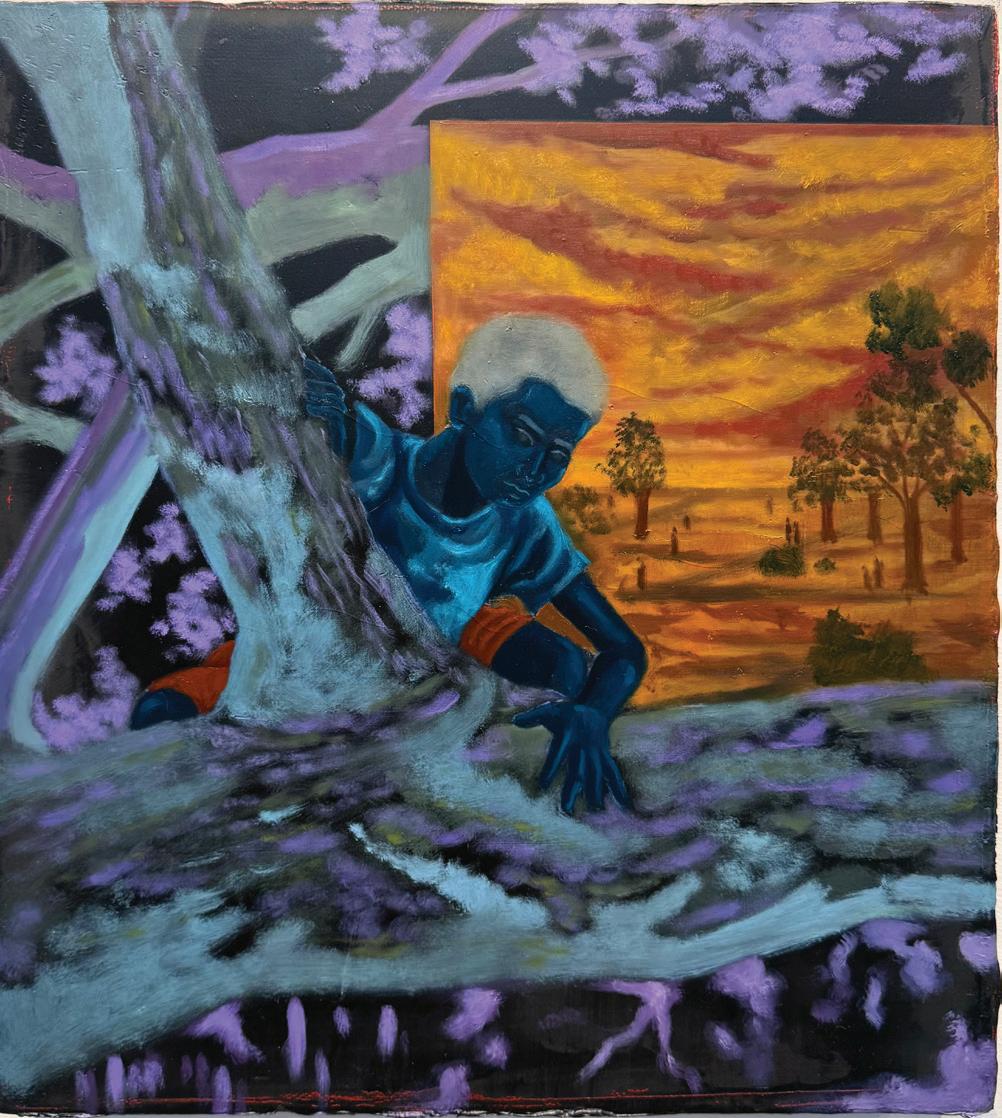
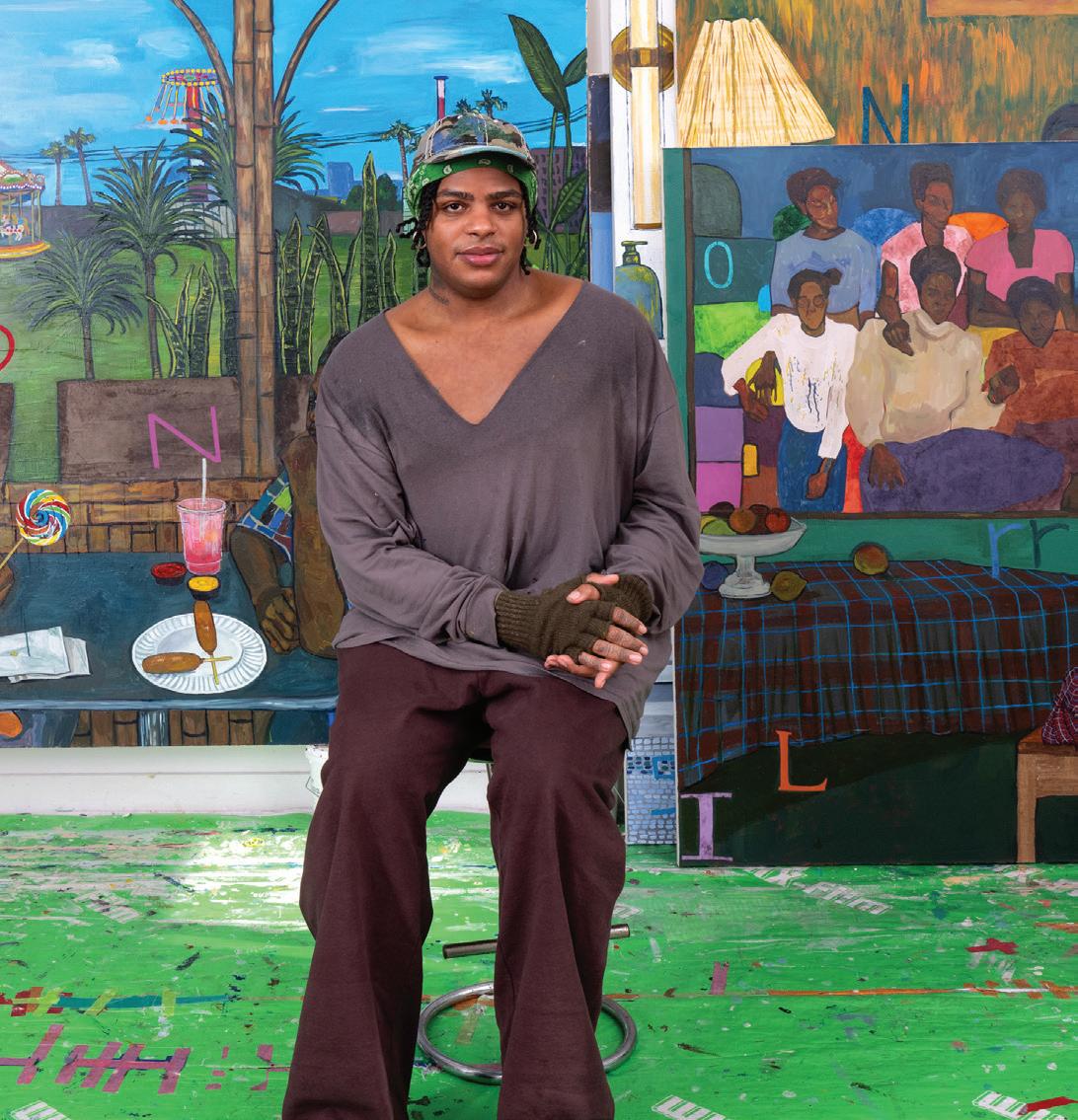
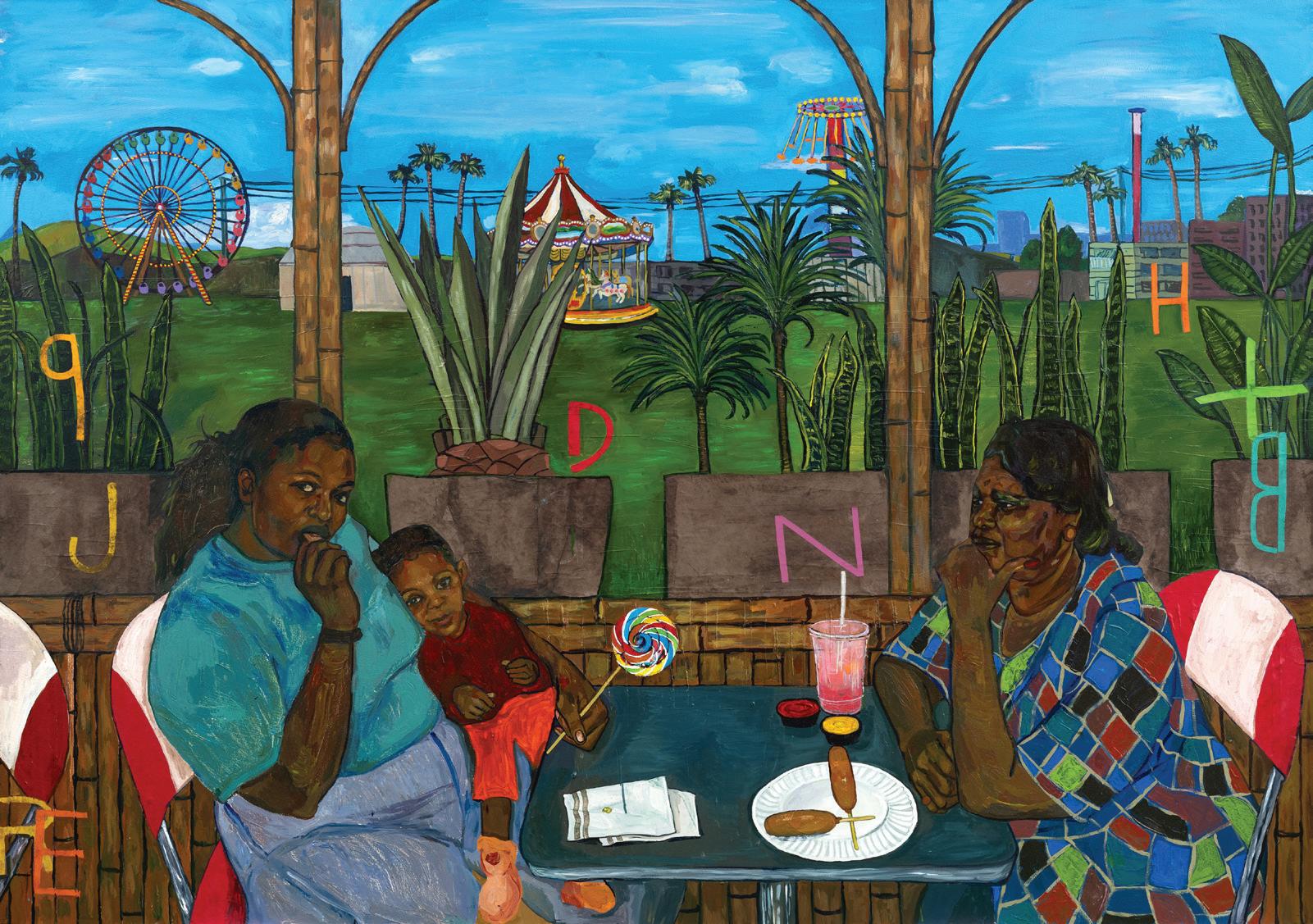
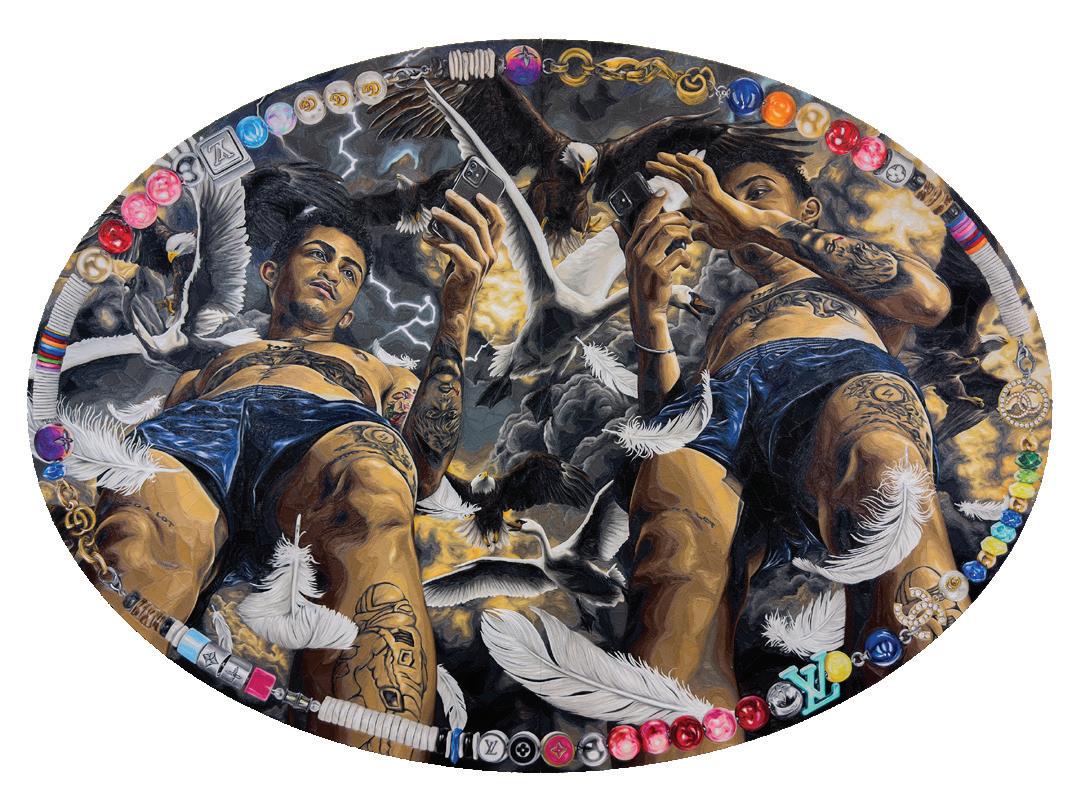
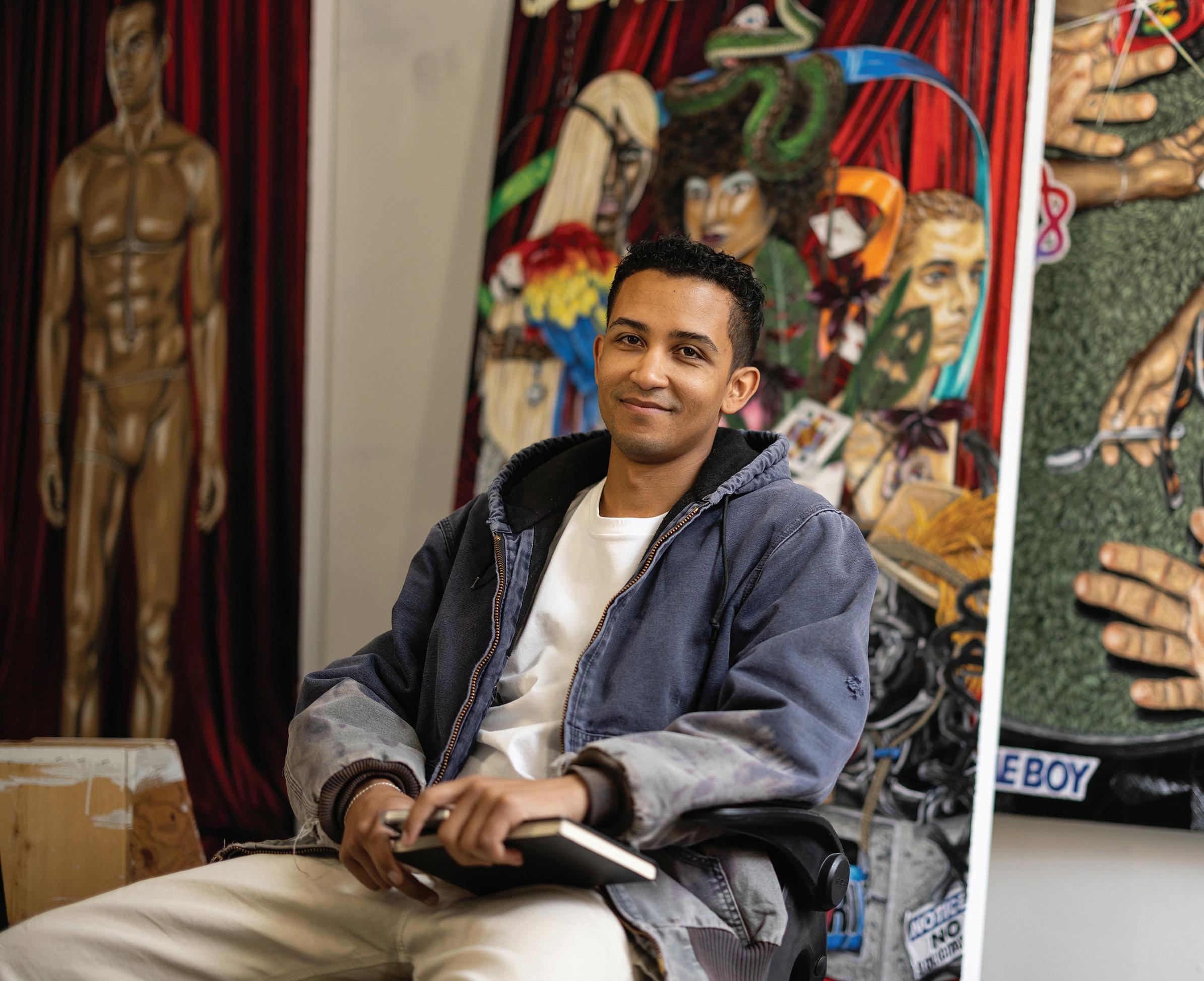
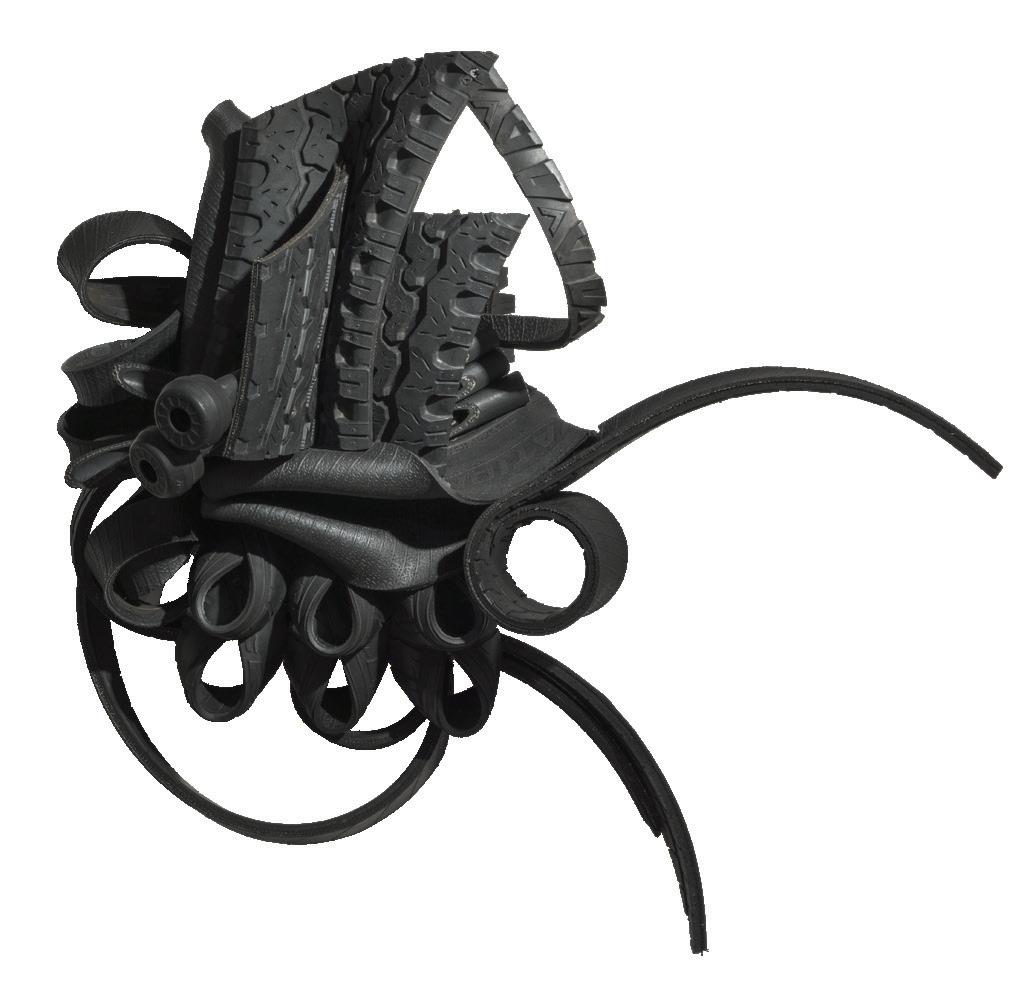
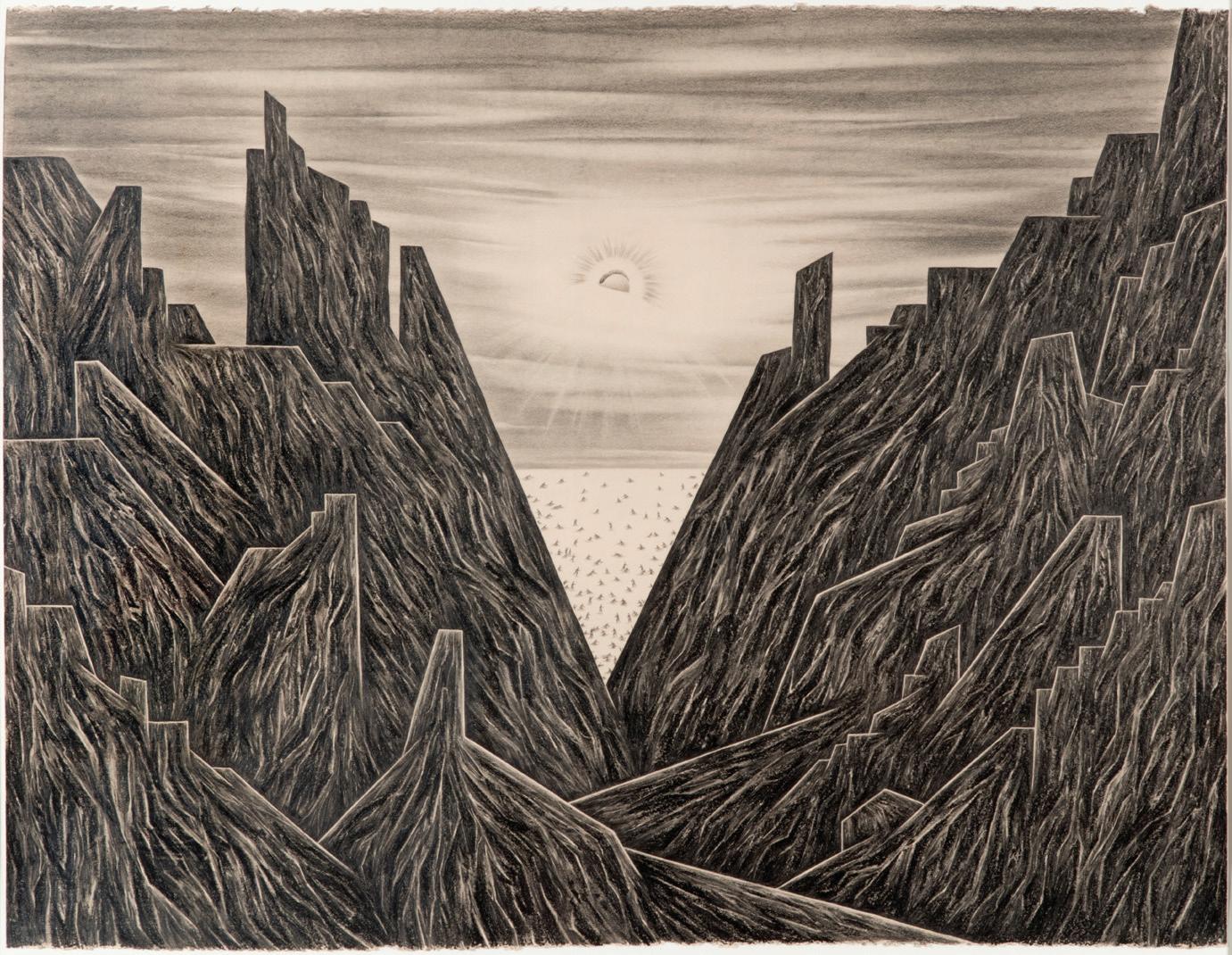
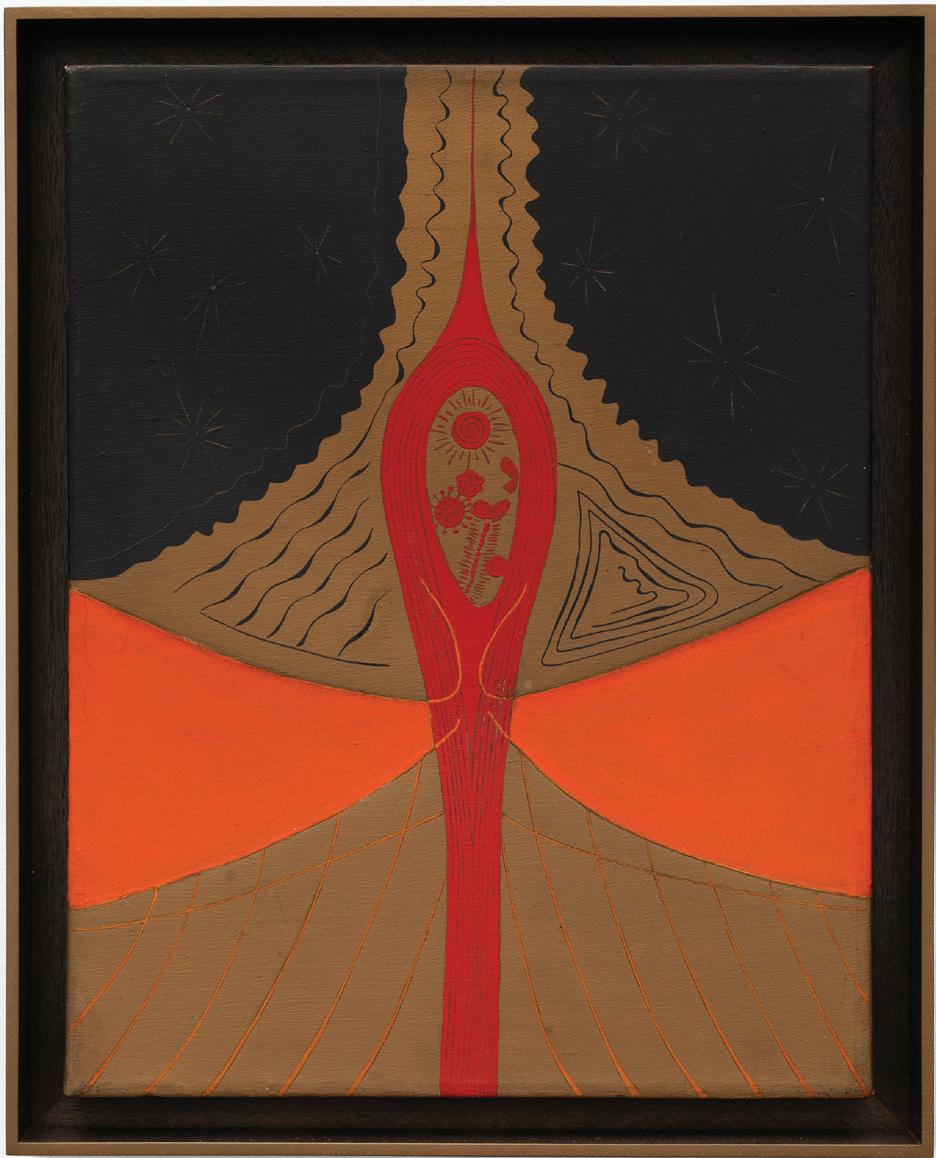
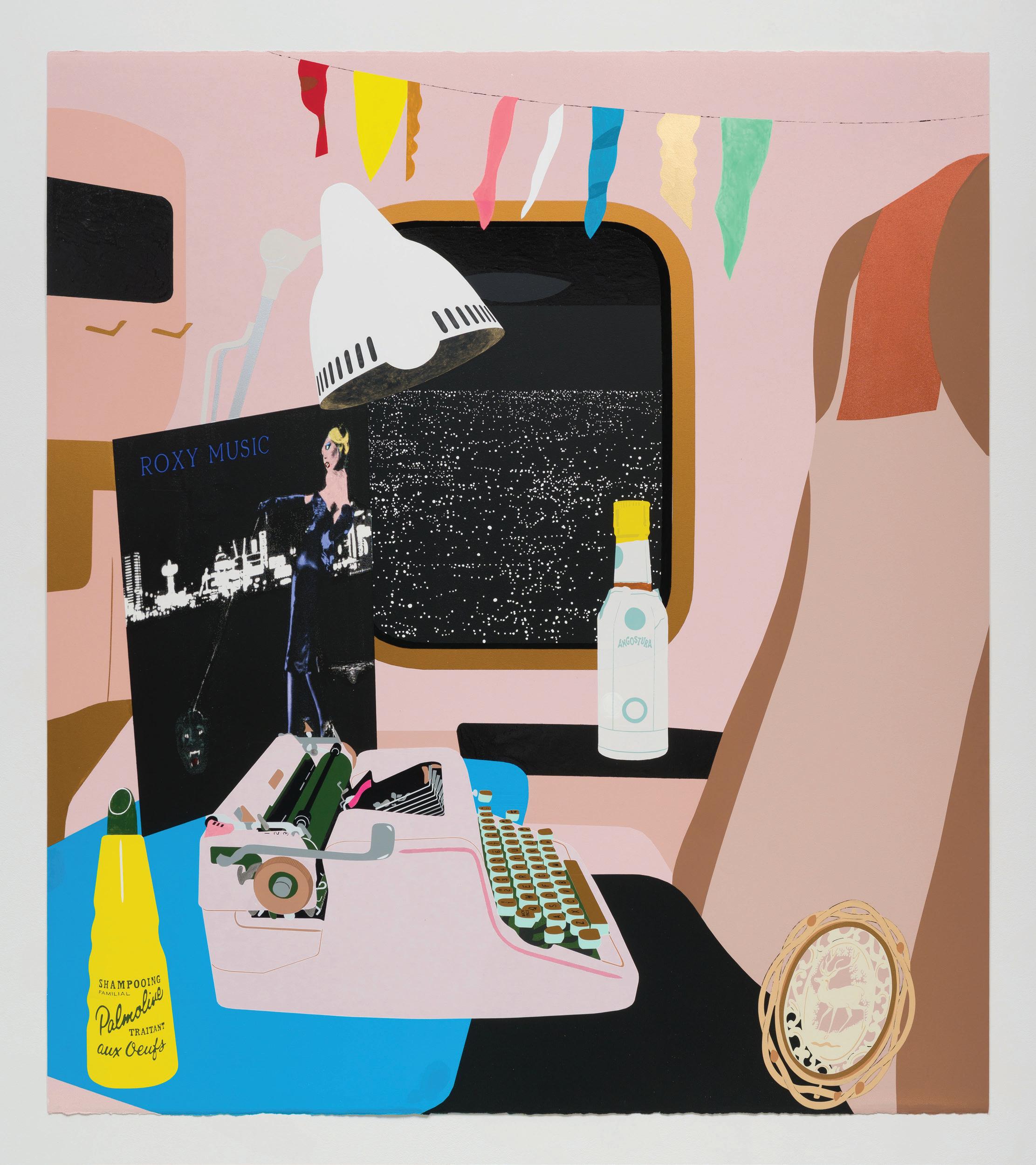
Fresh off the easel, Dominic Chambers’ Thoughts and Inversions #1, 2026, commands our cover, heralding the Dallas Art Fair’s return. In Cultural Currency we spotlight works by Chambers alongside artists showing within 10 booths by exhibitors from across the globe.
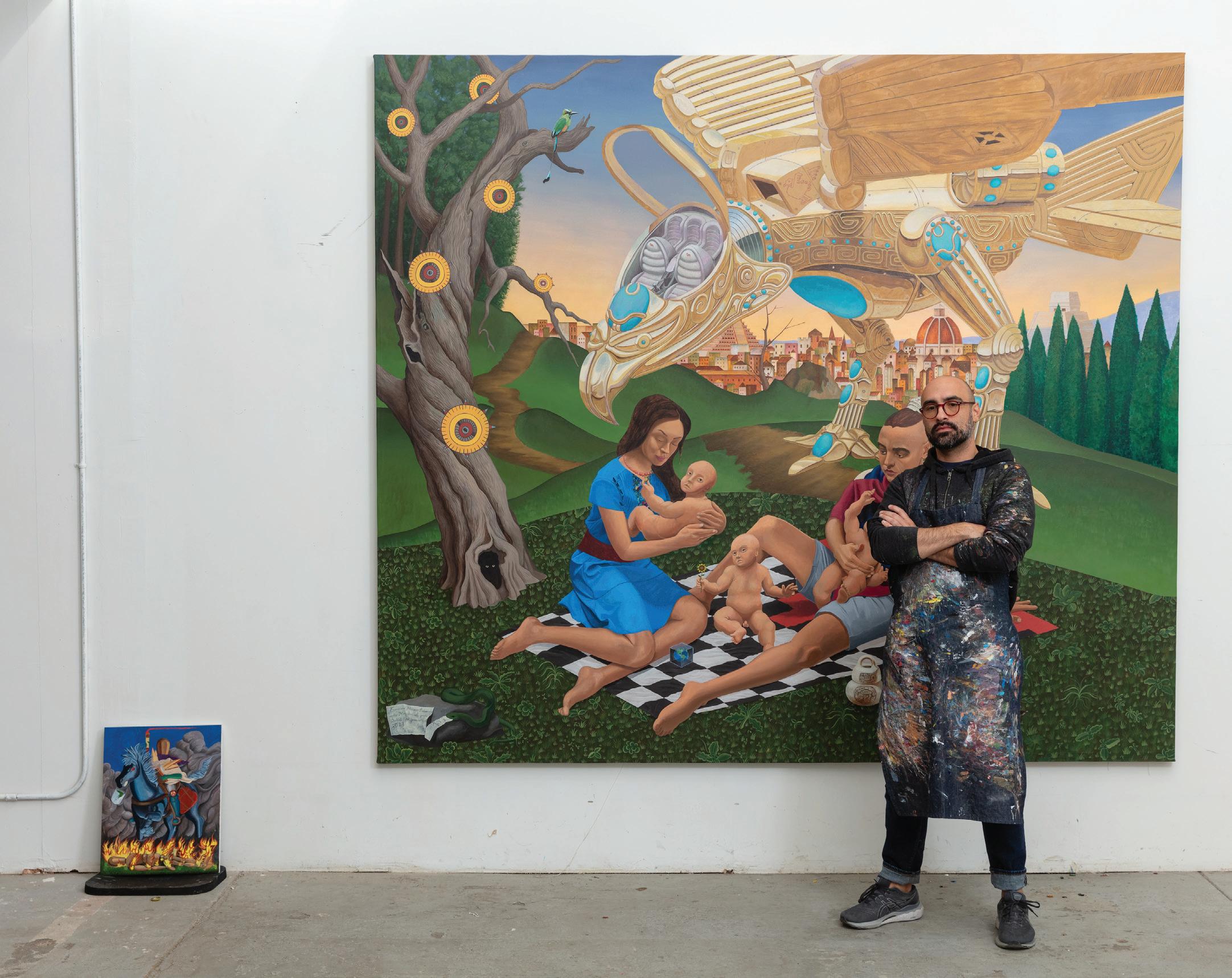
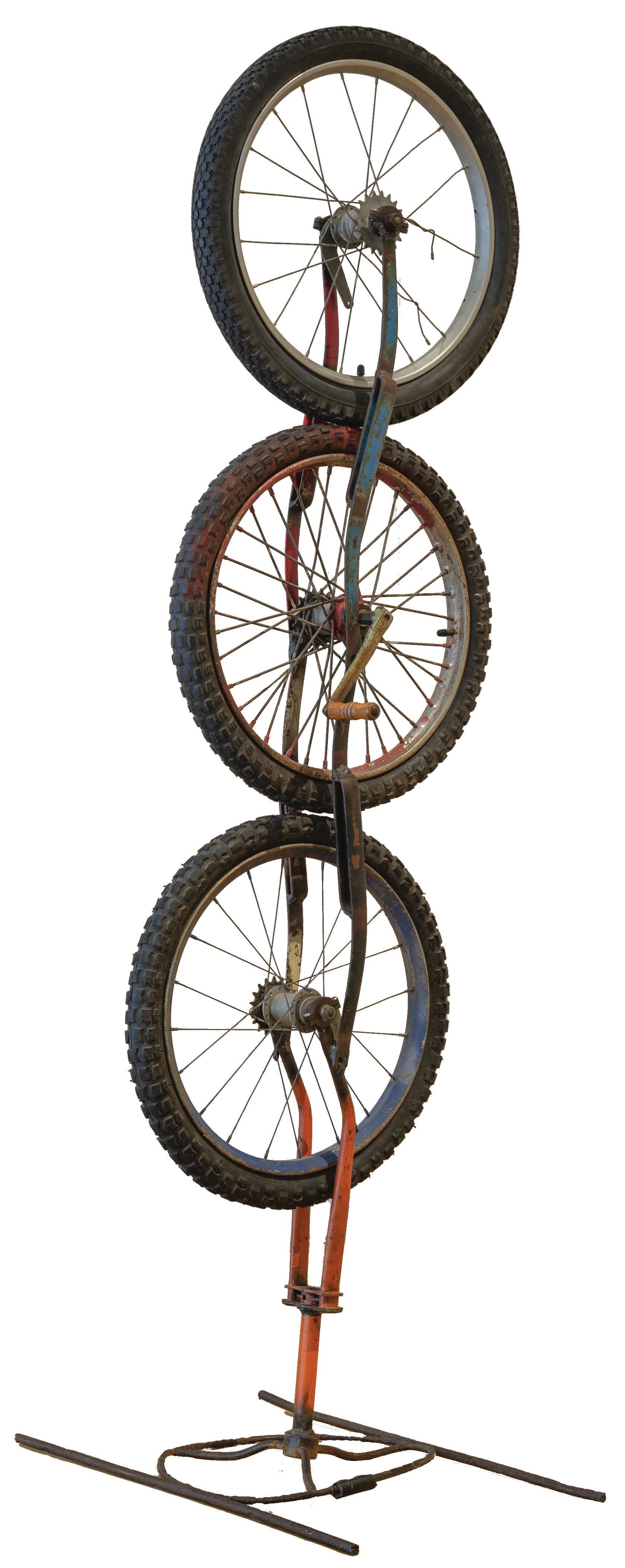
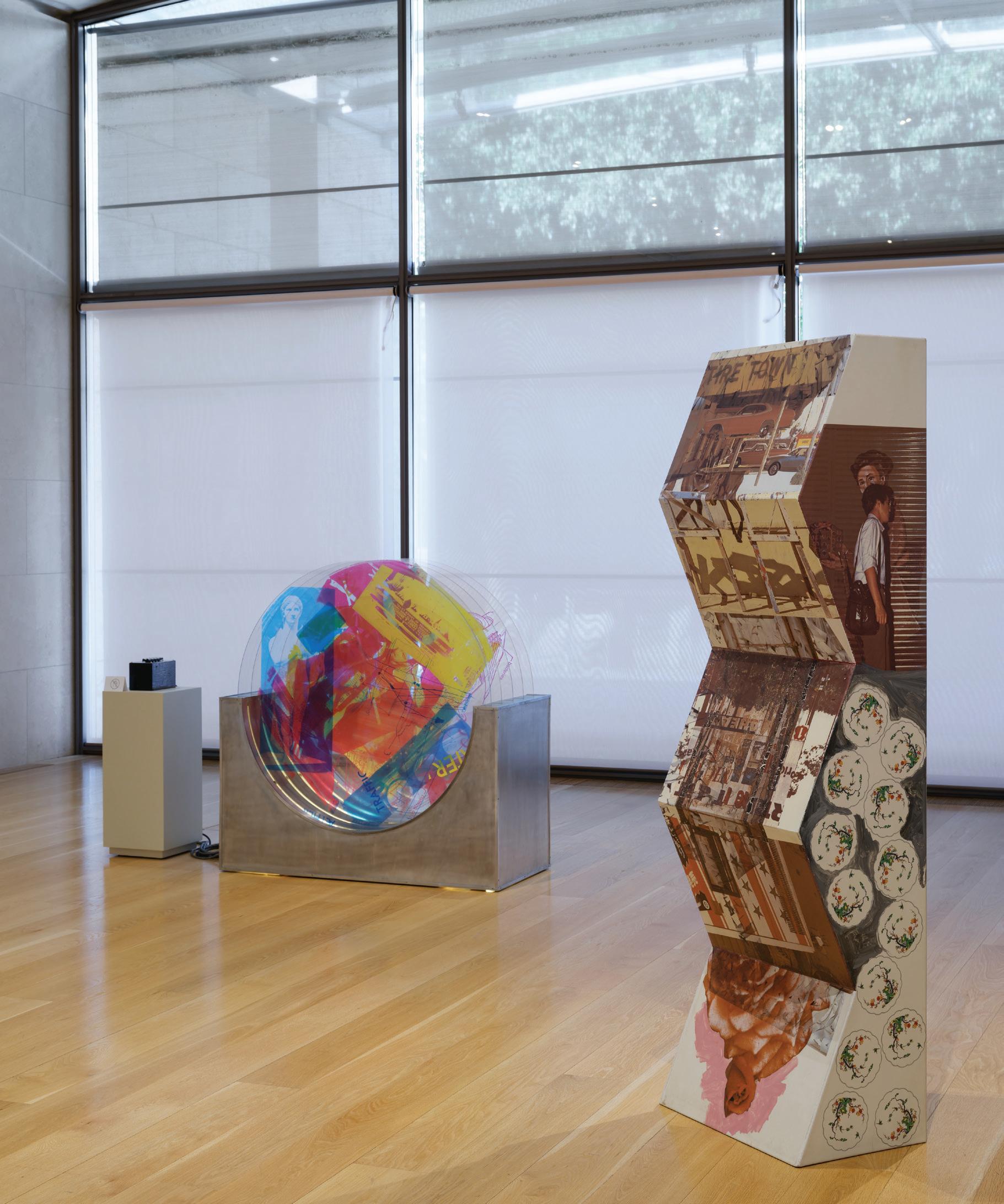
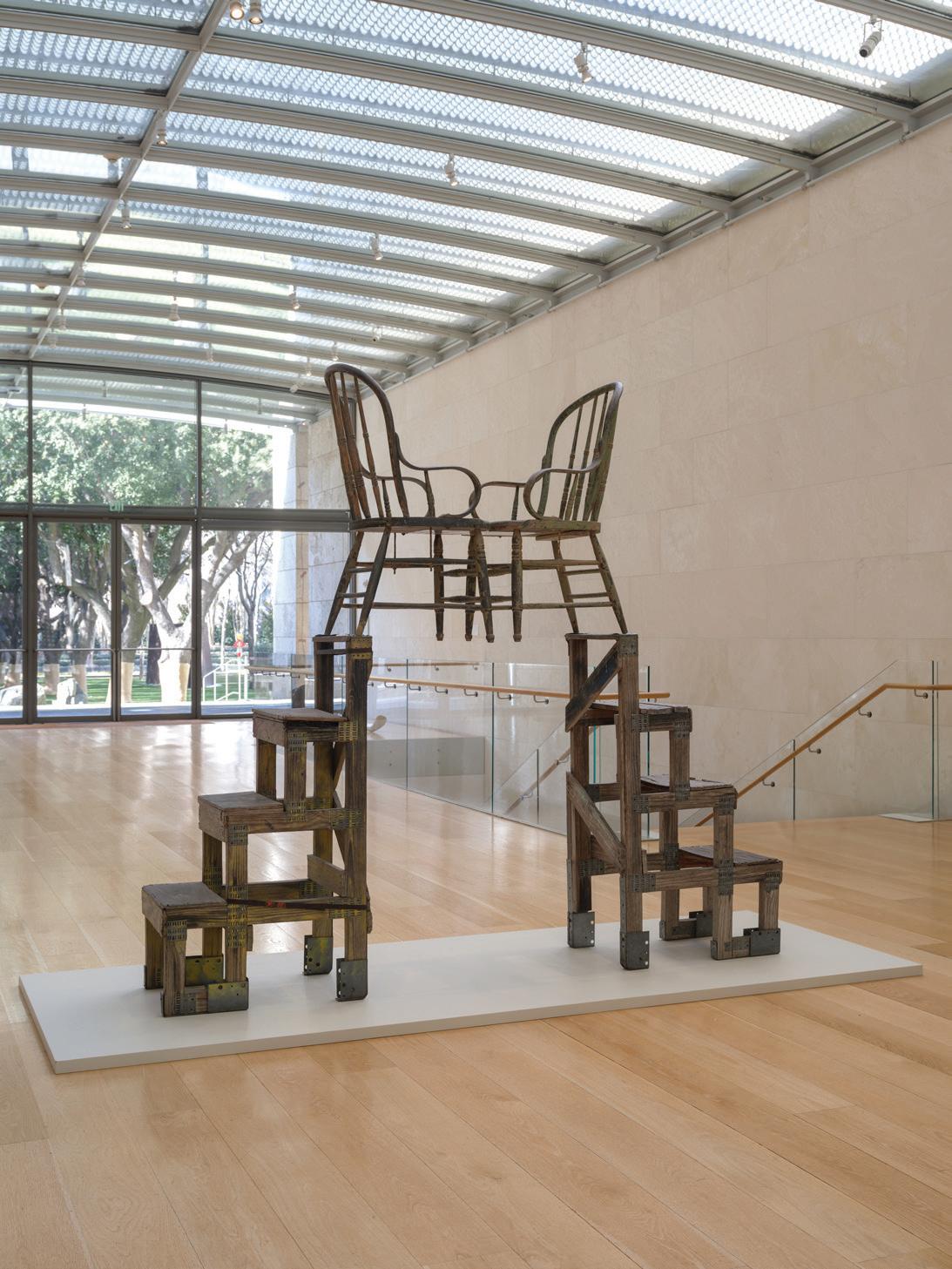
Next, in History Rewired, Adam Jasienski examines the monumental show for Dallas-based artist Francisco Moreno at Dallas Contemporary, while Matthew Bourbon’s The Democracy of Materials investigates Rauschenberg Sculpture on view at the Nasher Sculpture Center. And, at the Rosewood Mansion on Turtle Creek, Ben Lima turns his attention to the fourth installment of the Dallas Invitational in Invitation Only
Two design features include outstanding art collections beautifully integrated with elevated interiors. In Opposites Collect, Rob Brinkley takes in a project seamlessly shaped by contrasting artistic sensibilities, designed by Ten Plus Three’s Gonzalo Bueno. Next, A House Full of Statements sees Samantha Fisher Studio’s work with collector and art advisor Lisa Brown.
The brilliance and longevity of the arts rest in the hands of those who champion them. In Silver Stars, Lee Cullum reveals the hidden layers of the shining talents of Nancy Carlson and Andy Smith, this year’s TACA Silver Cup Award honorees.
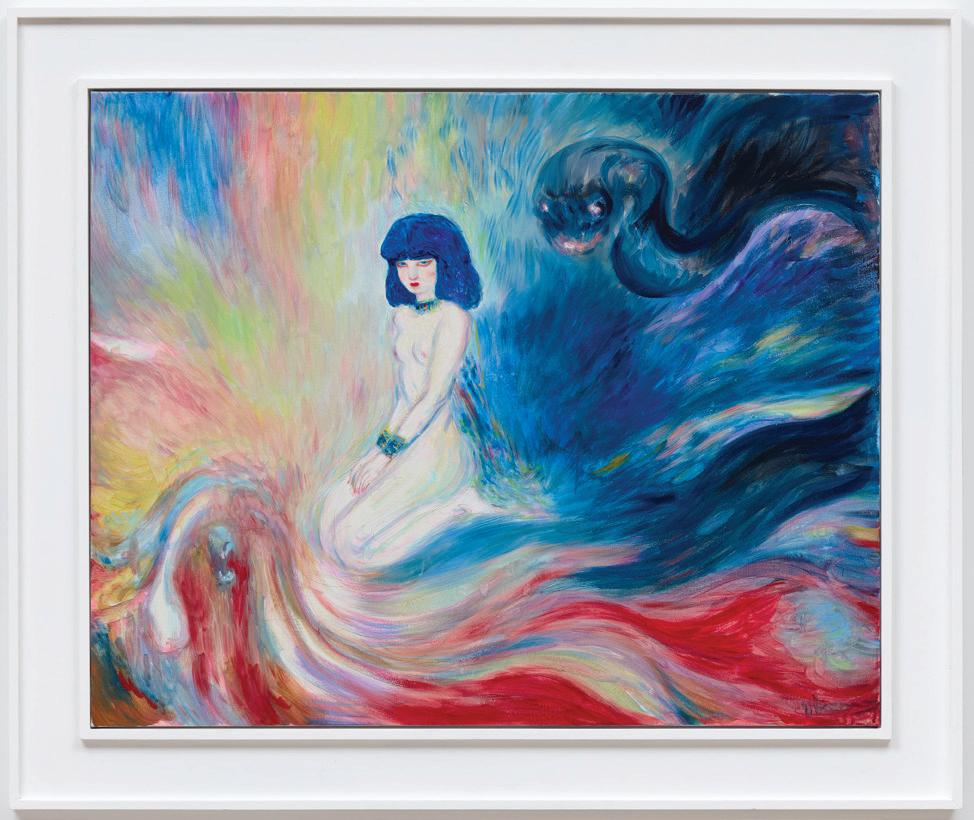
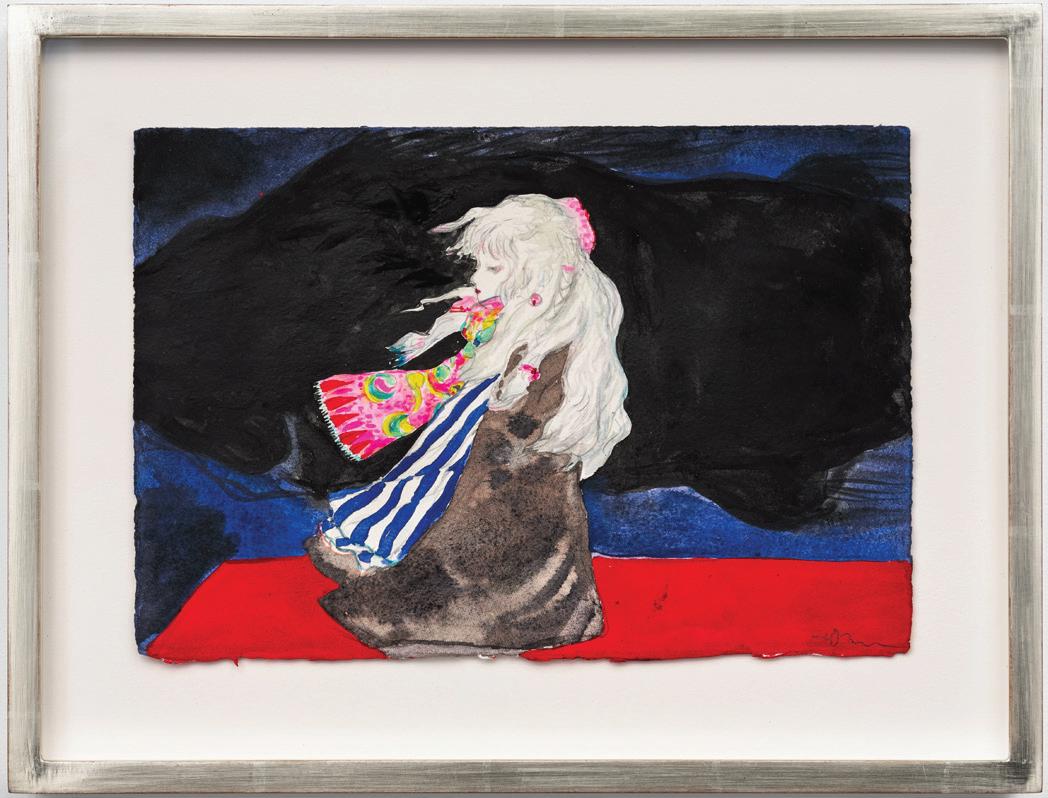
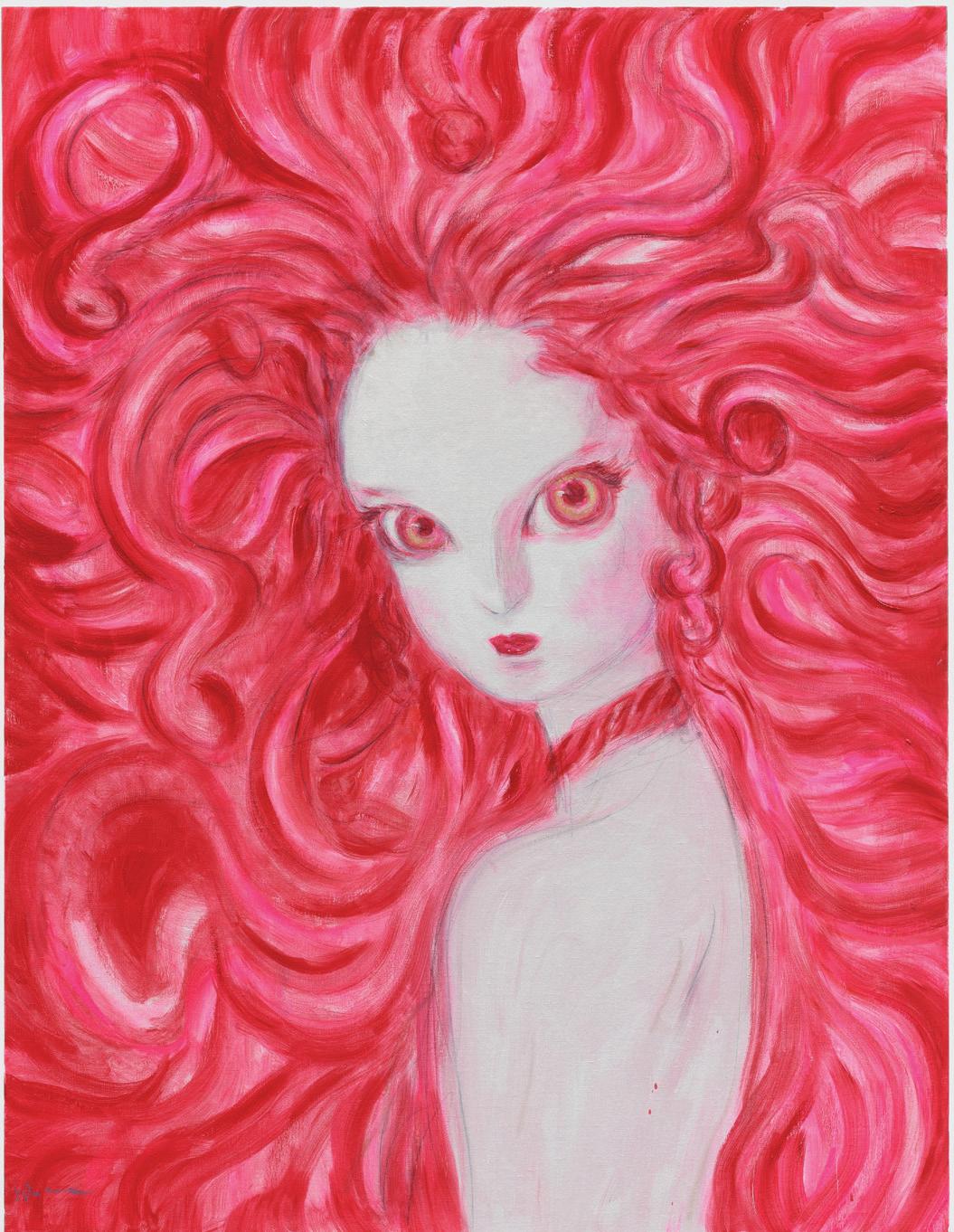
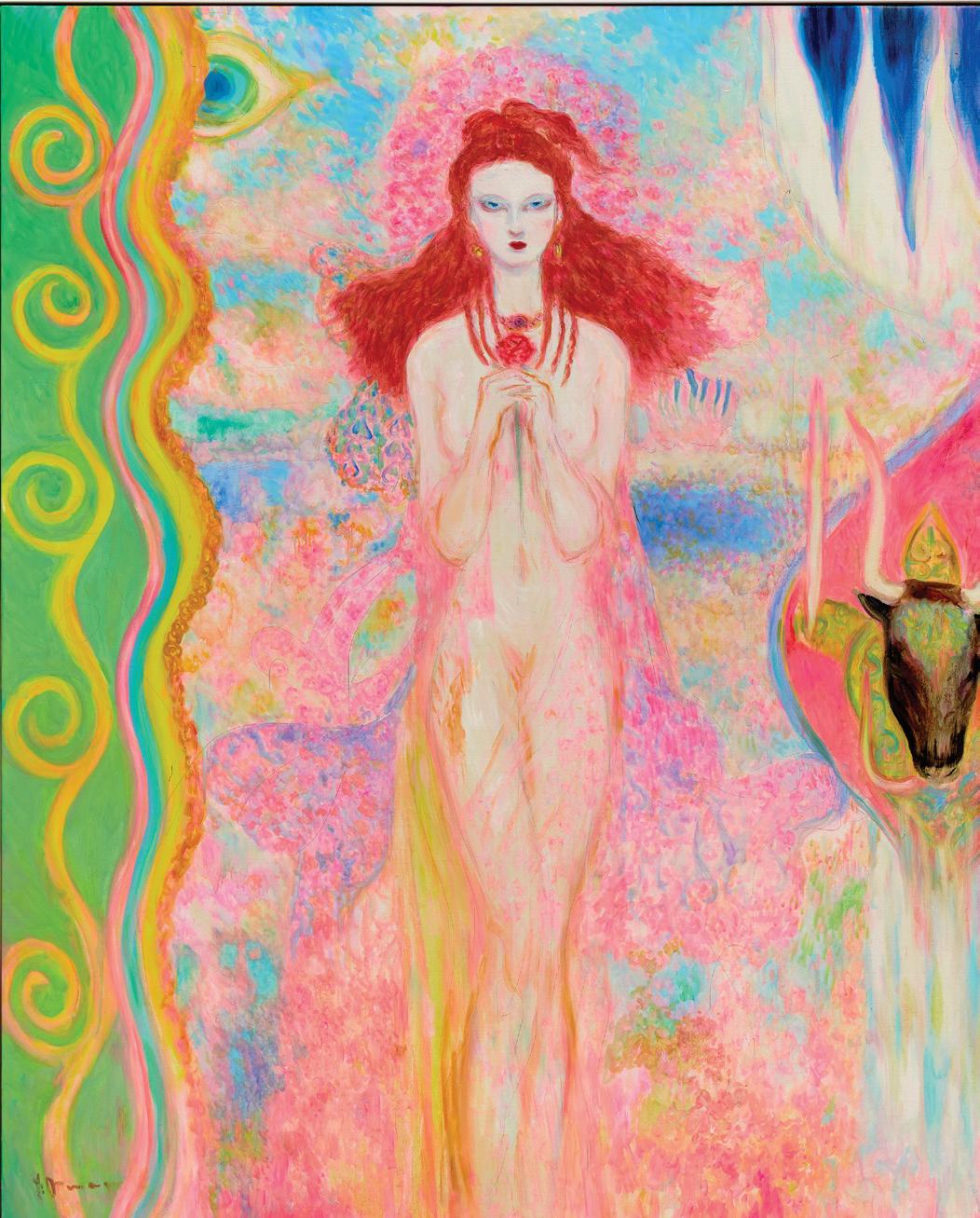
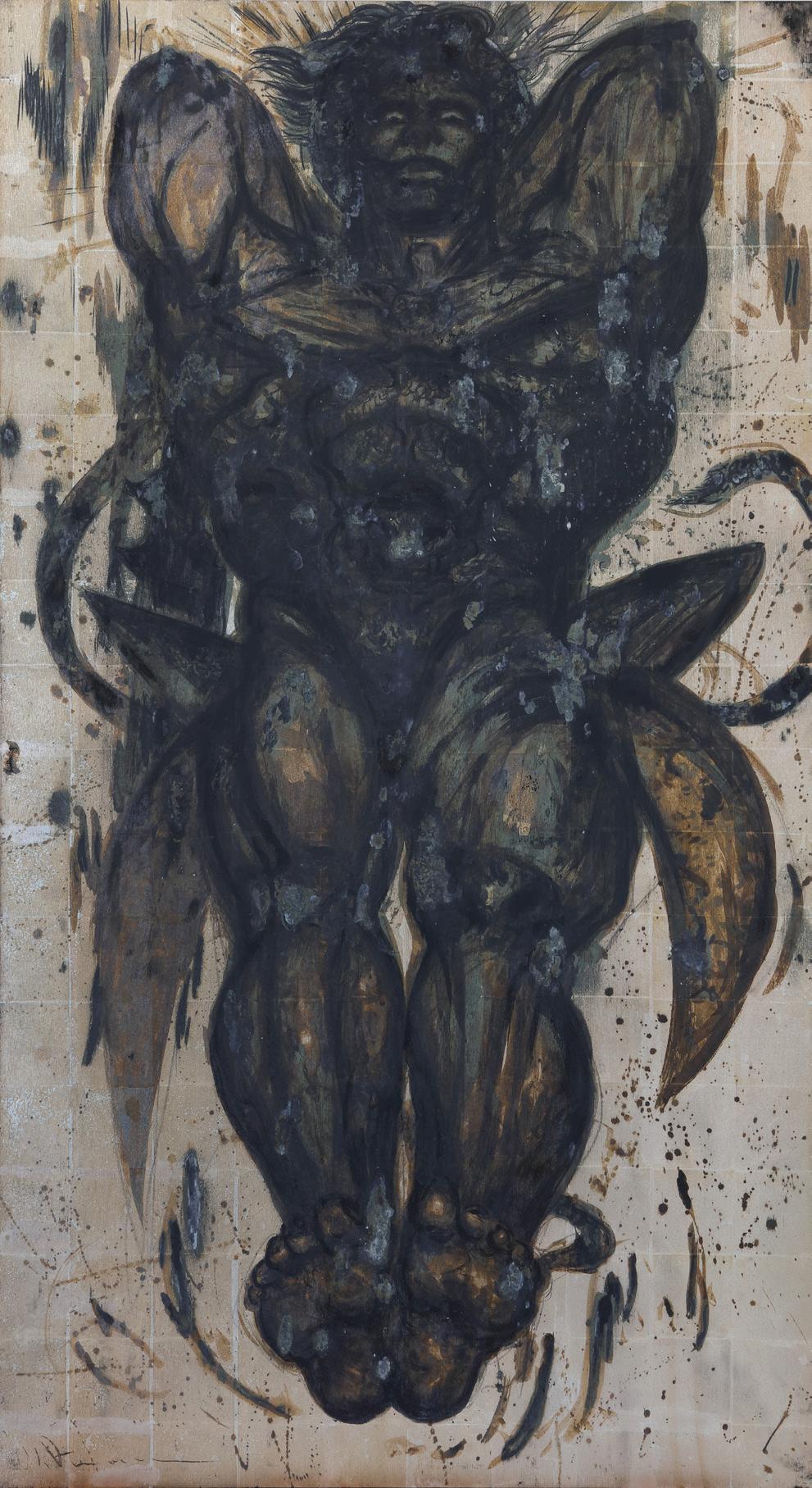
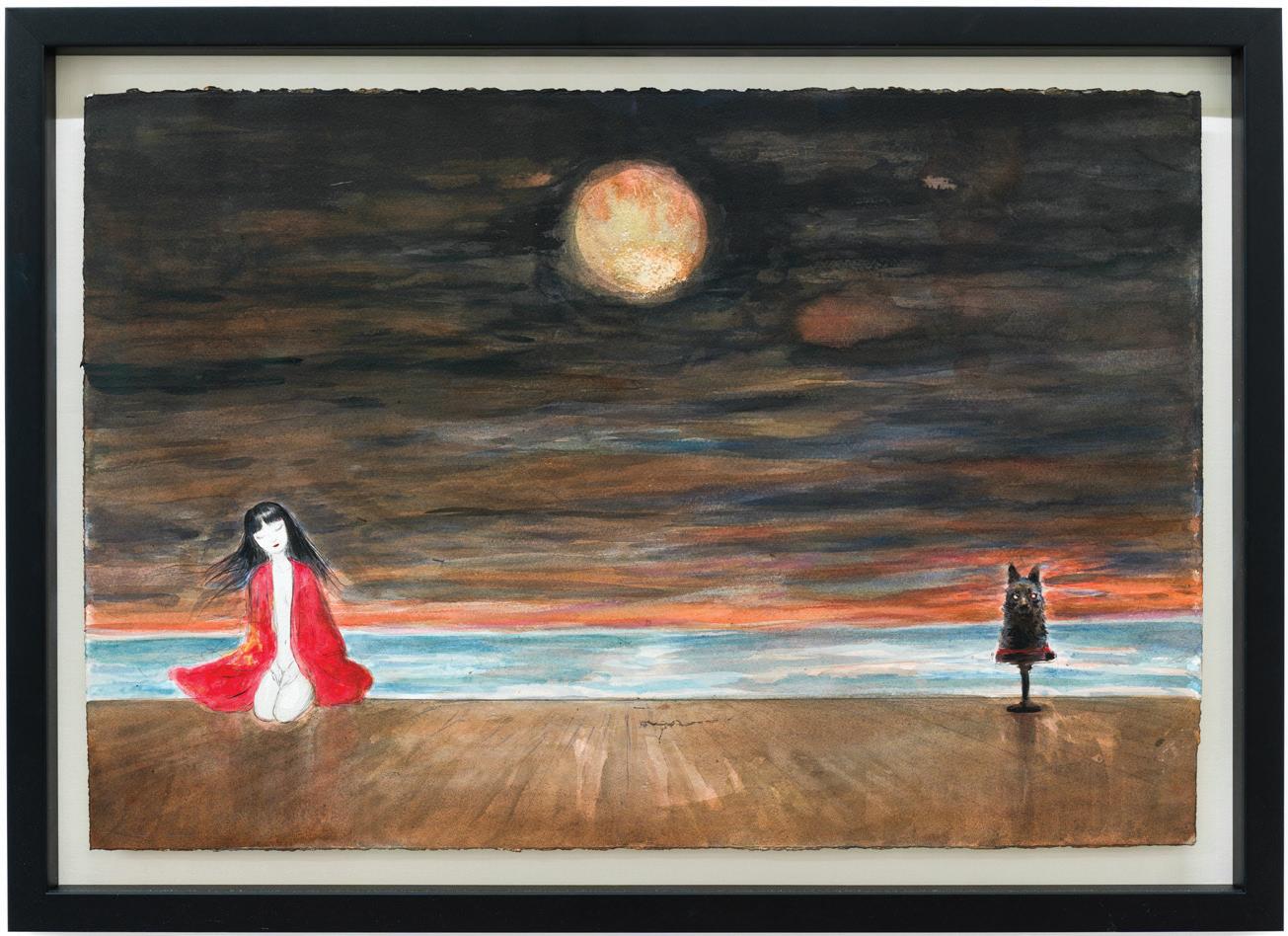
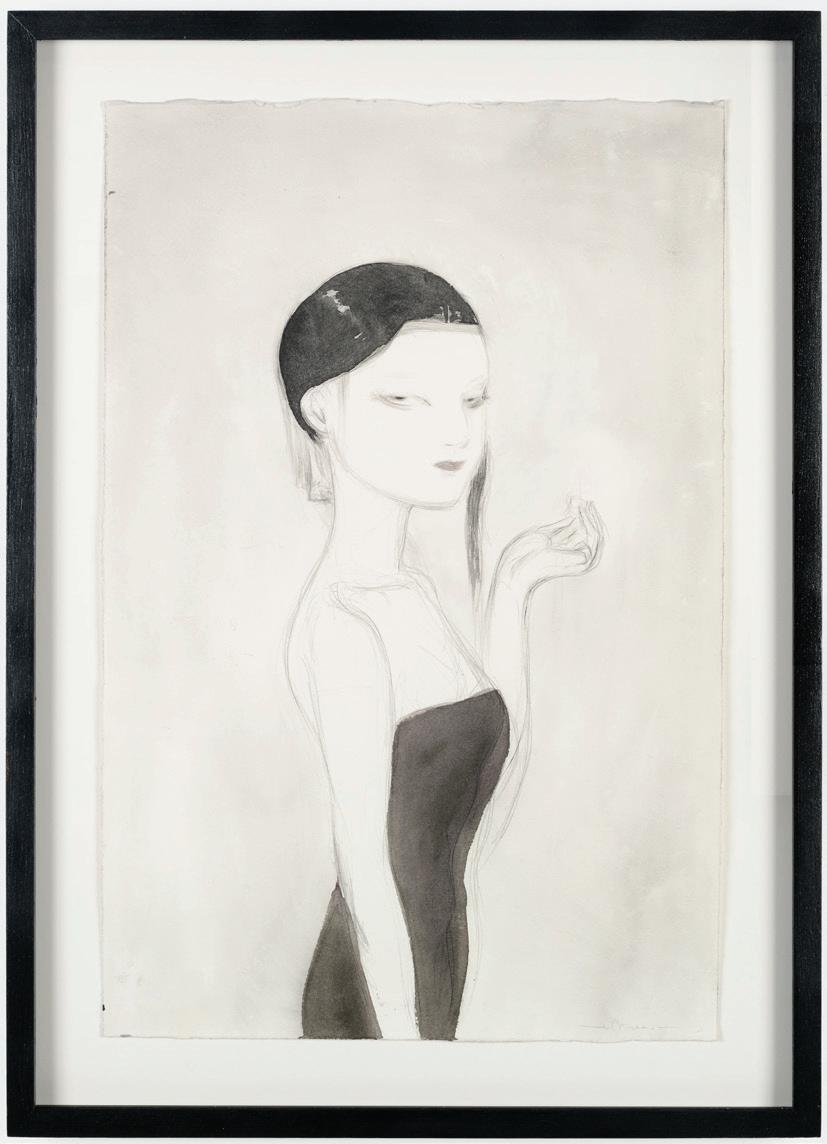
In Openings, two bold showings from The Warehouse and The Power Station add oomph to the Dallas Arts Month lineup. At The Warehouse, as explored by Eve Hill-Agnus in Yoshitaka Amano’s Expanding Universe, an expansive dual show of the Japanese artist’s work maps a career spent shattering boundaries and conjuring entire worlds. In Fragments & Fins, Danielle Avram writes of two shows opening at The Power Station: Body Fragments combines antiquity with contemporary art, and Feel Good Hit of the Summer by Picnic Curatorial Projects defies categorization: part exhibition, part collaboration, part surf shop.
In our interviews we highlight John McAllister, the first recipient of Dallas Art Fair’s Dallas Art Prize. Read Mark LaRoe’s thoughtful conversation with the artist, who is represented by James Fuentes Gallery, in Reverie at its most potent Meanwhile, in Eternal Repose, Chris Byrne catches up with Frank Benson, whose sculpture Juliana is on view in New York at The Flag Foundation’s S-Curve exhibition. Also in Contemporaries, Open to the Public sees Danielle’s conversation with John Runyon on his art advisory work for public installations.
In Nature Morte, Nancy Cohen Israel talks with local artist Chris Stewart. Known for his branding and design company BlackEye, Stewart now turns his creative eye to his own art practice. Across town, The Reel Deal marks 20 years of the Dallas International Film Festival featuring Oscar-nominated local filmmakers like Clint Bentley of Train Dreams
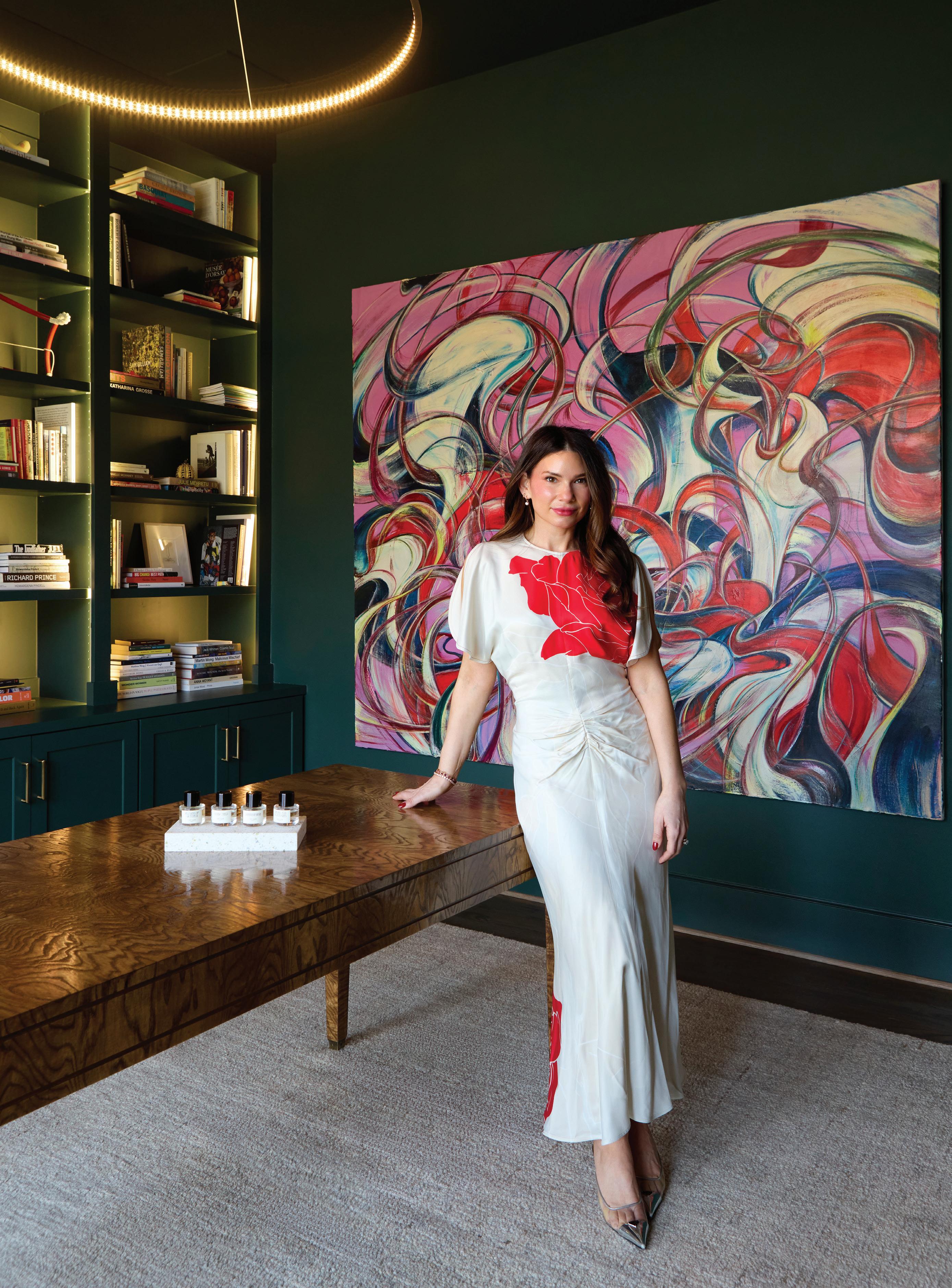
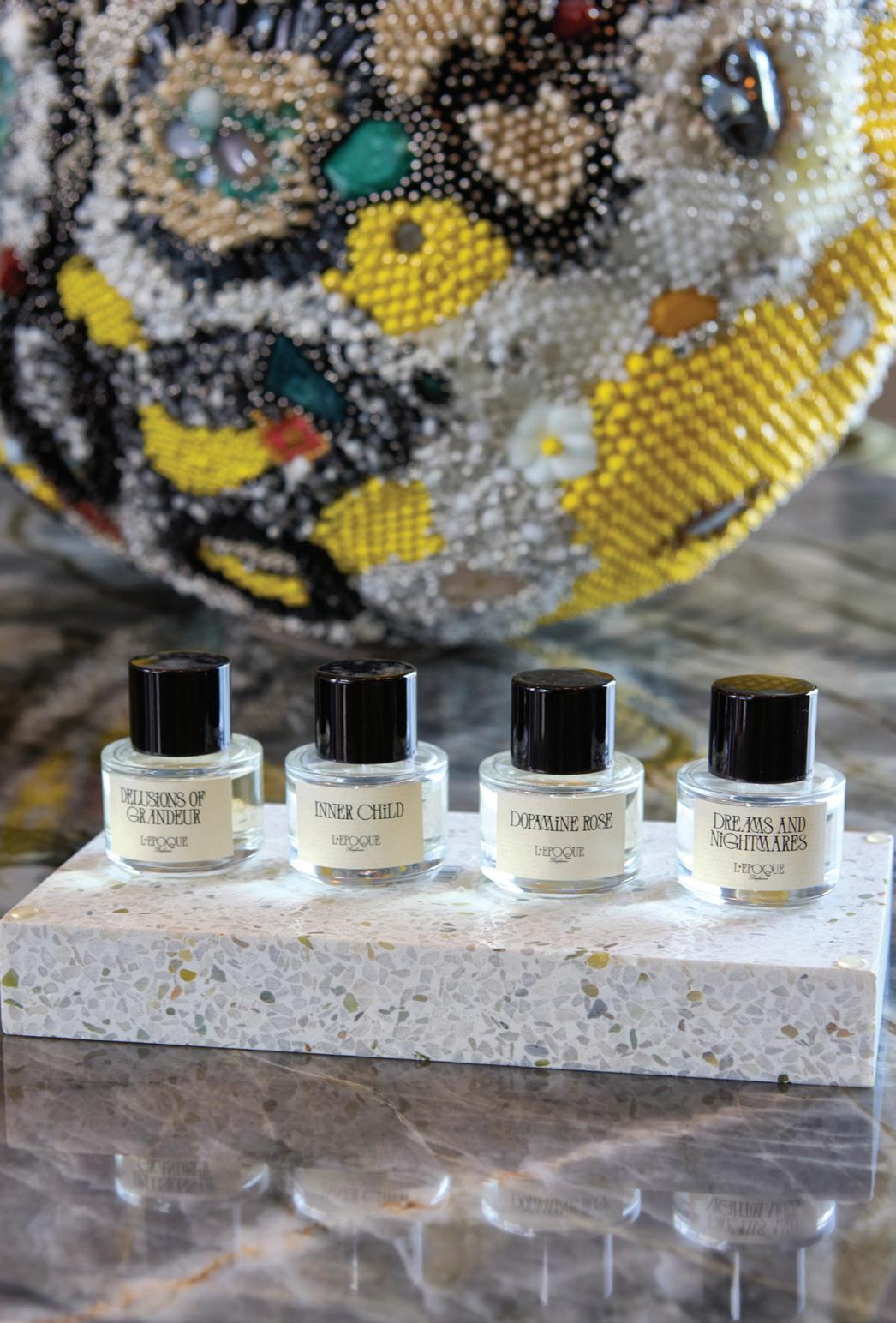
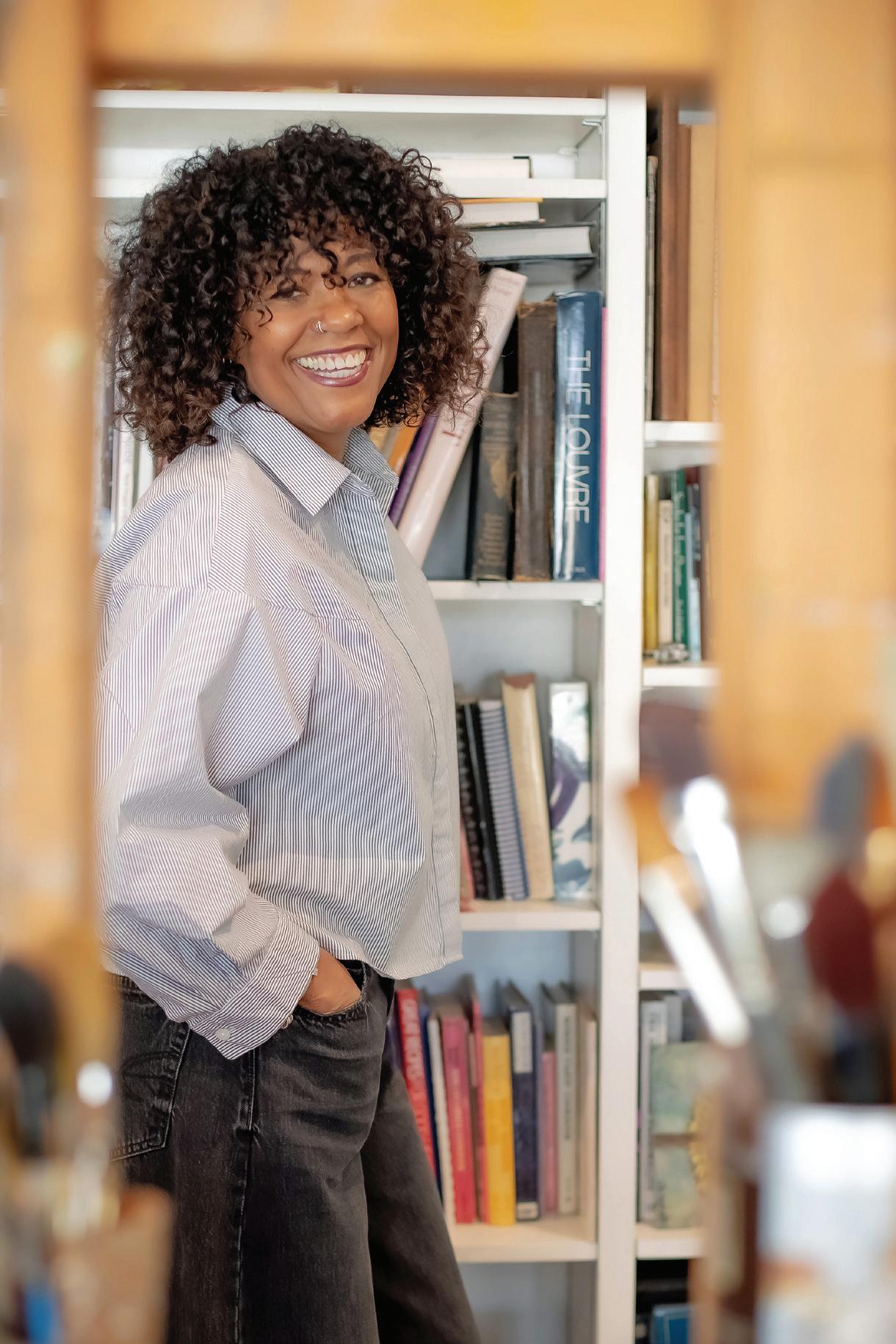
In Atelier, we catch up with Rachel Green, the visionary behind L’Epoque Parfums, a maison that transforms scent into pure sensory artistry. Fragrance is the new lip gloss makes every parfum irresistible.
But beyond the exhibitions, collections, and creative pursuits that fill these pages, a cultural community is ultimately shaped by the people whose curiosity, generosity, and presence give it life. As such, we remember Linda Custard, a woman whose inquisitive spirit was as memorable as her kindness and advocacy. I first met her in 1996, a year after I moved to Dallas, at the beloved Knox Street hot dog and custard shop, Wild About Harry’s. That afternoon, Harry Coley, with his easy charm, shared the story of how his mother’s custard recipe prompted him to leave a decades-long career in apparel. Linda listened with her characteristic attentiveness, turning someone else’s story into a moment of significance. From that first encounter, I was smitten.
–Terri Provencal
FEATURES
70 CULTURAL CURRENCY
Meet the standout artists whose boundary-pushing work will command attention at this month’s Dallas Art Fair.
By Nancy Cohen Israel, Ian Etter, Terri Provencal, and Darryl Ratcliff
80 HISTORY REWIRED
Francisco Moreno’s Historia Sintética premieres at Dallas Contemporary. By Adam Jasienski
86 THE DEMOCRACY OF MATERIALS
Rauschenberg’s genre-optional universe at the Nasher.
By Matthew Bourbon
92 INVITATION ONLY
How James Cope turned a one-off Dallas experiment into an insider fair phenomenon.
By Ben Lima
100 OPPOSITES COLLECT
Her taste runs to abstraction. His veers toward the Surrealists. Somehow, the marriage—and the collection—works beautifully.
By Rob Brinkley
108 A HOUSE FULL OF STATEMENTS
Inside Lisa And Chuck Brown’s home, conceptual masterpieces share space with mahjong games, family dinners, and a resident giant land turtle.
By Rob Brinkley
116 SILVER SERVICE
From volunteerism to vision, TACA celebrates arts champions Nancy Carlson and Andy Smith.
By Lee Cullum
On the cover: Dominic Chambers, Thoughts & Inversion #1, oil on linen, 17 x 19 in. Courtesy of the artist and Luce Gallery.
DEPARTMENTS
10 Editor’s Note
20 Contributors
32 Noted
Fair Trade
48 REVERIE AT ITS MOST POTENT
A visionary in contemporary landscape painting, John McAllister claims the first Dallas Art Prize.
Interview by Mark LaRoe
Openings
50 YOSHITAKA AMANO’S EXPANDING UNIVERSE
The Warehouse traces the boundary-crossing career of an artist who has spent a lifetime building worlds.
By Eve Hill-Agnus
54 FRAGMENTS & FINS
Spring exhibitions ride the edge at The Power Station.
By Danielle Avram
Contemporaries
58 OPEN TO THE PUBLIC
John Runyon explores the dynamic connection between art and everyday spaces.
By Danielle Avram
60 ETERNAL REPOSE
Frank Benson’s Juliana is included in The Flag Art Foundation’s S-Curve, an ode to the reclining form.
Interview by Chris Byrne
Studio
62 NATURE MORTE
Chris Stewart explores the dualities of beauty in decay at Craighead Green Gallery. By Nancy Cohen Israel
Film
64 THE REEL DEAL
Two decades of daring films and the voices behind them—only at DIFF. By John Zotos
Atelier
68 FRAGRANCE IS THE NEW LIP GLOSS
How Rachel Green is rewriting the rules of perfume. By Terri Provencal
Furthermore
120 A PURPOSEFUL LIFE
The enduring influence of arts advocate Linda Custard. By Nancy Cohen Israel
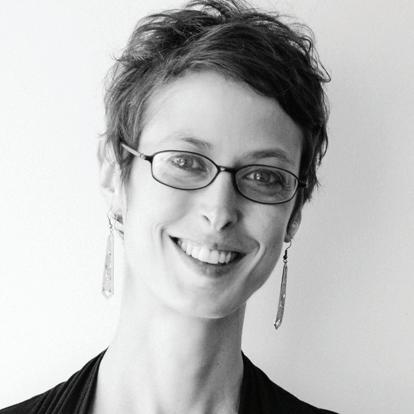
DANIELLE AVRAM is assistant professor of contemporary galleries and exhibitions at UT Dallas and the director of SP/N Gallery on campus. She is also a writer, curator, and project manager. For Patron ’s Dallas Arts Month issue she previewed The Power Station’s spring exhibitions in Fragments & Fins, and John Runyon’s art advisory work in Open to the Public
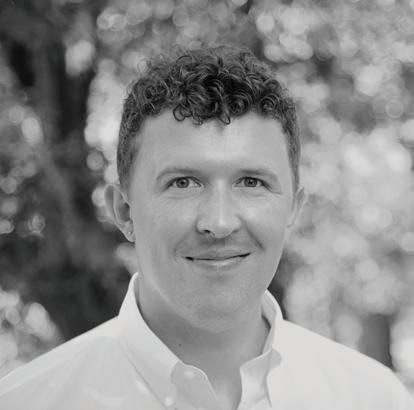
MATTHEW BOURBON is a painter, art critic, and educator based in Texas. He is a professor of studio art in the College of Visual Arts and Design at the University of North Texas, where he teaches drawing and painting while maintaining a career as a practicing artist. In Democracy of Materials, Matthew investigates Rauschenberg Sculpture, on view at the Nasher Sculpture Center.
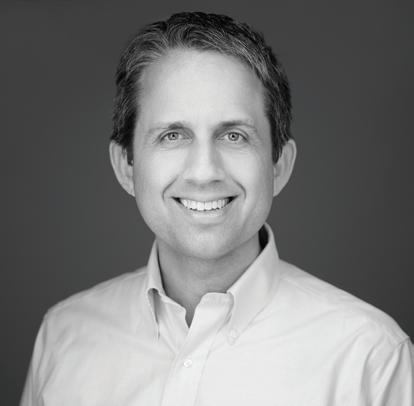
ROB BRINKLEY works at the intersection of story and image as a writer, editor, and creative director. A design authority, he coauthored the Assouline book Domestic Art: Curated Interiors. In this issue, Rob explores two residential projects featuring standout art collections complemented by interiors by Ten Plus Three and Samantha Fisher, highlighting the dialogue between art and space.
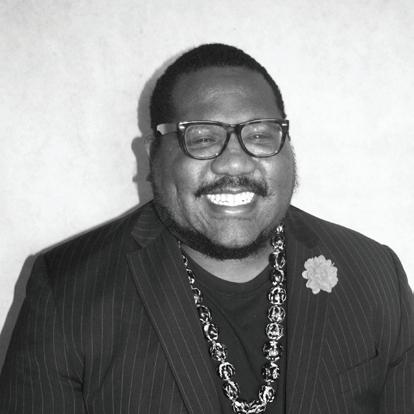
CHRIS BYRNE is the author of The Magician (Marquand Books, 2013), included in the Library of Congress. The Dallas Museum of Art and University of Sydney Library recently acquired the graphic novel for its Rare Books and Special Collections. Byrne is also the co-editor (with Keith Mayerson) of Frank Johnson, Secret Pioneer of American Comics Vol. 1 (Fantagraphics, 2024).
LAUREN CHRISTENSEN has three decades of experience in advertising and marketing. As a principal of L+S Creative Group, she consults with nonprofits and businesses in many sectors, including retail, real estate, and hospitality. Lauren is a Dallas native and a graduate of SMU. Her clean, contemporary aesthetic and generous spirit make Lauren the perfect choice to art direct Patron
NANCY COHEN ISRAEL is an art historian, arts writer, and an educator at the Meadows Museum. She enjoyed writing about contemporary Dutch artist Karel Dicker and his works’ ties to the past. Exploring the natural world translated into paint by artists Chris Stewart and Sky Glabush was also illuminating. Finally, Nancy was honored to write Patron ’s tribute to Linda Custard.
LEE CULLUM covers economics, politics, and public policy, but her greatest pleasure is writing about the arts. Each year Lee profiles the TACA Silver Cup Award recipients for Patron. In Silver Service she highlights the contributions and lasting impact of Nancy Carlson and Andy Smith, whose generous volunteerism has helped strengthen Dallas as a powerful arts capital.
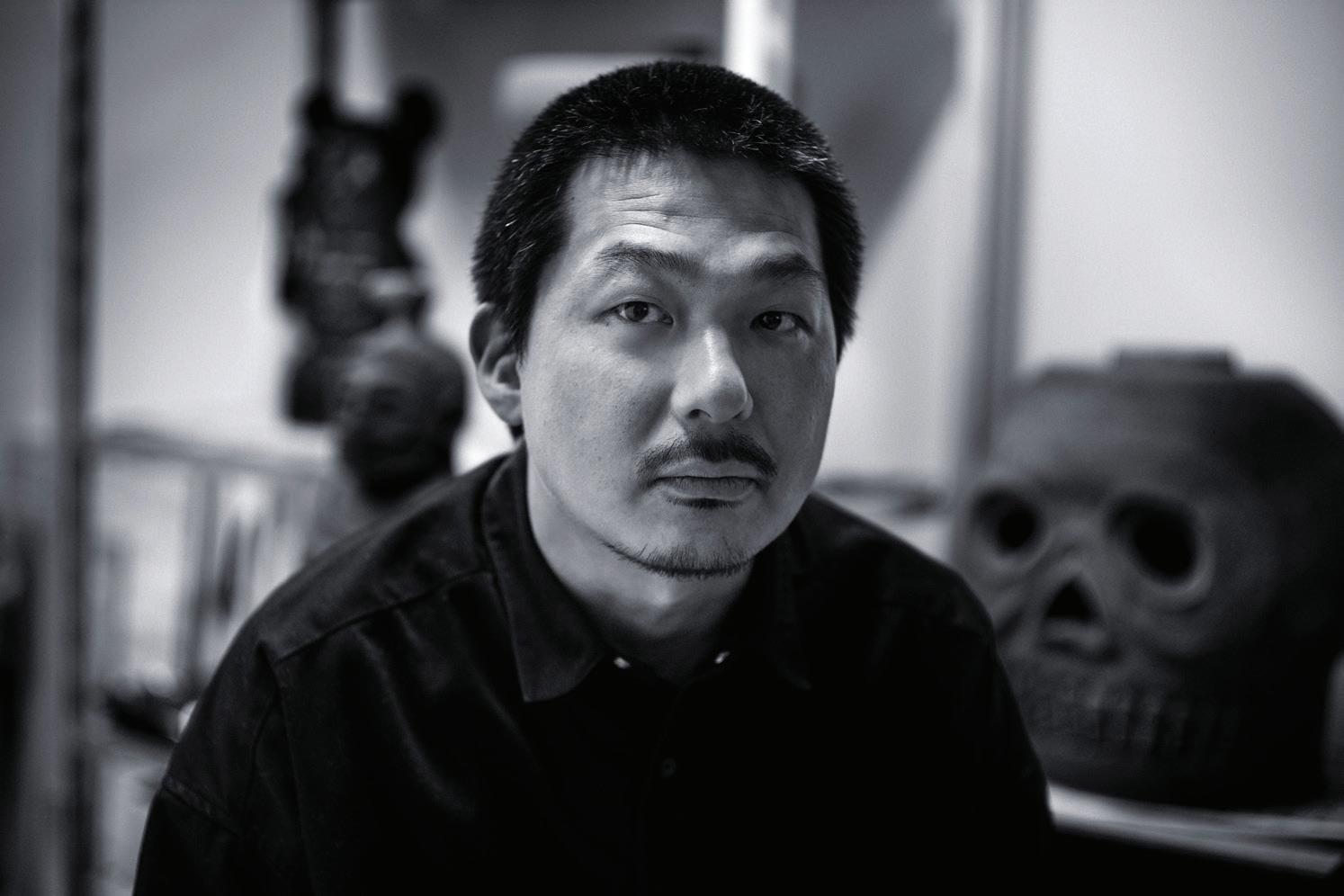
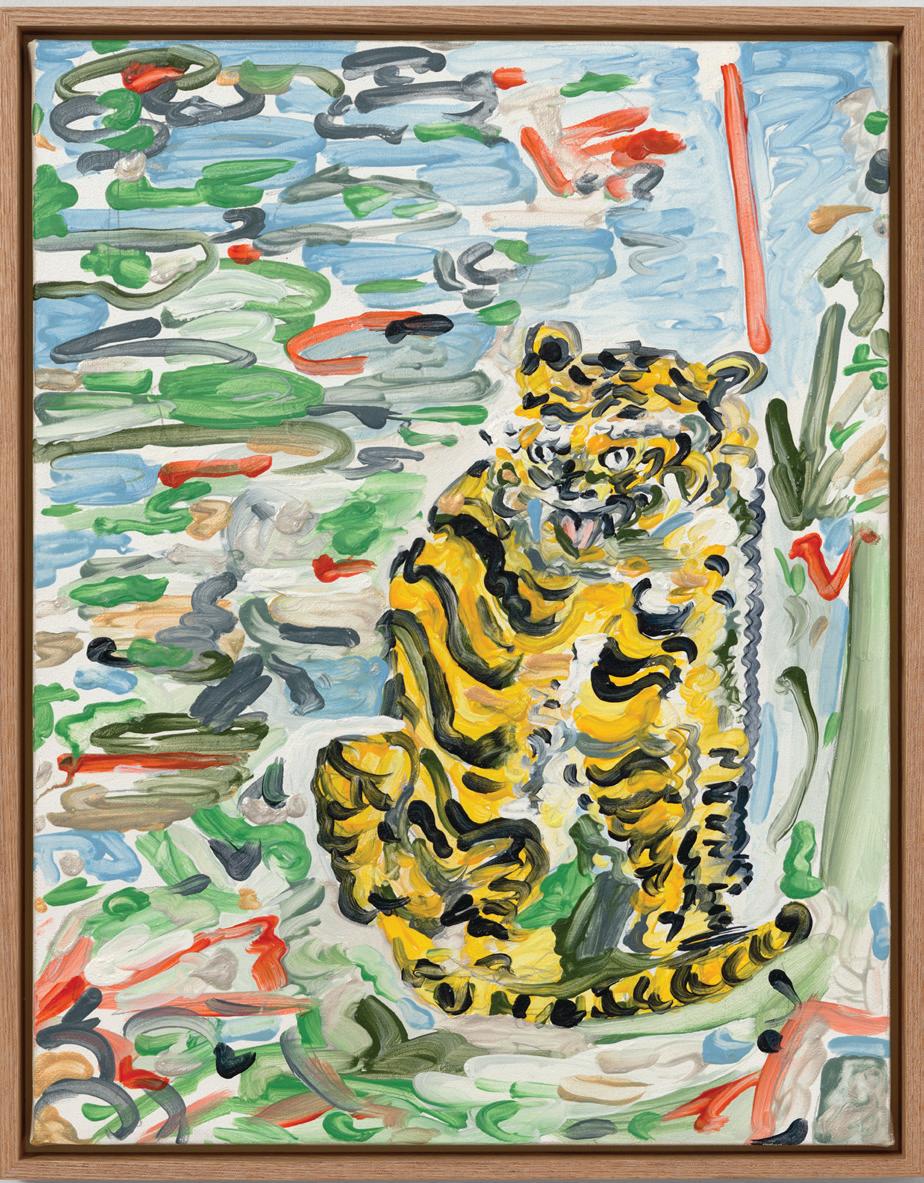
IAN ETTER is an artist, writer, and faculty member at the University of North Texas whose work explores materiality, abstraction, and cosmology. He is also the co-director of PeepSpace, a nationally recognized artist-run space. In Cultural Currency he explores artists Kazuma Koike, Petra Cortright, and Siji Krishnan, whose work will be shown at Dallas Art Fair.
EVE HILL ANGUS is a writer, editor, and translator with roots in both France and California. An award-winning writer, her career spans teaching literature and journalism, critiquing dining, and writing across genres from nonfiction and fiction to poetry. In Yoshitaka Amano’s Expanding Universe Eve previews the Japanese artist’s upcoming dual show at The Warehouse.
ADAM JASIENSKI received his PhD from Harvard University and teaches Spanish and Latin American art at SMU, where he also collaborates with the Meadows Museum. He authored Praying to Portraits: Audience, Identity, and the Inquisition in the Early Modern Hispanic World (Penn State University Press, 2023). In History Rewired, he previews Francisco Moreno’s solo show at Dallas Contemporary.
BEN LIMA is the founding editor of Athenaeum Review, the UT Dallas journal of arts and ideas. Born and raised in the Bay Area of California, he studied art history at Harvard and Yale. In Invitation Only he covers the wide-ranging artworks, from sculpture to painting, coming from galleries across the globe to the Rosewood Mansion on Turtle Creek for the Dallas Invitational.
DARRYL RATCLIFF is an artist and poet whose writing and curatorial practice explores collaborative cultural projects that illuminate shared narratives and foster civic participation and collective well-being. He is also the founder of Gossypion Investment. In Cultural Currency he visits with Dominic Chambers, Murielle White, and Khalif Tahir Thompson, showing at Dallas Art Fair.
JOHN SMITH is a photographer whose architectural background lends a sculptural sensibility to capture spaces as living expressions. His appreciation for projects by architects, interior designers, and artists reflects decades behind the camera. Patron enlists John for a variety of assignments, including interiors and portraits of this year’s TACA Silver Cup Award honorees.
JOHN ZOTOS is an art critic and writer who has written about the arts in North Texas for 25 years. His writing draws on his degrees in art history and aesthetics, along with frequent visits to galleries and museums. John’s The Reel Deal takes readers inside two decades of the inner workings of the Dallas International Film Festival and highlights Texas filmmakers.
PUBLISHER | EDITOR-IN-CHIEF
Terri Provencal terri@patronmagazine.com
ART DIRECTION
Lauren Christensen
DIGITAL MANAGER/PUBLISHING COORDINATOR
Anthony Falcon
COPY EDITOR
Sophia Dembling
PRODUCTION
Michele Rodriguez
CONTRIBUTING WRITERS
Danielle Avram
Rob Brinkley
Matthew Bourbon
Chris Byrne
Nancy Cohen Israel
Lee Cullum
Ian Etter
Eve Hill-Agnus
Adam Jasienski
Mark LaRoe
Ben Lima
Darryl Ratcliff
John Zotos
CONTRIBUTING PHOTOGRAPHERS
Shauna Benoit
Joseph Coscia Jr.
Blaine Davis
Kevin Frances
Victoria Gomez
Andy Nguyen
Anh-Thuy Nguyen
Denis Gutierrez-Ogrinc
Stephen Karlisch
Simon Klein
Marcia Kure
Peyton Mixon
Matthew Murphy
Steven Probert
Paul Salveson
Evan Sheldon
Nathan Shroder
John Smith
Kevin Todora
Steven Wright
Steve Wrubel
Evan Zimmerman
ADVERTISING info@patronmagazine.com or by calling (214) 642-1124
For international subscriptions add $50 for postage
For subscription inquiries, email info@patronmagazine.com
SOCIAL @patronmag
Don’t we look great for 398?
And, at that age, we’ve only just begun. In a world of start-ups and shake-ups, we are brazenly flaunting the fact that our brand affiliation is almost 400 years old. Think about that: four centuries! Not four years, not four decades — four centuries. Let’s do the math. The one and only Sotheby’s auction house was founded in 1744 and is now the world’s premier destination for art and luxury objects. It’s a trusted marketplace supported by an industry-leading tech platform and a network of brilliant specialists spanning 40 countries and 70 categories, including art, jewelry, watches, wine, cars and design. For 282 years and counting, Sotheby’s has believed in the transformative power of art and culture. Now, fold in the world’s only truly global real estate brand, Sotheby’s International Realty ®, the worldwide network of top residential brokerages. An all-knowing 50 years old this year, Sotheby’s International Realty is built on the centuries-long prestige of the world’s preeminent auction house. That history and its own unmatched reputation for excellence give Sotheby’s International Realty listings the best-in-class exposure they deserve and assure buyers they are working with a trustworthy partner. Its offerings reach a highly qualified global clientele, and its buyers receive access to remarkable properties and advisors everywhere. And, now, our favorite part. Us. You. For 66 years and counting, the agents of Briggs Freeman Sotheby’s International Realty have guided the people of North Texas to great success — financial, emotional, all of it. A place you can’t wait to get home to. A neighborhood you absolutely love. That has made us the leading luxury brokerage in one of the most exciting metroplexes in the world. Our expert advisors serve clients across the region and have achieved multiple consecutive years of multibillion-dollar sales of homes, high-rises, ranches, land and more. So, allow us a little bragging as we celebrate 398 years of wow and woo-hoo. The best part? Our brand is your benefit — then, now and the next time. We can’t wait. Let’s do this.
On view through May 3, 2026
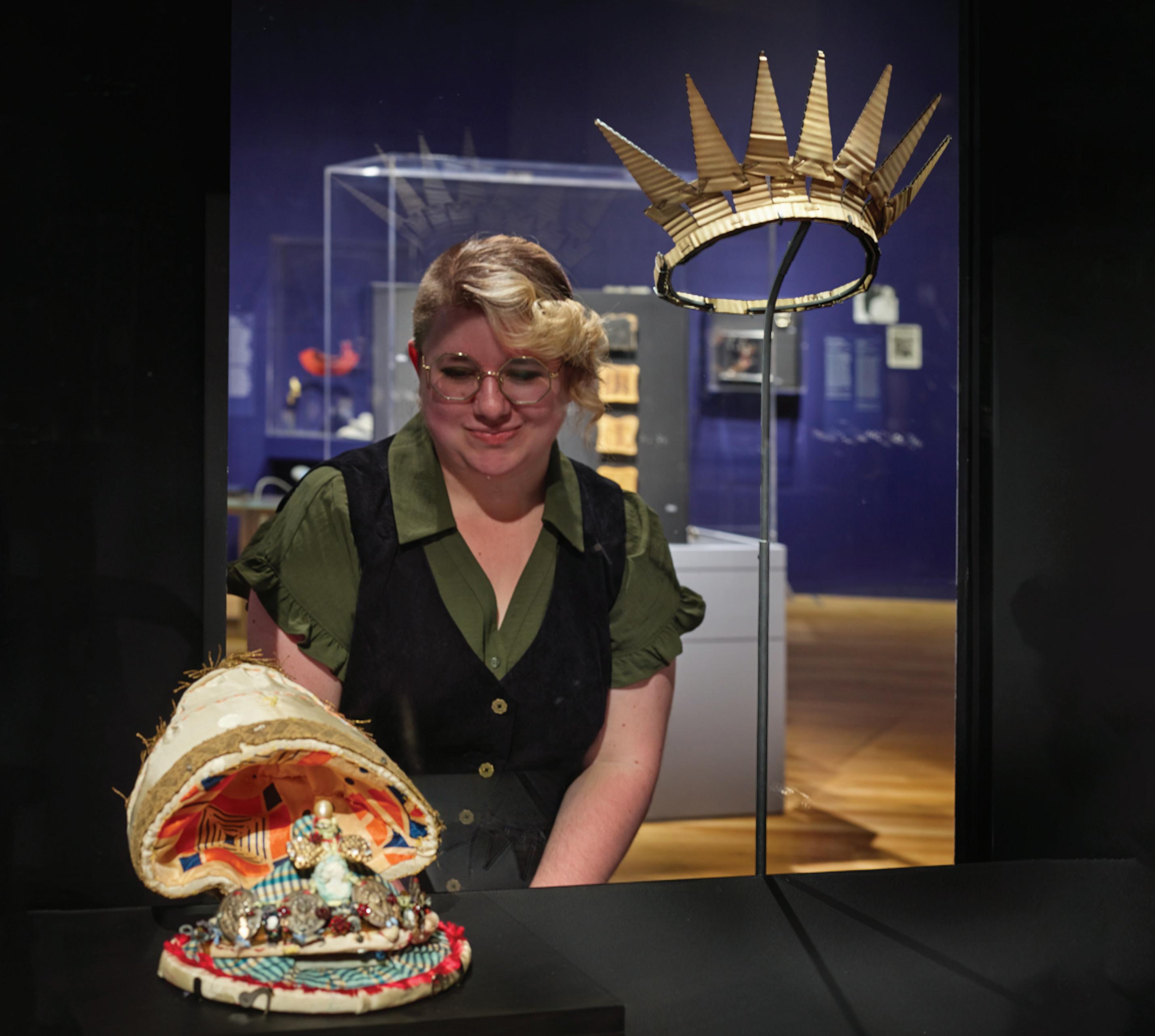
Immerse yourself in the cosmos of contemporary jewelry. Experience over 350 works spanning more than 75 years made by artists from around the globe. Featuring golden crowns formed to look like cardboard and whimsical brooches resembling toast, Constellations: Contemporary Jewelry at the Dallas Museum of Art invites you to explore the wonders of creativity. Learn more and get tickets at dma.org.
Constellations: Contemporary Jewelry at the Dallas Museum of Art is organized by the Dallas Museum of Art. We would like to give special thanks to Deedie Potter Rose and Mary Frances Young for their dedication and work. We are grateful for support from Fanchon and Howard Hallam and Catherine and Will Rose. The Dallas Museum of Art is supported, in part, by generous DMA Members and donors, the Texas Commission on the Arts, and the citizens of Dallas through the City of Dallas Office of Arts and Culture.
support provided by
MAJOR SUPPORT
Freeman Family Exhibition Fund
Nancy C. and Richard R. Rogers
Rose Family Foundation
In honor of Susan Cummins and Sarah Schleuning
Marguerite Steed Hoffman
Mary and Terry MacRae
June and Peter McGuire
LEADERSHIP SUPPORT Lucy and Thomas Burns Jennifer and John Eagle Ola and Randall Fojtasek Ken and Debra Hamlett
Susan and Bill Montgomery Catherine and Will Rose Gayle Stoffel Vaughn O. Vennerberg II
and Howard Rachofsky
and Charlie Shufeldt Marlene and John Sughrue Mary Frances Young
Additional
Sheryl Adkins-Green, Cynthia Calabrese, Nancy and Clint Carlson, Mary Cook, Patti Elliott, Nancy and Jeremy Halbreich, Kasey and Todd Lemkin, Carol and John Levy, Cristina Lynch, Cynthia and Forrest Miller, Bonnie Pitman, Karen and Richard Pollock, Caren Prothro, Gay and Bill Solomon, Emily and Steve Summers, and Sharon and Michael Young.
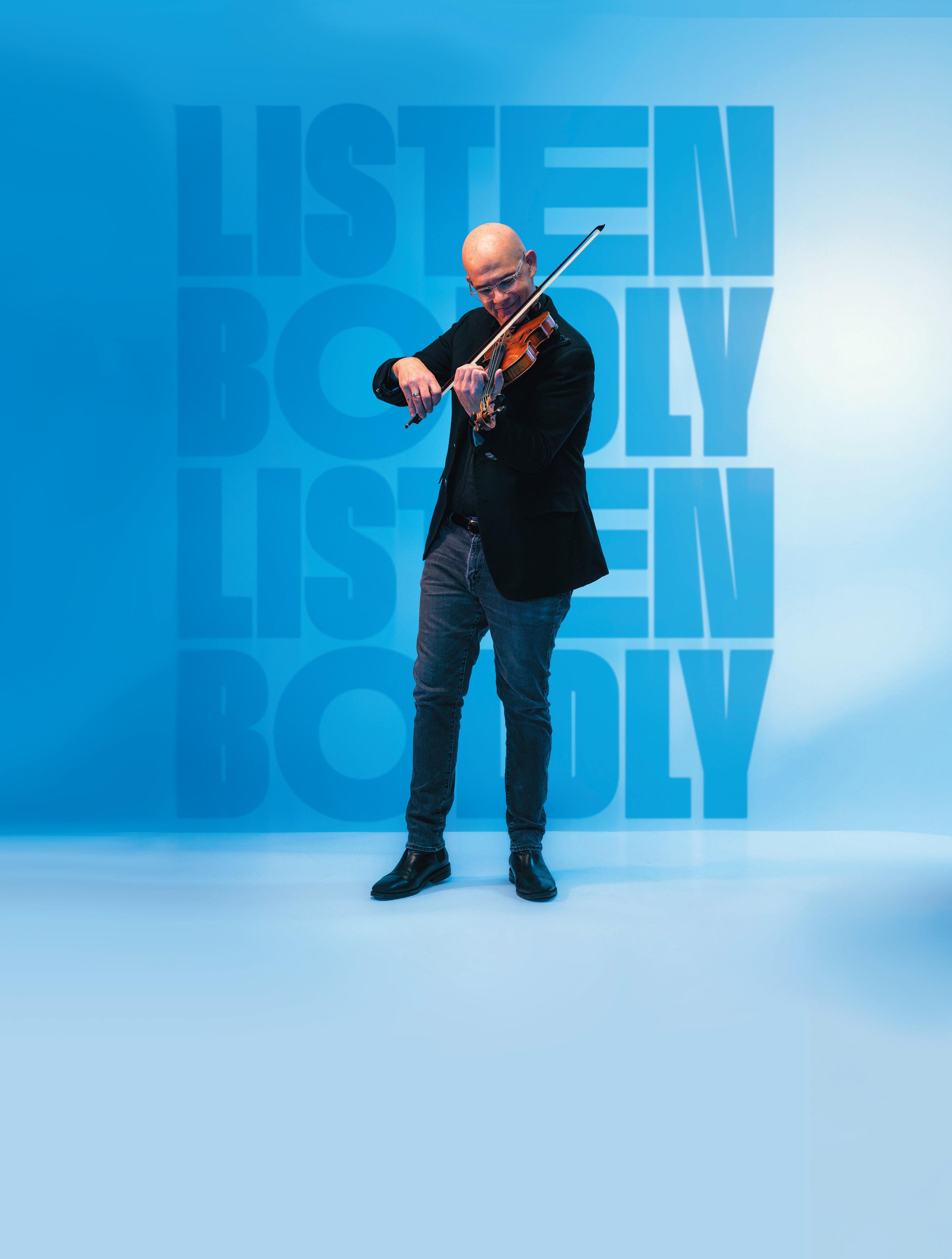
The Dallas Symphony Orchestra Invites You to Experience the Remarkable
This new season features legendary guests including Yo-Yo Ma and Idina Menzel and unforgettable works like Gershwin’s An American in Paris, Mozart’s Don Giovanni, The Music of Elvis with Frankie Moreno, Mandy Gonzalez’s performance of hits from Lin-Manuel Miranda, five movies in concert and much more!
CREATE YOUR OWN SEASON
Bundle three or more concerts and design a season that’s uniquely yours.
DALLAS COLLEGE
APRIL 1-30
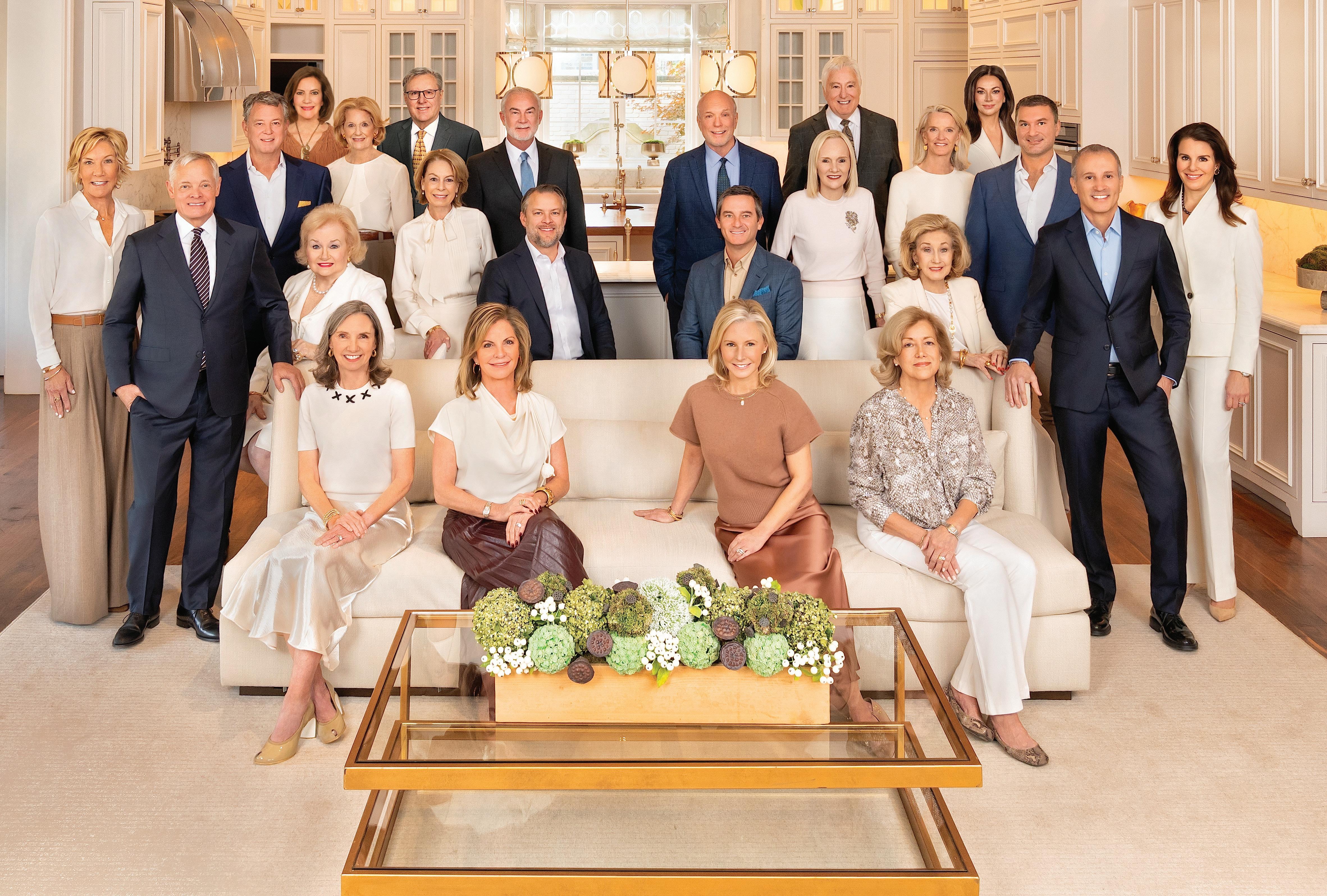
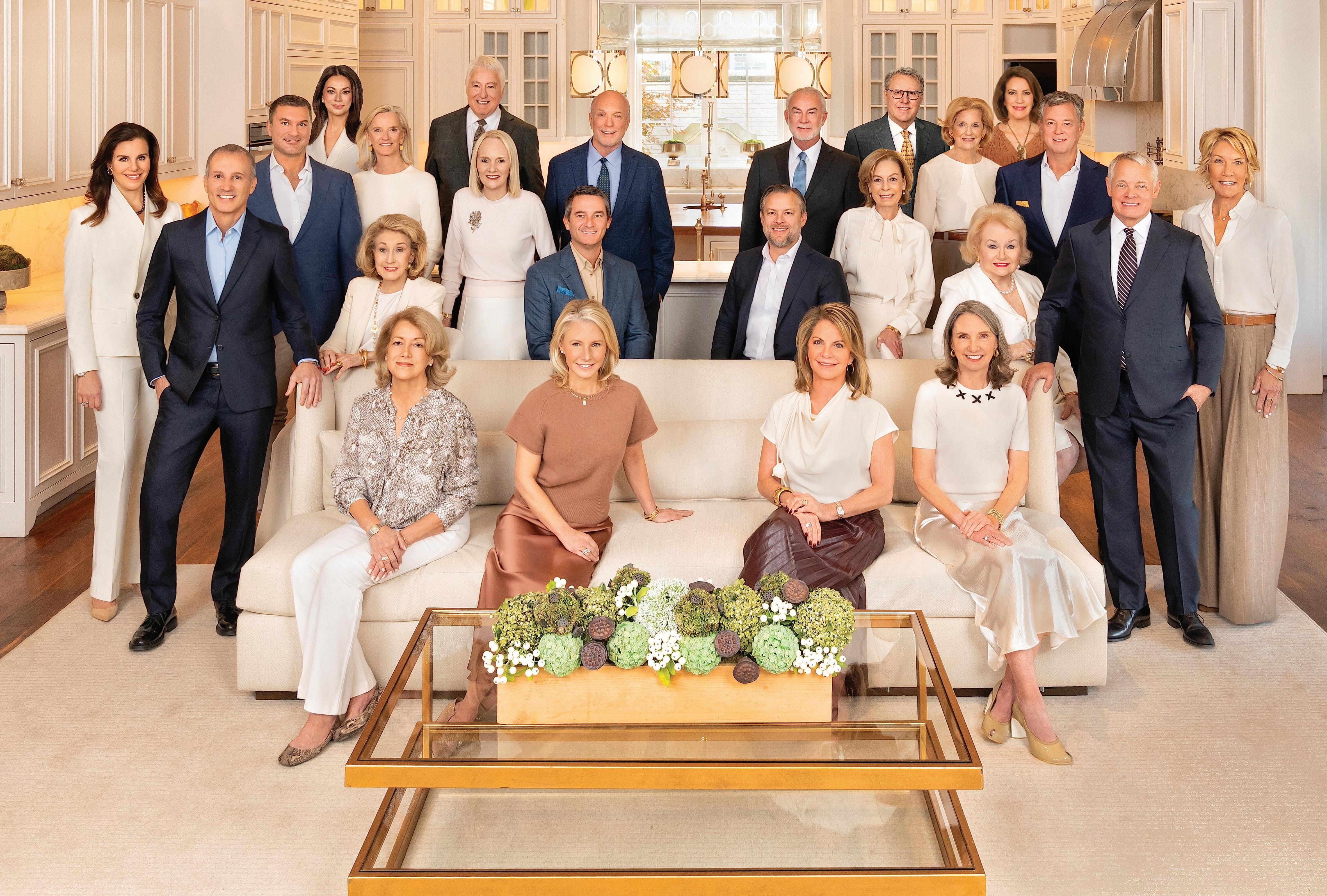
FRONT ROW SEATED : Susan Baldwin, Allie Beth Allman and Assoc. Michelle Wood, Compass Real Estate Amy Detwiler, Compass Real Estate Jackie McGuire, Allie Beth Allman and Assoc. SECOND ROW SEATED: Penny Rivenbark, Ebby Halliday Realtors Joan Eleazer, Compass Real Estate Ryan Streiff, Dave Perry-Miller Real
Estate Chad Barrett, Allie Beth Allman and Assoc. Doris Jacobs, Allie Beth Allman and Assoc. THIRD ROW STANDING: Becky Frey, Compass Real Estate Ralph Randall, Briggs Freeman Sotheby’s Tom Hughes, Compass Real Estate Emily Price Carrigan, Emily Price Carrigan Properties Susan Marcus, Briggs Freeman Sotheby’s Stewart Lee, Dave Perry-Miller Real Estate Mark Cain, Compass Real Estate Kyle Crews, Allie
Beth Allman and Assoc. Erin Mathews, Allie Beth Allman and Assoc. Madeline Jobst, Briggs Freeman Sotheby’s Emily Ray Porter, Compass Real Estate Jonathan Rosen, Compass Real Estate Faisal Halum, Compass Real Estate Rachel Trowbridge, Allie Beth Allman and Assoc. PHOTOGRAPHED at 3612 Crescent Ave. courtesy of Jonathan Rosen, Compass Real Estate.
NOTED
THE LATEST CULTURAL NEWS COVERING ALL ASPECTS OF THE ARTS IN NORTH TEXAS: NEW EXHIBITS, NEW PERFORMANCES, GALLERY OPENINGS, AND MORE.
01 AFRICAN AMERICAN MUSEUM
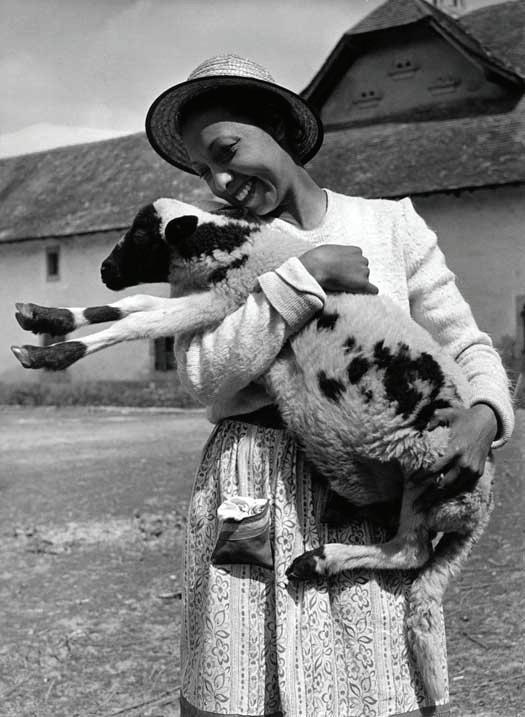
Icons of Liberation: King and Mandela explores the shared leadership values and global impact of Dr. Martin Luther King Jr. and Nelson Mandela, through Nov. 1. Image: Unknown photographer, Josephine Baker, n.d.; modern print on aluminum, 19 x 13.83 in. Courtesy of the Sepia Photographic Archive at the African American Museum of Dallas. aamdallas.org
02 AMON CARTER MUSEUM OF AMERICAN ART
Georgia O’Keeffe and the Carter presents the museum’s holdings of paintings and works on paper alongside photographs, letters, and other materials tracing her ties to the museum, through Sep. 2027. New Horizons: The Western Landscape presents contemporary paintings and sculptures by 14 living artists reinterpreting the spirit and terrain of the American West, through May 24. Celia Álvarez Muñoz: El Límite features a new site-specific commission exploring the railroad’s role in connecting and dividing cultures, languages, and traditions, through Oct. 18. Black Photojournalism, through Jul. 5, features more than 250 photographs by over 60 photographers, highlighting the vital role of Black photojournalists in shaping visual narratives across the US from 1945 through the mid-1980s. cartermuseum.org
03 CROW MUSEUM OF ASIAN ART OF THE UNIVERSITY OF TEXAS AT DALLAS
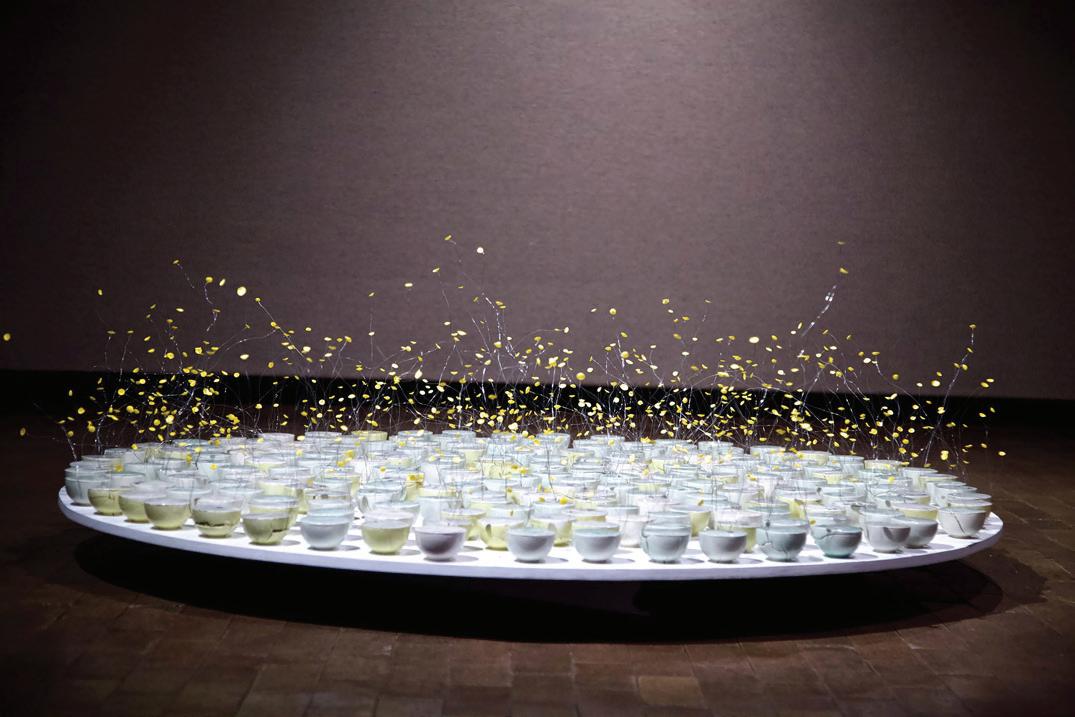
At the Crow Museum Dallas Arts District, Du Chau: Tracing the Threads of Memory opens Apr. 4 and continues through Sep. 27. Cecilia Chang: Don’t Tell Me What To Do continues through Apr. 19, and Fire and Earth: Early Chinese Pottery from the MacLean Collection remains on view through Sep. 27. At UT Dallas a full slate of exhibitions includes Mounds and Mist: Kondo Traditions in Clay through May 31; Intersections: Photographs by Carolyn Brown through Mar. 28, 2027; Mountain Jade with Lam Tung Pang and Echoes of the Earth, on view through Jun. 28; and Groundbreakers: Post-War Japan and Korea from the Dallas Museum of Art and The Rachofsky Collection through Jul. 26. Image: Du Chau, First New Year, 2015, porcelain, wire. Courtesy of the artist and Erin Cluley Gallery. Photograph by Anh-Thuy Nguyen. crowmuseum.org
04 DALLAS CONTEMPORARY
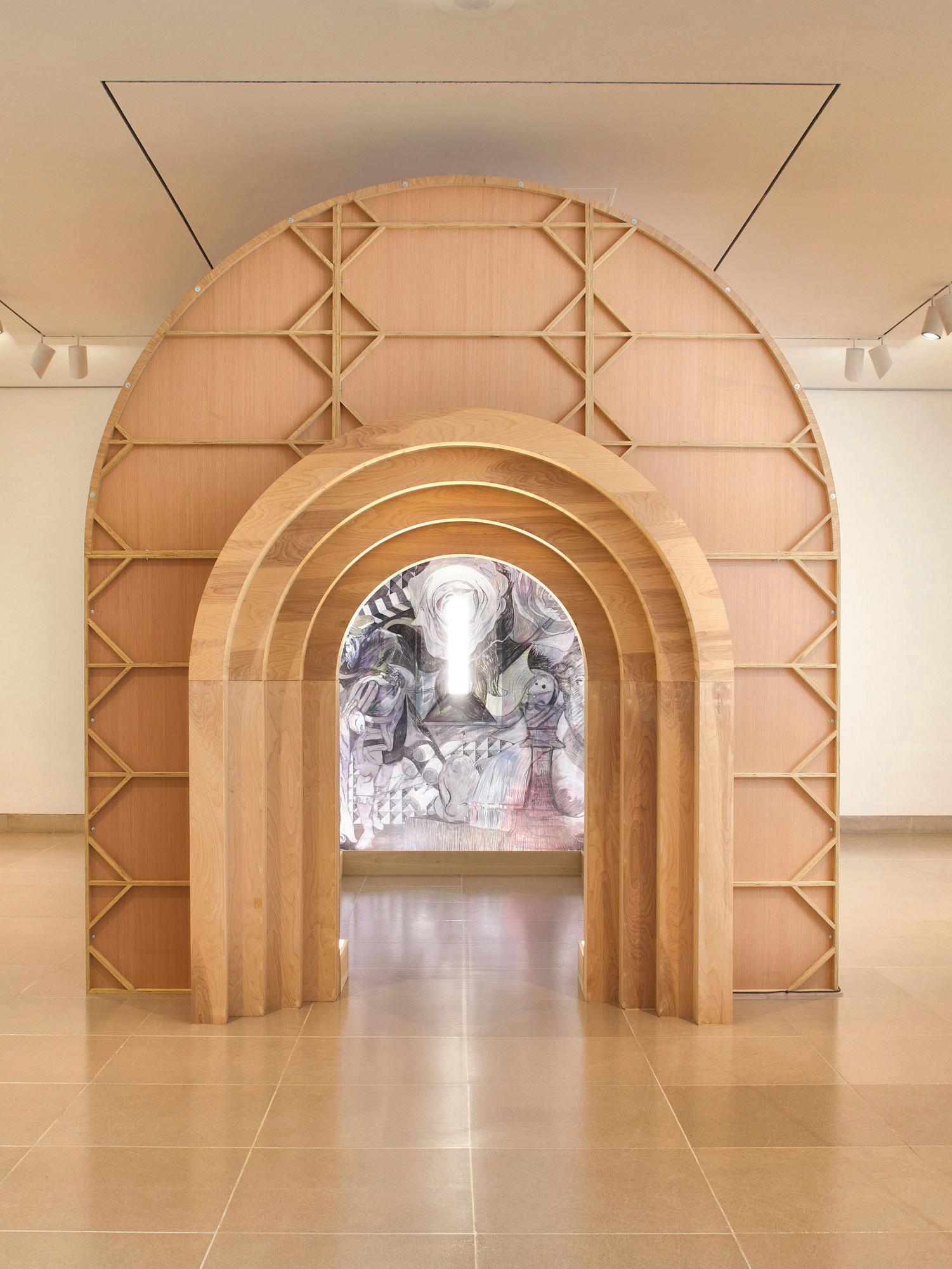
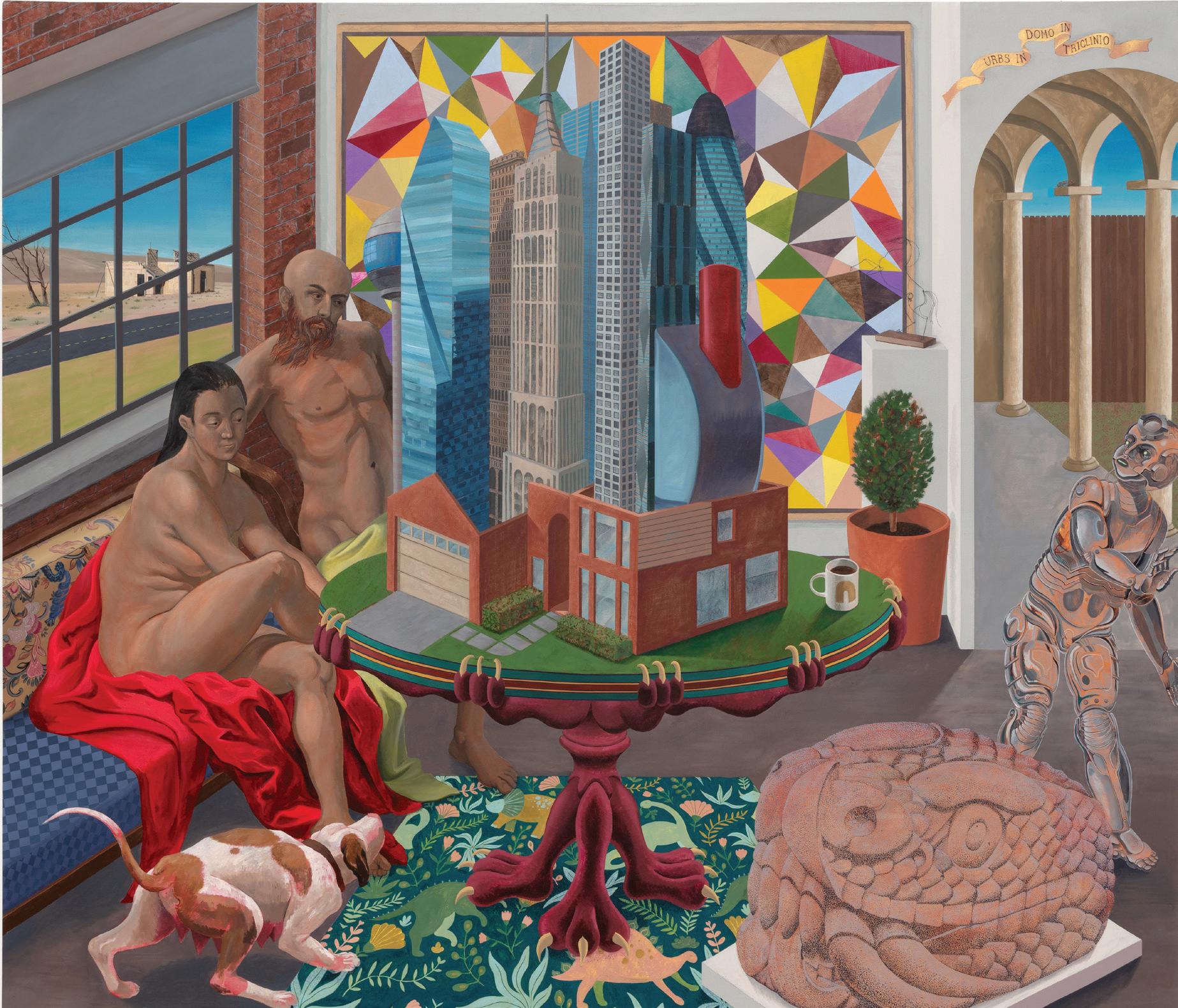
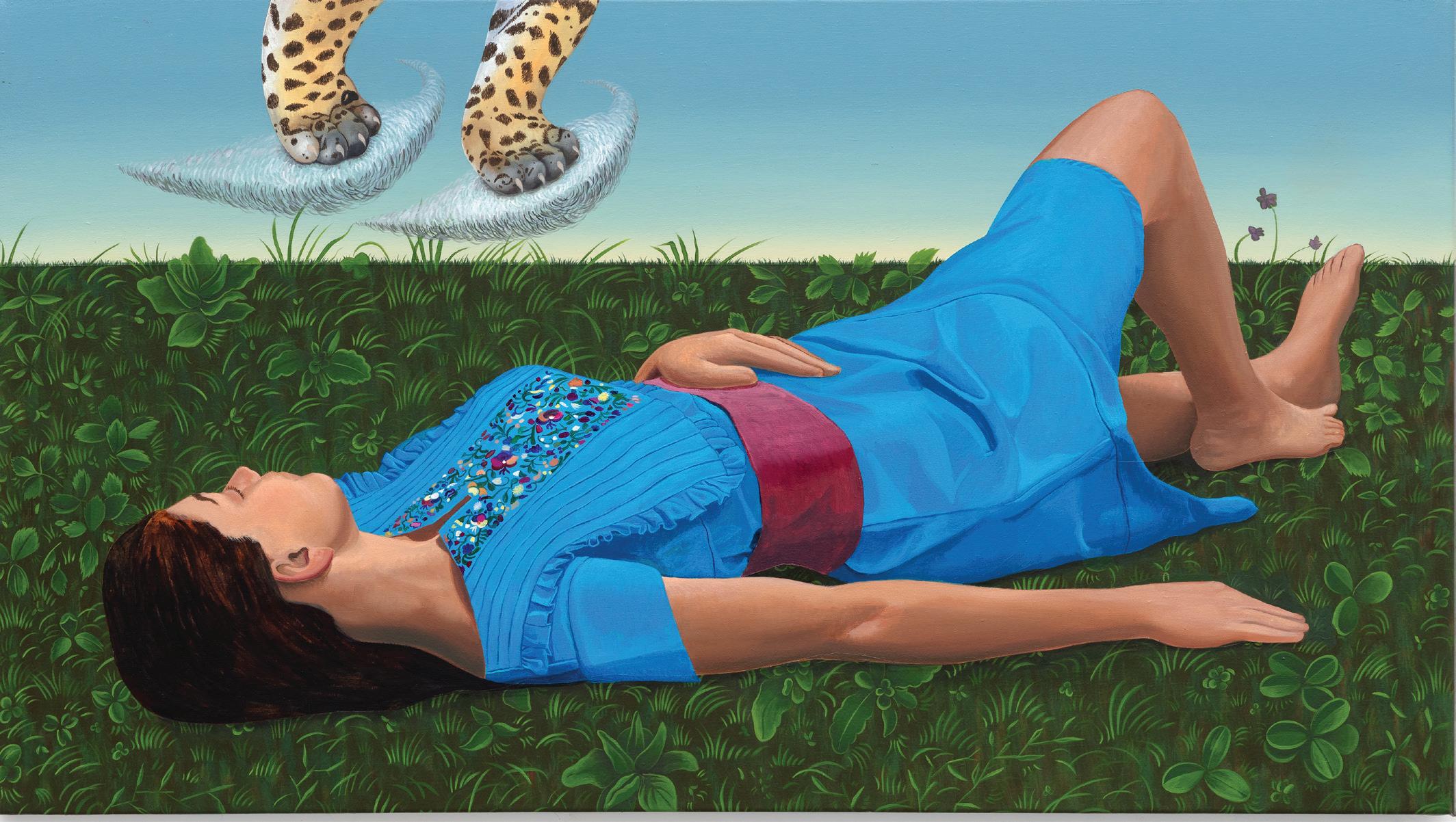
Francisco Moreno: Historia Sintética, curated by Thomas Feulmer, highlights DC from Apr. 17–Oct. 11. In his first solo museum presentation, the Dallas-based Mexican American artist Francisco More -
no presents new mural-scale paintings and immersive works that merge Old Master traditions with science fiction, mythology, and Mexican iconography, exploring cultural hybridity, history, and the narratives that shape identity. dallascontemporary.org
05 DALLAS HOLOCAUST AND HUMAN RIGHTS MUSEUM
Through spring, The Walt Disney Studios and World War II exhibition features more than 500 artifacts, film clips, and original artwork. This traveling exhibition explores how Walt Disney and his studio supported the Allied war effort through training films, propaganda, military insignia, and morale-boosting animation following the attack on Pearl Harbor. dhhrm.org
06
DALLAS MUSEUM OF ART
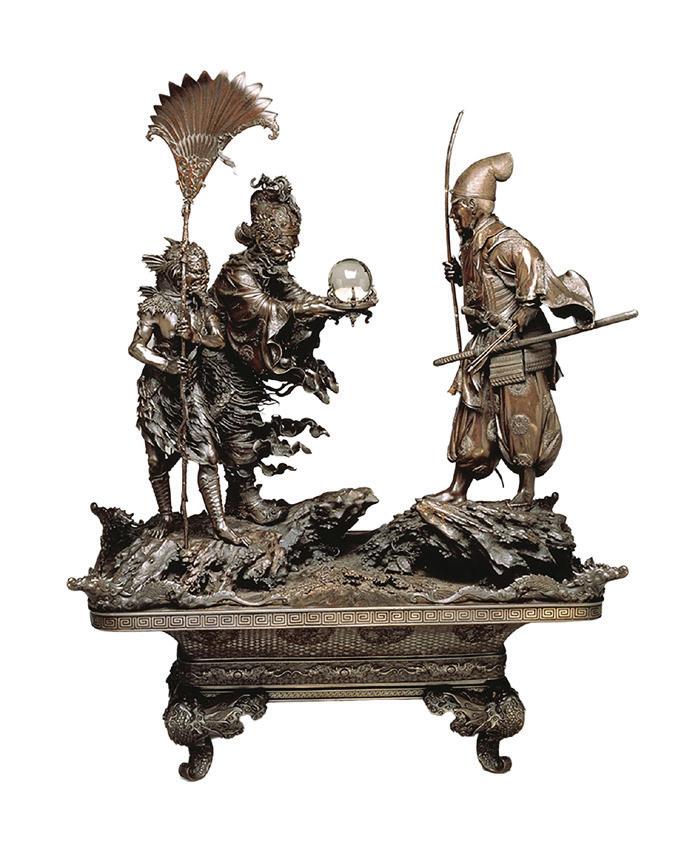
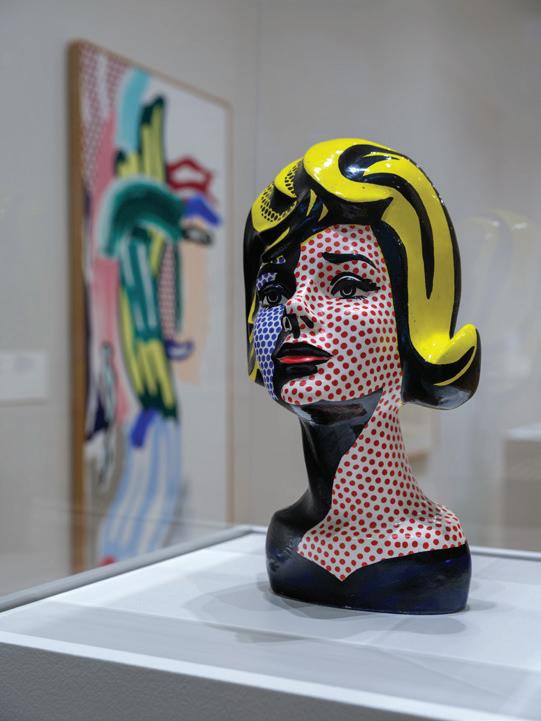
Constellations: Contemporary Jewelry at the Dallas Museum of Art continues through May 3. Samurai to the Imperial Court: Japanese Metalwork , through Sep. 6, showcases more than 90 works spanning five centuries of Japanese metal artistry, from samurai armor and weaponry to imperial commissions, enameled vessels, and sculptural forms drawn from the DMA and major private collections. Paradise on Earth: Florals in Indian Textiles, Apr. 1–Nov. 29, explores the enduring influence of plant and floral motifs across India’s 6,000-year textile tradition, bringing together Mughal-era garments, embroidered shawls, carpets, and contemporary fashion pieces. Through July 5, celebrating a joint gift from the Roy Lichtenstein Foundation to the Dallas Museum of Art and the Nasher Sculpture Center, the DMA features Roy Lichtenstein in the Studio. Rhythm of the City, by Bobby Miller and Ebony Lewis, transforms the DMA Concourse through Jul. 19. Paper Technologies: Italian Prints and Drawings continues through Sep. 20. Image: Dragon King Presenting a Jewel to Fujiwara no Hidesato, 1879–1881, Japan, bronze and rock crystal. Dallas Museum of Art, Foundation for the Arts Collection. The John R. Young Collection, gift of M. Frances and John R. Young. dma.org
07 GEORGE W. BUSH
PRESIDENTIAL
LIBRARY AND MUSEUM
Opening the Vault, Apr. 20–May 21, presents rare documents from the National Archives, including the Treasury warrant for the purchase of Alaska, the Treaty of Guadalupe Hidalgo, the Joint Resolution proposing the Fifteenth Amendment, Thomas Edison’s patent drawing for the light bulb, and the Statue of Liberty’s deed of gift. America’s Birthday: A History of Independence Day StoryWalk , Apr.–Oct., traces how Fourth of July celebrations have evolved across gener -
The ultimate luxury grand tourer is now even more powerful – and the fourth generation of this iconic vehicle redefines the ultimate blend of supercar performance, handcrafted luxury and everyday usability. Explore the new GT at Bentley Dallas, an Avondale Dealership. Avondale is committed to providing extraordinary vehicles and innovative automotive solutions through personalized
Visit bentleydallas.com.
ations through an outdoor exhibition exploring the traditions and history behind America’s Independence Day. bushcenter.org
08 KIMBELL ART MUSEUM
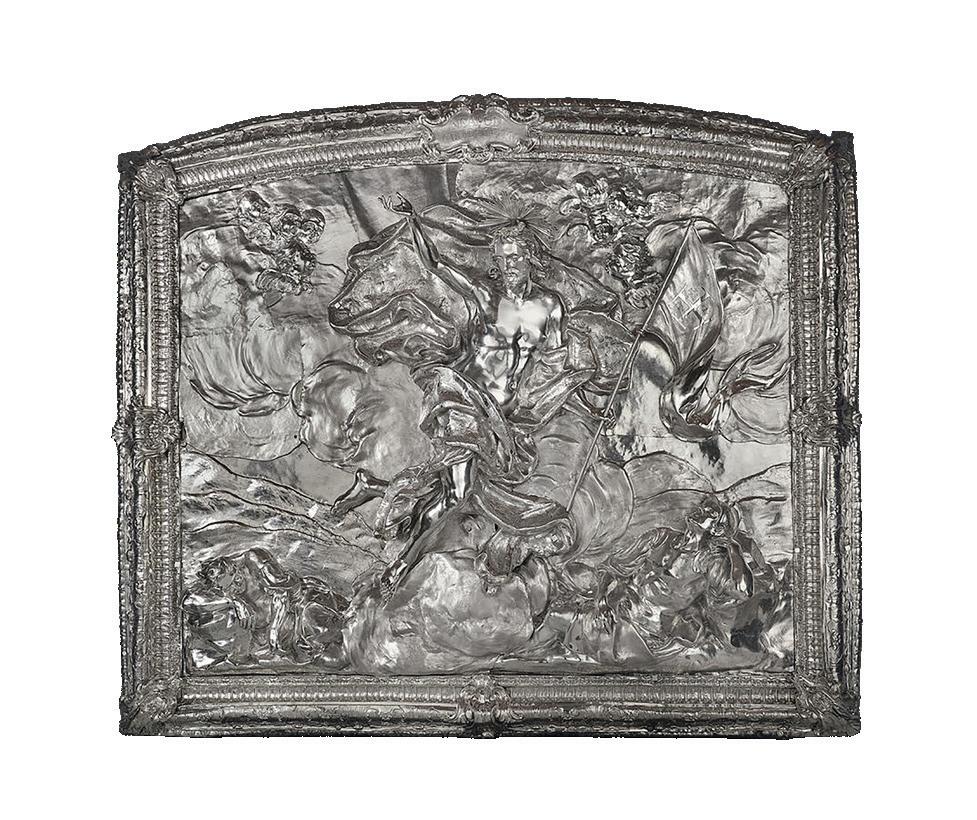
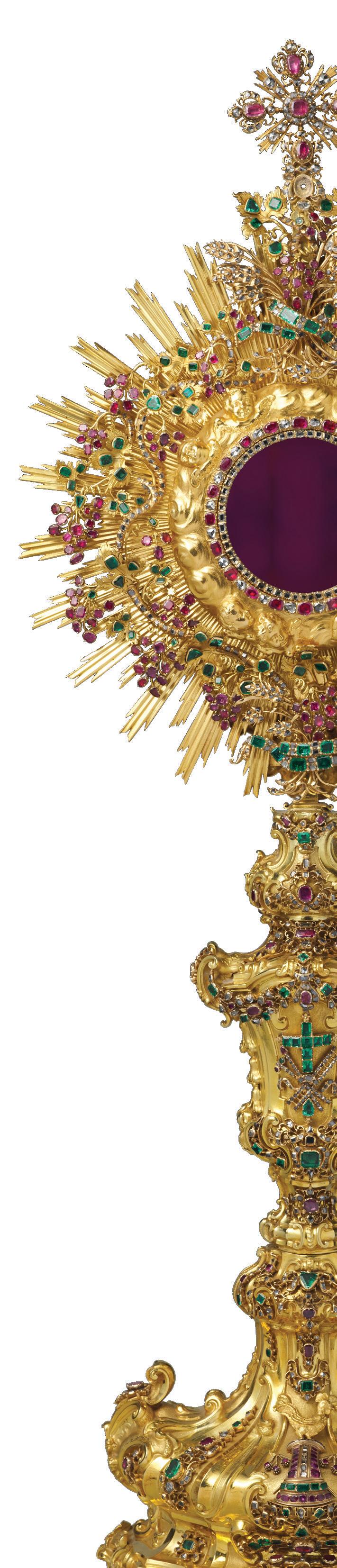
The Holy Sepulcher: Treasures from the Terra Sancta Museum, Jerusalem continues through June 28, presenting more than sixty ceremonial objects in silver, gold, enamel, and precious materials gifted to the Church of the Holy Sepulcher by European monarchs. Ranging from reliquaries and crosses to chalices and vestments, the works reflect 17th- and 18th-century craftsmanship and centuries of devotional use. Traveling to only two North American venues, the exhibition offers a rare opportunity to encounter these objects in the US. Image: The Resurrection, Naples, 1736, cast, chased, and repoussê silver. Treasury of the Holy Sepulcher, Jerusalem. Photograph by Joseph Coscia Jr. kimbellart.org
09 LATINO CULTURAL CENTER
Opening Apr. 18, The Goals of Painting explores the vibrant intersection of art and soccer through the work of renowned Mexican artist Jazzamoart (Javier Vázquez Estupiñán). His connection to the sport as an artistic theme began in 1986, when the National Institute of Fine Arts invited artists to create works for the FIFA World Cup in Mexico. The exhibition, on view through May 22, is curated by Elena Catalan. lcc.dallasculture.org
10 MEADOWS MUSEUM
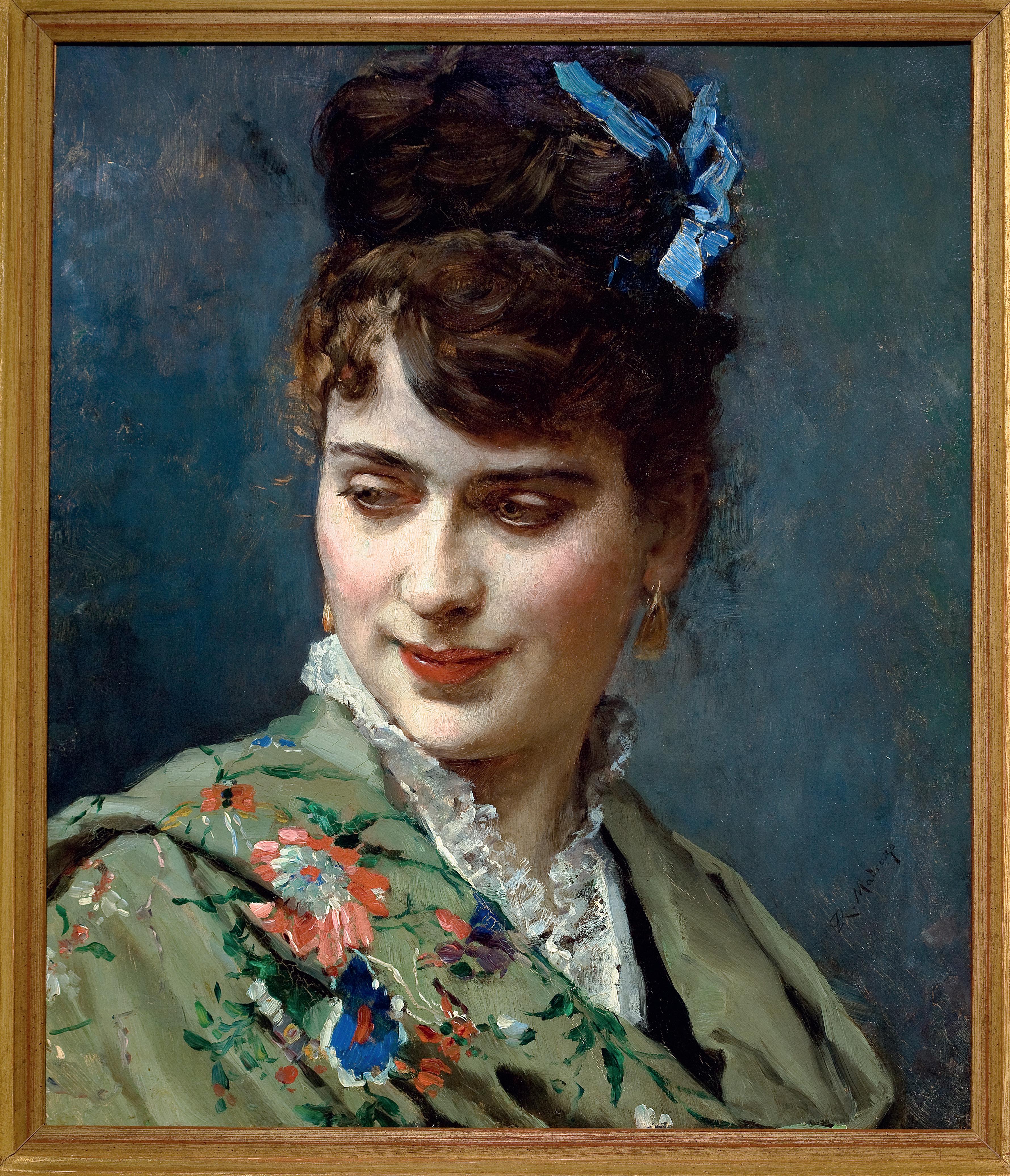
Raimundo de Madrazo marks the first retrospective devoted to the Spanish genre painter and portraitist, tracing his international career and success in Belle Époque Paris. Meadows/ARCO Artist Spotlight: Rubén Guerrero presents paintings by the contemporary Spanish artist that move between abstraction and figuration as part of the museum’s ongoing collaboration with Fundación ARCO. Yáñez: Saint Sebastian Revealed commemorates the 50th anniversary of the museum’s acquisition of Fernando Yáñez de la Almedina’s Saint Sebastian through a technical study examining the artist’s Renaissance materials and methods. All three remain on view through Jun. 21. meadowsmuseumdallas.org
Via Dolorosa ; Tapestry of the Centuries ; Voice (Chong Keun Chu), Holocaust Heroes: Fierce Females (Linda Stein), Transitions & Traditions: A Brad Abrams Retrospective, and a Salvador Dalí presentation continue. The National Center for Jewish Art features the SWED Collection and Barbara Hines’ Celebration of Survival. biblicalarts.org
Apr. 4–24, the gallery presents R.I.S.E. Riso Inspires Social Empowerment Project. Strange Powers press, an Oak Cliff Risograph studio, will provide a series of Riso printing workshops. Next, Chenxi Gao takes over the gallery May 9–Jun. 5. occc.dallasculture.org
15 PEROT MUSEUM
Soccer: More Than a Game, through Sep. 7, presents an interactive exhibition that explores how physics, biology, and technology shape the world’s most popular sport. Through hands-on challenges and behind-the-scenes innovations, the exhibition examines performance, teamwork, and design, arriving as FIFA World Cup 2026 brings global attention to North Texas. perotmuseum.org
16 SIXTH FLOOR MUSEUM
On Assignment: Dallas Times Herald 1963 opens Apr. 29 and places visitors inside the newsroom during the weekend of President John F. Kennedy’s assassination through original photographs, field notes, press credentials, and Pulitzer Prize–winning images created by Dallas Times Herald reporters and photographers. jfk.org
17 TYLER MUSEUM OF ART
At 55: Tyler Museum of Art’s Legacy, closing Apr. 19, celebrates the museum’s 55th anniversary. Encased: Angel Oloshove, through May 10, presents ceramic works by the Houston-based artist. tylermuseum.org
01 AMPHIBIAN
Did You Eat?, through Apr. 12, is Zoë Kim’s solo performance tracing family, memory, and Korean American identity. Stand-Up Comic Residency: Jay Jurden, May 1–2, brings the comedian and writer for a weekend of stand-up performances. My Inner Child Said What?! continues the series from May 15–16. amphibianstage.com
02 AT&T PERFORMING ARTS CENTER
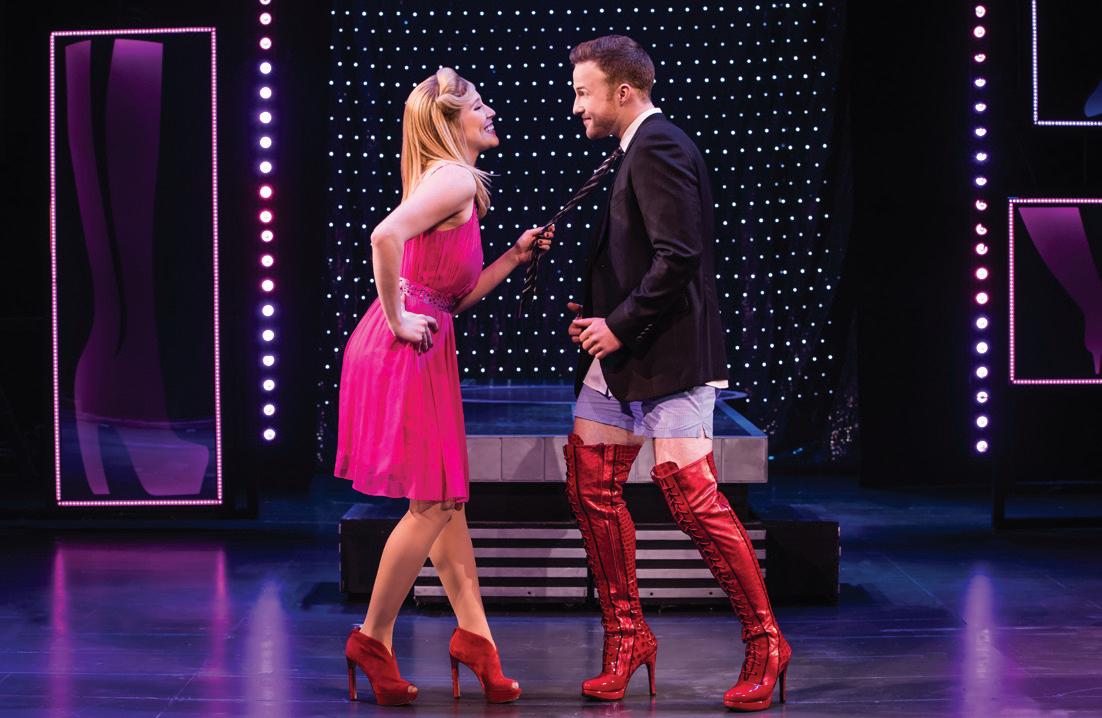
Jazz vocalist Samara Joy takes the Winspear stage Apr. 1. PNC Patio Sessions: EJ Mathews Band on Apr. 2 brings live music to Sammons Park, followed by the Camp Haven Inaugural Benefit on Apr. 3 supporting LGBTQ+ youth programming. Lucy Darling , on Apr. 5, features magician and comedian Carisa Hendrix’s touring variety show, while Dallas Cowboys Cheerleaders LIVE! on Apr. 7 brings the squad alongside a Wellness Series: Musical Theatre Dance Workshop the same day. April continues with Matt Tedder with a Country Two-Step Dance Social on Apr. 9; Jazz Goes Classical Experience features Erika Nicole Johnson on Apr. 12. Neil deGrasse Tyson explores the science behind popular films Apr. 15, and more PNC Patio Sessions follow Apr. 16 and Apr. 23. LeAnn Rimes: 30 Years of Blue celebrates the singer on Apr. 19; Kinky Boots follows Apr. 23–25; Il Volo returns Apr. 26. The AAPI Heritage Month Festival takes place May 9. See José González: Against the Dying of the Light Tour at the Granada on May 9. Drew and Ellie Holcomb perform May 13. Next, see John Cusack’s High Fidelity on May 14. The Avett Brothers and Mike Patton present AVTT/PTTN on May 15, followed by the Turn Up the Lights event May 16, and Jason Isbell May 20–21. Image: Connor Allston and Karis Gallant in the 2019 National Tour of Kinky Boots. Photograph by Matthew Murphy. attpac.org
03 BASS PERFORMANCE HALL
Late Nite Catechism returns Apr. 9–12 with an interactive comedy led by an irrepressible Sister who turns audience members into students. Some Like It Hot, Apr. 14–19, follows two musicians on the run during Prohibition. Monty Python’s Spamalot, Apr. 28–May 3, revives the musical comedy. Image: (L-R) Sean Bell, Leo Roberts, Major Attaway, Blake Segal, Chris Collins-Pisano, and Ellis C. Dawson III in the North American Tour of SPAMALOT. Photograph by Matthew Murphy and Evan Zimmerman. basshall.com
04 BROADWAY DALLAS
The Tony Award–winning musical comedy Some Like It Hot at the Music Hall at Fair Park, closing Apr. 12, follows two musicians who flee Chicago after witnessing a mob hit, disguising themselves in a traveling band. Wicked, May 6–Jun. 14, returns with the Broadway phenomenon exploring the untold story of the Witches of Oz and the unlikely friendship between Elphaba and Glinda before Dorothy arrives in the Emerald City. broadwaydallas.org
05 CASA MAÑANA
The SpongeBob Musical, ending Apr. 1, brings SpongeBob and his friends on a quest to save Bikini Bottom. The Music of Fleetwood Mac, through Apr. 24, celebrates the legendary band’s enduring catalog with live performances of classics. 100 Years of Sammy Davis Jr., May 12–17, honors the entertainer with a cabaret tribute featuring music, storytelling, and a champagne toast. casamanana.org
06 DALLAS BLACK DANCE THEATRE
On Apr. 17, Rising Excellence takes center stage at the Moody Performance Hall. Prismatic, the Spring Celebration Series, mounts May 15–16 at the Wyly Theatre. dbdt.com
07 DALLAS CHILDREN’S THEATER
The Penumbra: A New Musical (Staged Reading), on Apr. 18, previews a story about a teenage girl confronting strange events in a troubled small town, with music by Ian Ferguson and book by Lauren LeBlanc. On May 8, Enchantment: An Evening with DCT features an evening of entertainment supporting DCT’s programs. dct.org
08 DALLAS SYMPHONY ORCHESTRA
America 250, Apr. 10–12, features the US Naval Academy Glee Club in a patriotic program. Mendelssohn’s Italian Symphony, Apr. 16–19, highlights the composer’s bright masterpiece alongside concerto performances by guest soloists, while the Dallas Symphony Children’s Chorus Spring Concert on Apr. 19 showcases the young singers under artistic director Ellie Lin. Hear Symphonic Sounds of Home: Music of the United States on Apr. 24, followed by Steve Hackman’s Igor Damn Stravinsky Apr. 25, a genre-blending program pairing Stravinsky’s Petrouchka with Kendrick Lamar’s DAMN. Stravinsky’s The Firebird follows Apr. 30–May 3, recreating the 1946 concert led by the composer himself; Beethoven, Bach, Haydn & Mozart, May 7–10, traces musical styles from Baroque to early classical; and the DSO performs Mahler’s monumental Symphony of a Thousand, May 15–17. Family offerings include the Bill & Shirley McIntyre Park Instrument Petting Zoo May 17 and McIntyre Park Chamber Concert May 21. Top Gun: Maverick in Concert May 22–24 and Dvořák & Korngold May 29–30 close out the month. mydso.com
09 DALLAS THEATER CENTER
Ragtime closes on Apr. 19. Malcolm X and Redd Foxx Washing Dishes at Jimmy’s Chicken Shack in Harlem, May 8–June 7, a world premiere by resident playwright Jonathan Norton directed by Dexter Singleton, imagines an unlikely friendship between two young men in 1943 Harlem. Image: Ragtime. Photograph by Andy Nguyen. Courtesy of Dallas Theater Center. dallastheatercenter.org
10 DALLAS WIND SYMPHONY
Dance Through the Gallery explores the intersection of music and
visual art through a program spanning centuries, from Renaissance dances by Susato to Mussorgsky’s Pictures at an Exhibition. Guest artists Seraph Brass join the ensemble for Juliani’s The Distant Band . dallaswinds.org
11 EISEMANN CENTER
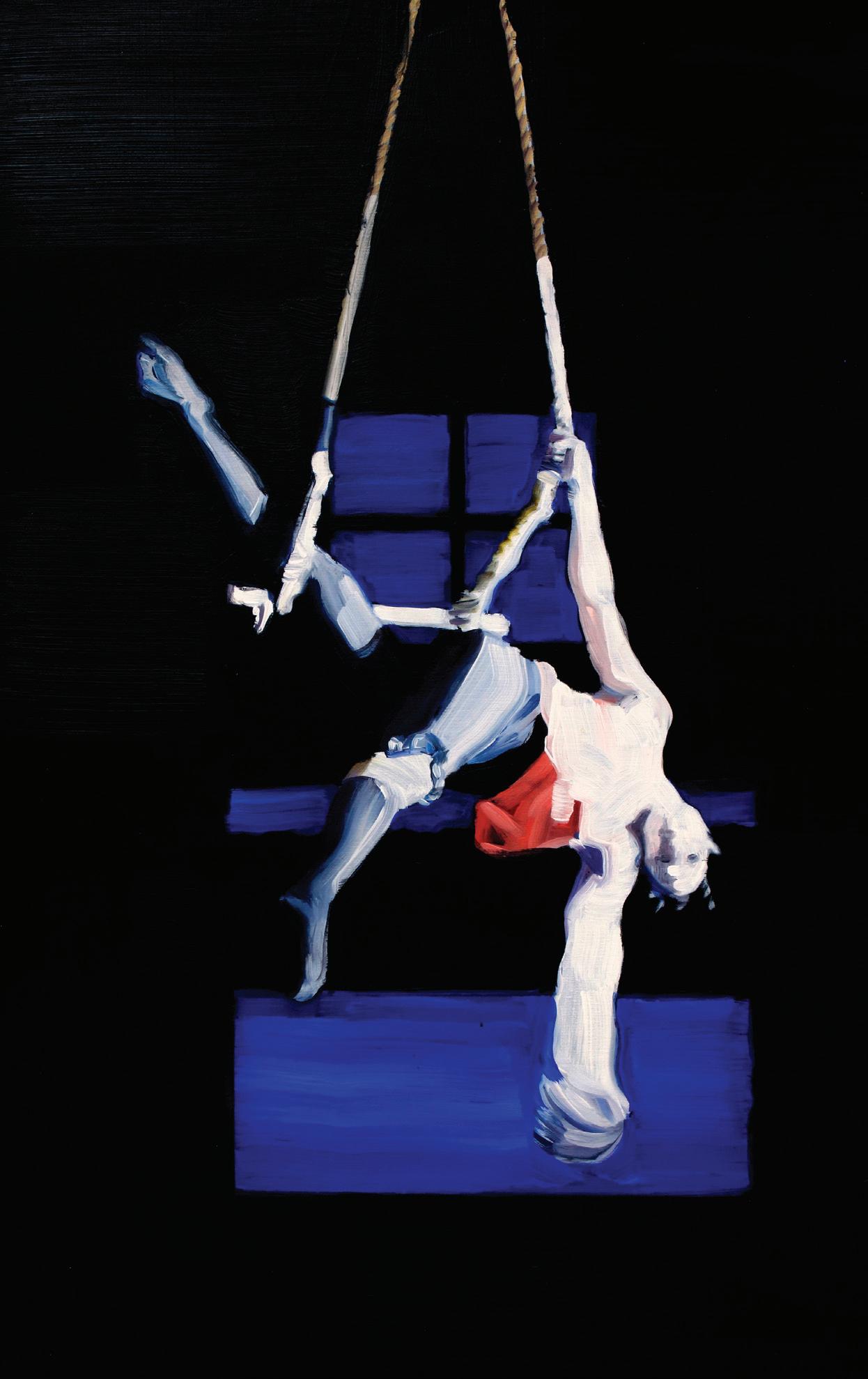
America: The Happy Trails Tour, Apr. 9, celebrates Roy Rogers and Dale Evans. John Beasley’s Unlimited Miles: Miles Davis at 100, Apr. 12, honors the jazz legend. On Apr. 17 Humans 2.0 by Circa showcases contemporary circus and acrobatics, followed by The Okee Dokee Brothers on Apr. 18. Patrick Bartley with the Texins Jazz Band, Apr. 19, features the saxophonist alongside musicians from Berkner High School, while Music of Joy & Peace: Keyboard Conversations with Jeffrey Siegel, Apr. 20, combines classical performance with commentary. Hear the Tom Petty tribute band PettyBreakers Apr. 24; the RSO’s season finale, Ravel & Rachmaninoff, Apr. 25; and the Ukulele Orchestra of Great Britain Apr. 29. eisemanncenter.com
12 FORT WORTH SYMPHONY ORCHESTRA
Walt Disney Animation Studios: A Decade in Concert on Apr. 18 celebrates musical moments from films of the past decade with film clips. Spanish Masters: An Evening of Music and Art, Apr. 24–26, features Ravel’s Rapsodie espagnole, Lieberson’s Neruda Songs, and Falla’s The Three-Cornered Hat Storybook: Sleeping Beauty is May 2 at the Van Cliburn Concert Hall. Brahms & Dvořák , May 8–10, pairs Tower’s Suite from Concerto for Orchestra with Dvořák’s Cello Concerto and Brahms’ Symphony No. 2. Copland’s Appalachian Spring and Barber’s Knoxville on May 16 highlight masterworks inspired by folk traditions, and An Evening in Finland, May 22–24, features Berlioz’s Harold in Italy and Sibelius’ Symphony No. 2. fwsymphony.org
13 KITCHEN DOG THEATER
Dream Hou$e, Apr. 9–May 3, written by Eliana Pipes and directed by Christopher Carlos, follows two Latina sisters on a reality show as they attempt to sell their family home. kitchendogtheater.org
14 LYRIC STAGE
Sweet Charity, Apr. 17–May 3, brings the classic 1966 Broadway musical to Lyric Stage, following the misadventures of a hopeful dance hall hostess as she searches for love in New York City. lyricstage.org
15 MAJESTIC THEATRE
See Orchestra Noir on Apr. 4. Comedy highlights include Vir Das: Hey Stranger, Apr. 9; Kathy Griffin: New Face, New Tour, Apr. 10; and Nimesh Patel: With All Due Disrespect on Apr. 24. David and Tamela Mann: The Relationship Tour follows Apr. 12. Next up. An Evening with Colin Hay on Apr. 18; Little Feat: The Last Farewell Tour, Apr. 19; and Laurie Berkner Live, Apr. 26. May features Dusty Slay: The Neighborhood Guy Tour, May 1; Blackberry Smoke: Rattle, Ramble and Roll Tour, May 2; Maren Morris: The Dreamsicle Tour, May 3; Chelcie Lynn:
Trailer Trash Tammy the Loose Lips Tour, May 7; Brad Williams: Tall Tales Tour, May 8; Micky Dolenz: 60 Years of The Monkees, May 9; Ilana Glazer Live, May 13; Bobby Lee: The Finally Tour, May 17; Sam Harris: Truth & Consequences, May 20; Andrés Cepeda, May 24; and Stayin’ Alive: A Tribute to the Bee Gees, May 30. majestic.dallasculture.org
16 TACA
The 2026 TACA Silver Cup Award Luncheon on May 8 honors Nancy Carlson and Andy Smith for their outstanding volunteer leadership and contributions to the arts in North Texas, bringing together civic and cultural leaders, patrons, and supporters for the organization’s annual celebration at the Omni Dallas. taca–arts.org
17 TEXAS BALLET THEATER
Swan Lake, May 1–3 and May 15–17, returns with Ben Stevenson OBE’s two-act staging of the beloved ballet, bringing the story of Odette and Odile to life through sweeping choreography and opulent sets. texasballettheater.org
18 THEATRE THREE
The Murder of Roger Ackroyd, Apr. 16–May 10, presents a new stage adaptation of Agatha Christie’s 1926 mystery, adapted by Blake Hackler. When the wealthy Roger Ackroyd is found dead in the quiet village of King’s Abbot, famed detective Hercule Poirot returns to unravel a web of secrets. theatre3dallas.com
19 TITAS/DANCE UNBOUND
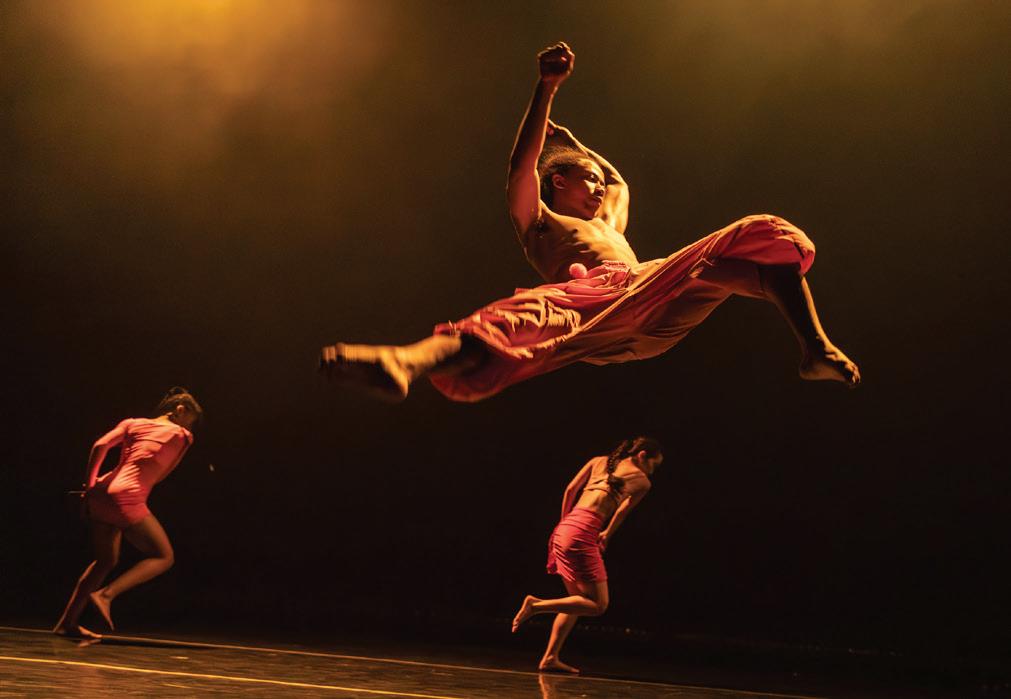
Complexions Contemporary Ballet blends classical ballet technique with contemporary movement on Apr. 4. The annual Command Performance + Gala gathers leading dance companies for a celebratory evening supporting TITAS on Apr. 18. Compagnie Marie Chouinard, May 1–2, is a Canadian troupe known for its bold, physically expressive choreography. GALLIM / SAMA on May 29 features Andrea Miller’s contemporary dance company. Image: SAMA. Photograph by Steven Wright. titas.org
20 UNDERMAIN THEATRE
Saturn Return presents a world-premiere comedy by Gracie Gardner, directed by Christina Cranshaw, Apr. 30–May 24. When a group of former “theatre kids” reunites in their suburban hometown for a friend’s funeral they confront the uncertainties of adulthood and friendship. undermain.org
21 WATERTOWER THEATRE
Good Night, Oscar, through Apr.12, dramatizes a 1958 episode of Jack Paar’s late-night television show when pianist and actor Oscar Levant delivered a live appearance that blurred the line between genius and spectacle. Always…Patsy Cline, May 19–31, tells of the country music icon’s friendship with devoted fan Louise Seger, featuring many of Cline’s beloved songs. watertowertheatre.org
01 12.26
New solo exhibitions by Olivia Jia and Ditta Baron Hoeber, Apr. 15–May 16, feature Jia’s new works alongside Hoeber’s painted photographs. Opening May 30, the three-person exhibition Herald brings together Jennifer Carvalho, Em Kettner, and Simon Petepiece and remains on view through the summer. gallery1226.com
02 AKIM MONET FINE ARTS
Time Capsule-Rodin–The Sculpted Voice brings together studio casts, intimate studies, and monumental bronzes produced under the stewardship of Musée Rodin. akimmonetfinearts.com
03 ALAN BARNES FINE ART
Fine 19th & 20th Century Paintings and Sculpture Spring–Summer will be on view at the gallery early this spring. alanbarnesfineart.com
04 ARTSPACE111
Shared Ground | Contemporary Photography of Place and Identity continues through Jun. 6 and brings together works by Texas photographers Jon Flaming, Jill Johnson, Bob Lukeman, Dontrius Williams, and Martha Peters. The exhibition explores how landscapes, built environments, and personal narratives shape identity and community. artspace111.com
05 BARRY WHISTLER GALLERY
Topographics, Apr. 4–May 16, brings together photographs by Steve Dennie and paintings by Tommy Fitzpatrick and Terrell James. Image: Terrell James, Glacier, 2026, oil on linen, 42 x 42 in. barrywhistlergallery.com
06 BEATRICE M. HAGGERTY GALLERY
Mechanical Fortuna continues through Apr. 24 and brings together paintings by Jason Bly and sculptures by Suguru Hiraide. Bly’s layered works revisit once-optimistic technological forecasts, while Hiraide’s sculptures reinterpret cultural symbols and everyday forms to explore the tensions between East and West, individuality and conformity. udallas.edu/gallery
07 CADD
Contemporary Art Dealers of Dallas brings the community together through curated gallery experiences and coordinated efforts, including Gallery Day in the spring and fall. caddallas.org
08 CHRISTOPHER MARTIN GALLERY
The Dragon Street gallery displays the reverse-glass paintings of Christopher H. Martin along with 25-plus mid-career artists who work within painting, photography, mixed media, and sculpture. christophermartingallery.com
09 CONDUIT GALLERY
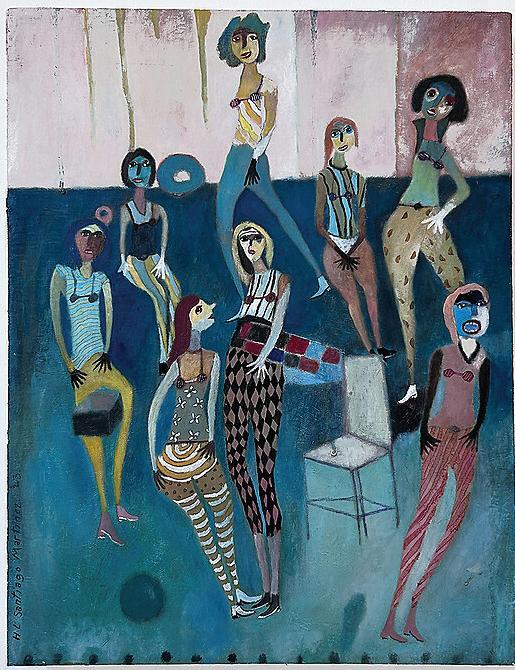
Stephen Lapthisophon: Selected Works on Paper and Mary Dinaburg: Then to Now continue through Apr. 4 in the Main Gallery, while the Project Room presents HL Santiago Martínez: La inconformidad es un asunto de disfraces. Image: HL Santiago Martínez, El horizonte parece un cuervo vestido de primavera, 2023, oil on canvas, 13.75 x17.75 in. conduitgallery.com
10 CRAIGHEAD GREEN GALLERY
Through Apr. 18, paintings and works on paper by Daniel Angeles, Carole Pierce, and Ian Grieve explore distinct but intersecting approaches to narrative, atmosphere, and material play. Next, Arturo Mallmann, Jon Krawczyk, and Chris Stewart share the gallery through Apr. 25, presenting concurrent exhibitions exploring solitude, material transformation, and memory through painting and sculpture. craigheadgreen.com
11
CRIS WORLEY FINE ARTS
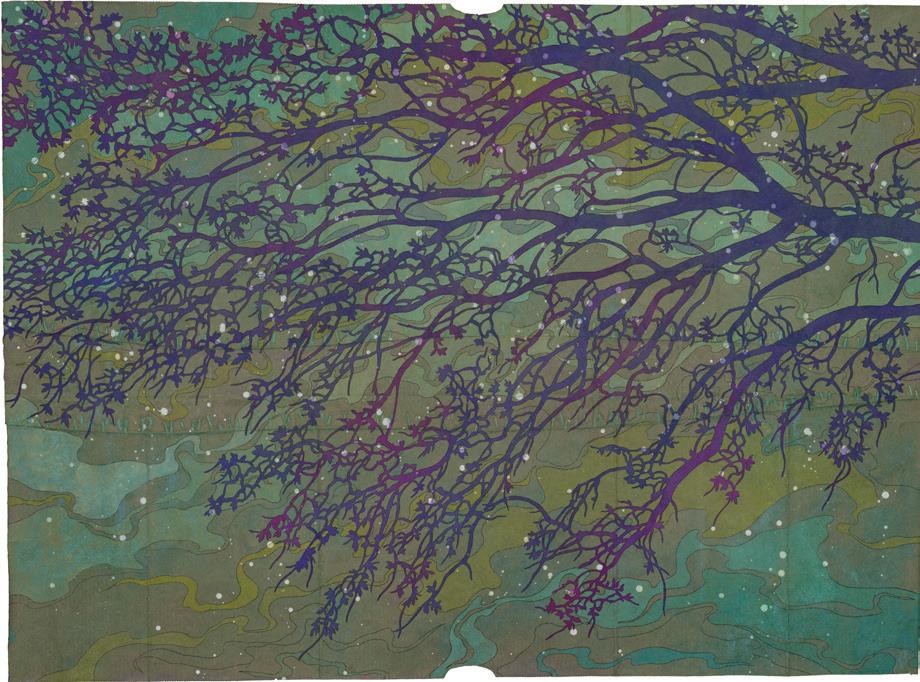
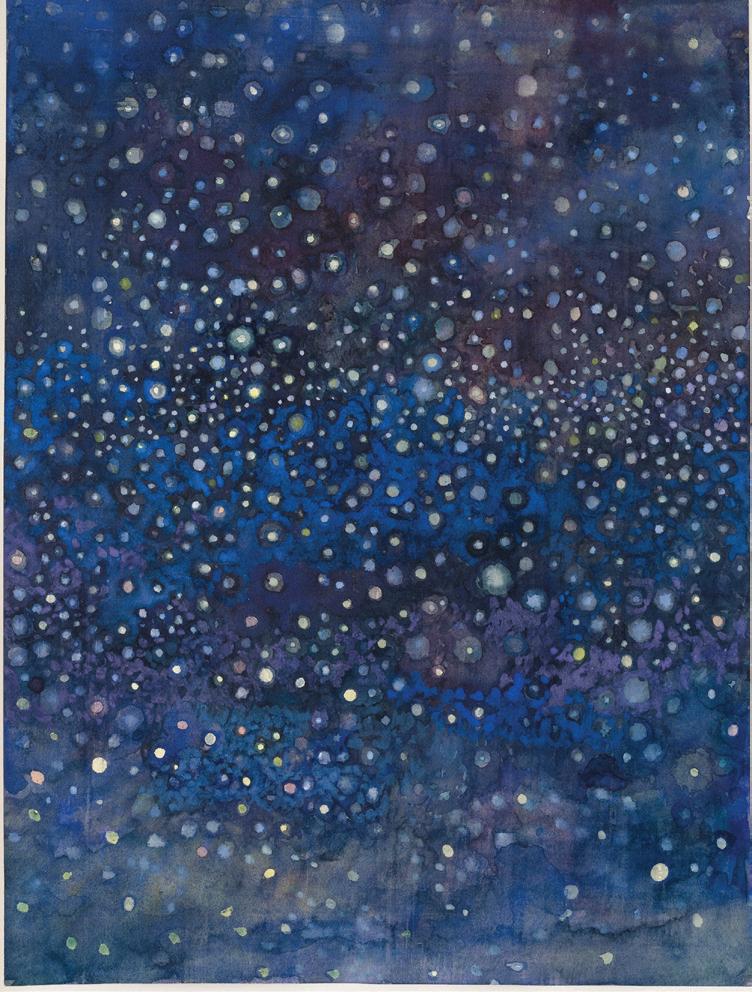
Robert Sagerman: Edifice, Fount, Rippling Spaces and Maysey Craddock: waterlines, Apr. 15–May 30, present new work by the two artists. Image: Maysey Craddock, river of stars, 2025, gouache, Flashe, and thread on found paper, 26.50 x 36 x 4.50 in. crisworley.com
12 DAVID DIKE FINE ART
Survey in Time continues through May 9 and presents work by Texas artists Frank Brown and Martin Delabano. Organized in partnership with Langford Art Advisory, the exhibition traces Brown’s allegorical figurative paintings alongside Delabano’s assemblage works made from found materials, reflecting themes of identity, landscape, and personal history. daviddike.com
13 ERIN CLULEY GALLERY
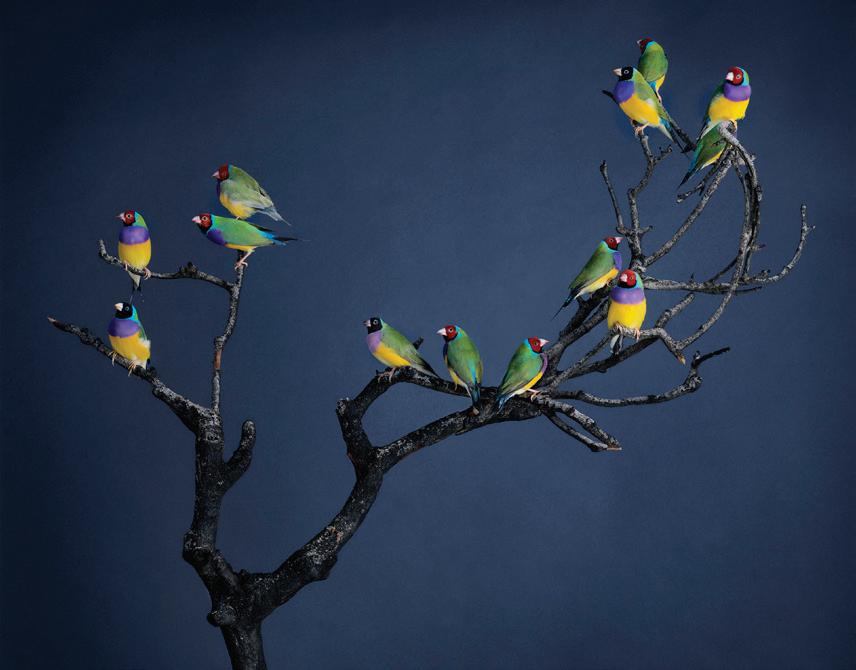
Leila Jeffreys: Songs of Innocence, Apr. 4–May 9, presents the artist’s photographic works exploring the expressive presence of birds, highlighting their individuality while reflecting on themes of vulnerability, beauty, and the natural world. Image: Leila Jeffreys, Burnt Branch, 2022, giclée print on archival fine art paper, 34 x 43.50 in. Edition of 14 plus 2 APs. erincluley.com
14 FERRARI FINE ART GALLERY
Spaces That Shape Us, on Apr. 7, brings together designer Ginger Curtis, artist Debra Ferrari, showroom owner Amanda Taylor of Scott + Cooner, and Will Funk of Cassina for a lunchtime panel exploring the intersection of neuroscience, biophilic design, and the built environment. ferrarigallery.net
15 FORT WORKS ART
Fort Works Art celebrates its 10th anniversary this year with Fort Works Art Presents: Ten Three Exhibitions. One Immersive Installation. All
16 FWADA
FWADA sponsors Spring Gallery Night and Fall Gallery Night for members and friends. FWADA also sponsors an annual show featuring submitted artworks from member institutions in the summer. fwada.com
17 GALLERI URBANE
Stephen D’Onofrio: The Florist and Samantha McCurdy: The Space Between Pearls and Stars open Apr. 15 and continue through May, presenting new bodies of work that explore material transformation and the poetic tensions between the natural and the imagined. galleriurbane.com
18 GREEN FAMILY ART FOUNDATION
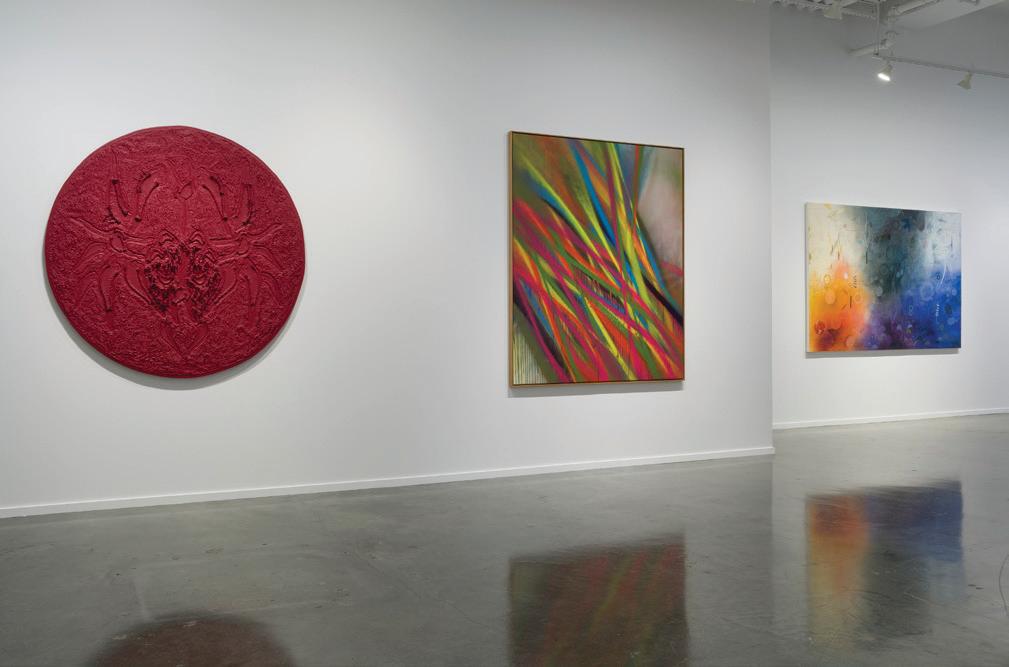
Fields of Vision: Dallas Collects is curated by Sara Hignite and brings together 21st-century artworks acquired since 2020 by Dallas-based collectors. Featuring works drawn from both established and emerging private collections, the exhibition highlights the breadth of collecting practices in Dallas and situates them within a broader global art context. On view through Aug. 9. Image: Fields of Vision: Dallas Collects, installation view. Photograph by Evan Sheldon. greenfamilyartfoundation.org
19 JAMES COPE GALLERY
Lewis Brander, Apr. 11–May 16, is followed by Lee Lozano, May 30–Jul. 4. The gallery will also participate in the Dallas Invitational, Apr. 16–18, and Independent New York, May 14–17, with Coco Young. jamescope.biz
20 JAMES HARRIS GALLERY
Gaurii S Kumaar: Golden Ancestry, through May 2, presents expressive works on paper and sculptural installations exploring inheritance, caste, and belonging through imagery drawn from South Asian miniature painting traditions. Kumaar’s dreamlike landscapes and symbolic objects reflect on memory, gender, and cultural legacy through recurring motifs of flora, fauna, calligraphic marks, and gold-laden forms that suggest both privilege and fragility. jamesharrisgallery.com
21 KEIJSERS KONING
Jeff Grant: Spring Rider, Mar. 28–Apr. 25, presents paintings of playgrounds, trees, and navels that playfully navigate the tension between innocence and maturity, purity and perversion. keijserskoning.com
22 KIRK HOPPER FINE ART
A group exhibition featuring Shaun Roberts, Aarionne Hobbs, Dagon Blank, Alexandra Wooldridge, and Alberto Barbusano Pe -
23
KITTRELL/RIFFKIND ART GLASS
Alex Gabriel Bernstein opens May 16 with a reception from 5–7 p.m. and continues through Jun. 13, presenting a solo exhibition of the artist’s luminous glass. kittrellriffkind.com
24
LAURA RATHE FINE ART
Hunt Slonem: Garden Party continues through May 2, followed by Janna Watson: Undercurrent May 9–Jun. 12, presenting the artist’s energetic abstract paintings that explore movement, rhythm, and layered color. Image: Janna Watson, The Other Cat Lady, 2026, mixed media on panel, 72 x 72 in. laurarathe.com
25
LILIANA BLOCH GALLERY
Kelly Tapia-Chuning: Speaking Ancestors / [Re]Awakening Spirit continues through Apr. 11. Drawing on the Indigenous principle of the Seven Generations, Tapia-Chuning presents a series of sculptural textile works made from dismantled serapes, copper nails, quartz, copal, and obsidian. The works reference ancestral memory, migration, renewal, and spiritual protection . lilianablochgallery.com
26 LONE GALLERY
Lone Gallery showcases a diverse array of artists including painters Bradley Kerl, Danny Joe Rose III, and Camille Woods, alongside mixed-media artists such as Cruz Ortiz and Heather Sundquist Hall. lonegallery.com
27 MELIKSETIAN | BRIGGS
Meg Cranston, Petra Cortright, Dave Muller, Helen Bermingham, and Yifan Jiang will be presented by the gallery at the Dallas Art Fair, Apr. 16–19. meliksetianbriggs.com
28
NATURE OF THINGS
Minor Regional Novelist continues through May 23, bringing together historic figures associated with Lone Star Regionalism alongside Texas folk and contemporary artists including Jerry Bywaters, Alexandre Hogue, Carrie Cook, Jim Franklin, Sam Linguist, and Coreen Mary Spellman. Image: Sam Linguist, KZPS, 2024–2025, underglazed stoneware, 44 x 55 x 3.75 in. natureofthings.xyz
29
PENCIL ON PAPER
Murielle White joins the Pencil on Paper’s program with new works on paper on view at the gallery, and paintings present-
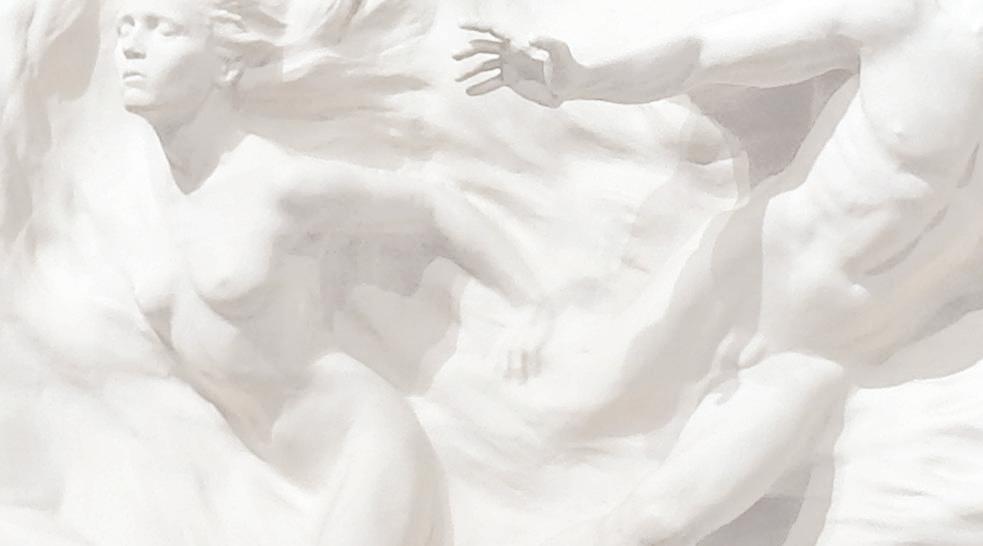
Ex Nihilo, Figure No.3. is a detail from the full-scale plaster for the nal stone sculpture of Ex Nihilo, commissioned as part of e Creation Sculptures at Washington National Cathedral.
Southwest Gallery is honored to announce a rare and historic exhibition opening May 2026 celebrating the life and legacy of renowned American sculptor Frederick Hart (November 3, 1943 – August 13, 1999). In a landmark event marking the end of an era, Southwest Gallery has been chosen to assist in the sale of the remaining inventory from the publisher and estate of Frederick Hart. No additional works will ever be produced again, making this the de nitive close of a remarkable chapter in American sculpture.
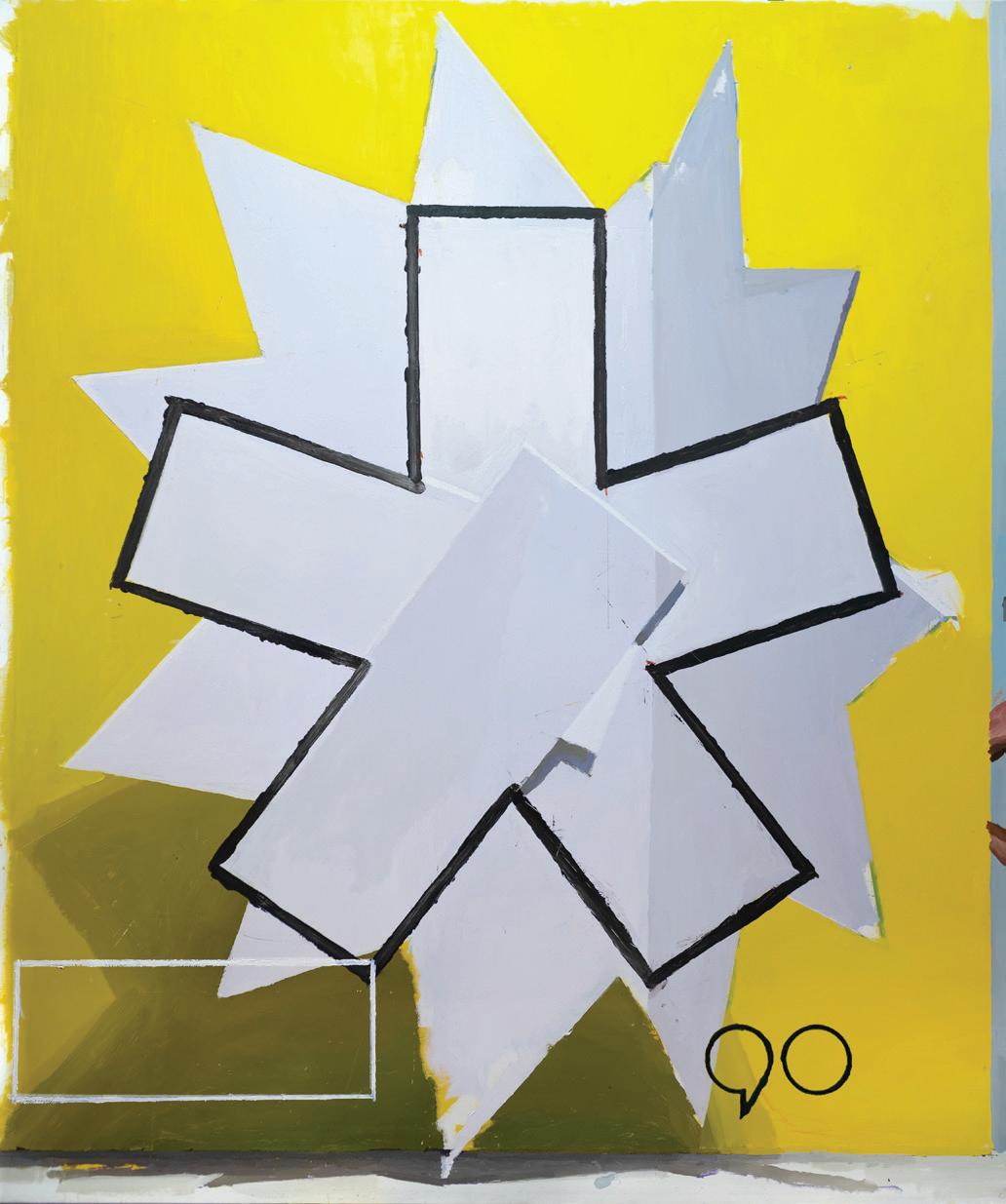
/ARCO ARTIST SPOTLIGHT:
RUBÉN GUERRERO
ed in Booth B10 at the Dallas Art Fair. Born in Paris and now based in North Texas, White is known for her painterly landscapes shaped by studies in traditional Chinese painting and her MFA training at the University of North Texas. pencilonpapergallery.com
30 PHOTOGRAPHS DO NOT BEND
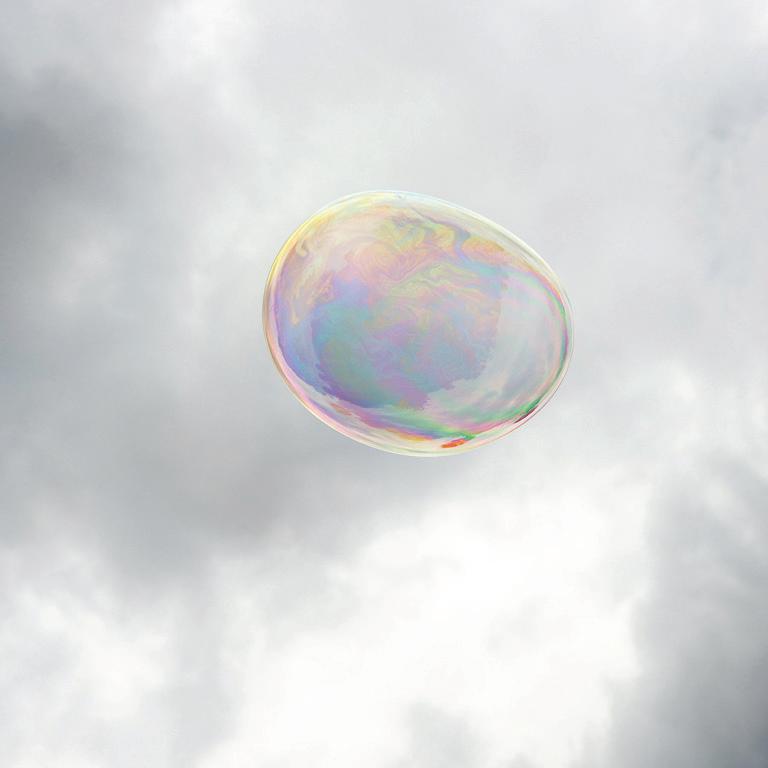
The gallery presents the photographer Stuart Allen’s distinctive explorations Mar. 28–May 30. Image: Stuart Allen, Bubble No. 12, 2015, archival pigment print on Somerset rag, 23.75 x 23.75 x .07 in. pdnbgallery.com
31 THE POWER STATION
The Power Station is a nonprofit initiative dedicated to providing a platform for contemporary art projects in Dallas. This spring, the art space presents Body Fragments and Feel Good Hit of the Summer. powerstationdallas.com
32 RO2 ART
Taylor Cleveland: The Faire, Apr. 11–May 9, reimagines the medieval manuscript Très Riches Heures as a monumental projection environment, framing the art fair as a theatrical microcosm where spectacle, devotion, and commerce unfold in a continuous animated cycle. Opening May 17, two concurrent exhibitions, Yuni Lee: Tides of Equilibrium, features new abstract paintings and Yuliya Lanina: Broken Lullabies presents paintings, installation, and video works. ro2art.com
33 SAMUEL LYNNE GALLERIES
This
Rubén Guerrero (Spanish, b. 1976), Motif Etoilé (Starred Motif), 2024. Oil on canvas, 92 1/2 x 76 3/4 in. (235 x 195 cm). Photo by Pablo Asenjo, courtesy of Galería Luis Adelantado.
Samuel Lynne Galleries, established in 2008 by artist JD Miller and entrepreneur Philip Romano, showcases a curated selection of contemporary artists with unique visions, including Tyler Shields, Lea Fisher, and Brandon Boyd. samuellynne.com
34 SMINK
A showcase of fine design and furniture, SMINK is a purveyor of quality living products. The showroom also hosts exhibitions featuring Robert Szot, Gary Faye, Richard Hogan, Dara Mark, and Paula Roland. sminkinc.com
35 SOUTHWEST GALLERY
A special evening honoring the estate of Frederick Hart will take place May 16 from 5–7:30 p.m., offering collectors a final opportunity to view and acquire works by the renowned sculptor in a celebratory event with cocktails, hors d’oeuvres, and live music. swgallery.com
36 TALLEY DUNN GALLERY
Roxy Paine: Overgrown Neuron presenting new work by the artist known for examining the intersections of natural systems, technology, and artificial growth. talleydunn.com
37 TUREEN GALLERY
Hannah Taurins: Showstopper ents a suite of paintings that draw on cinematic imagery, pre–Hays Code Hollywood, and theatrical spectacle to ex plore the tensions between humor and tragedy, beauty and absurdity. Taurins’ scenes of figures, couples, and domestic tableaux unfold with heightened color and dramatic con trasts, reflecting on the intertwined forces of light and dark that shape lived experience. Image: Hannah Taurins, away, 2026, gouache and colored pencil on canvas, 48 x 38 in. tureen.info
38 VALLEY HOUSE GALLERY
Gail Norfleet: Connecting Faraway Places
11. The gallery will return to Booth F14 at the Dallas Art Fair Apr. 16–19. Opening Apr. 25, Henry Finkelstein: Paintings will fill the gallery through May 29. valleyhouse.com
39 THE WAREHOUSE
Yoshitaka Amano, on view Apr. 11–Jul. 18, surveys more than five decades of work by the Japanese artist whose practice spans illustration, painting, design, and narrative worlds. The exhibition brings together Amano’s expansive visual language across media, tracing recurring motifs and evolving forms that have shaped his influential, genre-defying career. thewarehousedallas.org
40 WEBB GALLERY
Webb Gallery in Waxahachie champions contemporary, selftaught, and visionary artists whose work embodies the grit, humor, and heart of true Southern culture. Housed in a 1902 building, the gallery presents rotating exhibitions alongside an eclectic mix of folk art, books, and curiosities, all celebrat ing the persevering human spirit. Webb’s Fair & Square in Fort Davis extends this ethos to West Texas with regular art and music events. webbartgallery.com
41 WILLIAM CAMPBELL GALLERY
Through May 9, Billy Hassell: section of still life and landscape, presenting paintings that transform natural environments into intimate, carefully com
posed arrangements. Built from field sketches, memory, and botanical studies, Hassell’s layered works blur the boundaries between observation and reconstruction. williamcampbellcontemporaryart.com
AUCTIONS AND EVENTS
01 DALLAS ART FAIR
The Dallas Art Fair returns to the Fashion Industry Gallery Apr. 16–19, bringing together leading modern and contem
porary galleries from around the world. Now in its 17th edition, the fair highlights both international and regional voices while anchoring its program in the strength of the North Texas art community. Dallas galleries currently participating include Conduit Gallery, Cris Worley Fine Arts, Erin Cluley Gallery, Galleri Urbane, James Harris Gallery, Meliksetian | Briggs, Nature of Things, Pencil on Paper, Sputnik Modern, Valley House Gallery, Artspace111, and William Campbell Gallery in Fort Worth. dallasartfair.com
02 DALLAS INVITATIONAL
Founded in 2023, Dallas Invitational is a boutique art fair created through conversations among galleries, collectors, and curators. The fair brings together a focused group of contemporary galleries presenting work by emerging and established artists in an intimate setting. The 2026 edition takes place Apr. 16–18 at the Rosewood Mansion on Turtle Creek, open daily from 11 a.m.–6 p.m. Participating galleries include Bel Ami, Broadway, James Cope Gallery, CORPUS, Hoffman Donahue, Anna Erickson Presents, Europa, Foreign & Domestic, Gallery 12.26, Gathering, François Ghebaly, Good Weather, Susan Inglett Gallery, Nina Johnson, Galerie Lelong, LOMEX, Gió Marconi, Galería Mascota, David Nolan Gallery, parrasch heijnen, Marc Selwyn Fine Art, and Vardaxoglou. dallasinvitational.com
03 HERITAGE AUCTIONS
April highlights include Jim Davis: The Art of Garfield Comic Art Showcase Auction Apr. 2; The Art of Tom and Jerry and the MGM Studios Animation Art Showcase Auction Apr. 4; Comic Cover Art Showcase Auction Apr. 4; Photographs Signature Auction Apr. 7; Artists at Work: Photographs from the Collection of Milton Esterow Showcase Auction Apr. 8; Depth of Field: Photographs Showcase Auction Apr. 8; Showcase featuring the Collection of Dan Armand of 1xRun Urban Art Auction Apr. 8; Fine & Decorative Arts Showcase Auction Apr. 9; The Art of Archie Comics Part X Showcase Auction Apr. 9; Concert Posters Signature Auction Apr. 10; Amer -
ican Art Within Reach Showcase Auction Apr. 10; Graffiti Legends: The Art of LA2 Showcase Auction Apr. 14; Alternative Movie Posters Showcase Auction Apr. 15; The Comix Revolution: Vintage Independent Comics Showcase Auction Apr. 16; Illustration Art Signature Auction Apr. 21; Prints & Multiples Signature Auction Apr. 23; The Harvey Kurtzman Estate Original Comic Art Showcase Auction Apr. 23; Watches & Fine Timepieces Signature Auction Apr. 24; Prints & Multiples Showcase Auction Apr. 24; Early 20th Century Design Signature Auction Apr. 30; and The Duel Diagnosis Collection Urban Art Showcase Auction Apr. 30. May auctions include Modern Design Signature Auction and British Posters Showcase Auction May 1; Urban Art Showcase Auction May 6; Modern & Contemporary Art Signature Auction May 7; Comic Art Signature Auction May 8–10; The Heartbeat of a Cartoon: The Art of Vintage Disney Animation Drawings IV Animation Art Showcase Auction May 9–10; Concert Posters & Music Memorabilia Showcase Auction May 10; Depth of Field: Photographs Showcase Auction May 13; Fine & Decorative Arts Showcase Auction May 14; The Art of Anime–Vol. VIII Signature Auction May 15–17; American Art Signature Auction May 19; and Prints & Multiples Showcase Auction May 20. ha.com.
04 LONE STAR ART AUCTION
Taking place on Oct. 31 in Dallas, the Lone Star Art Auction is the largest live art auction in the state of Texas, offering the best American, Western, wildlife, sporting, and Texas fine art. Presented by Phil Berkebile of the Great American West, LSAA brings together collectors and sellers of historic and contemporary fine art for a unique and entertaining event. Consignments are now being accepted for original paintings and sculpture. lonestarartauction.com
05
MONITOR STREET BLOCK PARTY
The Second Annual Monitor Street Block Party will take place on April 15 from 5:00–8:30 p.m. Attendees will enjoy exclusive access to showrooms and galleries in a festive atmosphere featuring live music, DJ sets by local artists Tim Flannery and Chris Houlihan, curated food trucks, and specialty drinks. A highlight of the evening will be the largescale public art installation The Valley of the Giants by Dallas artist Mari Hidalgo King. monitorstreetdallas.com
06
THE OTHER ART FAIR
Returning to Dallas Market Hall May 7–10, The Other Art Fair combines affordable and original artworks by 135 independent artists with immersive installations, performances, DJs, and a fully stocked bar. theotherartfair.com
Reverie at its most potent
A visionary in contemporary landscape painting, John McAllister claims the first Dallas Art Prize.
INTERVIEW BY MARK LAROE
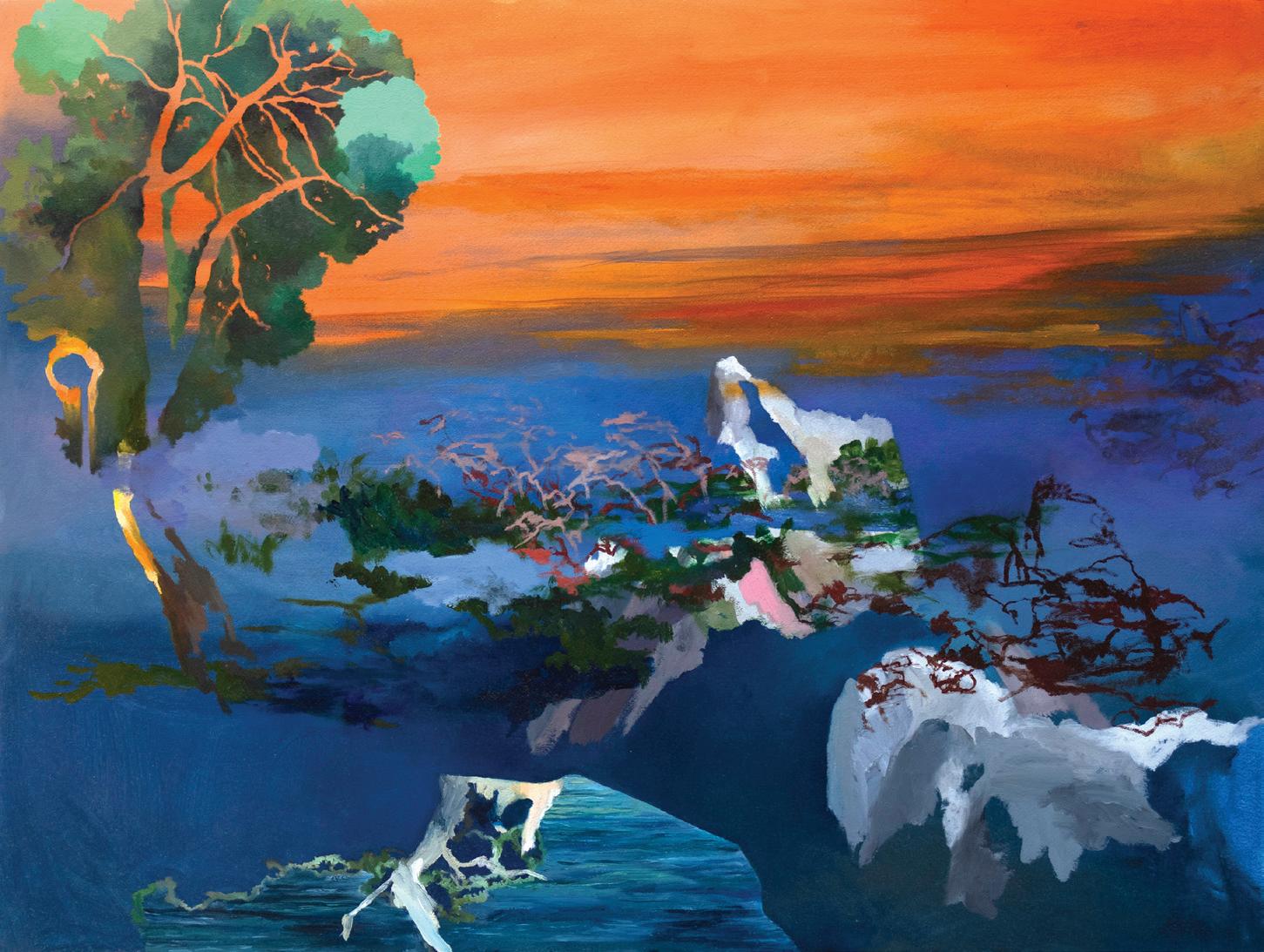
This April, Dallas Art Fair will launch its inaugural Dallas Art Prize, a new annual award recognizing an artist with a sustained, prolific practice whose work deeply engages intellectually, culturally, and critically. The first honoree, John McAllister, is represented by James Fuentes, who will present the artist’s work at this year’s fair.
Art collector Mark Laroe, the managing director/private client advisor at Bank of America, visits with John McAllister about his painting practice:
Mark Laroe (ML): Your paintings emerge from lived encounters with landscape rather than direct transcription. How do you negotiate the threshold between memory, sensation, and invention?
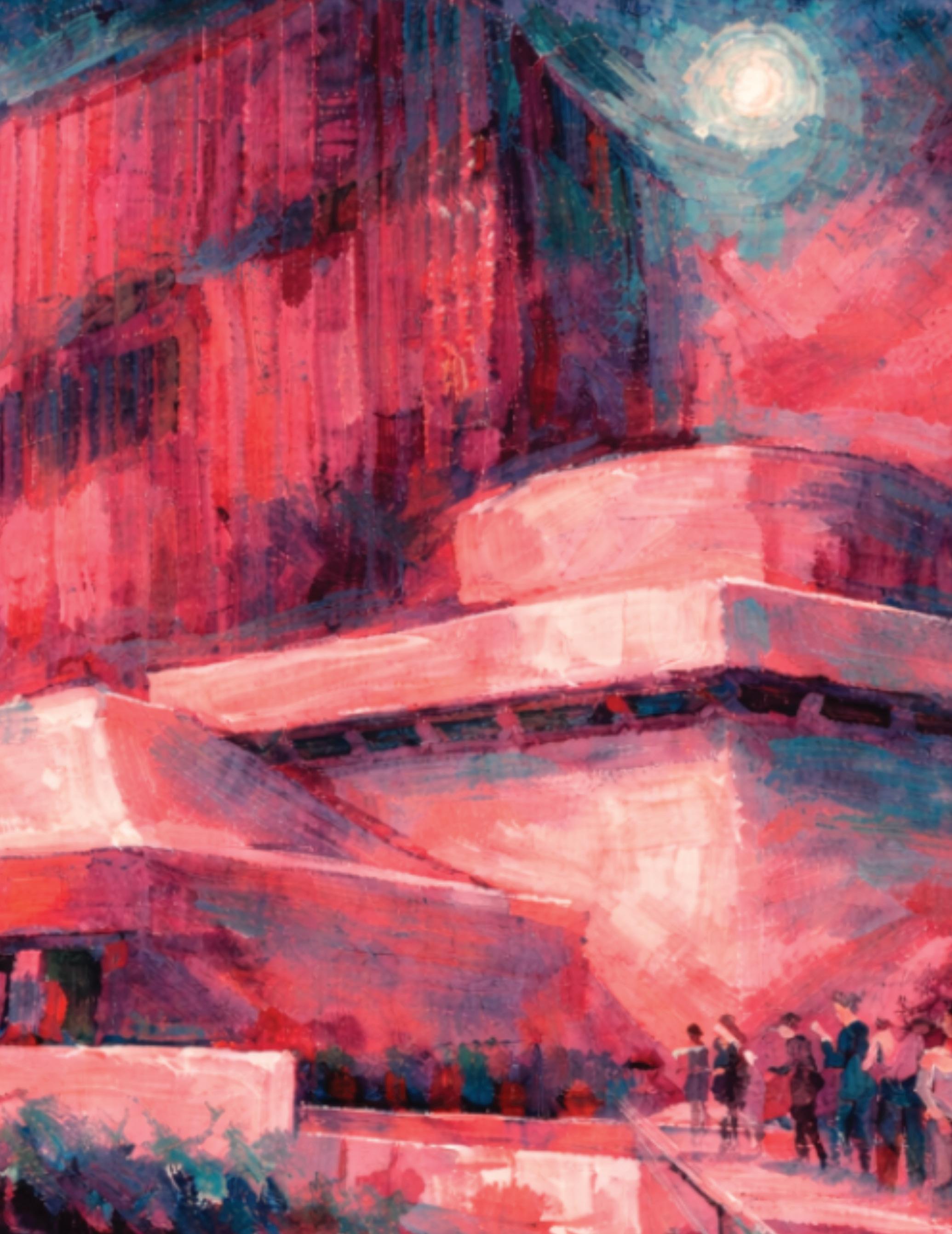
John McAllister (JM): When I begin a blank canvas, I’m starting with a finished image held very gingerly in mind. It’s not crystal clear and can easily disappear, so I don’t hold on too tight. I’m always letting color lead the way, both because it is my instinctual reaction, and it is where sensation is most fertile. The color you are mixing on the palette often doesn’t resemble how it actually performs on the canvas near the other colors. Inside the parameters of the canvas, the relationships between the colors establish all the rules. Once a few anchors of the color scheme have been put in place, everything else follows. I trust my instincts and try not to let the original plan get in the way of where the painting wants to go.
ML: Your chromatic palette often verges on the ecstatic—acidic pinks, electric greens, charged violets. How do you think about color structurally versus atmospherically?
JM: I absolutely think about my palette in ecstatic terms, that is the perfect way to describe it. A direct one-to-one transcription of a landscape will never convey the way it actually feels, and so I give up on that pursuit completely. In its place I use this overcharged, effervescent manner to give the paintings their own version of an ecstatic experience. That way they feel like an event that you encounter instead of a static record of nature. Atmosphere in a painting is just a technical trick of blending paint together a certain way in combination with how you hold the brush and the amount of
John McAllister, lazing incandescence no less, 2020. Courtesy of the artist and James Fuentes Gallery, New York and London.
John McAllister. Photograph by Sylvie McAllister.
force you are applying. Ecstatic color as a structure will determine how the painting behaves. If I prioritize behavior over drawing and rational composition, then all the mysterious properties of color can flower.
ML: Your paintings feel less like views of nature and more like immersive perceptual fields. Do you think about phenomenology in relation to your work?
JM: This is absolutely what dominates the direction of my studio. The idea first presented itself to me when I was in graduate school trying to paint fire. Every attempt to draw the contours of flames rendered them lifeless and cold. I needed to shift my entire way of thinking about how to make a painting. I would only think about how a fire behaved and not about what it looked like. I would hold the idea of fire in mind without any image to work from. Fire’s heat and constant motion or its total lack of an edge or surface and no holdable body was in direct contrast to a painting’s materiality that is cold to the touch, with clear edges and a two-dimensional surface often prized for its body. There are entire epochs of painting’s history that hold its material presence as its greatest quality, and I was trying to use it to paint something that completely destroyed that aspect. So I would begin a painting with only heat in mind, and in place of the movement of a fire I would substitute brightness, so that your eye could never hold its place.
ML: There is a rhythmic density to your mark-making that borders on abstraction while retaining legible space. How do you maintain that tension without tipping fully into non-representation?
JM: I often get completely lost in mark-making and for hours on end will have completely forgotten that I am making a landscape painting. I will sort of snap out of it and step back from the canvas wondering where I’ve been led, and I am usually pleasantly surprised at what is there. I’m fully aware that this will happen and make sure to never stop it. Partially this is because I trust that my experienced hands will know what to do, and the way my mind interacts with color has become second nature. My feeling in nature resembles that pattern. I will usually be stopped in nature because something has struck me; some scene is demanding my attention,
whether because its beauty is commanding or unusual or even unnerving. Initially my thoughts and focus are on exactly what’s in front of me. However I quickly drift away or into what I’m looking at and begin thinking about everything else possible. Reverie at its most potent.
ML: Living and working in New England, seasonal cycles appear central to your visual vocabulary. How does temporality structure your practice?
JM: Having grown up in the south and now living somewhere in which summer is my favorite season is very strange and disorienting. I usually find myself painting the most verdant, intense, summery scenes in February, when New England is at its most brutal and unforgiving. My eyes will be completely saturated with summer colors, and I’ll step outside my studio to intense cold blues and purples as the sun is setting. It’s like my studio is a warm fire and the contrast to the world outside becomes this gulf that I want to expand. Spring sets in, all my windows and doors are open, and as the air loses its bitter touch my paintings get softer. The little crocus buds start to pop up in the yard, and the air begins to fill with bird song. It all affects me greatly. The burst of color here in spring is so exuberant after March’s grays that I can’t help but be affected. Pinks, creamsicle oranges, and light purples fill every painting. Summer’s lushness fills the coffers for the winter paintings. Fall comes along and it’s this kind of drunken last call that intoxicates everything. I’m just a leaf blowing around from season to season.
ML: You received your BFA at University of Texas at Austin. How does it feel to be returning to Texas to receive the inaugural Art Prize at Dallas Art Fair?
JM: I lived in Texas from the ages of 15 to 26. It was during those years at the University of Texas that I would say “my eyes were opened.” I began to see so many more possibilities during those years that I hadn’t been aware of—from art history to film and music to the people who I met who are still part of my life. It was a massively important part of growing up, so it feels pretty amazing to be receiving this award from a place that played such an important role. P
Clockwise from left: John McAllister, ablaze rapt chorus beaming, 2025, oil on canvas, 108 x 168 x 1.5 in.; John McAllister, silent sounds surrounds, 2018, oil on canvas, 72 x 168 in.; John McAllister, teaming serene dazzled dreamy, oil on canvas, 50 x 44 in. All courtesy of the artist and James Fuentes Gallery, New York and London.
YOSHITAKA AMANO’S EXPANDING UNIVERSE
THE WAREHOUSE TRACES THE BOUNDARYCROSSING CAREER OF AN ARTIST WHO HAS SPENT A LIFETIME BUILDING WORLDS.
BY EVE HILL-AGNUS
For some, the name Yoshitaka Amano conjures 8-bit memories: the first time they encountered the ethereal warriors of Final Fantasy, their intricate weapons and outfits streaming across a fantasy sky. For other connoisseurs, it recalls latenight screenings of the haunting anime Angel’s Egg , its dreamlike universe recently rereleased in 4K. For generations of manga readers, Amano’s distinctively gossamer ink-painting style lives on the covers of Vampire Hunter D, where a pale, androgynous hero drifts through post-apocalyptic dreamscapes, flowing hair and widebrimmed hat invoking a gothic-western aesthetic.
Yoshitaka Amano (Japanese, born 1952), Pandora 2, 2024, oil on canvas, 31.62 x 39.37 x 1.12 in.; 40 x 47.50 x 2 in. framed. The Rachofsky Collection.
Yoshitaka Amano (Japanese, born 1952), Sue, 2007, automotive paint on aluminum, 55.12 x 78.75 x 4 in. Courtesy of the artist and LOMEX New York
This spring and summer, The Warehouse Dallas Art Foundation offers a chance to meet Amano, protean architect and illustrator of worlds, in many guises. Presented in two consecutive exhibitions, the project traces the arc of a quicksilver artist who has spent nearly six decades moving between commercial animation and video games, printmaking and fine art, absorbing influences, honing craft, and building mythologies that feel simultaneously primordial and futuristic.
Born in 1952 in Shizuoka City, in the foothills of Mount Fuji, Amano began drawing as a child, using long rolls of paper his brother brought home from work at a paper factory. That habit of composing horizontally would remain with him. At 14 he brought a portfolio of drawings to the animation studio Tatsunoko Productions in Tokyo. Weeks later, a letter arrived offering him a job. Quitting school, Amano began work as an animator’s assistant on such series as Speed Racer and Gatchaman Team (dubbed G-Force in the US), where he drew the countless transitional frames that create the illusion of movement. The discipline would shape his practice.
In 1997, at the height of his commercial success, Amano staged an audacious transition. By the 1980s he had moved into freelance illustration and defined the visual imagination of the video game Final Fantasy, earning international acclaim. But New York would become the stage for his fine-art debut.
Amano rented the ballroom of Manhattan’s Puck Building for a self-funded exhibition titled Think Like Amano, taking out ads in the subways, in print media, and on walls in SoHo. A New York Magazine feature headline asked, “Is Amano the Best Artist You’ve Never Heard Of? (Or just the latest Barnum of SoHo?).” Critics questioned whether it was shameless self-promotion or genuine artistic ambition. But the gesture itself was wholly Amano: immersive and world-building.
At The Warehouse, Amano’s turning point takes physical form in one of two monumental New York Nights scrolls originally created for the Puck Building show. More than 50 feet long, the work unfurls across a wall like a contemporary echo of Japanese handscroll traditions. Figures float within a churning cosmological cityscape rendered in a fine, sinuous line. The scale is cinematic, the perspective aerial, recalling ukiyo-e woodblock prints—those “floating world” images widely considered antecedents to comics and animation.
Nearby hang Amano’s gold-leaf panel paintings, titled Mozart . Their shimmering bronze-and-gold surfaces evoke Japanese
Yoshitaka Amano (Japanese, born 1952), Medusa I, 2023, oil on canvas, 57.25 x 44.12 x 1.12 in. Courtesy of the artist and LOMEX New York.
Yoshitaka Amano, (Japanese, born 1952), Remembrance of Time, 2024, oil on canvas, 63.75 x 51.25 x 1.12 in.; 65.50 x 52.50 x 2 in. framed. Courtesy of the artist and LOMEX New York.
Yoshitaka Amano (Japanese, born 1952), Angel’s Egg, 2018, mixed media on paper, 7.62 x 11 in., 11 x 14.50 in. framed Courtesy of the artist and LOMEX New York.
screen-painting traditions dating to the Momoyama period, but the compositions feel closer to opera (a form he admires) in their dramatic, emotionally charged scenes populated by elongated figures suspended in mythic time.
Amano’s work bridges Japanese and Western tradition and unsettles the divide between commercial and fine art. Curator Thomas Feulmer situates him in a lineage from Klimt to Warhol, artists who collapsed such distinctions. “We periodically reckon with whether something is pop culture, kitsch, or serious art,” Feulmer says. Amano has been navigating that tension for decades.
The Warehouse’s second exhibition leans into Amano’s pop-inflected output. Here glossy automotive paint on aluminum panels produces bold lines and simplified forms—colors vibrating with Warholian brightness, as in the Candy Girls series, for example. In the melee of works such as Big Bang or the Monsters series—where characters from the Final Fantasy universe erupt into dense, horror vacui compositions—every inch is activated. The effect is vertiginous, each image a portal into an expanding cosmos.
In a smaller gallery, sumi-e ink paintings offer a stark counterpoint. Rendered on absorbent rice paper, the monochrome works of the Apocalypse series are all atmosphere and restraint. The spectral figures recall Vampire Hunter D but feel suspended in time—like film stills that ask us to imagine the frame before and after.
Curatorial assistant Daryl Meador notes the palpable joy in Amano’s practice. He is constantly drawing—on airplanes, in hotel rooms, wherever he travels. “There’s a real effortlessness in how he creates,” she says, “which comes from this almost obsessive drive to keep making.”
Long before museums embraced anime and manga as serious art, Amano was already building worlds expansive enough to hold myth and modernity. “Human beings keep craving these ways of making meaning,” Feulmer observes. Standing before them, we feel the pull. Amano builds worlds and we enter them. P
Yoshitaka Amano (Japanese, born 1952), Komokuten (Virupaksa), 2023, Sumi ink, yunomoto (sulfur, calcium oxide), and silver leaf on wood panel, 86.62 x 47.25 in. Courtesy of the artist and LOMEX New York.
Yoshitaka Amano (Japanese, born 1952), Bird Song, 2006, mixed media on paper, 15.12 x 22.25 in. Courtesy of the artist and LOMEX New York.
Yoshitaka Amano (Japanese, born 1952), Serenade, 2023, Sumi ink on paper, 23.87 x 15.87 in.; 28.50 x 20.50 x 1.50 in. framed. Courtesy of the artist and LOMEX New York.
FRAGMENTS & FINS
SPRING EXHIBITIONS RIDE THE EDGE AT THE POWER STATION.
BY DANIELLE AVRAM
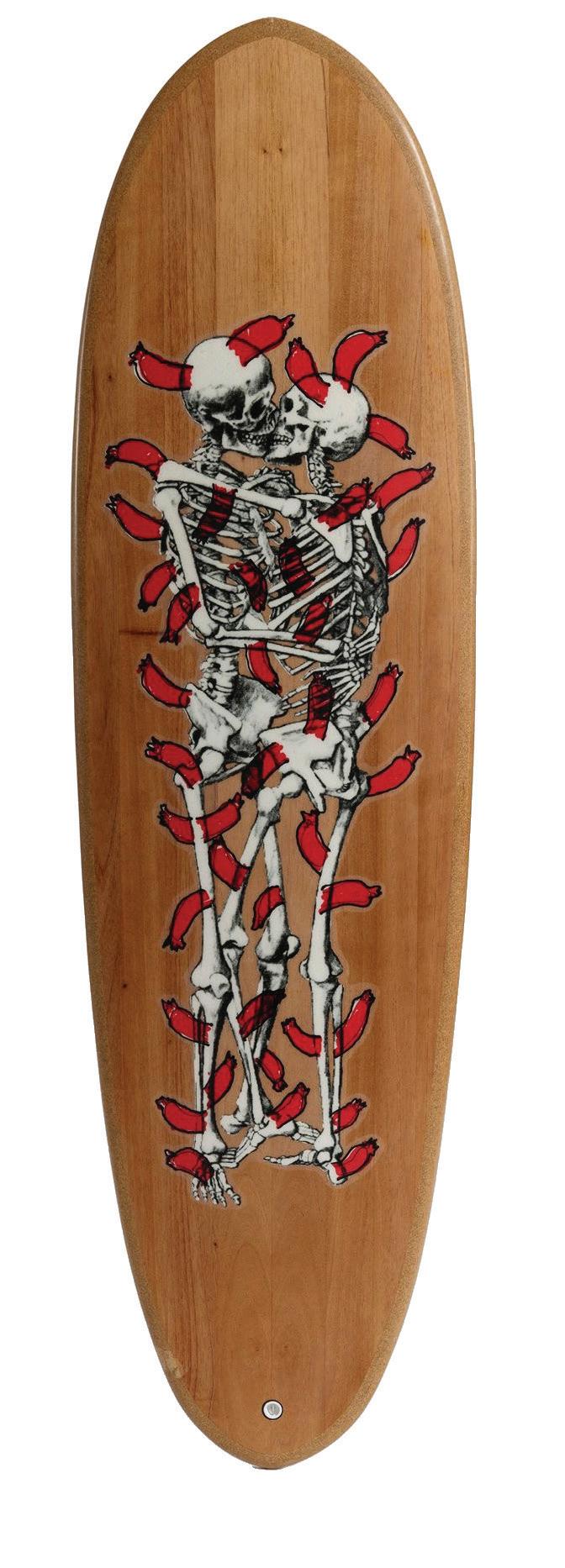
Gabriel Rico in collaboration with Picnic Surf Shapes, PSS055
K.O.T.B.H., 2025, Spanish Cedar, cork, paint, inkjet print on kozo, fiberglass cloth, and resin, 6 ft. 8 in. x 22 x 3 in. Courtesy of Picnic Surf Shapes.
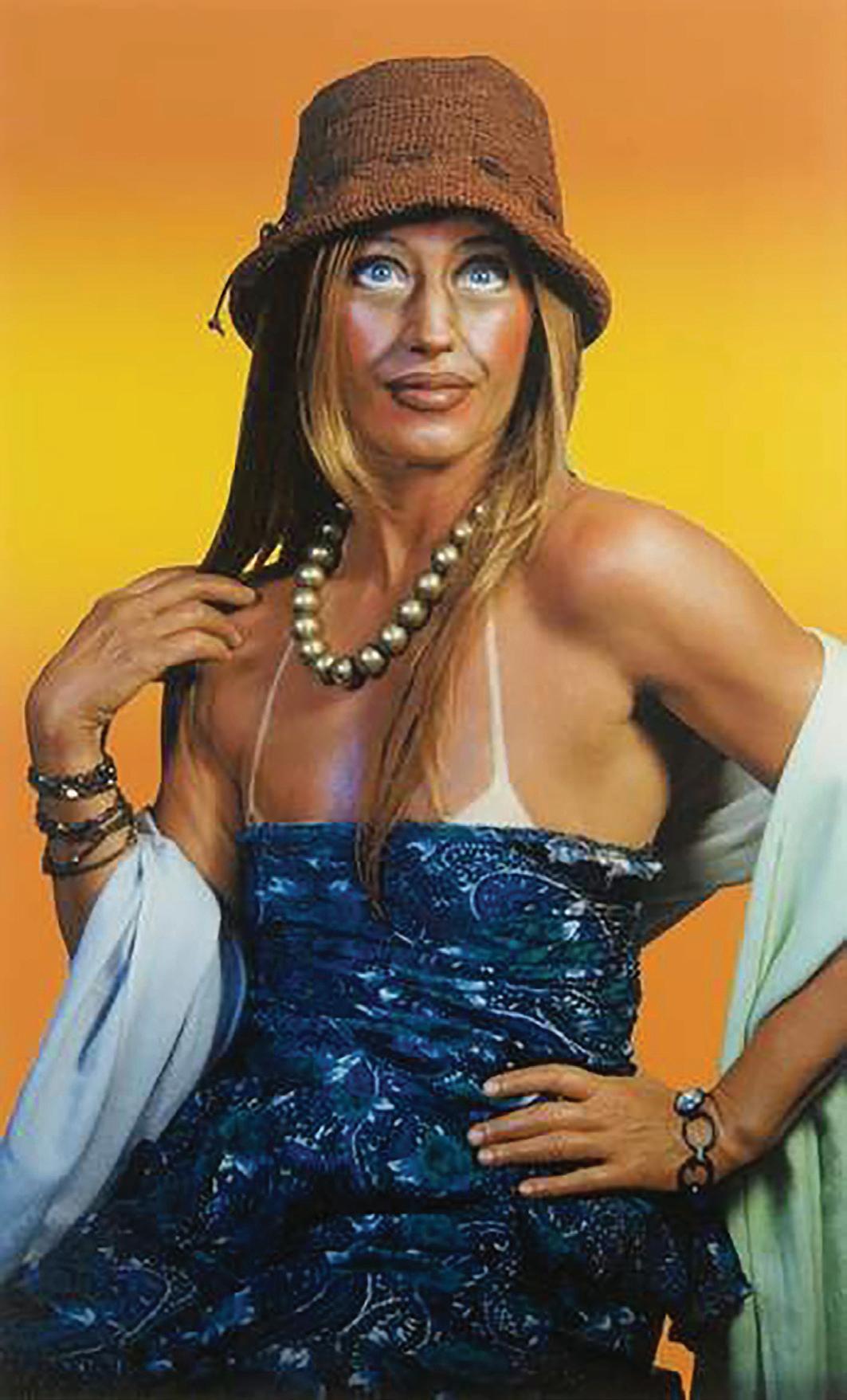
Cindy Sherman, Woman in Sundress, 2003, Lambda print, 30 x 22 in. The Pinnell Collection.
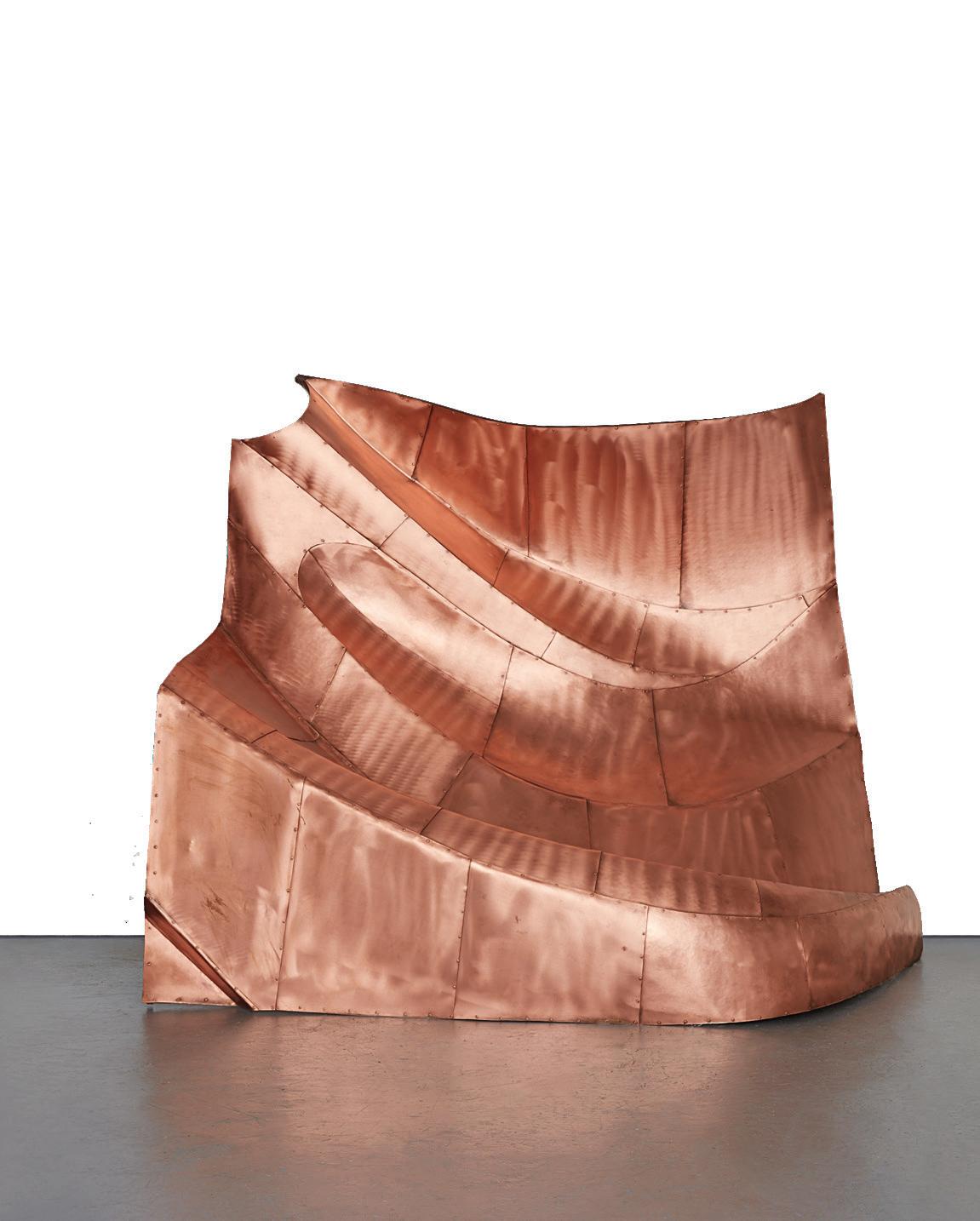
Danh Vo, (Danish, born Vietnam 1975), We the People (detail), 2011, copper, 76.50 x 104 x 55 in. Hartland-Mackie / Labora Collection.
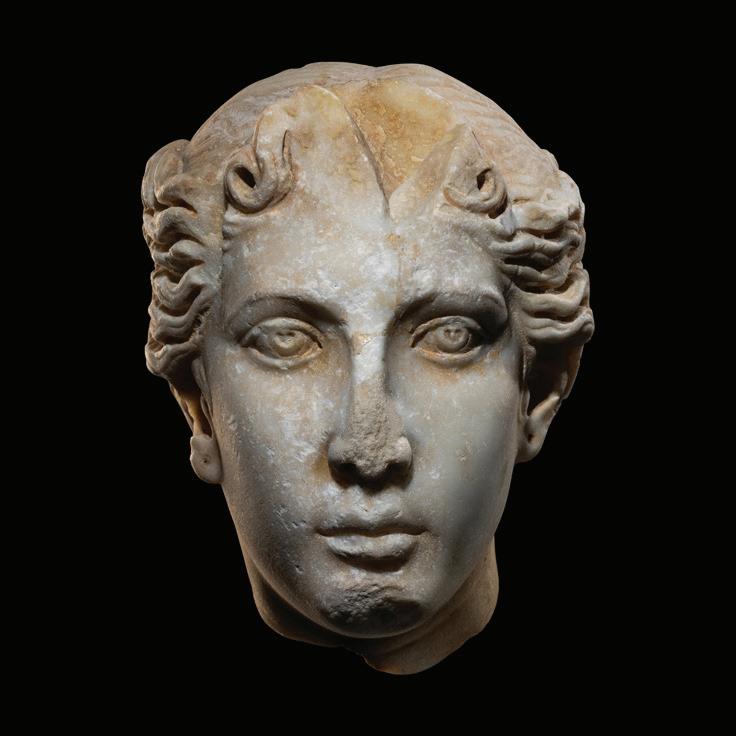
Roman Marble Portrait Head of a Woman, 1st half of the 3rd Century A.D, height 8.25 in. Private Collection, New York.
In the 15 years since Skinceuticals co-founder Alden Pinnell launched The Power Station, the venue has become known for its unique brand of contemporary art programming, positioning itself as an international venue that is unequivocally Texan. Exhibitions utilize the building’s historic industrial architecture and surrounding landscape, and guests are just as likely to find themselves cracking a beer on the rooftop as they are rubbing elbows with high-level artists and collectors.
True to form, this spring the nonprofit space debuts two ambitious exhibitions that engage with history and representation in a fraught political age, albeit from very different angles: one an art historical examination of classical subject matter, the other a mashup of genres inspired in part by Francis Ford Coppola’s film, Apocalypse Now
Body Fragments, curated by artistic director Rob Teeters, brings together a mix of antiquities and contemporary artworks to explore how a body broken into pieces—whether as an artistic choice or as the result of age or destruction—mirrors current instabilities in which the body is the battleground. Says Teeters, “Body Fragments is an exhibition that explores the conceptually rich narratives of absence, erasure, and loss. It challenges the notion of perfection and wholeness. The pairing of historical antiquities with contemporary works is not intended as a comparison across periods, but rather as a dialogue that foregrounds the productive tension between time, loss, vulnerability, and beauty.”
Works by contemporary artists such as Robert Gober and Sarah Lucas present body fragments as comically undone, enmeshed with domestic objects, while Cindy Sherman and Calvin Marcus
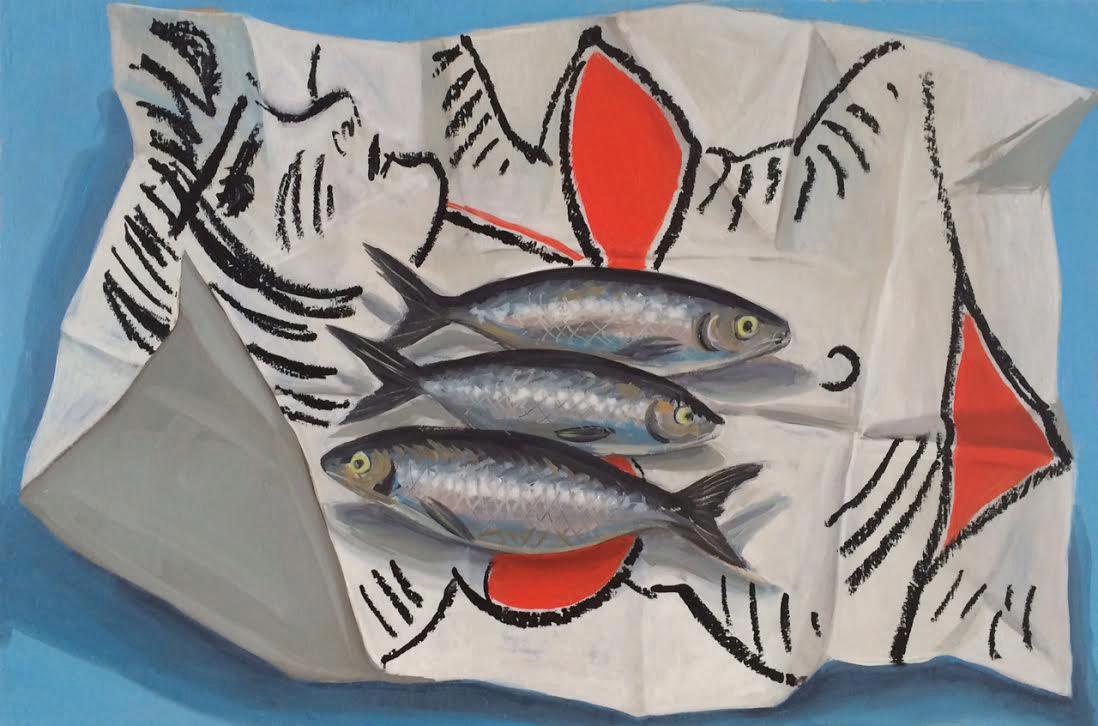
Ella Kruglyanskaya, Fish, Red Bikin i, 2014, oil on wood panel 16 x 24 in. The Pinnell Collection.
Calvin Marcus, Dead Soldier, 2016, oil stick, cel-vinyl, liquid watercolor, and emulsified gesso on linen/canvas blend, 101 1/2 x 79 in. The Pinnell Collection.
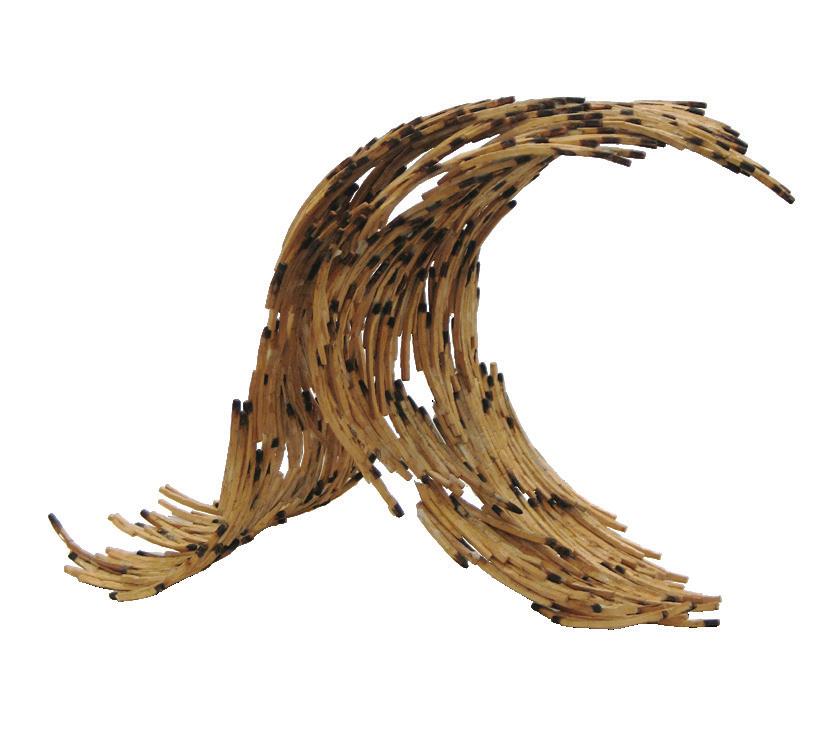
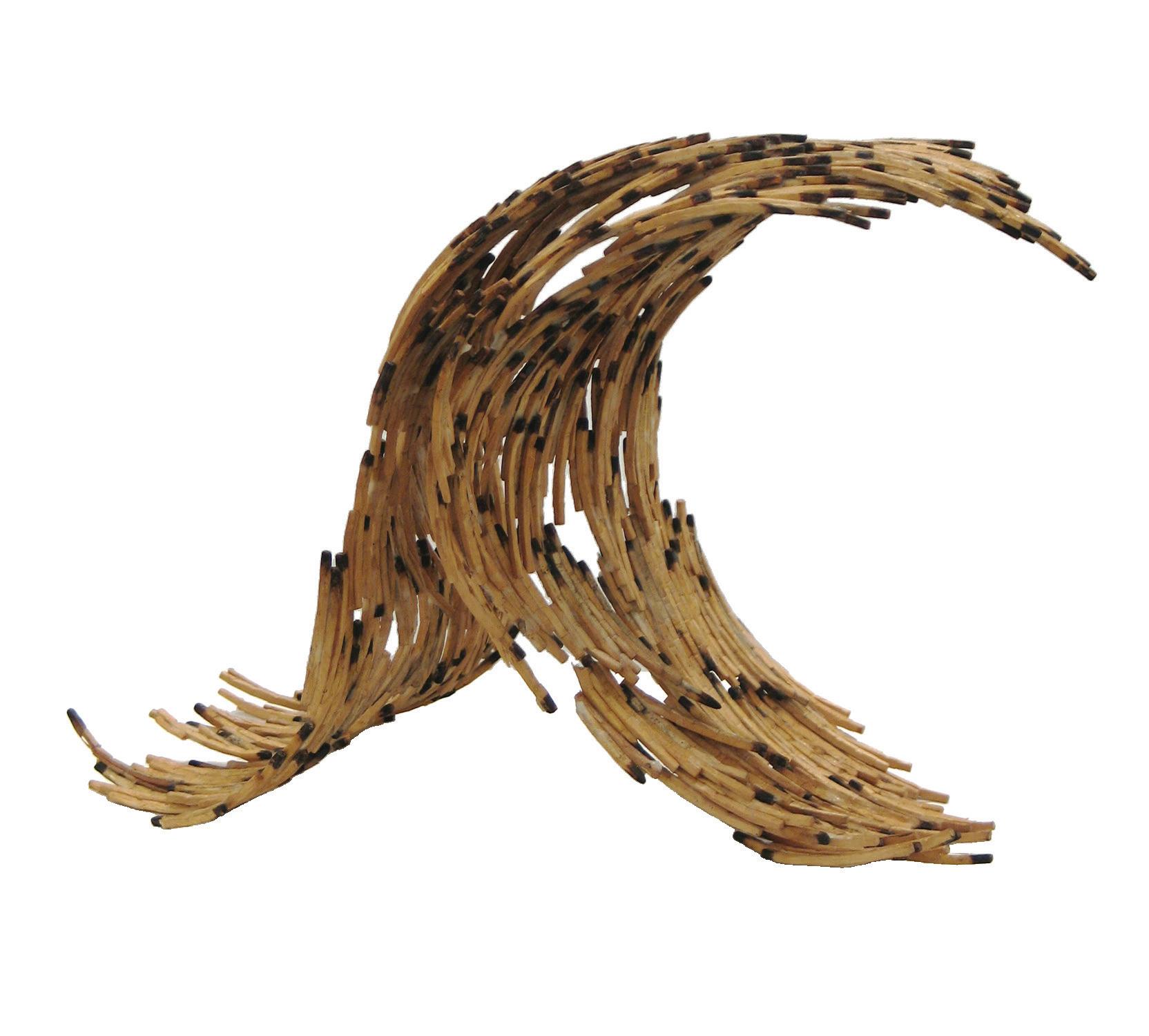
Al Hansen, Matchstick Wave, pre-1985, wooden matchsticks, glue, 9 x 12 x 7 in. The Pinnell Collection.
Kelly Akashi (American, born 1983), Submersion, 2019, stainless steel and hand-blown glass, 56 x 11 x 11 in. Hartland & Mackie / Labora Collection.
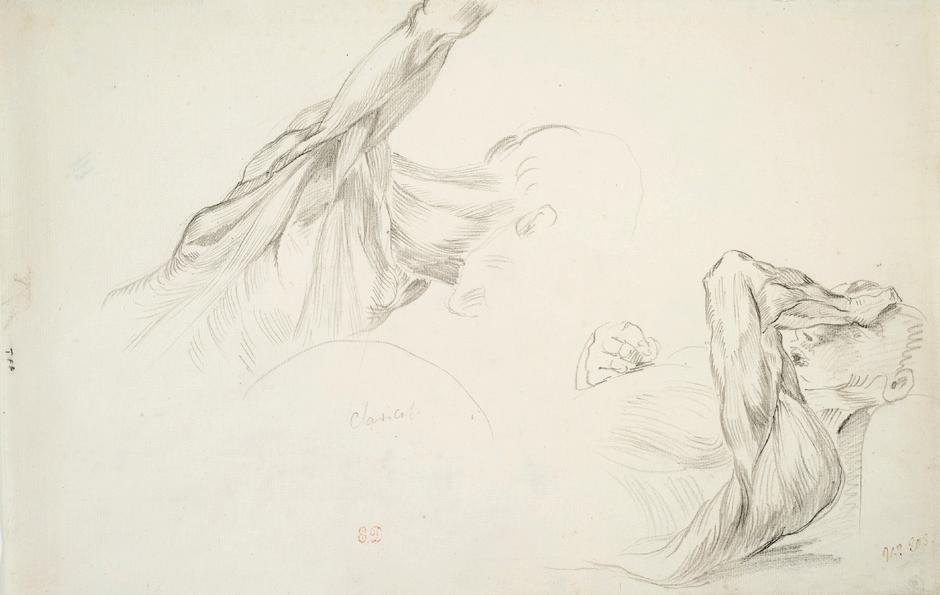
Eugene Delacroix (French, 1798–1863), Two Studies of the Flayed Muscles of a Man’s Head and Shoulder, (Ecorché – Deux études de la tête et des épaules d’un homme), pencil on paper, 9.62 x 14.62 in. Estate sale stamp lower center: Lugt 838a; Inscribed lower right: Clavicule and numbered: No. 203. Courtesy of Jill Newhouse Gallery, New York.
delve into the horrific and surreal. Amidst these pieces are ancient marble busts and bronze sculptures as well as a striking study of a flayed man, stripped of skin with muscles exposed, by 19th -century Romanticist Eugène Delacroix. While the drawing is an anatomical sketch, one cannot help but think of the atrocities of war and punishment inflicted upon the body. Yet it also celebrates the intricacy of the human form, the delicate layers of systems that we all share, our skin a barrier that both unites and divides.
Feel Good Hit of the Summer is the 16th project by Picnic Curatorial Projects, which was founded by Pinnell and Power Station director Gregory Ruppe in 2021, an offshoot of the duo’s commercial venture, Picnic Surf Shapes. Ruppe, an avid surfer and artist, is dedicated to exploring the connection between the two, marrying his punk aesthetics and collectivist nature with the world of fine art.
“As with other Picnic Curatorial events, Feel Good Hit of the Summer blurs the lines between exhibition, collaboration, and pop-up surf shop,” says Pinnell. “In this case, Greg Ruppe’s surf designs under the brand Picnic Surf Shapes will be integrated with collaborations with artists, works from the Pinnell Collection, and new work by Germán Benincore. Proceeds from the sale of Picnic Surf Shapes goods go to supporting artists and realizing these exhibitions.”
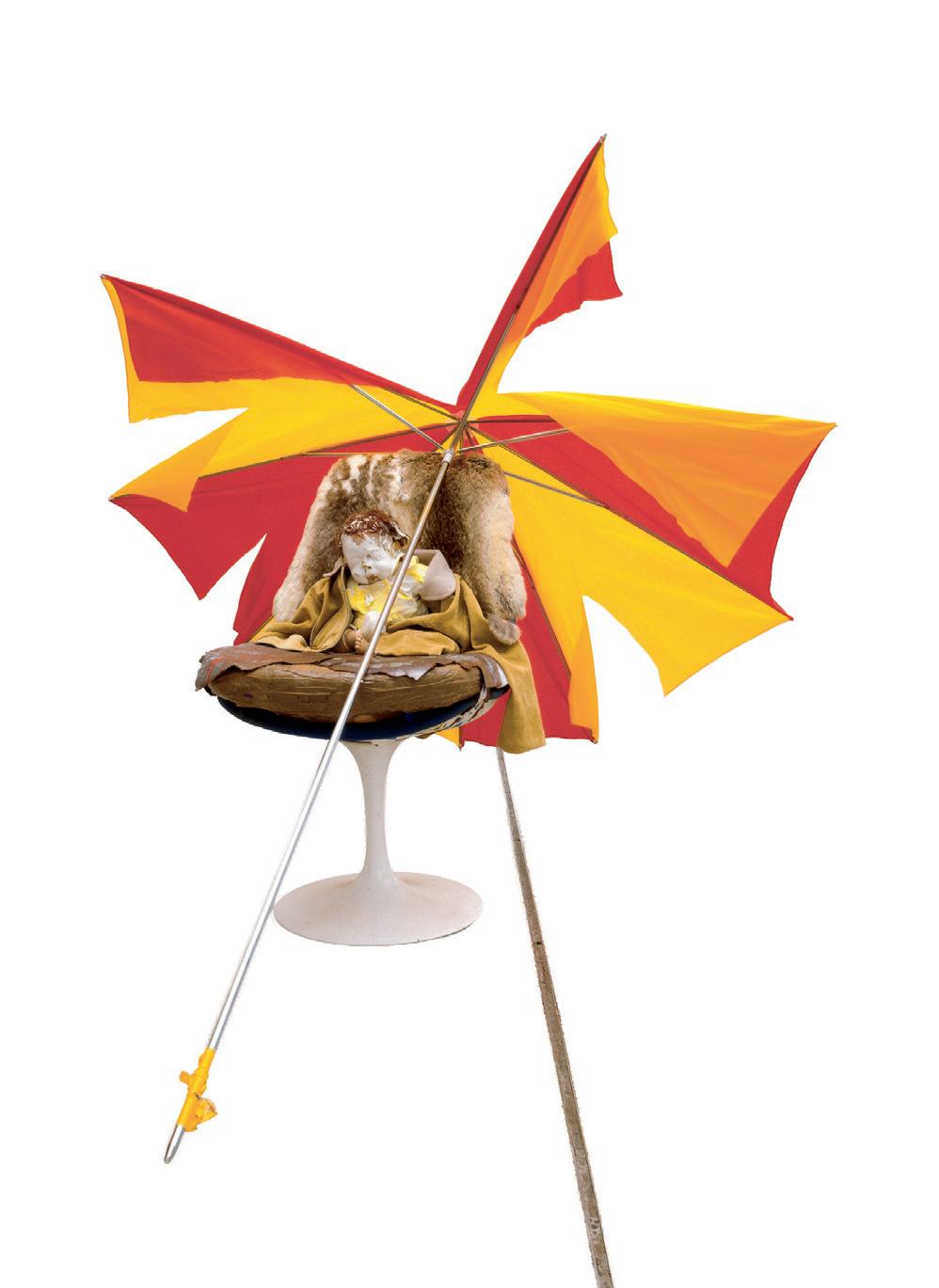
Playing off the gallery trope of lighthearted warm-weather group shows, the exhibition brings together a variety of works that belie summertime vibes—Isa Genzken’s tattered umbrella, Jacob Kassay’s spilling bag of sand, Leidy Churchman’s sneering crocodile—indicating that there’s always a shark swimming underneath the surface. Other pieces include a custom-painted surfboard by Gabriel Rico and works by Texas punk legend and artist Tim Kerr, whose work has been featured on album covers, skateboards, and advertisements since the early 1980s. Inspiration for the show came from a surfboard fin kept in Ruppe’s Galveston shop. Designed by famed surfboard shaper Renny Yater, the fin and longboards were commissioned for the 1979 film Apocalypse Now, whose production in the Philippines wound up creating surf culture in Southeast Asia. It’s a wry twist of fate that the movie’s iconic line, “Charlie don’t surf,” was both a truism and a prognostication of misguided American exceptionalism, a moment in which an empire both knows and fails to understand its own reach.
The Power Station’s exhibitions reflect the fact that like Apocalypse Now ’s Colonel Kurtz, and all monuments of construction, one reaches a point of being shattered or buried beneath the waves of change. P
Isa Genzken, Untitled, 2006, plastic chair, doll, leather, coat, adhesive tape, lacquer, sunshade, 55 x 59 x 71 in. The Pinnell Collection.
Hadi Fallahpisheh, American Medicine, 2020, unique light drawing on photosensitive paper 84 x 44 in. The Pinnell Collection.
OPEN TO THE PUBLIC
JOHN RUNYON EXPLORES THE DYNAMIC CONNECTION BETWEEN ART AND EVERYDAY
SPACES.
BY DANIELLE AVRAM
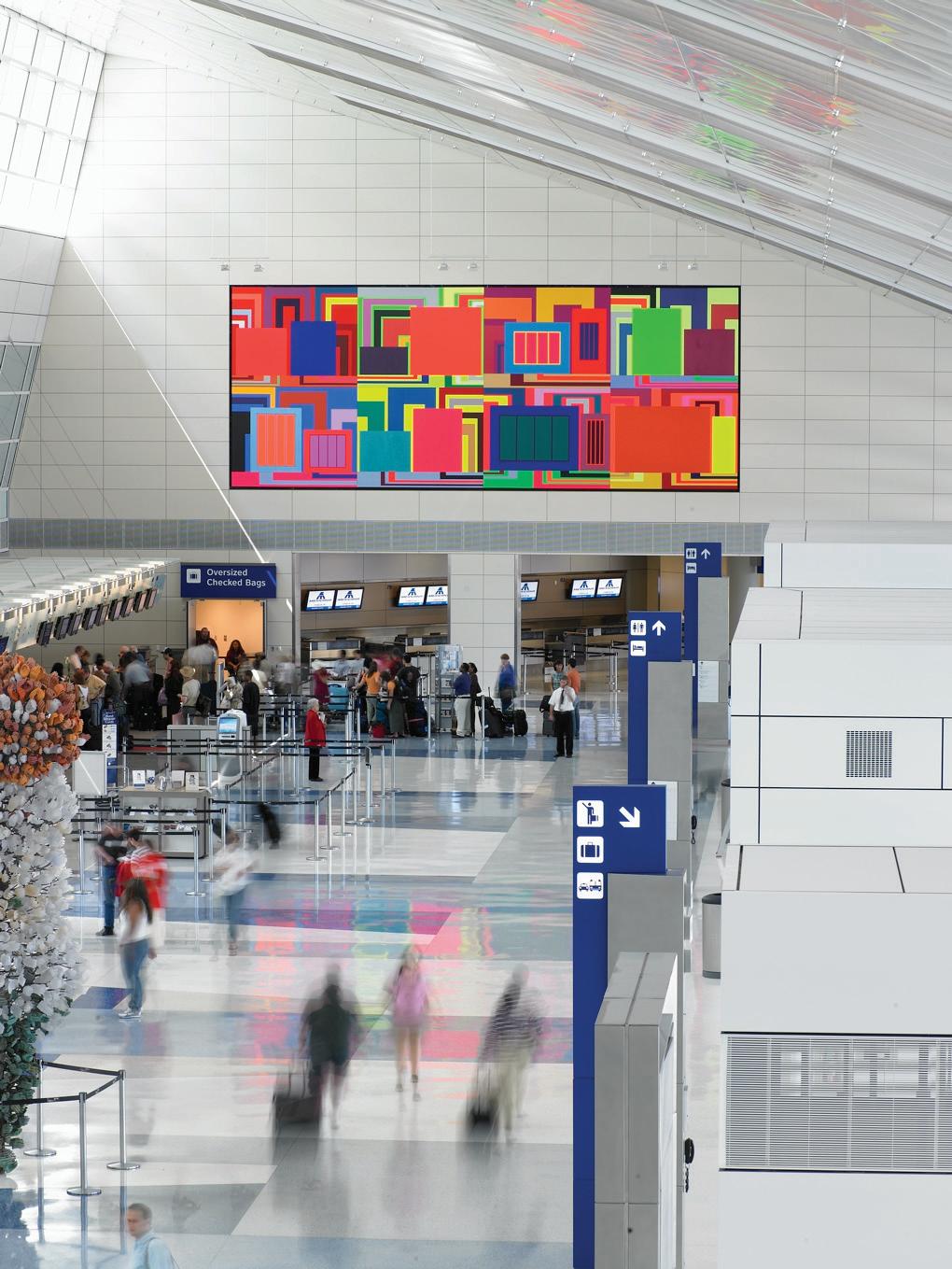
For two decades people passing through the international terminal at DFW airport have been greeted by a massive eight-panel painting by artist Peter Halley. With its bold colors and network of lines and shapes, the piece captures the dynamism of travel and the various individual systems that work together to form an entity as sprawling as an airport.
The project is just one of many around the metroplex that John Runyon has spearheaded through his art advisory practice of 30 years. When he was tapped by the airport to find an artist who could handle such a large space, Runyon immediately thought of Halley, whom he had previously shown at his former
Deep Ellum gallery. The artist already had an interesting history with DFW airport. Inspired by the late Earthworks artist Robert Smithson, who had served as an artistic consultant for an architectural firm that was bidding on the airport’s original design, Halley arranged a behind-the-scenes tour of the facility years prior to receiving the commission.
“It’s a curious coincidence,” says Halley. “My work as a whole has the subject matter of conduits connecting things, so it certainly applies to the idea of transportation. The real groundwork was done by John advocating for me getting that big commission. The painting is 16 by 40 feet, which is certainly the biggest
Peter Halley, Untitled, 2005, Dallas Fort Worth International Airport Terminal D Ticket Hall. Photograph by Steve Wrubel.
John Runyon with Roger Hiorns’ Untitled, 2013, at The Joule Dallas Hotel. Photograph by John Smith.
painting I’ll ever make. I’m very proud of it.”
Runyon speaks enthusiastically about the public art aspect of his practice and what it means for artwork to live in everyday spaces where the public can repeatedly engage with a piece. “It is all art advising, but the public realm involves some criteria that do not exist in the domestic space,” he explains. “In the domestic space you are collaborating with homeowners that have their personal desires, taste, expectations… In the public realm the diversity and volume of eyeballs on that artwork is exciting.”
Like Halley’s painting, a number of other artworks have become emblematic of the spaces they inhabit. Tony Cragg’s Line of Thought sits in front of the Rosewood Court in Uptown, a totem of abstracted faces that only reveal themselves as one walks or drives around it. This sculpture piqued the interest of the Nasher Sculpture Center, which wound up mounting a solo exhibition of the artist in 2011, the first in a US institution in over 20 years.
Roger Hiorns’ blue-crystal covered engine has occupied a prominent place in the lobby of The Joule hotel Downtown since it was acquired. Hiorns created the work by submerging engine parts in a vat filled with copper sulphate solution; the resulting chemical reaction produced the vibrant crystals, which will fade over time. “When hotel owner Tim Headington and I spotted this work at Art Basel Miami over ten years ago, we thought what a perfect fit for the hotel,” says Runyon. “It is industrial and elegant. A ‘joule’ is a measurement of energy.”
Runyon also placed works in the lobby of nearby Thanksgiving Tower: Steady Circles by Daniel Buren in the south and Reproductions (Close-ups II) by Isabelle Cornaro in the north. Buren, a legendary conceptual artist known for his site-specific installations that use alternating stripes to highlight architectural spaces, designed the images to intentionally project into the street, their striped circles reminiscent of a car’s spinning wheels. Says Runyon, “I still get a kick out of driving by this particular work.”
Cornaro offers an antidote to the hustle and bustle of city life with fields of gauzy color achieved by spraying acrylic paint directly on the wall. Derived from a 16mm film the artist made, in which she documented the process of creating spray paintings based off reproductions of Impressionist works, the resulting images read as barely perceptible landscapes from afar and a sea of colorful flecks up close.
It’s this type of viewing experience Runyon considers when
selecting artists and artworks for his public projects, understanding that they need to hold up over time and remain engaging over repeated viewings, as people will undoubtedly pass them day after day.
He serves on the committee that programs the art for the Katy Trail. “I brought the KTX Biennial concept to the group, and we have selected our first curator Jovanna Venegas, curator of the SculptureCenter, New York,” he says. Last October, he was also invited by Texas Woman’s University to nominate five artists to submit proposals for a site-specific outdoor sculpture.
As he says, “In the end, if the public takes notice and decision makers are thrilled with the outcome, I have done my job. Not to mention revisiting the public projects never gets old.” P
Daniel Buren’s Steady Circles, 2008, is located in the South lobby at Thanksgiving Tower. Photograph by Kevin Todora.
Tony Cragg, Line of Thought, 2002, located at The Crescent Hotel at Rosewood Court. Photograph by Steve Wrubel.
ETERNAL REPOSE
FRANK BENSON’S JULIANA IS INCLUDED IN THE FLAG ART FOUNDATION’S S-CURVE, AN ODE TO THE RECLINING FORM.
INTERVIEW BY CHRIS BYRNE
Frank Benson’s sculpture Juliana (2015) is a compelling presence within The FLAG Art Foundation’s current exhibition
S-Curve, a show that traces the enduring allure of the reclining human form from the 18th century to today. In a candid conversation, Benson reveals how his work came to join this prestigious lineup, discusses the influence of historic artists, and reflects on the evolution of figurative sculpture.
Chris Byrne (CB): Your sculpture Juliana (2015) is a centerpiece of the current show at The FLAG Art Foundation. Could you walk us through the origins of this exhibition and how your work came to be included?
Frank Benson (FB): The exhibition was curated by Jon Rider, director of The FLAG Art Foundation. He contacted me late last year with a list of artists he was considering, each engaging the human body “in an active state of repose.” The roster was impressive, spanning cen-
turies and mediums, and he was specifically interested in borrowing Juliana
CB: S-Curve encompasses works dating from the 18th century through the present. Can you discuss the work of the other artists, and the installation?
FB: There are several remarkable works in the exhibition. Among my favorites are the exquisite drawings on toned paper by Giovanni Battista Piazzetta (1682–1754) and Paul Cadmus (1904–1999). Created centuries apart, both depict reclining male nudes from a similar topdown perspective, demonstrating the enduring appeal of the motif. They are installed alongside a marble sculpture of a man with a dog by Maurizio Cattelan and a drawing of Willem de Kooning by his wife, Elaine. That work is especially meaningful to me because of my time at the Elaine de Kooning House and Studio Residency from 2021–2022.
I am particularly excited to have my sculpture installed in the
Installation view of S-Curve at The FLAG Art Foundation featuring Frank Benson’s Juliana (2015). Photograph by Steven Probert Studio.
same room as a drawing by Gustav Klimt. Klimt’s figurative work—and that of Egon Schiele—was profoundly influential to me as a young artist. I spent many hours in high school trying to draw like them.
CB: Jessie (2011), formerly included in the Karpidas Collection, is now owned by Jonas Wood.
FB: Yes, that’s correct. A unique edition of Human Statue (Jessie), featuring a stone dress and plinth, now belongs to Jonas Wood and Shio Kusaka. They acquired it at the auction of Pauline Karpidas’ Hydra Collection. Jonas and Shio also own an edition of Human Statue (2005) and Cyclist (Quarter Scale) (2025), shown with David Kordansky Gallery at Art Basel. Jonas and I first met through our mutual friend, the sculptor Matt Johnson, who was also included in the Hydra exhibition, where I first presented Human Statue (Jessie). Shio and I became acquainted while working for Charles Ray, sculpting parts for his aluminum tractor.
CB: In the fall of 2024, your work was featured in the reboot of Jeffrey Deitch’s Post Human , which recontextualized the 1992 original.
FB: Yes, Post Human was on view at Jeffrey Deitch from September 2024 through January 18, 2025. The exhibition brought together artists and works from the original 1992 presentation alongside younger artists working within that lineage. As a student at the Maryland Institute College of Art in Baltimore, I studied a well-worn copy of the Post Human catalogue, searching for clues about the future of contemporary art. Several artists in the original exhibition inspired me to apply to the UCLA MFA program and ultimately move to Los Angeles in 2001.
At UCLA, I studied with Charles Ray and Paul McCarthy and briefly worked for Mike Kelley at his Highland Park studio. All three artists were included in Post Human
The exhibition’s themes feel more relevant than ever—body modification through surgery, virtual reality, and the possibility of a truly “post-human” future shaped by artificial intelligence. For this iteration I included another edition of Human Statue (Jessie), owned by the Marciano collection in Los Angeles. It was the first sculpture I created using 3D scanning, modeling, and printing techniques. Its rigid, mannequin-like pose was inspired by 1980s icons such as Blade Runner and Madonna. What felt speculative in 1992 now feels fully embedded in daily life.
CB: The Whitney Museum of American Art recently purchased Castaway (2018), and Human Statue (2005) was gifted to the Museum of Contemporary Art, Los Angeles, by Alan Hergott and Curt Shepard— can you tell us about any upcoming projects we can look forward to?
FB: It has been an exciting year, and I’m deeply grateful for both acquisitions. The Whitney purchased Castaway with funds provided by collectors Michael and Elin Nierenberg. It marked the first time the Whitney acquired a major work of mine—an important milestone.
Human Statu e was a pivotal work for me—the first in my series of figurative sculptures and my first large-scale piece after graduating from UCLA.
Looking ahead, I am planning a solo exhibition with Jeffrey Deitch at his Grand Street gallery. I intend to include two new life-sized figures created from 3D scans: a portrait of the artist Hugh Hayden holding his two dogs, and a portrait of the ventriloquist Sophie Becker holding her dummy. We are planning to open the exhibition in May, with final details still being confirmed. P
Transitions, especially in nature, can be elusive. When does beauty turn to decay and decay back to beauty? This is one of the dualities explored in Chris Stewart’s gestural paintings, currently on view at Craighead Green Gallery.
Nature and art are twin pillars in Stewart’s life. Working on his grandfather’s farm in Southwest Colorado as a young adult gave him an appreciation for the land and its continuous evolution. “I’ve always responded to things out in the elements,” he shares. It is the elusive quality of nature’s fleeting moments that he still pursues in the studio. “Stylistically,” he explains, “my work has always been about the idea of change.” This, in turn, has inspired his awe with the world, often leading to the larger question, “What is our purpose?”
Growing up in Dallas, Stewart attended Cistercian Preparatory School, where he studied painting with renowned local artist Roberto Munguia, who served as an important mentor. “He is the reason why I have any kind of career in the arts,” Stewart says. These early beginnings translated into a scholarship to study painting at Southern Methodist University.
Stewart’s path then led to master of arts and master of business administration degrees from SMU, along with stints in marketing positions at the Dallas Museum of Art as well as the de Young and Legion of Honor museums in San Francisco. Finding himself in the Bay Area during the dot-com boom, he put his design training to work and created an early branding company. After a successful run, he decided, in 2019, that he was ready to devote himself fulltime to his art.
NATURE MORTE
CHRIS STEWART EXPLORES THE DUALITIES OF BEAUTY IN DECAY AT CRAIGHEAD GREEN GALLERY.
BY NANCY COHEN ISRAEL PHOTOGRAPHS BY VICTORIA GOMEZ
Chris Stewart in his Deep Ellum studio stands alongside Ridgeway Shift, 2025, oil on canvas, 60 x 60 in.
Chris Stewart, The Lightning Field, 2024, oil on canvas, each 20 x 16 in.. Installed at Hocker studio. Photograph by Adam Stewart.
Validation came at the end of 2023 with a successful solo exhibition at Saenger Galería in Mexico City. This experience, highlighted by in-depth conversations about his work with people he did not know, was a turning point, emotionally and creatively. “That show focused on ideas of how we age and how things in nature age,” he explains. It led him to create a unique installation in the gallery by bringing in live Spanish moss. “The moss became an intervention in space, which was a really cool thing to watch as people reacted to it. It provided another layer to look at the work and put it into context,” he notes, adding, “A lot of my work is based on my own experiences in nature and seeing how things erode and deteriorate. While those can feel very negative, there is also inherent beauty in that.”
Stewart had the moss dangle organically during the exhibition, though he installed it in a grid pattern across the ceiling. The idea of the grid is an important one for him and one that he continues to explore, as in his suite of small paintings titled, The Lightening Field. Here he presents the dichotomy between his fluid, gestural abstractions and their precise organization in a rigid grid formation.
Stewart works intuitively, with his paintings offering only a suggestion of the natural world. He employs gentle gradations of color, representing what he sees as the contrast between hope and melancholy.
In addition to his large-scale paintings, the current exhibition includes smaller works, which unfold into unique worlds unto themselves. Whether they are scored and unframed or encased in wood frames of his own making, they tap into larger ideas of memory.
But how does one depict memory? “Memories deteriorate, just like the land,” Stewart reminds us. As both are fluid, Stewart appreciates that his art, too, can change its meaning over time. Ultimately it is about finding the balance of the natural world while meditating on its constant evolution from beauty to decay to new beauty. P
From left: Chris Stewart, The Verge, 2025, oil on canvas, 48 x 36 in.; Fleeting, 2025, oil on canvas, 48 x 36 in.
From left: Chris Stewart, The Quieting, 2025, oil on canvas, 60 x 48 in.; Interlude, 2025, oil on canvas, 60 x 48 in.
THE REEL DEAL
TWO DECADES OF DARING FILMS AND THE VOICES BEHIND THEM—ONLY AT DIFF.
BY JOHN ZOTOS
Felicity Jones and Joel Edgerton in Train Dreams. Still courtesy of Netflix.
James Faust is the artistic director of the Dallas International Film Festival (DIFF).
Venerable cultural institution the Dallas International Film Festival (DIFF) is celebrating 20 years of lighting up local screens with compelling cinema along with conversations featuring actors, filmmakers, screenwriters, and other industry players. This year’s films and festivities will run from April 23–30 at Cinepolis, the Texas Theater, and Virgin Hotels Dallas.
Co-founders Michael Cain of the Deep Ellum Film Festival and advertising luminary Liener Temerlin, along with the festival’s parent company, the Dallas Film Society, Inc., established DIFF Dallas in 2006, joining with the American Film Institute (AFI) to create AFI Dallas International Film Festival.
James Faust, who has been the artistic director of the festival since 2010, recalls: “When I started working with Michael Cain, we were running the Deep Ellum Film Festival—that started in 1999—and he had the idea to start DIFF in 2006. We contracted with AFI to create AFI Dallas, their second offshoot from their festival and film school in LA.”
Lou Diamond Phillips plays Teddy Sharpe, a cop from the Thunderstone Tribal Police, in Keep Quiet. Courtesy of the Dallas International Film Festival.
William H. Macy in Train Dreams. Still courtesy of Netflix.
David Lowery has described A Ghost Story as his most personal film. Still courtesy of Sailor Bear.
A Ghost Story still. Courtesy of Sailor Bear.
lives and works in Texas, where he was brought up, screened his first feature, St. Nick (2009), that same year at AFI DIFF, winning the Texas Filmmaker Award. Clearly this recognition bore sweet fruit, as he followed this with the Southern gothic crime drama Ain’t Them Bodies Saints (2013) starring Casey Affleck and Rooney Mara, for which he also wrote the screenplay. Screened at the Sundance Film Festival that year, the film was nominated for the Grand Jury Prize and walked away with the Cinematography Award. Now Lowery is a major force, directing films with multimillion-dollar budgets, including Pete’s Dragon (2016).
And consider Fort Worth native Greg Kwedar and his longtime collaborator Clint Bentley. Each has alternately directed, produced, and co-written films for years. In 2021 DIFF presented an opening-night premiere of Jockey starring Clifton Collins Jr. and Molly Parker. Kwedar co-wrote the film with Bentley, who also directed. Fast forward to 2025, when the pair reunited on Train Dreams, starring Joel Edgerton and Felicity Jones—an effort that earned for four Academy Award nominations, including Best Picture.
This year Lou Diamond Phillips will be the festival honoree. A Hollywood icon, Phillips entered the world stage in 1987 playing Ritchie Valens in the biopic La Bamba and has gone on to act in more than 170 films and series. A longtime friend of the festival, Phillips will also present the North American premiere of his new film, Keep Quiet, a police procedural in which, channeling his roots, he plays a Native American tribal policeman breaking in a new partner during a tense time after a convicted criminal is released from prison and returns to the reservation.
New to the festival this year, the DIFF Industry Conference will feature panels not only discussing films, actors, and directors, but the business of film itself, in terms of the nature of production, marketing, film education, and the changing aspects of a competitive and ever-expanding nexus of platforms and dissemination networks that compete for our attention.
This promising time in the continuing history of DIFF suggests an exciting April for Dallas. “There are a lot of incredible things happening,” Faust says, “ and titles that cover the whole cinematic range in this year’s program.” P
Colman Domingo in Clint Bentley and Greg Kwedar’s Sing Sing. Courtesy of Dallas International Film Festival (DIFF)
Rachel Green pictured with, Yuan Fang’s Bridging 03, 2022.
Fragrance is the new lip gloss
HOW RACHEL GREEN IS REWRITING THE RULES OF PERFUME.
BY TERRI PROVENCAL PHOTOGRAPHS BY JOHN SMITH
In the crowded world of luxury fragrance, where brands often promise a scent that becomes your identity for life, L’Epoque Parfums is built on a very different idea: nothing about us is permanent. Our tastes shift, our ambitions evolve, and the moments that shape us come and go. The brand’s founder, Rachel Green, believes that perfume should reflect that reality. For her, fragrance is not meant to define a person forever; it is meant to mark life’s stages.
Before L’Epoque, Green spent nearly a decade in the beauty industry. Her professional life revolved around helping beauty brands craft narratives that resonated with audiences. Over time, one pattern became clear to her: the experiences people remember most vividly are tied to emotion. And among the senses, scent has a uniquely powerful ability to bring those memories back to life.
Green had always collected perfumes during vacations, birthdays, milestones, and moments worth marking. Following her passion, she started to research consumer behavior around fragrance by “being in touch with what people who loved fragrance were talking about. They didn’t want to have one fragrance that they stick with for the rest of their life; they wanted a fragrance collection. They wanted to have a fragrance for date night, a fragrance for spring, for après ski. They wanted to wear fragrance like it was a lip gloss,” she says. “I felt like I could tell a story that wasn’t being told in fragrance today.”
The idea for a fragrance house began to form around that realization. Green wondered what it might look like if perfume reflected the rhythm of a life in motion. That concept became L’Epoque and even influenced the brand’s packaging, which uses 30 ml bottles, not the traditional 100 ml, encouraging people to enjoy them and move on to the next moment. The name itself comes from the French word époque, meaning an era or a particular period in time.
For scent concepts, Green begins with a mood board and a fragrance brief that she takes to her perfumer, Elena Valdivieso Ruiz. Spring’s new fragrance, Inner Child, was inspired by the feeling of a bubbly bath, the scent of clean skin, and the comfort of being wrapped in a towel after a shower. In meetings, Green layers these sensory ideas with imaginative, almost fantastical notes, asking, “If it could smell like anything in the world, what would it be like?”
Much of the storytelling begins with Green’s own experiences. “Last summer I was in Spain, and we were at this resort in the Spanish mountains, and everything there was so green and lush. It was so beautiful and fantastical and felt cinematic. Being there felt like transporting yourself to a different world. So I started toying with the idea of this green foresty scent.” Later that summer, a trip to South Carolina reinforced the mood with weeping willows and verdant landscapes, but rainstorms shifted the atmosphere, darkening
the feeling of the place. “So I thought about this dichotomy, about being in a place that’s so beautiful, lush, and green, then gets so dark, rainy, and scary.” She played with that tension for her new fragrance, Dreams and Nightmares.
Among the early releases were perfumes with names that read like diary entries. Dopamine Rose captures a vibrant, modern interpretation of rose—playful, slightly addictive, and energetic, designed to evoke the feeling of excitement and emotional highs. Delusions of Grandeur embraces drama and confidence with a richer, warmer composition that suggests bold ambition and indulgence.
Green’s perspective reflects a broader shift in fragrance, where niche houses emphasize artistry and storytelling over mass appeal. In this landscape, L’Epoque treats scent less as a commodity and more as an emotional artifact.
For Green the most meaningful moment happens long after a bottle is purchased. It happens years later, when someone revisits a scent and finds themselves transported back to another version of their life. A single spray can summon a memory—a summer romance, a new city, a turning point that ultimately shaped who they became. P
L’Epoque Parfums.
CULTURAL CURRENCY
MEET THE STANDOUT ARTISTS WHOSE BOUNDARY-PUSHING WORK WILL COMMAND ATTENTION AT THIS MONTH’S DALLAS ART FAIR.
BY NANCY COHEN ISRAEL, IAN ETTER, TERRI PROVENCAL, AND DARRYL RATCLIFF
SKY GLABUSH Philip Martin Gallery, Los Angeles
Landscape is elemental to the human experience. Whether through imagery or direct encounters, it is a universally understood paradigm. Sky Glabush’s broad practice offers viewers motifs from the natural world that feel at once familiar, even if they are drawn from unfamiliar places. Working from photographs, en plein air, or from his imagination, Glabush’s work inspires calm contemplation. As gallerist Philip Martin adds, “His work offers classic themes but also [explores] what painting means in our present moment.”
The Canadian artist’s large paintings are visually magnetic. Their deep monochromatism, combined with themes drawn from nature, is immediately alluring. Up close, their gritty, textured surfaces, created by combining sand with oil paint, almost fracture the image into abstraction. “That sense of color and opticality but physicality, too, work hand-in-hand,” says Martin. As an avid reader of poetry, Glabush’s work evokes emotional responses that invite deep thought and even reverie.
While this year marks the Dallas Art Fair debut of the Los Angeles–based Philip Martin Gallery, it is more of a homecoming than an introduction for gallery and artist. As a frequent participant in the erstwhile TWO x TWO for AIDS and Art, Martin is familiar with the city’s robust collector commu -
nity. And as he and his partner, Portia Hein, are graduates of The University of Texas’ MFA program, he has felt the pulse of the Texas art scene for decades.
With this in mind, Glabush is an ideal artist to highlight, as his work is already extensively collected locally. For the fair, the gallery is bringing a broad range of his oeuvre. In addition to the large paintings, there will also be smaller ones, which offer a quieter intimacy, as well as his jewel-toned works on paper.
The works on paper are at the core of Glabush’s practice He works on several at a time, and they continuously inspire and inform his paintings. In these intimate pieces, executed in the unforgiving medium of watercolor, he will usually depict a conventional motif while also including an unexpected element.
Martin looks forward to presenting Glabush’s work to local audiences. “Dallas is really a place to raise the bar. We know Dallas and how serious the collections and collectors are and how mind-bendingly high the bar is. It’s just really exciting to show there,” he extols. The city looks forward to welcoming him back, this time as a Dallas Art Fair exhibitor. –Nancy Cohen Israel
Sky Glabush, Arles, 2026, watercolor and gouache on paper, framed with Optium museum plexiglass, 12 x 15 in. Courtesy of the artist and Philip Martin Gallery.
Sky Glabush, My Trip to Saint Remy, 2026, watercolor and gouache on paper, framed with Optium museum plexiglass, 15 x 12 in. (sheet size). Courtesy of the artist and Philip Martin Gallery.
Sky Glabush in his studio. Courtesy of the artist and Philip Martin Gallery.
At this year’s Dallas Art Fair, Turin-based Luce Gallery will present All Glory (2025), a new painting by Dominic Chambers that expands his ongoing investigation into Black interiority, surrealism, and what he calls the “shimmer body.” At first glance the work appears deceptively simple: five young men gather beneath a basketball hoop at night, suspended mid-play. But the court is less a recreational site than a psychic arena.
For Chambers, who grew up in St. Louis observing pickup games from the sidelines, the basketball court represents a space where masculinity is performed, futures are negotiated, and transformation becomes possible. “I’m interested in the zone,” he explains, referring to the heightened state where the athlete is no longer simply on the court but inhabiting another realm altogether. In All Glory, painting becomes a language for that unseen headspace.
Rendered on an iridescent ground of silver and pewter, the canvas shimmers as viewers move before it. The bodies glow, faint and spectral, almost bioluminescent. Chambers references the scientific fact that humans emit light, though at a frequency imperceptible to the naked eye. He pairs this with another cosmic truth: we are composed of stardust. The figures glitter not as fantasy but as metaphysical realism.
Color operates as the protagonist here. The dominant yellow trees, built through layered washes, leave ghostly traces of themselves. The effect echoes Chambers’ interest in the Du Boisian veil and the politics of concealment. Yellow, unlike more opaque reds or blues, leaves behind a residue. It haunts. In All Glory, that haunting becomes luminous rather than ominous. The trees arc upward, forming angelic wings. The clouds curve in a halo-like gesture that reframes the basketball court as sacred ground.
Though smaller than his monumental canvases, the painting still envelops the viewer. It is less about spectacle than immersion. The work invites viewers into a world where Black interior life is not framed by trauma but by imagination, recreation, and possibility.
At a moment when overt political imagery often dominates contemporary discourse, Chambers offers something subtler yet no less urgent: the edification of imagination. In All Glory, the court becomes cosmos, the body becomes a star, and the unseen becomes visible, if only when the light hits it just right. –Darryl Ratcliff
DOMINIC CHAMBERS
Luce Gallery, Torino
Clockwise from lower left: Dominic Chambers, All Glory, 2025, oil on linen, 51.50 x 53.50 in. Courtesy of the artist and Luce Gallery, Torino. Dominic Chambers, Thoughts & Inversion #1, 2026, oil on linen, 17 x 19 in. Courtesy of the artist and Luce Gallery, Torino. Dominic Chambers in his studio. Photograph by Denis Gutierrez-Ogrinc.
Petra Cortright’s images embody the sublime. From a distance, they suggest a lineage to painters like Thomas Moran and the Rocky Mountain School—the grandiose, atmospheric landscapes of the American West. But as one approaches, they fracture into subtle dissonance. Repeated gestures and duplicated elements begin to surface, disrupting the illusion of a unified landscape and suggesting fragments of reconstructed memory. In PC folderdust velvetflux “datapool” softreboot, 2025, a pelican appears repeated side by side, partially hidden and degraded by digital artifacts. The painting operates as a swift digital collage, in which crisp, high-resolution detail and pixelated imagery construct the fantastical landscape. The result is a peculiar spatial tension: a terrain that feels both geographically precise and strangely otherworldly.
In PC netlock.exe charmfield “twilight input” glowtrace, 2025, three mountain peaks cascade upward against a pink-and-teal sky scattered with stars. With crests clearly defined, their surfaces are blown out, dissolving into nondescript color that recalls the washed-out glow of old 35mm film. The lowermost peak erupts in a myriad of high-chroma tones, wiped with what appears to be a Photoshop interference layer. Forms are cut and reassembled, their edges revealing their origins as digital collage. The lower third of the painting shifts again, oscillating between painterly gesture and photographic residue. Details resembling foliage linger beneath the surface. Traces of sand emerge alongside silhouettes of birds and another partially hidden pelican. The image feels rapidly assembled, layers of landscape seeping in and out of one another. The terrain unfolds less as a stable geography than a reconstruction—memory pieced together from fragments of image and gesture.
Cortright’s landscapes are made in Photoshop, where hundreds of independent layers amass into dense digital paintings. She has accumulated an archive of brushstrokes, image fragments, and her native southern California landscapes, many sourced from the Santa Barbara Natural History Museum. Both visually and in process, time is broken—the artist builds scenes that evolve over hours, months, or even years. The work is then printed onto wood and metal: inks seep into the grain, metal surfaces shimmer and reflect light. Showing with Meliksetian | Briggs, Los Angeles and Dallas, these works situate Cortright’s digital landscapes within a lineage of Western landscape painting while also destabilizing it. These layered digital paintings insist on a physical presence—even as the landscapes they picture remain permanently in flux. –Ian Etter
In Siji Krishnan’s paintings, marshland is rendered as an unstable terrain from which dreamlike scenes drift. Figures emerge and recede, their presence inseparable from the intermingling marks of the surrounding environment. Krishnan draws a porous boundary between what is revealed and concealed, creating an otherworldly stage where color dissolves image into landscape.
In Cat Crossing the Still Life (2025), a dreamlike chorus of imagery settles within a heap of feathery marks. A group of seated figures gaze off canvas, anticipating the trajectory of a leaping cat. A crib mobile with miniature winged horses flutters around platters of fish and a filled vase, its bouquets woven into an unstable, boat-like mound of thatched reed. At the center of it all a small globe reflects what is perhaps an image of the artist in her studio. Though distinct, each of these mysterious elements is nearly indiscernible from the rest, rendered in a narrow spectrum of sienna, muted lavender, and celadon greens a palette derived from the marsh itself.
Krishnan handcrafts small sheets of paper and layers them in a process that allows the work to grow and gives her flexibility of scale. Raw edges, visible seams, and paper veining accumulate
to form a translucent sediment that grounds the openness of her painting. Born in southern India, Krishnan expands on the history of Mughal paintings, the traditional Indian miniature, which are narratives primarily created for books and painted on paper or cloth. She pulls from this tradition, inverting its format, working expansively to produce forms that are both fragile and monumental.
These newest works mark a changing lexicon after the birth of her daughter, a reorientation that allows for an encompassing scale—one that situates the viewer within a world where memories of family, place, and the ever-evolving state of motherhood mingle and disperse. The imagery has grown more familial. The palette is softer and more diffuse. Memories are reorganized, turned inward.
Kohn Gallery, Los Angeles, presents five of her latest paintings, exhibited for the first time outside their recent museum context at the San Luis Obispo Museum of Art. The terrain of her home is no longer depicted as an external landscape, but as a private interior that attempts to hold a present that continually dissolves into the past. –Ian Etter
Siji Krishnan, Untitled, 2023–2024, oil on jute, 49.75 x 99.50 in.
Courtesy of the artist and Michael Kohn Gallery, Los Angeles.
Siji Krishnan, Untitled (detail), 2023–2024, oil on jute, 49.75 x 99.50 in. Courtesy of the artist and Michael Kohn Gallery, Los Angeles.
Siji Krishnanin her studio.
Karel Dicker, Cruising Area, 2026, acrylic on canvas on panel, frame carved in American walnut. Courtesy of Sorry We’re Closed, Brussels; and Nino Mier Gallery, New York.
KAREL DICKER
Nino Mier Gallery, New York & Sorry We’re Closed, Brussels
From our perspective, it may feel like a stretch to think of 15th-century Flemish painters as innovators. But for Dutch artist Karel Dicker, their experimental, groundbreaking efforts are an inspiration. “What I really like about the Flemish Primitives is that, because they were the first who were working with oil paint, there was not this whole school that taught them how to paint,” Dicker explains. While he did attend an art academy, of its theory-driven approach he says, “Nothing was taught, in a sense.” And so he is self-taught in realizing his rich, multilayered canvases that fuse ancient technique with contemporary materials.
Dicker makes his own canvases, using traditional materials such as rabbit glue and Belgian linen. Onto this he applies thin layers of acrylic paint before sanding it down. This step is repeated several more times, resulting in a smooth, lustrous surface. Each work is then encased in a sculptural frame that he makes using American walnut. Because he has no formal training in woodworking, these too are the result of trial and error. “It is like combining painting with sculpture to create an object,” explains Nino Mier, one of gallerists representing Dicker at this year’s Dallas Art Fair.
As with those earlier artists, these works carry deeper meaning. “The ashtray, for me, was always symbolic, like an arena.
The cigarettes were the humans, dancing around in it and having their theater,” Dicker shares. Summers in southern France honed his interest in landscapes. Living in Maastricht, the hill country of Holland, immerses him in a topography that informs his symbolism. “The hills, for me, represent the ups and downs in life,” he notes.
To his gallerists, Mier of Nino Mier Gallery along with Emilie Pischedda and Sébastien Janssen of the Brussels-based Sorry We’re Closed, these small works are little jewels. Pischedda likens them to Persian miniatures. Their diminutive size, she says, “asks the viewer to be more concentrated and to pay attention.”
While Nino Mier Gallery is a Dallas Art Fair stalwart, this year will be a debut for Sorry We’re Closed. The galleries are combining their two booths into one large space featuring Dicker’s work. “I am very happy to collaborate with Nino. It’s not so common for galleries to join forces to do a fair together,” Janssen says. Mier concurs, adding, “We live in a world of individuality all the time right now, and we’re trying to send a message that two galleries can work together to present an artist, to do something in collaboration.” Perhaps this will be the beginning of an exciting new trend. –Nancy Cohen Israel
Karel Dicker, Down on my knees, 2026, acrylic on canvas on panel frame carved in American walnut. Courtesy of Sorry We’re Closed, Brussels; and Nino Mier Gallery, New York.
Karel Dicker in his studio. Courtesy of the artist; Sorry We’re Closed, Brussels; and Nino Mier Gallery, New York.
Karel Dicker, Feeling Puzzled, 2026, acrylic on canvas on panel, frame carved in French oak. Courtesy of Sorry We’re Closed, Brussels; and Nino Mier Gallery, New York.
KAZUMA KOIKE The Fridge, New York
Founded in Tokyo in 2019 and relocated to New York in 2023, The Fridge has positioned itself as a contemporary, cross-cultural platform. This year it brings artist Kazuma Koike to the Dallas Art Fair in a solo presentation centered on storytelling. “My paintings and sculptures are both created around the theme of fictional myths,” Koike explains. The paintings appear as “fragments of fictional narratives.”
Born in Kanagawa and raised between Buenos Aires and Barcelona before returning to Japan, Koike produces imaginative works that capture a geographical hybrid of invented mythologies. Disparate eras and regions are woven together; the stories of gods and earthly creatures intermingle. The imagery is focused, but rather than fixed stories, Koike allows viewers to assemble their own meaning from the shifting narratives.
Koike’s ceramics feel both ancient and contemporary. The totemic works could easily be displayed alongside Ming dynasty sculpture, pre-Columbian ceramics, or Appalachian face jugs. Relics with a dash of the comic, their deep iron-like glazes produce dark tones that situate them as weathered, storied objects. These surfaces give them the ritualistic and playful quality that taps into the deeper spirit that connects folklore across cultures. “I affirm the ambiguity of form and the very act of transformation during the creative process as essential elements that constitute my works,” Koike says. The medium of ceramics allows change to enter the process: kiln temperatures fluctuate, glazes react unpredictably, and surfaces transform during firing. Koike embraces this instability, pulling myth and wonder from the material’s natural properties and rich history.
If Koike’s iconic ceramics distill the spirit of storytelling, his paintings capture the fluid nature with which myths evolve. Forms emerge from loose and jostled planes of gesture, rendered in densely packed strokes. Though singular in nature, the subjects often merge with the field, distinguished by color breaks—but the artist’s marks nearly encompass them. Like the sculptures, these images draw from a wide range of visual traditions but resist any single locale. “Each piece is created by fusing motifs of gods, humans, plants, and animals originating from various eras and regions,” Koike notes. Repetition plays a central role in this imagery. Koike cites Barry Flanagan’s theatrical rabbits, the 18th-century Japanese sculptor Mokujiki’s laughing Buddha statues, and Andy Warhol’s replicated icons as references. “Duplication and repetition liberate icons from specific identities, giving birth to tricksters.” –Ian Etter
Left: Kazuma Koike, BC240615, 2024, glazed stoneware, 19.48 x 7.87 x 8.25 in. Photograph by Hayato Wakabayashi. Courtesy of the artist and The Fridge, New York. Above: Kazuma Koike, BC240610, 2024, black glazed stoneware, 20.75 x 13 x 12 in. Courtesy of the artist and The Fridge.
Above: Kazuma Koike, Gazing Tiger, 2024, acrylic on canvas, 16.14 x 12.52 x .087 in. Courtesy of the artist and The Fridge, New York. Left: Kazuma Koike in his studio. Courtesy of the artist and The Fridge, New York.
KHALIF TAHIR THOMPSON
Zidoun-Bossuyt Gallery, Luxembourg
Brooklyn-based artist Khalif Tahir Thompson transforms portraiture into something closer to an emotional landscape. At the Dallas Art Fair, Luxembourg-based Zidoun-Bossuyt Gallery will present work by the young painter, whose compositions weave together figuration, collage, and abstraction to explore intimacy, memory, and the quiet architecture of everyday life.
In one painting, a mother and child sit together at a small table on what appears to be a porch. A drink rests between them, a notebook lies open, and a tall plant stretches upward beside the table. Beyond them, a carnival rises in the distance. A Ferris wheel turns slowly, one imagines, against a bright sky.
Born in 1995, Thompson has quickly gained attention for paintings in which friends, family members, and figures drawn from personal experience emerge from fields of color, pattern, and symbolic fragments.
Color does much of the work. Thompson favors bold, saturated hues that give the paintings a charged atmosphere. Greens flare with an almost electric intensity. Pinks and oranges carry the warmth of late-afternoon light. The palette pushes the scene beyond simple observation, turning an ordinary domestic moment into something closer to memory.
The painting offers a revealing entry point into this approach. The domestic moment is understated and calm, yet the
distant carnival introduces another register entirely. The bright Ferris wheel and saturated sky hover somewhere between memory and dream. The scene operates in two emotional registers: the intimacy of private life and the expansive landscape of imagination.
Across the surface, Thompson embeds additional visual cues. Letters and numbers drift through the composition like fragments of language. Loose passages of paint sit beside areas of collage and textile-like patterned surfaces. The effect gives the painting a layered, almost archaeological quality, as though the image has been assembled from accumulated moments.
Zidoun-Bossuyt’s presentation will also include work by Dallas artist YoYo Lander, whose distinctive collages similarly expand the language of portraiture. Lander constructs figures from layered pieces of dyed watercolor paper, assembling bodies through cut fragments that echo the gestures and movement of her sitters. The resulting compositions feel both intimate and monumental, figures built from color, texture, and lived experience.
Together the pairing highlights two distinct but related approaches to figuration. In both artists’ hands, portraiture becomes less about likeness than about atmosphere. Identity emerges through color, gesture, and the environments that surround the body. –Darryl Ratcliff
Khalif Tahir Thompson in his studio. Courtesy of the artist and Zidoun-Bossuyt, Luxembourg
Khalif Tahir Thompson, Diner scene, 2025, mixed media on canvas, 66.87 x 94.50 in. Courtesy of the artist and Zidoun-Bossuyt, Luxembourg.
ANTHONY WHITE
James Harris Gallery, Dallas
Seattle-based artist Anthony White, a current Joan Mitchell fellow, works with an unlikely material: polylactic acid, a biodegradable plastic commonly associated with 3D printing. In his meticulously detailed portraits and still lifes, the substance becomes the basis for an intensely manual practice that merges contemporary technology with historical painting traditions.
White first discovered the material while in art school. “My initial encounter with it was through a 3D printer; they were still quite new at the time,” he recalls. “I was fascinated by both the technology and its capabilities. It was essentially a robot that could construct nearly anything imaginable, given the right inputs and data.” Rather than simply adopt the technology, White became absorbed in reversing its logic, becoming “curious about how I might replace the machine, or mimic what it was doing by hand,” he says. Over time he developed a technique of layering polylactic acid manually.
While the material is distinctly contemporary, White’s imagery draws heavily from the symbolic tradition of 16th-century Dutch vanitas paintings. “Vanitas paintings have always captivated me because of their narrative and storytelling abilities,” he says. “The accumulation of objects and goods from various corners of the earth could narrate the lives of the individuals who owned them, and the longer you look, the more they tend to reveal.”
White sees a clear parallel with contemporary culture. “In today’s accelerated, chaotic, and visually dense world, I think the
same thing happens when we examine people’s curated existences, both on and offline,” he notes.
Layered symbolism reaches a culmination in A Perfect Storm (Tempest), a painting that reflects the turbulence of contemporary life. While making the painting, he was thinking about instability on both a personal and global scale. “The stormy, dark, and unstable geopolitics that currently shape the world we live in actively influence how we move through daily life,” he explains. The work will anchor James Harris Gallery’s booth at Dallas Art Fair.
Art history also informed the composition. “I was thinking about the constant chaos of everyday American life while also looking at and dissecting the lore of historical paintings that have long interested me,” White says, citing canonical works such as Rembrandt’s The Storm on the Sea of Galilee, Théodore Géricault’s The Raft of the Medusa , and Jan Asselijn’s The Threatened Swan as lingering influences.
For White, the painting ultimately reflects the human effort to navigate uncertainty with grace. “The piece is about the attempt to move gracefully and peacefully through the world while being constantly attacked and berated by the systems at play that produce a tumultuous existence,” he says. We are surrounded by “glitz and glamour that is endlessly advertised back to us,” and the work speaks to “the struggle of humanity in the midst of chaos, and the desire for protection, resilience, and hope over despair.” –Terri Provencal
Above: Anthony White in his studio; Courtesy of the artist. Left: Anthony White, The Perfect Storm (Tempest), 2026, PLA (polylactic acid) on panel, 60 x 83 in. Courtesy of the artist and James Harris Gallery, Dallas.
MURIELLE WHITE Pencil on Paper Gallery, Dallas
Murielle White’s landscapes feel less like depictions of place than maps of movement through identity itself.
At the Dallas Art Fair, Pencil on Paper Gallery will present works by White that mark a pivotal transition in her practice. The presentation arrives just as White prepares to open a solo exhibition at the gallery on April 15, offering Dallas audiences an early glimpse into a body of work shaped by years of travel and reflection.
White spent much of her adult life in Dallas before relocating abroad. After leaving France at twenty and building her artistic life in America, returning to Europe unsettled something. “In France I was suddenly American,” White explains. “But in the United States I had always been French. It made me realize how much identity shifts depending on where you stand.” The paintings began to emerge from that in-between space.
Rather than depicting specific locations, White constructs images that behave like internal landscapes. Branching structures drift across the canvas like river deltas or vascular systems. Fractured forms resemble geological pressure lines or cartographic diagrams, as though memory, geography, and the body were circulating through the same terrain.
In works such as Heat on the Shore (2018), green structures snake across turbulent fields of orange and blue. The forms can
read as limbs, waterways, or veins, depending on where the eye settles. Thick gestures rupture the surface with tectonic force, while softer passages dissolve into atmospheric color.
Much of the imagery grew out of White’s time living near the Mediterranean and traveling through Greece and southern France. After years working primarily within urban environments, these places reopened a deeper relationship to landscape. Living somewhere, she explains, transforms perception in ways a short visit never can. “A place slowly enters your body,” White says. “It becomes part of how you see and how you remember.”
The paintings presented at the Dallas Art Fair mark the beginning of that shift. They function almost like an opening chapter for the work that followed, when White began producing smaller, more portable works on paper while traveling through Europe. Those new works will be fully revealed in her April 15 solo exhibition. Together they extend the ideas first glimpsed in these paintings, treating landscape not as scenery but as a record of movement, memory, and lived experience.
For Dallas audiences, the moment carries additional resonance. After years abroad, White has returned to the city and its artistic community. The presentation feels less like an introduction than a homecoming. –Darryl Ratcliff
Left: Murielle White in her studio. Photograph by Shauna Benoit. Above: Murielle White, Gentle breeze under the setting sun, 2024, oil on paper. Courtesy of the artist and Pencil on Paper.
Fujinuma Noboru, Lacquered Bamboo Cylinder (320), 2020, moso bamboo, lacquer, 21 x 7 x 6.5 in. Photograph by Mankus Photography. Courtesy of TAI Modern, Santa Fe.
Nagakura Kenichi, Untitled, 20042005, madake bamboo 36 x 21.25 x 13.25 in
Tanabe Chikuunsai I, Charcoal Basket, 19021937, madake & hobi bamboo, rattan 7.25 x 6.25 x 6.25 in
Yamaguchi Ryuun, Sign of Wave, 2002, madake bamboo, rattan, 22.5 x 17.5 x 21 in Photograph by Mankus Photography. Courtesy of TAI Modern, Santa Fe.
JAPANESE
BAMBOO
ART Tai Modern, Santa Fe
TAI Modern makes its maiden showing at Dallas Art Fair led by owner Margo Thoma, a passionate advocate and key figure in bringing contemporary Japanese bamboo art to wider audiences. As the director of the Santa Fe gallery, she champions the work of Japanese bamboo artisans by curating exhibitions, advising collectors and institutions, and organizing public presentations that deepen appreciation for the craft.
Thoma works closely with established Japanese artists while also supporting emerging talent through sponsorships and educational efforts, effectively building bridges between East and West in the world of contemporary bamboo art. Her efforts, including regular trips to Japan to spend time with the artists in their studios, have helped place significant works in major institutions across the US and fostered broader understanding and respect for this demanding and expressive medium. “Many artists,” says Thoma, “come to bamboo as second career.”
Thoma aims “to show works that reflect the dichotomy of bamboo itself. It’s an amazing material that is both very flexible and very strong,” she explains, noting there will be highlights demonstrating both these qualities in her booth. “Bamboo art, in a lot of ways, is about dichotomies between old and new, between form and function, and whose voice the piece expresses. Artists often talk about how they have to listen to the bamboo because it’s organic material and it wants to be in a certain way.” Thus, she says, “The piece becomes a collaboration between what the artist wants and what the bamboo wants.”
Among the standout artists, Fujinuma Noboru’s work is in manifold US museum collections. Named a Living National Treasure in Japan in 2012, he operates at the intersection of tradition and contemporary sculpture. His urushi Japanese lacquer cylinders are noted for their enigmatic surfaces. He hand selects
Moso bamboo culms, cuts them by hand, and dries them for three years before shaping each into a cylinder that honors its natural form. After sealing the surface with linen and lacquer, he applies roughly 100 layers of pigmented urushi. Varying the colors from layer to layer, he builds the surface only to sand it back, revealing bands of accumulated color. A final polish with vegetable oil and deer horn powder brings the work to a deep, luminous gloss.
Nagakura Ken’ichi turns bamboo into poetry in three dimensions, crafting works that balance tradition with daring innovation. Trained under his grandfather in Shizuoka City, he developed a disciplined, deeply skilled approach that values precision, patience, and respect for craft. His sculptures transform traditional forms like tea ceremony baskets into poetic, minimalist works that explore space, texture, and volume. Operating independently of Japan’s guild system, Nagakura has carved a unique path, earning international recognition as the inaugural winner of the Cotsen Bamboo Prize in 2000.
Alongside Fujinuma and Nagakura’s work, the booth represents a spectrum of contemporary Japanese bamboo mastery. Artists like Isohi Setsuko, Honda Syoryu, Yamaguchi Ryuun, Kawano Shoko, and Tanabe Chikuunsai IV (alongside the historic Charcoal Basket by his great-grandfather) bring distinct voices to this living tradition. Their creations range from delicate, finely woven vessels to bold sculptural forms, reflecting a shared commitment to exploring bamboo’s expressive potential. Together these artists highlight how Japanese bamboo art continues to evolve—rooted in heritage yet constantly renewed through individual creativity and refined prowess. Find TAI Modern in Booth C6 at Dallas Art Fair. –Terri Provencal
HISTORY REWIRED
FRANCISCO MORENO’S HISTORIA SINTÉTICA
PREMIERES AT DALLAS CONTEMPORARY.
BY ADAM JASIENSKI
On April 17 the Dallas Contemporary will premiere Francisco Moreno: Historia Sintética, showing just over fifty artworks representing ten years of the creative output of Mexico City–born, Dallas-based painter Francisco Moreno. Curated by Thomas Feulmer, the show is anchored by three of Moreno’s largest and most ambitious projects: WCD Project (2015), an artwork that converses with Emanuel Leutze’s 1851 Washington Crossing the Delaware); Chapel (2018), a painted spatial installation, acquired by the Dallas Museum of Art the following year; and his most recent work, Mural Cycle, consisting of five monumental paintings, the largest of which clocks in at an eye-watering 8 x 24 feet.
Although the show is purposely not framed as a survey or retrospective of Moreno’s career (Feulmer states that he and Moreno made the conscious decision to “take the pressure off the exhibition that those words bring”), its chronological framing will grant viewers insight into how Moreno is continuously evolving, in terms of both his thinking and his technique, while remaining deeply faithful to cer-
tain formal and intellectual through lines that inform his work.
For instance, viewers will recognize the abstract, richly colored Hard Edge Triangle paintings of 2015–16 in the shards that tear through the figures of Leutze’s Washington. They will see them again in the patterned floor and table of The Artist’s Hand and The Water Spaniel (both 2018), both of which resonate with the subtle, gray, geometric designs of Chapel. And they will find their colors, if not their forms, returning in Moreno’s most recent mural paintings.
Another of these through lines became clear to me when I was looking through Moreno’s library in his Fair Park loft: he is an art historian-artist. His shelves are packed with exhibition catalogues and scholarly books about painters like Bellini, Filippino Lippi, Poussin, Goya, Remedios Varo, and perhaps above all, Peter Paul Rubens, as well as texts on the rich painting traditions of the Mexica (Aztec) empire and the Maya. The books, in turn, are filled with sticky notes that help him flag inspiring images and passages about how these artists lived and worked, how they organized their studios, and, most importantly, how they thought about the art they made.
Above: Francisco Moreno pictured with, from left, The Duality of Painting, 2020-2024, acrylic and oil on panel, 20 x 16 in., and Family Vacation , acrylic and oil on canvas, 97 x 110 in. Photograph by Kevin Todora. Opposite: Francisco Moreno, Chapel, 2016–2018, pencil, vine charcoal pencil, and acrylic on an allencompassing structure, 156 x 144 x 233 in. Dallas Museum of Art, Charron and Peter Denker Contemporary Texas Art Fund; TWO x TWO for AIDS and Art Fund; and gifts of Elisabeth Karpidas, Charles Dee Mitchell, Tammy Cotton Hartnett, Travis Vandergriff, Joyce Goss, Harper and Jim Kennington, and Karen and John Reoch. Image courtesy of the Dallas Museum of Art.
Francisco Moreno, A City in a House in a Room, 2024, acrylic on canvas, 97 x 110 in. Photograph by Kevin Todora.
Francisco Moreno, Jaguar Dreams , acrylic and oil on canvas, 26 x 46 in. Courtesy of the artist. Photograph by Kevin Todora.
The artistic language of the great pre-Conquest and colonial-era painted Mexican codices and references to the pantheon of Mexican deities and spiritual practices, are equally influential in Moreno’s work. Apparition, one of the Mural Cycle paintings, is presided over by the figure of the god Xōchipilli (Nahuatl for Flower Prince), whose form Moreno borrows from a central Mexican pictorial manuscript from the 16th century (traditionally known as the Codex Borgia, which, in an act of cultural reclaiming, has been renamed the Codex Yoalli Ehecatl by Mixtec scholar and activist Gabina Aurora Pérez Jiménez). The deity casts an iridescent glow on the scene that surrounds him and, astute viewers will notice, on the monumental Triumph of Becoming, another painting in the cycle.
“I’ve always wanted to make history painting,” Moreno says, referencing the most prestigious (and self-important) artistic genre in European painting of the 17th to the 19th centuries, which presented historical, mythological, religious, or literary scenes with bombast and usually at a large scale. And indeed, the key, or at least part of
a key, to engaging with a painting like Triumph of Becoming, completed for this show, lies in Moreno’s deep, learned, and always critical engagement with art history. The painting is inspired, at its core, by Rubens’ Triumph of the Church, which was painted in the 1620s for Princess Isabel Clara Eugenia, his powerful royal patron who was also governor of the Spanish Netherlands. Rubens built his composition around a magnificent female figure who represents the abstract idea of the Catholic Church but was also easy for Isabel to identify with. The wheels of her ornate carriage drive over figures that, knocked down, writhe in pain and anger; they too are allegories, representing concepts such as hate and blindness (in this case to the Catholic faith), which the Church triumphs over. In Moreno’s painting, we are in a Rubenesque fever dream, blasted with color. (His triumphant embrace of color becomes even more worthy of note when we realize that Moreno is color blind but has been using color-correcting glasses since 2021).
When I ask Moreno where his love of Rubens comes from, he
Francisco Moreno, Artist’s Hand, 2018, acrylic on panel, 84 x 48 in. Photograph by Kevin Todora.
Francisco Moreno, In Pursuit (Purple Ball), acrylic on canvas, 51.2 x 76.8 in. Photograph by Kevin Todora.
Francisco Moreno, Squirrel (Red), 2024, acrylic on canvas, 14 x 11 in. Private collection. Brooklyn, NY. Courtesy of the artist.
Francisco Moreno, SLATE: Hard Edge Triangle Painting No. 2 (spiral), 2014–2015, Golden acrylic on custom panel, 48 x 36 in. Photograph by Kevin Todora.
says that “the way he builds compositions and layers figures is phenomenal,” and notes the Flemish painter’s “captivating aura,” but adds that “realizing that Rubens had a connection to Mexico made it logical and personal.” Engravings designed by Rubens were transported across the Atlantic during the colonial era, where they served as inspirations for Mexican artists’ complex religious compositions, from the enormous cathedral of Mexico City to richly painted parish churches in small towns across the country.
In Triumph of Becoming Moreno takes Rubens’ angel that sits atop a white horse and mounts him astride a brown unicorn, sporting wings made not of feathers but of chrome. Although both figures hold umbrellas (in Rubens’ painting this is technically an umbraculum, signifying the pope’s authority), in Moreno’s iteration its form is borrowed from the opulent sun hat worn by the Catrina figure in Diego Rivera’s A Dream of a Sunday Afternoon in the Alameda, which, in turn, Rivera borrowed from an etching by José Guadalupe Posada. Rubens, Rivera, Posada, all nested within one small passage of this giant painting. Moreno likes his quotations to have layers, and where they may at first seem straightforward is often where their greatest richness reveals itself.
So before you head over to the Dallas Contemporary, brush up on your own knowledge of historical art, from the great Maya and Mexica codices to Rubens’ religious altarpieces and bombastic tapestry designs. The Dallas Contemporary’s Francisco Moreno: Historia Sintética promises to be a visual feast, served up by one of the most intelligent, challenging young American painters working today. In the inevitable art historical monograph that will one day be written about Moreno, this exhibition will mark a fascinating new chapter. P
Francisco Moreno, The Allegory of Weed Gummy and Alcohol Induced Anxiety, 2021, acrylic on canvas, 51.2 x 76.8 in. Courtesy of the artist. Photograph by Kevin Todora.
Francisco Moreno, Melancolia II , 2023, acrylic on panel, 84 x 48 in. Photograph by Kevin Todora.
THE DEMOCRACY OF MATERIALS
RAUSCHENBERG’S GENRE-OPTIONAL UNIVERSE AT THE NASHER.
Robert Rauschenberg is known for many things, and at the top of the list is his disregard for categories of making. At the Nasher Sculpture Center, his famously rapacious artistic appetites are on clear display in a tightly curated exhibition showcasing his fondness for wild combinations of materials. What remains fascinating about Rauschenberg nearly two decades after his death is how often his paintings feel like sculptures, and how frequently his sculptures are assembled through the aesthetic frame of painting.
Along with his pal Jasper Johns, Rauschenberg delighted in finding artistic uses for what others might dismiss as common junk. “Art supplies” were whatever was at hand. Yet despite the freewheeling physical differences between his individual works of art, his oeuvre still seems like one big project dedicated to a nonhierarchical devotion. The diversity of his approach marks Rauschenberg as a forerunner to many contemporary artists who revel in their own version of boundlessness. In this sense he acts as a kind of grandfather figure to the contemporary artistic sensibility that retains genre limitations only when freely chosen.
What’s especially captivating about this lean and carefully framed exhibition is how it gives the viewer an opportunity to see Rauschenberg’s amalgamated forms (which he called combines) first through the lens of sculpture. They are, in fact, sculptures, and they are also more—they are useless machines, surrealist throwbacks, nods to Duchampian wit, and experiments in perception. At heart Rauschenberg is a polymath; he delights in toying with how we negotiate meaning through and because of his material wandering. As a visual raconteur, he crafts his work such that they avoid tight definitions or forced classifications while still showing an affection for a range of individual disciplines.
Take Greenhouse, created in 1950. The chest-high pedestal shape, made mostly of wire mesh, houses a series of levels inhabited by a host of twigs and a glass orb. It’s like a miniature dystopic architectural model, disused and in disrepair. Or maybe it is meant to evoke a birdcage without the birds. Parts are painted, but the overall impression is of deathly shadow. Curiously, the transparent mesh diffuses our looking so that everything inside is seen through a moiré pattern. This visual interference impacting each of the segmented levels of the artwork is seductive and difficult, both challenging our easy consumption of the artwork and highlighting how we tend to isolate “nature” as little neutered dioramas held as souvenirs in our cement-and-iron lives.
One of the many qualities I adore in Rauschenberg’s approach is his overt sense of humor. Despite the hushed tone of the gallery, I laughed out loud when I walked up to Untitled (Early Egyptian), 1974. What look like four leaning blocks of stone, denuded of color and rough on the surface, are actually cardboard, sand, and acrylic. From the side we see the carboard bent, the backside naked and brightly painted. The warm colors glow on the gallery wall where the work is installed, making it appear a mash-up of art history. Rauschenberg gives us the solemn antique front, sphinxlike and silent, and then, with a playful wink, reveals that our first impression is built upon trickery. It’s art as Disneyland rendition. Rauschenberg offers us Egypt by way of Minimalism, with his tongue firmly set in his cheek.
This kind of absurd satire can also be felt in Untitled (Late Kabal American Zephyr) , 1985, a nod to Duchamp’s Bicycle Wheel , 1913 Here appears both a reverence for Duchamp and a kind of comical allusion to the canonized lion of art history. Offered as an exchange for Tibet via his Rauschenberg Overseas Cultural Initiative (ROCI), the work seems to suggest that the spirit of Duchamp’s readymade is a type of western Modernist gale blowing across the world to impact
all of our understanding of art. The rounded form of the wheels also conjures the prayer wheels in Tibetan Buddhism. Never entirely earnest, Rauschenberg stacks the three wheels and tires and amusingly adds a wobbly hand crank, tempting us to spin the sculpture into movement and thus offer a prayer—or perhaps only making wind. This artwork takes the metaphorical pedestaltoppling that Duchamp’s art represents a touch further than the master and gleefully veers, with a chuckle, into a cerebral farce worthy of Monty Python.
Several of the works on display are motorized but, sadly, only operate at particular times. Others feel like refined short poems, sitting in mute stillness. A work from 1995 cleverly combines a glass jar containing a magnifying glass hanging upside-down, like a sleeping bat. The combination allows three kinds of looking: the gestalt of the whole work, the transparency of the jar, and a fuzzy magnification through the magnifying glass. Rauschenberg
implies that all looking is based on our vantage point; what we see is always a fragment or contextual part of a larger whole. With the coy reference to bats and echolocation, perhaps the artwork offers a fourth way of looking that purposefully forces a more complex and comprehensive understanding, or at least points to what lies beyond our desire and capabilities for certainty.
Rainbow Harp is another standout artwork created under his ROCI commitments—again for Tibet. As one would expect, it’s made from a combination of disparate materials. Flowing fabric with geometric patterns reminiscent of Mondrian or Anni Albers hangs on an aluminum display stand. Sitting at the base are an animal skull (thought to be a turtle) and a chunk of turquoise. Different from the other artworks, it is meant to be seen from the front. Like a painting, it feels ritualistic or altar-like. The top of the display holds a twisted wire that is as much branch as it is a representation of a path. The erratic line of the wire is in
conversation with the myriad regulated lines held in the fabric pattern. It’s a strange work. It feels more respectful, with less absurdist humor—maybe the artist wanted to honor a rapport he discovered with Tibetan ideology. On the placard next to the work is a quote from Rauschenberg about this connection:
“[What] I felt about the Tibetans was that there might be some plans laid there from the past because they make no discrimination in value between one object or another. It could be a feather, a dog bone, an old chair, a rug, a cup of tea or a rock—and that’s where my philosophy is… It was a reaffirmation of the fact that no matter what the language is or the customs are,
there is a general love between human beings.”
This notion of innate kindness is the same love Rauschenberg shows for the innumerable parts of his art. He loves them all and implores us to love them too. There is no trash for Rauschenberg; it is all potential treasure. In our exceptionally fractious moment in history, one might wonder how art can speak to our pangs of discontent. Like a ghostly voice from the mind of Charles Dickens, Rauschenberg calls to us to find more bravery and ignite our own respect, affection, and care, not just for the materials of our everyday life or for his exhibited artworks, but for the varied and distinct lives of human beings. P
HOW JAMES COPE TURNED A ONE-OFF DALLAS EXPERIMENT INTO AN INSIDER FAIR PHENOMENON.
BY BEN LIMA
James Cope never saw himself running an art fair. “I’m primarily an art dealer with a gallery,” he says ahead of the fourth edition of his brainchild, the Dallas Invitational. The accidentally annual event will welcome 22 select galleries to the Rosewood Mansion on Turtle Creek April 16–18.
The Invitational is “still in its infancy as an art fair,” Cope observes. “It was supposed to be a one-off project, but by the summer of that first year, I started getting approached by galleries asking how they could apply for the following year.” Although he had not predicted the interest, he says it is “a testament to the strength of Dallas that we can have multiple fairs and succeed.”
The Invitational is, self-consciously, a different model from the major art fairs, which Cope describes as “so draining emotionally and financially—even if you do well, they don’t seem to be working for people on that scale anymore.” The Invitational moved last year from its original home at the Fairmont in the Arts District to the legendary Mansion, giving visitors a chance to experience the presentations thoughtfully, in a relaxed atmosphere.
Although the event has almost doubled in size from the original
Estefania Puerta, Laughing Death Drive, 2025, stained glass, rosemary oil, chain, artist hair, Caravaggio painted leg, Mugre’s fur, incense paper, Jean Cocteau’s hands, photograph of a cafe in Manizales, a dime, artist spit, photo of wedding moon, ladybug that fell perfectly in that hole on its own accord, wedding clover picked by Nick, ink, nylon, aluminum leaf on panel. Dimensions variable. Courtesy of Nina Johnson and the artist. Photograph by Blaine Davis.
Katie Stout, Fey (Yellow), 2026, glazed ceramic, 18 x 16 x 16 in. Courtesy of Nina Johnson and the artist. Photograph by Blaine Davis.
Sol Kordich, Immolation, 2026, oil on canvas, 76 x 84 in. Photograph courtesy of Anna Erickson Presents, Nashville.
Kyoko Idetsu, You might have been my son, 2025, oil on canvas 12 x 9.75 in.
Photograph by Paul Salveson. Courtesy of the artist and Hoffman Donahue, New York / Los Angeles.
Ann Craven, Moon (NY Times T, WS, 12-4-25, 9:45 PM), 2025, oil on linen 14 x 14 in. Photograph by Paul Salveson Courtesy of the artist and Hoffman Donahue, New York / Los Angeles.
Rob Davis, Plate 2, 2025, watercolor on paper, 8.75 x 11.5 in.
Courtesy of the artist and Nina Johnson.
13 galleries in 2022, it is still a much smaller operation than the Dallas Art Fair, with its 90-plus galleries. And, as its name indicates, participation is by invitation only.
Cope takes a “curated and personal” approach to selecting galleries for the fair. “I don’t care if you are cool or blue-chip,” he says. “I want a selection of galleries that play well together and are collegial. I also want to highlight galleries that are doing great things outside of the traditional ‘cultural centers.’” These include Nina Johnson of Miami, Good Weather of Chicago, and Anna Erickson Presents of Nashville, all of which will be represented this year.
In a short four years, the Invitational has seen both continuity and change. As well as Cope’s own gallery, three other galleries have been coming to Dallas from the beginning: François Ghebaly, Hannah Hoffman (now Hoffman Donahue after a merger with Bridget Donahue), and LOMEX. Fully half of the fair’s roster, however (11 of the 22 galleries), are showing this year for the first time. Among them is Anna Erickson, who started her eponymous gallery after stints at Gagosian and Hauser & Wirth, and is looking forward to seeing “the incredibly vibrant art community” in town. Erickson will be showing two women painters: Berlin’s Sol Kordich and New York’s Angela China.
Another first-time participant, Nina Johnson will bring a wide-ranging and stimulating exhibition, including fanciful, witty embroidery by Louisville-based Elsa Hansen Oldham; Surrealist-inflected mixed-media pieces by Colombian-born Estefania Puerta; South Korea-born Minjae Kim; Katie Stout’s stunning ceramics; and a set of cool, crisp watercolors by Rob Davis.
New York galleries will also have a notable presence this year. Among them, also for the first time, New York’s Galerie Lelong will bring names familiar to the Dallas art community, such as Jaume Plensa and the Eritrean American abstract painter Ficre Ghebreyesus, as well as other international talents, including the Ethiopian-born, New York–based Tariku Shiferaw and the abstract biomorphic paintings of Italian Argentine Elda Cerrato. “The Dallas arts community is a truly special one,” said Lelong’s Mary Sabbatino and Liz Bower in a statement. “To engage in an intimate environment surrounded by wonderful colleagues is an opportunity we didn’t want to pass over.”
Susan Inglett Gallery of New York, also a first timer, will get into the local spirit. “Thinking about that Texas landscape, we’ll
Mel Kendrick (b. 1949), Red Holes 4, 2017, mahogany and Japan color, 23 x 16.50 x 4.50 in., base: 21 x 14 x 42 in. Courtesy of David Nolan Gallery, New York.
Amelia Barratt, Plant, 2025, oil on canvas, 17.75 x 13.75 x .75 in.
Courtesy of the artist and CORPUS, Cambridge, UK.
be planting Maren Hassinger’s wire rope Garden outside Room 106 and kicking back lakeside with Hope Gangloff’s Arnold (Lehman-Richter),” says Inglett. She also will show paintings by Marcia Kure inspired by her 2021 wall drawing at the Menil, and drawings by Robyn O’Neil, who has made temporary tattoos for the occasion. “First come, first served! I’ll save a tattoo for you :)” Inglett adds.
Also coming from New York, David Nolan will bring a mix of established and emerging artists. “Dallas has a hunger for new artists, but also a strong interest in gem-like objects: drawings,
paintings, sculptures,” he says. Nolan will have works by Barry Le Va, an artist associated with Richard Serra, as well as contemporary works by Chakaia Booker and Jorinde Voigt.
Although most galleries will come from New York and Los Angeles, the international art scene will have a strong presence as well. Mexico City’s Galería Mascota will show an abstract piece by the Swiss artist Yves Scherer, who was featured in last fall’s Dallas Contemporary gala as well as in major art fairs Zona Maco in Mexico City and Arco Madrid.
Appearing for the third time is London’s Vardaxoglou Gal-
Elda Cerrato, Depolarization mutua de dos Entes, 1970, acrylic on canvas, 17.90 x 14 in. (framed). Courtesy of Gallery Lelong.
Robyn O’Neil, Everyone Loves Something (Even if it’s only tortillas), 2017, graphite on paper, 22.75 x 30 in. Courtesy of the artist and Susan Inglett Gallery, New York.
Richard Walker, Untitled, 2024, oil on board, 31.12 x 19.25 x .75 in.
Courtesy of CORPUS, Cambridge, UK.
Chakaia Booker (b. 1953), Revolving Suspicion, 2023, rubber tires and wood, 26 x 30 x 10 in. Courtesy of the artist and David Nolan Gallery, New York.
Matthew Brannon, Sunglasses lunch with my decorator, late night phone call with my therapist, 2025 –2026, silkscreen with hand-painted elements, 55.87 x 49.37 x 2 in. (framed). Photograph by Kevin Frances. Courtesy of the artist and Gió Marconi, Milan.
lery, which will be showing 20th-century British artists Howard Hodgkin and Barbara Hepworth as well as younger contemporary names such as Lewis Brander and Tanoa Sasraku, the latter fresh from her show at the ICA London last fall. “In doing the Dallas Invitational we have been able to establish strong relationships with collectors and institutions in Texas and beyond, so we are happy to be back,” says Alex Vardaxoglou.
Jeremy Parker, director of CORPUS in Cambridge, England, attended the first Invitational, where he was “struck by the attention and focus that the format encourages, creating an environment that allows for meaningful conversations and connections to develop.”
CORPUS will bring works by two Glasgow-based artists: painter and performance artist Amelia Barratt, who recently collaborated with rock legend Bryan Ferry; and Richard Walker, Barratt’s former teacher at the Glasgow School of Art, who draws on his earlier experience as a scenery painter for the Scottish Opera.
After attending last year’s Invitational, Gió Marconi of Milan will participate this year for the first time. “We both loved it in Dallas last year—the incredible museums with their fantastic shows and collections and especially also the kindness and warmth of the Texans!” says Marconi’s Esther Quiroga. The gallery’s presentation in Dallas will have a lively, playful spirit, including sculpture by duo Nathalie Djurberg and Hans Berg, paintings by André Butzer, and silkscreens by Matthew Brannon.
What comes next for the Invitational, after four years of growth and success? Cope says he has been approached to expand the fair to other cities, such as London and New York, “but we shall see, one step at a time” he says. “I never saw myself as running an art fair,” as well as his own gallery, “but now I do, and very much enjoy it.” P
Nathalie Djurberg & Hans Berg, The Soft Spot (Floor, 31 cm), 2023, wood, wire, resin, grout, polymer clay, acrylic paint, 18.70 x 12.20 x 7.28 in. Photograph by Fabio Mantegna. Courtesy of the artists and Gió Marconi, Milan.
Yves Scherer, Imagine, 2024, oil on linen, 36 x 36 x 1.75 in. Courtesy of the artist and Galería Mascota, Mexico City.
HER TASTE RUNS TO ABSTRACTION. HIS VEERS TOWARD THE SURREALISTS. SOMEHOW, THE MARRIAGE—AND THE COLLECTION—WORKS BEAUTIFULLY.
BY ROB BRINKLEY PHOTOGRAPHS BY STEPHEN KARLISCH
Marc Chagall, L’Arbre vert aux Amoureux, 1980, is installed above the fireplace; Eddie Martinez, Raid Painting #2 (Gotcha), 2021, hangs to the right.
Roy Lichtenstein’s Green Face, 1989, hangs beside the entrance.
Damien Hirst, Sanctum Spire, 2009, makes a statement.
As art-collector marriages go, this one probably raises some eyebrows.
She loves abstract art—attitudes and emotions, all conveyed through nontraditional and usually nonrepresentational means. (Picture Rothko’s feathery, richly colored rectangles and squares floating over grounds of more color.)
He, on the other hand, loves the Surrealists—artists who dream up fantastical, often identifiable imagery, but with unnatural and irrational juxtapositions and combinations. (Think Dali’s melting pocket watches folded over a tree branch or sliding over the edge of a platform.)
But the news is good from this couple’s art-packed home in Highland Park: everyone gets along here—husband, wife, paintings, moods, all of it.
Theirs has been a collection many years in the making, starting back when they’d forego furniture to buy paintings instead. “We saved our money to buy art,” says the wife. Since then, those young marrieds have become seasoned collectors, and the kind of couple that is in utter sync when it comes to their shared passion, even though they like such divergent types of works. “We only have one
Lucy Bull’s 8:52, 2023, hangs in the stairwell.
From left: Shara Hughes, Spring, and Hayal Pozanti, Shelter in Place.
Inka Essenhigh, Flower King, 2022, and Neil Raitt, Mountain Cabin, hang above the dining table by Christian Liaigre with Agnes armchairs by Magni.
From left: Madeleine Bialke, Phoenix, 2024, and Austyn Weiner, A Song That is No Longer, 2020. Bench by Allan Knight.
rule,” she says, “We have to agree on the art.” She pauses. “Well, we try to agree.”
They certainly have a proper place to enjoy their collection. Enter Gonzalo Bueno, a founding partner of the Dallas architecture and interior design firm Ten Plus Three, which specializes in residential, commercial, and hospitality projects. Bueno had the advantage of knowing the couple well because he worked on their Turtle Creek penthouse before they purchased this home, a contemporary take on a Mediterranean villa. The penthouse had been finished out more traditionally—fluted pilasters, paneled walls, and crown moldings—so the house’s sleeker aura might’ve meant all-new furnishings, but the couple loved everything Bueno had put in the penthouse, and it all made the move, along with the cherished art collection. But what the house has that the penthouse didn’t is bigger and more walls. And more walls would mean more art. They’re going slowly, says the husband,
but “our collecting did pick up more steam once we moved here.” This is his succinct way of describing the couple’s collecting dynamic: “I’m the accelerator. She’s the brake.” Their approach is, in fact, collaborative. In general, the husband becomes excited about a work and hopes for his wife’s agreement. Once said agreement has been achieved—and it usually is—he buys the piece, working with Dallas and New York art advisor Adam Green, who helps the couple with access and acquiring works they have identified. Once a new piece arrives at the house, the wife decides where it goes, a mystical process that involves forethought, trial, and only the occasional error. (She places it, they live with it, and often the work stays exactly where she put it. Other times it migrates to a new wall.) They have collected from Sotheby’s auctions, Christie’s auctions, the TWO x TWO for AIDS and Art auction in Dallas, the Dallas Art Fair, Frieze art fairs, Art Basel Miami Beach, and anywhere and everywhere
From left: Austyn Weiner’s Como Picante, 2019, and Nathan Randall Green’s SSS Litho (7 Seas), 2016, hang in the bar.
they go. “Wherever we travel,” says the wife, “we go to galleries.”
In this collection of paintings, sculptures, and works on paper are three prominent themes: abstraction (her favorite); Surrealism (his favorite); and young female artists of varying artistic leanings. Butterflies are a subtheme: they flutter by in pieces by Andy Warhol, Damien Hirst, and Brazilian artist Paulo Nimer Pjota. It’s a worldly mix of artists, indeed—men, women, knowns, lesser-knowns, and will-be-knowns—and the couple loves meeting the working ones if they can. They can tell you everything about the provenance of a piece, and about the career of the artist who made it. The big names? Chagall, Lichtenstein, Hockney, Hirst, Warhol, and two Davids: Salle and Bates. The contemporary bunch? Eddie Martinez, Lucy Bull, Shara Hughes, Hernan Bas, and many others. There are multiple works by American artists Austyn Weiner and Inka Essenhigh, and London is represented by Michaela Yearwood-Dan, Caroline Walker, and Neil Raitt. It’s a heady collection, full of energy, complexity, and hue. “Art is the color in our house,” says the wife, surveying the first floor from the entry hall.
That is not lost on Gonzalo Bueno. As he did in the couple’s Turtle Creek penthouse, the furnishings he both designed and chose take a visual back seat to the pow of the art. Here, in pieces of his own design or by superstars such as Christian Liaigre and John Pomp, Bueno has mixed quiet creams, ivories, whites, and pale grays with earthy, burnished metals such as bronze. Furni-
ture shapes are organic, and flourishes come quietly—the flair of a chair’s leg or the gently curved back of a sofa. Tables are chunky and visually solid, grounding them in their rooms. It’s all a concerted counterpoint to the whirls and patterns popping from the art around the house from canvas, linen, and paper and from the minds of artists with something to say with their bright colors and bursts and squiggles. “I wanted everything to remain calm and neutral,” Bueno says, “because of the strength of the art.”
As long as there is wall space, this couple will keep collecting. (“We’ve never sold a piece,” the husband says proudly, though they are keenly aware of how artists’ careers and prices can skyrocket.) They will keep telling the story of each and every work. (One story: A large David Bates painting of sweetgum and oak branches in a pitcher came from the 2018 Robin Williams auction at Sotheby’s. The wife was angling for one of Williams’ watches for her husband and was outbid. She turned her attention to the painting instead. She may not have won the watch, but she got the Bates.)
Bueno will continue to thrill to every acquisition, especially since the husband and wife aren’t just good clients; they have become good friends. In a turn-the-tables irony, the couple has even influenced the designer, who used to prefer more monochromatic works in his own world. “Their art,” Bueno says, “has changed my perspective in many ways.” P
Antone Könst, Wildflowers with Blue Tulip, Holly Hunt sofa, and Promemoria table by Romeo Sozzi.
In the study, Bridget Mullen, Birthday #39, 2022, perches in the bookshelf alongside collected sculptures, vessels, and artifacts.
“I wanted everything to remain calm and neutral because of the strength of the art.”
–Gonzalo Bueno
In the primary bedroom, Gayle Donahue’s Admonitions (Scream), 2010, hangs alongside two framed works by Ali Golkar. Phillip Jeffries wallpaper sets the backdrop for customdesigned nightstands by Ten Plus Three, paired with Donghia lamps and drapery in Pollack fabric. The bench is from Anees.
In the primary bath, Ten Plus Three selected Calcutta White marble floors and walls, white oak millwork. Sconces by Orestes Suarez.
From left: David Bates, Port Sulphur, 2014, Austyn Weiner, An Interaction of Confrontation; She Simply Fell Behind; and Picked By Me But Only For You.
Samsung TV frame showcasing Musique Diurne by Paul Klee surrounded by Lucrecia Waggoner’s porcelain installation.
A HOUSE FULL OF STATEMENTS
INSIDE LISA AND CHUCK BROWN’S HOME, CONCEPTUAL MASTERPIECES SHARE SPACE WITH MAHJONG GAMES, FAMILY DINNERS, AND A RESIDENT GIANT LAND TURTLE.
BY ROB BRINKLEY PHOTOGRAPHS BY NATHAN SCHRODER
Above: Tara Donovan’s pin work introduces a layer of conceptual sophistication to the entrance. Left: A work by David Bates hangs above the Royce metal-top breakfast table with stylized tree branches for a base by Made Goods; to the right of the custom sectional by Samantha Fisher, works by Emil Lukas and Mel Bochner showcase the breadth of the collection.
“You wanna see if we can project the Jenny Holzer?”
Lisa Brown has just asked that question of her husband, Chuck, which begins all sorts of machinations by the two of them—leaning over a small side table in their bedroom, wiggling it about, searching for an electrical cord, then searching for a plug to poke it into. The Holzer in question is one of the artist’s trademark works: sentences, in all-capital letters, that she finds to be truisms, usually projected onto billboards and buildings and meant to provoke thought. The Browns’ projector, once it comes to life, starts spewing dozens of maxims onto the wall behind their bed, one after the other:
“AN ELITE IS INEVITABLE”
“ANIMALISM IS PERFECTLY HEALTHY”
“ANY SURPLUS IS IMMORAL”
“CHILDREN ARE THE HOPE OF THE FUTURE”
It is par for course at this house that Lisa Brown’s straightforward question—about the work of an artist regarded as one of America’s most provocative neo-conceptualists—is tossed off as casually as “What are we having for dinner?” or “Honey, could you take out the trash?”
But that is life chez Brown, in a sprawling contemporary home that is part museum and part family house where Brown, her husband, their daughters, and all kinds of characters come to talk and laugh and eat and play mahjong among works by some of the most eyebrow-raising artists there ever were. Just some of the names in the collection? Anselm Kiefer, Tara Donovan, Roy Lichtenstein, Marilyn Minter, Mel Bochner, Kiki Smith, Damien Hirst, Liliana Porter, and John Baldessari, plus Texas artists David Bates, Julie Bozzi, Vernon Fisher, James Surls, Nic Nicosia, and Trenton Doyle Hancock, the latter bunch known far beyond the Lone Star State.
A work by Damien Hirst explores the ephemeral beauty of butterflies.
James Surls, Three Six Eight Flower, 2004, redwood, aspen, pine, and steel sculpture, hangs above the dining table; at right John Baldessari, Eight Soups, 2012.
Vernon Fisher, Alhambra, 1991, oil-on-blackboard on trestlework backing by the late Fort Worth artist. Samantha Fisher designed the dining chairs in a plush, almost-shearling fabric by Rosemary Hallgarten.
Fisher changed the couple’s beloved Swedish settee from pale linen to rosy-pink velvet; above it, Jennifer Bartlett’s July, Aspen #10, 1999, oil stick and pastel on paper.
Lisa Brown has known quite a few of the artists herself because she has sold their works for many years. The owner of her own art advisory, her resume reads like a Sotheby’s auction provenance: fine-art broker at Lisa Brown Consulting; co-founder of the influential Dallas gallery Dunn and Brown Contemporary (now the Talley Dunn Gallery); sales specialist at Gerald Peters Gallery in Dallas; special-funds accountant at the Dallas Museum of Art; bachelor of fine arts from Southern Methodist University. These credentials give Brown something that many collectors crave: deep connections not only to the works, but also to the artists who created them. Her own clients are a who’s who of society types, CEOs, creatives, and corporations—all to say that, in the Dallas art world and beyond, Brown knows where all the canvases are buried.
And now she has a beautiful new private gallery for her own favorite pieces. The new Brown house is a big departure from the old Brown house, a low, hip-roofed 1940s ranch in Greenway Parks. Here, in the Devonshire area of Dallas, the new house is two stories of glass, light, and luxury, set creek-side and surrounded by trees. Because the new house is also a good bit larger than the previous one, Brown called in an interior designer to help with the upgrade: her friend Samantha Fisher, of Samantha Fisher Studio. Brown and Fisher hit it off when they were Lamplighter School moms together, so Fisher already knew how the Browns lived: edgy, energetic art paired with comfy, no-color furnishings. (Says
The mahjong table in a corner is surrounded by plump chairs, formerly owned by Chuck’s aunt, with arcs of Lucite for arms. A Robyn O’Neil graphite-on-paper work hangs above.
Anselm Kiefer’s lead airplane Die Argonauts, 2014.
Nic Nicosia, Real Pictures #11, 1988, gelatin silver print.
Above: The Prosser chest by Vanguard alongside the bed by Serena & Lily. Right: Jenny Holzer, TRUISMS (selections from 1977-79), 2013.
Brown: “We had neutral furniture because the art is so loud.”) Fisher took that idea and refined it, keeping cherished pieces— namely French, Italian, and Swedish antiques—and augmenting them with contemporary new pieces for this more contemporary home.
Fabric colors are still on the quiet side to let the art dominate, but Fisher slyly lets textures do the talking. One example? The dining room’s creamy-white armchairs, designed by Fisher and covered in a plush fabric that feels almost like shearling. Another tweak? A beloved Swedish settee lost its pale linen for velvet, instead—rosy-pink velvet at that. “It was natural-hued, and she made it pink, and I freaked out,” Brown says. “But now I love it.” Here and there, Fisher prodded Brown into other pops of color, too: A bedroom’s hunter-green bedside chests. A powder room’s fiery red-orange floral wallpaper. The game room’s wall-filling bookcase slicked in pear-green paint. “I’m scared of color,” Brown says of her home (certainly not in her art), “but Sam has pushed me.” It is clear that Fisher knows Brown well. Take the large James Surls flower sculpture that dangles over the dining room table, all steel branches and banana-like wooden flowers. “I had people tell me I needed a light fixture there,” Brown says. “Everyone but Sam.”
Brown and Fisher do make a yin-yang match when it comes to how a house should look and feel and live. Fisher’s cool, collected personality balances Brown’s animated, almost carbonated nature—and now the Browns have a brilliant backdrop for the collection of a lifetime because of it. It’s a collection that Brown says started by making installment payments, and it has grown into a curated, cherished assembly of pieces with a message. A large Nic Nicosia photograph depicts suburban kids who have lit a tree on fire just to watch it burn. Text-based works all over the house have their say. A tiny Anselm Kiefer airplane affixed to a wall looks like a child’s toy but is made of lead, a well-known toxic no-no. On the other hand, it’s a remarkably human home, where Mr. Brown works out across from a Marilyn Minter photograph of a luscious female mouth, and where Mrs. Brown’s dad comes to fish for bass in the creek out back with his daughter and granddaughters. The only thing missing is a romping dog—because here, in a dog run, lives Henry, a giant land turtle, which Lisa Brown inherited from one of her artist’s grandmothers. Henry is perhaps 70 years old but moves fast on his tall legs, and he gulps whole bananas in two or three bites. He has an architectural little house, and heat lamps, too. Just as with their art, it seems, the Browns do things a little differently here. P
The Ironies bed is paired with bedside tables, cleverly covered in a vinyl that looks like grass cloth, by Samantha Fisher. The lamps, crafted from the Browns’ own Italian candlesticks, were reworked and topped with shades.
A patio embraces the verdant creek-side lot.
Carlson
NANCY CARLSON
SILVER SERVICE
FROM VOLUNTEERISM TO VISION, TACA CELEBRATES ARTS CHAMPIONS NANCY CARLSON AND ANDY SMITH.
BY LEE CULLUM PHOTOGRAPHS BY JOHN SMITH
As spring blooms across Dallas, so too does one of its most enduring cultural traditions: the 48th Annual TACA Silver Cup Award Luncheon. On Friday, May 8, 2026, arts champions and civic leaders will gather to honor Nancy Carlson and Andy Smith—two stalwarts whose volunteerism, leadership, and advocacy have helped shape the artistic core of North Texas.
The Silver Cup has long served as a barometer for the region’s commitment to arts vitality. Since its inception in 1979, the award has highlighted individuals whose passion and service sustain a vibrant cultural ecosystem, and the 2026 honorees exemplify that legacy.
Looking for Nancy Carlson’s home, I pull into the wrong driveway. It takes me to a garage with garden paraphernalia tossed against the walls. Oh no. I fear the Carlsons may have moved, and I’ve come to the wrong place with only seconds to spare. I get out of my car to investigate, and suddenly the road not taken clearly appears, tracing a path to the house that lies ahead, protected still by a stand of foliage and growth, under and over, suggesting the novelistic wonder of an English country manse.
Nancy greets me at the door. She is lovely and instantly likable, remarkably unpretentious to have created so much beauty tucked away from sight of the street in the heart of Highland Park. Once inside, I find a direct axis leading the eye from the entrance hall to a garden outside that continues on as if forever, as Capability Brown, the great 18th-century English landscaper, would have wanted. I even can imagine a ha-ha further on—one of those unobtrusive ditches that keep British sheep on the other side—which is to say, on their side of the show.
The art on the walls is as drawn from the current moment as the house is anchored in the achievements of other ages. Kara Walker’s black clouds, or so they appear, cut from construction paper and attached to a wall with vertical inevitability, are strangely serene given the controversy that has swirled around her work on race and gender. Nearby, in the next room, is a round table with a bowl of cactus in the center, a still life that looks like real life, by a Dutch artist. It is paired with the first sample I see of Nancy’s interest in photography. By British artist Christopher Bucklow, it is a pinhole camera–photo featuring a blurry female form in profile—mysterious, passively assertive, contented in her peculiar paradox.
More photographs hang on other walls: Geoffrey Crewdson’s send-up of a Hollywood set, seemingly seen through blue-tinted glasses though houses are blazing in a fire; and Jim Hodges’ profusion of bright-green trees scraping the sky, with gold threaded throughout a committed density of leaves that live in the conviction that there is safety in numbers. Kiki Smith dominates the room allotted to her with Tidal (I See the Moon and the Moon Sees Me), a commanding horizontal composition of screenprinting and photolithography.
Nancy says she has “always loved art,” and found her way to significant work in the cultural life of Dallas after immersion in business and law. She majored in economics at Rice, where she is a trustee emerita, and moved on to the University of Texas School of Law, which nabbed her eventually for the board of its foundation. In time she met a fellow Rice alum Clint Carlson. They got married, created a family of three sons, two of whom attended Rice, and spent some years in Fort Worth and London when Clint was with the Bass brothers.
Eventually Clint started Carlson Capital, with Nancy, who loves the financial world where there is something “new every day,” playing a pivotal role. Most know Nancy, however, as an omnipresent champion of the arts. She serves on a panoply of boards and advisory committees, from the Dallas Museum of Art, the Nasher Sculpture Center, and the Perot Museum to the Dallas Theater Center, Dallas Children’s Theater, Texas Ballet Theater, and SMU’s Meadows School of the Arts—and that’s only a fraction of the portfolio.
“Nancy Carlson represents the very best of Dallas arts leadership. Through her generosity and her quiet leadership, she has strengthened so many of our cultural institutions. Nancy doesn’t simply support the arts—she helps shape their future.” says Maura Sheffler, Donna Wilhelm Family President and Executive Director at TACA
With her limited downtime, she reads a lot, usually something literary alongside “one to go to sleep with”—maybe a spy thriller. Once a month she gathers with friends around a fabulous table she rescued from another venue to play mahjong, with a teacher to guide them. I doubt she needs much guidance though. Nancy is the sort of person who knows what she’s doing, no matter what.
ANDY SMITH
“Andy Smith embodies the spirit of the Silver Cup Award. Through both his professional leadership and his extraordinary volunteerism, he has shown how business, philanthropy, and the arts can work together to strengthen our entire community.”
–Maura Sheffler, TACA's Donna Wilhelm Family President and Executive Director
Andy Smith exudes style and joie de vivre. With his husband, Paul von Wupperfeld, he has created an ambience that sends you soaring from the moment you see the big door knocker with a twofaced eagle, looking Janus-like in both directions, to a time when art deco promised, as does Janus, new worlds, new wonders, new beginnings. Once inside the condo, you pass a brilliant stained-glass partition designed by Paul, then arrive in the dining area, where art deco blooms with bountiful cabinets. There are additions, too, from other eras, such as a mirror Paul inherited from a New Orleans branch of his family, and glorious silver on the table.
We lament that the current generation no longer wants fine silver or china. Stainless and pottery are fine for them, but not for Andy and Paul. They entertain about once a quarter, in full finery. However, that does not detain us for long—not once I spot a bronze upper torso of Czar Nicholas II, from military hat to royal sash around the waist (or so I seem to remember) sitting on a table in a window overlooking Las Colinas. Done in Romania and found online, it was shipped to Dallas, heavy though it is. Suffused with wit, it sets the tone of theatrical excitement that makes the couple’s home a happening and their life a constant adventure, always to be continued, from the stages of Dallas to New York to London and wherever else their protean interests take them.
As we talk about Andy’s work as president of the Dallas Theater Center board, the late Los Angeles–based actress Carole Cook, who performed often at DTC, comes up, and it develops that I knew her through a mutual friend. Andy is delighted and immediately takes me to their Carole Cook wall in a hallway: a display of photographs in which she is dramatically costumed and ready for action.
Andy Smith, too, is always ready for action. Whether helping the Dallas Black Dance Theater recover from a potentially fatal contre -
temps or co-chairing, with Paul, countless arts galas, he is ever on the giving side of the ledger. It is doubtful that anyone at any time in his life could call Andy Smith a taker.
Andy grew up Tyler, a fifth-generation Texan. Adept at speech and debate, he starred in the drama department while also learning to do props and lighting. From there he went to SMU, majored in political science and, after graduation, moved to Austin. While working at fundraising for various nonprofits he met Paul, and life began.
Paul was hired by Texas Instruments as a communications specialist who could explain technology so that people around the world could gain some understanding of it. Once settled into his new job, he passed Andy’s resume to TI’s public relations people, who arranged for him to be hired by their ad agency, Temerlin McClain. A year later he was brought inside the company.
Today, as executive director of the TI Foundation, Andy presides over Texas Instruments’ philanthropy worldwide. This means he soon will travel to China to check on TI’s cadre of volunteers who work there counseling high school students, teaching English, and helping young children learn sanitation. A similar group is in India, some about four hours’ drive south of Bangalore, where they train mainly women in tailoring, fashioning handbags, and making candy.
It’s all part of Andy Smith’s mission to demonstrate, every day, that TI is a company that cares for its community, around the world and here at home.
As co-chairs, Lynn McBee and Terri West lead this Silver Cup Award Luncheon. Proceeds will once again fuel TACA’s grantmaking and professional development efforts, underscoring that in Dallas, arts and community are actively championed. P
A Purposeful Life
THE ENDURING INFLUENCE OF ARTS ADVOCATE LINDA CUSTARD.
BY NANCY COHEN ISRAEL
The Dallas firmament grew dimmer with the January passing of Linda Pitts Custard. As a philanthropist, Linda Custard was as selfless as she was generous. As a person, her grace, elegance, warmth, and wit were equally matched by her keen acumen and meticulous attention to detail. She and her husband, William (Bill) Custard, who passed away last year, were incredible partners and tireless advocates for the arts, education, medical research, and civic causes. Their generosity made an immeasurable impact on the city.
In many ways, the Custards shaped contemporary Dallas. In 1959 they attended the opening night of the Kalita Humphreys Theater, home to the Dallas Theater Center. From that first evening, they remained, according to executive director Kevin Moriarty, the first family of DTC. The Linda and Bill Custard Award remains the highest honor the theater bestows. “When I think of what Linda has meant to the Dallas Theater Center, and by extension to the cultural life of the city, it’s overwhelming,” says Moriarty, adding, “She and Bill, together, were extraordinary. They complemented each other so beautifully.”
Linda, in fact, had a theater background. After her freshman year at Southern Methodist University, she transferred to Mills College, pursuing a degree in speech and drama. Then, after raising her children, she returned to SMU, earning her MBA from the Cox School of Business in 1999.
The couple remained committed to their mutual alma mater, where Linda served on the SMU Board of Trustees as well as the Meadows School of the Arts Executive Board. When the Meadows Museum was looking to grow, Linda was instrumental to its evolution. Amanda Dotseth, the Linda P. and William A. Custard Director of the Meadows Museum, elaborates on the impact of Linda’s leadership, from securing a prime spot on Bishop Boulevard, with a parking garage, to the commission and installation of Spanish sculptor Santiago Calatrava’s Wave at its entrance.
Linda subsequently chaired two weeks of opening festivities, culminating in a visit by King Juan Carlos and Queen Sophia of Spain. Decades of active engagement followed, many as chair of the Meadows Museum Advisory Council. Significantly, the Custards also partnered with The Meadows Foundation in several endeavors, including endowing the director’s position and, more recently, on the formation of the Custard Institute of Spanish Art and Culture. Creating a research institute affiliated with the museum fulfilled a dream of the late director, Mark Roglán. “These are kind of game-changing moments in the history of the museum,” says Dotseth. She describes Linda’s ability to see the big picture while still focusing on the minutiae as one of her greatest strengths. “I don’t think we can underestimate that consistency for excellence, thinking of what’s best for Dallas and for the arts,” she notes.
In November Linda was recognized with the Linz Award, an accolade reserved for those whose dedication and perseverance has made a lasting impact on Dallas. “In addition to all the individual things that Linda did for the city as a whole, which is important, even more so is her unwavering belief in artists, in institutions, and in the power of institutions to strengthen civic life. That belief resulted in all of that work that has had such an impact, and that will live on for generations to come,” Moriarity says. “That belief, combined with action, is worth lifting up and celebrating” P
Linda Custard. Photograph by Bridget Marx. Courtesy of the Meadows Museum.
Bill and Linda Custard at the CENTERSTAGE Gala 2018. Photograph by Dana Driensky. Courtesy of Dallas Theater Center.