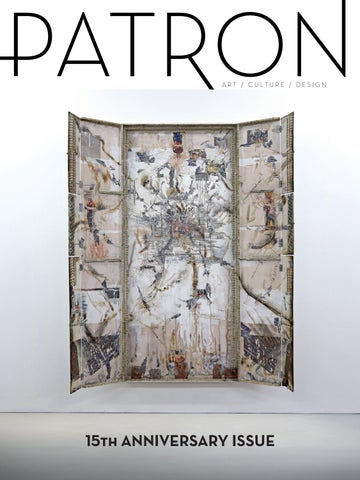
15TH ANNIVERSARY ISSUE
ON MODEL: NEIMAN MARCUS, EISEMAN JEWELS IVÁN NAVARRO, SHRAPNEL, 2020, NANCY A. NASHER AND DAVID J. HAEMISEGGER COLLECTION
MAISON FRANCIS KURKDJIAN
ALO
FERRAGAMO
AMIRI
GIANVITO ROSSI
APPLE
GIVENCHY
BALENCIAGA
GOLDEN GOOSE
BOTTEGA VENETA
GUCCI
BREITLING
HILL HOUSE
BUCK MASON
HOKA
BURBERRY
HUGO BOSS
BYREDO
ISABEL MARANT
CREED
IWC SCHAFFHAUSEN
DAVID YURMAN
JIL SANDER
DIPTYQUE
JIMMY CHOO
DOLCE&GABBANA
LAFAYETTE 148
EATALY
L’AGENCE
EISEMAN JEWELS
LOUIS VUITTON
ROLEX AT EISEMAN JEWELS
ETRO
LUCCHESE
SAINT LAURENT
MAISON MARGIELA MAJE MARNI ME+EM
SANDRO SÉZANE SISLEY PARIS SKIMS ST. JOHN TAG HEUER
MONTBLANC
TECOVAS
NEIMAN MARCUS
TIFFANY & CO.
NORDSTROM
TODD SNYDER
OMEGA
TOD’S
ON
TUDOR AT EISEMAN JEWELS
POTTERY BARN PRADA RIMOWA
NORTHPARKCENTER.COM
TUMI VARLEY VERSACE ZIMMERMANN PARTIAL LIST
Dallas | Houston deBoulle.com
Listed for $45,000,000
Casa De Ondas, House of Waves, Welcomes you as rising curves embrace sky and nature, sweeping you into a world of modern beauty, architectural romance, and exhilarating design. Dallas has never seen a home like this. Call for your private tour.
DALLAS’ #1 TEAM PRESENTS
C A S A
D E
O NDA S
Alex Perry 214.926.0158
Elizabeth Wisdom 214.244.0181
Chad Barrett 214.714.7034
Eric Narosov 214.529.1282
PLUG IN TO ONE AGENT. LIGHT A NETWORK OF 24. They bring this city to life like no other group. In a spirit of collaboration that
has propelled some of Dallas’ most legendary real estate transactions, this premier networking group continues to do what it does
best—connect people and properties. What does that mean for you? A more expertly facilitated sale of your prized property.
A more perfectly matched home for your next move. Twenty-four of the most admired and knowledgeable real estate
professionals in Dallas come together to put their resources and their vast experience to work for you. Insider
information, off-market properties, Dallas’ most exquisite estates—all leveraged for your benefit. Thinking of a change?
Put the Masters of Residential Real Estate to work for you.
FRONT ROW SEATED : Susan Baldwin, Allie Beth Allman and Assoc.
Michelle Wood, Compass Real Estate
Beth Allman and Assoc. SECOND ROW SEATED: Penny Rivenbark, Ebby Halliday Realtors Estate
Chad Barrett, Allie Beth Allman and Assoc.
Randall, Briggs Freeman Sotheby’s Sotheby’s
Allman and Assoc. Compass Real Estate
Joan Eleazer, Compass Real Estate
Jackie McGuire, Allie
Ryan Streiff, Dave Perry-Miller Real
Doris Jacobs, Allie Beth Allman and Assoc. THIRD ROW STANDING: Becky Frey, Compass Real Estate
Tom Hughes, Compass Real Estate
Stewart Lee, Dave Perry-Miller Real Estate
Amy Detwiler, Compass Real Estate
Emily Price Carrigan, Emily Price Carrigan Properties
Mark Cain, Compass Real Estate
Madeline Jobst, Briggs Freeman Sotheby’s
Rachel Trowbridge, Allie Beth Allman and Assoc.
Susan Marcus, Briggs Freeman
Kyle Crews, Allie Beth Allman and Assoc.
Emily Ray Porter, Compass Real Estate
Ralph
Erin Mathews, Allie Beth
Jonathan Rosen, Compass Real Estate
Faisal Halum,
PHOTOGRAPHED at 3612 Crescent Ave. courtesy of Jonathan Rosen, Compass Real Estate.
EDITOR’S NOTE
Portrait Tim Boole, Styling Jeanna Doyle, Stanley Korshak
October / November 2026
TERRI PROVENCAL Publisher / Editor in Chief terri@patronmagazine.com Instagram terri_provencal and patronmag
8
PATRONMAGAZINE.COM
We launched Patron 15 years ago to champion the arts ecosystem of North Texas. Back then, there was a conspicuous void in the market—too little attention was being paid to a region whose cultural ambitions were beginning to outpace its coverage. We believed the arts scene here was not merely promising, but consequential, deserving to be seen, discussed, and taken seriously. This issue plumbs the depths of what is happening here and in our world today while demonstrating how the arts are resilient, fostering community and spurring growth. We begin our coverage with Petrit Halilaj, the ninth Nasher Prize laureate, who will be celebrated at the prize’s first-ever public reception—an inclusive moment honoring the Kosovar artist. His joyful approach is welcoming to even the art timid and offers a sense of safety and refuge to those affected by war. Danielle Avram shares his happy work in Drawing from the Ruins . Near Fair Park, Passage Arts proves that the art landscape is still evolving with a new art venue in an expansive warehouse. Founder Kirk Hopper has made room here for monumental sculptures by James Surls in his survey From the Old Growth, explored by Andrew Walker in The Wilderness Within. In The Long View, Temple Shipley considers the gift of 538 artworks—with special attention to works on paper—bequeathed to the Dallas Museum of Art by her client and friend, the late Charles Dee Mitchell. On the cover, Gate, 2025, by Marcin Dudek signals the return of Chambre d’Amis, Jon Hoet’s historical 1986 exhibition in Ghent, Belgium, reimagined by Harlen Levey Projects in collaboration with Marguerite Steed Hoffman, who collects Dudek’s work. Jennifer Klos curated a companion exhibition of artists in the program at Park House. Humanity emerges in Ben Lima’s discourse on Ivan Argoté’s How to Move a Monument on a Tuesday Morning at Dallas Contemporary in Tender Mercies. Transitioning from the monument to the grand theater of belief, Nancy Cohen Israel examines Spectacles of Power and Faith: Colonial Art From South America from the Thoma Foundation at the Meadows Museum—a vivid look at how art gives form to faith, family, and creativity. Porschla and Jason Kidd opened their comely home to Patron for this issue. What’s striking about the family is how naturally sports and art coexist in their story. They’ve built a collection around that, and Rob Brinkley explores it all in A Champion Collection. The Power Station launched the same year as Patron, when Janelle and Alden Pinnell embarked on an experiment inside the historic Dallas Power & Light Building. Openings sees An Unlikely Experiment Comes of Age, where we look at what the Pinnells have built: a space where artists take risks, incubate ideas, and present ambitious work. The same appetite for risk and scale is on view at the Green Family Art Foundation, where Painters/Sculptors: Nicole Eisenmann, Tracey Emin, Dana Schutz, curated by Jeremy Strick, opens this month. Coinciding with our 15th anniversary, Darryl Ratcliff sums up the people, architecture, and institutions that have shaped the arts. Embracing the new, Chris Byrne speaks with New Museum director Massimiliano Gioni about the kunsthalle’s expanded 60,000-square-foot space and what lies ahead. If your calendar is crowded with fall and winter galas, take in Heirlooms in Technicolor. Chris Plavidal’s lens discovers fine jewelry crafted by local jewelers and international names, all chosen for color and unapologetic sparkle. Speaking of sparkle, we welcome new style editor Max Trowbridge to Patron’s pages in Dressing the Part. And Max shares her first story, Ardent Ascent, detailing Khanh Nguyen’s return to couture on her own terms. Finally, James Cope is taking his Invitational art fair to London, the city he called home before Southern charm lured him to North Texas. We applaud yet another opportunity to put North Texas on the international stage. We are immensely grateful to our readers, contributors, advertisers, and the entire arts community. Fifteen years down. Stay tuned for the next 15! –Terri Provencal
www.akris.com | @akris
CONTENTS 1
84 FEATURES 70 DRAWING FROM THE RUINS Turning memories of conflict into visions of connection, Nasher Prize Laureate Petrit Halilaj conceives environments for gathering, connection, and possibility. By Danielle Avram 76 THE WILDERNESS WITHIN From the Old Growth brings James Surls back to Dallas, where a six-decade career in wood, steel, drawing, and myth takes monumental form. By Andrew Walker. 80 THE LONG VIEW Charles Dee Mitchell leaves the Dallas Museum of Art 538 works and a legacy of curiosity, discovery, and support for works on paper. By Temple Shipley
70
84 ROOMS FOR FRIENDS Forty years ago, Jan Hoet’s Chambres d’Amis exhibition proposed that art belongs in living areas, not just museums. This November in Dallas, that argument comes home again. By Eve Hill-Agnus 88 TENDER MERCIES How to Move a Monument on a Tuesday Morning presents Iván Argote’s radical reconsideration of power, justice, and the possibilities of collective care. By Ben Lima 92 SACRED SPLENDOR At the Meadows Museum, works from the Thoma Foundation illuminate the extraordinary visual culture of colonial South America. By Nancy Cohen Israel 96 A CHAMPION COLLECTION With a passion spanning elite sports and fine art, the Kidd family has built a legacy defined by competition, culture, and a discerning eye for collecting. By Rob Brinkley
76
104 HEIRLOOMS IN TECHNICOLOR Fine jewelry and bags that transcend eras and never lose their luster. Photographs by Chris Plavidal; Styling by Penny Plavidal
80
On the cover: Marcin Dudek, (b. 1979), Gate, 2025, acrylic paint, wood, steel, image transfer, papier-mâché, medical tape, UV lacquer, open: 79.75 x 68.12 x 7.87 in., closed: 79.7 x 36.62 x 4 in. Collection of Marguerite Steed Hoffman.
96 10
PATRONMAGAZINE.COM
ROOMS WITH A POINT OF VIEW
NOW OPEN 3212 KNOX STREET
1316 SLOCUM STREET
KDBIEL.COM
CONTENTS 2
DEPARTMENTS 8 Editor’s Note 14 Contributors 34 Noted
52
Of Note 50 THE VIEW FROM HERE Fifteen years that changed North Texas culture. By Darryl Ratcliff Openings 52 PASSING THE TORCH William Bardin takes the reins of Craighead Green Gallery, ushering in a new era as Bardin Gallery. By Nancy Cohen Israel 54 NO STANDARD MODEL Gray Wielebinski’s new work excavates the rituals, objects, and images that manufacture masculinity, transforming their inherited meanings through an unruly logic of collage. By Christopher Blay
56
56 THE FLUID BOUNDARY Painter/Sculptors: Nicole Eisenman, Tracey Emin, Dana Schutz transforms the Renaissance paragone from a rigid rivalry into a fluid, material exchange. By Ian Etter 60 AN UNLIKELY EXPERIMENT COMES OF AGE The Power Station revisits the artists, ideas, and ambitious projects that have shaped its singular place in Dallas. By John Zotos Contemporaries 64 FROM VISION TO NAIL Massimiliano Gioni on museums as laboratories, the power of listening, and creating the conditions for artists to dream bigger. Interview by Chris Byrne 60
Atelier 66 DRESSING THE PART Meet Patron’s new style editor, Max Trowbridge. Interview by Terri Provencal 68 ARDENT ASCENT Khanh Nguyen’s evolved return to her couture roots. By Max Trowbridge There 110 CAMERAS COVERING CULTURAL EVENTS
54
66 12
PATRONMAGAZINE.COM
Furthermore 112 ACROSS THE ATLANTIC James Cope takes the Invitational to London. By Terri Provencal
DALLAS, TEXAS bu r k l e c r e a t i v e . c om
CONTRIBUTORS
14
DANIELLE AVRAM is assistant professor of the contemporary galleries and exhibitions at UT Dallas and the director of SP/N Gallery on campus. In addition, she is the art coordinator for Solar Preparatory School for Girls. She is also a writer, curator, and project manager who interviewed the ninthl Nasher Prize laureate, Petrit Halilaj, for Patron in Drawing from the Ruins.
EVE HILL ANGUS is a writer, editor, and translator with roots in both France and California and a BA and MFA from Stanford University. Her award-winning career spans teaching, dining and art criticism, and writing and translating across genres, from nonfiction and fiction to poetry. For Patron, Eve delved into the history of Chambre d’Amis and the upcoming edition featuring the artist Marcin Dudek.
CHRISTOPHER BLAY is an artist, curator, and writer, He was chief curator of the Houston Museum of African American Culture, where he mounted shows for Evita Tezeno, David-Jeremiah, and Johnny Floyd. He is the recipient of awards and grants for his own art practice, including SMU’s Moss/Chumley Award, a Nasher Sculpture Center Artist Grant, and the Dallas Museum of Art’s Otis and Velma Davis Dozier Grant.
BEN LIMA is the founding editor of Athenaeum Review, the UT Dallas journal of arts and ideas. Born in the Bay Area of California, he studied art history at Harvard and Yale. For Patron, Ben interviewed the Colombian-born, Paris-based artist and filmmaker Iván Argote, honored by Dallas Contemporary last month, and previewed his solo exhibition How to Move a Monument on a Tuesday Morning, opening at the kunsthalle.
ROB BRINKLEY is a writer, editor, and creative director whose career spans the worlds of magazines, social media, short films, and books. He co-authored the Assouline book Domestic Art: Curated Interiors, a celebration of thoughtfully composed spaces and the art of living well. In A Champion Collection, Rob takes readers inside Porschla and Jason Kidd’s home, where works by artists of color surround athletic achievement.
DARRYL RATCLIFF is an artist and poet whose writing and curatorial practice explores collaborative cultural projects that illuminate shared narratives, and foster civic participation and collective well-being. He is also the founder of Gossypion Investments. For Patron’s 15th Anniversary Issue, he wrote about the people and institutions that have shaped North Texas’ cultural community.
CHRIS BYRNE is the author of The Magician (Marquand Books, 2013), included in the Library of Congress. The Dallas Museum of Art and the University of Sydney Library recently acquired the graphic novel, with the latter adding it to its Rare Books and Special Collections. Chris is also the co-editor (with Keith Mayerson) of Frank Johnson, Secret Pioneer of American Comics Vol. 1 (Fantagraphics, 2024).
TEMPLE SHIPLEY is an art consultant who builds private collections for future generations. She advises individuals, family offices, and hospitality groups on art acquisitions, estate planning, and museum philanthropy. A Dallasbased native, she earned her BA in art history from the University of Chicago. In The Long View, she highlights Charles Dee Mitchell’s posthumous gift to the Dallas Museum of Art.
LAUREN CHRISTENSEN has three decades of experience in advertising and marketing. As a principal of L+S Creative Group, she consults with nonprofits and businesses in many sectors, including retail, real estate, and hospitality. Lauren is a Dallas native and a graduate of SMU. Her clean, contemporary aesthetic and generous spirit make Lauren the perfect choice to art direct Patron.
JOHN SMITH is a photographer whose architectural background lends a sculptural sensibility to capture spaces as living expressions. His appreciation for projects by architects, interior designers, and artists is evidenced through more than 25 years of experience behind the camera. In this issue he photographed Porschla and Jason Kidd’s home in A Champion Collection.
NANCY COHEN ISRAEL is an art historian, writer, and educator at the Meadows Museum. Nancy’s start in the Dallas art world roughly coincided with the opening of Craighead Green Gallery. For the current issue, she enjoyed writing about its next chapter as Bardin Gallery. She also immersed herself in the sumptuous details of Spectacles of Power and Faith at the Meadows Museum.
MAXINE TROWBRIDGE is a British American editor, entrepreneur, and contemporary arts advocate. Founder of the women’s fashion brand Eve & Max, she was a longtime board member and board president of Dallas Contemporary. Max has spent three decades working across fashion, publishing, and the arts. A graduate of London College of Fashion, she divides her time among Dallas, Dorset, and Palm Beach.
IAN ETTER is an artist, writer, and faculty member at the University of North Texas whose work explores materiality, abstraction, and cosmology. He is also the co-director of PeepSpace, a nationally recognized artist-run space. Ian previewed Painters/Sculptors: Nicole Eisenman, Tracey Emin, Dana Schutz, curated by Jeremy Strick and opening at the Green Family Art Foundation, in The Fluid Boundary.
ANDREW J. WALKER is the former executive director of the Amon Carter Museum of American Art, where he served for 14 years, expanding its collections, endowment, exhibitions, and visitor experience. Previously, he served as Saint Louis Art Museum’s assistant director for curatorial affairs and curator of American art. He currently leads Walker Art Consulting.
PATRONMAGAZINE.COM
8605 PRESTON ROAD A modern Dallas icon by architect Richard Meier. Crisp white geometry, expansive glass, and serene landscaped grounds define the home. Architecture, art, and nature come together in one remarkable setting. $17,500,000
FAISAL HALUM Broker Associate faisal.halum@compass.com
Compass is a licensed real estate broker and abides by Equal Housing Opportunity laws. All material presented herein is intended for informational purposes only. Information is compiled from sources deemed reliable but is subject to errors, omissions, changes in price, condition, sale, or withdrawal without notice. This is not intended to solicit property already listed. Photos may be virtually staged or digitally enhanced and may not reflect actual property conditions.
PUBLISHER | EDITOR-IN-CHIEF Terri Provencal terri@patronmagazine.com ART DIRECTION Lauren Christensen DIGITAL MANAGER/PUBLISHING COORDINATOR Anthony Falcon COPY EDITOR Sophia Dembling PRODUCTION Michele Rodriguez STYLE EDITOR Max Trowbridge CONTRIBUTING WRITERS Danielle Avram Christopher Blay Rob Brinkley Chris Byrne Nancy Cohen Israel Ian Etter Eve Hill-Agnus Ben Lima Darryl Ratcliff Temple Shipley Andrew Walker John Zotos CONTRIBUTING PHOTOGRAPHERS Stephen Arnold Matthew Murphy Thomas Barratt Chris Plavidal Dan Bradica Guy Rogers III Tamytha Cameron Marty Sader Damon De Backer Hyla Skopitz Jason Keen John Smith Brigitte Lacombe Allison V. Smith Jacopo La Forgia Jamie Stukenberg Arben Llapashtica Kevin Todora Ben McKeown Deen van Meer Eric Mueller Evan Zimmerman STYLISTS Penny Plavidal ADVERTISING info@patronmagazine.com or by calling (214) 642-1124 PATRONMAGAZINE.COM View PATRON online @ patronmagazine.com REACH US info@patronmagazine.com SUBSCRIPTIONS patronmagazine.com/subscribe One year $48/6 issues, two years $60/12 issues For international subscriptions add $50 for postage For subscription inquiries, email info@patronmagazine.com SOCIAL @patronmag is published 6X per year by PATRON, P.O. Box 141139, Dallas, TX 75214-1139. Copyright 2026, PATRON. All rights reserved. Reproduction in whole or in part without express written permission of the Publisher is strictly prohibited. Opinions expressed in editorial copy are those of experts consulted and do not necessarily reflect the opinions of the editors, publisher or the policy of PATRON.
16
PATRONMAGAZINE.COM
BÉZIER DESIGN MARCIO KOGAN / STUDIO MK27 MINOTTI.COM
BY SMINK 1003 DRAGON STREET DALLAS, TEXAS 75207 T. 214-350-0542 INFO@MINOTTIDALLAS.COM
D A L L A S
Congratulations to PATRON on 15 Years of Visionary Excellence
Christopher Martin | APANTESIS | acrylic on acrylic | 96 x 96 inches
Christopher Martin Gallery 1533 Dragon Street | Dallas | 1.214.760.1775
christophermartingallery.com
M E E T S I LV I A F U R M A N O V I C H Join Jo Latham Fine Jewelry in welcoming visionary fine jewelry designer Silvia Furmanovich to Fort Worth, Texas.
C O N TAC T D E A R J O @ J O L AT H A M .C O M F O R D E TA I L S
N OV E M B E R 1 0 - N OV E M B E R 1 1 Cocktail Reception | Book Signing | Collectors Dinner
J O L AT H A M .C O M
Victor Vasarely (1906-1997) | Grand-Zûr, 1976 | Oil on canvas | 71 x 71 inches Estimate: $100,000 - $150,000
PRINTS & MULTIPLES Signature Auction | October 22 ®
MODERN & CONTEMPORARY ART Signature Auction | November 10 ®
View All Lots & Bid Inquiries: Frank Hettig | 214.409.1157 | FrankH@HA.com 2801 W. Airport Freeway, Dallas, Texas 75261 Dustin Johnston #18229. BP 25%; see HA.com. 92396
ON VIEW THROUGH NOVEMBER 8, 2026 Experience an avant-garde playground of vibrant, larger-than-life works featuring collaborations between the legendary screenprinting studio Brand X Editions and artists including KAWS, Helen Frankenthaler, Rashid Johnson, and Deborah Kass. Learn more at dma.org. X Marks the Spot: Contemporary Screenprinting at Brand X Editions is organized by the Philadelphia Museum of Art. The Dallas Museum of Art is supported, in part, by generous DMA Members and donors, the Texas Commission on the Arts, and the citizens of Dallas through the City of Dallas Office of Arts and Culture. MAJOR SUPPORT
William B. Jordan and Robert Dean Brownlee Endowment
CONTRIBUTING SUPPORT
EXHIBITION SUPPORT
LOCAL SUPPORT
ORGANIZED BY
COMMUNITY PARTNER
Apprentice Creative Space
Got You, 2022. Emmanuel Taku. Screenprint, printed in twenty-seven colors, with collage of cut inkjet prints. Philadelphia Museum of Art: Gift of Brand X Editions, New York, 2023; Entanglement, 2022. Emmanuel Taku. Screenprint, printed in twenty-three colors, with collage of cut inkjet prints. Philadelphia Museum of Art: Gift of Brand X Editions, New York, 2023. Courtesy the Artist studio and MARUANI MERCIER Gallery.
IN THE MAKING
STORIES FROM THE COLLECTION October 31, 2026–August 15, 2027
MAKE AT THE MODERN
THE SCULPTURE PROJECT
A series of making activities designed for all ages. Free. All of October, 2026
MODERN ART MUSEUM OF FORT WORTH 3200 Darnell Street, Fort Worth, Texas 76107 • 817.738.9215 Bror Utter, Pharmaceutical Cabinet, 1952. Oil on canvas. 29 x 39 1/4 inches. Collection of the Modem Art Museum of Fort Worth, Anonymous Gift. Photograph by Kevin Todora
214.219.4528 / bmarchitects.com
ONLY AT THE CROW On view in the Dallas Arts District The Rainbow My Mother Shows Me: Echo Morgan On view through October 11, 2026
Du Chau: Tracing the Threads of Memory On view through March 14, 2027
Twisted, Plaited, Sculpted Collection of the Carl & Marilynn Thoma Foundation November 7, 2026– October 31, 2027
CROWMUSEUM.ORG
Flying Dragon, 2012, Madake (Japanese timber bamboo), susutake (aged bamboo), rattan. Tanabe Kochikusai, Japanese, 1935–2021. Collection of Carl & Marilynn Thoma Foundation, L2026.6.1. Photo courtesy of Carl & Marilynn Thoma Foundation.
Scan QR code for all current exhibitions at the Dallas Arts District.
PLATINUM BAND BEZEL SET EMERALD CUT EMERALD ART DECO
AMULET DE CARTIER 18K YELLOW GOLD DIAMOND & CABOCHON ONYX
Join Us for the Eiseman Vintage and Collectible Jewelry and Timepiece Event. An exclusive showcase of remarkable estate jewelry and collectible vintage timepieces. Explore signed creations from celebrated designers, rare treasures from private collections, and watches that embody generations of craftsmanship and heritage.
October 19 - October 24 | 10am to 5pm
Created with vision. Maintained with care.
Exquisite outdoor spaces, by design. Exceptional service, by nature.
Since 1982, we have designed, built and maintained stunning, award-winning gardens, pools, and outdoor living spaces in DFW. Offering a seamless solution for homeowners by integrating site planning, architect collaboration, construction, and maintenance within one company, our team transforms backyards into serene sanctuaries, redefining life at home. 972.243.9673 | BONICKLANDSCAPING.COM
L A N D S CA P E D E S I G N + B U I L D | G A R D E N CA R E | C U S TO M P O O L S | P O O L CA R E | C O L L A B O R AT I V E C O N S T R U C T I O N
Internationally celebrated. Distinctly Dallas. Arriving 2027.
APRIL 15-18, 2027 DALLASARTFAIR.COM
Cheers to the other artful authority in town. DEAR PATRON MAGAZINE, You’ve opened doors to Dallas’ most incredible homes and art collections for 15 years. Exclusive access. A different perspective. A decisive point of view. Sounds like what a great real estate team does, too, doesn’t it? Happy 15th birthday, big, brilliant Patron. You’ve never looked better. XO Jobst Randall Group
T HE AWARD-WINNING JOBST RANDALL GROUP From Left: Hector Meza, Ralph Randall, Madeline Jobst, Catherine Kurzner, Michael Wong. Not Pictured: Lauren Kaye.
SPECTRE SERIES II
Rolls-Royce Motor Cars Dallas, 5300 Lemmon Ave, Dallas TX 75209 (469) 972-5456, RollsRoyceMotorCarsDallas.com WLTP: Power consumption: 2.9-3.1 mi/kWh / 21.7-20.2 kWh/100km. Electric range: 390-362 mi / 628-582 km. CO2 emissions 0 g/km. © Copyright Rolls-Royce Motor Cars Limited 2026. The Rolls-Royce name and logo are registered trademarks.
the green family art foundation presents
painter - sculptors nicole eisenman tracey emin dana schutz
opening reception october 3, 5-8 pm 2111 flora street suite 110, dallas, texas artist talk at the dallas museum of art november 14, 1 Pm Tracey Emin, I Sailed Away From You (detail), 2024. Private Collection of Gary Steele and Steven Rice. Courtesy the artist and Xavier Hufkens, Brusels, Belgium. Photo: Hugard & Vanoverschelde.
CHRISTY LYNN
PLAZA AT PRESTON CENTER 8300 PRESTON RD. #200 DALLAS, TEXAS
OVER 300 BRANDS. CURATED LUXURY. Located in the heart of Dallas, discover the premier destination for curated fashion, personal styling, and exceptional service.
WHERE ART MEETS FOREVER Luxury Weddings in the Heart of the Dallas Arts District
CURATED ART & HALL WINE
ELEVATED CULINARY EXPERIENCE
DEDICATED VENUE PLANNER
HallArtsHotel.com | 1717 Leonard St., Dallas, TX 75201 | 214-953-1717
NOTED 06
02
01 AFRICAN AMERICAN MUSEUM Mandela: The Official Exhibition remains on view through Nov. 1. Developed in collaboration with the Mandela family, the immersive exhibition traces the life and legacy of Nelson Mandela through four experiential galleries exploring his journey from rural South Africa to the presidency. aamdallas.org 02 AMON CARTER MUSEUM OF AMERICAN ART Celia Álvarez Muñoz: El Límite explores the railroad’s role in connecting and dividing cultures, languages, and traditions, through Oct. 18. Through Nov. 8, Here Lyeth: Grave Rubbings by Ann Parker and Avon Neal offers a fascinating look at a mid-20th-century project to preserve early American gravestone art. The Statue of Liberty from Bartholdi to Warhol, through Jan. 3, 2027, examines the statue’s enduring role in American visual culture. Lava Thomas: In Our Own Regard, Nov. 7 through Nov. 2027, features a site-specific installation of large-scale portraits, including the Carter’s recently acquired Looking Back II, alongside artist-designed wallpaper incorporating historic negatives from the Mary Everhard Collection. Creative Visions: Cynthia Brants and Ruth Carter Stevenson, Nov. 21 through Apr. 4, 2027, features 22 works on paper by Brants and artists connected to the Fort Worth Circle. Image: Pacita Abad (1946–2004), L.A. Liberty, 1992, acrylic, cotton yarn, plastic buttons, mirrors, gold thread, painted cloth on stitched and padded canvas, Courtesy Pacita Abad Art Estate and Walker Art Center, Minneapolis, Collection Walker Art Center, Minneapolis, T. B. Walker Acquisition Fund, 2022. © Pacita Abad Art Esta. cartermuseum.org 03 CROW MUSEUM OF ASIAN ART OF THE UNIVERSITY OF TEXAS AT DALLAS At the Dallas Arts District location exhibitions include Fire and Earth: Early Chinese Pottery from the MacLean Collection, on view through Sept. 26, 2027; Paper Knife: Objects of Beauty in Early Modern Japan through Aug. 29, 2027; Du Chau: Tracing the Threads of Memory through Mar. 14, 2027; and The Rainbow My Mother Shows Me: Echo Morgan through Oct. 11. At the UT Dallas campus, Intersections: Photographs by Carolyn Brown continues through Mar. 28, 2027. New exhibitions include Unseen Worlds: Southeast Asian Textiles from the Spancake Collection, on view through Jun. 20, 2027, and The Hedge of Halomancy, continuing through Feb. 21, 2027. New Deal Texas and the West remains on view through Jul. 18, 2027. Organized by UT Dallas in collaboration with the Dallas Museum of Art, the exhibition presents federally funded artworks created during the 34
PATRONMAGAZINE.COM
THE LATEST CULTURAL NEWS COVERING ALL ASPECTS OF THE ARTS IN NORTH TEXAS: NEW EXHIBITS, NEW PERFORMANCES, GALLERY OPENINGS, AND MORE.
03 Great Depression examining how New Deal programs supported artists. Image: Millard Owen Sheets, Horses, c. 1933–1934, color lithograph. Dallas Museum of Art, gift of the Public Works of Art Project. Image courtesy Dallas Museum of Art. crowmuseum.org 04 DALLAS CONTEMPORARY Iván Argote: How to Move a Monument on a Tuesday Morning, Oct. 3 through Jan. 2027, brings together video, sculpture, and bas-relief to reconsider how public monuments shape collective memory, political power, and our understanding of history through humor, imagination, and playful interventions. dallascontemporary.org 05 DALLAS HOLOCAUST AND HUMAN RIGHTS MUSEUM Black Cowboys: An American Story opens Oct. 8 and continues through Apr. 18, 2027. The exhibition explores the history of Black cowboys from prior to the Civil War through the 20th century through personal artifacts, photographs, and branding irons, examining the role of free and enslaved Black men, women, and children in ranching and cattle drives. dhhrm.org 06 DALLAS MUSEUM OF ART Paradise on Earth: Florals in Indian Textiles, through Nov. 15, explores the influence of floral motifs across India’s 6,000-year textile tradition, from Mughal-era garments and embroidered shawls to carpets and contemporary fashion. X Marks the Spot: Contemporary Screenprinting at Brand X Editions remains on view through Nov. 8. Rhythms on Repeat continues through Sep. 9, 2029, reopening the Center for Creative Connections with more than 50 works from the DMA’s collection that explore sound, rhythm, and visual pattern across centuries and media. Radical Clay: Contemporary Women Artists from Japan, Nov. 15 through Oct. 31, 2027, features 36 Japanese ceramic artists whose sculptures expand the possibilities of scale, surface, color, and form. Image: Tanaka Yū, Fukuromono (Bag Work), 2018, glazed Shigaraki stoneware. Carol & Jeffrey Horvitz Collection of Contemporary Japanese Ceramics. © Yū Tanaka. dma.org 07 GEORGE W. BUSH PRESIDENTIAL LIBRARY AND MUSEUM America’s Birthday: A History of Independence Day Story Walk, through October, explores Fourth of July traditions across generations. Game Changer: United by Sports, through Jan. 10, 2027, examines how sports have shaped American history and brought people together through more than 50 artifacts and memorabilia. bushcenter.org
Amangati Yacht
AMAN Yacht Setting sail in Spring 2027, Amangati brings Aman’s signature privacy, tranquility and intuitive service to sea. Hosting just 94 guests in 47 spacious suites, the luxury yacht will sail the Mediterranean before crossing to the Caribbean in Autumn 2027. Discover a new standard of luxury at sea with Strong Travel Services. www.strongtravel.com | info@strongtravel.com | 214-361-0027
NOTED: VISUAL ARTS
08
13
08 KIMBELL ART MUSEUM Photography’s First Century: Masterworks from the Bibliothèque nationale de France opens on Oct. 4 and continues through Jan. 17. The Kimbell’s first exhibition devoted to photography traces the medium’s first century, from daguerreotypes and calotypes in the 1840s to modernism between the World Wars, with more than 170 images from the Bibliothèque nationale de France by artists including Gustave Le Gray, Nadar, Eugène Atget, Man Ray, and Brassaï. Image: Man Ray, Sleeping Woman, 1931, donated by artist’s estate, 1984. © Man Ray 2015 Trust / Artists Rights Society (ARS), NY / ADAGP, Paris 2026, Bibliothèque nationale de France, Department of Prints and Photography. kimbellart.org 09 LATINO CULTURAL CENTER No Te Dejes and Charrería run through Oct. 9. No Te Dejes, a solo exhibition by David Hanes-González, explores the cultural and spiritual dimensions of Mexican boxing through photography and sculptural installation, while Brent Kollock’s Charrería examines the Mexican equestrian tradition through photography and narrative. Día de los Muertos Altars mounts Oct. 20–Nov. 6 in conjunction with the Día de los Muertos Festival on Oct. 30. Building in America by Gabriela Passos and Querencia by Marcos Alvarado, Nov. 14– Jan. 8, explore immigration, labor, housing, Puerto Rican identity, memory, and belonging. lcc.dallasculture.org 10 MEADOWS MUSEUM Spectacles of Power and Faith: Colonial South American Art from the Thoma Foundation and Picasso Beyond the Canvas continue through Jan. 24. Spectacles of Power and Faith brings together 63 paintings from the Carl & Marilynn Thoma Foundation exploring colonial art produced in present-day Peru, Bolivia, Colombia, Venezuela, and Ecuador; while Picasso Beyond the Canvas presents 18 ceramic works by Pablo Picasso, highlighting the artist’s inventive approach to clay during the height of his ceramic practice. meadowsmuseumdallas.org 11 MODERN ART MUSEUM OF FORT WORTH This October, the Modern presents the Sculpture Project, a series of hands-on activities designed for all ages in partnership with artists Trey Burns and Tamara Johnson of Sweet Pass Sculpture Park. In the Making: Stories from the Collection, Oct. 31 through Aug. 15, 2027, celebrates the Modern’s collection through a series of rotating installations organized around themes such as color, material, and mark-making, pairing collection works with selected loans and unveiling seven recent acquisitions. themodern.org 12 MUSEUM OF BIBLICAL ART The MBA presents Together We Remember, an exhibition exploring memory, loss, resilience, and hope through the work of contemporary artists. Continuing through December 19, the exhibition brings 36
PATRONMAGAZINE.COM
14
together artists whose works reflect on the lasting impact of September 11. biblicalarts.org 13 NASHER SCULPTURE CENTER Sculptures and Related Works by Roy Lichtenstein, through Oct. 24, presents prints, drawings, and sculptures from a major joint acquisition gifted by the Roy Lichtenstein Foundation. Bruce Nauman: Identical runs through Mar. 21. Bruce Nauman presents recent sculptures and drawings of animal forms that extend his longstanding exploration of artistic practice, the studio, and the role of the artist. The Nasher will host its first-ever public Nasher Prize celebration in the Nasher Garden honoring 2027 laureate Petrit Halilaj the evening of Nov. 14, 2026. The artist’s stainless and bronze sculpture Abetare will be on view. Earlier in the day, an artist conversation with curator Dr. Leigh Arnold takes place in Nasher Hall. Image: Bruce Nauman, 3 foxes stacked horizontally with 4 hammers (detail), 2024, polyurethane foam, threaded rods, pencils, screws, hot glue, wire, hammers, wood, wax, and earplug. As installed: 117.50 x 38 x 19 in. © 2026 Bruce Nauman / Artist Rights Society (ARS), New York. nashersculpturecenter.org 14 OAK CLIFF CULTURAL CENTER Recipient of the Nasher Artist Grant in Honor of Jeremy Strick, Claudia Maysen will create a life-sized installation of two dioramas and eighteen paper-doll-like figures exploring immigrants’ rights in Texas. Home of the Brave (Dreamer), Oct.3–Nov. 13, reflects on DACA’s instability and the everyday challenges faced in Texas’ colonias, while Beyond Papers, People examines how immigrants are reduced to papeles—legal documents or disposable figures— referencing ICE detention practices and the Earle Cabell Federal Building. Image: Claudia Maysen, Home of the Brave (Dreamer) installation view. occc.dallasculture.org 15 PEROT MUSEUM OF NATURE AND SCIENCE Soccer: More Than a Game, through Jan. 4, presents an interactive exhibition that explores how physics, biology, and technology shape the world’s most popular sport. Through hands-on challenges and behind-the-scenes innovations, the exhibition examines teamwork performance, and design. perotmuseum.org 16 SIXTH FLOOR MUSEUM Through Mar. 28, 2027, On Assignment: Dallas Times Herald 1963 places visitors inside the newsroom during the weekend of President John F. Kennedy’s assassination through original photographs, field notes, press credentials, and Pulitzer Prize–winning images created by Dallas Times Herald reporters and photographers. The exhibition explores how journalists documented the unfolding national crisis in real time while navigating the pressures of deadline reporting. jfk.org
ELEVATED LIVING IN THE HEART OF THE ARTS DISTRICT. Schedule a Private Tour Today atelierdallas.com | (866) 579-9068 | atelierapts@willowbridgepc.com
NOTED: PERFORMING ARTS
16
18
01 AMPHIBIAN AJAX, Oct. 14–Nov. 1, revisits the 1953 CIA-backed coup in Iran, turning a Tehran courtyard, a swimming pool, and a tennis match into a sharp examination of oil politics, diplomacy, and American foreign policy. amphibianstage.com 02 AT&T PERFORMING ARTS CENTER October begins with the Latinidad Festival 2026 on Oct. 3, followed by My Hero Academia in Concert on Oct. 7 and Cut Throat Finches on Oct. 8. On Oct. 10 audiences can choose between Dominique Hammons Soul Sessions at the Wyly Theatre and Antecedents at the Winspear Opera House. Brains On: Smash Boom Best follows on Oct. 11. Paula Poundstone takes the stage Oct. 16, while Oct. 17 features Hold On To Your Butts. Eisemann Center presents Neon Nostalgic: 80s Music Television. Lucy Darling: As You Wish, Oct. 22–25 at the Wyly Theatre. Bring the kids to Stage Fright: A Halloween Family Festival 2026 on Oct. 31. November sees The New Orleans Original BuckShop Brass & Jazz in the Park on Nov. 7, AT&T Untold Stories: Take Me Home Screening on Nov. 12, Switchfoot with special guest Anberlin on Nov. 15, and Lyle Lovett and his Small Large Band on Nov. 18. Mystic Pizza: A New Musical runs Nov. 20–22, followed by Outlander in Concert on Nov. 25. Image: Mystic Pizza: A New Musical. Photograph by Evan Zimmerman for Murphy Made. attpac.org 03 BASS PERFORMANCE HALL October performances include Mariachi Herencia de México: Día De Muertos on Oct. 20 and Pat Green on Oct. 23, both presented as part of the Irwin Steel Popular Entertainment Series. November brings Jersey Boys Nov. 3–8, tracing the rise of Frankie Valli and The Four Seasons. basshall.com 04 BROADWAY DALLAS Broadway Dallas brings Seth Meyers: Live on Oct. 23 and Little Big Town: For the Art of It Tour on Oct. 31. See Buena Vista Social Club, Nov. 3–15; Brett Goldstein: Sex, Death & Small Talk, Nov. 20; Dr. Seuss’ How the Grinch Stole Christmas! The Musical, Nov. 25–29; and BEAT: Belew/Vai/Levin/Bozzio Performing the Music of King Crimson on Nov. 30, all at the Music Hall at Fair Park. Image: The cast of Buena Vista Social Club. Photograph by Matthew Murphy. broadwaydallas.org 05 CASA MAÑANA This fall see Rapunzel! Rapunzel! A Very Hairy Fairy Tale, Oct. 2–18 and Thank God I’m a Country Boy, Oct. 6–Nov. 1, featuring Broadway performers singing the music of John Denver in the Reid Cabaret Theatre. Frozen: The Broadway Musical, Nov. 7–15, follows Elsa, Anna, Kristoff, Sven, and Olaf through the story of Arendelle’s 38
PATRONMAGAZINE.COM
05 enchanted winter. Image: Caissie Levy as Elsa and Patti Murin as Anna in Frozen: The Broadway Musical. Photograph by Deen van Meer. casamanana.org 06 DALLAS CHILDREN’S THEATER Naked Mole Rat Gets Dressed: The Rock Experience, Oct. 3–18, is a musical based on Mo Willems’ children’s book about self-expression, style, and standing apart from the crowd. Rudolph the Red-Nosed Reindeer follows Nov. 21–Dec. 20, bringing the holiday classic to the stage. dct.org 07 THE DALLAS OPERA The 2026–27 season opens with Donizetti’s The Elixir of Love on Oct. 9, 11, 14, and 17, a new-to-Dallas production of the comic opera about a hopeless romantic, a schoolteacher, and a traveling salesman’s “magical” cure for love. Janáček’s The Cunning Little Vixen follows Oct. 30, Nov. 1, 4, and 7, with Barrie Kosky’s production bringing vivid theatricality to the story of a young fox searching for freedom in the wild. dallasopera.org 08 DALLAS SYMPHONY ORCHESTRA The DSO’s fall calendar continues with Rachmaninoff & Time for Three, Oct. 2–4; Disney’s Hocus Pocus in Concert Live to Film, Oct. 9–11; Beethoven & Strauss with Daniel Hawkins, Oct. 16–18; Rachmaninoff & Schubert, Oct. 22–24; Organ Recital: Anna Lapwood, Oct. 25; and Día de los Muertos with the DSO, Oct. 30. November performances include Ellington, Strayhorn & Gershwin, Nov. 6–8; Ravel & Gershwin, Nov. 12–13; Yo-Yo Ma in Concert, Nov. 20; Debussy’s La mer & Karen Gomyo, Nov. 21–22; and Tchaikovsky’s Piano Concerto No. 1 & Swan Lake from Nov. 27–29. mydso.com 09 DALLAS THEATER CENTER The Monsters runs Oct. 9–Nov. 1 at the Wyly Studio Theatre. The regional premiere follows two siblings navigating ambition, old wounds, and fierce loyalty through the world of local MMA. A Christmas Carol returns Nov. 27–Dec. 27 at the Dee & Charles Wyly Theatre, with Kevin Moriarty’s adaptation of the Charles Dickens classic directed by Alex Organ. dallastheatercenter.org 10 DALLAS WIND SYMPHONY The season opens with Fiesta Sinfónica on Oct. 27 at the Meyerson Symphony Center, featuring Mariachi Paredes and works by Arturo Márquez, including Danzón No. 2 and the world premiere of Symphony No. 5. De Meij: From Page to Stage follows Nov. 17, with trumpeter Jens Lindemann joining Dallas Winds for the world premiere of Johan de Meij’s Leaves of Grass trumpet concerto alongside American Prelude and The Lord of the Rings. dallaswinds.org.
DONIZETTI
THE ELIXIR OF LOVE
OCT 9–17, 2026 WINSPEAR OPERA HOUSE
JANÁČEK
THE CUNNING LITTLE VIXEN OCT 30–NOV 7, 2026 WINSPEAR OPERA HOUSE
Get Your Tickets Today dallasopera.org or 214.443.1000 Season Sponsor: The VanSickle Family Foundation in memory of Edith and Elmer VanSickle PHOTOS: ELIXIR OF LOVE, SAN TA F E OPERA, CURT IS BROW N ; T HE CUN N IN G LIT T LE VIXEN , BAYE RISC H E STA ATSO P E R, GE O FFROY SC H IE D
NOTED: PERFORMING ARTS
02
04 11 EISEMANN CENTER Richardson Symphony Orchestra opens the season with Prokofiev & Brahms, on Oct. 3, followed by Kyivska Perepichka, Oct. 16; 80s Music Television, Oct. 17; and Glorious Musical Jewels with Jeffrey Siegel on Oct. 19. November brings Ann Hampton Callaway and American Road Trip, Part 2 on Nov. 1; An Evening with C.S. Lewis and Grand Canyon Country on Nov. 7; Aga Khan Master Musicians on Nov. 8; Fiesta de Bellas Artes on Nov. 14; A Holiday Tribute to Elton and Cher on Nov. 15; and A Holiday Tribute to Michael Bublé on Nov. 20. eisemanncenter.com 12 FORT WORTH SYMPHONY ORCHESTRA Hear Celebración Sinfónica on Oct. 3; The Classical Style on Oct. 9–11; Batman (1989) in Concert on Oct. 24 at Will Rogers Auditorium, and Beethoven’s Pastoral, Oct. 30–Nov. 1. November brings Oz with Orchestra Nov. 13–14; When Instruments Roamed the Earth on Nov. 14; Copland, Dvořák, and Rachmaninoff, Nov. 20–22, and Home for the Holidays rounds out the month, Nov. 27–28. fwsymphony.org. 13 KITCHEN DOG THEATER The Absentee by Julia Doolittle continues through Oct. 4. When a US Space Force’s ship explodes near Beacon 44.AR.90, its operator finds herself alone in deep space with only her ship’s AI for companionship. kitchendogtheater.org 14 MAJESTIC THEATRE October at the Majestic includes Small Town Murder Oct. 3; Boz Scaggs, Oct. 4; My Hero Academia In Concert, Oct. 7; Ryan Beatty: Arms Over Armor North American Tour ’26, Oct. 8; An Evening with Celtic Thunder 2026, Oct. 14; Leonid & Friends, Oct. 17; Dante Gebel: World Tour Despedida 2026, Oct. 22; Charlie Berens: The Lost and Found Tour, Oct. 23; Iron & Wine, Oct. 24; The Billy Joel Legacy, Oct. 25, Daniel Sloss: Bitter, Oct. 28; and PJ Morton: Saturday Night Sunday Morning Tour, Oct. 31. November continues with Old Crow Medicine Show on Nov. 1; Jim Henson’s Labyrinth 40th Anniversary, Nov. 4; An Evening with David Sedaris, Nov. 6; The Carpenters Songbook, Nov. 12; Michael Blaustein: The Taste Me Tour, Nov. 13; Daughtry: 20 Years Unplugged, Nov. 14; Sesame Street LIVE! Elmo’s Got the Moves, Nov. 15; The Fab Four, Nov. 20; Mojo Brooks: Outta Pocket Comedy Tour, Nov. 21–22; and Outlander in Concert on Nov. 25. majestic.dallasculture.org 15 TACA TACA Unscripted takes place Oct. 13 at the Dallas Museum of Art. The morning program features keynote speaker Erin Harkey, CEO of Americans for the Arts, followed by a panel discussion with Dallas arts leaders Nico Leone and Margie J. Reese, moderated by Clyde Valentín. On Oct. 24 don your favorite mask and head to The 40
PATRONMAGAZINE.COM
Statler for Masquerade, an evening honoring Joanna St. Angelo, distinguished arts leader; Amy O’Neil, innovative arts leader; and Hamilton A Sneed, legacy builder. taca-arts.org 16 TEXAS BALLET THEATER Texas Ballet Theater continues Casanova, Oct. 2–4 at Bass Performance Hall, with Kenneth Tindall’s ballet set to an original score by Kerry Muzzey offering a mature portrait of the legendary figure through Baroque opulence and cinematic movement. The Nutcracker follows, Nov. 27–Dec. 6, at the Winspear Opera House and Dec. 11–27 at Bass Performance Hall, bringing Clara’s journey to the Kingdom of Sweets back to the stage for the holiday season. Image: Casanova principal dancers Samantha Pille, Brett Young, and soloist Adeline Melcher, Courtesy of Texas Ballet Theater. texasballettheater.org 17 THEATRE THREE I Am My Own Wife runs Oct. 15–Nov. 1. Written by Doug Wright, the Pulitzer Prize– and Tony Award–winning play tells the true story of Charlotte von Mahlsdorf, a German transgender woman who survived Nazi and Communist regimes, through an intimate portrait of identity, memory, morality, and survival. theatre3dallas.com 18 TITAS/DANCE UNBOUND Pilobolus: Trips, Nov. 6–7, brings the company’s athleticism, physical theater, and visual invention to a single evening of movement, humor, and imaginative world-building. Image: Pilobolus performs Particle Zoo. Photograph by Ben McKeown. titas.org 19 TURTLE CREEK CHORALE We The People! brings the ensembles of TCC together with The Women’s Chorus of Dallas for a one-night collaboration. The concert marks the 250th anniversary of the Declaration of Independence with a musical tribute to the document’s continuing challenge and promise, on Oct. 17. turtlecreekchorale.com. 20 UNDERMAIN THEATRE Evening at the Talk House continues through Oct. 4. The regional premiere imagines a post-authoritarian America where criticism has been suppressed and theater has nearly disappeared. For the Rest of Our Lives follows Oct. 29–Nov. 22. Directed by vickie washington, the professional premiere traces a love story across multiple lifetimes. undermain.org. 21 WATERTOWER THEATRE BWY X NTX: Songs for a New World takes the stage Oct. 20–Nov. 1. watertowertheatre.org
Photography by Stephen Karlish
Finding magical places you can call home. jeanne.milligan@alliebeth.com 214-649-4375
NOTED: GALLERIES
40
09
11
01 12.26 Sean Cairns: And when morning comes it comes in the morning and never at night remains on view through Oct. 17. All Hat, No Cattle, a solo show for Gray Wielebinski, mounts Oct. 24 and remains on view through Dec. 5, featuring new work by the Dallas-born, London-based artist. Image: Sean Cairns, Evening Crescent, 2026, oil and sand on canvas, 70 x 50 x 1 in. gallery1226.com 02 AKIM MONET FINE ARTS Time Capsule-Rodin–The Sculpted Voice showcases studio casts, intimate studies, and monumental bronzes produced under the stewardship of Musée Rodin. akimmonetfinearts.com 03 ALAN BARNES FINE ART Save the date for Mireille Binoux: The Antholog y Exhibition, opening Dec. 10, which will present 24 original, large-scale oil paintings by the French colorist. alanbarnesfineart.com 04 ARTSPACE111 Crosscurrents: Daniel Blagg and Jay Wilkinson remains on view through Nov. 7. Bringing together two Fort Worth artists working in distinct visual territories, the exhibition considers memory, time, and the traces of human experience through paintings that examine physical and psychological landscapes. artspace111.com 05 BARDIN GALLERY New American Gothic fills the newly minted Bardin Gallery, Oct. 3–Nov. 14. Taking Grant Wood’s American Gothic as its point of departure, the exhibition considers the Gothic not simply as an aesthetic, but as a condition in which the familiar becomes unsettled. bardingallery.com 06 BARRY WHISTLER GALLERY Andrea Rosenberg / New Works runs through Oct. 31, presenting twelve new works by Rosenberg. The exhibition debuts a new approach in the artist’s practice, with drawings mounted on linen. barrywhistlergallery.com 07 CADD Member galleries are committed to representing the highest standards of contemporary art while recognizing the importance of integrity and responsibility in collaborating with artists, collectors, and museum professionals. caddallas.org 08 CHRISTOPHER MARTIN GALLERY Established in Dallas in 1995, Christopher Martin Gallery displays the reverse-glass paintings of Christopher H. Martin along with 25-plus mid-career artists who work within painting, photography, mixed media, and sculpture. christophermartingallery.com 42
PATRONMAGAZINE.COM
09 CONDUIT GALLERY Ted Larsen: New Sculptures, Rosalyn Bodycomb: The Worked Shoot, and Jordan Bruner: Space Hotel end Oct. 17. Larsen creates abstract sculptures from salvaged materials, while Bodycomb’s gestural figurative paintings examine political theater, populism, and pro wrestling through the lens of kayfabe. In the Project Room, Bruner presents Space Hotel, a series of paintings set in an imagined future. Next, solo shows for Billy Hassell and David Canright will be on view Oct. 24–Nov. 28. Image: Jordan Bruner, The Hot Tub, 2025, oil on canvas, 40 x 30 in. conduitgallery.com 10 CORSICANA ARTIST & WRITER RESIDENCY On Oct. 22, at the MLK Jr. Center in Corsicana, Fall Residents will present past and current projects by artists Edd Ravn and Yuri Yuan, and poet Orchid Tierney. The program continues on Oct. 28 at SMU Meadows’ Hamon Arts Library with Edd Ravn presenting works and artistic practices through a projected-image presentation, followed by Yuri Yuan on Nov. 18. 100westcorsicana.com 11 CRIS WORLEY FINE ARTS Isabelle du Toit: Vivarium and Sherry Owens: ensouled remain on view through Oct. 24. November sees Kelli Vance: With My Eyes Closed and a new exhibition by Dan Jian, both on view Nov. 7–Dec. 20. Image: Kelli Vance, Guilty On The Other Side, 2026, oil on canvas, 24 x 36 in. crisworley.com 12 CVAD: UNT COLLEGE OF ART AND DESIGN GALLERIES At the Cora Stafford Gallery, Paralelismo by Anthony Franco continues through Oct. 9, followed by Threads Up by Shaghayegh Ashouri, Oct. 12–23; Short-Lived by Tiana Farina; and Coloreame de Rosa, Oct. 26–Nov. 6; and Anastasiya C. Fender, Nov. 9–13. At the Paul Voertman Gallery, Time is Now by Kaley Ngo and Friend or Foe by Morganne Tisan mount Oct. 5–16, followed by The Spoopy Show from the CVAD Collection, Oct. 19–30; Submerged by Ham Bergman and Bad Dog by Blanca Sanchez, Nov. 2–13; and the Senior Capstone Show, Nov. 16–Dec. 11. cvad.unt.edu 13 DAVID DIKE FINE ART DDFA presents its 30th Anniversary Texas Art Auction on Oct. 10 at the gallery in Alpha Plaza. The live auction features more than 360 lots of Texas art, from early and traditional works to contemporary pieces, with highlights including major Merritt Mauzey paintings from the 1930s and 1940s and works by Everett Spruce, William Lester, John Douglass, and others. daviddike.com 14 ERIN CLULEY GALLERY Jessica Vollrath: The smell of rain on dust and Overgrowth remain on view through Nov. 7. Vollrath’s solo exhibition presents paintings that move among motherhood, religious symbolism, universal
New American Gothic October 3 - November 14
Marcos Alvarado Denise Brown Heather Gorham Ian Grieve
Carolyn McAdams Justin Penov Tom Pribyl 167 Parkhouse Street | Dallas, Texas 75207 | BardinGallery.com
NOTED: GALLERIES
Kittrell/Riffkind ittrell/Riffkind Art Glass Gallery 4500 Sigma Rd. Dallas, Texas 75244 972.239.7957
Sidney Hutter 38 spirituality, and surrealist composition. Overgrowth sees work by Hidenori Ishii, Isabell Lee-Rosson, Reyna Ramirez, and Rachel Wolfson Smith in a group exhibition exploring wild ecologies, landscape, climate, borders, and the natural. Image: Jessica Vollrath, When I decided we didn’t have to go together, 2026 and when I remembered myself at 8, 2026, oil on canvas, 44 x 32 in. erincluley.com 15 FERRARI FINE ART GALLERY The gallery represents six internationally recognized artists working across painting, sculpture, collage, wall installations, and mixed media. ferrarigallery.net 16 FORT WORKS ART Wes Coke: Inside a Thought continues through Oct. 17. Anger is an Energ y, celebrating 50 years of punk with Kate Simon, will be on view this fall. fortworksart.com 17 FWADA FWADA connects local talent with global perspectives, supporting diverse artists through exhibitions, collaborative programming, and community engagement. fwada.com 18 GALLERI URBANE Saskia Fleishman runs Oct. 3–Nov. 14. November features new exhibitions by Lori Larusso and Aron Barath, with additional details forthcoming. galleriurbane.com 19 GREEN FAMILY ART FOUNDATION Painter/Sculptors: Nicole Eisenman, Tracey Emin, Dana Schutz opens Oct. 3 and runs through May 2, 2027. Curated by Jeremy Strick, the exhibition brings together major works by the artists, examining how each moves between painting and sculpture to explore personal history, figuration, social concerns, and the legacies of art history. greenfamilyartfoundation.org
Explore the Art of Glass
kittrellriffkind.com
44
PATRONMAGAZINE.COM
20 JAMES COPE GALLERY Dorothea Tanning remains on view through Oct. 17. Ben Horns opens Oct. 30 and runs through Nov. 28. Founder James Cope will participate in the London Invitational Oct. 15–18 at The Chancery Rosewood in London. jamescope.biz 21 JAMES HARRIS GALLERY David Willburn: Surface and Radical Vision remain on view through Oct. 24. Willburn’s exhibition transforms the painted surface into a site of construction, concealment, and revelation, while Radical Vision, curated by Missy Finger,
Southwest Gallery’s
Western Exhibition
Tom Dorr
Show and Art Sale
October 17, 2026
The Western Art Exhibition & Sale brings together a selection of some of Southwest Gallery’s finest Western artists working today alongside a new generation of rising talent. This exhibition features original works that capture the spirit, history, and beauty of the American West, ranging from traditional historical depictions to contemporary and impressionistic interpretations. The exhibition will hang until November 7th.
S OUTHWEST G ALLERY 4500 Sigma Rd. Dallas 972.960.8935 SWGALLERY.COM
NOTED: GALLERIES
14 traces six decades of photography as artists move the medium beyond documentation into abstraction, experimentation, and perceptual inquiry. Fay Jones: By Chance, Nov. 7– Dec. 18, presents paintings on paper rooted in autobiography and the complexities of human nature. jamesharrisgallery.com 22 KEIJSERS KONING Assumptions Abide remains on view through Oct. 24, pairing Belgian sculptor Johan Tahon with American painter and sculptor Natalie Westbrook. Through works that move among figuration, fragmentation, and transformation, the two-person exhibition considers the figure as a vessel for composition, art history, material process, and emotive form. keijserskoning.com. 23 KITTRELL/RIFFKIND ART GLASS The 36th Anniversary Celebration fills the gallery with a group show through Nov. 30. kittrellriffkind.com
MASTERWORKS FROM THE BIBLIOTHÈQUE NATIONALE DE FRANCE
October 4, 2026– January 17, 2027
This exhibition is organized by the Bibliothèque nationale de France and the Kimbell Art Museum in collaboration with Manifesto Expo and in conjunction with France’s celebration of the bicentennial of the invention of photography. Support is provided by Arts Fort Worth and the Texas Commission on the Arts. Promotional support for the Kimbell Art Museum and its exhibitions is provided by American Airlines, NBC 5, and the Fort Worth Report. Attributed to Eugène Durieu, Female model, from the “Durieu album,” which contains thirty-two model studies, mostly posed by Eugène Delacroix (detail), 1854, albumen print from a glass plate negative. Donated by Maurice Tourneux, 1899, Bibliothèque nationale de France, Department of Prints and Photography
46
PATRONMAGAZINE.COM
24 LAURA RATHE FINE ART Between Worlds, Oct. 3–Nov. 6, sees new works by Christy Lee Rogers and Lucrecia Waggoner. Pairing Rogers’ underwater photography with Waggoner’s sculptural porcelain installations, the joint exhibition explores the space between the physical and the imagined through material, light, movement, and atmosphere. laurarathe.com 25 LILIANA BLOCH GALLERY Kathy Lovas: Holdfast: after Anna Atkins remains on view through Oct. 30, featuring 49 prints of marine algae made using the contemporary DASS transfer process. The works draw from specimens Lovas collected in 1966 at the University of Washington’s Friday Harbor Biological Station, later preserved as an homage to Atkins’ cyanotypes. lilianablochgallery.com 26 LONE GALLERY Lone Gallery showcases a diverse array of artists including painters Bradley Kerl, Danny Joe Rose III, and Camille Woods alongside mixed-media artists such as Cruz Ortiz and Heather Sundquist Hall. lonegallery.com 27 MELIKSETIAN | BRIGGS Meliksetian | Briggs will participate in Untitled Art Houston, presenting a special project by Dave Muller. Image: Dave Muller: Record Pavilion 2.0 presented by Meliksetian | Briggs & the Landing at Untitled Art Houston. meliksetianbriggs.com
NOTED: GALLERIES
42
39
28 NATURE OF THINGS Crying is Just Wet Laughter continues in Dallas at 3002A Commerce Street until October 24. natureofthings.xyz 29 PASSAGE ARTS James Surls: From the Old Growth continues through Apr. 17, 2027, inaugurating Passage Arts’ new 7,500-square-foot exhibition space near Fair Park. The exhibition showcases 25 monumental sculptures, including major suspended works and drawings. passagearts.org 30 PENCIL ON PAPER SAVVYE: Ever Alone presents 10 abstract mixed-media paintings in the artist’s second solo exhibition, in collaboration with Dallas Creative Collective, on view through Oct. 31. On Nov. 7, Charly Palmer will attend the opening reception for his new solo exhibition, on view through Dec. 19. pencilonpapergallery.com 31 PHOTOGRAPHS DO NOT BEND The Last Cowboy Song: Images of a Vanishing Breed, through Oct. 31, presents an exhibition centered on cowboy imagery and the fading traditions of the American West. pdnbgallery.com 32 THE POWER STATION The Power Station will present a 15-year retrospective opening Nov. 7. powerstationdallas.com 33 RO2 ART Ro2 Art presents Ulterior Motifs No. 16 through Oct. 17, followed by Ed Beardsley’s Media Expressions: Collages, opening Oct. 24 with a reception for the artist. The exhibition continues through Nov. 28. ro2art.com 34 SAMUEL LYNNE GALLERIES Tyler Shields: Exhibition & Book Launch, on Oct. 17, features a new exhibition and book release by the photographer. An exhibition for David Yarrow follows Nov. 14, presenting work by the international photographer known for cinematic images of wildlife, landscapes, and the American West. samuellynne.com 35 SMINK A showcase of fine design and furniture, SMINK is a purveyor of quality living products. The showroom also hosts exhibitions featuring Robert Szot, Gary Faye, Richard Hogan, Dara Mark, and Paula Roland. sminkinc.com
48
PATRONMAGAZINE.COM
01 36 SOUTHWEST GALLERY Western Invitational opens Oct. 17, launching a curated exhibition of Western art that connects established artists and rising talent working across traditional, contemporary, and impressionistic approaches to the American West. Kent Wallis follows Nov. 14, presenting the artist’s richly textured landscapes, from American countrysides to the rolling hills of Italy. swgallery.com 37 TALLEY DUNN GALLERY Lucian Freud Etchings remains on view through Oct. 31. talleydunn.com 38 TUREEN GALLERY River Shell: The Dust is Here to Stay remains on view through Oct. 3, presenting work by the artist, curator, gallerist, and PRP co-founder. Jacci Den Hartog: 38 Years of Unplatted Space follows Oct. 10– Dec. 12, offering a micro survey of works by the Los Angeles– based artist, whose practice has developed a singular material language across nearly four decades. Tureen will present a solo booth for Hannah Taurins at the Post-Fair in Paris from Oct. 19–24. Image: Hannah Taurins, Interior Complexity, 2023, gouache and colored pencil on paper, mounted to panel, 31 x 42 in. tureen.info 39 VALLEY HOUSE GALLERY David A. Dreyer: Cenote—Resonant Light runs Oct. 3–Nov. 21. The exhibition opens with a reception on Oct. 3, followed by a conversation with the artist on Oct. 24. Image: David A. Dreyer, Wren Song, Sound of Stand Still, Sea Waves and Sand Dunes, Box of Rain, 2026, oil, charcoal, graphite, and chalk on canvas, 48 x 54 in. valleyhouse.com 40 THE WAREHOUSE Yukinori Yanagi and In Our Image: The Fragile Body in Contemporary Art remain on view through Jan. 30, 2027. Curated by Mika Yoshitake, Yukinori Yanagi surveys work by the Japanese artist whose practice considers migration, national identity, and the instability of borders. Curated by Simone Krug, In Our Image brings together works from the Rachofsky and Hartland & Mackie / Labora collections, alongside private and institutional loans, to examine the human figure. Image: Julia Phillips, German, born 1985, Veiled Puri ier, 2021–2022, ceramic, silk, bronze, and marble, 69 x 96 x 37 in. The Rachofsky Collection; Photograph © Julia Phillips, Courtesy Matthew Marks Gallery. thewarehousedallas.org.
BILLY HASSELL
27 41 WEBB GALLERY Garrett Capps to the Porch, opening on Oct. 4, features new paintings by Heather Sundquist Hall. At Waxahachie Webb Gallery, Elevate the Spirit: Haitian Vodou Flags & Paintings by Michael Wayne Hall opens Oct. 18. November brings Spellcaster Ware with Panacea Theriac, opening Nov. 29. webbartgallery.com 42 WILLIAM CAMPBELL GALLERY Paper Cuts: Selected Works on Paper ends Oct. 10. Three exhibitions on view Nov. 7–Dec. 5 feature Joan Winter: Light: Both Sides Now; Peter Stephens: Bumper Crop; and Steve Murphy: Right Down the Line. Image: Steve Murphy, Always Ask For More, 25.5 x 22 x 3.5 in. williamcampbellgallery.com AUCTIONS AND EVENTS \01 HERITAGE AUCTIONS October highlights include Photographs Signature Auction Oct. 1–2; Decorative Arts to 1900 Signature Auction Oct. 2; Soviet Photography from the Collection of Milton Esterow Showcase Auction Oct. 6; Urban Art Showcase Auction Oct. 7; Fine & Decorative Arts Showcase Auction Oct. 8; Latin American Art Showcase Auction Oct. 9; Depth of Field: Photographs Showcase Auction Oct. 14; RETNA: Inscriptions of the Street Urban Art Showcase Auction and Patriotism in Pen & Ink American Illustration Art Showcase Auction Oct. 15; Prints & Multiples Signature Auction Oct. 22; Urban Art Signature Auction Oct. 28; and Illustration Art Signature Auction Oct. 29. November continues with Urban Art Showcase Auction Nov. 4; Texas & Western Art Signature Auction Nov. 5; Ethnographic Art: American Indian, Pre-Columbian and Tribal Signature Auction Nov. 6; Modern & Contemporary Art Signature Auction Nov. 10; Early 20th-Century Design Signature Auction Nov. 11; The Art of Exposure III: Pin-Up and Figure Photography Featuring the Bunny Yeager Archive Showcase Auction Nov. 11; Modern Design Signature Auction and Fine & Decorative Arts Showcase Auction Nov. 12; American Art Signature Auction Nov. 13; Silver & Vertu Signature Auction and Prints & Multiples Showcase Auction Nov. 18; European Art Signature Auction Nov. 19; and Photographs sold to benefit The American Photography Archives Group Showcase Auction Nov. 20. ha.com. 02 LONE STAR ART AUCTION On Oct. 31, in Dallas, the Lone Star Art Auction presents the largest live art auction in Texas, offering American, Western, wildlife, sporting, and Texas fine art. lonestarartaucition.com
1845 E Levee St. #100, Dallas, TX 75207
OCTOBER 24 - NOVEMBER 28
DAVID CANRIGHT
OCTOBER / NOVEMBER 2026
49
THE VIEW FROM HERE FIFTEEN YEARS THAT CHANGED NORTH TEXAS CULTURE BY DARRYL RATCLIFF
On the occasion of Patron’s 15th Anniversary, we look back at the arts and cultural milestones, and the stories, people, and places that have shaped North Texas and this magazine’s pages from 2011 to 2025.
The Fashion World of Jean Paul Gaultier: From the Sidewalk to the Catwalk, June 17, 2011–May 12, 2013. Dallas Museum of Art. Image courtesy of the Dallas Museum of Art.
Howard and Cindy Rachofsky at TWO x TWO for AIDS and Art. Photograph by Kevin Tachman.
2011
Patron magazine launches. The Dallas Museum of Art presents The Fashion World of Jean Paul Gaultier: From the Sidewalk to the Catwalk, its first exhibition devoted to contemporary fashion and the show’s first US stop, and the DMA opens the decade by expanding not only its audience but also the very idea of what belongs inside a museum.
2012
Klyde Warren Park becomes Dallas’ first deck park built over a highway; the Santiago Calatrava–designed Margaret Hunt Hill Bridge redraws the skyline; the Perot Museum of Nature and Science opens its new Thom Mayne–designed home; and Dallas City Performance Hall, later Moody Performance Hall, opens with a concert by Sarah Jaffe. The Warehouse begins presenting exhibitions drawn from the collections of Cindy and Howard Rachofsky.
2013
The Nasher Sculpture Center celebrates its 10th anniversary with Nasher XChange, commissioning ten artists to create ten site-specific works. The first citywide, museum-organized public art exhibition in the country, it pushes sculpture beyond the museum and into neighborhoods across the city. The DMA returns to free general admission, while its DallasSITES: Charting Contemporary Art, 1963 to Present treats Dallas’ own contemporary art history as worthy of serious scholarship and preservation. The Kimbell Art Museum opens the Renzo Piano Pavilion, designed by the Pritzker Prize– winning architect.
2014
The Wild Detectives opens in Oak Cliff and quickly becomes equal parts bookstore, bar, music venue, and gathering place. The arrival of the Keir Collection transforms the DMA’s Islamic art holdings. Nearly 2,000 objects spanning 13 centuries and three continents come to Dallas on long-term loan, making the DMA home to one of the most significant collections of Islamic art in North America. 50
PATRONMAGAZINE.COM
Elizabeth Askren at the 2016 Hart Institute for Women Conductors concert. Photograph by Karen Almond.
2015
The Meadows Museum celebrates its 50th anniversary with Treasures from the House of Alba: 500 Years of Art and Collecting, the first major exhibition of the storied Spanish collection in the United States. More than 100 works, many rarely seen outside Spain, bring five centuries of collecting history to Dallas. At The Dallas Opera, The Linda and Mitch Hart Institute for Women Conductors launches, addressing gender imbalance on the podium.
2016
The Nasher Sculpture Center awards the inaugural Nasher Prize to Colombian artist Doris Salcedo, launching a $100,000 international award devoted specifically to sculpture. Selected by a jury of renowned artists, curators, and museum directors from around the world, the prize positions Dallas at the center of an annual global conversation about the possibilities of sculpture. Deep Vellum opens its bookstore, giving the city’s growing literary community a physical home.
2017
Dallas Theater Center receives the Regional Theatre Tony Award, recognized for nearly six decades of ambitious programming, its commitment to new work, a resident acting company, and initiatives such as Public Works Dallas that bring theater more deeply into the community. The Modern Art Museum of Fort Worth celebrates its 125th anniversary, marking the extraordinary evolution of an institution founded by 25 women in 1892 as the Fort Worth Public Library and Art Gallery into the oldest art museum in Texas.
2018
Dallas adopts its first comprehensive Cultural Plan since 2002 after a yearlong process that engages nearly 9,000 residents. Cedars Union opens The Annex, a 7,000-square-foot artist incubator with studios, shared workspace, fabrication tools, and professional-development resources designed to help artists build sustainable careers.
OF NOTE
The Modern Art Museum of Fort Worth decked out for the 125th anniversary. Photograph by David Woo. Doris Salcedo wins the first Nasher Prize. Courtesy of Nasher Sculpture Center. Photograph by Bret Redman.
Fabio Luisi conducts Siegfried with the Dallas Symphony Orchestra and Lise Lindstrom as Brünnhilde as part of Wagner’s Ring cycle. Photograph by Sylvia Elzafon.
Amon Carter Museum of Fort Worth reopens after renovating their galleries. Courtesy of the Amon Carter Museum of American Art, Fort Worth, Texas
2019
The Kimbell presents Monet: The Late Years, one of its most attended exhibitions in decades. The Amon Carter Museum of American Art reopens after a major renovation and reinstallation of its collection.
with the Dallas Museum of Art helps the museum acquire dozens of works while strengthening the DMA’s contemporary holdings. On the SMU campus, Amanda Dotseth is appointed the Meadows Museum’s director.
2020
2024
2021
Daisha Board opens her first gallery in West Dallas, creating a contemporary program centered on BIPOC and LGBTQ+ artists. Dr. Valerie Gillespie and her husband, artist Emmanuel Gillespie, move Pencil on Paper Gallery into the Design District. Dallas Black Dance Theatre marks its 45th anniversary season, A Catalyst for Change.
At UT Dallas, the Crow Museum of Asian Art opens a second location as the first phase of the new 12-acre Edith and Peter O’Donnell Jr. Athenaeum, a $32 million investment in a new cultural district for the region. In the Dallas Arts District, music director Fabio Luisi and the Dallas Symphony Orchestra complete Wagner’s Ring cycle, becoming the first American orchestra in recent history to perform the full cycle in concert. TWO x TWO for AIDS and Art takes its final bow after 25 years and more than $130 million raised for amfAR and the DMA. The African American Museum, Dallas celebrates 50 years, marking the evolution of an institution that began in a single room at Bishop College to the premier African American museum in the Southwest. And AT&T Performing Arts Center commemorates 15 years of performing-arts productions, presenting free concerts and events.
2022
2025
Cultural institutions face unprecedented closure and respond collaboratively. Carrie Mae Weems’ RESIST COVID/TAKE 6! brings museums and arts organizations together around a public-health campaign addressing Covid’s disproportionate impact on communities of color. Nasher Windows transforms closure into visibility, eventually evolving into Nasher Public.
The Green Family Art Foundation opens its Flora Street home in the Dallas Arts District, creating a free public venue for an ambitious program of contemporary art. In Fort Worth, Sedrick and Letitia Huckaby open Kinfolk House inside a 100-year-old family home, transforming the legacy of Sedrick’s grandmother, Hallie Beatrice “Big Momma” Carpenter, into a community art space rooted in Black cultural memory, neighborhood history, and creative exchange.
2023
The Dallas Art Fair celebrates its 15th edition, confirming what once seemed improbable: Dallas had built a durable place for itself on the international contemporary art calendar. The fair’s influence now reaches well beyond sales and collectors; its Acquisition Program
Change arrives through leadership. Carlos Basualdo takes the helm at the Nasher, Halona Norton-Westbrook becomes director and CEO of the Modern, and Brian Ferriso becomes the Eugene McDermott Director of the DMA. Three of North Texas’ defining museums enter new chapters at nearly the same moment. Museums, artist-run spaces, collectors, publishers, performers, and new institutions have helped shape a dynamic arts ecosystem, one that Patron has had the privilege of championing and chronicling since 2011. Fifteen years later, the question is no longer whether North Texas can sustain a serious cultural life—it is what kind of cultural region it wants to become. P
OCTOBER / NOVEMBER 2026
51
OPENINGS SPACE
Passing the Torch
William Bardin takes the reins of Craighead Green Gallery, ushering in a new era as Bardin Gallery.
Justin Penov, Untitled, 2026, 8 x 13 x 5 in. Courtesy of the artist and Bardin Gallery.
BY NANCY COHEN ISRAEL
Jesse van Dun, Resurrection of Christ, oil on canvas, 83 x 150 in. for the Church of St Peter’s See in Antioch, Eindhoven. Courtesy of the artist and Bardin Gallery.
E
Willam Bardin.
52
PATRONMAGAZINE.COM
very generation leaves a unique mark. After 34 years of making its own impression on the Dallas art world, Craighead Green Gallery has evolved into Bardin Gallery. Director and owner William Bardin brings a fresh vision and reframed focus since taking the helm over the past year under the original gallery’s name. With a German mother and an American father, the bicultural Bardin was born, raised, and educated in Germany. He studied art history at Martin Luther University Halle-Wittenberg before embarking on a career in the Berlin gallery world. But Covid disruptions and a fortuitous turn of events through family connections via artist Pam Nelson brought him to Craighead Green Gallery. Within a two-week window, Bardin found himself in a new job in a new city. Five years later, he is a married father and owns his now-eponymous gallery. As Bardin’s program evolves, he notes, “I want to make the gallery about my own experience.” With the eye of an outsider but now the pulse of an insider, he intends to merge the best of the international art world with the strengths of the local art scene. To achieve this he plans to mount curated, thematic group exhibitions featuring artists from both these worlds. Patrons will still see the current, familiar stable of artists, with eventual new additions. During his tenure so far, he has exhibited
work by London-based artist Adam Ball, local painter Chris Stewart, Paraguayan artist Adriana Villagra, and others. He looks forward to showing the work of Belgian artist Jesse van Dun, who created “a massive altar triptych for the Church of St. Peters in Antioch, Eindhoven.” Upcoming group exhibitions will feature Justin Penov and Yasuyo Maruyama, who have both shown in the annual juried exhibition New Texas Talent (which he will maintain), and Arizona-based Puerto Rican surrealist Marcos Alvarado. At some point Bardin wants to invite artists to serve as curators for exhibitions, eagerly anticipating the artistic exchanges that may arise from these collaborations. He says his recently added robust program of monthly artist talks “gives people a nice exchange to talk and to ask questions of artists,” believing “it is more than the work on the walls.” Though the gallery moved into its Parkhouse Street home just two years ago, Bardin plans to make some spatial modifications for a more contemporary appeal. “I want to dedicate a section of the gallery to more provocative, more conceptual artists running in parallel with our exhibition schedule,” he says. With the Bardin Gallery Lab, he sees the opportunity to introduce audiences to more experimental work. At the same time, he looks forward to participating in more art fairs and pop-ups while also taking advantage of the city’s current momentum. “Dallas has evolved into an international juggernaut. The Dallas Art Fair has been a big part of that,” he says, crediting much of its success to director Kelly Cornell’s leadership. Recognizing the strong foundation built by cofounders Kenneth Craighead and Steve Green, Bardin seeks to expand upon it. “They gave me the power and the tools to do this myself, and I am very grateful for that,” he says. Though Craighead is now retired and living in North Carolina and Green is moving on from the gallery, Bardin still relies on their mentorship and cherishes their friendship as he enters this new chapter. “It’s such a helpful asset for me to have someone on call who has been doing this for 34 years.” P
Marcos Alvarado, Love’s Paradox, 2025, acrylic on canvas, 20 x 16 in. Courtesy of the artist and Bardin Gallery.
AUG 15–JAN 3
The Statue of Liberty from Bartholdi to Warhol is co-organized by the Amon Carter Museum of American Art and the Denver Art Museum. The Carter’s presentation of The Statue of Liberty from Bartholdi to Warhol is supported by The Ann L. & Carol Greene Rhodes Charitable Trust, Bank of America, N.A., Trustee; and the Alice L. Walton Foundation Temporary Exhibitions Endowment. Frédéric Auguste Bartholdi (1834-1904), Liberty Enlightening the World (Statue of Liberty) (detail), 1894-1901, bronze with brown patina and black lacquer, Amon Carter Museum of American Art, Fort Worth, Texas, Purchase with assistance from the Ruth Carter Stevenson Acquisition Endowment, Pat and Shelby Adams, Anonymous, Susan and Stephen Butt, Sue and John Allen Chalk, Julie and Glenn Davidson, Subie and Phil Green, Debra and Ken Hamlett, Karen Hixon, Diane Jacobsen, Christina and Mark Johnson, Luther King Capital Management, Mary Potishman Lard Trust, Dana and David Porter, Richard Russack, Clara and Stephen Smiley, and Barbara and David Wyatt, 2024.26
OCTOBER / NOVEMBER 2026
53
OPENINGS
No Standard Model Gray Wielebinski’s new work excavates the rituals, objects, and images that manufacture masculinity, transforming their inherited meanings through an unruly logic of collage. BY CHRISTOPHER BLAY
54
PATRONMAGAZINE.COM
Gray Wielebinksi in his studio. Photograph by Suzannah Pettigrew.
From above: Gray Wielebinski, More Stars Than There Are in Heaven #4, 2026, collage on ruler, 1 x 12 in. Courtesy of the artist and Nicoletti Contemporary; Gray Wielebinski, More Stars Than There Are in Heaven #5, 2026, collage on ruler, 1 x 12 in. Courtesy of the artist and Nicoletti Contemporary; Gray Wielebinski, More Stars Than There Are in Heaven #6, 2026, collage on ruler, 1 x 12 in. Courtesy of the artist and Nicoletti Contemporary.
T
his October, Gallery 12.26 will present a solo exhibition of new work from the UK-based American artist, Gray Wielebinski. All Hat, No Cattle is Wielebinski’s third exhibition with 12.26 and his third solo show at the gallery since 2020. The London-based Dallas native will also return to Frieze London in October presenting Productions, a commissioned sculpture of urinal cakes and toilet-rim blocks for the fair’s restrooms at Regent’s Park that diffuse when visitors enter the bathroom stalls, making for “an intimate olfactory experience.” Wielebinski showed at Frieze with Nicoletti in a solo booth last October, and again with the gallery for his first UK solo exhibition, Bring Me Men, which closed in July. The artist’s two solo shows at 12.26 were Two Snakes, (2020), and Love and Theft, (2023), at the gallery’s Dallas and LA locations respectively; the latter space has since closed. With a practice spanning the past decade, Wielebinski employs sculpture, performance, painting, and collage in his artmaking. His work scrutinizes and considers masculinity across all its contradictions, constructs, and presentations as it surveys systems such as the military, the sports locker room, and fraternities, as well as homosocial and homoerotic spaces. Wielebinski’s collages and assemblages incorporate Abercrombie & Fitch bags,’70s and ’80s gay porn magazines, and targets, rulers, books, and boxes. The artist’s use of collage should be qualified as an expanded form of his practice, in which images are juxtaposed to support a visual language not predicated upon forming whole pictures from the sum of their parts but rather as constructs that erode fixed meanings and reliable lanes and switchbacks into the systems they observe. Collage functions less as a medium than as a logic: images, materials, and cultural fragments are layered and reconfigured, producing new relations between the personal and the collective, the remembered and the invented. In my conversation with Wielebinski previewing All Hat, No Cattle, I came to know an artist who has already arrived at a point in his work where making and doing informs the process with an intuition that is characteristic of a more mature practice. It can be unavoidable for a trans male artist’s work at the intersection of masculinity and identity to be narrowed through a queer theoretical lens, however a broader inquiry is at play in Wielebinski’s collages and sculptures, which escape fenced-in narratives and stereotypes even as they are folded into expansive conceptual thinking. The artist is aware of language, particularly around contemporary discourses on hacked personas and “maxxing” culture, but that is not where his practice lives.
“I’m not trying to be didactic in my work, and the work is very much related to how the audience interprets it… I’m talking more broadly about the ways in which identity is enforced, constructed, how bodies move in space, or don’t, or are told they can… in relation to architecture, to objects, to history, to culture, to systems of power, to systems of identification,” Wielebinski says. All Hat will include new rust-colored hand-dyed gun cloth and denim tapestry works akin to The Eternity Target, acquired by the Modern Art Museum of Fort Worth last spring, as well as expanded iterations of Wielebinski’s box objects, including assemblages made with hat boxes and pillbox hats. His interests in imitation, performance, identity, and costuming put the boxes and tapestries in conversation with, or perhaps they are an extension of, the first aid boxes that were a part of Bring Me Men. That body of work was on view this past summer at Nicoletti and included two of Wielebinski’s Abercrombie-bag collages with black-and-white images of shirtless young men in boxer shorts hamming it up for photographer Bruce Weber. These cruciform assemblage collages propose the kinds of idealized and uniform masculinity that Wielebinski points to in his work, and the questions start to ask themselves. Questions around the definition of maleness and about how systems across masculinity, as one facet of culture, can be used to dehumanize in the truest sense of the word. There are no standard-model humans, and systems that induce conformity and standardization as a mode of compliance or synchronicity—especially ones that model a fixed, immutable alpha masculinity—must, by necessity, remove what humanity remains in the system. Although Wielebinski’s practice is informed by systems and rules, there is also a liberation in the work that eschews didacticism and extracts meaning from material history in such a manner that the density of its context gets transcoded from Wielebinski directly to the audience. A core sample of his paddle works, for example, reveals layers of punishment, utility, adornment, camaraderie, and initiation rituals that are part of the artist’s conceptual lexicon while also being inherent in the materials, allowing audiences to arrive at meaning from multiple perspectives. Through an interdisciplinary practice, Wielebinski probes the unstable terrain where mythology, identity, gender, popular culture, and memory converge. Informed by his Texas roots and a wideranging archive of ancient and contemporary myths, his work considers how narratives accumulate authority—and how that authority can be disrupted. P
OCTOBER / NOVEMBER 2026
55
THE FLUID BOUNDARY Painter / Sculptors: Nicole Eisenman, Tracey Emin, Dana Schutz transforms the Renaissance paragone from a rigid rivalry into a fluid, material exchange. BY IAN ETTER
Nicole Eisenman, The Visitors, 2024, oil on linen, 82 x 65 in. © Nicole Eisenman. Courtesy of the artist and Hauser & Wirth. Photograph by Thomas Barratt.
Nicole Eisenman, Maquette: Sketch For a Fountain (Standing Man), 2018, bronze, 42 x 18 x 16 in. Edition 2/4, 2 AP. © Nicole Eisenman. Courtesy of the artist and Hauser & Wirth. Photograph by Dan Bradica. Nicole Eisenman, Mountain Man, 2006, oil on canvas, 10 x 10 in. © Nicole Eisenman. Courtesy of the artist and Hauser & Wirth.
56
PATRONMAGAZINE.COM
OPENINGS
T
he paragone, or rivalry between painting and sculpture, was in full swing during the High Renaissance, with Michelangelo perhaps the most notable artist through whom this tension became especially vivid. His mastery of both painting and sculpture shows how profoundly one medium can influence another. The Sistine Chapel ceiling and David hold equal weight as masterpieces of the Renaissance. Art history is peppered with examples of the painter-sculptor, but it is Picasso who collapsed the distinction between the two. In 1912, he created two significant works that highlight this dialogue. In Guitar, a roughly constructed cardboard assemblage, he brought the painterly language of Cubism into a physical object. And in Still Life with Chair Caning he similarly plays with dimensionality and form, using commercially printed oilcloth to create the trompe l’oeil effect of chair caning. By framing the painting with actual rope, Picasso blurs the boundaries of object and image, bringing the Cubist painting into objecthood. If the Renaissance paragone positioned the two media in opposition, Picasso suggests that they could exist in exchange. That exchange is central to Painter/Sculptors: Nicole Eisenman, Tracey Emin, Dana Schutz, curated by Jeremy Strick, Dallas Contemporary’s strategic advisor, at the Green Family Art Foundation in Dallas. Bringing together works from the Green Family Collection with additional loans, the exhibition traces how each artist moves between painting and sculpture, allowing the formal and material concerns of one medium to reshape the other. All three artists came to sculpture later in their practices, with Eisenman and Schutz first establishing themselves as painters and Emin as an interdisciplinary artist. Sculpture anchors the exhibition, and its prominence reveals a shared instability across the three practices: bodies are stretched, assembled, softened, fractured, or recalled, never entirely fixed in either form or meaning. Across the bronze sculptures, bodies are first modeled in clay, with both the material and gesture left plainly visible in their final castings. Nicole Eisenman is often noted for the political undercurrents in her work. She also has the rare ability to move through a broad range of figurations while keeping her visual language intact. Stylization can range from thick, impastoed caricature to recognizable figures drawn from the artist’s life. The Visitors, 2024, captures this range in a single work while collapsing the distinction between painting and sculpture. Packed into a room crowded with abstracted threedimensional works, a group of collectors rendered in an unrestrained
Tracey Emin, Ascension, 2024, patinated bronze, 28.56 x 14.18 x 9.25 in. © Tracey Emin. All rights reserved, DACS 2026. Photograph © White Cube by Theo Christelis.
Tracey Emin, Flames of Love, 2024, acrylic on canvas, 10.06 x 12.06 x .81 in., 10.75 x 12.68 x 1.25 in. (framed). Courtesy of Waqas Wajahat, New York. © Tracey Emin. All rights reserved, DACS 2026. Photograph © White Cube by Eva Herzog.
OCTOBER / NOVEMBER 2026
57
assemblage of hues meanders under the gaze of a Prussian Archangel, the pig-headed figure originally created by John Heartfield and Rudolf Schlichter for the 1920 First International Dada Fair as a mockery of German militarism. In Eisenman’s Standing Man, 2017, a transgender figure stands proud, chin raised. His chest appears almost added on after the body’s initial construction, with thumbmarks visible where Eisenman has blended the forms. The sculpture makes bodily construction literal, becoming a vehicle for destabilizing gender and form. In Dana Schutz’s Self Eater 3, 2003, a figure is lost in thought, their gaze looking past the brutal act of self-cannibalization, as if caught in a compulsive cycle. For Schutz, self-consumption is not only an act of destruction, but also of regeneration. Schutz’s Large Model, 2022, stands in shallow water in the classic contrapposto pose, with a clutch in one hand and fish clustered around her ankles. The towering bronze sculpture is an amassing of the original sculptural material—clay— in which the figure had been constructed through pulling, pushing, and cutting. Like the painting, the audacious proportions of the figure are enhanced by a broad range of material application and manipulation. Tracey Emin’s dialogue between sculpture and painting is less about constructing the body than preserving its immediacy. Her sculptures possess a kind of life gravity. Here, the sculpting clay leaves evidence of the hands shaping. As Strick notes, Emin’s work Tracey Emin, I miss you, 2023, acrylic on canvas, 12.06 x 12 in., 12.68 x 12.68 x 1.25 in. (framed) Nelumbo Collection. © Tracey Emin. All rights reserved, DACS 2026. Photograph © Prudence Cuming Associates Ltd.
Dana Schutz, Washing Monsters, 2018, bronze, 44 x 38 x 17 in. Edition 2/3. © Dana Schutz. Courtesy of the artist, CFA Berlin, Thomas Dane Gallery, and David Zwirner.
58
PATRONMAGAZINE.COM
OPENINGS
Dana Schutz, Self-Eater 3, 2003, oil on canvas, 38 x 36 x 2 in. © Dana Schutz. Courtesy of the artist, CFA Berlin, Thomas Dane Gallery, and David Zwirner.
translates memory, experience, and emotion. For him, her work is an effort in paint and bronze to translate the immediacy of perception and feeling. The figures are less invented than recalled, and this line runs equally through both her included paintings and sculptures. This quality is particularly apparent in Ascension, 2024. Although nearly limbless and headless, the figure has the presence of a body coming into being. In the process of creating the sculpture, the hand’s caressing is present in the traces of wet clay, giving the sense of building a body that will ultimately breathe. Strick’s curation works because the apparent similarities— figuration, material traces, and the dialogue between painting and sculpture—find resonance across the three practices while ultimately exposing their profound differences. Eisenman exposes the slipperiness of identity and representation through her broad pictorial language; Schutz’s bodies remain unstable through construction and regeneration; while Emin’s bodies remain as traces rather than presences. All veer toward the darker intensities of human experience but arrive there through distinctly different approaches. P
Dana Schutz, Large Model, 2022, bronze, 90.75 x 59.75 x 48 in. Edition 2/3, 1 AP. © Dana Schutz Courtesy of the artist, CFA Berlin, Thomas Dane Gallery and David Zwirner. Photograph by Stephen Arnold.
OCTOBER / NOVEMBER 2026
59
AN UNLIKELY EXPERIMENT COMES OF AGE The Power Station revisits the artists, ideas, and ambitious projects that have shaped its singular place in Dallas. BY JOHN ZOTOS
60
PATRONMAGAZINE.COM
PHOTOGRAPHS BY KEVIN TODORA
CONTEMPORARIES
This page: Steven Parrino, 3 Units Aluminum Death Shifter, 1992, enamel on canvas, 108.75 x 106.25 x 14 in. Opposite: Hadi Falapishi, Young & Clueless, 2022, installation at The Power Station.
A
n alternative art space known as The Power Station has maintained a captivating and progressive schedule of programming for 15 years. Located in Exposition Park and housed in a former DP&L building, the facility will celebrate this milestone with an exhibition, simply titled Power Station Fifteenth Anniversary: Selected Works, that will recreate or reinstall pieces from the venue’s past exhibitions, possibly mixing in the work of other artists as well. Founded in 2011 by Janelle and Alden Pinnell as a nonprofit venue, The Power Station was modeled on similar spaces they encountered and interacted with while living in Manhattan between 2005–2010. During that time they also collected contemporary art, and The Power Station became their dream project, intended to enrich the Dallas cultural scene. Alden Pinnell had been collecting art since the ’90s and explains that the show is “about what’s been happening at this alternative space for 15 years, an unlikely and experimental space, where we’ll revisit some of the works we thought were the most interesting and do it in such a way that it seems fresh.” Oscar Tuazon, Dead Wrong, 2011, concrete, steel, plywood, sheetrock, 162 x 70.5 x 113 in.
OCTOBER / NOVEMBER 2026
61
CONTEMPORARIES
Virginia Overton, Untitled (largemouth bass), 2012, printed, perforated adhesive vinyl 60 x 18 in.
Pietro Roccasalva, Fanfaro, 2014, painted wood, fried rice ball, 47.63 x 28.74 x 50 in. Edition 2 of 3 + AP.
Lucy Dodd, Buttercut, 2016, installation view.
62
PATRONMAGAZINE.COM
The building itself was originally repurposed as a residential living space in the 1990s by the late Ron Wommack, a local architect who, years later, was hired to transform it into The Power Station. In 1994, Alden Pinnell and Russell Moon cofounded Skinceuticals in Dallas, Texas. Pinnell’s father, Dr. Sheldon Pinnell of Duke University, served as its scientific founder. The company opened its offices in Deep Ellum in 1994, and was ultimately acquired by L’Oreal in 2005, securing the financial future of what became The Power Station. As a nonprofit exhibition space, the Pinnells mount exhibitions under its status as an art venue that also includes educational programs, research projects, and fundraising for other entities related to art and artists. Gregory Ruppe has been a driving force in many of these activities, including the Culture Hole with Jeff Gibbons, Picnic Surf Shapes, and Picnic Curatorial. The main exhibitions, which take place on the first and second floors, have been curated by Rob Teeters as artistic director of the facility. For the anniversary exhibition there will also be an exhibition on the third floor that tells the story of The Power Station with timelines, a research library with catalogs, and videos and ephemera from art history. The show will include some of the most ambitious and difficult installations. For example, from the very first show, a work titled Dead Wrong by the artist Oscar Tuazon is a monumental piece made of concrete and poured on site. It makes good use of the building’s architecture through its placement between steel beams that support the concrete and massive sheets of drywall that seem to rip apart as the concrete flows into place. It’s a kind of critique of the exacting precision of the minimalist movement in sculpture. A reimagining of an installation from 2011, Oslo, Texas, by the Norwegian artist Matias Faldbakken, will exhibit on the second floor. Before creating the original piece, Faldbakken made several site visits and envisioned an installation with spent gun shells as a comment about Texas. But between the time he made these visits and returned to Oslo, ironically, the unthinkable happened in his own country, and a mass shooting was perpetrated there by Anders Breivik. Faldbakken’s new, reimagined work, called twenty thousand gunshells, features shells strewn all over the gallery floor, obliging visitors to navigate the uncomfortable feeling of walking over them to reach a series of flattened boxes—mounted, framed and hung salon style—that represent a fictitious corporation. An eerie clanging sound accompanies the curious as they try to get a closer look, intended to destabilize the experience of art in the space. The show will also include a monochromatic misshapen canvas by the late Steven Parrino. Jacob Kassay will be represented by an abstract silver painting that captures the reflection of painted portions of the building’s architecture—in this case a column painted red. One of Lucy Dodd’s mixed-media abstract paintings will make an appearance, along with pieces by Virginia Overton, and figurative paintings by Ella Kruglyanskaya. This exhibition is decidedly no mere “greatest hits,” but a meditation on context and site-specificity. P
909 N. BOWSER ROAD, RICHARDSON, TX | (469) 779-9999 | TEXASCOUNTERFITTERS.COM | @TEXASCOUNTERFITTERS
CONTEMPORARIES
New Humans: Memories of the Future, 2026, installation view, New Museum, New York.
From Vision to Nail Massimiliano Gioni on museums as laboratories, the power of listening, and creating the conditions for artists to dream bigger. INTERVIEW BY CHRIS BYRNE Massimiliano Gioni. Photograph by Brigitte Lacombe.
64
PATRONMAGAZINE.COM
W
hat does it mean to make a museum today? For Massimiliano Gioni, the director of New York City’s New Museum, the answer has less to do with collecting than with creating the conditions for something unexpected to happen. As the New Museum enters a new chapter with its OMA-designed expansion, Gioni is thinking expansively about what an institution can offer artists and audiences: room to take risks, pursue strange ideas, and engage with complexity. Here, he reflects on the evolving role of the curator-director, the lessons of his curatorial heroes, and High Waters, his oral history of the Venice Biennale—an exercise in listening that has also become an exercise in curiosity. Chris Byrne (CB): For most of your career, you’ve invited artists to imagine new ways of seeing the world through exhibitions. As the Toby Devan Lewis Director of the New Museum, has your definition of creativity shifted from making exhibitions to creating the conditions for them to exist? Massimiliano Gioni (MG): Right now I am wearing both hats—those of exhibition organizer and director—which is very much in keeping with the history of this institution as was imagined by Marcia Tucker: a nimble, fast, responsive space for taking risks and remaining open to the strangest ideas by artists. Paradoxically, becoming director allows me to be even more receptive to artists’ ideas, and allows me to find the resources to realize the weirdest dreams. Harald Szeemann used to say that his work stretched “from vision to nail,” and I still think it’s an inspiring motto for anyone who wants a museum to remain a place that is open, informal, and irreverent, but still precise and efficient. CB: The OMA-designed expansion is a massive milestone. Beyond adding physical space, what specific institutional or artistic limitations are you hoping this new architecture will break? MG: I often like to compare museums to gyms: they are places where we train to coexist with complexity, so, on a basic level, our recent expansion allows us to engage with more viewers and more artists in this ongoing exercise of self-discovery and transformation that I think is crucial for shaping individuals that are capable of living in a world defined by difference. More practically, our recent expansion grants us more opportunities to provide artists with the means to create important works. The New Museum is a non-collecting institution; we are more interested in production and distribution than in accumulation. When we invite an artist, we create the conditions for new works to be realized and presented. And often the works continue their own life beyond the museum’s walls, connecting the museum to a vast global network in which we are on an important nexus. CB: In High Waters, you swap the role of auteur curator for that of a listener. What is the biggest assumption you held about curating that this oral history completely altered? MG: Well, as a curator you have to listen—to the artist and to the artworks themselves, as they suggest the way they can be exhibited or played with. So our job is that of listeners or first readers, so to speak: we are the ones that sound out the artworks and the artists and try to tune them together. Having said that, I did learn a lot from the Venice Biennale directors and curators, and I had learnt enormously from their exhibitions in the first place. What I found most valuable was the combination of ambition and modesty, which I think makes for great curators and directors—the ability to develop an expansive vision and still marry it with extreme pragmatism and modesty.
CB: Your 2013 Biennale, The Encyclopedic Palace, was obsessed with how humanity organizes knowledge. Is this new book a continuation of that same impulse or an antidote to it? MG: Ah, that’s a nice connection, which I hadn’t thought about. As I confess in the introduction to the book, I often go through exhibitions measuring each room and studying the distance between artworks as I try to learn how different curators and artists use the space of the museum or of the exhibition to construct narratives and meaning through the dialogue between artworks. So if you see High Waters in this context, I am afraid it further proves my obsessive character and my voracious curiosity. But it is also an exercise in modesty—again—because I found myself in dialogue with many of my curatorial heroes and learnt their tricks, so to speak, and ideas, confirming once again that the first step towards knowledge is admitting my own ignorance. CB: The New Museum has always pushed boundaries. Moving forward, what is the single most urgent initiative you want the institution to anchor that the rest of the museum world is currently ignoring? MG: Sometimes I feel like we are the only museum in New York still organizing major thematic shows in which art and visual culture are brought together to address and interpret deep questions that are shaping the world out there. New Humans, our inaugural show in the expanded New Museum, was very much a road map to how I imagine museums should function as interpretative tools that help us understand not only artists’ preoccupations but, more importantly, the world beyond the museum’s walls. More precisely, as we drown in the deluge of images that is typical of our digital age, and as these images get weirder, poorer, and more polluted—both ideologically and aesthetically (look at Truth Social, for example)—museums become important sites where we can train our eyes, our brains, and—dare I say—our souls, to interpret, deconstruct, and create new critical tools and antidotes to keep living in such a strange world. P
The recently expanded New Museum, New York. Courtesy of the New Museum. Photograph by Jason Keen.
OCTOBER / NOVEMBER 2026
65
66
PATRONMAGAZINE.COM
Max Trowbridge in her home pictured with Maya Hayuk's Bonfire, Part 1, 2012.
ATELIER
Dressing the Part MEET PATRON’S NEW STYLE EDITOR, MAX TROWBRIDGE. INTERVIEW BY TERRI PROVENCAL
M
ax Trowbridge joins Patron as the new style editor, bringing a discerning eye shaped by decades in fashion, media, entrepreneurship, and the contemporary art world. Here, she shares her perspective on personal style, thoughtful dressing, and the enduring connection between fashion and art. Terri Provencal (TP): You’ve described fashion as being at the epicenter of your life for as long as you can remember. What is it about the way women dress that continues to interest you? Max Trowbridge (MT): I find the history of fashion fascinating, along with self-expression. Personal style can build confidence, punctuate creativity, convey restraint, or elaborate individuality before a word is uttered. Whether style comes from a minimalist viewpoint, a maximalist one, or somewhere in the middle, there is something endlessly compelling about a woman who knows herself and dresses to her individuality. TP: You founded the fashion blog PinkMemo at a time when digital media was still evolving. What did you see in the market that others hadn’t yet recognized? MT: Back in 2006, I realized the way women discovered fashion was about to change; print still held enormous influence, but email marketing was gaining traction, and I knew how to build a digital audience and create successful email campaigns from my time at Ocean Drive magazine, in 2002. An immediacy and sense of community were emerging online that traditional magazines couldn’t offer. With PinkMemo, I wanted to bring a luxury editorial narrative into that new niche space—fashion, shopping, society, and culture delivered in real time, every day. In many ways, through the editions in New York, Los Angeles, Chicago, and Miami, I created what would later become a localized fashion influencer network before any of us had a name for it. TP: How has your personal style evolved from your years at London College of Fashion, through your early days in media, to becoming the entrepreneur and fashion-brand founder you are today? MT: My style has become much more instinctive and certainly more edited. As a student in London, I was experimenting and absorbing everything around me; obsessed with Vivienne Westwood, velvet jumpsuits were de rigueur, and Dr. Martens inevitably come to mind. Then I moved to America and began absorbing an entirely different visual vocabulary. Palm Beach introduced me to preppy resort dressing; Miami style was glamorous and colorful, with skyhigh stilettos; and then I had to navigate the Dallas scene, where cowboy boots entered my closet. With age and experience, I’ve learned that personal style isn’t about having more—it’s about knowing yourself. TP: You’ve positioned your own label, Eve & Max, outside the seasonal fashion calendar. Do you think our culture of constantly buying something new each
season has diminished our relationship with what we wear? MT: The relentless pressure for newness has made fashion feel increasingly disposable when the opposite should be true. I believe a wardrobe should be built over time, with pieces added thoughtfully, worn repeatedly, cared for, and valued for years. That philosophy is fundamental to Eve & Max because I don’t believe a beautifully designed dress suddenly becomes irrelevant six months later. Great style doesn’t have an expiration date. TP: You’ve long been a fan of Akris. What is it about the Swiss brand’s approach to modern dressing that continues to resonate with your personal style? MT: I’ve always admired the quiet confidence and extraordinary craftsmanship of Akris, but what particularly resonates with me is Albert Kriemler’s ongoing dialogue with art. Each collection draws inspiration from an artist or creative discipline, and I have always loved that intersection. This season’s exploration with Colombian artist Olga de Amaral—whose extraordinary textile works blur the boundaries between weaving, sculpture, and architecture—feels particularly compelling. TP: You have a long history with the art world, including as president of the board of directors at Dallas Contemporary. Has being immersed in the art community influenced your eye for fashion? MT: I would say it’s the other way around: fashion influences my eye for art. My studies introduced me to art history, sketching, and the importance of understanding a creative practice, and I’ve always been fascinated by the trajectory of a designer: where they studied, their first design role, who they worked under, and how their visual language developed. When I became more immersed in contemporary art, I realized I approached artists with the same curiosity. Where did they study? What was their first exhibition? Which gallery represents them? How has their work evolved? Learning the nuances of an artist’s work is similar to understanding the codes of a designer. TP: Eve & Max collections incorporate collaborations with contemporary artists, including Adam Ball, Ambreen Butt, and Zeke Williams. What do you look for in an artist before deciding that their work belongs in an Eve & Max collection? MT: Supporting artists is an important element of the selection, and very much from a personal relationship with each one. I met Adam through the Goss-Michael Foundation, purchasing his work through MTV Re:Define. I met Ambreen during her exhibition What is left of Me at the Dallas Contemporary in 2017; such powerful work that I became an ardent admirer. I’ve followed Zeke’s work over the years through Erin Cluley and her gallery, and his work from the exhibition Flagrant, 2016, was very much an inspiration for our print collaboration. What I enjoy most is the dialogue of creating something together while protecting the integrity of the artist’s original work. Each collaboration has been an utter joy for me. P
OCTOBER / NOVEMBER 2026
67
ATELIER
ARDENT ASCENT
KHANH NGUYEN’S EVOLVED RETURN TO HER COUTURE ROOTS.
BY MAX TROWBRIDGE PHOTOGRAPHS BY JOHN SMITH
Khanh Nguyen at work in her new atelier. For more information visit khanhnguyenatelier.com.
A
steady confidence comes with beginning again. It’s not the exuberance of a first act, perhaps, but something more compelling. And for Dallas designer Khanh Nguyen, the launch of Khanh Nguyen Atelier is not a reinvention but a return—a new beginning shaped by experience, self-reflection, and craftsmanship. Five years after shuttering her business, Nguyen returns with notable clarity, embracing the artisanship that first inspired her to design while leaving behind the unrelenting pace that previously defined her business. “I think of this as my second mountain,” she says. “This time I know exactly what I want to create.” Fittingly, Nguyen shares the atelier alongside acclaimed Dallas couturier Michael Faircloth, renowned for decades for dressing everyone from society brides to First Ladies. Both graduates of the University of North Texas, their careers are separated by a generation yet united by philosophy that true luxury lies in craftsmanship, personal relationships, and designs made with considered intention. After graduating from UNT with a degree in fashion design in 2008, Nguyen received the Paris American Academy Couture Award from the Fashion Group International of Dallas, and the experience of studying in Paris proved transformative. When the program concluded, her future husband, Loi, flew to Paris to join her, and they travelled on to Venice, where he proposed. And like any future bride and designer, Nguyen envisioned creating her own gown—and created three. Alongside her ceremony dress, she designed separate looks for the cake cutting and first dance and made five bridesmaids’ dresses and two flower-girl dresses. Requests from prospective clients quickly followed, and before 68
PATRONMAGAZINE.COM
long, Nguyen became inundated with commissioned work while working on her own wedding collection. “I became more focused on my clients than myself,” she reflects. “Looking back, the price I paid for that was enormous.” With only weeks remaining before the wedding, Nguyen worked almost continuously, surviving on little sleep as she completed garments, planned the celebration, and prepared what would ultimately become the launch of her fashion business and debut collection. On her wedding day, realizing she had forgotten to make her veil, Nguyen carried a roll of tulle to the church and, already dressed in her wedding gown, cut and stitched a delicate lace veil on the church floor moments before the ceremony began. Now laughing with me as she recaptures the memory, she says, “I was completely delirious.” She continues, “If I could have done it all again, I would have done everything so much differently.” Those lessons now quietly shape every decision behind the atelier. Rather than simply creating beautiful gowns, Nguyen is designing an experience she wishes she’d had—one that replaces pressure with calm, and anxiety with confidence. “A wedding is one of the most important days of someone’s life,” she explains. “I never want another bride to feel the kind of stress I experienced. Each decision I make now comes back to one question: how can I make this journey more meaningful, more beautiful, and less stressful?” Her atelier is a place where clients become part of the creative process; Khanh’s sketches evolve into fittings, fabrics become stories. Every seam is sewn with intention, and every appointment is designed to build trust. “The dress is only part of it,” she says. “It’s the relationship, the craftsmanship, and the experience that people remember.” P
An Evening of Secrets + Stories + Support for the Arts
Saturday, October 24 The Statler Dallas
VIP Pre-Reception 6-7 PM
Main Event 7-10 PM
After Party 10-11 PM
Honorees Joanna St. Angelo, Distinguished Arts Leader Amy O’Neil, Innovative Arts Leader Hamilton A Sneed, Legacy Builder
Thank You to Our Sponsors
For more information and to purchase tickets and sponsorships
taca-arts.org/masquerade
DRAWING FROM THE RUINS
Turning memories of conflict into visions of connection, Nasher Prize Laureate Petrit Halilaj conceives environments for gathering, connection, and possibility. BY DANIELLE AVRAM
Petrit Halilaj, installation view of Abetare, The Roof Garden Commission, the Metropolitan Museum of Art, New York, 2024. Courtesy of the artist; ChertLüdde, Berlin; Kamel Mennour, Paris; and kurimanzutto, Mexico City/New York. Photograph by Hyla Skopitz.
70
PATRONMAGAZINE.COM
Petrit Halilaj, Very volcanic over this green feather, 2021; installation view of Ways of Knowing, Walker Art Center, Minneapolis, 2025. Courtesy of the artist; ChertLüdde, Berlin; Kamel Mennour, Paris; and kurimanzutto, Mexico City/New York. Photo by Eric Mueller.
L
ast fall, the Nasher Sculpture Center announced Kosovar artist Petrit Halilaj as the 2027 Nasher Prize Laureate, the ninth and youngest artist to receive the prestigious title and $100,000 prize. Halilaj will receive the award in November at the first-ever public conferral ceremony, a fitting change to honor an artist whose work centers on creating and rehabilitating spaces for communal gathering. Halilaj was born in 1986 in the village of Kostërrc, located outside of the small Kosovar town of Runik. In 1998, Kostërrc was destroyed by Serbian forces during the Kosovo War, and Halilaj and his family fled to a refugee camp in Albania. In the camp, Halilaj met Italian psychologist Giacomo Poli, who led an art workshop for child refugees. Poli encouraged Halilaj to draw his memories and dreams—including birds and peaceful landscapes alongside houses on fire, soldiers, tanks, and other images connected to the violence he had experienced—to process the trauma he’d experienced, a practice he has employed
Petrit Halilaj. Photograph by Bastien Terry. Courtesy of the artist.
OCTOBER / NOVEMBER 2026
71
Installation views, Petrit Halilaj: An Opera Out of Time, Hamburger Bahnhof–Nationalgalerie der Gegenwart, Berlin, Germany, 2025. Courtesy of the artist; ChertLüdde, Berlin; kurimanzutto, Mexico City/New York; Mennour, Paris; Hamburger Bahnhof–Nationalgalerie der Gegenwart, Berlin. Photograph by Jacopo La Forgia.
throughout his career. “Drawing has always been a way of thinking for me. It is the most immediate means I have at my disposal to bring an idea into existence before I even understand what it is,” he explains. “When I was in the refugee camp, I received drawing materials, and they became incredibly important to me. Drawing gave me a place to go figuratively when there was literally nowhere to go. It allowed me to imagine another space when the reality around me was frightening and uncertain.” These early drawings became much more than records of childhood trauma. In 2021, Halilaj returned to them as a source for his exhibition, Very volcanic over this green feather, at the Tate St. Ives. He transformed the drawings into large felt sculptures, allowing viewers to physically enter a world where childhood
72
PATRONMAGAZINE.COM
fantasy and memories of violence existed side by side. In 2024, children’s drawings again became the source material for his first major US installation, Abetare, on the rooftop of The Metropolitan Museum of Art, turning drawings he found on school desktops in Kosovo and across the Balkans into large sculptural forms. At the Nasher Sculpture Center, Halilaj will incorporate elements from Abetare into the garden. “This feels meaningful to me because Abetare began with children’s drawings, imagination, and the traces of a particular place and education system,” he says. “Now some of those traces enter a garden that has its own history of sculpture and its own way of thinking about the relationship between art, architecture, and landscape.” This combiation of vulnerability and imagination is central
“Drawing gave me a place to go figuratively when there was literally nowhere to go. It allowed me to imagine another space when the reality around me was frightening and uncertain.” –Petrit Halilaj
to Halilaj’s work. Rather than treating trauma as something that can simply be represented or explained, he turns it into an environment, inviting viewers to walk through memories, objects, animals, drawings, and fragments of history. He doesn’t portray the past simply as tragedy; instead, he questions how painful experiences can be transformed into new forms of imagination and connection. Halilaj’s practice also explores personal identity and relationships. His collaborative work with partner and artist Álvaro Urbano incorporates autobiographical experiences, queer identity, intimacy, and ideas of home. Their installations often resemble theatrical environments—spaces in which personal and collective histories can be performed and reconsidered. Last year, Halilaj created Syrigana: An Opera in Five Acts, with the Kosovo Philharmonic.
The work takes its name from Syrigana, an ancient village near Runik and an archaeological site associated with local histories and mythology. Through the story of a fox and a rooster, Halilaj transforms displacement and conflict into images of intimacy, desire, belonging, and renewal. His opera suggests that mythology and art can become tools for rebuilding community, and that imagination can create spaces where marginalized or divided identities can exist together. Kosovo will forever be a touchstone for Halilaj, yet while much of his work to date has reflected the violence that has marked the region, he is eager to continue expanding his practice into one that can usher in positive change. In 2014, Halilaj and his sister, curator Hana Halilaj, created the Hajde! Foundation, a nonprofit cultural organization based in Kosovo that supports art and culture in the
OCTOBER / NOVEMBER 2026
73
Petrit Halilaj, Syrigana, performance at Syrigana, Kosovo, 2025. Courtesy of the artist; ChertLüdde, Berlin; Kamel Mennour, Paris; and kurimanzutto, Mexico City/New York. Photograph by Arben Llapashtica.
region. The word “hajde” is a common phrase meaning “come on,” “let’s go,” or “hurry up,” giving a sense of playful urgency to the foundation’s mission, an invitation to hustle up and get to work. Housed in the Grand Hotel Prishtina, an iconic landmark that fell into disrepair and was eventually abandoned after the war, Hajde! seeks to create spaces where artists, communities, and different generations can meet, collaborate, and imagine new possibilities. “Through Hajde! Foundation, I am interested in how contemporary art can enter into a relationship with an existing community, a public building, and a complicated history,” says Halilaj. “It is not about making an artwork and placing it somewhere. It is about building relationships and creating conditions for things to happen.” One of the foundation’s most significant projects is revitalizing the Runik House of Culture. Once an important community
74
PATRONMAGAZINE.COM
center, its activities were suppressed under the Serbian regime, and the building was subsequently damaged during the war. Since 2017, the foundation has been working to restore the space, and it is set to reopen next year, becoming, as the foundation states, “a cultural institution where art, memory, and community can converge.” True to form, Halilaj has donated his entire $100,000 Nasher prize to the foundation, ensuring that the arts in Kosovo and beyond can continue to flourish. “This is where I am now: less interested in making a work that has one final form, and more interested in making works that can travel, transform, meet other people, and accumulate new memories,” he says. “Turning the Nasher Prize into funds for the Hajde! Foundation is, concurrently, a way to contribute to the infrastructure that shaped so much of my art practice, and Abetare is perhaps one of the clearest examples of this: I was just one of the many schoolchildren who drew on the desks at school.” P
Petrit Halilaj, installation view of To a raven and hurricanes that from unknown places bring back smells of humans in love, Palacio de Cristal, Museo Reina Sofia, Madrid, 2020. Courtesy of the artist; ChertLüdde, Berlin; and Kamel Mennour, Paris. Photograph by Imagen Subliminal.
Petrit Halilaj, Yes but the sea is attached to the earth and it never floats around in space. The stars would turn off and what about my planet?, Mennour, 6 Rue du Pont de Lodi, Paris, 2014/2025, chicken wire, clay, earth, sand, branches, leaves, stones, soap, embroidered wool, dimensions variable. Courtesy of the artist; Mennour, Paris; Hamburger Bahnhof–Nationalgalerie der Gegenwart, Berlin. Photograph by Jacopo La Forgia.
OCTOBER / NOVEMBER 2026
75
This page: James Surls with his monumental sculpture From the Old Growth, 2022, at Passage Arts. Redwood burl, basswood, Douglas fir, oak, and stainless steel; 240 x 264 x 264 in. Photograph by Marty Sader.
76
PATRONMAGAZINE.COM
THE WILDERNESS WITHIN FROM THE OLD GROWTH BRINGS JAMES SURLS BACK TO DALLAS, WHERE A SIX-DECADE CAREER IN WOOD, STEEL, DRAWING, AND MYTH FINDS NEW LIFE ON A MONUMENTAL SCALE. BY ANDREW WALKER
T
here is a moment, James Surls says, that repeats itself every time someone walks into his Colorado studio: they catch their breath. It is the same reaction Passage Arts, the new exhibition space launched by Kirk Hopper Fine Art in Dallas, is built to provoke on a grander scale. This fall, the 7,500-square-foot warehouse between Fair Park and Downtown, with 28-foot ceilings, original clerestory windows, and room enough to hold what few institutions can, opens with James Surls: From the Old Growth, a survey spanning some fifty years of the artist’s sculpture and drawings. At its center is the exhibition’s namesake: a 16,000-pound redwood burl sculpture, 20 feet high and 22 feet wide, its “stems” tapering into flower appendages of fir and oak. It is, by any measure, a show built around scale, but for Surls, at 83, it is also a show built around a story only he can tell. Surls is characteristically unsentimental about why this exhibition, and why now. “I don’t know that a big piece is more important than a little piece,” he said in a recent conversation, resisting any suggestion that scale itself is the point. What mattered was the chance: a woodworker’s burl too intimidating for anyone else to touch, a building large enough to hold it, and a gallery owner—Kirk Hopper—willing to make the leap. “It only intimidates you if you’re gonna cut it up and make a coffee table,” Surls said of the burl. “I’m not going to do that… it is what it is, and that’s the best it’s going to ever be.” That pragmatism sits alongside something more existential. For Surls, making art and showing art are inseparable halves of a single
obligation. “I have two prevailing things in my world, and that is making art,” he said. “Roman numeral two is showing art. So you make it, you show it. If you don’t show it…it gets buried.” He had tried and failed to place the burl elsewhere—a museum in El Paso that couldn’t get it through the doors, a planned arts center in Flower Mound whose board lacked, in his words, “a big vision.” Passage Arts was the place willing to build the show around the work rather than asking the work to fit the room. The location carries its own weight. Surls’ first real notice as an artist came in the 1970s, in a “renegade exhibition” staged in a loft above White’s Cafe, across the street from Fair Park—the same stretch of Dallas where Passage Arts now stands. It was there that Harry Parker, then director of the Dallas Museum of Art, bought a piece for the museum’s collection. In his artist’s statement, Surls calls this new exhibition the completion of “life’s orbit that started those many years ago.” Fifty years later, after two Whitney Biennials, a write-up from critic Robert Hughes dubbing him a master of “buckeye surrealism,” and a body of work that consistently sat outside New York’s gridbound minimalism, Surls is back within blocks of where his public career began. He has never made peace with the art world’s center of gravity, and he doesn’t pretend to now. “I didn’t fit in in that sense,” he said of his early years navigating New York’s systematic, gridded aesthetic. He locates himself instead among Texas’ homegrown outlaws, the Willie
James Surls, Walking Flower with Split Oak, 2024, split oak and stainless steel, 87.50 x 87.50 x 33 in. Courtesy of the artist.
OCTOBER / NOVEMBER 2026
77
James Surls, All Diamonds, 2006, stainless steel and bronze 120 x 138 x 90 in. Courtesy of the artist.
James Surls, Smoke House, 2018, cottonwood and cedar, 77 x 60 x 29 in. Courtesy of the artist
78
PATRONMAGAZINE.COM
Nelsons and Waylon Jenningses of the visual art world: artists who made their mark, “by not fitting into Nashville-ville.” That identity runs through the whole exhibition. “I feel at home under what I call the renegade circumstances,” he said, noting that Passage Arts offers no walk-in foot traffic, no institutional safety net. “You have to want to be there…you gotta have your own purpose.” For all its scale, Surls describes From the Old Growth less as a capstone than as a proof of concept, evidence that his six-decade body of work is ready for institutions bigger than any single warehouse. He recently emailed Patterson Sims, the curator who gave him his first major break at OK Harris gallery in the 1970s and later placed him in two Whitney Biennials, describing his ambitions in an extended metaphor: a breeze off West Africa gathering into a hurricane as it crosses the Atlantic, intensifying, then slowing to water “cornfields and pastures” as it dies out. “I wrote it as such,” Surls said, “to be a metaphor for me.” He has, by his own account, gone looking for the American museums with the most cavernous spaces built to hold monumental sculpture. “This show in Dallas,” he said, “may just simply set the stage for that.” Susie Kalil, the art historian curating the exhibition, frames the stakes in similarly elevated terms in her catalog essay for the show. She writes that few artists make the world seem more wondrous, and more frightening, than Surls, whose work is “worthy of exploration and veneration” in equal measure. Kalil traces his sculptural vocabulary through Surrealism, Blake’s visionary Romanticism, and the totemic force of Alexander Calder, Alberto Giacometti, and Louise Bourgeois, while insisting that the work remains entirely,
stubbornly his own. She calls From the Old Growth the most important exhibition of Surls’ six-decade career not because of its size, but because of what it asks of a viewer willing to meet it on Surls’ own terms. Among the recurring forms that thread through Surls’ 50-year output, the diamond holds particular weight, and From the Old Growth offers a chance to see that symbol evolve across decades and materials. The suspended wood pieces Walking with Diamonds, 1995, and She Is with the Diamond, 1995, carved from pine, oak, and magnolia, render the diamond as a bladed, almost weaponized form, its feet as sharp as ice picks, its presence closer to threat than ornament. Set against those wood-carved figures is All Diamonds, 2006, a stainless-steeland-bronze sculpture in which the same motif multiplies into an open, radiating lattice of pointed forms, closer to a burst of crystalline energy than a single carved blade. Placed in dialogue, the works trace how Surls has returned to the diamond again and again—as eye, as knife, as flower, as star—reworking a single symbol into wildly different registers of danger, growth, and transcendence, depending on the material and the decade. It is a small but telling example of what Kalil calls his gift for repertoire and cycle: themes that recur yet are constantly renewed. Underneath the institutional narrative is a more personal one. Surls and his wife, Charmaine, are in the midst of a cross-country move, leaving the high, dry mountains of Colorado for the humid density of East Texas’ Big Thicket, where Surls spent decades of his early career. “Life is change, so I change with it,” he writes in his statement, describing the exhibition as “a metaphor for the compacted moments” the two have shared. It is a fitting undercurrent for a show whose central sculpture, a burl too large and too strange for any single collector to easily accommodate, is itself an artifact of stubborn persistence, hauled across mountain passes and geographies to be seen once more, on Surls’ own terms, in the city where his public life as an artist first began. P
James Surls, Reaching from the Block, 2025, oak, ponderosa pine, Douglas fir and stone 105 x 73 x 48 in. Courtesy of the artist.
James Surls, Rough God 5, 2010, steel, 53.0 x 84 x 48 in. Courtesy of the artist.
OCTOBER / NOVEMBER 2026
79
Gladys Nilsson, Little Black Shoes, 1978, watercolor on paper, 22.75 x 30.25 in. Dallas Museum of Art, gift of Charles Dee Mitchell.
The Long View Charles Dee Mitchell leaves the Dallas Museum of Art 538 works and a legacy of curiosity, discovery, and support for works on paper. BY TEMPLE SHIPLEY
O
ver the course of more than 30 years, the late Charles Dee Mitchell assembled a collection shaped by sustained curiosity and an unusually personal way of looking at art. Widely known in Texas as a critic, curator, and advocate for artists, Mitchell collected across generations and media, largely indifferent to conventional hierarchies of value. At the time of his death in November 2025, approximately 1,000 artworks remained in his collection, in addition to a substantial number he had already donated during his lifetime. In May 2026, 538 objects by 185 artists entered the Dallas Museum of Art through his bequest, transforming a collection assembled largely in Mitchell’s East Dallas home into a public resource. His gift was designed not simply to preserve what he had collected, but to support the museum’s continued work in the field. Mitchell had already established the Charles Dee Mitchell Fund for Acquisitions, Exhibitions, and Conservation of Works on Paper in 2008. Dr. Emily Friedman, Dallas Museum of Art’s Allen and Kelli Questrom Assistant Curator of Prints and Drawings, describes the fund as foundational to the museum’s future work in the medium. As the DMA’s inaugural curator of prints and drawings, Friedman notes that the museum’s first endowed fund devoted to acquiring
80
PATRONMAGAZINE.COM
Erica Baum, Massage, 2015, archival pigment print, 12 x 8.8 in., Edition 10/15. Dallas Museum of Art, gift of Charles Dee Mitchell.
Erica Baum, Pink Finger Bug, 2023, archival pigment print, 16 x 16 in. 1/6 + II AP. Dallas Museum of Art, gift of Charles Dee Mitchell.
works on paper will also support research, conservation, and exhibition of the collection. “Dee took an incredibly thoughtful approach to his relationship with the Dallas Museum of Art,” said Friedman. “I cannot emphasize enough how significant this gift is. It will be the first endowed fund for the acquisition of works on paper at the Dallas Museum of Art and will be absolutely foundational in shaping the future of prints, drawings, and photography at the DMA.” Mitchell began collecting in the late 1980s. Records show a single acquisition each year from 1988 through 1991 followed by five purchases in 1992. His earliest collecting was rooted in the Dallas art community and focused heavily on work being made around him. In those first years, Mitchell frequently acquired artworks in the same year they were produced, purchasing works by Pam Nelson, Danny Williams, and Linda Ridgway through Peregrine Gallery, Barry Whistler Gallery, and Graham Gallery. “Dee had an interest in the conceptual process of works on paper, and the ways in which an artist might reveal themselves through drawing,” Friedman said. Drawing, she noted, has long been understood as offering unusually direct access to an artist’s hand and thought process — and that access was, in many ways, the organizing idea behind everything Mitchell collected. By the early 1990s, however, Mitchell had begun looking backward as well as outward, acquiring earlier works, including pieces from the 1970s by Pieter Laurens Mol and David Rabinowitch. His historical collecting became increasingly intentional over time. Approximately 30 percent of the works entering the DMA were made between the 1940s and the 1980s, giving the gift substantial historical depth alongside its grounding in contemporary art. The DMA gift is broad but not indiscriminate. Its 538 objects represent 185 artists, while the ten most represented artists account for approximately 20 percent of the gift. Major concentrations include Deb Sokolow, David Rabinowitch, Eric Bainbridge, Anders Petersen, and Erica Baum. Mitchell often collected artists in depth rather than acquiring a single representative example, and
Above: David Rabinowitch, Untitled (Drawing for the Phantom Group), 1967, pencil, colored pencil, crayon, oil crayon, and gesso on paper, 10.25 x 9.12 in. Dallas Museum of Art, gift of Charles Dee Mitchell. Below: David Rabinowitch, Paper Model for Phantom Group, 1967, pencil, water-based paint on cardboard, 1.25 x 23.50 x 23.25 in. Charles Dee Mitchell Collection.
From left: Alicia Henry, Little Brown Dress III, (2012-2014), 2012, mixed media, 21 x 9 in.; Alicia Henry, Little Brown Dress I, (2012-2014), 2012, mixed media, 21 x 11 in.; Alicia Henry, Little Brown Dress II, (2012-2014), 2012, mixed media, 22 x 9 in. Dallas Museum of Art, gift of Charles Dee Mitchell.
OCTOBER / NOVEMBER 2026
81
Karl Wirsum, Untitled (Study for Hairy Who Comic), 1966, ink and colored pencil on paper, 14 x 11 in. Charles Dee Mitchell Collection.
Karl Wirsum, Untitled, KW_5578 Rope (1977-78), 1977, ink on paper, 24 X 18 in. Dallas Museum of Art, Gift of Charles Dee Mitchell.
Deb Sokolow, A Short History Of Unconventional Ingredients Found In The Philly Cheese Sandwich, 2013, Artist Book: graphite, acrylic, ink, and collage on acid-free paper; book board; PVA, 9 x 6 x 1 in. (folded) 9 x 44 in. (open), 2/3. Dallas Museum of Art, gift of Charles Dee Mitchell.
Deb Sokolow, Briefcase Exchange, Men’s Bathroom, McDonalds, Washington , D.C., 1986, 2010, graphite, acrylic, ink, collage on acid-free paper, accordion fold, hardcover, 6 x 9 in. Unique edition 4/5. Dallas Museum of Art, gift of Charles Dee Mitchell.
82
PATRONMAGAZINE.COM
Alex Katz, Drawing for a Tree, 1996, pen and ink on paper, 9 x 12 in. Framed: 16 x 18.50 x 1 in. Dallas Museum of Art, gift of Charles Dee Mitchell.
he frequently purchased works in groups or batches, following particular bodies of work, processes, or ideas. One unexpectedly revealing statistic is that Untitled appears in 137 titles—roughly one-quarter of the DMA gift. The prevalence suggests a collection driven less by narrative subject matter than by visual language, artistic process, repetition, and seriality. Friedman points to four drawings by Alex Katz as an example. Katz is best known for his large-scale, brightly colored portraits and landscapes, but the works Mitchell collected—each titled Drawing for a Tree—are markedly quieter. Executed simply in pen on paper, they record branches, twigs, and the suggestion of a trunk. “These drawings feel personal, as if we are viewing a private moment in the artist’s process as he studies the form of trees,” said Friedman. For Friedman, the Katz drawings speak both to the character of Mitchell’s collection and to the particular quality of works on paper. “Dee had an interest in the conceptual process of works on paper, and the ways in which an artist might reveal themselves through drawing,” she said. Historically, she noted, drawing has long been understood as offering unusually direct access to an artist’s hand and thought process. Works on paper rarely get the wall space that painting and sculpture do, and there’s a practical reason for that. Prints, drawings, and photographs are light-sensitive and can only stay on view for a short stretch before they need to “rest” in storage— which is why the DMA has no permanent installation devoted to them, and why the role of curator of prints and drawings requires its own specialized training. Friedman’s own work spans centuries and mediums: she recently opened an exhibition on contemporary screenprinting even though her doctoral research focused on printmakers active in Lyon between 1500 and 1550. “So many artists were printmakers as well as painters, and drawing is, of course, an integral part of the artistic process for most,” Friedman stated. That same attention to the particular demands of works on paper also shapes the less-visible work of managing collections and determining how an artist’s works might ultimately enter a museum. When I began managing Mitchell’s collection in 2014, he maintained an Excel inventory, but the records were incomplete after decades of active collecting. My initial work involved cataloging and digitizing the collection at a moment when Mitchell was also beginning to formalize what the Dallas Museum of Art and Museum of Fine Arts, Houston might eventually receive. Over the following decade, we worked with successive museum directors and curators to present groups of works for review. Curators were periodically invited to Mitchell’s home to see works in person. Because the collection and those conversations were increasingly well documented, the project could continue through changes in museum leadership without repeatedly starting over. The eventual gift was therefore not a single decision made at the end of Mitchell’s life but the result of years of cataloging, discussion, reassessment, and institutional collaboration. Mitchell’s legacy to the DMA extends beyond the 538 works themselves. The museum’s library and archives have also received exhibition essays and other writings by Mitchell, including texts published before online criticism became widespread, making another dimension of his contribution available to future researchers. His East Dallas home, designed around the collection by the late architect Ron Wommack, was also donated for the benefit of the museum, with proceeds from its sale supporting the DMA. Other parts of Mitchell’s collection and intellectual life were directed elsewhere. His longstanding relationship with the Museum of Fine Arts, Houston included significant gifts of photography, while his 2,000-volume visual-arts library will become part of the
Pamela Nelson, Stuffed Bits, 1988, mixed media, 13 in. diameter. Dallas Museum of Art, gift of Charles Dee Mitchell.
Danny Williams, Untitled, c. late 1980s, acrylic on paper, 32 x 27 in. Dallas Museum of Art, gift of Charles Dee Mitchell.
Charles Dee Mitchell Visual Art Library at Sam Houston State University. Mitchell’s eye also reached well past Texas. Friedman, who arrived in Dallas more recently, said she found an unexpected point of connection in his collection: a shared appreciation for the Chicago Imagists and the Hairy Who, the loose, irreverent circle of artists who emerged from the Chicago scene in the late 1960s. Mitchell had collected drawings by Gladys Nilsson, Karl Wirsum, and Barbara Rossi—work rooted in a city-specific community much like the one he knew firsthand in Dallas. Taken together, the gifts suggest that Mitchell was thinking not only about where the objects he owned would ultimately reside, but about the conditions necessary for art to remain visible and useful. The works entering the DMA preserve one record of his eye. The endowed fund, archive, and related gifts ensure that his influence will continue through future acquisitions, exhibitions, research, and scholarship. P OCTOBER / NOVEMBER 2026
83
Marcin Dudek (b. 1979), Akumulator, 2013-2018, steel, wood, medical tape, acrylic paint, mirror, neon light, paper, leather, silicon, and cell phone, 86.62 x 114.12 x 86.62 in. Collection of Marguerite Steed Hoffman.
84
PATRONMAGAZINE.COM
Rooms for Friends Forty years ago, Jan Hoet’s Chambres d’Amis exhibition proposed that art belongs in living areas, not just museums. This November in Dallas, that argument comes home again. BY EVE HILL-AGNUS
Marcin Dudek (b. 1979), Five Seconds, 2018, acrylic paint, image transfer, pigment, steel powder, medical tape, UV varnish on wood and aluminum, 78.70 x 177.20 in. Collection of Marguerite Steed Hoffman.
I
n the summer of 1986, the Belgian city of Ghent briefly became a museum without walls at the forefront of contemporary art. That June, the curator Jan Hoet, then director of the city’s museum of contemporary art (now S.M.A.K.), invited more than 50 international artists to install site-specific work in the private homes of Ghent’s residents. The exhibition was called Chambres d’Amis, “guest rooms,” or “rooms for friends,” and for one strange, luminous season, art moved into bedrooms, stairwells, and kitchens. Bruce Nauman set a neon hangman above a staircase. Mario Merz built tables of glass, stone, and steel that curled into the corners of a living room. Juan Muñoz constructed a balcony inside a basement, a subtle statement about social class. Homeowners poured coffee for some of the biggest names in Conceptual Art and Arte Povera and an emerging generation of experimental artists; Lawrence Weiner’s word-art pieces marked their facades. For a season, hosts became cohabitants with the art they harbored. Forty years later, in Dallas, Harlan Levey Projects has revived that idea of the guest room as a working model: a space private enough for intimacy, public enough for exchange. Levey himself charted an unusual course to becoming a gallerist. He settled in Brussels around 2000 by way of jobs at universities, think tanks, video game companies; his partner, Winnie Kwok,
Marcin Dudek, (b. 1979), Gate, 2025, acrylic paint, wood, steel, image transfer, papier-mâché, medical tape, UV lacquer, open: 79.75 x 68.12 x 7.87 in., closed: 79.7 x 36.62 x 4 in. Collection of Marguerite Steed Hoffman.
OCTOBER / NOVEMBER 2026
85
Marcin Dudek in his studio in 2021. Photograph by Damon De Backer.
Marcin Dudek, Meta III, 2026, steel, wood, glass, aluminum, steel dust, acrylic paint, medical tape, image transfer, UV varnish, open: 30.25 x 69.75 x 3 in., closed: 30.25 x 23.62 x 3 in. Courtesy of the artist and Harlan Levey Projects, Brussels.
Emmanuel Van der Auwera, X (A Picture is Worth a Thousand Words) #15, 2025, newspaper, 3mm aluminum offset plates mounted on aluminum frame, 23.25 x 10.25 x .87 in. Courtesy of the artist and Harlan Levey Projects, Brussels.
86
PATRONMAGAZINE.COM
who had moved there as a teenager, came from the world of design. Block parties for artists and small, loosely organized shows eventually led to a project space built inside a friend’s skate shop storage, without heat. “When people asked, What is this?” Levey says, “we said a gallery. But we were also figuring out what we were doing ourselves, what a gallery could be, and all the different ways it could support an artist’s practice.” Years of art fairs followed—Brussels, Cologne, Miami— until, seeking an alternative and building on friendships they had nurtured in Dallas, Levey and Kwok found themselves considering a radical notion: what if, instead of a booth, they rented a house? And then the epiphany: “What if we could build community by bringing artists and ideas into people’s homes,” Levey recalls. This would allow them to create a different kind of encounter, one centered on open-minded exchange rather than the usual churn of the fair environment. “We saw so much room for playfulness and variation,” Levey says. The response was immediate and positive. Recognizing how closely their instincts matched Hoet’s—hospitality as a curatorial mode, conversation as a medium, the domestic interior as a site for serious art—they gave the project his exhibition title. The first Dallas edition of Chambre d’Amis (the program name is singular, reflecting the sole artist and host) unfolded at the home of collector Tammy Cotton Hartnett in November 2024, featuring the American painter, TR Ericsson. Guests gathered for a talk led by Anna Katherine Brodbeck, then senior curator of contemporary art at the Dallas Museum of Art. More guests arrived for cocktails, moving through a house that dissolved boundaries between museum and home. “Every time we do one,” Levey says, “we meet people who become interested in hosting one themselves. Sometimes it grows out of relationships we already have; sometimes it’s a completely new connection. That’s part of what makes the project so interesting.”
Haseeb Ahmed, A Fountain of Eternal Youth IX, 2026, IV bag, human growth hormone, strobe lights, 3D prints, polycarbonate, polyethylene, MDF, aluminum, electronics, and custom software, 34.25 x 14.62 x 13.75 in. Courtesy of the artist and Harlan Levey Projects, Brussels.
Sheida Soleimani, Dead Fish Handshake, 2022, archival pigment print, 24 x 18 in. Edition of 5 plus 2 AP (#1/5). Courtesy of the artist and Harlan Levey Projects, Brussels.
Marguerite Hoffman will host this November’s edition, featuring the Polish-born artist Marcin Dudek with a talk given by Philippe Van Cauteren, director of S.M.A.K. Hoffman remembers learning about Chambres d’Amis in the 80s and wishing, she says, “that I could enjoy the experience of seeing art in different types of home settings. The concept felt risky and also comforting. Also a bit like artistic voyeurism.” The work at the center of the evening is Gate. Mysterious and haunting, the triptych unfolds through a series of hinged panels that open to reveal strata of materiality: scorched surfaces, gilded gouges, papier-mâché scars, a heart encircled by embedded scalpels. It reads like an altar or a motherboard—something wounded and lit from within. Dudek calls Gate “an open book to a chapter of my life.” The chapter is his adolescence spent in a social housing estate outside Krakow, where he found belonging within a community of soccer hooligans, bound by their need to forge an identity out of turbulence. “There’s the complexity of going into your experience, your memory, passing through several doors,” he says, “entering another substory.” Hoffman describes the work’s pull with keen precision. “The first attribute of Marcin’s work that drew me was the layering of very small strips of medical tape across the surface of the paintings,” she says. “The feelings conveyed are startlingly personal and raw.” Dudek, too, has long been drawn to what he calls “the domestic”—the home, the “nest,” the ordinary private spaces in which memory and personal experience take shape. He embraces the tenet that powerful connections arise in intimate, shared spaces. “I think this encounter is where things can happen,” he says.
Simultaneously, Dudek’s “memory-box” installation Akumulator, a full-scale reconstruction of an improvised gym from his childhood housing block’s squatted basement, will appear in In Our Image: The Fragile Body in Contemporary Art at The Warehouse, running through the end of January 2027, where work by Ericsson will also be on view. In the piece, the arc of a collective history meets Dudek’s personal narrative of resistance. “Since we started doing this, we hoped that it would not just be Chambre d’Amis but also a longer-running popup exhibition at some point,” Levey says—a way of surprising their community with a different register. This fall, the private social club Park House will present a history of the artists featured in Dallas’ Chambre d’Amis exhibitions to date, curated by Jennnifer Klos and on view through early 2027, including work by artists Emmanuel Van der Auwera and Haseeb Ahmed. For Klos, the domestic setting offers something a museum cannot: “showing people how to live with art.” That is, a chance to think about not only how we look at art, but also how we might let our lives fold around it. The fact that viewers are “getting to experience it like in a living room” lowers the institutional barrier and lets viewers encounter the works as part of a social world, says Klos. What began in Dallas has since begun to travel. Chambre d’Amis has events in Dallas, Belgium, and Cleveland; first editions in Hong Kong and Mexico City are planned for next year. The model grows by building community in one place, then carrying those relationships into another. The fact that Chambre d’Amis’ own container keeps changing feels fitting, then, for a project built on a simple yet radical premise: that a door into someone’s home can lead to a wide-open land. P
OCTOBER / NOVEMBER 2026
87
TENDER MERCIES How to Move a Monument on a Tuesday Morning presents Iván Argote’s radical reconsideration of power, justice, and the possibilities of collective care. BY BEN LIMA
From The Print Series, Iván Argote, Our Heat, detail. Courtesy of Studio Iván Argote.
88
PATRONMAGAZINE.COM
Iván Argote. Courtesy of Studio Iván Argote and Perrotin. On right from above, Iván Argote, Print: Dignidad, 2026, Print: Our Heat, 2026, and Print: Our Words, 2026.
W
ith works encompassing video, painting, and sculpture, Dallas Contemporary’s new exhibition by Iván Argote shows his radical approach to reinterpreting public monuments in terms of intimacy between humans and nature. How to Move a Monument on a Tuesday Morning, on view October 3, 2026, to January 31, 2027, is curated by Los Angeles–based Pilar Tompkins Rivas, the former chief curator of the Lucas Museum of Narrative Art (and a graduate of Booker T. Washington High School in Dallas). The works explore Argote’s idea of “radical tenderness,” which he describes as using “tenderness, affection, and humor as tools that can break with the logics of domination that hurt us as individuals and societies. It has to do with creating a tender way to live together: a tender economy, a tender city, a tender way to understand difference, a tender way to criticize, to debate, and a tender way to rebel.” Elaborating, he explains that “I extrapolate intimate feelings to collective scales, trying to generate notions that could awaken feelings of justice and collective care.” Argote’s vision and program incorporate many of the influences that he picked up over the course of his journey from Colombia to Paris, where he now lives and works. Growing up in the 1980s and 1990s in Bogotá, he lived first in a working-class neighborhood and then another central area
that he describes as “more anonymous, with a lot of concrete, stone monuments, and in between, nature growing anarchically through the asphalt, and pigeons inhabiting the roofs, bridges, corners, and squares.” Raised by his parents—“militants and unionists, who have fought all their lives to help communities have dignified schools, health care, and meals”—he also spent time with his grandparents, who lived in the countryside of southern Colombia. Then, after finishing his degree in graphic design and new media at the National University of Colombia, Argote began a career as an assistant film director in advertising. When he won an airplane ticket in an art contest, he decided to strike out on a new path, moving to Paris and applying to art school. He received his MFA from the Beaux-Arts de Paris in 2009. Despite not knowing French or English when he arrived in Paris, he absorbed the cultures surrounding him there as avidly as he had taken in the sounds of cumbia, reggaeton, and rap music at home in Bogotá. With French new wave cinema, hiphop, and literature as equal inspirations, he identifies as both Colombian and French. “I think every day I live between these and many other places,” including Brazil, the US, Italy, Spain, and Mexico, he says. Argote’s background provides him with a perspective on power and politics that is evident in many of his works. For example, one of the central pieces at DC is a large-scale, three-
OCTOBER / NOVEMBER 2026
89
Wild Flowers: Columbus, rendering. Courtesy of Studio Iván Argote.
channel video installation entitled Levitate, in which, using hired actors and digital effects, the artist simulates the removal of three controversial colonial monuments in European capitals. In Rome we see the Flaminio Obelisk in the Piazza del Popolo, originally brought by Emperor Augustus to mark the conquest of Egypt, that Argote simulates splitting open. In Madrid there is the 1880s-era monument to Christopher Columbus by Jerónimo Suñol and Arturo Mélida towering over his namesake square, the Plaza de Colón, that appears to be taken down and driven through the streets on a flatbed truck. In the artist’s adopted hometown of Paris, Argote takes the monument to Marshal Joseph Gallieni—a colonial French military commander who ruthlessly suppressed anticolonial resistance in Madagascar and Senegal—which was targeted by protestors in 2020, and simulates lifting it off its plinth. For a parallel historical example of using simulation to provoke realworld reactions, Argote has cited Orson Welles’ 1938 radio broadcast, The War of the Worlds, as partial inspiration for Levitate. The Wild Flowers series takes a similar approach to deconstructing public monuments. For the DC show, Argote will use fragmented bronze casts, made by replicating and dismembering a traditional bronze statue of Columbus, and make them into planters for native flora. Turning from the celebration of human power towards care for the natural world, he has called this approach “monumental ecology,” a postcolonial counterpart to the land art of Robert Smithson and other US artists, rejecting the human instinct towards control and domination. The same set of values is also evident in Argote’s 2024
90
PATRONMAGAZINE.COM
commission for the High Line in New York entitled Dinosaur, a 16-foot-tall, hyperrealistic cast-aluminum sculpture of one of the feral pigeons that inhabit the city. The curators there noted that “birds are likely more deserving of being placed on a pedestal and celebrated for their contributions to society than most.” Another new series, The Print, begun in 2025, is made from painted concrete that has been imprinted with brief phrases (such as Our Words, Our Times, Our Heat, or Our Sweat), in basrelief lettering. The texts recall the political activism of Argote’s parents as much as the radical text-based work of artists such as Jenny Holzer and Lawrence Weiner, or even the Dada slogans of an earlier radical generation. The new series builds on Argote’s earlier efforts throughout his career to explore the power and intimacy of words in different ways. One example, Skin, from 2018, explored fragments of text that were crushed and imperfectly reassembled to suggest subliminal messages. In another recent action, Argote walked around the block of his gallery using a small bag of concrete colored with pigment to fill in cracks in the pavement. He used the concrete to write the words “dignity” and “respect,” in solidarity with his friends who were undocumented migrants. Reflecting on The Print series, Argote writes that “Concrete appeared naturally in my work, since most of my works are related to urban spaces. Somehow, concrete was this humble and rough material that I try to transform into a tender support.” About the texts, he says that “I see, in those three words already, a collective action: the sweat of our work, the heat of our bodies together, fighting to be dignified.” P
Iván Argote, Print: Our Times, 2026. Courtesy of Studio Iván Argote.
Iván Argote, Print: Our Sweat, 2026. Courtesy of Studio Iván Argote.
Rendering of three-channel video installation Levitate. Courtesy of Studio Iván Argote.
OCTOBER / NOVEMBER 2026
91
SACRED SPLENDOR At the Meadows Museum, works from the Thoma Foundation illuminate the extraordinary visual culture of colonial South America. BY NANCY COHEN ISRAEL
92
PATRONMAGAZINE.COM
Installation view of Our Lady of Bethlehem of Cuzco surrounded by a 17th-century drawing of an unrealized Peruvian altarpiece brought to life by designer Jaclyn Le. Photograph by Guy Rogers III.
I
magine gold shimmering in candlelight, its magnificence amplified by the mirrored space around it. The ambiance is enhanced by a sweet aroma. Polyphonic music completes the sensory experience. Does this sound like a moment perfectly created for social media? It more accurately describes the original circumstances around the paintings currently on view at the Meadows Museum in Spectacles of Power and Faith: Colonial South American Art from the Thoma Foundation. The exhibition features 63 works culled from Marilynn and Carl Thoma’s vast collection of objects from Colonial South America. It was co-curated by Adam Jasienski, associate professor of art history at SMU, and Verónica Muñoz-Nájar, associate curator of the Thoma Foundation’s Art of the Spanish Americas collection. Works spanning
Diego Antonio de Landaeta (active 1749–99), Portrait of Petronila Méndez, 1763, oil on panel, 6.50 x 7.62 in.; with frame, 15 x 10.62 in. Caracas, Venezuela. Collection of the Carl & Marilynn Thoma Foundation. Photograph by Jamie Stukenberg.
from 1600–1825 come from a vast geographical region encompassing modern-day Chile, Uruguay, Bolivia, Peru, Ecuador, Colombia, and Venezuela. Whether realized on wood, silver, copper, or canvas supports, the materials used to make these paintings reflect the richness of the region. While Catholicism is the predominant theme, the exhibition has several subtexts, giving it an ecumenical appeal. To start, the sumptuous opulence depicted is staggering. From the richly painted brocade of textiles to the delicacy of the lace and the elegance of the jewelry, there is more than meets the eye in these religiousthemed works. With an entire section titled American Virgins, these uncredited artists often documented devotional sculptural figures, which were magnificently arrayed and richly adorned. Much of the
Unidentified artist, Our Lady of Miracles of Cuzco, 18th century, oil and gold on copper, 9.62 x 7.7 in. Peru. Collection of Carl and Marilynn Thoma. Photograph by Jamie Stukenberg.
OCTOBER / NOVEMBER 2026
93
Unidentified artist, The Triumph of Christ, 18th century, oil and gold on copper, 9.12 x 7.75 in. Peru. Collection of the Carl & Marilynn Thoma Foundation. Photograph by Jamie Stukenberg.
jewelry portrayed was based on personal accessories that would often be affixed to a painting in thanks to the Virgin Mary for prayers answered. Every earring, ring, crown, necklace, and brooch reflects the prevalence of the continent’s precious metals and gemstones. Many of these works are testaments to the wealth of the culture achieved through commerce. Sitting at the crossroads of trade, South America ably took advantage of its own natural resources while also importing luxury goods such as mirrors from Venice, embroidered silk from China, and numerous other materials, funneled through the channels of the Spanish empire. Silk, for example, came via the Philippines. Similarly, the profusion of lace accenting many of these garments was imported from Spanish-controlled Flanders.
94
PATRONMAGAZINE.COM
Notably, many within this art ecosystem were born from the local populations. “We can think about indigenous identity not only through the commissioners but also by the makers because most of the artists working in South America were indigenous or even Afro-Venezuelan,” explains Muñoz-Nájar. As an example, she refers to a portrait of Petronila Méndez, one of the earliest renderings of a girl, painted in 18th-century Caracas. It was even signed by the artist, Diego Antonio de Landaeta. “He came from a family of AfroVenezuelan makers, musicians, and poets. They were all very prolific within the arts,” she continues. Regional specializations provide a cheat sheet to help place them geographically. For example, works glimmering with gold or silver
usually came from Cuzco, Peru, and Potosí, Bolivia, respectively. Crisp, highly detailed images are more typical of Lima, Peru. Subdued palettes of gray and brown are the hallmarks of work from Bogotá, Colombia, as opposed to the more exuberant tones favored in Bolivia’s Highlands. If the exhibition sparks audience curiosity about this moment in art history, it has succeeded. Marilynn Thoma’s own interest in these works began in the late 1990s, sending her on a lifelong journey of learning. Her deep interest in the relatively nascent scholarship of this area led to the creation of the Carl and Marilynn Thoma Art Foundation as a way to support the next generation of scholars in this field. The initiative is bearing fruit. The exhibition’s curators are both former Thoma Fellows, as are the majority of the scholars who contributed to the fully illustrated catalogue. For their part, Jasienski and Muñoz-Nájar continue to pay it forward. In teaching seminars related to the exhibition, Jasienski says, “Our graduate students participated in writing wall texts and labels, which then, in many cases, served as the basis for the final texts.” Just as the New World reinterpreted elements of Catholicism, so too are these newer voices bringing a fresh perspective to this topic. Students are also having the opportunity to share their knowledge through gallery talks at the museum. Mercedes Muratalla, for example, is a graduate student with a specialty in fashion history. In discussing the depiction of textiles, she explains how the gold painted onto garments was mixed with resin in order for it to adhere to the
Installation view Spectacles of Power and Faith: Colonial South American Art from the Thoma Foundation. Photograph by Guy Rogers III.
canvas. It was the resin that emitted an aroma once associated with these works. One of the highlights of the exhibition is the Chapel, a 17thcentury-style immersive experience. “This is the space I’m probably the most excited about,” Jasienski shares, adding, “it is a multisensory space with a scent station where visitors can experience the scents of frankincense, myrrh, and incense. They can hear the first polyphonal composition that was composed in the Americas in 1631, in the Andes. This will be a place to reflect that this is not just an artwork, but it’s a sort of multisensory, spiritual experience as much as an aesthetic one.” The altarpiece at its center is an 18th-century veneration of Our Lady of Bethlehem of Cuzco. It is surrounded by a 17thcentury drawing of an unrealized altarpiece from Peru, brought to life here by designer Jaclyn Le. After the exhibition closes at the Meadows it will tour several other university museums, where it can continue to inspire younger audiences. Beyond the subject matter, of equal importance to the Thomas are the unblemished origin stories of each work, particularly in a field that lends itself to forgeries. As Muñoz-Nájar notes, “Provenance is more important than the aesthetic part of the piece.” The curators hope that visitors will take away an appreciation for this relatively new research area. Jasienski avers, “I hope this show puts to rest the idea that somehow colonial art from the Spanish Americas is inferior to European art. I think this exhibition shows the splendor and richness and complexity of it.” P
OCTOBER / NOVEMBER 2026
95
Beya Gille Gacha, Orant #6, 2019, wax, glass beads, fiberglass, and tire, through Keijsers Koning, Dallas.
A CHAMPION COLLECTION With a passion spanning elite sports and fine art, the Kidd family has built a legacy defined by competition, culture, and a discerning eye for collecting. BY ROB BRINKLEY PHOTOGRAPHS BY JOHN SMITH 96
PATRONMAGAZINE.COM
The long gallery at the front of the house gives art room to resonate.
T
here are 16 little drawers in Porschla Kidd’s tea nook. They are built into a white-oak cabinet that is hiding behind a wall just beyond the breakfast room. This nook is formed by two gargantuan windows that almost meet in a corner, scooping in gobs of sunshine most days. Each of the drawers wears a little matte-gold label with a tall, chic font spelling out what’s inside. Earl Grey. Rooibos. A jasmine kind. Something from Morocco. There is a Smeg kettle on the counter for hot water, and glass-front cabinets above filled with teacups and other tea things. (“I am very into tea,” Kidd says.) Snugged close to the cabinet is a plump, curvy chaise longue positioned for sipping and reading and dreaming. Rain or shine, Kidd settles in here with a book and a cup. A nap may happen, too. This is that kind of house. Everywhere are places to stop, to sit, to think, to talk, to just do nothing. The environment plays into this super-chill vibe. The palette is very pale, the scent wafting from an HVAC diffuser system is very calming—citrusy, woodsy—the windows are very big and natural light is everywhere. Kidd and her
Kaloki Nyamai, Untitled, 2022, acrylic, mixed media, and sewing thread on unstretched canvas, acquired at a TWO x TWO for AIDS and Art Auction through Keijsers Koning.
OCTOBER / NOVEMBER 2026
97
February James, YKWIM, 2022, charcoal, watercolor, ink, and oil pastel on canvas, acquired from the artist’s studio.
Zéh Palito, Negus League, 2022, acrylic on canvas, from Luce Gallery, Torino, Italy; at right, a work by Alec Monopoly, gifted to Jason Kidd by a friend.
98
PATRONMAGAZINE.COM
Porschla Kidd with the family dogs, Dee Dee and Teddy, alongside Sebastián Silva’s Untitled, 2024, acquired at a TWO x TWO for AIDS and Art auction; bouclé-covered Minotti chair and ottoman.
OCTOBER / NOVEMBER 2026
99
Porschla Kidd’s cozy tea nook, with a chaise longue by Dallas designer Tracy Hardenburg and labeled bins for tea.
In the dining room, Babajide Olatunji, Keyinde, through TAFETA, London.
A trio of Clouds by Miya Ando hang above the breakfast nook, with Danish chairs by Overgaard & Dyrman. At left, Porschla Kidd’s spot for tea and naps.
100
PATRONMAGAZINE.COM
husband, pro basketball legend Jason Kidd, bought the house in 2021 after moving back to Dallas from California with their three kids, now 16, 14, and 8. Builder Mark Molthan had created it for its original owners, who lived in it just 18 months or so. “It was virtually a new house when we bought it,” Porschla says. One catch: “I told Jason we’d just need to make some minor adjustments to it.” She waits a beat. “Okay, for me, minor adjustments meant that I moved an entire staircase.” Instant laughter is followed by a walk to see what she gained by moving those stairs: the Mocha Lounge, a club-like space off the living room that’s cozier and moodier than anywhere else in the house, with white-oak paneling, plush swivel chairs, a corner banquette of velvety mohair, and a bar whose tall stools gently tap into the Art Deco glamour of the 1920s and ’30s—the time of Prohibition. Porschla wanted a speakeasy, and she got it. (With three busy kids and two busy parents, “time doesn’t present a lot of opportunity for going out,” she says.) With other minor adjustments made—milky new countertops, evocative new light fixtures—Kidd could concentrate on the furnishings. The decorating follows the same quiet script as the shell, touched off by a generous Holly Hunt sofa in the living room and its creamy, nubby fabric. Kidd likes “neutrals and oatmeals” and natural shapes and curves. Wide, welcoming pieces settle easily into rooms floored in more white oak, the U-shaped house wrapping itself around a glistening blue swimming pool and apple-green turfed yard. The whole effect is utterly relaxing, almost hushing. Until you pay attention to the art. This is the record scratch. The house may whisper but the paintings do not. The Kidds are building a collection that isn’t merely colorful—it’s opinionated, funny, socially alert, sometimes confrontational, and often deeply personal. Against these serene surroundings, the art gets to behave almost like people in the rooms, conjured by artists who are remarkably international, rooted in Germany, Venezuela, the United States, Japan, Kenya, Brazil, Cameroon, France, Nigeria, and Chile. Equally intriguing is what the artists are exploring. Kenyan Kaloki Nyamai reaches into family memory and his Kamba heritage; Nigerian Babajide Olatunji into his Yoruba heritage. Brazilian Zéh Palito makes exuberant color a vehicle for Black visibility. Jammie Holmes, Devin Troy Strother, and February James variously examine race, family, popular culture, and memory. The common denominator among the works is identity—inherited, invented, questioned, and negotiated. Again, and again the art seems to ask Who gets to tell us who we are? “The Kidds live with their art and make it part of the DNA of the household,” says advisor Jessica Nowitzki, who is helping guide the collection that the Kidds had already begun. Nowitzki and Porschla Kidd have been friends for more than 15 years, ever since husbands Dirk Nowitzki and Jason played five seasons together as Dallas Mavericks. “Because they are a sports family,” Nowitzki says, “there are some sports elements to the works. But themes of family, faith, and stillness are also recurring— although not purposefully selected in that way. It’s more a reflection on how the family lives and engages on a daily basis.” That certainly goes for the Kidd kids, who are growing up not around precious things to tiptoe past but around ideas.
Sarah Awad, Mango, Mustard, Saffron Sunlight (When I Say Yellow), 2022, oil and vinyl on canvas, acquired at a TWO x TWO for AIDS and Art Auction through Night Gallery, Los Angeles.
OCTOBER / NOVEMBER 2026
101
Jammie Holmes, Washed, oil on canvas, hangs near the dining room table, ringed by brass-finish aluminum chairs by De La Vega, and a linear glass chandelier by Jeremy Maxwell Wintrebert for Holly Hunt.
A Holly Hunt sofa in the living room captures the neutral hues Porschla Kidd is drawn to. David Yarrow’s Marvel, 2022, photograph, from Samuel Lynne Galleries, Dallas, hangs to the right.
The Mocha Lounge, a moody retreat off the living room, pairs white-oak paneling and plush seating with a bar that nods to Art Deco glamour. At right, Harif Guzman, Dictator. At far left, commemorative basketballs from Jason Kidd’s career.
102
PATRONMAGAZINE.COM
Faith. Race. Family. Beauty. History. Consider the dining room. Where the first owners had fanciful wallpaper depicting hundreds of billowy clouds floating by now hangs a monumental, messageladen painting by Louisiana-born Jammie Holmes, a friend of Jason’s. A naked, bearded Black Jesus reclines in a laundromat, a crown of thorns atop his tossed-back head, a loose white cloth covering his groin. There is a bleeding puncture wound on each hand. Above three coin-operated washing machines hangs a framed illustration of a white Jesus. (“There is always a picture of Jesus in the Southern washaterias,” says Porschla, who grew up in Mississippi.) The white Jesus is looking away from the Black Jesus. Jason saw the painting in progress and wanted it. Porschla then
chose the linear glass chandelier over the dining table precisely because its three folded discs of clear glass wouldn’t interrupt the view of the painting. This is a family that relishes its art. Another example? In the long, wide gallery along the front of the house hangs a large, predominantly pink painting of five Black baseball players. It is by Palito, who created it in 2021 to celebrate the Negro National League, formed in 1920 because segregation had effectively barred Black players from the major and minor leagues. The Kidds’ son is “heavy into baseball,” Porschla says, and already wants the piece when he gets his own place one day. He is 16, says his mom. She stares at the painting for a moment more. “We’re going to gladly give it to him.” P
OCTOBER / NOVEMBER 2026
103
HEIRLOOMS IN TECHNICOLOR Fine jewelry and bags that transcend eras and never lose their luster. PHOTOGRAPHS BY CHRIS PLAVIDAL STYLING BY PENNY PLAVIDAL
deBoulle Estate Collection Art Deco bracelet in platinum circa 1952, featuring 16.38 cts diamonds. with three main panels, each with a marquise brilliant diamond center framed by round diamonds, alternating with three smaller panels; deBoulle High Jewelry Masterpiece sapphire and diamond ring in 18k white gold with a vivid royal blue Sri Lanka cushioncut sapphire in more than 21 cts. atop diamonds totaling more than 9 cts. Both exclusively at deBoulle, Preston Road; Susie Straubmueller Linea Italian python clutch available at 104 PATRONMAGAZINE.COM susiestraubmueller.com
JB Star’s 26.50 ct. certified Paraiba bracelet with oval Paraibas blended with round diamonds handcrafted in pure platinum; JB Star 13.36 ct. certified single-row Paraiba bracelet featuring thirteen oval Paraibas blended with oval diamonds and set in pure platinum; JB Star Heart-shaped 3.06 ct. Paraiba pendant cradled in oval and round diamonds, handcrafted in pure platinum with a rose-cut diamond chain. All available at Eiseman Jewels, NorthPark Center; Jimmy Choo Blue Skylar clutch in satin from Tootsies, Plaza at OCTOBER / NOVEMBER 2026 105 Preston Center.
Bachendorf's multi-row diamond necklace in 18k yellow gold with round diamonds approximately 15.34 ctw.; Bachendorf’s diamond starburst ring in 18k yellow gold with 108 Asscher-cut diamonds approximately 3.85 ctw., 28 round diamonds approximately 0.35 ctw. All available exclusively at Bachendorf’s, Berkshire Lane; Dolce & Gabbana Sicily handbag with embroidered bezels, Dolce & Gabbana, NorthPark Center.
106
PATRONMAGAZINE.COM
Bachendorf’s platinum Asscher and Halo diamond necklace, featuring 46.68 ctw. of Asscher-cut diamonds and 7.30 ctw. of round diamonds; Chopard L’Heure du Diamant 40mm 18k white gold watch with diamond-set bezel and dial, both available at Bachendorf’s, Berkshire Lane; Akris Anouk velvet fringe bag, Akris, Highland Park Village.
OCTOBER / NOVEMBER 2026
107
From the deBoulle Georgie Collection, 18k rose gold and black rhodium bracelet with 4.69 ctw. of round brilliant diamonds; deBoulle Georgie Collection 18k ring in white gold and black rhodium, 11.98 ct. round brilliant diamond, O–P color VS1 Clarity, GIA Certified. Both available exclusively at deBoulle; Akris Anouk silver metallic leather clutch, Akris, Highland Park Village.
jewelry
108
PATRONMAGAZINE.COM
Selim Mouzannar Tanzanite Collar Necklace in 18k rose gold, available at Jo Latham Fine Jewelry, Fort Worth; Akris Anouk wavy metallic leather clutch, Akris,2026 Highland109 Park Village. OCTOBER / NOVEMBER
THERE ART FOR ADVOCACY: COLORS OF COURAGE PRESENTED BY LABORA BENEFITING DALLAS CHILDREN'S ADVOCACY CENTER PHOTOGRAPHS BY TAMYTHA CAMERON
Jessica and Michael Vollrath
Marjon and Gibbs Henderson
Curatorial Co-Chairs Alec DeJesus and William Bardin
Abby and Drew Evans
110
Carlos and Laura Cruz, Tara and Erik Laney
Art For Advocacy presented by Labora
Joey Brock, Amani Sodiq, Gaurii S. Kumaar
PATRONMAGAZINE.COM
Marcella Generalovich, Abigail Rust
Hunter and Catherine Hill
Phil and Samantha Wortley
Laura McCallan, Steve Noviello and Ashley Nowak
2026 TEXAS JURIED ART EXHIBITION AT ARTSPACE111 PHOTOGRAPHS BY WALT BURNS
Aleah Burns
Anese Cho
Jack Hein
Slavi Nightingale
Shawn Saumell
Yasuyo Maruyama, Ariel Davis, Margery Gossett
Robert Walker
Ricardo Paniagua
Tiffany Williams
Reuben Cheatem
OCTOBER / NOVEMBER 2026
111
FURTHERMORE
ACROSS THE ATLANTIC Following its Dallas success, James Cope takes the Invitational to London. BY TERRI PROVENCAL
James Cope. Photograph by Adrian Cope.
“L
The Rosewood Chancery Hotel will host the London Invitational. Photograph by Ben Anders.
ondon has such a rich history of connoisseurship with art and culture,” enthuses James Cope, founder of Dallas Invitational, who grew up in England. “We’re expanding to London not to compete, but to swim in our own blue water as a totally unique fair in terms of our scale, venue, and ambiance,” he says of the London Invitational debut. When Cope first raised the possibility of an art fair in Dallas, he imagined a small-scale, personal approach. The British-born Dallas dealer with an eponymous contemporary gallery launched the Dallas Invitational in 2023 as a satellite to the Dallas Art Fair following conversations with like-minded dealers during the prior year’s Art Basel Miami Beach. The setting for the first edition was the Fairmont Hotel, directly across the street from the Dallas Art Fair. Hotel rooms replaced conventional booths for some dozen international galleries, with bedrooms and suites transformed into exhibition spaces. The inaugural dealers traveled from New York, Los Angeles, London, Paris, and Vienna, indicating confidence in the first edition. In 2025, Cope relocated the fair to the storied Rosewood Mansion on Turtle Creek. With the third edition, the roster grew to 17 international galleries. The new setting signaled that the experiment had become something more established. London, New York, Los Angeles, Amsterdam, Hong Kong, and other major art cities were represented in the refined, intimate boutique hotel. This month, Cope will bring the model to London for the first time. The inaugural London Invitational will occupy an entire floor of The Chancery Rosewood in Mayfair, October 15–18, 2026. “I chose Mayfair for the London Invitational because of the newly opened Rosewood Chancery Hotel, set in the former US Embassy on Grosvenor Square,” Cope explains. “Mayfair is W1, I think that says it all…” Originally designed by Finnish American architect Eero Saarinen in 1960, the former US Embassy was transformed into The Chancery Rosewood by David Chipperfield Architects. 112
PATRONMAGAZINE.COM
Regarding London’s legendary cultural pedigree, Cope avers, “While London has a much longer history of arts and culture than Dallas, my approach to the London Invitational is the same. We will continue to provide a fair experience that is personal and welcoming to both galleries and collectors, with an intimacy and elegance that you will only find at the Invitational.” The London Invitational arrives during Frieze Week, when the global art world descends on the city. Cope has assembled an advisory council comprised of art advisors, dealers, and collectors, including Charles Asprey, Patrick Collins, Melissa Ireland, Jessica Nowitzki, and Alex Vardaxoglou. Alongside Cope, art consultants Nowitzki and Ireland have played a pivotal role in bringing the fair onto the European stage, tailored to a broader international audience. And the inaugural London edition arrives with a venerated exhibitor cast and works spanning generations, geographies, and artistic sensibilities. Franklin Parrasch Gallery will bring Peter Alexander, Indivi Sutton, and Ian Stanton, while Vardaxoglou turns its attention to a formidable roster of 20th-century British artists, including Howard Hodgkin, Robyn Denny, Prunella Clough. and Roger Hilton. James Kelly Contemporary adds its own transatlantic mix with works by Ed Ruscha, Josef Albers, John Chamberlain, Edmund de Waal, and Ken Price. And Broadway brings a solo presentation by Victoria Roth, the Paris-born, New York–based artist whose vividly colored abstractions have earned her a growing exhibition history across the Atlantic. Participating galleries include Andrew Reed Gallery, Broadway, Charles Asprey, EUROPA, François Ghebaly, James Cope Gallery, James Kelly Contemporary, LOMEX, Marinaro, Franklin Parrasch Gallery and Vardaxoglou. It’s a wide-ranging selection, Cope points out. “The 2026 roster brings together galleries from London, New York, Los Angeles, Miami, and Dallas, representing a diverse range of contemporary artistic practices, and generations.” P
Generations of Expertise. One Trusted Name. Our standards were set long ago, but remain as true today as ever. Markets change. Values don’t. Our legacy is protecting yours — today, tomorrow, and for generations to come.
ebby.com
SCAN TO TOUR
Crafted with warm earth tones, dramatic architectural stonework, and resort-style grounds, this custom estate seamlessly combines light-filled entertaining spaces with serene luxury just minutes from Dallas’ finest dining and private schools. 5107 STANFORD AVENUE | BRIARWOOD | OFFERED FOR $3,265,000 Learn more at 5107stanford.ebby.com